window.__IS_SSR__=true
window.__INITIAL_STATE__={
"attachmentsReducer": {
"audio_0": {
"type": "attachments",
"id": "audio_0",
"imgSizes": {
"kqedFullSize": {
"file": "https://ww2.kqed.org/news/wp-content/themes/KQED-unified/img/audio_bgs/background0.jpg"
}
}
},
"audio_1": {
"type": "attachments",
"id": "audio_1",
"imgSizes": {
"kqedFullSize": {
"file": "https://ww2.kqed.org/news/wp-content/themes/KQED-unified/img/audio_bgs/background1.jpg"
}
}
},
"audio_2": {
"type": "attachments",
"id": "audio_2",
"imgSizes": {
"kqedFullSize": {
"file": "https://ww2.kqed.org/news/wp-content/themes/KQED-unified/img/audio_bgs/background2.jpg"
}
}
},
"audio_3": {
"type": "attachments",
"id": "audio_3",
"imgSizes": {
"kqedFullSize": {
"file": "https://ww2.kqed.org/news/wp-content/themes/KQED-unified/img/audio_bgs/background3.jpg"
}
}
},
"audio_4": {
"type": "attachments",
"id": "audio_4",
"imgSizes": {
"kqedFullSize": {
"file": "https://ww2.kqed.org/news/wp-content/themes/KQED-unified/img/audio_bgs/background4.jpg"
}
}
},
"placeholder": {
"type": "attachments",
"id": "placeholder",
"imgSizes": {
"thumbnail": {
"file": "https://cdn.kqed.org/wp-content/uploads/2024/12/KQED-Default-Image-816638274-2000x1333-1-160x107.jpg",
"width": 160,
"height": 107,
"mimeType": "image/jpeg"
},
"medium": {
"file": "https://cdn.kqed.org/wp-content/uploads/2024/12/KQED-Default-Image-816638274-2000x1333-1-800x533.jpg",
"width": 800,
"height": 533,
"mimeType": "image/jpeg"
},
"medium_large": {
"file": "https://cdn.kqed.org/wp-content/uploads/2024/12/KQED-Default-Image-816638274-2000x1333-1-768x512.jpg",
"width": 768,
"height": 512,
"mimeType": "image/jpeg"
},
"large": {
"file": "https://cdn.kqed.org/wp-content/uploads/2024/12/KQED-Default-Image-816638274-2000x1333-1-1020x680.jpg",
"width": 1020,
"height": 680,
"mimeType": "image/jpeg"
},
"1536x1536": {
"file": "https://cdn.kqed.org/wp-content/uploads/2024/12/KQED-Default-Image-816638274-2000x1333-1-1536x1024.jpg",
"width": 1536,
"height": 1024,
"mimeType": "image/jpeg"
},
"fd-lrg": {
"file": "https://cdn.kqed.org/wp-content/uploads/2024/12/KQED-Default-Image-816638274-2000x1333-1-1536x1024.jpg",
"width": 1536,
"height": 1024,
"mimeType": "image/jpeg"
},
"fd-med": {
"file": "https://cdn.kqed.org/wp-content/uploads/2024/12/KQED-Default-Image-816638274-2000x1333-1-1020x680.jpg",
"width": 1020,
"height": 680,
"mimeType": "image/jpeg"
},
"fd-sm": {
"file": "https://cdn.kqed.org/wp-content/uploads/2024/12/KQED-Default-Image-816638274-2000x1333-1-800x533.jpg",
"width": 800,
"height": 533,
"mimeType": "image/jpeg"
},
"post-thumbnail": {
"file": "https://cdn.kqed.org/wp-content/uploads/2024/12/KQED-Default-Image-816638274-2000x1333-1-672x372.jpg",
"width": 672,
"height": 372,
"mimeType": "image/jpeg"
},
"twentyfourteen-full-width": {
"file": "https://cdn.kqed.org/wp-content/uploads/2024/12/KQED-Default-Image-816638274-2000x1333-1-1038x576.jpg",
"width": 1038,
"height": 576,
"mimeType": "image/jpeg"
},
"xxsmall": {
"file": "https://cdn.kqed.org/wp-content/uploads/2024/12/KQED-Default-Image-816638274-2000x1333-1-160x107.jpg",
"width": 160,
"height": 107,
"mimeType": "image/jpeg"
},
"xsmall": {
"file": "https://cdn.kqed.org/wp-content/uploads/2024/12/KQED-Default-Image-816638274-2000x1333-1-672x372.jpg",
"width": 672,
"height": 372,
"mimeType": "image/jpeg"
},
"small": {
"file": "https://cdn.kqed.org/wp-content/uploads/2024/12/KQED-Default-Image-816638274-2000x1333-1-672x372.jpg",
"width": 672,
"height": 372,
"mimeType": "image/jpeg"
},
"xlarge": {
"file": "https://cdn.kqed.org/wp-content/uploads/2024/12/KQED-Default-Image-816638274-2000x1333-1-1020x680.jpg",
"width": 1020,
"height": 680,
"mimeType": "image/jpeg"
},
"full-width": {
"file": "https://cdn.kqed.org/wp-content/uploads/2024/12/KQED-Default-Image-816638274-2000x1333-1-1920x1280.jpg",
"width": 1920,
"height": 1280,
"mimeType": "image/jpeg"
},
"guest-author-32": {
"file": "https://cdn.kqed.org/wp-content/uploads/2025/01/KQED-Default-Image-816638274-1333x1333-1-160x160.jpg",
"width": 32,
"height": 32,
"mimeType": "image/jpeg"
},
"guest-author-50": {
"file": "https://cdn.kqed.org/wp-content/uploads/2025/01/KQED-Default-Image-816638274-1333x1333-1-160x160.jpg",
"width": 50,
"height": 50,
"mimeType": "image/jpeg"
},
"guest-author-64": {
"file": "https://cdn.kqed.org/wp-content/uploads/2025/01/KQED-Default-Image-816638274-1333x1333-1-160x160.jpg",
"width": 64,
"height": 64,
"mimeType": "image/jpeg"
},
"guest-author-96": {
"file": "https://cdn.kqed.org/wp-content/uploads/2025/01/KQED-Default-Image-816638274-1333x1333-1-160x160.jpg",
"width": 96,
"height": 96,
"mimeType": "image/jpeg"
},
"guest-author-128": {
"file": "https://cdn.kqed.org/wp-content/uploads/2025/01/KQED-Default-Image-816638274-1333x1333-1-160x160.jpg",
"width": 128,
"height": 128,
"mimeType": "image/jpeg"
},
"detail": {
"file": "https://cdn.kqed.org/wp-content/uploads/2025/01/KQED-Default-Image-816638274-1333x1333-1-160x160.jpg",
"width": 160,
"height": 160,
"mimeType": "image/jpeg"
},
"kqedFullSize": {
"file": "https://cdn.kqed.org/wp-content/uploads/2024/12/KQED-Default-Image-816638274-2000x1333-1.jpg",
"width": 2000,
"height": 1333
}
}
},
"news_12023097": {
"type": "attachments",
"id": "news_12023097",
"meta": {
"index": "attachments_1716263798",
"site": "news",
"id": "12023097",
"found": true
},
"title": "250120CalMatters1",
"publishDate": 1737389756,
"status": "inherit",
"parent": 12023094,
"modified": 1737389783,
"caption": "California sued President Donald Trump's administration 123 times between 2017 and 2021. It's preparing more lawsuits as Trump returns to the White House. ",
"credit": "Illustration by Adriana Heldiz/CalMatters",
"altTag": null,
"description": null,
"imgSizes": {
"medium": {
"file": "https://cdn.kqed.org/wp-content/uploads/sites/10/2025/01/250120CalMatters1-800x533.jpg",
"width": 800,
"height": 533,
"mimeType": "image/jpeg"
},
"large": {
"file": "https://cdn.kqed.org/wp-content/uploads/sites/10/2025/01/250120CalMatters1-1020x680.jpg",
"width": 1020,
"height": 680,
"mimeType": "image/jpeg"
},
"thumbnail": {
"file": "https://cdn.kqed.org/wp-content/uploads/sites/10/2025/01/250120CalMatters1-160x107.jpg",
"width": 160,
"height": 107,
"mimeType": "image/jpeg"
},
"1536x1536": {
"file": "https://cdn.kqed.org/wp-content/uploads/sites/10/2025/01/250120CalMatters1-1536x1024.jpg",
"width": 1536,
"height": 1024,
"mimeType": "image/jpeg"
},
"post-thumbnail": {
"file": "https://cdn.kqed.org/wp-content/uploads/sites/10/2025/01/250120CalMatters1-672x372.jpg",
"width": 672,
"height": 372,
"mimeType": "image/jpeg"
},
"twentyfourteen-full-width": {
"file": "https://cdn.kqed.org/wp-content/uploads/sites/10/2025/01/250120CalMatters1-1038x576.jpg",
"width": 1038,
"height": 576,
"mimeType": "image/jpeg"
},
"full-width": {
"file": "https://cdn.kqed.org/wp-content/uploads/sites/10/2025/01/250120CalMatters1-1920x1280.jpg",
"width": 1920,
"height": 1280,
"mimeType": "image/jpeg"
},
"kqedFullSize": {
"file": "https://cdn.kqed.org/wp-content/uploads/sites/10/2025/01/250120CalMatters1.jpg",
"width": 2000,
"height": 1333
}
},
"isLoading": false,
"fetchFailed": false
},
"news_12022997": {
"type": "attachments",
"id": "news_12022997",
"meta": {
"index": "attachments_1716263798",
"site": "news",
"id": "12022997",
"found": true
},
"title": "011525_Private-Firefighters_GETTY_CM_01 copy",
"publishDate": 1737236165,
"status": "inherit",
"parent": 12022996,
"modified": 1737236190,
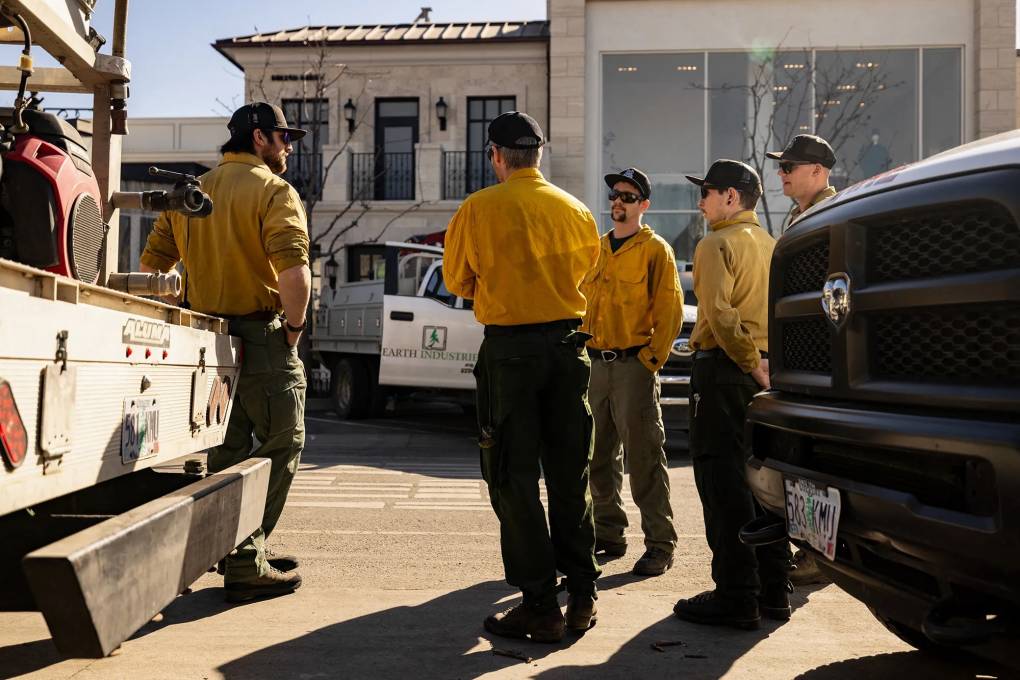
"caption": "Private firefighting company employees, hired to protect Rick Caruso's Palisades Village mall from the Palisades Fire, gather near their vehicles at the mall in the Pacific Palisades neighborhood of Los Angeles on Jan. 15, 2025. ",
"credit": "Etienne Laurent/AFP via Getty Images",
"altTag": null,
"description": null,
"imgSizes": {
"medium": {
"file": "https://cdn.kqed.org/wp-content/uploads/sites/10/2025/01/011525_Private-Firefighters_GETTY_CM_01-copy-800x533.jpg",
"width": 800,
"height": 533,
"mimeType": "image/jpeg"
},
"large": {
"file": "https://cdn.kqed.org/wp-content/uploads/sites/10/2025/01/011525_Private-Firefighters_GETTY_CM_01-copy-1020x680.jpg",
"width": 1020,
"height": 680,
"mimeType": "image/jpeg"
},
"thumbnail": {
"file": "https://cdn.kqed.org/wp-content/uploads/sites/10/2025/01/011525_Private-Firefighters_GETTY_CM_01-copy-160x107.jpg",
"width": 160,
"height": 107,
"mimeType": "image/jpeg"
},
"1536x1536": {
"file": "https://cdn.kqed.org/wp-content/uploads/sites/10/2025/01/011525_Private-Firefighters_GETTY_CM_01-copy-1536x1024.jpg",
"width": 1536,
"height": 1024,
"mimeType": "image/jpeg"
},
"post-thumbnail": {
"file": "https://cdn.kqed.org/wp-content/uploads/sites/10/2025/01/011525_Private-Firefighters_GETTY_CM_01-copy-672x372.jpg",
"width": 672,
"height": 372,
"mimeType": "image/jpeg"
},
"twentyfourteen-full-width": {
"file": "https://cdn.kqed.org/wp-content/uploads/sites/10/2025/01/011525_Private-Firefighters_GETTY_CM_01-copy-1038x576.jpg",
"width": 1038,
"height": 576,
"mimeType": "image/jpeg"
},
"full-width": {
"file": "https://cdn.kqed.org/wp-content/uploads/sites/10/2025/01/011525_Private-Firefighters_GETTY_CM_01-copy-1920x1280.jpg",
"width": 1920,
"height": 1280,
"mimeType": "image/jpeg"
},
"kqedFullSize": {
"file": "https://cdn.kqed.org/wp-content/uploads/sites/10/2025/01/011525_Private-Firefighters_GETTY_CM_01-copy.jpg",
"width": 2000,
"height": 1333
}
},
"isLoading": false,
"fetchFailed": false
},
"news_12022979": {
"type": "attachments",
"id": "news_12022979",
"meta": {
"index": "attachments_1716263798",
"site": "news",
"id": "12022979",
"found": true
},
"title": "01062023-Newsom-Inauguration-RL-CM-03 copy",
"publishDate": 1737230174,
"status": "inherit",
"parent": 12022978,
"modified": 1737230250,
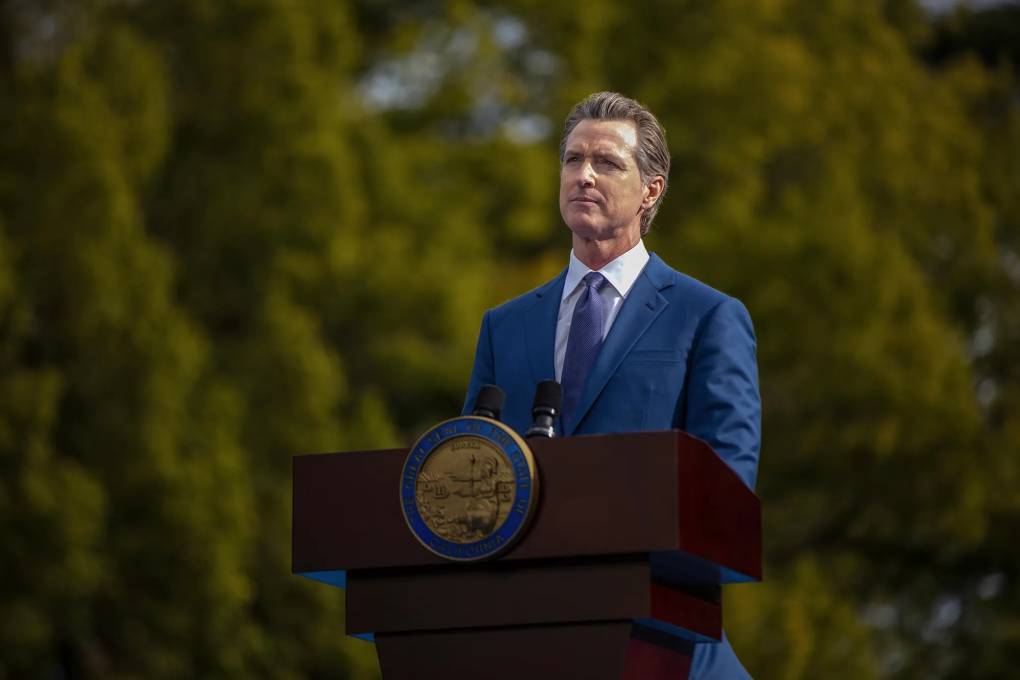
"caption": "Gov. Gavin Newsom addresses attendees during his inauguration for a second term at the Plaza de California in Sacramento on Jan. 6, 2023. \n",
"credit": "Rahul Lal/CalMatters",
"altTag": null,
"description": null,
"imgSizes": {
"medium": {
"file": "https://cdn.kqed.org/wp-content/uploads/sites/10/2025/01/01062023-Newsom-Inauguration-RL-CM-03-copy-800x533.jpg",
"width": 800,
"height": 533,
"mimeType": "image/jpeg"
},
"large": {
"file": "https://cdn.kqed.org/wp-content/uploads/sites/10/2025/01/01062023-Newsom-Inauguration-RL-CM-03-copy-1020x680.jpg",
"width": 1020,
"height": 680,
"mimeType": "image/jpeg"
},
"thumbnail": {
"file": "https://cdn.kqed.org/wp-content/uploads/sites/10/2025/01/01062023-Newsom-Inauguration-RL-CM-03-copy-160x107.jpg",
"width": 160,
"height": 107,
"mimeType": "image/jpeg"
},
"1536x1536": {
"file": "https://cdn.kqed.org/wp-content/uploads/sites/10/2025/01/01062023-Newsom-Inauguration-RL-CM-03-copy-1536x1024.jpg",
"width": 1536,
"height": 1024,
"mimeType": "image/jpeg"
},
"post-thumbnail": {
"file": "https://cdn.kqed.org/wp-content/uploads/sites/10/2025/01/01062023-Newsom-Inauguration-RL-CM-03-copy-672x372.jpg",
"width": 672,
"height": 372,
"mimeType": "image/jpeg"
},
"twentyfourteen-full-width": {
"file": "https://cdn.kqed.org/wp-content/uploads/sites/10/2025/01/01062023-Newsom-Inauguration-RL-CM-03-copy-1038x576.jpg",
"width": 1038,
"height": 576,
"mimeType": "image/jpeg"
},
"full-width": {
"file": "https://cdn.kqed.org/wp-content/uploads/sites/10/2025/01/01062023-Newsom-Inauguration-RL-CM-03-copy-1920x1280.jpg",
"width": 1920,
"height": 1280,
"mimeType": "image/jpeg"
},
"kqedFullSize": {
"file": "https://cdn.kqed.org/wp-content/uploads/sites/10/2025/01/01062023-Newsom-Inauguration-RL-CM-03-copy.jpg",
"width": 2000,
"height": 1333
}
},
"isLoading": false,
"fetchFailed": false
},
"news_12022616": {
"type": "attachments",
"id": "news_12022616",
"meta": {
"index": "attachments_1716263798",
"site": "news",
"id": "12022616",
"found": true
},
"title": "011525-California-Wildfires-MT-AP-CM-01 copy",
"publishDate": 1737058938,
"status": "inherit",
"parent": 12022615,
"modified": 1752102006,
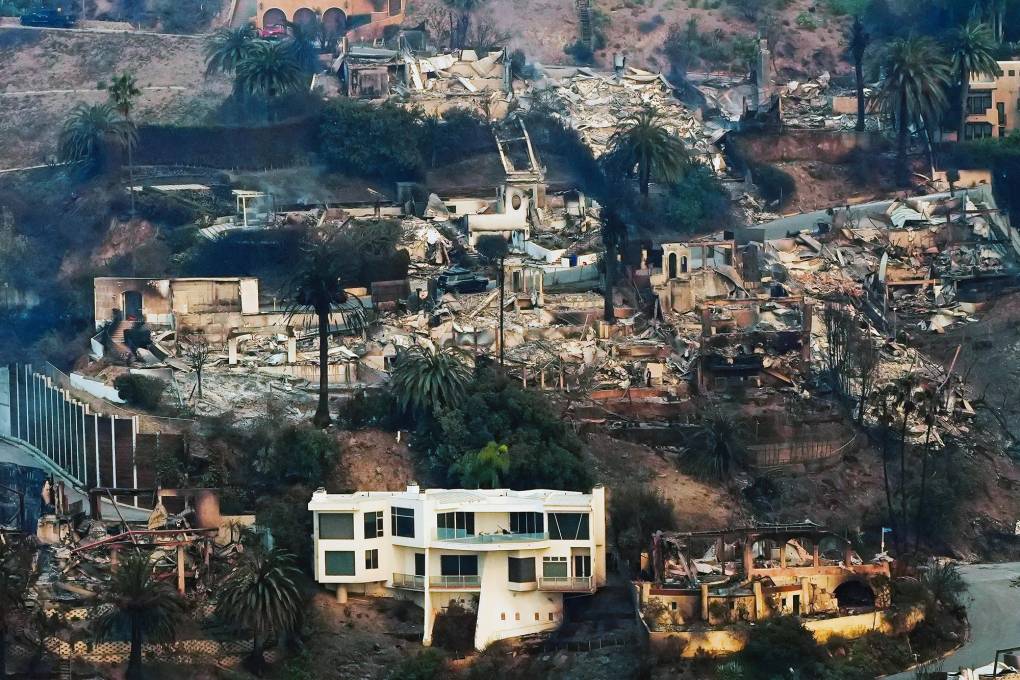
"caption": "The devastation from the Palisades Fire is seen from the air in the Pacific Palisades neighborhood of Los Angeles on Jan. 9, 2025. CalFire is using a chatbot to give Californians better access to real-time emergency information. But CalMatters found it isn't always accurate or reliable. \n",
"credit": "Mark J. Terrill/AP Photo",
"altTag": null,
"description": null,
"imgSizes": {
"medium": {
"file": "https://cdn.kqed.org/wp-content/uploads/sites/10/2025/01/011525-California-Wildfires-MT-AP-CM-01-copy-800x534.jpg",
"width": 800,
"height": 534,
"mimeType": "image/jpeg"
},
"large": {
"file": "https://cdn.kqed.org/wp-content/uploads/sites/10/2025/01/011525-California-Wildfires-MT-AP-CM-01-copy-1020x680.jpg",
"width": 1020,
"height": 680,
"mimeType": "image/jpeg"
},
"thumbnail": {
"file": "https://cdn.kqed.org/wp-content/uploads/sites/10/2025/01/011525-California-Wildfires-MT-AP-CM-01-copy-160x107.jpg",
"width": 160,
"height": 107,
"mimeType": "image/jpeg"
},
"1536x1536": {
"file": "https://cdn.kqed.org/wp-content/uploads/sites/10/2025/01/011525-California-Wildfires-MT-AP-CM-01-copy-1536x1025.jpg",
"width": 1536,
"height": 1025,
"mimeType": "image/jpeg"
},
"post-thumbnail": {
"file": "https://cdn.kqed.org/wp-content/uploads/sites/10/2025/01/011525-California-Wildfires-MT-AP-CM-01-copy-672x372.jpg",
"width": 672,
"height": 372,
"mimeType": "image/jpeg"
},
"twentyfourteen-full-width": {
"file": "https://cdn.kqed.org/wp-content/uploads/sites/10/2025/01/011525-California-Wildfires-MT-AP-CM-01-copy-1038x576.jpg",
"width": 1038,
"height": 576,
"mimeType": "image/jpeg"
},
"full-width": {
"file": "https://cdn.kqed.org/wp-content/uploads/sites/10/2025/01/011525-California-Wildfires-MT-AP-CM-01-copy-1920x1281.jpg",
"width": 1920,
"height": 1281,
"mimeType": "image/jpeg"
},
"kqedFullSize": {
"file": "https://cdn.kqed.org/wp-content/uploads/sites/10/2025/01/011525-California-Wildfires-MT-AP-CM-01-copy.jpg",
"width": 2000,
"height": 1334
}
},
"isLoading": false,
"fetchFailed": false
},
"news_12022480": {
"type": "attachments",
"id": "news_12022480",
"meta": {
"index": "attachments_1716263798",
"site": "news",
"id": "12022480",
"found": true
},
"title": "010824_Eaton-Fire_JH_CM_18 copy",
"publishDate": 1736987186,
"status": "inherit",
"parent": 12022475,
"modified": 1736987212,
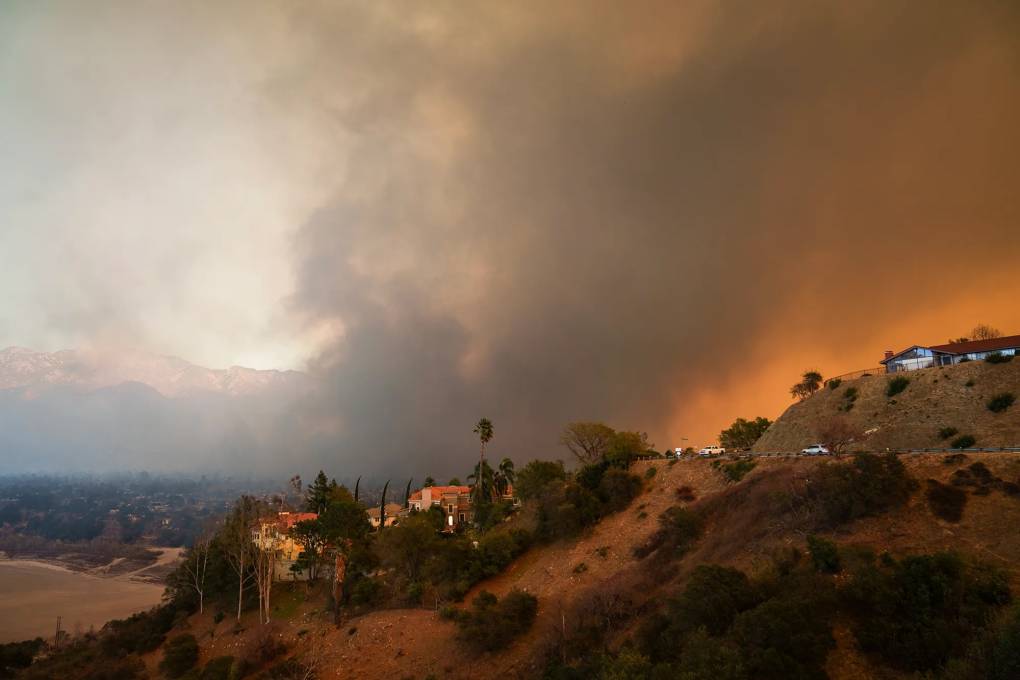
"caption": "Smoke from the Eaton Fire fills the sky in La Cañada Flintridge on Jan. 8, 2025. Hills and canyons are critically dry. \n",
"credit": "Jules Hotz for CalMatters",
"altTag": null,
"description": null,
"imgSizes": {
"medium": {
"file": "https://cdn.kqed.org/wp-content/uploads/sites/10/2025/01/010824_Eaton-Fire_JH_CM_18-copy-800x533.jpg",
"width": 800,
"height": 533,
"mimeType": "image/jpeg"
},
"large": {
"file": "https://cdn.kqed.org/wp-content/uploads/sites/10/2025/01/010824_Eaton-Fire_JH_CM_18-copy-1020x680.jpg",
"width": 1020,
"height": 680,
"mimeType": "image/jpeg"
},
"thumbnail": {
"file": "https://cdn.kqed.org/wp-content/uploads/sites/10/2025/01/010824_Eaton-Fire_JH_CM_18-copy-160x107.jpg",
"width": 160,
"height": 107,
"mimeType": "image/jpeg"
},
"1536x1536": {
"file": "https://cdn.kqed.org/wp-content/uploads/sites/10/2025/01/010824_Eaton-Fire_JH_CM_18-copy-1536x1024.jpg",
"width": 1536,
"height": 1024,
"mimeType": "image/jpeg"
},
"post-thumbnail": {
"file": "https://cdn.kqed.org/wp-content/uploads/sites/10/2025/01/010824_Eaton-Fire_JH_CM_18-copy-672x372.jpg",
"width": 672,
"height": 372,
"mimeType": "image/jpeg"
},
"twentyfourteen-full-width": {
"file": "https://cdn.kqed.org/wp-content/uploads/sites/10/2025/01/010824_Eaton-Fire_JH_CM_18-copy-1038x576.jpg",
"width": 1038,
"height": 576,
"mimeType": "image/jpeg"
},
"full-width": {
"file": "https://cdn.kqed.org/wp-content/uploads/sites/10/2025/01/010824_Eaton-Fire_JH_CM_18-copy-1920x1280.jpg",
"width": 1920,
"height": 1280,
"mimeType": "image/jpeg"
},
"kqedFullSize": {
"file": "https://cdn.kqed.org/wp-content/uploads/sites/10/2025/01/010824_Eaton-Fire_JH_CM_18-copy.jpg",
"width": 2000,
"height": 1333
}
},
"isLoading": false,
"fetchFailed": false
},
"news_12022441": {
"type": "attachments",
"id": "news_12022441",
"meta": {
"index": "attachments_1716263798",
"site": "news",
"id": "12022441",
"found": true
},
"title": "011025_LA-Wildfires_JH_CM_14 copy",
"publishDate": 1736981756,
"status": "inherit",
"parent": 12022439,
"modified": 1736981781,
"caption": "The western hills of Mandeville Canyon burning as the Palisades Fire continues to spread in Los Angeles on Jan. 10, 2025.",
"credit": "Jules Hotz for CalMatters",
"altTag": null,
"description": null,
"imgSizes": {
"medium": {
"file": "https://cdn.kqed.org/wp-content/uploads/sites/10/2025/01/011025_LA-Wildfires_JH_CM_14-copy-800x533.jpg",
"width": 800,
"height": 533,
"mimeType": "image/jpeg"
},
"large": {
"file": "https://cdn.kqed.org/wp-content/uploads/sites/10/2025/01/011025_LA-Wildfires_JH_CM_14-copy-1020x680.jpg",
"width": 1020,
"height": 680,
"mimeType": "image/jpeg"
},
"thumbnail": {
"file": "https://cdn.kqed.org/wp-content/uploads/sites/10/2025/01/011025_LA-Wildfires_JH_CM_14-copy-160x107.jpg",
"width": 160,
"height": 107,
"mimeType": "image/jpeg"
},
"1536x1536": {
"file": "https://cdn.kqed.org/wp-content/uploads/sites/10/2025/01/011025_LA-Wildfires_JH_CM_14-copy-1536x1024.jpg",
"width": 1536,
"height": 1024,
"mimeType": "image/jpeg"
},
"post-thumbnail": {
"file": "https://cdn.kqed.org/wp-content/uploads/sites/10/2025/01/011025_LA-Wildfires_JH_CM_14-copy-672x372.jpg",
"width": 672,
"height": 372,
"mimeType": "image/jpeg"
},
"twentyfourteen-full-width": {
"file": "https://cdn.kqed.org/wp-content/uploads/sites/10/2025/01/011025_LA-Wildfires_JH_CM_14-copy-1038x576.jpg",
"width": 1038,
"height": 576,
"mimeType": "image/jpeg"
},
"full-width": {
"file": "https://cdn.kqed.org/wp-content/uploads/sites/10/2025/01/011025_LA-Wildfires_JH_CM_14-copy-1920x1280.jpg",
"width": 1920,
"height": 1280,
"mimeType": "image/jpeg"
},
"kqedFullSize": {
"file": "https://cdn.kqed.org/wp-content/uploads/sites/10/2025/01/011025_LA-Wildfires_JH_CM_14-copy.jpg",
"width": 2000,
"height": 1333
}
},
"isLoading": false,
"fetchFailed": false
},
"news_12022315": {
"type": "attachments",
"id": "news_12022315",
"meta": {
"index": "attachments_1716263798",
"site": "news",
"id": "12022315",
"found": true
},
"title": "120224_Drumm-Avenue_CS_CM_02 copy",
"publishDate": 1736966399,
"status": "inherit",
"parent": 12022313,
"modified": 1736966447,
"caption": "Commercial trucks line up in front of a residential neighborhood in the Wilmington area of Los Angeles on Dec. 2, 2024. California has withdrawn its clean-air rule phasing out diesel trucks. ",
"credit": "Carlin Stiehl for CalMatters",
"altTag": "Diesel trucks parked by the side of a road in a residential area.",
"description": null,
"imgSizes": {
"medium": {
"file": "https://cdn.kqed.org/wp-content/uploads/sites/10/2025/01/120224_Drumm-Avenue_CS_CM_02-copy-800x533.jpg",
"width": 800,
"height": 533,
"mimeType": "image/jpeg"
},
"large": {
"file": "https://cdn.kqed.org/wp-content/uploads/sites/10/2025/01/120224_Drumm-Avenue_CS_CM_02-copy-1020x680.jpg",
"width": 1020,
"height": 680,
"mimeType": "image/jpeg"
},
"thumbnail": {
"file": "https://cdn.kqed.org/wp-content/uploads/sites/10/2025/01/120224_Drumm-Avenue_CS_CM_02-copy-160x107.jpg",
"width": 160,
"height": 107,
"mimeType": "image/jpeg"
},
"1536x1536": {
"file": "https://cdn.kqed.org/wp-content/uploads/sites/10/2025/01/120224_Drumm-Avenue_CS_CM_02-copy-1536x1024.jpg",
"width": 1536,
"height": 1024,
"mimeType": "image/jpeg"
},
"post-thumbnail": {
"file": "https://cdn.kqed.org/wp-content/uploads/sites/10/2025/01/120224_Drumm-Avenue_CS_CM_02-copy-672x372.jpg",
"width": 672,
"height": 372,
"mimeType": "image/jpeg"
},
"twentyfourteen-full-width": {
"file": "https://cdn.kqed.org/wp-content/uploads/sites/10/2025/01/120224_Drumm-Avenue_CS_CM_02-copy-1038x576.jpg",
"width": 1038,
"height": 576,
"mimeType": "image/jpeg"
},
"full-width": {
"file": "https://cdn.kqed.org/wp-content/uploads/sites/10/2025/01/120224_Drumm-Avenue_CS_CM_02-copy-1920x1280.jpg",
"width": 1920,
"height": 1280,
"mimeType": "image/jpeg"
},
"kqedFullSize": {
"file": "https://cdn.kqed.org/wp-content/uploads/sites/10/2025/01/120224_Drumm-Avenue_CS_CM_02-copy.jpg",
"width": 2000,
"height": 1333
}
},
"isLoading": false,
"fetchFailed": false
},
"news_12021741": {
"type": "attachments",
"id": "news_12021741",
"meta": {
"index": "attachments_1716263798",
"site": "news",
"id": "12021741",
"found": true
},
"title": "010825_Newsom-Palisades-Fire_GETTY_CM_01 copy",
"publishDate": 1736633931,
"status": "inherit",
"parent": 12021740,
"modified": 1736633988,
"caption": "Gov. Gavin Newsom, right, tours the downtown business district of Pacific Palisades as the Palisades Fire continues to burn in Los Angeles on Jan. 8, 2025. Newsom is appealing to President-elect Donald Trump to visit the LA fires. ",
"credit": "Eric Thayer/Getty Images",
"altTag": "A middle aged man in a hat and casual clothes walks next to a fire chief with smoke billowing behind them on a city street.",
"description": null,
"imgSizes": {
"medium": {
"file": "https://cdn.kqed.org/wp-content/uploads/sites/10/2025/01/010825_Newsom-Palisades-Fire_GETTY_CM_01-copy-800x533.jpg",
"width": 800,
"height": 533,
"mimeType": "image/jpeg"
},
"large": {
"file": "https://cdn.kqed.org/wp-content/uploads/sites/10/2025/01/010825_Newsom-Palisades-Fire_GETTY_CM_01-copy-1020x680.jpg",
"width": 1020,
"height": 680,
"mimeType": "image/jpeg"
},
"thumbnail": {
"file": "https://cdn.kqed.org/wp-content/uploads/sites/10/2025/01/010825_Newsom-Palisades-Fire_GETTY_CM_01-copy-160x107.jpg",
"width": 160,
"height": 107,
"mimeType": "image/jpeg"
},
"1536x1536": {
"file": "https://cdn.kqed.org/wp-content/uploads/sites/10/2025/01/010825_Newsom-Palisades-Fire_GETTY_CM_01-copy-1536x1024.jpg",
"width": 1536,
"height": 1024,
"mimeType": "image/jpeg"
},
"post-thumbnail": {
"file": "https://cdn.kqed.org/wp-content/uploads/sites/10/2025/01/010825_Newsom-Palisades-Fire_GETTY_CM_01-copy-672x372.jpg",
"width": 672,
"height": 372,
"mimeType": "image/jpeg"
},
"twentyfourteen-full-width": {
"file": "https://cdn.kqed.org/wp-content/uploads/sites/10/2025/01/010825_Newsom-Palisades-Fire_GETTY_CM_01-copy-1038x576.jpg",
"width": 1038,
"height": 576,
"mimeType": "image/jpeg"
},
"full-width": {
"file": "https://cdn.kqed.org/wp-content/uploads/sites/10/2025/01/010825_Newsom-Palisades-Fire_GETTY_CM_01-copy-1920x1280.jpg",
"width": 1920,
"height": 1280,
"mimeType": "image/jpeg"
},
"kqedFullSize": {
"file": "https://cdn.kqed.org/wp-content/uploads/sites/10/2025/01/010825_Newsom-Palisades-Fire_GETTY_CM_01-copy.jpg",
"width": 2000,
"height": 1333
}
},
"isLoading": false,
"fetchFailed": false
},
"news_12021639": {
"type": "attachments",
"id": "news_12021639",
"meta": {
"index": "attachments_1716263798",
"site": "news",
"id": "12021639",
"found": true
},
"title": "010625-Newsom-Budget-AP-CM",
"publishDate": 1736555497,
"status": "inherit",
"parent": 12021637,
"modified": 1736555532,
"caption": "Gov. Gavin Newsom outlines his proposed 2025-2026 state budget during a news conference at California State University, Stanislaus in Turlock, on Jan. 6, 2025.",
"credit": "Rich Pedroncelli, AP Photo",
"altTag": null,
"description": null,
"imgSizes": {
"medium": {
"file": "https://cdn.kqed.org/wp-content/uploads/sites/10/2025/01/010625-Newsom-Budget-AP-CM-800x533.jpg",
"width": 800,
"height": 533,
"mimeType": "image/jpeg"
},
"large": {
"file": "https://cdn.kqed.org/wp-content/uploads/sites/10/2025/01/010625-Newsom-Budget-AP-CM-1020x680.jpg",
"width": 1020,
"height": 680,
"mimeType": "image/jpeg"
},
"thumbnail": {
"file": "https://cdn.kqed.org/wp-content/uploads/sites/10/2025/01/010625-Newsom-Budget-AP-CM-160x107.jpg",
"width": 160,
"height": 107,
"mimeType": "image/jpeg"
},
"1536x1536": {
"file": "https://cdn.kqed.org/wp-content/uploads/sites/10/2025/01/010625-Newsom-Budget-AP-CM-1536x1024.jpg",
"width": 1536,
"height": 1024,
"mimeType": "image/jpeg"
},
"post-thumbnail": {
"file": "https://cdn.kqed.org/wp-content/uploads/sites/10/2025/01/010625-Newsom-Budget-AP-CM-672x372.jpg",
"width": 672,
"height": 372,
"mimeType": "image/jpeg"
},
"twentyfourteen-full-width": {
"file": "https://cdn.kqed.org/wp-content/uploads/sites/10/2025/01/010625-Newsom-Budget-AP-CM-1038x576.jpg",
"width": 1038,
"height": 576,
"mimeType": "image/jpeg"
},
"full-width": {
"file": "https://cdn.kqed.org/wp-content/uploads/sites/10/2025/01/010625-Newsom-Budget-AP-CM-1920x1280.jpg",
"width": 1920,
"height": 1280,
"mimeType": "image/jpeg"
},
"kqedFullSize": {
"file": "https://cdn.kqed.org/wp-content/uploads/sites/10/2025/01/010625-Newsom-Budget-AP-CM.jpg",
"width": 2000,
"height": 1333
}
},
"isLoading": false,
"fetchFailed": false
},
"news_12021490": {
"type": "attachments",
"id": "news_12021490",
"meta": {
"index": "attachments_1716263798",
"site": "news",
"id": "12021490",
"found": true
},
"title": "072723-Farmworkers-LV_CM_11 copy",
"publishDate": 1736539033,
"status": "inherit",
"parent": 12021487,
"modified": 1736539064,
"caption": "Farmworkers work on a field outside of Bakersfield in Kern County on July 25, 2023. \n",
"credit": "Larry Valenzuela/CalMatters/CatchLight Local",
"altTag": null,
"description": null,
"imgSizes": {
"medium": {
"file": "https://cdn.kqed.org/wp-content/uploads/sites/10/2025/01/072723-Farmworkers-LV_CM_11-copy-800x534.jpg",
"width": 800,
"height": 534,
"mimeType": "image/jpeg"
},
"large": {
"file": "https://cdn.kqed.org/wp-content/uploads/sites/10/2025/01/072723-Farmworkers-LV_CM_11-copy-1020x680.jpg",
"width": 1020,
"height": 680,
"mimeType": "image/jpeg"
},
"thumbnail": {
"file": "https://cdn.kqed.org/wp-content/uploads/sites/10/2025/01/072723-Farmworkers-LV_CM_11-copy-160x107.jpg",
"width": 160,
"height": 107,
"mimeType": "image/jpeg"
},
"1536x1536": {
"file": "https://cdn.kqed.org/wp-content/uploads/sites/10/2025/01/072723-Farmworkers-LV_CM_11-copy-1536x1025.jpg",
"width": 1536,
"height": 1025,
"mimeType": "image/jpeg"
},
"post-thumbnail": {
"file": "https://cdn.kqed.org/wp-content/uploads/sites/10/2025/01/072723-Farmworkers-LV_CM_11-copy-672x372.jpg",
"width": 672,
"height": 372,
"mimeType": "image/jpeg"
},
"twentyfourteen-full-width": {
"file": "https://cdn.kqed.org/wp-content/uploads/sites/10/2025/01/072723-Farmworkers-LV_CM_11-copy-1038x576.jpg",
"width": 1038,
"height": 576,
"mimeType": "image/jpeg"
},
"full-width": {
"file": "https://cdn.kqed.org/wp-content/uploads/sites/10/2025/01/072723-Farmworkers-LV_CM_11-copy-1920x1281.jpg",
"width": 1920,
"height": 1281,
"mimeType": "image/jpeg"
},
"kqedFullSize": {
"file": "https://cdn.kqed.org/wp-content/uploads/sites/10/2025/01/072723-Farmworkers-LV_CM_11-copy.jpg",
"width": 2000,
"height": 1334
}
},
"isLoading": false,
"fetchFailed": false
},
"news_12020771": {
"type": "attachments",
"id": "news_12020771",
"meta": {
"index": "attachments_1716263798",
"site": "news",
"id": "12020771",
"found": true
},
"title": "112124_Santa-Rosa-Flooding_AP_CM_01 copy",
"publishDate": 1736359626,
"status": "inherit",
"parent": 12020768,
"modified": 1736359712,
"caption": "A pedestrian walks along a flooded street during a storm in Santa Rosa on Nov. 21, 2024.",
"credit": "Jeff Chiu/AP Photo",
"altTag": "A person in full rain gear walks through a flooded street with trees and some traffic signs in the background, and reflected off the water. It is not raining.",
"description": null,
"imgSizes": {
"medium": {
"file": "https://cdn.kqed.org/wp-content/uploads/sites/10/2025/01/112124_Santa-Rosa-Flooding_AP_CM_01-copy-800x533.jpg",
"width": 800,
"height": 533,
"mimeType": "image/jpeg"
},
"large": {
"file": "https://cdn.kqed.org/wp-content/uploads/sites/10/2025/01/112124_Santa-Rosa-Flooding_AP_CM_01-copy-1020x680.jpg",
"width": 1020,
"height": 680,
"mimeType": "image/jpeg"
},
"thumbnail": {
"file": "https://cdn.kqed.org/wp-content/uploads/sites/10/2025/01/112124_Santa-Rosa-Flooding_AP_CM_01-copy-160x107.jpg",
"width": 160,
"height": 107,
"mimeType": "image/jpeg"
},
"1536x1536": {
"file": "https://cdn.kqed.org/wp-content/uploads/sites/10/2025/01/112124_Santa-Rosa-Flooding_AP_CM_01-copy-1536x1024.jpg",
"width": 1536,
"height": 1024,
"mimeType": "image/jpeg"
},
"post-thumbnail": {
"file": "https://cdn.kqed.org/wp-content/uploads/sites/10/2025/01/112124_Santa-Rosa-Flooding_AP_CM_01-copy-672x372.jpg",
"width": 672,
"height": 372,
"mimeType": "image/jpeg"
},
"twentyfourteen-full-width": {
"file": "https://cdn.kqed.org/wp-content/uploads/sites/10/2025/01/112124_Santa-Rosa-Flooding_AP_CM_01-copy-1038x576.jpg",
"width": 1038,
"height": 576,
"mimeType": "image/jpeg"
},
"full-width": {
"file": "https://cdn.kqed.org/wp-content/uploads/sites/10/2025/01/112124_Santa-Rosa-Flooding_AP_CM_01-copy-1920x1280.jpg",
"width": 1920,
"height": 1280,
"mimeType": "image/jpeg"
},
"kqedFullSize": {
"file": "https://cdn.kqed.org/wp-content/uploads/sites/10/2025/01/112124_Santa-Rosa-Flooding_AP_CM_01-copy.jpg",
"width": 2000,
"height": 1333
}
},
"isLoading": false,
"fetchFailed": false
},
"news_12020428": {
"type": "attachments",
"id": "news_12020428",
"meta": {
"index": "attachments_1716263798",
"site": "news",
"id": "12020428",
"found": true
},
"title": "082924_StateCapitolSession_FM_CM_01",
"publishDate": 1736192782,
"status": "inherit",
"parent": 12020419,
"modified": 1737570759,
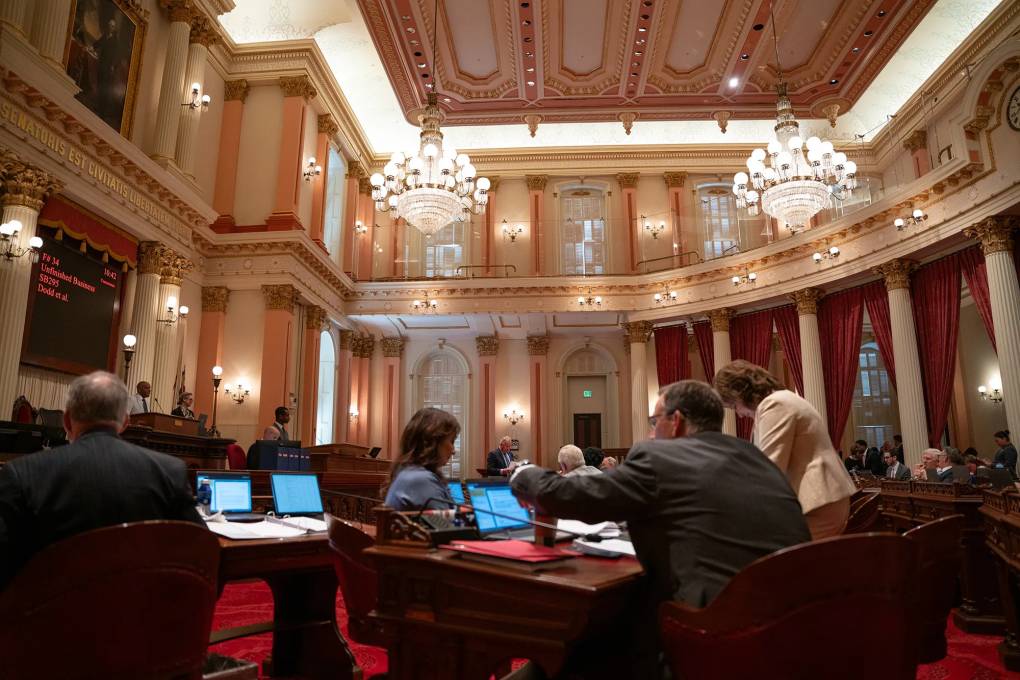
"caption": "The state Senate during a floor session of the California Legislature at the state Capitol in Sacramento on Aug. 29, 2024.",
"credit": "Florence Middleton/CalMatters",
"altTag": null,
"description": null,
"imgSizes": {
"medium": {
"file": "https://cdn.kqed.org/wp-content/uploads/sites/10/2025/01/082924_StateCapitolSession_FM_CM_01-800x533.jpg",
"width": 800,
"height": 533,
"mimeType": "image/jpeg"
},
"large": {
"file": "https://cdn.kqed.org/wp-content/uploads/sites/10/2025/01/082924_StateCapitolSession_FM_CM_01-1020x680.jpg",
"width": 1020,
"height": 680,
"mimeType": "image/jpeg"
},
"thumbnail": {
"file": "https://cdn.kqed.org/wp-content/uploads/sites/10/2025/01/082924_StateCapitolSession_FM_CM_01-160x107.jpg",
"width": 160,
"height": 107,
"mimeType": "image/jpeg"
},
"1536x1536": {
"file": "https://cdn.kqed.org/wp-content/uploads/sites/10/2025/01/082924_StateCapitolSession_FM_CM_01-1536x1024.jpg",
"width": 1536,
"height": 1024,
"mimeType": "image/jpeg"
},
"post-thumbnail": {
"file": "https://cdn.kqed.org/wp-content/uploads/sites/10/2025/01/082924_StateCapitolSession_FM_CM_01-672x372.jpg",
"width": 672,
"height": 372,
"mimeType": "image/jpeg"
},
"twentyfourteen-full-width": {
"file": "https://cdn.kqed.org/wp-content/uploads/sites/10/2025/01/082924_StateCapitolSession_FM_CM_01-1038x576.jpg",
"width": 1038,
"height": 576,
"mimeType": "image/jpeg"
},
"full-width": {
"file": "https://cdn.kqed.org/wp-content/uploads/sites/10/2025/01/082924_StateCapitolSession_FM_CM_01-1920x1280.jpg",
"width": 1920,
"height": 1280,
"mimeType": "image/jpeg"
},
"kqedFullSize": {
"file": "https://cdn.kqed.org/wp-content/uploads/sites/10/2025/01/082924_StateCapitolSession_FM_CM_01.jpg",
"width": 2000,
"height": 1333
}
},
"isLoading": false,
"fetchFailed": false
}
},
"audioPlayerReducer": {
"postId": "stream_live",
"isPaused": true,
"isPlaying": false,
"pfsActive": false,
"pledgeModalIsOpen": true,
"playerDrawerIsOpen": false,
"liveAudioPlayStartedAt": 0,
"liveAudioPlayContext": ""
},
"authorsReducer": {
"byline_news_12023094": {
"type": "authors",
"id": "byline_news_12023094",
"meta": {
"override": true
},
"slug": "byline_news_12023094",
"name": "Ana B. Ibarra and Ben Christopher, CalMatters",
"isLoading": false
},
"byline_news_12022996": {
"type": "authors",
"id": "byline_news_12022996",
"meta": {
"override": true
},
"slug": "byline_news_12022996",
"name": "\u003ca href=\"https://calmatters.org/author/feliciacalmatters-org/\">Felicia Mello\u003c/a>, CalMatters",
"isLoading": false
},
"byline_news_12022978": {
"type": "authors",
"id": "byline_news_12022978",
"meta": {
"override": true
},
"slug": "byline_news_12022978",
"name": "\u003ca href=\"https://calmatters.org/author/alexei-koseff/\">Alexei Koseff\u003c/a>, CalMatters",
"isLoading": false
},
"byline_news_12022615": {
"type": "authors",
"id": "byline_news_12022615",
"meta": {
"override": true
},
"slug": "byline_news_12022615",
"name": "\u003ca href=\"https://calmatters.org/author/ben-christopher/\">Ben Christopher\u003c/a>, CalMatters",
"isLoading": false
},
"byline_news_12022475": {
"type": "authors",
"id": "byline_news_12022475",
"meta": {
"override": true
},
"slug": "byline_news_12022475",
"name": "\u003ca href=\"https://calmatters.org/author/alastair-bland/\">Alastair Bland\u003c/a>, CalMatters",
"isLoading": false
},
"byline_news_12022439": {
"type": "authors",
"id": "byline_news_12022439",
"meta": {
"override": true
},
"slug": "byline_news_12022439",
"name": "\u003ca href=\"https://calmatters.org/author/marisa-kendall/\">Marisa Kendall\u003c/a>, CalMatters",
"isLoading": false
},
"byline_news_12022313": {
"type": "authors",
"id": "byline_news_12022313",
"meta": {
"override": true
},
"slug": "byline_news_12022313",
"name": "\u003ca href=\"https://calmatters.org/author/alejandro-lazo/\">Alejandro Lazo\u003c/a>, CalMatters",
"isLoading": false
},
"byline_news_12021740": {
"type": "authors",
"id": "byline_news_12021740",
"meta": {
"override": true
},
"slug": "byline_news_12021740",
"name": "\u003ca href=\"https://calmatters.org/author/alexei-koseff/\">Alexei Koseff\u003c/a> and \u003ca href=\"https://calmatters.org/author/yue-yu/\">Yue Stella Yu\u003c/a>, CalMatters",
"isLoading": false
},
"byline_news_12021637": {
"type": "authors",
"id": "byline_news_12021637",
"meta": {
"override": true
},
"slug": "byline_news_12021637",
"name": "\u003ca href=\"https://calmatters.org/author/mikhailzinshteyn/\">Mikhail Zinshteyn\u003c/a> and \u003ca href=\"https://calmatters.org/author/yue-yu/\">Yue Stella Yu\u003c/a>, CalMatters",
"isLoading": false
},
"byline_news_12021487": {
"type": "authors",
"id": "byline_news_12021487",
"meta": {
"override": true
},
"slug": "byline_news_12021487",
"name": "\u003ca href=\"https://calmatters.org/author/sergio-olmos/\">Sergio Olmos\u003c/a>, CalMatters",
"isLoading": false
},
"byline_news_12020768": {
"type": "authors",
"id": "byline_news_12020768",
"meta": {
"override": true
},
"slug": "byline_news_12020768",
"name": "\u003ca href=\"https://calmatters.org/author/alastair-bland/\">Alastair Bland\u003c/a>, CalMatters",
"isLoading": false
},
"byline_news_12020419": {
"type": "authors",
"id": "byline_news_12020419",
"meta": {
"override": true
},
"slug": "byline_news_12020419",
"name": "Alexei Koseff, CalMatters",
"isLoading": false
}
},
"pagesReducer": {
"news_affiliate_calmatters": {
"type": "terms",
"id": "news_18481",
"meta": {
"index": "terms_1716263798",
"site": "news",
"id": "18481",
"score": 15.355904
},
"featImg": null,
"name": "CALmatters",
"description": null,
"taxonomy": "affiliate",
"headData": {
"twImgId": null,
"twTitle": null,
"ogTitle": null,
"ogImgId": null,
"twDescription": null,
"description": null,
"title": "CALmatters Archives | KQED Arts",
"ogDescription": null
},
"ttid": 18515,
"slug": "calmatters",
"isLoading": false,
"title": "CALmatters",
"pageMeta": {
"site": "news",
"WpPageTemplate": "page-topic-editorial",
"currentPage": 19
},
"blocks": [
{
"blockName": "kqed/post-list",
"attrs": {
"layout": "cardArticle2",
"query": "posts/news?affiliate=calmatters",
"seeMore": false,
"paginated": true,
"page": 19
}
},
{
"blockName": "kqed/ad"
}
]
}
},
"pfsSessionReducer": {},
"postsReducer": {
"stream_live": {
"type": "live",
"id": "stream_live",
"audioUrl": "https://streams.kqed.org/kqedradio",
"title": "Live Stream",
"excerpt": "Live Stream information currently unavailable.",
"link": "/radio",
"featImg": "",
"label": {
"name": "KQED Live",
"link": "/"
}
},
"stream_kqedNewscast": {
"type": "posts",
"id": "stream_kqedNewscast",
"audioUrl": "https://www.kqed.org/.stream/anon/radio/RDnews/newscast.mp3?_=1",
"title": "KQED Newscast",
"featImg": "",
"label": {
"name": "88.5 FM",
"link": "/"
}
},
"news_12023094": {
"type": "posts",
"id": "news_12023094",
"meta": {
"index": "posts_1716263798",
"site": "news",
"id": "12023094",
"score": null,
"sort": [
1737392404000
]
},
"guestAuthors": [],
"slug": "california-has-sued-trump-123-times-heres-where-it-won-and-lost",
"title": "California Has Sued Trump 123 Times. Here's Where It Won and Lost",
"publishDate": 1737392404,
"format": "standard",
"headTitle": "California Has Sued Trump 123 Times. Here’s Where It Won and Lost | KQED",
"labelTerm": {},
"content": "\u003cp>That revving you hear from Sacramento is the sound of California’s Democratic leaders preparing to sue the tar out of the Trump administration.\u003c/p>\n\u003cp>We’ve seen this all before.\u003c/p>\n\u003cp>\u003ca href=\"https://calmatters.org/politics/2018/03/becerra-v-trump-california-using-courts-fight-administration/\">California sued the Trump administration 123 times\u003c/a> between 2017 and 2021, according to Attorney General Rob Bonta’s office. It \u003ca href=\"https://calmatters.org/justice/2021/01/california-cost-trump-lawsuits/\">spent about $10 million a year\u003c/a> in doing so. A majority of the lawsuits dealt with environment rules, immigration and health care.\u003c/p>\n\u003cp>Legal and policy expect those same issues to take center stage during Trump 2.0.\u003c/p>\n\u003cp>That’s why Bonta’s team started to prepare legal briefs months ahead of the election, it’s why Gov. Gavin Newsom \u003ca href=\"https://calmatters.org/politics/capitol/2024/11/gavin-newsom-special-session-trump-resistance/\">called for a special legislative session\u003c/a> to “Trump-proof” California, and it’s why state Democrats have agreed to \u003ca href=\"https://calmatters.org/newsletter/california-trump-legal-fees-fund/\">allocate $50 million to fight Trump\u003c/a> in court — a move that \u003ca href=\"https://x.com/J_GallagherAD3/status/1878599444003959053\">state Republicans denounced\u003c/a> as a “slush fund” for “hypothetical fights.”\u003c/p>\n\u003cp>[ad fullwidth]\u003c/p>\n\u003cp>Trump lost more than two-thirds of the lawsuits filed against his rules in his first term. His win rate of 31% was lower than that of the three administrations prior, \u003ca href=\"https://policyintegrity.org/tracking-major-rules/presidential-win-rates\">according to an analysis\u003c/a> by the Institute of Policy Integrity at the New York University School of Law.\u003c/p>\n\u003cp>What do California’s past legal skirmishes with the Trump administration 1.0 tell us about the policy battles to come? And how might this time be different?\u003c/p>\n\u003cp>Many experts say the new Trump administration could be more strategic and wise this time. In his first round, his policy proposals were \u003ca href=\"https://www.reuters.com/article/world/us/trump-administrations-sloppy-work-has-led-to-supreme-court-losses-idUSKBN23P3M1/\">often rushed through\u003c/a> and failed to pass legal muster.\u003c/p>\n\u003cp>“That’s something we are certainly worried about this second time around, that they’ll make the same policy decisions that are bad from our perspective, but do it again in a smarter way that makes them harder to challenge,” said Eva Bitrán, director of immigrants’ rights and staff attorney at American Civil Liberties Union of Southern California.\u003c/p>\n\u003cp>Another possible difference: The rules have changed. At the end of the U.S. Supreme Court’s 2023 term, the conservative majority issued a \u003ca href=\"https://calmatters.org/politics/2024/07/california-supreme-court-chevron/\">series of rulings\u003c/a> that, taken together, make it much easier for people, businesses and aggrieved state governments to challenge federal regulations. At the time, these rulings were seen as a historic victory for the conservative legal movement and big business. Now that Trump is back in office, it may actually make the California attorney general’s job of stymying the Trump agenda easier.\u003c/p>\n\u003cp>Here’s a look at California’s record in court against Trump.\u003c/p>\n\u003ch2>Environment: Wins on procedure\u003c/h2>\n\u003cp>California prides itself on being a national leader on ecologically-minded rules and aggressive climate action. That brings it into natural conflict with any modern Republican White House, but especially the Trump administration.Roughly half of the lawsuits that the state filed against the Trump administration the first time around were related in some way to the environment.\u003c/p>\n\u003cp>Winning on administrative procedure. California’s Department of Justice racked up a lot of legal wins early on in Trump’s term. The vast majority of them were over important but relatively narrow policy debates around \u003ca href=\"https://www.reuters.com/legal/litigation/epa-states-settle-lawsuit-over-imported-asbestos-2021-06-08/\">asbestos oversight rules\u003c/a>, \u003ca href=\"https://thehill.com/policy/energy-environment/397687-court-blocks-epa-policy-against-enforcing-truck-pollution-rule/\">big rigs\u003c/a> that use old engine components, energy efficiency requirements on freezers and ceiling fans (that was two cases), among others.\u003c/p>\n\u003cp>As with many \u003ca href=\"https://www.washingtonpost.com/world/national-security/the-real-reason-president-trump-is-constantly-losing-in-court/2019/03/19/f5ffb056-33a8-11e9-af5b-b51b7ff322e9_story.html\">other areas of policy\u003c/a>, California was able to eke out these easy victories by persuading courts that the Trump administration had rushed rules through without explaining their rationale, providing sufficient evidence or giving the public the opportunity to weigh in. These are violations of the Administrative Procedure Act, which is the bureaucratic equivalent of failing to do your homework.\u003c/p>\n\u003cp>Though Trump 2.0 may be more careful this time, his \u003ca href=\"https://apnews.com/article/biden-2024-government-regulations-democrats-6badc3b424b9eff3ba51e0ec35a8d824\">pledge to fire thousands\u003c/a> of career civil servants may also make the task of writing regulations that pass legal muster that much more difficult.\u003c/p>\n\u003ch2>The waiver wars\u003c/h2>\n\u003cp>One of California’s most successful legal challenges ended with a victory outside the court, said Julia Stein, an environmental law professor at UCLA. After the Trump administration revoked California’s \u003ca href=\"https://calmatters.org/explainers/california-auto-emissions-standards-fight-with-donald-trump-explained/\">permission to set its own emission limits\u003c/a> on car exhaust — which comes from an Environmental Protection Agency waiver of the federal law’s preeminence over state rules — California sued. Then it sued again. Though the legal battle never quite reached a conclusion before Trump left office in 2021, the prolonged regulatory uncertainty was enough to convince some of the world’s biggest automakers to \u003ca href=\"https://calmatters.org/environment/2020/08/california-clean-car-emissions/\">cut a deal directly with California\u003c/a>.\u003c/p>\n\u003cp>Stein said she wouldn’t be surprised if that serves as a template for other regulated industries as California and the second Trump administration inevitably resume their legal battles.\u003c/p>\n\u003cp>“I think businesses are going to feel like, ‘well, I still need to make investment decisions and I still need to contend with different state regulatory environments and federal regulatory environments and so I might want to start entering into private agreements,’” said Stein.\u003c/p>\n\u003cfigure id=\"attachment_12023098\" class=\"wp-caption aligncenter\" style=\"max-width: 1200px\">\u003cimg loading=\"lazy\" decoding=\"async\" class=\"size-full wp-image-12023098\" src=\"https://cdn.kqed.org/wp-content/uploads/sites/10/2025/01/250120CalMatters2.jpg\" alt=\"\" width=\"1200\" height=\"800\" srcset=\"https://cdn.kqed.org/wp-content/uploads/sites/10/2025/01/250120CalMatters2.jpg 1200w, https://cdn.kqed.org/wp-content/uploads/sites/10/2025/01/250120CalMatters2-800x533.jpg 800w, https://cdn.kqed.org/wp-content/uploads/sites/10/2025/01/250120CalMatters2-1020x680.jpg 1020w, https://cdn.kqed.org/wp-content/uploads/sites/10/2025/01/250120CalMatters2-160x107.jpg 160w\" sizes=\"auto, (max-width: 1200px) 100vw, 1200px\">\u003cfigcaption class=\"wp-caption-text\">An aerial view of Threemile Slough in the Sacramento-San Joaquin River Delta near Rio Vista on May 19, 2024. The Delta is formed by the confluence of the Sacramento and San Joaquin rivers before their waters flow into San Francisco Bay. \u003ccite>(Loren Elliott/CalMatters)\u003c/cite>\u003c/figcaption>\u003c/figure>\n\u003ch2>Waters of the United States\u003c/h2>\n\u003cp>California and other blue states spent the bulk of Trump’s first term beefing in court over how to define a “waterway.”\u003c/p>\n\u003cp>It was a semantic debate with enormous implications. Since the 1970s, the Clean Water Act has been the main way that federal regulators have battled water pollution. In 2015, the Obama administration expanded the definition of waterways covered under the law to include many wetlands and streams that only pop up during rainstorms. Trump’s Environmental Protection Agency suspended that rule, reintroduced an old one, then came up with a new rule of its own, getting sued at every step. California didn’t end up formally winning in court, but the state did run out the clock in time for President Joe Biden to take over in 2021.\u003c/p>\n\u003cp>The story doesn’t end there. In 2023, the U.S. Supreme Court backed a narrower definition of the Clean Water Act, effectively taking Trump’s side of things. But California remains its own regulatory bastion; its stringent water quality rules remain in effect.\u003c/p>\n\u003cp>\u003cstrong>What’s coming\u003c/strong>: There’s no shortage of ways that California might \u003ca href=\"https://calmatters.org/environment/2024/11/california-trump-environmental-policies/\">disagree with the incoming Trump administration on environmental matters\u003c/a>, but the past is likely to be a pretty good guide. Expect the waiver wars to continue. California offered a taste of what’s to come before Biden was even out of office when it \u003ca href=\"https://calmatters.org/environment/2025/01/trump-california-withdraws-diesel-clean-air-rules/\">abandoned a proposed ban on diesel trucks\u003c/a>, anticipating an unwinnable battle with Trump.\u003c/p>\n\u003cp>Other areas of possible disagreement abound. They include disputes over green infrastructure spending, offshore energy projects, \u003ca href=\"https://www.politico.com/news/2025/01/09/biden-sends-more-fire-aid-california-00197436\">wildfire relief funds\u003c/a>, new \u003ca href=\"https://apnews.com/article/biden-national-monuments-california-event-canceled-wildfires-2cdbdb8ee3af0214dee71b65892f2f14\">national monuments\u003c/a> created by Biden and \u003ca href=\"https://www.nytimes.com/2021/01/04/climate/trump-epa-science.html\">limits on the use of academic research\u003c/a> to inform environmental policy.\u003c/p>\n\u003ch2>Immigration: Travel bans and sanctuary cities\u003c/h2>\n\u003cp>Thousands of people protested at airports in the first week of the previous Trump administration when he issued an executive order banning people from \u003ca href=\"https://www.theguardian.com/us-news/2017/jan/29/protest-trump-travel-ban-muslims-airports\">seven Muslim-majority nations\u003c/a> from entering the United States. It kicked off years of battles over immigration enforcement, and California had a mixed record in court.\u003c/p>\n\u003cp>\u003cstrong>Travel bans\u003c/strong>. The Trump administration tried multiple times to enact his order restricting travel from those Muslim-majority nations. \u003ca href=\"https://www.kqed.org/news/11622854/california-revives-lawsuit-against-trump-travel-ban\">California and others sued\u003c/a>, arguing that not only was the policy discriminatory, but that it was also bound to harm the economy, businesses and universities.\u003c/p>\n\u003cp>Trump’s first two attempts were struck down, but in 2018 the Supreme Court upheld his third version of the ban. \u003ca href=\"https://www.whitehouse.gov/briefing-room/presidential-actions/2021/01/20/proclamation-ending-discriminatory-bans-on-entry-to-the-united-states/\">Biden reversed the order\u003c/a> on his first day in office.\u003c/p>\n\u003cp>“Even in the cases where California lost, like this one, the fact that it took three rounds for the ban to be upheld, that’s helpful,” Bitrán at ACLU Southern California said. “Throwing sand in the gears and slowing them down has a protective effect on California’s immigrant communities, too.”\u003c/p>\n\u003cfigure id=\"attachment_12023099\" class=\"wp-caption aligncenter\" style=\"max-width: 1200px\">\u003cimg loading=\"lazy\" decoding=\"async\" class=\"size-full wp-image-12023099\" src=\"https://cdn.kqed.org/wp-content/uploads/sites/10/2025/01/250120CalMatters3.jpg\" alt=\"\" width=\"1200\" height=\"800\" srcset=\"https://cdn.kqed.org/wp-content/uploads/sites/10/2025/01/250120CalMatters3.jpg 1200w, https://cdn.kqed.org/wp-content/uploads/sites/10/2025/01/250120CalMatters3-800x533.jpg 800w, https://cdn.kqed.org/wp-content/uploads/sites/10/2025/01/250120CalMatters3-1020x680.jpg 1020w, https://cdn.kqed.org/wp-content/uploads/sites/10/2025/01/250120CalMatters3-160x107.jpg 160w\" sizes=\"auto, (max-width: 1200px) 100vw, 1200px\">\u003cfigcaption class=\"wp-caption-text\">A Border Patrol agent leads a group of migrants seeking asylum towards a van to be transported and processed, near Dulzura on June 5, 2024. \u003ccite>(Gregory Bull/AP Photo)\u003c/cite>\u003c/figcaption>\u003c/figure>\n\u003cp>\u003cstrong>Sanctuary funding\u003c/strong>. During the first Trump administration, \u003ca href=\"https://calmatters.org/justice/2017/12/californias-new-sanctuary-law-will-aid-immigrants-not/\">California passed a “sanctuary state” law\u003c/a> to protect undocumented immigrants from deportation. That protection \u003ca href=\"https://calmatters.org/california-divide/2024/11/immigrant-deportation-california-trump/\">does have exceptions\u003c/a> — it does not apply to people convicted of violent crimes or serious offenses, for example.\u003c/p>\n\u003cp>When Trump said he planned to withhold certain federal dollars \u003ca href=\"https://calmatters.org/economy/2017/02/trump-suggests-yanking-fed-dollars-if-california-is-a-sanctuary-statecan-he-do-that/\">from “sanctuary jurisdictions”\u003c/a> unless they cooperated with federal immigration authorities, the state, along with San Francisco, sued. That funding included \u003ca href=\"https://oag.ca.gov/news/press-releases/attorney-general-becerra-sues-trump-administration-imposing-unlawful-new-grant\">about $28 million for the state of California\u003c/a> that supports recidivism prevention, at-risk youth and other law enforcement programs, former state Attorney General Xavier Becerra said at the time. A \u003ca href=\"https://thehill.com/regulation/court-battles/410149-california-judge-rules-against-sessionss-effort-to-hit-sanctuary/\">federal judge sided with California\u003c/a>, calling Trump’s order unconstitutional.\u003c/p>\n\u003cp>\u003cstrong>Protecting DACA\u003c/strong>. In what some immigration attorneys call a landmark case, the state and the University of California Board of Regents participated in the defense of the Deferred Action for Childhood Arrivals program, or DACA, which allows immigrants brought to the U.S. as children to stay and work in the country.\u003c/p>\n\u003cp>While the program does not grant people legal status, it does protect them from deportation. In June 2020, the \u003ca href=\"https://www.npr.org/2020/06/18/829858289/supreme-court-upholds-daca-in-blow-to-trump-administration\">Supreme Court ruled in favor\u003c/a> of the so-called DREAMers, blocking Trump’s plan to end the DACA program. This ruling shielded some 700,000 DREAMers, including about 200,000 residing in California.\u003c/p>\n\u003cp>\u003cstrong>What’s coming\u003c/strong>: Top of mind for immigration advocates is the promise of mass deportations, including Trump’s threat to use the military to carry out raids. A \u003ca href=\"https://calmatters.org/economy/2025/01/kern-county-immigration-sweep/\">recent raid in Kern County\u003c/a>, made waves throughout the state as a preview of what is potentially to come. Axios first reported that \u003ca href=\"https://www.axios.com/2025/01/09/trump-immigration-executive-orders-stephen-miller\">Trump plans to issue 100 executive orders\u003c/a> on his first day back in the Oval Office, many of which are reported to be centered on immigration enforcement.\u003c/p>\n\u003cp>Trump could also \u003ca href=\"https://californiahealthline.org/news/new-rule-casts-shadow-on-immigrants-use-of-government-benefits/\">reinstate a public charge policy\u003c/a> from his first term that sought to make it harder for immigrants to get green cards if they use, or were likely to use, safety net programs, such as Medicaid or food stamps.\u003c/p>\n\u003cp>Legal experts also expect to see more fights around federal funding, restrictions for asylum seekers, and renewed efforts to end DACA or other temporary protected status.\u003c/p>\n\u003ch2>Health care: Obamacare and more\u003c/h2>\n\u003cp>In round 1, Trump tried just about everything to pick away and dismantle the Affordable Care Act, also known as Obamacare. And while he was successful in nixing provisions of it, the health law today continues to stand. Some advocates and experts credit in part California’s move to interfere and defend the law during Trump’s last term for the fact that millions continue to have health coverage.\u003c/p>\n\u003cp>\u003cstrong>Defending the Affordable Care Act\u003c/strong>. Trump’s main attempt to \u003ca href=\"https://www.npr.org/2017/07/27/539907467/senate-careens-toward-high-drama-midnight-health-care-vote\">repeal the Affordable Care Act\u003c/a> failed when the Senate rejected a bill that would have undone former President Barack Obama’s signature law. A second challenge to the law followed when Texas filed a lawsuit contesting its constitutionality. Because the Trump administration did not move to defend the federal health law, 17 states led by California, intervened to make the case for keeping the Affordable Care Act.\u003c/p>\n\u003cfigure id=\"attachment_12023100\" class=\"wp-caption aligncenter\" style=\"max-width: 1200px\">\u003cimg loading=\"lazy\" decoding=\"async\" class=\"size-full wp-image-12023100\" src=\"https://cdn.kqed.org/wp-content/uploads/sites/10/2025/01/250120CalMatters4.jpg\" alt=\"\" width=\"1200\" height=\"800\" srcset=\"https://cdn.kqed.org/wp-content/uploads/sites/10/2025/01/250120CalMatters4.jpg 1200w, https://cdn.kqed.org/wp-content/uploads/sites/10/2025/01/250120CalMatters4-800x533.jpg 800w, https://cdn.kqed.org/wp-content/uploads/sites/10/2025/01/250120CalMatters4-1020x680.jpg 1020w, https://cdn.kqed.org/wp-content/uploads/sites/10/2025/01/250120CalMatters4-160x107.jpg 160w\" sizes=\"auto, (max-width: 1200px) 100vw, 1200px\">\u003cfigcaption class=\"wp-caption-text\">A booth for information on Covered California at the California Native Americans Day celebration at the state Capitol on Sept. 22, 2023. \u003ccite>(Miguel Gutierrez Jr./CalMatters)\u003c/cite>\u003c/figcaption>\u003c/figure>\n\u003cp>While this was not a challenge initiated by California, advocates say California played a unique and instrumental role in the law’s defense. California essentially “stepped in for a Justice Department that was no longer doing its job on behalf of the nation” and defended the law in court, said Anthony Wright, executive director at Families USA, a consumer health advocacy organization.\u003c/p>\n\u003cp>In June 2021, the \u003ca href=\"https://www.scotusblog.com/2021/06/court-again-leaves-affordable-care-act-in-place/\">Supreme Court ruled in California’s favor\u003c/a> to preserve the Affordable Care Act. Had the decision gone Texas’ way, approximately 20 million Americans, including 5 million Californians, could have lost their coverage.\u003c/p>\n\u003cp>\u003cstrong>Health care subsidies\u003c/strong>. California also went to bat for health care subsidies that help make Obamacare coverage more affordable. In 2017, Trump announced the federal government would stop paying insurers for cost-sharing subsidies that help offset out-of-pocket expenses, like deductibles and copays. Becerra and 17 other state attorney generals filed a lawsuit on behalf of the estimated 6 million Americans who would have been affected by this change.\u003c/p>\n\u003cp>[aside tag='donald-trump' label='More Trump Coverage']\u003c/p>\n\u003cp>California \u003ca href=\"https://www.healthleadersmedia.com/finance/judge-dismisses-californias-lawsuit-over-halted-cost-sharing-payments\">placed its lawsuit on hold\u003c/a> when marketplaces and insurers found a workaround to offset those losses by increasing premiums on certain plans (but also premium aid), and the case was eventually closed. While this was not a court win, per say, Wright said California’s administrative response was still a win for consumers. “It was a way so that people’s copayments and deductibles didn’t spike to unaffordable levels,” Wright said.\u003c/p>\n\u003cp>\u003cstrong>Title X ‘gag’ rule\u003c/strong>. Title X is a federal program created in the 1970s that provides free or low cost family planning services to people with low incomes. In 2018, Trump proposed a “gag rule” that prohibited clinics receiving Title X funding from performing or referring patients to abortion services. Home to about a fourth of all Title X patients, California along with others challenged the policy change, but a ruling by a federal appeals court judge ultimately allowed it to continue.\u003c/p>\n\u003cp>Following the rule change, many clinics stopped participating in the Title X program. That meant that the program served \u003ca href=\"https://www.kff.org/womens-health-policy/issue-brief/rebuilding-the-title-x-network-under-the-biden-administration/\">about 60% fewer patients\u003c/a> between 2018 and 2020, according to KFF, a health policy research center. The Biden administration eventually revoked Trump’s policy.\u003c/p>\n\u003cp>\u003cstrong>What’s coming\u003c/strong>: Health advocates say they’ll be closely watching everything from reproductive choice and access to gender-affirming care to potential cuts or caps on Medicaid spending. Medicaid, better known as Medi-Cal in California, serves close to a third of the state population, and reductions in funding for this program would be deeply consequential.\u003c/p>\n\u003cp>Funding is the key word. While the state can do a lot to protect Californian’s access to care — as the Legislature has attempted to do with a slate of laws over the last few years — it also depends greatly on federal funding to make that happen, said Amanda McAllister-Wallner, interim executive director at Health Access California, a consumer advocacy group.\u003c/p>\n\u003cp>[ad floatright]\u003c/p>\n\u003cp>“That’s a big takeaway and a big lesson learned from this last time around is we can do a lot here in California to protect consumers, to uphold California values,” McAllister said. “But without the federal funding to guarantee access to health care for folks, it’s really hard to keep people enrolled and to keep people with coverage.”\u003c/p>\n\n",
"blocks": [],
"excerpt": "California sued Donald Trump 123 times during his first presidency. Trump lost about two-thirds of cases filed against his administration, but that doesn’t guarantee the same results this time around.",
"status": "publish",
"parent": 0,
"modified": 1738715695,
"stats": {
"hasAudio": false,
"hasVideo": false,
"hasChartOrMap": false,
"iframeSrcs": [],
"hasGoogleForm": false,
"hasGallery": false,
"hasHearkenModule": false,
"hasPolis": false,
"paragraphCount": 48,
"wordCount": 2540
},
"headData": {
"title": "California Has Sued Trump 123 Times. Here's Where It Won and Lost | KQED",
"description": "California sued Donald Trump 123 times during his first presidency. Trump lost about two-thirds of cases filed against his administration, but that doesn’t guarantee the same results this time around.",
"ogTitle": "",
"ogDescription": "",
"ogImgId": "",
"twTitle": "",
"twDescription": "",
"twImgId": "",
"schema": {
"@context": "https://schema.org",
"@type": "NewsArticle",
"headline": "California Has Sued Trump 123 Times. Here's Where It Won and Lost",
"datePublished": "2025-01-20T09:00:04-08:00",
"dateModified": "2025-02-04T16:34:55-08:00",
"image": "https://cdn.kqed.org/wp-content/uploads/2020/02/KQED-OG-Image@1x.png",
"isAccessibleForFree": "True",
"publisher": {
"@type": "NewsMediaOrganization",
"@id": "https://www.kqed.org/#organization",
"name": "KQED",
"logo": "https://cdn.kqed.org/wp-content/uploads/2020/02/KQED-OG-Image@1x.png",
"url": "https://www.kqed.org",
"sameAs": [
"https://www.facebook.com/KQED",
"https://twitter.com/KQED",
"https://www.instagram.com/kqed/",
"https://www.tiktok.com/@kqedofficial",
"https://www.linkedin.com/company/kqed",
"https://www.youtube.com/channel/UCeC0IOo7i1P_61zVUWbJ4nw"
]
}
}
},
"source": "CalMatters",
"sourceUrl": "https://calmatters.org/",
"sticky": false,
"nprByline": "Ana B. Ibarra and Ben Christopher, CalMatters",
"nprStoryId": "kqed-12023094",
"excludeFromSiteSearch": "Include",
"showOnAuthorArchivePages": "No",
"articleAge": "0",
"path": "/news/12023094/california-has-sued-trump-123-times-heres-where-it-won-and-lost",
"audioTrackLength": null,
"parsedContent": [
{
"type": "contentString",
"content": "\u003cdiv class=\"post-body\">\u003cp>\u003cp>That revving you hear from Sacramento is the sound of California’s Democratic leaders preparing to sue the tar out of the Trump administration.\u003c/p>\n\u003cp>We’ve seen this all before.\u003c/p>\n\u003cp>\u003ca href=\"https://calmatters.org/politics/2018/03/becerra-v-trump-california-using-courts-fight-administration/\">California sued the Trump administration 123 times\u003c/a> between 2017 and 2021, according to Attorney General Rob Bonta’s office. It \u003ca href=\"https://calmatters.org/justice/2021/01/california-cost-trump-lawsuits/\">spent about $10 million a year\u003c/a> in doing so. A majority of the lawsuits dealt with environment rules, immigration and health care.\u003c/p>\n\u003cp>Legal and policy expect those same issues to take center stage during Trump 2.0.\u003c/p>\n\u003cp>That’s why Bonta’s team started to prepare legal briefs months ahead of the election, it’s why Gov. Gavin Newsom \u003ca href=\"https://calmatters.org/politics/capitol/2024/11/gavin-newsom-special-session-trump-resistance/\">called for a special legislative session\u003c/a> to “Trump-proof” California, and it’s why state Democrats have agreed to \u003ca href=\"https://calmatters.org/newsletter/california-trump-legal-fees-fund/\">allocate $50 million to fight Trump\u003c/a> in court — a move that \u003ca href=\"https://x.com/J_GallagherAD3/status/1878599444003959053\">state Republicans denounced\u003c/a> as a “slush fund” for “hypothetical fights.”\u003c/p>\n\u003cp>\u003c/p>\u003c/div>",
"attributes": {
"named": {},
"numeric": []
}
},
{
"type": "component",
"content": "",
"name": "ad",
"attributes": {
"named": {
"label": "fullwidth"
},
"numeric": [
"fullwidth"
]
}
},
{
"type": "contentString",
"content": "\u003cdiv class=\"post-body\">\u003cp>\u003c/p>\n\u003cp>Trump lost more than two-thirds of the lawsuits filed against his rules in his first term. His win rate of 31% was lower than that of the three administrations prior, \u003ca href=\"https://policyintegrity.org/tracking-major-rules/presidential-win-rates\">according to an analysis\u003c/a> by the Institute of Policy Integrity at the New York University School of Law.\u003c/p>\n\u003cp>What do California’s past legal skirmishes with the Trump administration 1.0 tell us about the policy battles to come? And how might this time be different?\u003c/p>\n\u003cp>Many experts say the new Trump administration could be more strategic and wise this time. In his first round, his policy proposals were \u003ca href=\"https://www.reuters.com/article/world/us/trump-administrations-sloppy-work-has-led-to-supreme-court-losses-idUSKBN23P3M1/\">often rushed through\u003c/a> and failed to pass legal muster.\u003c/p>\n\u003cp>“That’s something we are certainly worried about this second time around, that they’ll make the same policy decisions that are bad from our perspective, but do it again in a smarter way that makes them harder to challenge,” said Eva Bitrán, director of immigrants’ rights and staff attorney at American Civil Liberties Union of Southern California.\u003c/p>\n\u003cp>Another possible difference: The rules have changed. At the end of the U.S. Supreme Court’s 2023 term, the conservative majority issued a \u003ca href=\"https://calmatters.org/politics/2024/07/california-supreme-court-chevron/\">series of rulings\u003c/a> that, taken together, make it much easier for people, businesses and aggrieved state governments to challenge federal regulations. At the time, these rulings were seen as a historic victory for the conservative legal movement and big business. Now that Trump is back in office, it may actually make the California attorney general’s job of stymying the Trump agenda easier.\u003c/p>\n\u003cp>Here’s a look at California’s record in court against Trump.\u003c/p>\n\u003ch2>Environment: Wins on procedure\u003c/h2>\n\u003cp>California prides itself on being a national leader on ecologically-minded rules and aggressive climate action. That brings it into natural conflict with any modern Republican White House, but especially the Trump administration.Roughly half of the lawsuits that the state filed against the Trump administration the first time around were related in some way to the environment.\u003c/p>\n\u003cp>Winning on administrative procedure. California’s Department of Justice racked up a lot of legal wins early on in Trump’s term. The vast majority of them were over important but relatively narrow policy debates around \u003ca href=\"https://www.reuters.com/legal/litigation/epa-states-settle-lawsuit-over-imported-asbestos-2021-06-08/\">asbestos oversight rules\u003c/a>, \u003ca href=\"https://thehill.com/policy/energy-environment/397687-court-blocks-epa-policy-against-enforcing-truck-pollution-rule/\">big rigs\u003c/a> that use old engine components, energy efficiency requirements on freezers and ceiling fans (that was two cases), among others.\u003c/p>\n\u003cp>As with many \u003ca href=\"https://www.washingtonpost.com/world/national-security/the-real-reason-president-trump-is-constantly-losing-in-court/2019/03/19/f5ffb056-33a8-11e9-af5b-b51b7ff322e9_story.html\">other areas of policy\u003c/a>, California was able to eke out these easy victories by persuading courts that the Trump administration had rushed rules through without explaining their rationale, providing sufficient evidence or giving the public the opportunity to weigh in. These are violations of the Administrative Procedure Act, which is the bureaucratic equivalent of failing to do your homework.\u003c/p>\n\u003cp>Though Trump 2.0 may be more careful this time, his \u003ca href=\"https://apnews.com/article/biden-2024-government-regulations-democrats-6badc3b424b9eff3ba51e0ec35a8d824\">pledge to fire thousands\u003c/a> of career civil servants may also make the task of writing regulations that pass legal muster that much more difficult.\u003c/p>\n\u003ch2>The waiver wars\u003c/h2>\n\u003cp>One of California’s most successful legal challenges ended with a victory outside the court, said Julia Stein, an environmental law professor at UCLA. After the Trump administration revoked California’s \u003ca href=\"https://calmatters.org/explainers/california-auto-emissions-standards-fight-with-donald-trump-explained/\">permission to set its own emission limits\u003c/a> on car exhaust — which comes from an Environmental Protection Agency waiver of the federal law’s preeminence over state rules — California sued. Then it sued again. Though the legal battle never quite reached a conclusion before Trump left office in 2021, the prolonged regulatory uncertainty was enough to convince some of the world’s biggest automakers to \u003ca href=\"https://calmatters.org/environment/2020/08/california-clean-car-emissions/\">cut a deal directly with California\u003c/a>.\u003c/p>\n\u003cp>Stein said she wouldn’t be surprised if that serves as a template for other regulated industries as California and the second Trump administration inevitably resume their legal battles.\u003c/p>\n\u003cp>“I think businesses are going to feel like, ‘well, I still need to make investment decisions and I still need to contend with different state regulatory environments and federal regulatory environments and so I might want to start entering into private agreements,’” said Stein.\u003c/p>\n\u003cfigure id=\"attachment_12023098\" class=\"wp-caption aligncenter\" style=\"max-width: 1200px\">\u003cimg loading=\"lazy\" decoding=\"async\" class=\"size-full wp-image-12023098\" src=\"https://cdn.kqed.org/wp-content/uploads/sites/10/2025/01/250120CalMatters2.jpg\" alt=\"\" width=\"1200\" height=\"800\" srcset=\"https://cdn.kqed.org/wp-content/uploads/sites/10/2025/01/250120CalMatters2.jpg 1200w, https://cdn.kqed.org/wp-content/uploads/sites/10/2025/01/250120CalMatters2-800x533.jpg 800w, https://cdn.kqed.org/wp-content/uploads/sites/10/2025/01/250120CalMatters2-1020x680.jpg 1020w, https://cdn.kqed.org/wp-content/uploads/sites/10/2025/01/250120CalMatters2-160x107.jpg 160w\" sizes=\"auto, (max-width: 1200px) 100vw, 1200px\">\u003cfigcaption class=\"wp-caption-text\">An aerial view of Threemile Slough in the Sacramento-San Joaquin River Delta near Rio Vista on May 19, 2024. The Delta is formed by the confluence of the Sacramento and San Joaquin rivers before their waters flow into San Francisco Bay. \u003ccite>(Loren Elliott/CalMatters)\u003c/cite>\u003c/figcaption>\u003c/figure>\n\u003ch2>Waters of the United States\u003c/h2>\n\u003cp>California and other blue states spent the bulk of Trump’s first term beefing in court over how to define a “waterway.”\u003c/p>\n\u003cp>It was a semantic debate with enormous implications. Since the 1970s, the Clean Water Act has been the main way that federal regulators have battled water pollution. In 2015, the Obama administration expanded the definition of waterways covered under the law to include many wetlands and streams that only pop up during rainstorms. Trump’s Environmental Protection Agency suspended that rule, reintroduced an old one, then came up with a new rule of its own, getting sued at every step. California didn’t end up formally winning in court, but the state did run out the clock in time for President Joe Biden to take over in 2021.\u003c/p>\n\u003cp>The story doesn’t end there. In 2023, the U.S. Supreme Court backed a narrower definition of the Clean Water Act, effectively taking Trump’s side of things. But California remains its own regulatory bastion; its stringent water quality rules remain in effect.\u003c/p>\n\u003cp>\u003cstrong>What’s coming\u003c/strong>: There’s no shortage of ways that California might \u003ca href=\"https://calmatters.org/environment/2024/11/california-trump-environmental-policies/\">disagree with the incoming Trump administration on environmental matters\u003c/a>, but the past is likely to be a pretty good guide. Expect the waiver wars to continue. California offered a taste of what’s to come before Biden was even out of office when it \u003ca href=\"https://calmatters.org/environment/2025/01/trump-california-withdraws-diesel-clean-air-rules/\">abandoned a proposed ban on diesel trucks\u003c/a>, anticipating an unwinnable battle with Trump.\u003c/p>\n\u003cp>Other areas of possible disagreement abound. They include disputes over green infrastructure spending, offshore energy projects, \u003ca href=\"https://www.politico.com/news/2025/01/09/biden-sends-more-fire-aid-california-00197436\">wildfire relief funds\u003c/a>, new \u003ca href=\"https://apnews.com/article/biden-national-monuments-california-event-canceled-wildfires-2cdbdb8ee3af0214dee71b65892f2f14\">national monuments\u003c/a> created by Biden and \u003ca href=\"https://www.nytimes.com/2021/01/04/climate/trump-epa-science.html\">limits on the use of academic research\u003c/a> to inform environmental policy.\u003c/p>\n\u003ch2>Immigration: Travel bans and sanctuary cities\u003c/h2>\n\u003cp>Thousands of people protested at airports in the first week of the previous Trump administration when he issued an executive order banning people from \u003ca href=\"https://www.theguardian.com/us-news/2017/jan/29/protest-trump-travel-ban-muslims-airports\">seven Muslim-majority nations\u003c/a> from entering the United States. It kicked off years of battles over immigration enforcement, and California had a mixed record in court.\u003c/p>\n\u003cp>\u003cstrong>Travel bans\u003c/strong>. The Trump administration tried multiple times to enact his order restricting travel from those Muslim-majority nations. \u003ca href=\"https://www.kqed.org/news/11622854/california-revives-lawsuit-against-trump-travel-ban\">California and others sued\u003c/a>, arguing that not only was the policy discriminatory, but that it was also bound to harm the economy, businesses and universities.\u003c/p>\n\u003cp>Trump’s first two attempts were struck down, but in 2018 the Supreme Court upheld his third version of the ban. \u003ca href=\"https://www.whitehouse.gov/briefing-room/presidential-actions/2021/01/20/proclamation-ending-discriminatory-bans-on-entry-to-the-united-states/\">Biden reversed the order\u003c/a> on his first day in office.\u003c/p>\n\u003cp>“Even in the cases where California lost, like this one, the fact that it took three rounds for the ban to be upheld, that’s helpful,” Bitrán at ACLU Southern California said. “Throwing sand in the gears and slowing them down has a protective effect on California’s immigrant communities, too.”\u003c/p>\n\u003cfigure id=\"attachment_12023099\" class=\"wp-caption aligncenter\" style=\"max-width: 1200px\">\u003cimg loading=\"lazy\" decoding=\"async\" class=\"size-full wp-image-12023099\" src=\"https://cdn.kqed.org/wp-content/uploads/sites/10/2025/01/250120CalMatters3.jpg\" alt=\"\" width=\"1200\" height=\"800\" srcset=\"https://cdn.kqed.org/wp-content/uploads/sites/10/2025/01/250120CalMatters3.jpg 1200w, https://cdn.kqed.org/wp-content/uploads/sites/10/2025/01/250120CalMatters3-800x533.jpg 800w, https://cdn.kqed.org/wp-content/uploads/sites/10/2025/01/250120CalMatters3-1020x680.jpg 1020w, https://cdn.kqed.org/wp-content/uploads/sites/10/2025/01/250120CalMatters3-160x107.jpg 160w\" sizes=\"auto, (max-width: 1200px) 100vw, 1200px\">\u003cfigcaption class=\"wp-caption-text\">A Border Patrol agent leads a group of migrants seeking asylum towards a van to be transported and processed, near Dulzura on June 5, 2024. \u003ccite>(Gregory Bull/AP Photo)\u003c/cite>\u003c/figcaption>\u003c/figure>\n\u003cp>\u003cstrong>Sanctuary funding\u003c/strong>. During the first Trump administration, \u003ca href=\"https://calmatters.org/justice/2017/12/californias-new-sanctuary-law-will-aid-immigrants-not/\">California passed a “sanctuary state” law\u003c/a> to protect undocumented immigrants from deportation. That protection \u003ca href=\"https://calmatters.org/california-divide/2024/11/immigrant-deportation-california-trump/\">does have exceptions\u003c/a> — it does not apply to people convicted of violent crimes or serious offenses, for example.\u003c/p>\n\u003cp>When Trump said he planned to withhold certain federal dollars \u003ca href=\"https://calmatters.org/economy/2017/02/trump-suggests-yanking-fed-dollars-if-california-is-a-sanctuary-statecan-he-do-that/\">from “sanctuary jurisdictions”\u003c/a> unless they cooperated with federal immigration authorities, the state, along with San Francisco, sued. That funding included \u003ca href=\"https://oag.ca.gov/news/press-releases/attorney-general-becerra-sues-trump-administration-imposing-unlawful-new-grant\">about $28 million for the state of California\u003c/a> that supports recidivism prevention, at-risk youth and other law enforcement programs, former state Attorney General Xavier Becerra said at the time. A \u003ca href=\"https://thehill.com/regulation/court-battles/410149-california-judge-rules-against-sessionss-effort-to-hit-sanctuary/\">federal judge sided with California\u003c/a>, calling Trump’s order unconstitutional.\u003c/p>\n\u003cp>\u003cstrong>Protecting DACA\u003c/strong>. In what some immigration attorneys call a landmark case, the state and the University of California Board of Regents participated in the defense of the Deferred Action for Childhood Arrivals program, or DACA, which allows immigrants brought to the U.S. as children to stay and work in the country.\u003c/p>\n\u003cp>While the program does not grant people legal status, it does protect them from deportation. In June 2020, the \u003ca href=\"https://www.npr.org/2020/06/18/829858289/supreme-court-upholds-daca-in-blow-to-trump-administration\">Supreme Court ruled in favor\u003c/a> of the so-called DREAMers, blocking Trump’s plan to end the DACA program. This ruling shielded some 700,000 DREAMers, including about 200,000 residing in California.\u003c/p>\n\u003cp>\u003cstrong>What’s coming\u003c/strong>: Top of mind for immigration advocates is the promise of mass deportations, including Trump’s threat to use the military to carry out raids. A \u003ca href=\"https://calmatters.org/economy/2025/01/kern-county-immigration-sweep/\">recent raid in Kern County\u003c/a>, made waves throughout the state as a preview of what is potentially to come. Axios first reported that \u003ca href=\"https://www.axios.com/2025/01/09/trump-immigration-executive-orders-stephen-miller\">Trump plans to issue 100 executive orders\u003c/a> on his first day back in the Oval Office, many of which are reported to be centered on immigration enforcement.\u003c/p>\n\u003cp>Trump could also \u003ca href=\"https://californiahealthline.org/news/new-rule-casts-shadow-on-immigrants-use-of-government-benefits/\">reinstate a public charge policy\u003c/a> from his first term that sought to make it harder for immigrants to get green cards if they use, or were likely to use, safety net programs, such as Medicaid or food stamps.\u003c/p>\n\u003cp>Legal experts also expect to see more fights around federal funding, restrictions for asylum seekers, and renewed efforts to end DACA or other temporary protected status.\u003c/p>\n\u003ch2>Health care: Obamacare and more\u003c/h2>\n\u003cp>In round 1, Trump tried just about everything to pick away and dismantle the Affordable Care Act, also known as Obamacare. And while he was successful in nixing provisions of it, the health law today continues to stand. Some advocates and experts credit in part California’s move to interfere and defend the law during Trump’s last term for the fact that millions continue to have health coverage.\u003c/p>\n\u003cp>\u003cstrong>Defending the Affordable Care Act\u003c/strong>. Trump’s main attempt to \u003ca href=\"https://www.npr.org/2017/07/27/539907467/senate-careens-toward-high-drama-midnight-health-care-vote\">repeal the Affordable Care Act\u003c/a> failed when the Senate rejected a bill that would have undone former President Barack Obama’s signature law. A second challenge to the law followed when Texas filed a lawsuit contesting its constitutionality. Because the Trump administration did not move to defend the federal health law, 17 states led by California, intervened to make the case for keeping the Affordable Care Act.\u003c/p>\n\u003cfigure id=\"attachment_12023100\" class=\"wp-caption aligncenter\" style=\"max-width: 1200px\">\u003cimg loading=\"lazy\" decoding=\"async\" class=\"size-full wp-image-12023100\" src=\"https://cdn.kqed.org/wp-content/uploads/sites/10/2025/01/250120CalMatters4.jpg\" alt=\"\" width=\"1200\" height=\"800\" srcset=\"https://cdn.kqed.org/wp-content/uploads/sites/10/2025/01/250120CalMatters4.jpg 1200w, https://cdn.kqed.org/wp-content/uploads/sites/10/2025/01/250120CalMatters4-800x533.jpg 800w, https://cdn.kqed.org/wp-content/uploads/sites/10/2025/01/250120CalMatters4-1020x680.jpg 1020w, https://cdn.kqed.org/wp-content/uploads/sites/10/2025/01/250120CalMatters4-160x107.jpg 160w\" sizes=\"auto, (max-width: 1200px) 100vw, 1200px\">\u003cfigcaption class=\"wp-caption-text\">A booth for information on Covered California at the California Native Americans Day celebration at the state Capitol on Sept. 22, 2023. \u003ccite>(Miguel Gutierrez Jr./CalMatters)\u003c/cite>\u003c/figcaption>\u003c/figure>\n\u003cp>While this was not a challenge initiated by California, advocates say California played a unique and instrumental role in the law’s defense. California essentially “stepped in for a Justice Department that was no longer doing its job on behalf of the nation” and defended the law in court, said Anthony Wright, executive director at Families USA, a consumer health advocacy organization.\u003c/p>\n\u003cp>In June 2021, the \u003ca href=\"https://www.scotusblog.com/2021/06/court-again-leaves-affordable-care-act-in-place/\">Supreme Court ruled in California’s favor\u003c/a> to preserve the Affordable Care Act. Had the decision gone Texas’ way, approximately 20 million Americans, including 5 million Californians, could have lost their coverage.\u003c/p>\n\u003cp>\u003cstrong>Health care subsidies\u003c/strong>. California also went to bat for health care subsidies that help make Obamacare coverage more affordable. In 2017, Trump announced the federal government would stop paying insurers for cost-sharing subsidies that help offset out-of-pocket expenses, like deductibles and copays. Becerra and 17 other state attorney generals filed a lawsuit on behalf of the estimated 6 million Americans who would have been affected by this change.\u003c/p>\n\u003cp>\u003c/p>\u003c/div>",
"attributes": {
"named": {},
"numeric": []
}
},
{
"type": "component",
"content": "",
"name": "aside",
"attributes": {
"named": {
"tag": "donald-trump",
"label": "More Trump Coverage "
},
"numeric": []
}
},
{
"type": "contentString",
"content": "\u003cdiv class=\"post-body\">\u003cp>\u003c/p>\n\u003cp>California \u003ca href=\"https://www.healthleadersmedia.com/finance/judge-dismisses-californias-lawsuit-over-halted-cost-sharing-payments\">placed its lawsuit on hold\u003c/a> when marketplaces and insurers found a workaround to offset those losses by increasing premiums on certain plans (but also premium aid), and the case was eventually closed. While this was not a court win, per say, Wright said California’s administrative response was still a win for consumers. “It was a way so that people’s copayments and deductibles didn’t spike to unaffordable levels,” Wright said.\u003c/p>\n\u003cp>\u003cstrong>Title X ‘gag’ rule\u003c/strong>. Title X is a federal program created in the 1970s that provides free or low cost family planning services to people with low incomes. In 2018, Trump proposed a “gag rule” that prohibited clinics receiving Title X funding from performing or referring patients to abortion services. Home to about a fourth of all Title X patients, California along with others challenged the policy change, but a ruling by a federal appeals court judge ultimately allowed it to continue.\u003c/p>\n\u003cp>Following the rule change, many clinics stopped participating in the Title X program. That meant that the program served \u003ca href=\"https://www.kff.org/womens-health-policy/issue-brief/rebuilding-the-title-x-network-under-the-biden-administration/\">about 60% fewer patients\u003c/a> between 2018 and 2020, according to KFF, a health policy research center. The Biden administration eventually revoked Trump’s policy.\u003c/p>\n\u003cp>\u003cstrong>What’s coming\u003c/strong>: Health advocates say they’ll be closely watching everything from reproductive choice and access to gender-affirming care to potential cuts or caps on Medicaid spending. Medicaid, better known as Medi-Cal in California, serves close to a third of the state population, and reductions in funding for this program would be deeply consequential.\u003c/p>\n\u003cp>Funding is the key word. While the state can do a lot to protect Californian’s access to care — as the Legislature has attempted to do with a slate of laws over the last few years — it also depends greatly on federal funding to make that happen, said Amanda McAllister-Wallner, interim executive director at Health Access California, a consumer advocacy group.\u003c/p>\n\u003cp>\u003c/p>\u003c/div>",
"attributes": {
"named": {},
"numeric": []
}
},
{
"type": "component",
"content": "",
"name": "ad",
"attributes": {
"named": {
"label": "floatright"
},
"numeric": [
"floatright"
]
}
},
{
"type": "contentString",
"content": "\u003cdiv class=\"post-body\">\u003cp>\u003c/p>\n\u003cp>“That’s a big takeaway and a big lesson learned from this last time around is we can do a lot here in California to protect consumers, to uphold California values,” McAllister said. “But without the federal funding to guarantee access to health care for folks, it’s really hard to keep people enrolled and to keep people with coverage.”\u003c/p>\n\n\u003c/div>\u003c/p>",
"attributes": {
"named": {},
"numeric": []
}
}
],
"link": "/news/12023094/california-has-sued-trump-123-times-heres-where-it-won-and-lost",
"authors": [
"byline_news_12023094"
],
"categories": [
"news_31795",
"news_34167",
"news_1169",
"news_6188",
"news_28250",
"news_8",
"news_13",
"news_248"
],
"tags": [
"news_18538",
"news_30275",
"news_1323",
"news_21027",
"news_20202"
],
"affiliates": [
"news_18481"
],
"featImg": "news_12023097",
"label": "source_news_12023094"
},
"news_12022996": {
"type": "posts",
"id": "news_12022996",
"meta": {
"index": "posts_1716263798",
"site": "news",
"id": "12022996",
"score": null,
"sort": [
1737381628000
]
},
"guestAuthors": [],
"slug": "private-firefighters-are-increasingly-popular-with-insurers-but-do-they-pose-a-risk",
"title": "Private Firefighters Are Increasingly Popular With Insurers. But Do They Pose a Risk?",
"publishDate": 1737381628,
"format": "standard",
"headTitle": "Private Firefighters Are Increasingly Popular With Insurers. But Do They Pose a Risk? | KQED",
"labelTerm": {
"term": 18481,
"site": "news"
},
"content": "\u003cp>Robert MacKenzie is an assistant fire chief — but not the kind who works for your local fire department. As the Palisades Fire bore down on Southern California last week, the private fire crew he oversees headed out to help defend homes for their customers: insurance companies that offer wildfire protection to wealthy homeowners and others with the coverage built into their policies.\u003c/p>\n\u003cp>Working with lists of high-risk properties provided by insurers, the team from Capstone Fire and Safety Management aims to arrive at houses before a fire does, then make changes to the structure that will give it the best chance of survival. If a fire is getting close, they’ll smear a fire-protective gel on the side of the home, then get out.\u003c/p>\n\u003cp>“If the windows are open, maybe we can close them. If there’s a woodpile that’s too close to the home, we can move it,” said MacKenzie, who ran an in-house fire department for Southern California Edison before coming to work for Capstone. “Ninety percent of what we do is prevention.”\u003c/p>\n\u003cp>Capstone is part of a growing and controversial ecosystem of private firefighting companies that have seen themselves thrust into the spotlight as some of the wealthiest neighborhoods in Los Angeles have gone up in flames. It includes firefighters directly contracted with government agencies as well as those who work for insurance companies and directly for rich families and developers.\u003c/p>\n\u003cp>[ad fullwidth]\u003c/p>\n\u003cp>As California faces a \u003ca href=\"https://calmatters.org/environment/wildfires/2025/01/dry-danger-zone-california-fires-climate-change/\">future of more frequent and severe firestorms\u003c/a>, the current fires have made clear that private companies are one way insurers and homeowners will respond to that threat. They’ve also posed the question of how the state should regulate private firefighters and how they should communicate with the public firefighting agencies leading disaster response.\u003c/p>\n\u003cp>One of Capstone’s clients is Pure Insurance, a boutique firm that advertises its services to high-net-worth individuals with luxury homes and art collections. But mainstream insurers are also offering wildfire defense services to their customers, typically included in the cost of their premium. Insurers that have contracted with fire defense companies include \u003ca href=\"https://newsroom.statefarm.com/state-farm-now-offering-added-wildfire-protection-in-california-arizona-washington/\">State Farm\u003c/a>, which \u003ca href=\"https://www.sfchronicle.com/california-wildfires/article/home-insurance-state-farm-fair-plan-20032542.php\">holds the most residential policies\u003c/a> in the area covered by the Palisades, Eaton and Hurst fires, according to a \u003cem>San Francisco Chronicle\u003c/em> analysis.\u003c/p>\n\u003cp>Insurers’ use of private firefighters “started years ago with some of the high-net-worth insurance carriers, but it’s moved into the standard market as well,” said Janet Ruiz, a spokesperson for the Insurance Information Institute, an industry association. “It is really part of the landscape now. And even average homeowners are really taking a look at their risk way more than they used to.”\u003c/p>\n\u003cp>“It’s not just the Kardashians,” agreed Matthew Wara, director of Stanford University’s Climate and Energy Policy Program, referring to the time Kim and Kanye infamously used a private squad to \u003ca href=\"https://www.tmz.com/2018/11/12/kim-kardashian-kanye-west-save-neighborhood-fire-hire-private-team/\">protect their mansion\u003c/a> from the Woolsey Fire.\u003c/p>\n\u003cp>Fire experts note that private firefighting is nothing new, dating back to the 1700s, before Benjamin Franklin co-founded the Union Fire Company, the first volunteer fire service organized to defend the whole community and not just its members.\u003c/p>\n\u003cp>But critics have skewered the private companies as creating a two-tiered system where those with more resources get better protection than everyone else. After billionaire developer Rick Caruso \u003ca href=\"https://www.nytimes.com/2025/01/12/us/private-firefighters-la-wildfires.html\">hired private crews to defend his Palisades Village mall\u003c/a>, backlash spread on social media as images circulated of pristine chain stores with water trucks parked outside alongside burnt-out ruins of homes and small businesses. Caruso later pledged a $5 million donation to the Los Angeles Fire Department Foundation.\u003c/p>\n\u003cp>A 2018 California law requires private firefighters arriving in an evacuation zone to check in with the local incident commander and follow any of their instructions, including leaving the scene when asked. They’re not allowed to use the same radio frequency as government firefighters to communicate with each other, must mark their vehicles as “nonemergency” and avoid using sirens.\u003c/p>\n\u003cp>That law doesn’t prevent private firefighters from hooking up to public fire hydrants — though representatives for both the fire companies and the state’s fire protection department, Cal Fire, said they typically bring their own water trucks or connect to homeowners’ hydrants. It’s a sensitive issue because \u003ca href=\"https://www.latimes.com/california/story/2025-01-14/los-angeles-city-council-seeks-transparency-on-empty-reservoir-dry-hydrants\">some hydrants in Pacific Palisades ran dry early\u003c/a> last week as firefighters struggled to contain the blaze.\u003c/p>\n\u003cp>Assembly Majority Leader Cecilia Aguiar-Curry, who authored the 2018 law, said in a statement to CalMatters that it was sparked by previous wildfire seasons in 2007 and 2017 in which private firefighters entered disaster zones without coordinating with their public counterparts, confusing residents and distracting emergency responders.\u003c/p>\n\u003cp>“The public thought the private firefighters were public firefighters, which gave a false sense of security that there was emergency response in their neighborhoods,” she said. “Private firefighters were going into evacuation areas without prior authorization. In a couple of (instances) they had to be rescued, which put emergency personnel at risk.”\u003c/p>\n\u003cfigure id=\"attachment_12022998\" class=\"wp-caption aligncenter\" style=\"max-width: 1568px\">\u003cimg loading=\"lazy\" decoding=\"async\" class=\"size-full wp-image-12022998\" src=\"https://cdn.kqed.org/wp-content/uploads/sites/10/2025/01/010725_PalisadesFire_TS_CM_017-copy.jpg\" alt=\"\" width=\"1568\" height=\"1045\" srcset=\"https://cdn.kqed.org/wp-content/uploads/sites/10/2025/01/010725_PalisadesFire_TS_CM_017-copy.jpg 1568w, https://cdn.kqed.org/wp-content/uploads/sites/10/2025/01/010725_PalisadesFire_TS_CM_017-copy-800x533.jpg 800w, https://cdn.kqed.org/wp-content/uploads/sites/10/2025/01/010725_PalisadesFire_TS_CM_017-copy-1020x680.jpg 1020w, https://cdn.kqed.org/wp-content/uploads/sites/10/2025/01/010725_PalisadesFire_TS_CM_017-copy-160x107.jpg 160w, https://cdn.kqed.org/wp-content/uploads/sites/10/2025/01/010725_PalisadesFire_TS_CM_017-copy-1536x1024.jpg 1536w\" sizes=\"auto, (max-width: 1568px) 100vw, 1568px\">\u003cfigcaption class=\"wp-caption-text\">A home burns during the Palisades Fire near Pacific Coast Highway in Los Angeles, on Jan. 7, 2025. \u003ccite>(Ted Soqui for CalMatters)\u003c/cite>\u003c/figcaption>\u003c/figure>\n\u003cp>Aguiar-Curry said fire agencies are evaluating the effectiveness of the law as the Los Angeles fires unfold to see if any changes need to be made.\u003c/p>\n\u003cp>Insurers, who are likely staring down tens of billions of dollars in liability from the Los Angeles fires, have been willing to spend on wildfire defense in order to avoid the more costly loss of insured property. A contracted rate for private firefighters to visit a home and take preventive measures as a fire approaches can run about $1,000, said Mark Sektnan, vice president of state government relations for the American Property Casualty Insurance Association, another industry group.\u003c/p>\n\u003cp>MacKenzie said Capstone is made up largely of retired firefighters and younger employees trying to gain the experience they need to be hired by a fire service. During the off-season, they visit insurers’ customers and give them tips on how to fire-harden their properties.\u003c/p>\n\u003cp>When they’re on site at a fire, he said, they try to know their limits, sticking to the jobs that emergency responders might not have time to do.\u003c/p>\n\u003cp>“We don’t want to become part of the incident and create more havoc for the responding agencies,” he said. “If there are small spot fires, like an ember coming from half a mile away, we’ll extinguish that. But if that fire is coming up the canyon at a rapid rate, we typically gel the side of the exposed home and we’ll leave and make sure our folks are safe.”\u003c/p>\n\u003cp>The company has visited more than 2,000 homes during the current Los Angeles firestorm, said MacKenzie, fielding a team of 16 engines with 34 people at the height of their operation.\u003c/p>\n\u003cp>Another company widely used by insurers, Wildfire Defense Systems, says it has responded to 1,400 wildfires since 2008 and has a 99% success rate in saving structures if it arrives on scene in time to prepare the property.\u003c/p>\n\u003cp>“The people that actually have to put money at risk in these situations are insurance companies and reinsurance companies, so I think it’s important to look at what they think is effective,” said Wara, the Stanford researcher. “They think (home hardening by private firefighters) is highly effective and want to see more of it.”\u003c/p>\n\u003cp>A key question, said Wara, is whether private firefighters hired by insurers can get to a fire scene fast enough and whether they’re admitted by the on-site commander. He said he’d heard from private firefighting crews who attempted to enter the Palisades Fire zone and were turned away.\u003c/p>\n\u003cp>Captain Dan Collins, a spokesperson for Cal Fire on the Palisades Fire, said he couldn’t confirm whether private crews had been denied permission to enter, but that if they were, it was for their own safety.\u003c/p>\n\u003cp>Unlike private firefighters who are contracted directly with Cal Fire, fire crews who work for insurers or homeowners may not have the same training as regular firefighters, Collins said. Some fire departments, for example, require firefighters to be trained as paramedics.[aside label=\"Related Stories\" postID=\"news_12021720,news_12021019,science_1993316\"]“There’s no way for us as professional firefighters to vet their training, or their personal protective equipment,” he said.\u003c/p>\n\u003cp>Private firefighters are also not communicating on the same system or always briefed on the overall plan for tackling the fire, he said. “It makes things harder if we’re in a dynamic fire situation and we drive by some unknown type engine and we can’t get a hold of them or advise them of danger or something happening. It creates a potentially dangerous situation for those people.”\u003c/p>\n\u003cp>“No one wants to take on that liability,” he added.\u003c/p>\n\u003cp>Of the more than 5,000 people fighting the Palisades Fire, Collins said Cal Fire had contracted one private fire engine with a four-person crew. They were previously vetted by Cal Fire and report to a Cal Fire supervisor, he said.\u003c/p>\n\u003cp>“Firefighting resources that prevent the destruction of a residence are helpful on incidents like these, with an emphasis on coordination and accountability,” Cal Fire added in a statement provided after publication. The agency said it had worked with private companies to improve coordination over the past few years.\u003c/p>\n\u003cp>Will the private firefighting sector continue to grow? Ken Sebastiani directs the fire technology program at Santa Rosa Junior College, where about 1,200 students pass through each semester, many inspired to work in fire prevention by personal experience in the Tubbs, Glass and Carr fires, which ravaged the wine country.\u003c/p>\n\u003cp>He doesn’t see many go on to private firefighting companies, he said; most want to work for Cal Fire or municipal departments.\u003c/p>\n\u003cp>But he described the existence of private firefighting as a sign that with wildfire danger increasing, it’s all hands on deck. “It’s a global challenge, the need for firefighters, because of climate change,” he said. “It’s happening everywhere — Greece, Italy — so it’s not just California.”\u003c/p>\n\u003cp>“Until Mother Nature slows down, it’s really hard for the fire departments to catch up.”\u003c/p>\n\u003cp>[ad floatright]\u003c/p>\n",
"blocks": [],
"excerpt": "Private firefighters are a growing part of insurance companies’ strategy to head off wildfire-related damages. But Cal Fire says they can sometimes pose a safety risk.",
"status": "publish",
"parent": 0,
"modified": 1737246613,
"stats": {
"hasAudio": false,
"hasVideo": false,
"hasChartOrMap": false,
"iframeSrcs": [],
"hasGoogleForm": false,
"hasGallery": false,
"hasHearkenModule": false,
"hasPolis": false,
"paragraphCount": 35,
"wordCount": 1778
},
"headData": {
"title": "Private Firefighters Are Increasingly Popular With Insurers. But Do They Pose a Risk? | KQED",
"description": "Private firefighters are a growing part of insurance companies’ strategy to head off wildfire-related damages. But Cal Fire says they can sometimes pose a safety risk.",
"ogTitle": "",
"ogDescription": "",
"ogImgId": "",
"twTitle": "",
"twDescription": "",
"twImgId": "",
"schema": {
"@context": "https://schema.org",
"@type": "NewsArticle",
"headline": "Private Firefighters Are Increasingly Popular With Insurers. But Do They Pose a Risk?",
"datePublished": "2025-01-20T06:00:28-08:00",
"dateModified": "2025-01-18T16:30:13-08:00",
"image": "https://cdn.kqed.org/wp-content/uploads/2020/02/KQED-OG-Image@1x.png",
"isAccessibleForFree": "True",
"publisher": {
"@type": "NewsMediaOrganization",
"@id": "https://www.kqed.org/#organization",
"name": "KQED",
"logo": "https://cdn.kqed.org/wp-content/uploads/2020/02/KQED-OG-Image@1x.png",
"url": "https://www.kqed.org",
"sameAs": [
"https://www.facebook.com/KQED",
"https://twitter.com/KQED",
"https://www.instagram.com/kqed/",
"https://www.tiktok.com/@kqedofficial",
"https://www.linkedin.com/company/kqed",
"https://www.youtube.com/channel/UCeC0IOo7i1P_61zVUWbJ4nw"
]
}
}
},
"sticky": false,
"nprByline": "\u003ca href=\"https://calmatters.org/author/feliciacalmatters-org/\">Felicia Mello\u003c/a>, CalMatters",
"excludeFromSiteSearch": "Include",
"showOnAuthorArchivePages": "No",
"articleAge": "0",
"path": "/news/12022996/private-firefighters-are-increasingly-popular-with-insurers-but-do-they-pose-a-risk",
"audioTrackLength": null,
"parsedContent": [
{
"type": "contentString",
"content": "\u003cdiv class=\"post-body\">\u003cp>\u003cp>Robert MacKenzie is an assistant fire chief — but not the kind who works for your local fire department. As the Palisades Fire bore down on Southern California last week, the private fire crew he oversees headed out to help defend homes for their customers: insurance companies that offer wildfire protection to wealthy homeowners and others with the coverage built into their policies.\u003c/p>\n\u003cp>Working with lists of high-risk properties provided by insurers, the team from Capstone Fire and Safety Management aims to arrive at houses before a fire does, then make changes to the structure that will give it the best chance of survival. If a fire is getting close, they’ll smear a fire-protective gel on the side of the home, then get out.\u003c/p>\n\u003cp>“If the windows are open, maybe we can close them. If there’s a woodpile that’s too close to the home, we can move it,” said MacKenzie, who ran an in-house fire department for Southern California Edison before coming to work for Capstone. “Ninety percent of what we do is prevention.”\u003c/p>\n\u003cp>Capstone is part of a growing and controversial ecosystem of private firefighting companies that have seen themselves thrust into the spotlight as some of the wealthiest neighborhoods in Los Angeles have gone up in flames. It includes firefighters directly contracted with government agencies as well as those who work for insurance companies and directly for rich families and developers.\u003c/p>\n\u003cp>\u003c/p>\u003c/div>",
"attributes": {
"named": {},
"numeric": []
}
},
{
"type": "component",
"content": "",
"name": "ad",
"attributes": {
"named": {
"label": "fullwidth"
},
"numeric": [
"fullwidth"
]
}
},
{
"type": "contentString",
"content": "\u003cdiv class=\"post-body\">\u003cp>\u003c/p>\n\u003cp>As California faces a \u003ca href=\"https://calmatters.org/environment/wildfires/2025/01/dry-danger-zone-california-fires-climate-change/\">future of more frequent and severe firestorms\u003c/a>, the current fires have made clear that private companies are one way insurers and homeowners will respond to that threat. They’ve also posed the question of how the state should regulate private firefighters and how they should communicate with the public firefighting agencies leading disaster response.\u003c/p>\n\u003cp>One of Capstone’s clients is Pure Insurance, a boutique firm that advertises its services to high-net-worth individuals with luxury homes and art collections. But mainstream insurers are also offering wildfire defense services to their customers, typically included in the cost of their premium. Insurers that have contracted with fire defense companies include \u003ca href=\"https://newsroom.statefarm.com/state-farm-now-offering-added-wildfire-protection-in-california-arizona-washington/\">State Farm\u003c/a>, which \u003ca href=\"https://www.sfchronicle.com/california-wildfires/article/home-insurance-state-farm-fair-plan-20032542.php\">holds the most residential policies\u003c/a> in the area covered by the Palisades, Eaton and Hurst fires, according to a \u003cem>San Francisco Chronicle\u003c/em> analysis.\u003c/p>\n\u003cp>Insurers’ use of private firefighters “started years ago with some of the high-net-worth insurance carriers, but it’s moved into the standard market as well,” said Janet Ruiz, a spokesperson for the Insurance Information Institute, an industry association. “It is really part of the landscape now. And even average homeowners are really taking a look at their risk way more than they used to.”\u003c/p>\n\u003cp>“It’s not just the Kardashians,” agreed Matthew Wara, director of Stanford University’s Climate and Energy Policy Program, referring to the time Kim and Kanye infamously used a private squad to \u003ca href=\"https://www.tmz.com/2018/11/12/kim-kardashian-kanye-west-save-neighborhood-fire-hire-private-team/\">protect their mansion\u003c/a> from the Woolsey Fire.\u003c/p>\n\u003cp>Fire experts note that private firefighting is nothing new, dating back to the 1700s, before Benjamin Franklin co-founded the Union Fire Company, the first volunteer fire service organized to defend the whole community and not just its members.\u003c/p>\n\u003cp>But critics have skewered the private companies as creating a two-tiered system where those with more resources get better protection than everyone else. After billionaire developer Rick Caruso \u003ca href=\"https://www.nytimes.com/2025/01/12/us/private-firefighters-la-wildfires.html\">hired private crews to defend his Palisades Village mall\u003c/a>, backlash spread on social media as images circulated of pristine chain stores with water trucks parked outside alongside burnt-out ruins of homes and small businesses. Caruso later pledged a $5 million donation to the Los Angeles Fire Department Foundation.\u003c/p>\n\u003cp>A 2018 California law requires private firefighters arriving in an evacuation zone to check in with the local incident commander and follow any of their instructions, including leaving the scene when asked. They’re not allowed to use the same radio frequency as government firefighters to communicate with each other, must mark their vehicles as “nonemergency” and avoid using sirens.\u003c/p>\n\u003cp>That law doesn’t prevent private firefighters from hooking up to public fire hydrants — though representatives for both the fire companies and the state’s fire protection department, Cal Fire, said they typically bring their own water trucks or connect to homeowners’ hydrants. It’s a sensitive issue because \u003ca href=\"https://www.latimes.com/california/story/2025-01-14/los-angeles-city-council-seeks-transparency-on-empty-reservoir-dry-hydrants\">some hydrants in Pacific Palisades ran dry early\u003c/a> last week as firefighters struggled to contain the blaze.\u003c/p>\n\u003cp>Assembly Majority Leader Cecilia Aguiar-Curry, who authored the 2018 law, said in a statement to CalMatters that it was sparked by previous wildfire seasons in 2007 and 2017 in which private firefighters entered disaster zones without coordinating with their public counterparts, confusing residents and distracting emergency responders.\u003c/p>\n\u003cp>“The public thought the private firefighters were public firefighters, which gave a false sense of security that there was emergency response in their neighborhoods,” she said. “Private firefighters were going into evacuation areas without prior authorization. In a couple of (instances) they had to be rescued, which put emergency personnel at risk.”\u003c/p>\n\u003cfigure id=\"attachment_12022998\" class=\"wp-caption aligncenter\" style=\"max-width: 1568px\">\u003cimg loading=\"lazy\" decoding=\"async\" class=\"size-full wp-image-12022998\" src=\"https://cdn.kqed.org/wp-content/uploads/sites/10/2025/01/010725_PalisadesFire_TS_CM_017-copy.jpg\" alt=\"\" width=\"1568\" height=\"1045\" srcset=\"https://cdn.kqed.org/wp-content/uploads/sites/10/2025/01/010725_PalisadesFire_TS_CM_017-copy.jpg 1568w, https://cdn.kqed.org/wp-content/uploads/sites/10/2025/01/010725_PalisadesFire_TS_CM_017-copy-800x533.jpg 800w, https://cdn.kqed.org/wp-content/uploads/sites/10/2025/01/010725_PalisadesFire_TS_CM_017-copy-1020x680.jpg 1020w, https://cdn.kqed.org/wp-content/uploads/sites/10/2025/01/010725_PalisadesFire_TS_CM_017-copy-160x107.jpg 160w, https://cdn.kqed.org/wp-content/uploads/sites/10/2025/01/010725_PalisadesFire_TS_CM_017-copy-1536x1024.jpg 1536w\" sizes=\"auto, (max-width: 1568px) 100vw, 1568px\">\u003cfigcaption class=\"wp-caption-text\">A home burns during the Palisades Fire near Pacific Coast Highway in Los Angeles, on Jan. 7, 2025. \u003ccite>(Ted Soqui for CalMatters)\u003c/cite>\u003c/figcaption>\u003c/figure>\n\u003cp>Aguiar-Curry said fire agencies are evaluating the effectiveness of the law as the Los Angeles fires unfold to see if any changes need to be made.\u003c/p>\n\u003cp>Insurers, who are likely staring down tens of billions of dollars in liability from the Los Angeles fires, have been willing to spend on wildfire defense in order to avoid the more costly loss of insured property. A contracted rate for private firefighters to visit a home and take preventive measures as a fire approaches can run about $1,000, said Mark Sektnan, vice president of state government relations for the American Property Casualty Insurance Association, another industry group.\u003c/p>\n\u003cp>MacKenzie said Capstone is made up largely of retired firefighters and younger employees trying to gain the experience they need to be hired by a fire service. During the off-season, they visit insurers’ customers and give them tips on how to fire-harden their properties.\u003c/p>\n\u003cp>When they’re on site at a fire, he said, they try to know their limits, sticking to the jobs that emergency responders might not have time to do.\u003c/p>\n\u003cp>“We don’t want to become part of the incident and create more havoc for the responding agencies,” he said. “If there are small spot fires, like an ember coming from half a mile away, we’ll extinguish that. But if that fire is coming up the canyon at a rapid rate, we typically gel the side of the exposed home and we’ll leave and make sure our folks are safe.”\u003c/p>\n\u003cp>The company has visited more than 2,000 homes during the current Los Angeles firestorm, said MacKenzie, fielding a team of 16 engines with 34 people at the height of their operation.\u003c/p>\n\u003cp>Another company widely used by insurers, Wildfire Defense Systems, says it has responded to 1,400 wildfires since 2008 and has a 99% success rate in saving structures if it arrives on scene in time to prepare the property.\u003c/p>\n\u003cp>“The people that actually have to put money at risk in these situations are insurance companies and reinsurance companies, so I think it’s important to look at what they think is effective,” said Wara, the Stanford researcher. “They think (home hardening by private firefighters) is highly effective and want to see more of it.”\u003c/p>\n\u003cp>A key question, said Wara, is whether private firefighters hired by insurers can get to a fire scene fast enough and whether they’re admitted by the on-site commander. He said he’d heard from private firefighting crews who attempted to enter the Palisades Fire zone and were turned away.\u003c/p>\n\u003cp>Captain Dan Collins, a spokesperson for Cal Fire on the Palisades Fire, said he couldn’t confirm whether private crews had been denied permission to enter, but that if they were, it was for their own safety.\u003c/p>\n\u003cp>Unlike private firefighters who are contracted directly with Cal Fire, fire crews who work for insurers or homeowners may not have the same training as regular firefighters, Collins said. Some fire departments, for example, require firefighters to be trained as paramedics.\u003c/p>\u003c/div>",
"attributes": {
"named": {},
"numeric": []
}
},
{
"type": "component",
"content": "",
"name": "aside",
"attributes": {
"named": {
"label": "Related Stories ",
"postid": "news_12021720,news_12021019,science_1993316"
},
"numeric": []
}
},
{
"type": "contentString",
"content": "\u003cdiv class=\"post-body\">\u003cp>“There’s no way for us as professional firefighters to vet their training, or their personal protective equipment,” he said.\u003c/p>\n\u003cp>Private firefighters are also not communicating on the same system or always briefed on the overall plan for tackling the fire, he said. “It makes things harder if we’re in a dynamic fire situation and we drive by some unknown type engine and we can’t get a hold of them or advise them of danger or something happening. It creates a potentially dangerous situation for those people.”\u003c/p>\n\u003cp>“No one wants to take on that liability,” he added.\u003c/p>\n\u003cp>Of the more than 5,000 people fighting the Palisades Fire, Collins said Cal Fire had contracted one private fire engine with a four-person crew. They were previously vetted by Cal Fire and report to a Cal Fire supervisor, he said.\u003c/p>\n\u003cp>“Firefighting resources that prevent the destruction of a residence are helpful on incidents like these, with an emphasis on coordination and accountability,” Cal Fire added in a statement provided after publication. The agency said it had worked with private companies to improve coordination over the past few years.\u003c/p>\n\u003cp>Will the private firefighting sector continue to grow? Ken Sebastiani directs the fire technology program at Santa Rosa Junior College, where about 1,200 students pass through each semester, many inspired to work in fire prevention by personal experience in the Tubbs, Glass and Carr fires, which ravaged the wine country.\u003c/p>\n\u003cp>He doesn’t see many go on to private firefighting companies, he said; most want to work for Cal Fire or municipal departments.\u003c/p>\n\u003cp>But he described the existence of private firefighting as a sign that with wildfire danger increasing, it’s all hands on deck. “It’s a global challenge, the need for firefighters, because of climate change,” he said. “It’s happening everywhere — Greece, Italy — so it’s not just California.”\u003c/p>\n\u003cp>“Until Mother Nature slows down, it’s really hard for the fire departments to catch up.”\u003c/p>\n\u003cp>\u003c/p>\u003c/div>",
"attributes": {
"named": {},
"numeric": []
}
},
{
"type": "component",
"content": "",
"name": "ad",
"attributes": {
"named": {
"label": "floatright"
},
"numeric": [
"floatright"
]
}
},
{
"type": "contentString",
"content": "\u003cdiv class=\"post-body\">\u003cp>\u003c/p>\n\u003c/div>\u003c/p>",
"attributes": {
"named": {},
"numeric": []
}
}
],
"link": "/news/12022996/private-firefighters-are-increasingly-popular-with-insurers-but-do-they-pose-a-risk",
"authors": [
"byline_news_12022996"
],
"categories": [
"news_8"
],
"tags": [
"news_6383",
"news_27626",
"news_34178",
"news_18159",
"news_34868",
"news_4463"
],
"affiliates": [
"news_18481"
],
"featImg": "news_12022997",
"label": "news_18481"
},
"news_12022978": {
"type": "posts",
"id": "news_12022978",
"meta": {
"index": "posts_1716263798",
"site": "news",
"id": "12022978",
"score": null,
"sort": [
1737309606000
]
},
"guestAuthors": [],
"slug": "newsom-has-grown-californias-government-to-a-record-size-now-he-too-is-selling-efficiency",
"title": "California’s Government Grew to Record Size Under Newsom. Now He, Too, Is Talking About ‘Efficiency’",
"publishDate": 1737309606,
"format": "standard",
"headTitle": "California’s Government Grew to Record Size Under Newsom. Now He, Too, Is Talking About ‘Efficiency’ | KQED",
"labelTerm": {
"term": 18481,
"site": "news"
},
"content": "\u003cp>It’s not only Washington, D.C., where “efficiency” has become the buzzword du jour.\u003c/p>\n\u003cp>With California facing an \u003ca href=\"https://calmatters.org/politics/capitol/2024/11/california-budget-deficit-legislative-analyst/\">uncertain fiscal future\u003c/a>, Gov. Gavin Newsom made his own pitch for a leaner state government last week as he previewed his annual budget proposal. Touting billions of dollars in savings from eliminating empty positions and scaling back spending on everything from travel to printing, the Democratic governor compared his efforts to the Department of Government Efficiency, the incoming Trump administration’s push to \u003ca href=\"https://www.nytimes.com/2025/01/12/us/politics/elon-musk-doge-government-trump.html\">slash costs across the federal government\u003c/a>.\u003c/p>\n\u003cp>“We’re all taxpayers. We all want to make sure our money is being well invested, not wasted. We want more efficiency,” Newsom told reporters during a stop at the Stanislaus State campus in Turlock.\u003c/p>\n\u003cp>“Our D.O.G.E. is spelled O.D.I.” he said, referring to the Office of Data and Innovation he created in 2019 to improve public services through technology.\u003c/p>\n\u003cp>[ad fullwidth]\u003c/p>\n\u003cp>The concept isn’t entirely unfamiliar for Newsom, who has been interested in reinventing government since he served in San Francisco City Hall — and even once \u003ca href=\"https://www.latimes.com/books/la-xpm-2013-feb-08-la-ca-jc-gavin-newsom-20130210-story.html\">wrote a book about it\u003c/a>. But his approach as governor has been nearly antithetical to D.O.G.E., which under the leadership of entrepreneurs Elon Musk and Vivek Ramaswamy aims to trim trillions of dollars of what they consider waste from the federal budget by cutting programs and dismantling entire agencies.\u003c/p>\n\u003cp>Instead, in his six years in the governor’s office, Newsom has steadily guided California’s government to expand its mission and scope: launching flashy initiatives, creating new departments and offering more services to more people, even during periods of deficit. The number of employees per capita — a measurement of the size of state government compared to the population it serves — has reached its highest level in more than five decades of \u003ca href=\"https://ebudget.ca.gov/2025-26/pdf/BudgetSummary/BS_SCH6.pdf\">tracking by the state Finance Department (PDF)\u003c/a>.\u003c/p>\n\u003cp>\u003c!-- iframe plugin v.4.3 wordpress.org/plugins/iframe/ -->\u003cbr>\n\u003ciframe loading=\"lazy\" title=\"Under Gavin Newsom, California’s government has grown larger than ever\" aria-label=\"Interactive line chart\" id=\"datawrapper-chart-MuhV9\" src=\"https://datawrapper.dwcdn.net/MuhV9/12/\" scrolling=\"no\" frameborder=\"0\" style=\"width: 0; min-width: 100% !important; border: none;\" height=\"649\" data-external=\"1\" width=\"100%\" class=\"iframe-class\">\u003c/iframe>\u003c/p>\n\u003cp>Even Newsom’s own office has more than doubled in size. At the end of 2024, the governor’s office employed 381 people, including an expanded unit dedicated to “land use and climate innovation,” according to payroll data provided by the State Controller’s Office, compared to 150 at the end of 2018, before Newsom was sworn in.\u003c/p>\n\u003cp>It’s another reflection of how Newsom’s governing philosophy contrasts sharply with President-elect Donald Trump and his allies, who treat government as a burden and an obstacle to their ideological goals.\u003c/p>\n\u003cp>“Gov. Newsom believes there are a lot more societal problems that government should be in the middle of,” Keely Bosler, who served as finance director during his first term, told CalMatters.\u003c/p>\n\u003cp>Marybel Batjer, who was Newsom’s first government operations secretary and launched the Office of Data and Innovation, said he has expanded state government not because he is an “old dog Democrat who thinks government is good,” but because he wants to help people. She said D.O.G.E. should aim to make government more effective, rather than simply cutting it back.\u003c/p>\n\u003cp>“You won’t save money that way. You will have more people who are homeless. You will have more people who are sicker. You will have more pandemics,” Batjer said. “Elon Musk doesn’t know shit from Shinola about how government works. He’s a little piggy that’s been at the trough.”\u003c/p>\n\u003cp>The Trump transition team did not respond to a request for comment.\u003c/p>\n\u003cp>Yet embracing government efficiency, at least rhetorically, could be a boon to Newsom, who has sought ways to moderate his image after a tough November election for Democrats in which the party lost ground with working-class voters.\u003c/p>\n\u003cp>Ever eager to be on the vanguard of the Democratic Party, especially as he reportedly mulls a \u003ca href=\"https://calmatters.org/politics/2024/11/gavin-newsom-trump-president/\">future campaign for president\u003c/a>, Newsom has embarked on a tour to \u003ca href=\"https://www.nytimes.com/2024/11/21/us/newsom-california-counties-trump.html\">promote jobs and economic development\u003c/a> in communities that voted for Trump. His budget preview last week in Turlock was the latest stop.\u003c/p>\n\u003cp>As the governor tries to \u003ca href=\"https://calmatters.org/environment/wildfires/2025/01/trump-los-angeles-fire-aid-newsom/\">navigate a fraught relationship with Trump\u003c/a> going forward, expressing interest in the president’s ideas could also be a way to build a bridge to the federal government, which controls many of the resources that California needs.\u003c/p>\n\u003cp>“Language is diplomacy,” said Elizabeth Ashford, a communications strategist who has worked for both Democratic and Republican governors in California. “It would be malpractice if there’s no dialogue.”\u003c/p>\n\u003cp>Newsom’s early tenure as governor coincided with surging tax revenues and then federal aid from the COVID pandemic, which ballooned the state budget by tens of billions of dollars and underwrote an ambitious and wide-ranging agenda. Total budget expenditures are nearly \u003ca href=\"https://dof.ca.gov/wp-content/uploads/sites/352/2023/03/CHART-B.pdf\">$100 billion more this fiscal year (PDF)\u003c/a> than before Newsom took office.\u003c/p>\n\u003cp>Some of that money has gone to one-time projects or to extending existing services, whether because of ideology (making undocumented immigrants \u003ca href=\"https://calmatters.org/health/2023/12/undocumented-health-insurance-new-california-laws-2024/\">eligible for health care\u003c/a> and free transitional kindergarten \u003ca href=\"https://calmatters.org/education/k-12-education/2024/07/transitional-kindergarten/\">available to all children\u003c/a>) or necessity (hiring thousands more state firefighters).\u003c/p>\n\u003cp>But Newsom, \u003ca href=\"https://calmatters.org/politics/2018/10/gavin-newsom-profile-california-governor-election/\">known for his “big, hairy audacious goals”\u003c/a> and love of making history, has also \u003ca href=\"https://www.sacbee.com/news/politics-government/the-state-worker/article239461768.html\">consistently added programs and positions\u003c/a> with entirely new objectives for state government, swelling its ranks as he transformed its role in Californians’ lives.\u003c/p>\n\u003cp>\u003c!-- iframe plugin v.4.3 wordpress.org/plugins/iframe/ -->\u003cbr>\n\u003ciframe loading=\"lazy\" title=\"Where California government has grown or contracted\" aria-label=\"Table\" id=\"datawrapper-chart-nagAY\" src=\"https://datawrapper.dwcdn.net/nagAY/7/\" scrolling=\"no\" frameborder=\"0\" style=\"width: 0; min-width: 100% !important; border: none;\" height=\"670\" data-external=\"1\" width=\"100%\" class=\"iframe-class\">\u003c/iframe>\u003c/p>\n\u003cp>The impulse was visible on Newsom’s very first day in January 2019\u003cstrong>, \u003c/strong>when shortly after being sworn in, he \u003ca href=\"https://www.gov.ca.gov/2019/01/07/first-acts-as-governor/\">established the position of California surgeon general\u003c/a> to address the root causes of health conditions, alongside an executive order that would allow the state to \u003ca href=\"https://calmatters.org/health/2019/01/lower-california-prescription-drug-costs/\">more broadly negotiate with pharmaceutical companies\u003c/a> to lower the costs of prescription drugs.\u003c/p>\n\u003cp>In his first budget a few months later, Newsom created his 50-person Office of Data and Innovation (then known as the Office of Digital Innovation) and spun off a Department of Youth and Community Restoration to focus on supporting young people in the corrections system.\u003c/p>\n\u003cp>New government infrastructure has followed regularly in the years since. These include:\u003c/p>\n\u003cul class=\"wp-block-list\">\n\u003cli>A 106-person Wildfire Safety Division in the California Public Utilities Commission, which grew into the Office of Energy Infrastructure Safety at the California Natural Resources Agency, with nearly twice as many funded positions.\u003c/li>\n\u003cli>The Department of Finance Protection and Innovation, a reboot of a business oversight department, with dozens of new employees in divisions to combat consumer financial abuse and study emergency financial services technologies.\u003c/li>\n\u003cli>A 13-person office of equity and a 14-person disaster cost tracking unit within the Governor’s Office of Emergency Services.\u003c/li>\n\u003cli>The Office of Community Partnerships and Strategic Communications, with more than two dozen staff to manage community engagement and public awareness campaigns.\u003c/li>\n\u003cli>California’s first chief equity officer, tasked with developing a statewide equity and inclusion framework.\u003c/li>\n\u003c/ul>\n\u003cp>Additional expansions represent major pieces of Newsom’s platform, including his recent battle against the oil industry. In 2023, he strong-armed the Legislature to create the Division of Petroleum Market Oversight within the California Energy Commission, a watchdog to \u003ca href=\"https://calmatters.org/politics/2023/03/california-gas-prices-newsom-oil/\">investigate alleged price gouging\u003c/a>.\u003c/p>\n\u003cp>Though he has not followed through on his campaign promise to set up a single-payer system in California, the governor in 2022 did launch the Office of Health Care Affordability, a regulator that aims to \u003ca href=\"https://calmatters.org/health/2024/04/health-care-costs-rule/\">slow the rising cost of care\u003c/a>. The California Volunteers office has quintupled in size under Newsom to manage his new initiatives to \u003ca href=\"https://www.nytimes.com/2024/06/13/us/california-service-corps.html\">engage young people in community service\u003c/a> and climate action.\u003c/p>\n\u003cp>Even in his \u003ca href=\"https://calmatters.org/politics/2025/01/gavin-newsom-2025-california-budget/\">latest budget plan unveiled last week\u003c/a>, Newsom proposed creating two new state agencies, to oversee housing and homelessness programs and consumer protection programs. Additional details are not yet available, though state officials said these would largely be a reorganization of departments that already exist.[aside label=\"Related Stories\" postID=\"news_12021637,news_12018471,news_12020389,news_12021308\"]It’s difficult to get a comprehensive picture of how Newsom’s priorities have enlarged state government.\u003c/p>\n\u003cp>His Finance Department was unable to answer questions about whether several of his biggest and most expensive initiatives added new positions to the state payroll, including CalAIM, a \u003ca href=\"https://calmatters.org/health/2022/02/california-medi-cal-reform/\">first-of-its-kind overhaul\u003c/a> of medical care for low-income patients; Homekey, which funds the \u003ca href=\"https://calmatters.org/housing/2020/11/newsom-pandemic-beat-homelessness/\">conversion of hotels and motels into homeless housing\u003c/a>; the trash pickup program Clean California; and CARE Court, a system to push people with mental illness \u003ca href=\"https://calmatters.org/housing/2023/08/care-court-california-start/\">off the streets and into treatment\u003c/a>.\u003c/p>\n\u003cp>The increase in the workforce is also driven by laws predating Newsom, including a \u003ca href=\"https://www.latimes.com/politics/la-pol-sac-gas-tax-signing-20170428-story.html\">gas tax hike\u003c/a> that has funded thousands of new jobs to repair California’s roads.\u003c/p>\n\u003cp>Conversely, the governor has shrunk some parts of the state government, such as by \u003ca href=\"https://calmatters.org/justice/2024/01/california-prison-cost-per-inmate/\">closing several prisons\u003c/a>.\u003c/p>\n\u003cp>But the overall trend is up. There are 436,435 government positions in the state budget that Newsom just proposed, including at the public university systems, \u003ca href=\"https://ebudget.ca.gov/2024-25/pdf/BudgetSummary/BS_SCH6.pdf\">according to the Finance Department (PDF)\u003c/a>, or about 11.1 state employees per 1,000 Californians. That number has increased from 9.5 before Newsom took office — and is a record high going back to at least 1970, when the Finance Department’s tracking begins.\u003c/p>\n\u003cp>His office did not respond to a question about how efficiency fits into Newsom’s governing philosophy. But a spokesperson provided a list of initiatives from the Office of Data and Innovation “that are building efficiencies across state departments,” including new tools to forecast community water systems at risk of running dry, evaluate housing projects for streamlined approval, and enhance public participation in the permitting process for toxic substance storage.\u003c/p>\n\u003cp>State Sen. Suzette Valladares, a Lancaster Republican, told CalMatters that it was “laughable” for Newsom to claim California has been a leader in government efficiency.\u003c/p>\n\u003cp>“It’s scary to think that he thinks we’re doing good,” she said. “From my perspective, instead of taking shots at the D.O.G.E., he should be taking notes.”\u003c/p>\n\u003cp>She pointed to the \u003ca href=\"https://calmatters.org/economy/2023/03/california-high-speed-rail/\">underfunded high-speed rail project\u003c/a> and homelessness services as bloated spending by Newsom. Republicans have been highly critical that California’s homeless population \u003ca href=\"https://calmatters.org/housing/homelessness/2024/09/pit-count-analysis-2024/\">continues to increase\u003c/a>, despite the governor dedicating tens of billions of dollars in additional money to the problem.\u003c/p>\n\u003cp>“He’s been at the helm of this mess, yet he has the audacity to mock the federal government’s efforts to cut waste,” Valladares said.\u003c/p>\n\u003cp>Now the trajectory appears to be shifting course. With growing budget deficits projected in the coming years, Newsom has been forced to tighten California’s belt.\u003c/p>\n\u003cp>His administration has identified about 6,500 vacant positions that it plans to eliminate and imposed a nearly 8% cut to state operations, which it projects will collectively save almost $5 billion.\u003c/p>\n\u003cp>“We also have an imperative and that is to meet you where you want us to be,” Newsom said at his budget preview event in Turlock. “That’s leaner, just like you have been in your household. Just like I’ve been in mine. We all have to be more efficient.”\u003c/p>\n\u003cp>He’s not the first California governor to take this stance — and those previous experiences suggest how difficult it could be to go further, if Newsom wants to. His office did not respond to a question about whether the governor is planning further cuts to the size of state government.\u003c/p>\n\u003cp>In 2004, then-Gov. Arnold Schwarzenegger, a Republican, commissioned the California Performance Review to overhaul state bureaucracy. The 2,500-page report \u003ca href=\"https://www.latimes.com/archives/la-xpm-2004-aug-04-me-cpr4-story.html\">recommended more than 1,000 steps\u003c/a> to shrink the state government and save billions of dollars annually, including consolidating departments and agencies, eliminating 118 boards and commissions, and cutting 12,000 jobs.\u003c/p>\n\u003cp>Joanne Kozberg, a veteran of a similar “reinventing government” effort under another previous Republican governor, Pete Wilson, co-chaired the California Performance Review. She told CalMatters that, based on feedback to the report, she suggested focusing their work on just 11 main initiatives, but the Schwarzenegger administration wanted to “go big and bold.” Instead, up against tremendous resistance from Democrats to such sweeping changes, Schwarzenegger \u003ca href=\"https://www.cbsnews.com/losangeles/news/schwarzenegger-promise-to-blow-up-boxes-fizzled/\">dropped his plan\u003c/a> and moved onto other priorities.\u003c/p>\n\u003cp>“Here’s the trouble you run into: How do you implement? Every program has a constituent,” Kozberg said. “It takes a coalition of the enthusiastic. Because nobody really wants to give up their authority.”\u003c/p>\n\u003cp>Kozberg said that, to succeed, you need not just a leader who is devoted to achieving more efficiency, but also champions inside of government.\u003c/p>\n\u003cp>“It isn’t sexy. It takes knowledge of government,” she said. “You could do it and you should do it, but it’s going to take a lot of tenacity.”\u003c/p>\n\u003cp>Eight years later, Democratic Gov. Jerry Brown did push through a \u003ca href=\"https://archive.gov.ca.gov/archive/gov39/2012/03/30/news17476/index.html\">reorganization and consolidation plan\u003c/a> to “make government more efficient,” aided by a political environment in which an economic recession and steep budget deficits were the prevailing concern. It included eliminating 20 departments, offices and boards, merging the state’s personnel agencies and slashing funding for employee travel and cell phones.\u003c/p>\n\u003cp>Bosler, who served under Brown before working for Newsom, said some of what California governors have done in the name of efficiency is to demonstrate their values to the public — and some of it is just for show. But it’s difficult to eliminate more than a minor part of state government, she said, because the vast majority of money in the budget pays for services, which are much harder to take away from people.\u003c/p>\n\u003cp>“Government is not the bastion of efficiency. It’s just not what the incentives are,” she said.\u003c/p>\n\u003cp>Bosler expressed trepidation about Newsom’s latest approach, demanding an across-the-board 7.95% spending cut for every agency and department. Though it’s easier and appears value neutral, she said, that’s not the effect that it ultimately has on Californians.\u003c/p>\n\u003cp>“There isn’t a real evaluation of whether this is making government better,” Bosler said. “I worry about all the things that are not going to get done.”\u003c/p>\n\u003cp>[ad floatright]\u003c/p>\n",
"blocks": [],
"excerpt": "Gov. Gavin Newsom is echoing the incoming Trump administration as he touts government efficiency. But the governor has expanded the size and scope of California’s government to an all-time high.",
"status": "publish",
"parent": 0,
"modified": 1738096048,
"stats": {
"hasAudio": false,
"hasVideo": false,
"hasChartOrMap": true,
"iframeSrcs": [
"https://datawrapper.dwcdn.net/MuhV9/12/",
"https://datawrapper.dwcdn.net/nagAY/7/"
],
"hasGoogleForm": false,
"hasGallery": false,
"hasHearkenModule": false,
"hasPolis": false,
"paragraphCount": 52,
"wordCount": 2426
},
"headData": {
"title": "California’s Government Grew to Record Size Under Newsom. Now He, Too, Is Talking About ‘Efficiency’ | KQED",
"description": "Gov. Gavin Newsom is echoing the incoming Trump administration as he touts government efficiency. But the governor has expanded the size and scope of California’s government to an all-time high.",
"ogTitle": "",
"ogDescription": "",
"ogImgId": "",
"twTitle": "",
"twDescription": "",
"twImgId": "",
"schema": {
"@context": "https://schema.org",
"@type": "NewsArticle",
"headline": "California’s Government Grew to Record Size Under Newsom. Now He, Too, Is Talking About ‘Efficiency’",
"datePublished": "2025-01-19T10:00:06-08:00",
"dateModified": "2025-01-28T12:27:28-08:00",
"image": "https://cdn.kqed.org/wp-content/uploads/2020/02/KQED-OG-Image@1x.png",
"isAccessibleForFree": "True",
"publisher": {
"@type": "NewsMediaOrganization",
"@id": "https://www.kqed.org/#organization",
"name": "KQED",
"logo": "https://cdn.kqed.org/wp-content/uploads/2020/02/KQED-OG-Image@1x.png",
"url": "https://www.kqed.org",
"sameAs": [
"https://www.facebook.com/KQED",
"https://twitter.com/KQED",
"https://www.instagram.com/kqed/",
"https://www.tiktok.com/@kqedofficial",
"https://www.linkedin.com/company/kqed",
"https://www.youtube.com/channel/UCeC0IOo7i1P_61zVUWbJ4nw"
]
}
}
},
"sticky": false,
"nprByline": "\u003ca href=\"https://calmatters.org/author/alexei-koseff/\">Alexei Koseff\u003c/a>, CalMatters",
"excludeFromSiteSearch": "Include",
"showOnAuthorArchivePages": "No",
"articleAge": "0",
"path": "/news/12022978/newsom-has-grown-californias-government-to-a-record-size-now-he-too-is-selling-efficiency",
"audioTrackLength": null,
"parsedContent": [
{
"type": "contentString",
"content": "\u003cdiv class=\"post-body\">\u003cp>\u003cp>It’s not only Washington, D.C., where “efficiency” has become the buzzword du jour.\u003c/p>\n\u003cp>With California facing an \u003ca href=\"https://calmatters.org/politics/capitol/2024/11/california-budget-deficit-legislative-analyst/\">uncertain fiscal future\u003c/a>, Gov. Gavin Newsom made his own pitch for a leaner state government last week as he previewed his annual budget proposal. Touting billions of dollars in savings from eliminating empty positions and scaling back spending on everything from travel to printing, the Democratic governor compared his efforts to the Department of Government Efficiency, the incoming Trump administration’s push to \u003ca href=\"https://www.nytimes.com/2025/01/12/us/politics/elon-musk-doge-government-trump.html\">slash costs across the federal government\u003c/a>.\u003c/p>\n\u003cp>“We’re all taxpayers. We all want to make sure our money is being well invested, not wasted. We want more efficiency,” Newsom told reporters during a stop at the Stanislaus State campus in Turlock.\u003c/p>\n\u003cp>“Our D.O.G.E. is spelled O.D.I.” he said, referring to the Office of Data and Innovation he created in 2019 to improve public services through technology.\u003c/p>\n\u003cp>\u003c/p>\u003c/div>",
"attributes": {
"named": {},
"numeric": []
}
},
{
"type": "component",
"content": "",
"name": "ad",
"attributes": {
"named": {
"label": "fullwidth"
},
"numeric": [
"fullwidth"
]
}
},
{
"type": "contentString",
"content": "\u003cdiv class=\"post-body\">\u003cp>\u003c/p>\n\u003cp>The concept isn’t entirely unfamiliar for Newsom, who has been interested in reinventing government since he served in San Francisco City Hall — and even once \u003ca href=\"https://www.latimes.com/books/la-xpm-2013-feb-08-la-ca-jc-gavin-newsom-20130210-story.html\">wrote a book about it\u003c/a>. But his approach as governor has been nearly antithetical to D.O.G.E., which under the leadership of entrepreneurs Elon Musk and Vivek Ramaswamy aims to trim trillions of dollars of what they consider waste from the federal budget by cutting programs and dismantling entire agencies.\u003c/p>\n\u003cp>Instead, in his six years in the governor’s office, Newsom has steadily guided California’s government to expand its mission and scope: launching flashy initiatives, creating new departments and offering more services to more people, even during periods of deficit. The number of employees per capita — a measurement of the size of state government compared to the population it serves — has reached its highest level in more than five decades of \u003ca href=\"https://ebudget.ca.gov/2025-26/pdf/BudgetSummary/BS_SCH6.pdf\">tracking by the state Finance Department (PDF)\u003c/a>.\u003c/p>\n\u003cp>\u003c!-- iframe plugin v.4.3 wordpress.org/plugins/iframe/ -->\u003cbr>\n\u003ciframe loading=\"lazy\" title=\"Under Gavin Newsom, California’s government has grown larger than ever\" aria-label=\"Interactive line chart\" id=\"datawrapper-chart-MuhV9\" src=\"https://datawrapper.dwcdn.net/MuhV9/12/\" scrolling=\"no\" frameborder=\"0\" style=\"width: 0; min-width: 100% !important; border: none;\" height=\"649\" data-external=\"1\" width=\"100%\" class=\"iframe-class\">\u003c/iframe>\u003c/p>\n\u003cp>Even Newsom’s own office has more than doubled in size. At the end of 2024, the governor’s office employed 381 people, including an expanded unit dedicated to “land use and climate innovation,” according to payroll data provided by the State Controller’s Office, compared to 150 at the end of 2018, before Newsom was sworn in.\u003c/p>\n\u003cp>It’s another reflection of how Newsom’s governing philosophy contrasts sharply with President-elect Donald Trump and his allies, who treat government as a burden and an obstacle to their ideological goals.\u003c/p>\n\u003cp>“Gov. Newsom believes there are a lot more societal problems that government should be in the middle of,” Keely Bosler, who served as finance director during his first term, told CalMatters.\u003c/p>\n\u003cp>Marybel Batjer, who was Newsom’s first government operations secretary and launched the Office of Data and Innovation, said he has expanded state government not because he is an “old dog Democrat who thinks government is good,” but because he wants to help people. She said D.O.G.E. should aim to make government more effective, rather than simply cutting it back.\u003c/p>\n\u003cp>“You won’t save money that way. You will have more people who are homeless. You will have more people who are sicker. You will have more pandemics,” Batjer said. “Elon Musk doesn’t know shit from Shinola about how government works. He’s a little piggy that’s been at the trough.”\u003c/p>\n\u003cp>The Trump transition team did not respond to a request for comment.\u003c/p>\n\u003cp>Yet embracing government efficiency, at least rhetorically, could be a boon to Newsom, who has sought ways to moderate his image after a tough November election for Democrats in which the party lost ground with working-class voters.\u003c/p>\n\u003cp>Ever eager to be on the vanguard of the Democratic Party, especially as he reportedly mulls a \u003ca href=\"https://calmatters.org/politics/2024/11/gavin-newsom-trump-president/\">future campaign for president\u003c/a>, Newsom has embarked on a tour to \u003ca href=\"https://www.nytimes.com/2024/11/21/us/newsom-california-counties-trump.html\">promote jobs and economic development\u003c/a> in communities that voted for Trump. His budget preview last week in Turlock was the latest stop.\u003c/p>\n\u003cp>As the governor tries to \u003ca href=\"https://calmatters.org/environment/wildfires/2025/01/trump-los-angeles-fire-aid-newsom/\">navigate a fraught relationship with Trump\u003c/a> going forward, expressing interest in the president’s ideas could also be a way to build a bridge to the federal government, which controls many of the resources that California needs.\u003c/p>\n\u003cp>“Language is diplomacy,” said Elizabeth Ashford, a communications strategist who has worked for both Democratic and Republican governors in California. “It would be malpractice if there’s no dialogue.”\u003c/p>\n\u003cp>Newsom’s early tenure as governor coincided with surging tax revenues and then federal aid from the COVID pandemic, which ballooned the state budget by tens of billions of dollars and underwrote an ambitious and wide-ranging agenda. Total budget expenditures are nearly \u003ca href=\"https://dof.ca.gov/wp-content/uploads/sites/352/2023/03/CHART-B.pdf\">$100 billion more this fiscal year (PDF)\u003c/a> than before Newsom took office.\u003c/p>\n\u003cp>Some of that money has gone to one-time projects or to extending existing services, whether because of ideology (making undocumented immigrants \u003ca href=\"https://calmatters.org/health/2023/12/undocumented-health-insurance-new-california-laws-2024/\">eligible for health care\u003c/a> and free transitional kindergarten \u003ca href=\"https://calmatters.org/education/k-12-education/2024/07/transitional-kindergarten/\">available to all children\u003c/a>) or necessity (hiring thousands more state firefighters).\u003c/p>\n\u003cp>But Newsom, \u003ca href=\"https://calmatters.org/politics/2018/10/gavin-newsom-profile-california-governor-election/\">known for his “big, hairy audacious goals”\u003c/a> and love of making history, has also \u003ca href=\"https://www.sacbee.com/news/politics-government/the-state-worker/article239461768.html\">consistently added programs and positions\u003c/a> with entirely new objectives for state government, swelling its ranks as he transformed its role in Californians’ lives.\u003c/p>\n\u003cp>\u003c!-- iframe plugin v.4.3 wordpress.org/plugins/iframe/ -->\u003cbr>\n\u003ciframe loading=\"lazy\" title=\"Where California government has grown or contracted\" aria-label=\"Table\" id=\"datawrapper-chart-nagAY\" src=\"https://datawrapper.dwcdn.net/nagAY/7/\" scrolling=\"no\" frameborder=\"0\" style=\"width: 0; min-width: 100% !important; border: none;\" height=\"670\" data-external=\"1\" width=\"100%\" class=\"iframe-class\">\u003c/iframe>\u003c/p>\n\u003cp>The impulse was visible on Newsom’s very first day in January 2019\u003cstrong>, \u003c/strong>when shortly after being sworn in, he \u003ca href=\"https://www.gov.ca.gov/2019/01/07/first-acts-as-governor/\">established the position of California surgeon general\u003c/a> to address the root causes of health conditions, alongside an executive order that would allow the state to \u003ca href=\"https://calmatters.org/health/2019/01/lower-california-prescription-drug-costs/\">more broadly negotiate with pharmaceutical companies\u003c/a> to lower the costs of prescription drugs.\u003c/p>\n\u003cp>In his first budget a few months later, Newsom created his 50-person Office of Data and Innovation (then known as the Office of Digital Innovation) and spun off a Department of Youth and Community Restoration to focus on supporting young people in the corrections system.\u003c/p>\n\u003cp>New government infrastructure has followed regularly in the years since. These include:\u003c/p>\n\u003cul class=\"wp-block-list\">\n\u003cli>A 106-person Wildfire Safety Division in the California Public Utilities Commission, which grew into the Office of Energy Infrastructure Safety at the California Natural Resources Agency, with nearly twice as many funded positions.\u003c/li>\n\u003cli>The Department of Finance Protection and Innovation, a reboot of a business oversight department, with dozens of new employees in divisions to combat consumer financial abuse and study emergency financial services technologies.\u003c/li>\n\u003cli>A 13-person office of equity and a 14-person disaster cost tracking unit within the Governor’s Office of Emergency Services.\u003c/li>\n\u003cli>The Office of Community Partnerships and Strategic Communications, with more than two dozen staff to manage community engagement and public awareness campaigns.\u003c/li>\n\u003cli>California’s first chief equity officer, tasked with developing a statewide equity and inclusion framework.\u003c/li>\n\u003c/ul>\n\u003cp>Additional expansions represent major pieces of Newsom’s platform, including his recent battle against the oil industry. In 2023, he strong-armed the Legislature to create the Division of Petroleum Market Oversight within the California Energy Commission, a watchdog to \u003ca href=\"https://calmatters.org/politics/2023/03/california-gas-prices-newsom-oil/\">investigate alleged price gouging\u003c/a>.\u003c/p>\n\u003cp>Though he has not followed through on his campaign promise to set up a single-payer system in California, the governor in 2022 did launch the Office of Health Care Affordability, a regulator that aims to \u003ca href=\"https://calmatters.org/health/2024/04/health-care-costs-rule/\">slow the rising cost of care\u003c/a>. The California Volunteers office has quintupled in size under Newsom to manage his new initiatives to \u003ca href=\"https://www.nytimes.com/2024/06/13/us/california-service-corps.html\">engage young people in community service\u003c/a> and climate action.\u003c/p>\n\u003cp>Even in his \u003ca href=\"https://calmatters.org/politics/2025/01/gavin-newsom-2025-california-budget/\">latest budget plan unveiled last week\u003c/a>, Newsom proposed creating two new state agencies, to oversee housing and homelessness programs and consumer protection programs. Additional details are not yet available, though state officials said these would largely be a reorganization of departments that already exist.\u003c/p>\u003c/div>",
"attributes": {
"named": {},
"numeric": []
}
},
{
"type": "component",
"content": "",
"name": "aside",
"attributes": {
"named": {
"label": "Related Stories ",
"postid": "news_12021637,news_12018471,news_12020389,news_12021308"
},
"numeric": []
}
},
{
"type": "contentString",
"content": "\u003cdiv class=\"post-body\">\u003cp>It’s difficult to get a comprehensive picture of how Newsom’s priorities have enlarged state government.\u003c/p>\n\u003cp>His Finance Department was unable to answer questions about whether several of his biggest and most expensive initiatives added new positions to the state payroll, including CalAIM, a \u003ca href=\"https://calmatters.org/health/2022/02/california-medi-cal-reform/\">first-of-its-kind overhaul\u003c/a> of medical care for low-income patients; Homekey, which funds the \u003ca href=\"https://calmatters.org/housing/2020/11/newsom-pandemic-beat-homelessness/\">conversion of hotels and motels into homeless housing\u003c/a>; the trash pickup program Clean California; and CARE Court, a system to push people with mental illness \u003ca href=\"https://calmatters.org/housing/2023/08/care-court-california-start/\">off the streets and into treatment\u003c/a>.\u003c/p>\n\u003cp>The increase in the workforce is also driven by laws predating Newsom, including a \u003ca href=\"https://www.latimes.com/politics/la-pol-sac-gas-tax-signing-20170428-story.html\">gas tax hike\u003c/a> that has funded thousands of new jobs to repair California’s roads.\u003c/p>\n\u003cp>Conversely, the governor has shrunk some parts of the state government, such as by \u003ca href=\"https://calmatters.org/justice/2024/01/california-prison-cost-per-inmate/\">closing several prisons\u003c/a>.\u003c/p>\n\u003cp>But the overall trend is up. There are 436,435 government positions in the state budget that Newsom just proposed, including at the public university systems, \u003ca href=\"https://ebudget.ca.gov/2024-25/pdf/BudgetSummary/BS_SCH6.pdf\">according to the Finance Department (PDF)\u003c/a>, or about 11.1 state employees per 1,000 Californians. That number has increased from 9.5 before Newsom took office — and is a record high going back to at least 1970, when the Finance Department’s tracking begins.\u003c/p>\n\u003cp>His office did not respond to a question about how efficiency fits into Newsom’s governing philosophy. But a spokesperson provided a list of initiatives from the Office of Data and Innovation “that are building efficiencies across state departments,” including new tools to forecast community water systems at risk of running dry, evaluate housing projects for streamlined approval, and enhance public participation in the permitting process for toxic substance storage.\u003c/p>\n\u003cp>State Sen. Suzette Valladares, a Lancaster Republican, told CalMatters that it was “laughable” for Newsom to claim California has been a leader in government efficiency.\u003c/p>\n\u003cp>“It’s scary to think that he thinks we’re doing good,” she said. “From my perspective, instead of taking shots at the D.O.G.E., he should be taking notes.”\u003c/p>\n\u003cp>She pointed to the \u003ca href=\"https://calmatters.org/economy/2023/03/california-high-speed-rail/\">underfunded high-speed rail project\u003c/a> and homelessness services as bloated spending by Newsom. Republicans have been highly critical that California’s homeless population \u003ca href=\"https://calmatters.org/housing/homelessness/2024/09/pit-count-analysis-2024/\">continues to increase\u003c/a>, despite the governor dedicating tens of billions of dollars in additional money to the problem.\u003c/p>\n\u003cp>“He’s been at the helm of this mess, yet he has the audacity to mock the federal government’s efforts to cut waste,” Valladares said.\u003c/p>\n\u003cp>Now the trajectory appears to be shifting course. With growing budget deficits projected in the coming years, Newsom has been forced to tighten California’s belt.\u003c/p>\n\u003cp>His administration has identified about 6,500 vacant positions that it plans to eliminate and imposed a nearly 8% cut to state operations, which it projects will collectively save almost $5 billion.\u003c/p>\n\u003cp>“We also have an imperative and that is to meet you where you want us to be,” Newsom said at his budget preview event in Turlock. “That’s leaner, just like you have been in your household. Just like I’ve been in mine. We all have to be more efficient.”\u003c/p>\n\u003cp>He’s not the first California governor to take this stance — and those previous experiences suggest how difficult it could be to go further, if Newsom wants to. His office did not respond to a question about whether the governor is planning further cuts to the size of state government.\u003c/p>\n\u003cp>In 2004, then-Gov. Arnold Schwarzenegger, a Republican, commissioned the California Performance Review to overhaul state bureaucracy. The 2,500-page report \u003ca href=\"https://www.latimes.com/archives/la-xpm-2004-aug-04-me-cpr4-story.html\">recommended more than 1,000 steps\u003c/a> to shrink the state government and save billions of dollars annually, including consolidating departments and agencies, eliminating 118 boards and commissions, and cutting 12,000 jobs.\u003c/p>\n\u003cp>Joanne Kozberg, a veteran of a similar “reinventing government” effort under another previous Republican governor, Pete Wilson, co-chaired the California Performance Review. She told CalMatters that, based on feedback to the report, she suggested focusing their work on just 11 main initiatives, but the Schwarzenegger administration wanted to “go big and bold.” Instead, up against tremendous resistance from Democrats to such sweeping changes, Schwarzenegger \u003ca href=\"https://www.cbsnews.com/losangeles/news/schwarzenegger-promise-to-blow-up-boxes-fizzled/\">dropped his plan\u003c/a> and moved onto other priorities.\u003c/p>\n\u003cp>“Here’s the trouble you run into: How do you implement? Every program has a constituent,” Kozberg said. “It takes a coalition of the enthusiastic. Because nobody really wants to give up their authority.”\u003c/p>\n\u003cp>Kozberg said that, to succeed, you need not just a leader who is devoted to achieving more efficiency, but also champions inside of government.\u003c/p>\n\u003cp>“It isn’t sexy. It takes knowledge of government,” she said. “You could do it and you should do it, but it’s going to take a lot of tenacity.”\u003c/p>\n\u003cp>Eight years later, Democratic Gov. Jerry Brown did push through a \u003ca href=\"https://archive.gov.ca.gov/archive/gov39/2012/03/30/news17476/index.html\">reorganization and consolidation plan\u003c/a> to “make government more efficient,” aided by a political environment in which an economic recession and steep budget deficits were the prevailing concern. It included eliminating 20 departments, offices and boards, merging the state’s personnel agencies and slashing funding for employee travel and cell phones.\u003c/p>\n\u003cp>Bosler, who served under Brown before working for Newsom, said some of what California governors have done in the name of efficiency is to demonstrate their values to the public — and some of it is just for show. But it’s difficult to eliminate more than a minor part of state government, she said, because the vast majority of money in the budget pays for services, which are much harder to take away from people.\u003c/p>\n\u003cp>“Government is not the bastion of efficiency. It’s just not what the incentives are,” she said.\u003c/p>\n\u003cp>Bosler expressed trepidation about Newsom’s latest approach, demanding an across-the-board 7.95% spending cut for every agency and department. Though it’s easier and appears value neutral, she said, that’s not the effect that it ultimately has on Californians.\u003c/p>\n\u003cp>“There isn’t a real evaluation of whether this is making government better,” Bosler said. “I worry about all the things that are not going to get done.”\u003c/p>\n\u003cp>\u003c/p>\u003c/div>",
"attributes": {
"named": {},
"numeric": []
}
},
{
"type": "component",
"content": "",
"name": "ad",
"attributes": {
"named": {
"label": "floatright"
},
"numeric": [
"floatright"
]
}
},
{
"type": "contentString",
"content": "\u003cdiv class=\"post-body\">\u003cp>\u003c/p>\n\u003c/div>\u003c/p>",
"attributes": {
"named": {},
"numeric": []
}
}
],
"link": "/news/12022978/newsom-has-grown-californias-government-to-a-record-size-now-he-too-is-selling-efficiency",
"authors": [
"byline_news_12022978"
],
"categories": [
"news_31795",
"news_8",
"news_13"
],
"tags": [
"news_18538",
"news_1323",
"news_16",
"news_2582"
],
"affiliates": [
"news_18481"
],
"featImg": "news_12022979",
"label": "news_18481"
},
"news_12022615": {
"type": "posts",
"id": "news_12022615",
"meta": {
"index": "posts_1716263798",
"site": "news",
"id": "12022615",
"score": null,
"sort": [
1737064858000
]
},
"guestAuthors": [],
"slug": "why-does-california-keep-putting-homes-where-fires-burn",
"title": "Why Does California Keep Putting Homes Where Fires Burn?",
"publishDate": 1737064858,
"format": "standard",
"headTitle": "Why Does California Keep Putting Homes Where Fires Burn? | KQED",
"labelTerm": {
"term": 18481,
"site": "news"
},
"content": "\u003cp>In 1955, the Ventu Park wildfire tore through the canyons above Malibu, burning nearly 14,000 acres and eight homes. The same area saw two large fires burn hillsides and homes over the next three years. There were two in the 1970s, one in the ’80s and three in the ’90s. This century, those hills saw the Woolsey fire, one of the most destructive burns in California history. The Franklin fire, which scorched the hills just last month, has now been overshadowed by the firestorm that followed.\u003c/p>\n\u003cp>With the Palisades Fire still ripping through that same fire corridor last weekend, Gov. Gavin Newsom vowed to rebuild — and quickly. He signed an \u003ca href=\"https://www.gov.ca.gov/wp-content/uploads/2025/01/EO-N-4-25-Rebuilding-Final-signed.pdf\">executive order (PDF)\u003c/a> suspending environmental laws that might delay reconstruction and ordered the state’s housing agency to identify building codes that could stand in the way of recovery. His administration, he told NBC News, was in the midst of \u003ca href=\"https://www.nbcnews.com/meet-the-press/video/gov-newsom-says-he-s-organizing-a-marshall-plan-to-reimagine-l-a-2-0-after-wildfires-229081157656\">putting together a “Marshall Plan”\u003c/a> for post-fire reconstruction.\u003c/p>\n\u003cp>The impulse to restore all that the fires have stripped away may be a basic human one, and it’s certainly good politics for Newsom.\u003c/p>\n\u003cp>But to many ecologists, economists and other experts on California wildfire risk, the vow to rebuild is part of a familiar California cycle as predictable as the Santa Anas: We keep putting homes in the path of the flames.\u003c/p>\n\u003cp>[ad fullwidth]\u003c/p>\n\u003cp>“The biggest thing to note about these fires in LA is that none of this is surprising,” said Erica Fischer, an Oregon State University professor who studies wildfire impacts on buildings and public infrastructure.\u003c/p>\n\u003cp>Between 1990 and 2020, \u003ca href=\"https://silvis.forest.wisc.edu/data/wui-change/\">nearly 45% of the homes built in California\u003c/a> has broken ground in what researchers and firefighters call the \u003ca href=\"https://silvis.forest.wisc.edu/maps-data/wildland-urban-interface/\">wildland-urban interface\u003c/a>: the hillsides, ravines and canyons where the furthest frontier of residential development meets and merges with the state’s forests, scrublands and grasses. That’s despite the fact that this area makes up less than 7% of all the land in the state.\u003c/p>\n\u003cp>It’s a particularly risky place to reside. Of all the structures destroyed by wildfire between 1985 and 2013, \u003ca href=\"https://www.fs.usda.gov/nrs/pubs/jrnl/2019/nrs_2019_kramer_001.pdf\">more than 80% (PDF)\u003c/a> were in that fire-prone zone.\u003c/p>\n\u003cp>No matter the other precautions a homeowner or local government might take, “you’re still taking a gamble when you place a new development out in an extraordinarily fire-prone environment,” said Alexandra Syphard, an ecologist at the Conservation Biology Institute who studies how land-use decisions affect wildfire risk.\u003c/p>\n\u003cp>“Simply by the law of numbers, the more people you have in an area like that, the higher your likelihood that one of those people will start a fire and the higher the likelihood that that fire is going to reach a house,” she said.\u003c/p>\n\u003cfigure id=\"attachment_12022617\" class=\"wp-caption aligncenter\" style=\"max-width: 1568px\">\u003cimg loading=\"lazy\" decoding=\"async\" class=\"size-full wp-image-12022617\" src=\"https://cdn.kqed.org/wp-content/uploads/sites/10/2025/01/010824_Eaton-Fire_JH_28-copy.jpg\" alt=\"\" width=\"1568\" height=\"1045\" srcset=\"https://cdn.kqed.org/wp-content/uploads/sites/10/2025/01/010824_Eaton-Fire_JH_28-copy.jpg 1568w, https://cdn.kqed.org/wp-content/uploads/sites/10/2025/01/010824_Eaton-Fire_JH_28-copy-800x533.jpg 800w, https://cdn.kqed.org/wp-content/uploads/sites/10/2025/01/010824_Eaton-Fire_JH_28-copy-1020x680.jpg 1020w, https://cdn.kqed.org/wp-content/uploads/sites/10/2025/01/010824_Eaton-Fire_JH_28-copy-160x107.jpg 160w, https://cdn.kqed.org/wp-content/uploads/sites/10/2025/01/010824_Eaton-Fire_JH_28-copy-1536x1024.jpg 1536w\" sizes=\"auto, (max-width: 1568px) 100vw, 1568px\">\u003cfigcaption class=\"wp-caption-text\">A fireplace remains standing from a home that was burned down by the Eaton Fire in the Altadena and Pasadena area on Jan. 8, 2025. \u003ccite>(Jules Hotz for CalMatters)\u003c/cite>\u003c/figcaption>\u003c/figure>\n\u003cp>Once the smoke clears, rebuilding in the same place, often in the same way, is the historic norm. A \u003ca href=\"https://www.fs.usda.gov/nrs/pubs/jrnl/2021/nrs_2021_kramer_001.pdf\">study of 28 catastrophic blazes\u003c/a> across California between 1970 and 2009 found that nearly 60% of all the destroyed buildings were replaced within six years. The study also found “no consistent trend,” suggesting that the homes or communities were rebuilt in a way more likely to resist future fire.\u003c/p>\n\u003cp>Some argue that California doesn’t have the luxury not to build (and rebuild) in fire country. Though the state has a chronic and worsening wildfire crisis, something that rears into public consciousness a few weeks out of every year, it also has a chronic housing crisis caused by a severe shortage of homes. For many Californians and lawmakers, that’s a 365-day concern.\u003c/p>\n\u003cp>“You really hate to take areas off the table for building homes,” said Judson Boomhower, a UC San Diego environmental economist. “We know that we don’t build enough homes. At the same time, you want to make sure that you’re building those homes in a way that’s responsible and safe.”\u003c/p>\n\u003cp>At the urban fringes, the trade-off between housing and fire risk can be a profoundly difficult one to navigate.\u003c/p>\n\u003cp>Miriam Greenberg, an urban sociologist at UC Santa Cruz who studies housing and population growth in California’s wildland-urban interface, said she’s watched the \u003ca href=\"https://santacruzlocal.org/2024/12/05/graham-hill-housing-proposal-challenges/\">debate play out in her own backyard\u003c/a>. “You see at the city council meetings, young people going to these meetings and saying, ‘you know what, I would rather that it weren’t so dangerous. But housing is housing.’ And we need housing,” she said.\u003c/p>\n\u003cp>Greenberg has argued that academics and policymakers need to see residential expansion into the state’s most fire-prone areas as yet another reflection of California’s affordability crisis.\u003c/p>\n\u003cp>“People are looking to the (wildland-urban interface) as one of the only places that has capacity for housing,” she said. Though the wildland-urban interface includes toney enclaves of wealth like Pacific Palisades, it also features some of the more affordable real estate left in the state.\u003c/p>\n\u003cp>Over the last few years a handful of state lawmakers have proposed sharp limits on whether and how homes can be built in high risk areas. None have become law.\u003c/p>\n\u003ch2>Fire-hardened homes\u003c/h2>\n\u003cp>In 2020, then-state Sen. Hannah-Beth Jackson \u003ca href=\"https://leginfo.legislature.ca.gov/faces/billTextClient.xhtml?bill_id=201920200SB182\">introduced a bill\u003c/a> that would have required local governments to impose building code, brush management and road design standards on new homes and subdivisions built in areas deemed by \u003ca href=\"https://osfm.fire.ca.gov/what-we-do/community-wildfire-preparedness-and-mitigation/fire-hazard-severity-zones/fire-hazard-severity-zones-maps-2022\">CalFire to be at high risk\u003c/a>. The bill passed both the Assembly and Senate only to be vetoed by Newsom.\u003c/p>\n\u003cp>“Wildfire resilience must become a more consistent part of land use and development decisions,” the governor wrote at the time. “However, it must be done while meeting our housing needs.”\u003c/p>\n\u003cp>Two years later, Sen. Henry Stern, a Democrat from Calabasas whose district includes Malibu, authored a bill that would have \u003ca href=\"https://leginfo.legislature.ca.gov/faces/billNavClient.xhtml?bill_id=202120220SB55\">imposed severe restrictions\u003c/a> on construction in fire country in exchange for allowing higher, denser development in low-risk areas. Assemblymember Chris Ward, a San Diego Democrat, introduced a \u003ca href=\"https://calmatters.digitaldemocracy.org/bills/ca_202320240ab68\">bill in 2023\u003c/a> with a similar trade-off: Fewer restrictions on dense urban development coupled with fresh limits on growth in the wildland-urban interface.\u003c/p>\n\u003cp>Both bills died without a vote. Both faced stiff opposition from the state building industry.\u003c/p>\n\u003cp>Dan Dunmoyer, president of the California Building Industry Association, a trade group representing the state’s home builders, said blocking development in these areas is not only counterproductive from an affordability perspective, it’s unnecessary.\u003c/p>\n\u003cp>New homes built to current California code “are completely different from the homes in Altadena that were built in the ‘20s and ‘30s,” he said. “We know that we can build master planned communities with hardened homes and hardened neighborhoods that don’t burn.”\u003c/p>\n\u003cp>Buildings can in fact be fire-hardened, if not entirely fire-proofed. That’s often the reason that every California inferno has its share of \u003ca href=\"https://x.com/ChasenGreg/status/1877478755091767732?ref_src=twsrc%5Etfw%7Ctwcamp%5Etweetembed%7Ctwterm%5E1877478755091767732%7Ctwgr%5Eb3bcffafc969834d3532b4f8c38c66cb5579b7ad%7Ctwcon%5Es1_&ref_url=https%3A%2F%2Fwww.buzzfeed.com%2Fmjs538%2Fpalisades-house-survives-fire\">miracle houses\u003c/a>: the rare single structure seemingly untouched by flame and surrounded by the ashes and smoldering foundations of neighboring homes.\u003c/p>\n\u003cp>Since 2008, any new homes built in a high-risk zone are saddled with a wide array of state-set construction requirements that specify the shape and composition of a building’s roof to the siding material that can be used to the vent covers needed to keep wind-surfing embers from wafting into a house.\u003c/p>\n\u003cp>“No other state has as many wildfire requirements in place or direction on what communities have to include in their general plans,” said Molly Mowery, executive director of the Community Wildfire Planning Center, a nonprofit that works with jurisdiction across the West to plan for fires.\u003c/p>\n\u003cfigure id=\"attachment_12022618\" class=\"wp-caption aligncenter\" style=\"max-width: 1568px\">\u003cimg loading=\"lazy\" decoding=\"async\" class=\"size-full wp-image-12022618\" src=\"https://cdn.kqed.org/wp-content/uploads/sites/10/2025/01/010824_Eaton-Fire_JH_CM_18-copy-1.jpg\" alt=\"\" width=\"1568\" height=\"1045\" srcset=\"https://cdn.kqed.org/wp-content/uploads/sites/10/2025/01/010824_Eaton-Fire_JH_CM_18-copy-1.jpg 1568w, https://cdn.kqed.org/wp-content/uploads/sites/10/2025/01/010824_Eaton-Fire_JH_CM_18-copy-1-800x533.jpg 800w, https://cdn.kqed.org/wp-content/uploads/sites/10/2025/01/010824_Eaton-Fire_JH_CM_18-copy-1-1020x680.jpg 1020w, https://cdn.kqed.org/wp-content/uploads/sites/10/2025/01/010824_Eaton-Fire_JH_CM_18-copy-1-160x107.jpg 160w, https://cdn.kqed.org/wp-content/uploads/sites/10/2025/01/010824_Eaton-Fire_JH_CM_18-copy-1-1536x1024.jpg 1536w\" sizes=\"auto, (max-width: 1568px) 100vw, 1568px\">\u003cfigcaption class=\"wp-caption-text\">Smoke from the Eaton Fire fills the sky in La Cañada Flintridge on Jan. 8, 2025. Hills and canyons are critically dry. \u003ccite>(Jules Hotz for CalMatters)\u003c/cite>\u003c/figcaption>\u003c/figure>\n\u003cp>The Board of Supervisors of Los Angeles County is considering a new Community Wildfire Protection ordinance that would codify and enhance some of these same statewide requirements. It would apply in many of the areas that are currently burning or under evacuation order. But the rules would only apply to future development, not the homes already there.\u003c/p>\n\u003cp>That underscores a statewide problem: “We have all these homes that were built in places with pretty high fire risk during a period in which we weren’t thinking as much about the risk and during which the risk may actually have been less than it is now because we know scientifically that the climate is making this worse,” said Boomhower from UC San Diego.\u003c/p>\n\u003cp>Fire-hardening entire communities at once is prohibitively expensive for most localities, even if it’s the only way to effectively protect a neighborhood.\u003c/p>\n\u003cp>“The mitigation for wildfires is very similar to how we think about mitigation for infectious disease,” said Fischer from Oregon State University. “If one person gets vaccinated out of the whole town, it’s not really going to make much of a difference.”\u003c/p>\n\u003ch2>Lawsuits and insurance\u003c/h2>\n\u003cp>While lawmakers have been loath to out-and-out limit development in the most flammable corners of the state, the courts have occasionally stepped in.\u003c/p>\n\u003cp>Environmental preservationists, anti-development activists and even the state’s attorney general have turned to the California Environmental Quality Act to block construction projects.\u003c/p>\n\u003cp>The act requires governments to study and publicly report the environmental consequences of a development before approving it. In October, a \u003ca href=\"https://law.justia.com/cases/california/court-of-appeal/2024/a165677.html\">California appellate court\u003c/a> held that wildfire risk is one of those consequences that may deserve special consideration.[aside label=\"Related Stories\" postID=\"news_12021019,news_12017886,news_12022439\"]Phillip Babich, a real estate attorney, said he expects to see community groups opposed to nature-adjacent developments demanding “more disclosure, more effort in dealing with wildfire risks” as a result of the ruling.\u003c/p>\n\u003cp>Newsom’s executive order has foreclosed that option in Los Angeles.\u003c/p>\n\u003cp>That leaves a final check on whether homes are constructed in fire-prone areas: Insurance.\u003c/p>\n\u003cp>For years, private insurers have been in a \u003ca href=\"https://calmatters.org/housing/2023/05/state-farm-california-insurance/\">slow-motion withdrawal\u003c/a> from California, citing, in part, the state’s increasingly severe wildfire threat and state regulations that prevent them from charging premiums high enough to profitably cover it.\u003c/p>\n\u003cp>A recent \u003ca href=\"https://calmatters.org/economy/2025/01/la-fires-california-insurance/\">raft of state regulatory changes\u003c/a> is aimed at enticing insurers back. That may mean that homeowners who have been shuttered from the market will now have the \u003cem>option\u003c/em> to buy insurance — but at a price they can’t afford.\u003c/p>\n\u003cp>That, ultimately, is how insurance markets are supposed to work, said Victoria Xie, a Santa Clara University economist. When insurance companies refuse to cover an area or will only do so at sky-high rates, that’s a strobing, red light that the risk of residing in such a location is very real and very high.\u003c/p>\n\u003cp>“Maybe households need financial incentives or some sort of help that allows them to make that move,” she said. Because the best long-term outcome is “obviously for us all to instead of frequently fighting these fires and having unaffordable rates to just stay out of these areas.”\u003c/p>\n\u003cp>That would be a painful transition. But it isn’t likely to happen just yet: Last week, Insurance Commissioner Ricardo Lara \u003ca href=\"https://www.cbsnews.com/losangeles/news/california-insurance-commissioner-moratorium-southern-california-homeowners/\">banned insurance companies\u003c/a> from canceling policies or dropping customers in any of the zip codes that have been burned by the Los Angeles fire for the next year.\u003c/p>\n\u003cp>\u003cem>Levi Sumagaysay contributed to this story.\u003c/em>\u003c/p>\n\u003cp>[ad floatright]\u003c/p>\n",
"blocks": [],
"excerpt": "The L.A. fires expose California’s difficult road to navigate between disaster risk and solving the state’s housing crisis.",
"status": "publish",
"parent": 0,
"modified": 1737066309,
"stats": {
"hasAudio": false,
"hasVideo": false,
"hasChartOrMap": false,
"iframeSrcs": [],
"hasGoogleForm": false,
"hasGallery": false,
"hasHearkenModule": false,
"hasPolis": false,
"paragraphCount": 43,
"wordCount": 1991
},
"headData": {
"title": "Why Does California Keep Putting Homes Where Fires Burn? | KQED",
"description": "The L.A. fires expose California’s difficult road to navigate between disaster risk and solving the state’s housing crisis.",
"ogTitle": "",
"ogDescription": "",
"ogImgId": "",
"twTitle": "",
"twDescription": "",
"twImgId": "",
"schema": {
"@context": "https://schema.org",
"@type": "NewsArticle",
"headline": "Why Does California Keep Putting Homes Where Fires Burn?",
"datePublished": "2025-01-16T14:00:58-08:00",
"dateModified": "2025-01-16T14:25:09-08:00",
"image": "https://cdn.kqed.org/wp-content/uploads/2020/02/KQED-OG-Image@1x.png",
"isAccessibleForFree": "True",
"publisher": {
"@type": "NewsMediaOrganization",
"@id": "https://www.kqed.org/#organization",
"name": "KQED",
"logo": "https://cdn.kqed.org/wp-content/uploads/2020/02/KQED-OG-Image@1x.png",
"url": "https://www.kqed.org",
"sameAs": [
"https://www.facebook.com/KQED",
"https://twitter.com/KQED",
"https://www.instagram.com/kqed/",
"https://www.tiktok.com/@kqedofficial",
"https://www.linkedin.com/company/kqed",
"https://www.youtube.com/channel/UCeC0IOo7i1P_61zVUWbJ4nw"
]
}
}
},
"sticky": false,
"nprByline": "\u003ca href=\"https://calmatters.org/author/ben-christopher/\">Ben Christopher\u003c/a>, CalMatters",
"nprStoryId": "kqed-12022615",
"excludeFromSiteSearch": "Include",
"showOnAuthorArchivePages": "No",
"articleAge": "0",
"path": "/news/12022615/why-does-california-keep-putting-homes-where-fires-burn",
"audioTrackLength": null,
"parsedContent": [
{
"type": "contentString",
"content": "\u003cdiv class=\"post-body\">\u003cp>\u003cp>In 1955, the Ventu Park wildfire tore through the canyons above Malibu, burning nearly 14,000 acres and eight homes. The same area saw two large fires burn hillsides and homes over the next three years. There were two in the 1970s, one in the ’80s and three in the ’90s. This century, those hills saw the Woolsey fire, one of the most destructive burns in California history. The Franklin fire, which scorched the hills just last month, has now been overshadowed by the firestorm that followed.\u003c/p>\n\u003cp>With the Palisades Fire still ripping through that same fire corridor last weekend, Gov. Gavin Newsom vowed to rebuild — and quickly. He signed an \u003ca href=\"https://www.gov.ca.gov/wp-content/uploads/2025/01/EO-N-4-25-Rebuilding-Final-signed.pdf\">executive order (PDF)\u003c/a> suspending environmental laws that might delay reconstruction and ordered the state’s housing agency to identify building codes that could stand in the way of recovery. His administration, he told NBC News, was in the midst of \u003ca href=\"https://www.nbcnews.com/meet-the-press/video/gov-newsom-says-he-s-organizing-a-marshall-plan-to-reimagine-l-a-2-0-after-wildfires-229081157656\">putting together a “Marshall Plan”\u003c/a> for post-fire reconstruction.\u003c/p>\n\u003cp>The impulse to restore all that the fires have stripped away may be a basic human one, and it’s certainly good politics for Newsom.\u003c/p>\n\u003cp>But to many ecologists, economists and other experts on California wildfire risk, the vow to rebuild is part of a familiar California cycle as predictable as the Santa Anas: We keep putting homes in the path of the flames.\u003c/p>\n\u003cp>\u003c/p>\u003c/div>",
"attributes": {
"named": {},
"numeric": []
}
},
{
"type": "component",
"content": "",
"name": "ad",
"attributes": {
"named": {
"label": "fullwidth"
},
"numeric": [
"fullwidth"
]
}
},
{
"type": "contentString",
"content": "\u003cdiv class=\"post-body\">\u003cp>\u003c/p>\n\u003cp>“The biggest thing to note about these fires in LA is that none of this is surprising,” said Erica Fischer, an Oregon State University professor who studies wildfire impacts on buildings and public infrastructure.\u003c/p>\n\u003cp>Between 1990 and 2020, \u003ca href=\"https://silvis.forest.wisc.edu/data/wui-change/\">nearly 45% of the homes built in California\u003c/a> has broken ground in what researchers and firefighters call the \u003ca href=\"https://silvis.forest.wisc.edu/maps-data/wildland-urban-interface/\">wildland-urban interface\u003c/a>: the hillsides, ravines and canyons where the furthest frontier of residential development meets and merges with the state’s forests, scrublands and grasses. That’s despite the fact that this area makes up less than 7% of all the land in the state.\u003c/p>\n\u003cp>It’s a particularly risky place to reside. Of all the structures destroyed by wildfire between 1985 and 2013, \u003ca href=\"https://www.fs.usda.gov/nrs/pubs/jrnl/2019/nrs_2019_kramer_001.pdf\">more than 80% (PDF)\u003c/a> were in that fire-prone zone.\u003c/p>\n\u003cp>No matter the other precautions a homeowner or local government might take, “you’re still taking a gamble when you place a new development out in an extraordinarily fire-prone environment,” said Alexandra Syphard, an ecologist at the Conservation Biology Institute who studies how land-use decisions affect wildfire risk.\u003c/p>\n\u003cp>“Simply by the law of numbers, the more people you have in an area like that, the higher your likelihood that one of those people will start a fire and the higher the likelihood that that fire is going to reach a house,” she said.\u003c/p>\n\u003cfigure id=\"attachment_12022617\" class=\"wp-caption aligncenter\" style=\"max-width: 1568px\">\u003cimg loading=\"lazy\" decoding=\"async\" class=\"size-full wp-image-12022617\" src=\"https://cdn.kqed.org/wp-content/uploads/sites/10/2025/01/010824_Eaton-Fire_JH_28-copy.jpg\" alt=\"\" width=\"1568\" height=\"1045\" srcset=\"https://cdn.kqed.org/wp-content/uploads/sites/10/2025/01/010824_Eaton-Fire_JH_28-copy.jpg 1568w, https://cdn.kqed.org/wp-content/uploads/sites/10/2025/01/010824_Eaton-Fire_JH_28-copy-800x533.jpg 800w, https://cdn.kqed.org/wp-content/uploads/sites/10/2025/01/010824_Eaton-Fire_JH_28-copy-1020x680.jpg 1020w, https://cdn.kqed.org/wp-content/uploads/sites/10/2025/01/010824_Eaton-Fire_JH_28-copy-160x107.jpg 160w, https://cdn.kqed.org/wp-content/uploads/sites/10/2025/01/010824_Eaton-Fire_JH_28-copy-1536x1024.jpg 1536w\" sizes=\"auto, (max-width: 1568px) 100vw, 1568px\">\u003cfigcaption class=\"wp-caption-text\">A fireplace remains standing from a home that was burned down by the Eaton Fire in the Altadena and Pasadena area on Jan. 8, 2025. \u003ccite>(Jules Hotz for CalMatters)\u003c/cite>\u003c/figcaption>\u003c/figure>\n\u003cp>Once the smoke clears, rebuilding in the same place, often in the same way, is the historic norm. A \u003ca href=\"https://www.fs.usda.gov/nrs/pubs/jrnl/2021/nrs_2021_kramer_001.pdf\">study of 28 catastrophic blazes\u003c/a> across California between 1970 and 2009 found that nearly 60% of all the destroyed buildings were replaced within six years. The study also found “no consistent trend,” suggesting that the homes or communities were rebuilt in a way more likely to resist future fire.\u003c/p>\n\u003cp>Some argue that California doesn’t have the luxury not to build (and rebuild) in fire country. Though the state has a chronic and worsening wildfire crisis, something that rears into public consciousness a few weeks out of every year, it also has a chronic housing crisis caused by a severe shortage of homes. For many Californians and lawmakers, that’s a 365-day concern.\u003c/p>\n\u003cp>“You really hate to take areas off the table for building homes,” said Judson Boomhower, a UC San Diego environmental economist. “We know that we don’t build enough homes. At the same time, you want to make sure that you’re building those homes in a way that’s responsible and safe.”\u003c/p>\n\u003cp>At the urban fringes, the trade-off between housing and fire risk can be a profoundly difficult one to navigate.\u003c/p>\n\u003cp>Miriam Greenberg, an urban sociologist at UC Santa Cruz who studies housing and population growth in California’s wildland-urban interface, said she’s watched the \u003ca href=\"https://santacruzlocal.org/2024/12/05/graham-hill-housing-proposal-challenges/\">debate play out in her own backyard\u003c/a>. “You see at the city council meetings, young people going to these meetings and saying, ‘you know what, I would rather that it weren’t so dangerous. But housing is housing.’ And we need housing,” she said.\u003c/p>\n\u003cp>Greenberg has argued that academics and policymakers need to see residential expansion into the state’s most fire-prone areas as yet another reflection of California’s affordability crisis.\u003c/p>\n\u003cp>“People are looking to the (wildland-urban interface) as one of the only places that has capacity for housing,” she said. Though the wildland-urban interface includes toney enclaves of wealth like Pacific Palisades, it also features some of the more affordable real estate left in the state.\u003c/p>\n\u003cp>Over the last few years a handful of state lawmakers have proposed sharp limits on whether and how homes can be built in high risk areas. None have become law.\u003c/p>\n\u003ch2>Fire-hardened homes\u003c/h2>\n\u003cp>In 2020, then-state Sen. Hannah-Beth Jackson \u003ca href=\"https://leginfo.legislature.ca.gov/faces/billTextClient.xhtml?bill_id=201920200SB182\">introduced a bill\u003c/a> that would have required local governments to impose building code, brush management and road design standards on new homes and subdivisions built in areas deemed by \u003ca href=\"https://osfm.fire.ca.gov/what-we-do/community-wildfire-preparedness-and-mitigation/fire-hazard-severity-zones/fire-hazard-severity-zones-maps-2022\">CalFire to be at high risk\u003c/a>. The bill passed both the Assembly and Senate only to be vetoed by Newsom.\u003c/p>\n\u003cp>“Wildfire resilience must become a more consistent part of land use and development decisions,” the governor wrote at the time. “However, it must be done while meeting our housing needs.”\u003c/p>\n\u003cp>Two years later, Sen. Henry Stern, a Democrat from Calabasas whose district includes Malibu, authored a bill that would have \u003ca href=\"https://leginfo.legislature.ca.gov/faces/billNavClient.xhtml?bill_id=202120220SB55\">imposed severe restrictions\u003c/a> on construction in fire country in exchange for allowing higher, denser development in low-risk areas. Assemblymember Chris Ward, a San Diego Democrat, introduced a \u003ca href=\"https://calmatters.digitaldemocracy.org/bills/ca_202320240ab68\">bill in 2023\u003c/a> with a similar trade-off: Fewer restrictions on dense urban development coupled with fresh limits on growth in the wildland-urban interface.\u003c/p>\n\u003cp>Both bills died without a vote. Both faced stiff opposition from the state building industry.\u003c/p>\n\u003cp>Dan Dunmoyer, president of the California Building Industry Association, a trade group representing the state’s home builders, said blocking development in these areas is not only counterproductive from an affordability perspective, it’s unnecessary.\u003c/p>\n\u003cp>New homes built to current California code “are completely different from the homes in Altadena that were built in the ‘20s and ‘30s,” he said. “We know that we can build master planned communities with hardened homes and hardened neighborhoods that don’t burn.”\u003c/p>\n\u003cp>Buildings can in fact be fire-hardened, if not entirely fire-proofed. That’s often the reason that every California inferno has its share of \u003ca href=\"https://x.com/ChasenGreg/status/1877478755091767732?ref_src=twsrc%5Etfw%7Ctwcamp%5Etweetembed%7Ctwterm%5E1877478755091767732%7Ctwgr%5Eb3bcffafc969834d3532b4f8c38c66cb5579b7ad%7Ctwcon%5Es1_&ref_url=https%3A%2F%2Fwww.buzzfeed.com%2Fmjs538%2Fpalisades-house-survives-fire\">miracle houses\u003c/a>: the rare single structure seemingly untouched by flame and surrounded by the ashes and smoldering foundations of neighboring homes.\u003c/p>\n\u003cp>Since 2008, any new homes built in a high-risk zone are saddled with a wide array of state-set construction requirements that specify the shape and composition of a building’s roof to the siding material that can be used to the vent covers needed to keep wind-surfing embers from wafting into a house.\u003c/p>\n\u003cp>“No other state has as many wildfire requirements in place or direction on what communities have to include in their general plans,” said Molly Mowery, executive director of the Community Wildfire Planning Center, a nonprofit that works with jurisdiction across the West to plan for fires.\u003c/p>\n\u003cfigure id=\"attachment_12022618\" class=\"wp-caption aligncenter\" style=\"max-width: 1568px\">\u003cimg loading=\"lazy\" decoding=\"async\" class=\"size-full wp-image-12022618\" src=\"https://cdn.kqed.org/wp-content/uploads/sites/10/2025/01/010824_Eaton-Fire_JH_CM_18-copy-1.jpg\" alt=\"\" width=\"1568\" height=\"1045\" srcset=\"https://cdn.kqed.org/wp-content/uploads/sites/10/2025/01/010824_Eaton-Fire_JH_CM_18-copy-1.jpg 1568w, https://cdn.kqed.org/wp-content/uploads/sites/10/2025/01/010824_Eaton-Fire_JH_CM_18-copy-1-800x533.jpg 800w, https://cdn.kqed.org/wp-content/uploads/sites/10/2025/01/010824_Eaton-Fire_JH_CM_18-copy-1-1020x680.jpg 1020w, https://cdn.kqed.org/wp-content/uploads/sites/10/2025/01/010824_Eaton-Fire_JH_CM_18-copy-1-160x107.jpg 160w, https://cdn.kqed.org/wp-content/uploads/sites/10/2025/01/010824_Eaton-Fire_JH_CM_18-copy-1-1536x1024.jpg 1536w\" sizes=\"auto, (max-width: 1568px) 100vw, 1568px\">\u003cfigcaption class=\"wp-caption-text\">Smoke from the Eaton Fire fills the sky in La Cañada Flintridge on Jan. 8, 2025. Hills and canyons are critically dry. \u003ccite>(Jules Hotz for CalMatters)\u003c/cite>\u003c/figcaption>\u003c/figure>\n\u003cp>The Board of Supervisors of Los Angeles County is considering a new Community Wildfire Protection ordinance that would codify and enhance some of these same statewide requirements. It would apply in many of the areas that are currently burning or under evacuation order. But the rules would only apply to future development, not the homes already there.\u003c/p>\n\u003cp>That underscores a statewide problem: “We have all these homes that were built in places with pretty high fire risk during a period in which we weren’t thinking as much about the risk and during which the risk may actually have been less than it is now because we know scientifically that the climate is making this worse,” said Boomhower from UC San Diego.\u003c/p>\n\u003cp>Fire-hardening entire communities at once is prohibitively expensive for most localities, even if it’s the only way to effectively protect a neighborhood.\u003c/p>\n\u003cp>“The mitigation for wildfires is very similar to how we think about mitigation for infectious disease,” said Fischer from Oregon State University. “If one person gets vaccinated out of the whole town, it’s not really going to make much of a difference.”\u003c/p>\n\u003ch2>Lawsuits and insurance\u003c/h2>\n\u003cp>While lawmakers have been loath to out-and-out limit development in the most flammable corners of the state, the courts have occasionally stepped in.\u003c/p>\n\u003cp>Environmental preservationists, anti-development activists and even the state’s attorney general have turned to the California Environmental Quality Act to block construction projects.\u003c/p>\n\u003cp>The act requires governments to study and publicly report the environmental consequences of a development before approving it. In October, a \u003ca href=\"https://law.justia.com/cases/california/court-of-appeal/2024/a165677.html\">California appellate court\u003c/a> held that wildfire risk is one of those consequences that may deserve special consideration.\u003c/p>\u003c/div>",
"attributes": {
"named": {},
"numeric": []
}
},
{
"type": "component",
"content": "",
"name": "aside",
"attributes": {
"named": {
"label": "Related Stories ",
"postid": "news_12021019,news_12017886,news_12022439"
},
"numeric": []
}
},
{
"type": "contentString",
"content": "\u003cdiv class=\"post-body\">\u003cp>Phillip Babich, a real estate attorney, said he expects to see community groups opposed to nature-adjacent developments demanding “more disclosure, more effort in dealing with wildfire risks” as a result of the ruling.\u003c/p>\n\u003cp>Newsom’s executive order has foreclosed that option in Los Angeles.\u003c/p>\n\u003cp>That leaves a final check on whether homes are constructed in fire-prone areas: Insurance.\u003c/p>\n\u003cp>For years, private insurers have been in a \u003ca href=\"https://calmatters.org/housing/2023/05/state-farm-california-insurance/\">slow-motion withdrawal\u003c/a> from California, citing, in part, the state’s increasingly severe wildfire threat and state regulations that prevent them from charging premiums high enough to profitably cover it.\u003c/p>\n\u003cp>A recent \u003ca href=\"https://calmatters.org/economy/2025/01/la-fires-california-insurance/\">raft of state regulatory changes\u003c/a> is aimed at enticing insurers back. That may mean that homeowners who have been shuttered from the market will now have the \u003cem>option\u003c/em> to buy insurance — but at a price they can’t afford.\u003c/p>\n\u003cp>That, ultimately, is how insurance markets are supposed to work, said Victoria Xie, a Santa Clara University economist. When insurance companies refuse to cover an area or will only do so at sky-high rates, that’s a strobing, red light that the risk of residing in such a location is very real and very high.\u003c/p>\n\u003cp>“Maybe households need financial incentives or some sort of help that allows them to make that move,” she said. Because the best long-term outcome is “obviously for us all to instead of frequently fighting these fires and having unaffordable rates to just stay out of these areas.”\u003c/p>\n\u003cp>That would be a painful transition. But it isn’t likely to happen just yet: Last week, Insurance Commissioner Ricardo Lara \u003ca href=\"https://www.cbsnews.com/losangeles/news/california-insurance-commissioner-moratorium-southern-california-homeowners/\">banned insurance companies\u003c/a> from canceling policies or dropping customers in any of the zip codes that have been burned by the Los Angeles fire for the next year.\u003c/p>\n\u003cp>\u003cem>Levi Sumagaysay contributed to this story.\u003c/em>\u003c/p>\n\u003cp>\u003c/p>\u003c/div>",
"attributes": {
"named": {},
"numeric": []
}
},
{
"type": "component",
"content": "",
"name": "ad",
"attributes": {
"named": {
"label": "floatright"
},
"numeric": [
"floatright"
]
}
},
{
"type": "contentString",
"content": "\u003cdiv class=\"post-body\">\u003cp>\u003c/p>\n\u003c/div>\u003c/p>",
"attributes": {
"named": {},
"numeric": []
}
}
],
"link": "/news/12022615/why-does-california-keep-putting-homes-where-fires-burn",
"authors": [
"byline_news_12022615"
],
"categories": [
"news_31795",
"news_34165",
"news_19906",
"news_6266",
"news_8",
"news_13",
"news_356"
],
"tags": [
"news_25135",
"news_20472",
"news_34868",
"news_4463"
],
"affiliates": [
"news_18481"
],
"featImg": "news_12022616",
"label": "news_18481"
},
"news_12022475": {
"type": "posts",
"id": "news_12022475",
"meta": {
"index": "posts_1716263798",
"site": "news",
"id": "12022475",
"score": null,
"sort": [
1737028838000
]
},
"guestAuthors": [],
"slug": "literally-off-the-charts-las-critically-dry-conditions-stun-scientists-as-fires-rage",
"title": "‘Literally Off the Charts’: LA's Critically Dry Conditions Stun Scientists as Fires Rage",
"publishDate": 1737028838,
"format": "standard",
"headTitle": "‘Literally Off the Charts’: LA’s Critically Dry Conditions Stun Scientists as Fires Rage | KQED",
"labelTerm": {
"term": 18481,
"site": "news"
},
"content": "\u003cp>As much of Los Angeles smolders, wind warnings return and fire crews stand guard, scientists say almost unprecedented climatic conditions throughout Southern California led up to the disaster.\u003c/p>\n\u003cp>Last summer was one of the hottest on record, and the extreme swings between wet and dry conditions over the past two years have been unusually severe. Two rainy winters — which promoted heavy growth of brush — have been followed by \u003ca href=\"https://calmatters.org/environment/water/2025/01/california-rain-drought-north-south/\">near-zero rainfall\u003c/a> for the past eight months and counting.\u003c/p>\n\u003cp>This pattern of weather whiplash, likely exacerbated by climate change, hasn’t been seen in Southern California since 1992–1993, and before that, 1907–1908. “We find only three instances where an anomalously dry start to the wet season follows back-to-back wet water years,” a team of UCLA researchers wrote in a \u003ca href=\"https://sustainablela.ucla.edu/2025lawildfires\">report\u003c/a>\u003cem> \u003c/em>released on Monday.\u003c/p>\n\u003cp>Soil moisture levels across much of the region from Santa Barbara to San Diego hover between just 2% and 5% of average — leaving dust where there should be mud.\u003c/p>\n\u003cp>Also, an important measure called “vapor pressure deficit” has exceeded norms. Calculated from a combination of temperature and relative humidity, it reflects the ability of air to draw moisture from the landscape.\u003c/p>\n\u003cp>[ad fullwidth]\u003c/p>\n\u003cp>“The way to think about vapor pressure deficit is that it is the drying power of the air,” said John Battles, a UC Berkeley forest ecology professor.\u003c/p>\n\u003cp>Readings from Jan. 8 show an extreme deficit across much of inland Southern California. Such conditions can draw much of the moisture from living plants, so fires become almost unstoppable once they start.\u003c/p>\n\u003cp>“When it’s that dry, wind has ultimate power,” said UC Merced climatology professor John Abatzoglou.\u003c/p>\n\u003cp>In Malibu Canyon, local gauges recorded 53 degrees Fahrenheit and relative humidity of 36% on Jan. 4. Three days later, on the day that the Palisades and Eaton fires began, the air temperature was 64 degrees while the relative humidity had dropped to 13%, more than doubling the vapor pressure deficit.\u003c/p>\n\u003cp>These levels are “literally off the charts,” Battles said.\u003c/p>\n\u003cp>This combination of conditions crossed a dangerous threshold, priming the landscape throughout much of Southern California for high risk of wind-whipped fires. Across seven counties, drought has sapped the air, soil and vegetation of moisture.\u003c/p>\n\u003cp>\u003cimg loading=\"lazy\" decoding=\"async\" class=\"aligncenter size-full wp-image-12022489\" src=\"https://cdn.kqed.org/wp-content/uploads/sites/10/2025/01/Image-1-15-25-at-4.40%E2%80%AFPM-scaled-e1736988241249.jpg\" alt=\"\" width=\"1425\" height=\"1412\" srcset=\"https://cdn.kqed.org/wp-content/uploads/sites/10/2025/01/Image-1-15-25-at-4.40 PM-scaled-e1736988241249.jpg 1425w, https://cdn.kqed.org/wp-content/uploads/sites/10/2025/01/Image-1-15-25-at-4.40 PM-scaled-e1736988241249-800x793.jpg 800w, https://cdn.kqed.org/wp-content/uploads/sites/10/2025/01/Image-1-15-25-at-4.40 PM-scaled-e1736988241249-1020x1011.jpg 1020w, https://cdn.kqed.org/wp-content/uploads/sites/10/2025/01/Image-1-15-25-at-4.40 PM-scaled-e1736988241249-160x159.jpg 160w\" sizes=\"auto, (max-width: 1425px) 100vw, 1425px\">\u003c/p>\n\u003cp>The National Weather Service issued a \u003ca href=\"https://www.spc.noaa.gov/products/fire_wx/fwdy2.html\">warning\u003c/a> Tuesday of critical fire weather or red flag warnings from the Mexican border to San Luis Obispo County. The alert predicted gusts up to 50 mph, humidity of a lip-splitting 10%, and virtually no chance that rain would relieve the conditions anytime soon. This comes on the heels of the \u003ca href=\"https://sustainablela.ucla.edu/2025lawildfires#:~:text=In%20Figure%203%20(bottom%20panel)%2C%20we%20show%20that%20the%20summer%2Dfall%20(June%2DDecember)%20of%202024%2C%20with%20a%20mean%20temperature%20of%2067.1%C2%B0F%2C%20ranks%20as%20the%20third%20hottest%20since%20at%20least%201895%20in%20coastal%20Southern%20California.\">third hottest summer\u003c/a> in coastal Southern California since at least 1895.\u003c/p>\n\u003cp>The threat goes far beyond Los Angeles, affecting much of Southern California. Across Orange County “current live and dead fuel moistures remain at or below established critically low thresholds,” said Sean Doran, a public information officer with the Orange County Fire Authority. He called Tuesday’s fire danger level in Orange County “extreme.” The county has dried-out canyons, near residential areas, full of ultra-flammable chaparral and sage scrub.\u003c/p>\n\u003cfigure id=\"attachment_12022482\" class=\"wp-caption aligncenter\" style=\"max-width: 1422px\">\u003cimg loading=\"lazy\" decoding=\"async\" class=\"size-full wp-image-12022482\" src=\"https://cdn.kqed.org/wp-content/uploads/sites/10/2025/01/011125-OC-Chaparral-MC-CM-01-copy-e1736987479913.jpg\" alt=\"\" width=\"1422\" height=\"987\" srcset=\"https://cdn.kqed.org/wp-content/uploads/sites/10/2025/01/011125-OC-Chaparral-MC-CM-01-copy-e1736987479913.jpg 1422w, https://cdn.kqed.org/wp-content/uploads/sites/10/2025/01/011125-OC-Chaparral-MC-CM-01-copy-e1736987479913-800x555.jpg 800w, https://cdn.kqed.org/wp-content/uploads/sites/10/2025/01/011125-OC-Chaparral-MC-CM-01-copy-e1736987479913-1020x708.jpg 1020w, https://cdn.kqed.org/wp-content/uploads/sites/10/2025/01/011125-OC-Chaparral-MC-CM-01-copy-e1736987479913-160x111.jpg 160w\" sizes=\"auto, (max-width: 1422px) 100vw, 1422px\">\u003cfigcaption class=\"wp-caption-text\">Chaparral and sage scrub in Orange County’s Upper Newport Bay is bone-dry after months with no rain. Jan. 11, 2025. Fire officials called the danger ‘extreme’ in the county. \u003ccite>(Marla Cone/CalMatters)\u003c/cite>\u003c/figcaption>\u003c/figure>\n\u003cp>Officials and researchers routinely weigh samples of vegetation, dehydrate them and weigh them again. This allows them to calculate the “live fuel moisture” percentage, which tells them how flammable the landscape is.\u003c/p>\n\u003cp>These measurements and related data are critical to firefighters, who monitor them regularly so they can gauge the risk of a fire erupting and determine which tools, vehicles and equipment are needed to fight the blazes, explained Scott McLean, a Cal Fire public information officer.\u003c/p>\n\u003cp>Last May, the \u003ca href=\"https://fire.lacounty.gov/fire-weather-danger/\">live fuel moisture\u003c/a> content of Santa Monica Mountains chamise — a prominent chaparral plant — was a wet and heavy 143%. That means that the weight of the water in the plants was almost 1.5 times the weight of its woody material. (A reading of 100% means equal parts water and plant mass.)\u003c/p>\n\u003cp>By November, live fuel moisture in the same region had dipped to just over 60%.\u003c/p>\n\u003cp>Even more recently, on Jan. 7, measurements from Santa Barbara vegetation showed levels of 61% — substantially below the 77% average for this time of year. That means their water weight was less than two-thirds of their plant material.\u003c/p>\n\u003cp>“Once the live fuel moisture hits around 60%, that is the critical danger zone,” said UC Merced’s Abatzoglou, explaining that below this level, vegetation loses much of its resistance to fire.\u003c/p>\n\u003cp>To put it another way, he said, at and below about 60%, “the live fuels behave and burn more like dead fuels.”\u003c/p>\n\u003cp>Abatzoglou cited \u003ca href=\"https://sbfiresafecouncil.org/wp-content/uploads/2020/05/dennison_moritz_ijwf_2009-1.pdf\">research\u003c/a> from 2009 suggesting that a critical threshold between vegetation that can and cannot support a large fire lies around 79% — which would put current conditions much deeper into the danger zone.\u003c/p>\n\u003cp>Dead vegetation, baked by the sun for months or years, is also perilously dry. “By January 7th of 2025, dead-fuel moisture was 6th lowest on record for that date,” the UCLA team wrote in Monday’s report.\u003c/p>\n\u003ch2 id=\"h-brush-clearing-wouldn-t-help-much-experts-say\" class=\"wp-block-heading\">Brush clearing wouldn’t help much, experts say\u003c/h2>\n\u003cp>While President-elect Donald Trump has claimed on social media that incompetent state leadership led to the wildfires and hindered efforts to tame the flames, experts say there is little that could have prevented the disaster.\u003c/p>\n\u003cp>The extremely dry conditions have been aggravated by winds gusting up to 100 miles per hour — what UCLA climate researcher Daniel Swain recently likened to using an atmospheric blow dryer on bone-dry terrain.\u003c/p>\n\u003cp>Alexandra Syphard, a senior research ecologist at the Conservation Biology Institute and an adjunct professor at San Diego State University, said the extreme conditions have rendered humans powerless, at least in the nearterm, to subdue wildfire threats.\u003c/p>\n\u003cp>“I do not believe there is anything that wildland management could have done to qualitatively or substantially alter the outcome of these fires,” she said.\u003c/p>\n\u003cp>While thinning trees or conducting controlled burns can reduce fire dangers in some forests, the same approach does not work in the areas of Southern California dominated by chaparral, Syphard said. These areas are too vast to clear brush, encompassing thousands of square miles.[aside label=\"Related Stories\" postID=\"science_1994311,news_12020988,news_12021029,news_12021702\"]She said such clearing tends to increase fire danger in chaparral landscapes by killing off both mature plants and the natural seed bank in the soil, triggering a long-lasting conversion to grasslands, which she says create an “explosively flammable” duff layer each summer and fall.\u003c/p>\n\u003cp>The best preventative strategies for reducing fire danger in a chaparral landscape, Syphard said, are to “create very strategically placed fuel breaks that enable safe firefighter access” as well as to “rethink where homes are constructed and how to make houses more resilient.”\u003c/p>\n\u003cp>Reducing greenhouse gas emissions, though it’s not likely to provide any immediate relief of the dangers facing millions of Californians living in or near flammable landscapes, is another difficult but necessary solution, experts say. Global warming is conditioning the already arid Southwest to burn.\u003c/p>\n\u003cp>As much as 88% of the increasing average vapor pressure deficit in the western United States is linked to human-caused warming, according to a 2021 UCLA \u003ca href=\"https://www.pnas.org/doi/10.1073/pnas.2111875118\">paper\u003c/a>. Compared to the 1980s and 1990s, the number of days with an extreme vapor pressure deficit nearly doubled in the first two decades of this century, the researchers found.\u003c/p>\n\u003cp>And with rates of global emissions increasing in spite of international pledges to reduce them, this increasing aridity is only going to get worse.\u003c/p>\n\u003cp>“This change in risk requires urgent and effective societal adaptation and mitigation responses,” the UCLA scientists wrote.\u003c/p>\n\u003cp>The new UCLA report noted that linking weather anomalies to climate change “requires deep analysis.” But the authors were confident about one potential connection: “The clearest way in which climate change may have intensified the January 2025 wildfires is the anomalously warm summer and fall of 2024,” they wrote.\u003c/p>\n\u003cp>With or without a climate change link, the extremes seen in Southern California over the past two years have been exceptional, including a hurricane-driven cloudburst in August 2023, an extraordinarily wet February last year that delivered an average of almost half an inch of rain daily, and a dry streak that is quickly catching up with 1962–1963 as the \u003ca href=\"https://www.laalmanac.com/weather/we08aa.php\">longest\u003c/a> in the region’s history.\u003c/p>\n\u003cp>Battles, at UC Berkeley, said the likely role of climate change in the weather extremes that are clobbering California makes direct human intervention almost negligible, and better planning key to safety.\u003c/p>\n\u003cp>“These are global conditions playing out … There’s very little California can do to reshape these weather patterns,” he said.\u003c/p>\n\u003cp>“With the climate making things drier, we need to think about how we transition into a new state, and how we deal with wildfire and development and public safety. These are not hard science questions, but they’re super hard policy questions.”\u003c/p>\n\u003cp>[ad floatright]\u003c/p>\n",
"blocks": [],
"excerpt": "A mixture of low moisture averages and extreme swings from wet to dry is creating a combination of climatic conditions that has crossed into a danger zone, priming much of Southern California for wind-whipped fires.",
"status": "publish",
"parent": 0,
"modified": 1736993150,
"stats": {
"hasAudio": false,
"hasVideo": false,
"hasChartOrMap": false,
"iframeSrcs": [],
"hasGoogleForm": false,
"hasGallery": false,
"hasHearkenModule": false,
"hasPolis": false,
"paragraphCount": 40,
"wordCount": 1571
},
"headData": {
"title": "‘Literally Off the Charts’: LA's Critically Dry Conditions Stun Scientists as Fires Rage | KQED",
"description": "A mixture of low moisture averages and extreme swings from wet to dry is creating a combination of climatic conditions that has crossed into a danger zone, priming much of Southern California for wind-whipped fires.",
"ogTitle": "",
"ogDescription": "",
"ogImgId": "",
"twTitle": "",
"twDescription": "",
"twImgId": "",
"schema": {
"@context": "https://schema.org",
"@type": "NewsArticle",
"headline": "‘Literally Off the Charts’: LA's Critically Dry Conditions Stun Scientists as Fires Rage",
"datePublished": "2025-01-16T04:00:38-08:00",
"dateModified": "2025-01-15T18:05:50-08:00",
"image": "https://cdn.kqed.org/wp-content/uploads/2020/02/KQED-OG-Image@1x.png",
"isAccessibleForFree": "True",
"publisher": {
"@type": "NewsMediaOrganization",
"@id": "https://www.kqed.org/#organization",
"name": "KQED",
"logo": "https://cdn.kqed.org/wp-content/uploads/2020/02/KQED-OG-Image@1x.png",
"url": "https://www.kqed.org",
"sameAs": [
"https://www.facebook.com/KQED",
"https://twitter.com/KQED",
"https://www.instagram.com/kqed/",
"https://www.tiktok.com/@kqedofficial",
"https://www.linkedin.com/company/kqed",
"https://www.youtube.com/channel/UCeC0IOo7i1P_61zVUWbJ4nw"
]
}
}
},
"sticky": false,
"nprByline": "\u003ca href=\"https://calmatters.org/author/alastair-bland/\">Alastair Bland\u003c/a>, CalMatters",
"excludeFromSiteSearch": "Include",
"showOnAuthorArchivePages": "No",
"articleAge": "0",
"path": "/news/12022475/literally-off-the-charts-las-critically-dry-conditions-stun-scientists-as-fires-rage",
"audioTrackLength": null,
"parsedContent": [
{
"type": "contentString",
"content": "\u003cdiv class=\"post-body\">\u003cp>\u003cp>As much of Los Angeles smolders, wind warnings return and fire crews stand guard, scientists say almost unprecedented climatic conditions throughout Southern California led up to the disaster.\u003c/p>\n\u003cp>Last summer was one of the hottest on record, and the extreme swings between wet and dry conditions over the past two years have been unusually severe. Two rainy winters — which promoted heavy growth of brush — have been followed by \u003ca href=\"https://calmatters.org/environment/water/2025/01/california-rain-drought-north-south/\">near-zero rainfall\u003c/a> for the past eight months and counting.\u003c/p>\n\u003cp>This pattern of weather whiplash, likely exacerbated by climate change, hasn’t been seen in Southern California since 1992–1993, and before that, 1907–1908. “We find only three instances where an anomalously dry start to the wet season follows back-to-back wet water years,” a team of UCLA researchers wrote in a \u003ca href=\"https://sustainablela.ucla.edu/2025lawildfires\">report\u003c/a>\u003cem> \u003c/em>released on Monday.\u003c/p>\n\u003cp>Soil moisture levels across much of the region from Santa Barbara to San Diego hover between just 2% and 5% of average — leaving dust where there should be mud.\u003c/p>\n\u003cp>Also, an important measure called “vapor pressure deficit” has exceeded norms. Calculated from a combination of temperature and relative humidity, it reflects the ability of air to draw moisture from the landscape.\u003c/p>\n\u003cp>\u003c/p>\u003c/div>",
"attributes": {
"named": {},
"numeric": []
}
},
{
"type": "component",
"content": "",
"name": "ad",
"attributes": {
"named": {
"label": "fullwidth"
},
"numeric": [
"fullwidth"
]
}
},
{
"type": "contentString",
"content": "\u003cdiv class=\"post-body\">\u003cp>\u003c/p>\n\u003cp>“The way to think about vapor pressure deficit is that it is the drying power of the air,” said John Battles, a UC Berkeley forest ecology professor.\u003c/p>\n\u003cp>Readings from Jan. 8 show an extreme deficit across much of inland Southern California. Such conditions can draw much of the moisture from living plants, so fires become almost unstoppable once they start.\u003c/p>\n\u003cp>“When it’s that dry, wind has ultimate power,” said UC Merced climatology professor John Abatzoglou.\u003c/p>\n\u003cp>In Malibu Canyon, local gauges recorded 53 degrees Fahrenheit and relative humidity of 36% on Jan. 4. Three days later, on the day that the Palisades and Eaton fires began, the air temperature was 64 degrees while the relative humidity had dropped to 13%, more than doubling the vapor pressure deficit.\u003c/p>\n\u003cp>These levels are “literally off the charts,” Battles said.\u003c/p>\n\u003cp>This combination of conditions crossed a dangerous threshold, priming the landscape throughout much of Southern California for high risk of wind-whipped fires. Across seven counties, drought has sapped the air, soil and vegetation of moisture.\u003c/p>\n\u003cp>\u003cimg loading=\"lazy\" decoding=\"async\" class=\"aligncenter size-full wp-image-12022489\" src=\"https://cdn.kqed.org/wp-content/uploads/sites/10/2025/01/Image-1-15-25-at-4.40%E2%80%AFPM-scaled-e1736988241249.jpg\" alt=\"\" width=\"1425\" height=\"1412\" srcset=\"https://cdn.kqed.org/wp-content/uploads/sites/10/2025/01/Image-1-15-25-at-4.40 PM-scaled-e1736988241249.jpg 1425w, https://cdn.kqed.org/wp-content/uploads/sites/10/2025/01/Image-1-15-25-at-4.40 PM-scaled-e1736988241249-800x793.jpg 800w, https://cdn.kqed.org/wp-content/uploads/sites/10/2025/01/Image-1-15-25-at-4.40 PM-scaled-e1736988241249-1020x1011.jpg 1020w, https://cdn.kqed.org/wp-content/uploads/sites/10/2025/01/Image-1-15-25-at-4.40 PM-scaled-e1736988241249-160x159.jpg 160w\" sizes=\"auto, (max-width: 1425px) 100vw, 1425px\">\u003c/p>\n\u003cp>The National Weather Service issued a \u003ca href=\"https://www.spc.noaa.gov/products/fire_wx/fwdy2.html\">warning\u003c/a> Tuesday of critical fire weather or red flag warnings from the Mexican border to San Luis Obispo County. The alert predicted gusts up to 50 mph, humidity of a lip-splitting 10%, and virtually no chance that rain would relieve the conditions anytime soon. This comes on the heels of the \u003ca href=\"https://sustainablela.ucla.edu/2025lawildfires#:~:text=In%20Figure%203%20(bottom%20panel)%2C%20we%20show%20that%20the%20summer%2Dfall%20(June%2DDecember)%20of%202024%2C%20with%20a%20mean%20temperature%20of%2067.1%C2%B0F%2C%20ranks%20as%20the%20third%20hottest%20since%20at%20least%201895%20in%20coastal%20Southern%20California.\">third hottest summer\u003c/a> in coastal Southern California since at least 1895.\u003c/p>\n\u003cp>The threat goes far beyond Los Angeles, affecting much of Southern California. Across Orange County “current live and dead fuel moistures remain at or below established critically low thresholds,” said Sean Doran, a public information officer with the Orange County Fire Authority. He called Tuesday’s fire danger level in Orange County “extreme.” The county has dried-out canyons, near residential areas, full of ultra-flammable chaparral and sage scrub.\u003c/p>\n\u003cfigure id=\"attachment_12022482\" class=\"wp-caption aligncenter\" style=\"max-width: 1422px\">\u003cimg loading=\"lazy\" decoding=\"async\" class=\"size-full wp-image-12022482\" src=\"https://cdn.kqed.org/wp-content/uploads/sites/10/2025/01/011125-OC-Chaparral-MC-CM-01-copy-e1736987479913.jpg\" alt=\"\" width=\"1422\" height=\"987\" srcset=\"https://cdn.kqed.org/wp-content/uploads/sites/10/2025/01/011125-OC-Chaparral-MC-CM-01-copy-e1736987479913.jpg 1422w, https://cdn.kqed.org/wp-content/uploads/sites/10/2025/01/011125-OC-Chaparral-MC-CM-01-copy-e1736987479913-800x555.jpg 800w, https://cdn.kqed.org/wp-content/uploads/sites/10/2025/01/011125-OC-Chaparral-MC-CM-01-copy-e1736987479913-1020x708.jpg 1020w, https://cdn.kqed.org/wp-content/uploads/sites/10/2025/01/011125-OC-Chaparral-MC-CM-01-copy-e1736987479913-160x111.jpg 160w\" sizes=\"auto, (max-width: 1422px) 100vw, 1422px\">\u003cfigcaption class=\"wp-caption-text\">Chaparral and sage scrub in Orange County’s Upper Newport Bay is bone-dry after months with no rain. Jan. 11, 2025. Fire officials called the danger ‘extreme’ in the county. \u003ccite>(Marla Cone/CalMatters)\u003c/cite>\u003c/figcaption>\u003c/figure>\n\u003cp>Officials and researchers routinely weigh samples of vegetation, dehydrate them and weigh them again. This allows them to calculate the “live fuel moisture” percentage, which tells them how flammable the landscape is.\u003c/p>\n\u003cp>These measurements and related data are critical to firefighters, who monitor them regularly so they can gauge the risk of a fire erupting and determine which tools, vehicles and equipment are needed to fight the blazes, explained Scott McLean, a Cal Fire public information officer.\u003c/p>\n\u003cp>Last May, the \u003ca href=\"https://fire.lacounty.gov/fire-weather-danger/\">live fuel moisture\u003c/a> content of Santa Monica Mountains chamise — a prominent chaparral plant — was a wet and heavy 143%. That means that the weight of the water in the plants was almost 1.5 times the weight of its woody material. (A reading of 100% means equal parts water and plant mass.)\u003c/p>\n\u003cp>By November, live fuel moisture in the same region had dipped to just over 60%.\u003c/p>\n\u003cp>Even more recently, on Jan. 7, measurements from Santa Barbara vegetation showed levels of 61% — substantially below the 77% average for this time of year. That means their water weight was less than two-thirds of their plant material.\u003c/p>\n\u003cp>“Once the live fuel moisture hits around 60%, that is the critical danger zone,” said UC Merced’s Abatzoglou, explaining that below this level, vegetation loses much of its resistance to fire.\u003c/p>\n\u003cp>To put it another way, he said, at and below about 60%, “the live fuels behave and burn more like dead fuels.”\u003c/p>\n\u003cp>Abatzoglou cited \u003ca href=\"https://sbfiresafecouncil.org/wp-content/uploads/2020/05/dennison_moritz_ijwf_2009-1.pdf\">research\u003c/a> from 2009 suggesting that a critical threshold between vegetation that can and cannot support a large fire lies around 79% — which would put current conditions much deeper into the danger zone.\u003c/p>\n\u003cp>Dead vegetation, baked by the sun for months or years, is also perilously dry. “By January 7th of 2025, dead-fuel moisture was 6th lowest on record for that date,” the UCLA team wrote in Monday’s report.\u003c/p>\n\u003ch2 id=\"h-brush-clearing-wouldn-t-help-much-experts-say\" class=\"wp-block-heading\">Brush clearing wouldn’t help much, experts say\u003c/h2>\n\u003cp>While President-elect Donald Trump has claimed on social media that incompetent state leadership led to the wildfires and hindered efforts to tame the flames, experts say there is little that could have prevented the disaster.\u003c/p>\n\u003cp>The extremely dry conditions have been aggravated by winds gusting up to 100 miles per hour — what UCLA climate researcher Daniel Swain recently likened to using an atmospheric blow dryer on bone-dry terrain.\u003c/p>\n\u003cp>Alexandra Syphard, a senior research ecologist at the Conservation Biology Institute and an adjunct professor at San Diego State University, said the extreme conditions have rendered humans powerless, at least in the nearterm, to subdue wildfire threats.\u003c/p>\n\u003cp>“I do not believe there is anything that wildland management could have done to qualitatively or substantially alter the outcome of these fires,” she said.\u003c/p>\n\u003cp>While thinning trees or conducting controlled burns can reduce fire dangers in some forests, the same approach does not work in the areas of Southern California dominated by chaparral, Syphard said. These areas are too vast to clear brush, encompassing thousands of square miles.\u003c/p>\u003c/div>",
"attributes": {
"named": {},
"numeric": []
}
},
{
"type": "component",
"content": "",
"name": "aside",
"attributes": {
"named": {
"label": "Related Stories ",
"postid": "science_1994311,news_12020988,news_12021029,news_12021702"
},
"numeric": []
}
},
{
"type": "contentString",
"content": "\u003cdiv class=\"post-body\">\u003cp>She said such clearing tends to increase fire danger in chaparral landscapes by killing off both mature plants and the natural seed bank in the soil, triggering a long-lasting conversion to grasslands, which she says create an “explosively flammable” duff layer each summer and fall.\u003c/p>\n\u003cp>The best preventative strategies for reducing fire danger in a chaparral landscape, Syphard said, are to “create very strategically placed fuel breaks that enable safe firefighter access” as well as to “rethink where homes are constructed and how to make houses more resilient.”\u003c/p>\n\u003cp>Reducing greenhouse gas emissions, though it’s not likely to provide any immediate relief of the dangers facing millions of Californians living in or near flammable landscapes, is another difficult but necessary solution, experts say. Global warming is conditioning the already arid Southwest to burn.\u003c/p>\n\u003cp>As much as 88% of the increasing average vapor pressure deficit in the western United States is linked to human-caused warming, according to a 2021 UCLA \u003ca href=\"https://www.pnas.org/doi/10.1073/pnas.2111875118\">paper\u003c/a>. Compared to the 1980s and 1990s, the number of days with an extreme vapor pressure deficit nearly doubled in the first two decades of this century, the researchers found.\u003c/p>\n\u003cp>And with rates of global emissions increasing in spite of international pledges to reduce them, this increasing aridity is only going to get worse.\u003c/p>\n\u003cp>“This change in risk requires urgent and effective societal adaptation and mitigation responses,” the UCLA scientists wrote.\u003c/p>\n\u003cp>The new UCLA report noted that linking weather anomalies to climate change “requires deep analysis.” But the authors were confident about one potential connection: “The clearest way in which climate change may have intensified the January 2025 wildfires is the anomalously warm summer and fall of 2024,” they wrote.\u003c/p>\n\u003cp>With or without a climate change link, the extremes seen in Southern California over the past two years have been exceptional, including a hurricane-driven cloudburst in August 2023, an extraordinarily wet February last year that delivered an average of almost half an inch of rain daily, and a dry streak that is quickly catching up with 1962–1963 as the \u003ca href=\"https://www.laalmanac.com/weather/we08aa.php\">longest\u003c/a> in the region’s history.\u003c/p>\n\u003cp>Battles, at UC Berkeley, said the likely role of climate change in the weather extremes that are clobbering California makes direct human intervention almost negligible, and better planning key to safety.\u003c/p>\n\u003cp>“These are global conditions playing out … There’s very little California can do to reshape these weather patterns,” he said.\u003c/p>\n\u003cp>“With the climate making things drier, we need to think about how we transition into a new state, and how we deal with wildfire and development and public safety. These are not hard science questions, but they’re super hard policy questions.”\u003c/p>\n\u003cp>\u003c/p>\u003c/div>",
"attributes": {
"named": {},
"numeric": []
}
},
{
"type": "component",
"content": "",
"name": "ad",
"attributes": {
"named": {
"label": "floatright"
},
"numeric": [
"floatright"
]
}
},
{
"type": "contentString",
"content": "\u003cdiv class=\"post-body\">\u003cp>\u003c/p>\n\u003c/div>\u003c/p>",
"attributes": {
"named": {},
"numeric": []
}
}
],
"link": "/news/12022475/literally-off-the-charts-las-critically-dry-conditions-stun-scientists-as-fires-rage",
"authors": [
"byline_news_12022475"
],
"categories": [
"news_31795",
"news_34165",
"news_19906",
"news_8",
"news_356"
],
"tags": [
"news_25135",
"news_19204",
"news_20023",
"news_27626",
"news_4463"
],
"affiliates": [
"news_18481"
],
"featImg": "news_12022480",
"label": "news_18481"
},
"news_12022439": {
"type": "posts",
"id": "news_12022439",
"meta": {
"index": "posts_1716263798",
"site": "news",
"id": "12022439",
"score": null,
"sort": [
1736983400000
]
},
"guestAuthors": [],
"slug": "the-crisis-is-here-la-fires-could-exacerbate-californias-homelessness-problem",
"title": "'The Crisis Is Here': LA Fires Could Exacerbate California's Homelessness Problem",
"publishDate": 1736983400,
"format": "standard",
"headTitle": "‘The Crisis Is Here’: LA Fires Could Exacerbate California’s Homelessness Problem | KQED",
"labelTerm": {
"term": 18481,
"site": "news"
},
"content": "\u003cp>Jennielynn Holmes stood in the middle of a makeshift evacuation center when the scope of the crisis hit her.\u003c/p>\n\u003cp>Surrounded by thousands of people who had just fled the Tubbs Fire, which burned through Santa Rosa in 2017, Holmes realized many of these people would soon be added to the area’s already extensive caseload of unhoused clients.\u003c/p>\n\u003cp>“This is the group of people (that) is one crisis away from entering homelessness,” thought Holmes, who helps lead the area’s homelessness response as CEO of Catholic Charities of the Diocese of Santa Rosa. “And the crisis is here.”\u003c/p>\n\u003cp>[ad fullwidth]\u003c/p>\n\u003cp>As \u003ca href=\"https://calmatters.org/environment/wildfires/2025/01/la-fires-size-mapped/\">multiple wildfires\u003c/a> continue to incinerate homes and displace tens of thousands of people in Los Angeles County, experts worry about the long-term effects the fires will have on the state’s already dire homelessness crisis. In other parts of California burned by past wildfires, communities are still dealing with the fallout years later.\u003c/p>\n\u003cp>People who had too little or no insurance on their homes, or who rented, sometimes end up on the street when their home burns and they can’t find another place to live.\u003c/p>\n\u003cp>But it’s not just people whose homes burn down that feel the pain. Renters in undamaged buildings get evicted because their landlord raises rents to take advantage of refugees’ desperation — or because the landlord lost another home in the fire and needs to move into their rental unit.[aside label=\"Related Stories\" postID=\"news_12021019,news_12022375,news_12022057\"]And when a community loses thousands of homes at once when they already have a housing shortage, prices go up across the board, displacing even more people. To make the situation worse, each fire threatens to raise already sky-high home \u003ca href=\"https://calmatters.org/economy/2025/01/la-fires-california-insurance/\">insurance rates\u003c/a>, making rebuilding or buying a new home even more prohibitively expensive.\u003c/p>\n\u003cp>As climate change leads to hotter and drier seasons in California, these \u003ca href=\"https://calmatters.org/explainers/california-wildfire-season-worsening-explained/\">wildfires\u003c/a> have become more unpredictable and extreme. Each new, devastating fire sets the state back in its fight against homelessness.\u003c/p>\n\u003cp>“It’s really putting a strain on all of California at this point,” said Matt Plotkin, who helped lead recovery efforts for the 2018 Camp Fire in Butte County as head of what is now the Camp Fire Collaborative, before landing in his current role as director of equity and advocacy for United Way of Northern California.\u003c/p>\n\u003cp>The fires in Los Angeles County have burned more than 40,000 acres, killed at least 24 people and damaged or destroyed an estimated 12,000 homes and other structures — a loss sure to further exacerbate the housing shortage in a county that already has more than \u003ca href=\"https://www.lahsa.org/documents?id=8170-los-angeles-county-hc2024-data-summary\">75,000 homeless residents\u003c/a>. While much of the attention around the current fires has been on destruction in the wealthy enclave of \u003ca href=\"https://www.nytimes.com/2025/01/12/us/palisades-wildfires.html\">Pacific Palisades\u003c/a>, experts say the rich won’t be the only ones affected.\u003c/p>\n\u003cp>An analysis of three past California wildfires sheds some light on what might happen once the smoke clears in Los Angeles County.\u003c/p>\n\u003ch2>Camp Fire\u003c/h2>\n\u003cp>After the 2018 \u003ca href=\"https://www.fire.ca.gov/incidents/2018/11/8/camp-fire/\">Camp Fire\u003c/a> destroyed much of the rural town of Paradise in Butte County, thousands of evacuees poured into Chico, about 15 miles away. Now, more than six years later, the Sacramento Valley city still feels the effects.\u003c/p>\n\u003cp>“We are still dealing with people being now, unfortunately, chronically houseless due to the Camp Fire,” Plotkin said. “The impact, I would not use the word ‘impacted’ because that is past tense. I would say it is still current, present. So I still say ‘impact.’”\u003c/p>\n\u003cp>Paradise lost about 15,000 homes in the fire. So far, only about 2,900 single-family homes and 550 multi-family units have been rebuilt, according to Mayor Steve Crowder. The loss had a large ripple effect. After the fire, vacancy rates in Butte County dropped to 1% or less, according to the county’s 2023 homeless point-in-time count \u003ca href=\"https://www.buttehomelesscoc.com/uploads/1/1/7/5/117500423/2023_pit_executive_summary.pdf\">report (PDF)\u003c/a>.\u003c/p>\n\u003cfigure id=\"attachment_12022442\" class=\"wp-caption aligncenter\" style=\"max-width: 1568px\">\u003cimg loading=\"lazy\" decoding=\"async\" class=\"size-full wp-image-12022442\" src=\"https://cdn.kqed.org/wp-content/uploads/sites/10/2025/01/100119_Paradise_AW_CM_019-copy.jpg\" alt=\"\" width=\"1568\" height=\"1045\" srcset=\"https://cdn.kqed.org/wp-content/uploads/sites/10/2025/01/100119_Paradise_AW_CM_019-copy.jpg 1568w, https://cdn.kqed.org/wp-content/uploads/sites/10/2025/01/100119_Paradise_AW_CM_019-copy-800x533.jpg 800w, https://cdn.kqed.org/wp-content/uploads/sites/10/2025/01/100119_Paradise_AW_CM_019-copy-1020x680.jpg 1020w, https://cdn.kqed.org/wp-content/uploads/sites/10/2025/01/100119_Paradise_AW_CM_019-copy-160x107.jpg 160w, https://cdn.kqed.org/wp-content/uploads/sites/10/2025/01/100119_Paradise_AW_CM_019-copy-1536x1024.jpg 1536w\" sizes=\"auto, (max-width: 1568px) 100vw, 1568px\">\u003cfigcaption class=\"wp-caption-text\">A worker walks among the debris at Evergreen Mobile Home Park in Paradise on Oct. 1, 2019. Nearly eleven months after the Camp Fire, California Recycle and other agencies are still working to remove wildfire debris from the area. \u003ccite>(Anne Wernikoff for CalMatters)\u003c/cite>\u003c/figcaption>\u003c/figure>\n\u003cp>The fire also made life more difficult for people who were already homeless in Paradise. Before the fire, the town had a few homeless shelters operated by local churches. Those are all gone now, Crowder said.\u003c/p>\n\u003cp>Immediately after the fire, Paradise passed an ordinance allowing survivors to live in trailers or RVs on their burned-out properties while they rebuild. It was supposed to be a temporary measure, but, in many cases, rebuilding took years as people waited for slow-moving insurance, federal funds and money from a settlement with PG&E to reach them. About 100 trailers remain — and some have no sewage hookup, creating unsanitary conditions, Crowder said.\u003c/p>\n\u003cp>The town soon will have to figure out how to remove those trailers and try to find permanent housing for their occupants, he said.\u003c/p>\n\u003ch2>CZU Lightning Complex\u003c/h2>\n\u003cp>The 2020 CZU Lightning Complex, made up of multiple fires sparked by lightning strikes, destroyed nearly 700 homes in Santa Cruz County.\u003c/p>\n\u003cp>Four years later, only about a third of those residences were being rebuilt, according to a 2024 Santa Cruz County Civil Grand Jury \u003ca href=\"https://www.santacruzcountyca.gov/Portals/0/County/GrandJury/GJ2024_final/2024-6_CZU_Report.pdf\">report (PDF)\u003c/a>.\u003c/p>\n\u003cp>For several years, people displaced either directly or indirectly by the fires showed up at homeless service provider Housing Matters asking for help, said the nonprofit’s Chief Initiatives Officer Tom Stagg. While no one collected comprehensive data on how many people became homeless specifically because of the fire, the anecdotal evidence was everywhere, he said.\u003c/p>\n\u003cp>“I remember definitely seeing an increase in RVs that people were staying in in town for up to two years after the fire,” he said.\u003c/p>\n\u003cp>The CZU fires tore through rural communities in the Santa Cruz Mountains, including the San Lorenzo Valley, which used to be an affordable refuge for people priced out of other areas, Stagg said. Losing homes there has made the region’s affordable housing crisis even worse, he said.\u003c/p>\n\u003cfigure id=\"attachment_12022443\" class=\"wp-caption aligncenter\" style=\"max-width: 1568px\">\u003cimg loading=\"lazy\" decoding=\"async\" class=\"size-full wp-image-12022443\" src=\"https://cdn.kqed.org/wp-content/uploads/sites/10/2025/01/SJM_BoulderCreekCZU_082320_01-copy.jpg\" alt=\"\" width=\"1568\" height=\"1045\" srcset=\"https://cdn.kqed.org/wp-content/uploads/sites/10/2025/01/SJM_BoulderCreekCZU_082320_01-copy.jpg 1568w, https://cdn.kqed.org/wp-content/uploads/sites/10/2025/01/SJM_BoulderCreekCZU_082320_01-copy-800x533.jpg 800w, https://cdn.kqed.org/wp-content/uploads/sites/10/2025/01/SJM_BoulderCreekCZU_082320_01-copy-1020x680.jpg 1020w, https://cdn.kqed.org/wp-content/uploads/sites/10/2025/01/SJM_BoulderCreekCZU_082320_01-copy-160x107.jpg 160w, https://cdn.kqed.org/wp-content/uploads/sites/10/2025/01/SJM_BoulderCreekCZU_082320_01-copy-1536x1024.jpg 1536w\" sizes=\"auto, (max-width: 1568px) 100vw, 1568px\">\u003cfigcaption class=\"wp-caption-text\">Burned cars in the rubble of a home during the CZU Lightning Complex Fire, near Boulder Creek, on Aug. 23, 2020. \u003ccite>(Aric Crabb/Bay Area News Group)\u003c/cite>\u003c/figcaption>\u003c/figure>\n\u003cp>In addition, people burned out of the Santa Cruz Mountains — or trying to escape the threat of fire there — moved into the city of Santa Cruz, stressing the city’s housing market and bringing down the vacancy rate, said Robert Ratner, director of Santa Cruz County’s Housing for Health.\u003c/p>\n\u003cp>It’s common for people to migrate after a fire, traveling to places where they have friends and family or where they believe they can find affordable housing. That fact makes every California wildfire a regional — even statewide — event. Even before the CZU fires, Stagg’s team saw people end up homeless in Santa Cruz after being displaced from Paradise by the Camp Fire.\u003c/p>\n\u003cp>It’s difficult to track exactly how many people are made homeless by a fire, but as fires increasingly ravage California, some communities are interested in trying.\u003c/p>\n\u003cp>Because of the COVID-19 pandemic, Santa Cruz County did not conduct a homeless census in the year after the CZU fires. Later counts asked participants about the primary reason they became homeless, listing natural disaster as an option. Few people ever chose that answer, but Ratner thinks that may be because there are so many combined factors that lead to homelessness. For example, someone might be displaced by a fire, but it’s ultimately their economic insecurity that prevents them from finding a new place to live.\u003c/p>\n\u003cp>Wording the question differently might produce better data, Ratner said.\u003c/p>\n\u003cp>“It feels like something we need to start asking about so we can get better information,” he said.\u003c/p>\n\u003cp>Some rural counties in the far north of the state, where wildfires are frequent, already ask. In 2023, nearly a quarter of Siskiyou County’s 507 homeless residents said they were homeless as a result of fire, according to the county’s most recent \u003ca href=\"https://files.cityofredding.gov/Document%20Center/Departments/Housing/NorCal%20COC/PIT/Reports/2023%20NorCal%20CoC%20PIT%20Report.pdf\">point-in-time count (PDF)\u003c/a>.\u003c/p>\n\u003ch2>Tubbs Fire\u003c/h2>\n\u003cp>After the 2017 \u003ca href=\"https://www.fire.ca.gov/incidents/2017/10/8/tubbs-fire-central-lnu-complex/\">Tubbs Fire\u003c/a> burned through Napa and Sonoma counties in the Bay Area’s wine country, local service providers saw a spike in homelessness about a year and a half later, Holmes said.\u003c/p>\n\u003cp>Immediately after the fire, money and other aid from FEMA, the local and state government, and philanthropic organizations poured in. Many people were able to live doubled or tripled-up with friends or family for a period of time. But when the money ran out, and those cramped living situations became unsustainable, people found themselves out on the street.\u003c/p>\n\u003cp>It’s a situation that could repeat in Los Angeles County, Holmes said.\u003c/p>\n\u003cp>“It’s incredibly challenging because you’re dealing with a huge new homeless population,” she said. “People who lost their homes are now technically homeless. So with already a crazy amount of people experiencing homelessness, particularly in Southern California, and now you add on potentially tens of thousands more.”\u003c/p>\n\u003cfigure id=\"attachment_12022444\" class=\"wp-caption aligncenter\" style=\"max-width: 1568px\">\u003cimg loading=\"lazy\" decoding=\"async\" class=\"size-full wp-image-12022444\" src=\"https://cdn.kqed.org/wp-content/uploads/sites/10/2025/01/011425-Tubbs-Fire-JH-AP-01-copy.jpg\" alt=\"\" width=\"1568\" height=\"1046\" srcset=\"https://cdn.kqed.org/wp-content/uploads/sites/10/2025/01/011425-Tubbs-Fire-JH-AP-01-copy.jpg 1568w, https://cdn.kqed.org/wp-content/uploads/sites/10/2025/01/011425-Tubbs-Fire-JH-AP-01-copy-800x534.jpg 800w, https://cdn.kqed.org/wp-content/uploads/sites/10/2025/01/011425-Tubbs-Fire-JH-AP-01-copy-1020x680.jpg 1020w, https://cdn.kqed.org/wp-content/uploads/sites/10/2025/01/011425-Tubbs-Fire-JH-AP-01-copy-160x107.jpg 160w, https://cdn.kqed.org/wp-content/uploads/sites/10/2025/01/011425-Tubbs-Fire-JH-AP-01-copy-1536x1025.jpg 1536w\" sizes=\"auto, (max-width: 1568px) 100vw, 1568px\">\u003cfigcaption class=\"wp-caption-text\">In this Oct. 13, 2017, file photo, a row of chimneys stand in a neighborhood devastated by the Tubbs Fire near Santa Rosa, Sonoma County. In an order dated July 12, 2021, Los Angeles County Superior Court Judge Mary Strobel ruled that California Insurance Commissioner Richard Lara has the power to order the state’s ‘Insurer of last resort’ to offer more options for homeowners who can’t buy traditional coverage because they live in areas threatened by wildfires. \u003ccite>(Jae C. Hong/AP Photo)\u003c/cite>\u003c/figcaption>\u003c/figure>\n\u003cp>After the Tubbs Fires, the Catholic Charities of the Diocese of Santa Rosa (the organization Holmes runs) created a disaster case management team with up to 20 case managers and wrote a disaster case management playbook. The organization thought it would be a temporary program. But the fires continued, and it’s now become a permanent fixture.\u003c/p>\n\u003cp>For several years following the fire, Sonoma County included fire-related questions in its annual \u003ca href=\"https://sonomacounty.ca.gov/Microsites/Permit%20Sonoma/Documents/Archive/Misc/2018_HomelessCensusReport.pdf\">homeless point-in-time count (PDF)\u003c/a>. The year after the disaster, more than a third of homeless survey respondents said their previous housing or sleeping location had been affected by the fire in some way — including 12% who said it had been burned or otherwise destroyed.\u003c/p>\n\u003cp>The county also surveyed people who were housed to determine how many people might be at risk of becoming homeless. The survey found about 7% of Sonoma County households had someone living with them temporarily in the year after the fire. Using that data, the researchers estimated that 21,482 people were living temporarily doubled-up. Of those, nearly 40% said they were living that way because they lost their housing as a direct result of the fire. An additional 11% said they lost their housing because their landlord moved in or the rent increased because of the fire.\u003c/p>\n\u003cp>The city of Santa Rosa has \u003ca href=\"https://santarosa.maps.arcgis.com/apps/dashboards/07e39ea4077c42a883430a9f60103bc2\">permitted\u003c/a> 3,220 new residential units since the 2017 fire, according to city data. That includes more than 370 affordable units, said Megan Basinger, the city’s director of housing and community services.\u003c/p>\n\u003cp>“We’ve seen more restricted units come online since the fire than I think we’ve ever seen,” she said.\u003c/p>\n\u003cp>As Los Angeles County starts to think about rebuilding, no one is watching with more empathy than those who have been through it before, Holmes said.\u003c/p>\n\u003cp>“We just feel so much for what’s going on down there because we know what it feels like,” she said, “to watch a community you love just be taken away so quickly.”\u003c/p>\n\u003cp>[ad floatright]\u003c/p>\n",
"blocks": [],
"excerpt": "As wildfires continue to incinerate homes and displace tens of thousands of people in L.A. County, experts worry about the long-term effects the fires will have on the state’s already dire homelessness crisis.",
"status": "publish",
"parent": 0,
"modified": 1736985328,
"stats": {
"hasAudio": false,
"hasVideo": false,
"hasChartOrMap": false,
"iframeSrcs": [],
"hasGoogleForm": false,
"hasGallery": false,
"hasHearkenModule": false,
"hasPolis": false,
"paragraphCount": 41,
"wordCount": 1996
},
"headData": {
"title": "'The Crisis Is Here': LA Fires Could Exacerbate California's Homelessness Problem | KQED",
"description": "As wildfires continue to incinerate homes and displace tens of thousands of people in L.A. County, experts worry about the long-term effects the fires will have on the state’s already dire homelessness crisis.",
"ogTitle": "",
"ogDescription": "",
"ogImgId": "",
"twTitle": "",
"twDescription": "",
"twImgId": "",
"schema": {
"@context": "https://schema.org",
"@type": "NewsArticle",
"headline": "'The Crisis Is Here': LA Fires Could Exacerbate California's Homelessness Problem",
"datePublished": "2025-01-15T15:23:20-08:00",
"dateModified": "2025-01-15T15:55:28-08:00",
"image": "https://cdn.kqed.org/wp-content/uploads/2020/02/KQED-OG-Image@1x.png",
"isAccessibleForFree": "True",
"publisher": {
"@type": "NewsMediaOrganization",
"@id": "https://www.kqed.org/#organization",
"name": "KQED",
"logo": "https://cdn.kqed.org/wp-content/uploads/2020/02/KQED-OG-Image@1x.png",
"url": "https://www.kqed.org",
"sameAs": [
"https://www.facebook.com/KQED",
"https://twitter.com/KQED",
"https://www.instagram.com/kqed/",
"https://www.tiktok.com/@kqedofficial",
"https://www.linkedin.com/company/kqed",
"https://www.youtube.com/channel/UCeC0IOo7i1P_61zVUWbJ4nw"
]
}
}
},
"sticky": false,
"nprByline": "\u003ca href=\"https://calmatters.org/author/marisa-kendall/\">Marisa Kendall\u003c/a>, CalMatters",
"nprStoryId": "kqed-12022439",
"excludeFromSiteSearch": "Include",
"showOnAuthorArchivePages": "No",
"articleAge": "0",
"path": "/news/12022439/the-crisis-is-here-la-fires-could-exacerbate-californias-homelessness-problem",
"audioTrackLength": null,
"parsedContent": [
{
"type": "contentString",
"content": "\u003cdiv class=\"post-body\">\u003cp>\u003cp>Jennielynn Holmes stood in the middle of a makeshift evacuation center when the scope of the crisis hit her.\u003c/p>\n\u003cp>Surrounded by thousands of people who had just fled the Tubbs Fire, which burned through Santa Rosa in 2017, Holmes realized many of these people would soon be added to the area’s already extensive caseload of unhoused clients.\u003c/p>\n\u003cp>“This is the group of people (that) is one crisis away from entering homelessness,” thought Holmes, who helps lead the area’s homelessness response as CEO of Catholic Charities of the Diocese of Santa Rosa. “And the crisis is here.”\u003c/p>\n\u003cp>\u003c/p>\u003c/div>",
"attributes": {
"named": {},
"numeric": []
}
},
{
"type": "component",
"content": "",
"name": "ad",
"attributes": {
"named": {
"label": "fullwidth"
},
"numeric": [
"fullwidth"
]
}
},
{
"type": "contentString",
"content": "\u003cdiv class=\"post-body\">\u003cp>\u003c/p>\n\u003cp>As \u003ca href=\"https://calmatters.org/environment/wildfires/2025/01/la-fires-size-mapped/\">multiple wildfires\u003c/a> continue to incinerate homes and displace tens of thousands of people in Los Angeles County, experts worry about the long-term effects the fires will have on the state’s already dire homelessness crisis. In other parts of California burned by past wildfires, communities are still dealing with the fallout years later.\u003c/p>\n\u003cp>People who had too little or no insurance on their homes, or who rented, sometimes end up on the street when their home burns and they can’t find another place to live.\u003c/p>\n\u003cp>But it’s not just people whose homes burn down that feel the pain. Renters in undamaged buildings get evicted because their landlord raises rents to take advantage of refugees’ desperation — or because the landlord lost another home in the fire and needs to move into their rental unit.\u003c/p>\u003c/div>",
"attributes": {
"named": {},
"numeric": []
}
},
{
"type": "component",
"content": "",
"name": "aside",
"attributes": {
"named": {
"label": "Related Stories ",
"postid": "news_12021019,news_12022375,news_12022057"
},
"numeric": []
}
},
{
"type": "contentString",
"content": "\u003cdiv class=\"post-body\">\u003cp>And when a community loses thousands of homes at once when they already have a housing shortage, prices go up across the board, displacing even more people. To make the situation worse, each fire threatens to raise already sky-high home \u003ca href=\"https://calmatters.org/economy/2025/01/la-fires-california-insurance/\">insurance rates\u003c/a>, making rebuilding or buying a new home even more prohibitively expensive.\u003c/p>\n\u003cp>As climate change leads to hotter and drier seasons in California, these \u003ca href=\"https://calmatters.org/explainers/california-wildfire-season-worsening-explained/\">wildfires\u003c/a> have become more unpredictable and extreme. Each new, devastating fire sets the state back in its fight against homelessness.\u003c/p>\n\u003cp>“It’s really putting a strain on all of California at this point,” said Matt Plotkin, who helped lead recovery efforts for the 2018 Camp Fire in Butte County as head of what is now the Camp Fire Collaborative, before landing in his current role as director of equity and advocacy for United Way of Northern California.\u003c/p>\n\u003cp>The fires in Los Angeles County have burned more than 40,000 acres, killed at least 24 people and damaged or destroyed an estimated 12,000 homes and other structures — a loss sure to further exacerbate the housing shortage in a county that already has more than \u003ca href=\"https://www.lahsa.org/documents?id=8170-los-angeles-county-hc2024-data-summary\">75,000 homeless residents\u003c/a>. While much of the attention around the current fires has been on destruction in the wealthy enclave of \u003ca href=\"https://www.nytimes.com/2025/01/12/us/palisades-wildfires.html\">Pacific Palisades\u003c/a>, experts say the rich won’t be the only ones affected.\u003c/p>\n\u003cp>An analysis of three past California wildfires sheds some light on what might happen once the smoke clears in Los Angeles County.\u003c/p>\n\u003ch2>Camp Fire\u003c/h2>\n\u003cp>After the 2018 \u003ca href=\"https://www.fire.ca.gov/incidents/2018/11/8/camp-fire/\">Camp Fire\u003c/a> destroyed much of the rural town of Paradise in Butte County, thousands of evacuees poured into Chico, about 15 miles away. Now, more than six years later, the Sacramento Valley city still feels the effects.\u003c/p>\n\u003cp>“We are still dealing with people being now, unfortunately, chronically houseless due to the Camp Fire,” Plotkin said. “The impact, I would not use the word ‘impacted’ because that is past tense. I would say it is still current, present. So I still say ‘impact.’”\u003c/p>\n\u003cp>Paradise lost about 15,000 homes in the fire. So far, only about 2,900 single-family homes and 550 multi-family units have been rebuilt, according to Mayor Steve Crowder. The loss had a large ripple effect. After the fire, vacancy rates in Butte County dropped to 1% or less, according to the county’s 2023 homeless point-in-time count \u003ca href=\"https://www.buttehomelesscoc.com/uploads/1/1/7/5/117500423/2023_pit_executive_summary.pdf\">report (PDF)\u003c/a>.\u003c/p>\n\u003cfigure id=\"attachment_12022442\" class=\"wp-caption aligncenter\" style=\"max-width: 1568px\">\u003cimg loading=\"lazy\" decoding=\"async\" class=\"size-full wp-image-12022442\" src=\"https://cdn.kqed.org/wp-content/uploads/sites/10/2025/01/100119_Paradise_AW_CM_019-copy.jpg\" alt=\"\" width=\"1568\" height=\"1045\" srcset=\"https://cdn.kqed.org/wp-content/uploads/sites/10/2025/01/100119_Paradise_AW_CM_019-copy.jpg 1568w, https://cdn.kqed.org/wp-content/uploads/sites/10/2025/01/100119_Paradise_AW_CM_019-copy-800x533.jpg 800w, https://cdn.kqed.org/wp-content/uploads/sites/10/2025/01/100119_Paradise_AW_CM_019-copy-1020x680.jpg 1020w, https://cdn.kqed.org/wp-content/uploads/sites/10/2025/01/100119_Paradise_AW_CM_019-copy-160x107.jpg 160w, https://cdn.kqed.org/wp-content/uploads/sites/10/2025/01/100119_Paradise_AW_CM_019-copy-1536x1024.jpg 1536w\" sizes=\"auto, (max-width: 1568px) 100vw, 1568px\">\u003cfigcaption class=\"wp-caption-text\">A worker walks among the debris at Evergreen Mobile Home Park in Paradise on Oct. 1, 2019. Nearly eleven months after the Camp Fire, California Recycle and other agencies are still working to remove wildfire debris from the area. \u003ccite>(Anne Wernikoff for CalMatters)\u003c/cite>\u003c/figcaption>\u003c/figure>\n\u003cp>The fire also made life more difficult for people who were already homeless in Paradise. Before the fire, the town had a few homeless shelters operated by local churches. Those are all gone now, Crowder said.\u003c/p>\n\u003cp>Immediately after the fire, Paradise passed an ordinance allowing survivors to live in trailers or RVs on their burned-out properties while they rebuild. It was supposed to be a temporary measure, but, in many cases, rebuilding took years as people waited for slow-moving insurance, federal funds and money from a settlement with PG&E to reach them. About 100 trailers remain — and some have no sewage hookup, creating unsanitary conditions, Crowder said.\u003c/p>\n\u003cp>The town soon will have to figure out how to remove those trailers and try to find permanent housing for their occupants, he said.\u003c/p>\n\u003ch2>CZU Lightning Complex\u003c/h2>\n\u003cp>The 2020 CZU Lightning Complex, made up of multiple fires sparked by lightning strikes, destroyed nearly 700 homes in Santa Cruz County.\u003c/p>\n\u003cp>Four years later, only about a third of those residences were being rebuilt, according to a 2024 Santa Cruz County Civil Grand Jury \u003ca href=\"https://www.santacruzcountyca.gov/Portals/0/County/GrandJury/GJ2024_final/2024-6_CZU_Report.pdf\">report (PDF)\u003c/a>.\u003c/p>\n\u003cp>For several years, people displaced either directly or indirectly by the fires showed up at homeless service provider Housing Matters asking for help, said the nonprofit’s Chief Initiatives Officer Tom Stagg. While no one collected comprehensive data on how many people became homeless specifically because of the fire, the anecdotal evidence was everywhere, he said.\u003c/p>\n\u003cp>“I remember definitely seeing an increase in RVs that people were staying in in town for up to two years after the fire,” he said.\u003c/p>\n\u003cp>The CZU fires tore through rural communities in the Santa Cruz Mountains, including the San Lorenzo Valley, which used to be an affordable refuge for people priced out of other areas, Stagg said. Losing homes there has made the region’s affordable housing crisis even worse, he said.\u003c/p>\n\u003cfigure id=\"attachment_12022443\" class=\"wp-caption aligncenter\" style=\"max-width: 1568px\">\u003cimg loading=\"lazy\" decoding=\"async\" class=\"size-full wp-image-12022443\" src=\"https://cdn.kqed.org/wp-content/uploads/sites/10/2025/01/SJM_BoulderCreekCZU_082320_01-copy.jpg\" alt=\"\" width=\"1568\" height=\"1045\" srcset=\"https://cdn.kqed.org/wp-content/uploads/sites/10/2025/01/SJM_BoulderCreekCZU_082320_01-copy.jpg 1568w, https://cdn.kqed.org/wp-content/uploads/sites/10/2025/01/SJM_BoulderCreekCZU_082320_01-copy-800x533.jpg 800w, https://cdn.kqed.org/wp-content/uploads/sites/10/2025/01/SJM_BoulderCreekCZU_082320_01-copy-1020x680.jpg 1020w, https://cdn.kqed.org/wp-content/uploads/sites/10/2025/01/SJM_BoulderCreekCZU_082320_01-copy-160x107.jpg 160w, https://cdn.kqed.org/wp-content/uploads/sites/10/2025/01/SJM_BoulderCreekCZU_082320_01-copy-1536x1024.jpg 1536w\" sizes=\"auto, (max-width: 1568px) 100vw, 1568px\">\u003cfigcaption class=\"wp-caption-text\">Burned cars in the rubble of a home during the CZU Lightning Complex Fire, near Boulder Creek, on Aug. 23, 2020. \u003ccite>(Aric Crabb/Bay Area News Group)\u003c/cite>\u003c/figcaption>\u003c/figure>\n\u003cp>In addition, people burned out of the Santa Cruz Mountains — or trying to escape the threat of fire there — moved into the city of Santa Cruz, stressing the city’s housing market and bringing down the vacancy rate, said Robert Ratner, director of Santa Cruz County’s Housing for Health.\u003c/p>\n\u003cp>It’s common for people to migrate after a fire, traveling to places where they have friends and family or where they believe they can find affordable housing. That fact makes every California wildfire a regional — even statewide — event. Even before the CZU fires, Stagg’s team saw people end up homeless in Santa Cruz after being displaced from Paradise by the Camp Fire.\u003c/p>\n\u003cp>It’s difficult to track exactly how many people are made homeless by a fire, but as fires increasingly ravage California, some communities are interested in trying.\u003c/p>\n\u003cp>Because of the COVID-19 pandemic, Santa Cruz County did not conduct a homeless census in the year after the CZU fires. Later counts asked participants about the primary reason they became homeless, listing natural disaster as an option. Few people ever chose that answer, but Ratner thinks that may be because there are so many combined factors that lead to homelessness. For example, someone might be displaced by a fire, but it’s ultimately their economic insecurity that prevents them from finding a new place to live.\u003c/p>\n\u003cp>Wording the question differently might produce better data, Ratner said.\u003c/p>\n\u003cp>“It feels like something we need to start asking about so we can get better information,” he said.\u003c/p>\n\u003cp>Some rural counties in the far north of the state, where wildfires are frequent, already ask. In 2023, nearly a quarter of Siskiyou County’s 507 homeless residents said they were homeless as a result of fire, according to the county’s most recent \u003ca href=\"https://files.cityofredding.gov/Document%20Center/Departments/Housing/NorCal%20COC/PIT/Reports/2023%20NorCal%20CoC%20PIT%20Report.pdf\">point-in-time count (PDF)\u003c/a>.\u003c/p>\n\u003ch2>Tubbs Fire\u003c/h2>\n\u003cp>After the 2017 \u003ca href=\"https://www.fire.ca.gov/incidents/2017/10/8/tubbs-fire-central-lnu-complex/\">Tubbs Fire\u003c/a> burned through Napa and Sonoma counties in the Bay Area’s wine country, local service providers saw a spike in homelessness about a year and a half later, Holmes said.\u003c/p>\n\u003cp>Immediately after the fire, money and other aid from FEMA, the local and state government, and philanthropic organizations poured in. Many people were able to live doubled or tripled-up with friends or family for a period of time. But when the money ran out, and those cramped living situations became unsustainable, people found themselves out on the street.\u003c/p>\n\u003cp>It’s a situation that could repeat in Los Angeles County, Holmes said.\u003c/p>\n\u003cp>“It’s incredibly challenging because you’re dealing with a huge new homeless population,” she said. “People who lost their homes are now technically homeless. So with already a crazy amount of people experiencing homelessness, particularly in Southern California, and now you add on potentially tens of thousands more.”\u003c/p>\n\u003cfigure id=\"attachment_12022444\" class=\"wp-caption aligncenter\" style=\"max-width: 1568px\">\u003cimg loading=\"lazy\" decoding=\"async\" class=\"size-full wp-image-12022444\" src=\"https://cdn.kqed.org/wp-content/uploads/sites/10/2025/01/011425-Tubbs-Fire-JH-AP-01-copy.jpg\" alt=\"\" width=\"1568\" height=\"1046\" srcset=\"https://cdn.kqed.org/wp-content/uploads/sites/10/2025/01/011425-Tubbs-Fire-JH-AP-01-copy.jpg 1568w, https://cdn.kqed.org/wp-content/uploads/sites/10/2025/01/011425-Tubbs-Fire-JH-AP-01-copy-800x534.jpg 800w, https://cdn.kqed.org/wp-content/uploads/sites/10/2025/01/011425-Tubbs-Fire-JH-AP-01-copy-1020x680.jpg 1020w, https://cdn.kqed.org/wp-content/uploads/sites/10/2025/01/011425-Tubbs-Fire-JH-AP-01-copy-160x107.jpg 160w, https://cdn.kqed.org/wp-content/uploads/sites/10/2025/01/011425-Tubbs-Fire-JH-AP-01-copy-1536x1025.jpg 1536w\" sizes=\"auto, (max-width: 1568px) 100vw, 1568px\">\u003cfigcaption class=\"wp-caption-text\">In this Oct. 13, 2017, file photo, a row of chimneys stand in a neighborhood devastated by the Tubbs Fire near Santa Rosa, Sonoma County. In an order dated July 12, 2021, Los Angeles County Superior Court Judge Mary Strobel ruled that California Insurance Commissioner Richard Lara has the power to order the state’s ‘Insurer of last resort’ to offer more options for homeowners who can’t buy traditional coverage because they live in areas threatened by wildfires. \u003ccite>(Jae C. Hong/AP Photo)\u003c/cite>\u003c/figcaption>\u003c/figure>\n\u003cp>After the Tubbs Fires, the Catholic Charities of the Diocese of Santa Rosa (the organization Holmes runs) created a disaster case management team with up to 20 case managers and wrote a disaster case management playbook. The organization thought it would be a temporary program. But the fires continued, and it’s now become a permanent fixture.\u003c/p>\n\u003cp>For several years following the fire, Sonoma County included fire-related questions in its annual \u003ca href=\"https://sonomacounty.ca.gov/Microsites/Permit%20Sonoma/Documents/Archive/Misc/2018_HomelessCensusReport.pdf\">homeless point-in-time count (PDF)\u003c/a>. The year after the disaster, more than a third of homeless survey respondents said their previous housing or sleeping location had been affected by the fire in some way — including 12% who said it had been burned or otherwise destroyed.\u003c/p>\n\u003cp>The county also surveyed people who were housed to determine how many people might be at risk of becoming homeless. The survey found about 7% of Sonoma County households had someone living with them temporarily in the year after the fire. Using that data, the researchers estimated that 21,482 people were living temporarily doubled-up. Of those, nearly 40% said they were living that way because they lost their housing as a direct result of the fire. An additional 11% said they lost their housing because their landlord moved in or the rent increased because of the fire.\u003c/p>\n\u003cp>The city of Santa Rosa has \u003ca href=\"https://santarosa.maps.arcgis.com/apps/dashboards/07e39ea4077c42a883430a9f60103bc2\">permitted\u003c/a> 3,220 new residential units since the 2017 fire, according to city data. That includes more than 370 affordable units, said Megan Basinger, the city’s director of housing and community services.\u003c/p>\n\u003cp>“We’ve seen more restricted units come online since the fire than I think we’ve ever seen,” she said.\u003c/p>\n\u003cp>As Los Angeles County starts to think about rebuilding, no one is watching with more empathy than those who have been through it before, Holmes said.\u003c/p>\n\u003cp>“We just feel so much for what’s going on down there because we know what it feels like,” she said, “to watch a community you love just be taken away so quickly.”\u003c/p>\n\u003cp>\u003c/p>\u003c/div>",
"attributes": {
"named": {},
"numeric": []
}
},
{
"type": "component",
"content": "",
"name": "ad",
"attributes": {
"named": {
"label": "floatright"
},
"numeric": [
"floatright"
]
}
},
{
"type": "contentString",
"content": "\u003cdiv class=\"post-body\">\u003cp>\u003c/p>\n\u003c/div>\u003c/p>",
"attributes": {
"named": {},
"numeric": []
}
}
],
"link": "/news/12022439/the-crisis-is-here-la-fires-could-exacerbate-californias-homelessness-problem",
"authors": [
"byline_news_12022439"
],
"categories": [
"news_31795",
"news_34165",
"news_6266",
"news_8"
],
"tags": [
"news_4020",
"news_1775",
"news_4",
"news_21238",
"news_4463"
],
"affiliates": [
"news_18481"
],
"featImg": "news_12022441",
"label": "news_18481"
},
"news_12022313": {
"type": "posts",
"id": "news_12022313",
"meta": {
"index": "posts_1716263798",
"site": "news",
"id": "12022313",
"score": null,
"sort": [
1736967629000
]
},
"guestAuthors": [],
"slug": "california-abandons-diesel-truck-ban-and-3-other-clean-air-rules-before-trump-is-sworn-in",
"title": "California Abandons Diesel Truck Ban and 3 Other Clean-Air Rules Before Trump Is Sworn In",
"publishDate": 1736967629,
"format": "standard",
"headTitle": "California Abandons Diesel Truck Ban and 3 Other Clean-Air Rules Before Trump Is Sworn In | KQED",
"labelTerm": {
"term": 18481,
"site": "news"
},
"content": "\u003cp>California has decided to abandon its groundbreaking regulations phasing out diesel trucks and requiring cleaner locomotives because the incoming Trump administration is unlikely to allow the state to implement them.\u003c/p>\n\u003cp>State officials have long considered the rules regulating diesel vehicles essential to cleaning up California’s severe air pollution and combating climate change.\u003c/p>\n\u003cp>The withdrawal comes after the Biden administration recently approved the California Air Resources Board’s \u003ca href=\"https://ww2.arb.ca.gov/news/california-moves-accelerate-100-new-zero-emission-vehicle-sales-2035\">mandate phasing out new gas-powered cars\u003c/a> by 2035 but had not yet approved other waivers for four diesel vehicle standards that the state has adopted.\u003c/p>\n\u003cp>[ad fullwidth]\u003c/p>\n\u003cp>President-elect Donald J. Trump has threatened to revoke or challenge all zero-emission vehicle rules and California’s other clean-air standards. By withdrawing its requests for U.S. Environmental Protection Agency approval, the Newsom administration is signaling a dramatic step back as the state recalibrates in anticipation of the new Trump era.\u003c/p>\n\u003cp>“California has withdrawn its pending waiver and authorization requests that U.S. EPA has not yet acted on,” Air Resources Board Chair Liane Randolph said in a statement. “While we are disappointed that U.S. EPA was unable to act on all the requests in time, the withdrawal is an important step given the uncertainty presented by the incoming administration that previously attacked California’s programs to protect public health and the climate and has said will continue to oppose those programs.”\u003c/p>\n\u003cp>Environmentalists were distressed, saying it puts communities at risk and dismantles key programs.\u003c/p>\n\u003cp>“To meet basic standards for healthy air, California has to shift to zero-emissions trucks and trains in the coming years. Diesel is one of the most dangerous kinds of air pollution for human health, and California’s diesel problem is big enough to cast its own shadow,” Paul Cort, director of the group Earthjustice’s Right To Zero campaign, said in a statement. The group called on “Governor (Gavin) Newsom, state legislators, and our air quality regulators to join us — to clean up our freight system and fix the mess EPA’s inaction has created.”\u003c/p>\n\u003cp>California’s \u003ca href=\"https://ww2.arb.ca.gov/our-work/programs/advanced-clean-fleets\">Advanced Clean Fleet\u003c/a> rule, which phases out diesel trucks, was one of the most far-reaching and controversial rules that California has enacted in recent years to reduce air pollution and greenhouse gases. It would have ended the sale of new fossil-fuel trucks in 2036 and required large trucking companies to convert their medium and heavy-duty fleets to electric or hydrogen models by 2042.\u003c/p>\n\u003cp>The truck fleet rule was \u003ca href=\"https://calmatters.org/environment/2022/08/electric-cars-california-to-phase-out-gas-cars/#:~:text=This%20regulation%20will%20essentially%20end,and%20100%25%20for%202035%20models.\">approved in 2022\u003c/a> after years of analysis, public hearings and discussions with industries and experts. It would have ended diesel’s stronghold on goods movement in the state, with potentially profound effects on the state’s environment and economy.\u003c/p>\n\u003cp>Trucking companies had already sued the state to stop the measure, saying electric and hydrogen big rigs are not practical for long-haul uses and that it would destroy the state’s economy.\u003c/p>\n\u003cp>“The California Trucking Association has consistently stated the Advanced Clean Fleets Rule was unachievable,” Eric Sauer, chief executive of the association, said in a statement. He said the industry would work with the state air board and EPA “to further reduce emissions in a technologically feasible and\u003cstrong> \u003c/strong>cost-effective manner that preserves our State and the Nation’s critical supply chain.”\u003c/p>\n\u003cp>Diesel exhaust has been linked to cancer and contains fine particles that can trigger asthma and heart attacks, as well as gases that form smog. \u003ca href=\"https://calmatters.org/environment/2024/12/california-diesel-truck-ban-zero-emission/\">Lower-income, disadvantaged communities of color near ports, freeways and \u003c/a>warehouses, especially in the Los Angeles and Long Beach area, have long complained about noxious and dangerous diesel exhaust.\u003c/p>\n\u003cp>The state withdrew three other measures regulating emissions from diesel-powered \u003ca href=\"https://ww2.arb.ca.gov/our-work/programs/reducing-rail-emissions-california\">locomotives\u003c/a>, \u003ca href=\"https://ww2.arb.ca.gov/news/carb-passes-amendments-commercial-harbor-craft-regulation\">commercial harbor craft\u003c/a> and \u003ca href=\"https://ww2.arb.ca.gov/our-work/programs/transport-refrigeration-unit\">refrigeration unit engines\u003c/a> that are hauled by trucks and rail cars.\u003c/p>\n\u003cp>Under the railroad rule, only locomotives less than 23 years old would have been allowed in California beginning in 2030, unless they were zero emissions. The rule also limited how long they could idle. People living in communities with trains and rail yards have long complained that the emissions are making them sick. \u003ca href=\"https://www.aar.org/news/chorus-of-diverse-voices-railroads-urge-epa-denial-of-california-locomotive-authorization/\">Railroads said\u003c/a> no zero-emission locomotive technology exists yet, so the rule’s “timeline is impossible” and that it would prematurely retire viable equipment and disrupt goods movement.\u003c/p>\n\u003cp>Under the Clean Air Act, Congress more than a half-century ago granted California the unique ability to set its own aggressive emission standards for cars, trucks and other vehicles because of its severe smog. However, the federal EPA must grant California a waiver to implement them.\u003c/p>\n\u003cp>For decades, the EPA has granted California the waivers. Only one waiver was initially denied — a 2008 rule setting greenhouse gas emission standards for cars — and that decision \u003ca href=\"https://ww2.arb.ca.gov/sites/default/files/2019-09/California-Waiver-Background-Legal-091719A.pdf\">was quickly reversed and the waiver granted\u003c/a>.\u003c/p>\n\u003cp>But when Trump was last in office, his administration took aim at the state’s \u003ca href=\"https://calmatters.org/explainers/california-auto-emissions-standards-fight-with-donald-trump-explained/\">special status\u003c/a> to enact stricter rules — one of the more significant environmental clashes of the first Trump era. The Biden administration in 2022 \u003ca href=\"https://www.epa.gov/regulations-emissions-vehicles-and-engines/notice-decision-reconsideration-previous-withdrawal\">reversed\u003c/a> those efforts.\u003c/p>\n\u003cp>California air-quality officials have been waiting for years for the Biden administration’s EPA to approve the last four rules, hoping that time wouldn’t run out. However, the EPA failed to act in time.\u003c/p>\n\u003cp>Randolph told CalMatters that Biden’s EPA had informed California that it did not have time to complete the four waivers, prompting the air board to withdraw them.\u003c/p>\n\u003cp>“Once we knew that, we realized that we needed to deploy an offensive strategy to make sure that we maintained control of the waivers, and so we pulled them back,” Randolph said. “The Trump administration has not indicated a lot of support for our clean air and climate strategy, right? So our concern was that if we leave them hanging out there, we don’t know what they’re going to do with them. So we thought it would be better to maintain control.”[aside label=\"Related Stories\" postID=\"news_12016258,news_12017428,news_12017611\"]What’s more, Randolph said litigation will be increasingly likely under the incoming Trump administration, so it was time to “protect and defend the work that we’ve already done.” Some business groups have already sued to try to block the mandate banning sales of gas-powered cars in 2035.\u003c/p>\n\u003cp>“We know there’s going to be a lot of litigation in the offing, whether it’s entities suing us or us going on the offense and trying to protect our ability to move forward to address both air quality and climate change,” she said.\u003c/p>\n\u003cp>California may have to suspend any future rule-making for vehicles over the next four years of the Trump administration and rely instead on voluntary agreements with engine manufacturers, trucking companies, railroads and other industries.\u003c/p>\n\u003cp>“The California Air Resources Board is assessing its option to continue its progress as part of its commitment to move forward the important work of improving the state’s air quality and reducing harmful pollutants that contribute to poor health outcomes and worsen climate change,” Randolph said in the statement.\u003c/p>\n\u003cp>“It’s clear that the public health, air quality, and climate challenges that California faces require urgent action. We are ready and committed to continuing the important work of building a clean-air future.”\u003c/p>\n\u003cp>The truck fleet rule would have affected about 1.8 million medium and heavy-duty trucks on California roads, including delivery trucks used by FedEx, UPS and Amazon. The trucking industry had cited the high costs of zero-emission vehicles, limited charging and fueling infrastructure, and the financial burden on small operators.\u003c/p>\n\u003cp>Some provisions, for drayage trucks that serve ports, were supposed to be implemented already, but the air board put them on hold pending the outcome of the Biden administration’s approval.\u003c/p>\n\u003cp>Some companies, including \u003ca href=\"https://www.pepsico.com/our-stories/press-release/pepsico-beverage-s-sacramento-based-electric-fleet-is-driving-progress-toward-pepsico-s-net-zero-emissions-goal-in-nacfe-run-on-less-trucking-event\">Pepsi\u003c/a>, have already rolled out electric and hydrogen fleets. Amazon has deployed 50 heavy-duty electric trucks in Southern California as well as hundreds of \u003ca href=\"https://www.aboutamazon.com/news/transportation/everything-you-need-to-know-about-amazons-electric-delivery-vans-from-rivian\">electric vans\u003c/a> nationally. Sales of zero-emissions trucks have increased despite no deadlines having kicked in. In 2023, \u003ca href=\"https://ww2.arb.ca.gov/resources/fact-sheets/ACT-Credits-Summary%202023\">one out of every six trucks sold in the state\u003c/a> — more than 18,000 — were zero emissions.\u003c/p>\n\u003cp>[ad floatright]\u003c/p>\n",
"blocks": [],
"excerpt": "Because Trump is unlikely to approve them, California has no choice but to abandon its groundbreaking rules for zero-emission trucks and cleaner locomotives.",
"status": "publish",
"parent": 0,
"modified": 1736974374,
"stats": {
"hasAudio": false,
"hasVideo": false,
"hasChartOrMap": false,
"iframeSrcs": [],
"hasGoogleForm": false,
"hasGallery": false,
"hasHearkenModule": false,
"hasPolis": false,
"paragraphCount": 29,
"wordCount": 1431
},
"headData": {
"title": "California Abandons Diesel Truck Ban and 3 Other Clean-Air Rules Before Trump Is Sworn In | KQED",
"description": "Because Trump is unlikely to approve them, California has no choice but to abandon its groundbreaking rules for zero-emission trucks and cleaner locomotives.",
"ogTitle": "",
"ogDescription": "",
"ogImgId": "",
"twTitle": "",
"twDescription": "",
"twImgId": "",
"schema": {
"@context": "https://schema.org",
"@type": "NewsArticle",
"headline": "California Abandons Diesel Truck Ban and 3 Other Clean-Air Rules Before Trump Is Sworn In",
"datePublished": "2025-01-15T11:00:29-08:00",
"dateModified": "2025-01-15T12:52:54-08:00",
"image": "https://cdn.kqed.org/wp-content/uploads/2020/02/KQED-OG-Image@1x.png",
"isAccessibleForFree": "True",
"publisher": {
"@type": "NewsMediaOrganization",
"@id": "https://www.kqed.org/#organization",
"name": "KQED",
"logo": "https://cdn.kqed.org/wp-content/uploads/2020/02/KQED-OG-Image@1x.png",
"url": "https://www.kqed.org",
"sameAs": [
"https://www.facebook.com/KQED",
"https://twitter.com/KQED",
"https://www.instagram.com/kqed/",
"https://www.tiktok.com/@kqedofficial",
"https://www.linkedin.com/company/kqed",
"https://www.youtube.com/channel/UCeC0IOo7i1P_61zVUWbJ4nw"
]
}
}
},
"sticky": false,
"nprByline": "\u003ca href=\"https://calmatters.org/author/alejandro-lazo/\">Alejandro Lazo\u003c/a>, CalMatters",
"nprStoryId": "kqed-12022313",
"excludeFromSiteSearch": "Include",
"showOnAuthorArchivePages": "No",
"articleAge": "0",
"path": "/news/12022313/california-abandons-diesel-truck-ban-and-3-other-clean-air-rules-before-trump-is-sworn-in",
"audioTrackLength": null,
"parsedContent": [
{
"type": "contentString",
"content": "\u003cdiv class=\"post-body\">\u003cp>\u003cp>California has decided to abandon its groundbreaking regulations phasing out diesel trucks and requiring cleaner locomotives because the incoming Trump administration is unlikely to allow the state to implement them.\u003c/p>\n\u003cp>State officials have long considered the rules regulating diesel vehicles essential to cleaning up California’s severe air pollution and combating climate change.\u003c/p>\n\u003cp>The withdrawal comes after the Biden administration recently approved the California Air Resources Board’s \u003ca href=\"https://ww2.arb.ca.gov/news/california-moves-accelerate-100-new-zero-emission-vehicle-sales-2035\">mandate phasing out new gas-powered cars\u003c/a> by 2035 but had not yet approved other waivers for four diesel vehicle standards that the state has adopted.\u003c/p>\n\u003cp>\u003c/p>\u003c/div>",
"attributes": {
"named": {},
"numeric": []
}
},
{
"type": "component",
"content": "",
"name": "ad",
"attributes": {
"named": {
"label": "fullwidth"
},
"numeric": [
"fullwidth"
]
}
},
{
"type": "contentString",
"content": "\u003cdiv class=\"post-body\">\u003cp>\u003c/p>\n\u003cp>President-elect Donald J. Trump has threatened to revoke or challenge all zero-emission vehicle rules and California’s other clean-air standards. By withdrawing its requests for U.S. Environmental Protection Agency approval, the Newsom administration is signaling a dramatic step back as the state recalibrates in anticipation of the new Trump era.\u003c/p>\n\u003cp>“California has withdrawn its pending waiver and authorization requests that U.S. EPA has not yet acted on,” Air Resources Board Chair Liane Randolph said in a statement. “While we are disappointed that U.S. EPA was unable to act on all the requests in time, the withdrawal is an important step given the uncertainty presented by the incoming administration that previously attacked California’s programs to protect public health and the climate and has said will continue to oppose those programs.”\u003c/p>\n\u003cp>Environmentalists were distressed, saying it puts communities at risk and dismantles key programs.\u003c/p>\n\u003cp>“To meet basic standards for healthy air, California has to shift to zero-emissions trucks and trains in the coming years. Diesel is one of the most dangerous kinds of air pollution for human health, and California’s diesel problem is big enough to cast its own shadow,” Paul Cort, director of the group Earthjustice’s Right To Zero campaign, said in a statement. The group called on “Governor (Gavin) Newsom, state legislators, and our air quality regulators to join us — to clean up our freight system and fix the mess EPA’s inaction has created.”\u003c/p>\n\u003cp>California’s \u003ca href=\"https://ww2.arb.ca.gov/our-work/programs/advanced-clean-fleets\">Advanced Clean Fleet\u003c/a> rule, which phases out diesel trucks, was one of the most far-reaching and controversial rules that California has enacted in recent years to reduce air pollution and greenhouse gases. It would have ended the sale of new fossil-fuel trucks in 2036 and required large trucking companies to convert their medium and heavy-duty fleets to electric or hydrogen models by 2042.\u003c/p>\n\u003cp>The truck fleet rule was \u003ca href=\"https://calmatters.org/environment/2022/08/electric-cars-california-to-phase-out-gas-cars/#:~:text=This%20regulation%20will%20essentially%20end,and%20100%25%20for%202035%20models.\">approved in 2022\u003c/a> after years of analysis, public hearings and discussions with industries and experts. It would have ended diesel’s stronghold on goods movement in the state, with potentially profound effects on the state’s environment and economy.\u003c/p>\n\u003cp>Trucking companies had already sued the state to stop the measure, saying electric and hydrogen big rigs are not practical for long-haul uses and that it would destroy the state’s economy.\u003c/p>\n\u003cp>“The California Trucking Association has consistently stated the Advanced Clean Fleets Rule was unachievable,” Eric Sauer, chief executive of the association, said in a statement. He said the industry would work with the state air board and EPA “to further reduce emissions in a technologically feasible and\u003cstrong> \u003c/strong>cost-effective manner that preserves our State and the Nation’s critical supply chain.”\u003c/p>\n\u003cp>Diesel exhaust has been linked to cancer and contains fine particles that can trigger asthma and heart attacks, as well as gases that form smog. \u003ca href=\"https://calmatters.org/environment/2024/12/california-diesel-truck-ban-zero-emission/\">Lower-income, disadvantaged communities of color near ports, freeways and \u003c/a>warehouses, especially in the Los Angeles and Long Beach area, have long complained about noxious and dangerous diesel exhaust.\u003c/p>\n\u003cp>The state withdrew three other measures regulating emissions from diesel-powered \u003ca href=\"https://ww2.arb.ca.gov/our-work/programs/reducing-rail-emissions-california\">locomotives\u003c/a>, \u003ca href=\"https://ww2.arb.ca.gov/news/carb-passes-amendments-commercial-harbor-craft-regulation\">commercial harbor craft\u003c/a> and \u003ca href=\"https://ww2.arb.ca.gov/our-work/programs/transport-refrigeration-unit\">refrigeration unit engines\u003c/a> that are hauled by trucks and rail cars.\u003c/p>\n\u003cp>Under the railroad rule, only locomotives less than 23 years old would have been allowed in California beginning in 2030, unless they were zero emissions. The rule also limited how long they could idle. People living in communities with trains and rail yards have long complained that the emissions are making them sick. \u003ca href=\"https://www.aar.org/news/chorus-of-diverse-voices-railroads-urge-epa-denial-of-california-locomotive-authorization/\">Railroads said\u003c/a> no zero-emission locomotive technology exists yet, so the rule’s “timeline is impossible” and that it would prematurely retire viable equipment and disrupt goods movement.\u003c/p>\n\u003cp>Under the Clean Air Act, Congress more than a half-century ago granted California the unique ability to set its own aggressive emission standards for cars, trucks and other vehicles because of its severe smog. However, the federal EPA must grant California a waiver to implement them.\u003c/p>\n\u003cp>For decades, the EPA has granted California the waivers. Only one waiver was initially denied — a 2008 rule setting greenhouse gas emission standards for cars — and that decision \u003ca href=\"https://ww2.arb.ca.gov/sites/default/files/2019-09/California-Waiver-Background-Legal-091719A.pdf\">was quickly reversed and the waiver granted\u003c/a>.\u003c/p>\n\u003cp>But when Trump was last in office, his administration took aim at the state’s \u003ca href=\"https://calmatters.org/explainers/california-auto-emissions-standards-fight-with-donald-trump-explained/\">special status\u003c/a> to enact stricter rules — one of the more significant environmental clashes of the first Trump era. The Biden administration in 2022 \u003ca href=\"https://www.epa.gov/regulations-emissions-vehicles-and-engines/notice-decision-reconsideration-previous-withdrawal\">reversed\u003c/a> those efforts.\u003c/p>\n\u003cp>California air-quality officials have been waiting for years for the Biden administration’s EPA to approve the last four rules, hoping that time wouldn’t run out. However, the EPA failed to act in time.\u003c/p>\n\u003cp>Randolph told CalMatters that Biden’s EPA had informed California that it did not have time to complete the four waivers, prompting the air board to withdraw them.\u003c/p>\n\u003cp>“Once we knew that, we realized that we needed to deploy an offensive strategy to make sure that we maintained control of the waivers, and so we pulled them back,” Randolph said. “The Trump administration has not indicated a lot of support for our clean air and climate strategy, right? So our concern was that if we leave them hanging out there, we don’t know what they’re going to do with them. So we thought it would be better to maintain control.”\u003c/p>\u003c/div>",
"attributes": {
"named": {},
"numeric": []
}
},
{
"type": "component",
"content": "",
"name": "aside",
"attributes": {
"named": {
"label": "Related Stories ",
"postid": "news_12016258,news_12017428,news_12017611"
},
"numeric": []
}
},
{
"type": "contentString",
"content": "\u003cdiv class=\"post-body\">\u003cp>What’s more, Randolph said litigation will be increasingly likely under the incoming Trump administration, so it was time to “protect and defend the work that we’ve already done.” Some business groups have already sued to try to block the mandate banning sales of gas-powered cars in 2035.\u003c/p>\n\u003cp>“We know there’s going to be a lot of litigation in the offing, whether it’s entities suing us or us going on the offense and trying to protect our ability to move forward to address both air quality and climate change,” she said.\u003c/p>\n\u003cp>California may have to suspend any future rule-making for vehicles over the next four years of the Trump administration and rely instead on voluntary agreements with engine manufacturers, trucking companies, railroads and other industries.\u003c/p>\n\u003cp>“The California Air Resources Board is assessing its option to continue its progress as part of its commitment to move forward the important work of improving the state’s air quality and reducing harmful pollutants that contribute to poor health outcomes and worsen climate change,” Randolph said in the statement.\u003c/p>\n\u003cp>“It’s clear that the public health, air quality, and climate challenges that California faces require urgent action. We are ready and committed to continuing the important work of building a clean-air future.”\u003c/p>\n\u003cp>The truck fleet rule would have affected about 1.8 million medium and heavy-duty trucks on California roads, including delivery trucks used by FedEx, UPS and Amazon. The trucking industry had cited the high costs of zero-emission vehicles, limited charging and fueling infrastructure, and the financial burden on small operators.\u003c/p>\n\u003cp>Some provisions, for drayage trucks that serve ports, were supposed to be implemented already, but the air board put them on hold pending the outcome of the Biden administration’s approval.\u003c/p>\n\u003cp>Some companies, including \u003ca href=\"https://www.pepsico.com/our-stories/press-release/pepsico-beverage-s-sacramento-based-electric-fleet-is-driving-progress-toward-pepsico-s-net-zero-emissions-goal-in-nacfe-run-on-less-trucking-event\">Pepsi\u003c/a>, have already rolled out electric and hydrogen fleets. Amazon has deployed 50 heavy-duty electric trucks in Southern California as well as hundreds of \u003ca href=\"https://www.aboutamazon.com/news/transportation/everything-you-need-to-know-about-amazons-electric-delivery-vans-from-rivian\">electric vans\u003c/a> nationally. Sales of zero-emissions trucks have increased despite no deadlines having kicked in. In 2023, \u003ca href=\"https://ww2.arb.ca.gov/resources/fact-sheets/ACT-Credits-Summary%202023\">one out of every six trucks sold in the state\u003c/a> — more than 18,000 — were zero emissions.\u003c/p>\n\u003cp>\u003c/p>\u003c/div>",
"attributes": {
"named": {},
"numeric": []
}
},
{
"type": "component",
"content": "",
"name": "ad",
"attributes": {
"named": {
"label": "floatright"
},
"numeric": [
"floatright"
]
}
},
{
"type": "contentString",
"content": "\u003cdiv class=\"post-body\">\u003cp>\u003c/p>\n\u003c/div>\u003c/p>",
"attributes": {
"named": {},
"numeric": []
}
}
],
"link": "/news/12022313/california-abandons-diesel-truck-ban-and-3-other-clean-air-rules-before-trump-is-sworn-in",
"authors": [
"byline_news_12022313"
],
"categories": [
"news_31795",
"news_34165",
"news_1758",
"news_19906",
"news_8",
"news_13",
"news_248",
"news_1397"
],
"tags": [
"news_18538",
"news_246",
"news_21693",
"news_23716",
"news_1323",
"news_31926",
"news_21348",
"news_16"
],
"affiliates": [
"news_18481"
],
"featImg": "news_12022315",
"label": "news_18481"
},
"news_12021740": {
"type": "posts",
"id": "news_12021740",
"meta": {
"index": "posts_1716263798",
"site": "news",
"id": "12021740",
"score": null,
"sort": [
1736636455000
]
},
"guestAuthors": [],
"slug": "newsom-invites-trump-to-visit-la-fire-zones-amid-worries-hell-block-disaster-aid",
"title": "Newsom Invites Trump to Visit LA Fire Zones Amid Worries He'll Block Disaster Aid",
"publishDate": 1736636455,
"format": "standard",
"headTitle": "Newsom Invites Trump to Visit LA Fire Zones Amid Worries He’ll Block Disaster Aid | KQED",
"labelTerm": {
"term": 18481,
"site": "news"
},
"content": "\u003cp>After days of sniping back and forth with President-elect Donald Trump over California’s handling of the fires ravaging Los Angeles, Gov. Gavin Newsom today invited the incoming Republican president to visit the state and survey the damage.\u003c/p>\n\u003cp>The Democratic governor signed his public overture “with respect and an open hand.” But he also included praise for outgoing President Joe Biden and implicit criticism of Trump’s early handling of the tragedy — reflecting the tricky balance between cooperation and controlling the narrative that Newsom is trying to maintain as he seeks help from his biggest political nemesis to address one of the worst disasters in California history.\u003c/p>\n\u003cp>“In the spirit of this great country, we must not politicize human tragedy or spread disinformation from the sidelines,” Newsom wrote in a \u003ca href=\"https://x.com/GavinNewsom/status/1877845635359191191/photo/1\">letter also shared on social media\u003c/a>. “Hundreds of thousands of Americans — displaced from their homes and fearful for the future — deserve to see all of us working in their best interests to ensure a fast recovery and rebuild.”\u003c/p>\n\u003cp>Since Tuesday, when a series of fires driven by hurricane-force winds began breaking out across the Los Angeles region, Trump has repeatedly blasted Newsom and other California leaders online for \u003ca href=\"https://calmatters.org/environment/wildfires/2025/01/la-fires-donald-trump-fact-check/\">mismanaging the state’s water\u003c/a> and \u003ca href=\"https://truthsocial.com/@realDonaldTrump/posts/113796555731896970\">called on “Newscum” to resign\u003c/a>. Frustrations that \u003ca href=\"https://www.latimes.com/california/story/2025-01-08/lack-of-water-from-hydrants-in-palisades-fire-is-hampering-firefighters-caruso-says\">some fire hydrants ran dry\u003c/a> as crews battled a massive blaze in the Pacific Palisades — a failure that Newsom on Friday ordered the state to investigate — has underpinned much of the criticism.\u003c/p>\n\u003cp>[ad fullwidth]\u003c/p>\n\u003cp>The hostile rhetoric has \u003ca href=\"https://calmatters.org/environment/wildfires/2025/01/california-fires-donald-trump-money/\">raised fears that Trump may follow through\u003c/a> on earlier threats to withhold disaster aid from California unless the state overhauls its water policy by allowing more supply to flow south to Central Valley farmers and Southern California. That would make it substantially more costly for the state to recover from the Los Angeles fires, which are already estimated to have caused economic losses of more than $50 billion.\u003c/p>\n\u003cp>Former Trump administration officials told Politico last fall that the president-elect was \u003ca href=\"https://www.politico.com/news/2024/10/03/helene-trump-politics-natural-disaster-00182419\">flagrantly political with disaster funding\u003c/a> during his first term. Trump reportedly withheld approval for aid related to California’s 2018 wildfires because of the state’s Democratic leanings, until aides showed him that many of the residents of the affected areas had voted for him.\u003c/p>\n\u003cp>On the \u003ca href=\"https://www.nytimes.com/2024/09/13/us/politics/trump-california-wildfire-aid-newsom.html\">campaign trail last year\u003c/a>, he vowed that if the governor didn’t agree to divert more money to farmers, “we won’t give him money to put out all his fires.”[aside label=\"Related Stories\" postID=\"news_12021693,news_12016262,news_12013395\"]The Trump transition team did not immediately respond to an inquiry about Newsom’s invitation to visit.\u003c/p>\n\u003cp>Because Biden has already issued a major disaster declaration for the Los Angeles fires, unlocking critical aid for the response and recovery, Trump could try to punish California by reversing the order.\u003c/p>\n\u003cp>That would be an unprecedented move that would almost certainly be challenged in court, said Daniel Farber, a law professor at UC Berkeley.\u003c/p>\n\u003cp>Federal law gives sitting presidents the power to issue a disaster declaration but does not spell out if they can retract one, Farber said. “I don’t think that ever occurred to Congress that that would be an issue.” He noted that the statute’s purpose was to dispense disaster aid “orderly and efficiently” — so a president reversing a previous administration’s declaration “would really undermine the whole premise.”\u003c/p>\n\u003cp>“I think there are no backseats,” Farber said.\u003c/p>\n\u003cp>But Trump could still slow-walk how the Federal Emergency Management Agency distributed funds. That’s something he did in his first term, after Hurricane Maria hit Puerto Rico in 2017. A 2021 federal report \u003ca href=\"https://www.hudoig.gov/sites/default/files/2021-04/HUD%20OIG%20Final%20Report_2019SU008945I.pdf\">found that the Trump administration delayed $20 billion\u003c/a> in disaster aid to the island.\u003c/p>\n\u003cp>“He could definitely let FEMA know to drag their feet,” Farber said. “You say they are dragging their feet deliberately for political reasons, and they just say, ‘No, we are doing the best we can. There’s a lot of paperwork.’”\u003c/p>\n\u003ch2>Newsom: ‘Sickens me to my core’\u003c/h2>\n\u003cp>Newsom and his administration have pushed back with increasing vehemence against accusations from Trump and other prominent Republicans that a lack of available water, poor vegetation management and bureaucratic incompetence are to blame for Los Angeles fires.\u003c/p>\n\u003cp>On a video call with Biden on Friday morning, Newsom lamented the “hurricane-force winds of mis- and disinformation, lies, that people want to divide this country,” which he said were damaging California’s response efforts.\u003c/p>\n\u003cp>“We’ve got to deal with this misinformation,” he said. “It infects real people that are out there, people I meet every single day.”\u003c/p>\n\u003cp>A few hours later, in an email to political supporters, Newsom explicitly called out Trump and his allies for their “politically motivated lies” about the fires, which “sickens me to my core,” he wrote.\u003c/p>\n\u003cp>His letter to Trump, released not long after, was far softer. Newsom invoked their joint visits to Paradise and Malibu in 2018 to tour the devastation from the deadly Camp and Woolsey fires.\u003c/p>\n\u003cfigure id=\"attachment_12021743\" class=\"wp-caption aligncenter\" style=\"max-width: 1568px\">\u003cimg loading=\"lazy\" decoding=\"async\" class=\"size-full wp-image-12021743\" src=\"https://cdn.kqed.org/wp-content/uploads/sites/10/2025/01/111718_Newsom-Trump-Fire_REUTERS_CM_01-copy.jpg\" alt=\"A group of people stand and talk in a brunt out part of a forested area.\" width=\"1568\" height=\"1045\" srcset=\"https://cdn.kqed.org/wp-content/uploads/sites/10/2025/01/111718_Newsom-Trump-Fire_REUTERS_CM_01-copy.jpg 1568w, https://cdn.kqed.org/wp-content/uploads/sites/10/2025/01/111718_Newsom-Trump-Fire_REUTERS_CM_01-copy-800x533.jpg 800w, https://cdn.kqed.org/wp-content/uploads/sites/10/2025/01/111718_Newsom-Trump-Fire_REUTERS_CM_01-copy-1020x680.jpg 1020w, https://cdn.kqed.org/wp-content/uploads/sites/10/2025/01/111718_Newsom-Trump-Fire_REUTERS_CM_01-copy-160x107.jpg 160w, https://cdn.kqed.org/wp-content/uploads/sites/10/2025/01/111718_Newsom-Trump-Fire_REUTERS_CM_01-copy-1536x1024.jpg 1536w\" sizes=\"auto, (max-width: 1568px) 100vw, 1568px\">\u003cfigcaption class=\"wp-caption-text\">Former US President Donald Trump visits the charred wreckage of Skyway Villa Mobile Home and RV Park with then Governor-elect Gavin Newsom, FEMA Administrator Brock Long, Paradise Mayor Jody Jones and then-Gov. Jerry Brown in Paradise on Nov. 17, 2018. \u003ccite>(Leah Millis/Reuters)\u003c/cite>\u003c/figcaption>\u003c/figure>\n\u003cp>“As you prepare to assume the presidency once more, I invite you to come to California again — to meet with the Americans affected by these fires, see the devastation firsthand, and join me and others in thanking the heroic firefighters and first responders who are putting their lives on the line,” Newsom wrote.\u003c/p>\n\u003cp>But Bob Salladay, a spokesperson for the governor, said the invitation was not an attempt to reset their relationship, nor would Newsom soft-pedal his criticism about Trump’s behavior.\u003c/p>\n\u003cp>“It’s not a binary choice,” Salladay said in a text message. “We will have to engage with the Trump administration — he’s going to be the president.”\u003c/p>\n\u003cp>“As for the letter, we would like to see the president-elect out here to show some compassion and interest in the people of California and Los Angeles,” he added. “Nothing more than that. His response will speak volumes.”\u003c/p>\n\u003cp>State Sen. Roger Niello, a Roseville Republican, suggested that the California GOP could help Newsom navigate the complicated dynamics with the Trump administration — although he said the governor has yet to ask.\u003c/p>\n\u003cp>“Though we’re in the minority, we do have a number of Republican legislators who have relationships with Republicans in Washington, D.C.,” Niello said. “To the extent that there are any challenges there, to the extent that we have a common approach toward things, we could assist.”\u003c/p>\n\u003cp>\u003cem>CalMatters reporter Mikhail Zinshteyn contributed to this report.\u003c/em>\u003c/p>\n\u003cp>[ad floatright]\u003c/p>\n",
"blocks": [],
"excerpt": "Gov. Gavin Newsom invited President-elect Donald Trump, saying Californians deserve to see them work together to address the devastation of the LA fires. Trump has threatened to block disaster relief to California.",
"status": "publish",
"parent": 0,
"modified": 1736635543,
"stats": {
"hasAudio": false,
"hasVideo": false,
"hasChartOrMap": false,
"iframeSrcs": [],
"hasGoogleForm": false,
"hasGallery": false,
"hasHearkenModule": false,
"hasPolis": false,
"paragraphCount": 27,
"wordCount": 1207
},
"headData": {
"title": "Newsom Invites Trump to Visit LA Fire Zones Amid Worries He'll Block Disaster Aid | KQED",
"description": "Gov. Gavin Newsom invited President-elect Donald Trump, saying Californians deserve to see them work together to address the devastation of the LA fires. Trump has threatened to block disaster relief to California.",
"ogTitle": "",
"ogDescription": "",
"ogImgId": "",
"twTitle": "",
"twDescription": "",
"twImgId": "",
"schema": {
"@context": "https://schema.org",
"@type": "NewsArticle",
"headline": "Newsom Invites Trump to Visit LA Fire Zones Amid Worries He'll Block Disaster Aid",
"datePublished": "2025-01-11T15:00:55-08:00",
"dateModified": "2025-01-11T14:45:43-08:00",
"image": "https://cdn.kqed.org/wp-content/uploads/2020/02/KQED-OG-Image@1x.png",
"isAccessibleForFree": "True",
"publisher": {
"@type": "NewsMediaOrganization",
"@id": "https://www.kqed.org/#organization",
"name": "KQED",
"logo": "https://cdn.kqed.org/wp-content/uploads/2020/02/KQED-OG-Image@1x.png",
"url": "https://www.kqed.org",
"sameAs": [
"https://www.facebook.com/KQED",
"https://twitter.com/KQED",
"https://www.instagram.com/kqed/",
"https://www.tiktok.com/@kqedofficial",
"https://www.linkedin.com/company/kqed",
"https://www.youtube.com/channel/UCeC0IOo7i1P_61zVUWbJ4nw"
]
}
}
},
"sticky": false,
"nprByline": "\u003ca href=\"https://calmatters.org/author/alexei-koseff/\">Alexei Koseff\u003c/a> and \u003ca href=\"https://calmatters.org/author/yue-yu/\">Yue Stella Yu\u003c/a>, CalMatters",
"excludeFromSiteSearch": "Include",
"showOnAuthorArchivePages": "No",
"articleAge": "0",
"path": "/news/12021740/newsom-invites-trump-to-visit-la-fire-zones-amid-worries-hell-block-disaster-aid",
"audioTrackLength": null,
"parsedContent": [
{
"type": "contentString",
"content": "\u003cdiv class=\"post-body\">\u003cp>\u003cp>After days of sniping back and forth with President-elect Donald Trump over California’s handling of the fires ravaging Los Angeles, Gov. Gavin Newsom today invited the incoming Republican president to visit the state and survey the damage.\u003c/p>\n\u003cp>The Democratic governor signed his public overture “with respect and an open hand.” But he also included praise for outgoing President Joe Biden and implicit criticism of Trump’s early handling of the tragedy — reflecting the tricky balance between cooperation and controlling the narrative that Newsom is trying to maintain as he seeks help from his biggest political nemesis to address one of the worst disasters in California history.\u003c/p>\n\u003cp>“In the spirit of this great country, we must not politicize human tragedy or spread disinformation from the sidelines,” Newsom wrote in a \u003ca href=\"https://x.com/GavinNewsom/status/1877845635359191191/photo/1\">letter also shared on social media\u003c/a>. “Hundreds of thousands of Americans — displaced from their homes and fearful for the future — deserve to see all of us working in their best interests to ensure a fast recovery and rebuild.”\u003c/p>\n\u003cp>Since Tuesday, when a series of fires driven by hurricane-force winds began breaking out across the Los Angeles region, Trump has repeatedly blasted Newsom and other California leaders online for \u003ca href=\"https://calmatters.org/environment/wildfires/2025/01/la-fires-donald-trump-fact-check/\">mismanaging the state’s water\u003c/a> and \u003ca href=\"https://truthsocial.com/@realDonaldTrump/posts/113796555731896970\">called on “Newscum” to resign\u003c/a>. Frustrations that \u003ca href=\"https://www.latimes.com/california/story/2025-01-08/lack-of-water-from-hydrants-in-palisades-fire-is-hampering-firefighters-caruso-says\">some fire hydrants ran dry\u003c/a> as crews battled a massive blaze in the Pacific Palisades — a failure that Newsom on Friday ordered the state to investigate — has underpinned much of the criticism.\u003c/p>\n\u003cp>\u003c/p>\u003c/div>",
"attributes": {
"named": {},
"numeric": []
}
},
{
"type": "component",
"content": "",
"name": "ad",
"attributes": {
"named": {
"label": "fullwidth"
},
"numeric": [
"fullwidth"
]
}
},
{
"type": "contentString",
"content": "\u003cdiv class=\"post-body\">\u003cp>\u003c/p>\n\u003cp>The hostile rhetoric has \u003ca href=\"https://calmatters.org/environment/wildfires/2025/01/california-fires-donald-trump-money/\">raised fears that Trump may follow through\u003c/a> on earlier threats to withhold disaster aid from California unless the state overhauls its water policy by allowing more supply to flow south to Central Valley farmers and Southern California. That would make it substantially more costly for the state to recover from the Los Angeles fires, which are already estimated to have caused economic losses of more than $50 billion.\u003c/p>\n\u003cp>Former Trump administration officials told Politico last fall that the president-elect was \u003ca href=\"https://www.politico.com/news/2024/10/03/helene-trump-politics-natural-disaster-00182419\">flagrantly political with disaster funding\u003c/a> during his first term. Trump reportedly withheld approval for aid related to California’s 2018 wildfires because of the state’s Democratic leanings, until aides showed him that many of the residents of the affected areas had voted for him.\u003c/p>\n\u003cp>On the \u003ca href=\"https://www.nytimes.com/2024/09/13/us/politics/trump-california-wildfire-aid-newsom.html\">campaign trail last year\u003c/a>, he vowed that if the governor didn’t agree to divert more money to farmers, “we won’t give him money to put out all his fires.”\u003c/p>\u003c/div>",
"attributes": {
"named": {},
"numeric": []
}
},
{
"type": "component",
"content": "",
"name": "aside",
"attributes": {
"named": {
"label": "Related Stories ",
"postid": "news_12021693,news_12016262,news_12013395"
},
"numeric": []
}
},
{
"type": "contentString",
"content": "\u003cdiv class=\"post-body\">\u003cp>The Trump transition team did not immediately respond to an inquiry about Newsom’s invitation to visit.\u003c/p>\n\u003cp>Because Biden has already issued a major disaster declaration for the Los Angeles fires, unlocking critical aid for the response and recovery, Trump could try to punish California by reversing the order.\u003c/p>\n\u003cp>That would be an unprecedented move that would almost certainly be challenged in court, said Daniel Farber, a law professor at UC Berkeley.\u003c/p>\n\u003cp>Federal law gives sitting presidents the power to issue a disaster declaration but does not spell out if they can retract one, Farber said. “I don’t think that ever occurred to Congress that that would be an issue.” He noted that the statute’s purpose was to dispense disaster aid “orderly and efficiently” — so a president reversing a previous administration’s declaration “would really undermine the whole premise.”\u003c/p>\n\u003cp>“I think there are no backseats,” Farber said.\u003c/p>\n\u003cp>But Trump could still slow-walk how the Federal Emergency Management Agency distributed funds. That’s something he did in his first term, after Hurricane Maria hit Puerto Rico in 2017. A 2021 federal report \u003ca href=\"https://www.hudoig.gov/sites/default/files/2021-04/HUD%20OIG%20Final%20Report_2019SU008945I.pdf\">found that the Trump administration delayed $20 billion\u003c/a> in disaster aid to the island.\u003c/p>\n\u003cp>“He could definitely let FEMA know to drag their feet,” Farber said. “You say they are dragging their feet deliberately for political reasons, and they just say, ‘No, we are doing the best we can. There’s a lot of paperwork.’”\u003c/p>\n\u003ch2>Newsom: ‘Sickens me to my core’\u003c/h2>\n\u003cp>Newsom and his administration have pushed back with increasing vehemence against accusations from Trump and other prominent Republicans that a lack of available water, poor vegetation management and bureaucratic incompetence are to blame for Los Angeles fires.\u003c/p>\n\u003cp>On a video call with Biden on Friday morning, Newsom lamented the “hurricane-force winds of mis- and disinformation, lies, that people want to divide this country,” which he said were damaging California’s response efforts.\u003c/p>\n\u003cp>“We’ve got to deal with this misinformation,” he said. “It infects real people that are out there, people I meet every single day.”\u003c/p>\n\u003cp>A few hours later, in an email to political supporters, Newsom explicitly called out Trump and his allies for their “politically motivated lies” about the fires, which “sickens me to my core,” he wrote.\u003c/p>\n\u003cp>His letter to Trump, released not long after, was far softer. Newsom invoked their joint visits to Paradise and Malibu in 2018 to tour the devastation from the deadly Camp and Woolsey fires.\u003c/p>\n\u003cfigure id=\"attachment_12021743\" class=\"wp-caption aligncenter\" style=\"max-width: 1568px\">\u003cimg loading=\"lazy\" decoding=\"async\" class=\"size-full wp-image-12021743\" src=\"https://cdn.kqed.org/wp-content/uploads/sites/10/2025/01/111718_Newsom-Trump-Fire_REUTERS_CM_01-copy.jpg\" alt=\"A group of people stand and talk in a brunt out part of a forested area.\" width=\"1568\" height=\"1045\" srcset=\"https://cdn.kqed.org/wp-content/uploads/sites/10/2025/01/111718_Newsom-Trump-Fire_REUTERS_CM_01-copy.jpg 1568w, https://cdn.kqed.org/wp-content/uploads/sites/10/2025/01/111718_Newsom-Trump-Fire_REUTERS_CM_01-copy-800x533.jpg 800w, https://cdn.kqed.org/wp-content/uploads/sites/10/2025/01/111718_Newsom-Trump-Fire_REUTERS_CM_01-copy-1020x680.jpg 1020w, https://cdn.kqed.org/wp-content/uploads/sites/10/2025/01/111718_Newsom-Trump-Fire_REUTERS_CM_01-copy-160x107.jpg 160w, https://cdn.kqed.org/wp-content/uploads/sites/10/2025/01/111718_Newsom-Trump-Fire_REUTERS_CM_01-copy-1536x1024.jpg 1536w\" sizes=\"auto, (max-width: 1568px) 100vw, 1568px\">\u003cfigcaption class=\"wp-caption-text\">Former US President Donald Trump visits the charred wreckage of Skyway Villa Mobile Home and RV Park with then Governor-elect Gavin Newsom, FEMA Administrator Brock Long, Paradise Mayor Jody Jones and then-Gov. Jerry Brown in Paradise on Nov. 17, 2018. \u003ccite>(Leah Millis/Reuters)\u003c/cite>\u003c/figcaption>\u003c/figure>\n\u003cp>“As you prepare to assume the presidency once more, I invite you to come to California again — to meet with the Americans affected by these fires, see the devastation firsthand, and join me and others in thanking the heroic firefighters and first responders who are putting their lives on the line,” Newsom wrote.\u003c/p>\n\u003cp>But Bob Salladay, a spokesperson for the governor, said the invitation was not an attempt to reset their relationship, nor would Newsom soft-pedal his criticism about Trump’s behavior.\u003c/p>\n\u003cp>“It’s not a binary choice,” Salladay said in a text message. “We will have to engage with the Trump administration — he’s going to be the president.”\u003c/p>\n\u003cp>“As for the letter, we would like to see the president-elect out here to show some compassion and interest in the people of California and Los Angeles,” he added. “Nothing more than that. His response will speak volumes.”\u003c/p>\n\u003cp>State Sen. Roger Niello, a Roseville Republican, suggested that the California GOP could help Newsom navigate the complicated dynamics with the Trump administration — although he said the governor has yet to ask.\u003c/p>\n\u003cp>“Though we’re in the minority, we do have a number of Republican legislators who have relationships with Republicans in Washington, D.C.,” Niello said. “To the extent that there are any challenges there, to the extent that we have a common approach toward things, we could assist.”\u003c/p>\n\u003cp>\u003cem>CalMatters reporter Mikhail Zinshteyn contributed to this report.\u003c/em>\u003c/p>\n\u003cp>\u003c/p>\u003c/div>",
"attributes": {
"named": {},
"numeric": []
}
},
{
"type": "component",
"content": "",
"name": "ad",
"attributes": {
"named": {
"label": "floatright"
},
"numeric": [
"floatright"
]
}
},
{
"type": "contentString",
"content": "\u003cdiv class=\"post-body\">\u003cp>\u003c/p>\n\u003c/div>\u003c/p>",
"attributes": {
"named": {},
"numeric": []
}
}
],
"link": "/news/12021740/newsom-invites-trump-to-visit-la-fire-zones-amid-worries-hell-block-disaster-aid",
"authors": [
"byline_news_12021740"
],
"categories": [
"news_31795",
"news_34165",
"news_8",
"news_13"
],
"tags": [
"news_18538",
"news_1323",
"news_21917",
"news_16",
"news_32406",
"news_4",
"news_881",
"news_17968",
"news_4463"
],
"affiliates": [
"news_18481"
],
"featImg": "news_12021741",
"label": "news_18481"
},
"news_12021637": {
"type": "posts",
"id": "news_12021637",
"meta": {
"index": "posts_1716263798",
"site": "news",
"id": "12021637",
"score": null,
"sort": [
1736557860000
]
},
"guestAuthors": [],
"slug": "california-has-more-money-than-expected-heres-how-gov-newsom-wants-to-spend-it",
"title": "California Has More Money Than Expected. Here's How Gov. Newsom Wants to Spend It",
"publishDate": 1736557860,
"format": "standard",
"headTitle": "California Has More Money Than Expected. Here’s How Gov. Newsom Wants to Spend It | KQED",
"labelTerm": {
"term": 18481,
"site": "news"
},
"content": "\u003cp>No deficits. A “modest” surplus of $363 million. Almost $17 billion more in revenue than planned.\u003c/p>\n\u003cp>Gov. \u003ca href=\"https://dof.ca.gov/wp-content/uploads/sites/352/2023/03/CHART-B.pdf\">Gavin Newsom\u003c/a>’s office laid out its vision today for how California should spend its considerable bounty, a total budget of $322 billion — projected to be the \u003ca href=\"https://dof.ca.gov/wp-content/uploads/sites/352/2023/03/CHART-B.pdf\">second largest\u003c/a> state spending plan ever.\u003c/p>\n\u003cp>It released the proposal — on the date required by law — at a moment of deep uncertainty with devastating fires continuing to burn in Los Angeles County and President-elect Donald Trump preparing to take office this month. Those developments could require significant changes to Newsom’s plan before he finalizes the state budget in late June.\u003c/p>\n\u003cp>The economic impact of the ongoing Los Angeles-area fires alone is estimated to be at least $135 billion. That’s based on damage caused to homes, cars, businesses and lost economic activity, said Dan DePodwin, senior director of forecasting operations at AccuWeather. A spokesperson for the Governor’s Office of Emergency Services said it’s too soon to calculate the cost of the fires to the state.\u003c/p>\n\u003cp>\u003ca href=\"https://calmatters.org/environment/wildfires/2025/01/california-fires-donald-trump-money/\">Trump, meanwhile, has repeatedly threatened\u003c/a> to withhold federal disaster aid from California, which is facing \u003ca href=\"https://calmatters.org/explainers/california-wildfire-season-worsening-explained/\">one of its most destructive wildfires this week\u003c/a>. While outgoing President Joe Biden has approved Newsom’s request for a major disaster declaration — allowing the state to tap into \u003ca href=\"https://www.gov.ca.gov/2025/01/08/governor-newsom-quickly-secures-major-disaster-declaration-from-president-biden-for-los-angeles-fires/\">federal funding and assistance programs\u003c/a> — the state could still need more federal disaster funding under Trump’s administration.\u003c/p>\n\u003cp>[ad fullwidth]\u003c/p>\n\u003cp>“The bottom could completely fall out,” Newsom said in a preview of his budget proposal earlier this week.\u003c/p>\n\u003cp>Nonetheless, the fiscal outlook is far rosier than the pall that hung over California last year when lawmakers and the governor scrambled to plug a more than $46 billion budget hole. \u003ca href=\"https://calmatters.org/politics/capitol/2024/06/california-budget-deal-4/\">In June\u003c/a>, they struck a deal to cut $16 billion in spending, delay another $3 billion in funding for various services and draw a total $12 billion from the state’s rainy day fund for two fiscal years.\u003c/p>\n\u003cp>Now, the administration projects the state budget’s main tranche of cash, the general fund, will rise to $229 billion in 2025-26. That’s about \u003ca href=\"https://ebudget.ca.gov/reference/MultiYearProjection.pdf\">$10 billion more\u003c/a> than what his office and lawmakers predicted last June and roughly $17 billion more than what’s in this year’s budget.\u003c/p>\n\u003cp>But Newsom’s also sticking to last year’s deal with the Legislature to \u003ca href=\"https://ebudget.ca.gov/2024-25/pdf/Enacted/BudgetSummary/Introduction.pdf#page=2\">pull $7.1 billion\u003c/a> from the state’s main reserve account — even though his office projected on Monday that revenues are up by $16.5 billion more than planned across a three-year budget window.\u003c/p>\n\u003cp>Sen. \u003ca href=\"https://calmatters.digitaldemocracy.org/legislators/roger-niello-165442\">Roger Niello\u003c/a>, a Republican representing Roseville, criticized Newsom’s plan to continue drawing from reserves.\u003c/p>\n\u003cp>“We’re talking about increased revenues and a relatively strong economy, and yet we have to pull from reserves, which doesn’t make sense to a lot of people,” said Niello, the top Republican on the Senate budget committee. “And it also kind of doesn’t make sense that you’re talking about actually having a surplus when you had to pull from the reserves to create that surplus.”\u003c/p>\n\u003ch2>New homeless agency, free diapers\u003c/h2>\n\u003cp>Those conditions allowed Newsom to make several new proposals, including creating a state agency to better coordinate homelessness and housing policies. The administration did not propose new spending on homelessness, and it did not release details on how it would reorganize existing departments under the agency Newsom envisions.\u003c/p>\n\u003cp>Finance Director Joe Stepenshaw said the spending plan proposes just $1.2 billion in new funding. “There is very limited new commitments in this budget,” he said.\u003c/p>\n\u003ch2>Most state revenue comes from personal income tax\u003c/h2>\n\u003cp>The personal income Californians pay accounts for about 60% of money that goes toward the state’s general fund. Corporate taxes as well as sales and use taxes make up another third. \u003cem>General fund revenue by source for the past three budget years\u003c/em>\u003c/p>\n\u003cp>\u003c!-- iframe plugin v.4.3 wordpress.org/plugins/iframe/ -->\u003cbr>\n\u003ciframe loading=\"lazy\" src=\"https://datawrapper.dwcdn.net/Owxvx/4/\" width=\"800\" height=\"500\" scrolling=\"yes\" class=\"iframe-class\" frameborder=\"0\">\u003c/iframe>\u003cbr>\n In a small item that could make a meaningful difference to new parents, Newsom wants to spend $7.4 million to provide a three month supply of diapers for newborns. He also seeks to \u003ca href=\"https://ebudget.ca.gov/2025-26/pdf/BudgetSummary/TK-12Education.pdf#page=7\">add $40 million in funds\u003c/a> for schools to screen students for reading difficulties, including dyslexia.\u003c/p>\n\u003cp>Newsom also wants to add 700 firefighters next fiscal year, bringing the total number of firefighters almost 10,000. \u003ca href=\"https://eservices.calhr.ca.gov/enterprisehrblazorpublic/public/api/MOU/GetPublicDocumentContentByID?DocumentIdentifier=8926a1bc-88b3-40e9-9585-fa00c065083f\">Cal Fire had about 5,800 firefighters\u003c/a> just seven years ago. The state has been increasing their headcount because of the growing intensity of California wildfires to accommodate contract changes that are meant to \u003ca href=\"https://calmatters.org/environment/wildfires/2022/12/cal-fire-labor-contract/\">give firefighters better schedules\u003c/a>.\u003c/p>\n\u003cp>And, voters gave Newsom more flexibility last year when they approved three substantial bonds, which allow the state to borrow money and repay it over time.\u003c/p>\n\u003cp>As a result, the budget includes $2.7 billion in \u003ca href=\"https://calmatters.org/politics/elections/2024/11/california-election-news-proposition-4-environment/\">new climate spending\u003c/a> stemming from Proposition 4; $8.5 billion for \u003ca href=\"https://calmatters.org/education/k-12-education/2024/11/california-election-result-prop-2/\">school facilities\u003c/a> thanks to Proposition 2; and $6.4 billion for \u003ca href=\"https://calmatters.org/health/mental-health/2024/05/mental-health-housing-proposition-1/\">mental health housing\u003c/a> from Proposition 1.\u003c/p>\n\u003cfigure id=\"attachment_11971855\" class=\"wp-caption aligncenter\" style=\"max-width: 2560px\">\u003cimg loading=\"lazy\" decoding=\"async\" class=\"size-full wp-image-11971855\" src=\"https://cdn.kqed.org/wp-content/uploads/sites/10/2024/01/230726-SAN-QUENTIN-MHN-24-scaled.jpg\" alt=\"A prison guard in uniform stands in front of a gate with a building in the background.\" width=\"2560\" height=\"1707\" srcset=\"https://cdn.kqed.org/wp-content/uploads/sites/10/2024/01/230726-SAN-QUENTIN-MHN-24-scaled.jpg 2560w, https://cdn.kqed.org/wp-content/uploads/sites/10/2024/01/230726-SAN-QUENTIN-MHN-24-800x533.jpg 800w, https://cdn.kqed.org/wp-content/uploads/sites/10/2024/01/230726-SAN-QUENTIN-MHN-24-1020x680.jpg 1020w, https://cdn.kqed.org/wp-content/uploads/sites/10/2024/01/230726-SAN-QUENTIN-MHN-24-160x107.jpg 160w, https://cdn.kqed.org/wp-content/uploads/sites/10/2024/01/230726-SAN-QUENTIN-MHN-24-1536x1024.jpg 1536w, https://cdn.kqed.org/wp-content/uploads/sites/10/2024/01/230726-SAN-QUENTIN-MHN-24-2048x1365.jpg 2048w, https://cdn.kqed.org/wp-content/uploads/sites/10/2024/01/230726-SAN-QUENTIN-MHN-24-1920x1280.jpg 1920w\" sizes=\"auto, (max-width: 2560px) 100vw, 2560px\">\u003cfigcaption class=\"wp-caption-text\">The entry gate at San Quentin State Prison on July 26, 2023. \u003ccite>(Martin do Nascimento/KQED)\u003c/cite>\u003c/figcaption>\u003c/figure>\n\u003ch2>Lower spending on prisons, tight budgets for UC and Cal State\u003c/h2>\n\u003cp>Still, the balanced budget rests on proceeding with cuts to many state programs that Newsom and the Legislature agreed to last June, including a 7.95% cut in operational budget to nearly all state agencies.\u003c/p>\n\u003cp>Newsom said earlier this week that his administration has been tightening spending, including by eliminating 6,500 vacant positions. By eliminating those positions, the state saves $1.2 billion, Newsom said.\u003c/p>\n\u003cp>The administration also projects lower spending in state prisons even though it expects California’s incarcerated population to increase in the short term because of the sentencing changes voters approved when \u003ca href=\"https://calmatters.org/justice/2024/11/retail-theft-proposition-36-election/\">they passed Proposition 36\u003c/a> in November. Newsom’s budget would cut corrections spending by $400 million, bringing it down to $13.6 billion.\u003c/p>\n\u003cp>Most of the cuts took hold last summer, but Newsom is going forward with slashing state support to the University of California and California State University by nearly 8% in 2025–26 — a combined hit of $772 million.\u003c/p>\n\u003cp>“Larger class sizes, fewer course offerings and a reduced workforce will hinder students’ ability to graduate on time,” said Cal State’s chancellor, Mildred Garcia, in a statement.\u003c/p>\n\u003cp>For UC, the cuts and delays mean that the system will end up with $400 million more in state support in 2027–28 than it got in 2023–24. Ongoing increases to tuition also will bring in more money. But, with growing labor and academic costs to teach its students of roughly half a billion dollars annually, the UC told CalMatters that it expects to see a revenue shortfall of more than $700 million in 2027–28.\u003c/p>\n\u003cp>[aside tag='education' label='More Education Coverage']\u003c/p>\n\u003cp>“I am disappointed reductions have been proposed in both the University of California and California State University budgets. We will explore ways to restore these cuts, particularly to the CSUs,” said John Sen. Laird, the Santa Cruz Democrat who is the chairperson the budget committee that oversees education spending.\u003c/p>\n\u003cp>Student financial aid remains mostly untouched in the budget plan. The state’s flagship tuition waiver program, the Cal Grant, remains unscathed — a $2.6 billion behemoth benefiting more than 400,000 students.\u003c/p>\n\u003cp>Public K–12 education and community colleges would be fully funded under Newsom’s proposal. Newsom intends to proceed with fully funding the state’s \u003ca href=\"https://calmatters.org/education/k-12-education/2024/07/transitional-kindergarten/\">expanded early education programming\u003c/a>, transitional kindergarten, to all eligible 4-year-olds. His budget would mean the \u003ca href=\"https://ebudget.ca.gov/2025-26/pdf/BudgetSummary/TK-12Education.pdf#page=4\">second largest amount of state support\u003c/a> for K–12 and community colleges. About half of the state’s general fund \u003ca href=\"https://ebudget.ca.gov/budget/2025-26/#/BudgetDetail\">supports education\u003c/a>, and most of that flows to public K–12.\u003c/p>\n\u003cp>The proposed budget includes \u003ca href=\"https://ebudget.ca.gov/2025-26/pdf/BudgetSummary/HigherEducation.pdf#page=3\">$100 million in new money\u003c/a> to help community colleges provide students with course credit for prior work experience. The end goal in \u003ca href=\"https://calmatters.org/education/higher-education/2024/12/job-training/\">his master plan for career education\u003c/a> is to overhaul the state’s \u003ca href=\"https://calmatters.org/economy/2024/09/trade-schools-job-training-california/\">convoluted job training programs\u003c/a>.\u003c/p>\n\u003ch2>Asking voters to put more money in reserves\u003c/h2>\n\u003cp>Newsom’s budget proposal includes $17 billion in reserves. But, he cautioned, the state may decide to set aside more money because of the economic uncertainty his administration anticipates from Trump’s trade and immigration policies.\u003c/p>\n\u003cp>That’s partly why his office wants to raise the cap on how much money the state can deposit to its rainy day fund. As a \u003ca href=\"https://www.sacbee.com/news/politics-government/article5369607.html\">result of Proposition 2\u003c/a> — a ballot measure approved by voters in 2014 — the state is required to make deposits until the balance reaches 10% of the state’s general fund tax revenue.\u003c/p>\n\u003cp>During the budget presentation, Stephenshaw said Newsom wants to up the limit to 20%. That change would require voters to pass a ballot measure allowing it.\u003c/p>\n\u003cp>[ad floatright]\u003c/p>\n\u003cp>“This will enable us to save a lot more during the upswings and be able to provide a more stable management of our funds going forward to protect the programs and services that the Californians rely upon,” Stephenshaw said.\u003c/p>\n\n",
"blocks": [],
"excerpt": "Gov. Gavin Newsom expects a small California budget surplus after facing a deficit one year ago. ",
"status": "publish",
"parent": 0,
"modified": 1736635602,
"stats": {
"hasAudio": false,
"hasVideo": false,
"hasChartOrMap": true,
"iframeSrcs": [
"https://datawrapper.dwcdn.net/Owxvx/4/"
],
"hasGoogleForm": false,
"hasGallery": false,
"hasHearkenModule": false,
"hasPolis": false,
"paragraphCount": 35,
"wordCount": 1541
},
"headData": {
"title": "California Has More Money Than Expected. Here's How Gov. Newsom Wants to Spend It | KQED",
"description": "Gov. Gavin Newsom expects a small California budget surplus after facing a deficit one year ago. ",
"ogTitle": "",
"ogDescription": "",
"ogImgId": "",
"twTitle": "",
"twDescription": "",
"twImgId": "",
"schema": {
"@context": "https://schema.org",
"@type": "NewsArticle",
"headline": "California Has More Money Than Expected. Here's How Gov. Newsom Wants to Spend It",
"datePublished": "2025-01-10T17:11:00-08:00",
"dateModified": "2025-01-11T14:46:42-08:00",
"image": "https://cdn.kqed.org/wp-content/uploads/2020/02/KQED-OG-Image@1x.png",
"isAccessibleForFree": "True",
"publisher": {
"@type": "NewsMediaOrganization",
"@id": "https://www.kqed.org/#organization",
"name": "KQED",
"logo": "https://cdn.kqed.org/wp-content/uploads/2020/02/KQED-OG-Image@1x.png",
"url": "https://www.kqed.org",
"sameAs": [
"https://www.facebook.com/KQED",
"https://twitter.com/KQED",
"https://www.instagram.com/kqed/",
"https://www.tiktok.com/@kqedofficial",
"https://www.linkedin.com/company/kqed",
"https://www.youtube.com/channel/UCeC0IOo7i1P_61zVUWbJ4nw"
]
}
}
},
"sticky": false,
"nprByline": "\u003ca href=\"https://calmatters.org/author/mikhailzinshteyn/\">Mikhail Zinshteyn\u003c/a> and \u003ca href=\"https://calmatters.org/author/yue-yu/\">Yue Stella Yu\u003c/a>, CalMatters",
"nprStoryId": "kqed-12021637",
"excludeFromSiteSearch": "Include",
"showOnAuthorArchivePages": "No",
"articleAge": "0",
"path": "/news/12021637/california-has-more-money-than-expected-heres-how-gov-newsom-wants-to-spend-it",
"audioTrackLength": null,
"parsedContent": [
{
"type": "contentString",
"content": "\u003cdiv class=\"post-body\">\u003cp>\u003cp>No deficits. A “modest” surplus of $363 million. Almost $17 billion more in revenue than planned.\u003c/p>\n\u003cp>Gov. \u003ca href=\"https://dof.ca.gov/wp-content/uploads/sites/352/2023/03/CHART-B.pdf\">Gavin Newsom\u003c/a>’s office laid out its vision today for how California should spend its considerable bounty, a total budget of $322 billion — projected to be the \u003ca href=\"https://dof.ca.gov/wp-content/uploads/sites/352/2023/03/CHART-B.pdf\">second largest\u003c/a> state spending plan ever.\u003c/p>\n\u003cp>It released the proposal — on the date required by law — at a moment of deep uncertainty with devastating fires continuing to burn in Los Angeles County and President-elect Donald Trump preparing to take office this month. Those developments could require significant changes to Newsom’s plan before he finalizes the state budget in late June.\u003c/p>\n\u003cp>The economic impact of the ongoing Los Angeles-area fires alone is estimated to be at least $135 billion. That’s based on damage caused to homes, cars, businesses and lost economic activity, said Dan DePodwin, senior director of forecasting operations at AccuWeather. A spokesperson for the Governor’s Office of Emergency Services said it’s too soon to calculate the cost of the fires to the state.\u003c/p>\n\u003cp>\u003ca href=\"https://calmatters.org/environment/wildfires/2025/01/california-fires-donald-trump-money/\">Trump, meanwhile, has repeatedly threatened\u003c/a> to withhold federal disaster aid from California, which is facing \u003ca href=\"https://calmatters.org/explainers/california-wildfire-season-worsening-explained/\">one of its most destructive wildfires this week\u003c/a>. While outgoing President Joe Biden has approved Newsom’s request for a major disaster declaration — allowing the state to tap into \u003ca href=\"https://www.gov.ca.gov/2025/01/08/governor-newsom-quickly-secures-major-disaster-declaration-from-president-biden-for-los-angeles-fires/\">federal funding and assistance programs\u003c/a> — the state could still need more federal disaster funding under Trump’s administration.\u003c/p>\n\u003cp>\u003c/p>\u003c/div>",
"attributes": {
"named": {},
"numeric": []
}
},
{
"type": "component",
"content": "",
"name": "ad",
"attributes": {
"named": {
"label": "fullwidth"
},
"numeric": [
"fullwidth"
]
}
},
{
"type": "contentString",
"content": "\u003cdiv class=\"post-body\">\u003cp>\u003c/p>\n\u003cp>“The bottom could completely fall out,” Newsom said in a preview of his budget proposal earlier this week.\u003c/p>\n\u003cp>Nonetheless, the fiscal outlook is far rosier than the pall that hung over California last year when lawmakers and the governor scrambled to plug a more than $46 billion budget hole. \u003ca href=\"https://calmatters.org/politics/capitol/2024/06/california-budget-deal-4/\">In June\u003c/a>, they struck a deal to cut $16 billion in spending, delay another $3 billion in funding for various services and draw a total $12 billion from the state’s rainy day fund for two fiscal years.\u003c/p>\n\u003cp>Now, the administration projects the state budget’s main tranche of cash, the general fund, will rise to $229 billion in 2025-26. That’s about \u003ca href=\"https://ebudget.ca.gov/reference/MultiYearProjection.pdf\">$10 billion more\u003c/a> than what his office and lawmakers predicted last June and roughly $17 billion more than what’s in this year’s budget.\u003c/p>\n\u003cp>But Newsom’s also sticking to last year’s deal with the Legislature to \u003ca href=\"https://ebudget.ca.gov/2024-25/pdf/Enacted/BudgetSummary/Introduction.pdf#page=2\">pull $7.1 billion\u003c/a> from the state’s main reserve account — even though his office projected on Monday that revenues are up by $16.5 billion more than planned across a three-year budget window.\u003c/p>\n\u003cp>Sen. \u003ca href=\"https://calmatters.digitaldemocracy.org/legislators/roger-niello-165442\">Roger Niello\u003c/a>, a Republican representing Roseville, criticized Newsom’s plan to continue drawing from reserves.\u003c/p>\n\u003cp>“We’re talking about increased revenues and a relatively strong economy, and yet we have to pull from reserves, which doesn’t make sense to a lot of people,” said Niello, the top Republican on the Senate budget committee. “And it also kind of doesn’t make sense that you’re talking about actually having a surplus when you had to pull from the reserves to create that surplus.”\u003c/p>\n\u003ch2>New homeless agency, free diapers\u003c/h2>\n\u003cp>Those conditions allowed Newsom to make several new proposals, including creating a state agency to better coordinate homelessness and housing policies. The administration did not propose new spending on homelessness, and it did not release details on how it would reorganize existing departments under the agency Newsom envisions.\u003c/p>\n\u003cp>Finance Director Joe Stepenshaw said the spending plan proposes just $1.2 billion in new funding. “There is very limited new commitments in this budget,” he said.\u003c/p>\n\u003ch2>Most state revenue comes from personal income tax\u003c/h2>\n\u003cp>The personal income Californians pay accounts for about 60% of money that goes toward the state’s general fund. Corporate taxes as well as sales and use taxes make up another third. \u003cem>General fund revenue by source for the past three budget years\u003c/em>\u003c/p>\n\u003cp>\u003c!-- iframe plugin v.4.3 wordpress.org/plugins/iframe/ -->\u003cbr>\n\u003ciframe loading=\"lazy\" src=\"https://datawrapper.dwcdn.net/Owxvx/4/\" width=\"800\" height=\"500\" scrolling=\"yes\" class=\"iframe-class\" frameborder=\"0\">\u003c/iframe>\u003cbr>\n In a small item that could make a meaningful difference to new parents, Newsom wants to spend $7.4 million to provide a three month supply of diapers for newborns. He also seeks to \u003ca href=\"https://ebudget.ca.gov/2025-26/pdf/BudgetSummary/TK-12Education.pdf#page=7\">add $40 million in funds\u003c/a> for schools to screen students for reading difficulties, including dyslexia.\u003c/p>\n\u003cp>Newsom also wants to add 700 firefighters next fiscal year, bringing the total number of firefighters almost 10,000. \u003ca href=\"https://eservices.calhr.ca.gov/enterprisehrblazorpublic/public/api/MOU/GetPublicDocumentContentByID?DocumentIdentifier=8926a1bc-88b3-40e9-9585-fa00c065083f\">Cal Fire had about 5,800 firefighters\u003c/a> just seven years ago. The state has been increasing their headcount because of the growing intensity of California wildfires to accommodate contract changes that are meant to \u003ca href=\"https://calmatters.org/environment/wildfires/2022/12/cal-fire-labor-contract/\">give firefighters better schedules\u003c/a>.\u003c/p>\n\u003cp>And, voters gave Newsom more flexibility last year when they approved three substantial bonds, which allow the state to borrow money and repay it over time.\u003c/p>\n\u003cp>As a result, the budget includes $2.7 billion in \u003ca href=\"https://calmatters.org/politics/elections/2024/11/california-election-news-proposition-4-environment/\">new climate spending\u003c/a> stemming from Proposition 4; $8.5 billion for \u003ca href=\"https://calmatters.org/education/k-12-education/2024/11/california-election-result-prop-2/\">school facilities\u003c/a> thanks to Proposition 2; and $6.4 billion for \u003ca href=\"https://calmatters.org/health/mental-health/2024/05/mental-health-housing-proposition-1/\">mental health housing\u003c/a> from Proposition 1.\u003c/p>\n\u003cfigure id=\"attachment_11971855\" class=\"wp-caption aligncenter\" style=\"max-width: 2560px\">\u003cimg loading=\"lazy\" decoding=\"async\" class=\"size-full wp-image-11971855\" src=\"https://cdn.kqed.org/wp-content/uploads/sites/10/2024/01/230726-SAN-QUENTIN-MHN-24-scaled.jpg\" alt=\"A prison guard in uniform stands in front of a gate with a building in the background.\" width=\"2560\" height=\"1707\" srcset=\"https://cdn.kqed.org/wp-content/uploads/sites/10/2024/01/230726-SAN-QUENTIN-MHN-24-scaled.jpg 2560w, https://cdn.kqed.org/wp-content/uploads/sites/10/2024/01/230726-SAN-QUENTIN-MHN-24-800x533.jpg 800w, https://cdn.kqed.org/wp-content/uploads/sites/10/2024/01/230726-SAN-QUENTIN-MHN-24-1020x680.jpg 1020w, https://cdn.kqed.org/wp-content/uploads/sites/10/2024/01/230726-SAN-QUENTIN-MHN-24-160x107.jpg 160w, https://cdn.kqed.org/wp-content/uploads/sites/10/2024/01/230726-SAN-QUENTIN-MHN-24-1536x1024.jpg 1536w, https://cdn.kqed.org/wp-content/uploads/sites/10/2024/01/230726-SAN-QUENTIN-MHN-24-2048x1365.jpg 2048w, https://cdn.kqed.org/wp-content/uploads/sites/10/2024/01/230726-SAN-QUENTIN-MHN-24-1920x1280.jpg 1920w\" sizes=\"auto, (max-width: 2560px) 100vw, 2560px\">\u003cfigcaption class=\"wp-caption-text\">The entry gate at San Quentin State Prison on July 26, 2023. \u003ccite>(Martin do Nascimento/KQED)\u003c/cite>\u003c/figcaption>\u003c/figure>\n\u003ch2>Lower spending on prisons, tight budgets for UC and Cal State\u003c/h2>\n\u003cp>Still, the balanced budget rests on proceeding with cuts to many state programs that Newsom and the Legislature agreed to last June, including a 7.95% cut in operational budget to nearly all state agencies.\u003c/p>\n\u003cp>Newsom said earlier this week that his administration has been tightening spending, including by eliminating 6,500 vacant positions. By eliminating those positions, the state saves $1.2 billion, Newsom said.\u003c/p>\n\u003cp>The administration also projects lower spending in state prisons even though it expects California’s incarcerated population to increase in the short term because of the sentencing changes voters approved when \u003ca href=\"https://calmatters.org/justice/2024/11/retail-theft-proposition-36-election/\">they passed Proposition 36\u003c/a> in November. Newsom’s budget would cut corrections spending by $400 million, bringing it down to $13.6 billion.\u003c/p>\n\u003cp>Most of the cuts took hold last summer, but Newsom is going forward with slashing state support to the University of California and California State University by nearly 8% in 2025–26 — a combined hit of $772 million.\u003c/p>\n\u003cp>“Larger class sizes, fewer course offerings and a reduced workforce will hinder students’ ability to graduate on time,” said Cal State’s chancellor, Mildred Garcia, in a statement.\u003c/p>\n\u003cp>For UC, the cuts and delays mean that the system will end up with $400 million more in state support in 2027–28 than it got in 2023–24. Ongoing increases to tuition also will bring in more money. But, with growing labor and academic costs to teach its students of roughly half a billion dollars annually, the UC told CalMatters that it expects to see a revenue shortfall of more than $700 million in 2027–28.\u003c/p>\n\u003cp>\u003c/p>\u003c/div>",
"attributes": {
"named": {},
"numeric": []
}
},
{
"type": "component",
"content": "",
"name": "aside",
"attributes": {
"named": {
"tag": "education",
"label": "More Education Coverage "
},
"numeric": []
}
},
{
"type": "contentString",
"content": "\u003cdiv class=\"post-body\">\u003cp>\u003c/p>\n\u003cp>“I am disappointed reductions have been proposed in both the University of California and California State University budgets. We will explore ways to restore these cuts, particularly to the CSUs,” said John Sen. Laird, the Santa Cruz Democrat who is the chairperson the budget committee that oversees education spending.\u003c/p>\n\u003cp>Student financial aid remains mostly untouched in the budget plan. The state’s flagship tuition waiver program, the Cal Grant, remains unscathed — a $2.6 billion behemoth benefiting more than 400,000 students.\u003c/p>\n\u003cp>Public K–12 education and community colleges would be fully funded under Newsom’s proposal. Newsom intends to proceed with fully funding the state’s \u003ca href=\"https://calmatters.org/education/k-12-education/2024/07/transitional-kindergarten/\">expanded early education programming\u003c/a>, transitional kindergarten, to all eligible 4-year-olds. His budget would mean the \u003ca href=\"https://ebudget.ca.gov/2025-26/pdf/BudgetSummary/TK-12Education.pdf#page=4\">second largest amount of state support\u003c/a> for K–12 and community colleges. About half of the state’s general fund \u003ca href=\"https://ebudget.ca.gov/budget/2025-26/#/BudgetDetail\">supports education\u003c/a>, and most of that flows to public K–12.\u003c/p>\n\u003cp>The proposed budget includes \u003ca href=\"https://ebudget.ca.gov/2025-26/pdf/BudgetSummary/HigherEducation.pdf#page=3\">$100 million in new money\u003c/a> to help community colleges provide students with course credit for prior work experience. The end goal in \u003ca href=\"https://calmatters.org/education/higher-education/2024/12/job-training/\">his master plan for career education\u003c/a> is to overhaul the state’s \u003ca href=\"https://calmatters.org/economy/2024/09/trade-schools-job-training-california/\">convoluted job training programs\u003c/a>.\u003c/p>\n\u003ch2>Asking voters to put more money in reserves\u003c/h2>\n\u003cp>Newsom’s budget proposal includes $17 billion in reserves. But, he cautioned, the state may decide to set aside more money because of the economic uncertainty his administration anticipates from Trump’s trade and immigration policies.\u003c/p>\n\u003cp>That’s partly why his office wants to raise the cap on how much money the state can deposit to its rainy day fund. As a \u003ca href=\"https://www.sacbee.com/news/politics-government/article5369607.html\">result of Proposition 2\u003c/a> — a ballot measure approved by voters in 2014 — the state is required to make deposits until the balance reaches 10% of the state’s general fund tax revenue.\u003c/p>\n\u003cp>During the budget presentation, Stephenshaw said Newsom wants to up the limit to 20%. That change would require voters to pass a ballot measure allowing it.\u003c/p>\n\u003cp>\u003c/p>\u003c/div>",
"attributes": {
"named": {},
"numeric": []
}
},
{
"type": "component",
"content": "",
"name": "ad",
"attributes": {
"named": {
"label": "floatright"
},
"numeric": [
"floatright"
]
}
},
{
"type": "contentString",
"content": "\u003cdiv class=\"post-body\">\u003cp>\u003c/p>\n\u003cp>“This will enable us to save a lot more during the upswings and be able to provide a more stable management of our funds going forward to protect the programs and services that the Californians rely upon,” Stephenshaw said.\u003c/p>\n\n\u003c/div>\u003c/p>",
"attributes": {
"named": {},
"numeric": []
}
}
],
"link": "/news/12021637/california-has-more-money-than-expected-heres-how-gov-newsom-wants-to-spend-it",
"authors": [
"byline_news_12021637"
],
"categories": [
"news_31795",
"news_1758",
"news_28250",
"news_8"
],
"tags": [
"news_1759",
"news_29447",
"news_402",
"news_20013",
"news_16",
"news_4020",
"news_25694"
],
"affiliates": [
"news_18481"
],
"featImg": "news_12021639",
"label": "news_18481"
},
"news_12021487": {
"type": "posts",
"id": "news_12021487",
"meta": {
"index": "posts_1716263798",
"site": "news",
"id": "12021487",
"score": null,
"sort": [
1736550049000
]
},
"guestAuthors": [],
"slug": "an-immigration-raid-in-kern-county-foreshadows-what-awaits-farmworkers-and-the-economy",
"title": "An Immigration Raid in Kern County Foreshadows What Awaits Farmworkers and the Economy",
"publishDate": 1736550049,
"format": "standard",
"headTitle": "An Immigration Raid in Kern County Foreshadows What Awaits Farmworkers and the Economy | KQED",
"labelTerm": {
"term": 18481,
"site": "news"
},
"content": "\u003cp>Acres of orange fields sat unpicked in Kern County this week as word of Border Patrol raids circulated through Messenger chats and images of federal agents detaining laborers spread on local Facebook groups.\u003c/p>\n\u003cp>The Border Patrol conducted unannounced raids throughout Bakersfield on Tuesday, descending on businesses where day laborers and field workers gather. Agents in unmarked SUVs rounded up people in vans outside a Home Depot and gas station that serves a breakfast popular with field workers.\u003c/p>\n\u003cp>This appears to be the first large-scale Border Patrol raid in California since the election of Donald Trump, coming just a day after Congress certified the election on Jan. 6, in the final days of Joe Biden’s presidency. The panic and confusion, for both immigrants and local businesses that rely on their labor, foreshadow what awaits communities across California if Trump follows through on his promise to conduct mass deportations.\u003c/p>\n\u003cp>“It was profiling, it was purely field workers,” said Sara Fuentes, store manager of the local gas station. Fuentes said that at 9 a.m., when the store typically gets a rush of workers on their way to pick oranges, two men in civilian clothes and unmarked Suburbans started detaining people outside the store. “They didn’t stop people with FedEx uniforms, they were stopping people who looked like they worked in the fields.” Fuentes says one customer pulled in just to pump gas and agents approached him and detained him.\u003c/p>\n\u003cp>[ad fullwidth]\u003c/p>\n\u003cp>Fuentes has lived in Bakersfield all her life and says she’s never seen anything like it. In one instance, she said a man and woman drove up to the store together, and the man went inside. Border Patrol detained the man as he walked out, Fuentes said, and then demanded the woman get out of the vehicle. When she refused, another agent parked his vehicle behind the woman, blocking her car. Fuentes said it wasn’t until the local Univision station showed up that Border Patrol agents backed up their car and allowed the woman to leave.\u003c/p>\n\u003cdiv class=\"wp-block-group\">\n\u003cdiv class=\"wp-block-group__inner-container is-layout-constrained wp-block-group-is-layout-constrained\">\n\u003cp>Fuentes says none of the regular farm workers showed up to buy breakfast on Wednesday morning. “No field workers at all,” she said.\u003c/p>\n\u003cp>Growers and agricultural leaders in California and across the nation have warned that Trump’s promised mass deportations will disrupt the nation’s food supply, leading to shortages and higher prices. In Kern County this week, just the word of the deportations inspired workers to stay away from the fields.\u003c/p>\n\u003cp>“People are freaked out, people are worried, people are planning on staying home the next couple of days,” said Antonio De Loera-Brust, director of communication for the United Farm Workers. De Loera-Brust said the Border Patrol detained at least one UFW member in Kern County as they “traveled between home and work.”\u003c/p>\n\u003cp>Videos shared in local Facebook groups and Instagram pages show Border Patrol agents pulling over vehicles along Highway 99 on Tuesday and Wednesday in Bakersfield.\u003c/p>\n\u003c/div>\n\u003c/div>\n\u003cp>“They were stopping cars at random, asking people for papers. They were going to gas stations and Home Depot where day laborers gather,” said Antonio De Loera-Brust. “It’s provoking intense anxiety and a lot of fear in the community.”\u003c/p>\n\u003cp>U.S. Customs and Border Protection did not respond to a request for comment. On social media, Gregory K. Bovino, the Border Patrol chief in El Centro, called the sweeps “Operation Return to Sender.”\u003c/p>\n\u003cp>“We are taking it to the bad people and bad things in Bakersfield,” the El Centro Border Patrol said in response to a comment on its Facebook page. “We are planning operations for other locals (sic) such as Fresno and especially Sacramento.”\u003c/p>\n\u003cfigure id=\"attachment_12021488\" class=\"wp-caption aligncenter\" style=\"max-width: 1568px\">\u003cimg loading=\"lazy\" decoding=\"async\" class=\"size-full wp-image-12021488\" src=\"https://cdn.kqed.org/wp-content/uploads/sites/10/2025/01/100622_Border-Patrol-Seal_GETTY_CM_01-copy.jpg\" alt=\"\" width=\"1568\" height=\"1045\" srcset=\"https://cdn.kqed.org/wp-content/uploads/sites/10/2025/01/100622_Border-Patrol-Seal_GETTY_CM_01-copy.jpg 1568w, https://cdn.kqed.org/wp-content/uploads/sites/10/2025/01/100622_Border-Patrol-Seal_GETTY_CM_01-copy-800x533.jpg 800w, https://cdn.kqed.org/wp-content/uploads/sites/10/2025/01/100622_Border-Patrol-Seal_GETTY_CM_01-copy-1020x680.jpg 1020w, https://cdn.kqed.org/wp-content/uploads/sites/10/2025/01/100622_Border-Patrol-Seal_GETTY_CM_01-copy-160x107.jpg 160w, https://cdn.kqed.org/wp-content/uploads/sites/10/2025/01/100622_Border-Patrol-Seal_GETTY_CM_01-copy-1536x1024.jpg 1536w\" sizes=\"auto, (max-width: 1568px) 100vw, 1568px\">\u003cfigcaption class=\"wp-caption-text\">A US Customs and Border Protection patch on the uniform of an agent in the Jacumba mountains in Imperial County on Oct. 6, 2022. \u003ccite>(Allison Dinner/AFP via Getty Images)\u003c/cite>\u003c/figcaption>\u003c/figure>\n\u003cp>It’s unclear how many people have been detained by Border Patrol or how long the operation would last.\u003c/p>\n\u003cp>“We’re in the middle of our citrus harvesting. This sent shockwaves through the entire community,” said Casey Creamer, president of the industry group California Citrus Mutual, on Thursday. “People aren’t going to work and kids aren’t going to school. Yesterday, about 25% of the workforce, today 75% didn’t show up.”[aside label=\"Related Stories\" postID=\"forum_2010101908347,news_12016440,news_12016488\"]He pushed back on the Border Patrol’s claims they’re targeting bad people. He said they appeared to be general sweeps of workers.\u003c/p>\n\u003cp>“If this is the new normal, this is absolute economic devastation,” said Richard S. Gearhart, an associate professor of economics at Cal State, Bakersfield.\u003c/p>\n\u003cp>In the short term, he predicted farms and dairies could make up the losses, but that homebuilders, restaurants and small businesses would be most hurt financially.\u003c/p>\n\u003cp>But he’s worried about the long-term.\u003c/p>\n\u003cp>“You are talking about a recession-level event if this is the new long-term norm,” he said.\u003c/p>\n\u003cp>Agriculture comprises about 10% of Kern County’s gross domestic product and undocumented workers may comprise half of the workforce, he said. And the Central Valley provides about a quarter of the United States’ food.\u003c/p>\n\u003cp>“So, you WILL see, in the long run, food inflation and food shortages,” he wrote in a text message.\u003c/p>\n\u003cp>He predicted immigrants, even ones with documents, would stop shopping, going to school and seeking health care.\u003c/p>\n\u003cp>“So, this could have some serious deleterious long run impacts beyond lost farm productivity. Losses in education and health would be catastrophic,” he said. “Basically, you know how Kern County complains about oil? This event would be analogous to shutting down oil production. Economic catastrophe.”\u003c/p>\n\u003cp>\u003c/p>\n",
"blocks": [],
"excerpt": "'If this is the new normal, this is absolute economic devastation,' says one local economist after the Border Patrol conducted large-scale unannounced raids throughout Bakersfield on Tuesday.",
"status": "publish",
"parent": 0,
"modified": 1739493695,
"stats": {
"hasAudio": false,
"hasVideo": false,
"hasChartOrMap": false,
"iframeSrcs": [],
"hasGoogleForm": false,
"hasGallery": false,
"hasHearkenModule": false,
"hasPolis": false,
"paragraphCount": 24,
"wordCount": 988
},
"headData": {
"title": "An Immigration Raid in Kern County Foreshadows What Awaits Farmworkers and the Economy | KQED",
"description": "'If this is the new normal, this is absolute economic devastation,' says one local economist after the Border Patrol conducted large-scale unannounced raids throughout Bakersfield on Tuesday.",
"ogTitle": "",
"ogDescription": "",
"ogImgId": "",
"twTitle": "",
"twDescription": "",
"twImgId": "",
"schema": {
"@context": "https://schema.org",
"@type": "NewsArticle",
"headline": "An Immigration Raid in Kern County Foreshadows What Awaits Farmworkers and the Economy",
"datePublished": "2025-01-10T15:00:49-08:00",
"dateModified": "2025-02-13T16:41:35-08:00",
"image": "https://cdn.kqed.org/wp-content/uploads/2020/02/KQED-OG-Image@1x.png",
"isAccessibleForFree": "True",
"publisher": {
"@type": "NewsMediaOrganization",
"@id": "https://www.kqed.org/#organization",
"name": "KQED",
"logo": "https://cdn.kqed.org/wp-content/uploads/2020/02/KQED-OG-Image@1x.png",
"url": "https://www.kqed.org",
"sameAs": [
"https://www.facebook.com/KQED",
"https://twitter.com/KQED",
"https://www.instagram.com/kqed/",
"https://www.tiktok.com/@kqedofficial",
"https://www.linkedin.com/company/kqed",
"https://www.youtube.com/channel/UCeC0IOo7i1P_61zVUWbJ4nw"
]
}
}
},
"sticky": false,
"nprByline": "\u003ca href=\"https://calmatters.org/author/sergio-olmos/\">Sergio Olmos\u003c/a>, CalMatters",
"nprStoryId": "kqed-12021487",
"excludeFromSiteSearch": "Include",
"showOnAuthorArchivePages": "No",
"articleAge": "0",
"path": "/news/12021487/an-immigration-raid-in-kern-county-foreshadows-what-awaits-farmworkers-and-the-economy",
"audioTrackLength": null,
"parsedContent": [
{
"type": "contentString",
"content": "\u003cdiv class=\"post-body\">\u003cp>\u003cp>Acres of orange fields sat unpicked in Kern County this week as word of Border Patrol raids circulated through Messenger chats and images of federal agents detaining laborers spread on local Facebook groups.\u003c/p>\n\u003cp>The Border Patrol conducted unannounced raids throughout Bakersfield on Tuesday, descending on businesses where day laborers and field workers gather. Agents in unmarked SUVs rounded up people in vans outside a Home Depot and gas station that serves a breakfast popular with field workers.\u003c/p>\n\u003cp>This appears to be the first large-scale Border Patrol raid in California since the election of Donald Trump, coming just a day after Congress certified the election on Jan. 6, in the final days of Joe Biden’s presidency. The panic and confusion, for both immigrants and local businesses that rely on their labor, foreshadow what awaits communities across California if Trump follows through on his promise to conduct mass deportations.\u003c/p>\n\u003cp>“It was profiling, it was purely field workers,” said Sara Fuentes, store manager of the local gas station. Fuentes said that at 9 a.m., when the store typically gets a rush of workers on their way to pick oranges, two men in civilian clothes and unmarked Suburbans started detaining people outside the store. “They didn’t stop people with FedEx uniforms, they were stopping people who looked like they worked in the fields.” Fuentes says one customer pulled in just to pump gas and agents approached him and detained him.\u003c/p>\n\u003cp>\u003c/p>\u003c/div>",
"attributes": {
"named": {},
"numeric": []
}
},
{
"type": "component",
"content": "",
"name": "ad",
"attributes": {
"named": {
"label": "fullwidth"
},
"numeric": [
"fullwidth"
]
}
},
{
"type": "contentString",
"content": "\u003cdiv class=\"post-body\">\u003cp>\u003c/p>\n\u003cp>Fuentes has lived in Bakersfield all her life and says she’s never seen anything like it. In one instance, she said a man and woman drove up to the store together, and the man went inside. Border Patrol detained the man as he walked out, Fuentes said, and then demanded the woman get out of the vehicle. When she refused, another agent parked his vehicle behind the woman, blocking her car. Fuentes said it wasn’t until the local Univision station showed up that Border Patrol agents backed up their car and allowed the woman to leave.\u003c/p>\n\u003cdiv class=\"wp-block-group\">\n\u003cdiv class=\"wp-block-group__inner-container is-layout-constrained wp-block-group-is-layout-constrained\">\n\u003cp>Fuentes says none of the regular farm workers showed up to buy breakfast on Wednesday morning. “No field workers at all,” she said.\u003c/p>\n\u003cp>Growers and agricultural leaders in California and across the nation have warned that Trump’s promised mass deportations will disrupt the nation’s food supply, leading to shortages and higher prices. In Kern County this week, just the word of the deportations inspired workers to stay away from the fields.\u003c/p>\n\u003cp>“People are freaked out, people are worried, people are planning on staying home the next couple of days,” said Antonio De Loera-Brust, director of communication for the United Farm Workers. De Loera-Brust said the Border Patrol detained at least one UFW member in Kern County as they “traveled between home and work.”\u003c/p>\n\u003cp>Videos shared in local Facebook groups and Instagram pages show Border Patrol agents pulling over vehicles along Highway 99 on Tuesday and Wednesday in Bakersfield.\u003c/p>\n\u003c/div>\n\u003c/div>\n\u003cp>“They were stopping cars at random, asking people for papers. They were going to gas stations and Home Depot where day laborers gather,” said Antonio De Loera-Brust. “It’s provoking intense anxiety and a lot of fear in the community.”\u003c/p>\n\u003cp>U.S. Customs and Border Protection did not respond to a request for comment. On social media, Gregory K. Bovino, the Border Patrol chief in El Centro, called the sweeps “Operation Return to Sender.”\u003c/p>\n\u003cp>“We are taking it to the bad people and bad things in Bakersfield,” the El Centro Border Patrol said in response to a comment on its Facebook page. “We are planning operations for other locals (sic) such as Fresno and especially Sacramento.”\u003c/p>\n\u003cfigure id=\"attachment_12021488\" class=\"wp-caption aligncenter\" style=\"max-width: 1568px\">\u003cimg loading=\"lazy\" decoding=\"async\" class=\"size-full wp-image-12021488\" src=\"https://cdn.kqed.org/wp-content/uploads/sites/10/2025/01/100622_Border-Patrol-Seal_GETTY_CM_01-copy.jpg\" alt=\"\" width=\"1568\" height=\"1045\" srcset=\"https://cdn.kqed.org/wp-content/uploads/sites/10/2025/01/100622_Border-Patrol-Seal_GETTY_CM_01-copy.jpg 1568w, https://cdn.kqed.org/wp-content/uploads/sites/10/2025/01/100622_Border-Patrol-Seal_GETTY_CM_01-copy-800x533.jpg 800w, https://cdn.kqed.org/wp-content/uploads/sites/10/2025/01/100622_Border-Patrol-Seal_GETTY_CM_01-copy-1020x680.jpg 1020w, https://cdn.kqed.org/wp-content/uploads/sites/10/2025/01/100622_Border-Patrol-Seal_GETTY_CM_01-copy-160x107.jpg 160w, https://cdn.kqed.org/wp-content/uploads/sites/10/2025/01/100622_Border-Patrol-Seal_GETTY_CM_01-copy-1536x1024.jpg 1536w\" sizes=\"auto, (max-width: 1568px) 100vw, 1568px\">\u003cfigcaption class=\"wp-caption-text\">A US Customs and Border Protection patch on the uniform of an agent in the Jacumba mountains in Imperial County on Oct. 6, 2022. \u003ccite>(Allison Dinner/AFP via Getty Images)\u003c/cite>\u003c/figcaption>\u003c/figure>\n\u003cp>It’s unclear how many people have been detained by Border Patrol or how long the operation would last.\u003c/p>\n\u003cp>“We’re in the middle of our citrus harvesting. This sent shockwaves through the entire community,” said Casey Creamer, president of the industry group California Citrus Mutual, on Thursday. “People aren’t going to work and kids aren’t going to school. Yesterday, about 25% of the workforce, today 75% didn’t show up.”\u003c/p>\u003c/div>",
"attributes": {
"named": {},
"numeric": []
}
},
{
"type": "component",
"content": "",
"name": "aside",
"attributes": {
"named": {
"label": "Related Stories ",
"postid": "forum_2010101908347,news_12016440,news_12016488"
},
"numeric": []
}
},
{
"type": "contentString",
"content": "\u003cdiv class=\"post-body\">\u003cp>He pushed back on the Border Patrol’s claims they’re targeting bad people. He said they appeared to be general sweeps of workers.\u003c/p>\n\u003cp>“If this is the new normal, this is absolute economic devastation,” said Richard S. Gearhart, an associate professor of economics at Cal State, Bakersfield.\u003c/p>\n\u003cp>In the short term, he predicted farms and dairies could make up the losses, but that homebuilders, restaurants and small businesses would be most hurt financially.\u003c/p>\n\u003cp>But he’s worried about the long-term.\u003c/p>\n\u003cp>“You are talking about a recession-level event if this is the new long-term norm,” he said.\u003c/p>\n\u003cp>Agriculture comprises about 10% of Kern County’s gross domestic product and undocumented workers may comprise half of the workforce, he said. And the Central Valley provides about a quarter of the United States’ food.\u003c/p>\n\u003cp>“So, you WILL see, in the long run, food inflation and food shortages,” he wrote in a text message.\u003c/p>\n\u003cp>He predicted immigrants, even ones with documents, would stop shopping, going to school and seeking health care.\u003c/p>\n\u003cp>“So, this could have some serious deleterious long run impacts beyond lost farm productivity. Losses in education and health would be catastrophic,” he said. “Basically, you know how Kern County complains about oil? This event would be analogous to shutting down oil production. Economic catastrophe.”\u003c/p>\n\u003cp>\u003c/p>\n\u003c/div>\u003c/p>",
"attributes": {
"named": {},
"numeric": []
}
}
],
"link": "/news/12021487/an-immigration-raid-in-kern-county-foreshadows-what-awaits-farmworkers-and-the-economy",
"authors": [
"byline_news_12021487"
],
"categories": [
"news_1758",
"news_1169",
"news_8"
],
"tags": [
"news_20202",
"news_20320",
"news_244",
"news_32380"
],
"affiliates": [
"news_18481"
],
"featImg": "news_12021490",
"label": "news_18481"
},
"news_12020768": {
"type": "posts",
"id": "news_12020768",
"meta": {
"index": "posts_1716263798",
"site": "news",
"id": "12020768",
"score": null,
"sort": [
1736366457000
]
},
"guestAuthors": [],
"slug": "how-the-north-south-disparity-in-californias-rain-is-good-for-the-water-supply",
"title": "How the North-South Disparity in California's Rain Is Good for the Water Supply",
"publishDate": 1736366457,
"format": "standard",
"headTitle": "How the North-South Disparity in California’s Rain Is Good for the Water Supply | KQED",
"labelTerm": {
"term": 18481,
"site": "news"
},
"content": "\u003cp>A remarkably wet kickoff to Northern California’s rainy season has coincided with a desperately dry fall in Southern California — a huge disparity, perhaps \u003ca href=\"https://weatherwest.com/archives/43171\">unprecedented\u003c/a>, between the haves and have-nots of rainfall.\u003c/p>\n\u003cp>Los Angeles usually gets several inches of rain by now, halfway into the rainy season, but it’s only recorded a fifth of an inch downtown since July, its second driest period in almost \u003ca href=\"https://www.laalmanac.com/weather/we131b.php\">150 years of record-keeping\u003c/a>. The rest of Southern California is just as bone-dry.\u003c/p>\n\u003cp>At the same time, much of the northern third of the state has weathered nearly two months of storms, flooding and even tornadoes. Santa Rosa, north of San Francisco, has received more rain than nearly any other city in California — nearly two times its average rainfall to date. At the city’s airport, almost 7 inches fell on Nov. 20 alone, an all-time daily record.\u003c/p>\n\u003cp>[ad fullwidth]\u003c/p>\n\u003cp>Northern California is always wetter than the semi-arid southern half. But the scale of the north-south gap that has persisted for several months has stunned experts.\u003c/p>\n\u003cp>“There have been few if any years since 1895 … that have been so much above-normal in the northern part of the state while simultaneously so dry in the south,” Daniel Swain, a UCLA climate scientist, wrote in his blog \u003ca href=\"https://weatherwest.com/\">Weather West\u003c/a>. He added, in an email exchange with CalMatters, that “it is likely that the current north-south disparity is record-breaking in magnitude by at least some metrics.”\u003c/p>\n\u003cp>This season’s stark imbalance isn’t bad in terms of water supply. That’s because Northern California’s rain and snow feed major reservoirs, which provide much of the water used by Californians. If this occurred in reverse — a wet south and a dry north — most of the water would remain uncaptured, providing little benefit for supplies.\u003c/p>\n\u003cp>\u003ca href=\"https://cdec.water.ca.gov/reportapp/javareports?name=swccond.pdf\">Snowfall to date (PDF)\u003c/a> has followed a similar pattern, with relatively heavy snowpack accumulating in the northern Sierra Nevada and substantially below-average levels in the southern Sierra.\u003c/p>\n\u003cp>\u003c!-- iframe plugin v.4.3 wordpress.org/plugins/iframe/ -->\u003cbr>\n\u003ciframe loading=\"lazy\" src=\"https://datawrapper.dwcdn.net/W7BDQ/3/\" width=\"800\" height=\"750\" scrolling=\"yes\" class=\"iframe-class\" frameborder=\"0\">\u003c/iframe>\u003c/p>\n\u003cp>All of Southern California, between Kern County and the borders with Arizona and Mexico, is experiencing \u003ca href=\"https://www.drought.gov/states/california\">moderate to extreme drought\u003c/a> so far this season. The dryness, along with fierce Santa Ana winds, ignited two major fast-moving wildfires in Los Angeles County on Tuesday.\u003c/p>\n\u003cp>But while the latest forecasts predict dry weather for at least the next 12 days, water suppliers aren’t panicking. They say thanks to ample precipitation two years in a row, their reservoirs and groundwater basins are brimming with water to supply Southern Californians.\u003c/p>\n\u003cp>“In terms of water reliability and water supply at this moment in Southern California, things are looking pretty solid,” said Mike McNutt of the Las Virgenes Municipal Water District, which serves 75,000 people in northwest Los Angeles County.\u003c/p>\n\u003cp>In addition, demand in the district has declined since the 2020 drought year by 23%, McNutt said.\u003c/p>\n\u003cp>Statewide, average per capita water use has declined sharply \u003ca href=\"https://www.ppic.org/publication/water-use-in-california/\">since the 1990s\u003c/a> in spite of a growing population. Last July, state officials approved controversial and costly \u003ca href=\"https://calmatters.org/environment/water/2024/07/california-water-conservation-rules-adopted/\">mandatory conservation rules\u003c/a> that force 405 cities and other urban suppliers serving about 95% of Californians to meet individualized water budgets that decline over time.\u003c/p>\n\u003cp>Orange County Water District Chief Hydrogeologist Roy Herndon said his agency, which supplies groundwater to the north half of the county, has enough supply to carry its 2.5 million customers through the worst of any potential droughts — multiple years in a row with minimal rainfall. “Three years, no problem. I’d say even five years,” Herndon said.\u003c/p>\n\u003cp>The Metropolitan Water District of Southern California — which serves 19 million people mostly with imported water — also has an abundance, “with a record 3.8 million acre-feet of water in storage,” according to Interim General Manager Deven Upadhyay, who issued a statement last week. That’s enough water to supply 40 million people for a year.\u003c/p>\n\u003cp>Last year was the \u003ca href=\"https://ca.water.usgs.gov/california-drought/california-drought-runoff.html\">eighth wettest year\u003c/a> statewide in a century, and 2024 was about average. Now, the state’s largest reservoirs are \u003ca href=\"https://calmatters.org/california-drought-monitor/\">well above their average levels \u003c/a>for this time of year. Lake Oroville, the State Water Project’s largest, contained 128% of its average to-date storage as of Jan. 6. Lake Shasta was at 130%. Casitas and Diamond Valley reservoirs, key holding facilities for Southern California’s supply, are both almost full.\u003c/p>\n\u003cp>Moreover, \u003ca href=\"https://www.kqed.org/news/12020122/northern-california-snowpack-much-stronger-start-than-last-year\">snowpack conditions\u003c/a> in the Sierra Nevada are promising.\u003c/p>\n\u003cp>As of Monday, the Sierra Nevada contained a \u003ca href=\"https://cdec.water.ca.gov/reportapp/javareports?name=swccond.pdf\">snow water equivalent (PDF)\u003c/a> of 103% of average. The northern end of the mountain range is at 150% — a reassuring status since it’s the source of the bulk of the reservoirs. The southern end, however, now holds just two-thirds of its average for early January.\u003c/p>\n\u003cfigure id=\"attachment_12020772\" class=\"wp-caption aligncenter\" style=\"max-width: 1568px\">\u003cimg loading=\"lazy\" decoding=\"async\" class=\"size-full wp-image-12020772\" src=\"https://cdn.kqed.org/wp-content/uploads/sites/10/2025/01/010225-Snow-Survey-DWR-CM-copy.jpg\" alt=\"\" width=\"1568\" height=\"1045\" srcset=\"https://cdn.kqed.org/wp-content/uploads/sites/10/2025/01/010225-Snow-Survey-DWR-CM-copy.jpg 1568w, https://cdn.kqed.org/wp-content/uploads/sites/10/2025/01/010225-Snow-Survey-DWR-CM-copy-800x533.jpg 800w, https://cdn.kqed.org/wp-content/uploads/sites/10/2025/01/010225-Snow-Survey-DWR-CM-copy-1020x680.jpg 1020w, https://cdn.kqed.org/wp-content/uploads/sites/10/2025/01/010225-Snow-Survey-DWR-CM-copy-160x107.jpg 160w, https://cdn.kqed.org/wp-content/uploads/sites/10/2025/01/010225-Snow-Survey-DWR-CM-copy-1536x1024.jpg 1536w\" sizes=\"auto, (max-width: 1568px) 100vw, 1568px\">\u003cfigcaption class=\"wp-caption-text\">At right, California Department of Water Resources staff member Andy Reising conducts the first snow survey of the 2025 season at Phillips Station in the Sierra Nevada., on Jan. 2, 2025. \u003ccite>(Nick Shockey/California Department of Water Resources)\u003c/cite>\u003c/figcaption>\u003c/figure>\n\u003cp>“Off to a better start this water year than we were last year, but much remains to be seen in terms of how this water year actually ends up,” said David Rizzardo, hydrology section manager of the California Department of Water Resources.\u003c/p>\n\u003cp>The agency announced in early December that its State Water Project — which serves 750,000 acres of farmland and 27 million people — would be delivering 5% of requested water supplies to local agencies. Later in the month, after November’s atmospheric rivers pummeled Northern California, the department boosted the initial allocation to 15%. The allocation will likely jump again before the rainy season peters out — usually in April or May.\u003c/p>\n\u003ch2>What’s in store for the next three months?\u003c/h2>\n\u003cp>In California climatology, only one prediction is downright easy to make: Summers will be dry across most of the state. But California’s winters are extremely variable, and how the next three months — historically the wettest of most years — will unwind is anyone’s guess.\u003c/p>\n\u003cp>Michael Anderson, a climatologist with the California Department of Water Resources, said a single large storm could change the outlook for Southern California’s water year. But he also observed that most years that have started out so exceptionally dry have stayed dry.\u003c/p>\n\u003cp>Of the ten times on record when Southern California’s coastal region had received less than an inch of rain by New Year’s Day, only once did the water year’s precipitation tally come out above normal, he said. Three of those times, precipitation levels reached almost average.\u003c/p>\n\u003cp>John Abatzoglou, a climatologist at UC Merced, said an abrupt shift in precipitation patterns into a full-on drought statewide, though not necessarily probable, would not be surprising, either.\u003c/p>\n\u003cp>“That is certainly the California story — bouts of very wet to bouts of very dry, flipping within a single season, flipping year to year, hoping that it evens out in the end,” he said.\u003c/p>\n\u003cp>Though it’s essentially a tossup how the rest of the year shapes up, there is a caveat: the onset of \u003ca href=\"https://www.cpc.ncep.noaa.gov/products/analysis_monitoring/enso_advisory/ensodisc.shtml\">La Niña\u003c/a>. The counterpart to the more prestigious El Niño, La Niña often features dry conditions in Southern California and wetter conditions farther north.\u003c/p>\n\u003cp>Alexander Gershunov, a research meteorologist at UC San Diego’s Scripps Institution of Oceanography, said the precipitation patterns seen so far this year, while somewhat consistent with La Niña, are more the “outcome of natural variability.”\u003c/p>\n\u003cp>“La Niña signals typically don’t kick in until January,” he said.\u003c/p>\n\u003cp>A classic La Niña could draw out current patterns through the remainder of the winter, though Gershunov also leaned toward the possibility that the year would finish up a wet one. Citing 2011, 2017 and 2023, he said, “three of the wettest years this century were La Niña years.”\u003c/p>\n\u003cp>Southern California’s dry conditions primed the region to burn. The largest wildfire, the \u003ca href=\"https://www.fire.ca.gov/incidents/2025/1/7/palisades-fire\">Palisades Fire\u003c/a>, in Los Angeles County’s Pacific Palisades, grew to more than 3,000 acres within hours, forcing evacuation of tens of thousands of residences and destroying homes. The \u003ca href=\"https://www.fire.ca.gov/incidents/2025/1/7/eaton-fire\">Eaton Fire \u003c/a>ignited in Altadena, near the San Gabriel Mountains, on Tuesday night.\u003c/p>\n\u003ch2>Wetter wets and drier dries\u003c/h2>\n\u003cp>Increasingly pronounced weather extremes have been a growing area of interest among scientists and state officials, who frequently cite “weather whiplash” — “wetter wets” and “drier dries” — as one of the most pressing climate-related challenges facing California.\u003c/p>\n\u003cp>Mid-winter wildfires are just one potential outcome of this climate pattern. Increasingly erratic and unpredictable water cycles are another. California’s intricate system of reservoirs, canals and pumping stations was built to accommodate winter rainfall followed by a steady flow of snowmelt in the summer.\u003c/p>\n\u003cp>“Our reservoir system was predicated on the notion that much of our water would stay frozen in the mountains for months,” said Jeffrey Mount, a senior fellow and water supply expert at the Public Policy Institute of California.[aside label=\"Related Stories\" postID=\"news_12020122,news_11986659,science_1935067\"]But the climate that has historically supported this pattern is changing.\u003c/p>\n\u003cp>“Hots are getting hotter, dries are getting drier, the wets are getting a lot wetter,” said Gov. Gavin Newsom in a recent press briefing. “You have simultaneous droughts and simultaneous rain bombs.”\u003c/p>\n\u003cp>One trend frequently described is that of warmer and shorter winters, compressed from both ends. This causes more precipitation to fall in a shorter period of time, more of it to fall as rain, and more of the snow that does fall to melt earlier in the season.\u003c/p>\n\u003cp>Climate models suggest that the state’s snowpack — a resource that on average has provided \u003ca href=\"https://oehha.ca.gov/climate-change/epic-2022/impacts-physical-systems/snow-water-content\">15 million acre-feet of water annually\u003c/a>, or nearly four times the capacity of the state’s largest reservoir — could mostly disappear by the end of the century, when winters may be too warm to support long-lasting snow on all but the highest peaks and ridges in the state.\u003c/p>\n\u003cp>“The outlooks for California are a warmer future, where we see that snow line … moving up the hill, towards the end of the century, really leaving that seasonal snowpack to the higher elevations,” Anderson, at the Department of Water Resources, said.\u003c/p>\n\u003cp>Mount said the decline of snowpack is happening slowly on average, but with extreme snow drought periods increasingly falling into the bar charts of California history. Notable gaps are seen from 2012 to 2015 and 2020 to 2023 — low-snow periods that could reflect future norms.\u003c/p>\n\u003cp>“We’re facing a future without snowpack, and we’re not ready for that,” Mount said.\u003c/p>\n\u003cp>This shifting hydrology has prompted calls from many water supply advocates for more reservoirs and enlargement of existing ones to capture more water at once. The long-delayed proposed \u003ca href=\"https://calmatters.org/environment/2023/02/california-sites-reservoir/\">Sites Reservoir\u003c/a> — one of Newsom’s frequent rallying points — is well into planning stages, and other reservoirs are being enlarged.\u003c/p>\n\u003cp>Mount said relying on such concrete infrastructure enhancements will eventually prove much too costly. The solution, he says, lies underground.\u003c/p>\n\u003cp>“Our best hope is to aggressively start using groundwater for our main storage for the future,” he said.\u003c/p>\n\u003ch2>Underground solutions\u003c/h2>\n\u003cp>That’s not so easy in agricultural areas. Farms use such great volumes of water that it’s impossible to recharge many groundwater basins faster than growers pump it out, especially in the \u003ca href=\"https://calmatters.org/environment/water/2023/02/california-depleted-groundwater-storms/\">San Joaquin Valley\u003c/a>. Water agencies and state officials are seeking ways to channel floodwaters into gravelly basins where water can rapidly sink in, but logistical and regulatory barriers continue to stifle progress.\u003c/p>\n\u003cp>Because urban areas use relatively little water compared to farmland, local stormwater capture has made more of a splash. The Los Angeles Department of Water and Power captured more than \u003ca href=\"https://www.ladwpnews.com/record-snowpack-dramatically-improves-water-supply-outlook-for-los-angeles/\">108,000 acre-feet\u003c/a> of local stormwater in 2023 — about 20% of its annual demands — and diverted it into groundwater basins. Last year, the agency captured \u003ca href=\"https://www.ladwpnews.com/the-city-of-los-angeles-captures-5-billion-more-gallons-of-stormwater-in-february-2024-than-february-2023/\">41,000 acre-feet\u003c/a> of stormwater in February alone.\u003c/p>\n\u003cp>Delon Kwan, the department’s assistant director of water resources, said city plans are afoot to increase stormwater capture to 150,000 acre-feet per year by 2035, in part by using urban parks as infiltration grounds.\u003c/p>\n\u003cp>Water recycling systems are another way to help drought-proof California communities. In his 2022 \u003ca href=\"https://resources.ca.gov/-/media/CNRA-Website/Files/Initiatives/Water-Resilience/CA-Water-Supply-Strategy.pdf\">water supply strategy (PDF)\u003c/a>, Newsom set a target of 800,000 acre-feet of recycled water by 2030 and 1.8 million acre-feet by 2040. Some cities already reuse wastewater for irrigation or treat it after storing it in aquifers. Now, direct potable reuse — sometimes erroneously called toilet-to-tap — has been \u003ca href=\"https://calmatters.org/environment/2023/12/california-rules-turn-sewage-into-drinking-water/#:~:text=Gavin%20Newsom%20called%20for%20increasing,streams%20and%20the%20deep%20ocean.\">approved \u003c/a>in California.\u003c/p>\n\u003cp>Mount said Southern California has made great steps toward improving local water supplies, but climate change could limit the region’s potential for self-sufficiency.\u003c/p>\n\u003cp>“As you see increasing aridity in Southern California, with a climate more and more like the Southwest, you’re going to see increasing reliance on water from other areas,” he said. “If you haven’t got water to recycle, it becomes a real problem. If you haven’t got stormwater to capture, it’s a problem.”\u003c/p>\n\u003cp>[ad floatright]\u003c/p>\n",
"blocks": [],
"excerpt": "Some Northern California cities have been soaked with almost twice their average rainfall, while southern cities are bone-dry. This season’s huge — possibly unprecedented — disparity works in favor of the state’s water supplies.",
"status": "publish",
"parent": 0,
"modified": 1736366870,
"stats": {
"hasAudio": false,
"hasVideo": false,
"hasChartOrMap": true,
"iframeSrcs": [
"https://datawrapper.dwcdn.net/W7BDQ/3/"
],
"hasGoogleForm": false,
"hasGallery": false,
"hasHearkenModule": false,
"hasPolis": false,
"paragraphCount": 50,
"wordCount": 2298
},
"headData": {
"title": "How the North-South Disparity in California's Rain Is Good for the Water Supply | KQED",
"description": "Some Northern California cities have been soaked with almost twice their average rainfall, while southern cities are bone-dry. This season’s huge — possibly unprecedented — disparity works in favor of the state’s water supplies.",
"ogTitle": "",
"ogDescription": "",
"ogImgId": "",
"twTitle": "",
"twDescription": "",
"twImgId": "",
"schema": {
"@context": "https://schema.org",
"@type": "NewsArticle",
"headline": "How the North-South Disparity in California's Rain Is Good for the Water Supply",
"datePublished": "2025-01-08T12:00:57-08:00",
"dateModified": "2025-01-08T12:07:50-08:00",
"image": "https://cdn.kqed.org/wp-content/uploads/2020/02/KQED-OG-Image@1x.png",
"isAccessibleForFree": "True",
"publisher": {
"@type": "NewsMediaOrganization",
"@id": "https://www.kqed.org/#organization",
"name": "KQED",
"logo": "https://cdn.kqed.org/wp-content/uploads/2020/02/KQED-OG-Image@1x.png",
"url": "https://www.kqed.org",
"sameAs": [
"https://www.facebook.com/KQED",
"https://twitter.com/KQED",
"https://www.instagram.com/kqed/",
"https://www.tiktok.com/@kqedofficial",
"https://www.linkedin.com/company/kqed",
"https://www.youtube.com/channel/UCeC0IOo7i1P_61zVUWbJ4nw"
]
}
}
},
"sticky": false,
"nprByline": "\u003ca href=\"https://calmatters.org/author/alastair-bland/\">Alastair Bland\u003c/a>, CalMatters",
"nprStoryId": "kqed-12020768",
"excludeFromSiteSearch": "Include",
"showOnAuthorArchivePages": "No",
"articleAge": "0",
"path": "/news/12020768/how-the-north-south-disparity-in-californias-rain-is-good-for-the-water-supply",
"audioTrackLength": null,
"parsedContent": [
{
"type": "contentString",
"content": "\u003cdiv class=\"post-body\">\u003cp>\u003cp>A remarkably wet kickoff to Northern California’s rainy season has coincided with a desperately dry fall in Southern California — a huge disparity, perhaps \u003ca href=\"https://weatherwest.com/archives/43171\">unprecedented\u003c/a>, between the haves and have-nots of rainfall.\u003c/p>\n\u003cp>Los Angeles usually gets several inches of rain by now, halfway into the rainy season, but it’s only recorded a fifth of an inch downtown since July, its second driest period in almost \u003ca href=\"https://www.laalmanac.com/weather/we131b.php\">150 years of record-keeping\u003c/a>. The rest of Southern California is just as bone-dry.\u003c/p>\n\u003cp>At the same time, much of the northern third of the state has weathered nearly two months of storms, flooding and even tornadoes. Santa Rosa, north of San Francisco, has received more rain than nearly any other city in California — nearly two times its average rainfall to date. At the city’s airport, almost 7 inches fell on Nov. 20 alone, an all-time daily record.\u003c/p>\n\u003cp>\u003c/p>\u003c/div>",
"attributes": {
"named": {},
"numeric": []
}
},
{
"type": "component",
"content": "",
"name": "ad",
"attributes": {
"named": {
"label": "fullwidth"
},
"numeric": [
"fullwidth"
]
}
},
{
"type": "contentString",
"content": "\u003cdiv class=\"post-body\">\u003cp>\u003c/p>\n\u003cp>Northern California is always wetter than the semi-arid southern half. But the scale of the north-south gap that has persisted for several months has stunned experts.\u003c/p>\n\u003cp>“There have been few if any years since 1895 … that have been so much above-normal in the northern part of the state while simultaneously so dry in the south,” Daniel Swain, a UCLA climate scientist, wrote in his blog \u003ca href=\"https://weatherwest.com/\">Weather West\u003c/a>. He added, in an email exchange with CalMatters, that “it is likely that the current north-south disparity is record-breaking in magnitude by at least some metrics.”\u003c/p>\n\u003cp>This season’s stark imbalance isn’t bad in terms of water supply. That’s because Northern California’s rain and snow feed major reservoirs, which provide much of the water used by Californians. If this occurred in reverse — a wet south and a dry north — most of the water would remain uncaptured, providing little benefit for supplies.\u003c/p>\n\u003cp>\u003ca href=\"https://cdec.water.ca.gov/reportapp/javareports?name=swccond.pdf\">Snowfall to date (PDF)\u003c/a> has followed a similar pattern, with relatively heavy snowpack accumulating in the northern Sierra Nevada and substantially below-average levels in the southern Sierra.\u003c/p>\n\u003cp>\u003c!-- iframe plugin v.4.3 wordpress.org/plugins/iframe/ -->\u003cbr>\n\u003ciframe loading=\"lazy\" src=\"https://datawrapper.dwcdn.net/W7BDQ/3/\" width=\"800\" height=\"750\" scrolling=\"yes\" class=\"iframe-class\" frameborder=\"0\">\u003c/iframe>\u003c/p>\n\u003cp>All of Southern California, between Kern County and the borders with Arizona and Mexico, is experiencing \u003ca href=\"https://www.drought.gov/states/california\">moderate to extreme drought\u003c/a> so far this season. The dryness, along with fierce Santa Ana winds, ignited two major fast-moving wildfires in Los Angeles County on Tuesday.\u003c/p>\n\u003cp>But while the latest forecasts predict dry weather for at least the next 12 days, water suppliers aren’t panicking. They say thanks to ample precipitation two years in a row, their reservoirs and groundwater basins are brimming with water to supply Southern Californians.\u003c/p>\n\u003cp>“In terms of water reliability and water supply at this moment in Southern California, things are looking pretty solid,” said Mike McNutt of the Las Virgenes Municipal Water District, which serves 75,000 people in northwest Los Angeles County.\u003c/p>\n\u003cp>In addition, demand in the district has declined since the 2020 drought year by 23%, McNutt said.\u003c/p>\n\u003cp>Statewide, average per capita water use has declined sharply \u003ca href=\"https://www.ppic.org/publication/water-use-in-california/\">since the 1990s\u003c/a> in spite of a growing population. Last July, state officials approved controversial and costly \u003ca href=\"https://calmatters.org/environment/water/2024/07/california-water-conservation-rules-adopted/\">mandatory conservation rules\u003c/a> that force 405 cities and other urban suppliers serving about 95% of Californians to meet individualized water budgets that decline over time.\u003c/p>\n\u003cp>Orange County Water District Chief Hydrogeologist Roy Herndon said his agency, which supplies groundwater to the north half of the county, has enough supply to carry its 2.5 million customers through the worst of any potential droughts — multiple years in a row with minimal rainfall. “Three years, no problem. I’d say even five years,” Herndon said.\u003c/p>\n\u003cp>The Metropolitan Water District of Southern California — which serves 19 million people mostly with imported water — also has an abundance, “with a record 3.8 million acre-feet of water in storage,” according to Interim General Manager Deven Upadhyay, who issued a statement last week. That’s enough water to supply 40 million people for a year.\u003c/p>\n\u003cp>Last year was the \u003ca href=\"https://ca.water.usgs.gov/california-drought/california-drought-runoff.html\">eighth wettest year\u003c/a> statewide in a century, and 2024 was about average. Now, the state’s largest reservoirs are \u003ca href=\"https://calmatters.org/california-drought-monitor/\">well above their average levels \u003c/a>for this time of year. Lake Oroville, the State Water Project’s largest, contained 128% of its average to-date storage as of Jan. 6. Lake Shasta was at 130%. Casitas and Diamond Valley reservoirs, key holding facilities for Southern California’s supply, are both almost full.\u003c/p>\n\u003cp>Moreover, \u003ca href=\"https://www.kqed.org/news/12020122/northern-california-snowpack-much-stronger-start-than-last-year\">snowpack conditions\u003c/a> in the Sierra Nevada are promising.\u003c/p>\n\u003cp>As of Monday, the Sierra Nevada contained a \u003ca href=\"https://cdec.water.ca.gov/reportapp/javareports?name=swccond.pdf\">snow water equivalent (PDF)\u003c/a> of 103% of average. The northern end of the mountain range is at 150% — a reassuring status since it’s the source of the bulk of the reservoirs. The southern end, however, now holds just two-thirds of its average for early January.\u003c/p>\n\u003cfigure id=\"attachment_12020772\" class=\"wp-caption aligncenter\" style=\"max-width: 1568px\">\u003cimg loading=\"lazy\" decoding=\"async\" class=\"size-full wp-image-12020772\" src=\"https://cdn.kqed.org/wp-content/uploads/sites/10/2025/01/010225-Snow-Survey-DWR-CM-copy.jpg\" alt=\"\" width=\"1568\" height=\"1045\" srcset=\"https://cdn.kqed.org/wp-content/uploads/sites/10/2025/01/010225-Snow-Survey-DWR-CM-copy.jpg 1568w, https://cdn.kqed.org/wp-content/uploads/sites/10/2025/01/010225-Snow-Survey-DWR-CM-copy-800x533.jpg 800w, https://cdn.kqed.org/wp-content/uploads/sites/10/2025/01/010225-Snow-Survey-DWR-CM-copy-1020x680.jpg 1020w, https://cdn.kqed.org/wp-content/uploads/sites/10/2025/01/010225-Snow-Survey-DWR-CM-copy-160x107.jpg 160w, https://cdn.kqed.org/wp-content/uploads/sites/10/2025/01/010225-Snow-Survey-DWR-CM-copy-1536x1024.jpg 1536w\" sizes=\"auto, (max-width: 1568px) 100vw, 1568px\">\u003cfigcaption class=\"wp-caption-text\">At right, California Department of Water Resources staff member Andy Reising conducts the first snow survey of the 2025 season at Phillips Station in the Sierra Nevada., on Jan. 2, 2025. \u003ccite>(Nick Shockey/California Department of Water Resources)\u003c/cite>\u003c/figcaption>\u003c/figure>\n\u003cp>“Off to a better start this water year than we were last year, but much remains to be seen in terms of how this water year actually ends up,” said David Rizzardo, hydrology section manager of the California Department of Water Resources.\u003c/p>\n\u003cp>The agency announced in early December that its State Water Project — which serves 750,000 acres of farmland and 27 million people — would be delivering 5% of requested water supplies to local agencies. Later in the month, after November’s atmospheric rivers pummeled Northern California, the department boosted the initial allocation to 15%. The allocation will likely jump again before the rainy season peters out — usually in April or May.\u003c/p>\n\u003ch2>What’s in store for the next three months?\u003c/h2>\n\u003cp>In California climatology, only one prediction is downright easy to make: Summers will be dry across most of the state. But California’s winters are extremely variable, and how the next three months — historically the wettest of most years — will unwind is anyone’s guess.\u003c/p>\n\u003cp>Michael Anderson, a climatologist with the California Department of Water Resources, said a single large storm could change the outlook for Southern California’s water year. But he also observed that most years that have started out so exceptionally dry have stayed dry.\u003c/p>\n\u003cp>Of the ten times on record when Southern California’s coastal region had received less than an inch of rain by New Year’s Day, only once did the water year’s precipitation tally come out above normal, he said. Three of those times, precipitation levels reached almost average.\u003c/p>\n\u003cp>John Abatzoglou, a climatologist at UC Merced, said an abrupt shift in precipitation patterns into a full-on drought statewide, though not necessarily probable, would not be surprising, either.\u003c/p>\n\u003cp>“That is certainly the California story — bouts of very wet to bouts of very dry, flipping within a single season, flipping year to year, hoping that it evens out in the end,” he said.\u003c/p>\n\u003cp>Though it’s essentially a tossup how the rest of the year shapes up, there is a caveat: the onset of \u003ca href=\"https://www.cpc.ncep.noaa.gov/products/analysis_monitoring/enso_advisory/ensodisc.shtml\">La Niña\u003c/a>. The counterpart to the more prestigious El Niño, La Niña often features dry conditions in Southern California and wetter conditions farther north.\u003c/p>\n\u003cp>Alexander Gershunov, a research meteorologist at UC San Diego’s Scripps Institution of Oceanography, said the precipitation patterns seen so far this year, while somewhat consistent with La Niña, are more the “outcome of natural variability.”\u003c/p>\n\u003cp>“La Niña signals typically don’t kick in until January,” he said.\u003c/p>\n\u003cp>A classic La Niña could draw out current patterns through the remainder of the winter, though Gershunov also leaned toward the possibility that the year would finish up a wet one. Citing 2011, 2017 and 2023, he said, “three of the wettest years this century were La Niña years.”\u003c/p>\n\u003cp>Southern California’s dry conditions primed the region to burn. The largest wildfire, the \u003ca href=\"https://www.fire.ca.gov/incidents/2025/1/7/palisades-fire\">Palisades Fire\u003c/a>, in Los Angeles County’s Pacific Palisades, grew to more than 3,000 acres within hours, forcing evacuation of tens of thousands of residences and destroying homes. The \u003ca href=\"https://www.fire.ca.gov/incidents/2025/1/7/eaton-fire\">Eaton Fire \u003c/a>ignited in Altadena, near the San Gabriel Mountains, on Tuesday night.\u003c/p>\n\u003ch2>Wetter wets and drier dries\u003c/h2>\n\u003cp>Increasingly pronounced weather extremes have been a growing area of interest among scientists and state officials, who frequently cite “weather whiplash” — “wetter wets” and “drier dries” — as one of the most pressing climate-related challenges facing California.\u003c/p>\n\u003cp>Mid-winter wildfires are just one potential outcome of this climate pattern. Increasingly erratic and unpredictable water cycles are another. California’s intricate system of reservoirs, canals and pumping stations was built to accommodate winter rainfall followed by a steady flow of snowmelt in the summer.\u003c/p>\n\u003cp>“Our reservoir system was predicated on the notion that much of our water would stay frozen in the mountains for months,” said Jeffrey Mount, a senior fellow and water supply expert at the Public Policy Institute of California.\u003c/p>\u003c/div>",
"attributes": {
"named": {},
"numeric": []
}
},
{
"type": "component",
"content": "",
"name": "aside",
"attributes": {
"named": {
"label": "Related Stories ",
"postid": "news_12020122,news_11986659,science_1935067"
},
"numeric": []
}
},
{
"type": "contentString",
"content": "\u003cdiv class=\"post-body\">\u003cp>But the climate that has historically supported this pattern is changing.\u003c/p>\n\u003cp>“Hots are getting hotter, dries are getting drier, the wets are getting a lot wetter,” said Gov. Gavin Newsom in a recent press briefing. “You have simultaneous droughts and simultaneous rain bombs.”\u003c/p>\n\u003cp>One trend frequently described is that of warmer and shorter winters, compressed from both ends. This causes more precipitation to fall in a shorter period of time, more of it to fall as rain, and more of the snow that does fall to melt earlier in the season.\u003c/p>\n\u003cp>Climate models suggest that the state’s snowpack — a resource that on average has provided \u003ca href=\"https://oehha.ca.gov/climate-change/epic-2022/impacts-physical-systems/snow-water-content\">15 million acre-feet of water annually\u003c/a>, or nearly four times the capacity of the state’s largest reservoir — could mostly disappear by the end of the century, when winters may be too warm to support long-lasting snow on all but the highest peaks and ridges in the state.\u003c/p>\n\u003cp>“The outlooks for California are a warmer future, where we see that snow line … moving up the hill, towards the end of the century, really leaving that seasonal snowpack to the higher elevations,” Anderson, at the Department of Water Resources, said.\u003c/p>\n\u003cp>Mount said the decline of snowpack is happening slowly on average, but with extreme snow drought periods increasingly falling into the bar charts of California history. Notable gaps are seen from 2012 to 2015 and 2020 to 2023 — low-snow periods that could reflect future norms.\u003c/p>\n\u003cp>“We’re facing a future without snowpack, and we’re not ready for that,” Mount said.\u003c/p>\n\u003cp>This shifting hydrology has prompted calls from many water supply advocates for more reservoirs and enlargement of existing ones to capture more water at once. The long-delayed proposed \u003ca href=\"https://calmatters.org/environment/2023/02/california-sites-reservoir/\">Sites Reservoir\u003c/a> — one of Newsom’s frequent rallying points — is well into planning stages, and other reservoirs are being enlarged.\u003c/p>\n\u003cp>Mount said relying on such concrete infrastructure enhancements will eventually prove much too costly. The solution, he says, lies underground.\u003c/p>\n\u003cp>“Our best hope is to aggressively start using groundwater for our main storage for the future,” he said.\u003c/p>\n\u003ch2>Underground solutions\u003c/h2>\n\u003cp>That’s not so easy in agricultural areas. Farms use such great volumes of water that it’s impossible to recharge many groundwater basins faster than growers pump it out, especially in the \u003ca href=\"https://calmatters.org/environment/water/2023/02/california-depleted-groundwater-storms/\">San Joaquin Valley\u003c/a>. Water agencies and state officials are seeking ways to channel floodwaters into gravelly basins where water can rapidly sink in, but logistical and regulatory barriers continue to stifle progress.\u003c/p>\n\u003cp>Because urban areas use relatively little water compared to farmland, local stormwater capture has made more of a splash. The Los Angeles Department of Water and Power captured more than \u003ca href=\"https://www.ladwpnews.com/record-snowpack-dramatically-improves-water-supply-outlook-for-los-angeles/\">108,000 acre-feet\u003c/a> of local stormwater in 2023 — about 20% of its annual demands — and diverted it into groundwater basins. Last year, the agency captured \u003ca href=\"https://www.ladwpnews.com/the-city-of-los-angeles-captures-5-billion-more-gallons-of-stormwater-in-february-2024-than-february-2023/\">41,000 acre-feet\u003c/a> of stormwater in February alone.\u003c/p>\n\u003cp>Delon Kwan, the department’s assistant director of water resources, said city plans are afoot to increase stormwater capture to 150,000 acre-feet per year by 2035, in part by using urban parks as infiltration grounds.\u003c/p>\n\u003cp>Water recycling systems are another way to help drought-proof California communities. In his 2022 \u003ca href=\"https://resources.ca.gov/-/media/CNRA-Website/Files/Initiatives/Water-Resilience/CA-Water-Supply-Strategy.pdf\">water supply strategy (PDF)\u003c/a>, Newsom set a target of 800,000 acre-feet of recycled water by 2030 and 1.8 million acre-feet by 2040. Some cities already reuse wastewater for irrigation or treat it after storing it in aquifers. Now, direct potable reuse — sometimes erroneously called toilet-to-tap — has been \u003ca href=\"https://calmatters.org/environment/2023/12/california-rules-turn-sewage-into-drinking-water/#:~:text=Gavin%20Newsom%20called%20for%20increasing,streams%20and%20the%20deep%20ocean.\">approved \u003c/a>in California.\u003c/p>\n\u003cp>Mount said Southern California has made great steps toward improving local water supplies, but climate change could limit the region’s potential for self-sufficiency.\u003c/p>\n\u003cp>“As you see increasing aridity in Southern California, with a climate more and more like the Southwest, you’re going to see increasing reliance on water from other areas,” he said. “If you haven’t got water to recycle, it becomes a real problem. If you haven’t got stormwater to capture, it’s a problem.”\u003c/p>\n\u003cp>\u003c/p>\u003c/div>",
"attributes": {
"named": {},
"numeric": []
}
},
{
"type": "component",
"content": "",
"name": "ad",
"attributes": {
"named": {
"label": "floatright"
},
"numeric": [
"floatright"
]
}
},
{
"type": "contentString",
"content": "\u003cdiv class=\"post-body\">\u003cp>\u003c/p>\n\u003c/div>\u003c/p>",
"attributes": {
"named": {},
"numeric": []
}
}
],
"link": "/news/12020768/how-the-north-south-disparity-in-californias-rain-is-good-for-the-water-supply",
"authors": [
"byline_news_12020768"
],
"categories": [
"news_31795",
"news_34165",
"news_19906",
"news_8",
"news_356"
],
"tags": [
"news_19204",
"news_465",
"news_467",
"news_483"
],
"affiliates": [
"news_18481"
],
"featImg": "news_12020771",
"label": "news_18481"
},
"news_12020419": {
"type": "posts",
"id": "news_12020419",
"meta": {
"index": "posts_1716263798",
"site": "news",
"id": "12020419",
"score": null,
"sort": [
1736200850000
]
},
"guestAuthors": [],
"slug": "5-big-priorities-california-lawmakers-aim-to-tackle-in-2025",
"title": "5 Big Priorities California Lawmakers Aim to Tackle in 2025",
"publishDate": 1736200850,
"format": "standard",
"headTitle": "5 Big Priorities California Lawmakers Aim to Tackle in 2025 | KQED",
"labelTerm": {},
"content": "\u003cp>With the election and the holidays behind them, the California Legislature returns to Sacramento today to kick off a new session in earnest. It will be several more months before the political wrangling over the state budget and thousands of proposed bills truly ramps up, but priorities are emerging as lawmakers try to stake their claim on the hottest issues of the day. Here are some stories to watch at the Capitol in 2025:\u003c/p>\n\u003ch2>Tackling affordability\u003c/h2>\n\u003cp>After a disappointing election for Democrats, legislative leaders reemerged with a message aimed at easing voters’ anxieties about how expensive California is. Senate President Pro Tem Mike McGuire, a Healdsburg Democrat, and Assembly Speaker Robert Rivas, a Salinas Democrat, both told CalMatters last month that their focus this session will be \u003ca href=\"https://calmatters.org/politics/capitol/2024/12/california-legislature-rivas-mcguire-newsom/\">advancing policies that lower the cost of living for working Californians\u003c/a>, including by building more housing, making energy cheaper and improving public infrastructure.\u003c/p>\n\u003cp>“Our only way forward is to acknowledge that we have to do better,” Rivas said. “It’s clear — we haven’t done enough.”\u003c/p>\n\u003cp>Their colleagues have responded so far with bills that would \u003ca href=\"https://digitaldemocracy.calmatters.org/bills/ca_202520260ab6?_gl=1*itv6kb*_gcl_au*Nzk3MzE2MDMuMTczMTAyMjU2Mg..*_ga*Mjk2NjI4MjAxLjE3MzEwMjI1NjI.*_ga_5TKXNLE5NK*MTczNjE4OTA2NC4zNy4xLjE3MzYxOTMyNjEuNTkuMC4w*_ga_DX0K9PCWYH*MTczNjE4OTA2NC4zNy4xLjE3MzYxOTMxNDAuMC4wLjA.*_ga_GNY4L81DZE*MTczNjE4OTA2NC4zNy4xLjE3MzYxOTMxNDAuMC4wLjA.\">ease construction standards\u003c/a> for small apartment buildings and \u003ca href=\"https://digitaldemocracy.calmatters.org/bills/ca_202520260ab30?_gl=1*itv6kb*_gcl_au*Nzk3MzE2MDMuMTczMTAyMjU2Mg..*_ga*Mjk2NjI4MjAxLjE3MzEwMjI1NjI.*_ga_5TKXNLE5NK*MTczNjE4OTA2NC4zNy4xLjE3MzYxOTMyNjEuNTkuMC4w*_ga_DX0K9PCWYH*MTczNjE4OTA2NC4zNy4xLjE3MzYxOTMxNDAuMC4wLjA.*_ga_GNY4L81DZE*MTczNjE4OTA2NC4zNy4xLjE3MzYxOTMxNDAuMC4wLjA.\">increase the amount of ethanol\u003c/a> that can be blended with gasoline, an effort to reduce prices at the pump. Expect many more proposals as legislators finalize their agendas in the weeks ahead.\u003c/p>\n\u003cp>But Democrats, who hold a three-quarters supermajority in both houses, face an arduous messaging war with the emboldened Republican minority, which flipped three seats in November. GOP lawmakers quickly introduced far-reaching measures — \u003ca href=\"https://digitaldemocracy.calmatters.org/bills/ca_202520260ab23?_gl=1*87651r*_gcl_au*Nzk3MzE2MDMuMTczMTAyMjU2Mg..*_ga*Mjk2NjI4MjAxLjE3MzEwMjI1NjI.*_ga_5TKXNLE5NK*MTczNjE4OTA2NC4zNy4xLjE3MzYxOTMyNjEuNTkuMC4w*_ga_DX0K9PCWYH*MTczNjE4OTA2NC4zNy4xLjE3MzYxOTMxNDAuMC4wLjA.*_ga_GNY4L81DZE*MTczNjE4OTA2NC4zNy4xLjE3MzYxOTMxNDAuMC4wLjA.\">ending gas and electricity taxes\u003c/a>, \u003ca href=\"https://digitaldemocracy.calmatters.org/bills/ca_202520260sb2?_gl=1*87651r*_gcl_au*Nzk3MzE2MDMuMTczMTAyMjU2Mg..*_ga*Mjk2NjI4MjAxLjE3MzEwMjI1NjI.*_ga_5TKXNLE5NK*MTczNjE4OTA2NC4zNy4xLjE3MzYxOTMyNjEuNTkuMC4w*_ga_DX0K9PCWYH*MTczNjE4OTA2NC4zNy4xLjE3MzYxOTMxNDAuMC4wLjA.*_ga_GNY4L81DZE*MTczNjE4OTA2NC4zNy4xLjE3MzYxOTMxNDAuMC4wLjA.\">voiding low-carbon fuel standards\u003c/a>, \u003ca href=\"https://digitaldemocracy.calmatters.org/bills/ca_202520260sb17?_gl=1*87651r*_gcl_au*Nzk3MzE2MDMuMTczMTAyMjU2Mg..*_ga*Mjk2NjI4MjAxLjE3MzEwMjI1NjI.*_ga_5TKXNLE5NK*MTczNjE4OTA2NC4zNy4xLjE3MzYxOTMyNjEuNTkuMC4w*_ga_DX0K9PCWYH*MTczNjE4OTA2NC4zNy4xLjE3MzYxOTMxNDAuMC4wLjA.*_ga_GNY4L81DZE*MTczNjE4OTA2NC4zNy4xLjE3MzYxOTMxNDAuMC4wLjA.\">exempting tipped wages from taxation\u003c/a> — that will almost certainly go nowhere but stand to make Democrats’ efforts look less consequential by comparison.\u003c/p>\n\u003cp>“I would call it an invitation to the Democrats,” Assembly Republican Leader James Gallagher of Yuba City said in an interview. “In order to actually do something about affordability, they have to back away from the policies they’ve championed.”\u003c/p>\n\u003cp>\u003cspan style=\"font-weight: 400\">[ad fullwidth]\u003c/span>\u003c/p>\n\u003ch2>Resistance 2.0\u003c/h2>\n\u003cp>While the response from California politicians to Donald Trump’s victory in the November presidential election has been far more subdued than it was eight years ago, they are still gearing up for a fight.\u003c/p>\n\u003cp>Days after Trump’s win, Democratic Gov. Gavin Newsom \u003ca href=\"https://calmatters.org/politics/capitol/2024/11/gavin-newsom-special-session-trump-resistance/\">called for a special session\u003c/a> to set aside funding for the state to take his Republican administration to court. Democratic lawmakers plan to rush in the coming weeks to \u003ca href=\"https://leginfo.legislature.ca.gov/faces/billNavClient.xhtml?bill_id=202520261AB1\">appropriate $25 million\u003c/a> for legal resources before Trump takes office on Jan. 20.\u003c/p>\n\u003cp>Though some have warned against getting sidetracked by another showdown with the president, legislators are also already putting forward proposals to safeguard Californians against actions they anticipate Trump will take. These include bills to \u003ca href=\"https://digitaldemocracy.calmatters.org/bills/ca_202520260ab54?_gl=1*mwy5ql*_gcl_au*Nzk3MzE2MDMuMTczMTAyMjU2Mg..*_ga*Mjk2NjI4MjAxLjE3MzEwMjI1NjI.*_ga_5TKXNLE5NK*MTczNjE4OTA2NC4zNy4xLjE3MzYxOTMyNjEuNTkuMC4w*_ga_DX0K9PCWYH*MTczNjE4OTA2NC4zNy4xLjE3MzYxOTMxNDAuMC4wLjA.*_ga_GNY4L81DZE*MTczNjE4OTA2NC4zNy4xLjE3MzYxOTMxNDAuMC4wLjA.\">ensure access to medication abortion\u003c/a>, make contraceptives \u003ca href=\"https://digitaldemocracy.calmatters.org/bills/ca_202520260ab50?_gl=1*10jpkwb*_gcl_au*Nzk3MzE2MDMuMTczMTAyMjU2Mg..*_ga*Mjk2NjI4MjAxLjE3MzEwMjI1NjI.*_ga_5TKXNLE5NK*MTczNjE4OTA2NC4zNy4xLjE3MzYxOTMyNjEuNTkuMC4w*_ga_DX0K9PCWYH*MTczNjE4OTA2NC4zNy4xLjE3MzYxOTMxNDAuMC4wLjA.*_ga_GNY4L81DZE*MTczNjE4OTA2NC4zNy4xLjE3MzYxOTMxNDAuMC4wLjA.\">more readily available over the counter\u003c/a>, and \u003ca href=\"https://digitaldemocracy.calmatters.org/bills/ca_202520260ab45?_gl=1*10jpkwb*_gcl_au*Nzk3MzE2MDMuMTczMTAyMjU2Mg..*_ga*Mjk2NjI4MjAxLjE3MzEwMjI1NjI.*_ga_5TKXNLE5NK*MTczNjE4OTA2NC4zNy4xLjE3MzYxOTMyNjEuNTkuMC4w*_ga_DX0K9PCWYH*MTczNjE4OTA2NC4zNy4xLjE3MzYxOTMxNDAuMC4wLjA.*_ga_GNY4L81DZE*MTczNjE4OTA2NC4zNy4xLjE3MzYxOTMxNDAuMC4wLjA.\">protect the privacy of patients\u003c/a> getting abortions in California, as well as to further limit \u003ca href=\"https://digitaldemocracy.calmatters.org/bills/ca_202520260ab15?_gl=1*1ks1761*_gcl_au*Nzk3MzE2MDMuMTczMTAyMjU2Mg..*_ga*Mjk2NjI4MjAxLjE3MzEwMjI1NjI.*_ga_5TKXNLE5NK*MTczNjE4OTA2NC4zNy4xLjE3MzYxOTMyNjEuNTkuMC4w*_ga_DX0K9PCWYH*MTczNjE4OTA2NC4zNy4xLjE3MzYxOTMxNDAuMC4wLjA.*_ga_GNY4L81DZE*MTczNjE4OTA2NC4zNy4xLjE3MzYxOTMxNDAuMC4wLjA.\">collaboration by state prisons\u003c/a> and \u003ca href=\"https://digitaldemocracy.calmatters.org/bills/ca_202520260sb48?slug=CA_202520260SB48&_gl=1*1ks1761*_gcl_au*Nzk3MzE2MDMuMTczMTAyMjU2Mg..*_ga*Mjk2NjI4MjAxLjE3MzEwMjI1NjI.*_ga_5TKXNLE5NK*MTczNjE4OTA2NC4zNy4xLjE3MzYxOTMyNjEuNTkuMC4w*_ga_DX0K9PCWYH*MTczNjE4OTA2NC4zNy4xLjE3MzYxOTMxNDAuMC4wLjA.*_ga_GNY4L81DZE*MTczNjE4OTA2NC4zNy4xLjE3MzYxOTMxNDAuMC4wLjA.\">school districts\u003c/a> with federal immigrant enforcement.\u003c/p>\n\u003cp>“The United States of America is in the calm before the storm. The hurricane is about to hit,” McGuire told CalMatters last month. “And shame on us if we’re not battening down the hatches.”\u003c/p>\n\u003cp>However, even California shifted toward Trump in November: He \u003ca href=\"https://calmatters.org/politics/elections/2024/12/california-election-results-trump-vote-2024/\">gained vote share\u003c/a> in all but one county, albeit by only enough for him to reach 38% of the statewide vote. Newly elected Assemblymember Carl DeMaio, a San Diego Republican, said in an interview that the GOP has an opportunity to capitalize on an overwhelming “appetite for change” among Californians.\u003c/p>\n\u003cp>While Democrats are “dividing and distracting” the public with their fight against Trump instead of “getting things done,” DeMaio said, he plans to use his popular conservative podcast as a daily platform to ramp up public pressure on the Legislature to shift course. He has introduced a 10-bill package challenging liberal orthodoxy on \u003ca href=\"https://digitaldemocracy.calmatters.org/bills/ca_202520260ab18?_gl=1*1xiywcm*_gcl_au*Nzk3MzE2MDMuMTczMTAyMjU2Mg..*_ga*Mjk2NjI4MjAxLjE3MzEwMjI1NjI.*_ga_5TKXNLE5NK*MTczNjE4OTA2NC4zNy4xLjE3MzYxOTMyNjEuNTkuMC4w*_ga_DX0K9PCWYH*MTczNjE4OTA2NC4zNy4xLjE3MzYxOTMxNDAuMC4wLjA.*_ga_GNY4L81DZE*MTczNjE4OTA2NC4zNy4xLjE3MzYxOTMxNDAuMC4wLjA.\">border security\u003c/a>, \u003ca href=\"https://digitaldemocracy.calmatters.org/bills/ca_202520260ab25?_gl=1*1xiywcm*_gcl_au*Nzk3MzE2MDMuMTczMTAyMjU2Mg..*_ga*Mjk2NjI4MjAxLjE3MzEwMjI1NjI.*_ga_5TKXNLE5NK*MTczNjE4OTA2NC4zNy4xLjE3MzYxOTMyNjEuNTkuMC4w*_ga_DX0K9PCWYH*MTczNjE4OTA2NC4zNy4xLjE3MzYxOTMxNDAuMC4wLjA.*_ga_GNY4L81DZE*MTczNjE4OTA2NC4zNy4xLjE3MzYxOTMxNDAuMC4wLjA.\">voter identification requirements\u003c/a>, \u003ca href=\"https://digitaldemocracy.calmatters.org/bills/ca_202520260ab21?_gl=1*1xiywcm*_gcl_au*Nzk3MzE2MDMuMTczMTAyMjU2Mg..*_ga*Mjk2NjI4MjAxLjE3MzEwMjI1NjI.*_ga_5TKXNLE5NK*MTczNjE4OTA2NC4zNy4xLjE3MzYxOTMyNjEuNTkuMC4w*_ga_DX0K9PCWYH*MTczNjE4OTA2NC4zNy4xLjE3MzYxOTMxNDAuMC4wLjA.*_ga_GNY4L81DZE*MTczNjE4OTA2NC4zNy4xLjE3MzYxOTMxNDAuMC4wLjA.\">tax increases\u003c/a> and \u003ca href=\"https://digitaldemocracy.calmatters.org/bills/ca_202520260ab22?_gl=1*1xiywcm*_gcl_au*Nzk3MzE2MDMuMTczMTAyMjU2Mg..*_ga*Mjk2NjI4MjAxLjE3MzEwMjI1NjI.*_ga_5TKXNLE5NK*MTczNjE4OTA2NC4zNy4xLjE3MzYxOTMyNjEuNTkuMC4w*_ga_DX0K9PCWYH*MTczNjE4OTA2NC4zNy4xLjE3MzYxOTMxNDAuMC4wLjA.*_ga_GNY4L81DZE*MTczNjE4OTA2NC4zNy4xLjE3MzYxOTMxNDAuMC4wLjA.\">early prison releases\u003c/a>.\u003c/p>\n\u003cp>“The political system is untethered from where the public is,” DeMaio said. “The only way politicians see the light is when they feel the heat.”\u003c/p>\n\u003ch2>Budget woes\u003c/h2>\n\u003cp>Fiscal advisers to the Legislature warned in November that \u003ca href=\"https://calmatters.org/politics/capitol/2024/11/california-budget-deficit-legislative-analyst/\">California’s finances are precarious\u003c/a>: roughly balanced for now but barreling toward increasing deficits in the years ahead. Fear of losing federal funding under Trump, who has repeatedly threatened to withhold disaster aid from the state, is adding another layer of uncertainty.\u003c/p>\n\u003cp>Yet even as legislative leaders endorsed a cautious approach to the upcoming state budget, Newsom has \u003ca href=\"https://calmatters.org/newsletter/gavin-newsom-legislature-electric-vehicles/\">floated several new programs\u003c/a> with hefty price tags — from expanding the film and television production tax credit to reviving a rebate for electric vehicles. His full budget proposal is due by the end of this week.\u003c/p>\n\u003cp>Lawmakers have yet to meet to discuss their priorities, so it’s unclear how much they will be at odds with the governor as they work to pass a spending plan by the end of June.\u003c/p>\n\u003cp>Assemblymember Jesse Gabriel, an Encino Democrat who leads the Assembly budget committee, said the Legislature will carefully vet Newsom’s proposals, but any new programs it approves will likely require spending cuts elsewhere.\u003c/p>\n\u003cp>“We’re very clear-eyed about the fact that there’s potentially a lot of tough choices ahead,” Gabriel said in an interview.\u003c/p>\n\u003cp>So he expects the Legislature will lean more into its oversight role through the budget process this year to determine which programs are actually moving the needle and delivering results. “If they’re not working as intended, then they don’t deserve continued funding,” he said.\u003c/p>\n\u003cfigure id=\"attachment_11985621\" class=\"wp-caption aligncenter\" style=\"max-width: 2560px\">\u003cimg loading=\"lazy\" decoding=\"async\" class=\"size-full wp-image-11985621\" src=\"https://cdn.kqed.org/wp-content/uploads/sites/10/2024/05/AP24130599594139-scaled.jpg\" alt=\"A white, middle-aged man in a suit and white shirt with no tie gestures to his right while speaking into a microphone outdoors.\" width=\"2560\" height=\"1707\" srcset=\"https://cdn.kqed.org/wp-content/uploads/sites/10/2024/05/AP24130599594139-scaled.jpg 2560w, https://cdn.kqed.org/wp-content/uploads/sites/10/2024/05/AP24130599594139-800x533.jpg 800w, https://cdn.kqed.org/wp-content/uploads/sites/10/2024/05/AP24130599594139-1020x680.jpg 1020w, https://cdn.kqed.org/wp-content/uploads/sites/10/2024/05/AP24130599594139-160x107.jpg 160w, https://cdn.kqed.org/wp-content/uploads/sites/10/2024/05/AP24130599594139-1536x1024.jpg 1536w, https://cdn.kqed.org/wp-content/uploads/sites/10/2024/05/AP24130599594139-2048x1365.jpg 2048w, https://cdn.kqed.org/wp-content/uploads/sites/10/2024/05/AP24130599594139-1920x1280.jpg 1920w\" sizes=\"auto, (max-width: 2560px) 100vw, 2560px\">\u003cfigcaption class=\"wp-caption-text\">California Gov. Gavin Newsom speaks in Larkspur, Marin County, on April 16, 2024. California could soon deploy generative artificial intelligence tools to help reduce traffic jams, make roads safer and provide tax guidance, among other things, under new agreements announced on May 9, 2024, as part of Gov. Gavin Newsom’s efforts to harness the power of new technologies for public services. \u003ccite>(Jeff Chiu/AP Photo)\u003c/cite>\u003c/figcaption>\u003c/figure>\n\u003ch2>Tilting at tech giants\u003c/h2>\n\u003cp>California remains at the center of tech innovation — and is increasingly at the forefront of regulating it, too. That tension over how to rein in potential abuses of Silicon Valley without kneecapping an industry \u003ca href=\"https://calmatters.org/economy/technology/2024/10/ca-corporate-tax-revenue-surge/\">vital to the state’s economy\u003c/a> has become inescapable at the Capitol, especially with the rise of artificial intelligence.\u003c/p>\n\u003cp>“We still want to be a leader in AI. We don’t want China to surpass us,” Gallagher said. “The trick is really finding the right balance. I think there’s going to be a lot of discussion on this front.”\u003c/p>\n\u003cp>Lawmakers introduced a gusher of AI legislation last year, though major tech companies managed to \u003ca href=\"https://calmatters.org/economy/2024/09/california-artificial-intelligence-bill-veto/\">beat back the most ambitious proposal\u003c/a>, which would have required them to test their models for potential harms to society, by winning Newsom over to their side.\u003c/p>\n\u003cp>Expect the clashes to intensify this session as legislators seek to weigh in on everything from \u003ca href=\"https://digitaldemocracy.calmatters.org/bills/ca_202520260ab33?_gl=1*8mk32m*_gcl_au*Nzk3MzE2MDMuMTczMTAyMjU2Mg..*_ga*Mjk2NjI4MjAxLjE3MzEwMjI1NjI.*_ga_5TKXNLE5NK*MTczNjE4OTA2NC4zNy4xLjE3MzYxOTMyNjEuNTkuMC4w*_ga_DX0K9PCWYH*MTczNjE4OTA2NC4zNy4xLjE3MzYxOTMxNDAuMC4wLjA.*_ga_GNY4L81DZE*MTczNjE4OTA2NC4zNy4xLjE3MzYxOTMxNDAuMC4wLjA.\">autonomous vehicles\u003c/a> to \u003ca href=\"https://digitaldemocracy.calmatters.org/bills/ca_202520260sb11?_gl=1*8mk32m*_gcl_au*Nzk3MzE2MDMuMTczMTAyMjU2Mg..*_ga*Mjk2NjI4MjAxLjE3MzEwMjI1NjI.*_ga_5TKXNLE5NK*MTczNjE4OTA2NC4zNy4xLjE3MzYxOTMyNjEuNTkuMC4w*_ga_DX0K9PCWYH*MTczNjE4OTA2NC4zNy4xLjE3MzYxOTMxNDAuMC4wLjA.*_ga_GNY4L81DZE*MTczNjE4OTA2NC4zNy4xLjE3MzYxOTMxNDAuMC4wLjA.\">false impersonation assisted by AI\u003c/a>.\u003c/p>\n\u003cp>Social media use among young people is another charged debate. A bill to hold platforms \u003ca href=\"https://digitaldemocracy.calmatters.org/bills/ca_202520260ab2?_gl=1*8mk32m*_gcl_au*Nzk3MzE2MDMuMTczMTAyMjU2Mg..*_ga*Mjk2NjI4MjAxLjE3MzEwMjI1NjI.*_ga_5TKXNLE5NK*MTczNjE4OTA2NC4zNy4xLjE3MzYxOTMyNjEuNTkuMC4w*_ga_DX0K9PCWYH*MTczNjE4OTA2NC4zNy4xLjE3MzYxOTMxNDAuMC4wLjA.*_ga_GNY4L81DZE*MTczNjE4OTA2NC4zNy4xLjE3MzYxOTMxNDAuMC4wLjA.\">liable for causing harm to children\u003c/a> is back after dying last year amid fierce industry opposition. With the backing of Attorney General Rob Bonta, lawmakers may also consider \u003ca href=\"https://digitaldemocracy.calmatters.org/bills/ca_202520260ab56?_gl=1*8mk32m*_gcl_au*Nzk3MzE2MDMuMTczMTAyMjU2Mg..*_ga*Mjk2NjI4MjAxLjE3MzEwMjI1NjI.*_ga_5TKXNLE5NK*MTczNjE4OTA2NC4zNy4xLjE3MzYxOTMyNjEuNTkuMC4w*_ga_DX0K9PCWYH*MTczNjE4OTA2NC4zNy4xLjE3MzYxOTMxNDAuMC4wLjA.*_ga_GNY4L81DZE*MTczNjE4OTA2NC4zNy4xLjE3MzYxOTMxNDAuMC4wLjA.\">creating mental health warning labels\u003c/a> for social media.\u003c/p>\n\u003ch2>\u003cstrong>Return of reparations\u003c/strong>\u003c/h2>\n\u003cp>The previous legislative session \u003ca href=\"https://calmatters.org/california-divide/2024/08/california-reparations-bills-3/\">exploded into unexpected rancor\u003c/a> just before its conclusion last summer when key Black legislators tabled a pair of bills that would have established a new state agency to work on reparations for descendants of slaves, bitterly disappointing activists.\u003c/p>\n\u003cp>[aside tag='california-legislature' label='More Legislature Coverage']\u003c/p>\n\u003cp>Though a dozen other reparations-related measures were signed into law, the disagreement about how far and how fast to push for a policy that does not enjoy broad public approval \u003ca href=\"https://calmatters.org/california-divide/2024/09/california-reparations-whats-next/\">opened a schism in the movement\u003c/a> that could undermine its political momentum.\u003c/p>\n\u003cp>Lawmakers have introduced a handful of follow-up bills this session, including to \u003ca href=\"https://digitaldemocracy.calmatters.org/bills/ca_202520260ab7?_gl=1*m7m0wc*_gcl_au*Nzk3MzE2MDMuMTczMTAyMjU2Mg..*_ga*Mjk2NjI4MjAxLjE3MzEwMjI1NjI.*_ga_5TKXNLE5NK*MTczNjE4OTA2NC4zNy4xLjE3MzYxOTMyNjEuNTkuMC4w*_ga_DX0K9PCWYH*MTczNjE4OTA2NC4zNy4xLjE3MzYxOTMxNDAuMC4wLjA.*_ga_GNY4L81DZE*MTczNjE4OTA2NC4zNy4xLjE3MzYxOTMxNDAuMC4wLjA.\">establish admissions preferences\u003c/a> at California universities and \u003ca href=\"https://digitaldemocracy.calmatters.org/bills/ca_202520260ab57?_gl=1*m7m0wc*_gcl_au*Nzk3MzE2MDMuMTczMTAyMjU2Mg..*_ga*Mjk2NjI4MjAxLjE3MzEwMjI1NjI.*_ga_5TKXNLE5NK*MTczNjE4OTA2NC4zNy4xLjE3MzYxOTMyNjEuNTkuMC4w*_ga_DX0K9PCWYH*MTczNjE4OTA2NC4zNy4xLjE3MzYxOTMxNDAuMC4wLjA.*_ga_GNY4L81DZE*MTczNjE4OTA2NC4zNy4xLjE3MzYxOTMxNDAuMC4wLjA.\">set aside money in a home purchase assistance program\u003c/a> for descendants of slaves.\u003c/p>\n\u003cp>Assemblymember Tina McKinnor, a Los Angeles Democrat, revived a proposal to provide compensation to people whose property was taken by the government through \u003ca href=\"https://digitaldemocracy.calmatters.org/bills/ca_202520260ab62?_gl=1*2opvlq*_gcl_au*Nzk3MzE2MDMuMTczMTAyMjU2Mg..*_ga*Mjk2NjI4MjAxLjE3MzEwMjI1NjI.*_ga_5TKXNLE5NK*MTczNjE4OTA2NC4zNy4xLjE3MzYxOTMyNjEuNTkuMC4w*_ga_DX0K9PCWYH*MTczNjE4OTA2NC4zNy4xLjE3MzYxOTMxNDAuMC4wLjA.*_ga_GNY4L81DZE*MTczNjE4OTA2NC4zNy4xLjE3MzYxOTMxNDAuMC4wLjA.\">racially motivated use of eminent domain\u003c/a>, a bill Newsom vetoed last year. She said reparations proponents must continue to take baby steps to build support for their ultimate goal of cash payments to descendants of slaves, which she expected would take five to 10 years.\u003c/p>\n\u003cp>“As leaders, we have to do things sometimes that are unpopular,” McKinnor said in an interview. “I know last year, it ended in a bang. That’s not going to stop the Black Caucus from our plans.”\u003c/p>\n\u003cp>[ad floatright]\u003c/p>\n",
"blocks": [],
"excerpt": "Lawmakers return to the Capitol today to tackle lowering the cost of living, addressing a second Trump presidency, trimming state spending, harnessing tech, and reparations.",
"status": "publish",
"parent": 0,
"modified": 1736198355,
"stats": {
"hasAudio": false,
"hasVideo": false,
"hasChartOrMap": false,
"iframeSrcs": [],
"hasGoogleForm": false,
"hasGallery": false,
"hasHearkenModule": false,
"hasPolis": false,
"paragraphCount": 32,
"wordCount": 1496
},
"headData": {
"title": "5 Big Priorities California Lawmakers Aim to Tackle in 2025 | KQED",
"description": "Lawmakers return to the Capitol today to tackle lowering the cost of living, addressing a second Trump presidency, trimming state spending, harnessing tech, and reparations.",
"ogTitle": "",
"ogDescription": "",
"ogImgId": "",
"twTitle": "",
"twDescription": "",
"twImgId": "",
"schema": {
"@context": "https://schema.org",
"@type": "NewsArticle",
"headline": "5 Big Priorities California Lawmakers Aim to Tackle in 2025",
"datePublished": "2025-01-06T14:00:50-08:00",
"dateModified": "2025-01-06T13:19:15-08:00",
"image": "https://cdn.kqed.org/wp-content/uploads/2020/02/KQED-OG-Image@1x.png",
"isAccessibleForFree": "True",
"publisher": {
"@type": "NewsMediaOrganization",
"@id": "https://www.kqed.org/#organization",
"name": "KQED",
"logo": "https://cdn.kqed.org/wp-content/uploads/2020/02/KQED-OG-Image@1x.png",
"url": "https://www.kqed.org",
"sameAs": [
"https://www.facebook.com/KQED",
"https://twitter.com/KQED",
"https://www.instagram.com/kqed/",
"https://www.tiktok.com/@kqedofficial",
"https://www.linkedin.com/company/kqed",
"https://www.youtube.com/channel/UCeC0IOo7i1P_61zVUWbJ4nw"
]
}
}
},
"source": "CalMatters",
"sourceUrl": "https://calmatters.org/",
"sticky": false,
"nprByline": "Alexei Koseff, CalMatters",
"excludeFromSiteSearch": "Include",
"showOnAuthorArchivePages": "No",
"articleAge": "0",
"path": "/news/12020419/5-big-priorities-california-lawmakers-aim-to-tackle-in-2025",
"audioTrackLength": null,
"parsedContent": [
{
"type": "contentString",
"content": "\u003cdiv class=\"post-body\">\u003cp>\u003cp>With the election and the holidays behind them, the California Legislature returns to Sacramento today to kick off a new session in earnest. It will be several more months before the political wrangling over the state budget and thousands of proposed bills truly ramps up, but priorities are emerging as lawmakers try to stake their claim on the hottest issues of the day. Here are some stories to watch at the Capitol in 2025:\u003c/p>\n\u003ch2>Tackling affordability\u003c/h2>\n\u003cp>After a disappointing election for Democrats, legislative leaders reemerged with a message aimed at easing voters’ anxieties about how expensive California is. Senate President Pro Tem Mike McGuire, a Healdsburg Democrat, and Assembly Speaker Robert Rivas, a Salinas Democrat, both told CalMatters last month that their focus this session will be \u003ca href=\"https://calmatters.org/politics/capitol/2024/12/california-legislature-rivas-mcguire-newsom/\">advancing policies that lower the cost of living for working Californians\u003c/a>, including by building more housing, making energy cheaper and improving public infrastructure.\u003c/p>\n\u003cp>“Our only way forward is to acknowledge that we have to do better,” Rivas said. “It’s clear — we haven’t done enough.”\u003c/p>\n\u003cp>Their colleagues have responded so far with bills that would \u003ca href=\"https://digitaldemocracy.calmatters.org/bills/ca_202520260ab6?_gl=1*itv6kb*_gcl_au*Nzk3MzE2MDMuMTczMTAyMjU2Mg..*_ga*Mjk2NjI4MjAxLjE3MzEwMjI1NjI.*_ga_5TKXNLE5NK*MTczNjE4OTA2NC4zNy4xLjE3MzYxOTMyNjEuNTkuMC4w*_ga_DX0K9PCWYH*MTczNjE4OTA2NC4zNy4xLjE3MzYxOTMxNDAuMC4wLjA.*_ga_GNY4L81DZE*MTczNjE4OTA2NC4zNy4xLjE3MzYxOTMxNDAuMC4wLjA.\">ease construction standards\u003c/a> for small apartment buildings and \u003ca href=\"https://digitaldemocracy.calmatters.org/bills/ca_202520260ab30?_gl=1*itv6kb*_gcl_au*Nzk3MzE2MDMuMTczMTAyMjU2Mg..*_ga*Mjk2NjI4MjAxLjE3MzEwMjI1NjI.*_ga_5TKXNLE5NK*MTczNjE4OTA2NC4zNy4xLjE3MzYxOTMyNjEuNTkuMC4w*_ga_DX0K9PCWYH*MTczNjE4OTA2NC4zNy4xLjE3MzYxOTMxNDAuMC4wLjA.*_ga_GNY4L81DZE*MTczNjE4OTA2NC4zNy4xLjE3MzYxOTMxNDAuMC4wLjA.\">increase the amount of ethanol\u003c/a> that can be blended with gasoline, an effort to reduce prices at the pump. Expect many more proposals as legislators finalize their agendas in the weeks ahead.\u003c/p>\n\u003cp>But Democrats, who hold a three-quarters supermajority in both houses, face an arduous messaging war with the emboldened Republican minority, which flipped three seats in November. GOP lawmakers quickly introduced far-reaching measures — \u003ca href=\"https://digitaldemocracy.calmatters.org/bills/ca_202520260ab23?_gl=1*87651r*_gcl_au*Nzk3MzE2MDMuMTczMTAyMjU2Mg..*_ga*Mjk2NjI4MjAxLjE3MzEwMjI1NjI.*_ga_5TKXNLE5NK*MTczNjE4OTA2NC4zNy4xLjE3MzYxOTMyNjEuNTkuMC4w*_ga_DX0K9PCWYH*MTczNjE4OTA2NC4zNy4xLjE3MzYxOTMxNDAuMC4wLjA.*_ga_GNY4L81DZE*MTczNjE4OTA2NC4zNy4xLjE3MzYxOTMxNDAuMC4wLjA.\">ending gas and electricity taxes\u003c/a>, \u003ca href=\"https://digitaldemocracy.calmatters.org/bills/ca_202520260sb2?_gl=1*87651r*_gcl_au*Nzk3MzE2MDMuMTczMTAyMjU2Mg..*_ga*Mjk2NjI4MjAxLjE3MzEwMjI1NjI.*_ga_5TKXNLE5NK*MTczNjE4OTA2NC4zNy4xLjE3MzYxOTMyNjEuNTkuMC4w*_ga_DX0K9PCWYH*MTczNjE4OTA2NC4zNy4xLjE3MzYxOTMxNDAuMC4wLjA.*_ga_GNY4L81DZE*MTczNjE4OTA2NC4zNy4xLjE3MzYxOTMxNDAuMC4wLjA.\">voiding low-carbon fuel standards\u003c/a>, \u003ca href=\"https://digitaldemocracy.calmatters.org/bills/ca_202520260sb17?_gl=1*87651r*_gcl_au*Nzk3MzE2MDMuMTczMTAyMjU2Mg..*_ga*Mjk2NjI4MjAxLjE3MzEwMjI1NjI.*_ga_5TKXNLE5NK*MTczNjE4OTA2NC4zNy4xLjE3MzYxOTMyNjEuNTkuMC4w*_ga_DX0K9PCWYH*MTczNjE4OTA2NC4zNy4xLjE3MzYxOTMxNDAuMC4wLjA.*_ga_GNY4L81DZE*MTczNjE4OTA2NC4zNy4xLjE3MzYxOTMxNDAuMC4wLjA.\">exempting tipped wages from taxation\u003c/a> — that will almost certainly go nowhere but stand to make Democrats’ efforts look less consequential by comparison.\u003c/p>\n\u003cp>“I would call it an invitation to the Democrats,” Assembly Republican Leader James Gallagher of Yuba City said in an interview. “In order to actually do something about affordability, they have to back away from the policies they’ve championed.”\u003c/p>\n\u003cp>\u003cspan style=\"font-weight: 400\">\u003c/p>\u003c/div>",
"attributes": {
"named": {},
"numeric": []
}
},
{
"type": "component",
"content": "",
"name": "ad",
"attributes": {
"named": {
"label": "fullwidth"
},
"numeric": [
"fullwidth"
]
}
},
{
"type": "contentString",
"content": "\u003cdiv class=\"post-body\">\u003cp>\u003c/span>\u003c/p>\n\u003ch2>Resistance 2.0\u003c/h2>\n\u003cp>While the response from California politicians to Donald Trump’s victory in the November presidential election has been far more subdued than it was eight years ago, they are still gearing up for a fight.\u003c/p>\n\u003cp>Days after Trump’s win, Democratic Gov. Gavin Newsom \u003ca href=\"https://calmatters.org/politics/capitol/2024/11/gavin-newsom-special-session-trump-resistance/\">called for a special session\u003c/a> to set aside funding for the state to take his Republican administration to court. Democratic lawmakers plan to rush in the coming weeks to \u003ca href=\"https://leginfo.legislature.ca.gov/faces/billNavClient.xhtml?bill_id=202520261AB1\">appropriate $25 million\u003c/a> for legal resources before Trump takes office on Jan. 20.\u003c/p>\n\u003cp>Though some have warned against getting sidetracked by another showdown with the president, legislators are also already putting forward proposals to safeguard Californians against actions they anticipate Trump will take. These include bills to \u003ca href=\"https://digitaldemocracy.calmatters.org/bills/ca_202520260ab54?_gl=1*mwy5ql*_gcl_au*Nzk3MzE2MDMuMTczMTAyMjU2Mg..*_ga*Mjk2NjI4MjAxLjE3MzEwMjI1NjI.*_ga_5TKXNLE5NK*MTczNjE4OTA2NC4zNy4xLjE3MzYxOTMyNjEuNTkuMC4w*_ga_DX0K9PCWYH*MTczNjE4OTA2NC4zNy4xLjE3MzYxOTMxNDAuMC4wLjA.*_ga_GNY4L81DZE*MTczNjE4OTA2NC4zNy4xLjE3MzYxOTMxNDAuMC4wLjA.\">ensure access to medication abortion\u003c/a>, make contraceptives \u003ca href=\"https://digitaldemocracy.calmatters.org/bills/ca_202520260ab50?_gl=1*10jpkwb*_gcl_au*Nzk3MzE2MDMuMTczMTAyMjU2Mg..*_ga*Mjk2NjI4MjAxLjE3MzEwMjI1NjI.*_ga_5TKXNLE5NK*MTczNjE4OTA2NC4zNy4xLjE3MzYxOTMyNjEuNTkuMC4w*_ga_DX0K9PCWYH*MTczNjE4OTA2NC4zNy4xLjE3MzYxOTMxNDAuMC4wLjA.*_ga_GNY4L81DZE*MTczNjE4OTA2NC4zNy4xLjE3MzYxOTMxNDAuMC4wLjA.\">more readily available over the counter\u003c/a>, and \u003ca href=\"https://digitaldemocracy.calmatters.org/bills/ca_202520260ab45?_gl=1*10jpkwb*_gcl_au*Nzk3MzE2MDMuMTczMTAyMjU2Mg..*_ga*Mjk2NjI4MjAxLjE3MzEwMjI1NjI.*_ga_5TKXNLE5NK*MTczNjE4OTA2NC4zNy4xLjE3MzYxOTMyNjEuNTkuMC4w*_ga_DX0K9PCWYH*MTczNjE4OTA2NC4zNy4xLjE3MzYxOTMxNDAuMC4wLjA.*_ga_GNY4L81DZE*MTczNjE4OTA2NC4zNy4xLjE3MzYxOTMxNDAuMC4wLjA.\">protect the privacy of patients\u003c/a> getting abortions in California, as well as to further limit \u003ca href=\"https://digitaldemocracy.calmatters.org/bills/ca_202520260ab15?_gl=1*1ks1761*_gcl_au*Nzk3MzE2MDMuMTczMTAyMjU2Mg..*_ga*Mjk2NjI4MjAxLjE3MzEwMjI1NjI.*_ga_5TKXNLE5NK*MTczNjE4OTA2NC4zNy4xLjE3MzYxOTMyNjEuNTkuMC4w*_ga_DX0K9PCWYH*MTczNjE4OTA2NC4zNy4xLjE3MzYxOTMxNDAuMC4wLjA.*_ga_GNY4L81DZE*MTczNjE4OTA2NC4zNy4xLjE3MzYxOTMxNDAuMC4wLjA.\">collaboration by state prisons\u003c/a> and \u003ca href=\"https://digitaldemocracy.calmatters.org/bills/ca_202520260sb48?slug=CA_202520260SB48&_gl=1*1ks1761*_gcl_au*Nzk3MzE2MDMuMTczMTAyMjU2Mg..*_ga*Mjk2NjI4MjAxLjE3MzEwMjI1NjI.*_ga_5TKXNLE5NK*MTczNjE4OTA2NC4zNy4xLjE3MzYxOTMyNjEuNTkuMC4w*_ga_DX0K9PCWYH*MTczNjE4OTA2NC4zNy4xLjE3MzYxOTMxNDAuMC4wLjA.*_ga_GNY4L81DZE*MTczNjE4OTA2NC4zNy4xLjE3MzYxOTMxNDAuMC4wLjA.\">school districts\u003c/a> with federal immigrant enforcement.\u003c/p>\n\u003cp>“The United States of America is in the calm before the storm. The hurricane is about to hit,” McGuire told CalMatters last month. “And shame on us if we’re not battening down the hatches.”\u003c/p>\n\u003cp>However, even California shifted toward Trump in November: He \u003ca href=\"https://calmatters.org/politics/elections/2024/12/california-election-results-trump-vote-2024/\">gained vote share\u003c/a> in all but one county, albeit by only enough for him to reach 38% of the statewide vote. Newly elected Assemblymember Carl DeMaio, a San Diego Republican, said in an interview that the GOP has an opportunity to capitalize on an overwhelming “appetite for change” among Californians.\u003c/p>\n\u003cp>While Democrats are “dividing and distracting” the public with their fight against Trump instead of “getting things done,” DeMaio said, he plans to use his popular conservative podcast as a daily platform to ramp up public pressure on the Legislature to shift course. He has introduced a 10-bill package challenging liberal orthodoxy on \u003ca href=\"https://digitaldemocracy.calmatters.org/bills/ca_202520260ab18?_gl=1*1xiywcm*_gcl_au*Nzk3MzE2MDMuMTczMTAyMjU2Mg..*_ga*Mjk2NjI4MjAxLjE3MzEwMjI1NjI.*_ga_5TKXNLE5NK*MTczNjE4OTA2NC4zNy4xLjE3MzYxOTMyNjEuNTkuMC4w*_ga_DX0K9PCWYH*MTczNjE4OTA2NC4zNy4xLjE3MzYxOTMxNDAuMC4wLjA.*_ga_GNY4L81DZE*MTczNjE4OTA2NC4zNy4xLjE3MzYxOTMxNDAuMC4wLjA.\">border security\u003c/a>, \u003ca href=\"https://digitaldemocracy.calmatters.org/bills/ca_202520260ab25?_gl=1*1xiywcm*_gcl_au*Nzk3MzE2MDMuMTczMTAyMjU2Mg..*_ga*Mjk2NjI4MjAxLjE3MzEwMjI1NjI.*_ga_5TKXNLE5NK*MTczNjE4OTA2NC4zNy4xLjE3MzYxOTMyNjEuNTkuMC4w*_ga_DX0K9PCWYH*MTczNjE4OTA2NC4zNy4xLjE3MzYxOTMxNDAuMC4wLjA.*_ga_GNY4L81DZE*MTczNjE4OTA2NC4zNy4xLjE3MzYxOTMxNDAuMC4wLjA.\">voter identification requirements\u003c/a>, \u003ca href=\"https://digitaldemocracy.calmatters.org/bills/ca_202520260ab21?_gl=1*1xiywcm*_gcl_au*Nzk3MzE2MDMuMTczMTAyMjU2Mg..*_ga*Mjk2NjI4MjAxLjE3MzEwMjI1NjI.*_ga_5TKXNLE5NK*MTczNjE4OTA2NC4zNy4xLjE3MzYxOTMyNjEuNTkuMC4w*_ga_DX0K9PCWYH*MTczNjE4OTA2NC4zNy4xLjE3MzYxOTMxNDAuMC4wLjA.*_ga_GNY4L81DZE*MTczNjE4OTA2NC4zNy4xLjE3MzYxOTMxNDAuMC4wLjA.\">tax increases\u003c/a> and \u003ca href=\"https://digitaldemocracy.calmatters.org/bills/ca_202520260ab22?_gl=1*1xiywcm*_gcl_au*Nzk3MzE2MDMuMTczMTAyMjU2Mg..*_ga*Mjk2NjI4MjAxLjE3MzEwMjI1NjI.*_ga_5TKXNLE5NK*MTczNjE4OTA2NC4zNy4xLjE3MzYxOTMyNjEuNTkuMC4w*_ga_DX0K9PCWYH*MTczNjE4OTA2NC4zNy4xLjE3MzYxOTMxNDAuMC4wLjA.*_ga_GNY4L81DZE*MTczNjE4OTA2NC4zNy4xLjE3MzYxOTMxNDAuMC4wLjA.\">early prison releases\u003c/a>.\u003c/p>\n\u003cp>“The political system is untethered from where the public is,” DeMaio said. “The only way politicians see the light is when they feel the heat.”\u003c/p>\n\u003ch2>Budget woes\u003c/h2>\n\u003cp>Fiscal advisers to the Legislature warned in November that \u003ca href=\"https://calmatters.org/politics/capitol/2024/11/california-budget-deficit-legislative-analyst/\">California’s finances are precarious\u003c/a>: roughly balanced for now but barreling toward increasing deficits in the years ahead. Fear of losing federal funding under Trump, who has repeatedly threatened to withhold disaster aid from the state, is adding another layer of uncertainty.\u003c/p>\n\u003cp>Yet even as legislative leaders endorsed a cautious approach to the upcoming state budget, Newsom has \u003ca href=\"https://calmatters.org/newsletter/gavin-newsom-legislature-electric-vehicles/\">floated several new programs\u003c/a> with hefty price tags — from expanding the film and television production tax credit to reviving a rebate for electric vehicles. His full budget proposal is due by the end of this week.\u003c/p>\n\u003cp>Lawmakers have yet to meet to discuss their priorities, so it’s unclear how much they will be at odds with the governor as they work to pass a spending plan by the end of June.\u003c/p>\n\u003cp>Assemblymember Jesse Gabriel, an Encino Democrat who leads the Assembly budget committee, said the Legislature will carefully vet Newsom’s proposals, but any new programs it approves will likely require spending cuts elsewhere.\u003c/p>\n\u003cp>“We’re very clear-eyed about the fact that there’s potentially a lot of tough choices ahead,” Gabriel said in an interview.\u003c/p>\n\u003cp>So he expects the Legislature will lean more into its oversight role through the budget process this year to determine which programs are actually moving the needle and delivering results. “If they’re not working as intended, then they don’t deserve continued funding,” he said.\u003c/p>\n\u003cfigure id=\"attachment_11985621\" class=\"wp-caption aligncenter\" style=\"max-width: 2560px\">\u003cimg loading=\"lazy\" decoding=\"async\" class=\"size-full wp-image-11985621\" src=\"https://cdn.kqed.org/wp-content/uploads/sites/10/2024/05/AP24130599594139-scaled.jpg\" alt=\"A white, middle-aged man in a suit and white shirt with no tie gestures to his right while speaking into a microphone outdoors.\" width=\"2560\" height=\"1707\" srcset=\"https://cdn.kqed.org/wp-content/uploads/sites/10/2024/05/AP24130599594139-scaled.jpg 2560w, https://cdn.kqed.org/wp-content/uploads/sites/10/2024/05/AP24130599594139-800x533.jpg 800w, https://cdn.kqed.org/wp-content/uploads/sites/10/2024/05/AP24130599594139-1020x680.jpg 1020w, https://cdn.kqed.org/wp-content/uploads/sites/10/2024/05/AP24130599594139-160x107.jpg 160w, https://cdn.kqed.org/wp-content/uploads/sites/10/2024/05/AP24130599594139-1536x1024.jpg 1536w, https://cdn.kqed.org/wp-content/uploads/sites/10/2024/05/AP24130599594139-2048x1365.jpg 2048w, https://cdn.kqed.org/wp-content/uploads/sites/10/2024/05/AP24130599594139-1920x1280.jpg 1920w\" sizes=\"auto, (max-width: 2560px) 100vw, 2560px\">\u003cfigcaption class=\"wp-caption-text\">California Gov. Gavin Newsom speaks in Larkspur, Marin County, on April 16, 2024. California could soon deploy generative artificial intelligence tools to help reduce traffic jams, make roads safer and provide tax guidance, among other things, under new agreements announced on May 9, 2024, as part of Gov. Gavin Newsom’s efforts to harness the power of new technologies for public services. \u003ccite>(Jeff Chiu/AP Photo)\u003c/cite>\u003c/figcaption>\u003c/figure>\n\u003ch2>Tilting at tech giants\u003c/h2>\n\u003cp>California remains at the center of tech innovation — and is increasingly at the forefront of regulating it, too. That tension over how to rein in potential abuses of Silicon Valley without kneecapping an industry \u003ca href=\"https://calmatters.org/economy/technology/2024/10/ca-corporate-tax-revenue-surge/\">vital to the state’s economy\u003c/a> has become inescapable at the Capitol, especially with the rise of artificial intelligence.\u003c/p>\n\u003cp>“We still want to be a leader in AI. We don’t want China to surpass us,” Gallagher said. “The trick is really finding the right balance. I think there’s going to be a lot of discussion on this front.”\u003c/p>\n\u003cp>Lawmakers introduced a gusher of AI legislation last year, though major tech companies managed to \u003ca href=\"https://calmatters.org/economy/2024/09/california-artificial-intelligence-bill-veto/\">beat back the most ambitious proposal\u003c/a>, which would have required them to test their models for potential harms to society, by winning Newsom over to their side.\u003c/p>\n\u003cp>Expect the clashes to intensify this session as legislators seek to weigh in on everything from \u003ca href=\"https://digitaldemocracy.calmatters.org/bills/ca_202520260ab33?_gl=1*8mk32m*_gcl_au*Nzk3MzE2MDMuMTczMTAyMjU2Mg..*_ga*Mjk2NjI4MjAxLjE3MzEwMjI1NjI.*_ga_5TKXNLE5NK*MTczNjE4OTA2NC4zNy4xLjE3MzYxOTMyNjEuNTkuMC4w*_ga_DX0K9PCWYH*MTczNjE4OTA2NC4zNy4xLjE3MzYxOTMxNDAuMC4wLjA.*_ga_GNY4L81DZE*MTczNjE4OTA2NC4zNy4xLjE3MzYxOTMxNDAuMC4wLjA.\">autonomous vehicles\u003c/a> to \u003ca href=\"https://digitaldemocracy.calmatters.org/bills/ca_202520260sb11?_gl=1*8mk32m*_gcl_au*Nzk3MzE2MDMuMTczMTAyMjU2Mg..*_ga*Mjk2NjI4MjAxLjE3MzEwMjI1NjI.*_ga_5TKXNLE5NK*MTczNjE4OTA2NC4zNy4xLjE3MzYxOTMyNjEuNTkuMC4w*_ga_DX0K9PCWYH*MTczNjE4OTA2NC4zNy4xLjE3MzYxOTMxNDAuMC4wLjA.*_ga_GNY4L81DZE*MTczNjE4OTA2NC4zNy4xLjE3MzYxOTMxNDAuMC4wLjA.\">false impersonation assisted by AI\u003c/a>.\u003c/p>\n\u003cp>Social media use among young people is another charged debate. A bill to hold platforms \u003ca href=\"https://digitaldemocracy.calmatters.org/bills/ca_202520260ab2?_gl=1*8mk32m*_gcl_au*Nzk3MzE2MDMuMTczMTAyMjU2Mg..*_ga*Mjk2NjI4MjAxLjE3MzEwMjI1NjI.*_ga_5TKXNLE5NK*MTczNjE4OTA2NC4zNy4xLjE3MzYxOTMyNjEuNTkuMC4w*_ga_DX0K9PCWYH*MTczNjE4OTA2NC4zNy4xLjE3MzYxOTMxNDAuMC4wLjA.*_ga_GNY4L81DZE*MTczNjE4OTA2NC4zNy4xLjE3MzYxOTMxNDAuMC4wLjA.\">liable for causing harm to children\u003c/a> is back after dying last year amid fierce industry opposition. With the backing of Attorney General Rob Bonta, lawmakers may also consider \u003ca href=\"https://digitaldemocracy.calmatters.org/bills/ca_202520260ab56?_gl=1*8mk32m*_gcl_au*Nzk3MzE2MDMuMTczMTAyMjU2Mg..*_ga*Mjk2NjI4MjAxLjE3MzEwMjI1NjI.*_ga_5TKXNLE5NK*MTczNjE4OTA2NC4zNy4xLjE3MzYxOTMyNjEuNTkuMC4w*_ga_DX0K9PCWYH*MTczNjE4OTA2NC4zNy4xLjE3MzYxOTMxNDAuMC4wLjA.*_ga_GNY4L81DZE*MTczNjE4OTA2NC4zNy4xLjE3MzYxOTMxNDAuMC4wLjA.\">creating mental health warning labels\u003c/a> for social media.\u003c/p>\n\u003ch2>\u003cstrong>Return of reparations\u003c/strong>\u003c/h2>\n\u003cp>The previous legislative session \u003ca href=\"https://calmatters.org/california-divide/2024/08/california-reparations-bills-3/\">exploded into unexpected rancor\u003c/a> just before its conclusion last summer when key Black legislators tabled a pair of bills that would have established a new state agency to work on reparations for descendants of slaves, bitterly disappointing activists.\u003c/p>\n\u003cp>\u003c/p>\u003c/div>",
"attributes": {
"named": {},
"numeric": []
}
},
{
"type": "component",
"content": "",
"name": "aside",
"attributes": {
"named": {
"tag": "california-legislature",
"label": "More Legislature Coverage "
},
"numeric": []
}
},
{
"type": "contentString",
"content": "\u003cdiv class=\"post-body\">\u003cp>\u003c/p>\n\u003cp>Though a dozen other reparations-related measures were signed into law, the disagreement about how far and how fast to push for a policy that does not enjoy broad public approval \u003ca href=\"https://calmatters.org/california-divide/2024/09/california-reparations-whats-next/\">opened a schism in the movement\u003c/a> that could undermine its political momentum.\u003c/p>\n\u003cp>Lawmakers have introduced a handful of follow-up bills this session, including to \u003ca href=\"https://digitaldemocracy.calmatters.org/bills/ca_202520260ab7?_gl=1*m7m0wc*_gcl_au*Nzk3MzE2MDMuMTczMTAyMjU2Mg..*_ga*Mjk2NjI4MjAxLjE3MzEwMjI1NjI.*_ga_5TKXNLE5NK*MTczNjE4OTA2NC4zNy4xLjE3MzYxOTMyNjEuNTkuMC4w*_ga_DX0K9PCWYH*MTczNjE4OTA2NC4zNy4xLjE3MzYxOTMxNDAuMC4wLjA.*_ga_GNY4L81DZE*MTczNjE4OTA2NC4zNy4xLjE3MzYxOTMxNDAuMC4wLjA.\">establish admissions preferences\u003c/a> at California universities and \u003ca href=\"https://digitaldemocracy.calmatters.org/bills/ca_202520260ab57?_gl=1*m7m0wc*_gcl_au*Nzk3MzE2MDMuMTczMTAyMjU2Mg..*_ga*Mjk2NjI4MjAxLjE3MzEwMjI1NjI.*_ga_5TKXNLE5NK*MTczNjE4OTA2NC4zNy4xLjE3MzYxOTMyNjEuNTkuMC4w*_ga_DX0K9PCWYH*MTczNjE4OTA2NC4zNy4xLjE3MzYxOTMxNDAuMC4wLjA.*_ga_GNY4L81DZE*MTczNjE4OTA2NC4zNy4xLjE3MzYxOTMxNDAuMC4wLjA.\">set aside money in a home purchase assistance program\u003c/a> for descendants of slaves.\u003c/p>\n\u003cp>Assemblymember Tina McKinnor, a Los Angeles Democrat, revived a proposal to provide compensation to people whose property was taken by the government through \u003ca href=\"https://digitaldemocracy.calmatters.org/bills/ca_202520260ab62?_gl=1*2opvlq*_gcl_au*Nzk3MzE2MDMuMTczMTAyMjU2Mg..*_ga*Mjk2NjI4MjAxLjE3MzEwMjI1NjI.*_ga_5TKXNLE5NK*MTczNjE4OTA2NC4zNy4xLjE3MzYxOTMyNjEuNTkuMC4w*_ga_DX0K9PCWYH*MTczNjE4OTA2NC4zNy4xLjE3MzYxOTMxNDAuMC4wLjA.*_ga_GNY4L81DZE*MTczNjE4OTA2NC4zNy4xLjE3MzYxOTMxNDAuMC4wLjA.\">racially motivated use of eminent domain\u003c/a>, a bill Newsom vetoed last year. She said reparations proponents must continue to take baby steps to build support for their ultimate goal of cash payments to descendants of slaves, which she expected would take five to 10 years.\u003c/p>\n\u003cp>“As leaders, we have to do things sometimes that are unpopular,” McKinnor said in an interview. “I know last year, it ended in a bang. That’s not going to stop the Black Caucus from our plans.”\u003c/p>\n\u003cp>\u003c/p>\u003c/div>",
"attributes": {
"named": {},
"numeric": []
}
},
{
"type": "component",
"content": "",
"name": "ad",
"attributes": {
"named": {
"label": "floatright"
},
"numeric": [
"floatright"
]
}
},
{
"type": "contentString",
"content": "\u003cdiv class=\"post-body\">\u003cp>\u003c/p>\n\u003c/div>\u003c/p>",
"attributes": {
"named": {},
"numeric": []
}
}
],
"link": "/news/12020419/5-big-priorities-california-lawmakers-aim-to-tackle-in-2025",
"authors": [
"byline_news_12020419"
],
"categories": [
"news_31795",
"news_1169",
"news_8",
"news_13",
"news_34199",
"news_248"
],
"tags": [
"news_30251",
"news_23790",
"news_19985",
"news_2704",
"news_32695",
"news_1323",
"news_16",
"news_21791",
"news_30877",
"news_423"
],
"affiliates": [
"news_18481"
],
"featImg": "news_12020428",
"label": "source_news_12020419"
}
},
"podcastsReducer": {
"isFetching": false,
"fetchFailed": false,
"hasFetched": false,
"podcasts": {}
},
"radioProgramsReducer": {
"isFetching": false,
"fetchFailed": false,
"hasFetched": false,
"radioPrograms": {}
},
"radioSearchSegmentsReducer": {},
"programsReducer": {
"all-things-considered": {
"id": "all-things-considered",
"title": "All Things Considered",
"info": "Every weekday, \u003cem>All Things Considered\u003c/em> hosts Robert Siegel, Audie Cornish, Ari Shapiro, and Kelly McEvers present the program's trademark mix of news, interviews, commentaries, reviews, and offbeat features. Michel Martin hosts on the weekends.",
"airtime": "MON-FRI 1pm-2pm, 4:30pm-6:30pm\u003cbr />SAT-SUN 5pm-6pm",
"imageSrc": "https://cdn.kqed.org/wp-content/uploads/2024/04/All-Things-Considered-Podcast-Tile-360x360-1.jpg",
"officialWebsiteLink": "https://www.npr.org/programs/all-things-considered/",
"meta": {
"site": "news",
"source": "npr"
},
"link": "/radio/program/all-things-considered"
},
"american-suburb-podcast": {
"id": "american-suburb-podcast",
"title": "American Suburb: The Podcast",
"tagline": "The flip side of gentrification, told through one town",
"info": "Gentrification is changing cities across America, forcing people from neighborhoods they have long called home. Call them the displaced. Now those priced out of the Bay Area are looking for a better life in an unlikely place. American Suburb follows this migration to one California town along the Delta, 45 miles from San Francisco. But is this once sleepy suburb ready for them?",
"imageSrc": "https://cdn.kqed.org/wp-content/uploads/2024/04/American-Suburb-Podcast-Tile-703x703-1.jpg",
"officialWebsiteLink": "/news/series/american-suburb-podcast",
"meta": {
"site": "news",
"source": "kqed",
"order": 19
},
"link": "/news/series/american-suburb-podcast/",
"subscribe": {
"npr": "https://rpb3r.app.goo.gl/RBrW",
"apple": "https://itunes.apple.com/WebObjects/MZStore.woa/wa/viewPodcast?mt=2&id=1287748328",
"tuneIn": "https://tunein.com/radio/American-Suburb-p1086805/",
"rss": "https://ww2.kqed.org/news/series/american-suburb-podcast/feed/podcast",
"google": "https://podcasts.google.com/feed/aHR0cHM6Ly9mZWVkcy5tZWdhcGhvbmUuZm0vS1FJTkMzMDExODgxNjA5"
}
},
"baycurious": {
"id": "baycurious",
"title": "Bay Curious",
"tagline": "Exploring the Bay Area, one question at a time",
"info": "KQED’s new podcast, Bay Curious, gets to the bottom of the mysteries — both profound and peculiar — that give the Bay Area its unique identity. And we’ll do it with your help! You ask the questions. You decide what Bay Curious investigates. And you join us on the journey to find the answers.",
"imageSrc": "https://cdn.kqed.org/wp-content/uploads/2024/04/Bay-Curious-Podcast-Tile-703x703-1.jpg",
"imageAlt": "KQED Bay Curious",
"officialWebsiteLink": "/news/series/baycurious",
"meta": {
"site": "news",
"source": "kqed",
"order": 3
},
"link": "/podcasts/baycurious",
"subscribe": {
"apple": "https://podcasts.apple.com/us/podcast/bay-curious/id1172473406",
"npr": "https://www.npr.org/podcasts/500557090/bay-curious",
"rss": "https://ww2.kqed.org/news/category/bay-curious-podcast/feed/podcast",
"amazon": "https://music.amazon.com/podcasts/9a90d476-aa04-455d-9a4c-0871ed6216d4/bay-curious",
"stitcher": "https://www.stitcher.com/podcast/kqed/bay-curious",
"spotify": "https://open.spotify.com/show/6O76IdmhixfijmhTZLIJ8k"
}
},
"bbc-world-service": {
"id": "bbc-world-service",
"title": "BBC World Service",
"info": "The day's top stories from BBC News compiled twice daily in the week, once at weekends.",
"airtime": "MON-FRI 9pm-10pm, TUE-FRI 1am-2am",
"imageSrc": "https://cdn.kqed.org/wp-content/uploads/2024/04/BBC-World-Service-Podcast-Tile-360x360-1.jpg",
"officialWebsiteLink": "https://www.bbc.co.uk/sounds/play/live:bbc_world_service",
"meta": {
"site": "news",
"source": "BBC World Service"
},
"link": "/radio/program/bbc-world-service",
"subscribe": {
"apple": "https://itunes.apple.com/us/podcast/global-news-podcast/id135067274?mt=2",
"tuneIn": "https://tunein.com/radio/BBC-World-Service-p455581/",
"rss": "https://podcasts.files.bbci.co.uk/p02nq0gn.rss"
}
},
"californiareport": {
"id": "californiareport",
"title": "The California Report",
"tagline": "California, day by day",
"info": "KQED’s statewide radio news program providing daily coverage of issues, trends and public policy decisions.",
"imageSrc": "https://cdn.kqed.org/wp-content/uploads/2024/04/The-California-Report-Podcast-Tile-703x703-1.jpg",
"imageAlt": "KQED The California Report",
"officialWebsiteLink": "/californiareport",
"meta": {
"site": "news",
"source": "kqed",
"order": 8
},
"link": "/californiareport",
"subscribe": {
"apple": "https://podcasts.apple.com/us/podcast/kqeds-the-california-report/id79681292",
"amazon": "https://music.amazon.com/podcasts/26099305-72af-4542-9dde-ac1807fe36d5/kqed-s-the-california-report",
"npr": "https://www.npr.org/podcasts/432285393/the-california-report",
"stitcher": "https://www.stitcher.com/podcast/kqedfm-kqeds-the-california-report-podcast-8838",
"rss": "https://ww2.kqed.org/news/tag/tcram/feed/podcast"
}
},
"californiareportmagazine": {
"id": "californiareportmagazine",
"title": "The California Report Magazine",
"tagline": "Your state, your stories",
"info": "Every week, The California Report Magazine takes you on a road trip for the ears: to visit the places and meet the people who make California unique. The in-depth storytelling podcast from the California Report.",
"airtime": "FRI 4:30pm-5pm, 6:30pm-7pm, 11pm-11:30pm",
"imageSrc": "https://cdn.kqed.org/wp-content/uploads/2024/04/The-California-Report-Magazine-Podcast-Tile-703x703-1.jpg",
"imageAlt": "KQED The California Report Magazine",
"officialWebsiteLink": "/californiareportmagazine",
"meta": {
"site": "news",
"source": "kqed",
"order": 10
},
"link": "/californiareportmagazine",
"subscribe": {
"apple": "https://podcasts.apple.com/us/podcast/the-california-report-magazine/id1314750545",
"google": "https://podcasts.google.com/feed/aHR0cHM6Ly9mZWVkcy5tZWdhcGhvbmUuZm0vS1FJTkM3NjkwNjk1OTAz",
"npr": "https://www.npr.org/podcasts/564733126/the-california-report-magazine",
"stitcher": "https://www.stitcher.com/podcast/kqed/the-california-report-magazine",
"rss": "https://ww2.kqed.org/news/tag/tcrmag/feed/podcast"
}
},
"city-arts": {
"id": "city-arts",
"title": "City Arts & Lectures",
"info": "A one-hour radio program to hear celebrated writers, artists and thinkers address contemporary ideas and values, often discussing the creative process. Please note: tapes or transcripts are not available",
"imageSrc": "https://ww2.kqed.org/radio/wp-content/uploads/sites/50/2018/05/cityartsandlecture-300x300.jpg",
"officialWebsiteLink": "https://www.cityarts.net/",
"airtime": "SUN 1pm-2pm, TUE 10pm, WED 1am",
"meta": {
"site": "news",
"source": "City Arts & Lectures"
},
"link": "https://www.cityarts.net",
"subscribe": {
"tuneIn": "https://tunein.com/radio/City-Arts-and-Lectures-p692/",
"rss": "https://www.cityarts.net/feed/"
}
},
"closealltabs": {
"id": "closealltabs",
"title": "Close All Tabs",
"tagline": "Your irreverent guide to the trends redefining our world",
"info": "Close All Tabs breaks down how digital culture shapes our world through thoughtful insights and irreverent humor.",
"imageSrc": "https://cdn.kqed.org/wp-content/uploads/2025/02/CAT_2_Tile-scaled.jpg",
"imageAlt": "KQED Close All Tabs",
"officialWebsiteLink": "/podcasts/closealltabs",
"meta": {
"site": "news",
"source": "kqed",
"order": 1
},
"link": "/podcasts/closealltabs",
"subscribe": {
"apple": "https://podcasts.apple.com/us/podcast/close-all-tabs/id214663465",
"rss": "https://feeds.megaphone.fm/KQINC6993880386",
"amazon": "https://music.amazon.com/podcasts/92d9d4ac-67a3-4eed-b10a-fb45d45b1ef2/close-all-tabs",
"spotify": "https://open.spotify.com/show/6LAJFHnGK1pYXYzv6SIol6?si=deb0cae19813417c"
}
},
"code-switch-life-kit": {
"id": "code-switch-life-kit",
"title": "Code Switch / Life Kit",
"info": "\u003cem>Code Switch\u003c/em>, which listeners will hear in the first part of the hour, has fearless and much-needed conversations about race. Hosted by journalists of color, the show tackles the subject of race head-on, exploring how it impacts every part of society — from politics and pop culture to history, sports and more.\u003cbr />\u003cbr />\u003cem>Life Kit\u003c/em>, which will be in the second part of the hour, guides you through spaces and feelings no one prepares you for — from finances to mental health, from workplace microaggressions to imposter syndrome, from relationships to parenting. The show features experts with real world experience and shares their knowledge. Because everyone needs a little help being human.\u003cbr />\u003cbr />\u003ca href=\"https://www.npr.org/podcasts/510312/codeswitch\">\u003cem>Code Switch\u003c/em> offical site and podcast\u003c/a>\u003cbr />\u003ca href=\"https://www.npr.org/lifekit\">\u003cem>Life Kit\u003c/em> offical site and podcast\u003c/a>\u003cbr />",
"airtime": "SUN 9pm-10pm",
"imageSrc": "https://cdn.kqed.org/wp-content/uploads/2024/04/Code-Switch-Life-Kit-Podcast-Tile-360x360-1.jpg",
"meta": {
"site": "radio",
"source": "npr"
},
"link": "/radio/program/code-switch-life-kit",
"subscribe": {
"apple": "https://podcasts.apple.com/podcast/1112190608?mt=2&at=11l79Y&ct=nprdirectory",
"google": "https://podcasts.google.com/feed/aHR0cHM6Ly93d3cubnByLm9yZy9yc3MvcG9kY2FzdC5waHA_aWQ9NTEwMzEy",
"spotify": "https://open.spotify.com/show/3bExJ9JQpkwNhoHvaIIuyV",
"rss": "https://feeds.npr.org/510312/podcast.xml"
}
},
"commonwealth-club": {
"id": "commonwealth-club",
"title": "Commonwealth Club of California Podcast",
"info": "The Commonwealth Club of California is the nation's oldest and largest public affairs forum. As a non-partisan forum, The Club brings to the public airwaves diverse viewpoints on important topics. The Club's weekly radio broadcast - the oldest in the U.S., dating back to 1924 - is carried across the nation on public radio stations and is now podcasting. Our website archive features audio of our recent programs, as well as selected speeches from our long and distinguished history. This podcast feed is usually updated twice a week and is always un-edited.",
"airtime": "THU 10pm, FRI 1am",
"imageSrc": "https://cdn.kqed.org/wp-content/uploads/2024/04/Commonwealth-Club-Podcast-Tile-360x360-1.jpg",
"officialWebsiteLink": "https://www.commonwealthclub.org/podcasts",
"meta": {
"site": "news",
"source": "Commonwealth Club of California"
},
"link": "/radio/program/commonwealth-club",
"subscribe": {
"apple": "https://itunes.apple.com/us/podcast/commonwealth-club-of-california-podcast/id976334034?mt=2",
"google": "https://podcasts.google.com/feed/aHR0cDovL3d3dy5jb21tb253ZWFsdGhjbHViLm9yZy9hdWRpby9wb2RjYXN0L3dlZWtseS54bWw",
"tuneIn": "https://tunein.com/radio/Commonwealth-Club-of-California-p1060/"
}
},
"forum": {
"id": "forum",
"title": "Forum",
"tagline": "The conversation starts here",
"info": "KQED’s live call-in program discussing local, state, national and international issues, as well as in-depth interviews.",
"airtime": "MON-FRI 9am-11am, 10pm-11pm",
"imageSrc": "https://cdn.kqed.org/wp-content/uploads/2024/04/Forum-Podcast-Tile-703x703-1.jpg",
"imageAlt": "KQED Forum with Mina Kim and Alexis Madrigal",
"officialWebsiteLink": "/forum",
"meta": {
"site": "news",
"source": "kqed",
"order": 9
},
"link": "/forum",
"subscribe": {
"apple": "https://podcasts.apple.com/us/podcast/kqeds-forum/id73329719",
"google": "https://podcasts.google.com/feed/aHR0cHM6Ly9mZWVkcy5tZWdhcGhvbmUuZm0vS1FJTkM5NTU3MzgxNjMz",
"npr": "https://www.npr.org/podcasts/432307980/forum",
"stitcher": "https://www.stitcher.com/podcast/kqedfm-kqeds-forum-podcast",
"rss": "https://feeds.megaphone.fm/KQINC9557381633"
}
},
"freakonomics-radio": {
"id": "freakonomics-radio",
"title": "Freakonomics Radio",
"info": "Freakonomics Radio is a one-hour award-winning podcast and public-radio project hosted by Stephen Dubner, with co-author Steve Levitt as a regular guest. It is produced in partnership with WNYC.",
"imageSrc": "https://ww2.kqed.org/news/wp-content/uploads/sites/10/2018/05/freakonomicsRadio.png",
"officialWebsiteLink": "http://freakonomics.com/",
"airtime": "SUN 1am-2am, SAT 3pm-4pm",
"meta": {
"site": "radio",
"source": "WNYC"
},
"link": "/radio/program/freakonomics-radio",
"subscribe": {
"npr": "https://rpb3r.app.goo.gl/4s8b",
"apple": "https://itunes.apple.com/us/podcast/freakonomics-radio/id354668519",
"tuneIn": "https://tunein.com/podcasts/WNYC-Podcasts/Freakonomics-Radio-p272293/",
"rss": "https://feeds.feedburner.com/freakonomicsradio"
}
},
"fresh-air": {
"id": "fresh-air",
"title": "Fresh Air",
"info": "Hosted by Terry Gross, \u003cem>Fresh Air from WHYY\u003c/em> is the Peabody Award-winning weekday magazine of contemporary arts and issues. One of public radio's most popular programs, Fresh Air features intimate conversations with today's biggest luminaries.",
"airtime": "MON-FRI 7pm-8pm",
"imageSrc": "https://cdn.kqed.org/wp-content/uploads/2024/04/Fresh-Air-Podcast-Tile-360x360-1.jpg",
"officialWebsiteLink": "https://www.npr.org/programs/fresh-air/",
"meta": {
"site": "radio",
"source": "npr"
},
"link": "/radio/program/fresh-air",
"subscribe": {
"npr": "https://rpb3r.app.goo.gl/4s8b",
"apple": "https://itunes.apple.com/WebObjects/MZStore.woa/wa/viewPodcast?s=143441&mt=2&id=214089682&at=11l79Y&ct=nprdirectory",
"tuneIn": "https://tunein.com/radio/Fresh-Air-p17/",
"rss": "https://feeds.npr.org/381444908/podcast.xml"
}
},
"here-and-now": {
"id": "here-and-now",
"title": "Here & Now",
"info": "A live production of NPR and WBUR Boston, in collaboration with stations across the country, Here & Now reflects the fluid world of news as it's happening in the middle of the day, with timely, in-depth news, interviews and conversation. Hosted by Robin Young, Jeremy Hobson and Tonya Mosley.",
"airtime": "MON-THU 11am-12pm",
"imageSrc": "https://cdn.kqed.org/wp-content/uploads/2024/04/Here-And-Now-Podcast-Tile-360x360-1.jpg",
"officialWebsiteLink": "http://www.wbur.org/hereandnow",
"meta": {
"site": "news",
"source": "npr"
},
"link": "/radio/program/here-and-now",
"subsdcribe": {
"apple": "https://itunes.apple.com/WebObjects/MZStore.woa/wa/viewPodcast?mt=2&id=426698661",
"tuneIn": "https://tunein.com/radio/Here--Now-p211/",
"rss": "https://feeds.npr.org/510051/podcast.xml"
}
},
"hidden-brain": {
"id": "hidden-brain",
"title": "Hidden Brain",
"info": "Shankar Vedantam uses science and storytelling to reveal the unconscious patterns that drive human behavior, shape our choices and direct our relationships.",
"imageSrc": "https://ww2.kqed.org/radio/wp-content/uploads/sites/50/2018/05/hiddenbrain.jpg",
"officialWebsiteLink": "https://www.npr.org/series/423302056/hidden-brain",
"airtime": "SUN 7pm-8pm",
"meta": {
"site": "news",
"source": "NPR"
},
"link": "/radio/program/hidden-brain",
"subscribe": {
"apple": "https://itunes.apple.com/us/podcast/hidden-brain/id1028908750?mt=2",
"tuneIn": "https://tunein.com/podcasts/Science-Podcasts/Hidden-Brain-p787503/",
"rss": "https://feeds.npr.org/510308/podcast.xml"
}
},
"how-i-built-this": {
"id": "how-i-built-this",
"title": "How I Built This with Guy Raz",
"info": "Guy Raz dives into the stories behind some of the world's best known companies. How I Built This weaves a narrative journey about innovators, entrepreneurs and idealists—and the movements they built.",
"imageSrc": "https://ww2.kqed.org/news/wp-content/uploads/sites/10/2018/05/howIBuiltThis.png",
"officialWebsiteLink": "https://www.npr.org/podcasts/510313/how-i-built-this",
"airtime": "SUN 7:30pm-8pm",
"meta": {
"site": "news",
"source": "npr"
},
"link": "/radio/program/how-i-built-this",
"subscribe": {
"npr": "https://rpb3r.app.goo.gl/3zxy",
"apple": "https://itunes.apple.com/us/podcast/how-i-built-this-with-guy-raz/id1150510297?mt=2",
"tuneIn": "https://tunein.com/podcasts/Arts--Culture-Podcasts/How-I-Built-This-p910896/",
"rss": "https://feeds.npr.org/510313/podcast.xml"
}
},
"hyphenacion": {
"id": "hyphenacion",
"title": "Hyphenación",
"tagline": "Where conversation and cultura meet",
"info": "What kind of no sabo word is Hyphenación? For us, it’s about living within a hyphenation. Like being a third-gen Mexican-American from the Texas border now living that Bay Area Chicano life. Like Xorje! Each week we bring together a couple of hyphenated Latinos to talk all about personal life choices: family, careers, relationships, belonging … everything is on the table. ",
"imageSrc": "https://cdn.kqed.org/wp-content/uploads/2025/03/Hyphenacion_FinalAssets_PodcastTile.png",
"imageAlt": "KQED Hyphenación",
"officialWebsiteLink": "/podcasts/hyphenacion",
"meta": {
"site": "news",
"source": "kqed",
"order": 15
},
"link": "/podcasts/hyphenacion",
"subscribe": {
"apple": "https://podcasts.apple.com/us/podcast/hyphenaci%C3%B3n/id1191591838",
"spotify": "https://open.spotify.com/show/2p3Fifq96nw9BPcmFdIq0o?si=39209f7b25774f38",
"youtube": "https://www.youtube.com/c/kqedarts",
"amazon": "https://music.amazon.com/podcasts/6c3dd23c-93fb-4aab-97ba-1725fa6315f1/hyphenaci%C3%B3n",
"rss": "https://feeds.megaphone.fm/KQINC2275451163"
}
},
"jerrybrown": {
"id": "jerrybrown",
"title": "The Political Mind of Jerry Brown",
"tagline": "Lessons from a lifetime in politics",
"info": "The Political Mind of Jerry Brown brings listeners the wisdom of the former Governor, Mayor, and presidential candidate. Scott Shafer interviewed Brown for more than 40 hours, covering the former governor's life and half-century in the political game – and Brown has some lessons he'd like to share. ",
"imageSrc": "https://cdn.kqed.org/wp-content/uploads/2024/04/The-Political-Mind-of-Jerry-Brown-Podcast-Tile-703x703-1.jpg",
"imageAlt": "KQED The Political Mind of Jerry Brown",
"officialWebsiteLink": "/podcasts/jerrybrown",
"meta": {
"site": "news",
"source": "kqed",
"order": 18
},
"link": "/podcasts/jerrybrown",
"subscribe": {
"npr": "https://www.npr.org/podcasts/790253322/the-political-mind-of-jerry-brown",
"apple": "https://itunes.apple.com/us/podcast/id1492194549",
"rss": "https://ww2.kqed.org/news/series/jerrybrown/feed/podcast/",
"tuneIn": "http://tun.in/pjGcK",
"stitcher": "https://www.stitcher.com/podcast/kqed/the-political-mind-of-jerry-brown",
"spotify": "https://open.spotify.com/show/54C1dmuyFyKMFttY6X2j6r?si=K8SgRCoISNK6ZbjpXrX5-w",
"amazon": "https://music.amazon.com/podcasts/44420f75-3b0e-4301-ab3b-16da6b09e543/the-political-mind-of-jerry-brown"
}
},
"latino-usa": {
"id": "latino-usa",
"title": "Latino USA",
"airtime": "MON 1am-2am, SUN 6pm-7pm",
"info": "Latino USA, the radio journal of news and culture, is the only national, English-language radio program produced from a Latino perspective.",
"imageSrc": "https://ww2.kqed.org/radio/wp-content/uploads/sites/50/2018/04/latinoUsa.jpg",
"officialWebsiteLink": "http://latinousa.org/",
"meta": {
"site": "news",
"source": "npr"
},
"link": "/radio/program/latino-usa",
"subscribe": {
"npr": "https://rpb3r.app.goo.gl/xtTd",
"apple": "https://itunes.apple.com/WebObjects/MZStore.woa/wa/viewPodcast?s=143441&mt=2&id=79681317&at=11l79Y&ct=nprdirectory",
"tuneIn": "https://tunein.com/radio/Latino-USA-p621/",
"rss": "https://feeds.npr.org/510016/podcast.xml"
}
},
"marketplace": {
"id": "marketplace",
"title": "Marketplace",
"info": "Our flagship program, helmed by Kai Ryssdal, examines what the day in money delivered, through stories, conversations, newsworthy numbers and more. Updated Monday through Friday at about 3:30 p.m. PT.",
"airtime": "MON-FRI 4pm-4:30pm, MON-WED 6:30pm-7pm",
"imageSrc": "https://cdn.kqed.org/wp-content/uploads/2024/04/Marketplace-Podcast-Tile-360x360-1.jpg",
"officialWebsiteLink": "https://www.marketplace.org/",
"meta": {
"site": "news",
"source": "American Public Media"
},
"link": "/radio/program/marketplace",
"subscribe": {
"apple": "https://itunes.apple.com/WebObjects/MZStore.woa/wa/viewPodcast?s=143441&mt=2&id=201853034&at=11l79Y&ct=nprdirectory",
"tuneIn": "https://tunein.com/radio/APM-Marketplace-p88/",
"rss": "https://feeds.publicradio.org/public_feeds/marketplace-pm/rss/rss"
}
},
"masters-of-scale": {
"id": "masters-of-scale",
"title": "Masters of Scale",
"info": "Masters of Scale is an original podcast in which LinkedIn co-founder and Greylock Partner Reid Hoffman sets out to describe and prove theories that explain how great entrepreneurs take their companies from zero to a gazillion in ingenious fashion.",
"airtime": "Every other Wednesday June 12 through October 16 at 8pm (repeats Thursdays at 2am)",
"imageSrc": "https://cdn.kqed.org/wp-content/uploads/2024/04/Masters-of-Scale-Podcast-Tile-360x360-1.jpg",
"officialWebsiteLink": "https://mastersofscale.com/",
"meta": {
"site": "radio",
"source": "WaitWhat"
},
"link": "/radio/program/masters-of-scale",
"subscribe": {
"apple": "http://mastersofscale.app.link/",
"rss": "https://rss.art19.com/masters-of-scale"
}
},
"mindshift": {
"id": "mindshift",
"title": "MindShift",
"tagline": "A podcast about the future of learning and how we raise our kids",
"info": "The MindShift podcast explores the innovations in education that are shaping how kids learn. Hosts Ki Sung and Katrina Schwartz introduce listeners to educators, researchers, parents and students who are developing effective ways to improve how kids learn. We cover topics like how fed-up administrators are developing surprising tactics to deal with classroom disruptions; how listening to podcasts are helping kids develop reading skills; the consequences of overparenting; and why interdisciplinary learning can engage students on all ends of the traditional achievement spectrum. This podcast is part of the MindShift education site, a division of KQED News. KQED is an NPR/PBS member station based in San Francisco. You can also visit the MindShift website for episodes and supplemental blog posts or tweet us \u003ca href=\"https://twitter.com/MindShiftKQED\">@MindShiftKQED\u003c/a> or visit us at \u003ca href=\"/mindshift\">MindShift.KQED.org\u003c/a>",
"imageSrc": "https://cdn.kqed.org/wp-content/uploads/2024/04/Mindshift-Podcast-Tile-703x703-1.jpg",
"imageAlt": "KQED MindShift: How We Will Learn",
"officialWebsiteLink": "/mindshift/",
"meta": {
"site": "news",
"source": "kqed",
"order": 12
},
"link": "/podcasts/mindshift",
"subscribe": {
"apple": "https://podcasts.apple.com/us/podcast/mindshift-podcast/id1078765985",
"google": "https://podcasts.google.com/feed/aHR0cHM6Ly9mZWVkcy5tZWdhcGhvbmUuZm0vS1FJTkM1NzY0NjAwNDI5",
"npr": "https://www.npr.org/podcasts/464615685/mind-shift-podcast",
"stitcher": "https://www.stitcher.com/podcast/kqed/stories-teachers-share",
"spotify": "https://open.spotify.com/show/0MxSpNYZKNprFLCl7eEtyx"
}
},
"morning-edition": {
"id": "morning-edition",
"title": "Morning Edition",
"info": "\u003cem>Morning Edition\u003c/em> takes listeners around the country and the world with multi-faceted stories and commentaries every weekday. Hosts Steve Inskeep, David Greene and Rachel Martin bring you the latest breaking news and features to prepare you for the day.",
"airtime": "MON-FRI 3am-9am",
"imageSrc": "https://cdn.kqed.org/wp-content/uploads/2024/04/Morning-Edition-Podcast-Tile-360x360-1.jpg",
"officialWebsiteLink": "https://www.npr.org/programs/morning-edition/",
"meta": {
"site": "news",
"source": "npr"
},
"link": "/radio/program/morning-edition"
},
"onourwatch": {
"id": "onourwatch",
"title": "On Our Watch",
"tagline": "Deeply-reported investigative journalism",
"info": "For decades, the process for how police police themselves has been inconsistent – if not opaque. In some states, like California, these proceedings were completely hidden. After a new police transparency law unsealed scores of internal affairs files, our reporters set out to examine these cases and the shadow world of police discipline. On Our Watch brings listeners into the rooms where officers are questioned and witnesses are interrogated to find out who this system is really protecting. Is it the officers, or the public they've sworn to serve?",
"imageSrc": "https://cdn.kqed.org/wp-content/uploads/2024/04/On-Our-Watch-Podcast-Tile-703x703-1.jpg",
"imageAlt": "On Our Watch from NPR and KQED",
"officialWebsiteLink": "/podcasts/onourwatch",
"meta": {
"site": "news",
"source": "kqed",
"order": 11
},
"link": "/podcasts/onourwatch",
"subscribe": {
"apple": "https://podcasts.apple.com/podcast/id1567098962",
"google": "https://podcasts.google.com/feed/aHR0cHM6Ly9mZWVkcy5ucHIub3JnLzUxMDM2MC9wb2RjYXN0LnhtbD9zYz1nb29nbGVwb2RjYXN0cw",
"npr": "https://rpb3r.app.goo.gl/onourwatch",
"spotify": "https://open.spotify.com/show/0OLWoyizopu6tY1XiuX70x",
"tuneIn": "https://tunein.com/radio/On-Our-Watch-p1436229/",
"stitcher": "https://www.stitcher.com/show/on-our-watch",
"rss": "https://feeds.npr.org/510360/podcast.xml"
}
},
"on-the-media": {
"id": "on-the-media",
"title": "On The Media",
"info": "Our weekly podcast explores how the media 'sausage' is made, casts an incisive eye on fluctuations in the marketplace of ideas, and examines threats to the freedom of information and expression in America and abroad. For one hour a week, the show tries to lift the veil from the process of \"making media,\" especially news media, because it's through that lens that we see the world and the world sees us",
"airtime": "SUN 2pm-3pm, MON 12am-1am",
"imageSrc": "https://ww2.kqed.org/radio/wp-content/uploads/sites/50/2018/04/onTheMedia.png",
"officialWebsiteLink": "https://www.wnycstudios.org/shows/otm",
"meta": {
"site": "news",
"source": "wnyc"
},
"link": "/radio/program/on-the-media",
"subscribe": {
"apple": "https://itunes.apple.com/us/podcast/on-the-media/id73330715?mt=2",
"tuneIn": "https://tunein.com/radio/On-the-Media-p69/",
"rss": "http://feeds.wnyc.org/onthemedia"
}
},
"pbs-newshour": {
"id": "pbs-newshour",
"title": "PBS NewsHour",
"info": "Analysis, background reports and updates from the PBS NewsHour putting today's news in context.",
"airtime": "MON-FRI 3pm-4pm",
"imageSrc": "https://cdn.kqed.org/wp-content/uploads/2024/04/PBS-News-Hour-Podcast-Tile-360x360-1.jpg",
"officialWebsiteLink": "https://www.pbs.org/newshour/",
"meta": {
"site": "news",
"source": "pbs"
},
"link": "/radio/program/pbs-newshour",
"subscribe": {
"apple": "https://itunes.apple.com/us/podcast/pbs-newshour-full-show/id394432287?mt=2",
"tuneIn": "https://tunein.com/radio/PBS-NewsHour---Full-Show-p425698/",
"rss": "https://www.pbs.org/newshour/feeds/rss/podcasts/show"
}
},
"perspectives": {
"id": "perspectives",
"title": "Perspectives",
"tagline": "KQED's series of daily listener commentaries since 1991",
"info": "KQED's series of daily listener commentaries since 1991.",
"imageSrc": "https://cdn.kqed.org/wp-content/uploads/2025/01/Perspectives_Tile_Final.jpg",
"imageAlt": "KQED Perspectives",
"officialWebsiteLink": "/perspectives/",
"meta": {
"site": "radio",
"source": "kqed",
"order": 14
},
"link": "/perspectives",
"subscribe": {
"apple": "https://podcasts.apple.com/us/podcast/id73801135",
"npr": "https://www.npr.org/podcasts/432309616/perspectives",
"rss": "https://ww2.kqed.org/perspectives/category/perspectives/feed/",
"google": "https://podcasts.google.com/feed/aHR0cHM6Ly93dzIua3FlZC5vcmcvcGVyc3BlY3RpdmVzL2NhdGVnb3J5L3BlcnNwZWN0aXZlcy9mZWVkLw"
}
},
"planet-money": {
"id": "planet-money",
"title": "Planet Money",
"info": "The economy explained. Imagine you could call up a friend and say, Meet me at the bar and tell me what's going on with the economy. Now imagine that's actually a fun evening.",
"airtime": "SUN 3pm-4pm",
"imageSrc": "https://ww2.kqed.org/radio/wp-content/uploads/sites/50/2018/04/planetmoney.jpg",
"officialWebsiteLink": "https://www.npr.org/sections/money/",
"meta": {
"site": "news",
"source": "npr"
},
"link": "/radio/program/planet-money",
"subscribe": {
"npr": "https://rpb3r.app.goo.gl/M4f5",
"apple": "https://itunes.apple.com/us/podcast/planet-money/id290783428?mt=2",
"tuneIn": "https://tunein.com/podcasts/Business--Economics-Podcasts/Planet-Money-p164680/",
"rss": "https://feeds.npr.org/510289/podcast.xml"
}
},
"politicalbreakdown": {
"id": "politicalbreakdown",
"title": "Political Breakdown",
"tagline": "Politics from a personal perspective",
"info": "Political Breakdown is a new series that explores the political intersection of California and the nation. Each week hosts Scott Shafer and Marisa Lagos are joined with a new special guest to unpack politics -- with personality — and offer an insider’s glimpse at how politics happens.",
"airtime": "THU 6:30pm-7pm",
"imageSrc": "https://cdn.kqed.org/wp-content/uploads/2024/04/Political-Breakdown-2024-Podcast-Tile-703x703-1.jpg",
"imageAlt": "KQED Political Breakdown",
"officialWebsiteLink": "/podcasts/politicalbreakdown",
"meta": {
"site": "radio",
"source": "kqed",
"order": 5
},
"link": "/podcasts/politicalbreakdown",
"subscribe": {
"apple": "https://podcasts.apple.com/us/podcast/political-breakdown/id1327641087",
"amazon": "https://music.amazon.com/podcasts/e0c2d153-ad36-4c8d-901d-f1da6a724824/political-breakdown",
"npr": "https://www.npr.org/podcasts/572155894/political-breakdown",
"stitcher": "https://www.stitcher.com/podcast/kqed/political-breakdown",
"spotify": "https://open.spotify.com/show/07RVyIjIdk2WDuVehvBMoN",
"rss": "https://ww2.kqed.org/news/tag/political-breakdown/feed/podcast"
}
},
"possible": {
"id": "possible",
"title": "Possible",
"info": "Possible is hosted by entrepreneur Reid Hoffman and writer Aria Finger. Together in Possible, Hoffman and Finger lead enlightening discussions about building a brighter collective future. The show features interviews with visionary guests like Trevor Noah, Sam Altman and Janette Sadik-Khan. Possible paints an optimistic portrait of the world we can create through science, policy, business, art and our shared humanity. It asks: What if everything goes right for once? How can we get there? Each episode also includes a short fiction story generated by advanced AI GPT-4, serving as a thought-provoking springboard to speculate how humanity could leverage technology for good.",
"airtime": "SUN 2pm",
"imageSrc": "https://cdn.kqed.org/wp-content/uploads/2024/04/Possible-Podcast-Tile-360x360-1.jpg",
"officialWebsiteLink": "https://www.possible.fm/",
"meta": {
"site": "news",
"source": "Possible"
},
"link": "/radio/program/possible",
"subscribe": {
"apple": "https://podcasts.apple.com/us/podcast/possible/id1677184070",
"spotify": "https://open.spotify.com/show/730YpdUSNlMyPQwNnyjp4k"
}
},
"pri-the-world": {
"id": "pri-the-world",
"title": "PRI's The World: Latest Edition",
"info": "Each weekday, host Marco Werman and his team of producers bring you the world's most interesting stories in an hour of radio that reminds us just how small our planet really is.",
"airtime": "MON-FRI 2pm-3pm",
"imageSrc": "https://cdn.kqed.org/wp-content/uploads/2024/04/The-World-Podcast-Tile-360x360-1.jpg",
"officialWebsiteLink": "https://www.pri.org/programs/the-world",
"meta": {
"site": "news",
"source": "PRI"
},
"link": "/radio/program/pri-the-world",
"subscribe": {
"apple": "https://itunes.apple.com/us/podcast/pris-the-world-latest-edition/id278196007?mt=2",
"tuneIn": "https://tunein.com/podcasts/News--Politics-Podcasts/PRIs-The-World-p24/",
"rss": "http://feeds.feedburner.com/pri/theworld"
}
},
"radiolab": {
"id": "radiolab",
"title": "Radiolab",
"info": "A two-time Peabody Award-winner, Radiolab is an investigation told through sounds and stories, and centered around one big idea. In the Radiolab world, information sounds like music and science and culture collide. Hosted by Jad Abumrad and Robert Krulwich, the show is designed for listeners who demand skepticism, but appreciate wonder. WNYC Studios is the producer of other leading podcasts including Freakonomics Radio, Death, Sex & Money, On the Media and many more.",
"airtime": "SUN 12am-1am, SAT 2pm-3pm",
"imageSrc": "https://ww2.kqed.org/radio/wp-content/uploads/sites/50/2018/04/radiolab1400.png",
"officialWebsiteLink": "https://www.wnycstudios.org/shows/radiolab/",
"meta": {
"site": "science",
"source": "WNYC"
},
"link": "/radio/program/radiolab",
"subscribe": {
"apple": "https://itunes.apple.com/us/podcast/radiolab/id152249110?mt=2",
"tuneIn": "https://tunein.com/radio/RadioLab-p68032/",
"rss": "https://feeds.wnyc.org/radiolab"
}
},
"reveal": {
"id": "reveal",
"title": "Reveal",
"info": "Created by The Center for Investigative Reporting and PRX, Reveal is public radios first one-hour weekly radio show and podcast dedicated to investigative reporting. Credible, fact based and without a partisan agenda, Reveal combines the power and artistry of driveway moment storytelling with data-rich reporting on critically important issues. The result is stories that inform and inspire, arming our listeners with information to right injustices, hold the powerful accountable and improve lives.Reveal is hosted by Al Letson and showcases the award-winning work of CIR and newsrooms large and small across the nation. In a radio and podcast market crowded with choices, Reveal focuses on important and often surprising stories that illuminate the world for our listeners.",
"airtime": "SAT 4pm-5pm",
"imageSrc": "https://ww2.kqed.org/radio/wp-content/uploads/sites/50/2018/04/reveal300px.png",
"officialWebsiteLink": "https://www.revealnews.org/episodes/",
"meta": {
"site": "news",
"source": "npr"
},
"link": "/radio/program/reveal",
"subscribe": {
"apple": "https://itunes.apple.com/us/podcast/reveal/id886009669",
"tuneIn": "https://tunein.com/radio/Reveal-p679597/",
"rss": "http://feeds.revealradio.org/revealpodcast"
}
},
"rightnowish": {
"id": "rightnowish",
"title": "Rightnowish",
"tagline": "Art is where you find it",
"info": "Rightnowish digs into life in the Bay Area right now… ish. Journalist Pendarvis Harshaw takes us to galleries painted on the sides of liquor stores in West Oakland. We'll dance in warehouses in the Bayview, make smoothies with kids in South Berkeley, and listen to classical music in a 1984 Cutlass Supreme in Richmond. Every week, Pen talks to movers and shakers about how the Bay Area shapes what they create, and how they shape the place we call home.",
"imageSrc": "https://cdn.kqed.org/wp-content/uploads/2024/04/Rightnowish-Podcast-Tile-500x500-1.jpg",
"imageAlt": "KQED Rightnowish with Pendarvis Harshaw",
"officialWebsiteLink": "/podcasts/rightnowish",
"meta": {
"site": "arts",
"source": "kqed",
"order": 16
},
"link": "/podcasts/rightnowish",
"subscribe": {
"npr": "https://www.npr.org/podcasts/721590300/rightnowish",
"rss": "https://ww2.kqed.org/arts/programs/rightnowish/feed/podcast",
"apple": "https://podcasts.apple.com/us/podcast/rightnowish/id1482187648",
"stitcher": "https://www.stitcher.com/podcast/kqed/rightnowish",
"google": "https://podcasts.google.com/feed/aHR0cHM6Ly9mZWVkcy5tZWdhcGhvbmUuZm0vS1FJTkMxMjU5MTY3NDc4",
"spotify": "https://open.spotify.com/show/7kEJuafTzTVan7B78ttz1I"
}
},
"science-friday": {
"id": "science-friday",
"title": "Science Friday",
"info": "Science Friday is a weekly science talk show, broadcast live over public radio stations nationwide. Each week, the show focuses on science topics that are in the news and tries to bring an educated, balanced discussion to bear on the scientific issues at hand. Panels of expert guests join host Ira Flatow, a veteran science journalist, to discuss science and to take questions from listeners during the call-in portion of the program.",
"airtime": "FRI 11am-1pm",
"imageSrc": "https://cdn.kqed.org/wp-content/uploads/2024/04/Science-Friday-Podcast-Tile-360x360-1.jpg",
"officialWebsiteLink": "https://www.wnycstudios.org/shows/science-friday",
"meta": {
"site": "news",
"source": "npr"
},
"link": "/radio/program/science-friday",
"subscribe": {
"apple": "https://itunes.apple.com/WebObjects/MZStore.woa/wa/viewPodcast?s=143441&mt=2&id=73329284&at=11l79Y&ct=nprdirectory",
"tuneIn": "https://tunein.com/radio/Science-Friday-p394/",
"rss": "http://feeds.wnyc.org/science-friday"
}
},
"snap-judgment": {
"id": "snap-judgment",
"title": "Snap Judgment",
"tagline": "Real stories with killer beats",
"info": "The Snap Judgment radio show and podcast mixes real stories with killer beats to produce cinematic, dramatic radio. Snap's musical brand of storytelling dares listeners to see the world through the eyes of another. This is storytelling... with a BEAT!! Snap first aired on public radio stations nationwide in July 2010. Today, Snap Judgment airs on over 450 public radio stations and is brought to the airwaves by KQED & PRX.",
"airtime": "SAT 1pm-2pm, 9pm-10pm",
"imageSrc": "https://cdn.kqed.org/wp-content/uploads/2024/05/Snap-Judgment-Podcast-Tile-703x703-1.jpg",
"imageAlt": "KQED Snap Judgment",
"officialWebsiteLink": "https://snapjudgment.org",
"meta": {
"site": "arts",
"source": "kqed",
"order": 4
},
"link": "https://snapjudgment.org",
"subscribe": {
"apple": "https://podcasts.apple.com/us/podcast/snap-judgment/id283657561",
"npr": "https://www.npr.org/podcasts/449018144/snap-judgment",
"stitcher": "https://www.pandora.com/podcast/snap-judgment/PC:241?source=stitcher-sunset",
"spotify": "https://open.spotify.com/show/3Cct7ZWmxHNAtLgBTqjC5v",
"rss": "https://snap.feed.snapjudgment.org/"
}
},
"soldout": {
"id": "soldout",
"title": "SOLD OUT: Rethinking Housing in America",
"tagline": "A new future for housing",
"info": "Sold Out: Rethinking Housing in America",
"imageSrc": "https://cdn.kqed.org/wp-content/uploads/2024/04/Sold-Out-Podcast-Tile-703x703-1.jpg",
"imageAlt": "KQED Sold Out: Rethinking Housing in America",
"officialWebsiteLink": "/podcasts/soldout",
"meta": {
"site": "news",
"source": "kqed",
"order": 13
},
"link": "/podcasts/soldout",
"subscribe": {
"npr": "https://www.npr.org/podcasts/911586047/s-o-l-d-o-u-t-a-new-future-for-housing",
"apple": "https://podcasts.apple.com/us/podcast/introducing-sold-out-rethinking-housing-in-america/id1531354937",
"rss": "https://feeds.megaphone.fm/soldout",
"spotify": "https://open.spotify.com/show/38dTBSk2ISFoPiyYNoKn1X",
"stitcher": "https://www.stitcher.com/podcast/kqed/sold-out-rethinking-housing-in-america",
"tunein": "https://tunein.com/radio/SOLD-OUT-Rethinking-Housing-in-America-p1365871/"
}
},
"spooked": {
"id": "spooked",
"title": "Spooked",
"tagline": "True-life supernatural stories",
"info": "",
"imageSrc": "https://cdn.kqed.org/wp-content/uploads/2024/10/Spooked-Podcast-Tile-703x703-1.jpg",
"imageAlt": "KQED Spooked",
"officialWebsiteLink": "https://spookedpodcast.org/",
"meta": {
"site": "news",
"source": "kqed",
"order": 7
},
"link": "https://spookedpodcast.org/",
"subscribe": {
"apple": "https://podcasts.apple.com/us/podcast/spooked/id1279361017",
"npr": "https://www.npr.org/podcasts/549547848/snap-judgment-presents-spooked",
"spotify": "https://open.spotify.com/show/76571Rfl3m7PLJQZKQIGCT",
"rss": "https://feeds.simplecast.com/TBotaapn"
}
},
"tech-nation": {
"id": "tech-nation",
"title": "Tech Nation Radio Podcast",
"info": "Tech Nation is a weekly public radio program, hosted by Dr. Moira Gunn. Founded in 1993, it has grown from a simple interview show to a multi-faceted production, featuring conversations with noted technology and science leaders, and a weekly science and technology-related commentary.",
"airtime": "FRI 10pm",
"imageSrc": "https://cdn.kqed.org/wp-content/uploads/2024/04/Tech-Nation-Radio-Podcast-Tile-360x360-1.jpg",
"officialWebsiteLink": "http://technation.podomatic.com/",
"meta": {
"site": "science",
"source": "Tech Nation Media"
},
"link": "/radio/program/tech-nation",
"subscribe": {
"rss": "https://technation.podomatic.com/rss2.xml"
}
},
"ted-radio-hour": {
"id": "ted-radio-hour",
"title": "TED Radio Hour",
"info": "The TED Radio Hour is a journey through fascinating ideas, astonishing inventions, fresh approaches to old problems, and new ways to think and create.",
"airtime": "SUN 3pm-4pm, SAT 10pm-11pm",
"imageSrc": "https://ww2.kqed.org/radio/wp-content/uploads/sites/50/2018/04/tedRadioHour.jpg",
"officialWebsiteLink": "https://www.npr.org/programs/ted-radio-hour/?showDate=2018-06-22",
"meta": {
"site": "news",
"source": "npr"
},
"link": "/radio/program/ted-radio-hour",
"subscribe": {
"npr": "https://rpb3r.app.goo.gl/8vsS",
"apple": "https://itunes.apple.com/WebObjects/MZStore.woa/wa/viewPodcast?s=143441&mt=2&id=523121474&at=11l79Y&ct=nprdirectory",
"tuneIn": "https://tunein.com/radio/TED-Radio-Hour-p418021/",
"rss": "https://feeds.npr.org/510298/podcast.xml"
}
},
"thebay": {
"id": "thebay",
"title": "The Bay",
"tagline": "Local news to keep you rooted",
"info": "Host Devin Katayama walks you through the biggest story of the day with reporters and newsmakers.",
"imageSrc": "https://cdn.kqed.org/wp-content/uploads/2024/04/The-Bay-Podcast-Tile-703x703-1.jpg",
"imageAlt": "KQED The Bay",
"officialWebsiteLink": "/podcasts/thebay",
"meta": {
"site": "radio",
"source": "kqed",
"order": 2
},
"link": "/podcasts/thebay",
"subscribe": {
"apple": "https://podcasts.apple.com/us/podcast/the-bay/id1350043452",
"amazon": "https://music.amazon.com/podcasts/d800ea4c-7a2c-42f2-b861-edaf78a5db0b/the-bay",
"npr": "https://www.npr.org/podcasts/586725995/the-bay",
"stitcher": "https://www.stitcher.com/podcast/kqed/the-bay",
"spotify": "https://open.spotify.com/show/4BIKBKIujizLHlIlBNaAqQ",
"rss": "https://feeds.megaphone.fm/KQINC8259786327"
}
},
"thelatest": {
"id": "thelatest",
"title": "The Latest",
"tagline": "Trusted local news in real time",
"info": "",
"imageSrc": "https://cdn.kqed.org/wp-content/uploads/2025/05/The-Latest-2025-Podcast-Tile-703x703-1.jpg",
"imageAlt": "KQED The Latest",
"officialWebsiteLink": "/thelatest",
"meta": {
"site": "news",
"source": "kqed",
"order": 6
},
"link": "/thelatest",
"subscribe": {
"apple": "https://podcasts.apple.com/us/podcast/the-latest-from-kqed/id1197721799",
"npr": "https://www.npr.org/podcasts/1257949365/the-latest-from-k-q-e-d",
"spotify": "https://open.spotify.com/show/5KIIXMgM9GTi5AepwOYvIZ?si=bd3053fec7244dba",
"rss": "https://feeds.megaphone.fm/KQINC9137121918"
}
},
"theleap": {
"id": "theleap",
"title": "The Leap",
"tagline": "What if you closed your eyes, and jumped?",
"info": "Stories about people making dramatic, risky changes, told by award-winning public radio reporter Judy Campbell.",
"imageSrc": "https://cdn.kqed.org/wp-content/uploads/2024/04/The-Leap-Podcast-Tile-703x703-1.jpg",
"imageAlt": "KQED The Leap",
"officialWebsiteLink": "/podcasts/theleap",
"meta": {
"site": "news",
"source": "kqed",
"order": 17
},
"link": "/podcasts/theleap",
"subscribe": {
"apple": "https://podcasts.apple.com/us/podcast/the-leap/id1046668171",
"npr": "https://www.npr.org/podcasts/447248267/the-leap",
"stitcher": "https://www.stitcher.com/podcast/kqed/the-leap",
"spotify": "https://open.spotify.com/show/3sSlVHHzU0ytLwuGs1SD1U",
"rss": "https://ww2.kqed.org/news/programs/the-leap/feed/podcast"
}
},
"the-moth-radio-hour": {
"id": "the-moth-radio-hour",
"title": "The Moth Radio Hour",
"info": "Since its launch in 1997, The Moth has presented thousands of true stories, told live and without notes, to standing-room-only crowds worldwide. Moth storytellers stand alone, under a spotlight, with only a microphone and a roomful of strangers. The storyteller and the audience embark on a high-wire act of shared experience which is both terrifying and exhilarating. Since 2008, The Moth podcast has featured many of our favorite stories told live on Moth stages around the country. For information on all of our programs and live events, visit themoth.org.",
"airtime": "SAT 8pm-9pm and SUN 11am-12pm",
"imageSrc": "https://ww2.kqed.org/radio/wp-content/uploads/sites/50/2018/04/theMoth.jpg",
"officialWebsiteLink": "https://themoth.org/",
"meta": {
"site": "arts",
"source": "prx"
},
"link": "/radio/program/the-moth-radio-hour",
"subscribe": {
"apple": "https://itunes.apple.com/us/podcast/the-moth-podcast/id275699983?mt=2",
"tuneIn": "https://tunein.com/radio/The-Moth-p273888/",
"rss": "http://feeds.themoth.org/themothpodcast"
}
},
"the-new-yorker-radio-hour": {
"id": "the-new-yorker-radio-hour",
"title": "The New Yorker Radio Hour",
"info": "The New Yorker Radio Hour is a weekly program presented by the magazine's editor, David Remnick, and produced by WNYC Studios and The New Yorker. Each episode features a diverse mix of interviews, profiles, storytelling, and an occasional burst of humor inspired by the magazine, and shaped by its writers, artists, and editors. This isn't a radio version of a magazine, but something all its own, reflecting the rich possibilities of audio storytelling and conversation. Theme music for the show was composed and performed by Merrill Garbus of tUnE-YArDs.",
"airtime": "SAT 10am-11am",
"imageSrc": "https://cdn.kqed.org/wp-content/uploads/2024/04/The-New-Yorker-Podcast-Tile-360x360-1.jpg",
"officialWebsiteLink": "https://www.wnycstudios.org/shows/tnyradiohour",
"meta": {
"site": "arts",
"source": "WNYC"
},
"link": "/radio/program/the-new-yorker-radio-hour",
"subscribe": {
"apple": "https://itunes.apple.com/us/podcast/id1050430296",
"tuneIn": "https://tunein.com/podcasts/WNYC-Podcasts/New-Yorker-Radio-Hour-p803804/",
"rss": "https://feeds.feedburner.com/newyorkerradiohour"
}
},
"the-sam-sanders-show": {
"id": "the-sam-sanders-show",
"title": "The Sam Sanders Show",
"info": "One of public radio's most dynamic voices, Sam Sanders helped launch The NPR Politics Podcast and hosted NPR's hit show It's Been A Minute. Now, the award-winning host returns with something brand new, The Sam Sanders Show. Every week, Sam Sanders and friends dig into the culture that shapes our lives: what's driving the biggest trends, how artists really think, and even the memes you can't stop scrolling past. Sam is beloved for his way of unpacking the world and bringing you up close to fresh currents and engaging conversations. The Sam Sanders Show is smart, funny and always a good time.",
"airtime": "FRI 12-1pm AND SAT 11am-12pm",
"imageSrc": "https://cdn.kqed.org/wp-content/uploads/2025/11/The-Sam-Sanders-Show-Podcast-Tile-400x400-1.jpg",
"officialWebsiteLink": "https://www.kcrw.com/shows/the-sam-sanders-show/latest",
"meta": {
"site": "arts",
"source": "KCRW"
},
"link": "https://www.kcrw.com/shows/the-sam-sanders-show/latest",
"subscribe": {
"rss": "https://feed.cdnstream1.com/zjb/feed/download/ac/28/59/ac28594c-e1d0-4231-8728-61865cdc80e8.xml"
}
},
"the-splendid-table": {
"id": "the-splendid-table",
"title": "The Splendid Table",
"info": "\u003cem>The Splendid Table\u003c/em> hosts our nation's conversations about cooking, sustainability and food culture.",
"imageSrc": "https://cdn.kqed.org/wp-content/uploads/2024/04/The-Splendid-Table-Podcast-Tile-360x360-1.jpg",
"officialWebsiteLink": "https://www.splendidtable.org/",
"airtime": "SUN 10-11 pm",
"meta": {
"site": "radio",
"source": "npr"
},
"link": "/radio/program/the-splendid-table"
},
"this-american-life": {
"id": "this-american-life",
"title": "This American Life",
"info": "This American Life is a weekly public radio show, heard by 2.2 million people on more than 500 stations. Another 2.5 million people download the weekly podcast. It is hosted by Ira Glass, produced in collaboration with Chicago Public Media, delivered to stations by PRX The Public Radio Exchange, and has won all of the major broadcasting awards.",
"airtime": "SAT 12pm-1pm, 7pm-8pm",
"imageSrc": "https://ww2.kqed.org/radio/wp-content/uploads/sites/50/2018/04/thisAmericanLife.png",
"officialWebsiteLink": "https://www.thisamericanlife.org/",
"meta": {
"site": "news",
"source": "wbez"
},
"link": "/radio/program/this-american-life",
"subscribe": {
"apple": "https://itunes.apple.com/WebObjects/MZStore.woa/wa/viewPodcast?s=143441&mt=2&id=201671138&at=11l79Y&ct=nprdirectory",
"rss": "https://www.thisamericanlife.org/podcast/rss.xml"
}
},
"tinydeskradio": {
"id": "tinydeskradio",
"title": "Tiny Desk Radio",
"info": "We're bringing the best of Tiny Desk to the airwaves, only on public radio.",
"airtime": "SUN 8pm and SAT 9pm",
"imageSrc": "https://cdn.kqed.org/wp-content/uploads/2025/04/300x300-For-Member-Station-Logo-Tiny-Desk-Radio-@2x.png",
"officialWebsiteLink": "https://www.npr.org/series/g-s1-52030/tiny-desk-radio",
"meta": {
"site": "news",
"source": "npr"
},
"link": "/radio/program/tinydeskradio",
"subscribe": {
"rss": "https://feeds.npr.org/g-s1-52030/rss.xml"
}
},
"wait-wait-dont-tell-me": {
"id": "wait-wait-dont-tell-me",
"title": "Wait Wait... Don't Tell Me!",
"info": "Peter Sagal and Bill Kurtis host the weekly NPR News quiz show alongside some of the best and brightest news and entertainment personalities.",
"airtime": "SUN 10am-11am, SAT 11am-12pm, SAT 6pm-7pm",
"imageSrc": "https://cdn.kqed.org/wp-content/uploads/2024/04/Wait-Wait-Podcast-Tile-300x300-1.jpg",
"officialWebsiteLink": "https://www.npr.org/programs/wait-wait-dont-tell-me/",
"meta": {
"site": "news",
"source": "npr"
},
"link": "/radio/program/wait-wait-dont-tell-me",
"subscribe": {
"npr": "https://rpb3r.app.goo.gl/Xogv",
"apple": "https://itunes.apple.com/WebObjects/MZStore.woa/wa/viewPodcast?s=143441&mt=2&id=121493804&at=11l79Y&ct=nprdirectory",
"tuneIn": "https://tunein.com/radio/Wait-Wait-Dont-Tell-Me-p46/",
"rss": "https://feeds.npr.org/344098539/podcast.xml"
}
},
"weekend-edition-saturday": {
"id": "weekend-edition-saturday",
"title": "Weekend Edition Saturday",
"info": "Weekend Edition Saturday wraps up the week's news and offers a mix of analysis and features on a wide range of topics, including arts, sports, entertainment, and human interest stories. The two-hour program is hosted by NPR's Peabody Award-winning Scott Simon.",
"airtime": "SAT 5am-10am",
"imageSrc": "https://cdn.kqed.org/wp-content/uploads/2024/04/Weekend-Edition-Podcast-Tile-360x360-1.jpg",
"officialWebsiteLink": "https://www.npr.org/programs/weekend-edition-saturday/",
"meta": {
"site": "news",
"source": "npr"
},
"link": "/radio/program/weekend-edition-saturday"
},
"weekend-edition-sunday": {
"id": "weekend-edition-sunday",
"title": "Weekend Edition Sunday",
"info": "Weekend Edition Sunday features interviews with newsmakers, artists, scientists, politicians, musicians, writers, theologians and historians. The program has covered news events from Nelson Mandela's 1990 release from a South African prison to the capture of Saddam Hussein.",
"airtime": "SUN 5am-10am",
"imageSrc": "https://cdn.kqed.org/wp-content/uploads/2024/04/Weekend-Edition-Podcast-Tile-360x360-1.jpg",
"officialWebsiteLink": "https://www.npr.org/programs/weekend-edition-sunday/",
"meta": {
"site": "news",
"source": "npr"
},
"link": "/radio/program/weekend-edition-sunday"
}
},
"racesReducer": {},
"racesGenElectionReducer": {},
"racesGenElection2026Reducer": {},
"racesGenElection2026PresidentialReducer": {},
"radioSchedulesReducer": {},
"listsReducer": {
"posts/news?affiliate=calmatters": {
"isFetching": false,
"latestQuery": {
"from": 216,
"size": 12
},
"vitalsOnly": false,
"totalRequested": 12,
"isLoading": false,
"isLoadingMore": true,
"total": {
"value": 1005,
"relation": "eq"
},
"items": [
"news_12023094",
"news_12022996",
"news_12022978",
"news_12022615",
"news_12022475",
"news_12022439",
"news_12022313",
"news_12021740",
"news_12021637",
"news_12021487",
"news_12020768",
"news_12020419"
],
"complete": true
}
},
"recallGuideReducer": {
"intros": {},
"policy": {},
"candidates": {}
},
"savedArticleReducer": {
"articles": [],
"status": {}
},
"newslettersReducer": {
"isFetching": false,
"fetchFailed": false,
"hasFetched": false,
"newsletters": {},
"isSubscribing": false,
"isUnsubscribing": false,
"subscribedNewsletters": {}
},
"termsReducer": {
"about": {
"name": "About",
"type": "terms",
"id": "about",
"slug": "about",
"link": "/about",
"taxonomy": "site"
},
"arts": {
"name": "Arts & Culture",
"grouping": [
"arts",
"pop",
"trulyca"
],
"description": "KQED Arts provides daily in-depth coverage of the Bay Area's music, art, film, performing arts, literature and arts news, as well as cultural commentary and criticism.",
"type": "terms",
"id": "arts",
"slug": "arts",
"link": "/arts",
"taxonomy": "site"
},
"artschool": {
"name": "Art School",
"parent": "arts",
"type": "terms",
"id": "artschool",
"slug": "artschool",
"link": "/artschool",
"taxonomy": "site"
},
"bayareabites": {
"name": "KQED food",
"grouping": [
"food",
"bayareabites",
"checkplease"
],
"parent": "food",
"type": "terms",
"id": "bayareabites",
"slug": "bayareabites",
"link": "/food",
"taxonomy": "site"
},
"bayareahiphop": {
"name": "Bay Area Hiphop",
"type": "terms",
"id": "bayareahiphop",
"slug": "bayareahiphop",
"link": "/bayareahiphop",
"taxonomy": "site"
},
"campaign21": {
"name": "Campaign 21",
"type": "terms",
"id": "campaign21",
"slug": "campaign21",
"link": "/campaign21",
"taxonomy": "site"
},
"careers": {
"name": "Careers",
"type": "terms",
"id": "careers",
"slug": "careers",
"link": "/careers",
"taxonomy": "site"
},
"checkplease": {
"name": "KQED food",
"grouping": [
"food",
"bayareabites",
"checkplease"
],
"parent": "food",
"type": "terms",
"id": "checkplease",
"slug": "checkplease",
"link": "/food",
"taxonomy": "site"
},
"education": {
"name": "Education",
"grouping": [
"education"
],
"type": "terms",
"id": "education",
"slug": "education",
"link": "/education",
"taxonomy": "site"
},
"elections": {
"name": "Elections",
"type": "terms",
"id": "elections",
"slug": "elections",
"link": "/elections",
"taxonomy": "site"
},
"events": {
"name": "Events",
"type": "terms",
"id": "events",
"slug": "events",
"link": "/events",
"taxonomy": "site"
},
"event": {
"name": "Event",
"alias": "events",
"type": "terms",
"id": "event",
"slug": "event",
"link": "/event",
"taxonomy": "site"
},
"filmschoolshorts": {
"name": "Film School Shorts",
"type": "terms",
"id": "filmschoolshorts",
"slug": "filmschoolshorts",
"link": "/filmschoolshorts",
"taxonomy": "site"
},
"food": {
"name": "KQED food",
"grouping": [
"food",
"bayareabites",
"checkplease"
],
"type": "terms",
"id": "food",
"slug": "food",
"link": "/food",
"taxonomy": "site"
},
"forum": {
"name": "Forum",
"relatedContentQuery": "posts/forum?",
"parent": "news",
"type": "terms",
"id": "forum",
"slug": "forum",
"link": "/forum",
"taxonomy": "site"
},
"futureofyou": {
"name": "Future of You",
"grouping": [
"science",
"futureofyou"
],
"parent": "science",
"type": "terms",
"id": "futureofyou",
"slug": "futureofyou",
"link": "/futureofyou",
"taxonomy": "site"
},
"jpepinheart": {
"name": "KQED food",
"relatedContentQuery": "posts/food,bayareabites,checkplease",
"parent": "food",
"type": "terms",
"id": "jpepinheart",
"slug": "jpepinheart",
"link": "/food",
"taxonomy": "site"
},
"liveblog": {
"name": "Live Blog",
"type": "terms",
"id": "liveblog",
"slug": "liveblog",
"link": "/liveblog",
"taxonomy": "site"
},
"livetv": {
"name": "Live TV",
"parent": "tv",
"type": "terms",
"id": "livetv",
"slug": "livetv",
"link": "/livetv",
"taxonomy": "site"
},
"lowdown": {
"name": "The Lowdown",
"relatedContentQuery": "posts/lowdown?",
"parent": "news",
"type": "terms",
"id": "lowdown",
"slug": "lowdown",
"link": "/lowdown",
"taxonomy": "site"
},
"mindshift": {
"name": "Mindshift",
"parent": "news",
"description": "MindShift explores the future of education by highlighting the innovative – and sometimes counterintuitive – ways educators and parents are helping all children succeed.",
"type": "terms",
"id": "mindshift",
"slug": "mindshift",
"link": "/mindshift",
"taxonomy": "site"
},
"news": {
"name": "News",
"grouping": [
"news",
"forum"
],
"type": "terms",
"id": "news",
"slug": "news",
"link": "/news",
"taxonomy": "site"
},
"newsletters": {
"name": "newsletters",
"type": "terms",
"id": "newsletters",
"slug": "newsletters",
"link": "/newsletters",
"taxonomy": "site"
},
"perspectives": {
"name": "Perspectives",
"parent": "radio",
"type": "terms",
"id": "perspectives",
"slug": "perspectives",
"link": "/perspectives",
"taxonomy": "site"
},
"podcasts": {
"name": "Podcasts",
"type": "terms",
"id": "podcasts",
"slug": "podcasts",
"link": "/podcasts",
"taxonomy": "site"
},
"pop": {
"name": "Pop",
"parent": "arts",
"type": "terms",
"id": "pop",
"slug": "pop",
"link": "/pop",
"taxonomy": "site"
},
"pressroom": {
"name": "Pressroom",
"type": "terms",
"id": "pressroom",
"slug": "pressroom",
"link": "/pressroom",
"taxonomy": "site"
},
"quest": {
"name": "Quest",
"parent": "science",
"type": "terms",
"id": "quest",
"slug": "quest",
"link": "/quest",
"taxonomy": "site"
},
"radio": {
"name": "Radio",
"grouping": [
"forum",
"perspectives"
],
"description": "Listen to KQED Public Radio – home of Forum and The California Report – on 88.5 FM in San Francisco, 89.3 FM in Sacramento, 88.3 FM in Santa Rosa and 88.1 FM in Martinez.",
"type": "terms",
"id": "radio",
"slug": "radio",
"link": "/radio",
"taxonomy": "site"
},
"root": {
"name": "KQED",
"image": "https://ww2.kqed.org/app/uploads/2020/02/KQED-OG-Image@1x.png",
"imageWidth": 1200,
"imageHeight": 630,
"headData": {
"title": "KQED | News, Radio, Podcasts, TV | Public Media for Northern California",
"description": "KQED provides public radio, television, and independent reporting on issues that matter to the Bay Area. We’re the NPR and PBS member station for Northern California."
},
"type": "terms",
"id": "root",
"slug": "root",
"link": "/root",
"taxonomy": "site"
},
"science": {
"name": "Science",
"grouping": [
"science",
"futureofyou"
],
"description": "KQED Science brings you award-winning science and environment coverage from the Bay Area and beyond.",
"type": "terms",
"id": "science",
"slug": "science",
"link": "/science",
"taxonomy": "site"
},
"stateofhealth": {
"name": "State of Health",
"parent": "science",
"type": "terms",
"id": "stateofhealth",
"slug": "stateofhealth",
"link": "/stateofhealth",
"taxonomy": "site"
},
"support": {
"name": "Support",
"type": "terms",
"id": "support",
"slug": "support",
"link": "/support",
"taxonomy": "site"
},
"thedolist": {
"name": "The Do List",
"parent": "arts",
"type": "terms",
"id": "thedolist",
"slug": "thedolist",
"link": "/thedolist",
"taxonomy": "site"
},
"trulyca": {
"name": "Truly CA",
"grouping": [
"arts",
"pop",
"trulyca"
],
"parent": "arts",
"type": "terms",
"id": "trulyca",
"slug": "trulyca",
"link": "/trulyca",
"taxonomy": "site"
},
"tv": {
"name": "TV",
"type": "terms",
"id": "tv",
"slug": "tv",
"link": "/tv",
"taxonomy": "site"
},
"voterguide": {
"name": "Voter Guide",
"parent": "elections",
"alias": "elections",
"type": "terms",
"id": "voterguide",
"slug": "voterguide",
"link": "/voterguide",
"taxonomy": "site"
},
"guiaelectoral": {
"name": "Guia Electoral",
"parent": "elections",
"alias": "elections",
"type": "terms",
"id": "guiaelectoral",
"slug": "guiaelectoral",
"link": "/guiaelectoral",
"taxonomy": "site"
},
"news_affiliate_calmatters": {
"isLoading": true
},
"news_18481": {
"type": "terms",
"id": "news_18481",
"meta": {
"index": "terms_1716263798",
"site": "news",
"id": "18481",
"found": true
},
"relationships": {},
"featImg": null,
"name": "CALmatters",
"description": null,
"taxonomy": "affiliate",
"headData": {
"twImgId": null,
"twTitle": null,
"ogTitle": null,
"ogImgId": null,
"twDescription": null,
"description": null,
"title": "CALmatters Archives | KQED Arts",
"ogDescription": null
},
"ttid": 18515,
"slug": "calmatters",
"isLoading": false,
"link": "/news/affiliate/calmatters"
},
"source_news_12023094": {
"type": "terms",
"id": "source_news_12023094",
"meta": {
"override": true
},
"name": "CalMatters",
"link": "https://calmatters.org/",
"isLoading": false
},
"source_news_12020419": {
"type": "terms",
"id": "source_news_12020419",
"meta": {
"override": true
},
"name": "CalMatters",
"link": "https://calmatters.org/",
"isLoading": false
},
"news_31795": {
"type": "terms",
"id": "news_31795",
"meta": {
"index": "terms_1716263798",
"site": "news",
"id": "31795",
"found": true
},
"relationships": {},
"featImg": null,
"name": "California",
"description": null,
"taxonomy": "category",
"headData": {
"twImgId": null,
"twTitle": null,
"ogTitle": null,
"ogImgId": null,
"twDescription": null,
"description": null,
"title": "California Archives | KQED News",
"ogDescription": null
},
"ttid": 31812,
"slug": "california",
"isLoading": false,
"link": "/news/category/california"
},
"news_34167": {
"type": "terms",
"id": "news_34167",
"meta": {
"index": "terms_1716263798",
"site": "news",
"id": "34167",
"found": true
},
"relationships": {},
"name": "Criminal Justice",
"slug": "criminal-justice",
"taxonomy": "category",
"description": null,
"featImg": null,
"headData": {
"title": "Criminal Justice Archives | KQED News",
"description": null,
"ogTitle": null,
"ogDescription": null,
"ogImgId": null,
"twTitle": null,
"twDescription": null,
"twImgId": null
},
"ttid": 34184,
"isLoading": false,
"link": "/news/category/criminal-justice"
},
"news_1169": {
"type": "terms",
"id": "news_1169",
"meta": {
"index": "terms_1716263798",
"site": "news",
"id": "1169",
"found": true
},
"relationships": {},
"featImg": null,
"name": "Immigration",
"description": null,
"taxonomy": "category",
"headData": {
"twImgId": null,
"twTitle": null,
"ogTitle": null,
"ogImgId": null,
"twDescription": null,
"description": null,
"title": "Immigration Archives | KQED News",
"ogDescription": null
},
"ttid": 1180,
"slug": "immigration",
"isLoading": false,
"link": "/news/category/immigration"
},
"news_6188": {
"type": "terms",
"id": "news_6188",
"meta": {
"index": "terms_1716263798",
"site": "news",
"id": "6188",
"found": true
},
"relationships": {},
"featImg": null,
"name": "Law and Justice",
"description": null,
"taxonomy": "category",
"headData": {
"twImgId": null,
"twTitle": null,
"ogTitle": null,
"ogImgId": null,
"twDescription": null,
"description": null,
"title": "Law and Justice Archives | KQED News",
"ogDescription": null
},
"ttid": 6212,
"slug": "law-and-justice",
"isLoading": false,
"link": "/news/category/law-and-justice"
},
"news_28250": {
"type": "terms",
"id": "news_28250",
"meta": {
"index": "terms_1716263798",
"site": "news",
"id": "28250",
"found": true
},
"relationships": {},
"featImg": null,
"name": "Local",
"description": null,
"taxonomy": "category",
"headData": {
"twImgId": null,
"twTitle": null,
"ogTitle": null,
"ogImgId": null,
"twDescription": null,
"description": null,
"title": "Local Archives | KQED News",
"ogDescription": null
},
"ttid": 28267,
"slug": "local",
"isLoading": false,
"link": "/news/category/local"
},
"news_8": {
"type": "terms",
"id": "news_8",
"meta": {
"index": "terms_1716263798",
"site": "news",
"id": "8",
"found": true
},
"relationships": {},
"featImg": null,
"name": "News",
"description": null,
"taxonomy": "category",
"headData": {
"twImgId": null,
"twTitle": null,
"ogTitle": null,
"ogImgId": null,
"twDescription": null,
"description": null,
"title": "News Archives | KQED News",
"ogDescription": null
},
"ttid": 8,
"slug": "news",
"isLoading": false,
"link": "/news/category/news"
},
"news_13": {
"type": "terms",
"id": "news_13",
"meta": {
"index": "terms_1716263798",
"site": "news",
"id": "13",
"found": true
},
"relationships": {},
"name": "Politics",
"slug": "politics",
"taxonomy": "category",
"description": null,
"featImg": null,
"headData": {
"title": "Politics | KQED News",
"description": null,
"ogTitle": null,
"ogDescription": null,
"ogImgId": null,
"twTitle": null,
"twDescription": null,
"twImgId": null
},
"ttid": 13,
"isLoading": false,
"link": "/news/category/politics"
},
"news_248": {
"type": "terms",
"id": "news_248",
"meta": {
"index": "terms_1716263798",
"site": "news",
"id": "248",
"found": true
},
"relationships": {},
"featImg": null,
"name": "Technology",
"description": null,
"taxonomy": "category",
"headData": {
"twImgId": null,
"twTitle": null,
"ogTitle": null,
"ogImgId": null,
"twDescription": null,
"description": null,
"title": "Technology Archives | KQED News",
"ogDescription": null
},
"ttid": 256,
"slug": "technology",
"isLoading": false,
"link": "/news/category/technology"
},
"news_18538": {
"type": "terms",
"id": "news_18538",
"meta": {
"index": "terms_1716263798",
"site": "news",
"id": "18538",
"found": true
},
"relationships": {},
"featImg": null,
"name": "California",
"description": null,
"taxonomy": "tag",
"headData": {
"twImgId": null,
"twTitle": null,
"ogTitle": null,
"ogImgId": null,
"twDescription": null,
"description": null,
"title": "California Archives | KQED News",
"ogDescription": null
},
"ttid": 31,
"slug": "california",
"isLoading": false,
"link": "/news/tag/california"
},
"news_30275": {
"type": "terms",
"id": "news_30275",
"meta": {
"index": "terms_1716263798",
"site": "news",
"id": "30275",
"found": true
},
"relationships": {},
"featImg": null,
"name": "California abortion laws",
"description": null,
"taxonomy": "tag",
"headData": {
"twImgId": null,
"twTitle": null,
"ogTitle": null,
"ogImgId": null,
"twDescription": null,
"description": null,
"title": "California abortion laws Archives | KQED News",
"ogDescription": null
},
"ttid": 30292,
"slug": "california-abortion-laws",
"isLoading": false,
"link": "/news/tag/california-abortion-laws"
},
"news_1323": {
"type": "terms",
"id": "news_1323",
"meta": {
"index": "terms_1716263798",
"site": "news",
"id": "1323",
"found": true
},
"relationships": {},
"featImg": null,
"name": "Donald Trump",
"description": null,
"taxonomy": "tag",
"headData": {
"twImgId": null,
"twTitle": null,
"ogTitle": null,
"ogImgId": null,
"twDescription": null,
"description": null,
"title": "Donald Trump Archives | KQED News",
"ogDescription": null
},
"ttid": 1335,
"slug": "donald-trump",
"isLoading": false,
"link": "/news/tag/donald-trump"
},
"news_21027": {
"type": "terms",
"id": "news_21027",
"meta": {
"index": "terms_1716263798",
"site": "news",
"id": "21027",
"found": true
},
"relationships": {},
"featImg": null,
"name": "ICE",
"description": null,
"taxonomy": "tag",
"headData": {
"twImgId": null,
"twTitle": null,
"ogTitle": null,
"ogImgId": null,
"twDescription": null,
"description": null,
"title": "ICE Archives | KQED News",
"ogDescription": null
},
"ttid": 21044,
"slug": "ice",
"isLoading": false,
"link": "/news/tag/ice"
},
"news_20202": {
"type": "terms",
"id": "news_20202",
"meta": {
"index": "terms_1716263798",
"site": "news",
"id": "20202",
"found": true
},
"relationships": {},
"featImg": null,
"name": "immigration",
"description": null,
"taxonomy": "tag",
"headData": {
"twImgId": null,
"twTitle": null,
"ogTitle": null,
"ogImgId": null,
"twDescription": null,
"description": null,
"title": "immigration Archives | KQED News",
"ogDescription": null
},
"ttid": 20219,
"slug": "immigration",
"isLoading": false,
"link": "/news/tag/immigration"
},
"news_33738": {
"type": "terms",
"id": "news_33738",
"meta": {
"index": "terms_1716263798",
"site": "news",
"id": "33738",
"found": true
},
"relationships": {},
"featImg": null,
"name": "California",
"description": null,
"taxonomy": "interest",
"headData": {
"twImgId": null,
"twTitle": null,
"ogTitle": null,
"ogImgId": null,
"twDescription": null,
"description": null,
"title": "California Archives | KQED News",
"ogDescription": null
},
"ttid": 33755,
"slug": "california",
"isLoading": false,
"link": "/news/interest/california"
},
"news_33745": {
"type": "terms",
"id": "news_33745",
"meta": {
"index": "terms_1716263798",
"site": "news",
"id": "33745",
"found": true
},
"relationships": {},
"featImg": null,
"name": "Criminal Justice",
"description": null,
"taxonomy": "interest",
"headData": {
"twImgId": null,
"twTitle": null,
"ogTitle": null,
"ogImgId": null,
"twDescription": null,
"description": null,
"title": "Criminal Justice Archives | KQED News",
"ogDescription": null
},
"ttid": 33762,
"slug": "criminal-justice",
"isLoading": false,
"link": "/news/interest/criminal-justice"
},
"news_33748": {
"type": "terms",
"id": "news_33748",
"meta": {
"index": "terms_1716263798",
"site": "news",
"id": "33748",
"found": true
},
"relationships": {},
"featImg": null,
"name": "Immigration",
"description": null,
"taxonomy": "interest",
"headData": {
"twImgId": null,
"twTitle": null,
"ogTitle": null,
"ogImgId": null,
"twDescription": null,
"description": null,
"title": "Immigration Archives | KQED News",
"ogDescription": null
},
"ttid": 33765,
"slug": "immigration",
"isLoading": false,
"link": "/news/interest/immigration"
},
"news_33734": {
"type": "terms",
"id": "news_33734",
"meta": {
"index": "terms_1716263798",
"site": "news",
"id": "33734",
"found": true
},
"relationships": {},
"featImg": null,
"name": "Local Politics",
"description": null,
"taxonomy": "interest",
"headData": {
"twImgId": null,
"twTitle": null,
"ogTitle": null,
"ogImgId": null,
"twDescription": null,
"description": null,
"title": "Local Politics Archives | KQED News",
"ogDescription": null
},
"ttid": 33751,
"slug": "local-politics",
"isLoading": false,
"link": "/news/interest/local-politics"
},
"news_33733": {
"type": "terms",
"id": "news_33733",
"meta": {
"index": "terms_1716263798",
"site": "news",
"id": "33733",
"found": true
},
"relationships": {},
"featImg": null,
"name": "News",
"description": null,
"taxonomy": "interest",
"headData": {
"twImgId": null,
"twTitle": null,
"ogTitle": null,
"ogImgId": null,
"twDescription": null,
"description": null,
"title": "News Archives | KQED News",
"ogDescription": null
},
"ttid": 33750,
"slug": "news",
"isLoading": false,
"link": "/news/interest/news"
},
"news_33730": {
"type": "terms",
"id": "news_33730",
"meta": {
"index": "terms_1716263798",
"site": "news",
"id": "33730",
"found": true
},
"relationships": {},
"featImg": null,
"name": "Oakland",
"description": null,
"taxonomy": "interest",
"headData": {
"twImgId": null,
"twTitle": null,
"ogTitle": null,
"ogImgId": null,
"twDescription": null,
"description": null,
"title": "Oakland Archives | KQED News",
"ogDescription": null
},
"ttid": 33747,
"slug": "oakland",
"isLoading": false,
"link": "/news/interest/oakland"
},
"news_33729": {
"type": "terms",
"id": "news_33729",
"meta": {
"index": "terms_1716263798",
"site": "news",
"id": "33729",
"found": true
},
"relationships": {},
"featImg": null,
"name": "San Francisco",
"description": null,
"taxonomy": "interest",
"headData": {
"twImgId": null,
"twTitle": null,
"ogTitle": null,
"ogImgId": null,
"twDescription": null,
"description": null,
"title": "San Francisco Archives | KQED News",
"ogDescription": null
},
"ttid": 33746,
"slug": "san-francisco",
"isLoading": false,
"link": "/news/interest/san-francisco"
},
"news_6383": {
"type": "terms",
"id": "news_6383",
"meta": {
"index": "terms_1716263798",
"site": "news",
"id": "6383",
"found": true
},
"relationships": {},
"featImg": null,
"name": "Cal Fire",
"description": null,
"taxonomy": "tag",
"headData": {
"twImgId": null,
"twTitle": null,
"ogTitle": null,
"ogImgId": null,
"twDescription": null,
"description": null,
"title": "Cal Fire Archives | KQED News",
"ogDescription": null
},
"ttid": 6407,
"slug": "cal-fire",
"isLoading": false,
"link": "/news/tag/cal-fire"
},
"news_27626": {
"type": "terms",
"id": "news_27626",
"meta": {
"index": "terms_1716263798",
"site": "news",
"id": "27626",
"found": true
},
"relationships": {},
"featImg": null,
"name": "featured-news",
"description": null,
"taxonomy": "tag",
"headData": {
"twImgId": null,
"twTitle": null,
"ogTitle": null,
"ogImgId": null,
"twDescription": null,
"description": null,
"title": "featured-news Archives | KQED News",
"ogDescription": null
},
"ttid": 27643,
"slug": "featured-news",
"isLoading": false,
"link": "/news/tag/featured-news"
},
"news_34178": {
"type": "terms",
"id": "news_34178",
"meta": {
"index": "terms_1716263798",
"site": "news",
"id": "34178",
"found": true
},
"relationships": {},
"name": "home insurance",
"slug": "home-insurance",
"taxonomy": "tag",
"description": null,
"featImg": null,
"headData": {
"title": "home insurance Archives | KQED News",
"description": null,
"ogTitle": null,
"ogDescription": null,
"ogImgId": null,
"twTitle": null,
"twDescription": null,
"twImgId": null
},
"ttid": 34195,
"isLoading": false,
"link": "/news/tag/home-insurance"
},
"news_18159": {
"type": "terms",
"id": "news_18159",
"meta": {
"index": "terms_1716263798",
"site": "news",
"id": "18159",
"found": true
},
"relationships": {},
"featImg": null,
"name": "insurance",
"description": null,
"taxonomy": "tag",
"headData": {
"twImgId": null,
"twTitle": null,
"ogTitle": null,
"ogImgId": null,
"twDescription": null,
"description": null,
"title": "insurance Archives | KQED News",
"ogDescription": null
},
"ttid": 18193,
"slug": "insurance",
"isLoading": false,
"link": "/news/tag/insurance"
},
"news_34868": {
"type": "terms",
"id": "news_34868",
"meta": {
"index": "terms_1716263798",
"site": "news",
"id": "34868",
"found": true
},
"relationships": {},
"name": "los angeles fires",
"slug": "los-angeles-fires",
"taxonomy": "tag",
"description": null,
"featImg": null,
"headData": {
"title": "los angeles fires | KQED News",
"description": null,
"ogTitle": null,
"ogDescription": null,
"ogImgId": null,
"twTitle": null,
"twDescription": null,
"twImgId": null
},
"ttid": 34885,
"isLoading": false,
"link": "/news/tag/los-angeles-fires"
},
"news_4463": {
"type": "terms",
"id": "news_4463",
"meta": {
"index": "terms_1716263798",
"site": "news",
"id": "4463",
"found": true
},
"relationships": {},
"featImg": null,
"name": "wildfires",
"description": null,
"taxonomy": "tag",
"headData": {
"twImgId": null,
"twTitle": null,
"ogTitle": null,
"ogImgId": null,
"twDescription": null,
"description": null,
"title": "wildfires Archives | KQED News",
"ogDescription": null
},
"ttid": 4482,
"slug": "wildfires",
"isLoading": false,
"link": "/news/tag/wildfires"
},
"news_16": {
"type": "terms",
"id": "news_16",
"meta": {
"index": "terms_1716263798",
"site": "news",
"id": "16",
"found": true
},
"relationships": {},
"featImg": null,
"name": "Gavin Newsom",
"description": null,
"taxonomy": "tag",
"headData": {
"twImgId": null,
"twTitle": null,
"ogTitle": null,
"ogImgId": null,
"twDescription": null,
"description": null,
"title": "Gavin Newsom Archives | KQED News",
"ogDescription": null
},
"ttid": 16,
"slug": "gavin-newsom",
"isLoading": false,
"link": "/news/tag/gavin-newsom"
},
"news_2582": {
"type": "terms",
"id": "news_2582",
"meta": {
"index": "terms_1716263798",
"site": "news",
"id": "2582",
"found": true
},
"relationships": {},
"featImg": null,
"name": "government",
"description": null,
"taxonomy": "tag",
"headData": {
"twImgId": null,
"twTitle": null,
"ogTitle": null,
"ogImgId": null,
"twDescription": null,
"description": null,
"title": "government Archives | KQED News",
"ogDescription": null
},
"ttid": 2598,
"slug": "government-2",
"isLoading": false,
"link": "/news/tag/government-2"
},
"news_34165": {
"type": "terms",
"id": "news_34165",
"meta": {
"index": "terms_1716263798",
"site": "news",
"id": "34165",
"found": true
},
"relationships": {},
"name": "Climate",
"slug": "climate",
"taxonomy": "category",
"description": null,
"featImg": null,
"headData": {
"title": "Climate Archives | KQED News",
"description": null,
"ogTitle": null,
"ogDescription": null,
"ogImgId": null,
"twTitle": null,
"twDescription": null,
"twImgId": null
},
"ttid": 34182,
"isLoading": false,
"link": "/news/category/climate"
},
"news_19906": {
"type": "terms",
"id": "news_19906",
"meta": {
"index": "terms_1716263798",
"site": "news",
"id": "19906",
"found": true
},
"relationships": {},
"featImg": null,
"name": "Environment",
"description": null,
"taxonomy": "category",
"headData": {
"twImgId": null,
"twTitle": null,
"ogTitle": null,
"ogImgId": null,
"twDescription": null,
"description": null,
"title": "Environment Archives | KQED News",
"ogDescription": null
},
"ttid": 19923,
"slug": "environment",
"isLoading": false,
"link": "/news/category/environment"
},
"news_6266": {
"type": "terms",
"id": "news_6266",
"meta": {
"index": "terms_1716263798",
"site": "news",
"id": "6266",
"found": true
},
"relationships": {},
"featImg": null,
"name": "Housing",
"description": null,
"taxonomy": "category",
"headData": {
"twImgId": null,
"twTitle": null,
"ogTitle": null,
"ogImgId": null,
"twDescription": null,
"description": null,
"title": "Housing Archives | KQED News",
"ogDescription": null
},
"ttid": 6290,
"slug": "housing",
"isLoading": false,
"link": "/news/category/housing"
},
"news_356": {
"type": "terms",
"id": "news_356",
"meta": {
"index": "terms_1716263798",
"site": "news",
"id": "356",
"found": true
},
"relationships": {},
"featImg": null,
"name": "Science",
"description": null,
"taxonomy": "category",
"headData": {
"twImgId": null,
"twTitle": null,
"ogTitle": null,
"ogImgId": null,
"twDescription": null,
"description": null,
"title": "Science Archives | KQED News",
"ogDescription": null
},
"ttid": 364,
"slug": "science",
"isLoading": false,
"link": "/news/category/science"
},
"news_25135": {
"type": "terms",
"id": "news_25135",
"meta": {
"index": "terms_1716263798",
"site": "news",
"id": "25135",
"found": true
},
"relationships": {},
"featImg": null,
"name": "California fires",
"description": null,
"taxonomy": "tag",
"headData": {
"twImgId": null,
"twTitle": null,
"ogTitle": null,
"ogImgId": null,
"twDescription": null,
"description": null,
"title": "California fires Archives | KQED News",
"ogDescription": null
},
"ttid": 25152,
"slug": "california-fires",
"isLoading": false,
"link": "/news/tag/california-fires"
},
"news_20472": {
"type": "terms",
"id": "news_20472",
"meta": {
"index": "terms_1716263798",
"site": "news",
"id": "20472",
"found": true
},
"relationships": {},
"featImg": null,
"name": "california housing",
"description": null,
"taxonomy": "tag",
"headData": {
"twImgId": null,
"twTitle": null,
"ogTitle": null,
"ogImgId": null,
"twDescription": null,
"description": null,
"title": "california housing Archives | KQED News",
"ogDescription": null
},
"ttid": 20489,
"slug": "california-housing",
"isLoading": false,
"link": "/news/tag/california-housing"
},
"news_33750": {
"type": "terms",
"id": "news_33750",
"meta": {
"index": "terms_1716263798",
"site": "news",
"id": "33750",
"found": true
},
"relationships": {},
"featImg": null,
"name": "Climate",
"description": null,
"taxonomy": "interest",
"headData": {
"twImgId": null,
"twTitle": null,
"ogTitle": null,
"ogImgId": null,
"twDescription": null,
"description": null,
"title": "Climate Archives | KQED News",
"ogDescription": null
},
"ttid": 33767,
"slug": "climate",
"isLoading": false,
"link": "/news/interest/climate"
},
"news_33739": {
"type": "terms",
"id": "news_33739",
"meta": {
"index": "terms_1716263798",
"site": "news",
"id": "33739",
"found": true
},
"relationships": {},
"featImg": null,
"name": "Housing",
"description": null,
"taxonomy": "interest",
"headData": {
"twImgId": null,
"twTitle": null,
"ogTitle": null,
"ogImgId": null,
"twDescription": null,
"description": null,
"title": "Housing Archives | KQED News",
"ogDescription": null
},
"ttid": 33756,
"slug": "housing",
"isLoading": false,
"link": "/news/interest/housing"
},
"news_33737": {
"type": "terms",
"id": "news_33737",
"meta": {
"index": "terms_1716263798",
"site": "news",
"id": "33737",
"found": true
},
"relationships": {},
"featImg": null,
"name": "Science",
"description": null,
"taxonomy": "interest",
"headData": {
"twImgId": null,
"twTitle": null,
"ogTitle": null,
"ogImgId": null,
"twDescription": null,
"description": null,
"title": "Science Archives | KQED News",
"ogDescription": null
},
"ttid": 33754,
"slug": "science",
"isLoading": false,
"link": "/news/interest/science"
},
"news_19204": {
"type": "terms",
"id": "news_19204",
"meta": {
"index": "terms_1716263798",
"site": "news",
"id": "19204",
"found": true
},
"relationships": {},
"featImg": null,
"name": "climate",
"description": null,
"taxonomy": "tag",
"headData": {
"twImgId": null,
"twTitle": null,
"ogTitle": null,
"ogImgId": null,
"twDescription": null,
"description": null,
"title": "climate Archives | KQED News",
"ogDescription": null
},
"ttid": 19221,
"slug": "climate",
"isLoading": false,
"link": "/news/tag/climate"
},
"news_20023": {
"type": "terms",
"id": "news_20023",
"meta": {
"index": "terms_1716263798",
"site": "news",
"id": "20023",
"found": true
},
"relationships": {},
"featImg": null,
"name": "environment",
"description": null,
"taxonomy": "tag",
"headData": {
"twImgId": null,
"twTitle": null,
"ogTitle": null,
"ogImgId": null,
"twDescription": null,
"description": null,
"title": "environment Archives | KQED News",
"ogDescription": null
},
"ttid": 20040,
"slug": "environment",
"isLoading": false,
"link": "/news/tag/environment"
},
"news_4020": {
"type": "terms",
"id": "news_4020",
"meta": {
"index": "terms_1716263798",
"site": "news",
"id": "4020",
"found": true
},
"relationships": {},
"name": "Homelessness",
"slug": "homelessness",
"taxonomy": "tag",
"description": null,
"featImg": null,
"headData": {
"title": "Homelessness | KQED News",
"description": null,
"ogTitle": null,
"ogDescription": null,
"ogImgId": null,
"twTitle": null,
"twDescription": null,
"twImgId": null,
"metaRobotsNoIndex": "index"
},
"ttid": 4039,
"isLoading": false,
"link": "/news/tag/homelessness"
},
"news_1775": {
"type": "terms",
"id": "news_1775",
"meta": {
"index": "terms_1716263798",
"site": "news",
"id": "1775",
"found": true
},
"relationships": {},
"featImg": null,
"name": "housing",
"description": null,
"taxonomy": "tag",
"headData": {
"twImgId": null,
"twTitle": null,
"ogTitle": null,
"ogImgId": null,
"twDescription": null,
"description": null,
"title": "housing Archives | KQED News",
"ogDescription": null
},
"ttid": 1790,
"slug": "housing",
"isLoading": false,
"link": "/news/tag/housing"
},
"news_4": {
"type": "terms",
"id": "news_4",
"meta": {
"index": "terms_1716263798",
"site": "news",
"id": "4",
"found": true
},
"relationships": {},
"featImg": null,
"name": "los angeles",
"description": null,
"taxonomy": "tag",
"headData": {
"twImgId": null,
"twTitle": null,
"ogTitle": null,
"ogImgId": null,
"twDescription": null,
"description": null,
"title": "los angeles Archives | KQED News",
"ogDescription": null
},
"ttid": 4,
"slug": "los-angeles",
"isLoading": false,
"link": "/news/tag/los-angeles"
},
"news_21238": {
"type": "terms",
"id": "news_21238",
"meta": {
"index": "terms_1716263798",
"site": "news",
"id": "21238",
"found": true
},
"relationships": {},
"featImg": null,
"name": "Los Angeles County",
"description": null,
"taxonomy": "tag",
"headData": {
"twImgId": null,
"twTitle": null,
"ogTitle": null,
"ogImgId": null,
"twDescription": null,
"description": null,
"title": "Los Angeles County Archives | KQED News",
"ogDescription": null
},
"ttid": 21255,
"slug": "los-angeles-county",
"isLoading": false,
"link": "/news/tag/los-angeles-county"
},
"news_1758": {
"type": "terms",
"id": "news_1758",
"meta": {
"index": "terms_1716263798",
"site": "news",
"id": "1758",
"found": true
},
"relationships": {},
"featImg": null,
"name": "Economy",
"description": null,
"taxonomy": "category",
"headData": {
"twImgId": null,
"twTitle": null,
"ogTitle": null,
"ogImgId": null,
"twDescription": null,
"description": "Full coverage of the economy",
"title": "Economy Archives | KQED News",
"ogDescription": null
},
"ttid": 2648,
"slug": "economy",
"isLoading": false,
"link": "/news/category/economy"
},
"news_1397": {
"type": "terms",
"id": "news_1397",
"meta": {
"index": "terms_1716263798",
"site": "news",
"id": "1397",
"found": true
},
"relationships": {},
"featImg": null,
"name": "Transportation",
"description": null,
"taxonomy": "category",
"headData": {
"twImgId": null,
"twTitle": null,
"ogTitle": null,
"ogImgId": null,
"twDescription": null,
"description": null,
"title": "Transportation Archives | KQED News",
"ogDescription": null
},
"ttid": 1409,
"slug": "transportation",
"isLoading": false,
"link": "/news/category/transportation"
},
"news_246": {
"type": "terms",
"id": "news_246",
"meta": {
"index": "terms_1716263798",
"site": "news",
"id": "246",
"found": true
},
"relationships": {},
"featImg": null,
"name": "California Air Resources Board",
"description": null,
"taxonomy": "tag",
"headData": {
"twImgId": null,
"twTitle": null,
"ogTitle": null,
"ogImgId": null,
"twDescription": null,
"description": null,
"title": "California Air Resources Board Archives | KQED News",
"ogDescription": null
},
"ttid": 254,
"slug": "california-air-resources-board",
"isLoading": false,
"link": "/news/tag/california-air-resources-board"
},
"news_21693": {
"type": "terms",
"id": "news_21693",
"meta": {
"index": "terms_1716263798",
"site": "news",
"id": "21693",
"found": true
},
"relationships": {},
"featImg": null,
"name": "Car emissions",
"description": null,
"taxonomy": "tag",
"headData": {
"twImgId": null,
"twTitle": null,
"ogTitle": null,
"ogImgId": null,
"twDescription": null,
"description": null,
"title": "Car emissions Archives | KQED News",
"ogDescription": null
},
"ttid": 21710,
"slug": "car-emissions",
"isLoading": false,
"link": "/news/tag/car-emissions"
},
"news_23716": {
"type": "terms",
"id": "news_23716",
"meta": {
"index": "terms_1716263798",
"site": "news",
"id": "23716",
"found": true
},
"relationships": {},
"featImg": null,
"name": "carbon emissions",
"description": null,
"taxonomy": "tag",
"headData": {
"twImgId": null,
"twTitle": null,
"ogTitle": null,
"ogImgId": null,
"twDescription": null,
"description": null,
"title": "carbon emissions Archives | KQED News",
"ogDescription": null
},
"ttid": 23733,
"slug": "carbon-emissions",
"isLoading": false,
"link": "/news/tag/carbon-emissions"
},
"news_31926": {
"type": "terms",
"id": "news_31926",
"meta": {
"index": "terms_1716263798",
"site": "news",
"id": "31926",
"found": true
},
"relationships": {},
"featImg": null,
"name": "electric trucks",
"description": null,
"taxonomy": "tag",
"headData": {
"twImgId": null,
"twTitle": null,
"ogTitle": null,
"ogImgId": null,
"twDescription": null,
"description": null,
"title": "electric trucks Archives | KQED News",
"ogDescription": null
},
"ttid": 31943,
"slug": "electric-trucks",
"isLoading": false,
"link": "/news/tag/electric-trucks"
},
"news_21348": {
"type": "terms",
"id": "news_21348",
"meta": {
"index": "terms_1716263798",
"site": "news",
"id": "21348",
"found": true
},
"relationships": {},
"featImg": null,
"name": "electric vehicles;",
"description": null,
"taxonomy": "tag",
"headData": {
"twImgId": null,
"twTitle": null,
"ogTitle": null,
"ogImgId": null,
"twDescription": null,
"description": null,
"title": "electric vehicles; Archives | KQED News",
"ogDescription": null
},
"ttid": 21365,
"slug": "electric-vehicles",
"isLoading": false,
"link": "/news/tag/electric-vehicles"
},
"news_33732": {
"type": "terms",
"id": "news_33732",
"meta": {
"index": "terms_1716263798",
"site": "news",
"id": "33732",
"found": true
},
"relationships": {},
"featImg": null,
"name": "Technology",
"description": null,
"taxonomy": "interest",
"headData": {
"twImgId": null,
"twTitle": null,
"ogTitle": null,
"ogImgId": null,
"twDescription": null,
"description": null,
"title": "Technology Archives | KQED News",
"ogDescription": null
},
"ttid": 33749,
"slug": "technology",
"isLoading": false,
"link": "/news/interest/technology"
},
"news_21917": {
"type": "terms",
"id": "news_21917",
"meta": {
"index": "terms_1716263798",
"site": "news",
"id": "21917",
"found": true
},
"relationships": {},
"featImg": null,
"name": "FEMA",
"description": null,
"taxonomy": "tag",
"headData": {
"twImgId": null,
"twTitle": null,
"ogTitle": null,
"ogImgId": null,
"twDescription": null,
"description": null,
"title": "FEMA Archives | KQED News",
"ogDescription": null
},
"ttid": 21934,
"slug": "fema",
"isLoading": false,
"link": "/news/tag/fema"
},
"news_32406": {
"type": "terms",
"id": "news_32406",
"meta": {
"index": "terms_1716263798",
"site": "news",
"id": "32406",
"found": true
},
"relationships": {},
"featImg": null,
"name": "humanitarian aid",
"description": null,
"taxonomy": "tag",
"headData": {
"twImgId": null,
"twTitle": null,
"ogTitle": null,
"ogImgId": null,
"twDescription": null,
"description": null,
"title": "humanitarian aid Archives | KQED News",
"ogDescription": null
},
"ttid": 32423,
"slug": "humanitarian-aid",
"isLoading": false,
"link": "/news/tag/humanitarian-aid"
},
"news_881": {
"type": "terms",
"id": "news_881",
"meta": {
"index": "terms_1716263798",
"site": "news",
"id": "881",
"found": true
},
"relationships": {},
"featImg": null,
"name": "Natural Disasters",
"description": null,
"taxonomy": "tag",
"headData": {
"twImgId": null,
"twTitle": null,
"ogTitle": null,
"ogImgId": null,
"twDescription": null,
"description": null,
"title": "Natural Disasters Archives | KQED News",
"ogDescription": null
},
"ttid": 891,
"slug": "natural-disasters",
"isLoading": false,
"link": "/news/tag/natural-disasters"
},
"news_17968": {
"type": "terms",
"id": "news_17968",
"meta": {
"index": "terms_1716263798",
"site": "news",
"id": "17968",
"found": true
},
"relationships": {},
"name": "Politics",
"slug": "politics",
"taxonomy": "tag",
"description": null,
"featImg": null,
"headData": {
"title": "Politics | KQED News",
"description": null,
"ogTitle": null,
"ogDescription": null,
"ogImgId": null,
"twTitle": null,
"twDescription": null,
"twImgId": null
},
"ttid": 18002,
"isLoading": false,
"link": "/news/tag/politics"
},
"news_1759": {
"type": "terms",
"id": "news_1759",
"meta": {
"index": "terms_1716263798",
"site": "news",
"id": "1759",
"found": true
},
"relationships": {},
"featImg": null,
"name": "budget",
"description": null,
"taxonomy": "tag",
"headData": {
"twImgId": null,
"twTitle": null,
"ogTitle": null,
"ogImgId": null,
"twDescription": null,
"description": null,
"title": "budget Archives | KQED News",
"ogDescription": null
},
"ttid": 1772,
"slug": "budget",
"isLoading": false,
"link": "/news/tag/budget"
},
"news_29447": {
"type": "terms",
"id": "news_29447",
"meta": {
"index": "terms_1716263798",
"site": "news",
"id": "29447",
"found": true
},
"relationships": {},
"featImg": null,
"name": "budget surplus",
"description": null,
"taxonomy": "tag",
"headData": {
"twImgId": null,
"twTitle": null,
"ogTitle": null,
"ogImgId": null,
"twDescription": null,
"description": null,
"title": "budget surplus Archives | KQED News",
"ogDescription": null
},
"ttid": 29464,
"slug": "budget-surplus",
"isLoading": false,
"link": "/news/tag/budget-surplus"
},
"news_402": {
"type": "terms",
"id": "news_402",
"meta": {
"index": "terms_1716263798",
"site": "news",
"id": "402",
"found": true
},
"relationships": {},
"featImg": null,
"name": "California budget",
"description": null,
"taxonomy": "tag",
"headData": {
"twImgId": null,
"twTitle": null,
"ogTitle": null,
"ogImgId": null,
"twDescription": null,
"description": null,
"title": "California budget Archives | KQED News",
"ogDescription": null
},
"ttid": 410,
"slug": "california-budget",
"isLoading": false,
"link": "/news/tag/california-budget"
},
"news_20013": {
"type": "terms",
"id": "news_20013",
"meta": {
"index": "terms_1716263798",
"site": "news",
"id": "20013",
"found": true
},
"relationships": {},
"featImg": null,
"name": "education",
"description": null,
"taxonomy": "tag",
"headData": {
"twImgId": null,
"twTitle": null,
"ogTitle": null,
"ogImgId": null,
"twDescription": null,
"description": null,
"title": "education Archives | KQED News",
"ogDescription": null
},
"ttid": 20030,
"slug": "education",
"isLoading": false,
"link": "/news/tag/education"
},
"news_25694": {
"type": "terms",
"id": "news_25694",
"meta": {
"index": "terms_1716263798",
"site": "news",
"id": "25694",
"found": true
},
"relationships": {},
"featImg": null,
"name": "income taxes",
"description": null,
"taxonomy": "tag",
"headData": {
"twImgId": null,
"twTitle": null,
"ogTitle": null,
"ogImgId": null,
"twDescription": null,
"description": null,
"title": "income taxes Archives | KQED News",
"ogDescription": null
},
"ttid": 25711,
"slug": "income-taxes",
"isLoading": false,
"link": "/news/tag/income-taxes"
},
"news_20320": {
"type": "terms",
"id": "news_20320",
"meta": {
"index": "terms_1716263798",
"site": "news",
"id": "20320",
"found": true
},
"relationships": {},
"featImg": null,
"name": "kern county",
"description": null,
"taxonomy": "tag",
"headData": {
"twImgId": null,
"twTitle": null,
"ogTitle": null,
"ogImgId": null,
"twDescription": null,
"description": null,
"title": "kern county Archives | KQED News",
"ogDescription": null
},
"ttid": 20337,
"slug": "kern-county",
"isLoading": false,
"link": "/news/tag/kern-county"
},
"news_244": {
"type": "terms",
"id": "news_244",
"meta": {
"index": "terms_1716263798",
"site": "news",
"id": "244",
"found": true
},
"relationships": {},
"featImg": null,
"name": "undocumented immigrants",
"description": null,
"taxonomy": "tag",
"headData": {
"twImgId": null,
"twTitle": null,
"ogTitle": null,
"ogImgId": null,
"twDescription": null,
"description": null,
"title": "undocumented immigrants Archives | KQED News",
"ogDescription": null
},
"ttid": 252,
"slug": "undocumented-immigrants",
"isLoading": false,
"link": "/news/tag/undocumented-immigrants"
},
"news_32380": {
"type": "terms",
"id": "news_32380",
"meta": {
"index": "terms_1716263798",
"site": "news",
"id": "32380",
"found": true
},
"relationships": {},
"featImg": null,
"name": "undocumented workers",
"description": null,
"taxonomy": "tag",
"headData": {
"twImgId": null,
"twTitle": null,
"ogTitle": null,
"ogImgId": null,
"twDescription": null,
"description": null,
"title": "undocumented workers Archives | KQED News",
"ogDescription": null
},
"ttid": 32397,
"slug": "undocumented-workers",
"isLoading": false,
"link": "/news/tag/undocumented-workers"
},
"news_465": {
"type": "terms",
"id": "news_465",
"meta": {
"index": "terms_1716263798",
"site": "news",
"id": "465",
"found": true
},
"relationships": {},
"featImg": null,
"name": "rain",
"description": null,
"taxonomy": "tag",
"headData": {
"twImgId": null,
"twTitle": null,
"ogTitle": null,
"ogImgId": null,
"twDescription": null,
"description": null,
"title": "rain Archives | KQED News",
"ogDescription": null
},
"ttid": 474,
"slug": "rain",
"isLoading": false,
"link": "/news/tag/rain"
},
"news_467": {
"type": "terms",
"id": "news_467",
"meta": {
"index": "terms_1716263798",
"site": "news",
"id": "467",
"found": true
},
"relationships": {},
"featImg": null,
"name": "snowpack",
"description": null,
"taxonomy": "tag",
"headData": {
"twImgId": null,
"twTitle": null,
"ogTitle": null,
"ogImgId": null,
"twDescription": null,
"description": null,
"title": "snowpack Archives | KQED News",
"ogDescription": null
},
"ttid": 476,
"slug": "snowpack",
"isLoading": false,
"link": "/news/tag/snowpack"
},
"news_483": {
"type": "terms",
"id": "news_483",
"meta": {
"index": "terms_1716263798",
"site": "news",
"id": "483",
"found": true
},
"relationships": {},
"featImg": null,
"name": "water",
"description": null,
"taxonomy": "tag",
"headData": {
"twImgId": null,
"twTitle": null,
"ogTitle": null,
"ogImgId": null,
"twDescription": null,
"description": null,
"title": "water Archives | KQED News",
"ogDescription": null
},
"ttid": 492,
"slug": "water-2",
"isLoading": false,
"link": "/news/tag/water-2"
},
"news_34199": {
"type": "terms",
"id": "news_34199",
"meta": {
"index": "terms_1716263798",
"site": "news",
"id": "34199",
"found": true
},
"relationships": {},
"name": "Reparations",
"slug": "reparations",
"taxonomy": "category",
"description": null,
"featImg": null,
"headData": {
"title": "Reparations Archives | KQED News",
"description": null,
"ogTitle": null,
"ogDescription": null,
"ogImgId": null,
"twTitle": null,
"twDescription": null,
"twImgId": null
},
"ttid": 34216,
"isLoading": false,
"link": "/news/category/reparations"
},
"news_30251": {
"type": "terms",
"id": "news_30251",
"meta": {
"index": "terms_1716263798",
"site": "news",
"id": "30251",
"found": true
},
"relationships": {},
"featImg": null,
"name": "abortion access",
"description": null,
"taxonomy": "tag",
"headData": {
"twImgId": null,
"twTitle": null,
"ogTitle": null,
"ogImgId": null,
"twDescription": null,
"description": null,
"title": "abortion access Archives | KQED News",
"ogDescription": null
},
"ttid": 30268,
"slug": "abortion-access",
"isLoading": false,
"link": "/news/tag/abortion-access"
},
"news_23790": {
"type": "terms",
"id": "news_23790",
"meta": {
"index": "terms_1716263798",
"site": "news",
"id": "23790",
"found": true
},
"relationships": {},
"name": "abortion pill",
"slug": "abortion-pill",
"taxonomy": "tag",
"description": null,
"featImg": null,
"headData": {
"title": "abortion pill | KQED News",
"description": null,
"ogTitle": null,
"ogDescription": null,
"ogImgId": null,
"twTitle": null,
"twDescription": null,
"twImgId": null,
"metaRobotsNoIndex": "noindex"
},
"ttid": 23807,
"isLoading": false,
"link": "/news/tag/abortion-pill"
},
"news_19985": {
"type": "terms",
"id": "news_19985",
"meta": {
"index": "terms_1716263798",
"site": "news",
"id": "19985",
"found": true
},
"relationships": {},
"featImg": null,
"name": "birth control",
"description": null,
"taxonomy": "tag",
"headData": {
"twImgId": null,
"twTitle": null,
"ogTitle": null,
"ogImgId": null,
"twDescription": null,
"description": null,
"title": "birth control Archives | KQED News",
"ogDescription": null
},
"ttid": 20002,
"slug": "birth-control",
"isLoading": false,
"link": "/news/tag/birth-control"
},
"news_2704": {
"type": "terms",
"id": "news_2704",
"meta": {
"index": "terms_1716263798",
"site": "news",
"id": "2704",
"found": true
},
"relationships": {},
"featImg": null,
"name": "California Legislature",
"description": null,
"taxonomy": "tag",
"headData": {
"twImgId": null,
"twTitle": null,
"ogTitle": null,
"ogImgId": null,
"twDescription": null,
"description": null,
"title": "California Legislature Archives | KQED News",
"ogDescription": null
},
"ttid": 2722,
"slug": "california-legislature",
"isLoading": false,
"link": "/news/tag/california-legislature"
},
"news_32695": {
"type": "terms",
"id": "news_32695",
"meta": {
"index": "terms_1716263798",
"site": "news",
"id": "32695",
"found": true
},
"relationships": {},
"featImg": null,
"name": "construction",
"description": null,
"taxonomy": "tag",
"headData": {
"twImgId": null,
"twTitle": null,
"ogTitle": null,
"ogImgId": null,
"twDescription": null,
"description": null,
"title": "construction Archives | KQED News",
"ogDescription": null
},
"ttid": 32712,
"slug": "construction",
"isLoading": false,
"link": "/news/tag/construction"
},
"news_21791": {
"type": "terms",
"id": "news_21791",
"meta": {
"index": "terms_1716263798",
"site": "news",
"id": "21791",
"found": true
},
"relationships": {},
"featImg": null,
"name": "immigration enforcement",
"description": null,
"taxonomy": "tag",
"headData": {
"twImgId": null,
"twTitle": null,
"ogTitle": null,
"ogImgId": null,
"twDescription": null,
"description": null,
"title": "immigration enforcement Archives | KQED News",
"ogDescription": null
},
"ttid": 21808,
"slug": "immigration-enforcement",
"isLoading": false,
"link": "/news/tag/immigration-enforcement"
},
"news_30877": {
"type": "terms",
"id": "news_30877",
"meta": {
"index": "terms_1716263798",
"site": "news",
"id": "30877",
"found": true
},
"relationships": {},
"featImg": null,
"name": "inflation",
"description": null,
"taxonomy": "tag",
"headData": {
"twImgId": null,
"twTitle": null,
"ogTitle": null,
"ogImgId": null,
"twDescription": null,
"description": null,
"title": "inflation Archives | KQED News",
"ogDescription": null
},
"ttid": 30894,
"slug": "inflation",
"isLoading": false,
"link": "/news/tag/inflation"
},
"news_423": {
"type": "terms",
"id": "news_423",
"meta": {
"index": "terms_1716263798",
"site": "news",
"id": "423",
"found": true
},
"relationships": {},
"featImg": null,
"name": "taxes",
"description": null,
"taxonomy": "tag",
"headData": {
"twImgId": null,
"twTitle": null,
"ogTitle": null,
"ogImgId": null,
"twDescription": null,
"description": null,
"title": "taxes Archives | KQED News",
"ogDescription": null
},
"ttid": 432,
"slug": "taxes",
"isLoading": false,
"link": "/news/tag/taxes"
}
},
"userPermissionsReducer": {
"wpLoggedIn": false
},
"eventsReducer": {},
"fssReducer": {},
"tvDailyScheduleReducer": {},
"tvWeeklyScheduleReducer": {},
"tvPrimetimeScheduleReducer": {},
"tvMonthlyScheduleReducer": {},
"userAccountReducer": {
"user": {
"email": null,
"emailStatus": "EMAIL_UNVALIDATED",
"loggedStatus": "LOGGED_OUT",
"loggingChecked": false,
"articles": [],
"firstName": null,
"lastName": null,
"phoneNumber": null,
"fetchingMembership": false,
"membershipError": false,
"memberships": [
{
"id": null,
"startDate": null,
"firstName": null,
"lastName": null,
"familyNumber": null,
"memberNumber": null,
"memberSince": null,
"expirationDate": null,
"pfsEligible": false,
"isSustaining": false,
"membershipLevel": "Prospect",
"membershipStatus": "Non Member",
"lastGiftDate": null,
"renewalDate": null,
"lastDonationAmount": null
}
]
},
"authModal": {
"isOpen": false,
"view": "LANDING_VIEW"
},
"error": null
},
"youthMediaReducer": {},
"checkPleaseReducer": {
"filterData": {
"region": {
"key": "Restaurant Region",
"filters": [
"Any Region"
]
},
"cuisine": {
"key": "Restaurant Cuisine",
"filters": [
"Any Cuisine"
]
}
},
"restaurantDataById": {},
"restaurantIdsSorted": [],
"error": null
},
"userAgentReducer": {
"userAgent": "Mozilla/5.0 AppleWebKit/537.36 (KHTML, like Gecko; compatible; ClaudeBot/1.0; +claudebot@anthropic.com)",
"isBot": true
},
"requestOutcomesReducer": {
"notFound": []
}
}