window.__IS_SSR__=true
window.__INITIAL_STATE__={
"attachmentsReducer": {
"audio_0": {
"type": "attachments",
"id": "audio_0",
"imgSizes": {
"kqedFullSize": {
"file": "https://ww2.kqed.org/news/wp-content/themes/KQED-unified/img/audio_bgs/background0.jpg"
}
}
},
"audio_1": {
"type": "attachments",
"id": "audio_1",
"imgSizes": {
"kqedFullSize": {
"file": "https://ww2.kqed.org/news/wp-content/themes/KQED-unified/img/audio_bgs/background1.jpg"
}
}
},
"audio_2": {
"type": "attachments",
"id": "audio_2",
"imgSizes": {
"kqedFullSize": {
"file": "https://ww2.kqed.org/news/wp-content/themes/KQED-unified/img/audio_bgs/background2.jpg"
}
}
},
"audio_3": {
"type": "attachments",
"id": "audio_3",
"imgSizes": {
"kqedFullSize": {
"file": "https://ww2.kqed.org/news/wp-content/themes/KQED-unified/img/audio_bgs/background3.jpg"
}
}
},
"audio_4": {
"type": "attachments",
"id": "audio_4",
"imgSizes": {
"kqedFullSize": {
"file": "https://ww2.kqed.org/news/wp-content/themes/KQED-unified/img/audio_bgs/background4.jpg"
}
}
},
"placeholder": {
"type": "attachments",
"id": "placeholder",
"imgSizes": {
"thumbnail": {
"file": "https://cdn.kqed.org/wp-content/uploads/2024/12/KQED-Default-Image-816638274-2000x1333-1-160x107.jpg",
"width": 160,
"height": 107,
"mimeType": "image/jpeg"
},
"medium": {
"file": "https://cdn.kqed.org/wp-content/uploads/2024/12/KQED-Default-Image-816638274-2000x1333-1-800x533.jpg",
"width": 800,
"height": 533,
"mimeType": "image/jpeg"
},
"medium_large": {
"file": "https://cdn.kqed.org/wp-content/uploads/2024/12/KQED-Default-Image-816638274-2000x1333-1-768x512.jpg",
"width": 768,
"height": 512,
"mimeType": "image/jpeg"
},
"large": {
"file": "https://cdn.kqed.org/wp-content/uploads/2024/12/KQED-Default-Image-816638274-2000x1333-1-1020x680.jpg",
"width": 1020,
"height": 680,
"mimeType": "image/jpeg"
},
"1536x1536": {
"file": "https://cdn.kqed.org/wp-content/uploads/2024/12/KQED-Default-Image-816638274-2000x1333-1-1536x1024.jpg",
"width": 1536,
"height": 1024,
"mimeType": "image/jpeg"
},
"fd-lrg": {
"file": "https://cdn.kqed.org/wp-content/uploads/2024/12/KQED-Default-Image-816638274-2000x1333-1-1536x1024.jpg",
"width": 1536,
"height": 1024,
"mimeType": "image/jpeg"
},
"fd-med": {
"file": "https://cdn.kqed.org/wp-content/uploads/2024/12/KQED-Default-Image-816638274-2000x1333-1-1020x680.jpg",
"width": 1020,
"height": 680,
"mimeType": "image/jpeg"
},
"fd-sm": {
"file": "https://cdn.kqed.org/wp-content/uploads/2024/12/KQED-Default-Image-816638274-2000x1333-1-800x533.jpg",
"width": 800,
"height": 533,
"mimeType": "image/jpeg"
},
"post-thumbnail": {
"file": "https://cdn.kqed.org/wp-content/uploads/2024/12/KQED-Default-Image-816638274-2000x1333-1-672x372.jpg",
"width": 672,
"height": 372,
"mimeType": "image/jpeg"
},
"twentyfourteen-full-width": {
"file": "https://cdn.kqed.org/wp-content/uploads/2024/12/KQED-Default-Image-816638274-2000x1333-1-1038x576.jpg",
"width": 1038,
"height": 576,
"mimeType": "image/jpeg"
},
"xxsmall": {
"file": "https://cdn.kqed.org/wp-content/uploads/2024/12/KQED-Default-Image-816638274-2000x1333-1-160x107.jpg",
"width": 160,
"height": 107,
"mimeType": "image/jpeg"
},
"xsmall": {
"file": "https://cdn.kqed.org/wp-content/uploads/2024/12/KQED-Default-Image-816638274-2000x1333-1-672x372.jpg",
"width": 672,
"height": 372,
"mimeType": "image/jpeg"
},
"small": {
"file": "https://cdn.kqed.org/wp-content/uploads/2024/12/KQED-Default-Image-816638274-2000x1333-1-672x372.jpg",
"width": 672,
"height": 372,
"mimeType": "image/jpeg"
},
"xlarge": {
"file": "https://cdn.kqed.org/wp-content/uploads/2024/12/KQED-Default-Image-816638274-2000x1333-1-1020x680.jpg",
"width": 1020,
"height": 680,
"mimeType": "image/jpeg"
},
"full-width": {
"file": "https://cdn.kqed.org/wp-content/uploads/2024/12/KQED-Default-Image-816638274-2000x1333-1-1920x1280.jpg",
"width": 1920,
"height": 1280,
"mimeType": "image/jpeg"
},
"guest-author-32": {
"file": "https://cdn.kqed.org/wp-content/uploads/2025/01/KQED-Default-Image-816638274-1333x1333-1-160x160.jpg",
"width": 32,
"height": 32,
"mimeType": "image/jpeg"
},
"guest-author-50": {
"file": "https://cdn.kqed.org/wp-content/uploads/2025/01/KQED-Default-Image-816638274-1333x1333-1-160x160.jpg",
"width": 50,
"height": 50,
"mimeType": "image/jpeg"
},
"guest-author-64": {
"file": "https://cdn.kqed.org/wp-content/uploads/2025/01/KQED-Default-Image-816638274-1333x1333-1-160x160.jpg",
"width": 64,
"height": 64,
"mimeType": "image/jpeg"
},
"guest-author-96": {
"file": "https://cdn.kqed.org/wp-content/uploads/2025/01/KQED-Default-Image-816638274-1333x1333-1-160x160.jpg",
"width": 96,
"height": 96,
"mimeType": "image/jpeg"
},
"guest-author-128": {
"file": "https://cdn.kqed.org/wp-content/uploads/2025/01/KQED-Default-Image-816638274-1333x1333-1-160x160.jpg",
"width": 128,
"height": 128,
"mimeType": "image/jpeg"
},
"detail": {
"file": "https://cdn.kqed.org/wp-content/uploads/2025/01/KQED-Default-Image-816638274-1333x1333-1-160x160.jpg",
"width": 160,
"height": 160,
"mimeType": "image/jpeg"
},
"kqedFullSize": {
"file": "https://cdn.kqed.org/wp-content/uploads/2024/12/KQED-Default-Image-816638274-2000x1333-1.jpg",
"width": 2000,
"height": 1333
}
}
},
"news_12020412": {
"type": "attachments",
"id": "news_12020412",
"meta": {
"index": "attachments_1716263798",
"site": "news",
"id": "12020412",
"found": true
},
"title": "121924_Amazon_Strike_SF-1",
"publishDate": 1736190489,
"status": "inherit",
"parent": 12020411,
"modified": 1736190516,
"caption": "A union worker blocks an Amazon delivery truck from leaving the warehouse at Amazon Warehouse DCK6 in the Bayview District in San Francisco on Dec. 19, 2024. Amazon workers at multiple facilities across the United States went on strike to fight for a union contract.",
"credit": "Jungho Kim for CalMatters",
"altTag": null,
"description": null,
"imgSizes": {
"medium": {
"file": "https://cdn.kqed.org/wp-content/uploads/sites/10/2025/01/121924_Amazon_Strike_SF-1-800x533.jpg",
"width": 800,
"height": 533,
"mimeType": "image/jpeg"
},
"large": {
"file": "https://cdn.kqed.org/wp-content/uploads/sites/10/2025/01/121924_Amazon_Strike_SF-1-1020x680.jpg",
"width": 1020,
"height": 680,
"mimeType": "image/jpeg"
},
"thumbnail": {
"file": "https://cdn.kqed.org/wp-content/uploads/sites/10/2025/01/121924_Amazon_Strike_SF-1-160x107.jpg",
"width": 160,
"height": 107,
"mimeType": "image/jpeg"
},
"1536x1536": {
"file": "https://cdn.kqed.org/wp-content/uploads/sites/10/2025/01/121924_Amazon_Strike_SF-1-1536x1024.jpg",
"width": 1536,
"height": 1024,
"mimeType": "image/jpeg"
},
"post-thumbnail": {
"file": "https://cdn.kqed.org/wp-content/uploads/sites/10/2025/01/121924_Amazon_Strike_SF-1-672x372.jpg",
"width": 672,
"height": 372,
"mimeType": "image/jpeg"
},
"twentyfourteen-full-width": {
"file": "https://cdn.kqed.org/wp-content/uploads/sites/10/2025/01/121924_Amazon_Strike_SF-1-1038x576.jpg",
"width": 1038,
"height": 576,
"mimeType": "image/jpeg"
},
"full-width": {
"file": "https://cdn.kqed.org/wp-content/uploads/sites/10/2025/01/121924_Amazon_Strike_SF-1-1920x1280.jpg",
"width": 1920,
"height": 1280,
"mimeType": "image/jpeg"
},
"kqedFullSize": {
"file": "https://cdn.kqed.org/wp-content/uploads/sites/10/2025/01/121924_Amazon_Strike_SF-1.jpg",
"width": 2000,
"height": 1333
}
},
"isLoading": false,
"fetchFailed": false
},
"news_12020312": {
"type": "attachments",
"id": "news_12020312",
"meta": {
"index": "attachments_1716263798",
"site": "news",
"id": "12020312",
"found": true
},
"title": "080923_School-Attendance_SN_CM_01",
"publishDate": 1735940194,
"status": "inherit",
"parent": 12020308,
"modified": 1735940231,
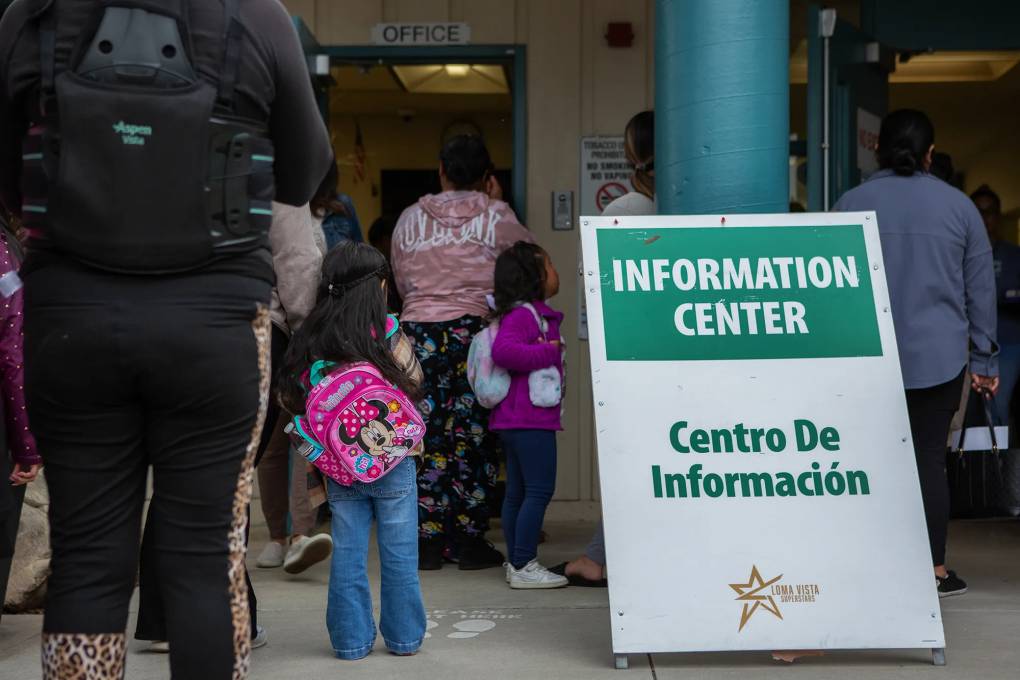
"caption": "Parents and their kids on the first day of classes at Loma Vista Elementary School in Salinas on Aug. 8, 2023. State legislators want to limit deportation actions at schools.",
"credit": "Semantha Norris/CalMatters",
"altTag": null,
"description": null,
"imgSizes": {
"medium": {
"file": "https://cdn.kqed.org/wp-content/uploads/sites/10/2025/01/080923_School-Attendance_SN_CM_01-800x533.jpg",
"width": 800,
"height": 533,
"mimeType": "image/jpeg"
},
"large": {
"file": "https://cdn.kqed.org/wp-content/uploads/sites/10/2025/01/080923_School-Attendance_SN_CM_01-1020x680.jpg",
"width": 1020,
"height": 680,
"mimeType": "image/jpeg"
},
"thumbnail": {
"file": "https://cdn.kqed.org/wp-content/uploads/sites/10/2025/01/080923_School-Attendance_SN_CM_01-160x107.jpg",
"width": 160,
"height": 107,
"mimeType": "image/jpeg"
},
"1536x1536": {
"file": "https://cdn.kqed.org/wp-content/uploads/sites/10/2025/01/080923_School-Attendance_SN_CM_01-1536x1024.jpg",
"width": 1536,
"height": 1024,
"mimeType": "image/jpeg"
},
"post-thumbnail": {
"file": "https://cdn.kqed.org/wp-content/uploads/sites/10/2025/01/080923_School-Attendance_SN_CM_01-672x372.jpg",
"width": 672,
"height": 372,
"mimeType": "image/jpeg"
},
"twentyfourteen-full-width": {
"file": "https://cdn.kqed.org/wp-content/uploads/sites/10/2025/01/080923_School-Attendance_SN_CM_01-1038x576.jpg",
"width": 1038,
"height": 576,
"mimeType": "image/jpeg"
},
"full-width": {
"file": "https://cdn.kqed.org/wp-content/uploads/sites/10/2025/01/080923_School-Attendance_SN_CM_01-1920x1280.jpg",
"width": 1920,
"height": 1280,
"mimeType": "image/jpeg"
},
"kqedFullSize": {
"file": "https://cdn.kqed.org/wp-content/uploads/sites/10/2025/01/080923_School-Attendance_SN_CM_01.jpg",
"width": 2000,
"height": 1333
}
},
"isLoading": false,
"fetchFailed": false
},
"news_12020257": {
"type": "attachments",
"id": "news_12020257",
"meta": {
"index": "attachments_1716263798",
"site": "news",
"id": "12020257",
"found": true
},
"title": "031423_SoCal-Cardrooms_TS_CM_01",
"publishDate": 1735930371,
"status": "inherit",
"parent": 12020255,
"modified": 1735930399,
"caption": "On Thursday, California’s casino-owning tribes sued their rival card rooms including Commerce Casino, pictured here. The tribes allege card rooms are illegally offering card games including black jack and pai gow poker.",
"credit": "CalMatters",
"altTag": null,
"description": null,
"imgSizes": {
"medium": {
"file": "https://cdn.kqed.org/wp-content/uploads/sites/10/2025/01/031423_SoCal-Cardrooms_TS_CM_01-800x533.jpg",
"width": 800,
"height": 533,
"mimeType": "image/jpeg"
},
"large": {
"file": "https://cdn.kqed.org/wp-content/uploads/sites/10/2025/01/031423_SoCal-Cardrooms_TS_CM_01-1020x680.jpg",
"width": 1020,
"height": 680,
"mimeType": "image/jpeg"
},
"thumbnail": {
"file": "https://cdn.kqed.org/wp-content/uploads/sites/10/2025/01/031423_SoCal-Cardrooms_TS_CM_01-160x107.jpg",
"width": 160,
"height": 107,
"mimeType": "image/jpeg"
},
"1536x1536": {
"file": "https://cdn.kqed.org/wp-content/uploads/sites/10/2025/01/031423_SoCal-Cardrooms_TS_CM_01-1536x1024.jpg",
"width": 1536,
"height": 1024,
"mimeType": "image/jpeg"
},
"post-thumbnail": {
"file": "https://cdn.kqed.org/wp-content/uploads/sites/10/2025/01/031423_SoCal-Cardrooms_TS_CM_01-672x372.jpg",
"width": 672,
"height": 372,
"mimeType": "image/jpeg"
},
"twentyfourteen-full-width": {
"file": "https://cdn.kqed.org/wp-content/uploads/sites/10/2025/01/031423_SoCal-Cardrooms_TS_CM_01-1038x576.jpg",
"width": 1038,
"height": 576,
"mimeType": "image/jpeg"
},
"full-width": {
"file": "https://cdn.kqed.org/wp-content/uploads/sites/10/2025/01/031423_SoCal-Cardrooms_TS_CM_01-1920x1280.jpg",
"width": 1920,
"height": 1280,
"mimeType": "image/jpeg"
},
"kqedFullSize": {
"file": "https://cdn.kqed.org/wp-content/uploads/sites/10/2025/01/031423_SoCal-Cardrooms_TS_CM_01.jpg",
"width": 2000,
"height": 1333
}
},
"isLoading": false,
"fetchFailed": false
},
"news_12020127": {
"type": "attachments",
"id": "news_12020127",
"meta": {
"index": "attachments_1716263798",
"site": "news",
"id": "12020127",
"found": true
},
"title": "Medical Magic Mushrooms",
"publishDate": 1735844040,
"status": "inherit",
"parent": 12020117,
"modified": 1735844100,
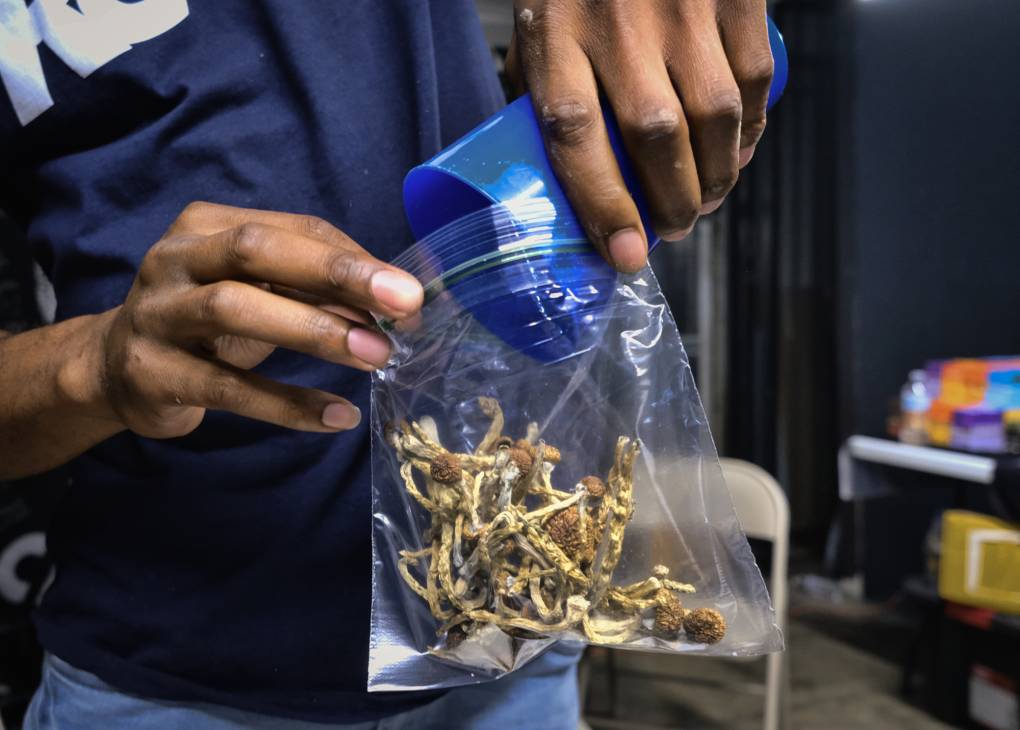
"caption": "A vendor bags psilocybin mushrooms at a cannabis marketplace in Los Angeles on May 24, 2019. ",
"credit": "Richard Vogel/AP Photo",
"altTag": "A person scoops magic mushrooms into a clear plastic bag.",
"description": null,
"imgSizes": {
"medium": {
"file": "https://cdn.kqed.org/wp-content/uploads/sites/10/2025/01/052419-Psilocybin-Mushrooms-AP-CM-800x573.jpg",
"width": 800,
"height": 573,
"mimeType": "image/jpeg"
},
"large": {
"file": "https://cdn.kqed.org/wp-content/uploads/sites/10/2025/01/052419-Psilocybin-Mushrooms-AP-CM-1020x730.jpg",
"width": 1020,
"height": 730,
"mimeType": "image/jpeg"
},
"thumbnail": {
"file": "https://cdn.kqed.org/wp-content/uploads/sites/10/2025/01/052419-Psilocybin-Mushrooms-AP-CM-160x115.jpg",
"width": 160,
"height": 115,
"mimeType": "image/jpeg"
},
"1536x1536": {
"file": "https://cdn.kqed.org/wp-content/uploads/sites/10/2025/01/052419-Psilocybin-Mushrooms-AP-CM-1536x1100.jpg",
"width": 1536,
"height": 1100,
"mimeType": "image/jpeg"
},
"post-thumbnail": {
"file": "https://cdn.kqed.org/wp-content/uploads/sites/10/2025/01/052419-Psilocybin-Mushrooms-AP-CM-672x372.jpg",
"width": 672,
"height": 372,
"mimeType": "image/jpeg"
},
"twentyfourteen-full-width": {
"file": "https://cdn.kqed.org/wp-content/uploads/sites/10/2025/01/052419-Psilocybin-Mushrooms-AP-CM-1038x576.jpg",
"width": 1038,
"height": 576,
"mimeType": "image/jpeg"
},
"full-width": {
"file": "https://cdn.kqed.org/wp-content/uploads/sites/10/2025/01/052419-Psilocybin-Mushrooms-AP-CM-1920x1375.jpg",
"width": 1920,
"height": 1375,
"mimeType": "image/jpeg"
},
"kqedFullSize": {
"file": "https://cdn.kqed.org/wp-content/uploads/sites/10/2025/01/052419-Psilocybin-Mushrooms-AP-CM.jpg",
"width": 2000,
"height": 1432
}
},
"isLoading": false,
"fetchFailed": false
},
"news_12020091": {
"type": "attachments",
"id": "news_12020091",
"meta": {
"index": "attachments_1716263798",
"site": "news",
"id": "12020091",
"found": true
},
"title": "06152021_OpenCA_PU_Sized_10 copy",
"publishDate": 1735692872,
"status": "inherit",
"parent": 12020089,
"modified": 1735692962,
"caption": "Johnny McMahan completes a transaction with a maskless customer at Bargain Liquors in Long Beach, on June 15, 2021. Starting Tuesday, California will not have rules regarding social distancing and capacity limits inside restaurants, bars, gyms or stadiums. Mandates for masks have also been lifted by the state. ",
"credit": "Pablo Unzueta for CalMatters",
"altTag": null,
"description": null,
"imgSizes": {
"medium": {
"file": "https://cdn.kqed.org/wp-content/uploads/sites/10/2024/12/06152021_OpenCA_PU_Sized_10-copy-800x533.jpg",
"width": 800,
"height": 533,
"mimeType": "image/jpeg"
},
"large": {
"file": "https://cdn.kqed.org/wp-content/uploads/sites/10/2024/12/06152021_OpenCA_PU_Sized_10-copy-1020x680.jpg",
"width": 1020,
"height": 680,
"mimeType": "image/jpeg"
},
"thumbnail": {
"file": "https://cdn.kqed.org/wp-content/uploads/sites/10/2024/12/06152021_OpenCA_PU_Sized_10-copy-160x107.jpg",
"width": 160,
"height": 107,
"mimeType": "image/jpeg"
},
"1536x1536": {
"file": "https://cdn.kqed.org/wp-content/uploads/sites/10/2024/12/06152021_OpenCA_PU_Sized_10-copy-1536x1024.jpg",
"width": 1536,
"height": 1024,
"mimeType": "image/jpeg"
},
"post-thumbnail": {
"file": "https://cdn.kqed.org/wp-content/uploads/sites/10/2024/12/06152021_OpenCA_PU_Sized_10-copy-672x372.jpg",
"width": 672,
"height": 372,
"mimeType": "image/jpeg"
},
"twentyfourteen-full-width": {
"file": "https://cdn.kqed.org/wp-content/uploads/sites/10/2024/12/06152021_OpenCA_PU_Sized_10-copy-1038x576.jpg",
"width": 1038,
"height": 576,
"mimeType": "image/jpeg"
},
"full-width": {
"file": "https://cdn.kqed.org/wp-content/uploads/sites/10/2024/12/06152021_OpenCA_PU_Sized_10-copy-1920x1280.jpg",
"width": 1920,
"height": 1280,
"mimeType": "image/jpeg"
},
"kqedFullSize": {
"file": "https://cdn.kqed.org/wp-content/uploads/sites/10/2024/12/06152021_OpenCA_PU_Sized_10-copy.jpg",
"width": 2000,
"height": 1333
}
},
"isLoading": false,
"fetchFailed": false
},
"news_12019937": {
"type": "attachments",
"id": "news_12019937",
"meta": {
"index": "attachments_1716263798",
"site": "news",
"id": "12019937",
"found": true
},
"title": "122724-Stephen-Miller-MB-REUTERS-01 copy",
"publishDate": 1735420447,
"status": "inherit",
"parent": 12019933,
"modified": 1735420474,
"caption": "Stephen Miller, an adviser to President-elect Donald Trump who is expected to join the incoming administration, speaks during a rally for the president-elect in Coachella on Oct. 12, 2024. ",
"credit": "Mike Blake/Reuters",
"altTag": null,
"description": null,
"imgSizes": {
"medium": {
"file": "https://cdn.kqed.org/wp-content/uploads/sites/10/2024/12/122724-Stephen-Miller-MB-REUTERS-01-copy-800x533.jpg",
"width": 800,
"height": 533,
"mimeType": "image/jpeg"
},
"large": {
"file": "https://cdn.kqed.org/wp-content/uploads/sites/10/2024/12/122724-Stephen-Miller-MB-REUTERS-01-copy-1020x680.jpg",
"width": 1020,
"height": 680,
"mimeType": "image/jpeg"
},
"thumbnail": {
"file": "https://cdn.kqed.org/wp-content/uploads/sites/10/2024/12/122724-Stephen-Miller-MB-REUTERS-01-copy-160x107.jpg",
"width": 160,
"height": 107,
"mimeType": "image/jpeg"
},
"1536x1536": {
"file": "https://cdn.kqed.org/wp-content/uploads/sites/10/2024/12/122724-Stephen-Miller-MB-REUTERS-01-copy-1536x1024.jpg",
"width": 1536,
"height": 1024,
"mimeType": "image/jpeg"
},
"post-thumbnail": {
"file": "https://cdn.kqed.org/wp-content/uploads/sites/10/2024/12/122724-Stephen-Miller-MB-REUTERS-01-copy-672x372.jpg",
"width": 672,
"height": 372,
"mimeType": "image/jpeg"
},
"twentyfourteen-full-width": {
"file": "https://cdn.kqed.org/wp-content/uploads/sites/10/2024/12/122724-Stephen-Miller-MB-REUTERS-01-copy-1038x576.jpg",
"width": 1038,
"height": 576,
"mimeType": "image/jpeg"
},
"full-width": {
"file": "https://cdn.kqed.org/wp-content/uploads/sites/10/2024/12/122724-Stephen-Miller-MB-REUTERS-01-copy-1920x1280.jpg",
"width": 1920,
"height": 1280,
"mimeType": "image/jpeg"
},
"kqedFullSize": {
"file": "https://cdn.kqed.org/wp-content/uploads/sites/10/2024/12/122724-Stephen-Miller-MB-REUTERS-01-copy.jpg",
"width": 2000,
"height": 1333
}
},
"isLoading": false,
"fetchFailed": false
},
"news_12019379": {
"type": "attachments",
"id": "news_12019379",
"meta": {
"index": "attachments_1716263798",
"site": "news",
"id": "12019379",
"found": true
},
"title": "061024_UCLA-Protest_GETTY_CM_02",
"publishDate": 1734724247,
"status": "inherit",
"parent": 12019377,
"modified": 1734724284,
"caption": "A pro-Palestinian protester confronts police officers outside Dodd Hall at the UCLA campus in Los Angeles on June 10, 2024. ",
"credit": "Xinhua/Getty Images",
"altTag": null,
"description": null,
"imgSizes": {
"medium": {
"file": "https://cdn.kqed.org/wp-content/uploads/sites/10/2024/12/061024_UCLA-Protest_GETTY_CM_02-800x533.jpg",
"width": 800,
"height": 533,
"mimeType": "image/jpeg"
},
"large": {
"file": "https://cdn.kqed.org/wp-content/uploads/sites/10/2024/12/061024_UCLA-Protest_GETTY_CM_02-1020x680.jpg",
"width": 1020,
"height": 680,
"mimeType": "image/jpeg"
},
"thumbnail": {
"file": "https://cdn.kqed.org/wp-content/uploads/sites/10/2024/12/061024_UCLA-Protest_GETTY_CM_02-160x107.jpg",
"width": 160,
"height": 107,
"mimeType": "image/jpeg"
},
"1536x1536": {
"file": "https://cdn.kqed.org/wp-content/uploads/sites/10/2024/12/061024_UCLA-Protest_GETTY_CM_02-1536x1024.jpg",
"width": 1536,
"height": 1024,
"mimeType": "image/jpeg"
},
"post-thumbnail": {
"file": "https://cdn.kqed.org/wp-content/uploads/sites/10/2024/12/061024_UCLA-Protest_GETTY_CM_02-672x372.jpg",
"width": 672,
"height": 372,
"mimeType": "image/jpeg"
},
"twentyfourteen-full-width": {
"file": "https://cdn.kqed.org/wp-content/uploads/sites/10/2024/12/061024_UCLA-Protest_GETTY_CM_02-1038x576.jpg",
"width": 1038,
"height": 576,
"mimeType": "image/jpeg"
},
"full-width": {
"file": "https://cdn.kqed.org/wp-content/uploads/sites/10/2024/12/061024_UCLA-Protest_GETTY_CM_02-1920x1280.jpg",
"width": 1920,
"height": 1280,
"mimeType": "image/jpeg"
},
"kqedFullSize": {
"file": "https://cdn.kqed.org/wp-content/uploads/sites/10/2024/12/061024_UCLA-Protest_GETTY_CM_02.jpg",
"width": 2000,
"height": 1333
}
},
"isLoading": false,
"fetchFailed": false
},
"news_12019077": {
"type": "attachments",
"id": "news_12019077",
"meta": {
"index": "attachments_1716263798",
"site": "news",
"id": "12019077",
"found": true
},
"title": "120324_CivicsClass_FM_CM_1",
"publishDate": 1734640788,
"status": "inherit",
"parent": 12019076,
"modified": 1734745859,
"caption": "Posters on the wall in the classroom of government and economics teacher, Judy Smith, at San Lorenzo High School in San Lorenzo on Dec. 3, 2024. All California high school students are required to take civics, but how it is taught varies widely throughout the state. ",
"credit": "Florence Middleton for CalMatters",
"altTag": null,
"description": "Posters on the wall in the classroom of government and economics teacher, Judy Smith, at San Lorenzo High School in San Lorenzo on Dec. 3, 2024. All California high school students are required to take civics, but how it is taught varies widely throughout the state. ",
"imgSizes": {
"medium": {
"file": "https://cdn.kqed.org/wp-content/uploads/sites/10/2024/12/120324_CivicsClass_FM_CM_1-800x533.jpg",
"width": 800,
"height": 533,
"mimeType": "image/jpeg"
},
"large": {
"file": "https://cdn.kqed.org/wp-content/uploads/sites/10/2024/12/120324_CivicsClass_FM_CM_1-1020x680.jpg",
"width": 1020,
"height": 680,
"mimeType": "image/jpeg"
},
"thumbnail": {
"file": "https://cdn.kqed.org/wp-content/uploads/sites/10/2024/12/120324_CivicsClass_FM_CM_1-160x107.jpg",
"width": 160,
"height": 107,
"mimeType": "image/jpeg"
},
"1536x1536": {
"file": "https://cdn.kqed.org/wp-content/uploads/sites/10/2024/12/120324_CivicsClass_FM_CM_1-1536x1024.jpg",
"width": 1536,
"height": 1024,
"mimeType": "image/jpeg"
},
"post-thumbnail": {
"file": "https://cdn.kqed.org/wp-content/uploads/sites/10/2024/12/120324_CivicsClass_FM_CM_1-672x372.jpg",
"width": 672,
"height": 372,
"mimeType": "image/jpeg"
},
"twentyfourteen-full-width": {
"file": "https://cdn.kqed.org/wp-content/uploads/sites/10/2024/12/120324_CivicsClass_FM_CM_1-1038x576.jpg",
"width": 1038,
"height": 576,
"mimeType": "image/jpeg"
},
"full-width": {
"file": "https://cdn.kqed.org/wp-content/uploads/sites/10/2024/12/120324_CivicsClass_FM_CM_1-1920x1280.jpg",
"width": 1920,
"height": 1280,
"mimeType": "image/jpeg"
},
"kqedFullSize": {
"file": "https://cdn.kqed.org/wp-content/uploads/sites/10/2024/12/120324_CivicsClass_FM_CM_1.jpg",
"width": 2000,
"height": 1333
}
},
"isLoading": false,
"fetchFailed": false
},
"news_12019192": {
"type": "attachments",
"id": "news_12019192",
"meta": {
"index": "attachments_1716263798",
"site": "news",
"id": "12019192",
"found": true
},
"title": "103124-Nursing-Rehab-MO-CM-07 copy",
"publishDate": 1734651404,
"status": "inherit",
"parent": 12019189,
"modified": 1734651446,
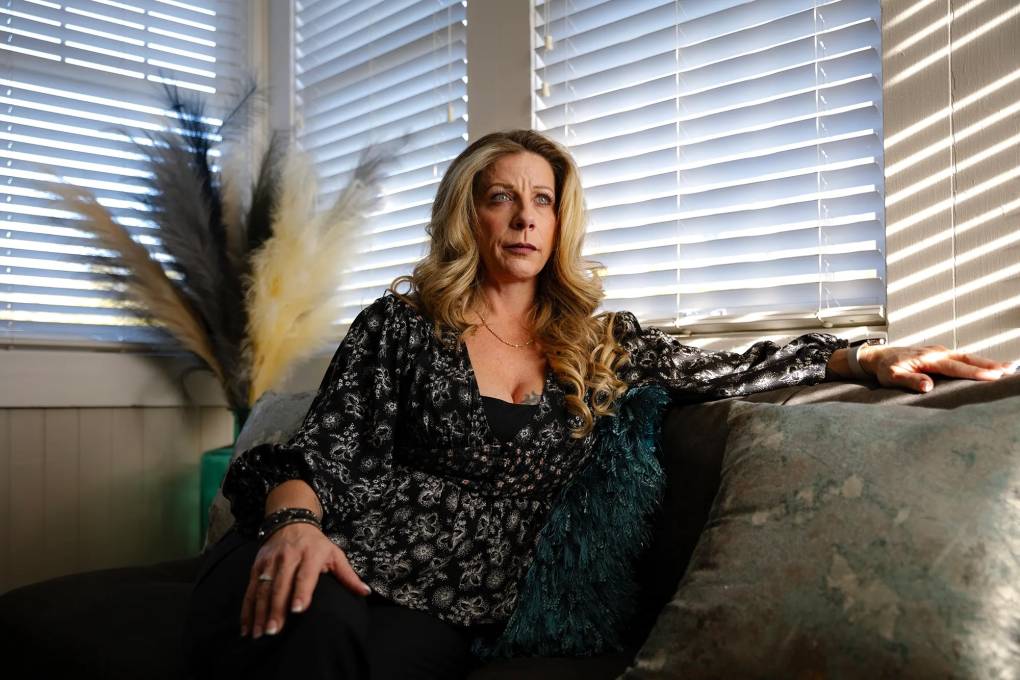
"caption": "Former vocational nurse Bobbie Sage got a DUI while fleeing domestic abuse and was forced into a program for California nurses with addictions. She had to surrender her nursing license after a car accident left her medically disabled and unable to pay for testing, probation fines and fees. Pleasanton, on Oct. 31, 2024.",
"credit": "Manuel Orbegozo for CalMatters",
"altTag": null,
"description": null,
"imgSizes": {
"medium": {
"file": "https://cdn.kqed.org/wp-content/uploads/sites/10/2024/12/103124-Nursing-Rehab-MO-CM-07-copy-800x533.jpg",
"width": 800,
"height": 533,
"mimeType": "image/jpeg"
},
"large": {
"file": "https://cdn.kqed.org/wp-content/uploads/sites/10/2024/12/103124-Nursing-Rehab-MO-CM-07-copy-1020x680.jpg",
"width": 1020,
"height": 680,
"mimeType": "image/jpeg"
},
"thumbnail": {
"file": "https://cdn.kqed.org/wp-content/uploads/sites/10/2024/12/103124-Nursing-Rehab-MO-CM-07-copy-160x107.jpg",
"width": 160,
"height": 107,
"mimeType": "image/jpeg"
},
"1536x1536": {
"file": "https://cdn.kqed.org/wp-content/uploads/sites/10/2024/12/103124-Nursing-Rehab-MO-CM-07-copy-1536x1024.jpg",
"width": 1536,
"height": 1024,
"mimeType": "image/jpeg"
},
"post-thumbnail": {
"file": "https://cdn.kqed.org/wp-content/uploads/sites/10/2024/12/103124-Nursing-Rehab-MO-CM-07-copy-672x372.jpg",
"width": 672,
"height": 372,
"mimeType": "image/jpeg"
},
"twentyfourteen-full-width": {
"file": "https://cdn.kqed.org/wp-content/uploads/sites/10/2024/12/103124-Nursing-Rehab-MO-CM-07-copy-1038x576.jpg",
"width": 1038,
"height": 576,
"mimeType": "image/jpeg"
},
"full-width": {
"file": "https://cdn.kqed.org/wp-content/uploads/sites/10/2024/12/103124-Nursing-Rehab-MO-CM-07-copy-1920x1280.jpg",
"width": 1920,
"height": 1280,
"mimeType": "image/jpeg"
},
"kqedFullSize": {
"file": "https://cdn.kqed.org/wp-content/uploads/sites/10/2024/12/103124-Nursing-Rehab-MO-CM-07-copy.jpg",
"width": 2000,
"height": 1333
}
},
"isLoading": false,
"fetchFailed": false
},
"news_12018616": {
"type": "attachments",
"id": "news_12018616",
"meta": {
"index": "attachments_1716263798",
"site": "news",
"id": "12018616",
"found": true
},
"title": "121424_BSCC-Session_KC_CM_1",
"publishDate": 1734458782,
"status": "inherit",
"parent": 12018612,
"modified": 1734458804,
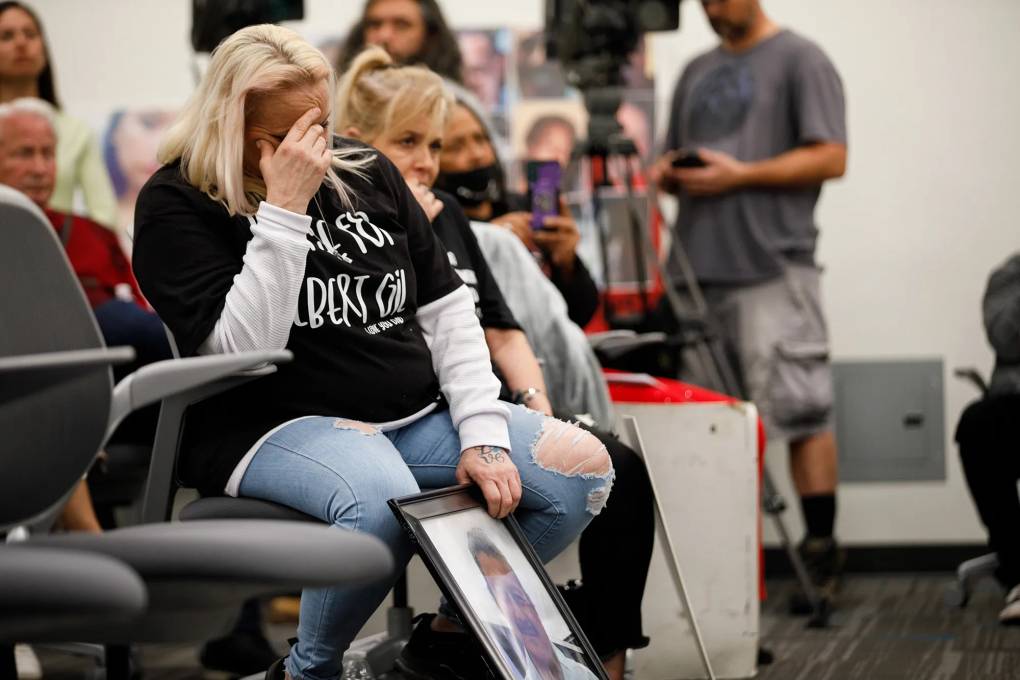
"caption": "Jennifer Schmidt reacts during a listening session hosted by the In-Custody Death Review Division with the Board of State and Community Corrections in Escondido on Dec. 14, 2024. Schmidt’s father, Gilbert Gil, died in Vista jail in 2022.",
"credit": "Kristian Carreon for CalMatters",
"altTag": null,
"description": null,
"imgSizes": {
"medium": {
"file": "https://cdn.kqed.org/wp-content/uploads/sites/10/2024/12/121424_BSCC-Session_KC_CM_1-800x533.jpg",
"width": 800,
"height": 533,
"mimeType": "image/jpeg"
},
"large": {
"file": "https://cdn.kqed.org/wp-content/uploads/sites/10/2024/12/121424_BSCC-Session_KC_CM_1-1020x680.jpg",
"width": 1020,
"height": 680,
"mimeType": "image/jpeg"
},
"thumbnail": {
"file": "https://cdn.kqed.org/wp-content/uploads/sites/10/2024/12/121424_BSCC-Session_KC_CM_1-160x107.jpg",
"width": 160,
"height": 107,
"mimeType": "image/jpeg"
},
"1536x1536": {
"file": "https://cdn.kqed.org/wp-content/uploads/sites/10/2024/12/121424_BSCC-Session_KC_CM_1-1536x1024.jpg",
"width": 1536,
"height": 1024,
"mimeType": "image/jpeg"
},
"post-thumbnail": {
"file": "https://cdn.kqed.org/wp-content/uploads/sites/10/2024/12/121424_BSCC-Session_KC_CM_1-672x372.jpg",
"width": 672,
"height": 372,
"mimeType": "image/jpeg"
},
"twentyfourteen-full-width": {
"file": "https://cdn.kqed.org/wp-content/uploads/sites/10/2024/12/121424_BSCC-Session_KC_CM_1-1038x576.jpg",
"width": 1038,
"height": 576,
"mimeType": "image/jpeg"
},
"full-width": {
"file": "https://cdn.kqed.org/wp-content/uploads/sites/10/2024/12/121424_BSCC-Session_KC_CM_1-1920x1280.jpg",
"width": 1920,
"height": 1280,
"mimeType": "image/jpeg"
},
"kqedFullSize": {
"file": "https://cdn.kqed.org/wp-content/uploads/sites/10/2024/12/121424_BSCC-Session_KC_CM_1.jpg",
"width": 2000,
"height": 1333
}
},
"isLoading": false,
"fetchFailed": false
},
"news_12018365": {
"type": "attachments",
"id": "news_12018365",
"meta": {
"index": "attachments_1716263798",
"site": "news",
"id": "12018365",
"found": true
},
"title": "120424-Porterville-Temp-Work-LV_30 copy",
"publishDate": 1734202426,
"status": "inherit",
"parent": 12018364,
"modified": 1734202450,
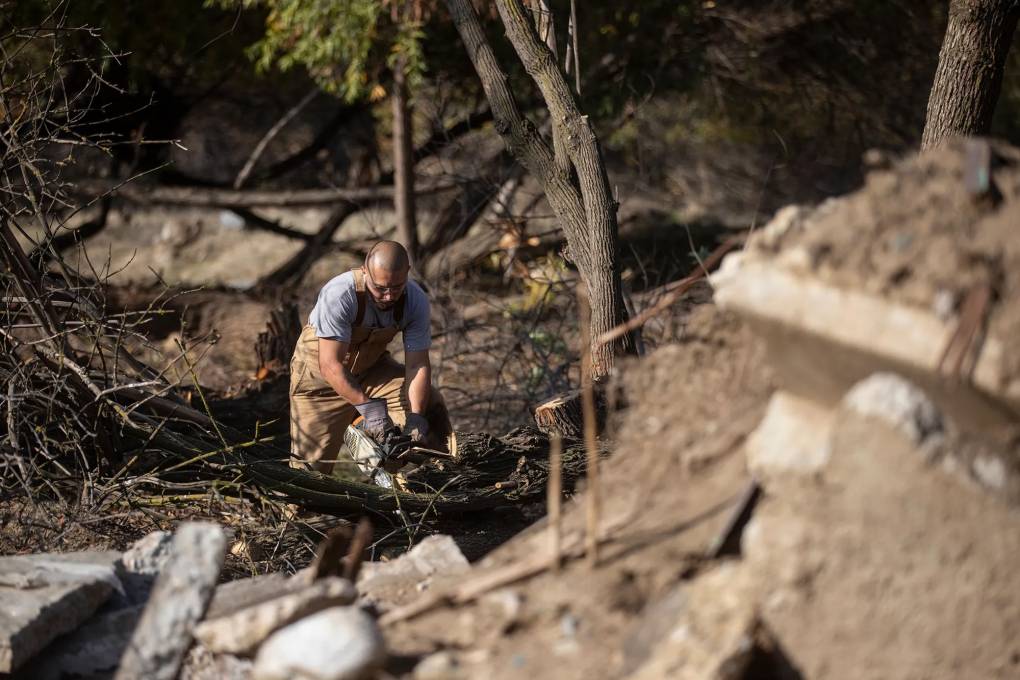
"caption": "Temporary worker Demetrius Ensign uses a chainsaw to cut tree branches and trunks in Bartlett Park in Porterville on Dec. 4, 2024. Workers from the National Dislocated Worker Grant, a federally funded jobs program, are helping to clean the park of flood damage.",
"credit": "Larry Valenzuela/CalMatters/CatchLight Local",
"altTag": null,
"description": null,
"imgSizes": {
"medium": {
"file": "https://cdn.kqed.org/wp-content/uploads/sites/10/2024/12/120424-Porterville-Temp-Work-LV_30-copy-800x533.jpg",
"width": 800,
"height": 533,
"mimeType": "image/jpeg"
},
"large": {
"file": "https://cdn.kqed.org/wp-content/uploads/sites/10/2024/12/120424-Porterville-Temp-Work-LV_30-copy-1020x680.jpg",
"width": 1020,
"height": 680,
"mimeType": "image/jpeg"
},
"thumbnail": {
"file": "https://cdn.kqed.org/wp-content/uploads/sites/10/2024/12/120424-Porterville-Temp-Work-LV_30-copy-160x107.jpg",
"width": 160,
"height": 107,
"mimeType": "image/jpeg"
},
"1536x1536": {
"file": "https://cdn.kqed.org/wp-content/uploads/sites/10/2024/12/120424-Porterville-Temp-Work-LV_30-copy-1536x1024.jpg",
"width": 1536,
"height": 1024,
"mimeType": "image/jpeg"
},
"post-thumbnail": {
"file": "https://cdn.kqed.org/wp-content/uploads/sites/10/2024/12/120424-Porterville-Temp-Work-LV_30-copy-672x372.jpg",
"width": 672,
"height": 372,
"mimeType": "image/jpeg"
},
"twentyfourteen-full-width": {
"file": "https://cdn.kqed.org/wp-content/uploads/sites/10/2024/12/120424-Porterville-Temp-Work-LV_30-copy-1038x576.jpg",
"width": 1038,
"height": 576,
"mimeType": "image/jpeg"
},
"full-width": {
"file": "https://cdn.kqed.org/wp-content/uploads/sites/10/2024/12/120424-Porterville-Temp-Work-LV_30-copy-1920x1280.jpg",
"width": 1920,
"height": 1280,
"mimeType": "image/jpeg"
},
"kqedFullSize": {
"file": "https://cdn.kqed.org/wp-content/uploads/sites/10/2024/12/120424-Porterville-Temp-Work-LV_30-copy.jpg",
"width": 2000,
"height": 1333
}
},
"isLoading": false,
"fetchFailed": false
},
"news_12017876": {
"type": "attachments",
"id": "news_12017876",
"meta": {
"index": "attachments_1716263798",
"site": "news",
"id": "12017876",
"found": true
},
"title": "053124-Bakersfield-Injectable-LV_1",
"publishDate": 1734026410,
"status": "inherit",
"parent": 12017873,
"modified": 1734030613,
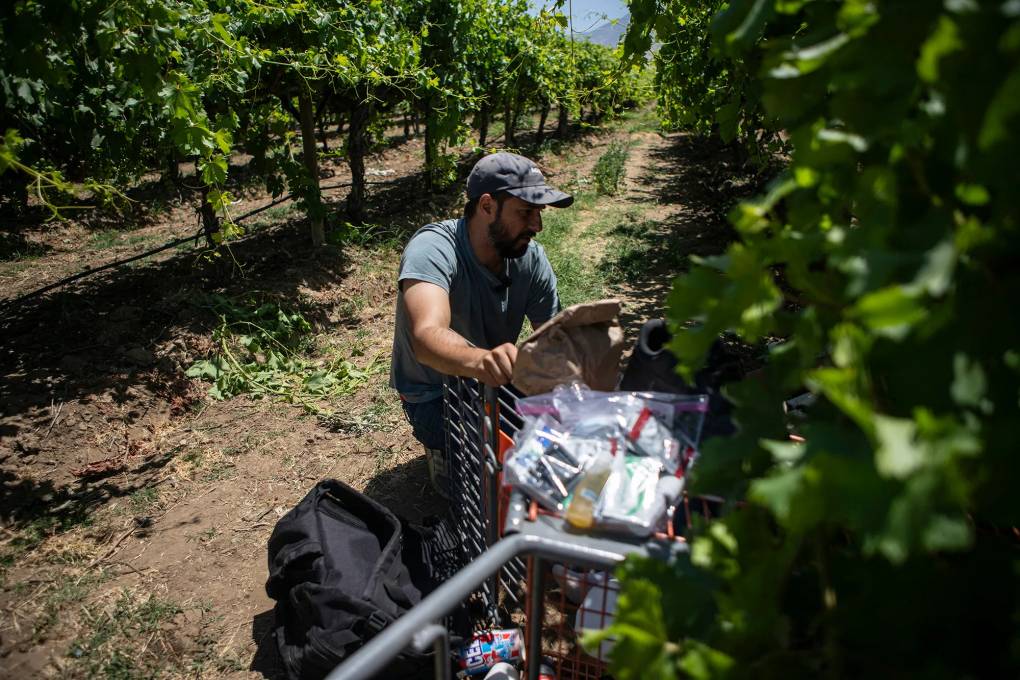
"caption": "Dr. Rishi Patel from the Akido Street Medicine team checks on an unhoused man living in a vineyard in Arvin on May 28, 2024.",
"credit": "Larry Valenzuela/CalMatters/CatchLight Local",
"altTag": null,
"description": null,
"imgSizes": {
"medium": {
"file": "https://cdn.kqed.org/wp-content/uploads/sites/10/2024/12/053124-Bakersfield-Injectable-LV_1-800x533.jpg",
"width": 800,
"height": 533,
"mimeType": "image/jpeg"
},
"large": {
"file": "https://cdn.kqed.org/wp-content/uploads/sites/10/2024/12/053124-Bakersfield-Injectable-LV_1-1020x680.jpg",
"width": 1020,
"height": 680,
"mimeType": "image/jpeg"
},
"thumbnail": {
"file": "https://cdn.kqed.org/wp-content/uploads/sites/10/2024/12/053124-Bakersfield-Injectable-LV_1-160x107.jpg",
"width": 160,
"height": 107,
"mimeType": "image/jpeg"
},
"1536x1536": {
"file": "https://cdn.kqed.org/wp-content/uploads/sites/10/2024/12/053124-Bakersfield-Injectable-LV_1-1536x1024.jpg",
"width": 1536,
"height": 1024,
"mimeType": "image/jpeg"
},
"post-thumbnail": {
"file": "https://cdn.kqed.org/wp-content/uploads/sites/10/2024/12/053124-Bakersfield-Injectable-LV_1-672x372.jpg",
"width": 672,
"height": 372,
"mimeType": "image/jpeg"
},
"twentyfourteen-full-width": {
"file": "https://cdn.kqed.org/wp-content/uploads/sites/10/2024/12/053124-Bakersfield-Injectable-LV_1-1038x576.jpg",
"width": 1038,
"height": 576,
"mimeType": "image/jpeg"
},
"full-width": {
"file": "https://cdn.kqed.org/wp-content/uploads/sites/10/2024/12/053124-Bakersfield-Injectable-LV_1-1920x1280.jpg",
"width": 1920,
"height": 1280,
"mimeType": "image/jpeg"
},
"kqedFullSize": {
"file": "https://cdn.kqed.org/wp-content/uploads/sites/10/2024/12/053124-Bakersfield-Injectable-LV_1.jpg",
"width": 2000,
"height": 1333
}
},
"isLoading": false,
"fetchFailed": false
}
},
"audioPlayerReducer": {
"postId": "stream_live",
"isPaused": true,
"isPlaying": false,
"pfsActive": false,
"pledgeModalIsOpen": true,
"playerDrawerIsOpen": false,
"liveAudioPlayStartedAt": 0,
"liveAudioPlayContext": ""
},
"authorsReducer": {
"byline_news_12020411": {
"type": "authors",
"id": "byline_news_12020411",
"meta": {
"override": true
},
"slug": "byline_news_12020411",
"name": "Jeanne Kuang, CalMatters",
"isLoading": false
},
"byline_news_12020308": {
"type": "authors",
"id": "byline_news_12020308",
"meta": {
"override": true
},
"slug": "byline_news_12020308",
"name": "\u003ca href=\"https://calmatters.org/author/carolyn-jones/\">Carolyn Jones\u003c/a>, CalMatters",
"isLoading": false
},
"byline_news_12020255": {
"type": "authors",
"id": "byline_news_12020255",
"meta": {
"override": true
},
"slug": "byline_news_12020255",
"name": "\u003ca href=\"https://calmatters.org/author/ryan-sabalow/\">Ryan Sabalow\u003c/a>, CalMatters",
"isLoading": false
},
"byline_news_12020117": {
"type": "authors",
"id": "byline_news_12020117",
"meta": {
"override": true
},
"slug": "byline_news_12020117",
"name": "Ana B. Ibarra, CalMatters",
"isLoading": false
},
"byline_news_12020089": {
"type": "authors",
"id": "byline_news_12020089",
"meta": {
"override": true
},
"slug": "byline_news_12020089",
"name": "\u003ca href=\"https://calmatters.org/author/ryan-sabalow/\">Ryan Sabalow\u003c/a>, CalMatters",
"isLoading": false
},
"byline_news_12019933": {
"type": "authors",
"id": "byline_news_12019933",
"meta": {
"override": true
},
"slug": "byline_news_12019933",
"name": "\u003ca href=\"https://calmatters.org/author/wendy-fry/\">Wendy Fry\u003c/a> and \u003ca href=\"https://calmatters.org/author/jeanne-kuang/\">Jeanne Kuang\u003c/a>, CalMatters",
"isLoading": false
},
"byline_news_12019377": {
"type": "authors",
"id": "byline_news_12019377",
"meta": {
"override": true
},
"slug": "byline_news_12019377",
"name": "June Hsu and Lizzy Rager, CalMatters",
"isLoading": false
},
"byline_news_12019076": {
"type": "authors",
"id": "byline_news_12019076",
"meta": {
"override": true
},
"slug": "byline_news_12019076",
"name": "\u003ca href=\"https://calmatters.org/author/carolyn-jones/\">Carolyn Jones\u003c/a>, CalMatters",
"isLoading": false
},
"byline_news_12019189": {
"type": "authors",
"id": "byline_news_12019189",
"meta": {
"override": true
},
"slug": "byline_news_12019189",
"name": "\u003ca href=\"https://calmatters.org/author/kristen-hwang/\">Kristen Hwang\u003c/a>, CalMatters",
"isLoading": false
},
"byline_news_12018612": {
"type": "authors",
"id": "byline_news_12018612",
"meta": {
"override": true
},
"slug": "byline_news_12018612",
"name": "Nigel Dura",
"isLoading": false
},
"byline_news_12018364": {
"type": "authors",
"id": "byline_news_12018364",
"meta": {
"override": true
},
"slug": "byline_news_12018364",
"name": "\u003ca href=\"https://calmatters.org/author/adam-echelman/\">Adam Echelman\u003c/a>, CalMatters",
"isLoading": false
},
"byline_news_12017873": {
"type": "authors",
"id": "byline_news_12017873",
"meta": {
"override": true
},
"slug": "byline_news_12017873",
"name": "\u003ca href=\"https://calmatters.org/author/marisa-kendall/\">Marisa Kendall\u003c/a>, CalMatters",
"isLoading": false
}
},
"pagesReducer": {
"news_affiliate_calmatters": {
"type": "terms",
"id": "news_18481",
"meta": {
"index": "terms_1716263798",
"site": "news",
"id": "18481",
"score": 15.355904
},
"featImg": null,
"name": "CALmatters",
"description": null,
"taxonomy": "affiliate",
"headData": {
"twImgId": null,
"twTitle": null,
"ogTitle": null,
"ogImgId": null,
"twDescription": null,
"description": null,
"title": "CALmatters Archives | KQED Arts",
"ogDescription": null
},
"ttid": 18515,
"slug": "calmatters",
"isLoading": false,
"title": "CALmatters",
"pageMeta": {
"site": "news",
"WpPageTemplate": "page-topic-editorial",
"currentPage": 20
},
"blocks": [
{
"blockName": "kqed/post-list",
"attrs": {
"layout": "cardArticle2",
"query": "posts/news?affiliate=calmatters",
"seeMore": false,
"paginated": true,
"page": 20
}
},
{
"blockName": "kqed/ad"
}
]
}
},
"pfsSessionReducer": {},
"postsReducer": {
"stream_live": {
"type": "live",
"id": "stream_live",
"audioUrl": "https://streams.kqed.org/kqedradio",
"title": "Live Stream",
"excerpt": "Live Stream information currently unavailable.",
"link": "/radio",
"featImg": "",
"label": {
"name": "KQED Live",
"link": "/"
}
},
"stream_kqedNewscast": {
"type": "posts",
"id": "stream_kqedNewscast",
"audioUrl": "https://www.kqed.org/.stream/anon/radio/RDnews/newscast.mp3?_=1",
"title": "KQED Newscast",
"featImg": "",
"label": {
"name": "88.5 FM",
"link": "/"
}
},
"news_12020411": {
"type": "posts",
"id": "news_12020411",
"meta": {
"index": "posts_1716263798",
"site": "news",
"id": "12020411",
"score": null,
"sort": [
1736193651000
]
},
"guestAuthors": [],
"slug": "businesses-sue-state-over-law-letting-workers-skip-anti-union-meetings",
"title": "Businesses Sue State Over Law Letting Workers Skip Anti-Union Meetings",
"publishDate": 1736193651,
"format": "standard",
"headTitle": "Businesses Sue State Over Law Letting Workers Skip Anti-Union Meetings | KQED",
"labelTerm": {},
"content": "\u003cp>California businesses are suing to halt a new state law that bars them from requiring employees to attend anti-union meetings at work.\u003c/p>\n\u003cp>The state’s Chamber of Commerce and California Restaurant Association \u003ca href=\"https://calmatters.org/wp-content/uploads/2025/01/Captive-audience-lawsuit.pdf\">filed the suit in federal court\u003c/a> on New Year’s Eve, a day before the new law was to go into effect, seeking to block it from being enforced.\u003c/p>\n\u003cp>The law \u003ca href=\"https://calmatters.org/economy/2024/12/california-labor-new-laws-2025/\">prohibits employers from disciplining workers\u003c/a> who refuse to attend workplace meetings to hear about their bosses’ “opinion about religious or political matters” — including whether or not employees should unionize. Businesses could be fined $500 a day for violations.\u003c/p>\n\u003cp>\u003cspan style=\"font-weight: 400\">[ad fullwidth]\u003c/span>\u003c/p>\n\u003cp>Labor groups said these so-called captive audience meetings intimidate workers out of exercising their right to unionize; business groups argued it interferes with employers’ right to free speech, including discussing how political or policy developments affect their workplaces.\u003c/p>\n\u003cp>The law, authored by Hayward Democratic Sen. Aisha Wahab, was one of organized labor’s few victories in the 2024 legislative session. California joined about 10 other mostly Democratic states in enacting similar laws \u003ca href=\"https://calmatters.org/politics/capitol/2024/09/california-labor-workplace-meetings/\">amid a surge of labor organizing\u003c/a> in recent years. Expecting the Trump administration \u003ca href=\"https://calmatters.org/economy/2024/12/worker-organizing-california-labor-trump-nlrb/\">to be less favorable to them\u003c/a>, unions have been counting on the state law to help preserve the more organizing-friendly environment of the past four years.\u003c/p>\n\u003cp>For example, the National Labor Relations Board, which has for decades generally allowed employers to hold so-called captive audience meetings, in November \u003ca href=\"https://www.nlrb.gov/news-outreach/news-story/board-rules-captive-audience-meetings-unlawful\">issued a ruling\u003c/a> calling them illegal. However, Amazon, the employer in that case, is contesting the ruling, and labor experts expect the board to reverse its position under Trump. In that case, the California ban on the meetings would still apply.[aside tag='labor' label='More Labor News']But the suit challenging the law is no surprise. Businesses have already sued over similar laws in other states. Wisconsin in 2009 was one of the first states to ban such meetings; when employers filed suit the following year, arguing it conflicted with federal law, the state backed down and agreed not to enforce it. In Oregon, however, a court \u003ca href=\"https://news.bloomberglaw.com/daily-labor-report/labor-board-decision-adds-twist-to-state-captive-audience-cases\">dismissed a similar challenge\u003c/a> brought by the last Trump administration.\u003c/p>\n\u003cp>In their lawsuit, the California business groups said the law violates the First Amendment and conflicts with the federal National Labor Relations Act. They said it prevents employers from “sharing true facts” with workers, including the cost of union dues, “unions’ interference with employer-employee relationships, unions’ prioritization of the collective over the individual employees, and the financial impacts on employers.”\u003c/p>\n\u003cp>“Employers have the right to express their views and opinions on many issues,” Jot Condie, president and CEO of the state Restaurant Association, said in a statement.\u003c/p>\n\u003cp>Wahab could not immediately be reached for comment.\u003c/p>\n\u003cp>\u003c/p>\n",
"blocks": [],
"excerpt": "The new law, which goes into effect tomorrow, prohibits employers from retaliating against employees who do not attend so-called captive audience meetings. ",
"status": "publish",
"parent": 0,
"modified": 1736193487,
"stats": {
"hasAudio": false,
"hasVideo": false,
"hasChartOrMap": false,
"iframeSrcs": [],
"hasGoogleForm": false,
"hasGallery": false,
"hasHearkenModule": false,
"hasPolis": false,
"paragraphCount": 11,
"wordCount": 470
},
"headData": {
"title": "Businesses Sue State Over Law Letting Workers Skip Anti-Union Meetings | KQED",
"description": "The new law, which goes into effect tomorrow, prohibits employers from retaliating against employees who do not attend so-called captive audience meetings. ",
"ogTitle": "",
"ogDescription": "",
"ogImgId": "",
"twTitle": "",
"twDescription": "",
"twImgId": "",
"schema": {
"@context": "https://schema.org",
"@type": "NewsArticle",
"headline": "Businesses Sue State Over Law Letting Workers Skip Anti-Union Meetings",
"datePublished": "2025-01-06T12:00:51-08:00",
"dateModified": "2025-01-06T11:58:07-08:00",
"image": "https://cdn.kqed.org/wp-content/uploads/2020/02/KQED-OG-Image@1x.png",
"isAccessibleForFree": "True",
"publisher": {
"@type": "NewsMediaOrganization",
"@id": "https://www.kqed.org/#organization",
"name": "KQED",
"logo": "https://cdn.kqed.org/wp-content/uploads/2020/02/KQED-OG-Image@1x.png",
"url": "https://www.kqed.org",
"sameAs": [
"https://www.facebook.com/KQED",
"https://twitter.com/KQED",
"https://www.instagram.com/kqed/",
"https://www.tiktok.com/@kqedofficial",
"https://www.linkedin.com/company/kqed",
"https://www.youtube.com/channel/UCeC0IOo7i1P_61zVUWbJ4nw"
]
}
}
},
"source": "CalMatters",
"sourceUrl": "https://calmatters.org/",
"sticky": false,
"nprByline": "Jeanne Kuang, CalMatters",
"excludeFromSiteSearch": "Include",
"showOnAuthorArchivePages": "No",
"articleAge": "0",
"path": "/news/12020411/businesses-sue-state-over-law-letting-workers-skip-anti-union-meetings",
"audioTrackLength": null,
"parsedContent": [
{
"type": "contentString",
"content": "\u003cdiv class=\"post-body\">\u003cp>\u003cp>California businesses are suing to halt a new state law that bars them from requiring employees to attend anti-union meetings at work.\u003c/p>\n\u003cp>The state’s Chamber of Commerce and California Restaurant Association \u003ca href=\"https://calmatters.org/wp-content/uploads/2025/01/Captive-audience-lawsuit.pdf\">filed the suit in federal court\u003c/a> on New Year’s Eve, a day before the new law was to go into effect, seeking to block it from being enforced.\u003c/p>\n\u003cp>The law \u003ca href=\"https://calmatters.org/economy/2024/12/california-labor-new-laws-2025/\">prohibits employers from disciplining workers\u003c/a> who refuse to attend workplace meetings to hear about their bosses’ “opinion about religious or political matters” — including whether or not employees should unionize. Businesses could be fined $500 a day for violations.\u003c/p>\n\u003cp>\u003cspan style=\"font-weight: 400\">\u003c/p>\u003c/div>",
"attributes": {
"named": {},
"numeric": []
}
},
{
"type": "component",
"content": "",
"name": "ad",
"attributes": {
"named": {
"label": "fullwidth"
},
"numeric": [
"fullwidth"
]
}
},
{
"type": "contentString",
"content": "\u003cdiv class=\"post-body\">\u003cp>\u003c/span>\u003c/p>\n\u003cp>Labor groups said these so-called captive audience meetings intimidate workers out of exercising their right to unionize; business groups argued it interferes with employers’ right to free speech, including discussing how political or policy developments affect their workplaces.\u003c/p>\n\u003cp>The law, authored by Hayward Democratic Sen. Aisha Wahab, was one of organized labor’s few victories in the 2024 legislative session. California joined about 10 other mostly Democratic states in enacting similar laws \u003ca href=\"https://calmatters.org/politics/capitol/2024/09/california-labor-workplace-meetings/\">amid a surge of labor organizing\u003c/a> in recent years. Expecting the Trump administration \u003ca href=\"https://calmatters.org/economy/2024/12/worker-organizing-california-labor-trump-nlrb/\">to be less favorable to them\u003c/a>, unions have been counting on the state law to help preserve the more organizing-friendly environment of the past four years.\u003c/p>\n\u003cp>For example, the National Labor Relations Board, which has for decades generally allowed employers to hold so-called captive audience meetings, in November \u003ca href=\"https://www.nlrb.gov/news-outreach/news-story/board-rules-captive-audience-meetings-unlawful\">issued a ruling\u003c/a> calling them illegal. However, Amazon, the employer in that case, is contesting the ruling, and labor experts expect the board to reverse its position under Trump. In that case, the California ban on the meetings would still apply.\u003c/p>\u003c/div>",
"attributes": {
"named": {},
"numeric": []
}
},
{
"type": "component",
"content": "",
"name": "aside",
"attributes": {
"named": {
"tag": "labor",
"label": "More Labor News "
},
"numeric": []
}
},
{
"type": "contentString",
"content": "\u003cdiv class=\"post-body\">\u003cp>But the suit challenging the law is no surprise. Businesses have already sued over similar laws in other states. Wisconsin in 2009 was one of the first states to ban such meetings; when employers filed suit the following year, arguing it conflicted with federal law, the state backed down and agreed not to enforce it. In Oregon, however, a court \u003ca href=\"https://news.bloomberglaw.com/daily-labor-report/labor-board-decision-adds-twist-to-state-captive-audience-cases\">dismissed a similar challenge\u003c/a> brought by the last Trump administration.\u003c/p>\n\u003cp>In their lawsuit, the California business groups said the law violates the First Amendment and conflicts with the federal National Labor Relations Act. They said it prevents employers from “sharing true facts” with workers, including the cost of union dues, “unions’ interference with employer-employee relationships, unions’ prioritization of the collective over the individual employees, and the financial impacts on employers.”\u003c/p>\n\u003cp>“Employers have the right to express their views and opinions on many issues,” Jot Condie, president and CEO of the state Restaurant Association, said in a statement.\u003c/p>\n\u003cp>Wahab could not immediately be reached for comment.\u003c/p>\n\u003cp>\u003c/p>\n\u003c/div>\u003c/p>",
"attributes": {
"named": {},
"numeric": []
}
}
],
"link": "/news/12020411/businesses-sue-state-over-law-letting-workers-skip-anti-union-meetings",
"authors": [
"byline_news_12020411"
],
"categories": [
"news_31795",
"news_1758",
"news_28250",
"news_8",
"news_13"
],
"tags": [
"news_23922",
"news_2704",
"news_19904",
"news_17968",
"news_794"
],
"affiliates": [
"news_18481"
],
"featImg": "news_12020412",
"label": "source_news_12020411"
},
"news_12020308": {
"type": "posts",
"id": "news_12020308",
"meta": {
"index": "posts_1716263798",
"site": "news",
"id": "12020308",
"score": null,
"sort": [
1736013622000
]
},
"guestAuthors": [],
"slug": "can-california-keep-ice-away-from-schools-lawmakers-want-to-try-as-crackdowns-loom",
"title": "Can California Keep ICE Away From Schools? Lawmakers Want to Try as Crackdowns Loom",
"publishDate": 1736013622,
"format": "standard",
"headTitle": "Can California Keep ICE Away From Schools? Lawmakers Want to Try as Crackdowns Loom | KQED",
"labelTerm": {},
"content": "\u003cp>California lawmakers are proposing steps to protect K–12 students and families from mass deportations — although the real value of those proposals may be symbolic.\u003c/p>\n\u003cp>A pair of bills in the Legislature — \u003ca href=\"https://digitaldemocracy.calmatters.org/bills/ca_202520260ab49?slug=CA_202520260AB49&_gl=1*11t00sp*_gcl_au*Nzk3MzE2MDMuMTczMTAyMjU2Mg..*_ga*Mjk2NjI4MjAxLjE3MzEwMjI1NjI.*_ga_5TKXNLE5NK*MTczNTk0MDA1NS4zNi4xLjE3MzU5NDAxOTkuNjAuMC4w*_ga_DX0K9PCWYH*MTczNTk0MDA1NS4zNi4xLjE3MzU5NDAxOTkuMC4wLjA.*_ga_GNY4L81DZE*MTczNTk0MDA1NS4zNi4xLjE3MzU5NDAxOTkuMC4wLjA.\">AB 49\u003c/a> and \u003ca href=\"https://digitaldemocracy.calmatters.org/bills/ca_202520260sb48?slug=CA_202520260SB48&_gl=1*11t00sp*_gcl_au*Nzk3MzE2MDMuMTczMTAyMjU2Mg..*_ga*Mjk2NjI4MjAxLjE3MzEwMjI1NjI.*_ga_5TKXNLE5NK*MTczNTk0MDA1NS4zNi4xLjE3MzU5NDAxOTkuNjAuMC4w*_ga_DX0K9PCWYH*MTczNTk0MDA1NS4zNi4xLjE3MzU5NDAxOTkuMC4wLjA.*_ga_GNY4L81DZE*MTczNTk0MDA1NS4zNi4xLjE3MzU5NDAxOTkuMC4wLjA.\">SB 48\u003c/a> — aim to keep federal agents from detaining undocumented students or their families on or near school property without a warrant. The bills are a response to President-elect Donald Trump’s threat to deport undocumented immigrants, a move that could have major consequences for schools in California, which funds its schools based on attendance and where \u003ca href=\"https://www.fwd.us/news/k-12-undocumented-students/\">12% of students\u003c/a> have at least one undocumented parent.\u003c/p>\n\u003cp>Both bills would make it harder and more time-consuming for agents to enter schools or day care centers. But they can only delay, not stop, arrests.\u003c/p>\n\u003cp>“In no way can these bills override federal law,” said Kevin Johnson, a law professor at UC Davis. “But the bills respond to a great concern in the community that it’s not safe to take your children to school. … I can’t emphasize enough how important this is, how vulnerable undocumented immigrants feel right now.”\u003c/p>\n\u003cp>AB 49, proposed by Assemblymember Al Muratsuchi, a Democrat from Torrance, would require immigration agents to obtain written permission from the superintendent before coming onto school property. It also bars agents from being in rooms where children are present. SB 48, introduced by Sen. Lena Gonzalez, a Democrat from Long Beach, would prohibit local police from cooperating with federal agents — such as assisting in arrests or providing information about families’ immigration status — within one mile of a school. It also bars schools from sharing student and family information with federal authorities.\u003c/p>\n\u003cp>[ad fullwidth]\u003c/p>\n\u003cp>School districts have also doubled down on their efforts to protect students and families. Los Angeles Unified has partnered with legal aid organizations to assist families and instructed schools not to ask students about their immigration status. San Francisco Unified \u003ca href=\"https://go.boarddocs.com/ca/sfusd/Board.nsf/goto?open&id=D2NW4T83765C\">has similar policies\u003c/a>.\u003c/p>\n\u003cp>“(San Francisco Unified) is a safe haven for all students regardless of citizenship status,” Superintendent Maria Su wrote to the community after the November election. “SFUSD restates our position that all students have the right to attend school regardless of their immigration status or that of their family members.”\u003c/p>\n\u003ch2>Schools as safe havens\u003c/h2>\n\u003cp>Schools have long been safe havens for immigrant students. Under a \u003ca href=\"https://www.oyez.org/cases/1981/80-1538\">1982 Supreme Court ruling\u003c/a>, public schools must enroll all students regardless of their immigration status and can’t charge tuition to students who aren’t legal residents. And since 2011, \u003ca href=\"https://www.ice.gov/doclib/ero-outreach/pdf/10029.2-policy.pdf\">federal guidelines\u003c/a> discourage agents from making immigration arrests at schools, hospitals, churches, courthouses and other “sensitive locations.”\u003c/p>\n\u003cp>But Trump said he plans to \u003ca href=\"https://www.nbcnews.com/investigations/trump-scrap-restriction-ice-arrests-churches-schools-rcna183688\">eliminate the “sensitive locations”\u003c/a> guidelines, and the Heritage Foundation, which published the right-leaning Project 2025 manifesto, is encouraging states to \u003ca href=\"https://www.heritage.org/education/report/the-consequences-unchecked-illegal-immigration-americas-public-schools\">charge tuition to undocumented K–12 students\u003c/a>. That could set up the possible overturn of the Supreme Court decision guaranteeing access to school for undocumented students. The foundation’s rationale is that government agencies such as schools are already overburdened and need to prioritize services for U.S. citizens.\u003c/p>\n\u003cp>“The (Biden) administration’s new version of America is nothing more than an open-border welfare state,” Lora Ries, director of the Heritage Foundation’s Border Security and Immigration Center, \u003ca href=\"https://www.heritage.org/press/heritage-releases-more-50-immigration-policies-and-principles-overhaul-us-immigration-system\">wrote\u003c/a>. “No country can sustain or survive such a vision.”\u003c/p>\n\u003cp>Muratsuchi, chair of the Assembly Education Committee, said he was inspired to author AB 49 just after the election when he listened to the concerns of immigrant students in the political science class he teaches at El Camino Community College in Torrance.\u003c/p>\n\u003cp>“It became clear there was more and more fear among my students, not only for themselves but for their families. The fear of families being torn apart is very real,” Muratuschi said. “We want to send a strong message to our immigrant students that we’re going to do everything we can to protect them.”\u003c/p>\n\u003cfigure id=\"attachment_11958277\" class=\"wp-caption aligncenter\" style=\"max-width: 2000px\">\u003cimg loading=\"lazy\" decoding=\"async\" class=\"size-full wp-image-11958277\" src=\"https://cdn.kqed.org/wp-content/uploads/sites/10/2023/08/230815-IMMIGRATION-RALLY-AP-JC-KQED.jpg\" alt=\"People fill a plaza holding signs in front of a large ornate building.\" width=\"2000\" height=\"1397\" srcset=\"https://cdn.kqed.org/wp-content/uploads/sites/10/2023/08/230815-IMMIGRATION-RALLY-AP-JC-KQED.jpg 2000w, https://cdn.kqed.org/wp-content/uploads/sites/10/2023/08/230815-IMMIGRATION-RALLY-AP-JC-KQED-800x559.jpg 800w, https://cdn.kqed.org/wp-content/uploads/sites/10/2023/08/230815-IMMIGRATION-RALLY-AP-JC-KQED-1020x712.jpg 1020w, https://cdn.kqed.org/wp-content/uploads/sites/10/2023/08/230815-IMMIGRATION-RALLY-AP-JC-KQED-160x112.jpg 160w, https://cdn.kqed.org/wp-content/uploads/sites/10/2023/08/230815-IMMIGRATION-RALLY-AP-JC-KQED-1536x1073.jpg 1536w, https://cdn.kqed.org/wp-content/uploads/sites/10/2023/08/230815-IMMIGRATION-RALLY-AP-JC-KQED-1920x1341.jpg 1920w\" sizes=\"auto, (max-width: 2000px) 100vw, 2000px\">\u003cfigcaption class=\"wp-caption-text\">Mercedes and Adan Meneses hold signs at a rally held by immigrant and union groups march to mark May Day and protest against President Donald Trump’s efforts to boost deportations at the San Francisco City Hall on May 1, 2017. \u003ccite>(Jeff Chiu/AP Photo)\u003c/cite>\u003c/figcaption>\u003c/figure>\n\u003ch2>‘Too scared to speak up’\u003c/h2>\n\u003cp>For most undocumented families, deportation would mean a plunging into poverty and, in many cases, violence. Nahomi, a high school senior in Fresno County whom CalMatters is identifying by her middle name because of her immigration status, described the threat of deportation as “a major worry for my family and I. Our lives could change completely in a blink of an eye.”\u003c/p>\n\u003cp>Nahomi and her parents arrived in California in 2011 from the city of Culiacan in Sinaloa, Mexico, an area plagued by \u003ca href=\"https://mx.usembassy.gov/security-alert-ongoing-violence-and-security-concerns-in-culiacan-and-mazatlan-sinaloa-mexico/#:~:text=Culiacan%2C%20the%20Mazatlan%2DCuliacan%20highway,and%20operating%20in%20Sinaloa%20state.\">widespread violence\u003c/a>. They initially planned to stay until Sinaloa became safer, but once they settled in the Central Valley, they decided the risks of returning outweighed the risk of deportation, so they stayed. Nahomi’s father works in construction, and her mother is a homemaker, raising Nahomi and her younger sister.\u003c/p>\n\u003cp>While she and her family fear deportation, Nahomi is not afraid to attend school. She said schools can help families know their rights and help children feel safe.\u003c/p>\n\u003cp>“I feel very welcomed and safe there,” she said. “It is a very diverse high school, and I just feel like any other student. … (But) a lot of these families are probably too scared to speak up about doubts they might have.”\u003c/p>\n\u003ch2>Politically unpopular?\u003c/h2>\n\u003cp>Patricia Gándara, an education professor and co-director of the Civil Rights Project at UCLA, said the risk of federal agents arresting students at schools is probably small. It’s unclear how many children in K–12 schools are undocumented, but it’s probably a relatively small number, she said. In any case, immigration enforcement that affects children almost always sparks public outcry from both parties, she said.\u003c/p>\n\u003cp>[aside tag='immigration' label='More Immigration News']\u003c/p>\n\u003cp>“Some people might say they’re anti-immigrant, but it’s another thing entirely when the family up the street, whom they’ve known for 20 years, suddenly gets deported, or your kid’s best friend gets deported,” said Gandara, who’s studied the topic extensively. “It’s politically very unpopular.”\u003c/p>\n\u003cp>Still, the proposed bills could send a powerful message that schools are safe places, she said. Immigration crackdowns can have a \u003ca href=\"https://siepr.stanford.edu/publications/policy-brief/how-strict-immigration-enforcement-harms-schoolchildren\">significant impact on student attendance\u003c/a>, a Stanford study found, which can lead to less funding for schools, particularly low-income schools that enroll large numbers of immigrant children.\u003c/p>\n\u003cp>Immigration crackdowns can also lead to an increase in bullying, anxiety and general uncertainty on campus, not just for immigrant children but for everyone, Gándara said. Teachers, in particular, experience high levels of stress when their students’ safety is endangered, she said.\u003c/p>\n\u003cp>Schools can’t rely solely on state laws to protect immigrant families, though, she added. They should partner with local nonprofits to provide legal services and other support to families who need assistance, Gándara said.\u003c/p>\n\u003cp>“Schools are one of the last places immigrant families feel safe,” she said. “But as soon as (federal agents) move into schools, they’re not so safe any more. These bills say, ‘We’re not going to sit back and let this happen. Not all of government is against you.’”\u003c/p>\n\u003ch2>California ‘one of the best places to be’\u003c/h2>\n\u003cp>Both bills are awaiting hearings in the Legislature. Tammy Lin, supervising attorney with the University of San Diego Immigration Clinic, expects California to continue to take steps to protect undocumented families, but political conflicts will be inevitable.\u003c/p>\n\u003cp>The incoming Trump administration is likely to battle California and other left-leaning states over immigration matters. Even within California, conflicts are likely to erupt between state leaders and those in more conservative regions or even between agencies in the same area. In San Diego County, for example, the Board of Supervisors ordered the sheriff’s office not to notify federal immigration officers when it releases suspected undocumented inmates from jail, but the \u003ca href=\"https://www.latimes.com/california/story/2024-12-18/san-diego-sheriff-and-county-spar-over-immigration\">sheriff refused to comply\u003c/a>.\u003c/p>\n\u003cp>Lin also said she wouldn’t be surprised if there’s an attempt to overturn the Supreme Court ruling guaranteeing education to undocumented children, potentially paving the way for other immigrants’ rights to be reversed.\u003c/p>\n\u003cp>“It’s a slippery slope,” Lin said. “Immigrants know this, which is why there’s immense fear and uncertainty right now. But bills like these show that California is still one of the best places you can be.”\u003c/p>\n\u003cp>[ad floatright]\u003c/p>\n\u003cp>\u003cem>Suriyah Jones, a member of the CalMatters Youth Journalism Initiative, contributed to this story.\u003c/em>\u003c/p>\n\n",
"blocks": [],
"excerpt": "California legislators want to limit deportation actions at schools, but they can’t ban immigration officials.",
"status": "publish",
"parent": 0,
"modified": 1738179935,
"stats": {
"hasAudio": false,
"hasVideo": false,
"hasChartOrMap": false,
"iframeSrcs": [],
"hasGoogleForm": false,
"hasGallery": false,
"hasHearkenModule": false,
"hasPolis": false,
"paragraphCount": 30,
"wordCount": 1504
},
"headData": {
"title": "Can California Keep ICE Away From Schools? Lawmakers Want to Try as Crackdowns Loom | KQED",
"description": "California legislators want to limit deportation actions at schools, but they can’t ban immigration officials.",
"ogTitle": "",
"ogDescription": "",
"ogImgId": "",
"twTitle": "",
"twDescription": "",
"twImgId": "",
"schema": {
"@context": "https://schema.org",
"@type": "NewsArticle",
"headline": "Can California Keep ICE Away From Schools? Lawmakers Want to Try as Crackdowns Loom",
"datePublished": "2025-01-04T10:00:22-08:00",
"dateModified": "2025-01-29T11:45:35-08:00",
"image": "https://cdn.kqed.org/wp-content/uploads/2020/02/KQED-OG-Image@1x.png",
"isAccessibleForFree": "True",
"publisher": {
"@type": "NewsMediaOrganization",
"@id": "https://www.kqed.org/#organization",
"name": "KQED",
"logo": "https://cdn.kqed.org/wp-content/uploads/2020/02/KQED-OG-Image@1x.png",
"url": "https://www.kqed.org",
"sameAs": [
"https://www.facebook.com/KQED",
"https://twitter.com/KQED",
"https://www.instagram.com/kqed/",
"https://www.tiktok.com/@kqedofficial",
"https://www.linkedin.com/company/kqed",
"https://www.youtube.com/channel/UCeC0IOo7i1P_61zVUWbJ4nw"
]
}
}
},
"source": "CalMatters",
"sourceUrl": "https://calmatters.org/",
"sticky": false,
"nprByline": "\u003ca href=\"https://calmatters.org/author/carolyn-jones/\">Carolyn Jones\u003c/a>, CalMatters",
"excludeFromSiteSearch": "Include",
"showOnAuthorArchivePages": "No",
"articleAge": "0",
"path": "/news/12020308/can-california-keep-ice-away-from-schools-lawmakers-want-to-try-as-crackdowns-loom",
"audioTrackLength": null,
"parsedContent": [
{
"type": "contentString",
"content": "\u003cdiv class=\"post-body\">\u003cp>\u003cp>California lawmakers are proposing steps to protect K–12 students and families from mass deportations — although the real value of those proposals may be symbolic.\u003c/p>\n\u003cp>A pair of bills in the Legislature — \u003ca href=\"https://digitaldemocracy.calmatters.org/bills/ca_202520260ab49?slug=CA_202520260AB49&_gl=1*11t00sp*_gcl_au*Nzk3MzE2MDMuMTczMTAyMjU2Mg..*_ga*Mjk2NjI4MjAxLjE3MzEwMjI1NjI.*_ga_5TKXNLE5NK*MTczNTk0MDA1NS4zNi4xLjE3MzU5NDAxOTkuNjAuMC4w*_ga_DX0K9PCWYH*MTczNTk0MDA1NS4zNi4xLjE3MzU5NDAxOTkuMC4wLjA.*_ga_GNY4L81DZE*MTczNTk0MDA1NS4zNi4xLjE3MzU5NDAxOTkuMC4wLjA.\">AB 49\u003c/a> and \u003ca href=\"https://digitaldemocracy.calmatters.org/bills/ca_202520260sb48?slug=CA_202520260SB48&_gl=1*11t00sp*_gcl_au*Nzk3MzE2MDMuMTczMTAyMjU2Mg..*_ga*Mjk2NjI4MjAxLjE3MzEwMjI1NjI.*_ga_5TKXNLE5NK*MTczNTk0MDA1NS4zNi4xLjE3MzU5NDAxOTkuNjAuMC4w*_ga_DX0K9PCWYH*MTczNTk0MDA1NS4zNi4xLjE3MzU5NDAxOTkuMC4wLjA.*_ga_GNY4L81DZE*MTczNTk0MDA1NS4zNi4xLjE3MzU5NDAxOTkuMC4wLjA.\">SB 48\u003c/a> — aim to keep federal agents from detaining undocumented students or their families on or near school property without a warrant. The bills are a response to President-elect Donald Trump’s threat to deport undocumented immigrants, a move that could have major consequences for schools in California, which funds its schools based on attendance and where \u003ca href=\"https://www.fwd.us/news/k-12-undocumented-students/\">12% of students\u003c/a> have at least one undocumented parent.\u003c/p>\n\u003cp>Both bills would make it harder and more time-consuming for agents to enter schools or day care centers. But they can only delay, not stop, arrests.\u003c/p>\n\u003cp>“In no way can these bills override federal law,” said Kevin Johnson, a law professor at UC Davis. “But the bills respond to a great concern in the community that it’s not safe to take your children to school. … I can’t emphasize enough how important this is, how vulnerable undocumented immigrants feel right now.”\u003c/p>\n\u003cp>AB 49, proposed by Assemblymember Al Muratsuchi, a Democrat from Torrance, would require immigration agents to obtain written permission from the superintendent before coming onto school property. It also bars agents from being in rooms where children are present. SB 48, introduced by Sen. Lena Gonzalez, a Democrat from Long Beach, would prohibit local police from cooperating with federal agents — such as assisting in arrests or providing information about families’ immigration status — within one mile of a school. It also bars schools from sharing student and family information with federal authorities.\u003c/p>\n\u003cp>\u003c/p>\u003c/div>",
"attributes": {
"named": {},
"numeric": []
}
},
{
"type": "component",
"content": "",
"name": "ad",
"attributes": {
"named": {
"label": "fullwidth"
},
"numeric": [
"fullwidth"
]
}
},
{
"type": "contentString",
"content": "\u003cdiv class=\"post-body\">\u003cp>\u003c/p>\n\u003cp>School districts have also doubled down on their efforts to protect students and families. Los Angeles Unified has partnered with legal aid organizations to assist families and instructed schools not to ask students about their immigration status. San Francisco Unified \u003ca href=\"https://go.boarddocs.com/ca/sfusd/Board.nsf/goto?open&id=D2NW4T83765C\">has similar policies\u003c/a>.\u003c/p>\n\u003cp>“(San Francisco Unified) is a safe haven for all students regardless of citizenship status,” Superintendent Maria Su wrote to the community after the November election. “SFUSD restates our position that all students have the right to attend school regardless of their immigration status or that of their family members.”\u003c/p>\n\u003ch2>Schools as safe havens\u003c/h2>\n\u003cp>Schools have long been safe havens for immigrant students. Under a \u003ca href=\"https://www.oyez.org/cases/1981/80-1538\">1982 Supreme Court ruling\u003c/a>, public schools must enroll all students regardless of their immigration status and can’t charge tuition to students who aren’t legal residents. And since 2011, \u003ca href=\"https://www.ice.gov/doclib/ero-outreach/pdf/10029.2-policy.pdf\">federal guidelines\u003c/a> discourage agents from making immigration arrests at schools, hospitals, churches, courthouses and other “sensitive locations.”\u003c/p>\n\u003cp>But Trump said he plans to \u003ca href=\"https://www.nbcnews.com/investigations/trump-scrap-restriction-ice-arrests-churches-schools-rcna183688\">eliminate the “sensitive locations”\u003c/a> guidelines, and the Heritage Foundation, which published the right-leaning Project 2025 manifesto, is encouraging states to \u003ca href=\"https://www.heritage.org/education/report/the-consequences-unchecked-illegal-immigration-americas-public-schools\">charge tuition to undocumented K–12 students\u003c/a>. That could set up the possible overturn of the Supreme Court decision guaranteeing access to school for undocumented students. The foundation’s rationale is that government agencies such as schools are already overburdened and need to prioritize services for U.S. citizens.\u003c/p>\n\u003cp>“The (Biden) administration’s new version of America is nothing more than an open-border welfare state,” Lora Ries, director of the Heritage Foundation’s Border Security and Immigration Center, \u003ca href=\"https://www.heritage.org/press/heritage-releases-more-50-immigration-policies-and-principles-overhaul-us-immigration-system\">wrote\u003c/a>. “No country can sustain or survive such a vision.”\u003c/p>\n\u003cp>Muratsuchi, chair of the Assembly Education Committee, said he was inspired to author AB 49 just after the election when he listened to the concerns of immigrant students in the political science class he teaches at El Camino Community College in Torrance.\u003c/p>\n\u003cp>“It became clear there was more and more fear among my students, not only for themselves but for their families. The fear of families being torn apart is very real,” Muratuschi said. “We want to send a strong message to our immigrant students that we’re going to do everything we can to protect them.”\u003c/p>\n\u003cfigure id=\"attachment_11958277\" class=\"wp-caption aligncenter\" style=\"max-width: 2000px\">\u003cimg loading=\"lazy\" decoding=\"async\" class=\"size-full wp-image-11958277\" src=\"https://cdn.kqed.org/wp-content/uploads/sites/10/2023/08/230815-IMMIGRATION-RALLY-AP-JC-KQED.jpg\" alt=\"People fill a plaza holding signs in front of a large ornate building.\" width=\"2000\" height=\"1397\" srcset=\"https://cdn.kqed.org/wp-content/uploads/sites/10/2023/08/230815-IMMIGRATION-RALLY-AP-JC-KQED.jpg 2000w, https://cdn.kqed.org/wp-content/uploads/sites/10/2023/08/230815-IMMIGRATION-RALLY-AP-JC-KQED-800x559.jpg 800w, https://cdn.kqed.org/wp-content/uploads/sites/10/2023/08/230815-IMMIGRATION-RALLY-AP-JC-KQED-1020x712.jpg 1020w, https://cdn.kqed.org/wp-content/uploads/sites/10/2023/08/230815-IMMIGRATION-RALLY-AP-JC-KQED-160x112.jpg 160w, https://cdn.kqed.org/wp-content/uploads/sites/10/2023/08/230815-IMMIGRATION-RALLY-AP-JC-KQED-1536x1073.jpg 1536w, https://cdn.kqed.org/wp-content/uploads/sites/10/2023/08/230815-IMMIGRATION-RALLY-AP-JC-KQED-1920x1341.jpg 1920w\" sizes=\"auto, (max-width: 2000px) 100vw, 2000px\">\u003cfigcaption class=\"wp-caption-text\">Mercedes and Adan Meneses hold signs at a rally held by immigrant and union groups march to mark May Day and protest against President Donald Trump’s efforts to boost deportations at the San Francisco City Hall on May 1, 2017. \u003ccite>(Jeff Chiu/AP Photo)\u003c/cite>\u003c/figcaption>\u003c/figure>\n\u003ch2>‘Too scared to speak up’\u003c/h2>\n\u003cp>For most undocumented families, deportation would mean a plunging into poverty and, in many cases, violence. Nahomi, a high school senior in Fresno County whom CalMatters is identifying by her middle name because of her immigration status, described the threat of deportation as “a major worry for my family and I. Our lives could change completely in a blink of an eye.”\u003c/p>\n\u003cp>Nahomi and her parents arrived in California in 2011 from the city of Culiacan in Sinaloa, Mexico, an area plagued by \u003ca href=\"https://mx.usembassy.gov/security-alert-ongoing-violence-and-security-concerns-in-culiacan-and-mazatlan-sinaloa-mexico/#:~:text=Culiacan%2C%20the%20Mazatlan%2DCuliacan%20highway,and%20operating%20in%20Sinaloa%20state.\">widespread violence\u003c/a>. They initially planned to stay until Sinaloa became safer, but once they settled in the Central Valley, they decided the risks of returning outweighed the risk of deportation, so they stayed. Nahomi’s father works in construction, and her mother is a homemaker, raising Nahomi and her younger sister.\u003c/p>\n\u003cp>While she and her family fear deportation, Nahomi is not afraid to attend school. She said schools can help families know their rights and help children feel safe.\u003c/p>\n\u003cp>“I feel very welcomed and safe there,” she said. “It is a very diverse high school, and I just feel like any other student. … (But) a lot of these families are probably too scared to speak up about doubts they might have.”\u003c/p>\n\u003ch2>Politically unpopular?\u003c/h2>\n\u003cp>Patricia Gándara, an education professor and co-director of the Civil Rights Project at UCLA, said the risk of federal agents arresting students at schools is probably small. It’s unclear how many children in K–12 schools are undocumented, but it’s probably a relatively small number, she said. In any case, immigration enforcement that affects children almost always sparks public outcry from both parties, she said.\u003c/p>\n\u003cp>\u003c/p>\u003c/div>",
"attributes": {
"named": {},
"numeric": []
}
},
{
"type": "component",
"content": "",
"name": "aside",
"attributes": {
"named": {
"tag": "immigration",
"label": "More Immigration News "
},
"numeric": []
}
},
{
"type": "contentString",
"content": "\u003cdiv class=\"post-body\">\u003cp>\u003c/p>\n\u003cp>“Some people might say they’re anti-immigrant, but it’s another thing entirely when the family up the street, whom they’ve known for 20 years, suddenly gets deported, or your kid’s best friend gets deported,” said Gandara, who’s studied the topic extensively. “It’s politically very unpopular.”\u003c/p>\n\u003cp>Still, the proposed bills could send a powerful message that schools are safe places, she said. Immigration crackdowns can have a \u003ca href=\"https://siepr.stanford.edu/publications/policy-brief/how-strict-immigration-enforcement-harms-schoolchildren\">significant impact on student attendance\u003c/a>, a Stanford study found, which can lead to less funding for schools, particularly low-income schools that enroll large numbers of immigrant children.\u003c/p>\n\u003cp>Immigration crackdowns can also lead to an increase in bullying, anxiety and general uncertainty on campus, not just for immigrant children but for everyone, Gándara said. Teachers, in particular, experience high levels of stress when their students’ safety is endangered, she said.\u003c/p>\n\u003cp>Schools can’t rely solely on state laws to protect immigrant families, though, she added. They should partner with local nonprofits to provide legal services and other support to families who need assistance, Gándara said.\u003c/p>\n\u003cp>“Schools are one of the last places immigrant families feel safe,” she said. “But as soon as (federal agents) move into schools, they’re not so safe any more. These bills say, ‘We’re not going to sit back and let this happen. Not all of government is against you.’”\u003c/p>\n\u003ch2>California ‘one of the best places to be’\u003c/h2>\n\u003cp>Both bills are awaiting hearings in the Legislature. Tammy Lin, supervising attorney with the University of San Diego Immigration Clinic, expects California to continue to take steps to protect undocumented families, but political conflicts will be inevitable.\u003c/p>\n\u003cp>The incoming Trump administration is likely to battle California and other left-leaning states over immigration matters. Even within California, conflicts are likely to erupt between state leaders and those in more conservative regions or even between agencies in the same area. In San Diego County, for example, the Board of Supervisors ordered the sheriff’s office not to notify federal immigration officers when it releases suspected undocumented inmates from jail, but the \u003ca href=\"https://www.latimes.com/california/story/2024-12-18/san-diego-sheriff-and-county-spar-over-immigration\">sheriff refused to comply\u003c/a>.\u003c/p>\n\u003cp>Lin also said she wouldn’t be surprised if there’s an attempt to overturn the Supreme Court ruling guaranteeing education to undocumented children, potentially paving the way for other immigrants’ rights to be reversed.\u003c/p>\n\u003cp>“It’s a slippery slope,” Lin said. “Immigrants know this, which is why there’s immense fear and uncertainty right now. But bills like these show that California is still one of the best places you can be.”\u003c/p>\n\u003cp>\u003c/p>\u003c/div>",
"attributes": {
"named": {},
"numeric": []
}
},
{
"type": "component",
"content": "",
"name": "ad",
"attributes": {
"named": {
"label": "floatright"
},
"numeric": [
"floatright"
]
}
},
{
"type": "contentString",
"content": "\u003cdiv class=\"post-body\">\u003cp>\u003c/p>\n\u003cp>\u003cem>Suriyah Jones, a member of the CalMatters Youth Journalism Initiative, contributed to this story.\u003c/em>\u003c/p>\n\n\u003c/div>\u003c/p>",
"attributes": {
"named": {},
"numeric": []
}
}
],
"link": "/news/12020308/can-california-keep-ice-away-from-schools-lawmakers-want-to-try-as-crackdowns-loom",
"authors": [
"byline_news_12020308"
],
"categories": [
"news_31795",
"news_18540",
"news_1169",
"news_8",
"news_13"
],
"tags": [
"news_30911",
"news_1323",
"news_20013",
"news_20202"
],
"affiliates": [
"news_18481"
],
"featImg": "news_12020312",
"label": "source_news_12020308"
},
"news_12020255": {
"type": "posts",
"id": "news_12020255",
"meta": {
"index": "posts_1716263798",
"site": "news",
"id": "12020255",
"score": null,
"sort": [
1735938011000
]
},
"guestAuthors": [],
"slug": "as-californias-tribes-sue-their-gambling-rivals-cities-could-be-dealt-the-losing-hand",
"title": "As California's Tribes Sue Their Gambling Rivals, Cities Could Be Dealt the Losing Hand",
"publishDate": 1735938011,
"format": "standard",
"headTitle": "As California’s Tribes Sue Their Gambling Rivals, Cities Could Be Dealt the Losing Hand | KQED",
"labelTerm": {},
"content": "\u003cp>On their first opportunity since a new law took effect Jan. 1, seven casino-owning Native American tribes filed suit in Sacramento County Thursday against dozens of California card rooms, opening a new front in one of last year’s most expensive political battles.\u003c/p>\n\u003cp>Now, millions of dollars of tax revenues that pay for city services such as police and road repairs could be in jeopardy.\u003c/p>\n\u003cp>The tribes’ suit alleges that the gambling halls scattered across California are illegally offering card games such as blackjack and pai gow poker that cut into the tribes’ gambling revenues.\u003c/p>\n\u003cp>“Defendants brazenly profit from illegal gambling,” the tribes said in the opening line of their lawsuit.\u003c/p>\n\u003cp>In a statement, a card room industry representative said the card rooms are “in full compliance with the law.”\u003c/p>\n\u003cp>[ad fullwidth]\u003c/p>\n\u003cp>“This attempt by tribal casinos to shut down lawful competition by tax-paying California businesses will fail,” the statement said.\u003c/p>\n\u003cp>The suit would not have been possible if Gov. Gavin Newsom hadn’t \u003ca href=\"https://calmatters.org/digital-democracy/2024/09/california-casinos-gambling-cities-newsom/\">signed Senate Bill 549 in September\u003c/a>. Tribes say California voters years ago gave them the exclusive rights to host the disputed table games, which they use to benefit historically disenfranchised tribal communities.\u003c/p>\n\u003cp>However, because the tribes are sovereign governments, they lacked legal standing to sue the state’s 80 or so privately owned gambling halls.\u003c/p>\n\u003cp>The bill gave tribes a three-month window to sue card rooms starting Jan. 1. They filed the lawsuit on the first day California courts opened for business in the new year.\u003c/p>\n\u003cp>Under the bill, tribes cannot receive any money or attorneys’ fees from the lawsuit. Instead, judges will only decide whether card rooms can continue to offer the disputed games.\u003c/p>\n\u003cp>The stakes are high since some cities receive nearly half of their budgets from taxes on card rooms, meaning a tribal victory in court could jeopardize money for police, firefighters and other local services.\u003c/p>\n\u003cp>For example, nearly two-thirds of the budget for the small city of Hawaiian Gardens and almost half for the city of Commerce, both in Los Angeles County, come from local card rooms.\u003c/p>\n\u003cp>San Jose City Councilmember Sergio Jimenez told lawmakers in July that the city receives $30 million each year from card rooms, enough to fund 150 police officers or 133 firefighters. Jimenez said that money’s in jeopardy if the tribes end up prevailing in court.\u003c/p>\n\u003cp>The card room industry claims the games are legal and that the attorney general’s office has approved each of them over the years.\u003c/p>\n\u003cp>[aside tag='tribes' label='More Tribal News']\u003c/p>\n\u003cp>The suit comes after tribes persuaded lawmakers last year to pass \u003ca href=\"https://digitaldemocracy.calmatters.org/bills/ca_202320240sb549?slug=CA_202320240SB549&_gl=1*1jz7mmg*_gcl_au*Nzk3MzE2MDMuMTczMTAyMjU2Mg..*_ga*Mjk2NjI4MjAxLjE3MzEwMjI1NjI.*_ga_5TKXNLE5NK*MTczNTkyOTQ4My4zNS4xLjE3MzU5MzEzMzQuNTcuMC4w*_ga_DX0K9PCWYH*MTczNTkyOTQ4My4zNS4xLjE3MzU5MzA2NDkuMC4wLjA.*_ga_GNY4L81DZE*MTczNTkyOTQ4My4zNS4xLjE3MzU5MzA2NDkuMC4wLjA.\">SB 549\u003c/a> in what was one of the most costly political fights of the two-year legislative session that concluded last summer.\u003c/p>\n\u003cp>A bipartisan coalition of lawmakers, many of them with large tribal casinos in their districts, pushed for the gambling measure, while a smaller group of lawmakers with card rooms in their districts opposed it.\u003c/p>\n\u003cp>It followed a failed 2022 sports betting initiative that the tribes spent millions of dollars to sponsor and that included a similar provision that would have let the tribes sue.\u003c/p>\n\u003cp>The opposing gambling interests donated at least $4.3 million to the 120 members of the Legislature since January 2023, according to the \u003ca href=\"https://digitaldemocracy.calmatters.org/?_gl=1*1jz7mmg*_gcl_au*Nzk3MzE2MDMuMTczMTAyMjU2Mg..*_ga*Mjk2NjI4MjAxLjE3MzEwMjI1NjI.*_ga_5TKXNLE5NK*MTczNTkyOTQ4My4zNS4xLjE3MzU5MzEzMzQuNTcuMC4w*_ga_DX0K9PCWYH*MTczNTkyOTQ4My4zNS4xLjE3MzU5MzA2NDkuMC4wLjA.*_ga_GNY4L81DZE*MTczNTkyOTQ4My4zNS4xLjE3MzU5MzA2NDkuMC4wLjA.\">Digital Democracy database\u003c/a>.\u003c/p>\n\u003cp>Facing what they saw as an existential threat, card rooms responded to SB 549’s introduction with a massive lobbying blitz. In 2023, \u003ca href=\"https://calmatters.org/politics/2024/02/california-lobbying-state-government/\">Hawaiian Gardens Casino\u003c/a> alone spent $9.1 million on lobbying, the second-highest amount reported to state regulators. Only the international oil giant, Chevron Corp., spent more.\u003c/p>\n\u003cp>Then, despite losing the battle over SB 549, the card room industry \u003ca href=\"https://calmatters.org/politics/elections/2024/12/california-election-gambling-card-rooms/\">spent more than $3 million\u003c/a> in the lead-up to the November election in retaliation against four lawmakers who played key roles in the bill’s passage.\u003c/p>\n\u003cp>Three of the candidates targeted by the card rooms ended up losing, including the bill’s author, Democratic Sen. \u003ca href=\"https://digitaldemocracy.calmatters.org/people/100941?_gl=1*13zha4a*_gcl_au*Nzk3MzE2MDMuMTczMTAyMjU2Mg..*_ga*Mjk2NjI4MjAxLjE3MzEwMjI1NjI.*_ga_5TKXNLE5NK*MTczNTkyOTQ4My4zNS4xLjE3MzU5MzEzMzQuNTcuMC4w*_ga_DX0K9PCWYH*MTczNTkyOTQ4My4zNS4xLjE3MzU5MzA2NDkuMC4wLjA.*_ga_GNY4L81DZE*MTczNTkyOTQ4My4zNS4xLjE3MzU5MzA2NDkuMC4wLjA.\">Josh Newman\u003c/a> of Fullerton.\u003c/p>\n\u003cp>\u003c/p>\n",
"blocks": [],
"excerpt": "After winning a costly legislative battle last year, California’s casino-owning tribes have sued their rivals in the gambling business. Cities could lose money if the tribes prevail in court.",
"status": "publish",
"parent": 0,
"modified": 1735939580,
"stats": {
"hasAudio": false,
"hasVideo": false,
"hasChartOrMap": false,
"iframeSrcs": [],
"hasGoogleForm": false,
"hasGallery": false,
"hasHearkenModule": false,
"hasPolis": false,
"paragraphCount": 24,
"wordCount": 677
},
"headData": {
"title": "As California's Tribes Sue Their Gambling Rivals, Cities Could Be Dealt the Losing Hand | KQED",
"description": "After winning a costly legislative battle last year, California’s casino-owning tribes have sued their rivals in the gambling business. Cities could lose money if the tribes prevail in court.",
"ogTitle": "",
"ogDescription": "",
"ogImgId": "",
"twTitle": "",
"twDescription": "",
"twImgId": "",
"schema": {
"@context": "https://schema.org",
"@type": "NewsArticle",
"headline": "As California's Tribes Sue Their Gambling Rivals, Cities Could Be Dealt the Losing Hand",
"datePublished": "2025-01-03T13:00:11-08:00",
"dateModified": "2025-01-03T13:26:20-08:00",
"image": "https://cdn.kqed.org/wp-content/uploads/2020/02/KQED-OG-Image@1x.png",
"isAccessibleForFree": "True",
"publisher": {
"@type": "NewsMediaOrganization",
"@id": "https://www.kqed.org/#organization",
"name": "KQED",
"logo": "https://cdn.kqed.org/wp-content/uploads/2020/02/KQED-OG-Image@1x.png",
"url": "https://www.kqed.org",
"sameAs": [
"https://www.facebook.com/KQED",
"https://twitter.com/KQED",
"https://www.instagram.com/kqed/",
"https://www.tiktok.com/@kqedofficial",
"https://www.linkedin.com/company/kqed",
"https://www.youtube.com/channel/UCeC0IOo7i1P_61zVUWbJ4nw"
]
}
}
},
"source": "CalMatters",
"sourceUrl": "https://calmatters.org/",
"sticky": false,
"nprByline": "\u003ca href=\"https://calmatters.org/author/ryan-sabalow/\">Ryan Sabalow\u003c/a>, CalMatters",
"nprStoryId": "kqed-12020255",
"excludeFromSiteSearch": "Include",
"showOnAuthorArchivePages": "No",
"articleAge": "0",
"path": "/news/12020255/as-californias-tribes-sue-their-gambling-rivals-cities-could-be-dealt-the-losing-hand",
"audioTrackLength": null,
"parsedContent": [
{
"type": "contentString",
"content": "\u003cdiv class=\"post-body\">\u003cp>\u003cp>On their first opportunity since a new law took effect Jan. 1, seven casino-owning Native American tribes filed suit in Sacramento County Thursday against dozens of California card rooms, opening a new front in one of last year’s most expensive political battles.\u003c/p>\n\u003cp>Now, millions of dollars of tax revenues that pay for city services such as police and road repairs could be in jeopardy.\u003c/p>\n\u003cp>The tribes’ suit alleges that the gambling halls scattered across California are illegally offering card games such as blackjack and pai gow poker that cut into the tribes’ gambling revenues.\u003c/p>\n\u003cp>“Defendants brazenly profit from illegal gambling,” the tribes said in the opening line of their lawsuit.\u003c/p>\n\u003cp>In a statement, a card room industry representative said the card rooms are “in full compliance with the law.”\u003c/p>\n\u003cp>\u003c/p>\u003c/div>",
"attributes": {
"named": {},
"numeric": []
}
},
{
"type": "component",
"content": "",
"name": "ad",
"attributes": {
"named": {
"label": "fullwidth"
},
"numeric": [
"fullwidth"
]
}
},
{
"type": "contentString",
"content": "\u003cdiv class=\"post-body\">\u003cp>\u003c/p>\n\u003cp>“This attempt by tribal casinos to shut down lawful competition by tax-paying California businesses will fail,” the statement said.\u003c/p>\n\u003cp>The suit would not have been possible if Gov. Gavin Newsom hadn’t \u003ca href=\"https://calmatters.org/digital-democracy/2024/09/california-casinos-gambling-cities-newsom/\">signed Senate Bill 549 in September\u003c/a>. Tribes say California voters years ago gave them the exclusive rights to host the disputed table games, which they use to benefit historically disenfranchised tribal communities.\u003c/p>\n\u003cp>However, because the tribes are sovereign governments, they lacked legal standing to sue the state’s 80 or so privately owned gambling halls.\u003c/p>\n\u003cp>The bill gave tribes a three-month window to sue card rooms starting Jan. 1. They filed the lawsuit on the first day California courts opened for business in the new year.\u003c/p>\n\u003cp>Under the bill, tribes cannot receive any money or attorneys’ fees from the lawsuit. Instead, judges will only decide whether card rooms can continue to offer the disputed games.\u003c/p>\n\u003cp>The stakes are high since some cities receive nearly half of their budgets from taxes on card rooms, meaning a tribal victory in court could jeopardize money for police, firefighters and other local services.\u003c/p>\n\u003cp>For example, nearly two-thirds of the budget for the small city of Hawaiian Gardens and almost half for the city of Commerce, both in Los Angeles County, come from local card rooms.\u003c/p>\n\u003cp>San Jose City Councilmember Sergio Jimenez told lawmakers in July that the city receives $30 million each year from card rooms, enough to fund 150 police officers or 133 firefighters. Jimenez said that money’s in jeopardy if the tribes end up prevailing in court.\u003c/p>\n\u003cp>The card room industry claims the games are legal and that the attorney general’s office has approved each of them over the years.\u003c/p>\n\u003cp>\u003c/p>\u003c/div>",
"attributes": {
"named": {},
"numeric": []
}
},
{
"type": "component",
"content": "",
"name": "aside",
"attributes": {
"named": {
"tag": "tribes",
"label": "More Tribal News "
},
"numeric": []
}
},
{
"type": "contentString",
"content": "\u003cdiv class=\"post-body\">\u003cp>\u003c/p>\n\u003cp>The suit comes after tribes persuaded lawmakers last year to pass \u003ca href=\"https://digitaldemocracy.calmatters.org/bills/ca_202320240sb549?slug=CA_202320240SB549&_gl=1*1jz7mmg*_gcl_au*Nzk3MzE2MDMuMTczMTAyMjU2Mg..*_ga*Mjk2NjI4MjAxLjE3MzEwMjI1NjI.*_ga_5TKXNLE5NK*MTczNTkyOTQ4My4zNS4xLjE3MzU5MzEzMzQuNTcuMC4w*_ga_DX0K9PCWYH*MTczNTkyOTQ4My4zNS4xLjE3MzU5MzA2NDkuMC4wLjA.*_ga_GNY4L81DZE*MTczNTkyOTQ4My4zNS4xLjE3MzU5MzA2NDkuMC4wLjA.\">SB 549\u003c/a> in what was one of the most costly political fights of the two-year legislative session that concluded last summer.\u003c/p>\n\u003cp>A bipartisan coalition of lawmakers, many of them with large tribal casinos in their districts, pushed for the gambling measure, while a smaller group of lawmakers with card rooms in their districts opposed it.\u003c/p>\n\u003cp>It followed a failed 2022 sports betting initiative that the tribes spent millions of dollars to sponsor and that included a similar provision that would have let the tribes sue.\u003c/p>\n\u003cp>The opposing gambling interests donated at least $4.3 million to the 120 members of the Legislature since January 2023, according to the \u003ca href=\"https://digitaldemocracy.calmatters.org/?_gl=1*1jz7mmg*_gcl_au*Nzk3MzE2MDMuMTczMTAyMjU2Mg..*_ga*Mjk2NjI4MjAxLjE3MzEwMjI1NjI.*_ga_5TKXNLE5NK*MTczNTkyOTQ4My4zNS4xLjE3MzU5MzEzMzQuNTcuMC4w*_ga_DX0K9PCWYH*MTczNTkyOTQ4My4zNS4xLjE3MzU5MzA2NDkuMC4wLjA.*_ga_GNY4L81DZE*MTczNTkyOTQ4My4zNS4xLjE3MzU5MzA2NDkuMC4wLjA.\">Digital Democracy database\u003c/a>.\u003c/p>\n\u003cp>Facing what they saw as an existential threat, card rooms responded to SB 549’s introduction with a massive lobbying blitz. In 2023, \u003ca href=\"https://calmatters.org/politics/2024/02/california-lobbying-state-government/\">Hawaiian Gardens Casino\u003c/a> alone spent $9.1 million on lobbying, the second-highest amount reported to state regulators. Only the international oil giant, Chevron Corp., spent more.\u003c/p>\n\u003cp>Then, despite losing the battle over SB 549, the card room industry \u003ca href=\"https://calmatters.org/politics/elections/2024/12/california-election-gambling-card-rooms/\">spent more than $3 million\u003c/a> in the lead-up to the November election in retaliation against four lawmakers who played key roles in the bill’s passage.\u003c/p>\n\u003cp>Three of the candidates targeted by the card rooms ended up losing, including the bill’s author, Democratic Sen. \u003ca href=\"https://digitaldemocracy.calmatters.org/people/100941?_gl=1*13zha4a*_gcl_au*Nzk3MzE2MDMuMTczMTAyMjU2Mg..*_ga*Mjk2NjI4MjAxLjE3MzEwMjI1NjI.*_ga_5TKXNLE5NK*MTczNTkyOTQ4My4zNS4xLjE3MzU5MzEzMzQuNTcuMC4w*_ga_DX0K9PCWYH*MTczNTkyOTQ4My4zNS4xLjE3MzU5MzA2NDkuMC4wLjA.*_ga_GNY4L81DZE*MTczNTkyOTQ4My4zNS4xLjE3MzU5MzA2NDkuMC4wLjA.\">Josh Newman\u003c/a> of Fullerton.\u003c/p>\n\u003cp>\u003c/p>\n\u003c/div>\u003c/p>",
"attributes": {
"named": {},
"numeric": []
}
}
],
"link": "/news/12020255/as-californias-tribes-sue-their-gambling-rivals-cities-could-be-dealt-the-losing-hand",
"authors": [
"byline_news_12020255"
],
"categories": [
"news_1758",
"news_6188",
"news_8",
"news_13"
],
"tags": [
"news_31791",
"news_424",
"news_18745",
"news_17968",
"news_18541",
"news_31753"
],
"affiliates": [
"news_18481"
],
"featImg": "news_12020257",
"label": "source_news_12020255"
},
"news_12020117": {
"type": "posts",
"id": "news_12020117",
"meta": {
"index": "posts_1716263798",
"site": "news",
"id": "12020117",
"score": null,
"sort": [
1735855217000
]
},
"guestAuthors": [],
"slug": "california-almost-legalized-psychedelics-now-supporters-are-looking-for-a-good-test-case",
"title": "California Almost Legalized Psychedelics. Now Supporters Are Looking for a Good Test Case",
"publishDate": 1735855217,
"format": "standard",
"headTitle": "California Almost Legalized Psychedelics. Now Supporters Are Looking for a Good Test Case | KQED",
"labelTerm": {},
"content": "\u003cp>Last year was supposed to mark a milestone in the psychedelic movement. Lawmakers and advocates were set to make California the next frontier in allowing the use of “magic mushrooms.”\u003c/p>\n\u003cp>They were hopeful because Gov. Gavin Newsom in 2023 — after vetoing a bill that would have \u003ca href=\"https://www.nbcbayarea.com/news/california/california-gavin-newsom-vetoes-bill-psychedelic-mushrooms/3336358/\">decriminalized the possession of psychedelics\u003c/a> — asked legislators for a bill that would \u003ca href=\"https://calmatters.org/health/2024/02/psychedelic-therapy-legalize/\">prioritize the therapeutic promise\u003c/a> of these drugs.\u003c/p>\n\u003cp>Sen. Scott Wiener, a San Francisco Democrat, responded to Newsom’s request with a proposal that would have allowed for psilocybin and other hallucinogens to be \u003ca href=\"https://calmatters.org/digital-democracy/2024/02/wiener-waldron-psychedelic-alliance/\">ingested in a controlled setting\u003c/a> and under the supervision of licensed and trained facilitators.\u003c/p>\n\u003cp>But that bill, like three similar ones before it and after it, went nowhere. Skeptical lawmakers expressed concerns about funding, standing up a complex program and safety as they turned down the measures.\u003c/p>\n\u003cp>Undeterred, advocates now are regrouping to try again.\u003c/p>\n\u003cp>[ad fullwidth]\u003c/p>\n\u003cp>What exactly a new legislative proposal would look like in California is still uncertain, advocates and lawmakers say. Most agree that getting something through in California will have to be more narrow than what’s been proposed in the past, and likely will be centered on providing access to veterans.\u003c/p>\n\u003cp>What’s most feasible is “some sort of pilot program, or something on a smaller scale to prove it out,” said Jesse Gould, founder and president of the Heroic Hearts Project, which has sponsored psychedelic proposals in California and other states. His nonprofit connects military veterans struggling with post-traumatic stress disorder with psychedelic programs in other countries.\u003c/p>\n\u003cp>Psychedelics remain illegal at the federal level, but voters in \u003ca href=\"https://psychedelicalpha.com/data/psychedelic-laws\">two states have authorized them\u003c/a> for certain uses, and several California cities have passed measures decriminalizing them. President Joe Biden, in late 2023, signed a \u003ca href=\"https://www.militarytimes.com/newsletters/2023/12/15/first-ever-provision-for-psychedelic-studies-included-in-defense-bill/\">defense spending bill\u003c/a> that included money to study how psychedelic drugs could be used to treat veterans and military service members.\u003c/p>\n\u003cp>What Gould and other advocates envision as a first step for California might look like a proposal Sen. Josh Becker, a Democrat from Menlo Park and Sen. Brian Jones, a San Diego Republican, submitted last summer. Their bill, dubbed Heal Our Heroes Act, would have allowed the counties of San Diego, Santa Cruz and San Francisco to launch up to five centers each where licensed staff could facilitate psilocybin to veterans and former first responders over 21 who passed a screening test.\u003c/p>\n\u003cp>Their bill did not move forward, but their concept could return.\u003c/p>\n\u003cp>Prioritizing and limiting this experimental access to veterans and former first responders is the most responsible route, Jones said. He does not support decriminalizing psychedelics for recreational use.\u003c/p>\n\u003cp>“I want to serve our veterans who are suffering from these mental ailments and do everything we can so that they get the attention they need when they come home,” Jones said.\u003c/p>\n\u003cp>As of publication, Jones and Becker said they had not yet decided whether they’d re-introduce the Heal Our Heroes bill this year. Wiener’s office did not respond to requests for an interview.\u003c/p>\n\u003ch2>States legalize psychedelic therapies\u003c/h2>\n\u003cp>Approximately \u003ca href=\"https://www.rand.org/news/press/2024/06/27.html\">8 million Americans used psilocybin mushrooms\u003c/a> in 2023, according to RAND, a research organization, and \u003ca href=\"https://vcresearch.berkeley.edu/news/uc-berkeley-center-science-psychedelics-unveils-results-first-ever-berkeley-psychedelics\">a UC Berkeley poll showed that 61% of voters\u003c/a> support regulated therapeutic use of psychedelic substances.\u003c/p>\n\u003cp>Since 2020, \u003ca href=\"https://psychedelicalpha.com/data/psychedelic-laws\">at least 37 states\u003c/a> have introduced bills or ballot measures pertaining to psychedelics. These range from funding research to reducing penalties for possession. Not all proposals make it through, but some researchers predict this momentum will lead to changes in state laws over the next several years. One 2023 analysis published in the \u003ca href=\"https://pmc.ncbi.nlm.nih.gov/articles/PMC10069558/\">Journal for the American Medical Association Psychiatry\u003c/a> forecasted that a majority of states will have legalized psychedelics by 2037.\u003c/p>\n\u003cp>In the Golden State, drug reform advocacy groups and researchers have tried at least three times since 2022 to place psychedelic-related measures on the ballot but have failed to meet the signature-gathering deadlines.\u003c/p>\n\u003cp>Going to voters is expensive and a major undertaking with no guarantee. The ballot box strategy \u003ca href=\"https://www.nytimes.com/2023/01/03/health/psychedelic-drugs-mushrooms-oregon.html\">proved successful in Oregon\u003c/a> and \u003ca href=\"https://www.cpr.org/2023/06/21/colorado-psychedelic-law-for-psilocybin-mushrooms/\">Colorado\u003c/a>, where voters, in 2020 and 2022, approved measures to allow the facilitated use of psychedelics.\u003c/p>\n\u003cp>Voters in Massachusetts, however, \u003ca href=\"https://www.washingtonpost.com/elections/results/2024/11/05/massachusetts-question-4/\">recently rejected a measure\u003c/a> that would have allowed the state to legalize and regulate five plant-based psychedelics for people 21 and up.\u003c/p>\n\u003cp>Part of the issue with the Massachusetts ballot initiative was that it was too broad, said Jared Moffat, deputy policy director of New Approach, a political action committee dedicated to drug reform. Voters were confused about what exactly the measure would do and who it would apply to, he said. He didn’t view the measure’s failure as a sign that people would reject legalizing psychedelics for specific uses.\u003c/p>\n\u003cp>“I think that there’s still a ton of support for therapeutic access,” he said. “I think that people, broadly speaking, have a deep understanding that there is a mental health crisis and that the existing tools that we have help some people, but there are a lot of folks that aren’t being helped.”\u003c/p>\n\u003ch2>Veterans seeking new PTSD treatments\u003c/h2>\n\u003cp>Gould started his nonprofit, Heroic Hearts Project, after his own journey with PTSD led him to the Peruvian Amazon for nontraditional therapies.\u003c/p>\n\u003cp>Two years after leaving the military, Gould was diagnosed with PTSD. He was also dealing with the aftermath of a traumatic brain injury. The former Army Ranger sought therapy from the Department of Veterans Affairs, but even before he could see a therapist, he was being offered prescription drugs, he said.\u003c/p>\n\u003cp>“This didn’t seem like the first, next best step, and I was sort of disillusioned by what was offered,” Gould said. “It was just sort of an acquiescence of, ‘Oh yeah, you’re messed up, and you’re going to be messed up,’ as opposed to building tangible steps forward.”\u003c/p>\n\u003cp>Around the same time, he was hearing about \u003ca href=\"https://health.clevelandclinic.org/ayahuasca\">Ayahuasca\u003c/a> retreats in Peru. After lots of internet research and a leap of faith, Gould made the trip to Iquitos, a remote town in the northwestern part of the country. He described the experience as one of the most challenging things he’s ever done. Immediately after, he felt lighter, more at peace and more connected to everything around him, he said. In the following months, he noticed that the things that would trigger anxiety, hypervigilance or depression didn’t affect him to the same degree as before, he said.\u003c/p>\n\u003cp>Groups, including Heroic Hearts and Veterans Exploring Treatment Solutions (VETS), provide “healing grants” to veterans from across the country seeking to try guided psychedelic retreats in other countries. More recently, Heroic Hearts has also started helping vets access psychedelic programs in Oregon.\u003c/p>\n\u003cp>“There are a lot of veterans from California going to our retreats in Oregon,” Gould said. “I feel like if I was a politician in California, that’d be a little bit embarrassing.”\u003c/p>\n\u003cp>But demand currently outstrips the availability of these grants, said Khurshid Khoja, director of public policy at Veterans Exploring Treatment Solutions, an organization that focuses on veteran suicide prevention.\u003c/p>\n\u003cp>“We are saying no to a majority of the folks who are applying because we simply don’t have the funds to be able to send them,” Khoja said. “We try to identify folks who have tried everything at this point, and they need a Hail Mary because they are experiencing a suicidal ideation.”[aside tag=\"psychedelics\" label=\"More Related Stories\"]\u003c/p>\n\u003cp>Suicide is the \u003ca href=\"https://www.mentalhealth.va.gov/docs/data-sheets/2024/2024-Annual-Report-Part-2-of-2_508.pdf\">second leading cause of death (PDF)\u003c/a> for veterans under the age of 45, according to the U.S. Department of Veterans Affairs. In California, \u003ca href=\"https://www.mentalhealth.va.gov/docs/data-sheets/2022/2022_State_Data_Sheets_California_508.pdf\">449 veterans died by suicide in 2022 (PDF)\u003c/a>, the most recent federal data show. By some estimates, \u003ca href=\"https://www.rand.org/health-care/projects/navigating-mental-health-care-for-veterans/mental-health-issues.html\">1 in 5 U.S. veterans of Iraq and Afghanistan\u003c/a> experience PTSD and major depression.\u003c/p>\n\u003cp>The goal, Khoja said, is to get to a point where the U.S. Food and Drug Administration approves a psychedelic product for therapy that can be available and covered by the Department of Veterans Affairs, but in the meantime, Veterans Exploring Treatment Solutions is looking to states to create psychedelic programs.\u003c/p>\n\u003cp>One of the first things on advocates’ wishlist is a memorandum promising states that the federal government would not pursue charges in states that legalize and regulate psychedelics, said Sam Chapman, a political strategist and former campaign manager for Oregon’s measure that legalized psilocybin use there. The Obama administration issued that kind of guidance to states in 2013 with \u003ca href=\"https://www.washingtonpost.com/national/health-science/obama-administration-will-not-preempt-state-marijuana-laws--for-now/2013/08/29/b725bfd8-10bd-11e3-8cdd-bcdc09410972_story.html\">regard to marijuana\u003c/a>.\u003c/p>\n\u003cp>“The states are going to continue to lead,” Chapman said. “The states passing laws are the reason that the federal government will eventually get off the bench and do something.”\u003c/p>\n\u003cp>\u003cem>Supported by the California Health Care Foundation (CHCF), which works to ensure that people have access to the care they need, when they need it, at a price they can afford. Visit www.chcf.org to learn more.\u003c/em>\u003c/p>\n\u003cp>[ad floatright]\u003c/p>\n",
"blocks": [],
"excerpt": "Two states have legalized psychedelic therapies since 2020, and President Biden signed a law supporting studies of how they might help veterans. Proposals like those keep dying in California.",
"status": "publish",
"parent": 0,
"modified": 1735863224,
"stats": {
"hasAudio": false,
"hasVideo": false,
"hasChartOrMap": false,
"iframeSrcs": [],
"hasGoogleForm": false,
"hasGallery": false,
"hasHearkenModule": false,
"hasPolis": false,
"paragraphCount": 35,
"wordCount": 1521
},
"headData": {
"title": "California Almost Legalized Psychedelics. Now Supporters Are Looking for a Good Test Case | KQED",
"description": "Two states have legalized psychedelic therapies since 2020, and President Biden signed a law supporting studies of how they might help veterans. Proposals like those keep dying in California.",
"ogTitle": "",
"ogDescription": "",
"ogImgId": "",
"twTitle": "",
"twDescription": "",
"twImgId": "",
"schema": {
"@context": "https://schema.org",
"@type": "NewsArticle",
"headline": "California Almost Legalized Psychedelics. Now Supporters Are Looking for a Good Test Case",
"datePublished": "2025-01-02T14:00:17-08:00",
"dateModified": "2025-01-02T16:13:44-08:00",
"image": "https://cdn.kqed.org/wp-content/uploads/2020/02/KQED-OG-Image@1x.png",
"isAccessibleForFree": "True",
"publisher": {
"@type": "NewsMediaOrganization",
"@id": "https://www.kqed.org/#organization",
"name": "KQED",
"logo": "https://cdn.kqed.org/wp-content/uploads/2020/02/KQED-OG-Image@1x.png",
"url": "https://www.kqed.org",
"sameAs": [
"https://www.facebook.com/KQED",
"https://twitter.com/KQED",
"https://www.instagram.com/kqed/",
"https://www.tiktok.com/@kqedofficial",
"https://www.linkedin.com/company/kqed",
"https://www.youtube.com/channel/UCeC0IOo7i1P_61zVUWbJ4nw"
]
}
}
},
"source": "Calmatters",
"sourceUrl": "https://calmatters.org/",
"sticky": false,
"nprByline": "Ana B. Ibarra, CalMatters",
"nprStoryId": "kqed-12020117",
"excludeFromSiteSearch": "Include",
"showOnAuthorArchivePages": "No",
"articleAge": "0",
"path": "/news/12020117/california-almost-legalized-psychedelics-now-supporters-are-looking-for-a-good-test-case",
"audioTrackLength": null,
"parsedContent": [
{
"type": "contentString",
"content": "\u003cdiv class=\"post-body\">\u003cp>\u003cp>Last year was supposed to mark a milestone in the psychedelic movement. Lawmakers and advocates were set to make California the next frontier in allowing the use of “magic mushrooms.”\u003c/p>\n\u003cp>They were hopeful because Gov. Gavin Newsom in 2023 — after vetoing a bill that would have \u003ca href=\"https://www.nbcbayarea.com/news/california/california-gavin-newsom-vetoes-bill-psychedelic-mushrooms/3336358/\">decriminalized the possession of psychedelics\u003c/a> — asked legislators for a bill that would \u003ca href=\"https://calmatters.org/health/2024/02/psychedelic-therapy-legalize/\">prioritize the therapeutic promise\u003c/a> of these drugs.\u003c/p>\n\u003cp>Sen. Scott Wiener, a San Francisco Democrat, responded to Newsom’s request with a proposal that would have allowed for psilocybin and other hallucinogens to be \u003ca href=\"https://calmatters.org/digital-democracy/2024/02/wiener-waldron-psychedelic-alliance/\">ingested in a controlled setting\u003c/a> and under the supervision of licensed and trained facilitators.\u003c/p>\n\u003cp>But that bill, like three similar ones before it and after it, went nowhere. Skeptical lawmakers expressed concerns about funding, standing up a complex program and safety as they turned down the measures.\u003c/p>\n\u003cp>Undeterred, advocates now are regrouping to try again.\u003c/p>\n\u003cp>\u003c/p>\u003c/div>",
"attributes": {
"named": {},
"numeric": []
}
},
{
"type": "component",
"content": "",
"name": "ad",
"attributes": {
"named": {
"label": "fullwidth"
},
"numeric": [
"fullwidth"
]
}
},
{
"type": "contentString",
"content": "\u003cdiv class=\"post-body\">\u003cp>\u003c/p>\n\u003cp>What exactly a new legislative proposal would look like in California is still uncertain, advocates and lawmakers say. Most agree that getting something through in California will have to be more narrow than what’s been proposed in the past, and likely will be centered on providing access to veterans.\u003c/p>\n\u003cp>What’s most feasible is “some sort of pilot program, or something on a smaller scale to prove it out,” said Jesse Gould, founder and president of the Heroic Hearts Project, which has sponsored psychedelic proposals in California and other states. His nonprofit connects military veterans struggling with post-traumatic stress disorder with psychedelic programs in other countries.\u003c/p>\n\u003cp>Psychedelics remain illegal at the federal level, but voters in \u003ca href=\"https://psychedelicalpha.com/data/psychedelic-laws\">two states have authorized them\u003c/a> for certain uses, and several California cities have passed measures decriminalizing them. President Joe Biden, in late 2023, signed a \u003ca href=\"https://www.militarytimes.com/newsletters/2023/12/15/first-ever-provision-for-psychedelic-studies-included-in-defense-bill/\">defense spending bill\u003c/a> that included money to study how psychedelic drugs could be used to treat veterans and military service members.\u003c/p>\n\u003cp>What Gould and other advocates envision as a first step for California might look like a proposal Sen. Josh Becker, a Democrat from Menlo Park and Sen. Brian Jones, a San Diego Republican, submitted last summer. Their bill, dubbed Heal Our Heroes Act, would have allowed the counties of San Diego, Santa Cruz and San Francisco to launch up to five centers each where licensed staff could facilitate psilocybin to veterans and former first responders over 21 who passed a screening test.\u003c/p>\n\u003cp>Their bill did not move forward, but their concept could return.\u003c/p>\n\u003cp>Prioritizing and limiting this experimental access to veterans and former first responders is the most responsible route, Jones said. He does not support decriminalizing psychedelics for recreational use.\u003c/p>\n\u003cp>“I want to serve our veterans who are suffering from these mental ailments and do everything we can so that they get the attention they need when they come home,” Jones said.\u003c/p>\n\u003cp>As of publication, Jones and Becker said they had not yet decided whether they’d re-introduce the Heal Our Heroes bill this year. Wiener’s office did not respond to requests for an interview.\u003c/p>\n\u003ch2>States legalize psychedelic therapies\u003c/h2>\n\u003cp>Approximately \u003ca href=\"https://www.rand.org/news/press/2024/06/27.html\">8 million Americans used psilocybin mushrooms\u003c/a> in 2023, according to RAND, a research organization, and \u003ca href=\"https://vcresearch.berkeley.edu/news/uc-berkeley-center-science-psychedelics-unveils-results-first-ever-berkeley-psychedelics\">a UC Berkeley poll showed that 61% of voters\u003c/a> support regulated therapeutic use of psychedelic substances.\u003c/p>\n\u003cp>Since 2020, \u003ca href=\"https://psychedelicalpha.com/data/psychedelic-laws\">at least 37 states\u003c/a> have introduced bills or ballot measures pertaining to psychedelics. These range from funding research to reducing penalties for possession. Not all proposals make it through, but some researchers predict this momentum will lead to changes in state laws over the next several years. One 2023 analysis published in the \u003ca href=\"https://pmc.ncbi.nlm.nih.gov/articles/PMC10069558/\">Journal for the American Medical Association Psychiatry\u003c/a> forecasted that a majority of states will have legalized psychedelics by 2037.\u003c/p>\n\u003cp>In the Golden State, drug reform advocacy groups and researchers have tried at least three times since 2022 to place psychedelic-related measures on the ballot but have failed to meet the signature-gathering deadlines.\u003c/p>\n\u003cp>Going to voters is expensive and a major undertaking with no guarantee. The ballot box strategy \u003ca href=\"https://www.nytimes.com/2023/01/03/health/psychedelic-drugs-mushrooms-oregon.html\">proved successful in Oregon\u003c/a> and \u003ca href=\"https://www.cpr.org/2023/06/21/colorado-psychedelic-law-for-psilocybin-mushrooms/\">Colorado\u003c/a>, where voters, in 2020 and 2022, approved measures to allow the facilitated use of psychedelics.\u003c/p>\n\u003cp>Voters in Massachusetts, however, \u003ca href=\"https://www.washingtonpost.com/elections/results/2024/11/05/massachusetts-question-4/\">recently rejected a measure\u003c/a> that would have allowed the state to legalize and regulate five plant-based psychedelics for people 21 and up.\u003c/p>\n\u003cp>Part of the issue with the Massachusetts ballot initiative was that it was too broad, said Jared Moffat, deputy policy director of New Approach, a political action committee dedicated to drug reform. Voters were confused about what exactly the measure would do and who it would apply to, he said. He didn’t view the measure’s failure as a sign that people would reject legalizing psychedelics for specific uses.\u003c/p>\n\u003cp>“I think that there’s still a ton of support for therapeutic access,” he said. “I think that people, broadly speaking, have a deep understanding that there is a mental health crisis and that the existing tools that we have help some people, but there are a lot of folks that aren’t being helped.”\u003c/p>\n\u003ch2>Veterans seeking new PTSD treatments\u003c/h2>\n\u003cp>Gould started his nonprofit, Heroic Hearts Project, after his own journey with PTSD led him to the Peruvian Amazon for nontraditional therapies.\u003c/p>\n\u003cp>Two years after leaving the military, Gould was diagnosed with PTSD. He was also dealing with the aftermath of a traumatic brain injury. The former Army Ranger sought therapy from the Department of Veterans Affairs, but even before he could see a therapist, he was being offered prescription drugs, he said.\u003c/p>\n\u003cp>“This didn’t seem like the first, next best step, and I was sort of disillusioned by what was offered,” Gould said. “It was just sort of an acquiescence of, ‘Oh yeah, you’re messed up, and you’re going to be messed up,’ as opposed to building tangible steps forward.”\u003c/p>\n\u003cp>Around the same time, he was hearing about \u003ca href=\"https://health.clevelandclinic.org/ayahuasca\">Ayahuasca\u003c/a> retreats in Peru. After lots of internet research and a leap of faith, Gould made the trip to Iquitos, a remote town in the northwestern part of the country. He described the experience as one of the most challenging things he’s ever done. Immediately after, he felt lighter, more at peace and more connected to everything around him, he said. In the following months, he noticed that the things that would trigger anxiety, hypervigilance or depression didn’t affect him to the same degree as before, he said.\u003c/p>\n\u003cp>Groups, including Heroic Hearts and Veterans Exploring Treatment Solutions (VETS), provide “healing grants” to veterans from across the country seeking to try guided psychedelic retreats in other countries. More recently, Heroic Hearts has also started helping vets access psychedelic programs in Oregon.\u003c/p>\n\u003cp>“There are a lot of veterans from California going to our retreats in Oregon,” Gould said. “I feel like if I was a politician in California, that’d be a little bit embarrassing.”\u003c/p>\n\u003cp>But demand currently outstrips the availability of these grants, said Khurshid Khoja, director of public policy at Veterans Exploring Treatment Solutions, an organization that focuses on veteran suicide prevention.\u003c/p>\n\u003cp>“We are saying no to a majority of the folks who are applying because we simply don’t have the funds to be able to send them,” Khoja said. “We try to identify folks who have tried everything at this point, and they need a Hail Mary because they are experiencing a suicidal ideation.”\u003c/p>\u003c/div>",
"attributes": {
"named": {},
"numeric": []
}
},
{
"type": "component",
"content": "",
"name": "aside",
"attributes": {
"named": {
"tag": "psychedelics",
"label": "More Related Stories "
},
"numeric": []
}
},
{
"type": "contentString",
"content": "\u003cdiv class=\"post-body\">\u003cp>\u003c/p>\n\u003cp>Suicide is the \u003ca href=\"https://www.mentalhealth.va.gov/docs/data-sheets/2024/2024-Annual-Report-Part-2-of-2_508.pdf\">second leading cause of death (PDF)\u003c/a> for veterans under the age of 45, according to the U.S. Department of Veterans Affairs. In California, \u003ca href=\"https://www.mentalhealth.va.gov/docs/data-sheets/2022/2022_State_Data_Sheets_California_508.pdf\">449 veterans died by suicide in 2022 (PDF)\u003c/a>, the most recent federal data show. By some estimates, \u003ca href=\"https://www.rand.org/health-care/projects/navigating-mental-health-care-for-veterans/mental-health-issues.html\">1 in 5 U.S. veterans of Iraq and Afghanistan\u003c/a> experience PTSD and major depression.\u003c/p>\n\u003cp>The goal, Khoja said, is to get to a point where the U.S. Food and Drug Administration approves a psychedelic product for therapy that can be available and covered by the Department of Veterans Affairs, but in the meantime, Veterans Exploring Treatment Solutions is looking to states to create psychedelic programs.\u003c/p>\n\u003cp>One of the first things on advocates’ wishlist is a memorandum promising states that the federal government would not pursue charges in states that legalize and regulate psychedelics, said Sam Chapman, a political strategist and former campaign manager for Oregon’s measure that legalized psilocybin use there. The Obama administration issued that kind of guidance to states in 2013 with \u003ca href=\"https://www.washingtonpost.com/national/health-science/obama-administration-will-not-preempt-state-marijuana-laws--for-now/2013/08/29/b725bfd8-10bd-11e3-8cdd-bcdc09410972_story.html\">regard to marijuana\u003c/a>.\u003c/p>\n\u003cp>“The states are going to continue to lead,” Chapman said. “The states passing laws are the reason that the federal government will eventually get off the bench and do something.”\u003c/p>\n\u003cp>\u003cem>Supported by the California Health Care Foundation (CHCF), which works to ensure that people have access to the care they need, when they need it, at a price they can afford. Visit www.chcf.org to learn more.\u003c/em>\u003c/p>\n\u003cp>\u003c/p>\u003c/div>",
"attributes": {
"named": {},
"numeric": []
}
},
{
"type": "component",
"content": "",
"name": "ad",
"attributes": {
"named": {
"label": "floatright"
},
"numeric": [
"floatright"
]
}
},
{
"type": "contentString",
"content": "\u003cdiv class=\"post-body\">\u003cp>\u003c/p>\n\u003c/div>\u003c/p>",
"attributes": {
"named": {},
"numeric": []
}
}
],
"link": "/news/12020117/california-almost-legalized-psychedelics-now-supporters-are-looking-for-a-good-test-case",
"authors": [
"byline_news_12020117"
],
"categories": [
"news_31795",
"news_457",
"news_8",
"news_356"
],
"tags": [
"news_18543",
"news_33111",
"news_29536"
],
"affiliates": [
"news_18481"
],
"featImg": "news_12020127",
"label": "source_news_12020117"
},
"news_12020089": {
"type": "posts",
"id": "news_12020089",
"meta": {
"index": "posts_1716263798",
"site": "news",
"id": "12020089",
"score": null,
"sort": [
1735758050000
]
},
"guestAuthors": [],
"slug": "new-law-inspired-by-ex-lawmakers-dui-adds-to-alcohol-education-in-california-schools",
"title": "New Law Inspired by Ex-Lawmaker's DUI Adds to Alcohol Education in California Schools",
"publishDate": 1735758050,
"format": "standard",
"headTitle": "New Law Inspired by Ex-Lawmaker’s DUI Adds to Alcohol Education in California Schools | KQED",
"labelTerm": {
"term": 18481,
"site": "news"
},
"content": "\u003cp>California public school students will get additional coursework on the harms of alcohol in 2025, thanks to a new law from a former lawmaker whose drunken driving arrest inspired her legislation.\u003c/p>\n\u003cp>In September, Gov. Gavin Newsom signed \u003ca href=\"https://digitaldemocracy.calmatters.org/bills/ca_202320240ab2865?slug=CA_202320240AB2865\">Assembly Bill 2865\u003c/a> by former Los Angeles Democratic Assemblymember \u003ca href=\"https://digitaldemocracy.calmatters.org/people/144588\">Wendy Carrillo\u003c/a>, whose DUI last year helped derail her political career.\u003c/p>\n\u003cp>California schools are already required to provide instruction about alcohol, narcotics and other dangerous drugs. This bill \u003ca href=\"https://calmatters.org/politics/2024/06/ca-alcohol-harms-high-school/\">would require\u003c/a> that schools also provide instruction about the short- and long-term harms of excessive drinking — including alcohol’s link to chronic diseases, mental health problems and deaths.\u003c/p>\n\u003cp>As she pitched her bill to her colleagues in 2024, Carrillo told them that it was important for students to learn about alcohol’s consequences in the hopes they don’t go down the path she did.\u003c/p>\n\u003cp>[ad fullwidth]\u003c/p>\n\u003cp>“I wish I would have known in high school what I know now,” she said at one hearing. “I would have made different choices.”\u003c/p>\n\u003cp>On Nov. 3, 2023, Carrillo crashed into parked cars in Northeast Los Angeles. Police said her blood-alcohol level was twice the legal limit, according to the \u003cem>Los Angeles Times\u003c/em>. She ended up pleading no contest to the DUI in the middle of her race for Los Angeles City Council, which she lost. Because she ran for city council, Carrillo left her Assembly seat this year.\u003c/p>\n\u003cp>Carrillo said her DUI was a wake up call for her. She said she started going to therapy and became sober. As she reflected on her life, she said her own struggles with booze began at an early age. And she was troubled by how prevalent alcohol is in society, despite its documented dangers.\u003c/p>\n\u003ch2>Alcohol is a national and global health issue\u003c/h2>\n\u003cp>According to federal health officials, alcohol-related diseases kill 178,000 people in the U.S. each year, and death rates are increasing. Noting that alcohol causes at least seven types of cancer, including bowel and breast cancers, the World Health Organization last year declared that “when it comes to alcohol consumption, there is no safe amount.”\u003c/p>\n\u003cp>Carrillo testified that 54 Californians die each day from alcohol.\u003c/p>\n\u003cp>“I want young people to learn early how something that is so legally and easily accessible can do so much harm if not consumed with more knowledge and more responsibility,” she told her colleagues.\u003c/p>\n\u003cp>Her bill passed without any lawmakers voting against it.\u003c/p>\n\u003ch2>What law will do\u003c/h2>\n\u003cp>Under the new law, school boards can decide which grades receive the new instruction. They can ask the state for reimbursements for the costs of instruction, training and updates to instructional materials, said Nicholas Filipas, a spokesperson for the California Department of Education.[aside label=\"Related Stories\" postID=\"news_12013558,news_12019076,news_12013686\"]At the San Juan Unified School District in the Sacramento region, educators shouldn’t have trouble rolling the bill’s requirements into their schools’ curriculum, said Raj Rai, a spokesperson for the district, which educates about 39,000 students.\u003c/p>\n\u003cp>“Alcohol education has been embedded into our high school health class curriculum for quite some time,” Rai said in an email. “Our curriculum team will review the currently adopted health materials to see if anything additional is needed to meet the new requirements.”\u003c/p>\n\u003cp>The \u003ca href=\"https://www.sanjuan.edu/resources/student-support-services/prevention-programs/substance-use-prevention-education-supe\">district already has several programs\u003c/a> that teach students grades six through 12 about the harms of alcohol and drugs with the goal of reducing or eliminating teen substance abuse.\u003c/p>\n\u003cp>The district’s high schools also regularly participate in California’s Highway Patrol’s “Every 15 Minutes,” Rai said.\u003c/p>\n\u003cp>The \u003ca href=\"https://www.chp.ca.gov/programs-services/programs/youth-programs/every-15-minutes\">CHP describes the program\u003c/a> as challenging teens to “think about drinking, driving, personal safety, the responsibility of making mature decisions and the impact their decisions have on family, friends, their community, and many others.”\u003c/p>\n\u003cp>\u003c/p>\n",
"blocks": [],
"excerpt": "California public schools will expand alcohol education in 2025 thanks to a new law authored by Wendy Carrillo following her DUI arrest, saying she didn’t want students to make the same mistakes she did.",
"status": "publish",
"parent": 0,
"modified": 1735693787,
"stats": {
"hasAudio": false,
"hasVideo": false,
"hasChartOrMap": false,
"iframeSrcs": [],
"hasGoogleForm": false,
"hasGallery": false,
"hasHearkenModule": false,
"hasPolis": false,
"paragraphCount": 18,
"wordCount": 660
},
"headData": {
"title": "New Law Inspired by Ex-Lawmaker's DUI Adds to Alcohol Education in California Schools | KQED",
"description": "California public schools will expand alcohol education in 2025 thanks to a new law authored by Wendy Carrillo following her DUI arrest, saying she didn’t want students to make the same mistakes she did.",
"ogTitle": "",
"ogDescription": "",
"ogImgId": "",
"twTitle": "",
"twDescription": "",
"twImgId": "",
"schema": {
"@context": "https://schema.org",
"@type": "NewsArticle",
"headline": "New Law Inspired by Ex-Lawmaker's DUI Adds to Alcohol Education in California Schools",
"datePublished": "2025-01-01T11:00:50-08:00",
"dateModified": "2024-12-31T17:09:47-08:00",
"image": "https://cdn.kqed.org/wp-content/uploads/2020/02/KQED-OG-Image@1x.png",
"isAccessibleForFree": "True",
"publisher": {
"@type": "NewsMediaOrganization",
"@id": "https://www.kqed.org/#organization",
"name": "KQED",
"logo": "https://cdn.kqed.org/wp-content/uploads/2020/02/KQED-OG-Image@1x.png",
"url": "https://www.kqed.org",
"sameAs": [
"https://www.facebook.com/KQED",
"https://twitter.com/KQED",
"https://www.instagram.com/kqed/",
"https://www.tiktok.com/@kqedofficial",
"https://www.linkedin.com/company/kqed",
"https://www.youtube.com/channel/UCeC0IOo7i1P_61zVUWbJ4nw"
]
}
}
},
"sticky": false,
"nprByline": "\u003ca href=\"https://calmatters.org/author/ryan-sabalow/\">Ryan Sabalow\u003c/a>, CalMatters",
"excludeFromSiteSearch": "Include",
"showOnAuthorArchivePages": "No",
"articleAge": "0",
"path": "/news/12020089/new-law-inspired-by-ex-lawmakers-dui-adds-to-alcohol-education-in-california-schools",
"audioTrackLength": null,
"parsedContent": [
{
"type": "contentString",
"content": "\u003cdiv class=\"post-body\">\u003cp>\u003cp>California public school students will get additional coursework on the harms of alcohol in 2025, thanks to a new law from a former lawmaker whose drunken driving arrest inspired her legislation.\u003c/p>\n\u003cp>In September, Gov. Gavin Newsom signed \u003ca href=\"https://digitaldemocracy.calmatters.org/bills/ca_202320240ab2865?slug=CA_202320240AB2865\">Assembly Bill 2865\u003c/a> by former Los Angeles Democratic Assemblymember \u003ca href=\"https://digitaldemocracy.calmatters.org/people/144588\">Wendy Carrillo\u003c/a>, whose DUI last year helped derail her political career.\u003c/p>\n\u003cp>California schools are already required to provide instruction about alcohol, narcotics and other dangerous drugs. This bill \u003ca href=\"https://calmatters.org/politics/2024/06/ca-alcohol-harms-high-school/\">would require\u003c/a> that schools also provide instruction about the short- and long-term harms of excessive drinking — including alcohol’s link to chronic diseases, mental health problems and deaths.\u003c/p>\n\u003cp>As she pitched her bill to her colleagues in 2024, Carrillo told them that it was important for students to learn about alcohol’s consequences in the hopes they don’t go down the path she did.\u003c/p>\n\u003cp>\u003c/p>\u003c/div>",
"attributes": {
"named": {},
"numeric": []
}
},
{
"type": "component",
"content": "",
"name": "ad",
"attributes": {
"named": {
"label": "fullwidth"
},
"numeric": [
"fullwidth"
]
}
},
{
"type": "contentString",
"content": "\u003cdiv class=\"post-body\">\u003cp>\u003c/p>\n\u003cp>“I wish I would have known in high school what I know now,” she said at one hearing. “I would have made different choices.”\u003c/p>\n\u003cp>On Nov. 3, 2023, Carrillo crashed into parked cars in Northeast Los Angeles. Police said her blood-alcohol level was twice the legal limit, according to the \u003cem>Los Angeles Times\u003c/em>. She ended up pleading no contest to the DUI in the middle of her race for Los Angeles City Council, which she lost. Because she ran for city council, Carrillo left her Assembly seat this year.\u003c/p>\n\u003cp>Carrillo said her DUI was a wake up call for her. She said she started going to therapy and became sober. As she reflected on her life, she said her own struggles with booze began at an early age. And she was troubled by how prevalent alcohol is in society, despite its documented dangers.\u003c/p>\n\u003ch2>Alcohol is a national and global health issue\u003c/h2>\n\u003cp>According to federal health officials, alcohol-related diseases kill 178,000 people in the U.S. each year, and death rates are increasing. Noting that alcohol causes at least seven types of cancer, including bowel and breast cancers, the World Health Organization last year declared that “when it comes to alcohol consumption, there is no safe amount.”\u003c/p>\n\u003cp>Carrillo testified that 54 Californians die each day from alcohol.\u003c/p>\n\u003cp>“I want young people to learn early how something that is so legally and easily accessible can do so much harm if not consumed with more knowledge and more responsibility,” she told her colleagues.\u003c/p>\n\u003cp>Her bill passed without any lawmakers voting against it.\u003c/p>\n\u003ch2>What law will do\u003c/h2>\n\u003cp>Under the new law, school boards can decide which grades receive the new instruction. They can ask the state for reimbursements for the costs of instruction, training and updates to instructional materials, said Nicholas Filipas, a spokesperson for the California Department of Education.\u003c/p>\u003c/div>",
"attributes": {
"named": {},
"numeric": []
}
},
{
"type": "component",
"content": "",
"name": "aside",
"attributes": {
"named": {
"label": "Related Stories ",
"postid": "news_12013558,news_12019076,news_12013686"
},
"numeric": []
}
},
{
"type": "contentString",
"content": "\u003cdiv class=\"post-body\">\u003cp>At the San Juan Unified School District in the Sacramento region, educators shouldn’t have trouble rolling the bill’s requirements into their schools’ curriculum, said Raj Rai, a spokesperson for the district, which educates about 39,000 students.\u003c/p>\n\u003cp>“Alcohol education has been embedded into our high school health class curriculum for quite some time,” Rai said in an email. “Our curriculum team will review the currently adopted health materials to see if anything additional is needed to meet the new requirements.”\u003c/p>\n\u003cp>The \u003ca href=\"https://www.sanjuan.edu/resources/student-support-services/prevention-programs/substance-use-prevention-education-supe\">district already has several programs\u003c/a> that teach students grades six through 12 about the harms of alcohol and drugs with the goal of reducing or eliminating teen substance abuse.\u003c/p>\n\u003cp>The district’s high schools also regularly participate in California’s Highway Patrol’s “Every 15 Minutes,” Rai said.\u003c/p>\n\u003cp>The \u003ca href=\"https://www.chp.ca.gov/programs-services/programs/youth-programs/every-15-minutes\">CHP describes the program\u003c/a> as challenging teens to “think about drinking, driving, personal safety, the responsibility of making mature decisions and the impact their decisions have on family, friends, their community, and many others.”\u003c/p>\n\u003cp>\u003c/p>\n\u003c/div>\u003c/p>",
"attributes": {
"named": {},
"numeric": []
}
}
],
"link": "/news/12020089/new-law-inspired-by-ex-lawmakers-dui-adds-to-alcohol-education-in-california-schools",
"authors": [
"byline_news_12020089"
],
"categories": [
"news_18540",
"news_8",
"news_13"
],
"tags": [
"news_20353",
"news_30911",
"news_20013"
],
"affiliates": [
"news_18481"
],
"featImg": "news_12020091",
"label": "news_18481"
},
"news_12019933": {
"type": "posts",
"id": "news_12019933",
"meta": {
"index": "posts_1716263798",
"site": "news",
"id": "12019933",
"score": null,
"sort": [
1735423222000
]
},
"guestAuthors": [],
"slug": "trump-allies-warn-california-leaders-they-could-go-to-prison-over-sanctuary-city-laws",
"title": "Trump Allies Warn California Leaders They Could Go to Prison Over Sanctuary City Laws",
"publishDate": 1735423222,
"format": "standard",
"headTitle": "Trump Allies Warn California Leaders They Could Go to Prison Over Sanctuary City Laws | KQED",
"labelTerm": {
"term": 18481,
"site": "news"
},
"content": "\u003cp>California’s southern border, long ‘ground zero’ in the fight between federal and local officials over immigration policy, is now at the center of renewed controversy over how far local leaders can go to protect people from deportation.\u003c/p>\n\u003cp>After San Diego County took steps earlier this month to strengthen safeguards for undocumented residents, an organization led by President-elect \u003ca href=\"https://calmatters.org/tag/donald-trump/\">Donald Trump\u003c/a>’s adviser Stephen Miller sent a letter warning that elected leaders and employees of “sanctuary” jurisdictions could be “criminally liable” if they impede federal immigration enforcement.\u003c/p>\n\u003cp>In the \u003ca href=\"https://calmatters.org/wp-content/uploads/2024/12/AFL-Sanctuary-City-Letters-Vargas.pdf\">Dec. 23 letter (PDF)\u003c/a>, America First Legal Foundation wrote: “We have identified San Diego County as a sanctuary jurisdiction that is violating federal law.”\u003c/p>\n\u003cp>The conservative legal nonprofit that day announced that it had identified 249 \u003ca href=\"https://calmatters.org/wp-content/uploads/2024/10/101224-Donald-Trump-Coachella-REUTERS-CM-01.jpg\">elected officials in sanctuary jurisdictions\u003c/a> who it said could face “legal consequences” over immigration policies. The California Attorney General’s office and Los Angeles Mayor Karen Bass were sent similar letters.\u003c/p>\n\u003cp>[ad fullwidth]\u003c/p>\n\u003cp>The letter also suggests sanctuary city officials could be civilly liable under federal anti-racketeering laws.\u003c/p>\n\u003cp>With Trump pledging to carry out the “largest mass deportation campaign in U.S. history,” San Diego’s board of supervisors enacted a policy on Dec. 12 prohibiting local law enforcement from communicating with immigration authorities about undocumented people in local jails without a judicial warrant.\u003c/p>\n\u003cp>San Diego’s newly enacted ordinance goes a step further than California’s existing state “sanctuary” law, which only limits cooperation between local law enforcement and the federal Immigration and Customs Enforcement (ICE). The law prevents jailers from notifying ICE about non-citizen inmates who are about to be released from local criminal custody unless they committed one of about 800 serious crimes. State prison officials regularly communicate with ICE about people in their custody, including U.S. citizens, public records show.\u003c/p>\n\u003cp>San Diego County’s action faced immediate pushback, with the county’s top law enforcement official, Sheriff Kelly Martinez, \u003ca href=\"https://www.kpbs.org/news/border-immigration/2024/12/17/sheriff-refusal-to-further-limit-ice-cooperation-may-violate-state-law\">saying she would not \u003c/a>follow the new policy and would continue allowing immigration authorities access to the jail inmates.\u003c/p>\n\u003cp>American First Legal Foundation sent its letter to the chair of San Diego County’s Board of Supervisors, Nora Vargas, who stepped down from her position on Friday citing security concerns just weeks after being elected to a second term.\u003c/p>\n\u003cp>“Federal law is clear: aliens unlawfully present in the United States are subject to removal from the country, and it is a crime to conceal, harbor, or shield them. It is also a crime to prevent federal officials from enforcing immigration law,” states the letter, dated three days after the resignation.\u003c/p>\n\u003cfigure id=\"attachment_12019934\" class=\"wp-caption aligncenter\" style=\"max-width: 1568px\">\u003cimg loading=\"lazy\" decoding=\"async\" class=\"size-full wp-image-12019934\" src=\"https://cdn.kqed.org/wp-content/uploads/sites/10/2024/12/122724-Nora-Vargas-DK-GettyImages-01-copy.jpg\" alt=\"\" width=\"1568\" height=\"1045\" srcset=\"https://cdn.kqed.org/wp-content/uploads/sites/10/2024/12/122724-Nora-Vargas-DK-GettyImages-01-copy.jpg 1568w, https://cdn.kqed.org/wp-content/uploads/sites/10/2024/12/122724-Nora-Vargas-DK-GettyImages-01-copy-800x533.jpg 800w, https://cdn.kqed.org/wp-content/uploads/sites/10/2024/12/122724-Nora-Vargas-DK-GettyImages-01-copy-1020x680.jpg 1020w, https://cdn.kqed.org/wp-content/uploads/sites/10/2024/12/122724-Nora-Vargas-DK-GettyImages-01-copy-160x107.jpg 160w, https://cdn.kqed.org/wp-content/uploads/sites/10/2024/12/122724-Nora-Vargas-DK-GettyImages-01-copy-1536x1024.jpg 1536w\" sizes=\"auto, (max-width: 1568px) 100vw, 1568px\">\u003cfigcaption class=\"wp-caption-text\">Nora Vargas speaks onstage at Women’s March San Diego on Jan. 19, 2019. \u003ccite>(Daniel Knighton/Getty Images)\u003c/cite>\u003c/figcaption>\u003c/figure>\n\u003cp>Vargas, who was born in Tijuana, has long championed rights for asylum seekers and immigrants. She was the first immigrant and Latina to serve on San Diego’s board of supervisors. She was elected to the board in 2020, flipping the seat from Republican to Democrat for the first time in decades.\u003c/p>\n\u003cp>Vargas said the new board policy was developed through “rigorous legal review and stands in full compliance with federal, state and local laws.”\u003c/p>\n\u003cp>“This nation’s foundation was built on the strength and contributions of immigrants,” she posted on social media. “Now it’s time to turn our focus to honoring the humanity of those who help make this country the beacon of hope it continues to be.”\u003c/p>\n\u003cp>Spokespersons for Trump’s transition team did not immediately respond to inquiries about whether the administration plans to prosecute local officials in sanctuary cities\u003cstrong>.\u003c/strong> Trump has named Miller to be his \u003ca href=\"https://www.npr.org/2024/11/11/g-s1-33741/trump-stephen-miller-deputy-chief-of-staff-immigration-policy-deportations\">deputy chief of staff for policy\u003c/a> and homeland security advisor.\u003c/p>\n\u003ch2>California preparing legal battles with Trump administration\u003c/h2>\n\u003cp>State officials have asked the Legislature, in a special session called by \u003ca href=\"https://calmatters.org/politics/capitol/2024/11/gavin-newsom-special-session-trump-resistance/\">Gov. Gavin Newsom last month\u003c/a>, for $25 million for legal fights with the incoming administration on issues including immigration.\u003c/p>\n\u003cp>“This is a scare tactic, plain and simple,” read a statement from the Attorney General Rob Bonta’s office, in response to the America First letter. “While we are unable to comment on the specifics of the letter, we want to be clear: SB 54 was upheld by the courts during the first Trump administration, and it prevents the use of state and local resources for federal immigration enforcement with certain narrow exceptions. SB 54 does nothing, however, to block federal agencies from conducting immigration enforcement themselves. California will continue to comply with all applicable state and federal laws, and we expect all local law enforcement agencies to do the same.”[aside label=\"Related Stories\" postID=\"news_12016037,news_12014436,news_12015773\"]Democratic state Senate leader Mike McGuire, of Healdsburg, in response to the letters called the incoming administration’s proposed immigration policies “draconian” and damaging to California’s economy.\u003c/p>\n\u003cp>“The previous Trump administration came at California before on a variety of legal fronts and the majority of the time, lost,” said McGuire, whose office did not receive a letter. “Mark my word, we’ll be prepared again.”\u003c/p>\n\u003cp>The state is home to several major cities with policies limiting cooperation between local police and federal immigration authorities. Proponents say such policies make immigrants less fearful of deportation when reporting crimes to or cooperating with the police. Los Angeles adopted a sanctuary city ordinance in November, fast-tracking the policy after Trump’s election.\u003c/p>\n\u003cp>Asked for comment on the America First letter, Zach Seidl, a spokesperson for Los Angeles Mayor Karen Bass, called it “wrong on public safety and wrong on the law.”\u003c/p>\n\u003cp>“Sanctuary policies are against the law, make a mockery of America’s democratic principles, and demonstrate a shocking disrespect for our Constitution and our citizens. The officials in charge of sanctuary jurisdictions have no excuse and must be held accountable,” read a statement from James Rogers, a senior counsel with America First Legal.\u003c/p>\n\u003ch2>Trump targeted California sanctuary cities before\u003c/h2>\n\u003cp>The state’s own \u003ca href=\"https://calmatters.org/justice/2017/12/californias-new-sanctuary-law-will-aid-immigrants-not/\">sanctuary law\u003c/a>, signed by then-Gov. Jerry Brown in 2017, curbs local sheriffs’ transfers of detainees to federal immigration custody and also prohibits police from asking people about their immigration status. That law, Senate Bill 54, contains an exception for state prisons, which regularly transfer ex-inmates who have completed their sentences to Immigration and Customs Enforcement for deportation proceedings.\u003c/p>\n\u003cp>Trump advisers, including Miller, have been considering using federal pressure, such as withholding federal funds, against jurisdictions that won’t cooperate with federal immigration authorities. The last Trump administration tried to get the California sanctuary law overturned in federal court, but the Supreme Court in 2020 declined to hear its petition. And in 2018, Trump’s Department of Homeland Security \u003ca href=\"https://www.nytimes.com/2018/01/18/us/politics/justice-department-sanctuary-cities-criminal-charges-elected-offiicals.html\">floated criminal charges\u003c/a> against politicians of cities that enact sanctuary policies. It did not file charges.\u003c/p>\n\u003cp>“So-called ‘sanctuary’ jurisdictions that forbid compliance with federal immigration law and cooperation with the officials who enforce it are, therefore, breaking the law. Moreover, sanctuary jurisdictions are strictly prohibited from requiring their employees to violate federal immigration law,” the America First letter states.\u003c/p>\n\u003cfigure id=\"attachment_12019935\" class=\"wp-caption aligncenter\" style=\"max-width: 1568px\">\u003cimg loading=\"lazy\" decoding=\"async\" class=\"size-full wp-image-12019935\" src=\"https://cdn.kqed.org/wp-content/uploads/sites/10/2024/12/022524_Migrants-Iris-Transit_AH_CM_14-copy.jpg\" alt=\"\" width=\"1568\" height=\"1045\" srcset=\"https://cdn.kqed.org/wp-content/uploads/sites/10/2024/12/022524_Migrants-Iris-Transit_AH_CM_14-copy.jpg 1568w, https://cdn.kqed.org/wp-content/uploads/sites/10/2024/12/022524_Migrants-Iris-Transit_AH_CM_14-copy-800x533.jpg 800w, https://cdn.kqed.org/wp-content/uploads/sites/10/2024/12/022524_Migrants-Iris-Transit_AH_CM_14-copy-1020x680.jpg 1020w, https://cdn.kqed.org/wp-content/uploads/sites/10/2024/12/022524_Migrants-Iris-Transit_AH_CM_14-copy-160x107.jpg 160w, https://cdn.kqed.org/wp-content/uploads/sites/10/2024/12/022524_Migrants-Iris-Transit_AH_CM_14-copy-1536x1024.jpg 1536w\" sizes=\"auto, (max-width: 1568px) 100vw, 1568px\">\u003cfigcaption class=\"wp-caption-text\">Migrants arrive at the Iris Avenue Transit Center after being dropped off by Border Patrol agents in San Diego on Feb. 25, 2024. \u003ccite>(Adriana Heldiz/CalMatters)\u003c/cite>\u003c/figcaption>\u003c/figure>\n\u003cp>But Ahilan Arulanantham, co-director of the Center for Immigration Law and Policy at the UCLA School of Law, said the letter’s reasoning that sanctuary policies amount to “harboring” or concealing federal fugitives is flawed.\u003c/p>\n\u003cp>“Not inquiring about someone’s status is not harboring. Neither is declining to share such information,” Arulanantham said in a text message Friday. “I’m not aware of any criminal protections based on such conduct, and the letter fails to cite any.”\u003c/p>\n\u003cp>To carry out his plan to deport more people than any other president, Trump will need the cooperation of local officials. Immigrant Legal Resource Center, a national nonprofit that provides legal training and does pro-immigrant policy work in California and Texas, estimates 70 to 75% of ICE arrests in the interior of the U.S. are handoffs from another law enforcement agency, such as local jails or state or federal prisons. Since 2019, California’s state prison system has delivered more than 5,700 formerly incarcerated immigrants to ICE, federal data shows.\u003c/p>\n\u003cp>San Diego was the epicenter of a surge of unauthorized crossings earlier this year, \u003ca href=\"https://calmatters.org/california-divide/2024/02/california-border-migrants/\">straining local resources\u003c/a>. In April, 37,370 people crossed between ports of entry in the San Diego sector, with the majority surrendering to Border Patrol to claim asylum. This made it the top spot for crossings in the country for a few weeks in 2024, according to federal data. The number of unauthorized crossings dropped sharply after the Biden administration \u003ca href=\"https://calmatters.org/california-divide/2024/06/mexico-border-biden-california/\">implemented new asylum restrictions in June\u003c/a>.\u003c/p>\n\u003cp>[ad floatright]\u003c/p>\n",
"blocks": [],
"excerpt": "A conservative organization led by Trump adviser Stephen Miller sent letters to California leaders warning of 'serious consequences' over sanctuary policies that protect undocumented residents.",
"status": "publish",
"parent": 0,
"modified": 1735432644,
"stats": {
"hasAudio": false,
"hasVideo": false,
"hasChartOrMap": false,
"iframeSrcs": [],
"hasGoogleForm": false,
"hasGallery": false,
"hasHearkenModule": false,
"hasPolis": false,
"paragraphCount": 29,
"wordCount": 1528
},
"headData": {
"title": "Trump Allies Warn California Leaders They Could Go to Prison Over Sanctuary City Laws | KQED",
"description": "A conservative organization led by Trump adviser Stephen Miller sent letters to California leaders warning of 'serious consequences' over sanctuary policies that protect undocumented residents.",
"ogTitle": "",
"ogDescription": "",
"ogImgId": "",
"twTitle": "",
"twDescription": "",
"twImgId": "",
"schema": {
"@context": "https://schema.org",
"@type": "NewsArticle",
"headline": "Trump Allies Warn California Leaders They Could Go to Prison Over Sanctuary City Laws",
"datePublished": "2024-12-28T14:00:22-08:00",
"dateModified": "2024-12-28T16:37:24-08:00",
"image": "https://cdn.kqed.org/wp-content/uploads/2020/02/KQED-OG-Image@1x.png",
"isAccessibleForFree": "True",
"publisher": {
"@type": "NewsMediaOrganization",
"@id": "https://www.kqed.org/#organization",
"name": "KQED",
"logo": "https://cdn.kqed.org/wp-content/uploads/2020/02/KQED-OG-Image@1x.png",
"url": "https://www.kqed.org",
"sameAs": [
"https://www.facebook.com/KQED",
"https://twitter.com/KQED",
"https://www.instagram.com/kqed/",
"https://www.tiktok.com/@kqedofficial",
"https://www.linkedin.com/company/kqed",
"https://www.youtube.com/channel/UCeC0IOo7i1P_61zVUWbJ4nw"
]
}
}
},
"sticky": false,
"nprByline": "\u003ca href=\"https://calmatters.org/author/wendy-fry/\">Wendy Fry\u003c/a> and \u003ca href=\"https://calmatters.org/author/jeanne-kuang/\">Jeanne Kuang\u003c/a>, CalMatters",
"nprStoryId": "kqed-12019933",
"excludeFromSiteSearch": "Include",
"showOnAuthorArchivePages": "No",
"articleAge": "0",
"path": "/news/12019933/trump-allies-warn-california-leaders-they-could-go-to-prison-over-sanctuary-city-laws",
"audioTrackLength": null,
"parsedContent": [
{
"type": "contentString",
"content": "\u003cdiv class=\"post-body\">\u003cp>\u003cp>California’s southern border, long ‘ground zero’ in the fight between federal and local officials over immigration policy, is now at the center of renewed controversy over how far local leaders can go to protect people from deportation.\u003c/p>\n\u003cp>After San Diego County took steps earlier this month to strengthen safeguards for undocumented residents, an organization led by President-elect \u003ca href=\"https://calmatters.org/tag/donald-trump/\">Donald Trump\u003c/a>’s adviser Stephen Miller sent a letter warning that elected leaders and employees of “sanctuary” jurisdictions could be “criminally liable” if they impede federal immigration enforcement.\u003c/p>\n\u003cp>In the \u003ca href=\"https://calmatters.org/wp-content/uploads/2024/12/AFL-Sanctuary-City-Letters-Vargas.pdf\">Dec. 23 letter (PDF)\u003c/a>, America First Legal Foundation wrote: “We have identified San Diego County as a sanctuary jurisdiction that is violating federal law.”\u003c/p>\n\u003cp>The conservative legal nonprofit that day announced that it had identified 249 \u003ca href=\"https://calmatters.org/wp-content/uploads/2024/10/101224-Donald-Trump-Coachella-REUTERS-CM-01.jpg\">elected officials in sanctuary jurisdictions\u003c/a> who it said could face “legal consequences” over immigration policies. The California Attorney General’s office and Los Angeles Mayor Karen Bass were sent similar letters.\u003c/p>\n\u003cp>\u003c/p>\u003c/div>",
"attributes": {
"named": {},
"numeric": []
}
},
{
"type": "component",
"content": "",
"name": "ad",
"attributes": {
"named": {
"label": "fullwidth"
},
"numeric": [
"fullwidth"
]
}
},
{
"type": "contentString",
"content": "\u003cdiv class=\"post-body\">\u003cp>\u003c/p>\n\u003cp>The letter also suggests sanctuary city officials could be civilly liable under federal anti-racketeering laws.\u003c/p>\n\u003cp>With Trump pledging to carry out the “largest mass deportation campaign in U.S. history,” San Diego’s board of supervisors enacted a policy on Dec. 12 prohibiting local law enforcement from communicating with immigration authorities about undocumented people in local jails without a judicial warrant.\u003c/p>\n\u003cp>San Diego’s newly enacted ordinance goes a step further than California’s existing state “sanctuary” law, which only limits cooperation between local law enforcement and the federal Immigration and Customs Enforcement (ICE). The law prevents jailers from notifying ICE about non-citizen inmates who are about to be released from local criminal custody unless they committed one of about 800 serious crimes. State prison officials regularly communicate with ICE about people in their custody, including U.S. citizens, public records show.\u003c/p>\n\u003cp>San Diego County’s action faced immediate pushback, with the county’s top law enforcement official, Sheriff Kelly Martinez, \u003ca href=\"https://www.kpbs.org/news/border-immigration/2024/12/17/sheriff-refusal-to-further-limit-ice-cooperation-may-violate-state-law\">saying she would not \u003c/a>follow the new policy and would continue allowing immigration authorities access to the jail inmates.\u003c/p>\n\u003cp>American First Legal Foundation sent its letter to the chair of San Diego County’s Board of Supervisors, Nora Vargas, who stepped down from her position on Friday citing security concerns just weeks after being elected to a second term.\u003c/p>\n\u003cp>“Federal law is clear: aliens unlawfully present in the United States are subject to removal from the country, and it is a crime to conceal, harbor, or shield them. It is also a crime to prevent federal officials from enforcing immigration law,” states the letter, dated three days after the resignation.\u003c/p>\n\u003cfigure id=\"attachment_12019934\" class=\"wp-caption aligncenter\" style=\"max-width: 1568px\">\u003cimg loading=\"lazy\" decoding=\"async\" class=\"size-full wp-image-12019934\" src=\"https://cdn.kqed.org/wp-content/uploads/sites/10/2024/12/122724-Nora-Vargas-DK-GettyImages-01-copy.jpg\" alt=\"\" width=\"1568\" height=\"1045\" srcset=\"https://cdn.kqed.org/wp-content/uploads/sites/10/2024/12/122724-Nora-Vargas-DK-GettyImages-01-copy.jpg 1568w, https://cdn.kqed.org/wp-content/uploads/sites/10/2024/12/122724-Nora-Vargas-DK-GettyImages-01-copy-800x533.jpg 800w, https://cdn.kqed.org/wp-content/uploads/sites/10/2024/12/122724-Nora-Vargas-DK-GettyImages-01-copy-1020x680.jpg 1020w, https://cdn.kqed.org/wp-content/uploads/sites/10/2024/12/122724-Nora-Vargas-DK-GettyImages-01-copy-160x107.jpg 160w, https://cdn.kqed.org/wp-content/uploads/sites/10/2024/12/122724-Nora-Vargas-DK-GettyImages-01-copy-1536x1024.jpg 1536w\" sizes=\"auto, (max-width: 1568px) 100vw, 1568px\">\u003cfigcaption class=\"wp-caption-text\">Nora Vargas speaks onstage at Women’s March San Diego on Jan. 19, 2019. \u003ccite>(Daniel Knighton/Getty Images)\u003c/cite>\u003c/figcaption>\u003c/figure>\n\u003cp>Vargas, who was born in Tijuana, has long championed rights for asylum seekers and immigrants. She was the first immigrant and Latina to serve on San Diego’s board of supervisors. She was elected to the board in 2020, flipping the seat from Republican to Democrat for the first time in decades.\u003c/p>\n\u003cp>Vargas said the new board policy was developed through “rigorous legal review and stands in full compliance with federal, state and local laws.”\u003c/p>\n\u003cp>“This nation’s foundation was built on the strength and contributions of immigrants,” she posted on social media. “Now it’s time to turn our focus to honoring the humanity of those who help make this country the beacon of hope it continues to be.”\u003c/p>\n\u003cp>Spokespersons for Trump’s transition team did not immediately respond to inquiries about whether the administration plans to prosecute local officials in sanctuary cities\u003cstrong>.\u003c/strong> Trump has named Miller to be his \u003ca href=\"https://www.npr.org/2024/11/11/g-s1-33741/trump-stephen-miller-deputy-chief-of-staff-immigration-policy-deportations\">deputy chief of staff for policy\u003c/a> and homeland security advisor.\u003c/p>\n\u003ch2>California preparing legal battles with Trump administration\u003c/h2>\n\u003cp>State officials have asked the Legislature, in a special session called by \u003ca href=\"https://calmatters.org/politics/capitol/2024/11/gavin-newsom-special-session-trump-resistance/\">Gov. Gavin Newsom last month\u003c/a>, for $25 million for legal fights with the incoming administration on issues including immigration.\u003c/p>\n\u003cp>“This is a scare tactic, plain and simple,” read a statement from the Attorney General Rob Bonta’s office, in response to the America First letter. “While we are unable to comment on the specifics of the letter, we want to be clear: SB 54 was upheld by the courts during the first Trump administration, and it prevents the use of state and local resources for federal immigration enforcement with certain narrow exceptions. SB 54 does nothing, however, to block federal agencies from conducting immigration enforcement themselves. California will continue to comply with all applicable state and federal laws, and we expect all local law enforcement agencies to do the same.”\u003c/p>\u003c/div>",
"attributes": {
"named": {},
"numeric": []
}
},
{
"type": "component",
"content": "",
"name": "aside",
"attributes": {
"named": {
"label": "Related Stories ",
"postid": "news_12016037,news_12014436,news_12015773"
},
"numeric": []
}
},
{
"type": "contentString",
"content": "\u003cdiv class=\"post-body\">\u003cp>Democratic state Senate leader Mike McGuire, of Healdsburg, in response to the letters called the incoming administration’s proposed immigration policies “draconian” and damaging to California’s economy.\u003c/p>\n\u003cp>“The previous Trump administration came at California before on a variety of legal fronts and the majority of the time, lost,” said McGuire, whose office did not receive a letter. “Mark my word, we’ll be prepared again.”\u003c/p>\n\u003cp>The state is home to several major cities with policies limiting cooperation between local police and federal immigration authorities. Proponents say such policies make immigrants less fearful of deportation when reporting crimes to or cooperating with the police. Los Angeles adopted a sanctuary city ordinance in November, fast-tracking the policy after Trump’s election.\u003c/p>\n\u003cp>Asked for comment on the America First letter, Zach Seidl, a spokesperson for Los Angeles Mayor Karen Bass, called it “wrong on public safety and wrong on the law.”\u003c/p>\n\u003cp>“Sanctuary policies are against the law, make a mockery of America’s democratic principles, and demonstrate a shocking disrespect for our Constitution and our citizens. The officials in charge of sanctuary jurisdictions have no excuse and must be held accountable,” read a statement from James Rogers, a senior counsel with America First Legal.\u003c/p>\n\u003ch2>Trump targeted California sanctuary cities before\u003c/h2>\n\u003cp>The state’s own \u003ca href=\"https://calmatters.org/justice/2017/12/californias-new-sanctuary-law-will-aid-immigrants-not/\">sanctuary law\u003c/a>, signed by then-Gov. Jerry Brown in 2017, curbs local sheriffs’ transfers of detainees to federal immigration custody and also prohibits police from asking people about their immigration status. That law, Senate Bill 54, contains an exception for state prisons, which regularly transfer ex-inmates who have completed their sentences to Immigration and Customs Enforcement for deportation proceedings.\u003c/p>\n\u003cp>Trump advisers, including Miller, have been considering using federal pressure, such as withholding federal funds, against jurisdictions that won’t cooperate with federal immigration authorities. The last Trump administration tried to get the California sanctuary law overturned in federal court, but the Supreme Court in 2020 declined to hear its petition. And in 2018, Trump’s Department of Homeland Security \u003ca href=\"https://www.nytimes.com/2018/01/18/us/politics/justice-department-sanctuary-cities-criminal-charges-elected-offiicals.html\">floated criminal charges\u003c/a> against politicians of cities that enact sanctuary policies. It did not file charges.\u003c/p>\n\u003cp>“So-called ‘sanctuary’ jurisdictions that forbid compliance with federal immigration law and cooperation with the officials who enforce it are, therefore, breaking the law. Moreover, sanctuary jurisdictions are strictly prohibited from requiring their employees to violate federal immigration law,” the America First letter states.\u003c/p>\n\u003cfigure id=\"attachment_12019935\" class=\"wp-caption aligncenter\" style=\"max-width: 1568px\">\u003cimg loading=\"lazy\" decoding=\"async\" class=\"size-full wp-image-12019935\" src=\"https://cdn.kqed.org/wp-content/uploads/sites/10/2024/12/022524_Migrants-Iris-Transit_AH_CM_14-copy.jpg\" alt=\"\" width=\"1568\" height=\"1045\" srcset=\"https://cdn.kqed.org/wp-content/uploads/sites/10/2024/12/022524_Migrants-Iris-Transit_AH_CM_14-copy.jpg 1568w, https://cdn.kqed.org/wp-content/uploads/sites/10/2024/12/022524_Migrants-Iris-Transit_AH_CM_14-copy-800x533.jpg 800w, https://cdn.kqed.org/wp-content/uploads/sites/10/2024/12/022524_Migrants-Iris-Transit_AH_CM_14-copy-1020x680.jpg 1020w, https://cdn.kqed.org/wp-content/uploads/sites/10/2024/12/022524_Migrants-Iris-Transit_AH_CM_14-copy-160x107.jpg 160w, https://cdn.kqed.org/wp-content/uploads/sites/10/2024/12/022524_Migrants-Iris-Transit_AH_CM_14-copy-1536x1024.jpg 1536w\" sizes=\"auto, (max-width: 1568px) 100vw, 1568px\">\u003cfigcaption class=\"wp-caption-text\">Migrants arrive at the Iris Avenue Transit Center after being dropped off by Border Patrol agents in San Diego on Feb. 25, 2024. \u003ccite>(Adriana Heldiz/CalMatters)\u003c/cite>\u003c/figcaption>\u003c/figure>\n\u003cp>But Ahilan Arulanantham, co-director of the Center for Immigration Law and Policy at the UCLA School of Law, said the letter’s reasoning that sanctuary policies amount to “harboring” or concealing federal fugitives is flawed.\u003c/p>\n\u003cp>“Not inquiring about someone’s status is not harboring. Neither is declining to share such information,” Arulanantham said in a text message Friday. “I’m not aware of any criminal protections based on such conduct, and the letter fails to cite any.”\u003c/p>\n\u003cp>To carry out his plan to deport more people than any other president, Trump will need the cooperation of local officials. Immigrant Legal Resource Center, a national nonprofit that provides legal training and does pro-immigrant policy work in California and Texas, estimates 70 to 75% of ICE arrests in the interior of the U.S. are handoffs from another law enforcement agency, such as local jails or state or federal prisons. Since 2019, California’s state prison system has delivered more than 5,700 formerly incarcerated immigrants to ICE, federal data shows.\u003c/p>\n\u003cp>San Diego was the epicenter of a surge of unauthorized crossings earlier this year, \u003ca href=\"https://calmatters.org/california-divide/2024/02/california-border-migrants/\">straining local resources\u003c/a>. In April, 37,370 people crossed between ports of entry in the San Diego sector, with the majority surrendering to Border Patrol to claim asylum. This made it the top spot for crossings in the country for a few weeks in 2024, according to federal data. The number of unauthorized crossings dropped sharply after the Biden administration \u003ca href=\"https://calmatters.org/california-divide/2024/06/mexico-border-biden-california/\">implemented new asylum restrictions in June\u003c/a>.\u003c/p>\n\u003cp>\u003c/p>\u003c/div>",
"attributes": {
"named": {},
"numeric": []
}
},
{
"type": "component",
"content": "",
"name": "ad",
"attributes": {
"named": {
"label": "floatright"
},
"numeric": [
"floatright"
]
}
},
{
"type": "contentString",
"content": "\u003cdiv class=\"post-body\">\u003cp>\u003c/p>\n\u003c/div>\u003c/p>",
"attributes": {
"named": {},
"numeric": []
}
}
],
"link": "/news/12019933/trump-allies-warn-california-leaders-they-could-go-to-prison-over-sanctuary-city-laws",
"authors": [
"byline_news_12019933"
],
"categories": [
"news_31795",
"news_1169",
"news_6188",
"news_8",
"news_13"
],
"tags": [
"news_1323",
"news_20202",
"news_20445",
"news_23272"
],
"affiliates": [
"news_18481"
],
"featImg": "news_12019937",
"label": "news_18481"
},
"news_12019377": {
"type": "posts",
"id": "news_12019377",
"meta": {
"index": "posts_1716263798",
"site": "news",
"id": "12019377",
"score": null,
"sort": [
1734822036000
]
},
"guestAuthors": [],
"slug": "pro-palestine-protests-swept-california-campuses-last-year-why-have-they-stopped",
"title": "Protests Swept California Campuses Last Year. Schools Are Now Blocking Them",
"publishDate": 1734822036,
"format": "standard",
"headTitle": "Protests Swept California Campuses Last Year. Schools Are Now Blocking Them | KQED",
"labelTerm": {
"term": 18481,
"site": "news"
},
"content": "\u003cp>In stark contrast to the spring, when hundreds of students were arrested and suspended for violating campus policies,\u003ca href=\"https://www.kqed.org/news/12001778/students-suspended-over-pro-palestinian-protests-tread-a-fine-line-as-fall-semester-begins-at-bay-area-universities\"> far fewer participated in protests this fall\u003c/a>. Campuses had warned students they would be enforcing these policies much more strictly than they had in the spring when \u003ca href=\"https://www.kqed.org/news/12007970/1-year-later-the-impact-of-oct-7-siege-of-gaza-on-life-in-the-bay-area\">rallies and pro-Palestinian encampments protesting the Israel-Hamas war\u003c/a> grew unchecked.\u003c/p>\n\u003cp>As protests emerged this semester,\u003ca href=\"https://www.kqed.org/news/12005030/sfpd-deployed-to-8-campus-protests-including-2-major-incidents-outside-the-bay-area\"> campus police departments quashed\u003c/a> any that broke the rules. In all, at least six students have been arrested and 12 have been suspended at universities around the state.\u003c/p>\n\u003cp>Throughout October, which marked one year since the start of the Israel-Hamas war, \u003ca href=\"https://www.kqed.org/news/12000859/uc-system-implements-new-rules-on-protests-encampments\">campuses reacted swiftly to violations of protest rules\u003c/a> — known on campuses as time, place and manner policies.\u003c/p>\n\u003cp>While there have been \u003ca href=\"https://www.kqed.org/news/12001778/students-suspended-over-pro-palestinian-protests-tread-a-fine-line-as-fall-semester-begins-at-bay-area-universities\">some rallies and protests\u003c/a>, no campus has seen the mass demonstrations, or encampments, that swept across California campuses last spring. That’s when, according to a CalMatters analysis, around 560 people, largely students and faculty, faced discipline or arrests. Some student protesters erected tents and other structures that remained on campus for several days or, in some cases, multiple weeks before universities intervened. In light of legal actions and pressure from lawmakers, campus administrators are tightening enforcement.\u003c/p>\n\u003cp>“I think students are still definitely riled up and ready to have their voice heard,” said Aditi Hariharan, president of the University of California Student Association. “Whenever they take steps to share their voice, I think the administration takes an opposing step and is trying to push them back.”\u003c/p>\n\u003cp>[ad fullwidth]\u003c/p>\n\u003cp>Meanwhile, some students and faculty are still facing charges related to last academic year’s demonstrations. And now, some who were arrested \u003ca href=\"https://www.kqed.org/news/12003855/uc-santa-cruz-students-professor-sue-over-campus-bans-after-pro-palestinian-protest\">are suing their campuses\u003c/a>.\u003c/p>\n\u003ch2>New year brings emphasis on enforcing protest policies\u003c/h2>\n\u003cp>While many of today’s protest policies were in place prior to last spring, campus administrators showed discretion in the past over when or whether to respond.\u003c/p>\n\u003cp>Universities’ varied approaches to dealing with the encampments led state lawmakers and system administrators to seek uniform enforcement of policies governing where and how students can protest. Signed by Gov. Gavin Newsom in September, SB 1287 requires the University of California and California State University systems to update their policies and create training to educate students on “what constitutes violent, harassing, intimidating, or discriminatory conduct that creates a hostile environment on campus.”\u003c/p>\n\u003cp>“Even when dealing with divisive issues, all student voices have the right to be heard, and none should be silenced,” said now-former state Sen. Steve Glazer, an Orinda Democrat, speaking in support of the bill in an Assembly judiciary committee hearing. “I believe this legislation will restore an environment of civil discourse on our campuses.”\u003c/p>\n\u003cfigure id=\"attachment_12019389\" class=\"wp-caption alignnone\" style=\"max-width: 1200px\">\u003ca href=\"https://cdn.kqed.org/wp-content/uploads/sites/10/2024/12/050124_UCLA-Evening-Protest-TS_CM_07.jpg\">\u003cimg loading=\"lazy\" decoding=\"async\" class=\"size-full wp-image-12019389\" src=\"https://cdn.kqed.org/wp-content/uploads/sites/10/2024/12/050124_UCLA-Evening-Protest-TS_CM_07.jpg\" alt=\"\" width=\"1200\" height=\"800\" srcset=\"https://cdn.kqed.org/wp-content/uploads/sites/10/2024/12/050124_UCLA-Evening-Protest-TS_CM_07.jpg 1200w, https://cdn.kqed.org/wp-content/uploads/sites/10/2024/12/050124_UCLA-Evening-Protest-TS_CM_07-800x533.jpg 800w, https://cdn.kqed.org/wp-content/uploads/sites/10/2024/12/050124_UCLA-Evening-Protest-TS_CM_07-1020x680.jpg 1020w, https://cdn.kqed.org/wp-content/uploads/sites/10/2024/12/050124_UCLA-Evening-Protest-TS_CM_07-160x107.jpg 160w\" sizes=\"auto, (max-width: 1200px) 100vw, 1200px\">\u003c/a>\u003cfigcaption class=\"wp-caption-text\">Pro-Palestinian student protesters gather at both sides of the entrance of a solidarity encampment at the UCLA campus in Los Angeles on May 1, 2024. \u003ccite>( Ted Soqui/CalMatters)\u003c/cite>\u003c/figcaption>\u003c/figure>\n\u003cp>In response to the new law, the leadership of both the UC and Cal State systems communicated the need for consistent time, place and manner policies for the start of the academic year. Michael Drake, the UC president, wrote a letter to the 10 UC campuses outlining policies on free speech and protests, including a complete ban on camping and erecting encampments, blocking campus facilities, and refusing to identify oneself. The letter largely banned actions already enshrined in laws and campus policies.\u003c/p>\n\u003cp>At UCLA, university police officers arrested four people on Nov. 19 during a protest the campus’ Students for Justice in Palestine organization announced as a “Nationwide Student Strike.” According to acting UCLA Chief of Police Scott Scheffler, the protesters violated time, place and manner policies after they attempted to block access to the campus walkway through Bruin Plaza. This case is still under investigation.\u003c/p>\n\u003cp>Scheffler is the second acting chief at UCLA since the former chief, John Thomas, was reassigned in May following criticisms of his handling of the spring protests on campus. The UCLA Police Department announced Dec. 10 was Thomas’ last day with the university.\u003c/p>\n\u003cp>Also, at UCLA, one person was arrested Oct. 22 for failing to disperse during a student rally of about 40 people. The campus police department posted on X that the rally violated the school’s protest policies against erecting unauthorized structures on campus.[aside label='Related Coverage' tag='palestine']At UC Santa Cruz, police arrested one student who was using a megaphone during a demonstration on Oct. 7, according to an eyewitness who spoke to LookOut Santa Cruz. Santa Cruz County Sheriff’s Office public arrest reports show one person was arrested on the Santa Cruz campus for obstruction of a public officer and battery without injury that day.\u003c/p>\n\u003cp>While no arrests were made, Pomona College has suspended 12 students for the remainder of the 2024–25 academic year following an Oct. 7 demonstration in which they entered, damaged and vandalized a restricted building, according to the student newspaper. The college also banned dozens of students from the four other campuses of the Claremont Colleges, a consortium that includes Pomona.\u003c/p>\n\u003cp>Private colleges have implemented their own policy changes. Pomona College now requires students and faculty to swipe their ID cards to enter academic buildings. Since last semester, students and visitors entering USC are also required to show a school or photo ID.\u003c/p>\n\u003ch2>Some students are still facing charges from last year’s protests\u003c/h2>\n\u003cp>Few charges have been filed after UCLA’s encampment made headlines in April when counterprotesters led an attack on encampment protesters while law enforcement did not intervene for several hours. The following day, 254 people were arrested on charges related to the protest encampment. In October, two additional people were also arrested for participating in the counter-protester violence.\u003c/p>\n\u003cp>The Los Angeles County District Attorney’s office is pursuing three felony cases against individuals arrested at UCLA in relation to violence during last spring’s protests.\u003c/p>\n\u003cp>Meanwhile, the city attorney’s office is reviewing 93 misdemeanor cases from USC and 210 from UCLA, according to information it provided to CalMatters last month.\u003c/p>\n\u003cp>Lilyan Zwirzina, a junior at Cal Poly Humboldt, was among the students arrested in the early morning of April 30 following protesters occupying a campus building and ignoring orders to disperse from the university. Law enforcement took her to Humboldt County Correctional Facility, where she faced four misdemeanor charges, including resisting arrest. Zwirzina thought she’d have to cancel her study abroad semester, which conflicted with the court date she was given.\u003c/p>\n\u003cp>“I was pretty frustrated and kind of freaked out,” Zwirzina said. Authorities dropped the charges against her in July.\u003c/p>\n\u003cfigure id=\"attachment_12019392\" class=\"wp-caption alignnone\" style=\"max-width: 1200px\">\u003ca href=\"https://cdn.kqed.org/wp-content/uploads/sites/10/2024/12/042224_CalPoly-Gaza_MM_CM_03.jpg\">\u003cimg loading=\"lazy\" decoding=\"async\" class=\"size-full wp-image-12019392\" src=\"https://cdn.kqed.org/wp-content/uploads/sites/10/2024/12/042224_CalPoly-Gaza_MM_CM_03.jpg\" alt=\"\" width=\"1200\" height=\"800\" srcset=\"https://cdn.kqed.org/wp-content/uploads/sites/10/2024/12/042224_CalPoly-Gaza_MM_CM_03.jpg 1200w, https://cdn.kqed.org/wp-content/uploads/sites/10/2024/12/042224_CalPoly-Gaza_MM_CM_03-800x533.jpg 800w, https://cdn.kqed.org/wp-content/uploads/sites/10/2024/12/042224_CalPoly-Gaza_MM_CM_03-1020x680.jpg 1020w, https://cdn.kqed.org/wp-content/uploads/sites/10/2024/12/042224_CalPoly-Gaza_MM_CM_03-160x107.jpg 160w\" sizes=\"auto, (max-width: 1200px) 100vw, 1200px\">\u003c/a>\u003cfigcaption class=\"wp-caption-text\">Pro-Palestinian protesters demand police officers go home during a protest outside of Siemens Hall at Cal Poly Humboldt in Arcata on April 22, 2024. \u003ccite>(Mark McKenna/CalMatters)\u003c/cite>\u003c/figcaption>\u003c/figure>\n\u003cp>The Humboldt County District Attorney’s Office didn’t pursue charges against 27 of the 39 people arrested, citing insufficient evidence. The 12 remaining cases were referred to the Cal Poly Humboldt Police Department for investigation. Those cases remain under investigation, according to the university.\u003c/p>\n\u003cp>For 13 people, including students, arrested at Stanford University in June, the Santa Clara County District Attorney Jeff Rosen has not pressed charges as of Nov. 20, according to information his office provided CalMatters.\u003c/p>\n\u003cp>Elsewhere across the state, some district attorneys are pursuing misdemeanor and felony charges against student protesters. Orange County District Attorney Todd Spitzer is pursuing misdemeanor charges against 50 people, including two UCI professors, a teaching assistant, and 26 students, stemming from a protest at UC Irvine on Oct. 22, 2023. Charges include failure to disperse, resisting arrest and vandalism.\u003c/p>\n\u003cp>At Pomona College, 19 students were arrested on April 5 on charges of trespassing after some protesters entered and refused to leave an administrative building. Students arrested either had their cases dismissed or have accepted community service in lieu of further legal action. James Gutierrez, the attorney representing the arrested students, said he asked that the college drop charges against its students, citing their right to protest the use of paid tuition dollars.\u003c/p>\n\u003cp>“They are righteously demanding that their colleges, the ones they pay tuition to and housing fees and pour a lot of money into, that that university or college stop investing in companies that are directly supporting this genocide and indirectly supporting it,” he said.\u003c/p>\n\u003ch2>Students fight back against campus protest policies\u003c/h2>\n\u003cp>As administrators face the challenge of applying protest policies more uniformly and swiftly, the truer test of California public higher education institutions’ protest rules will be playing out in court.\u003c/p>\n\u003cp>In one already resolved case, UC leadership agreed in August to comply with a court order requiring the campus to end programs or events that exclude Jewish students. A federal judge ruled some Jewish students in support of Israel who were blocked from entering the encampment had their religious liberties violated — though some Jewish students did participate in UCLA’s protest encampment.\u003c/p>\n\u003cp>Now, students have filed at least two lawsuits against their campuses and the UC system for violating their rights while ending student encampments last spring. In September, ACLU NorCal filed suits against the UC and UC Santa Cruz for not providing students due process when they immediately barred arrested students from returning to campus.\u003c/p>\n\u003cp>“Those students should have gotten a hearing, an opportunity to defend themselves or to explain themselves, and the school would have shown evidence of why they created a risk of disturbance on campus,” Chessie Thacher, senior staff attorney at ACLU of Northern California, said.\u003c/p>\n\u003cp>UC Santa Cruz spokesperson Scott Hernandez-Jason said the university “appreciates the court’s careful deliberation” and that the university “is committed to upholding the right to free expression while also protecting the safety of its campus community.”\u003c/p>\n\u003cp>In October, ACLU SoCal filed lawsuits on behalf of two students and two faculty members against the UC and UCLA, alleging the actions the university took to break down the encampment violated their free speech rights.\u003c/p>\n\u003cp>UCLA spokesperson Ricardo Vazquez told CalMatters via email that the university would respond in court and that UCLA “fully supports community members expressing their First Amendment rights in ways that do not violate the law, our policies, jeopardize community safety, or disrupt the functioning of the university.”\u003c/p>\n\u003cp>“The encampment that arose on campus this spring became a focal point for violence, a disruption to campus, and was in violation of the law,” Vazquez said in the email statement. “These conditions necessitated its removal.”\u003c/p>\n\u003cp>[ad floatright]\u003c/p>\n\u003cp>\u003cem>June Hsu and Lizzy Rager are fellows with the College Journalism Network, a collaboration between CalMatters and student journalists from across California. CalMatters higher education coverage is supported by a grant from the College Futures Foundation.\u003c/em>\u003c/p>\n\n",
"blocks": [],
"excerpt": "Campus administrators have been swift in enforcing their protest rules this fall, a marked change from last spring, where protest encampments grew unchecked for days or weeks. Meanwhile, students are asking courts to weigh in on policies in court.",
"status": "publish",
"parent": 0,
"modified": 1734818645,
"stats": {
"hasAudio": false,
"hasVideo": false,
"hasChartOrMap": false,
"iframeSrcs": [],
"hasGoogleForm": false,
"hasGallery": false,
"hasHearkenModule": false,
"hasPolis": false,
"paragraphCount": 36,
"wordCount": 1811
},
"headData": {
"title": "Protests Swept California Campuses Last Year. Schools Are Now Blocking Them | KQED",
"description": "Campus administrators have been swift in enforcing their protest rules this fall, a marked change from last spring, where protest encampments grew unchecked for days or weeks. Meanwhile, students are asking courts to weigh in on policies in court.",
"ogTitle": "",
"ogDescription": "",
"ogImgId": "",
"twTitle": "",
"twDescription": "",
"twImgId": "",
"schema": {
"@context": "https://schema.org",
"@type": "NewsArticle",
"headline": "Protests Swept California Campuses Last Year. Schools Are Now Blocking Them",
"datePublished": "2024-12-21T15:00:36-08:00",
"dateModified": "2024-12-21T14:04:05-08:00",
"image": "https://cdn.kqed.org/wp-content/uploads/2020/02/KQED-OG-Image@1x.png",
"isAccessibleForFree": "True",
"publisher": {
"@type": "NewsMediaOrganization",
"@id": "https://www.kqed.org/#organization",
"name": "KQED",
"logo": "https://cdn.kqed.org/wp-content/uploads/2020/02/KQED-OG-Image@1x.png",
"url": "https://www.kqed.org",
"sameAs": [
"https://www.facebook.com/KQED",
"https://twitter.com/KQED",
"https://www.instagram.com/kqed/",
"https://www.tiktok.com/@kqedofficial",
"https://www.linkedin.com/company/kqed",
"https://www.youtube.com/channel/UCeC0IOo7i1P_61zVUWbJ4nw"
]
}
}
},
"sticky": false,
"nprByline": "June Hsu and Lizzy Rager, CalMatters",
"excludeFromSiteSearch": "Include",
"showOnAuthorArchivePages": "No",
"articleAge": "0",
"path": "/news/12019377/pro-palestine-protests-swept-california-campuses-last-year-why-have-they-stopped",
"audioTrackLength": null,
"parsedContent": [
{
"type": "contentString",
"content": "\u003cdiv class=\"post-body\">\u003cp>\u003cp>In stark contrast to the spring, when hundreds of students were arrested and suspended for violating campus policies,\u003ca href=\"https://www.kqed.org/news/12001778/students-suspended-over-pro-palestinian-protests-tread-a-fine-line-as-fall-semester-begins-at-bay-area-universities\"> far fewer participated in protests this fall\u003c/a>. Campuses had warned students they would be enforcing these policies much more strictly than they had in the spring when \u003ca href=\"https://www.kqed.org/news/12007970/1-year-later-the-impact-of-oct-7-siege-of-gaza-on-life-in-the-bay-area\">rallies and pro-Palestinian encampments protesting the Israel-Hamas war\u003c/a> grew unchecked.\u003c/p>\n\u003cp>As protests emerged this semester,\u003ca href=\"https://www.kqed.org/news/12005030/sfpd-deployed-to-8-campus-protests-including-2-major-incidents-outside-the-bay-area\"> campus police departments quashed\u003c/a> any that broke the rules. In all, at least six students have been arrested and 12 have been suspended at universities around the state.\u003c/p>\n\u003cp>Throughout October, which marked one year since the start of the Israel-Hamas war, \u003ca href=\"https://www.kqed.org/news/12000859/uc-system-implements-new-rules-on-protests-encampments\">campuses reacted swiftly to violations of protest rules\u003c/a> — known on campuses as time, place and manner policies.\u003c/p>\n\u003cp>While there have been \u003ca href=\"https://www.kqed.org/news/12001778/students-suspended-over-pro-palestinian-protests-tread-a-fine-line-as-fall-semester-begins-at-bay-area-universities\">some rallies and protests\u003c/a>, no campus has seen the mass demonstrations, or encampments, that swept across California campuses last spring. That’s when, according to a CalMatters analysis, around 560 people, largely students and faculty, faced discipline or arrests. Some student protesters erected tents and other structures that remained on campus for several days or, in some cases, multiple weeks before universities intervened. In light of legal actions and pressure from lawmakers, campus administrators are tightening enforcement.\u003c/p>\n\u003cp>“I think students are still definitely riled up and ready to have their voice heard,” said Aditi Hariharan, president of the University of California Student Association. “Whenever they take steps to share their voice, I think the administration takes an opposing step and is trying to push them back.”\u003c/p>\n\u003cp>\u003c/p>\u003c/div>",
"attributes": {
"named": {},
"numeric": []
}
},
{
"type": "component",
"content": "",
"name": "ad",
"attributes": {
"named": {
"label": "fullwidth"
},
"numeric": [
"fullwidth"
]
}
},
{
"type": "contentString",
"content": "\u003cdiv class=\"post-body\">\u003cp>\u003c/p>\n\u003cp>Meanwhile, some students and faculty are still facing charges related to last academic year’s demonstrations. And now, some who were arrested \u003ca href=\"https://www.kqed.org/news/12003855/uc-santa-cruz-students-professor-sue-over-campus-bans-after-pro-palestinian-protest\">are suing their campuses\u003c/a>.\u003c/p>\n\u003ch2>New year brings emphasis on enforcing protest policies\u003c/h2>\n\u003cp>While many of today’s protest policies were in place prior to last spring, campus administrators showed discretion in the past over when or whether to respond.\u003c/p>\n\u003cp>Universities’ varied approaches to dealing with the encampments led state lawmakers and system administrators to seek uniform enforcement of policies governing where and how students can protest. Signed by Gov. Gavin Newsom in September, SB 1287 requires the University of California and California State University systems to update their policies and create training to educate students on “what constitutes violent, harassing, intimidating, or discriminatory conduct that creates a hostile environment on campus.”\u003c/p>\n\u003cp>“Even when dealing with divisive issues, all student voices have the right to be heard, and none should be silenced,” said now-former state Sen. Steve Glazer, an Orinda Democrat, speaking in support of the bill in an Assembly judiciary committee hearing. “I believe this legislation will restore an environment of civil discourse on our campuses.”\u003c/p>\n\u003cfigure id=\"attachment_12019389\" class=\"wp-caption alignnone\" style=\"max-width: 1200px\">\u003ca href=\"https://cdn.kqed.org/wp-content/uploads/sites/10/2024/12/050124_UCLA-Evening-Protest-TS_CM_07.jpg\">\u003cimg loading=\"lazy\" decoding=\"async\" class=\"size-full wp-image-12019389\" src=\"https://cdn.kqed.org/wp-content/uploads/sites/10/2024/12/050124_UCLA-Evening-Protest-TS_CM_07.jpg\" alt=\"\" width=\"1200\" height=\"800\" srcset=\"https://cdn.kqed.org/wp-content/uploads/sites/10/2024/12/050124_UCLA-Evening-Protest-TS_CM_07.jpg 1200w, https://cdn.kqed.org/wp-content/uploads/sites/10/2024/12/050124_UCLA-Evening-Protest-TS_CM_07-800x533.jpg 800w, https://cdn.kqed.org/wp-content/uploads/sites/10/2024/12/050124_UCLA-Evening-Protest-TS_CM_07-1020x680.jpg 1020w, https://cdn.kqed.org/wp-content/uploads/sites/10/2024/12/050124_UCLA-Evening-Protest-TS_CM_07-160x107.jpg 160w\" sizes=\"auto, (max-width: 1200px) 100vw, 1200px\">\u003c/a>\u003cfigcaption class=\"wp-caption-text\">Pro-Palestinian student protesters gather at both sides of the entrance of a solidarity encampment at the UCLA campus in Los Angeles on May 1, 2024. \u003ccite>( Ted Soqui/CalMatters)\u003c/cite>\u003c/figcaption>\u003c/figure>\n\u003cp>In response to the new law, the leadership of both the UC and Cal State systems communicated the need for consistent time, place and manner policies for the start of the academic year. Michael Drake, the UC president, wrote a letter to the 10 UC campuses outlining policies on free speech and protests, including a complete ban on camping and erecting encampments, blocking campus facilities, and refusing to identify oneself. The letter largely banned actions already enshrined in laws and campus policies.\u003c/p>\n\u003cp>At UCLA, university police officers arrested four people on Nov. 19 during a protest the campus’ Students for Justice in Palestine organization announced as a “Nationwide Student Strike.” According to acting UCLA Chief of Police Scott Scheffler, the protesters violated time, place and manner policies after they attempted to block access to the campus walkway through Bruin Plaza. This case is still under investigation.\u003c/p>\n\u003cp>Scheffler is the second acting chief at UCLA since the former chief, John Thomas, was reassigned in May following criticisms of his handling of the spring protests on campus. The UCLA Police Department announced Dec. 10 was Thomas’ last day with the university.\u003c/p>\n\u003cp>Also, at UCLA, one person was arrested Oct. 22 for failing to disperse during a student rally of about 40 people. The campus police department posted on X that the rally violated the school’s protest policies against erecting unauthorized structures on campus.\u003c/p>\u003c/div>",
"attributes": {
"named": {},
"numeric": []
}
},
{
"type": "component",
"content": "",
"name": "aside",
"attributes": {
"named": {
"label": "Related Coverage ",
"tag": "palestine"
},
"numeric": []
}
},
{
"type": "contentString",
"content": "\u003cdiv class=\"post-body\">\u003cp>At UC Santa Cruz, police arrested one student who was using a megaphone during a demonstration on Oct. 7, according to an eyewitness who spoke to LookOut Santa Cruz. Santa Cruz County Sheriff’s Office public arrest reports show one person was arrested on the Santa Cruz campus for obstruction of a public officer and battery without injury that day.\u003c/p>\n\u003cp>While no arrests were made, Pomona College has suspended 12 students for the remainder of the 2024–25 academic year following an Oct. 7 demonstration in which they entered, damaged and vandalized a restricted building, according to the student newspaper. The college also banned dozens of students from the four other campuses of the Claremont Colleges, a consortium that includes Pomona.\u003c/p>\n\u003cp>Private colleges have implemented their own policy changes. Pomona College now requires students and faculty to swipe their ID cards to enter academic buildings. Since last semester, students and visitors entering USC are also required to show a school or photo ID.\u003c/p>\n\u003ch2>Some students are still facing charges from last year’s protests\u003c/h2>\n\u003cp>Few charges have been filed after UCLA’s encampment made headlines in April when counterprotesters led an attack on encampment protesters while law enforcement did not intervene for several hours. The following day, 254 people were arrested on charges related to the protest encampment. In October, two additional people were also arrested for participating in the counter-protester violence.\u003c/p>\n\u003cp>The Los Angeles County District Attorney’s office is pursuing three felony cases against individuals arrested at UCLA in relation to violence during last spring’s protests.\u003c/p>\n\u003cp>Meanwhile, the city attorney’s office is reviewing 93 misdemeanor cases from USC and 210 from UCLA, according to information it provided to CalMatters last month.\u003c/p>\n\u003cp>Lilyan Zwirzina, a junior at Cal Poly Humboldt, was among the students arrested in the early morning of April 30 following protesters occupying a campus building and ignoring orders to disperse from the university. Law enforcement took her to Humboldt County Correctional Facility, where she faced four misdemeanor charges, including resisting arrest. Zwirzina thought she’d have to cancel her study abroad semester, which conflicted with the court date she was given.\u003c/p>\n\u003cp>“I was pretty frustrated and kind of freaked out,” Zwirzina said. Authorities dropped the charges against her in July.\u003c/p>\n\u003cfigure id=\"attachment_12019392\" class=\"wp-caption alignnone\" style=\"max-width: 1200px\">\u003ca href=\"https://cdn.kqed.org/wp-content/uploads/sites/10/2024/12/042224_CalPoly-Gaza_MM_CM_03.jpg\">\u003cimg loading=\"lazy\" decoding=\"async\" class=\"size-full wp-image-12019392\" src=\"https://cdn.kqed.org/wp-content/uploads/sites/10/2024/12/042224_CalPoly-Gaza_MM_CM_03.jpg\" alt=\"\" width=\"1200\" height=\"800\" srcset=\"https://cdn.kqed.org/wp-content/uploads/sites/10/2024/12/042224_CalPoly-Gaza_MM_CM_03.jpg 1200w, https://cdn.kqed.org/wp-content/uploads/sites/10/2024/12/042224_CalPoly-Gaza_MM_CM_03-800x533.jpg 800w, https://cdn.kqed.org/wp-content/uploads/sites/10/2024/12/042224_CalPoly-Gaza_MM_CM_03-1020x680.jpg 1020w, https://cdn.kqed.org/wp-content/uploads/sites/10/2024/12/042224_CalPoly-Gaza_MM_CM_03-160x107.jpg 160w\" sizes=\"auto, (max-width: 1200px) 100vw, 1200px\">\u003c/a>\u003cfigcaption class=\"wp-caption-text\">Pro-Palestinian protesters demand police officers go home during a protest outside of Siemens Hall at Cal Poly Humboldt in Arcata on April 22, 2024. \u003ccite>(Mark McKenna/CalMatters)\u003c/cite>\u003c/figcaption>\u003c/figure>\n\u003cp>The Humboldt County District Attorney’s Office didn’t pursue charges against 27 of the 39 people arrested, citing insufficient evidence. The 12 remaining cases were referred to the Cal Poly Humboldt Police Department for investigation. Those cases remain under investigation, according to the university.\u003c/p>\n\u003cp>For 13 people, including students, arrested at Stanford University in June, the Santa Clara County District Attorney Jeff Rosen has not pressed charges as of Nov. 20, according to information his office provided CalMatters.\u003c/p>\n\u003cp>Elsewhere across the state, some district attorneys are pursuing misdemeanor and felony charges against student protesters. Orange County District Attorney Todd Spitzer is pursuing misdemeanor charges against 50 people, including two UCI professors, a teaching assistant, and 26 students, stemming from a protest at UC Irvine on Oct. 22, 2023. Charges include failure to disperse, resisting arrest and vandalism.\u003c/p>\n\u003cp>At Pomona College, 19 students were arrested on April 5 on charges of trespassing after some protesters entered and refused to leave an administrative building. Students arrested either had their cases dismissed or have accepted community service in lieu of further legal action. James Gutierrez, the attorney representing the arrested students, said he asked that the college drop charges against its students, citing their right to protest the use of paid tuition dollars.\u003c/p>\n\u003cp>“They are righteously demanding that their colleges, the ones they pay tuition to and housing fees and pour a lot of money into, that that university or college stop investing in companies that are directly supporting this genocide and indirectly supporting it,” he said.\u003c/p>\n\u003ch2>Students fight back against campus protest policies\u003c/h2>\n\u003cp>As administrators face the challenge of applying protest policies more uniformly and swiftly, the truer test of California public higher education institutions’ protest rules will be playing out in court.\u003c/p>\n\u003cp>In one already resolved case, UC leadership agreed in August to comply with a court order requiring the campus to end programs or events that exclude Jewish students. A federal judge ruled some Jewish students in support of Israel who were blocked from entering the encampment had their religious liberties violated — though some Jewish students did participate in UCLA’s protest encampment.\u003c/p>\n\u003cp>Now, students have filed at least two lawsuits against their campuses and the UC system for violating their rights while ending student encampments last spring. In September, ACLU NorCal filed suits against the UC and UC Santa Cruz for not providing students due process when they immediately barred arrested students from returning to campus.\u003c/p>\n\u003cp>“Those students should have gotten a hearing, an opportunity to defend themselves or to explain themselves, and the school would have shown evidence of why they created a risk of disturbance on campus,” Chessie Thacher, senior staff attorney at ACLU of Northern California, said.\u003c/p>\n\u003cp>UC Santa Cruz spokesperson Scott Hernandez-Jason said the university “appreciates the court’s careful deliberation” and that the university “is committed to upholding the right to free expression while also protecting the safety of its campus community.”\u003c/p>\n\u003cp>In October, ACLU SoCal filed lawsuits on behalf of two students and two faculty members against the UC and UCLA, alleging the actions the university took to break down the encampment violated their free speech rights.\u003c/p>\n\u003cp>UCLA spokesperson Ricardo Vazquez told CalMatters via email that the university would respond in court and that UCLA “fully supports community members expressing their First Amendment rights in ways that do not violate the law, our policies, jeopardize community safety, or disrupt the functioning of the university.”\u003c/p>\n\u003cp>“The encampment that arose on campus this spring became a focal point for violence, a disruption to campus, and was in violation of the law,” Vazquez said in the email statement. “These conditions necessitated its removal.”\u003c/p>\n\u003cp>\u003c/p>\u003c/div>",
"attributes": {
"named": {},
"numeric": []
}
},
{
"type": "component",
"content": "",
"name": "ad",
"attributes": {
"named": {
"label": "floatright"
},
"numeric": [
"floatright"
]
}
},
{
"type": "contentString",
"content": "\u003cdiv class=\"post-body\">\u003cp>\u003c/p>\n\u003cp>\u003cem>June Hsu and Lizzy Rager are fellows with the College Journalism Network, a collaboration between CalMatters and student journalists from across California. CalMatters higher education coverage is supported by a grant from the College Futures Foundation.\u003c/em>\u003c/p>\n\n\u003c/div>\u003c/p>",
"attributes": {
"named": {},
"numeric": []
}
}
],
"link": "/news/12019377/pro-palestine-protests-swept-california-campuses-last-year-why-have-they-stopped",
"authors": [
"byline_news_12019377"
],
"categories": [
"news_8"
],
"tags": [
"news_32239",
"news_6631",
"news_29475",
"news_116",
"news_17968",
"news_6699"
],
"affiliates": [
"news_18481"
],
"featImg": "news_12019379",
"label": "news_18481"
},
"news_12019076": {
"type": "posts",
"id": "news_12019076",
"meta": {
"index": "posts_1716263798",
"site": "news",
"id": "12019076",
"score": null,
"sort": [
1734789610000
]
},
"guestAuthors": [],
"slug": "not-all-california-schools-get-the-same-civics-lessons-heres-why",
"title": "Not All California Schools Get the Same Civics Lessons. Here's Why",
"publishDate": 1734789610,
"format": "standard",
"headTitle": "Not All California Schools Get the Same Civics Lessons. Here’s Why | KQED",
"labelTerm": {},
"content": "\u003cp>At some high schools in California, civics is everywhere. It’s part of science and history classes. It’s after school at student council and newspaper meetings. It even happens outside of school, on field trips to the Capitol and volunteer projects in the community. And after four years, it’s recognized with a gold seal on students’ diplomas.\u003c/p>\n\u003cp>But most California high school students don’t have those opportunities. Lower-income students and those in politically mixed — or “purple” — areas where parent pushback is more common often miss out on a comprehensive education on how government works and why it matters. \u003ca href=\"https://www.pewresearch.org/politics/2023/07/12/voter-turnout-2018-2022/\">Voter turnout\u003c/a> among adults nationwide might reflect that disparity in civic engagement, although there are many factors that influence people’s decision to vote and be civically engaged.\u003c/p>\n\u003cp>The stakes are high, as \u003ca href=\"https://sps.columbia.edu/news/real-impact-fake-news-rise-political-misinformation-and-how-we-can-combat-its-influence\">misinformation\u003c/a> and \u003ca href=\"https://www.cde.ca.gov/be/cc/rd/index.asp\">mistrust in government\u003c/a> are on the rise, and the country reflects on a particularly divisive election season.\u003c/p>\n\u003cp>“At a time when we need civics the most, it’s become harder to deliver for everyone,” said Joseph Kahne, an education professor at UC Riverside who’s extensively studied civics education in California.\u003c/p>\n\u003cp>[ad fullwidth]\u003c/p>\n\u003cp>All high school students in California are required to take a one-semester government course to graduate. But there’s wide variation in how schools teach that class. For example, some of those classes include hands-on projects that show how the Constitution is relevant today, while others adhere to dry textbook material that’s less engaging.\u003c/p>\n\u003cp>Many lower-income students don’t have access to extracurricular activities, the backbone of civics education outside the classroom. Schools that mostly serve lower-income students are \u003ca href=\"https://www.rand.org/pubs/commentary/2024/03/many-high-schools-across-the-united-states-offer-limited.html\">less likely to have those activities\u003c/a> because they typically require resources like a faculty advisor or money for materials. Nearly 60% of wealthier schools, for example, have a student news outlet, while only 39% of lower-income schools do, \u003ca href=\"https://www.rand.org/pubs/commentary/2024/03/many-high-schools-across-the-united-states-offer-limited.html\">RAND found\u003c/a>. Eighty-five percent of wealthier schools have a student council, but only 73% of lower-income schools do.\u003c/p>\n\u003cp>Even at wealthier schools, there’s a disparity in who participates. Lower-income students tend to have after-school jobs or family obligations, so they can’t take advantage of the same opportunities as their wealthier classmates.\u003c/p>\n\u003cp>“Civics education needs to be woven into the existing school day, in all subjects, so it’s accessible to all students,” said Michelle Herczog, program director of Californians for Civic Learning, which promotes civic education for all grades. “That’s the only way to make it equitable.”\u003c/p>\n\u003cp>The inequities are reflected in adults’ rates of civic engagement nationwide. Americans from both parties who are financially secure are \u003ca href=\"https://www.urban.org/urban-wire/civic-engagement-higher-among-americans-who-are-financially-secure#:~:text=In%20a%20nationally%20representative%20survey,those%20who%20are%20financially%20insecure.\">more likely to vote, volunteer\u003c/a>, trust election results and support democracy, according to the Urban Institute. Latinos are especially affected. According to the Latino Policy and Politics Institute at UCLA, Latinos have the lowest voter registration rate of any ethnic group.\u003c/p>\n\u003cp>“We know that some groups of people are less likely to be civically engaged. It isn’t fair to have your voice not heard,” Kahne said.\u003c/p>\n\u003ch2>Empathy and activism in San Lorenzo\u003c/h2>\n\u003cp>Some schools that serve low-income students have embraced civics education even without a surplus of funding. Students in Judy Smith’s civics classes at San Lorenzo High in the East Bay spend their days delving into issues they care about: homelessness, air pollution, police brutality, drug abuse and other topics.\u003c/p>\n\u003cp>After spending a few weeks learning the nuts-and-bolts of government and democracy, students pick their research topics and set about their plans for addressing the issues. They grill politicians, survey their classmates, write letters to government officials and present their findings to the community.\u003c/p>\n\u003cp>On a recent morning, students were busy debating the subtleties of various policies, and poring over survey results. In a week they were scheduled to make their presentations in the school library, and Smith encouraged them to wear professional attire for the occasion.\u003c/p>\n\u003cp>Armando Espinoza, a senior, said the class has been life-changing. His group was looking into gun violence and its impact on young people, exploring existing laws and legal failures to restrict firearms, especially ghost guns.\u003c/p>\n\u003cp>“At the beginning of the year, it was like, oh, this is just for a grade,” he said. “But as I started learning more, I got engaged in how this problem affects our community. No teenager should have to live through a shooting. For me, it’s been empowering.”\u003c/p>\n\u003cfigure id=\"attachment_12019090\" class=\"wp-caption aligncenter\" style=\"max-width: 1200px\">\u003cimg loading=\"lazy\" decoding=\"async\" class=\"size-full wp-image-12019090\" src=\"https://cdn.kqed.org/wp-content/uploads/sites/10/2024/12/120324_CivicsClass_FM_CM_2.jpg\" alt=\"\" width=\"1200\" height=\"800\" srcset=\"https://cdn.kqed.org/wp-content/uploads/sites/10/2024/12/120324_CivicsClass_FM_CM_2.jpg 1200w, https://cdn.kqed.org/wp-content/uploads/sites/10/2024/12/120324_CivicsClass_FM_CM_2-800x533.jpg 800w, https://cdn.kqed.org/wp-content/uploads/sites/10/2024/12/120324_CivicsClass_FM_CM_2-1020x680.jpg 1020w, https://cdn.kqed.org/wp-content/uploads/sites/10/2024/12/120324_CivicsClass_FM_CM_2-160x107.jpg 160w\" sizes=\"auto, (max-width: 1200px) 100vw, 1200px\">\u003cfigcaption class=\"wp-caption-text\">A student works on their storyboard about gun violence, during government and economics teacher Judy Smith’s 3rd period government class at San Lorenzo High School in San Lorenzo on Dec. 3, 2024. \u003ccite>(Florence Middleton for CalMatters)\u003c/cite>\u003c/figcaption>\u003c/figure>\n\u003cp>His classmate Moniba Hussain said she chose the topic because gun violence is what drove her family from Oakland to the quiet, working-class community of San Lorenzo. Talking to politicians and debating laws with her classmates brought the issue into focus.\u003c/p>\n\u003cp>“We learn that it could be us someday, affected by a shooting,” Hussain said. “This class has pushed us to be more passionate about issues in our community. We learn how issues affect people. We learn empathy.”\u003c/p>\n\u003cp>She was so inspired by the class, in fact, she’s decided to become a lawyer.\u003c/p>\n\u003cp>Meanwhile, another group of students was researching domestic violence against immigrant women, an issue that resonates in a community where more than a third of families are immigrants. Surveying more than 120 classmates, the students learned that 59% had either been a victim of domestic violence or knew someone who was, yet very few knew that there was help available for women who need it.\u003c/p>\n\u003cp>That told them that outreach needed improvement.\u003c/p>\n\u003cp>“Women need to know there’s support for them, that they won’t be deported,” said senior Shary Cetino. “But what we learned is that there really needs to be more outreach and awareness. That’s what we’re hoping for.”\u003c/p>\n\u003ch2>Pushback from parents\u003c/h2>\n\u003cp>For students in politically mixed areas of California, the obstacle isn’t money — it’s often parents. Purple areas tend to see more political conflicts, \u003ca href=\"https://calmatters.org/education/k-12-education/2024/07/trans-youth-california/\">which often play out at schools\u003c/a> in the form of parental protests over “woke” curriculum, trans students’ rights or so-called culture war issues. In a 2023 RAND survey, two-thirds of teachers nationwide said they limit discussions of politics and social issues in the classroom for fear of being attacked by parents and not supported by their administrators.\u003c/p>\n\u003cp>“Among some parents, on the left and right, there’s a fear that civics education includes indoctrination,” said Keri Doggett, vice president of Teach Democracy, which promotes civic education. “Both Democrats and Republicans support civics education. So it’s important, now maybe more than ever, to provide a balanced point of view with multiple perspectives so students can reach their own conclusions.”\u003c/p>\n\u003cp>Shawn Healy, senior policy director at the nonprofit iCivics, which provides civics curriculum, said that declining trust in institutions is at the crux of the debate. Why teach about elections, for example, if elections are rigged? But civics education “is not about teaching blind allegiance to these institutions,” he said, “It’s about improving these institutions.”\u003c/p>\n\u003cfigure id=\"attachment_12019096\" class=\"wp-caption aligncenter\" style=\"max-width: 1200px\">\u003cimg loading=\"lazy\" decoding=\"async\" class=\"size-full wp-image-12019096\" src=\"https://cdn.kqed.org/wp-content/uploads/sites/10/2024/12/120324_CivicsClass_FM_CM_3.jpg\" alt=\"\" width=\"1200\" height=\"800\" srcset=\"https://cdn.kqed.org/wp-content/uploads/sites/10/2024/12/120324_CivicsClass_FM_CM_3.jpg 1200w, https://cdn.kqed.org/wp-content/uploads/sites/10/2024/12/120324_CivicsClass_FM_CM_3-800x533.jpg 800w, https://cdn.kqed.org/wp-content/uploads/sites/10/2024/12/120324_CivicsClass_FM_CM_3-1020x680.jpg 1020w, https://cdn.kqed.org/wp-content/uploads/sites/10/2024/12/120324_CivicsClass_FM_CM_3-160x107.jpg 160w\" sizes=\"auto, (max-width: 1200px) 100vw, 1200px\">\u003cfigcaption class=\"wp-caption-text\">San Lorenzo High School teacher Judy Smith teaches her 3rd period government class in San Lorenzo on Dec. 3, 2024, as they develop civic action infographics on topics ranging from gun violence to vaping. \u003ccite>(Florence Middleton for CalMatters)\u003c/cite>\u003c/figcaption>\u003c/figure>\n\u003cp>“That’s what makes this work difficult,” Healy added. “There’s a sense that there’s a political agenda, that schools are trying to lead students in one direction or another. The reaction has been to pull back.”\u003c/p>\n\u003cp>Addressing controversial issues in class is a core part of civics education, Healy said. It’s how students learn to articulate their viewpoints about important issues, listen to those they don’t agree with and even occasionally change their minds. Avoiding classroom debates is “educational malpractice,” he said.\u003c/p>\n\u003ch2>Giving students a voice\u003c/h2>\n\u003cp>At Sierra Vista Middle School in Covina in the San Gabriel Valley, social studies teacher Sheila Edwards has been able to minimize pushback from parents by inviting them into the classroom, sharing lesson plans and generally being transparent about what happens in the classroom.\u003c/p>\n\u003cp>Edwards leads her classes in monthly “civil dialogues,” where students study multiple sides of an issue, such as Supreme Court rulings or the practice of reciting the Pledge of Allegiance in school, and then debate their viewpoints. The general rules, created by students, are that speakers should be polite, attack ideas and not people, and not monopolize the discussion.\u003c/p>\n\u003cp>“When students create their own guidelines and lead the conversations, I’ve found that they really buy into it,” Edwards said. “When you give them a voice, they will use it.”\u003c/p>\n\u003cfigure id=\"attachment_12019102\" class=\"wp-caption aligncenter\" style=\"max-width: 1200px\">\u003cimg loading=\"lazy\" decoding=\"async\" class=\"size-full wp-image-12019102\" src=\"https://cdn.kqed.org/wp-content/uploads/sites/10/2024/12/120324_CivicsClass_FM_CM_4.jpg\" alt=\"\" width=\"1200\" height=\"800\" srcset=\"https://cdn.kqed.org/wp-content/uploads/sites/10/2024/12/120324_CivicsClass_FM_CM_4.jpg 1200w, https://cdn.kqed.org/wp-content/uploads/sites/10/2024/12/120324_CivicsClass_FM_CM_4-800x533.jpg 800w, https://cdn.kqed.org/wp-content/uploads/sites/10/2024/12/120324_CivicsClass_FM_CM_4-1020x680.jpg 1020w, https://cdn.kqed.org/wp-content/uploads/sites/10/2024/12/120324_CivicsClass_FM_CM_4-160x107.jpg 160w\" sizes=\"auto, (max-width: 1200px) 100vw, 1200px\">\u003cfigcaption class=\"wp-caption-text\">Posters on the wall in the classroom of government and economics teacher, Judy Smith, at San Lorenzo High School in San Lorenzo on Dec. 3, 2024. Smith challenges her students to do innovative civic engagement projects like interviewing local politicians about social issues and creating civic action infographics. \u003ccite>(Florence Middleton for CalMatters)\u003c/cite>\u003c/figcaption>\u003c/figure>\n\u003cp>As an adviser for the National Constitution Center, a national civics education organization, Edwards has trained hundreds of teachers to lead class discussions of contentious issues. She advises teachers to stick to the facts, whether it’s curriculum standards or primary sources like party platforms or the Declaration of Independence, rather than focus on individuals. If a student says they like a politician, for example, she asks them to talk about specific issues instead of their support for the person generally.\u003c/p>\n\u003cp>Still, it’s always dicey discussing issues like gun control or LGBTQ rights in classrooms, she said, especially in conservative areas. She often hears from teachers who feel beleaguered because of pushback from parents.\u003c/p>\n\u003cp>“It’s a hard time to be a teacher, social studies teachers in particular,” said Edwards, who’s been a teacher for three decades. “We are on the hot seat. But I like to think of it as an opportunity.”\u003c/p>\n\u003ch2>Struggles in California\u003c/h2>\n\u003cp>Nationwide, 24 states have strengthened their civics education programs in the past few years, and the federal government has quadrupled its grant money for civics education in the last decade.\u003c/p>\n\u003cp>The picture in California is less rosy.[aside tag='education' label='More Education Coverage']Five years ago, California adopted a “seal of civic engagement” for high school students as an incentive for schools to beef up their civics programs. Modeled on the state’s popular seal of biliteracy, the civics seal allows students to receive a badge on their diplomas indicating that they understand how government and citizenship works, and have researched and taken action on a problem that affects their community. The seal is meant to make the student more competitive on college and job applications.\u003c/p>\n\u003cp>But last year, just 2% — or 11,000 — of graduating seniors \u003ca href=\"https://www.cde.ca.gov/ci/pl/hssstateseal.asp\">received a seal\u003c/a>. Only 86 districts, out of 1,000, participated. The state paperwork is fairly simple, Herczog said, but money and potential backlash from parents is often a deterrent. Although there are plenty of free and low-cost options available, some hands-on civics projects cost money, whether it’s for teacher training or for hiring a bus to take students to the capitol, and districts are reluctant to commit to new expenses.\u003c/p>\n\u003cp>“Who wouldn’t love getting a seal on their diploma? Students love it, but sometimes it comes down to district leadership,” Herczog said.\u003c/p>\n\u003cfigure id=\"attachment_12019107\" class=\"wp-caption aligncenter\" style=\"max-width: 1200px\">\u003cimg loading=\"lazy\" decoding=\"async\" class=\"size-full wp-image-12019107\" src=\"https://cdn.kqed.org/wp-content/uploads/sites/10/2024/12/120324_CivicsClass_FM_CM_5.jpg\" alt=\"\" width=\"1200\" height=\"800\" srcset=\"https://cdn.kqed.org/wp-content/uploads/sites/10/2024/12/120324_CivicsClass_FM_CM_5.jpg 1200w, https://cdn.kqed.org/wp-content/uploads/sites/10/2024/12/120324_CivicsClass_FM_CM_5-800x533.jpg 800w, https://cdn.kqed.org/wp-content/uploads/sites/10/2024/12/120324_CivicsClass_FM_CM_5-1020x680.jpg 1020w, https://cdn.kqed.org/wp-content/uploads/sites/10/2024/12/120324_CivicsClass_FM_CM_5-160x107.jpg 160w\" sizes=\"auto, (max-width: 1200px) 100vw, 1200px\">\u003cfigcaption class=\"wp-caption-text\">Paloma Esqueda and her classmates work on developing a storyboard to plan their civic action infographic during government and economics teacher Judy Smith’s 3rd period government class at San Lorenzo High School in San Lorenzo on Dec. 3, 2024. \u003ccite>(Florence Middleton for CalMatters)\u003c/cite>\u003c/figcaption>\u003c/figure>\n\u003cp>In addition, a number of bills to strengthen civic engagement have failed in recent years. One would have \u003ca href=\"https://digitaldemocracy.calmatters.org/bills/ca_202320240ab1520?_gl=1*es1vus*_gcl_au*Nzk3MzE2MDMuMTczMTAyMjU2Mg..*_ga*Mjk2NjI4MjAxLjE3MzEwMjI1NjI.*_ga_5TKXNLE5NK*MTczNDYzOTk0OC4yNC4xLjE3MzQ2NDExMzQuMzIuMC4w*_ga_DX0K9PCWYH*MTczNDYzOTk0OC4yNC4xLjE3MzQ2NDA1MTQuMC4wLjA.*_ga_GNY4L81DZE*MTczNDYzOTk0OC4yNC4xLjE3MzQ2NDA1MTQuMC4wLjA.\">created a new position\u003c/a> at the California Department of Education to help school districts build their seal of civic engagement programs. Another would have required schools to offer \u003ca href=\"https://digitaldemocracy.calmatters.org/bills/ca_202320240sb1094?_gl=1*es1vus*_gcl_au*Nzk3MzE2MDMuMTczMTAyMjU2Mg..*_ga*Mjk2NjI4MjAxLjE3MzEwMjI1NjI.*_ga_5TKXNLE5NK*MTczNDYzOTk0OC4yNC4xLjE3MzQ2NDExMzQuMzIuMC4w*_ga_DX0K9PCWYH*MTczNDYzOTk0OC4yNC4xLjE3MzQ2NDA1MTQuMC4wLjA.*_ga_GNY4L81DZE*MTczNDYzOTk0OC4yNC4xLjE3MzQ2NDA1MTQuMC4wLjA.\">hands-on civics projects\u003c/a> to complement their textbook lessons, beginning in elementary school. Both bills died in the Assembly Appropriations Committee.\u003c/p>\n\u003cp>“California absolutely has a ways to go,” Healy said.\u003c/p>\n\u003cp>Change might be tough to come by. While some states teach civics as a year-long course, that’s not likely to happen in California because students’ schedules are so packed with other requirements. Anything that requires money, even if it’s minimal, is likely to face opposition in the \u003ca href=\"https://calmatters.org/politics/capitol/2024/11/california-budget-deficit-legislative-analyst/\">current budget climate\u003c/a>.\u003c/p>\n\u003cp>But advocates need to persist, Herczog said, because there’s a lot at stake.\u003c/p>\n\u003cp>“The future of our democracy is threatened if civic education is not made a priority,” she said. “But it takes wisdom and bold leadership to make it happen.”\u003c/p>\n\u003cp>Smith, the San Lorenzo High civics teacher, started including hands-on projects in her civics class 15 years ago, but expanded it to include \u003ca href=\"https://calmatters.org/education/k-12-education/2023/11/fake-news-california-school/\">media literacy\u003c/a> recently when she noticed the rise of misinformation on social media and in public discourse. She wanted her students to understand how to research issues they care about, and know how to lobby for change.\u003c/p>\n\u003cp>“I get lots of help, but it’s extra work and I do have high standards for the students. I want them to push themselves,” Smith said. “There are so many skills they need to be effective participants in our democracy. My hope is that this class plants the seeds.”\u003c/p>\n\u003cp>[ad floatright]\u003c/p>\n",
"blocks": [],
"excerpt": "All high school students are required to take civics, but a lack of money can limit opportunities. And in some communities, parent objections pressure teachers to avoid certain topics.",
"status": "publish",
"parent": 0,
"modified": 1734745968,
"stats": {
"hasAudio": false,
"hasVideo": false,
"hasChartOrMap": false,
"iframeSrcs": [],
"hasGoogleForm": false,
"hasGallery": false,
"hasHearkenModule": false,
"hasPolis": false,
"paragraphCount": 45,
"wordCount": 2337
},
"headData": {
"title": "Not All California Schools Get the Same Civics Lessons. Here's Why | KQED",
"description": "All high school students are required to take civics, but a lack of money can limit opportunities. And in some communities, parent objections pressure teachers to avoid certain topics.",
"ogTitle": "",
"ogDescription": "",
"ogImgId": "",
"twTitle": "",
"twDescription": "",
"twImgId": "",
"schema": {
"@context": "https://schema.org",
"@type": "NewsArticle",
"headline": "Not All California Schools Get the Same Civics Lessons. Here's Why",
"datePublished": "2024-12-21T06:00:10-08:00",
"dateModified": "2024-12-20T17:52:48-08:00",
"image": "https://cdn.kqed.org/wp-content/uploads/2020/02/KQED-OG-Image@1x.png",
"isAccessibleForFree": "True",
"publisher": {
"@type": "NewsMediaOrganization",
"@id": "https://www.kqed.org/#organization",
"name": "KQED",
"logo": "https://cdn.kqed.org/wp-content/uploads/2020/02/KQED-OG-Image@1x.png",
"url": "https://www.kqed.org",
"sameAs": [
"https://www.facebook.com/KQED",
"https://twitter.com/KQED",
"https://www.instagram.com/kqed/",
"https://www.tiktok.com/@kqedofficial",
"https://www.linkedin.com/company/kqed",
"https://www.youtube.com/channel/UCeC0IOo7i1P_61zVUWbJ4nw"
]
}
}
},
"source": "CalMatters",
"sourceUrl": "https://calmatters.org/",
"sticky": false,
"nprByline": "\u003ca href=\"https://calmatters.org/author/carolyn-jones/\">Carolyn Jones\u003c/a>, CalMatters",
"excludeFromSiteSearch": "Include",
"showOnAuthorArchivePages": "No",
"articleAge": "0",
"path": "/news/12019076/not-all-california-schools-get-the-same-civics-lessons-heres-why",
"audioTrackLength": null,
"parsedContent": [
{
"type": "contentString",
"content": "\u003cdiv class=\"post-body\">\u003cp>\u003cp>At some high schools in California, civics is everywhere. It’s part of science and history classes. It’s after school at student council and newspaper meetings. It even happens outside of school, on field trips to the Capitol and volunteer projects in the community. And after four years, it’s recognized with a gold seal on students’ diplomas.\u003c/p>\n\u003cp>But most California high school students don’t have those opportunities. Lower-income students and those in politically mixed — or “purple” — areas where parent pushback is more common often miss out on a comprehensive education on how government works and why it matters. \u003ca href=\"https://www.pewresearch.org/politics/2023/07/12/voter-turnout-2018-2022/\">Voter turnout\u003c/a> among adults nationwide might reflect that disparity in civic engagement, although there are many factors that influence people’s decision to vote and be civically engaged.\u003c/p>\n\u003cp>The stakes are high, as \u003ca href=\"https://sps.columbia.edu/news/real-impact-fake-news-rise-political-misinformation-and-how-we-can-combat-its-influence\">misinformation\u003c/a> and \u003ca href=\"https://www.cde.ca.gov/be/cc/rd/index.asp\">mistrust in government\u003c/a> are on the rise, and the country reflects on a particularly divisive election season.\u003c/p>\n\u003cp>“At a time when we need civics the most, it’s become harder to deliver for everyone,” said Joseph Kahne, an education professor at UC Riverside who’s extensively studied civics education in California.\u003c/p>\n\u003cp>\u003c/p>\u003c/div>",
"attributes": {
"named": {},
"numeric": []
}
},
{
"type": "component",
"content": "",
"name": "ad",
"attributes": {
"named": {
"label": "fullwidth"
},
"numeric": [
"fullwidth"
]
}
},
{
"type": "contentString",
"content": "\u003cdiv class=\"post-body\">\u003cp>\u003c/p>\n\u003cp>All high school students in California are required to take a one-semester government course to graduate. But there’s wide variation in how schools teach that class. For example, some of those classes include hands-on projects that show how the Constitution is relevant today, while others adhere to dry textbook material that’s less engaging.\u003c/p>\n\u003cp>Many lower-income students don’t have access to extracurricular activities, the backbone of civics education outside the classroom. Schools that mostly serve lower-income students are \u003ca href=\"https://www.rand.org/pubs/commentary/2024/03/many-high-schools-across-the-united-states-offer-limited.html\">less likely to have those activities\u003c/a> because they typically require resources like a faculty advisor or money for materials. Nearly 60% of wealthier schools, for example, have a student news outlet, while only 39% of lower-income schools do, \u003ca href=\"https://www.rand.org/pubs/commentary/2024/03/many-high-schools-across-the-united-states-offer-limited.html\">RAND found\u003c/a>. Eighty-five percent of wealthier schools have a student council, but only 73% of lower-income schools do.\u003c/p>\n\u003cp>Even at wealthier schools, there’s a disparity in who participates. Lower-income students tend to have after-school jobs or family obligations, so they can’t take advantage of the same opportunities as their wealthier classmates.\u003c/p>\n\u003cp>“Civics education needs to be woven into the existing school day, in all subjects, so it’s accessible to all students,” said Michelle Herczog, program director of Californians for Civic Learning, which promotes civic education for all grades. “That’s the only way to make it equitable.”\u003c/p>\n\u003cp>The inequities are reflected in adults’ rates of civic engagement nationwide. Americans from both parties who are financially secure are \u003ca href=\"https://www.urban.org/urban-wire/civic-engagement-higher-among-americans-who-are-financially-secure#:~:text=In%20a%20nationally%20representative%20survey,those%20who%20are%20financially%20insecure.\">more likely to vote, volunteer\u003c/a>, trust election results and support democracy, according to the Urban Institute. Latinos are especially affected. According to the Latino Policy and Politics Institute at UCLA, Latinos have the lowest voter registration rate of any ethnic group.\u003c/p>\n\u003cp>“We know that some groups of people are less likely to be civically engaged. It isn’t fair to have your voice not heard,” Kahne said.\u003c/p>\n\u003ch2>Empathy and activism in San Lorenzo\u003c/h2>\n\u003cp>Some schools that serve low-income students have embraced civics education even without a surplus of funding. Students in Judy Smith’s civics classes at San Lorenzo High in the East Bay spend their days delving into issues they care about: homelessness, air pollution, police brutality, drug abuse and other topics.\u003c/p>\n\u003cp>After spending a few weeks learning the nuts-and-bolts of government and democracy, students pick their research topics and set about their plans for addressing the issues. They grill politicians, survey their classmates, write letters to government officials and present their findings to the community.\u003c/p>\n\u003cp>On a recent morning, students were busy debating the subtleties of various policies, and poring over survey results. In a week they were scheduled to make their presentations in the school library, and Smith encouraged them to wear professional attire for the occasion.\u003c/p>\n\u003cp>Armando Espinoza, a senior, said the class has been life-changing. His group was looking into gun violence and its impact on young people, exploring existing laws and legal failures to restrict firearms, especially ghost guns.\u003c/p>\n\u003cp>“At the beginning of the year, it was like, oh, this is just for a grade,” he said. “But as I started learning more, I got engaged in how this problem affects our community. No teenager should have to live through a shooting. For me, it’s been empowering.”\u003c/p>\n\u003cfigure id=\"attachment_12019090\" class=\"wp-caption aligncenter\" style=\"max-width: 1200px\">\u003cimg loading=\"lazy\" decoding=\"async\" class=\"size-full wp-image-12019090\" src=\"https://cdn.kqed.org/wp-content/uploads/sites/10/2024/12/120324_CivicsClass_FM_CM_2.jpg\" alt=\"\" width=\"1200\" height=\"800\" srcset=\"https://cdn.kqed.org/wp-content/uploads/sites/10/2024/12/120324_CivicsClass_FM_CM_2.jpg 1200w, https://cdn.kqed.org/wp-content/uploads/sites/10/2024/12/120324_CivicsClass_FM_CM_2-800x533.jpg 800w, https://cdn.kqed.org/wp-content/uploads/sites/10/2024/12/120324_CivicsClass_FM_CM_2-1020x680.jpg 1020w, https://cdn.kqed.org/wp-content/uploads/sites/10/2024/12/120324_CivicsClass_FM_CM_2-160x107.jpg 160w\" sizes=\"auto, (max-width: 1200px) 100vw, 1200px\">\u003cfigcaption class=\"wp-caption-text\">A student works on their storyboard about gun violence, during government and economics teacher Judy Smith’s 3rd period government class at San Lorenzo High School in San Lorenzo on Dec. 3, 2024. \u003ccite>(Florence Middleton for CalMatters)\u003c/cite>\u003c/figcaption>\u003c/figure>\n\u003cp>His classmate Moniba Hussain said she chose the topic because gun violence is what drove her family from Oakland to the quiet, working-class community of San Lorenzo. Talking to politicians and debating laws with her classmates brought the issue into focus.\u003c/p>\n\u003cp>“We learn that it could be us someday, affected by a shooting,” Hussain said. “This class has pushed us to be more passionate about issues in our community. We learn how issues affect people. We learn empathy.”\u003c/p>\n\u003cp>She was so inspired by the class, in fact, she’s decided to become a lawyer.\u003c/p>\n\u003cp>Meanwhile, another group of students was researching domestic violence against immigrant women, an issue that resonates in a community where more than a third of families are immigrants. Surveying more than 120 classmates, the students learned that 59% had either been a victim of domestic violence or knew someone who was, yet very few knew that there was help available for women who need it.\u003c/p>\n\u003cp>That told them that outreach needed improvement.\u003c/p>\n\u003cp>“Women need to know there’s support for them, that they won’t be deported,” said senior Shary Cetino. “But what we learned is that there really needs to be more outreach and awareness. That’s what we’re hoping for.”\u003c/p>\n\u003ch2>Pushback from parents\u003c/h2>\n\u003cp>For students in politically mixed areas of California, the obstacle isn’t money — it’s often parents. Purple areas tend to see more political conflicts, \u003ca href=\"https://calmatters.org/education/k-12-education/2024/07/trans-youth-california/\">which often play out at schools\u003c/a> in the form of parental protests over “woke” curriculum, trans students’ rights or so-called culture war issues. In a 2023 RAND survey, two-thirds of teachers nationwide said they limit discussions of politics and social issues in the classroom for fear of being attacked by parents and not supported by their administrators.\u003c/p>\n\u003cp>“Among some parents, on the left and right, there’s a fear that civics education includes indoctrination,” said Keri Doggett, vice president of Teach Democracy, which promotes civic education. “Both Democrats and Republicans support civics education. So it’s important, now maybe more than ever, to provide a balanced point of view with multiple perspectives so students can reach their own conclusions.”\u003c/p>\n\u003cp>Shawn Healy, senior policy director at the nonprofit iCivics, which provides civics curriculum, said that declining trust in institutions is at the crux of the debate. Why teach about elections, for example, if elections are rigged? But civics education “is not about teaching blind allegiance to these institutions,” he said, “It’s about improving these institutions.”\u003c/p>\n\u003cfigure id=\"attachment_12019096\" class=\"wp-caption aligncenter\" style=\"max-width: 1200px\">\u003cimg loading=\"lazy\" decoding=\"async\" class=\"size-full wp-image-12019096\" src=\"https://cdn.kqed.org/wp-content/uploads/sites/10/2024/12/120324_CivicsClass_FM_CM_3.jpg\" alt=\"\" width=\"1200\" height=\"800\" srcset=\"https://cdn.kqed.org/wp-content/uploads/sites/10/2024/12/120324_CivicsClass_FM_CM_3.jpg 1200w, https://cdn.kqed.org/wp-content/uploads/sites/10/2024/12/120324_CivicsClass_FM_CM_3-800x533.jpg 800w, https://cdn.kqed.org/wp-content/uploads/sites/10/2024/12/120324_CivicsClass_FM_CM_3-1020x680.jpg 1020w, https://cdn.kqed.org/wp-content/uploads/sites/10/2024/12/120324_CivicsClass_FM_CM_3-160x107.jpg 160w\" sizes=\"auto, (max-width: 1200px) 100vw, 1200px\">\u003cfigcaption class=\"wp-caption-text\">San Lorenzo High School teacher Judy Smith teaches her 3rd period government class in San Lorenzo on Dec. 3, 2024, as they develop civic action infographics on topics ranging from gun violence to vaping. \u003ccite>(Florence Middleton for CalMatters)\u003c/cite>\u003c/figcaption>\u003c/figure>\n\u003cp>“That’s what makes this work difficult,” Healy added. “There’s a sense that there’s a political agenda, that schools are trying to lead students in one direction or another. The reaction has been to pull back.”\u003c/p>\n\u003cp>Addressing controversial issues in class is a core part of civics education, Healy said. It’s how students learn to articulate their viewpoints about important issues, listen to those they don’t agree with and even occasionally change their minds. Avoiding classroom debates is “educational malpractice,” he said.\u003c/p>\n\u003ch2>Giving students a voice\u003c/h2>\n\u003cp>At Sierra Vista Middle School in Covina in the San Gabriel Valley, social studies teacher Sheila Edwards has been able to minimize pushback from parents by inviting them into the classroom, sharing lesson plans and generally being transparent about what happens in the classroom.\u003c/p>\n\u003cp>Edwards leads her classes in monthly “civil dialogues,” where students study multiple sides of an issue, such as Supreme Court rulings or the practice of reciting the Pledge of Allegiance in school, and then debate their viewpoints. The general rules, created by students, are that speakers should be polite, attack ideas and not people, and not monopolize the discussion.\u003c/p>\n\u003cp>“When students create their own guidelines and lead the conversations, I’ve found that they really buy into it,” Edwards said. “When you give them a voice, they will use it.”\u003c/p>\n\u003cfigure id=\"attachment_12019102\" class=\"wp-caption aligncenter\" style=\"max-width: 1200px\">\u003cimg loading=\"lazy\" decoding=\"async\" class=\"size-full wp-image-12019102\" src=\"https://cdn.kqed.org/wp-content/uploads/sites/10/2024/12/120324_CivicsClass_FM_CM_4.jpg\" alt=\"\" width=\"1200\" height=\"800\" srcset=\"https://cdn.kqed.org/wp-content/uploads/sites/10/2024/12/120324_CivicsClass_FM_CM_4.jpg 1200w, https://cdn.kqed.org/wp-content/uploads/sites/10/2024/12/120324_CivicsClass_FM_CM_4-800x533.jpg 800w, https://cdn.kqed.org/wp-content/uploads/sites/10/2024/12/120324_CivicsClass_FM_CM_4-1020x680.jpg 1020w, https://cdn.kqed.org/wp-content/uploads/sites/10/2024/12/120324_CivicsClass_FM_CM_4-160x107.jpg 160w\" sizes=\"auto, (max-width: 1200px) 100vw, 1200px\">\u003cfigcaption class=\"wp-caption-text\">Posters on the wall in the classroom of government and economics teacher, Judy Smith, at San Lorenzo High School in San Lorenzo on Dec. 3, 2024. Smith challenges her students to do innovative civic engagement projects like interviewing local politicians about social issues and creating civic action infographics. \u003ccite>(Florence Middleton for CalMatters)\u003c/cite>\u003c/figcaption>\u003c/figure>\n\u003cp>As an adviser for the National Constitution Center, a national civics education organization, Edwards has trained hundreds of teachers to lead class discussions of contentious issues. She advises teachers to stick to the facts, whether it’s curriculum standards or primary sources like party platforms or the Declaration of Independence, rather than focus on individuals. If a student says they like a politician, for example, she asks them to talk about specific issues instead of their support for the person generally.\u003c/p>\n\u003cp>Still, it’s always dicey discussing issues like gun control or LGBTQ rights in classrooms, she said, especially in conservative areas. She often hears from teachers who feel beleaguered because of pushback from parents.\u003c/p>\n\u003cp>“It’s a hard time to be a teacher, social studies teachers in particular,” said Edwards, who’s been a teacher for three decades. “We are on the hot seat. But I like to think of it as an opportunity.”\u003c/p>\n\u003ch2>Struggles in California\u003c/h2>\n\u003cp>Nationwide, 24 states have strengthened their civics education programs in the past few years, and the federal government has quadrupled its grant money for civics education in the last decade.\u003c/p>\n\u003cp>The picture in California is less rosy.\u003c/p>\u003c/div>",
"attributes": {
"named": {},
"numeric": []
}
},
{
"type": "component",
"content": "",
"name": "aside",
"attributes": {
"named": {
"tag": "education",
"label": "More Education Coverage "
},
"numeric": []
}
},
{
"type": "contentString",
"content": "\u003cdiv class=\"post-body\">\u003cp>Five years ago, California adopted a “seal of civic engagement” for high school students as an incentive for schools to beef up their civics programs. Modeled on the state’s popular seal of biliteracy, the civics seal allows students to receive a badge on their diplomas indicating that they understand how government and citizenship works, and have researched and taken action on a problem that affects their community. The seal is meant to make the student more competitive on college and job applications.\u003c/p>\n\u003cp>But last year, just 2% — or 11,000 — of graduating seniors \u003ca href=\"https://www.cde.ca.gov/ci/pl/hssstateseal.asp\">received a seal\u003c/a>. Only 86 districts, out of 1,000, participated. The state paperwork is fairly simple, Herczog said, but money and potential backlash from parents is often a deterrent. Although there are plenty of free and low-cost options available, some hands-on civics projects cost money, whether it’s for teacher training or for hiring a bus to take students to the capitol, and districts are reluctant to commit to new expenses.\u003c/p>\n\u003cp>“Who wouldn’t love getting a seal on their diploma? Students love it, but sometimes it comes down to district leadership,” Herczog said.\u003c/p>\n\u003cfigure id=\"attachment_12019107\" class=\"wp-caption aligncenter\" style=\"max-width: 1200px\">\u003cimg loading=\"lazy\" decoding=\"async\" class=\"size-full wp-image-12019107\" src=\"https://cdn.kqed.org/wp-content/uploads/sites/10/2024/12/120324_CivicsClass_FM_CM_5.jpg\" alt=\"\" width=\"1200\" height=\"800\" srcset=\"https://cdn.kqed.org/wp-content/uploads/sites/10/2024/12/120324_CivicsClass_FM_CM_5.jpg 1200w, https://cdn.kqed.org/wp-content/uploads/sites/10/2024/12/120324_CivicsClass_FM_CM_5-800x533.jpg 800w, https://cdn.kqed.org/wp-content/uploads/sites/10/2024/12/120324_CivicsClass_FM_CM_5-1020x680.jpg 1020w, https://cdn.kqed.org/wp-content/uploads/sites/10/2024/12/120324_CivicsClass_FM_CM_5-160x107.jpg 160w\" sizes=\"auto, (max-width: 1200px) 100vw, 1200px\">\u003cfigcaption class=\"wp-caption-text\">Paloma Esqueda and her classmates work on developing a storyboard to plan their civic action infographic during government and economics teacher Judy Smith’s 3rd period government class at San Lorenzo High School in San Lorenzo on Dec. 3, 2024. \u003ccite>(Florence Middleton for CalMatters)\u003c/cite>\u003c/figcaption>\u003c/figure>\n\u003cp>In addition, a number of bills to strengthen civic engagement have failed in recent years. One would have \u003ca href=\"https://digitaldemocracy.calmatters.org/bills/ca_202320240ab1520?_gl=1*es1vus*_gcl_au*Nzk3MzE2MDMuMTczMTAyMjU2Mg..*_ga*Mjk2NjI4MjAxLjE3MzEwMjI1NjI.*_ga_5TKXNLE5NK*MTczNDYzOTk0OC4yNC4xLjE3MzQ2NDExMzQuMzIuMC4w*_ga_DX0K9PCWYH*MTczNDYzOTk0OC4yNC4xLjE3MzQ2NDA1MTQuMC4wLjA.*_ga_GNY4L81DZE*MTczNDYzOTk0OC4yNC4xLjE3MzQ2NDA1MTQuMC4wLjA.\">created a new position\u003c/a> at the California Department of Education to help school districts build their seal of civic engagement programs. Another would have required schools to offer \u003ca href=\"https://digitaldemocracy.calmatters.org/bills/ca_202320240sb1094?_gl=1*es1vus*_gcl_au*Nzk3MzE2MDMuMTczMTAyMjU2Mg..*_ga*Mjk2NjI4MjAxLjE3MzEwMjI1NjI.*_ga_5TKXNLE5NK*MTczNDYzOTk0OC4yNC4xLjE3MzQ2NDExMzQuMzIuMC4w*_ga_DX0K9PCWYH*MTczNDYzOTk0OC4yNC4xLjE3MzQ2NDA1MTQuMC4wLjA.*_ga_GNY4L81DZE*MTczNDYzOTk0OC4yNC4xLjE3MzQ2NDA1MTQuMC4wLjA.\">hands-on civics projects\u003c/a> to complement their textbook lessons, beginning in elementary school. Both bills died in the Assembly Appropriations Committee.\u003c/p>\n\u003cp>“California absolutely has a ways to go,” Healy said.\u003c/p>\n\u003cp>Change might be tough to come by. While some states teach civics as a year-long course, that’s not likely to happen in California because students’ schedules are so packed with other requirements. Anything that requires money, even if it’s minimal, is likely to face opposition in the \u003ca href=\"https://calmatters.org/politics/capitol/2024/11/california-budget-deficit-legislative-analyst/\">current budget climate\u003c/a>.\u003c/p>\n\u003cp>But advocates need to persist, Herczog said, because there’s a lot at stake.\u003c/p>\n\u003cp>“The future of our democracy is threatened if civic education is not made a priority,” she said. “But it takes wisdom and bold leadership to make it happen.”\u003c/p>\n\u003cp>Smith, the San Lorenzo High civics teacher, started including hands-on projects in her civics class 15 years ago, but expanded it to include \u003ca href=\"https://calmatters.org/education/k-12-education/2023/11/fake-news-california-school/\">media literacy\u003c/a> recently when she noticed the rise of misinformation on social media and in public discourse. She wanted her students to understand how to research issues they care about, and know how to lobby for change.\u003c/p>\n\u003cp>“I get lots of help, but it’s extra work and I do have high standards for the students. I want them to push themselves,” Smith said. “There are so many skills they need to be effective participants in our democracy. My hope is that this class plants the seeds.”\u003c/p>\n\u003cp>\u003c/p>\u003c/div>",
"attributes": {
"named": {},
"numeric": []
}
},
{
"type": "component",
"content": "",
"name": "ad",
"attributes": {
"named": {
"label": "floatright"
},
"numeric": [
"floatright"
]
}
},
{
"type": "contentString",
"content": "\u003cdiv class=\"post-body\">\u003cp>\u003c/p>\n\u003c/div>\u003c/p>",
"attributes": {
"named": {},
"numeric": []
}
}
],
"link": "/news/12019076/not-all-california-schools-get-the-same-civics-lessons-heres-why",
"authors": [
"byline_news_12019076"
],
"categories": [
"news_31795",
"news_18540",
"news_28250",
"news_8",
"news_13"
],
"tags": [
"news_18538",
"news_20013",
"news_27626",
"news_152"
],
"affiliates": [
"news_18481"
],
"featImg": "news_12019077",
"label": "source_news_12019076"
},
"news_12019189": {
"type": "posts",
"id": "news_12019189",
"meta": {
"index": "posts_1716263798",
"site": "news",
"id": "12019189",
"score": null,
"sort": [
1734717631000
]
},
"guestAuthors": [],
"slug": "its-living-hell-nurses-say-a-california-addiction-recovery-program-ended-their-careers",
"title": "'It's Living Hell': Nurses Say a California Addiction Recovery Program Ended Their Careers",
"publishDate": 1734717631,
"format": "standard",
"headTitle": "‘It’s Living Hell’: Nurses Say a California Addiction Recovery Program Ended Their Careers | KQED",
"labelTerm": {
"term": 18481,
"site": "news"
},
"content": "\u003cp>Bobbie Sage thought nursing would be her salvation. She was trapped in an abusive relationship with four kids and looking for a steady income. The day she graduated vocational nursing school, she took the kids and left their father.\u003c/p>\n\u003cp>Five years later, a DUI ruined her carefully crafted stability. Sage was waiting for a taxi outside a bar with another partner when he began hitting her, she said. She fled in her own car. A mistake with enduring consequences.\u003c/p>\n\u003cp>Sage was charged with a misdemeanor for driving under the influence of alcohol in 2014. She paid a fine and completed three years of criminal probation without incident, according to court documents. She thought that tumultuous period of her life was over until her state licensing board ordered her to complete an additional probation program for health professionals with substance use problems.\u003c/p>\n\u003cp>Sage couldn’t afford the drug tests at $300 a month or a fine of $3,140. She dropped out. She surrendered her vocational nursing license in 2019 and blames the program for ending her career.\u003c/p>\n\u003cp>[ad fullwidth]\u003c/p>\n\u003cp>Now, Sage is among dozens of health care workers who allege they’ve been mistreated under a California law governing workers with addiction and mental health problems. They say state regulations are needlessly punitive, overly bureaucratic and based on faulty addiction science. They call it a trap that prevents them from working and leaves many of them with thousands of dollars of debt.\u003c/p>\n\u003cp>“One misdemeanor is costing my entire life,” Sage said. “Punish me for something with my (nursing) license that I’ve done with my license.”\u003c/p>\n\u003cp>The 2008 law was supposed to protect patients after a series of audits and legislative hearings suggested licensing boards were doing a poor job of keeping impaired health workers off the job. It created uniform regulations for each board to follow that stipulate exactly how to deal with these workers, including extensive drug testing, travel restrictions and psychiatric evaluations meant to catch anyone who relapsed.\u003c/p>\n\u003cp>Some boards created recovery programs as an alternative to discipline. Workers could volunteer to join as a step toward their recovery or be asked to join by their licensing board as a substitute for public punishment. Others, including Sage, were ordered into a parallel probation program after an incident such as a DUI or other licensing violation.\u003c/p>\n\u003cp>Nurses say those provisions have become so burdensome and expensive that health care workers avoid the recovery program outright unless a licensing board asks them to join. As a result, the state is monitoring fewer workers than ever. Fewer than 400 people are enrolled, down from a peak of more than 900 in 2010.\u003c/p>\n\u003cp>The recovery program \u003ca href=\"https://calmatters.org/health/2024/12/medical-board-addiction-recovery/\">has never included doctors\u003c/a>, whose lobby resisted it because members believed it was too punitive, according to Gail Jara, executive director of \u003ca href=\"https://cppph.org/\">California Public Protection and Physician Health\u003c/a>, an organization dedicated to creating a new recovery program for doctors. The California Medical Board, which licenses most doctors, plans to push for an alternative program in the Legislature in the coming year.\u003c/p>\n\u003cp>“It’s living hell,” said an emergency room nurse interviewed by CalMatters who joined voluntarily. The nurse asked for confidentiality because she could lose her license for speaking out under the terms of her contract.\u003c/p>\n\u003cp>The nurse has been unable to find a job that meets the program’s strict work limitations for nearly two years despite clean tests. She has spent more than $8,000 on drug tests, according to receipts, several thousand more on medical and psychological evaluations, and more than $20,000 paying for health insurance because she lost her work insurance.\u003c/p>\n\u003cp>Dentists, physical therapists, veterinarians and other health workers whose professional licensing boards are overseen by the California Department of Consumer Affairs are subject to the state law. Nurses make up the majority of the participants, and complaints about the program have erupted at recent Board of Registered Nurses meetings.\u003c/p>\n\u003cp>Many say they’ve followed all the rules and still see no way out, even after years of demonstrated sobriety.\u003c/p>\n\u003cp>Officials at those meetings faulted minor changes they made to increase oversight, suggesting they went too far. Participants and addiction experts interviewed by CalMatters, however, say the law itself is the root of the issue.\u003c/p>\n\u003cp>“We’ve built systems that are completely onerous and agnostic of the value of a human life,” said \u003ca href=\"https://bouve.northeastern.edu/directory/amanda-choflet/\">Amanda Choflet\u003c/a>, dean of nursing at Northeastern University in Boston and an expert in nursing addiction programs. “It’s not even that the systems themselves are actively trying to keep people from being able to recover. It’s that the systems aren’t built for humans. They’re built in order to enact legislation.”\u003c/p>\n\u003cp>A group of consumer advocates that pushed for the law argues that it is doing exactly what it is meant to do — impose consequences on workers who can’t stay sober. Michele Monserratt-Ramos, a patient advocate with Consumer Watchdog, said licensing boards’ first duty is to protect the public, not shield health workers with substance use or mental health disorders.\u003c/p>\n\u003cp>Many of the requirements that nurses and other workers say are intolerable, such as work prohibitions, were designed to protect patients, said Monserratt-Ramos, whose fiancé died after an operation with a doctor who had a history of substance abuse. If health workers know addictive behaviors and other impairments will be scrutinized by their licensing boards, they’ll be less likely to do something harmful, she said.\u003c/p>\n\u003cp>“The safety net now is the consequences,” Monserratt-Ramos said.\u003c/p>\n\u003cp>The Department of Consumer Affairs did not make anyone available for an interview, stating that the regulations governing the program were written by a committee years ago and no experts were available. In a statement, the department said each health care board is independently responsible for implementing the program, and eight boards contract with an outside vendor, Maximus Inc., to do so.\u003c/p>\n\u003cp>The Board of Registered Nursing refused several times to make executive staff or board members available for an interview to address participants’ complaints. Individual board members also failed to return calls or emails from CalMatters. In a statement to CalMatters, board staff said they have already addressed such complaints and are working to address more.\u003c/p>\n\u003cp>Maximus, a publicly traded company worth $4.5 billion, did not respond to several interview requests. The vendor’s $12.4 million state contract expires at the end of December. The company did not bid for a new contract, and the Department of Consumer Affairs did not provide a reason why.\u003c/p>\n\u003cp>Sage says she worked hard to transform her life and move on from past abuse. She’s a licensed esthetician now and runs a successful studio in the Bay Area. Family and colleagues describe her as a hard worker, a natural caregiver and someone who doesn’t complain.\u003c/p>\n\u003cfigure id=\"attachment_12019194\" class=\"wp-caption aligncenter\" style=\"max-width: 1568px\">\u003cimg loading=\"lazy\" decoding=\"async\" class=\"size-full wp-image-12019194\" src=\"https://cdn.kqed.org/wp-content/uploads/sites/10/2024/12/103124-Nursing-Rehab-MO-CM-13-copy.jpg\" alt=\"\" width=\"1568\" height=\"1045\" srcset=\"https://cdn.kqed.org/wp-content/uploads/sites/10/2024/12/103124-Nursing-Rehab-MO-CM-13-copy.jpg 1568w, https://cdn.kqed.org/wp-content/uploads/sites/10/2024/12/103124-Nursing-Rehab-MO-CM-13-copy-800x533.jpg 800w, https://cdn.kqed.org/wp-content/uploads/sites/10/2024/12/103124-Nursing-Rehab-MO-CM-13-copy-1020x680.jpg 1020w, https://cdn.kqed.org/wp-content/uploads/sites/10/2024/12/103124-Nursing-Rehab-MO-CM-13-copy-160x107.jpg 160w, https://cdn.kqed.org/wp-content/uploads/sites/10/2024/12/103124-Nursing-Rehab-MO-CM-13-copy-1536x1024.jpg 1536w\" sizes=\"auto, (max-width: 1568px) 100vw, 1568px\">\u003cfigcaption class=\"wp-caption-text\">Former vocational nurse Bobbie Sage reviews her case files in the lobby of her aesthetics studio in Pleasanton. Sage has kept the files after years of trying to navigate a disciplinary program for nurses with addictions that she was forced to attend. \u003ccite>(Manuel Orbegozo for CalMatters)\u003c/cite>\u003c/figcaption>\u003c/figure>\n\u003cp>She admits she made a mistake but says she never had an addiction problem. CalMatters reviewed a letter Sage provided from a doctor confirming that she did not meet the criteria for alcoholism and has never been diagnosed as an alcoholic. Under state law, any medical professional with a DUI is presumed to have a \u003ca href=\"https://casetext.com/regulation/california-code-of-regulations/title-16-professional-and-vocational-regulations/division-25-board-of-vocational-nurse-and-psychiatric-technician-examiners-of-the-state-of-california/chapter-1-vocational-nurses/article-4-licenses/section-2524-disciplinary-guidelines-and-uniform-standards-regarding-substance-abusing-licensees\">substance abuse\u003c/a> problem, even if it is a one-time offense. The Department of Consumer Affairs said the Board of Vocational Nursing and Psychiatric Technicians, which oversees Sage’s license, does not offer a recovery program, only a disciplinary track.\u003c/p>\n\u003cp>“I haven’t been a perfect person in my life, but I’ve been a good person,” Sage said. “I’ve taken full responsibility, and I don’t believe we should keep punishing someone for a misdemeanor that happened 10 years ago.”\u003c/p>\n\u003ch2>Nurse demand changes at board meetings\u003c/h2>\n\u003cp>CalMatters spoke with six nurses in the recovery program, all of whom asked not to be named for fear of retaliation from their case managers and the Board of Registered Nursing, which authorizes their licenses. The nurses said while some of the policies they regarded as arbitrary have been rolled back — including a requirement to administer narcotics to patients — many of the problems are longstanding and systemic.\u003c/p>\n\u003cp>The nurses provided documents that supported their descriptions, including their contract agreements, medical records, and recordings of individual meetings with enforcement committees.\u003c/p>\n\u003cp>Common problems outlined by interviewed nurses include:\u003c/p>\n\u003cul class=\"wp-block-list\">\n\u003cli>Moving goal posts — All of the nurses interviewed by CalMatters said the requirements to complete the program kept changing, including work requirements and the need for clinical evaluations that could take months for the board to review, prolonging their time in the program. “I felt like I was going to be in this program indefinitely,” said a former acute care nurse who dropped out with what she says were five years of sobriety.\u003c/li>\n\u003c/ul>\n\u003cul class=\"wp-block-list\">\n\u003cli>Retaliation — Nurses said they felt like they were constantly in trouble and forced to stay silent for fear of losing their licenses. They were not allowed to travel to see family or attend their children’s sports games without approval from case managers. They would be held liable if no testing centers were open, even on holidays and weekends, and the inability to pay for a drug test counted as a positive result. “I felt so small. I didn’t feel supported. Every time I saw my case manager calling me, I felt like I was going to throw up,” a second nurse interviewed by CalMatters said.\u003c/li>\n\u003c/ul>\n\u003cul class=\"wp-block-list\">\n\u003cli>Forced attendance at religious recovery meetings — A third nurse who started using drugs after escaping a religious cult said her case manager made her go to a faith-based 12-step meeting despite state law prohibiting such a requirement. “I go. I sit on a church pew. I feel like I’m back in my church, and I have palpitations,” she said.\u003c/li>\n\u003c/ul>\n\u003cul class=\"wp-block-list\">\n\u003cli>Interference with personal medical decisions — A fourth nurse who was admitted to the program for alcohol and mental health struggles said she was prohibited from taking prescribed medication for attention-deficit disorder despite demonstrated sobriety and a medical evaluation showing her cognitive performance improved with medication. Another who was prescribed suboxone, a drug commonly used to treat people with opioid dependency, said she was forced to stop by program officials against the advice of her doctor.\u003c/li>\n\u003c/ul>\n\u003cul class=\"wp-block-list\">\n\u003cli>“Cookie-cutter” requirements — A sixth nurse who was addicted to opiates said it took two and a half years for a complaint about her drug use to be processed by the nursing board. In the meantime, she put herself through rehab and stayed sober. The board told her to “voluntarily” join the recovery program or be stripped of her license despite letters from her addiction specialist, the nurse said. According to documents reviewed by CalMatters, the frequency of her random drug testing and other restrictions were substantially similar to requirements imposed on nurses who were not sober at the time of joining the program.\u003c/li>\n\u003c/ul>\n\u003cp>In May, when nurses began flooding board meetings with sweeping allegations of mistreatment, Executive Director Loretta Melby said, “What you heard from Maximus today is there’s, you know, about 250 participants in that program. We don’t have 250 people in public comment.”\u003c/p>\n\u003cp>But as more nurses called in to raise issues, other board members registered concern. “It sounds like collectively, we the board made, and this program made some errors,” board member Alison Cormack said during a June meeting. In August, the nursing board voted to rescind program changes made by Melby and chief enforcement officer Shannon Johnson, including a requirement that nurses work directly with patients and administer narcotics.\u003c/p>\n\u003cp>In response to what nurses told CalMatters about ongoing problems with enforcement committees and employees of Maximus, the board’s staff sent this unsigned statement: “Board staff actively works with the vendor to address all concerns that are brought forth by participants.”\u003c/p>\n\u003cp>The statement added that “each participant is individually evaluated on a case-by-case basis” to determine the requirements of their recovery contracts, however the unsigned statement also acknowledged that previous participant contracts may not have accounted for an individual’s case history. Case managers and enforcement committee members must now examine each individual participant’s compliance with the program before making changes to their contracts, the statement said.\u003c/p>\n\u003cfigure id=\"attachment_12019196\" class=\"wp-caption aligncenter\" style=\"max-width: 1568px\">\u003cimg loading=\"lazy\" decoding=\"async\" class=\"size-full wp-image-12019196\" src=\"https://cdn.kqed.org/wp-content/uploads/sites/10/2024/12/103124-Nursing-Rehab-MO-CM-12-copy.jpg\" alt=\"\" width=\"1568\" height=\"1045\" srcset=\"https://cdn.kqed.org/wp-content/uploads/sites/10/2024/12/103124-Nursing-Rehab-MO-CM-12-copy.jpg 1568w, https://cdn.kqed.org/wp-content/uploads/sites/10/2024/12/103124-Nursing-Rehab-MO-CM-12-copy-800x533.jpg 800w, https://cdn.kqed.org/wp-content/uploads/sites/10/2024/12/103124-Nursing-Rehab-MO-CM-12-copy-1020x680.jpg 1020w, https://cdn.kqed.org/wp-content/uploads/sites/10/2024/12/103124-Nursing-Rehab-MO-CM-12-copy-160x107.jpg 160w, https://cdn.kqed.org/wp-content/uploads/sites/10/2024/12/103124-Nursing-Rehab-MO-CM-12-copy-1536x1024.jpg 1536w\" sizes=\"auto, (max-width: 1568px) 100vw, 1568px\">\u003cfigcaption class=\"wp-caption-text\">Former vocational nurse Bobbie Sage reviews a requirement plan that she was forced to complete while part of a disciplinary program designed for nurses with addiction, in Pleasanton, on Oct. 31, 2024. \u003ccite>(Manuel Orbegozo for CalMatters)\u003c/cite>\u003c/figcaption>\u003c/figure>\n\u003cp>During a board meeting, Maximus, the program vendor, denied that its staff forced participants to attend religiously based meetings, an objection raised by several people during public comment. In a statement to CalMatters, board staff also denied there was such a requirement.\u003c/p>\n\u003cp>However, the nursing board’s \u003ca href=\"https://www.rn.ca.gov/intervention/intreq.shtml\">own website\u003c/a> denotes “12-Step Group Attendance” as a program requirement. The 12-step structure was created by Alcoholics Anonymous, and several steps reference God. Recovery agreements provided to CalMatters by participants say they can attend groups other than Alcoholics Anonymous, but program participants say they can’t find non-religious or non-spiritual alternatives that meet the board’s requirements, which also include finding a sponsor, another Alcoholics Anonymous rule.\u003c/p>\n\u003cp>Program regulations also stipulate that positive drug tests are not dismissed even if they are the result of a valid prescription. Regulations mandate that an approved physician submit monitoring plans for participants to take prescription medication even for chronic conditions such as high blood pressure and diabetes. Some nurses said they avoid medical care outright because of the bureaucratic hoops they are required to jump through.\u003c/p>\n\u003ch2>Workers with addiction avoid program\u003c/h2>\n\u003cp>The majority of recovery program participants, 250, are nurses, Maximus Director of Clinical Services Ginny Matthews testified during a recent nursing board meeting. That means the state nursing board is monitoring less than 0.05% of its roughly 537,000 nurses. Other licensing boards are tracking far less.\u003c/p>\n\u003cp>The state does not track how many health professionals are disciplined and ordered to probation like Sage because of a drug or mental health impairment, but only 0.1% of the health care workforce is disciplined annually for any reason. Research shows between 10% to 12% of medical professionals will develop a substance use disorder during their lifetime.\u003c/p>\n\u003cp>That means the vast majority of health workers with addictions are flying under the radar, multiple addiction experts interviewed by CalMatters said.\u003c/p>\n\u003cp>“Where are all of the people who we know should be getting into these programs, and why aren’t they turning to our programs for help?” said Choflet, the Northeastern dean of nursing. “That’s the thing that should be the most concerning to these state boards.”\u003c/p>\n\u003cp>Dr. Karen Miotto, a long-time specialist in substance use disorders and treatment for physicians, said protecting patients should be everyone’s primary concern, but programs that lean heavily on punishment rather than recovery tend to discourage participation. When that happens, regulators are left in the dark.\u003c/p>\n\u003cp>“If you create it so that no one will come … then you can’t argue we’re doing the safest thing,” Miotto said.\u003c/p>\n\u003cp>In a 2018 presentation to the nursing board, Matthews of Maximus attributed the decline in participation, which began in 2010, to a drastic drop in self-referrals after the state implemented the current law designed to increase oversight of professionals struggling with addiction or mental health issues.\u003c/p>\n\u003cp>In a statement to CalMatters, Board of Registered Nursing staff said it “cannot speculate as to the reason(s) that enrollment is low,” but some nurses “may not want to participate in this specific program because it is overseen by their licensing agency, entails worksite monitoring, and there are costs associated with it.”\u003c/p>\n\u003cp>Nurses say the reason why numbers are dropping is obvious — the program is so intolerable that current participants tell their colleagues with addiction to stay invisible.\u003c/p>\n\u003cp>“We’re only the tip of the iceberg. When you become an addict, you recognize other people,” a nurse who spent three years in the program told CalMatters.\u003c/p>\n\u003ch2>What does evidence-based recovery look like?\u003c/h2>\n\u003cp>Rigorous monitoring and drug testing can be effective even if they are intrusive and inconvenient, experts on health care worker addiction told CalMatters.\u003c/p>\n\u003cp>Research shows that daily check-ins, random drug tests, attending recovery meetings, and years of monitoring all help health workers stay sober and care for patients safely. Requiring a professional to adhere to these conditions in exchange for keeping their license is known as leveraged treatment — the point being to balance recovery with public safety.[aside label=\"Related Stories\" postID=\"news_11983752,news_11987204,news_11957005\"]“Leveraged treatment, we know, is enormously successful,” Miotto said.\u003c/p>\n\u003cp>Some studies suggest more than 90% of health workers who complete recovery and monitoring programs are sober and working five years later. In comparison, about 75% of the general population will recover from addiction. Success among health workers corresponds with random drug tests and lengthier program requirements.\u003c/p>\n\u003cp>But there are limits to what is effective.\u003c/p>\n\u003cp>Participants are the most successful with daily check-ins, weekly group meetings such as those held by Alcoholics Anonymous, twice monthly drug testing and nurse support meetings, and at least three years of monitoring, according to the \u003ca href=\"https://www.ncsbn.org/public-files/OutcomesofSubstanceUseDisorderMonitoringProgramsforNursesJNR.pdf\">only study to assess nurse monitoring program characteristics\u003c/a>.\u003c/p>\n\u003cp>Requiring nurses to do more did not yield better results, according to the study, which assessed 14 state programs, not including California.\u003c/p>\n\u003cp>In comparison, California’s requirements are far more stringent.\u003c/p>\n\u003cp>\u003ca href=\"https://www.dca.ca.gov/enforcement/uniform_standards_4_2021.pdf\">State law\u003c/a> requires all health care professionals to be tested once per week the first year in the program. Minimum test requirements drop in ensuing years but still average three times per month.\u003c/p>\n\u003cp>Regulations allow an average annual maximum of two tests per week, and many nurses interviewed by CalMatters said they had been subject to two or three tests within a 10-day period despite spending years in the program without violations.\u003c/p>\n\u003cp>Recovery agreements reviewed by CalMatters also showed that they required nurses to attend chemical dependency support groups several times per week, as often as daily, even after years of proven sobriety.\u003c/p>\n\u003ch2>‘One paycheck away from disaster’\u003c/h2>\n\u003cp>Shortly after receiving the terms of her probation, which included random drug testing and daily check-ins, Sage was injured in a car accident that prevented her from working for a year. She had three kids at home, and her disability checks didn’t stretch far enough to cover the drug tests. In an email to her probation officer, Sage wrote that she wanted to comply and asked if there were other options available.\u003c/p>\n\u003cp>“It’s either put a roof over my head or pee for a drug test for something that happened four years ago,” Sage wrote to her probation officer in 2018.\u003c/p>\n\u003cp>It didn’t matter.\u003c/p>\n\u003cp>“Failure to submit biological fluid testing will be considered the same as a positive test and will be a violation of probation. There are no other options,” the probation officer responded via email.\u003c/p>\n\u003cfigure id=\"attachment_12019197\" class=\"wp-caption aligncenter\" style=\"max-width: 1568px\">\u003cimg loading=\"lazy\" decoding=\"async\" class=\"size-full wp-image-12019197\" src=\"https://cdn.kqed.org/wp-content/uploads/sites/10/2024/12/103124-Nursing-Rehab-MO-CM-04-copy.jpg\" alt=\"\" width=\"1568\" height=\"1045\" srcset=\"https://cdn.kqed.org/wp-content/uploads/sites/10/2024/12/103124-Nursing-Rehab-MO-CM-04-copy.jpg 1568w, https://cdn.kqed.org/wp-content/uploads/sites/10/2024/12/103124-Nursing-Rehab-MO-CM-04-copy-800x533.jpg 800w, https://cdn.kqed.org/wp-content/uploads/sites/10/2024/12/103124-Nursing-Rehab-MO-CM-04-copy-1020x680.jpg 1020w, https://cdn.kqed.org/wp-content/uploads/sites/10/2024/12/103124-Nursing-Rehab-MO-CM-04-copy-160x107.jpg 160w, https://cdn.kqed.org/wp-content/uploads/sites/10/2024/12/103124-Nursing-Rehab-MO-CM-04-copy-1536x1024.jpg 1536w\" sizes=\"auto, (max-width: 1568px) 100vw, 1568px\">\u003cfigcaption class=\"wp-caption-text\">Former vocational nurse Bobbie Sage is petitioning the state to regain her professional license. \u003ccite>(Manuel Orbegozo for CalMatters)\u003c/cite>\u003c/figcaption>\u003c/figure>\n\u003cp>Sage testified under oath at an administrative hearing that her probation officer verbally told her to give up her house and live in her car if that was the only way to pay for the terms of her probation. During the eight months she was in the program, Sage said she became suicidal.\u003c/p>\n\u003cp>“I called my own family and wanted them to take my kids because I didn’t feel like I could take care of them,” she said. “I felt so horribly defeated and desperate by how I was treated.”\u003c/p>\n\u003cp>Her probation officer listed 148 failures to check in and 15 missed drug tests as part of the reason to revoke Sage’s license. Emails show that all of the violations on Sage’s record happened after she notified her probation officer that she couldn’t afford the costs.\u003c/p>\n\u003cp>“Most American families are one paycheck away from disaster. The board was perfectly fine to tell me to live out of my car, which I find disgusting,” Sage said.\u003c/p>\n\u003cp>This year, Sage petitioned to have her license reinstated. During a reinstatement hearing, Sage testified that she did not have a pattern of substance abuse, and instead, the 2014 DUI represented the worst of two very difficult years of her life as she tried to escape an abusive relationship.\u003c/p>\n\u003cp>“I just want to say that I have spent my life trying to change since that day,” Sage testified.\u003c/p>\n\u003cp>On Monday, the Board of Vocational Nursing and Psychiatric Technicians notified Sage that her license could be reinstated only if she resumed probation for three years and paid an additional $600 processing fee.\u003c/p>\n\u003cp>“I wish that somebody who has the ability to make a change will look at the whole program and say it’s time to revisit this and make some changes,” Sage said.\u003c/p>\n\u003cp>\u003cem>Supported by the California Health Care Foundation (CHCF), which works to ensure that people have access to the care they need, when they need it, at a price they can afford. Visit www.chcf.org to learn more.\u003c/em>\u003c/p>\n\u003cp>[ad floatright]\u003c/p>\n",
"blocks": [],
"excerpt": "California nurses say an addiction recovery program managed by their licensing board has become a trap that drives them out of their careers and leaves them in debt.",
"status": "publish",
"parent": 0,
"modified": 1734658047,
"stats": {
"hasAudio": false,
"hasVideo": false,
"hasChartOrMap": false,
"iframeSrcs": [],
"hasGoogleForm": false,
"hasGallery": false,
"hasHearkenModule": false,
"hasPolis": false,
"paragraphCount": 70,
"wordCount": 3661
},
"headData": {
"title": "'It's Living Hell': Nurses Say a California Addiction Recovery Program Ended Their Careers | KQED",
"description": "California nurses say an addiction recovery program managed by their licensing board has become a trap that drives them out of their careers and leaves them in debt.",
"ogTitle": "",
"ogDescription": "",
"ogImgId": "",
"twTitle": "",
"twDescription": "",
"twImgId": "",
"schema": {
"@context": "https://schema.org",
"@type": "NewsArticle",
"headline": "'It's Living Hell': Nurses Say a California Addiction Recovery Program Ended Their Careers",
"datePublished": "2024-12-20T10:00:31-08:00",
"dateModified": "2024-12-19T17:27:27-08:00",
"image": "https://cdn.kqed.org/wp-content/uploads/2020/02/KQED-OG-Image@1x.png",
"isAccessibleForFree": "True",
"publisher": {
"@type": "NewsMediaOrganization",
"@id": "https://www.kqed.org/#organization",
"name": "KQED",
"logo": "https://cdn.kqed.org/wp-content/uploads/2020/02/KQED-OG-Image@1x.png",
"url": "https://www.kqed.org",
"sameAs": [
"https://www.facebook.com/KQED",
"https://twitter.com/KQED",
"https://www.instagram.com/kqed/",
"https://www.tiktok.com/@kqedofficial",
"https://www.linkedin.com/company/kqed",
"https://www.youtube.com/channel/UCeC0IOo7i1P_61zVUWbJ4nw"
]
}
}
},
"sticky": false,
"nprByline": "\u003ca href=\"https://calmatters.org/author/kristen-hwang/\">Kristen Hwang\u003c/a>, CalMatters",
"excludeFromSiteSearch": "Include",
"showOnAuthorArchivePages": "No",
"articleAge": "0",
"path": "/news/12019189/its-living-hell-nurses-say-a-california-addiction-recovery-program-ended-their-careers",
"audioTrackLength": null,
"parsedContent": [
{
"type": "contentString",
"content": "\u003cdiv class=\"post-body\">\u003cp>\u003cp>Bobbie Sage thought nursing would be her salvation. She was trapped in an abusive relationship with four kids and looking for a steady income. The day she graduated vocational nursing school, she took the kids and left their father.\u003c/p>\n\u003cp>Five years later, a DUI ruined her carefully crafted stability. Sage was waiting for a taxi outside a bar with another partner when he began hitting her, she said. She fled in her own car. A mistake with enduring consequences.\u003c/p>\n\u003cp>Sage was charged with a misdemeanor for driving under the influence of alcohol in 2014. She paid a fine and completed three years of criminal probation without incident, according to court documents. She thought that tumultuous period of her life was over until her state licensing board ordered her to complete an additional probation program for health professionals with substance use problems.\u003c/p>\n\u003cp>Sage couldn’t afford the drug tests at $300 a month or a fine of $3,140. She dropped out. She surrendered her vocational nursing license in 2019 and blames the program for ending her career.\u003c/p>\n\u003cp>\u003c/p>\u003c/div>",
"attributes": {
"named": {},
"numeric": []
}
},
{
"type": "component",
"content": "",
"name": "ad",
"attributes": {
"named": {
"label": "fullwidth"
},
"numeric": [
"fullwidth"
]
}
},
{
"type": "contentString",
"content": "\u003cdiv class=\"post-body\">\u003cp>\u003c/p>\n\u003cp>Now, Sage is among dozens of health care workers who allege they’ve been mistreated under a California law governing workers with addiction and mental health problems. They say state regulations are needlessly punitive, overly bureaucratic and based on faulty addiction science. They call it a trap that prevents them from working and leaves many of them with thousands of dollars of debt.\u003c/p>\n\u003cp>“One misdemeanor is costing my entire life,” Sage said. “Punish me for something with my (nursing) license that I’ve done with my license.”\u003c/p>\n\u003cp>The 2008 law was supposed to protect patients after a series of audits and legislative hearings suggested licensing boards were doing a poor job of keeping impaired health workers off the job. It created uniform regulations for each board to follow that stipulate exactly how to deal with these workers, including extensive drug testing, travel restrictions and psychiatric evaluations meant to catch anyone who relapsed.\u003c/p>\n\u003cp>Some boards created recovery programs as an alternative to discipline. Workers could volunteer to join as a step toward their recovery or be asked to join by their licensing board as a substitute for public punishment. Others, including Sage, were ordered into a parallel probation program after an incident such as a DUI or other licensing violation.\u003c/p>\n\u003cp>Nurses say those provisions have become so burdensome and expensive that health care workers avoid the recovery program outright unless a licensing board asks them to join. As a result, the state is monitoring fewer workers than ever. Fewer than 400 people are enrolled, down from a peak of more than 900 in 2010.\u003c/p>\n\u003cp>The recovery program \u003ca href=\"https://calmatters.org/health/2024/12/medical-board-addiction-recovery/\">has never included doctors\u003c/a>, whose lobby resisted it because members believed it was too punitive, according to Gail Jara, executive director of \u003ca href=\"https://cppph.org/\">California Public Protection and Physician Health\u003c/a>, an organization dedicated to creating a new recovery program for doctors. The California Medical Board, which licenses most doctors, plans to push for an alternative program in the Legislature in the coming year.\u003c/p>\n\u003cp>“It’s living hell,” said an emergency room nurse interviewed by CalMatters who joined voluntarily. The nurse asked for confidentiality because she could lose her license for speaking out under the terms of her contract.\u003c/p>\n\u003cp>The nurse has been unable to find a job that meets the program’s strict work limitations for nearly two years despite clean tests. She has spent more than $8,000 on drug tests, according to receipts, several thousand more on medical and psychological evaluations, and more than $20,000 paying for health insurance because she lost her work insurance.\u003c/p>\n\u003cp>Dentists, physical therapists, veterinarians and other health workers whose professional licensing boards are overseen by the California Department of Consumer Affairs are subject to the state law. Nurses make up the majority of the participants, and complaints about the program have erupted at recent Board of Registered Nurses meetings.\u003c/p>\n\u003cp>Many say they’ve followed all the rules and still see no way out, even after years of demonstrated sobriety.\u003c/p>\n\u003cp>Officials at those meetings faulted minor changes they made to increase oversight, suggesting they went too far. Participants and addiction experts interviewed by CalMatters, however, say the law itself is the root of the issue.\u003c/p>\n\u003cp>“We’ve built systems that are completely onerous and agnostic of the value of a human life,” said \u003ca href=\"https://bouve.northeastern.edu/directory/amanda-choflet/\">Amanda Choflet\u003c/a>, dean of nursing at Northeastern University in Boston and an expert in nursing addiction programs. “It’s not even that the systems themselves are actively trying to keep people from being able to recover. It’s that the systems aren’t built for humans. They’re built in order to enact legislation.”\u003c/p>\n\u003cp>A group of consumer advocates that pushed for the law argues that it is doing exactly what it is meant to do — impose consequences on workers who can’t stay sober. Michele Monserratt-Ramos, a patient advocate with Consumer Watchdog, said licensing boards’ first duty is to protect the public, not shield health workers with substance use or mental health disorders.\u003c/p>\n\u003cp>Many of the requirements that nurses and other workers say are intolerable, such as work prohibitions, were designed to protect patients, said Monserratt-Ramos, whose fiancé died after an operation with a doctor who had a history of substance abuse. If health workers know addictive behaviors and other impairments will be scrutinized by their licensing boards, they’ll be less likely to do something harmful, she said.\u003c/p>\n\u003cp>“The safety net now is the consequences,” Monserratt-Ramos said.\u003c/p>\n\u003cp>The Department of Consumer Affairs did not make anyone available for an interview, stating that the regulations governing the program were written by a committee years ago and no experts were available. In a statement, the department said each health care board is independently responsible for implementing the program, and eight boards contract with an outside vendor, Maximus Inc., to do so.\u003c/p>\n\u003cp>The Board of Registered Nursing refused several times to make executive staff or board members available for an interview to address participants’ complaints. Individual board members also failed to return calls or emails from CalMatters. In a statement to CalMatters, board staff said they have already addressed such complaints and are working to address more.\u003c/p>\n\u003cp>Maximus, a publicly traded company worth $4.5 billion, did not respond to several interview requests. The vendor’s $12.4 million state contract expires at the end of December. The company did not bid for a new contract, and the Department of Consumer Affairs did not provide a reason why.\u003c/p>\n\u003cp>Sage says she worked hard to transform her life and move on from past abuse. She’s a licensed esthetician now and runs a successful studio in the Bay Area. Family and colleagues describe her as a hard worker, a natural caregiver and someone who doesn’t complain.\u003c/p>\n\u003cfigure id=\"attachment_12019194\" class=\"wp-caption aligncenter\" style=\"max-width: 1568px\">\u003cimg loading=\"lazy\" decoding=\"async\" class=\"size-full wp-image-12019194\" src=\"https://cdn.kqed.org/wp-content/uploads/sites/10/2024/12/103124-Nursing-Rehab-MO-CM-13-copy.jpg\" alt=\"\" width=\"1568\" height=\"1045\" srcset=\"https://cdn.kqed.org/wp-content/uploads/sites/10/2024/12/103124-Nursing-Rehab-MO-CM-13-copy.jpg 1568w, https://cdn.kqed.org/wp-content/uploads/sites/10/2024/12/103124-Nursing-Rehab-MO-CM-13-copy-800x533.jpg 800w, https://cdn.kqed.org/wp-content/uploads/sites/10/2024/12/103124-Nursing-Rehab-MO-CM-13-copy-1020x680.jpg 1020w, https://cdn.kqed.org/wp-content/uploads/sites/10/2024/12/103124-Nursing-Rehab-MO-CM-13-copy-160x107.jpg 160w, https://cdn.kqed.org/wp-content/uploads/sites/10/2024/12/103124-Nursing-Rehab-MO-CM-13-copy-1536x1024.jpg 1536w\" sizes=\"auto, (max-width: 1568px) 100vw, 1568px\">\u003cfigcaption class=\"wp-caption-text\">Former vocational nurse Bobbie Sage reviews her case files in the lobby of her aesthetics studio in Pleasanton. Sage has kept the files after years of trying to navigate a disciplinary program for nurses with addictions that she was forced to attend. \u003ccite>(Manuel Orbegozo for CalMatters)\u003c/cite>\u003c/figcaption>\u003c/figure>\n\u003cp>She admits she made a mistake but says she never had an addiction problem. CalMatters reviewed a letter Sage provided from a doctor confirming that she did not meet the criteria for alcoholism and has never been diagnosed as an alcoholic. Under state law, any medical professional with a DUI is presumed to have a \u003ca href=\"https://casetext.com/regulation/california-code-of-regulations/title-16-professional-and-vocational-regulations/division-25-board-of-vocational-nurse-and-psychiatric-technician-examiners-of-the-state-of-california/chapter-1-vocational-nurses/article-4-licenses/section-2524-disciplinary-guidelines-and-uniform-standards-regarding-substance-abusing-licensees\">substance abuse\u003c/a> problem, even if it is a one-time offense. The Department of Consumer Affairs said the Board of Vocational Nursing and Psychiatric Technicians, which oversees Sage’s license, does not offer a recovery program, only a disciplinary track.\u003c/p>\n\u003cp>“I haven’t been a perfect person in my life, but I’ve been a good person,” Sage said. “I’ve taken full responsibility, and I don’t believe we should keep punishing someone for a misdemeanor that happened 10 years ago.”\u003c/p>\n\u003ch2>Nurse demand changes at board meetings\u003c/h2>\n\u003cp>CalMatters spoke with six nurses in the recovery program, all of whom asked not to be named for fear of retaliation from their case managers and the Board of Registered Nursing, which authorizes their licenses. The nurses said while some of the policies they regarded as arbitrary have been rolled back — including a requirement to administer narcotics to patients — many of the problems are longstanding and systemic.\u003c/p>\n\u003cp>The nurses provided documents that supported their descriptions, including their contract agreements, medical records, and recordings of individual meetings with enforcement committees.\u003c/p>\n\u003cp>Common problems outlined by interviewed nurses include:\u003c/p>\n\u003cul class=\"wp-block-list\">\n\u003cli>Moving goal posts — All of the nurses interviewed by CalMatters said the requirements to complete the program kept changing, including work requirements and the need for clinical evaluations that could take months for the board to review, prolonging their time in the program. “I felt like I was going to be in this program indefinitely,” said a former acute care nurse who dropped out with what she says were five years of sobriety.\u003c/li>\n\u003c/ul>\n\u003cul class=\"wp-block-list\">\n\u003cli>Retaliation — Nurses said they felt like they were constantly in trouble and forced to stay silent for fear of losing their licenses. They were not allowed to travel to see family or attend their children’s sports games without approval from case managers. They would be held liable if no testing centers were open, even on holidays and weekends, and the inability to pay for a drug test counted as a positive result. “I felt so small. I didn’t feel supported. Every time I saw my case manager calling me, I felt like I was going to throw up,” a second nurse interviewed by CalMatters said.\u003c/li>\n\u003c/ul>\n\u003cul class=\"wp-block-list\">\n\u003cli>Forced attendance at religious recovery meetings — A third nurse who started using drugs after escaping a religious cult said her case manager made her go to a faith-based 12-step meeting despite state law prohibiting such a requirement. “I go. I sit on a church pew. I feel like I’m back in my church, and I have palpitations,” she said.\u003c/li>\n\u003c/ul>\n\u003cul class=\"wp-block-list\">\n\u003cli>Interference with personal medical decisions — A fourth nurse who was admitted to the program for alcohol and mental health struggles said she was prohibited from taking prescribed medication for attention-deficit disorder despite demonstrated sobriety and a medical evaluation showing her cognitive performance improved with medication. Another who was prescribed suboxone, a drug commonly used to treat people with opioid dependency, said she was forced to stop by program officials against the advice of her doctor.\u003c/li>\n\u003c/ul>\n\u003cul class=\"wp-block-list\">\n\u003cli>“Cookie-cutter” requirements — A sixth nurse who was addicted to opiates said it took two and a half years for a complaint about her drug use to be processed by the nursing board. In the meantime, she put herself through rehab and stayed sober. The board told her to “voluntarily” join the recovery program or be stripped of her license despite letters from her addiction specialist, the nurse said. According to documents reviewed by CalMatters, the frequency of her random drug testing and other restrictions were substantially similar to requirements imposed on nurses who were not sober at the time of joining the program.\u003c/li>\n\u003c/ul>\n\u003cp>In May, when nurses began flooding board meetings with sweeping allegations of mistreatment, Executive Director Loretta Melby said, “What you heard from Maximus today is there’s, you know, about 250 participants in that program. We don’t have 250 people in public comment.”\u003c/p>\n\u003cp>But as more nurses called in to raise issues, other board members registered concern. “It sounds like collectively, we the board made, and this program made some errors,” board member Alison Cormack said during a June meeting. In August, the nursing board voted to rescind program changes made by Melby and chief enforcement officer Shannon Johnson, including a requirement that nurses work directly with patients and administer narcotics.\u003c/p>\n\u003cp>In response to what nurses told CalMatters about ongoing problems with enforcement committees and employees of Maximus, the board’s staff sent this unsigned statement: “Board staff actively works with the vendor to address all concerns that are brought forth by participants.”\u003c/p>\n\u003cp>The statement added that “each participant is individually evaluated on a case-by-case basis” to determine the requirements of their recovery contracts, however the unsigned statement also acknowledged that previous participant contracts may not have accounted for an individual’s case history. Case managers and enforcement committee members must now examine each individual participant’s compliance with the program before making changes to their contracts, the statement said.\u003c/p>\n\u003cfigure id=\"attachment_12019196\" class=\"wp-caption aligncenter\" style=\"max-width: 1568px\">\u003cimg loading=\"lazy\" decoding=\"async\" class=\"size-full wp-image-12019196\" src=\"https://cdn.kqed.org/wp-content/uploads/sites/10/2024/12/103124-Nursing-Rehab-MO-CM-12-copy.jpg\" alt=\"\" width=\"1568\" height=\"1045\" srcset=\"https://cdn.kqed.org/wp-content/uploads/sites/10/2024/12/103124-Nursing-Rehab-MO-CM-12-copy.jpg 1568w, https://cdn.kqed.org/wp-content/uploads/sites/10/2024/12/103124-Nursing-Rehab-MO-CM-12-copy-800x533.jpg 800w, https://cdn.kqed.org/wp-content/uploads/sites/10/2024/12/103124-Nursing-Rehab-MO-CM-12-copy-1020x680.jpg 1020w, https://cdn.kqed.org/wp-content/uploads/sites/10/2024/12/103124-Nursing-Rehab-MO-CM-12-copy-160x107.jpg 160w, https://cdn.kqed.org/wp-content/uploads/sites/10/2024/12/103124-Nursing-Rehab-MO-CM-12-copy-1536x1024.jpg 1536w\" sizes=\"auto, (max-width: 1568px) 100vw, 1568px\">\u003cfigcaption class=\"wp-caption-text\">Former vocational nurse Bobbie Sage reviews a requirement plan that she was forced to complete while part of a disciplinary program designed for nurses with addiction, in Pleasanton, on Oct. 31, 2024. \u003ccite>(Manuel Orbegozo for CalMatters)\u003c/cite>\u003c/figcaption>\u003c/figure>\n\u003cp>During a board meeting, Maximus, the program vendor, denied that its staff forced participants to attend religiously based meetings, an objection raised by several people during public comment. In a statement to CalMatters, board staff also denied there was such a requirement.\u003c/p>\n\u003cp>However, the nursing board’s \u003ca href=\"https://www.rn.ca.gov/intervention/intreq.shtml\">own website\u003c/a> denotes “12-Step Group Attendance” as a program requirement. The 12-step structure was created by Alcoholics Anonymous, and several steps reference God. Recovery agreements provided to CalMatters by participants say they can attend groups other than Alcoholics Anonymous, but program participants say they can’t find non-religious or non-spiritual alternatives that meet the board’s requirements, which also include finding a sponsor, another Alcoholics Anonymous rule.\u003c/p>\n\u003cp>Program regulations also stipulate that positive drug tests are not dismissed even if they are the result of a valid prescription. Regulations mandate that an approved physician submit monitoring plans for participants to take prescription medication even for chronic conditions such as high blood pressure and diabetes. Some nurses said they avoid medical care outright because of the bureaucratic hoops they are required to jump through.\u003c/p>\n\u003ch2>Workers with addiction avoid program\u003c/h2>\n\u003cp>The majority of recovery program participants, 250, are nurses, Maximus Director of Clinical Services Ginny Matthews testified during a recent nursing board meeting. That means the state nursing board is monitoring less than 0.05% of its roughly 537,000 nurses. Other licensing boards are tracking far less.\u003c/p>\n\u003cp>The state does not track how many health professionals are disciplined and ordered to probation like Sage because of a drug or mental health impairment, but only 0.1% of the health care workforce is disciplined annually for any reason. Research shows between 10% to 12% of medical professionals will develop a substance use disorder during their lifetime.\u003c/p>\n\u003cp>That means the vast majority of health workers with addictions are flying under the radar, multiple addiction experts interviewed by CalMatters said.\u003c/p>\n\u003cp>“Where are all of the people who we know should be getting into these programs, and why aren’t they turning to our programs for help?” said Choflet, the Northeastern dean of nursing. “That’s the thing that should be the most concerning to these state boards.”\u003c/p>\n\u003cp>Dr. Karen Miotto, a long-time specialist in substance use disorders and treatment for physicians, said protecting patients should be everyone’s primary concern, but programs that lean heavily on punishment rather than recovery tend to discourage participation. When that happens, regulators are left in the dark.\u003c/p>\n\u003cp>“If you create it so that no one will come … then you can’t argue we’re doing the safest thing,” Miotto said.\u003c/p>\n\u003cp>In a 2018 presentation to the nursing board, Matthews of Maximus attributed the decline in participation, which began in 2010, to a drastic drop in self-referrals after the state implemented the current law designed to increase oversight of professionals struggling with addiction or mental health issues.\u003c/p>\n\u003cp>In a statement to CalMatters, Board of Registered Nursing staff said it “cannot speculate as to the reason(s) that enrollment is low,” but some nurses “may not want to participate in this specific program because it is overseen by their licensing agency, entails worksite monitoring, and there are costs associated with it.”\u003c/p>\n\u003cp>Nurses say the reason why numbers are dropping is obvious — the program is so intolerable that current participants tell their colleagues with addiction to stay invisible.\u003c/p>\n\u003cp>“We’re only the tip of the iceberg. When you become an addict, you recognize other people,” a nurse who spent three years in the program told CalMatters.\u003c/p>\n\u003ch2>What does evidence-based recovery look like?\u003c/h2>\n\u003cp>Rigorous monitoring and drug testing can be effective even if they are intrusive and inconvenient, experts on health care worker addiction told CalMatters.\u003c/p>\n\u003cp>Research shows that daily check-ins, random drug tests, attending recovery meetings, and years of monitoring all help health workers stay sober and care for patients safely. Requiring a professional to adhere to these conditions in exchange for keeping their license is known as leveraged treatment — the point being to balance recovery with public safety.\u003c/p>\u003c/div>",
"attributes": {
"named": {},
"numeric": []
}
},
{
"type": "component",
"content": "",
"name": "aside",
"attributes": {
"named": {
"label": "Related Stories ",
"postid": "news_11983752,news_11987204,news_11957005"
},
"numeric": []
}
},
{
"type": "contentString",
"content": "\u003cdiv class=\"post-body\">\u003cp>“Leveraged treatment, we know, is enormously successful,” Miotto said.\u003c/p>\n\u003cp>Some studies suggest more than 90% of health workers who complete recovery and monitoring programs are sober and working five years later. In comparison, about 75% of the general population will recover from addiction. Success among health workers corresponds with random drug tests and lengthier program requirements.\u003c/p>\n\u003cp>But there are limits to what is effective.\u003c/p>\n\u003cp>Participants are the most successful with daily check-ins, weekly group meetings such as those held by Alcoholics Anonymous, twice monthly drug testing and nurse support meetings, and at least three years of monitoring, according to the \u003ca href=\"https://www.ncsbn.org/public-files/OutcomesofSubstanceUseDisorderMonitoringProgramsforNursesJNR.pdf\">only study to assess nurse monitoring program characteristics\u003c/a>.\u003c/p>\n\u003cp>Requiring nurses to do more did not yield better results, according to the study, which assessed 14 state programs, not including California.\u003c/p>\n\u003cp>In comparison, California’s requirements are far more stringent.\u003c/p>\n\u003cp>\u003ca href=\"https://www.dca.ca.gov/enforcement/uniform_standards_4_2021.pdf\">State law\u003c/a> requires all health care professionals to be tested once per week the first year in the program. Minimum test requirements drop in ensuing years but still average three times per month.\u003c/p>\n\u003cp>Regulations allow an average annual maximum of two tests per week, and many nurses interviewed by CalMatters said they had been subject to two or three tests within a 10-day period despite spending years in the program without violations.\u003c/p>\n\u003cp>Recovery agreements reviewed by CalMatters also showed that they required nurses to attend chemical dependency support groups several times per week, as often as daily, even after years of proven sobriety.\u003c/p>\n\u003ch2>‘One paycheck away from disaster’\u003c/h2>\n\u003cp>Shortly after receiving the terms of her probation, which included random drug testing and daily check-ins, Sage was injured in a car accident that prevented her from working for a year. She had three kids at home, and her disability checks didn’t stretch far enough to cover the drug tests. In an email to her probation officer, Sage wrote that she wanted to comply and asked if there were other options available.\u003c/p>\n\u003cp>“It’s either put a roof over my head or pee for a drug test for something that happened four years ago,” Sage wrote to her probation officer in 2018.\u003c/p>\n\u003cp>It didn’t matter.\u003c/p>\n\u003cp>“Failure to submit biological fluid testing will be considered the same as a positive test and will be a violation of probation. There are no other options,” the probation officer responded via email.\u003c/p>\n\u003cfigure id=\"attachment_12019197\" class=\"wp-caption aligncenter\" style=\"max-width: 1568px\">\u003cimg loading=\"lazy\" decoding=\"async\" class=\"size-full wp-image-12019197\" src=\"https://cdn.kqed.org/wp-content/uploads/sites/10/2024/12/103124-Nursing-Rehab-MO-CM-04-copy.jpg\" alt=\"\" width=\"1568\" height=\"1045\" srcset=\"https://cdn.kqed.org/wp-content/uploads/sites/10/2024/12/103124-Nursing-Rehab-MO-CM-04-copy.jpg 1568w, https://cdn.kqed.org/wp-content/uploads/sites/10/2024/12/103124-Nursing-Rehab-MO-CM-04-copy-800x533.jpg 800w, https://cdn.kqed.org/wp-content/uploads/sites/10/2024/12/103124-Nursing-Rehab-MO-CM-04-copy-1020x680.jpg 1020w, https://cdn.kqed.org/wp-content/uploads/sites/10/2024/12/103124-Nursing-Rehab-MO-CM-04-copy-160x107.jpg 160w, https://cdn.kqed.org/wp-content/uploads/sites/10/2024/12/103124-Nursing-Rehab-MO-CM-04-copy-1536x1024.jpg 1536w\" sizes=\"auto, (max-width: 1568px) 100vw, 1568px\">\u003cfigcaption class=\"wp-caption-text\">Former vocational nurse Bobbie Sage is petitioning the state to regain her professional license. \u003ccite>(Manuel Orbegozo for CalMatters)\u003c/cite>\u003c/figcaption>\u003c/figure>\n\u003cp>Sage testified under oath at an administrative hearing that her probation officer verbally told her to give up her house and live in her car if that was the only way to pay for the terms of her probation. During the eight months she was in the program, Sage said she became suicidal.\u003c/p>\n\u003cp>“I called my own family and wanted them to take my kids because I didn’t feel like I could take care of them,” she said. “I felt so horribly defeated and desperate by how I was treated.”\u003c/p>\n\u003cp>Her probation officer listed 148 failures to check in and 15 missed drug tests as part of the reason to revoke Sage’s license. Emails show that all of the violations on Sage’s record happened after she notified her probation officer that she couldn’t afford the costs.\u003c/p>\n\u003cp>“Most American families are one paycheck away from disaster. The board was perfectly fine to tell me to live out of my car, which I find disgusting,” Sage said.\u003c/p>\n\u003cp>This year, Sage petitioned to have her license reinstated. During a reinstatement hearing, Sage testified that she did not have a pattern of substance abuse, and instead, the 2014 DUI represented the worst of two very difficult years of her life as she tried to escape an abusive relationship.\u003c/p>\n\u003cp>“I just want to say that I have spent my life trying to change since that day,” Sage testified.\u003c/p>\n\u003cp>On Monday, the Board of Vocational Nursing and Psychiatric Technicians notified Sage that her license could be reinstated only if she resumed probation for three years and paid an additional $600 processing fee.\u003c/p>\n\u003cp>“I wish that somebody who has the ability to make a change will look at the whole program and say it’s time to revisit this and make some changes,” Sage said.\u003c/p>\n\u003cp>\u003cem>Supported by the California Health Care Foundation (CHCF), which works to ensure that people have access to the care they need, when they need it, at a price they can afford. Visit www.chcf.org to learn more.\u003c/em>\u003c/p>\n\u003cp>\u003c/p>\u003c/div>",
"attributes": {
"named": {},
"numeric": []
}
},
{
"type": "component",
"content": "",
"name": "ad",
"attributes": {
"named": {
"label": "floatright"
},
"numeric": [
"floatright"
]
}
},
{
"type": "contentString",
"content": "\u003cdiv class=\"post-body\">\u003cp>\u003c/p>\n\u003c/div>\u003c/p>",
"attributes": {
"named": {},
"numeric": []
}
}
],
"link": "/news/12019189/its-living-hell-nurses-say-a-california-addiction-recovery-program-ended-their-careers",
"authors": [
"byline_news_12019189"
],
"categories": [
"news_31795",
"news_457",
"news_34551",
"news_8"
],
"tags": [
"news_21434",
"news_28991",
"news_24939",
"news_21789"
],
"affiliates": [
"news_18481"
],
"featImg": "news_12019192",
"label": "news_18481"
},
"news_12018612": {
"type": "posts",
"id": "news_12018612",
"meta": {
"index": "posts_1716263798",
"site": "news",
"id": "12018612",
"score": null,
"sort": [
1734465636000
]
},
"guestAuthors": [],
"slug": "newly-passed-crime-measure-will-increase-jail-deaths-advocates-warn",
"title": "Proposition 36 Will Increase California’s Jail Population and In-Custody Deaths, Advocates Warn",
"publishDate": 1734465636,
"format": "standard",
"headTitle": "Proposition 36 Will Increase California’s Jail Population and In-Custody Deaths, Advocates Warn | KQED",
"labelTerm": {},
"content": "\u003cp>According to Orange County Sheriff Don Barnes, California doesn’t have a crisis in its jails, where record numbers of people have died even as the state’s jail population shrank.\u003c/p>\n\u003cp>“Saying people died in jails is a little bit of a misnomer,” said Barnes, who is also the president of the California State Sheriffs’ Association. “People who are dying in our care, and I can’t say this any other way; they’re not dying because they’re in jail. They are dying from things that are life choices, narcotics issues, poor health, cancer, other things.\u003c/p>\n\u003cp>“It’s not that the numbers are going up because they’re just dying from issues that are related to the jail.”\u003c/p>\n\u003cp>So Barnes said he’s not concerned that \u003ca href=\"https://calmatters.org/justice/2024/11/retail-theft-proposition-36-election/\">Proposition 36\u003c/a>, a newly passed crime measure, is expected to reverse the trend of declining jail populations and put more people in jail, and he does not believe that the increase in headcount will lead to more in-custody deaths.\u003c/p>\n\u003cp>Outside observers, academics and the families of people who died in jail argue the opposite: that California is about to witness a wave of jail deaths even worse than the last four years.\u003c/p>\n\u003cp>\u003c!-- iframe plugin v.4.3 wordpress.org/plugins/iframe/ -->\u003cbr>\n\u003ciframe loading=\"lazy\" title=\"Proposition 36 (Passed)\" aria-label=\"Table\" id=\"datawrapper-chart-GyDVB\" src=\"https://datawrapper.dwcdn.net/GyDVB/5/\" scrolling=\"no\" frameborder=\"0\" style=\"border: none;\" width=\"675\" height=\"159\" data-external=\"1\" class=\"iframe-class\">\u003c/iframe>\u003c/p>\n\u003cp>\u003c!-- iframe plugin v.4.3 wordpress.org/plugins/iframe/ -->\u003cbr>\n\u003ciframe loading=\"lazy\" title=\"Proposition 36\" aria-label=\"Map\" id=\"datawrapper-chart-3xOy4\" src=\"https://datawrapper.dwcdn.net/3xOy4/19/\" scrolling=\"no\" frameborder=\"0\" style=\"border: none;\" width=\"600\" height=\"662\" data-external=\"1\" class=\"iframe-class\">\u003c/iframe>\u003c/p>\n\u003cp>Proposition 36, passed overwhelmingly by voters in November, will likely \u003ca href=\"https://lao.ca.gov/BallotAnalysis/Proposition?number=36&year=2024\">increase county jail populations\u003c/a> by stiffening penalties for certain crimes and allowing district attorneys to charge some misdemeanors as felonies, according to the Legislative Analyst’s Office.\u003c/p>\n\u003cp>Yusef Miller, who leads a group of families whose relatives died in San Diego jails, said more incarcerated people will put pressure on jail systems that are already ill-equipped to handle more inmates.\u003c/p>\n\u003cp>“We’ve been claiming that Proposition 36 is going to increase the jail population, of course, but they’re increasing it into an already failed and broken system where people’s lives are lost from neglect. If you put more pressure and more activity on this, it’s gonna fail even more,” Miller said.\u003c/p>\n\u003cp>According to \u003ca href=\"https://calmatters.org/justice/2024/03/death-in-california-jails/\">Justice Department statistics\u003c/a>, a surge in overdoses drove the trend of increasing jail deaths. The other leading causes were suicide and the catch-all term “natural causes.”\u003c/p>\n\u003cp>\u003cspan style=\"font-weight: 400\">[ad fullwidth]\u003c/span>\u003c/p>\n\u003cp>Jails are responsible for inmates’ health care, but former jail medical staff have complained of overwork and burnout, \u003ca href=\"https://calmatters.org/justice/2024/03/death-in-california-jails/\">especially since the pandemic\u003c/a>. Many jail prisoners require complex care. More than half of them \u003ca href=\"https://www.ppic.org/blog/county-jails-house-fewer-inmates-but-over-half-face-mental-health-issues/\">have mental health needs\u003c/a>, according to a 2023 study by the Public Policy Institute of California.\u003c/p>\n\u003cp>In 2019, when 156 people died in the custody of California jails, \u003ca href=\"https://www.propublica.org/article/we-investigated-the-crisis-in-californias-jails-now-the-governor-calls-for-more-oversight\">Gov. Gavin Newsom\u003c/a> pledged that the state would take a stronger hand to prevent deaths in the 57 jail systems run by California county sheriffs.\u003c/p>\n\u003cp>In each of the following four years, more people died in California jails than when Newsom made that pledge — hitting a high of 215 in 2022. Tulare, San Diego, Kern, Riverside and San Bernardino counties’ jails set records.\u003c/p>\n\u003cp>As of July, 68 people had died in California jails this year, according to the most recent data available from the Justice Department, which declined to provide CalMatters with updated numbers.\u003c/p>\n\u003cp>Californians for Safety and Justice, a nonprofit that seeks to reduce prison and jail spending, estimated that \u003ca href=\"https://safeandjust.org/cost-tool/\">Proposition 36 will add 130,000 more people\u003c/a> to California jails each year, about 100,000 of them held in jail before trial and about 30,000 serving one-year sentences after their convictions.\u003c/p>\n\u003cp>Not all of those people would be held at the same time. In June 2024, the average daily jail population statewide was 56,795 people.\u003c/p>\n\u003cp>Michele Deitch, director of the Prison and Jail Innovation Lab at the University of Texas at Austin, said it’s likely, if not a certainty, that more people will die in jails as jail populations grow. And, she said, there will be cumulative effects on counties as the expenses pile up from additional inmates.\u003c/p>\n\u003cp>“Having more people means a more overcrowded situation, which means that the dynamics inside change,” Deitch said. “It could lead to more deaths. And the counties are going to very quickly realize how expensive it is to keep that number of people in jail. They’re going to have to develop strategies like (pre-trial diversion programs) to keep overcrowding down.”\u003c/p>\n\u003ch2>Why voters backed Proposition 36\u003c/h2>\n\u003cp>Proposition 36 was a rightward swing of the California political pendulum – a decade ago, voters eased criminal penalties for certain crimes under 2014’s Proposition 47, which was pitched as both a cost-saving measure and a more effective way to combat crime by focusing dollars on treatment instead of incarceration.\u003c/p>\n\u003cp>Then, during the pandemic, the rate of shoplifting and commercial burglaries skyrocketed, especially in Los Angeles, Alameda, San Mateo and Sacramento counties. Statewide, reported shoplifting of merchandise worth up to $950 \u003ca href=\"https://www.ppic.org/blog/commercial-burglaries-fell-in-2023-but-shoplifting-continued-to-rise/\">soared 28% over the past five years\u003c/a>, according to the Public Policy Institute of California. That’s the highest observed level since 2000.\u003c/p>\n\u003cfigure id=\"attachment_12018620\" class=\"wp-caption aligncenter\" style=\"max-width: 1200px\">\u003cimg loading=\"lazy\" decoding=\"async\" class=\"size-full wp-image-12018620\" src=\"https://cdn.kqed.org/wp-content/uploads/sites/10/2024/12/041524_SF-Retail-Theft_LE_CM_2.jpg\" alt=\"\" width=\"1200\" height=\"800\" srcset=\"https://cdn.kqed.org/wp-content/uploads/sites/10/2024/12/041524_SF-Retail-Theft_LE_CM_2.jpg 1200w, https://cdn.kqed.org/wp-content/uploads/sites/10/2024/12/041524_SF-Retail-Theft_LE_CM_2-800x533.jpg 800w, https://cdn.kqed.org/wp-content/uploads/sites/10/2024/12/041524_SF-Retail-Theft_LE_CM_2-1020x680.jpg 1020w, https://cdn.kqed.org/wp-content/uploads/sites/10/2024/12/041524_SF-Retail-Theft_LE_CM_2-160x107.jpg 160w\" sizes=\"auto, (max-width: 1200px) 100vw, 1200px\">\u003cfigcaption class=\"wp-caption-text\">A security guard stands by the front entrance of a luxury retail storefront in downtown San Francisco on April 15, 2024. Retail theft has plagued the area, and numerous storefronts sit vacant. \u003ccite>(Loren Elliott for CalMatters)\u003c/cite>\u003c/figcaption>\u003c/figure>\n\u003cp>Combining shoplifting with commercial burglaries, the institute’s researchers found that total reported thefts were 18% higher than in 2019.\u003c/p>\n\u003cp>Prosecutors, law enforcement and big-box retailers \u003ca href=\"https://www.davisenterprise.com/news/county_government/yolo-officials-report-continued-problems-under-prop-47/article_007fa097-0ef7-5861-98c4-4a2896452052.html\">blamed Proposition 47\u003c/a> and successfully urged the public to vote for Proposition 36.\u003c/p>\n\u003cp>Barnes’ jail system in Orange County had a record 18 people die inside in 2021. In 2023, that number was down to six. This year, so far, eight people have died in Orange County jails.\u003c/p>\n\u003cp>“In Orange County, we have several thousand available (jail) beds,” Barnes said. “Other counties may be impacted because they may not have capacity. They may just have to release people earlier because they don’t have the space for an incoming population to change.\u003c/p>\n\u003cp>“So it’s not as simple as saying that populations go up and, I guess (given) the law of averages, that more people will die. I don’t think that’s true.”\u003c/p>\n\u003ch2>California gradually increases jail oversight\u003c/h2>\n\u003cp>In 2011, California — as it thinned severely overcrowded state prisons by sending tens of thousands of recently convicted offenders to county-run jails — created an oversight board for prisons and jails. This 13-member Board of State and Community Corrections is composed mostly of people with law enforcement and probation experience.\u003c/p>\n\u003cp>CalMatters reported earlier this year that a civilian member of the oversight board felt that their work amounted to \u003ca href=\"https://calmatters.org/justice/2024/03/death-in-california-jails/\">little more than a rubber stamp\u003c/a> sanctioning the actions of sheriffs and their deputies when people died in their custody.\u003c/p>\n\u003cfigure id=\"attachment_12018621\" class=\"wp-caption aligncenter\" style=\"max-width: 1200px\">\u003cimg loading=\"lazy\" decoding=\"async\" class=\"size-full wp-image-12018621\" src=\"https://cdn.kqed.org/wp-content/uploads/sites/10/2024/12/121424_BSCC-Session_KC_CM_3.jpg\" alt=\"\" width=\"1200\" height=\"800\" srcset=\"https://cdn.kqed.org/wp-content/uploads/sites/10/2024/12/121424_BSCC-Session_KC_CM_3.jpg 1200w, https://cdn.kqed.org/wp-content/uploads/sites/10/2024/12/121424_BSCC-Session_KC_CM_3-800x533.jpg 800w, https://cdn.kqed.org/wp-content/uploads/sites/10/2024/12/121424_BSCC-Session_KC_CM_3-1020x680.jpg 1020w, https://cdn.kqed.org/wp-content/uploads/sites/10/2024/12/121424_BSCC-Session_KC_CM_3-160x107.jpg 160w\" sizes=\"auto, (max-width: 1200px) 100vw, 1200px\">\u003cfigcaption class=\"wp-caption-text\">DeAna Serna displays poster boards of loved ones who died in jail at a listening session hosted by the In-Custody Death Review Division with the Board of State and Community Corrections in Escondido on Dec. 14, 2024. Serna’s sister, Elisa Serna, died in a San Diego jail in 2019. \u003ccite>(Kristian Carreon for CalMatters)\u003c/cite>\u003c/figcaption>\u003c/figure>\n\u003cp>The board has responded to public and legislative pressure by conducting more unannounced jail inspections, a \u003ca href=\"https://www.bscc.ca.gov/wp-content/uploads/inspectionprocess.pdf\">change from past practice\u003c/a> when it would visit jails just once every two years and tell jail authorities in advance when inspectors were coming.\u003c/p>\n\u003cp>A new law that went into effect this year adds a staff position to \u003ca href=\"https://leginfo.legislature.ca.gov/faces/billNavClient.xhtml?bill_id=202320240SB519\">review in-custody deaths\u003c/a>. That staffer is hosting \u003ca href=\"https://calmatters.org/justice/2024/12/california-jail-deaths-listening-sessions/\">listening sessions\u003c/a> with the public in at least two cities.\u003c/p>\n\u003cp>A spokesperson for the oversight board said the board had not talked to local law enforcement about a potential increase in county jail populations as a result of Proposition 36, nor has it done a “formal analysis for impact.” But the board will make in-custody death data statewide available to the public next year, the spokesperson said.\u003c/p>\n\u003cp>Miller, who works with the San Diego families whose relatives died in jails, doubts that the state oversight board or the counties will raise the alarm if people continue to die in jails at the rate they have been since the pandemic.\u003c/p>\n\u003cp>“As it’s rolling out in their big promises that it’s not gonna be as terrible as we know it’s going to be, we still have to hold them accountable and make sure that a microscopic eye is on what they do,” Miller said. “That’s the only hope I see.”\u003c/p>\n\u003cp>[ad floatright]\u003c/p>\n",
"blocks": [],
"excerpt": "California recorded historically high numbers of deaths in county jails for the past six years. Now, counties expect to house more prisoners as Proposition 36 takes effect.",
"status": "publish",
"parent": 0,
"modified": 1734465799,
"stats": {
"hasAudio": false,
"hasVideo": false,
"hasChartOrMap": true,
"iframeSrcs": [
"https://datawrapper.dwcdn.net/GyDVB/5/",
"https://datawrapper.dwcdn.net/3xOy4/19/"
],
"hasGoogleForm": false,
"hasGallery": false,
"hasHearkenModule": false,
"hasPolis": false,
"paragraphCount": 35,
"wordCount": 1435
},
"headData": {
"title": "Proposition 36 Will Increase California’s Jail Population and In-Custody Deaths, Advocates Warn | KQED",
"description": "California recorded historically high numbers of deaths in county jails for the past six years. Now, counties expect to house more prisoners as Proposition 36 takes effect.",
"ogTitle": "",
"ogDescription": "",
"ogImgId": "",
"twTitle": "",
"twDescription": "",
"twImgId": "",
"schema": {
"@context": "https://schema.org",
"@type": "NewsArticle",
"headline": "Proposition 36 Will Increase California’s Jail Population and In-Custody Deaths, Advocates Warn",
"datePublished": "2024-12-17T12:00:36-08:00",
"dateModified": "2024-12-17T12:03:19-08:00",
"image": "https://cdn.kqed.org/wp-content/uploads/2020/02/KQED-OG-Image@1x.png",
"isAccessibleForFree": "True",
"publisher": {
"@type": "NewsMediaOrganization",
"@id": "https://www.kqed.org/#organization",
"name": "KQED",
"logo": "https://cdn.kqed.org/wp-content/uploads/2020/02/KQED-OG-Image@1x.png",
"url": "https://www.kqed.org",
"sameAs": [
"https://www.facebook.com/KQED",
"https://twitter.com/KQED",
"https://www.instagram.com/kqed/",
"https://www.tiktok.com/@kqedofficial",
"https://www.linkedin.com/company/kqed",
"https://www.youtube.com/channel/UCeC0IOo7i1P_61zVUWbJ4nw"
]
}
}
},
"source": "CalMatters",
"sourceUrl": "https://calmatters.org/",
"sticky": false,
"nprByline": "Nigel Dura",
"nprStoryId": "kqed-12018612",
"excludeFromSiteSearch": "Include",
"showOnAuthorArchivePages": "No",
"articleAge": "0",
"path": "/news/12018612/newly-passed-crime-measure-will-increase-jail-deaths-advocates-warn",
"audioTrackLength": null,
"parsedContent": [
{
"type": "contentString",
"content": "\u003cdiv class=\"post-body\">\u003cp>\u003cp>According to Orange County Sheriff Don Barnes, California doesn’t have a crisis in its jails, where record numbers of people have died even as the state’s jail population shrank.\u003c/p>\n\u003cp>“Saying people died in jails is a little bit of a misnomer,” said Barnes, who is also the president of the California State Sheriffs’ Association. “People who are dying in our care, and I can’t say this any other way; they’re not dying because they’re in jail. They are dying from things that are life choices, narcotics issues, poor health, cancer, other things.\u003c/p>\n\u003cp>“It’s not that the numbers are going up because they’re just dying from issues that are related to the jail.”\u003c/p>\n\u003cp>So Barnes said he’s not concerned that \u003ca href=\"https://calmatters.org/justice/2024/11/retail-theft-proposition-36-election/\">Proposition 36\u003c/a>, a newly passed crime measure, is expected to reverse the trend of declining jail populations and put more people in jail, and he does not believe that the increase in headcount will lead to more in-custody deaths.\u003c/p>\n\u003cp>Outside observers, academics and the families of people who died in jail argue the opposite: that California is about to witness a wave of jail deaths even worse than the last four years.\u003c/p>\n\u003cp>\u003c!-- iframe plugin v.4.3 wordpress.org/plugins/iframe/ -->\u003cbr>\n\u003ciframe loading=\"lazy\" title=\"Proposition 36 (Passed)\" aria-label=\"Table\" id=\"datawrapper-chart-GyDVB\" src=\"https://datawrapper.dwcdn.net/GyDVB/5/\" scrolling=\"no\" frameborder=\"0\" style=\"border: none;\" width=\"675\" height=\"159\" data-external=\"1\" class=\"iframe-class\">\u003c/iframe>\u003c/p>\n\u003cp>\u003c!-- iframe plugin v.4.3 wordpress.org/plugins/iframe/ -->\u003cbr>\n\u003ciframe loading=\"lazy\" title=\"Proposition 36\" aria-label=\"Map\" id=\"datawrapper-chart-3xOy4\" src=\"https://datawrapper.dwcdn.net/3xOy4/19/\" scrolling=\"no\" frameborder=\"0\" style=\"border: none;\" width=\"600\" height=\"662\" data-external=\"1\" class=\"iframe-class\">\u003c/iframe>\u003c/p>\n\u003cp>Proposition 36, passed overwhelmingly by voters in November, will likely \u003ca href=\"https://lao.ca.gov/BallotAnalysis/Proposition?number=36&year=2024\">increase county jail populations\u003c/a> by stiffening penalties for certain crimes and allowing district attorneys to charge some misdemeanors as felonies, according to the Legislative Analyst’s Office.\u003c/p>\n\u003cp>Yusef Miller, who leads a group of families whose relatives died in San Diego jails, said more incarcerated people will put pressure on jail systems that are already ill-equipped to handle more inmates.\u003c/p>\n\u003cp>“We’ve been claiming that Proposition 36 is going to increase the jail population, of course, but they’re increasing it into an already failed and broken system where people’s lives are lost from neglect. If you put more pressure and more activity on this, it’s gonna fail even more,” Miller said.\u003c/p>\n\u003cp>According to \u003ca href=\"https://calmatters.org/justice/2024/03/death-in-california-jails/\">Justice Department statistics\u003c/a>, a surge in overdoses drove the trend of increasing jail deaths. The other leading causes were suicide and the catch-all term “natural causes.”\u003c/p>\n\u003cp>\u003cspan style=\"font-weight: 400\">\u003c/p>\u003c/div>",
"attributes": {
"named": {},
"numeric": []
}
},
{
"type": "component",
"content": "",
"name": "ad",
"attributes": {
"named": {
"label": "fullwidth"
},
"numeric": [
"fullwidth"
]
}
},
{
"type": "contentString",
"content": "\u003cdiv class=\"post-body\">\u003cp>\u003c/span>\u003c/p>\n\u003cp>Jails are responsible for inmates’ health care, but former jail medical staff have complained of overwork and burnout, \u003ca href=\"https://calmatters.org/justice/2024/03/death-in-california-jails/\">especially since the pandemic\u003c/a>. Many jail prisoners require complex care. More than half of them \u003ca href=\"https://www.ppic.org/blog/county-jails-house-fewer-inmates-but-over-half-face-mental-health-issues/\">have mental health needs\u003c/a>, according to a 2023 study by the Public Policy Institute of California.\u003c/p>\n\u003cp>In 2019, when 156 people died in the custody of California jails, \u003ca href=\"https://www.propublica.org/article/we-investigated-the-crisis-in-californias-jails-now-the-governor-calls-for-more-oversight\">Gov. Gavin Newsom\u003c/a> pledged that the state would take a stronger hand to prevent deaths in the 57 jail systems run by California county sheriffs.\u003c/p>\n\u003cp>In each of the following four years, more people died in California jails than when Newsom made that pledge — hitting a high of 215 in 2022. Tulare, San Diego, Kern, Riverside and San Bernardino counties’ jails set records.\u003c/p>\n\u003cp>As of July, 68 people had died in California jails this year, according to the most recent data available from the Justice Department, which declined to provide CalMatters with updated numbers.\u003c/p>\n\u003cp>Californians for Safety and Justice, a nonprofit that seeks to reduce prison and jail spending, estimated that \u003ca href=\"https://safeandjust.org/cost-tool/\">Proposition 36 will add 130,000 more people\u003c/a> to California jails each year, about 100,000 of them held in jail before trial and about 30,000 serving one-year sentences after their convictions.\u003c/p>\n\u003cp>Not all of those people would be held at the same time. In June 2024, the average daily jail population statewide was 56,795 people.\u003c/p>\n\u003cp>Michele Deitch, director of the Prison and Jail Innovation Lab at the University of Texas at Austin, said it’s likely, if not a certainty, that more people will die in jails as jail populations grow. And, she said, there will be cumulative effects on counties as the expenses pile up from additional inmates.\u003c/p>\n\u003cp>“Having more people means a more overcrowded situation, which means that the dynamics inside change,” Deitch said. “It could lead to more deaths. And the counties are going to very quickly realize how expensive it is to keep that number of people in jail. They’re going to have to develop strategies like (pre-trial diversion programs) to keep overcrowding down.”\u003c/p>\n\u003ch2>Why voters backed Proposition 36\u003c/h2>\n\u003cp>Proposition 36 was a rightward swing of the California political pendulum – a decade ago, voters eased criminal penalties for certain crimes under 2014’s Proposition 47, which was pitched as both a cost-saving measure and a more effective way to combat crime by focusing dollars on treatment instead of incarceration.\u003c/p>\n\u003cp>Then, during the pandemic, the rate of shoplifting and commercial burglaries skyrocketed, especially in Los Angeles, Alameda, San Mateo and Sacramento counties. Statewide, reported shoplifting of merchandise worth up to $950 \u003ca href=\"https://www.ppic.org/blog/commercial-burglaries-fell-in-2023-but-shoplifting-continued-to-rise/\">soared 28% over the past five years\u003c/a>, according to the Public Policy Institute of California. That’s the highest observed level since 2000.\u003c/p>\n\u003cfigure id=\"attachment_12018620\" class=\"wp-caption aligncenter\" style=\"max-width: 1200px\">\u003cimg loading=\"lazy\" decoding=\"async\" class=\"size-full wp-image-12018620\" src=\"https://cdn.kqed.org/wp-content/uploads/sites/10/2024/12/041524_SF-Retail-Theft_LE_CM_2.jpg\" alt=\"\" width=\"1200\" height=\"800\" srcset=\"https://cdn.kqed.org/wp-content/uploads/sites/10/2024/12/041524_SF-Retail-Theft_LE_CM_2.jpg 1200w, https://cdn.kqed.org/wp-content/uploads/sites/10/2024/12/041524_SF-Retail-Theft_LE_CM_2-800x533.jpg 800w, https://cdn.kqed.org/wp-content/uploads/sites/10/2024/12/041524_SF-Retail-Theft_LE_CM_2-1020x680.jpg 1020w, https://cdn.kqed.org/wp-content/uploads/sites/10/2024/12/041524_SF-Retail-Theft_LE_CM_2-160x107.jpg 160w\" sizes=\"auto, (max-width: 1200px) 100vw, 1200px\">\u003cfigcaption class=\"wp-caption-text\">A security guard stands by the front entrance of a luxury retail storefront in downtown San Francisco on April 15, 2024. Retail theft has plagued the area, and numerous storefronts sit vacant. \u003ccite>(Loren Elliott for CalMatters)\u003c/cite>\u003c/figcaption>\u003c/figure>\n\u003cp>Combining shoplifting with commercial burglaries, the institute’s researchers found that total reported thefts were 18% higher than in 2019.\u003c/p>\n\u003cp>Prosecutors, law enforcement and big-box retailers \u003ca href=\"https://www.davisenterprise.com/news/county_government/yolo-officials-report-continued-problems-under-prop-47/article_007fa097-0ef7-5861-98c4-4a2896452052.html\">blamed Proposition 47\u003c/a> and successfully urged the public to vote for Proposition 36.\u003c/p>\n\u003cp>Barnes’ jail system in Orange County had a record 18 people die inside in 2021. In 2023, that number was down to six. This year, so far, eight people have died in Orange County jails.\u003c/p>\n\u003cp>“In Orange County, we have several thousand available (jail) beds,” Barnes said. “Other counties may be impacted because they may not have capacity. They may just have to release people earlier because they don’t have the space for an incoming population to change.\u003c/p>\n\u003cp>“So it’s not as simple as saying that populations go up and, I guess (given) the law of averages, that more people will die. I don’t think that’s true.”\u003c/p>\n\u003ch2>California gradually increases jail oversight\u003c/h2>\n\u003cp>In 2011, California — as it thinned severely overcrowded state prisons by sending tens of thousands of recently convicted offenders to county-run jails — created an oversight board for prisons and jails. This 13-member Board of State and Community Corrections is composed mostly of people with law enforcement and probation experience.\u003c/p>\n\u003cp>CalMatters reported earlier this year that a civilian member of the oversight board felt that their work amounted to \u003ca href=\"https://calmatters.org/justice/2024/03/death-in-california-jails/\">little more than a rubber stamp\u003c/a> sanctioning the actions of sheriffs and their deputies when people died in their custody.\u003c/p>\n\u003cfigure id=\"attachment_12018621\" class=\"wp-caption aligncenter\" style=\"max-width: 1200px\">\u003cimg loading=\"lazy\" decoding=\"async\" class=\"size-full wp-image-12018621\" src=\"https://cdn.kqed.org/wp-content/uploads/sites/10/2024/12/121424_BSCC-Session_KC_CM_3.jpg\" alt=\"\" width=\"1200\" height=\"800\" srcset=\"https://cdn.kqed.org/wp-content/uploads/sites/10/2024/12/121424_BSCC-Session_KC_CM_3.jpg 1200w, https://cdn.kqed.org/wp-content/uploads/sites/10/2024/12/121424_BSCC-Session_KC_CM_3-800x533.jpg 800w, https://cdn.kqed.org/wp-content/uploads/sites/10/2024/12/121424_BSCC-Session_KC_CM_3-1020x680.jpg 1020w, https://cdn.kqed.org/wp-content/uploads/sites/10/2024/12/121424_BSCC-Session_KC_CM_3-160x107.jpg 160w\" sizes=\"auto, (max-width: 1200px) 100vw, 1200px\">\u003cfigcaption class=\"wp-caption-text\">DeAna Serna displays poster boards of loved ones who died in jail at a listening session hosted by the In-Custody Death Review Division with the Board of State and Community Corrections in Escondido on Dec. 14, 2024. Serna’s sister, Elisa Serna, died in a San Diego jail in 2019. \u003ccite>(Kristian Carreon for CalMatters)\u003c/cite>\u003c/figcaption>\u003c/figure>\n\u003cp>The board has responded to public and legislative pressure by conducting more unannounced jail inspections, a \u003ca href=\"https://www.bscc.ca.gov/wp-content/uploads/inspectionprocess.pdf\">change from past practice\u003c/a> when it would visit jails just once every two years and tell jail authorities in advance when inspectors were coming.\u003c/p>\n\u003cp>A new law that went into effect this year adds a staff position to \u003ca href=\"https://leginfo.legislature.ca.gov/faces/billNavClient.xhtml?bill_id=202320240SB519\">review in-custody deaths\u003c/a>. That staffer is hosting \u003ca href=\"https://calmatters.org/justice/2024/12/california-jail-deaths-listening-sessions/\">listening sessions\u003c/a> with the public in at least two cities.\u003c/p>\n\u003cp>A spokesperson for the oversight board said the board had not talked to local law enforcement about a potential increase in county jail populations as a result of Proposition 36, nor has it done a “formal analysis for impact.” But the board will make in-custody death data statewide available to the public next year, the spokesperson said.\u003c/p>\n\u003cp>Miller, who works with the San Diego families whose relatives died in jails, doubts that the state oversight board or the counties will raise the alarm if people continue to die in jails at the rate they have been since the pandemic.\u003c/p>\n\u003cp>“As it’s rolling out in their big promises that it’s not gonna be as terrible as we know it’s going to be, we still have to hold them accountable and make sure that a microscopic eye is on what they do,” Miller said. “That’s the only hope I see.”\u003c/p>\n\u003cp>\u003c/p>\u003c/div>",
"attributes": {
"named": {},
"numeric": []
}
},
{
"type": "component",
"content": "",
"name": "ad",
"attributes": {
"named": {
"label": "floatright"
},
"numeric": [
"floatright"
]
}
},
{
"type": "contentString",
"content": "\u003cdiv class=\"post-body\">\u003cp>\u003c/p>\n\u003c/div>\u003c/p>",
"attributes": {
"named": {},
"numeric": []
}
}
],
"link": "/news/12018612/newly-passed-crime-measure-will-increase-jail-deaths-advocates-warn",
"authors": [
"byline_news_12018612"
],
"categories": [
"news_8"
],
"tags": [
"news_17626",
"news_26003",
"news_18563",
"news_2069",
"news_29747",
"news_34648"
],
"affiliates": [
"news_18481"
],
"featImg": "news_12018616",
"label": "source_news_12018612"
},
"news_12018364": {
"type": "posts",
"id": "news_12018364",
"meta": {
"index": "posts_1716263798",
"site": "news",
"id": "12018364",
"score": null,
"sort": [
1734213619000
]
},
"guestAuthors": [],
"slug": "california-got-millions-to-train-workers-in-disaster-relief-but-its-leaving-money-on-table",
"title": "California Got Millions to Train Workers in Disaster Relief, but It’s Leaving Money on Table",
"publishDate": 1734213619,
"format": "standard",
"headTitle": "California Got Millions to Train Workers in Disaster Relief, but It’s Leaving Money on Table | KQED",
"labelTerm": {
"term": 18481,
"site": "news"
},
"content": "\u003cp>In January 2023, and continuing throughout the spring, rain swelled many of California’s reservoirs and creeks, engulfing homes and businesses and killing 21 people. One federal estimate says it cost the state nearly \u003ca href=\"https://www.ncei.noaa.gov/access/billions/state-summary/CA#:~:text=California%20Flooding,2022%20%2D%20March%202023\">$5 billion\u003c/a>.\u003c/p>\n\u003cp>Now, nearly two years later, it’s Alexis Ramirez’s job to help pick up the pieces, clearing debris from a damaged park. For him, and hundreds of others across the state, the disaster isn’t just about loss — it’s also an opportunity for temporary work. But these cleanup jobs are precarious and difficult, often requiring physical, back-breaking labor in remote areas under extreme conditions. Some government agencies struggle to manage these workers because of administrative hurdles, shifts in the weather that complicate disaster relief, and delays in the grant awards that make this cleanup possible, according to a CalMatters analysis of eight federal grants and interviews with agencies across the state.\u003c/p>\n\u003cp>Ramirez is part of one federal program, known as the National Dislocated Worker Grants, that has pumped over $210 million into California since 2015 to provide temporary, disaster-relief jobs to lower-income and unemployed workers. The money came from 12 grants, each one in response to drought, floods, wildfires, or the COVID-19 pandemic.\u003c/p>\n\u003cp>[ad fullwidth]\u003c/p>\n\u003cp>Of these disaster-relief grants, the state failed to use about 20% of the money that was available, according to a CalMatters analysis of public records. That’s in part because of “bureaucratic hoops,” such as delays in receiving grant money, said Michael Cross, executive director of the Northern Rural Training and Employment Consortium. He said his 11-county program in Northern California has sometimes had to delay or “stop work” on relief projects related to the wildfires and floods because the money was slow to arrive.\u003c/p>\n\u003cfigure id=\"attachment_12018387\" class=\"wp-caption aligncenter\" style=\"max-width: 2500px\">\u003cimg loading=\"lazy\" decoding=\"async\" class=\"size-full wp-image-12018387\" src=\"https://cdn.kqed.org/wp-content/uploads/sites/10/2024/12/Copy-of-KQED-side-by-side-downpage-image-3.jpg\" alt=\"\" width=\"2500\" height=\"833\" srcset=\"https://cdn.kqed.org/wp-content/uploads/sites/10/2024/12/Copy-of-KQED-side-by-side-downpage-image-3.jpg 2500w, https://cdn.kqed.org/wp-content/uploads/sites/10/2024/12/Copy-of-KQED-side-by-side-downpage-image-3-800x267.jpg 800w, https://cdn.kqed.org/wp-content/uploads/sites/10/2024/12/Copy-of-KQED-side-by-side-downpage-image-3-1020x340.jpg 1020w, https://cdn.kqed.org/wp-content/uploads/sites/10/2024/12/Copy-of-KQED-side-by-side-downpage-image-3-160x53.jpg 160w, https://cdn.kqed.org/wp-content/uploads/sites/10/2024/12/Copy-of-KQED-side-by-side-downpage-image-3-1536x512.jpg 1536w, https://cdn.kqed.org/wp-content/uploads/sites/10/2024/12/Copy-of-KQED-side-by-side-downpage-image-3-2048x682.jpg 2048w, https://cdn.kqed.org/wp-content/uploads/sites/10/2024/12/Copy-of-KQED-side-by-side-downpage-image-3-1920x640.jpg 1920w\" sizes=\"auto, (max-width: 2500px) 100vw, 2500px\">\u003cfigcaption class=\"wp-caption-text\">Left: A temporary worker, Alexis Ramirez, walks through his work site with pruning shears under his arm. Right: Ramirez piles tree branches and trunks in Bartlett Park in Porterville on Dec. 4, 2024. \u003ccite>(Larry Valenzuela/CalMatters/CatchLight Local)\u003c/cite>\u003c/figcaption>\u003c/figure>\n\u003cp>Around the start of the COVID-19 pandemic, Ramirez said he got sick and was unable to find steady work that could support himself and his 4-year-old daughter. “I was really in need of a job.” Now, he said he’s making about $21 an hour, almost twice what he made picking blueberries and grapes before the pandemic. But his current job, which began in September, ends in the next few weeks, and he said he has yet to find other work.\u003c/p>\n\u003ch2>Temporary work provides a new start\u003cstrong> \u003c/strong>\u003c/h2>\n\u003cp>California’s Central Valley saw some of the worst flooding during the 2023 winter storms, and small agricultural towns \u003ca href=\"https://calmatters.org/california-divide/2023/08/california-storm-damage/\">were hard hit\u003c/a>. In Tulare County, a local river overflowed its banks in March 2023, washing over homes, roads, and parks near the town of Porterville, population 62,000.\u003c/p>\n\u003cp>Two months later the county received money to hire temporary relief workers, but it was too early, said Priscilla Gonzales-Gray, a career services coordinator with the Tulare County Workforce Investment Board. The initial proposal was to clear debris from Porterville’s waterways, but by the time the money had arrived, winter snowmelt had filled the sloughs with fast-running, deep water. “It was not a safe working environment for employees,” said Gonzales-Gray.\u003c/p>\n\u003cp>The county decided to send workers to a Porterville park instead, which had flooded around the same time as the waterway, leaving a playground completely submerged.\u003c/p>\n\u003cp>It was September 2023 before the waters had receded enough to allow workers to begin clearing out the park. Since work began, Gonzales-Gray said the county has hired 23 people, including Ramirez, all for temporary jobs.\u003c/p>\n\u003cfigure id=\"attachment_12018388\" class=\"wp-caption aligncenter\" style=\"max-width: 2500px\">\u003cimg loading=\"lazy\" decoding=\"async\" class=\"size-full wp-image-12018388\" src=\"https://cdn.kqed.org/wp-content/uploads/sites/10/2024/12/Copy-of-KQED-side-by-side-downpage-image-1-1.jpg\" alt=\"\" width=\"2500\" height=\"833\" srcset=\"https://cdn.kqed.org/wp-content/uploads/sites/10/2024/12/Copy-of-KQED-side-by-side-downpage-image-1-1.jpg 2500w, https://cdn.kqed.org/wp-content/uploads/sites/10/2024/12/Copy-of-KQED-side-by-side-downpage-image-1-1-800x267.jpg 800w, https://cdn.kqed.org/wp-content/uploads/sites/10/2024/12/Copy-of-KQED-side-by-side-downpage-image-1-1-1020x340.jpg 1020w, https://cdn.kqed.org/wp-content/uploads/sites/10/2024/12/Copy-of-KQED-side-by-side-downpage-image-1-1-160x53.jpg 160w, https://cdn.kqed.org/wp-content/uploads/sites/10/2024/12/Copy-of-KQED-side-by-side-downpage-image-1-1-1536x512.jpg 1536w, https://cdn.kqed.org/wp-content/uploads/sites/10/2024/12/Copy-of-KQED-side-by-side-downpage-image-1-1-2048x682.jpg 2048w, https://cdn.kqed.org/wp-content/uploads/sites/10/2024/12/Copy-of-KQED-side-by-side-downpage-image-1-1-1920x640.jpg 1920w\" sizes=\"auto, (max-width: 2500px) 100vw, 2500px\">\u003cfigcaption class=\"wp-caption-text\">Left: Temporary worker Demetrius Ensign uses a chainsaw to cut tree branches and trunks. Right: Temporary workers pile up tree branches and trunks to clean up Bartlett Park in Porterville on Dec. 4, 2024. \u003ccite>(Larry Valenzuela/CalMatters/CatchLight Local)\u003c/cite>\u003c/figcaption>\u003c/figure>\n\u003cp>Ramirez said he arrives at the park at 6 a.m. and works until 2:30 p.m., four days a week, using hand-tools like shovels and rakes to gather broken branches, tree trunks, and rocks. “It’s not a ton of hours,” he said in Spanish, “but it’s helping me start over.”\u003c/p>\n\u003cp>The program’s insurance doesn’t allow workers like Ramirez to use power tools, said Gonzales-Gray, so the county puts workers on a team with the parks department, which is authorized to to use wood-chippers and chainsaws. “That does make the work go a little slower,” she said. “However, it does provide longer opportunities for these temporary employments.”\u003c/p>\n\u003cp>The park is scheduled to open in January, and the county is preparing to hire a new round of temporary workers to repair another park. By the time both parks are complete and open to the public, Gonzales-Gray said the county will have hired about 60 workers from a roughly $1.5 million grant.\u003c/p>\n\u003ch2>Why Merced left money on the table\u003c/h2>\n\u003cp>Like Porterville, the town of Planada in Merced County revolves around agriculture and most residents are Latino. Many are undocumented.\u003c/p>\n\u003cp>In January 2023, floods tore through the town, and Anastacio Rosales, who has lived in Planada for 60 years, was one of many residents whose homes were destroyed. “I have lost all of my most valuable possessions, including family photos and precious keepsakes from my parents,” he wrote in \u003ca href=\"https://calmatters.org/commentary/2023/06/keep-promises-after-planada-flooded/\">an Op-Ed to CalMatters\u003c/a> a few months after the storm. “Sadly, the same can be said for many of my neighbors.”\u003c/p>\n\u003cfigure id=\"attachment_12018389\" class=\"wp-caption aligncenter\" style=\"max-width: 1568px\">\u003cimg loading=\"lazy\" decoding=\"async\" class=\"size-full wp-image-12018389\" src=\"https://cdn.kqed.org/wp-content/uploads/sites/10/2024/12/102723-Planada-Residents-LV_CM_15-copy.jpg\" alt=\"\" width=\"1568\" height=\"1045\" srcset=\"https://cdn.kqed.org/wp-content/uploads/sites/10/2024/12/102723-Planada-Residents-LV_CM_15-copy.jpg 1568w, https://cdn.kqed.org/wp-content/uploads/sites/10/2024/12/102723-Planada-Residents-LV_CM_15-copy-800x533.jpg 800w, https://cdn.kqed.org/wp-content/uploads/sites/10/2024/12/102723-Planada-Residents-LV_CM_15-copy-1020x680.jpg 1020w, https://cdn.kqed.org/wp-content/uploads/sites/10/2024/12/102723-Planada-Residents-LV_CM_15-copy-160x107.jpg 160w, https://cdn.kqed.org/wp-content/uploads/sites/10/2024/12/102723-Planada-Residents-LV_CM_15-copy-1536x1024.jpg 1536w\" sizes=\"auto, (max-width: 1568px) 100vw, 1568px\">\u003cfigcaption class=\"wp-caption-text\">Anastacio Rosales in front of his home, which he renovated after the flood in Planada earlier this year. \u003ccite>(Larry Valenzuela/CalMatters/CatchLight Local)\u003c/cite>\u003c/figcaption>\u003c/figure>\n\u003cp>One study by the University of California, Merced found that more than 80% of Planada’s roughly 4,000 residents \u003ca href=\"https://calmatters.org/california-divide/2023/06/california-flooding-3/\">suffered financial losses\u003c/a> as a result of the storms, such as missed work or property damage.\u003c/p>\n\u003cp>Erick Serrato, Merced County’s director of workforce investment, said the county won’t claim most of the federal money available for temporary disaster-relief jobs. Initially, the county workforce agency planned to hire workers to assist in the town’s reconstruction, such as repairing its community center. But once money arrived in Merced County in May 2023 — five months after the initial flooding — waters had receded and others had already repaired the parks that temporary workers were supposed to fix, Serrato said. “When you have to wait five months to receive the support you need right in the aftermath, it makes it difficult to put those resources to work.”\u003c/p>\n\u003cp>The grant money also comes with restrictions, Serrato said. Temporary workers can’t repair private property, such as homes or businesses; they can only work on public lands, such as parks or waterways. The repairs can only return public lands to their prior conditions — workers can’t make any improvements that weren’t there before the flood.\u003c/p>\n\u003cp>Instead of repairing parks or waterways, which Serrato said were in good condition by May, the workforce board repurposed some of the federal grant money to hire workers to perform other services, such as helping homeowners navigate the state’s reimbursement process. This spring, for instance, the state gave the town of Planada $20 million to support recovery, including reimbursements for homeowners and businesses. That money remains \u003ca href=\"https://calmatters.org/california-divide/2024/11/california-flooding-aid-delay/\">largely unspent\u003c/a> due to the county’s planning process and state rules requiring residents to verify their damages.\u003c/p>\n\u003cp>Rosales acknowledged that the community center is functional again but in a recent interview, he said that other public lands still need repairs. “Around the creeks and canals, they haven’t cleaned them up like they’re supposed to.”\u003c/p>\n\u003cp>He said debris is gathering in the storm drains and waterways once again, and if another storm comes, they could flood.\u003c/p>\n\u003ch2>Moving money around\u003c/h2>\n\u003cp>Following floods in 2017 and dangerous, deadly wildfires in 2018, California’s workforce agencies spent over $80 million in federal funds to hire temporary workers to clean debris. In both cases, the state used more than 90% of the money it was allocated. But after wildfires in 2020 and 2021, the state left around $20 million — about 55% — in federal funds unclaimed.\u003c/p>\n\u003cfigure id=\"attachment_12018391\" class=\"wp-caption aligncenter\" style=\"max-width: 1568px\">\u003cimg loading=\"lazy\" decoding=\"async\" class=\"size-full wp-image-12018391\" src=\"https://cdn.kqed.org/wp-content/uploads/sites/10/2024/12/020823-Planada-Feb-8-LV_CM_11-copy.jpg\" alt=\"\" width=\"1568\" height=\"1045\" srcset=\"https://cdn.kqed.org/wp-content/uploads/sites/10/2024/12/020823-Planada-Feb-8-LV_CM_11-copy.jpg 1568w, https://cdn.kqed.org/wp-content/uploads/sites/10/2024/12/020823-Planada-Feb-8-LV_CM_11-copy-800x533.jpg 800w, https://cdn.kqed.org/wp-content/uploads/sites/10/2024/12/020823-Planada-Feb-8-LV_CM_11-copy-1020x680.jpg 1020w, https://cdn.kqed.org/wp-content/uploads/sites/10/2024/12/020823-Planada-Feb-8-LV_CM_11-copy-160x107.jpg 160w, https://cdn.kqed.org/wp-content/uploads/sites/10/2024/12/020823-Planada-Feb-8-LV_CM_11-copy-1536x1024.jpg 1536w\" sizes=\"auto, (max-width: 1568px) 100vw, 1568px\">\u003cfigcaption class=\"wp-caption-text\">Debris and water damaged furniture on the side of a road in Planada on Feb. 8, 2023. The town was hit by flooding in January after heavy rainstorms rolled through the area. \u003ccite>(Larry Valenzuela/CalMatters/Catchlight Local)\u003c/cite>\u003c/figcaption>\u003c/figure>\n\u003cp>If California doesn’t use all of the money, then the federal government reallocates it to other places that need it, said Monica Vereen, a spokesperson for the U.S. Department of Labor, which provides these disaster relief grants to states. She said it’s common for states not to claim all of the money, but that every dollar ultimately gets used.\u003c/p>\n\u003cp>Greg Lawson, a spokesperson for California’s Employment Development Department, said there are various reasons why federal money goes unclaimed. “The cleanup may not take as much time as initially estimated, the impact on jobs in the area may not end up as big, or people may be able to return to their jobs more quickly,” he said.\u003c/p>\n\u003cp>“These funds weren’t as critical to us as maybe other parts of the state,” Serrato said about the workforce money that Merced County never claimed.\u003c/p>\n\u003cp>Of the federal workforce grant, the county ultimately spent $165,000 — about 16%. Because the state awards the dollars in installments, Merced never had to return any money; it just never asked for the remaining cash.\u003c/p>\n\u003cp>\u003cem>CalMatters reporter Levi Sumagaysay contributed to this story. \u003c/em>\u003cem>Financial support for this story was provided by the Smidt Foundation and The James Irvine Foundation.\u003c/em>\u003c/p>\n\u003cp>[ad floatright]\u003c/p>\n",
"blocks": [],
"excerpt": "When disaster strikes, California gets federal funding to hire temporary workers to clean debris. But the jobs are tough, and some agencies struggle to manage the grants.",
"status": "publish",
"parent": 0,
"modified": 1734276210,
"stats": {
"hasAudio": false,
"hasVideo": false,
"hasChartOrMap": false,
"iframeSrcs": [],
"hasGoogleForm": false,
"hasGallery": false,
"hasHearkenModule": false,
"hasPolis": false,
"paragraphCount": 28,
"wordCount": 1669
},
"headData": {
"title": "California Got Millions to Train Workers in Disaster Relief, but It’s Leaving Money on Table | KQED",
"description": "When disaster strikes, California gets federal funding to hire temporary workers to clean debris. But the jobs are tough, and some agencies struggle to manage the grants.",
"ogTitle": "",
"ogDescription": "",
"ogImgId": "",
"twTitle": "",
"twDescription": "",
"twImgId": "",
"schema": {
"@context": "https://schema.org",
"@type": "NewsArticle",
"headline": "California Got Millions to Train Workers in Disaster Relief, but It’s Leaving Money on Table",
"datePublished": "2024-12-14T14:00:19-08:00",
"dateModified": "2024-12-15T07:23:30-08:00",
"image": "https://cdn.kqed.org/wp-content/uploads/2020/02/KQED-OG-Image@1x.png",
"isAccessibleForFree": "True",
"publisher": {
"@type": "NewsMediaOrganization",
"@id": "https://www.kqed.org/#organization",
"name": "KQED",
"logo": "https://cdn.kqed.org/wp-content/uploads/2020/02/KQED-OG-Image@1x.png",
"url": "https://www.kqed.org",
"sameAs": [
"https://www.facebook.com/KQED",
"https://twitter.com/KQED",
"https://www.instagram.com/kqed/",
"https://www.tiktok.com/@kqedofficial",
"https://www.linkedin.com/company/kqed",
"https://www.youtube.com/channel/UCeC0IOo7i1P_61zVUWbJ4nw"
]
}
}
},
"sticky": false,
"nprByline": "\u003ca href=\"https://calmatters.org/author/adam-echelman/\">Adam Echelman\u003c/a>, CalMatters",
"nprStoryId": "kqed-12018364",
"excludeFromSiteSearch": "Include",
"showOnAuthorArchivePages": "No",
"articleAge": "0",
"path": "/news/12018364/california-got-millions-to-train-workers-in-disaster-relief-but-its-leaving-money-on-table",
"audioTrackLength": null,
"parsedContent": [
{
"type": "contentString",
"content": "\u003cdiv class=\"post-body\">\u003cp>\u003cp>In January 2023, and continuing throughout the spring, rain swelled many of California’s reservoirs and creeks, engulfing homes and businesses and killing 21 people. One federal estimate says it cost the state nearly \u003ca href=\"https://www.ncei.noaa.gov/access/billions/state-summary/CA#:~:text=California%20Flooding,2022%20%2D%20March%202023\">$5 billion\u003c/a>.\u003c/p>\n\u003cp>Now, nearly two years later, it’s Alexis Ramirez’s job to help pick up the pieces, clearing debris from a damaged park. For him, and hundreds of others across the state, the disaster isn’t just about loss — it’s also an opportunity for temporary work. But these cleanup jobs are precarious and difficult, often requiring physical, back-breaking labor in remote areas under extreme conditions. Some government agencies struggle to manage these workers because of administrative hurdles, shifts in the weather that complicate disaster relief, and delays in the grant awards that make this cleanup possible, according to a CalMatters analysis of eight federal grants and interviews with agencies across the state.\u003c/p>\n\u003cp>Ramirez is part of one federal program, known as the National Dislocated Worker Grants, that has pumped over $210 million into California since 2015 to provide temporary, disaster-relief jobs to lower-income and unemployed workers. The money came from 12 grants, each one in response to drought, floods, wildfires, or the COVID-19 pandemic.\u003c/p>\n\u003cp>\u003c/p>\u003c/div>",
"attributes": {
"named": {},
"numeric": []
}
},
{
"type": "component",
"content": "",
"name": "ad",
"attributes": {
"named": {
"label": "fullwidth"
},
"numeric": [
"fullwidth"
]
}
},
{
"type": "contentString",
"content": "\u003cdiv class=\"post-body\">\u003cp>\u003c/p>\n\u003cp>Of these disaster-relief grants, the state failed to use about 20% of the money that was available, according to a CalMatters analysis of public records. That’s in part because of “bureaucratic hoops,” such as delays in receiving grant money, said Michael Cross, executive director of the Northern Rural Training and Employment Consortium. He said his 11-county program in Northern California has sometimes had to delay or “stop work” on relief projects related to the wildfires and floods because the money was slow to arrive.\u003c/p>\n\u003cfigure id=\"attachment_12018387\" class=\"wp-caption aligncenter\" style=\"max-width: 2500px\">\u003cimg loading=\"lazy\" decoding=\"async\" class=\"size-full wp-image-12018387\" src=\"https://cdn.kqed.org/wp-content/uploads/sites/10/2024/12/Copy-of-KQED-side-by-side-downpage-image-3.jpg\" alt=\"\" width=\"2500\" height=\"833\" srcset=\"https://cdn.kqed.org/wp-content/uploads/sites/10/2024/12/Copy-of-KQED-side-by-side-downpage-image-3.jpg 2500w, https://cdn.kqed.org/wp-content/uploads/sites/10/2024/12/Copy-of-KQED-side-by-side-downpage-image-3-800x267.jpg 800w, https://cdn.kqed.org/wp-content/uploads/sites/10/2024/12/Copy-of-KQED-side-by-side-downpage-image-3-1020x340.jpg 1020w, https://cdn.kqed.org/wp-content/uploads/sites/10/2024/12/Copy-of-KQED-side-by-side-downpage-image-3-160x53.jpg 160w, https://cdn.kqed.org/wp-content/uploads/sites/10/2024/12/Copy-of-KQED-side-by-side-downpage-image-3-1536x512.jpg 1536w, https://cdn.kqed.org/wp-content/uploads/sites/10/2024/12/Copy-of-KQED-side-by-side-downpage-image-3-2048x682.jpg 2048w, https://cdn.kqed.org/wp-content/uploads/sites/10/2024/12/Copy-of-KQED-side-by-side-downpage-image-3-1920x640.jpg 1920w\" sizes=\"auto, (max-width: 2500px) 100vw, 2500px\">\u003cfigcaption class=\"wp-caption-text\">Left: A temporary worker, Alexis Ramirez, walks through his work site with pruning shears under his arm. Right: Ramirez piles tree branches and trunks in Bartlett Park in Porterville on Dec. 4, 2024. \u003ccite>(Larry Valenzuela/CalMatters/CatchLight Local)\u003c/cite>\u003c/figcaption>\u003c/figure>\n\u003cp>Around the start of the COVID-19 pandemic, Ramirez said he got sick and was unable to find steady work that could support himself and his 4-year-old daughter. “I was really in need of a job.” Now, he said he’s making about $21 an hour, almost twice what he made picking blueberries and grapes before the pandemic. But his current job, which began in September, ends in the next few weeks, and he said he has yet to find other work.\u003c/p>\n\u003ch2>Temporary work provides a new start\u003cstrong> \u003c/strong>\u003c/h2>\n\u003cp>California’s Central Valley saw some of the worst flooding during the 2023 winter storms, and small agricultural towns \u003ca href=\"https://calmatters.org/california-divide/2023/08/california-storm-damage/\">were hard hit\u003c/a>. In Tulare County, a local river overflowed its banks in March 2023, washing over homes, roads, and parks near the town of Porterville, population 62,000.\u003c/p>\n\u003cp>Two months later the county received money to hire temporary relief workers, but it was too early, said Priscilla Gonzales-Gray, a career services coordinator with the Tulare County Workforce Investment Board. The initial proposal was to clear debris from Porterville’s waterways, but by the time the money had arrived, winter snowmelt had filled the sloughs with fast-running, deep water. “It was not a safe working environment for employees,” said Gonzales-Gray.\u003c/p>\n\u003cp>The county decided to send workers to a Porterville park instead, which had flooded around the same time as the waterway, leaving a playground completely submerged.\u003c/p>\n\u003cp>It was September 2023 before the waters had receded enough to allow workers to begin clearing out the park. Since work began, Gonzales-Gray said the county has hired 23 people, including Ramirez, all for temporary jobs.\u003c/p>\n\u003cfigure id=\"attachment_12018388\" class=\"wp-caption aligncenter\" style=\"max-width: 2500px\">\u003cimg loading=\"lazy\" decoding=\"async\" class=\"size-full wp-image-12018388\" src=\"https://cdn.kqed.org/wp-content/uploads/sites/10/2024/12/Copy-of-KQED-side-by-side-downpage-image-1-1.jpg\" alt=\"\" width=\"2500\" height=\"833\" srcset=\"https://cdn.kqed.org/wp-content/uploads/sites/10/2024/12/Copy-of-KQED-side-by-side-downpage-image-1-1.jpg 2500w, https://cdn.kqed.org/wp-content/uploads/sites/10/2024/12/Copy-of-KQED-side-by-side-downpage-image-1-1-800x267.jpg 800w, https://cdn.kqed.org/wp-content/uploads/sites/10/2024/12/Copy-of-KQED-side-by-side-downpage-image-1-1-1020x340.jpg 1020w, https://cdn.kqed.org/wp-content/uploads/sites/10/2024/12/Copy-of-KQED-side-by-side-downpage-image-1-1-160x53.jpg 160w, https://cdn.kqed.org/wp-content/uploads/sites/10/2024/12/Copy-of-KQED-side-by-side-downpage-image-1-1-1536x512.jpg 1536w, https://cdn.kqed.org/wp-content/uploads/sites/10/2024/12/Copy-of-KQED-side-by-side-downpage-image-1-1-2048x682.jpg 2048w, https://cdn.kqed.org/wp-content/uploads/sites/10/2024/12/Copy-of-KQED-side-by-side-downpage-image-1-1-1920x640.jpg 1920w\" sizes=\"auto, (max-width: 2500px) 100vw, 2500px\">\u003cfigcaption class=\"wp-caption-text\">Left: Temporary worker Demetrius Ensign uses a chainsaw to cut tree branches and trunks. Right: Temporary workers pile up tree branches and trunks to clean up Bartlett Park in Porterville on Dec. 4, 2024. \u003ccite>(Larry Valenzuela/CalMatters/CatchLight Local)\u003c/cite>\u003c/figcaption>\u003c/figure>\n\u003cp>Ramirez said he arrives at the park at 6 a.m. and works until 2:30 p.m., four days a week, using hand-tools like shovels and rakes to gather broken branches, tree trunks, and rocks. “It’s not a ton of hours,” he said in Spanish, “but it’s helping me start over.”\u003c/p>\n\u003cp>The program’s insurance doesn’t allow workers like Ramirez to use power tools, said Gonzales-Gray, so the county puts workers on a team with the parks department, which is authorized to to use wood-chippers and chainsaws. “That does make the work go a little slower,” she said. “However, it does provide longer opportunities for these temporary employments.”\u003c/p>\n\u003cp>The park is scheduled to open in January, and the county is preparing to hire a new round of temporary workers to repair another park. By the time both parks are complete and open to the public, Gonzales-Gray said the county will have hired about 60 workers from a roughly $1.5 million grant.\u003c/p>\n\u003ch2>Why Merced left money on the table\u003c/h2>\n\u003cp>Like Porterville, the town of Planada in Merced County revolves around agriculture and most residents are Latino. Many are undocumented.\u003c/p>\n\u003cp>In January 2023, floods tore through the town, and Anastacio Rosales, who has lived in Planada for 60 years, was one of many residents whose homes were destroyed. “I have lost all of my most valuable possessions, including family photos and precious keepsakes from my parents,” he wrote in \u003ca href=\"https://calmatters.org/commentary/2023/06/keep-promises-after-planada-flooded/\">an Op-Ed to CalMatters\u003c/a> a few months after the storm. “Sadly, the same can be said for many of my neighbors.”\u003c/p>\n\u003cfigure id=\"attachment_12018389\" class=\"wp-caption aligncenter\" style=\"max-width: 1568px\">\u003cimg loading=\"lazy\" decoding=\"async\" class=\"size-full wp-image-12018389\" src=\"https://cdn.kqed.org/wp-content/uploads/sites/10/2024/12/102723-Planada-Residents-LV_CM_15-copy.jpg\" alt=\"\" width=\"1568\" height=\"1045\" srcset=\"https://cdn.kqed.org/wp-content/uploads/sites/10/2024/12/102723-Planada-Residents-LV_CM_15-copy.jpg 1568w, https://cdn.kqed.org/wp-content/uploads/sites/10/2024/12/102723-Planada-Residents-LV_CM_15-copy-800x533.jpg 800w, https://cdn.kqed.org/wp-content/uploads/sites/10/2024/12/102723-Planada-Residents-LV_CM_15-copy-1020x680.jpg 1020w, https://cdn.kqed.org/wp-content/uploads/sites/10/2024/12/102723-Planada-Residents-LV_CM_15-copy-160x107.jpg 160w, https://cdn.kqed.org/wp-content/uploads/sites/10/2024/12/102723-Planada-Residents-LV_CM_15-copy-1536x1024.jpg 1536w\" sizes=\"auto, (max-width: 1568px) 100vw, 1568px\">\u003cfigcaption class=\"wp-caption-text\">Anastacio Rosales in front of his home, which he renovated after the flood in Planada earlier this year. \u003ccite>(Larry Valenzuela/CalMatters/CatchLight Local)\u003c/cite>\u003c/figcaption>\u003c/figure>\n\u003cp>One study by the University of California, Merced found that more than 80% of Planada’s roughly 4,000 residents \u003ca href=\"https://calmatters.org/california-divide/2023/06/california-flooding-3/\">suffered financial losses\u003c/a> as a result of the storms, such as missed work or property damage.\u003c/p>\n\u003cp>Erick Serrato, Merced County’s director of workforce investment, said the county won’t claim most of the federal money available for temporary disaster-relief jobs. Initially, the county workforce agency planned to hire workers to assist in the town’s reconstruction, such as repairing its community center. But once money arrived in Merced County in May 2023 — five months after the initial flooding — waters had receded and others had already repaired the parks that temporary workers were supposed to fix, Serrato said. “When you have to wait five months to receive the support you need right in the aftermath, it makes it difficult to put those resources to work.”\u003c/p>\n\u003cp>The grant money also comes with restrictions, Serrato said. Temporary workers can’t repair private property, such as homes or businesses; they can only work on public lands, such as parks or waterways. The repairs can only return public lands to their prior conditions — workers can’t make any improvements that weren’t there before the flood.\u003c/p>\n\u003cp>Instead of repairing parks or waterways, which Serrato said were in good condition by May, the workforce board repurposed some of the federal grant money to hire workers to perform other services, such as helping homeowners navigate the state’s reimbursement process. This spring, for instance, the state gave the town of Planada $20 million to support recovery, including reimbursements for homeowners and businesses. That money remains \u003ca href=\"https://calmatters.org/california-divide/2024/11/california-flooding-aid-delay/\">largely unspent\u003c/a> due to the county’s planning process and state rules requiring residents to verify their damages.\u003c/p>\n\u003cp>Rosales acknowledged that the community center is functional again but in a recent interview, he said that other public lands still need repairs. “Around the creeks and canals, they haven’t cleaned them up like they’re supposed to.”\u003c/p>\n\u003cp>He said debris is gathering in the storm drains and waterways once again, and if another storm comes, they could flood.\u003c/p>\n\u003ch2>Moving money around\u003c/h2>\n\u003cp>Following floods in 2017 and dangerous, deadly wildfires in 2018, California’s workforce agencies spent over $80 million in federal funds to hire temporary workers to clean debris. In both cases, the state used more than 90% of the money it was allocated. But after wildfires in 2020 and 2021, the state left around $20 million — about 55% — in federal funds unclaimed.\u003c/p>\n\u003cfigure id=\"attachment_12018391\" class=\"wp-caption aligncenter\" style=\"max-width: 1568px\">\u003cimg loading=\"lazy\" decoding=\"async\" class=\"size-full wp-image-12018391\" src=\"https://cdn.kqed.org/wp-content/uploads/sites/10/2024/12/020823-Planada-Feb-8-LV_CM_11-copy.jpg\" alt=\"\" width=\"1568\" height=\"1045\" srcset=\"https://cdn.kqed.org/wp-content/uploads/sites/10/2024/12/020823-Planada-Feb-8-LV_CM_11-copy.jpg 1568w, https://cdn.kqed.org/wp-content/uploads/sites/10/2024/12/020823-Planada-Feb-8-LV_CM_11-copy-800x533.jpg 800w, https://cdn.kqed.org/wp-content/uploads/sites/10/2024/12/020823-Planada-Feb-8-LV_CM_11-copy-1020x680.jpg 1020w, https://cdn.kqed.org/wp-content/uploads/sites/10/2024/12/020823-Planada-Feb-8-LV_CM_11-copy-160x107.jpg 160w, https://cdn.kqed.org/wp-content/uploads/sites/10/2024/12/020823-Planada-Feb-8-LV_CM_11-copy-1536x1024.jpg 1536w\" sizes=\"auto, (max-width: 1568px) 100vw, 1568px\">\u003cfigcaption class=\"wp-caption-text\">Debris and water damaged furniture on the side of a road in Planada on Feb. 8, 2023. The town was hit by flooding in January after heavy rainstorms rolled through the area. \u003ccite>(Larry Valenzuela/CalMatters/Catchlight Local)\u003c/cite>\u003c/figcaption>\u003c/figure>\n\u003cp>If California doesn’t use all of the money, then the federal government reallocates it to other places that need it, said Monica Vereen, a spokesperson for the U.S. Department of Labor, which provides these disaster relief grants to states. She said it’s common for states not to claim all of the money, but that every dollar ultimately gets used.\u003c/p>\n\u003cp>Greg Lawson, a spokesperson for California’s Employment Development Department, said there are various reasons why federal money goes unclaimed. “The cleanup may not take as much time as initially estimated, the impact on jobs in the area may not end up as big, or people may be able to return to their jobs more quickly,” he said.\u003c/p>\n\u003cp>“These funds weren’t as critical to us as maybe other parts of the state,” Serrato said about the workforce money that Merced County never claimed.\u003c/p>\n\u003cp>Of the federal workforce grant, the county ultimately spent $165,000 — about 16%. Because the state awards the dollars in installments, Merced never had to return any money; it just never asked for the remaining cash.\u003c/p>\n\u003cp>\u003cem>CalMatters reporter Levi Sumagaysay contributed to this story. \u003c/em>\u003cem>Financial support for this story was provided by the Smidt Foundation and The James Irvine Foundation.\u003c/em>\u003c/p>\n\u003cp>\u003c/p>\u003c/div>",
"attributes": {
"named": {},
"numeric": []
}
},
{
"type": "component",
"content": "",
"name": "ad",
"attributes": {
"named": {
"label": "floatright"
},
"numeric": [
"floatright"
]
}
},
{
"type": "contentString",
"content": "\u003cdiv class=\"post-body\">\u003cp>\u003c/p>\n\u003c/div>\u003c/p>",
"attributes": {
"named": {},
"numeric": []
}
}
],
"link": "/news/12018364/california-got-millions-to-train-workers-in-disaster-relief-but-its-leaving-money-on-table",
"authors": [
"byline_news_12018364"
],
"categories": [
"news_19906",
"news_34551",
"news_8"
],
"tags": [
"news_25411",
"news_27626",
"news_1760",
"news_3396"
],
"affiliates": [
"news_18481"
],
"featImg": "news_12018365",
"label": "news_18481"
},
"news_12017873": {
"type": "posts",
"id": "news_12017873",
"meta": {
"index": "posts_1716263798",
"site": "news",
"id": "12017873",
"score": null,
"sort": [
1734031846000
]
},
"guestAuthors": [],
"slug": "advocates-fear-trump-could-cut-homelessness-funding-just-as-its-making-a-difference",
"title": "Advocates Fear Trump Could Cut Homelessness Funding Just as It's Making a Difference",
"publishDate": 1734031846,
"format": "standard",
"headTitle": "Advocates Fear Trump Could Cut Homelessness Funding Just as It’s Making a Difference | KQED",
"labelTerm": {},
"content": "\u003cp>Two years ago, Gov. Gavin Newsom’s administration unveiled a new plan to help solve the homelessness crisis: It began using health care providers, funded through Medi-Cal, to help people get and stay housed.\u003c/p>\n\u003cp>Now, with President-Elect Donald Trump about to take office, some health care organizations, homeless service providers and other stakeholders throughout California worry the program may fall apart just as it’s starting to make a difference. It’s one of many potential shake ups they’re bracing for as they prepare for a new federal administration unlikely to see eye to eye with the Golden State on many of its social welfare policies.\u003c/p>\n\u003cp>“It makes us all very nervous,” said John Baackes, outgoing CEO of Medi-Cal provider L.A. Care Health Plan.\u003c/p>\n\u003cp>CalAIM, \u003ca href=\"https://calmatters.org/health/2022/02/california-medi-cal-reform/\">launched in 2022\u003c/a>, is an expansion of Medi-Cal that allows health insurance to pay for certain things that aren’t considered traditional medical care — such as services to help homeless Californians find and keep housing. Proponents say it’s brought a much-needed infusion of money into the state’s overburdened homeless services system.\u003c/p>\n\u003cp>[ad fullwidth]\u003c/p>\n\u003cp>However, because states aren’t typically allowed to spend Medicaid dollars on those types of services, California had to get special permission from the federal government. That permission, in the form of two waivers, expires at the end of 2026.\u003c/p>\n\u003cp>That means the fate of CalAIM rests in the hands of the Trump administration, which can decide whether to renew the program, scale it back or change it. Trump has yet to give any indication of what he would do (or even whether this specific California program is on his radar) and most stakeholders agree any changes he makes probably wouldn’t come until 2026. But the uncertainty is compounding the stress on already overburdened homeless service providers, who routinely receive \u003ca href=\"https://calmatters.org/housing/homelessness/2023/07/california-homeless-services/\">short-term, one-time grants\u003c/a> instead of permanent funding, making it difficult to plan for the future.\u003c/p>\n\u003cp>“CalAIM has been one of the most important and, I think, under-appreciated policies of the Newsom administration to try to better connect our health system and our housing system,” said Tommy Newman, vice president of public affairs for United Way of Greater Los Angeles. “And the risk of going backwards on that is scary.”\u003c/p>\n\u003cp>Newsom’s administration wouldn’t specify what, if anything, it is doing to safeguard CalAIM.\u003c/p>\n\u003cp>“California will continue to work collaboratively with our federal partners to ensure that families in our state are healthy and our communities are vibrant places to live and work,” Anthony Cava, spokesperson for the Department of Health Care Services, said in a statement. “While we don’t typically speculate on the potential impacts of a new federal administration, we remain committed to protecting Californian’s access to the critical services and programs they need.”\u003c/p>\n\u003ch2>What is CalAIM?\u003c/h2>\n\u003cp>The goal of CalAIM is to address factors known as “social determinants of health” for low-income Californians. It’s hard to stay healthy when you don’t have access to basic necessities, such as housing and nutritious food, for example. Ultimately, it’s supposed to save the state and the feds money by helping people avoid expensive emergency room visits.\u003c/p>\n\u003cp>In 2023, more than 68,600 Californians used the three services known as the “housing trio” under CalAIM. These are services designed to help them find housing, stay housed or pay for move-in costs such as security deposits and first and last month’s rent, according to the most recent \u003ca href=\"https://storymaps.arcgis.com/collections/a07f998dfefa497fbd7613981e4f6117?item=5\">state data\u003c/a> available. Only CalAIM’s “medically tailored meals” service (which helps people with conditions such as diabetes access food that meets their dietary needs) was nearly as popular, with nearly 62,700 users.\u003c/p>\n\u003cp>CalAIM provides a total of 14 of these services, or “community supports,” which also include medical respite care for people who recently left the hospital, asthma remediation — think air filters, dehumidifiers, mold removal — and sobering centers. CalAIM also provides something called “enhanced care management,” which pairs Medi-Cal members with an intensive case manager who can help them access everything from a doctor to a dentist to a social worker.\u003c/p>\n\u003cp>One-time grants, doled out to health plans as an incentive for them to ramp up CalAIM services, also helped fund the \u003ca href=\"https://calmatters.org/housing/homelessness/2024/07/calaim-bakersfield-housing/\">construction of new affordable housing\u003c/a>.\u003c/p>\n\u003cp>Abode Services — a nonprofit that provides shelter, housing and other aid for unhoused people across seven Bay Area counties — serves more than 1,000 Californians through CalAIM, said CEO Vivian Wan. In Napa County, Abode uses CalAIM to provide case management services to help people move from homeless encampments into shelter and housing. In Santa Cruz County, Abode uses CalAIM funds to replace the federal COVID-19 homelessness funds that poured in during the pandemic but have since dried up.\u003c/p>\n\u003cp>Abode and other nonprofits also use CalAIM funds to fill an important gap often left by other grants: services for formerly homeless people living in subsidized housing. State programs such as Homekey offer money to buy or build homeless housing, and vouchers pay for tenants’ rent, but there’s often nothing left to fund the case management, counseling and more that’s crucial to help people with physical and mental health conditions, or addictions — the people Newsom has made a priority in his effort to clear encampments — hold onto their housing.\u003c/p>\n\u003cp>“I shudder to think what would happen if we had all of the mandates from our development side of supporting people through coordinated entry, taking really vulnerable people, and we then reduced the services down to bare bones,” Wan said.\u003c/p>\n\u003ch2>What could Trump do to CalAIM?\u003c/h2>\n\u003cp>It’s difficult to speculate about what the Trump administration will do with CalAIM. Celebrity physician \u003ca href=\"https://www.politico.com/news/2024/11/19/dr-oz-cms-administrator-trump-00189456\">Dr. Mehmet Oz\u003c/a>, Trump’s pick to run the Centers for Medicare & Medicaid Services, has no prior experience with the agency and, therefore, no track record that could provide clues as to how he will act.\u003c/p>\n\u003cp>Any changes likely would be felt at the end of 2026, when California attempts to renew its CalAIM waivers. But it’s not unheard of for a president to terminate a waiver early. After President Joe Biden took office in 2021, he \u003ca href=\"https://www.nytimes.com/2021/02/12/upshot/biden-medicaid-reversing-trump.html\">pulled waivers\u003c/a>, authorized by Trump, that had allowed states to require Medicaid recipients to prove they were working or unable to work. But that was an extreme situation, as multiple courts had already shot down those waivers.\u003c/p>\n\u003cp>“It’s not like CalAIM is going away tomorrow, or even in January,” said Sharon Rapport, director of California state policy for the Corporation for Supportive Housing. “But after that, I think that’s where the questions are: What could happen then? And the fact that it’s California, and not Trump’s favorite state, I think makes people worried.”\u003c/p>\n\u003cp>Plans to expand future coverage also could be at risk. Health plans are rolling out \u003ca href=\"https://www.dhcs.ca.gov/provgovpart/pharmacy/Documents/CalAIM-JI-Policy-and-Operations-Guide-FINAL-October-2023-updated.pdf\">new frameworks\u003c/a> under CalAIM to offer health care to people in jail and prison up to 90 days before they are released. California also has applied to amend one of its federal waivers to \u003ca href=\"https://www.dhcs.ca.gov/services/Documents/MCQMD/Transitional-Rent-Concept-Paper-08222024.pdf\">add rental assistance\u003c/a> to the services CalAIM offers. If that’s approved, the state would be allowed to use Medi-Cal to pay for up to six months of rent for homeless and at-risk people who are leaving settings such as jail, prison, the hospital, or an in-patient mental health or substance abuse facility.\u003c/p>\n\u003cp>But a \u003ca href=\"https://manhattan.institute/article/the-overblown-social-determinants-of-health\">recent article\u003c/a> by conservative think tank the Manhattan Institute questions the use of health care funds to pay for social services — a potential bellwether that suggests the new administration might not be supportive of programs like CalAIM.\u003c/p>\n\u003cp>“Even if a social welfare program is a well-intentioned and wise idea, that does not make it health care,” wrote Manhattan Institute senior fellow Chris Pope. “Health care costs will not be greatly reduced by expanding the meaning of health care to cover every social service; nor would doing so distribute nonmedical assistance to those who need it most.”\u003c/p>\n\u003cp>The Trump administration also could change the waivers before renewing them, forcing California to pare down the services CalAIM offers, or add work requirements.\u003c/p>\n\u003cp>Trump, as well as the Republican-controlled Congress, are likely to support requiring Medicaid recipients to prove they are either working or are unable to work. The last time he was in office, Trump approved 13 state waivers that included work requirements before the Biden administration later withdrew them. \u003ca href=\"https://static.project2025.org/2025_MandateForLeadership_FULL.pdf\">Project 2025\u003c/a>, a conservative governing blueprint written by the Heritage Foundation, also prioritizes work requirements.[aside label=\"Related Stories\" postID=\"news_12013909,news_12013983,news_12014057\"]Work requirements historically lead to people, especially low-income people and people of color, losing benefits, according to \u003ca href=\"https://www.cbpp.org/research/poverty-and-inequality/expanding-work-requirements-would-make-it-harder-for-people-to-meet\">research\u003c/a> by the progressive think tank Center on Budget and Policy Priorities. It found many recipients are working but have a hard time providing the necessary paperwork to prove it, while others can’t work due to obligations as full-time caregivers or a lack of child care.\u003c/p>\n\u003cp>Trump and Congress also could impose more sweeping cuts to Medicaid as a whole, which could affect California’s ability to continue programs such as CalAIM.\u003c/p>\n\u003cp>There are ways California could safeguard at least some of its CalAIM services, by baking them into Medi-Cal as permanent benefits, Rapport said. Her organization is pushing for the state to do that with CalAIM’s three housing services.\u003c/p>\n\u003cp>Staff at L.A. Care already are thinking about how they could continue offering CalAIM services to their members if the Trump administration cuts the program. It would require some significant rearranging of funds, Chief Medical Officer Dr. Sameer Amin said. His organization has nearly 16,800 people enrolled in CalAIM services to help them find and keep housing.\u003c/p>\n\u003cp>“My concern is that the housing crisis in LA County is not something that happened overnight, and it’s not something that can be corrected overnight,” he said. “It really requires a sustained effort over the course of years and a significant amount of investment. And if we don’t do the investment that we need to do, if we have to reprioritize away from some of these programs, my concern is that these folks are not going to get the health care that they need because they are not housed.”\u003c/p>\n\u003cp>\u003cem>CalMatters staff writer Kristen Hwang contributed to this story.\u003c/em>\u003c/p>\n\u003cp>[ad floatright]\u003c/p>\n",
"blocks": [],
"excerpt": "Gov. Gavin Newsom launched an ambitious program that uses Medi-Cal to help Californians access housing, healthy food and more. Now, its fate is in the hands of President-elect Donald Trump.",
"status": "publish",
"parent": 0,
"modified": 1734032504,
"stats": {
"hasAudio": false,
"hasVideo": false,
"hasChartOrMap": false,
"iframeSrcs": [],
"hasGoogleForm": false,
"hasGallery": false,
"hasHearkenModule": false,
"hasPolis": false,
"paragraphCount": 31,
"wordCount": 1793
},
"headData": {
"title": "Advocates Fear Trump Could Cut Homelessness Funding Just as It's Making a Difference | KQED",
"description": "Gov. Gavin Newsom launched an ambitious program that uses Medi-Cal to help Californians access housing, healthy food and more. Now, its fate is in the hands of President-elect Donald Trump.",
"ogTitle": "",
"ogDescription": "",
"ogImgId": "",
"twTitle": "",
"twDescription": "",
"twImgId": "",
"schema": {
"@context": "https://schema.org",
"@type": "NewsArticle",
"headline": "Advocates Fear Trump Could Cut Homelessness Funding Just as It's Making a Difference",
"datePublished": "2024-12-12T11:30:46-08:00",
"dateModified": "2024-12-12T11:41:44-08:00",
"image": "https://cdn.kqed.org/wp-content/uploads/2020/02/KQED-OG-Image@1x.png",
"isAccessibleForFree": "True",
"publisher": {
"@type": "NewsMediaOrganization",
"@id": "https://www.kqed.org/#organization",
"name": "KQED",
"logo": "https://cdn.kqed.org/wp-content/uploads/2020/02/KQED-OG-Image@1x.png",
"url": "https://www.kqed.org",
"sameAs": [
"https://www.facebook.com/KQED",
"https://twitter.com/KQED",
"https://www.instagram.com/kqed/",
"https://www.tiktok.com/@kqedofficial",
"https://www.linkedin.com/company/kqed",
"https://www.youtube.com/channel/UCeC0IOo7i1P_61zVUWbJ4nw"
]
}
}
},
"source": "CalMatters",
"sourceUrl": "https://calmatters.org/",
"sticky": false,
"nprByline": "\u003ca href=\"https://calmatters.org/author/marisa-kendall/\">Marisa Kendall\u003c/a>, CalMatters",
"nprStoryId": "kqed-12017873",
"excludeFromSiteSearch": "Include",
"showOnAuthorArchivePages": "No",
"articleAge": "0",
"path": "/news/12017873/advocates-fear-trump-could-cut-homelessness-funding-just-as-its-making-a-difference",
"audioTrackLength": null,
"parsedContent": [
{
"type": "contentString",
"content": "\u003cdiv class=\"post-body\">\u003cp>\u003cp>Two years ago, Gov. Gavin Newsom’s administration unveiled a new plan to help solve the homelessness crisis: It began using health care providers, funded through Medi-Cal, to help people get and stay housed.\u003c/p>\n\u003cp>Now, with President-Elect Donald Trump about to take office, some health care organizations, homeless service providers and other stakeholders throughout California worry the program may fall apart just as it’s starting to make a difference. It’s one of many potential shake ups they’re bracing for as they prepare for a new federal administration unlikely to see eye to eye with the Golden State on many of its social welfare policies.\u003c/p>\n\u003cp>“It makes us all very nervous,” said John Baackes, outgoing CEO of Medi-Cal provider L.A. Care Health Plan.\u003c/p>\n\u003cp>CalAIM, \u003ca href=\"https://calmatters.org/health/2022/02/california-medi-cal-reform/\">launched in 2022\u003c/a>, is an expansion of Medi-Cal that allows health insurance to pay for certain things that aren’t considered traditional medical care — such as services to help homeless Californians find and keep housing. Proponents say it’s brought a much-needed infusion of money into the state’s overburdened homeless services system.\u003c/p>\n\u003cp>\u003c/p>\u003c/div>",
"attributes": {
"named": {},
"numeric": []
}
},
{
"type": "component",
"content": "",
"name": "ad",
"attributes": {
"named": {
"label": "fullwidth"
},
"numeric": [
"fullwidth"
]
}
},
{
"type": "contentString",
"content": "\u003cdiv class=\"post-body\">\u003cp>\u003c/p>\n\u003cp>However, because states aren’t typically allowed to spend Medicaid dollars on those types of services, California had to get special permission from the federal government. That permission, in the form of two waivers, expires at the end of 2026.\u003c/p>\n\u003cp>That means the fate of CalAIM rests in the hands of the Trump administration, which can decide whether to renew the program, scale it back or change it. Trump has yet to give any indication of what he would do (or even whether this specific California program is on his radar) and most stakeholders agree any changes he makes probably wouldn’t come until 2026. But the uncertainty is compounding the stress on already overburdened homeless service providers, who routinely receive \u003ca href=\"https://calmatters.org/housing/homelessness/2023/07/california-homeless-services/\">short-term, one-time grants\u003c/a> instead of permanent funding, making it difficult to plan for the future.\u003c/p>\n\u003cp>“CalAIM has been one of the most important and, I think, under-appreciated policies of the Newsom administration to try to better connect our health system and our housing system,” said Tommy Newman, vice president of public affairs for United Way of Greater Los Angeles. “And the risk of going backwards on that is scary.”\u003c/p>\n\u003cp>Newsom’s administration wouldn’t specify what, if anything, it is doing to safeguard CalAIM.\u003c/p>\n\u003cp>“California will continue to work collaboratively with our federal partners to ensure that families in our state are healthy and our communities are vibrant places to live and work,” Anthony Cava, spokesperson for the Department of Health Care Services, said in a statement. “While we don’t typically speculate on the potential impacts of a new federal administration, we remain committed to protecting Californian’s access to the critical services and programs they need.”\u003c/p>\n\u003ch2>What is CalAIM?\u003c/h2>\n\u003cp>The goal of CalAIM is to address factors known as “social determinants of health” for low-income Californians. It’s hard to stay healthy when you don’t have access to basic necessities, such as housing and nutritious food, for example. Ultimately, it’s supposed to save the state and the feds money by helping people avoid expensive emergency room visits.\u003c/p>\n\u003cp>In 2023, more than 68,600 Californians used the three services known as the “housing trio” under CalAIM. These are services designed to help them find housing, stay housed or pay for move-in costs such as security deposits and first and last month’s rent, according to the most recent \u003ca href=\"https://storymaps.arcgis.com/collections/a07f998dfefa497fbd7613981e4f6117?item=5\">state data\u003c/a> available. Only CalAIM’s “medically tailored meals” service (which helps people with conditions such as diabetes access food that meets their dietary needs) was nearly as popular, with nearly 62,700 users.\u003c/p>\n\u003cp>CalAIM provides a total of 14 of these services, or “community supports,” which also include medical respite care for people who recently left the hospital, asthma remediation — think air filters, dehumidifiers, mold removal — and sobering centers. CalAIM also provides something called “enhanced care management,” which pairs Medi-Cal members with an intensive case manager who can help them access everything from a doctor to a dentist to a social worker.\u003c/p>\n\u003cp>One-time grants, doled out to health plans as an incentive for them to ramp up CalAIM services, also helped fund the \u003ca href=\"https://calmatters.org/housing/homelessness/2024/07/calaim-bakersfield-housing/\">construction of new affordable housing\u003c/a>.\u003c/p>\n\u003cp>Abode Services — a nonprofit that provides shelter, housing and other aid for unhoused people across seven Bay Area counties — serves more than 1,000 Californians through CalAIM, said CEO Vivian Wan. In Napa County, Abode uses CalAIM to provide case management services to help people move from homeless encampments into shelter and housing. In Santa Cruz County, Abode uses CalAIM funds to replace the federal COVID-19 homelessness funds that poured in during the pandemic but have since dried up.\u003c/p>\n\u003cp>Abode and other nonprofits also use CalAIM funds to fill an important gap often left by other grants: services for formerly homeless people living in subsidized housing. State programs such as Homekey offer money to buy or build homeless housing, and vouchers pay for tenants’ rent, but there’s often nothing left to fund the case management, counseling and more that’s crucial to help people with physical and mental health conditions, or addictions — the people Newsom has made a priority in his effort to clear encampments — hold onto their housing.\u003c/p>\n\u003cp>“I shudder to think what would happen if we had all of the mandates from our development side of supporting people through coordinated entry, taking really vulnerable people, and we then reduced the services down to bare bones,” Wan said.\u003c/p>\n\u003ch2>What could Trump do to CalAIM?\u003c/h2>\n\u003cp>It’s difficult to speculate about what the Trump administration will do with CalAIM. Celebrity physician \u003ca href=\"https://www.politico.com/news/2024/11/19/dr-oz-cms-administrator-trump-00189456\">Dr. Mehmet Oz\u003c/a>, Trump’s pick to run the Centers for Medicare & Medicaid Services, has no prior experience with the agency and, therefore, no track record that could provide clues as to how he will act.\u003c/p>\n\u003cp>Any changes likely would be felt at the end of 2026, when California attempts to renew its CalAIM waivers. But it’s not unheard of for a president to terminate a waiver early. After President Joe Biden took office in 2021, he \u003ca href=\"https://www.nytimes.com/2021/02/12/upshot/biden-medicaid-reversing-trump.html\">pulled waivers\u003c/a>, authorized by Trump, that had allowed states to require Medicaid recipients to prove they were working or unable to work. But that was an extreme situation, as multiple courts had already shot down those waivers.\u003c/p>\n\u003cp>“It’s not like CalAIM is going away tomorrow, or even in January,” said Sharon Rapport, director of California state policy for the Corporation for Supportive Housing. “But after that, I think that’s where the questions are: What could happen then? And the fact that it’s California, and not Trump’s favorite state, I think makes people worried.”\u003c/p>\n\u003cp>Plans to expand future coverage also could be at risk. Health plans are rolling out \u003ca href=\"https://www.dhcs.ca.gov/provgovpart/pharmacy/Documents/CalAIM-JI-Policy-and-Operations-Guide-FINAL-October-2023-updated.pdf\">new frameworks\u003c/a> under CalAIM to offer health care to people in jail and prison up to 90 days before they are released. California also has applied to amend one of its federal waivers to \u003ca href=\"https://www.dhcs.ca.gov/services/Documents/MCQMD/Transitional-Rent-Concept-Paper-08222024.pdf\">add rental assistance\u003c/a> to the services CalAIM offers. If that’s approved, the state would be allowed to use Medi-Cal to pay for up to six months of rent for homeless and at-risk people who are leaving settings such as jail, prison, the hospital, or an in-patient mental health or substance abuse facility.\u003c/p>\n\u003cp>But a \u003ca href=\"https://manhattan.institute/article/the-overblown-social-determinants-of-health\">recent article\u003c/a> by conservative think tank the Manhattan Institute questions the use of health care funds to pay for social services — a potential bellwether that suggests the new administration might not be supportive of programs like CalAIM.\u003c/p>\n\u003cp>“Even if a social welfare program is a well-intentioned and wise idea, that does not make it health care,” wrote Manhattan Institute senior fellow Chris Pope. “Health care costs will not be greatly reduced by expanding the meaning of health care to cover every social service; nor would doing so distribute nonmedical assistance to those who need it most.”\u003c/p>\n\u003cp>The Trump administration also could change the waivers before renewing them, forcing California to pare down the services CalAIM offers, or add work requirements.\u003c/p>\n\u003cp>Trump, as well as the Republican-controlled Congress, are likely to support requiring Medicaid recipients to prove they are either working or are unable to work. The last time he was in office, Trump approved 13 state waivers that included work requirements before the Biden administration later withdrew them. \u003ca href=\"https://static.project2025.org/2025_MandateForLeadership_FULL.pdf\">Project 2025\u003c/a>, a conservative governing blueprint written by the Heritage Foundation, also prioritizes work requirements.\u003c/p>\u003c/div>",
"attributes": {
"named": {},
"numeric": []
}
},
{
"type": "component",
"content": "",
"name": "aside",
"attributes": {
"named": {
"label": "Related Stories ",
"postid": "news_12013909,news_12013983,news_12014057"
},
"numeric": []
}
},
{
"type": "contentString",
"content": "\u003cdiv class=\"post-body\">\u003cp>Work requirements historically lead to people, especially low-income people and people of color, losing benefits, according to \u003ca href=\"https://www.cbpp.org/research/poverty-and-inequality/expanding-work-requirements-would-make-it-harder-for-people-to-meet\">research\u003c/a> by the progressive think tank Center on Budget and Policy Priorities. It found many recipients are working but have a hard time providing the necessary paperwork to prove it, while others can’t work due to obligations as full-time caregivers or a lack of child care.\u003c/p>\n\u003cp>Trump and Congress also could impose more sweeping cuts to Medicaid as a whole, which could affect California’s ability to continue programs such as CalAIM.\u003c/p>\n\u003cp>There are ways California could safeguard at least some of its CalAIM services, by baking them into Medi-Cal as permanent benefits, Rapport said. Her organization is pushing for the state to do that with CalAIM’s three housing services.\u003c/p>\n\u003cp>Staff at L.A. Care already are thinking about how they could continue offering CalAIM services to their members if the Trump administration cuts the program. It would require some significant rearranging of funds, Chief Medical Officer Dr. Sameer Amin said. His organization has nearly 16,800 people enrolled in CalAIM services to help them find and keep housing.\u003c/p>\n\u003cp>“My concern is that the housing crisis in LA County is not something that happened overnight, and it’s not something that can be corrected overnight,” he said. “It really requires a sustained effort over the course of years and a significant amount of investment. And if we don’t do the investment that we need to do, if we have to reprioritize away from some of these programs, my concern is that these folks are not going to get the health care that they need because they are not housed.”\u003c/p>\n\u003cp>\u003cem>CalMatters staff writer Kristen Hwang contributed to this story.\u003c/em>\u003c/p>\n\u003cp>\u003c/p>\u003c/div>",
"attributes": {
"named": {},
"numeric": []
}
},
{
"type": "component",
"content": "",
"name": "ad",
"attributes": {
"named": {
"label": "floatright"
},
"numeric": [
"floatright"
]
}
},
{
"type": "contentString",
"content": "\u003cdiv class=\"post-body\">\u003cp>\u003c/p>\n\u003c/div>\u003c/p>",
"attributes": {
"named": {},
"numeric": []
}
}
],
"link": "/news/12017873/advocates-fear-trump-could-cut-homelessness-funding-just-as-its-making-a-difference",
"authors": [
"byline_news_12017873"
],
"categories": [
"news_31795",
"news_457",
"news_6266",
"news_8"
],
"tags": [
"news_4020",
"news_2605"
],
"affiliates": [
"news_18481"
],
"featImg": "news_12017876",
"label": "source_news_12017873"
}
},
"podcastsReducer": {
"isFetching": false,
"fetchFailed": false,
"hasFetched": false,
"podcasts": {}
},
"radioProgramsReducer": {
"isFetching": false,
"fetchFailed": false,
"hasFetched": false,
"radioPrograms": {}
},
"radioSearchSegmentsReducer": {},
"programsReducer": {
"all-things-considered": {
"id": "all-things-considered",
"title": "All Things Considered",
"info": "Every weekday, \u003cem>All Things Considered\u003c/em> hosts Robert Siegel, Audie Cornish, Ari Shapiro, and Kelly McEvers present the program's trademark mix of news, interviews, commentaries, reviews, and offbeat features. Michel Martin hosts on the weekends.",
"airtime": "MON-FRI 1pm-2pm, 4:30pm-6:30pm\u003cbr />SAT-SUN 5pm-6pm",
"imageSrc": "https://cdn.kqed.org/wp-content/uploads/2024/04/All-Things-Considered-Podcast-Tile-360x360-1.jpg",
"officialWebsiteLink": "https://www.npr.org/programs/all-things-considered/",
"meta": {
"site": "news",
"source": "npr"
},
"link": "/radio/program/all-things-considered"
},
"american-suburb-podcast": {
"id": "american-suburb-podcast",
"title": "American Suburb: The Podcast",
"tagline": "The flip side of gentrification, told through one town",
"info": "Gentrification is changing cities across America, forcing people from neighborhoods they have long called home. Call them the displaced. Now those priced out of the Bay Area are looking for a better life in an unlikely place. American Suburb follows this migration to one California town along the Delta, 45 miles from San Francisco. But is this once sleepy suburb ready for them?",
"imageSrc": "https://cdn.kqed.org/wp-content/uploads/2024/04/American-Suburb-Podcast-Tile-703x703-1.jpg",
"officialWebsiteLink": "/news/series/american-suburb-podcast",
"meta": {
"site": "news",
"source": "kqed",
"order": 19
},
"link": "/news/series/american-suburb-podcast/",
"subscribe": {
"npr": "https://rpb3r.app.goo.gl/RBrW",
"apple": "https://itunes.apple.com/WebObjects/MZStore.woa/wa/viewPodcast?mt=2&id=1287748328",
"tuneIn": "https://tunein.com/radio/American-Suburb-p1086805/",
"rss": "https://ww2.kqed.org/news/series/american-suburb-podcast/feed/podcast",
"google": "https://podcasts.google.com/feed/aHR0cHM6Ly9mZWVkcy5tZWdhcGhvbmUuZm0vS1FJTkMzMDExODgxNjA5"
}
},
"baycurious": {
"id": "baycurious",
"title": "Bay Curious",
"tagline": "Exploring the Bay Area, one question at a time",
"info": "KQED’s new podcast, Bay Curious, gets to the bottom of the mysteries — both profound and peculiar — that give the Bay Area its unique identity. And we’ll do it with your help! You ask the questions. You decide what Bay Curious investigates. And you join us on the journey to find the answers.",
"imageSrc": "https://cdn.kqed.org/wp-content/uploads/2024/04/Bay-Curious-Podcast-Tile-703x703-1.jpg",
"imageAlt": "KQED Bay Curious",
"officialWebsiteLink": "/news/series/baycurious",
"meta": {
"site": "news",
"source": "kqed",
"order": 3
},
"link": "/podcasts/baycurious",
"subscribe": {
"apple": "https://podcasts.apple.com/us/podcast/bay-curious/id1172473406",
"npr": "https://www.npr.org/podcasts/500557090/bay-curious",
"rss": "https://ww2.kqed.org/news/category/bay-curious-podcast/feed/podcast",
"amazon": "https://music.amazon.com/podcasts/9a90d476-aa04-455d-9a4c-0871ed6216d4/bay-curious",
"stitcher": "https://www.stitcher.com/podcast/kqed/bay-curious",
"spotify": "https://open.spotify.com/show/6O76IdmhixfijmhTZLIJ8k"
}
},
"bbc-world-service": {
"id": "bbc-world-service",
"title": "BBC World Service",
"info": "The day's top stories from BBC News compiled twice daily in the week, once at weekends.",
"airtime": "MON-FRI 9pm-10pm, TUE-FRI 1am-2am",
"imageSrc": "https://cdn.kqed.org/wp-content/uploads/2024/04/BBC-World-Service-Podcast-Tile-360x360-1.jpg",
"officialWebsiteLink": "https://www.bbc.co.uk/sounds/play/live:bbc_world_service",
"meta": {
"site": "news",
"source": "BBC World Service"
},
"link": "/radio/program/bbc-world-service",
"subscribe": {
"apple": "https://itunes.apple.com/us/podcast/global-news-podcast/id135067274?mt=2",
"tuneIn": "https://tunein.com/radio/BBC-World-Service-p455581/",
"rss": "https://podcasts.files.bbci.co.uk/p02nq0gn.rss"
}
},
"californiareport": {
"id": "californiareport",
"title": "The California Report",
"tagline": "California, day by day",
"info": "KQED’s statewide radio news program providing daily coverage of issues, trends and public policy decisions.",
"imageSrc": "https://cdn.kqed.org/wp-content/uploads/2024/04/The-California-Report-Podcast-Tile-703x703-1.jpg",
"imageAlt": "KQED The California Report",
"officialWebsiteLink": "/californiareport",
"meta": {
"site": "news",
"source": "kqed",
"order": 8
},
"link": "/californiareport",
"subscribe": {
"apple": "https://podcasts.apple.com/us/podcast/kqeds-the-california-report/id79681292",
"amazon": "https://music.amazon.com/podcasts/26099305-72af-4542-9dde-ac1807fe36d5/kqed-s-the-california-report",
"npr": "https://www.npr.org/podcasts/432285393/the-california-report",
"stitcher": "https://www.stitcher.com/podcast/kqedfm-kqeds-the-california-report-podcast-8838",
"rss": "https://ww2.kqed.org/news/tag/tcram/feed/podcast"
}
},
"californiareportmagazine": {
"id": "californiareportmagazine",
"title": "The California Report Magazine",
"tagline": "Your state, your stories",
"info": "Every week, The California Report Magazine takes you on a road trip for the ears: to visit the places and meet the people who make California unique. The in-depth storytelling podcast from the California Report.",
"airtime": "FRI 4:30pm-5pm, 6:30pm-7pm, 11pm-11:30pm",
"imageSrc": "https://cdn.kqed.org/wp-content/uploads/2024/04/The-California-Report-Magazine-Podcast-Tile-703x703-1.jpg",
"imageAlt": "KQED The California Report Magazine",
"officialWebsiteLink": "/californiareportmagazine",
"meta": {
"site": "news",
"source": "kqed",
"order": 10
},
"link": "/californiareportmagazine",
"subscribe": {
"apple": "https://podcasts.apple.com/us/podcast/the-california-report-magazine/id1314750545",
"google": "https://podcasts.google.com/feed/aHR0cHM6Ly9mZWVkcy5tZWdhcGhvbmUuZm0vS1FJTkM3NjkwNjk1OTAz",
"npr": "https://www.npr.org/podcasts/564733126/the-california-report-magazine",
"stitcher": "https://www.stitcher.com/podcast/kqed/the-california-report-magazine",
"rss": "https://ww2.kqed.org/news/tag/tcrmag/feed/podcast"
}
},
"city-arts": {
"id": "city-arts",
"title": "City Arts & Lectures",
"info": "A one-hour radio program to hear celebrated writers, artists and thinkers address contemporary ideas and values, often discussing the creative process. Please note: tapes or transcripts are not available",
"imageSrc": "https://ww2.kqed.org/radio/wp-content/uploads/sites/50/2018/05/cityartsandlecture-300x300.jpg",
"officialWebsiteLink": "https://www.cityarts.net/",
"airtime": "SUN 1pm-2pm, TUE 10pm, WED 1am",
"meta": {
"site": "news",
"source": "City Arts & Lectures"
},
"link": "https://www.cityarts.net",
"subscribe": {
"tuneIn": "https://tunein.com/radio/City-Arts-and-Lectures-p692/",
"rss": "https://www.cityarts.net/feed/"
}
},
"closealltabs": {
"id": "closealltabs",
"title": "Close All Tabs",
"tagline": "Your irreverent guide to the trends redefining our world",
"info": "Close All Tabs breaks down how digital culture shapes our world through thoughtful insights and irreverent humor.",
"imageSrc": "https://cdn.kqed.org/wp-content/uploads/2025/02/CAT_2_Tile-scaled.jpg",
"imageAlt": "KQED Close All Tabs",
"officialWebsiteLink": "/podcasts/closealltabs",
"meta": {
"site": "news",
"source": "kqed",
"order": 1
},
"link": "/podcasts/closealltabs",
"subscribe": {
"apple": "https://podcasts.apple.com/us/podcast/close-all-tabs/id214663465",
"rss": "https://feeds.megaphone.fm/KQINC6993880386",
"amazon": "https://music.amazon.com/podcasts/92d9d4ac-67a3-4eed-b10a-fb45d45b1ef2/close-all-tabs",
"spotify": "https://open.spotify.com/show/6LAJFHnGK1pYXYzv6SIol6?si=deb0cae19813417c"
}
},
"code-switch-life-kit": {
"id": "code-switch-life-kit",
"title": "Code Switch / Life Kit",
"info": "\u003cem>Code Switch\u003c/em>, which listeners will hear in the first part of the hour, has fearless and much-needed conversations about race. Hosted by journalists of color, the show tackles the subject of race head-on, exploring how it impacts every part of society — from politics and pop culture to history, sports and more.\u003cbr />\u003cbr />\u003cem>Life Kit\u003c/em>, which will be in the second part of the hour, guides you through spaces and feelings no one prepares you for — from finances to mental health, from workplace microaggressions to imposter syndrome, from relationships to parenting. The show features experts with real world experience and shares their knowledge. Because everyone needs a little help being human.\u003cbr />\u003cbr />\u003ca href=\"https://www.npr.org/podcasts/510312/codeswitch\">\u003cem>Code Switch\u003c/em> offical site and podcast\u003c/a>\u003cbr />\u003ca href=\"https://www.npr.org/lifekit\">\u003cem>Life Kit\u003c/em> offical site and podcast\u003c/a>\u003cbr />",
"airtime": "SUN 9pm-10pm",
"imageSrc": "https://cdn.kqed.org/wp-content/uploads/2024/04/Code-Switch-Life-Kit-Podcast-Tile-360x360-1.jpg",
"meta": {
"site": "radio",
"source": "npr"
},
"link": "/radio/program/code-switch-life-kit",
"subscribe": {
"apple": "https://podcasts.apple.com/podcast/1112190608?mt=2&at=11l79Y&ct=nprdirectory",
"google": "https://podcasts.google.com/feed/aHR0cHM6Ly93d3cubnByLm9yZy9yc3MvcG9kY2FzdC5waHA_aWQ9NTEwMzEy",
"spotify": "https://open.spotify.com/show/3bExJ9JQpkwNhoHvaIIuyV",
"rss": "https://feeds.npr.org/510312/podcast.xml"
}
},
"commonwealth-club": {
"id": "commonwealth-club",
"title": "Commonwealth Club of California Podcast",
"info": "The Commonwealth Club of California is the nation's oldest and largest public affairs forum. As a non-partisan forum, The Club brings to the public airwaves diverse viewpoints on important topics. The Club's weekly radio broadcast - the oldest in the U.S., dating back to 1924 - is carried across the nation on public radio stations and is now podcasting. Our website archive features audio of our recent programs, as well as selected speeches from our long and distinguished history. This podcast feed is usually updated twice a week and is always un-edited.",
"airtime": "THU 10pm, FRI 1am",
"imageSrc": "https://cdn.kqed.org/wp-content/uploads/2024/04/Commonwealth-Club-Podcast-Tile-360x360-1.jpg",
"officialWebsiteLink": "https://www.commonwealthclub.org/podcasts",
"meta": {
"site": "news",
"source": "Commonwealth Club of California"
},
"link": "/radio/program/commonwealth-club",
"subscribe": {
"apple": "https://itunes.apple.com/us/podcast/commonwealth-club-of-california-podcast/id976334034?mt=2",
"google": "https://podcasts.google.com/feed/aHR0cDovL3d3dy5jb21tb253ZWFsdGhjbHViLm9yZy9hdWRpby9wb2RjYXN0L3dlZWtseS54bWw",
"tuneIn": "https://tunein.com/radio/Commonwealth-Club-of-California-p1060/"
}
},
"forum": {
"id": "forum",
"title": "Forum",
"tagline": "The conversation starts here",
"info": "KQED’s live call-in program discussing local, state, national and international issues, as well as in-depth interviews.",
"airtime": "MON-FRI 9am-11am, 10pm-11pm",
"imageSrc": "https://cdn.kqed.org/wp-content/uploads/2024/04/Forum-Podcast-Tile-703x703-1.jpg",
"imageAlt": "KQED Forum with Mina Kim and Alexis Madrigal",
"officialWebsiteLink": "/forum",
"meta": {
"site": "news",
"source": "kqed",
"order": 9
},
"link": "/forum",
"subscribe": {
"apple": "https://podcasts.apple.com/us/podcast/kqeds-forum/id73329719",
"google": "https://podcasts.google.com/feed/aHR0cHM6Ly9mZWVkcy5tZWdhcGhvbmUuZm0vS1FJTkM5NTU3MzgxNjMz",
"npr": "https://www.npr.org/podcasts/432307980/forum",
"stitcher": "https://www.stitcher.com/podcast/kqedfm-kqeds-forum-podcast",
"rss": "https://feeds.megaphone.fm/KQINC9557381633"
}
},
"freakonomics-radio": {
"id": "freakonomics-radio",
"title": "Freakonomics Radio",
"info": "Freakonomics Radio is a one-hour award-winning podcast and public-radio project hosted by Stephen Dubner, with co-author Steve Levitt as a regular guest. It is produced in partnership with WNYC.",
"imageSrc": "https://ww2.kqed.org/news/wp-content/uploads/sites/10/2018/05/freakonomicsRadio.png",
"officialWebsiteLink": "http://freakonomics.com/",
"airtime": "SUN 1am-2am, SAT 3pm-4pm",
"meta": {
"site": "radio",
"source": "WNYC"
},
"link": "/radio/program/freakonomics-radio",
"subscribe": {
"npr": "https://rpb3r.app.goo.gl/4s8b",
"apple": "https://itunes.apple.com/us/podcast/freakonomics-radio/id354668519",
"tuneIn": "https://tunein.com/podcasts/WNYC-Podcasts/Freakonomics-Radio-p272293/",
"rss": "https://feeds.feedburner.com/freakonomicsradio"
}
},
"fresh-air": {
"id": "fresh-air",
"title": "Fresh Air",
"info": "Hosted by Terry Gross, \u003cem>Fresh Air from WHYY\u003c/em> is the Peabody Award-winning weekday magazine of contemporary arts and issues. One of public radio's most popular programs, Fresh Air features intimate conversations with today's biggest luminaries.",
"airtime": "MON-FRI 7pm-8pm",
"imageSrc": "https://cdn.kqed.org/wp-content/uploads/2024/04/Fresh-Air-Podcast-Tile-360x360-1.jpg",
"officialWebsiteLink": "https://www.npr.org/programs/fresh-air/",
"meta": {
"site": "radio",
"source": "npr"
},
"link": "/radio/program/fresh-air",
"subscribe": {
"npr": "https://rpb3r.app.goo.gl/4s8b",
"apple": "https://itunes.apple.com/WebObjects/MZStore.woa/wa/viewPodcast?s=143441&mt=2&id=214089682&at=11l79Y&ct=nprdirectory",
"tuneIn": "https://tunein.com/radio/Fresh-Air-p17/",
"rss": "https://feeds.npr.org/381444908/podcast.xml"
}
},
"here-and-now": {
"id": "here-and-now",
"title": "Here & Now",
"info": "A live production of NPR and WBUR Boston, in collaboration with stations across the country, Here & Now reflects the fluid world of news as it's happening in the middle of the day, with timely, in-depth news, interviews and conversation. Hosted by Robin Young, Jeremy Hobson and Tonya Mosley.",
"airtime": "MON-THU 11am-12pm",
"imageSrc": "https://cdn.kqed.org/wp-content/uploads/2024/04/Here-And-Now-Podcast-Tile-360x360-1.jpg",
"officialWebsiteLink": "http://www.wbur.org/hereandnow",
"meta": {
"site": "news",
"source": "npr"
},
"link": "/radio/program/here-and-now",
"subsdcribe": {
"apple": "https://itunes.apple.com/WebObjects/MZStore.woa/wa/viewPodcast?mt=2&id=426698661",
"tuneIn": "https://tunein.com/radio/Here--Now-p211/",
"rss": "https://feeds.npr.org/510051/podcast.xml"
}
},
"hidden-brain": {
"id": "hidden-brain",
"title": "Hidden Brain",
"info": "Shankar Vedantam uses science and storytelling to reveal the unconscious patterns that drive human behavior, shape our choices and direct our relationships.",
"imageSrc": "https://ww2.kqed.org/radio/wp-content/uploads/sites/50/2018/05/hiddenbrain.jpg",
"officialWebsiteLink": "https://www.npr.org/series/423302056/hidden-brain",
"airtime": "SUN 7pm-8pm",
"meta": {
"site": "news",
"source": "NPR"
},
"link": "/radio/program/hidden-brain",
"subscribe": {
"apple": "https://itunes.apple.com/us/podcast/hidden-brain/id1028908750?mt=2",
"tuneIn": "https://tunein.com/podcasts/Science-Podcasts/Hidden-Brain-p787503/",
"rss": "https://feeds.npr.org/510308/podcast.xml"
}
},
"how-i-built-this": {
"id": "how-i-built-this",
"title": "How I Built This with Guy Raz",
"info": "Guy Raz dives into the stories behind some of the world's best known companies. How I Built This weaves a narrative journey about innovators, entrepreneurs and idealists—and the movements they built.",
"imageSrc": "https://ww2.kqed.org/news/wp-content/uploads/sites/10/2018/05/howIBuiltThis.png",
"officialWebsiteLink": "https://www.npr.org/podcasts/510313/how-i-built-this",
"airtime": "SUN 7:30pm-8pm",
"meta": {
"site": "news",
"source": "npr"
},
"link": "/radio/program/how-i-built-this",
"subscribe": {
"npr": "https://rpb3r.app.goo.gl/3zxy",
"apple": "https://itunes.apple.com/us/podcast/how-i-built-this-with-guy-raz/id1150510297?mt=2",
"tuneIn": "https://tunein.com/podcasts/Arts--Culture-Podcasts/How-I-Built-This-p910896/",
"rss": "https://feeds.npr.org/510313/podcast.xml"
}
},
"hyphenacion": {
"id": "hyphenacion",
"title": "Hyphenación",
"tagline": "Where conversation and cultura meet",
"info": "What kind of no sabo word is Hyphenación? For us, it’s about living within a hyphenation. Like being a third-gen Mexican-American from the Texas border now living that Bay Area Chicano life. Like Xorje! Each week we bring together a couple of hyphenated Latinos to talk all about personal life choices: family, careers, relationships, belonging … everything is on the table. ",
"imageSrc": "https://cdn.kqed.org/wp-content/uploads/2025/03/Hyphenacion_FinalAssets_PodcastTile.png",
"imageAlt": "KQED Hyphenación",
"officialWebsiteLink": "/podcasts/hyphenacion",
"meta": {
"site": "news",
"source": "kqed",
"order": 15
},
"link": "/podcasts/hyphenacion",
"subscribe": {
"apple": "https://podcasts.apple.com/us/podcast/hyphenaci%C3%B3n/id1191591838",
"spotify": "https://open.spotify.com/show/2p3Fifq96nw9BPcmFdIq0o?si=39209f7b25774f38",
"youtube": "https://www.youtube.com/c/kqedarts",
"amazon": "https://music.amazon.com/podcasts/6c3dd23c-93fb-4aab-97ba-1725fa6315f1/hyphenaci%C3%B3n",
"rss": "https://feeds.megaphone.fm/KQINC2275451163"
}
},
"jerrybrown": {
"id": "jerrybrown",
"title": "The Political Mind of Jerry Brown",
"tagline": "Lessons from a lifetime in politics",
"info": "The Political Mind of Jerry Brown brings listeners the wisdom of the former Governor, Mayor, and presidential candidate. Scott Shafer interviewed Brown for more than 40 hours, covering the former governor's life and half-century in the political game – and Brown has some lessons he'd like to share. ",
"imageSrc": "https://cdn.kqed.org/wp-content/uploads/2024/04/The-Political-Mind-of-Jerry-Brown-Podcast-Tile-703x703-1.jpg",
"imageAlt": "KQED The Political Mind of Jerry Brown",
"officialWebsiteLink": "/podcasts/jerrybrown",
"meta": {
"site": "news",
"source": "kqed",
"order": 18
},
"link": "/podcasts/jerrybrown",
"subscribe": {
"npr": "https://www.npr.org/podcasts/790253322/the-political-mind-of-jerry-brown",
"apple": "https://itunes.apple.com/us/podcast/id1492194549",
"rss": "https://ww2.kqed.org/news/series/jerrybrown/feed/podcast/",
"tuneIn": "http://tun.in/pjGcK",
"stitcher": "https://www.stitcher.com/podcast/kqed/the-political-mind-of-jerry-brown",
"spotify": "https://open.spotify.com/show/54C1dmuyFyKMFttY6X2j6r?si=K8SgRCoISNK6ZbjpXrX5-w",
"amazon": "https://music.amazon.com/podcasts/44420f75-3b0e-4301-ab3b-16da6b09e543/the-political-mind-of-jerry-brown"
}
},
"latino-usa": {
"id": "latino-usa",
"title": "Latino USA",
"airtime": "MON 1am-2am, SUN 6pm-7pm",
"info": "Latino USA, the radio journal of news and culture, is the only national, English-language radio program produced from a Latino perspective.",
"imageSrc": "https://ww2.kqed.org/radio/wp-content/uploads/sites/50/2018/04/latinoUsa.jpg",
"officialWebsiteLink": "http://latinousa.org/",
"meta": {
"site": "news",
"source": "npr"
},
"link": "/radio/program/latino-usa",
"subscribe": {
"npr": "https://rpb3r.app.goo.gl/xtTd",
"apple": "https://itunes.apple.com/WebObjects/MZStore.woa/wa/viewPodcast?s=143441&mt=2&id=79681317&at=11l79Y&ct=nprdirectory",
"tuneIn": "https://tunein.com/radio/Latino-USA-p621/",
"rss": "https://feeds.npr.org/510016/podcast.xml"
}
},
"marketplace": {
"id": "marketplace",
"title": "Marketplace",
"info": "Our flagship program, helmed by Kai Ryssdal, examines what the day in money delivered, through stories, conversations, newsworthy numbers and more. Updated Monday through Friday at about 3:30 p.m. PT.",
"airtime": "MON-FRI 4pm-4:30pm, MON-WED 6:30pm-7pm",
"imageSrc": "https://cdn.kqed.org/wp-content/uploads/2024/04/Marketplace-Podcast-Tile-360x360-1.jpg",
"officialWebsiteLink": "https://www.marketplace.org/",
"meta": {
"site": "news",
"source": "American Public Media"
},
"link": "/radio/program/marketplace",
"subscribe": {
"apple": "https://itunes.apple.com/WebObjects/MZStore.woa/wa/viewPodcast?s=143441&mt=2&id=201853034&at=11l79Y&ct=nprdirectory",
"tuneIn": "https://tunein.com/radio/APM-Marketplace-p88/",
"rss": "https://feeds.publicradio.org/public_feeds/marketplace-pm/rss/rss"
}
},
"masters-of-scale": {
"id": "masters-of-scale",
"title": "Masters of Scale",
"info": "Masters of Scale is an original podcast in which LinkedIn co-founder and Greylock Partner Reid Hoffman sets out to describe and prove theories that explain how great entrepreneurs take their companies from zero to a gazillion in ingenious fashion.",
"airtime": "Every other Wednesday June 12 through October 16 at 8pm (repeats Thursdays at 2am)",
"imageSrc": "https://cdn.kqed.org/wp-content/uploads/2024/04/Masters-of-Scale-Podcast-Tile-360x360-1.jpg",
"officialWebsiteLink": "https://mastersofscale.com/",
"meta": {
"site": "radio",
"source": "WaitWhat"
},
"link": "/radio/program/masters-of-scale",
"subscribe": {
"apple": "http://mastersofscale.app.link/",
"rss": "https://rss.art19.com/masters-of-scale"
}
},
"mindshift": {
"id": "mindshift",
"title": "MindShift",
"tagline": "A podcast about the future of learning and how we raise our kids",
"info": "The MindShift podcast explores the innovations in education that are shaping how kids learn. Hosts Ki Sung and Katrina Schwartz introduce listeners to educators, researchers, parents and students who are developing effective ways to improve how kids learn. We cover topics like how fed-up administrators are developing surprising tactics to deal with classroom disruptions; how listening to podcasts are helping kids develop reading skills; the consequences of overparenting; and why interdisciplinary learning can engage students on all ends of the traditional achievement spectrum. This podcast is part of the MindShift education site, a division of KQED News. KQED is an NPR/PBS member station based in San Francisco. You can also visit the MindShift website for episodes and supplemental blog posts or tweet us \u003ca href=\"https://twitter.com/MindShiftKQED\">@MindShiftKQED\u003c/a> or visit us at \u003ca href=\"/mindshift\">MindShift.KQED.org\u003c/a>",
"imageSrc": "https://cdn.kqed.org/wp-content/uploads/2024/04/Mindshift-Podcast-Tile-703x703-1.jpg",
"imageAlt": "KQED MindShift: How We Will Learn",
"officialWebsiteLink": "/mindshift/",
"meta": {
"site": "news",
"source": "kqed",
"order": 12
},
"link": "/podcasts/mindshift",
"subscribe": {
"apple": "https://podcasts.apple.com/us/podcast/mindshift-podcast/id1078765985",
"google": "https://podcasts.google.com/feed/aHR0cHM6Ly9mZWVkcy5tZWdhcGhvbmUuZm0vS1FJTkM1NzY0NjAwNDI5",
"npr": "https://www.npr.org/podcasts/464615685/mind-shift-podcast",
"stitcher": "https://www.stitcher.com/podcast/kqed/stories-teachers-share",
"spotify": "https://open.spotify.com/show/0MxSpNYZKNprFLCl7eEtyx"
}
},
"morning-edition": {
"id": "morning-edition",
"title": "Morning Edition",
"info": "\u003cem>Morning Edition\u003c/em> takes listeners around the country and the world with multi-faceted stories and commentaries every weekday. Hosts Steve Inskeep, David Greene and Rachel Martin bring you the latest breaking news and features to prepare you for the day.",
"airtime": "MON-FRI 3am-9am",
"imageSrc": "https://cdn.kqed.org/wp-content/uploads/2024/04/Morning-Edition-Podcast-Tile-360x360-1.jpg",
"officialWebsiteLink": "https://www.npr.org/programs/morning-edition/",
"meta": {
"site": "news",
"source": "npr"
},
"link": "/radio/program/morning-edition"
},
"onourwatch": {
"id": "onourwatch",
"title": "On Our Watch",
"tagline": "Deeply-reported investigative journalism",
"info": "For decades, the process for how police police themselves has been inconsistent – if not opaque. In some states, like California, these proceedings were completely hidden. After a new police transparency law unsealed scores of internal affairs files, our reporters set out to examine these cases and the shadow world of police discipline. On Our Watch brings listeners into the rooms where officers are questioned and witnesses are interrogated to find out who this system is really protecting. Is it the officers, or the public they've sworn to serve?",
"imageSrc": "https://cdn.kqed.org/wp-content/uploads/2024/04/On-Our-Watch-Podcast-Tile-703x703-1.jpg",
"imageAlt": "On Our Watch from NPR and KQED",
"officialWebsiteLink": "/podcasts/onourwatch",
"meta": {
"site": "news",
"source": "kqed",
"order": 11
},
"link": "/podcasts/onourwatch",
"subscribe": {
"apple": "https://podcasts.apple.com/podcast/id1567098962",
"google": "https://podcasts.google.com/feed/aHR0cHM6Ly9mZWVkcy5ucHIub3JnLzUxMDM2MC9wb2RjYXN0LnhtbD9zYz1nb29nbGVwb2RjYXN0cw",
"npr": "https://rpb3r.app.goo.gl/onourwatch",
"spotify": "https://open.spotify.com/show/0OLWoyizopu6tY1XiuX70x",
"tuneIn": "https://tunein.com/radio/On-Our-Watch-p1436229/",
"stitcher": "https://www.stitcher.com/show/on-our-watch",
"rss": "https://feeds.npr.org/510360/podcast.xml"
}
},
"on-the-media": {
"id": "on-the-media",
"title": "On The Media",
"info": "Our weekly podcast explores how the media 'sausage' is made, casts an incisive eye on fluctuations in the marketplace of ideas, and examines threats to the freedom of information and expression in America and abroad. For one hour a week, the show tries to lift the veil from the process of \"making media,\" especially news media, because it's through that lens that we see the world and the world sees us",
"airtime": "SUN 2pm-3pm, MON 12am-1am",
"imageSrc": "https://ww2.kqed.org/radio/wp-content/uploads/sites/50/2018/04/onTheMedia.png",
"officialWebsiteLink": "https://www.wnycstudios.org/shows/otm",
"meta": {
"site": "news",
"source": "wnyc"
},
"link": "/radio/program/on-the-media",
"subscribe": {
"apple": "https://itunes.apple.com/us/podcast/on-the-media/id73330715?mt=2",
"tuneIn": "https://tunein.com/radio/On-the-Media-p69/",
"rss": "http://feeds.wnyc.org/onthemedia"
}
},
"pbs-newshour": {
"id": "pbs-newshour",
"title": "PBS NewsHour",
"info": "Analysis, background reports and updates from the PBS NewsHour putting today's news in context.",
"airtime": "MON-FRI 3pm-4pm",
"imageSrc": "https://cdn.kqed.org/wp-content/uploads/2024/04/PBS-News-Hour-Podcast-Tile-360x360-1.jpg",
"officialWebsiteLink": "https://www.pbs.org/newshour/",
"meta": {
"site": "news",
"source": "pbs"
},
"link": "/radio/program/pbs-newshour",
"subscribe": {
"apple": "https://itunes.apple.com/us/podcast/pbs-newshour-full-show/id394432287?mt=2",
"tuneIn": "https://tunein.com/radio/PBS-NewsHour---Full-Show-p425698/",
"rss": "https://www.pbs.org/newshour/feeds/rss/podcasts/show"
}
},
"perspectives": {
"id": "perspectives",
"title": "Perspectives",
"tagline": "KQED's series of daily listener commentaries since 1991",
"info": "KQED's series of daily listener commentaries since 1991.",
"imageSrc": "https://cdn.kqed.org/wp-content/uploads/2025/01/Perspectives_Tile_Final.jpg",
"imageAlt": "KQED Perspectives",
"officialWebsiteLink": "/perspectives/",
"meta": {
"site": "radio",
"source": "kqed",
"order": 14
},
"link": "/perspectives",
"subscribe": {
"apple": "https://podcasts.apple.com/us/podcast/id73801135",
"npr": "https://www.npr.org/podcasts/432309616/perspectives",
"rss": "https://ww2.kqed.org/perspectives/category/perspectives/feed/",
"google": "https://podcasts.google.com/feed/aHR0cHM6Ly93dzIua3FlZC5vcmcvcGVyc3BlY3RpdmVzL2NhdGVnb3J5L3BlcnNwZWN0aXZlcy9mZWVkLw"
}
},
"planet-money": {
"id": "planet-money",
"title": "Planet Money",
"info": "The economy explained. Imagine you could call up a friend and say, Meet me at the bar and tell me what's going on with the economy. Now imagine that's actually a fun evening.",
"airtime": "SUN 3pm-4pm",
"imageSrc": "https://ww2.kqed.org/radio/wp-content/uploads/sites/50/2018/04/planetmoney.jpg",
"officialWebsiteLink": "https://www.npr.org/sections/money/",
"meta": {
"site": "news",
"source": "npr"
},
"link": "/radio/program/planet-money",
"subscribe": {
"npr": "https://rpb3r.app.goo.gl/M4f5",
"apple": "https://itunes.apple.com/us/podcast/planet-money/id290783428?mt=2",
"tuneIn": "https://tunein.com/podcasts/Business--Economics-Podcasts/Planet-Money-p164680/",
"rss": "https://feeds.npr.org/510289/podcast.xml"
}
},
"politicalbreakdown": {
"id": "politicalbreakdown",
"title": "Political Breakdown",
"tagline": "Politics from a personal perspective",
"info": "Political Breakdown is a new series that explores the political intersection of California and the nation. Each week hosts Scott Shafer and Marisa Lagos are joined with a new special guest to unpack politics -- with personality — and offer an insider’s glimpse at how politics happens.",
"airtime": "THU 6:30pm-7pm",
"imageSrc": "https://cdn.kqed.org/wp-content/uploads/2024/04/Political-Breakdown-2024-Podcast-Tile-703x703-1.jpg",
"imageAlt": "KQED Political Breakdown",
"officialWebsiteLink": "/podcasts/politicalbreakdown",
"meta": {
"site": "radio",
"source": "kqed",
"order": 5
},
"link": "/podcasts/politicalbreakdown",
"subscribe": {
"apple": "https://podcasts.apple.com/us/podcast/political-breakdown/id1327641087",
"amazon": "https://music.amazon.com/podcasts/e0c2d153-ad36-4c8d-901d-f1da6a724824/political-breakdown",
"npr": "https://www.npr.org/podcasts/572155894/political-breakdown",
"stitcher": "https://www.stitcher.com/podcast/kqed/political-breakdown",
"spotify": "https://open.spotify.com/show/07RVyIjIdk2WDuVehvBMoN",
"rss": "https://ww2.kqed.org/news/tag/political-breakdown/feed/podcast"
}
},
"possible": {
"id": "possible",
"title": "Possible",
"info": "Possible is hosted by entrepreneur Reid Hoffman and writer Aria Finger. Together in Possible, Hoffman and Finger lead enlightening discussions about building a brighter collective future. The show features interviews with visionary guests like Trevor Noah, Sam Altman and Janette Sadik-Khan. Possible paints an optimistic portrait of the world we can create through science, policy, business, art and our shared humanity. It asks: What if everything goes right for once? How can we get there? Each episode also includes a short fiction story generated by advanced AI GPT-4, serving as a thought-provoking springboard to speculate how humanity could leverage technology for good.",
"airtime": "SUN 2pm",
"imageSrc": "https://cdn.kqed.org/wp-content/uploads/2024/04/Possible-Podcast-Tile-360x360-1.jpg",
"officialWebsiteLink": "https://www.possible.fm/",
"meta": {
"site": "news",
"source": "Possible"
},
"link": "/radio/program/possible",
"subscribe": {
"apple": "https://podcasts.apple.com/us/podcast/possible/id1677184070",
"spotify": "https://open.spotify.com/show/730YpdUSNlMyPQwNnyjp4k"
}
},
"pri-the-world": {
"id": "pri-the-world",
"title": "PRI's The World: Latest Edition",
"info": "Each weekday, host Marco Werman and his team of producers bring you the world's most interesting stories in an hour of radio that reminds us just how small our planet really is.",
"airtime": "MON-FRI 2pm-3pm",
"imageSrc": "https://cdn.kqed.org/wp-content/uploads/2024/04/The-World-Podcast-Tile-360x360-1.jpg",
"officialWebsiteLink": "https://www.pri.org/programs/the-world",
"meta": {
"site": "news",
"source": "PRI"
},
"link": "/radio/program/pri-the-world",
"subscribe": {
"apple": "https://itunes.apple.com/us/podcast/pris-the-world-latest-edition/id278196007?mt=2",
"tuneIn": "https://tunein.com/podcasts/News--Politics-Podcasts/PRIs-The-World-p24/",
"rss": "http://feeds.feedburner.com/pri/theworld"
}
},
"radiolab": {
"id": "radiolab",
"title": "Radiolab",
"info": "A two-time Peabody Award-winner, Radiolab is an investigation told through sounds and stories, and centered around one big idea. In the Radiolab world, information sounds like music and science and culture collide. Hosted by Jad Abumrad and Robert Krulwich, the show is designed for listeners who demand skepticism, but appreciate wonder. WNYC Studios is the producer of other leading podcasts including Freakonomics Radio, Death, Sex & Money, On the Media and many more.",
"airtime": "SUN 12am-1am, SAT 2pm-3pm",
"imageSrc": "https://ww2.kqed.org/radio/wp-content/uploads/sites/50/2018/04/radiolab1400.png",
"officialWebsiteLink": "https://www.wnycstudios.org/shows/radiolab/",
"meta": {
"site": "science",
"source": "WNYC"
},
"link": "/radio/program/radiolab",
"subscribe": {
"apple": "https://itunes.apple.com/us/podcast/radiolab/id152249110?mt=2",
"tuneIn": "https://tunein.com/radio/RadioLab-p68032/",
"rss": "https://feeds.wnyc.org/radiolab"
}
},
"reveal": {
"id": "reveal",
"title": "Reveal",
"info": "Created by The Center for Investigative Reporting and PRX, Reveal is public radios first one-hour weekly radio show and podcast dedicated to investigative reporting. Credible, fact based and without a partisan agenda, Reveal combines the power and artistry of driveway moment storytelling with data-rich reporting on critically important issues. The result is stories that inform and inspire, arming our listeners with information to right injustices, hold the powerful accountable and improve lives.Reveal is hosted by Al Letson and showcases the award-winning work of CIR and newsrooms large and small across the nation. In a radio and podcast market crowded with choices, Reveal focuses on important and often surprising stories that illuminate the world for our listeners.",
"airtime": "SAT 4pm-5pm",
"imageSrc": "https://ww2.kqed.org/radio/wp-content/uploads/sites/50/2018/04/reveal300px.png",
"officialWebsiteLink": "https://www.revealnews.org/episodes/",
"meta": {
"site": "news",
"source": "npr"
},
"link": "/radio/program/reveal",
"subscribe": {
"apple": "https://itunes.apple.com/us/podcast/reveal/id886009669",
"tuneIn": "https://tunein.com/radio/Reveal-p679597/",
"rss": "http://feeds.revealradio.org/revealpodcast"
}
},
"rightnowish": {
"id": "rightnowish",
"title": "Rightnowish",
"tagline": "Art is where you find it",
"info": "Rightnowish digs into life in the Bay Area right now… ish. Journalist Pendarvis Harshaw takes us to galleries painted on the sides of liquor stores in West Oakland. We'll dance in warehouses in the Bayview, make smoothies with kids in South Berkeley, and listen to classical music in a 1984 Cutlass Supreme in Richmond. Every week, Pen talks to movers and shakers about how the Bay Area shapes what they create, and how they shape the place we call home.",
"imageSrc": "https://cdn.kqed.org/wp-content/uploads/2024/04/Rightnowish-Podcast-Tile-500x500-1.jpg",
"imageAlt": "KQED Rightnowish with Pendarvis Harshaw",
"officialWebsiteLink": "/podcasts/rightnowish",
"meta": {
"site": "arts",
"source": "kqed",
"order": 16
},
"link": "/podcasts/rightnowish",
"subscribe": {
"npr": "https://www.npr.org/podcasts/721590300/rightnowish",
"rss": "https://ww2.kqed.org/arts/programs/rightnowish/feed/podcast",
"apple": "https://podcasts.apple.com/us/podcast/rightnowish/id1482187648",
"stitcher": "https://www.stitcher.com/podcast/kqed/rightnowish",
"google": "https://podcasts.google.com/feed/aHR0cHM6Ly9mZWVkcy5tZWdhcGhvbmUuZm0vS1FJTkMxMjU5MTY3NDc4",
"spotify": "https://open.spotify.com/show/7kEJuafTzTVan7B78ttz1I"
}
},
"science-friday": {
"id": "science-friday",
"title": "Science Friday",
"info": "Science Friday is a weekly science talk show, broadcast live over public radio stations nationwide. Each week, the show focuses on science topics that are in the news and tries to bring an educated, balanced discussion to bear on the scientific issues at hand. Panels of expert guests join host Ira Flatow, a veteran science journalist, to discuss science and to take questions from listeners during the call-in portion of the program.",
"airtime": "FRI 11am-1pm",
"imageSrc": "https://cdn.kqed.org/wp-content/uploads/2024/04/Science-Friday-Podcast-Tile-360x360-1.jpg",
"officialWebsiteLink": "https://www.wnycstudios.org/shows/science-friday",
"meta": {
"site": "news",
"source": "npr"
},
"link": "/radio/program/science-friday",
"subscribe": {
"apple": "https://itunes.apple.com/WebObjects/MZStore.woa/wa/viewPodcast?s=143441&mt=2&id=73329284&at=11l79Y&ct=nprdirectory",
"tuneIn": "https://tunein.com/radio/Science-Friday-p394/",
"rss": "http://feeds.wnyc.org/science-friday"
}
},
"snap-judgment": {
"id": "snap-judgment",
"title": "Snap Judgment",
"tagline": "Real stories with killer beats",
"info": "The Snap Judgment radio show and podcast mixes real stories with killer beats to produce cinematic, dramatic radio. Snap's musical brand of storytelling dares listeners to see the world through the eyes of another. This is storytelling... with a BEAT!! Snap first aired on public radio stations nationwide in July 2010. Today, Snap Judgment airs on over 450 public radio stations and is brought to the airwaves by KQED & PRX.",
"airtime": "SAT 1pm-2pm, 9pm-10pm",
"imageSrc": "https://cdn.kqed.org/wp-content/uploads/2024/05/Snap-Judgment-Podcast-Tile-703x703-1.jpg",
"imageAlt": "KQED Snap Judgment",
"officialWebsiteLink": "https://snapjudgment.org",
"meta": {
"site": "arts",
"source": "kqed",
"order": 4
},
"link": "https://snapjudgment.org",
"subscribe": {
"apple": "https://podcasts.apple.com/us/podcast/snap-judgment/id283657561",
"npr": "https://www.npr.org/podcasts/449018144/snap-judgment",
"stitcher": "https://www.pandora.com/podcast/snap-judgment/PC:241?source=stitcher-sunset",
"spotify": "https://open.spotify.com/show/3Cct7ZWmxHNAtLgBTqjC5v",
"rss": "https://snap.feed.snapjudgment.org/"
}
},
"soldout": {
"id": "soldout",
"title": "SOLD OUT: Rethinking Housing in America",
"tagline": "A new future for housing",
"info": "Sold Out: Rethinking Housing in America",
"imageSrc": "https://cdn.kqed.org/wp-content/uploads/2024/04/Sold-Out-Podcast-Tile-703x703-1.jpg",
"imageAlt": "KQED Sold Out: Rethinking Housing in America",
"officialWebsiteLink": "/podcasts/soldout",
"meta": {
"site": "news",
"source": "kqed",
"order": 13
},
"link": "/podcasts/soldout",
"subscribe": {
"npr": "https://www.npr.org/podcasts/911586047/s-o-l-d-o-u-t-a-new-future-for-housing",
"apple": "https://podcasts.apple.com/us/podcast/introducing-sold-out-rethinking-housing-in-america/id1531354937",
"rss": "https://feeds.megaphone.fm/soldout",
"spotify": "https://open.spotify.com/show/38dTBSk2ISFoPiyYNoKn1X",
"stitcher": "https://www.stitcher.com/podcast/kqed/sold-out-rethinking-housing-in-america",
"tunein": "https://tunein.com/radio/SOLD-OUT-Rethinking-Housing-in-America-p1365871/"
}
},
"spooked": {
"id": "spooked",
"title": "Spooked",
"tagline": "True-life supernatural stories",
"info": "",
"imageSrc": "https://cdn.kqed.org/wp-content/uploads/2024/10/Spooked-Podcast-Tile-703x703-1.jpg",
"imageAlt": "KQED Spooked",
"officialWebsiteLink": "https://spookedpodcast.org/",
"meta": {
"site": "news",
"source": "kqed",
"order": 7
},
"link": "https://spookedpodcast.org/",
"subscribe": {
"apple": "https://podcasts.apple.com/us/podcast/spooked/id1279361017",
"npr": "https://www.npr.org/podcasts/549547848/snap-judgment-presents-spooked",
"spotify": "https://open.spotify.com/show/76571Rfl3m7PLJQZKQIGCT",
"rss": "https://feeds.simplecast.com/TBotaapn"
}
},
"tech-nation": {
"id": "tech-nation",
"title": "Tech Nation Radio Podcast",
"info": "Tech Nation is a weekly public radio program, hosted by Dr. Moira Gunn. Founded in 1993, it has grown from a simple interview show to a multi-faceted production, featuring conversations with noted technology and science leaders, and a weekly science and technology-related commentary.",
"airtime": "FRI 10pm",
"imageSrc": "https://cdn.kqed.org/wp-content/uploads/2024/04/Tech-Nation-Radio-Podcast-Tile-360x360-1.jpg",
"officialWebsiteLink": "http://technation.podomatic.com/",
"meta": {
"site": "science",
"source": "Tech Nation Media"
},
"link": "/radio/program/tech-nation",
"subscribe": {
"rss": "https://technation.podomatic.com/rss2.xml"
}
},
"ted-radio-hour": {
"id": "ted-radio-hour",
"title": "TED Radio Hour",
"info": "The TED Radio Hour is a journey through fascinating ideas, astonishing inventions, fresh approaches to old problems, and new ways to think and create.",
"airtime": "SUN 3pm-4pm, SAT 10pm-11pm",
"imageSrc": "https://ww2.kqed.org/radio/wp-content/uploads/sites/50/2018/04/tedRadioHour.jpg",
"officialWebsiteLink": "https://www.npr.org/programs/ted-radio-hour/?showDate=2018-06-22",
"meta": {
"site": "news",
"source": "npr"
},
"link": "/radio/program/ted-radio-hour",
"subscribe": {
"npr": "https://rpb3r.app.goo.gl/8vsS",
"apple": "https://itunes.apple.com/WebObjects/MZStore.woa/wa/viewPodcast?s=143441&mt=2&id=523121474&at=11l79Y&ct=nprdirectory",
"tuneIn": "https://tunein.com/radio/TED-Radio-Hour-p418021/",
"rss": "https://feeds.npr.org/510298/podcast.xml"
}
},
"thebay": {
"id": "thebay",
"title": "The Bay",
"tagline": "Local news to keep you rooted",
"info": "Host Devin Katayama walks you through the biggest story of the day with reporters and newsmakers.",
"imageSrc": "https://cdn.kqed.org/wp-content/uploads/2024/04/The-Bay-Podcast-Tile-703x703-1.jpg",
"imageAlt": "KQED The Bay",
"officialWebsiteLink": "/podcasts/thebay",
"meta": {
"site": "radio",
"source": "kqed",
"order": 2
},
"link": "/podcasts/thebay",
"subscribe": {
"apple": "https://podcasts.apple.com/us/podcast/the-bay/id1350043452",
"amazon": "https://music.amazon.com/podcasts/d800ea4c-7a2c-42f2-b861-edaf78a5db0b/the-bay",
"npr": "https://www.npr.org/podcasts/586725995/the-bay",
"stitcher": "https://www.stitcher.com/podcast/kqed/the-bay",
"spotify": "https://open.spotify.com/show/4BIKBKIujizLHlIlBNaAqQ",
"rss": "https://feeds.megaphone.fm/KQINC8259786327"
}
},
"thelatest": {
"id": "thelatest",
"title": "The Latest",
"tagline": "Trusted local news in real time",
"info": "",
"imageSrc": "https://cdn.kqed.org/wp-content/uploads/2025/05/The-Latest-2025-Podcast-Tile-703x703-1.jpg",
"imageAlt": "KQED The Latest",
"officialWebsiteLink": "/thelatest",
"meta": {
"site": "news",
"source": "kqed",
"order": 6
},
"link": "/thelatest",
"subscribe": {
"apple": "https://podcasts.apple.com/us/podcast/the-latest-from-kqed/id1197721799",
"npr": "https://www.npr.org/podcasts/1257949365/the-latest-from-k-q-e-d",
"spotify": "https://open.spotify.com/show/5KIIXMgM9GTi5AepwOYvIZ?si=bd3053fec7244dba",
"rss": "https://feeds.megaphone.fm/KQINC9137121918"
}
},
"theleap": {
"id": "theleap",
"title": "The Leap",
"tagline": "What if you closed your eyes, and jumped?",
"info": "Stories about people making dramatic, risky changes, told by award-winning public radio reporter Judy Campbell.",
"imageSrc": "https://cdn.kqed.org/wp-content/uploads/2024/04/The-Leap-Podcast-Tile-703x703-1.jpg",
"imageAlt": "KQED The Leap",
"officialWebsiteLink": "/podcasts/theleap",
"meta": {
"site": "news",
"source": "kqed",
"order": 17
},
"link": "/podcasts/theleap",
"subscribe": {
"apple": "https://podcasts.apple.com/us/podcast/the-leap/id1046668171",
"npr": "https://www.npr.org/podcasts/447248267/the-leap",
"stitcher": "https://www.stitcher.com/podcast/kqed/the-leap",
"spotify": "https://open.spotify.com/show/3sSlVHHzU0ytLwuGs1SD1U",
"rss": "https://ww2.kqed.org/news/programs/the-leap/feed/podcast"
}
},
"the-moth-radio-hour": {
"id": "the-moth-radio-hour",
"title": "The Moth Radio Hour",
"info": "Since its launch in 1997, The Moth has presented thousands of true stories, told live and without notes, to standing-room-only crowds worldwide. Moth storytellers stand alone, under a spotlight, with only a microphone and a roomful of strangers. The storyteller and the audience embark on a high-wire act of shared experience which is both terrifying and exhilarating. Since 2008, The Moth podcast has featured many of our favorite stories told live on Moth stages around the country. For information on all of our programs and live events, visit themoth.org.",
"airtime": "SAT 8pm-9pm and SUN 11am-12pm",
"imageSrc": "https://ww2.kqed.org/radio/wp-content/uploads/sites/50/2018/04/theMoth.jpg",
"officialWebsiteLink": "https://themoth.org/",
"meta": {
"site": "arts",
"source": "prx"
},
"link": "/radio/program/the-moth-radio-hour",
"subscribe": {
"apple": "https://itunes.apple.com/us/podcast/the-moth-podcast/id275699983?mt=2",
"tuneIn": "https://tunein.com/radio/The-Moth-p273888/",
"rss": "http://feeds.themoth.org/themothpodcast"
}
},
"the-new-yorker-radio-hour": {
"id": "the-new-yorker-radio-hour",
"title": "The New Yorker Radio Hour",
"info": "The New Yorker Radio Hour is a weekly program presented by the magazine's editor, David Remnick, and produced by WNYC Studios and The New Yorker. Each episode features a diverse mix of interviews, profiles, storytelling, and an occasional burst of humor inspired by the magazine, and shaped by its writers, artists, and editors. This isn't a radio version of a magazine, but something all its own, reflecting the rich possibilities of audio storytelling and conversation. Theme music for the show was composed and performed by Merrill Garbus of tUnE-YArDs.",
"airtime": "SAT 10am-11am",
"imageSrc": "https://cdn.kqed.org/wp-content/uploads/2024/04/The-New-Yorker-Podcast-Tile-360x360-1.jpg",
"officialWebsiteLink": "https://www.wnycstudios.org/shows/tnyradiohour",
"meta": {
"site": "arts",
"source": "WNYC"
},
"link": "/radio/program/the-new-yorker-radio-hour",
"subscribe": {
"apple": "https://itunes.apple.com/us/podcast/id1050430296",
"tuneIn": "https://tunein.com/podcasts/WNYC-Podcasts/New-Yorker-Radio-Hour-p803804/",
"rss": "https://feeds.feedburner.com/newyorkerradiohour"
}
},
"the-sam-sanders-show": {
"id": "the-sam-sanders-show",
"title": "The Sam Sanders Show",
"info": "One of public radio's most dynamic voices, Sam Sanders helped launch The NPR Politics Podcast and hosted NPR's hit show It's Been A Minute. Now, the award-winning host returns with something brand new, The Sam Sanders Show. Every week, Sam Sanders and friends dig into the culture that shapes our lives: what's driving the biggest trends, how artists really think, and even the memes you can't stop scrolling past. Sam is beloved for his way of unpacking the world and bringing you up close to fresh currents and engaging conversations. The Sam Sanders Show is smart, funny and always a good time.",
"airtime": "FRI 12-1pm AND SAT 11am-12pm",
"imageSrc": "https://cdn.kqed.org/wp-content/uploads/2025/11/The-Sam-Sanders-Show-Podcast-Tile-400x400-1.jpg",
"officialWebsiteLink": "https://www.kcrw.com/shows/the-sam-sanders-show/latest",
"meta": {
"site": "arts",
"source": "KCRW"
},
"link": "https://www.kcrw.com/shows/the-sam-sanders-show/latest",
"subscribe": {
"rss": "https://feed.cdnstream1.com/zjb/feed/download/ac/28/59/ac28594c-e1d0-4231-8728-61865cdc80e8.xml"
}
},
"the-splendid-table": {
"id": "the-splendid-table",
"title": "The Splendid Table",
"info": "\u003cem>The Splendid Table\u003c/em> hosts our nation's conversations about cooking, sustainability and food culture.",
"imageSrc": "https://cdn.kqed.org/wp-content/uploads/2024/04/The-Splendid-Table-Podcast-Tile-360x360-1.jpg",
"officialWebsiteLink": "https://www.splendidtable.org/",
"airtime": "SUN 10-11 pm",
"meta": {
"site": "radio",
"source": "npr"
},
"link": "/radio/program/the-splendid-table"
},
"this-american-life": {
"id": "this-american-life",
"title": "This American Life",
"info": "This American Life is a weekly public radio show, heard by 2.2 million people on more than 500 stations. Another 2.5 million people download the weekly podcast. It is hosted by Ira Glass, produced in collaboration with Chicago Public Media, delivered to stations by PRX The Public Radio Exchange, and has won all of the major broadcasting awards.",
"airtime": "SAT 12pm-1pm, 7pm-8pm",
"imageSrc": "https://ww2.kqed.org/radio/wp-content/uploads/sites/50/2018/04/thisAmericanLife.png",
"officialWebsiteLink": "https://www.thisamericanlife.org/",
"meta": {
"site": "news",
"source": "wbez"
},
"link": "/radio/program/this-american-life",
"subscribe": {
"apple": "https://itunes.apple.com/WebObjects/MZStore.woa/wa/viewPodcast?s=143441&mt=2&id=201671138&at=11l79Y&ct=nprdirectory",
"rss": "https://www.thisamericanlife.org/podcast/rss.xml"
}
},
"tinydeskradio": {
"id": "tinydeskradio",
"title": "Tiny Desk Radio",
"info": "We're bringing the best of Tiny Desk to the airwaves, only on public radio.",
"airtime": "SUN 8pm and SAT 9pm",
"imageSrc": "https://cdn.kqed.org/wp-content/uploads/2025/04/300x300-For-Member-Station-Logo-Tiny-Desk-Radio-@2x.png",
"officialWebsiteLink": "https://www.npr.org/series/g-s1-52030/tiny-desk-radio",
"meta": {
"site": "news",
"source": "npr"
},
"link": "/radio/program/tinydeskradio",
"subscribe": {
"rss": "https://feeds.npr.org/g-s1-52030/rss.xml"
}
},
"wait-wait-dont-tell-me": {
"id": "wait-wait-dont-tell-me",
"title": "Wait Wait... Don't Tell Me!",
"info": "Peter Sagal and Bill Kurtis host the weekly NPR News quiz show alongside some of the best and brightest news and entertainment personalities.",
"airtime": "SUN 10am-11am, SAT 11am-12pm, SAT 6pm-7pm",
"imageSrc": "https://cdn.kqed.org/wp-content/uploads/2024/04/Wait-Wait-Podcast-Tile-300x300-1.jpg",
"officialWebsiteLink": "https://www.npr.org/programs/wait-wait-dont-tell-me/",
"meta": {
"site": "news",
"source": "npr"
},
"link": "/radio/program/wait-wait-dont-tell-me",
"subscribe": {
"npr": "https://rpb3r.app.goo.gl/Xogv",
"apple": "https://itunes.apple.com/WebObjects/MZStore.woa/wa/viewPodcast?s=143441&mt=2&id=121493804&at=11l79Y&ct=nprdirectory",
"tuneIn": "https://tunein.com/radio/Wait-Wait-Dont-Tell-Me-p46/",
"rss": "https://feeds.npr.org/344098539/podcast.xml"
}
},
"weekend-edition-saturday": {
"id": "weekend-edition-saturday",
"title": "Weekend Edition Saturday",
"info": "Weekend Edition Saturday wraps up the week's news and offers a mix of analysis and features on a wide range of topics, including arts, sports, entertainment, and human interest stories. The two-hour program is hosted by NPR's Peabody Award-winning Scott Simon.",
"airtime": "SAT 5am-10am",
"imageSrc": "https://cdn.kqed.org/wp-content/uploads/2024/04/Weekend-Edition-Podcast-Tile-360x360-1.jpg",
"officialWebsiteLink": "https://www.npr.org/programs/weekend-edition-saturday/",
"meta": {
"site": "news",
"source": "npr"
},
"link": "/radio/program/weekend-edition-saturday"
},
"weekend-edition-sunday": {
"id": "weekend-edition-sunday",
"title": "Weekend Edition Sunday",
"info": "Weekend Edition Sunday features interviews with newsmakers, artists, scientists, politicians, musicians, writers, theologians and historians. The program has covered news events from Nelson Mandela's 1990 release from a South African prison to the capture of Saddam Hussein.",
"airtime": "SUN 5am-10am",
"imageSrc": "https://cdn.kqed.org/wp-content/uploads/2024/04/Weekend-Edition-Podcast-Tile-360x360-1.jpg",
"officialWebsiteLink": "https://www.npr.org/programs/weekend-edition-sunday/",
"meta": {
"site": "news",
"source": "npr"
},
"link": "/radio/program/weekend-edition-sunday"
}
},
"racesReducer": {},
"racesGenElectionReducer": {},
"racesGenElection2026Reducer": {},
"racesGenElection2026PresidentialReducer": {},
"radioSchedulesReducer": {},
"listsReducer": {
"posts/news?affiliate=calmatters": {
"isFetching": false,
"latestQuery": {
"from": 228,
"size": 12
},
"vitalsOnly": false,
"totalRequested": 12,
"isLoading": false,
"isLoadingMore": true,
"total": {
"value": 1005,
"relation": "eq"
},
"items": [
"news_12020411",
"news_12020308",
"news_12020255",
"news_12020117",
"news_12020089",
"news_12019933",
"news_12019377",
"news_12019076",
"news_12019189",
"news_12018612",
"news_12018364",
"news_12017873"
],
"complete": true
}
},
"recallGuideReducer": {
"intros": {},
"policy": {},
"candidates": {}
},
"savedArticleReducer": {
"articles": [],
"status": {}
},
"newslettersReducer": {
"isFetching": false,
"fetchFailed": false,
"hasFetched": false,
"newsletters": {},
"isSubscribing": false,
"isUnsubscribing": false,
"subscribedNewsletters": {}
},
"termsReducer": {
"about": {
"name": "About",
"type": "terms",
"id": "about",
"slug": "about",
"link": "/about",
"taxonomy": "site"
},
"arts": {
"name": "Arts & Culture",
"grouping": [
"arts",
"pop",
"trulyca"
],
"description": "KQED Arts provides daily in-depth coverage of the Bay Area's music, art, film, performing arts, literature and arts news, as well as cultural commentary and criticism.",
"type": "terms",
"id": "arts",
"slug": "arts",
"link": "/arts",
"taxonomy": "site"
},
"artschool": {
"name": "Art School",
"parent": "arts",
"type": "terms",
"id": "artschool",
"slug": "artschool",
"link": "/artschool",
"taxonomy": "site"
},
"bayareabites": {
"name": "KQED food",
"grouping": [
"food",
"bayareabites",
"checkplease"
],
"parent": "food",
"type": "terms",
"id": "bayareabites",
"slug": "bayareabites",
"link": "/food",
"taxonomy": "site"
},
"bayareahiphop": {
"name": "Bay Area Hiphop",
"type": "terms",
"id": "bayareahiphop",
"slug": "bayareahiphop",
"link": "/bayareahiphop",
"taxonomy": "site"
},
"campaign21": {
"name": "Campaign 21",
"type": "terms",
"id": "campaign21",
"slug": "campaign21",
"link": "/campaign21",
"taxonomy": "site"
},
"careers": {
"name": "Careers",
"type": "terms",
"id": "careers",
"slug": "careers",
"link": "/careers",
"taxonomy": "site"
},
"checkplease": {
"name": "KQED food",
"grouping": [
"food",
"bayareabites",
"checkplease"
],
"parent": "food",
"type": "terms",
"id": "checkplease",
"slug": "checkplease",
"link": "/food",
"taxonomy": "site"
},
"education": {
"name": "Education",
"grouping": [
"education"
],
"type": "terms",
"id": "education",
"slug": "education",
"link": "/education",
"taxonomy": "site"
},
"elections": {
"name": "Elections",
"type": "terms",
"id": "elections",
"slug": "elections",
"link": "/elections",
"taxonomy": "site"
},
"events": {
"name": "Events",
"type": "terms",
"id": "events",
"slug": "events",
"link": "/events",
"taxonomy": "site"
},
"event": {
"name": "Event",
"alias": "events",
"type": "terms",
"id": "event",
"slug": "event",
"link": "/event",
"taxonomy": "site"
},
"filmschoolshorts": {
"name": "Film School Shorts",
"type": "terms",
"id": "filmschoolshorts",
"slug": "filmschoolshorts",
"link": "/filmschoolshorts",
"taxonomy": "site"
},
"food": {
"name": "KQED food",
"grouping": [
"food",
"bayareabites",
"checkplease"
],
"type": "terms",
"id": "food",
"slug": "food",
"link": "/food",
"taxonomy": "site"
},
"forum": {
"name": "Forum",
"relatedContentQuery": "posts/forum?",
"parent": "news",
"type": "terms",
"id": "forum",
"slug": "forum",
"link": "/forum",
"taxonomy": "site"
},
"futureofyou": {
"name": "Future of You",
"grouping": [
"science",
"futureofyou"
],
"parent": "science",
"type": "terms",
"id": "futureofyou",
"slug": "futureofyou",
"link": "/futureofyou",
"taxonomy": "site"
},
"jpepinheart": {
"name": "KQED food",
"relatedContentQuery": "posts/food,bayareabites,checkplease",
"parent": "food",
"type": "terms",
"id": "jpepinheart",
"slug": "jpepinheart",
"link": "/food",
"taxonomy": "site"
},
"liveblog": {
"name": "Live Blog",
"type": "terms",
"id": "liveblog",
"slug": "liveblog",
"link": "/liveblog",
"taxonomy": "site"
},
"livetv": {
"name": "Live TV",
"parent": "tv",
"type": "terms",
"id": "livetv",
"slug": "livetv",
"link": "/livetv",
"taxonomy": "site"
},
"lowdown": {
"name": "The Lowdown",
"relatedContentQuery": "posts/lowdown?",
"parent": "news",
"type": "terms",
"id": "lowdown",
"slug": "lowdown",
"link": "/lowdown",
"taxonomy": "site"
},
"mindshift": {
"name": "Mindshift",
"parent": "news",
"description": "MindShift explores the future of education by highlighting the innovative – and sometimes counterintuitive – ways educators and parents are helping all children succeed.",
"type": "terms",
"id": "mindshift",
"slug": "mindshift",
"link": "/mindshift",
"taxonomy": "site"
},
"news": {
"name": "News",
"grouping": [
"news",
"forum"
],
"type": "terms",
"id": "news",
"slug": "news",
"link": "/news",
"taxonomy": "site"
},
"newsletters": {
"name": "newsletters",
"type": "terms",
"id": "newsletters",
"slug": "newsletters",
"link": "/newsletters",
"taxonomy": "site"
},
"perspectives": {
"name": "Perspectives",
"parent": "radio",
"type": "terms",
"id": "perspectives",
"slug": "perspectives",
"link": "/perspectives",
"taxonomy": "site"
},
"podcasts": {
"name": "Podcasts",
"type": "terms",
"id": "podcasts",
"slug": "podcasts",
"link": "/podcasts",
"taxonomy": "site"
},
"pop": {
"name": "Pop",
"parent": "arts",
"type": "terms",
"id": "pop",
"slug": "pop",
"link": "/pop",
"taxonomy": "site"
},
"pressroom": {
"name": "Pressroom",
"type": "terms",
"id": "pressroom",
"slug": "pressroom",
"link": "/pressroom",
"taxonomy": "site"
},
"quest": {
"name": "Quest",
"parent": "science",
"type": "terms",
"id": "quest",
"slug": "quest",
"link": "/quest",
"taxonomy": "site"
},
"radio": {
"name": "Radio",
"grouping": [
"forum",
"perspectives"
],
"description": "Listen to KQED Public Radio – home of Forum and The California Report – on 88.5 FM in San Francisco, 89.3 FM in Sacramento, 88.3 FM in Santa Rosa and 88.1 FM in Martinez.",
"type": "terms",
"id": "radio",
"slug": "radio",
"link": "/radio",
"taxonomy": "site"
},
"root": {
"name": "KQED",
"image": "https://ww2.kqed.org/app/uploads/2020/02/KQED-OG-Image@1x.png",
"imageWidth": 1200,
"imageHeight": 630,
"headData": {
"title": "KQED | News, Radio, Podcasts, TV | Public Media for Northern California",
"description": "KQED provides public radio, television, and independent reporting on issues that matter to the Bay Area. We’re the NPR and PBS member station for Northern California."
},
"type": "terms",
"id": "root",
"slug": "root",
"link": "/root",
"taxonomy": "site"
},
"science": {
"name": "Science",
"grouping": [
"science",
"futureofyou"
],
"description": "KQED Science brings you award-winning science and environment coverage from the Bay Area and beyond.",
"type": "terms",
"id": "science",
"slug": "science",
"link": "/science",
"taxonomy": "site"
},
"stateofhealth": {
"name": "State of Health",
"parent": "science",
"type": "terms",
"id": "stateofhealth",
"slug": "stateofhealth",
"link": "/stateofhealth",
"taxonomy": "site"
},
"support": {
"name": "Support",
"type": "terms",
"id": "support",
"slug": "support",
"link": "/support",
"taxonomy": "site"
},
"thedolist": {
"name": "The Do List",
"parent": "arts",
"type": "terms",
"id": "thedolist",
"slug": "thedolist",
"link": "/thedolist",
"taxonomy": "site"
},
"trulyca": {
"name": "Truly CA",
"grouping": [
"arts",
"pop",
"trulyca"
],
"parent": "arts",
"type": "terms",
"id": "trulyca",
"slug": "trulyca",
"link": "/trulyca",
"taxonomy": "site"
},
"tv": {
"name": "TV",
"type": "terms",
"id": "tv",
"slug": "tv",
"link": "/tv",
"taxonomy": "site"
},
"voterguide": {
"name": "Voter Guide",
"parent": "elections",
"alias": "elections",
"type": "terms",
"id": "voterguide",
"slug": "voterguide",
"link": "/voterguide",
"taxonomy": "site"
},
"guiaelectoral": {
"name": "Guia Electoral",
"parent": "elections",
"alias": "elections",
"type": "terms",
"id": "guiaelectoral",
"slug": "guiaelectoral",
"link": "/guiaelectoral",
"taxonomy": "site"
},
"news_affiliate_calmatters": {
"isLoading": true
},
"news_18481": {
"type": "terms",
"id": "news_18481",
"meta": {
"index": "terms_1716263798",
"site": "news",
"id": "18481",
"found": true
},
"relationships": {},
"featImg": null,
"name": "CALmatters",
"description": null,
"taxonomy": "affiliate",
"headData": {
"twImgId": null,
"twTitle": null,
"ogTitle": null,
"ogImgId": null,
"twDescription": null,
"description": null,
"title": "CALmatters Archives | KQED Arts",
"ogDescription": null
},
"ttid": 18515,
"slug": "calmatters",
"isLoading": false,
"link": "/news/affiliate/calmatters"
},
"source_news_12020411": {
"type": "terms",
"id": "source_news_12020411",
"meta": {
"override": true
},
"name": "CalMatters",
"link": "https://calmatters.org/",
"isLoading": false
},
"source_news_12020308": {
"type": "terms",
"id": "source_news_12020308",
"meta": {
"override": true
},
"name": "CalMatters",
"link": "https://calmatters.org/",
"isLoading": false
},
"source_news_12020255": {
"type": "terms",
"id": "source_news_12020255",
"meta": {
"override": true
},
"name": "CalMatters",
"link": "https://calmatters.org/",
"isLoading": false
},
"source_news_12020117": {
"type": "terms",
"id": "source_news_12020117",
"meta": {
"override": true
},
"name": "Calmatters",
"link": "https://calmatters.org/",
"isLoading": false
},
"source_news_12019076": {
"type": "terms",
"id": "source_news_12019076",
"meta": {
"override": true
},
"name": "CalMatters",
"link": "https://calmatters.org/",
"isLoading": false
},
"source_news_12018612": {
"type": "terms",
"id": "source_news_12018612",
"meta": {
"override": true
},
"name": "CalMatters",
"link": "https://calmatters.org/",
"isLoading": false
},
"source_news_12017873": {
"type": "terms",
"id": "source_news_12017873",
"meta": {
"override": true
},
"name": "CalMatters",
"link": "https://calmatters.org/",
"isLoading": false
},
"news_31795": {
"type": "terms",
"id": "news_31795",
"meta": {
"index": "terms_1716263798",
"site": "news",
"id": "31795",
"found": true
},
"relationships": {},
"featImg": null,
"name": "California",
"description": null,
"taxonomy": "category",
"headData": {
"twImgId": null,
"twTitle": null,
"ogTitle": null,
"ogImgId": null,
"twDescription": null,
"description": null,
"title": "California Archives | KQED News",
"ogDescription": null
},
"ttid": 31812,
"slug": "california",
"isLoading": false,
"link": "/news/category/california"
},
"news_1758": {
"type": "terms",
"id": "news_1758",
"meta": {
"index": "terms_1716263798",
"site": "news",
"id": "1758",
"found": true
},
"relationships": {},
"featImg": null,
"name": "Economy",
"description": null,
"taxonomy": "category",
"headData": {
"twImgId": null,
"twTitle": null,
"ogTitle": null,
"ogImgId": null,
"twDescription": null,
"description": "Full coverage of the economy",
"title": "Economy Archives | KQED News",
"ogDescription": null
},
"ttid": 2648,
"slug": "economy",
"isLoading": false,
"link": "/news/category/economy"
},
"news_28250": {
"type": "terms",
"id": "news_28250",
"meta": {
"index": "terms_1716263798",
"site": "news",
"id": "28250",
"found": true
},
"relationships": {},
"featImg": null,
"name": "Local",
"description": null,
"taxonomy": "category",
"headData": {
"twImgId": null,
"twTitle": null,
"ogTitle": null,
"ogImgId": null,
"twDescription": null,
"description": null,
"title": "Local Archives | KQED News",
"ogDescription": null
},
"ttid": 28267,
"slug": "local",
"isLoading": false,
"link": "/news/category/local"
},
"news_8": {
"type": "terms",
"id": "news_8",
"meta": {
"index": "terms_1716263798",
"site": "news",
"id": "8",
"found": true
},
"relationships": {},
"featImg": null,
"name": "News",
"description": null,
"taxonomy": "category",
"headData": {
"twImgId": null,
"twTitle": null,
"ogTitle": null,
"ogImgId": null,
"twDescription": null,
"description": null,
"title": "News Archives | KQED News",
"ogDescription": null
},
"ttid": 8,
"slug": "news",
"isLoading": false,
"link": "/news/category/news"
},
"news_13": {
"type": "terms",
"id": "news_13",
"meta": {
"index": "terms_1716263798",
"site": "news",
"id": "13",
"found": true
},
"relationships": {},
"name": "Politics",
"slug": "politics",
"taxonomy": "category",
"description": null,
"featImg": null,
"headData": {
"title": "Politics | KQED News",
"description": null,
"ogTitle": null,
"ogDescription": null,
"ogImgId": null,
"twTitle": null,
"twDescription": null,
"twImgId": null
},
"ttid": 13,
"isLoading": false,
"link": "/news/category/politics"
},
"news_23922": {
"type": "terms",
"id": "news_23922",
"meta": {
"index": "terms_1716263798",
"site": "news",
"id": "23922",
"found": true
},
"relationships": {},
"featImg": null,
"name": "California Chamber of Commerce",
"description": null,
"taxonomy": "tag",
"headData": {
"twImgId": null,
"twTitle": null,
"ogTitle": null,
"ogImgId": null,
"twDescription": null,
"description": null,
"title": "California Chamber of Commerce Archives | KQED News",
"ogDescription": null
},
"ttid": 23939,
"slug": "california-chamber-of-commerce",
"isLoading": false,
"link": "/news/tag/california-chamber-of-commerce"
},
"news_2704": {
"type": "terms",
"id": "news_2704",
"meta": {
"index": "terms_1716263798",
"site": "news",
"id": "2704",
"found": true
},
"relationships": {},
"featImg": null,
"name": "California Legislature",
"description": null,
"taxonomy": "tag",
"headData": {
"twImgId": null,
"twTitle": null,
"ogTitle": null,
"ogImgId": null,
"twDescription": null,
"description": null,
"title": "California Legislature Archives | KQED News",
"ogDescription": null
},
"ttid": 2722,
"slug": "california-legislature",
"isLoading": false,
"link": "/news/tag/california-legislature"
},
"news_19904": {
"type": "terms",
"id": "news_19904",
"meta": {
"index": "terms_1716263798",
"site": "news",
"id": "19904",
"found": true
},
"relationships": {},
"name": "Labor",
"slug": "labor",
"taxonomy": "tag",
"description": null,
"featImg": null,
"headData": {
"title": "Labor | KQED News",
"description": null,
"ogTitle": null,
"ogDescription": null,
"ogImgId": null,
"twTitle": null,
"twDescription": null,
"twImgId": null
},
"ttid": 19921,
"isLoading": false,
"link": "/news/tag/labor"
},
"news_17968": {
"type": "terms",
"id": "news_17968",
"meta": {
"index": "terms_1716263798",
"site": "news",
"id": "17968",
"found": true
},
"relationships": {},
"name": "Politics",
"slug": "politics",
"taxonomy": "tag",
"description": null,
"featImg": null,
"headData": {
"title": "Politics | KQED News",
"description": null,
"ogTitle": null,
"ogDescription": null,
"ogImgId": null,
"twTitle": null,
"twDescription": null,
"twImgId": null
},
"ttid": 18002,
"isLoading": false,
"link": "/news/tag/politics"
},
"news_794": {
"type": "terms",
"id": "news_794",
"meta": {
"index": "terms_1716263798",
"site": "news",
"id": "794",
"found": true
},
"relationships": {},
"name": "Unions",
"slug": "unions",
"taxonomy": "tag",
"description": null,
"featImg": null,
"headData": {
"title": "Unions | KQED News",
"description": null,
"ogTitle": null,
"ogDescription": null,
"ogImgId": null,
"twTitle": null,
"twDescription": null,
"twImgId": null
},
"ttid": 804,
"isLoading": false,
"link": "/news/tag/unions"
},
"news_33738": {
"type": "terms",
"id": "news_33738",
"meta": {
"index": "terms_1716263798",
"site": "news",
"id": "33738",
"found": true
},
"relationships": {},
"featImg": null,
"name": "California",
"description": null,
"taxonomy": "interest",
"headData": {
"twImgId": null,
"twTitle": null,
"ogTitle": null,
"ogImgId": null,
"twDescription": null,
"description": null,
"title": "California Archives | KQED News",
"ogDescription": null
},
"ttid": 33755,
"slug": "california",
"isLoading": false,
"link": "/news/interest/california"
},
"news_33734": {
"type": "terms",
"id": "news_33734",
"meta": {
"index": "terms_1716263798",
"site": "news",
"id": "33734",
"found": true
},
"relationships": {},
"featImg": null,
"name": "Local Politics",
"description": null,
"taxonomy": "interest",
"headData": {
"twImgId": null,
"twTitle": null,
"ogTitle": null,
"ogImgId": null,
"twDescription": null,
"description": null,
"title": "Local Politics Archives | KQED News",
"ogDescription": null
},
"ttid": 33751,
"slug": "local-politics",
"isLoading": false,
"link": "/news/interest/local-politics"
},
"news_33733": {
"type": "terms",
"id": "news_33733",
"meta": {
"index": "terms_1716263798",
"site": "news",
"id": "33733",
"found": true
},
"relationships": {},
"featImg": null,
"name": "News",
"description": null,
"taxonomy": "interest",
"headData": {
"twImgId": null,
"twTitle": null,
"ogTitle": null,
"ogImgId": null,
"twDescription": null,
"description": null,
"title": "News Archives | KQED News",
"ogDescription": null
},
"ttid": 33750,
"slug": "news",
"isLoading": false,
"link": "/news/interest/news"
},
"news_18540": {
"type": "terms",
"id": "news_18540",
"meta": {
"index": "terms_1716263798",
"site": "news",
"id": "18540",
"found": true
},
"relationships": {},
"featImg": null,
"name": "Education",
"description": null,
"taxonomy": "category",
"headData": {
"twImgId": null,
"twTitle": null,
"ogTitle": null,
"ogImgId": null,
"twDescription": null,
"description": null,
"title": "Education Archives | KQED News",
"ogDescription": null
},
"ttid": 2595,
"slug": "education",
"isLoading": false,
"link": "/news/category/education"
},
"news_1169": {
"type": "terms",
"id": "news_1169",
"meta": {
"index": "terms_1716263798",
"site": "news",
"id": "1169",
"found": true
},
"relationships": {},
"featImg": null,
"name": "Immigration",
"description": null,
"taxonomy": "category",
"headData": {
"twImgId": null,
"twTitle": null,
"ogTitle": null,
"ogImgId": null,
"twDescription": null,
"description": null,
"title": "Immigration Archives | KQED News",
"ogDescription": null
},
"ttid": 1180,
"slug": "immigration",
"isLoading": false,
"link": "/news/category/immigration"
},
"news_30911": {
"type": "terms",
"id": "news_30911",
"meta": {
"index": "terms_1716263798",
"site": "news",
"id": "30911",
"found": true
},
"relationships": {},
"featImg": null,
"name": "california schools",
"description": null,
"taxonomy": "tag",
"headData": {
"twImgId": null,
"twTitle": null,
"ogTitle": null,
"ogImgId": null,
"twDescription": null,
"description": null,
"title": "california schools Archives | KQED News",
"ogDescription": null
},
"ttid": 30928,
"slug": "california-schools",
"isLoading": false,
"link": "/news/tag/california-schools"
},
"news_1323": {
"type": "terms",
"id": "news_1323",
"meta": {
"index": "terms_1716263798",
"site": "news",
"id": "1323",
"found": true
},
"relationships": {},
"featImg": null,
"name": "Donald Trump",
"description": null,
"taxonomy": "tag",
"headData": {
"twImgId": null,
"twTitle": null,
"ogTitle": null,
"ogImgId": null,
"twDescription": null,
"description": null,
"title": "Donald Trump Archives | KQED News",
"ogDescription": null
},
"ttid": 1335,
"slug": "donald-trump",
"isLoading": false,
"link": "/news/tag/donald-trump"
},
"news_20013": {
"type": "terms",
"id": "news_20013",
"meta": {
"index": "terms_1716263798",
"site": "news",
"id": "20013",
"found": true
},
"relationships": {},
"featImg": null,
"name": "education",
"description": null,
"taxonomy": "tag",
"headData": {
"twImgId": null,
"twTitle": null,
"ogTitle": null,
"ogImgId": null,
"twDescription": null,
"description": null,
"title": "education Archives | KQED News",
"ogDescription": null
},
"ttid": 20030,
"slug": "education",
"isLoading": false,
"link": "/news/tag/education"
},
"news_20202": {
"type": "terms",
"id": "news_20202",
"meta": {
"index": "terms_1716263798",
"site": "news",
"id": "20202",
"found": true
},
"relationships": {},
"featImg": null,
"name": "immigration",
"description": null,
"taxonomy": "tag",
"headData": {
"twImgId": null,
"twTitle": null,
"ogTitle": null,
"ogImgId": null,
"twDescription": null,
"description": null,
"title": "immigration Archives | KQED News",
"ogDescription": null
},
"ttid": 20219,
"slug": "immigration",
"isLoading": false,
"link": "/news/tag/immigration"
},
"news_33746": {
"type": "terms",
"id": "news_33746",
"meta": {
"index": "terms_1716263798",
"site": "news",
"id": "33746",
"found": true
},
"relationships": {},
"featImg": null,
"name": "Education",
"description": null,
"taxonomy": "interest",
"headData": {
"twImgId": null,
"twTitle": null,
"ogTitle": null,
"ogImgId": null,
"twDescription": null,
"description": null,
"title": "Education Archives | KQED News",
"ogDescription": null
},
"ttid": 33763,
"slug": "education",
"isLoading": false,
"link": "/news/interest/education"
},
"news_33748": {
"type": "terms",
"id": "news_33748",
"meta": {
"index": "terms_1716263798",
"site": "news",
"id": "33748",
"found": true
},
"relationships": {},
"featImg": null,
"name": "Immigration",
"description": null,
"taxonomy": "interest",
"headData": {
"twImgId": null,
"twTitle": null,
"ogTitle": null,
"ogImgId": null,
"twDescription": null,
"description": null,
"title": "Immigration Archives | KQED News",
"ogDescription": null
},
"ttid": 33765,
"slug": "immigration",
"isLoading": false,
"link": "/news/interest/immigration"
},
"news_6188": {
"type": "terms",
"id": "news_6188",
"meta": {
"index": "terms_1716263798",
"site": "news",
"id": "6188",
"found": true
},
"relationships": {},
"featImg": null,
"name": "Law and Justice",
"description": null,
"taxonomy": "category",
"headData": {
"twImgId": null,
"twTitle": null,
"ogTitle": null,
"ogImgId": null,
"twDescription": null,
"description": null,
"title": "Law and Justice Archives | KQED News",
"ogDescription": null
},
"ttid": 6212,
"slug": "law-and-justice",
"isLoading": false,
"link": "/news/category/law-and-justice"
},
"news_31791": {
"type": "terms",
"id": "news_31791",
"meta": {
"index": "terms_1716263798",
"site": "news",
"id": "31791",
"found": true
},
"relationships": {},
"featImg": null,
"name": "California tribes",
"description": null,
"taxonomy": "tag",
"headData": {
"twImgId": null,
"twTitle": null,
"ogTitle": null,
"ogImgId": null,
"twDescription": null,
"description": null,
"title": "California tribes Archives | KQED News",
"ogDescription": null
},
"ttid": 31808,
"slug": "california-tribes",
"isLoading": false,
"link": "/news/tag/california-tribes"
},
"news_424": {
"type": "terms",
"id": "news_424",
"meta": {
"index": "terms_1716263798",
"site": "news",
"id": "424",
"found": true
},
"relationships": {},
"featImg": null,
"name": "Chevron",
"description": null,
"taxonomy": "tag",
"headData": {
"twImgId": null,
"twTitle": null,
"ogTitle": null,
"ogImgId": null,
"twDescription": null,
"description": null,
"title": "Chevron Archives | KQED News",
"ogDescription": null
},
"ttid": 433,
"slug": "chevron",
"isLoading": false,
"link": "/news/tag/chevron"
},
"news_18745": {
"type": "terms",
"id": "news_18745",
"meta": {
"index": "terms_1716263798",
"site": "news",
"id": "18745",
"found": true
},
"relationships": {},
"featImg": null,
"name": "gambling",
"description": null,
"taxonomy": "tag",
"headData": {
"twImgId": null,
"twTitle": null,
"ogTitle": null,
"ogImgId": null,
"twDescription": null,
"description": null,
"title": "gambling Archives | KQED News",
"ogDescription": null
},
"ttid": 18762,
"slug": "gambling",
"isLoading": false,
"link": "/news/tag/gambling"
},
"news_18541": {
"type": "terms",
"id": "news_18541",
"meta": {
"index": "terms_1716263798",
"site": "news",
"id": "18541",
"found": true
},
"relationships": {},
"featImg": null,
"name": "San Jose",
"description": null,
"taxonomy": "tag",
"headData": {
"twImgId": null,
"twTitle": null,
"ogTitle": null,
"ogImgId": null,
"twDescription": null,
"description": null,
"title": "San Jose Archives | KQED News",
"ogDescription": null
},
"ttid": 91,
"slug": "san-jose",
"isLoading": false,
"link": "/news/tag/san-jose"
},
"news_31753": {
"type": "terms",
"id": "news_31753",
"meta": {
"index": "terms_1716263798",
"site": "news",
"id": "31753",
"found": true
},
"relationships": {},
"featImg": null,
"name": "tribes",
"description": null,
"taxonomy": "tag",
"headData": {
"twImgId": null,
"twTitle": null,
"ogTitle": null,
"ogImgId": null,
"twDescription": null,
"description": null,
"title": "tribes Archives | KQED News",
"ogDescription": null
},
"ttid": 31770,
"slug": "tribes",
"isLoading": false,
"link": "/news/tag/tribes"
},
"news_33749": {
"type": "terms",
"id": "news_33749",
"meta": {
"index": "terms_1716263798",
"site": "news",
"id": "33749",
"found": true
},
"relationships": {},
"featImg": null,
"name": "Entertainment",
"description": null,
"taxonomy": "interest",
"headData": {
"twImgId": null,
"twTitle": null,
"ogTitle": null,
"ogImgId": null,
"twDescription": null,
"description": null,
"title": "Entertainment Archives | KQED News",
"ogDescription": null
},
"ttid": 33766,
"slug": "entertainment",
"isLoading": false,
"link": "/news/interest/entertainment"
},
"news_457": {
"type": "terms",
"id": "news_457",
"meta": {
"index": "terms_1716263798",
"site": "news",
"id": "457",
"found": true
},
"relationships": {},
"featImg": null,
"name": "Health",
"description": null,
"taxonomy": "category",
"headData": {
"twImgId": null,
"twTitle": null,
"ogTitle": null,
"ogImgId": null,
"twDescription": null,
"description": null,
"title": "Health Archives | KQED News",
"ogDescription": null
},
"ttid": 16998,
"slug": "health",
"isLoading": false,
"link": "/news/category/health"
},
"news_356": {
"type": "terms",
"id": "news_356",
"meta": {
"index": "terms_1716263798",
"site": "news",
"id": "356",
"found": true
},
"relationships": {},
"featImg": null,
"name": "Science",
"description": null,
"taxonomy": "category",
"headData": {
"twImgId": null,
"twTitle": null,
"ogTitle": null,
"ogImgId": null,
"twDescription": null,
"description": null,
"title": "Science Archives | KQED News",
"ogDescription": null
},
"ttid": 364,
"slug": "science",
"isLoading": false,
"link": "/news/category/science"
},
"news_18543": {
"type": "terms",
"id": "news_18543",
"meta": {
"index": "terms_1716263798",
"site": "news",
"id": "18543",
"found": true
},
"relationships": {},
"featImg": null,
"name": "Health",
"description": null,
"taxonomy": "tag",
"headData": {
"twImgId": null,
"twTitle": null,
"ogTitle": null,
"ogImgId": null,
"twDescription": null,
"description": null,
"title": "Health Archives | KQED News",
"ogDescription": null
},
"ttid": 466,
"slug": "health",
"isLoading": false,
"link": "/news/tag/health"
},
"news_33111": {
"type": "terms",
"id": "news_33111",
"meta": {
"index": "terms_1716263798",
"site": "news",
"id": "33111",
"found": true
},
"relationships": {},
"featImg": null,
"name": "psilocybin mushrooms",
"description": null,
"taxonomy": "tag",
"headData": {
"twImgId": null,
"twTitle": null,
"ogTitle": null,
"ogImgId": null,
"twDescription": null,
"description": null,
"title": "psilocybin mushrooms Archives | KQED News",
"ogDescription": null
},
"ttid": 33128,
"slug": "psilocybin-mushrooms",
"isLoading": false,
"link": "/news/tag/psilocybin-mushrooms"
},
"news_29536": {
"type": "terms",
"id": "news_29536",
"meta": {
"index": "terms_1716263798",
"site": "news",
"id": "29536",
"found": true
},
"relationships": {},
"featImg": null,
"name": "psychedelics",
"description": null,
"taxonomy": "tag",
"headData": {
"twImgId": null,
"twTitle": null,
"ogTitle": null,
"ogImgId": null,
"twDescription": null,
"description": null,
"title": "psychedelics Archives | KQED News",
"ogDescription": null
},
"ttid": 29553,
"slug": "psychedelics",
"isLoading": false,
"link": "/news/tag/psychedelics"
},
"news_33737": {
"type": "terms",
"id": "news_33737",
"meta": {
"index": "terms_1716263798",
"site": "news",
"id": "33737",
"found": true
},
"relationships": {},
"featImg": null,
"name": "Science",
"description": null,
"taxonomy": "interest",
"headData": {
"twImgId": null,
"twTitle": null,
"ogTitle": null,
"ogImgId": null,
"twDescription": null,
"description": null,
"title": "Science Archives | KQED News",
"ogDescription": null
},
"ttid": 33754,
"slug": "science",
"isLoading": false,
"link": "/news/interest/science"
},
"news_20353": {
"type": "terms",
"id": "news_20353",
"meta": {
"index": "terms_1716263798",
"site": "news",
"id": "20353",
"found": true
},
"relationships": {},
"name": "alcohol",
"slug": "alcohol",
"taxonomy": "tag",
"description": null,
"featImg": null,
"headData": {
"title": "alcohol | KQED News",
"description": null,
"ogTitle": null,
"ogDescription": null,
"ogImgId": null,
"twTitle": null,
"twDescription": null,
"twImgId": null,
"metaRobotsNoIndex": "noindex"
},
"ttid": 20370,
"isLoading": false,
"link": "/news/tag/alcohol"
},
"news_20445": {
"type": "terms",
"id": "news_20445",
"meta": {
"index": "terms_1716263798",
"site": "news",
"id": "20445",
"found": true
},
"relationships": {},
"featImg": null,
"name": "Sanctuary Cities",
"description": null,
"taxonomy": "tag",
"headData": {
"twImgId": null,
"twTitle": null,
"ogTitle": null,
"ogImgId": null,
"twDescription": null,
"description": null,
"title": "Sanctuary Cities Archives | KQED News",
"ogDescription": null
},
"ttid": 20462,
"slug": "sanctuary-cities",
"isLoading": false,
"link": "/news/tag/sanctuary-cities"
},
"news_23272": {
"type": "terms",
"id": "news_23272",
"meta": {
"index": "terms_1716263798",
"site": "news",
"id": "23272",
"found": true
},
"relationships": {},
"featImg": null,
"name": "Sanctuary State",
"description": null,
"taxonomy": "tag",
"headData": {
"twImgId": null,
"twTitle": null,
"ogTitle": null,
"ogImgId": null,
"twDescription": null,
"description": null,
"title": "Sanctuary State Archives | KQED News",
"ogDescription": null
},
"ttid": 23289,
"slug": "sanctuary-state",
"isLoading": false,
"link": "/news/tag/sanctuary-state"
},
"news_32239": {
"type": "terms",
"id": "news_32239",
"meta": {
"index": "terms_1716263798",
"site": "news",
"id": "32239",
"found": true
},
"relationships": {},
"featImg": null,
"name": "colleges",
"description": null,
"taxonomy": "tag",
"headData": {
"twImgId": null,
"twTitle": null,
"ogTitle": null,
"ogImgId": null,
"twDescription": null,
"description": null,
"title": "colleges Archives | KQED News",
"ogDescription": null
},
"ttid": 32256,
"slug": "colleges",
"isLoading": false,
"link": "/news/tag/colleges"
},
"news_6631": {
"type": "terms",
"id": "news_6631",
"meta": {
"index": "terms_1716263798",
"site": "news",
"id": "6631",
"found": true
},
"relationships": {},
"featImg": null,
"name": "Gaza",
"description": null,
"taxonomy": "tag",
"headData": {
"twImgId": null,
"twTitle": null,
"ogTitle": null,
"ogImgId": null,
"twDescription": null,
"description": null,
"title": "Gaza Archives | KQED News",
"ogDescription": null
},
"ttid": 6655,
"slug": "gaza",
"isLoading": false,
"link": "/news/tag/gaza"
},
"news_29475": {
"type": "terms",
"id": "news_29475",
"meta": {
"index": "terms_1716263798",
"site": "news",
"id": "29475",
"found": true
},
"relationships": {},
"featImg": null,
"name": "palestine",
"description": null,
"taxonomy": "tag",
"headData": {
"twImgId": null,
"twTitle": null,
"ogTitle": null,
"ogImgId": null,
"twDescription": null,
"description": null,
"title": "palestine Archives | KQED News",
"ogDescription": null
},
"ttid": 29492,
"slug": "palestine",
"isLoading": false,
"link": "/news/tag/palestine"
},
"news_116": {
"type": "terms",
"id": "news_116",
"meta": {
"index": "terms_1716263798",
"site": "news",
"id": "116",
"found": true
},
"relationships": {},
"featImg": null,
"name": "police",
"description": null,
"taxonomy": "tag",
"headData": {
"twImgId": null,
"twTitle": null,
"ogTitle": null,
"ogImgId": null,
"twDescription": null,
"description": null,
"title": "police Archives | KQED News",
"ogDescription": null
},
"ttid": 120,
"slug": "police",
"isLoading": false,
"link": "/news/tag/police"
},
"news_6699": {
"type": "terms",
"id": "news_6699",
"meta": {
"index": "terms_1716263798",
"site": "news",
"id": "6699",
"found": true
},
"relationships": {},
"featImg": null,
"name": "University",
"description": null,
"taxonomy": "tag",
"headData": {
"twImgId": null,
"twTitle": null,
"ogTitle": null,
"ogImgId": null,
"twDescription": null,
"description": null,
"title": "University Archives | KQED News",
"ogDescription": null
},
"ttid": 6723,
"slug": "university",
"isLoading": false,
"link": "/news/tag/university"
},
"news_18538": {
"type": "terms",
"id": "news_18538",
"meta": {
"index": "terms_1716263798",
"site": "news",
"id": "18538",
"found": true
},
"relationships": {},
"featImg": null,
"name": "California",
"description": null,
"taxonomy": "tag",
"headData": {
"twImgId": null,
"twTitle": null,
"ogTitle": null,
"ogImgId": null,
"twDescription": null,
"description": null,
"title": "California Archives | KQED News",
"ogDescription": null
},
"ttid": 31,
"slug": "california",
"isLoading": false,
"link": "/news/tag/california"
},
"news_27626": {
"type": "terms",
"id": "news_27626",
"meta": {
"index": "terms_1716263798",
"site": "news",
"id": "27626",
"found": true
},
"relationships": {},
"featImg": null,
"name": "featured-news",
"description": null,
"taxonomy": "tag",
"headData": {
"twImgId": null,
"twTitle": null,
"ogTitle": null,
"ogImgId": null,
"twDescription": null,
"description": null,
"title": "featured-news Archives | KQED News",
"ogDescription": null
},
"ttid": 27643,
"slug": "featured-news",
"isLoading": false,
"link": "/news/tag/featured-news"
},
"news_152": {
"type": "terms",
"id": "news_152",
"meta": {
"index": "terms_1716263798",
"site": "news",
"id": "152",
"found": true
},
"relationships": {},
"featImg": null,
"name": "Government",
"description": null,
"taxonomy": "tag",
"headData": {
"twImgId": null,
"twTitle": null,
"ogTitle": null,
"ogImgId": null,
"twDescription": null,
"description": null,
"title": "Government Archives | KQED News",
"ogDescription": null
},
"ttid": 159,
"slug": "government",
"isLoading": false,
"link": "/news/tag/government"
},
"news_33741": {
"type": "terms",
"id": "news_33741",
"meta": {
"index": "terms_1716263798",
"site": "news",
"id": "33741",
"found": true
},
"relationships": {},
"featImg": null,
"name": "East Bay",
"description": null,
"taxonomy": "interest",
"headData": {
"twImgId": null,
"twTitle": null,
"ogTitle": null,
"ogImgId": null,
"twDescription": null,
"description": null,
"title": "East Bay Archives | KQED News",
"ogDescription": null
},
"ttid": 33758,
"slug": "east-bay",
"isLoading": false,
"link": "/news/interest/east-bay"
},
"news_34551": {
"type": "terms",
"id": "news_34551",
"meta": {
"index": "terms_1716263798",
"site": "news",
"id": "34551",
"found": true
},
"relationships": {},
"name": "Labor",
"slug": "labor",
"taxonomy": "category",
"description": "We examine worker safety, workplace regulation, employment trends and union organizing.",
"featImg": null,
"headData": {
"title": "Labor | KQED News",
"description": "We examine worker safety, workplace regulation, employment trends and union organizing.",
"ogTitle": null,
"ogDescription": null,
"ogImgId": null,
"twTitle": null,
"twDescription": null,
"twImgId": null
},
"ttid": 34568,
"isLoading": false,
"link": "/news/category/labor"
},
"news_21434": {
"type": "terms",
"id": "news_21434",
"meta": {
"index": "terms_1716263798",
"site": "news",
"id": "21434",
"found": true
},
"relationships": {},
"featImg": null,
"name": "addiction",
"description": null,
"taxonomy": "tag",
"headData": {
"twImgId": null,
"twTitle": null,
"ogTitle": null,
"ogImgId": null,
"twDescription": null,
"description": null,
"title": "addiction Archives | KQED News",
"ogDescription": null
},
"ttid": 21451,
"slug": "addiction",
"isLoading": false,
"link": "/news/tag/addiction"
},
"news_28991": {
"type": "terms",
"id": "news_28991",
"meta": {
"index": "terms_1716263798",
"site": "news",
"id": "28991",
"found": true
},
"relationships": {},
"featImg": null,
"name": "addiction treatment",
"description": null,
"taxonomy": "tag",
"headData": {
"twImgId": null,
"twTitle": null,
"ogTitle": null,
"ogImgId": null,
"twDescription": null,
"description": null,
"title": "addiction treatment Archives | KQED News",
"ogDescription": null
},
"ttid": 29008,
"slug": "addiction-treatment",
"isLoading": false,
"link": "/news/tag/addiction-treatment"
},
"news_24939": {
"type": "terms",
"id": "news_24939",
"meta": {
"index": "terms_1716263798",
"site": "news",
"id": "24939",
"found": true
},
"relationships": {},
"featImg": null,
"name": "health care workers",
"description": null,
"taxonomy": "tag",
"headData": {
"twImgId": null,
"twTitle": null,
"ogTitle": null,
"ogImgId": null,
"twDescription": null,
"description": null,
"title": "health care workers Archives | KQED News",
"ogDescription": null
},
"ttid": 24956,
"slug": "health-care-workers",
"isLoading": false,
"link": "/news/tag/health-care-workers"
},
"news_21789": {
"type": "terms",
"id": "news_21789",
"meta": {
"index": "terms_1716263798",
"site": "news",
"id": "21789",
"found": true
},
"relationships": {},
"featImg": null,
"name": "nurses",
"description": null,
"taxonomy": "tag",
"headData": {
"twImgId": null,
"twTitle": null,
"ogTitle": null,
"ogImgId": null,
"twDescription": null,
"description": null,
"title": "nurses Archives | KQED News",
"ogDescription": null
},
"ttid": 21806,
"slug": "nurses",
"isLoading": false,
"link": "/news/tag/nurses"
},
"news_33747": {
"type": "terms",
"id": "news_33747",
"meta": {
"index": "terms_1716263798",
"site": "news",
"id": "33747",
"found": true
},
"relationships": {},
"featImg": null,
"name": "Health",
"description": null,
"taxonomy": "interest",
"headData": {
"twImgId": null,
"twTitle": null,
"ogTitle": null,
"ogImgId": null,
"twDescription": null,
"description": null,
"title": "Health Archives | KQED News",
"ogDescription": null
},
"ttid": 33764,
"slug": "health",
"isLoading": false,
"link": "/news/interest/health"
},
"news_17626": {
"type": "terms",
"id": "news_17626",
"meta": {
"index": "terms_1716263798",
"site": "news",
"id": "17626",
"found": true
},
"relationships": {},
"featImg": null,
"name": "crime",
"description": null,
"taxonomy": "tag",
"headData": {
"twImgId": null,
"twTitle": null,
"ogTitle": null,
"ogImgId": null,
"twDescription": null,
"description": null,
"title": "crime Archives | KQED News",
"ogDescription": null
},
"ttid": 17660,
"slug": "crime",
"isLoading": false,
"link": "/news/tag/crime"
},
"news_26003": {
"type": "terms",
"id": "news_26003",
"meta": {
"index": "terms_1716263798",
"site": "news",
"id": "26003",
"found": true
},
"relationships": {},
"featImg": null,
"name": "drug overdose",
"description": null,
"taxonomy": "tag",
"headData": {
"twImgId": null,
"twTitle": null,
"ogTitle": null,
"ogImgId": null,
"twDescription": null,
"description": null,
"title": "drug overdose Archives | KQED News",
"ogDescription": null
},
"ttid": 26020,
"slug": "drug-overdose",
"isLoading": false,
"link": "/news/tag/drug-overdose"
},
"news_18563": {
"type": "terms",
"id": "news_18563",
"meta": {
"index": "terms_1716263798",
"site": "news",
"id": "18563",
"found": true
},
"relationships": {},
"featImg": null,
"name": "in-custody death",
"description": null,
"taxonomy": "tag",
"headData": {
"twImgId": null,
"twTitle": null,
"ogTitle": null,
"ogImgId": null,
"twDescription": null,
"description": null,
"title": "in-custody death Archives | KQED News",
"ogDescription": null
},
"ttid": 18580,
"slug": "in-custody-death",
"isLoading": false,
"link": "/news/tag/in-custody-death"
},
"news_2069": {
"type": "terms",
"id": "news_2069",
"meta": {
"index": "terms_1716263798",
"site": "news",
"id": "2069",
"found": true
},
"relationships": {},
"featImg": null,
"name": "Jails",
"description": null,
"taxonomy": "tag",
"headData": {
"twImgId": null,
"twTitle": null,
"ogTitle": null,
"ogImgId": null,
"twDescription": null,
"description": null,
"title": "Jails Archives | KQED News",
"ogDescription": null
},
"ttid": 2084,
"slug": "jails",
"isLoading": false,
"link": "/news/tag/jails"
},
"news_29747": {
"type": "terms",
"id": "news_29747",
"meta": {
"index": "terms_1716263798",
"site": "news",
"id": "29747",
"found": true
},
"relationships": {},
"featImg": null,
"name": "overdose deaths",
"description": null,
"taxonomy": "tag",
"headData": {
"twImgId": null,
"twTitle": null,
"ogTitle": null,
"ogImgId": null,
"twDescription": null,
"description": null,
"title": "overdose deaths Archives | KQED News",
"ogDescription": null
},
"ttid": 29764,
"slug": "overdose-deaths",
"isLoading": false,
"link": "/news/tag/overdose-deaths"
},
"news_34648": {
"type": "terms",
"id": "news_34648",
"meta": {
"index": "terms_1716263798",
"site": "news",
"id": "34648",
"found": true
},
"relationships": {},
"name": "prop 36",
"slug": "prop-36",
"taxonomy": "tag",
"description": null,
"featImg": null,
"headData": {
"title": "prop 36 | KQED News",
"description": null,
"ogTitle": null,
"ogDescription": null,
"ogImgId": null,
"twTitle": null,
"twDescription": null,
"twImgId": null
},
"ttid": 34665,
"isLoading": false,
"link": "/news/tag/prop-36"
},
"news_33745": {
"type": "terms",
"id": "news_33745",
"meta": {
"index": "terms_1716263798",
"site": "news",
"id": "33745",
"found": true
},
"relationships": {},
"featImg": null,
"name": "Criminal Justice",
"description": null,
"taxonomy": "interest",
"headData": {
"twImgId": null,
"twTitle": null,
"ogTitle": null,
"ogImgId": null,
"twDescription": null,
"description": null,
"title": "Criminal Justice Archives | KQED News",
"ogDescription": null
},
"ttid": 33762,
"slug": "criminal-justice",
"isLoading": false,
"link": "/news/interest/criminal-justice"
},
"news_19906": {
"type": "terms",
"id": "news_19906",
"meta": {
"index": "terms_1716263798",
"site": "news",
"id": "19906",
"found": true
},
"relationships": {},
"featImg": null,
"name": "Environment",
"description": null,
"taxonomy": "category",
"headData": {
"twImgId": null,
"twTitle": null,
"ogTitle": null,
"ogImgId": null,
"twDescription": null,
"description": null,
"title": "Environment Archives | KQED News",
"ogDescription": null
},
"ttid": 19923,
"slug": "environment",
"isLoading": false,
"link": "/news/category/environment"
},
"news_25411": {
"type": "terms",
"id": "news_25411",
"meta": {
"index": "terms_1716263798",
"site": "news",
"id": "25411",
"found": true
},
"relationships": {},
"featImg": null,
"name": "disaster preparedness",
"description": null,
"taxonomy": "tag",
"headData": {
"twImgId": null,
"twTitle": null,
"ogTitle": null,
"ogImgId": null,
"twDescription": null,
"description": null,
"title": "disaster preparedness Archives | KQED News",
"ogDescription": null
},
"ttid": 25428,
"slug": "disaster-preparedness",
"isLoading": false,
"link": "/news/tag/disaster-preparedness"
},
"news_1760": {
"type": "terms",
"id": "news_1760",
"meta": {
"index": "terms_1716263798",
"site": "news",
"id": "1760",
"found": true
},
"relationships": {},
"featImg": null,
"name": "Jobs",
"description": null,
"taxonomy": "tag",
"headData": {
"twImgId": null,
"twTitle": null,
"ogTitle": null,
"ogImgId": null,
"twDescription": null,
"description": null,
"title": "Jobs Archives | KQED News",
"ogDescription": null
},
"ttid": 1773,
"slug": "jobs",
"isLoading": false,
"link": "/news/tag/jobs"
},
"news_3396": {
"type": "terms",
"id": "news_3396",
"meta": {
"index": "terms_1716263798",
"site": "news",
"id": "3396",
"found": true
},
"relationships": {},
"featImg": null,
"name": "natural disaster",
"description": null,
"taxonomy": "tag",
"headData": {
"twImgId": null,
"twTitle": null,
"ogTitle": null,
"ogImgId": null,
"twDescription": null,
"description": null,
"title": "natural disaster Archives | KQED News",
"ogDescription": null
},
"ttid": 3414,
"slug": "natural-disaster",
"isLoading": false,
"link": "/news/tag/natural-disaster"
},
"news_6266": {
"type": "terms",
"id": "news_6266",
"meta": {
"index": "terms_1716263798",
"site": "news",
"id": "6266",
"found": true
},
"relationships": {},
"featImg": null,
"name": "Housing",
"description": null,
"taxonomy": "category",
"headData": {
"twImgId": null,
"twTitle": null,
"ogTitle": null,
"ogImgId": null,
"twDescription": null,
"description": null,
"title": "Housing Archives | KQED News",
"ogDescription": null
},
"ttid": 6290,
"slug": "housing",
"isLoading": false,
"link": "/news/category/housing"
},
"news_4020": {
"type": "terms",
"id": "news_4020",
"meta": {
"index": "terms_1716263798",
"site": "news",
"id": "4020",
"found": true
},
"relationships": {},
"name": "Homelessness",
"slug": "homelessness",
"taxonomy": "tag",
"description": null,
"featImg": null,
"headData": {
"title": "Homelessness | KQED News",
"description": null,
"ogTitle": null,
"ogDescription": null,
"ogImgId": null,
"twTitle": null,
"twDescription": null,
"twImgId": null,
"metaRobotsNoIndex": "index"
},
"ttid": 4039,
"isLoading": false,
"link": "/news/tag/homelessness"
},
"news_2605": {
"type": "terms",
"id": "news_2605",
"meta": {
"index": "terms_1716263798",
"site": "news",
"id": "2605",
"found": true
},
"relationships": {},
"featImg": null,
"name": "Medi-Cal",
"description": null,
"taxonomy": "tag",
"headData": {
"twImgId": null,
"twTitle": null,
"ogTitle": null,
"ogImgId": null,
"twDescription": null,
"description": null,
"title": "Medi-Cal Archives | KQED News",
"ogDescription": null
},
"ttid": 2621,
"slug": "medi-cal",
"isLoading": false,
"link": "/news/tag/medi-cal"
},
"news_33739": {
"type": "terms",
"id": "news_33739",
"meta": {
"index": "terms_1716263798",
"site": "news",
"id": "33739",
"found": true
},
"relationships": {},
"featImg": null,
"name": "Housing",
"description": null,
"taxonomy": "interest",
"headData": {
"twImgId": null,
"twTitle": null,
"ogTitle": null,
"ogImgId": null,
"twDescription": null,
"description": null,
"title": "Housing Archives | KQED News",
"ogDescription": null
},
"ttid": 33756,
"slug": "housing",
"isLoading": false,
"link": "/news/interest/housing"
}
},
"userPermissionsReducer": {
"wpLoggedIn": false
},
"eventsReducer": {},
"fssReducer": {},
"tvDailyScheduleReducer": {},
"tvWeeklyScheduleReducer": {},
"tvPrimetimeScheduleReducer": {},
"tvMonthlyScheduleReducer": {},
"userAccountReducer": {
"user": {
"email": null,
"emailStatus": "EMAIL_UNVALIDATED",
"loggedStatus": "LOGGED_OUT",
"loggingChecked": false,
"articles": [],
"firstName": null,
"lastName": null,
"phoneNumber": null,
"fetchingMembership": false,
"membershipError": false,
"memberships": [
{
"id": null,
"startDate": null,
"firstName": null,
"lastName": null,
"familyNumber": null,
"memberNumber": null,
"memberSince": null,
"expirationDate": null,
"pfsEligible": false,
"isSustaining": false,
"membershipLevel": "Prospect",
"membershipStatus": "Non Member",
"lastGiftDate": null,
"renewalDate": null,
"lastDonationAmount": null
}
]
},
"authModal": {
"isOpen": false,
"view": "LANDING_VIEW"
},
"error": null
},
"youthMediaReducer": {},
"checkPleaseReducer": {
"filterData": {
"region": {
"key": "Restaurant Region",
"filters": [
"Any Region"
]
},
"cuisine": {
"key": "Restaurant Cuisine",
"filters": [
"Any Cuisine"
]
}
},
"restaurantDataById": {},
"restaurantIdsSorted": [],
"error": null
},
"userAgentReducer": {
"userAgent": "Mozilla/5.0 AppleWebKit/537.36 (KHTML, like Gecko; compatible; ClaudeBot/1.0; +claudebot@anthropic.com)",
"isBot": true
},
"requestOutcomesReducer": {
"notFound": []
}
}