window.__IS_SSR__=true
window.__INITIAL_STATE__={
"attachmentsReducer": {
"audio_0": {
"type": "attachments",
"id": "audio_0",
"imgSizes": {
"kqedFullSize": {
"file": "https://ww2.kqed.org/news/wp-content/themes/KQED-unified/img/audio_bgs/background0.jpg"
}
}
},
"audio_1": {
"type": "attachments",
"id": "audio_1",
"imgSizes": {
"kqedFullSize": {
"file": "https://ww2.kqed.org/news/wp-content/themes/KQED-unified/img/audio_bgs/background1.jpg"
}
}
},
"audio_2": {
"type": "attachments",
"id": "audio_2",
"imgSizes": {
"kqedFullSize": {
"file": "https://ww2.kqed.org/news/wp-content/themes/KQED-unified/img/audio_bgs/background2.jpg"
}
}
},
"audio_3": {
"type": "attachments",
"id": "audio_3",
"imgSizes": {
"kqedFullSize": {
"file": "https://ww2.kqed.org/news/wp-content/themes/KQED-unified/img/audio_bgs/background3.jpg"
}
}
},
"audio_4": {
"type": "attachments",
"id": "audio_4",
"imgSizes": {
"kqedFullSize": {
"file": "https://ww2.kqed.org/news/wp-content/themes/KQED-unified/img/audio_bgs/background4.jpg"
}
}
},
"placeholder": {
"type": "attachments",
"id": "placeholder",
"imgSizes": {
"thumbnail": {
"file": "https://cdn.kqed.org/wp-content/uploads/2024/12/KQED-Default-Image-816638274-2000x1333-1-160x107.jpg",
"width": 160,
"height": 107,
"mimeType": "image/jpeg"
},
"medium": {
"file": "https://cdn.kqed.org/wp-content/uploads/2024/12/KQED-Default-Image-816638274-2000x1333-1-800x533.jpg",
"width": 800,
"height": 533,
"mimeType": "image/jpeg"
},
"medium_large": {
"file": "https://cdn.kqed.org/wp-content/uploads/2024/12/KQED-Default-Image-816638274-2000x1333-1-768x512.jpg",
"width": 768,
"height": 512,
"mimeType": "image/jpeg"
},
"large": {
"file": "https://cdn.kqed.org/wp-content/uploads/2024/12/KQED-Default-Image-816638274-2000x1333-1-1020x680.jpg",
"width": 1020,
"height": 680,
"mimeType": "image/jpeg"
},
"1536x1536": {
"file": "https://cdn.kqed.org/wp-content/uploads/2024/12/KQED-Default-Image-816638274-2000x1333-1-1536x1024.jpg",
"width": 1536,
"height": 1024,
"mimeType": "image/jpeg"
},
"fd-lrg": {
"file": "https://cdn.kqed.org/wp-content/uploads/2024/12/KQED-Default-Image-816638274-2000x1333-1-1536x1024.jpg",
"width": 1536,
"height": 1024,
"mimeType": "image/jpeg"
},
"fd-med": {
"file": "https://cdn.kqed.org/wp-content/uploads/2024/12/KQED-Default-Image-816638274-2000x1333-1-1020x680.jpg",
"width": 1020,
"height": 680,
"mimeType": "image/jpeg"
},
"fd-sm": {
"file": "https://cdn.kqed.org/wp-content/uploads/2024/12/KQED-Default-Image-816638274-2000x1333-1-800x533.jpg",
"width": 800,
"height": 533,
"mimeType": "image/jpeg"
},
"post-thumbnail": {
"file": "https://cdn.kqed.org/wp-content/uploads/2024/12/KQED-Default-Image-816638274-2000x1333-1-672x372.jpg",
"width": 672,
"height": 372,
"mimeType": "image/jpeg"
},
"twentyfourteen-full-width": {
"file": "https://cdn.kqed.org/wp-content/uploads/2024/12/KQED-Default-Image-816638274-2000x1333-1-1038x576.jpg",
"width": 1038,
"height": 576,
"mimeType": "image/jpeg"
},
"xxsmall": {
"file": "https://cdn.kqed.org/wp-content/uploads/2024/12/KQED-Default-Image-816638274-2000x1333-1-160x107.jpg",
"width": 160,
"height": 107,
"mimeType": "image/jpeg"
},
"xsmall": {
"file": "https://cdn.kqed.org/wp-content/uploads/2024/12/KQED-Default-Image-816638274-2000x1333-1-672x372.jpg",
"width": 672,
"height": 372,
"mimeType": "image/jpeg"
},
"small": {
"file": "https://cdn.kqed.org/wp-content/uploads/2024/12/KQED-Default-Image-816638274-2000x1333-1-672x372.jpg",
"width": 672,
"height": 372,
"mimeType": "image/jpeg"
},
"xlarge": {
"file": "https://cdn.kqed.org/wp-content/uploads/2024/12/KQED-Default-Image-816638274-2000x1333-1-1020x680.jpg",
"width": 1020,
"height": 680,
"mimeType": "image/jpeg"
},
"full-width": {
"file": "https://cdn.kqed.org/wp-content/uploads/2024/12/KQED-Default-Image-816638274-2000x1333-1-1920x1280.jpg",
"width": 1920,
"height": 1280,
"mimeType": "image/jpeg"
},
"guest-author-32": {
"file": "https://cdn.kqed.org/wp-content/uploads/2025/01/KQED-Default-Image-816638274-1333x1333-1-160x160.jpg",
"width": 32,
"height": 32,
"mimeType": "image/jpeg"
},
"guest-author-50": {
"file": "https://cdn.kqed.org/wp-content/uploads/2025/01/KQED-Default-Image-816638274-1333x1333-1-160x160.jpg",
"width": 50,
"height": 50,
"mimeType": "image/jpeg"
},
"guest-author-64": {
"file": "https://cdn.kqed.org/wp-content/uploads/2025/01/KQED-Default-Image-816638274-1333x1333-1-160x160.jpg",
"width": 64,
"height": 64,
"mimeType": "image/jpeg"
},
"guest-author-96": {
"file": "https://cdn.kqed.org/wp-content/uploads/2025/01/KQED-Default-Image-816638274-1333x1333-1-160x160.jpg",
"width": 96,
"height": 96,
"mimeType": "image/jpeg"
},
"guest-author-128": {
"file": "https://cdn.kqed.org/wp-content/uploads/2025/01/KQED-Default-Image-816638274-1333x1333-1-160x160.jpg",
"width": 128,
"height": 128,
"mimeType": "image/jpeg"
},
"detail": {
"file": "https://cdn.kqed.org/wp-content/uploads/2025/01/KQED-Default-Image-816638274-1333x1333-1-160x160.jpg",
"width": 160,
"height": 160,
"mimeType": "image/jpeg"
},
"kqedFullSize": {
"file": "https://cdn.kqed.org/wp-content/uploads/2024/12/KQED-Default-Image-816638274-2000x1333-1.jpg",
"width": 2000,
"height": 1333
}
}
},
"news_12041607": {
"type": "attachments",
"id": "news_12041607",
"meta": {
"index": "attachments_1716263798",
"site": "news",
"id": "12041607",
"found": true
},
"title": "052325_Suspense-Day_FG_CM_01 copy",
"publishDate": 1748116400,
"status": "inherit",
"parent": 12041606,
"modified": 1748116422,
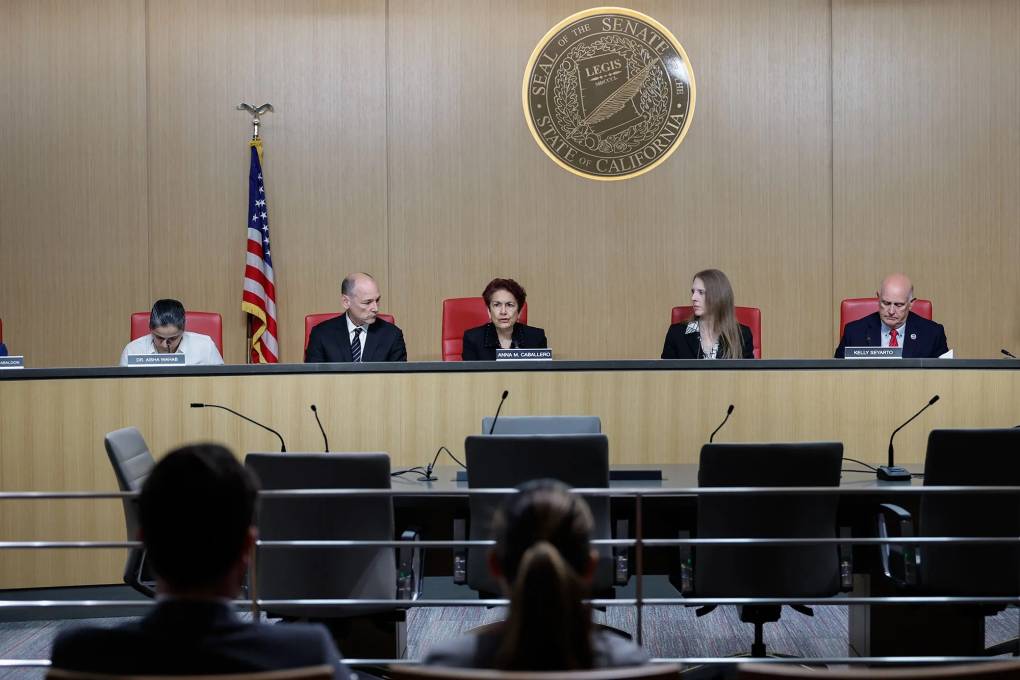
"caption": "State senators meet during a suspense file hearing at the Capitol Annex Swing Space in Sacramento on May 23, 2025.\n",
"credit": "Fred Greaves for CalMatters",
"altTag": null,
"description": null,
"imgSizes": {
"medium": {
"file": "https://cdn.kqed.org/wp-content/uploads/sites/10/2025/05/052325_Suspense-Day_FG_CM_01-copy-800x533.jpg",
"width": 800,
"height": 533,
"mimeType": "image/jpeg"
},
"large": {
"file": "https://cdn.kqed.org/wp-content/uploads/sites/10/2025/05/052325_Suspense-Day_FG_CM_01-copy-1020x680.jpg",
"width": 1020,
"height": 680,
"mimeType": "image/jpeg"
},
"thumbnail": {
"file": "https://cdn.kqed.org/wp-content/uploads/sites/10/2025/05/052325_Suspense-Day_FG_CM_01-copy-160x107.jpg",
"width": 160,
"height": 107,
"mimeType": "image/jpeg"
},
"1536x1536": {
"file": "https://cdn.kqed.org/wp-content/uploads/sites/10/2025/05/052325_Suspense-Day_FG_CM_01-copy-1536x1024.jpg",
"width": 1536,
"height": 1024,
"mimeType": "image/jpeg"
},
"post-thumbnail": {
"file": "https://cdn.kqed.org/wp-content/uploads/sites/10/2025/05/052325_Suspense-Day_FG_CM_01-copy-672x372.jpg",
"width": 672,
"height": 372,
"mimeType": "image/jpeg"
},
"twentyfourteen-full-width": {
"file": "https://cdn.kqed.org/wp-content/uploads/sites/10/2025/05/052325_Suspense-Day_FG_CM_01-copy-1038x576.jpg",
"width": 1038,
"height": 576,
"mimeType": "image/jpeg"
},
"full-width": {
"file": "https://cdn.kqed.org/wp-content/uploads/sites/10/2025/05/052325_Suspense-Day_FG_CM_01-copy-1920x1280.jpg",
"width": 1920,
"height": 1280,
"mimeType": "image/jpeg"
},
"kqedFullSize": {
"file": "https://cdn.kqed.org/wp-content/uploads/sites/10/2025/05/052325_Suspense-Day_FG_CM_01-copy.jpg",
"width": 2000,
"height": 1333
}
},
"isLoading": false,
"fetchFailed": false
},
"news_12040721": {
"type": "attachments",
"id": "news_12040721",
"meta": {
"index": "attachments_1716263798",
"site": "news",
"id": "12040721",
"found": true
},
"title": "051425-Native-American-Regalia-LV-CM-08",
"publishDate": 1747596844,
"status": "inherit",
"parent": 12040718,
"modified": 1747597178,
"caption": "Ethan Molina wears his graduation stole as he stands in front of his home in Fresno on May 14, 2025. Molina, a member of the Pascua Yaqui Tribe in Arizona and a senior at Clovis West High, was told by the school district that he could not wear the stole to his graduation ceremony. ",
"credit": "Larry Valenzuela / CalMatters/CatchLight Local",
"altTag": "A man stands in front of a house wearing a colorful graduation stole.",
"description": null,
"imgSizes": {
"medium": {
"file": "https://cdn.kqed.org/wp-content/uploads/sites/10/2025/05/051425-Native-American-Regalia-LV-CM-08-800x533.jpg",
"width": 800,
"height": 533,
"mimeType": "image/jpeg"
},
"large": {
"file": "https://cdn.kqed.org/wp-content/uploads/sites/10/2025/05/051425-Native-American-Regalia-LV-CM-08-1020x680.jpg",
"width": 1020,
"height": 680,
"mimeType": "image/jpeg"
},
"thumbnail": {
"file": "https://cdn.kqed.org/wp-content/uploads/sites/10/2025/05/051425-Native-American-Regalia-LV-CM-08-160x107.jpg",
"width": 160,
"height": 107,
"mimeType": "image/jpeg"
},
"1536x1536": {
"file": "https://cdn.kqed.org/wp-content/uploads/sites/10/2025/05/051425-Native-American-Regalia-LV-CM-08-1536x1024.jpg",
"width": 1536,
"height": 1024,
"mimeType": "image/jpeg"
},
"post-thumbnail": {
"file": "https://cdn.kqed.org/wp-content/uploads/sites/10/2025/05/051425-Native-American-Regalia-LV-CM-08-672x372.jpg",
"width": 672,
"height": 372,
"mimeType": "image/jpeg"
},
"twentyfourteen-full-width": {
"file": "https://cdn.kqed.org/wp-content/uploads/sites/10/2025/05/051425-Native-American-Regalia-LV-CM-08-1038x576.jpg",
"width": 1038,
"height": 576,
"mimeType": "image/jpeg"
},
"full-width": {
"file": "https://cdn.kqed.org/wp-content/uploads/sites/10/2025/05/051425-Native-American-Regalia-LV-CM-08-1920x1280.jpg",
"width": 1920,
"height": 1280,
"mimeType": "image/jpeg"
},
"kqedFullSize": {
"file": "https://cdn.kqed.org/wp-content/uploads/sites/10/2025/05/051425-Native-American-Regalia-LV-CM-08.jpg",
"width": 2000,
"height": 1333
}
},
"isLoading": false,
"fetchFailed": false
},
"news_12040496": {
"type": "attachments",
"id": "news_12040496",
"meta": {
"index": "attachments_1716263798",
"site": "news",
"id": "12040496",
"found": true
},
"title": "010425_Golden-Globes_GETTY_CM_01 copy",
"publishDate": 1747418658,
"status": "inherit",
"parent": 12040495,
"modified": 1747418690,
"caption": "Technicians work on a TV set as they add the last touches the day before the Golden Globes at Beverly Hilton in Beverly Hills on Jan. 4, 2025.\n",
"credit": "Etienne Laurent/AFP via Getty Images",
"altTag": null,
"description": null,
"imgSizes": {
"medium": {
"file": "https://cdn.kqed.org/wp-content/uploads/sites/10/2025/05/010425_Golden-Globes_GETTY_CM_01-copy-800x533.jpg",
"width": 800,
"height": 533,
"mimeType": "image/jpeg"
},
"large": {
"file": "https://cdn.kqed.org/wp-content/uploads/sites/10/2025/05/010425_Golden-Globes_GETTY_CM_01-copy-1020x680.jpg",
"width": 1020,
"height": 680,
"mimeType": "image/jpeg"
},
"thumbnail": {
"file": "https://cdn.kqed.org/wp-content/uploads/sites/10/2025/05/010425_Golden-Globes_GETTY_CM_01-copy-160x107.jpg",
"width": 160,
"height": 107,
"mimeType": "image/jpeg"
},
"1536x1536": {
"file": "https://cdn.kqed.org/wp-content/uploads/sites/10/2025/05/010425_Golden-Globes_GETTY_CM_01-copy-1536x1024.jpg",
"width": 1536,
"height": 1024,
"mimeType": "image/jpeg"
},
"post-thumbnail": {
"file": "https://cdn.kqed.org/wp-content/uploads/sites/10/2025/05/010425_Golden-Globes_GETTY_CM_01-copy-672x372.jpg",
"width": 672,
"height": 372,
"mimeType": "image/jpeg"
},
"twentyfourteen-full-width": {
"file": "https://cdn.kqed.org/wp-content/uploads/sites/10/2025/05/010425_Golden-Globes_GETTY_CM_01-copy-1038x576.jpg",
"width": 1038,
"height": 576,
"mimeType": "image/jpeg"
},
"full-width": {
"file": "https://cdn.kqed.org/wp-content/uploads/sites/10/2025/05/010425_Golden-Globes_GETTY_CM_01-copy-1920x1280.jpg",
"width": 1920,
"height": 1280,
"mimeType": "image/jpeg"
},
"kqedFullSize": {
"file": "https://cdn.kqed.org/wp-content/uploads/sites/10/2025/05/010425_Golden-Globes_GETTY_CM_01-copy.jpg",
"width": 2000,
"height": 1333
}
},
"isLoading": false,
"fetchFailed": false
},
"news_12040484": {
"type": "attachments",
"id": "news_12040484",
"meta": {
"index": "attachments_1716263798",
"site": "news",
"id": "12040484",
"found": true
},
"title": "051325-US-Capitol-AP-CM-01 copy",
"publishDate": 1747417212,
"status": "inherit",
"parent": 12040476,
"modified": 1747417237,
"caption": "House Republicans this week attached to the budget a moratorium on states' regulation of artificial intelligence.\n",
"credit": "Samuel Corum/AP",
"altTag": null,
"description": null,
"imgSizes": {
"medium": {
"file": "https://cdn.kqed.org/wp-content/uploads/sites/10/2025/05/051325-US-Capitol-AP-CM-01-copy-800x534.jpg",
"width": 800,
"height": 534,
"mimeType": "image/jpeg"
},
"large": {
"file": "https://cdn.kqed.org/wp-content/uploads/sites/10/2025/05/051325-US-Capitol-AP-CM-01-copy-1020x680.jpg",
"width": 1020,
"height": 680,
"mimeType": "image/jpeg"
},
"thumbnail": {
"file": "https://cdn.kqed.org/wp-content/uploads/sites/10/2025/05/051325-US-Capitol-AP-CM-01-copy-160x107.jpg",
"width": 160,
"height": 107,
"mimeType": "image/jpeg"
},
"1536x1536": {
"file": "https://cdn.kqed.org/wp-content/uploads/sites/10/2025/05/051325-US-Capitol-AP-CM-01-copy-1536x1025.jpg",
"width": 1536,
"height": 1025,
"mimeType": "image/jpeg"
},
"post-thumbnail": {
"file": "https://cdn.kqed.org/wp-content/uploads/sites/10/2025/05/051325-US-Capitol-AP-CM-01-copy-672x372.jpg",
"width": 672,
"height": 372,
"mimeType": "image/jpeg"
},
"twentyfourteen-full-width": {
"file": "https://cdn.kqed.org/wp-content/uploads/sites/10/2025/05/051325-US-Capitol-AP-CM-01-copy-1038x576.jpg",
"width": 1038,
"height": 576,
"mimeType": "image/jpeg"
},
"full-width": {
"file": "https://cdn.kqed.org/wp-content/uploads/sites/10/2025/05/051325-US-Capitol-AP-CM-01-copy-1920x1281.jpg",
"width": 1920,
"height": 1281,
"mimeType": "image/jpeg"
},
"kqedFullSize": {
"file": "https://cdn.kqed.org/wp-content/uploads/sites/10/2025/05/051325-US-Capitol-AP-CM-01-copy.jpg",
"width": 2000,
"height": 1334
}
},
"isLoading": false,
"fetchFailed": false
},
"news_12039715": {
"type": "attachments",
"id": "news_12039715",
"meta": {
"index": "attachments_1716263798",
"site": "news",
"id": "12039715",
"found": true
},
"title": "041125_Therapy-Training_FG_CM_10",
"publishDate": 1746996416,
"status": "inherit",
"parent": 12039714,
"modified": 1746996702,
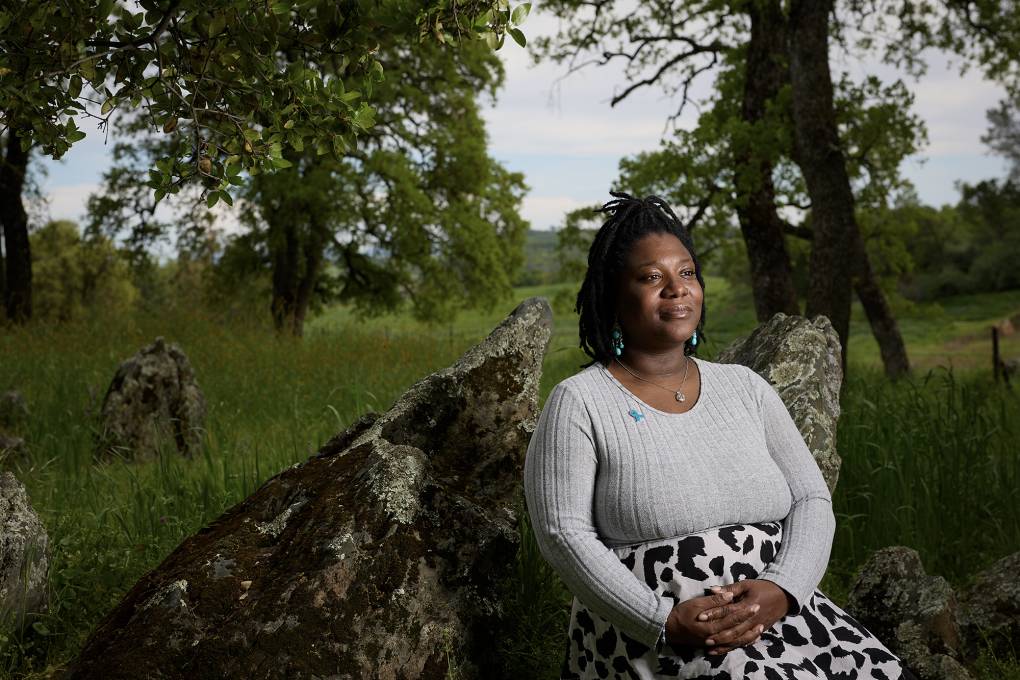
"caption": "Eboni Moen in the outdoor meditation garden of Sierra Wind Wellness and Recovery Center in Jackson on April 11, 2025. Moen is interning at the center while she prepares to become a therapist. ",
"credit": "Fred Greaves/CalMatters",
"altTag": "A Black woman wearing a white shirt and black and white skirt sits on a rock outside.",
"description": null,
"imgSizes": {
"medium": {
"file": "https://cdn.kqed.org/wp-content/uploads/sites/10/2025/05/041125_Therapy-Training_FG_CM_10-800x533.jpg",
"width": 800,
"height": 533,
"mimeType": "image/jpeg"
},
"large": {
"file": "https://cdn.kqed.org/wp-content/uploads/sites/10/2025/05/041125_Therapy-Training_FG_CM_10-1020x680.jpg",
"width": 1020,
"height": 680,
"mimeType": "image/jpeg"
},
"thumbnail": {
"file": "https://cdn.kqed.org/wp-content/uploads/sites/10/2025/05/041125_Therapy-Training_FG_CM_10-160x107.jpg",
"width": 160,
"height": 107,
"mimeType": "image/jpeg"
},
"1536x1536": {
"file": "https://cdn.kqed.org/wp-content/uploads/sites/10/2025/05/041125_Therapy-Training_FG_CM_10-1536x1024.jpg",
"width": 1536,
"height": 1024,
"mimeType": "image/jpeg"
},
"post-thumbnail": {
"file": "https://cdn.kqed.org/wp-content/uploads/sites/10/2025/05/041125_Therapy-Training_FG_CM_10-672x372.jpg",
"width": 672,
"height": 372,
"mimeType": "image/jpeg"
},
"twentyfourteen-full-width": {
"file": "https://cdn.kqed.org/wp-content/uploads/sites/10/2025/05/041125_Therapy-Training_FG_CM_10-1038x576.jpg",
"width": 1038,
"height": 576,
"mimeType": "image/jpeg"
},
"full-width": {
"file": "https://cdn.kqed.org/wp-content/uploads/sites/10/2025/05/041125_Therapy-Training_FG_CM_10-1920x1280.jpg",
"width": 1920,
"height": 1280,
"mimeType": "image/jpeg"
},
"kqedFullSize": {
"file": "https://cdn.kqed.org/wp-content/uploads/sites/10/2025/05/041125_Therapy-Training_FG_CM_10.jpg",
"width": 2000,
"height": 1333
}
},
"isLoading": false,
"fetchFailed": false
},
"news_12039588": {
"type": "attachments",
"id": "news_12039588",
"meta": {
"index": "attachments_1716263798",
"site": "news",
"id": "12039588",
"found": true
},
"title": "101023_AI-College-Toby-Reed_LA_CM_05 copy",
"publishDate": 1746821475,
"status": "inherit",
"parent": 12039585,
"modified": 1752708567,
"caption": "A student walks down a hallway at Fremont High School in Oakland on Oct. 10, 2023. \n",
"credit": "Laure Andrillon for Cal Matters",
"altTag": null,
"description": null,
"imgSizes": {
"medium": {
"file": "https://cdn.kqed.org/wp-content/uploads/sites/10/2025/05/101023_AI-College-Toby-Reed_LA_CM_05-copy-800x533.jpg",
"width": 800,
"height": 533,
"mimeType": "image/jpeg"
},
"large": {
"file": "https://cdn.kqed.org/wp-content/uploads/sites/10/2025/05/101023_AI-College-Toby-Reed_LA_CM_05-copy-1020x680.jpg",
"width": 1020,
"height": 680,
"mimeType": "image/jpeg"
},
"thumbnail": {
"file": "https://cdn.kqed.org/wp-content/uploads/sites/10/2025/05/101023_AI-College-Toby-Reed_LA_CM_05-copy-160x107.jpg",
"width": 160,
"height": 107,
"mimeType": "image/jpeg"
},
"1536x1536": {
"file": "https://cdn.kqed.org/wp-content/uploads/sites/10/2025/05/101023_AI-College-Toby-Reed_LA_CM_05-copy-1536x1024.jpg",
"width": 1536,
"height": 1024,
"mimeType": "image/jpeg"
},
"post-thumbnail": {
"file": "https://cdn.kqed.org/wp-content/uploads/sites/10/2025/05/101023_AI-College-Toby-Reed_LA_CM_05-copy-672x372.jpg",
"width": 672,
"height": 372,
"mimeType": "image/jpeg"
},
"twentyfourteen-full-width": {
"file": "https://cdn.kqed.org/wp-content/uploads/sites/10/2025/05/101023_AI-College-Toby-Reed_LA_CM_05-copy-1038x576.jpg",
"width": 1038,
"height": 576,
"mimeType": "image/jpeg"
},
"full-width": {
"file": "https://cdn.kqed.org/wp-content/uploads/sites/10/2025/05/101023_AI-College-Toby-Reed_LA_CM_05-copy-1920x1280.jpg",
"width": 1920,
"height": 1280,
"mimeType": "image/jpeg"
},
"kqedFullSize": {
"file": "https://cdn.kqed.org/wp-content/uploads/sites/10/2025/05/101023_AI-College-Toby-Reed_LA_CM_05-copy.jpg",
"width": 2000,
"height": 1333
}
},
"isLoading": false,
"fetchFailed": false
},
"news_12039575": {
"type": "attachments",
"id": "news_12039575",
"meta": {
"index": "attachments_1716263798",
"site": "news",
"id": "12039575",
"found": true
},
"title": "050525-Corcoran-State-Prison-GR-Getty-01-CM copy",
"publishDate": 1746820001,
"status": "inherit",
"parent": 12039556,
"modified": 1746820028,
"caption": "Two California state prisons had to create evacuation plans in 2023 when flooding approached them. They did not ultimately evacuate, but the near-disaster raised concerns about emergency planning. Here, rising water from the intermittent Tulare Lake approached one of the prisons on April 13, 2023.",
"credit": "George Rose/Getty Images",
"altTag": null,
"description": null,
"imgSizes": {
"medium": {
"file": "https://cdn.kqed.org/wp-content/uploads/sites/10/2025/05/050525-Corcoran-State-Prison-GR-Getty-01-CM-copy-800x533.jpg",
"width": 800,
"height": 533,
"mimeType": "image/jpeg"
},
"large": {
"file": "https://cdn.kqed.org/wp-content/uploads/sites/10/2025/05/050525-Corcoran-State-Prison-GR-Getty-01-CM-copy-1020x680.jpg",
"width": 1020,
"height": 680,
"mimeType": "image/jpeg"
},
"thumbnail": {
"file": "https://cdn.kqed.org/wp-content/uploads/sites/10/2025/05/050525-Corcoran-State-Prison-GR-Getty-01-CM-copy-160x107.jpg",
"width": 160,
"height": 107,
"mimeType": "image/jpeg"
},
"1536x1536": {
"file": "https://cdn.kqed.org/wp-content/uploads/sites/10/2025/05/050525-Corcoran-State-Prison-GR-Getty-01-CM-copy-1536x1024.jpg",
"width": 1536,
"height": 1024,
"mimeType": "image/jpeg"
},
"post-thumbnail": {
"file": "https://cdn.kqed.org/wp-content/uploads/sites/10/2025/05/050525-Corcoran-State-Prison-GR-Getty-01-CM-copy-672x372.jpg",
"width": 672,
"height": 372,
"mimeType": "image/jpeg"
},
"twentyfourteen-full-width": {
"file": "https://cdn.kqed.org/wp-content/uploads/sites/10/2025/05/050525-Corcoran-State-Prison-GR-Getty-01-CM-copy-1038x576.jpg",
"width": 1038,
"height": 576,
"mimeType": "image/jpeg"
},
"full-width": {
"file": "https://cdn.kqed.org/wp-content/uploads/sites/10/2025/05/050525-Corcoran-State-Prison-GR-Getty-01-CM-copy-1920x1280.jpg",
"width": 1920,
"height": 1280,
"mimeType": "image/jpeg"
},
"kqedFullSize": {
"file": "https://cdn.kqed.org/wp-content/uploads/sites/10/2025/05/050525-Corcoran-State-Prison-GR-Getty-01-CM-copy.jpg",
"width": 2000,
"height": 1333
}
},
"isLoading": false,
"fetchFailed": false
},
"news_12038590": {
"type": "attachments",
"id": "news_12038590",
"meta": {
"index": "attachments_1716263798",
"site": "news",
"id": "12038590",
"found": true
},
"title": "040825_Reunification_FM_CM_12 copy",
"publishDate": 1746213971,
"status": "inherit",
"parent": 12038589,
"modified": 1746213995,
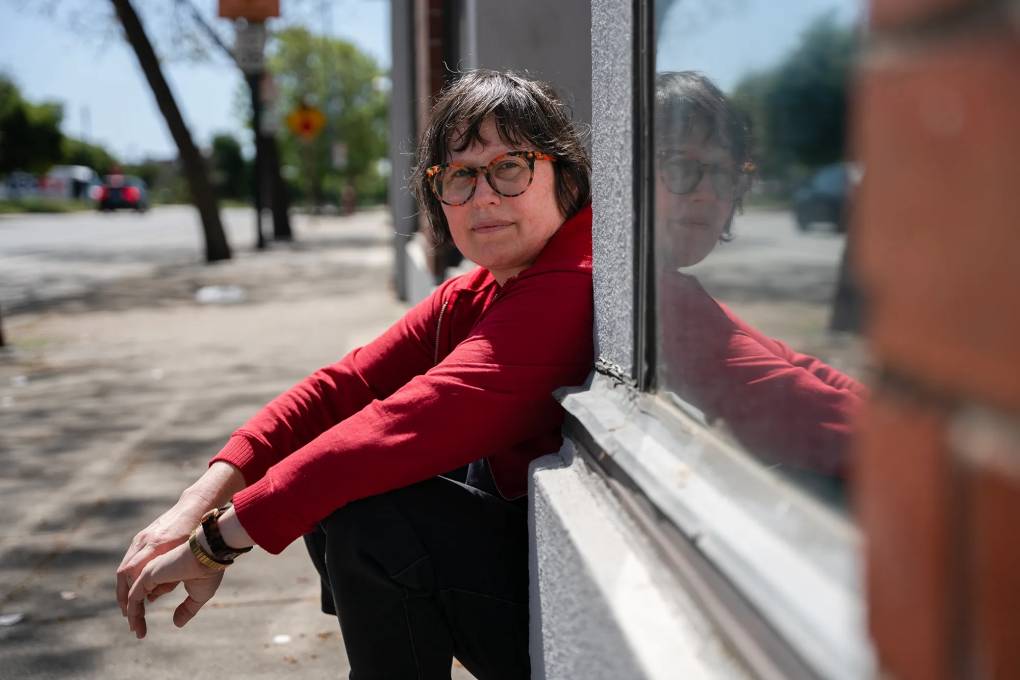
"caption": "Julie Crossman, sister of Nanie Crossman, in Oakland on April 8, 2025. After losing contact for six years, the sisters reunited after Julie saw that Nanie, who is unhoused, was quoted in a CalMatters article. ",
"credit": "Florence Middleton for CalMatters",
"altTag": null,
"description": null,
"imgSizes": {
"medium": {
"file": "https://cdn.kqed.org/wp-content/uploads/sites/10/2025/05/040825_Reunification_FM_CM_12-copy-800x534.jpg",
"width": 800,
"height": 534,
"mimeType": "image/jpeg"
},
"large": {
"file": "https://cdn.kqed.org/wp-content/uploads/sites/10/2025/05/040825_Reunification_FM_CM_12-copy-1020x680.jpg",
"width": 1020,
"height": 680,
"mimeType": "image/jpeg"
},
"thumbnail": {
"file": "https://cdn.kqed.org/wp-content/uploads/sites/10/2025/05/040825_Reunification_FM_CM_12-copy-160x107.jpg",
"width": 160,
"height": 107,
"mimeType": "image/jpeg"
},
"1536x1536": {
"file": "https://cdn.kqed.org/wp-content/uploads/sites/10/2025/05/040825_Reunification_FM_CM_12-copy-1536x1025.jpg",
"width": 1536,
"height": 1025,
"mimeType": "image/jpeg"
},
"post-thumbnail": {
"file": "https://cdn.kqed.org/wp-content/uploads/sites/10/2025/05/040825_Reunification_FM_CM_12-copy-672x372.jpg",
"width": 672,
"height": 372,
"mimeType": "image/jpeg"
},
"twentyfourteen-full-width": {
"file": "https://cdn.kqed.org/wp-content/uploads/sites/10/2025/05/040825_Reunification_FM_CM_12-copy-1038x576.jpg",
"width": 1038,
"height": 576,
"mimeType": "image/jpeg"
},
"full-width": {
"file": "https://cdn.kqed.org/wp-content/uploads/sites/10/2025/05/040825_Reunification_FM_CM_12-copy-1920x1281.jpg",
"width": 1920,
"height": 1281,
"mimeType": "image/jpeg"
},
"kqedFullSize": {
"file": "https://cdn.kqed.org/wp-content/uploads/sites/10/2025/05/040825_Reunification_FM_CM_12-copy.jpg",
"width": 2000,
"height": 1334
}
},
"isLoading": false,
"fetchFailed": false
},
"news_12038090": {
"type": "attachments",
"id": "news_12038090",
"meta": {
"index": "attachments_1716263798",
"site": "news",
"id": "12038090",
"found": true
},
"title": "CMDetentionICE1",
"publishDate": 1745956729,
"status": "inherit",
"parent": 12038087,
"modified": 1745956768,
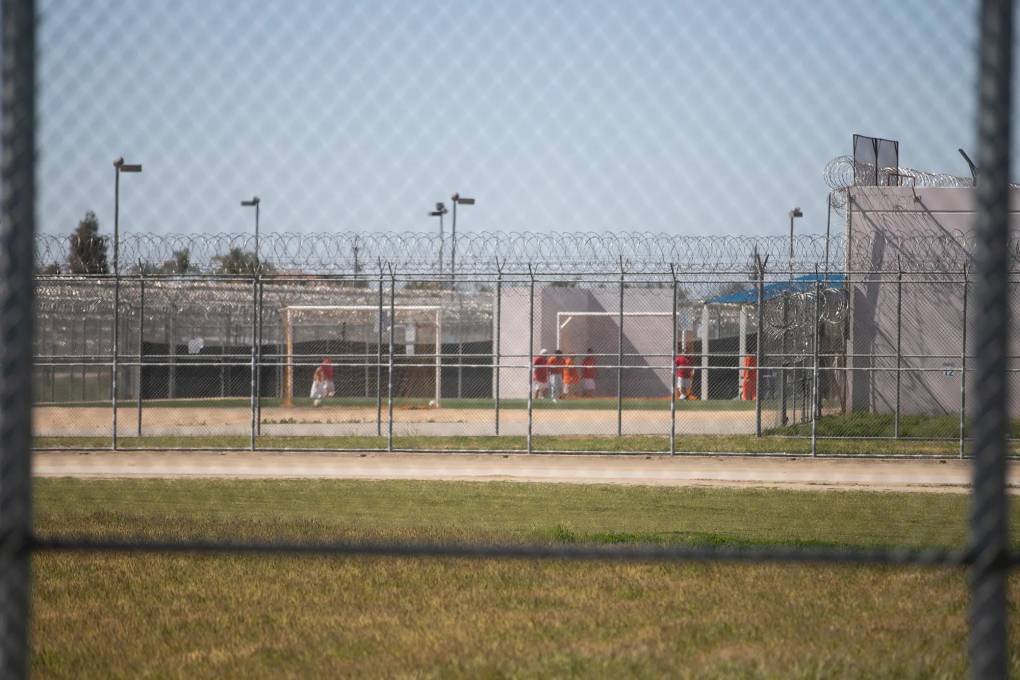
"caption": "People detained inside the Golden State Annex, a U.S. Immigration and Customs Enforcement detention facility run by The GEO Group, in McFarland on March 9, 2025.",
"credit": "Larry Valenzuela/CalMatters/CatchLight Local",
"altTag": null,
"description": null,
"imgSizes": {
"medium": {
"file": "https://cdn.kqed.org/wp-content/uploads/sites/10/2025/04/CMDetentionICE1-800x533.jpg",
"width": 800,
"height": 533,
"mimeType": "image/jpeg"
},
"large": {
"file": "https://cdn.kqed.org/wp-content/uploads/sites/10/2025/04/CMDetentionICE1-1020x680.jpg",
"width": 1020,
"height": 680,
"mimeType": "image/jpeg"
},
"thumbnail": {
"file": "https://cdn.kqed.org/wp-content/uploads/sites/10/2025/04/CMDetentionICE1-160x107.jpg",
"width": 160,
"height": 107,
"mimeType": "image/jpeg"
},
"1536x1536": {
"file": "https://cdn.kqed.org/wp-content/uploads/sites/10/2025/04/CMDetentionICE1-1536x1024.jpg",
"width": 1536,
"height": 1024,
"mimeType": "image/jpeg"
},
"post-thumbnail": {
"file": "https://cdn.kqed.org/wp-content/uploads/sites/10/2025/04/CMDetentionICE1-672x372.jpg",
"width": 672,
"height": 372,
"mimeType": "image/jpeg"
},
"twentyfourteen-full-width": {
"file": "https://cdn.kqed.org/wp-content/uploads/sites/10/2025/04/CMDetentionICE1-1038x576.jpg",
"width": 1038,
"height": 576,
"mimeType": "image/jpeg"
},
"full-width": {
"file": "https://cdn.kqed.org/wp-content/uploads/sites/10/2025/04/CMDetentionICE1-1920x1280.jpg",
"width": 1920,
"height": 1280,
"mimeType": "image/jpeg"
},
"kqedFullSize": {
"file": "https://cdn.kqed.org/wp-content/uploads/sites/10/2025/04/CMDetentionICE1.jpg",
"width": 2000,
"height": 1333
}
},
"isLoading": false,
"fetchFailed": false
},
"news_12037853": {
"type": "attachments",
"id": "news_12037853",
"meta": {
"index": "attachments_1716263798",
"site": "news",
"id": "12037853",
"found": true
},
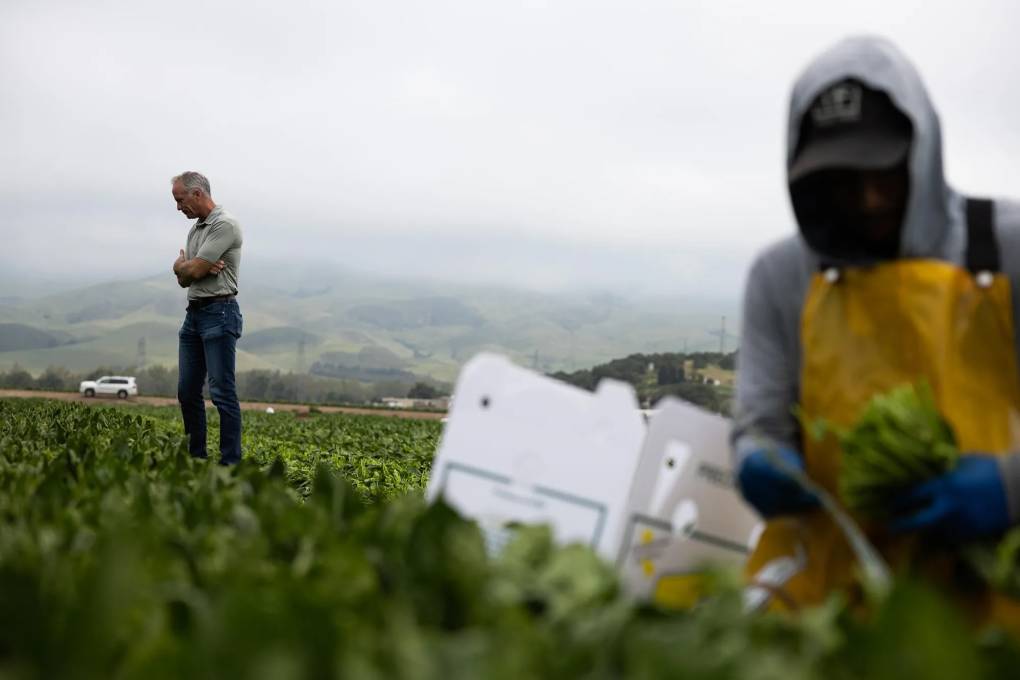
"title": "041425-TALLEY-FARMS-JL-30 copy",
"publishDate": 1745696286,
"status": "inherit",
"parent": 12037850,
"modified": 1745696315,
"caption": "Ryan Talley, vice-president and co-owner of Talley Farms, in Arroyo Grande on April 14, 2025. \n",
"credit": "Julie Leopo-Bermudez for CalMatters",
"altTag": null,
"description": null,
"imgSizes": {
"medium": {
"file": "https://cdn.kqed.org/wp-content/uploads/sites/10/2025/04/041425-TALLEY-FARMS-JL-30-copy-800x533.jpg",
"width": 800,
"height": 533,
"mimeType": "image/jpeg"
},
"large": {
"file": "https://cdn.kqed.org/wp-content/uploads/sites/10/2025/04/041425-TALLEY-FARMS-JL-30-copy-1020x680.jpg",
"width": 1020,
"height": 680,
"mimeType": "image/jpeg"
},
"thumbnail": {
"file": "https://cdn.kqed.org/wp-content/uploads/sites/10/2025/04/041425-TALLEY-FARMS-JL-30-copy-160x107.jpg",
"width": 160,
"height": 107,
"mimeType": "image/jpeg"
},
"1536x1536": {
"file": "https://cdn.kqed.org/wp-content/uploads/sites/10/2025/04/041425-TALLEY-FARMS-JL-30-copy-1536x1024.jpg",
"width": 1536,
"height": 1024,
"mimeType": "image/jpeg"
},
"post-thumbnail": {
"file": "https://cdn.kqed.org/wp-content/uploads/sites/10/2025/04/041425-TALLEY-FARMS-JL-30-copy-672x372.jpg",
"width": 672,
"height": 372,
"mimeType": "image/jpeg"
},
"twentyfourteen-full-width": {
"file": "https://cdn.kqed.org/wp-content/uploads/sites/10/2025/04/041425-TALLEY-FARMS-JL-30-copy-1038x576.jpg",
"width": 1038,
"height": 576,
"mimeType": "image/jpeg"
},
"full-width": {
"file": "https://cdn.kqed.org/wp-content/uploads/sites/10/2025/04/041425-TALLEY-FARMS-JL-30-copy-1920x1280.jpg",
"width": 1920,
"height": 1280,
"mimeType": "image/jpeg"
},
"kqedFullSize": {
"file": "https://cdn.kqed.org/wp-content/uploads/sites/10/2025/04/041425-TALLEY-FARMS-JL-30-copy.jpg",
"width": 2000,
"height": 1333
}
},
"isLoading": false,
"fetchFailed": false
},
"news_12037570": {
"type": "attachments",
"id": "news_12037570",
"meta": {
"index": "attachments_1716263798",
"site": "news",
"id": "12037570",
"found": true
},
"title": "042425-Mehmet-Oz-AM-Getty-01-CM- copy",
"publishDate": 1745535270,
"status": "inherit",
"parent": 12037568,
"modified": 1745535318,
"caption": "Dr. Mehmet Oz speaks during a confirmation hearing with the Senate Finance Committee in the Dirksen Senate Office Building in Washington, DC. on March 14, 2025.",
"credit": "Anna Moneymaker/Getty Images",
"altTag": null,
"description": null,
"imgSizes": {
"medium": {
"file": "https://cdn.kqed.org/wp-content/uploads/sites/10/2025/04/042425-Mehmet-Oz-AM-Getty-01-CM-copy-800x534.jpg",
"width": 800,
"height": 534,
"mimeType": "image/jpeg"
},
"large": {
"file": "https://cdn.kqed.org/wp-content/uploads/sites/10/2025/04/042425-Mehmet-Oz-AM-Getty-01-CM-copy-1020x680.jpg",
"width": 1020,
"height": 680,
"mimeType": "image/jpeg"
},
"thumbnail": {
"file": "https://cdn.kqed.org/wp-content/uploads/sites/10/2025/04/042425-Mehmet-Oz-AM-Getty-01-CM-copy-160x107.jpg",
"width": 160,
"height": 107,
"mimeType": "image/jpeg"
},
"1536x1536": {
"file": "https://cdn.kqed.org/wp-content/uploads/sites/10/2025/04/042425-Mehmet-Oz-AM-Getty-01-CM-copy-1536x1025.jpg",
"width": 1536,
"height": 1025,
"mimeType": "image/jpeg"
},
"post-thumbnail": {
"file": "https://cdn.kqed.org/wp-content/uploads/sites/10/2025/04/042425-Mehmet-Oz-AM-Getty-01-CM-copy-672x372.jpg",
"width": 672,
"height": 372,
"mimeType": "image/jpeg"
},
"twentyfourteen-full-width": {
"file": "https://cdn.kqed.org/wp-content/uploads/sites/10/2025/04/042425-Mehmet-Oz-AM-Getty-01-CM-copy-1038x576.jpg",
"width": 1038,
"height": 576,
"mimeType": "image/jpeg"
},
"full-width": {
"file": "https://cdn.kqed.org/wp-content/uploads/sites/10/2025/04/042425-Mehmet-Oz-AM-Getty-01-CM-copy-1920x1281.jpg",
"width": 1920,
"height": 1281,
"mimeType": "image/jpeg"
},
"kqedFullSize": {
"file": "https://cdn.kqed.org/wp-content/uploads/sites/10/2025/04/042425-Mehmet-Oz-AM-Getty-01-CM-copy.jpg",
"width": 2000,
"height": 1334
}
},
"isLoading": false,
"fetchFailed": false
},
"news_12036705": {
"type": "attachments",
"id": "news_12036705",
"meta": {
"index": "attachments_1716263798",
"site": "news",
"id": "12036705",
"found": true
},
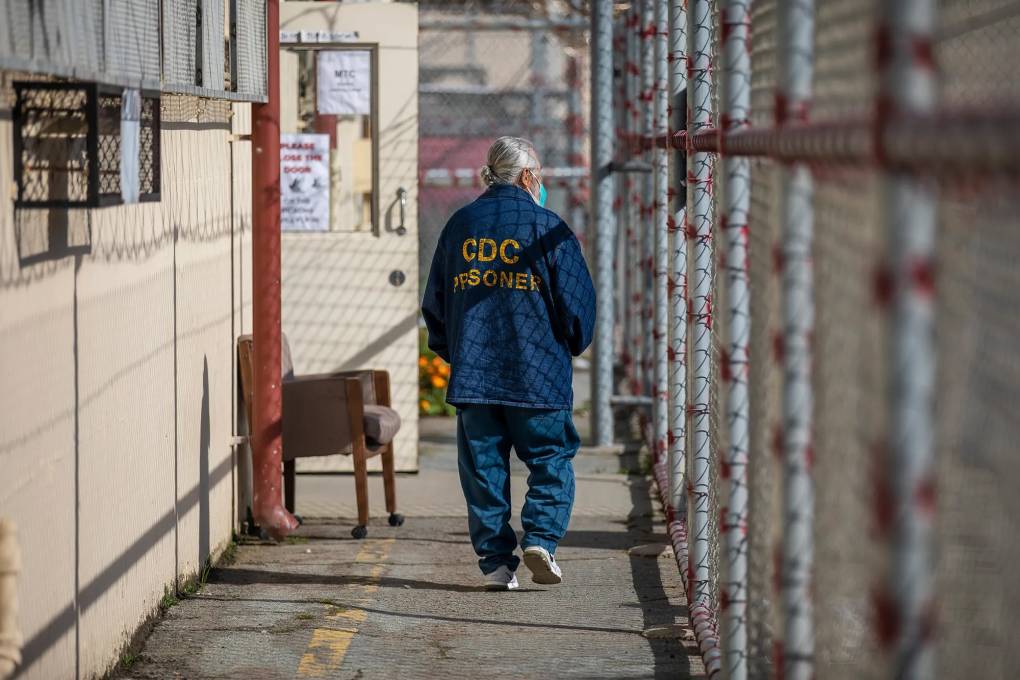
"title": "031723-SAN-QUENTIN-REHABILITATION-CENTER-MHN-08-CM copy",
"publishDate": 1745011326,
"status": "inherit",
"parent": 12036704,
"modified": 1745011355,
"caption": "An inmate at San Quentin State Prison on March 17, 2023. \n",
"credit": "Martin do Nascimento/CalMatters",
"altTag": null,
"description": null,
"imgSizes": {
"medium": {
"file": "https://cdn.kqed.org/wp-content/uploads/sites/10/2025/04/031723-SAN-QUENTIN-REHABILITATION-CENTER-MHN-08-CM-copy-800x533.jpg",
"width": 800,
"height": 533,
"mimeType": "image/jpeg"
},
"large": {
"file": "https://cdn.kqed.org/wp-content/uploads/sites/10/2025/04/031723-SAN-QUENTIN-REHABILITATION-CENTER-MHN-08-CM-copy-1020x680.jpg",
"width": 1020,
"height": 680,
"mimeType": "image/jpeg"
},
"thumbnail": {
"file": "https://cdn.kqed.org/wp-content/uploads/sites/10/2025/04/031723-SAN-QUENTIN-REHABILITATION-CENTER-MHN-08-CM-copy-160x107.jpg",
"width": 160,
"height": 107,
"mimeType": "image/jpeg"
},
"1536x1536": {
"file": "https://cdn.kqed.org/wp-content/uploads/sites/10/2025/04/031723-SAN-QUENTIN-REHABILITATION-CENTER-MHN-08-CM-copy-1536x1024.jpg",
"width": 1536,
"height": 1024,
"mimeType": "image/jpeg"
},
"post-thumbnail": {
"file": "https://cdn.kqed.org/wp-content/uploads/sites/10/2025/04/031723-SAN-QUENTIN-REHABILITATION-CENTER-MHN-08-CM-copy-672x372.jpg",
"width": 672,
"height": 372,
"mimeType": "image/jpeg"
},
"twentyfourteen-full-width": {
"file": "https://cdn.kqed.org/wp-content/uploads/sites/10/2025/04/031723-SAN-QUENTIN-REHABILITATION-CENTER-MHN-08-CM-copy-1038x576.jpg",
"width": 1038,
"height": 576,
"mimeType": "image/jpeg"
},
"full-width": {
"file": "https://cdn.kqed.org/wp-content/uploads/sites/10/2025/04/031723-SAN-QUENTIN-REHABILITATION-CENTER-MHN-08-CM-copy-1920x1280.jpg",
"width": 1920,
"height": 1280,
"mimeType": "image/jpeg"
},
"kqedFullSize": {
"file": "https://cdn.kqed.org/wp-content/uploads/sites/10/2025/04/031723-SAN-QUENTIN-REHABILITATION-CENTER-MHN-08-CM-copy.jpg",
"width": 2000,
"height": 1333
}
},
"isLoading": false,
"fetchFailed": false
}
},
"audioPlayerReducer": {
"postId": "stream_live",
"isPaused": true,
"isPlaying": false,
"pfsActive": false,
"pledgeModalIsOpen": true,
"playerDrawerIsOpen": false,
"liveAudioPlayStartedAt": 0,
"liveAudioPlayContext": ""
},
"authorsReducer": {
"byline_news_12041606": {
"type": "authors",
"id": "byline_news_12041606",
"meta": {
"override": true
},
"slug": "byline_news_12041606",
"name": "\u003ca href=\"https://calmatters.org/author/jeanne-kuang/\">Jeanne Kuang\u003c/a> and \u003ca href=\"https://calmatters.org/author/yue-yu/\">Yue Stella Yu\u003c/a>, CalMatters",
"isLoading": false
},
"byline_news_12040718": {
"type": "authors",
"id": "byline_news_12040718",
"meta": {
"override": true
},
"slug": "byline_news_12040718",
"name": "\u003ca href=\"https://calmatters.org/author/carolyn-jones\">Carolyn Jones, \u003c/a>CalMatters",
"isLoading": false
},
"byline_news_12040495": {
"type": "authors",
"id": "byline_news_12040495",
"meta": {
"override": true
},
"slug": "byline_news_12040495",
"name": "\u003ca href=\"https://calmatters.org/author/yue-yu/\">Yue Stella Yu\u003c/a>, CalMatters",
"isLoading": false
},
"byline_news_12040476": {
"type": "authors",
"id": "byline_news_12040476",
"meta": {
"override": true
},
"slug": "byline_news_12040476",
"name": "\u003ca href=\"https://calmatters.org/author/khari-johnson/\">Khari Johnson\u003c/a>, CalMatters",
"isLoading": false
},
"byline_news_12039714": {
"type": "authors",
"id": "byline_news_12039714",
"meta": {
"override": true
},
"slug": "byline_news_12039714",
"name": "\u003ca href=\"https://calmatters.org/author/adam-echelman/\">Adam Echelman, \u003c/a>CalMatters",
"isLoading": false
},
"byline_news_12039585": {
"type": "authors",
"id": "byline_news_12039585",
"meta": {
"override": true
},
"slug": "byline_news_12039585",
"name": "\u003ca href=\"https://calmatters.org/author/anaibarra/\">Ana B. Ibarra\u003c/a>, CalMatters",
"isLoading": false
},
"byline_news_12039556": {
"type": "authors",
"id": "byline_news_12039556",
"meta": {
"override": true
},
"slug": "byline_news_12039556",
"name": "\u003ca href=\"https://calmatters.org/author/cayla-mihalovich/\">Cayla Mihalovich\u003c/a>, CalMatters",
"isLoading": false
},
"byline_news_12038589": {
"type": "authors",
"id": "byline_news_12038589",
"meta": {
"override": true
},
"slug": "byline_news_12038589",
"name": "\u003ca href=\"https://calmatters.org/author/marisa-kendall/\">Marisa Kendall\u003c/a>, CalMatters",
"isLoading": false
},
"byline_news_12038087": {
"type": "authors",
"id": "byline_news_12038087",
"meta": {
"override": true
},
"slug": "byline_news_12038087",
"name": "\u003ca href=\"https://calmatters.org/author/wendy-fry/\" target=\"_blank\" rel=\"noopener\">Wendy Fry\u003c/a>, CalMatters",
"isLoading": false
},
"byline_news_12037850": {
"type": "authors",
"id": "byline_news_12037850",
"meta": {
"override": true
},
"slug": "byline_news_12037850",
"name": "\u003ca href=\"https://calmatters.org/author/levi-sumagaysay/\">Levi Sumagaysay\u003c/a>, CalMatters",
"isLoading": false
},
"byline_news_12037568": {
"type": "authors",
"id": "byline_news_12037568",
"meta": {
"override": true
},
"slug": "byline_news_12037568",
"name": "\u003ca href=\"https://calmatters.org/author/kristen-hwang/\">Kristen Hwang\u003c/a>, CalMatters",
"isLoading": false
},
"byline_news_12036704": {
"type": "authors",
"id": "byline_news_12036704",
"meta": {
"override": true
},
"slug": "byline_news_12036704",
"name": "\u003ca href=\"https://calmatters.org/author/jeanne-kuang/\">Jeanne Kuang\u003c/a>, CalMatters",
"isLoading": false
}
},
"pagesReducer": {
"news_affiliate_calmatters": {
"type": "terms",
"id": "news_18481",
"meta": {
"index": "terms_1716263798",
"site": "news",
"id": "18481",
"score": 15.355862
},
"featImg": null,
"name": "CALmatters",
"description": null,
"taxonomy": "affiliate",
"headData": {
"twImgId": null,
"twTitle": null,
"ogTitle": null,
"ogImgId": null,
"twDescription": null,
"description": null,
"title": "CALmatters Archives | KQED Arts",
"ogDescription": null
},
"ttid": 18515,
"slug": "calmatters",
"isLoading": false,
"title": "CALmatters",
"pageMeta": {
"site": "news",
"WpPageTemplate": "page-topic-editorial",
"currentPage": 14
},
"blocks": [
{
"blockName": "kqed/post-list",
"attrs": {
"layout": "cardArticle2",
"query": "posts/news?affiliate=calmatters",
"seeMore": false,
"paginated": true,
"page": 14
}
},
{
"blockName": "kqed/ad"
}
]
}
},
"pfsSessionReducer": {},
"postsReducer": {
"stream_live": {
"type": "live",
"id": "stream_live",
"audioUrl": "https://streams.kqed.org/kqedradio",
"title": "Live Stream",
"excerpt": "Live Stream information currently unavailable.",
"link": "/radio",
"featImg": "",
"label": {
"name": "KQED Live",
"link": "/"
}
},
"stream_kqedNewscast": {
"type": "posts",
"id": "stream_kqedNewscast",
"audioUrl": "https://www.kqed.org/.stream/anon/radio/RDnews/newscast.mp3?_=1",
"title": "KQED Newscast",
"featImg": "",
"label": {
"name": "88.5 FM",
"link": "/"
}
},
"news_12041606": {
"type": "posts",
"id": "news_12041606",
"meta": {
"index": "posts_1716263798",
"site": "news",
"id": "12041606",
"score": null,
"sort": [
1748199601000
]
},
"guestAuthors": [],
"slug": "california-lawmakers-reject-hundreds-of-bills-in-rapid-fire-hearings",
"title": "California Lawmakers Reject Hundreds of Bills in Rapid-Fire Hearings",
"publishDate": 1748199601,
"format": "standard",
"headTitle": "California Lawmakers Reject Hundreds of Bills in Rapid-Fire Hearings | KQED",
"labelTerm": {
"term": 18481,
"site": "news"
},
"content": "\u003cp>\u003cem>This story was originally published by \u003ca href=\"https://calmatters.org/\">CalMatters\u003c/a>. \u003ca href=\"https://calmatters.org/subscribe-to-calmatters/\">Sign up\u003c/a> for their newsletters.\u003c/em>\u003c/p>\n\u003cp>Tax credits for the parents of young children. A state-funded scientific research institute. Exempting service workers’ tips from state income tax.\u003c/p>\n\u003cp>Those are among the hundreds of proposals California lawmakers swiftly rejected Friday under the banner of cost savings, as they cited the state’s \u003ca href=\"https://calmatters.org/politics/2025/05/california-budget-revision-may-2025/?1\">$12 billion budget deficit\u003c/a> — a worsening figure due to the threat of unprecedented federal funding cuts and California’s ballooning spending on health care for low-income residents.\u003c/p>\n\u003cp>“We are in (a) very difficult budget environment this year, so consequently many good bills are going to fall by the wayside today,” said Assembly Appropriations Committee Chair \u003ca href=\"https://calmatters.digitaldemocracy.org/legislators/buffy-wicks-165044\">Buffy Wicks\u003c/a>, an Oakland Democrat, before beginning that chamber’s hearing.\u003c/p>\n\u003cp>“We are not in a year where we can be expanding programs, developing new offices, new agencies, new departments, and expanding our footprints.”\u003c/p>\n\u003cp>[ad fullwidth]\u003c/p>\n\u003cp>The Friday procedure is known as the “suspense file” — the state Legislature’s \u003ca href=\"https://calmatters.org/politics/2025/04/california-lawmakers-killed-bills/\">most secretive\u003c/a> and fast-paced biannual hearing, where the chairs of the Assembly and Senate Appropriations committees quickly shoot down pricey proposals with little explanation, often acting more aggressively during years of budget woes.\u003c/p>\n\u003cp>The suspense files are where the appropriations committees send bills that would cost the state at least $50,000 in the Senate and $150,000 in the Assembly. The process was originally a way for lawmakers to consider policy proposals that cost the state money together by balancing them against each other.\u003c/p>\n\u003cp>But the well-accepted open secret in Sacramento is that it’s also an opportunity for lawmakers to quietly kill controversial bills, appease powerful special interests or just winnow down the number of bills they’ll have to debate on the floor. Lawmakers decide ahead of time, in secret, whether to pass the bills to the full Senate or Assembly, or to withhold them. The public hearings are a rapid-fire announcement of the decisions.\u003c/p>\n\u003cp>[aside postID=news_12025617 hero='https://cdn.kqed.org/wp-content/uploads/sites/10/2024/09/US-and-California-Flags-Getty-1020x680.jpg']\u003c/p>\n\u003cp>On Friday, the Senate Appropriations Committee axed 29% of the 432 bills on its list, although it kept a handful of those alive to work on next year. That’s more aggressive trimming \u003ca href=\"https://calmatters.org/politics/capitol/2024/05/california-legislature-bills-budget-deficit/\">than the committee did last May. \u003c/a>\u003c/p>\n\u003cp>“The state is facing a significant budget deficit and with that in mind, the committee had to make difficult choices on a number of bills to reduce costs,” said Senate Appropriations Chairperson \u003ca href=\"https://calmatters.digitaldemocracy.org/legislators/anna-caballero-101330\">Anna Caballero\u003c/a>, a Merced Democrat, before the hearing. She opened the hearing with a defense of the arcane proceedings, explaining that the results would be posted online, but rushed out to catch a flight after the meeting without discussing her approach with reporters.\u003c/p>\n\u003cp>The Assembly Appropriations Committee killed 35% of the 666 measures on its suspense file, similar to last year. Lawmakers had been warned to keep the cost of their proposals down, Wicks said.\u003c/p>\n\u003cp>“We stressed heavily to members as they were putting together their legislative package this year to be very mindful of cost,” she told reporters.\u003c/p>\n\u003cp>The state’s fiscal future is anything but certain: As federal threats loom, Gov. Gavin Newsom earlier this month rolled out a $322 billion spending plan that included \u003ca href=\"https://calmatters.org/health/2025/05/newsom-freeze-medi-cal-undocumented-immigrants/\">significant cuts to Medi-Cal\u003c/a>, the state’s health care system for low-income Californians, and a 3% cut to public universities.\u003c/p>\n\u003ch2>Health care expansions on the chopping block\u003c/h2>\n\u003cp>On Friday, some Assembly measures that would have expanded health care services for Californians met their fate. That includes \u003ca href=\"https://calmatters.digitaldemocracy.org/bills/ca_202520260ab804\">Wicks’ own proposal\u003c/a> seeking federal approval to qualify some housing services as Medi-Cal benefits, a $40 million endeavor that Newsom previously vetoed. The committee also killed a proposal to \u003ca href=\"https://calmatters.digitaldemocracy.org/bills/ca_202520260ab315\">allow more Medi-Cal enrollees to receive home-based care\u003c/a> and another that would have allowed \u003ca href=\"https://calmatters.digitaldemocracy.org/bills/ca_202520260ab4\">higher-earning immigrants in the country illegally\u003c/a> to purchase insurance plans on Covered California, the state-run health care marketplace.\u003c/p>\n\u003cfigure>\u003cimg decoding=\"async\" src=\"https://calmatters.org/wp-content/uploads/2025/05/052325_Suspense-Day_FG_CM_04-1024x682.jpg\" alt=\"Several lawmakers and state Capitol staff sit behind a two-row dais during a legislative hearing. A large oval image of the California State Assembly seal can be seen hung up on the wall behind them.\">\u003cfigcaption>Assemblymembers meet during a suspense file hearing at the Capitol Annex Swing Space in Sacramento on May 23, 2025. \u003cem>Fred Greaves for CalMatters\u003c/em>\u003c/figcaption>\u003c/figure>\n\u003cp>In the Senate, lawmakers shelved a proposal by Sen. \u003ca href=\"https://calmatters.digitaldemocracy.org/legislators/catherine-blakespear-21275\">Catherine Blakespear\u003c/a> to \u003ca href=\"https://calmatters.digitaldemocracy.org/bills/ca_202520260sb644\">impose campaign contribution limits \u003c/a>on candidates for judicial office and school board races, which the influential California Teachers Association opposed. They axed Sen. \u003ca href=\"https://calmatters.digitaldemocracy.org/legislators/henry-stern-36368\">Henry Stern\u003c/a>’s proposal to expand the state’s contentious new mental health program CARE Courts \u003ca href=\"https://calmatters.digitaldemocracy.org/bills/ca_202520260sb823\">to include defendants with bipolar disorder I\u003c/a>, and Sen. \u003ca href=\"https://calmatters.digitaldemocracy.org/legislators/marie-alvarado-gil-165433\">Marie Alvarado-Gil\u003c/a>’s \u003ca href=\"https://calmatters.digitaldemocracy.org/bills/ca_202520260sb818\">bill to address mountain lion interactions\u003c/a> that has \u003ca href=\"https://www.sacbee.com/news/local/article304707486.html\">pitted rural communities\u003c/a> against animal rights and wildlife conservation advocates.\u003c/p>\n\u003cp>The Senate Appropriations Committee also killed two Republican tough-on-crime proposals, showing the limits of Democrats’ recent shift slightly rightward on crime. Until Friday, it had been \u003ca href=\"https://calmatters.org/politics/2025/04/california-democrats-crime/\">surprisingly smooth sailing\u003c/a> this year for Senate Minority Leader \u003ca href=\"https://calmatters.digitaldemocracy.org/legislators/brian-jones-42\">Brian Jones\u003c/a>’ \u003ca href=\"https://calmatters.digitaldemocracy.org/bills/ca_202520260sb286\">bill to block sex offenders\u003c/a> from being released from prison through the state’s elderly parole program, and Sen. \u003ca href=\"https://calmatters.digitaldemocracy.org/legislators/kelly-seyarto-165446\">Kelly Seyarto\u003c/a>’s bill to increase penalties for \u003ca href=\"https://calmatters.digitaldemocracy.org/bills/ca_202520260sb432\">selling or giving fentanyl to minors\u003c/a>.\u003c/p>\n\u003cp>The law enforcement-backed bills were opposed by criminal justice reform advocates, who still \u003ca href=\"https://calmatters.org/politics/2025/05/california-democrats-teen-sex-solicitation/\">hold sway with the majority party\u003c/a> and often argue it would be too costly for the state to imprison more people.\u003c/p>\n\u003cp>In a statement, Jones, a San Diego Republican, called the suspense file process “anti-democratic” and accused Democrats of “silencing the voices of victims and the public.”\u003c/p>\n\u003cp>Some measures are now postponed until next year. That includes \u003ca href=\"https://calmatters.digitaldemocracy.org/bills/ca_202520260ab1349\">two Assembly measures\u003c/a> seeking \u003ca href=\"https://calmatters.digitaldemocracy.org/bills/ca_202520260ab1291\">tighter regulations on ticket sales\u003c/a> for sports and musical events, amid fierce opposition from ticketing platforms such as Stubhub and from local chambers of commerce. The measures would restrict when those platforms can resell tickets, strengthen the disclosure of ticket information and require venues to accept proof of purchase as tickets.\u003c/p>\n\u003cp>Assm. \u003ca href=\"https://calmatters.digitaldemocracy.org/legislators/isaac-bryan-165440\">Isaac Bryan\u003c/a>, a Culver City Democrat who authored one of the measures, said Wicks never articulated her concerns with his proposal, even though Wicks told reporters Friday her staff had been in touch with Bryan’s office. “There was never an attempt to discuss the bill,” which led him to believe her concerns had been alleviated, Bryan said in a statement.\u003cstrong> \u003c/strong>\u003c/p>\n\u003cp>Lawmakers also pushed off some issues to be debated further during budget negotiations between the Legislature and Newsom. That process will accelerate in the coming weeks before a mid-June deadline to pass a balanced budget.\u003c/p>\n\u003ch2>Newsom’s film tax credit pushed to budget talk\u003c/h2>\n\u003cp>They stripped out language in both Assembly and Senate bills to \u003ca href=\"https://calmatters.org/politics/2025/05/california-film-tax-credit-gavin-newsom-hollywood/\">more than double the state’s film tax credit\u003c/a> to $750 million. Newsom has pushed hard for the tax credit expansion to help the ailing Los Angeles industry and keep production in state, and he’s included the money in his budget proposals which lawmakers will debate separately.\u003c/p>\n\u003cp>Assemblymember \u003ca href=\"https://calmatters.digitaldemocracy.org/legislators/rick-chavez-zbur-165429\">Rick Zbur\u003c/a>, a Los Angeles Democrat who authored the Assembly version of the measure, said the committee move was merely a technical one to separate budget allocations from policy changes.\u003c/p>\n\u003cp>“The increase in the size of the program will happen in the budget,” Zbur said. “I’m not that nervous about it.”\u003c/p>\n\u003cp>But to others, the move indicated that some lawmakers remain skeptical of spending so much on the program. Sen. \u003ca href=\"https://calmatters.digitaldemocracy.org/legislators/benjamin-allen-70\">Ben Allen\u003c/a>, an El Segundo Democrat who sponsored the Senate bill to boost the tax credits, said he was “certainly disappointed.”\u003c/p>\n\u003cp>“It’s something we are going to push back against as budget negotiations begin to heat up,” he said in a statement.\u003c/p>\n\u003cp>\u003ca href=\"https://calmatters.org/housing/2025/05/newsom-ceqa-yimby-housing/\">An ambitious and highly technical proposal by Sen. Scott Wiener \u003c/a>reining in the landmark California Environmental Quality Act to make it harder for opponents of development to sue to block housing projects also will be debated in the budget process.\u003c/p>\n\u003cp>In the Senate Appropriations Committee, lawmakers passed the bill but Caballero said they would continue negotiating it to help the state meet its housing needs “without compromising environmental protections.”\u003c/p>\n\u003cp>\u003cem>This article was \u003ca href=\"https://calmatters.org/politics/2025/05/california-legislature-budget-deficit-suspense-file/\">originally published on CalMatters\u003c/a> and was republished under the \u003ca href=\"https://creativecommons.org/licenses/by-nc-nd/4.0/\">Creative Commons Attribution-NonCommercial-NoDerivatives\u003c/a> license.\u003c/em>\u003c/p>\n\u003cp>[ad floatright]\u003c/p>\n",
"blocks": [],
"excerpt": "California lawmakers swiftly rejected hundreds of proposals Friday as they cited the state’s $12 billion budget deficit — a worsening figure due to the threat of unprecedented federal funding cuts and spending on health care for lower-income residents.",
"status": "publish",
"parent": 0,
"modified": 1748121786,
"stats": {
"hasAudio": false,
"hasVideo": false,
"hasChartOrMap": false,
"iframeSrcs": [],
"hasGoogleForm": false,
"hasGallery": false,
"hasHearkenModule": false,
"hasPolis": false,
"paragraphCount": 32,
"wordCount": 1386
},
"headData": {
"title": "California Lawmakers Reject Hundreds of Bills in Rapid-Fire Hearings | KQED",
"description": "California lawmakers swiftly rejected hundreds of proposals Friday as they cited the state’s $12 billion budget deficit — a worsening figure due to the threat of unprecedented federal funding cuts and spending on health care for lower-income residents.",
"ogTitle": "",
"ogDescription": "",
"ogImgId": "",
"twTitle": "",
"twDescription": "",
"twImgId": "",
"schema": {
"@context": "https://schema.org",
"@type": "NewsArticle",
"headline": "California Lawmakers Reject Hundreds of Bills in Rapid-Fire Hearings",
"datePublished": "2025-05-25T12:00:01-07:00",
"dateModified": "2025-05-24T14:23:06-07:00",
"image": "https://cdn.kqed.org/wp-content/uploads/2020/02/KQED-OG-Image@1x.png",
"isAccessibleForFree": "True",
"publisher": {
"@type": "NewsMediaOrganization",
"@id": "https://www.kqed.org/#organization",
"name": "KQED",
"logo": "https://cdn.kqed.org/wp-content/uploads/2020/02/KQED-OG-Image@1x.png",
"url": "https://www.kqed.org",
"sameAs": [
"https://www.facebook.com/KQED",
"https://twitter.com/KQED",
"https://www.instagram.com/kqed/",
"https://www.tiktok.com/@kqedofficial",
"https://www.linkedin.com/company/kqed",
"https://www.youtube.com/channel/UCeC0IOo7i1P_61zVUWbJ4nw"
]
}
}
},
"sticky": false,
"nprByline": "\u003ca href=\"https://calmatters.org/author/jeanne-kuang/\">Jeanne Kuang\u003c/a> and \u003ca href=\"https://calmatters.org/author/yue-yu/\">Yue Stella Yu\u003c/a>, CalMatters",
"templateType": "standard",
"featuredImageType": "standard",
"excludeFromSiteSearch": "Include",
"showOnAuthorArchivePages": "No",
"articleAge": "0",
"path": "/news/12041606/california-lawmakers-reject-hundreds-of-bills-in-rapid-fire-hearings",
"audioTrackLength": null,
"parsedContent": [
{
"type": "contentString",
"content": "\u003cdiv class=\"post-body\">\u003cp>\u003cp>\u003cem>This story was originally published by \u003ca href=\"https://calmatters.org/\">CalMatters\u003c/a>. \u003ca href=\"https://calmatters.org/subscribe-to-calmatters/\">Sign up\u003c/a> for their newsletters.\u003c/em>\u003c/p>\n\u003cp>Tax credits for the parents of young children. A state-funded scientific research institute. Exempting service workers’ tips from state income tax.\u003c/p>\n\u003cp>Those are among the hundreds of proposals California lawmakers swiftly rejected Friday under the banner of cost savings, as they cited the state’s \u003ca href=\"https://calmatters.org/politics/2025/05/california-budget-revision-may-2025/?1\">$12 billion budget deficit\u003c/a> — a worsening figure due to the threat of unprecedented federal funding cuts and California’s ballooning spending on health care for low-income residents.\u003c/p>\n\u003cp>“We are in (a) very difficult budget environment this year, so consequently many good bills are going to fall by the wayside today,” said Assembly Appropriations Committee Chair \u003ca href=\"https://calmatters.digitaldemocracy.org/legislators/buffy-wicks-165044\">Buffy Wicks\u003c/a>, an Oakland Democrat, before beginning that chamber’s hearing.\u003c/p>\n\u003cp>“We are not in a year where we can be expanding programs, developing new offices, new agencies, new departments, and expanding our footprints.”\u003c/p>\n\u003cp>\u003c/p>\u003c/div>",
"attributes": {
"named": {},
"numeric": []
}
},
{
"type": "component",
"content": "",
"name": "ad",
"attributes": {
"named": {
"label": "fullwidth"
},
"numeric": [
"fullwidth"
]
}
},
{
"type": "contentString",
"content": "\u003cdiv class=\"post-body\">\u003cp>\u003c/p>\n\u003cp>The Friday procedure is known as the “suspense file” — the state Legislature’s \u003ca href=\"https://calmatters.org/politics/2025/04/california-lawmakers-killed-bills/\">most secretive\u003c/a> and fast-paced biannual hearing, where the chairs of the Assembly and Senate Appropriations committees quickly shoot down pricey proposals with little explanation, often acting more aggressively during years of budget woes.\u003c/p>\n\u003cp>The suspense files are where the appropriations committees send bills that would cost the state at least $50,000 in the Senate and $150,000 in the Assembly. The process was originally a way for lawmakers to consider policy proposals that cost the state money together by balancing them against each other.\u003c/p>\n\u003cp>But the well-accepted open secret in Sacramento is that it’s also an opportunity for lawmakers to quietly kill controversial bills, appease powerful special interests or just winnow down the number of bills they’ll have to debate on the floor. Lawmakers decide ahead of time, in secret, whether to pass the bills to the full Senate or Assembly, or to withhold them. The public hearings are a rapid-fire announcement of the decisions.\u003c/p>\n\u003cp>\u003c/p>\u003c/div>",
"attributes": {
"named": {},
"numeric": []
}
},
{
"type": "component",
"content": "",
"name": "aside",
"attributes": {
"named": {
"postid": "news_12025617",
"hero": "https://cdn.kqed.org/wp-content/uploads/sites/10/2024/09/US-and-California-Flags-Getty-1020x680.jpg",
"label": ""
},
"numeric": []
}
},
{
"type": "contentString",
"content": "\u003cdiv class=\"post-body\">\u003cp>\u003c/p>\n\u003cp>On Friday, the Senate Appropriations Committee axed 29% of the 432 bills on its list, although it kept a handful of those alive to work on next year. That’s more aggressive trimming \u003ca href=\"https://calmatters.org/politics/capitol/2024/05/california-legislature-bills-budget-deficit/\">than the committee did last May. \u003c/a>\u003c/p>\n\u003cp>“The state is facing a significant budget deficit and with that in mind, the committee had to make difficult choices on a number of bills to reduce costs,” said Senate Appropriations Chairperson \u003ca href=\"https://calmatters.digitaldemocracy.org/legislators/anna-caballero-101330\">Anna Caballero\u003c/a>, a Merced Democrat, before the hearing. She opened the hearing with a defense of the arcane proceedings, explaining that the results would be posted online, but rushed out to catch a flight after the meeting without discussing her approach with reporters.\u003c/p>\n\u003cp>The Assembly Appropriations Committee killed 35% of the 666 measures on its suspense file, similar to last year. Lawmakers had been warned to keep the cost of their proposals down, Wicks said.\u003c/p>\n\u003cp>“We stressed heavily to members as they were putting together their legislative package this year to be very mindful of cost,” she told reporters.\u003c/p>\n\u003cp>The state’s fiscal future is anything but certain: As federal threats loom, Gov. Gavin Newsom earlier this month rolled out a $322 billion spending plan that included \u003ca href=\"https://calmatters.org/health/2025/05/newsom-freeze-medi-cal-undocumented-immigrants/\">significant cuts to Medi-Cal\u003c/a>, the state’s health care system for low-income Californians, and a 3% cut to public universities.\u003c/p>\n\u003ch2>Health care expansions on the chopping block\u003c/h2>\n\u003cp>On Friday, some Assembly measures that would have expanded health care services for Californians met their fate. That includes \u003ca href=\"https://calmatters.digitaldemocracy.org/bills/ca_202520260ab804\">Wicks’ own proposal\u003c/a> seeking federal approval to qualify some housing services as Medi-Cal benefits, a $40 million endeavor that Newsom previously vetoed. The committee also killed a proposal to \u003ca href=\"https://calmatters.digitaldemocracy.org/bills/ca_202520260ab315\">allow more Medi-Cal enrollees to receive home-based care\u003c/a> and another that would have allowed \u003ca href=\"https://calmatters.digitaldemocracy.org/bills/ca_202520260ab4\">higher-earning immigrants in the country illegally\u003c/a> to purchase insurance plans on Covered California, the state-run health care marketplace.\u003c/p>\n\u003cfigure>\u003cimg decoding=\"async\" src=\"https://calmatters.org/wp-content/uploads/2025/05/052325_Suspense-Day_FG_CM_04-1024x682.jpg\" alt=\"Several lawmakers and state Capitol staff sit behind a two-row dais during a legislative hearing. A large oval image of the California State Assembly seal can be seen hung up on the wall behind them.\">\u003cfigcaption>Assemblymembers meet during a suspense file hearing at the Capitol Annex Swing Space in Sacramento on May 23, 2025. \u003cem>Fred Greaves for CalMatters\u003c/em>\u003c/figcaption>\u003c/figure>\n\u003cp>In the Senate, lawmakers shelved a proposal by Sen. \u003ca href=\"https://calmatters.digitaldemocracy.org/legislators/catherine-blakespear-21275\">Catherine Blakespear\u003c/a> to \u003ca href=\"https://calmatters.digitaldemocracy.org/bills/ca_202520260sb644\">impose campaign contribution limits \u003c/a>on candidates for judicial office and school board races, which the influential California Teachers Association opposed. They axed Sen. \u003ca href=\"https://calmatters.digitaldemocracy.org/legislators/henry-stern-36368\">Henry Stern\u003c/a>’s proposal to expand the state’s contentious new mental health program CARE Courts \u003ca href=\"https://calmatters.digitaldemocracy.org/bills/ca_202520260sb823\">to include defendants with bipolar disorder I\u003c/a>, and Sen. \u003ca href=\"https://calmatters.digitaldemocracy.org/legislators/marie-alvarado-gil-165433\">Marie Alvarado-Gil\u003c/a>’s \u003ca href=\"https://calmatters.digitaldemocracy.org/bills/ca_202520260sb818\">bill to address mountain lion interactions\u003c/a> that has \u003ca href=\"https://www.sacbee.com/news/local/article304707486.html\">pitted rural communities\u003c/a> against animal rights and wildlife conservation advocates.\u003c/p>\n\u003cp>The Senate Appropriations Committee also killed two Republican tough-on-crime proposals, showing the limits of Democrats’ recent shift slightly rightward on crime. Until Friday, it had been \u003ca href=\"https://calmatters.org/politics/2025/04/california-democrats-crime/\">surprisingly smooth sailing\u003c/a> this year for Senate Minority Leader \u003ca href=\"https://calmatters.digitaldemocracy.org/legislators/brian-jones-42\">Brian Jones\u003c/a>’ \u003ca href=\"https://calmatters.digitaldemocracy.org/bills/ca_202520260sb286\">bill to block sex offenders\u003c/a> from being released from prison through the state’s elderly parole program, and Sen. \u003ca href=\"https://calmatters.digitaldemocracy.org/legislators/kelly-seyarto-165446\">Kelly Seyarto\u003c/a>’s bill to increase penalties for \u003ca href=\"https://calmatters.digitaldemocracy.org/bills/ca_202520260sb432\">selling or giving fentanyl to minors\u003c/a>.\u003c/p>\n\u003cp>The law enforcement-backed bills were opposed by criminal justice reform advocates, who still \u003ca href=\"https://calmatters.org/politics/2025/05/california-democrats-teen-sex-solicitation/\">hold sway with the majority party\u003c/a> and often argue it would be too costly for the state to imprison more people.\u003c/p>\n\u003cp>In a statement, Jones, a San Diego Republican, called the suspense file process “anti-democratic” and accused Democrats of “silencing the voices of victims and the public.”\u003c/p>\n\u003cp>Some measures are now postponed until next year. That includes \u003ca href=\"https://calmatters.digitaldemocracy.org/bills/ca_202520260ab1349\">two Assembly measures\u003c/a> seeking \u003ca href=\"https://calmatters.digitaldemocracy.org/bills/ca_202520260ab1291\">tighter regulations on ticket sales\u003c/a> for sports and musical events, amid fierce opposition from ticketing platforms such as Stubhub and from local chambers of commerce. The measures would restrict when those platforms can resell tickets, strengthen the disclosure of ticket information and require venues to accept proof of purchase as tickets.\u003c/p>\n\u003cp>Assm. \u003ca href=\"https://calmatters.digitaldemocracy.org/legislators/isaac-bryan-165440\">Isaac Bryan\u003c/a>, a Culver City Democrat who authored one of the measures, said Wicks never articulated her concerns with his proposal, even though Wicks told reporters Friday her staff had been in touch with Bryan’s office. “There was never an attempt to discuss the bill,” which led him to believe her concerns had been alleviated, Bryan said in a statement.\u003cstrong> \u003c/strong>\u003c/p>\n\u003cp>Lawmakers also pushed off some issues to be debated further during budget negotiations between the Legislature and Newsom. That process will accelerate in the coming weeks before a mid-June deadline to pass a balanced budget.\u003c/p>\n\u003ch2>Newsom’s film tax credit pushed to budget talk\u003c/h2>\n\u003cp>They stripped out language in both Assembly and Senate bills to \u003ca href=\"https://calmatters.org/politics/2025/05/california-film-tax-credit-gavin-newsom-hollywood/\">more than double the state’s film tax credit\u003c/a> to $750 million. Newsom has pushed hard for the tax credit expansion to help the ailing Los Angeles industry and keep production in state, and he’s included the money in his budget proposals which lawmakers will debate separately.\u003c/p>\n\u003cp>Assemblymember \u003ca href=\"https://calmatters.digitaldemocracy.org/legislators/rick-chavez-zbur-165429\">Rick Zbur\u003c/a>, a Los Angeles Democrat who authored the Assembly version of the measure, said the committee move was merely a technical one to separate budget allocations from policy changes.\u003c/p>\n\u003cp>“The increase in the size of the program will happen in the budget,” Zbur said. “I’m not that nervous about it.”\u003c/p>\n\u003cp>But to others, the move indicated that some lawmakers remain skeptical of spending so much on the program. Sen. \u003ca href=\"https://calmatters.digitaldemocracy.org/legislators/benjamin-allen-70\">Ben Allen\u003c/a>, an El Segundo Democrat who sponsored the Senate bill to boost the tax credits, said he was “certainly disappointed.”\u003c/p>\n\u003cp>“It’s something we are going to push back against as budget negotiations begin to heat up,” he said in a statement.\u003c/p>\n\u003cp>\u003ca href=\"https://calmatters.org/housing/2025/05/newsom-ceqa-yimby-housing/\">An ambitious and highly technical proposal by Sen. Scott Wiener \u003c/a>reining in the landmark California Environmental Quality Act to make it harder for opponents of development to sue to block housing projects also will be debated in the budget process.\u003c/p>\n\u003cp>In the Senate Appropriations Committee, lawmakers passed the bill but Caballero said they would continue negotiating it to help the state meet its housing needs “without compromising environmental protections.”\u003c/p>\n\u003cp>\u003cem>This article was \u003ca href=\"https://calmatters.org/politics/2025/05/california-legislature-budget-deficit-suspense-file/\">originally published on CalMatters\u003c/a> and was republished under the \u003ca href=\"https://creativecommons.org/licenses/by-nc-nd/4.0/\">Creative Commons Attribution-NonCommercial-NoDerivatives\u003c/a> license.\u003c/em>\u003c/p>\n\u003cp>\u003c/p>\u003c/div>",
"attributes": {
"named": {},
"numeric": []
}
},
{
"type": "component",
"content": "",
"name": "ad",
"attributes": {
"named": {
"label": "floatright"
},
"numeric": [
"floatright"
]
}
},
{
"type": "contentString",
"content": "\u003cdiv class=\"post-body\">\u003cp>\u003c/p>\n\u003c/div>\u003c/p>",
"attributes": {
"named": {},
"numeric": []
}
}
],
"link": "/news/12041606/california-lawmakers-reject-hundreds-of-bills-in-rapid-fire-hearings",
"authors": [
"byline_news_12041606"
],
"categories": [
"news_31795",
"news_8",
"news_13"
],
"tags": [
"news_34473",
"news_22307",
"news_2704"
],
"affiliates": [
"news_18481"
],
"featImg": "news_12041607",
"label": "news_18481"
},
"news_12040718": {
"type": "posts",
"id": "news_12040718",
"meta": {
"index": "posts_1716263798",
"site": "news",
"id": "12040718",
"score": null,
"sort": [
1747603806000
]
},
"guestAuthors": [],
"slug": "california-bill-aims-to-ease-restrictions-on-tribal-regalia-at-graduation",
"title": "California Bill Aims to Ease Restrictions on Tribal Regalia at Graduation",
"publishDate": 1747603806,
"format": "standard",
"headTitle": "California Bill Aims to Ease Restrictions on Tribal Regalia at Graduation | KQED",
"labelTerm": {
"term": 18481,
"site": "news"
},
"content": "\u003cp>Eight years ago, California passed a law requiring high schools to allow students to wear eagle feathers, abalone necklaces and other regalia at graduations.\u003c/p>\n\u003cp>But so many schools — more than half, \u003ca href=\"https://www.myschoolmyrights.com/wp-content/uploads/2025/02/Violations-of-Indigenous-Students-Rights-at-Graduation-Report-Update.pdf\">by one estimation\u003c/a> — have thrown up roadblocks to implementing \u003ca href=\"https://leginfo.legislature.ca.gov/faces/billNavClient.xhtml?bill_id=201720180AB1248\">the law\u003c/a> that one lawmaker has brought the issue back to the Legislature.\u003c/p>\n\u003cp>“It’s very disappointing that even after all this time, some districts still aren’t compliant,” said Assemblyman James Ramos, a Democrat from San Bernardino, who’s sponsoring the current bill. “We hope this bill gets us where we need to be.”\u003c/p>\n\u003cp>Ramos’ bill, \u003ca href=\"https://calmatters.digitaldemocracy.org/bills/ca_202520260ab1369\">AB 1369\u003c/a>, eliminates the pre-approval process for students seeking to wear any type of cultural regalia at graduations, Native American or otherwise. Fifty-six percent of high schools allow students to wear regalia but only if they get advance permission, sometimes weeks before the ceremony, according to a 2024 \u003ca href=\"https://www.myschoolmyrights.com/wp-content/uploads/2025/02/Violations-of-Indigenous-Students-Rights-at-Graduation-Report-Update.pdf\">study\u003c/a> by the American Civil Liberties Union and California Indian Legal Services.\u003c/p>\n\u003cp>Schools say they need a pre-approval process — for all students, not just Native American students — because they want to ensure graduation adornments are respectful and appropriate. Students of other backgrounds also occasionally opt for adornments, such as kente cloths, and have to undergo the same approval process.\u003c/p>\n\u003cfigure id=\"attachment_12040725\" class=\"wp-caption aligncenter\" style=\"max-width: 2000px\">\u003ca href=\"https://cdn.kqed.org/wp-content/uploads/sites/10/2025/05/041822-James-Ramos-RL-CM-01.jpg\">\u003cimg loading=\"lazy\" decoding=\"async\" src=\"https://cdn.kqed.org/wp-content/uploads/sites/10/2025/05/041822-James-Ramos-RL-CM-01.jpg\" alt=\"A closeup side image of a man wearing glasses and a suit.\" width=\"2000\" height=\"1333\" class=\"size-full wp-image-12040725\" srcset=\"https://cdn.kqed.org/wp-content/uploads/sites/10/2025/05/041822-James-Ramos-RL-CM-01.jpg 2000w, https://cdn.kqed.org/wp-content/uploads/sites/10/2025/05/041822-James-Ramos-RL-CM-01-800x533.jpg 800w, https://cdn.kqed.org/wp-content/uploads/sites/10/2025/05/041822-James-Ramos-RL-CM-01-1020x680.jpg 1020w, https://cdn.kqed.org/wp-content/uploads/sites/10/2025/05/041822-James-Ramos-RL-CM-01-160x107.jpg 160w, https://cdn.kqed.org/wp-content/uploads/sites/10/2025/05/041822-James-Ramos-RL-CM-01-1536x1024.jpg 1536w, https://cdn.kqed.org/wp-content/uploads/sites/10/2025/05/041822-James-Ramos-RL-CM-01-1920x1280.jpg 1920w\" sizes=\"auto, (max-width: 2000px) 100vw, 2000px\">\u003c/a>\u003cfigcaption class=\"wp-caption-text\">Assemblymember James Ramos, a Democrat from Rancho Cucamonga, speaks during an assembly floor meeting at the state Capitol in Sacramento, on April 18, 2022. \u003ccite>(Rahul Lal / CalMatters)\u003c/cite>\u003c/figcaption>\u003c/figure>\n\u003cp>The bill, which passed the Assembly and is now working its way through the Senate, applies to any form of cultural regalia, although its definition of “cultural” is vague: “Cultural means recognized practices and traditions of a certain group of people.” That ambiguity is why a pre-approval process is necessary, some school districts say.\u003c/p>\n\u003cp>[ad fullwidth]\u003c/p>\n\u003cp>Native students, their families and tribes say it should be their decision as to what’s appropriate tribal attire, not the school district’s. They also say the approval process is too far in advance of the ceremony; often, students receive their regalia on the day of the event, sometimes as a gift from a grandparent or tribal elder. Showing up at graduation unsure of whether you’ll be allowed to wear a cherished piece of regalia can be nerve-wracking and embarrassing, Native students have said.\u003c/p>\n\u003ch2>‘Proud to be Native’\u003c/h2>\n\u003cp>Jennie Rocha, a freshman at Oregon State University, said she was nervous last year when she arrived at her graduation ceremony at Clovis North High wearing a Comanche stole that the school had initially denied.\u003c/p>\n\u003cp>The stole, provided by the tribal headquarters in Oklahoma, was inscribed with “we the people” in English and Comanche. When Rocha first applied for approval to wear it, she was denied. But after her father complained to the school board and local media reported on the dispute, the school granted approval.\u003c/p>\n\u003cp>“I wanted to wear it because I feel like everything I have is because of the Comanche. I wouldn’t be able to go to college without their support,” Rocha said. “I’m proud to be Native and I wanted to show that.”\u003c/p>\n\u003cp>Although there may have been delays and initial denials, Clovis Unified hasn’t ultimately stopped a student from wearing cultural adornments at graduation, said district spokesperson Kelly Avants. The district stands by its approval process as a way to minimize disruptions on the day of the graduation and screen out potentially offensive adornments.\u003c/p>\n\u003cp>Not having an approval process “creates an extremely vulnerable position for school districts and hinders the ability of staff to protect students from the trauma that comes from cultural appropriation, or a situation where someone intending to mock or harm a race or culture is able to do so because school administrators are not allowed to validate adornments,” Avants said in an email.\u003c/p>\n\u003cfigure id=\"attachment_12040724\" class=\"wp-caption aligncenter\" style=\"max-width: 2000px\">\u003ca href=\"https://cdn.kqed.org/wp-content/uploads/sites/10/2025/05/060524-Mt-Eden-HS_LE_CM_31.jpg\">\u003cimg loading=\"lazy\" decoding=\"async\" src=\"https://cdn.kqed.org/wp-content/uploads/sites/10/2025/05/060524-Mt-Eden-HS_LE_CM_31.jpg\" alt=\"The view from behind students seated and dressed in blue graduation gowns with an American flag draped over a seat.\" width=\"2000\" height=\"1333\" class=\"size-full wp-image-12040724\" srcset=\"https://cdn.kqed.org/wp-content/uploads/sites/10/2025/05/060524-Mt-Eden-HS_LE_CM_31.jpg 2000w, https://cdn.kqed.org/wp-content/uploads/sites/10/2025/05/060524-Mt-Eden-HS_LE_CM_31-800x533.jpg 800w, https://cdn.kqed.org/wp-content/uploads/sites/10/2025/05/060524-Mt-Eden-HS_LE_CM_31-1020x680.jpg 1020w, https://cdn.kqed.org/wp-content/uploads/sites/10/2025/05/060524-Mt-Eden-HS_LE_CM_31-160x107.jpg 160w, https://cdn.kqed.org/wp-content/uploads/sites/10/2025/05/060524-Mt-Eden-HS_LE_CM_31-1536x1024.jpg 1536w, https://cdn.kqed.org/wp-content/uploads/sites/10/2025/05/060524-Mt-Eden-HS_LE_CM_31-1920x1280.jpg 1920w\" sizes=\"auto, (max-width: 2000px) 100vw, 2000px\">\u003c/a>\u003cfigcaption class=\"wp-caption-text\">Students of Mt. Eden High School, a public high school in the Hayward Unified School District, attend their graduation ceremony in the Pioneer Amphitheater at Cal State University East Bay campus in Hayward, on June 5, 2024. \u003ccite>(Laure Andrillon for CalMatters)\u003c/cite>\u003c/figcaption>\u003c/figure>\n\u003cp>In Rocha’s case, the district initially denied the request because staff weren’t clear on personal elements of the stole and wanted to check with Comanche tribal leaders, Avants said. That caused a delay before the district ultimately approved the stole, she said. [aside postID=\"news_12024825,news_12027602\" label=\"Related Stories\"]\u003c/p>\n\u003cp>The Association of California School Administrators hasn’t taken a position on Ramos’ bill, but their attorneys apparently agree with Clovis’ stand.\u003c/p>\n\u003cp>“Districts have to have some parameters, otherwise you’re going to end up with a free-for-all on the night of graduation,” attorney Sloan Simmons said in an April \u003ca href=\"https://content.acsa.org/speakers-singers-and-sashes-planning-for-a-successful-graduation-ceremony-podcast/\">podcast\u003c/a> advising the state’s school administrators. “That’s the only rational way to handle this.”\u003c/p>\n\u003cp>The California Department of Education formed a task force to study the issue. The task force was supposed to create a report for the Legislature by April 2023, but it hasn’t yet. Meanwhile, the Department of Education is advising school districts to consult with local tribes if they opt to have a pre-approval process for regalia.\u003c/p>\n\u003ch2>Trump’s anti-DEI orders\u003c/h2>\n\u003cp>Another potential barrier to graduation regalia is President Donald Trump’s announcement in February that the federal government would \u003ca href=\"https://calmatters.org/education/k-12-education/2025/02/diversity-programs/\">withhold school funding\u003c/a> to districts that have diversity policies and programs, specifically mentioning graduation ceremonies. A judge \u003ca href=\"https://calmatters.org/education/k-12-education/2025/04/dei/\">temporarily blocked the order\u003c/a> last month, saying it was overly vague, and California more recently filed a \u003ca href=\"https://oag.ca.gov/system/files/attachments/press-docs/StateofNY%20v%20DOE%204.25.2025.pdf\">separate lawsuit\u003c/a> to stop the order.\u003c/p>\n\u003cp>Meanwhile, confusion persists over any school policy that singles out or gives special treatment to a particular ethnic group.\u003c/p>\n\u003cp>Heather Hostler, executive director of California Indian Legal Services and a member of the Hoopa Valley tribe in Humboldt County, said she’s not worried about Ramos’ bill defying Trump’s order because recognized tribes are sovereign nations over which the federal government has no authority, she said.\u003c/p>\n\u003cp>The push for tribal regalia started as a way to tout the accomplishments of Native students, whose graduation rate — 80% — lags behind the state average of 87%. It’s also a way to strengthen Native culture by raising awareness and giving Native communities something to rally around, Ramos said.\u003c/p>\n\u003cp>“When someone graduates, it’s a big deal,” Ramos said. “The whole tribal community comes together. It makes sense that you’d be gifted something for your accomplishment.”\u003c/p>\n\u003ch2>History of discrimination\u003c/h2>\n\u003cp>Other recent laws, many by Ramos, have also addressed the treatment of Native Americans in K-12 schools. One law bans \u003ca href=\"https://calmatters.digitaldemocracy.org/bills/ca_202320240ab3074\">Native American school mascots\u003c/a>. Another \u003ca href=\"https://calmatters.org/education/k-12-education/2024/10/native-american-history/\">updates history curriculum\u003c/a> to include the genocide of Native Californians.\u003c/p>\n\u003cp>These laws are meant to help reverse more than a century of discrimination against Native students in California schools, said Morning Star Gali, founder and executive director of Indigenous Justice, an advocacy group.\u003c/p>\n\u003cp>Until the 1970s, many Native young people were sent to boarding schools where they were forced to abandon their language and culture. History curriculum often glamorizes the Mission and Gold Rush eras, when Native tribes suffered devastating losses.\u003c/p>\n\u003cfigure id=\"attachment_12040723\" class=\"wp-caption aligncenter\" style=\"max-width: 2000px\">\u003ca href=\"https://cdn.kqed.org/wp-content/uploads/sites/10/2025/05/051425-Native-American-Regalia-LV-CM-09.jpg\">\u003cimg loading=\"lazy\" decoding=\"async\" src=\"https://cdn.kqed.org/wp-content/uploads/sites/10/2025/05/051425-Native-American-Regalia-LV-CM-09.jpg\" alt=\"A closeup of a person wearing a graduation stole while holding two feathers.\" width=\"2000\" height=\"1333\" class=\"size-full wp-image-12040723\" srcset=\"https://cdn.kqed.org/wp-content/uploads/sites/10/2025/05/051425-Native-American-Regalia-LV-CM-09.jpg 2000w, https://cdn.kqed.org/wp-content/uploads/sites/10/2025/05/051425-Native-American-Regalia-LV-CM-09-800x533.jpg 800w, https://cdn.kqed.org/wp-content/uploads/sites/10/2025/05/051425-Native-American-Regalia-LV-CM-09-1020x680.jpg 1020w, https://cdn.kqed.org/wp-content/uploads/sites/10/2025/05/051425-Native-American-Regalia-LV-CM-09-160x107.jpg 160w, https://cdn.kqed.org/wp-content/uploads/sites/10/2025/05/051425-Native-American-Regalia-LV-CM-09-1536x1024.jpg 1536w, https://cdn.kqed.org/wp-content/uploads/sites/10/2025/05/051425-Native-American-Regalia-LV-CM-09-1920x1280.jpg 1920w\" sizes=\"auto, (max-width: 2000px) 100vw, 2000px\">\u003c/a>\u003cfigcaption class=\"wp-caption-text\">Ethan Molina wears his graduation stole and holds a feather as he stands in front of his home in Fresno on May 14, 2025. Molina, a member of the Pascua Yaqui Tribe in Arizona and a senior at Clovis West High, was told by the school district that he could not wear the stole to his graduation ceremony. Photo by Larry Valenzuela, CalMatters/CatchLight Local \u003ccite>(Larry Valenzuela / CalMatters/CatchLight Local)\u003c/cite>\u003c/figcaption>\u003c/figure>\n\u003cp>In light of that, wearing tribal regalia at graduations “should not be a contentious issue,” Gali said. “Our young people deserve to walk with dignity and pride. To deny them that is a continued form of cultural extermination.”\u003c/p>\n\u003cp>Ethan Molina, a senior at Clovis West High School and a member of the Pascua Yaqui tribe, got district approval to wear an eagle feather on his mortarboard at graduation next month. The feather was a gift at a recent powwow.\u003c/p>\n\u003cp>But he did not get permission to wear a sash embroidered by his aunt for the occasion. The sash reads “Class of 2025,” sewn in burgundy, blue, orange and red, significant colors for the tribe.\u003c/p>\n\u003cfigure id=\"attachment_12040722\" class=\"wp-caption aligncenter\" style=\"max-width: 2000px\">\u003ca href=\"https://cdn.kqed.org/wp-content/uploads/sites/10/2025/05/051425-Native-American-Regalia-LV-CM-05.jpg\">\u003cimg loading=\"lazy\" decoding=\"async\" src=\"https://cdn.kqed.org/wp-content/uploads/sites/10/2025/05/051425-Native-American-Regalia-LV-CM-05.jpg\" alt=\"A man sits in front of a house wearing a colorful graduation stole.\" width=\"2000\" height=\"1333\" class=\"size-full wp-image-12040722\" srcset=\"https://cdn.kqed.org/wp-content/uploads/sites/10/2025/05/051425-Native-American-Regalia-LV-CM-05.jpg 2000w, https://cdn.kqed.org/wp-content/uploads/sites/10/2025/05/051425-Native-American-Regalia-LV-CM-05-800x533.jpg 800w, https://cdn.kqed.org/wp-content/uploads/sites/10/2025/05/051425-Native-American-Regalia-LV-CM-05-1020x680.jpg 1020w, https://cdn.kqed.org/wp-content/uploads/sites/10/2025/05/051425-Native-American-Regalia-LV-CM-05-160x107.jpg 160w, https://cdn.kqed.org/wp-content/uploads/sites/10/2025/05/051425-Native-American-Regalia-LV-CM-05-1536x1024.jpg 1536w, https://cdn.kqed.org/wp-content/uploads/sites/10/2025/05/051425-Native-American-Regalia-LV-CM-05-1920x1280.jpg 1920w\" sizes=\"auto, (max-width: 2000px) 100vw, 2000px\">\u003c/a>\u003cfigcaption class=\"wp-caption-text\">Ethan Molina wears his graduation stole as he stands in front of his home in Fresno on May 14, 2025. Molina, a member of the Pascua Yaqui Tribe in Arizona and a senior at Clovis West High, was told by the school district that he could not wear the stole to his graduation ceremony. Photo by Larry Valenzuela, CalMatters/CatchLight Local \u003ccite>(Larry Valenzuela / CalMatters/CatchLight Local)\u003c/cite>\u003c/figcaption>\u003c/figure>\n\u003cp>“I was confused,” Molina said. “It’s not political or anything. I didn’t really get why they’d deny it.”\u003c/p>\n\u003cp>His mother complained to the district and they’re waiting to hear a response. Meanwhile, Molina is just eager to graduate.\u003c/p>\n\u003cp>“I’m happy I get to wear the eagle feather,” he said. “But I’m also pretty excited about leaving school.”\u003c/p>\n\u003cp>[ad floatright]\u003c/p>\n\u003cp> \u003c/p>\n\n",
"blocks": [],
"excerpt": "Many school districts require students to undergo a lengthy process if they want to wear tribal or other cultural regalia at graduation. A new bill would eliminate those obstacles.",
"status": "publish",
"parent": 0,
"modified": 1747600253,
"stats": {
"hasAudio": false,
"hasVideo": false,
"hasChartOrMap": false,
"iframeSrcs": [],
"hasGoogleForm": false,
"hasGallery": false,
"hasHearkenModule": false,
"hasPolis": false,
"paragraphCount": 32,
"wordCount": 1558
},
"headData": {
"title": "California Bill Aims to Ease Restrictions on Tribal Regalia at Graduation | KQED",
"description": "Many school districts require students to undergo a lengthy process if they want to wear tribal or other cultural regalia at graduation. A new bill would eliminate those obstacles.",
"ogTitle": "",
"ogDescription": "",
"ogImgId": "",
"twTitle": "",
"twDescription": "",
"twImgId": "",
"schema": {
"@context": "https://schema.org",
"@type": "NewsArticle",
"headline": "California Bill Aims to Ease Restrictions on Tribal Regalia at Graduation",
"datePublished": "2025-05-18T14:30:06-07:00",
"dateModified": "2025-05-18T13:30:53-07:00",
"image": "https://cdn.kqed.org/wp-content/uploads/2020/02/KQED-OG-Image@1x.png",
"isAccessibleForFree": "True",
"publisher": {
"@type": "NewsMediaOrganization",
"@id": "https://www.kqed.org/#organization",
"name": "KQED",
"logo": "https://cdn.kqed.org/wp-content/uploads/2020/02/KQED-OG-Image@1x.png",
"url": "https://www.kqed.org",
"sameAs": [
"https://www.facebook.com/KQED",
"https://twitter.com/KQED",
"https://www.instagram.com/kqed/",
"https://www.tiktok.com/@kqedofficial",
"https://www.linkedin.com/company/kqed",
"https://www.youtube.com/channel/UCeC0IOo7i1P_61zVUWbJ4nw"
]
}
}
},
"sticky": false,
"nprByline": "\u003ca href=\"https://calmatters.org/author/carolyn-jones\">Carolyn Jones, \u003c/a>CalMatters",
"templateType": "standard",
"featuredImageType": "standard",
"excludeFromSiteSearch": "Include",
"showOnAuthorArchivePages": "No",
"articleAge": "0",
"path": "/news/12040718/california-bill-aims-to-ease-restrictions-on-tribal-regalia-at-graduation",
"audioTrackLength": null,
"parsedContent": [
{
"type": "contentString",
"content": "\u003cdiv class=\"post-body\">\u003cp>\u003cp>Eight years ago, California passed a law requiring high schools to allow students to wear eagle feathers, abalone necklaces and other regalia at graduations.\u003c/p>\n\u003cp>But so many schools — more than half, \u003ca href=\"https://www.myschoolmyrights.com/wp-content/uploads/2025/02/Violations-of-Indigenous-Students-Rights-at-Graduation-Report-Update.pdf\">by one estimation\u003c/a> — have thrown up roadblocks to implementing \u003ca href=\"https://leginfo.legislature.ca.gov/faces/billNavClient.xhtml?bill_id=201720180AB1248\">the law\u003c/a> that one lawmaker has brought the issue back to the Legislature.\u003c/p>\n\u003cp>“It’s very disappointing that even after all this time, some districts still aren’t compliant,” said Assemblyman James Ramos, a Democrat from San Bernardino, who’s sponsoring the current bill. “We hope this bill gets us where we need to be.”\u003c/p>\n\u003cp>Ramos’ bill, \u003ca href=\"https://calmatters.digitaldemocracy.org/bills/ca_202520260ab1369\">AB 1369\u003c/a>, eliminates the pre-approval process for students seeking to wear any type of cultural regalia at graduations, Native American or otherwise. Fifty-six percent of high schools allow students to wear regalia but only if they get advance permission, sometimes weeks before the ceremony, according to a 2024 \u003ca href=\"https://www.myschoolmyrights.com/wp-content/uploads/2025/02/Violations-of-Indigenous-Students-Rights-at-Graduation-Report-Update.pdf\">study\u003c/a> by the American Civil Liberties Union and California Indian Legal Services.\u003c/p>\n\u003cp>Schools say they need a pre-approval process — for all students, not just Native American students — because they want to ensure graduation adornments are respectful and appropriate. Students of other backgrounds also occasionally opt for adornments, such as kente cloths, and have to undergo the same approval process.\u003c/p>\n\u003cfigure id=\"attachment_12040725\" class=\"wp-caption aligncenter\" style=\"max-width: 2000px\">\u003ca href=\"https://cdn.kqed.org/wp-content/uploads/sites/10/2025/05/041822-James-Ramos-RL-CM-01.jpg\">\u003cimg loading=\"lazy\" decoding=\"async\" src=\"https://cdn.kqed.org/wp-content/uploads/sites/10/2025/05/041822-James-Ramos-RL-CM-01.jpg\" alt=\"A closeup side image of a man wearing glasses and a suit.\" width=\"2000\" height=\"1333\" class=\"size-full wp-image-12040725\" srcset=\"https://cdn.kqed.org/wp-content/uploads/sites/10/2025/05/041822-James-Ramos-RL-CM-01.jpg 2000w, https://cdn.kqed.org/wp-content/uploads/sites/10/2025/05/041822-James-Ramos-RL-CM-01-800x533.jpg 800w, https://cdn.kqed.org/wp-content/uploads/sites/10/2025/05/041822-James-Ramos-RL-CM-01-1020x680.jpg 1020w, https://cdn.kqed.org/wp-content/uploads/sites/10/2025/05/041822-James-Ramos-RL-CM-01-160x107.jpg 160w, https://cdn.kqed.org/wp-content/uploads/sites/10/2025/05/041822-James-Ramos-RL-CM-01-1536x1024.jpg 1536w, https://cdn.kqed.org/wp-content/uploads/sites/10/2025/05/041822-James-Ramos-RL-CM-01-1920x1280.jpg 1920w\" sizes=\"auto, (max-width: 2000px) 100vw, 2000px\">\u003c/a>\u003cfigcaption class=\"wp-caption-text\">Assemblymember James Ramos, a Democrat from Rancho Cucamonga, speaks during an assembly floor meeting at the state Capitol in Sacramento, on April 18, 2022. \u003ccite>(Rahul Lal / CalMatters)\u003c/cite>\u003c/figcaption>\u003c/figure>\n\u003cp>The bill, which passed the Assembly and is now working its way through the Senate, applies to any form of cultural regalia, although its definition of “cultural” is vague: “Cultural means recognized practices and traditions of a certain group of people.” That ambiguity is why a pre-approval process is necessary, some school districts say.\u003c/p>\n\u003cp>\u003c/p>\u003c/div>",
"attributes": {
"named": {},
"numeric": []
}
},
{
"type": "component",
"content": "",
"name": "ad",
"attributes": {
"named": {
"label": "fullwidth"
},
"numeric": [
"fullwidth"
]
}
},
{
"type": "contentString",
"content": "\u003cdiv class=\"post-body\">\u003cp>\u003c/p>\n\u003cp>Native students, their families and tribes say it should be their decision as to what’s appropriate tribal attire, not the school district’s. They also say the approval process is too far in advance of the ceremony; often, students receive their regalia on the day of the event, sometimes as a gift from a grandparent or tribal elder. Showing up at graduation unsure of whether you’ll be allowed to wear a cherished piece of regalia can be nerve-wracking and embarrassing, Native students have said.\u003c/p>\n\u003ch2>‘Proud to be Native’\u003c/h2>\n\u003cp>Jennie Rocha, a freshman at Oregon State University, said she was nervous last year when she arrived at her graduation ceremony at Clovis North High wearing a Comanche stole that the school had initially denied.\u003c/p>\n\u003cp>The stole, provided by the tribal headquarters in Oklahoma, was inscribed with “we the people” in English and Comanche. When Rocha first applied for approval to wear it, she was denied. But after her father complained to the school board and local media reported on the dispute, the school granted approval.\u003c/p>\n\u003cp>“I wanted to wear it because I feel like everything I have is because of the Comanche. I wouldn’t be able to go to college without their support,” Rocha said. “I’m proud to be Native and I wanted to show that.”\u003c/p>\n\u003cp>Although there may have been delays and initial denials, Clovis Unified hasn’t ultimately stopped a student from wearing cultural adornments at graduation, said district spokesperson Kelly Avants. The district stands by its approval process as a way to minimize disruptions on the day of the graduation and screen out potentially offensive adornments.\u003c/p>\n\u003cp>Not having an approval process “creates an extremely vulnerable position for school districts and hinders the ability of staff to protect students from the trauma that comes from cultural appropriation, or a situation where someone intending to mock or harm a race or culture is able to do so because school administrators are not allowed to validate adornments,” Avants said in an email.\u003c/p>\n\u003cfigure id=\"attachment_12040724\" class=\"wp-caption aligncenter\" style=\"max-width: 2000px\">\u003ca href=\"https://cdn.kqed.org/wp-content/uploads/sites/10/2025/05/060524-Mt-Eden-HS_LE_CM_31.jpg\">\u003cimg loading=\"lazy\" decoding=\"async\" src=\"https://cdn.kqed.org/wp-content/uploads/sites/10/2025/05/060524-Mt-Eden-HS_LE_CM_31.jpg\" alt=\"The view from behind students seated and dressed in blue graduation gowns with an American flag draped over a seat.\" width=\"2000\" height=\"1333\" class=\"size-full wp-image-12040724\" srcset=\"https://cdn.kqed.org/wp-content/uploads/sites/10/2025/05/060524-Mt-Eden-HS_LE_CM_31.jpg 2000w, https://cdn.kqed.org/wp-content/uploads/sites/10/2025/05/060524-Mt-Eden-HS_LE_CM_31-800x533.jpg 800w, https://cdn.kqed.org/wp-content/uploads/sites/10/2025/05/060524-Mt-Eden-HS_LE_CM_31-1020x680.jpg 1020w, https://cdn.kqed.org/wp-content/uploads/sites/10/2025/05/060524-Mt-Eden-HS_LE_CM_31-160x107.jpg 160w, https://cdn.kqed.org/wp-content/uploads/sites/10/2025/05/060524-Mt-Eden-HS_LE_CM_31-1536x1024.jpg 1536w, https://cdn.kqed.org/wp-content/uploads/sites/10/2025/05/060524-Mt-Eden-HS_LE_CM_31-1920x1280.jpg 1920w\" sizes=\"auto, (max-width: 2000px) 100vw, 2000px\">\u003c/a>\u003cfigcaption class=\"wp-caption-text\">Students of Mt. Eden High School, a public high school in the Hayward Unified School District, attend their graduation ceremony in the Pioneer Amphitheater at Cal State University East Bay campus in Hayward, on June 5, 2024. \u003ccite>(Laure Andrillon for CalMatters)\u003c/cite>\u003c/figcaption>\u003c/figure>\n\u003cp>In Rocha’s case, the district initially denied the request because staff weren’t clear on personal elements of the stole and wanted to check with Comanche tribal leaders, Avants said. That caused a delay before the district ultimately approved the stole, she said. \u003c/p>\u003c/div>",
"attributes": {
"named": {},
"numeric": []
}
},
{
"type": "component",
"content": "",
"name": "aside",
"attributes": {
"named": {
"postid": "news_12024825,news_12027602",
"label": "Related Stories "
},
"numeric": []
}
},
{
"type": "contentString",
"content": "\u003cdiv class=\"post-body\">\u003cp>\u003c/p>\n\u003cp>The Association of California School Administrators hasn’t taken a position on Ramos’ bill, but their attorneys apparently agree with Clovis’ stand.\u003c/p>\n\u003cp>“Districts have to have some parameters, otherwise you’re going to end up with a free-for-all on the night of graduation,” attorney Sloan Simmons said in an April \u003ca href=\"https://content.acsa.org/speakers-singers-and-sashes-planning-for-a-successful-graduation-ceremony-podcast/\">podcast\u003c/a> advising the state’s school administrators. “That’s the only rational way to handle this.”\u003c/p>\n\u003cp>The California Department of Education formed a task force to study the issue. The task force was supposed to create a report for the Legislature by April 2023, but it hasn’t yet. Meanwhile, the Department of Education is advising school districts to consult with local tribes if they opt to have a pre-approval process for regalia.\u003c/p>\n\u003ch2>Trump’s anti-DEI orders\u003c/h2>\n\u003cp>Another potential barrier to graduation regalia is President Donald Trump’s announcement in February that the federal government would \u003ca href=\"https://calmatters.org/education/k-12-education/2025/02/diversity-programs/\">withhold school funding\u003c/a> to districts that have diversity policies and programs, specifically mentioning graduation ceremonies. A judge \u003ca href=\"https://calmatters.org/education/k-12-education/2025/04/dei/\">temporarily blocked the order\u003c/a> last month, saying it was overly vague, and California more recently filed a \u003ca href=\"https://oag.ca.gov/system/files/attachments/press-docs/StateofNY%20v%20DOE%204.25.2025.pdf\">separate lawsuit\u003c/a> to stop the order.\u003c/p>\n\u003cp>Meanwhile, confusion persists over any school policy that singles out or gives special treatment to a particular ethnic group.\u003c/p>\n\u003cp>Heather Hostler, executive director of California Indian Legal Services and a member of the Hoopa Valley tribe in Humboldt County, said she’s not worried about Ramos’ bill defying Trump’s order because recognized tribes are sovereign nations over which the federal government has no authority, she said.\u003c/p>\n\u003cp>The push for tribal regalia started as a way to tout the accomplishments of Native students, whose graduation rate — 80% — lags behind the state average of 87%. It’s also a way to strengthen Native culture by raising awareness and giving Native communities something to rally around, Ramos said.\u003c/p>\n\u003cp>“When someone graduates, it’s a big deal,” Ramos said. “The whole tribal community comes together. It makes sense that you’d be gifted something for your accomplishment.”\u003c/p>\n\u003ch2>History of discrimination\u003c/h2>\n\u003cp>Other recent laws, many by Ramos, have also addressed the treatment of Native Americans in K-12 schools. One law bans \u003ca href=\"https://calmatters.digitaldemocracy.org/bills/ca_202320240ab3074\">Native American school mascots\u003c/a>. Another \u003ca href=\"https://calmatters.org/education/k-12-education/2024/10/native-american-history/\">updates history curriculum\u003c/a> to include the genocide of Native Californians.\u003c/p>\n\u003cp>These laws are meant to help reverse more than a century of discrimination against Native students in California schools, said Morning Star Gali, founder and executive director of Indigenous Justice, an advocacy group.\u003c/p>\n\u003cp>Until the 1970s, many Native young people were sent to boarding schools where they were forced to abandon their language and culture. History curriculum often glamorizes the Mission and Gold Rush eras, when Native tribes suffered devastating losses.\u003c/p>\n\u003cfigure id=\"attachment_12040723\" class=\"wp-caption aligncenter\" style=\"max-width: 2000px\">\u003ca href=\"https://cdn.kqed.org/wp-content/uploads/sites/10/2025/05/051425-Native-American-Regalia-LV-CM-09.jpg\">\u003cimg loading=\"lazy\" decoding=\"async\" src=\"https://cdn.kqed.org/wp-content/uploads/sites/10/2025/05/051425-Native-American-Regalia-LV-CM-09.jpg\" alt=\"A closeup of a person wearing a graduation stole while holding two feathers.\" width=\"2000\" height=\"1333\" class=\"size-full wp-image-12040723\" srcset=\"https://cdn.kqed.org/wp-content/uploads/sites/10/2025/05/051425-Native-American-Regalia-LV-CM-09.jpg 2000w, https://cdn.kqed.org/wp-content/uploads/sites/10/2025/05/051425-Native-American-Regalia-LV-CM-09-800x533.jpg 800w, https://cdn.kqed.org/wp-content/uploads/sites/10/2025/05/051425-Native-American-Regalia-LV-CM-09-1020x680.jpg 1020w, https://cdn.kqed.org/wp-content/uploads/sites/10/2025/05/051425-Native-American-Regalia-LV-CM-09-160x107.jpg 160w, https://cdn.kqed.org/wp-content/uploads/sites/10/2025/05/051425-Native-American-Regalia-LV-CM-09-1536x1024.jpg 1536w, https://cdn.kqed.org/wp-content/uploads/sites/10/2025/05/051425-Native-American-Regalia-LV-CM-09-1920x1280.jpg 1920w\" sizes=\"auto, (max-width: 2000px) 100vw, 2000px\">\u003c/a>\u003cfigcaption class=\"wp-caption-text\">Ethan Molina wears his graduation stole and holds a feather as he stands in front of his home in Fresno on May 14, 2025. Molina, a member of the Pascua Yaqui Tribe in Arizona and a senior at Clovis West High, was told by the school district that he could not wear the stole to his graduation ceremony. Photo by Larry Valenzuela, CalMatters/CatchLight Local \u003ccite>(Larry Valenzuela / CalMatters/CatchLight Local)\u003c/cite>\u003c/figcaption>\u003c/figure>\n\u003cp>In light of that, wearing tribal regalia at graduations “should not be a contentious issue,” Gali said. “Our young people deserve to walk with dignity and pride. To deny them that is a continued form of cultural extermination.”\u003c/p>\n\u003cp>Ethan Molina, a senior at Clovis West High School and a member of the Pascua Yaqui tribe, got district approval to wear an eagle feather on his mortarboard at graduation next month. The feather was a gift at a recent powwow.\u003c/p>\n\u003cp>But he did not get permission to wear a sash embroidered by his aunt for the occasion. The sash reads “Class of 2025,” sewn in burgundy, blue, orange and red, significant colors for the tribe.\u003c/p>\n\u003cfigure id=\"attachment_12040722\" class=\"wp-caption aligncenter\" style=\"max-width: 2000px\">\u003ca href=\"https://cdn.kqed.org/wp-content/uploads/sites/10/2025/05/051425-Native-American-Regalia-LV-CM-05.jpg\">\u003cimg loading=\"lazy\" decoding=\"async\" src=\"https://cdn.kqed.org/wp-content/uploads/sites/10/2025/05/051425-Native-American-Regalia-LV-CM-05.jpg\" alt=\"A man sits in front of a house wearing a colorful graduation stole.\" width=\"2000\" height=\"1333\" class=\"size-full wp-image-12040722\" srcset=\"https://cdn.kqed.org/wp-content/uploads/sites/10/2025/05/051425-Native-American-Regalia-LV-CM-05.jpg 2000w, https://cdn.kqed.org/wp-content/uploads/sites/10/2025/05/051425-Native-American-Regalia-LV-CM-05-800x533.jpg 800w, https://cdn.kqed.org/wp-content/uploads/sites/10/2025/05/051425-Native-American-Regalia-LV-CM-05-1020x680.jpg 1020w, https://cdn.kqed.org/wp-content/uploads/sites/10/2025/05/051425-Native-American-Regalia-LV-CM-05-160x107.jpg 160w, https://cdn.kqed.org/wp-content/uploads/sites/10/2025/05/051425-Native-American-Regalia-LV-CM-05-1536x1024.jpg 1536w, https://cdn.kqed.org/wp-content/uploads/sites/10/2025/05/051425-Native-American-Regalia-LV-CM-05-1920x1280.jpg 1920w\" sizes=\"auto, (max-width: 2000px) 100vw, 2000px\">\u003c/a>\u003cfigcaption class=\"wp-caption-text\">Ethan Molina wears his graduation stole as he stands in front of his home in Fresno on May 14, 2025. Molina, a member of the Pascua Yaqui Tribe in Arizona and a senior at Clovis West High, was told by the school district that he could not wear the stole to his graduation ceremony. Photo by Larry Valenzuela, CalMatters/CatchLight Local \u003ccite>(Larry Valenzuela / CalMatters/CatchLight Local)\u003c/cite>\u003c/figcaption>\u003c/figure>\n\u003cp>“I was confused,” Molina said. “It’s not political or anything. I didn’t really get why they’d deny it.”\u003c/p>\n\u003cp>His mother complained to the district and they’re waiting to hear a response. Meanwhile, Molina is just eager to graduate.\u003c/p>\n\u003cp>“I’m happy I get to wear the eagle feather,” he said. “But I’m also pretty excited about leaving school.”\u003c/p>\n\u003cp>\u003c/p>\u003c/div>",
"attributes": {
"named": {},
"numeric": []
}
},
{
"type": "component",
"content": "",
"name": "ad",
"attributes": {
"named": {
"label": "floatright"
},
"numeric": [
"floatright"
]
}
},
{
"type": "contentString",
"content": "\u003cdiv class=\"post-body\">\u003cp>\u003c/p>\n\u003cp> \u003c/p>\n\n\u003c/div>\u003c/p>",
"attributes": {
"named": {},
"numeric": []
}
}
],
"link": "/news/12040718/california-bill-aims-to-ease-restrictions-on-tribal-regalia-at-graduation",
"authors": [
"byline_news_12040718"
],
"categories": [
"news_18540",
"news_8"
],
"tags": [
"news_30911",
"news_31791",
"news_27967",
"news_1261"
],
"affiliates": [
"news_18481"
],
"featImg": "news_12040721",
"label": "news_18481"
},
"news_12040495": {
"type": "posts",
"id": "news_12040495",
"meta": {
"index": "posts_1716263798",
"site": "news",
"id": "12040495",
"score": null,
"sort": [
1747504801000
]
},
"guestAuthors": [],
"slug": "faced-with-budget-woes-gavin-newsom-wants-more-tax-credits-for-hollywood",
"title": "Faced With Budget Woes, Gavin Newsom Wants More Tax Credits for Hollywood",
"publishDate": 1747504801,
"format": "standard",
"headTitle": "Faced With Budget Woes, Gavin Newsom Wants More Tax Credits for Hollywood | KQED",
"labelTerm": {
"term": 18481,
"site": "news"
},
"content": "\u003cp>\u003c!-- Creative Commons Attribution-NonCommercial-NoDerivatives https://creativecommons.org/licenses/by-nc-nd/4.0/ -->\u003c/p>\n\u003cp>\u003cem>This story was originally published by \u003ca href=\"https://calmatters.org/\">CalMatters\u003c/a>. \u003ca href=\"https://calmatters.org/subscribe-to-calmatters/\">Sign up\u003c/a> for their newsletters.\u003c/em>\u003c/p>\n\u003cp>Staring down a $12 billion budget deficit, Gov. Gavin Newsom \u003ca href=\"https://calmatters.org/politics/2025/05/california-budget-revision-may-2025/\">proposed steep cuts\u003c/a> to California’s health care services and public universities — all while promising more dollars to Hollywood.\u003c/p>\n\u003cp>Newsom on Wednesday doubled down on \u003ca href=\"https://calmatters.digitaldemocracy.org/bills/ca_202520260ab1138\">his proposal to expand\u003c/a> the state’s investment in film and television tax credits, \u003ca href=\"https://lao.ca.gov/Publications/Report/3502#:~:text=California%20Adopted%20First%20Film%20Tax,credits%20under%20this%20new%20program.\">incentives created\u003c/a> by then-Gov. Arnold Schwarzenegger in 2009 to boost California’s marquee industry. If passed, the state would allocate up to $750 million each year to film production, up from the current $330 million.\u003c/p>\n\u003cp>Despite saying that any funding request from Los Angeles unrelated to disaster recovery would be a “non-starter,” Newsom deemed the tax credit expansion essential to reviving an ailing industry.\u003c/p>\n\u003cp>[ad fullwidth]\u003c/p>\n\u003cp>“It’s on life support,” he told reporters. “We need to step things up, and this is all part and parcel of economic recovery, economic growth.”\u003c/p>\n\u003cp>Newsom’s plan would also increase the amount each qualified applicant can receive, extend the credit to live action and animated series and devote more money toward independent films.\u003c/p>\n\u003cp>But his proposal has drawn criticism from both Democrats and Republicans who argue the state should prioritize essential programs in a tight budget year. Assembly Republican Leader James Gallagher of Chico called Newsom’s proposal “tone-deaf.”\u003c/p>\n\u003cp>“I’m not sure the rest of California will be OK with their senior programs, their disability programs, their education programs being cut in order to prop up a regional industry,” said \u003ca href=\"https://calmatters.digitaldemocracy.org/legislators/corey-jackson-165443\">Assemblymember Corey Jackson\u003c/a>, a Moreno Valley Democrat.\u003c/p>\n\u003cp>[aside postID=news_12039465 hero='https://cdn.kqed.org/wp-content/uploads/sites/10/2025/03/250323-DEM-TOWN-HALLS-MD-13-KQED-1-1020x680.jpg']\u003c/p>\n\u003cp>Some lawmakers warned that other states could respond with even more aggressive incentives, creating a “race to the bottom.”\u003c/p>\n\u003cp>“It seems eminently predictable that we will be back next year with a proposal that says: ‘We’ve fallen behind again. I don’t know what happened. And now we need to do more,’” said Sen. \u003ca href=\"https://calmatters.digitaldemocracy.org/legislators/christopher-cabaldon-5699\">Christopher Cabaldon\u003c/a>, a Napa Democrat, in March.\u003c/p>\n\u003cp>Despite those concerns, the proposal has advanced in the state Legislature with little resistance. Assemblymember Jesse Gabriel, a Los Angeles Democrat who chairs the powerful budget committee, told CalMatters that anyone seeking large funding increases this year “should stop wasting people’s time” because there isn’t enough money.\u003c/p>\n\u003cp>Newsom’s proposal is different, Gabriel said, because it would expand a longstanding, tested program that would also help offset the impact of the L.A. wildfires.\u003c/p>\n\u003cp>For Newsom, a lame-duck governor with presidential ambitions, expanding the tax credits could please the wealthy Hollywood donors who could propel his campaign.\u003c/p>\n\u003cp>But the handout can easily be portrayed as a tax break for the rich.\u003c/p>\n\u003cp>“The ads kind of make themselves,” said Kim Nalder, a political science professor at California State University, Sacramento. “It’s been effective in previous years to … use (Hollywood) as an example of unserious, privileged waste.”\u003c/p>\n\u003ch2>Saving Hollywood\u003c/h2>\n\u003cp>Hollywood has suffered. A “quadruple-whammy” of the COVID-19 pandemic that shut down productions, a \u003ca href=\"https://apnews.com/article/actors-strike-contract-a7a529acaf6b5b38aac93722db54c193\">Hollywood writers strike\u003c/a>, \u003ca href=\"https://calmatters.org/politics/capitol/2025/01/la-fires-california-legislature-bills/\">deadly wildfires\u003c/a> and growing production incentives from other states that lured movies out of California have decreased its nationwide share in film industry employment from 54% in 2010 to 46% in 2023, according to the bill analysis. Film production levels in Los Angeles also saw a \u003ca href=\"https://filmla.com/la-on-location-filming-falls-in-first-quarter/\">sharp drop-off\u003c/a> in recent years.\u003c/p>\n\u003cp>The industry is also struggling to compete globally, so much so that even President Donald Trump has weighed in, ordering a \u003ca href=\"https://www.reuters.com/business/media-telecom/trump-announces-100-tariff-movies-produced-outside-us-2025-05-04/\">100% tariff on overseas productions\u003c/a>, though he has given no details. In response, Newsom has offered to work with Trump to \u003ca href=\"https://www.theguardian.com/us-news/2025/may/06/newsom-trump-movie-tariffs\">develop a $7.5 billion federal tax credit\u003c/a>.[aside postID=news_12040025 hero='https://cdn.kqed.org/wp-content/uploads/sites/10/2025/05/GavinNewsom2025AP2-1020x680.jpg']“I applaud President Trump for recognizing that we are losing a lot of films to foreign countries, and I hope he steps up,” Newsom said Wednesday.\u003c/p>\n\u003cp>The proposed state film tax credit expansion has united motion picture studios and entertainment industry workers, but it is the unions that have been leading the fight.\u003c/p>\n\u003cp>The groups backing the plan have poured at least $8.4 million into lawmakers’ coffers since 2015, including nearly $6.5 million from the \u003ca href=\"https://calmatters.digitaldemocracy.org/organizations/-2947#financials\">California State Council of Laborers\u003c/a> alone, according to an analysis of CalMatters’ Digital Democracy database. Walt Disney, a top supporter, has given nearly $750,000 to lawmakers since 2015.\u003c/p>\n\u003cp>Dozens of unionized workers have filled legislative hearing rooms and spilled into the hallways as they testify in support.\u003c/p>\n\u003cp>“We are the thousands of artisans whose names whip by in the credit roll at the end of the movie. Not those that appear in huge letters and fade slowly at the beginning of the movie. We don’t go to the award shows. We work the award shows,” \u003ca href=\"https://calmatters.digitaldemocracy.org/hearings/258945?t=896&f=9cdd49a18e32c5cbd74ef45e6426401c\">said Renata Ray\u003c/a>, representing a chapter of the International Alliance of Theatrical Stage Employees.\u003c/p>\n\u003cp>Nalder said that is a smart political move since labor unions hold so much political sway with Democratic lawmakers.\u003c/p>\n\u003cp>And the tax credit expansion “touches both the struggling workers as well as international mega-stars,” said Thad Kousser, a political science professor at University of California-San Diego.\u003c/p>\n\u003cp>Still, the funding could backfire on Newsom as he eyes a potential White House run in 2028.\u003c/p>\n\u003cp>“You’ve got to think about policies’ effect on your core supporters … but also the average voters in places like Iowa, New Hampshire, who may not see someone who’s helping bail out Hollywood as someone taking the nation in the direction they want to see,” Kousser said.\u003c/p>\n\u003ch2>Do film tax credits work?\u003c/h2>\n\u003cp>California’s film tax credit was created \u003ca href=\"https://lao.ca.gov/Publications/Report/3502#Economic_Effects:~:text=California%20Adopted%20First,this%20new%20program.\">in response to other states’ incentives\u003c/a>. As of last year, \u003ca href=\"https://www.ncsl.org/fiscal/state-film-and-television-incentive-programs\">37 states\u003c/a> had similar incentives. California’s program is often compared to the unlimited tax credit in Georgia, a frequent destination for film production, and New York’s incentives, which were raised last week, from $700 million to \u003ca href=\"https://www.hollywoodreporter.com/business/business-news/new-york-aims-large-scale-producers-indie-projects-film-subsidy-boost-1236212240/\">$800 million a year\u003c/a>.\u003c/p>\n\u003cp>But California’s program is unique: It is the only state to \u003ca href=\"https://film.ca.gov/tax-credit/jobs-ratio-ranking/\">award credits based on the likelihood\u003c/a> of a project creating jobs and boosting the economy. It is also one of the few states to prohibit using the tax credits to pay “above-the-line” crews, such as directors, actors or writers.\u003c/p>\n\u003cp>The nonpartisan \u003ca href=\"https://lao.ca.gov/Publications/Report/5000\">Legislative Analyst’s Office said\u003c/a> there is “good evidence that tax credits increase production activity” and it could increase the size of the state’s film industry.\u003c/p>\n\u003cp>That is partly because some studios choose to film elsewhere when they are denied tax incentives. Between 2011 and 2013, roughly two thirds of the applicants who did not receive tax credits in California shot out of state, \u003ca href=\"https://lao.ca.gov/reports/2016/3502/First-Film-Tax-Credit-Prog-092916.pdf\" target=\"_blank\" rel=\"noopener\">according to a 2016 report\u003c/a> by the legislative analyst. And between 2020 and 2023, almost 60% of applicants who were denied the tax credits produced out of state, according to \u003ca href=\"https://cdn.film.ca.gov/wp-content/uploads/2024/04/Progress-Report-2023.pdf\" target=\"_blank\" rel=\"noopener\">a 2023 report by the California Film Commission\u003c/a>, which administers the credits.\u003c/p>\n\u003cp>But would the tax credit boost the state’s broader economy? Research is mixed.\u003c/p>\n\u003cp>\u003ca href=\"https://journals.sagepub.com/doi/abs/10.1177/08912424211000127\">A study of California’s first film tax credit program\u003c/a>, which used a lottery system to award credits, found major studios that received the incentives spent and hired more in California.\u003c/p>\n\u003cp>Supporters of the California proposal, such as Assembly Democratic Caucus Chair Rick Zbur, a Los Angeles lawmaker who introduced the legislation — argue that the program “pays for itself.” They \u003ca href=\"https://laedc.org/wp-content/uploads/2022/03/LAEDC-Report_CA-Film-TV-Tax-Credit-Program-2.0_FINAL_2022.03.14.pdf\" target=\"_blank\" rel=\"noopener\">frequently cite a 2023 analysis\u003c/a> by the nonprofit Los Angeles Economic Development Corporation which concluded that for every dollar the state spent on the tax credits, state and local governments collected $1.07 in tax revenue. It also said each dollar invested led to $24.40 in economic activity and $8.60 in increased wages.\u003c/p>\n\u003cp>“Every show that shoots in California supports hundreds of jobs. It pumps money into local economies from lumber yards to restaurants, from car rentals to dry cleaners,” said Ed Lammi, a former Sony Pictures Television executive, \u003ca href=\"https://calmatters.org/commentary/2025/05/hollywood-industry-job-tax-credit/\">in an opinion piece citing the research\u003c/a>.\u003c/p>\n\u003cp>The study was prepared for the Motion Picture Association, one of the legislation’s top supporters. The association has given lawmakers $168,000 since 2015, \u003ca href=\"https://calmatters.digitaldemocracy.org/financials?giver%5B%5D=oid--8112\">Digital Democracy data shows\u003c/a>.\u003c/p>\n\u003cp>But while some studies show some evidence that filmmakers are drawn to states with better incentives, the legislative analyst’s office and most researchers have concluded that \u003ca href=\"https://www.tax.ny.gov/pdf/research/economic-impact-of-tax-incentive-programs.pdf\" target=\"_blank\" rel=\"noopener\">states almost always lose money\u003c/a> on \u003ca href=\"https://www.audits.ga.gov/ReportSearch/download/30438?_gl=1*fcit89*_ga*MTYxMTU0MTYxNy4xNzQwNDE0MTE3*_ga_8Z4RV13R5J*MTc0MzUzMTAxOS40LjAuMTc0MzUzMTAxOS4wLjAuMA..*_ga_65FL79Y113*MTc0MzUzMTAxOS40LjAuMTc0MzUzMTAxOS42MC4wLjA\">such programs\u003c/a>, and that the credits have little to no effect on a state’s \u003ca href=\"https://journals.sagepub.com/doi/abs/10.1177/0275074016651958\">economic growth\u003c/a> or its \u003ca href=\"https://www.nber.org/papers/w25963\">job market\u003c/a>.\u003c/p>\n\u003cp>Michael Thom, a professor at the University of Southern California, wrote to \u003ca href=\"https://srev.senate.ca.gov/system/files/2025-03/testimony-prof-michael-thom.pdf\" target=\"_blank\" rel=\"noopener\">lawmakers in March\u003c/a> that his research showed the programs generally failed to create jobs or increase wages. “Simply put, California cannot afford the existing incentive, much less a substantial expansion to it,” he said.\u003c/p>\n\u003cp>Mike Gatto, a Los Angeles Democrat who authored the first expansion of the film tax credit program in 2014, said he is skeptical about subsidizing the film industry without addressing the root causes of its problems.\u003c/p>\n\u003cp>“It is doubtful that the amount of money that the state gives to this industry proves to be something that we get back,” he said.\u003c/p>\n\u003cp>\u003cem>This article was \u003ca href=\"https://calmatters.org/politics/2025/05/california-film-tax-credit-gavin-newsom-hollywood/\">originally published on CalMatters\u003c/a> and was republished under the \u003ca href=\"https://creativecommons.org/licenses/by-nc-nd/4.0/\">Creative Commons Attribution-NonCommercial-NoDerivatives\u003c/a> license.\u003c/em>\u003c/p>\n\u003cp>[ad floatright]\u003c/p>\n",
"blocks": [],
"excerpt": "Gov. Gavin Newsom’s latest budget proposal lays out deep cuts to public universities and health care. It also seeks to more than double the tax credits for Hollywood studios — an expansion moving smoothly through the state Legislature.",
"status": "publish",
"parent": 0,
"modified": 1747419710,
"stats": {
"hasAudio": false,
"hasVideo": false,
"hasChartOrMap": false,
"iframeSrcs": [],
"hasGoogleForm": false,
"hasGallery": false,
"hasHearkenModule": false,
"hasPolis": false,
"paragraphCount": 43,
"wordCount": 1625
},
"headData": {
"title": "Faced With Budget Woes, Gavin Newsom Wants More Tax Credits for Hollywood | KQED",
"description": "Gov. Gavin Newsom’s latest budget proposal lays out deep cuts to public universities and health care. It also seeks to more than double the tax credits for Hollywood studios — an expansion moving smoothly through the state Legislature.",
"ogTitle": "",
"ogDescription": "",
"ogImgId": "",
"twTitle": "",
"twDescription": "",
"twImgId": "",
"schema": {
"@context": "https://schema.org",
"@type": "NewsArticle",
"headline": "Faced With Budget Woes, Gavin Newsom Wants More Tax Credits for Hollywood",
"datePublished": "2025-05-17T11:00:01-07:00",
"dateModified": "2025-05-16T11:21:50-07:00",
"image": "https://cdn.kqed.org/wp-content/uploads/2020/02/KQED-OG-Image@1x.png",
"isAccessibleForFree": "True",
"publisher": {
"@type": "NewsMediaOrganization",
"@id": "https://www.kqed.org/#organization",
"name": "KQED",
"logo": "https://cdn.kqed.org/wp-content/uploads/2020/02/KQED-OG-Image@1x.png",
"url": "https://www.kqed.org",
"sameAs": [
"https://www.facebook.com/KQED",
"https://twitter.com/KQED",
"https://www.instagram.com/kqed/",
"https://www.tiktok.com/@kqedofficial",
"https://www.linkedin.com/company/kqed",
"https://www.youtube.com/channel/UCeC0IOo7i1P_61zVUWbJ4nw"
]
}
}
},
"sticky": false,
"nprByline": "\u003ca href=\"https://calmatters.org/author/yue-yu/\">Yue Stella Yu\u003c/a>, CalMatters",
"templateType": "standard",
"featuredImageType": "standard",
"excludeFromSiteSearch": "Include",
"showOnAuthorArchivePages": "No",
"articleAge": "0",
"path": "/news/12040495/faced-with-budget-woes-gavin-newsom-wants-more-tax-credits-for-hollywood",
"audioTrackLength": null,
"parsedContent": [
{
"type": "contentString",
"content": "\u003cdiv class=\"post-body\">\u003cp>\u003cp>\u003c!-- Creative Commons Attribution-NonCommercial-NoDerivatives https://creativecommons.org/licenses/by-nc-nd/4.0/ -->\u003c/p>\n\u003cp>\u003cem>This story was originally published by \u003ca href=\"https://calmatters.org/\">CalMatters\u003c/a>. \u003ca href=\"https://calmatters.org/subscribe-to-calmatters/\">Sign up\u003c/a> for their newsletters.\u003c/em>\u003c/p>\n\u003cp>Staring down a $12 billion budget deficit, Gov. Gavin Newsom \u003ca href=\"https://calmatters.org/politics/2025/05/california-budget-revision-may-2025/\">proposed steep cuts\u003c/a> to California’s health care services and public universities — all while promising more dollars to Hollywood.\u003c/p>\n\u003cp>Newsom on Wednesday doubled down on \u003ca href=\"https://calmatters.digitaldemocracy.org/bills/ca_202520260ab1138\">his proposal to expand\u003c/a> the state’s investment in film and television tax credits, \u003ca href=\"https://lao.ca.gov/Publications/Report/3502#:~:text=California%20Adopted%20First%20Film%20Tax,credits%20under%20this%20new%20program.\">incentives created\u003c/a> by then-Gov. Arnold Schwarzenegger in 2009 to boost California’s marquee industry. If passed, the state would allocate up to $750 million each year to film production, up from the current $330 million.\u003c/p>\n\u003cp>Despite saying that any funding request from Los Angeles unrelated to disaster recovery would be a “non-starter,” Newsom deemed the tax credit expansion essential to reviving an ailing industry.\u003c/p>\n\u003cp>\u003c/p>\u003c/div>",
"attributes": {
"named": {},
"numeric": []
}
},
{
"type": "component",
"content": "",
"name": "ad",
"attributes": {
"named": {
"label": "fullwidth"
},
"numeric": [
"fullwidth"
]
}
},
{
"type": "contentString",
"content": "\u003cdiv class=\"post-body\">\u003cp>\u003c/p>\n\u003cp>“It’s on life support,” he told reporters. “We need to step things up, and this is all part and parcel of economic recovery, economic growth.”\u003c/p>\n\u003cp>Newsom’s plan would also increase the amount each qualified applicant can receive, extend the credit to live action and animated series and devote more money toward independent films.\u003c/p>\n\u003cp>But his proposal has drawn criticism from both Democrats and Republicans who argue the state should prioritize essential programs in a tight budget year. Assembly Republican Leader James Gallagher of Chico called Newsom’s proposal “tone-deaf.”\u003c/p>\n\u003cp>“I’m not sure the rest of California will be OK with their senior programs, their disability programs, their education programs being cut in order to prop up a regional industry,” said \u003ca href=\"https://calmatters.digitaldemocracy.org/legislators/corey-jackson-165443\">Assemblymember Corey Jackson\u003c/a>, a Moreno Valley Democrat.\u003c/p>\n\u003cp>\u003c/p>\u003c/div>",
"attributes": {
"named": {},
"numeric": []
}
},
{
"type": "component",
"content": "",
"name": "aside",
"attributes": {
"named": {
"postid": "news_12039465",
"hero": "https://cdn.kqed.org/wp-content/uploads/sites/10/2025/03/250323-DEM-TOWN-HALLS-MD-13-KQED-1-1020x680.jpg",
"label": ""
},
"numeric": []
}
},
{
"type": "contentString",
"content": "\u003cdiv class=\"post-body\">\u003cp>\u003c/p>\n\u003cp>Some lawmakers warned that other states could respond with even more aggressive incentives, creating a “race to the bottom.”\u003c/p>\n\u003cp>“It seems eminently predictable that we will be back next year with a proposal that says: ‘We’ve fallen behind again. I don’t know what happened. And now we need to do more,’” said Sen. \u003ca href=\"https://calmatters.digitaldemocracy.org/legislators/christopher-cabaldon-5699\">Christopher Cabaldon\u003c/a>, a Napa Democrat, in March.\u003c/p>\n\u003cp>Despite those concerns, the proposal has advanced in the state Legislature with little resistance. Assemblymember Jesse Gabriel, a Los Angeles Democrat who chairs the powerful budget committee, told CalMatters that anyone seeking large funding increases this year “should stop wasting people’s time” because there isn’t enough money.\u003c/p>\n\u003cp>Newsom’s proposal is different, Gabriel said, because it would expand a longstanding, tested program that would also help offset the impact of the L.A. wildfires.\u003c/p>\n\u003cp>For Newsom, a lame-duck governor with presidential ambitions, expanding the tax credits could please the wealthy Hollywood donors who could propel his campaign.\u003c/p>\n\u003cp>But the handout can easily be portrayed as a tax break for the rich.\u003c/p>\n\u003cp>“The ads kind of make themselves,” said Kim Nalder, a political science professor at California State University, Sacramento. “It’s been effective in previous years to … use (Hollywood) as an example of unserious, privileged waste.”\u003c/p>\n\u003ch2>Saving Hollywood\u003c/h2>\n\u003cp>Hollywood has suffered. A “quadruple-whammy” of the COVID-19 pandemic that shut down productions, a \u003ca href=\"https://apnews.com/article/actors-strike-contract-a7a529acaf6b5b38aac93722db54c193\">Hollywood writers strike\u003c/a>, \u003ca href=\"https://calmatters.org/politics/capitol/2025/01/la-fires-california-legislature-bills/\">deadly wildfires\u003c/a> and growing production incentives from other states that lured movies out of California have decreased its nationwide share in film industry employment from 54% in 2010 to 46% in 2023, according to the bill analysis. Film production levels in Los Angeles also saw a \u003ca href=\"https://filmla.com/la-on-location-filming-falls-in-first-quarter/\">sharp drop-off\u003c/a> in recent years.\u003c/p>\n\u003cp>The industry is also struggling to compete globally, so much so that even President Donald Trump has weighed in, ordering a \u003ca href=\"https://www.reuters.com/business/media-telecom/trump-announces-100-tariff-movies-produced-outside-us-2025-05-04/\">100% tariff on overseas productions\u003c/a>, though he has given no details. In response, Newsom has offered to work with Trump to \u003ca href=\"https://www.theguardian.com/us-news/2025/may/06/newsom-trump-movie-tariffs\">develop a $7.5 billion federal tax credit\u003c/a>.\u003c/p>\u003c/div>",
"attributes": {
"named": {},
"numeric": []
}
},
{
"type": "component",
"content": "",
"name": "aside",
"attributes": {
"named": {
"postid": "news_12040025",
"hero": "https://cdn.kqed.org/wp-content/uploads/sites/10/2025/05/GavinNewsom2025AP2-1020x680.jpg",
"label": ""
},
"numeric": []
}
},
{
"type": "contentString",
"content": "\u003cdiv class=\"post-body\">\u003cp>“I applaud President Trump for recognizing that we are losing a lot of films to foreign countries, and I hope he steps up,” Newsom said Wednesday.\u003c/p>\n\u003cp>The proposed state film tax credit expansion has united motion picture studios and entertainment industry workers, but it is the unions that have been leading the fight.\u003c/p>\n\u003cp>The groups backing the plan have poured at least $8.4 million into lawmakers’ coffers since 2015, including nearly $6.5 million from the \u003ca href=\"https://calmatters.digitaldemocracy.org/organizations/-2947#financials\">California State Council of Laborers\u003c/a> alone, according to an analysis of CalMatters’ Digital Democracy database. Walt Disney, a top supporter, has given nearly $750,000 to lawmakers since 2015.\u003c/p>\n\u003cp>Dozens of unionized workers have filled legislative hearing rooms and spilled into the hallways as they testify in support.\u003c/p>\n\u003cp>“We are the thousands of artisans whose names whip by in the credit roll at the end of the movie. Not those that appear in huge letters and fade slowly at the beginning of the movie. We don’t go to the award shows. We work the award shows,” \u003ca href=\"https://calmatters.digitaldemocracy.org/hearings/258945?t=896&f=9cdd49a18e32c5cbd74ef45e6426401c\">said Renata Ray\u003c/a>, representing a chapter of the International Alliance of Theatrical Stage Employees.\u003c/p>\n\u003cp>Nalder said that is a smart political move since labor unions hold so much political sway with Democratic lawmakers.\u003c/p>\n\u003cp>And the tax credit expansion “touches both the struggling workers as well as international mega-stars,” said Thad Kousser, a political science professor at University of California-San Diego.\u003c/p>\n\u003cp>Still, the funding could backfire on Newsom as he eyes a potential White House run in 2028.\u003c/p>\n\u003cp>“You’ve got to think about policies’ effect on your core supporters … but also the average voters in places like Iowa, New Hampshire, who may not see someone who’s helping bail out Hollywood as someone taking the nation in the direction they want to see,” Kousser said.\u003c/p>\n\u003ch2>Do film tax credits work?\u003c/h2>\n\u003cp>California’s film tax credit was created \u003ca href=\"https://lao.ca.gov/Publications/Report/3502#Economic_Effects:~:text=California%20Adopted%20First,this%20new%20program.\">in response to other states’ incentives\u003c/a>. As of last year, \u003ca href=\"https://www.ncsl.org/fiscal/state-film-and-television-incentive-programs\">37 states\u003c/a> had similar incentives. California’s program is often compared to the unlimited tax credit in Georgia, a frequent destination for film production, and New York’s incentives, which were raised last week, from $700 million to \u003ca href=\"https://www.hollywoodreporter.com/business/business-news/new-york-aims-large-scale-producers-indie-projects-film-subsidy-boost-1236212240/\">$800 million a year\u003c/a>.\u003c/p>\n\u003cp>But California’s program is unique: It is the only state to \u003ca href=\"https://film.ca.gov/tax-credit/jobs-ratio-ranking/\">award credits based on the likelihood\u003c/a> of a project creating jobs and boosting the economy. It is also one of the few states to prohibit using the tax credits to pay “above-the-line” crews, such as directors, actors or writers.\u003c/p>\n\u003cp>The nonpartisan \u003ca href=\"https://lao.ca.gov/Publications/Report/5000\">Legislative Analyst’s Office said\u003c/a> there is “good evidence that tax credits increase production activity” and it could increase the size of the state’s film industry.\u003c/p>\n\u003cp>That is partly because some studios choose to film elsewhere when they are denied tax incentives. Between 2011 and 2013, roughly two thirds of the applicants who did not receive tax credits in California shot out of state, \u003ca href=\"https://lao.ca.gov/reports/2016/3502/First-Film-Tax-Credit-Prog-092916.pdf\" target=\"_blank\" rel=\"noopener\">according to a 2016 report\u003c/a> by the legislative analyst. And between 2020 and 2023, almost 60% of applicants who were denied the tax credits produced out of state, according to \u003ca href=\"https://cdn.film.ca.gov/wp-content/uploads/2024/04/Progress-Report-2023.pdf\" target=\"_blank\" rel=\"noopener\">a 2023 report by the California Film Commission\u003c/a>, which administers the credits.\u003c/p>\n\u003cp>But would the tax credit boost the state’s broader economy? Research is mixed.\u003c/p>\n\u003cp>\u003ca href=\"https://journals.sagepub.com/doi/abs/10.1177/08912424211000127\">A study of California’s first film tax credit program\u003c/a>, which used a lottery system to award credits, found major studios that received the incentives spent and hired more in California.\u003c/p>\n\u003cp>Supporters of the California proposal, such as Assembly Democratic Caucus Chair Rick Zbur, a Los Angeles lawmaker who introduced the legislation — argue that the program “pays for itself.” They \u003ca href=\"https://laedc.org/wp-content/uploads/2022/03/LAEDC-Report_CA-Film-TV-Tax-Credit-Program-2.0_FINAL_2022.03.14.pdf\" target=\"_blank\" rel=\"noopener\">frequently cite a 2023 analysis\u003c/a> by the nonprofit Los Angeles Economic Development Corporation which concluded that for every dollar the state spent on the tax credits, state and local governments collected $1.07 in tax revenue. It also said each dollar invested led to $24.40 in economic activity and $8.60 in increased wages.\u003c/p>\n\u003cp>“Every show that shoots in California supports hundreds of jobs. It pumps money into local economies from lumber yards to restaurants, from car rentals to dry cleaners,” said Ed Lammi, a former Sony Pictures Television executive, \u003ca href=\"https://calmatters.org/commentary/2025/05/hollywood-industry-job-tax-credit/\">in an opinion piece citing the research\u003c/a>.\u003c/p>\n\u003cp>The study was prepared for the Motion Picture Association, one of the legislation’s top supporters. The association has given lawmakers $168,000 since 2015, \u003ca href=\"https://calmatters.digitaldemocracy.org/financials?giver%5B%5D=oid--8112\">Digital Democracy data shows\u003c/a>.\u003c/p>\n\u003cp>But while some studies show some evidence that filmmakers are drawn to states with better incentives, the legislative analyst’s office and most researchers have concluded that \u003ca href=\"https://www.tax.ny.gov/pdf/research/economic-impact-of-tax-incentive-programs.pdf\" target=\"_blank\" rel=\"noopener\">states almost always lose money\u003c/a> on \u003ca href=\"https://www.audits.ga.gov/ReportSearch/download/30438?_gl=1*fcit89*_ga*MTYxMTU0MTYxNy4xNzQwNDE0MTE3*_ga_8Z4RV13R5J*MTc0MzUzMTAxOS40LjAuMTc0MzUzMTAxOS4wLjAuMA..*_ga_65FL79Y113*MTc0MzUzMTAxOS40LjAuMTc0MzUzMTAxOS42MC4wLjA\">such programs\u003c/a>, and that the credits have little to no effect on a state’s \u003ca href=\"https://journals.sagepub.com/doi/abs/10.1177/0275074016651958\">economic growth\u003c/a> or its \u003ca href=\"https://www.nber.org/papers/w25963\">job market\u003c/a>.\u003c/p>\n\u003cp>Michael Thom, a professor at the University of Southern California, wrote to \u003ca href=\"https://srev.senate.ca.gov/system/files/2025-03/testimony-prof-michael-thom.pdf\" target=\"_blank\" rel=\"noopener\">lawmakers in March\u003c/a> that his research showed the programs generally failed to create jobs or increase wages. “Simply put, California cannot afford the existing incentive, much less a substantial expansion to it,” he said.\u003c/p>\n\u003cp>Mike Gatto, a Los Angeles Democrat who authored the first expansion of the film tax credit program in 2014, said he is skeptical about subsidizing the film industry without addressing the root causes of its problems.\u003c/p>\n\u003cp>“It is doubtful that the amount of money that the state gives to this industry proves to be something that we get back,” he said.\u003c/p>\n\u003cp>\u003cem>This article was \u003ca href=\"https://calmatters.org/politics/2025/05/california-film-tax-credit-gavin-newsom-hollywood/\">originally published on CalMatters\u003c/a> and was republished under the \u003ca href=\"https://creativecommons.org/licenses/by-nc-nd/4.0/\">Creative Commons Attribution-NonCommercial-NoDerivatives\u003c/a> license.\u003c/em>\u003c/p>\n\u003cp>\u003c/p>\u003c/div>",
"attributes": {
"named": {},
"numeric": []
}
},
{
"type": "component",
"content": "",
"name": "ad",
"attributes": {
"named": {
"label": "floatright"
},
"numeric": [
"floatright"
]
}
},
{
"type": "contentString",
"content": "\u003cdiv class=\"post-body\">\u003cp>\u003c/p>\n\u003c/div>\u003c/p>",
"attributes": {
"named": {},
"numeric": []
}
}
],
"link": "/news/12040495/faced-with-budget-woes-gavin-newsom-wants-more-tax-credits-for-hollywood",
"authors": [
"byline_news_12040495"
],
"categories": [
"news_223",
"news_31795",
"news_1758",
"news_8"
],
"tags": [
"news_32662",
"news_402",
"news_16",
"news_5396",
"news_35127"
],
"affiliates": [
"news_18481"
],
"featImg": "news_12040496",
"label": "news_18481"
},
"news_12040476": {
"type": "posts",
"id": "news_12040476",
"meta": {
"index": "posts_1716263798",
"site": "news",
"id": "12040476",
"score": null,
"sort": [
1747418042000
]
},
"guestAuthors": [],
"slug": "californians-would-lose-ai-protections-under-bill-advancing-in-congress",
"title": "Californians Would Lose AI Protections Under Bill Advancing in Congress",
"publishDate": 1747418042,
"format": "standard",
"headTitle": "Californians Would Lose AI Protections Under Bill Advancing in Congress | KQED",
"labelTerm": {
"term": 18481,
"site": "news"
},
"content": "\u003cp>\u003cem>This story was originally published by \u003ca href=\"https://calmatters.org/\">CalMatters\u003c/a>. \u003ca href=\"https://calmatters.org/subscribe-to-calmatters/\">Sign up\u003c/a> for their newsletters.\u003c/em>\u003c/p>\n\u003cp>House Republicans moved to cut off artificial intelligence regulation by the states before it can take root, advancing legislation in Congress that, in California, would make it unlawful to enforce \u003ca href=\"https://calmatters.org/economy/technology/2024/09/california-ai-safety-regulations-bills/\">more than 20 laws passed by the Legislature\u003c/a> and signed into law last year.\u003c/p>\n\u003cp>The moratorium, bundled in to a sweeping budget reconciliation bill this week, also threatens \u003ca href=\"https://calmatters.org/economy/technology/2025/03/ai-regulation-after-trump-election/\">30 bills the California Legislature is currently considering to regulate artificial intelligence\u003c/a>, including one that would \u003ca href=\"https://calmatters.digitaldemocracy.org/bills/ca_202520260ab512\">require reporting when an insurance company uses AI to deny health care\u003c/a> and \u003ca href=\"https://calmatters.digitaldemocracy.org/bills/ca_202520260ab1018\">another\u003c/a> that would require the makers of AI to evaluate how the tech performs before it’s used to decide on jobs, health care, or housing.\u003c/p>\n\u003cp>[ad fullwidth]\u003c/p>\n\u003cp>The California Privacy Protection Agency \u003ca href=\"https://cppa.ca.gov/pdf/cppa_letter_opossing_budget_recon_enforce.pdf\">sent a letter\u003c/a> to Congress Monday that says the moratorium “could rob millions of Americans of rights they already enjoy” and threatens critical privacy protections approved by California voters in 2020, such as the right to opt out of business use of automated decision-making technology and transparency about how their personal information is used.\u003c/p>\n\u003cp>If passed, the law would stop legislative efforts in the works nationwide. Lawmakers from 45 states are or have considered nearly 600 draft bills to regulate artificial intelligence this year, according to the \u003ca href=\"https://www.transparencycoalition.ai/\">Transparency Coalition\u003c/a>, a group that tracks AI policy efforts by state lawmakers and supports legislation to regulate the technology. California has passed more bills since 2016 to regulate AI than any other U.S. state, according to Stanford’s \u003ca href=\"https://hai.stanford.edu/ai-index/2025-ai-index-report\">2025 AI Index report\u003c/a>.\u003c/p>\n\u003cp>The measure was introduced by Congressman Brett Guthrie, a Republican from Kentucky and chair of the House Energy and Commerce committee, who said it is necessary to resolve a patchwork of state regulation. On Wednesday, members of Congress in that House committee voted 30–24 along party lines to approve the budget bill that includes the moratorium. It will now advance to the House floor and potentially the Senate, where some observers say it faces an uphill battle against rules that limit policy changes in budget proposals.\u003c/p>\n\u003cp>[aside postID=news_12034490 hero='https://cdn.kqed.org/wp-content/uploads/sites/10/2025/04/PadillaMentalHealthCaucus-1020x680.jpg']\u003c/p>\n\u003cp>As written, the moratorium would lift after 10 years. But it would have plenty of impact in the meantime, said Ben Winters, an attorney for the Consumer Federation of America. In California, he thinks the legislation could halt efforts by the Privacy Protection Agency to regulate automated decision-making, prevent enforcement of laws to \u003ca href=\"https://calmatters.org/explainers/new-california-laws-2024/#3650b1e8-5ee9-49e6-8504-a636608a7de4\">protect voters from deepfakes\u003c/a> and short circuit draft bills aimed at \u003ca href=\"https://calmatters.digitaldemocracy.org/bills/ca_202520260ab1018\">protecting people from discrimination\u003c/a> and \u003ca href=\"https://calmatters.org/economy/technology/2024/12/california-lawmakers-want-to-ban-pricing-software/\">landlords who use AI to raise rent prices\u003c/a>.\u003c/p>\n\u003cp>“If this bill were to pass, California couldn’t protect its citizens from exactly those harms,” he said.\u003c/p>\n\u003cp>Companies and lobbyists are attempting to use Washington, D.C., to undermine California’s legislative AI leadership, said state Sen. Josh Becker, a Democrat from Menlo Park, in the heart of Silicon Valley. Becker has \u003ca href=\"https://calmatters.digitaldemocracy.org/bills/ca_202320240sb1120\">authored\u003c/a> or \u003ca href=\"https://calmatters.org/economy/technology/2025/04/kids-should-avoid-ai-companion-bots-under-force-of-law-assessment-says/\">coauthored\u003c/a> a \u003ca href=\"https://calmatters.org/economy/technology/2025/04/kids-should-avoid-ai-companion-bots-under-force-of-law-assessment-says/\">number\u003c/a> of bills regulating AI, including one signed into law that requires AI makers\u003ca href=\"https://calmatters.digitaldemocracy.org/bills/ca_202320240sb942\"> provide tools to consumers so they know when generative AI is in use\u003c/a>.\u003c/p>\n\u003cp>“This is an effort to tell people when something was created by AI, and so if this gets delayed for a year or two or 10 it’s going to have really negative consequences,” he said.\u003c/p>\n\u003cp>What’s unclear, he said, is exactly what regulation is covered by the moratorium. Would it, for example, wipe out privacy protections that Californians enjoy, and which were \u003ca href=\"https://www.wired.com/story/apra-privacy-bill-doomed/\">targeted by Congressional legislation last year\u003c/a>? And how would it affect a bill Becker authored that \u003ca href=\"https://calmatters.org/economy/technology/2024/04/data-broker-registry/\">gives people a way to quickly delete personal information collected by data brokers\u003c/a>, set to go into effect next January?\u003c/p>\n\u003cp>“If they preempt that, it’s really negative for the country,” he said. “We’re [California] big enough that we can influence the country on our own, but if they preempt what we’re doing then it’s up to the federal government who has been unable to act on these issues.”\u003c/p>\n\u003ch2>Momentum for AI harms — and, possibly, for curbs on regulation\u003c/h2>\n\u003cp>For all the worry, the moratorium is very unlikely to pass if it reaches the U.S. Senate, said Gus Rossi, director of public policy and strategy at Omidyar Network, which funds \u003ca href=\"http://omidyar.com/omidyar-network-launches-a-dedicated-funding-effort-to-promote-inclusive-and-responsible-development-of-generative-ai/\">public interest AI projects\u003c/a> and tracks AI regulation.\u003c/p>\n\u003cp>That’s because a federal regulation known as the \u003ca href=\"https://www.congress.gov/crs-product/R48444\">Byrd rule\u003c/a> requires that budget reconciliation bills be related to fiscal matters, and, in Rossi’s reading at least, a 10-year moratorium on AI regulation doesn’t fit that definition. But Rossi still thinks people should take it seriously, arguing that it’s an attempt by House Republicans to establish a marker on what they think should be the approach to AI legislation, and a sign of things to come.[aside postID=science_1996504 hero='https://cdn.kqed.org/wp-content/uploads/sites/35/2025/03/IMG_0962-1020x765.jpg']“The action is in the states, not D.C.,” he said. “That’s why some people in D.C. are trying to stop states … particularly California, who’s leading the pack.”\u003c/p>\n\u003cp>If this bill or a similar one in the future passes, Rossi expects it would get challenged in court and put a chilling effect on efforts to regulate AI by state lawmakers. It’s unclear whether it’s legal for the federal government to make a blanket moratorium on state regulation, said Winters, who worked in the U.S. Department of Justice during the Biden administration.\u003c/p>\n\u003cp>He agrees that the Byrd rule means the bill is unlikely to pass if it reaches the U.S. Senate, though Republicans may connect it to a $500 million plan to invest in AI for federal agencies and argue that it’s essential to limit state regulation in order to carry out certain budget provisions.\u003c/p>\n\u003cp>The House bill makes exceptions for states to continue enforcing some laws related to AI, such as laws that enable more use of AI or that are intended to improve government efficiency. It’s reasonable to \u003ca href=\"https://iapp.org/news/a/policy-analysis-us-house-committee-seeks-moratorium-on-state-AI-rules/\">interpret one of the exceptions\u003c/a> to mean states like California could continue enforcing privacy law if this bill passed, said Amba Kak, codirector of The AI Now Institute, a research and equitable AI advocacy organization. But doing so is risky.\u003c/p>\n\u003cp>“We can’t count on the fact that courts will see it this way, especially in the context of an otherwise sweeping moratorium with the clear intention to clamp down on AI-related enforcement,” she said.\u003c/p>\n\u003cp>A House AI task force spent years discussing areas of bipartisan agreement and possible bills to pass to regulate AI, New York Democrat Alexandria Ocasio-Cortez said in a hearing about the moratorium, but Congress was unable to pass any of that legislation. During that time, people \u003ca href=\"https://themarkup.org/artificial-intelligence/2025/04/30/kids-should-avoid-ai-companion-bots-under-force-of-law-assessment-says\">committed suicide from their interactions with chatbots\u003c/a> and kids and teens were \u003ca href=\"https://themarkup.org/artificial-intelligence/2024/12/11/1-in-6-congresswomen-targeted-by-ai-generated-sexually-explicit-deepfakes\">harmed by falsely generated sexually exploitative deepfakes\u003c/a>, and so states decided to act to do things like force AI chatbots to protect the private information of people seeking mental health care in Utah and require chatbots include a protocol for when someone expresses the desire to commit self harm in New York.\u003c/p>\n\u003cp>“All of these protections are protections that Congress refuses to take up, refuses, and so states are taking up this responsibility,” Ocasio-Cortez said. “Let states protect people. A moratorium is a deeply dangerous idea at this moment.”\u003c/p>\n\u003cp>Congresswoman Doris Matsui, a Democrat from the Sacramento area, echoed Ocasio-Cortez at the hearing, saying, “We can’t shoot ourselves in the foot by stopping the good work states have done and will continue to do.”\u003c/p>\n\u003cp>Supporters of the moratorium identify different sorts of harm if it doesn’t pass. A patchwork of state regulations of AI “is the fastest way to secure Chinese dominance of AI,” said Jay Obernolte, a Republican from California and co-chair of the House AI task force. He supports a moratorium, and if Congress fails to act, he said the people it will hurt most are entrepreneurs who can’t afford to follow regulatory regimes passed by different states.\u003c/p>\n\u003cp>“The most destructive thing is if there’s fear out there that every few years as the winds of political fortune shift, the rules governing the use of AI completely change,” he said during the hearing.\u003c/p>\n\u003ch2>Broader pushback against AI regulation\u003c/h2>\n\u003cp>The proposed moratorium is in line with efforts to prevent regulation of AI by President Donald Trump and Vice President J.D. Vance, who say such regulations will stifle innovation. A \u003ca href=\"https://www.whitehouse.gov/presidential-actions/2025/01/removing-barriers-to-american-leadership-in-artificial-intelligence/\">White House plan\u003c/a> to promote growth of the AI industry and likely reduce regulation is due out by this summer. Companies like Amazon, Google, Meta, and big businesses who use AI have lobbied in Sacramento and Washington, D.C., to prevent regulation of the technology.\u003c/p>\n\u003cp>Guthrie’s proposal comes a few days after Sen. Ted Cruz, a Republican from Texas, \u003ca href=\"https://punchbowl.news/article/tech/cruz-to-push-ai-regulation/\">pushed for “light touch” AI regulation\u003c/a> to ensure the United States maintains AI supremacy over other nations and to, in Cruz’s words, “prevent needless state over-regulation.”\u003c/p>\n\u003cp>The intent of Guthrie’s bill, Winters believes, is to send a signal to tech companies and open up the door to possible future legislation if the budget reconciliation bill fails to pass. It’s a trend consistent with Senator Cruz’s statement last week and \u003ca href=\"https://www.energy.gov/articles/doe-identifies-16-federal-sites-across-country-data-center-and-ai-infrastructure\">efforts to remove red tape for data center projects on federal land\u003c/a>.\u003c/p>\n\u003cp>“I’d describe this as … explicitly saying we are supporting the AI companies more than the American people,” he said. “We’re seeing an explicit turn toward a deregulatory state.”\u003c/p>\n\u003cp>Federal lawmakers have steadily increased the number of bills they propose related to AI in recent years, but they have passed relatively few of them into law, according to the \u003ca href=\"https://hai.stanford.edu/ai-index/2025-ai-index-report\">AI Index report\u003c/a>. Out of more 220 bills proposed last year, only four passed.\u003c/p>\n\u003cp>By contrast, state lawmakers passed more than 130 bills to regulate AI last year. California passed \u003ca href=\"https://calmatters.org/economy/technology/2024/09/california-ai-safety-regulations-bills/\">22 bills last year\u003c/a>, more than any other state, and \u003ca href=\"https://calmatters.org/economy/technology/2024/05/ca-eu-ai-regulation/\">attempted to harmonize its rules with the European Union’s AI Act\u003c/a> and other U.S. states. \u003ca href=\"https://csmapnyu.org/impact/policy/the-state-of-state-technology-policy-2024-report\">The 2024 State of State Tech Policy report\u003c/a>, from NYU’s Center for Social Media and Politics, found a 163% increase in tech policy proposals by state lawmakers last year compared to 2023. That trend is driven by one-party control in the vast majority of state houses across the country.\u003c/p>\n\u003cp>The adage that states are the laboratories of democracy is still true, said Scott Brennen, a coauthor of the State of State Tech Policy report, so shutting down their ability to try out different approaches doesn’t seem like a good idea and could undercut the federal government’s ability to make better policy. Since AI is getting integrated into an ever-wider range of tools, Guthrie’s moratorium appears to apply widely, he added, including to social media platforms, ongoing efforts by states to protect children online, and data privacy protections that address automated decision making.\u003c/p>\n\u003cp>“I don’t necessarily think state regulation of AI is always the best course of action, there are definitely areas like consumer data protection where it would be better if the federal government took the lead, but the federal government isn’t taking the lead,” he said.\u003c/p>\n\u003cp>\u003cem>This article was \u003ca href=\"https://calmatters.org/economy/technology/2025/05/state-ai-regulation-ban/\">originally published on CalMatters\u003c/a> and was republished under the \u003ca href=\"https://creativecommons.org/licenses/by-nc-nd/4.0/\">Creative Commons Attribution-NonCommercial-NoDerivatives\u003c/a> license.\u003c/em>\u003c/p>\n\u003cp>[ad floatright]\u003c/p>\n",
"blocks": [],
"excerpt": "House Republicans want to ban state AI regulations for 10 years. California leaders are alarmed.",
"status": "publish",
"parent": 0,
"modified": 1747418069,
"stats": {
"hasAudio": false,
"hasVideo": false,
"hasChartOrMap": false,
"iframeSrcs": [],
"hasGoogleForm": false,
"hasGallery": false,
"hasHearkenModule": false,
"hasPolis": false,
"paragraphCount": 35,
"wordCount": 1993
},
"headData": {
"title": "Californians Would Lose AI Protections Under Bill Advancing in Congress | KQED",
"description": "House Republicans want to ban state AI regulations for 10 years. California leaders are alarmed.",
"ogTitle": "",
"ogDescription": "",
"ogImgId": "",
"twTitle": "",
"twDescription": "",
"twImgId": "",
"schema": {
"@context": "https://schema.org",
"@type": "NewsArticle",
"headline": "Californians Would Lose AI Protections Under Bill Advancing in Congress",
"datePublished": "2025-05-16T10:54:02-07:00",
"dateModified": "2025-05-16T10:54:29-07:00",
"image": "https://cdn.kqed.org/wp-content/uploads/2020/02/KQED-OG-Image@1x.png",
"isAccessibleForFree": "True",
"publisher": {
"@type": "NewsMediaOrganization",
"@id": "https://www.kqed.org/#organization",
"name": "KQED",
"logo": "https://cdn.kqed.org/wp-content/uploads/2020/02/KQED-OG-Image@1x.png",
"url": "https://www.kqed.org",
"sameAs": [
"https://www.facebook.com/KQED",
"https://twitter.com/KQED",
"https://www.instagram.com/kqed/",
"https://www.tiktok.com/@kqedofficial",
"https://www.linkedin.com/company/kqed",
"https://www.youtube.com/channel/UCeC0IOo7i1P_61zVUWbJ4nw"
]
}
}
},
"sticky": false,
"nprByline": "\u003ca href=\"https://calmatters.org/author/khari-johnson/\">Khari Johnson\u003c/a>, CalMatters",
"nprStoryId": "kqed-12040476",
"templateType": "standard",
"featuredImageType": "standard",
"excludeFromSiteSearch": "Include",
"showOnAuthorArchivePages": "No",
"articleAge": "0",
"path": "/news/12040476/californians-would-lose-ai-protections-under-bill-advancing-in-congress",
"audioTrackLength": null,
"parsedContent": [
{
"type": "contentString",
"content": "\u003cdiv class=\"post-body\">\u003cp>\u003cp>\u003cem>This story was originally published by \u003ca href=\"https://calmatters.org/\">CalMatters\u003c/a>. \u003ca href=\"https://calmatters.org/subscribe-to-calmatters/\">Sign up\u003c/a> for their newsletters.\u003c/em>\u003c/p>\n\u003cp>House Republicans moved to cut off artificial intelligence regulation by the states before it can take root, advancing legislation in Congress that, in California, would make it unlawful to enforce \u003ca href=\"https://calmatters.org/economy/technology/2024/09/california-ai-safety-regulations-bills/\">more than 20 laws passed by the Legislature\u003c/a> and signed into law last year.\u003c/p>\n\u003cp>The moratorium, bundled in to a sweeping budget reconciliation bill this week, also threatens \u003ca href=\"https://calmatters.org/economy/technology/2025/03/ai-regulation-after-trump-election/\">30 bills the California Legislature is currently considering to regulate artificial intelligence\u003c/a>, including one that would \u003ca href=\"https://calmatters.digitaldemocracy.org/bills/ca_202520260ab512\">require reporting when an insurance company uses AI to deny health care\u003c/a> and \u003ca href=\"https://calmatters.digitaldemocracy.org/bills/ca_202520260ab1018\">another\u003c/a> that would require the makers of AI to evaluate how the tech performs before it’s used to decide on jobs, health care, or housing.\u003c/p>\n\u003cp>\u003c/p>\u003c/div>",
"attributes": {
"named": {},
"numeric": []
}
},
{
"type": "component",
"content": "",
"name": "ad",
"attributes": {
"named": {
"label": "fullwidth"
},
"numeric": [
"fullwidth"
]
}
},
{
"type": "contentString",
"content": "\u003cdiv class=\"post-body\">\u003cp>\u003c/p>\n\u003cp>The California Privacy Protection Agency \u003ca href=\"https://cppa.ca.gov/pdf/cppa_letter_opossing_budget_recon_enforce.pdf\">sent a letter\u003c/a> to Congress Monday that says the moratorium “could rob millions of Americans of rights they already enjoy” and threatens critical privacy protections approved by California voters in 2020, such as the right to opt out of business use of automated decision-making technology and transparency about how their personal information is used.\u003c/p>\n\u003cp>If passed, the law would stop legislative efforts in the works nationwide. Lawmakers from 45 states are or have considered nearly 600 draft bills to regulate artificial intelligence this year, according to the \u003ca href=\"https://www.transparencycoalition.ai/\">Transparency Coalition\u003c/a>, a group that tracks AI policy efforts by state lawmakers and supports legislation to regulate the technology. California has passed more bills since 2016 to regulate AI than any other U.S. state, according to Stanford’s \u003ca href=\"https://hai.stanford.edu/ai-index/2025-ai-index-report\">2025 AI Index report\u003c/a>.\u003c/p>\n\u003cp>The measure was introduced by Congressman Brett Guthrie, a Republican from Kentucky and chair of the House Energy and Commerce committee, who said it is necessary to resolve a patchwork of state regulation. On Wednesday, members of Congress in that House committee voted 30–24 along party lines to approve the budget bill that includes the moratorium. It will now advance to the House floor and potentially the Senate, where some observers say it faces an uphill battle against rules that limit policy changes in budget proposals.\u003c/p>\n\u003cp>\u003c/p>\u003c/div>",
"attributes": {
"named": {},
"numeric": []
}
},
{
"type": "component",
"content": "",
"name": "aside",
"attributes": {
"named": {
"postid": "news_12034490",
"hero": "https://cdn.kqed.org/wp-content/uploads/sites/10/2025/04/PadillaMentalHealthCaucus-1020x680.jpg",
"label": ""
},
"numeric": []
}
},
{
"type": "contentString",
"content": "\u003cdiv class=\"post-body\">\u003cp>\u003c/p>\n\u003cp>As written, the moratorium would lift after 10 years. But it would have plenty of impact in the meantime, said Ben Winters, an attorney for the Consumer Federation of America. In California, he thinks the legislation could halt efforts by the Privacy Protection Agency to regulate automated decision-making, prevent enforcement of laws to \u003ca href=\"https://calmatters.org/explainers/new-california-laws-2024/#3650b1e8-5ee9-49e6-8504-a636608a7de4\">protect voters from deepfakes\u003c/a> and short circuit draft bills aimed at \u003ca href=\"https://calmatters.digitaldemocracy.org/bills/ca_202520260ab1018\">protecting people from discrimination\u003c/a> and \u003ca href=\"https://calmatters.org/economy/technology/2024/12/california-lawmakers-want-to-ban-pricing-software/\">landlords who use AI to raise rent prices\u003c/a>.\u003c/p>\n\u003cp>“If this bill were to pass, California couldn’t protect its citizens from exactly those harms,” he said.\u003c/p>\n\u003cp>Companies and lobbyists are attempting to use Washington, D.C., to undermine California’s legislative AI leadership, said state Sen. Josh Becker, a Democrat from Menlo Park, in the heart of Silicon Valley. Becker has \u003ca href=\"https://calmatters.digitaldemocracy.org/bills/ca_202320240sb1120\">authored\u003c/a> or \u003ca href=\"https://calmatters.org/economy/technology/2025/04/kids-should-avoid-ai-companion-bots-under-force-of-law-assessment-says/\">coauthored\u003c/a> a \u003ca href=\"https://calmatters.org/economy/technology/2025/04/kids-should-avoid-ai-companion-bots-under-force-of-law-assessment-says/\">number\u003c/a> of bills regulating AI, including one signed into law that requires AI makers\u003ca href=\"https://calmatters.digitaldemocracy.org/bills/ca_202320240sb942\"> provide tools to consumers so they know when generative AI is in use\u003c/a>.\u003c/p>\n\u003cp>“This is an effort to tell people when something was created by AI, and so if this gets delayed for a year or two or 10 it’s going to have really negative consequences,” he said.\u003c/p>\n\u003cp>What’s unclear, he said, is exactly what regulation is covered by the moratorium. Would it, for example, wipe out privacy protections that Californians enjoy, and which were \u003ca href=\"https://www.wired.com/story/apra-privacy-bill-doomed/\">targeted by Congressional legislation last year\u003c/a>? And how would it affect a bill Becker authored that \u003ca href=\"https://calmatters.org/economy/technology/2024/04/data-broker-registry/\">gives people a way to quickly delete personal information collected by data brokers\u003c/a>, set to go into effect next January?\u003c/p>\n\u003cp>“If they preempt that, it’s really negative for the country,” he said. “We’re [California] big enough that we can influence the country on our own, but if they preempt what we’re doing then it’s up to the federal government who has been unable to act on these issues.”\u003c/p>\n\u003ch2>Momentum for AI harms — and, possibly, for curbs on regulation\u003c/h2>\n\u003cp>For all the worry, the moratorium is very unlikely to pass if it reaches the U.S. Senate, said Gus Rossi, director of public policy and strategy at Omidyar Network, which funds \u003ca href=\"http://omidyar.com/omidyar-network-launches-a-dedicated-funding-effort-to-promote-inclusive-and-responsible-development-of-generative-ai/\">public interest AI projects\u003c/a> and tracks AI regulation.\u003c/p>\n\u003cp>That’s because a federal regulation known as the \u003ca href=\"https://www.congress.gov/crs-product/R48444\">Byrd rule\u003c/a> requires that budget reconciliation bills be related to fiscal matters, and, in Rossi’s reading at least, a 10-year moratorium on AI regulation doesn’t fit that definition. But Rossi still thinks people should take it seriously, arguing that it’s an attempt by House Republicans to establish a marker on what they think should be the approach to AI legislation, and a sign of things to come.\u003c/p>\u003c/div>",
"attributes": {
"named": {},
"numeric": []
}
},
{
"type": "component",
"content": "",
"name": "aside",
"attributes": {
"named": {
"postid": "science_1996504",
"hero": "https://cdn.kqed.org/wp-content/uploads/sites/35/2025/03/IMG_0962-1020x765.jpg",
"label": ""
},
"numeric": []
}
},
{
"type": "contentString",
"content": "\u003cdiv class=\"post-body\">\u003cp>“The action is in the states, not D.C.,” he said. “That’s why some people in D.C. are trying to stop states … particularly California, who’s leading the pack.”\u003c/p>\n\u003cp>If this bill or a similar one in the future passes, Rossi expects it would get challenged in court and put a chilling effect on efforts to regulate AI by state lawmakers. It’s unclear whether it’s legal for the federal government to make a blanket moratorium on state regulation, said Winters, who worked in the U.S. Department of Justice during the Biden administration.\u003c/p>\n\u003cp>He agrees that the Byrd rule means the bill is unlikely to pass if it reaches the U.S. Senate, though Republicans may connect it to a $500 million plan to invest in AI for federal agencies and argue that it’s essential to limit state regulation in order to carry out certain budget provisions.\u003c/p>\n\u003cp>The House bill makes exceptions for states to continue enforcing some laws related to AI, such as laws that enable more use of AI or that are intended to improve government efficiency. It’s reasonable to \u003ca href=\"https://iapp.org/news/a/policy-analysis-us-house-committee-seeks-moratorium-on-state-AI-rules/\">interpret one of the exceptions\u003c/a> to mean states like California could continue enforcing privacy law if this bill passed, said Amba Kak, codirector of The AI Now Institute, a research and equitable AI advocacy organization. But doing so is risky.\u003c/p>\n\u003cp>“We can’t count on the fact that courts will see it this way, especially in the context of an otherwise sweeping moratorium with the clear intention to clamp down on AI-related enforcement,” she said.\u003c/p>\n\u003cp>A House AI task force spent years discussing areas of bipartisan agreement and possible bills to pass to regulate AI, New York Democrat Alexandria Ocasio-Cortez said in a hearing about the moratorium, but Congress was unable to pass any of that legislation. During that time, people \u003ca href=\"https://themarkup.org/artificial-intelligence/2025/04/30/kids-should-avoid-ai-companion-bots-under-force-of-law-assessment-says\">committed suicide from their interactions with chatbots\u003c/a> and kids and teens were \u003ca href=\"https://themarkup.org/artificial-intelligence/2024/12/11/1-in-6-congresswomen-targeted-by-ai-generated-sexually-explicit-deepfakes\">harmed by falsely generated sexually exploitative deepfakes\u003c/a>, and so states decided to act to do things like force AI chatbots to protect the private information of people seeking mental health care in Utah and require chatbots include a protocol for when someone expresses the desire to commit self harm in New York.\u003c/p>\n\u003cp>“All of these protections are protections that Congress refuses to take up, refuses, and so states are taking up this responsibility,” Ocasio-Cortez said. “Let states protect people. A moratorium is a deeply dangerous idea at this moment.”\u003c/p>\n\u003cp>Congresswoman Doris Matsui, a Democrat from the Sacramento area, echoed Ocasio-Cortez at the hearing, saying, “We can’t shoot ourselves in the foot by stopping the good work states have done and will continue to do.”\u003c/p>\n\u003cp>Supporters of the moratorium identify different sorts of harm if it doesn’t pass. A patchwork of state regulations of AI “is the fastest way to secure Chinese dominance of AI,” said Jay Obernolte, a Republican from California and co-chair of the House AI task force. He supports a moratorium, and if Congress fails to act, he said the people it will hurt most are entrepreneurs who can’t afford to follow regulatory regimes passed by different states.\u003c/p>\n\u003cp>“The most destructive thing is if there’s fear out there that every few years as the winds of political fortune shift, the rules governing the use of AI completely change,” he said during the hearing.\u003c/p>\n\u003ch2>Broader pushback against AI regulation\u003c/h2>\n\u003cp>The proposed moratorium is in line with efforts to prevent regulation of AI by President Donald Trump and Vice President J.D. Vance, who say such regulations will stifle innovation. A \u003ca href=\"https://www.whitehouse.gov/presidential-actions/2025/01/removing-barriers-to-american-leadership-in-artificial-intelligence/\">White House plan\u003c/a> to promote growth of the AI industry and likely reduce regulation is due out by this summer. Companies like Amazon, Google, Meta, and big businesses who use AI have lobbied in Sacramento and Washington, D.C., to prevent regulation of the technology.\u003c/p>\n\u003cp>Guthrie’s proposal comes a few days after Sen. Ted Cruz, a Republican from Texas, \u003ca href=\"https://punchbowl.news/article/tech/cruz-to-push-ai-regulation/\">pushed for “light touch” AI regulation\u003c/a> to ensure the United States maintains AI supremacy over other nations and to, in Cruz’s words, “prevent needless state over-regulation.”\u003c/p>\n\u003cp>The intent of Guthrie’s bill, Winters believes, is to send a signal to tech companies and open up the door to possible future legislation if the budget reconciliation bill fails to pass. It’s a trend consistent with Senator Cruz’s statement last week and \u003ca href=\"https://www.energy.gov/articles/doe-identifies-16-federal-sites-across-country-data-center-and-ai-infrastructure\">efforts to remove red tape for data center projects on federal land\u003c/a>.\u003c/p>\n\u003cp>“I’d describe this as … explicitly saying we are supporting the AI companies more than the American people,” he said. “We’re seeing an explicit turn toward a deregulatory state.”\u003c/p>\n\u003cp>Federal lawmakers have steadily increased the number of bills they propose related to AI in recent years, but they have passed relatively few of them into law, according to the \u003ca href=\"https://hai.stanford.edu/ai-index/2025-ai-index-report\">AI Index report\u003c/a>. Out of more 220 bills proposed last year, only four passed.\u003c/p>\n\u003cp>By contrast, state lawmakers passed more than 130 bills to regulate AI last year. California passed \u003ca href=\"https://calmatters.org/economy/technology/2024/09/california-ai-safety-regulations-bills/\">22 bills last year\u003c/a>, more than any other state, and \u003ca href=\"https://calmatters.org/economy/technology/2024/05/ca-eu-ai-regulation/\">attempted to harmonize its rules with the European Union’s AI Act\u003c/a> and other U.S. states. \u003ca href=\"https://csmapnyu.org/impact/policy/the-state-of-state-technology-policy-2024-report\">The 2024 State of State Tech Policy report\u003c/a>, from NYU’s Center for Social Media and Politics, found a 163% increase in tech policy proposals by state lawmakers last year compared to 2023. That trend is driven by one-party control in the vast majority of state houses across the country.\u003c/p>\n\u003cp>The adage that states are the laboratories of democracy is still true, said Scott Brennen, a coauthor of the State of State Tech Policy report, so shutting down their ability to try out different approaches doesn’t seem like a good idea and could undercut the federal government’s ability to make better policy. Since AI is getting integrated into an ever-wider range of tools, Guthrie’s moratorium appears to apply widely, he added, including to social media platforms, ongoing efforts by states to protect children online, and data privacy protections that address automated decision making.\u003c/p>\n\u003cp>“I don’t necessarily think state regulation of AI is always the best course of action, there are definitely areas like consumer data protection where it would be better if the federal government took the lead, but the federal government isn’t taking the lead,” he said.\u003c/p>\n\u003cp>\u003cem>This article was \u003ca href=\"https://calmatters.org/economy/technology/2025/05/state-ai-regulation-ban/\">originally published on CalMatters\u003c/a> and was republished under the \u003ca href=\"https://creativecommons.org/licenses/by-nc-nd/4.0/\">Creative Commons Attribution-NonCommercial-NoDerivatives\u003c/a> license.\u003c/em>\u003c/p>\n\u003cp>\u003c/p>\u003c/div>",
"attributes": {
"named": {},
"numeric": []
}
},
{
"type": "component",
"content": "",
"name": "ad",
"attributes": {
"named": {
"label": "floatright"
},
"numeric": [
"floatright"
]
}
},
{
"type": "contentString",
"content": "\u003cdiv class=\"post-body\">\u003cp>\u003c/p>\n\u003c/div>\u003c/p>",
"attributes": {
"named": {},
"numeric": []
}
}
],
"link": "/news/12040476/californians-would-lose-ai-protections-under-bill-advancing-in-congress",
"authors": [
"byline_news_12040476"
],
"categories": [
"news_31795",
"news_8",
"news_13",
"news_248"
],
"tags": [
"news_25184",
"news_34755",
"news_18538",
"news_20149",
"news_1631"
],
"affiliates": [
"news_18481"
],
"featImg": "news_12040484",
"label": "news_18481"
},
"news_12039714": {
"type": "posts",
"id": "news_12039714",
"meta": {
"index": "posts_1716263798",
"site": "news",
"id": "12039714",
"score": null,
"sort": [
1747000806000
]
},
"guestAuthors": [],
"slug": "californias-mental-health-workforce-hindered-by-training-and-costs",
"title": "California's Mental Health Workforce Hindered by Training and Costs",
"publishDate": 1747000806,
"format": "standard",
"headTitle": "California’s Mental Health Workforce Hindered by Training and Costs | KQED",
"labelTerm": {
"term": 18481,
"site": "news"
},
"content": "\u003cp>In her home in the foothills of the Sierra Nevada mountains, Eboni Moen, 42, struggled to find help. Some days she would rock back and forth in her shower, crying uncontrollably and thinking back to her son’s murder. She needed a therapist, she said, someone who could help her process what happened and find appropriate medication.\u003c/p>\n\u003cp>But in rural Amador County, where she lives, mental health providers are few and far between, and it took Moen about two and a half years to find help.\u003c/p>\n\u003cp>“I was actually turned away,” she said. “I was told that my mental health problem wasn’t severe enough. I had to get to a point to where suicide was a thought for them to help me.”\u003c/p>\n\u003cp>All across the state, but especially in rural areas like Amador County, finding a therapist is challenging. California has a “major, ongoing” shortage of mental health providers, and it’s “especially dire” in rural areas, according to a 2022 \u003ca href=\"https://www.workforce.buildingcalhhs.com/wp-content/uploads/2023/05/Behavioral-Health-Workforce-Full-Report_508.pdf\">survey\u003c/a> commissioned by the state. Nearly one-third of California’s residents were living in an area with an insufficient ratio of providers to patients, the report found.\u003c/p>\n\u003cp>In 2021, state leaders began pouring hundreds of millions of dollars into increasing the pipeline for therapists, but many students say the educational requirements are still too onerous or costly.\u003c/p>\n\u003cp>[ad fullwidth]\u003c/p>\n\u003cp>Part of the problem is that it takes a long time to become a therapist. Every licensed therapist needs at least a bachelor’s and master’s degree. Psychiatrists have a medical degree, and psychologists often have a doctorate. For the master’s degree route, which is \u003ca href=\"https://hcai.ca.gov/document/agenda-item-9-the-state-of-the-behavioral-health-workforce-in-california/\">most common\u003c/a>, students can take a variety of different paths, including programs in social work, marriage and family therapy, clinical counseling or school counseling. Most master’s programs take about two years and some cost over $60,000. Often, students have to work hundreds of hours in an unpaid internship in order to graduate.\u003c/p>\n\u003cp>Then, after graduating with a master’s degree in social work or marriage and family therapy, they have to spend at least 3,000 hours under supervision before they can bill most insurance companies for their services. Some graduates take up to six years to meet their required hours before they can make a regular salary as a therapist.\u003c/p>\n\u003ch2>The long road to becoming a therapist\u003c/h2>\n\u003cp>On Jan. 21, 2011, Moen asked a neighbor to babysit her 2-year-old son while she went to work at a local U-Haul store in Cleveland, where she was living at the time. The babysitter attacked the boy, \u003ca href=\"https://www.cleveland.com/metro/2012/02/lakewood_baby_sitter_pleads_gu.html\">strangling him\u003c/a>. Moen said she found her son’s body when she came home from work that evening. She said the babysitter was asleep on the couch.\u003c/p>\n\u003cp>“For a long time that image was burned into my brain,” she said. “That whole situation is what started my mental health problems: My anxiety, my constant thought of death, and PTSD.”\u003c/p>\n\u003cp>She moved to the Bay Area, where she became homeless. But in 2017, a friend helped her build a new life in Amador County, where the cost of living is much lower. She found a job at a casino and began reflecting on her own mental health, ultimately deciding that she wanted to become a therapist to help others like her.[aside postID=\"mindshift_65465,news_12038376,news_12033412\" label=\"Related Stories\"] \u003c/p>\n\u003cp>She started college in 2021 but it’s unlikely she’ll reach her goal before 2030. With the help of a private scholarship, she started taking online courses at a community college in Orange County but had to stop after being diagnosed with cancer.\u003c/p>\n\u003cp>She re-enrolled in 2024 and is now taking a full course load while simultaneously homeschooling her daughter. Through the scholarship, she also found a paid internship at a local organization, the Sierra Wind Wellness and Recovery Center, which offers mental health services. She said she’s maxed out her federal and state financial aid, receiving just under $20,000 this academic year, though she said that’s still not enough to cover the cost of housing, food and transportation.\u003c/p>\n\u003cp>“The money is not the most important part to me,” Moen said. “I’m doing it because I want to be able to add to this lacking workforce. I know that we don’t have enough so I will be one extra person to help.”\u003c/p>\n\u003cfigure id=\"attachment_12039716\" class=\"wp-caption aligncenter\" style=\"max-width: 2000px\">\u003ca href=\"https://cdn.kqed.org/wp-content/uploads/sites/10/2025/05/041125_Therapy-Training_FG_CM_11.jpg\">\u003cimg loading=\"lazy\" decoding=\"async\" class=\"size-full wp-image-12039716\" src=\"https://cdn.kqed.org/wp-content/uploads/sites/10/2025/05/041125_Therapy-Training_FG_CM_11.jpg\" alt=\"A Black woman wearing a white shirt and black and white skirt rests her arms on a rock outside.\" width=\"2000\" height=\"1333\" srcset=\"https://cdn.kqed.org/wp-content/uploads/sites/10/2025/05/041125_Therapy-Training_FG_CM_11.jpg 2000w, https://cdn.kqed.org/wp-content/uploads/sites/10/2025/05/041125_Therapy-Training_FG_CM_11-800x533.jpg 800w, https://cdn.kqed.org/wp-content/uploads/sites/10/2025/05/041125_Therapy-Training_FG_CM_11-1020x680.jpg 1020w, https://cdn.kqed.org/wp-content/uploads/sites/10/2025/05/041125_Therapy-Training_FG_CM_11-160x107.jpg 160w, https://cdn.kqed.org/wp-content/uploads/sites/10/2025/05/041125_Therapy-Training_FG_CM_11-1536x1024.jpg 1536w, https://cdn.kqed.org/wp-content/uploads/sites/10/2025/05/041125_Therapy-Training_FG_CM_11-1920x1280.jpg 1920w\" sizes=\"auto, (max-width: 2000px) 100vw, 2000px\">\u003c/a>\u003cfigcaption class=\"wp-caption-text\">Eboni Moen in the outdoor meditation garden of Sierra Wind Wellness and Recovery Center in Jackson on April 11, 2025. Moen is interning at the center while she prepares to become a therapist. \u003ccite>(Fred Greaves/ CalMatters)\u003c/cite>\u003c/figcaption>\u003c/figure>\n\u003cp>If all goes according to plan, she’s set to graduate with an associate degree in social and human services in January, at which point she hopes to transfer to either Cal State Chico or Humboldt and pursue a bachelor’s degree.\u003c/p>\n\u003cp>Then, to become a licensed therapist, she’ll need at least a master’s degree. Along with two additional years of school — and more if the student is part-time — the master’s degree programs in social work require at least 900 hours in an internship, which is typically unpaid. Master’s programs for marriage and family therapists require 225 internship hours. While social workers and marriage and family therapists can offer similar mental health services, social workers have a broader training and more potential career paths, said Kimberly Warmsley, the former executive director of California’s association of social workers.\u003c/p>\n\u003cp>For many master’s students, meeting the internship requirement often means quitting a part-time job. While pursuing a master’s in social work at California Baptist University, Assemblymember \u003ca href=\"https://calmatters.digitaldemocracy.org/legislators/corey-jackson-165443\">Corey Jackson\u003c/a>, a Moreno Valley Democrat, continued to serve as the CEO of a nonprofit organization, but he left that position in order to take an unpaid internship that would meet his graduation requirements.\u003c/p>\n\u003cp>In an interview with CalMatters, he said he still has “a little over $40,000” in student debt for that program, plus another $40,000 because he pursued a doctorate.\u003c/p>\n\u003ch2>Are interns employees?\u003c/h2>\n\u003cp>In the Legislature, Jackson helps oversee the state’s licensing board for mental health providers, and he is pushing for \u003ca href=\"https://calmatters.digitaldemocracy.org/bills/ca_202520260ab427\">a law\u003c/a> that would make it easier for some out-of-state therapists to get licensed in California. But the workforce shortage requires major investments and has no easy solution, he said.\u003c/p>\n\u003cp>“It reminds me of the housing crisis, the homelessness crisis. We have dug such a big hole, especially with so many retirements and people who have left the field.”\u003c/p>\n\u003cfigure id=\"attachment_12039717\" class=\"wp-caption aligncenter\" style=\"max-width: 2000px\">\u003ca href=\"https://cdn.kqed.org/wp-content/uploads/sites/10/2025/05/091424_State-of-Black-CA_JK_CM_38.jpg\">\u003cimg loading=\"lazy\" decoding=\"async\" class=\"size-full wp-image-12039717\" src=\"https://cdn.kqed.org/wp-content/uploads/sites/10/2025/05/091424_State-of-Black-CA_JK_CM_38.jpg\" alt=\"A Black man wearing glasses and a dark suit looks up.\" width=\"2000\" height=\"1333\" srcset=\"https://cdn.kqed.org/wp-content/uploads/sites/10/2025/05/091424_State-of-Black-CA_JK_CM_38.jpg 2000w, https://cdn.kqed.org/wp-content/uploads/sites/10/2025/05/091424_State-of-Black-CA_JK_CM_38-800x533.jpg 800w, https://cdn.kqed.org/wp-content/uploads/sites/10/2025/05/091424_State-of-Black-CA_JK_CM_38-1020x680.jpg 1020w, https://cdn.kqed.org/wp-content/uploads/sites/10/2025/05/091424_State-of-Black-CA_JK_CM_38-160x107.jpg 160w, https://cdn.kqed.org/wp-content/uploads/sites/10/2025/05/091424_State-of-Black-CA_JK_CM_38-1536x1024.jpg 1536w, https://cdn.kqed.org/wp-content/uploads/sites/10/2025/05/091424_State-of-Black-CA_JK_CM_38-1920x1280.jpg 1920w\" sizes=\"auto, (max-width: 2000px) 100vw, 2000px\">\u003c/a>\u003cfigcaption class=\"wp-caption-text\">Assemblymember Corey Jackson looks into the crowd during a heated Q&A at the “State of Black California” event at the California Museum in Sacramento on Sept. 14, 2024. \u003ccite>(Jungho Kim / CalMatters)\u003c/cite>\u003c/figcaption>\u003c/figure>\n\u003cp>A group of social work students across the country is advocating for more graduate students to be compensated during their required internship hours, and the movement, called “Payment for Placements,” has chapters at seven California universities, including San Diego State, UCLA and UC Berkeley.\u003c/p>\n\u003cp>While social work master’s students are required to work at least 900 internship hours, San Diego State’s program asks its students to work 1,050 hours. For Jacqueline Guan, a student in the program, these required internships “should be compensated labor.” Like Jackson, she said she quit a full-time job in order to take on an unpaid internship.\u003c/p>\n\u003cp>Organizations and government agencies that offer unpaid internships take on additional liability by hiring graduate student interns and the students get a “unique training opportunity,” said Amanda Lee, the director of field education at San Diego State’s School of Social Work. While these employers aren’t required to pay interns, she said “quite a few students” receive some money, either through their employer or through a fellowship.\u003c/p>\n\u003cp>Assemblymember Jackson said he “absolutely” supports paying more social work students for their internships but hasn’t pushed for it in the Legislature. “It’s hard to advocate for additional funds for just about anything right now,” he said, referring to \u003ca href=\"https://calmatters.org/politics/2025/01/gavin-newsom-2025-california-budget/\">the state’s fiscal uncertainties.\u003c/a>\u003c/p>\n\u003cp>Instead, he said he’s interested in expanding loan forgiveness and limited forms of tuition assistance, as well as finding ways to improve social work licensing exams, which have \u003ca href=\"https://www.aswb.org/wp-content/uploads/2022/07/2022-ASWB-Exam-Pass-Rate-Analysis.pdf\">disproportionate pass rates\u003c/a> for certain groups of students: those who identify as Black, Hispanic or Native American score lower than their peers.\u003c/p>\n\u003ch2>The ‘toughest’ clients with the fewest mental health workers\u003c/h2>\n\u003cp>In 2022, San Diego County found that it \u003ca href=\"https://calmatters.org/wp-content/uploads/2025/05/Executive-Summary-San-Diego-Behavioral-Health-Workforce-Report-August-2022-1.pdf\">needed roughly 8,100 more mental health providers \u003c/a>to meet the region’s demand — but that 7,800 were likely to leave the profession in the following five years, either because of retirement, burnout, or other reasons, such as a career change.\u003c/p>\n\u003cp>All across the state, mental health providers are nearing retirement, according to the 2022 state survey, which found that roughly 40% of psychologists and certain kinds of therapists were over 50 years old. Demand for mental health services is going up too, \u003ca href=\"https://calmatters.org/health/2022/09/california-shortage-mental-health-workers/\">especially after the COVID-19 pandemic. \u003c/a>\u003c/p>\n\u003cp>In 2021, Gov. Gavin Newsom launched a new initiative, pumping $4.4 billion into youth behavioral health, including $700 million to train the next generation of providers, said Andrew DiLuccia, a public information officer with the state’s department of health care access. He said the money has mostly been spent and has created thousands of new scholarships, grants and training programs.\u003c/p>\n\u003cp>More therapists may soon join the workforce. A 2025 \u003ca href=\"https://calmatters.org/wp-content/uploads/2025/04/bbs_2025_sunset_report.pdf#page=50\">state report\u003c/a> found that the number of licensed social workers, marriage and family therapists, clinical counselors and school counselors has increased by about 3% over the last five years.\u003c/p>\n\u003cp>But those new therapists may not work in the areas with the highest need. In Solano County, where the Bay Area’s suburban sprawl mixes with rural farming towns, recruitment is a persistent challenge, said Jennifer Mullane, director of the county’s behavioral health department. Private hospitals, such as Kaiser, pay better, she said, while many other therapists want to do telehealth or private practice. “We have to compete with all of the Bay Area counties for the same workforce and you can guess how we fare,” she said.\u003c/p>\n\u003cp>The Solano County behavioral health system served more than 5,300 patients last year, said Mullane, including some of “the toughest clients” — those with mild to severe mental illness, such as schizophrenia or substance use disorders. And yet, she added, “We have the smallest workforce pool to draw from.”\u003c/p>\n\u003cp>Her department is supposed to have just under 290 positions but she said that about 20% are currently vacant.\u003c/p>\n\u003cp>Vacancies also persist in Amador County, where Moen lives and which is \u003ca href=\"https://data.hrsa.gov/tools/shortage-area/hpsa-find\">designated\u003c/a> by the federal government as an area with a shortage of mental health providers. Roughly half of California’s counties meet that designation, which reflects the ratio of providers to the number of residents.\u003c/p>\n\u003cp>“I like it here because it’s beautiful,” said Moen, who lives just below the snow line of the mountains. “There’s just not enough resources.”\u003c/p>\n\u003cp>She said she was recently inducted into an honor society at her community college, and it’s made her more aware of her own potential, including ways to advance policy that might improve her county’s provider shortage.\u003c/p>\n\u003cp>[ad floatright]\u003c/p>\n\u003cp>“I would like there to be a lot more trained providers,” Moen said. “And I would like there to be more affordable, attainable ways to get to these providers.”\u003c/p>\n\n",
"blocks": [],
"excerpt": "Despite efforts to increase the number of mental health providers, many students say the training requirements are onerous and costly.",
"status": "publish",
"parent": 0,
"modified": 1747001380,
"stats": {
"hasAudio": false,
"hasVideo": false,
"hasChartOrMap": false,
"iframeSrcs": [],
"hasGoogleForm": false,
"hasGallery": false,
"hasHearkenModule": false,
"hasPolis": false,
"paragraphCount": 37,
"wordCount": 1990
},
"headData": {
"title": "California's Mental Health Workforce Hindered by Training and Costs | KQED",
"description": "Despite efforts to increase the number of mental health providers, many students say the training requirements are onerous and costly.",
"ogTitle": "",
"ogDescription": "",
"ogImgId": "",
"twTitle": "",
"twDescription": "",
"twImgId": "",
"schema": {
"@context": "https://schema.org",
"@type": "NewsArticle",
"headline": "California's Mental Health Workforce Hindered by Training and Costs",
"datePublished": "2025-05-11T15:00:06-07:00",
"dateModified": "2025-05-11T15:09:40-07:00",
"image": "https://cdn.kqed.org/wp-content/uploads/2020/02/KQED-OG-Image@1x.png",
"isAccessibleForFree": "True",
"publisher": {
"@type": "NewsMediaOrganization",
"@id": "https://www.kqed.org/#organization",
"name": "KQED",
"logo": "https://cdn.kqed.org/wp-content/uploads/2020/02/KQED-OG-Image@1x.png",
"url": "https://www.kqed.org",
"sameAs": [
"https://www.facebook.com/KQED",
"https://twitter.com/KQED",
"https://www.instagram.com/kqed/",
"https://www.tiktok.com/@kqedofficial",
"https://www.linkedin.com/company/kqed",
"https://www.youtube.com/channel/UCeC0IOo7i1P_61zVUWbJ4nw"
]
}
}
},
"sticky": false,
"WpOldSlug": "many-californians-cant-get-mental-health-help-is-it-too-hard-to-become-a-therapist",
"nprByline": "\u003ca href=\"https://calmatters.org/author/adam-echelman/\">Adam Echelman, \u003c/a>CalMatters",
"nprStoryId": "kqed-12039714",
"templateType": "standard",
"featuredImageType": "standard",
"excludeFromSiteSearch": "Include",
"showOnAuthorArchivePages": "No",
"articleAge": "0",
"path": "/news/12039714/californias-mental-health-workforce-hindered-by-training-and-costs",
"audioTrackLength": null,
"parsedContent": [
{
"type": "contentString",
"content": "\u003cdiv class=\"post-body\">\u003cp>\u003cp>In her home in the foothills of the Sierra Nevada mountains, Eboni Moen, 42, struggled to find help. Some days she would rock back and forth in her shower, crying uncontrollably and thinking back to her son’s murder. She needed a therapist, she said, someone who could help her process what happened and find appropriate medication.\u003c/p>\n\u003cp>But in rural Amador County, where she lives, mental health providers are few and far between, and it took Moen about two and a half years to find help.\u003c/p>\n\u003cp>“I was actually turned away,” she said. “I was told that my mental health problem wasn’t severe enough. I had to get to a point to where suicide was a thought for them to help me.”\u003c/p>\n\u003cp>All across the state, but especially in rural areas like Amador County, finding a therapist is challenging. California has a “major, ongoing” shortage of mental health providers, and it’s “especially dire” in rural areas, according to a 2022 \u003ca href=\"https://www.workforce.buildingcalhhs.com/wp-content/uploads/2023/05/Behavioral-Health-Workforce-Full-Report_508.pdf\">survey\u003c/a> commissioned by the state. Nearly one-third of California’s residents were living in an area with an insufficient ratio of providers to patients, the report found.\u003c/p>\n\u003cp>In 2021, state leaders began pouring hundreds of millions of dollars into increasing the pipeline for therapists, but many students say the educational requirements are still too onerous or costly.\u003c/p>\n\u003cp>\u003c/p>\u003c/div>",
"attributes": {
"named": {},
"numeric": []
}
},
{
"type": "component",
"content": "",
"name": "ad",
"attributes": {
"named": {
"label": "fullwidth"
},
"numeric": [
"fullwidth"
]
}
},
{
"type": "contentString",
"content": "\u003cdiv class=\"post-body\">\u003cp>\u003c/p>\n\u003cp>Part of the problem is that it takes a long time to become a therapist. Every licensed therapist needs at least a bachelor’s and master’s degree. Psychiatrists have a medical degree, and psychologists often have a doctorate. For the master’s degree route, which is \u003ca href=\"https://hcai.ca.gov/document/agenda-item-9-the-state-of-the-behavioral-health-workforce-in-california/\">most common\u003c/a>, students can take a variety of different paths, including programs in social work, marriage and family therapy, clinical counseling or school counseling. Most master’s programs take about two years and some cost over $60,000. Often, students have to work hundreds of hours in an unpaid internship in order to graduate.\u003c/p>\n\u003cp>Then, after graduating with a master’s degree in social work or marriage and family therapy, they have to spend at least 3,000 hours under supervision before they can bill most insurance companies for their services. Some graduates take up to six years to meet their required hours before they can make a regular salary as a therapist.\u003c/p>\n\u003ch2>The long road to becoming a therapist\u003c/h2>\n\u003cp>On Jan. 21, 2011, Moen asked a neighbor to babysit her 2-year-old son while she went to work at a local U-Haul store in Cleveland, where she was living at the time. The babysitter attacked the boy, \u003ca href=\"https://www.cleveland.com/metro/2012/02/lakewood_baby_sitter_pleads_gu.html\">strangling him\u003c/a>. Moen said she found her son’s body when she came home from work that evening. She said the babysitter was asleep on the couch.\u003c/p>\n\u003cp>“For a long time that image was burned into my brain,” she said. “That whole situation is what started my mental health problems: My anxiety, my constant thought of death, and PTSD.”\u003c/p>\n\u003cp>She moved to the Bay Area, where she became homeless. But in 2017, a friend helped her build a new life in Amador County, where the cost of living is much lower. She found a job at a casino and began reflecting on her own mental health, ultimately deciding that she wanted to become a therapist to help others like her.\u003c/p>\u003c/div>",
"attributes": {
"named": {},
"numeric": []
}
},
{
"type": "component",
"content": "",
"name": "aside",
"attributes": {
"named": {
"postid": "mindshift_65465,news_12038376,news_12033412",
"label": "Related Stories "
},
"numeric": []
}
},
{
"type": "contentString",
"content": "\u003cdiv class=\"post-body\">\u003cp> \u003c/p>\n\u003cp>She started college in 2021 but it’s unlikely she’ll reach her goal before 2030. With the help of a private scholarship, she started taking online courses at a community college in Orange County but had to stop after being diagnosed with cancer.\u003c/p>\n\u003cp>She re-enrolled in 2024 and is now taking a full course load while simultaneously homeschooling her daughter. Through the scholarship, she also found a paid internship at a local organization, the Sierra Wind Wellness and Recovery Center, which offers mental health services. She said she’s maxed out her federal and state financial aid, receiving just under $20,000 this academic year, though she said that’s still not enough to cover the cost of housing, food and transportation.\u003c/p>\n\u003cp>“The money is not the most important part to me,” Moen said. “I’m doing it because I want to be able to add to this lacking workforce. I know that we don’t have enough so I will be one extra person to help.”\u003c/p>\n\u003cfigure id=\"attachment_12039716\" class=\"wp-caption aligncenter\" style=\"max-width: 2000px\">\u003ca href=\"https://cdn.kqed.org/wp-content/uploads/sites/10/2025/05/041125_Therapy-Training_FG_CM_11.jpg\">\u003cimg loading=\"lazy\" decoding=\"async\" class=\"size-full wp-image-12039716\" src=\"https://cdn.kqed.org/wp-content/uploads/sites/10/2025/05/041125_Therapy-Training_FG_CM_11.jpg\" alt=\"A Black woman wearing a white shirt and black and white skirt rests her arms on a rock outside.\" width=\"2000\" height=\"1333\" srcset=\"https://cdn.kqed.org/wp-content/uploads/sites/10/2025/05/041125_Therapy-Training_FG_CM_11.jpg 2000w, https://cdn.kqed.org/wp-content/uploads/sites/10/2025/05/041125_Therapy-Training_FG_CM_11-800x533.jpg 800w, https://cdn.kqed.org/wp-content/uploads/sites/10/2025/05/041125_Therapy-Training_FG_CM_11-1020x680.jpg 1020w, https://cdn.kqed.org/wp-content/uploads/sites/10/2025/05/041125_Therapy-Training_FG_CM_11-160x107.jpg 160w, https://cdn.kqed.org/wp-content/uploads/sites/10/2025/05/041125_Therapy-Training_FG_CM_11-1536x1024.jpg 1536w, https://cdn.kqed.org/wp-content/uploads/sites/10/2025/05/041125_Therapy-Training_FG_CM_11-1920x1280.jpg 1920w\" sizes=\"auto, (max-width: 2000px) 100vw, 2000px\">\u003c/a>\u003cfigcaption class=\"wp-caption-text\">Eboni Moen in the outdoor meditation garden of Sierra Wind Wellness and Recovery Center in Jackson on April 11, 2025. Moen is interning at the center while she prepares to become a therapist. \u003ccite>(Fred Greaves/ CalMatters)\u003c/cite>\u003c/figcaption>\u003c/figure>\n\u003cp>If all goes according to plan, she’s set to graduate with an associate degree in social and human services in January, at which point she hopes to transfer to either Cal State Chico or Humboldt and pursue a bachelor’s degree.\u003c/p>\n\u003cp>Then, to become a licensed therapist, she’ll need at least a master’s degree. Along with two additional years of school — and more if the student is part-time — the master’s degree programs in social work require at least 900 hours in an internship, which is typically unpaid. Master’s programs for marriage and family therapists require 225 internship hours. While social workers and marriage and family therapists can offer similar mental health services, social workers have a broader training and more potential career paths, said Kimberly Warmsley, the former executive director of California’s association of social workers.\u003c/p>\n\u003cp>For many master’s students, meeting the internship requirement often means quitting a part-time job. While pursuing a master’s in social work at California Baptist University, Assemblymember \u003ca href=\"https://calmatters.digitaldemocracy.org/legislators/corey-jackson-165443\">Corey Jackson\u003c/a>, a Moreno Valley Democrat, continued to serve as the CEO of a nonprofit organization, but he left that position in order to take an unpaid internship that would meet his graduation requirements.\u003c/p>\n\u003cp>In an interview with CalMatters, he said he still has “a little over $40,000” in student debt for that program, plus another $40,000 because he pursued a doctorate.\u003c/p>\n\u003ch2>Are interns employees?\u003c/h2>\n\u003cp>In the Legislature, Jackson helps oversee the state’s licensing board for mental health providers, and he is pushing for \u003ca href=\"https://calmatters.digitaldemocracy.org/bills/ca_202520260ab427\">a law\u003c/a> that would make it easier for some out-of-state therapists to get licensed in California. But the workforce shortage requires major investments and has no easy solution, he said.\u003c/p>\n\u003cp>“It reminds me of the housing crisis, the homelessness crisis. We have dug such a big hole, especially with so many retirements and people who have left the field.”\u003c/p>\n\u003cfigure id=\"attachment_12039717\" class=\"wp-caption aligncenter\" style=\"max-width: 2000px\">\u003ca href=\"https://cdn.kqed.org/wp-content/uploads/sites/10/2025/05/091424_State-of-Black-CA_JK_CM_38.jpg\">\u003cimg loading=\"lazy\" decoding=\"async\" class=\"size-full wp-image-12039717\" src=\"https://cdn.kqed.org/wp-content/uploads/sites/10/2025/05/091424_State-of-Black-CA_JK_CM_38.jpg\" alt=\"A Black man wearing glasses and a dark suit looks up.\" width=\"2000\" height=\"1333\" srcset=\"https://cdn.kqed.org/wp-content/uploads/sites/10/2025/05/091424_State-of-Black-CA_JK_CM_38.jpg 2000w, https://cdn.kqed.org/wp-content/uploads/sites/10/2025/05/091424_State-of-Black-CA_JK_CM_38-800x533.jpg 800w, https://cdn.kqed.org/wp-content/uploads/sites/10/2025/05/091424_State-of-Black-CA_JK_CM_38-1020x680.jpg 1020w, https://cdn.kqed.org/wp-content/uploads/sites/10/2025/05/091424_State-of-Black-CA_JK_CM_38-160x107.jpg 160w, https://cdn.kqed.org/wp-content/uploads/sites/10/2025/05/091424_State-of-Black-CA_JK_CM_38-1536x1024.jpg 1536w, https://cdn.kqed.org/wp-content/uploads/sites/10/2025/05/091424_State-of-Black-CA_JK_CM_38-1920x1280.jpg 1920w\" sizes=\"auto, (max-width: 2000px) 100vw, 2000px\">\u003c/a>\u003cfigcaption class=\"wp-caption-text\">Assemblymember Corey Jackson looks into the crowd during a heated Q&A at the “State of Black California” event at the California Museum in Sacramento on Sept. 14, 2024. \u003ccite>(Jungho Kim / CalMatters)\u003c/cite>\u003c/figcaption>\u003c/figure>\n\u003cp>A group of social work students across the country is advocating for more graduate students to be compensated during their required internship hours, and the movement, called “Payment for Placements,” has chapters at seven California universities, including San Diego State, UCLA and UC Berkeley.\u003c/p>\n\u003cp>While social work master’s students are required to work at least 900 internship hours, San Diego State’s program asks its students to work 1,050 hours. For Jacqueline Guan, a student in the program, these required internships “should be compensated labor.” Like Jackson, she said she quit a full-time job in order to take on an unpaid internship.\u003c/p>\n\u003cp>Organizations and government agencies that offer unpaid internships take on additional liability by hiring graduate student interns and the students get a “unique training opportunity,” said Amanda Lee, the director of field education at San Diego State’s School of Social Work. While these employers aren’t required to pay interns, she said “quite a few students” receive some money, either through their employer or through a fellowship.\u003c/p>\n\u003cp>Assemblymember Jackson said he “absolutely” supports paying more social work students for their internships but hasn’t pushed for it in the Legislature. “It’s hard to advocate for additional funds for just about anything right now,” he said, referring to \u003ca href=\"https://calmatters.org/politics/2025/01/gavin-newsom-2025-california-budget/\">the state’s fiscal uncertainties.\u003c/a>\u003c/p>\n\u003cp>Instead, he said he’s interested in expanding loan forgiveness and limited forms of tuition assistance, as well as finding ways to improve social work licensing exams, which have \u003ca href=\"https://www.aswb.org/wp-content/uploads/2022/07/2022-ASWB-Exam-Pass-Rate-Analysis.pdf\">disproportionate pass rates\u003c/a> for certain groups of students: those who identify as Black, Hispanic or Native American score lower than their peers.\u003c/p>\n\u003ch2>The ‘toughest’ clients with the fewest mental health workers\u003c/h2>\n\u003cp>In 2022, San Diego County found that it \u003ca href=\"https://calmatters.org/wp-content/uploads/2025/05/Executive-Summary-San-Diego-Behavioral-Health-Workforce-Report-August-2022-1.pdf\">needed roughly 8,100 more mental health providers \u003c/a>to meet the region’s demand — but that 7,800 were likely to leave the profession in the following five years, either because of retirement, burnout, or other reasons, such as a career change.\u003c/p>\n\u003cp>All across the state, mental health providers are nearing retirement, according to the 2022 state survey, which found that roughly 40% of psychologists and certain kinds of therapists were over 50 years old. Demand for mental health services is going up too, \u003ca href=\"https://calmatters.org/health/2022/09/california-shortage-mental-health-workers/\">especially after the COVID-19 pandemic. \u003c/a>\u003c/p>\n\u003cp>In 2021, Gov. Gavin Newsom launched a new initiative, pumping $4.4 billion into youth behavioral health, including $700 million to train the next generation of providers, said Andrew DiLuccia, a public information officer with the state’s department of health care access. He said the money has mostly been spent and has created thousands of new scholarships, grants and training programs.\u003c/p>\n\u003cp>More therapists may soon join the workforce. A 2025 \u003ca href=\"https://calmatters.org/wp-content/uploads/2025/04/bbs_2025_sunset_report.pdf#page=50\">state report\u003c/a> found that the number of licensed social workers, marriage and family therapists, clinical counselors and school counselors has increased by about 3% over the last five years.\u003c/p>\n\u003cp>But those new therapists may not work in the areas with the highest need. In Solano County, where the Bay Area’s suburban sprawl mixes with rural farming towns, recruitment is a persistent challenge, said Jennifer Mullane, director of the county’s behavioral health department. Private hospitals, such as Kaiser, pay better, she said, while many other therapists want to do telehealth or private practice. “We have to compete with all of the Bay Area counties for the same workforce and you can guess how we fare,” she said.\u003c/p>\n\u003cp>The Solano County behavioral health system served more than 5,300 patients last year, said Mullane, including some of “the toughest clients” — those with mild to severe mental illness, such as schizophrenia or substance use disorders. And yet, she added, “We have the smallest workforce pool to draw from.”\u003c/p>\n\u003cp>Her department is supposed to have just under 290 positions but she said that about 20% are currently vacant.\u003c/p>\n\u003cp>Vacancies also persist in Amador County, where Moen lives and which is \u003ca href=\"https://data.hrsa.gov/tools/shortage-area/hpsa-find\">designated\u003c/a> by the federal government as an area with a shortage of mental health providers. Roughly half of California’s counties meet that designation, which reflects the ratio of providers to the number of residents.\u003c/p>\n\u003cp>“I like it here because it’s beautiful,” said Moen, who lives just below the snow line of the mountains. “There’s just not enough resources.”\u003c/p>\n\u003cp>She said she was recently inducted into an honor society at her community college, and it’s made her more aware of her own potential, including ways to advance policy that might improve her county’s provider shortage.\u003c/p>\n\u003cp>\u003c/p>\u003c/div>",
"attributes": {
"named": {},
"numeric": []
}
},
{
"type": "component",
"content": "",
"name": "ad",
"attributes": {
"named": {
"label": "floatright"
},
"numeric": [
"floatright"
]
}
},
{
"type": "contentString",
"content": "\u003cdiv class=\"post-body\">\u003cp>\u003c/p>\n\u003cp>“I would like there to be a lot more trained providers,” Moen said. “And I would like there to be more affordable, attainable ways to get to these providers.”\u003c/p>\n\n\u003c/div>\u003c/p>",
"attributes": {
"named": {},
"numeric": []
}
}
],
"link": "/news/12039714/californias-mental-health-workforce-hindered-by-training-and-costs",
"authors": [
"byline_news_12039714"
],
"categories": [
"news_457",
"news_8"
],
"tags": [
"news_23414",
"news_2109",
"news_23938"
],
"affiliates": [
"news_18481"
],
"featImg": "news_12039715",
"label": "news_18481"
},
"news_12039585": {
"type": "posts",
"id": "news_12039585",
"meta": {
"index": "posts_1716263798",
"site": "news",
"id": "12039585",
"score": null,
"sort": [
1746898248000
]
},
"guestAuthors": [],
"slug": "california-promised-to-boost-mental-health-in-schools-why-1-key-program-is-behind-schedule",
"title": "California Promised to Boost Mental Health in Schools. Why a Key Program Is Behind Schedule ",
"publishDate": 1746898248,
"format": "standard",
"headTitle": "California Promised to Boost Mental Health in Schools. Why a Key Program Is Behind Schedule | KQED",
"labelTerm": {
"term": 18481,
"site": "news"
},
"content": "\u003cp>\u003cem>This story was originally published by \u003ca href=\"https://calmatters.org/\">CalMatters\u003c/a>. \u003ca href=\"https://calmatters.org/subscribe-to-calmatters/\">Sign up\u003c/a> for their newsletters.\u003c/em>\u003c/p>\n\u003cp>California made a huge \u003ca href=\"https://calmatters.org/health/2022/03/california-children-mental-health-crisis/\">one-time investment in youth mental health \u003c/a>during the COVID-19 pandemic as rates of depression, anxiety and eating disorders surged among children and teens. One piece of the state’s plan included a way to keep money flowing for schools that wanted to expand mental health services for students.\u003c/p>\n\u003cp>It involved allowing K–12 schools and colleges to charge \u003ca href=\"https://calmatters.org/tag/medi-cal/\">Medi-Cal\u003c/a> and private health insurance for behavioral health care provided on campus, a change that would allow them to provide more services and hire additional mental health staff.\u003c/p>\n\u003cp>But that effort — among the first of its kind in the country — is off to a slow start, delaying dollars and resources for schools to help students with \u003ca href=\"https://calmatters.org/tag/mental-health/\">mental health\u003c/a> challenges.\u003c/p>\n\u003cp>[ad fullwidth]\u003c/p>\n\u003cp>Only 14 school districts and county offices of education have begun billing for behavioral health services under the Children and Youth Behavioral Health Initiative Fee Schedule Program, according to state health officials. Forty six school districts and county offices of education started the implementation process in January 2024 and were supposed to start billing last July. A total of 494 school districts, county offices of education and colleges have signed up to participate in the new billing program.\u003c/p>\n\u003cp>Some school officials are frustrated over program delays. They say the state was slow to release guidance and necessary training to submit claims for mental health services provided. Officials at schools that hired mental health staff say they may soon have to lay off recent hires because payments for services provided are not coming in as expected. This means students could lose newly gained access to services.\u003c/p>\n\u003cp>“There are so many unknowns and the timelines just keep getting pushed,” said Trina Frazier, assistant superintendent of student services at the Fresno County Office of Education. “And that’s really sad because it has so much potential.”\u003c/p>\n\u003cp>The California Department of Health Care Services, which is overseeing implementation of the program, told CalMatters in an email that while the target was to begin billing in mid-2024, “the scale and complexity of implementation required adjustments to provide additional flexibilities to schools.”\u003c/p>\n\u003cp>“Major reforms of this kind require time, coordination, and phased implementation,” the department said in its email.\u003c/p>\n\u003cp>The department said it continues to work with schools to address any outstanding challenges. Its new goal is for that first group of 46 districts and education offices to start billing by the end of the current school year.\u003c/p>\n\u003ch2>A boost for mental health in schools\u003c/h2>\n\u003cp>California and the nation have seen a surge in mental health disorders among students. For example, about 284,000 California children and teens deal with major depression, and \u003ca href=\"https://www.gov.ca.gov/wp-content/uploads/2022/08/KidsMentalHealthMasterPlan_8.18.22.pdf\">two-thirds of them do not receive treatment\u003c/a>, according to state estimates.\u003c/p>\n\u003cp>Despite the slow start for the new school billing program, other mental health efforts are underway through other components of the state’s $4.7 billion \u003ca href=\"https://cybhi.chhs.ca.gov/\">Children and Youth Behavioral Health Initiative\u003c/a> that launched in 2021. That money has paid for mental health apps, education campaigns, and mental health workforce training programs, among a number of other efforts. About \u003ca href=\"https://cybhi.chhs.ca.gov/workstream/school-linked-partnership-and-capacity-grants/\">$400 million of that money\u003c/a> was allotted in the form of one-time grants to education institutions to hire providers and prepare for this new billing program.[aside postID=forum_2010101909165 hero='https://cdn.kqed.org/wp-content/uploads/sites/43/2025/03/002_SanFrancisco_ClarendonSchoolReopeningRally_02182021-1020x680.jpg']In response to delays in the billing program, a group of lawmakers recently sent Gov. Gavin Newsom \u003ca href=\"https://calmatters.org/wp-content/uploads/2025/05/4.29.25-letter.pdf\">a letter requesting bridge funding\u003c/a> that they say would allow schools to keep building mental health services while the program comes up to speed. The letter does not specify a dollar amount.\u003c/p>\n\u003cp>For the last 30 years and through a separate program, California schools have been able to get reimbursed by Medi-Cal, the state’s Medicaid program for low-income residents, \u003ca href=\"https://www.dhcs.ca.gov/provgovpart/Documents/ACLSS/LEA%20BOP/Program_Req_and_Info/LEAProgramOverview.pdf\">for certain physical and mental health services\u003c/a>. But there’s long been a gap for children with private insurance. This new billing program is supposed to address that, as well as allow schools to expand the types of mental health services they can provide and charge for.\u003c/p>\n\u003cp>Mental health experts regard school as an ideal setting for children to receive help. It’s where they spend most of their weekdays and generally feel safe. It’s also a “logistics problem solver” because schools resolve some potential barriers to care, like transportation to appointments, said Sarah Broome, a school Medicaid consultant. Also, teachers and staff see children every day and can notice when things are off.\u003c/p>\n\u003cp>Broome said that the challenges that the state and schools are facing in rolling out this new fee schedule program are somewhat predictable, partly because what California is doing is new. “So it’s not even like you can call your peer states and be like, ‘Hey, how did you guys figure out how to do this?’ You are creating a lot of this as you go. So there’s absolutely real pain there.”\u003c/p>\n\u003ch2>What’s behind the delays?\u003c/h2>\n\u003cp>State legislators are hearing from frustrated local officials about the billing delays. The Fresno County Office of Education filed its first claim for reimbursement on Feb. 28, but as of last week continued to face challenges, according to Frazier.\u003c/p>\n\u003cp>Frazier told lawmakers in a hearing last week that the program rollout “feels like building the plane while flying it.”\u003c/p>\n\u003cp>In Santa Clara County, the local office of education established 25 wellness centers across its schools and hired 50 new mental health workers, including clinicians and wellness coaches. But the delays prompted the office to notify its new staff about possible layoffs, Amanda Dickey, executive director of government relations for the Santa Clara County Office of Education, told lawmakers during the hearing.\u003c/p>\n\u003cp>“Because we didn’t receive reimbursement for a single claim until 15 months after (starting program implementation) … as of March we were forced to pink slip 27 of our staff. So 27 of the approximately 50 that we hired,” she said.\u003c/p>\n\u003cp>Dickey told legislators that the state and the third party administrator contracted to process claims, Carelon Behavioral Health, did not give schools access to or training for the billing software used to file claims until late last year.\u003c/p>\n\u003cfigure>\u003cimg decoding=\"async\" src=\"https://calmatters.org/wp-content/uploads/2025/05/031524_Wellness-Center_MO_CM_01-1024x682.jpg\" alt='A wide view of a room with students sitting on couches or chairs as they stare down at their phones or laptops. The room is decorated in light purple tones and includes several activities and resources. A digital monitor displayed a slide with \"student self-referral\" information on it.'>\u003cfigcaption>College Park High School students relax in the Wellness Center, which provides a quiet environment, peer support, social services and other resources in Pleasant Hill on March 15, 2024. \u003cem>Manuel Orbegozo for CalMatters\u003c/em>\u003c/figcaption>\u003c/figure>\n\u003cp>Meanwhile, the Los Angeles County Office of Education told CalMatters that one of the challenges has been \u003ca href=\"https://www.dhcs.ca.gov/CYBHI/Documents/CYBHI-Fee-Schedule-Program-Parent-and-Caregiver-Flyer.pdf\">collecting students’ health insurance information\u003c/a> — a new task for schools, and one that requires parents and caregivers to cooperate in sharing information about their health plan. (Mental health care provided at schools under this program should not result in any out-of-pocket costs for families, according to the state.)\u003c/p>\n\u003cp>Tanya Ward, a project director at the Los Angeles County Office of Education, said her office has yet to file mental health claims under this new program, but expects to do so later this month.\u003c/p>\n\u003cp>The California Department of Health Care Services attributes the delays to a “learning curve” for both the state and schools.\u003c/p>\n\u003cp>According to the department, a number of factors contributed to the delays, including the fact that some schools requested edits to the contractual documents to participate in the program and that others expressed confusion about the process and needed additional support.\u003c/p>\n\u003cp>The department said that districts are allowed to submit claims retroactively for dates of service back to July 1, 2024, as long as those claims are submitted by June 30.\u003c/p>\n\u003cp>The 14 districts and education offices that are now able to file claims are starting to do so in larger numbers, Autumn Boylan, deputy director of the Office of Strategic Partnerships at the state health department, told lawmakers in last week’s hearing.\u003c/p>\n\u003cp>“This is a significant change for the entire system, and changes of this magnitude take time,” Boylan told lawmakers.\u003c/p>\n\u003cp>“There is still work to be done, but I do think we are making progress,” she said.\u003c/p>\n\u003cp>Testifying next to each other at last week’s hearing, Boylan and Frazier from Fresno couldn’t agree on how much in claims had actually been paid out to the Fresno County Office of Education.\u003c/p>\n\u003cp>Of the first 40 claims that had been processed for Fresno, 21 were denied, Frazier said. Boylan said that some claims are being denied because they are incomplete or not properly filed. Lawmakers questioned whether schools are filing claims incorrectly because they have not been adequately taught how to do so.\u003c/p>\n\u003cp>“This is brand new for schools,” Sen. Caroline Menjivar, a Van Nuys Democrat, said during the hearing. “It is imperative on us, as government, to lead them in the right path if we want them to take on something that’s completely out of their scope.”\u003c/p>\n\u003cp>\u003cem>Supported by the California Health Care Foundation (CHCF), which works to ensure that people have access to the care they need, when they need it, at a price they can afford. Visit www.chcf.org to learn more.\u003c/em>\u003c/p>\n\u003cp>\u003cem>This article was \u003ca href=\"https://calmatters.org/health/mental-health/2025/05/youth-mental-health-insurance-billing/\">originally published on CalMatters\u003c/a> and was republished under the \u003ca href=\"https://creativecommons.org/licenses/by-nc-nd/4.0/\">Creative Commons Attribution-NonCommercial-NoDerivatives\u003c/a> license.\u003c/em>\u003c/p>\n\u003cp>[ad floatright]\u003c/p>\n",
"blocks": [],
"excerpt": "Only 14 school districts and county offices of education have begun billing for behavioral health services under the Children and Youth Behavioral Health Initiative Fee Schedule Program, according to state health officials.",
"status": "publish",
"parent": 0,
"modified": 1746842152,
"stats": {
"hasAudio": false,
"hasVideo": false,
"hasChartOrMap": false,
"iframeSrcs": [],
"hasGoogleForm": false,
"hasGallery": false,
"hasHearkenModule": false,
"hasPolis": false,
"paragraphCount": 35,
"wordCount": 1591
},
"headData": {
"title": "California Promised to Boost Mental Health in Schools. Why a Key Program Is Behind Schedule | KQED",
"description": "Only 14 school districts and county offices of education have begun billing for behavioral health services under the Children and Youth Behavioral Health Initiative Fee Schedule Program, according to state health officials.",
"ogTitle": "",
"ogDescription": "",
"ogImgId": "",
"twTitle": "",
"twDescription": "",
"twImgId": "",
"schema": {
"@context": "https://schema.org",
"@type": "NewsArticle",
"headline": "California Promised to Boost Mental Health in Schools. Why a Key Program Is Behind Schedule ",
"datePublished": "2025-05-10T10:30:48-07:00",
"dateModified": "2025-05-09T18:55:52-07:00",
"image": "https://cdn.kqed.org/wp-content/uploads/2020/02/KQED-OG-Image@1x.png",
"isAccessibleForFree": "True",
"publisher": {
"@type": "NewsMediaOrganization",
"@id": "https://www.kqed.org/#organization",
"name": "KQED",
"logo": "https://cdn.kqed.org/wp-content/uploads/2020/02/KQED-OG-Image@1x.png",
"url": "https://www.kqed.org",
"sameAs": [
"https://www.facebook.com/KQED",
"https://twitter.com/KQED",
"https://www.instagram.com/kqed/",
"https://www.tiktok.com/@kqedofficial",
"https://www.linkedin.com/company/kqed",
"https://www.youtube.com/channel/UCeC0IOo7i1P_61zVUWbJ4nw"
]
}
}
},
"sticky": false,
"nprByline": "\u003ca href=\"https://calmatters.org/author/anaibarra/\">Ana B. Ibarra\u003c/a>, CalMatters",
"templateType": "standard",
"featuredImageType": "standard",
"excludeFromSiteSearch": "Include",
"showOnAuthorArchivePages": "No",
"articleAge": "0",
"path": "/news/12039585/california-promised-to-boost-mental-health-in-schools-why-1-key-program-is-behind-schedule",
"audioTrackLength": null,
"parsedContent": [
{
"type": "contentString",
"content": "\u003cdiv class=\"post-body\">\u003cp>\u003cp>\u003cem>This story was originally published by \u003ca href=\"https://calmatters.org/\">CalMatters\u003c/a>. \u003ca href=\"https://calmatters.org/subscribe-to-calmatters/\">Sign up\u003c/a> for their newsletters.\u003c/em>\u003c/p>\n\u003cp>California made a huge \u003ca href=\"https://calmatters.org/health/2022/03/california-children-mental-health-crisis/\">one-time investment in youth mental health \u003c/a>during the COVID-19 pandemic as rates of depression, anxiety and eating disorders surged among children and teens. One piece of the state’s plan included a way to keep money flowing for schools that wanted to expand mental health services for students.\u003c/p>\n\u003cp>It involved allowing K–12 schools and colleges to charge \u003ca href=\"https://calmatters.org/tag/medi-cal/\">Medi-Cal\u003c/a> and private health insurance for behavioral health care provided on campus, a change that would allow them to provide more services and hire additional mental health staff.\u003c/p>\n\u003cp>But that effort — among the first of its kind in the country — is off to a slow start, delaying dollars and resources for schools to help students with \u003ca href=\"https://calmatters.org/tag/mental-health/\">mental health\u003c/a> challenges.\u003c/p>\n\u003cp>\u003c/p>\u003c/div>",
"attributes": {
"named": {},
"numeric": []
}
},
{
"type": "component",
"content": "",
"name": "ad",
"attributes": {
"named": {
"label": "fullwidth"
},
"numeric": [
"fullwidth"
]
}
},
{
"type": "contentString",
"content": "\u003cdiv class=\"post-body\">\u003cp>\u003c/p>\n\u003cp>Only 14 school districts and county offices of education have begun billing for behavioral health services under the Children and Youth Behavioral Health Initiative Fee Schedule Program, according to state health officials. Forty six school districts and county offices of education started the implementation process in January 2024 and were supposed to start billing last July. A total of 494 school districts, county offices of education and colleges have signed up to participate in the new billing program.\u003c/p>\n\u003cp>Some school officials are frustrated over program delays. They say the state was slow to release guidance and necessary training to submit claims for mental health services provided. Officials at schools that hired mental health staff say they may soon have to lay off recent hires because payments for services provided are not coming in as expected. This means students could lose newly gained access to services.\u003c/p>\n\u003cp>“There are so many unknowns and the timelines just keep getting pushed,” said Trina Frazier, assistant superintendent of student services at the Fresno County Office of Education. “And that’s really sad because it has so much potential.”\u003c/p>\n\u003cp>The California Department of Health Care Services, which is overseeing implementation of the program, told CalMatters in an email that while the target was to begin billing in mid-2024, “the scale and complexity of implementation required adjustments to provide additional flexibilities to schools.”\u003c/p>\n\u003cp>“Major reforms of this kind require time, coordination, and phased implementation,” the department said in its email.\u003c/p>\n\u003cp>The department said it continues to work with schools to address any outstanding challenges. Its new goal is for that first group of 46 districts and education offices to start billing by the end of the current school year.\u003c/p>\n\u003ch2>A boost for mental health in schools\u003c/h2>\n\u003cp>California and the nation have seen a surge in mental health disorders among students. For example, about 284,000 California children and teens deal with major depression, and \u003ca href=\"https://www.gov.ca.gov/wp-content/uploads/2022/08/KidsMentalHealthMasterPlan_8.18.22.pdf\">two-thirds of them do not receive treatment\u003c/a>, according to state estimates.\u003c/p>\n\u003cp>Despite the slow start for the new school billing program, other mental health efforts are underway through other components of the state’s $4.7 billion \u003ca href=\"https://cybhi.chhs.ca.gov/\">Children and Youth Behavioral Health Initiative\u003c/a> that launched in 2021. That money has paid for mental health apps, education campaigns, and mental health workforce training programs, among a number of other efforts. About \u003ca href=\"https://cybhi.chhs.ca.gov/workstream/school-linked-partnership-and-capacity-grants/\">$400 million of that money\u003c/a> was allotted in the form of one-time grants to education institutions to hire providers and prepare for this new billing program.\u003c/p>\u003c/div>",
"attributes": {
"named": {},
"numeric": []
}
},
{
"type": "component",
"content": "",
"name": "aside",
"attributes": {
"named": {
"postid": "forum_2010101909165",
"hero": "https://cdn.kqed.org/wp-content/uploads/sites/43/2025/03/002_SanFrancisco_ClarendonSchoolReopeningRally_02182021-1020x680.jpg",
"label": ""
},
"numeric": []
}
},
{
"type": "contentString",
"content": "\u003cdiv class=\"post-body\">\u003cp>In response to delays in the billing program, a group of lawmakers recently sent Gov. Gavin Newsom \u003ca href=\"https://calmatters.org/wp-content/uploads/2025/05/4.29.25-letter.pdf\">a letter requesting bridge funding\u003c/a> that they say would allow schools to keep building mental health services while the program comes up to speed. The letter does not specify a dollar amount.\u003c/p>\n\u003cp>For the last 30 years and through a separate program, California schools have been able to get reimbursed by Medi-Cal, the state’s Medicaid program for low-income residents, \u003ca href=\"https://www.dhcs.ca.gov/provgovpart/Documents/ACLSS/LEA%20BOP/Program_Req_and_Info/LEAProgramOverview.pdf\">for certain physical and mental health services\u003c/a>. But there’s long been a gap for children with private insurance. This new billing program is supposed to address that, as well as allow schools to expand the types of mental health services they can provide and charge for.\u003c/p>\n\u003cp>Mental health experts regard school as an ideal setting for children to receive help. It’s where they spend most of their weekdays and generally feel safe. It’s also a “logistics problem solver” because schools resolve some potential barriers to care, like transportation to appointments, said Sarah Broome, a school Medicaid consultant. Also, teachers and staff see children every day and can notice when things are off.\u003c/p>\n\u003cp>Broome said that the challenges that the state and schools are facing in rolling out this new fee schedule program are somewhat predictable, partly because what California is doing is new. “So it’s not even like you can call your peer states and be like, ‘Hey, how did you guys figure out how to do this?’ You are creating a lot of this as you go. So there’s absolutely real pain there.”\u003c/p>\n\u003ch2>What’s behind the delays?\u003c/h2>\n\u003cp>State legislators are hearing from frustrated local officials about the billing delays. The Fresno County Office of Education filed its first claim for reimbursement on Feb. 28, but as of last week continued to face challenges, according to Frazier.\u003c/p>\n\u003cp>Frazier told lawmakers in a hearing last week that the program rollout “feels like building the plane while flying it.”\u003c/p>\n\u003cp>In Santa Clara County, the local office of education established 25 wellness centers across its schools and hired 50 new mental health workers, including clinicians and wellness coaches. But the delays prompted the office to notify its new staff about possible layoffs, Amanda Dickey, executive director of government relations for the Santa Clara County Office of Education, told lawmakers during the hearing.\u003c/p>\n\u003cp>“Because we didn’t receive reimbursement for a single claim until 15 months after (starting program implementation) … as of March we were forced to pink slip 27 of our staff. So 27 of the approximately 50 that we hired,” she said.\u003c/p>\n\u003cp>Dickey told legislators that the state and the third party administrator contracted to process claims, Carelon Behavioral Health, did not give schools access to or training for the billing software used to file claims until late last year.\u003c/p>\n\u003cfigure>\u003cimg decoding=\"async\" src=\"https://calmatters.org/wp-content/uploads/2025/05/031524_Wellness-Center_MO_CM_01-1024x682.jpg\" alt='A wide view of a room with students sitting on couches or chairs as they stare down at their phones or laptops. The room is decorated in light purple tones and includes several activities and resources. A digital monitor displayed a slide with \"student self-referral\" information on it.'>\u003cfigcaption>College Park High School students relax in the Wellness Center, which provides a quiet environment, peer support, social services and other resources in Pleasant Hill on March 15, 2024. \u003cem>Manuel Orbegozo for CalMatters\u003c/em>\u003c/figcaption>\u003c/figure>\n\u003cp>Meanwhile, the Los Angeles County Office of Education told CalMatters that one of the challenges has been \u003ca href=\"https://www.dhcs.ca.gov/CYBHI/Documents/CYBHI-Fee-Schedule-Program-Parent-and-Caregiver-Flyer.pdf\">collecting students’ health insurance information\u003c/a> — a new task for schools, and one that requires parents and caregivers to cooperate in sharing information about their health plan. (Mental health care provided at schools under this program should not result in any out-of-pocket costs for families, according to the state.)\u003c/p>\n\u003cp>Tanya Ward, a project director at the Los Angeles County Office of Education, said her office has yet to file mental health claims under this new program, but expects to do so later this month.\u003c/p>\n\u003cp>The California Department of Health Care Services attributes the delays to a “learning curve” for both the state and schools.\u003c/p>\n\u003cp>According to the department, a number of factors contributed to the delays, including the fact that some schools requested edits to the contractual documents to participate in the program and that others expressed confusion about the process and needed additional support.\u003c/p>\n\u003cp>The department said that districts are allowed to submit claims retroactively for dates of service back to July 1, 2024, as long as those claims are submitted by June 30.\u003c/p>\n\u003cp>The 14 districts and education offices that are now able to file claims are starting to do so in larger numbers, Autumn Boylan, deputy director of the Office of Strategic Partnerships at the state health department, told lawmakers in last week’s hearing.\u003c/p>\n\u003cp>“This is a significant change for the entire system, and changes of this magnitude take time,” Boylan told lawmakers.\u003c/p>\n\u003cp>“There is still work to be done, but I do think we are making progress,” she said.\u003c/p>\n\u003cp>Testifying next to each other at last week’s hearing, Boylan and Frazier from Fresno couldn’t agree on how much in claims had actually been paid out to the Fresno County Office of Education.\u003c/p>\n\u003cp>Of the first 40 claims that had been processed for Fresno, 21 were denied, Frazier said. Boylan said that some claims are being denied because they are incomplete or not properly filed. Lawmakers questioned whether schools are filing claims incorrectly because they have not been adequately taught how to do so.\u003c/p>\n\u003cp>“This is brand new for schools,” Sen. Caroline Menjivar, a Van Nuys Democrat, said during the hearing. “It is imperative on us, as government, to lead them in the right path if we want them to take on something that’s completely out of their scope.”\u003c/p>\n\u003cp>\u003cem>Supported by the California Health Care Foundation (CHCF), which works to ensure that people have access to the care they need, when they need it, at a price they can afford. Visit www.chcf.org to learn more.\u003c/em>\u003c/p>\n\u003cp>\u003cem>This article was \u003ca href=\"https://calmatters.org/health/mental-health/2025/05/youth-mental-health-insurance-billing/\">originally published on CalMatters\u003c/a> and was republished under the \u003ca href=\"https://creativecommons.org/licenses/by-nc-nd/4.0/\">Creative Commons Attribution-NonCommercial-NoDerivatives\u003c/a> license.\u003c/em>\u003c/p>\n\u003cp>\u003c/p>\u003c/div>",
"attributes": {
"named": {},
"numeric": []
}
},
{
"type": "component",
"content": "",
"name": "ad",
"attributes": {
"named": {
"label": "floatright"
},
"numeric": [
"floatright"
]
}
},
{
"type": "contentString",
"content": "\u003cdiv class=\"post-body\">\u003cp>\u003c/p>\n\u003c/div>\u003c/p>",
"attributes": {
"named": {},
"numeric": []
}
}
],
"link": "/news/12039585/california-promised-to-boost-mental-health-in-schools-why-1-key-program-is-behind-schedule",
"authors": [
"byline_news_12039585"
],
"categories": [
"news_31795",
"news_18540",
"news_457",
"news_8"
],
"tags": [
"news_30911",
"news_30826",
"news_35401",
"news_2605",
"news_2109",
"news_3457"
],
"affiliates": [
"news_18481"
],
"featImg": "news_12039588",
"label": "news_18481"
},
"news_12039556": {
"type": "posts",
"id": "news_12039556",
"meta": {
"index": "posts_1716263798",
"site": "news",
"id": "12039556",
"score": null,
"sort": [
1746820845000
]
},
"guestAuthors": [],
"slug": "floods-exposed-weaknesses-in-california-prisons-emergency-plans-they-still-arent-ready",
"title": "Floods Exposed Weaknesses in California Prisons’ Emergency Plans. They Still Aren’t Ready",
"publishDate": 1746820845,
"format": "standard",
"headTitle": "Floods Exposed Weaknesses in California Prisons’ Emergency Plans. They Still Aren’t Ready | KQED",
"labelTerm": {
"term": 18481,
"site": "news"
},
"content": "\u003cp>\u003cem>This story was originally published by \u003ca href=\"https://calmatters.org/\">CalMatters\u003c/a>. \u003ca href=\"https://calmatters.org/subscribe-to-calmatters/\">Sign up\u003c/a> for their newsletters.\u003c/em>\u003c/p>\n\u003cp>In 2023, amid record-breaking rain and snow, \u003ca href=\"https://calmatters.org/tag/prisons/\">two prisons\u003c/a> in the southern San Joaquin Valley faced a \u003ca href=\"https://www.latimes.com/environment/story/2023-04-26/newsom-visits-flood-threatened-corcoran\">serious risk of flooding\u003c/a>. But neither prison, California State Prison, Corcoran or the Substance Abuse Treatment Facility, had a robust evacuation plan on hand and ready for the looming disaster.\u003c/p>\n\u003cp>Instead, the prisons developed a joint plan to transfer roughly 8,000 incarcerated people to other state prisons within 11 to 14 days — or longer. Wheelchair-bound individuals, the plan stated, would take six days to evacuate. And department buses intended to shuttle people to safety could take up to a day to arrive.\u003c/p>\n\u003cp>The floods that year ultimately did not reach the prisons, but the threat they posed illustrated how California’s 90,000-prisoner corrections system has failed to prepare for natural disasters. That’s \u003ca href=\"https://www.oig.ca.gov/wp-content/uploads/2025/05/Audit-of-the-California-Department-of-Corrections-and-Rehabilitations-Natural-Disaster-Emergency-Preparedness-and-Mitigation-Efforts.pdf\">according to a report issued last week\u003c/a> by an independent agency that oversees the department’s disciplinary process and internal investigations.\u003c/p>\n\u003cp>[ad fullwidth]\u003c/p>\n\u003cp>“While California’s prisons are vulnerable to wildfires, floods, and earthquakes, we found they are not adequately prepared to respond to emergencies posed by natural disasters,” stated the report by the Office of Inspector General, which reviewed emergency plans for 30 state prisons after fielding concerns about the department’s disaster response.\u003c/p>\n\u003cp>The report detailed deep fractures in the department’s emergency preparedness, including issues of transportation, varied risk assessment methodologies, lacking mutual aid agreements, timely evacuations, and prison overcrowding. As of December, California’s prison system was operating at roughly 120% — or 16,000 people — over its designed capacity, according to the report.\u003c/p>\n\u003cp>“Not only are some prisons overcrowded, but the department is unable to evacuate the incarcerated population and staff at most prisons within the first critical 72 hours of an emergency,” the report noted. “Without the ability to quickly evacuate prisons, it is likely that wildfires, floods, and earthquakes will result in loss of life within the incarcerated population.”\u003c/p>\n\u003cp>[aside postID=news_12038872 hero='https://cdn.kqed.org/wp-content/uploads/sites/10/2025/04/gettyimages-2210243092-1020x680.jpeg']\u003c/p>\n\u003cp>Notably, the inspector general found that none of the prisons included a plan to evacuate incarcerated people outside their gates, but rather focused on moving “the incarcerated population to and from locations within the prison.”\u003c/p>\n\u003cp>The report concluded with a list of 18 recommendations, including ones that would bring the California Department of Corrections and Rehabilitation into compliance with California regulations around emergency planning.\u003c/p>\n\u003cp>Carlee Purdum, an assistant professor of sociology at the University of Houston who researches how disasters impact incarcerated people, said the report is a “first step” in identifying more resources to support prisons and corrections agencies as they plan and prepare.\u003c/p>\n\u003cp>“I’ve never seen anything like this before,” Purdum said. “Prisons and corrections agencies are very marginalized and isolated in the emergency and disaster planning space. The significant takeaway should be that we have not engaged in these kinds of discussions, and put forth the kind of state level resources and accountability into these institutions.”\u003c/p>\n\u003cp>Advocates for years have been sounding the alarm over the ways in which California prisons are ill-equipped to confront climate hazards due to issues such as overcrowding and aging infrastructure. A \u003ca href=\"https://ellabakercenter.org/wp-content/uploads/2023/06/Hidden-Hazards-Report-FINAL.pdf\" target=\"_blank\" rel=\"noopener\">2023 report (PDF)\u003c/a> by the UCLA Luskin School of Public Affairs and the nonprofit organization Ella Baker Center for Human Rights chronicled those concerns and urged the state to implement safeguards.\u003c/p>\n\u003cp>“People inside have a fear that the actual plan is to abandon them in the case of an emergency. It is deeply troubling,” said James King, director of programs for the Ella Baker Center for Human Rights. “In these public health crises, it’s not just going to affect the people in the prisons, either incarcerated there or working there. It’s going to impact the entire county, the entire community.”\u003c/p>\n\u003cfigure>\u003cimg decoding=\"async\" src=\"https://calmatters.org/wp-content/uploads/2022/06/031623-Corcoran-Flood-LV_05-1024x682.jpg\" alt=\"\">\u003cfigcaption>Trucks driving through the flooded intersection on Highway 43 near Corcoran on March 15, 2023. The flood was caused by rising water levels on the Tule River after a series of storms. \u003cem>Larry Valenzuela/CalMatters/CatchLight Local\u003c/em>\u003c/figcaption>\u003c/figure>\n\u003cp>Those concerns were echoed by Dax Proctor, statewide coordinator for Californians United for a Responsible Budget, a statewide coalition of organizations that view climate hazards as a key reason to close prisons.\u003c/p>\n\u003cp>“The number one solution to address these issues at hand is to reduce the number of people locked up in California prisons as rapidly as possible,” Proctor said. “A good starting place would be those most vulnerable to climate hazards.”[aside postID=science_1996303 hero='https://cdn.kqed.org/wp-content/uploads/sites/35/2025/03/19-1115_0531-1020x679.jpg']Officials from the California Department of Corrections and Rehabilitation and the California Governor’s Office of Emergency Services answered questions about the report before lawmakers at a hearing Thursday. They assured lawmakers that the department would not work alone in a large-scale emergency.\u003c/p>\n\u003cp>“California has a vast amount of resources and we would rely heavily on our federal, state and local partners to assist us with the evacuation of an entire prison,” said Melissa Prill, special agent-in-charge at the corrections department’s Office of Correctional Safety.\u003c/p>\n\u003cp>But Sen. Laura Richardson, a Democrat from Inglewood, said that in an unpredictable situation, those partners “may be busy assisting other people.”\u003c/p>\n\u003cp>“To assume that these other agencies are going to be available to help you, or to help us in a prison environment is not something, going forward, we have the freedom to assume,” Richardson said. “I would give this (office of inspector general)’s report of your organization — I would consider it an ‘F’ — frankly.”\u003c/p>\n\u003cp>Sen. Kelly Seyarto, a Republican from Murrieta, said he wasn’t “extremely critically concerned.”\u003c/p>\n\u003cp>“I think we’re getting a little overboard in terms of thinking that we are going to have to evacuate entire prisons,” Seyarto said. “It’s just not a practical thing to think that somehow the whole prison is going to catch on fire.”\u003c/p>\n\u003cp>In a statement to CalMatters, department spokesperson Mary Xjimenez said prisons take an “all-hazards” approach to emergency planning and that it coordinates its plans with the Governor’s Office of Emergency Services. The department “follows the FEMA National Incident Management System, which is the national doctrine that provides all federal, state, and local response agencies with a consistent set of principles, management structures, and a systematic approach to emergency response.”\u003c/p>\n\u003cp>King said the department has a history of being unprepared for climate hazards and instead reacts to them once they inevitably occur.\u003c/p>\n\u003cp>“These are simply facts,” King said. The department “could accept these facts and do something about them — or they could try to manage their response to the report. Disappointedly, it seems like they’ve chosen the latter. This is an opportunity to improve their response, to see the gaps and to create plans that address the gaps. ”\u003c/p>\n\u003cp>\u003cem>Cayla Mihalovich is a California Local News fellow. \u003c/em>\u003c/p>\n\u003cp>\u003cem>This article was \u003ca href=\"https://calmatters.org/justice/2025/05/prisons-natural-disasters/\">originally published on CalMatters\u003c/a> and was republished under the \u003ca href=\"https://creativecommons.org/licenses/by-nc-nd/4.0/\">Creative Commons Attribution-NonCommercial-NoDerivatives\u003c/a> license.\u003c/em>\u003c/p>\n\u003cp>[ad floatright]\u003c/p>\n",
"blocks": [],
"excerpt": "Earthquakes, wildfires and floods all could cause problems for California prisons. A new audit says they aren’t ready to quickly evacuate prisoners.",
"status": "publish",
"parent": 0,
"modified": 1746820734,
"stats": {
"hasAudio": false,
"hasVideo": false,
"hasChartOrMap": false,
"iframeSrcs": [],
"hasGoogleForm": false,
"hasGallery": false,
"hasHearkenModule": false,
"hasPolis": false,
"paragraphCount": 28,
"wordCount": 1245
},
"headData": {
"title": "Floods Exposed Weaknesses in California Prisons’ Emergency Plans. They Still Aren’t Ready | KQED",
"description": "Earthquakes, wildfires and floods all could cause problems for California prisons. A new audit says they aren’t ready to quickly evacuate prisoners.",
"ogTitle": "",
"ogDescription": "",
"ogImgId": "",
"twTitle": "",
"twDescription": "",
"twImgId": "",
"schema": {
"@context": "https://schema.org",
"@type": "NewsArticle",
"headline": "Floods Exposed Weaknesses in California Prisons’ Emergency Plans. They Still Aren’t Ready",
"datePublished": "2025-05-09T13:00:45-07:00",
"dateModified": "2025-05-09T12:58:54-07:00",
"image": "https://cdn.kqed.org/wp-content/uploads/2020/02/KQED-OG-Image@1x.png",
"isAccessibleForFree": "True",
"publisher": {
"@type": "NewsMediaOrganization",
"@id": "https://www.kqed.org/#organization",
"name": "KQED",
"logo": "https://cdn.kqed.org/wp-content/uploads/2020/02/KQED-OG-Image@1x.png",
"url": "https://www.kqed.org",
"sameAs": [
"https://www.facebook.com/KQED",
"https://twitter.com/KQED",
"https://www.instagram.com/kqed/",
"https://www.tiktok.com/@kqedofficial",
"https://www.linkedin.com/company/kqed",
"https://www.youtube.com/channel/UCeC0IOo7i1P_61zVUWbJ4nw"
]
}
}
},
"sticky": false,
"nprByline": "\u003ca href=\"https://calmatters.org/author/cayla-mihalovich/\">Cayla Mihalovich\u003c/a>, CalMatters",
"templateType": "standard",
"featuredImageType": "standard",
"excludeFromSiteSearch": "Include",
"showOnAuthorArchivePages": "No",
"articleAge": "0",
"path": "/news/12039556/floods-exposed-weaknesses-in-california-prisons-emergency-plans-they-still-arent-ready",
"audioTrackLength": null,
"parsedContent": [
{
"type": "contentString",
"content": "\u003cdiv class=\"post-body\">\u003cp>\u003cp>\u003cem>This story was originally published by \u003ca href=\"https://calmatters.org/\">CalMatters\u003c/a>. \u003ca href=\"https://calmatters.org/subscribe-to-calmatters/\">Sign up\u003c/a> for their newsletters.\u003c/em>\u003c/p>\n\u003cp>In 2023, amid record-breaking rain and snow, \u003ca href=\"https://calmatters.org/tag/prisons/\">two prisons\u003c/a> in the southern San Joaquin Valley faced a \u003ca href=\"https://www.latimes.com/environment/story/2023-04-26/newsom-visits-flood-threatened-corcoran\">serious risk of flooding\u003c/a>. But neither prison, California State Prison, Corcoran or the Substance Abuse Treatment Facility, had a robust evacuation plan on hand and ready for the looming disaster.\u003c/p>\n\u003cp>Instead, the prisons developed a joint plan to transfer roughly 8,000 incarcerated people to other state prisons within 11 to 14 days — or longer. Wheelchair-bound individuals, the plan stated, would take six days to evacuate. And department buses intended to shuttle people to safety could take up to a day to arrive.\u003c/p>\n\u003cp>The floods that year ultimately did not reach the prisons, but the threat they posed illustrated how California’s 90,000-prisoner corrections system has failed to prepare for natural disasters. That’s \u003ca href=\"https://www.oig.ca.gov/wp-content/uploads/2025/05/Audit-of-the-California-Department-of-Corrections-and-Rehabilitations-Natural-Disaster-Emergency-Preparedness-and-Mitigation-Efforts.pdf\">according to a report issued last week\u003c/a> by an independent agency that oversees the department’s disciplinary process and internal investigations.\u003c/p>\n\u003cp>\u003c/p>\u003c/div>",
"attributes": {
"named": {},
"numeric": []
}
},
{
"type": "component",
"content": "",
"name": "ad",
"attributes": {
"named": {
"label": "fullwidth"
},
"numeric": [
"fullwidth"
]
}
},
{
"type": "contentString",
"content": "\u003cdiv class=\"post-body\">\u003cp>\u003c/p>\n\u003cp>“While California’s prisons are vulnerable to wildfires, floods, and earthquakes, we found they are not adequately prepared to respond to emergencies posed by natural disasters,” stated the report by the Office of Inspector General, which reviewed emergency plans for 30 state prisons after fielding concerns about the department’s disaster response.\u003c/p>\n\u003cp>The report detailed deep fractures in the department’s emergency preparedness, including issues of transportation, varied risk assessment methodologies, lacking mutual aid agreements, timely evacuations, and prison overcrowding. As of December, California’s prison system was operating at roughly 120% — or 16,000 people — over its designed capacity, according to the report.\u003c/p>\n\u003cp>“Not only are some prisons overcrowded, but the department is unable to evacuate the incarcerated population and staff at most prisons within the first critical 72 hours of an emergency,” the report noted. “Without the ability to quickly evacuate prisons, it is likely that wildfires, floods, and earthquakes will result in loss of life within the incarcerated population.”\u003c/p>\n\u003cp>\u003c/p>\u003c/div>",
"attributes": {
"named": {},
"numeric": []
}
},
{
"type": "component",
"content": "",
"name": "aside",
"attributes": {
"named": {
"postid": "news_12038872",
"hero": "https://cdn.kqed.org/wp-content/uploads/sites/10/2025/04/gettyimages-2210243092-1020x680.jpeg",
"label": ""
},
"numeric": []
}
},
{
"type": "contentString",
"content": "\u003cdiv class=\"post-body\">\u003cp>\u003c/p>\n\u003cp>Notably, the inspector general found that none of the prisons included a plan to evacuate incarcerated people outside their gates, but rather focused on moving “the incarcerated population to and from locations within the prison.”\u003c/p>\n\u003cp>The report concluded with a list of 18 recommendations, including ones that would bring the California Department of Corrections and Rehabilitation into compliance with California regulations around emergency planning.\u003c/p>\n\u003cp>Carlee Purdum, an assistant professor of sociology at the University of Houston who researches how disasters impact incarcerated people, said the report is a “first step” in identifying more resources to support prisons and corrections agencies as they plan and prepare.\u003c/p>\n\u003cp>“I’ve never seen anything like this before,” Purdum said. “Prisons and corrections agencies are very marginalized and isolated in the emergency and disaster planning space. The significant takeaway should be that we have not engaged in these kinds of discussions, and put forth the kind of state level resources and accountability into these institutions.”\u003c/p>\n\u003cp>Advocates for years have been sounding the alarm over the ways in which California prisons are ill-equipped to confront climate hazards due to issues such as overcrowding and aging infrastructure. A \u003ca href=\"https://ellabakercenter.org/wp-content/uploads/2023/06/Hidden-Hazards-Report-FINAL.pdf\" target=\"_blank\" rel=\"noopener\">2023 report (PDF)\u003c/a> by the UCLA Luskin School of Public Affairs and the nonprofit organization Ella Baker Center for Human Rights chronicled those concerns and urged the state to implement safeguards.\u003c/p>\n\u003cp>“People inside have a fear that the actual plan is to abandon them in the case of an emergency. It is deeply troubling,” said James King, director of programs for the Ella Baker Center for Human Rights. “In these public health crises, it’s not just going to affect the people in the prisons, either incarcerated there or working there. It’s going to impact the entire county, the entire community.”\u003c/p>\n\u003cfigure>\u003cimg decoding=\"async\" src=\"https://calmatters.org/wp-content/uploads/2022/06/031623-Corcoran-Flood-LV_05-1024x682.jpg\" alt=\"\">\u003cfigcaption>Trucks driving through the flooded intersection on Highway 43 near Corcoran on March 15, 2023. The flood was caused by rising water levels on the Tule River after a series of storms. \u003cem>Larry Valenzuela/CalMatters/CatchLight Local\u003c/em>\u003c/figcaption>\u003c/figure>\n\u003cp>Those concerns were echoed by Dax Proctor, statewide coordinator for Californians United for a Responsible Budget, a statewide coalition of organizations that view climate hazards as a key reason to close prisons.\u003c/p>\n\u003cp>“The number one solution to address these issues at hand is to reduce the number of people locked up in California prisons as rapidly as possible,” Proctor said. “A good starting place would be those most vulnerable to climate hazards.”\u003c/p>\u003c/div>",
"attributes": {
"named": {},
"numeric": []
}
},
{
"type": "component",
"content": "",
"name": "aside",
"attributes": {
"named": {
"postid": "science_1996303",
"hero": "https://cdn.kqed.org/wp-content/uploads/sites/35/2025/03/19-1115_0531-1020x679.jpg",
"label": ""
},
"numeric": []
}
},
{
"type": "contentString",
"content": "\u003cdiv class=\"post-body\">\u003cp>Officials from the California Department of Corrections and Rehabilitation and the California Governor’s Office of Emergency Services answered questions about the report before lawmakers at a hearing Thursday. They assured lawmakers that the department would not work alone in a large-scale emergency.\u003c/p>\n\u003cp>“California has a vast amount of resources and we would rely heavily on our federal, state and local partners to assist us with the evacuation of an entire prison,” said Melissa Prill, special agent-in-charge at the corrections department’s Office of Correctional Safety.\u003c/p>\n\u003cp>But Sen. Laura Richardson, a Democrat from Inglewood, said that in an unpredictable situation, those partners “may be busy assisting other people.”\u003c/p>\n\u003cp>“To assume that these other agencies are going to be available to help you, or to help us in a prison environment is not something, going forward, we have the freedom to assume,” Richardson said. “I would give this (office of inspector general)’s report of your organization — I would consider it an ‘F’ — frankly.”\u003c/p>\n\u003cp>Sen. Kelly Seyarto, a Republican from Murrieta, said he wasn’t “extremely critically concerned.”\u003c/p>\n\u003cp>“I think we’re getting a little overboard in terms of thinking that we are going to have to evacuate entire prisons,” Seyarto said. “It’s just not a practical thing to think that somehow the whole prison is going to catch on fire.”\u003c/p>\n\u003cp>In a statement to CalMatters, department spokesperson Mary Xjimenez said prisons take an “all-hazards” approach to emergency planning and that it coordinates its plans with the Governor’s Office of Emergency Services. The department “follows the FEMA National Incident Management System, which is the national doctrine that provides all federal, state, and local response agencies with a consistent set of principles, management structures, and a systematic approach to emergency response.”\u003c/p>\n\u003cp>King said the department has a history of being unprepared for climate hazards and instead reacts to them once they inevitably occur.\u003c/p>\n\u003cp>“These are simply facts,” King said. The department “could accept these facts and do something about them — or they could try to manage their response to the report. Disappointedly, it seems like they’ve chosen the latter. This is an opportunity to improve their response, to see the gaps and to create plans that address the gaps. ”\u003c/p>\n\u003cp>\u003cem>Cayla Mihalovich is a California Local News fellow. \u003c/em>\u003c/p>\n\u003cp>\u003cem>This article was \u003ca href=\"https://calmatters.org/justice/2025/05/prisons-natural-disasters/\">originally published on CalMatters\u003c/a> and was republished under the \u003ca href=\"https://creativecommons.org/licenses/by-nc-nd/4.0/\">Creative Commons Attribution-NonCommercial-NoDerivatives\u003c/a> license.\u003c/em>\u003c/p>\n\u003cp>\u003c/p>\u003c/div>",
"attributes": {
"named": {},
"numeric": []
}
},
{
"type": "component",
"content": "",
"name": "ad",
"attributes": {
"named": {
"label": "floatright"
},
"numeric": [
"floatright"
]
}
},
{
"type": "contentString",
"content": "\u003cdiv class=\"post-body\">\u003cp>\u003c/p>\n\u003c/div>\u003c/p>",
"attributes": {
"named": {},
"numeric": []
}
}
],
"link": "/news/12039556/floods-exposed-weaknesses-in-california-prisons-emergency-plans-they-still-arent-ready",
"authors": [
"byline_news_12039556"
],
"categories": [
"news_31795",
"news_34165",
"news_34167",
"news_8"
],
"tags": [
"news_616",
"news_3149",
"news_3431",
"news_312"
],
"affiliates": [
"news_18481"
],
"featImg": "news_12039575",
"label": "news_18481"
},
"news_12038589": {
"type": "posts",
"id": "news_12038589",
"meta": {
"index": "posts_1716263798",
"site": "news",
"id": "12038589",
"score": null,
"sort": [
1746374427000
]
},
"guestAuthors": [],
"slug": "they-found-their-homeless-loved-ones-after-years-apart-but-that-was-just-the-beginning",
"title": "They Found Their Homeless Loved Ones After Years Apart. But That Was Just the Beginning.",
"publishDate": 1746374427,
"format": "standard",
"headTitle": "They Found Their Homeless Loved Ones After Years Apart. But That Was Just the Beginning. | KQED",
"labelTerm": {
"term": 18481,
"site": "news"
},
"content": "\u003cp>\u003c!-- Creative Commons Attribution-NonCommercial-NoDerivatives https://creativecommons.org/licenses/by-nc-nd/4.0/ -->\u003c/p>\n\u003cp>\u003cem>This story was originally published by \u003ca href=\"https://calmatters.org/\">CalMatters\u003c/a>. \u003ca href=\"https://calmatters.org/subscribe-to-calmatters/\">Sign up\u003c/a> for their newsletters.\u003c/em>\u003c/p>\n\u003cp>The last time Julie Crossman saw her little sister, Nanie Crossman, it was 2019 and Nanie was moving out of Julie’s San Francisco apartment, destination unknown.\u003c/p>\n\u003cp>For the next six years, Julie worried — especially every time it rained. She assumed Nanie was homeless, but she had no idea where she was or how to find her.\u003c/p>\n\u003cp>“I just couldn’t sleep at night because I was so scared,” Julie said, her voice breaking. “I was really scared that she was just, like, cold and alone.”\u003c/p>\n\u003cp>Then, in January, Julie got a text from her half-brother. It was a link to a \u003ca href=\"https://calmatters.org/politics/elections/2024/10/california-homeless-voting-election/\">CalMatters article\u003c/a> about unhoused people voting. \u003cem>And it quoted Nanie\u003c/em>.\u003c/p>\n\u003cp>[ad fullwidth]\u003c/p>\n\u003cp>That article launched Julie on a quest to find her long-lost sister, rekindle their relationship and — maybe — help her get off the street.\u003c/p>\n\u003cp>It’s estimated more than \u003ca href=\"https://calmatters.org/housing/homelessness/2025/01/hud-pit-count-2024/\">187,000 Californians\u003c/a> are homeless. But no one counts the number of people like Julie, who stay up late worrying, compulsively Googling their sister, father or child’s name for a clue to their whereabouts. The people who scan every face each time they pass a homeless encampment.\u003c/p>\n\u003cp>Their numbers are likely far greater.\u003c/p>\n\u003cp>Some nonprofits that work in the homeless services sector say reconnecting with family is a crucial, and often overlooked, step in getting clients off the street. Even if a family member can’t offer up their guest room or couch, they might help their loved one find housing, access addiction treatment, sign up for benefits, or simply provide emotional support — reminding them that they are important and worthy of love. But the process of finding and reconnecting with someone living outside can be difficult, both logistically and emotionally, for everyone involved.\u003c/p>\n\u003cp>Once the person is found, it opens up a new question: What, if anything, can be done to help? The answer is almost never simple. Despite a \u003ca href=\"https://calmatters.org/housing/2024/11/california-homeless-busing/\">growing effort\u003c/a> by homeless service providers to reunite clients with their families, there’s little data to show how often those reunifications end someone’s homelessness.\u003c/p>\n\u003cp>And, as Julie found when she searched for guidance, few resources exist to help families navigate this terrain.\u003c/p>\n\u003cp>“I haven’t found anything,” Julie said. “It’s frustrating because this whole thing is happenstance and coincidence and lucky breaks but there’s not really a road map that I can find of other people’s methods, or things they’ve done that have been helpful.”\u003c/p>\n\u003ch2>Two sisters reunite\u003c/h2>\n\u003cp>From the CalMatters article, Julie gleaned one important fact: Nanie was living in an RV parked on a West Oakland street. It felt like a lucky break — Julie had since moved to Oakland as well. She emailed the CalMatters reporter to find out more.\u003c/p>\n\u003cp>[aside postID=news_12035360 hero='https://ww2.kqed.org/app/uploads/sites/10/2019/12/RS31143_GettyImages-514351304-qut-1020x674.jpg']\u003c/p>\n\u003cp>Three weeks later, on a sunny Tuesday morning, she and the reporter stood outside a row of RVs on a trash-strewn side street next to a graffiti-covered warehouse wall. It had taken a few tries to get there. Police had forced Nanie to move from her prior parking spot a week and a half earlier, so Julie and the reporter walked up and down the nearby streets, asking other RV-dwellers if they knew her.\u003c/p>\n\u003cp>Eventually, they found an RV that had Nanie’s name sketched near the door. Julie was scared. She worried Nanie wouldn’t want to talk to her after all these years.\u003c/p>\n\u003cp>They knocked — no answer. Nanie wasn’t in her RV. But they soon found her in the RV next door.\u003c/p>\n\u003cp>“Julie!” Nanie exclaimed, stepping outside. The sisters threw their arms around each other in a tight hug.\u003c/p>\n\u003cp>“What’s up, dude?” Nanie asked when they separated, as if it hadn’t been six years.\u003c/p>\n\u003cp>“Nothing is up,” Julie replied, beaming. The resemblance between the two sisters, now both in their 40s, was obvious: Matching dark hair, pale complexions and smiles.\u003c/p>\n\u003cfigure>\n\u003cfigure>\u003cimg decoding=\"async\" src=\"https://calmatters.org/wp-content/uploads/2025/04/040225-Reunification-MK-CM-02-1024x682.jpg\" alt=\"Two people stand outside an RV, smiling and holding canned drinks. One person wears a hooded rain jacket and the other wears glasses and a rain poncho. A sign on the RV door reads “Do Not Disturb Occupants.\">\u003c/figure>\n\u003cfigure>\u003cimg decoding=\"async\" src=\"https://calmatters.org/wp-content/uploads/2025/04/040225-Reunification-MK-CM-01-1024x682.jpg\" alt=\"Two people embrace tightly outside a weathered RV, one holding a cigarette and visibly emotional. A sign on the door reads “Do Not Disturb Occupant.”\">\u003c/figure>\u003cfigcaption>Sisters Julie Crossman and Nanie Crossman reunite outside of Nanie’s trailer in West Oakland, after going 6 years with no contact, on April 1, 2025. \u003cem>Marisa Kendall/CalMatters\u003c/em>\u003c/figcaption>\u003c/figure>\n\u003cp>Julie and Nanie immediately launched into a remarkably ordinary conversation, updating each other on their lives. They discovered they both have cats. Neither has a driver’s license. Nanie described what it was like being homeless in San Francisco during the COVID-19 pandemic (she liked having the streets to herself) and talked about the time she spent living in Sacramento. Julie wanted to know about the logistical details of her sister’s life: How do you get clothes? What about food?\u003c/p>\n\u003cp>They kept it light. They didn’t unpack old traumas or air past grievances. Julie didn’t ask Nanie if she was using drugs or badger her about getting a job and moving inside.\u003c/p>\n\u003cp>Later, Julie said it took some willpower to tamp down her protective, older-sister instincts.\u003c/p>\n\u003cp>“I don’t want to judge her life where it’s just a fact of life. I just don’t think that’s a good way to approach it,” Julie said. “If it were me, I would just shut down. I would not want to talk to someone like that, who was asking me that kind of question.”\u003c/p>\n\u003cp>Julie presented Nanie with the offerings she brought: A few cans of sparkling water, wet wipes, socks and a fancy pen. She offered to do Nanie’s laundry.\u003c/p>\n\u003cp>“Nanie, I’m so glad to see you,” Julie said with a squeal, giving her sister another hug. “I feel like we’re just chit-chatting.”\u003c/p>\n\u003ch2>‘It’s tougher than I even imagined’\u003c/h2>\n\u003cp>Julie and Nanie were close as kids growing up in Boston’s Beacon Hill neighborhood. They invented games, such as using \u003ca href=\"https://www.reddit.com/r/nostalgia/comments/gp17pm/barbie_boombox_from_the_90s/?rdt=37798\">a Barbie boombox\u003c/a> to record themselves reading children’s books in funny voices. As they got older, their conversations were so full of inside references that outsiders, including one of Julie’s former boyfriends, were left in the dark.\u003c/p>\n\u003cp>Nanie told a CalMatters reporter that after she became homeless, she avoided trying to find Julie. She was afraid her sister would be mad at her or judgmental — or worse, that she’d died in an accident and Nanie hadn’t known. Seeing her again was a big relief.\u003c/p>\n\u003cp>“I feel a lot less all alone out here,” Nanie said.\u003c/p>\n\u003cp>Julie walked away from their meeting with mixed emotions. She was relieved that overall, Nanie seemed OK. The fears she had — that Nanie might have physically or mentally deteriorated due to drugs, or been forced to do sex work to survive — seemed unfounded. Nanie was safe from the elements in her RV and had a community of friends.\u003c/p>\n\u003cfigure>\u003cimg decoding=\"async\" src=\"https://calmatters.org/wp-content/uploads/2025/04/040825_Reunification_FM_CM_02-819x1024.jpg\" alt=\"A person wearing tortoiseshell glasses, a black shirt, and a red zip-up jacket stands in front of a fence covered with green leaves and bright pink flowers. Sunlight casts shadows across their face.\">\u003cfigcaption>Julie Crossman, sister of Nanie Crossman, in Oakland on April 8, 2025. After losing contact for six years, the sisters reunited after Julie saw that Nanie, who is unhoused, was quoted in a CalMatters article. \u003cem>Florence Middleton for CalMatters\u003c/em>\u003c/figcaption>\u003c/figure>\n\u003cp>But the meeting also raised a big question: What could Julie do to help her sister?\u003c/p>\n\u003cp>Nanie says she wants a relationship, not help. In the past, after moving indoors, she became depressed. In her RV, within her street community, she feels like herself.\u003c/p>\n\u003cp>“For now,” Nanie said, “I’m content out here. And I guess what I want from her is to understand that.”\u003c/p>\n\u003cp>Julie understands that as well as someone who hasn’t lived on the streets can — which is to say, not completely. She still wants to help, but she’s struggling with how. Part of her wants to open up her home so Nanie can shower, do laundry and hang out, while another part of her thinks she should instead set boundaries.\u003c/p>\n\u003cp>And then she feels guilty for even considering keeping her sister at a distance.\u003c/p>\n\u003cp>“It’s tougher than I even imagined it would be,” Julie said.\u003c/p>\n\u003ch2>Does reconnecting with family help?\u003c/h2>\n\u003cp>Programs throughout the state \u003ca href=\"https://calmatters.org/housing/2024/11/california-homeless-busing/\">offer bus tickets\u003c/a> out of town to unhoused people trying to reunite with family or friends. That can result in people simply becoming homeless again in a new location. But proponents say that if done with the proper support, sending someone back into the arms of loved ones can be a lifesaver.\u003c/p>\n\u003cp>“We heal in community,” said Gabby Cordell, who runs the reunification program at the San Francisco-based nonprofit \u003ca href=\"https://www.miraclemessages.org/\">Miracle Messages\u003c/a>. “We’re not meant to go through life alone. And everyone matters. Everyone is someone’s somebody.”[aside postID=forum_2010101909090 hero='https://cdn.kqed.org/wp-content/uploads/sites/43/2025/02/Kevin-Fagan-1020x574.png']Using Google, social media and anything else they can think of, Miracle Messages helps unhoused clients find their mothers, fathers, brothers, sisters, or anyone else they are looking for.\u003c/p>\n\u003cp>The organization receives about 50 referrals a month — mostly for cases within California, Cordell said. She and her team are able to find and get a hold of the person they’re looking for about half of the time. Sometimes, the family member is thrilled.\u003c/p>\n\u003cp>“It’s astounding how often we get an, ‘Oh my gosh, I’ve been looking for him,’” she said.\u003c/p>\n\u003cp>Other times, the relationship has been badly damaged, and the family member isn’t interested in reconnecting.\u003c/p>\n\u003cp>The group also offers the reverse, helping people who are housed find loved ones living on the street. That’s much harder, Cordell said.\u003c/p>\n\u003cp>“Trying to find your brother is looking for a needle in a haystack,” she said. “Trying to find your brother who is unhoused is looking for a moving needle in 10 haystacks.”\u003c/p>\n\u003cp>The nonprofit has succeeded in arranging more than 115 of these more difficult reunions since around 2017, according to its website.\u003c/p>\n\u003cp>Nonprofit LifeMoves also offers reunification services across 17 of its homeless shelter and temporary housing sites in Silicon Valley. Only a small percentage of clients leave homelessness that way (the nonprofit doesn’t track exactly how many), said Heather Griffin, director of shelter and services for Santa Clara County.\u003c/p>\n\u003cp>It’s impossible to know how successful these efforts are. Neither LifeMoves nor Miracle Messages tracks what happens to people after they reunite with family.\u003c/p>\n\u003ch2>‘That was hard:’ Another family reconnects after decades on the street\u003c/h2>\n\u003cp>Ashanti Terrell lived a lot of her life without her father, Ashby Dancy.\u003c/p>\n\u003cp>He was on and off the streets of Oakland for most of her childhood, while she grew up in and out of foster care and then with her mother’s family. She lost touch with him as the years passed and she earned a master’s degree, launched a career in public safety and had three children of her own in Atlanta.\u003c/p>\n\u003cp>But as she got older, she felt a void. Her mother had died and her father was all she had left.\u003c/p>\n\u003cp>“When I was 18 years old, (I) graduated, I had nobody to go to my graduation,” Terrell said. “I wanted my dad to at least be at my graduation. I haven’t gotten married because I wanted my dad to be there, you know. I haven’t done a lot of stuff because I wanted my dad.”\u003c/p>\n\u003cp>Terrell had glimpses of her father over the years. Two years ago, he landed in subsidized housing in Oakland and she went to visit him. But he didn’t know who she was, she said. Whether that was because of drug use, mental illness or both, she wasn’t sure.\u003c/p>\n\u003cp>Last fall, Terrell got a call from a social worker. The social worker said her father was trying to get to Atlanta to see her, but got stuck in Texas and ended up in a hospital. Terrell started planning with her sister to help him. But when she called the hospital again, he was already gone. No one knew where.\u003c/p>\n\u003cp>She decided to pack up her life in Georgia, move to the Bay Area, and find him.\u003c/p>\n\u003cp>Then, while Googling her father’s name, Terrell saw him quoted in an October \u003ca href=\"https://calmatters.org/politics/elections/2024/10/california-homeless-voting-election/\">CalMatters article\u003c/a> — coincidentally, the same article that helped reunite Julie and Nanie Crossman. The article said he was at a tent encampment in East Oakland.\u003c/p>\n\u003cfigure>\u003cimg decoding=\"async\" src=\"https://calmatters.org/wp-content/uploads/2025/04/041825_Reunification_JK_CM_01-1024x682.jpg\" alt=\"Two people, one adult and one child, stand close together on a sunny sidewalk, holding hands and looking at something obscured in the foreground. Both wear black hoodies and jeans. Palm trees and apartment buildings line the background.\">\u003cfigcaption>Ashanti Terrell and her son Mekhi Terrell stand outside her father’s tent in Oakland on April 18, 2025. \u003cem>Jungho Kim for CalMatters\u003c/em>\u003c/figcaption>\u003c/figure>\n\u003cp>Terrell went looking. She drove around the area at different times of day, hoping to catch a glimpse of her father. She asked the workers at a nearby Burger King if they’d seen him.\u003c/p>\n\u003cp>In March, Terrell emailed the CalMatters reporter for help. The reporter showed her where to find her father’s tarp-covered tent, sitting by itself on the sidewalk.\u003c/p>\n\u003cp>After that, Terrell started visiting her father, stopping by to check on him, talk and give him food.\u003c/p>\n\u003cp>On a recent Friday afternoon, she brought her 7-year-old son, Mekhi. Dancy gave the boy a fistbump and asked about his school, and about the family’s upcoming move to Oakland’s Temescal neighborhood. But then he started talking about the 22 kids he’d had with his ex-girlfriend (something Terrell is positive didn’t happen). He mumbled, making it hard for her to understand him.\u003c/p>\n\u003cp>Mekhi asked his mom if they could buy Grandpa some Burger King, and she said yes, promising to come back with a burger after they picked the other kids up from school.\u003c/p>\n\u003cp>“I just wanted to let you know that I’m here,” Terrell told her father, as they left. “As soon as I get myself together, I’m going to help you out.”\u003c/p>\n\u003cp>“I love you, sweetheart,” he said. And then to Mekhi: “Take care of your mom, OK?”\u003c/p>\n\u003cp>Terrell teared up as she and Mekhi walked away from her father’s tent. “That was hard,” she said.\u003c/p>\n\u003cfigure>\n\u003cfigure>\u003cimg decoding=\"async\" src=\"https://calmatters.org/wp-content/uploads/2025/04/041825_Reunification_JK_CM_25-1024x682.jpg\" alt=\"Three people stand outdoors on a sunny day. One person holds a smartphone, showing something on the screen to an older person in a blue jacket who is smiling. A child in the foreground is smiling and looking downward. Palm trees and buildings line the background.\">\u003c/figure>\n\u003cfigure>\u003cimg decoding=\"async\" src=\"https://calmatters.org/wp-content/uploads/2025/04/041825_Reunification_JK_CM_10-1024x682.jpg\" alt=\"Two people interact outdoors on a sunny day. One person, in a dark athletic jacket, stands in focus with a slight smile, while another person in a blue coat is partially visible in the foreground. Palm trees and residential buildings are in the background.\">\u003c/figure>\u003cfigcaption>First: Ashby Dancy talks with one of his daughters over FaceTime as his daughter Ashanti Terrell holds the phone and grandson Mekhi Terrell stands nearby. Last: From left, Ashby Dancy speaks with his daughter Ashanti Terrell in Oakland on April 18, 2025. \u003cem>Jungho Kim for CalMatters\u003c/em>\u003c/figcaption>\u003c/figure>\n\u003cp>He had admitted he was drunk, which disappointed her. Just like today’s Oakland — with its massive homeless encampment along East 12th Street — is unrecognizable as the city she grew up in, the man she just talked to is not the father who raised her. The father she remembers won trophies for boxing. He was a “big kid,” a gentle soul who ran around and played with her and her two sisters, did their hair in cute braids and took them camping.\u003c/p>\n\u003cp>“I don’t know who he is,” she said of the man in the tent. “I come from him, but I don’t know him.”\u003c/p>\n\u003cfigure>\u003cimg decoding=\"async\" src=\"https://calmatters.org/wp-content/uploads/2025/04/041825_Reunification_JK_CM_26-1024x682.jpg\" alt=\"A person sits in an upholstered chair inside a makeshift shelter made of tarps and blankets. They appear to be smiling and holding a plastic bag. The area around the shelter is cluttered with debris, and part of another person is visible in the foreground, out of focus.\">\u003cfigcaption>Ashby Dancy sits in a chair next to his tent while looking at his grandson Mekhi Terrell, whom he is meeting for the first time, in Oakland on April 18, 2025. \u003cem>Jungho Kim for CalMatters\u003c/em>\u003c/figcaption>\u003c/figure>\n\u003cp>The last real memory Terrell has of her father is from July 1998, at the same Burger King across the street from her father’s tent. It was Terrell’s 8th birthday. She was in foster care, but was visiting with her parents at the fast food chain — her favorite — to celebrate.\u003c/p>\n\u003cp>She moved with her mother to Chicago and then Atlanta shortly after, and lost touch with her father, who stayed behind in Oakland.\u003c/p>\n\u003cp>Now, Terrell wants to repair their relationship. She wants him to get to know his grandchildren, and she wants to take him to visit his 86-year-old mother in Stockton.\u003c/p>\n\u003cp>She also wants to save him, before it’s too late. He’s 63, and Terrell is scared that if he stays outside, he’ll fall victim to fentanyl, or one of the many other dangers of the street.\u003c/p>\n\u003cp>Terrell imagines helping her father will involve rehab and an assessment of his mental state — if he’s willing. She wants to figure out why he lost his subsidized housing, and if he can get it back. But she’s not sure where to start.\u003c/p>\n\u003cp>“Maybe 20 years might be too late,” she said. “I don’t know.”\u003c/p>\n\u003cp>\u003cem>This article was \u003ca href=\"https://calmatters.org/housing/homelessness/2025/05/homeless-family-reunite/\">originally published on CalMatters\u003c/a> and was republished under the \u003ca href=\"https://creativecommons.org/licenses/by-nc-nd/4.0/\">Creative Commons Attribution-NonCommercial-NoDerivatives\u003c/a> license.\u003c/em>\u003c/p>\n\u003cp>[ad floatright]\u003c/p>\n",
"blocks": [],
"excerpt": "After reading a CalMatters article, two people were able to reconnect with their homeless relatives. Here’s what happened next.",
"status": "publish",
"parent": 0,
"modified": 1748387764,
"stats": {
"hasAudio": false,
"hasVideo": false,
"hasChartOrMap": false,
"iframeSrcs": [],
"hasGoogleForm": false,
"hasGallery": false,
"hasHearkenModule": false,
"hasPolis": false,
"paragraphCount": 74,
"wordCount": 2876
},
"headData": {
"title": "They Found Their Homeless Loved Ones After Years Apart. But That Was Just the Beginning. | KQED",
"description": "After reading a CalMatters article, two people were able to reconnect with their homeless relatives. Here’s what happened next.",
"ogTitle": "",
"ogDescription": "",
"ogImgId": "",
"twTitle": "",
"twDescription": "",
"twImgId": "",
"schema": {
"@context": "https://schema.org",
"@type": "NewsArticle",
"headline": "They Found Their Homeless Loved Ones After Years Apart. But That Was Just the Beginning.",
"datePublished": "2025-05-04T09:00:27-07:00",
"dateModified": "2025-05-27T16:16:04-07:00",
"image": "https://cdn.kqed.org/wp-content/uploads/2020/02/KQED-OG-Image@1x.png",
"isAccessibleForFree": "True",
"publisher": {
"@type": "NewsMediaOrganization",
"@id": "https://www.kqed.org/#organization",
"name": "KQED",
"logo": "https://cdn.kqed.org/wp-content/uploads/2020/02/KQED-OG-Image@1x.png",
"url": "https://www.kqed.org",
"sameAs": [
"https://www.facebook.com/KQED",
"https://twitter.com/KQED",
"https://www.instagram.com/kqed/",
"https://www.tiktok.com/@kqedofficial",
"https://www.linkedin.com/company/kqed",
"https://www.youtube.com/channel/UCeC0IOo7i1P_61zVUWbJ4nw"
]
}
}
},
"audioUrl": "https://traffic.omny.fm/d/clips/0af137ef-751e-4b19-a055-aaef00d2d578/ffca7e9f-6831-41c5-bcaf-aaef00f5a073/76952ff9-2955-45e6-b9c7-b2ea01031cfb/audio.mp3",
"sticky": false,
"nprByline": "\u003ca href=\"https://calmatters.org/author/marisa-kendall/\">Marisa Kendall\u003c/a>, CalMatters",
"nprStoryId": "kqed-12038589",
"templateType": "standard",
"featuredImageType": "standard",
"excludeFromSiteSearch": "Include",
"showOnAuthorArchivePages": "No",
"articleAge": "0",
"path": "/news/12038589/they-found-their-homeless-loved-ones-after-years-apart-but-that-was-just-the-beginning",
"audioTrackLength": null,
"parsedContent": [
{
"type": "contentString",
"content": "\u003cdiv class=\"post-body\">\u003cp>\u003cp>\u003c!-- Creative Commons Attribution-NonCommercial-NoDerivatives https://creativecommons.org/licenses/by-nc-nd/4.0/ -->\u003c/p>\n\u003cp>\u003cem>This story was originally published by \u003ca href=\"https://calmatters.org/\">CalMatters\u003c/a>. \u003ca href=\"https://calmatters.org/subscribe-to-calmatters/\">Sign up\u003c/a> for their newsletters.\u003c/em>\u003c/p>\n\u003cp>The last time Julie Crossman saw her little sister, Nanie Crossman, it was 2019 and Nanie was moving out of Julie’s San Francisco apartment, destination unknown.\u003c/p>\n\u003cp>For the next six years, Julie worried — especially every time it rained. She assumed Nanie was homeless, but she had no idea where she was or how to find her.\u003c/p>\n\u003cp>“I just couldn’t sleep at night because I was so scared,” Julie said, her voice breaking. “I was really scared that she was just, like, cold and alone.”\u003c/p>\n\u003cp>Then, in January, Julie got a text from her half-brother. It was a link to a \u003ca href=\"https://calmatters.org/politics/elections/2024/10/california-homeless-voting-election/\">CalMatters article\u003c/a> about unhoused people voting. \u003cem>And it quoted Nanie\u003c/em>.\u003c/p>\n\u003cp>\u003c/p>\u003c/div>",
"attributes": {
"named": {},
"numeric": []
}
},
{
"type": "component",
"content": "",
"name": "ad",
"attributes": {
"named": {
"label": "fullwidth"
},
"numeric": [
"fullwidth"
]
}
},
{
"type": "contentString",
"content": "\u003cdiv class=\"post-body\">\u003cp>\u003c/p>\n\u003cp>That article launched Julie on a quest to find her long-lost sister, rekindle their relationship and — maybe — help her get off the street.\u003c/p>\n\u003cp>It’s estimated more than \u003ca href=\"https://calmatters.org/housing/homelessness/2025/01/hud-pit-count-2024/\">187,000 Californians\u003c/a> are homeless. But no one counts the number of people like Julie, who stay up late worrying, compulsively Googling their sister, father or child’s name for a clue to their whereabouts. The people who scan every face each time they pass a homeless encampment.\u003c/p>\n\u003cp>Their numbers are likely far greater.\u003c/p>\n\u003cp>Some nonprofits that work in the homeless services sector say reconnecting with family is a crucial, and often overlooked, step in getting clients off the street. Even if a family member can’t offer up their guest room or couch, they might help their loved one find housing, access addiction treatment, sign up for benefits, or simply provide emotional support — reminding them that they are important and worthy of love. But the process of finding and reconnecting with someone living outside can be difficult, both logistically and emotionally, for everyone involved.\u003c/p>\n\u003cp>Once the person is found, it opens up a new question: What, if anything, can be done to help? The answer is almost never simple. Despite a \u003ca href=\"https://calmatters.org/housing/2024/11/california-homeless-busing/\">growing effort\u003c/a> by homeless service providers to reunite clients with their families, there’s little data to show how often those reunifications end someone’s homelessness.\u003c/p>\n\u003cp>And, as Julie found when she searched for guidance, few resources exist to help families navigate this terrain.\u003c/p>\n\u003cp>“I haven’t found anything,” Julie said. “It’s frustrating because this whole thing is happenstance and coincidence and lucky breaks but there’s not really a road map that I can find of other people’s methods, or things they’ve done that have been helpful.”\u003c/p>\n\u003ch2>Two sisters reunite\u003c/h2>\n\u003cp>From the CalMatters article, Julie gleaned one important fact: Nanie was living in an RV parked on a West Oakland street. It felt like a lucky break — Julie had since moved to Oakland as well. She emailed the CalMatters reporter to find out more.\u003c/p>\n\u003cp>\u003c/p>\u003c/div>",
"attributes": {
"named": {},
"numeric": []
}
},
{
"type": "component",
"content": "",
"name": "aside",
"attributes": {
"named": {
"postid": "news_12035360",
"hero": "https://ww2.kqed.org/app/uploads/sites/10/2019/12/RS31143_GettyImages-514351304-qut-1020x674.jpg",
"label": ""
},
"numeric": []
}
},
{
"type": "contentString",
"content": "\u003cdiv class=\"post-body\">\u003cp>\u003c/p>\n\u003cp>Three weeks later, on a sunny Tuesday morning, she and the reporter stood outside a row of RVs on a trash-strewn side street next to a graffiti-covered warehouse wall. It had taken a few tries to get there. Police had forced Nanie to move from her prior parking spot a week and a half earlier, so Julie and the reporter walked up and down the nearby streets, asking other RV-dwellers if they knew her.\u003c/p>\n\u003cp>Eventually, they found an RV that had Nanie’s name sketched near the door. Julie was scared. She worried Nanie wouldn’t want to talk to her after all these years.\u003c/p>\n\u003cp>They knocked — no answer. Nanie wasn’t in her RV. But they soon found her in the RV next door.\u003c/p>\n\u003cp>“Julie!” Nanie exclaimed, stepping outside. The sisters threw their arms around each other in a tight hug.\u003c/p>\n\u003cp>“What’s up, dude?” Nanie asked when they separated, as if it hadn’t been six years.\u003c/p>\n\u003cp>“Nothing is up,” Julie replied, beaming. The resemblance between the two sisters, now both in their 40s, was obvious: Matching dark hair, pale complexions and smiles.\u003c/p>\n\u003cfigure>\n\u003cfigure>\u003cimg decoding=\"async\" src=\"https://calmatters.org/wp-content/uploads/2025/04/040225-Reunification-MK-CM-02-1024x682.jpg\" alt=\"Two people stand outside an RV, smiling and holding canned drinks. One person wears a hooded rain jacket and the other wears glasses and a rain poncho. A sign on the RV door reads “Do Not Disturb Occupants.\">\u003c/figure>\n\u003cfigure>\u003cimg decoding=\"async\" src=\"https://calmatters.org/wp-content/uploads/2025/04/040225-Reunification-MK-CM-01-1024x682.jpg\" alt=\"Two people embrace tightly outside a weathered RV, one holding a cigarette and visibly emotional. A sign on the door reads “Do Not Disturb Occupant.”\">\u003c/figure>\u003cfigcaption>Sisters Julie Crossman and Nanie Crossman reunite outside of Nanie’s trailer in West Oakland, after going 6 years with no contact, on April 1, 2025. \u003cem>Marisa Kendall/CalMatters\u003c/em>\u003c/figcaption>\u003c/figure>\n\u003cp>Julie and Nanie immediately launched into a remarkably ordinary conversation, updating each other on their lives. They discovered they both have cats. Neither has a driver’s license. Nanie described what it was like being homeless in San Francisco during the COVID-19 pandemic (she liked having the streets to herself) and talked about the time she spent living in Sacramento. Julie wanted to know about the logistical details of her sister’s life: How do you get clothes? What about food?\u003c/p>\n\u003cp>They kept it light. They didn’t unpack old traumas or air past grievances. Julie didn’t ask Nanie if she was using drugs or badger her about getting a job and moving inside.\u003c/p>\n\u003cp>Later, Julie said it took some willpower to tamp down her protective, older-sister instincts.\u003c/p>\n\u003cp>“I don’t want to judge her life where it’s just a fact of life. I just don’t think that’s a good way to approach it,” Julie said. “If it were me, I would just shut down. I would not want to talk to someone like that, who was asking me that kind of question.”\u003c/p>\n\u003cp>Julie presented Nanie with the offerings she brought: A few cans of sparkling water, wet wipes, socks and a fancy pen. She offered to do Nanie’s laundry.\u003c/p>\n\u003cp>“Nanie, I’m so glad to see you,” Julie said with a squeal, giving her sister another hug. “I feel like we’re just chit-chatting.”\u003c/p>\n\u003ch2>‘It’s tougher than I even imagined’\u003c/h2>\n\u003cp>Julie and Nanie were close as kids growing up in Boston’s Beacon Hill neighborhood. They invented games, such as using \u003ca href=\"https://www.reddit.com/r/nostalgia/comments/gp17pm/barbie_boombox_from_the_90s/?rdt=37798\">a Barbie boombox\u003c/a> to record themselves reading children’s books in funny voices. As they got older, their conversations were so full of inside references that outsiders, including one of Julie’s former boyfriends, were left in the dark.\u003c/p>\n\u003cp>Nanie told a CalMatters reporter that after she became homeless, she avoided trying to find Julie. She was afraid her sister would be mad at her or judgmental — or worse, that she’d died in an accident and Nanie hadn’t known. Seeing her again was a big relief.\u003c/p>\n\u003cp>“I feel a lot less all alone out here,” Nanie said.\u003c/p>\n\u003cp>Julie walked away from their meeting with mixed emotions. She was relieved that overall, Nanie seemed OK. The fears she had — that Nanie might have physically or mentally deteriorated due to drugs, or been forced to do sex work to survive — seemed unfounded. Nanie was safe from the elements in her RV and had a community of friends.\u003c/p>\n\u003cfigure>\u003cimg decoding=\"async\" src=\"https://calmatters.org/wp-content/uploads/2025/04/040825_Reunification_FM_CM_02-819x1024.jpg\" alt=\"A person wearing tortoiseshell glasses, a black shirt, and a red zip-up jacket stands in front of a fence covered with green leaves and bright pink flowers. Sunlight casts shadows across their face.\">\u003cfigcaption>Julie Crossman, sister of Nanie Crossman, in Oakland on April 8, 2025. After losing contact for six years, the sisters reunited after Julie saw that Nanie, who is unhoused, was quoted in a CalMatters article. \u003cem>Florence Middleton for CalMatters\u003c/em>\u003c/figcaption>\u003c/figure>\n\u003cp>But the meeting also raised a big question: What could Julie do to help her sister?\u003c/p>\n\u003cp>Nanie says she wants a relationship, not help. In the past, after moving indoors, she became depressed. In her RV, within her street community, she feels like herself.\u003c/p>\n\u003cp>“For now,” Nanie said, “I’m content out here. And I guess what I want from her is to understand that.”\u003c/p>\n\u003cp>Julie understands that as well as someone who hasn’t lived on the streets can — which is to say, not completely. She still wants to help, but she’s struggling with how. Part of her wants to open up her home so Nanie can shower, do laundry and hang out, while another part of her thinks she should instead set boundaries.\u003c/p>\n\u003cp>And then she feels guilty for even considering keeping her sister at a distance.\u003c/p>\n\u003cp>“It’s tougher than I even imagined it would be,” Julie said.\u003c/p>\n\u003ch2>Does reconnecting with family help?\u003c/h2>\n\u003cp>Programs throughout the state \u003ca href=\"https://calmatters.org/housing/2024/11/california-homeless-busing/\">offer bus tickets\u003c/a> out of town to unhoused people trying to reunite with family or friends. That can result in people simply becoming homeless again in a new location. But proponents say that if done with the proper support, sending someone back into the arms of loved ones can be a lifesaver.\u003c/p>\n\u003cp>“We heal in community,” said Gabby Cordell, who runs the reunification program at the San Francisco-based nonprofit \u003ca href=\"https://www.miraclemessages.org/\">Miracle Messages\u003c/a>. “We’re not meant to go through life alone. And everyone matters. Everyone is someone’s somebody.”\u003c/p>\u003c/div>",
"attributes": {
"named": {},
"numeric": []
}
},
{
"type": "component",
"content": "",
"name": "aside",
"attributes": {
"named": {
"postid": "forum_2010101909090",
"hero": "https://cdn.kqed.org/wp-content/uploads/sites/43/2025/02/Kevin-Fagan-1020x574.png",
"label": ""
},
"numeric": []
}
},
{
"type": "contentString",
"content": "\u003cdiv class=\"post-body\">\u003cp>Using Google, social media and anything else they can think of, Miracle Messages helps unhoused clients find their mothers, fathers, brothers, sisters, or anyone else they are looking for.\u003c/p>\n\u003cp>The organization receives about 50 referrals a month — mostly for cases within California, Cordell said. She and her team are able to find and get a hold of the person they’re looking for about half of the time. Sometimes, the family member is thrilled.\u003c/p>\n\u003cp>“It’s astounding how often we get an, ‘Oh my gosh, I’ve been looking for him,’” she said.\u003c/p>\n\u003cp>Other times, the relationship has been badly damaged, and the family member isn’t interested in reconnecting.\u003c/p>\n\u003cp>The group also offers the reverse, helping people who are housed find loved ones living on the street. That’s much harder, Cordell said.\u003c/p>\n\u003cp>“Trying to find your brother is looking for a needle in a haystack,” she said. “Trying to find your brother who is unhoused is looking for a moving needle in 10 haystacks.”\u003c/p>\n\u003cp>The nonprofit has succeeded in arranging more than 115 of these more difficult reunions since around 2017, according to its website.\u003c/p>\n\u003cp>Nonprofit LifeMoves also offers reunification services across 17 of its homeless shelter and temporary housing sites in Silicon Valley. Only a small percentage of clients leave homelessness that way (the nonprofit doesn’t track exactly how many), said Heather Griffin, director of shelter and services for Santa Clara County.\u003c/p>\n\u003cp>It’s impossible to know how successful these efforts are. Neither LifeMoves nor Miracle Messages tracks what happens to people after they reunite with family.\u003c/p>\n\u003ch2>‘That was hard:’ Another family reconnects after decades on the street\u003c/h2>\n\u003cp>Ashanti Terrell lived a lot of her life without her father, Ashby Dancy.\u003c/p>\n\u003cp>He was on and off the streets of Oakland for most of her childhood, while she grew up in and out of foster care and then with her mother’s family. She lost touch with him as the years passed and she earned a master’s degree, launched a career in public safety and had three children of her own in Atlanta.\u003c/p>\n\u003cp>But as she got older, she felt a void. Her mother had died and her father was all she had left.\u003c/p>\n\u003cp>“When I was 18 years old, (I) graduated, I had nobody to go to my graduation,” Terrell said. “I wanted my dad to at least be at my graduation. I haven’t gotten married because I wanted my dad to be there, you know. I haven’t done a lot of stuff because I wanted my dad.”\u003c/p>\n\u003cp>Terrell had glimpses of her father over the years. Two years ago, he landed in subsidized housing in Oakland and she went to visit him. But he didn’t know who she was, she said. Whether that was because of drug use, mental illness or both, she wasn’t sure.\u003c/p>\n\u003cp>Last fall, Terrell got a call from a social worker. The social worker said her father was trying to get to Atlanta to see her, but got stuck in Texas and ended up in a hospital. Terrell started planning with her sister to help him. But when she called the hospital again, he was already gone. No one knew where.\u003c/p>\n\u003cp>She decided to pack up her life in Georgia, move to the Bay Area, and find him.\u003c/p>\n\u003cp>Then, while Googling her father’s name, Terrell saw him quoted in an October \u003ca href=\"https://calmatters.org/politics/elections/2024/10/california-homeless-voting-election/\">CalMatters article\u003c/a> — coincidentally, the same article that helped reunite Julie and Nanie Crossman. The article said he was at a tent encampment in East Oakland.\u003c/p>\n\u003cfigure>\u003cimg decoding=\"async\" src=\"https://calmatters.org/wp-content/uploads/2025/04/041825_Reunification_JK_CM_01-1024x682.jpg\" alt=\"Two people, one adult and one child, stand close together on a sunny sidewalk, holding hands and looking at something obscured in the foreground. Both wear black hoodies and jeans. Palm trees and apartment buildings line the background.\">\u003cfigcaption>Ashanti Terrell and her son Mekhi Terrell stand outside her father’s tent in Oakland on April 18, 2025. \u003cem>Jungho Kim for CalMatters\u003c/em>\u003c/figcaption>\u003c/figure>\n\u003cp>Terrell went looking. She drove around the area at different times of day, hoping to catch a glimpse of her father. She asked the workers at a nearby Burger King if they’d seen him.\u003c/p>\n\u003cp>In March, Terrell emailed the CalMatters reporter for help. The reporter showed her where to find her father’s tarp-covered tent, sitting by itself on the sidewalk.\u003c/p>\n\u003cp>After that, Terrell started visiting her father, stopping by to check on him, talk and give him food.\u003c/p>\n\u003cp>On a recent Friday afternoon, she brought her 7-year-old son, Mekhi. Dancy gave the boy a fistbump and asked about his school, and about the family’s upcoming move to Oakland’s Temescal neighborhood. But then he started talking about the 22 kids he’d had with his ex-girlfriend (something Terrell is positive didn’t happen). He mumbled, making it hard for her to understand him.\u003c/p>\n\u003cp>Mekhi asked his mom if they could buy Grandpa some Burger King, and she said yes, promising to come back with a burger after they picked the other kids up from school.\u003c/p>\n\u003cp>“I just wanted to let you know that I’m here,” Terrell told her father, as they left. “As soon as I get myself together, I’m going to help you out.”\u003c/p>\n\u003cp>“I love you, sweetheart,” he said. And then to Mekhi: “Take care of your mom, OK?”\u003c/p>\n\u003cp>Terrell teared up as she and Mekhi walked away from her father’s tent. “That was hard,” she said.\u003c/p>\n\u003cfigure>\n\u003cfigure>\u003cimg decoding=\"async\" src=\"https://calmatters.org/wp-content/uploads/2025/04/041825_Reunification_JK_CM_25-1024x682.jpg\" alt=\"Three people stand outdoors on a sunny day. One person holds a smartphone, showing something on the screen to an older person in a blue jacket who is smiling. A child in the foreground is smiling and looking downward. Palm trees and buildings line the background.\">\u003c/figure>\n\u003cfigure>\u003cimg decoding=\"async\" src=\"https://calmatters.org/wp-content/uploads/2025/04/041825_Reunification_JK_CM_10-1024x682.jpg\" alt=\"Two people interact outdoors on a sunny day. One person, in a dark athletic jacket, stands in focus with a slight smile, while another person in a blue coat is partially visible in the foreground. Palm trees and residential buildings are in the background.\">\u003c/figure>\u003cfigcaption>First: Ashby Dancy talks with one of his daughters over FaceTime as his daughter Ashanti Terrell holds the phone and grandson Mekhi Terrell stands nearby. Last: From left, Ashby Dancy speaks with his daughter Ashanti Terrell in Oakland on April 18, 2025. \u003cem>Jungho Kim for CalMatters\u003c/em>\u003c/figcaption>\u003c/figure>\n\u003cp>He had admitted he was drunk, which disappointed her. Just like today’s Oakland — with its massive homeless encampment along East 12th Street — is unrecognizable as the city she grew up in, the man she just talked to is not the father who raised her. The father she remembers won trophies for boxing. He was a “big kid,” a gentle soul who ran around and played with her and her two sisters, did their hair in cute braids and took them camping.\u003c/p>\n\u003cp>“I don’t know who he is,” she said of the man in the tent. “I come from him, but I don’t know him.”\u003c/p>\n\u003cfigure>\u003cimg decoding=\"async\" src=\"https://calmatters.org/wp-content/uploads/2025/04/041825_Reunification_JK_CM_26-1024x682.jpg\" alt=\"A person sits in an upholstered chair inside a makeshift shelter made of tarps and blankets. They appear to be smiling and holding a plastic bag. The area around the shelter is cluttered with debris, and part of another person is visible in the foreground, out of focus.\">\u003cfigcaption>Ashby Dancy sits in a chair next to his tent while looking at his grandson Mekhi Terrell, whom he is meeting for the first time, in Oakland on April 18, 2025. \u003cem>Jungho Kim for CalMatters\u003c/em>\u003c/figcaption>\u003c/figure>\n\u003cp>The last real memory Terrell has of her father is from July 1998, at the same Burger King across the street from her father’s tent. It was Terrell’s 8th birthday. She was in foster care, but was visiting with her parents at the fast food chain — her favorite — to celebrate.\u003c/p>\n\u003cp>She moved with her mother to Chicago and then Atlanta shortly after, and lost touch with her father, who stayed behind in Oakland.\u003c/p>\n\u003cp>Now, Terrell wants to repair their relationship. She wants him to get to know his grandchildren, and she wants to take him to visit his 86-year-old mother in Stockton.\u003c/p>\n\u003cp>She also wants to save him, before it’s too late. He’s 63, and Terrell is scared that if he stays outside, he’ll fall victim to fentanyl, or one of the many other dangers of the street.\u003c/p>\n\u003cp>Terrell imagines helping her father will involve rehab and an assessment of his mental state — if he’s willing. She wants to figure out why he lost his subsidized housing, and if he can get it back. But she’s not sure where to start.\u003c/p>\n\u003cp>“Maybe 20 years might be too late,” she said. “I don’t know.”\u003c/p>\n\u003cp>\u003cem>This article was \u003ca href=\"https://calmatters.org/housing/homelessness/2025/05/homeless-family-reunite/\">originally published on CalMatters\u003c/a> and was republished under the \u003ca href=\"https://creativecommons.org/licenses/by-nc-nd/4.0/\">Creative Commons Attribution-NonCommercial-NoDerivatives\u003c/a> license.\u003c/em>\u003c/p>\n\u003cp>\u003c/p>\u003c/div>",
"attributes": {
"named": {},
"numeric": []
}
},
{
"type": "component",
"content": "",
"name": "ad",
"attributes": {
"named": {
"label": "floatright"
},
"numeric": [
"floatright"
]
}
},
{
"type": "contentString",
"content": "\u003cdiv class=\"post-body\">\u003cp>\u003c/p>\n\u003c/div>\u003c/p>",
"attributes": {
"named": {},
"numeric": []
}
}
],
"link": "/news/12038589/they-found-their-homeless-loved-ones-after-years-apart-but-that-was-just-the-beginning",
"authors": [
"byline_news_12038589"
],
"categories": [
"news_6266",
"news_8"
],
"tags": [
"news_35213",
"news_4020",
"news_29607"
],
"affiliates": [
"news_18481"
],
"featImg": "news_12038590",
"label": "news_18481"
},
"news_12038087": {
"type": "posts",
"id": "news_12038087",
"meta": {
"index": "posts_1716263798",
"site": "news",
"id": "12038087",
"score": null,
"sort": [
1745958636000
]
},
"guestAuthors": [],
"slug": "california-sent-investigators-ice-facilities-found-more-detainees-health-care-gaps",
"title": "California Sent Investigators to ICE Facilities. They Found More Detainees, and Health Care Gaps",
"publishDate": 1745958636,
"format": "standard",
"headTitle": "California Sent Investigators to ICE Facilities. They Found More Detainees, and Health Care Gaps | KQED",
"labelTerm": {},
"content": "\u003cp>\u003cem>This story was originally published by \u003ca href=\"https://calmatters.org/\">CalMatters\u003c/a>. \u003ca href=\"https://calmatters.org/subscribe-to-calmatters/\">Sign up\u003c/a> for their newsletters.\u003c/em>\u003c/p>\n\u003cp>A new report from the California Department of Justice finds that \u003ca href=\"https://www.kqed.org/news/tag/immigration\">immigration\u003c/a> detention facilities across the state continue to fall short in providing basic mental health care, with gaps in suicide prevention and treatment, recordkeeping, and use of force incidents against mentally ill detainees.\u003c/p>\n\u003cp>The report’s release today comes alongside an aggressive expansion of immigration enforcement and broader changes to immigration policy under President Donald Trump’s second administration. The timing of the report’s release signals California officials plan to continue oversight as federal officials move to expand immigration detention capacity in the state.\u003c/p>\n\u003cp>It flagged that California’s detainee population has grown since the state’s last review: more than 3,100 people were held in immigration detention statewide as of April 16, up from the daily average of about 1,750 in 2021, the report found. About 75% of those detained had no documented criminal history.\u003c/p>\n\u003cp>[ad fullwidth]\u003c/p>\n\u003cp>Investigators with the state’s Department of Justice inspected all six active immigration facilities in California. The inspections were conducted \u003ca href=\"https://legiscan.com/CA/text/AB103/id/1637414\">under a 2017 state law\u003c/a> that mandated the Attorney General’s office review and report on immigration detention facilities operating in California. It’s the fourth report to be released on conditions in facilities where noncitizens are detained in California by federal Immigration and Customs Enforcement authorities.\u003c/p>\n\u003cp>The findings come amid broader concerns about federal oversight: the report notes that the federal Department of Homeland Security recently moved to shutter internal offices tasked with investigating\u003ca href=\"https://news.bgov.com/bloomberg-government-news/civil-rights-advocates-brace-for-cuts-in-homeland-security-unit\"> civil rights complaints\u003c/a> and detention conditions. Last week, the homeland security department quietly removed more than 100 civil rights and civil liberties records from its website, sparking concerns about transparency and accountability in immigration enforcement.\u003c/p>\n\u003cfigure id=\"attachment_11959336\" class=\"wp-caption aligncenter\" style=\"max-width: 2000px\">\u003cimg loading=\"lazy\" decoding=\"async\" class=\"size-full wp-image-11959336\" src=\"https://cdn.kqed.org/wp-content/uploads/sites/10/2023/08/230828-ROB-BONTA-AP-MJS-KQED.jpg\" alt=\"California's Attorney General Rob Bonta speaks into a microphone.\" width=\"2000\" height=\"1333\" srcset=\"https://cdn.kqed.org/wp-content/uploads/sites/10/2023/08/230828-ROB-BONTA-AP-MJS-KQED.jpg 2000w, https://cdn.kqed.org/wp-content/uploads/sites/10/2023/08/230828-ROB-BONTA-AP-MJS-KQED-800x533.jpg 800w, https://cdn.kqed.org/wp-content/uploads/sites/10/2023/08/230828-ROB-BONTA-AP-MJS-KQED-1020x680.jpg 1020w, https://cdn.kqed.org/wp-content/uploads/sites/10/2023/08/230828-ROB-BONTA-AP-MJS-KQED-160x107.jpg 160w, https://cdn.kqed.org/wp-content/uploads/sites/10/2023/08/230828-ROB-BONTA-AP-MJS-KQED-1536x1024.jpg 1536w, https://cdn.kqed.org/wp-content/uploads/sites/10/2023/08/230828-ROB-BONTA-AP-MJS-KQED-1920x1280.jpg 1920w\" sizes=\"auto, (max-width: 2000px) 100vw, 2000px\">\u003cfigcaption class=\"wp-caption-text\">California Attorney General Rob Bonta fields questions during a press conference on Monday, Aug. 28, 2023, in Los Angeles. \u003ccite>(Marcio Jose Sanchez/AP Photo)\u003c/cite>\u003c/figcaption>\u003c/figure>\n\u003cp>“California’s facility reviews remain especially critical in light of efforts by the Trump Administration to both eliminate oversight of conditions at immigration detention facilities and increase its inhumane campaign of mass immigration enforcement, potentially exacerbating critical issues already present in these facilities by packing them with more people,” said Attorney General Rob Bonta.\u003c/p>\n\u003cp>The 165-page report details conditions at privately operated facilities where federal immigration officials detain people facing deportation. State investigators found “deficiencies in suicide prevention and intervention strategies” at every site, including missed mental health screenings and improper clinical decisions about when to release detainees from suicide watch.\u003c/p>\n\u003cp>Staffing shortages, poor coordination between medical and mental health care providers, and widespread problems with record-keeping contributed to the risks for detainees, many of whom suffer from depression, anxiety, and post-traumatic stress disorder, according to the report.[aside postID=news_12037889 hero='https://cdn.kqed.org/wp-content/uploads/sites/10/2025/04/TravisAirForceBaseGetty-1020x602.jpg']Conditions that can worsen mental health, such as solitary confinement, remain common, the report found. At facilities known as Desert View Annex, Imperial, and Otay Mesa, investigators found that force was disproportionately used against individuals with mental health conditions, including cases where chemical agents were deployed. At the Mesa Verde facility in Bakersfield, officials failed to properly document or report the forced transfer of detainees who had participated in a peaceful hunger strike, the report said.\u003c/p>\n\u003cp>Despite federal guidelines discouraging the isolation of detainees with mental illness, the California review found people with serious mental health conditions were routinely placed in segregation, sometimes for months at a time. Investigators found some facilities failed to properly inform detainees about protections under a federal court settlement that requires legal representation for people with severe mental health disorders.\u003c/p>\n\u003cp>Pat-down policies at the Mesa Verde center discouraged detainees from seeking health care, the review found. Detainees reported feeling that invasive searches deterred them from attending medical appointments or accessing other services.\u003c/p>\n\u003cp>A spokesman for Geo Group, the private company that operates several of the facilities, did not immediately respond to a request for comment on the just-released report, but previously told CalMatters that the company provides high-quality medical services including “around-the-clock access to medical care, which is governed by the \u003ca href=\"https://protect-us.mimecast.com/s/83yMC5y4qOUYRgA3SzbK9z?domain=ice.gov\">Performance-Based National Detention Standards\u003c/a> set by the U.S. Department of Homeland Security and independently accredited by the National Commission on Correctional Health Care.”\u003c/p>\n\u003cp>“In all instances, our contracted services are monitored by the federal government to ensure strict compliance with \u003ca href=\"https://protect-us.mimecast.com/s/UwYVCXDljNhjWwgkc6Xw7d?domain=urldefense.us\">Performance-Based National Detention Standards\u003c/a>, which apply to all ICE Processing Centers,” Geo spokesman Christopher Ferreira said in December.\u003c/p>\n\u003cp>ICE did not immediately respond to a request for comment.\u003c/p>\n\u003cp>\u003c/p>\n",
"blocks": [],
"excerpt": "A California law empowers state investigators to check on conditions at ICE detention centers. A new report raises concerns about health care inside them.",
"status": "publish",
"parent": 0,
"modified": 1745958654,
"stats": {
"hasAudio": false,
"hasVideo": false,
"hasChartOrMap": false,
"iframeSrcs": [],
"hasGoogleForm": false,
"hasGallery": false,
"hasHearkenModule": false,
"hasPolis": false,
"paragraphCount": 16,
"wordCount": 786
},
"headData": {
"title": "California Sent Investigators to ICE Facilities. They Found More Detainees, and Health Care Gaps | KQED",
"description": "A California law empowers state investigators to check on conditions at ICE detention centers. A new report raises concerns about health care inside them.",
"ogTitle": "",
"ogDescription": "",
"ogImgId": "",
"twTitle": "",
"twDescription": "",
"twImgId": "",
"schema": {
"@context": "https://schema.org",
"@type": "NewsArticle",
"headline": "California Sent Investigators to ICE Facilities. They Found More Detainees, and Health Care Gaps",
"datePublished": "2025-04-29T13:30:36-07:00",
"dateModified": "2025-04-29T13:30:54-07:00",
"image": "https://cdn.kqed.org/wp-content/uploads/2020/02/KQED-OG-Image@1x.png",
"isAccessibleForFree": "True",
"publisher": {
"@type": "NewsMediaOrganization",
"@id": "https://www.kqed.org/#organization",
"name": "KQED",
"logo": "https://cdn.kqed.org/wp-content/uploads/2020/02/KQED-OG-Image@1x.png",
"url": "https://www.kqed.org",
"sameAs": [
"https://www.facebook.com/KQED",
"https://twitter.com/KQED",
"https://www.instagram.com/kqed/",
"https://www.tiktok.com/@kqedofficial",
"https://www.linkedin.com/company/kqed",
"https://www.youtube.com/channel/UCeC0IOo7i1P_61zVUWbJ4nw"
]
}
}
},
"source": "CalMatters",
"sourceUrl": "https://calmatters.org/",
"sticky": false,
"nprByline": "\u003ca href=\"https://calmatters.org/author/wendy-fry/\" target=\"_blank\" rel=\"noopener\">Wendy Fry\u003c/a>, CalMatters",
"nprStoryId": "kqed-12038087",
"templateType": "standard",
"featuredImageType": "standard",
"excludeFromSiteSearch": "Include",
"showOnAuthorArchivePages": "No",
"articleAge": "0",
"path": "/news/12038087/california-sent-investigators-ice-facilities-found-more-detainees-health-care-gaps",
"audioTrackLength": null,
"parsedContent": [
{
"type": "contentString",
"content": "\u003cdiv class=\"post-body\">\u003cp>\u003cp>\u003cem>This story was originally published by \u003ca href=\"https://calmatters.org/\">CalMatters\u003c/a>. \u003ca href=\"https://calmatters.org/subscribe-to-calmatters/\">Sign up\u003c/a> for their newsletters.\u003c/em>\u003c/p>\n\u003cp>A new report from the California Department of Justice finds that \u003ca href=\"https://www.kqed.org/news/tag/immigration\">immigration\u003c/a> detention facilities across the state continue to fall short in providing basic mental health care, with gaps in suicide prevention and treatment, recordkeeping, and use of force incidents against mentally ill detainees.\u003c/p>\n\u003cp>The report’s release today comes alongside an aggressive expansion of immigration enforcement and broader changes to immigration policy under President Donald Trump’s second administration. The timing of the report’s release signals California officials plan to continue oversight as federal officials move to expand immigration detention capacity in the state.\u003c/p>\n\u003cp>It flagged that California’s detainee population has grown since the state’s last review: more than 3,100 people were held in immigration detention statewide as of April 16, up from the daily average of about 1,750 in 2021, the report found. About 75% of those detained had no documented criminal history.\u003c/p>\n\u003cp>\u003c/p>\u003c/div>",
"attributes": {
"named": {},
"numeric": []
}
},
{
"type": "component",
"content": "",
"name": "ad",
"attributes": {
"named": {
"label": "fullwidth"
},
"numeric": [
"fullwidth"
]
}
},
{
"type": "contentString",
"content": "\u003cdiv class=\"post-body\">\u003cp>\u003c/p>\n\u003cp>Investigators with the state’s Department of Justice inspected all six active immigration facilities in California. The inspections were conducted \u003ca href=\"https://legiscan.com/CA/text/AB103/id/1637414\">under a 2017 state law\u003c/a> that mandated the Attorney General’s office review and report on immigration detention facilities operating in California. It’s the fourth report to be released on conditions in facilities where noncitizens are detained in California by federal Immigration and Customs Enforcement authorities.\u003c/p>\n\u003cp>The findings come amid broader concerns about federal oversight: the report notes that the federal Department of Homeland Security recently moved to shutter internal offices tasked with investigating\u003ca href=\"https://news.bgov.com/bloomberg-government-news/civil-rights-advocates-brace-for-cuts-in-homeland-security-unit\"> civil rights complaints\u003c/a> and detention conditions. Last week, the homeland security department quietly removed more than 100 civil rights and civil liberties records from its website, sparking concerns about transparency and accountability in immigration enforcement.\u003c/p>\n\u003cfigure id=\"attachment_11959336\" class=\"wp-caption aligncenter\" style=\"max-width: 2000px\">\u003cimg loading=\"lazy\" decoding=\"async\" class=\"size-full wp-image-11959336\" src=\"https://cdn.kqed.org/wp-content/uploads/sites/10/2023/08/230828-ROB-BONTA-AP-MJS-KQED.jpg\" alt=\"California's Attorney General Rob Bonta speaks into a microphone.\" width=\"2000\" height=\"1333\" srcset=\"https://cdn.kqed.org/wp-content/uploads/sites/10/2023/08/230828-ROB-BONTA-AP-MJS-KQED.jpg 2000w, https://cdn.kqed.org/wp-content/uploads/sites/10/2023/08/230828-ROB-BONTA-AP-MJS-KQED-800x533.jpg 800w, https://cdn.kqed.org/wp-content/uploads/sites/10/2023/08/230828-ROB-BONTA-AP-MJS-KQED-1020x680.jpg 1020w, https://cdn.kqed.org/wp-content/uploads/sites/10/2023/08/230828-ROB-BONTA-AP-MJS-KQED-160x107.jpg 160w, https://cdn.kqed.org/wp-content/uploads/sites/10/2023/08/230828-ROB-BONTA-AP-MJS-KQED-1536x1024.jpg 1536w, https://cdn.kqed.org/wp-content/uploads/sites/10/2023/08/230828-ROB-BONTA-AP-MJS-KQED-1920x1280.jpg 1920w\" sizes=\"auto, (max-width: 2000px) 100vw, 2000px\">\u003cfigcaption class=\"wp-caption-text\">California Attorney General Rob Bonta fields questions during a press conference on Monday, Aug. 28, 2023, in Los Angeles. \u003ccite>(Marcio Jose Sanchez/AP Photo)\u003c/cite>\u003c/figcaption>\u003c/figure>\n\u003cp>“California’s facility reviews remain especially critical in light of efforts by the Trump Administration to both eliminate oversight of conditions at immigration detention facilities and increase its inhumane campaign of mass immigration enforcement, potentially exacerbating critical issues already present in these facilities by packing them with more people,” said Attorney General Rob Bonta.\u003c/p>\n\u003cp>The 165-page report details conditions at privately operated facilities where federal immigration officials detain people facing deportation. State investigators found “deficiencies in suicide prevention and intervention strategies” at every site, including missed mental health screenings and improper clinical decisions about when to release detainees from suicide watch.\u003c/p>\n\u003cp>Staffing shortages, poor coordination between medical and mental health care providers, and widespread problems with record-keeping contributed to the risks for detainees, many of whom suffer from depression, anxiety, and post-traumatic stress disorder, according to the report.\u003c/p>\u003c/div>",
"attributes": {
"named": {},
"numeric": []
}
},
{
"type": "component",
"content": "",
"name": "aside",
"attributes": {
"named": {
"postid": "news_12037889",
"hero": "https://cdn.kqed.org/wp-content/uploads/sites/10/2025/04/TravisAirForceBaseGetty-1020x602.jpg",
"label": ""
},
"numeric": []
}
},
{
"type": "contentString",
"content": "\u003cdiv class=\"post-body\">\u003cp>Conditions that can worsen mental health, such as solitary confinement, remain common, the report found. At facilities known as Desert View Annex, Imperial, and Otay Mesa, investigators found that force was disproportionately used against individuals with mental health conditions, including cases where chemical agents were deployed. At the Mesa Verde facility in Bakersfield, officials failed to properly document or report the forced transfer of detainees who had participated in a peaceful hunger strike, the report said.\u003c/p>\n\u003cp>Despite federal guidelines discouraging the isolation of detainees with mental illness, the California review found people with serious mental health conditions were routinely placed in segregation, sometimes for months at a time. Investigators found some facilities failed to properly inform detainees about protections under a federal court settlement that requires legal representation for people with severe mental health disorders.\u003c/p>\n\u003cp>Pat-down policies at the Mesa Verde center discouraged detainees from seeking health care, the review found. Detainees reported feeling that invasive searches deterred them from attending medical appointments or accessing other services.\u003c/p>\n\u003cp>A spokesman for Geo Group, the private company that operates several of the facilities, did not immediately respond to a request for comment on the just-released report, but previously told CalMatters that the company provides high-quality medical services including “around-the-clock access to medical care, which is governed by the \u003ca href=\"https://protect-us.mimecast.com/s/83yMC5y4qOUYRgA3SzbK9z?domain=ice.gov\">Performance-Based National Detention Standards\u003c/a> set by the U.S. Department of Homeland Security and independently accredited by the National Commission on Correctional Health Care.”\u003c/p>\n\u003cp>“In all instances, our contracted services are monitored by the federal government to ensure strict compliance with \u003ca href=\"https://protect-us.mimecast.com/s/UwYVCXDljNhjWwgkc6Xw7d?domain=urldefense.us\">Performance-Based National Detention Standards\u003c/a>, which apply to all ICE Processing Centers,” Geo spokesman Christopher Ferreira said in December.\u003c/p>\n\u003cp>ICE did not immediately respond to a request for comment.\u003c/p>\n\u003cp>\u003c/p>\n\u003c/div>\u003c/p>",
"attributes": {
"named": {},
"numeric": []
}
}
],
"link": "/news/12038087/california-sent-investigators-ice-facilities-found-more-detainees-health-care-gaps",
"authors": [
"byline_news_12038087"
],
"categories": [
"news_31795",
"news_1169",
"news_8",
"news_13"
],
"tags": [
"news_18538",
"news_4750",
"news_27240",
"news_1323",
"news_34377",
"news_6884",
"news_20202",
"news_20857",
"news_17968",
"news_20529"
],
"affiliates": [
"news_18481"
],
"featImg": "news_12038090",
"label": "source_news_12038087"
},
"news_12037850": {
"type": "posts",
"id": "news_12037850",
"meta": {
"index": "posts_1716263798",
"site": "news",
"id": "12037850",
"score": null,
"sort": [
1745762450000
]
},
"guestAuthors": [],
"slug": "how-trump-tariffs-could-upend-california-farms-wine-businesses-and-ports",
"title": "How Trump Tariffs Could Upend California Farms, Wine Businesses and Ports",
"publishDate": 1745762450,
"format": "standard",
"headTitle": "How Trump Tariffs Could Upend California Farms, Wine Businesses and Ports | KQED",
"labelTerm": {
"term": 18481,
"site": "news"
},
"content": "\u003cp>\u003cem>This story was originally published by \u003ca href=\"https://calmatters.org/\">CalMatters\u003c/a>. \u003ca href=\"https://calmatters.org/subscribe-to-calmatters/\">Sign up\u003c/a> for their newsletters.\u003c/em>\u003c/p>\n\u003cp>President Donald Trump’s on-again, off-again tariffs are putting many California businesses, jobs and the \u003ca href=\"https://calmatters.org/newsletter/trump-tariffs-california-budget/\">state budget\u003c/a> at risk. They’re affecting not only long-term relationships with trading partners, but an intricate web of ecosystems and supply chains.\u003c/p>\n\u003cp>The California business owners and groups grappling with the tariffs — wine shop owners, winery founders, farmers — say the precise effects on their industries are unclear so far. They hope there will be an upside.\u003c/p>\n\u003cp>But for those who have a broad view of trade, things look grim.\u003c/p>\n\u003cp>The Port of Los Angeles and the Port of Long Beach, the busiest ports in North America, both saw first-quarter increases in imports, but declines in exports, year over year.\u003c/p>\n\u003cp>[ad fullwidth]\u003c/p>\n\u003cp>Gene Seroka, executive director for the Port of Los Angeles, attributed the higher volume of cargo being moved to “front-loading as a hedge against tariffs” during a recent media briefing. But he said his port saw year-over-year declines in exports for the fourth month in a row, “raising concerns for our (agriculture) and manufacturing partners as counter-tariffs on exports begin to take effect.”\u003c/p>\n\u003cp>Seroka — who said companies have been telling him they are holding back on hiring and capital investments — predicted a slowdown in cargo movement beginning in May, and expects a 10% drop in volume from July until next year. His predictions are already beginning to show up in the port’s import volume.\u003c/p>\n\u003cp>Some of that may be due to a decline in Chinese imports. On April 9, Trump raised his tariff on China to 145%, although he later exempted certain electronics, such as laptops and smartphones. China responded on April 12 with 125% tariffs on U.S. products. Chinese goods represent 40% of the imports that pass through the Port of Los Angeles, Seroka said.\u003c/p>\n\u003cp>A decline in volume will affect port jobs, though he doesn’t anticipate mass layoffs, he said. More than 1.5 million jobs are tied to the two Southern California ports.\u003c/p>\n\u003cp>The effects of decreased trade will vary for different businesses in the state — even within the same industries.\u003c/p>\n\u003ch2>The California wine industry\u003c/h2>\n\u003cp>A wine merchant in Walnut Creek who sells mostly European wines — on which the president \u003ca href=\"https://edition.cnn.com/2025/03/13/business/alcohol-tariffs-eu-trump-trade-war/index.html\">has threatened 200% tariffs\u003c/a> — said he’s going to have to make adjustments, like carrying more California wines, or consider closing up shop.\u003c/p>\n\u003cp>“I’d have to think about whether it’s worthwhile staying in business,” said Igor Ivanov, owner of wine shop Vinous Reverie. He added that the tariff issues are just the latest of the wine industry’s woes, which include the fact that people just \u003ca href=\"https://www.nbcnews.com/data-graphics/data-shows-wine-decline-consumers-spending-less-drinking-less-rcna187628\">aren’t drinking as much alcohol\u003c/a> as they used to.\u003c/p>\n\u003cp>On the other hand, increased tariffs on European wine could help boost California wine.[aside postID=news_12036199 hero='https://cdn.kqed.org/wp-content/uploads/sites/10/2025/04/250306-PORT-OF-OAKLAND-MD-01_qed-1020x680.jpg']Natalie Collins, president of the California Association of Winegrape Growers, said tariffs on competing wines could help local wine growers.\u003c/p>\n\u003cp>Bruce Lundquist, co-founder of Rack & Riddle, which he said is the largest custom producer of sparkling wine in the nation, agreed with Collins: “I wish Americans would look at wines grown in their backyard.”\u003c/p>\n\u003cp>Lundquist said so far Healdsburg-based Rack & Riddle is OK — the company is stocked up on supplies that he orders from different places, both in and out of the country. But he can’t say what his winery and retail clients might be going through. Lundquist worries about tariff uncertainty dragging on, say through next year. “There would have to be a reckoning if this thing were to go on,” he said. “It’s already hard enough to run a winery.”\u003c/p>\n\u003cp>What’s at stake as the U.S. wine industry grapples with tariffs: $86 billion in annual sales, U.S. Census Bureau data said. California exported $1.3 billion worth of wine in 2022, per the California Department of Food and Agriculture.\u003c/p>\n\u003cp>Even if the wine produced in this country stays here, tariffs mean winemakers face higher costs on everything from bottles — glass mostly imported from China — to labels and corks, to metal posts and wooden stakes for the vines. As for U.S. wine exports, 95% of those come from California, says Gino DiCaro, spokesperson for the Wine Institute.\u003c/p>\n\u003cp>And 35% of exports go to Canada, which now has a serious don’t-buy-American, \u003ca href=\"https://calmatters.org/economy/2025/04/california-tourism-canada/\">don’t-go-to-America campaign\u003c/a> in effect because of the president’s threats about tariffs and annexing Canada.\u003c/p>\n\u003cp>“(Canadians) are voting with their feet, and there’s a real sense of betrayal and a sense of shock,” said Rana Sarkar, consul general of Canada in San Francisco. “Economic crisis within Canada will no doubt ensue from this, but it will also be deeply painful in the United States.”\u003c/p>\n\u003cp>California recently became the first state to \u003ca href=\"https://calmatters.org/politics/2025/04/california-trump-tariffs-lawsuit/\">sue the Trump administration over tariffs\u003c/a>. Gov. Gavin Newsom said the tariffs’ trade and geopolitical effects are “outsized,” while Attorney General Rob Bonta said the president bypassed the power of Congress to tax and regulate commerce by declaring a national emergency. California’s lawsuit seeks to pause the tariffs immediately.[aside postID=forum_2010101909512 hero='https://cdn.kqed.org/wp-content/uploads/sites/43/2025/04/GettyImages-2208657779-1-1020x574.jpg']But in some cases, the damage is already done. The office of U.S. Rep. Mike Thompson, a Democrat whose district includes Napa’s Wine Country, shared anonymized anecdotes from winery owners and managers, who the congressman’s staff said are afraid to go on the record. Thompson’s constituents say their Canadian business partners have canceled hundreds of thousands of dollars worth of orders, and that potential sales to Mexico or the European Union are on hold. One medium-size winery in St. Helena told Thompson’s staff that since the tariffs Trump imposed during his first term, it has lost 90% of its business with China and is no longer seeking to sell there: “China has turned to other wine regions across the globe and we believe rebuilding this market will take over 20 years.”\u003c/p>\n\u003cp>In addition, “the uncertainty itself has had damage, even though we (may not) get the tariffs,” said Daniel Sumner, economics professor and director of the University of California Agricultural Issues Center at UC Davis.\u003c/p>\n\u003cp>California and other producers of agricultural products want to be able to tell customers they’re reliable suppliers, Sumner said. “But you can’t do that if prices can go up. That’s a real problem,” he said.\u003c/p>\n\u003cp>Sumner added: “A major concern for any industry is the increased likelihood of a global recession and slower growth in general.” Investment banks and economists \u003ca href=\"https://www.npr.org/2025/04/07/nx-s1-5354927/recession-trump-tariffs\">have said a recession is likely\u003c/a>. Citing Trump’s tariffs, the International Monetary Fund has \u003ca href=\"https://www.theguardian.com/business/2025/apr/22/imf-major-negative-shock-trump-tariffs-uk\">slashed its forecast\u003c/a> for U.S. and global economic growth this year.\u003c/p>\n\u003ch2>Farming: Almonds, dairy and other crops\u003c/h2>\n\u003cp>Ryan Talley is vice president of Talley Farms in Arroyo Grande, in San Luis Obispo County, which was started in the 1940s by his grandfather. Now his children are the fourth generation of his family to work for the farm, which grows a few dozen crops.\u003c/p>\n\u003cp>Talley said his medium-size farm is still able to sell spinach to Canada, but he’s concerned about being able to sell bell peppers to the country, because harvest season for those won’t come until August through November. He hopes the United States-Mexico-Canada Agreement will protect those sales — but Trump has threatened tariffs on Canada and Mexico a few times.\u003c/p>\n\u003cp>Talley Farms’ other crops — including cabbage, kale, lettuce and corn — are distributed domestically but are highly perishable. Talley said that means it’s tough to adjust operations to any tariffs because of changes to fuel, fertilizing or other supply costs.[aside postID=news_12034730 hero='https://cdn.kqed.org/wp-content/uploads/sites/10/2025/04/iPhone16Getty-1020x680.jpg']“We don’t have months to wait something out,” he said. “We have to continue our operations at the intensity that we currently farm.” He added that “we’re going to have to take those rising prices and deal with it the best we can.”\u003c/p>\n\u003cp>In addition, Talley worries that one possible effect of tariffs is a glut of domestically grown crops. “If the majority of U.S. farms weren’t able to export their product, everything would stay here, which would completely flood the market and send prices down,” he said. “It would be great for consumers (in terms of prices) but in the end it would hurt the American farmer.”\u003c/p>\n\u003cp>But Talley’s biggest concern is his farm’s workers, who could be affected by Trump’s stated intent of mass deportations: “I can withstand an increase in fuel prices and fertilizer prices and regulatory burden to an extent. But if you take away my labor overnight, it would be hard for us.”\u003c/p>\n\u003cp>It’s almost impossible to find a part of California agriculture unaffected by Trump’s tariffs.\u003c/p>\n\u003cp>Shawna Morris, executive vice president of trade policy at the National Milk Producers Federation, said she is concerned about California’s dairy exports to Mexico, including cheese. The other really big market for California dairy products is China, which has already “pulled the trigger” on retaliatory tariffs, Morris said. California’s dairy exports totaled $3.2 billion in 2022.\u003c/p>\n\u003cp>California’s biggest export, almonds, had $4.7 billion in foreign sales in 2022. Their longer shelf life is a plus, said almond farmer Jenny Holtermann, in Kern County. “We harvest once a year, then (our processor partners) sell throughout the year,” she said. “The tariffs won’t affect us instantly.”\u003c/p>\n\u003cp>Holtermann has experience from the tariffs the president imposed during his first term. She would not share specific numbers for her own farm — which has also been in her family for four generations — but acknowledged those tariffs hurt the almond industry, which is “just now starting to rebound.”\u003c/p>\n\u003cp>Almond growers saw their prices drop from $2.50 a pound to $1.40 a pound after Trump’s tariffs in 2018, according to \u003ca href=\"https://giannini.ucop.edu/publications/are-update/issues/2020/23/3/impact-of-the-us-china-trade-war-on-california-agr/\">research\u003c/a> from the University of California Giannini Foundation of Agricultural Economics.\u003c/p>\n\u003cp>Holtermann said farmers’ costs have only gone up, so her farm has adjusted by using less fertilizer, buying fewer tractors or letting trucks run a little longer before replacing them.\u003c/p>\n\u003cp>But she said she thinks the president’s tariffs are part of “a long-game approach … to get our country back to the economic powerhouse we’re supposed to be.”\u003c/p>\n\u003cp>Besides, Holtermann is counting on a couple of things. One is California almonds’ dominance: The state produces 80% of the world’s almonds, says the Almond Alliance.\u003c/p>\n\u003cp>The other thing she’s hoping for is another possible federal bailout, which \u003ca href=\"https://www.yahoo.com/news/bailout-farmers-caught-trump-trade-171113348.html\">reportedly\u003c/a> has been discussed by the Trump administration. During the Trump 1.0 trade war, the federal government provided farmers with “market facilitation funds” of $23 billion to try to offset the business they lost as a result of China’s retaliatory tariffs on the United States, the Government Accountability Office said in a 2021 report.\u003c/p>\n\u003cp>The U.S. Department of Agriculture has not responded to CalMatters’ questions.\u003c/p>\n\u003cp>Those funds helped her farm last time, Holtermann said, so she’s hoping for more of the same. “I do know he supports agriculture,” she said of the president. “He’s had a lot of meetings with agriculture organizations.”\u003c/p>\n\u003cp>Still, she expects to take a short-term hit from tariffs this time around, including losing business from certain countries. “I’m not naive,” Holtermann said. “I’m sure we will miss a portion of that market share.”\u003c/p>\n\u003cp>But Shannon Douglass, president of the California Farm Bureau, is concerned about getting global buyers to return once they switch to other sources. “We know the last round, almonds and pistachios saw a 20% drop in exports,” she said. “Once they have moved it can take a long time to get those markets back.”\u003c/p>\n\u003cp>\u003cem>This article was \u003ca href=\"https://calmatters.org/economy/2025/04/tariffs-california-agriculture-wine/\">originally published on CalMatters\u003c/a> and was republished under the \u003ca href=\"https://creativecommons.org/licenses/by-nc-nd/4.0/\">Creative Commons Attribution-NonCommercial-NoDerivatives\u003c/a> license.\u003c/em>\u003c/p>\n\u003cp>[ad floatright]\u003c/p>\n",
"blocks": [],
"excerpt": "From higher costs to export worries, California’s agricultural and wine industries face many possible tariff effects. But some hope for opportunity.",
"status": "publish",
"parent": 0,
"modified": 1745696974,
"stats": {
"hasAudio": false,
"hasVideo": false,
"hasChartOrMap": false,
"iframeSrcs": [],
"hasGoogleForm": false,
"hasGallery": false,
"hasHearkenModule": false,
"hasPolis": false,
"paragraphCount": 44,
"wordCount": 2160
},
"headData": {
"title": "How Trump Tariffs Could Upend California Farms, Wine Businesses and Ports | KQED",
"description": "From higher costs to export worries, California’s agricultural and wine industries face many possible tariff effects. But some hope for opportunity.",
"ogTitle": "",
"ogDescription": "",
"ogImgId": "",
"twTitle": "",
"twDescription": "",
"twImgId": "",
"schema": {
"@context": "https://schema.org",
"@type": "NewsArticle",
"headline": "How Trump Tariffs Could Upend California Farms, Wine Businesses and Ports",
"datePublished": "2025-04-27T07:00:50-07:00",
"dateModified": "2025-04-26T12:49:34-07:00",
"image": "https://cdn.kqed.org/wp-content/uploads/2020/02/KQED-OG-Image@1x.png",
"isAccessibleForFree": "True",
"publisher": {
"@type": "NewsMediaOrganization",
"@id": "https://www.kqed.org/#organization",
"name": "KQED",
"logo": "https://cdn.kqed.org/wp-content/uploads/2020/02/KQED-OG-Image@1x.png",
"url": "https://www.kqed.org",
"sameAs": [
"https://www.facebook.com/KQED",
"https://twitter.com/KQED",
"https://www.instagram.com/kqed/",
"https://www.tiktok.com/@kqedofficial",
"https://www.linkedin.com/company/kqed",
"https://www.youtube.com/channel/UCeC0IOo7i1P_61zVUWbJ4nw"
]
}
}
},
"sticky": false,
"nprByline": "\u003ca href=\"https://calmatters.org/author/levi-sumagaysay/\">Levi Sumagaysay\u003c/a>, CalMatters",
"templateType": "standard",
"featuredImageType": "standard",
"excludeFromSiteSearch": "Include",
"showOnAuthorArchivePages": "No",
"articleAge": "0",
"path": "/news/12037850/how-trump-tariffs-could-upend-california-farms-wine-businesses-and-ports",
"audioTrackLength": null,
"parsedContent": [
{
"type": "contentString",
"content": "\u003cdiv class=\"post-body\">\u003cp>\u003cp>\u003cem>This story was originally published by \u003ca href=\"https://calmatters.org/\">CalMatters\u003c/a>. \u003ca href=\"https://calmatters.org/subscribe-to-calmatters/\">Sign up\u003c/a> for their newsletters.\u003c/em>\u003c/p>\n\u003cp>President Donald Trump’s on-again, off-again tariffs are putting many California businesses, jobs and the \u003ca href=\"https://calmatters.org/newsletter/trump-tariffs-california-budget/\">state budget\u003c/a> at risk. They’re affecting not only long-term relationships with trading partners, but an intricate web of ecosystems and supply chains.\u003c/p>\n\u003cp>The California business owners and groups grappling with the tariffs — wine shop owners, winery founders, farmers — say the precise effects on their industries are unclear so far. They hope there will be an upside.\u003c/p>\n\u003cp>But for those who have a broad view of trade, things look grim.\u003c/p>\n\u003cp>The Port of Los Angeles and the Port of Long Beach, the busiest ports in North America, both saw first-quarter increases in imports, but declines in exports, year over year.\u003c/p>\n\u003cp>\u003c/p>\u003c/div>",
"attributes": {
"named": {},
"numeric": []
}
},
{
"type": "component",
"content": "",
"name": "ad",
"attributes": {
"named": {
"label": "fullwidth"
},
"numeric": [
"fullwidth"
]
}
},
{
"type": "contentString",
"content": "\u003cdiv class=\"post-body\">\u003cp>\u003c/p>\n\u003cp>Gene Seroka, executive director for the Port of Los Angeles, attributed the higher volume of cargo being moved to “front-loading as a hedge against tariffs” during a recent media briefing. But he said his port saw year-over-year declines in exports for the fourth month in a row, “raising concerns for our (agriculture) and manufacturing partners as counter-tariffs on exports begin to take effect.”\u003c/p>\n\u003cp>Seroka — who said companies have been telling him they are holding back on hiring and capital investments — predicted a slowdown in cargo movement beginning in May, and expects a 10% drop in volume from July until next year. His predictions are already beginning to show up in the port’s import volume.\u003c/p>\n\u003cp>Some of that may be due to a decline in Chinese imports. On April 9, Trump raised his tariff on China to 145%, although he later exempted certain electronics, such as laptops and smartphones. China responded on April 12 with 125% tariffs on U.S. products. Chinese goods represent 40% of the imports that pass through the Port of Los Angeles, Seroka said.\u003c/p>\n\u003cp>A decline in volume will affect port jobs, though he doesn’t anticipate mass layoffs, he said. More than 1.5 million jobs are tied to the two Southern California ports.\u003c/p>\n\u003cp>The effects of decreased trade will vary for different businesses in the state — even within the same industries.\u003c/p>\n\u003ch2>The California wine industry\u003c/h2>\n\u003cp>A wine merchant in Walnut Creek who sells mostly European wines — on which the president \u003ca href=\"https://edition.cnn.com/2025/03/13/business/alcohol-tariffs-eu-trump-trade-war/index.html\">has threatened 200% tariffs\u003c/a> — said he’s going to have to make adjustments, like carrying more California wines, or consider closing up shop.\u003c/p>\n\u003cp>“I’d have to think about whether it’s worthwhile staying in business,” said Igor Ivanov, owner of wine shop Vinous Reverie. He added that the tariff issues are just the latest of the wine industry’s woes, which include the fact that people just \u003ca href=\"https://www.nbcnews.com/data-graphics/data-shows-wine-decline-consumers-spending-less-drinking-less-rcna187628\">aren’t drinking as much alcohol\u003c/a> as they used to.\u003c/p>\n\u003cp>On the other hand, increased tariffs on European wine could help boost California wine.\u003c/p>\u003c/div>",
"attributes": {
"named": {},
"numeric": []
}
},
{
"type": "component",
"content": "",
"name": "aside",
"attributes": {
"named": {
"postid": "news_12036199",
"hero": "https://cdn.kqed.org/wp-content/uploads/sites/10/2025/04/250306-PORT-OF-OAKLAND-MD-01_qed-1020x680.jpg",
"label": ""
},
"numeric": []
}
},
{
"type": "contentString",
"content": "\u003cdiv class=\"post-body\">\u003cp>Natalie Collins, president of the California Association of Winegrape Growers, said tariffs on competing wines could help local wine growers.\u003c/p>\n\u003cp>Bruce Lundquist, co-founder of Rack & Riddle, which he said is the largest custom producer of sparkling wine in the nation, agreed with Collins: “I wish Americans would look at wines grown in their backyard.”\u003c/p>\n\u003cp>Lundquist said so far Healdsburg-based Rack & Riddle is OK — the company is stocked up on supplies that he orders from different places, both in and out of the country. But he can’t say what his winery and retail clients might be going through. Lundquist worries about tariff uncertainty dragging on, say through next year. “There would have to be a reckoning if this thing were to go on,” he said. “It’s already hard enough to run a winery.”\u003c/p>\n\u003cp>What’s at stake as the U.S. wine industry grapples with tariffs: $86 billion in annual sales, U.S. Census Bureau data said. California exported $1.3 billion worth of wine in 2022, per the California Department of Food and Agriculture.\u003c/p>\n\u003cp>Even if the wine produced in this country stays here, tariffs mean winemakers face higher costs on everything from bottles — glass mostly imported from China — to labels and corks, to metal posts and wooden stakes for the vines. As for U.S. wine exports, 95% of those come from California, says Gino DiCaro, spokesperson for the Wine Institute.\u003c/p>\n\u003cp>And 35% of exports go to Canada, which now has a serious don’t-buy-American, \u003ca href=\"https://calmatters.org/economy/2025/04/california-tourism-canada/\">don’t-go-to-America campaign\u003c/a> in effect because of the president’s threats about tariffs and annexing Canada.\u003c/p>\n\u003cp>“(Canadians) are voting with their feet, and there’s a real sense of betrayal and a sense of shock,” said Rana Sarkar, consul general of Canada in San Francisco. “Economic crisis within Canada will no doubt ensue from this, but it will also be deeply painful in the United States.”\u003c/p>\n\u003cp>California recently became the first state to \u003ca href=\"https://calmatters.org/politics/2025/04/california-trump-tariffs-lawsuit/\">sue the Trump administration over tariffs\u003c/a>. Gov. Gavin Newsom said the tariffs’ trade and geopolitical effects are “outsized,” while Attorney General Rob Bonta said the president bypassed the power of Congress to tax and regulate commerce by declaring a national emergency. California’s lawsuit seeks to pause the tariffs immediately.\u003c/p>\u003c/div>",
"attributes": {
"named": {},
"numeric": []
}
},
{
"type": "component",
"content": "",
"name": "aside",
"attributes": {
"named": {
"postid": "forum_2010101909512",
"hero": "https://cdn.kqed.org/wp-content/uploads/sites/43/2025/04/GettyImages-2208657779-1-1020x574.jpg",
"label": ""
},
"numeric": []
}
},
{
"type": "contentString",
"content": "\u003cdiv class=\"post-body\">\u003cp>But in some cases, the damage is already done. The office of U.S. Rep. Mike Thompson, a Democrat whose district includes Napa’s Wine Country, shared anonymized anecdotes from winery owners and managers, who the congressman’s staff said are afraid to go on the record. Thompson’s constituents say their Canadian business partners have canceled hundreds of thousands of dollars worth of orders, and that potential sales to Mexico or the European Union are on hold. One medium-size winery in St. Helena told Thompson’s staff that since the tariffs Trump imposed during his first term, it has lost 90% of its business with China and is no longer seeking to sell there: “China has turned to other wine regions across the globe and we believe rebuilding this market will take over 20 years.”\u003c/p>\n\u003cp>In addition, “the uncertainty itself has had damage, even though we (may not) get the tariffs,” said Daniel Sumner, economics professor and director of the University of California Agricultural Issues Center at UC Davis.\u003c/p>\n\u003cp>California and other producers of agricultural products want to be able to tell customers they’re reliable suppliers, Sumner said. “But you can’t do that if prices can go up. That’s a real problem,” he said.\u003c/p>\n\u003cp>Sumner added: “A major concern for any industry is the increased likelihood of a global recession and slower growth in general.” Investment banks and economists \u003ca href=\"https://www.npr.org/2025/04/07/nx-s1-5354927/recession-trump-tariffs\">have said a recession is likely\u003c/a>. Citing Trump’s tariffs, the International Monetary Fund has \u003ca href=\"https://www.theguardian.com/business/2025/apr/22/imf-major-negative-shock-trump-tariffs-uk\">slashed its forecast\u003c/a> for U.S. and global economic growth this year.\u003c/p>\n\u003ch2>Farming: Almonds, dairy and other crops\u003c/h2>\n\u003cp>Ryan Talley is vice president of Talley Farms in Arroyo Grande, in San Luis Obispo County, which was started in the 1940s by his grandfather. Now his children are the fourth generation of his family to work for the farm, which grows a few dozen crops.\u003c/p>\n\u003cp>Talley said his medium-size farm is still able to sell spinach to Canada, but he’s concerned about being able to sell bell peppers to the country, because harvest season for those won’t come until August through November. He hopes the United States-Mexico-Canada Agreement will protect those sales — but Trump has threatened tariffs on Canada and Mexico a few times.\u003c/p>\n\u003cp>Talley Farms’ other crops — including cabbage, kale, lettuce and corn — are distributed domestically but are highly perishable. Talley said that means it’s tough to adjust operations to any tariffs because of changes to fuel, fertilizing or other supply costs.\u003c/p>\u003c/div>",
"attributes": {
"named": {},
"numeric": []
}
},
{
"type": "component",
"content": "",
"name": "aside",
"attributes": {
"named": {
"postid": "news_12034730",
"hero": "https://cdn.kqed.org/wp-content/uploads/sites/10/2025/04/iPhone16Getty-1020x680.jpg",
"label": ""
},
"numeric": []
}
},
{
"type": "contentString",
"content": "\u003cdiv class=\"post-body\">\u003cp>“We don’t have months to wait something out,” he said. “We have to continue our operations at the intensity that we currently farm.” He added that “we’re going to have to take those rising prices and deal with it the best we can.”\u003c/p>\n\u003cp>In addition, Talley worries that one possible effect of tariffs is a glut of domestically grown crops. “If the majority of U.S. farms weren’t able to export their product, everything would stay here, which would completely flood the market and send prices down,” he said. “It would be great for consumers (in terms of prices) but in the end it would hurt the American farmer.”\u003c/p>\n\u003cp>But Talley’s biggest concern is his farm’s workers, who could be affected by Trump’s stated intent of mass deportations: “I can withstand an increase in fuel prices and fertilizer prices and regulatory burden to an extent. But if you take away my labor overnight, it would be hard for us.”\u003c/p>\n\u003cp>It’s almost impossible to find a part of California agriculture unaffected by Trump’s tariffs.\u003c/p>\n\u003cp>Shawna Morris, executive vice president of trade policy at the National Milk Producers Federation, said she is concerned about California’s dairy exports to Mexico, including cheese. The other really big market for California dairy products is China, which has already “pulled the trigger” on retaliatory tariffs, Morris said. California’s dairy exports totaled $3.2 billion in 2022.\u003c/p>\n\u003cp>California’s biggest export, almonds, had $4.7 billion in foreign sales in 2022. Their longer shelf life is a plus, said almond farmer Jenny Holtermann, in Kern County. “We harvest once a year, then (our processor partners) sell throughout the year,” she said. “The tariffs won’t affect us instantly.”\u003c/p>\n\u003cp>Holtermann has experience from the tariffs the president imposed during his first term. She would not share specific numbers for her own farm — which has also been in her family for four generations — but acknowledged those tariffs hurt the almond industry, which is “just now starting to rebound.”\u003c/p>\n\u003cp>Almond growers saw their prices drop from $2.50 a pound to $1.40 a pound after Trump’s tariffs in 2018, according to \u003ca href=\"https://giannini.ucop.edu/publications/are-update/issues/2020/23/3/impact-of-the-us-china-trade-war-on-california-agr/\">research\u003c/a> from the University of California Giannini Foundation of Agricultural Economics.\u003c/p>\n\u003cp>Holtermann said farmers’ costs have only gone up, so her farm has adjusted by using less fertilizer, buying fewer tractors or letting trucks run a little longer before replacing them.\u003c/p>\n\u003cp>But she said she thinks the president’s tariffs are part of “a long-game approach … to get our country back to the economic powerhouse we’re supposed to be.”\u003c/p>\n\u003cp>Besides, Holtermann is counting on a couple of things. One is California almonds’ dominance: The state produces 80% of the world’s almonds, says the Almond Alliance.\u003c/p>\n\u003cp>The other thing she’s hoping for is another possible federal bailout, which \u003ca href=\"https://www.yahoo.com/news/bailout-farmers-caught-trump-trade-171113348.html\">reportedly\u003c/a> has been discussed by the Trump administration. During the Trump 1.0 trade war, the federal government provided farmers with “market facilitation funds” of $23 billion to try to offset the business they lost as a result of China’s retaliatory tariffs on the United States, the Government Accountability Office said in a 2021 report.\u003c/p>\n\u003cp>The U.S. Department of Agriculture has not responded to CalMatters’ questions.\u003c/p>\n\u003cp>Those funds helped her farm last time, Holtermann said, so she’s hoping for more of the same. “I do know he supports agriculture,” she said of the president. “He’s had a lot of meetings with agriculture organizations.”\u003c/p>\n\u003cp>Still, she expects to take a short-term hit from tariffs this time around, including losing business from certain countries. “I’m not naive,” Holtermann said. “I’m sure we will miss a portion of that market share.”\u003c/p>\n\u003cp>But Shannon Douglass, president of the California Farm Bureau, is concerned about getting global buyers to return once they switch to other sources. “We know the last round, almonds and pistachios saw a 20% drop in exports,” she said. “Once they have moved it can take a long time to get those markets back.”\u003c/p>\n\u003cp>\u003cem>This article was \u003ca href=\"https://calmatters.org/economy/2025/04/tariffs-california-agriculture-wine/\">originally published on CalMatters\u003c/a> and was republished under the \u003ca href=\"https://creativecommons.org/licenses/by-nc-nd/4.0/\">Creative Commons Attribution-NonCommercial-NoDerivatives\u003c/a> license.\u003c/em>\u003c/p>\n\u003cp>\u003c/p>\u003c/div>",
"attributes": {
"named": {},
"numeric": []
}
},
{
"type": "component",
"content": "",
"name": "ad",
"attributes": {
"named": {
"label": "floatright"
},
"numeric": [
"floatright"
]
}
},
{
"type": "contentString",
"content": "\u003cdiv class=\"post-body\">\u003cp>\u003c/p>\n\u003c/div>\u003c/p>",
"attributes": {
"named": {},
"numeric": []
}
}
],
"link": "/news/12037850/how-trump-tariffs-could-upend-california-farms-wine-businesses-and-ports",
"authors": [
"byline_news_12037850"
],
"categories": [
"news_31795",
"news_1758",
"news_8",
"news_13"
],
"tags": [
"news_3651",
"news_35332",
"news_1323",
"news_18163",
"news_34683",
"news_17968",
"news_23908"
],
"affiliates": [
"news_18481"
],
"featImg": "news_12037853",
"label": "news_18481"
},
"news_12037568": {
"type": "posts",
"id": "news_12037568",
"meta": {
"index": "posts_1716263798",
"site": "news",
"id": "12037568",
"score": null,
"sort": [
1745686827000
]
},
"guestAuthors": [],
"slug": "biden-let-california-get-creative-with-medicaid-spending-trump-is-signaling-that-may-end",
"title": "Biden Let California Get Creative With Medicaid Spending. Trump Is Signaling That May End",
"publishDate": 1745686827,
"format": "standard",
"headTitle": "Biden Let California Get Creative With Medicaid Spending. Trump Is Signaling That May End | KQED",
"labelTerm": {
"term": 18481,
"site": "news"
},
"content": "\u003cp>\u003cem>This story was originally published by \u003ca href=\"https://calmatters.org/\">CalMatters\u003c/a>. \u003ca href=\"https://calmatters.org/subscribe-to-calmatters/\">Sign up\u003c/a> for their newsletters.\u003c/em>\u003c/p>\n\u003cp>In 2022, California made sweeping changes to its \u003ca href=\"https://calmatters.org/tag/medi-cal/\">Medi-Cal\u003c/a> program that reimagined what health care could look like for some of the state’s poorest and sickest residents by covering services from housing to healthy food. But the future of that program, known as \u003ca href=\"https://calmatters.org/health/2022/02/california-medi-cal-reform/\">CalAIM\u003c/a>, could be at risk under the Trump administration.\u003c/p>\n\u003cp>In recent weeks, federal officials have signaled that support for creative uses of Medi-Cal funding is waning, particularly uses that California has invested in such as rent assistance and medically tailored meals. Medi-Cal is California’s name for Medicaid.\u003c/p>\n\u003cp>The moves align with a narrower vision of Medicaid espoused by newly confirmed \u003ca href=\"https://www.youtube.com/watch?v=66PQk_npFm0\">Centers for Medicare and Medicaid Services head Dr. Mehmet Oz\u003c/a>, who said during his swearing-in ceremony that Medicaid spending was crowding out spending on education and other services in states with the federal government “paying most of the bill.”\u003c/p>\n\u003cp>[ad fullwidth]\u003c/p>\n\u003cp>“This one really bothers me. There are states who are using Medicaid — Medicaid dollars for people who are vulnerable — for services that are not medical,” Oz said.\u003c/p>\n\u003cp>It also fits with broader GOP calls to slim down the federal government. \u003ca href=\"https://calmatters.org/health/2025/03/medicaid-cuts-republican-districts/\">Medicaid is under scrutiny as part of a GOP-led budget process\u003c/a> in the House of Representatives that calls for $880 billion in cuts over 10 years to programs including Medicaid.\u003c/p>\n\u003cp>“The messaging that we want to go back to the basics of Medicaid puts all of these waiver programs in jeopardy,” said John Baackes, former chief executive of L.A. Care, the state’s largest Medi-Cal health insurer.\u003c/p>\n\u003cp>[aside postID=news_12033802 hero='https://cdn.kqed.org/wp-content/uploads/sites/10/2025/03/250323-DEM-TOWN-HALLS-MD-14-KQED-1-1020x680.jpg']\u003c/p>\n\u003cp>CalAIM is authorized under a federal waiver that allows states to experiment with their Medicaid programs to try to save money and improve health outcomes. Under the waiver, California added extra benefits for high-cost users to help with food insecurity, \u003ca href=\"https://calmatters.org/housing/homelessness/2024/12/calaim-federal-waivers/\">housing instability\u003c/a>, \u003ca href=\"https://calmatters.org/health/mental-health/2025/04/medicaid-cuts-behavioral-health/\">substance use and behavioral health challenges\u003c/a>.\u003c/p>\n\u003cp>Roughly \u003ca href=\"https://www.dhcs.ca.gov/CalAIM/Documents/CalAIM-ECM-a11y.pdf\">half of all Medi-Cal spending\u003c/a> can be attributed to 5% of high-cost users, according to state documents.\u003c/p>\n\u003cp>But in March, the federal government \u003ca href=\"https://www.medicaid.gov/federal-policy-guidance/downloads/cib03042025.pdf\">rescinded guidelines supporting Medi-Cal spending for social services\u003c/a>. It also sent states a letter in April indicating that the Centers for Medicare and Medicaid Services would no longer approve a \u003ca href=\"https://www.cms.gov/newsroom/press-releases/cms-refocuses-its-core-mission-and-preserving-state-federal-medicaid-partnership\">funding mechanism that helps support CalAIM\u003c/a>, although that money will continue until 2026.\u003c/p>\n\u003cp>Together, these moves should worry states that operate programs like CalAIM, said Kathy Hempstead, senior policy officer at the Robert Wood Johnson Foundation.\u003c/p>\n\u003cp>“Under the Biden administration states were encouraged to experiment with things like that: To prescribe people prescriptions to get healthy food, to refer people to community-based services,” Hempstead said. “This administration is not receptive at all to … that vision of the Medicaid program.”\u003c/p>\n\u003cp>In a press release, CMS said it is putting an end to spending that isn’t “directly tied to health care services.”\u003c/p>\n\u003cfigure>\u003cimg decoding=\"async\" src=\"https://calmatters.org/wp-content/uploads/2023/07/070523-Street-Medicine-Project-LV-CM_36-1024x682.jpg\" alt=\"Physician assistant Brett Feldman checks his patient, Carla Bolen’s, blood pressure while in her encampment at the Figueroa St. Viaduct above Highway 110 in Elysian Valley Park in Los Angeles on Nov. 18, 2022. Photo by Larry Valenzuela, CalMatters/CatchLight Local\">\u003cfigcaption>Physician assistant Brett Feldman checks his patient, Carla Bolen’s, blood pressure while in her encampment at the Figueroa St. Viaduct above Highway 110 in Elysian Valley Park in Los Angeles on Nov. 18, 2022. \u003cem>Larry Valenzuela/CalMatters/CatchLight Local\u003c/em>\u003c/figcaption>\u003c/figure>\n\u003cp>“Mounting expenditures, such as covering housekeeping for individuals who are not eligible for Medicaid or high-speed internet for rural healthcare providers, distracts from the core mission of Medicaid, and in some instances, serves as an overly-creative financing mechanism to skirt state budget responsibilities,” the press release states.\u003c/p>\n\u003cp>These signals from the federal government apply to future applications for Medicaid changes, and do not change California’s current programs or funding. The state’s CalAIM waiver expires at the end of 2026, and another similar waiver that supports \u003ca href=\"https://calmatters.org/health/mental-health/2023/02/medi-cal-mental-health/\">California’s efforts to improve behavioral health care\u003c/a> expires in 2029.\u003c/p>\n\u003cp>According to a statement from the Department of Health Care Services, the agency that oversees Medi-Cal, all programs “remain federally approved and operational.”\u003c/p>\n\u003cp>“We appreciate our Medi-Cal providers and community partners, and together we will push full steam ahead to transform our health system and improve health outcomes,” the department said.\u003c/p>\n\u003cp>Paul Shafer, co-director of the Boston University Medicaid Policy Lab, said decades of public health research show that people have worse health outcomes that require more expensive treatment when their social needs aren’t met.[aside postID=forum_2010101908967 hero='https://cdn.kqed.org/wp-content/uploads/sites/43/2025/02/iStock-1156622320-1-1020x574.jpg']“We’ve spent the last few decades in public health and health policy, arguing that so much of health and medical costs is driven by environmental factors — people’s living conditions, income, etc.” Shafer said.\u003c/p>\n\u003cp>But, Shafer said, programs like CalAIM are relatively recent and the research hasn’t had enough time to show whether paying for non-traditional services saves money.\u003c/p>\n\u003cp>For example, \u003ca href=\"https://calmatters.org/health/2022/12/homeless-health-care/\">California’s street medicine doctors\u003c/a> who take care of people who are homeless say that their patients often cycle in and out of the emergency room — the most expensive point of service in the health care system. They have no place to recover from medical procedures, no address to deliver medications, and the constant exposure to the elements takes years off of their lives, doctors say.\u003c/p>\n\u003cp>CalAIM gives them options to help their clients find housing.\u003c/p>\n\u003cp>The federal government’s decision not to fund programs like this in the future is a “step backward,” Shafer said.\u003c/p>\n\u003cp>“I think we can all read the tea leaves and say that that means they’re sort of unlikely to be renewed,” he said.\u003c/p>\n\u003cp>\u003cem>Supported by the California Health Care Foundation (CHCF), which works to ensure that people have access to the care they need, when they need it, at a price they can afford. Visit www.chcf.org to learn more.\u003c/em>\u003c/p>\n\u003cp>\u003cem>This article was \u003ca href=\"https://calmatters.org/health/2025/04/medicaid-waiver-calaim/\">originally published on CalMatters\u003c/a> and was republished under the \u003ca href=\"https://creativecommons.org/licenses/by-nc-nd/4.0/\">Creative Commons Attribution-NonCommercial-NoDerivatives\u003c/a> license.\u003c/em>\u003c/p>\n\u003cp>\u003c/p>\n",
"blocks": [],
"excerpt": "California uses Medicaid to pay for a range of nontraditional health care services, including housing. The Trump administration wants to scale back those programs.",
"status": "publish",
"parent": 0,
"modified": 1745536085,
"stats": {
"hasAudio": false,
"hasVideo": false,
"hasChartOrMap": false,
"iframeSrcs": [],
"hasGoogleForm": false,
"hasGallery": false,
"hasHearkenModule": false,
"hasPolis": false,
"paragraphCount": 28,
"wordCount": 1039
},
"headData": {
"title": "Biden Let California Get Creative With Medicaid Spending. Trump Is Signaling That May End | KQED",
"description": "California uses Medicaid to pay for a range of nontraditional health care services, including housing. The Trump administration wants to scale back those programs.",
"ogTitle": "",
"ogDescription": "",
"ogImgId": "",
"twTitle": "",
"twDescription": "",
"twImgId": "",
"schema": {
"@context": "https://schema.org",
"@type": "NewsArticle",
"headline": "Biden Let California Get Creative With Medicaid Spending. Trump Is Signaling That May End",
"datePublished": "2025-04-26T10:00:27-07:00",
"dateModified": "2025-04-24T16:08:05-07:00",
"image": "https://cdn.kqed.org/wp-content/uploads/2020/02/KQED-OG-Image@1x.png",
"isAccessibleForFree": "True",
"publisher": {
"@type": "NewsMediaOrganization",
"@id": "https://www.kqed.org/#organization",
"name": "KQED",
"logo": "https://cdn.kqed.org/wp-content/uploads/2020/02/KQED-OG-Image@1x.png",
"url": "https://www.kqed.org",
"sameAs": [
"https://www.facebook.com/KQED",
"https://twitter.com/KQED",
"https://www.instagram.com/kqed/",
"https://www.tiktok.com/@kqedofficial",
"https://www.linkedin.com/company/kqed",
"https://www.youtube.com/channel/UCeC0IOo7i1P_61zVUWbJ4nw"
]
}
}
},
"sticky": false,
"nprByline": "\u003ca href=\"https://calmatters.org/author/kristen-hwang/\">Kristen Hwang\u003c/a>, CalMatters",
"templateType": "standard",
"featuredImageType": "standard",
"excludeFromSiteSearch": "Include",
"showOnAuthorArchivePages": "No",
"articleAge": "0",
"path": "/news/12037568/biden-let-california-get-creative-with-medicaid-spending-trump-is-signaling-that-may-end",
"audioTrackLength": null,
"parsedContent": [
{
"type": "contentString",
"content": "\u003cdiv class=\"post-body\">\u003cp>\u003cp>\u003cem>This story was originally published by \u003ca href=\"https://calmatters.org/\">CalMatters\u003c/a>. \u003ca href=\"https://calmatters.org/subscribe-to-calmatters/\">Sign up\u003c/a> for their newsletters.\u003c/em>\u003c/p>\n\u003cp>In 2022, California made sweeping changes to its \u003ca href=\"https://calmatters.org/tag/medi-cal/\">Medi-Cal\u003c/a> program that reimagined what health care could look like for some of the state’s poorest and sickest residents by covering services from housing to healthy food. But the future of that program, known as \u003ca href=\"https://calmatters.org/health/2022/02/california-medi-cal-reform/\">CalAIM\u003c/a>, could be at risk under the Trump administration.\u003c/p>\n\u003cp>In recent weeks, federal officials have signaled that support for creative uses of Medi-Cal funding is waning, particularly uses that California has invested in such as rent assistance and medically tailored meals. Medi-Cal is California’s name for Medicaid.\u003c/p>\n\u003cp>The moves align with a narrower vision of Medicaid espoused by newly confirmed \u003ca href=\"https://www.youtube.com/watch?v=66PQk_npFm0\">Centers for Medicare and Medicaid Services head Dr. Mehmet Oz\u003c/a>, who said during his swearing-in ceremony that Medicaid spending was crowding out spending on education and other services in states with the federal government “paying most of the bill.”\u003c/p>\n\u003cp>\u003c/p>\u003c/div>",
"attributes": {
"named": {},
"numeric": []
}
},
{
"type": "component",
"content": "",
"name": "ad",
"attributes": {
"named": {
"label": "fullwidth"
},
"numeric": [
"fullwidth"
]
}
},
{
"type": "contentString",
"content": "\u003cdiv class=\"post-body\">\u003cp>\u003c/p>\n\u003cp>“This one really bothers me. There are states who are using Medicaid — Medicaid dollars for people who are vulnerable — for services that are not medical,” Oz said.\u003c/p>\n\u003cp>It also fits with broader GOP calls to slim down the federal government. \u003ca href=\"https://calmatters.org/health/2025/03/medicaid-cuts-republican-districts/\">Medicaid is under scrutiny as part of a GOP-led budget process\u003c/a> in the House of Representatives that calls for $880 billion in cuts over 10 years to programs including Medicaid.\u003c/p>\n\u003cp>“The messaging that we want to go back to the basics of Medicaid puts all of these waiver programs in jeopardy,” said John Baackes, former chief executive of L.A. Care, the state’s largest Medi-Cal health insurer.\u003c/p>\n\u003cp>\u003c/p>\u003c/div>",
"attributes": {
"named": {},
"numeric": []
}
},
{
"type": "component",
"content": "",
"name": "aside",
"attributes": {
"named": {
"postid": "news_12033802",
"hero": "https://cdn.kqed.org/wp-content/uploads/sites/10/2025/03/250323-DEM-TOWN-HALLS-MD-14-KQED-1-1020x680.jpg",
"label": ""
},
"numeric": []
}
},
{
"type": "contentString",
"content": "\u003cdiv class=\"post-body\">\u003cp>\u003c/p>\n\u003cp>CalAIM is authorized under a federal waiver that allows states to experiment with their Medicaid programs to try to save money and improve health outcomes. Under the waiver, California added extra benefits for high-cost users to help with food insecurity, \u003ca href=\"https://calmatters.org/housing/homelessness/2024/12/calaim-federal-waivers/\">housing instability\u003c/a>, \u003ca href=\"https://calmatters.org/health/mental-health/2025/04/medicaid-cuts-behavioral-health/\">substance use and behavioral health challenges\u003c/a>.\u003c/p>\n\u003cp>Roughly \u003ca href=\"https://www.dhcs.ca.gov/CalAIM/Documents/CalAIM-ECM-a11y.pdf\">half of all Medi-Cal spending\u003c/a> can be attributed to 5% of high-cost users, according to state documents.\u003c/p>\n\u003cp>But in March, the federal government \u003ca href=\"https://www.medicaid.gov/federal-policy-guidance/downloads/cib03042025.pdf\">rescinded guidelines supporting Medi-Cal spending for social services\u003c/a>. It also sent states a letter in April indicating that the Centers for Medicare and Medicaid Services would no longer approve a \u003ca href=\"https://www.cms.gov/newsroom/press-releases/cms-refocuses-its-core-mission-and-preserving-state-federal-medicaid-partnership\">funding mechanism that helps support CalAIM\u003c/a>, although that money will continue until 2026.\u003c/p>\n\u003cp>Together, these moves should worry states that operate programs like CalAIM, said Kathy Hempstead, senior policy officer at the Robert Wood Johnson Foundation.\u003c/p>\n\u003cp>“Under the Biden administration states were encouraged to experiment with things like that: To prescribe people prescriptions to get healthy food, to refer people to community-based services,” Hempstead said. “This administration is not receptive at all to … that vision of the Medicaid program.”\u003c/p>\n\u003cp>In a press release, CMS said it is putting an end to spending that isn’t “directly tied to health care services.”\u003c/p>\n\u003cfigure>\u003cimg decoding=\"async\" src=\"https://calmatters.org/wp-content/uploads/2023/07/070523-Street-Medicine-Project-LV-CM_36-1024x682.jpg\" alt=\"Physician assistant Brett Feldman checks his patient, Carla Bolen’s, blood pressure while in her encampment at the Figueroa St. Viaduct above Highway 110 in Elysian Valley Park in Los Angeles on Nov. 18, 2022. Photo by Larry Valenzuela, CalMatters/CatchLight Local\">\u003cfigcaption>Physician assistant Brett Feldman checks his patient, Carla Bolen’s, blood pressure while in her encampment at the Figueroa St. Viaduct above Highway 110 in Elysian Valley Park in Los Angeles on Nov. 18, 2022. \u003cem>Larry Valenzuela/CalMatters/CatchLight Local\u003c/em>\u003c/figcaption>\u003c/figure>\n\u003cp>“Mounting expenditures, such as covering housekeeping for individuals who are not eligible for Medicaid or high-speed internet for rural healthcare providers, distracts from the core mission of Medicaid, and in some instances, serves as an overly-creative financing mechanism to skirt state budget responsibilities,” the press release states.\u003c/p>\n\u003cp>These signals from the federal government apply to future applications for Medicaid changes, and do not change California’s current programs or funding. The state’s CalAIM waiver expires at the end of 2026, and another similar waiver that supports \u003ca href=\"https://calmatters.org/health/mental-health/2023/02/medi-cal-mental-health/\">California’s efforts to improve behavioral health care\u003c/a> expires in 2029.\u003c/p>\n\u003cp>According to a statement from the Department of Health Care Services, the agency that oversees Medi-Cal, all programs “remain federally approved and operational.”\u003c/p>\n\u003cp>“We appreciate our Medi-Cal providers and community partners, and together we will push full steam ahead to transform our health system and improve health outcomes,” the department said.\u003c/p>\n\u003cp>Paul Shafer, co-director of the Boston University Medicaid Policy Lab, said decades of public health research show that people have worse health outcomes that require more expensive treatment when their social needs aren’t met.\u003c/p>\u003c/div>",
"attributes": {
"named": {},
"numeric": []
}
},
{
"type": "component",
"content": "",
"name": "aside",
"attributes": {
"named": {
"postid": "forum_2010101908967",
"hero": "https://cdn.kqed.org/wp-content/uploads/sites/43/2025/02/iStock-1156622320-1-1020x574.jpg",
"label": ""
},
"numeric": []
}
},
{
"type": "contentString",
"content": "\u003cdiv class=\"post-body\">\u003cp>“We’ve spent the last few decades in public health and health policy, arguing that so much of health and medical costs is driven by environmental factors — people’s living conditions, income, etc.” Shafer said.\u003c/p>\n\u003cp>But, Shafer said, programs like CalAIM are relatively recent and the research hasn’t had enough time to show whether paying for non-traditional services saves money.\u003c/p>\n\u003cp>For example, \u003ca href=\"https://calmatters.org/health/2022/12/homeless-health-care/\">California’s street medicine doctors\u003c/a> who take care of people who are homeless say that their patients often cycle in and out of the emergency room — the most expensive point of service in the health care system. They have no place to recover from medical procedures, no address to deliver medications, and the constant exposure to the elements takes years off of their lives, doctors say.\u003c/p>\n\u003cp>CalAIM gives them options to help their clients find housing.\u003c/p>\n\u003cp>The federal government’s decision not to fund programs like this in the future is a “step backward,” Shafer said.\u003c/p>\n\u003cp>“I think we can all read the tea leaves and say that that means they’re sort of unlikely to be renewed,” he said.\u003c/p>\n\u003cp>\u003cem>Supported by the California Health Care Foundation (CHCF), which works to ensure that people have access to the care they need, when they need it, at a price they can afford. Visit www.chcf.org to learn more.\u003c/em>\u003c/p>\n\u003cp>\u003cem>This article was \u003ca href=\"https://calmatters.org/health/2025/04/medicaid-waiver-calaim/\">originally published on CalMatters\u003c/a> and was republished under the \u003ca href=\"https://creativecommons.org/licenses/by-nc-nd/4.0/\">Creative Commons Attribution-NonCommercial-NoDerivatives\u003c/a> license.\u003c/em>\u003c/p>\n\u003cp>\u003c/p>\n\u003c/div>\u003c/p>",
"attributes": {
"named": {},
"numeric": []
}
}
],
"link": "/news/12037568/biden-let-california-get-creative-with-medicaid-spending-trump-is-signaling-that-may-end",
"authors": [
"byline_news_12037568"
],
"categories": [
"news_31795",
"news_457",
"news_8",
"news_13"
],
"tags": [
"news_18538",
"news_1323",
"news_2605",
"news_20666"
],
"affiliates": [
"news_18481"
],
"featImg": "news_12037570",
"label": "news_18481"
},
"news_12036704": {
"type": "posts",
"id": "news_12036704",
"meta": {
"index": "posts_1716263798",
"site": "news",
"id": "12036704",
"score": null,
"sort": [
1745161206000
]
},
"guestAuthors": [],
"slug": "california-republicans-want-to-get-tougher-on-crime-are-democrats-shifting-their-way",
"title": "California Republicans Want to Get Tougher on Crime. Are Democrats Shifting Their Way?",
"publishDate": 1745161206,
"format": "standard",
"headTitle": "California Republicans Want to Get Tougher on Crime. Are Democrats Shifting Their Way? | KQED",
"labelTerm": {
"term": 18481,
"site": "news"
},
"content": "\u003cp>\u003c!-- Creative Commons Attribution-NonCommercial-NoDerivatives https://creativecommons.org/licenses/by-nc-nd/4.0/ -->\u003c/p>\n\u003cp>\u003cem>This story was originally published by \u003ca href=\"https://calmatters.org/\">CalMatters\u003c/a>. \u003ca href=\"https://calmatters.org/subscribe-to-calmatters/\">Sign up\u003c/a> for their newsletters.\u003c/em>\u003c/p>\n\u003cp>Republican state Sen. Brian Jones has been trying to block sex offenders from being released from prison through California’s elderly parole program for several years. Last week, for the first time, his bill to do so made it out of its first committee.\u003c/p>\n\u003cp>It was just one of many votes \u003ca href=\"https://leginfo.legislature.ca.gov/faces/billTextClient.xhtml?bill_id=202520260SB286\">Senate Bill 286\u003c/a> will have to survive in a long road ahead in the Capitol, but it caught Jones’ attention. In a Legislature dominated by Democrats who often shelve Republican tough-on-crime proposals, the approval from the Senate Public Safety Committee was unanimous.\u003c/p>\n\u003cp>“I don’t think it would have passed a committee last year,” said Jones, the Senate minority leader.\u003c/p>\n\u003cp>[ad fullwidth]\u003c/p>\n\u003cp>California’s Democratic legislators — who for years have been passing progressive measures designed to reduce sentences and lessen mass incarceration by emphasizing more rehabilitative solutions to crime — were dealt a blow last fall when an overwhelming majority of voters approved \u003ca href=\"https://calmatters.org/justice/2025/02/prop-36-arrests-treatment/\">Proposition 36\u003c/a>.\u003c/p>\n\u003cp>The measure backed by business owners, police and Republicans, increased sentences for some drug and theft crimes, partially undoing more lenient measures that voters approved just 10 years ago. Though many Democrats opposed the measure, they’re now tasked with providing funding to carry it out.\u003c/p>\n\u003cp>Jones, of San Diego, said he’s seeing Democrats inching toward stricter incarceration measures as a result. He said he saw a window to bring back the legislation this year.\u003c/p>\n\u003cp>“The smart Democrats are getting it,” he said. “The voters spoke overwhelmingly.”\u003c/p>\n\u003cp>[aside postID=news_12035165 hero='https://cdn.kqed.org/wp-content/uploads/sites/10/2024/10/241022-Prop36-07-BL_qed-1020x680.jpg']\u003c/p>\n\u003cp>The Public Safety Committee also gave unanimous approval this month for another bill Jones authored, \u003ca href=\"https://leginfo.legislature.ca.gov/faces/billTextClient.xhtml?bill_id=202520260SB379\">SB 379\u003c/a>, that would add regulatory guardrails before the Department of State Hospitals releases sexually violent predators. It’s his fourth year in a row pushing that measure; the proposal passed the Senate and died in the Assembly last year, after failing to clear a single committee both years before that. \u003ca href=\"https://leginfo.legislature.ca.gov/faces/billNavClient.xhtml?bill_id=202520260SB432\">SB 432\u003c/a>, authored by a different Republican senator to increase penalties for selling or giving fentanyl to minors, also got unanimous approval in the committee this month.\u003c/p>\n\u003cp>Freshman Sen. Jesse Arreguín, an Oakland Democrat who chairs the committee, said his fellow Democrats don’t intend to return to an era of overcrowded prisons or harsh penalties for lower-level crimes. But he acknowledged they’re also shifting their thinking in response to their voters, and called that approach “pragmatic.”\u003c/p>\n\u003cp>“That was the direction I was given as chair of the Public Safety Committee, was that we need to provide more balance in terms of how we look at criminal justice policy,” he said, referring to the Democratic caucus. “Just focusing specifically on restorative justice and prevention, and not focusing on accountability (for offenders), that’s not where the voters are now.”\u003c/p>\n\u003ch2>Criminal justice reforms still advancing\u003c/h2>\n\u003cp>So far, the shift hasn’t been enough to worry Tinisch Hollins, executive director of Californians for Safety and Justice, a group that advocates for reduced imprisonment and pushed for the 2014 sentencing changes that voters approved.\u003c/p>\n\u003cp>She pointed to bills her organization has sponsored that are also advancing through the Legislature, including legislation to expand the state’s \u003ca href=\"https://calmatters.org/justice/2024/03/california-criminal-records-expungement-law/\">efforts to clear criminal records\u003c/a> to give past offenders second chances, and to require that the California Department of Corrections \u003ca href=\"https://leginfo.legislature.ca.gov/faces/billNavClient.xhtml?bill_id=202520260AB622\">apply more good behavior credits\u003c/a> to reduce prisoners’ time served. With the state tight on cash, she said she doesn’t believe lawmakers will be eager to significantly increase imprisonment and sees a “consensus that we shouldn’t go back that way.”\u003c/p>\n\u003cp>“Even Prop. 36 wasn’t a referendum on reform,” Hollins said. “There’s still plenty of support for different approaches to public safety that really address the root cause and prevent crime from happening in the first place.”\u003c/p>\n\u003cp>Any stricter measures the Legislature approves this year will ultimately be narrow, with Republicans pointing to extreme examples to push their case.\u003c/p>\n\u003cfigure id=\"attachment_12036707\" class=\"wp-caption aligncenter\" style=\"max-width: 2000px\">\u003cimg loading=\"lazy\" decoding=\"async\" class=\"size-full wp-image-12036707\" src=\"https://cdn.kqed.org/wp-content/uploads/sites/10/2025/04/09012023-Suspense-RL-CM-12-copy.jpg\" alt=\"\" width=\"2000\" height=\"1333\" srcset=\"https://cdn.kqed.org/wp-content/uploads/sites/10/2025/04/09012023-Suspense-RL-CM-12-copy.jpg 2000w, https://cdn.kqed.org/wp-content/uploads/sites/10/2025/04/09012023-Suspense-RL-CM-12-copy-800x533.jpg 800w, https://cdn.kqed.org/wp-content/uploads/sites/10/2025/04/09012023-Suspense-RL-CM-12-copy-1020x680.jpg 1020w, https://cdn.kqed.org/wp-content/uploads/sites/10/2025/04/09012023-Suspense-RL-CM-12-copy-160x107.jpg 160w, https://cdn.kqed.org/wp-content/uploads/sites/10/2025/04/09012023-Suspense-RL-CM-12-copy-1536x1024.jpg 1536w, https://cdn.kqed.org/wp-content/uploads/sites/10/2025/04/09012023-Suspense-RL-CM-12-copy-1920x1280.jpg 1920w\" sizes=\"auto, (max-width: 2000px) 100vw, 2000px\">\u003cfigcaption class=\"wp-caption-text\">State Senate Minority Leader Brian Jones, a San Diego Republican, during the state Senate Appropriations Committee session in Sacramento on Sept. 1, 2023. \u003ccite>(Rahul Lal for CalMatters)\u003c/cite>\u003c/figcaption>\u003c/figure>\n\u003cp>Jones’ elderly parole bill targets a program the Corrections Department first created in 2014, in response to a court order to reduce prison crowding, that allows prisoners who are older than 60 and have served at least 25 years of their sentences to petition for release.\u003c/p>\n\u003cp>He tried in 2019 to restrict those convicted of sex offenses from being eligible; the bill never got a hearing. In 2020, lawmakers quietly lowered the eligibility for some prisoners to age 50, if they’ve served at least 20 years, though many have not been approved for release. The following year, Jones proposed a bill undoing that change for sex offenders, which went nowhere.\u003c/p>\n\u003cp>Between January 2021 and June 2024, the Board of Parole Hearings released 1,762 people through the elderly parole program, corrections spokesperson Emily Humpal wrote in an email. Department data analyzed by CalMatters show that while more people have been released under the elder program since 2021, the rates at which the board grants parole fluctuate between 14% and 20% each year, hovering just above the board’s overall parole-granting rate. The department would not immediately provide a breakdown of their convictions, nor of how many of those released were between the ages of 50 and 60.[aside postID=news_12030919 hero='https://cdn.kqed.org/wp-content/uploads/sites/10/2024/10/SFUnionSqGetty-1020x680.jpg']Now, 12,303 people currently imprisoned – nearly 14% of the prison population – are eligible for either form of elderly parole, Humpal said.\u003c/p>\n\u003cp>Jones’ bill would bar those convicted of sexual felonies such as rape and child sexual abuse from parole eligibility at age 50. It would not affect their eligibility upon turning 60, or the parole eligibility date in their original sentences.\u003c/p>\n\u003cp>He also proposed blocking the earlier eligibility from people convicted of murder, but Arreguín’s committee removed that provision with Jones’ agreement before voting to advance the bill.\u003c/p>\n\u003cp>Proponents of the measure, including San Diego County District Attorney Summer Stephan, say victims shouldn’t be forced to relive the trauma of parole hearings and the prospect of their abusers’ release before the end of their original sentences.\u003c/p>\n\u003cp>They point to Mary Johnson, who identified herself as the childhood victim of rape and sexual abuse by her uncle. The abuser, Cody Klemp, was originally sentenced in the 1990s to 170 years. In 2023, under the elderly parole program, the Board of Parole Hearings recommended his release — then rescinded the decision last year. His next hearing is scheduled for 2029.\u003c/p>\n\u003cp>“Suddenly, I was no longer a 49-year-old woman, but I was a 13-year-old trapped and powerless and fighting again,” Johnson said in a press conference. “No victim’s family should have to fight over and over again to ensure that a dangerous predator serves the sentence that they were given.”\u003c/p>\n\u003ch2>Closing the doors on the rehabilitated?\u003c/h2>\n\u003cp>A group of criminal justice reform and civil rights advocates including the American Civil Liberties Union opposes the legislation, arguing it would close the door on those who have been rehabilitated in prison and pose less of a public safety risk. \u003ca href=\"https://www.cjcj.org/media/import/documents/recidivism_among_older_adults_correlates_of_prison_reentry.pdf\">Studies have found\u003c/a> the chances of re-offense \u003ca href=\"https://www.ussc.gov/research/research-reports/effects-aging-recidivism-among-federal-offenders\">decrease as a defendant ages\u003c/a>.\u003c/p>\n\u003cp>Gary Harrell, who was given a life sentence for his participation in a murder, testified that despite becoming eligible for parole in 1984, he wasn’t released until about 40 years later, after he had gone before the parole board about 20 times. He said in the last two decades of his incarceration, he turned his life around, and now works a day job while in his spare time giving homeless Sacramento residents food and hygiene products.\u003c/p>\n\u003cp>“I have taken so much from others and now it’s time to give back and do my part to make the world a better place,” he said. “I hope you can see that the people who will be impacted by this bill are people like me who have changed and want to give back.”\u003c/p>\n\u003cp>Arreguín said he proposed removing Jones’ exclusion of people convicted of murder to focus the bill on sex offenses.\u003c/p>\n\u003cp>That tactic has yielded bipartisan backing in the last legislative session.\u003c/p>\n\u003cp>In 2023, Republican Sen. Shannon Grove of Bakersfield pushed \u003ca href=\"https://calmatters.org/justice/2023/07/child-trafficking-bill-california-legislature/\">a bill \u003c/a>to increase penalties for child sex trafficking. Democrats in the Assembly Public Safety Committee resisted but, after a public outcry, Gov. Gavin Newsom stepped in with rare public comments in support of the legislation, which ultimately won more Democratic support and his signature.\u003c/p>\n\u003cp>Last year Grove’s bill to increase penalties for soliciting a minor for prostitution — targeting the buyers of sex — also prevailed. Senate Democrats carved out exclusions for 16- and 17-year-olds who are allegedly solicited, out of concern it would inadvertently rope in older teenagers who aren’t actually involved in or victims of trafficking. (The legal age of consent is 18.) This year, Grove is turning heads with a bill, \u003ca href=\"https://leginfo.legislature.ca.gov/faces/billNavClient.xhtml?bill_id=202520260AB379\">Assembly Bill 379\u003c/a>, co-authored with an Assembly Democrat, to undo those exclusions and apply the changes to all minors.\u003c/p>\n\u003cp>Jones acknowledged the tactic of focusing on sexual offenses is an incremental step toward tightening criminal sentences overall.\u003c/p>\n\u003cp>“We’re smart enough to know how far we can go,” he said.\u003c/p>\n\u003cp>\u003cem>This article was \u003ca href=\"https://calmatters.org/politics/2025/04/california-democrats-crime/\">originally published on CalMatters\u003c/a> and was republished under the \u003ca href=\"https://creativecommons.org/licenses/by-nc-nd/4.0/\">Creative Commons Attribution-NonCommercial-NoDerivatives\u003c/a> license.\u003c/em>\u003c/p>\n\u003cp>[ad floatright]\u003c/p>\n",
"blocks": [],
"excerpt": "A California Republican state senator finds his crime bills getting a warmer welcome this year. Democrats say they’re just responding to their voters.",
"status": "publish",
"parent": 0,
"modified": 1745011956,
"stats": {
"hasAudio": false,
"hasVideo": false,
"hasChartOrMap": false,
"iframeSrcs": [],
"hasGoogleForm": false,
"hasGallery": false,
"hasHearkenModule": false,
"hasPolis": false,
"paragraphCount": 37,
"wordCount": 1663
},
"headData": {
"title": "California Republicans Want to Get Tougher on Crime. Are Democrats Shifting Their Way? | KQED",
"description": "A California Republican state senator finds his crime bills getting a warmer welcome this year. Democrats say they’re just responding to their voters.",
"ogTitle": "",
"ogDescription": "",
"ogImgId": "",
"twTitle": "",
"twDescription": "",
"twImgId": "",
"schema": {
"@context": "https://schema.org",
"@type": "NewsArticle",
"headline": "California Republicans Want to Get Tougher on Crime. Are Democrats Shifting Their Way?",
"datePublished": "2025-04-20T08:00:06-07:00",
"dateModified": "2025-04-18T14:32:36-07:00",
"image": "https://cdn.kqed.org/wp-content/uploads/2020/02/KQED-OG-Image@1x.png",
"isAccessibleForFree": "True",
"publisher": {
"@type": "NewsMediaOrganization",
"@id": "https://www.kqed.org/#organization",
"name": "KQED",
"logo": "https://cdn.kqed.org/wp-content/uploads/2020/02/KQED-OG-Image@1x.png",
"url": "https://www.kqed.org",
"sameAs": [
"https://www.facebook.com/KQED",
"https://twitter.com/KQED",
"https://www.instagram.com/kqed/",
"https://www.tiktok.com/@kqedofficial",
"https://www.linkedin.com/company/kqed",
"https://www.youtube.com/channel/UCeC0IOo7i1P_61zVUWbJ4nw"
]
}
}
},
"sticky": false,
"nprByline": "\u003ca href=\"https://calmatters.org/author/jeanne-kuang/\">Jeanne Kuang\u003c/a>, CalMatters",
"templateType": "standard",
"featuredImageType": "standard",
"excludeFromSiteSearch": "Include",
"showOnAuthorArchivePages": "No",
"articleAge": "0",
"path": "/news/12036704/california-republicans-want-to-get-tougher-on-crime-are-democrats-shifting-their-way",
"audioTrackLength": null,
"parsedContent": [
{
"type": "contentString",
"content": "\u003cdiv class=\"post-body\">\u003cp>\u003cp>\u003c!-- Creative Commons Attribution-NonCommercial-NoDerivatives https://creativecommons.org/licenses/by-nc-nd/4.0/ -->\u003c/p>\n\u003cp>\u003cem>This story was originally published by \u003ca href=\"https://calmatters.org/\">CalMatters\u003c/a>. \u003ca href=\"https://calmatters.org/subscribe-to-calmatters/\">Sign up\u003c/a> for their newsletters.\u003c/em>\u003c/p>\n\u003cp>Republican state Sen. Brian Jones has been trying to block sex offenders from being released from prison through California’s elderly parole program for several years. Last week, for the first time, his bill to do so made it out of its first committee.\u003c/p>\n\u003cp>It was just one of many votes \u003ca href=\"https://leginfo.legislature.ca.gov/faces/billTextClient.xhtml?bill_id=202520260SB286\">Senate Bill 286\u003c/a> will have to survive in a long road ahead in the Capitol, but it caught Jones’ attention. In a Legislature dominated by Democrats who often shelve Republican tough-on-crime proposals, the approval from the Senate Public Safety Committee was unanimous.\u003c/p>\n\u003cp>“I don’t think it would have passed a committee last year,” said Jones, the Senate minority leader.\u003c/p>\n\u003cp>\u003c/p>\u003c/div>",
"attributes": {
"named": {},
"numeric": []
}
},
{
"type": "component",
"content": "",
"name": "ad",
"attributes": {
"named": {
"label": "fullwidth"
},
"numeric": [
"fullwidth"
]
}
},
{
"type": "contentString",
"content": "\u003cdiv class=\"post-body\">\u003cp>\u003c/p>\n\u003cp>California’s Democratic legislators — who for years have been passing progressive measures designed to reduce sentences and lessen mass incarceration by emphasizing more rehabilitative solutions to crime — were dealt a blow last fall when an overwhelming majority of voters approved \u003ca href=\"https://calmatters.org/justice/2025/02/prop-36-arrests-treatment/\">Proposition 36\u003c/a>.\u003c/p>\n\u003cp>The measure backed by business owners, police and Republicans, increased sentences for some drug and theft crimes, partially undoing more lenient measures that voters approved just 10 years ago. Though many Democrats opposed the measure, they’re now tasked with providing funding to carry it out.\u003c/p>\n\u003cp>Jones, of San Diego, said he’s seeing Democrats inching toward stricter incarceration measures as a result. He said he saw a window to bring back the legislation this year.\u003c/p>\n\u003cp>“The smart Democrats are getting it,” he said. “The voters spoke overwhelmingly.”\u003c/p>\n\u003cp>\u003c/p>\u003c/div>",
"attributes": {
"named": {},
"numeric": []
}
},
{
"type": "component",
"content": "",
"name": "aside",
"attributes": {
"named": {
"postid": "news_12035165",
"hero": "https://cdn.kqed.org/wp-content/uploads/sites/10/2024/10/241022-Prop36-07-BL_qed-1020x680.jpg",
"label": ""
},
"numeric": []
}
},
{
"type": "contentString",
"content": "\u003cdiv class=\"post-body\">\u003cp>\u003c/p>\n\u003cp>The Public Safety Committee also gave unanimous approval this month for another bill Jones authored, \u003ca href=\"https://leginfo.legislature.ca.gov/faces/billTextClient.xhtml?bill_id=202520260SB379\">SB 379\u003c/a>, that would add regulatory guardrails before the Department of State Hospitals releases sexually violent predators. It’s his fourth year in a row pushing that measure; the proposal passed the Senate and died in the Assembly last year, after failing to clear a single committee both years before that. \u003ca href=\"https://leginfo.legislature.ca.gov/faces/billNavClient.xhtml?bill_id=202520260SB432\">SB 432\u003c/a>, authored by a different Republican senator to increase penalties for selling or giving fentanyl to minors, also got unanimous approval in the committee this month.\u003c/p>\n\u003cp>Freshman Sen. Jesse Arreguín, an Oakland Democrat who chairs the committee, said his fellow Democrats don’t intend to return to an era of overcrowded prisons or harsh penalties for lower-level crimes. But he acknowledged they’re also shifting their thinking in response to their voters, and called that approach “pragmatic.”\u003c/p>\n\u003cp>“That was the direction I was given as chair of the Public Safety Committee, was that we need to provide more balance in terms of how we look at criminal justice policy,” he said, referring to the Democratic caucus. “Just focusing specifically on restorative justice and prevention, and not focusing on accountability (for offenders), that’s not where the voters are now.”\u003c/p>\n\u003ch2>Criminal justice reforms still advancing\u003c/h2>\n\u003cp>So far, the shift hasn’t been enough to worry Tinisch Hollins, executive director of Californians for Safety and Justice, a group that advocates for reduced imprisonment and pushed for the 2014 sentencing changes that voters approved.\u003c/p>\n\u003cp>She pointed to bills her organization has sponsored that are also advancing through the Legislature, including legislation to expand the state’s \u003ca href=\"https://calmatters.org/justice/2024/03/california-criminal-records-expungement-law/\">efforts to clear criminal records\u003c/a> to give past offenders second chances, and to require that the California Department of Corrections \u003ca href=\"https://leginfo.legislature.ca.gov/faces/billNavClient.xhtml?bill_id=202520260AB622\">apply more good behavior credits\u003c/a> to reduce prisoners’ time served. With the state tight on cash, she said she doesn’t believe lawmakers will be eager to significantly increase imprisonment and sees a “consensus that we shouldn’t go back that way.”\u003c/p>\n\u003cp>“Even Prop. 36 wasn’t a referendum on reform,” Hollins said. “There’s still plenty of support for different approaches to public safety that really address the root cause and prevent crime from happening in the first place.”\u003c/p>\n\u003cp>Any stricter measures the Legislature approves this year will ultimately be narrow, with Republicans pointing to extreme examples to push their case.\u003c/p>\n\u003cfigure id=\"attachment_12036707\" class=\"wp-caption aligncenter\" style=\"max-width: 2000px\">\u003cimg loading=\"lazy\" decoding=\"async\" class=\"size-full wp-image-12036707\" src=\"https://cdn.kqed.org/wp-content/uploads/sites/10/2025/04/09012023-Suspense-RL-CM-12-copy.jpg\" alt=\"\" width=\"2000\" height=\"1333\" srcset=\"https://cdn.kqed.org/wp-content/uploads/sites/10/2025/04/09012023-Suspense-RL-CM-12-copy.jpg 2000w, https://cdn.kqed.org/wp-content/uploads/sites/10/2025/04/09012023-Suspense-RL-CM-12-copy-800x533.jpg 800w, https://cdn.kqed.org/wp-content/uploads/sites/10/2025/04/09012023-Suspense-RL-CM-12-copy-1020x680.jpg 1020w, https://cdn.kqed.org/wp-content/uploads/sites/10/2025/04/09012023-Suspense-RL-CM-12-copy-160x107.jpg 160w, https://cdn.kqed.org/wp-content/uploads/sites/10/2025/04/09012023-Suspense-RL-CM-12-copy-1536x1024.jpg 1536w, https://cdn.kqed.org/wp-content/uploads/sites/10/2025/04/09012023-Suspense-RL-CM-12-copy-1920x1280.jpg 1920w\" sizes=\"auto, (max-width: 2000px) 100vw, 2000px\">\u003cfigcaption class=\"wp-caption-text\">State Senate Minority Leader Brian Jones, a San Diego Republican, during the state Senate Appropriations Committee session in Sacramento on Sept. 1, 2023. \u003ccite>(Rahul Lal for CalMatters)\u003c/cite>\u003c/figcaption>\u003c/figure>\n\u003cp>Jones’ elderly parole bill targets a program the Corrections Department first created in 2014, in response to a court order to reduce prison crowding, that allows prisoners who are older than 60 and have served at least 25 years of their sentences to petition for release.\u003c/p>\n\u003cp>He tried in 2019 to restrict those convicted of sex offenses from being eligible; the bill never got a hearing. In 2020, lawmakers quietly lowered the eligibility for some prisoners to age 50, if they’ve served at least 20 years, though many have not been approved for release. The following year, Jones proposed a bill undoing that change for sex offenders, which went nowhere.\u003c/p>\n\u003cp>Between January 2021 and June 2024, the Board of Parole Hearings released 1,762 people through the elderly parole program, corrections spokesperson Emily Humpal wrote in an email. Department data analyzed by CalMatters show that while more people have been released under the elder program since 2021, the rates at which the board grants parole fluctuate between 14% and 20% each year, hovering just above the board’s overall parole-granting rate. The department would not immediately provide a breakdown of their convictions, nor of how many of those released were between the ages of 50 and 60.\u003c/p>\u003c/div>",
"attributes": {
"named": {},
"numeric": []
}
},
{
"type": "component",
"content": "",
"name": "aside",
"attributes": {
"named": {
"postid": "news_12030919",
"hero": "https://cdn.kqed.org/wp-content/uploads/sites/10/2024/10/SFUnionSqGetty-1020x680.jpg",
"label": ""
},
"numeric": []
}
},
{
"type": "contentString",
"content": "\u003cdiv class=\"post-body\">\u003cp>Now, 12,303 people currently imprisoned – nearly 14% of the prison population – are eligible for either form of elderly parole, Humpal said.\u003c/p>\n\u003cp>Jones’ bill would bar those convicted of sexual felonies such as rape and child sexual abuse from parole eligibility at age 50. It would not affect their eligibility upon turning 60, or the parole eligibility date in their original sentences.\u003c/p>\n\u003cp>He also proposed blocking the earlier eligibility from people convicted of murder, but Arreguín’s committee removed that provision with Jones’ agreement before voting to advance the bill.\u003c/p>\n\u003cp>Proponents of the measure, including San Diego County District Attorney Summer Stephan, say victims shouldn’t be forced to relive the trauma of parole hearings and the prospect of their abusers’ release before the end of their original sentences.\u003c/p>\n\u003cp>They point to Mary Johnson, who identified herself as the childhood victim of rape and sexual abuse by her uncle. The abuser, Cody Klemp, was originally sentenced in the 1990s to 170 years. In 2023, under the elderly parole program, the Board of Parole Hearings recommended his release — then rescinded the decision last year. His next hearing is scheduled for 2029.\u003c/p>\n\u003cp>“Suddenly, I was no longer a 49-year-old woman, but I was a 13-year-old trapped and powerless and fighting again,” Johnson said in a press conference. “No victim’s family should have to fight over and over again to ensure that a dangerous predator serves the sentence that they were given.”\u003c/p>\n\u003ch2>Closing the doors on the rehabilitated?\u003c/h2>\n\u003cp>A group of criminal justice reform and civil rights advocates including the American Civil Liberties Union opposes the legislation, arguing it would close the door on those who have been rehabilitated in prison and pose less of a public safety risk. \u003ca href=\"https://www.cjcj.org/media/import/documents/recidivism_among_older_adults_correlates_of_prison_reentry.pdf\">Studies have found\u003c/a> the chances of re-offense \u003ca href=\"https://www.ussc.gov/research/research-reports/effects-aging-recidivism-among-federal-offenders\">decrease as a defendant ages\u003c/a>.\u003c/p>\n\u003cp>Gary Harrell, who was given a life sentence for his participation in a murder, testified that despite becoming eligible for parole in 1984, he wasn’t released until about 40 years later, after he had gone before the parole board about 20 times. He said in the last two decades of his incarceration, he turned his life around, and now works a day job while in his spare time giving homeless Sacramento residents food and hygiene products.\u003c/p>\n\u003cp>“I have taken so much from others and now it’s time to give back and do my part to make the world a better place,” he said. “I hope you can see that the people who will be impacted by this bill are people like me who have changed and want to give back.”\u003c/p>\n\u003cp>Arreguín said he proposed removing Jones’ exclusion of people convicted of murder to focus the bill on sex offenses.\u003c/p>\n\u003cp>That tactic has yielded bipartisan backing in the last legislative session.\u003c/p>\n\u003cp>In 2023, Republican Sen. Shannon Grove of Bakersfield pushed \u003ca href=\"https://calmatters.org/justice/2023/07/child-trafficking-bill-california-legislature/\">a bill \u003c/a>to increase penalties for child sex trafficking. Democrats in the Assembly Public Safety Committee resisted but, after a public outcry, Gov. Gavin Newsom stepped in with rare public comments in support of the legislation, which ultimately won more Democratic support and his signature.\u003c/p>\n\u003cp>Last year Grove’s bill to increase penalties for soliciting a minor for prostitution — targeting the buyers of sex — also prevailed. Senate Democrats carved out exclusions for 16- and 17-year-olds who are allegedly solicited, out of concern it would inadvertently rope in older teenagers who aren’t actually involved in or victims of trafficking. (The legal age of consent is 18.) This year, Grove is turning heads with a bill, \u003ca href=\"https://leginfo.legislature.ca.gov/faces/billNavClient.xhtml?bill_id=202520260AB379\">Assembly Bill 379\u003c/a>, co-authored with an Assembly Democrat, to undo those exclusions and apply the changes to all minors.\u003c/p>\n\u003cp>Jones acknowledged the tactic of focusing on sexual offenses is an incremental step toward tightening criminal sentences overall.\u003c/p>\n\u003cp>“We’re smart enough to know how far we can go,” he said.\u003c/p>\n\u003cp>\u003cem>This article was \u003ca href=\"https://calmatters.org/politics/2025/04/california-democrats-crime/\">originally published on CalMatters\u003c/a> and was republished under the \u003ca href=\"https://creativecommons.org/licenses/by-nc-nd/4.0/\">Creative Commons Attribution-NonCommercial-NoDerivatives\u003c/a> license.\u003c/em>\u003c/p>\n\u003cp>\u003c/p>\u003c/div>",
"attributes": {
"named": {},
"numeric": []
}
},
{
"type": "component",
"content": "",
"name": "ad",
"attributes": {
"named": {
"label": "floatright"
},
"numeric": [
"floatright"
]
}
},
{
"type": "contentString",
"content": "\u003cdiv class=\"post-body\">\u003cp>\u003c/p>\n\u003c/div>\u003c/p>",
"attributes": {
"named": {},
"numeric": []
}
}
],
"link": "/news/12036704/california-republicans-want-to-get-tougher-on-crime-are-democrats-shifting-their-way",
"authors": [
"byline_news_12036704"
],
"categories": [
"news_31795",
"news_6188",
"news_8",
"news_13"
],
"tags": [
"news_20156",
"news_20251",
"news_1871",
"news_23177",
"news_3976",
"news_17626",
"news_19954"
],
"affiliates": [
"news_18481"
],
"featImg": "news_12036705",
"label": "news_18481"
}
},
"podcastsReducer": {
"isFetching": false,
"fetchFailed": false,
"hasFetched": false,
"podcasts": {}
},
"radioProgramsReducer": {
"isFetching": false,
"fetchFailed": false,
"hasFetched": false,
"radioPrograms": {}
},
"radioSearchSegmentsReducer": {},
"programsReducer": {
"all-things-considered": {
"id": "all-things-considered",
"title": "All Things Considered",
"info": "Every weekday, \u003cem>All Things Considered\u003c/em> hosts Robert Siegel, Audie Cornish, Ari Shapiro, and Kelly McEvers present the program's trademark mix of news, interviews, commentaries, reviews, and offbeat features. Michel Martin hosts on the weekends.",
"airtime": "MON-FRI 1pm-2pm, 4:30pm-6:30pm\u003cbr />SAT-SUN 5pm-6pm",
"imageSrc": "https://cdn.kqed.org/wp-content/uploads/2024/04/All-Things-Considered-Podcast-Tile-360x360-1.jpg",
"officialWebsiteLink": "https://www.npr.org/programs/all-things-considered/",
"meta": {
"site": "news",
"source": "npr"
},
"link": "/radio/program/all-things-considered"
},
"american-suburb-podcast": {
"id": "american-suburb-podcast",
"title": "American Suburb: The Podcast",
"tagline": "The flip side of gentrification, told through one town",
"info": "Gentrification is changing cities across America, forcing people from neighborhoods they have long called home. Call them the displaced. Now those priced out of the Bay Area are looking for a better life in an unlikely place. American Suburb follows this migration to one California town along the Delta, 45 miles from San Francisco. But is this once sleepy suburb ready for them?",
"imageSrc": "https://cdn.kqed.org/wp-content/uploads/2024/04/American-Suburb-Podcast-Tile-703x703-1.jpg",
"officialWebsiteLink": "/news/series/american-suburb-podcast",
"meta": {
"site": "news",
"source": "kqed",
"order": 19
},
"link": "/news/series/american-suburb-podcast/",
"subscribe": {
"npr": "https://rpb3r.app.goo.gl/RBrW",
"apple": "https://itunes.apple.com/WebObjects/MZStore.woa/wa/viewPodcast?mt=2&id=1287748328",
"tuneIn": "https://tunein.com/radio/American-Suburb-p1086805/",
"rss": "https://ww2.kqed.org/news/series/american-suburb-podcast/feed/podcast",
"google": "https://podcasts.google.com/feed/aHR0cHM6Ly9mZWVkcy5tZWdhcGhvbmUuZm0vS1FJTkMzMDExODgxNjA5"
}
},
"baycurious": {
"id": "baycurious",
"title": "Bay Curious",
"tagline": "Exploring the Bay Area, one question at a time",
"info": "KQED’s new podcast, Bay Curious, gets to the bottom of the mysteries — both profound and peculiar — that give the Bay Area its unique identity. And we’ll do it with your help! You ask the questions. You decide what Bay Curious investigates. And you join us on the journey to find the answers.",
"imageSrc": "https://cdn.kqed.org/wp-content/uploads/2024/04/Bay-Curious-Podcast-Tile-703x703-1.jpg",
"imageAlt": "KQED Bay Curious",
"officialWebsiteLink": "/news/series/baycurious",
"meta": {
"site": "news",
"source": "kqed",
"order": 3
},
"link": "/podcasts/baycurious",
"subscribe": {
"apple": "https://podcasts.apple.com/us/podcast/bay-curious/id1172473406",
"npr": "https://www.npr.org/podcasts/500557090/bay-curious",
"rss": "https://ww2.kqed.org/news/category/bay-curious-podcast/feed/podcast",
"amazon": "https://music.amazon.com/podcasts/9a90d476-aa04-455d-9a4c-0871ed6216d4/bay-curious",
"stitcher": "https://www.stitcher.com/podcast/kqed/bay-curious",
"spotify": "https://open.spotify.com/show/6O76IdmhixfijmhTZLIJ8k"
}
},
"bbc-world-service": {
"id": "bbc-world-service",
"title": "BBC World Service",
"info": "The day's top stories from BBC News compiled twice daily in the week, once at weekends.",
"airtime": "MON-FRI 9pm-10pm, TUE-FRI 1am-2am",
"imageSrc": "https://cdn.kqed.org/wp-content/uploads/2024/04/BBC-World-Service-Podcast-Tile-360x360-1.jpg",
"officialWebsiteLink": "https://www.bbc.co.uk/sounds/play/live:bbc_world_service",
"meta": {
"site": "news",
"source": "BBC World Service"
},
"link": "/radio/program/bbc-world-service",
"subscribe": {
"apple": "https://itunes.apple.com/us/podcast/global-news-podcast/id135067274?mt=2",
"tuneIn": "https://tunein.com/radio/BBC-World-Service-p455581/",
"rss": "https://podcasts.files.bbci.co.uk/p02nq0gn.rss"
}
},
"californiareport": {
"id": "californiareport",
"title": "The California Report",
"tagline": "California, day by day",
"info": "KQED’s statewide radio news program providing daily coverage of issues, trends and public policy decisions.",
"imageSrc": "https://cdn.kqed.org/wp-content/uploads/2024/04/The-California-Report-Podcast-Tile-703x703-1.jpg",
"imageAlt": "KQED The California Report",
"officialWebsiteLink": "/californiareport",
"meta": {
"site": "news",
"source": "kqed",
"order": 8
},
"link": "/californiareport",
"subscribe": {
"apple": "https://podcasts.apple.com/us/podcast/kqeds-the-california-report/id79681292",
"amazon": "https://music.amazon.com/podcasts/26099305-72af-4542-9dde-ac1807fe36d5/kqed-s-the-california-report",
"npr": "https://www.npr.org/podcasts/432285393/the-california-report",
"stitcher": "https://www.stitcher.com/podcast/kqedfm-kqeds-the-california-report-podcast-8838",
"rss": "https://ww2.kqed.org/news/tag/tcram/feed/podcast"
}
},
"californiareportmagazine": {
"id": "californiareportmagazine",
"title": "The California Report Magazine",
"tagline": "Your state, your stories",
"info": "Every week, The California Report Magazine takes you on a road trip for the ears: to visit the places and meet the people who make California unique. The in-depth storytelling podcast from the California Report.",
"airtime": "FRI 4:30pm-5pm, 6:30pm-7pm, 11pm-11:30pm",
"imageSrc": "https://cdn.kqed.org/wp-content/uploads/2024/04/The-California-Report-Magazine-Podcast-Tile-703x703-1.jpg",
"imageAlt": "KQED The California Report Magazine",
"officialWebsiteLink": "/californiareportmagazine",
"meta": {
"site": "news",
"source": "kqed",
"order": 10
},
"link": "/californiareportmagazine",
"subscribe": {
"apple": "https://podcasts.apple.com/us/podcast/the-california-report-magazine/id1314750545",
"google": "https://podcasts.google.com/feed/aHR0cHM6Ly9mZWVkcy5tZWdhcGhvbmUuZm0vS1FJTkM3NjkwNjk1OTAz",
"npr": "https://www.npr.org/podcasts/564733126/the-california-report-magazine",
"stitcher": "https://www.stitcher.com/podcast/kqed/the-california-report-magazine",
"rss": "https://ww2.kqed.org/news/tag/tcrmag/feed/podcast"
}
},
"city-arts": {
"id": "city-arts",
"title": "City Arts & Lectures",
"info": "A one-hour radio program to hear celebrated writers, artists and thinkers address contemporary ideas and values, often discussing the creative process. Please note: tapes or transcripts are not available",
"imageSrc": "https://ww2.kqed.org/radio/wp-content/uploads/sites/50/2018/05/cityartsandlecture-300x300.jpg",
"officialWebsiteLink": "https://www.cityarts.net/",
"airtime": "SUN 1pm-2pm, TUE 10pm, WED 1am",
"meta": {
"site": "news",
"source": "City Arts & Lectures"
},
"link": "https://www.cityarts.net",
"subscribe": {
"tuneIn": "https://tunein.com/radio/City-Arts-and-Lectures-p692/",
"rss": "https://www.cityarts.net/feed/"
}
},
"closealltabs": {
"id": "closealltabs",
"title": "Close All Tabs",
"tagline": "Your irreverent guide to the trends redefining our world",
"info": "Close All Tabs breaks down how digital culture shapes our world through thoughtful insights and irreverent humor.",
"imageSrc": "https://cdn.kqed.org/wp-content/uploads/2025/02/CAT_2_Tile-scaled.jpg",
"imageAlt": "KQED Close All Tabs",
"officialWebsiteLink": "/podcasts/closealltabs",
"meta": {
"site": "news",
"source": "kqed",
"order": 1
},
"link": "/podcasts/closealltabs",
"subscribe": {
"apple": "https://podcasts.apple.com/us/podcast/close-all-tabs/id214663465",
"rss": "https://feeds.megaphone.fm/KQINC6993880386",
"amazon": "https://music.amazon.com/podcasts/92d9d4ac-67a3-4eed-b10a-fb45d45b1ef2/close-all-tabs",
"spotify": "https://open.spotify.com/show/6LAJFHnGK1pYXYzv6SIol6?si=deb0cae19813417c"
}
},
"code-switch-life-kit": {
"id": "code-switch-life-kit",
"title": "Code Switch / Life Kit",
"info": "\u003cem>Code Switch\u003c/em>, which listeners will hear in the first part of the hour, has fearless and much-needed conversations about race. Hosted by journalists of color, the show tackles the subject of race head-on, exploring how it impacts every part of society — from politics and pop culture to history, sports and more.\u003cbr />\u003cbr />\u003cem>Life Kit\u003c/em>, which will be in the second part of the hour, guides you through spaces and feelings no one prepares you for — from finances to mental health, from workplace microaggressions to imposter syndrome, from relationships to parenting. The show features experts with real world experience and shares their knowledge. Because everyone needs a little help being human.\u003cbr />\u003cbr />\u003ca href=\"https://www.npr.org/podcasts/510312/codeswitch\">\u003cem>Code Switch\u003c/em> offical site and podcast\u003c/a>\u003cbr />\u003ca href=\"https://www.npr.org/lifekit\">\u003cem>Life Kit\u003c/em> offical site and podcast\u003c/a>\u003cbr />",
"airtime": "SUN 9pm-10pm",
"imageSrc": "https://cdn.kqed.org/wp-content/uploads/2024/04/Code-Switch-Life-Kit-Podcast-Tile-360x360-1.jpg",
"meta": {
"site": "radio",
"source": "npr"
},
"link": "/radio/program/code-switch-life-kit",
"subscribe": {
"apple": "https://podcasts.apple.com/podcast/1112190608?mt=2&at=11l79Y&ct=nprdirectory",
"google": "https://podcasts.google.com/feed/aHR0cHM6Ly93d3cubnByLm9yZy9yc3MvcG9kY2FzdC5waHA_aWQ9NTEwMzEy",
"spotify": "https://open.spotify.com/show/3bExJ9JQpkwNhoHvaIIuyV",
"rss": "https://feeds.npr.org/510312/podcast.xml"
}
},
"commonwealth-club": {
"id": "commonwealth-club",
"title": "Commonwealth Club of California Podcast",
"info": "The Commonwealth Club of California is the nation's oldest and largest public affairs forum. As a non-partisan forum, The Club brings to the public airwaves diverse viewpoints on important topics. The Club's weekly radio broadcast - the oldest in the U.S., dating back to 1924 - is carried across the nation on public radio stations and is now podcasting. Our website archive features audio of our recent programs, as well as selected speeches from our long and distinguished history. This podcast feed is usually updated twice a week and is always un-edited.",
"airtime": "THU 10pm, FRI 1am",
"imageSrc": "https://cdn.kqed.org/wp-content/uploads/2024/04/Commonwealth-Club-Podcast-Tile-360x360-1.jpg",
"officialWebsiteLink": "https://www.commonwealthclub.org/podcasts",
"meta": {
"site": "news",
"source": "Commonwealth Club of California"
},
"link": "/radio/program/commonwealth-club",
"subscribe": {
"apple": "https://itunes.apple.com/us/podcast/commonwealth-club-of-california-podcast/id976334034?mt=2",
"google": "https://podcasts.google.com/feed/aHR0cDovL3d3dy5jb21tb253ZWFsdGhjbHViLm9yZy9hdWRpby9wb2RjYXN0L3dlZWtseS54bWw",
"tuneIn": "https://tunein.com/radio/Commonwealth-Club-of-California-p1060/"
}
},
"forum": {
"id": "forum",
"title": "Forum",
"tagline": "The conversation starts here",
"info": "KQED’s live call-in program discussing local, state, national and international issues, as well as in-depth interviews.",
"airtime": "MON-FRI 9am-11am, 10pm-11pm",
"imageSrc": "https://cdn.kqed.org/wp-content/uploads/2024/04/Forum-Podcast-Tile-703x703-1.jpg",
"imageAlt": "KQED Forum with Mina Kim and Alexis Madrigal",
"officialWebsiteLink": "/forum",
"meta": {
"site": "news",
"source": "kqed",
"order": 9
},
"link": "/forum",
"subscribe": {
"apple": "https://podcasts.apple.com/us/podcast/kqeds-forum/id73329719",
"google": "https://podcasts.google.com/feed/aHR0cHM6Ly9mZWVkcy5tZWdhcGhvbmUuZm0vS1FJTkM5NTU3MzgxNjMz",
"npr": "https://www.npr.org/podcasts/432307980/forum",
"stitcher": "https://www.stitcher.com/podcast/kqedfm-kqeds-forum-podcast",
"rss": "https://feeds.megaphone.fm/KQINC9557381633"
}
},
"freakonomics-radio": {
"id": "freakonomics-radio",
"title": "Freakonomics Radio",
"info": "Freakonomics Radio is a one-hour award-winning podcast and public-radio project hosted by Stephen Dubner, with co-author Steve Levitt as a regular guest. It is produced in partnership with WNYC.",
"imageSrc": "https://ww2.kqed.org/news/wp-content/uploads/sites/10/2018/05/freakonomicsRadio.png",
"officialWebsiteLink": "http://freakonomics.com/",
"airtime": "SUN 1am-2am, SAT 3pm-4pm",
"meta": {
"site": "radio",
"source": "WNYC"
},
"link": "/radio/program/freakonomics-radio",
"subscribe": {
"npr": "https://rpb3r.app.goo.gl/4s8b",
"apple": "https://itunes.apple.com/us/podcast/freakonomics-radio/id354668519",
"tuneIn": "https://tunein.com/podcasts/WNYC-Podcasts/Freakonomics-Radio-p272293/",
"rss": "https://feeds.feedburner.com/freakonomicsradio"
}
},
"fresh-air": {
"id": "fresh-air",
"title": "Fresh Air",
"info": "Hosted by Terry Gross, \u003cem>Fresh Air from WHYY\u003c/em> is the Peabody Award-winning weekday magazine of contemporary arts and issues. One of public radio's most popular programs, Fresh Air features intimate conversations with today's biggest luminaries.",
"airtime": "MON-FRI 7pm-8pm",
"imageSrc": "https://cdn.kqed.org/wp-content/uploads/2024/04/Fresh-Air-Podcast-Tile-360x360-1.jpg",
"officialWebsiteLink": "https://www.npr.org/programs/fresh-air/",
"meta": {
"site": "radio",
"source": "npr"
},
"link": "/radio/program/fresh-air",
"subscribe": {
"npr": "https://rpb3r.app.goo.gl/4s8b",
"apple": "https://itunes.apple.com/WebObjects/MZStore.woa/wa/viewPodcast?s=143441&mt=2&id=214089682&at=11l79Y&ct=nprdirectory",
"tuneIn": "https://tunein.com/radio/Fresh-Air-p17/",
"rss": "https://feeds.npr.org/381444908/podcast.xml"
}
},
"here-and-now": {
"id": "here-and-now",
"title": "Here & Now",
"info": "A live production of NPR and WBUR Boston, in collaboration with stations across the country, Here & Now reflects the fluid world of news as it's happening in the middle of the day, with timely, in-depth news, interviews and conversation. Hosted by Robin Young, Jeremy Hobson and Tonya Mosley.",
"airtime": "MON-THU 11am-12pm",
"imageSrc": "https://cdn.kqed.org/wp-content/uploads/2024/04/Here-And-Now-Podcast-Tile-360x360-1.jpg",
"officialWebsiteLink": "http://www.wbur.org/hereandnow",
"meta": {
"site": "news",
"source": "npr"
},
"link": "/radio/program/here-and-now",
"subsdcribe": {
"apple": "https://itunes.apple.com/WebObjects/MZStore.woa/wa/viewPodcast?mt=2&id=426698661",
"tuneIn": "https://tunein.com/radio/Here--Now-p211/",
"rss": "https://feeds.npr.org/510051/podcast.xml"
}
},
"hidden-brain": {
"id": "hidden-brain",
"title": "Hidden Brain",
"info": "Shankar Vedantam uses science and storytelling to reveal the unconscious patterns that drive human behavior, shape our choices and direct our relationships.",
"imageSrc": "https://ww2.kqed.org/radio/wp-content/uploads/sites/50/2018/05/hiddenbrain.jpg",
"officialWebsiteLink": "https://www.npr.org/series/423302056/hidden-brain",
"airtime": "SUN 7pm-8pm",
"meta": {
"site": "news",
"source": "NPR"
},
"link": "/radio/program/hidden-brain",
"subscribe": {
"apple": "https://itunes.apple.com/us/podcast/hidden-brain/id1028908750?mt=2",
"tuneIn": "https://tunein.com/podcasts/Science-Podcasts/Hidden-Brain-p787503/",
"rss": "https://feeds.npr.org/510308/podcast.xml"
}
},
"how-i-built-this": {
"id": "how-i-built-this",
"title": "How I Built This with Guy Raz",
"info": "Guy Raz dives into the stories behind some of the world's best known companies. How I Built This weaves a narrative journey about innovators, entrepreneurs and idealists—and the movements they built.",
"imageSrc": "https://ww2.kqed.org/news/wp-content/uploads/sites/10/2018/05/howIBuiltThis.png",
"officialWebsiteLink": "https://www.npr.org/podcasts/510313/how-i-built-this",
"airtime": "SUN 7:30pm-8pm",
"meta": {
"site": "news",
"source": "npr"
},
"link": "/radio/program/how-i-built-this",
"subscribe": {
"npr": "https://rpb3r.app.goo.gl/3zxy",
"apple": "https://itunes.apple.com/us/podcast/how-i-built-this-with-guy-raz/id1150510297?mt=2",
"tuneIn": "https://tunein.com/podcasts/Arts--Culture-Podcasts/How-I-Built-This-p910896/",
"rss": "https://feeds.npr.org/510313/podcast.xml"
}
},
"hyphenacion": {
"id": "hyphenacion",
"title": "Hyphenación",
"tagline": "Where conversation and cultura meet",
"info": "What kind of no sabo word is Hyphenación? For us, it’s about living within a hyphenation. Like being a third-gen Mexican-American from the Texas border now living that Bay Area Chicano life. Like Xorje! Each week we bring together a couple of hyphenated Latinos to talk all about personal life choices: family, careers, relationships, belonging … everything is on the table. ",
"imageSrc": "https://cdn.kqed.org/wp-content/uploads/2025/03/Hyphenacion_FinalAssets_PodcastTile.png",
"imageAlt": "KQED Hyphenación",
"officialWebsiteLink": "/podcasts/hyphenacion",
"meta": {
"site": "news",
"source": "kqed",
"order": 15
},
"link": "/podcasts/hyphenacion",
"subscribe": {
"apple": "https://podcasts.apple.com/us/podcast/hyphenaci%C3%B3n/id1191591838",
"spotify": "https://open.spotify.com/show/2p3Fifq96nw9BPcmFdIq0o?si=39209f7b25774f38",
"youtube": "https://www.youtube.com/c/kqedarts",
"amazon": "https://music.amazon.com/podcasts/6c3dd23c-93fb-4aab-97ba-1725fa6315f1/hyphenaci%C3%B3n",
"rss": "https://feeds.megaphone.fm/KQINC2275451163"
}
},
"jerrybrown": {
"id": "jerrybrown",
"title": "The Political Mind of Jerry Brown",
"tagline": "Lessons from a lifetime in politics",
"info": "The Political Mind of Jerry Brown brings listeners the wisdom of the former Governor, Mayor, and presidential candidate. Scott Shafer interviewed Brown for more than 40 hours, covering the former governor's life and half-century in the political game – and Brown has some lessons he'd like to share. ",
"imageSrc": "https://cdn.kqed.org/wp-content/uploads/2024/04/The-Political-Mind-of-Jerry-Brown-Podcast-Tile-703x703-1.jpg",
"imageAlt": "KQED The Political Mind of Jerry Brown",
"officialWebsiteLink": "/podcasts/jerrybrown",
"meta": {
"site": "news",
"source": "kqed",
"order": 18
},
"link": "/podcasts/jerrybrown",
"subscribe": {
"npr": "https://www.npr.org/podcasts/790253322/the-political-mind-of-jerry-brown",
"apple": "https://itunes.apple.com/us/podcast/id1492194549",
"rss": "https://ww2.kqed.org/news/series/jerrybrown/feed/podcast/",
"tuneIn": "http://tun.in/pjGcK",
"stitcher": "https://www.stitcher.com/podcast/kqed/the-political-mind-of-jerry-brown",
"spotify": "https://open.spotify.com/show/54C1dmuyFyKMFttY6X2j6r?si=K8SgRCoISNK6ZbjpXrX5-w",
"amazon": "https://music.amazon.com/podcasts/44420f75-3b0e-4301-ab3b-16da6b09e543/the-political-mind-of-jerry-brown"
}
},
"latino-usa": {
"id": "latino-usa",
"title": "Latino USA",
"airtime": "MON 1am-2am, SUN 6pm-7pm",
"info": "Latino USA, the radio journal of news and culture, is the only national, English-language radio program produced from a Latino perspective.",
"imageSrc": "https://ww2.kqed.org/radio/wp-content/uploads/sites/50/2018/04/latinoUsa.jpg",
"officialWebsiteLink": "http://latinousa.org/",
"meta": {
"site": "news",
"source": "npr"
},
"link": "/radio/program/latino-usa",
"subscribe": {
"npr": "https://rpb3r.app.goo.gl/xtTd",
"apple": "https://itunes.apple.com/WebObjects/MZStore.woa/wa/viewPodcast?s=143441&mt=2&id=79681317&at=11l79Y&ct=nprdirectory",
"tuneIn": "https://tunein.com/radio/Latino-USA-p621/",
"rss": "https://feeds.npr.org/510016/podcast.xml"
}
},
"marketplace": {
"id": "marketplace",
"title": "Marketplace",
"info": "Our flagship program, helmed by Kai Ryssdal, examines what the day in money delivered, through stories, conversations, newsworthy numbers and more. Updated Monday through Friday at about 3:30 p.m. PT.",
"airtime": "MON-FRI 4pm-4:30pm, MON-WED 6:30pm-7pm",
"imageSrc": "https://cdn.kqed.org/wp-content/uploads/2024/04/Marketplace-Podcast-Tile-360x360-1.jpg",
"officialWebsiteLink": "https://www.marketplace.org/",
"meta": {
"site": "news",
"source": "American Public Media"
},
"link": "/radio/program/marketplace",
"subscribe": {
"apple": "https://itunes.apple.com/WebObjects/MZStore.woa/wa/viewPodcast?s=143441&mt=2&id=201853034&at=11l79Y&ct=nprdirectory",
"tuneIn": "https://tunein.com/radio/APM-Marketplace-p88/",
"rss": "https://feeds.publicradio.org/public_feeds/marketplace-pm/rss/rss"
}
},
"masters-of-scale": {
"id": "masters-of-scale",
"title": "Masters of Scale",
"info": "Masters of Scale is an original podcast in which LinkedIn co-founder and Greylock Partner Reid Hoffman sets out to describe and prove theories that explain how great entrepreneurs take their companies from zero to a gazillion in ingenious fashion.",
"airtime": "Every other Wednesday June 12 through October 16 at 8pm (repeats Thursdays at 2am)",
"imageSrc": "https://cdn.kqed.org/wp-content/uploads/2024/04/Masters-of-Scale-Podcast-Tile-360x360-1.jpg",
"officialWebsiteLink": "https://mastersofscale.com/",
"meta": {
"site": "radio",
"source": "WaitWhat"
},
"link": "/radio/program/masters-of-scale",
"subscribe": {
"apple": "http://mastersofscale.app.link/",
"rss": "https://rss.art19.com/masters-of-scale"
}
},
"mindshift": {
"id": "mindshift",
"title": "MindShift",
"tagline": "A podcast about the future of learning and how we raise our kids",
"info": "The MindShift podcast explores the innovations in education that are shaping how kids learn. Hosts Ki Sung and Katrina Schwartz introduce listeners to educators, researchers, parents and students who are developing effective ways to improve how kids learn. We cover topics like how fed-up administrators are developing surprising tactics to deal with classroom disruptions; how listening to podcasts are helping kids develop reading skills; the consequences of overparenting; and why interdisciplinary learning can engage students on all ends of the traditional achievement spectrum. This podcast is part of the MindShift education site, a division of KQED News. KQED is an NPR/PBS member station based in San Francisco. You can also visit the MindShift website for episodes and supplemental blog posts or tweet us \u003ca href=\"https://twitter.com/MindShiftKQED\">@MindShiftKQED\u003c/a> or visit us at \u003ca href=\"/mindshift\">MindShift.KQED.org\u003c/a>",
"imageSrc": "https://cdn.kqed.org/wp-content/uploads/2024/04/Mindshift-Podcast-Tile-703x703-1.jpg",
"imageAlt": "KQED MindShift: How We Will Learn",
"officialWebsiteLink": "/mindshift/",
"meta": {
"site": "news",
"source": "kqed",
"order": 12
},
"link": "/podcasts/mindshift",
"subscribe": {
"apple": "https://podcasts.apple.com/us/podcast/mindshift-podcast/id1078765985",
"google": "https://podcasts.google.com/feed/aHR0cHM6Ly9mZWVkcy5tZWdhcGhvbmUuZm0vS1FJTkM1NzY0NjAwNDI5",
"npr": "https://www.npr.org/podcasts/464615685/mind-shift-podcast",
"stitcher": "https://www.stitcher.com/podcast/kqed/stories-teachers-share",
"spotify": "https://open.spotify.com/show/0MxSpNYZKNprFLCl7eEtyx"
}
},
"morning-edition": {
"id": "morning-edition",
"title": "Morning Edition",
"info": "\u003cem>Morning Edition\u003c/em> takes listeners around the country and the world with multi-faceted stories and commentaries every weekday. Hosts Steve Inskeep, David Greene and Rachel Martin bring you the latest breaking news and features to prepare you for the day.",
"airtime": "MON-FRI 3am-9am",
"imageSrc": "https://cdn.kqed.org/wp-content/uploads/2024/04/Morning-Edition-Podcast-Tile-360x360-1.jpg",
"officialWebsiteLink": "https://www.npr.org/programs/morning-edition/",
"meta": {
"site": "news",
"source": "npr"
},
"link": "/radio/program/morning-edition"
},
"onourwatch": {
"id": "onourwatch",
"title": "On Our Watch",
"tagline": "Deeply-reported investigative journalism",
"info": "For decades, the process for how police police themselves has been inconsistent – if not opaque. In some states, like California, these proceedings were completely hidden. After a new police transparency law unsealed scores of internal affairs files, our reporters set out to examine these cases and the shadow world of police discipline. On Our Watch brings listeners into the rooms where officers are questioned and witnesses are interrogated to find out who this system is really protecting. Is it the officers, or the public they've sworn to serve?",
"imageSrc": "https://cdn.kqed.org/wp-content/uploads/2024/04/On-Our-Watch-Podcast-Tile-703x703-1.jpg",
"imageAlt": "On Our Watch from NPR and KQED",
"officialWebsiteLink": "/podcasts/onourwatch",
"meta": {
"site": "news",
"source": "kqed",
"order": 11
},
"link": "/podcasts/onourwatch",
"subscribe": {
"apple": "https://podcasts.apple.com/podcast/id1567098962",
"google": "https://podcasts.google.com/feed/aHR0cHM6Ly9mZWVkcy5ucHIub3JnLzUxMDM2MC9wb2RjYXN0LnhtbD9zYz1nb29nbGVwb2RjYXN0cw",
"npr": "https://rpb3r.app.goo.gl/onourwatch",
"spotify": "https://open.spotify.com/show/0OLWoyizopu6tY1XiuX70x",
"tuneIn": "https://tunein.com/radio/On-Our-Watch-p1436229/",
"stitcher": "https://www.stitcher.com/show/on-our-watch",
"rss": "https://feeds.npr.org/510360/podcast.xml"
}
},
"on-the-media": {
"id": "on-the-media",
"title": "On The Media",
"info": "Our weekly podcast explores how the media 'sausage' is made, casts an incisive eye on fluctuations in the marketplace of ideas, and examines threats to the freedom of information and expression in America and abroad. For one hour a week, the show tries to lift the veil from the process of \"making media,\" especially news media, because it's through that lens that we see the world and the world sees us",
"airtime": "SUN 2pm-3pm, MON 12am-1am",
"imageSrc": "https://ww2.kqed.org/radio/wp-content/uploads/sites/50/2018/04/onTheMedia.png",
"officialWebsiteLink": "https://www.wnycstudios.org/shows/otm",
"meta": {
"site": "news",
"source": "wnyc"
},
"link": "/radio/program/on-the-media",
"subscribe": {
"apple": "https://itunes.apple.com/us/podcast/on-the-media/id73330715?mt=2",
"tuneIn": "https://tunein.com/radio/On-the-Media-p69/",
"rss": "http://feeds.wnyc.org/onthemedia"
}
},
"pbs-newshour": {
"id": "pbs-newshour",
"title": "PBS NewsHour",
"info": "Analysis, background reports and updates from the PBS NewsHour putting today's news in context.",
"airtime": "MON-FRI 3pm-4pm",
"imageSrc": "https://cdn.kqed.org/wp-content/uploads/2024/04/PBS-News-Hour-Podcast-Tile-360x360-1.jpg",
"officialWebsiteLink": "https://www.pbs.org/newshour/",
"meta": {
"site": "news",
"source": "pbs"
},
"link": "/radio/program/pbs-newshour",
"subscribe": {
"apple": "https://itunes.apple.com/us/podcast/pbs-newshour-full-show/id394432287?mt=2",
"tuneIn": "https://tunein.com/radio/PBS-NewsHour---Full-Show-p425698/",
"rss": "https://www.pbs.org/newshour/feeds/rss/podcasts/show"
}
},
"perspectives": {
"id": "perspectives",
"title": "Perspectives",
"tagline": "KQED's series of daily listener commentaries since 1991",
"info": "KQED's series of daily listener commentaries since 1991.",
"imageSrc": "https://cdn.kqed.org/wp-content/uploads/2025/01/Perspectives_Tile_Final.jpg",
"imageAlt": "KQED Perspectives",
"officialWebsiteLink": "/perspectives/",
"meta": {
"site": "radio",
"source": "kqed",
"order": 14
},
"link": "/perspectives",
"subscribe": {
"apple": "https://podcasts.apple.com/us/podcast/id73801135",
"npr": "https://www.npr.org/podcasts/432309616/perspectives",
"rss": "https://ww2.kqed.org/perspectives/category/perspectives/feed/",
"google": "https://podcasts.google.com/feed/aHR0cHM6Ly93dzIua3FlZC5vcmcvcGVyc3BlY3RpdmVzL2NhdGVnb3J5L3BlcnNwZWN0aXZlcy9mZWVkLw"
}
},
"planet-money": {
"id": "planet-money",
"title": "Planet Money",
"info": "The economy explained. Imagine you could call up a friend and say, Meet me at the bar and tell me what's going on with the economy. Now imagine that's actually a fun evening.",
"airtime": "SUN 3pm-4pm",
"imageSrc": "https://ww2.kqed.org/radio/wp-content/uploads/sites/50/2018/04/planetmoney.jpg",
"officialWebsiteLink": "https://www.npr.org/sections/money/",
"meta": {
"site": "news",
"source": "npr"
},
"link": "/radio/program/planet-money",
"subscribe": {
"npr": "https://rpb3r.app.goo.gl/M4f5",
"apple": "https://itunes.apple.com/us/podcast/planet-money/id290783428?mt=2",
"tuneIn": "https://tunein.com/podcasts/Business--Economics-Podcasts/Planet-Money-p164680/",
"rss": "https://feeds.npr.org/510289/podcast.xml"
}
},
"politicalbreakdown": {
"id": "politicalbreakdown",
"title": "Political Breakdown",
"tagline": "Politics from a personal perspective",
"info": "Political Breakdown is a new series that explores the political intersection of California and the nation. Each week hosts Scott Shafer and Marisa Lagos are joined with a new special guest to unpack politics -- with personality — and offer an insider’s glimpse at how politics happens.",
"airtime": "THU 6:30pm-7pm",
"imageSrc": "https://cdn.kqed.org/wp-content/uploads/2024/04/Political-Breakdown-2024-Podcast-Tile-703x703-1.jpg",
"imageAlt": "KQED Political Breakdown",
"officialWebsiteLink": "/podcasts/politicalbreakdown",
"meta": {
"site": "radio",
"source": "kqed",
"order": 5
},
"link": "/podcasts/politicalbreakdown",
"subscribe": {
"apple": "https://podcasts.apple.com/us/podcast/political-breakdown/id1327641087",
"amazon": "https://music.amazon.com/podcasts/e0c2d153-ad36-4c8d-901d-f1da6a724824/political-breakdown",
"npr": "https://www.npr.org/podcasts/572155894/political-breakdown",
"stitcher": "https://www.stitcher.com/podcast/kqed/political-breakdown",
"spotify": "https://open.spotify.com/show/07RVyIjIdk2WDuVehvBMoN",
"rss": "https://ww2.kqed.org/news/tag/political-breakdown/feed/podcast"
}
},
"possible": {
"id": "possible",
"title": "Possible",
"info": "Possible is hosted by entrepreneur Reid Hoffman and writer Aria Finger. Together in Possible, Hoffman and Finger lead enlightening discussions about building a brighter collective future. The show features interviews with visionary guests like Trevor Noah, Sam Altman and Janette Sadik-Khan. Possible paints an optimistic portrait of the world we can create through science, policy, business, art and our shared humanity. It asks: What if everything goes right for once? How can we get there? Each episode also includes a short fiction story generated by advanced AI GPT-4, serving as a thought-provoking springboard to speculate how humanity could leverage technology for good.",
"airtime": "SUN 2pm",
"imageSrc": "https://cdn.kqed.org/wp-content/uploads/2024/04/Possible-Podcast-Tile-360x360-1.jpg",
"officialWebsiteLink": "https://www.possible.fm/",
"meta": {
"site": "news",
"source": "Possible"
},
"link": "/radio/program/possible",
"subscribe": {
"apple": "https://podcasts.apple.com/us/podcast/possible/id1677184070",
"spotify": "https://open.spotify.com/show/730YpdUSNlMyPQwNnyjp4k"
}
},
"pri-the-world": {
"id": "pri-the-world",
"title": "PRI's The World: Latest Edition",
"info": "Each weekday, host Marco Werman and his team of producers bring you the world's most interesting stories in an hour of radio that reminds us just how small our planet really is.",
"airtime": "MON-FRI 2pm-3pm",
"imageSrc": "https://cdn.kqed.org/wp-content/uploads/2024/04/The-World-Podcast-Tile-360x360-1.jpg",
"officialWebsiteLink": "https://www.pri.org/programs/the-world",
"meta": {
"site": "news",
"source": "PRI"
},
"link": "/radio/program/pri-the-world",
"subscribe": {
"apple": "https://itunes.apple.com/us/podcast/pris-the-world-latest-edition/id278196007?mt=2",
"tuneIn": "https://tunein.com/podcasts/News--Politics-Podcasts/PRIs-The-World-p24/",
"rss": "http://feeds.feedburner.com/pri/theworld"
}
},
"radiolab": {
"id": "radiolab",
"title": "Radiolab",
"info": "A two-time Peabody Award-winner, Radiolab is an investigation told through sounds and stories, and centered around one big idea. In the Radiolab world, information sounds like music and science and culture collide. Hosted by Jad Abumrad and Robert Krulwich, the show is designed for listeners who demand skepticism, but appreciate wonder. WNYC Studios is the producer of other leading podcasts including Freakonomics Radio, Death, Sex & Money, On the Media and many more.",
"airtime": "SUN 12am-1am, SAT 2pm-3pm",
"imageSrc": "https://ww2.kqed.org/radio/wp-content/uploads/sites/50/2018/04/radiolab1400.png",
"officialWebsiteLink": "https://www.wnycstudios.org/shows/radiolab/",
"meta": {
"site": "science",
"source": "WNYC"
},
"link": "/radio/program/radiolab",
"subscribe": {
"apple": "https://itunes.apple.com/us/podcast/radiolab/id152249110?mt=2",
"tuneIn": "https://tunein.com/radio/RadioLab-p68032/",
"rss": "https://feeds.wnyc.org/radiolab"
}
},
"reveal": {
"id": "reveal",
"title": "Reveal",
"info": "Created by The Center for Investigative Reporting and PRX, Reveal is public radios first one-hour weekly radio show and podcast dedicated to investigative reporting. Credible, fact based and without a partisan agenda, Reveal combines the power and artistry of driveway moment storytelling with data-rich reporting on critically important issues. The result is stories that inform and inspire, arming our listeners with information to right injustices, hold the powerful accountable and improve lives.Reveal is hosted by Al Letson and showcases the award-winning work of CIR and newsrooms large and small across the nation. In a radio and podcast market crowded with choices, Reveal focuses on important and often surprising stories that illuminate the world for our listeners.",
"airtime": "SAT 4pm-5pm",
"imageSrc": "https://ww2.kqed.org/radio/wp-content/uploads/sites/50/2018/04/reveal300px.png",
"officialWebsiteLink": "https://www.revealnews.org/episodes/",
"meta": {
"site": "news",
"source": "npr"
},
"link": "/radio/program/reveal",
"subscribe": {
"apple": "https://itunes.apple.com/us/podcast/reveal/id886009669",
"tuneIn": "https://tunein.com/radio/Reveal-p679597/",
"rss": "http://feeds.revealradio.org/revealpodcast"
}
},
"rightnowish": {
"id": "rightnowish",
"title": "Rightnowish",
"tagline": "Art is where you find it",
"info": "Rightnowish digs into life in the Bay Area right now… ish. Journalist Pendarvis Harshaw takes us to galleries painted on the sides of liquor stores in West Oakland. We'll dance in warehouses in the Bayview, make smoothies with kids in South Berkeley, and listen to classical music in a 1984 Cutlass Supreme in Richmond. Every week, Pen talks to movers and shakers about how the Bay Area shapes what they create, and how they shape the place we call home.",
"imageSrc": "https://cdn.kqed.org/wp-content/uploads/2024/04/Rightnowish-Podcast-Tile-500x500-1.jpg",
"imageAlt": "KQED Rightnowish with Pendarvis Harshaw",
"officialWebsiteLink": "/podcasts/rightnowish",
"meta": {
"site": "arts",
"source": "kqed",
"order": 16
},
"link": "/podcasts/rightnowish",
"subscribe": {
"npr": "https://www.npr.org/podcasts/721590300/rightnowish",
"rss": "https://ww2.kqed.org/arts/programs/rightnowish/feed/podcast",
"apple": "https://podcasts.apple.com/us/podcast/rightnowish/id1482187648",
"stitcher": "https://www.stitcher.com/podcast/kqed/rightnowish",
"google": "https://podcasts.google.com/feed/aHR0cHM6Ly9mZWVkcy5tZWdhcGhvbmUuZm0vS1FJTkMxMjU5MTY3NDc4",
"spotify": "https://open.spotify.com/show/7kEJuafTzTVan7B78ttz1I"
}
},
"science-friday": {
"id": "science-friday",
"title": "Science Friday",
"info": "Science Friday is a weekly science talk show, broadcast live over public radio stations nationwide. Each week, the show focuses on science topics that are in the news and tries to bring an educated, balanced discussion to bear on the scientific issues at hand. Panels of expert guests join host Ira Flatow, a veteran science journalist, to discuss science and to take questions from listeners during the call-in portion of the program.",
"airtime": "FRI 11am-1pm",
"imageSrc": "https://cdn.kqed.org/wp-content/uploads/2024/04/Science-Friday-Podcast-Tile-360x360-1.jpg",
"officialWebsiteLink": "https://www.wnycstudios.org/shows/science-friday",
"meta": {
"site": "news",
"source": "npr"
},
"link": "/radio/program/science-friday",
"subscribe": {
"apple": "https://itunes.apple.com/WebObjects/MZStore.woa/wa/viewPodcast?s=143441&mt=2&id=73329284&at=11l79Y&ct=nprdirectory",
"tuneIn": "https://tunein.com/radio/Science-Friday-p394/",
"rss": "http://feeds.wnyc.org/science-friday"
}
},
"snap-judgment": {
"id": "snap-judgment",
"title": "Snap Judgment",
"tagline": "Real stories with killer beats",
"info": "The Snap Judgment radio show and podcast mixes real stories with killer beats to produce cinematic, dramatic radio. Snap's musical brand of storytelling dares listeners to see the world through the eyes of another. This is storytelling... with a BEAT!! Snap first aired on public radio stations nationwide in July 2010. Today, Snap Judgment airs on over 450 public radio stations and is brought to the airwaves by KQED & PRX.",
"airtime": "SAT 1pm-2pm, 9pm-10pm",
"imageSrc": "https://cdn.kqed.org/wp-content/uploads/2024/05/Snap-Judgment-Podcast-Tile-703x703-1.jpg",
"imageAlt": "KQED Snap Judgment",
"officialWebsiteLink": "https://snapjudgment.org",
"meta": {
"site": "arts",
"source": "kqed",
"order": 4
},
"link": "https://snapjudgment.org",
"subscribe": {
"apple": "https://podcasts.apple.com/us/podcast/snap-judgment/id283657561",
"npr": "https://www.npr.org/podcasts/449018144/snap-judgment",
"stitcher": "https://www.pandora.com/podcast/snap-judgment/PC:241?source=stitcher-sunset",
"spotify": "https://open.spotify.com/show/3Cct7ZWmxHNAtLgBTqjC5v",
"rss": "https://snap.feed.snapjudgment.org/"
}
},
"soldout": {
"id": "soldout",
"title": "SOLD OUT: Rethinking Housing in America",
"tagline": "A new future for housing",
"info": "Sold Out: Rethinking Housing in America",
"imageSrc": "https://cdn.kqed.org/wp-content/uploads/2024/04/Sold-Out-Podcast-Tile-703x703-1.jpg",
"imageAlt": "KQED Sold Out: Rethinking Housing in America",
"officialWebsiteLink": "/podcasts/soldout",
"meta": {
"site": "news",
"source": "kqed",
"order": 13
},
"link": "/podcasts/soldout",
"subscribe": {
"npr": "https://www.npr.org/podcasts/911586047/s-o-l-d-o-u-t-a-new-future-for-housing",
"apple": "https://podcasts.apple.com/us/podcast/introducing-sold-out-rethinking-housing-in-america/id1531354937",
"rss": "https://feeds.megaphone.fm/soldout",
"spotify": "https://open.spotify.com/show/38dTBSk2ISFoPiyYNoKn1X",
"stitcher": "https://www.stitcher.com/podcast/kqed/sold-out-rethinking-housing-in-america",
"tunein": "https://tunein.com/radio/SOLD-OUT-Rethinking-Housing-in-America-p1365871/"
}
},
"spooked": {
"id": "spooked",
"title": "Spooked",
"tagline": "True-life supernatural stories",
"info": "",
"imageSrc": "https://cdn.kqed.org/wp-content/uploads/2024/10/Spooked-Podcast-Tile-703x703-1.jpg",
"imageAlt": "KQED Spooked",
"officialWebsiteLink": "https://spookedpodcast.org/",
"meta": {
"site": "news",
"source": "kqed",
"order": 7
},
"link": "https://spookedpodcast.org/",
"subscribe": {
"apple": "https://podcasts.apple.com/us/podcast/spooked/id1279361017",
"npr": "https://www.npr.org/podcasts/549547848/snap-judgment-presents-spooked",
"spotify": "https://open.spotify.com/show/76571Rfl3m7PLJQZKQIGCT",
"rss": "https://feeds.simplecast.com/TBotaapn"
}
},
"tech-nation": {
"id": "tech-nation",
"title": "Tech Nation Radio Podcast",
"info": "Tech Nation is a weekly public radio program, hosted by Dr. Moira Gunn. Founded in 1993, it has grown from a simple interview show to a multi-faceted production, featuring conversations with noted technology and science leaders, and a weekly science and technology-related commentary.",
"airtime": "FRI 10pm",
"imageSrc": "https://cdn.kqed.org/wp-content/uploads/2024/04/Tech-Nation-Radio-Podcast-Tile-360x360-1.jpg",
"officialWebsiteLink": "http://technation.podomatic.com/",
"meta": {
"site": "science",
"source": "Tech Nation Media"
},
"link": "/radio/program/tech-nation",
"subscribe": {
"rss": "https://technation.podomatic.com/rss2.xml"
}
},
"ted-radio-hour": {
"id": "ted-radio-hour",
"title": "TED Radio Hour",
"info": "The TED Radio Hour is a journey through fascinating ideas, astonishing inventions, fresh approaches to old problems, and new ways to think and create.",
"airtime": "SUN 3pm-4pm, SAT 10pm-11pm",
"imageSrc": "https://ww2.kqed.org/radio/wp-content/uploads/sites/50/2018/04/tedRadioHour.jpg",
"officialWebsiteLink": "https://www.npr.org/programs/ted-radio-hour/?showDate=2018-06-22",
"meta": {
"site": "news",
"source": "npr"
},
"link": "/radio/program/ted-radio-hour",
"subscribe": {
"npr": "https://rpb3r.app.goo.gl/8vsS",
"apple": "https://itunes.apple.com/WebObjects/MZStore.woa/wa/viewPodcast?s=143441&mt=2&id=523121474&at=11l79Y&ct=nprdirectory",
"tuneIn": "https://tunein.com/radio/TED-Radio-Hour-p418021/",
"rss": "https://feeds.npr.org/510298/podcast.xml"
}
},
"thebay": {
"id": "thebay",
"title": "The Bay",
"tagline": "Local news to keep you rooted",
"info": "Host Devin Katayama walks you through the biggest story of the day with reporters and newsmakers.",
"imageSrc": "https://cdn.kqed.org/wp-content/uploads/2024/04/The-Bay-Podcast-Tile-703x703-1.jpg",
"imageAlt": "KQED The Bay",
"officialWebsiteLink": "/podcasts/thebay",
"meta": {
"site": "radio",
"source": "kqed",
"order": 2
},
"link": "/podcasts/thebay",
"subscribe": {
"apple": "https://podcasts.apple.com/us/podcast/the-bay/id1350043452",
"amazon": "https://music.amazon.com/podcasts/d800ea4c-7a2c-42f2-b861-edaf78a5db0b/the-bay",
"npr": "https://www.npr.org/podcasts/586725995/the-bay",
"stitcher": "https://www.stitcher.com/podcast/kqed/the-bay",
"spotify": "https://open.spotify.com/show/4BIKBKIujizLHlIlBNaAqQ",
"rss": "https://feeds.megaphone.fm/KQINC8259786327"
}
},
"thelatest": {
"id": "thelatest",
"title": "The Latest",
"tagline": "Trusted local news in real time",
"info": "",
"imageSrc": "https://cdn.kqed.org/wp-content/uploads/2025/05/The-Latest-2025-Podcast-Tile-703x703-1.jpg",
"imageAlt": "KQED The Latest",
"officialWebsiteLink": "/thelatest",
"meta": {
"site": "news",
"source": "kqed",
"order": 6
},
"link": "/thelatest",
"subscribe": {
"apple": "https://podcasts.apple.com/us/podcast/the-latest-from-kqed/id1197721799",
"npr": "https://www.npr.org/podcasts/1257949365/the-latest-from-k-q-e-d",
"spotify": "https://open.spotify.com/show/5KIIXMgM9GTi5AepwOYvIZ?si=bd3053fec7244dba",
"rss": "https://feeds.megaphone.fm/KQINC9137121918"
}
},
"theleap": {
"id": "theleap",
"title": "The Leap",
"tagline": "What if you closed your eyes, and jumped?",
"info": "Stories about people making dramatic, risky changes, told by award-winning public radio reporter Judy Campbell.",
"imageSrc": "https://cdn.kqed.org/wp-content/uploads/2024/04/The-Leap-Podcast-Tile-703x703-1.jpg",
"imageAlt": "KQED The Leap",
"officialWebsiteLink": "/podcasts/theleap",
"meta": {
"site": "news",
"source": "kqed",
"order": 17
},
"link": "/podcasts/theleap",
"subscribe": {
"apple": "https://podcasts.apple.com/us/podcast/the-leap/id1046668171",
"npr": "https://www.npr.org/podcasts/447248267/the-leap",
"stitcher": "https://www.stitcher.com/podcast/kqed/the-leap",
"spotify": "https://open.spotify.com/show/3sSlVHHzU0ytLwuGs1SD1U",
"rss": "https://ww2.kqed.org/news/programs/the-leap/feed/podcast"
}
},
"the-moth-radio-hour": {
"id": "the-moth-radio-hour",
"title": "The Moth Radio Hour",
"info": "Since its launch in 1997, The Moth has presented thousands of true stories, told live and without notes, to standing-room-only crowds worldwide. Moth storytellers stand alone, under a spotlight, with only a microphone and a roomful of strangers. The storyteller and the audience embark on a high-wire act of shared experience which is both terrifying and exhilarating. Since 2008, The Moth podcast has featured many of our favorite stories told live on Moth stages around the country. For information on all of our programs and live events, visit themoth.org.",
"airtime": "SAT 8pm-9pm and SUN 11am-12pm",
"imageSrc": "https://ww2.kqed.org/radio/wp-content/uploads/sites/50/2018/04/theMoth.jpg",
"officialWebsiteLink": "https://themoth.org/",
"meta": {
"site": "arts",
"source": "prx"
},
"link": "/radio/program/the-moth-radio-hour",
"subscribe": {
"apple": "https://itunes.apple.com/us/podcast/the-moth-podcast/id275699983?mt=2",
"tuneIn": "https://tunein.com/radio/The-Moth-p273888/",
"rss": "http://feeds.themoth.org/themothpodcast"
}
},
"the-new-yorker-radio-hour": {
"id": "the-new-yorker-radio-hour",
"title": "The New Yorker Radio Hour",
"info": "The New Yorker Radio Hour is a weekly program presented by the magazine's editor, David Remnick, and produced by WNYC Studios and The New Yorker. Each episode features a diverse mix of interviews, profiles, storytelling, and an occasional burst of humor inspired by the magazine, and shaped by its writers, artists, and editors. This isn't a radio version of a magazine, but something all its own, reflecting the rich possibilities of audio storytelling and conversation. Theme music for the show was composed and performed by Merrill Garbus of tUnE-YArDs.",
"airtime": "SAT 10am-11am",
"imageSrc": "https://cdn.kqed.org/wp-content/uploads/2024/04/The-New-Yorker-Podcast-Tile-360x360-1.jpg",
"officialWebsiteLink": "https://www.wnycstudios.org/shows/tnyradiohour",
"meta": {
"site": "arts",
"source": "WNYC"
},
"link": "/radio/program/the-new-yorker-radio-hour",
"subscribe": {
"apple": "https://itunes.apple.com/us/podcast/id1050430296",
"tuneIn": "https://tunein.com/podcasts/WNYC-Podcasts/New-Yorker-Radio-Hour-p803804/",
"rss": "https://feeds.feedburner.com/newyorkerradiohour"
}
},
"the-sam-sanders-show": {
"id": "the-sam-sanders-show",
"title": "The Sam Sanders Show",
"info": "One of public radio's most dynamic voices, Sam Sanders helped launch The NPR Politics Podcast and hosted NPR's hit show It's Been A Minute. Now, the award-winning host returns with something brand new, The Sam Sanders Show. Every week, Sam Sanders and friends dig into the culture that shapes our lives: what's driving the biggest trends, how artists really think, and even the memes you can't stop scrolling past. Sam is beloved for his way of unpacking the world and bringing you up close to fresh currents and engaging conversations. The Sam Sanders Show is smart, funny and always a good time.",
"airtime": "FRI 12-1pm AND SAT 11am-12pm",
"imageSrc": "https://cdn.kqed.org/wp-content/uploads/2025/11/The-Sam-Sanders-Show-Podcast-Tile-400x400-1.jpg",
"officialWebsiteLink": "https://www.kcrw.com/shows/the-sam-sanders-show/latest",
"meta": {
"site": "arts",
"source": "KCRW"
},
"link": "https://www.kcrw.com/shows/the-sam-sanders-show/latest",
"subscribe": {
"rss": "https://feed.cdnstream1.com/zjb/feed/download/ac/28/59/ac28594c-e1d0-4231-8728-61865cdc80e8.xml"
}
},
"the-splendid-table": {
"id": "the-splendid-table",
"title": "The Splendid Table",
"info": "\u003cem>The Splendid Table\u003c/em> hosts our nation's conversations about cooking, sustainability and food culture.",
"imageSrc": "https://cdn.kqed.org/wp-content/uploads/2024/04/The-Splendid-Table-Podcast-Tile-360x360-1.jpg",
"officialWebsiteLink": "https://www.splendidtable.org/",
"airtime": "SUN 10-11 pm",
"meta": {
"site": "radio",
"source": "npr"
},
"link": "/radio/program/the-splendid-table"
},
"this-american-life": {
"id": "this-american-life",
"title": "This American Life",
"info": "This American Life is a weekly public radio show, heard by 2.2 million people on more than 500 stations. Another 2.5 million people download the weekly podcast. It is hosted by Ira Glass, produced in collaboration with Chicago Public Media, delivered to stations by PRX The Public Radio Exchange, and has won all of the major broadcasting awards.",
"airtime": "SAT 12pm-1pm, 7pm-8pm",
"imageSrc": "https://ww2.kqed.org/radio/wp-content/uploads/sites/50/2018/04/thisAmericanLife.png",
"officialWebsiteLink": "https://www.thisamericanlife.org/",
"meta": {
"site": "news",
"source": "wbez"
},
"link": "/radio/program/this-american-life",
"subscribe": {
"apple": "https://itunes.apple.com/WebObjects/MZStore.woa/wa/viewPodcast?s=143441&mt=2&id=201671138&at=11l79Y&ct=nprdirectory",
"rss": "https://www.thisamericanlife.org/podcast/rss.xml"
}
},
"tinydeskradio": {
"id": "tinydeskradio",
"title": "Tiny Desk Radio",
"info": "We're bringing the best of Tiny Desk to the airwaves, only on public radio.",
"airtime": "SUN 8pm and SAT 9pm",
"imageSrc": "https://cdn.kqed.org/wp-content/uploads/2025/04/300x300-For-Member-Station-Logo-Tiny-Desk-Radio-@2x.png",
"officialWebsiteLink": "https://www.npr.org/series/g-s1-52030/tiny-desk-radio",
"meta": {
"site": "news",
"source": "npr"
},
"link": "/radio/program/tinydeskradio",
"subscribe": {
"rss": "https://feeds.npr.org/g-s1-52030/rss.xml"
}
},
"wait-wait-dont-tell-me": {
"id": "wait-wait-dont-tell-me",
"title": "Wait Wait... Don't Tell Me!",
"info": "Peter Sagal and Bill Kurtis host the weekly NPR News quiz show alongside some of the best and brightest news and entertainment personalities.",
"airtime": "SUN 10am-11am, SAT 11am-12pm, SAT 6pm-7pm",
"imageSrc": "https://cdn.kqed.org/wp-content/uploads/2024/04/Wait-Wait-Podcast-Tile-300x300-1.jpg",
"officialWebsiteLink": "https://www.npr.org/programs/wait-wait-dont-tell-me/",
"meta": {
"site": "news",
"source": "npr"
},
"link": "/radio/program/wait-wait-dont-tell-me",
"subscribe": {
"npr": "https://rpb3r.app.goo.gl/Xogv",
"apple": "https://itunes.apple.com/WebObjects/MZStore.woa/wa/viewPodcast?s=143441&mt=2&id=121493804&at=11l79Y&ct=nprdirectory",
"tuneIn": "https://tunein.com/radio/Wait-Wait-Dont-Tell-Me-p46/",
"rss": "https://feeds.npr.org/344098539/podcast.xml"
}
},
"weekend-edition-saturday": {
"id": "weekend-edition-saturday",
"title": "Weekend Edition Saturday",
"info": "Weekend Edition Saturday wraps up the week's news and offers a mix of analysis and features on a wide range of topics, including arts, sports, entertainment, and human interest stories. The two-hour program is hosted by NPR's Peabody Award-winning Scott Simon.",
"airtime": "SAT 5am-10am",
"imageSrc": "https://cdn.kqed.org/wp-content/uploads/2024/04/Weekend-Edition-Podcast-Tile-360x360-1.jpg",
"officialWebsiteLink": "https://www.npr.org/programs/weekend-edition-saturday/",
"meta": {
"site": "news",
"source": "npr"
},
"link": "/radio/program/weekend-edition-saturday"
},
"weekend-edition-sunday": {
"id": "weekend-edition-sunday",
"title": "Weekend Edition Sunday",
"info": "Weekend Edition Sunday features interviews with newsmakers, artists, scientists, politicians, musicians, writers, theologians and historians. The program has covered news events from Nelson Mandela's 1990 release from a South African prison to the capture of Saddam Hussein.",
"airtime": "SUN 5am-10am",
"imageSrc": "https://cdn.kqed.org/wp-content/uploads/2024/04/Weekend-Edition-Podcast-Tile-360x360-1.jpg",
"officialWebsiteLink": "https://www.npr.org/programs/weekend-edition-sunday/",
"meta": {
"site": "news",
"source": "npr"
},
"link": "/radio/program/weekend-edition-sunday"
}
},
"racesReducer": {},
"racesGenElectionReducer": {},
"racesGenElection2026Reducer": {},
"racesGenElection2026PresidentialReducer": {},
"radioSchedulesReducer": {},
"listsReducer": {
"posts/news?affiliate=calmatters": {
"isFetching": false,
"latestQuery": {
"from": 156,
"size": 12
},
"vitalsOnly": false,
"totalRequested": 12,
"isLoading": false,
"isLoadingMore": true,
"total": {
"value": 1004,
"relation": "eq"
},
"items": [
"news_12041606",
"news_12040718",
"news_12040495",
"news_12040476",
"news_12039714",
"news_12039585",
"news_12039556",
"news_12038589",
"news_12038087",
"news_12037850",
"news_12037568",
"news_12036704"
],
"complete": true
}
},
"recallGuideReducer": {
"intros": {},
"policy": {},
"candidates": {}
},
"savedArticleReducer": {
"articles": [],
"status": {}
},
"newslettersReducer": {
"isFetching": false,
"fetchFailed": false,
"hasFetched": false,
"newsletters": {},
"isSubscribing": false,
"isUnsubscribing": false,
"subscribedNewsletters": {}
},
"termsReducer": {
"about": {
"name": "About",
"type": "terms",
"id": "about",
"slug": "about",
"link": "/about",
"taxonomy": "site"
},
"arts": {
"name": "Arts & Culture",
"grouping": [
"arts",
"pop",
"trulyca"
],
"description": "KQED Arts provides daily in-depth coverage of the Bay Area's music, art, film, performing arts, literature and arts news, as well as cultural commentary and criticism.",
"type": "terms",
"id": "arts",
"slug": "arts",
"link": "/arts",
"taxonomy": "site"
},
"artschool": {
"name": "Art School",
"parent": "arts",
"type": "terms",
"id": "artschool",
"slug": "artschool",
"link": "/artschool",
"taxonomy": "site"
},
"bayareabites": {
"name": "KQED food",
"grouping": [
"food",
"bayareabites",
"checkplease"
],
"parent": "food",
"type": "terms",
"id": "bayareabites",
"slug": "bayareabites",
"link": "/food",
"taxonomy": "site"
},
"bayareahiphop": {
"name": "Bay Area Hiphop",
"type": "terms",
"id": "bayareahiphop",
"slug": "bayareahiphop",
"link": "/bayareahiphop",
"taxonomy": "site"
},
"campaign21": {
"name": "Campaign 21",
"type": "terms",
"id": "campaign21",
"slug": "campaign21",
"link": "/campaign21",
"taxonomy": "site"
},
"careers": {
"name": "Careers",
"type": "terms",
"id": "careers",
"slug": "careers",
"link": "/careers",
"taxonomy": "site"
},
"checkplease": {
"name": "KQED food",
"grouping": [
"food",
"bayareabites",
"checkplease"
],
"parent": "food",
"type": "terms",
"id": "checkplease",
"slug": "checkplease",
"link": "/food",
"taxonomy": "site"
},
"education": {
"name": "Education",
"grouping": [
"education"
],
"type": "terms",
"id": "education",
"slug": "education",
"link": "/education",
"taxonomy": "site"
},
"elections": {
"name": "Elections",
"type": "terms",
"id": "elections",
"slug": "elections",
"link": "/elections",
"taxonomy": "site"
},
"events": {
"name": "Events",
"type": "terms",
"id": "events",
"slug": "events",
"link": "/events",
"taxonomy": "site"
},
"event": {
"name": "Event",
"alias": "events",
"type": "terms",
"id": "event",
"slug": "event",
"link": "/event",
"taxonomy": "site"
},
"filmschoolshorts": {
"name": "Film School Shorts",
"type": "terms",
"id": "filmschoolshorts",
"slug": "filmschoolshorts",
"link": "/filmschoolshorts",
"taxonomy": "site"
},
"food": {
"name": "KQED food",
"grouping": [
"food",
"bayareabites",
"checkplease"
],
"type": "terms",
"id": "food",
"slug": "food",
"link": "/food",
"taxonomy": "site"
},
"forum": {
"name": "Forum",
"relatedContentQuery": "posts/forum?",
"parent": "news",
"type": "terms",
"id": "forum",
"slug": "forum",
"link": "/forum",
"taxonomy": "site"
},
"futureofyou": {
"name": "Future of You",
"grouping": [
"science",
"futureofyou"
],
"parent": "science",
"type": "terms",
"id": "futureofyou",
"slug": "futureofyou",
"link": "/futureofyou",
"taxonomy": "site"
},
"jpepinheart": {
"name": "KQED food",
"relatedContentQuery": "posts/food,bayareabites,checkplease",
"parent": "food",
"type": "terms",
"id": "jpepinheart",
"slug": "jpepinheart",
"link": "/food",
"taxonomy": "site"
},
"liveblog": {
"name": "Live Blog",
"type": "terms",
"id": "liveblog",
"slug": "liveblog",
"link": "/liveblog",
"taxonomy": "site"
},
"livetv": {
"name": "Live TV",
"parent": "tv",
"type": "terms",
"id": "livetv",
"slug": "livetv",
"link": "/livetv",
"taxonomy": "site"
},
"lowdown": {
"name": "The Lowdown",
"relatedContentQuery": "posts/lowdown?",
"parent": "news",
"type": "terms",
"id": "lowdown",
"slug": "lowdown",
"link": "/lowdown",
"taxonomy": "site"
},
"mindshift": {
"name": "Mindshift",
"parent": "news",
"description": "MindShift explores the future of education by highlighting the innovative – and sometimes counterintuitive – ways educators and parents are helping all children succeed.",
"type": "terms",
"id": "mindshift",
"slug": "mindshift",
"link": "/mindshift",
"taxonomy": "site"
},
"news": {
"name": "News",
"grouping": [
"news",
"forum"
],
"type": "terms",
"id": "news",
"slug": "news",
"link": "/news",
"taxonomy": "site"
},
"newsletters": {
"name": "newsletters",
"type": "terms",
"id": "newsletters",
"slug": "newsletters",
"link": "/newsletters",
"taxonomy": "site"
},
"perspectives": {
"name": "Perspectives",
"parent": "radio",
"type": "terms",
"id": "perspectives",
"slug": "perspectives",
"link": "/perspectives",
"taxonomy": "site"
},
"podcasts": {
"name": "Podcasts",
"type": "terms",
"id": "podcasts",
"slug": "podcasts",
"link": "/podcasts",
"taxonomy": "site"
},
"pop": {
"name": "Pop",
"parent": "arts",
"type": "terms",
"id": "pop",
"slug": "pop",
"link": "/pop",
"taxonomy": "site"
},
"pressroom": {
"name": "Pressroom",
"type": "terms",
"id": "pressroom",
"slug": "pressroom",
"link": "/pressroom",
"taxonomy": "site"
},
"quest": {
"name": "Quest",
"parent": "science",
"type": "terms",
"id": "quest",
"slug": "quest",
"link": "/quest",
"taxonomy": "site"
},
"radio": {
"name": "Radio",
"grouping": [
"forum",
"perspectives"
],
"description": "Listen to KQED Public Radio – home of Forum and The California Report – on 88.5 FM in San Francisco, 89.3 FM in Sacramento, 88.3 FM in Santa Rosa and 88.1 FM in Martinez.",
"type": "terms",
"id": "radio",
"slug": "radio",
"link": "/radio",
"taxonomy": "site"
},
"root": {
"name": "KQED",
"image": "https://ww2.kqed.org/app/uploads/2020/02/KQED-OG-Image@1x.png",
"imageWidth": 1200,
"imageHeight": 630,
"headData": {
"title": "KQED | News, Radio, Podcasts, TV | Public Media for Northern California",
"description": "KQED provides public radio, television, and independent reporting on issues that matter to the Bay Area. We’re the NPR and PBS member station for Northern California."
},
"type": "terms",
"id": "root",
"slug": "root",
"link": "/root",
"taxonomy": "site"
},
"science": {
"name": "Science",
"grouping": [
"science",
"futureofyou"
],
"description": "KQED Science brings you award-winning science and environment coverage from the Bay Area and beyond.",
"type": "terms",
"id": "science",
"slug": "science",
"link": "/science",
"taxonomy": "site"
},
"stateofhealth": {
"name": "State of Health",
"parent": "science",
"type": "terms",
"id": "stateofhealth",
"slug": "stateofhealth",
"link": "/stateofhealth",
"taxonomy": "site"
},
"support": {
"name": "Support",
"type": "terms",
"id": "support",
"slug": "support",
"link": "/support",
"taxonomy": "site"
},
"thedolist": {
"name": "The Do List",
"parent": "arts",
"type": "terms",
"id": "thedolist",
"slug": "thedolist",
"link": "/thedolist",
"taxonomy": "site"
},
"trulyca": {
"name": "Truly CA",
"grouping": [
"arts",
"pop",
"trulyca"
],
"parent": "arts",
"type": "terms",
"id": "trulyca",
"slug": "trulyca",
"link": "/trulyca",
"taxonomy": "site"
},
"tv": {
"name": "TV",
"type": "terms",
"id": "tv",
"slug": "tv",
"link": "/tv",
"taxonomy": "site"
},
"voterguide": {
"name": "Voter Guide",
"parent": "elections",
"alias": "elections",
"type": "terms",
"id": "voterguide",
"slug": "voterguide",
"link": "/voterguide",
"taxonomy": "site"
},
"guiaelectoral": {
"name": "Guia Electoral",
"parent": "elections",
"alias": "elections",
"type": "terms",
"id": "guiaelectoral",
"slug": "guiaelectoral",
"link": "/guiaelectoral",
"taxonomy": "site"
},
"news_affiliate_calmatters": {
"isLoading": true
},
"news_18481": {
"type": "terms",
"id": "news_18481",
"meta": {
"index": "terms_1716263798",
"site": "news",
"id": "18481",
"found": true
},
"relationships": {},
"featImg": null,
"name": "CALmatters",
"description": null,
"taxonomy": "affiliate",
"headData": {
"twImgId": null,
"twTitle": null,
"ogTitle": null,
"ogImgId": null,
"twDescription": null,
"description": null,
"title": "CALmatters Archives | KQED Arts",
"ogDescription": null
},
"ttid": 18515,
"slug": "calmatters",
"isLoading": false,
"link": "/news/affiliate/calmatters"
},
"source_news_12038087": {
"type": "terms",
"id": "source_news_12038087",
"meta": {
"override": true
},
"name": "CalMatters",
"link": "https://calmatters.org/",
"isLoading": false
},
"news_31795": {
"type": "terms",
"id": "news_31795",
"meta": {
"index": "terms_1716263798",
"site": "news",
"id": "31795",
"found": true
},
"relationships": {},
"featImg": null,
"name": "California",
"description": null,
"taxonomy": "category",
"headData": {
"twImgId": null,
"twTitle": null,
"ogTitle": null,
"ogImgId": null,
"twDescription": null,
"description": null,
"title": "California Archives | KQED News",
"ogDescription": null
},
"ttid": 31812,
"slug": "california",
"isLoading": false,
"link": "/news/category/california"
},
"news_8": {
"type": "terms",
"id": "news_8",
"meta": {
"index": "terms_1716263798",
"site": "news",
"id": "8",
"found": true
},
"relationships": {},
"featImg": null,
"name": "News",
"description": null,
"taxonomy": "category",
"headData": {
"twImgId": null,
"twTitle": null,
"ogTitle": null,
"ogImgId": null,
"twDescription": null,
"description": null,
"title": "News Archives | KQED News",
"ogDescription": null
},
"ttid": 8,
"slug": "news",
"isLoading": false,
"link": "/news/category/news"
},
"news_13": {
"type": "terms",
"id": "news_13",
"meta": {
"index": "terms_1716263798",
"site": "news",
"id": "13",
"found": true
},
"relationships": {},
"name": "Politics",
"slug": "politics",
"taxonomy": "category",
"description": null,
"featImg": null,
"headData": {
"title": "Politics | KQED News",
"description": null,
"ogTitle": null,
"ogDescription": null,
"ogImgId": null,
"twTitle": null,
"twDescription": null,
"twImgId": null
},
"ttid": 13,
"isLoading": false,
"link": "/news/category/politics"
},
"news_34473": {
"type": "terms",
"id": "news_34473",
"meta": {
"index": "terms_1716263798",
"site": "news",
"id": "34473",
"found": true
},
"relationships": {},
"name": "bills",
"slug": "bills",
"taxonomy": "tag",
"description": null,
"featImg": null,
"headData": {
"title": "bills | KQED News",
"description": null,
"ogTitle": null,
"ogDescription": null,
"ogImgId": null,
"twTitle": null,
"twDescription": null,
"twImgId": null
},
"ttid": 34490,
"isLoading": false,
"link": "/news/tag/bills"
},
"news_22307": {
"type": "terms",
"id": "news_22307",
"meta": {
"index": "terms_1716263798",
"site": "news",
"id": "22307",
"found": true
},
"relationships": {},
"featImg": null,
"name": "california laws",
"description": null,
"taxonomy": "tag",
"headData": {
"twImgId": null,
"twTitle": null,
"ogTitle": null,
"ogImgId": null,
"twDescription": null,
"description": null,
"title": "california laws Archives | KQED News",
"ogDescription": null
},
"ttid": 22324,
"slug": "california-laws",
"isLoading": false,
"link": "/news/tag/california-laws"
},
"news_2704": {
"type": "terms",
"id": "news_2704",
"meta": {
"index": "terms_1716263798",
"site": "news",
"id": "2704",
"found": true
},
"relationships": {},
"featImg": null,
"name": "California Legislature",
"description": null,
"taxonomy": "tag",
"headData": {
"twImgId": null,
"twTitle": null,
"ogTitle": null,
"ogImgId": null,
"twDescription": null,
"description": null,
"title": "California Legislature Archives | KQED News",
"ogDescription": null
},
"ttid": 2722,
"slug": "california-legislature",
"isLoading": false,
"link": "/news/tag/california-legislature"
},
"news_33738": {
"type": "terms",
"id": "news_33738",
"meta": {
"index": "terms_1716263798",
"site": "news",
"id": "33738",
"found": true
},
"relationships": {},
"featImg": null,
"name": "California",
"description": null,
"taxonomy": "interest",
"headData": {
"twImgId": null,
"twTitle": null,
"ogTitle": null,
"ogImgId": null,
"twDescription": null,
"description": null,
"title": "California Archives | KQED News",
"ogDescription": null
},
"ttid": 33755,
"slug": "california",
"isLoading": false,
"link": "/news/interest/california"
},
"news_33733": {
"type": "terms",
"id": "news_33733",
"meta": {
"index": "terms_1716263798",
"site": "news",
"id": "33733",
"found": true
},
"relationships": {},
"featImg": null,
"name": "News",
"description": null,
"taxonomy": "interest",
"headData": {
"twImgId": null,
"twTitle": null,
"ogTitle": null,
"ogImgId": null,
"twDescription": null,
"description": null,
"title": "News Archives | KQED News",
"ogDescription": null
},
"ttid": 33750,
"slug": "news",
"isLoading": false,
"link": "/news/interest/news"
},
"news_18540": {
"type": "terms",
"id": "news_18540",
"meta": {
"index": "terms_1716263798",
"site": "news",
"id": "18540",
"found": true
},
"relationships": {},
"featImg": null,
"name": "Education",
"description": null,
"taxonomy": "category",
"headData": {
"twImgId": null,
"twTitle": null,
"ogTitle": null,
"ogImgId": null,
"twDescription": null,
"description": null,
"title": "Education Archives | KQED News",
"ogDescription": null
},
"ttid": 2595,
"slug": "education",
"isLoading": false,
"link": "/news/category/education"
},
"news_30911": {
"type": "terms",
"id": "news_30911",
"meta": {
"index": "terms_1716263798",
"site": "news",
"id": "30911",
"found": true
},
"relationships": {},
"featImg": null,
"name": "california schools",
"description": null,
"taxonomy": "tag",
"headData": {
"twImgId": null,
"twTitle": null,
"ogTitle": null,
"ogImgId": null,
"twDescription": null,
"description": null,
"title": "california schools Archives | KQED News",
"ogDescription": null
},
"ttid": 30928,
"slug": "california-schools",
"isLoading": false,
"link": "/news/tag/california-schools"
},
"news_31791": {
"type": "terms",
"id": "news_31791",
"meta": {
"index": "terms_1716263798",
"site": "news",
"id": "31791",
"found": true
},
"relationships": {},
"featImg": null,
"name": "California tribes",
"description": null,
"taxonomy": "tag",
"headData": {
"twImgId": null,
"twTitle": null,
"ogTitle": null,
"ogImgId": null,
"twDescription": null,
"description": null,
"title": "California tribes Archives | KQED News",
"ogDescription": null
},
"ttid": 31808,
"slug": "california-tribes",
"isLoading": false,
"link": "/news/tag/california-tribes"
},
"news_27967": {
"type": "terms",
"id": "news_27967",
"meta": {
"index": "terms_1716263798",
"site": "news",
"id": "27967",
"found": true
},
"relationships": {},
"featImg": null,
"name": "graduation",
"description": null,
"taxonomy": "tag",
"headData": {
"twImgId": null,
"twTitle": null,
"ogTitle": null,
"ogImgId": null,
"twDescription": null,
"description": null,
"title": "graduation Archives | KQED News",
"ogDescription": null
},
"ttid": 27984,
"slug": "graduation",
"isLoading": false,
"link": "/news/tag/graduation"
},
"news_1261": {
"type": "terms",
"id": "news_1261",
"meta": {
"index": "terms_1716263798",
"site": "news",
"id": "1261",
"found": true
},
"relationships": {},
"featImg": null,
"name": "Native American Issues",
"description": null,
"taxonomy": "tag",
"headData": {
"twImgId": null,
"twTitle": null,
"ogTitle": null,
"ogImgId": null,
"twDescription": null,
"description": null,
"title": "Native American Issues Archives | KQED News",
"ogDescription": null
},
"ttid": 1273,
"slug": "native-american-issues",
"isLoading": false,
"link": "/news/tag/native-american-issues"
},
"news_33746": {
"type": "terms",
"id": "news_33746",
"meta": {
"index": "terms_1716263798",
"site": "news",
"id": "33746",
"found": true
},
"relationships": {},
"featImg": null,
"name": "Education",
"description": null,
"taxonomy": "interest",
"headData": {
"twImgId": null,
"twTitle": null,
"ogTitle": null,
"ogImgId": null,
"twDescription": null,
"description": null,
"title": "Education Archives | KQED News",
"ogDescription": null
},
"ttid": 33763,
"slug": "education",
"isLoading": false,
"link": "/news/interest/education"
},
"news_223": {
"type": "terms",
"id": "news_223",
"meta": {
"index": "terms_1716263798",
"site": "news",
"id": "223",
"found": true
},
"relationships": {},
"featImg": null,
"name": "Arts and Culture",
"description": null,
"taxonomy": "category",
"headData": {
"twImgId": null,
"twTitle": null,
"ogTitle": null,
"ogImgId": null,
"twDescription": null,
"description": null,
"title": "Arts and Culture Archives | KQED News",
"ogDescription": null
},
"ttid": 231,
"slug": "arts-and-culture",
"isLoading": false,
"link": "/news/category/arts-and-culture"
},
"news_1758": {
"type": "terms",
"id": "news_1758",
"meta": {
"index": "terms_1716263798",
"site": "news",
"id": "1758",
"found": true
},
"relationships": {},
"featImg": null,
"name": "Economy",
"description": null,
"taxonomy": "category",
"headData": {
"twImgId": null,
"twTitle": null,
"ogTitle": null,
"ogImgId": null,
"twDescription": null,
"description": "Full coverage of the economy",
"title": "Economy Archives | KQED News",
"ogDescription": null
},
"ttid": 2648,
"slug": "economy",
"isLoading": false,
"link": "/news/category/economy"
},
"news_32662": {
"type": "terms",
"id": "news_32662",
"meta": {
"index": "terms_1716263798",
"site": "news",
"id": "32662",
"found": true
},
"relationships": {},
"featImg": null,
"name": "arts and culture",
"description": null,
"taxonomy": "tag",
"headData": {
"twImgId": null,
"twTitle": null,
"ogTitle": null,
"ogImgId": null,
"twDescription": null,
"description": null,
"title": "arts and culture Archives | KQED News",
"ogDescription": null
},
"ttid": 32679,
"slug": "arts-and-culture",
"isLoading": false,
"link": "/news/tag/arts-and-culture"
},
"news_402": {
"type": "terms",
"id": "news_402",
"meta": {
"index": "terms_1716263798",
"site": "news",
"id": "402",
"found": true
},
"relationships": {},
"featImg": null,
"name": "California budget",
"description": null,
"taxonomy": "tag",
"headData": {
"twImgId": null,
"twTitle": null,
"ogTitle": null,
"ogImgId": null,
"twDescription": null,
"description": null,
"title": "California budget Archives | KQED News",
"ogDescription": null
},
"ttid": 410,
"slug": "california-budget",
"isLoading": false,
"link": "/news/tag/california-budget"
},
"news_16": {
"type": "terms",
"id": "news_16",
"meta": {
"index": "terms_1716263798",
"site": "news",
"id": "16",
"found": true
},
"relationships": {},
"featImg": null,
"name": "Gavin Newsom",
"description": null,
"taxonomy": "tag",
"headData": {
"twImgId": null,
"twTitle": null,
"ogTitle": null,
"ogImgId": null,
"twDescription": null,
"description": null,
"title": "Gavin Newsom Archives | KQED News",
"ogDescription": null
},
"ttid": 16,
"slug": "gavin-newsom",
"isLoading": false,
"link": "/news/tag/gavin-newsom"
},
"news_5396": {
"type": "terms",
"id": "news_5396",
"meta": {
"index": "terms_1716263798",
"site": "news",
"id": "5396",
"found": true
},
"relationships": {},
"featImg": null,
"name": "hollywood",
"description": null,
"taxonomy": "tag",
"headData": {
"twImgId": null,
"twTitle": null,
"ogTitle": null,
"ogImgId": null,
"twDescription": null,
"description": null,
"title": "hollywood Archives | KQED News",
"ogDescription": null
},
"ttid": 5419,
"slug": "hollywood",
"isLoading": false,
"link": "/news/tag/hollywood"
},
"news_35127": {
"type": "terms",
"id": "news_35127",
"meta": {
"index": "terms_1716263798",
"site": "news",
"id": "35127",
"found": true
},
"relationships": {},
"name": "tax credits",
"slug": "tax-credits",
"taxonomy": "tag",
"description": null,
"featImg": null,
"headData": {
"title": "tax credits | KQED News",
"description": null,
"ogTitle": null,
"ogDescription": null,
"ogImgId": null,
"twTitle": null,
"twDescription": null,
"twImgId": null
},
"ttid": 35144,
"isLoading": false,
"link": "/news/tag/tax-credits"
},
"news_33736": {
"type": "terms",
"id": "news_33736",
"meta": {
"index": "terms_1716263798",
"site": "news",
"id": "33736",
"found": true
},
"relationships": {},
"featImg": null,
"name": "Arts and Culture",
"description": null,
"taxonomy": "interest",
"headData": {
"twImgId": null,
"twTitle": null,
"ogTitle": null,
"ogImgId": null,
"twDescription": null,
"description": null,
"title": "Arts and Culture Archives | KQED News",
"ogDescription": null
},
"ttid": 33753,
"slug": "arts-and-culture",
"isLoading": false,
"link": "/news/interest/arts-and-culture"
},
"news_33749": {
"type": "terms",
"id": "news_33749",
"meta": {
"index": "terms_1716263798",
"site": "news",
"id": "33749",
"found": true
},
"relationships": {},
"featImg": null,
"name": "Entertainment",
"description": null,
"taxonomy": "interest",
"headData": {
"twImgId": null,
"twTitle": null,
"ogTitle": null,
"ogImgId": null,
"twDescription": null,
"description": null,
"title": "Entertainment Archives | KQED News",
"ogDescription": null
},
"ttid": 33766,
"slug": "entertainment",
"isLoading": false,
"link": "/news/interest/entertainment"
},
"news_248": {
"type": "terms",
"id": "news_248",
"meta": {
"index": "terms_1716263798",
"site": "news",
"id": "248",
"found": true
},
"relationships": {},
"featImg": null,
"name": "Technology",
"description": null,
"taxonomy": "category",
"headData": {
"twImgId": null,
"twTitle": null,
"ogTitle": null,
"ogImgId": null,
"twDescription": null,
"description": null,
"title": "Technology Archives | KQED News",
"ogDescription": null
},
"ttid": 256,
"slug": "technology",
"isLoading": false,
"link": "/news/category/technology"
},
"news_25184": {
"type": "terms",
"id": "news_25184",
"meta": {
"index": "terms_1716263798",
"site": "news",
"id": "25184",
"found": true
},
"relationships": {},
"featImg": null,
"name": "AI",
"description": null,
"taxonomy": "tag",
"headData": {
"twImgId": null,
"twTitle": null,
"ogTitle": null,
"ogImgId": null,
"twDescription": null,
"description": null,
"title": "AI Archives | KQED News",
"ogDescription": null
},
"ttid": 25201,
"slug": "ai",
"isLoading": false,
"link": "/news/tag/ai"
},
"news_34755": {
"type": "terms",
"id": "news_34755",
"meta": {
"index": "terms_1716263798",
"site": "news",
"id": "34755",
"found": true
},
"relationships": {},
"name": "artificial intelligence",
"slug": "artificial-intelligence",
"taxonomy": "tag",
"description": null,
"featImg": null,
"headData": {
"title": "artificial intelligence | KQED News",
"description": null,
"ogTitle": null,
"ogDescription": null,
"ogImgId": null,
"twTitle": null,
"twDescription": null,
"twImgId": null
},
"ttid": 34772,
"isLoading": false,
"link": "/news/tag/artificial-intelligence"
},
"news_18538": {
"type": "terms",
"id": "news_18538",
"meta": {
"index": "terms_1716263798",
"site": "news",
"id": "18538",
"found": true
},
"relationships": {},
"featImg": null,
"name": "California",
"description": null,
"taxonomy": "tag",
"headData": {
"twImgId": null,
"twTitle": null,
"ogTitle": null,
"ogImgId": null,
"twDescription": null,
"description": null,
"title": "California Archives | KQED News",
"ogDescription": null
},
"ttid": 31,
"slug": "california",
"isLoading": false,
"link": "/news/tag/california"
},
"news_20149": {
"type": "terms",
"id": "news_20149",
"meta": {
"index": "terms_1716263798",
"site": "news",
"id": "20149",
"found": true
},
"relationships": {},
"featImg": null,
"name": "Congress",
"description": null,
"taxonomy": "tag",
"headData": {
"twImgId": null,
"twTitle": null,
"ogTitle": null,
"ogImgId": null,
"twDescription": null,
"description": null,
"title": "Congress Archives | KQED News",
"ogDescription": null
},
"ttid": 20166,
"slug": "congress",
"isLoading": false,
"link": "/news/tag/congress"
},
"news_1631": {
"type": "terms",
"id": "news_1631",
"meta": {
"index": "terms_1716263798",
"site": "news",
"id": "1631",
"found": true
},
"relationships": {},
"name": "Technology",
"slug": "technology",
"taxonomy": "tag",
"description": null,
"featImg": null,
"headData": {
"title": "Technology | KQED News",
"description": null,
"ogTitle": null,
"ogDescription": null,
"ogImgId": null,
"twTitle": null,
"twDescription": null,
"twImgId": null
},
"ttid": 1643,
"isLoading": false,
"link": "/news/tag/technology"
},
"news_33732": {
"type": "terms",
"id": "news_33732",
"meta": {
"index": "terms_1716263798",
"site": "news",
"id": "33732",
"found": true
},
"relationships": {},
"featImg": null,
"name": "Technology",
"description": null,
"taxonomy": "interest",
"headData": {
"twImgId": null,
"twTitle": null,
"ogTitle": null,
"ogImgId": null,
"twDescription": null,
"description": null,
"title": "Technology Archives | KQED News",
"ogDescription": null
},
"ttid": 33749,
"slug": "technology",
"isLoading": false,
"link": "/news/interest/technology"
},
"news_457": {
"type": "terms",
"id": "news_457",
"meta": {
"index": "terms_1716263798",
"site": "news",
"id": "457",
"found": true
},
"relationships": {},
"featImg": null,
"name": "Health",
"description": null,
"taxonomy": "category",
"headData": {
"twImgId": null,
"twTitle": null,
"ogTitle": null,
"ogImgId": null,
"twDescription": null,
"description": null,
"title": "Health Archives | KQED News",
"ogDescription": null
},
"ttid": 16998,
"slug": "health",
"isLoading": false,
"link": "/news/category/health"
},
"news_23414": {
"type": "terms",
"id": "news_23414",
"meta": {
"index": "terms_1716263798",
"site": "news",
"id": "23414",
"found": true
},
"relationships": {},
"featImg": null,
"name": "Amador County",
"description": null,
"taxonomy": "tag",
"headData": {
"twImgId": null,
"twTitle": null,
"ogTitle": null,
"ogImgId": null,
"twDescription": null,
"description": null,
"title": "Amador County Archives | KQED News",
"ogDescription": null
},
"ttid": 23431,
"slug": "amador-county",
"isLoading": false,
"link": "/news/tag/amador-county"
},
"news_2109": {
"type": "terms",
"id": "news_2109",
"meta": {
"index": "terms_1716263798",
"site": "news",
"id": "2109",
"found": true
},
"relationships": {},
"featImg": null,
"name": "mental health",
"description": null,
"taxonomy": "tag",
"headData": {
"twImgId": null,
"twTitle": null,
"ogTitle": null,
"ogImgId": null,
"twDescription": null,
"description": null,
"title": "mental health Archives | KQED News",
"ogDescription": null
},
"ttid": 2124,
"slug": "mental-health",
"isLoading": false,
"link": "/news/tag/mental-health"
},
"news_23938": {
"type": "terms",
"id": "news_23938",
"meta": {
"index": "terms_1716263798",
"site": "news",
"id": "23938",
"found": true
},
"relationships": {},
"featImg": null,
"name": "Solano County",
"description": null,
"taxonomy": "tag",
"headData": {
"twImgId": null,
"twTitle": null,
"ogTitle": null,
"ogImgId": null,
"twDescription": null,
"description": null,
"title": "Solano County Archives | KQED News",
"ogDescription": null
},
"ttid": 23955,
"slug": "solano-county",
"isLoading": false,
"link": "/news/tag/solano-county"
},
"news_33747": {
"type": "terms",
"id": "news_33747",
"meta": {
"index": "terms_1716263798",
"site": "news",
"id": "33747",
"found": true
},
"relationships": {},
"featImg": null,
"name": "Health",
"description": null,
"taxonomy": "interest",
"headData": {
"twImgId": null,
"twTitle": null,
"ogTitle": null,
"ogImgId": null,
"twDescription": null,
"description": null,
"title": "Health Archives | KQED News",
"ogDescription": null
},
"ttid": 33764,
"slug": "health",
"isLoading": false,
"link": "/news/interest/health"
},
"news_30826": {
"type": "terms",
"id": "news_30826",
"meta": {
"index": "terms_1716263798",
"site": "news",
"id": "30826",
"found": true
},
"relationships": {},
"featImg": null,
"name": "children's mental health",
"description": null,
"taxonomy": "tag",
"headData": {
"twImgId": null,
"twTitle": null,
"ogTitle": null,
"ogImgId": null,
"twDescription": null,
"description": null,
"title": "children's mental health Archives | KQED News",
"ogDescription": null
},
"ttid": 30843,
"slug": "childrens-mental-health",
"isLoading": false,
"link": "/news/tag/childrens-mental-health"
},
"news_35401": {
"type": "terms",
"id": "news_35401",
"meta": {
"index": "terms_1716263798",
"site": "news",
"id": "35401",
"found": true
},
"relationships": {},
"name": "k-12",
"slug": "k-12",
"taxonomy": "tag",
"description": null,
"featImg": null,
"headData": {
"title": "k-12 | KQED News",
"description": null,
"ogTitle": null,
"ogDescription": null,
"ogImgId": null,
"twTitle": null,
"twDescription": null,
"twImgId": null
},
"ttid": 35418,
"isLoading": false,
"link": "/news/tag/k-12"
},
"news_2605": {
"type": "terms",
"id": "news_2605",
"meta": {
"index": "terms_1716263798",
"site": "news",
"id": "2605",
"found": true
},
"relationships": {},
"featImg": null,
"name": "Medi-Cal",
"description": null,
"taxonomy": "tag",
"headData": {
"twImgId": null,
"twTitle": null,
"ogTitle": null,
"ogImgId": null,
"twDescription": null,
"description": null,
"title": "Medi-Cal Archives | KQED News",
"ogDescription": null
},
"ttid": 2621,
"slug": "medi-cal",
"isLoading": false,
"link": "/news/tag/medi-cal"
},
"news_3457": {
"type": "terms",
"id": "news_3457",
"meta": {
"index": "terms_1716263798",
"site": "news",
"id": "3457",
"found": true
},
"relationships": {},
"name": "Students",
"slug": "students",
"taxonomy": "tag",
"description": null,
"featImg": null,
"headData": {
"title": "Students | KQED News",
"description": null,
"ogTitle": null,
"ogDescription": null,
"ogImgId": null,
"twTitle": null,
"twDescription": null,
"twImgId": null
},
"ttid": 3475,
"isLoading": false,
"link": "/news/tag/students"
},
"news_34165": {
"type": "terms",
"id": "news_34165",
"meta": {
"index": "terms_1716263798",
"site": "news",
"id": "34165",
"found": true
},
"relationships": {},
"name": "Climate",
"slug": "climate",
"taxonomy": "category",
"description": null,
"featImg": null,
"headData": {
"title": "Climate Archives | KQED News",
"description": null,
"ogTitle": null,
"ogDescription": null,
"ogImgId": null,
"twTitle": null,
"twDescription": null,
"twImgId": null
},
"ttid": 34182,
"isLoading": false,
"link": "/news/category/climate"
},
"news_34167": {
"type": "terms",
"id": "news_34167",
"meta": {
"index": "terms_1716263798",
"site": "news",
"id": "34167",
"found": true
},
"relationships": {},
"name": "Criminal Justice",
"slug": "criminal-justice",
"taxonomy": "category",
"description": null,
"featImg": null,
"headData": {
"title": "Criminal Justice Archives | KQED News",
"description": null,
"ogTitle": null,
"ogDescription": null,
"ogImgId": null,
"twTitle": null,
"twDescription": null,
"twImgId": null
},
"ttid": 34184,
"isLoading": false,
"link": "/news/category/criminal-justice"
},
"news_616": {
"type": "terms",
"id": "news_616",
"meta": {
"index": "terms_1716263798",
"site": "news",
"id": "616",
"found": true
},
"relationships": {},
"featImg": null,
"name": "California prisons",
"description": null,
"taxonomy": "tag",
"headData": {
"twImgId": null,
"twTitle": null,
"ogTitle": null,
"ogImgId": null,
"twDescription": null,
"description": null,
"title": "California prisons Archives | KQED News",
"ogDescription": null
},
"ttid": 625,
"slug": "california-prisons",
"isLoading": false,
"link": "/news/tag/california-prisons"
},
"news_3149": {
"type": "terms",
"id": "news_3149",
"meta": {
"index": "terms_1716263798",
"site": "news",
"id": "3149",
"found": true
},
"relationships": {},
"featImg": null,
"name": "California State Prison",
"description": null,
"taxonomy": "tag",
"headData": {
"twImgId": null,
"twTitle": null,
"ogTitle": null,
"ogImgId": null,
"twDescription": null,
"description": null,
"title": "California State Prison Archives | KQED News",
"ogDescription": null
},
"ttid": 3167,
"slug": "california-state-prison",
"isLoading": false,
"link": "/news/tag/california-state-prison"
},
"news_3431": {
"type": "terms",
"id": "news_3431",
"meta": {
"index": "terms_1716263798",
"site": "news",
"id": "3431",
"found": true
},
"relationships": {},
"name": "Flooding",
"slug": "flooding",
"taxonomy": "tag",
"description": null,
"featImg": null,
"headData": {
"title": "Flooding | KQED News",
"description": null,
"ogTitle": null,
"ogDescription": null,
"ogImgId": null,
"twTitle": null,
"twDescription": null,
"twImgId": null
},
"ttid": 3449,
"isLoading": false,
"link": "/news/tag/flooding"
},
"news_312": {
"type": "terms",
"id": "news_312",
"meta": {
"index": "terms_1716263798",
"site": "news",
"id": "312",
"found": true
},
"relationships": {},
"featImg": null,
"name": "San Joaquin Valley",
"description": null,
"taxonomy": "tag",
"headData": {
"twImgId": null,
"twTitle": null,
"ogTitle": null,
"ogImgId": null,
"twDescription": null,
"description": null,
"title": "San Joaquin Valley Archives | KQED News",
"ogDescription": null
},
"ttid": 320,
"slug": "san-joaquin-valley",
"isLoading": false,
"link": "/news/tag/san-joaquin-valley"
},
"news_33750": {
"type": "terms",
"id": "news_33750",
"meta": {
"index": "terms_1716263798",
"site": "news",
"id": "33750",
"found": true
},
"relationships": {},
"featImg": null,
"name": "Climate",
"description": null,
"taxonomy": "interest",
"headData": {
"twImgId": null,
"twTitle": null,
"ogTitle": null,
"ogImgId": null,
"twDescription": null,
"description": null,
"title": "Climate Archives | KQED News",
"ogDescription": null
},
"ttid": 33767,
"slug": "climate",
"isLoading": false,
"link": "/news/interest/climate"
},
"news_33745": {
"type": "terms",
"id": "news_33745",
"meta": {
"index": "terms_1716263798",
"site": "news",
"id": "33745",
"found": true
},
"relationships": {},
"featImg": null,
"name": "Criminal Justice",
"description": null,
"taxonomy": "interest",
"headData": {
"twImgId": null,
"twTitle": null,
"ogTitle": null,
"ogImgId": null,
"twDescription": null,
"description": null,
"title": "Criminal Justice Archives | KQED News",
"ogDescription": null
},
"ttid": 33762,
"slug": "criminal-justice",
"isLoading": false,
"link": "/news/interest/criminal-justice"
},
"news_6266": {
"type": "terms",
"id": "news_6266",
"meta": {
"index": "terms_1716263798",
"site": "news",
"id": "6266",
"found": true
},
"relationships": {},
"featImg": null,
"name": "Housing",
"description": null,
"taxonomy": "category",
"headData": {
"twImgId": null,
"twTitle": null,
"ogTitle": null,
"ogImgId": null,
"twDescription": null,
"description": null,
"title": "Housing Archives | KQED News",
"ogDescription": null
},
"ttid": 6290,
"slug": "housing",
"isLoading": false,
"link": "/news/category/housing"
},
"news_35213": {
"type": "terms",
"id": "news_35213",
"meta": {
"index": "terms_1716263798",
"site": "news",
"id": "35213",
"found": true
},
"relationships": {},
"name": "homeless shelters",
"slug": "homeless-shelters",
"taxonomy": "tag",
"description": null,
"featImg": null,
"headData": {
"title": "homeless shelters | KQED News",
"description": null,
"ogTitle": null,
"ogDescription": null,
"ogImgId": null,
"twTitle": null,
"twDescription": null,
"twImgId": null
},
"ttid": 35230,
"isLoading": false,
"link": "/news/tag/homeless-shelters"
},
"news_4020": {
"type": "terms",
"id": "news_4020",
"meta": {
"index": "terms_1716263798",
"site": "news",
"id": "4020",
"found": true
},
"relationships": {},
"name": "Homelessness",
"slug": "homelessness",
"taxonomy": "tag",
"description": null,
"featImg": null,
"headData": {
"title": "Homelessness | KQED News",
"description": null,
"ogTitle": null,
"ogDescription": null,
"ogImgId": null,
"twTitle": null,
"twDescription": null,
"twImgId": null,
"metaRobotsNoIndex": "index"
},
"ttid": 4039,
"isLoading": false,
"link": "/news/tag/homelessness"
},
"news_29607": {
"type": "terms",
"id": "news_29607",
"meta": {
"index": "terms_1716263798",
"site": "news",
"id": "29607",
"found": true
},
"relationships": {},
"featImg": null,
"name": "unhoused",
"description": null,
"taxonomy": "tag",
"headData": {
"twImgId": null,
"twTitle": null,
"ogTitle": null,
"ogImgId": null,
"twDescription": null,
"description": null,
"title": "unhoused Archives | KQED News",
"ogDescription": null
},
"ttid": 29624,
"slug": "unhoused",
"isLoading": false,
"link": "/news/tag/unhoused"
},
"news_33739": {
"type": "terms",
"id": "news_33739",
"meta": {
"index": "terms_1716263798",
"site": "news",
"id": "33739",
"found": true
},
"relationships": {},
"featImg": null,
"name": "Housing",
"description": null,
"taxonomy": "interest",
"headData": {
"twImgId": null,
"twTitle": null,
"ogTitle": null,
"ogImgId": null,
"twDescription": null,
"description": null,
"title": "Housing Archives | KQED News",
"ogDescription": null
},
"ttid": 33756,
"slug": "housing",
"isLoading": false,
"link": "/news/interest/housing"
},
"news_33730": {
"type": "terms",
"id": "news_33730",
"meta": {
"index": "terms_1716263798",
"site": "news",
"id": "33730",
"found": true
},
"relationships": {},
"featImg": null,
"name": "Oakland",
"description": null,
"taxonomy": "interest",
"headData": {
"twImgId": null,
"twTitle": null,
"ogTitle": null,
"ogImgId": null,
"twDescription": null,
"description": null,
"title": "Oakland Archives | KQED News",
"ogDescription": null
},
"ttid": 33747,
"slug": "oakland",
"isLoading": false,
"link": "/news/interest/oakland"
},
"news_33729": {
"type": "terms",
"id": "news_33729",
"meta": {
"index": "terms_1716263798",
"site": "news",
"id": "33729",
"found": true
},
"relationships": {},
"featImg": null,
"name": "San Francisco",
"description": null,
"taxonomy": "interest",
"headData": {
"twImgId": null,
"twTitle": null,
"ogTitle": null,
"ogImgId": null,
"twDescription": null,
"description": null,
"title": "San Francisco Archives | KQED News",
"ogDescription": null
},
"ttid": 33746,
"slug": "san-francisco",
"isLoading": false,
"link": "/news/interest/san-francisco"
},
"news_33731": {
"type": "terms",
"id": "news_33731",
"meta": {
"index": "terms_1716263798",
"site": "news",
"id": "33731",
"found": true
},
"relationships": {},
"featImg": null,
"name": "South Bay",
"description": null,
"taxonomy": "interest",
"headData": {
"twImgId": null,
"twTitle": null,
"ogTitle": null,
"ogImgId": null,
"twDescription": null,
"description": null,
"title": "South Bay Archives | KQED News",
"ogDescription": null
},
"ttid": 33748,
"slug": "south-bay",
"isLoading": false,
"link": "/news/interest/south-bay"
},
"news_1169": {
"type": "terms",
"id": "news_1169",
"meta": {
"index": "terms_1716263798",
"site": "news",
"id": "1169",
"found": true
},
"relationships": {},
"featImg": null,
"name": "Immigration",
"description": null,
"taxonomy": "category",
"headData": {
"twImgId": null,
"twTitle": null,
"ogTitle": null,
"ogImgId": null,
"twDescription": null,
"description": null,
"title": "Immigration Archives | KQED News",
"ogDescription": null
},
"ttid": 1180,
"slug": "immigration",
"isLoading": false,
"link": "/news/category/immigration"
},
"news_4750": {
"type": "terms",
"id": "news_4750",
"meta": {
"index": "terms_1716263798",
"site": "news",
"id": "4750",
"found": true
},
"relationships": {},
"featImg": null,
"name": "civil rights",
"description": null,
"taxonomy": "tag",
"headData": {
"twImgId": null,
"twTitle": null,
"ogTitle": null,
"ogImgId": null,
"twDescription": null,
"description": null,
"title": "civil rights Archives | KQED News",
"ogDescription": null
},
"ttid": 4769,
"slug": "civil-rights",
"isLoading": false,
"link": "/news/tag/civil-rights"
},
"news_27240": {
"type": "terms",
"id": "news_27240",
"meta": {
"index": "terms_1716263798",
"site": "news",
"id": "27240",
"found": true
},
"relationships": {},
"featImg": null,
"name": "detention centers",
"description": null,
"taxonomy": "tag",
"headData": {
"twImgId": null,
"twTitle": null,
"ogTitle": null,
"ogImgId": null,
"twDescription": null,
"description": null,
"title": "detention centers Archives | KQED News",
"ogDescription": null
},
"ttid": 27257,
"slug": "detention-centers",
"isLoading": false,
"link": "/news/tag/detention-centers"
},
"news_1323": {
"type": "terms",
"id": "news_1323",
"meta": {
"index": "terms_1716263798",
"site": "news",
"id": "1323",
"found": true
},
"relationships": {},
"featImg": null,
"name": "Donald Trump",
"description": null,
"taxonomy": "tag",
"headData": {
"twImgId": null,
"twTitle": null,
"ogTitle": null,
"ogImgId": null,
"twDescription": null,
"description": null,
"title": "Donald Trump Archives | KQED News",
"ogDescription": null
},
"ttid": 1335,
"slug": "donald-trump",
"isLoading": false,
"link": "/news/tag/donald-trump"
},
"news_34377": {
"type": "terms",
"id": "news_34377",
"meta": {
"index": "terms_1716263798",
"site": "news",
"id": "34377",
"found": true
},
"relationships": {},
"name": "featured-politics",
"slug": "featured-politics",
"taxonomy": "tag",
"description": null,
"featImg": null,
"headData": {
"title": "featured-politics Archives | KQED News",
"description": null,
"ogTitle": null,
"ogDescription": null,
"ogImgId": null,
"twTitle": null,
"twDescription": null,
"twImgId": null
},
"ttid": 34394,
"isLoading": false,
"link": "/news/tag/featured-politics"
},
"news_6884": {
"type": "terms",
"id": "news_6884",
"meta": {
"index": "terms_1716263798",
"site": "news",
"id": "6884",
"found": true
},
"relationships": {},
"featImg": null,
"name": "ICE detention",
"description": null,
"taxonomy": "tag",
"headData": {
"twImgId": null,
"twTitle": null,
"ogTitle": null,
"ogImgId": null,
"twDescription": null,
"description": null,
"title": "ICE detention Archives | KQED News",
"ogDescription": null
},
"ttid": 6908,
"slug": "ice-detention",
"isLoading": false,
"link": "/news/tag/ice-detention"
},
"news_20202": {
"type": "terms",
"id": "news_20202",
"meta": {
"index": "terms_1716263798",
"site": "news",
"id": "20202",
"found": true
},
"relationships": {},
"featImg": null,
"name": "immigration",
"description": null,
"taxonomy": "tag",
"headData": {
"twImgId": null,
"twTitle": null,
"ogTitle": null,
"ogImgId": null,
"twDescription": null,
"description": null,
"title": "immigration Archives | KQED News",
"ogDescription": null
},
"ttid": 20219,
"slug": "immigration",
"isLoading": false,
"link": "/news/tag/immigration"
},
"news_20857": {
"type": "terms",
"id": "news_20857",
"meta": {
"index": "terms_1716263798",
"site": "news",
"id": "20857",
"found": true
},
"relationships": {},
"featImg": null,
"name": "Immigration Customs and Enforcement",
"description": null,
"taxonomy": "tag",
"headData": {
"twImgId": null,
"twTitle": null,
"ogTitle": null,
"ogImgId": null,
"twDescription": null,
"description": null,
"title": "Immigration Customs and Enforcement Archives | KQED News",
"ogDescription": null
},
"ttid": 20874,
"slug": "immigration-customs-and-enforcement",
"isLoading": false,
"link": "/news/tag/immigration-customs-and-enforcement"
},
"news_17968": {
"type": "terms",
"id": "news_17968",
"meta": {
"index": "terms_1716263798",
"site": "news",
"id": "17968",
"found": true
},
"relationships": {},
"name": "Politics",
"slug": "politics",
"taxonomy": "tag",
"description": null,
"featImg": null,
"headData": {
"title": "Politics | KQED News",
"description": null,
"ogTitle": null,
"ogDescription": null,
"ogImgId": null,
"twTitle": null,
"twDescription": null,
"twImgId": null
},
"ttid": 18002,
"isLoading": false,
"link": "/news/tag/politics"
},
"news_20529": {
"type": "terms",
"id": "news_20529",
"meta": {
"index": "terms_1716263798",
"site": "news",
"id": "20529",
"found": true
},
"relationships": {},
"featImg": null,
"name": "U.S. Immigration and Customs Enforcement",
"description": null,
"taxonomy": "tag",
"headData": {
"twImgId": null,
"twTitle": null,
"ogTitle": null,
"ogImgId": null,
"twDescription": null,
"description": null,
"title": "U.S. Immigration and Customs Enforcement Archives | KQED News",
"ogDescription": null
},
"ttid": 20546,
"slug": "u-s-immigration-and-customs-enforcement",
"isLoading": false,
"link": "/news/tag/u-s-immigration-and-customs-enforcement"
},
"news_33748": {
"type": "terms",
"id": "news_33748",
"meta": {
"index": "terms_1716263798",
"site": "news",
"id": "33748",
"found": true
},
"relationships": {},
"featImg": null,
"name": "Immigration",
"description": null,
"taxonomy": "interest",
"headData": {
"twImgId": null,
"twTitle": null,
"ogTitle": null,
"ogImgId": null,
"twDescription": null,
"description": null,
"title": "Immigration Archives | KQED News",
"ogDescription": null
},
"ttid": 33765,
"slug": "immigration",
"isLoading": false,
"link": "/news/interest/immigration"
},
"news_33734": {
"type": "terms",
"id": "news_33734",
"meta": {
"index": "terms_1716263798",
"site": "news",
"id": "33734",
"found": true
},
"relationships": {},
"featImg": null,
"name": "Local Politics",
"description": null,
"taxonomy": "interest",
"headData": {
"twImgId": null,
"twTitle": null,
"ogTitle": null,
"ogImgId": null,
"twDescription": null,
"description": null,
"title": "Local Politics Archives | KQED News",
"ogDescription": null
},
"ttid": 33751,
"slug": "local-politics",
"isLoading": false,
"link": "/news/interest/local-politics"
},
"news_3651": {
"type": "terms",
"id": "news_3651",
"meta": {
"index": "terms_1716263798",
"site": "news",
"id": "3651",
"found": true
},
"relationships": {},
"featImg": null,
"name": "California economy",
"description": null,
"taxonomy": "tag",
"headData": {
"twImgId": null,
"twTitle": null,
"ogTitle": null,
"ogImgId": null,
"twDescription": null,
"description": null,
"title": "California economy Archives | KQED News",
"ogDescription": null
},
"ttid": 3669,
"slug": "california-economy",
"isLoading": false,
"link": "/news/tag/california-economy"
},
"news_35332": {
"type": "terms",
"id": "news_35332",
"meta": {
"index": "terms_1716263798",
"site": "news",
"id": "35332",
"found": true
},
"relationships": {},
"name": "California wine industry",
"slug": "california-wine-industry",
"taxonomy": "tag",
"description": null,
"featImg": null,
"headData": {
"title": "California wine industry | KQED News",
"description": null,
"ogTitle": null,
"ogDescription": null,
"ogImgId": null,
"twTitle": null,
"twDescription": null,
"twImgId": null
},
"ttid": 35349,
"isLoading": false,
"link": "/news/tag/california-wine-industry"
},
"news_18163": {
"type": "terms",
"id": "news_18163",
"meta": {
"index": "terms_1716263798",
"site": "news",
"id": "18163",
"found": true
},
"relationships": {},
"featImg": null,
"name": "Farmers",
"description": null,
"taxonomy": "tag",
"headData": {
"twImgId": null,
"twTitle": null,
"ogTitle": null,
"ogImgId": null,
"twDescription": null,
"description": null,
"title": "Farmers Archives | KQED News",
"ogDescription": null
},
"ttid": 18197,
"slug": "farmers",
"isLoading": false,
"link": "/news/tag/farmers"
},
"news_34683": {
"type": "terms",
"id": "news_34683",
"meta": {
"index": "terms_1716263798",
"site": "news",
"id": "34683",
"found": true
},
"relationships": {},
"name": "farming",
"slug": "farming",
"taxonomy": "tag",
"description": null,
"featImg": null,
"headData": {
"title": "farming | KQED News",
"description": null,
"ogTitle": null,
"ogDescription": null,
"ogImgId": null,
"twTitle": null,
"twDescription": null,
"twImgId": null
},
"ttid": 34700,
"isLoading": false,
"link": "/news/tag/farming"
},
"news_23908": {
"type": "terms",
"id": "news_23908",
"meta": {
"index": "terms_1716263798",
"site": "news",
"id": "23908",
"found": true
},
"relationships": {},
"featImg": null,
"name": "tariffs",
"description": null,
"taxonomy": "tag",
"headData": {
"twImgId": null,
"twTitle": null,
"ogTitle": null,
"ogImgId": null,
"twDescription": null,
"description": null,
"title": "tariffs Archives | KQED News",
"ogDescription": null
},
"ttid": 23925,
"slug": "tariffs",
"isLoading": false,
"link": "/news/tag/tariffs"
},
"news_33735": {
"type": "terms",
"id": "news_33735",
"meta": {
"index": "terms_1716263798",
"site": "news",
"id": "33735",
"found": true
},
"relationships": {},
"featImg": null,
"name": "Food and Drink",
"description": null,
"taxonomy": "interest",
"headData": {
"twImgId": null,
"twTitle": null,
"ogTitle": null,
"ogImgId": null,
"twDescription": null,
"description": null,
"title": "Food and Drink Archives | KQED News",
"ogDescription": null
},
"ttid": 33752,
"slug": "food-and-drink",
"isLoading": false,
"link": "/news/interest/food-and-drink"
},
"news_20666": {
"type": "terms",
"id": "news_20666",
"meta": {
"index": "terms_1716263798",
"site": "news",
"id": "20666",
"found": true
},
"relationships": {},
"featImg": null,
"name": "Medicaid",
"description": null,
"taxonomy": "tag",
"headData": {
"twImgId": null,
"twTitle": null,
"ogTitle": null,
"ogImgId": null,
"twDescription": null,
"description": null,
"title": "Medicaid Archives | KQED News",
"ogDescription": null
},
"ttid": 20683,
"slug": "medicaid",
"isLoading": false,
"link": "/news/tag/medicaid"
},
"news_6188": {
"type": "terms",
"id": "news_6188",
"meta": {
"index": "terms_1716263798",
"site": "news",
"id": "6188",
"found": true
},
"relationships": {},
"featImg": null,
"name": "Law and Justice",
"description": null,
"taxonomy": "category",
"headData": {
"twImgId": null,
"twTitle": null,
"ogTitle": null,
"ogImgId": null,
"twDescription": null,
"description": null,
"title": "Law and Justice Archives | KQED News",
"ogDescription": null
},
"ttid": 6212,
"slug": "law-and-justice",
"isLoading": false,
"link": "/news/category/law-and-justice"
},
"news_20156": {
"type": "terms",
"id": "news_20156",
"meta": {
"index": "terms_1716263798",
"site": "news",
"id": "20156",
"found": true
},
"relationships": {},
"featImg": null,
"name": "California Democratic Party",
"description": null,
"taxonomy": "tag",
"headData": {
"twImgId": null,
"twTitle": null,
"ogTitle": null,
"ogImgId": null,
"twDescription": null,
"description": null,
"title": "California Democratic Party Archives | KQED News",
"ogDescription": null
},
"ttid": 20173,
"slug": "california-democratic-party",
"isLoading": false,
"link": "/news/tag/california-democratic-party"
},
"news_20251": {
"type": "terms",
"id": "news_20251",
"meta": {
"index": "terms_1716263798",
"site": "news",
"id": "20251",
"found": true
},
"relationships": {},
"featImg": null,
"name": "California Democrats",
"description": null,
"taxonomy": "tag",
"headData": {
"twImgId": null,
"twTitle": null,
"ogTitle": null,
"ogImgId": null,
"twDescription": null,
"description": null,
"title": "California Democrats Archives | KQED News",
"ogDescription": null
},
"ttid": 20268,
"slug": "california-democrats",
"isLoading": false,
"link": "/news/tag/california-democrats"
},
"news_1871": {
"type": "terms",
"id": "news_1871",
"meta": {
"index": "terms_1716263798",
"site": "news",
"id": "1871",
"found": true
},
"relationships": {},
"featImg": null,
"name": "California GOP",
"description": null,
"taxonomy": "tag",
"headData": {
"twImgId": null,
"twTitle": null,
"ogTitle": null,
"ogImgId": null,
"twDescription": null,
"description": null,
"title": "California GOP Archives | KQED News",
"ogDescription": null
},
"ttid": 1886,
"slug": "california-gop",
"isLoading": false,
"link": "/news/tag/california-gop"
},
"news_23177": {
"type": "terms",
"id": "news_23177",
"meta": {
"index": "terms_1716263798",
"site": "news",
"id": "23177",
"found": true
},
"relationships": {},
"featImg": null,
"name": "California Republican Party",
"description": null,
"taxonomy": "tag",
"headData": {
"twImgId": null,
"twTitle": null,
"ogTitle": null,
"ogImgId": null,
"twDescription": null,
"description": null,
"title": "California Republican Party Archives | KQED News",
"ogDescription": null
},
"ttid": 23194,
"slug": "california-republican-party",
"isLoading": false,
"link": "/news/tag/california-republican-party"
},
"news_3976": {
"type": "terms",
"id": "news_3976",
"meta": {
"index": "terms_1716263798",
"site": "news",
"id": "3976",
"found": true
},
"relationships": {},
"featImg": null,
"name": "California Republicans",
"description": null,
"taxonomy": "tag",
"headData": {
"twImgId": null,
"twTitle": null,
"ogTitle": null,
"ogImgId": null,
"twDescription": null,
"description": null,
"title": "California Republicans Archives | KQED News",
"ogDescription": null
},
"ttid": 3995,
"slug": "california-republicans",
"isLoading": false,
"link": "/news/tag/california-republicans"
},
"news_17626": {
"type": "terms",
"id": "news_17626",
"meta": {
"index": "terms_1716263798",
"site": "news",
"id": "17626",
"found": true
},
"relationships": {},
"featImg": null,
"name": "crime",
"description": null,
"taxonomy": "tag",
"headData": {
"twImgId": null,
"twTitle": null,
"ogTitle": null,
"ogImgId": null,
"twDescription": null,
"description": null,
"title": "crime Archives | KQED News",
"ogDescription": null
},
"ttid": 17660,
"slug": "crime",
"isLoading": false,
"link": "/news/tag/crime"
},
"news_19954": {
"type": "terms",
"id": "news_19954",
"meta": {
"index": "terms_1716263798",
"site": "news",
"id": "19954",
"found": true
},
"relationships": {},
"featImg": null,
"name": "Law and Justice",
"description": null,
"taxonomy": "tag",
"headData": {
"twImgId": null,
"twTitle": null,
"ogTitle": null,
"ogImgId": null,
"twDescription": null,
"description": null,
"title": "Law and Justice Archives | KQED News",
"ogDescription": null
},
"ttid": 19971,
"slug": "law-and-justice",
"isLoading": false,
"link": "/news/tag/law-and-justice"
}
},
"userPermissionsReducer": {
"wpLoggedIn": false
},
"eventsReducer": {},
"fssReducer": {},
"tvDailyScheduleReducer": {},
"tvWeeklyScheduleReducer": {},
"tvPrimetimeScheduleReducer": {},
"tvMonthlyScheduleReducer": {},
"userAccountReducer": {
"user": {
"email": null,
"emailStatus": "EMAIL_UNVALIDATED",
"loggedStatus": "LOGGED_OUT",
"loggingChecked": false,
"articles": [],
"firstName": null,
"lastName": null,
"phoneNumber": null,
"fetchingMembership": false,
"membershipError": false,
"memberships": [
{
"id": null,
"startDate": null,
"firstName": null,
"lastName": null,
"familyNumber": null,
"memberNumber": null,
"memberSince": null,
"expirationDate": null,
"pfsEligible": false,
"isSustaining": false,
"membershipLevel": "Prospect",
"membershipStatus": "Non Member",
"lastGiftDate": null,
"renewalDate": null,
"lastDonationAmount": null
}
]
},
"authModal": {
"isOpen": false,
"view": "LANDING_VIEW"
},
"error": null
},
"youthMediaReducer": {},
"checkPleaseReducer": {
"filterData": {
"region": {
"key": "Restaurant Region",
"filters": [
"Any Region"
]
},
"cuisine": {
"key": "Restaurant Cuisine",
"filters": [
"Any Cuisine"
]
}
},
"restaurantDataById": {},
"restaurantIdsSorted": [],
"error": null
},
"userAgentReducer": {
"userAgent": "Mozilla/5.0 AppleWebKit/537.36 (KHTML, like Gecko; compatible; ClaudeBot/1.0; +claudebot@anthropic.com)",
"isBot": true
},
"requestOutcomesReducer": {
"notFound": []
}
}