A Growing Movement Aims to Elect President by Popular Vote. How Would That Work?
After Democratic victories in state legislative elections this month, the longstanding effort to elect future presidents by popular vote has gained new momentum.
The concept is simple: Whichever presidential candidate receives the most votes nationwide would win the office. But the plan to make that concept a reality is more complicated.
The vehicle for the idea is the National Popular Vote Interstate Compact, a campaign launched in 2006 through which states commit to allocating their Electoral College votes to the presidential candidate who gets the most votes nationwide — rather than the candidate who wins the most votes in their state.
Surveys have found that Democrats support the move toward a national popular vote more than Republicans. Twice this century, in 2000 and 2016, the party’s nominee lost the Electoral College vote despite winning the popular vote.
This year, Democrats won unified control of statehouses in Arizona, Nevada, Michigan, Pennsylvania and Wisconsin — opening a new path for the NPVIC to be enacted.
How do we currently pick the president?
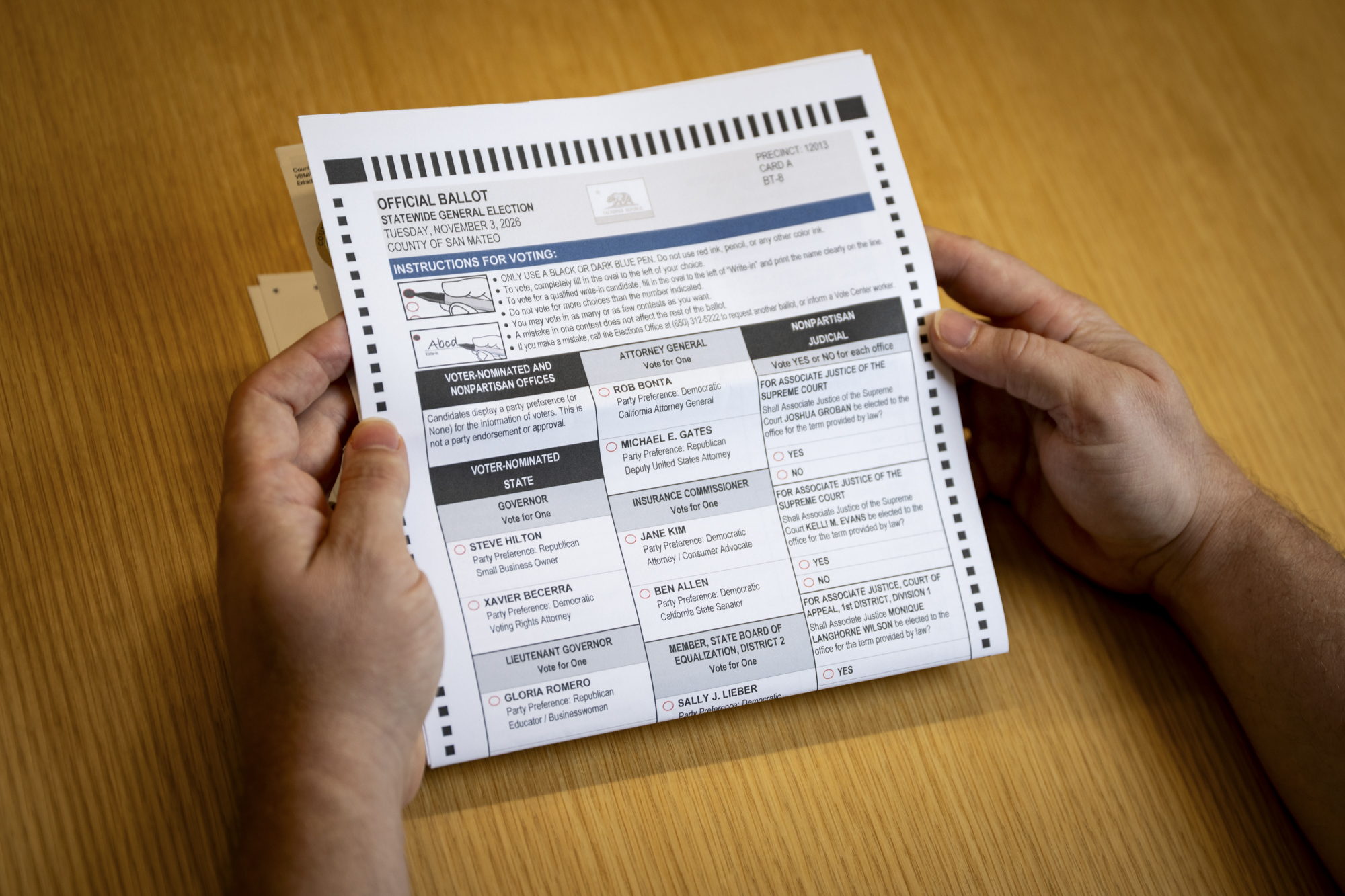
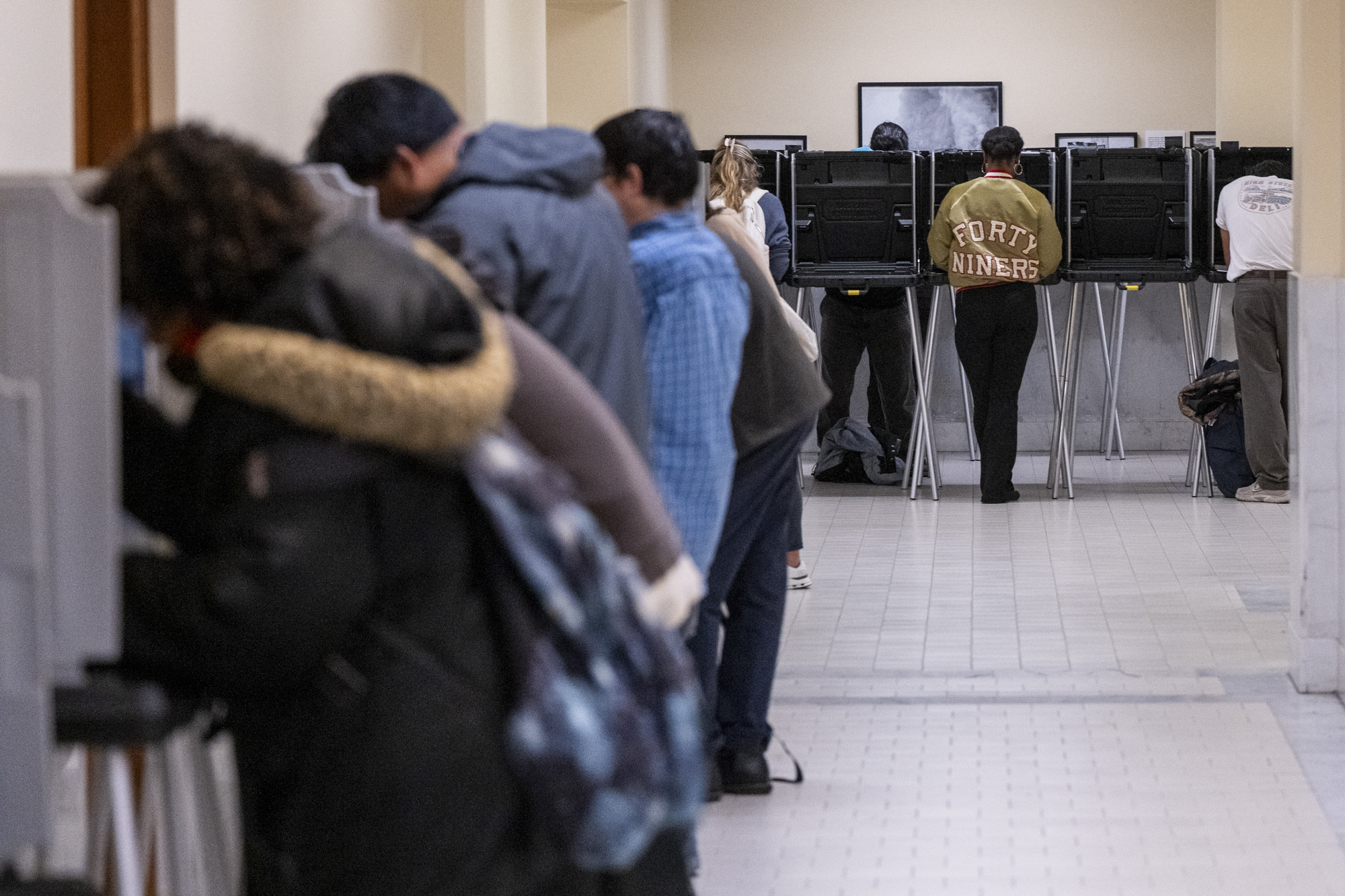
Voters across America cast ballots for presidential nominees, but the process of determining the winner plays out like 51 separate elections.
When a presidential candidate wins a state or the District of Columbia, they win the electors assigned to that state. Those electors then vote for their state’s chosen candidate at the meeting of the Electoral College.
The exception is in Maine and Nebraska, where electors are chosen based on the winner of both the statewide popular vote and the winner of the popular vote within each congressional district.
So while most states allocate their electors to whoever wins the popular vote in that state, the Constitution gives wide latitude for state legislatures to pick their electors in other ways.
How would the National Popular Vote Interstate Compact work?
Instead of allocating electors based on the winner of their state’s popular vote, the states that have joined the NPVIC have committed to allocating their electors to the candidate who wins the national popular vote.
Vikram Amar, a law professor at the UC Davis School of Law, proposed the idea in the wake of the 2000 election, in which Democrat Al Gore lost to Republican George W. Bush despite winning the popular vote. Under the plan laid out by Amar and written in the NPVIC, the compact would take effect once states possessing 270 electoral votes, the majority needed to win the presidency, sign on.
“If those states agree to give their electors to the national popular vote winner, then effectively it doesn’t matter what the other states do because those states as a group will determine who the president becomes,” Amar told KQED’s Forum.
So far, 18 states holding 220 electoral votes have signed on to the pact, according to the NPVIC campaign. California joined in 2011, under legislation signed by then-Gov. Jerry Brown.
What would it take for the compact to be enacted?
The 270-vote threshold seems more possible than ever before after Democratic victories in a handful of key state legislative elections this month.
The party captured unified control of state government — a so-called trifecta of both houses of the legislature plus the governorship — in five states that have not yet ratified the compact: Arizona, Nevada, Michigan, Pennsylvania and Wisconsin. Combined, those states represent 61 Electoral College votes.
As long as both Pennsylvania and Michigan are included — with their 19 and 15 electoral votes, respectively — the compact could pass 270 votes with just four of those five states.
Nevada Gov.-elect Aaron Ford said he supports his state joining the compact, and Pennsylvania Gov. Josh Shapiro also signaled support for the idea.
“I have said that I am open to that. I think I’ve voiced some positivity toward it,” Shapiro told Politico. “As it relates to the trifecta, though, the leaders and I agreed that we would speak with one voice in announcing our initial agenda.”
What would be the benefits of the NPVIC?
Supporters of the popular vote compact argue that the Electoral College system is fundamentally undemocratic because it allows the possibility of a candidate winning the presidency while losing the popular vote.

This scenario has transpired twice this century: in 2000, when Bush defeated Gore; and again in 2016, when Donald Trump defeated Hillary Clinton.
The Electoral College system also concentrates the attention of presidential campaigns on a handful of closely divided “swing states” that have voted for both Democrats and Republicans in recent history.
“All of the resources, all of the campaigning, all the money … are being spent on those places,” said Wilfred U. Codrington III, professor of constitutional law at Cardozo School of Law. “But there are just a bunch of states that are just ignored, always on the sidelines.
That includes California, which, despite its millions of voters, is typically an afterthought for presidential candidates and campaigns because it has gone for a Democrat in every election since 1988.
In a 2024 Pew Research survey, 63% of Americans said they would prefer to elect the president by popular vote, though the results were split along partisan lines. Eight in 10 Democrats supported the change, compared with just 46% of Republicans.
What are the downsides of moving toward a national popular vote?
Opponents have described the plan as an end run on longstanding tradition that would move the center of gravity in presidential campaigns toward more populous areas.
Former California Gov. Arnold Schwarzenegger, a Republican, vetoed multiple bills that would have had the state join the compact, arguing that it effectively changes the playing field without input from states that do not agree.

“Because California’s endorsement of a national popular vote would significantly change the debate on the matter, enactment of this bill would represent a major shift in the way not only Californians but all Americans choose their president,” he wrote in a 2008 veto message.
The change could also raise questions about how a national vote would fit within a vote that currently takes place on a state-by-state basis. States have different timelines for early voting, different rules on who can vote, different ballot designs and different procedures for recounts.
“How do you run a national election if not all the states are really part of this consensus, this agreement?” Amar said. “If the National Popular Vote Compact gets up and going on the basis of 20 or 22 states that have joined it, how do we guarantee that the election that’s taking place around the country is remotely uniform?”
Is this idea legal?
Even if the state governments are willing to sign on to the agreement, there could still be legal hurdles, and it would likely face challenges.
Some legal scholars have raised concerns that allowing a state’s electoral votes to be dictated by results in other states violates the plain text of the Constitution, which says that “each state shall appoint, in such manner as the Legislature thereof may direct, a number of electors.”
“It is hard to say the ‘state’ has ‘appointed’ the electors if it were to outsource the appointment to a popular election in France, even if that is the manner the legislature has chosen,” wrote Derek Muller, a law professor at the University of Notre Dame.
In addition, many state constitutions explicitly tie presidential electors to the state’s popular vote. Federal law also requires congressional approval for certain compacts between states.
“The U.S. Supreme Court inevitably would probably get drawn in,” Amar said. “And we’d want to know what their views were before we tried to get this up and running, not afterward.”