Dolores Huerta to Make History as First Woman to Lie in Honor at California State Capitol
When a young Dolores Huerta began lobbying in Sacramento as a volunteer for bilingual voting access in the 1950s, there were no Latino state lawmakers.
The civil rights champion, who died of cancer last month at age 96, will make history on Monday as the first non-elected person — and first woman — to lie in honor at the California State Capitol, where two Latinos lead the senate and assembly, and Xavier Becerra is preparing to take office next year as the first elected Latino governor in modern history.
“Dolores Huerta spent a lot of time in the California State Capitol, advocating for causes that she believed were just and right for the people of California,” said Senate President pro Tempore Monique Limón. “It is now our opportunity in the state legislature and for the people of California to honor her work and legacy through this beautiful ceremony as we have her lie in honor in the California State Capitol.”
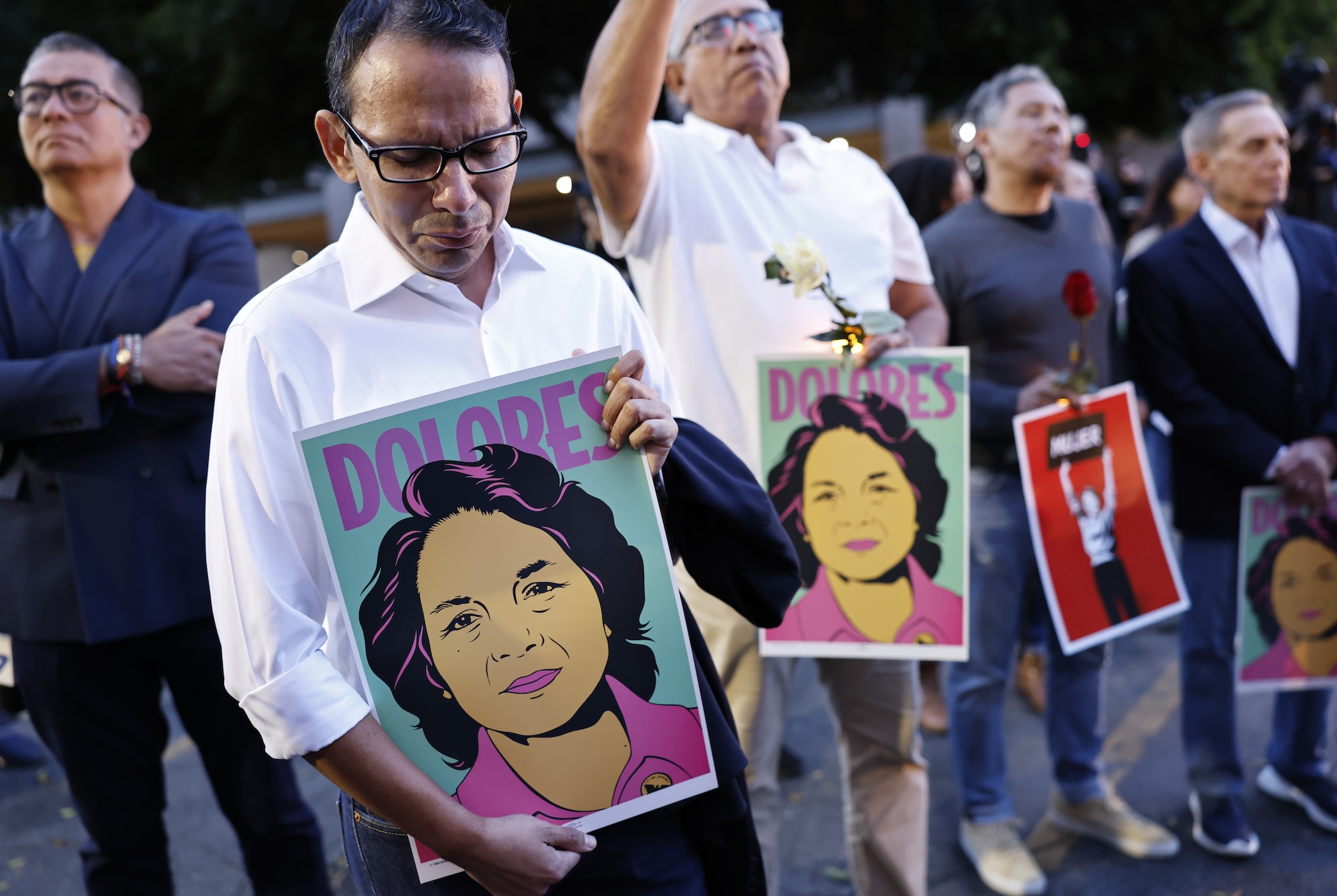
Hundreds of people defied the rain to attend a morning ceremony for Huerta featuring Aztec dancers at Sacramento’s Crocker Park, kicking off a series of events this week celebrating the life of the labor icon, who co-founded one of the world’s most renowned agricultural worker labor movements.
“She was gracious and very accessible but also principled and of integrity,” said Four Waters, a local business owner in Sacramento who came out to pay her respects. “Her commitment to the people is what made her powerful, not her sense of self.”
In her lifetime of advocacy for worker and immigrant rights, women’s equality, civic engagement and other crusades, Huerta often marched, rallied and protested in Sacramento.
Perhaps most famously, she organized and participated in a 300-mile pilgrimage by striking farmworkers and supporters from Delano to the state capital in 1966, calling for better job conditions in the fields.
On Monday, the crowd was set to march behind a hearse carrying Huerta’s casket less than a mile from Crocker Park to the capitol building. Pallbearers delivered her to the rotunda, where lawmakers and the public could pay their respects until the evening. Gov. Gavin Newsom and Limón, serving as acting governor on Monday, ordered that flags at the capitol and state buildings be flown at half-staff.
Before Huerta, the nine people permitted to lie in state at the capitol were all elected men, beginning with state Sen. William I. Ferguson in 1858 until, most recently, Congressman Robert Matsui in 2005, according to the California State Library. Elected officials lie in state while civilians lie in honor.
“The honor is very fitting to be there at the state capitol for the work that she did to impact thousands and millions of people, not only in the state of California, but throughout our country,” said Camila Chávez, Huerta’s youngest daughter with Richard Chávez. “The way California has changed since Dolores first started organizing is actually a testament to her life’s work, to organizing, to all of the civic participation, the countless campaigns that she worked on.”
Huerta, Cesar Chávez and Gilbert Padilla co-founded the union that later became the United Farm Workers and negotiated some of the nation’s first labor contracts with agricultural businesses in the 1960s, securing drinking water, sanitary toilets and better wages for workers.
“Dolores Huerta was an icon,” said Ralph Velador, a Palmdale school district board member and labor organizer who traveled from Southern California. “She was the epitome of what we should all strive to be.”
Velador said he has daughters and Huerta “made it so that women did have a voice…It gave my daughters the ability to say yes, I should have a voice.”
For decades, children’s books, murals and movies celebrated how Huerta and Cesar Chávez teamed up to organize farmworkers, until recent revelations exposed their partnership as much more complicated and turbulent, with a dark underbelly.
Throughout her career, the petite mother of 14 defied sexism, machismo culture and powerful interests, driving change in state and federal laws. She advocated for California to become in 1975 the first state to grant collective bargaining rights to farmworkers, who are excluded from federal protections that cover most other private-sector employees.
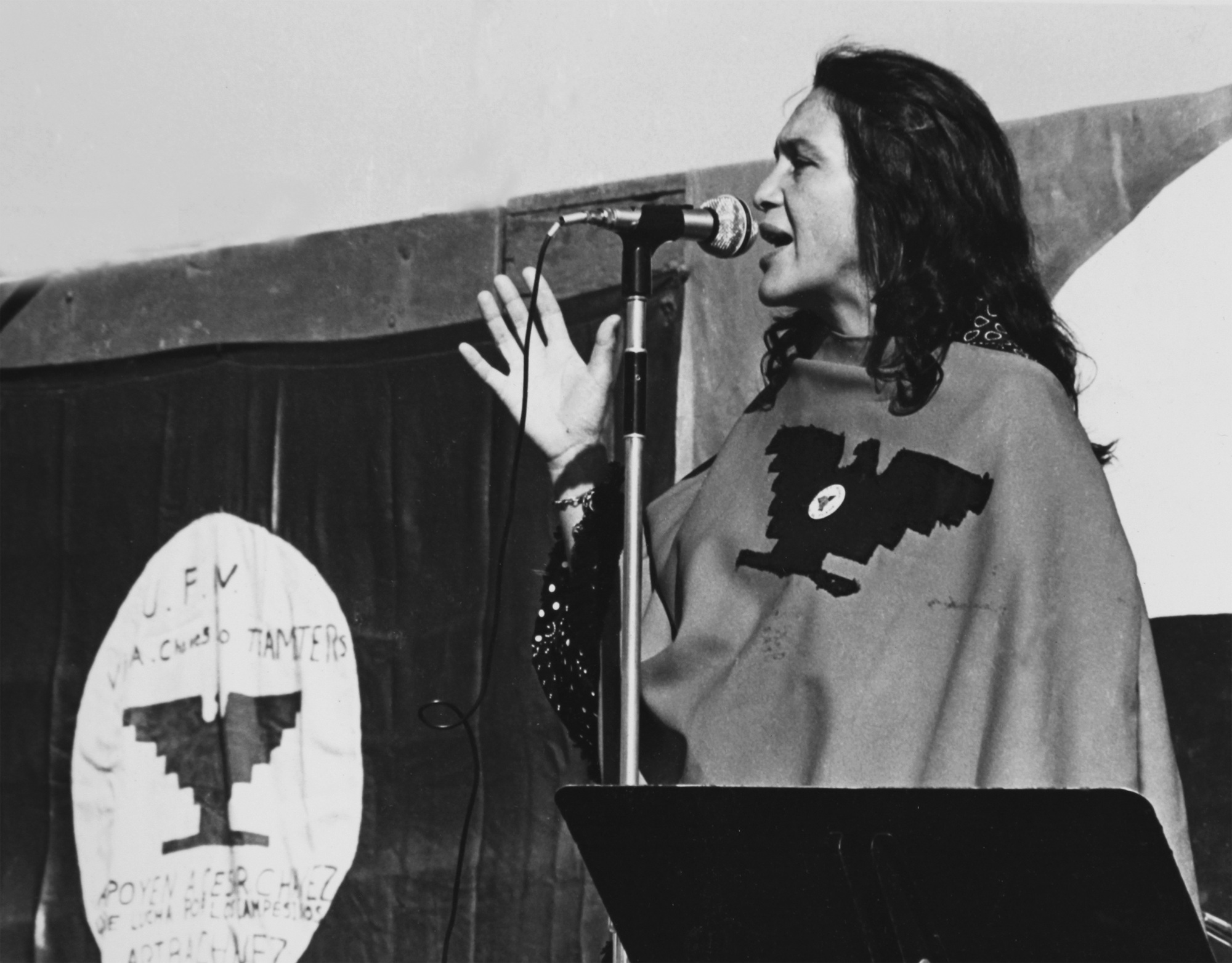
In Washington, D.C., she lobbied lawmakers for months to pass an immigration reform package that President Ronald Reagan signed in 1986, opening up job opportunities and a path to citizenship to about 3 million people who legalized their status. Huerta later said her male co-workers intentionally left her out of a press conference announcing the landmark legislation.
Huerta, who endured police beatings, death threats and arrests on picket lines and non-violent protests, is credited with coining the rallying cry “Sí, se puede,” translated as “Yes, we can.” Former President Barack Obama used the phrase during his successful 2008 campaign to the White House and in 2012 awarded Huerta the Presidential Medal of Freedom, the nation’s highest civilian honor.
“She was fearless,” said Camila Chávez, who co-founded with her mother the Dolores Huerta Foundation, which trains people in the Central Valley to become advocates for their communities and schools. “The way that we carry her legacy forward is to focus on organizing.”
Huerta spoke up against the sexual abuse and harassment of farmworker women, including in a 2013 film and radio series that KQED collaborated on with Frontline, CIR, IRP and Univision. It wasn’t until much later that Huerta revealed at age 95 that she herself was raped in the 1960s by Cesar Chávez, who was then her boss.
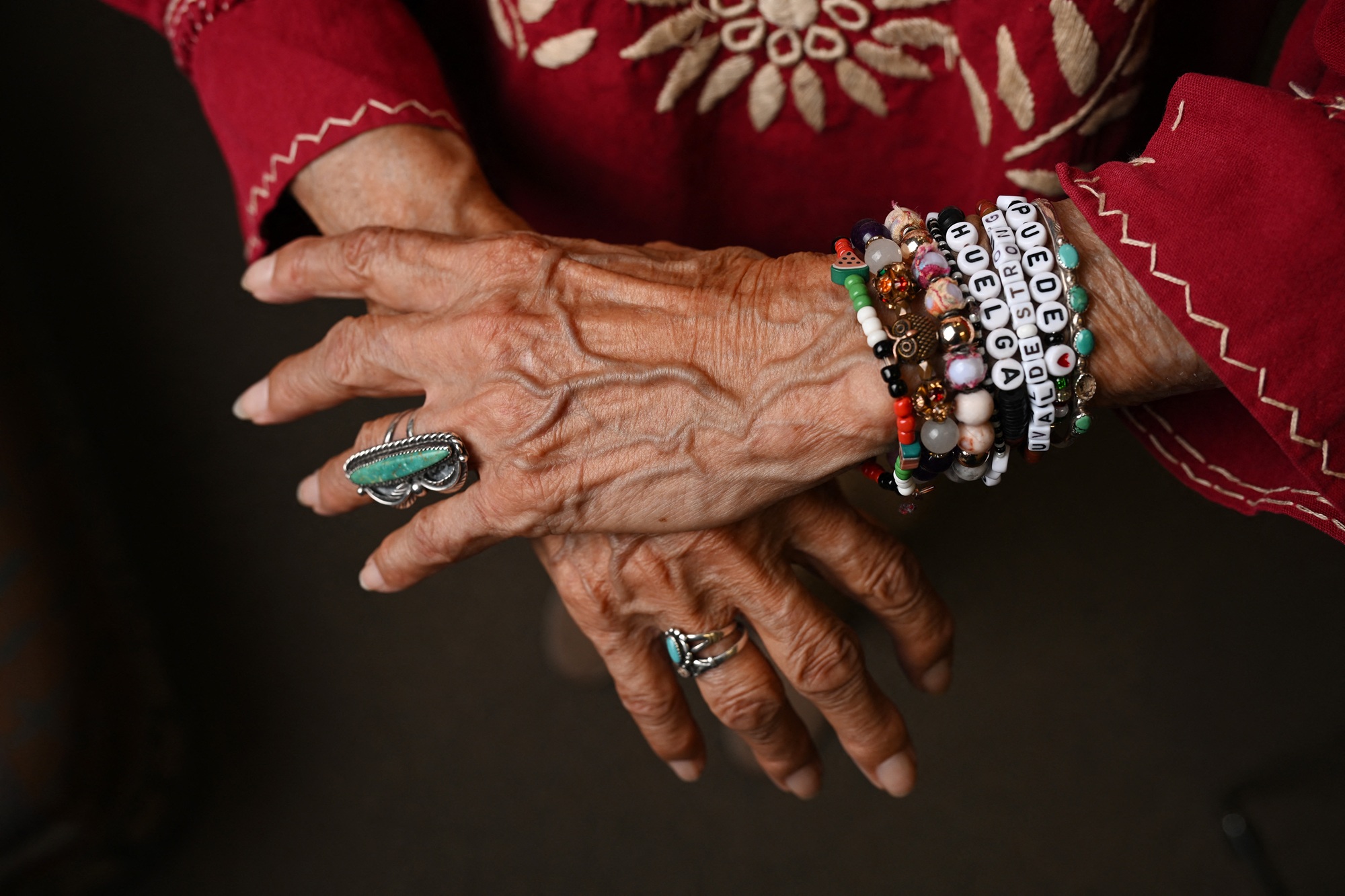
She came forward in a New York Times investigation that included damning accusations that Chávez, who died in 1993, sexually abused young girls and women. Huerta said she carried the secret for nearly 60 years, because she feared exposing him would damage the farmworker movement. She and Chávez’s brother, Richard, began a romantic relationship in the 1970s. The couple had four children, including Camila.
“I carried this secret for as long as I did because building the movement and securing farmworker rights was my life’s work,” Huerta said in a statement. “The formation of a union was the only vehicle to accomplish and secure those rights and I wasn’t going to let Cesar or anyone else get in the way. I channeled everything I had into advocating on behalf of millions of farmworkers and others who were suffering and deserved equal rights.”
A public rosary and vigil for Huerta is planned on Thursday at the IBEW Hall in Bakersfield, where she lived the last decades of her life. The following day, an interfaith memorial service and celebration is set be held at the city’s Dignity Health Convention Center.
“Her goal was to fight for the people who were suffering,” said Laura Vargas, who came with a group of Girl Scouts to honor Huerta, a fellow scout. “I just thought she was one-of-a-kind, very powerful, self-sacrificing.”