Scott Wiener Wants to Bring Social Housing and YIMBY Mandates to Washington
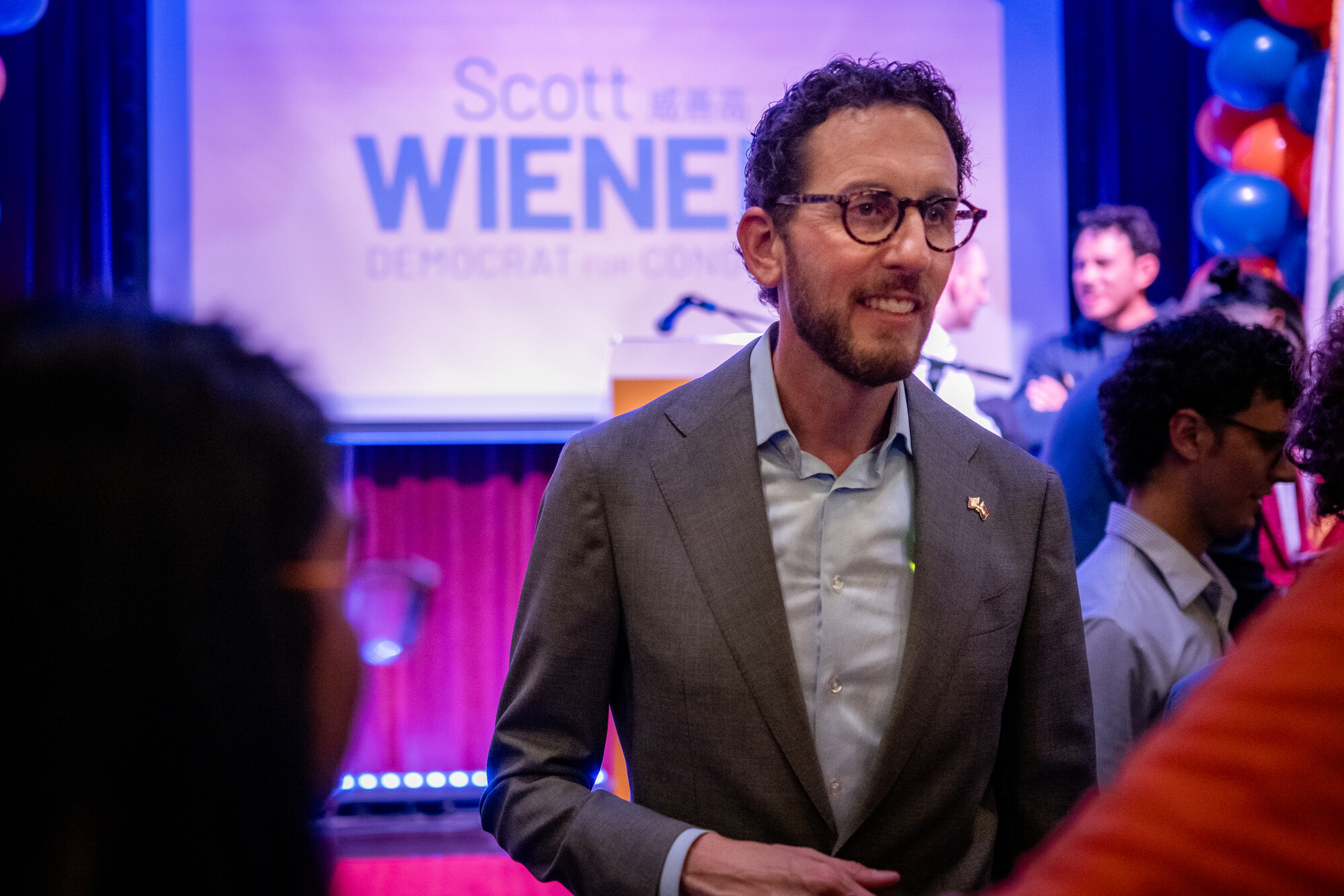
In his second year as a state senator, Scott Wiener proposed an idea that offended almost every major stakeholder in California politics: force cities to allow apartment buildings near train stations and major bus lines.
Cities argued it would strip their zoning power. Construction trades said it wasn’t pro-worker. Tenants’ rights and social justice groups worried it would spur gentrification. The bill, called SB 827, died a sudden and pitiful death, getting only four yes votes in its first committee.
But the backlash was also a boon for Wiener’s cause, sparking a conversation that would eventually help shape the pro-housing Yes In My Backyard movement, or YIMBY, which has since caught on nationwide.
“I met people in San Francisco who would tell me, ‘I was home visiting my parents in Riverside County or in Orange County, and my mom raised SB 827 at the dinner table,’” Wiener said. “That bill absolutely up-leveled the housing dialog in California and energized a pro-housing YIMBY movement.”
The bill helped brand Wiener as a firebrand, a reputation that continued throughout his decades-long tenure in the state Senate, especially when it comes to housing policy. He authored significant reforms — from tackling long permitting and environmental review timelines to removing local opposition to housing, even eventually getting that controversial housing-near-transit bill passed, albeit eight years later and with significant changes — all of which contributed to cementing the state’s shift to a more top-down approach to setting housing policies than it had in the past.

Now, as a Congressman-elect, Wiener wants to take that same firebrand approach to Washington, with a plan to tackle high construction costs, create a national social housing program and widen federal purse strings for cities that actually build housing. As he prepares to take on those controversial fights, California housing advocates are eager to see whether his bold tactics will work in Washington.
But, with the state’s housing affordability crisis as dire as ever — just 19% of households were able to afford the median-priced home this year, compared to 39% nationwide — detractors have criticized the former state senator as too focused on market-rate development and blind to the immediate needs of tenants and low-income workers. Despite all the legislation he helped author to speed development, critics say, California’s builders haven’t meaningfully accelerated the pace of construction.
Wiener acknowledges there is more work to be done, but he said now he has access to levers at the federal level that might be more effective in getting more housing built.
“We need to take away [Pres. Donald] Trump’s power to use tariffs as a weapon,” he said. “And we need to modernize the construction industry to lower the cost of construction.”
David Garcia, deputy director of policy at UC Berkeley’s Terner Center for Housing Innovation, said Wiener’s instinct to remove tariffs and modernize construction methods is spot-on, but he said ending the war in Iran, which has surged the price of oil, natural gas and metal and has caused construction costs to rise even higher, is worth adding to the list.
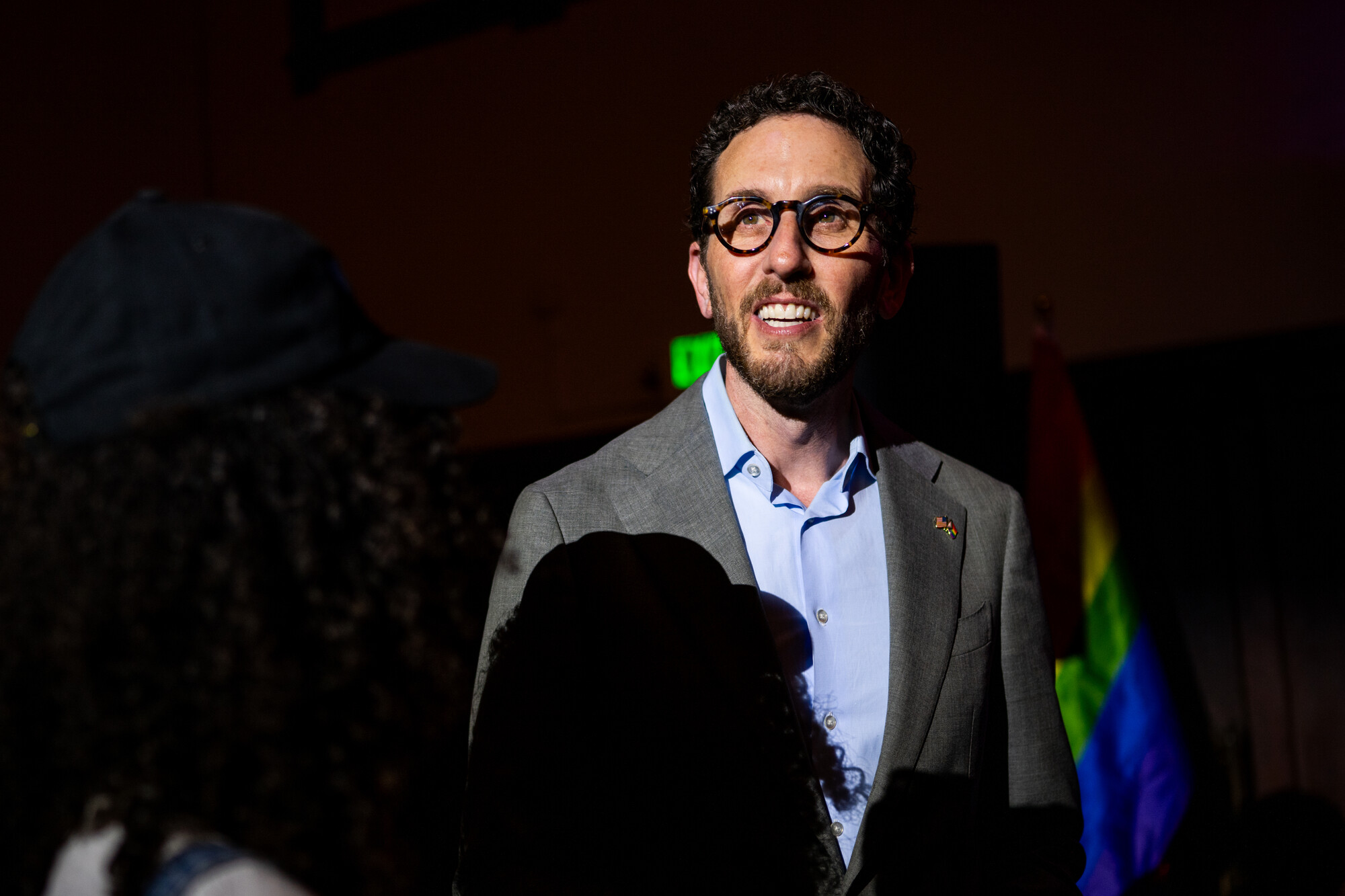
“That is something that a member of Congress can clearly point to and say, ‘This is raising the cost to build new homes; we can reverse this,’” he said. “This is clearly a policy choice that the administration has made that members of Congress can push back on.”
Beyond tariffs and a costly war, Wiener hopes stabilizing the construction workforce can help lower costs. A 2020 study from UC Berkeley’s Terner Center for Housing Innovation found that, since the 2008 recession, there has been a mismatch between the number of permitted units — which increased more than 430% between 2009 and 2018 — and the number of construction workers — which only increased by 32%.
If the federal government can keep construction workers employed during downturns in the private sector, Wiener said they would be available to build when the market picks up again.
“Every time there’s a downturn in the private sector, we see mass layoffs of construction workers,” he said. “When the economy goes back up again, we have a shortage of construction workers, and then we can’t always build all the many things we need to build — not just housing — but all sorts of infrastructure, transportation, water, and so forth.”
But Christina Livingston, statewide executive director of tenants’ rights group Alliance of Californians for Community Empowerment, is less interested in a largely supply-side approach, arguing Wiener’s legislation has focused more on empowering developers to build market-rate housing, which she said doesn’t effectively address the affordability issues people are dealing with today.
“We end up with policies around development that are both income-blind and color-blind,” she said. “And that is obviously exacerbating the housing crisis and the homelessness crisis that everyday working families are experiencing.”
She said she’s looking to other newly-elected congressional leaders, including Aisha Wahab, D-14, Angela Gonzales-Torres, D-34, and Randy Villegas, D-22, to champion tenants’ rights and look for affordability solutions. She hopes lawmakers ramp up investment in affordable housing and expand renters’ rights nationwide, including more just-cause eviction protections, rent control and legal representation in eviction courts.
Shanti Singh, legislative and communications director for Tenants Together, argued that, while local and state governments can pass legislation that preserves affordability, the federal government has more power to protect renters than it realizes.
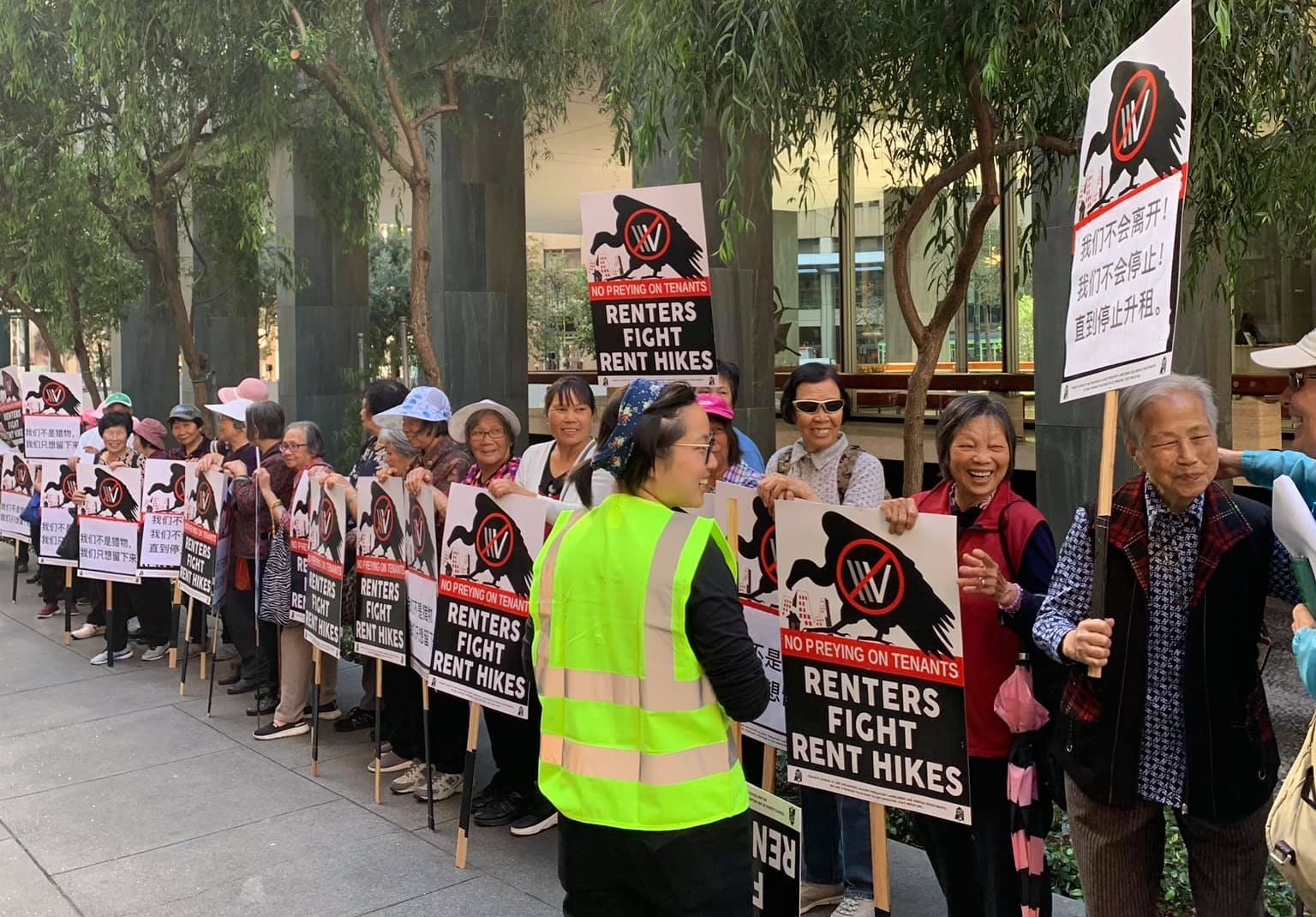
During the Biden administration, the Federal Housing Finance Agency announced policy changes, which required landlords for properties receiving certain federally backed mortgages to provide renters with 30 days’ notice for any rent increases and at least a five-day grace period for late rent, along with other protections.
But in early 2025, Trump-appointed FHFA Director William Pulte rescinded the policy. Singh said this November, she saw more politicians nationwide talking about renter rights than ever before. With more than a third of the country made up of renters, Singh said lawmakers need to focus on protecting them, rather than prioritizing homeowners.
“There are a lot of us out there [that] are probably going to be renters for our entire lives,” she said. “We’re not gonna have the sort of security that homeownership gives some people.”
For his part, Wiener said expanding tenants rights is on his list of priorities. Another line item that might get support from social justice and affordable housing advocates is his desire to create a social housing program, inspired by European models where public entities would partner with the private market to develop, own and manage affordable housing for a mix of income levels.
Lawmakers have tried to create a social housing program in California, but those efforts have failed repeatedly.

For decades, the federal government has subsidized public housing, which has historically only applied to low-income earners. But affordable housing advocates and experts have long argued that those developments have been underfunded for decades. According to the Center on Budget and Policy Priorities, a nonpartisan think tank, no new funds have been provided to build more public housing since the mid-1990s.
Wiener imagines a different model, similar to what Viennese residents have access to: a housing development receiving public and private dollars, available to everyone, that would cap rents according to a person’s income.
“So if you’re working at a restaurant, you’re going to be paying less than the investment banker,” Wiener said. “It’s a way of creating mixed-income stable communities, and you have a public investment in this housing to compensate for the fact that some people are paying less rent. It creates healthy communities that are very stable.”
Wiener is aware it’ll likely take lots of time and energy to pass such a bill in Congress, but he said he’s accustomed to fighting an uphill battle.
“I’m the kind of person — I have a sense of urgency,” he said. “I want to get things done quickly. But sometimes, that just is not physically possible given the politics. And so all you can do is just keep coming back.”
Apart from social housing, Wiener said he also wants to change the way the federal government funds and encourages housing development, including expanding the Section 8 voucher program and working with Fannie Mae and Freddie Mac to incentivize banks to finance more apartment construction instead of focusing primarily on single-family homes.
Matt Lewis, a spokesman for California YIMBY, said that’s a fight Wiener could realistically win in Washington, partly because Congress regulates federal incentive programs and can control how much money flows into states, as well as how federal programs operate.
“My sense is Scott is going to thrive in that environment because he loves to get into the weeds,” Lewis said. “I think he will be very good at building the coalitions that will address some of those barriers.”
But Wiener also wants to pursue punitive measures that would hold localities accountable for not building housing they promised to deliver, an approach that could face resistance from other lawmakers.
In 2018, Wiener authored a new mandate to increase the amount of housing cities and counties across the state had to plan for to keep up with demand. Localities that failed to plan properly would risk a loss in state funding, lawsuits and more. The policy, while lauded by housing advocates as an effective stick to hold cities responsible, has been criticized by some local officials for being too strict and unreasonable.

Garcia said Republican lawmakers historically have shied away from mandating anything of localities, but times are changing. In the recently passed 21st Century Road To Housing Act, Congress included a provision that ties certain grant funding to a locality’s ability to produce housing, including bonuses for jurisdictions that excel and small reductions for those that lag behind.
Last year, during current HUD Secretary Scott Turner’s confirmation hearing, Sen. John Kennedy, R-Louisiana, proposed a similar idea and credited Canada for inspiring him.
“Sen. Kennedy starts talking about how in Canada, cities lose money when they don’t build homes, and we should be doing what Canada does to local cities,” Garcia said. “I was just kind of like, jaw on the floor. I’m very surprised to hear a Republican, very conservative member [talk] about that kind of preemption or that kind of a stick approach.”
Wiener said, once he enters Congress, he hopes to add more carrots and sticks to federal housing funding by “conditioning funding on good land use policies”
“I don’t wanna put federal money in where you have projects that take 10 years to get built,” he said.

If that attitude catches on further in Congress, Sonja Trauss, Executive Director of YIMBY Law, said that could force the California legislature to pass more laws forcing cities to build more housing. She said, if YIMBY activists push their agenda locally and Congress conditions federal dollars on results, it could have a “sandwich” effect on the legislature, with pressure coming from both sides.
“We’re more organized, we’re gonna be asking for what we want,” she said. “And then also the federal government is gonna be taking more of a role.”
She also said that when Wiener left the San Francisco Board of Supervisors to join the state legislature 10 years ago, lawmakers were afraid to force cities to do anything that would take away local control. But now, the landscape is very different, she said.
She wonders if Wiener’s success will send a message to other lawmakers in California too: “If you want your career to end locally in one or two terms, then sure, be anti-housing. But if you wanna be able to go to a higher office, then be pro-housing.”