After 6 Years, the Mission’s Historic Library Is Back. What to Look For
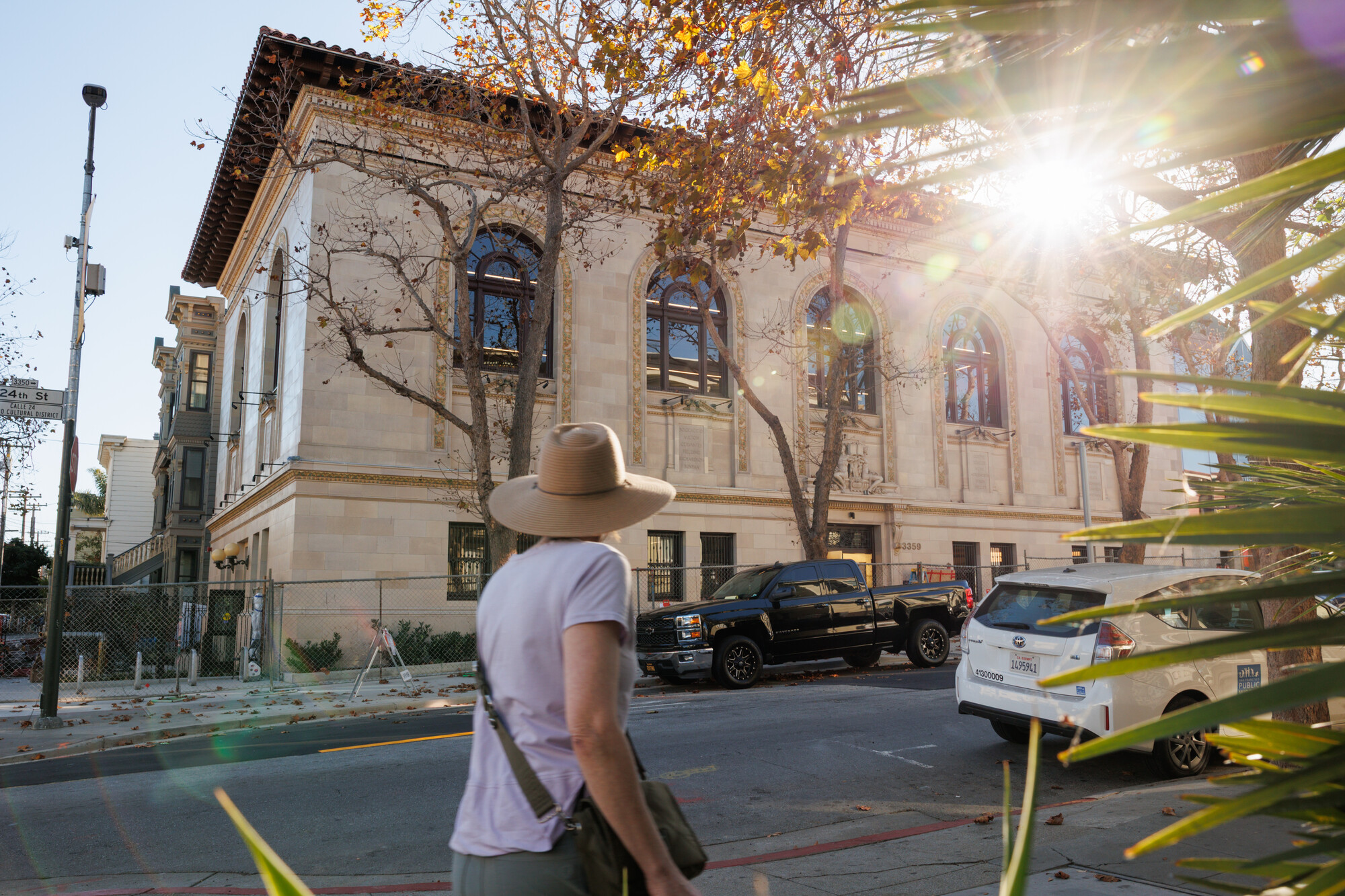
The Mission District is finally getting its grand library on 24th Street back.
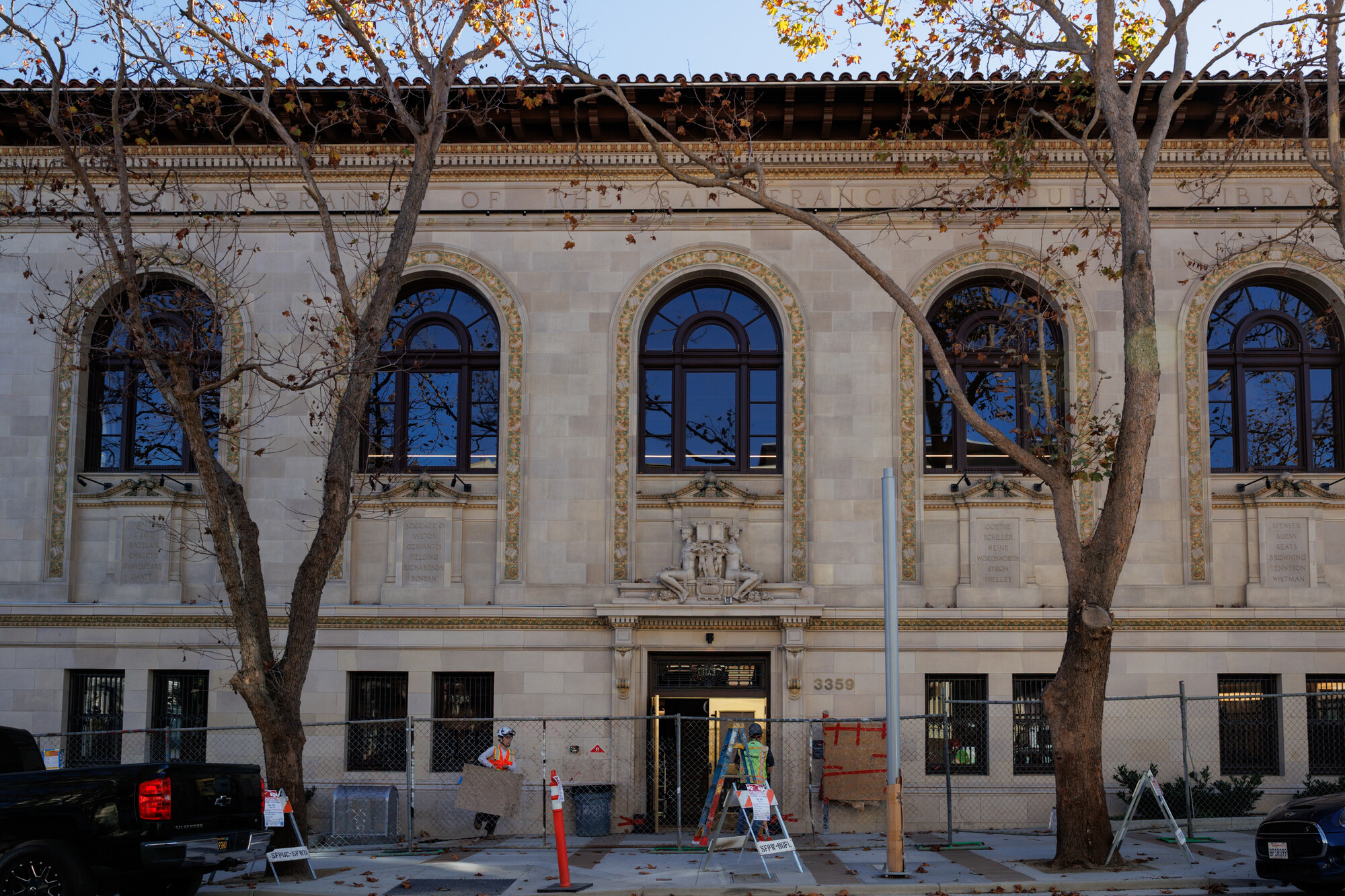
Closed down for renovations back in 2020, the Mission Branch of the San Francisco Public Library has been operating out of a small, temporary space on Valencia Street since 2022. The century-old building, dating back to 1915, is one of seven San Francisco libraries funded by industrialist Andrew Carnegie.
Now, six years (and a few delays) later, the Mission Branch Library’s doors will reopen to the public on Saturday, celebrated with a free event featuring music, performances and hands-on activities and crafts. The reopening event will take place at 3359 24th St. beginning at noon, and is open to all.
“When you walk in that reading room and take it all in, it just really reinforces [that] the wait was worth it,” city librarian Michael Lambert said.
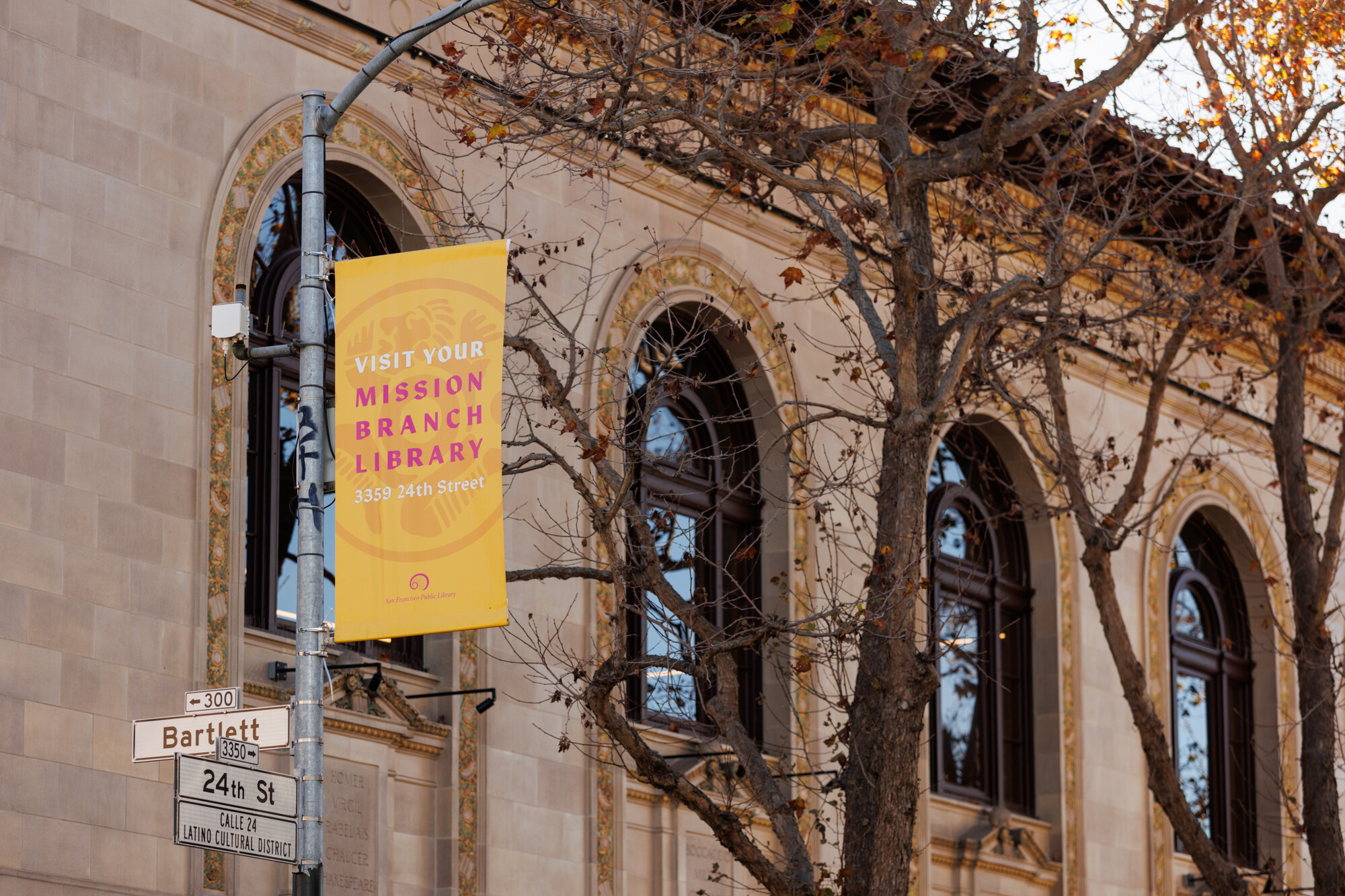
According to library officials, the expansion, renovation and restoration efforts cost $40.7 million, including $5.3 million from the California State Library Building Forward grant.
San Francisco Public Works architect Andrew Sohn called the reopening “an extremely special opportunity.”
KQED attended a preview of the building on Thursday afternoon to learn more about the new and improved library, including amenities, new features and pieces of San Francisco history to look out for.
Artistic details old and new
Here’s some good news for long-time San Franciscans who remember this place before its closure: The library’s grand staircase is coming back.
For those who aren’t aware, the Mission District library underwent renovations in the 1990s in response to the 1989 Loma Prieta earthquake, including seismic retrofitting and the installation of an elevator.
But during that process, the grand staircase in the entrance of the library was removed.
“A lot of people really felt betrayed by having that stair demolished back in the ’90s,” Sohn said. “Architecture wasn’t the priority.”
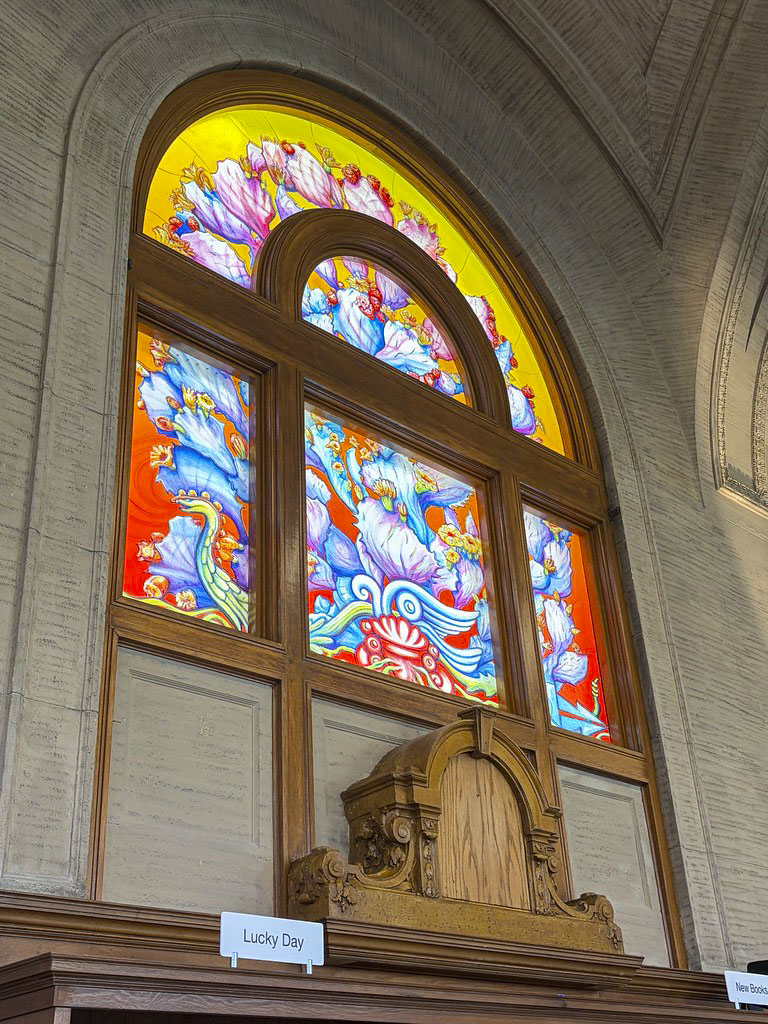
Now, along with many of the library’s other original details, the staircase has been rebuilt, its dark steps leading directly to a brightly colored fused-glass window installation called “Nopal de la Misión,” by notable local artist Juana Alicia.
The illuminated design of the window’s prickly pear cactus is a major centerpiece of the second floor and a new piece of art for the reopened library. It is described by Alicia as a “symbol of resistance under difficult conditions, a tree that blooms in the desert, serves as a delicious and nutritious sustenance and regenerates easily.”
“I’ve been a muralist in this community — having done many, many murals in the neighborhood — for the last 40 years,” Alicia told KQED. “So I’m glad to leave something so permanent.”
“If anything is permanent,” she said.
Another artwork to check out is a conserved and reinstalled triptych from the ’90s by Emmanuel Catarino Montoya located in the first floor’s community room (more on that below).
Larger space includes new section for teens
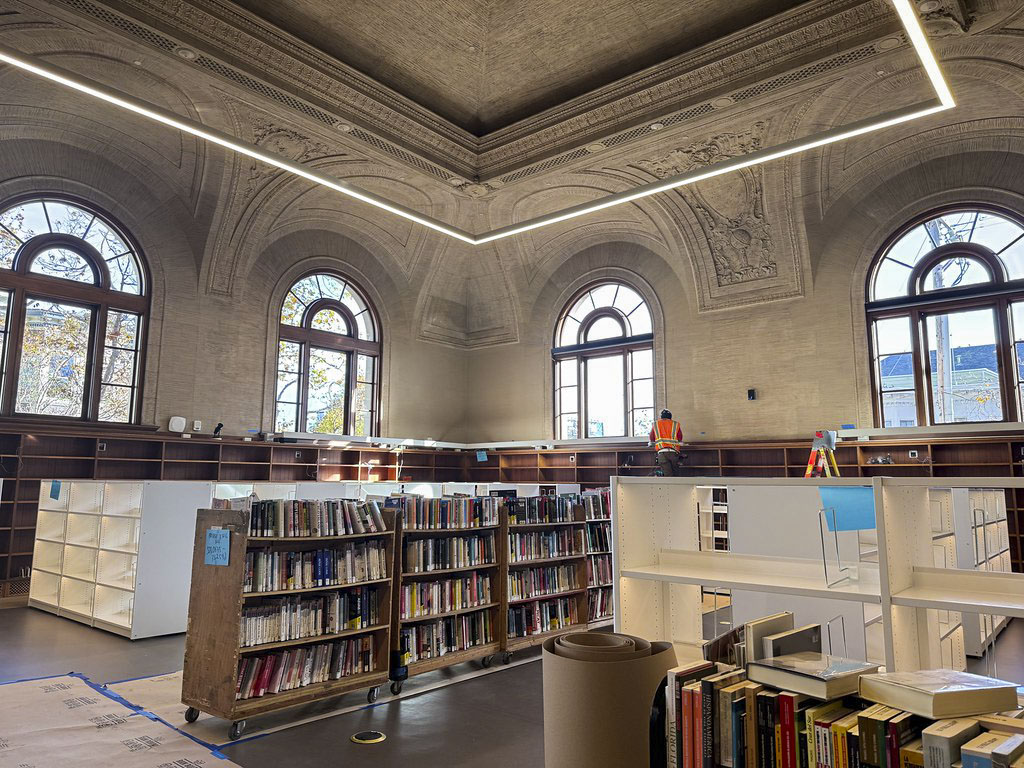
According to library officials, space and openness were prioritized during the renovations — with the second floor now serving as a main gathering and browsing space for library patrons.

Sohn said that the previous iteration of the library was from an era of architecture that was “designed to funnel people into a narrow, controllable passage — like a turnstile almost.”
The library’s new design “is the antithesis of what it was,” Lambert said.
In fact, more space was added: The new library is now 3,500 square feet bigger, totaling 14,185 square feet.
Included in the expansion is a corridor specifically dedicated for young adults and teen readers to read and work, sectioned off from the rest of the library.
A dedicated space for community
Back on the first floor, a large community room can hold around 100 people, featuring both a stage area and — according to Sohn — a “killer sound system.”
In addition to serving as the setting for library workshops and events, nonprofits, community-based organizations and neighborhood groups can also reserve the space.
With this new space for community programming, Lambert said the reimagined Mission Branch Library — which has historically been one of the city’s busiest branches — will be filled with young people, families and seniors “being enriched by the library’s programming.”
More amenities for patrons
As with many branches of the San Francisco Public Library, laptops are available for on-site lending and study rooms serve as free workspaces.
Another major highlight is additional restrooms. The building previously had three restrooms, two of them public. Now, there are five, with three of them now public — including a family bathroom in the children’s section of the library on the first floor.
The building is more resilient post-renovations, Lambert said, mentioning an air conditioning system that can keep the library open during heatwaves.
“The fact that it’s fully air-conditioned, high-grade air filtration on bad air days or when it’s too hot outside, [means] the community in this neighborhood now has somewhere that they can go and get some relief,” he said.