This Weekend’s I-580 Richmond-San Rafael Bridge Closure: What to Know
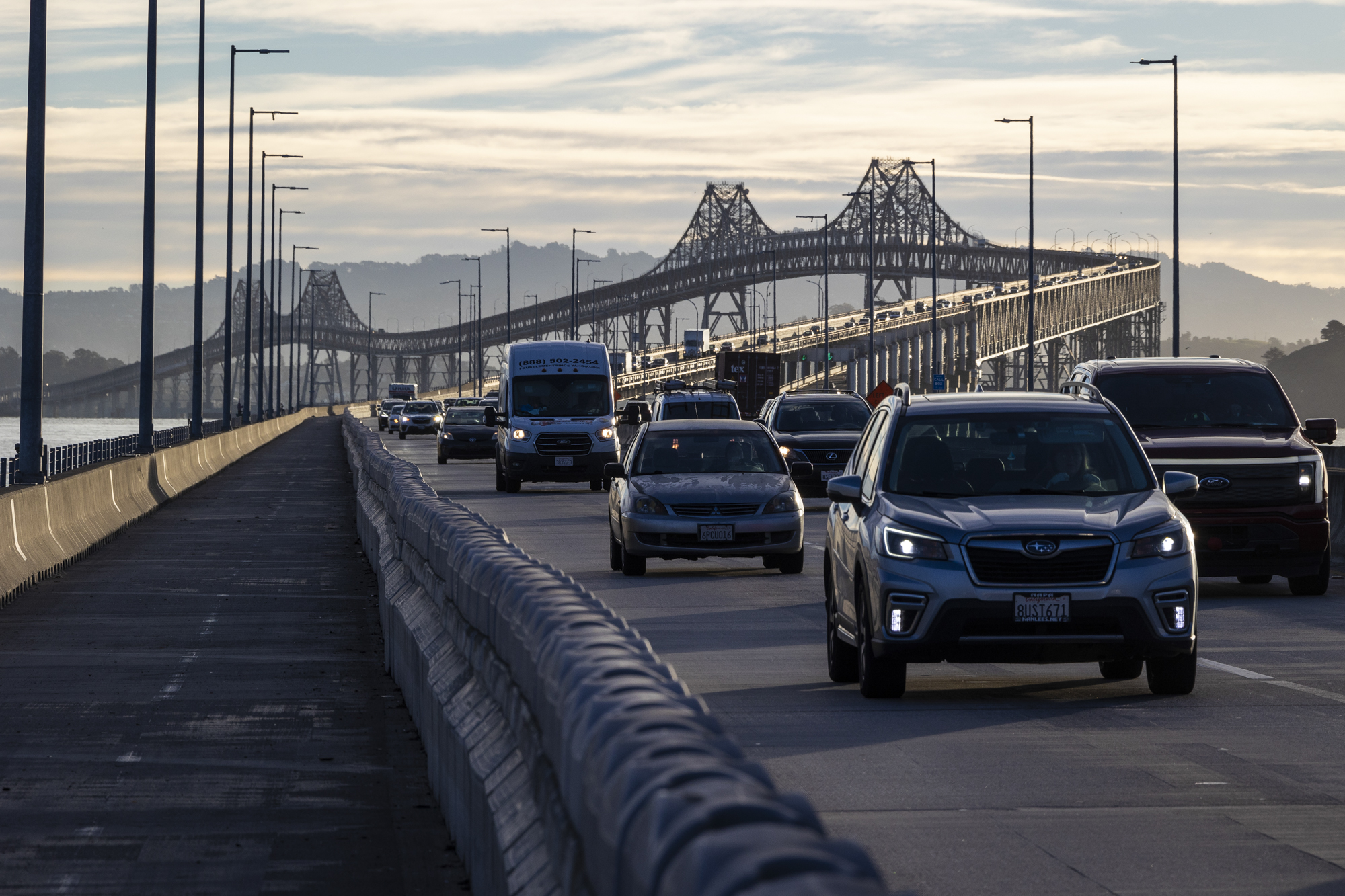
If you’re hoping to drive from the East Bay into the North Bay this weekend, you should know: All westbound lanes of Interstate 580 over the Richmond-San Rafael Bridge are scheduled to close on Saturday night for nine hours.
The overnight closure will allow Caltrans to take the first step in removing the bridge’s toll booths — a vestige of a not-so-distant past where you’d slow down to pay a human operator — and install a gantry with an overhead tolling system.
“The toll booths are not really needed anymore,” said Caltrans spokesperson Matt O’Donnell, who added that the toll booths themselves will be removed during a separate closure scheduled for spring 2027.
On Saturday night, Caltrans crews will be setting up the gantry that will make this transition possible.

The goal of setting up this new system is improving safety and traffic flow, O’Donnell said. “People can stay in their lanes and just travel across the bridge without having to slow down,” he said. “People won’t be shifting lanes at the last second to go through one of the toll booths.”
While the closure won’t start until late on Saturday night, drivers should brace for delays much earlier that evening — and the route won’t be open again until Sunday morning.
Keep reading for what you need to know about the Richmond-San Rafael Bridge closure on westbound I-580 this weekend.
When does the westbound I-580 closure begin?
Starting at 11 p.m. on Saturday, all westbound lanes over the Richmond-San Rafael bridge — the bridge’s upper deck, in the direction of San Rafael on I-580 — will be closed. The bridge’s bicycle and pedestrian path will also be closed.
These lanes will reopen nine hours later on Sunday at 8 a.m.
Eastbound I-580 on the lower deck of the bridge will be unaffected and open to drivers during the westbound closure above.
While the full closure won’t start until 11 p.m., Caltrans said its crews will start to gradually shut down westbound lanes on the bridge starting at 7 p.m. – so drivers should be prepared for delays to begin way before the actual closure that evening.
Once crews are done with their work at 8 a.m. on Sunday, said O’Donnell, “they’ll get out of there and then traffic will flow normally after that.”
What alternative routes are available during the Richmond-San Rafael Bridge closure?
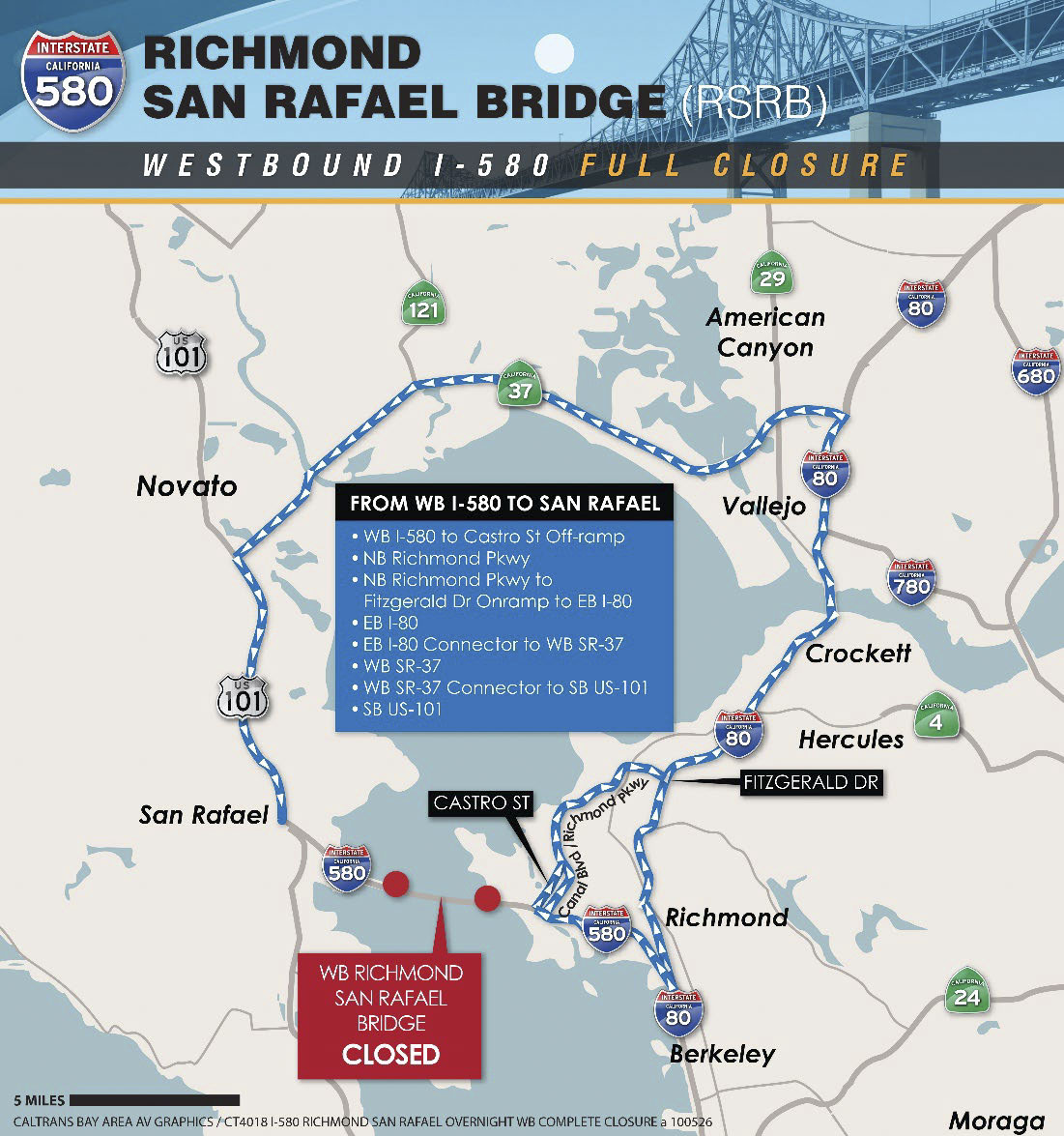
Caltrans recommends the following route for drivers in Richmond who want to go in the San Rafael direction:
- Take I-580 to the Castro Street off-ramp
- Transfer to Richmond Parkway northbound direction
- At the Fitzgerald Drive on-ramp, take the northbound I-80
- Stay on I-80 to cross the Carquinez Bridge
- After you cross the bridge, transfer to westbound SR-37
- Stay on SR-37 till you reach US-101 in Marin
- Transfer to southbound U-101 to reach San Rafael
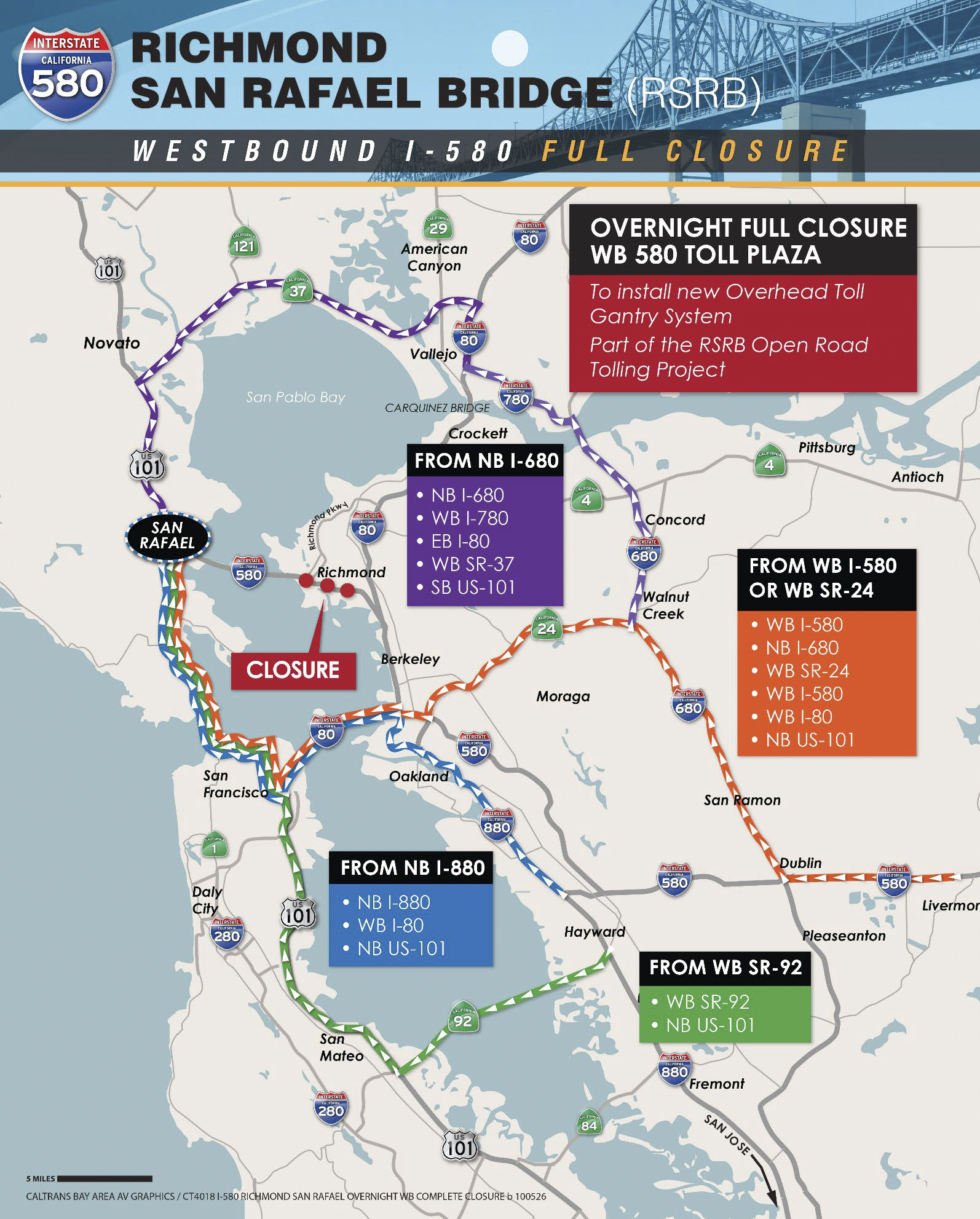
For those in Concord and Walnut Creek areas, Caltrans recommends you:
- Take northbound I-680 and cross the Benicia–Martinez Bridge
- Once in Solano County, switch to westbound I-780
- As you approach Vallejo, transfer to northbound I-80 and then SR-37
- Stay on SR-37 till you reach US-101 in Marin
- Transfer to northbound U-101 to reach San Rafael
Drivers in Oakland and Berkeley are recommended to cross the Bay Bridge, transfer to US-101 northbound through San Francisco and then cross the Golden Gate Bridge to reach Marin County.
The San Mateo-Hayward and Dumbarton bridges remain other options for East Bay drivers who can then transfer in San Mateo County to northbound US-101.
When will the Richmond-San Rafael Bridge be closed again?
Once crews have set up the gantry system, the next step will be to remove the toll booths themselves, said O’Farrell. “That’ll be a different closure. This is just to get the gantry system in place.”
The Richmond-San Rafael Bridge is the first of the Bay Area bridges that will adopt the First Open Road Tolling System. The region’s nine bridges already employ an electronic tolling system with overhead readers and high-speed cameras that can detect your vehicle’s FasTrak tag or license plate as you drive through. But the toll booths — once the place where you’d interact with another human for a fleeting moment — remain, despite being empty and unused.
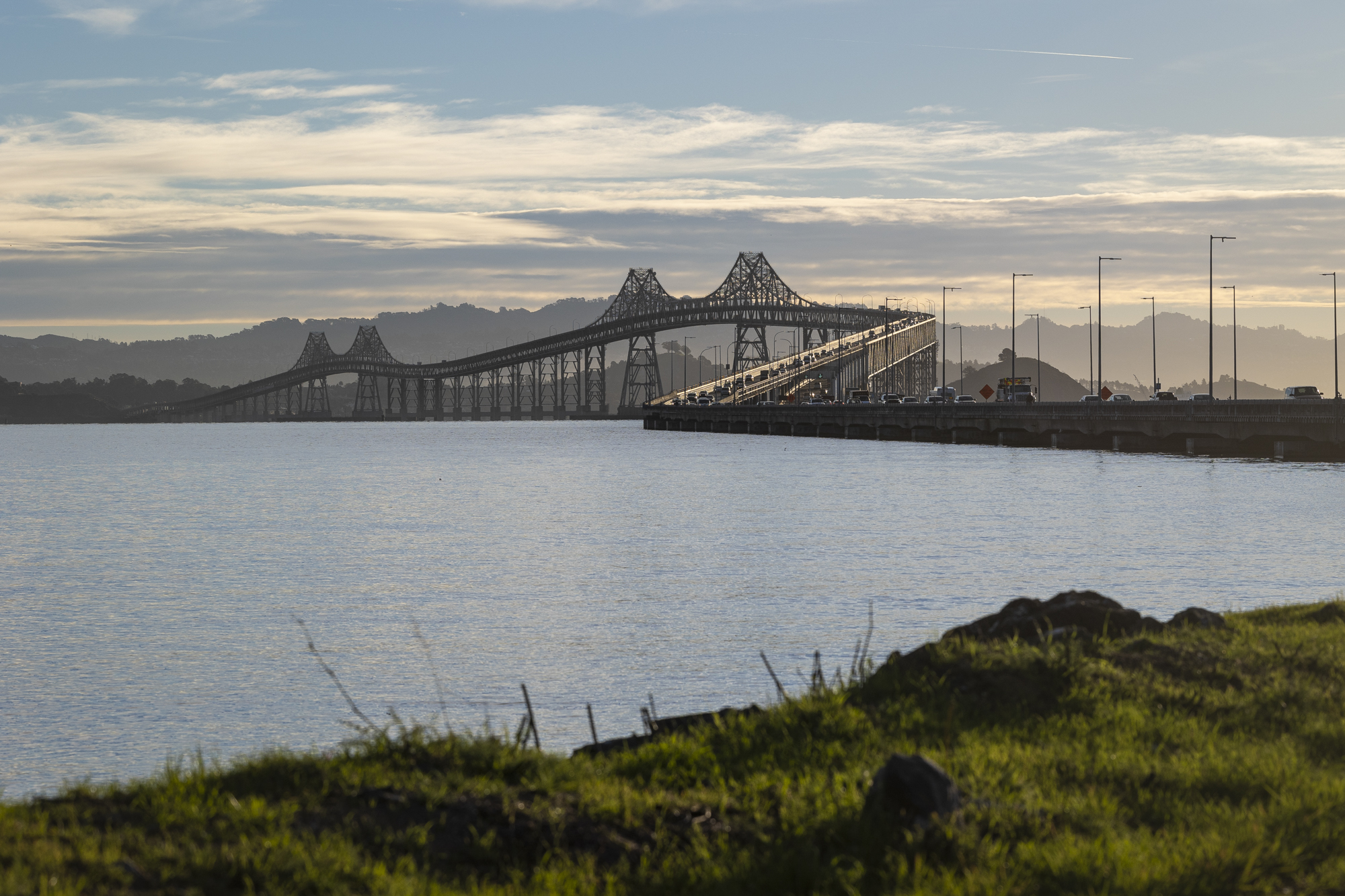
Caltrans currently plans to remove the toll booths in Spring 2027, but has yet to confirm specific dates. Once all work on the Richmond-San Rafael Bridge has wrapped up, transportation officials hope to begin similar operations on the northern toll bridges, including the Carquinez, Benicia-Martinez and Antioch bridges.
But don’t expect work to start on those bridges anytime soon. Caltrans currently estimates that it will start those projects five years after it has set up the new system with the Richmond-San Rafael Bridge.
KQED’s Sukey Lewis contributed to this report.