For the First Time, 16-17 Year Olds Voted in Albany
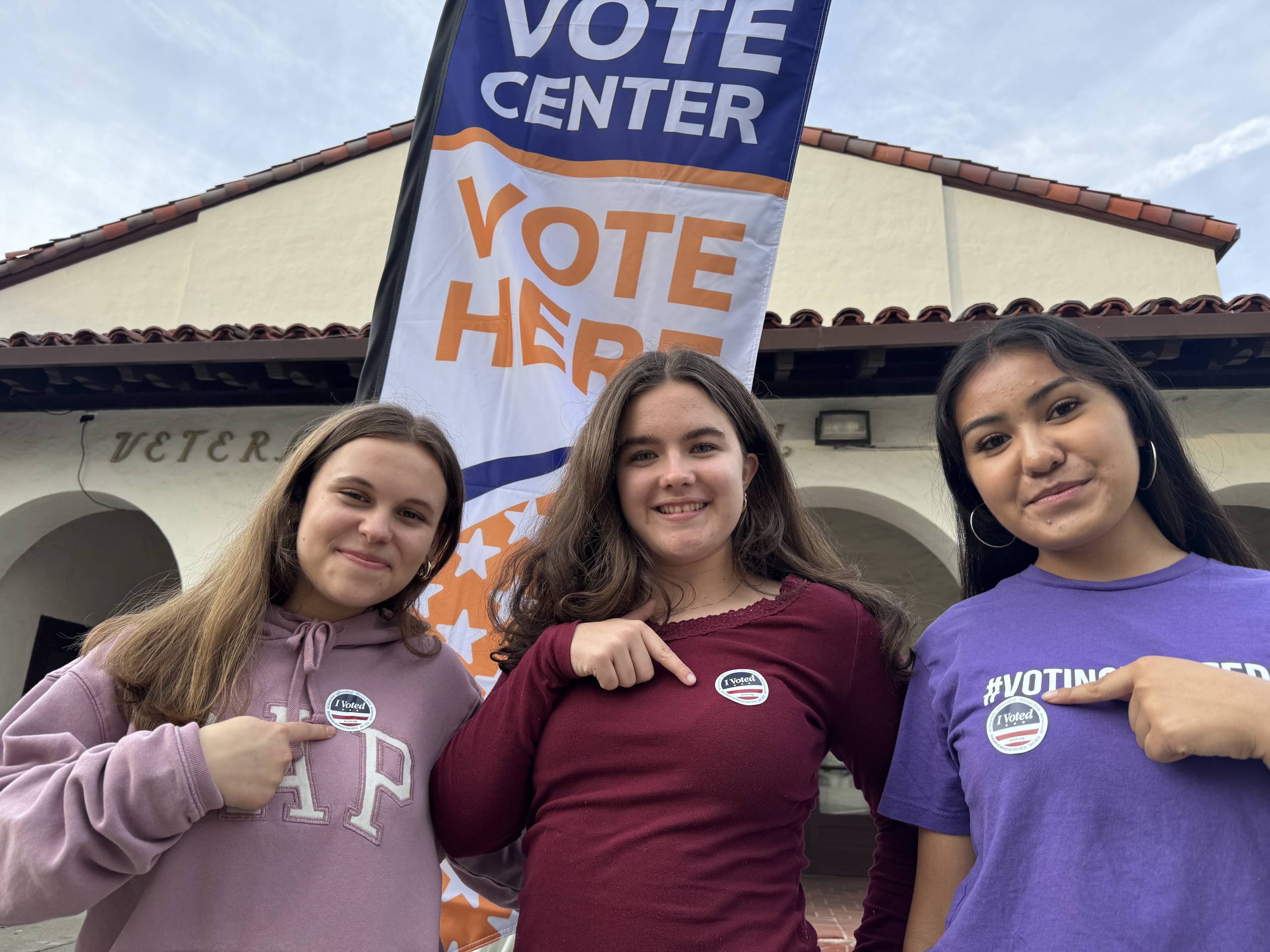
For most adults, the election buzz is long over. But for teenagers in a few East Bay cities, the life-long thrill of voting has just begun. In Albany, 16 and 17 year olds voted in public elections for the first time, following a growing movement to expand youth’s right to vote in local elections. Today, The Bay follows a group of trailblazing teenagers who rallied to get out the vote among their peers, and are now reflecting on their new role in democracy.
Episode Transcript
This transcript is computer-generated. While our team has reviewed it, there may be errors.
Ericka Cruz Guevarra: I’m Ericka Cruz Guevarra and welcome to The Bay, local news to keep you rooted. At this point, the buzz of the election has totally faded out for most people. But for teenagers in the East Bay, the lifelong thrill of voting has just begun.
Charlie Bollin: It represents being involved in being a part of something larger than just yourself.
Ericka Cruz Guevarra: In the small East Bay city of Albany, 16 and 17-year-olds got to vote for their local school board members for the first time this election. It’s part of a growing movement to expand young people’s right to vote in local races, which has already happened in Oakland and Berkeley.
Youth Voter: We’re at that age where we can understand what’s going on in the world and just voice our opinions about it, especially when it affects us.
Ericka Cruz Guevarra: So today, in a special episode of The Bay, I’m gonna hand the mic over to Pauline Bartolone, who’s gonna take us inside the world of first time youth voters in Albany.
Pauline Bartolone: So nationally, the elections were a big deal because they’re midterms, right? But locally, here in one town in the East Bay in Albany, they were also a big because for the first time, 16 and 17-year-olds in Albany could vote for their school board members. My name is Pauline Bartolone, and I’ve been helping to produce and edit The Bay. When I first heard about this, I thought I was mishearing it. I was like, wait, what? 16 and 17-year-olds can vote just like grownups? But this follows Measure V, which passed in Albany in 2024, which actually had enabled 16 and 17 year olds to vote for city council people and school board members, but was only partially implemented in Albany this year. So these 16 and 17 year old who voted last week, they only voted for school board members, not for city council members.
Charlie Bollin: I think a lot of the times when we told people, oh, you can vote now in the school board, they went, what? What are you talking about?
Pauline Bartolone: So we reached out to folks at Albany High School and the League of Women Voters and tried to find 16 and 17 year olds who are really passionate about youth voting.
Charlie Bollin: Measure V passed with 64.5% of the vote positive, so it was a very well-received measure, and I know because my brother was one of the people who voted to give me this opportunity.
Pauline Bartolone: One of the students that we followed is Charlie Bollin-Small, a senior at Albany High School. He’s also 17.
Charlie Bollin: And so I think to me it’s a little bit of a surreal moment to be in sort of this in-between where people haven’t quite realized and the people who have realized are just going and casting their votes.
Pauline Bartolone: He’s interesting because he’s a student trustee on the Albany Unified School District Board, so he’s really familiar with how school boards work and just really on the pulse of why the youth vote matters.
Charlie Bollin: For the students, I think these people have a stake in the way that their schools are run. They’re going to experience the impacts of choices made on curriculum, right? They’re gonna experience the impact of choices on school lunches, for example. I do need to fill out my ballot as well and return my ballot.
Pauline Bartolone: We followed a few different students kind of throughout the week and asked them to record themselves.
Charlie Bollin: It has been a long time coming. I’m absolutely destroying the outer envelope, but hopefully that’s okay…
Pauline Bartolone: Trying to capture this moment, not just on election day, but before and after about what the journey is like.
Charlie Bollin: Well, I haven’t filled in any of the bubbles yet, but I probably should do that now. I have a blue pen, and I just fill in whoever I like the most, down to whoever I liked the least.
Margaret Montag: Okay, so my parents just told me that I got my vote by mail ballot, so I’m opening that right now.
Pauline Bartolone: One of the students that we followed, her name is Margaret Montag, and she is actually president of the Youth Voting Club at Albany High School.
Margaret Montag: And what I’m most excited about, an ‘I Voted’ sticker. I have been waiting for one of these for 17 years, and I don’t know where I’m gonna put it yet, but I’m very, very excited.
Pauline Bartolone: And she was one of the most passionate students that we found on this issue.
Margaret Montag: There are so many young people here, and we do make up such a big and important part of this town that I think it only makes sense that we would have a say in our own futures and in our current lives and our own present, because that’s really what the school board, it’s intimate local politics, it’s what affects our day-to-day life.
Pauline Bartolone: One of the things I heard from students here was that because Albany is such a small city, the students chiming in is really having a direct impact on their school. There’s one high school in Albany.
Margaret Montag: I’m most interested in candidates that I think will prioritize fiscal responsibility and budget management, especially in the wake of changes surrounding Golden Gate fields. I think that’s obviously something that people are very, very, I don’t know if nervous, but apprehensive about because it’s going to be a big change to our budgets and it’s really important that we see people who are coming into our school board that know how to manage these changes.
Pauline Bartolone: If they’re casting a ballot for the school board trustee who cares more about budget or cares more teachers or is really concerned about what students think, that can have a direct impact on their everyday classroom experience.
Margaret Montag: Sometimes it can feel like some of my favorite programs and some of favorite, like the things that I’m interested in just don’t get as much priority. I do a lot of things that are like academic competition and especially in the social sciences department. It can sometimes feel like they’re less prioritized. And so I think that it’s really important that whoever comes in as a member of the school board kind of has that all encompassing view of what’s important to. Lots of different students.
Pauline Bartolone: So it was really a scramble to inform other teenagers about their new right to vote. They really only found out a few weeks in advance that they could vote for school board members in the midterm elections, but they seized the moment. Come with us, take a little field trip to go vote. They made Instagram videos.
Youth Voter: Meet us at the front entrance by the flagpole and we’ll take a short four-minute walk to the Veterans Building.
Pauline Bartolone: They organized an event where one day after school about a dozen students walked from Albany High School to Veterans Memorial Hall just to kind of be in unity with other teenagers who are voting for the first time or registering to vote for the first time.
Margaret Montag: Sia should be out in a second, so we’re just gonna go. We’re gonna wait over here, and we’re gonna have, I think, some other people come with us…
Pauline Bartolone: I was really impressed by the independence and the drive among these students to not only vote for themselves, but also to get the word out.
Youth Voter: And I’ve been texting a few people right now because they said they were going to come. And I don’t see them yet, but I think they’ll show up.
Pauline Bartolone: And they’ll walk together.
Margaret Montag: Yeah, I have to go…
Pauline Bartolone: I was like, is this the new suffragette movement? You know, is the new youth vote movement? They’re all kind of marching there to the Veterans Hall. But they were just happy, joyful, proud, excited, but also just kind of getting down to business.
Margaret Montag: And I’m really, really excited to have this be something that I’ve done. I’ve been looking forward to voting for a really long time and I know a lot of people have too because it feels like it’s a part of being in a community and it’s part of civic participation but it’s also a part growing up and it is a part becoming an adult and it really great that we get to have that step a little bit earlier because, you know, we’re not actually adults yet but we do care about our community and we care about what’s going on here and it great that get to influence over that.
Pauline Bartolone: These students had varying experiences with voting for the first time. Some were really proud.
Sophia Lara: I just voted for the first time. I feel like an adult now, like I just did like a big girl thing.
Pauline Bartolone: Also, there was a little bit of nostalgia and excitement. You know, a lot of teenagers, a lotta people have memories of voting with their parents when they’re a kid.
Margaret Montag: I remember coming here with my dad when he was like, when I was like maybe four to vote with him and then coming back when I went to elementary school and it’s really great that I get to vote here for the first time.
Pauline Bartolone: The students said they felt a weight on them, you know, that it was actually a little nerve-wracking to vote because maybe they wanted to do it right, they wanted to be informed, and in Albany, a small town, your vote really matters.
Charlie Bollin: It’s such an odd feeling. I couldn’t be more excited to be given this opportunity, more thankful, but also scared, because I know that now I have a stake in everything too, right? I’m a part of the future of what happens in Albany, at least for the next four years, I believe. Maybe two, don’t quote me on that. But I’m, my vote was a part of that future in some way. And so that’s a little nerve wracking and a little scary as well.
Pauline Bartolone: I would argue that school board elections are really important because you get to weigh in on kind of a microcosm of society. Some school systems are facing closures. School boards are talking about tech in classrooms, AI in education, transgender folks in sports. There’s just all these hot button social issues that run across there. Their desks.
Charlie Bollin: There is something very notable or special, which is that this is the only time I will ever be voting as a youth voter. And I feel so heartfelt that this opportunity even came around when it did. It felt like this really good alignment of stars.
Pauline Bartolone: You know, it was clear following this story and following these students over time that democracy is messy and it takes a long time to perfect it.
Margaret Montag: It’s been kind of frustrating that the rollout process has seemed a little bit slow and that we haven’t understood all of what was going on with the roll out, like the messaging and information about who could actually vote early was a little disrupted. But I will say that it’s just been really, really satisfying to see all of my friend’s hard work come to fruition finally, and also see that there are a lot of people that are excited about voting. Because sometimes it can feel like teenagers, especially at Albany High, just aren’t as invested in local politics and so I’ve honestly been really pleasantly surprised with how much people are turning out this year and demonstrating interest in the local elections.
Pauline Bartolone: Pretty soon, Charlie and Margaret, they’re gonna graduate this year, actually, and at the next election, it’s gonna be a new crop of young people, and it’s going to be up to them to get the word out, to have the same momentum and enthusiasm for youth voting that their peers had.
Charlie Bollin: I think, hopefully, there will be a similar sort of thought process from everyone else as well who are here in Albany but also in Berkeley and Oakland and everywhere else around the country where they do youth voting.
Pauline Bartolone: Maybe not everybody knew about their right to vote, but what I heard from more than one person was that the earlier you set up a voting habit, the more likely you are to continue throughout your life. So by voting early, you kind of set up life long voting habits.
Ericka Cruz Guevarra: That was Pauline Bartolone, who’s been filling in for us on the Bay the past couple of weeks. Thanks so much to the students that you heard from in this episode. Charlie Bollin-Small, Margaret Montag, Sophia Lara, and Caroline Snyder. This episode was cut down and edited by me. It was produced by Pauline Bartolone and producer Gabriela Glueck. If you liked this episode, do me a quick favor right now and leave us a review wherever you’re listening. Those reviews really help other people find our show. If you want to get in touch with us here at The Bay, you can send us an email at thebay.kqed.org. The Bay is a production of listener-supported KQED public media. You can help power our show by becoming a sustaining KQED member. Just go to donate.kqed.org/podcasts. Support for The Bay’s provided in part by the Osher Production Fund. Some members of the KQED podcast team, represented by the Screen Actors Guild, American Federation of Television and Radio Artists, San Francisco, Northern California Local. And I’m Ericka Cruz Guevarra, thanks so much for listening. Talk to you next time.
Some members of the KQED podcast team are represented by The Screen Actors Guild, American Federation of Television and Radio Artists, San Francisco-Northern California Local.