Brazil Votes for a New President on Sunday. How Bay Area Brazilians Are Following the Race

Less than two weeks before Americans head to the polls for the midterms, the second most-populous democracy in the Western Hemisphere has its own momentous election.
On Sunday, Brazil will choose its next president — the second round of voting in a closely fought race.
The final choice for more than 150 million voters — living not just in Brazil but abroad in places including the Bay Area — is between the country’s incumbent President Luiz Inácio Lula da Silva of the leftist Workers’ Party, known as Lula, and Sen. Flávio Bolsonaro, the son of convicted former far-right President Jair Bolsonaro.
“The choices are profoundly different,” said Harley Shaiken, professor emeritus at UC Berkeley, who previously led the university’s Center for Latin American Studies. Lula and Bolsonaro differ vastly in their policies around criminal justice, public spending and how to engage with the United States.
President Donald Trump has publicly praised Bolsonaro, after disagreements with Lula on trade, regulating U.S. tech companies and the criminal trial of Jair Bolsonaro.

Shaiken added that the two candidates also differ widely on how to preserve the Amazon rainforest, most of which is located in Brazil. “Whether there are environmental protections in the Amazon or not, that impacts climate change,” he said — meaning that the results of Brazil’s election “will also affect every American.”
More than 2 million Brazilian nationals live in the United States — many of them part of the Bay Area’s own Brazilian diaspora.
This community will have the chance to cast their vote on Sunday at Brazil’s San Francisco consulate, which could influence the final results in this neck-and-neck race. Keep reading for what’s at stake in this momentous election and how local voters are preparing.
What’s at stake in Brazil’s election?
On the campaign trail, Lula has championed major poverty reduction programs created in his previous administrations — two terms from 2003 to 2011, then his return to the presidency in 2023.
Lula’s government also claims that it has reduced deforestation in the Amazon by about 50% from 2022 levels. And earlier this month, Lula secured a policy win that electrified his voter base: His allies in Congress passed a constitutional amendment that ends the six-day work week in Brazil and guarantees the country’s workers two days off per week without reducing their salary.
However, polls still show the 80-year-old incumbent slightly behind Bolsonaro, who received 47% of votes during the first round on Oct. 4 — two percentage points ahead of Lula, but not a clear majority to secure the presidency.

Bolsonaro, the 45-year-old senator for Rio de Janeiro, champions a conservative platform similar to that of his father, prioritizing strong law enforcement, evangelical Christian values and the agricultural industry.
Some political analysts even refer to these principles as “BBB”: bullets, Bibles and beef.
Both candidates have accused the other of being linked to organized crime and enabling corruption in Brazil. In an onstage Oct. 18 debate, Bolsonaro claimed that 73% of prison inmates voted for Lula. In response, Lula said he wished that figure had instead been 100% — “including your father.” The elder Bolsonaro is currently serving a 27-year sentence for attempting a coup to overturn the 2022 electoral loss that ended his presidency.

As the campaign enters the final stretch, hundreds of thousands of Brazilians have filled the streets of the country’s major cities not just to rally behind their preferred candidate, but also to motivate those who didn’t turn out to vote during the first round. That particular population will be key to winning on Sunday, Shaiken said.
“The conventional wisdom tells us now that Flavio is going to win,” he said. “But through his entire political career, Lula has a tendency to come back swinging and win when he’s been written off.”
The Trump administration is closely following the election. Bolsonaro visited the White House earlier this year and has said that if he’s elected, Brazil will work more closely with the U.S. to extract its deposits of critical minerals.
A Bolsonaro victory would also represent another win in Latin America for a right-wing politician close to Trump — joining Javier Milei in Argentina, Abelardo de la Espriella in Colombia, José Antonio Kast in Chile and most recently, Keiko Fujimori in Peru.
“There’s no ambiguity about who the Trump administration favors,” Shaiken said. “Every major economy in the region would be run by a right-wing leader, with the exception of Mexico and Claudia Sheinbaum.”
How have Brazilians in the Bay Area mobilized?
Nicolas Monteiro has lived in San Francisco for a little over 20 years, thousands of miles away from his family in São Paulo. But showing up to the city’s Brazilian Consulate on the morning of Oct. 4 to cast his vote for Lula in the first round of Brazil’s election felt intensely emotional, he said.
“The only family I have here is my mom and my sibling,” said Monteiro, a union organizer in San Francisco. “Everyone else is in Brazil. What happens in Brazilian politics — both at the national and local level — directly impacts my whole family.”
Other states like Florida and Massachusetts have a significantly bigger Brazilian population. But California hosts the only two Brazilian consulates on the West Coast — in San Francisco and Los Angeles — and in the Oct. 4 election, was among the states with the highest participation rates.
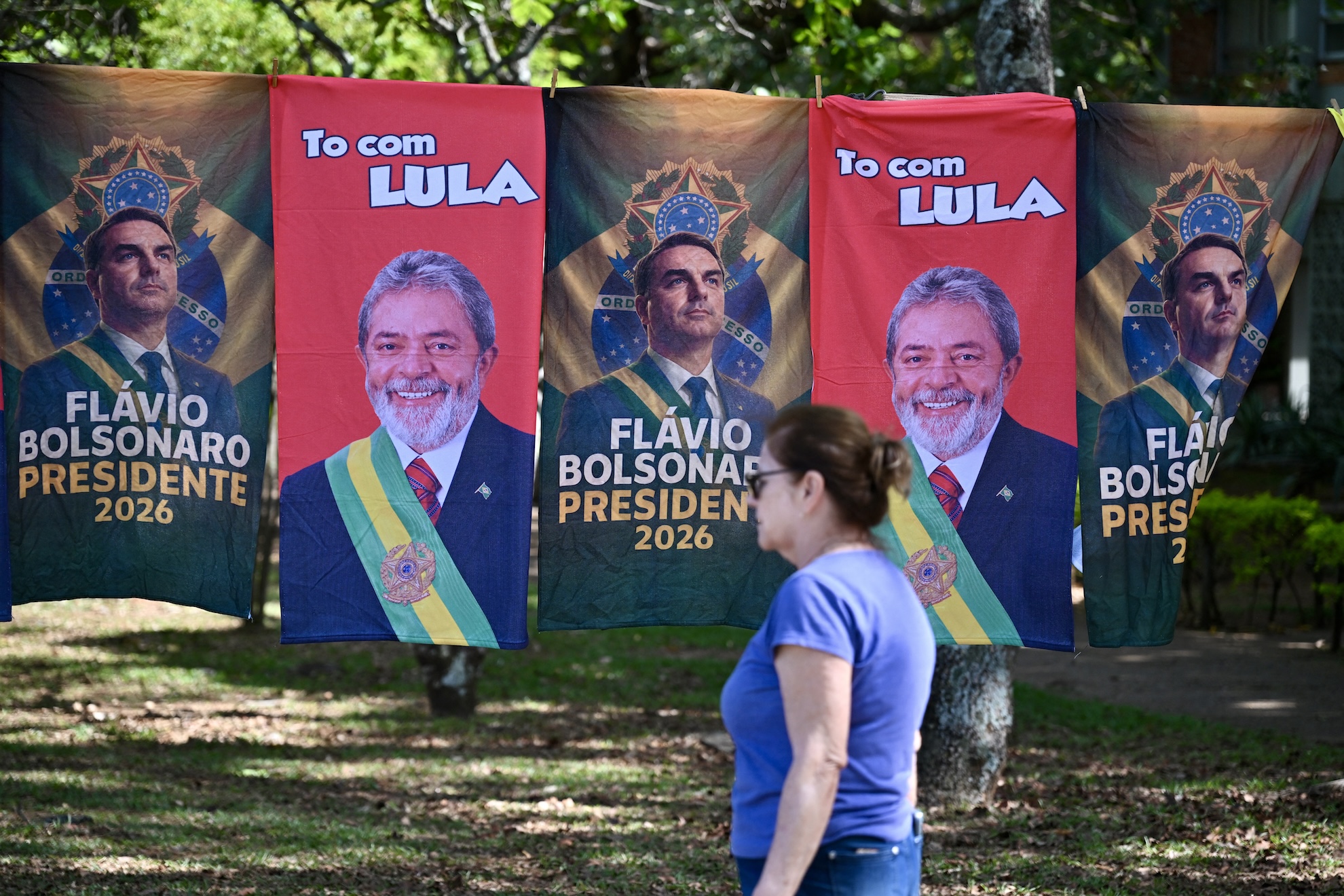
The community here also stands out for being one of the firmest bases of support for Lula in the U.S. The first-round results show that out of the roughly four thousand votes cast at the San Francisco consulate, 57% were for Lula — 20% more than Bolsonaro’s share of the vote, and the biggest margin in favor of the incumbent across all U.S.-based voters.
But San Francisco is an exception to the bigger trend. More than 60% of the roughly 75,000 votes cast nationwide on Oct. 4 were for Bolsonaro.
Lula supporters in the Bay Area have spent the past few weeks mobilizing voters across the region with the hope of helping the sitting president win. But there’s one challenge: Brazilian elections use electronic voting, which has to be done in person.
And for those living abroad, that requires traveling to the closest consulate, regardless of where they live now, to cast their vote.
“When you are voting, that part is easy,” said Allanys Godke, a student living in Redwood City who grew up near the Brazilian port city of Santos. “But you have to make it in person, no matter how far you are from a consulate.”
Godke and her friend Bruna Campelo manage an Instagram account called Thoque Talk, where they promote cultural and social events for and by the Bay Area’s Brazilian community. But they’ve also used their platform to share information on the election and how Brazilians abroad can participate.
On Oct. 4, for example, Godke and Campelo shared their experience voting at the consulate step-by-step:
“Our goal is to show people that they can have a normal life living abroad,” Campelo said —including retaining a voice in critical elections back home.
Getting involved in the election also helps them meet other Brazilians in the Bay Area, Godke said. “Soon you’re building a community,” she said. “It’s very organic.”
Other Lula supporters in the region are bringing attention to Silicon Valley’s role in the election. Bruno Matos, an interpreter originally from Bahia now living in San Francisco, joined a protest on Wednesday outside the headquarters of tech giant Meta in Menlo Park. He said he’s frustrated with what he believes are attempts by U.S. tech companies to favor Bolsonaro.
In September, Meta temporarily blocked the Lula campaign from posting campaign ads on Facebook. Brazilian journalists soon after reported that internal messaging among Meta employees showed that restrictions on content from Lula favored Bolsonaro.
“We care about our democracy and Big Tech should stay out of it,” Matos said. Meta has publicly stated that “allegations that we are favoring or interfering on behalf of any candidate or political group are false and unfounded.”
The company’s own independent oversight board, however, criticized how Meta moderates content during global elections, pointing to an “overenforcement that suppresses political speech and underenforcement that undermines electoral integrity.”
Can I still vote in Brazil’s Oct. 25 second-round presidential vote?
According to the Ministry of Foreign Relations, eligible Brazilian voters had to complete their online voter registration with the Superior Electoral Court (or TSE in Portuguese) by May 6. This deadline also applies to updating your chosen voting center.
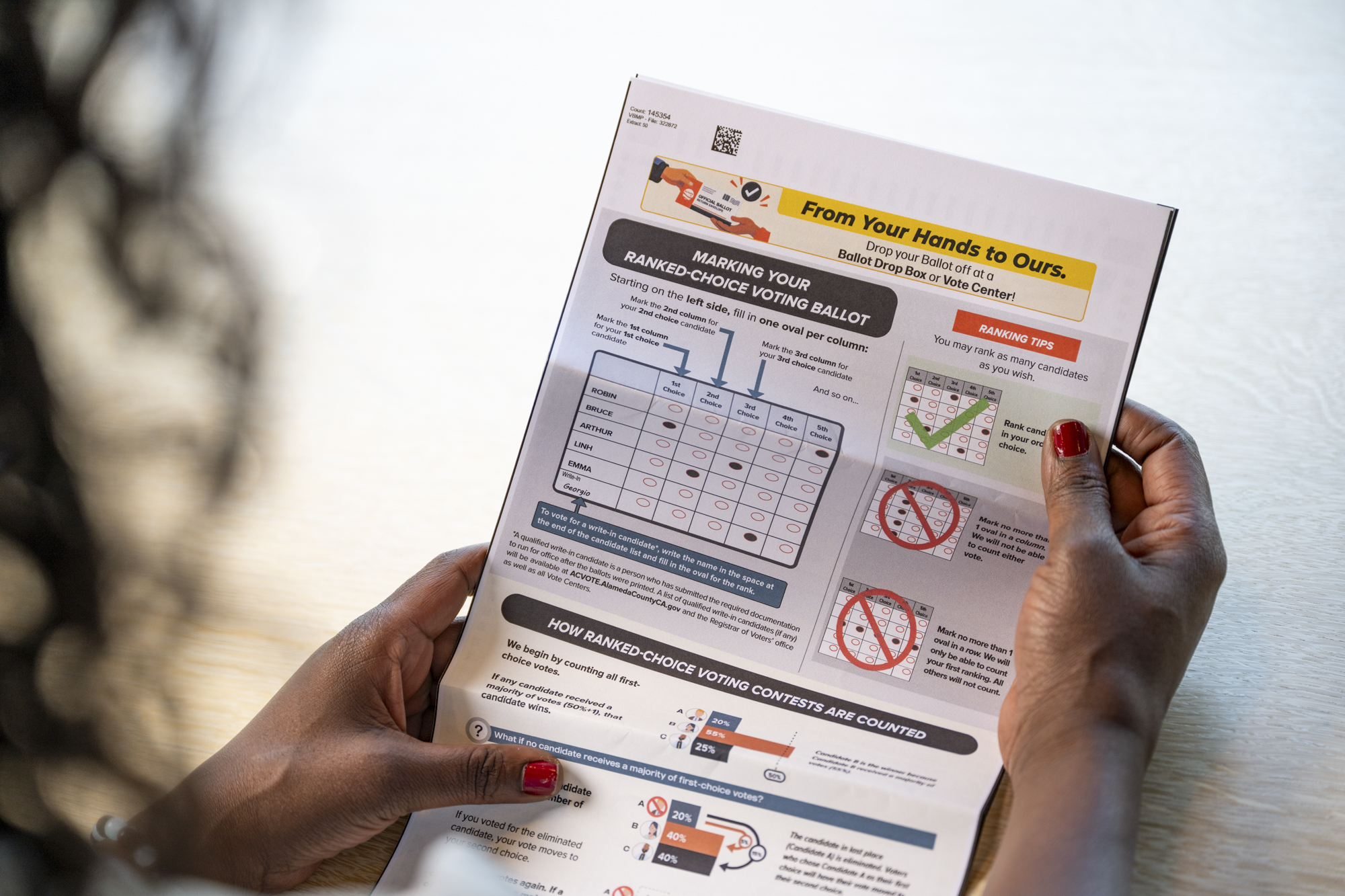
Brazilians abroad can choose to vote at whichever consulate is closest to them. On Oct. 25, you can only vote at the location you have previously chosen — and only on that date.
If you did not register before May 6, you will not be able to vote in this election.
And if you are registered, but didn’t update your voter profile to include a voting center abroad, you won’t be able to vote at a consulate on Sunday.
And if you are registered and your voter profile does include a voting center abroad, Brazilian law requires you to vote in the presidential election or potentially face fines.
On its website, the Ministry of Foreign Relations points out that fees are processed on a TSE portal, not at a consulate.