50 Years on, Anne Rice’s ‘Interview With the Vampire’ Remains Immortal in San Francisco
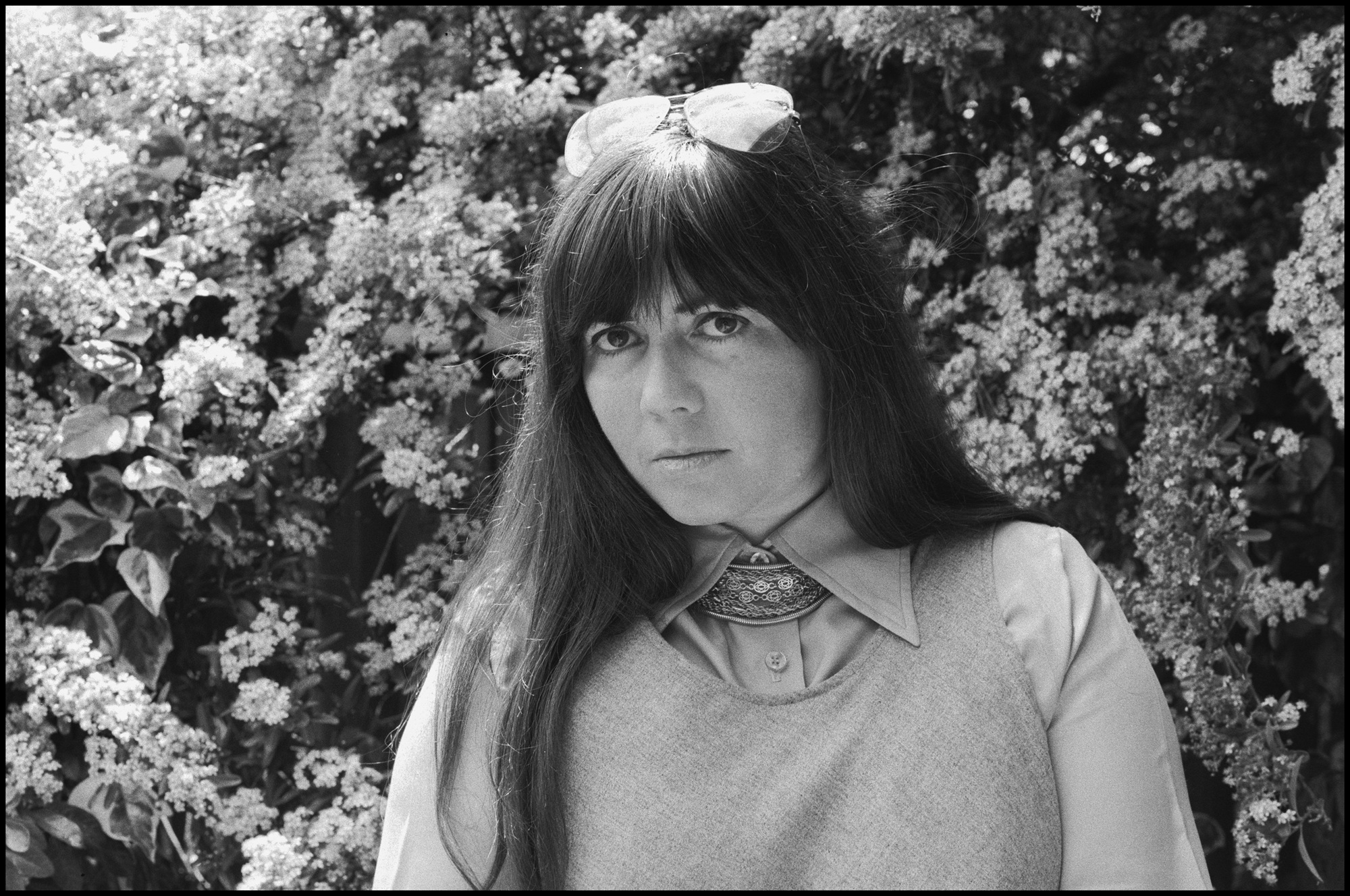
It took a few years for Anne Rice and her family to realize that, after a shaky start, her 1976 debut novel “Interview with the Vampire” was striking a chord.
But it makes sense that it happened in San Francisco, a city she had called home for years — when several young, elegant men waltzed into one of her book signings.
As her son, the author Christopher Rice, told KQED, the men were decked in 18th-century waistcoats, their long hair tied off in a ribbon. They were, in short, dressed as the main characters of Rice’s said shaky debut novel: Lestat de Lioncourt and Louis de Pointe du Lac.
As the men posed for pictures with a flustered Rice, the author saw personally, for the first time, that the novel Christopher said she’d regarded as “this black spot on her career” was finally finding its home: with the queer community.
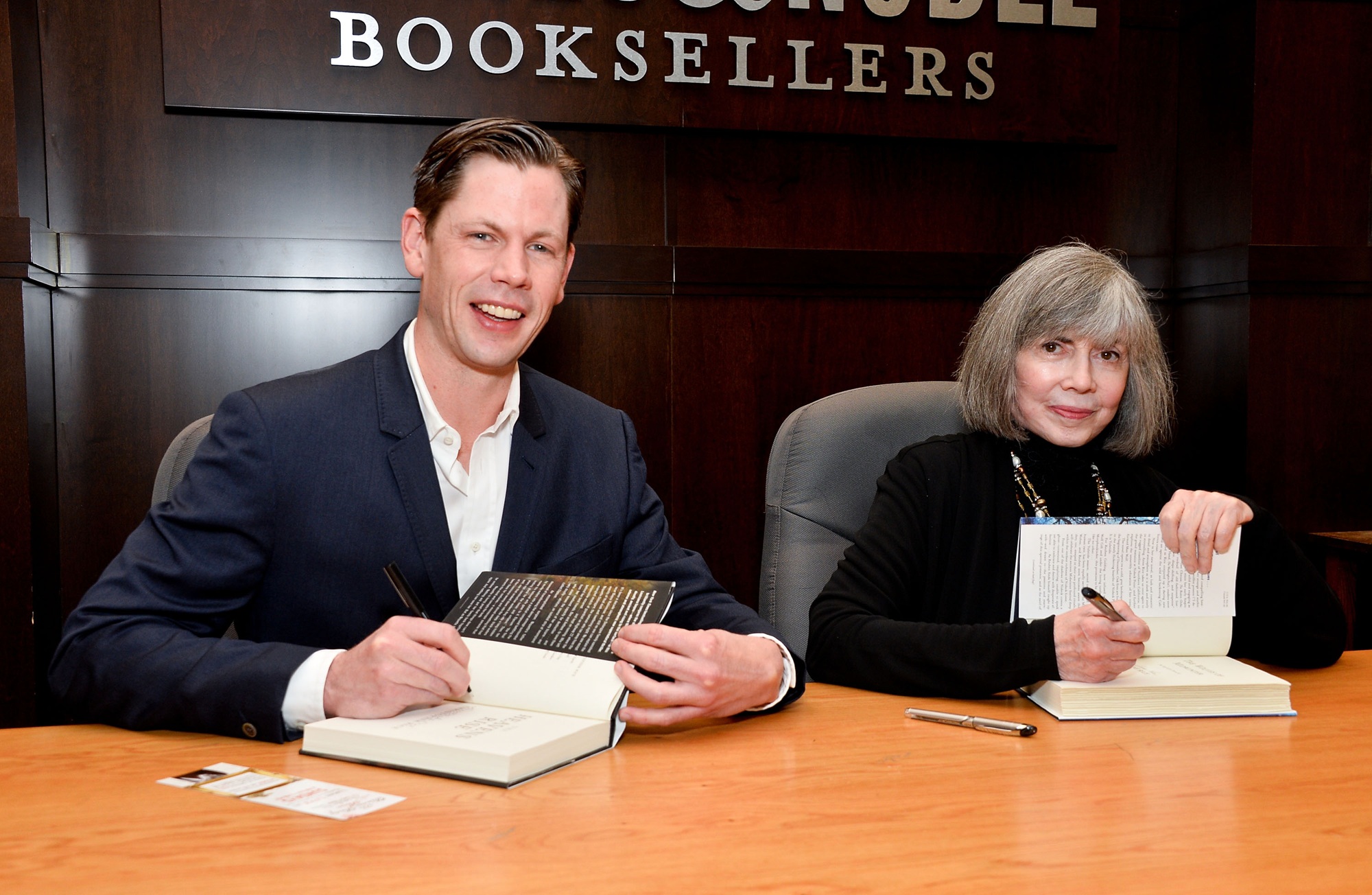
“Over time this underground audience discovered the book, discovered how transgressive it was, how rule-breaking it was,” Christopher said. “And all of that really did happen in San Francisco.”
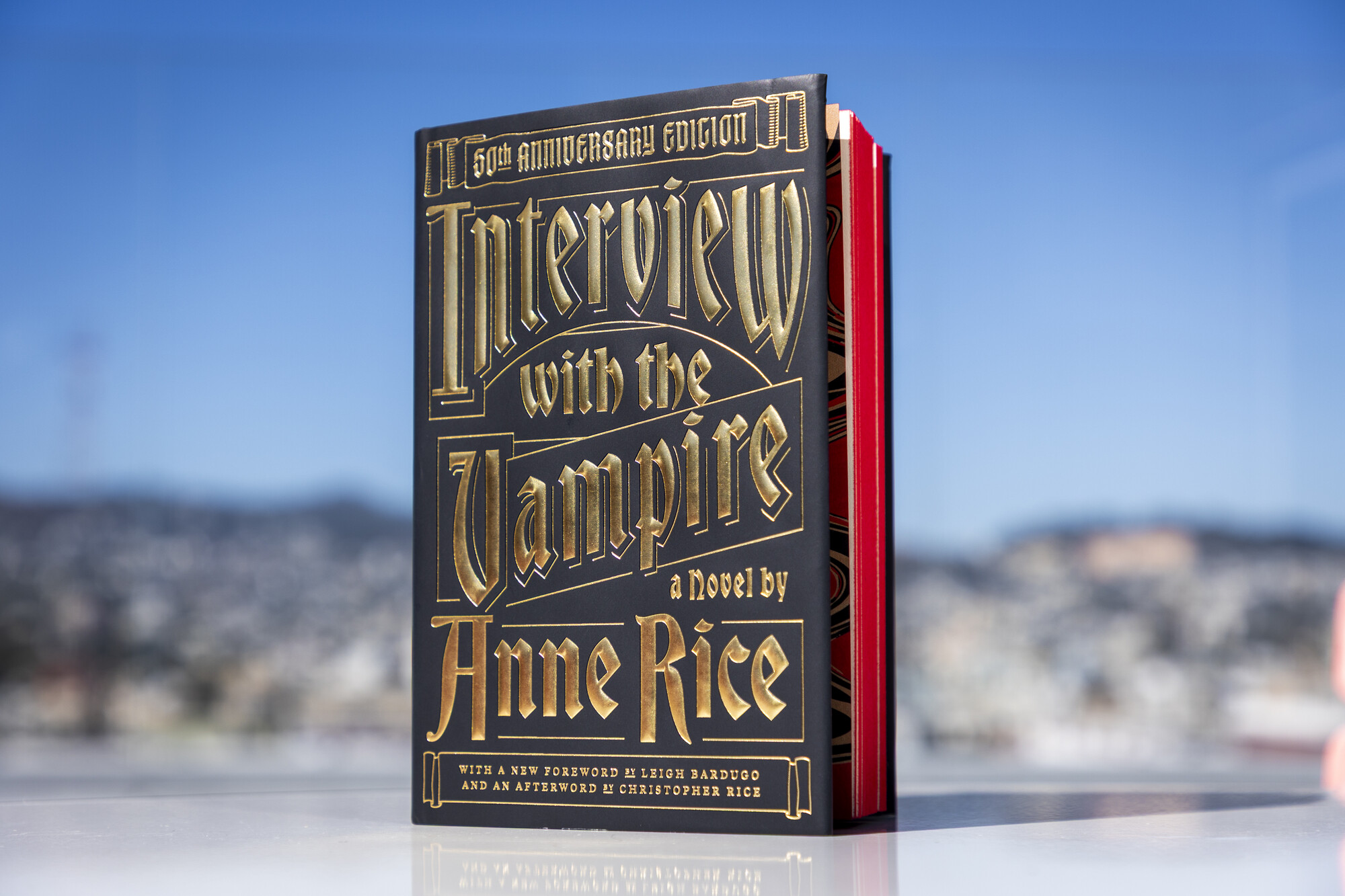
“Interview with the Vampire” marks its 50th anniversary this year, and Christopher details this very anecdote in his afterword to a new semicentennial reissue of the novel by Penguin Random House. (His behind-the-scenes nugget that didn’t make the final print edition: how Rice and his aunt “just went bananas over how attractive these guys were.”)
The novel chronicles the tumultuous life and relationship between Louis and the man who turned both him and their companion Claudia into vampires: Lestat. And despite initial mixed reviews, the book and its subsequent sequels making up the “Vampire Chronicles” series have, over the decades, become a bona fide gothic classic — further popularizing the idea of the vampire as a tortured protagonist.
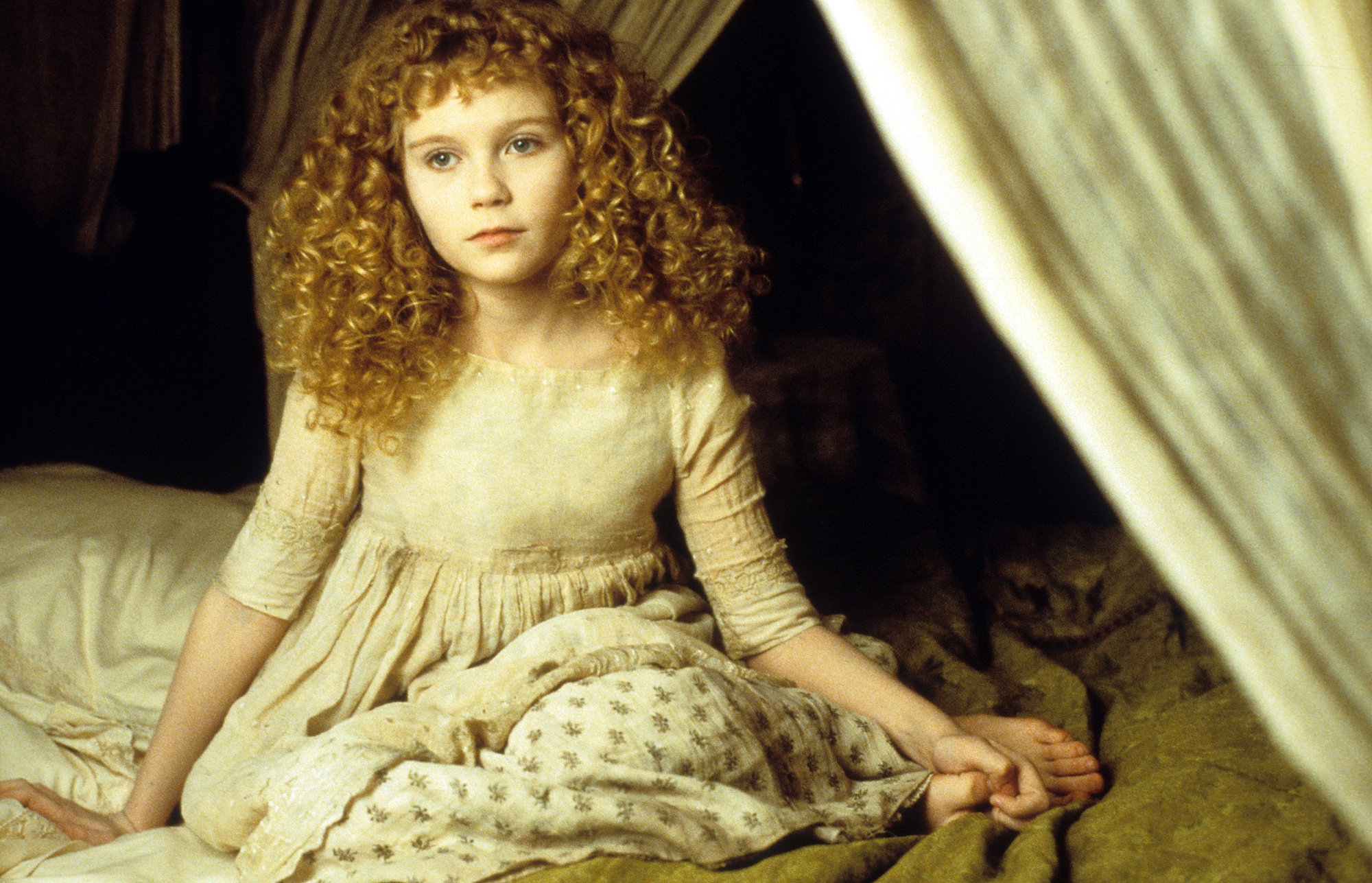
Rice also wrote the screenplay for the 1994 film adaptation of “Interview With the Vampire” starring Brad Pitt, a young Kirsten Dunst and, most notoriously, Tom Cruise. Then, in the 2020s, the series was introduced to a new generation of fans through the television show adaptation on AMC.
Despite the fact that the story’s pivotal framing device — the titular interview between Louis and a young journalist — takes place in a San Francisco Victorian on Divisadero Street, New Orleans has understandably pulled rank as the “home” of “Interview with the Vampire.” Not only is the Louisiana city a recurring setting in the books, but it’s also where Rice herself was born and raised and where, after finally finding her success as a writer, she lived in a gorgeous historic home for over a decade.
It’s also where she rests in a family mausoleum at Metairie Cemetery, where her memorial, attended by over a thousand people, was held. And New Orleans has now become a central gathering point for fervent Rice fans, where they regularly hold a Vampire’s Ball.
But according to Christopher, his mother’s most famous series of novels “don’t just have a San Francisco connection.”
“They have a San Francisco foundation.”
‘Rebellion against that darkness’
Rice first lived here as a University of San Francisco student, and moved back to the city in the early 60s with Stan, the high-school sweetheart who’d become her husband. They were both in their early twenties, and they were in the midst of the Beat Generation and the Summer of Love.
But even though the Rices were more observers than participants — “in the middle of Haight-Ashbury in the 60s, I was typing away while everybody around me was dropping acid and smoking grass,” Rice told The New York Times in 1988 — the ethos of the city is firmly reflected in the “Interview With the Vampire” series.
“I like to say the young men who probably inspired Louis and Lestat were people she saw on the streets of the Haight-Ashbury or the Castro District,” Christopher said.
The hints of the idea of “letting your freak flag fly,” Christopher said, are there from the first book. But it really crescendos in the second book of the “Vampire Chronicles” series, 1985’s “The Vampire Lestat,” in which the raucous Lestat holds an earth-shattering rock concert (for vampires!) in none other than Daly City’s own Cow Palace.
In contrast to the Bay Area, New Orleans is Rice’s setting for “the old vampire world,” Christopher said. But “when on the contemporary stage, [Lestat] says, ‘Vampires should come out, come out wherever you are, and be counted among all the great diversity of the human world.’”
“That’s the city by the Bay, baby,” he said.
The Rice family lived around the Bay Area for over two decades. “In California, almost all of us have an acquired lifestyle: We came here to have it,” she said in a 2014 interview with The California Sunday Magazine. “To be a writer, to be a bohemian, to put our art and our liberal ideas before, say, pleasing our cousins.”
After giving birth to Christopher in Berkeley, the Rices moved back across the bay into a Castro District home at 3887 17th Street — a place Christopher said he “loved growing up.”
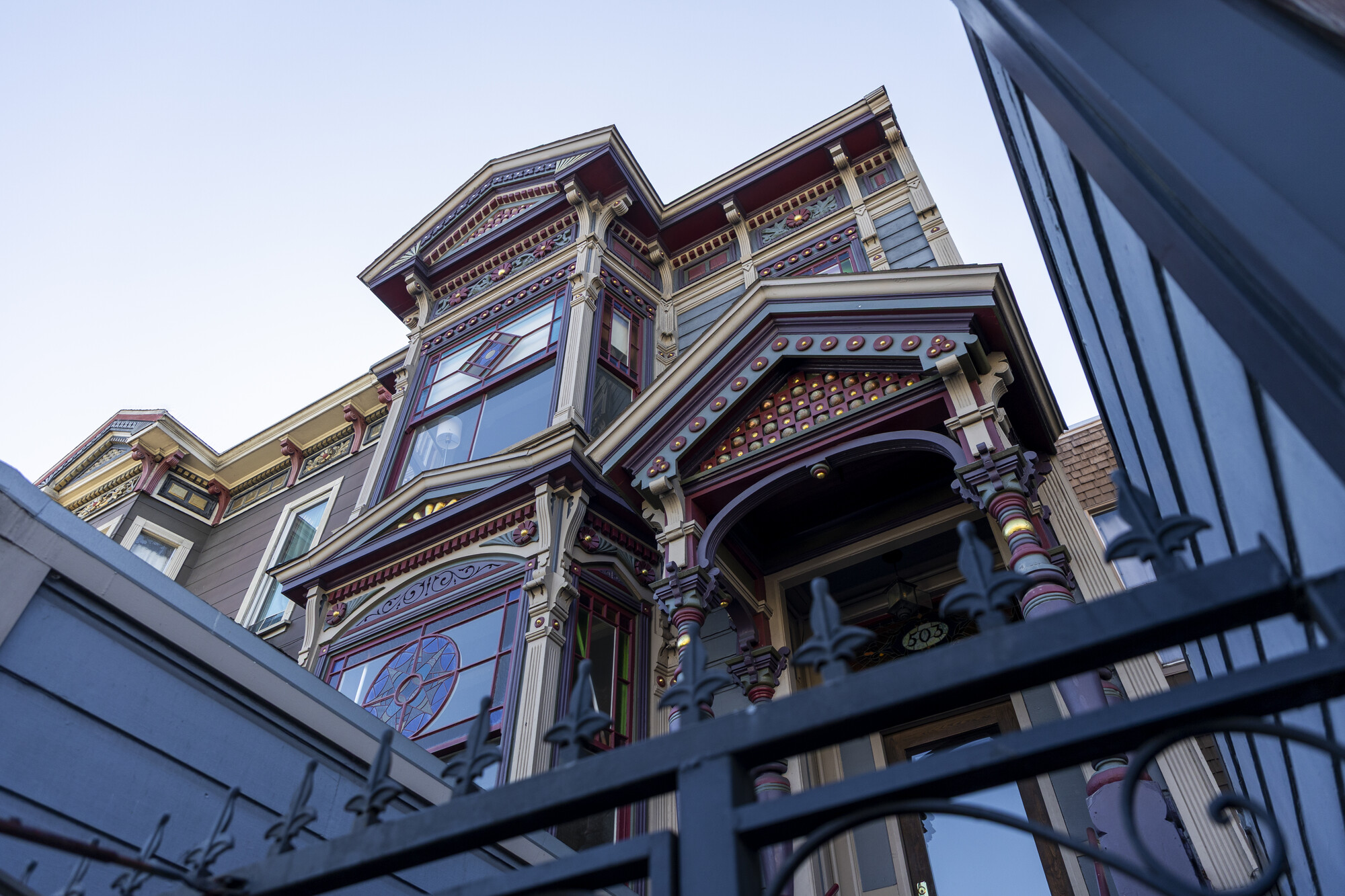
A key setting from “Interview With the Vampire” is just a 30-minute walk from the house: The Victorian home on 503 Divisadero Street, where Rice set the titular interview. Rice said in 2011 that she came across the house — which is now painted a deep, dark blue — when her professor husband was being interviewed for a radio show nearby.
“That’s where I got the idea of a boy-interviewer,” she said. “Little things like that spark short stories, novels.”
But tragedy in the city was in full force: In the Castro, Christopher said, the Rice family was “living at ground zero” during the HIV/AIDS crisis. Neighbors were dying. There were lines out of pharmacies, he said, and shuttered storefronts with signs reading “Closed due to illness.”
“I do believe that, in some part, the rock star energy of The Vampire Lestat was about a rebellion against that darkness,” Christopher said. “It was this attempt to have queerness rise up and put on a leather jacket and sing to the masses, to push back all the death.”
The family was still suffering with a personal loss of their own, too. In 1972, the couple’s daughter Michele had died of leukemia at the age of 5 — before Christopher was born.
Christopher said he learned about Michele by accident in school. Over the course of his life, he got to learn about his sister from his parents, about her “otherworldly endurance” and her “zen brilliance.”
“I don’t think it was easy for them to be living at the ground zero of another epidemic that was about the blood,” Christopher said. “It was incredibly influential on [Rice].”
In the years after Michele’s death, Rice returned to an old short story and expanded it in just five weeks into what became “Interview with the Vampire,” written in her North Berkeley garden apartment. This version further developed the character of a surrogate daughter for Lestat and Louis, Claudia — turned into a vampire at age five and forever a child.
”I never noticed when I was writing,” Rice said in The New York Times interview. ”It may be hard to believe, but I didn’t connect Claudia with my daughter at the time.”
‘The vampire is an outsider’
“Interview with the Vampire” represented a “paradigm shift in how we look at monsters in ourselves,” said author Eric Shaw Quinn, Rice’s friend who helps oversee the estate with Christopher. “And our own persecution of ourselves, and of monsters in our culture.
“I was there at the beginning of Interview with a Vampire, and it was such an inspirational moment in my life,” Quinn said. “We’re all inspired by the San Francisco philosophy of it — or the Anne philosophy of it.
“Being you is exactly what you should do; you are exactly as you should be,” he said.
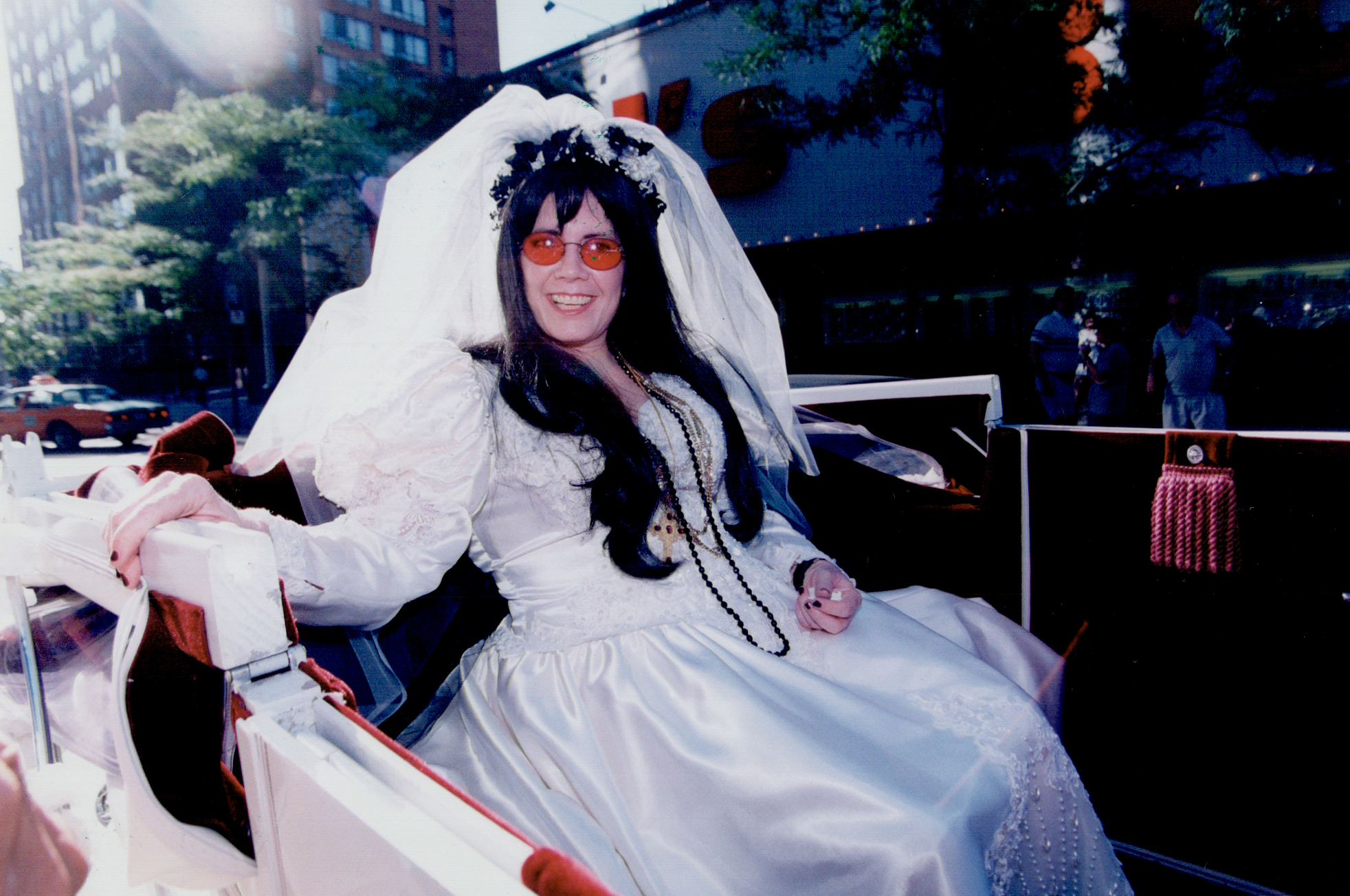
“The vampire is an outsider,” Rice herself told the Daily Beast in 2011. “He’s the perfect metaphor for those things.” And Rice’s exploration of the outsider figure has resonated with its queer fanbase over half a century.
While the book may have initially been received as a gay allegory, it is now widely understood to be “a full-on queer narrative,” Christopher said.
The audience that made the “Vampire Chronicles” into what Christopher called “underground hits” was “largely made up of queer people,” he said. “They were the people who saw the passionate, romantic connection between Louis and Lestat and their determination to raise a child.”
This narrative heavily imprinted on many fans at an early age. Like Grey Starr of Oakland, who first encountered Rice’s work after watching the 1994 film adaptation when she was young.
“I’ve always been queer, so I could always suss that out as a kid,” Starr said. “I read the books when I was way too young … I used to go to school wearing a shirt that said, ‘Red Beans, Anne Rice.’”
“The sensuality of that book really got me at a young age, because this was right around the time that I’m hitting puberty, I’m discovering kind of my own sexuality,” San Francisco drag performer Piranha Psychotronica said.
As a kid visiting the city, Psychotronica remembered being excited to pass Castro Street, because the “Vampire Chronicles” series featured a vampire bar — called Dracula’s Daughter — in the area. “Not realizing really at that time that it’s also where all the gays were and where I eventually would be,” she said with a laugh.
The series also explored gender identity. Rice herself told an interviewer in a 2016 interview that it was “very hard for me to remember that I have a gender.”
“When I grew up in the 90s, when you’d see trans folks in media, oftentimes it would be trashy talk shows where they were the butt of the joke, and described as mentally ill,” said Psychotronica, who is a trans woman. But the language of gender in Rice’s books rang true to her.
“That was one of the biggest things that made me a lifelong fan of her writing,” she said. “Because it was the first door that I felt opened to me to any kind of self-discovery.”
For many Bay Area fans, the series’ inherent queerness has made a huge impact not just on their lives, but their art too. Psychotronica credits what she called the “sensuality and decadence” of Rice’s writing as one of the major reasons she began performing onstage. “I want to channel rock star Lestat when I’m on stage,” she said.
Psychotronica learned of the series through her mother, who she described as an Anne Rice superfan — similar to Starr’s mother, a “cool goth mom” who is part of her band, Pretty Frankenstein. In fact, that intergenerational nature of Rice’s fanbase is a recurring theme among Bay Area fans and even reminiscent of the writer’s bond with her son Christopher as he became an author in his own right. (Check out this delightful 2013 KQED interview that asks the pair which of their gay fanbases would win in a fight.)
“It’s kind of surreal that this media has essentially shaped our lives in such an amazing way,” Starr said.
‘A home to androgynous pansexual ancient vampires’
Psychotronica is just one of the acts in Starr’s forthcoming “Interview with the Vampire”-themed drag show in Oakland, right before Halloween. (Starr hosted past themed drag nights as Lumpia Anne Rice.)
Another of the performers slated for that night is Sacramento’s Alexa Gerrity — a cosplaying burlesque act who’ll be performing as Louis.
Gerrity counts herself as a newer fan of the “Vampire Chronicles”’ thanks to her best friend Desrea Sabo — a Rice fan who described cutting their own bangs as a kid “because I thought they would grow back like Claudia’s” — introducing them to the AMC television series.
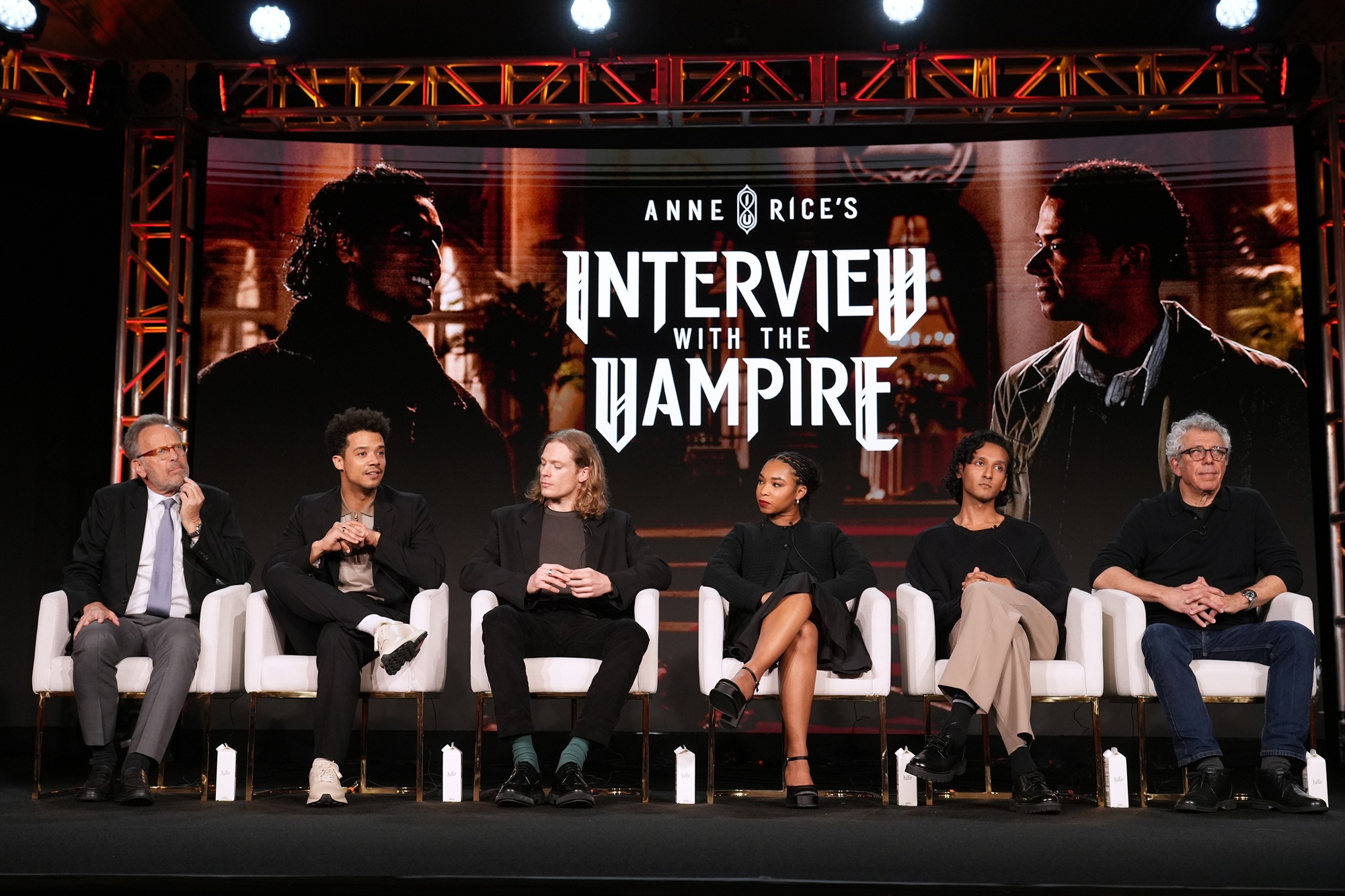
What inspired Gerrity about the series was a major change it makes from the books in the casting of Louis and Claudia, portrayed variously by Black actors Jacob Anderson, Delainey Hayles and Bailey Bass. Along with a shift in time period and a more overt portrayal of sexuality, the show reimagined Louis not as the white plantation owner of the books but as a Black brothel owner in 1900s New Orleans.
“As a Black woman, it just really hit a lot harder … him coming to terms with who he is as a person,” she said.
“The queer experience, trying to see how he feels coming to terms with his sexuality … those are things that I can relate to growing up as a Black woman who grew up in the South as well and coming out to my family, to my friends,” Gerrity said.
When it comes to Black characters in the gothic romance genre, “sometimes it’s looked at as weird, or we’re excluded from those spaces,” she said. “So to see us be embraced so wholly, and in these beautiful vibrant colors and scenes and imagery — it was just incredible.”
Now, Gerrity and Sabo regularly cosplay together as Louis and Lestat at fan conventions — not unlike those readers who entered Rice’s San Francisco book signing all those decades ago. “It’s beautiful to be able to cosplay such a dynamic duo,” Garrity said. “Being able to be covered in blood with my best friend — I’m never going to be upset.”
For Sabo, who was born and raised in San Francisco, Rice’s work has only strengthened their connection to their home. “As a kid who has always — and still hopes — to be turned into a vampire someday, being able to walk down the street and see those locations, it made the fantasy so much more deep and real for me,” Sabo said.
It’s a sentiment echoed by Psychotronica — a way of seeing this city, with its rolling fog and Victorian houses looming over its steep streets, in all its gothic splendor. “I can totally see how San Francisco would be such an attractive home to these androgynous pansexual ancient vampires,” Psychotronica said.
“I think [Rice] loving it so much was one of the things that really made me fall in love with the city. Now I can’t imagine living anywhere else,” she said.
Vampire-themed gatherings and events in the Bay Area in October
To mark “Interview with the Vampire”’s 50th anniversary, we’ve compiled a list of vampiric affairs across the Bay Area, including elegant masquerades, fashion shows, raves and drag.
Earth Gala’s Vampire Ball at Verdi Club
On Friday, Oct. 9, at the Verdi Club in San Francisco, there will be a vampire ball and fashion walkway centered on “eco-couture,” where the winner can receive a $1000 cash prize. The gala is serving as a fundraiser for the Amazon rainforest.
General admission costs around $108, but late entry after 10 p.m. is around $40.
CAVE RAVE: CLAWZ – VAMPIRE RAVE at The Foundry
This rave on Friday, Oct. 9 at The Foundry in San Francisco starts at 10 p.m. Tickets can be found online and are around $20.
International Vampire Fest at The Balboa Theater
On Saturday, Oct. 17 at The Balboa Theater in San Francisco, there’ll be a series of vampiric movies playing all day long from 11:30 a.m. to 10:30 p.m. Individual tickets are around $15. A full day pass is $30.
Particularly exciting for this reporter: two of her favorite movies of all time are part of the international lineup: Sweden’s “Let the Right One In” (2008) and Iran’s “A Girl Walks Home Alone at Night” (2014).
And if you aren’t able to make it that day, the following day in Richmond there’s a free screening of “Fright Night”(1985) in 16 mm at The Planetarium venue.
Vampire’s Ball at SP2 Communal Bar
On Saturday, Oct. 17 at SP2 Communal Bar in San José, there’s a vampire’s ball with a best-dressed contest. It is free to enter before 10:30 p.m. and $12.51 afterward.
Théâtre des Vampires Drag Show at The Thee Stork Club
On Thursday, Oct. 29 at Thee Stork Club in Oakland, there’s an “Interview with the Vampire”-themed drag show featuring music from the television show’s third season, “The Vampire Lestat,” by Pretty Frankenstein. Tickets are available online for $12 and at the door for $15.
Helena’s Masquerade at QBar
Not quite vampire-themed but very important for any emo kid, the broken, the beaten and the damned: On Thursday, Oct. 29 at San Francisco’s QBar, you’ll find a Hot Topic-filled dance night of My Chemical Romance, Evanescence and Paramore. Tickets range from around $7 to $14.
The Halloween Vampire Tour of San Francisco
On Saturday, Oct. 31 in San Francisco, a six-stop tour with Mina Harker throughout the Nob Hill Neighborhood. Tickets are around $40.
“Dracula Kiss” at Coqueta
On Oct. 31 at Coqueta in San Francisco, there’s an immersive production of the play “Dracula Kiss.” Tickets are $44.52.
The Black Cat Hotel at The Palace Theater
This immersive theatrical experience runs through Halloween at the Palace Theater in San Francisco. Reservations start at $39. (Keep in mind, this is not a real hotel!)
“Dracula” at the Mountain View Center for the Performing Arts
Throughout October, the Mountain View Center for the Performing Arts presents a stage production of Dracula. Tickets start around $44.
Le Bal Des Vampires at Alameda Elks Lodge
On Saturday, Nov. 7 at the Alameda Elks Lodge, there’s a vampire affair in an elegant ballroom featuring music throughout the centuries: 18th-century Baroque contredanses, 19th-century Victorian rotary and Viennese waltzes, 20th-century tangos, blues and rock and roll. Tickets are around $50.