Newsom Signs Slate of AI Workplace Laws, Barring ‘Robo Bosses’ and Surveillance
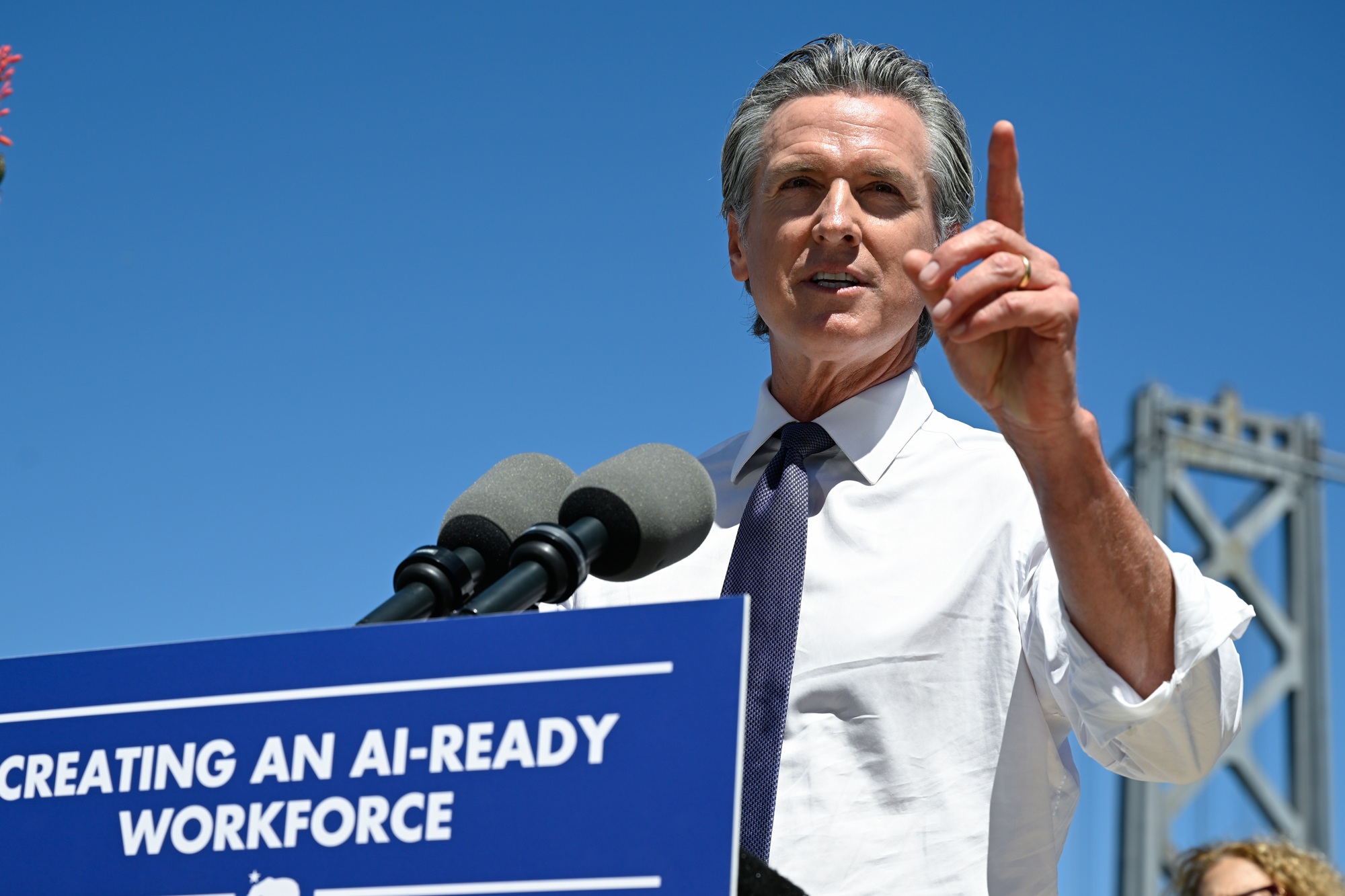
Gov. Gavin Newsom signed a bevy of laws on Wednesday aimed at protecting California workers from the threats of artificial intelligence in the workplace, guarding against automated job loss and surveillance.
The laws prohibit employers from using automated systems to fire or discipline employees — so-called “robo bosses” — as well as from monitoring employees in restrooms. They also restrict the use of AI to read workers’ emotions or collect their neural data.
The Democratic governor, who has hinted at a presidential run in 2028, also signed an executive order requiring state agencies to continue to refer to the technology as “artificial intelligence” — instead of “Super Intelligence,” the term President Donald Trump recently ordered federal officials to use.
“AI should expand opportunity — not come at the expense of workers and families,” Newsom said in a statement. “As this technology reshapes the workplace, California is putting people at the center.”
Labor unions sounded a triumphant note.
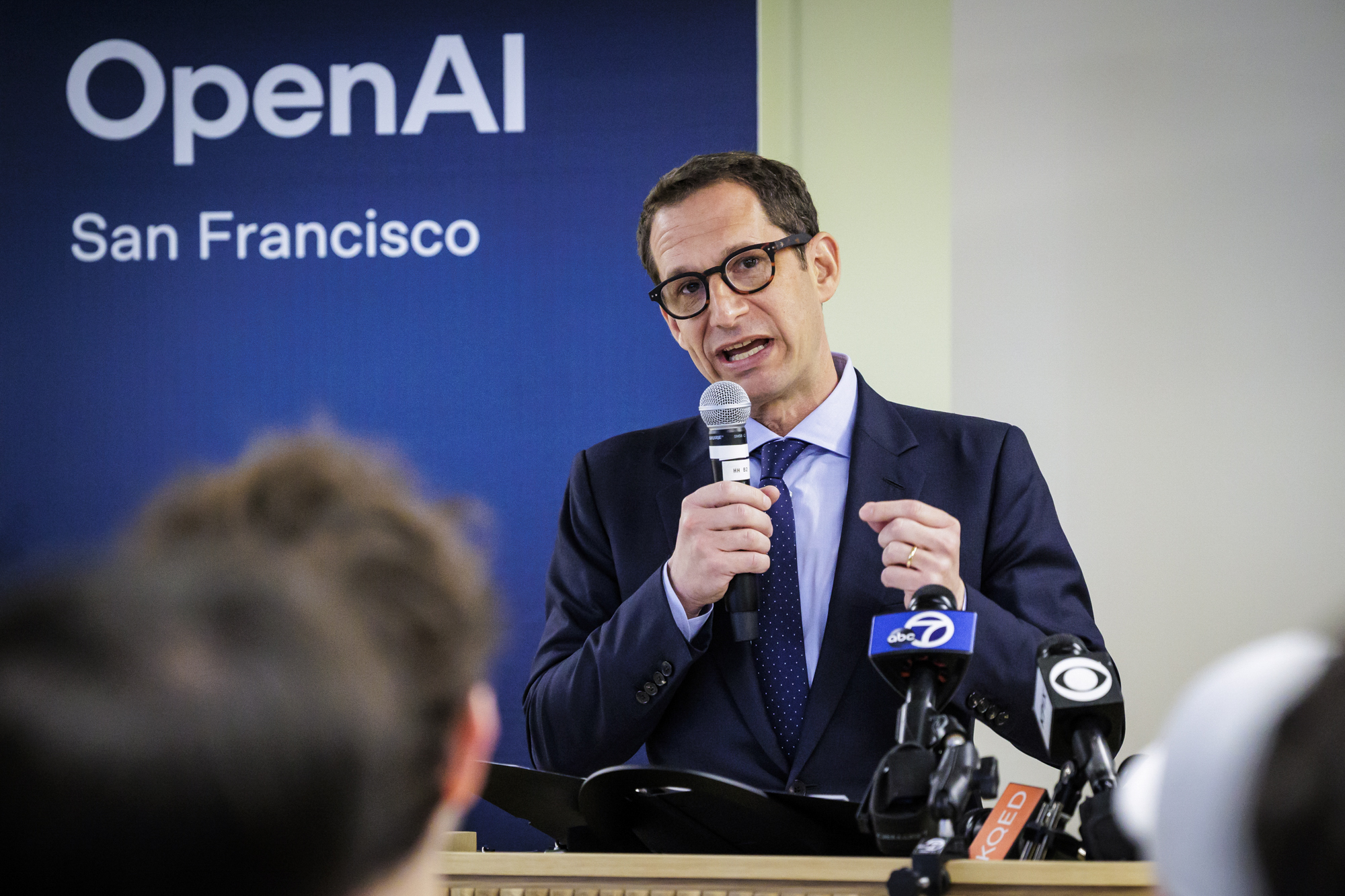
“Governor Newsom has shown the country how we can begin to put guardrails on AI at work to ensure human control over this technology, limit surveillance, and put workers first,” said Lorena Gonzalez, president of the California Federation of Labor Unions, AFL-CIO, in a statement. “California’s workers and our unions have changed the national narrative on how Americans can fight back and win against AI taking over our jobs and workplaces.”
Nurses also celebrated the enactment of AB 1979, a law that bars health care entities from using AI to replace the clinical judgment of licensed professionals.
“We stood up and said that A.I. must support, not replace, the clinical judgement of the nurses and other health care professionals who care for our patients,” wrote Sandy Reding, RN and president of California Nurses Association in a press release. The law also limits AI to an advisory role and extends medical confidentiality protections to health chatbots.
After vetoing a previous version of the “robo bosses” legislation last year, Newsom signed a narrower version in SB 947, which takes effect in July of 2027. Meant to counter the “boss-ware” software surging in popularity, the law requires a human to corroborate firing or disciplinary decisions, and workers must be told when such a system was used.
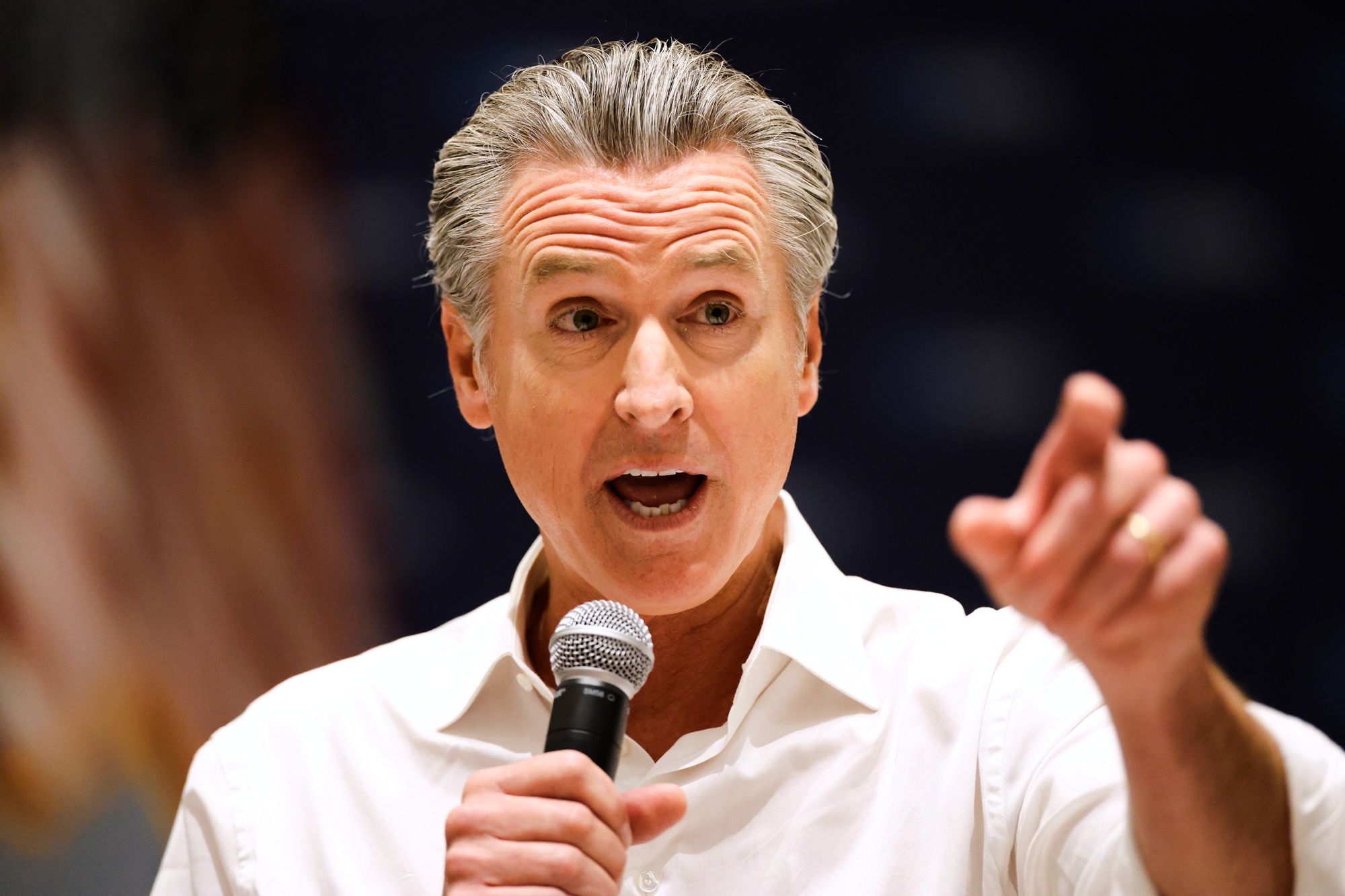
“We need to put a floor and put a marker out there that AI systems really shouldn’t be controlling human society. And this is the one way that it can happen,” said state Sen. Jerry McNerney of Pleasanton, the bill’s author. “Nobody wants to be fired by a machine.”
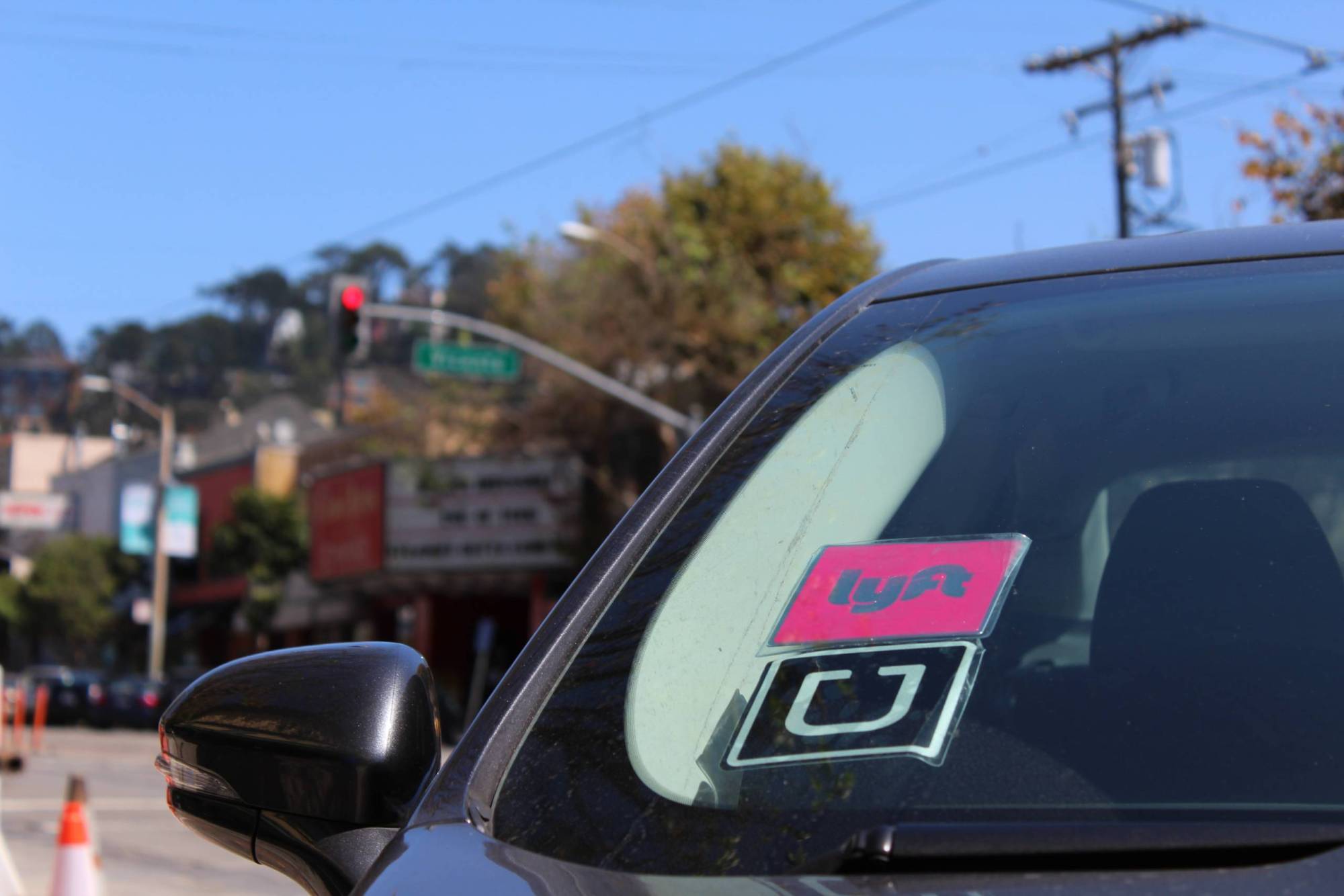
Notably left out of the SB 947 party: rideshare drivers, who are classified as independent contractors under Proposition 22.
“Rideshare drivers have been living with AI and algorithmic management long before most workers ever heard those terms,” wrote Nicole Moore, president of Rideshare Drivers United. “An algorithm decides what work we get, what we are paid, how our performance is judged, and too often whether we can work at all.”
Looking ahead to the day when autonomous vehicles replace human drivers, Moore said, “Our skills and experience have been turned into data that is now helping power autonomous vehicle technology, without drivers being compensated for the value we helped create or having any meaningful say over how that data is used.”
KQED reached out to Uber, Lyft and the California Chamber of Commerce, but did not hear back by publication time.
The laws were signed as the Federal Trade Commission investigates San Francisco-based Anthropic and OpenAI to determine whether they misled consumers about potential harms from their technology, according to the Wall Street Journal. An FTC spokesperson confirmed the investigation but declined to provide details.
But the larger context suggests federal lawmakers and the White House have ceded the field of regulation to Silicon Valley companies: Congress has not passed comprehensive federal AI regulations at a time when industry leaders are warning about the technology’s risks.
At the start of the president’s second term, DOGE — the short-lived initiative run by Elon Musk — explicitly used algorithmic tools to identify and terminate employees. Probationary workers were fired via identical template letters generated without individual review.
And on Tuesday, Trump announced that top tech leaders signed a voluntary accord to “self-police” AI development.
Newsom criticized Trump’s industry-friendly inaction at an hourlong event with reporters on Wednesday, the governor’s last day to sign or veto bills before he terms out in January.
He also had harsh words specifically for Trump’s self-regulation accord.
“That should scare the hell out of everybody,” Newsom said.
AI in the workplace: Signed Sept. 30
- SB 947 (McNerney): employers can’t rely solely on an automated decision system to discipline or fire workers. A human has to corroborate the decision, and workers have to be told. Takes effect July 1, 2027.
- SB 951 (Reyes): employers must give notice when AI causes a mass layoff, relocation or termination. The Transparency Coalition reports a 60-day notice when 25% or more of a workforce is displaced. It also directs the EDD to study AI’s effect on hiring and the workforce.
- AB 1331 (Elhawary): bans workplace surveillance tools in workplace bathrooms.
- AB 1883 (Bryan): restricts AI-powered workplace surveillance, including tools that infer workers’ emotional states or collect neural data.
- AB 1979 (Bonta): AI can’t replace the clinical judgment of licensed health care professionals and stays advisory. It also extends medical confidentiality to health chatbots.
AI in the workplace: Vetoed Sept. 30
- AB 2656 (Petrie-Norris): would have required notice to public employees when AI performs work within the scope of their jobs.
- AB 2575 (Ortega): would have barred health care employers from retaliating against nurses and other workers who override AI recommendations they judge unsafe and would have kept AI developers and health care entities from shifting liability for harm caused by their tools onto those workers.
Signed earlier
SB 1050: disclosure of AI-generated performers
SB 928: AI can’t replace CSU faculty
AB 2148: public school staff must be people
AB 1609: a good-faith effort to connect customers to a human within 15 minutes