Prop 45: Faster Environmental Reviews for Certain Projects
Episode Transcript:
Olivia Allen-Price: [00:00:00] In 1970, as California was building freeways and developing dams and levees, Governor Ronald Reagan signed the California Environmental Quality Act into law.
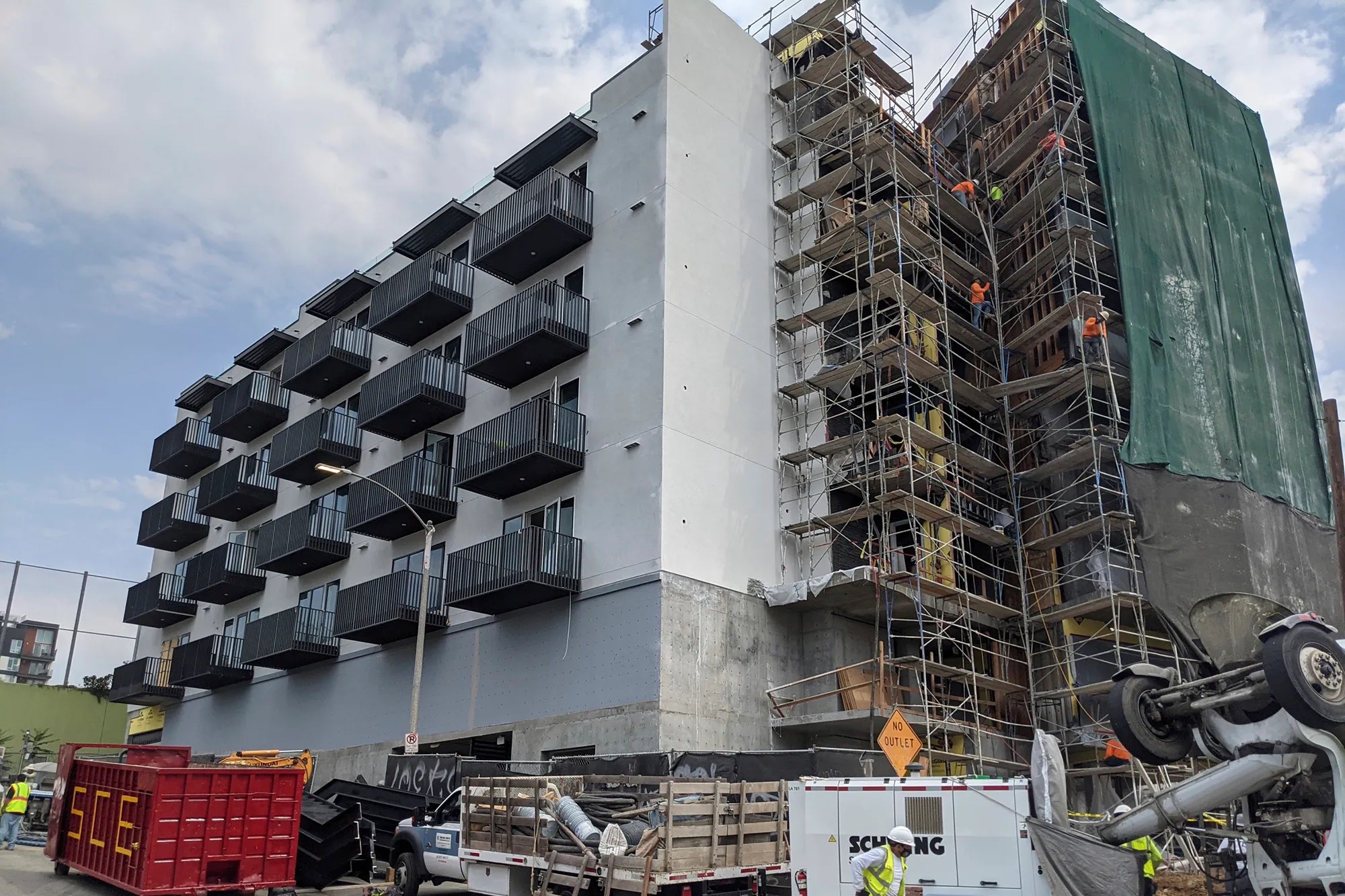
Ericka Cruz Guevarra: [00:00:10] CEQA, as it’s known, requires public agencies to consider the environmental impact of big projects. How rivers could be impacted by new dams and levees, or how local marshland could face more noise pollution. It’s a way of saying, look before you leap, or in this case, build. But housing advocates have often taken issue with CEQa. Arguing that it’s been used to block or stall much needed development here in California.
Olivia Allen-Price: [00:00:43] Now, Prop 45 seeks to change the landmark statute by tightening the timeframe for the environmental review process. Those who oppose the proposition aren’t just worried about what it means for the environment, but also whether it can open the door to more data centers.
Ericka Cruz Guevarra: [00:01:02] I’m Ericka Cruz Guevara, host of The Bay.
Olivia Allen-Price: [00:01:06] And I’m Olivia Ellen Price, host of Bay Curious, and you made it to the final edition of PropFest 2026. This has been a collaboration between the Bay and Bay Curios, and this is the 14th and final prop. Are you ready, Ericka?
Ericka Cruz Guevarra: [00:01:22] I sure am, Olivia. Here’s how Prop 45 will read on your ballot.
Olivia Allen-Price: [00:01:30] Prop 45, modifies environmental review for certain projects.
Ericka Cruz Guevarra: [00:01:36] Here to walk us through Proposition 45 is KQED’s climate reporter Laura Klivans. Hey Laura.
Laura Klivans: [00:01:43] Hello
Ericka Cruz Guevarra: [00:01:44] So Laura, Prop 45 would overhaul the California Environmental Quality Act. First, what is the California environmental quality act, otherwise known as CEQA?
Laura Klivans: [00:01:58] So CEQA is this major California environmental law, and it was passed in 1970 under then-Governor Reagan. And the goal was to require government agencies to study and share potential environmental impacts of public projects like dams and highways and power plants and to do what was possible to reduce or mitigate those impacts. Over time, there have been many lawsuits around it, and it is now applicable to not just public projects, but private ones. Proponents view this law as an essential environmental law for California to protect our environment and think about longer term consequences to building. Critics do not like CEQA because they say it offers people with special interests the opportunity to delay and block projects in the name of the environment. So therefore it’s been like very controversial.
Ericka Cruz Guevarra: [00:02:55] Private projects as in… Maybe a new apartment building or a new housing complex?
Laura Klivans: [00:03:02] Yeah
Ericka Cruz Guevarra: [00:03:04] So Prop 45 would make some tweaks to CEQA. How exactly could CEQA change under Prop 45?
Laura Klivans: [00:03:11] So the proposition is saying let’s speed up the environmental reviews for certain projects that it calls essential. So those would be things like housing or clean energy, not including nuclear, hospitals, clinics, schools, fire, wildfire risk reductions, like things that sound really important, transportation, and here’s an interesting category, broadband access. We’ll come back to why that’s so interesting. So Prop 45 would put a timeline on CEQA review for these essential categories I mentioned. It would set a 365 day time limit on environmental reviews for these projects. It would require courts to rule on CEQA related lawsuits within 270 days. And then it also changes some other details. So like here’s an example of one, a government agency that’s overseeing a review. They would need to specify all the information that they’d like to get from the application, from the builder, at the time that it needs to be submitted, rather than going back to the builder again and again and saying, we need more info for this and more info for that.
Ericka Cruz Guevarra: [00:04:22] Who put this on the ballot and why are we as voters being asked to potentially make some changes to CEQA?
Laura Klivans: [00:04:29] So the California Chamber of Commerce has sponsored this proposition, and they represent businesses, they advocate for them, they lobby for them.
Jennifer Barrera: [00:04:38] The CEQA law was well-intentioned, but we have seen, obviously, the law be abused and misused in order to block projects by groups who don’t want to see any development, don’t want to any growth here in California.
Laura Klivans: [00:04:50] Jennifer Barrera is the CEO of the California Chamber of Commerce, and she is saying we have an issue with growth, nothing’s affordable here, and this would basically advance projects that they designated as essential more quickly and easily. It would streamline legal challenges, reduce frivolous lawsuits, things like that.
Jennifer Barrera: [00:05:10] When we talk about delay, and I’ll keep going back to housing just because it is such an important point of our affordability crisis and a part of this ballot initiative, but when you delay ultimate housing, I mean that creates inequity in our population. That creates losers with regards to those who can’t afford and those who can’t afford.
Laura Klivans: [00:05:28] Proponents say, you know, you’re still going to have environmental review, we’re just going to put like a shot clock on it, as they say.
Ericka Cruz Guevarra: [00:05:38] So you mentioned the California Chamber of Commerce. Who else is in favor of this measure?
Laura Klivans: [00:05:45] There are groups that represent places that need to build, like hospitals or some housing organizations and some building industries, like the workers. Also notably, Buffy Wicks, she’s a California Assembly member, and she is one of the people who championed change last year to CEQA. That has exempted housing that is already on developed areas from CEQA review. So that was a major reform that already happened last year.
Ericka Cruz Guevarra: [00:06:17] We’ll have more on Prop 45 with KQED’s Laura Klivans, right after this break. By the way, did you know that KQED is funded almost entirely by everyday listeners just like you? Consider becoming a sustaining KQED member by going to donate.kqed.org/podcasts. We’ll be right back.
Ericka Cruz Guevarra: [00:06:46] So you have some folks who say that these changes to CEQA are necessary in order to address this housing crisis that we’re in, in part. Who is coming out in opposition to this measure and what are their arguments?
Laura Klivans: [00:06:59] There are a bunch of other folks who are against this, like environmental groups, environmental justice groups, health groups, unions that represent teachers and firefighters, for example, are against us. One major argument is that, hey, this is too broad. This is our landmark environmental regulation. Let’s keep it. And state Senator Catherine Blakespear represents northern San Diego and part of Orange County and has come out in opposition. She chairs the Senate Environmental Quality Committee.
Sen. Catherine Blakespear: [00:07:27] It’s really important that California continue to be a bulwark against the backsliding and we continue to fight climate change and to protect our environment.
Laura Klivans: [00:07:36] She’s saying it’s going to allow for more homes to be built in something called the wildland urban interface, which is like basically places that butt up against beautiful nature areas, but are therefore very fire prone. And so she and some other state legislators are saying this is a terrible idea. We don’t need to build more housing in those areas. And this would allow for that.
Sen. Catherine Blakespear: [00:08:01] It really just goes way too far and creates these very big loopholes and changes our system of CEQA and our environmental review, which is our landmark environmental laws in California since the 1970s. And it is far, far too broad.
Ericka Cruz Guevarra: [00:08:16] I think we all know that it takes a long time to build housing in California and that one of the main arguments for Prop 45 is the idea that we need to build more housing more quickly. What about pro-housing or YIMBY (Yes In My Backyard) groups? What do they think about this measure?
Laura Klivans: [00:08:35] Yeah, so it’s mixed. There are some housing groups that support Proposition 45. And then, actually, interestingly, this one large group, California YMBY, YIMBY stands for ‘Yes in My Backyard,’ they have come out with no position on this. They are neutral. That’s because they see both reasons to support this measure and reasons to oppose it. And on the one hand, it could fast track sprawl, which is not something they support, so. Maybe it makes it easier to build a highway, makes it easy to build housing that is not in a dense or already populated area. On the other hand, it might make it easier to build clean energy and clean energy infrastructure, which is something that they would support.
Ericka Cruz Guevarra: [00:09:23] So we’ve been talking about CEQA in the context of building more housing, but it of course applies to all kinds of projects in California. And when it comes to Prop 45, there’s actually one specific kind of project that has made its way into the debate and that’s data centers? Can you explain why data centers have become part of the conversation around Prop 45?
Laura Klivans: [00:09:48] Yes, so people who support Prop 45 say this does not apply to data centers. And opponents, people who are saying no to this proposition, they say, oh, but it could. Look at the broadband access category. The language is broad enough that it could be construed to include data centers, Opponents are also saying, listen, the people who wrote this made carve-outs for what it doesn’t make exclusions for. There’s this huge category of transportation And it says in the language that it doesn’t include high-speed rail. There’s a category for clean energy. Also in the Language for Prop 45, it says that doesn’t including nuclear. So if this truly does not include data centers, wouldn’t the people who wrote this get ahead of that and write, this doesn’t included data centers in the language? And the people that wrote it are saying, well, we weren’t thinking of that because broadband access doesn’t includes data centers. That’s just as simple as that. So that is up in the air. And now data centers is such a wild issue now, and it’s really, we’ve seen it explode politically, that that has impacted this proposition.
Ericka Cruz Guevarra: [00:10:55] Enough people are worried about it that they are, I don’t know, seeing data centers in Prop 45 and adding it to the debate, it sounds like.
Laura Klivans: [00:11:03] Right. Right. And then this is super interesting. So pulling from the Public Policy Institute of California showed support among likely voters was at 73% in July and in September it is 49 percent. In that time, the data center conversation started happening.
Ericka Cruz Guevarra: [00:11:26] Let’s talk about campaign spending here, Laura. What are we seeing on the pro-Prop 45 side in terms of spending?
Laura Klivans: [00:11:35] There’s a lot of money. When I checked last, over $40 million. We see a lot of Silicon Valley tech people, Google executives, like the former CEO, Eric Schmidt, and more. We also see money coming in from the building trades. And then against, still some money there, $15 million. But this was interesting when I was looking at the money because one of the top donors is Wendy Schmidt, who is married to Eric Schmidt. And she has put $5 million in against Prop 45.
Laura Klivans: [00:12:06] Laura, thank you so much.
Laura Klivans: [00:12:08] Thank you for having me.
Ericka Cruz Guevarra: [00:12:13] In a nutshell, a yes vote on this measure means environmental reviews can be expedited for certain projects. A no vote means projects would continue to use existing project review and court challenge procedures under CEQA.
Olivia Allen-Price: [00:12:30] We made it to the finish line, y’all. Thanks so much for joining us on this wild ride. We hope you’re feeling more prepared than ever to cast your ballot this November.
Ericka Cruz Guevarra: [00:12:38] And if you don’t, you can always go back and listen to the entire Prop Fest series again at kqed.org/propfest.
Olivia Allen-Price: [00:12:48] Do us a favor and send Prop Fest to one friend right now. Word of mouth really helps us grow our shows.
Ericka Cruz Guevarra: [00:12:57] Prop Fest is made possible thanks to Katrina Schwartz Pauline Bartolone Anna Casalme Olivia Allen Price Gabriela Glick Christopher Beale, Alan Montecillo and me, Ericka Cruz Guevarra
Olivia Allen-Price: [00:13:11] We get extra support from Maha Sanad, Katie Springer, Jen Chien. Ethan Toven Lindsey. And everyone on Team KQED.
Ericka Cruz Guevarra: [00:13:20] Our show is made in San Francisco at member-supported KQED. Support for the Bay is provided in part by the Osher Production Fund. Some members of the KQED podcast team are represented by the Screen Actors Guild, American Federation of Television and Radio Artists, San Francisco, Northern California Local. I’m Ericka Cruz Guevara.
Olivia Allen-Price: [00:13:42] And I’m Olivia Allen Price. Good luck with your ballot.