How the Trump Administration Is Using SFO as a ‘De Facto Detention Center’
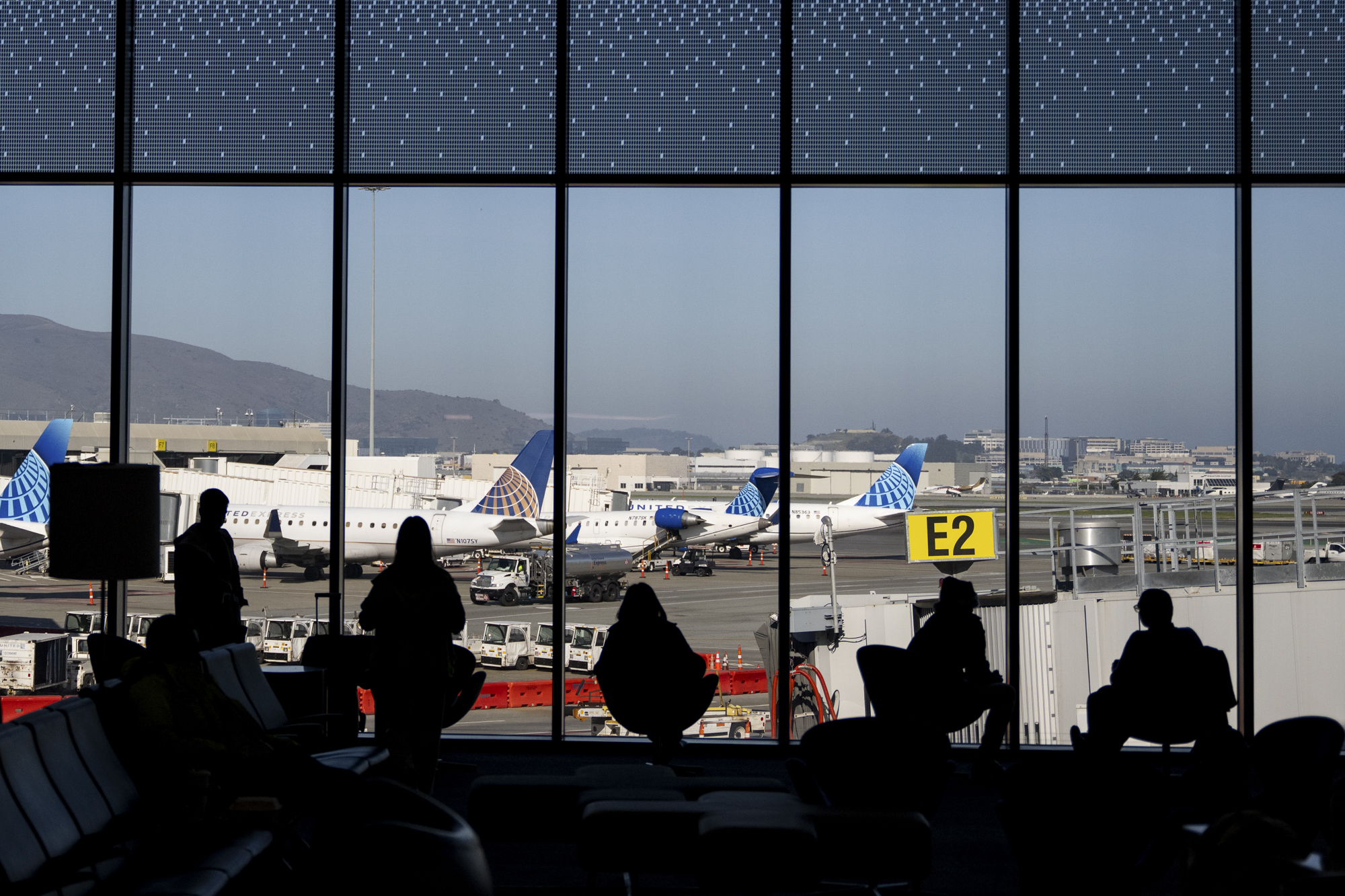
The Trump administration has ramped up immigration arrests at airports in recent months, including at San Francisco International Airport.
According to reporting by the San Francisco Chronicle, Customs and Border Protection has also been holding immigrants at SFO – in some cases, for more than a week. Reporter Sara DiNatale joins us to explain how the airport has become a de facto detention center.
Links:
Episode transcript
This transcript is computer-generated. While our team has reviewed it, there may be errors.
Ericka Cruz Guevarra: I’m Ericka Cruz Guevarra and welcome to The Bay, local news to keep you rooted. Earlier this summer, plain clothes immigration officers were seen at San Francisco International Airport, pinning down a woman as she cried for help. Concerned travelers hovered nearby, recording the incident.
Iryna Gorb: No, they’re fucking ICE! I’m from Ukraine!
Ericka Cruz Guevarra: The woman would be later identified as 38-year-old Iryna Gorb, a Ukrainian photographer and barista who’s been living and working in the U.S. for the last 16 years. Here’s her friend, Andy Eblin, speaking to KQED.
Andy Eblin: There’s a reason that she’s got a lot of support, she is a good person that helped out a lot. That’s just kinda how she was.
Ericka Cruz Guevarra: Gorb was detained by ICE for seven weeks. And it’s not just people being arrested by ICE at airports. According to reporting from the San Francisco Chronicle, SFO is also being used as a de facto detention center by Customs and Border Protection.
Sara DiNatale: The impression that a lot of immigration attorneys have and folks who have been in the detention centers recently have told me like, yeah, a lot of people I’m in here with are people who were picked up at the airport.
Ericka Cruz Guevarra: Today, we talk with the San Francisco Chronicle’s Sara DiNatale about how airports have become the new frontier in Trump’s immigration crackdown.
Sara DiNatale: It’s not like this is happening constantly, but it is still happening more because it used to never happen. Historically ICE agents have not entered airports, domestic terminals, picking up people for visa overstays, especially people with visa overstay that have no criminal history. So we have seen this happen at our airport in San Francisco, it picked up over the summer and around that same time that we were noticing it locally, the New York Times tracked that it was happening regularly or at least semi-regularly at 15 major airports across the country.
Ericka Cruz Guevarra: And I mean, this is not something that we’ve seen before, like these kinds of immigration enforcement actions happening at airports. I mean is this part of a broader strategy by the Trump administration to target immigrants at airports specifically?
Sara DiNatale: So it’s not like the Trump administration or ICE has come out directly and said, like, this is our strategical avenue we’re taking, but the impression that a lot of immigration attorneys have and folks who have been in the detention centers recently have told me, like, yeah, a lot people I’m in here with are people who were picked up at the airport. The reason we think that is likely what’s happening is because we do know that there are current court orders that are preventing ICE from targeting court houses, which is the main enforcement efforts we saw last year. So the thought among immigration attorneys and other experts in immigration is that the shift to focusing on airports is a response to the fact that it is not as easy anymore to get people when they’re doing court hearings or check-ins with ICE because of these court orders. Trump has still made it clear that he has, you know, these large deportation goals. And so that is why people think airports have become a shift in that strategy.
Ericka Cruz Guevarra: Can you kind of describe some of the kinds of immigration actions that are happening at airports like SFO?
Sara DiNatale: Yeah, the videos we’ve seen all follow a very similar formula. You typically see plain, closed ICE agents. It’s not particularly obvious that they’re federal immigration enforcement.
Iryna Gorb: I need more! No!
Sara DiNatale: They are coming to the airport with some kind of list or understanding of exactly who they’re targeting. TSA is likely sharing information. So they’re intersecting them either right when they’re getting off a flight or waiting to get on a flight.
Ericka Cruz Guevarra: So we’re seeing these videos of people getting arrested at airports, but also your reporting has shown that people are actually being detained and held at San Francisco International Airport by Customs and Border Protection sometimes for days. Can you tell us a little bit more about what your reporting found?
Sara DiNatale: Yeah, and there’s an important distinction here. Both practices are both part of Trump’s broader deportation crackdown, but the methods and framework that are being used are a little different. So when we’re talking about the people who are in domestic terminals that ICE agents are arresting in, those people are not the same people that we found being held in the airport. The people being held at the airport are flying internationally. Because when you’re flying internationally, you are essentially at the border asking for entry. And what we found and what our reporting found is that the people held at the airport are having this longer in-between step.
Ericka Cruz Guevarra: So what exactly has changed?
Sara DiNatale: Traditionally, if you had been flying internationally you have a work permit visa or a green card and something about your background check pops in the Customs and Border Protection system. If it wasn’t like an active warrant, typically they would say, hey, something weird popped up on your your background check, we need to set up a follow up appointment to go through this, you would get like a temporary release. So you’re allowed to leave the airport and you know, you have to come back and check with the customs officers. Sometimes you would be able to bring your immigration attorney. And they’re basically holding your green card or your work permit as collateral. So like people always came back for these appointments. It wasn’t like people were running off. But now the follow-up appointment, which is called deferred inspection, is essentially dead. And so instead of a follow-up appointment, they’re just holding them at the airport until they can decide what to do with them. And typically the end decision, which sometimes can take up to a week or more, is to transfer them to ICE detention with an order to go before an immigration judge to decide whether or not they’re admissible into the country.
Ericka Cruz Guevarra: You’re saying some of these folks are being held at the airport for up to a week, potentially?
Sara DiNatale: Yes. So typically what happens because these are often really old arrests. And in a lot of cases, they are expunged from their state record. So they’re flying, not realizing that the federal system being used for the background check will still pull up a state expunges arrest. And then the agents are saying, Okay, well, we need to request your original court records. And until we have those court records to decide if you should be admitted or not. You just have to hold tight and the time that they’re waiting to get those records can span. If it is a Friday, the court is not going to send the certified records over the weekend. I’ve also had immigration attorneys tell me like, I have certified court records for the, like for this individual and I’m happy to bring them. And the agent said, no, we need them directly from either the arresting police agency or the court. Even if that was the case in the before times, it didn’t automatically mean you needed to be detained while you were awaiting that hearing. But now under Trump’s current executive orders, he’s made it very clear if there is a question about your admissibility and questions about your criminal history, you absolutely need to remain detained. They still have in there, it’s still linked on their website, you can read it, that people should not be held for more than 72 hours. And when we looked at the federal data which encompassed all the airports, we found that Customs and Border Protection has detained more than 400 people at international airports for longer than 72-hours since January and through July. And then of that 400 people, 146 were people who had valid green cards, so they were lawful permanent residents.
Ericka Cruz Guevarra: And where exactly in the airport are they being held?
Sara DiNatale: It’s between A and G and like the part that connects both terminals that you like walk between. It’s all behind like the area you can’t get to unless like a customs agent is like walking with you. So this particular room is like kind of deep into the innards of the airport. There’s no windows. I have not been inside of it. They will not let me in. But it’s been described to me as just like a very, it looks like a basic like waiting room. Not somewhere you wanna sleep for days. There’s no beds. If you’ve ever been through customs and you get pulled for a secondary interview, you’re not allowed to have your phone. And that is the same with when you’re in being held in one of these rooms. You don’t have a phone or anything. So at SFO we know of 25 people who were held there for more than 72 hours from January through July and then 19 of those 25 people were transferred to ICE custody.
Ericka Cruz Guevarra: We’ll have more with The Chronicle’s Sara DiNatale right after this. By the way, if you appreciate the local deep dives that we bring you on the bay, consider supporting our work by becoming a sustaining member of KQED. We can’t do this work without you. Just go to donate.kqed.org/podcasts. We’ll be right back.
Ericka Cruz Guevarra: And like you said, this detainment area is really out of sight, and we haven’t known a lot about what is actually happening there, but you actually talked with a 67-year-old man who was held there. Tell me about him and his story?
Sara DiNatale: During this reporting process, I met a 67 year old man who was held at SFO for eight days starting in March. He agreed to talk to us without publishing his name because he doesn’t want any more attention to be put on his legal status. He is a green card holder. He has been a lawful permanent resident here for decades and he’s lived here legally for about 50 years. So he lives in Fresno. He was flying back from a trip to Mexico. And when he lands in Fresno, he is sitting on the plane and federal agents board and call his name. And they take him into custody right then and there. They cuffed his wrists and his feet, and they put him into a van, and they drove him to SFO. He was very confused about like what he was being arrested for on his way there actually in the van. He’s already starting to panic, especially because of his medical conditions. So he has diabetes and it was the end of his trip. So he didn’t have any more insulin on him because he was expecting to go home. Customs agents put him in this room. He is allowed one phone call to contact his son specifically just to ask for his medications. His son has to drive then from Fresno to SFO to deliver the medications. He also has no way to test his blood sugar. And it isn’t until a paramedic from the airport comes in to check him. That it becomes clear that he is having an episode. His blood sugar is way out of a normal range, he clearly needs insulin, and they do give him his insulin from his son finally, and he’s able to use it. He’s there for eight days. So through that eight days, he only had his blood sugar checked one time.
Ericka Cruz Guevarra: How did he describe the conditions inside SFO while he was being detained?
Sara DiNatale: He described the whole experience as psychological torture. You know, he didn’t have a change of clothes. So they do take him to, they escort him to a shower every three days, but then he’s changing back into his dirty clothes after. You know he doesn’t have bed. So he’s described sleeping upright for the entire time. And you know, he was only snatching a couple hours of sleep in between, you know like it’s difficult to sleep upright. And in addition, the lights were always on. The diabetes wasn’t the only medical issue he had. He had some other medications he was required to take, and I didn’t even mention he’s also mostly blind. He doesn’t describe there being a formal medical screening, which is something you would expect and is required of any holding facility.
Ericka Cruz Guevarra: What do we know about why he was detained by Customs and Border Protection?
Sara DiNatale: Yeah, so he wasn’t given a lot of clarity while it was happening to him. But he had an old 20 year old like run in with law enforcement that they essentially were looking into. I had one attorney I spoke with about just like this process describing it like a fishing expedition, like they are looking for something that they can argue makes you inadmissible.
Ericka Cruz Guevarra: So he was held at SFO for eight days, you said Sara. Where is he now?
Sara DiNatale: So, after his eight days, he was transferred to California City, which is the state’s largest detention center. Once he gets to California City, it takes a minute for him to be able to get connected with legal representation, but he eventually does. And they’re able to sort of untangle this old arrest and, you know, go before the court, make sure it’s clear that it’s a misdemeanor charge. And after five months, he does eventually get out. So he’s out, he has his green card still intact, and he’s just kind of recovering from this whole experience, which of course was very traumatic.
Ericka Cruz Guevarra: I mean, Sara, you’re describing, I mean in his words, psychological torture, people being held for days without really understanding why, not having access to legal representation. I mean is this legal? I mean can Customs and Border Protection just do this at airports here in the United States?
Sara DiNatale: So when someone is coming, re-entering the country, court history and case law history, time and time again says the government has its peak authority at that moment, because it is a matter of national security. And that gives them a lot of latitude to do these things within a legal framework. That’s not to say that like everything they’re doing is legal and won’t face legal challenges. We have seen attorneys challenge these spaces and, you know, saying, hey, you need to at least make sure they meet, like, the minimum requirement for what makes a facility safe.
Ericka Cruz Guevarra: And is Customs and Border Protection still keeping people in conditions like this within SFO?
Sara DiNatale: So since the 67-year-old’s detainment, Customs and Border Protections has started using a different room to house people and that room has padded benches where people can actually lay down. So that’s an improvement, at least slightly in the conditions.
Ericka Cruz Guevarra: And what does the airport say? Like, do they have any jurisdiction over how customs operate?
Sara DiNatale: The airport itself has no control over what customs does with its space. So SFO cannot tell customs, hey, we don’t like this and you need to stop. Like because the airport is a border, customs has to have a space to operate and the airport has to provide that space. And once they hand over that space to them, they really can’t control what they do in it.
Ericka Cruz Guevarra: And how has the Trump administration responded to this story?
Sara DiNatale: They did not respond to a long list of questions I sent them. I asked customs directly like, hey, I see in your guidelines that you have the 72-hour hold policy. Is that no longer a policy? And that was one of the specific questions they did not answer. I reached out to Congressman Kevin Mullin. He wound up using his congressional authority to demand inspection of the facility. Congressman Mullin was able to ask them some direct questions during his visit. According to him, they told him like, yes, this is a distinct policy shift under Trump. We would have given these people follow-up appointments before and now we keep them here. You know, they said sometimes because of waiting on court records and weekends. Uh, sometimes people are here longer than three days.
Ericka Cruz Guevarra: I mean, it seems just like it’s safe to say that airports have sort of become this new frontier in Trump’s immigration crackdown, I’m curious what immigrant attorneys and advocates are advising people to do?
Sara DiNatale: Yeah, I mean, there’s definitely the advice out there to just not travel, and I understand why people are heeding that advice. I would say if you are someone with a green card or another visa, you need to be really aware of exactly what your status is. So if you’re a green-card holder who has had a past brushing with law enforcement, you need to really sure that if you think your charges are vacated that they actually are before you travel internationally. And then for those who have visa overstays, the risk is that you will be targeted even if you don’t have any criminal history.
Ericka Cruz Guevarra: Well, Sara, thank you so much for sharing your reporting with us. I appreciate it.
Sara DiNatale: Thank you so much for having me.
Ericka Cruz Guevarra: That was Sara DiNatale, a politics reporter for the San Francisco Chronicle. We’ll leave you a link to Sara’s reporting on this in our show notes. Thanks as well to KQED’s Katie DeBenedetti for some of the tape that you heard at the top of this episode. This episode was cut down and edited by producer Gabriela Glueck. It was produced and scored by me. Our senior editor is Alan Montecillo, music courtesy of AudioNetwork. If you wanna reach us here at The Bay, feel free to send us an email. We’re at thebayatkqed.org. Support for The Bay is provided in part by the Osher Production Fund. Some members of the KQED podcast team are represented by the Screen Actors Guild, American Federation of Television and Radio Artists, San Francisco, Northern California Local. And I’m Ericka Cruz Guevarra. Thanks so much for listening to The Bay. Talk to you next time.
Some members of the KQED podcast team are represented by The Screen Actors Guild, American Federation of Television and Radio Artists, San Francisco-Northern California Local.