This piece was featured first on Feb 26 for One Good Thing, a weekly newsletter brought to you by Alexis Madrigal about his take on Bay Area art, culture & nature. Subscribe today.
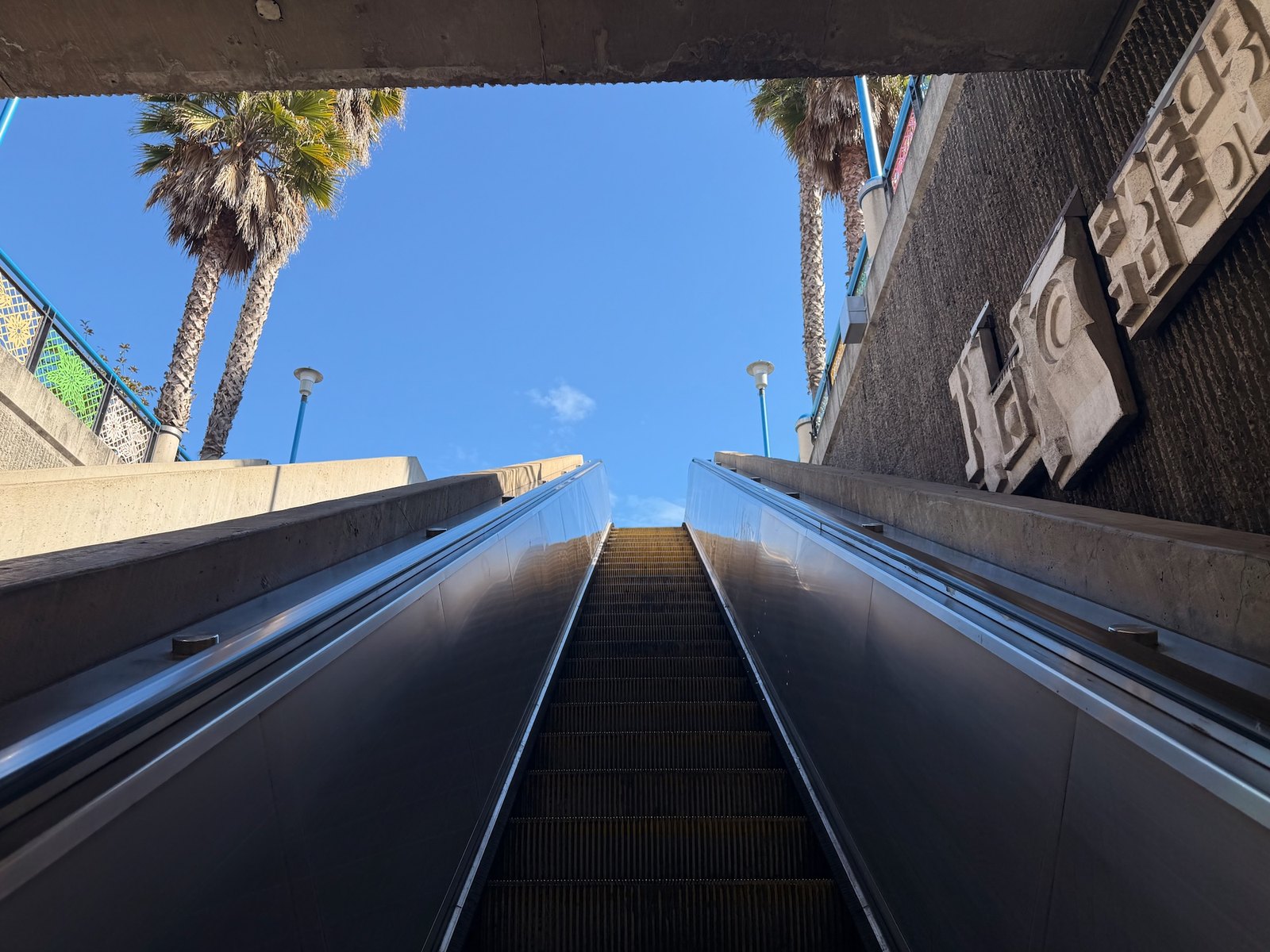
For almost five years, I have been commuting through the 16th Street BART station. I exit at the northeast corner and cut down Capp to 17th towards the KQED building. About a month ago, they put up some scaffolding around the building where I exit. It was, primarily, an annoyance.
About a week ago, I got off the train and did my normal thing and walked across the Mission, hosted the show, had some meetings, and started the walk back. When I hit Capp, I felt something was off, but I couldn’t put my finger on it. About halfway down the block, it hit me: the building was gone! Demolitions are so fast, and in the time between arriving in San Francisco and that afternoon, they’d taken the old place down.
Suddenly, I couldn’t really remember what the building looked like. I remembered the little Chinese restaurant (Mission Hunan) and the grocery. But had the building had a second story? I guess it had.
So much more sky was available. Maybe it was just the shock of it, but the whole area was transformed. It was as if my brain switched off autopilot and actually began to take in new information.
But I had to get home, and I padded down the stairs and promptly forgot about it.
A few days later, I was back on my commute, zipping up from the train and through the station. I hit the stairwell and began to walk up. Again, I had that strange uncanny sense. This time, I recognized it faster. The view, which I’d encountered hundreds of times coming up to the surface level, was totally different. Where there had been building, there was now light.
Because I am multiple types of nerd, it made me think about the Russian literary theory term, “defamiliarization,” as proposed by Victor Shklovsky in the early 20th century. For Shklovsky, the purpose of poetry was to “impart the sensation of things as they are perceived and not as they are known.” In our daily lives, the world becomes rote. We’re subject to, in his terminology, “over-automatization.” And what better example than the commute? I’m always reading something, listening to something, thinking about something. It’s possible to move through the city by the prescriptions of habit alone.
I don’t think it’s just poetry that can lead to this new state of openness (though poetry also!). This demoIition acted as a chisel on my routine. And now, I’m looking up and around again, remembering to really perceive, not to simply know.
As for what happens next, in today’s Bay Area, I know that I’m supposed to feel bad about this building. Most urban change has a negative valence for people. This very corner had been subject to land-use battles for more than a decade. But sometime soon, it will be 136 units of permanent supportive housing. It’ll be called La Maravilla.

Alexis Madrigal, Co-Host, Forum

My Tipline
- Poetics and Plant Medicine? SAY NO MORE.
- These non-binary runners are gonna run from Los Angeles to … Las Vegas!
- Go see the new play at the Berkeley Rep, All My Sons.
- I’m really enjoying the new Michael Pollan book, A World Appears, but y’all know I’m a sucker for consciousness.
- Or go see some blues at Eli’s Mile High Club on Mondays.
- A perfect song: “Hey Lover,” by The Daughters of Eve, recorded by a bunch of teenagers 60 years ago.
My Picks
 FORUM
FORUM
AI is Changing Fast. How Are You Using It Now?
I regret to inform you that some AI things work now.
 New Poll Finds Race for California Governor Remains Deadlocked
Whew… Kind of a mess, no?
 Is It Crow-maggedon? Why Crows Are Flocking to Bay Area Cities Each Winter
About time someone looked into this!