Have You Been Hit With One of These Bay Area Phone Scams? How to Spot the Red Flags
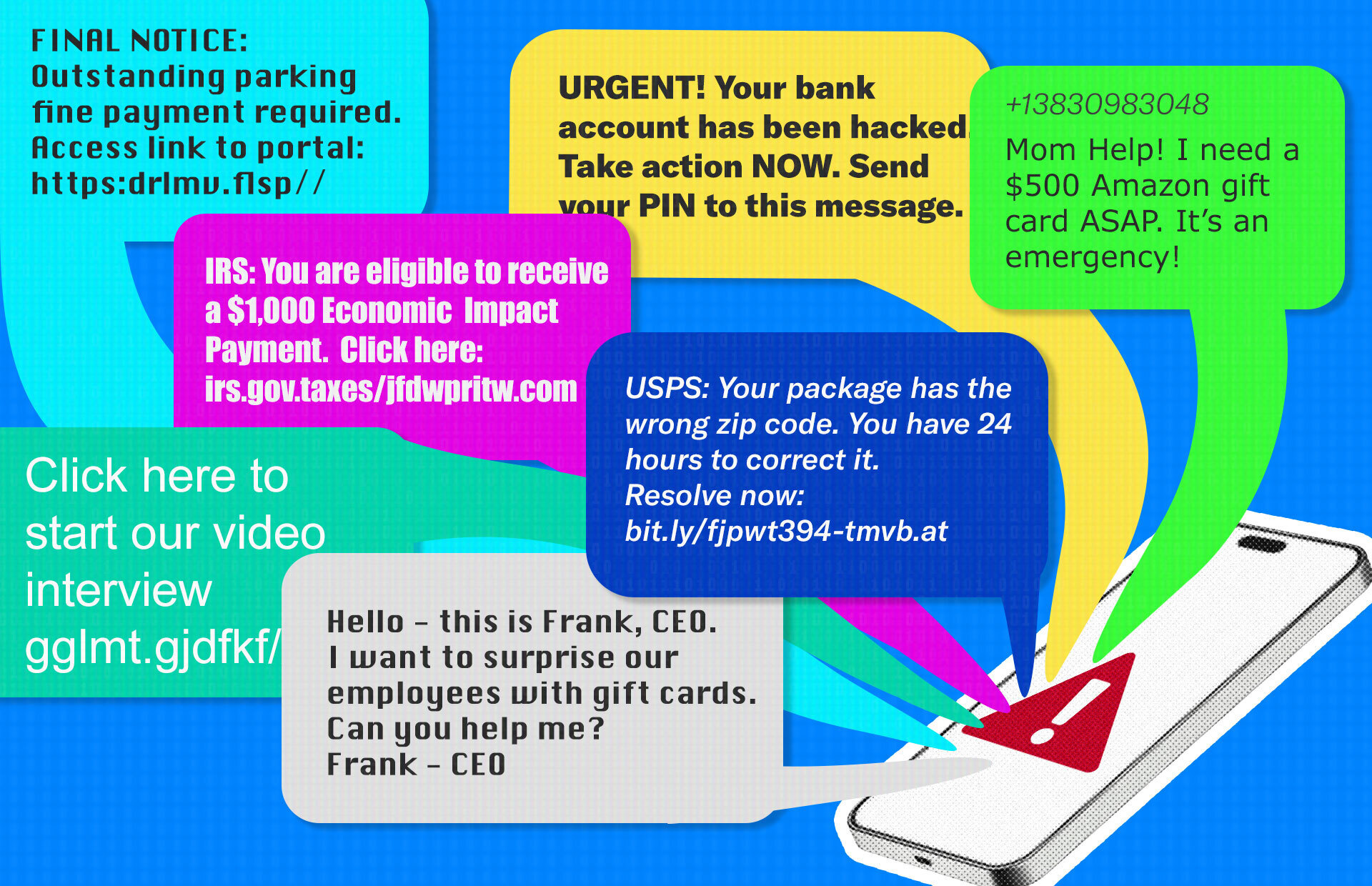
If you’ve had the nagging feeling that scam calls and messages have gotten worse over the last few years, you’re actually correct.
Americans reported losing a total of $3.5 billion to imposter scams in 2025, according to June data announced by the Federal Trade Commission this summer — nearly three times the amount reported in 2020.
Imposter scams and other types of fraud through social media, email and other platforms have become a ubiquitous issue impacting people across the country. According to a poll and investigation by the Associated Press and the University of Chicago, almost every American has been “targeted by scammers in some way.”
“It can happen to anyone,” said Alma Galvan, the San Francisco Bay Area communications director for the Better Business Bureau, a nonprofit that supports consumers and businesses.
“It doesn’t matter your education level,” she said. “It doesn’t matter what you look like. Scammers will target anyone.”
And while scams take all forms — pretending to be local San Francisco businesses, fake gas gift cards, rent schemes, catfishing and even impersonating KQED Forum host Mina Kim — the ones that fall directly into your lap are usually through phone calls and text messages.
This is compounded by the fact that your phone’s caller ID capabilities may not always flag a spam call — and scammers can find a way to make it appear as if they are calling from a verified organization or agency.
In fact, the problem has become so widespread that California now has its own “Delete Request and Opt-out Platform” (DROP) form, which allows residents to scrub their info from data brokers — a major way scammers obtain your contact information — in order to lessen the amount of scam calls and texts.
While a scam may feel obvious in hindsight, it can be hard to think calmly in the heat of the moment, especially since scammers often fake emergencies or apply pressure to spur people to act in panic. And the ability of scammers to persuade and convince their targets has only gotten worse with the rise of generative AI.
One silver lining: Scams often follow the same kinds of patterns and playbooks — and knowing about them could help you and your family learn to detect a scam even faster.
Read on to learn about common forms of phone- and text-based scams in the Bay Area and California, as well as the red flags to look out for if you do receive a potentially enticing message.
Task scams
The most common scams in the Bay Area have been “task scams,” Galvan said: when someone receives an offer — often through text — to do seemingly simple, repetitive actions online, such as liking YouTube videos.
“There are so many different versions of this scam, and it doesn’t target one individual,” she said, explaining that the age range of people impacted by the scam varies from early 20s to late 60s. “It attracts consumers that are looking for a job.”

The kind of job being offered promises “flexible hours, the ability to work from home, super high earnings — and you only have to work an hour and a half a day, and you make $500, with the option of making extra money if you decide to work over the weekend,” Galvan said.
Sometimes these scammers will even provide some initial payment to build some trust. But these so-called opportunities can lead to major consequences. One person reported to the BBB lost $17,000 after buying equipment to work from home, she said.
The scammers “instructed him to purchase gift cards to pay for the equipment,” saying it was for “security measures and protocol that the company had,” she said.
A major red flag, Galvan said, is recognizing when the salary may be too high for the task. People should also never pay to apply for a job.
Don’t let anyone deposit money into your personal bank account if you haven’t had a job interview or received an offer letter, she said. You should also never make any suggested purchases with gift cards or cryptocurrency, especially since the latter is “not regulated by the government,” Galvan said.
The red flags: A job offer with aspects — high salary, flexibility, simplicity — that seem too good to be true, a demand to purchase equipment or pay to apply
Employment scams
In another employment-based scam, targets will receive a fake job offer — purporting to be from a legitimate business in the Bay Area.
A person may get a text message, a DM through social media or a platform like WhatsApp and Telegram offering a position related to their field, “but then the salary is just above average for the job itself,” Galvan said.
She said that people should go to the company’s website and verify if the position is indeed real — and even try calling the company to also verify the job listing and the identity of the person conducting the interview.
Keep in mind: Anyone can create a website, but a way to look into who is running a website is by visiting Whois.com. If the website is public, you’ll be able to see who created it, when it was created and when the domain expired. For example, if the website was created just a few days ago and is offering several jobs, it may not be a legitimate business, Galvan said.
While you should insist on a formal interview by phone or video, generative AI has unfortunately been a major tool in these scams, allowing fraudsters to produce voices and videos to mimic recruiters.
It might feel incredibly discouraging to make sure everyone you are talking to is real — something KQED’s internet podcast Close All Tabs even touches on in an episode about how difficult it is to prove you are not AI. But that’s why doing the research beforehand is vital, Galvan said, “to make sure that you’re actually talking to a real person.”
The red flags: High salaries, well-known companies, a job website that was only recently created, a suspicious video interview
Bank scams
According to the FTC, the most costly type of impersonation scams come from a fake security alert, often from someone purporting to represent your real bank.
“People are convinced to move money to “protect” it, with their losses often limited only by their available funds,” per the FTC. Callers may also ask for a person’s card number, a PIN or the last four digits of their Social Security number.
Galvan said here it’s good to have a connection with your local bank and make sure you know if you’ve even opted in to receive text messages from them — because otherwise, getting out-of-the-blue texts from your bank should raise your suspicions.
After hanging up, she said people should be sure to call the number on the back of your bank card, as opposed to the first result on a Google search, since a scammer could potentially buy an ad and place a fraudulent phone number. Don’t call any numbers you’re given in a message purporting to be from your bank either, as these may be scam numbers too. Only through this official phone number to your bank can you confirm if the message you got was valid.
“It’s up to us to do that little extra step,” she said.
The red flags: Unexpected texts from your bank, requests for personal information, including your PIN
IRS scams
What is more stressful than a call from the bank? A call from the Internal Revenue Service, which handles taxes in the United States.
The IRS has a page dedicated to the common reasons impersonators use when contacting unsuspecting targets, including W-2 form fraud and unclaimed tax refunds. Some people have also received fake calls about apparent back taxes owed, with the scammer claiming to be from the IRS or “Tax Resolution Oversight Department.”
But you should know: The IRS primarily contacts people through letters the first time — which you can verify online or by calling the IRS’s hotline at 800-829-1040.
Keep in mind — like your bank, the IRS only texts you when you opt in to receive those texts. According to the agency, there are some cases where they use automated phone messages, but these calls will “direct you to IRS.gov to securely manage your account, make payments or resolve an issue,” the IRS website read. “The messages don’t share specific details.”
According to the FCC, people should never give personal details over the phone like PINs, passwords and credit card information.
If you receive a call from someone claiming to be with the IRS, ask for a reference number. Then the person should hang up and call the IRS again, but only using one of the official IRS phone numbers listed on its government website, to see if the call was real.
The red flags: Unexpected texts from the IRS, attempts to panic you with talk of “back taxes” owed or similar, a live caller wanting financial information including your PIN
Emergency call scams
This particularly alarming type of scam has continued to grab headlines for the past few years: Someone impersonating a loved one in text messages or even a phone call, desperately asking a parent or a grandparent to wire them money due to some emergency.
A common example is the young person — usually college-aged — saying they’re traveling for vacation (for example, for spring break) and getting arrested at the U.S.-Mexico border, Galvan said. And AI has only made it easier for scammers to impersonate someone’s voice.
“It sounds like the person,” she said. “It sounds legitimate.”
Galvan suggested families have a code word that the scammer wouldn’t be able to guess. If the person over the phone is able to provide the code word, then the person knows it’s potentially real.
A key part of this scam’s playbook: creating a sense of emergency with the need to send money immediately. The Federal Communications Commission recommended that the person receiving the call should, after hanging up, try calling the intended person using the number saved in their contacts to see if they truly were the one on the call.
The red flags: A dramatic, panic-inducing story of some emergency, an urgent request for money (for example, to post bail), the person using an unrecognized number
Mail delivery scams
A common way this plays out: You receive a text alert from an unknown number prompting you to click a link — because “your” package from a company like USPS, Amazon or FedEx has been misplaced or needs a pick-up.
“We’ve all transitioned into buying things online,” Galvan said. Because of this, she said it’s key to remember “what you’re ordering, where it’s coming from and who’s going to deliver it for you.”
When receiving these texts, she said to be wary of suspicious links in the text — for example, links that were generated by URL-shortening websites like bit.ly, which can be used to mask the true online destination. These links may be seeking personal information input from you — or even be malicious software.
“Keep in mind that if you don’t have spyware [protection], it just takes one click for you to get a virus on your computer. Same thing with your phone,” she said.
Phones tend to have protection come with them, she said, but it’s important to make sure that your software — like an iPhone’s iOS — is up-to-date. For more tips, KQED has a thorough guide on digital hygiene and security.
Admittedly, when it comes to packages and deliveries, it can be hard to know what is a scam text and what is a simple text alert that you signed up for. But California has laws that require people to opt in to receive various forms of text messages. So if you don’t remember signing up for text alerts, that could be a potential red flag.
The red flags: “Delivery updates” you weren’t expecting, being urged to click a link
Other common phone and text scams in the Bay Area
Unfortunately, these scams are just the tip of the iceberg of the type of texts and calls a person can receive. Luckily, there are major tools online to help you look up past scams and see if they match a call, text or business you’re suspicious about.
The BBB has a thorough Scam Tracker database with a list of scams reported by consumers, complete with descriptions of who they were reached by, who they thought they were talking to and even how much they lost. The American Association of Retired Persons also has a scam map.
Other scams may involve people impersonating:
The California Department of Public Health
The state’s health agency warns that scammers are calling to ask for financial and sensitive information, pretending to represent CDPH.
According to the agency, legitimate calls focus on public health matters like disease contact tracing. They “will never involve requests for sensitive financial or non-health-related information, such as someone’s Social Security number or credit card details,” CDPH said.

Utility agencies
West Sacramento sent out a warning early this year about a postcard falsely requiring residents to enroll in a “program” that would allow them to receive funds for utility upgrades.
Other utility scams may call to ask people to pay their bills by using a prepaid credit card, gift card, or third-party payment app.
If you’re unsure about your utility account, be sure to call your county’s services division or PG&E directly.
A radio or TV opportunity
Creatives are being increasingly targeted by scammers posing as the hosts of radio or TV shows, offering them the chance to talk about their work on-air — as soon as they make some kind of donation or payment.
Authors have even received messages pretending to be KQED Forum host Mina Kim, inviting them on our call-in show to talk about their book (for $200).
KQED will never charge people to be on Forum, and producers are the ones who directly connect with authors and publishers.
So you got scammed. Now what?
Report it ASAP
You may feel overwhelmed or even embarrassed after realizing that you fell into a scam, Galvan said — and that’s natural. However, she said that reporting it to places like the BBB offers the chance to help people around you avoid the same scam by making the information public.
“We want to make it as universal as possible and as easy-to-use tool for the public, so that we can alert the consumers about what’s happening in our area and then hopefully get them to be looked into by law enforcement or by government,” she said.
However, the BBB is a nonprofit, and they don’t have the “power to shut down anyone,” Galvan said. Nonetheless, the group works closely with local government agencies, which can then investigate the company and the scam.
And since immigration-based scams have also become common, she said that the BBB is not a government agency and does not verify the residency status of anyone reporting this kind of scam.
People can also report potential scams to other sites and organizations including:
- The FCC: Unwanted Calls/Texts
- Local authorities like the police
- The California Attorney General’s office
- The organization that is being impersonated (for example, the IRS has a guide on how to contact the agency if you run into an IRS-based scam — national agencies can be found on the federal government’s website, or find a state-based agency on the California Department of Social Services website)
- PG&E Scams
- The FTC’s Report Fraud website
- Internet Crime Complaint Center
Seek support
Many agencies also provide the next steps to take after facing a scam, whether it includes personal identity theft, a loss of funds or compromised accounts.
Some resources include: