How to Show Up for Your Community This Hispanic Heritage Month
This story was reported for K Onda KQED, a monthly newsletter focused on the Bay Area’s Latinx community. Click here to subscribe.
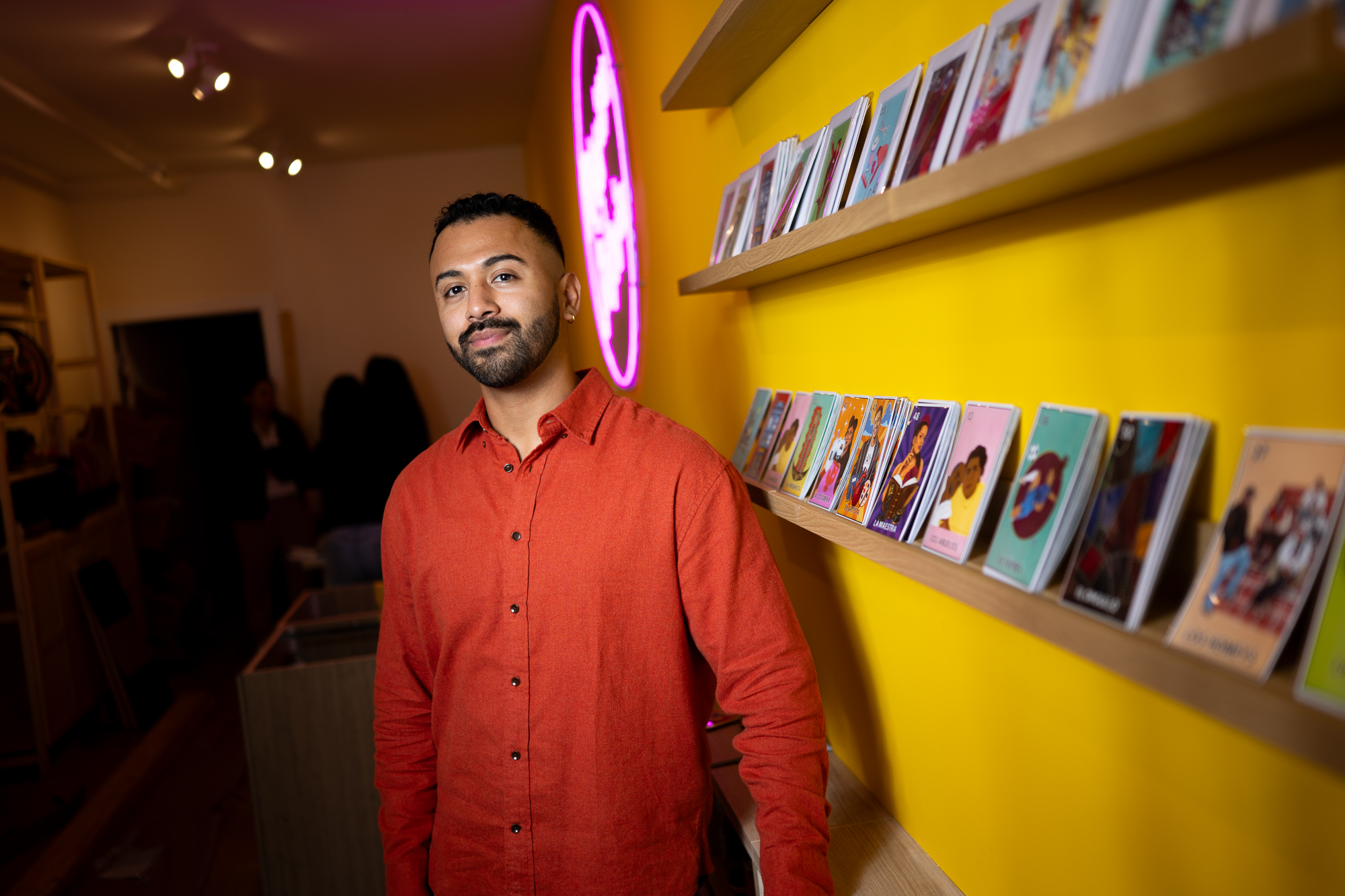
Tucked inside a compact shop near the corner of 25th and Mission streets in San Francisco, Mission Lotería is evolving from promoting local businesses into a small business of its own.
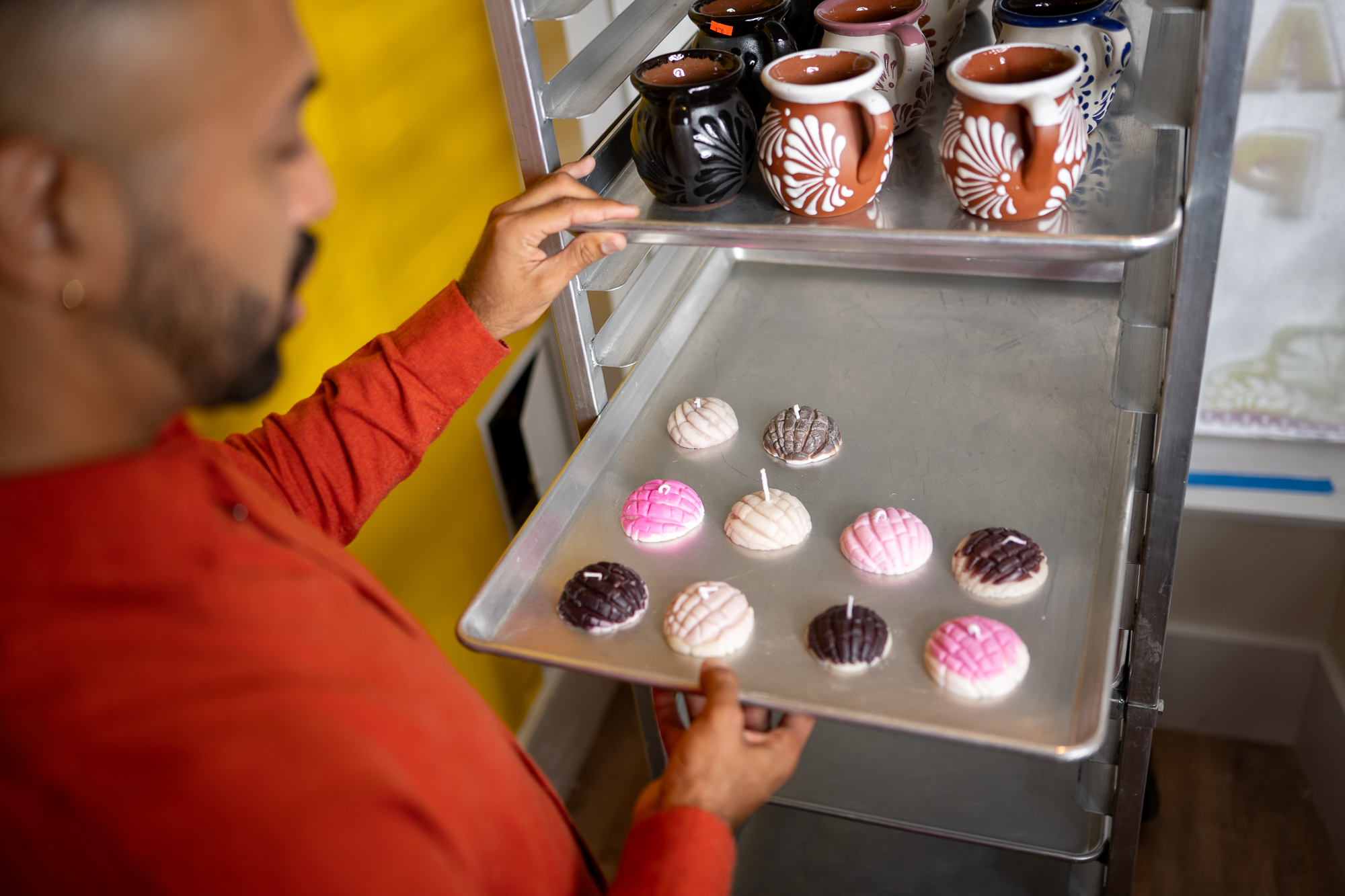
The organization, which started in 2019, plans to open its first storefront on Sept. 10 at 2884 Mission St., selling giftable items such as hand-painted clay coffee mugs, purses designed by a Colombian artist, clothing, and stationery and cards designed by Bay Area artists.
“What began years ago as a creative campaign celebrating the Mission, supporting neighborhood businesses, and bringing our community together has grown into more than we could have imagined,” said Luis Quiroz, founder of Mission Lotería.
The store’s opening coincides with the start of Hispanic Heritage Month, which spans from Sept. 15 to Oct. 15.
“I intentionally planned the store opening just before Hispanic Heritage Month so that we could lean into the festivities that were to come and be able to highlight the Latino voices and the Latino artists that are going to be featured here.”
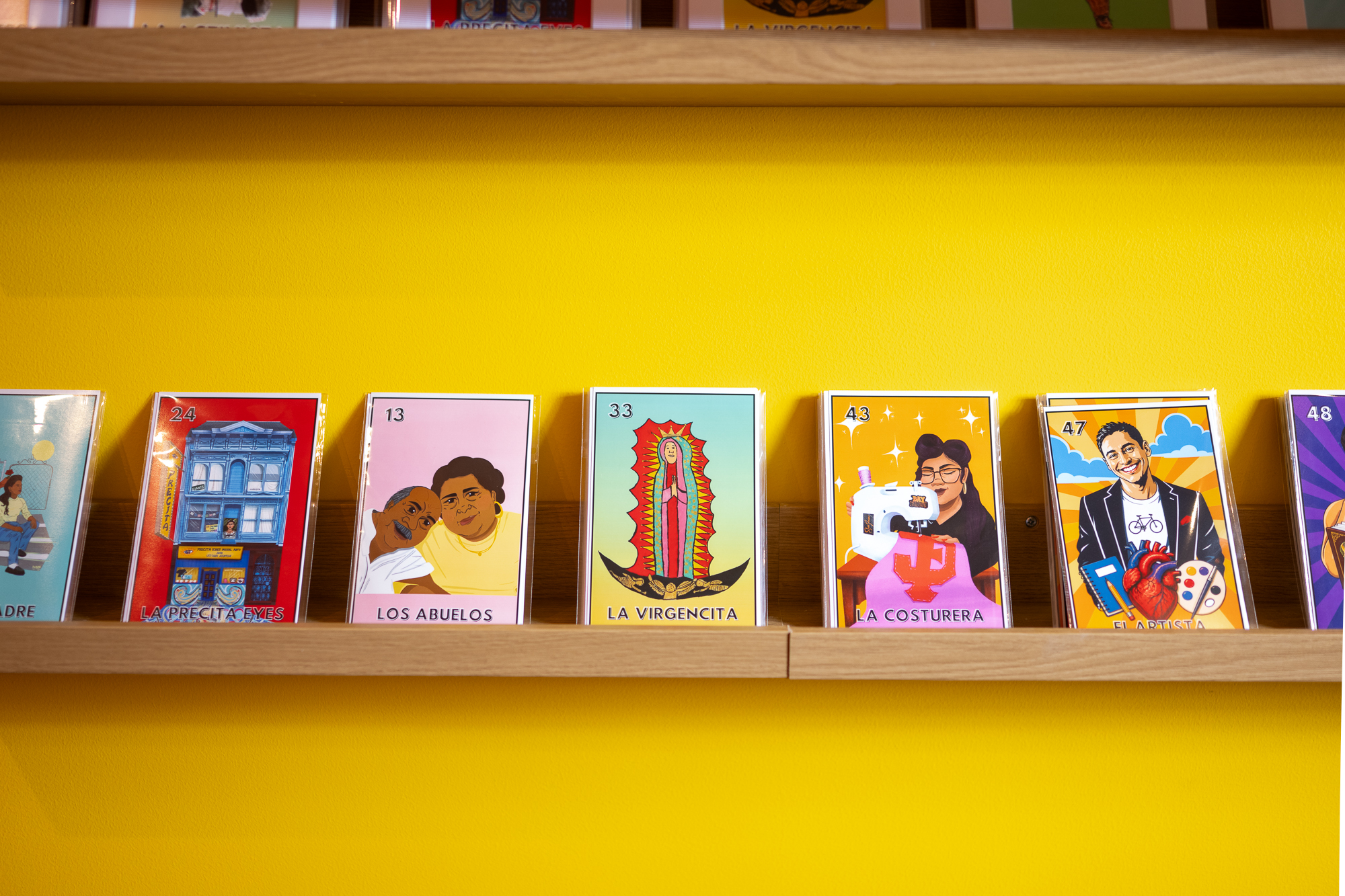
Mission Lotería takes inspiration from Lotería, a beloved bingo-style board game from Mexico known for iconic images such as a cactus plant, a woman in a small boat on Lake Chapala, a man carrying a large globe on his back and a radiant sun. Quiroz, 36, created the marketing platform to support local artists and small businesses by organizing community events and neighborhood tours.
“I want people to visit Mission Lotería and then venture into a cafe shop or a taqueria or a restaurant or another brick-and-mortar store,” Quiroz said. “It’s the starting point to bring them to the other parts of the Mission.”
The organization provides a template for how to support Latino businesses with intention and thoughtfulness, especially at a time when the Trump administration vigorously attacks diversity initiatives and has launched a deportation apparatus that has largely targeted Latino immigrants and hurts Latine communities nationwide.
“To be sitting here and about to open a storefront in the Mission, in the Latino cultural district of San Francisco,” said Quiroz, who was previously undocumented. “It’s my way of resisting. They’re not going to hold me down. They’re not going to hold us down. We’re here, we’re here to stay, and we’re out here. We’re thriving.”
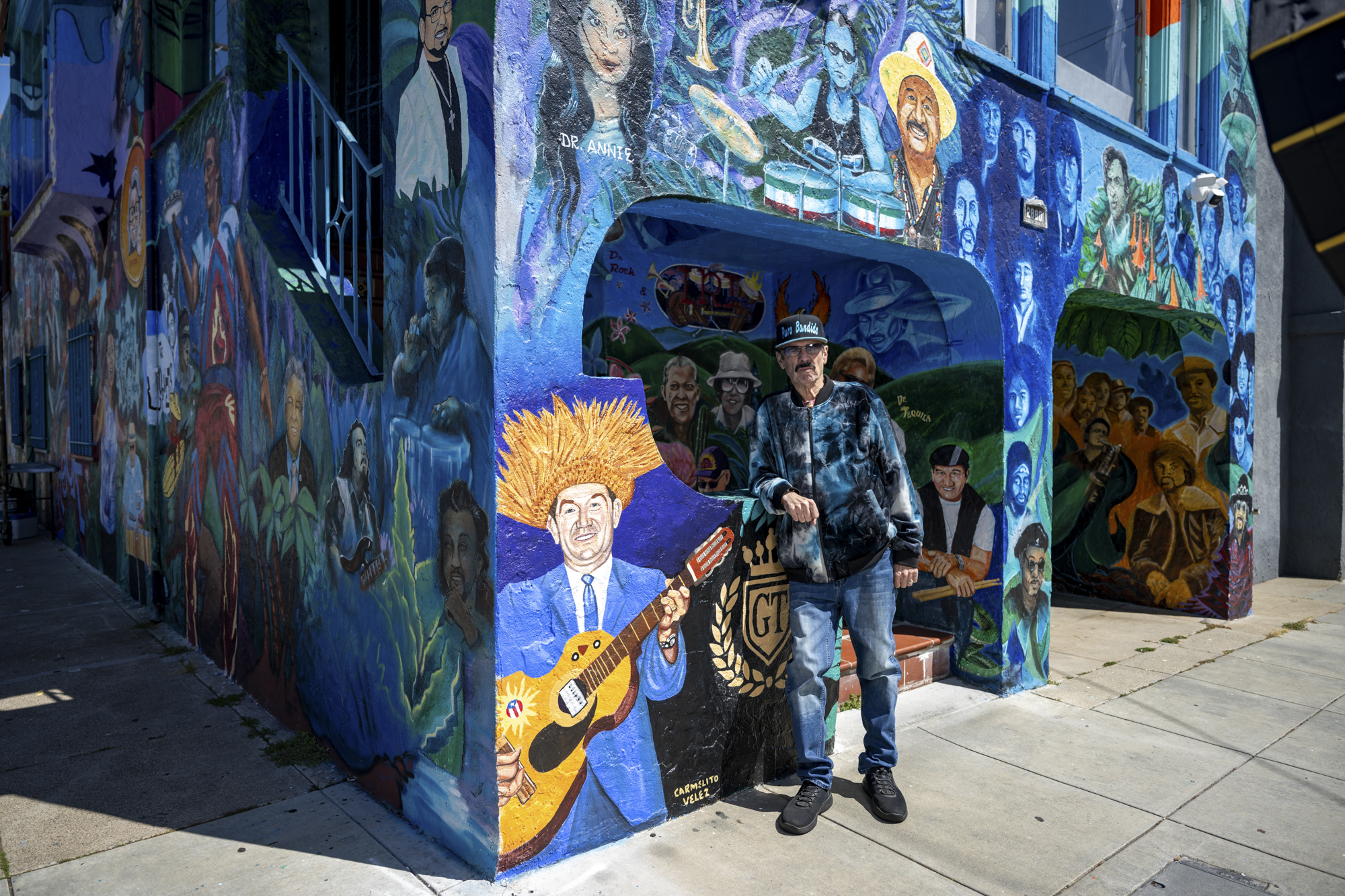
This year’s Hispanic Heritage Month presents an opportunity for Latinos to support businesses, organizations and community members who have felt the toll of the administration’s anti-immigration policies that have had a chilling effect, with immigrants staying home, shopping less, attending fewer public events and even being afraid to speak Spanish in public.
This has also been a challenging year for many Latinx-owned businesses between the fear immigrants are feeling and higher costs of doing business, said Alicia Villanueva, owner and founder of Hayward-based Alicia’s Tamales Los Mayas.
Seeing hardworking people picked up off the street, families being separated, and parents being detained and leaving children behind is demoralizing, she said.
“I am a citizen now, since last year, and I still feel this trauma,” she said. “Like when I’m driving, and I see the police or something — it scares me.”
For many food vendors, Hispanic Heritage Month is one of the busiest times of the year, Villanueva said, but this year is different because the community needs a morale boost.
“We really celebrate our cultures, our cuisine and all these traditions that we bring from our countries,” she said. “To keep our traditions alive is one of the responsibilities that we have for future generations.”
Villanueva said it pains her to see immigrants living in fear and suffering, especially since she understands the desire to come to the United States to work and advance.
She started her company in 2010 after selling tamales door to door. She joined a business incubator program for entrepreneurs at San Francisco-based La Cocina that helped her establish a wholesale and catering business and secure capital to grow.
Sixteen years later, Villanueva employs 21 workers who cater events, sell food to retail stores, provide passenger meals for Alaska Airlines and make school lunches for students throughout Northern California. Her next goal is national distribution, the 65-year-old said. She embodies an ethos of permanent optimism that many immigrants espouse.
“The time is really hard,” Villanueva said. “But if you have your passion, your dreams, no matter what, just keep going. Don’t be afraid.”

Still, for many Latines, Hispanic Heritage Month can come off as cringe. Corporations use it as a time to pander to Latinos and perform solidarity with clichés such as adding pictures of tacos to non-food-related content or putting the Spanish letter ñ where it doesn’t belong. So it’s no wonder why many people tend to snub their noses at seasonal, tone-deaf marketing.
What I can appreciate about Hispanic Heritage Month is the opportunity to unapologetically lean into the beauty, strength and value of Latino culture. Lately, I have been hearing the phrase, “Solo el pueblo salva al pueblo” (Only the community will save the community), which reminds me that celebrating Hispanic Heritage Month might include sharing our culture with others — but it’s most important to show up for ourselves.
“We think about Latinx heritage 365 days a year,” said Josiah Alderete, co-owner of Medicine for Nightmares in San Francisco. The bookstore is Black- and Latino-owned and has made a point to stock books written by and about people of color from its inception five years ago — not just for affinity months.
“I’m always thrilled people celebrate Hispanic Heritage Month, but the truth is, we are always celebrating it,” he said. “You can come in here and see yourself 12 months of the year.”
Practical ways to show up this Hispanic Heritage Month:
Attend Hispanic Heritage Month events
Cities and organizations across the Bay Area are planning festivities to honor and celebrate Latine residents and culture, which has turned into an act of resistance. (Check out K Onda’s comprehensive guide.)
Over the last year, several event organizers have said they were advised against holding large public gatherings like festivals for fear of ICE showing up and detaining people.
But most organizers decided that offering joy, reinforcing culture and coming together was more important than giving in to fear.
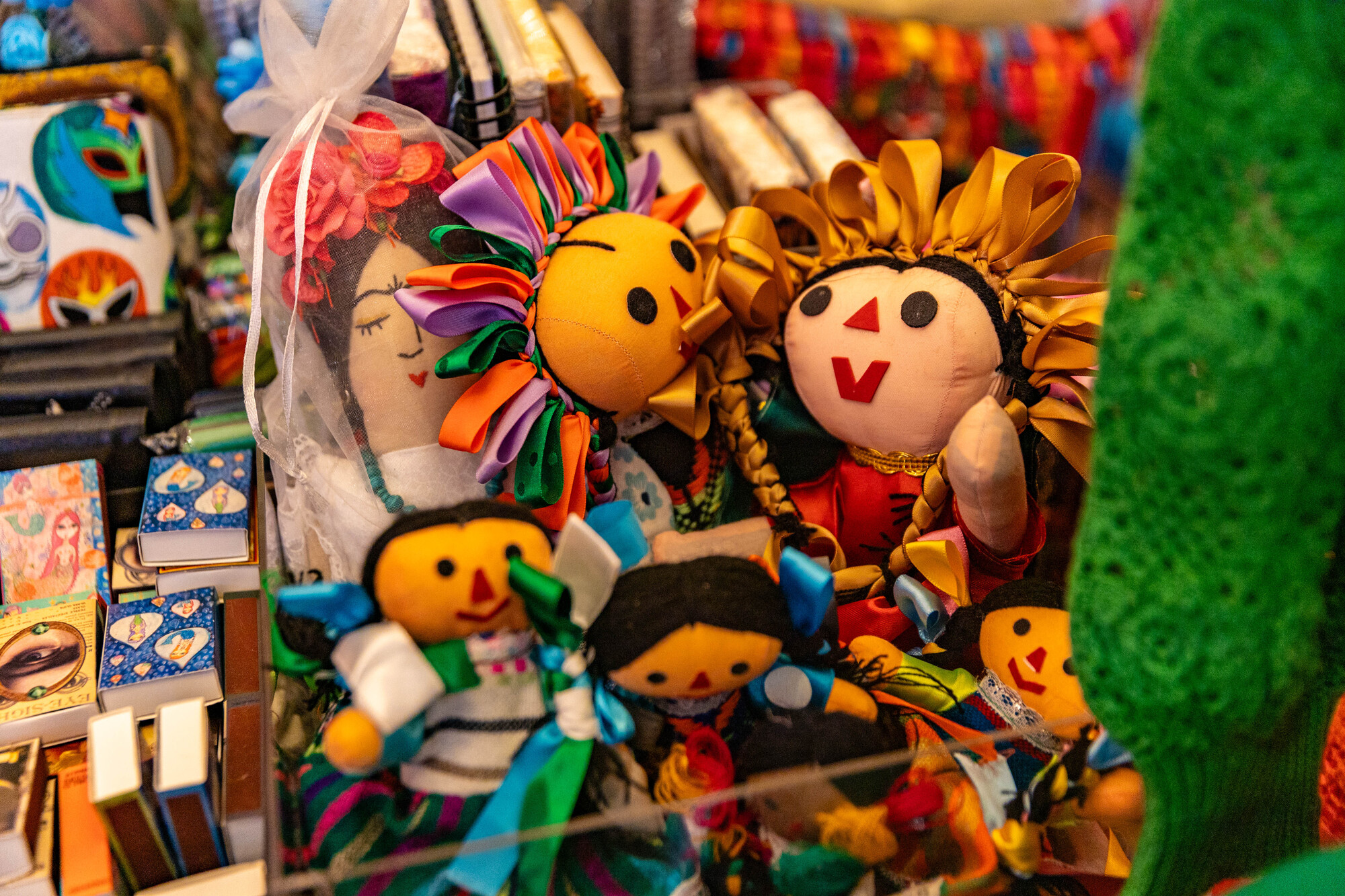
Prioritize shopping at Latino-owned businesses, especially small ones
I covered retail and consumer issues many years ago, and the biggest lesson I learned was that consumers have way more power than they know.
Every dollar people spend fuels someone’s bottom line, so choose where you shop wisely, because our spending power picks winners and losers every day.
That’s why I don’t feel bad buying an artisan or locally made item such as soaps, honey, produce from a farmer’s market or a handmade gift, even if I could have found something cheaper at a big-box store.
When I buy a cup of fruit from a street vendor, I feel good about buying a healthy snack and supporting someone who is often depending on that day’s sales to survive.
Read more books about Latin American identity and history by Latino authors
For a dose of cultural criticism and an exploration of how personal histories intersect with mainstream culture, I recommend Magical/Realism: Essays on Music, Memory, Fantasy, and Borders by Vanessa Angélica Villarreal, which I recently read and found evocative.
Other books to check out: Migrant Heart by Reyna Grande, a true gem of a writer who makes her home in Northern California, and Keeper of My Kin: Memoir of an Immigrant Daughter by Ada Ferrer, who appeared on Forum earlier this year.
And, here are some recommendations from Alderete, of Medicine for Nightmares: the young adult novel, Estela, Undrowning by San Francisco writer and educator René Peña-Govea; the poetry collection When Heaven Sinks by María Esquinca (who coincidently is a former KQED colleague); the nonfiction book Bad Mexicans: Race, Empire & Revolution in the Borderlands by Kelly Lytle Hernández; and the memoir Terrestre by Pulitzer Prize-winning writer and scholar Cristina Rivera Garza.