With Big Cuts Coming to SNAP, Food Banks Brace for Impact
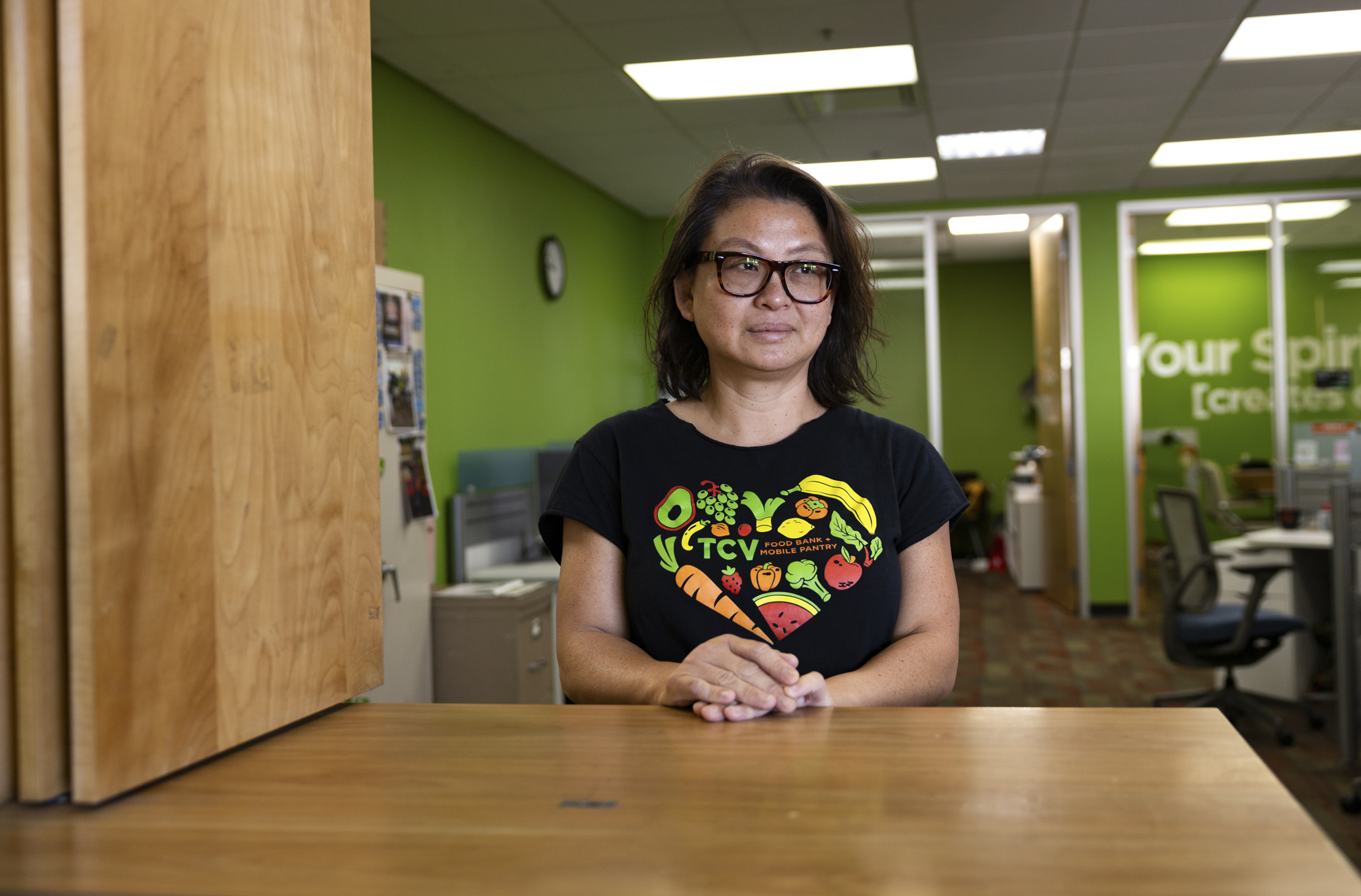
Major cuts to the Supplemental Nutrition Assistance Program – or SNAP – are taking effect as a result of the One Big Beautiful Bill Act that President Donald Trump signed into law last year, with an estimated 650,000 Californians are at risk of losing food assistance benefits. Food banks in the Bay Area, which have been serving people at historic rates since the pandemic, are now bracing for impact.
Links:
- Callout: Share your story about San Francisco’s rental market!
- California Food Banks Brace for Slow-Moving Avalanche of SNAP Cuts
Episode transcript
This transcript is computer-generated. While our team has reviewed it, there may be errors.
Ericka Cruz Guevarra: [00:01:19] Hey Bay listeners, it’s Ericka. And before we get started with today’s episode, we’re wondering if you can help us out with a future episode of The Bay that we are working on about San Francisco’s rental market. Have you been trying to find a place to rent in San Francisco recently? How’s that been going for you? If you wanna share your story, tap the link in our show notes and follow the instructions to leave us a message. Please tell us your name and where you’re calling from and your voice might be featured on the show. Thanks so much and we can’t wait to hear from you.
Ericka Cruz Guevarra: [00:02:04] I’m Ericka Cruz Gavarra and welcome to The Bay, local news to keep you rooted. Ladonna Johnson is like a lot of people here in the Bay. She makes just a little too much to be eligible for SNAP, or CalFresh as it’s known here. But even though Ladonna doesn’t qualify for food assistance, she also doesn’t make enough money to afford groceries on the day-to-day.
Ladonna Johnson: [00:02:36] Pick and choose a lot of things, especially when it comes to like financing. I make sure that the main bills are taken care of and then I’ll have to struggle for the rest. And that’s why I ended up coming here to get food.
Ericka Cruz Guevarra: [00:02:50] Here is the Tri-City Volunteers Food Bank in Fremont, where Ladonna has been going for the last eight years. And between inflation, the high cost of living in the Bay, and now unprecedented changes to SNAP, the number of people who will need help getting food on the table is about to go up.
Joseph Geha: [00:03:17] And how have the lines been for you as a person in the drive-through distributions? Are they getting longer? Are they the same?
Ladonna Johnson: [00:03:22] They are getting a lot longer. A lot longer.
Ericka Cruz Guevarra: [00:03:27] Thanks to the one big beautiful bill act that President Donald Trump signed into law last year, it’s about to get much harder for many people to qualify for SNAP. And advocates worry that food banks aren’t built to fill in the gaps.
Tanis Crosby: [00:03:47] We cannot food bank our way out of the problem that is being caused by the dismantling of SNAP. We need policies that are going to work to end hunger. What we have are policies that create hunger.
Ericka Cruz Guevarra: [00:04:02] Today, the big changes coming to SNAP and how that’s playing out at Bay Area food banks.
Ericka Cruz Guevarra: [00:04:15] How big of a change is SNAP about to go through, would you say?
Joseph Geha: [00:04:20] Yeah, it’s gonna be massive.
Ericka Cruz Guevarra: [00:04:24] Joseph Geha is a reporter who covers the South Bay for KQED.
Joseph Geha: [00:04:30] The Trump administration’s, you know, total cut on this SNAP program nationwide is, over a decade, $187 billion. You know, since last year, anti-hunger advocates and food bank leaders had been sounding the alarm that this bill that the Trump administration was putting together, the big, beautiful bill, would include these unprecedented, massive cuts to SNAP. But ultimately, that bill was passed. It’s now a year later and beyond and now is when we are really starting to see the effects come into view and we’re hearing that these effects are really going to start to become more visible later this year into the fall and early next year.
Ericka Cruz Guevarra: [00:05:16] But now, as you mentioned, big changes are coming to snap as a result of President Donald Trump’s one big, beautiful bill. What is changing exactly?
Joseph Geha: [00:05:27] Which changing is the rules around who is eligible. April is when folks that are here as seeking asylum or refugees or parolees or victims of domestic violence or human trafficking, those folks benefits have already ended as of April. The Trump administration is expanding the work requirements or volunteerism requirements for people to as old as 64, whereas before that stopped at age 54. And people who have children or dependents, they used to be able to be eligible for benefits as long as those children were 18 and under, but now that is gonna be changing to shorten when those dependents are 14 or older. So people are being met with a broad set of new work and volunteerism and age requirements, and that’s effectively ending support for potentially up to 650,000 people in California.
Ericka Cruz Guevarra: [00:06:25] I mean, why is this happening, Joseph? What is the Trump administration’s rationale behind, I mean effectively raising the barriers?
Joseph Geha: [00:06:34] Well, the Trump administration and Congress and its support of it has kind of essentially said that there is rampant fraud and waste across this program.
Newscaster: [00:06:44] The Trump administration cracking down on food stamp fraud. Agricultural Secretary Brooke Rollins says between January 25 and early this year, 4.3 million people have stopped receiving food stamps in part due to tackling wide.
Joseph Geha: [00:06:57] Some of the best reporting on this over the past year or so has, has shown that, you know, these top officials in the Trump administration who are complaining about what they say is fraud or waste are actually kind of conflating things like, you know administrative and clerical errors, like giving somebody a little too much money for their monthly groceries or actually a little less money than they actually are scheduled to receive. That’s like an error, right? But that’s not exactly intentional fraud. And as some of these advocates have said, there are already a lot of quality control measures and a lot checks and balances, so to speak, to make sure that folks who need these benefits are the ones who are getting them. That this is essentially just adding red tape.
Ericka Cruz Guevarra: [00:07:48] For this story Joseph you went to food banks to try and understand the impact of these SNAP changes. I mean, why are food banks sort of the best place to understand how big changes to SNAP are going to be playing out?
Joseph Geha: [00:08:05] Well, SNAP is such an effective anti-hunger program, and it really helps people at such a large scale that when benefits like that are taken away in an environment where every day we’re facing higher costs for rent and groceries and insurance and childcare, people need help, and that help often comes in the form of food distribution from their local food bank and local charities. So in the coming months, you know, the people who run these local charities and these large regional food banks are expecting their lines to get longer and expecting to see more people coming to them for basic help with putting food on the table.
Ericka Cruz Guevarra: [00:08:47] And you visited one food bank in Fremont, the Tri-City Volunteers Food Bank, to kind of see how this is playing out already. What did you see when you went there?
Joseph Geha: [00:08:56] Tri-City Volunteers is an organization that’s been around for a long time in Fremont. The actual distribution site is tucked into this really small space off of a side street that’s actually called Joseph. It’s really kind of out of view from the general public. You know, on days that there’s distribution there, especially drive-through distribution for folks who have trouble with their mobility and stuff, you’ll see a line of cars popping out onto more major streets as people wait for their help and a bag of groceries, essentially. All right, trunk closing, stand clear, everyone.
Volunteer: [00:09:34] Next one’s possible too!
Joseph Geha: [00:09:36] On the day I went, folks like Linda Leu who run the place and all of her dedicated staff and volunteers, they’re essentially kind of getting their energy up.
Linda Leu: [00:09:45] We’ve got pasta, sauce, pasta, chicken, black beans, sweet potatoes, onions, zucchinis, yellow squash.
Joseph Geha: [00:09:54] And just kind of the energy was at a high level. You could see people are really dedicated to this work to try and help their neighbors.
Volunteer: [00:10:01] Okay, you can open whenever I’m so they just gonna do the huddle and then yeah
Volunteer: [00:10:06] All right, so guys, you don’t have to wait.
Joseph Geha: [00:10:13] People like Linda Leu are telling us that they have seen increase after increase in need
Linda Leu: [00:10:19] We were never designed to be anyone’s sole source of food, but I think we have.
Joseph Geha: [00:10:24] Sort of become that. And especially after some of those changes went into effect, it seems like folks are coming to them more and more often because they do not have this assistance that they need essentially.
Ericka Cruz Guevarra: [00:10:38] And it sounds like when you were there, they were sort of preparing for another day of distributing food to people in Fremont, which is honestly, I got to say, not something that I think about…. Hunger in, in Fremont, which was just labeled, uh, the happiest city in the U S, wasn’t it?
Joseph Geha: [00:10:57] Yeah, exactly. I think I think we have some stereotypes in our minds about where hunger might make sense. But the truth of the matter is in every community in the Bay Area, which is a very wealthy region, there are still people in every single community in every corner of every county who are food insecure or who are essentially not knowing if they’re going to be able to get enough food to put on the table for themselves and their families. And Fremont is no exception to that. We spoke with people like Jose Ramirez. Who’s recently retired.
Jose Ramirez: [00:11:28] 67 years old and I’m living in Fremont, California.
Joseph Geha: [00:11:33] He pays nearly $4,000 a month in rent to keep his home for his family. But Jose had recently started coming to Tri-City Volunteers Food Bank. And he was there in his car waiting to get a bag of groceries to help feed his family.
Jose Ramirez: [00:11:47] I’m struggles because I don’t have no work and I need to pay rent and everything I need food for survive
Joseph Geha: [00:11:56] Some folks would like to have SNAP benefits but are just outside the eligibility for that. People like Jose Ramirez who said to us that his retirement income is just a little bit too high for eligibility. But meanwhile he is not earning enough to actually make ends meet for his family on a daily and monthly basis.
Ericka Cruz Guevarra: [00:12:17] Yeah, it just speaks to the need that people are really in. We’ll have more with KQED’s Joseph Jeha, right after this break. By the way, did you know that the work that we do here on The Bay is funded almost entirely by everyday listeners like you? If you’ve been a listener of the show and you wanna know how to support the journalism that we bring you here on The bay, consider becoming a KQEd sustaining member. We can’t do this work without you. Just go to donate.kqed.org We’ll be right back.
Ericka Cruz Guevarra: [00:13:29] As you mentioned earlier, these institutions are not built to serve this many people, and increasingly they are. I mean, I know food banks have been really, really struggling with this increase in need, really since the pandemic, as I understand it, but these snap changes are the thing that they kind of have always really feared, right?
Joseph Geha: [00:13:53] You’re absolutely right. I mean, the pandemic is a unique time for food banks because there was a massive surge in need, but the federal government at that time was also stepping up. But since the major effects of the pandemic have fallen away, there has still been elevated knee. People who run food banks across the state are telling us that they are serving as many people as they served in the pandemic, which for all food banks was essentially their peak or even more people right now. But they don’t have these extra resources that the federal government used to be providing. And in fact, this federal government now is cutting SNAP.
Tanis Crosby: [00:14:34] So it is a slow moving avalanche.
Joseph Geha: [00:14:38] One of the folks I spoke with is Tanis Crosby, and she’s the head of the SF Marin food bank. She feels that these changes to the federal government support for SNAP in the big, beautiful bill, H.R. 1, are essentially designed to be cruel.
Tanis Crosby: [00:14:54] We need policies that are gonna work to end hunger. What we have are policies that’re creating hunger.
Joseph Geha: [00:15:02] They are designed to confuse people and to essentially, as she said, to make a mountain of paperwork and confusing new requirements both for the people who need these services, as well as the counties, the states, and the individual nonprofits and food banks who are trying to ramp up their work to help keep people enrolled in SNAP.
Tanis Crosby: [00:15:21] And it will then bury people in paperwork and bury states in new expenses and bury people in rules and requirements and make it much harder to get.
Ericka Cruz Guevarra: [00:15:34] I mean has the state stepped up in any way to fill in these gaps sort of left by the federal government?
Joseph Geha: [00:15:44] Certainly, California has tried to address this problem. It has not just been people standing around throwing their arms up at how frustrated they are with the Trump administration and the federal government. Local legislators have gotten together across the state to propose and pass bills and get new allocations for funding. I mean, we’re talking several hundred millions of dollars just in this year’s budget alone to help food banks do things like buy more food from California Farms. Right, so that they are not running out of food during an increased need and it supports local agriculture here in the state. We’ve also seen hundreds of millions of dollars going toward counties and other and other local municipalities who need help trying to keep people enrolled and update their paperwork and absorb new costs that are being shifted onto them from the federal government. So the state is not standing idly by. However, what we’re hearing from leaders in the anti-hunger space is that that alone will never be enough. Even if the state keeps putting more and more money toward these efforts, it’s going to be very hard to replicate the scale that SNAP has achieved.
Tanis Crosby: [00:16:58] We cannot food bank our way out of the problem that is being caused by the dismantling of SNAP.
Joseph Geha: [00:17:05] What we’re hearing from folks on the ground is what really needs to happen is that snap cuts need to be reversed, they need to be ended.
Ericka Cruz Guevarra: [00:17:15] I mean, it sounds like, Joseph, these changes to snap are expected to be a slow drip. I mean have any of these changes already gone into effect here? Can you run us through just the timeline of things?
Joseph Geha: [00:17:30] The way SNAP works is that people have to sign up, prove their eligibility, and then every year they are essentially recertified. Because of that cycle, food bank leaders and state officials are expecting some of these major cuts to start really taking effect in late September and October, and then kind of continue on a steady pace through the end of the year and into 2027.
Ericka Cruz Guevarra: [00:17:55] So it sounds like we’re not gonna see the full scope of the impact of this for quite a while.
Joseph Geha: [00:18:00] That’s correct. The Food Banks Association of the state, it’s called California Food Banks, put out some new data this year and using a model from the United Way essentially showed that nearly 40% of the population in California cannot afford the cost of basic needs in their community. You know, the food bank leaders that I spoke with up and down the state, you know, from LA to Kern County to the very top of the state in Del Norte County. And of course, here in the Bay Area are talking about, you know, essentially bracing folks are needing more and more help. And it’s driving people toward food banks. They are getting ready and doing what they can to prepare for what they expect to be a, an even further increase in need in all of their communities.
Ericka Cruz Guevarra: [00:18:50] Well, Joseph, thank you so much.
Joseph Geha: [00:18:52] Thank you, Ericka. Always great to speak with you.
Some members of the KQED podcast team are represented by The Screen Actors Guild, American Federation of Television and Radio Artists, San Francisco-Northern California Local.