Oakland Speed Cameras Show Promise, More Than Half of Tickets Go to Nonresidents
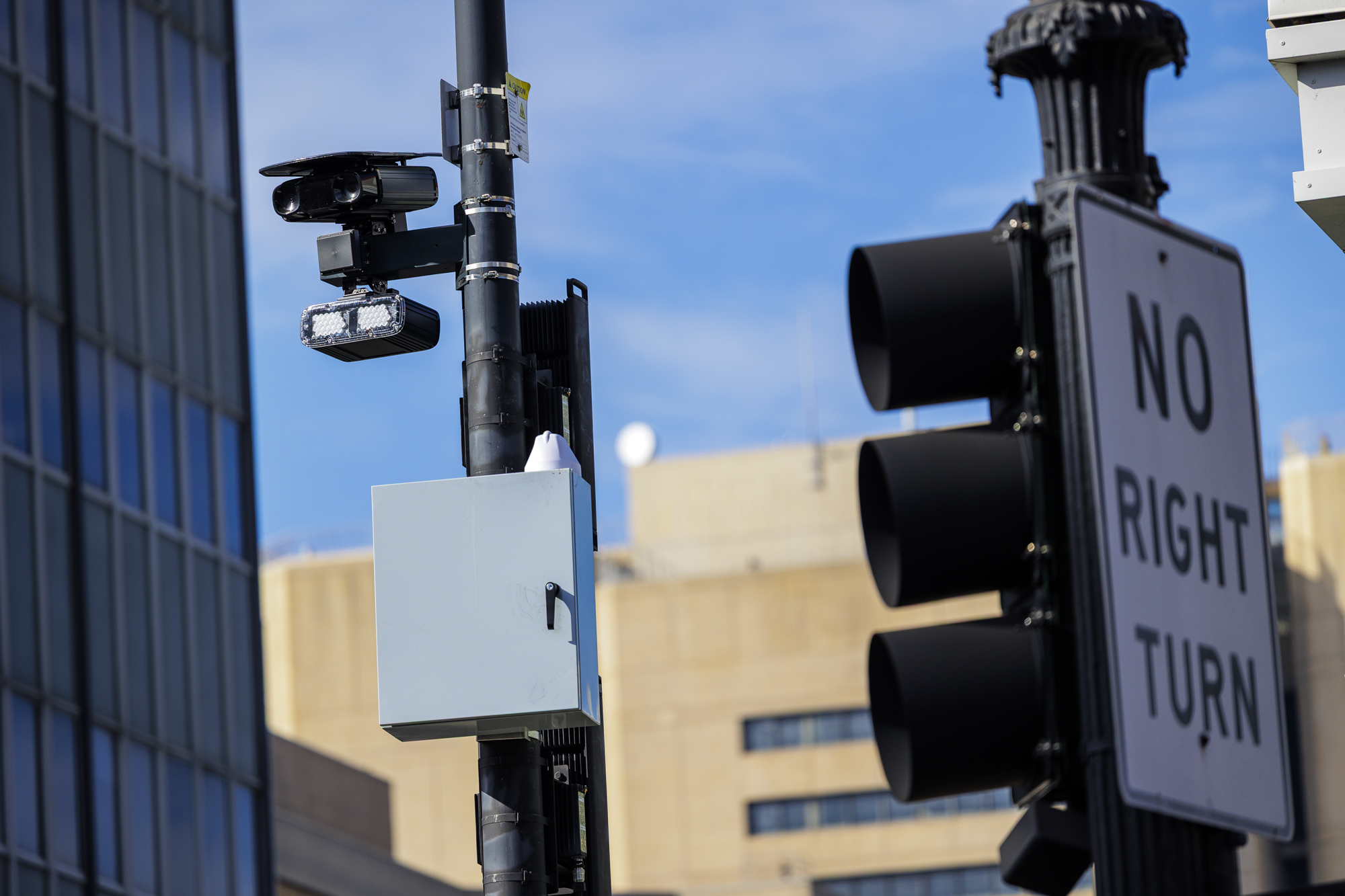
Automated speed cameras in Oakland are causing a dramatic drop in speeding, according to new data released Thursday by the city’s Department of Transportation.
Cameras issued nearly 200,000 citations — and more than half were mailed to an address outside of Oakland — the six-month progress report on the program revealed.
The report finds that the number of vehicles traveling 11 miles per hour or more over the speed limit dropped by an average of 70% across all 18 camera locations — which fall in the city’s high injury network — compared to speed data collected before the cameras were installed.
The greatest drop in speeding drivers was at Seventh Street between Adeline and Linden streets, which saw a reduction of 91%, according to the report.

”In a pretty short amount of time, those were very positive results,” said Josh Rowan, director of Oakland’s Department of Transportation.
Oakland’s speed cameras began a two-month $0 warning period on Jan. 14, and began issuing citations on March 15. The cameras are the result of a 2023 state law that authorized Oakland and five other cities — including San Francisco, San Jose, Long Beach, Los Angeles and Glendale — to pilot the speed enforcement technology for a five-year period.
For more than two decades, speeding has been involved in approximately one-third of all motor vehicle fatalities nationwide, according to the National Highway Traffic Safety Administration. In March, San Francisco reported an 80% drop in speeding at camera locations after one year of enforcement.
During the first four months of issuing citations, Oakland’s cameras have generated well more than double the amount that San Francisco did in its first four months, according to data on San Francisco’s citations analyzed by the San Francisco Chronicle.
Rowan said part of the reason for that is that many of Oakland’s streets are built in a way that encourages speeding.
“ In Oakland we have a lot of local streets that are built to highway standards. They’re wide, straight and fast,” he added.
Rowan’s theory is that Oakland is a “through” city: “that people use to get from point a to point b.” So his discovery that a majority of speeders have a registered address outside Oakland was an “aha” moment for him.
“My intuitive feeling has been that not all of our problems are us doing this to ourselves,” Rowan said. “Those not from Oakland, please don’t speed when you’re here.”
Speeders are the vast minority of all drivers in the city, according to Oakland’s progress report. Across all camera locations combined, violations were issued to approximately 1.5% of all vehicles that passed by each camera, meaning most drivers were traveling close to the speed limit, the report noted.
Rowan said speed cameras are proving to be a valuable tool in the short term, but the technology is also pushing the city to have conversations about redesigning Oakland’s streets to be safer in the long term. He mulled over the prospect of a long-term roundabout installation program to “really get into the type of safety projects that start making a real change over time.”
Under California law, automated speeding cameras issue $50 citations to anyone traveling 11 miles per hour or more over the speed limit, and the fine increases based on speed, with a maximum fine of $500 for a driver traveling more than 100 miles per hour over the speed limit. Under the law, the citations issued by the cameras are considered civil penalties and can’t be used against a driver to revoke or suspend their license.
“Ideally, if this is successful, we make no money off of it because now everyone’s complying with speed limit laws,” Rowan said.