Berkeley Moves Forward With Bike Lanes on Hopkins Street, After Fierce Debate
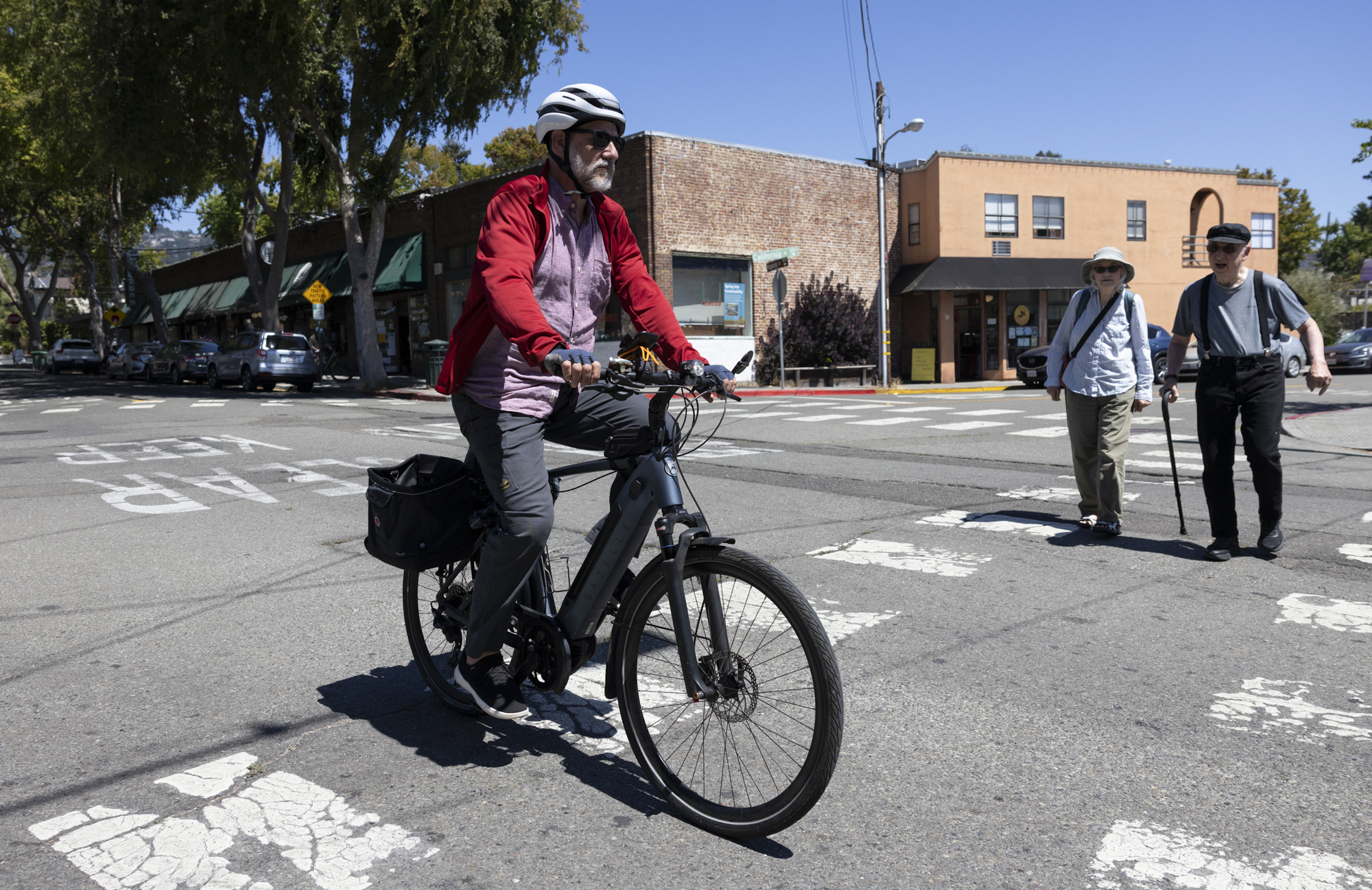
Berkeley is one step closer to having protected bicycle lanes on Hopkins Street — an issue that has divided the city for years and has forced a reckoning on how the city approaches its ambitious climate goals.
After hours of public comment that dragged the meeting past midnight, City Council voted 7-2 to back a repavement plan for Hopkins that includes one-way bike lanes on each side of the busy street, which connects San Pablo Avenue to the Berkeley hills.
Councilmember Rashi Kesarwani, whose district includes one part of Hopkins, championed the plan. At Tuesday’s meeting, she insisted that adding bike lanes will help calm car traffic in a street that has seen several dangerous accidents in the past decade. In 2017, 69-year-old Seon O’Neill was hit and killed at Hopkins and Monterey Avenue by a driver who did not stop. Since then, the city has recorded four severe injuries among pedestrians and cyclists along Hopkins.
“The proposed safety treatments are not arbitrary,” Kesarwani said. “They are directly informed by where people have been killed and severely injured on this street.”
All along Hopkins, there are potholes and cracked pavement. City officials have sought to repave Hopkins since 2018, but the process has stalled for years as neighborhood groups have pushed back against plans that include protected bike lanes. One of these groups, Friends of Hopkins, mobilized hundreds of residents to Tuesday’s meeting. Many argued that adding bike lanes on both sides of the street would create more problems than actually increase safety.
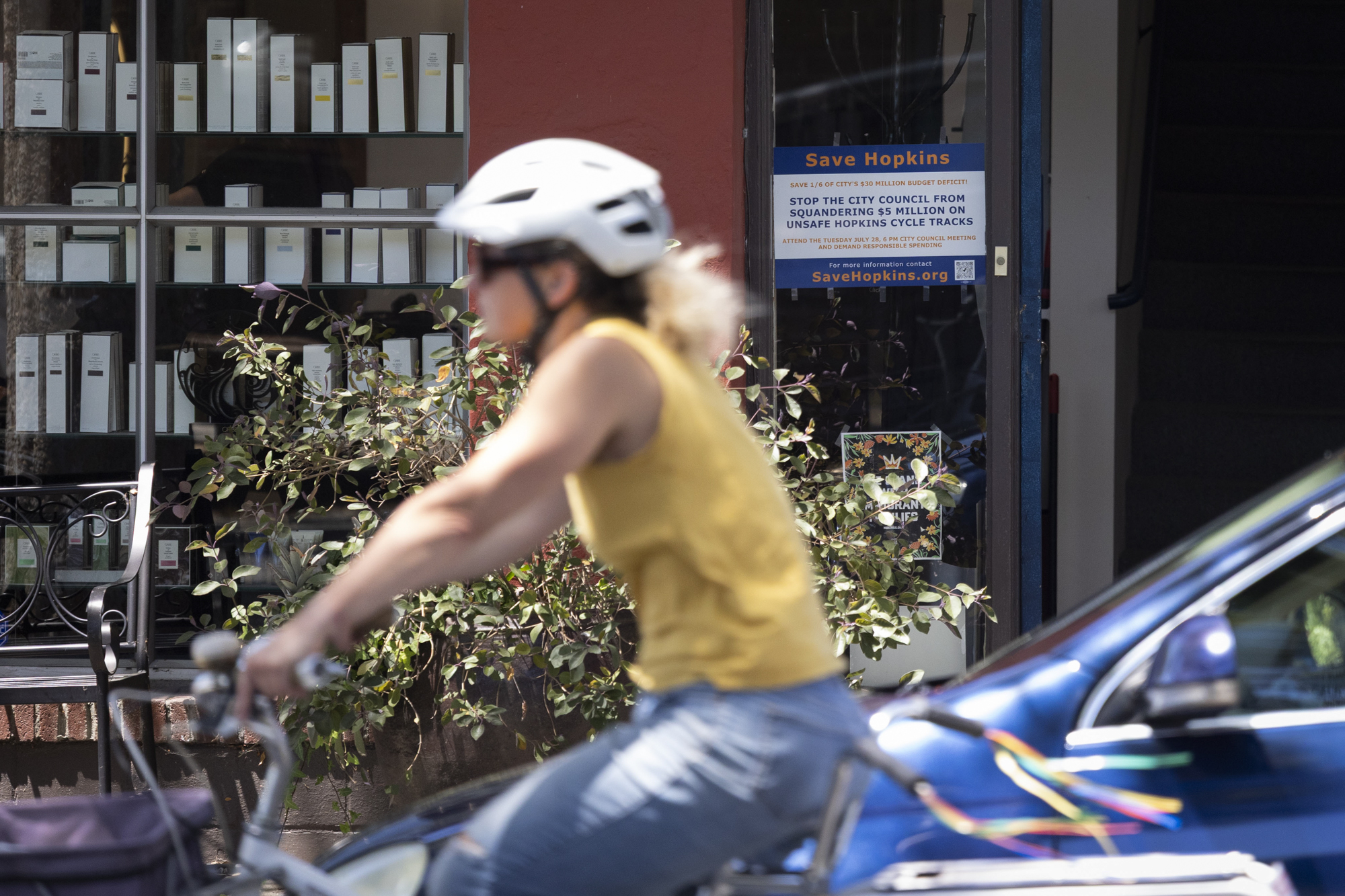
Donna DeDiemar, one of the leaders of the group, has lived near Hopkins for 50 years and told KQED that city officials prioritized the demands of cyclists over the needs of current residents.
We knew we had facts and data on our side, and we simply could not overcome ideology,” she said. “How do you overcome people who have made a decision because it’s trendy to want that?”
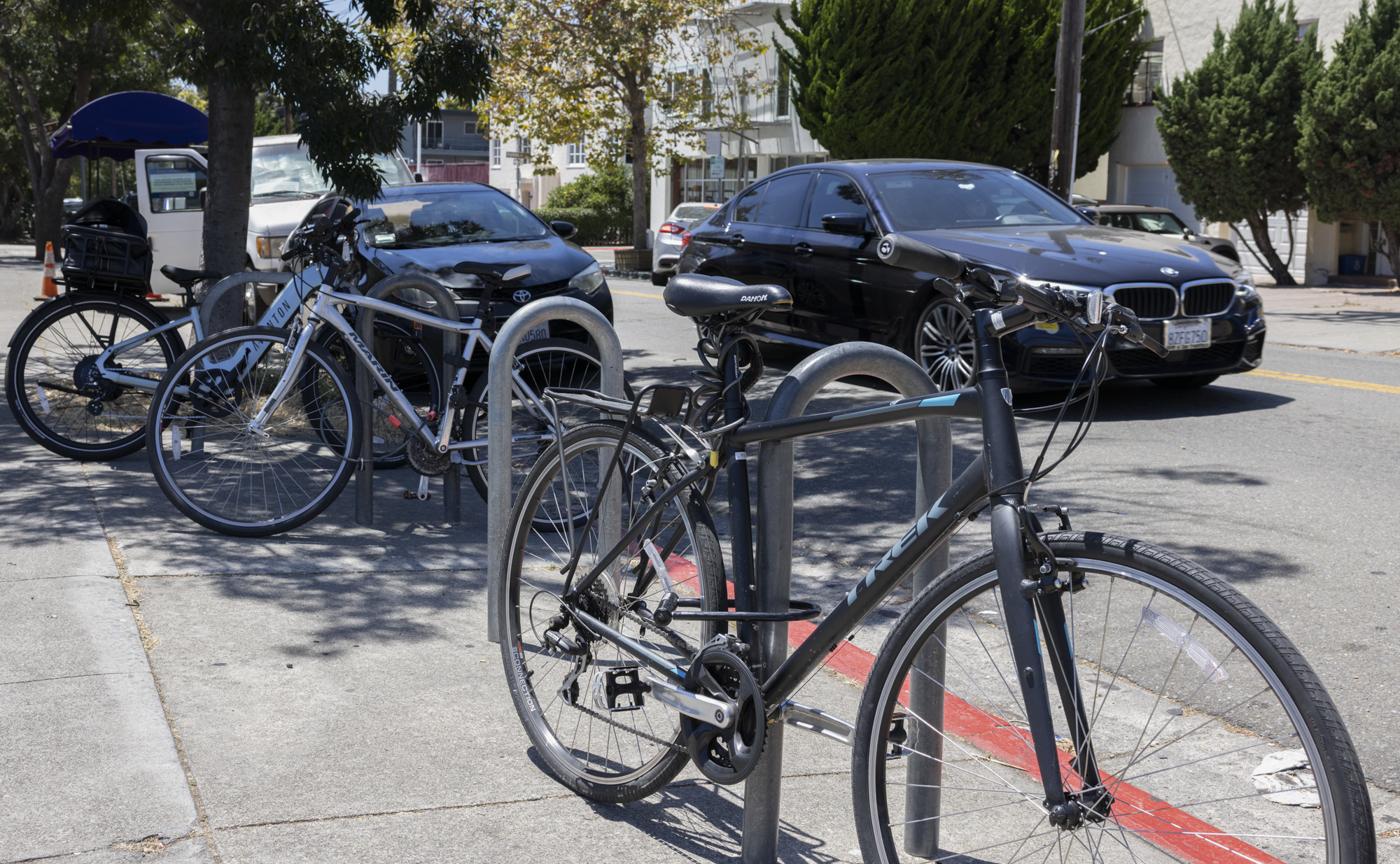
Others who spoke up at Tuesday’s meeting said that the cyclists moving through the lane could potentially crash into cars backing out of their driveway, while others expressed concern that the concrete barriers protecting cyclists could interfere with garbage pickup. But the biggest worry for many was the possibility of over a hundred on-street parking spots disappearing.
“Hopkins is more than just another commercial corridor. It’s actually a destination,” said Jacqui Yu, the manager of a restaurant in the corridor that would lose parking space.

Several dozen businesses call Hopkins home, including the historic Monterey Fish Market and Hopkins Street Bakery.
“Removing so much parking without practical alternatives will discourage visitors, hurting the small businesses that have made this area successful in the first place,” Yu said.
But bike lane supporters were just as numerous at Tuesday’s meeting, representing a wide coalition of young families, elderly residents and cyclists who have survived being hit by cars.
“We’ve got a big safety problem on Hopkins,” said Lucinda Young, a senior who uses her bicycle as her main mode of transportation. “Let’s just not wait for another fatality or serious accident to correct this problem.”
As public comment stretched into the fifth hour, Councilmember Mark Humbert acknowledged the intensity of the debate.
“It’s honestly a little crazy that this is the amount and intensity of discussion that we need in order to install a protected bike lane,” he said.
“But at the same time, it makes sense,” Humber said, “because this is about more than just a bike lane on one street. It’s about what kind of a city we want to be and what we’re willing to do to live up to our professed priorities.”
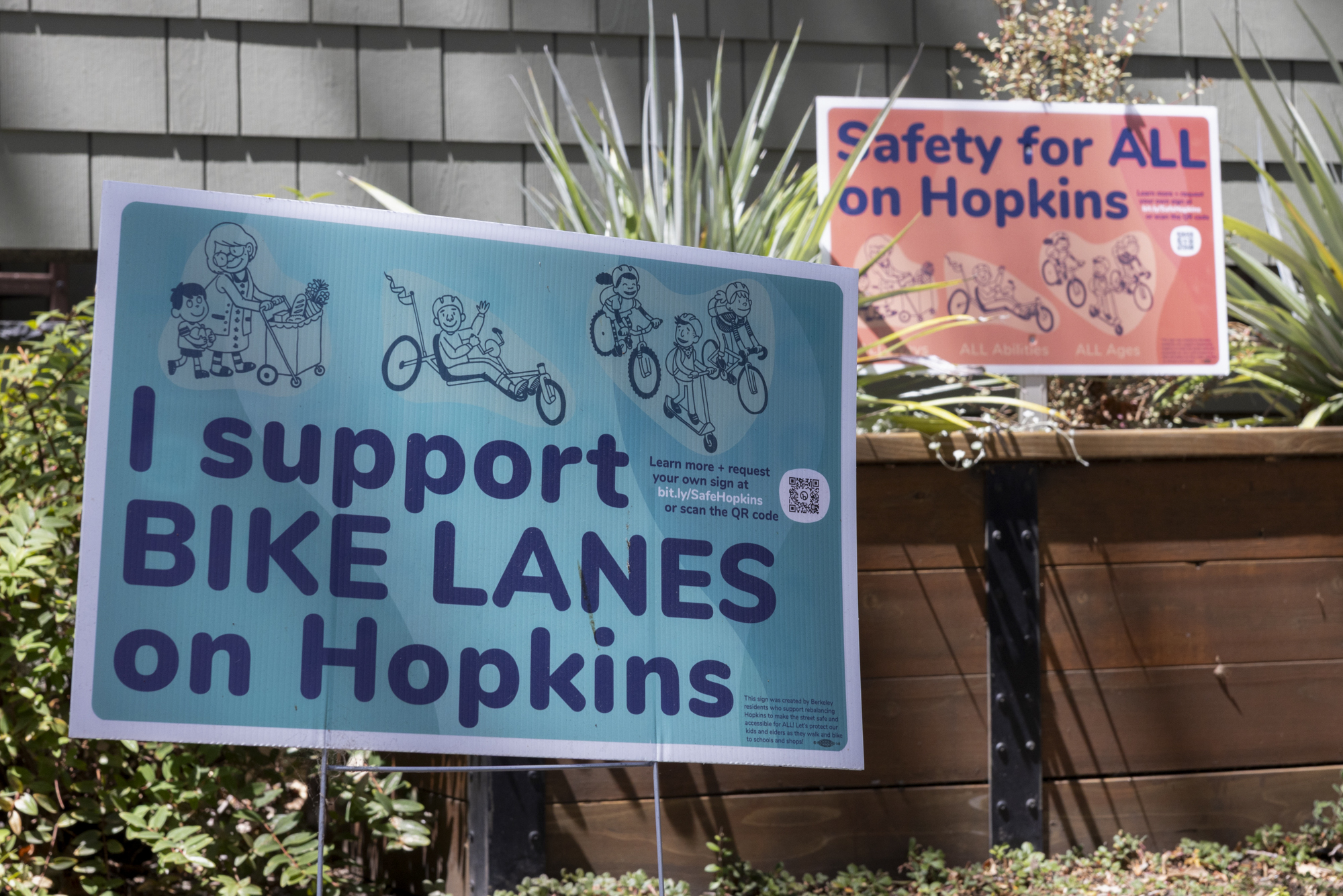
Bike lane advocates have repeatedly pointed out that Berkeley has established commitments to reducing the city’s carbon emissions and prioritizing active modes of transit. In 2021, the city committed to reaching zero net carbon emissions, which includes eliminating emissions from private vehicles. And the city’s most recent Bicycle Plan included Hopkins in the list of streets that need improvements to bicycle safety.
“Meeting our climate goals requires more than just transitioning to cleaner vehicles,” said Jacob Dadmun, a member of the local Sierra Club. “It requires creating communities where walking, bicycling, rolling and public transit are safe, convenient and attractive choices for everyday trips.”
There’s no plan yet for construction to begin — for now, city staff must seek community input as they begin designing a complete proposal.