window.__IS_SSR__=true
window.__INITIAL_STATE__={
"attachmentsReducer": {
"audio_0": {
"type": "attachments",
"id": "audio_0",
"imgSizes": {
"kqedFullSize": {
"file": "https://ww2.kqed.org/news/wp-content/themes/KQED-unified/img/audio_bgs/background0.jpg"
}
}
},
"audio_1": {
"type": "attachments",
"id": "audio_1",
"imgSizes": {
"kqedFullSize": {
"file": "https://ww2.kqed.org/news/wp-content/themes/KQED-unified/img/audio_bgs/background1.jpg"
}
}
},
"audio_2": {
"type": "attachments",
"id": "audio_2",
"imgSizes": {
"kqedFullSize": {
"file": "https://ww2.kqed.org/news/wp-content/themes/KQED-unified/img/audio_bgs/background2.jpg"
}
}
},
"audio_3": {
"type": "attachments",
"id": "audio_3",
"imgSizes": {
"kqedFullSize": {
"file": "https://ww2.kqed.org/news/wp-content/themes/KQED-unified/img/audio_bgs/background3.jpg"
}
}
},
"audio_4": {
"type": "attachments",
"id": "audio_4",
"imgSizes": {
"kqedFullSize": {
"file": "https://ww2.kqed.org/news/wp-content/themes/KQED-unified/img/audio_bgs/background4.jpg"
}
}
},
"placeholder": {
"type": "attachments",
"id": "placeholder",
"imgSizes": {
"thumbnail": {
"file": "https://cdn.kqed.org/wp-content/uploads/2024/12/KQED-Default-Image-816638274-2000x1333-1-160x107.jpg",
"width": 160,
"height": 107,
"mimeType": "image/jpeg"
},
"medium": {
"file": "https://cdn.kqed.org/wp-content/uploads/2024/12/KQED-Default-Image-816638274-2000x1333-1-800x533.jpg",
"width": 800,
"height": 533,
"mimeType": "image/jpeg"
},
"medium_large": {
"file": "https://cdn.kqed.org/wp-content/uploads/2024/12/KQED-Default-Image-816638274-2000x1333-1-768x512.jpg",
"width": 768,
"height": 512,
"mimeType": "image/jpeg"
},
"large": {
"file": "https://cdn.kqed.org/wp-content/uploads/2024/12/KQED-Default-Image-816638274-2000x1333-1-1020x680.jpg",
"width": 1020,
"height": 680,
"mimeType": "image/jpeg"
},
"1536x1536": {
"file": "https://cdn.kqed.org/wp-content/uploads/2024/12/KQED-Default-Image-816638274-2000x1333-1-1536x1024.jpg",
"width": 1536,
"height": 1024,
"mimeType": "image/jpeg"
},
"fd-lrg": {
"file": "https://cdn.kqed.org/wp-content/uploads/2024/12/KQED-Default-Image-816638274-2000x1333-1-1536x1024.jpg",
"width": 1536,
"height": 1024,
"mimeType": "image/jpeg"
},
"fd-med": {
"file": "https://cdn.kqed.org/wp-content/uploads/2024/12/KQED-Default-Image-816638274-2000x1333-1-1020x680.jpg",
"width": 1020,
"height": 680,
"mimeType": "image/jpeg"
},
"fd-sm": {
"file": "https://cdn.kqed.org/wp-content/uploads/2024/12/KQED-Default-Image-816638274-2000x1333-1-800x533.jpg",
"width": 800,
"height": 533,
"mimeType": "image/jpeg"
},
"post-thumbnail": {
"file": "https://cdn.kqed.org/wp-content/uploads/2024/12/KQED-Default-Image-816638274-2000x1333-1-672x372.jpg",
"width": 672,
"height": 372,
"mimeType": "image/jpeg"
},
"twentyfourteen-full-width": {
"file": "https://cdn.kqed.org/wp-content/uploads/2024/12/KQED-Default-Image-816638274-2000x1333-1-1038x576.jpg",
"width": 1038,
"height": 576,
"mimeType": "image/jpeg"
},
"xxsmall": {
"file": "https://cdn.kqed.org/wp-content/uploads/2024/12/KQED-Default-Image-816638274-2000x1333-1-160x107.jpg",
"width": 160,
"height": 107,
"mimeType": "image/jpeg"
},
"xsmall": {
"file": "https://cdn.kqed.org/wp-content/uploads/2024/12/KQED-Default-Image-816638274-2000x1333-1-672x372.jpg",
"width": 672,
"height": 372,
"mimeType": "image/jpeg"
},
"small": {
"file": "https://cdn.kqed.org/wp-content/uploads/2024/12/KQED-Default-Image-816638274-2000x1333-1-672x372.jpg",
"width": 672,
"height": 372,
"mimeType": "image/jpeg"
},
"xlarge": {
"file": "https://cdn.kqed.org/wp-content/uploads/2024/12/KQED-Default-Image-816638274-2000x1333-1-1020x680.jpg",
"width": 1020,
"height": 680,
"mimeType": "image/jpeg"
},
"full-width": {
"file": "https://cdn.kqed.org/wp-content/uploads/2024/12/KQED-Default-Image-816638274-2000x1333-1-1920x1280.jpg",
"width": 1920,
"height": 1280,
"mimeType": "image/jpeg"
},
"guest-author-32": {
"file": "https://cdn.kqed.org/wp-content/uploads/2025/01/KQED-Default-Image-816638274-1333x1333-1-160x160.jpg",
"width": 32,
"height": 32,
"mimeType": "image/jpeg"
},
"guest-author-50": {
"file": "https://cdn.kqed.org/wp-content/uploads/2025/01/KQED-Default-Image-816638274-1333x1333-1-160x160.jpg",
"width": 50,
"height": 50,
"mimeType": "image/jpeg"
},
"guest-author-64": {
"file": "https://cdn.kqed.org/wp-content/uploads/2025/01/KQED-Default-Image-816638274-1333x1333-1-160x160.jpg",
"width": 64,
"height": 64,
"mimeType": "image/jpeg"
},
"guest-author-96": {
"file": "https://cdn.kqed.org/wp-content/uploads/2025/01/KQED-Default-Image-816638274-1333x1333-1-160x160.jpg",
"width": 96,
"height": 96,
"mimeType": "image/jpeg"
},
"guest-author-128": {
"file": "https://cdn.kqed.org/wp-content/uploads/2025/01/KQED-Default-Image-816638274-1333x1333-1-160x160.jpg",
"width": 128,
"height": 128,
"mimeType": "image/jpeg"
},
"detail": {
"file": "https://cdn.kqed.org/wp-content/uploads/2025/01/KQED-Default-Image-816638274-1333x1333-1-160x160.jpg",
"width": 160,
"height": 160,
"mimeType": "image/jpeg"
},
"kqedFullSize": {
"file": "https://cdn.kqed.org/wp-content/uploads/2024/12/KQED-Default-Image-816638274-2000x1333-1.jpg",
"width": 2000,
"height": 1333
}
}
},
"mindshift_57417": {
"type": "attachments",
"id": "mindshift_57417",
"meta": {
"index": "attachments_1716263798",
"site": "mindshift",
"id": "57417",
"found": true
},
"parent": 57413,
"imgSizes": {
"twentyfourteen-full-width": {
"file": "https://ww2.kqed.org/app/uploads/sites/23/2021/02/iStock-1227150854-1038x576.jpg",
"width": 1038,
"mimeType": "image/jpeg",
"height": 576
},
"thumbnail": {
"file": "https://ww2.kqed.org/app/uploads/sites/23/2021/02/iStock-1227150854-160x91.jpg",
"width": 160,
"mimeType": "image/jpeg",
"height": 91
},
"post-thumbnail": {
"file": "https://ww2.kqed.org/app/uploads/sites/23/2021/02/iStock-1227150854-672x372.jpg",
"width": 672,
"mimeType": "image/jpeg",
"height": 372
},
"kqedFullSize": {
"file": "https://ww2.kqed.org/app/uploads/sites/23/2021/02/iStock-1227150854-scaled-e1613985493453.jpg",
"width": 1920,
"height": 1097
},
"2048x2048": {
"file": "https://ww2.kqed.org/app/uploads/sites/23/2021/02/iStock-1227150854-2048x1170.jpg",
"width": 2048,
"mimeType": "image/jpeg",
"height": 1170
},
"large": {
"file": "https://ww2.kqed.org/app/uploads/sites/23/2021/02/iStock-1227150854-1020x583.jpg",
"width": 1020,
"mimeType": "image/jpeg",
"height": 583
},
"1536x1536": {
"file": "https://ww2.kqed.org/app/uploads/sites/23/2021/02/iStock-1227150854-1536x878.jpg",
"width": 1536,
"mimeType": "image/jpeg",
"height": 878
},
"full-width": {
"file": "https://ww2.kqed.org/app/uploads/sites/23/2021/02/iStock-1227150854-1920x1097.jpg",
"width": 1920,
"mimeType": "image/jpeg",
"height": 1097
},
"medium": {
"file": "https://ww2.kqed.org/app/uploads/sites/23/2021/02/iStock-1227150854-800x457.jpg",
"width": 800,
"mimeType": "image/jpeg",
"height": 457
},
"medium_large": {
"file": "https://ww2.kqed.org/app/uploads/sites/23/2021/02/iStock-1227150854-768x439.jpg",
"width": 768,
"mimeType": "image/jpeg",
"height": 439
}
},
"publishDate": 1613791150,
"modified": 1613985519,
"caption": null,
"description": null,
"title": "iStock-1227150854",
"credit": "Yulia Sutyagina/iStock",
"status": "inherit",
"altTag": null,
"isLoading": false,
"fetchFailed": false
},
"mindshift_57282": {
"type": "attachments",
"id": "mindshift_57282",
"meta": {
"index": "attachments_1716263798",
"site": "mindshift",
"id": "57282",
"found": true
},
"parent": 57280,
"imgSizes": {
"twentyfourteen-full-width": {
"file": "https://ww2.kqed.org/app/uploads/sites/23/2021/01/iStock-1207872886-1038x576.jpg",
"width": 1038,
"mimeType": "image/jpeg",
"height": 576
},
"thumbnail": {
"file": "https://ww2.kqed.org/app/uploads/sites/23/2021/01/iStock-1207872886-160x125.jpg",
"width": 160,
"mimeType": "image/jpeg",
"height": 125
},
"post-thumbnail": {
"file": "https://ww2.kqed.org/app/uploads/sites/23/2021/01/iStock-1207872886-672x372.jpg",
"width": 672,
"mimeType": "image/jpeg",
"height": 372
},
"kqedFullSize": {
"file": "https://ww2.kqed.org/app/uploads/sites/23/2021/01/iStock-1207872886.jpg",
"width": 1920,
"height": 1496
},
"large": {
"file": "https://ww2.kqed.org/app/uploads/sites/23/2021/01/iStock-1207872886-1020x795.jpg",
"width": 1020,
"mimeType": "image/jpeg",
"height": 795
},
"1536x1536": {
"file": "https://ww2.kqed.org/app/uploads/sites/23/2021/01/iStock-1207872886-1536x1197.jpg",
"width": 1536,
"mimeType": "image/jpeg",
"height": 1197
},
"medium": {
"file": "https://ww2.kqed.org/app/uploads/sites/23/2021/01/iStock-1207872886-800x623.jpg",
"width": 800,
"mimeType": "image/jpeg",
"height": 623
},
"medium_large": {
"file": "https://ww2.kqed.org/app/uploads/sites/23/2021/01/iStock-1207872886-768x598.jpg",
"width": 768,
"mimeType": "image/jpeg",
"height": 598
}
},
"publishDate": 1611355667,
"modified": 1612772969,
"caption": null,
"description": null,
"title": null,
"credit": "Qvasimodo/iStock",
"status": "inherit",
"altTag": null,
"isLoading": false,
"fetchFailed": false
},
"mindshift_57173": {
"type": "attachments",
"id": "mindshift_57173",
"meta": {
"index": "attachments_1716263798",
"site": "mindshift",
"id": "57173",
"found": true
},
"parent": 57170,
"imgSizes": {
"thumbnail": {
"file": "https://ww2.kqed.org/app/uploads/sites/23/2020/12/Stephanie-Watkins-2-160x120.png",
"width": 160,
"mimeType": "image/png",
"height": 120
},
"post-thumbnail": {
"file": "https://ww2.kqed.org/app/uploads/sites/23/2020/12/Stephanie-Watkins-2-512x372.png",
"width": 512,
"mimeType": "image/png",
"height": 372
},
"kqedFullSize": {
"file": "https://ww2.kqed.org/app/uploads/sites/23/2020/12/Stephanie-Watkins-2.png",
"width": 512,
"height": 384
}
},
"publishDate": 1609480723,
"modified": 1609480741,
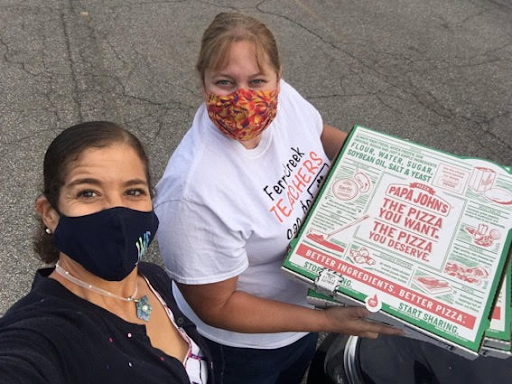
"caption": "Chemistry teacher Stephanie Watkins, Ph.D. and her assistant principal, Jai Wilson, Ph.D., deliver pizzas to students during distance learning.",
"description": null,
"title": "Stephanie Watkins 2",
"credit": "Courtesy of Stephanie Watkins",
"status": "inherit",
"altTag": null,
"isLoading": false,
"fetchFailed": false
},
"mindshift_57100": {
"type": "attachments",
"id": "mindshift_57100",
"meta": {
"index": "attachments_1716263798",
"site": "mindshift",
"id": "57100",
"found": true
},
"parent": 57099,
"imgSizes": {
"twentyfourteen-full-width": {
"file": "https://ww2.kqed.org/app/uploads/sites/23/2020/12/virtualschooling_npr_carsonmcnamara_update_custom-2ce6ea635bbf2a23b50eb4dc1ca055b7c35430d5-1038x576.jpg",
"width": 1038,
"mimeType": "image/jpeg",
"height": 576
},
"thumbnail": {
"file": "https://ww2.kqed.org/app/uploads/sites/23/2020/12/virtualschooling_npr_carsonmcnamara_update_custom-2ce6ea635bbf2a23b50eb4dc1ca055b7c35430d5-160x100.jpg",
"width": 160,
"mimeType": "image/jpeg",
"height": 100
},
"post-thumbnail": {
"file": "https://ww2.kqed.org/app/uploads/sites/23/2020/12/virtualschooling_npr_carsonmcnamara_update_custom-2ce6ea635bbf2a23b50eb4dc1ca055b7c35430d5-672x372.jpg",
"width": 672,
"mimeType": "image/jpeg",
"height": 372
},
"kqedFullSize": {
"file": "https://ww2.kqed.org/app/uploads/sites/23/2020/12/virtualschooling_npr_carsonmcnamara_update_custom-2ce6ea635bbf2a23b50eb4dc1ca055b7c35430d5-scaled-e1607588736858.jpg",
"width": 1920,
"height": 1199
},
"2048x2048": {
"file": "https://ww2.kqed.org/app/uploads/sites/23/2020/12/virtualschooling_npr_carsonmcnamara_update_custom-2ce6ea635bbf2a23b50eb4dc1ca055b7c35430d5-2048x1278.jpg",
"width": 2048,
"mimeType": "image/jpeg",
"height": 1278
},
"large": {
"file": "https://ww2.kqed.org/app/uploads/sites/23/2020/12/virtualschooling_npr_carsonmcnamara_update_custom-2ce6ea635bbf2a23b50eb4dc1ca055b7c35430d5-1020x637.jpg",
"width": 1020,
"mimeType": "image/jpeg",
"height": 637
},
"1536x1536": {
"file": "https://ww2.kqed.org/app/uploads/sites/23/2020/12/virtualschooling_npr_carsonmcnamara_update_custom-2ce6ea635bbf2a23b50eb4dc1ca055b7c35430d5-1536x959.jpg",
"width": 1536,
"mimeType": "image/jpeg",
"height": 959
},
"full-width": {
"file": "https://ww2.kqed.org/app/uploads/sites/23/2020/12/virtualschooling_npr_carsonmcnamara_update_custom-2ce6ea635bbf2a23b50eb4dc1ca055b7c35430d5-1920x1198.jpg",
"width": 1920,
"mimeType": "image/jpeg",
"height": 1198
},
"medium": {
"file": "https://ww2.kqed.org/app/uploads/sites/23/2020/12/virtualschooling_npr_carsonmcnamara_update_custom-2ce6ea635bbf2a23b50eb4dc1ca055b7c35430d5-800x499.jpg",
"width": 800,
"mimeType": "image/jpeg",
"height": 499
},
"medium_large": {
"file": "https://ww2.kqed.org/app/uploads/sites/23/2020/12/virtualschooling_npr_carsonmcnamara_update_custom-2ce6ea635bbf2a23b50eb4dc1ca055b7c35430d5-768x479.jpg",
"width": 768,
"mimeType": "image/jpeg",
"height": 479
}
},
"publishDate": 1607588714,
"modified": 1607588744,
"caption": null,
"description": null,
"title": "Teachers are working hard to improve the online experience, but many students are still left behind.",
"credit": "Carson McNamara for NPR",
"status": "inherit",
"altTag": null,
"isLoading": false,
"fetchFailed": false
}
},
"audioPlayerReducer": {
"postId": "stream_live",
"isPaused": true,
"isPlaying": false,
"pfsActive": false,
"pledgeModalIsOpen": true,
"playerDrawerIsOpen": false,
"liveAudioPlayStartedAt": 0,
"liveAudioPlayContext": ""
},
"authorsReducer": {
"byline_mindshift_57170": {
"type": "authors",
"id": "byline_mindshift_57170",
"meta": {
"override": true
},
"slug": "byline_mindshift_57170",
"name": "Gail Cornwall",
"isLoading": false
},
"byline_mindshift_57099": {
"type": "authors",
"id": "byline_mindshift_57099",
"meta": {
"override": true
},
"slug": "byline_mindshift_57099",
"name": "Anya Kamenetz",
"isLoading": false
},
"ngobir": {
"type": "authors",
"id": "11721",
"meta": {
"index": "authors_1716337520",
"id": "11721",
"found": true
},
"name": "Nimah Gobir",
"firstName": "Nimah",
"lastName": "Gobir",
"slug": "ngobir",
"email": "ngobir@kqed.org",
"display_author_email": false,
"staff_mastheads": [],
"title": "KQED Contributor",
"bio": null,
"avatar": "https://secure.gravatar.com/avatar/837f5df7045c59f3ec097cdf7ac391373ab75d5ec936dd7099b8cb6f0af1b0e9?s=600&d=blank&r=g",
"twitter": null,
"bluesky": null,
"facebook": null,
"instagram": null,
"linkedin": null,
"sites": [
{
"site": "mindshift",
"roles": [
"editor"
]
}
],
"headData": {
"title": "Nimah Gobir | KQED",
"description": "KQED Contributor",
"ogImgSrc": "https://secure.gravatar.com/avatar/837f5df7045c59f3ec097cdf7ac391373ab75d5ec936dd7099b8cb6f0af1b0e9?s=600&d=blank&r=g",
"twImgSrc": "https://secure.gravatar.com/avatar/837f5df7045c59f3ec097cdf7ac391373ab75d5ec936dd7099b8cb6f0af1b0e9?s=600&d=blank&r=g"
},
"isLoading": false,
"link": "/author/ngobir"
}
},
"pagesReducer": {
"mindshift_tag_teacher-burnout": {
"type": "terms",
"id": "mindshift_21398",
"meta": {
"index": "terms_1716263798",
"site": "mindshift",
"id": "21398",
"score": 10.404849
},
"featImg": null,
"name": "teacher burnout",
"description": null,
"taxonomy": "tag",
"headData": {
"twImgId": null,
"twTitle": null,
"ogTitle": null,
"ogImgId": null,
"twDescription": null,
"description": null,
"title": "teacher burnout Archives | KQED Mindshift",
"ogDescription": null
},
"ttid": 20670,
"slug": "teacher-burnout",
"isLoading": false,
"title": "teacher burnout",
"pageMeta": {
"site": "mindshift",
"WpPageTemplate": "page-topic-editorial",
"currentPage": 3
},
"blocks": [
{
"blockName": "kqed/post-list",
"attrs": {
"layout": "cardArticle2",
"query": "posts/mindshift?tag=teacher-burnout",
"seeMore": false,
"paginated": true,
"page": 3
}
},
{
"blockName": "kqed/ad"
}
]
}
},
"pfsSessionReducer": {},
"postsReducer": {
"stream_live": {
"type": "live",
"id": "stream_live",
"audioUrl": "https://streams.kqed.org/kqedradio",
"title": "Live Stream",
"excerpt": "Live Stream information currently unavailable.",
"link": "/radio",
"featImg": "",
"label": {
"name": "KQED Live",
"link": "/"
}
},
"stream_kqedNewscast": {
"type": "posts",
"id": "stream_kqedNewscast",
"audioUrl": "https://www.kqed.org/.stream/anon/radio/RDnews/newscast.mp3?_=1",
"title": "KQED Newscast",
"featImg": "",
"label": {
"name": "88.5 FM",
"link": "/"
}
},
"mindshift_57413": {
"type": "posts",
"id": "mindshift_57413",
"meta": {
"index": "posts_1716263798",
"site": "mindshift",
"id": "57413",
"score": null,
"sort": [
1613985936000
]
},
"parent": 0,
"labelTerm": {
"site": "mindshift"
},
"blocks": [],
"publishDate": 1613985936,
"format": "standard",
"disqusTitle": "How Some Mistakes Can be Generative for Teachers and Students Alike",
"title": "How Some Mistakes Can be Generative for Teachers and Students Alike",
"headTitle": "MindShift | KQED News",
"content": "\u003cp>\u003cspan style=\"font-weight: 400\">With all of the papers, homework and tests that cross a teacher’s desk, you’d think that a healthy relationship to mistake-making would come easy, but it’s not that simple. Messing up does not come naturally for most people, especially teachers who are constantly under the scrutiny of students, guardians, colleagues and administrators. And because teachers are tasked with \u003c/span>\u003ca href=\"http://www.ascd.org/publications/books/112048/chapters/Why-Assignments-Matter.aspx\">\u003cspan style=\"font-weight: 400\">making an estimated 3,000 non-trivial decisions everyday\u003c/span>\u003c/a>\u003cspan style=\"font-weight: 400\">, it makes sense that some of those decisions will end up being mistakes. \u003c/span>\u003c/p>\n\u003cp>\u003cspan style=\"font-weight: 400\">As teachers navigate the pandemic in real time, many are trying to figure out how to hold themselves accountable in their mistake making without beating themselves up. In her new book “\u003ca href=\"https://www.heinemann.com/products/e11247.aspx\">Risk. Fail. Rise.\u003c/a>\u003ca href=\"https://www.heinemann.com/products/e11247.aspx\">: A Teacher’s Guide to Learning from Mistakes\u003c/a>,”\u003c/span>\u003cspan style=\"font-weight: 400\"> New York-based educator \u003ca href=\"https://www.colleencruz.com/\">Colleen Cruz\u003c/a>\u003c/span>\u003cspan style=\"font-weight: 400\"> explores how it can be generative and fruitful for teachers and students alike when things do not go quite according to plan. While an educator’s margin for error is oftentimes very slim, determining how to classify and learn from mistakes can make space for more freedom and adaptability in one’s teaching practice. \u003c/span>\u003c/p>\n\u003ch2>\u003cb>Different kinds of mistakes and their varied impacts\u003c/b>\u003c/h2>\n\u003cp>\u003cspan style=\"font-weight: 400\">Believe it or not: even though it usually doesn’t feel good to make a mistake, there is such a thing as a good mistake. Eduardo Briceño, co-founder of \u003ca href=\"https://www.mindsetworks.com/about-us/bio/EduardoBriceno\">Mindset Works\u003c/a>, provides \u003c/span>\u003ca href=\"https://www.kqed.org/mindshift/42874/why-understanding-these-four-types-of-mistakes-can-help-us-learn\">\u003cspan style=\"font-weight: 400\">four categories that are useful for classifying mistakes\u003c/span>\u003c/a>\u003cspan style=\"font-weight: 400\">. He looks at an error’s potential for meaningful learning opportunities to distinguish between positive and negative mistakes. \u003c/span>\u003c/p>\n\u003cp>\u003cimg class=\"alignnone size-full wp-image-42879\" src=\"https://ww2.kqed.org/app/uploads/sites/23/2015/11/Types-of-Mistakes-Chart_v3.jpg\" alt=\"\" width=\"792\" height=\"612\" srcset=\"https://ww2.kqed.org/app/uploads/sites/23/2015/11/Types-of-Mistakes-Chart_v3.jpg 792w, https://ww2.kqed.org/app/uploads/sites/23/2015/11/Types-of-Mistakes-Chart_v3-400x309.jpg 400w\" sizes=\"(max-width: 792px) 100vw, 792px\">\u003c/p>\n\u003cp>\u003cspan style=\"font-weight: 400\">For example, stretch mistakes are positive and may occur when a person is trying something difficult and doesn’t get it right the first time. Similarly, with aha-moment mistakes there are sparks of realization that happen when someone understands they’re missing important information. On the more negative side, sloppy mistakes are the ones made in a rushed or a distracted state of mind. Lastly, high-stakes mistakes are the ones that everyone wants to avoid because they cause harm. And, unfortunately, they’re the ones that teachers are in a position to make because of their influence on young learners. \u003c/span>\u003c/p>\n\u003cp>[ad fullwidth]\u003c/p>\n\u003cp>\u003cspan style=\"font-weight: 400\">Mistakes are not the only things that vary. The impact changes too. “It’s not just that our mistakes affect us differently because of where we stand in the world, but also that our mistakes affect students differently because of their identities,” Cruz explains in her book. There are some mistakes where the impact can be so harmful to kids that adults should establish “zero-fail missions” to make sure failure is unlikely to occur. \u003c/span>\u003ca href=\"https://www.ncbi.nlm.nih.gov/pmc/articles/PMC4354297/\">\u003cspan style=\"font-weight: 400\">Teaching students to read \u003c/span>\u003c/a>\u003cspan style=\"font-weight: 400\">and having students see themselves in their curriculum are important research-backed zero-fail missions, Cruz says.\u003c/span>\u003c/p>\n\u003cp>\u003cspan style=\"font-weight: 400\">“We have a habit of picking the wrong zero fail missions that are often based on tradition and belief, and not fact.” Once a “zero-fail mission” is identified, she recommends identifying potential obstacles and upholding rigorous prioritization to make sure that goals are met. \u003c/span>\u003c/p>\n\u003ch2>\u003cb>How grades can create a class culture based on “failure-rich” learning\u003c/b>\u003c/h2>\n\u003cp>\u003cspan style=\"font-weight: 400\">Grading systems both penalize learners who make mistakes and limit high achieving students. However, there are alternative assessment tools teachers can use to help students feel more comfortable with error. “I would give students a kid version of a report card and ask them to \u003c/span>\u003ca href=\"https://www.kqed.org/mindshift/49315/be-the-change-you-want-to-see\">\u003cspan style=\"font-weight: 400\">assess themselves\u003c/span>\u003c/a>\u003cspan style=\"font-weight: 400\">. Then, I would make an assessment,” says Cruz. “And if I was sitting with a [student] who had a different assessment of themselves than what I thought, I would have a conference with them and try to figure out why we saw it differently.”\u003c/span>\u003c/p>\n\u003cp>\u003cspan style=\"font-weight: 400\">During the pandemic, grading has become even more complex and contentious with \u003c/span>\u003ca href=\"https://www.edweek.org/leadership/should-schools-be-giving-so-many-failing-grades-this-year/2020/12\">\u003cspan style=\"font-weight: 400\">many students receiving failing grades in academic subjects\u003c/span>\u003c/a>\u003cspan style=\"font-weight: 400\">. “What we say grading is, which is a communication system, is different from what it ends up being, which is a merit system,” says Cruz. “Those systems come with advantages for people who come to school with certain kinds of privileges, whether it's prior knowledge, full bellies, great Internet access or wonderful devices.” She recommends responding to learners who are not performing well with compassion. Teachers should make efforts to touch base with struggling students or \u003c/span>\u003ca href=\"https://www.kqed.org/mindshift/57369/home-visits-deliveries-and-care-can-help-students-whove-disappeared-from-online-learning\">\u003cspan style=\"font-weight: 400\">call their caregivers\u003c/span>\u003c/a>\u003cspan style=\"font-weight: 400\"> to find out more about any obstacles to learning. \u003c/span>\u003c/p>\n\u003ch2>\u003cb>Debunking the teacher martyr trope\u003c/b>\u003c/h2>\n\u003cp>\u003cspan style=\"font-weight: 400\">Teachers often fall into or are steered towards the savior-martyr stereotype, says Cruz. “The teacher archetype is basically working to the bone all hours of the night for a pittance.” \u003c/span>\u003c/p>\n\u003cp>\u003cspan style=\"font-weight: 400\">At first glance, that may seem like an asset. School closures and distance learning have created the conditions where teacher martyrdom seems more likely than ever before. However, she points out teachers are more likely to make mistakes when they haven’t taken care of their personal needs. And when teachers overcommit and overexert themselves, they are missing a valuable opportunity to show students that it is okay to prioritize self care. \u003c/span>\u003c/p>\n\u003cp>\u003cspan style=\"font-weight: 400\">Instead,\u003c/span>\u003cspan style=\"font-weight: 400\"> try setting boundaries to delineate personal time from teacher time. It can be as simple as preserving the sanctity of lunchtime. High school educator \u003ca href=\"http://kellygallagher.org/about\">Kelly Gallagher\u003c/a> recalls that his classroom used to be open for students to have lunch. “I got to a point in my career when I said, ‘Nope. I’m going to have lunch with adults and I’m going to talk about things that we wouldn’t talk about in a classroom full of kids.’”\u003c/span>\u003c/p>\n\u003cp>\u003cspan style=\"font-weight: 400\">Stepping away from the classroom – which for some educators is currently the computer – can actually benefit educators’ teaching practices. “I think the best teacher planning is going to the museum,” reveals New York-based middle school teacher \u003ca href=\"https://www.heinemann.com/authors/1295.aspx\">Donna Santman\u003c/a>, who encourages educators to pursue their own interests outside of school. And while educators can’t necessarily access public spaces in the same way these days, regular breaks could reduce the number of avoidable mistakes they make in the classroom and increase capacity for more creative and innovative classes. \u003c/span>\u003c/p>\n\u003ch2>\u003cb>Even apologizing can become a meaningful model to students\u003c/b>\u003cspan style=\"font-weight: 400\"> \u003c/span>\u003c/h2>\n\u003cp>\u003cspan style=\"font-weight: 400\">Being an authority figure in a classroom can make teachers feel as if they have to put their best face forward all the time, so most teachers’ first instinct is to cover up their mistakes as soon as possible. However, second grade teacher \u003c/span>\u003cspan style=\"font-weight: 400\">\u003ca href=\"https://conniepertuzmeza.wordpress.com/about-me/\">Connie Pertuz-Meza\u003c/a> urges teachers to turn mistakes \u003c/span>\u003cspan style=\"font-weight: 400\">into teachable moments and turn classrooms into more mistake-friendly environments. “I always felt like if I made a mistake I needed to sweep it under the rug,” she says. \u003c/span>\u003cspan style=\"font-weight: 400\">“Students need to see the action of a teacher realizing and rewinding to say, ‘Oops, I made a mistake.’” \u003c/span>\u003c/p>\n\u003cp>\u003cspan style=\"font-weight: 400\">Cruz advises that teachers own up to the harmful impact of their actions regardless of whether their intentions were good. While admitting to errors is uncomfortable, it shows students how to take ownership over their actions and impact\u003c/span>\u003cspan style=\"font-weight: 400\">. It also communicates that students are valuable and worthy of the respect that a genuine apology requires. \u003c/span>\u003c/p>\n\u003cp>\u003cspan style=\"font-weight: 400\">“My first response used to be defense before, and now it is to assess the damage,” says Cruz, noting that a school-wide culture of mistake-making is most helpful when acknowledging and recovering from consequential mistakes. Unless schools make it explicit that mistake-making is welcome and expected, teachers will avoid the risks necessary to being adaptive teachers who are responsive to students’ needs. \u003c/span>\u003c/p>\n\u003cp>[ad floatright]\u003c/p>\n\u003cp>\u003cspan style=\"font-weight: 400\">Teachers can rethink the power they have in their classrooms to make the necessary changes in the education system that help students succeed. So instead of becoming fixated on pandemic schooling missteps, Cruz urges educators to refocus on the values and goals in their teaching practice by asking themselves, “What are the things I want to do going forward that this mistake is giving me insight into?”\u003c/span>\u003c/p>\n\n",
"disqusIdentifier": "57413 https://ww2.kqed.org/mindshift/?p=57413",
"disqusUrl": "https://ww2.kqed.org/mindshift/2021/02/22/how-some-mistakes-can-be-generative-for-teachers-and-students-alike/",
"stats": {
"hasVideo": false,
"hasChartOrMap": false,
"hasAudio": false,
"hasPolis": false,
"wordCount": 1358,
"hasGoogleForm": false,
"hasGallery": false,
"hasHearkenModule": false,
"iframeSrcs": [],
"paragraphCount": 19
},
"modified": 1613985936,
"excerpt": "Making mistakes in front of a captive audience can be terrifying, but learning about mistakes that help you grow can help everyone improve. ",
"headData": {
"twImgId": "",
"twTitle": "",
"ogTitle": "",
"ogImgId": "",
"twDescription": "",
"description": "Making mistakes in front of a captive audience can be terrifying, but learning about mistakes that help you grow can help everyone improve.",
"title": "How Some Mistakes Can be Generative for Teachers and Students Alike - MindShift",
"ogDescription": "",
"schema": {
"@context": "https://schema.org",
"@type": "Article",
"headline": "How Some Mistakes Can be Generative for Teachers and Students Alike",
"datePublished": "2021-02-22T01:25:36-08:00",
"dateModified": "2021-02-22T01:25:36-08:00",
"image": "https://cdn.kqed.org/wp-content/uploads/2020/02/KQED-OG-Image@1x.png"
}
},
"guestAuthors": [],
"slug": "how-some-mistakes-can-be-generative-for-teachers-and-students-alike",
"status": "publish",
"path": "/mindshift/57413/how-some-mistakes-can-be-generative-for-teachers-and-students-alike",
"audioTrackLength": null,
"parsedContent": [
{
"type": "contentString",
"content": "\u003cdiv class=\"post-body\">\u003cp>\u003cp>\u003cspan style=\"font-weight: 400\">With all of the papers, homework and tests that cross a teacher’s desk, you’d think that a healthy relationship to mistake-making would come easy, but it’s not that simple. Messing up does not come naturally for most people, especially teachers who are constantly under the scrutiny of students, guardians, colleagues and administrators. And because teachers are tasked with \u003c/span>\u003ca href=\"http://www.ascd.org/publications/books/112048/chapters/Why-Assignments-Matter.aspx\">\u003cspan style=\"font-weight: 400\">making an estimated 3,000 non-trivial decisions everyday\u003c/span>\u003c/a>\u003cspan style=\"font-weight: 400\">, it makes sense that some of those decisions will end up being mistakes. \u003c/span>\u003c/p>\n\u003cp>\u003cspan style=\"font-weight: 400\">As teachers navigate the pandemic in real time, many are trying to figure out how to hold themselves accountable in their mistake making without beating themselves up. In her new book “\u003ca href=\"https://www.heinemann.com/products/e11247.aspx\">Risk. Fail. Rise.\u003c/a>\u003ca href=\"https://www.heinemann.com/products/e11247.aspx\">: A Teacher’s Guide to Learning from Mistakes\u003c/a>,”\u003c/span>\u003cspan style=\"font-weight: 400\"> New York-based educator \u003ca href=\"https://www.colleencruz.com/\">Colleen Cruz\u003c/a>\u003c/span>\u003cspan style=\"font-weight: 400\"> explores how it can be generative and fruitful for teachers and students alike when things do not go quite according to plan. While an educator’s margin for error is oftentimes very slim, determining how to classify and learn from mistakes can make space for more freedom and adaptability in one’s teaching practice. \u003c/span>\u003c/p>\n\u003ch2>\u003cb>Different kinds of mistakes and their varied impacts\u003c/b>\u003c/h2>\n\u003cp>\u003cspan style=\"font-weight: 400\">Believe it or not: even though it usually doesn’t feel good to make a mistake, there is such a thing as a good mistake. Eduardo Briceño, co-founder of \u003ca href=\"https://www.mindsetworks.com/about-us/bio/EduardoBriceno\">Mindset Works\u003c/a>, provides \u003c/span>\u003ca href=\"https://www.kqed.org/mindshift/42874/why-understanding-these-four-types-of-mistakes-can-help-us-learn\">\u003cspan style=\"font-weight: 400\">four categories that are useful for classifying mistakes\u003c/span>\u003c/a>\u003cspan style=\"font-weight: 400\">. He looks at an error’s potential for meaningful learning opportunities to distinguish between positive and negative mistakes. \u003c/span>\u003c/p>\n\u003cp>\u003cimg class=\"alignnone size-full wp-image-42879\" src=\"https://ww2.kqed.org/app/uploads/sites/23/2015/11/Types-of-Mistakes-Chart_v3.jpg\" alt=\"\" width=\"792\" height=\"612\" srcset=\"https://ww2.kqed.org/app/uploads/sites/23/2015/11/Types-of-Mistakes-Chart_v3.jpg 792w, https://ww2.kqed.org/app/uploads/sites/23/2015/11/Types-of-Mistakes-Chart_v3-400x309.jpg 400w\" sizes=\"(max-width: 792px) 100vw, 792px\">\u003c/p>\n\u003cp>\u003cspan style=\"font-weight: 400\">For example, stretch mistakes are positive and may occur when a person is trying something difficult and doesn’t get it right the first time. Similarly, with aha-moment mistakes there are sparks of realization that happen when someone understands they’re missing important information. On the more negative side, sloppy mistakes are the ones made in a rushed or a distracted state of mind. Lastly, high-stakes mistakes are the ones that everyone wants to avoid because they cause harm. And, unfortunately, they’re the ones that teachers are in a position to make because of their influence on young learners. \u003c/span>\u003c/p>\n\u003cp>\u003c/p>\u003c/div>",
"attributes": {
"named": {},
"numeric": []
}
},
{
"type": "component",
"content": "",
"name": "ad",
"attributes": {
"named": {
"label": "fullwidth"
},
"numeric": [
"fullwidth"
]
}
},
{
"type": "contentString",
"content": "\u003cdiv class=\"post-body\">\u003cp>\u003c/p>\n\u003cp>\u003cspan style=\"font-weight: 400\">Mistakes are not the only things that vary. The impact changes too. “It’s not just that our mistakes affect us differently because of where we stand in the world, but also that our mistakes affect students differently because of their identities,” Cruz explains in her book. There are some mistakes where the impact can be so harmful to kids that adults should establish “zero-fail missions” to make sure failure is unlikely to occur. \u003c/span>\u003ca href=\"https://www.ncbi.nlm.nih.gov/pmc/articles/PMC4354297/\">\u003cspan style=\"font-weight: 400\">Teaching students to read \u003c/span>\u003c/a>\u003cspan style=\"font-weight: 400\">and having students see themselves in their curriculum are important research-backed zero-fail missions, Cruz says.\u003c/span>\u003c/p>\n\u003cp>\u003cspan style=\"font-weight: 400\">“We have a habit of picking the wrong zero fail missions that are often based on tradition and belief, and not fact.” Once a “zero-fail mission” is identified, she recommends identifying potential obstacles and upholding rigorous prioritization to make sure that goals are met. \u003c/span>\u003c/p>\n\u003ch2>\u003cb>How grades can create a class culture based on “failure-rich” learning\u003c/b>\u003c/h2>\n\u003cp>\u003cspan style=\"font-weight: 400\">Grading systems both penalize learners who make mistakes and limit high achieving students. However, there are alternative assessment tools teachers can use to help students feel more comfortable with error. “I would give students a kid version of a report card and ask them to \u003c/span>\u003ca href=\"https://www.kqed.org/mindshift/49315/be-the-change-you-want-to-see\">\u003cspan style=\"font-weight: 400\">assess themselves\u003c/span>\u003c/a>\u003cspan style=\"font-weight: 400\">. Then, I would make an assessment,” says Cruz. “And if I was sitting with a [student] who had a different assessment of themselves than what I thought, I would have a conference with them and try to figure out why we saw it differently.”\u003c/span>\u003c/p>\n\u003cp>\u003cspan style=\"font-weight: 400\">During the pandemic, grading has become even more complex and contentious with \u003c/span>\u003ca href=\"https://www.edweek.org/leadership/should-schools-be-giving-so-many-failing-grades-this-year/2020/12\">\u003cspan style=\"font-weight: 400\">many students receiving failing grades in academic subjects\u003c/span>\u003c/a>\u003cspan style=\"font-weight: 400\">. “What we say grading is, which is a communication system, is different from what it ends up being, which is a merit system,” says Cruz. “Those systems come with advantages for people who come to school with certain kinds of privileges, whether it's prior knowledge, full bellies, great Internet access or wonderful devices.” She recommends responding to learners who are not performing well with compassion. Teachers should make efforts to touch base with struggling students or \u003c/span>\u003ca href=\"https://www.kqed.org/mindshift/57369/home-visits-deliveries-and-care-can-help-students-whove-disappeared-from-online-learning\">\u003cspan style=\"font-weight: 400\">call their caregivers\u003c/span>\u003c/a>\u003cspan style=\"font-weight: 400\"> to find out more about any obstacles to learning. \u003c/span>\u003c/p>\n\u003ch2>\u003cb>Debunking the teacher martyr trope\u003c/b>\u003c/h2>\n\u003cp>\u003cspan style=\"font-weight: 400\">Teachers often fall into or are steered towards the savior-martyr stereotype, says Cruz. “The teacher archetype is basically working to the bone all hours of the night for a pittance.” \u003c/span>\u003c/p>\n\u003cp>\u003cspan style=\"font-weight: 400\">At first glance, that may seem like an asset. School closures and distance learning have created the conditions where teacher martyrdom seems more likely than ever before. However, she points out teachers are more likely to make mistakes when they haven’t taken care of their personal needs. And when teachers overcommit and overexert themselves, they are missing a valuable opportunity to show students that it is okay to prioritize self care. \u003c/span>\u003c/p>\n\u003cp>\u003cspan style=\"font-weight: 400\">Instead,\u003c/span>\u003cspan style=\"font-weight: 400\"> try setting boundaries to delineate personal time from teacher time. It can be as simple as preserving the sanctity of lunchtime. High school educator \u003ca href=\"http://kellygallagher.org/about\">Kelly Gallagher\u003c/a> recalls that his classroom used to be open for students to have lunch. “I got to a point in my career when I said, ‘Nope. I’m going to have lunch with adults and I’m going to talk about things that we wouldn’t talk about in a classroom full of kids.’”\u003c/span>\u003c/p>\n\u003cp>\u003cspan style=\"font-weight: 400\">Stepping away from the classroom – which for some educators is currently the computer – can actually benefit educators’ teaching practices. “I think the best teacher planning is going to the museum,” reveals New York-based middle school teacher \u003ca href=\"https://www.heinemann.com/authors/1295.aspx\">Donna Santman\u003c/a>, who encourages educators to pursue their own interests outside of school. And while educators can’t necessarily access public spaces in the same way these days, regular breaks could reduce the number of avoidable mistakes they make in the classroom and increase capacity for more creative and innovative classes. \u003c/span>\u003c/p>\n\u003ch2>\u003cb>Even apologizing can become a meaningful model to students\u003c/b>\u003cspan style=\"font-weight: 400\"> \u003c/span>\u003c/h2>\n\u003cp>\u003cspan style=\"font-weight: 400\">Being an authority figure in a classroom can make teachers feel as if they have to put their best face forward all the time, so most teachers’ first instinct is to cover up their mistakes as soon as possible. However, second grade teacher \u003c/span>\u003cspan style=\"font-weight: 400\">\u003ca href=\"https://conniepertuzmeza.wordpress.com/about-me/\">Connie Pertuz-Meza\u003c/a> urges teachers to turn mistakes \u003c/span>\u003cspan style=\"font-weight: 400\">into teachable moments and turn classrooms into more mistake-friendly environments. “I always felt like if I made a mistake I needed to sweep it under the rug,” she says. \u003c/span>\u003cspan style=\"font-weight: 400\">“Students need to see the action of a teacher realizing and rewinding to say, ‘Oops, I made a mistake.’” \u003c/span>\u003c/p>\n\u003cp>\u003cspan style=\"font-weight: 400\">Cruz advises that teachers own up to the harmful impact of their actions regardless of whether their intentions were good. While admitting to errors is uncomfortable, it shows students how to take ownership over their actions and impact\u003c/span>\u003cspan style=\"font-weight: 400\">. It also communicates that students are valuable and worthy of the respect that a genuine apology requires. \u003c/span>\u003c/p>\n\u003cp>\u003cspan style=\"font-weight: 400\">“My first response used to be defense before, and now it is to assess the damage,” says Cruz, noting that a school-wide culture of mistake-making is most helpful when acknowledging and recovering from consequential mistakes. Unless schools make it explicit that mistake-making is welcome and expected, teachers will avoid the risks necessary to being adaptive teachers who are responsive to students’ needs. \u003c/span>\u003c/p>\n\u003cp>\u003c/p>\u003c/div>",
"attributes": {
"named": {},
"numeric": []
}
},
{
"type": "component",
"content": "",
"name": "ad",
"attributes": {
"named": {
"label": "floatright"
},
"numeric": [
"floatright"
]
}
},
{
"type": "contentString",
"content": "\u003cdiv class=\"post-body\">\u003cp>\u003c/p>\n\u003cp>\u003cspan style=\"font-weight: 400\">Teachers can rethink the power they have in their classrooms to make the necessary changes in the education system that help students succeed. So instead of becoming fixated on pandemic schooling missteps, Cruz urges educators to refocus on the values and goals in their teaching practice by asking themselves, “What are the things I want to do going forward that this mistake is giving me insight into?”\u003c/span>\u003c/p>\n\n\u003c/div>\u003c/p>",
"attributes": {
"named": {},
"numeric": []
}
}
],
"link": "/mindshift/57413/how-some-mistakes-can-be-generative-for-teachers-and-students-alike",
"authors": [
"11721"
],
"categories": [
"mindshift_193"
],
"tags": [
"mindshift_358",
"mindshift_21107",
"mindshift_20512",
"mindshift_20987",
"mindshift_21147",
"mindshift_21398"
],
"featImg": "mindshift_57417",
"label": "mindshift"
},
"mindshift_57280": {
"type": "posts",
"id": "mindshift_57280",
"meta": {
"index": "posts_1716263798",
"site": "mindshift",
"id": "57280",
"score": null,
"sort": [
1612775058000
]
},
"parent": 0,
"labelTerm": {
"site": "mindshift"
},
"blocks": [],
"publishDate": 1612775058,
"format": "standard",
"disqusTitle": "Strategies for Retaining Teachers of Color and Making Schools More Equitable",
"title": "Strategies for Retaining Teachers of Color and Making Schools More Equitable",
"headTitle": "MindShift | KQED News",
"content": "\u003cp>\u003cspan style=\"font-weight: 400\">Imagine – just for a moment – going through your entire K-12 experience without seeing a teacher that shares one of your most significant identities. This might be baffling to some, but it’s an everyday reality for many Black and Latinx learners making their way through public school systems. According to the National Center for Education Statistics 2017-18 report, \u003c/span>\u003ca href=\"https://nces.ed.gov/programs/coe/indicator_clr.asp\">\u003cspan style=\"font-weight: 400\">79% of teachers are white\u003c/span>\u003c/a>\u003cspan style=\"font-weight: 400\">, even as the \u003c/span>\u003cspan style=\"font-weight: 400\">\u003ca href=\"https://nces.ed.gov/programs/coe/indicator_cge.asp\">majority of students\u003c/a> attending public schools are children of color\u003c/span>\u003cspan style=\"font-weight: 400\">. However, research shows schools are missing out on many potential benefits when teachers don’t reflect the ethnic or racial diversity of their students.\u003c/span>\u003c/p>\n\u003cp>\u003cspan style=\"font-weight: 400\">“There is a clear body of evidence with Black teachers and Latinx teachers that there is this added value for their capacity to improve learning, to improve social emotional learning, course taking, reducing suspension, taking more rigorous courses,” says Dr. \u003c/span>\u003ca href=\"https://www.kqed.org/mindshift/56241/effective-anti-racist-education-requires-more-diverse-teachers-more-training\">\u003cspan style=\"font-weight: 400\">Travis J. Bristol\u003c/span>\u003c/a>\u003cspan style=\"font-weight: 400\">, an assistant professor at UC Berkeley's Graduate School of Education. \u003c/span>\u003c/p>\n\u003cp>\u003cspan style=\"font-weight: 400\">He notes that Black and Latinx teachers’ lived experience uniquely position them to relate to students of color. And it’s not only students of color that benefit from having Black and Latinx educators – \u003c/span>\u003cspan style=\"font-weight: 400\">research suggests that \u003ca href=\"https://www.npr.org/sections/ed/2016/10/07/496717541/study-finds-students-of-all-races-prefer-teachers-of-color\">white students also benefit\u003c/a> from teachers of color and those who offer different perspectives\u003c/span>\u003cspan style=\"font-weight: 400\">. \u003c/span>\u003c/p>\n\u003cp>\u003cspan style=\"font-weight: 400\">But Black and Latinx teachers are underrepresented in public schools in most large cities across America. In Boston and Los Angeles, there are 30 percent more students of Latinx descent than there are teachers, according to the Albert Shanker Institute’s \u003c/span>\u003ca href=\"https://docs.google.com/viewerng/viewer?url=https://www.shankerinstitute.org/sites/default/files/The%2520State%2520of%2520Teacher%2520Diversity%25202015.pdf\">\u003cspan style=\"font-weight: 400\">major report\u003c/span>\u003c/a>\u003cspan style=\"font-weight: 400\"> on the state of teacher diversity. For Black students in Cleveland and New Orleans, that gap is 40 percent. \u003c/span>\u003c/p>\n\u003cp>\u003cspan style=\"font-weight: 400\">These numbers aren’t because of a lack of qualified candidates that enter the profession so much as it is about what happens after they enter schools. Black and Latinx teachers are the least likely to stay once they enter the workforce compared to their white colleagues, according to the \u003c/span>\u003ca href=\"https://www2.ed.gov/\">\u003cspan style=\"font-weight: 400\">2016 State of Racial Diversity in the Educator Workforce\u003c/span>\u003c/a>\u003cspan style=\"font-weight: 400\"> by the US Department of Education. \u003c/span>\u003c/p>\n\u003cp>[ad fullwidth]\u003c/p>\n\u003cp>\u003cspan style=\"font-weight: 400\">However, schools can develop solutions to better retain these teachers by confronting systemic issues related to why they leave. Bristol’s \u003ca href=\"https://www.tandfonline.com/doi/abs/10.1080/0161956X.2020.1828690?journalCode=hpje20\">latest research\u003c/a> unlocks effective strategies schools can apply to keep Black and Latinx teachers engaged in their practice and committed to K-12 teaching. The former New York City educator explains that retaining and supporting educators of color can disrupt notions of white supremacy and foster inclusivity. “Now, more than ever, we need people of color standing in front of our children in our classrooms,” he says, and what’s really at stake is creating a supportive environment for teachers and students alike.\u003c/span>\u003c/p>\n\u003ch2>\u003cb>A school staffed for success\u003c/b>\u003c/h2>\n\u003cp>\u003cspan style=\"font-weight: 400\">Bristol says there are different levers to engage in order to retain Black and Latinx educators. One of those levers is teacher preparation programs. Teachers of color in predominantly white teacher certification programs often struggle with feeling like their identity is not reflected in their coursework with curriculums that overlook their experiences and privilege the preparation of white middle-class educators. These conditions often prevent teachers of color from showing up as their full selves, and make them more likely to grow weary or disengaged with K-12 teaching.\u003c/span>\u003c/p>\n\u003cp>\u003cspan style=\"font-weight: 400\">Another element of teacher prep programs relates to how they perceive students of color. \u003c/span>\u003cspan style=\"font-weight: 400\">Students are better supported when teacher prep programs prepare all teachers to engage with Black and Latinx learners by actively challenging deficit perspectives about students of color. Too often, educators are reluctant and even fearful when it comes to talking about race. However, developing school-wide racial and cultural literacy through professional development opportunities can equip them with some level of competency. Even among teacher-to-teacher relationships, a discomfort with race often leads to “typecasting” teachers of color as solely responsible for caring for, disciplining or supporting students of color and creating a disproportionate burden that also contributes to leaving the profession.\u003c/span>\u003c/p>\n\u003cp>\u003cspan style=\"font-weight: 400\">And the pandemic has only exacerbated the pressures teachers of color are experiencing because Black and Latinx people have been harmed by coronavirus at higher rates than other groups. “The burden is both the weight of experiencing this virus in ways that their white colleagues may not, then also having to worry about that for their own students,” Bristol says.\u003c/span>\u003c/p>\n\u003cp>\u003cspan style=\"font-weight: 400\"> It has become increasingly important that when Black and Latinx teachers choose to teach in lower performing schools, which usually serve predominantly Black and Latinx children, school leaders need to make sure there are additional \u003c/span>\u003ca href=\"https://www.kqed.org/mindshift/55382/investing-in-counselors-isnt-only-about-mental-health-its-good-for-academics-too\">\u003cspan style=\"font-weight: 400\">investments in services such as social workers, counselors and school nurses\u003c/span>\u003c/a>\u003cspan style=\"font-weight: 400\"> to support teachers and keep them from burning out. Additionally, there needs to be a feedback mechanism to keep administrators informed about any necessary changes they may need to make to positively shape school working conditions. \u003c/span>\u003c/p>\n\u003cp>\u003cspan style=\"font-weight: 400\"> While many schools are rushing to reopen, Bristol advises that districts must make sure to attend to the mental and emotional supports that all teachers – especially teachers of color – need in order to teach. That includes taking time before school reopens to provide professional learning opportunities that prepare teachers to help students make sense of the pandemic. “Before we bring children back, we have to bring teachers back,” he says. \u003c/span>\u003c/p>\n\u003ch2>\u003cb>Thought partnership and affinity groups \u003c/b>\u003c/h2>\n\u003cp>\u003cspan style=\"font-weight: 400\">Teaching has never been an easy or straightforward profession. With the added nuance of being a teacher of color who is already underrepresented in the profession, it’s no surprise that having a \u003c/span>\u003ca href=\"https://www.kqed.org/mindshift/56836/how-teachers-are-leaning-on-each-other-to-stay-resilient-during-covid-19\">\u003cspan style=\"font-weight: 400\">support network\u003c/span>\u003c/a>\u003cspan style=\"font-weight: 400\"> can provide serious relief. Even though each classroom poses dynamically different challenges, gathering with a workplace affinity group where members share a key identity offers community and comfort. Within the intimate confines of an affinity group, educators can address challenges, engage in honest dialogue and cultivate critical thought-partnership with colleagues and trained facilitators. \u003c/span>\u003c/p>\n\u003cp>\u003cspan style=\"font-weight: 400\">Bristol also says affinity groups should be part of professional development requirements and participants should be compensated for attending. “Too often, we place extra responsibilities on people of color, and this can't be something extra.” \u003c/span>\u003c/p>\n\u003cp>[ad floatright]\u003c/p>\n\u003cp>\u003cspan style=\"font-weight: 400\">Although teachers can feel isolated at their schools, Bristol notes that most struggles that teachers deal with are not unique. Instead, there are patterns that are present in all types of schools, such as having to advocate for professional needs, communicating to colleagues about the ways in which their behaviors compound the added burden of being a teacher of color or creating necessary boundaries to sustain one’s teaching practice. \u003c/span>\u003c/p>\n\n",
"disqusIdentifier": "57280 https://ww2.kqed.org/mindshift/?p=57280",
"disqusUrl": "https://ww2.kqed.org/mindshift/2021/02/08/strategies-for-retaining-teachers-of-color-and-making-schools-more-equitable/",
"stats": {
"hasVideo": false,
"hasChartOrMap": false,
"hasAudio": false,
"hasPolis": false,
"wordCount": 1106,
"hasGoogleForm": false,
"hasGallery": false,
"hasHearkenModule": false,
"iframeSrcs": [],
"paragraphCount": 15
},
"modified": 1613151106,
"excerpt": "Schools have a lot more work to do when it comes to retaining teachers of color. UC Berkeley professor Travis Bristol has some research into what helps them stay. ",
"headData": {
"twImgId": "",
"twTitle": "",
"ogTitle": "",
"ogImgId": "",
"twDescription": "",
"description": "The majority of K-12 students in the U.S. are people of color but the teaching profession is about 20 percent. UC Berkeley professor Travis Bristol has research into how teachers of color benefit all students and the work schools must do to retain them.",
"title": "Strategies for Retaining Teachers of Color and Making Schools More Equitable - MindShift",
"ogDescription": "",
"schema": {
"@context": "https://schema.org",
"@type": "Article",
"headline": "Strategies for Retaining Teachers of Color and Making Schools More Equitable",
"datePublished": "2021-02-08T01:04:18-08:00",
"dateModified": "2021-02-12T09:31:46-08:00",
"image": "https://cdn.kqed.org/wp-content/uploads/2020/02/KQED-OG-Image@1x.png"
}
},
"guestAuthors": [],
"slug": "strategies-for-retaining-teachers-of-color-and-making-schools-more-equitable",
"status": "publish",
"path": "/mindshift/57280/strategies-for-retaining-teachers-of-color-and-making-schools-more-equitable",
"audioTrackLength": null,
"parsedContent": [
{
"type": "contentString",
"content": "\u003cdiv class=\"post-body\">\u003cp>\u003cp>\u003cspan style=\"font-weight: 400\">Imagine – just for a moment – going through your entire K-12 experience without seeing a teacher that shares one of your most significant identities. This might be baffling to some, but it’s an everyday reality for many Black and Latinx learners making their way through public school systems. According to the National Center for Education Statistics 2017-18 report, \u003c/span>\u003ca href=\"https://nces.ed.gov/programs/coe/indicator_clr.asp\">\u003cspan style=\"font-weight: 400\">79% of teachers are white\u003c/span>\u003c/a>\u003cspan style=\"font-weight: 400\">, even as the \u003c/span>\u003cspan style=\"font-weight: 400\">\u003ca href=\"https://nces.ed.gov/programs/coe/indicator_cge.asp\">majority of students\u003c/a> attending public schools are children of color\u003c/span>\u003cspan style=\"font-weight: 400\">. However, research shows schools are missing out on many potential benefits when teachers don’t reflect the ethnic or racial diversity of their students.\u003c/span>\u003c/p>\n\u003cp>\u003cspan style=\"font-weight: 400\">“There is a clear body of evidence with Black teachers and Latinx teachers that there is this added value for their capacity to improve learning, to improve social emotional learning, course taking, reducing suspension, taking more rigorous courses,” says Dr. \u003c/span>\u003ca href=\"https://www.kqed.org/mindshift/56241/effective-anti-racist-education-requires-more-diverse-teachers-more-training\">\u003cspan style=\"font-weight: 400\">Travis J. Bristol\u003c/span>\u003c/a>\u003cspan style=\"font-weight: 400\">, an assistant professor at UC Berkeley's Graduate School of Education. \u003c/span>\u003c/p>\n\u003cp>\u003cspan style=\"font-weight: 400\">He notes that Black and Latinx teachers’ lived experience uniquely position them to relate to students of color. And it’s not only students of color that benefit from having Black and Latinx educators – \u003c/span>\u003cspan style=\"font-weight: 400\">research suggests that \u003ca href=\"https://www.npr.org/sections/ed/2016/10/07/496717541/study-finds-students-of-all-races-prefer-teachers-of-color\">white students also benefit\u003c/a> from teachers of color and those who offer different perspectives\u003c/span>\u003cspan style=\"font-weight: 400\">. \u003c/span>\u003c/p>\n\u003cp>\u003cspan style=\"font-weight: 400\">But Black and Latinx teachers are underrepresented in public schools in most large cities across America. In Boston and Los Angeles, there are 30 percent more students of Latinx descent than there are teachers, according to the Albert Shanker Institute’s \u003c/span>\u003ca href=\"https://docs.google.com/viewerng/viewer?url=https://www.shankerinstitute.org/sites/default/files/The%2520State%2520of%2520Teacher%2520Diversity%25202015.pdf\">\u003cspan style=\"font-weight: 400\">major report\u003c/span>\u003c/a>\u003cspan style=\"font-weight: 400\"> on the state of teacher diversity. For Black students in Cleveland and New Orleans, that gap is 40 percent. \u003c/span>\u003c/p>\n\u003cp>\u003cspan style=\"font-weight: 400\">These numbers aren’t because of a lack of qualified candidates that enter the profession so much as it is about what happens after they enter schools. Black and Latinx teachers are the least likely to stay once they enter the workforce compared to their white colleagues, according to the \u003c/span>\u003ca href=\"https://www2.ed.gov/\">\u003cspan style=\"font-weight: 400\">2016 State of Racial Diversity in the Educator Workforce\u003c/span>\u003c/a>\u003cspan style=\"font-weight: 400\"> by the US Department of Education. \u003c/span>\u003c/p>\n\u003cp>\u003c/p>\u003c/div>",
"attributes": {
"named": {},
"numeric": []
}
},
{
"type": "component",
"content": "",
"name": "ad",
"attributes": {
"named": {
"label": "fullwidth"
},
"numeric": [
"fullwidth"
]
}
},
{
"type": "contentString",
"content": "\u003cdiv class=\"post-body\">\u003cp>\u003c/p>\n\u003cp>\u003cspan style=\"font-weight: 400\">However, schools can develop solutions to better retain these teachers by confronting systemic issues related to why they leave. Bristol’s \u003ca href=\"https://www.tandfonline.com/doi/abs/10.1080/0161956X.2020.1828690?journalCode=hpje20\">latest research\u003c/a> unlocks effective strategies schools can apply to keep Black and Latinx teachers engaged in their practice and committed to K-12 teaching. The former New York City educator explains that retaining and supporting educators of color can disrupt notions of white supremacy and foster inclusivity. “Now, more than ever, we need people of color standing in front of our children in our classrooms,” he says, and what’s really at stake is creating a supportive environment for teachers and students alike.\u003c/span>\u003c/p>\n\u003ch2>\u003cb>A school staffed for success\u003c/b>\u003c/h2>\n\u003cp>\u003cspan style=\"font-weight: 400\">Bristol says there are different levers to engage in order to retain Black and Latinx educators. One of those levers is teacher preparation programs. Teachers of color in predominantly white teacher certification programs often struggle with feeling like their identity is not reflected in their coursework with curriculums that overlook their experiences and privilege the preparation of white middle-class educators. These conditions often prevent teachers of color from showing up as their full selves, and make them more likely to grow weary or disengaged with K-12 teaching.\u003c/span>\u003c/p>\n\u003cp>\u003cspan style=\"font-weight: 400\">Another element of teacher prep programs relates to how they perceive students of color. \u003c/span>\u003cspan style=\"font-weight: 400\">Students are better supported when teacher prep programs prepare all teachers to engage with Black and Latinx learners by actively challenging deficit perspectives about students of color. Too often, educators are reluctant and even fearful when it comes to talking about race. However, developing school-wide racial and cultural literacy through professional development opportunities can equip them with some level of competency. Even among teacher-to-teacher relationships, a discomfort with race often leads to “typecasting” teachers of color as solely responsible for caring for, disciplining or supporting students of color and creating a disproportionate burden that also contributes to leaving the profession.\u003c/span>\u003c/p>\n\u003cp>\u003cspan style=\"font-weight: 400\">And the pandemic has only exacerbated the pressures teachers of color are experiencing because Black and Latinx people have been harmed by coronavirus at higher rates than other groups. “The burden is both the weight of experiencing this virus in ways that their white colleagues may not, then also having to worry about that for their own students,” Bristol says.\u003c/span>\u003c/p>\n\u003cp>\u003cspan style=\"font-weight: 400\"> It has become increasingly important that when Black and Latinx teachers choose to teach in lower performing schools, which usually serve predominantly Black and Latinx children, school leaders need to make sure there are additional \u003c/span>\u003ca href=\"https://www.kqed.org/mindshift/55382/investing-in-counselors-isnt-only-about-mental-health-its-good-for-academics-too\">\u003cspan style=\"font-weight: 400\">investments in services such as social workers, counselors and school nurses\u003c/span>\u003c/a>\u003cspan style=\"font-weight: 400\"> to support teachers and keep them from burning out. Additionally, there needs to be a feedback mechanism to keep administrators informed about any necessary changes they may need to make to positively shape school working conditions. \u003c/span>\u003c/p>\n\u003cp>\u003cspan style=\"font-weight: 400\"> While many schools are rushing to reopen, Bristol advises that districts must make sure to attend to the mental and emotional supports that all teachers – especially teachers of color – need in order to teach. That includes taking time before school reopens to provide professional learning opportunities that prepare teachers to help students make sense of the pandemic. “Before we bring children back, we have to bring teachers back,” he says. \u003c/span>\u003c/p>\n\u003ch2>\u003cb>Thought partnership and affinity groups \u003c/b>\u003c/h2>\n\u003cp>\u003cspan style=\"font-weight: 400\">Teaching has never been an easy or straightforward profession. With the added nuance of being a teacher of color who is already underrepresented in the profession, it’s no surprise that having a \u003c/span>\u003ca href=\"https://www.kqed.org/mindshift/56836/how-teachers-are-leaning-on-each-other-to-stay-resilient-during-covid-19\">\u003cspan style=\"font-weight: 400\">support network\u003c/span>\u003c/a>\u003cspan style=\"font-weight: 400\"> can provide serious relief. Even though each classroom poses dynamically different challenges, gathering with a workplace affinity group where members share a key identity offers community and comfort. Within the intimate confines of an affinity group, educators can address challenges, engage in honest dialogue and cultivate critical thought-partnership with colleagues and trained facilitators. \u003c/span>\u003c/p>\n\u003cp>\u003cspan style=\"font-weight: 400\">Bristol also says affinity groups should be part of professional development requirements and participants should be compensated for attending. “Too often, we place extra responsibilities on people of color, and this can't be something extra.” \u003c/span>\u003c/p>\n\u003cp>\u003c/p>\u003c/div>",
"attributes": {
"named": {},
"numeric": []
}
},
{
"type": "component",
"content": "",
"name": "ad",
"attributes": {
"named": {
"label": "floatright"
},
"numeric": [
"floatright"
]
}
},
{
"type": "contentString",
"content": "\u003cdiv class=\"post-body\">\u003cp>\u003c/p>\n\u003cp>\u003cspan style=\"font-weight: 400\">Although teachers can feel isolated at their schools, Bristol notes that most struggles that teachers deal with are not unique. Instead, there are patterns that are present in all types of schools, such as having to advocate for professional needs, communicating to colleagues about the ways in which their behaviors compound the added burden of being a teacher of color or creating necessary boundaries to sustain one’s teaching practice. \u003c/span>\u003c/p>\n\n\u003c/div>\u003c/p>",
"attributes": {
"named": {},
"numeric": []
}
}
],
"link": "/mindshift/57280/strategies-for-retaining-teachers-of-color-and-making-schools-more-equitable",
"authors": [
"11721"
],
"categories": [
"mindshift_21357"
],
"tags": [
"mindshift_21322",
"mindshift_20610",
"mindshift_943",
"mindshift_21398",
"mindshift_208"
],
"featImg": "mindshift_57282",
"label": "mindshift"
},
"mindshift_57170": {
"type": "posts",
"id": "mindshift_57170",
"meta": {
"index": "posts_1716263798",
"site": "mindshift",
"id": "57170",
"score": null,
"sort": [
1609486884000
]
},
"parent": 0,
"labelTerm": {
"site": "mindshift"
},
"blocks": [],
"publishDate": 1609486884,
"format": "standard",
"disqusTitle": "What Difference Can Teacher Friendships Make at Schools?",
"title": "What Difference Can Teacher Friendships Make at Schools?",
"headTitle": "MindShift | KQED News",
"content": "\u003cp>\u003cspan style=\"font-weight: 400\">Positive student-teacher relationships \u003c/span>\u003ca href=\"https://eric.ed.gov/?id=EJ888657\">\u003cspan style=\"font-weight: 400\">increase\u003c/span>\u003c/a>\u003cspan style=\"font-weight: 400\"> both \u003c/span>\u003ca href=\"https://scholar.harvard.edu/files/todd_rogers/files/creating_birds_0.pdf\">\u003cspan style=\"font-weight: 400\">academic engagement\u003c/span>\u003c/a>\u003cspan style=\"font-weight: 400\"> and prosocial behavior at all levels of schooling. Teachers who offer individual students and entire classes the “\u003c/span>\u003ca href=\"https://onlinelibrary.wiley.com/doi/abs/10.1111/j.1468-2885.2000.tb00176.x\">\u003cspan style=\"font-weight: 400\">educational friendship\u003c/span>\u003c/a>\u003cspan style=\"font-weight: 400\">” of \u003c/span>\u003ca href=\"https://www.nber.org/papers/w25254\">\u003cspan style=\"font-weight: 400\">respect\u003c/span>\u003c/a>\u003cspan style=\"font-weight: 400\">, \u003c/span>\u003ca href=\"https://files.eric.ed.gov/fulltext/EJ1109954.pdf\">\u003cspan style=\"font-weight: 400\">appreciation\u003c/span>\u003c/a>\u003cspan style=\"font-weight: 400\"> and good old benefit of the doubt fundamentally alter experiences of schooling for the better. But what about teacher-to-teacher friendships? \u003c/span>\u003cspan style=\"font-weight: 400\">Are those just a nice bonus when they materialize, or does a warm, collaborative professional environment make a significant difference? It will come as no surprise to anyone who has spent time in a school that teachers, students and entire learning communities can benefit immensely from \u003c/span>\u003ca href=\"https://www.kqed.org/mindshift/tag/friendship-in-schools\">\u003cspan style=\"font-weight: 400\">friendships\u003c/span>\u003c/a>\u003cspan style=\"font-weight: 400\"> among adults on staff. The relevance of astronauts and bathrooms might come as a bit of a shock though.\u003c/span>\u003cspan style=\"font-weight: 400\"> \u003c/span>\u003c/p>\n\u003ch2>\u003cspan style=\"font-weight: 400\">What teachers are up against\u003c/span>\u003c/h2>\n\u003cp>\u003cspan style=\"font-weight: 400\">University of Virginia education professor \u003c/span>\u003cspan style=\"font-weight: 400\">\u003ca href=\"https://curry.virginia.edu/patricia-jennings\">Patricia Ann Jennings\u003c/a> \u003c/span>\u003cspan style=\"font-weight: 400\">has spent the last decade studying teacher stress. “Of\u003c/span>\u003cspan style=\"font-weight: 400\">ten teachers feel very alone in their classrooms and they feel very disconnected from the other adults,” she said. Her research points to a handful of common stressors, things as simple as teachers having to “hold it” when they need to use the restroom, not being able to just walk away from conflict and lacking privacy. \u003c/span>\u003c/p>\n\u003cp>\u003cspan style=\"font-weight: 400\">There’s actually robust research on the ill effects of isolated, confined environments, according to Emily Anthes, author of the new book \"\u003c/span>\u003ca href=\"https://us.macmillan.com/books/9780374716684\">\u003cspan style=\"font-weight: 400\">The Great Indoors\u003c/span>\u003c/a>\u003cspan style=\"font-weight: 400\">.\" She \u003c/span>\u003ca href=\"https://www.npr.org/transcripts/911624033\">\u003cspan style=\"font-weight: 400\">recently told \u003c/span>\u003cspan style=\"font-weight: 400\">NPR\u003c/span>\u003c/a>\u003cspan style=\"font-weight: 400\"> that astronauts in space shuttles adapt by using tricks like creating “auditory privacy” with headphones. But teachers don’t have the luxury of psychological escape. They have to not only remain engaged in stressful situations but also manage them publicly. “Whatever is happening in that moment, you have to be able to successfully deal with strong emotions without harming yourself by inhibiting them (stuffing them, basically) or expressing emotions in a way that’s harmful to your students or the learning environment,” Jennings says. \u003c/span>\u003c/p>\n\u003cp>\u003cspan style=\"font-weight: 400\">Her book \"\u003c/span>\u003cspan style=\"font-weight: 400\">\u003ca href=\"https://wwnorton.com/books/9780393714258\">Teacher Burnout Turnaround: \u003c/a>\u003c/span>\u003ca href=\"https://wwnorton.com/books/9780393714258\">Strategies for Empowered Educators\u003c/a>\u003cspan style=\"font-weight: 400\">\"\u003c/span>\u003cspan style=\"font-weight: 400\"> explains that \u003c/span>\u003cspan style=\"font-weight: 400\">teachers are also regularly asked to achieve the impossible. “Not only are they being told they have to control these kids, but they are supposed to get everybody above average. Well, you can’t,” according to Jennings. Many teachers disagree with directives from above, and she says, “They’re being asked to teach in ways that we know are not effective and they are having moral distress. When you make kids sit down and practice for a test that you think is stupid, it’s horrifying.” \u003c/span>\u003c/p>\n\u003cp>\u003cspan style=\"font-weight: 400\">Andy Hargreaves’s \u003c/span>\u003ca href=\"https://www.sciencedirect.com/science/article/abs/pii/S0742051X18312204?via%3Dihub\">\u003cspan style=\"font-weight: 400\">research\u003c/span>\u003c/a>\u003cspan style=\"font-weight: 400\"> backs Jennings up. “One of the things that most undermines teacher wellbeing is having to teach things you don’t believe in, and test prep comes out top of the list,” says the co-author of \"\u003c/span>\u003ca href=\"https://us.corwin.com/en-us/nam/collaborative-professionalism/book247835\">\u003cspan style=\"font-weight: 400\">Collaborative Professionalism: When Teaching Together Means Learning for All\u003c/span>\u003c/a>\u003cspan style=\"font-weight: 400\">.\"\u003c/span>\u003c/p>\n\u003cp>[ad fullwidth]\u003c/p>\n\u003cp>\u003cspan style=\"font-weight: 400\">The end result is burnout, and that was true before the pandemic thrust upon teachers \u003c/span>\u003ca href=\"https://www.edweek.org/ew/collections/teacher-health-wellness/index.html\">\u003cspan style=\"font-weight: 400\">a whole other set\u003c/span>\u003c/a>\u003cspan style=\"font-weight: 400\"> of expectations, responsibilities, challenges and a new brand of isolation. (For example, distance learning has made that “handling things publicly” challenge far worse, \u003c/span>\u003ca href=\"http://www.andyhargreaves.com/\">\u003cspan style=\"font-weight: 400\">Hargreaves\u003c/span>\u003c/a>\u003cspan style=\"font-weight: 400\"> says. \u003c/span>\u003ca href=\"https://www.emerald.com/insight/content/doi/10.1108/JPCC-06-2020-0039/full/html\">\u003cspan style=\"font-weight: 400\">His research\u003c/span>\u003c/a>\u003cspan style=\"font-weight: 400\"> shows that Covid-19 “gives parents distorted observations of what teaching is usually like.”)\u003c/span>\u003c/p>\n\u003ch2>\u003cspan style=\"font-weight: 400\">The benefit of teacher peer support\u003c/span>\u003c/h2>\n\u003cp>\u003cspan style=\"font-weight: 400\">Everything Jennings knows about burnout suggests that strong, positive relationships between teachers will decrease it, and this conclusion finds support in \u003c/span>\u003ca href=\"https://files.eric.ed.gov/fulltext/ED495822.pdf\">\u003cspan style=\"font-weight: 400\">research tying\u003c/span>\u003c/a>\u003cspan style=\"font-weight: 400\"> collaboration and common planning time to reduced teacher attrition.\u003c/span>\u003c/p>\n\u003cp>\u003cspan style=\"font-weight: 400\">Bianka Mariscal is in her sixth year teaching kindergarten at East Palo Alto Charter School. \"Having a friend who can be that sounding board in order to support your kids in the way that you feel is best, it’s just great to have,\" she says. \"Also, when you’re stressed out, it’s just a self-care thing.” \u003c/span>\u003c/p>\n\u003cp>\u003cspan style=\"font-weight: 400\">Even when teachers “are having a really hard time with an admin” and have another appealing job offer, says \u003c/span>\u003ca href=\"https://my.vanderbilt.edu/elizabethself/\">\u003cspan style=\"font-weight: 400\">Elizabeth Self\u003c/span>\u003c/a>\u003cspan style=\"font-weight: 400\">, an assistant professor and teacher education researcher at Vanderbilt University, “if teachers are in a school where they have strong, close friends and allies, they will stay.”\u003c/span>\u003c/p>\n\u003cp>\u003cspan style=\"font-weight: 400\">There’s some evidence from medical fields that training together promotes the development of friendships, and that \u003c/span>\u003ca href=\"https://www.ncbi.nlm.nih.gov/pubmed/15855070\">\u003cspan style=\"font-weight: 400\">friendships promote learning\u003c/span>\u003c/a>\u003cspan style=\"font-weight: 400\">, especially if there’s an “\u003c/span>\u003ca href=\"https://www.ncbi.nlm.nih.gov/pubmed/19084479\">\u003cspan style=\"font-weight: 400\">ask anything\u003c/span>\u003c/a>\u003cspan style=\"font-weight: 400\">” culture. That doesn’t just mean the freedom to ask each other “dumb” questions, says Tamara Steffy, a professor of mathematics, but also “a genuine willingness to say, ‘What do you need?’” She says of two other math professors at Seminole State College of Florida, “We make each other better. We exchange ideas and perspectives \u003c/span>\u003ci>\u003cspan style=\"font-weight: 400\">all \u003c/span>\u003c/i>\u003cspan style=\"font-weight: 400\">the time. Collaboration and friendship with colleagues has been a major support in my career—making my personal life richer and my professional experience more rewarding.”\u003c/span>\u003c/p>\n\u003cfigure id=\"attachment_57178\" class=\"wp-caption alignnone\" style=\"max-width: 512px\">\u003cimg class=\"size-full wp-image-57178\" src=\"https://ww2.kqed.org/app/uploads/sites/23/2020/12/Cornwall-1.png\" alt=\"\" width=\"512\" height=\"512\" srcset=\"https://ww2.kqed.org/app/uploads/sites/23/2020/12/Cornwall-1.png 512w, https://ww2.kqed.org/app/uploads/sites/23/2020/12/Cornwall-1-160x160.png 160w\" sizes=\"(max-width: 512px) 100vw, 512px\">\u003cfigcaption class=\"wp-caption-text\">Grace Nasnas took a picture of herself with Julie Edstrom and Tammy Steffy at a math convention. \u003ccite>(Courtesy of Tammy Steffy)\u003c/cite>\u003c/figcaption>\u003c/figure>\n\u003cp>\u003cspan style=\"font-weight: 400\">The more teachers are given opportunities to collaborate, Jennings confirms, “the more their job becomes enjoyable and they also learn to solve problems together that by themselves they often can’t do.” \u003c/span>\u003c/p>\n\u003cp>\u003cspan style=\"font-weight: 400\">The impact on \u003c/span>\u003ca href=\"https://journals.sagepub.com/doi/full/10.1177/0031721718797116\">\u003cspan style=\"font-weight: 400\">teacher-retention, motivation and development\u003c/span>\u003c/a>\u003cspan style=\"font-weight: 400\"> may be even more pronounced for members of traditionally underrepresented groups. Elizabeth Self says implicit bias, \u003c/span>\u003ca href=\"https://www.nytimes.com/2020/12/04/parenting/remote-learning-microaggressions.html\">\u003cspan style=\"font-weight: 400\">microaggressions\u003c/span>\u003c/a>\u003cspan style=\"font-weight: 400\"> and other forms of racism in schools impact individual teachers differently, with targets historically faring better “when they had people there who could either fight alongside them, like in an activist sense, or at a minimum help sustain them psychologically.” Young teachers also stand to reap outsized rewards from logistical and social and emotional support from colleagues.\u003c/span>\u003c/p>\n\u003cp>\u003cspan style=\"font-weight: 400\">And, of course, the teacher stability, quality and efficacy wrought by both congeniality and \u003c/span>\u003ca href=\"https://core.ac.uk/download/pdf/81212847.pdf\">\u003cspan style=\"font-weight: 400\">collegiality in schools\u003c/span>\u003c/a>\u003cspan style=\"font-weight: 400\"> translate to real gains for student achievement. \u003c/span>\u003c/p>\n\u003cp>\u003cspan style=\"font-weight: 400\">Kevin Palmer noticed \u003c/span>\u003ca href=\"https://www.newenglandssc.org/wp-content/uploads/2015/11/ImprovingRelationshipsWithinSchoolhouse.pdf\">\u003cspan style=\"font-weight: 400\">another upside\u003c/span>\u003c/a>\u003cspan style=\"font-weight: 400\"> after team-teaching with colleagues for 30 years, over 20 of them at William Fremd High School in Palatine, Illinois. \u003c/span>\u003c/p>\n\u003cp>\u003cspan style=\"font-weight: 400\">“When the kids saw and understood the relationship we had with each other, the teachers that is, they felt much more relaxed and collaborative with each other,\" he said. \"I think our friendship modeled for them a sense of camaraderie.” \u003c/span>\u003c/p>\n\u003ch2>\u003cspan style=\"font-weight: 400\">Common pitfalls: collective efficacy, going easy, and cliques\u003c/span>\u003c/h2>\n\u003cp>\u003cspan style=\"font-weight: 400\">For Bianka Mariscal, it's important to have someone to talk to. “There have always been times where I can just go across the classroom to one of my friends, and be like, ‘Oh my God, I have to tell you about this day,'\" she says. \"You don’t feel as alone.” Hargreaves \u003c/span>\u003ca href=\"https://www.amazon.com/Collaborative-Professionalism-Teaching-Together-Learning/dp/1506328156\">\u003cspan style=\"font-weight: 400\">dubs\u003c/span>\u003c/a>\u003cspan style=\"font-weight: 400\"> this the “solidarity effect.”\u003c/span>\u003c/p>\n\u003cp>\u003cspan style=\"font-weight: 400\">Yet not all friendly interactions are created equal. “What usually happens, which is horrible,” Jennings says, “is by the time the teachers do spend time together in a lunchroom or in a faculty meeting, they often gripe a lot.” As legitimate as their grievances may be, it can create a “kind of a toxic adult environment,” she says, which is especially unfortunate given the research on what’s called “collective efficacy.” \u003c/span>\u003c/p>\n\u003cp>\u003cspan style=\"font-weight: 400\">A \u003c/span>\u003ca href=\"https://ecommons.luc.edu/cgi/viewcontent.cgi?article=1132&context=luc_diss\">\u003cspan style=\"font-weight: 400\">meta-analysis published in 2011\u003c/span>\u003c/a>\u003cspan style=\"font-weight: 400\"> tied student achievement levels to teachers’ beliefs about their ability, as a staff, to positively impact students. Teachers’ individual self-efficacy beliefs \u003c/span>\u003ca href=\"https://www.sciencedirect.com/science/article/pii/S0022440506000847\">\u003cspan style=\"font-weight: 400\">have also been tied\u003c/span>\u003c/a>\u003cspan style=\"font-weight: 400\"> to both job satisfaction and student achievement. In fact, Jennings says, collective efficacy has been identified as “the most influential factor in promoting student achievement, much higher even than students’ socioeconomic status, prior achievement, quality of their home environment, and parental support.” \u003c/span>\u003c/p>\n\u003cp>\u003cspan style=\"font-weight: 400\">To enhance collective efficacy, teachers need to feel like they have a say, that is, a meaningful role and some agency with respect to what and how they teach. Gripe sessions, unfortunately, have the opposite impact. (Of course, two big pieces of collective efficacy—access to the resources needed to teach effectively and students’ preparedness to learn—fall well outside the control of even the most friendly, collegial and democratic school staff.)\u003c/span>\u003c/p>\n\u003cp>\u003cspan style=\"font-weight: 400\">There are other potential pitfalls that come with warm teacher-to-teacher relationships. Of one colleague, Kevin Palmer says, “her and I did often clash without it affecting our relationship,” but when it came to another good friend he says, “I loved teaching with her, but I will say that because of our friendship, I found myself reluctant to disagree or challenge her suggestions as much as I did other team members.” \u003c/span>\u003c/p>\n\u003cp>\u003cspan style=\"font-weight: 400\">Building close interpersonal relationships only helps schools and students if the adults on campus are “continuing to develop healthy workplace environments for people to work across and outside of friendships,” says Elizabeth Self, and that can be really hard when, say, there’s a grade-level team that includes some teachers who are great friends and others who aren’t.\u003c/span>\u003c/p>\n\u003cp>\u003cspan style=\"font-weight: 400\">“When does it move from people drawing on each other as resources in terms of friendships, to a ‘we have a clique problem’ kind of thing?” says Self.\u003c/span>\u003c/p>\n\u003ch2>\u003cspan style=\"font-weight: 400\">Building true collegiality\u003c/span>\u003c/h2>\n\u003cp>\u003cspan style=\"font-weight: 400\">Luckily, a good deal of research has been done on how best to boost collaborative professionalism in schools. “Since the 1990s, professional learning specialists have created a number of approaches—such as data teams, professional learning communities, critical friends circles, and learning walks—designed to make professional collaboration more deliberate and effective,” explain Hargreaves and Michael T. O’Connor in a 2018 \u003c/span>\u003ca href=\"https://journals.sagepub.com/doi/full/10.1177/0031721718797116\">\u003cspan style=\"font-weight: 400\">paper\u003c/span>\u003c/a>\u003cspan style=\"font-weight: 400\"> based on research in the U.S. and four other countries. It’s entitled, “Solidarity with solidity: The case for collaborative professionalism.” \u003c/span>\u003c/p>\n\u003cp>\u003cspan style=\"font-weight: 400\">One thing they learned? “Collaborative practices that have been mandated in a top-down fashion, or that seem ‘contrived’ can easily backfire, causing teachers to collaborate even less than before.” \u003c/span>\u003c/p>\n\u003cp>\u003cspan style=\"font-weight: 400\">In order to avoid jeopardizing existing relationships, like Mr. Palmer’s, “collaboration needs specific designs, protocols, structures, and processes to guide conversations,” they say. Take feedback, for example. Under the right conditions, they say, “feedback can be very critical and teachers still welcome it.” Those conditions can include:\u003cbr>\n\u003c/span>\u003c/p>\n\u003cul>\n\u003cli>\u003cspan style=\"font-weight: 400\">creating a norm of “encouraging and not merely tolerating differences of view” \u003c/span>\u003c/li>\n\u003cli>\u003cspan style=\"font-weight: 400\">remembering to bring the discussion back to what benefits students\u003c/span>\u003c/li>\n\u003cli>\u003cspan style=\"font-weight: 400\">assigning roles in a group so it’s someone’s job to be critical, not their choice or personality\u003c/span>\u003c/li>\n\u003cli>\u003cspan style=\"font-weight: 400\"> a sense that the work product being criticized belongs to the whole group, not an individual\u003c/span>\u003c/li>\n\u003cli>\u003cspan style=\"font-weight: 400\">ground rules such as “maintain a respectful and considerate tone”\u003c/span>\u003c/li>\n\u003c/ul>\n\u003cp>\u003cspan style=\"font-weight: 400\">Bianka Mariscal agrees that norms and phrasing can make all the difference. “Some of my closest friends work with me and are on the same team, and one of them has been my lead in the past,\" she said. \"Based on her interactions with me, when she says, ‘Okay, let’s talk through this,’ or like, ‘Oh, I noticed this happened,’ I know she knows what works best for me. If you didn’t have that, I think it would feel like an attack on the way I was doing things. But I know, just from interacting with her, it’s more of like, ‘I’m here to help you.’”\u003c/span>\u003c/p>\n\u003cp>\u003cspan style=\"font-weight: 400\">The ultimate goal is this sense of purposeful togetherness where each individual feels valued for their own authoritative knowledge, a collective feeling of common purpose, and a generalized belief in the worthiness of the enterprise, including confidence that something substantive and valuable will result. \u003c/span>\u003c/p>\n\u003cp>\u003cspan style=\"font-weight: 400\">Stephanie Watkins, a teacher at Fern Creek High School in Louisville, Kentucky, says that’s exactly what her chemistry team has going for it. There’s a veteran teacher who brings substantial experience with both content and classroom management; then Watkins and a colleague who both have a moderate amount of time in the classroom but a good deal to share when it comes to “real-world experience and hands-on demonstrations”; and a teacher just barely out of college, valued by his team for “a fresh look at updates to education and overall positivity.”\u003c/span>\u003c/p>\n\u003cp>\u003cspan style=\"font-weight: 400\">They agreed “that to understand chemistry you have to do chemistry and not just read about it,” she says, so they worked together to solicit donations for, acquire, and assemble at-home lab kits for all 524 of their chemistry students. \u003c/span>\u003c/p>\n\u003cfigure id=\"attachment_57171\" class=\"wp-caption alignnone\" style=\"max-width: 565px\">\u003cimg class=\"size-full wp-image-57171\" src=\"https://ww2.kqed.org/app/uploads/sites/23/2020/12/Cornwall-2.png\" alt=\"\" width=\"565\" height=\"377\" srcset=\"https://ww2.kqed.org/app/uploads/sites/23/2020/12/Cornwall-2.png 565w, https://ww2.kqed.org/app/uploads/sites/23/2020/12/Cornwall-2-160x107.png 160w\" sizes=\"(max-width: 565px) 100vw, 565px\">\u003cfigcaption class=\"wp-caption-text\">Stephanie Watkins, a teacher at Fern Creek High School in Louisville, Kentucky and her team of four chemistry teachers solicited donations for, acquired, and assembled at-home lab kits for all 524 of their students. \u003ccite>(Courtesy of Stephanie Watkins)\u003c/cite>\u003c/figcaption>\u003c/figure>\n\u003cp>\u003cspan style=\"font-weight: 400\">When teachers engage in collaborations like this, they grow closer. Their closeness facilitates further collaboration. That should sound familiar to those who’ve \u003c/span>\u003ca href=\"https://www.kqed.org/mindshift/56979/what-the-research-says-about-the-academic-power-of-friendship\">\u003cspan style=\"font-weight: 400\">read about\u003c/span>\u003c/a>\u003cspan style=\"font-weight: 400\"> cooperative learning in children. Research \u003c/span>\u003ca href=\"https://kappanonline.org/van-ryzin-roseth-power-peer-influence-address-student-behavioral-problems/\">\u003cspan style=\"font-weight: 400\">in that area\u003c/span>\u003c/a>\u003cspan style=\"font-weight: 400\"> shows that carefully created and scaffolded group work can produce an expectation of cooperation which in turn breeds liking, and the more students like each other, the more they’ll cooperate. \u003c/span>\u003c/p>\n\u003ch2>\u003cspan style=\"font-weight: 400\">The role of administrators\u003c/span>\u003c/h2>\n\u003cp>\u003cspan style=\"font-weight: 400\">To get this kind of positive feedback loop started, administrators can’t just “take an innovative collaborative design and try to graft it onto their schools,” Hargreaves and O’Connor say. Relationship-building must come first to produce the necessary feeling of solidarity. \u003c/span>\u003ca href=\"https://journals.sagepub.com/doi/full/10.1177/0031721718797116\">\u003cspan style=\"font-weight: 400\">They report\u003c/span>\u003c/a>\u003cspan style=\"font-weight: 400\"> that one network in the Pacific Northwest brought together teachers at 30 rural schools. Before teachers began to work together deeply, they first had to collaborate superficially.\u003c/span>\u003c/p>\n\u003cp>\u003cspan style=\"font-weight: 400\"> Mariscal, the California kindergarten teacher, says her administrative team encouraged grade-level teams to take their kids on outings together before Covid-19 and, now, to do happy hour Zooms. “We also have buddy teachers,” she says, “so every Friday our class will get paired with an upper-grade class, and they’ll do activities together, and it’s also a great way to connect with a teacher who’s not in your cohort.” Last year, she got a lot of value out of the program. “It was just a great time for us to be like, ‘How’s it going?’ you know, that check-in with each other, and not just about teaching but about our own lives.” \u003c/span>\u003c/p>\n\u003cfigure id=\"attachment_57172\" class=\"wp-caption alignnone\" style=\"max-width: 1600px\">\u003cimg class=\"size-full wp-image-57172\" src=\"https://ww2.kqed.org/app/uploads/sites/23/2020/12/Bianka-Mariscal.png\" alt=\"\" width=\"1600\" height=\"1200\" srcset=\"https://ww2.kqed.org/app/uploads/sites/23/2020/12/Bianka-Mariscal.png 1600w, https://ww2.kqed.org/app/uploads/sites/23/2020/12/Bianka-Mariscal-800x600.png 800w, https://ww2.kqed.org/app/uploads/sites/23/2020/12/Bianka-Mariscal-1020x765.png 1020w, https://ww2.kqed.org/app/uploads/sites/23/2020/12/Bianka-Mariscal-160x120.png 160w, https://ww2.kqed.org/app/uploads/sites/23/2020/12/Bianka-Mariscal-768x576.png 768w, https://ww2.kqed.org/app/uploads/sites/23/2020/12/Bianka-Mariscal-1536x1152.png 1536w\" sizes=\"(max-width: 1600px) 100vw, 1600px\">\u003cfigcaption class=\"wp-caption-text\">Bianka Mariscal stands with her colleagues at East Palo Alto Charter School. \u003ccite>(Courtesy of Bianka Mariscal)\u003c/cite>\u003c/figcaption>\u003c/figure>\n\u003cp>\u003cspan style=\"font-weight: 400\">Which brings us back to Jennings and collective efficacy. The initial step to achieving it, she says, “is building a feeling of connection at all levels of the school. Connection requires feelings of safety, affiliation, and collective sharing of positive emotions.” \u003c/span>\u003c/p>\n\u003cp>\u003cspan style=\"font-weight: 400\">It’s unsurprising then, that \u003c/span>\u003ca href=\"https://eric.ed.gov/?id=EJ954633\">\u003cspan style=\"font-weight: 400\">research\u003c/span>\u003c/a> \u003ca href=\"https://aefpweb.org/sites/default/files/webform/44/Liebowitz_Porter_2019_AEFP.pdf\">\u003cspan style=\"font-weight: 400\">has tied\u003c/span>\u003c/a>\u003cspan style=\"font-weight: 400\"> administrators placing importance on relationships among adults on campus with increased levels of openness, trust and comfort, which in turn lead to improved school climate, \u003c/span>\u003ca href=\"https://learningpolicyinstitute.org/product/teacher-turnover-report\">\u003cspan style=\"font-weight: 400\">increased\u003c/span>\u003c/a> \u003ca href=\"https://www.tandfonline.com/doi/abs/10.1080/00098650309602010\">\u003cspan style=\"font-weight: 400\">teacher\u003c/span>\u003c/a> \u003ca href=\"https://www.tandfonline.com/doi/abs/10.1080/15700760701817371\">\u003cspan style=\"font-weight: 400\">retention\u003c/span>\u003c/a>\u003cspan style=\"font-weight: 400\"> and decreased \u003c/span>\u003ca href=\"http://www.pdkmembers.org/members_online/publications/archive/pdf/k0903kni.pdf\">\u003cspan style=\"font-weight: 400\">teacher resistance\u003c/span>\u003c/a>\u003cspan style=\"font-weight: 400\"> to initiatives. Collegiality can also be a tool for promoting and sustaining social change within a school, according to \u003c/span>\u003ca href=\"https://www.researchgate.net/publication/226869063_Forgetting_About_Friendship_Using_Conflict_in_Teacher_Communities_as_a_Catalyst_for_School_Change\">\u003cspan style=\"font-weight: 400\">research\u003c/span>\u003c/a>\u003cspan style=\"font-weight: 400\"> from Jorge Ávila de Lima, a sociologist at the University of the Azores. Yet “compared to almost all other countries,” teachers in the U.S. have less in-school time away from their classes to collaborate or visit with other teachers, Hargreaves says, citing \u003c/span>\u003ca href=\"https://www.oecd.org/unitedstates/\">\u003cspan style=\"font-weight: 400\">OECD\u003c/span>\u003c/a>\u003cspan style=\"font-weight: 400\"> data. \u003c/span>\u003c/p>\n\u003cp>\u003cspan style=\"font-weight: 400\">Collective efficacy may be hard to achieve under current conditions, but teachers know it when they feel it. For Watkins, the chemistry teacher, it means comfort walking up to an assistant principal and saying, “Hey what do you think of this idea?” Together, they rolled out a Pizza Participation Challenge to boost attendance during distance learning. After delivering the first round of pizzas to student’s homes in late September, she said, “It was so worth seeing the look on their faces and receiving their kind thank you notes that expressed how grateful they were to feel so cared about by their teachers and principals.”\u003c/span>\u003c/p>\n\u003cp>\u003cspan style=\"font-weight: 400\">Yet stories like these ones don’t mean friendship on campus has to feel like one big round of \"Kumbaya.\" Elizabeth Self reminds us that for collective efficacy to arise, teachers can think of friends on staff both in the colloquial sense—buddies, confidants—and also as allies. “Who is leaning more toward the same things you are?\" she said. \"Sometimes that includes people who are or can become friends, and sometimes it’s like, ‘I need somebody who can help me deal with this stupid bathroom policy we are dealing with right now, and I know this person tends to think like me around issues of students having more freedom, so I’m going to go to them so we can combine efforts.’”\u003c/span>\u003c/p>\n\u003cp>\u003ci>\u003cspan style=\"font-weight: 400\">This article is part of the “\u003ca href=\"https://www.kqed.org/mindshift/tag/friendships\">Friendship in Schools\u003c/a>” series, which explores the complexities of friendship at various stages of learning.\u003c/span>\u003c/i>\u003c/p>\n\u003cp>[ad floatright]\u003c/p>\n\u003cp>\u003ca href=\"https://twitter.com/gailcornwall\">\u003ci>\u003cspan style=\"font-weight: 400\">Gail Cornwall\u003c/span>\u003c/i>\u003c/a>\u003ci>\u003cspan style=\"font-weight: 400\"> works as a mother and writer in San Francisco.\u003c/span>\u003c/i>\u003c/p>\n\n",
"disqusIdentifier": "57170 https://ww2.kqed.org/mindshift/?p=57170",
"disqusUrl": "https://ww2.kqed.org/mindshift/2020/12/31/what-difference-can-teacher-friendships-make-at-schools/",
"stats": {
"hasVideo": false,
"hasChartOrMap": false,
"hasAudio": false,
"hasPolis": false,
"wordCount": 2881,
"hasGoogleForm": false,
"hasGallery": false,
"hasHearkenModule": false,
"iframeSrcs": [],
"paragraphCount": 39
},
"modified": 1609611987,
"excerpt": "Cultivating a collegial environment can help teacher stability, quality and efficacy in schools and translate to real gains for student achievement. ",
"headData": {
"twImgId": "",
"twTitle": "",
"ogTitle": "",
"ogImgId": "",
"twDescription": "",
"description": "Cultivating a collegial environment can help teacher stability, quality and efficacy in schools and translate to real gains for student achievement. ",
"title": "What Difference Can Teacher Friendships Make at Schools? - MindShift",
"ogDescription": "",
"schema": {
"@context": "https://schema.org",
"@type": "Article",
"headline": "What Difference Can Teacher Friendships Make at Schools?",
"datePublished": "2020-12-31T23:41:24-08:00",
"dateModified": "2021-01-02T10:26:27-08:00",
"image": "https://cdn.kqed.org/wp-content/uploads/2020/02/KQED-OG-Image@1x.png"
}
},
"guestAuthors": [],
"slug": "what-difference-can-teacher-friendships-make-at-schools",
"status": "publish",
"nprByline": "Gail Cornwall",
"path": "/mindshift/57170/what-difference-can-teacher-friendships-make-at-schools",
"audioTrackLength": null,
"parsedContent": [
{
"type": "contentString",
"content": "\u003cdiv class=\"post-body\">\u003cp>\u003cp>\u003cspan style=\"font-weight: 400\">Positive student-teacher relationships \u003c/span>\u003ca href=\"https://eric.ed.gov/?id=EJ888657\">\u003cspan style=\"font-weight: 400\">increase\u003c/span>\u003c/a>\u003cspan style=\"font-weight: 400\"> both \u003c/span>\u003ca href=\"https://scholar.harvard.edu/files/todd_rogers/files/creating_birds_0.pdf\">\u003cspan style=\"font-weight: 400\">academic engagement\u003c/span>\u003c/a>\u003cspan style=\"font-weight: 400\"> and prosocial behavior at all levels of schooling. Teachers who offer individual students and entire classes the “\u003c/span>\u003ca href=\"https://onlinelibrary.wiley.com/doi/abs/10.1111/j.1468-2885.2000.tb00176.x\">\u003cspan style=\"font-weight: 400\">educational friendship\u003c/span>\u003c/a>\u003cspan style=\"font-weight: 400\">” of \u003c/span>\u003ca href=\"https://www.nber.org/papers/w25254\">\u003cspan style=\"font-weight: 400\">respect\u003c/span>\u003c/a>\u003cspan style=\"font-weight: 400\">, \u003c/span>\u003ca href=\"https://files.eric.ed.gov/fulltext/EJ1109954.pdf\">\u003cspan style=\"font-weight: 400\">appreciation\u003c/span>\u003c/a>\u003cspan style=\"font-weight: 400\"> and good old benefit of the doubt fundamentally alter experiences of schooling for the better. But what about teacher-to-teacher friendships? \u003c/span>\u003cspan style=\"font-weight: 400\">Are those just a nice bonus when they materialize, or does a warm, collaborative professional environment make a significant difference? It will come as no surprise to anyone who has spent time in a school that teachers, students and entire learning communities can benefit immensely from \u003c/span>\u003ca href=\"https://www.kqed.org/mindshift/tag/friendship-in-schools\">\u003cspan style=\"font-weight: 400\">friendships\u003c/span>\u003c/a>\u003cspan style=\"font-weight: 400\"> among adults on staff. The relevance of astronauts and bathrooms might come as a bit of a shock though.\u003c/span>\u003cspan style=\"font-weight: 400\"> \u003c/span>\u003c/p>\n\u003ch2>\u003cspan style=\"font-weight: 400\">What teachers are up against\u003c/span>\u003c/h2>\n\u003cp>\u003cspan style=\"font-weight: 400\">University of Virginia education professor \u003c/span>\u003cspan style=\"font-weight: 400\">\u003ca href=\"https://curry.virginia.edu/patricia-jennings\">Patricia Ann Jennings\u003c/a> \u003c/span>\u003cspan style=\"font-weight: 400\">has spent the last decade studying teacher stress. “Of\u003c/span>\u003cspan style=\"font-weight: 400\">ten teachers feel very alone in their classrooms and they feel very disconnected from the other adults,” she said. Her research points to a handful of common stressors, things as simple as teachers having to “hold it” when they need to use the restroom, not being able to just walk away from conflict and lacking privacy. \u003c/span>\u003c/p>\n\u003cp>\u003cspan style=\"font-weight: 400\">There’s actually robust research on the ill effects of isolated, confined environments, according to Emily Anthes, author of the new book \"\u003c/span>\u003ca href=\"https://us.macmillan.com/books/9780374716684\">\u003cspan style=\"font-weight: 400\">The Great Indoors\u003c/span>\u003c/a>\u003cspan style=\"font-weight: 400\">.\" She \u003c/span>\u003ca href=\"https://www.npr.org/transcripts/911624033\">\u003cspan style=\"font-weight: 400\">recently told \u003c/span>\u003cspan style=\"font-weight: 400\">NPR\u003c/span>\u003c/a>\u003cspan style=\"font-weight: 400\"> that astronauts in space shuttles adapt by using tricks like creating “auditory privacy” with headphones. But teachers don’t have the luxury of psychological escape. They have to not only remain engaged in stressful situations but also manage them publicly. “Whatever is happening in that moment, you have to be able to successfully deal with strong emotions without harming yourself by inhibiting them (stuffing them, basically) or expressing emotions in a way that’s harmful to your students or the learning environment,” Jennings says. \u003c/span>\u003c/p>\n\u003cp>\u003cspan style=\"font-weight: 400\">Her book \"\u003c/span>\u003cspan style=\"font-weight: 400\">\u003ca href=\"https://wwnorton.com/books/9780393714258\">Teacher Burnout Turnaround: \u003c/a>\u003c/span>\u003ca href=\"https://wwnorton.com/books/9780393714258\">Strategies for Empowered Educators\u003c/a>\u003cspan style=\"font-weight: 400\">\"\u003c/span>\u003cspan style=\"font-weight: 400\"> explains that \u003c/span>\u003cspan style=\"font-weight: 400\">teachers are also regularly asked to achieve the impossible. “Not only are they being told they have to control these kids, but they are supposed to get everybody above average. Well, you can’t,” according to Jennings. Many teachers disagree with directives from above, and she says, “They’re being asked to teach in ways that we know are not effective and they are having moral distress. When you make kids sit down and practice for a test that you think is stupid, it’s horrifying.” \u003c/span>\u003c/p>\n\u003cp>\u003cspan style=\"font-weight: 400\">Andy Hargreaves’s \u003c/span>\u003ca href=\"https://www.sciencedirect.com/science/article/abs/pii/S0742051X18312204?via%3Dihub\">\u003cspan style=\"font-weight: 400\">research\u003c/span>\u003c/a>\u003cspan style=\"font-weight: 400\"> backs Jennings up. “One of the things that most undermines teacher wellbeing is having to teach things you don’t believe in, and test prep comes out top of the list,” says the co-author of \"\u003c/span>\u003ca href=\"https://us.corwin.com/en-us/nam/collaborative-professionalism/book247835\">\u003cspan style=\"font-weight: 400\">Collaborative Professionalism: When Teaching Together Means Learning for All\u003c/span>\u003c/a>\u003cspan style=\"font-weight: 400\">.\"\u003c/span>\u003c/p>\n\u003cp>\u003c/p>\u003c/div>",
"attributes": {
"named": {},
"numeric": []
}
},
{
"type": "component",
"content": "",
"name": "ad",
"attributes": {
"named": {
"label": "fullwidth"
},
"numeric": [
"fullwidth"
]
}
},
{
"type": "contentString",
"content": "\u003cdiv class=\"post-body\">\u003cp>\u003c/p>\n\u003cp>\u003cspan style=\"font-weight: 400\">The end result is burnout, and that was true before the pandemic thrust upon teachers \u003c/span>\u003ca href=\"https://www.edweek.org/ew/collections/teacher-health-wellness/index.html\">\u003cspan style=\"font-weight: 400\">a whole other set\u003c/span>\u003c/a>\u003cspan style=\"font-weight: 400\"> of expectations, responsibilities, challenges and a new brand of isolation. (For example, distance learning has made that “handling things publicly” challenge far worse, \u003c/span>\u003ca href=\"http://www.andyhargreaves.com/\">\u003cspan style=\"font-weight: 400\">Hargreaves\u003c/span>\u003c/a>\u003cspan style=\"font-weight: 400\"> says. \u003c/span>\u003ca href=\"https://www.emerald.com/insight/content/doi/10.1108/JPCC-06-2020-0039/full/html\">\u003cspan style=\"font-weight: 400\">His research\u003c/span>\u003c/a>\u003cspan style=\"font-weight: 400\"> shows that Covid-19 “gives parents distorted observations of what teaching is usually like.”)\u003c/span>\u003c/p>\n\u003ch2>\u003cspan style=\"font-weight: 400\">The benefit of teacher peer support\u003c/span>\u003c/h2>\n\u003cp>\u003cspan style=\"font-weight: 400\">Everything Jennings knows about burnout suggests that strong, positive relationships between teachers will decrease it, and this conclusion finds support in \u003c/span>\u003ca href=\"https://files.eric.ed.gov/fulltext/ED495822.pdf\">\u003cspan style=\"font-weight: 400\">research tying\u003c/span>\u003c/a>\u003cspan style=\"font-weight: 400\"> collaboration and common planning time to reduced teacher attrition.\u003c/span>\u003c/p>\n\u003cp>\u003cspan style=\"font-weight: 400\">Bianka Mariscal is in her sixth year teaching kindergarten at East Palo Alto Charter School. \"Having a friend who can be that sounding board in order to support your kids in the way that you feel is best, it’s just great to have,\" she says. \"Also, when you’re stressed out, it’s just a self-care thing.” \u003c/span>\u003c/p>\n\u003cp>\u003cspan style=\"font-weight: 400\">Even when teachers “are having a really hard time with an admin” and have another appealing job offer, says \u003c/span>\u003ca href=\"https://my.vanderbilt.edu/elizabethself/\">\u003cspan style=\"font-weight: 400\">Elizabeth Self\u003c/span>\u003c/a>\u003cspan style=\"font-weight: 400\">, an assistant professor and teacher education researcher at Vanderbilt University, “if teachers are in a school where they have strong, close friends and allies, they will stay.”\u003c/span>\u003c/p>\n\u003cp>\u003cspan style=\"font-weight: 400\">There’s some evidence from medical fields that training together promotes the development of friendships, and that \u003c/span>\u003ca href=\"https://www.ncbi.nlm.nih.gov/pubmed/15855070\">\u003cspan style=\"font-weight: 400\">friendships promote learning\u003c/span>\u003c/a>\u003cspan style=\"font-weight: 400\">, especially if there’s an “\u003c/span>\u003ca href=\"https://www.ncbi.nlm.nih.gov/pubmed/19084479\">\u003cspan style=\"font-weight: 400\">ask anything\u003c/span>\u003c/a>\u003cspan style=\"font-weight: 400\">” culture. That doesn’t just mean the freedom to ask each other “dumb” questions, says Tamara Steffy, a professor of mathematics, but also “a genuine willingness to say, ‘What do you need?’” She says of two other math professors at Seminole State College of Florida, “We make each other better. We exchange ideas and perspectives \u003c/span>\u003ci>\u003cspan style=\"font-weight: 400\">all \u003c/span>\u003c/i>\u003cspan style=\"font-weight: 400\">the time. Collaboration and friendship with colleagues has been a major support in my career—making my personal life richer and my professional experience more rewarding.”\u003c/span>\u003c/p>\n\u003cfigure id=\"attachment_57178\" class=\"wp-caption alignnone\" style=\"max-width: 512px\">\u003cimg class=\"size-full wp-image-57178\" src=\"https://ww2.kqed.org/app/uploads/sites/23/2020/12/Cornwall-1.png\" alt=\"\" width=\"512\" height=\"512\" srcset=\"https://ww2.kqed.org/app/uploads/sites/23/2020/12/Cornwall-1.png 512w, https://ww2.kqed.org/app/uploads/sites/23/2020/12/Cornwall-1-160x160.png 160w\" sizes=\"(max-width: 512px) 100vw, 512px\">\u003cfigcaption class=\"wp-caption-text\">Grace Nasnas took a picture of herself with Julie Edstrom and Tammy Steffy at a math convention. \u003ccite>(Courtesy of Tammy Steffy)\u003c/cite>\u003c/figcaption>\u003c/figure>\n\u003cp>\u003cspan style=\"font-weight: 400\">The more teachers are given opportunities to collaborate, Jennings confirms, “the more their job becomes enjoyable and they also learn to solve problems together that by themselves they often can’t do.” \u003c/span>\u003c/p>\n\u003cp>\u003cspan style=\"font-weight: 400\">The impact on \u003c/span>\u003ca href=\"https://journals.sagepub.com/doi/full/10.1177/0031721718797116\">\u003cspan style=\"font-weight: 400\">teacher-retention, motivation and development\u003c/span>\u003c/a>\u003cspan style=\"font-weight: 400\"> may be even more pronounced for members of traditionally underrepresented groups. Elizabeth Self says implicit bias, \u003c/span>\u003ca href=\"https://www.nytimes.com/2020/12/04/parenting/remote-learning-microaggressions.html\">\u003cspan style=\"font-weight: 400\">microaggressions\u003c/span>\u003c/a>\u003cspan style=\"font-weight: 400\"> and other forms of racism in schools impact individual teachers differently, with targets historically faring better “when they had people there who could either fight alongside them, like in an activist sense, or at a minimum help sustain them psychologically.” Young teachers also stand to reap outsized rewards from logistical and social and emotional support from colleagues.\u003c/span>\u003c/p>\n\u003cp>\u003cspan style=\"font-weight: 400\">And, of course, the teacher stability, quality and efficacy wrought by both congeniality and \u003c/span>\u003ca href=\"https://core.ac.uk/download/pdf/81212847.pdf\">\u003cspan style=\"font-weight: 400\">collegiality in schools\u003c/span>\u003c/a>\u003cspan style=\"font-weight: 400\"> translate to real gains for student achievement. \u003c/span>\u003c/p>\n\u003cp>\u003cspan style=\"font-weight: 400\">Kevin Palmer noticed \u003c/span>\u003ca href=\"https://www.newenglandssc.org/wp-content/uploads/2015/11/ImprovingRelationshipsWithinSchoolhouse.pdf\">\u003cspan style=\"font-weight: 400\">another upside\u003c/span>\u003c/a>\u003cspan style=\"font-weight: 400\"> after team-teaching with colleagues for 30 years, over 20 of them at William Fremd High School in Palatine, Illinois. \u003c/span>\u003c/p>\n\u003cp>\u003cspan style=\"font-weight: 400\">“When the kids saw and understood the relationship we had with each other, the teachers that is, they felt much more relaxed and collaborative with each other,\" he said. \"I think our friendship modeled for them a sense of camaraderie.” \u003c/span>\u003c/p>\n\u003ch2>\u003cspan style=\"font-weight: 400\">Common pitfalls: collective efficacy, going easy, and cliques\u003c/span>\u003c/h2>\n\u003cp>\u003cspan style=\"font-weight: 400\">For Bianka Mariscal, it's important to have someone to talk to. “There have always been times where I can just go across the classroom to one of my friends, and be like, ‘Oh my God, I have to tell you about this day,'\" she says. \"You don’t feel as alone.” Hargreaves \u003c/span>\u003ca href=\"https://www.amazon.com/Collaborative-Professionalism-Teaching-Together-Learning/dp/1506328156\">\u003cspan style=\"font-weight: 400\">dubs\u003c/span>\u003c/a>\u003cspan style=\"font-weight: 400\"> this the “solidarity effect.”\u003c/span>\u003c/p>\n\u003cp>\u003cspan style=\"font-weight: 400\">Yet not all friendly interactions are created equal. “What usually happens, which is horrible,” Jennings says, “is by the time the teachers do spend time together in a lunchroom or in a faculty meeting, they often gripe a lot.” As legitimate as their grievances may be, it can create a “kind of a toxic adult environment,” she says, which is especially unfortunate given the research on what’s called “collective efficacy.” \u003c/span>\u003c/p>\n\u003cp>\u003cspan style=\"font-weight: 400\">A \u003c/span>\u003ca href=\"https://ecommons.luc.edu/cgi/viewcontent.cgi?article=1132&context=luc_diss\">\u003cspan style=\"font-weight: 400\">meta-analysis published in 2011\u003c/span>\u003c/a>\u003cspan style=\"font-weight: 400\"> tied student achievement levels to teachers’ beliefs about their ability, as a staff, to positively impact students. Teachers’ individual self-efficacy beliefs \u003c/span>\u003ca href=\"https://www.sciencedirect.com/science/article/pii/S0022440506000847\">\u003cspan style=\"font-weight: 400\">have also been tied\u003c/span>\u003c/a>\u003cspan style=\"font-weight: 400\"> to both job satisfaction and student achievement. In fact, Jennings says, collective efficacy has been identified as “the most influential factor in promoting student achievement, much higher even than students’ socioeconomic status, prior achievement, quality of their home environment, and parental support.” \u003c/span>\u003c/p>\n\u003cp>\u003cspan style=\"font-weight: 400\">To enhance collective efficacy, teachers need to feel like they have a say, that is, a meaningful role and some agency with respect to what and how they teach. Gripe sessions, unfortunately, have the opposite impact. (Of course, two big pieces of collective efficacy—access to the resources needed to teach effectively and students’ preparedness to learn—fall well outside the control of even the most friendly, collegial and democratic school staff.)\u003c/span>\u003c/p>\n\u003cp>\u003cspan style=\"font-weight: 400\">There are other potential pitfalls that come with warm teacher-to-teacher relationships. Of one colleague, Kevin Palmer says, “her and I did often clash without it affecting our relationship,” but when it came to another good friend he says, “I loved teaching with her, but I will say that because of our friendship, I found myself reluctant to disagree or challenge her suggestions as much as I did other team members.” \u003c/span>\u003c/p>\n\u003cp>\u003cspan style=\"font-weight: 400\">Building close interpersonal relationships only helps schools and students if the adults on campus are “continuing to develop healthy workplace environments for people to work across and outside of friendships,” says Elizabeth Self, and that can be really hard when, say, there’s a grade-level team that includes some teachers who are great friends and others who aren’t.\u003c/span>\u003c/p>\n\u003cp>\u003cspan style=\"font-weight: 400\">“When does it move from people drawing on each other as resources in terms of friendships, to a ‘we have a clique problem’ kind of thing?” says Self.\u003c/span>\u003c/p>\n\u003ch2>\u003cspan style=\"font-weight: 400\">Building true collegiality\u003c/span>\u003c/h2>\n\u003cp>\u003cspan style=\"font-weight: 400\">Luckily, a good deal of research has been done on how best to boost collaborative professionalism in schools. “Since the 1990s, professional learning specialists have created a number of approaches—such as data teams, professional learning communities, critical friends circles, and learning walks—designed to make professional collaboration more deliberate and effective,” explain Hargreaves and Michael T. O’Connor in a 2018 \u003c/span>\u003ca href=\"https://journals.sagepub.com/doi/full/10.1177/0031721718797116\">\u003cspan style=\"font-weight: 400\">paper\u003c/span>\u003c/a>\u003cspan style=\"font-weight: 400\"> based on research in the U.S. and four other countries. It’s entitled, “Solidarity with solidity: The case for collaborative professionalism.” \u003c/span>\u003c/p>\n\u003cp>\u003cspan style=\"font-weight: 400\">One thing they learned? “Collaborative practices that have been mandated in a top-down fashion, or that seem ‘contrived’ can easily backfire, causing teachers to collaborate even less than before.” \u003c/span>\u003c/p>\n\u003cp>\u003cspan style=\"font-weight: 400\">In order to avoid jeopardizing existing relationships, like Mr. Palmer’s, “collaboration needs specific designs, protocols, structures, and processes to guide conversations,” they say. Take feedback, for example. Under the right conditions, they say, “feedback can be very critical and teachers still welcome it.” Those conditions can include:\u003cbr>\n\u003c/span>\u003c/p>\n\u003cul>\n\u003cli>\u003cspan style=\"font-weight: 400\">creating a norm of “encouraging and not merely tolerating differences of view” \u003c/span>\u003c/li>\n\u003cli>\u003cspan style=\"font-weight: 400\">remembering to bring the discussion back to what benefits students\u003c/span>\u003c/li>\n\u003cli>\u003cspan style=\"font-weight: 400\">assigning roles in a group so it’s someone’s job to be critical, not their choice or personality\u003c/span>\u003c/li>\n\u003cli>\u003cspan style=\"font-weight: 400\"> a sense that the work product being criticized belongs to the whole group, not an individual\u003c/span>\u003c/li>\n\u003cli>\u003cspan style=\"font-weight: 400\">ground rules such as “maintain a respectful and considerate tone”\u003c/span>\u003c/li>\n\u003c/ul>\n\u003cp>\u003cspan style=\"font-weight: 400\">Bianka Mariscal agrees that norms and phrasing can make all the difference. “Some of my closest friends work with me and are on the same team, and one of them has been my lead in the past,\" she said. \"Based on her interactions with me, when she says, ‘Okay, let’s talk through this,’ or like, ‘Oh, I noticed this happened,’ I know she knows what works best for me. If you didn’t have that, I think it would feel like an attack on the way I was doing things. But I know, just from interacting with her, it’s more of like, ‘I’m here to help you.’”\u003c/span>\u003c/p>\n\u003cp>\u003cspan style=\"font-weight: 400\">The ultimate goal is this sense of purposeful togetherness where each individual feels valued for their own authoritative knowledge, a collective feeling of common purpose, and a generalized belief in the worthiness of the enterprise, including confidence that something substantive and valuable will result. \u003c/span>\u003c/p>\n\u003cp>\u003cspan style=\"font-weight: 400\">Stephanie Watkins, a teacher at Fern Creek High School in Louisville, Kentucky, says that’s exactly what her chemistry team has going for it. There’s a veteran teacher who brings substantial experience with both content and classroom management; then Watkins and a colleague who both have a moderate amount of time in the classroom but a good deal to share when it comes to “real-world experience and hands-on demonstrations”; and a teacher just barely out of college, valued by his team for “a fresh look at updates to education and overall positivity.”\u003c/span>\u003c/p>\n\u003cp>\u003cspan style=\"font-weight: 400\">They agreed “that to understand chemistry you have to do chemistry and not just read about it,” she says, so they worked together to solicit donations for, acquire, and assemble at-home lab kits for all 524 of their chemistry students. \u003c/span>\u003c/p>\n\u003cfigure id=\"attachment_57171\" class=\"wp-caption alignnone\" style=\"max-width: 565px\">\u003cimg class=\"size-full wp-image-57171\" src=\"https://ww2.kqed.org/app/uploads/sites/23/2020/12/Cornwall-2.png\" alt=\"\" width=\"565\" height=\"377\" srcset=\"https://ww2.kqed.org/app/uploads/sites/23/2020/12/Cornwall-2.png 565w, https://ww2.kqed.org/app/uploads/sites/23/2020/12/Cornwall-2-160x107.png 160w\" sizes=\"(max-width: 565px) 100vw, 565px\">\u003cfigcaption class=\"wp-caption-text\">Stephanie Watkins, a teacher at Fern Creek High School in Louisville, Kentucky and her team of four chemistry teachers solicited donations for, acquired, and assembled at-home lab kits for all 524 of their students. \u003ccite>(Courtesy of Stephanie Watkins)\u003c/cite>\u003c/figcaption>\u003c/figure>\n\u003cp>\u003cspan style=\"font-weight: 400\">When teachers engage in collaborations like this, they grow closer. Their closeness facilitates further collaboration. That should sound familiar to those who’ve \u003c/span>\u003ca href=\"https://www.kqed.org/mindshift/56979/what-the-research-says-about-the-academic-power-of-friendship\">\u003cspan style=\"font-weight: 400\">read about\u003c/span>\u003c/a>\u003cspan style=\"font-weight: 400\"> cooperative learning in children. Research \u003c/span>\u003ca href=\"https://kappanonline.org/van-ryzin-roseth-power-peer-influence-address-student-behavioral-problems/\">\u003cspan style=\"font-weight: 400\">in that area\u003c/span>\u003c/a>\u003cspan style=\"font-weight: 400\"> shows that carefully created and scaffolded group work can produce an expectation of cooperation which in turn breeds liking, and the more students like each other, the more they’ll cooperate. \u003c/span>\u003c/p>\n\u003ch2>\u003cspan style=\"font-weight: 400\">The role of administrators\u003c/span>\u003c/h2>\n\u003cp>\u003cspan style=\"font-weight: 400\">To get this kind of positive feedback loop started, administrators can’t just “take an innovative collaborative design and try to graft it onto their schools,” Hargreaves and O’Connor say. Relationship-building must come first to produce the necessary feeling of solidarity. \u003c/span>\u003ca href=\"https://journals.sagepub.com/doi/full/10.1177/0031721718797116\">\u003cspan style=\"font-weight: 400\">They report\u003c/span>\u003c/a>\u003cspan style=\"font-weight: 400\"> that one network in the Pacific Northwest brought together teachers at 30 rural schools. Before teachers began to work together deeply, they first had to collaborate superficially.\u003c/span>\u003c/p>\n\u003cp>\u003cspan style=\"font-weight: 400\"> Mariscal, the California kindergarten teacher, says her administrative team encouraged grade-level teams to take their kids on outings together before Covid-19 and, now, to do happy hour Zooms. “We also have buddy teachers,” she says, “so every Friday our class will get paired with an upper-grade class, and they’ll do activities together, and it’s also a great way to connect with a teacher who’s not in your cohort.” Last year, she got a lot of value out of the program. “It was just a great time for us to be like, ‘How’s it going?’ you know, that check-in with each other, and not just about teaching but about our own lives.” \u003c/span>\u003c/p>\n\u003cfigure id=\"attachment_57172\" class=\"wp-caption alignnone\" style=\"max-width: 1600px\">\u003cimg class=\"size-full wp-image-57172\" src=\"https://ww2.kqed.org/app/uploads/sites/23/2020/12/Bianka-Mariscal.png\" alt=\"\" width=\"1600\" height=\"1200\" srcset=\"https://ww2.kqed.org/app/uploads/sites/23/2020/12/Bianka-Mariscal.png 1600w, https://ww2.kqed.org/app/uploads/sites/23/2020/12/Bianka-Mariscal-800x600.png 800w, https://ww2.kqed.org/app/uploads/sites/23/2020/12/Bianka-Mariscal-1020x765.png 1020w, https://ww2.kqed.org/app/uploads/sites/23/2020/12/Bianka-Mariscal-160x120.png 160w, https://ww2.kqed.org/app/uploads/sites/23/2020/12/Bianka-Mariscal-768x576.png 768w, https://ww2.kqed.org/app/uploads/sites/23/2020/12/Bianka-Mariscal-1536x1152.png 1536w\" sizes=\"(max-width: 1600px) 100vw, 1600px\">\u003cfigcaption class=\"wp-caption-text\">Bianka Mariscal stands with her colleagues at East Palo Alto Charter School. \u003ccite>(Courtesy of Bianka Mariscal)\u003c/cite>\u003c/figcaption>\u003c/figure>\n\u003cp>\u003cspan style=\"font-weight: 400\">Which brings us back to Jennings and collective efficacy. The initial step to achieving it, she says, “is building a feeling of connection at all levels of the school. Connection requires feelings of safety, affiliation, and collective sharing of positive emotions.” \u003c/span>\u003c/p>\n\u003cp>\u003cspan style=\"font-weight: 400\">It’s unsurprising then, that \u003c/span>\u003ca href=\"https://eric.ed.gov/?id=EJ954633\">\u003cspan style=\"font-weight: 400\">research\u003c/span>\u003c/a> \u003ca href=\"https://aefpweb.org/sites/default/files/webform/44/Liebowitz_Porter_2019_AEFP.pdf\">\u003cspan style=\"font-weight: 400\">has tied\u003c/span>\u003c/a>\u003cspan style=\"font-weight: 400\"> administrators placing importance on relationships among adults on campus with increased levels of openness, trust and comfort, which in turn lead to improved school climate, \u003c/span>\u003ca href=\"https://learningpolicyinstitute.org/product/teacher-turnover-report\">\u003cspan style=\"font-weight: 400\">increased\u003c/span>\u003c/a> \u003ca href=\"https://www.tandfonline.com/doi/abs/10.1080/00098650309602010\">\u003cspan style=\"font-weight: 400\">teacher\u003c/span>\u003c/a> \u003ca href=\"https://www.tandfonline.com/doi/abs/10.1080/15700760701817371\">\u003cspan style=\"font-weight: 400\">retention\u003c/span>\u003c/a>\u003cspan style=\"font-weight: 400\"> and decreased \u003c/span>\u003ca href=\"http://www.pdkmembers.org/members_online/publications/archive/pdf/k0903kni.pdf\">\u003cspan style=\"font-weight: 400\">teacher resistance\u003c/span>\u003c/a>\u003cspan style=\"font-weight: 400\"> to initiatives. Collegiality can also be a tool for promoting and sustaining social change within a school, according to \u003c/span>\u003ca href=\"https://www.researchgate.net/publication/226869063_Forgetting_About_Friendship_Using_Conflict_in_Teacher_Communities_as_a_Catalyst_for_School_Change\">\u003cspan style=\"font-weight: 400\">research\u003c/span>\u003c/a>\u003cspan style=\"font-weight: 400\"> from Jorge Ávila de Lima, a sociologist at the University of the Azores. Yet “compared to almost all other countries,” teachers in the U.S. have less in-school time away from their classes to collaborate or visit with other teachers, Hargreaves says, citing \u003c/span>\u003ca href=\"https://www.oecd.org/unitedstates/\">\u003cspan style=\"font-weight: 400\">OECD\u003c/span>\u003c/a>\u003cspan style=\"font-weight: 400\"> data. \u003c/span>\u003c/p>\n\u003cp>\u003cspan style=\"font-weight: 400\">Collective efficacy may be hard to achieve under current conditions, but teachers know it when they feel it. For Watkins, the chemistry teacher, it means comfort walking up to an assistant principal and saying, “Hey what do you think of this idea?” Together, they rolled out a Pizza Participation Challenge to boost attendance during distance learning. After delivering the first round of pizzas to student’s homes in late September, she said, “It was so worth seeing the look on their faces and receiving their kind thank you notes that expressed how grateful they were to feel so cared about by their teachers and principals.”\u003c/span>\u003c/p>\n\u003cp>\u003cspan style=\"font-weight: 400\">Yet stories like these ones don’t mean friendship on campus has to feel like one big round of \"Kumbaya.\" Elizabeth Self reminds us that for collective efficacy to arise, teachers can think of friends on staff both in the colloquial sense—buddies, confidants—and also as allies. “Who is leaning more toward the same things you are?\" she said. \"Sometimes that includes people who are or can become friends, and sometimes it’s like, ‘I need somebody who can help me deal with this stupid bathroom policy we are dealing with right now, and I know this person tends to think like me around issues of students having more freedom, so I’m going to go to them so we can combine efforts.’”\u003c/span>\u003c/p>\n\u003cp>\u003ci>\u003cspan style=\"font-weight: 400\">This article is part of the “\u003ca href=\"https://www.kqed.org/mindshift/tag/friendships\">Friendship in Schools\u003c/a>” series, which explores the complexities of friendship at various stages of learning.\u003c/span>\u003c/i>\u003c/p>\n\u003cp>\u003c/p>\u003c/div>",
"attributes": {
"named": {},
"numeric": []
}
},
{
"type": "component",
"content": "",
"name": "ad",
"attributes": {
"named": {
"label": "floatright"
},
"numeric": [
"floatright"
]
}
},
{
"type": "contentString",
"content": "\u003cdiv class=\"post-body\">\u003cp>\u003c/p>\n\u003cp>\u003ca href=\"https://twitter.com/gailcornwall\">\u003ci>\u003cspan style=\"font-weight: 400\">Gail Cornwall\u003c/span>\u003c/i>\u003c/a>\u003ci>\u003cspan style=\"font-weight: 400\"> works as a mother and writer in San Francisco.\u003c/span>\u003c/i>\u003c/p>\n\n\u003c/div>\u003c/p>",
"attributes": {
"named": {},
"numeric": []
}
}
],
"link": "/mindshift/57170/what-difference-can-teacher-friendships-make-at-schools",
"authors": [
"byline_mindshift_57170"
],
"categories": [
"mindshift_192"
],
"tags": [
"mindshift_21396",
"mindshift_21336",
"mindshift_608",
"mindshift_21382",
"mindshift_943",
"mindshift_21398",
"mindshift_20716"
],
"featImg": "mindshift_57173",
"label": "mindshift"
},
"mindshift_57099": {
"type": "posts",
"id": "mindshift_57099",
"meta": {
"index": "posts_1716263798",
"site": "mindshift",
"id": "57099",
"score": null,
"sort": [
1607156725000
]
},
"parent": 0,
"labelTerm": {
"site": "mindshift"
},
"blocks": [],
"publishDate": 1607156725,
"format": "standard",
"disqusTitle": "5 Things We've Learned About Virtual School During the Pandemic",
"title": "5 Things We've Learned About Virtual School During the Pandemic",
"headTitle": "MindShift | KQED News",
"content": "\u003cp>Deborah Rosenthal starts her virtual kindergarten class on Zoom every morning with a song — today, it's the Spanish version of \"If You're Happy and You Know It.\" Her students clap along. There's a greeting from the class mascot (a dragon), yoga, meditation and then some practice with letter sounds: \"Oso, oso, O, O, O.\"\u003c/p>\n\u003cp>Rosenthal teaches Spanish immersion in a public school in San Francisco's Mission District. Most of the families are low-income, and many are now affected by job losses related to COVID-19. She has taught kindergarten for 15 years, and she loves how \"hands-on,\" \"tactile\" and \"cozy\" it is to work with 5-year-olds.\u003c/p>\n\u003cp>But this year, she's spending 10 or 12 hours a day on, basically, her own home production of \u003cem>Mister Rogers' Neighborhood en Español. \u003c/em>\"It's a very two-dimensional experience,\" she says.\u003c/p>\n\u003cp>Few people would tell you that online kindergarten was a good idea, or frankly even possible. That was before 2020. The number has fluctuated as cases rise across the country, but throughout this fall pandemic semester, between 40% and 60% of students have been enrolled in districts that offer only remote learning, according to a tracker maintained by the company Burbio.\u003c/p>\n\u003cp>And even in hybrid districts, some students have been learning remotely, either part or full time. In short, online learning is the reality for a majority of students this fall.\u003c/p>\n\u003cp>[ad fullwidth]\u003c/p>\n\u003cp>We are still starved for data on what this all means. The earliest \u003ca href=\"https://www.npr.org/sections/coronavirus-live-updates/2020/12/01/938048852/some-good-news-student-reading-gains-are-steady-while-math-slows-down\">standardized test \u003c/a>scores coming out show modest learning loss for students in math, but there are worries that the most at-risk students are not being tested at all.\u003c/p>\n\u003cp>For this story I talked to educators in six states, from California to South Carolina. For the most part they say things have improved since the spring. But they are close to burnout, with only a patchwork of support. They say the heart of the job right now is getting students connected with school and keeping them that way — both technologically and even more importantly, emotionally. Here are five lessons learned so far:\u003c/p>\n\u003ch2>\u003cstrong>1. The digital divide is still big and complex. \u003c/strong>\u003c/h2>\n\u003cp>Eight months after schools first shut down, how many students still can't sign on? We don't really know, and that's a problem, says Nicol Turner Lee, director of the Center for Technology Innovation at the Brookings Institution. \"We've not done a really great job in aggregating the data as to how many kids are still disconnected,\" she adds. \"It's very disappointing as well as concerning.\"\u003c/p>\n\u003cp>The National Education Association \u003ca href=\"https://www.nea.org/resource-library/digital-divide-and-homework-gap-your-state\">recently reported,\u003c/a> based on pre-pandemic census data, that one quarter of households with children ages 5 to 17 lacked either high-speed Wi-Fi, a computer or both. For households near the poverty line, the number was closer to half.\u003c/p>\n\u003cp>That figure may have gotten better. Many districts have scrambled to distribute their classroom laptops to families, to buy portable hot spots, and call on private and corporate donations. But there are still gaps.\u003c/p>\n\u003cp>Partly, that's because there hasn't been any pandemic federal stimulus aid to public schools since April. State revenue is down, too. For example, Richard Carranza, chancellor of New York City public schools, said last month that 60,000 of the district's 1.1 million students are still missing devices — about 5.5%.\u003c/p>\n\u003cp>Lee at Brookings is working on a book about the digital divide, and she says it's multidimensional. There's housing: Lose your home and you lose your broadband connection. There are backlogs of items such as Chromebooks.\u003c/p>\n\u003cp>Then there's infrastructure.\u003c/p>\n\u003cp>\"That rural Internet divide is real. I mean it's a real problem right now in America,\" says Caroline Weathers, who teaches in a small town in South Carolina. Her district gave out hot spots, but in some places they didn't work because there wasn't cell service from the major carriers.\u003c/p>\n\u003cp>And the digital divide is about more than equipment. Rosenthal's school in San Francisco, Buena Vista Horace Mann, is a community school, meaning there are wraparound services, including lots of help with technology.\u003c/p>\n\u003cp>Despite all that, she didn't make contact with one of her students until 2 1/2 months into the school year. That's so even though her mother had come to school to pick up a laptop and hot spot. \"The little girl was going to a babysitter that was not literate,\" Rosenthal says. \"And so nobody could help this child get onto a computer.\"\u003c/p>\n\u003cp>Another of her students has a single mother who works cleaning hotel rooms; the girl goes along and often joins the class from her mother's smartphone. Because of barriers such as these, although attendance on her daily Zooms is high, Rosenthal says no more than a fourth of her students have been accessing the written assignments.\u003c/p>\n\u003ch2>\u003cstrong>2. Relationships are everything when it comes to keeping kids engaged remotely. \u003c/strong>\u003c/h2>\n\u003cp>Successful schools are using every adult on the team and every form of communication possible. Theresa Rouse is the superintendent of Joliet Public Schools District 86 in Illinois, where a majority of the students are low-income and either Latino or Black. She says their focus has been on relationships.\u003c/p>\n\u003cp>The district spent the first three weeks of the school year focusing just on social and emotional learning. Educators communicate expectations to parents and teachers by email, calls, texts, over social media, YouTube videos and podcasts.\u003c/p>\n\u003cp>And, Rouse says, any adult at a school — from teachers, to the assistant principal, to a school counselor or social worker — might drop in during video class to show they care: \"If they're seeing a student that looks distressed, they pull them aside into a breakout room, have a conversation.\"\u003c/p>\n\u003cp>In South Carolina, Weathers usually teaches science at St. George Middle School. This year she created a new role for herself, helping families — sometimes with an app that parents can download to track kids' grades, or with strategies to build kids' executive function skills so they can succeed in remote learning. She says she'd like to continue the role going forward, making parents more active partners in their kids' education and taking learning out into the community as well.\u003c/p>\n\u003cp>\"We could take this as a learning moment,\" Weathers says. \"Now we have the parents' attention. So maybe now is the time to really reach out and say, 'This is what we need you to do on your end, and we'll take care of this on our end.' And in 10 years, we might see something entirely different in education in the country if we did that.\"\u003c/p>\n\u003ch2>\u003cstrong>3. Digital teaching can be good, even great with the right support for teachers. But that's far from the norm. \u003c/strong>\u003c/h2>\n\u003cp>Districts such as Weathers' and Rouse's are working with the Digital Learning Collaborative, a nonprofit that is dedicated to best practices in digital learning.\u003c/p>\n\u003cp>Rouse, in Joliet, calls its training \"pretty fabulous\" and essential to her district's transition from teaching mainly through paper packets in the spring to full-on remote using Google Classroom this fall. The training \"was more intense than [teachers] expected it would be, but that's OK because teaching online is more intense than people anticipate as well.\"\u003c/p>\n\u003cp>Another organization, Cadence, \u003ca href=\"https://www.npr.org/2020/07/25/895329194/national-summer-school-initiative-aims-to-improve-online-teaching\">is also trying\u003c/a> to improve digital teaching at scale. It pairs \"mentor teachers\" with \"partner teachers\" to deliver a standardized curriculum in reading, math and science. The teaching is a high-intensity blend of video lessons, active classroom instruction with breakout sessions, and software-based practice.\u003c/p>\n\u003cp>Olyvia Kozicki teaches fifth grade at Augustine Prep, a nondenominational private school in Milwaukee, and is a Cadence partner teacher for English language arts. She says she's overjoyed at the quality and quantity of work her students are producing. It's not only more than she expected from online teaching, \"it's more just in general.\"\u003c/p>\n\u003cp>Twice a week, she meets with other Cadence teachers from around the country who are also teaching the exact same material on the same timetable. She says that makes it the most practical and actionable professional education she's ever had.\u003c/p>\n\u003cp>\"When we switched to virtual, it was very overwhelming, and it seemed like such a daunting task,\" she says. And now \"I am so happy with what the kids have been able to do.\"\u003c/p>\n\u003cp>Justin Reich says Kozicki's experience is unusual for teachers this year. Reich is an expert on educational technology at Massachusetts Institute of Technology and the author of the new book \u003cem>Failure to Disrupt: Why Technology Alone Can't Transform Education. \u003c/em>\u003c/p>\n\u003cp>He says that across the country this fall, \"I've heard very little evidence of innovation.\" Even moves that might seem relatively simple, such as adopting a free, online university-level course for use by high school students, aren't happening often. Mostly, he adds, districts are trying to re-create classroom teaching routines online with varying levels of success.\u003c/p>\n\u003cp>\"I don't think it's getting better because there are major approaches that people have figured out or there's a model that's sort of spreading around,\" he says. Nor is there a lot of leadership or direction on improving online learning coming from the federal Department of Education or anyone else.\u003c/p>\n\u003cp>Instead, Reich says, what improvement there has been since spring comes mainly from teachers such as Rosenthal — putting in long hours and learning as they go. \"It's just kind of folks sanding down one little rough edge at a time.\"\u003c/p>\n\u003ch2>\u003cstrong>4. Hybrid models are extremely challenging. \u003c/strong>\u003c/h2>\n\u003cp>At last count, according to Burbio, 17.5% of districts were offering school in person just a few days a week, with students learning from home the rest of the time. The purpose was to maintain social distancing by reducing class sizes, but the model has created confusion and constant interruptions. Many students are struggling to adjust to classroom routines when they may attend only five days out of three weeks.\u003c/p>\n\u003cp>Depending on available staffing, teachers, meanwhile, may be yelling through a mask and face shield to be heard by students over Zoom. Jennifer Echols is the director of online and personalized learning for Mesa Public Schools, the largest school district in Arizona. She calls this model \"one of the biggest challenges\" in remote learning right now. Randi Weingarten, president of the American Federation of Teachers, has called for this \"hybrid\" model to be phased out. \"Hybrid doesn't work,\" Weingarten says flatly. \"You can't livestream and teach in person at the same time.\"\u003c/p>\n\u003ch2>\u003cstrong>5. Some kids are not learning much online. They'll be playing catch-up in years to come. \u003c/strong>\u003c/h2>\n\u003cp>There are some anecdotes of children who are thriving with remote learning. \"There's [approximately] 10% of people for whom it works better,\" Reich says. And for these students, \"this is actually a better version of school.\"\u003c/p>\n\u003cp>Maybe they had school anxiety, he explains, or were victims of bullying or discrimination, or have sensory issues and enjoy having more control over their learning environment.\u003c/p>\n\u003cp>But districts including Houston, St. Paul, Minn., and Fairfax County, Va., have reported historically high failure rates this fall.\u003c/p>\n\u003cp>Echols, in Arizona, says both attendance and engagement in online learning is suffering. \"Some kids have had difficulty just paying attention and keeping themselves focused.\" In other cases, she adds, \"we have families where parents are working, and there's not the appropriate supervision for young learners, or children that need to be babysitting siblings during the school day.\"\u003c/p>\n\u003cp>What keeps Rosenthal up at night are the kids she just can't reach. Every year, she says, out of a class of 20 or 21, there are five or six students who show up unprepared for kindergarten.\u003c/p>\n\u003cp>\"They're struggling, but at least they're with me all day long. And so I can support them six or seven hours a day.\"\u003c/p>\n\u003cp>[ad floatright]\u003c/p>\n\u003cp>This year, she sees most of her students learning and growing despite all the obstacles. But those five or six who started out behind aren't getting much of anywhere.\u003c/p>\n\u003cdiv class=\"fullattribution\">Copyright 2020 NPR. To see more, visit https://www.npr.org.\u003cimg src=\"https://www.google-analytics.com/__utm.gif?utmac=UA-5828686-4&utmdt=5+Things+We%27ve+Learned+About+Virtual+School+In+2020&utme=8(APIKey)9(MDAxOTAwOTE4MDEyMTkxMDAzNjczZDljZA004)\">\u003c/div>\n\n",
"disqusIdentifier": "57099 https://ww2.kqed.org/mindshift/?p=57099",
"disqusUrl": "https://ww2.kqed.org/mindshift/2020/12/05/5-things-weve-learned-about-virtual-school-during-the-pandemic/",
"stats": {
"hasVideo": false,
"hasChartOrMap": false,
"hasAudio": false,
"hasPolis": false,
"wordCount": 2045,
"hasGoogleForm": false,
"hasGallery": false,
"hasHearkenModule": false,
"iframeSrcs": [],
"paragraphCount": 43
},
"modified": 1607589363,
"excerpt": "Most schooling has been offered online this semester. Teachers are working hard to improve that experience, but many students are still left behind.",
"headData": {
"twImgId": "",
"twTitle": "",
"ogTitle": "",
"ogImgId": "",
"twDescription": "",
"description": "Most schooling has been offered online this semester. Teachers are working hard to improve that experience, but many students are still left behind.",
"title": "5 Things We've Learned About Virtual School During the Pandemic - MindShift",
"ogDescription": "",
"schema": {
"@context": "https://schema.org",
"@type": "Article",
"headline": "5 Things We've Learned About Virtual School During the Pandemic",
"datePublished": "2020-12-05T00:25:25-08:00",
"dateModified": "2020-12-10T00:36:03-08:00",
"image": "https://cdn.kqed.org/wp-content/uploads/2020/02/KQED-OG-Image@1x.png"
}
},
"guestAuthors": [],
"slug": "5-things-weve-learned-about-virtual-school-during-the-pandemic",
"status": "publish",
"nprApiLink": "http://api.npr.org/query?id=938050723&apiKey=MDAxOTAwOTE4MDEyMTkxMDAzNjczZDljZA004",
"nprByline": "Anya Kamenetz",
"nprStoryDate": "Fri, 04 Dec 2020 05:00:00 -0500",
"nprLastModifiedDate": "Mon, 07 Dec 2020 07:49:58 -0500",
"nprHtmlLink": "https://www.npr.org/2020/12/04/938050723/5-things-weve-learned-about-virtual-school-in-2020?ft=nprml&f=938050723",
"nprAudio": "https://ondemand.npr.org/anon.npr-mp3/npr/me/2020/12/20201207_me_5_things_weve_learned_about_virtual_school_in_2020.mp3?orgId=1&topicId=1013&aggIds=812054919&d=265&p=3&story=938050723&ft=nprml&f=938050723",
"nprImageAgency": "Carson McNamara for NPR",
"nprAudioM3u": "http://api.npr.org/m3u/1943768990-25afdc.m3u?orgId=1&topicId=1013&aggIds=812054919&d=265&p=3&story=938050723&ft=nprml&f=938050723",
"nprStoryId": "938050723",
"nprRetrievedStory": "1",
"nprPubDate": "Mon, 07 Dec 2020 07:19:00 -0500",
"path": "/mindshift/57099/5-things-weve-learned-about-virtual-school-during-the-pandemic",
"audioUrl": "https://ondemand.npr.org/anon.npr-mp3/npr/me/2020/12/20201207_me_5_things_weve_learned_about_virtual_school_in_2020.mp3?orgId=1&topicId=1013&aggIds=812054919&d=265&p=3&story=938050723&ft=nprml&f=938050723",
"audioTrackLength": null,
"parsedContent": [
{
"type": "contentString",
"content": "\u003cdiv class=\"post-body\">\u003cp>\u003cp>Deborah Rosenthal starts her virtual kindergarten class on Zoom every morning with a song — today, it's the Spanish version of \"If You're Happy and You Know It.\" Her students clap along. There's a greeting from the class mascot (a dragon), yoga, meditation and then some practice with letter sounds: \"Oso, oso, O, O, O.\"\u003c/p>\n\u003cp>Rosenthal teaches Spanish immersion in a public school in San Francisco's Mission District. Most of the families are low-income, and many are now affected by job losses related to COVID-19. She has taught kindergarten for 15 years, and she loves how \"hands-on,\" \"tactile\" and \"cozy\" it is to work with 5-year-olds.\u003c/p>\n\u003cp>But this year, she's spending 10 or 12 hours a day on, basically, her own home production of \u003cem>Mister Rogers' Neighborhood en Español. \u003c/em>\"It's a very two-dimensional experience,\" she says.\u003c/p>\n\u003cp>Few people would tell you that online kindergarten was a good idea, or frankly even possible. That was before 2020. The number has fluctuated as cases rise across the country, but throughout this fall pandemic semester, between 40% and 60% of students have been enrolled in districts that offer only remote learning, according to a tracker maintained by the company Burbio.\u003c/p>\n\u003cp>And even in hybrid districts, some students have been learning remotely, either part or full time. In short, online learning is the reality for a majority of students this fall.\u003c/p>\n\u003cp>\u003c/p>\u003c/div>",
"attributes": {
"named": {},
"numeric": []
}
},
{
"type": "component",
"content": "",
"name": "ad",
"attributes": {
"named": {
"label": "fullwidth"
},
"numeric": [
"fullwidth"
]
}
},
{
"type": "contentString",
"content": "\u003cdiv class=\"post-body\">\u003cp>\u003c/p>\n\u003cp>We are still starved for data on what this all means. The earliest \u003ca href=\"https://www.npr.org/sections/coronavirus-live-updates/2020/12/01/938048852/some-good-news-student-reading-gains-are-steady-while-math-slows-down\">standardized test \u003c/a>scores coming out show modest learning loss for students in math, but there are worries that the most at-risk students are not being tested at all.\u003c/p>\n\u003cp>For this story I talked to educators in six states, from California to South Carolina. For the most part they say things have improved since the spring. But they are close to burnout, with only a patchwork of support. They say the heart of the job right now is getting students connected with school and keeping them that way — both technologically and even more importantly, emotionally. Here are five lessons learned so far:\u003c/p>\n\u003ch2>\u003cstrong>1. The digital divide is still big and complex. \u003c/strong>\u003c/h2>\n\u003cp>Eight months after schools first shut down, how many students still can't sign on? We don't really know, and that's a problem, says Nicol Turner Lee, director of the Center for Technology Innovation at the Brookings Institution. \"We've not done a really great job in aggregating the data as to how many kids are still disconnected,\" she adds. \"It's very disappointing as well as concerning.\"\u003c/p>\n\u003cp>The National Education Association \u003ca href=\"https://www.nea.org/resource-library/digital-divide-and-homework-gap-your-state\">recently reported,\u003c/a> based on pre-pandemic census data, that one quarter of households with children ages 5 to 17 lacked either high-speed Wi-Fi, a computer or both. For households near the poverty line, the number was closer to half.\u003c/p>\n\u003cp>That figure may have gotten better. Many districts have scrambled to distribute their classroom laptops to families, to buy portable hot spots, and call on private and corporate donations. But there are still gaps.\u003c/p>\n\u003cp>Partly, that's because there hasn't been any pandemic federal stimulus aid to public schools since April. State revenue is down, too. For example, Richard Carranza, chancellor of New York City public schools, said last month that 60,000 of the district's 1.1 million students are still missing devices — about 5.5%.\u003c/p>\n\u003cp>Lee at Brookings is working on a book about the digital divide, and she says it's multidimensional. There's housing: Lose your home and you lose your broadband connection. There are backlogs of items such as Chromebooks.\u003c/p>\n\u003cp>Then there's infrastructure.\u003c/p>\n\u003cp>\"That rural Internet divide is real. I mean it's a real problem right now in America,\" says Caroline Weathers, who teaches in a small town in South Carolina. Her district gave out hot spots, but in some places they didn't work because there wasn't cell service from the major carriers.\u003c/p>\n\u003cp>And the digital divide is about more than equipment. Rosenthal's school in San Francisco, Buena Vista Horace Mann, is a community school, meaning there are wraparound services, including lots of help with technology.\u003c/p>\n\u003cp>Despite all that, she didn't make contact with one of her students until 2 1/2 months into the school year. That's so even though her mother had come to school to pick up a laptop and hot spot. \"The little girl was going to a babysitter that was not literate,\" Rosenthal says. \"And so nobody could help this child get onto a computer.\"\u003c/p>\n\u003cp>Another of her students has a single mother who works cleaning hotel rooms; the girl goes along and often joins the class from her mother's smartphone. Because of barriers such as these, although attendance on her daily Zooms is high, Rosenthal says no more than a fourth of her students have been accessing the written assignments.\u003c/p>\n\u003ch2>\u003cstrong>2. Relationships are everything when it comes to keeping kids engaged remotely. \u003c/strong>\u003c/h2>\n\u003cp>Successful schools are using every adult on the team and every form of communication possible. Theresa Rouse is the superintendent of Joliet Public Schools District 86 in Illinois, where a majority of the students are low-income and either Latino or Black. She says their focus has been on relationships.\u003c/p>\n\u003cp>The district spent the first three weeks of the school year focusing just on social and emotional learning. Educators communicate expectations to parents and teachers by email, calls, texts, over social media, YouTube videos and podcasts.\u003c/p>\n\u003cp>And, Rouse says, any adult at a school — from teachers, to the assistant principal, to a school counselor or social worker — might drop in during video class to show they care: \"If they're seeing a student that looks distressed, they pull them aside into a breakout room, have a conversation.\"\u003c/p>\n\u003cp>In South Carolina, Weathers usually teaches science at St. George Middle School. This year she created a new role for herself, helping families — sometimes with an app that parents can download to track kids' grades, or with strategies to build kids' executive function skills so they can succeed in remote learning. She says she'd like to continue the role going forward, making parents more active partners in their kids' education and taking learning out into the community as well.\u003c/p>\n\u003cp>\"We could take this as a learning moment,\" Weathers says. \"Now we have the parents' attention. So maybe now is the time to really reach out and say, 'This is what we need you to do on your end, and we'll take care of this on our end.' And in 10 years, we might see something entirely different in education in the country if we did that.\"\u003c/p>\n\u003ch2>\u003cstrong>3. Digital teaching can be good, even great with the right support for teachers. But that's far from the norm. \u003c/strong>\u003c/h2>\n\u003cp>Districts such as Weathers' and Rouse's are working with the Digital Learning Collaborative, a nonprofit that is dedicated to best practices in digital learning.\u003c/p>\n\u003cp>Rouse, in Joliet, calls its training \"pretty fabulous\" and essential to her district's transition from teaching mainly through paper packets in the spring to full-on remote using Google Classroom this fall. The training \"was more intense than [teachers] expected it would be, but that's OK because teaching online is more intense than people anticipate as well.\"\u003c/p>\n\u003cp>Another organization, Cadence, \u003ca href=\"https://www.npr.org/2020/07/25/895329194/national-summer-school-initiative-aims-to-improve-online-teaching\">is also trying\u003c/a> to improve digital teaching at scale. It pairs \"mentor teachers\" with \"partner teachers\" to deliver a standardized curriculum in reading, math and science. The teaching is a high-intensity blend of video lessons, active classroom instruction with breakout sessions, and software-based practice.\u003c/p>\n\u003cp>Olyvia Kozicki teaches fifth grade at Augustine Prep, a nondenominational private school in Milwaukee, and is a Cadence partner teacher for English language arts. She says she's overjoyed at the quality and quantity of work her students are producing. It's not only more than she expected from online teaching, \"it's more just in general.\"\u003c/p>\n\u003cp>Twice a week, she meets with other Cadence teachers from around the country who are also teaching the exact same material on the same timetable. She says that makes it the most practical and actionable professional education she's ever had.\u003c/p>\n\u003cp>\"When we switched to virtual, it was very overwhelming, and it seemed like such a daunting task,\" she says. And now \"I am so happy with what the kids have been able to do.\"\u003c/p>\n\u003cp>Justin Reich says Kozicki's experience is unusual for teachers this year. Reich is an expert on educational technology at Massachusetts Institute of Technology and the author of the new book \u003cem>Failure to Disrupt: Why Technology Alone Can't Transform Education. \u003c/em>\u003c/p>\n\u003cp>He says that across the country this fall, \"I've heard very little evidence of innovation.\" Even moves that might seem relatively simple, such as adopting a free, online university-level course for use by high school students, aren't happening often. Mostly, he adds, districts are trying to re-create classroom teaching routines online with varying levels of success.\u003c/p>\n\u003cp>\"I don't think it's getting better because there are major approaches that people have figured out or there's a model that's sort of spreading around,\" he says. Nor is there a lot of leadership or direction on improving online learning coming from the federal Department of Education or anyone else.\u003c/p>\n\u003cp>Instead, Reich says, what improvement there has been since spring comes mainly from teachers such as Rosenthal — putting in long hours and learning as they go. \"It's just kind of folks sanding down one little rough edge at a time.\"\u003c/p>\n\u003ch2>\u003cstrong>4. Hybrid models are extremely challenging. \u003c/strong>\u003c/h2>\n\u003cp>At last count, according to Burbio, 17.5% of districts were offering school in person just a few days a week, with students learning from home the rest of the time. The purpose was to maintain social distancing by reducing class sizes, but the model has created confusion and constant interruptions. Many students are struggling to adjust to classroom routines when they may attend only five days out of three weeks.\u003c/p>\n\u003cp>Depending on available staffing, teachers, meanwhile, may be yelling through a mask and face shield to be heard by students over Zoom. Jennifer Echols is the director of online and personalized learning for Mesa Public Schools, the largest school district in Arizona. She calls this model \"one of the biggest challenges\" in remote learning right now. Randi Weingarten, president of the American Federation of Teachers, has called for this \"hybrid\" model to be phased out. \"Hybrid doesn't work,\" Weingarten says flatly. \"You can't livestream and teach in person at the same time.\"\u003c/p>\n\u003ch2>\u003cstrong>5. Some kids are not learning much online. They'll be playing catch-up in years to come. \u003c/strong>\u003c/h2>\n\u003cp>There are some anecdotes of children who are thriving with remote learning. \"There's [approximately] 10% of people for whom it works better,\" Reich says. And for these students, \"this is actually a better version of school.\"\u003c/p>\n\u003cp>Maybe they had school anxiety, he explains, or were victims of bullying or discrimination, or have sensory issues and enjoy having more control over their learning environment.\u003c/p>\n\u003cp>But districts including Houston, St. Paul, Minn., and Fairfax County, Va., have reported historically high failure rates this fall.\u003c/p>\n\u003cp>Echols, in Arizona, says both attendance and engagement in online learning is suffering. \"Some kids have had difficulty just paying attention and keeping themselves focused.\" In other cases, she adds, \"we have families where parents are working, and there's not the appropriate supervision for young learners, or children that need to be babysitting siblings during the school day.\"\u003c/p>\n\u003cp>What keeps Rosenthal up at night are the kids she just can't reach. Every year, she says, out of a class of 20 or 21, there are five or six students who show up unprepared for kindergarten.\u003c/p>\n\u003cp>\"They're struggling, but at least they're with me all day long. And so I can support them six or seven hours a day.\"\u003c/p>\n\u003cp>\u003c/p>\u003c/div>",
"attributes": {
"named": {},
"numeric": []
}
},
{
"type": "component",
"content": "",
"name": "ad",
"attributes": {
"named": {
"label": "floatright"
},
"numeric": [
"floatright"
]
}
},
{
"type": "contentString",
"content": "\u003cdiv class=\"post-body\">\u003cp>\u003c/p>\n\u003cp>This year, she sees most of her students learning and growing despite all the obstacles. But those five or six who started out behind aren't getting much of anywhere.\u003c/p>\n\u003cdiv class=\"fullattribution\">Copyright 2020 NPR. To see more, visit https://www.npr.org.\u003cimg src=\"https://www.google-analytics.com/__utm.gif?utmac=UA-5828686-4&utmdt=5+Things+We%27ve+Learned+About+Virtual+School+In+2020&utme=8(APIKey)9(MDAxOTAwOTE4MDEyMTkxMDAzNjczZDljZA004)\">\u003c/div>\n\n\u003c/div>\u003c/p>",
"attributes": {
"named": {},
"numeric": []
}
}
],
"link": "/mindshift/57099/5-things-weve-learned-about-virtual-school-during-the-pandemic",
"authors": [
"byline_mindshift_57099"
],
"categories": [
"mindshift_21345"
],
"tags": [
"mindshift_21344",
"mindshift_21343",
"mindshift_358",
"mindshift_20865",
"mindshift_384",
"mindshift_21359",
"mindshift_21398"
],
"featImg": "mindshift_57100",
"label": "mindshift"
}
},
"podcastsReducer": {
"isFetching": false,
"fetchFailed": false,
"hasFetched": false,
"podcasts": {}
},
"radioProgramsReducer": {
"isFetching": false,
"fetchFailed": false,
"hasFetched": false,
"radioPrograms": {}
},
"radioSearchSegmentsReducer": {},
"programsReducer": {
"all-things-considered": {
"id": "all-things-considered",
"title": "All Things Considered",
"info": "Every weekday, \u003cem>All Things Considered\u003c/em> hosts Robert Siegel, Audie Cornish, Ari Shapiro, and Kelly McEvers present the program's trademark mix of news, interviews, commentaries, reviews, and offbeat features. Michel Martin hosts on the weekends.",
"airtime": "MON-FRI 1pm-2pm, 4:30pm-6:30pm\u003cbr />SAT-SUN 5pm-6pm",
"imageSrc": "https://cdn.kqed.org/wp-content/uploads/2024/04/All-Things-Considered-Podcast-Tile-360x360-1.jpg",
"officialWebsiteLink": "https://www.npr.org/programs/all-things-considered/",
"meta": {
"site": "news",
"source": "npr"
},
"link": "/radio/program/all-things-considered"
},
"american-suburb-podcast": {
"id": "american-suburb-podcast",
"title": "American Suburb: The Podcast",
"tagline": "The flip side of gentrification, told through one town",
"info": "Gentrification is changing cities across America, forcing people from neighborhoods they have long called home. Call them the displaced. Now those priced out of the Bay Area are looking for a better life in an unlikely place. American Suburb follows this migration to one California town along the Delta, 45 miles from San Francisco. But is this once sleepy suburb ready for them?",
"imageSrc": "https://cdn.kqed.org/wp-content/uploads/2024/04/American-Suburb-Podcast-Tile-703x703-1.jpg",
"officialWebsiteLink": "/news/series/american-suburb-podcast",
"meta": {
"site": "news",
"source": "kqed",
"order": 19
},
"link": "/news/series/american-suburb-podcast/",
"subscribe": {
"npr": "https://rpb3r.app.goo.gl/RBrW",
"apple": "https://itunes.apple.com/WebObjects/MZStore.woa/wa/viewPodcast?mt=2&id=1287748328",
"tuneIn": "https://tunein.com/radio/American-Suburb-p1086805/",
"rss": "https://ww2.kqed.org/news/series/american-suburb-podcast/feed/podcast",
"google": "https://podcasts.google.com/feed/aHR0cHM6Ly9mZWVkcy5tZWdhcGhvbmUuZm0vS1FJTkMzMDExODgxNjA5"
}
},
"baycurious": {
"id": "baycurious",
"title": "Bay Curious",
"tagline": "Exploring the Bay Area, one question at a time",
"info": "KQED’s new podcast, Bay Curious, gets to the bottom of the mysteries — both profound and peculiar — that give the Bay Area its unique identity. And we’ll do it with your help! You ask the questions. You decide what Bay Curious investigates. And you join us on the journey to find the answers.",
"imageSrc": "https://cdn.kqed.org/wp-content/uploads/2024/04/Bay-Curious-Podcast-Tile-703x703-1.jpg",
"imageAlt": "KQED Bay Curious",
"officialWebsiteLink": "/news/series/baycurious",
"meta": {
"site": "news",
"source": "kqed",
"order": 3
},
"link": "/podcasts/baycurious",
"subscribe": {
"apple": "https://podcasts.apple.com/us/podcast/bay-curious/id1172473406",
"npr": "https://www.npr.org/podcasts/500557090/bay-curious",
"rss": "https://ww2.kqed.org/news/category/bay-curious-podcast/feed/podcast",
"amazon": "https://music.amazon.com/podcasts/9a90d476-aa04-455d-9a4c-0871ed6216d4/bay-curious",
"stitcher": "https://www.stitcher.com/podcast/kqed/bay-curious",
"spotify": "https://open.spotify.com/show/6O76IdmhixfijmhTZLIJ8k"
}
},
"bbc-world-service": {
"id": "bbc-world-service",
"title": "BBC World Service",
"info": "The day's top stories from BBC News compiled twice daily in the week, once at weekends.",
"airtime": "MON-FRI 9pm-10pm, TUE-FRI 1am-2am",
"imageSrc": "https://cdn.kqed.org/wp-content/uploads/2024/04/BBC-World-Service-Podcast-Tile-360x360-1.jpg",
"officialWebsiteLink": "https://www.bbc.co.uk/sounds/play/live:bbc_world_service",
"meta": {
"site": "news",
"source": "BBC World Service"
},
"link": "/radio/program/bbc-world-service",
"subscribe": {
"apple": "https://itunes.apple.com/us/podcast/global-news-podcast/id135067274?mt=2",
"tuneIn": "https://tunein.com/radio/BBC-World-Service-p455581/",
"rss": "https://podcasts.files.bbci.co.uk/p02nq0gn.rss"
}
},
"californiareport": {
"id": "californiareport",
"title": "The California Report",
"tagline": "California, day by day",
"info": "KQED’s statewide radio news program providing daily coverage of issues, trends and public policy decisions.",
"imageSrc": "https://cdn.kqed.org/wp-content/uploads/2024/04/The-California-Report-Podcast-Tile-703x703-1.jpg",
"imageAlt": "KQED The California Report",
"officialWebsiteLink": "/californiareport",
"meta": {
"site": "news",
"source": "kqed",
"order": 8
},
"link": "/californiareport",
"subscribe": {
"apple": "https://podcasts.apple.com/us/podcast/kqeds-the-california-report/id79681292",
"amazon": "https://music.amazon.com/podcasts/26099305-72af-4542-9dde-ac1807fe36d5/kqed-s-the-california-report",
"npr": "https://www.npr.org/podcasts/432285393/the-california-report",
"stitcher": "https://www.stitcher.com/podcast/kqedfm-kqeds-the-california-report-podcast-8838",
"rss": "https://ww2.kqed.org/news/tag/tcram/feed/podcast"
}
},
"californiareportmagazine": {
"id": "californiareportmagazine",
"title": "The California Report Magazine",
"tagline": "Your state, your stories",
"info": "Every week, The California Report Magazine takes you on a road trip for the ears: to visit the places and meet the people who make California unique. The in-depth storytelling podcast from the California Report.",
"airtime": "FRI 4:30pm-5pm, 6:30pm-7pm, 11pm-11:30pm",
"imageSrc": "https://cdn.kqed.org/wp-content/uploads/2024/04/The-California-Report-Magazine-Podcast-Tile-703x703-1.jpg",
"imageAlt": "KQED The California Report Magazine",
"officialWebsiteLink": "/californiareportmagazine",
"meta": {
"site": "news",
"source": "kqed",
"order": 10
},
"link": "/californiareportmagazine",
"subscribe": {
"apple": "https://podcasts.apple.com/us/podcast/the-california-report-magazine/id1314750545",
"google": "https://podcasts.google.com/feed/aHR0cHM6Ly9mZWVkcy5tZWdhcGhvbmUuZm0vS1FJTkM3NjkwNjk1OTAz",
"npr": "https://www.npr.org/podcasts/564733126/the-california-report-magazine",
"stitcher": "https://www.stitcher.com/podcast/kqed/the-california-report-magazine",
"rss": "https://ww2.kqed.org/news/tag/tcrmag/feed/podcast"
}
},
"city-arts": {
"id": "city-arts",
"title": "City Arts & Lectures",
"info": "A one-hour radio program to hear celebrated writers, artists and thinkers address contemporary ideas and values, often discussing the creative process. Please note: tapes or transcripts are not available",
"imageSrc": "https://ww2.kqed.org/radio/wp-content/uploads/sites/50/2018/05/cityartsandlecture-300x300.jpg",
"officialWebsiteLink": "https://www.cityarts.net/",
"airtime": "SUN 1pm-2pm, TUE 10pm, WED 1am",
"meta": {
"site": "news",
"source": "City Arts & Lectures"
},
"link": "https://www.cityarts.net",
"subscribe": {
"tuneIn": "https://tunein.com/radio/City-Arts-and-Lectures-p692/",
"rss": "https://www.cityarts.net/feed/"
}
},
"closealltabs": {
"id": "closealltabs",
"title": "Close All Tabs",
"tagline": "Your irreverent guide to the trends redefining our world",
"info": "Close All Tabs breaks down how digital culture shapes our world through thoughtful insights and irreverent humor.",
"imageSrc": "https://cdn.kqed.org/wp-content/uploads/2025/02/CAT_2_Tile-scaled.jpg",
"imageAlt": "KQED Close All Tabs",
"officialWebsiteLink": "/podcasts/closealltabs",
"meta": {
"site": "news",
"source": "kqed",
"order": 1
},
"link": "/podcasts/closealltabs",
"subscribe": {
"apple": "https://podcasts.apple.com/us/podcast/close-all-tabs/id214663465",
"rss": "https://feeds.megaphone.fm/KQINC6993880386",
"amazon": "https://music.amazon.com/podcasts/92d9d4ac-67a3-4eed-b10a-fb45d45b1ef2/close-all-tabs",
"spotify": "https://open.spotify.com/show/6LAJFHnGK1pYXYzv6SIol6?si=deb0cae19813417c"
}
},
"code-switch-life-kit": {
"id": "code-switch-life-kit",
"title": "Code Switch / Life Kit",
"info": "\u003cem>Code Switch\u003c/em>, which listeners will hear in the first part of the hour, has fearless and much-needed conversations about race. Hosted by journalists of color, the show tackles the subject of race head-on, exploring how it impacts every part of society — from politics and pop culture to history, sports and more.\u003cbr />\u003cbr />\u003cem>Life Kit\u003c/em>, which will be in the second part of the hour, guides you through spaces and feelings no one prepares you for — from finances to mental health, from workplace microaggressions to imposter syndrome, from relationships to parenting. The show features experts with real world experience and shares their knowledge. Because everyone needs a little help being human.\u003cbr />\u003cbr />\u003ca href=\"https://www.npr.org/podcasts/510312/codeswitch\">\u003cem>Code Switch\u003c/em> offical site and podcast\u003c/a>\u003cbr />\u003ca href=\"https://www.npr.org/lifekit\">\u003cem>Life Kit\u003c/em> offical site and podcast\u003c/a>\u003cbr />",
"airtime": "SUN 9pm-10pm",
"imageSrc": "https://cdn.kqed.org/wp-content/uploads/2024/04/Code-Switch-Life-Kit-Podcast-Tile-360x360-1.jpg",
"meta": {
"site": "radio",
"source": "npr"
},
"link": "/radio/program/code-switch-life-kit",
"subscribe": {
"apple": "https://podcasts.apple.com/podcast/1112190608?mt=2&at=11l79Y&ct=nprdirectory",
"google": "https://podcasts.google.com/feed/aHR0cHM6Ly93d3cubnByLm9yZy9yc3MvcG9kY2FzdC5waHA_aWQ9NTEwMzEy",
"spotify": "https://open.spotify.com/show/3bExJ9JQpkwNhoHvaIIuyV",
"rss": "https://feeds.npr.org/510312/podcast.xml"
}
},
"commonwealth-club": {
"id": "commonwealth-club",
"title": "Commonwealth Club of California Podcast",
"info": "The Commonwealth Club of California is the nation's oldest and largest public affairs forum. As a non-partisan forum, The Club brings to the public airwaves diverse viewpoints on important topics. The Club's weekly radio broadcast - the oldest in the U.S., dating back to 1924 - is carried across the nation on public radio stations and is now podcasting. Our website archive features audio of our recent programs, as well as selected speeches from our long and distinguished history. This podcast feed is usually updated twice a week and is always un-edited.",
"airtime": "THU 10pm, FRI 1am",
"imageSrc": "https://cdn.kqed.org/wp-content/uploads/2024/04/Commonwealth-Club-Podcast-Tile-360x360-1.jpg",
"officialWebsiteLink": "https://www.commonwealthclub.org/podcasts",
"meta": {
"site": "news",
"source": "Commonwealth Club of California"
},
"link": "/radio/program/commonwealth-club",
"subscribe": {
"apple": "https://itunes.apple.com/us/podcast/commonwealth-club-of-california-podcast/id976334034?mt=2",
"google": "https://podcasts.google.com/feed/aHR0cDovL3d3dy5jb21tb253ZWFsdGhjbHViLm9yZy9hdWRpby9wb2RjYXN0L3dlZWtseS54bWw",
"tuneIn": "https://tunein.com/radio/Commonwealth-Club-of-California-p1060/"
}
},
"forum": {
"id": "forum",
"title": "Forum",
"tagline": "The conversation starts here",
"info": "KQED’s live call-in program discussing local, state, national and international issues, as well as in-depth interviews.",
"airtime": "MON-FRI 9am-11am, 10pm-11pm",
"imageSrc": "https://cdn.kqed.org/wp-content/uploads/2024/04/Forum-Podcast-Tile-703x703-1.jpg",
"imageAlt": "KQED Forum with Mina Kim and Alexis Madrigal",
"officialWebsiteLink": "/forum",
"meta": {
"site": "news",
"source": "kqed",
"order": 9
},
"link": "/forum",
"subscribe": {
"apple": "https://podcasts.apple.com/us/podcast/kqeds-forum/id73329719",
"google": "https://podcasts.google.com/feed/aHR0cHM6Ly9mZWVkcy5tZWdhcGhvbmUuZm0vS1FJTkM5NTU3MzgxNjMz",
"npr": "https://www.npr.org/podcasts/432307980/forum",
"stitcher": "https://www.stitcher.com/podcast/kqedfm-kqeds-forum-podcast",
"rss": "https://feeds.megaphone.fm/KQINC9557381633"
}
},
"freakonomics-radio": {
"id": "freakonomics-radio",
"title": "Freakonomics Radio",
"info": "Freakonomics Radio is a one-hour award-winning podcast and public-radio project hosted by Stephen Dubner, with co-author Steve Levitt as a regular guest. It is produced in partnership with WNYC.",
"imageSrc": "https://ww2.kqed.org/news/wp-content/uploads/sites/10/2018/05/freakonomicsRadio.png",
"officialWebsiteLink": "http://freakonomics.com/",
"airtime": "SUN 1am-2am, SAT 3pm-4pm",
"meta": {
"site": "radio",
"source": "WNYC"
},
"link": "/radio/program/freakonomics-radio",
"subscribe": {
"npr": "https://rpb3r.app.goo.gl/4s8b",
"apple": "https://itunes.apple.com/us/podcast/freakonomics-radio/id354668519",
"tuneIn": "https://tunein.com/podcasts/WNYC-Podcasts/Freakonomics-Radio-p272293/",
"rss": "https://feeds.feedburner.com/freakonomicsradio"
}
},
"fresh-air": {
"id": "fresh-air",
"title": "Fresh Air",
"info": "Hosted by Terry Gross, \u003cem>Fresh Air from WHYY\u003c/em> is the Peabody Award-winning weekday magazine of contemporary arts and issues. One of public radio's most popular programs, Fresh Air features intimate conversations with today's biggest luminaries.",
"airtime": "MON-FRI 7pm-8pm",
"imageSrc": "https://cdn.kqed.org/wp-content/uploads/2024/04/Fresh-Air-Podcast-Tile-360x360-1.jpg",
"officialWebsiteLink": "https://www.npr.org/programs/fresh-air/",
"meta": {
"site": "radio",
"source": "npr"
},
"link": "/radio/program/fresh-air",
"subscribe": {
"npr": "https://rpb3r.app.goo.gl/4s8b",
"apple": "https://itunes.apple.com/WebObjects/MZStore.woa/wa/viewPodcast?s=143441&mt=2&id=214089682&at=11l79Y&ct=nprdirectory",
"tuneIn": "https://tunein.com/radio/Fresh-Air-p17/",
"rss": "https://feeds.npr.org/381444908/podcast.xml"
}
},
"here-and-now": {
"id": "here-and-now",
"title": "Here & Now",
"info": "A live production of NPR and WBUR Boston, in collaboration with stations across the country, Here & Now reflects the fluid world of news as it's happening in the middle of the day, with timely, in-depth news, interviews and conversation. Hosted by Robin Young, Jeremy Hobson and Tonya Mosley.",
"airtime": "MON-THU 11am-12pm",
"imageSrc": "https://cdn.kqed.org/wp-content/uploads/2024/04/Here-And-Now-Podcast-Tile-360x360-1.jpg",
"officialWebsiteLink": "http://www.wbur.org/hereandnow",
"meta": {
"site": "news",
"source": "npr"
},
"link": "/radio/program/here-and-now",
"subsdcribe": {
"apple": "https://itunes.apple.com/WebObjects/MZStore.woa/wa/viewPodcast?mt=2&id=426698661",
"tuneIn": "https://tunein.com/radio/Here--Now-p211/",
"rss": "https://feeds.npr.org/510051/podcast.xml"
}
},
"hidden-brain": {
"id": "hidden-brain",
"title": "Hidden Brain",
"info": "Shankar Vedantam uses science and storytelling to reveal the unconscious patterns that drive human behavior, shape our choices and direct our relationships.",
"imageSrc": "https://ww2.kqed.org/radio/wp-content/uploads/sites/50/2018/05/hiddenbrain.jpg",
"officialWebsiteLink": "https://www.npr.org/series/423302056/hidden-brain",
"airtime": "SUN 7pm-8pm",
"meta": {
"site": "news",
"source": "NPR"
},
"link": "/radio/program/hidden-brain",
"subscribe": {
"apple": "https://itunes.apple.com/us/podcast/hidden-brain/id1028908750?mt=2",
"tuneIn": "https://tunein.com/podcasts/Science-Podcasts/Hidden-Brain-p787503/",
"rss": "https://feeds.npr.org/510308/podcast.xml"
}
},
"how-i-built-this": {
"id": "how-i-built-this",
"title": "How I Built This with Guy Raz",
"info": "Guy Raz dives into the stories behind some of the world's best known companies. How I Built This weaves a narrative journey about innovators, entrepreneurs and idealists—and the movements they built.",
"imageSrc": "https://ww2.kqed.org/news/wp-content/uploads/sites/10/2018/05/howIBuiltThis.png",
"officialWebsiteLink": "https://www.npr.org/podcasts/510313/how-i-built-this",
"airtime": "SUN 7:30pm-8pm",
"meta": {
"site": "news",
"source": "npr"
},
"link": "/radio/program/how-i-built-this",
"subscribe": {
"npr": "https://rpb3r.app.goo.gl/3zxy",
"apple": "https://itunes.apple.com/us/podcast/how-i-built-this-with-guy-raz/id1150510297?mt=2",
"tuneIn": "https://tunein.com/podcasts/Arts--Culture-Podcasts/How-I-Built-This-p910896/",
"rss": "https://feeds.npr.org/510313/podcast.xml"
}
},
"hyphenacion": {
"id": "hyphenacion",
"title": "Hyphenación",
"tagline": "Where conversation and cultura meet",
"info": "What kind of no sabo word is Hyphenación? For us, it’s about living within a hyphenation. Like being a third-gen Mexican-American from the Texas border now living that Bay Area Chicano life. Like Xorje! Each week we bring together a couple of hyphenated Latinos to talk all about personal life choices: family, careers, relationships, belonging … everything is on the table. ",
"imageSrc": "https://cdn.kqed.org/wp-content/uploads/2025/03/Hyphenacion_FinalAssets_PodcastTile.png",
"imageAlt": "KQED Hyphenación",
"officialWebsiteLink": "/podcasts/hyphenacion",
"meta": {
"site": "news",
"source": "kqed",
"order": 15
},
"link": "/podcasts/hyphenacion",
"subscribe": {
"apple": "https://podcasts.apple.com/us/podcast/hyphenaci%C3%B3n/id1191591838",
"spotify": "https://open.spotify.com/show/2p3Fifq96nw9BPcmFdIq0o?si=39209f7b25774f38",
"youtube": "https://www.youtube.com/c/kqedarts",
"amazon": "https://music.amazon.com/podcasts/6c3dd23c-93fb-4aab-97ba-1725fa6315f1/hyphenaci%C3%B3n",
"rss": "https://feeds.megaphone.fm/KQINC2275451163"
}
},
"jerrybrown": {
"id": "jerrybrown",
"title": "The Political Mind of Jerry Brown",
"tagline": "Lessons from a lifetime in politics",
"info": "The Political Mind of Jerry Brown brings listeners the wisdom of the former Governor, Mayor, and presidential candidate. Scott Shafer interviewed Brown for more than 40 hours, covering the former governor's life and half-century in the political game – and Brown has some lessons he'd like to share. ",
"imageSrc": "https://cdn.kqed.org/wp-content/uploads/2024/04/The-Political-Mind-of-Jerry-Brown-Podcast-Tile-703x703-1.jpg",
"imageAlt": "KQED The Political Mind of Jerry Brown",
"officialWebsiteLink": "/podcasts/jerrybrown",
"meta": {
"site": "news",
"source": "kqed",
"order": 18
},
"link": "/podcasts/jerrybrown",
"subscribe": {
"npr": "https://www.npr.org/podcasts/790253322/the-political-mind-of-jerry-brown",
"apple": "https://itunes.apple.com/us/podcast/id1492194549",
"rss": "https://ww2.kqed.org/news/series/jerrybrown/feed/podcast/",
"tuneIn": "http://tun.in/pjGcK",
"stitcher": "https://www.stitcher.com/podcast/kqed/the-political-mind-of-jerry-brown",
"spotify": "https://open.spotify.com/show/54C1dmuyFyKMFttY6X2j6r?si=K8SgRCoISNK6ZbjpXrX5-w",
"amazon": "https://music.amazon.com/podcasts/44420f75-3b0e-4301-ab3b-16da6b09e543/the-political-mind-of-jerry-brown"
}
},
"latino-usa": {
"id": "latino-usa",
"title": "Latino USA",
"airtime": "MON 1am-2am, SUN 6pm-7pm",
"info": "Latino USA, the radio journal of news and culture, is the only national, English-language radio program produced from a Latino perspective.",
"imageSrc": "https://ww2.kqed.org/radio/wp-content/uploads/sites/50/2018/04/latinoUsa.jpg",
"officialWebsiteLink": "http://latinousa.org/",
"meta": {
"site": "news",
"source": "npr"
},
"link": "/radio/program/latino-usa",
"subscribe": {
"npr": "https://rpb3r.app.goo.gl/xtTd",
"apple": "https://itunes.apple.com/WebObjects/MZStore.woa/wa/viewPodcast?s=143441&mt=2&id=79681317&at=11l79Y&ct=nprdirectory",
"tuneIn": "https://tunein.com/radio/Latino-USA-p621/",
"rss": "https://feeds.npr.org/510016/podcast.xml"
}
},
"marketplace": {
"id": "marketplace",
"title": "Marketplace",
"info": "Our flagship program, helmed by Kai Ryssdal, examines what the day in money delivered, through stories, conversations, newsworthy numbers and more. Updated Monday through Friday at about 3:30 p.m. PT.",
"airtime": "MON-FRI 4pm-4:30pm, MON-WED 6:30pm-7pm",
"imageSrc": "https://cdn.kqed.org/wp-content/uploads/2024/04/Marketplace-Podcast-Tile-360x360-1.jpg",
"officialWebsiteLink": "https://www.marketplace.org/",
"meta": {
"site": "news",
"source": "American Public Media"
},
"link": "/radio/program/marketplace",
"subscribe": {
"apple": "https://itunes.apple.com/WebObjects/MZStore.woa/wa/viewPodcast?s=143441&mt=2&id=201853034&at=11l79Y&ct=nprdirectory",
"tuneIn": "https://tunein.com/radio/APM-Marketplace-p88/",
"rss": "https://feeds.publicradio.org/public_feeds/marketplace-pm/rss/rss"
}
},
"masters-of-scale": {
"id": "masters-of-scale",
"title": "Masters of Scale",
"info": "Masters of Scale is an original podcast in which LinkedIn co-founder and Greylock Partner Reid Hoffman sets out to describe and prove theories that explain how great entrepreneurs take their companies from zero to a gazillion in ingenious fashion.",
"airtime": "Every other Wednesday June 12 through October 16 at 8pm (repeats Thursdays at 2am)",
"imageSrc": "https://cdn.kqed.org/wp-content/uploads/2024/04/Masters-of-Scale-Podcast-Tile-360x360-1.jpg",
"officialWebsiteLink": "https://mastersofscale.com/",
"meta": {
"site": "radio",
"source": "WaitWhat"
},
"link": "/radio/program/masters-of-scale",
"subscribe": {
"apple": "http://mastersofscale.app.link/",
"rss": "https://rss.art19.com/masters-of-scale"
}
},
"mindshift": {
"id": "mindshift",
"title": "MindShift",
"tagline": "A podcast about the future of learning and how we raise our kids",
"info": "The MindShift podcast explores the innovations in education that are shaping how kids learn. Hosts Ki Sung and Katrina Schwartz introduce listeners to educators, researchers, parents and students who are developing effective ways to improve how kids learn. We cover topics like how fed-up administrators are developing surprising tactics to deal with classroom disruptions; how listening to podcasts are helping kids develop reading skills; the consequences of overparenting; and why interdisciplinary learning can engage students on all ends of the traditional achievement spectrum. This podcast is part of the MindShift education site, a division of KQED News. KQED is an NPR/PBS member station based in San Francisco. You can also visit the MindShift website for episodes and supplemental blog posts or tweet us \u003ca href=\"https://twitter.com/MindShiftKQED\">@MindShiftKQED\u003c/a> or visit us at \u003ca href=\"/mindshift\">MindShift.KQED.org\u003c/a>",
"imageSrc": "https://cdn.kqed.org/wp-content/uploads/2024/04/Mindshift-Podcast-Tile-703x703-1.jpg",
"imageAlt": "KQED MindShift: How We Will Learn",
"officialWebsiteLink": "/mindshift/",
"meta": {
"site": "news",
"source": "kqed",
"order": 12
},
"link": "/podcasts/mindshift",
"subscribe": {
"apple": "https://podcasts.apple.com/us/podcast/mindshift-podcast/id1078765985",
"google": "https://podcasts.google.com/feed/aHR0cHM6Ly9mZWVkcy5tZWdhcGhvbmUuZm0vS1FJTkM1NzY0NjAwNDI5",
"npr": "https://www.npr.org/podcasts/464615685/mind-shift-podcast",
"stitcher": "https://www.stitcher.com/podcast/kqed/stories-teachers-share",
"spotify": "https://open.spotify.com/show/0MxSpNYZKNprFLCl7eEtyx"
}
},
"morning-edition": {
"id": "morning-edition",
"title": "Morning Edition",
"info": "\u003cem>Morning Edition\u003c/em> takes listeners around the country and the world with multi-faceted stories and commentaries every weekday. Hosts Steve Inskeep, David Greene and Rachel Martin bring you the latest breaking news and features to prepare you for the day.",
"airtime": "MON-FRI 3am-9am",
"imageSrc": "https://cdn.kqed.org/wp-content/uploads/2024/04/Morning-Edition-Podcast-Tile-360x360-1.jpg",
"officialWebsiteLink": "https://www.npr.org/programs/morning-edition/",
"meta": {
"site": "news",
"source": "npr"
},
"link": "/radio/program/morning-edition"
},
"onourwatch": {
"id": "onourwatch",
"title": "On Our Watch",
"tagline": "Deeply-reported investigative journalism",
"info": "For decades, the process for how police police themselves has been inconsistent – if not opaque. In some states, like California, these proceedings were completely hidden. After a new police transparency law unsealed scores of internal affairs files, our reporters set out to examine these cases and the shadow world of police discipline. On Our Watch brings listeners into the rooms where officers are questioned and witnesses are interrogated to find out who this system is really protecting. Is it the officers, or the public they've sworn to serve?",
"imageSrc": "https://cdn.kqed.org/wp-content/uploads/2024/04/On-Our-Watch-Podcast-Tile-703x703-1.jpg",
"imageAlt": "On Our Watch from NPR and KQED",
"officialWebsiteLink": "/podcasts/onourwatch",
"meta": {
"site": "news",
"source": "kqed",
"order": 11
},
"link": "/podcasts/onourwatch",
"subscribe": {
"apple": "https://podcasts.apple.com/podcast/id1567098962",
"google": "https://podcasts.google.com/feed/aHR0cHM6Ly9mZWVkcy5ucHIub3JnLzUxMDM2MC9wb2RjYXN0LnhtbD9zYz1nb29nbGVwb2RjYXN0cw",
"npr": "https://rpb3r.app.goo.gl/onourwatch",
"spotify": "https://open.spotify.com/show/0OLWoyizopu6tY1XiuX70x",
"tuneIn": "https://tunein.com/radio/On-Our-Watch-p1436229/",
"stitcher": "https://www.stitcher.com/show/on-our-watch",
"rss": "https://feeds.npr.org/510360/podcast.xml"
}
},
"on-the-media": {
"id": "on-the-media",
"title": "On The Media",
"info": "Our weekly podcast explores how the media 'sausage' is made, casts an incisive eye on fluctuations in the marketplace of ideas, and examines threats to the freedom of information and expression in America and abroad. For one hour a week, the show tries to lift the veil from the process of \"making media,\" especially news media, because it's through that lens that we see the world and the world sees us",
"airtime": "SUN 2pm-3pm, MON 12am-1am",
"imageSrc": "https://ww2.kqed.org/radio/wp-content/uploads/sites/50/2018/04/onTheMedia.png",
"officialWebsiteLink": "https://www.wnycstudios.org/shows/otm",
"meta": {
"site": "news",
"source": "wnyc"
},
"link": "/radio/program/on-the-media",
"subscribe": {
"apple": "https://itunes.apple.com/us/podcast/on-the-media/id73330715?mt=2",
"tuneIn": "https://tunein.com/radio/On-the-Media-p69/",
"rss": "http://feeds.wnyc.org/onthemedia"
}
},
"pbs-newshour": {
"id": "pbs-newshour",
"title": "PBS NewsHour",
"info": "Analysis, background reports and updates from the PBS NewsHour putting today's news in context.",
"airtime": "MON-FRI 3pm-4pm",
"imageSrc": "https://cdn.kqed.org/wp-content/uploads/2024/04/PBS-News-Hour-Podcast-Tile-360x360-1.jpg",
"officialWebsiteLink": "https://www.pbs.org/newshour/",
"meta": {
"site": "news",
"source": "pbs"
},
"link": "/radio/program/pbs-newshour",
"subscribe": {
"apple": "https://itunes.apple.com/us/podcast/pbs-newshour-full-show/id394432287?mt=2",
"tuneIn": "https://tunein.com/radio/PBS-NewsHour---Full-Show-p425698/",
"rss": "https://www.pbs.org/newshour/feeds/rss/podcasts/show"
}
},
"perspectives": {
"id": "perspectives",
"title": "Perspectives",
"tagline": "KQED's series of daily listener commentaries since 1991",
"info": "KQED's series of daily listener commentaries since 1991.",
"imageSrc": "https://cdn.kqed.org/wp-content/uploads/2025/01/Perspectives_Tile_Final.jpg",
"imageAlt": "KQED Perspectives",
"officialWebsiteLink": "/perspectives/",
"meta": {
"site": "radio",
"source": "kqed",
"order": 14
},
"link": "/perspectives",
"subscribe": {
"apple": "https://podcasts.apple.com/us/podcast/id73801135",
"npr": "https://www.npr.org/podcasts/432309616/perspectives",
"rss": "https://ww2.kqed.org/perspectives/category/perspectives/feed/",
"google": "https://podcasts.google.com/feed/aHR0cHM6Ly93dzIua3FlZC5vcmcvcGVyc3BlY3RpdmVzL2NhdGVnb3J5L3BlcnNwZWN0aXZlcy9mZWVkLw"
}
},
"planet-money": {
"id": "planet-money",
"title": "Planet Money",
"info": "The economy explained. Imagine you could call up a friend and say, Meet me at the bar and tell me what's going on with the economy. Now imagine that's actually a fun evening.",
"airtime": "SUN 3pm-4pm",
"imageSrc": "https://ww2.kqed.org/radio/wp-content/uploads/sites/50/2018/04/planetmoney.jpg",
"officialWebsiteLink": "https://www.npr.org/sections/money/",
"meta": {
"site": "news",
"source": "npr"
},
"link": "/radio/program/planet-money",
"subscribe": {
"npr": "https://rpb3r.app.goo.gl/M4f5",
"apple": "https://itunes.apple.com/us/podcast/planet-money/id290783428?mt=2",
"tuneIn": "https://tunein.com/podcasts/Business--Economics-Podcasts/Planet-Money-p164680/",
"rss": "https://feeds.npr.org/510289/podcast.xml"
}
},
"politicalbreakdown": {
"id": "politicalbreakdown",
"title": "Political Breakdown",
"tagline": "Politics from a personal perspective",
"info": "Political Breakdown is a new series that explores the political intersection of California and the nation. Each week hosts Scott Shafer and Marisa Lagos are joined with a new special guest to unpack politics -- with personality — and offer an insider’s glimpse at how politics happens.",
"airtime": "THU 6:30pm-7pm",
"imageSrc": "https://cdn.kqed.org/wp-content/uploads/2024/04/Political-Breakdown-2024-Podcast-Tile-703x703-1.jpg",
"imageAlt": "KQED Political Breakdown",
"officialWebsiteLink": "/podcasts/politicalbreakdown",
"meta": {
"site": "radio",
"source": "kqed",
"order": 5
},
"link": "/podcasts/politicalbreakdown",
"subscribe": {
"apple": "https://podcasts.apple.com/us/podcast/political-breakdown/id1327641087",
"amazon": "https://music.amazon.com/podcasts/e0c2d153-ad36-4c8d-901d-f1da6a724824/political-breakdown",
"npr": "https://www.npr.org/podcasts/572155894/political-breakdown",
"stitcher": "https://www.stitcher.com/podcast/kqed/political-breakdown",
"spotify": "https://open.spotify.com/show/07RVyIjIdk2WDuVehvBMoN",
"rss": "https://ww2.kqed.org/news/tag/political-breakdown/feed/podcast"
}
},
"possible": {
"id": "possible",
"title": "Possible",
"info": "Possible is hosted by entrepreneur Reid Hoffman and writer Aria Finger. Together in Possible, Hoffman and Finger lead enlightening discussions about building a brighter collective future. The show features interviews with visionary guests like Trevor Noah, Sam Altman and Janette Sadik-Khan. Possible paints an optimistic portrait of the world we can create through science, policy, business, art and our shared humanity. It asks: What if everything goes right for once? How can we get there? Each episode also includes a short fiction story generated by advanced AI GPT-4, serving as a thought-provoking springboard to speculate how humanity could leverage technology for good.",
"airtime": "SUN 2pm",
"imageSrc": "https://cdn.kqed.org/wp-content/uploads/2024/04/Possible-Podcast-Tile-360x360-1.jpg",
"officialWebsiteLink": "https://www.possible.fm/",
"meta": {
"site": "news",
"source": "Possible"
},
"link": "/radio/program/possible",
"subscribe": {
"apple": "https://podcasts.apple.com/us/podcast/possible/id1677184070",
"spotify": "https://open.spotify.com/show/730YpdUSNlMyPQwNnyjp4k"
}
},
"pri-the-world": {
"id": "pri-the-world",
"title": "PRI's The World: Latest Edition",
"info": "Each weekday, host Marco Werman and his team of producers bring you the world's most interesting stories in an hour of radio that reminds us just how small our planet really is.",
"airtime": "MON-FRI 2pm-3pm",
"imageSrc": "https://cdn.kqed.org/wp-content/uploads/2024/04/The-World-Podcast-Tile-360x360-1.jpg",
"officialWebsiteLink": "https://www.pri.org/programs/the-world",
"meta": {
"site": "news",
"source": "PRI"
},
"link": "/radio/program/pri-the-world",
"subscribe": {
"apple": "https://itunes.apple.com/us/podcast/pris-the-world-latest-edition/id278196007?mt=2",
"tuneIn": "https://tunein.com/podcasts/News--Politics-Podcasts/PRIs-The-World-p24/",
"rss": "http://feeds.feedburner.com/pri/theworld"
}
},
"radiolab": {
"id": "radiolab",
"title": "Radiolab",
"info": "A two-time Peabody Award-winner, Radiolab is an investigation told through sounds and stories, and centered around one big idea. In the Radiolab world, information sounds like music and science and culture collide. Hosted by Jad Abumrad and Robert Krulwich, the show is designed for listeners who demand skepticism, but appreciate wonder. WNYC Studios is the producer of other leading podcasts including Freakonomics Radio, Death, Sex & Money, On the Media and many more.",
"airtime": "SUN 12am-1am, SAT 2pm-3pm",
"imageSrc": "https://ww2.kqed.org/radio/wp-content/uploads/sites/50/2018/04/radiolab1400.png",
"officialWebsiteLink": "https://www.wnycstudios.org/shows/radiolab/",
"meta": {
"site": "science",
"source": "WNYC"
},
"link": "/radio/program/radiolab",
"subscribe": {
"apple": "https://itunes.apple.com/us/podcast/radiolab/id152249110?mt=2",
"tuneIn": "https://tunein.com/radio/RadioLab-p68032/",
"rss": "https://feeds.wnyc.org/radiolab"
}
},
"reveal": {
"id": "reveal",
"title": "Reveal",
"info": "Created by The Center for Investigative Reporting and PRX, Reveal is public radios first one-hour weekly radio show and podcast dedicated to investigative reporting. Credible, fact based and without a partisan agenda, Reveal combines the power and artistry of driveway moment storytelling with data-rich reporting on critically important issues. The result is stories that inform and inspire, arming our listeners with information to right injustices, hold the powerful accountable and improve lives.Reveal is hosted by Al Letson and showcases the award-winning work of CIR and newsrooms large and small across the nation. In a radio and podcast market crowded with choices, Reveal focuses on important and often surprising stories that illuminate the world for our listeners.",
"airtime": "SAT 4pm-5pm",
"imageSrc": "https://ww2.kqed.org/radio/wp-content/uploads/sites/50/2018/04/reveal300px.png",
"officialWebsiteLink": "https://www.revealnews.org/episodes/",
"meta": {
"site": "news",
"source": "npr"
},
"link": "/radio/program/reveal",
"subscribe": {
"apple": "https://itunes.apple.com/us/podcast/reveal/id886009669",
"tuneIn": "https://tunein.com/radio/Reveal-p679597/",
"rss": "http://feeds.revealradio.org/revealpodcast"
}
},
"rightnowish": {
"id": "rightnowish",
"title": "Rightnowish",
"tagline": "Art is where you find it",
"info": "Rightnowish digs into life in the Bay Area right now… ish. Journalist Pendarvis Harshaw takes us to galleries painted on the sides of liquor stores in West Oakland. We'll dance in warehouses in the Bayview, make smoothies with kids in South Berkeley, and listen to classical music in a 1984 Cutlass Supreme in Richmond. Every week, Pen talks to movers and shakers about how the Bay Area shapes what they create, and how they shape the place we call home.",
"imageSrc": "https://cdn.kqed.org/wp-content/uploads/2024/04/Rightnowish-Podcast-Tile-500x500-1.jpg",
"imageAlt": "KQED Rightnowish with Pendarvis Harshaw",
"officialWebsiteLink": "/podcasts/rightnowish",
"meta": {
"site": "arts",
"source": "kqed",
"order": 16
},
"link": "/podcasts/rightnowish",
"subscribe": {
"npr": "https://www.npr.org/podcasts/721590300/rightnowish",
"rss": "https://ww2.kqed.org/arts/programs/rightnowish/feed/podcast",
"apple": "https://podcasts.apple.com/us/podcast/rightnowish/id1482187648",
"stitcher": "https://www.stitcher.com/podcast/kqed/rightnowish",
"google": "https://podcasts.google.com/feed/aHR0cHM6Ly9mZWVkcy5tZWdhcGhvbmUuZm0vS1FJTkMxMjU5MTY3NDc4",
"spotify": "https://open.spotify.com/show/7kEJuafTzTVan7B78ttz1I"
}
},
"science-friday": {
"id": "science-friday",
"title": "Science Friday",
"info": "Science Friday is a weekly science talk show, broadcast live over public radio stations nationwide. Each week, the show focuses on science topics that are in the news and tries to bring an educated, balanced discussion to bear on the scientific issues at hand. Panels of expert guests join host Ira Flatow, a veteran science journalist, to discuss science and to take questions from listeners during the call-in portion of the program.",
"airtime": "FRI 11am-1pm",
"imageSrc": "https://cdn.kqed.org/wp-content/uploads/2024/04/Science-Friday-Podcast-Tile-360x360-1.jpg",
"officialWebsiteLink": "https://www.wnycstudios.org/shows/science-friday",
"meta": {
"site": "news",
"source": "npr"
},
"link": "/radio/program/science-friday",
"subscribe": {
"apple": "https://itunes.apple.com/WebObjects/MZStore.woa/wa/viewPodcast?s=143441&mt=2&id=73329284&at=11l79Y&ct=nprdirectory",
"tuneIn": "https://tunein.com/radio/Science-Friday-p394/",
"rss": "http://feeds.wnyc.org/science-friday"
}
},
"snap-judgment": {
"id": "snap-judgment",
"title": "Snap Judgment",
"tagline": "Real stories with killer beats",
"info": "The Snap Judgment radio show and podcast mixes real stories with killer beats to produce cinematic, dramatic radio. Snap's musical brand of storytelling dares listeners to see the world through the eyes of another. This is storytelling... with a BEAT!! Snap first aired on public radio stations nationwide in July 2010. Today, Snap Judgment airs on over 450 public radio stations and is brought to the airwaves by KQED & PRX.",
"airtime": "SAT 1pm-2pm, 9pm-10pm",
"imageSrc": "https://cdn.kqed.org/wp-content/uploads/2024/05/Snap-Judgment-Podcast-Tile-703x703-1.jpg",
"imageAlt": "KQED Snap Judgment",
"officialWebsiteLink": "https://snapjudgment.org",
"meta": {
"site": "arts",
"source": "kqed",
"order": 4
},
"link": "https://snapjudgment.org",
"subscribe": {
"apple": "https://podcasts.apple.com/us/podcast/snap-judgment/id283657561",
"npr": "https://www.npr.org/podcasts/449018144/snap-judgment",
"stitcher": "https://www.pandora.com/podcast/snap-judgment/PC:241?source=stitcher-sunset",
"spotify": "https://open.spotify.com/show/3Cct7ZWmxHNAtLgBTqjC5v",
"rss": "https://snap.feed.snapjudgment.org/"
}
},
"soldout": {
"id": "soldout",
"title": "SOLD OUT: Rethinking Housing in America",
"tagline": "A new future for housing",
"info": "Sold Out: Rethinking Housing in America",
"imageSrc": "https://cdn.kqed.org/wp-content/uploads/2024/04/Sold-Out-Podcast-Tile-703x703-1.jpg",
"imageAlt": "KQED Sold Out: Rethinking Housing in America",
"officialWebsiteLink": "/podcasts/soldout",
"meta": {
"site": "news",
"source": "kqed",
"order": 13
},
"link": "/podcasts/soldout",
"subscribe": {
"npr": "https://www.npr.org/podcasts/911586047/s-o-l-d-o-u-t-a-new-future-for-housing",
"apple": "https://podcasts.apple.com/us/podcast/introducing-sold-out-rethinking-housing-in-america/id1531354937",
"rss": "https://feeds.megaphone.fm/soldout",
"spotify": "https://open.spotify.com/show/38dTBSk2ISFoPiyYNoKn1X",
"stitcher": "https://www.stitcher.com/podcast/kqed/sold-out-rethinking-housing-in-america",
"tunein": "https://tunein.com/radio/SOLD-OUT-Rethinking-Housing-in-America-p1365871/"
}
},
"spooked": {
"id": "spooked",
"title": "Spooked",
"tagline": "True-life supernatural stories",
"info": "",
"imageSrc": "https://cdn.kqed.org/wp-content/uploads/2024/10/Spooked-Podcast-Tile-703x703-1.jpg",
"imageAlt": "KQED Spooked",
"officialWebsiteLink": "https://spookedpodcast.org/",
"meta": {
"site": "news",
"source": "kqed",
"order": 7
},
"link": "https://spookedpodcast.org/",
"subscribe": {
"apple": "https://podcasts.apple.com/us/podcast/spooked/id1279361017",
"npr": "https://www.npr.org/podcasts/549547848/snap-judgment-presents-spooked",
"spotify": "https://open.spotify.com/show/76571Rfl3m7PLJQZKQIGCT",
"rss": "https://feeds.simplecast.com/TBotaapn"
}
},
"tech-nation": {
"id": "tech-nation",
"title": "Tech Nation Radio Podcast",
"info": "Tech Nation is a weekly public radio program, hosted by Dr. Moira Gunn. Founded in 1993, it has grown from a simple interview show to a multi-faceted production, featuring conversations with noted technology and science leaders, and a weekly science and technology-related commentary.",
"airtime": "FRI 10pm",
"imageSrc": "https://cdn.kqed.org/wp-content/uploads/2024/04/Tech-Nation-Radio-Podcast-Tile-360x360-1.jpg",
"officialWebsiteLink": "http://technation.podomatic.com/",
"meta": {
"site": "science",
"source": "Tech Nation Media"
},
"link": "/radio/program/tech-nation",
"subscribe": {
"rss": "https://technation.podomatic.com/rss2.xml"
}
},
"ted-radio-hour": {
"id": "ted-radio-hour",
"title": "TED Radio Hour",
"info": "The TED Radio Hour is a journey through fascinating ideas, astonishing inventions, fresh approaches to old problems, and new ways to think and create.",
"airtime": "SUN 3pm-4pm, SAT 10pm-11pm",
"imageSrc": "https://ww2.kqed.org/radio/wp-content/uploads/sites/50/2018/04/tedRadioHour.jpg",
"officialWebsiteLink": "https://www.npr.org/programs/ted-radio-hour/?showDate=2018-06-22",
"meta": {
"site": "news",
"source": "npr"
},
"link": "/radio/program/ted-radio-hour",
"subscribe": {
"npr": "https://rpb3r.app.goo.gl/8vsS",
"apple": "https://itunes.apple.com/WebObjects/MZStore.woa/wa/viewPodcast?s=143441&mt=2&id=523121474&at=11l79Y&ct=nprdirectory",
"tuneIn": "https://tunein.com/radio/TED-Radio-Hour-p418021/",
"rss": "https://feeds.npr.org/510298/podcast.xml"
}
},
"thebay": {
"id": "thebay",
"title": "The Bay",
"tagline": "Local news to keep you rooted",
"info": "Host Devin Katayama walks you through the biggest story of the day with reporters and newsmakers.",
"imageSrc": "https://cdn.kqed.org/wp-content/uploads/2024/04/The-Bay-Podcast-Tile-703x703-1.jpg",
"imageAlt": "KQED The Bay",
"officialWebsiteLink": "/podcasts/thebay",
"meta": {
"site": "radio",
"source": "kqed",
"order": 2
},
"link": "/podcasts/thebay",
"subscribe": {
"apple": "https://podcasts.apple.com/us/podcast/the-bay/id1350043452",
"amazon": "https://music.amazon.com/podcasts/d800ea4c-7a2c-42f2-b861-edaf78a5db0b/the-bay",
"npr": "https://www.npr.org/podcasts/586725995/the-bay",
"stitcher": "https://www.stitcher.com/podcast/kqed/the-bay",
"spotify": "https://open.spotify.com/show/4BIKBKIujizLHlIlBNaAqQ",
"rss": "https://feeds.megaphone.fm/KQINC8259786327"
}
},
"thelatest": {
"id": "thelatest",
"title": "The Latest",
"tagline": "Trusted local news in real time",
"info": "",
"imageSrc": "https://cdn.kqed.org/wp-content/uploads/2025/05/The-Latest-2025-Podcast-Tile-703x703-1.jpg",
"imageAlt": "KQED The Latest",
"officialWebsiteLink": "/thelatest",
"meta": {
"site": "news",
"source": "kqed",
"order": 6
},
"link": "/thelatest",
"subscribe": {
"apple": "https://podcasts.apple.com/us/podcast/the-latest-from-kqed/id1197721799",
"npr": "https://www.npr.org/podcasts/1257949365/the-latest-from-k-q-e-d",
"spotify": "https://open.spotify.com/show/5KIIXMgM9GTi5AepwOYvIZ?si=bd3053fec7244dba",
"rss": "https://feeds.megaphone.fm/KQINC9137121918"
}
},
"theleap": {
"id": "theleap",
"title": "The Leap",
"tagline": "What if you closed your eyes, and jumped?",
"info": "Stories about people making dramatic, risky changes, told by award-winning public radio reporter Judy Campbell.",
"imageSrc": "https://cdn.kqed.org/wp-content/uploads/2024/04/The-Leap-Podcast-Tile-703x703-1.jpg",
"imageAlt": "KQED The Leap",
"officialWebsiteLink": "/podcasts/theleap",
"meta": {
"site": "news",
"source": "kqed",
"order": 17
},
"link": "/podcasts/theleap",
"subscribe": {
"apple": "https://podcasts.apple.com/us/podcast/the-leap/id1046668171",
"npr": "https://www.npr.org/podcasts/447248267/the-leap",
"stitcher": "https://www.stitcher.com/podcast/kqed/the-leap",
"spotify": "https://open.spotify.com/show/3sSlVHHzU0ytLwuGs1SD1U",
"rss": "https://ww2.kqed.org/news/programs/the-leap/feed/podcast"
}
},
"the-moth-radio-hour": {
"id": "the-moth-radio-hour",
"title": "The Moth Radio Hour",
"info": "Since its launch in 1997, The Moth has presented thousands of true stories, told live and without notes, to standing-room-only crowds worldwide. Moth storytellers stand alone, under a spotlight, with only a microphone and a roomful of strangers. The storyteller and the audience embark on a high-wire act of shared experience which is both terrifying and exhilarating. Since 2008, The Moth podcast has featured many of our favorite stories told live on Moth stages around the country. For information on all of our programs and live events, visit themoth.org.",
"airtime": "SAT 8pm-9pm and SUN 11am-12pm",
"imageSrc": "https://ww2.kqed.org/radio/wp-content/uploads/sites/50/2018/04/theMoth.jpg",
"officialWebsiteLink": "https://themoth.org/",
"meta": {
"site": "arts",
"source": "prx"
},
"link": "/radio/program/the-moth-radio-hour",
"subscribe": {
"apple": "https://itunes.apple.com/us/podcast/the-moth-podcast/id275699983?mt=2",
"tuneIn": "https://tunein.com/radio/The-Moth-p273888/",
"rss": "http://feeds.themoth.org/themothpodcast"
}
},
"the-new-yorker-radio-hour": {
"id": "the-new-yorker-radio-hour",
"title": "The New Yorker Radio Hour",
"info": "The New Yorker Radio Hour is a weekly program presented by the magazine's editor, David Remnick, and produced by WNYC Studios and The New Yorker. Each episode features a diverse mix of interviews, profiles, storytelling, and an occasional burst of humor inspired by the magazine, and shaped by its writers, artists, and editors. This isn't a radio version of a magazine, but something all its own, reflecting the rich possibilities of audio storytelling and conversation. Theme music for the show was composed and performed by Merrill Garbus of tUnE-YArDs.",
"airtime": "SAT 10am-11am",
"imageSrc": "https://cdn.kqed.org/wp-content/uploads/2024/04/The-New-Yorker-Podcast-Tile-360x360-1.jpg",
"officialWebsiteLink": "https://www.wnycstudios.org/shows/tnyradiohour",
"meta": {
"site": "arts",
"source": "WNYC"
},
"link": "/radio/program/the-new-yorker-radio-hour",
"subscribe": {
"apple": "https://itunes.apple.com/us/podcast/id1050430296",
"tuneIn": "https://tunein.com/podcasts/WNYC-Podcasts/New-Yorker-Radio-Hour-p803804/",
"rss": "https://feeds.feedburner.com/newyorkerradiohour"
}
},
"the-sam-sanders-show": {
"id": "the-sam-sanders-show",
"title": "The Sam Sanders Show",
"info": "One of public radio's most dynamic voices, Sam Sanders helped launch The NPR Politics Podcast and hosted NPR's hit show It's Been A Minute. Now, the award-winning host returns with something brand new, The Sam Sanders Show. Every week, Sam Sanders and friends dig into the culture that shapes our lives: what's driving the biggest trends, how artists really think, and even the memes you can't stop scrolling past. Sam is beloved for his way of unpacking the world and bringing you up close to fresh currents and engaging conversations. The Sam Sanders Show is smart, funny and always a good time.",
"airtime": "FRI 12-1pm AND SAT 11am-12pm",
"imageSrc": "https://cdn.kqed.org/wp-content/uploads/2025/11/The-Sam-Sanders-Show-Podcast-Tile-400x400-1.jpg",
"officialWebsiteLink": "https://www.kcrw.com/shows/the-sam-sanders-show/latest",
"meta": {
"site": "arts",
"source": "KCRW"
},
"link": "https://www.kcrw.com/shows/the-sam-sanders-show/latest",
"subscribe": {
"rss": "https://feed.cdnstream1.com/zjb/feed/download/ac/28/59/ac28594c-e1d0-4231-8728-61865cdc80e8.xml"
}
},
"the-splendid-table": {
"id": "the-splendid-table",
"title": "The Splendid Table",
"info": "\u003cem>The Splendid Table\u003c/em> hosts our nation's conversations about cooking, sustainability and food culture.",
"imageSrc": "https://cdn.kqed.org/wp-content/uploads/2024/04/The-Splendid-Table-Podcast-Tile-360x360-1.jpg",
"officialWebsiteLink": "https://www.splendidtable.org/",
"airtime": "SUN 10-11 pm",
"meta": {
"site": "radio",
"source": "npr"
},
"link": "/radio/program/the-splendid-table"
},
"this-american-life": {
"id": "this-american-life",
"title": "This American Life",
"info": "This American Life is a weekly public radio show, heard by 2.2 million people on more than 500 stations. Another 2.5 million people download the weekly podcast. It is hosted by Ira Glass, produced in collaboration with Chicago Public Media, delivered to stations by PRX The Public Radio Exchange, and has won all of the major broadcasting awards.",
"airtime": "SAT 12pm-1pm, 7pm-8pm",
"imageSrc": "https://ww2.kqed.org/radio/wp-content/uploads/sites/50/2018/04/thisAmericanLife.png",
"officialWebsiteLink": "https://www.thisamericanlife.org/",
"meta": {
"site": "news",
"source": "wbez"
},
"link": "/radio/program/this-american-life",
"subscribe": {
"apple": "https://itunes.apple.com/WebObjects/MZStore.woa/wa/viewPodcast?s=143441&mt=2&id=201671138&at=11l79Y&ct=nprdirectory",
"rss": "https://www.thisamericanlife.org/podcast/rss.xml"
}
},
"tinydeskradio": {
"id": "tinydeskradio",
"title": "Tiny Desk Radio",
"info": "We're bringing the best of Tiny Desk to the airwaves, only on public radio.",
"airtime": "SUN 8pm and SAT 9pm",
"imageSrc": "https://cdn.kqed.org/wp-content/uploads/2025/04/300x300-For-Member-Station-Logo-Tiny-Desk-Radio-@2x.png",
"officialWebsiteLink": "https://www.npr.org/series/g-s1-52030/tiny-desk-radio",
"meta": {
"site": "news",
"source": "npr"
},
"link": "/radio/program/tinydeskradio",
"subscribe": {
"rss": "https://feeds.npr.org/g-s1-52030/rss.xml"
}
},
"wait-wait-dont-tell-me": {
"id": "wait-wait-dont-tell-me",
"title": "Wait Wait... Don't Tell Me!",
"info": "Peter Sagal and Bill Kurtis host the weekly NPR News quiz show alongside some of the best and brightest news and entertainment personalities.",
"airtime": "SUN 10am-11am, SAT 11am-12pm, SAT 6pm-7pm",
"imageSrc": "https://cdn.kqed.org/wp-content/uploads/2024/04/Wait-Wait-Podcast-Tile-300x300-1.jpg",
"officialWebsiteLink": "https://www.npr.org/programs/wait-wait-dont-tell-me/",
"meta": {
"site": "news",
"source": "npr"
},
"link": "/radio/program/wait-wait-dont-tell-me",
"subscribe": {
"npr": "https://rpb3r.app.goo.gl/Xogv",
"apple": "https://itunes.apple.com/WebObjects/MZStore.woa/wa/viewPodcast?s=143441&mt=2&id=121493804&at=11l79Y&ct=nprdirectory",
"tuneIn": "https://tunein.com/radio/Wait-Wait-Dont-Tell-Me-p46/",
"rss": "https://feeds.npr.org/344098539/podcast.xml"
}
},
"weekend-edition-saturday": {
"id": "weekend-edition-saturday",
"title": "Weekend Edition Saturday",
"info": "Weekend Edition Saturday wraps up the week's news and offers a mix of analysis and features on a wide range of topics, including arts, sports, entertainment, and human interest stories. The two-hour program is hosted by NPR's Peabody Award-winning Scott Simon.",
"airtime": "SAT 5am-10am",
"imageSrc": "https://cdn.kqed.org/wp-content/uploads/2024/04/Weekend-Edition-Podcast-Tile-360x360-1.jpg",
"officialWebsiteLink": "https://www.npr.org/programs/weekend-edition-saturday/",
"meta": {
"site": "news",
"source": "npr"
},
"link": "/radio/program/weekend-edition-saturday"
},
"weekend-edition-sunday": {
"id": "weekend-edition-sunday",
"title": "Weekend Edition Sunday",
"info": "Weekend Edition Sunday features interviews with newsmakers, artists, scientists, politicians, musicians, writers, theologians and historians. The program has covered news events from Nelson Mandela's 1990 release from a South African prison to the capture of Saddam Hussein.",
"airtime": "SUN 5am-10am",
"imageSrc": "https://cdn.kqed.org/wp-content/uploads/2024/04/Weekend-Edition-Podcast-Tile-360x360-1.jpg",
"officialWebsiteLink": "https://www.npr.org/programs/weekend-edition-sunday/",
"meta": {
"site": "news",
"source": "npr"
},
"link": "/radio/program/weekend-edition-sunday"
}
},
"racesReducer": {},
"racesGenElectionReducer": {},
"racesGenElection2026Reducer": {},
"racesGenElection2026PresidentialReducer": {},
"radioSchedulesReducer": {},
"listsReducer": {
"posts/mindshift?tag=teacher-burnout": {
"isFetching": false,
"latestQuery": {
"from": 24,
"size": 12
},
"vitalsOnly": false,
"totalRequested": 4,
"isLoading": false,
"isLoadingMore": true,
"total": {
"value": 28,
"relation": "eq"
},
"items": [
"mindshift_57413",
"mindshift_57280",
"mindshift_57170",
"mindshift_57099"
],
"complete": true
}
},
"recallGuideReducer": {
"intros": {},
"policy": {},
"candidates": {}
},
"savedArticleReducer": {
"articles": [],
"status": {}
},
"newslettersReducer": {
"isFetching": false,
"fetchFailed": false,
"hasFetched": false,
"newsletters": {},
"isSubscribing": false,
"isUnsubscribing": false,
"subscribedNewsletters": {}
},
"termsReducer": {
"about": {
"name": "About",
"type": "terms",
"id": "about",
"slug": "about",
"link": "/about",
"taxonomy": "site"
},
"arts": {
"name": "Arts & Culture",
"grouping": [
"arts",
"pop",
"trulyca"
],
"description": "KQED Arts provides daily in-depth coverage of the Bay Area's music, art, film, performing arts, literature and arts news, as well as cultural commentary and criticism.",
"type": "terms",
"id": "arts",
"slug": "arts",
"link": "/arts",
"taxonomy": "site"
},
"artschool": {
"name": "Art School",
"parent": "arts",
"type": "terms",
"id": "artschool",
"slug": "artschool",
"link": "/artschool",
"taxonomy": "site"
},
"bayareabites": {
"name": "KQED food",
"grouping": [
"food",
"bayareabites",
"checkplease"
],
"parent": "food",
"type": "terms",
"id": "bayareabites",
"slug": "bayareabites",
"link": "/food",
"taxonomy": "site"
},
"bayareahiphop": {
"name": "Bay Area Hiphop",
"type": "terms",
"id": "bayareahiphop",
"slug": "bayareahiphop",
"link": "/bayareahiphop",
"taxonomy": "site"
},
"campaign21": {
"name": "Campaign 21",
"type": "terms",
"id": "campaign21",
"slug": "campaign21",
"link": "/campaign21",
"taxonomy": "site"
},
"careers": {
"name": "Careers",
"type": "terms",
"id": "careers",
"slug": "careers",
"link": "/careers",
"taxonomy": "site"
},
"checkplease": {
"name": "KQED food",
"grouping": [
"food",
"bayareabites",
"checkplease"
],
"parent": "food",
"type": "terms",
"id": "checkplease",
"slug": "checkplease",
"link": "/food",
"taxonomy": "site"
},
"education": {
"name": "Education",
"grouping": [
"education"
],
"type": "terms",
"id": "education",
"slug": "education",
"link": "/education",
"taxonomy": "site"
},
"elections": {
"name": "Elections",
"type": "terms",
"id": "elections",
"slug": "elections",
"link": "/elections",
"taxonomy": "site"
},
"events": {
"name": "Events",
"type": "terms",
"id": "events",
"slug": "events",
"link": "/events",
"taxonomy": "site"
},
"event": {
"name": "Event",
"alias": "events",
"type": "terms",
"id": "event",
"slug": "event",
"link": "/event",
"taxonomy": "site"
},
"filmschoolshorts": {
"name": "Film School Shorts",
"type": "terms",
"id": "filmschoolshorts",
"slug": "filmschoolshorts",
"link": "/filmschoolshorts",
"taxonomy": "site"
},
"food": {
"name": "KQED food",
"grouping": [
"food",
"bayareabites",
"checkplease"
],
"type": "terms",
"id": "food",
"slug": "food",
"link": "/food",
"taxonomy": "site"
},
"forum": {
"name": "Forum",
"relatedContentQuery": "posts/forum?",
"parent": "news",
"type": "terms",
"id": "forum",
"slug": "forum",
"link": "/forum",
"taxonomy": "site"
},
"futureofyou": {
"name": "Future of You",
"grouping": [
"science",
"futureofyou"
],
"parent": "science",
"type": "terms",
"id": "futureofyou",
"slug": "futureofyou",
"link": "/futureofyou",
"taxonomy": "site"
},
"jpepinheart": {
"name": "KQED food",
"relatedContentQuery": "posts/food,bayareabites,checkplease",
"parent": "food",
"type": "terms",
"id": "jpepinheart",
"slug": "jpepinheart",
"link": "/food",
"taxonomy": "site"
},
"liveblog": {
"name": "Live Blog",
"type": "terms",
"id": "liveblog",
"slug": "liveblog",
"link": "/liveblog",
"taxonomy": "site"
},
"livetv": {
"name": "Live TV",
"parent": "tv",
"type": "terms",
"id": "livetv",
"slug": "livetv",
"link": "/livetv",
"taxonomy": "site"
},
"lowdown": {
"name": "The Lowdown",
"relatedContentQuery": "posts/lowdown?",
"parent": "news",
"type": "terms",
"id": "lowdown",
"slug": "lowdown",
"link": "/lowdown",
"taxonomy": "site"
},
"mindshift": {
"name": "Mindshift",
"parent": "news",
"description": "MindShift explores the future of education by highlighting the innovative – and sometimes counterintuitive – ways educators and parents are helping all children succeed.",
"type": "terms",
"id": "mindshift",
"slug": "mindshift",
"link": "/mindshift",
"taxonomy": "site"
},
"news": {
"name": "News",
"grouping": [
"news",
"forum"
],
"type": "terms",
"id": "news",
"slug": "news",
"link": "/news",
"taxonomy": "site"
},
"newsletters": {
"name": "newsletters",
"type": "terms",
"id": "newsletters",
"slug": "newsletters",
"link": "/newsletters",
"taxonomy": "site"
},
"perspectives": {
"name": "Perspectives",
"parent": "radio",
"type": "terms",
"id": "perspectives",
"slug": "perspectives",
"link": "/perspectives",
"taxonomy": "site"
},
"podcasts": {
"name": "Podcasts",
"type": "terms",
"id": "podcasts",
"slug": "podcasts",
"link": "/podcasts",
"taxonomy": "site"
},
"pop": {
"name": "Pop",
"parent": "arts",
"type": "terms",
"id": "pop",
"slug": "pop",
"link": "/pop",
"taxonomy": "site"
},
"pressroom": {
"name": "Pressroom",
"type": "terms",
"id": "pressroom",
"slug": "pressroom",
"link": "/pressroom",
"taxonomy": "site"
},
"quest": {
"name": "Quest",
"parent": "science",
"type": "terms",
"id": "quest",
"slug": "quest",
"link": "/quest",
"taxonomy": "site"
},
"radio": {
"name": "Radio",
"grouping": [
"forum",
"perspectives"
],
"description": "Listen to KQED Public Radio – home of Forum and The California Report – on 88.5 FM in San Francisco, 89.3 FM in Sacramento, 88.3 FM in Santa Rosa and 88.1 FM in Martinez.",
"type": "terms",
"id": "radio",
"slug": "radio",
"link": "/radio",
"taxonomy": "site"
},
"root": {
"name": "KQED",
"image": "https://ww2.kqed.org/app/uploads/2020/02/KQED-OG-Image@1x.png",
"imageWidth": 1200,
"imageHeight": 630,
"headData": {
"title": "KQED | News, Radio, Podcasts, TV | Public Media for Northern California",
"description": "KQED provides public radio, television, and independent reporting on issues that matter to the Bay Area. We’re the NPR and PBS member station for Northern California."
},
"type": "terms",
"id": "root",
"slug": "root",
"link": "/root",
"taxonomy": "site"
},
"science": {
"name": "Science",
"grouping": [
"science",
"futureofyou"
],
"description": "KQED Science brings you award-winning science and environment coverage from the Bay Area and beyond.",
"type": "terms",
"id": "science",
"slug": "science",
"link": "/science",
"taxonomy": "site"
},
"stateofhealth": {
"name": "State of Health",
"parent": "science",
"type": "terms",
"id": "stateofhealth",
"slug": "stateofhealth",
"link": "/stateofhealth",
"taxonomy": "site"
},
"support": {
"name": "Support",
"type": "terms",
"id": "support",
"slug": "support",
"link": "/support",
"taxonomy": "site"
},
"thedolist": {
"name": "The Do List",
"parent": "arts",
"type": "terms",
"id": "thedolist",
"slug": "thedolist",
"link": "/thedolist",
"taxonomy": "site"
},
"trulyca": {
"name": "Truly CA",
"grouping": [
"arts",
"pop",
"trulyca"
],
"parent": "arts",
"type": "terms",
"id": "trulyca",
"slug": "trulyca",
"link": "/trulyca",
"taxonomy": "site"
},
"tv": {
"name": "TV",
"type": "terms",
"id": "tv",
"slug": "tv",
"link": "/tv",
"taxonomy": "site"
},
"voterguide": {
"name": "Voter Guide",
"parent": "elections",
"alias": "elections",
"type": "terms",
"id": "voterguide",
"slug": "voterguide",
"link": "/voterguide",
"taxonomy": "site"
},
"guiaelectoral": {
"name": "Guia Electoral",
"parent": "elections",
"alias": "elections",
"type": "terms",
"id": "guiaelectoral",
"slug": "guiaelectoral",
"link": "/guiaelectoral",
"taxonomy": "site"
},
"mindshift_tag_teacher-burnout": {
"isLoading": true
},
"mindshift_21398": {
"type": "terms",
"id": "mindshift_21398",
"meta": {
"index": "terms_1716263798",
"site": "mindshift",
"id": "21398",
"found": true
},
"relationships": {},
"featImg": null,
"name": "teacher burnout",
"description": null,
"taxonomy": "tag",
"headData": {
"twImgId": null,
"twTitle": null,
"ogTitle": null,
"ogImgId": null,
"twDescription": null,
"description": null,
"title": "teacher burnout Archives | KQED Mindshift",
"ogDescription": null
},
"ttid": 20670,
"slug": "teacher-burnout",
"isLoading": false,
"link": "/mindshift/tag/teacher-burnout"
},
"mindshift_193": {
"type": "terms",
"id": "mindshift_193",
"meta": {
"index": "terms_1716263798",
"site": "mindshift",
"id": "193",
"found": true
},
"relationships": {},
"featImg": null,
"name": "Teaching Strategies",
"description": "Innovative ideas - projects, processes, curricula, and more - that are transforming how we teach and learn.",
"taxonomy": "category",
"headData": {
"twImgId": null,
"twTitle": null,
"ogTitle": null,
"ogImgId": null,
"twDescription": null,
"description": "Innovative ideas - projects, processes, curricula, and more - that are transforming how we teach and learn.",
"title": "Teaching Strategies Archives | KQED Mindshift",
"ogDescription": null
},
"ttid": 193,
"slug": "teaching-strategies",
"isLoading": false,
"link": "/mindshift/category/teaching-strategies"
},
"mindshift_358": {
"type": "terms",
"id": "mindshift_358",
"meta": {
"index": "terms_1716263798",
"site": "mindshift",
"id": "358",
"found": true
},
"relationships": {},
"featImg": null,
"name": "distance learning",
"description": null,
"taxonomy": "tag",
"headData": {
"twImgId": null,
"twTitle": null,
"ogTitle": null,
"ogImgId": null,
"twDescription": null,
"description": null,
"title": "distance learning Archives - KQED Mindshift",
"ogDescription": null
},
"ttid": 359,
"slug": "distance-learning",
"isLoading": false,
"link": "/mindshift/tag/distance-learning"
},
"mindshift_21107": {
"type": "terms",
"id": "mindshift_21107",
"meta": {
"index": "terms_1716263798",
"site": "mindshift",
"id": "21107",
"found": true
},
"relationships": {},
"featImg": null,
"name": "grading",
"description": null,
"taxonomy": "tag",
"headData": {
"twImgId": null,
"twTitle": null,
"ogTitle": null,
"ogImgId": null,
"twDescription": null,
"description": null,
"title": "grading Archives | KQED Mindshift",
"ogDescription": null
},
"ttid": 20379,
"slug": "grading",
"isLoading": false,
"link": "/mindshift/tag/grading"
},
"mindshift_20512": {
"type": "terms",
"id": "mindshift_20512",
"meta": {
"index": "terms_1716263798",
"site": "mindshift",
"id": "20512",
"found": true
},
"relationships": {},
"featImg": null,
"name": "growth mindset",
"description": null,
"taxonomy": "tag",
"headData": {
"twImgId": null,
"twTitle": null,
"ogTitle": null,
"ogImgId": null,
"twDescription": null,
"description": null,
"title": "growth mindset Archives - KQED Mindshift",
"ogDescription": null
},
"ttid": 19789,
"slug": "growth-mindset",
"isLoading": false,
"link": "/mindshift/tag/growth-mindset"
},
"mindshift_20987": {
"type": "terms",
"id": "mindshift_20987",
"meta": {
"index": "terms_1716263798",
"site": "mindshift",
"id": "20987",
"found": true
},
"relationships": {},
"featImg": null,
"name": "productive failure",
"description": null,
"taxonomy": "tag",
"headData": {
"twImgId": null,
"twTitle": null,
"ogTitle": null,
"ogImgId": null,
"twDescription": null,
"description": null,
"title": "productive failure Archives | KQED Mindshift",
"ogDescription": null
},
"ttid": 20259,
"slug": "productive-failure",
"isLoading": false,
"link": "/mindshift/tag/productive-failure"
},
"mindshift_21147": {
"type": "terms",
"id": "mindshift_21147",
"meta": {
"index": "terms_1716263798",
"site": "mindshift",
"id": "21147",
"found": true
},
"relationships": {},
"featImg": null,
"name": "teacher",
"description": null,
"taxonomy": "tag",
"headData": {
"twImgId": null,
"twTitle": null,
"ogTitle": null,
"ogImgId": null,
"twDescription": null,
"description": null,
"title": "teacher Archives | KQED Mindshift",
"ogDescription": null
},
"ttid": 20419,
"slug": "teacher",
"isLoading": false,
"link": "/mindshift/tag/teacher"
},
"mindshift_21357": {
"type": "terms",
"id": "mindshift_21357",
"meta": {
"index": "terms_1716263798",
"site": "mindshift",
"id": "21357",
"found": true
},
"relationships": {},
"featImg": null,
"name": "Antiracism",
"description": null,
"taxonomy": "category",
"headData": {
"twImgId": null,
"twTitle": null,
"ogTitle": null,
"ogImgId": null,
"twDescription": null,
"description": null,
"title": "Antiracism Archives | KQED Mindshift",
"ogDescription": null
},
"ttid": 20629,
"slug": "antiracism",
"isLoading": false,
"link": "/mindshift/category/antiracism"
},
"mindshift_21322": {
"type": "terms",
"id": "mindshift_21322",
"meta": {
"index": "terms_1716263798",
"site": "mindshift",
"id": "21322",
"found": true
},
"relationships": {},
"featImg": null,
"name": "antiracist",
"description": null,
"taxonomy": "tag",
"headData": {
"twImgId": null,
"twTitle": null,
"ogTitle": null,
"ogImgId": null,
"twDescription": null,
"description": null,
"title": "antiracist Archives | KQED Mindshift",
"ogDescription": null
},
"ttid": 20594,
"slug": "antiracist",
"isLoading": false,
"link": "/mindshift/tag/antiracist"
},
"mindshift_20610": {
"type": "terms",
"id": "mindshift_20610",
"meta": {
"index": "terms_1716263798",
"site": "mindshift",
"id": "20610",
"found": true
},
"relationships": {},
"featImg": null,
"name": "diversity",
"description": null,
"taxonomy": "tag",
"headData": {
"twImgId": null,
"twTitle": null,
"ogTitle": null,
"ogImgId": null,
"twDescription": null,
"description": null,
"title": "diversity Archives | KQED Mindshift",
"ogDescription": null
},
"ttid": 19887,
"slug": "diversity",
"isLoading": false,
"link": "/mindshift/tag/diversity"
},
"mindshift_943": {
"type": "terms",
"id": "mindshift_943",
"meta": {
"index": "terms_1716263798",
"site": "mindshift",
"id": "943",
"found": true
},
"relationships": {},
"featImg": null,
"name": "social emotional learning",
"description": null,
"taxonomy": "tag",
"headData": {
"twImgId": null,
"twTitle": null,
"ogTitle": null,
"ogImgId": null,
"twDescription": null,
"description": null,
"title": "social emotional learning Archives - KQED Mindshift",
"ogDescription": null
},
"ttid": 948,
"slug": "social-emotional-learning",
"isLoading": false,
"link": "/mindshift/tag/social-emotional-learning"
},
"mindshift_208": {
"type": "terms",
"id": "mindshift_208",
"meta": {
"index": "terms_1716263798",
"site": "mindshift",
"id": "208",
"found": true
},
"relationships": {},
"featImg": null,
"name": "teacher-training",
"description": null,
"taxonomy": "tag",
"headData": {
"twImgId": null,
"twTitle": null,
"ogTitle": null,
"ogImgId": null,
"twDescription": null,
"description": null,
"title": "teacher-training Archives | KQED Mindshift",
"ogDescription": null
},
"ttid": 208,
"slug": "teacher-training",
"isLoading": false,
"link": "/mindshift/tag/teacher-training"
},
"mindshift_192": {
"type": "terms",
"id": "mindshift_192",
"meta": {
"index": "terms_1716263798",
"site": "mindshift",
"id": "192",
"found": true
},
"relationships": {},
"featImg": null,
"name": "Big Ideas",
"description": "The latest findings from experts in the field related to the future of learning.",
"taxonomy": "category",
"headData": {
"twImgId": null,
"twTitle": null,
"ogTitle": null,
"ogImgId": null,
"twDescription": null,
"description": "The latest findings from experts in the field related to the future of learning.",
"title": "Big Ideas Archives | KQED Mindshift",
"ogDescription": null
},
"ttid": 192,
"slug": "big-ideas",
"isLoading": false,
"link": "/mindshift/category/big-ideas"
},
"mindshift_21396": {
"type": "terms",
"id": "mindshift_21396",
"meta": {
"index": "terms_1716263798",
"site": "mindshift",
"id": "21396",
"found": true
},
"relationships": {},
"featImg": null,
"name": "Friendship in Schools",
"description": null,
"taxonomy": "tag",
"headData": {
"twImgId": null,
"twTitle": null,
"ogTitle": null,
"ogImgId": null,
"twDescription": null,
"description": null,
"title": "Friendship in Schools Archives | KQED Mindshift",
"ogDescription": null
},
"ttid": 20668,
"slug": "friendship-in-schools",
"isLoading": false,
"link": "/mindshift/tag/friendship-in-schools"
},
"mindshift_21336": {
"type": "terms",
"id": "mindshift_21336",
"meta": {
"index": "terms_1716263798",
"site": "mindshift",
"id": "21336",
"found": true
},
"relationships": {},
"featImg": null,
"name": "friendships",
"description": null,
"taxonomy": "tag",
"headData": {
"twImgId": null,
"twTitle": null,
"ogTitle": null,
"ogImgId": null,
"twDescription": null,
"description": null,
"title": "friendships Archives - KQED Mindshift",
"ogDescription": null
},
"ttid": 20608,
"slug": "friendships",
"isLoading": false,
"link": "/mindshift/tag/friendships"
},
"mindshift_608": {
"type": "terms",
"id": "mindshift_608",
"meta": {
"index": "terms_1716263798",
"site": "mindshift",
"id": "608",
"found": true
},
"relationships": {},
"featImg": null,
"name": "new teachers",
"description": null,
"taxonomy": "tag",
"headData": {
"twImgId": null,
"twTitle": null,
"ogTitle": null,
"ogImgId": null,
"twDescription": null,
"description": null,
"title": "new teachers Archives | KQED Mindshift",
"ogDescription": null
},
"ttid": 611,
"slug": "new-teachers",
"isLoading": false,
"link": "/mindshift/tag/new-teachers"
},
"mindshift_21382": {
"type": "terms",
"id": "mindshift_21382",
"meta": {
"index": "terms_1716263798",
"site": "mindshift",
"id": "21382",
"found": true
},
"relationships": {},
"featImg": null,
"name": "professional learning network",
"description": null,
"taxonomy": "tag",
"headData": {
"twImgId": null,
"twTitle": null,
"ogTitle": null,
"ogImgId": null,
"twDescription": null,
"description": null,
"title": "professional learning network Archives | KQED Mindshift",
"ogDescription": null
},
"ttid": 20654,
"slug": "professional-learning-network",
"isLoading": false,
"link": "/mindshift/tag/professional-learning-network"
},
"mindshift_20716": {
"type": "terms",
"id": "mindshift_20716",
"meta": {
"index": "terms_1716263798",
"site": "mindshift",
"id": "20716",
"found": true
},
"relationships": {},
"featImg": null,
"name": "teacher happiness",
"description": null,
"taxonomy": "tag",
"headData": {
"twImgId": null,
"twTitle": null,
"ogTitle": null,
"ogImgId": null,
"twDescription": null,
"description": null,
"title": "teacher happiness Archives | KQED Mindshift",
"ogDescription": null
},
"ttid": 19993,
"slug": "teacher-happiness",
"isLoading": false,
"link": "/mindshift/tag/teacher-happiness"
},
"mindshift_21345": {
"type": "terms",
"id": "mindshift_21345",
"meta": {
"index": "terms_1716263798",
"site": "mindshift",
"id": "21345",
"found": true
},
"relationships": {},
"featImg": null,
"name": "COVID-19",
"description": null,
"taxonomy": "category",
"headData": {
"twImgId": null,
"twTitle": null,
"ogTitle": null,
"ogImgId": null,
"twDescription": null,
"description": null,
"title": "COVID-19 Archives | KQED Mindshift",
"ogDescription": null
},
"ttid": 20617,
"slug": "covid-19",
"isLoading": false,
"link": "/mindshift/category/covid-19"
},
"mindshift_21344": {
"type": "terms",
"id": "mindshift_21344",
"meta": {
"index": "terms_1716263798",
"site": "mindshift",
"id": "21344",
"found": true
},
"relationships": {},
"featImg": null,
"name": "coronavirus",
"description": null,
"taxonomy": "tag",
"headData": {
"twImgId": null,
"twTitle": null,
"ogTitle": null,
"ogImgId": null,
"twDescription": null,
"description": null,
"title": "coronavirus Archives | KQED Mindshift",
"ogDescription": null
},
"ttid": 20616,
"slug": "coronavirus",
"isLoading": false,
"link": "/mindshift/tag/coronavirus"
},
"mindshift_21343": {
"type": "terms",
"id": "mindshift_21343",
"meta": {
"index": "terms_1716263798",
"site": "mindshift",
"id": "21343",
"found": true
},
"relationships": {},
"featImg": null,
"name": "COVID-19",
"description": null,
"taxonomy": "tag",
"headData": {
"twImgId": null,
"twTitle": null,
"ogTitle": null,
"ogImgId": null,
"twDescription": null,
"description": null,
"title": "COVID-19 Archives - KQED Mindshift",
"ogDescription": null
},
"ttid": 20615,
"slug": "covid-19",
"isLoading": false,
"link": "/mindshift/tag/covid-19"
},
"mindshift_20865": {
"type": "terms",
"id": "mindshift_20865",
"meta": {
"index": "terms_1716263798",
"site": "mindshift",
"id": "20865",
"found": true
},
"relationships": {},
"featImg": null,
"name": "mental health",
"description": null,
"taxonomy": "tag",
"headData": {
"twImgId": null,
"twTitle": null,
"ogTitle": null,
"ogImgId": null,
"twDescription": null,
"description": null,
"title": "mental health Archives - KQED Mindshift",
"ogDescription": null
},
"ttid": 20143,
"slug": "mental-health",
"isLoading": false,
"link": "/mindshift/tag/mental-health"
},
"mindshift_384": {
"type": "terms",
"id": "mindshift_384",
"meta": {
"index": "terms_1716263798",
"site": "mindshift",
"id": "384",
"found": true
},
"relationships": {},
"featImg": null,
"name": "online education",
"description": null,
"taxonomy": "tag",
"headData": {
"twImgId": null,
"twTitle": null,
"ogTitle": null,
"ogImgId": null,
"twDescription": null,
"description": null,
"title": "online education Archives | KQED Mindshift",
"ogDescription": null
},
"ttid": 385,
"slug": "online-education",
"isLoading": false,
"link": "/mindshift/tag/online-education"
},
"mindshift_21359": {
"type": "terms",
"id": "mindshift_21359",
"meta": {
"index": "terms_1716263798",
"site": "mindshift",
"id": "21359",
"found": true
},
"relationships": {},
"featImg": null,
"name": "social distancing",
"description": null,
"taxonomy": "tag",
"headData": {
"twImgId": null,
"twTitle": null,
"ogTitle": null,
"ogImgId": null,
"twDescription": null,
"description": null,
"title": "social distancing Archives | KQED Mindshift",
"ogDescription": null
},
"ttid": 20631,
"slug": "social-distancing",
"isLoading": false,
"link": "/mindshift/tag/social-distancing"
}
},
"userPermissionsReducer": {
"wpLoggedIn": false
},
"eventsReducer": {},
"fssReducer": {},
"tvDailyScheduleReducer": {},
"tvWeeklyScheduleReducer": {},
"tvPrimetimeScheduleReducer": {},
"tvMonthlyScheduleReducer": {},
"userAccountReducer": {
"user": {
"email": null,
"emailStatus": "EMAIL_UNVALIDATED",
"loggedStatus": "LOGGED_OUT",
"loggingChecked": false,
"articles": [],
"firstName": null,
"lastName": null,
"phoneNumber": null,
"fetchingMembership": false,
"membershipError": false,
"memberships": [
{
"id": null,
"startDate": null,
"firstName": null,
"lastName": null,
"familyNumber": null,
"memberNumber": null,
"memberSince": null,
"expirationDate": null,
"pfsEligible": false,
"isSustaining": false,
"membershipLevel": "Prospect",
"membershipStatus": "Non Member",
"lastGiftDate": null,
"renewalDate": null,
"lastDonationAmount": null
}
]
},
"authModal": {
"isOpen": false,
"view": "LANDING_VIEW"
},
"error": null
},
"youthMediaReducer": {},
"checkPleaseReducer": {
"filterData": {
"region": {
"key": "Restaurant Region",
"filters": [
"Any Region"
]
},
"cuisine": {
"key": "Restaurant Cuisine",
"filters": [
"Any Cuisine"
]
}
},
"restaurantDataById": {},
"restaurantIdsSorted": [],
"error": null
},
"userAgentReducer": {
"userAgent": "Mozilla/5.0 AppleWebKit/537.36 (KHTML, like Gecko; compatible; ClaudeBot/1.0; +claudebot@anthropic.com)",
"isBot": true
},
"requestOutcomesReducer": {
"notFound": []
}
}