window.__IS_SSR__=true
window.__INITIAL_STATE__={
"attachmentsReducer": {
"audio_0": {
"type": "attachments",
"id": "audio_0",
"imgSizes": {
"kqedFullSize": {
"file": "https://ww2.kqed.org/news/wp-content/themes/KQED-unified/img/audio_bgs/background0.jpg"
}
}
},
"audio_1": {
"type": "attachments",
"id": "audio_1",
"imgSizes": {
"kqedFullSize": {
"file": "https://ww2.kqed.org/news/wp-content/themes/KQED-unified/img/audio_bgs/background1.jpg"
}
}
},
"audio_2": {
"type": "attachments",
"id": "audio_2",
"imgSizes": {
"kqedFullSize": {
"file": "https://ww2.kqed.org/news/wp-content/themes/KQED-unified/img/audio_bgs/background2.jpg"
}
}
},
"audio_3": {
"type": "attachments",
"id": "audio_3",
"imgSizes": {
"kqedFullSize": {
"file": "https://ww2.kqed.org/news/wp-content/themes/KQED-unified/img/audio_bgs/background3.jpg"
}
}
},
"audio_4": {
"type": "attachments",
"id": "audio_4",
"imgSizes": {
"kqedFullSize": {
"file": "https://ww2.kqed.org/news/wp-content/themes/KQED-unified/img/audio_bgs/background4.jpg"
}
}
},
"placeholder": {
"type": "attachments",
"id": "placeholder",
"imgSizes": {
"thumbnail": {
"file": "https://cdn.kqed.org/wp-content/uploads/2024/12/KQED-Default-Image-816638274-2000x1333-1-160x107.jpg",
"width": 160,
"height": 107,
"mimeType": "image/jpeg"
},
"medium": {
"file": "https://cdn.kqed.org/wp-content/uploads/2024/12/KQED-Default-Image-816638274-2000x1333-1-800x533.jpg",
"width": 800,
"height": 533,
"mimeType": "image/jpeg"
},
"medium_large": {
"file": "https://cdn.kqed.org/wp-content/uploads/2024/12/KQED-Default-Image-816638274-2000x1333-1-768x512.jpg",
"width": 768,
"height": 512,
"mimeType": "image/jpeg"
},
"large": {
"file": "https://cdn.kqed.org/wp-content/uploads/2024/12/KQED-Default-Image-816638274-2000x1333-1-1020x680.jpg",
"width": 1020,
"height": 680,
"mimeType": "image/jpeg"
},
"1536x1536": {
"file": "https://cdn.kqed.org/wp-content/uploads/2024/12/KQED-Default-Image-816638274-2000x1333-1-1536x1024.jpg",
"width": 1536,
"height": 1024,
"mimeType": "image/jpeg"
},
"fd-lrg": {
"file": "https://cdn.kqed.org/wp-content/uploads/2024/12/KQED-Default-Image-816638274-2000x1333-1-1536x1024.jpg",
"width": 1536,
"height": 1024,
"mimeType": "image/jpeg"
},
"fd-med": {
"file": "https://cdn.kqed.org/wp-content/uploads/2024/12/KQED-Default-Image-816638274-2000x1333-1-1020x680.jpg",
"width": 1020,
"height": 680,
"mimeType": "image/jpeg"
},
"fd-sm": {
"file": "https://cdn.kqed.org/wp-content/uploads/2024/12/KQED-Default-Image-816638274-2000x1333-1-800x533.jpg",
"width": 800,
"height": 533,
"mimeType": "image/jpeg"
},
"post-thumbnail": {
"file": "https://cdn.kqed.org/wp-content/uploads/2024/12/KQED-Default-Image-816638274-2000x1333-1-672x372.jpg",
"width": 672,
"height": 372,
"mimeType": "image/jpeg"
},
"twentyfourteen-full-width": {
"file": "https://cdn.kqed.org/wp-content/uploads/2024/12/KQED-Default-Image-816638274-2000x1333-1-1038x576.jpg",
"width": 1038,
"height": 576,
"mimeType": "image/jpeg"
},
"xxsmall": {
"file": "https://cdn.kqed.org/wp-content/uploads/2024/12/KQED-Default-Image-816638274-2000x1333-1-160x107.jpg",
"width": 160,
"height": 107,
"mimeType": "image/jpeg"
},
"xsmall": {
"file": "https://cdn.kqed.org/wp-content/uploads/2024/12/KQED-Default-Image-816638274-2000x1333-1-672x372.jpg",
"width": 672,
"height": 372,
"mimeType": "image/jpeg"
},
"small": {
"file": "https://cdn.kqed.org/wp-content/uploads/2024/12/KQED-Default-Image-816638274-2000x1333-1-672x372.jpg",
"width": 672,
"height": 372,
"mimeType": "image/jpeg"
},
"xlarge": {
"file": "https://cdn.kqed.org/wp-content/uploads/2024/12/KQED-Default-Image-816638274-2000x1333-1-1020x680.jpg",
"width": 1020,
"height": 680,
"mimeType": "image/jpeg"
},
"full-width": {
"file": "https://cdn.kqed.org/wp-content/uploads/2024/12/KQED-Default-Image-816638274-2000x1333-1-1920x1280.jpg",
"width": 1920,
"height": 1280,
"mimeType": "image/jpeg"
},
"guest-author-32": {
"file": "https://cdn.kqed.org/wp-content/uploads/2025/01/KQED-Default-Image-816638274-1333x1333-1-160x160.jpg",
"width": 32,
"height": 32,
"mimeType": "image/jpeg"
},
"guest-author-50": {
"file": "https://cdn.kqed.org/wp-content/uploads/2025/01/KQED-Default-Image-816638274-1333x1333-1-160x160.jpg",
"width": 50,
"height": 50,
"mimeType": "image/jpeg"
},
"guest-author-64": {
"file": "https://cdn.kqed.org/wp-content/uploads/2025/01/KQED-Default-Image-816638274-1333x1333-1-160x160.jpg",
"width": 64,
"height": 64,
"mimeType": "image/jpeg"
},
"guest-author-96": {
"file": "https://cdn.kqed.org/wp-content/uploads/2025/01/KQED-Default-Image-816638274-1333x1333-1-160x160.jpg",
"width": 96,
"height": 96,
"mimeType": "image/jpeg"
},
"guest-author-128": {
"file": "https://cdn.kqed.org/wp-content/uploads/2025/01/KQED-Default-Image-816638274-1333x1333-1-160x160.jpg",
"width": 128,
"height": 128,
"mimeType": "image/jpeg"
},
"detail": {
"file": "https://cdn.kqed.org/wp-content/uploads/2025/01/KQED-Default-Image-816638274-1333x1333-1-160x160.jpg",
"width": 160,
"height": 160,
"mimeType": "image/jpeg"
},
"kqedFullSize": {
"file": "https://cdn.kqed.org/wp-content/uploads/2024/12/KQED-Default-Image-816638274-2000x1333-1.jpg",
"width": 2000,
"height": 1333
}
}
},
"mindshift_37926": {
"type": "attachments",
"id": "mindshift_37926",
"meta": {
"index": "attachments_1716263798",
"site": "mindshift",
"id": "37926",
"found": true
},
"parent": 37837,
"imgSizes": {
"thumbnail": {
"file": "https://ww2.kqed.org/app/uploads/sites/23/2014/09/Stockbyte-400x225.png",
"width": 400,
"mimeType": "image/png",
"height": 225
},
"fd-sm": {
"file": "https://ww2.kqed.org/app/uploads/sites/23/2014/09/Stockbyte-320x180.png",
"width": 320,
"mimeType": "image/png",
"height": 180
},
"post-thumbnail": {
"file": "https://ww2.kqed.org/app/uploads/sites/23/2014/09/Stockbyte-672x372.png",
"width": 672,
"mimeType": "image/png",
"height": 372
},
"kqedFullSize": {
"file": "https://ww2.kqed.org/app/uploads/sites/23/2014/09/Stockbyte.png",
"width": 896,
"height": 504
},
"fd-med": {
"file": "https://ww2.kqed.org/app/uploads/sites/23/2014/09/Stockbyte-768x432.png",
"width": 768,
"mimeType": "image/png",
"height": 432
},
"guest-author-96": {
"file": "https://ww2.kqed.org/app/uploads/sites/23/2014/09/Stockbyte-96x96.png",
"width": 96,
"mimeType": "image/png",
"height": 96
},
"medium": {
"file": "https://ww2.kqed.org/app/uploads/sites/23/2014/09/Stockbyte-800x450.png",
"width": 800,
"mimeType": "image/png",
"height": 450
},
"guest-author-64": {
"file": "https://ww2.kqed.org/app/uploads/sites/23/2014/09/Stockbyte-64x64.png",
"width": 64,
"mimeType": "image/png",
"height": 64
},
"guest-author-32": {
"file": "https://ww2.kqed.org/app/uploads/sites/23/2014/09/Stockbyte-32x32.png",
"width": 32,
"mimeType": "image/png",
"height": 32
},
"guest-author-128": {
"file": "https://ww2.kqed.org/app/uploads/sites/23/2014/09/Stockbyte-128x128.png",
"width": 128,
"mimeType": "image/png",
"height": 128
}
},
"publishDate": 1411737129,
"modified": 1411737129,
"caption": null,
"description": null,
"title": "Stockbyte",
"credit": null,
"status": "inherit",
"isLoading": false,
"fetchFailed": false
},
"mindshift_36762": {
"type": "attachments",
"id": "mindshift_36762",
"meta": {
"index": "attachments_1716263798",
"site": "mindshift",
"id": "36762",
"found": true
},
"parent": 36733,
"imgSizes": {
"thumbnail": {
"file": "https://ww2.kqed.org/app/uploads/sites/23/2014/07/Screen-Shot-2014-07-08-at-5.35.57-PM-400x267.png",
"width": 400,
"mimeType": "image/png",
"height": 267
},
"fd-sm": {
"file": "https://ww2.kqed.org/app/uploads/sites/23/2014/07/Screen-Shot-2014-07-08-at-5.35.57-PM-320x214.png",
"width": 320,
"mimeType": "image/png",
"height": 214
},
"post-thumbnail": {
"file": "https://ww2.kqed.org/app/uploads/sites/23/2014/07/Screen-Shot-2014-07-08-at-5.35.57-PM-627x372.png",
"width": 627,
"mimeType": "image/png",
"height": 372
},
"kqedFullSize": {
"file": "https://ww2.kqed.org/app/uploads/sites/23/2014/07/Screen-Shot-2014-07-08-at-5.35.57-PM.png",
"width": 627,
"height": 419
},
"guest-author-96": {
"file": "https://ww2.kqed.org/app/uploads/sites/23/2014/07/Screen-Shot-2014-07-08-at-5.35.57-PM-96x96.png",
"width": 96,
"mimeType": "image/png",
"height": 96
},
"guest-author-64": {
"file": "https://ww2.kqed.org/app/uploads/sites/23/2014/07/Screen-Shot-2014-07-08-at-5.35.57-PM-64x64.png",
"width": 64,
"mimeType": "image/png",
"height": 64
},
"guest-author-32": {
"file": "https://ww2.kqed.org/app/uploads/sites/23/2014/07/Screen-Shot-2014-07-08-at-5.35.57-PM-32x32.png",
"width": 32,
"mimeType": "image/png",
"height": 32
},
"guest-author-128": {
"file": "https://ww2.kqed.org/app/uploads/sites/23/2014/07/Screen-Shot-2014-07-08-at-5.35.57-PM-128x128.png",
"width": 128,
"mimeType": "image/png",
"height": 128
}
},
"publishDate": 1404866240,
"modified": 1404866240,
"caption": null,
"description": null,
"title": "Screen Shot 2014-07-08 at 5.35.57 PM",
"credit": null,
"status": "inherit",
"isLoading": false,
"fetchFailed": false
},
"mindshift_35639": {
"type": "attachments",
"id": "mindshift_35639",
"meta": {
"index": "attachments_1716263798",
"site": "mindshift",
"id": "35639",
"found": true
},
"parent": 35611,
"imgSizes": {
"thumbnail": {
"file": "https://ww2.kqed.org/app/uploads/sites/23/2014/05/robot-400x225.jpg",
"width": 400,
"mimeType": "image/jpeg",
"height": 225
},
"fd-sm": {
"file": "https://ww2.kqed.org/app/uploads/sites/23/2014/05/robot-320x180.jpg",
"width": 320,
"mimeType": "image/jpeg",
"height": 180
},
"kqedFullSize": {
"file": "https://ww2.kqed.org/app/uploads/sites/23/2014/05/robot.jpg",
"width": 640,
"height": 360
},
"guest-author-96": {
"file": "https://ww2.kqed.org/app/uploads/sites/23/2014/05/robot-96x96.jpg",
"width": 96,
"mimeType": "image/jpeg",
"height": 96
},
"guest-author-64": {
"file": "https://ww2.kqed.org/app/uploads/sites/23/2014/05/robot-64x64.jpg",
"width": 64,
"mimeType": "image/jpeg",
"height": 64
},
"guest-author-32": {
"file": "https://ww2.kqed.org/app/uploads/sites/23/2014/05/robot-32x32.jpg",
"width": 32,
"mimeType": "image/jpeg",
"height": 32
},
"guest-author-128": {
"file": "https://ww2.kqed.org/app/uploads/sites/23/2014/05/robot-128x128.jpg",
"width": 128,
"mimeType": "image/jpeg",
"height": 128
}
},
"publishDate": 1399920756,
"modified": 1399920756,
"caption": "(Stephen Chin/Flickr)",
"description": null,
"title": "robot",
"credit": null,
"status": "inherit",
"isLoading": false,
"fetchFailed": false
},
"mindshift_33099": {
"type": "attachments",
"id": "mindshift_33099",
"meta": {
"index": "attachments_1716263798",
"site": "mindshift",
"id": "33099",
"found": true
},
"parent": 33098,
"imgSizes": {
"twentyfourteen-full-width": {
"file": "https://ww2.kqed.org/app/uploads/sites/23/2013/12/photo6_wide-8b69872de7bff65e5cfc1f7a661e4aca2b173743-1038x576.jpg",
"width": 1038,
"mimeType": "image/jpeg",
"height": 576
},
"thumbnail": {
"file": "https://ww2.kqed.org/app/uploads/sites/23/2013/12/photo6_wide-8b69872de7bff65e5cfc1f7a661e4aca2b173743-400x225.jpg",
"width": 400,
"mimeType": "image/jpeg",
"height": 225
},
"fd-sm": {
"file": "https://ww2.kqed.org/app/uploads/sites/23/2013/12/photo6_wide-8b69872de7bff65e5cfc1f7a661e4aca2b173743-320x180.jpg",
"width": 320,
"mimeType": "image/jpeg",
"height": 180
},
"post-thumbnail": {
"file": "https://ww2.kqed.org/app/uploads/sites/23/2013/12/photo6_wide-8b69872de7bff65e5cfc1f7a661e4aca2b173743-672x372.jpg",
"width": 672,
"mimeType": "image/jpeg",
"height": 372
},
"kqedFullSize": {
"file": "https://ww2.kqed.org/app/uploads/sites/23/2013/12/photo6_wide-8b69872de7bff65e5cfc1f7a661e4aca2b173743.jpg",
"width": 1280,
"height": 719
},
"fd-lrg": {
"file": "https://ww2.kqed.org/app/uploads/sites/23/2013/12/photo6_wide-8b69872de7bff65e5cfc1f7a661e4aca2b173743-1180x663.jpg",
"width": 1180,
"mimeType": "image/jpeg",
"height": 663
},
"fd-med": {
"file": "https://ww2.kqed.org/app/uploads/sites/23/2013/12/photo6_wide-8b69872de7bff65e5cfc1f7a661e4aca2b173743-768x431.jpg",
"width": 768,
"mimeType": "image/jpeg",
"height": 431
},
"guest-author-96": {
"file": "https://ww2.kqed.org/app/uploads/sites/23/2013/12/photo6_wide-8b69872de7bff65e5cfc1f7a661e4aca2b173743-96x96.jpg",
"width": 96,
"mimeType": "image/jpeg",
"height": 96
},
"medium": {
"file": "https://ww2.kqed.org/app/uploads/sites/23/2013/12/photo6_wide-8b69872de7bff65e5cfc1f7a661e4aca2b173743-800x449.jpg",
"width": 800,
"mimeType": "image/jpeg",
"height": 449
},
"guest-author-64": {
"file": "https://ww2.kqed.org/app/uploads/sites/23/2013/12/photo6_wide-8b69872de7bff65e5cfc1f7a661e4aca2b173743-64x64.jpg",
"width": 64,
"mimeType": "image/jpeg",
"height": 64
},
"guest-author-32": {
"file": "https://ww2.kqed.org/app/uploads/sites/23/2013/12/photo6_wide-8b69872de7bff65e5cfc1f7a661e4aca2b173743-32x32.jpg",
"width": 32,
"mimeType": "image/jpeg",
"height": 32
},
"guest-author-128": {
"file": "https://ww2.kqed.org/app/uploads/sites/23/2013/12/photo6_wide-8b69872de7bff65e5cfc1f7a661e4aca2b173743-128x128.jpg",
"width": 128,
"mimeType": "image/jpeg",
"height": 128
}
},
"publishDate": 1387301579,
"modified": 1387301579,
"caption": null,
"description": "Hands-on science activities like making bubble mitts at the Mission Science Workshop teach students about things like surface tension.",
"title": "Hands-on science activities like making bubble mitts at the Mission Science Workshop teach students about things like surface tension.",
"credit": null,
"status": "inherit",
"isLoading": false,
"fetchFailed": false
},
"mindshift_31576": {
"type": "attachments",
"id": "mindshift_31576",
"meta": {
"index": "attachments_1716263798",
"site": "mindshift",
"id": "31576",
"found": true
},
"parent": 31503,
"imgSizes": {
"thumbnail": {
"file": "https://ww2.kqed.org/app/uploads/sites/23/2013/09/122414570-1-e1380132838196-400x225.jpg",
"width": 400,
"mimeType": "image/jpeg",
"height": 225
},
"fd-sm": {
"file": "https://ww2.kqed.org/app/uploads/sites/23/2013/09/122414570-1-e1380132838196-320x180.jpg",
"width": 320,
"mimeType": "image/jpeg",
"height": 180
},
"kqedFullSize": {
"file": "https://ww2.kqed.org/app/uploads/sites/23/2013/09/122414570-1-e1380132838196.jpg",
"width": 640,
"height": 360
},
"guest-author-96": {
"file": "https://ww2.kqed.org/app/uploads/sites/23/2013/09/122414570-1-e1380132838196-96x96.jpg",
"width": 96,
"mimeType": "image/jpeg",
"height": 96
},
"guest-author-64": {
"file": "https://ww2.kqed.org/app/uploads/sites/23/2013/09/122414570-1-e1380132838196-64x64.jpg",
"width": 64,
"mimeType": "image/jpeg",
"height": 64
},
"detail": {
"file": "https://ww2.kqed.org/app/uploads/sites/23/2013/09/122414570-1-e1380132838196-75x75.jpg",
"width": 75,
"mimeType": "image/jpeg",
"height": 75
},
"guest-author-32": {
"file": "https://ww2.kqed.org/app/uploads/sites/23/2013/09/122414570-1-e1380132838196-32x32.jpg",
"width": 32,
"mimeType": "image/jpeg",
"height": 32
},
"guest-author-128": {
"file": "https://ww2.kqed.org/app/uploads/sites/23/2013/09/122414570-1-e1380132838196-128x128.jpg",
"width": 128,
"mimeType": "image/jpeg",
"height": 128
}
},
"publishDate": 1380132802,
"modified": 1380132802,
"caption": null,
"description": "-",
"title": "122414570-1",
"credit": null,
"status": "inherit",
"isLoading": false,
"fetchFailed": false
},
"mindshift_30917": {
"type": "attachments",
"id": "mindshift_30917",
"meta": {
"index": "attachments_1716263798",
"site": "mindshift",
"id": "30917",
"found": true
},
"parent": 30752,
"imgSizes": {
"thumbnail": {
"file": "https://ww2.kqed.org/app/uploads/sites/23/2013/08/115768302-e13770175148381-400x225.jpg",
"width": 400,
"mimeType": "image/jpeg",
"height": 225
},
"fd-sm": {
"file": "https://ww2.kqed.org/app/uploads/sites/23/2013/08/115768302-e13770175148381-320x180.jpg",
"width": 320,
"mimeType": "image/jpeg",
"height": 180
},
"kqedFullSize": {
"file": "https://ww2.kqed.org/app/uploads/sites/23/2013/08/115768302-e13770175148381.jpg",
"width": 640,
"height": 360
},
"guest-author-96": {
"file": "https://ww2.kqed.org/app/uploads/sites/23/2013/08/115768302-e13770175148381-96x96.jpg",
"width": 96,
"mimeType": "image/jpeg",
"height": 96
},
"guest-author-64": {
"file": "https://ww2.kqed.org/app/uploads/sites/23/2013/08/115768302-e13770175148381-64x64.jpg",
"width": 64,
"mimeType": "image/jpeg",
"height": 64
},
"detail": {
"file": "https://ww2.kqed.org/app/uploads/sites/23/2013/08/115768302-e13770175148381-75x75.jpg",
"width": 75,
"mimeType": "image/jpeg",
"height": 75
},
"guest-author-32": {
"file": "https://ww2.kqed.org/app/uploads/sites/23/2013/08/115768302-e13770175148381-32x32.jpg",
"width": 32,
"mimeType": "image/jpeg",
"height": 32
},
"guest-author-128": {
"file": "https://ww2.kqed.org/app/uploads/sites/23/2013/08/115768302-e13770175148381-128x128.jpg",
"width": 128,
"mimeType": "image/jpeg",
"height": 128
}
},
"publishDate": 1377283080,
"modified": 1377283080,
"caption": null,
"description": null,
"title": "115768302-e1377017514838",
"credit": null,
"status": "inherit",
"isLoading": false,
"fetchFailed": false
},
"mindshift_30531": {
"type": "attachments",
"id": "mindshift_30531",
"meta": {
"index": "attachments_1716263798",
"site": "mindshift",
"id": "30531",
"found": true
},
"parent": 30527,
"imgSizes": {
"twentyfourteen-full-width": {
"file": "https://ww2.kqed.org/app/uploads/sites/23/2013/08/physics-girls_wide-07cae87558f4b42b2e340ec07e7ee3aa0a1d499b-s40-1038x576.jpg",
"width": 1038,
"mimeType": "image/jpeg",
"height": 576
},
"thumbnail": {
"file": "https://ww2.kqed.org/app/uploads/sites/23/2013/08/physics-girls_wide-07cae87558f4b42b2e340ec07e7ee3aa0a1d499b-s40-400x224.jpg",
"width": 400,
"mimeType": "image/jpeg",
"height": 224
},
"fd-sm": {
"file": "https://ww2.kqed.org/app/uploads/sites/23/2013/08/physics-girls_wide-07cae87558f4b42b2e340ec07e7ee3aa0a1d499b-s40-320x179.jpg",
"width": 320,
"mimeType": "image/jpeg",
"height": 179
},
"post-thumbnail": {
"file": "https://ww2.kqed.org/app/uploads/sites/23/2013/08/physics-girls_wide-07cae87558f4b42b2e340ec07e7ee3aa0a1d499b-s40-672x372.jpg",
"width": 672,
"mimeType": "image/jpeg",
"height": 372
},
"kqedFullSize": {
"file": "https://ww2.kqed.org/app/uploads/sites/23/2013/08/physics-girls_wide-07cae87558f4b42b2e340ec07e7ee3aa0a1d499b-s40.jpg",
"width": 1120,
"height": 628
},
"fd-med": {
"file": "https://ww2.kqed.org/app/uploads/sites/23/2013/08/physics-girls_wide-07cae87558f4b42b2e340ec07e7ee3aa0a1d499b-s40-768x431.jpg",
"width": 768,
"mimeType": "image/jpeg",
"height": 431
},
"guest-author-96": {
"file": "https://ww2.kqed.org/app/uploads/sites/23/2013/08/physics-girls_wide-07cae87558f4b42b2e340ec07e7ee3aa0a1d499b-s40-96x96.jpg",
"width": 96,
"mimeType": "image/jpeg",
"height": 96
},
"medium": {
"file": "https://ww2.kqed.org/app/uploads/sites/23/2013/08/physics-girls_wide-07cae87558f4b42b2e340ec07e7ee3aa0a1d499b-s40-800x449.jpg",
"width": 800,
"mimeType": "image/jpeg",
"height": 449
},
"guest-author-64": {
"file": "https://ww2.kqed.org/app/uploads/sites/23/2013/08/physics-girls_wide-07cae87558f4b42b2e340ec07e7ee3aa0a1d499b-s40-64x64.jpg",
"width": 64,
"mimeType": "image/jpeg",
"height": 64
},
"detail": {
"file": "https://ww2.kqed.org/app/uploads/sites/23/2013/08/physics-girls_wide-07cae87558f4b42b2e340ec07e7ee3aa0a1d499b-s40-75x75.jpg",
"width": 75,
"mimeType": "image/jpeg",
"height": 75
},
"guest-author-32": {
"file": "https://ww2.kqed.org/app/uploads/sites/23/2013/08/physics-girls_wide-07cae87558f4b42b2e340ec07e7ee3aa0a1d499b-s40-32x32.jpg",
"width": 32,
"mimeType": "image/jpeg",
"height": 32
},
"guest-author-128": {
"file": "https://ww2.kqed.org/app/uploads/sites/23/2013/08/physics-girls_wide-07cae87558f4b42b2e340ec07e7ee3aa0a1d499b-s40-128x128.jpg",
"width": 128,
"mimeType": "image/jpeg",
"height": 128
}
},
"publishDate": 1376090575,
"modified": 1376090575,
"caption": null,
"description": "Girls are more likely to take high school physics if they see women in their communities working in science, technology, engineering and math, a new study finds.",
"title": "physics-girls",
"credit": null,
"status": "inherit",
"isLoading": false,
"fetchFailed": false
}
},
"audioPlayerReducer": {
"postId": "stream_live",
"isPaused": true,
"isPlaying": false,
"pfsActive": false,
"pledgeModalIsOpen": true,
"playerDrawerIsOpen": false,
"liveAudioPlayStartedAt": 0,
"liveAudioPlayContext": ""
},
"authorsReducer": {
"byline_mindshift_33098": {
"type": "authors",
"id": "byline_mindshift_33098",
"meta": {
"override": true
},
"slug": "byline_mindshift_33098",
"name": "Eric Westervelt",
"isLoading": false
},
"byline_mindshift_30527": {
"type": "authors",
"id": "byline_mindshift_30527",
"meta": {
"override": true
},
"slug": "byline_mindshift_30527",
"name": "Shankar Vedantam",
"isLoading": false
},
"tbarseghian": {
"type": "authors",
"id": "180",
"meta": {
"index": "authors_1716337520",
"id": "180",
"found": true
},
"name": "Tina Barseghian",
"firstName": "Tina",
"lastName": "Barseghian",
"slug": "tbarseghian",
"email": "tbarseghian@kqed.org",
"display_author_email": false,
"staff_mastheads": [],
"title": null,
"bio": null,
"avatar": "https://secure.gravatar.com/avatar/de7e6ced1239b7018fe4d2b61f723c90?s=600&d=blank&r=g",
"twitter": null,
"facebook": null,
"instagram": null,
"linkedin": null,
"sites": [
{
"site": "styleguide",
"roles": [
"contributor"
]
},
{
"site": "news",
"roles": [
"subscriber"
]
},
{
"site": "mindshift",
"roles": [
"subscriber"
]
},
{
"site": "bayareabites",
"roles": [
"subscriber"
]
}
],
"headData": {
"title": "Tina Barseghian | KQED",
"description": null,
"ogImgSrc": "https://secure.gravatar.com/avatar/de7e6ced1239b7018fe4d2b61f723c90?s=600&d=blank&r=g",
"twImgSrc": "https://secure.gravatar.com/avatar/de7e6ced1239b7018fe4d2b61f723c90?s=600&d=blank&r=g"
},
"isLoading": false,
"link": "/author/tbarseghian"
},
"katrinaschwartz": {
"type": "authors",
"id": "234",
"meta": {
"index": "authors_1716337520",
"id": "234",
"found": true
},
"name": "Katrina Schwartz",
"firstName": "Katrina",
"lastName": "Schwartz",
"slug": "katrinaschwartz",
"email": "kschwartz@kqed.org",
"display_author_email": false,
"staff_mastheads": [
"news"
],
"title": "Producer",
"bio": "Katrina Schwartz is a journalist based in San Francisco. She's worked at KPCC public radio in LA and has reported on air and online for KQED since 2010. She covered how teaching and learning is changing for MindShift between 2012 and 2020. She is the co-host of the MindShift podcast and now produces KQED's Bay Curious podcast.",
"avatar": "https://secure.gravatar.com/avatar/edb4ee79070447a018538c9aae6eeecf28786515b8a0c30e43b6b7dce5aa44c8?s=600&d=blank&r=g",
"twitter": "kschwart",
"bluesky": null,
"facebook": null,
"instagram": null,
"linkedin": null,
"sites": [
{
"site": "",
"roles": [
"editor"
]
},
{
"site": "news",
"roles": [
"editor"
]
},
{
"site": "mindshift",
"roles": [
"administrator"
]
},
{
"site": "stateofhealth",
"roles": [
"author"
]
},
{
"site": "science",
"roles": [
"editor"
]
}
],
"headData": {
"title": "Katrina Schwartz | KQED",
"description": "Producer",
"ogImgSrc": "https://secure.gravatar.com/avatar/edb4ee79070447a018538c9aae6eeecf28786515b8a0c30e43b6b7dce5aa44c8?s=600&d=blank&r=g",
"twImgSrc": "https://secure.gravatar.com/avatar/edb4ee79070447a018538c9aae6eeecf28786515b8a0c30e43b6b7dce5aa44c8?s=600&d=blank&r=g"
},
"isLoading": false,
"link": "/author/katrinaschwartz"
},
"anniempaul": {
"type": "authors",
"id": "4355",
"meta": {
"index": "authors_1716337520",
"id": "4355",
"found": true
},
"name": "Annie Murphy Paul",
"firstName": "Annie",
"lastName": "Murphy Paul",
"slug": "anniempaul",
"email": "anniempaul@gmail.com",
"display_author_email": false,
"staff_mastheads": [],
"title": null,
"bio": null,
"avatar": "https://secure.gravatar.com/avatar/060ea758e9b83d478e4e6c8a0466af50?s=600&d=blank&r=g",
"twitter": null,
"facebook": null,
"instagram": null,
"linkedin": null,
"sites": [
{
"site": "mindshift",
"roles": [
"author"
]
}
],
"headData": {
"title": "Annie Murphy Paul | KQED",
"description": null,
"ogImgSrc": "https://secure.gravatar.com/avatar/060ea758e9b83d478e4e6c8a0466af50?s=600&d=blank&r=g",
"twImgSrc": "https://secure.gravatar.com/avatar/060ea758e9b83d478e4e6c8a0466af50?s=600&d=blank&r=g"
},
"isLoading": false,
"link": "/author/anniempaul"
},
"hollykorbey": {
"type": "authors",
"id": "4445",
"meta": {
"index": "authors_1716337520",
"id": "4445",
"found": true
},
"name": "Holly Korbey",
"firstName": "Holly",
"lastName": "Korbey",
"slug": "hollykorbey",
"email": "holly@hollykorbey.com",
"display_author_email": false,
"staff_mastheads": [],
"title": null,
"bio": "Holly Korbey's work on parenting and education has appeared in The New York Times, The Atlantic, Babble, Brain, Child Magazine, and others. She lives in Nashville with her family. Follow her on Twitter: @HKorbey",
"avatar": "https://secure.gravatar.com/avatar/f385f7a3b90e52ecd5e85c24fbd0a363?s=600&d=blank&r=g",
"twitter": null,
"facebook": null,
"instagram": null,
"linkedin": null,
"sites": [
{
"site": "mindshift",
"roles": [
"contributor"
]
}
],
"headData": {
"title": "Holly Korbey | KQED",
"description": null,
"ogImgSrc": "https://secure.gravatar.com/avatar/f385f7a3b90e52ecd5e85c24fbd0a363?s=600&d=blank&r=g",
"twImgSrc": "https://secure.gravatar.com/avatar/f385f7a3b90e52ecd5e85c24fbd0a363?s=600&d=blank&r=g"
},
"isLoading": false,
"link": "/author/hollykorbey"
},
"ichen": {
"type": "authors",
"id": "4556",
"meta": {
"index": "authors_1716337520",
"id": "4556",
"found": true
},
"name": "Ingfei Chen",
"firstName": "Ingfei",
"lastName": "Chen",
"slug": "ichen",
"email": "ingfei@sbcglobal.net",
"display_author_email": false,
"staff_mastheads": [],
"title": null,
"bio": "Ingfei Chen is a freelance writer in Northern California whose work has appeared in Scientific American, the New York Times and Smithsonian.",
"avatar": "https://secure.gravatar.com/avatar/10d83690bdf15670800fcf9cbf9d7a63?s=600&d=blank&r=g",
"twitter": null,
"facebook": null,
"instagram": null,
"linkedin": null,
"sites": [
{
"site": "mindshift",
"roles": [
"contributor"
]
}
],
"headData": {
"title": "Ingfei Chen | KQED",
"description": null,
"ogImgSrc": "https://secure.gravatar.com/avatar/10d83690bdf15670800fcf9cbf9d7a63?s=600&d=blank&r=g",
"twImgSrc": "https://secure.gravatar.com/avatar/10d83690bdf15670800fcf9cbf9d7a63?s=600&d=blank&r=g"
},
"isLoading": false,
"link": "/author/ichen"
}
},
"pagesReducer": {
"mindshift_tag_stem": {
"type": "terms",
"id": "mindshift_47",
"meta": {
"index": "terms_1716263798",
"site": "mindshift",
"id": "47",
"score": 8.940876
},
"featImg": null,
"name": "STEM",
"description": null,
"taxonomy": "tag",
"headData": {
"twImgId": null,
"twTitle": null,
"ogTitle": null,
"ogImgId": null,
"twDescription": null,
"description": null,
"title": "STEM Archives - KQED Mindshift",
"ogDescription": null
},
"ttid": 47,
"slug": "stem",
"isLoading": false,
"title": "STEM",
"pageMeta": {
"site": "mindshift",
"WpPageTemplate": "page-topic-editorial",
"currentPage": 5
},
"blocks": [
{
"blockName": "kqed/post-list",
"attrs": {
"layout": "cardArticle2",
"query": "posts/mindshift?tag=stem",
"seeMore": false,
"paginated": true,
"page": 5
}
},
{
"blockName": "kqed/ad"
}
]
}
},
"pfsSessionReducer": {},
"postsReducer": {
"stream_live": {
"type": "live",
"id": "stream_live",
"audioUrl": "https://hls.kqed.org/hls/kqed_app/playlist.m3u8",
"title": "Live Stream",
"excerpt": "Live Stream information currently unavailable.",
"link": "/radio",
"featImg": "",
"label": {
"name": "KQED Live",
"link": "/"
}
},
"stream_kqedNewscast": {
"type": "posts",
"id": "stream_kqedNewscast",
"audioUrl": "https://www.kqed.org/.stream/anon/radio/RDnews/newscast.mp3?_=1",
"title": "KQED Newscast",
"featImg": "",
"label": {
"name": "88.5 FM",
"link": "/"
}
},
"mindshift_37837": {
"type": "posts",
"id": "mindshift_37837",
"meta": {
"index": "posts_1716263798",
"site": "mindshift",
"id": "37837",
"score": null,
"sort": [
1411738191000
]
},
"parent": 0,
"labelTerm": {
"site": "mindshift"
},
"blocks": [],
"publishDate": 1411738191,
"format": "aside",
"disqusTitle": "Can Project-Based Learning Close Gaps in Science Education? ",
"title": "Can Project-Based Learning Close Gaps in Science Education? ",
"headTitle": "MindShift | KQED News",
"content": "\u003cp>\u003ca href=\"http://ww2.kqed.org/mindshift/wp-content/uploads/sites/23/2014/09/Stockbyte.png\">\u003cimg src=\"http://ww2.kqed.org/mindshift/wp-content/uploads/sites/23/2014/09/Stockbyte-640x360.png\" alt=\"Stockbyte\" width=\"640\" height=\"360\" class=\"alignnone size-large wp-image-37926\">\u003c/a>\u003c/p>\n\u003cp class=\"dropcap-serif\">Putting kids to work on meaningful projects can transform classrooms into beehives of inquiry and discovery, but relatively few rigorous studies have examined how well this teaching method actually works. An \u003ca href=\"http://www.sri.com/blog/how-curriculum-materials-make-difference-next-generation-science-learning\">encouraging new report \u003c/a>describes preliminary, first-year outcomes from a study of 3,000 middle school students that shows kids can, in fact, learn more in science classrooms that adopt a well-designed, project-focused curriculum. \u003c/p>\n\u003caside class=\"pullquote alignleft\">Students participate in the same basic ways that scientists would, with activities organized by important “driving questions” that are relevant in science but also meaningful for kids.\u003c/aside>\n\u003cp>When researchers analyzed test scores from those classrooms by students’ gender and ethnicity, there were no differences in learning performance. That’s a preliminary indication that high-quality project-based curricula might be able to help narrow the \u003ca href=\"http://ww2.kqed.org/mindshift/2011/01/dismal-science-scores-in-u-s-public-schools/\">science education achievement gap\u003c/a> in children from low-income backgrounds or other groups that are underrepresented in STEM fields. The project-based science lessons “seem to work for all kinds of kids,” said report co-author Christopher Harris, a senior researcher at SRI International in Menlo Park, California. “Girls and boys learned at similar rates in this study.” He believes that the personal engagement in meaningful classroom activities that teachers can create through such curriculum materials “makes a difference.”\u003c/p>\n\u003cp>How well the benefits hold up or grow in the second year of implementation remains to be seen. But the researchers see \u003ca href=\"http://ww2.kqed.org/mindshift/2014/03/moving-towards-inquiry-how-to-reinvent-project-based-learning/\">project-based inquiry learning\u003c/a> as a promising strategy for helping school systems move toward \u003ca href=\"http://ww2.kqed.org/mindshift/2013/04/new-science-standards-aim-to-relate-concepts-to-students-lives/\" target=\"_blank\">new U.S. science education standards\u003c/a> that were released last year.\u003c/p>\n\u003cp>Access to good science curriculum materials is a “vexing issue,” Harris said. In urban public schools, science textbooks are often 10 years old and the standard curricula “provide very few opportunities for students to really engage in the science, beyond emphasizing the scientific canon or the knowledge that's been developed over time,” he said. “They typically don't have a hands-on approach.”\u003c/p>\n\u003cp>[ad fullwidth]\u003c/p>\n\u003cp>To move beyond the rote memorization of disconnected science facts that traditional instruction tends to emphasize, in 2011 the U.S. National Research Council laid out a \u003ca href=\"http://sites.nationalacademies.org/dbasse/bose/framework_k12_science/index.htm\">new framework for revamping K-12 science education\u003c/a>. The \u003ca href=\"http://www.nextgenscience.org/next-generation-science-standards\">Next Generation Science Standards\u003c/a> embody that framework and aim to teach kids some of the core thought processes and practices that scientists and engineers use to investigate natural phenomena and solve problems.\u003c/p>\n\u003cp>Meeting those new standards will likely require a considerable shift in how schools teach science. Project-based inquiry learning programs seem well suited to be part of the solution: They get students to participate in educational projects in the same basic ways that scientists would, with activities organized by important “driving questions” that are relevant in science but also meaningful for kids, Harris said.\u003c/p>\n\u003cp>\u003cstrong>Putting Project-Based Science Classes to the Test\u003c/strong>\u003c/p>\n\u003cp>One such curriculum for grades 6-8 is Project-Based Inquiry Science (PBIS). Originally developed in the ‘90s at several universities with funding from the National Science Foundation (NSF), it incorporated the latest research knowledge on how students learn and how teachers can best teach them. An education publishing company named It's About Time brought \u003ca href=\"http://www.iat.com/courses/middle-school-science/project-based-inquiry-science/?type=introduction\">the curriculum\u003c/a> to the commercial market. \u003c/p>\n\u003cp>Currently, PBIS is one of the few curricula available that are fully aligned with the new science standards, and its structured activities emphasize core practices such as carrying out investigations, constructing science explanations and developing and using models. For instance, one physics project poses the driving question, “Why should I wear a helmet when I ride my bike?” – an inquiry that’s compelling because it connects directly to kids’ everyday lives, Harris said. To answer it, students work on a series of activities leading them to explore related questions that build their knowledge of the principles of force, motion, acceleration and gravity, so that they can grasp how a helmet would protect their heads from the impact of a potential collision. With guidance from their teacher, “they're conducting investigations, but there's also supports for kids to collect data, organize it, analyze it, share it, debate it, argue about it”—similar to how real-life scientists work, he said.\u003c/p>\n\u003cp>In an SRI research effort funded with a $5 million NSF grant, Harris recently conducted a randomized controlled trial of whether the PBIS materials are effective. Project collaborators included William Penuel of the University of Colorado and Joseph Krajcik, a Michigan State University professor who helped develop the new U.S. science standards as well as the original PBIS curriculum.\u003c/p>\n\u003cp>[contextly_auto_sidebar id=\"2MxgnbzA3Fn23YAcONABzumhuxn6n168\"]\u003cbr>\nThe experiment took place in sixth-grade science classes at 42 middle schools in a large, ethnically diverse urban public school district during the 2012-2014 academic years. About 55 percent of the pupils were eligible for free or reduced-price lunches. Half of those schools adopted PBIS curriculum units for physical science and earth science, with their teachers going through professional development training (provided by It’s About Time) in project-based teaching and the next-generation science standards. The rest of the schools taught science the traditional way, but their instructors also received training in the new standards. Almost 100 teachers and more than 3,000 students participated.\u003c/p>\n\u003cp>On average, kids in the project-based physical science classes performed roughly 8 percent better on an end-of-unit learning assessment than the kids in traditional classes. (Because the course content was new, the researchers also had to create entirely new assessment tests, which required a lot more demonstration of critical thinking skills than standard multiple-choice science tests.) That’s an improvement that would lift a student who scored in the 50th percentile on the test to the 58th percentile – a gain that “is actually really good for an education intervention,” Harris said. Pupils in the PBIS earth science classes showed a similar trend toward stronger scores, but that increase wasn’t statistically significant. \u003c/p>\n\u003cp>“It takes at least two years for teachers to become comfortable with new curriculum materials,” Harris noted. Nonetheless, instructors in year one of the trial were able to use the project-based materials “relatively effectively to support the kind of science learning called for in the new standards. We are very interested to see what the analysis will show for year two.”\u003c/p>\n\u003cp>\u003cstrong>Barriers Ahead – and the Potential Payoff \u003c/strong>\u003c/p>\n\u003cp>The research team is now analyzing data from year two and will evaluate how well teachers implemented the project-based curriculum. While the approach clearly \u003ca href=\"http://www.iat.com/testimonials/30/\">engages students \u003c/a>more, potential barriers to its wide adoption include the fact that it is resource intensive, Harris said. School districts have to buy not just the book and teacher’s guide but also the materials for classroom activities. Each PBIS unit costs roughly $23 per student.\u003c/p>\n\u003cp>And teachers need substantial training, including support throughout the school year, to learn how to coordinate kids to collaborate well on projects, and to ensure that important scientific concepts bubble up and get discussed. So project-based learning is generally a huge investment for school districts and more work for the teachers, but many of them “find that the hard work pays off,” he said.\u003c/p>\n\u003cp>[ad floatright]\u003c/p>\n\u003cp>Harris hopes to see more project-based science curricula coming out that are keyed to the new standards and grounded in research on learning. Such materials are badly needed in elementary schools, because too many children don’t get exposed to good science instruction on a consistent basis until middle school, he said. Catching kids earlier to help them see the big picture of what science is about could spark their excitement – and perhaps inspire new generations of young scientists from diverse backgrounds that STEM disciplines are greatly in want of.\u003c/p>\n\n",
"disqusIdentifier": "37837 http://blogs.kqed.org/mindshift/?p=37837",
"disqusUrl": "https://ww2.kqed.org/mindshift/2014/09/26/can-project-based-learning-close-gaps-in-science-education/",
"stats": {
"hasVideo": false,
"hasChartOrMap": false,
"hasAudio": false,
"hasPolis": false,
"wordCount": 1316,
"hasGoogleForm": false,
"hasGallery": false,
"hasHearkenModule": false,
"iframeSrcs": [],
"paragraphCount": 19
},
"modified": 1411758271,
"excerpt": "An encouraging new report describes preliminary, first-year outcomes from a study of 3,000 middle school students that shows kids can, in fact, learn more in science classrooms that adopt a well-designed, project-focused curriculum.",
"headData": {
"twImgId": "",
"twTitle": "",
"ogTitle": "",
"ogImgId": "",
"twDescription": "",
"description": "An encouraging new report describes preliminary, first-year outcomes from a study of 3,000 middle school students that shows kids can, in fact, learn more in science classrooms that adopt a well-designed, project-focused curriculum.",
"title": "Can Project-Based Learning Close Gaps in Science Education? | KQED",
"ogDescription": "",
"schema": {
"@context": "https://schema.org",
"@type": "Article",
"headline": "Can Project-Based Learning Close Gaps in Science Education? ",
"datePublished": "2014-09-26T06:29:51-07:00",
"dateModified": "2014-09-26T12:04:31-07:00",
"image": "https://cdn.kqed.org/wp-content/uploads/2020/02/KQED-OG-Image@1x.png"
}
},
"guestAuthors": [],
"slug": "can-project-based-learning-close-gaps-in-science-education",
"status": "publish",
"path": "/mindshift/37837/can-project-based-learning-close-gaps-in-science-education",
"audioTrackLength": null,
"parsedContent": [
{
"type": "contentString",
"content": "\u003cdiv class=\"post-body\">\u003cp>\u003cp>\u003ca href=\"http://ww2.kqed.org/mindshift/wp-content/uploads/sites/23/2014/09/Stockbyte.png\">\u003cimg src=\"http://ww2.kqed.org/mindshift/wp-content/uploads/sites/23/2014/09/Stockbyte-640x360.png\" alt=\"Stockbyte\" width=\"640\" height=\"360\" class=\"alignnone size-large wp-image-37926\">\u003c/a>\u003c/p>\n\u003cp class=\"dropcap-serif\">Putting kids to work on meaningful projects can transform classrooms into beehives of inquiry and discovery, but relatively few rigorous studies have examined how well this teaching method actually works. An \u003ca href=\"http://www.sri.com/blog/how-curriculum-materials-make-difference-next-generation-science-learning\">encouraging new report \u003c/a>describes preliminary, first-year outcomes from a study of 3,000 middle school students that shows kids can, in fact, learn more in science classrooms that adopt a well-designed, project-focused curriculum. \u003c/p>\n\u003caside class=\"pullquote alignleft\">Students participate in the same basic ways that scientists would, with activities organized by important “driving questions” that are relevant in science but also meaningful for kids.\u003c/aside>\n\u003cp>When researchers analyzed test scores from those classrooms by students’ gender and ethnicity, there were no differences in learning performance. That’s a preliminary indication that high-quality project-based curricula might be able to help narrow the \u003ca href=\"http://ww2.kqed.org/mindshift/2011/01/dismal-science-scores-in-u-s-public-schools/\">science education achievement gap\u003c/a> in children from low-income backgrounds or other groups that are underrepresented in STEM fields. The project-based science lessons “seem to work for all kinds of kids,” said report co-author Christopher Harris, a senior researcher at SRI International in Menlo Park, California. “Girls and boys learned at similar rates in this study.” He believes that the personal engagement in meaningful classroom activities that teachers can create through such curriculum materials “makes a difference.”\u003c/p>\n\u003cp>How well the benefits hold up or grow in the second year of implementation remains to be seen. But the researchers see \u003ca href=\"http://ww2.kqed.org/mindshift/2014/03/moving-towards-inquiry-how-to-reinvent-project-based-learning/\">project-based inquiry learning\u003c/a> as a promising strategy for helping school systems move toward \u003ca href=\"http://ww2.kqed.org/mindshift/2013/04/new-science-standards-aim-to-relate-concepts-to-students-lives/\" target=\"_blank\">new U.S. science education standards\u003c/a> that were released last year.\u003c/p>\n\u003cp>Access to good science curriculum materials is a “vexing issue,” Harris said. In urban public schools, science textbooks are often 10 years old and the standard curricula “provide very few opportunities for students to really engage in the science, beyond emphasizing the scientific canon or the knowledge that's been developed over time,” he said. “They typically don't have a hands-on approach.”\u003c/p>\n\u003cp>\u003c/p>\u003c/div>",
"attributes": {
"named": {},
"numeric": []
}
},
{
"type": "component",
"content": "",
"name": "ad",
"attributes": {
"named": {
"label": "fullwidth"
},
"numeric": [
"fullwidth"
]
}
},
{
"type": "contentString",
"content": "\u003cdiv class=\"post-body\">\u003cp>\u003c/p>\n\u003cp>To move beyond the rote memorization of disconnected science facts that traditional instruction tends to emphasize, in 2011 the U.S. National Research Council laid out a \u003ca href=\"http://sites.nationalacademies.org/dbasse/bose/framework_k12_science/index.htm\">new framework for revamping K-12 science education\u003c/a>. The \u003ca href=\"http://www.nextgenscience.org/next-generation-science-standards\">Next Generation Science Standards\u003c/a> embody that framework and aim to teach kids some of the core thought processes and practices that scientists and engineers use to investigate natural phenomena and solve problems.\u003c/p>\n\u003cp>Meeting those new standards will likely require a considerable shift in how schools teach science. Project-based inquiry learning programs seem well suited to be part of the solution: They get students to participate in educational projects in the same basic ways that scientists would, with activities organized by important “driving questions” that are relevant in science but also meaningful for kids, Harris said.\u003c/p>\n\u003cp>\u003cstrong>Putting Project-Based Science Classes to the Test\u003c/strong>\u003c/p>\n\u003cp>One such curriculum for grades 6-8 is Project-Based Inquiry Science (PBIS). Originally developed in the ‘90s at several universities with funding from the National Science Foundation (NSF), it incorporated the latest research knowledge on how students learn and how teachers can best teach them. An education publishing company named It's About Time brought \u003ca href=\"http://www.iat.com/courses/middle-school-science/project-based-inquiry-science/?type=introduction\">the curriculum\u003c/a> to the commercial market. \u003c/p>\n\u003cp>Currently, PBIS is one of the few curricula available that are fully aligned with the new science standards, and its structured activities emphasize core practices such as carrying out investigations, constructing science explanations and developing and using models. For instance, one physics project poses the driving question, “Why should I wear a helmet when I ride my bike?” – an inquiry that’s compelling because it connects directly to kids’ everyday lives, Harris said. To answer it, students work on a series of activities leading them to explore related questions that build their knowledge of the principles of force, motion, acceleration and gravity, so that they can grasp how a helmet would protect their heads from the impact of a potential collision. With guidance from their teacher, “they're conducting investigations, but there's also supports for kids to collect data, organize it, analyze it, share it, debate it, argue about it”—similar to how real-life scientists work, he said.\u003c/p>\n\u003cp>In an SRI research effort funded with a $5 million NSF grant, Harris recently conducted a randomized controlled trial of whether the PBIS materials are effective. Project collaborators included William Penuel of the University of Colorado and Joseph Krajcik, a Michigan State University professor who helped develop the new U.S. science standards as well as the original PBIS curriculum.\u003c/p>\n\u003cp>[contextly_auto_sidebar id=\"2MxgnbzA3Fn23YAcONABzumhuxn6n168\"]\u003cbr>\nThe experiment took place in sixth-grade science classes at 42 middle schools in a large, ethnically diverse urban public school district during the 2012-2014 academic years. About 55 percent of the pupils were eligible for free or reduced-price lunches. Half of those schools adopted PBIS curriculum units for physical science and earth science, with their teachers going through professional development training (provided by It’s About Time) in project-based teaching and the next-generation science standards. The rest of the schools taught science the traditional way, but their instructors also received training in the new standards. Almost 100 teachers and more than 3,000 students participated.\u003c/p>\n\u003cp>On average, kids in the project-based physical science classes performed roughly 8 percent better on an end-of-unit learning assessment than the kids in traditional classes. (Because the course content was new, the researchers also had to create entirely new assessment tests, which required a lot more demonstration of critical thinking skills than standard multiple-choice science tests.) That’s an improvement that would lift a student who scored in the 50th percentile on the test to the 58th percentile – a gain that “is actually really good for an education intervention,” Harris said. Pupils in the PBIS earth science classes showed a similar trend toward stronger scores, but that increase wasn’t statistically significant. \u003c/p>\n\u003cp>“It takes at least two years for teachers to become comfortable with new curriculum materials,” Harris noted. Nonetheless, instructors in year one of the trial were able to use the project-based materials “relatively effectively to support the kind of science learning called for in the new standards. We are very interested to see what the analysis will show for year two.”\u003c/p>\n\u003cp>\u003cstrong>Barriers Ahead – and the Potential Payoff \u003c/strong>\u003c/p>\n\u003cp>The research team is now analyzing data from year two and will evaluate how well teachers implemented the project-based curriculum. While the approach clearly \u003ca href=\"http://www.iat.com/testimonials/30/\">engages students \u003c/a>more, potential barriers to its wide adoption include the fact that it is resource intensive, Harris said. School districts have to buy not just the book and teacher’s guide but also the materials for classroom activities. Each PBIS unit costs roughly $23 per student.\u003c/p>\n\u003cp>And teachers need substantial training, including support throughout the school year, to learn how to coordinate kids to collaborate well on projects, and to ensure that important scientific concepts bubble up and get discussed. So project-based learning is generally a huge investment for school districts and more work for the teachers, but many of them “find that the hard work pays off,” he said.\u003c/p>\n\u003cp>\u003c/p>\u003c/div>",
"attributes": {
"named": {},
"numeric": []
}
},
{
"type": "component",
"content": "",
"name": "ad",
"attributes": {
"named": {
"label": "floatright"
},
"numeric": [
"floatright"
]
}
},
{
"type": "contentString",
"content": "\u003cdiv class=\"post-body\">\u003cp>\u003c/p>\n\u003cp>Harris hopes to see more project-based science curricula coming out that are keyed to the new standards and grounded in research on learning. Such materials are badly needed in elementary schools, because too many children don’t get exposed to good science instruction on a consistent basis until middle school, he said. Catching kids earlier to help them see the big picture of what science is about could spark their excitement – and perhaps inspire new generations of young scientists from diverse backgrounds that STEM disciplines are greatly in want of.\u003c/p>\n\n\u003c/div>\u003c/p>",
"attributes": {
"named": {},
"numeric": []
}
}
],
"link": "/mindshift/37837/can-project-based-learning-close-gaps-in-science-education",
"authors": [
"4556"
],
"categories": [
"mindshift_20524",
"mindshift_1"
],
"tags": [
"mindshift_1040",
"mindshift_797",
"mindshift_256",
"mindshift_20745",
"mindshift_47"
],
"featImg": "mindshift_37926",
"label": "mindshift"
},
"mindshift_36733": {
"type": "posts",
"id": "mindshift_36733",
"meta": {
"index": "posts_1716263798",
"site": "mindshift",
"id": "36733",
"score": null,
"sort": [
1404853240000
]
},
"parent": 0,
"labelTerm": {
"site": "mindshift"
},
"blocks": [],
"publishDate": 1404853240,
"format": "aside",
"disqusTitle": "The Backlash Against the 'Pinkification' of Tech",
"title": "The Backlash Against the 'Pinkification' of Tech",
"headTitle": "MindShift | KQED News",
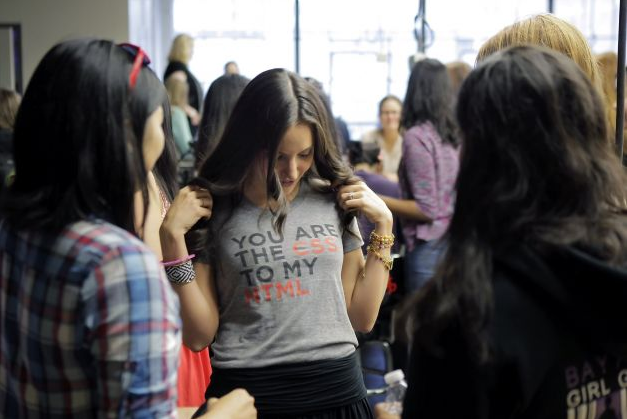
"content": "\u003cp>Important story about the backlash against the \"Pinkification\" of STEM in the \u003ca href=\"http://www.sfgate.com/news/article/How-not-to-attract-women-to-coding-Make-tech-pink-5602104.php#photo-6560862\" target=\"_blank\">San Francisco Chronicle\u003c/a>.\u003c/p>\n\u003cp>\"It creates the idea that women need sort of a separate universe in which women can be tech professionals,\" said UCSD professor Elizabeth Losh. \"Instead of trying to be inclusive, it's an alternate reality world.\"\u003cbr>\nhttp://www.sfgate.com/news/article/How-not-to-attract-women-to-coding-Make-tech-pink-5602104.php\u003c/p>\n\u003cp>[ad fullwidth]\u003c/p>\u003cp>\u003c/p>\n",
"disqusIdentifier": "36733 http://blogs.kqed.org/mindshift/?p=36733",
"disqusUrl": "https://ww2.kqed.org/mindshift/2014/07/08/the-backlash-against-the-pinkification-of-tech/",
"stats": {
"hasVideo": false,
"hasChartOrMap": false,
"hasAudio": false,
"hasPolis": false,
"wordCount": 71,
"hasGoogleForm": false,
"hasGallery": false,
"hasHearkenModule": false,
"iframeSrcs": [],
"paragraphCount": 4
},
"modified": 1456258247,
"excerpt": "Important story about the backlash against the \"Pinkification\" of STEM in the San Francisco Chronicle.",
"headData": {
"twImgId": "",
"twTitle": "",
"ogTitle": "",
"ogImgId": "",
"twDescription": "",
"description": "Important story about the backlash against the "Pinkification" of STEM in the San Francisco Chronicle.",
"title": "The Backlash Against the 'Pinkification' of Tech | KQED",
"ogDescription": "",
"schema": {
"@context": "https://schema.org",
"@type": "Article",
"headline": "The Backlash Against the 'Pinkification' of Tech",
"datePublished": "2014-07-08T14:00:40-07:00",
"dateModified": "2016-02-23T12:10:47-08:00",
"image": "https://cdn.kqed.org/wp-content/uploads/2020/02/KQED-OG-Image@1x.png"
}
},
"guestAuthors": [],
"slug": "the-backlash-against-the-pinkification-of-tech",
"status": "publish",
"path": "/mindshift/36733/the-backlash-against-the-pinkification-of-tech",
"audioTrackLength": null,
"parsedContent": [
{
"type": "contentString",
"content": "\u003cdiv class=\"post-body\">\u003cp>\u003cp>Important story about the backlash against the \"Pinkification\" of STEM in the \u003ca href=\"http://www.sfgate.com/news/article/How-not-to-attract-women-to-coding-Make-tech-pink-5602104.php#photo-6560862\" target=\"_blank\">San Francisco Chronicle\u003c/a>.\u003c/p>\n\u003cp>\"It creates the idea that women need sort of a separate universe in which women can be tech professionals,\" said UCSD professor Elizabeth Losh. \"Instead of trying to be inclusive, it's an alternate reality world.\"\u003cbr>\nhttp://www.sfgate.com/news/article/How-not-to-attract-women-to-coding-Make-tech-pink-5602104.php\u003c/p>\n\u003cp>\u003c/p>\u003c/div>",
"attributes": {
"named": {},
"numeric": []
}
},
{
"type": "component",
"content": "",
"name": "ad",
"attributes": {
"named": {
"label": "fullwidth"
},
"numeric": [
"fullwidth"
]
}
},
{
"type": "contentString",
"content": "\u003cdiv class=\"post-body\">\u003cp>\u003c/p>\u003cp>\u003c/p>\n\u003c/div>\u003c/p>",
"attributes": {
"named": {},
"numeric": []
}
}
],
"link": "/mindshift/36733/the-backlash-against-the-pinkification-of-tech",
"authors": [
"180"
],
"categories": [
"mindshift_193"
],
"tags": [
"mindshift_47",
"mindshift_825"
],
"featImg": "mindshift_36762",
"label": "mindshift"
},
"mindshift_35611": {
"type": "posts",
"id": "mindshift_35611",
"meta": {
"index": "posts_1716263798",
"site": "mindshift",
"id": "35611",
"score": null,
"sort": [
1401199211000
]
},
"parent": 0,
"labelTerm": {
"site": "mindshift"
},
"blocks": [],
"publishDate": 1401199211,
"format": "aside",
"disqusTitle": "Robots in the Classroom: What Are They Good For?",
"title": "Robots in the Classroom: What Are They Good For?",
"headTitle": "MindShift | KQED News",
"content": "\u003cfigure id=\"attachment_35639\" class=\"wp-caption aligncenter\" style=\"max-width: 640px\">\u003ca href=\"https://www.flickr.com/photos/steveonjava/12628872993/in/photolist-keYgXx-keZTBs-keY7mP-keXVyr-keXBuT-keXwBg-keXjG4-keZY2j-keXWFX-keXQxz-keZv6L-keZwvu-keXuqc-keXm3v-keXQ5v-keZKKq-keXpJD-keYi6e-keY7R6-keXkJK-keZvzw-keZMwS-keZw2U-keZHNQ-keZxnE-keXDzz-keZKwj-keXktV-keZExw-keXw92-keZR2s-keXrhP-keXTuM-keXyJc-keXchK-keXqFZ-keXpeF-keYgfv-keYfFK-keXeFn-keXs6c-keZN2j-keZDZN-keY9Cn-keXtYv-keXRJc-keXuWx-keXzJP-keXoj4-keZGVs\">\u003cimg class=\"size-full wp-image-35639\" src=\"http://ww2.kqed.org/mindshift/wp-content/uploads/sites/23/2014/05/robot.jpg\" alt=\"(Stephen Chin/Flickr)\" width=\"640\" height=\"360\" srcset=\"https://ww2.kqed.org/app/uploads/sites/23/2014/05/robot.jpg 640w, https://ww2.kqed.org/app/uploads/sites/23/2014/05/robot-400x225.jpg 400w, https://ww2.kqed.org/app/uploads/sites/23/2014/05/robot-320x180.jpg 320w\" sizes=\"(max-width: 640px) 100vw, 640px\">\u003c/a>\u003cfigcaption class=\"wp-caption-text\">(Stephen Chin/Flickr)\u003c/figcaption>\u003c/figure>\n\u003cp class=\"dropcap-serif\">Talk of robots in the classroom may have seemed far fetched a few years ago, but it’s safe to say that the future has arrived – at least in some classrooms. Educators are beginning to experiment with how robots can add value to their classrooms, and while it’s by no means common -- they’re still quite expensive for many school budgets -- robots paired with specific software and curriculum are offering interesting new learning opportunities.\u003c/p>\n\u003cp>\u003cstrong>DEMONSTRATING ABSTRACT CONCEPTS\u003c/strong>\u003c/p>\n\u003cp>To explain difficult abstract concepts in science and math subjects, some teachers are using \u003ca href=\"http://www.robotslab.com/\" target=\"_blank\">RobotsLab BOX\u003c/a>. It's a kit that includes a quadcopter, tablet, robotic arm, a spherical robot, a circular robot and lesson plans to go with all of them. Teachers use the tablet to manipulate the various robots into demonstrating different STEM concepts. Because all the software and lessons come preloaded, teachers don't need programming or robotics knowledge to make it work. The whole kit costs $3,500.\u003c/p>\n\u003cp>The founder of RobotsLab, Elad Inbar, said that teachers complained that their students were coming into first year engineering and computer science college classes without a solid foundation of math concepts. The suite of products his team ultimately developed use robots to show students that the equations and graphs they slave over mean something in the physical world.\u003c/p>\n\u003cp>“We are trying to use the power of visual learning to bridge all the ‘I’m not a math person’ stuff,” Inbar said. “They can actually use their senses to understand it.”\u003c/p>\n\u003cp>[ad fullwidth]\u003c/p>\n\u003cp>For example, a lesson about quadratic functions uses a quadcopter robot to demonstrate what the equation means in real life by correlating the area viewed on a camera attached to the bottom, with the graph. If programmed with a quadratic equation, the quadcopter rises to specific heights, demonstrating the visible relationship between the hovering robot and the area captured by the camera.\u003c/p>\n\u003caside class=\"pullquote alignleft\">\n“They want to work with the robot for as long as possible. Every time their lesson is done they're disappointed.”\u003cbr>\n\u003c/aside>\n\u003cp>After students have been introduced to the concept and have seen it demonstrated on the robot, they can try to program the robot themselves. The hands-on aspect helps students to understand that they can manipulate the robot themselves with the right code, Ibar said.\u003c/p>\n\u003cp>“We have teachers who are doing project-based learning and they give the robots to the students with the tablet and they say, 'You figure it out and come back and tell me what you learned,'” Inbar said. While his product includes curriculum and lessons teachers can use, the robot itself is just a platform that can be programmed by tinkering students just as effectively as by a teacher.\u003c/p>\n\u003cp>Jerry Moldenhauer has been using \u003ca href=\"http://www.vexrobotics.com/\" target=\"_blank\">VEX\u003c/a> and \u003ca href=\"http://www.lego.com/en-us/mindstorms/?domainredir=mindstorms.lego.com\" target=\"_blank\">Lego Mindstorm\u003c/a> robots in his engineering classes at Eastside Memorial High School in Austin, Texas for several years. Until now, he's mostly used them to offer advanced students challenge problems, giving them opportunities to design concepts and practice programming. This year, he started using the RobotLab BOX kit with his whole class, and he's found that it boosts engagement and crystallizes difficult concepts.\u003c/p>\n\u003cp>“They have solved a big problem and that is bringing in curriculum, especially for math and physics,” Moldenhauer said. He prefers teaching with project-based methods, but said it can be challenging for math teachers to come up with engaging and relevant projects that also get students to practice enough math to solidify what they've learned.\u003c/p>\n\u003cp>“[The robot] gives the instructors a tool to get them interested in the learning and then the math behind it is a surprise to them,” Moldenhauer said. Kids are calculating the velocity of the robot without realizing they’re using algebra. \"It really makes the connection better for them,” he said. Moldenhauer finds the robot especially useful for explaining the math behind more advanced engineering topics his class will work towards. They often don't have a firm grasp of the algebra they'll need and using the robot to visually demonstrate the concepts helps them review.\u003c/p>\n\u003cp>Moldenhauer is especially grateful for the extra engagement and excitement students show when working with the robot at this time of year, when most are already checking out for the summer. He used funds his department set aside for the engineering program to purchase the RobotLab BOX, but expects to use it across science and math departments. Sharing the robots that way helps justify the cost, but even without it, Moldenhauer says it was well worth the expense for the change he's seen in his student's ability to understand abstract concepts.\u003c/p>\n\u003cp>\u003cstrong>INCREASES ENGAGEMENT\u003c/strong>\u003c/p>\n\u003cp>In Onslow County, North Carolina, Gretchen Robinson is using robots with students at Northwoods Elementary School of Technology and Innovation. She’s started out slowly, incorporating the humanoid NAO robot her school purchased into a few lessons with each grade K-5. Different models of the NAO robot range from $16,000 to $20,000. Students named the robot ABBI, short for Awesome Bot Bringing Innovation, the winner of a student name contest.\u003c/p>\n\u003cp>Whereas many schools are focusing on using robots to teach science, technology, engineering and math, Robinson’s school is focusing on literacy. The kindergarten class has been learning about basic storytelling, so Robinson programmed a story the teacher wrote into the robot for it to read aloud to students. Afterwards the students answered questions the ABBI posed to them.\u003c/p>\n\u003cdiv style=\"float: left;width: 50%\">\u003cimg src=\"http://www.robotslab.com/BLOGIMGS/2wbws.gif\" alt=\"logo\">\u003c/div>\n\u003cdiv style=\"float: right;width: 50%\">\u003cimg src=\"http://www.robotslab.com/BLOGIMGS/ar%20drone%20graph.gif\" alt=\"logo\">\u003c/div>\n\u003cp>The second-graders were learning common economic vocabulary like \"income\" or \"expense.\" ABBI described a term without using the word itself and a small group of students discussed which answer to choose from a pile of 20 flashcards. When they reached a decision, they held up the vocabulary term and the robot used visual recognition to “read” what they had written and tell them if they’d gotten it right or wrong. “Through trial and error I learned that the students really liked the vision recognition,” Robinson said.\u003c/p>\n\u003cp>While she’s pleased with the engagement the robot has generated -- students never want the lesson to end when ABBI is involved -- Robinson said learning to program it was a steep learning curve. “Learning to program the robot at the beginning of the year was very time-consuming,” Robinson said. She spent around 40 hours programming a single lesson. Now that she’s had more practice she can do the same lesson in just a few hours.\u003c/p>\n\u003cp>Robinson has started to teach students the programming language and is helping the winners of a poetry contest code their work into ABBI so it will recite it back to them. Next year she hopes to do some small group programming work to at least expose kids to programming concepts before they move onto middle and high school where they might take it up more seriously.\u003c/p>\n\u003cp>“We’re a school of technology so I think it will be something that’s useful for us,” Robinson said. She’s aware that right now the robot is taking more time than it should, but she wants her students to be exposed to the many ways it can be programmed early to pique their interest in robotics and programming for more exploration down the road.\u003c/p>\n\u003cp>She’s also noticed that students are more willing to retry answering a question again without argument when ABBI tells them they are wrong. “The kids sometimes work better not for their teacher,” Robinson said. “Because the robot is cool and unusual they are excited about working with him.” The robot also gets everyone participating. “A lot of kids don’t want to disappoint their teacher, so they either won’t answer or they’ll mumble an answer,” Robinson said. “Whereas with the robot everybody wants to answer.\u003c/p>\n\u003cp>But Robinson doesn't take it personally. She sees it as just another tool to help reach all kids, even the quiet ones. Her school has only been experimenting with the robot for a short time and hasn't even had a chance to poll students on the differences between learning from a teacher or from the robot.\u003c/p>\n\u003cp>Robinson sees students' willingness to engage, to collaborate and to work on a lesson for as long as it takes to understand the content as positive signs of learning. “They want to work with the robot for as long as possible,\" Robinson said. \"Every time their lesson is done they're disappointed.” She's also quizzed students on content after they're done working with the robot and has found them to have a greater grasp of the information.\u003c/p>\n\u003cp>While Robinson has programmed ABBI to teach short group lessons on things like how to read a bar graph or vocabulary, she's never tried to have the robot lead an entire lesson. She thinks its possible, but would be a heavy programming lift and probably isn't possible anytime soon without some changes to the coding software.\u003c/p>\n\u003cp>\u003cstrong>EXPOSURE TO COMPUTATIONAL THINKING\u003c/strong>\u003c/p>\n\u003cp>A big selling point for robots in classrooms is their novelty. Educators are hoping to turn student excitement into a passion for learning how to program and manipulate a robotic platform.\u003c/p>\n\u003cp>Robot company founders, like Inbar, know the novelty factor is working in their favor, but they don't see robots getting old. The robot is just a platform for students and teachers to manipulate, after all, and its applications can constantly change and evolve.\u003c/p>\n\u003cp>Robinson isn't concerned her students will get tired of their robot anytime soon. Her school only has one, so students only engage with it once or twice a month, for lessons that lend themselves to it. \"I do think the robot is a powerful learning tool,\" Robinson said. \"However, I do not feel like it would be as commanding if it was used on a daily basis as an instructional tool, students may lose interest.\"\u003c/p>\n\u003cp>“It’s about opening up the world of computational thinking in an age appropriate way for them,” said Vikas Gupta, CEO of Play-i, a nascent educational robotics company with aspirations in both the consumer and education markets. The robot can be controlled with simple swipes on a tablet, and was designed for children as young as five. Gupta insists that even without writing code, children are beginning to develop “computational thinking,” the ability to break down a problem into its parts, understand those individual elements and then rearrange them.\u003c/p>\n\u003cp>“For kids who see this technology all around them, if we can give them a mental model for how things work, that’s really important,” Gupta said. As kids manipulate the tablet, they watch the robot dance or sing and realize their power to create in a software-driven world. For older kids, Play-i has software to allow kids to see blocks of code that they can string together to dictate the robots actions.\u003c/p>\n\u003cp>\u003cstrong>GIRLS AND ROBOTS\u003c/strong>\u003c/p>\n\u003cp>An interesting observation struck both Gupta and Inbar as they designed their robots. When testing a prototype of his robot with kids, Gupta discovered that girls were uninterested in the robot when it had visible wheels and wires. Little girls quickly identified that first version of the robot as a mechanical toy meant for boys. The company then developed a robot with rounded curves, more of a fantastical critter than the stereotypical boxy robot. “It became something that they could see in their imaginations,” said Gupta. “There was no stereotype they could apply.”\u003c/p>\n\u003cp>As educators think about the benefits and drawbacks of using robots in the classroom, drawing in girls has become an important focus. Anectdotally, Inbar said teachers report that girls outperform boys in computer science when they’re in all-female environments. “If you go to an all-girls school you will see that the performance is actually higher than in all-boys schools,” Inbar said. But if girls aren't exposed early to science and technology, many quickly succumb to stereotypes that those fields aren't appropriate for girls.\u003c/p>\n\u003cp>“We want to show robots and programming is not just for boys,” Inbar said. RobotLab is currently running two contests, a fashion show in Austin and a Robot Idol competition between schools in Northern and Southern California. Inbar found girls were more interested in programming robots if it was connected to designing something creative. “There is no problem with girls’ engagement in STEM subjects,” Inbar said. Educators just have to help them realize they like it and try to downplay the competition with boys, which can sometimes make girls withdraw.\u003c/p>\n\u003cp>Teachers often run into a similar situation when teaching computer science. “Boys already love computers, they already know they are going to be awesome at this,\" said Sheena Vaidyanathan, a computer science teacher in Los Altos public schools. \"Girls have to be sold on the idea. The machine itself doesn't attract them as much, but what it can do does.\" Girls are often battling stereotypes about the kind of boy, or girl, who likes programming. Drawing girls into subjects like computer science and robotics well before high school norms set in -- not to mention the accompanying hormones -- is critical, Vaidyanathan said.\u003c/p>\n\u003cp>[ad floatright]\u003c/p>\n\u003cp> \u003c/p>\n\n",
"disqusIdentifier": "35611 http://blogs.kqed.org/mindshift/?p=35611",
"disqusUrl": "https://ww2.kqed.org/mindshift/2014/05/27/robots-in-the-classroom-what-are-they-good-for/",
"stats": {
"hasVideo": false,
"hasChartOrMap": false,
"hasAudio": false,
"hasPolis": false,
"wordCount": 2287,
"hasGoogleForm": false,
"hasGallery": false,
"hasHearkenModule": false,
"iframeSrcs": [],
"paragraphCount": 35
},
"modified": 1401213116,
"excerpt": "Some educators are experimenting with using robots in the classroom to engage students and help explain abstract concepts that students often misunderstand.",
"headData": {
"twImgId": "",
"twTitle": "",
"ogTitle": "",
"ogImgId": "",
"twDescription": "",
"description": "Some educators are experimenting with using robots in the classroom to engage students and help explain abstract concepts that students often misunderstand.",
"title": "Robots in the Classroom: What Are They Good For? | KQED",
"ogDescription": "",
"schema": {
"@context": "https://schema.org",
"@type": "Article",
"headline": "Robots in the Classroom: What Are They Good For?",
"datePublished": "2014-05-27T07:00:11-07:00",
"dateModified": "2014-05-27T10:51:56-07:00",
"image": "https://cdn.kqed.org/wp-content/uploads/2020/02/KQED-OG-Image@1x.png"
}
},
"guestAuthors": [],
"slug": "robots-in-the-classroom-what-are-they-good-for",
"status": "publish",
"path": "/mindshift/35611/robots-in-the-classroom-what-are-they-good-for",
"audioTrackLength": null,
"parsedContent": [
{
"type": "contentString",
"content": "\u003cdiv class=\"post-body\">\u003cp>\u003cfigure id=\"attachment_35639\" class=\"wp-caption aligncenter\" style=\"max-width: 640px\">\u003ca href=\"https://www.flickr.com/photos/steveonjava/12628872993/in/photolist-keYgXx-keZTBs-keY7mP-keXVyr-keXBuT-keXwBg-keXjG4-keZY2j-keXWFX-keXQxz-keZv6L-keZwvu-keXuqc-keXm3v-keXQ5v-keZKKq-keXpJD-keYi6e-keY7R6-keXkJK-keZvzw-keZMwS-keZw2U-keZHNQ-keZxnE-keXDzz-keZKwj-keXktV-keZExw-keXw92-keZR2s-keXrhP-keXTuM-keXyJc-keXchK-keXqFZ-keXpeF-keYgfv-keYfFK-keXeFn-keXs6c-keZN2j-keZDZN-keY9Cn-keXtYv-keXRJc-keXuWx-keXzJP-keXoj4-keZGVs\">\u003cimg class=\"size-full wp-image-35639\" src=\"http://ww2.kqed.org/mindshift/wp-content/uploads/sites/23/2014/05/robot.jpg\" alt=\"(Stephen Chin/Flickr)\" width=\"640\" height=\"360\" srcset=\"https://ww2.kqed.org/app/uploads/sites/23/2014/05/robot.jpg 640w, https://ww2.kqed.org/app/uploads/sites/23/2014/05/robot-400x225.jpg 400w, https://ww2.kqed.org/app/uploads/sites/23/2014/05/robot-320x180.jpg 320w\" sizes=\"(max-width: 640px) 100vw, 640px\">\u003c/a>\u003cfigcaption class=\"wp-caption-text\">(Stephen Chin/Flickr)\u003c/figcaption>\u003c/figure>\n\u003cp class=\"dropcap-serif\">Talk of robots in the classroom may have seemed far fetched a few years ago, but it’s safe to say that the future has arrived – at least in some classrooms. Educators are beginning to experiment with how robots can add value to their classrooms, and while it’s by no means common -- they’re still quite expensive for many school budgets -- robots paired with specific software and curriculum are offering interesting new learning opportunities.\u003c/p>\n\u003cp>\u003cstrong>DEMONSTRATING ABSTRACT CONCEPTS\u003c/strong>\u003c/p>\n\u003cp>To explain difficult abstract concepts in science and math subjects, some teachers are using \u003ca href=\"http://www.robotslab.com/\" target=\"_blank\">RobotsLab BOX\u003c/a>. It's a kit that includes a quadcopter, tablet, robotic arm, a spherical robot, a circular robot and lesson plans to go with all of them. Teachers use the tablet to manipulate the various robots into demonstrating different STEM concepts. Because all the software and lessons come preloaded, teachers don't need programming or robotics knowledge to make it work. The whole kit costs $3,500.\u003c/p>\n\u003cp>The founder of RobotsLab, Elad Inbar, said that teachers complained that their students were coming into first year engineering and computer science college classes without a solid foundation of math concepts. The suite of products his team ultimately developed use robots to show students that the equations and graphs they slave over mean something in the physical world.\u003c/p>\n\u003cp>“We are trying to use the power of visual learning to bridge all the ‘I’m not a math person’ stuff,” Inbar said. “They can actually use their senses to understand it.”\u003c/p>\n\u003cp>\u003c/p>\u003c/div>",
"attributes": {
"named": {},
"numeric": []
}
},
{
"type": "component",
"content": "",
"name": "ad",
"attributes": {
"named": {
"label": "fullwidth"
},
"numeric": [
"fullwidth"
]
}
},
{
"type": "contentString",
"content": "\u003cdiv class=\"post-body\">\u003cp>\u003c/p>\n\u003cp>For example, a lesson about quadratic functions uses a quadcopter robot to demonstrate what the equation means in real life by correlating the area viewed on a camera attached to the bottom, with the graph. If programmed with a quadratic equation, the quadcopter rises to specific heights, demonstrating the visible relationship between the hovering robot and the area captured by the camera.\u003c/p>\n\u003caside class=\"pullquote alignleft\">\n“They want to work with the robot for as long as possible. Every time their lesson is done they're disappointed.”\u003cbr>\n\u003c/aside>\n\u003cp>After students have been introduced to the concept and have seen it demonstrated on the robot, they can try to program the robot themselves. The hands-on aspect helps students to understand that they can manipulate the robot themselves with the right code, Ibar said.\u003c/p>\n\u003cp>“We have teachers who are doing project-based learning and they give the robots to the students with the tablet and they say, 'You figure it out and come back and tell me what you learned,'” Inbar said. While his product includes curriculum and lessons teachers can use, the robot itself is just a platform that can be programmed by tinkering students just as effectively as by a teacher.\u003c/p>\n\u003cp>Jerry Moldenhauer has been using \u003ca href=\"http://www.vexrobotics.com/\" target=\"_blank\">VEX\u003c/a> and \u003ca href=\"http://www.lego.com/en-us/mindstorms/?domainredir=mindstorms.lego.com\" target=\"_blank\">Lego Mindstorm\u003c/a> robots in his engineering classes at Eastside Memorial High School in Austin, Texas for several years. Until now, he's mostly used them to offer advanced students challenge problems, giving them opportunities to design concepts and practice programming. This year, he started using the RobotLab BOX kit with his whole class, and he's found that it boosts engagement and crystallizes difficult concepts.\u003c/p>\n\u003cp>“They have solved a big problem and that is bringing in curriculum, especially for math and physics,” Moldenhauer said. He prefers teaching with project-based methods, but said it can be challenging for math teachers to come up with engaging and relevant projects that also get students to practice enough math to solidify what they've learned.\u003c/p>\n\u003cp>“[The robot] gives the instructors a tool to get them interested in the learning and then the math behind it is a surprise to them,” Moldenhauer said. Kids are calculating the velocity of the robot without realizing they’re using algebra. \"It really makes the connection better for them,” he said. Moldenhauer finds the robot especially useful for explaining the math behind more advanced engineering topics his class will work towards. They often don't have a firm grasp of the algebra they'll need and using the robot to visually demonstrate the concepts helps them review.\u003c/p>\n\u003cp>Moldenhauer is especially grateful for the extra engagement and excitement students show when working with the robot at this time of year, when most are already checking out for the summer. He used funds his department set aside for the engineering program to purchase the RobotLab BOX, but expects to use it across science and math departments. Sharing the robots that way helps justify the cost, but even without it, Moldenhauer says it was well worth the expense for the change he's seen in his student's ability to understand abstract concepts.\u003c/p>\n\u003cp>\u003cstrong>INCREASES ENGAGEMENT\u003c/strong>\u003c/p>\n\u003cp>In Onslow County, North Carolina, Gretchen Robinson is using robots with students at Northwoods Elementary School of Technology and Innovation. She’s started out slowly, incorporating the humanoid NAO robot her school purchased into a few lessons with each grade K-5. Different models of the NAO robot range from $16,000 to $20,000. Students named the robot ABBI, short for Awesome Bot Bringing Innovation, the winner of a student name contest.\u003c/p>\n\u003cp>Whereas many schools are focusing on using robots to teach science, technology, engineering and math, Robinson’s school is focusing on literacy. The kindergarten class has been learning about basic storytelling, so Robinson programmed a story the teacher wrote into the robot for it to read aloud to students. Afterwards the students answered questions the ABBI posed to them.\u003c/p>\n\u003cdiv style=\"float: left;width: 50%\">\u003cimg src=\"http://www.robotslab.com/BLOGIMGS/2wbws.gif\" alt=\"logo\">\u003c/div>\n\u003cdiv style=\"float: right;width: 50%\">\u003cimg src=\"http://www.robotslab.com/BLOGIMGS/ar%20drone%20graph.gif\" alt=\"logo\">\u003c/div>\n\u003cp>The second-graders were learning common economic vocabulary like \"income\" or \"expense.\" ABBI described a term without using the word itself and a small group of students discussed which answer to choose from a pile of 20 flashcards. When they reached a decision, they held up the vocabulary term and the robot used visual recognition to “read” what they had written and tell them if they’d gotten it right or wrong. “Through trial and error I learned that the students really liked the vision recognition,” Robinson said.\u003c/p>\n\u003cp>While she’s pleased with the engagement the robot has generated -- students never want the lesson to end when ABBI is involved -- Robinson said learning to program it was a steep learning curve. “Learning to program the robot at the beginning of the year was very time-consuming,” Robinson said. She spent around 40 hours programming a single lesson. Now that she’s had more practice she can do the same lesson in just a few hours.\u003c/p>\n\u003cp>Robinson has started to teach students the programming language and is helping the winners of a poetry contest code their work into ABBI so it will recite it back to them. Next year she hopes to do some small group programming work to at least expose kids to programming concepts before they move onto middle and high school where they might take it up more seriously.\u003c/p>\n\u003cp>“We’re a school of technology so I think it will be something that’s useful for us,” Robinson said. She’s aware that right now the robot is taking more time than it should, but she wants her students to be exposed to the many ways it can be programmed early to pique their interest in robotics and programming for more exploration down the road.\u003c/p>\n\u003cp>She’s also noticed that students are more willing to retry answering a question again without argument when ABBI tells them they are wrong. “The kids sometimes work better not for their teacher,” Robinson said. “Because the robot is cool and unusual they are excited about working with him.” The robot also gets everyone participating. “A lot of kids don’t want to disappoint their teacher, so they either won’t answer or they’ll mumble an answer,” Robinson said. “Whereas with the robot everybody wants to answer.\u003c/p>\n\u003cp>But Robinson doesn't take it personally. She sees it as just another tool to help reach all kids, even the quiet ones. Her school has only been experimenting with the robot for a short time and hasn't even had a chance to poll students on the differences between learning from a teacher or from the robot.\u003c/p>\n\u003cp>Robinson sees students' willingness to engage, to collaborate and to work on a lesson for as long as it takes to understand the content as positive signs of learning. “They want to work with the robot for as long as possible,\" Robinson said. \"Every time their lesson is done they're disappointed.” She's also quizzed students on content after they're done working with the robot and has found them to have a greater grasp of the information.\u003c/p>\n\u003cp>While Robinson has programmed ABBI to teach short group lessons on things like how to read a bar graph or vocabulary, she's never tried to have the robot lead an entire lesson. She thinks its possible, but would be a heavy programming lift and probably isn't possible anytime soon without some changes to the coding software.\u003c/p>\n\u003cp>\u003cstrong>EXPOSURE TO COMPUTATIONAL THINKING\u003c/strong>\u003c/p>\n\u003cp>A big selling point for robots in classrooms is their novelty. Educators are hoping to turn student excitement into a passion for learning how to program and manipulate a robotic platform.\u003c/p>\n\u003cp>Robot company founders, like Inbar, know the novelty factor is working in their favor, but they don't see robots getting old. The robot is just a platform for students and teachers to manipulate, after all, and its applications can constantly change and evolve.\u003c/p>\n\u003cp>Robinson isn't concerned her students will get tired of their robot anytime soon. Her school only has one, so students only engage with it once or twice a month, for lessons that lend themselves to it. \"I do think the robot is a powerful learning tool,\" Robinson said. \"However, I do not feel like it would be as commanding if it was used on a daily basis as an instructional tool, students may lose interest.\"\u003c/p>\n\u003cp>“It’s about opening up the world of computational thinking in an age appropriate way for them,” said Vikas Gupta, CEO of Play-i, a nascent educational robotics company with aspirations in both the consumer and education markets. The robot can be controlled with simple swipes on a tablet, and was designed for children as young as five. Gupta insists that even without writing code, children are beginning to develop “computational thinking,” the ability to break down a problem into its parts, understand those individual elements and then rearrange them.\u003c/p>\n\u003cp>“For kids who see this technology all around them, if we can give them a mental model for how things work, that’s really important,” Gupta said. As kids manipulate the tablet, they watch the robot dance or sing and realize their power to create in a software-driven world. For older kids, Play-i has software to allow kids to see blocks of code that they can string together to dictate the robots actions.\u003c/p>\n\u003cp>\u003cstrong>GIRLS AND ROBOTS\u003c/strong>\u003c/p>\n\u003cp>An interesting observation struck both Gupta and Inbar as they designed their robots. When testing a prototype of his robot with kids, Gupta discovered that girls were uninterested in the robot when it had visible wheels and wires. Little girls quickly identified that first version of the robot as a mechanical toy meant for boys. The company then developed a robot with rounded curves, more of a fantastical critter than the stereotypical boxy robot. “It became something that they could see in their imaginations,” said Gupta. “There was no stereotype they could apply.”\u003c/p>\n\u003cp>As educators think about the benefits and drawbacks of using robots in the classroom, drawing in girls has become an important focus. Anectdotally, Inbar said teachers report that girls outperform boys in computer science when they’re in all-female environments. “If you go to an all-girls school you will see that the performance is actually higher than in all-boys schools,” Inbar said. But if girls aren't exposed early to science and technology, many quickly succumb to stereotypes that those fields aren't appropriate for girls.\u003c/p>\n\u003cp>“We want to show robots and programming is not just for boys,” Inbar said. RobotLab is currently running two contests, a fashion show in Austin and a Robot Idol competition between schools in Northern and Southern California. Inbar found girls were more interested in programming robots if it was connected to designing something creative. “There is no problem with girls’ engagement in STEM subjects,” Inbar said. Educators just have to help them realize they like it and try to downplay the competition with boys, which can sometimes make girls withdraw.\u003c/p>\n\u003cp>Teachers often run into a similar situation when teaching computer science. “Boys already love computers, they already know they are going to be awesome at this,\" said Sheena Vaidyanathan, a computer science teacher in Los Altos public schools. \"Girls have to be sold on the idea. The machine itself doesn't attract them as much, but what it can do does.\" Girls are often battling stereotypes about the kind of boy, or girl, who likes programming. Drawing girls into subjects like computer science and robotics well before high school norms set in -- not to mention the accompanying hormones -- is critical, Vaidyanathan said.\u003c/p>\n\u003cp>\u003c/p>\u003c/div>",
"attributes": {
"named": {},
"numeric": []
}
},
{
"type": "component",
"content": "",
"name": "ad",
"attributes": {
"named": {
"label": "floatright"
},
"numeric": [
"floatright"
]
}
},
{
"type": "contentString",
"content": "\u003cdiv class=\"post-body\">\u003cp>\u003c/p>\n\u003cp> \u003c/p>\n\n\u003c/div>\u003c/p>",
"attributes": {
"named": {},
"numeric": []
}
}
],
"link": "/mindshift/35611/robots-in-the-classroom-what-are-they-good-for",
"authors": [
"234"
],
"categories": [
"mindshift_195"
],
"tags": [
"mindshift_1040",
"mindshift_434",
"mindshift_47"
],
"featImg": "mindshift_35639",
"label": "mindshift"
},
"mindshift_33653": {
"type": "posts",
"id": "mindshift_33653",
"meta": {
"index": "posts_1716263798",
"site": "mindshift",
"id": "33653",
"score": null,
"sort": [
1390922410000
]
},
"parent": 0,
"labelTerm": {
"site": "mindshift"
},
"blocks": [],
"publishDate": 1390922410,
"format": "aside",
"disqusTitle": "To Inspire Learning, Architects Reimagine Learning Spaces",
"title": "To Inspire Learning, Architects Reimagine Learning Spaces",
"headTitle": "MindShift | KQED News",
"content": "\u003cfigure id=\"attachment_33658\" class=\"wp-caption center\" style=\"max-width: 640px\">\u003cimg class=\"size-full wp-image-33658\" src=\"http://ww2.kqed.org/mindshift/wp-content/uploads/sites/23/2014/01/MakerLab_web-e1390868839505.jpg\" alt=\"MakerLab_web\" width=\"640\" height=\"360\" srcset=\"https://ww2.kqed.org/app/uploads/sites/23/2014/01/MakerLab_web-e1390868839505.jpg 640w, https://ww2.kqed.org/app/uploads/sites/23/2014/01/MakerLab_web-e1390868839505-400x225.jpg 400w, https://ww2.kqed.org/app/uploads/sites/23/2014/01/MakerLab_web-e1390868839505-320x180.jpg 320w\" sizes=\"(max-width: 640px) 100vw, 640px\">\u003cfigcaption class=\"wp-caption-text\"> \u003c/figcaption>\u003c/figure>\n\u003cp>\u003cstrong>By Allison Arieff\u003c/strong>\u003c/p>\n\u003cp class=\"dropcap-serif\">As K–12 schools refocus on team-based, interdisciplinary learning, they are moving away from standardized, teach-to-test programs that assume a one-size-fits-all approach to teaching. Instead, there is a growing awareness that students learn in a variety of ways, and the differences should be supported. The students often learn better by doing it themselves, so teachers are there to facilitate, not just to instruct. Technology is there as a tool and resource, not as a visual aid or talking head.\u003c/p>\n\u003cp>\u003ca href=\"http://m.gensler.com/\" target=\"_blank\">Gensler\u003c/a>, a national architecture firm that's working with a broad range of schools -- from primary schools in redeveloping inner cities to NYU Magnet, Wharton, and Duke -- is working with one of the global pioneers, the \u003ca href=\"http://www.playmaker.org\" target=\"_blank\">PlayMaker School\u003c/a> in Los Angeles. Behind the venture is GameDesk, which views gaming as an interactive medium for learning. Launched with a sixth-grade class, the PlayMaker program builds on play and explores how its young students can use a variety of tools and games to learn in new ways. Instead of classrooms, PlayMaker School has a suite of spaces that are interconnected physically and visually. There’s an ideation lab, a maker space, and an immersive gaming and learning zone where the students can try out the games they create and the software they develop. [Read more about PlayMaker School \u003ca href=\"http://ww2.kqed.org/mindshift/2012/09/a-new-game-based-school-opens/\">here\u003c/a>.]\u003c/p>\n\u003cp>“There’s no teacher at the front,” says Gensler’s Shawn Gehle. “The rooms are like different scenes in a video game. They inspire active learning.\u003c/p>\n\u003cp>Also in Los Angeles, \u003ca href=\"http://www.wiseburn.k12.ca.us/new/default.html\" target=\"_blank\">Wiseburn School District\u003c/a> will collocate three charter schools into a renovated 330,000-square-foot building, the former high-security offices of an aerospace firm. Given the radical change in function, “we’re basically hacking an office building, using strategic interventions to reshape it to fit the schools’ project-based curricula and support their combined staffs and 1,200 students,” says Gensler’s David Herjeczki.\u003c/p>\n\u003cp>[ad fullwidth]\u003c/p>\n\u003cp>Like PlayMaker, Wiseburn moves away from the traditional classroom, opting for neighborhoods of teaching spaces — “pods”— that open out to a large commons area for each school and an atrium that interconnects all three but provides each with a unique address.\u003c/p>\n\u003cp>[contextly_sidebar id=\"89eba81bd9a675c95e6fb3feb8d1f942\"]\u003c/p>\n\u003cp>When it comes to integrating STEM into classroom space, there are real implications for how teachers interact, says Thaler. “When you put math and science teachers together, they can cross-collaborate on lesson plans. If they’re teaching trigonometry or wave properties in math, they know they have to pull in the physics faculty also.” Schools that embrace STEM end up retraining. “They have to stretch their conception of what’s being taught.”\u003c/p>\n\u003cp>When Gensler first looked at the \u003ca href=\"http://www.d-e.org/\" target=\"_blank\">Dwight-Englewood School in New Jersey,\u003c/a> an independent prep school, its campus planners realized that the STEM program had separate buildings for math and science. “It wasn’t really STEM,” Thaler says. “The new campus plan called for a building that would support a truly interdisciplinary curriculum.” The faculty, administrators, and the design team toured 16 private schools, colleges, and universities on the US East Coast to try to understand the hallmarks of interdisciplinary STEM.\u003c/p>\n\u003cp>They were inspired by facilities that “let spontaneous collisions happen,” Thaler notes, but the takeaway was less a model than a point of view. Gensler documented it in a paper on STEM education. One of its major findings was that, to succeed, STEM and other interdisciplinary programs need to create propinquity—literally, “nearness”—among their participants.\u003c/p>\n\u003cp>“We learned that a STEM building is not a linear thing, with math on one side and science on the other,” Thaler explains. “What we designed is like the petals of a flower, with math and science sharing the classrooms and a great melting pot in the middle.”\u003c/p>\n\u003cp>There are still labs. They operate in two modes: students seated around a large table or working as teams around a lab bench. The lab classrooms can shift easily between the two modes, so they’re slightly larger than tradition dictates. The idea is that you can do a math lab at the table or a science lab at the bench.\u003c/p>\n\u003cp>The labs have all the traditional equipment, but—designed for mobility and portability—they can be quickly reconfigured. “What’s radical about the building is that it can support the gamut—biology, chemistry, whatever anyone wants to teach,” Thaler says.\u003c/p>\n\u003cp>\u003c/p>\n\u003cp>\u003cem>Allison Arieff is editorial director at \u003ca href=\"http://www.spur.org\" target=\"_blank\">SPUR\u003c/a> and writes about architecture and design for The New York Times.\u003c/em>\u003c/p>\n\n",
"disqusIdentifier": "33653 http://blogs.kqed.org/mindshift/?p=33653",
"disqusUrl": "https://ww2.kqed.org/mindshift/2014/01/28/to-inspire-learning-architects-reimagine-learning-spaces/",
"stats": {
"hasVideo": false,
"hasChartOrMap": false,
"hasAudio": false,
"hasPolis": false,
"wordCount": 788,
"hasGoogleForm": false,
"hasGallery": false,
"hasHearkenModule": false,
"iframeSrcs": [],
"paragraphCount": 15
},
"modified": 1390922279,
"excerpt": "As schools refocus on team-based, interdisciplinary learning, they're moving away from standardized, teach-to-test programs that assume a one-size-fits-all approach to teaching. Instead, there is a growing awareness that students learn in a variety of ways, and the differences should be supported. With that in mind, here's how one architecture firm is redesigning learning spaces.",
"headData": {
"twImgId": "",
"twTitle": "",
"ogTitle": "",
"ogImgId": "",
"twDescription": "",
"description": "As schools refocus on team-based, interdisciplinary learning, they're moving away from standardized, teach-to-test programs that assume a one-size-fits-all approach to teaching. Instead, there is a growing awareness that students learn in a variety of ways, and the differences should be supported. With that in mind, here's how one architecture firm is redesigning learning spaces.",
"title": "To Inspire Learning, Architects Reimagine Learning Spaces | KQED",
"ogDescription": "",
"schema": {
"@context": "https://schema.org",
"@type": "Article",
"headline": "To Inspire Learning, Architects Reimagine Learning Spaces",
"datePublished": "2014-01-28T07:20:10-08:00",
"dateModified": "2014-01-28T07:17:59-08:00",
"image": "https://cdn.kqed.org/wp-content/uploads/2020/02/KQED-OG-Image@1x.png"
}
},
"guestAuthors": [],
"slug": "to-inspire-learning-architects-reimagine-learning-spaces",
"status": "publish",
"path": "/mindshift/33653/to-inspire-learning-architects-reimagine-learning-spaces",
"audioTrackLength": null,
"parsedContent": [
{
"type": "contentString",
"content": "\u003cdiv class=\"post-body\">\u003cp>\u003cfigure id=\"attachment_33658\" class=\"wp-caption center\" style=\"max-width: 640px\">\u003cimg class=\"size-full wp-image-33658\" src=\"http://ww2.kqed.org/mindshift/wp-content/uploads/sites/23/2014/01/MakerLab_web-e1390868839505.jpg\" alt=\"MakerLab_web\" width=\"640\" height=\"360\" srcset=\"https://ww2.kqed.org/app/uploads/sites/23/2014/01/MakerLab_web-e1390868839505.jpg 640w, https://ww2.kqed.org/app/uploads/sites/23/2014/01/MakerLab_web-e1390868839505-400x225.jpg 400w, https://ww2.kqed.org/app/uploads/sites/23/2014/01/MakerLab_web-e1390868839505-320x180.jpg 320w\" sizes=\"(max-width: 640px) 100vw, 640px\">\u003cfigcaption class=\"wp-caption-text\"> \u003c/figcaption>\u003c/figure>\n\u003cp>\u003cstrong>By Allison Arieff\u003c/strong>\u003c/p>\n\u003cp class=\"dropcap-serif\">As K–12 schools refocus on team-based, interdisciplinary learning, they are moving away from standardized, teach-to-test programs that assume a one-size-fits-all approach to teaching. Instead, there is a growing awareness that students learn in a variety of ways, and the differences should be supported. The students often learn better by doing it themselves, so teachers are there to facilitate, not just to instruct. Technology is there as a tool and resource, not as a visual aid or talking head.\u003c/p>\n\u003cp>\u003ca href=\"http://m.gensler.com/\" target=\"_blank\">Gensler\u003c/a>, a national architecture firm that's working with a broad range of schools -- from primary schools in redeveloping inner cities to NYU Magnet, Wharton, and Duke -- is working with one of the global pioneers, the \u003ca href=\"http://www.playmaker.org\" target=\"_blank\">PlayMaker School\u003c/a> in Los Angeles. Behind the venture is GameDesk, which views gaming as an interactive medium for learning. Launched with a sixth-grade class, the PlayMaker program builds on play and explores how its young students can use a variety of tools and games to learn in new ways. Instead of classrooms, PlayMaker School has a suite of spaces that are interconnected physically and visually. There’s an ideation lab, a maker space, and an immersive gaming and learning zone where the students can try out the games they create and the software they develop. [Read more about PlayMaker School \u003ca href=\"http://ww2.kqed.org/mindshift/2012/09/a-new-game-based-school-opens/\">here\u003c/a>.]\u003c/p>\n\u003cp>“There’s no teacher at the front,” says Gensler’s Shawn Gehle. “The rooms are like different scenes in a video game. They inspire active learning.\u003c/p>\n\u003cp>Also in Los Angeles, \u003ca href=\"http://www.wiseburn.k12.ca.us/new/default.html\" target=\"_blank\">Wiseburn School District\u003c/a> will collocate three charter schools into a renovated 330,000-square-foot building, the former high-security offices of an aerospace firm. Given the radical change in function, “we’re basically hacking an office building, using strategic interventions to reshape it to fit the schools’ project-based curricula and support their combined staffs and 1,200 students,” says Gensler’s David Herjeczki.\u003c/p>\n\u003cp>\u003c/p>\u003c/div>",
"attributes": {
"named": {},
"numeric": []
}
},
{
"type": "component",
"content": "",
"name": "ad",
"attributes": {
"named": {
"label": "fullwidth"
},
"numeric": [
"fullwidth"
]
}
},
{
"type": "contentString",
"content": "\u003cdiv class=\"post-body\">\u003cp>\u003c/p>\n\u003cp>Like PlayMaker, Wiseburn moves away from the traditional classroom, opting for neighborhoods of teaching spaces — “pods”— that open out to a large commons area for each school and an atrium that interconnects all three but provides each with a unique address.\u003c/p>\n\u003cp>\u003c/p>\u003cp>\u003c/p>\u003cp>\u003c/p>\n\u003cp>When it comes to integrating STEM into classroom space, there are real implications for how teachers interact, says Thaler. “When you put math and science teachers together, they can cross-collaborate on lesson plans. If they’re teaching trigonometry or wave properties in math, they know they have to pull in the physics faculty also.” Schools that embrace STEM end up retraining. “They have to stretch their conception of what’s being taught.”\u003c/p>\n\u003cp>When Gensler first looked at the \u003ca href=\"http://www.d-e.org/\" target=\"_blank\">Dwight-Englewood School in New Jersey,\u003c/a> an independent prep school, its campus planners realized that the STEM program had separate buildings for math and science. “It wasn’t really STEM,” Thaler says. “The new campus plan called for a building that would support a truly interdisciplinary curriculum.” The faculty, administrators, and the design team toured 16 private schools, colleges, and universities on the US East Coast to try to understand the hallmarks of interdisciplinary STEM.\u003c/p>\n\u003cp>They were inspired by facilities that “let spontaneous collisions happen,” Thaler notes, but the takeaway was less a model than a point of view. Gensler documented it in a paper on STEM education. One of its major findings was that, to succeed, STEM and other interdisciplinary programs need to create propinquity—literally, “nearness”—among their participants.\u003c/p>\n\u003cp>“We learned that a STEM building is not a linear thing, with math on one side and science on the other,” Thaler explains. “What we designed is like the petals of a flower, with math and science sharing the classrooms and a great melting pot in the middle.”\u003c/p>\n\u003cp>There are still labs. They operate in two modes: students seated around a large table or working as teams around a lab bench. The lab classrooms can shift easily between the two modes, so they’re slightly larger than tradition dictates. The idea is that you can do a math lab at the table or a science lab at the bench.\u003c/p>\n\u003cp>The labs have all the traditional equipment, but—designed for mobility and portability—they can be quickly reconfigured. “What’s radical about the building is that it can support the gamut—biology, chemistry, whatever anyone wants to teach,” Thaler says.\u003c/p>\n\u003cp>\u003c/p>\n\u003cp>\u003cem>Allison Arieff is editorial director at \u003ca href=\"http://www.spur.org\" target=\"_blank\">SPUR\u003c/a> and writes about architecture and design for The New York Times.\u003c/em>\u003c/p>\n\n\u003c/div>\u003c/p>",
"attributes": {
"named": {},
"numeric": []
}
}
],
"link": "/mindshift/33653/to-inspire-learning-architects-reimagine-learning-spaces",
"authors": [
"4354"
],
"categories": [
"mindshift_192"
],
"tags": [
"mindshift_20538",
"mindshift_1040",
"mindshift_47"
],
"label": "mindshift"
},
"mindshift_33613": {
"type": "posts",
"id": "mindshift_33613",
"meta": {
"index": "posts_1716263798",
"site": "mindshift",
"id": "33613",
"score": null,
"sort": [
1390600591000
]
},
"parent": 0,
"labelTerm": {
"site": "mindshift"
},
"blocks": [],
"publishDate": 1390600591,
"format": "aside",
"disqusTitle": "A Grade School Where Every Student Is An Engineer",
"title": "A Grade School Where Every Student Is An Engineer",
"headTitle": "MindShift | KQED News",
"content": "\u003cp>A fun story about a public elementary school in South Carolina where every student is an engineer. There's plenty of robotics and science, definitely some art -- but no handwriting instruction. Is this the future?\u003c/p>\n\u003cp> \u003c/p>\n\u003cdiv style=\"overflow: hidden\">\n\u003cdiv class=\"embedly\">\u003cimg class=\"thumb embedly-thumbnail-small\" src=\"http://cdn.theatlantic.com/static/newsroom/img/mt/2014/01/engineer_elementary/lead_large.jpg?mzvcm6\" alt=\"\">\u003ca class=\"embedly-title\" href=\"http://www.theatlantic.com/education/archive/2014/01/americas-tiniest-engineers-report-from-greenville-south-carolina/283199/\" target=\"_blank\">America's Tiniest Engineers: Report from Greenville, South Carolina\u003c/a>By Deborah Fallows. It was the monthly \"engineering week\" when I visited the A.J. Whittenberg Elementary School of Engineering in Greenville, South Carolina, in January. Volunteers from one of the several local big-name companies in town were teaching special lessons. This week, employees from General Electric, some in purple t-shirts, were teaching about hydro, wind, and solar power sources.\n\u003cdiv class=\"embedly-clear\">\u003c/div>\n\u003cp>\u003cspan class=\"embedly-powered\" style=\"float: right\">\u003ca title=\"Powered by Embedly\" href=\"http://embed.ly/code?url=http%3A%2F%2Fwww.theatlantic.com%2Feducation%2Farchive%2F2014%2F01%2Famericas-tiniest-engineers-report-from-greenville-south-carolina%2F283199%2F\" target=\"_blank\">\u003cimg src=\"http://static.embed.ly/images/logos/embedly-powered-small-light.png\" alt=\"Embedly Powered\">\u003c/a>\u003c/span>\u003c/p>\n\u003cdiv class=\"media-attribution\">via \u003ca class=\"media-attribution-link\" href=\"http://www.theatlantic.com\" target=\"_blank\">Theatlantic\u003c/a>\u003c/div>\n\u003cdiv class=\"embedly-clear\">\u003c/div>\n\u003c/div>\n\u003c/div>\n\u003cp>[ad fullwidth]\u003c/p>\u003cp>\u003c/p>\n",
"disqusIdentifier": "33613 http://blogs.kqed.org/mindshift/?p=33613",
"disqusUrl": "https://ww2.kqed.org/mindshift/2014/01/24/a-grade-school-where-every-student-is-an-engineer/",
"stats": {
"hasVideo": false,
"hasChartOrMap": false,
"hasAudio": false,
"hasPolis": false,
"wordCount": 110,
"hasGoogleForm": false,
"hasGallery": false,
"hasHearkenModule": false,
"iframeSrcs": [],
"paragraphCount": 4
},
"modified": 1390600752,
"excerpt": "A fun story about a public elementary school in South Carolina where every student is an engineer. There's plenty of robotics and science, definitely some art -- but no handwriting instruction. Is this the future?",
"headData": {
"twImgId": "",
"twTitle": "",
"ogTitle": "",
"ogImgId": "",
"twDescription": "",
"description": "A fun story about a public elementary school in South Carolina where every student is an engineer. There's plenty of robotics and science, definitely some art -- but no handwriting instruction. Is this the future?",
"title": "A Grade School Where Every Student Is An Engineer | KQED",
"ogDescription": "",
"schema": {
"@context": "https://schema.org",
"@type": "Article",
"headline": "A Grade School Where Every Student Is An Engineer",
"datePublished": "2014-01-24T13:56:31-08:00",
"dateModified": "2014-01-24T13:59:12-08:00",
"image": "https://cdn.kqed.org/wp-content/uploads/2020/02/KQED-OG-Image@1x.png"
}
},
"guestAuthors": [],
"slug": "a-grade-school-where-every-student-is-an-engineer",
"status": "publish",
"path": "/mindshift/33613/a-grade-school-where-every-student-is-an-engineer",
"audioTrackLength": null,
"parsedContent": [
{
"type": "contentString",
"content": "\u003cdiv class=\"post-body\">\u003cp>\u003cp>A fun story about a public elementary school in South Carolina where every student is an engineer. There's plenty of robotics and science, definitely some art -- but no handwriting instruction. Is this the future?\u003c/p>\n\u003cp> \u003c/p>\n\u003cdiv style=\"overflow: hidden\">\n\u003cdiv class=\"embedly\">\u003cimg class=\"thumb embedly-thumbnail-small\" src=\"http://cdn.theatlantic.com/static/newsroom/img/mt/2014/01/engineer_elementary/lead_large.jpg?mzvcm6\" alt=\"\">\u003ca class=\"embedly-title\" href=\"http://www.theatlantic.com/education/archive/2014/01/americas-tiniest-engineers-report-from-greenville-south-carolina/283199/\" target=\"_blank\">America's Tiniest Engineers: Report from Greenville, South Carolina\u003c/a>By Deborah Fallows. It was the monthly \"engineering week\" when I visited the A.J. Whittenberg Elementary School of Engineering in Greenville, South Carolina, in January. Volunteers from one of the several local big-name companies in town were teaching special lessons. This week, employees from General Electric, some in purple t-shirts, were teaching about hydro, wind, and solar power sources.\n\u003cdiv class=\"embedly-clear\">\u003c/div>\n\u003cp>\u003cspan class=\"embedly-powered\" style=\"float: right\">\u003ca title=\"Powered by Embedly\" href=\"http://embed.ly/code?url=http%3A%2F%2Fwww.theatlantic.com%2Feducation%2Farchive%2F2014%2F01%2Famericas-tiniest-engineers-report-from-greenville-south-carolina%2F283199%2F\" target=\"_blank\">\u003cimg src=\"http://static.embed.ly/images/logos/embedly-powered-small-light.png\" alt=\"Embedly Powered\">\u003c/a>\u003c/span>\u003c/p>\n\u003cdiv class=\"media-attribution\">via \u003ca class=\"media-attribution-link\" href=\"http://www.theatlantic.com\" target=\"_blank\">Theatlantic\u003c/a>\u003c/div>\n\u003cdiv class=\"embedly-clear\">\u003c/div>\n\u003c/div>\n\u003c/div>\n\u003cp>\u003c/p>\u003c/div>",
"attributes": {
"named": {},
"numeric": []
}
},
{
"type": "component",
"content": "",
"name": "ad",
"attributes": {
"named": {
"label": "fullwidth"
},
"numeric": [
"fullwidth"
]
}
},
{
"type": "contentString",
"content": "\u003cdiv class=\"post-body\">\u003cp>\u003c/p>\u003cp>\u003c/p>\n\u003c/div>\u003c/p>",
"attributes": {
"named": {},
"numeric": []
}
}
],
"link": "/mindshift/33613/a-grade-school-where-every-student-is-an-engineer",
"authors": [
"180"
],
"categories": [
"mindshift_192"
],
"tags": [
"mindshift_47"
],
"label": "mindshift"
},
"mindshift_33338": {
"type": "posts",
"id": "mindshift_33338",
"meta": {
"index": "posts_1716263798",
"site": "mindshift",
"id": "33338",
"score": null,
"sort": [
1389288442000
]
},
"parent": 0,
"labelTerm": {
"site": "mindshift"
},
"blocks": [],
"publishDate": 1389288442,
"format": "aside",
"disqusTitle": "10 Innovative Ways to Bring STEM to Schools",
"title": "10 Innovative Ways to Bring STEM to Schools",
"headTitle": "MindShift | KQED News",
"content": "\u003cfigure id=\"attachment_33343\" class=\"wp-caption center\" style=\"max-width: 640px\">\u003cimg class=\"size-full wp-image-33343\" src=\"http://ww2.kqed.org/mindshift/wp-content/uploads/sites/23/2014/01/10_11.15_newtech_0434-e1389288278209.jpg\" alt=\"DNA\" width=\"640\" height=\"360\" srcset=\"https://ww2.kqed.org/app/uploads/sites/23/2014/01/10_11.15_newtech_0434-e1389288278209.jpg 640w, https://ww2.kqed.org/app/uploads/sites/23/2014/01/10_11.15_newtech_0434-e1389288278209-400x225.jpg 400w, https://ww2.kqed.org/app/uploads/sites/23/2014/01/10_11.15_newtech_0434-e1389288278209-320x180.jpg 320w\" sizes=\"(max-width: 640px) 100vw, 640px\">\u003cfigcaption class=\"wp-caption-text\"> \u003c/figcaption>\u003c/figure>\n\u003cp>\u003cstrong>By Matt Levinson\u003c/strong>\u003c/p>\n\u003cp class=\"dropcaserif\">As schools look for innovative ways to bring in STEM learning, here's a possible road map for how to galvanize a school community.\u003c/p>\n\u003cp>\u003cstrong>1.\u003c/strong> Organize a teacher research and development team to dig deep into STEM learning by having these teachers read widely on the topic, visit local businesses and industries engaged in STEM work to interview real-world practitioners to find out what students need to be successful in these fields. This group can be comprised of 6 to 8 people and can act as the steering group for beginning an exploration of STEM learning in a school community.\u003c/p>\n\u003cp>\u003cstrong>2. \u003c/strong> Have the team lead several faculty meeting times to have teachers engage in the conversation around STEM, and to explore and develop STEM-related learning experiences in classrooms. This creates a safe space for learning and experimentation and provides a feedback loop for teachers as they try to understand the components of STEM lesson and unit design.\u003c/p>\n\u003cp>\u003cstrong>3.\u003c/strong> Invite parents into the conversation by organizing parent focus groups around STEM careers. Find out among the parent body who works in a STEM field and mine their knowledge and expertise to identify the key core competencies essential for success in a STEM career.\u003c/p>\n\u003cp>[ad fullwidth]\u003c/p>\n\u003cp>\u003cstrong>4.\u003c/strong> Conduct curriculum reviews of science and math departments and take a close look at the \u003ca href=\"http://www.nextgenscience.org/\">Next Generation Science Standards\u003c/a> to see where there are opportunities to incorporate STEM into the already existing curriculum. Overlay the NGSS standards on top of the existing curriculum and ask the hard questions about what is essential for STEM learning.\u003c/p>\n\u003cp>\u003cstrong>5.\u003c/strong> Have teachers visit other local schools to engage in conversations with other science and math teachers to figure out how best to begin to make inroads in STEM.\u003c/p>\n\u003cp>\u003cstrong>6.\u003c/strong> Bring an outside STEM expert to cast a lens on the existing science and math programs. It is always helpful to have an outsider's eyes on the internal workings of a school so that the school can learn more about itself and how to grow.\u003c/p>\n\u003cp>\u003cstrong>7.\u003c/strong> Invite guest scientists in to the school to conduct experiments with students and to talk about what it is like to work in a STEM field.\u003c/p>\n\u003cp>\u003cstrong>8. \u003c/strong> Through tools like Skype, have local scientists take students on a virtual tour of a laboratory and walk students through the stages of experimentation.\u003c/p>\n\u003cp>\u003cstrong>9. \u003c/strong> Begin to explore co-curricular opportunities to experiment with STEM, such as organizing clubs such as \u003ca href=\"http://thetechchallenge.thetech.org/\">Tech Challenge\u003c/a>, \u003ca href=\"http://www.firstlegoleague.org/\">First Lego League Robotics\u003c/a>, \u003ca href=\"http://www.python.org/\">Python programming\u003c/a>, \u003ca href=\"https://minecraft.net/\">Minecraft\u003c/a>, \u003ca href=\"http://www.fpspi.org/\">Futures Problem Solving\u003c/a>, \u003ca href=\"http://www.destinationimagination.org/\">Destination Imagination\u003c/a> or \u003ca href=\"http://www.odysseyofthemind.com/\">Odyssey of the Mind \u003c/a>to get kids excited about innovation, creativity, and STEM.\u003c/p>\n\u003cp>\u003cstrong>10.\u003c/strong> Have fun with STEM! The best part about STEM is that it is hands-on and exciting. Schools can lean into STEM and organize STEM fairs for the community to display and engage in projects and experiments. The key message for schools to send to its students and families is that schools are laboratories for learning.\u003c/p>\n\u003cp>\u003c/p>\n\u003cp>\u003cem>Matt Levinson is the Head of the Upper Division at Marin Country Day School in Corte Madera, Calif. and the author of \u003c/em>From Fear to Facebook: One School’s Journey\u003cem>.\u003c/em>\u003c/p>\n\n",
"disqusIdentifier": "33338 http://blogs.kqed.org/mindshift/?p=33338",
"disqusUrl": "https://ww2.kqed.org/mindshift/2014/01/09/10-innovative-ways-to-bring-stem-to-schools/",
"stats": {
"hasVideo": false,
"hasChartOrMap": false,
"hasAudio": false,
"hasPolis": false,
"wordCount": 536,
"hasGoogleForm": false,
"hasGallery": false,
"hasHearkenModule": false,
"iframeSrcs": [],
"paragraphCount": 14
},
"modified": 1389288461,
"excerpt": "As schools look for innovative ways to bring in STEM learning, here's a possible road map for how to galvanize a school community.",
"headData": {
"twImgId": "",
"twTitle": "",
"ogTitle": "",
"ogImgId": "",
"twDescription": "",
"description": "As schools look for innovative ways to bring in STEM learning, here's a possible road map for how to galvanize a school community.",
"title": "10 Innovative Ways to Bring STEM to Schools | KQED",
"ogDescription": "",
"schema": {
"@context": "https://schema.org",
"@type": "Article",
"headline": "10 Innovative Ways to Bring STEM to Schools",
"datePublished": "2014-01-09T09:27:22-08:00",
"dateModified": "2014-01-09T09:27:41-08:00",
"image": "https://cdn.kqed.org/wp-content/uploads/2020/02/KQED-OG-Image@1x.png"
}
},
"guestAuthors": [],
"slug": "10-innovative-ways-to-bring-stem-to-schools",
"status": "publish",
"path": "/mindshift/33338/10-innovative-ways-to-bring-stem-to-schools",
"audioTrackLength": null,
"parsedContent": [
{
"type": "contentString",
"content": "\u003cdiv class=\"post-body\">\u003cp>\u003cfigure id=\"attachment_33343\" class=\"wp-caption center\" style=\"max-width: 640px\">\u003cimg class=\"size-full wp-image-33343\" src=\"http://ww2.kqed.org/mindshift/wp-content/uploads/sites/23/2014/01/10_11.15_newtech_0434-e1389288278209.jpg\" alt=\"DNA\" width=\"640\" height=\"360\" srcset=\"https://ww2.kqed.org/app/uploads/sites/23/2014/01/10_11.15_newtech_0434-e1389288278209.jpg 640w, https://ww2.kqed.org/app/uploads/sites/23/2014/01/10_11.15_newtech_0434-e1389288278209-400x225.jpg 400w, https://ww2.kqed.org/app/uploads/sites/23/2014/01/10_11.15_newtech_0434-e1389288278209-320x180.jpg 320w\" sizes=\"(max-width: 640px) 100vw, 640px\">\u003cfigcaption class=\"wp-caption-text\"> \u003c/figcaption>\u003c/figure>\n\u003cp>\u003cstrong>By Matt Levinson\u003c/strong>\u003c/p>\n\u003cp class=\"dropcaserif\">As schools look for innovative ways to bring in STEM learning, here's a possible road map for how to galvanize a school community.\u003c/p>\n\u003cp>\u003cstrong>1.\u003c/strong> Organize a teacher research and development team to dig deep into STEM learning by having these teachers read widely on the topic, visit local businesses and industries engaged in STEM work to interview real-world practitioners to find out what students need to be successful in these fields. This group can be comprised of 6 to 8 people and can act as the steering group for beginning an exploration of STEM learning in a school community.\u003c/p>\n\u003cp>\u003cstrong>2. \u003c/strong> Have the team lead several faculty meeting times to have teachers engage in the conversation around STEM, and to explore and develop STEM-related learning experiences in classrooms. This creates a safe space for learning and experimentation and provides a feedback loop for teachers as they try to understand the components of STEM lesson and unit design.\u003c/p>\n\u003cp>\u003cstrong>3.\u003c/strong> Invite parents into the conversation by organizing parent focus groups around STEM careers. Find out among the parent body who works in a STEM field and mine their knowledge and expertise to identify the key core competencies essential for success in a STEM career.\u003c/p>\n\u003cp>\u003c/p>\u003c/div>",
"attributes": {
"named": {},
"numeric": []
}
},
{
"type": "component",
"content": "",
"name": "ad",
"attributes": {
"named": {
"label": "fullwidth"
},
"numeric": [
"fullwidth"
]
}
},
{
"type": "contentString",
"content": "\u003cdiv class=\"post-body\">\u003cp>\u003c/p>\n\u003cp>\u003cstrong>4.\u003c/strong> Conduct curriculum reviews of science and math departments and take a close look at the \u003ca href=\"http://www.nextgenscience.org/\">Next Generation Science Standards\u003c/a> to see where there are opportunities to incorporate STEM into the already existing curriculum. Overlay the NGSS standards on top of the existing curriculum and ask the hard questions about what is essential for STEM learning.\u003c/p>\n\u003cp>\u003cstrong>5.\u003c/strong> Have teachers visit other local schools to engage in conversations with other science and math teachers to figure out how best to begin to make inroads in STEM.\u003c/p>\n\u003cp>\u003cstrong>6.\u003c/strong> Bring an outside STEM expert to cast a lens on the existing science and math programs. It is always helpful to have an outsider's eyes on the internal workings of a school so that the school can learn more about itself and how to grow.\u003c/p>\n\u003cp>\u003cstrong>7.\u003c/strong> Invite guest scientists in to the school to conduct experiments with students and to talk about what it is like to work in a STEM field.\u003c/p>\n\u003cp>\u003cstrong>8. \u003c/strong> Through tools like Skype, have local scientists take students on a virtual tour of a laboratory and walk students through the stages of experimentation.\u003c/p>\n\u003cp>\u003cstrong>9. \u003c/strong> Begin to explore co-curricular opportunities to experiment with STEM, such as organizing clubs such as \u003ca href=\"http://thetechchallenge.thetech.org/\">Tech Challenge\u003c/a>, \u003ca href=\"http://www.firstlegoleague.org/\">First Lego League Robotics\u003c/a>, \u003ca href=\"http://www.python.org/\">Python programming\u003c/a>, \u003ca href=\"https://minecraft.net/\">Minecraft\u003c/a>, \u003ca href=\"http://www.fpspi.org/\">Futures Problem Solving\u003c/a>, \u003ca href=\"http://www.destinationimagination.org/\">Destination Imagination\u003c/a> or \u003ca href=\"http://www.odysseyofthemind.com/\">Odyssey of the Mind \u003c/a>to get kids excited about innovation, creativity, and STEM.\u003c/p>\n\u003cp>\u003cstrong>10.\u003c/strong> Have fun with STEM! The best part about STEM is that it is hands-on and exciting. Schools can lean into STEM and organize STEM fairs for the community to display and engage in projects and experiments. The key message for schools to send to its students and families is that schools are laboratories for learning.\u003c/p>\n\u003cp>\u003c/p>\n\u003cp>\u003cem>Matt Levinson is the Head of the Upper Division at Marin Country Day School in Corte Madera, Calif. and the author of \u003c/em>From Fear to Facebook: One School’s Journey\u003cem>.\u003c/em>\u003c/p>\n\n\u003c/div>\u003c/p>",
"attributes": {
"named": {},
"numeric": []
}
}
],
"link": "/mindshift/33338/10-innovative-ways-to-bring-stem-to-schools",
"authors": [
"4354"
],
"categories": [
"mindshift_193"
],
"tags": [
"mindshift_1040",
"mindshift_47"
],
"label": "mindshift"
},
"mindshift_33098": {
"type": "posts",
"id": "mindshift_33098",
"meta": {
"index": "posts_1716263798",
"site": "mindshift",
"id": "33098",
"score": null,
"sort": [
1387302407000
]
},
"parent": 0,
"labelTerm": {
"site": "mindshift"
},
"blocks": [],
"publishDate": 1387302407,
"format": "aside",
"disqusTitle": "Kids Want to Know: How Is Science Relevant?",
"title": "Kids Want to Know: How Is Science Relevant?",
"headTitle": "MindShift | KQED News",
"content": "\u003cfigure id=\"attachment_33102\" class=\"wp-caption center\" style=\"max-width: 640px\">\u003cimg class=\"size-large wp-image-33102\" src=\"http://ww2.kqed.org/mindshift/wp-content/uploads/sites/23/2013/12/photo6_wide-8b69872de7bff65e5cfc1f7a661e4aca2b173743-s40-c85-640x359.jpg\" alt=\"Hands-on science activities like making bubble mitts at the Mission Science Workshop teach students about things like surface tension.\" width=\"640\" height=\"359\">\u003cfigcaption class=\"wp-caption-text\">Hands-on science activities like making bubble mitts at the Mission Science Workshop teach students about things like surface tension.\u003c/figcaption>\u003c/figure>\n\u003cp>\u003cstrong>By Eric Westervelt\u003c/strong>\u003c/p>\n\u003cp class=\"dropcap-serif\">Are American kids\u003cstrong> \u003c/strong>being adequately prepared in the sciences to compete in a highly competitive, global high-tech workforce? A majority of American parents say no, \u003ca href=\"http://media.npr.org/documents/2013/dec/rwjf_npr_harvard_edpoll.pdf\" target=\"_blank\">according to a poll by NPR\u003c/a>, the Robert Wood Johnson Foundation and the Harvard School of Public Health.\u003c/p>\n\u003cp>Nearly one-quarter of all parents said their child's school today doesn't put enough emphasis on science curricula. And 30 percent of parents with children in kindergarten up through fifth grade say there's too little emphasis on science. \u003cstrong> \u003c/strong>\u003c/p>\n\u003cp>\"We want to see these kids get excited about science and math. We're lagging!\" says\u003cstrong> \u003c/strong>Elizabeth Hall, one poll respondent and a mother of two who lives in California's sprawling central valley north of Fresno.\u003c/p>\n\u003cp>Hall says her state has created a culture of testing that has resulted in high rates of teacher burnout and low expectations. Her community, she laments, has made peace with academic mediocrity in the sciences.\u003c/p>\n\u003cp>[ad fullwidth]\u003c/p>\n\u003cp>\u003cstrong>'It's Just Another Class'\u003c/strong>\u003c/p>\n\u003cp>One of Hall's daughters, a high school sophomore, is so frustrated and underwhelmed by her district's biology and chemistry classes that she is reconsidering her once-strong desire to train for a medical career.\u003c/p>\n\u003cp>\"There's no enthusiasm from the teachers. There's no love of science. There's no showing these young people that science is important in their lives. It's just another class,\" Elizabeth Hall says.\u003c/p>\n\u003cp>Her daughter, 15-year-old Grace Hall, says there are solutions, in her view: Help show her how science is relevant to her life and future job prospects, she says, and go deeper into how students arrive at answers.\u003c/p>\n\u003cp>\"Right now, [in] chemistry it seems like, why are we learning this?\" Grace says. It would be a better learning experience, she says, \"if we were almost forced to really \u003cem>understand\u003c/em> instead of just memorizing things ... and [went] more in-depth in knowing why the answer is that answer.\"\u003c/p>\n\u003caside class=\"pullquote alignleft\">\"There's no love of science. There's no showing these young people that science is important in their lives. It's just another class.\"\u003c/aside>\n\u003cp>State and federal statistics show that at least one-third of all students entering higher education programs today need some kind of remedial or developmental course work. That fact underscores a worry about a widening science-skills gap that is shared by many parents and educators and some in business and academia.\u003c/p>\n\u003cp>International tests show that American students just aren't measuring up, especially in math and science. The recent Program for International Student Assessment (PISA) study shows that the \u003ca href=\"http://www.npr.org/2013/12/03/248320179/pisa-tests-results-in-u-s-are-sobering\" target=\"_blank\">U.S. ranks 28th globally in science\u003c/a>.\u003c/p>\n\u003cp>\"Making room for science, that is a big problem,\" says Mary Colson, an eighth-grade Earth science teacher in Moorhead, Minn. \"In the elementary schools now, the push is often for reading and math minutes. And science and social studies often get left out because there is just not enough time,\" she says. \"That's unfortunate, because often kids can't help themselves but be curious about the natural world.\"\u003c/p>\n\u003cp>\u003cstrong>Getting Kids Psyched For Science\u003c/strong>\u003c/p>\n\u003cp>On a recent afternoon in San Francisco, 9-year-olds from Paul Revere Elementary in the Bernal Heights neighborhood are captivated by a large Van de Graaff electrostatic generator — and the prospect of gently zapping a reporter. They implore me to put the metal part of my microphone on the machine — all in the name of science, of course.\u003c/p>\n\u003cp>It's semi-controlled chaos here, but that's the point. This is free-form explore time at the Mission Science Workshop in San Francisco. The program works with low-income and underserved public elementary schools to get kids excited about science. The program does it by mixing lots of hands-on learning with specific experiments that teachers can continue back in their own classrooms. \u003cstrong>\u003c/strong>\u003c/p>\n\u003cp>[contextly_sidebar id=\"cd1888c1549aacb69dc49d22a3c90b7b\"]\u003c/p>\n\u003cp>There are a lot of live reptiles, whole animal skeletons and a handful of project stations throughout the room, a large former high school auto shop-turned science lair. Think mad scientist meets Willy Wonka, with limited impulse controls. Fourth-graders Matthew Rivera and Jamal Damon gently tussle over two pythons while teacher Sarah-Jayne Reilly stands by. \u003cstrong> \u003c/strong>\u003c/p>\n\u003cp>\"I grew up in Ireland and really didn't do science until I was much older,\" Reilly says. \"And when I came here the first time, my mind was like, 'Wow! I just love the way the children are learning to think.' '\u003c/p>\n\u003cp>\"We always tell them, 'Don't just believe me, try it for yourself, test it for yourself. It's OK to be wrong. It's OK to say what you're thinking,' \" she says.\u003c/p>\n\u003cp>For teacher Sam Haynor, the science workshop is about using imaginative experimentation to spark learning, and to counter the idea that science is a set of known facts that students should sit back quietly and receive from on high.\u003c/p>\n\u003cp>\"The idea of this place is really to say that it's constructive — that you have to build, you have to try,\" Haynor says. \"You have to experiment and fail and learn again. And that science really is just a quest to learn the truth.\"\u003cstrong> \u003c/strong>\u003c/p>\n\u003cp>For example, he explains, maybe it's easier for some kids to learn about math and science by helping to make something that serves a real-world function, like a circuit.\u003c/p>\n\u003cp>\u003cstrong>Making Time 'For Students To Explore'\u003c/strong>\u003c/p>\n\u003cp>It's not all free-form exploration. After the pandemonium subsides, students semi-calmly work to build terrariums as they explore the life cycle of plants.\u003c/p>\n\u003cp>\"When they explore, they're excited. They find things they are interested in,\" says Paul Revere Elementary teacher Jessica Huang, who takes her classes to the workshop regularly. \"They want to go back to school and check out books about things that they've explored.\u003c/p>\n\u003cp>\"So I see it as a way of really opening their eyes to things that they didn't know that they would even be interested in,\" she adds.\u003c/p>\n\u003cp>It's perhaps the kind of elementary school science program that many parents in NPR's education poll say is missing in their own communities.\u003c/p>\n\u003cp>Minnesota teacher Mary Colson has helped write a new set of national science standards called \u003ca href=\"http://www.nextgenscience.org\" target=\"_blank\">Next Generation Science Standards\u003c/a>. The standards emphasize getting kids engaged in practicing science, she says, and getting more students to think like scientists.\u003cstrong> \u003c/strong>\u003c/p>\n\u003cp>\"Reduce the amount of information, reduce the number of facts that we ask kids to cram into their heads, so that there is time in the school day for students to explore, to try things out and then ... go back and revisit their ideas,\" she says. \"So, the shift in vision by [Next Generation] would put kids in more active charge of their learning.\"\u003c/p>\n\u003cp>[ad floatright]\u003c/p>\n\u003cp>That's a chaotic kind of classroom to manage, but it's key, Colson says, to getting more students out of the science boredom rut and saying, \"This is real. It makes sense. It's interesting.\"\u003c/p>\n\u003cdiv class=\"fullattribution\">Copyright 2013 \u003ca href=\"http://www.npr.org\">NPR\u003c/a>.\u003cimg src=\"http://www.google-analytics.com/__utm.gif?utmac=UA-5828686-4&utmdt=To+Make+Science+Real%2C+Kids+Want+More+Fun&utme=8(APIKey)9(MDAxOTAwOTE4MDEyMTkxMDAzNjczZDljZA004)\" alt=\"\">\u003c/div>\n\n",
"disqusIdentifier": "33098 http://blogs.kqed.org/mindshift/?p=33098",
"disqusUrl": "https://ww2.kqed.org/mindshift/2013/12/17/kids-want-to-know-how-is-science-relevant/",
"stats": {
"hasVideo": false,
"hasChartOrMap": false,
"hasAudio": false,
"hasPolis": false,
"wordCount": 1185,
"hasGoogleForm": false,
"hasGallery": false,
"hasHearkenModule": false,
"iframeSrcs": [],
"paragraphCount": 32
},
"modified": 1387304050,
"excerpt": "In a new poll, many parents said they're worried that schools aren't adequately preparing students for a changing workforce. And too much emphasis on memorizing facts in the classroom, both parents and kids say, is keeping young people from getting excited about science and technology careers.",
"headData": {
"twImgId": "",
"twTitle": "",
"ogTitle": "",
"ogImgId": "",
"twDescription": "",
"description": "In a new poll, many parents said they're worried that schools aren't adequately preparing students for a changing workforce. And too much emphasis on memorizing facts in the classroom, both parents and kids say, is keeping young people from getting excited about science and technology careers.",
"title": "Kids Want to Know: How Is Science Relevant? | KQED",
"ogDescription": "",
"schema": {
"@context": "https://schema.org",
"@type": "Article",
"headline": "Kids Want to Know: How Is Science Relevant?",
"datePublished": "2013-12-17T09:46:47-08:00",
"dateModified": "2013-12-17T10:14:10-08:00",
"image": "https://cdn.kqed.org/wp-content/uploads/2020/02/KQED-OG-Image@1x.png"
}
},
"guestAuthors": [],
"slug": "kids-want-to-know-how-is-science-relevant",
"status": "publish",
"nprApiLink": "http://api.npr.org/query?id=251675532&apiKey=MDAxOTAwOTE4MDEyMTkxMDAzNjczZDljZA004",
"nprByline": "Eric Westervelt",
"nprStoryDate": "Tue, 17 Dec 2013 04:00:00 -0500",
"nprLastModifiedDate": "Tue, 17 Dec 2013 10:04:03 -0500",
"nprHtmlLink": "http://www.npr.org/2013/12/17/251675532/to-make-science-real-kids-want-more-fun-and-fewer-facts?ft=3&f=251675532",
"nprAudio": "http://pd.npr.org/anon.npr-mp3/npr/me/2013/12/20131217_me_15.mp3?orgId=1&topicId=1091&ft=3&f=251675532",
"nprAudioM3u": "http://api.npr.org/m3u/1251833931-3a3b63.m3u?orgId=1&topicId=1091&ft=3&f=251675532",
"nprStoryId": "251675532",
"nprRetrievedStory": "1",
"nprPubDate": "Tue, 17 Dec 2013 10:04:00 -0500",
"path": "/mindshift/33098/kids-want-to-know-how-is-science-relevant",
"audioUrl": "http://pd.npr.org/anon.npr-mp3/npr/me/2013/12/20131217_me_15.mp3?orgId=1&topicId=1091&ft=3&f=251675532",
"audioTrackLength": null,
"parsedContent": [
{
"type": "contentString",
"content": "\u003cdiv class=\"post-body\">\u003cp>\u003cfigure id=\"attachment_33102\" class=\"wp-caption center\" style=\"max-width: 640px\">\u003cimg class=\"size-large wp-image-33102\" src=\"http://ww2.kqed.org/mindshift/wp-content/uploads/sites/23/2013/12/photo6_wide-8b69872de7bff65e5cfc1f7a661e4aca2b173743-s40-c85-640x359.jpg\" alt=\"Hands-on science activities like making bubble mitts at the Mission Science Workshop teach students about things like surface tension.\" width=\"640\" height=\"359\">\u003cfigcaption class=\"wp-caption-text\">Hands-on science activities like making bubble mitts at the Mission Science Workshop teach students about things like surface tension.\u003c/figcaption>\u003c/figure>\n\u003cp>\u003cstrong>By Eric Westervelt\u003c/strong>\u003c/p>\n\u003cp class=\"dropcap-serif\">Are American kids\u003cstrong> \u003c/strong>being adequately prepared in the sciences to compete in a highly competitive, global high-tech workforce? A majority of American parents say no, \u003ca href=\"http://media.npr.org/documents/2013/dec/rwjf_npr_harvard_edpoll.pdf\" target=\"_blank\">according to a poll by NPR\u003c/a>, the Robert Wood Johnson Foundation and the Harvard School of Public Health.\u003c/p>\n\u003cp>Nearly one-quarter of all parents said their child's school today doesn't put enough emphasis on science curricula. And 30 percent of parents with children in kindergarten up through fifth grade say there's too little emphasis on science. \u003cstrong> \u003c/strong>\u003c/p>\n\u003cp>\"We want to see these kids get excited about science and math. We're lagging!\" says\u003cstrong> \u003c/strong>Elizabeth Hall, one poll respondent and a mother of two who lives in California's sprawling central valley north of Fresno.\u003c/p>\n\u003cp>Hall says her state has created a culture of testing that has resulted in high rates of teacher burnout and low expectations. Her community, she laments, has made peace with academic mediocrity in the sciences.\u003c/p>\n\u003cp>\u003c/p>\u003c/div>",
"attributes": {
"named": {},
"numeric": []
}
},
{
"type": "component",
"content": "",
"name": "ad",
"attributes": {
"named": {
"label": "fullwidth"
},
"numeric": [
"fullwidth"
]
}
},
{
"type": "contentString",
"content": "\u003cdiv class=\"post-body\">\u003cp>\u003c/p>\n\u003cp>\u003cstrong>'It's Just Another Class'\u003c/strong>\u003c/p>\n\u003cp>One of Hall's daughters, a high school sophomore, is so frustrated and underwhelmed by her district's biology and chemistry classes that she is reconsidering her once-strong desire to train for a medical career.\u003c/p>\n\u003cp>\"There's no enthusiasm from the teachers. There's no love of science. There's no showing these young people that science is important in their lives. It's just another class,\" Elizabeth Hall says.\u003c/p>\n\u003cp>Her daughter, 15-year-old Grace Hall, says there are solutions, in her view: Help show her how science is relevant to her life and future job prospects, she says, and go deeper into how students arrive at answers.\u003c/p>\n\u003cp>\"Right now, [in] chemistry it seems like, why are we learning this?\" Grace says. It would be a better learning experience, she says, \"if we were almost forced to really \u003cem>understand\u003c/em> instead of just memorizing things ... and [went] more in-depth in knowing why the answer is that answer.\"\u003c/p>\n\u003caside class=\"pullquote alignleft\">\"There's no love of science. There's no showing these young people that science is important in their lives. It's just another class.\"\u003c/aside>\n\u003cp>State and federal statistics show that at least one-third of all students entering higher education programs today need some kind of remedial or developmental course work. That fact underscores a worry about a widening science-skills gap that is shared by many parents and educators and some in business and academia.\u003c/p>\n\u003cp>International tests show that American students just aren't measuring up, especially in math and science. The recent Program for International Student Assessment (PISA) study shows that the \u003ca href=\"http://www.npr.org/2013/12/03/248320179/pisa-tests-results-in-u-s-are-sobering\" target=\"_blank\">U.S. ranks 28th globally in science\u003c/a>.\u003c/p>\n\u003cp>\"Making room for science, that is a big problem,\" says Mary Colson, an eighth-grade Earth science teacher in Moorhead, Minn. \"In the elementary schools now, the push is often for reading and math minutes. And science and social studies often get left out because there is just not enough time,\" she says. \"That's unfortunate, because often kids can't help themselves but be curious about the natural world.\"\u003c/p>\n\u003cp>\u003cstrong>Getting Kids Psyched For Science\u003c/strong>\u003c/p>\n\u003cp>On a recent afternoon in San Francisco, 9-year-olds from Paul Revere Elementary in the Bernal Heights neighborhood are captivated by a large Van de Graaff electrostatic generator — and the prospect of gently zapping a reporter. They implore me to put the metal part of my microphone on the machine — all in the name of science, of course.\u003c/p>\n\u003cp>It's semi-controlled chaos here, but that's the point. This is free-form explore time at the Mission Science Workshop in San Francisco. The program works with low-income and underserved public elementary schools to get kids excited about science. The program does it by mixing lots of hands-on learning with specific experiments that teachers can continue back in their own classrooms. \u003cstrong>\u003c/strong>\u003c/p>\n\u003cp>\u003c/p>\u003cp>\u003c/p>\u003cp>\u003c/p>\n\u003cp>There are a lot of live reptiles, whole animal skeletons and a handful of project stations throughout the room, a large former high school auto shop-turned science lair. Think mad scientist meets Willy Wonka, with limited impulse controls. Fourth-graders Matthew Rivera and Jamal Damon gently tussle over two pythons while teacher Sarah-Jayne Reilly stands by. \u003cstrong> \u003c/strong>\u003c/p>\n\u003cp>\"I grew up in Ireland and really didn't do science until I was much older,\" Reilly says. \"And when I came here the first time, my mind was like, 'Wow! I just love the way the children are learning to think.' '\u003c/p>\n\u003cp>\"We always tell them, 'Don't just believe me, try it for yourself, test it for yourself. It's OK to be wrong. It's OK to say what you're thinking,' \" she says.\u003c/p>\n\u003cp>For teacher Sam Haynor, the science workshop is about using imaginative experimentation to spark learning, and to counter the idea that science is a set of known facts that students should sit back quietly and receive from on high.\u003c/p>\n\u003cp>\"The idea of this place is really to say that it's constructive — that you have to build, you have to try,\" Haynor says. \"You have to experiment and fail and learn again. And that science really is just a quest to learn the truth.\"\u003cstrong> \u003c/strong>\u003c/p>\n\u003cp>For example, he explains, maybe it's easier for some kids to learn about math and science by helping to make something that serves a real-world function, like a circuit.\u003c/p>\n\u003cp>\u003cstrong>Making Time 'For Students To Explore'\u003c/strong>\u003c/p>\n\u003cp>It's not all free-form exploration. After the pandemonium subsides, students semi-calmly work to build terrariums as they explore the life cycle of plants.\u003c/p>\n\u003cp>\"When they explore, they're excited. They find things they are interested in,\" says Paul Revere Elementary teacher Jessica Huang, who takes her classes to the workshop regularly. \"They want to go back to school and check out books about things that they've explored.\u003c/p>\n\u003cp>\"So I see it as a way of really opening their eyes to things that they didn't know that they would even be interested in,\" she adds.\u003c/p>\n\u003cp>It's perhaps the kind of elementary school science program that many parents in NPR's education poll say is missing in their own communities.\u003c/p>\n\u003cp>Minnesota teacher Mary Colson has helped write a new set of national science standards called \u003ca href=\"http://www.nextgenscience.org\" target=\"_blank\">Next Generation Science Standards\u003c/a>. The standards emphasize getting kids engaged in practicing science, she says, and getting more students to think like scientists.\u003cstrong> \u003c/strong>\u003c/p>\n\u003cp>\"Reduce the amount of information, reduce the number of facts that we ask kids to cram into their heads, so that there is time in the school day for students to explore, to try things out and then ... go back and revisit their ideas,\" she says. \"So, the shift in vision by [Next Generation] would put kids in more active charge of their learning.\"\u003c/p>\n\u003cp>\u003c/p>\u003c/div>",
"attributes": {
"named": {},
"numeric": []
}
},
{
"type": "component",
"content": "",
"name": "ad",
"attributes": {
"named": {
"label": "floatright"
},
"numeric": [
"floatright"
]
}
},
{
"type": "contentString",
"content": "\u003cdiv class=\"post-body\">\u003cp>\u003c/p>\n\u003cp>That's a chaotic kind of classroom to manage, but it's key, Colson says, to getting more students out of the science boredom rut and saying, \"This is real. It makes sense. It's interesting.\"\u003c/p>\n\u003cdiv class=\"fullattribution\">Copyright 2013 \u003ca href=\"http://www.npr.org\">NPR\u003c/a>.\u003cimg src=\"http://www.google-analytics.com/__utm.gif?utmac=UA-5828686-4&utmdt=To+Make+Science+Real%2C+Kids+Want+More+Fun&utme=8(APIKey)9(MDAxOTAwOTE4MDEyMTkxMDAzNjczZDljZA004)\" alt=\"\">\u003c/div>\n\n\u003c/div>\u003c/p>",
"attributes": {
"named": {},
"numeric": []
}
}
],
"link": "/mindshift/33098/kids-want-to-know-how-is-science-relevant",
"authors": [
"byline_mindshift_33098"
],
"categories": [
"mindshift_193"
],
"tags": [
"mindshift_1040",
"mindshift_256",
"mindshift_551",
"mindshift_47"
],
"featImg": "mindshift_33099",
"label": "mindshift"
},
"mindshift_31503": {
"type": "posts",
"id": "mindshift_31503",
"meta": {
"index": "posts_1716263798",
"site": "mindshift",
"id": "31503",
"score": null,
"sort": [
1380133052000
]
},
"parent": 0,
"labelTerm": {
"site": "mindshift"
},
"blocks": [],
"publishDate": 1380133052,
"format": "aside",
"disqusTitle": "All Hands On Deck: Getting Kids Excited About STEM",
"title": "All Hands On Deck: Getting Kids Excited About STEM",
"headTitle": "MindShift | KQED News",
"content": "\u003cp>\u003cimg class=\"alignright size-large wp-image-31576\" src=\"http://ww2.kqed.org/mindshift/wp-content/uploads/sites/23/2013/09/122414570-1-e1380132838196.jpg\" alt=\"122414570-1\" width=\"640\" height=\"360\" srcset=\"https://ww2.kqed.org/app/uploads/sites/23/2013/09/122414570-1-e1380132838196.jpg 640w, https://ww2.kqed.org/app/uploads/sites/23/2013/09/122414570-1-e1380132838196-400x225.jpg 400w, https://ww2.kqed.org/app/uploads/sites/23/2013/09/122414570-1-e1380132838196-320x180.jpg 320w\" sizes=\"(max-width: 640px) 100vw, 640px\">\u003c/p>\n\u003cp class=\"dropcap-serif\">Last spring, 18-year-old Eesha Khare of Saratoga, Calif., developed a super-capacitor that can charge a cell phone in less than 30 seconds. The super-capacitor can be used for other products, too -- maybe even providing a solution for charging electric cars.\u003c/p>\n\u003cp>Khare, who won $50,000 in the \u003ca href=\"http://www.intel.com/content/www/us/en/education/competitions/international-science-and-engineering-fair.html\">Intel International Science and Engineering Fair\u003c/a> for her invention, is an inspiration -- and an exception. Most American high school students aren’t leaning toward careers in math or science -- actually, they’re leaning away. A recent report by \u003ca href=\"http://www.usnews.com/news/blogs/stem-education/2013/01/31/report-many-high-schoolers-giving-up-on-stem\">STEMconnector and My College Options\u003c/a> shows that 60 percent of students who begin high school with an interest in science or math lose that interes by graduation. The STEM outlook for college students is worse. In a 2012 report to the President, his Council of Advisors on Science and Technology \u003ca href=\"http://www.whitehouse.gov/sites/default/files/microsites/ostp/pcast-engage-to-excel-final_2-25-12.pdf\">reported\u003c/a> that, while the U.S. will need to add one million STEM workers to the workforce in the next 10 years to stay competitive, “fewer than 40 percent of students who enter college intending to major in a STEM field complete a STEM degree.”\u003c/p>\n\u003cp>While higher education will need to address reasons kids drop out of math and science majors, professionals in the STEM fields are stepping forward hoping to get younger kids excited enough to stay. But how to do it? One program created to inspire young scientists is \u003ca href=\"http://kidstechuniversity.vbi.vt.edu/\">Kids Tech University, \u003c/a>a lecture series and hands-on workshop for students ages nine to 12 created by Professor Reinhard Laubenbacher at Virginia Tech’s Virginia Bioinformatics Institute. “The goal is to get kids excited about STEM,” he said. “We are not aiming to teach them any particular skills. To get kids excited, you need to introduce them to somebody who is excited already and can convey that excitement.”\u003c/p>\n\u003caside class=\"pullquote alignleft\">\n\u003cp dir=\"ltr\">\"To get kids excited, you need to introduce them to somebody who is excited already and can convey that excitement.”\u003c/p>\n\u003c/aside>\n\u003cp dir=\"ltr\">The program strives to create a university experience, having children gather in a university lecture hall, then follow up with a hands-on lab or activity. And Laubenbacher said scientists passionate about their field do a great job of conveying the ambiguity of research, which kids like. “KTU excites children by showing them actual research, with all its messiness and all the open questions that nobody knows an answer to,\" he said. \"Kids respond to that tremendously, very different from how they correspond to a science class. School teachers, even the very best ones, cannot do that, since they are not scientists and do not have the same passion for the subject, typically. If somebody shows you how environmental toxins can turn a male frog into a female frog, and how this might be responsible for many cancers of the reproductive system, but how it is not entirely clear yet, that gets kids worked up.”\u003c/p>\n\u003cp>[ad fullwidth]\u003c/p>\n\u003cp>Another group dependent on the development of careers in STEM fields is the National Security Agency (NSA), which is the largest employer of mathematicians in the U.S. In 1987, the NSA created the \u003ca href=\"http://www.nsa.gov/academia/early_opportunities/math_edu_partnership/\">Math Education Partnership Program\u003c/a> (MEPP) to reach out to students who may be interested in a math or science career. “We need to build the workforce, because the math and tech fields are so important to what we’re doing here,” said Mary Roy, Education Outreach Advocate at the NSA. “STEM careers are where the job growth is for the future.” The MEPP series hopes to capture kids’ interest, and expose them to the broad range of things they can do with math, no matter what careers they choose.\u003c/p>\n\u003cp>The MEPP Speakers Bureau has developed a series of 45-55 minute \u003ca href=\"http://www.nsa.gov/academia/_files/mepp_catalog.pdf\">interactive talks\u003c/a>, meant to take place inside a classroom, to engage students in different facets of math. Roy said one of their most popular talks is a quasi-science experiment, the Skittles Math Guessing Game, in which students try to make educated guesses as to how many Skittles are inside a bag. In the experiment, students are encouraged to estimate and make predictions, then open their bags, count their totals and graph the data.\u003c/p>\n\u003cp>In addition to the talks (the most popular of which are for ages K-5), MEPP also provides science fair judging as well as a partnership program in which an employee works one-on-one with a school to tutor students in math and science, as well as assist robotics clubs and computer labs.\u003c/p>\n\u003cp dir=\"ltr\">But will talking -- even when interactive, even when brought by real scientists and mathematicians in the field -- get kids interested enough to choose a STEM career when they get to college? Roy said that although the NSA doesn’t track the students to find out what career path they end up choosing, she is encouraged by the number of requests for talks -- they give 800-1,000 per school year -- and the positive feedback from students and teachers.\u003c/p>\n\u003cp dir=\"ltr\">Laubenbacher has since moved from Virginia Tech to the University of Connecticut and hopes to begin a branch of KTU there. While he has no official data other than positive survey feedback to claim the program’s success, he said he is at work on several longitudinal studies that will show that a positive STEM experience around ages 9-12 increases the probability that someone will end up in a STEM career.\u003c/p>\n\u003cp dir=\"ltr\">“Most of the kids attending the program will not become scientists, either because of lack of scientific talent or lack of interest,” he said. “But some of these kids might become president, senator, governor. And all of them will become voters and citizens who have to make more and more decisions that rely on some understanding of science and an appreciation of it.”\u003c/p>\n\u003cp>\u003c/p>\n\u003cp dir=\"ltr\">It's worth noting that these are just a few of hundreds of different programs across the country meant to get kids excited about STEM.\u003c/p>\n\n",
"disqusIdentifier": "31503 http://blogs.kqed.org/mindshift/?p=31503",
"disqusUrl": "https://ww2.kqed.org/mindshift/2013/09/25/all-hands-on-deck-getting-kids-excited-about-stem/",
"stats": {
"hasVideo": false,
"hasChartOrMap": false,
"hasAudio": false,
"hasPolis": false,
"wordCount": 1002,
"hasGoogleForm": false,
"hasGallery": false,
"hasHearkenModule": false,
"iframeSrcs": [],
"paragraphCount": 8
},
"modified": 1380229965,
"excerpt": "Most American high school students aren’t leaning toward careers in math or science -- actually, they’re leaning away. While higher education will need to address reasons kids drop out of math and science majors, professionals in the STEM fields are stepping forward hoping to get younger kids excited enough to stay.",
"headData": {
"twImgId": "",
"twTitle": "",
"ogTitle": "",
"ogImgId": "",
"twDescription": "",
"description": "Most American high school students aren’t leaning toward careers in math or science -- actually, they’re leaning away. While higher education will need to address reasons kids drop out of math and science majors, professionals in the STEM fields are stepping forward hoping to get younger kids excited enough to stay.",
"title": "All Hands On Deck: Getting Kids Excited About STEM | KQED",
"ogDescription": "",
"schema": {
"@context": "https://schema.org",
"@type": "Article",
"headline": "All Hands On Deck: Getting Kids Excited About STEM",
"datePublished": "2013-09-25T11:17:32-07:00",
"dateModified": "2013-09-26T14:12:45-07:00",
"image": "https://cdn.kqed.org/wp-content/uploads/2020/02/KQED-OG-Image@1x.png"
}
},
"guestAuthors": [],
"slug": "all-hands-on-deck-getting-kids-excited-about-stem",
"status": "publish",
"path": "/mindshift/31503/all-hands-on-deck-getting-kids-excited-about-stem",
"audioTrackLength": null,
"parsedContent": [
{
"type": "contentString",
"content": "\u003cdiv class=\"post-body\">\u003cp>\u003cp>\u003cimg class=\"alignright size-large wp-image-31576\" src=\"http://ww2.kqed.org/mindshift/wp-content/uploads/sites/23/2013/09/122414570-1-e1380132838196.jpg\" alt=\"122414570-1\" width=\"640\" height=\"360\" srcset=\"https://ww2.kqed.org/app/uploads/sites/23/2013/09/122414570-1-e1380132838196.jpg 640w, https://ww2.kqed.org/app/uploads/sites/23/2013/09/122414570-1-e1380132838196-400x225.jpg 400w, https://ww2.kqed.org/app/uploads/sites/23/2013/09/122414570-1-e1380132838196-320x180.jpg 320w\" sizes=\"(max-width: 640px) 100vw, 640px\">\u003c/p>\n\u003cp class=\"dropcap-serif\">Last spring, 18-year-old Eesha Khare of Saratoga, Calif., developed a super-capacitor that can charge a cell phone in less than 30 seconds. The super-capacitor can be used for other products, too -- maybe even providing a solution for charging electric cars.\u003c/p>\n\u003cp>Khare, who won $50,000 in the \u003ca href=\"http://www.intel.com/content/www/us/en/education/competitions/international-science-and-engineering-fair.html\">Intel International Science and Engineering Fair\u003c/a> for her invention, is an inspiration -- and an exception. Most American high school students aren’t leaning toward careers in math or science -- actually, they’re leaning away. A recent report by \u003ca href=\"http://www.usnews.com/news/blogs/stem-education/2013/01/31/report-many-high-schoolers-giving-up-on-stem\">STEMconnector and My College Options\u003c/a> shows that 60 percent of students who begin high school with an interest in science or math lose that interes by graduation. The STEM outlook for college students is worse. In a 2012 report to the President, his Council of Advisors on Science and Technology \u003ca href=\"http://www.whitehouse.gov/sites/default/files/microsites/ostp/pcast-engage-to-excel-final_2-25-12.pdf\">reported\u003c/a> that, while the U.S. will need to add one million STEM workers to the workforce in the next 10 years to stay competitive, “fewer than 40 percent of students who enter college intending to major in a STEM field complete a STEM degree.”\u003c/p>\n\u003cp>While higher education will need to address reasons kids drop out of math and science majors, professionals in the STEM fields are stepping forward hoping to get younger kids excited enough to stay. But how to do it? One program created to inspire young scientists is \u003ca href=\"http://kidstechuniversity.vbi.vt.edu/\">Kids Tech University, \u003c/a>a lecture series and hands-on workshop for students ages nine to 12 created by Professor Reinhard Laubenbacher at Virginia Tech’s Virginia Bioinformatics Institute. “The goal is to get kids excited about STEM,” he said. “We are not aiming to teach them any particular skills. To get kids excited, you need to introduce them to somebody who is excited already and can convey that excitement.”\u003c/p>\n\u003caside class=\"pullquote alignleft\">\n\u003cp dir=\"ltr\">\"To get kids excited, you need to introduce them to somebody who is excited already and can convey that excitement.”\u003c/p>\n\u003c/aside>\n\u003cp dir=\"ltr\">The program strives to create a university experience, having children gather in a university lecture hall, then follow up with a hands-on lab or activity. And Laubenbacher said scientists passionate about their field do a great job of conveying the ambiguity of research, which kids like. “KTU excites children by showing them actual research, with all its messiness and all the open questions that nobody knows an answer to,\" he said. \"Kids respond to that tremendously, very different from how they correspond to a science class. School teachers, even the very best ones, cannot do that, since they are not scientists and do not have the same passion for the subject, typically. If somebody shows you how environmental toxins can turn a male frog into a female frog, and how this might be responsible for many cancers of the reproductive system, but how it is not entirely clear yet, that gets kids worked up.”\u003c/p>\n\u003cp>\u003c/p>\u003c/div>",
"attributes": {
"named": {},
"numeric": []
}
},
{
"type": "component",
"content": "",
"name": "ad",
"attributes": {
"named": {
"label": "fullwidth"
},
"numeric": [
"fullwidth"
]
}
},
{
"type": "contentString",
"content": "\u003cdiv class=\"post-body\">\u003cp>\u003c/p>\n\u003cp>Another group dependent on the development of careers in STEM fields is the National Security Agency (NSA), which is the largest employer of mathematicians in the U.S. In 1987, the NSA created the \u003ca href=\"http://www.nsa.gov/academia/early_opportunities/math_edu_partnership/\">Math Education Partnership Program\u003c/a> (MEPP) to reach out to students who may be interested in a math or science career. “We need to build the workforce, because the math and tech fields are so important to what we’re doing here,” said Mary Roy, Education Outreach Advocate at the NSA. “STEM careers are where the job growth is for the future.” The MEPP series hopes to capture kids’ interest, and expose them to the broad range of things they can do with math, no matter what careers they choose.\u003c/p>\n\u003cp>The MEPP Speakers Bureau has developed a series of 45-55 minute \u003ca href=\"http://www.nsa.gov/academia/_files/mepp_catalog.pdf\">interactive talks\u003c/a>, meant to take place inside a classroom, to engage students in different facets of math. Roy said one of their most popular talks is a quasi-science experiment, the Skittles Math Guessing Game, in which students try to make educated guesses as to how many Skittles are inside a bag. In the experiment, students are encouraged to estimate and make predictions, then open their bags, count their totals and graph the data.\u003c/p>\n\u003cp>In addition to the talks (the most popular of which are for ages K-5), MEPP also provides science fair judging as well as a partnership program in which an employee works one-on-one with a school to tutor students in math and science, as well as assist robotics clubs and computer labs.\u003c/p>\n\u003cp dir=\"ltr\">But will talking -- even when interactive, even when brought by real scientists and mathematicians in the field -- get kids interested enough to choose a STEM career when they get to college? Roy said that although the NSA doesn’t track the students to find out what career path they end up choosing, she is encouraged by the number of requests for talks -- they give 800-1,000 per school year -- and the positive feedback from students and teachers.\u003c/p>\n\u003cp dir=\"ltr\">Laubenbacher has since moved from Virginia Tech to the University of Connecticut and hopes to begin a branch of KTU there. While he has no official data other than positive survey feedback to claim the program’s success, he said he is at work on several longitudinal studies that will show that a positive STEM experience around ages 9-12 increases the probability that someone will end up in a STEM career.\u003c/p>\n\u003cp dir=\"ltr\">“Most of the kids attending the program will not become scientists, either because of lack of scientific talent or lack of interest,” he said. “But some of these kids might become president, senator, governor. And all of them will become voters and citizens who have to make more and more decisions that rely on some understanding of science and an appreciation of it.”\u003c/p>\n\u003cp>\u003c/p>\n\u003cp dir=\"ltr\">It's worth noting that these are just a few of hundreds of different programs across the country meant to get kids excited about STEM.\u003c/p>\n\n\u003c/div>\u003c/p>",
"attributes": {
"named": {},
"numeric": []
}
}
],
"link": "/mindshift/31503/all-hands-on-deck-getting-kids-excited-about-stem",
"authors": [
"4445"
],
"categories": [
"mindshift_192"
],
"tags": [
"mindshift_1040",
"mindshift_47"
],
"featImg": "mindshift_31576",
"label": "mindshift"
},
"mindshift_30752": {
"type": "posts",
"id": "mindshift_30752",
"meta": {
"index": "posts_1716263798",
"site": "mindshift",
"id": "30752",
"score": null,
"sort": [
1377017882000
]
},
"parent": 0,
"labelTerm": {
"site": "mindshift"
},
"blocks": [],
"publishDate": 1377017882,
"format": "aside",
"disqusTitle": "How to Get Your School Ready for STEM This Year",
"title": "How to Get Your School Ready for STEM This Year",
"headTitle": "MindShift | KQED News",
"content": "\u003cfigure id=\"attachment_30762\" class=\"wp-caption center\" style=\"max-width: 640px\">\u003cimg class=\"size-full wp-image-30762\" src=\"http://ww2.kqed.org/mindshift/wp-content/blogs.dir/12/files/2013/08/115768302-e1377017514838.jpg\" alt=\"115768302\" width=\"640\" height=\"360\">\u003cfigcaption class=\"wp-caption-text\"> \u003c/figcaption>\u003c/figure>\n\u003cp>\u003cstrong>By Anne Jolly\u003c/strong>\u003c/p>\n\u003cp class=\"dropcap-serif\">Are you ready for STEM this year? Is your new multi-million dollar facility completely furnished? Is your staff of thoroughly STEM-prepared teachers ready to go? Have you found a place to put the abundance of STEM resources and materials that were delivered to your school? Have you found ways for teachers to have extra meeting time during the day? Then you’re ready!\u003c/p>\n\u003cp>Oh — that’s not exactly your situation?\u003c/p>\n\u003cp>Welcome to the myriad of schools that are just getting this STEM thing off the ground. Whatever your situation, you can begin to ramp up for great STEM learning by following some advice gathered from educators who’ve been teaching STEM classes successfully for several years.\u003c/p>\n\u003cp>First things first\u003cem>: \u003c/em>Prepare yourself for noisy, exuberant classrooms where multiple right answers abound and failure is regarded as a positive step toward discovery and a successful solution. Get ready for kids to work closely together, using hands-on methods to solve real-world problems. Be willing to step back and give students enough room to kick off their journey toward becoming creative, innovative, critical thinkers.\u003c/p>\n\u003cp>[ad fullwidth]\u003c/p>\n\u003cp>To prepare for the STEM adventure, you might begin by taking a look at this checklist of five questions your school needs to consider.\u003c/p>\n\u003cp>\u003cstrong>1. Does everyone know why the school is implementing STEM and what STEM is designed to accomplish? \u003c/strong>Some reasons often cited include these:\u003c/p>\n\u003cp>\u003cstrong>\u003cem>• We want to prepare our students for successful careers in a 21st century workforce.\u003c/em>\u003c/strong>\u003cem> \u003c/em>For kindergarteners this may seem a bit premature, but the kinds of thinking skills and problems solving required for success in the workplace start here.\u003c/p>\n\u003cp>\u003cstrong>\u003cem>• We want our students to be better prepared in math and science.\u003c/em>\u003c/strong> And what about art, math, history, language arts, and other subjects? Is there a connection between STEM productivity and these subjects? You bet! Developing the STEM skills listed in the next bullet can happen in any subject. And the idea of building learning connections among subjects is a real eye-opener for many students.\u003c/p>\n\u003cp>\u003cstrong>\u003cem>• We want our students to be able to inquire, think, investigate, and innovate.\u003c/em>\u003c/strong>\u003cstrong> \u003c/strong>STEM skills are in high demand in every field.\u003cstrong> \u003c/strong>Innovation is the key to developing new products and processes that sustain our economy. A \u003ca href=\"http://www.nvstem.org/wp-content/uploads/2013/04/Why-is-STEM-Education-Important-for-Nevada.pdf\">common list of skills \u003c/a>our workforce needs includes these:\u003c/p>\n\u003cp>– Problem-solving\u003cbr>\n– Innovative thinking\u003cbr>\n– Communications\u003cbr>\n– Productive teamwork\u003cbr>\n– Generating multiple ideas\u003cbr>\n– Decision-making\u003c/p>\n\u003cp>\u003cstrong>\u003cem>• We want our students to learn to work productively in teams.\u003c/em>\u003c/strong> This is difficult in a culture designed for individual work and achievement and deserves plenty of attention.\u003c/p>\n\u003cp>\u003cstrong>2. What type of STEM program will your school implement initially and what do you want this program to become?\u003c/strong> In other words, what will it look like now and what do you want it to look like when it’s all grown up? \u003ca href=\"http://www.middleweb.com/6929/is-your-stem-the-real-deal/#comment-4221\">This post\u003c/a>\u003cstrong> \u003c/strong>identifies the basic ingredients of a real STEM program. You also need to consider where your initial STEM program will fit within the school organization. (Remember that this can be the first step to a broader program.) Will it be . . .\u003c/p>\n\u003cp>\u003cstrong>\u003cem>• A STEM Program within the school.\u003c/em>\u003c/strong>\u003cstrong> \u003c/strong>This might be:\u003c/p>\n\u003cp>– STEM taught in one classroom only\u003cbr>\n– STEM taught in one subject only, such as science or math\u003cbr>\n– STEM taught in both science and in math, but in isolation\u003cbr>\n– Science and math STEM lessons closely integrated and teachers planning together.\u003cbr>\n– Arts or another subject added to the STEM program\u003c/p>\n\u003cp>\u003cstrong>\u003cem>• A STEM specialty school\u003c/em>\u003c/strong>\u003c/p>\n\u003cp>STEM integrated throughout school. The entire school’s focus is on STEM and every student participates in a curriculum of science, technology, engineering, and mathematics. Other subjects correlate and teach basic STEM process skills.\u003c/p>\n\u003cp>\u003cstrong>\u003cem>• Electives \u003c/em>\u003c/strong>\u003c/p>\n\u003cp>STEM will be taught as an elective during the school day\u003c/p>\n\u003cp>\u003cstrong>\u003cem>• After school programs\u003c/em>\u003c/strong>\u003c/p>\n\u003cp>A number of afterschool STEM programs are in operation. These are often built around the belief that STEM learning during the school day is necessary but not sufficient for life-long STEM literacy. Afterschool programs make valuable contributions to the strength and diversity of STEM learning and should be a component of regular school STEM programs.\u003c/p>\n\u003cp>\u003cstrong>3. How will you prepare and support teachers? What do teachers know/need to know, and how will they learn it? \u003c/strong>So you have one dynamic, willing teacher who is willing to teach STEM. That’s great – for the kids he/she teaches. What you really need is a school full of prepared and dynamic teachers to make a difference for all kids. So, where will you start, and what do you want this to look like when your teacher support is in place? \u003ca href=\"http://www.pbs.org/teachers/stem/\">The PBS Teachers STEM Education Resource \u003c/a>offers opportunities for your school staff to explore new ideas related to STEM learning. This \u003ca href=\"http://successfulstemeducation.org/sites/successfulstemeducation.org/files/Preparing%20Supporting%20STEM%20Educators_FINAL.pdf\">STEM Smart Brief \u003c/a>offers recommendations for preparing and supporting your STEM educators. Here are some excerpts:\u003c/p>\n\u003cp>\u003cstrong>\u003cem>• Update teachers in subject-specific training. \u003c/em>\u003c/strong>This should include content, current research on how students learn those subjects, and strategies for teaching them.\u003c/p>\n\u003cp>\u003cstrong>\u003cem>• Be sure the training is aligned with your district curricula. \u003c/em>\u003c/strong>Teachers need to be\u003cstrong> \u003c/strong>learning what they actually will be teaching.\u003c/p>\n\u003cp>\u003cstrong>\u003cem>• Provide on-site professional support that allows for regular interaction and collaboration with colleagues, such as professional learning communities. \u003c/em>\u003c/strong>Teachers need to work together to try out new strategies in their classrooms, report back on their experiences, discuss, reflect, and learn from them.\u003c/p>\n\u003cp>\u003cstrong>\u003cem>• Provide multiple and sustained opportunities for continued learning on an ongoing basis. \u003c/em>\u003c/strong>This is critical for implementing a new initiative.\u003c/p>\n\u003caside class=\"pullquote alignleft\">\n\u003ch5>\u003cstrong>MORE ABOUT STEM\u003c/strong>\u003c/h5>\n\u003cul>\n\u003cli>\u003cspan style=\"color: #666699\">\u003ca href=\"http://ww2.kqed.org/mindshift/2012/10/do-math-and-science-teachers-need-special-training/\">\u003cspan style=\"color: #666699\">Should Math and Science Teachers Get Special Training?\u003c/span>\u003c/a>\u003c/span>\u003c/li>\n\u003cli>\u003cspan style=\"color: #666699\">\u003ca href=\"http://ww2.kqed.org/mindshift/2012/06/how-spatial-thinking-can-improve-math-and-science-skills/\">\u003cspan style=\"color: #666699\">How Thinking in 3D Can Improve Math and Science Skills\u003c/span>\u003c/a>\u003c/span>\u003c/li>\n\u003cli>\u003cspan style=\"color: #666699\">\u003ca href=\"http://ww2.kqed.org/mindshift/2013/04/new-science-standards-aim-to-relate-concepts-to-students-lives/\">\u003cspan style=\"color: #666699\">New Science Standards Aim to Relate Concepts to Students' Lives\u003c/span>\u003c/a>\u003c/span>\u003c/li>\n\u003c/ul>\n\u003c/aside>\n\u003cp>\u003cstrong>4. What will your school do about STEM curriculum? \u003c/strong>Be ready to kick-off the STEM program at the beginning of the school year, if possible. Remember – this is where you will start, and will help your STEM curriculum grow into what you want it to be.\u003c/p>\n\u003cp>\u003cstrong>\u003cem>• Have at least one STEM lesson developed and ready to go, with others in the planning stage.\u003c/em>\u003c/strong> For tips on how to design STEM lessons, see this \u003ca href=\"http://www.middleweb.com/4328/12-steps-to-great-stem-lessons/\">previous blog post\u003c/a>: You can find good STEM lessons online, but be sure they follow the guidelines for real STEM in the next bullet. Check out the \u003ca href=\"http://www.nea.org/tools/lessons/stem-resources.html\">NEA 10 Best STEM Resources \u003c/a>site for ideas.\u003c/p>\n\u003cp>\u003cstrong>\u003cem>• Examine the lesson and ask, “Is it STEM?”\u003c/em>\u003c/strong> A lot of lessons are trying to fly under the name of STEM. Does the lesson you are using pass these tests:\u003c/p>\n\u003cp>– Does it engage students in the engineering design process?\u003cbr>\n– Do students address a real-world problem?\u003cbr>\n– Do they work in teams to solve this problem?\u003cbr>\n– Are there multiple possible solutions?\u003cbr>\n– Do students get to explore and come up with ideas on their own, without being spoon-fed?\u003c/p>\n\u003cp>If so, then you can feel pretty sure you’re dealing with the real thing. These tips on \u003ca href=\"http://www.middleweb.com/3976/how-to-plan-stem-lessons/\">how to plan STEM curriculum \u003c/a>might be useful as well.\u003c/p>\n\u003cp>\u003cstrong>5.\u003c/strong> \u003cstrong>What resources are available? \u003c/strong>You will definitely want to grow your STEM resources as the year goes on.\u003c/p>\n\u003cp>\u003cstrong>\u003cem>• Evaluate your technology.\u003c/em>\u003c/strong>\u003cstrong> \u003c/strong>Do you have any? Do students have access to a high-speed Internet connection? Does your firewall allow reasonable Internet access for students? Does your staff understand the STEM definition of technology? See this \u003ca href=\"http://www.middleweb.com/5561/stem-with-a-capital-t/\">blog post\u003c/a> for a quick explanation of the expanded view of technology.\u003c/p>\n\u003cp>\u003cstrong>\u003cem>• Line up human resources and support.\u003c/em>\u003c/strong> Involve business leaders, \u003ca href=\"http://www.middleweb.com/3569/10-stem-tips-for-parents/\">parents\u003c/a>, university educators, policy-makers, etc.\u003c/p>\n\u003cp>\u003cstrong>\u003cem>• Gather materials and supplies.\u003c/em>\u003c/strong> You may need to start with inexpensive materials – paper and craft sticks. These will always be okay for some types of challenges. However, as funding permits, plan on getting “real” tools of the engineering trade for students to use, especially in the upper grades.\u003c/p>\n\u003cp>\u003cstrong>To sum it up,\u003c/strong> your school can be STEM-ready \u003cem>so long as you have a starting point and a long term goal. \u003c/em> Just remember that this initiative will keep growing with some visionary leadership. A knowledgeable and supportive school principal is the most important driver behind a STEM initiative.\u003c/p>\n\u003cp>Oh, yes, and while you’re at it, convince a group of gung-ho parents to form a STEM booster club. Build a group of school + community STEM advocates and innovators who are ready to go out and tell the powers-that-be that we want our kids ready for a STEM world!\u003c/p>\n\u003cp>[ad floatright]\u003c/p>\n\u003cp>\u003cem>Anne Jolly's practical how-to book \u003ca href=\"https://www.learningforwardstore.org/mm5/merchant.mvc?Session_ID=a1a71f6c12260a8b27f3163b2225f96e&Store_Code=The_Learning_Forward_Store&Screen=PROD&Product_Code=B394\">Team to Teach\u003c/a> is published by Learning Forward. A version of this post appeared on \u003ca href=\"http://www.middleweb.com/9277/are-you-stem-ready-this-year/\">MiddleWeb\u003c/a>.\u003c/em>\u003c/p>\n\n",
"disqusIdentifier": "30752 http://blogs.kqed.org/mindshift/?p=30752",
"disqusUrl": "https://ww2.kqed.org/mindshift/2013/08/20/how-to-get-your-school-ready-for-stem-this-year/",
"stats": {
"hasVideo": false,
"hasChartOrMap": false,
"hasAudio": false,
"hasPolis": false,
"wordCount": 1466,
"hasGoogleForm": false,
"hasGallery": false,
"hasHearkenModule": false,
"iframeSrcs": [],
"paragraphCount": 39
},
"modified": 1377283091,
"excerpt": "Here's how you can begin to ramp up for great STEM learning by following some advice gathered from educators who’ve been teaching STEM classes successfully for several years.",
"headData": {
"twImgId": "",
"twTitle": "",
"ogTitle": "",
"ogImgId": "",
"twDescription": "",
"description": "Here's how you can begin to ramp up for great STEM learning by following some advice gathered from educators who’ve been teaching STEM classes successfully for several years.",
"title": "How to Get Your School Ready for STEM This Year | KQED",
"ogDescription": "",
"schema": {
"@context": "https://schema.org",
"@type": "Article",
"headline": "How to Get Your School Ready for STEM This Year",
"datePublished": "2013-08-20T09:58:02-07:00",
"dateModified": "2013-08-23T11:38:11-07:00",
"image": "https://cdn.kqed.org/wp-content/uploads/2020/02/KQED-OG-Image@1x.png"
}
},
"guestAuthors": [],
"slug": "how-to-get-your-school-ready-for-stem-this-year",
"status": "publish",
"path": "/mindshift/30752/how-to-get-your-school-ready-for-stem-this-year",
"audioTrackLength": null,
"parsedContent": [
{
"type": "contentString",
"content": "\u003cdiv class=\"post-body\">\u003cp>\u003cfigure id=\"attachment_30762\" class=\"wp-caption center\" style=\"max-width: 640px\">\u003cimg class=\"size-full wp-image-30762\" src=\"http://ww2.kqed.org/mindshift/wp-content/blogs.dir/12/files/2013/08/115768302-e1377017514838.jpg\" alt=\"115768302\" width=\"640\" height=\"360\">\u003cfigcaption class=\"wp-caption-text\"> \u003c/figcaption>\u003c/figure>\n\u003cp>\u003cstrong>By Anne Jolly\u003c/strong>\u003c/p>\n\u003cp class=\"dropcap-serif\">Are you ready for STEM this year? Is your new multi-million dollar facility completely furnished? Is your staff of thoroughly STEM-prepared teachers ready to go? Have you found a place to put the abundance of STEM resources and materials that were delivered to your school? Have you found ways for teachers to have extra meeting time during the day? Then you’re ready!\u003c/p>\n\u003cp>Oh — that’s not exactly your situation?\u003c/p>\n\u003cp>Welcome to the myriad of schools that are just getting this STEM thing off the ground. Whatever your situation, you can begin to ramp up for great STEM learning by following some advice gathered from educators who’ve been teaching STEM classes successfully for several years.\u003c/p>\n\u003cp>First things first\u003cem>: \u003c/em>Prepare yourself for noisy, exuberant classrooms where multiple right answers abound and failure is regarded as a positive step toward discovery and a successful solution. Get ready for kids to work closely together, using hands-on methods to solve real-world problems. Be willing to step back and give students enough room to kick off their journey toward becoming creative, innovative, critical thinkers.\u003c/p>\n\u003cp>\u003c/p>\u003c/div>",
"attributes": {
"named": {},
"numeric": []
}
},
{
"type": "component",
"content": "",
"name": "ad",
"attributes": {
"named": {
"label": "fullwidth"
},
"numeric": [
"fullwidth"
]
}
},
{
"type": "contentString",
"content": "\u003cdiv class=\"post-body\">\u003cp>\u003c/p>\n\u003cp>To prepare for the STEM adventure, you might begin by taking a look at this checklist of five questions your school needs to consider.\u003c/p>\n\u003cp>\u003cstrong>1. Does everyone know why the school is implementing STEM and what STEM is designed to accomplish? \u003c/strong>Some reasons often cited include these:\u003c/p>\n\u003cp>\u003cstrong>\u003cem>• We want to prepare our students for successful careers in a 21st century workforce.\u003c/em>\u003c/strong>\u003cem> \u003c/em>For kindergarteners this may seem a bit premature, but the kinds of thinking skills and problems solving required for success in the workplace start here.\u003c/p>\n\u003cp>\u003cstrong>\u003cem>• We want our students to be better prepared in math and science.\u003c/em>\u003c/strong> And what about art, math, history, language arts, and other subjects? Is there a connection between STEM productivity and these subjects? You bet! Developing the STEM skills listed in the next bullet can happen in any subject. And the idea of building learning connections among subjects is a real eye-opener for many students.\u003c/p>\n\u003cp>\u003cstrong>\u003cem>• We want our students to be able to inquire, think, investigate, and innovate.\u003c/em>\u003c/strong>\u003cstrong> \u003c/strong>STEM skills are in high demand in every field.\u003cstrong> \u003c/strong>Innovation is the key to developing new products and processes that sustain our economy. A \u003ca href=\"http://www.nvstem.org/wp-content/uploads/2013/04/Why-is-STEM-Education-Important-for-Nevada.pdf\">common list of skills \u003c/a>our workforce needs includes these:\u003c/p>\n\u003cp>– Problem-solving\u003cbr>\n– Innovative thinking\u003cbr>\n– Communications\u003cbr>\n– Productive teamwork\u003cbr>\n– Generating multiple ideas\u003cbr>\n– Decision-making\u003c/p>\n\u003cp>\u003cstrong>\u003cem>• We want our students to learn to work productively in teams.\u003c/em>\u003c/strong> This is difficult in a culture designed for individual work and achievement and deserves plenty of attention.\u003c/p>\n\u003cp>\u003cstrong>2. What type of STEM program will your school implement initially and what do you want this program to become?\u003c/strong> In other words, what will it look like now and what do you want it to look like when it’s all grown up? \u003ca href=\"http://www.middleweb.com/6929/is-your-stem-the-real-deal/#comment-4221\">This post\u003c/a>\u003cstrong> \u003c/strong>identifies the basic ingredients of a real STEM program. You also need to consider where your initial STEM program will fit within the school organization. (Remember that this can be the first step to a broader program.) Will it be . . .\u003c/p>\n\u003cp>\u003cstrong>\u003cem>• A STEM Program within the school.\u003c/em>\u003c/strong>\u003cstrong> \u003c/strong>This might be:\u003c/p>\n\u003cp>– STEM taught in one classroom only\u003cbr>\n– STEM taught in one subject only, such as science or math\u003cbr>\n– STEM taught in both science and in math, but in isolation\u003cbr>\n– Science and math STEM lessons closely integrated and teachers planning together.\u003cbr>\n– Arts or another subject added to the STEM program\u003c/p>\n\u003cp>\u003cstrong>\u003cem>• A STEM specialty school\u003c/em>\u003c/strong>\u003c/p>\n\u003cp>STEM integrated throughout school. The entire school’s focus is on STEM and every student participates in a curriculum of science, technology, engineering, and mathematics. Other subjects correlate and teach basic STEM process skills.\u003c/p>\n\u003cp>\u003cstrong>\u003cem>• Electives \u003c/em>\u003c/strong>\u003c/p>\n\u003cp>STEM will be taught as an elective during the school day\u003c/p>\n\u003cp>\u003cstrong>\u003cem>• After school programs\u003c/em>\u003c/strong>\u003c/p>\n\u003cp>A number of afterschool STEM programs are in operation. These are often built around the belief that STEM learning during the school day is necessary but not sufficient for life-long STEM literacy. Afterschool programs make valuable contributions to the strength and diversity of STEM learning and should be a component of regular school STEM programs.\u003c/p>\n\u003cp>\u003cstrong>3. How will you prepare and support teachers? What do teachers know/need to know, and how will they learn it? \u003c/strong>So you have one dynamic, willing teacher who is willing to teach STEM. That’s great – for the kids he/she teaches. What you really need is a school full of prepared and dynamic teachers to make a difference for all kids. So, where will you start, and what do you want this to look like when your teacher support is in place? \u003ca href=\"http://www.pbs.org/teachers/stem/\">The PBS Teachers STEM Education Resource \u003c/a>offers opportunities for your school staff to explore new ideas related to STEM learning. This \u003ca href=\"http://successfulstemeducation.org/sites/successfulstemeducation.org/files/Preparing%20Supporting%20STEM%20Educators_FINAL.pdf\">STEM Smart Brief \u003c/a>offers recommendations for preparing and supporting your STEM educators. Here are some excerpts:\u003c/p>\n\u003cp>\u003cstrong>\u003cem>• Update teachers in subject-specific training. \u003c/em>\u003c/strong>This should include content, current research on how students learn those subjects, and strategies for teaching them.\u003c/p>\n\u003cp>\u003cstrong>\u003cem>• Be sure the training is aligned with your district curricula. \u003c/em>\u003c/strong>Teachers need to be\u003cstrong> \u003c/strong>learning what they actually will be teaching.\u003c/p>\n\u003cp>\u003cstrong>\u003cem>• Provide on-site professional support that allows for regular interaction and collaboration with colleagues, such as professional learning communities. \u003c/em>\u003c/strong>Teachers need to work together to try out new strategies in their classrooms, report back on their experiences, discuss, reflect, and learn from them.\u003c/p>\n\u003cp>\u003cstrong>\u003cem>• Provide multiple and sustained opportunities for continued learning on an ongoing basis. \u003c/em>\u003c/strong>This is critical for implementing a new initiative.\u003c/p>\n\u003caside class=\"pullquote alignleft\">\n\u003ch5>\u003cstrong>MORE ABOUT STEM\u003c/strong>\u003c/h5>\n\u003cul>\n\u003cli>\u003cspan style=\"color: #666699\">\u003ca href=\"http://ww2.kqed.org/mindshift/2012/10/do-math-and-science-teachers-need-special-training/\">\u003cspan style=\"color: #666699\">Should Math and Science Teachers Get Special Training?\u003c/span>\u003c/a>\u003c/span>\u003c/li>\n\u003cli>\u003cspan style=\"color: #666699\">\u003ca href=\"http://ww2.kqed.org/mindshift/2012/06/how-spatial-thinking-can-improve-math-and-science-skills/\">\u003cspan style=\"color: #666699\">How Thinking in 3D Can Improve Math and Science Skills\u003c/span>\u003c/a>\u003c/span>\u003c/li>\n\u003cli>\u003cspan style=\"color: #666699\">\u003ca href=\"http://ww2.kqed.org/mindshift/2013/04/new-science-standards-aim-to-relate-concepts-to-students-lives/\">\u003cspan style=\"color: #666699\">New Science Standards Aim to Relate Concepts to Students' Lives\u003c/span>\u003c/a>\u003c/span>\u003c/li>\n\u003c/ul>\n\u003c/aside>\n\u003cp>\u003cstrong>4. What will your school do about STEM curriculum? \u003c/strong>Be ready to kick-off the STEM program at the beginning of the school year, if possible. Remember – this is where you will start, and will help your STEM curriculum grow into what you want it to be.\u003c/p>\n\u003cp>\u003cstrong>\u003cem>• Have at least one STEM lesson developed and ready to go, with others in the planning stage.\u003c/em>\u003c/strong> For tips on how to design STEM lessons, see this \u003ca href=\"http://www.middleweb.com/4328/12-steps-to-great-stem-lessons/\">previous blog post\u003c/a>: You can find good STEM lessons online, but be sure they follow the guidelines for real STEM in the next bullet. Check out the \u003ca href=\"http://www.nea.org/tools/lessons/stem-resources.html\">NEA 10 Best STEM Resources \u003c/a>site for ideas.\u003c/p>\n\u003cp>\u003cstrong>\u003cem>• Examine the lesson and ask, “Is it STEM?”\u003c/em>\u003c/strong> A lot of lessons are trying to fly under the name of STEM. Does the lesson you are using pass these tests:\u003c/p>\n\u003cp>– Does it engage students in the engineering design process?\u003cbr>\n– Do students address a real-world problem?\u003cbr>\n– Do they work in teams to solve this problem?\u003cbr>\n– Are there multiple possible solutions?\u003cbr>\n– Do students get to explore and come up with ideas on their own, without being spoon-fed?\u003c/p>\n\u003cp>If so, then you can feel pretty sure you’re dealing with the real thing. These tips on \u003ca href=\"http://www.middleweb.com/3976/how-to-plan-stem-lessons/\">how to plan STEM curriculum \u003c/a>might be useful as well.\u003c/p>\n\u003cp>\u003cstrong>5.\u003c/strong> \u003cstrong>What resources are available? \u003c/strong>You will definitely want to grow your STEM resources as the year goes on.\u003c/p>\n\u003cp>\u003cstrong>\u003cem>• Evaluate your technology.\u003c/em>\u003c/strong>\u003cstrong> \u003c/strong>Do you have any? Do students have access to a high-speed Internet connection? Does your firewall allow reasonable Internet access for students? Does your staff understand the STEM definition of technology? See this \u003ca href=\"http://www.middleweb.com/5561/stem-with-a-capital-t/\">blog post\u003c/a> for a quick explanation of the expanded view of technology.\u003c/p>\n\u003cp>\u003cstrong>\u003cem>• Line up human resources and support.\u003c/em>\u003c/strong> Involve business leaders, \u003ca href=\"http://www.middleweb.com/3569/10-stem-tips-for-parents/\">parents\u003c/a>, university educators, policy-makers, etc.\u003c/p>\n\u003cp>\u003cstrong>\u003cem>• Gather materials and supplies.\u003c/em>\u003c/strong> You may need to start with inexpensive materials – paper and craft sticks. These will always be okay for some types of challenges. However, as funding permits, plan on getting “real” tools of the engineering trade for students to use, especially in the upper grades.\u003c/p>\n\u003cp>\u003cstrong>To sum it up,\u003c/strong> your school can be STEM-ready \u003cem>so long as you have a starting point and a long term goal. \u003c/em> Just remember that this initiative will keep growing with some visionary leadership. A knowledgeable and supportive school principal is the most important driver behind a STEM initiative.\u003c/p>\n\u003cp>Oh, yes, and while you’re at it, convince a group of gung-ho parents to form a STEM booster club. Build a group of school + community STEM advocates and innovators who are ready to go out and tell the powers-that-be that we want our kids ready for a STEM world!\u003c/p>\n\u003cp>\u003c/p>\u003c/div>",
"attributes": {
"named": {},
"numeric": []
}
},
{
"type": "component",
"content": "",
"name": "ad",
"attributes": {
"named": {
"label": "floatright"
},
"numeric": [
"floatright"
]
}
},
{
"type": "contentString",
"content": "\u003cdiv class=\"post-body\">\u003cp>\u003c/p>\n\u003cp>\u003cem>Anne Jolly's practical how-to book \u003ca href=\"https://www.learningforwardstore.org/mm5/merchant.mvc?Session_ID=a1a71f6c12260a8b27f3163b2225f96e&Store_Code=The_Learning_Forward_Store&Screen=PROD&Product_Code=B394\">Team to Teach\u003c/a> is published by Learning Forward. A version of this post appeared on \u003ca href=\"http://www.middleweb.com/9277/are-you-stem-ready-this-year/\">MiddleWeb\u003c/a>.\u003c/em>\u003c/p>\n\n\u003c/div>\u003c/p>",
"attributes": {
"named": {},
"numeric": []
}
}
],
"link": "/mindshift/30752/how-to-get-your-school-ready-for-stem-this-year",
"authors": [
"4354"
],
"categories": [
"mindshift_193"
],
"tags": [
"mindshift_1040",
"mindshift_47"
],
"featImg": "mindshift_30917",
"label": "mindshift"
},
"mindshift_30527": {
"type": "posts",
"id": "mindshift_30527",
"meta": {
"index": "posts_1716263798",
"site": "mindshift",
"id": "30527",
"score": null,
"sort": [
1376146849000
]
},
"parent": 0,
"labelTerm": {
"site": "mindshift"
},
"blocks": [],
"publishDate": 1376146849,
"format": "aside",
"disqusTitle": "Why Aren't More Girls Attracted To Physics?",
"title": "Why Aren't More Girls Attracted To Physics?",
"headTitle": "MindShift | KQED News",
"content": "\u003cfigure id=\"attachment_30531\" class=\"wp-caption alignright\" style=\"max-width: 640px\">\u003cimg class=\"size-large wp-image-30531\" src=\"http://ww2.kqed.org/mindshift/wp-content/uploads/sites/23/2013/08/physics-girls_wide-07cae87558f4b42b2e340ec07e7ee3aa0a1d499b-s40-640x358.jpg\" alt=\"physics-girls\" width=\"640\" height=\"358\">\u003cfigcaption class=\"wp-caption-text\"> \u003c/figcaption>\u003c/figure>\n\u003cp class=\"dropcap-serif\">You don't need to be a social scientist to know there is a gender diversity problem in technology. The tech industry in \u003ca href=\"http://www.motherjones.com/mojo/2013/06/silicon-valley-race-gender-problem-income-inequality\">Silicon Valley\u003c/a> and across the nation is overwhelmingly male-dominated.\u003c/p>\n\u003cp>That isn't to say there aren't women working at tech firms. \u003ca href=\"http://www.npr.org/blogs/alltechconsidered/2012/07/17/156935365/new-yahoo-ceo-among-a-rare-few-women-execs-with-tech-creds\">Yahoo CEO Marissa Mayer\u003c/a> and \u003ca href=\"http://www.npr.org/blogs/13.7/2013/03/31/175862363/should-all-women-heed-authors-advice-to-lean-in\">Sheryl Sandberg\u003c/a> of Facebook have raised the profile of women at high-tech firms. But those prominent exceptions do not accurately portray who makes up the \u003ca href=\"http://www.npr.org/blogs/alltechconsidered/2013/06/24/195144754/closing-the-tech-industry-s-gender-gap-requires-better-data\">engineering\u003c/a> ranks at those and other tech companies.\u003c/p>\n\u003cp>Visit Silicon Valley and you will hear many people talk about the need to increase the number of female hackers. The conventional wisdom about why there are so few female coders usually points a finger at disparities in the talent pool, which is linked to disparities in \u003ca href=\"http://www.usnews.com/news/articles/2012/04/12/inside-the-silicon-valley-gender-gap\">tech education\u003c/a>. In fact, starting as early as adolescence, girls and boys often choose different academic paths. When the time comes for young people to elect to go into engineering school, serious gender disparities become \u003ca href=\"http://it-jobs.fins.com/Articles/SB130221786789702297/Women-Engineering-Graduates-at-15-Year-Low\">visible\u003c/a>.\u003c/p>\n\u003cp>A \u003ca href=\"http://onlinelibrary.wiley.com/doi/10.1111/ssqu.12022/full\">new study\u003c/a> by University of Texas sociologist \u003ca href=\"http://www.utexas.edu/cola/centers/prc/directory/faculty/cr653\">Catherine Riegle-Crumb\u003c/a> in the journal \u003cem>Social Science Quarterly\u003c/em> offers an interesting new perspective on this divide. Along with co-author Chelsea Moore, Riegle-Crumb decided to dive into the gender divide in high school physics courses. (Even as the gender divide in some areas of science has diminished, a stubborn gap has persisted for decades in high school physics.)\u003c/p>\n\u003cp>Riegle-Crumb had a simple question: The national divide showed boys were more likely to take physics than girls. But was this divide constant across the country?\u003c/p>\n\u003cp>[ad fullwidth]\u003c/p>\n\u003cp>In an analysis of some 10,000 students at nearly 100 schools, Riegle-Crumb found that the divide was anything but constant.\u003c/p>\n\u003cp>\"What we find is that there are many schools where boys and girls take high school physics at the same rate,\" Riegle-Crumb said in an interview. \"And that there are many other schools where more girls actually take physics than boys. And so when you look at the aggregate, you see a pattern where boys are taking physics more than girls, but there is a lot of variation around that.\"\u003c/p>\n\u003cp>There are some obvious things that could cause those variations. If parents of some kids are scientists, or highly educated, they might push their daughters to take tough courses in high school. Wealthy families might be able to afford tutoring, or have one parent stay home to help kids with homework. Better funded suburban schools might be at an advantage over inner-city schools.\u003c/p>\n\u003cp>But when Riegle-Crumb controlled for those and other possibilities, she found one reason remained: \"What we found is that in communities that had a higher percentage of women in the labor force who are working in science, technology, engineering and math, that in those schools, girls were as likely as boys to take physics, or even more likely.\"\u003c/p>\n\u003cp style=\"text-align: center\">\u003cstrong>[RELATED:\u003c/strong> \u003ca href=\"http://ww2.kqed.org/mindshift/2012/01/girls-and-math-busting-the-stereotype/\">Girls and Math: Busting the Stereotype ]\u003c/a>\u003c/p>\n\u003cp>Riegle-Crumb's finding about the importance of local role models meshes with a broad range of \u003ca href=\"http://www.slate.com/articles/health_and_science/the_hidden_brain/2011/03/psychout_sexism.html\">earlier work\u003c/a> that shows the decision to pursue math and science is not about innate differences between boys and girls, but about \u003ca href=\"http://www.sciencemag.org/content/320/5880/1164.summary\">social context\u003c/a> and norms. Countries with greater \u003ca href=\"http://www.pnas.org/content/106/22/8801.abstract\">gender equality\u003c/a>, for example, reveal more equal math test scores among boys and girls.\u003c/p>\n\u003cp>Teenage girls growing up in communities where women are better represented in tech are more likely to see women commenting on tech issues in public forums and in school discussions — and more likely to run into a friend's astrophysicist mom at a birthday party.\u003c/p>\n\u003cp>By contrast, Riegle-Crumb said, girls growing up in communities where most working women are in jobs traditionally held by women such as child care or nursing might not see the possibilities that exist.\u003c/p>\n\u003cp>\"If I am a young woman growing up in a community or culture like that, then that's what I see as, 'Well, this is what I am expected to do,' \" Riegle-Crumb said. \"And so it may not ever occur to me, that, 'Oh, you know, I don't actually have to do that. There's a vast array of things I could choose to do.' But if no one around me is doing those things, it's hard for me to even consider that possibility.\"\u003c/p>\n\u003cdiv class=\"fullattribution\">Copyright 2013 NPR. To see more, visit http://www.npr.org/.\u003cimg src=\"http://www.google-analytics.com/__utm.gif?utmac=UA-5828686-4&utmdt=Why+Aren%27t+More+Girls+Attracted+To+Physics%3F&utme=8(APIKey)9(MDAxOTAwOTE4MDEyMTkxMDAzNjczZDljZA004)\" alt=\"\">\u003c/div>\n\u003cp>\u003cstrong>Transcript :\u003c/strong>\u003c/p>\n\u003cp>LINDA WERTHEIMER, HOST:\u003c/p>\n\u003cp>NPR's social science correspondent, Shankar Vedantam, just got back to Washington from a trip to Silicon Valley where he noticed, as many others have, how few women are represented among the ranks of engineers at tech companies. He's here with us now to talk about a new study that takes a fresh look at the persistent gender disparity in science, technology, engineering, and mathematics, the so-called STEM fields. Shankar, welcome.\u003c/p>\n\u003cp>SHANKAR VEDANTAM, BYLINE: Hi, Linda.\u003c/p>\n\u003cp>WERTHEIMER: So does this research explain why we see so few women in tech?\u003c/p>\n\u003cp>VEDANTAM: Indirectly, Linda. A lot of people in technology want to see more female engineers but the problem, they say, is that not enough women are taking course that lead to engineering careers. In fact, if you go back even further, adolescent boys and girls often take different academic paths which leads to these disparities in career choices. We've known for decades, for example, that girls are less likely than boys to take high school physics courses.\u003c/p>\n\u003cp>I spoke with Catherine Riegle-Crumb. She's a sociologist at the University of Texas at Austin. She recently tracked 10,000 high school students across the country because she had a hunch that this gender gap in high school physics actually masks something really important. And what she found was actually very interesting. This gender gap in physics is not a constant. It varies quite widely across the country.\u003c/p>\n\u003cp>In some places boys do take more physics than girls but there are many schools where it's actually girls who are more often taking physics than boys.\u003c/p>\n\u003cp>WERTHEIMER: So does she go on, I hope, to explain why there would be such a variation?\u003c/p>\n\u003cp>VEDANTAM: So she looked at a bunch of factors that might explain it. You know, income and family education could play a role. If your parents are physicists, maybe you're more likely to take physics. Or maybe you have a parent who can afford to stay home fulltime with you and that's why you take tough high school courses. So Riegle-Crumb controlled for those things. She statistically eliminated the effects of wealth and family education background.\u003c/p>\n\u003cp>She even controlled for the location of the school - whether it was suburban or inner city - and she found that there was one factor that predicted why girls took physics.\u003c/p>\n\u003cp>CATHERINE RIEGLE-CRUMB: In communities that had a higher percentage of women in the labor force who are working in science, technology, engineering and math, in those schools girls were as likely as boys to take physics or even more likely.\u003c/p>\n\u003cp>WERTHEIMER: So let me be sure that I understand. She says that the number of women in the community who are doing math and engineering in their work, that when those jobs go up, somehow the girls from that community take more physics?\u003c/p>\n\u003cp>VEDANTAM: That's exactly what she's saying, Linda. And in some ways this matches what international studies have found. Countries that have greater gender equality, for example, seem to have more equal test scores in math among boys and girls. I think what Riegle-Crumb has done is empirically demonstrate the same thing happening within the United States.\u003c/p>\n\u003cp>So I asked her, you know, what causes this effect? You know, high school girls don't hang out at the local tech company to see whether there are women working there or not. And she said it's subtler than that. You know, having more women in the local tech workforce changes local norms. It changes how the playing field tilts. You know, who do you see on television? You meet the mom of a friend at a birthday party and it turns out she's an astrophysicist.\u003c/p>\n\u003cp>Compare that to a girl growing in a part of the country where women are in traditionally female occupations like childcare or nursing.\u003c/p>\n\u003cp>RIEGLE-CRUMB: So if I'm a young woman growing up in a community or a culture like that, then that's what I see as, well, this is what I'm expected to do. Right? And so it may not ever occur to me that, oh, you know, I don't actually have to do that. There's a vast array of things I could choose to do. But if no one around me is doing those things, it's hard to even consider that possibility.\u003c/p>\n\u003cp>WERTHEIMER: So does she think, Riegle-Crumb, does she think this work could possibly have policy implications? I mean is there some you can intervene in this process?\u003c/p>\n\u003cp>VEDANTAM: Well, she does. You know, a lot of tech companies want to increase the representation of women among the ranks of their engineers, but the thing is that companies think the source of the problem lies in education, that girls are not taking these courses. I think what Riegle-Crumb's research shows is that this is a chicken and egg problem. Fewer girls may be taking courses that lead to tech careers when they don't see female role models already in tech careers.\u003c/p>\n\u003cp>WERTHEIMER: So you supply role models.\u003c/p>\n\u003cp>VEDANTAM: Exactly. So you know, the answer to the question of why are there so few women in tech is because there are so few women in tech.\u003c/p>\n\u003cp>(LAUGHTER)\u003c/p>\n\u003cp>WERTHEIMER: Thank you very much, Shankar.\u003c/p>\n\u003cp>VEDANTAM: Thanks, Linda.\u003c/p>\n\u003cp>[ad floatright]\u003c/p>\n\u003cp>WERTHEIMER: That's Shankar Vedantam, who regularly joins us to talk about social science research. You can follow him on Twitter @hiddenbrain or you can follow this program @MORNING EDITION. Transcript provided by NPR, Copyright NPR.\u003c/p>\n\n",
"disqusIdentifier": "30527 http://blogs.kqed.org/mindshift/?p=30527",
"disqusUrl": "https://ww2.kqed.org/mindshift/2013/08/10/why-arent-more-girls-attracted-to-physics/",
"stats": {
"hasVideo": false,
"hasChartOrMap": false,
"hasAudio": false,
"hasPolis": false,
"wordCount": 1662,
"hasGoogleForm": false,
"hasGallery": false,
"hasHearkenModule": false,
"iframeSrcs": [],
"paragraphCount": 39
},
"modified": 1376407980,
"excerpt": "Even as the gender divide in some areas of science has diminished, a stubborn gap has persisted in high school physics. A new study finds that girls are more likely to take physics if they see women in their communities working in science, technology, engineering and math.",
"headData": {
"twImgId": "",
"twTitle": "",
"ogTitle": "",
"ogImgId": "",
"twDescription": "",
"description": "Even as the gender divide in some areas of science has diminished, a stubborn gap has persisted in high school physics. A new study finds that girls are more likely to take physics if they see women in their communities working in science, technology, engineering and math.",
"title": "Why Aren't More Girls Attracted To Physics? | KQED",
"ogDescription": "",
"schema": {
"@context": "https://schema.org",
"@type": "Article",
"headline": "Why Aren't More Girls Attracted To Physics?",
"datePublished": "2013-08-10T08:00:49-07:00",
"dateModified": "2013-08-13T08:33:00-07:00",
"image": "https://cdn.kqed.org/wp-content/uploads/2020/02/KQED-OG-Image@1x.png"
}
},
"guestAuthors": [],
"slug": "why-arent-more-girls-attracted-to-physics",
"status": "publish",
"nprApiLink": "http://api.npr.org/query?id=210251404&apiKey=MDAxOTAwOTE4MDEyMTkxMDAzNjczZDljZA004",
"nprByline": "Shankar Vedantam",
"nprStoryDate": "Fri, 09 Aug 2013 04:00:00 -0400",
"nprLastModifiedDate": "Fri, 09 Aug 2013 12:05:59 -0400",
"nprHtmlLink": "http://www.npr.org/blogs/alltechconsidered/2013/08/09/210251404/why-arent-more-girls-attracted-to-physics?ft=3&f=210251404",
"nprAudio": "http://pd.npr.org/anon.npr-mp3/npr/me/2013/08/20130809_me_19.mp3?orgId=1&topicId=1013&ft=3&f=210251404",
"nprAudioM3u": "http://api.npr.org/m3u/1210412973-e3efb9.m3u?orgId=1&topicId=1013&ft=3&f=210251404",
"nprStoryId": "210251404",
"nprRetrievedStory": "1",
"nprPubDate": "Fri, 09 Aug 2013 12:06:00 -0400",
"path": "/mindshift/30527/why-arent-more-girls-attracted-to-physics",
"audioUrl": "http://pd.npr.org/anon.npr-mp3/npr/me/2013/08/20130809_me_19.mp3?orgId=1&topicId=1013&ft=3&f=210251404",
"audioTrackLength": null,
"parsedContent": [
{
"type": "contentString",
"content": "\u003cdiv class=\"post-body\">\u003cp>\u003cfigure id=\"attachment_30531\" class=\"wp-caption alignright\" style=\"max-width: 640px\">\u003cimg class=\"size-large wp-image-30531\" src=\"http://ww2.kqed.org/mindshift/wp-content/uploads/sites/23/2013/08/physics-girls_wide-07cae87558f4b42b2e340ec07e7ee3aa0a1d499b-s40-640x358.jpg\" alt=\"physics-girls\" width=\"640\" height=\"358\">\u003cfigcaption class=\"wp-caption-text\"> \u003c/figcaption>\u003c/figure>\n\u003cp class=\"dropcap-serif\">You don't need to be a social scientist to know there is a gender diversity problem in technology. The tech industry in \u003ca href=\"http://www.motherjones.com/mojo/2013/06/silicon-valley-race-gender-problem-income-inequality\">Silicon Valley\u003c/a> and across the nation is overwhelmingly male-dominated.\u003c/p>\n\u003cp>That isn't to say there aren't women working at tech firms. \u003ca href=\"http://www.npr.org/blogs/alltechconsidered/2012/07/17/156935365/new-yahoo-ceo-among-a-rare-few-women-execs-with-tech-creds\">Yahoo CEO Marissa Mayer\u003c/a> and \u003ca href=\"http://www.npr.org/blogs/13.7/2013/03/31/175862363/should-all-women-heed-authors-advice-to-lean-in\">Sheryl Sandberg\u003c/a> of Facebook have raised the profile of women at high-tech firms. But those prominent exceptions do not accurately portray who makes up the \u003ca href=\"http://www.npr.org/blogs/alltechconsidered/2013/06/24/195144754/closing-the-tech-industry-s-gender-gap-requires-better-data\">engineering\u003c/a> ranks at those and other tech companies.\u003c/p>\n\u003cp>Visit Silicon Valley and you will hear many people talk about the need to increase the number of female hackers. The conventional wisdom about why there are so few female coders usually points a finger at disparities in the talent pool, which is linked to disparities in \u003ca href=\"http://www.usnews.com/news/articles/2012/04/12/inside-the-silicon-valley-gender-gap\">tech education\u003c/a>. In fact, starting as early as adolescence, girls and boys often choose different academic paths. When the time comes for young people to elect to go into engineering school, serious gender disparities become \u003ca href=\"http://it-jobs.fins.com/Articles/SB130221786789702297/Women-Engineering-Graduates-at-15-Year-Low\">visible\u003c/a>.\u003c/p>\n\u003cp>A \u003ca href=\"http://onlinelibrary.wiley.com/doi/10.1111/ssqu.12022/full\">new study\u003c/a> by University of Texas sociologist \u003ca href=\"http://www.utexas.edu/cola/centers/prc/directory/faculty/cr653\">Catherine Riegle-Crumb\u003c/a> in the journal \u003cem>Social Science Quarterly\u003c/em> offers an interesting new perspective on this divide. Along with co-author Chelsea Moore, Riegle-Crumb decided to dive into the gender divide in high school physics courses. (Even as the gender divide in some areas of science has diminished, a stubborn gap has persisted for decades in high school physics.)\u003c/p>\n\u003cp>Riegle-Crumb had a simple question: The national divide showed boys were more likely to take physics than girls. But was this divide constant across the country?\u003c/p>\n\u003cp>\u003c/p>\u003c/div>",
"attributes": {
"named": {},
"numeric": []
}
},
{
"type": "component",
"content": "",
"name": "ad",
"attributes": {
"named": {
"label": "fullwidth"
},
"numeric": [
"fullwidth"
]
}
},
{
"type": "contentString",
"content": "\u003cdiv class=\"post-body\">\u003cp>\u003c/p>\n\u003cp>In an analysis of some 10,000 students at nearly 100 schools, Riegle-Crumb found that the divide was anything but constant.\u003c/p>\n\u003cp>\"What we find is that there are many schools where boys and girls take high school physics at the same rate,\" Riegle-Crumb said in an interview. \"And that there are many other schools where more girls actually take physics than boys. And so when you look at the aggregate, you see a pattern where boys are taking physics more than girls, but there is a lot of variation around that.\"\u003c/p>\n\u003cp>There are some obvious things that could cause those variations. If parents of some kids are scientists, or highly educated, they might push their daughters to take tough courses in high school. Wealthy families might be able to afford tutoring, or have one parent stay home to help kids with homework. Better funded suburban schools might be at an advantage over inner-city schools.\u003c/p>\n\u003cp>But when Riegle-Crumb controlled for those and other possibilities, she found one reason remained: \"What we found is that in communities that had a higher percentage of women in the labor force who are working in science, technology, engineering and math, that in those schools, girls were as likely as boys to take physics, or even more likely.\"\u003c/p>\n\u003cp style=\"text-align: center\">\u003cstrong>[RELATED:\u003c/strong> \u003ca href=\"http://ww2.kqed.org/mindshift/2012/01/girls-and-math-busting-the-stereotype/\">Girls and Math: Busting the Stereotype ]\u003c/a>\u003c/p>\n\u003cp>Riegle-Crumb's finding about the importance of local role models meshes with a broad range of \u003ca href=\"http://www.slate.com/articles/health_and_science/the_hidden_brain/2011/03/psychout_sexism.html\">earlier work\u003c/a> that shows the decision to pursue math and science is not about innate differences between boys and girls, but about \u003ca href=\"http://www.sciencemag.org/content/320/5880/1164.summary\">social context\u003c/a> and norms. Countries with greater \u003ca href=\"http://www.pnas.org/content/106/22/8801.abstract\">gender equality\u003c/a>, for example, reveal more equal math test scores among boys and girls.\u003c/p>\n\u003cp>Teenage girls growing up in communities where women are better represented in tech are more likely to see women commenting on tech issues in public forums and in school discussions — and more likely to run into a friend's astrophysicist mom at a birthday party.\u003c/p>\n\u003cp>By contrast, Riegle-Crumb said, girls growing up in communities where most working women are in jobs traditionally held by women such as child care or nursing might not see the possibilities that exist.\u003c/p>\n\u003cp>\"If I am a young woman growing up in a community or culture like that, then that's what I see as, 'Well, this is what I am expected to do,' \" Riegle-Crumb said. \"And so it may not ever occur to me, that, 'Oh, you know, I don't actually have to do that. There's a vast array of things I could choose to do.' But if no one around me is doing those things, it's hard for me to even consider that possibility.\"\u003c/p>\n\u003cdiv class=\"fullattribution\">Copyright 2013 NPR. To see more, visit http://www.npr.org/.\u003cimg src=\"http://www.google-analytics.com/__utm.gif?utmac=UA-5828686-4&utmdt=Why+Aren%27t+More+Girls+Attracted+To+Physics%3F&utme=8(APIKey)9(MDAxOTAwOTE4MDEyMTkxMDAzNjczZDljZA004)\" alt=\"\">\u003c/div>\n\u003cp>\u003cstrong>Transcript :\u003c/strong>\u003c/p>\n\u003cp>LINDA WERTHEIMER, HOST:\u003c/p>\n\u003cp>NPR's social science correspondent, Shankar Vedantam, just got back to Washington from a trip to Silicon Valley where he noticed, as many others have, how few women are represented among the ranks of engineers at tech companies. He's here with us now to talk about a new study that takes a fresh look at the persistent gender disparity in science, technology, engineering, and mathematics, the so-called STEM fields. Shankar, welcome.\u003c/p>\n\u003cp>SHANKAR VEDANTAM, BYLINE: Hi, Linda.\u003c/p>\n\u003cp>WERTHEIMER: So does this research explain why we see so few women in tech?\u003c/p>\n\u003cp>VEDANTAM: Indirectly, Linda. A lot of people in technology want to see more female engineers but the problem, they say, is that not enough women are taking course that lead to engineering careers. In fact, if you go back even further, adolescent boys and girls often take different academic paths which leads to these disparities in career choices. We've known for decades, for example, that girls are less likely than boys to take high school physics courses.\u003c/p>\n\u003cp>I spoke with Catherine Riegle-Crumb. She's a sociologist at the University of Texas at Austin. She recently tracked 10,000 high school students across the country because she had a hunch that this gender gap in high school physics actually masks something really important. And what she found was actually very interesting. This gender gap in physics is not a constant. It varies quite widely across the country.\u003c/p>\n\u003cp>In some places boys do take more physics than girls but there are many schools where it's actually girls who are more often taking physics than boys.\u003c/p>\n\u003cp>WERTHEIMER: So does she go on, I hope, to explain why there would be such a variation?\u003c/p>\n\u003cp>VEDANTAM: So she looked at a bunch of factors that might explain it. You know, income and family education could play a role. If your parents are physicists, maybe you're more likely to take physics. Or maybe you have a parent who can afford to stay home fulltime with you and that's why you take tough high school courses. So Riegle-Crumb controlled for those things. She statistically eliminated the effects of wealth and family education background.\u003c/p>\n\u003cp>She even controlled for the location of the school - whether it was suburban or inner city - and she found that there was one factor that predicted why girls took physics.\u003c/p>\n\u003cp>CATHERINE RIEGLE-CRUMB: In communities that had a higher percentage of women in the labor force who are working in science, technology, engineering and math, in those schools girls were as likely as boys to take physics or even more likely.\u003c/p>\n\u003cp>WERTHEIMER: So let me be sure that I understand. She says that the number of women in the community who are doing math and engineering in their work, that when those jobs go up, somehow the girls from that community take more physics?\u003c/p>\n\u003cp>VEDANTAM: That's exactly what she's saying, Linda. And in some ways this matches what international studies have found. Countries that have greater gender equality, for example, seem to have more equal test scores in math among boys and girls. I think what Riegle-Crumb has done is empirically demonstrate the same thing happening within the United States.\u003c/p>\n\u003cp>So I asked her, you know, what causes this effect? You know, high school girls don't hang out at the local tech company to see whether there are women working there or not. And she said it's subtler than that. You know, having more women in the local tech workforce changes local norms. It changes how the playing field tilts. You know, who do you see on television? You meet the mom of a friend at a birthday party and it turns out she's an astrophysicist.\u003c/p>\n\u003cp>Compare that to a girl growing in a part of the country where women are in traditionally female occupations like childcare or nursing.\u003c/p>\n\u003cp>RIEGLE-CRUMB: So if I'm a young woman growing up in a community or a culture like that, then that's what I see as, well, this is what I'm expected to do. Right? And so it may not ever occur to me that, oh, you know, I don't actually have to do that. There's a vast array of things I could choose to do. But if no one around me is doing those things, it's hard to even consider that possibility.\u003c/p>\n\u003cp>WERTHEIMER: So does she think, Riegle-Crumb, does she think this work could possibly have policy implications? I mean is there some you can intervene in this process?\u003c/p>\n\u003cp>VEDANTAM: Well, she does. You know, a lot of tech companies want to increase the representation of women among the ranks of their engineers, but the thing is that companies think the source of the problem lies in education, that girls are not taking these courses. I think what Riegle-Crumb's research shows is that this is a chicken and egg problem. Fewer girls may be taking courses that lead to tech careers when they don't see female role models already in tech careers.\u003c/p>\n\u003cp>WERTHEIMER: So you supply role models.\u003c/p>\n\u003cp>VEDANTAM: Exactly. So you know, the answer to the question of why are there so few women in tech is because there are so few women in tech.\u003c/p>\n\u003cp>(LAUGHTER)\u003c/p>\n\u003cp>WERTHEIMER: Thank you very much, Shankar.\u003c/p>\n\u003cp>VEDANTAM: Thanks, Linda.\u003c/p>\n\u003cp>\u003c/p>\u003c/div>",
"attributes": {
"named": {},
"numeric": []
}
},
{
"type": "component",
"content": "",
"name": "ad",
"attributes": {
"named": {
"label": "floatright"
},
"numeric": [
"floatright"
]
}
},
{
"type": "contentString",
"content": "\u003cdiv class=\"post-body\">\u003cp>\u003c/p>\n\u003cp>WERTHEIMER: That's Shankar Vedantam, who regularly joins us to talk about social science research. You can follow him on Twitter @hiddenbrain or you can follow this program @MORNING EDITION. Transcript provided by NPR, Copyright NPR.\u003c/p>\n\n\u003c/div>\u003c/p>",
"attributes": {
"named": {},
"numeric": []
}
}
],
"link": "/mindshift/30527/why-arent-more-girls-attracted-to-physics",
"authors": [
"byline_mindshift_30527"
],
"categories": [
"mindshift_193"
],
"tags": [
"mindshift_1040",
"mindshift_20540",
"mindshift_47",
"mindshift_825"
],
"featImg": "mindshift_30531",
"label": "mindshift"
},
"mindshift_30103": {
"type": "posts",
"id": "mindshift_30103",
"meta": {
"index": "posts_1716263798",
"site": "mindshift",
"id": "30103",
"score": null,
"sort": [
1375452005000
]
},
"parent": 0,
"labelTerm": {
"site": "mindshift"
},
"blocks": [],
"publishDate": 1375452005,
"format": "aside",
"disqusTitle": "Mixing Art and Astrophysics, Students Explore the Universe",
"title": "Mixing Art and Astrophysics, Students Explore the Universe",
"headTitle": "MindShift | KQED News",
"content": "\u003cfigure id=\"attachment_30328\" class=\"wp-caption center\" style=\"max-width: 640px\">\u003ca href=\"One%20of%20the%20main%20things%20I%20found%20really%20fun%20in%20watching%20students%20participating%20in%20this%20program%20was%20this%20connection%20between%20science,%20arts,%20and%20creativity,%E2%80%9D%20Bartholomew%20said.%20%E2%80%9CKids%20don%E2%80%99t%20see%20science%20as%20having%20a%20lot%20of%20creative%20and%20artistic%20aspects%20to%20it.%E2%80%9D\">\u003cimg class=\"size-full wp-image-30328\" src=\"http://ww2.kqed.org/mindshift/wp-content/uploads/sites/23/2013/07/8371682954_6b070daa8c_z.jpg\" alt=\"8371682954_6b070daa8c_z\" width=\"640\" height=\"360\" srcset=\"https://ww2.kqed.org/app/uploads/sites/23/2013/07/8371682954_6b070daa8c_z.jpg 640w, https://ww2.kqed.org/app/uploads/sites/23/2013/07/8371682954_6b070daa8c_z-400x225.jpg 400w, https://ww2.kqed.org/app/uploads/sites/23/2013/07/8371682954_6b070daa8c_z-320x180.jpg 320w\" sizes=\"(max-width: 640px) 100vw, 640px\">\u003c/a>\u003cfigcaption class=\"wp-caption-text\"> \u003c/figcaption>\u003c/figure>\n\u003cp>\u003cstrong>By Leslie Harris O’Hanlon\u003c/strong>\u003c/p>\n\u003cp class=\"dropcap-serif\">For centuries, people have been blending science with art to create new and imaginative creations. Leonardo di Vinci did this most notably with Vitruvian Man, a world-famous sketch that drew on his interest and knowledge of human anatomy. John James Audubon melded his knowledge of art, the wilderness and birds to develop detailed pictures and paintings of North American birds. And James Calder used engineering to create sculptures and mobiles, huge and small, which grace public spaces in this country and abroad.\u003c/p>\n\u003cp>Now students, with a few keystrokes on their computer can try their own hand at mixing science with art by controlling small telescopes that take pictures of planets, stars, galaxies, asteroids, nebulas and other astronomical objects. They can then use those images to create their own artistic renditions of the cosmos through the \u003ca href=\"http://mo-www.harvard.edu/MicroObservatory/\">MicroObservatory Robotic Telescope Network\u003c/a>, a group of five automated telescopes controlled online.\u003c/p>\n\u003cp>Users can control field of view, exposure time, and a filter for those telescopes and take pictures of certain targets up at night, including Jupiter and other planets, moons, asteroids and the Milky Way. The pictures are e-mailed to users within 24 to 48 hours. With free downloadable software, users can then process and enhance those images in a number of ways to create astronomical artwork.\u003c/p>\n\u003cp>“The sky belongs to everyone,” said Mary Dussault, a science education program manager at the Harvard-Smithsonian Center for Astrophysics in Boston, and a presenter at a recent online conference for educators about classroom applications of the micro observatory program.\u003cstrong> \u003c/strong>“One of the nice things about having a telescope of your own online to use at any time is that you start to develop a relationship with the sky that I imagine people have always had in the past. It’s neat to develop that relationship through technology.”\u003c/p>\n\u003cp>[ad fullwidth]\u003c/p>\n\u003cp>The Harvard-Smithsonian Center for Astrophysics controls the three-feet tall telescopes located in Cambridge, Massachusetts and Amado, Arizona. The telescopes use six-inch mirrors to capture light from distant objects in space.\u003c/p>\n\u003cp> \u003c/p>\n\u003cp>\u003cstrong>\u003c/strong>\u003c/p>\n\u003caside class=\"pullquote alignleft\">\"There is a connection between science, arts, and creativity. Kids don’t see science as having a lot of creative and artistic aspects to it.”\u003c/aside>\n\u003cp>\u003c/p>\n\u003cp>\u003cstrong>\u003c/strong>Lindsay Bartholomew, a science curator at the Miami Science Museum in Florida, said high school students at the museum used the program can deepen their learning about astronomy and art. She broke her program into three different days. On the first day, the students became familiar with how to use the software to enhance images that were already on file at the micro observatory’s database. After that, students then requested their own images from the observatory that were e-mailed to them the following day. On day two, the students experimented with their images, enhancing them using the software. On the third day, they presented their artwork to museum visitors.\u003c/p>\n\u003cp>“One of the main things I found really fun in watching students participating in this program was this connection between science, arts, and creativity,” Bartholomew said. “Kids don’t see science as having a lot of creative and artistic aspects to it.”\u003c/p>\n\u003cp>In creating their images, students made all sorts of connections to science, Bartholomew said. For example, they learned about different astronomical objects, how far they are from Earth and their structure. They also learned about how such objects can be viewed. And in those conversations, students talked about optics, mirrors, the nature of light, color, and wavelength. They even learned some math concepts when deciding how to rearrange their images with the software.\u003c/p>\n\u003cp>“Students are used to computer programs that have instructions and directions. With this, they were able to use the telescopes and the software with complete creative freedom,” Bartholomew explained. “Invariably, they ended up creating something that no one had ever seen before, which was the greatest thing.”\u003c/p>\n\u003cp>Bartholomew wove in other skills into this project, including presentation and research skills. Students also gave thought about how they wanted their artwork to be displayed. In their displays, which were hung on the museum walls, students included both their final, enhanced image along with the black and white images they originally took with the telescopes. They also researched their astronomical objects to write captions for their pictures.\u003c/p>\n\u003cp>“We wanted to give visitors to the museum a sense of what the students started with, not just what they ended with, so people could see that the students often started out with what appeared to be a black or blank image, and they ended up processing this using software to create this amazing piece of scientific artwork,” Bartholomew said.\u003c/p>\n\u003cp>In addition to making printed pictures, some students also made animated videos within the software. Also, Bartholomew challenged students to create a 30-second video with sound effects, captions and music, using I-movie or Movie Maker, which explained what they did and what they learned in the program.\u003c/p>\n\u003cp>Another project students can do, Dussault said, is using the image processing software to load multiple images taken on separate occasions and animating those images to see how those images change over time. For example, students can take pictures of the moon over time and animate those pictures to study the moon’s rotation around the Earth.\u003c/p>\n\u003cp>The website for the Harvard Smithsonian micro observatory program provides teachers with \u003ca href=\"http://mo-www.cfa.harvard.edu/OWN/projects.html\">lots of curriculum and teaching activities\u003c/a> about how to use the telescopes in their classrooms. Also, the website includes several \u003ca href=\"http://mo-www.cfa.harvard.edu/OWN/training.html\">tutorials\u003c/a> on how to use the software to enhance single images, how to combine multiple pictures into one picture and how to animate images.\u003c/p>\n\u003cp>One of the values of this program, Bartholomew said, is that students create real products by working with real telescopes. And this excites students.\u003c/p>\n\u003cp>[ad floatright]\u003c/p>\n\u003cp>“In my experience the students, especially high school students who are hard to impress sometimes, when you tell them the word 'real' and that they get to do it (something real), their eyes get wide and you have to shove them out of room at end of time because they don’t want to leave,” she said.\u003c/p>\n\n",
"disqusIdentifier": "30103 http://blogs.kqed.org/mindshift/?p=30103",
"disqusUrl": "https://ww2.kqed.org/mindshift/2013/08/02/mixing-art-and-astrophysics-students-explore-the-universe/",
"stats": {
"hasVideo": false,
"hasChartOrMap": false,
"hasAudio": false,
"hasPolis": false,
"wordCount": 1043,
"hasGoogleForm": false,
"hasGallery": false,
"hasHearkenModule": false,
"iframeSrcs": [],
"paragraphCount": 20
},
"modified": 1375720733,
"excerpt": "With just a few keystrokes on the computer students can try their own hand at mixing science with art by controlling small telescopes that take pictures of planets, stars, galaxies, asteroids, nebulas and other astronomical objects. They can then use those images to create their own artistic renditions of the cosmos through the MicroObservatory Robotic Telescope Network, a group of five automated telescopes controlled online.",
"headData": {
"twImgId": "",
"twTitle": "",
"ogTitle": "",
"ogImgId": "",
"twDescription": "",
"description": "With just a few keystrokes on the computer students can try their own hand at mixing science with art by controlling small telescopes that take pictures of planets, stars, galaxies, asteroids, nebulas and other astronomical objects. They can then use those images to create their own artistic renditions of the cosmos through the MicroObservatory Robotic Telescope Network, a group of five automated telescopes controlled online.",
"title": "Mixing Art and Astrophysics, Students Explore the Universe | KQED",
"ogDescription": "",
"schema": {
"@context": "https://schema.org",
"@type": "Article",
"headline": "Mixing Art and Astrophysics, Students Explore the Universe",
"datePublished": "2013-08-02T07:00:05-07:00",
"dateModified": "2013-08-05T09:38:53-07:00",
"image": "https://cdn.kqed.org/wp-content/uploads/2020/02/KQED-OG-Image@1x.png"
}
},
"guestAuthors": [],
"slug": "mixing-art-and-astrophysics-students-explore-the-universe",
"status": "publish",
"path": "/mindshift/30103/mixing-art-and-astrophysics-students-explore-the-universe",
"audioTrackLength": null,
"parsedContent": [
{
"type": "contentString",
"content": "\u003cdiv class=\"post-body\">\u003cp>\u003cfigure id=\"attachment_30328\" class=\"wp-caption center\" style=\"max-width: 640px\">\u003ca href=\"One%20of%20the%20main%20things%20I%20found%20really%20fun%20in%20watching%20students%20participating%20in%20this%20program%20was%20this%20connection%20between%20science,%20arts,%20and%20creativity,%E2%80%9D%20Bartholomew%20said.%20%E2%80%9CKids%20don%E2%80%99t%20see%20science%20as%20having%20a%20lot%20of%20creative%20and%20artistic%20aspects%20to%20it.%E2%80%9D\">\u003cimg class=\"size-full wp-image-30328\" src=\"http://ww2.kqed.org/mindshift/wp-content/uploads/sites/23/2013/07/8371682954_6b070daa8c_z.jpg\" alt=\"8371682954_6b070daa8c_z\" width=\"640\" height=\"360\" srcset=\"https://ww2.kqed.org/app/uploads/sites/23/2013/07/8371682954_6b070daa8c_z.jpg 640w, https://ww2.kqed.org/app/uploads/sites/23/2013/07/8371682954_6b070daa8c_z-400x225.jpg 400w, https://ww2.kqed.org/app/uploads/sites/23/2013/07/8371682954_6b070daa8c_z-320x180.jpg 320w\" sizes=\"(max-width: 640px) 100vw, 640px\">\u003c/a>\u003cfigcaption class=\"wp-caption-text\"> \u003c/figcaption>\u003c/figure>\n\u003cp>\u003cstrong>By Leslie Harris O’Hanlon\u003c/strong>\u003c/p>\n\u003cp class=\"dropcap-serif\">For centuries, people have been blending science with art to create new and imaginative creations. Leonardo di Vinci did this most notably with Vitruvian Man, a world-famous sketch that drew on his interest and knowledge of human anatomy. John James Audubon melded his knowledge of art, the wilderness and birds to develop detailed pictures and paintings of North American birds. And James Calder used engineering to create sculptures and mobiles, huge and small, which grace public spaces in this country and abroad.\u003c/p>\n\u003cp>Now students, with a few keystrokes on their computer can try their own hand at mixing science with art by controlling small telescopes that take pictures of planets, stars, galaxies, asteroids, nebulas and other astronomical objects. They can then use those images to create their own artistic renditions of the cosmos through the \u003ca href=\"http://mo-www.harvard.edu/MicroObservatory/\">MicroObservatory Robotic Telescope Network\u003c/a>, a group of five automated telescopes controlled online.\u003c/p>\n\u003cp>Users can control field of view, exposure time, and a filter for those telescopes and take pictures of certain targets up at night, including Jupiter and other planets, moons, asteroids and the Milky Way. The pictures are e-mailed to users within 24 to 48 hours. With free downloadable software, users can then process and enhance those images in a number of ways to create astronomical artwork.\u003c/p>\n\u003cp>“The sky belongs to everyone,” said Mary Dussault, a science education program manager at the Harvard-Smithsonian Center for Astrophysics in Boston, and a presenter at a recent online conference for educators about classroom applications of the micro observatory program.\u003cstrong> \u003c/strong>“One of the nice things about having a telescope of your own online to use at any time is that you start to develop a relationship with the sky that I imagine people have always had in the past. It’s neat to develop that relationship through technology.”\u003c/p>\n\u003cp>\u003c/p>\u003c/div>",
"attributes": {
"named": {},
"numeric": []
}
},
{
"type": "component",
"content": "",
"name": "ad",
"attributes": {
"named": {
"label": "fullwidth"
},
"numeric": [
"fullwidth"
]
}
},
{
"type": "contentString",
"content": "\u003cdiv class=\"post-body\">\u003cp>\u003c/p>\n\u003cp>The Harvard-Smithsonian Center for Astrophysics controls the three-feet tall telescopes located in Cambridge, Massachusetts and Amado, Arizona. The telescopes use six-inch mirrors to capture light from distant objects in space.\u003c/p>\n\u003cp> \u003c/p>\n\u003cp>\u003cstrong>\u003c/strong>\u003c/p>\n\u003caside class=\"pullquote alignleft\">\"There is a connection between science, arts, and creativity. Kids don’t see science as having a lot of creative and artistic aspects to it.”\u003c/aside>\n\u003cp>\u003c/p>\n\u003cp>\u003cstrong>\u003c/strong>Lindsay Bartholomew, a science curator at the Miami Science Museum in Florida, said high school students at the museum used the program can deepen their learning about astronomy and art. She broke her program into three different days. On the first day, the students became familiar with how to use the software to enhance images that were already on file at the micro observatory’s database. After that, students then requested their own images from the observatory that were e-mailed to them the following day. On day two, the students experimented with their images, enhancing them using the software. On the third day, they presented their artwork to museum visitors.\u003c/p>\n\u003cp>“One of the main things I found really fun in watching students participating in this program was this connection between science, arts, and creativity,” Bartholomew said. “Kids don’t see science as having a lot of creative and artistic aspects to it.”\u003c/p>\n\u003cp>In creating their images, students made all sorts of connections to science, Bartholomew said. For example, they learned about different astronomical objects, how far they are from Earth and their structure. They also learned about how such objects can be viewed. And in those conversations, students talked about optics, mirrors, the nature of light, color, and wavelength. They even learned some math concepts when deciding how to rearrange their images with the software.\u003c/p>\n\u003cp>“Students are used to computer programs that have instructions and directions. With this, they were able to use the telescopes and the software with complete creative freedom,” Bartholomew explained. “Invariably, they ended up creating something that no one had ever seen before, which was the greatest thing.”\u003c/p>\n\u003cp>Bartholomew wove in other skills into this project, including presentation and research skills. Students also gave thought about how they wanted their artwork to be displayed. In their displays, which were hung on the museum walls, students included both their final, enhanced image along with the black and white images they originally took with the telescopes. They also researched their astronomical objects to write captions for their pictures.\u003c/p>\n\u003cp>“We wanted to give visitors to the museum a sense of what the students started with, not just what they ended with, so people could see that the students often started out with what appeared to be a black or blank image, and they ended up processing this using software to create this amazing piece of scientific artwork,” Bartholomew said.\u003c/p>\n\u003cp>In addition to making printed pictures, some students also made animated videos within the software. Also, Bartholomew challenged students to create a 30-second video with sound effects, captions and music, using I-movie or Movie Maker, which explained what they did and what they learned in the program.\u003c/p>\n\u003cp>Another project students can do, Dussault said, is using the image processing software to load multiple images taken on separate occasions and animating those images to see how those images change over time. For example, students can take pictures of the moon over time and animate those pictures to study the moon’s rotation around the Earth.\u003c/p>\n\u003cp>The website for the Harvard Smithsonian micro observatory program provides teachers with \u003ca href=\"http://mo-www.cfa.harvard.edu/OWN/projects.html\">lots of curriculum and teaching activities\u003c/a> about how to use the telescopes in their classrooms. Also, the website includes several \u003ca href=\"http://mo-www.cfa.harvard.edu/OWN/training.html\">tutorials\u003c/a> on how to use the software to enhance single images, how to combine multiple pictures into one picture and how to animate images.\u003c/p>\n\u003cp>One of the values of this program, Bartholomew said, is that students create real products by working with real telescopes. And this excites students.\u003c/p>\n\u003cp>\u003c/p>\u003c/div>",
"attributes": {
"named": {},
"numeric": []
}
},
{
"type": "component",
"content": "",
"name": "ad",
"attributes": {
"named": {
"label": "floatright"
},
"numeric": [
"floatright"
]
}
},
{
"type": "contentString",
"content": "\u003cdiv class=\"post-body\">\u003cp>\u003c/p>\n\u003cp>“In my experience the students, especially high school students who are hard to impress sometimes, when you tell them the word 'real' and that they get to do it (something real), their eyes get wide and you have to shove them out of room at end of time because they don’t want to leave,” she said.\u003c/p>\n\n\u003c/div>\u003c/p>",
"attributes": {
"named": {},
"numeric": []
}
}
],
"link": "/mindshift/30103/mixing-art-and-astrophysics-students-explore-the-universe",
"authors": [
"4354"
],
"categories": [
"mindshift_20523"
],
"tags": [
"mindshift_133",
"mindshift_20535",
"mindshift_1040",
"mindshift_819",
"mindshift_20534",
"mindshift_47"
],
"label": "mindshift"
},
"mindshift_30171": {
"type": "posts",
"id": "mindshift_30171",
"meta": {
"index": "posts_1716263798",
"site": "mindshift",
"id": "30171",
"score": null,
"sort": [
1374686246000
]
},
"parent": 0,
"labelTerm": {
"site": "mindshift"
},
"blocks": [],
"publishDate": 1374686246,
"format": "aside",
"disqusTitle": "Can Playing Video Games Give Girls an Edge In Math?",
"title": "Can Playing Video Games Give Girls an Edge In Math?",
"headTitle": "MindShift | KQED News",
"content": "\u003cp>\u003cimg class=\"alignright size-full wp-image-30184\" src=\"http://ww2.kqed.org/mindshift/wp-content/uploads/sites/23/2013/07/81754633-2.jpg\" alt=\"81754633 2\" width=\"640\" height=\"360\" srcset=\"https://ww2.kqed.org/app/uploads/sites/23/2013/07/81754633-2.jpg 640w, https://ww2.kqed.org/app/uploads/sites/23/2013/07/81754633-2-400x225.jpg 400w, https://ww2.kqed.org/app/uploads/sites/23/2013/07/81754633-2-320x180.jpg 320w\" sizes=\"(max-width: 640px) 100vw, 640px\">\u003c/p>\n\u003cp class=\"dropcap-serif\">Girls should play more video games. That’s one of the unexpected lessons I take away from a rash of recent studies on the importance of—and the malleability of—spatial skills.\u003c/p>\n\u003cp>First, why spatial skills matter: The ability to mentally manipulate shapes and otherwise understand how the three-dimensional world works turns out to be an important predictor of creative and scholarly achievements, according to \u003ca href=\"http://pss.sagepub.com/content/early/2013/07/10/0956797613478615.abstract\">research published this month\u003c/a> in the journal \u003cem>Psychological Science\u003c/em>. The long-term study found that 13-year-olds’ scores on traditional measures of mathematical and verbal reasoning predicted the number of scholarly papers and patents these individuals produced three decades later.\u003c/p>\n\u003cp>But high scores on tests of spatial ability taken at age 13 predicted something more surprising: the likelihood that the individual would develop new knowledge and produce innovation in science, technology, engineering and mathematics, the domains collectively known as STEM.\u003c/p>\n\u003cp>The good news is that spatial abilities can get better with practice. A \u003ca href=\"http://psycnet.apa.org/journals/bul/139/2/352/\">meta-analysis of 217 research studies\u003c/a>, published in the journal \u003cem>Psychological Science\u003c/em> last year, concluded that “spatial skills are malleable, durable and transferable”: that is, spatial skills can be improved by training; these improvements persist over time; and they “transfer” to tasks that are different from the tasks used in the training.\u003c/p>\n\u003cp>[ad fullwidth]\u003c/p>\n\u003cp>This last point is supported by a study published just last month in the \u003cem>Journal of Cognition and Development\u003c/em>, which reported that training children in spatial reasoning can improve their performance in math. A single twenty-minute training session in spatial skills enhanced participants’ ability to solve math problems, suggesting that the training “primes” the brain to tackle arithmetic, says study author and Michigan State University education professor Kelly Mix.\u003c/p>\n\u003caside class=\"pullquote alignleft\">\u003cstrong>Playing an action video game “can virtually eliminate” the gender difference in a basic capacity they call spatial attention.\u003c/strong>\u003c/aside>\n\u003cp>Findings like these have led some researchers to advocate for the addition of spatial-skills training to the school curriculum. That’s not a bad idea, but here’s another way to think about it: the informal education children receive can be just as important as what they learn in the classroom. We need to think more carefully about how kids’ formal and informal educational experiences fit together, and how one can fill gaps left by the other.\u003c/p>\n\u003cp>If traditional math and reading skills are emphasized at school, for example, parents can make sure that spatial skills are accentuated at home—starting early on, with activities as simple as talking about the spatial properties of the world around us. \u003ca href=\"http://onlinelibrary.wiley.com/doi/10.1111/j.1467-7687.2011.01088.x/abstract\">A 2011 study from researchers\u003c/a> at the University of Chicago reported that the number of spatial terms (like “circle,” “curvy,” and “edge”) parents used while interacting with their toddlers predicted how many of these kinds of words children themselves produced, and how well they performed on spatial problem-solving tasks at a later age.\u003c/p>\n\u003cp style=\"text-align: center\">\u003cstrong>[RELATED:\u003c/strong> \u003ca href=\"http://ww2.kqed.org/mindshift/2012/06/how-spatial-thinking-can-improve-math-and-science-skills/\">How Thinking in 3D Can Improve Math and Science Skills\u003c/a>]\u003c/p>\n\u003cp>As kids grow older, much of the experience they get in manipulating three-dimensional objects comes from playing video games—which brings us back to the contention at the start of this article. Males have historically held the advantage over females in spatial ability, and this advantage has often been attributed to genetic differences. But males’ spatial edge may also reflect, in part, differences in the leisure-time activities of boys and girls, activities that add up to a kind of daily drill in spatial skills for boys.\u003c/p>\n\u003cp>If that’s the case, then offering girls more opportunities to practice their spatial skills may begin to close the spatial-skills gender gap—and produce more female scientists, engineers and mathematicians in the bargain. So suggests \u003ca href=\"http://pss.sagepub.com/content/18/10/850.abstract\">a study by University of Toronto researchers\u003c/a>, published in the journal \u003cem>Psychological Science\u003c/em>. They found that playing an action video game “can virtually eliminate” the gender difference in a basic capacity they call spatial attention, while at the same time reducing the gender difference in the ability to mentally rotate objects, a higher-level spatial skill.\u003c/p>\n\u003cp>Exposure to video games, the authors conclude, “could play a significant role as part of a larger strategy designed to interest women in science and engineering careers.\" Participants with little prior video-game exposure \"realized large gains after only ten hours of training,” they note, adding that “we can only imagine the benefits that might be realized after weeks, months, or even years of action-video-gaming experience.”\u003c/p>\n\u003cp>\u003c/p>\n\u003cp>Parents of daughters may blanch at the idea of actually encouraging “years” of action video game play. These moms and dads should tell themselves that their daughters aren’t wasting their time—they’re readying themselves for brilliant careers as scientists and engineers.\u003c/p>\n\n",
"disqusIdentifier": "30171 http://blogs.kqed.org/mindshift/?p=30171",
"disqusUrl": "https://ww2.kqed.org/mindshift/2013/07/24/can-playing-video-games-give-girls-an-edge-in-math/",
"stats": {
"hasVideo": false,
"hasChartOrMap": false,
"hasAudio": false,
"hasPolis": false,
"wordCount": 817,
"hasGoogleForm": false,
"hasGallery": false,
"hasHearkenModule": false,
"iframeSrcs": [],
"paragraphCount": 13
},
"modified": 1415195837,
"excerpt": "Playing an action video game “can virtually eliminate” the gender difference in a basic capacity researchers call spatial attention, while at the same time reducing the gender difference in the ability to mentally rotate objects, a higher-level spatial skill.",
"headData": {
"twImgId": "",
"twTitle": "",
"ogTitle": "",
"ogImgId": "",
"twDescription": "",
"description": "Playing an action video game “can virtually eliminate” the gender difference in a basic capacity researchers call spatial attention, while at the same time reducing the gender difference in the ability to mentally rotate objects, a higher-level spatial skill.",
"title": "Can Playing Video Games Give Girls an Edge In Math? | KQED",
"ogDescription": "",
"schema": {
"@context": "https://schema.org",
"@type": "Article",
"headline": "Can Playing Video Games Give Girls an Edge In Math?",
"datePublished": "2013-07-24T10:17:26-07:00",
"dateModified": "2014-11-05T05:57:17-08:00",
"image": "https://cdn.kqed.org/wp-content/uploads/2020/02/KQED-OG-Image@1x.png"
}
},
"guestAuthors": [],
"slug": "can-playing-video-games-give-girls-an-edge-in-math",
"status": "publish",
"path": "/mindshift/30171/can-playing-video-games-give-girls-an-edge-in-math",
"audioTrackLength": null,
"parsedContent": [
{
"type": "contentString",
"content": "\u003cdiv class=\"post-body\">\u003cp>\u003cp>\u003cimg class=\"alignright size-full wp-image-30184\" src=\"http://ww2.kqed.org/mindshift/wp-content/uploads/sites/23/2013/07/81754633-2.jpg\" alt=\"81754633 2\" width=\"640\" height=\"360\" srcset=\"https://ww2.kqed.org/app/uploads/sites/23/2013/07/81754633-2.jpg 640w, https://ww2.kqed.org/app/uploads/sites/23/2013/07/81754633-2-400x225.jpg 400w, https://ww2.kqed.org/app/uploads/sites/23/2013/07/81754633-2-320x180.jpg 320w\" sizes=\"(max-width: 640px) 100vw, 640px\">\u003c/p>\n\u003cp class=\"dropcap-serif\">Girls should play more video games. That’s one of the unexpected lessons I take away from a rash of recent studies on the importance of—and the malleability of—spatial skills.\u003c/p>\n\u003cp>First, why spatial skills matter: The ability to mentally manipulate shapes and otherwise understand how the three-dimensional world works turns out to be an important predictor of creative and scholarly achievements, according to \u003ca href=\"http://pss.sagepub.com/content/early/2013/07/10/0956797613478615.abstract\">research published this month\u003c/a> in the journal \u003cem>Psychological Science\u003c/em>. The long-term study found that 13-year-olds’ scores on traditional measures of mathematical and verbal reasoning predicted the number of scholarly papers and patents these individuals produced three decades later.\u003c/p>\n\u003cp>But high scores on tests of spatial ability taken at age 13 predicted something more surprising: the likelihood that the individual would develop new knowledge and produce innovation in science, technology, engineering and mathematics, the domains collectively known as STEM.\u003c/p>\n\u003cp>The good news is that spatial abilities can get better with practice. A \u003ca href=\"http://psycnet.apa.org/journals/bul/139/2/352/\">meta-analysis of 217 research studies\u003c/a>, published in the journal \u003cem>Psychological Science\u003c/em> last year, concluded that “spatial skills are malleable, durable and transferable”: that is, spatial skills can be improved by training; these improvements persist over time; and they “transfer” to tasks that are different from the tasks used in the training.\u003c/p>\n\u003cp>\u003c/p>\u003c/div>",
"attributes": {
"named": {},
"numeric": []
}
},
{
"type": "component",
"content": "",
"name": "ad",
"attributes": {
"named": {
"label": "fullwidth"
},
"numeric": [
"fullwidth"
]
}
},
{
"type": "contentString",
"content": "\u003cdiv class=\"post-body\">\u003cp>\u003c/p>\n\u003cp>This last point is supported by a study published just last month in the \u003cem>Journal of Cognition and Development\u003c/em>, which reported that training children in spatial reasoning can improve their performance in math. A single twenty-minute training session in spatial skills enhanced participants’ ability to solve math problems, suggesting that the training “primes” the brain to tackle arithmetic, says study author and Michigan State University education professor Kelly Mix.\u003c/p>\n\u003caside class=\"pullquote alignleft\">\u003cstrong>Playing an action video game “can virtually eliminate” the gender difference in a basic capacity they call spatial attention.\u003c/strong>\u003c/aside>\n\u003cp>Findings like these have led some researchers to advocate for the addition of spatial-skills training to the school curriculum. That’s not a bad idea, but here’s another way to think about it: the informal education children receive can be just as important as what they learn in the classroom. We need to think more carefully about how kids’ formal and informal educational experiences fit together, and how one can fill gaps left by the other.\u003c/p>\n\u003cp>If traditional math and reading skills are emphasized at school, for example, parents can make sure that spatial skills are accentuated at home—starting early on, with activities as simple as talking about the spatial properties of the world around us. \u003ca href=\"http://onlinelibrary.wiley.com/doi/10.1111/j.1467-7687.2011.01088.x/abstract\">A 2011 study from researchers\u003c/a> at the University of Chicago reported that the number of spatial terms (like “circle,” “curvy,” and “edge”) parents used while interacting with their toddlers predicted how many of these kinds of words children themselves produced, and how well they performed on spatial problem-solving tasks at a later age.\u003c/p>\n\u003cp style=\"text-align: center\">\u003cstrong>[RELATED:\u003c/strong> \u003ca href=\"http://ww2.kqed.org/mindshift/2012/06/how-spatial-thinking-can-improve-math-and-science-skills/\">How Thinking in 3D Can Improve Math and Science Skills\u003c/a>]\u003c/p>\n\u003cp>As kids grow older, much of the experience they get in manipulating three-dimensional objects comes from playing video games—which brings us back to the contention at the start of this article. Males have historically held the advantage over females in spatial ability, and this advantage has often been attributed to genetic differences. But males’ spatial edge may also reflect, in part, differences in the leisure-time activities of boys and girls, activities that add up to a kind of daily drill in spatial skills for boys.\u003c/p>\n\u003cp>If that’s the case, then offering girls more opportunities to practice their spatial skills may begin to close the spatial-skills gender gap—and produce more female scientists, engineers and mathematicians in the bargain. So suggests \u003ca href=\"http://pss.sagepub.com/content/18/10/850.abstract\">a study by University of Toronto researchers\u003c/a>, published in the journal \u003cem>Psychological Science\u003c/em>. They found that playing an action video game “can virtually eliminate” the gender difference in a basic capacity they call spatial attention, while at the same time reducing the gender difference in the ability to mentally rotate objects, a higher-level spatial skill.\u003c/p>\n\u003cp>Exposure to video games, the authors conclude, “could play a significant role as part of a larger strategy designed to interest women in science and engineering careers.\" Participants with little prior video-game exposure \"realized large gains after only ten hours of training,” they note, adding that “we can only imagine the benefits that might be realized after weeks, months, or even years of action-video-gaming experience.”\u003c/p>\n\u003cp>\u003c/p>\n\u003cp>Parents of daughters may blanch at the idea of actually encouraging “years” of action video game play. These moms and dads should tell themselves that their daughters aren’t wasting their time—they’re readying themselves for brilliant careers as scientists and engineers.\u003c/p>\n\n\u003c/div>\u003c/p>",
"attributes": {
"named": {},
"numeric": []
}
}
],
"link": "/mindshift/30171/can-playing-video-games-give-girls-an-edge-in-math",
"authors": [
"4355"
],
"categories": [
"mindshift_193"
],
"tags": [
"mindshift_20784",
"mindshift_1040",
"mindshift_20902",
"mindshift_20530",
"mindshift_47",
"mindshift_114"
],
"label": "mindshift"
}
},
"podcastsReducer": {
"isFetching": false,
"fetchFailed": false,
"hasFetched": false,
"podcasts": {}
},
"radioProgramsReducer": {
"isFetching": false,
"fetchFailed": false,
"hasFetched": false,
"radioPrograms": {}
},
"radioSearchSegmentsReducer": {},
"programsReducer": {
"all-things-considered": {
"id": "all-things-considered",
"title": "All Things Considered",
"info": "Every weekday, \u003cem>All Things Considered\u003c/em> hosts Robert Siegel, Audie Cornish, Ari Shapiro, and Kelly McEvers present the program's trademark mix of news, interviews, commentaries, reviews, and offbeat features. Michel Martin hosts on the weekends.",
"airtime": "MON-FRI 1pm-2pm, 4:30pm-6:30pm\u003cbr />SAT-SUN 5pm-6pm",
"imageSrc": "https://cdn.kqed.org/wp-content/uploads/2024/04/All-Things-Considered-Podcast-Tile-360x360-1.jpg",
"officialWebsiteLink": "https://www.npr.org/programs/all-things-considered/",
"meta": {
"site": "news",
"source": "npr"
},
"link": "/radio/program/all-things-considered"
},
"american-suburb-podcast": {
"id": "american-suburb-podcast",
"title": "American Suburb: The Podcast",
"tagline": "The flip side of gentrification, told through one town",
"info": "Gentrification is changing cities across America, forcing people from neighborhoods they have long called home. Call them the displaced. Now those priced out of the Bay Area are looking for a better life in an unlikely place. American Suburb follows this migration to one California town along the Delta, 45 miles from San Francisco. But is this once sleepy suburb ready for them?",
"imageSrc": "https://cdn.kqed.org/wp-content/uploads/2024/04/American-Suburb-Podcast-Tile-703x703-1.jpg",
"officialWebsiteLink": "/news/series/american-suburb-podcast",
"meta": {
"site": "news",
"source": "kqed",
"order": 19
},
"link": "/news/series/american-suburb-podcast/",
"subscribe": {
"npr": "https://rpb3r.app.goo.gl/RBrW",
"apple": "https://itunes.apple.com/WebObjects/MZStore.woa/wa/viewPodcast?mt=2&id=1287748328",
"tuneIn": "https://tunein.com/radio/American-Suburb-p1086805/",
"rss": "https://ww2.kqed.org/news/series/american-suburb-podcast/feed/podcast",
"google": "https://podcasts.google.com/feed/aHR0cHM6Ly9mZWVkcy5tZWdhcGhvbmUuZm0vS1FJTkMzMDExODgxNjA5"
}
},
"baycurious": {
"id": "baycurious",
"title": "Bay Curious",
"tagline": "Exploring the Bay Area, one question at a time",
"info": "KQED’s new podcast, Bay Curious, gets to the bottom of the mysteries — both profound and peculiar — that give the Bay Area its unique identity. And we’ll do it with your help! You ask the questions. You decide what Bay Curious investigates. And you join us on the journey to find the answers.",
"imageSrc": "https://cdn.kqed.org/wp-content/uploads/2024/04/Bay-Curious-Podcast-Tile-703x703-1.jpg",
"imageAlt": "KQED Bay Curious",
"officialWebsiteLink": "/news/series/baycurious",
"meta": {
"site": "news",
"source": "kqed",
"order": 3
},
"link": "/podcasts/baycurious",
"subscribe": {
"apple": "https://podcasts.apple.com/us/podcast/bay-curious/id1172473406",
"npr": "https://www.npr.org/podcasts/500557090/bay-curious",
"rss": "https://ww2.kqed.org/news/category/bay-curious-podcast/feed/podcast",
"amazon": "https://music.amazon.com/podcasts/9a90d476-aa04-455d-9a4c-0871ed6216d4/bay-curious",
"stitcher": "https://www.stitcher.com/podcast/kqed/bay-curious",
"spotify": "https://open.spotify.com/show/6O76IdmhixfijmhTZLIJ8k"
}
},
"bbc-world-service": {
"id": "bbc-world-service",
"title": "BBC World Service",
"info": "The day's top stories from BBC News compiled twice daily in the week, once at weekends.",
"airtime": "MON-FRI 9pm-10pm, TUE-FRI 1am-2am",
"imageSrc": "https://cdn.kqed.org/wp-content/uploads/2024/04/BBC-World-Service-Podcast-Tile-360x360-1.jpg",
"officialWebsiteLink": "https://www.bbc.co.uk/sounds/play/live:bbc_world_service",
"meta": {
"site": "news",
"source": "BBC World Service"
},
"link": "/radio/program/bbc-world-service",
"subscribe": {
"apple": "https://itunes.apple.com/us/podcast/global-news-podcast/id135067274?mt=2",
"tuneIn": "https://tunein.com/radio/BBC-World-Service-p455581/",
"rss": "https://podcasts.files.bbci.co.uk/p02nq0gn.rss"
}
},
"californiareport": {
"id": "californiareport",
"title": "The California Report",
"tagline": "California, day by day",
"info": "KQED’s statewide radio news program providing daily coverage of issues, trends and public policy decisions.",
"imageSrc": "https://cdn.kqed.org/wp-content/uploads/2024/04/The-California-Report-Podcast-Tile-703x703-1.jpg",
"imageAlt": "KQED The California Report",
"officialWebsiteLink": "/californiareport",
"meta": {
"site": "news",
"source": "kqed",
"order": 8
},
"link": "/californiareport",
"subscribe": {
"apple": "https://podcasts.apple.com/us/podcast/kqeds-the-california-report/id79681292",
"amazon": "https://music.amazon.com/podcasts/26099305-72af-4542-9dde-ac1807fe36d5/kqed-s-the-california-report",
"npr": "https://www.npr.org/podcasts/432285393/the-california-report",
"stitcher": "https://www.stitcher.com/podcast/kqedfm-kqeds-the-california-report-podcast-8838",
"rss": "https://ww2.kqed.org/news/tag/tcram/feed/podcast"
}
},
"californiareportmagazine": {
"id": "californiareportmagazine",
"title": "The California Report Magazine",
"tagline": "Your state, your stories",
"info": "Every week, The California Report Magazine takes you on a road trip for the ears: to visit the places and meet the people who make California unique. The in-depth storytelling podcast from the California Report.",
"airtime": "FRI 4:30pm-5pm, 6:30pm-7pm, 11pm-11:30pm",
"imageSrc": "https://cdn.kqed.org/wp-content/uploads/2024/04/The-California-Report-Magazine-Podcast-Tile-703x703-1.jpg",
"imageAlt": "KQED The California Report Magazine",
"officialWebsiteLink": "/californiareportmagazine",
"meta": {
"site": "news",
"source": "kqed",
"order": 10
},
"link": "/californiareportmagazine",
"subscribe": {
"apple": "https://podcasts.apple.com/us/podcast/the-california-report-magazine/id1314750545",
"google": "https://podcasts.google.com/feed/aHR0cHM6Ly9mZWVkcy5tZWdhcGhvbmUuZm0vS1FJTkM3NjkwNjk1OTAz",
"npr": "https://www.npr.org/podcasts/564733126/the-california-report-magazine",
"stitcher": "https://www.stitcher.com/podcast/kqed/the-california-report-magazine",
"rss": "https://ww2.kqed.org/news/tag/tcrmag/feed/podcast"
}
},
"city-arts": {
"id": "city-arts",
"title": "City Arts & Lectures",
"info": "A one-hour radio program to hear celebrated writers, artists and thinkers address contemporary ideas and values, often discussing the creative process. Please note: tapes or transcripts are not available",
"imageSrc": "https://ww2.kqed.org/radio/wp-content/uploads/sites/50/2018/05/cityartsandlecture-300x300.jpg",
"officialWebsiteLink": "https://www.cityarts.net/",
"airtime": "SUN 1pm-2pm, TUE 10pm, WED 1am",
"meta": {
"site": "news",
"source": "City Arts & Lectures"
},
"link": "https://www.cityarts.net",
"subscribe": {
"tuneIn": "https://tunein.com/radio/City-Arts-and-Lectures-p692/",
"rss": "https://www.cityarts.net/feed/"
}
},
"closealltabs": {
"id": "closealltabs",
"title": "Close All Tabs",
"tagline": "Your irreverent guide to the trends redefining our world",
"info": "Close All Tabs breaks down how digital culture shapes our world through thoughtful insights and irreverent humor.",
"imageSrc": "https://cdn.kqed.org/wp-content/uploads/2025/02/CAT_2_Tile-scaled.jpg",
"imageAlt": "KQED Close All Tabs",
"officialWebsiteLink": "/podcasts/closealltabs",
"meta": {
"site": "news",
"source": "kqed",
"order": 1
},
"link": "/podcasts/closealltabs",
"subscribe": {
"apple": "https://podcasts.apple.com/us/podcast/close-all-tabs/id214663465",
"rss": "https://feeds.megaphone.fm/KQINC6993880386",
"amazon": "https://music.amazon.com/podcasts/92d9d4ac-67a3-4eed-b10a-fb45d45b1ef2/close-all-tabs",
"spotify": "https://open.spotify.com/show/6LAJFHnGK1pYXYzv6SIol6?si=deb0cae19813417c"
}
},
"code-switch-life-kit": {
"id": "code-switch-life-kit",
"title": "Code Switch / Life Kit",
"info": "\u003cem>Code Switch\u003c/em>, which listeners will hear in the first part of the hour, has fearless and much-needed conversations about race. Hosted by journalists of color, the show tackles the subject of race head-on, exploring how it impacts every part of society — from politics and pop culture to history, sports and more.\u003cbr />\u003cbr />\u003cem>Life Kit\u003c/em>, which will be in the second part of the hour, guides you through spaces and feelings no one prepares you for — from finances to mental health, from workplace microaggressions to imposter syndrome, from relationships to parenting. The show features experts with real world experience and shares their knowledge. Because everyone needs a little help being human.\u003cbr />\u003cbr />\u003ca href=\"https://www.npr.org/podcasts/510312/codeswitch\">\u003cem>Code Switch\u003c/em> offical site and podcast\u003c/a>\u003cbr />\u003ca href=\"https://www.npr.org/lifekit\">\u003cem>Life Kit\u003c/em> offical site and podcast\u003c/a>\u003cbr />",
"airtime": "SUN 9pm-10pm",
"imageSrc": "https://cdn.kqed.org/wp-content/uploads/2024/04/Code-Switch-Life-Kit-Podcast-Tile-360x360-1.jpg",
"meta": {
"site": "radio",
"source": "npr"
},
"link": "/radio/program/code-switch-life-kit",
"subscribe": {
"apple": "https://podcasts.apple.com/podcast/1112190608?mt=2&at=11l79Y&ct=nprdirectory",
"google": "https://podcasts.google.com/feed/aHR0cHM6Ly93d3cubnByLm9yZy9yc3MvcG9kY2FzdC5waHA_aWQ9NTEwMzEy",
"spotify": "https://open.spotify.com/show/3bExJ9JQpkwNhoHvaIIuyV",
"rss": "https://feeds.npr.org/510312/podcast.xml"
}
},
"commonwealth-club": {
"id": "commonwealth-club",
"title": "Commonwealth Club of California Podcast",
"info": "The Commonwealth Club of California is the nation's oldest and largest public affairs forum. As a non-partisan forum, The Club brings to the public airwaves diverse viewpoints on important topics. The Club's weekly radio broadcast - the oldest in the U.S., dating back to 1924 - is carried across the nation on public radio stations and is now podcasting. Our website archive features audio of our recent programs, as well as selected speeches from our long and distinguished history. This podcast feed is usually updated twice a week and is always un-edited.",
"airtime": "THU 10pm, FRI 1am",
"imageSrc": "https://cdn.kqed.org/wp-content/uploads/2024/04/Commonwealth-Club-Podcast-Tile-360x360-1.jpg",
"officialWebsiteLink": "https://www.commonwealthclub.org/podcasts",
"meta": {
"site": "news",
"source": "Commonwealth Club of California"
},
"link": "/radio/program/commonwealth-club",
"subscribe": {
"apple": "https://itunes.apple.com/us/podcast/commonwealth-club-of-california-podcast/id976334034?mt=2",
"google": "https://podcasts.google.com/feed/aHR0cDovL3d3dy5jb21tb253ZWFsdGhjbHViLm9yZy9hdWRpby9wb2RjYXN0L3dlZWtseS54bWw",
"tuneIn": "https://tunein.com/radio/Commonwealth-Club-of-California-p1060/"
}
},
"forum": {
"id": "forum",
"title": "Forum",
"tagline": "The conversation starts here",
"info": "KQED’s live call-in program discussing local, state, national and international issues, as well as in-depth interviews.",
"airtime": "MON-FRI 9am-11am, 10pm-11pm",
"imageSrc": "https://cdn.kqed.org/wp-content/uploads/2024/04/Forum-Podcast-Tile-703x703-1.jpg",
"imageAlt": "KQED Forum with Mina Kim and Alexis Madrigal",
"officialWebsiteLink": "/forum",
"meta": {
"site": "news",
"source": "kqed",
"order": 9
},
"link": "/forum",
"subscribe": {
"apple": "https://podcasts.apple.com/us/podcast/kqeds-forum/id73329719",
"google": "https://podcasts.google.com/feed/aHR0cHM6Ly9mZWVkcy5tZWdhcGhvbmUuZm0vS1FJTkM5NTU3MzgxNjMz",
"npr": "https://www.npr.org/podcasts/432307980/forum",
"stitcher": "https://www.stitcher.com/podcast/kqedfm-kqeds-forum-podcast",
"rss": "https://feeds.megaphone.fm/KQINC9557381633"
}
},
"freakonomics-radio": {
"id": "freakonomics-radio",
"title": "Freakonomics Radio",
"info": "Freakonomics Radio is a one-hour award-winning podcast and public-radio project hosted by Stephen Dubner, with co-author Steve Levitt as a regular guest. It is produced in partnership with WNYC.",
"imageSrc": "https://ww2.kqed.org/news/wp-content/uploads/sites/10/2018/05/freakonomicsRadio.png",
"officialWebsiteLink": "http://freakonomics.com/",
"airtime": "SUN 1am-2am, SAT 3pm-4pm",
"meta": {
"site": "radio",
"source": "WNYC"
},
"link": "/radio/program/freakonomics-radio",
"subscribe": {
"npr": "https://rpb3r.app.goo.gl/4s8b",
"apple": "https://itunes.apple.com/us/podcast/freakonomics-radio/id354668519",
"tuneIn": "https://tunein.com/podcasts/WNYC-Podcasts/Freakonomics-Radio-p272293/",
"rss": "https://feeds.feedburner.com/freakonomicsradio"
}
},
"fresh-air": {
"id": "fresh-air",
"title": "Fresh Air",
"info": "Hosted by Terry Gross, \u003cem>Fresh Air from WHYY\u003c/em> is the Peabody Award-winning weekday magazine of contemporary arts and issues. One of public radio's most popular programs, Fresh Air features intimate conversations with today's biggest luminaries.",
"airtime": "MON-FRI 7pm-8pm",
"imageSrc": "https://cdn.kqed.org/wp-content/uploads/2024/04/Fresh-Air-Podcast-Tile-360x360-1.jpg",
"officialWebsiteLink": "https://www.npr.org/programs/fresh-air/",
"meta": {
"site": "radio",
"source": "npr"
},
"link": "/radio/program/fresh-air",
"subscribe": {
"npr": "https://rpb3r.app.goo.gl/4s8b",
"apple": "https://itunes.apple.com/WebObjects/MZStore.woa/wa/viewPodcast?s=143441&mt=2&id=214089682&at=11l79Y&ct=nprdirectory",
"tuneIn": "https://tunein.com/radio/Fresh-Air-p17/",
"rss": "https://feeds.npr.org/381444908/podcast.xml"
}
},
"here-and-now": {
"id": "here-and-now",
"title": "Here & Now",
"info": "A live production of NPR and WBUR Boston, in collaboration with stations across the country, Here & Now reflects the fluid world of news as it's happening in the middle of the day, with timely, in-depth news, interviews and conversation. Hosted by Robin Young, Jeremy Hobson and Tonya Mosley.",
"airtime": "MON-THU 11am-12pm",
"imageSrc": "https://cdn.kqed.org/wp-content/uploads/2024/04/Here-And-Now-Podcast-Tile-360x360-1.jpg",
"officialWebsiteLink": "http://www.wbur.org/hereandnow",
"meta": {
"site": "news",
"source": "npr"
},
"link": "/radio/program/here-and-now",
"subsdcribe": {
"apple": "https://itunes.apple.com/WebObjects/MZStore.woa/wa/viewPodcast?mt=2&id=426698661",
"tuneIn": "https://tunein.com/radio/Here--Now-p211/",
"rss": "https://feeds.npr.org/510051/podcast.xml"
}
},
"hidden-brain": {
"id": "hidden-brain",
"title": "Hidden Brain",
"info": "Shankar Vedantam uses science and storytelling to reveal the unconscious patterns that drive human behavior, shape our choices and direct our relationships.",
"imageSrc": "https://ww2.kqed.org/radio/wp-content/uploads/sites/50/2018/05/hiddenbrain.jpg",
"officialWebsiteLink": "https://www.npr.org/series/423302056/hidden-brain",
"airtime": "SUN 7pm-8pm",
"meta": {
"site": "news",
"source": "NPR"
},
"link": "/radio/program/hidden-brain",
"subscribe": {
"apple": "https://itunes.apple.com/us/podcast/hidden-brain/id1028908750?mt=2",
"tuneIn": "https://tunein.com/podcasts/Science-Podcasts/Hidden-Brain-p787503/",
"rss": "https://feeds.npr.org/510308/podcast.xml"
}
},
"how-i-built-this": {
"id": "how-i-built-this",
"title": "How I Built This with Guy Raz",
"info": "Guy Raz dives into the stories behind some of the world's best known companies. How I Built This weaves a narrative journey about innovators, entrepreneurs and idealists—and the movements they built.",
"imageSrc": "https://ww2.kqed.org/news/wp-content/uploads/sites/10/2018/05/howIBuiltThis.png",
"officialWebsiteLink": "https://www.npr.org/podcasts/510313/how-i-built-this",
"airtime": "SUN 7:30pm-8pm",
"meta": {
"site": "news",
"source": "npr"
},
"link": "/radio/program/how-i-built-this",
"subscribe": {
"npr": "https://rpb3r.app.goo.gl/3zxy",
"apple": "https://itunes.apple.com/us/podcast/how-i-built-this-with-guy-raz/id1150510297?mt=2",
"tuneIn": "https://tunein.com/podcasts/Arts--Culture-Podcasts/How-I-Built-This-p910896/",
"rss": "https://feeds.npr.org/510313/podcast.xml"
}
},
"hyphenacion": {
"id": "hyphenacion",
"title": "Hyphenación",
"tagline": "Where conversation and cultura meet",
"info": "What kind of no sabo word is Hyphenación? For us, it’s about living within a hyphenation. Like being a third-gen Mexican-American from the Texas border now living that Bay Area Chicano life. Like Xorje! Each week we bring together a couple of hyphenated Latinos to talk all about personal life choices: family, careers, relationships, belonging … everything is on the table. ",
"imageSrc": "https://cdn.kqed.org/wp-content/uploads/2025/03/Hyphenacion_FinalAssets_PodcastTile.png",
"imageAlt": "KQED Hyphenación",
"officialWebsiteLink": "/podcasts/hyphenacion",
"meta": {
"site": "news",
"source": "kqed",
"order": 15
},
"link": "/podcasts/hyphenacion",
"subscribe": {
"apple": "https://podcasts.apple.com/us/podcast/hyphenaci%C3%B3n/id1191591838",
"spotify": "https://open.spotify.com/show/2p3Fifq96nw9BPcmFdIq0o?si=39209f7b25774f38",
"youtube": "https://www.youtube.com/c/kqedarts",
"amazon": "https://music.amazon.com/podcasts/6c3dd23c-93fb-4aab-97ba-1725fa6315f1/hyphenaci%C3%B3n",
"rss": "https://feeds.megaphone.fm/KQINC2275451163"
}
},
"jerrybrown": {
"id": "jerrybrown",
"title": "The Political Mind of Jerry Brown",
"tagline": "Lessons from a lifetime in politics",
"info": "The Political Mind of Jerry Brown brings listeners the wisdom of the former Governor, Mayor, and presidential candidate. Scott Shafer interviewed Brown for more than 40 hours, covering the former governor's life and half-century in the political game – and Brown has some lessons he'd like to share. ",
"imageSrc": "https://cdn.kqed.org/wp-content/uploads/2024/04/The-Political-Mind-of-Jerry-Brown-Podcast-Tile-703x703-1.jpg",
"imageAlt": "KQED The Political Mind of Jerry Brown",
"officialWebsiteLink": "/podcasts/jerrybrown",
"meta": {
"site": "news",
"source": "kqed",
"order": 18
},
"link": "/podcasts/jerrybrown",
"subscribe": {
"npr": "https://www.npr.org/podcasts/790253322/the-political-mind-of-jerry-brown",
"apple": "https://itunes.apple.com/us/podcast/id1492194549",
"rss": "https://ww2.kqed.org/news/series/jerrybrown/feed/podcast/",
"tuneIn": "http://tun.in/pjGcK",
"stitcher": "https://www.stitcher.com/podcast/kqed/the-political-mind-of-jerry-brown",
"spotify": "https://open.spotify.com/show/54C1dmuyFyKMFttY6X2j6r?si=K8SgRCoISNK6ZbjpXrX5-w",
"amazon": "https://music.amazon.com/podcasts/44420f75-3b0e-4301-ab3b-16da6b09e543/the-political-mind-of-jerry-brown"
}
},
"latino-usa": {
"id": "latino-usa",
"title": "Latino USA",
"airtime": "MON 1am-2am, SUN 6pm-7pm",
"info": "Latino USA, the radio journal of news and culture, is the only national, English-language radio program produced from a Latino perspective.",
"imageSrc": "https://ww2.kqed.org/radio/wp-content/uploads/sites/50/2018/04/latinoUsa.jpg",
"officialWebsiteLink": "http://latinousa.org/",
"meta": {
"site": "news",
"source": "npr"
},
"link": "/radio/program/latino-usa",
"subscribe": {
"npr": "https://rpb3r.app.goo.gl/xtTd",
"apple": "https://itunes.apple.com/WebObjects/MZStore.woa/wa/viewPodcast?s=143441&mt=2&id=79681317&at=11l79Y&ct=nprdirectory",
"tuneIn": "https://tunein.com/radio/Latino-USA-p621/",
"rss": "https://feeds.npr.org/510016/podcast.xml"
}
},
"marketplace": {
"id": "marketplace",
"title": "Marketplace",
"info": "Our flagship program, helmed by Kai Ryssdal, examines what the day in money delivered, through stories, conversations, newsworthy numbers and more. Updated Monday through Friday at about 3:30 p.m. PT.",
"airtime": "MON-FRI 4pm-4:30pm, MON-WED 6:30pm-7pm",
"imageSrc": "https://cdn.kqed.org/wp-content/uploads/2024/04/Marketplace-Podcast-Tile-360x360-1.jpg",
"officialWebsiteLink": "https://www.marketplace.org/",
"meta": {
"site": "news",
"source": "American Public Media"
},
"link": "/radio/program/marketplace",
"subscribe": {
"apple": "https://itunes.apple.com/WebObjects/MZStore.woa/wa/viewPodcast?s=143441&mt=2&id=201853034&at=11l79Y&ct=nprdirectory",
"tuneIn": "https://tunein.com/radio/APM-Marketplace-p88/",
"rss": "https://feeds.publicradio.org/public_feeds/marketplace-pm/rss/rss"
}
},
"masters-of-scale": {
"id": "masters-of-scale",
"title": "Masters of Scale",
"info": "Masters of Scale is an original podcast in which LinkedIn co-founder and Greylock Partner Reid Hoffman sets out to describe and prove theories that explain how great entrepreneurs take their companies from zero to a gazillion in ingenious fashion.",
"airtime": "Every other Wednesday June 12 through October 16 at 8pm (repeats Thursdays at 2am)",
"imageSrc": "https://cdn.kqed.org/wp-content/uploads/2024/04/Masters-of-Scale-Podcast-Tile-360x360-1.jpg",
"officialWebsiteLink": "https://mastersofscale.com/",
"meta": {
"site": "radio",
"source": "WaitWhat"
},
"link": "/radio/program/masters-of-scale",
"subscribe": {
"apple": "http://mastersofscale.app.link/",
"rss": "https://rss.art19.com/masters-of-scale"
}
},
"mindshift": {
"id": "mindshift",
"title": "MindShift",
"tagline": "A podcast about the future of learning and how we raise our kids",
"info": "The MindShift podcast explores the innovations in education that are shaping how kids learn. Hosts Ki Sung and Katrina Schwartz introduce listeners to educators, researchers, parents and students who are developing effective ways to improve how kids learn. We cover topics like how fed-up administrators are developing surprising tactics to deal with classroom disruptions; how listening to podcasts are helping kids develop reading skills; the consequences of overparenting; and why interdisciplinary learning can engage students on all ends of the traditional achievement spectrum. This podcast is part of the MindShift education site, a division of KQED News. KQED is an NPR/PBS member station based in San Francisco. You can also visit the MindShift website for episodes and supplemental blog posts or tweet us \u003ca href=\"https://twitter.com/MindShiftKQED\">@MindShiftKQED\u003c/a> or visit us at \u003ca href=\"/mindshift\">MindShift.KQED.org\u003c/a>",
"imageSrc": "https://cdn.kqed.org/wp-content/uploads/2024/04/Mindshift-Podcast-Tile-703x703-1.jpg",
"imageAlt": "KQED MindShift: How We Will Learn",
"officialWebsiteLink": "/mindshift/",
"meta": {
"site": "news",
"source": "kqed",
"order": 12
},
"link": "/podcasts/mindshift",
"subscribe": {
"apple": "https://podcasts.apple.com/us/podcast/mindshift-podcast/id1078765985",
"google": "https://podcasts.google.com/feed/aHR0cHM6Ly9mZWVkcy5tZWdhcGhvbmUuZm0vS1FJTkM1NzY0NjAwNDI5",
"npr": "https://www.npr.org/podcasts/464615685/mind-shift-podcast",
"stitcher": "https://www.stitcher.com/podcast/kqed/stories-teachers-share",
"spotify": "https://open.spotify.com/show/0MxSpNYZKNprFLCl7eEtyx"
}
},
"morning-edition": {
"id": "morning-edition",
"title": "Morning Edition",
"info": "\u003cem>Morning Edition\u003c/em> takes listeners around the country and the world with multi-faceted stories and commentaries every weekday. Hosts Steve Inskeep, David Greene and Rachel Martin bring you the latest breaking news and features to prepare you for the day.",
"airtime": "MON-FRI 3am-9am",
"imageSrc": "https://cdn.kqed.org/wp-content/uploads/2024/04/Morning-Edition-Podcast-Tile-360x360-1.jpg",
"officialWebsiteLink": "https://www.npr.org/programs/morning-edition/",
"meta": {
"site": "news",
"source": "npr"
},
"link": "/radio/program/morning-edition"
},
"onourwatch": {
"id": "onourwatch",
"title": "On Our Watch",
"tagline": "Deeply-reported investigative journalism",
"info": "For decades, the process for how police police themselves has been inconsistent – if not opaque. In some states, like California, these proceedings were completely hidden. After a new police transparency law unsealed scores of internal affairs files, our reporters set out to examine these cases and the shadow world of police discipline. On Our Watch brings listeners into the rooms where officers are questioned and witnesses are interrogated to find out who this system is really protecting. Is it the officers, or the public they've sworn to serve?",
"imageSrc": "https://cdn.kqed.org/wp-content/uploads/2024/04/On-Our-Watch-Podcast-Tile-703x703-1.jpg",
"imageAlt": "On Our Watch from NPR and KQED",
"officialWebsiteLink": "/podcasts/onourwatch",
"meta": {
"site": "news",
"source": "kqed",
"order": 11
},
"link": "/podcasts/onourwatch",
"subscribe": {
"apple": "https://podcasts.apple.com/podcast/id1567098962",
"google": "https://podcasts.google.com/feed/aHR0cHM6Ly9mZWVkcy5ucHIub3JnLzUxMDM2MC9wb2RjYXN0LnhtbD9zYz1nb29nbGVwb2RjYXN0cw",
"npr": "https://rpb3r.app.goo.gl/onourwatch",
"spotify": "https://open.spotify.com/show/0OLWoyizopu6tY1XiuX70x",
"tuneIn": "https://tunein.com/radio/On-Our-Watch-p1436229/",
"stitcher": "https://www.stitcher.com/show/on-our-watch",
"rss": "https://feeds.npr.org/510360/podcast.xml"
}
},
"on-the-media": {
"id": "on-the-media",
"title": "On The Media",
"info": "Our weekly podcast explores how the media 'sausage' is made, casts an incisive eye on fluctuations in the marketplace of ideas, and examines threats to the freedom of information and expression in America and abroad. For one hour a week, the show tries to lift the veil from the process of \"making media,\" especially news media, because it's through that lens that we see the world and the world sees us",
"airtime": "SUN 2pm-3pm, MON 12am-1am",
"imageSrc": "https://ww2.kqed.org/radio/wp-content/uploads/sites/50/2018/04/onTheMedia.png",
"officialWebsiteLink": "https://www.wnycstudios.org/shows/otm",
"meta": {
"site": "news",
"source": "wnyc"
},
"link": "/radio/program/on-the-media",
"subscribe": {
"apple": "https://itunes.apple.com/us/podcast/on-the-media/id73330715?mt=2",
"tuneIn": "https://tunein.com/radio/On-the-Media-p69/",
"rss": "http://feeds.wnyc.org/onthemedia"
}
},
"pbs-newshour": {
"id": "pbs-newshour",
"title": "PBS NewsHour",
"info": "Analysis, background reports and updates from the PBS NewsHour putting today's news in context.",
"airtime": "MON-FRI 3pm-4pm",
"imageSrc": "https://cdn.kqed.org/wp-content/uploads/2024/04/PBS-News-Hour-Podcast-Tile-360x360-1.jpg",
"officialWebsiteLink": "https://www.pbs.org/newshour/",
"meta": {
"site": "news",
"source": "pbs"
},
"link": "/radio/program/pbs-newshour",
"subscribe": {
"apple": "https://itunes.apple.com/us/podcast/pbs-newshour-full-show/id394432287?mt=2",
"tuneIn": "https://tunein.com/radio/PBS-NewsHour---Full-Show-p425698/",
"rss": "https://www.pbs.org/newshour/feeds/rss/podcasts/show"
}
},
"perspectives": {
"id": "perspectives",
"title": "Perspectives",
"tagline": "KQED's series of daily listener commentaries since 1991",
"info": "KQED's series of daily listener commentaries since 1991.",
"imageSrc": "https://cdn.kqed.org/wp-content/uploads/2025/01/Perspectives_Tile_Final.jpg",
"imageAlt": "KQED Perspectives",
"officialWebsiteLink": "/perspectives/",
"meta": {
"site": "radio",
"source": "kqed",
"order": 14
},
"link": "/perspectives",
"subscribe": {
"apple": "https://podcasts.apple.com/us/podcast/id73801135",
"npr": "https://www.npr.org/podcasts/432309616/perspectives",
"rss": "https://ww2.kqed.org/perspectives/category/perspectives/feed/",
"google": "https://podcasts.google.com/feed/aHR0cHM6Ly93dzIua3FlZC5vcmcvcGVyc3BlY3RpdmVzL2NhdGVnb3J5L3BlcnNwZWN0aXZlcy9mZWVkLw"
}
},
"planet-money": {
"id": "planet-money",
"title": "Planet Money",
"info": "The economy explained. Imagine you could call up a friend and say, Meet me at the bar and tell me what's going on with the economy. Now imagine that's actually a fun evening.",
"airtime": "SUN 3pm-4pm",
"imageSrc": "https://ww2.kqed.org/radio/wp-content/uploads/sites/50/2018/04/planetmoney.jpg",
"officialWebsiteLink": "https://www.npr.org/sections/money/",
"meta": {
"site": "news",
"source": "npr"
},
"link": "/radio/program/planet-money",
"subscribe": {
"npr": "https://rpb3r.app.goo.gl/M4f5",
"apple": "https://itunes.apple.com/us/podcast/planet-money/id290783428?mt=2",
"tuneIn": "https://tunein.com/podcasts/Business--Economics-Podcasts/Planet-Money-p164680/",
"rss": "https://feeds.npr.org/510289/podcast.xml"
}
},
"politicalbreakdown": {
"id": "politicalbreakdown",
"title": "Political Breakdown",
"tagline": "Politics from a personal perspective",
"info": "Political Breakdown is a new series that explores the political intersection of California and the nation. Each week hosts Scott Shafer and Marisa Lagos are joined with a new special guest to unpack politics -- with personality — and offer an insider’s glimpse at how politics happens.",
"airtime": "THU 6:30pm-7pm",
"imageSrc": "https://cdn.kqed.org/wp-content/uploads/2024/04/Political-Breakdown-2024-Podcast-Tile-703x703-1.jpg",
"imageAlt": "KQED Political Breakdown",
"officialWebsiteLink": "/podcasts/politicalbreakdown",
"meta": {
"site": "radio",
"source": "kqed",
"order": 5
},
"link": "/podcasts/politicalbreakdown",
"subscribe": {
"apple": "https://podcasts.apple.com/us/podcast/political-breakdown/id1327641087",
"amazon": "https://music.amazon.com/podcasts/e0c2d153-ad36-4c8d-901d-f1da6a724824/political-breakdown",
"npr": "https://www.npr.org/podcasts/572155894/political-breakdown",
"stitcher": "https://www.stitcher.com/podcast/kqed/political-breakdown",
"spotify": "https://open.spotify.com/show/07RVyIjIdk2WDuVehvBMoN",
"rss": "https://ww2.kqed.org/news/tag/political-breakdown/feed/podcast"
}
},
"possible": {
"id": "possible",
"title": "Possible",
"info": "Possible is hosted by entrepreneur Reid Hoffman and writer Aria Finger. Together in Possible, Hoffman and Finger lead enlightening discussions about building a brighter collective future. The show features interviews with visionary guests like Trevor Noah, Sam Altman and Janette Sadik-Khan. Possible paints an optimistic portrait of the world we can create through science, policy, business, art and our shared humanity. It asks: What if everything goes right for once? How can we get there? Each episode also includes a short fiction story generated by advanced AI GPT-4, serving as a thought-provoking springboard to speculate how humanity could leverage technology for good.",
"airtime": "SUN 2pm",
"imageSrc": "https://cdn.kqed.org/wp-content/uploads/2024/04/Possible-Podcast-Tile-360x360-1.jpg",
"officialWebsiteLink": "https://www.possible.fm/",
"meta": {
"site": "news",
"source": "Possible"
},
"link": "/radio/program/possible",
"subscribe": {
"apple": "https://podcasts.apple.com/us/podcast/possible/id1677184070",
"spotify": "https://open.spotify.com/show/730YpdUSNlMyPQwNnyjp4k"
}
},
"pri-the-world": {
"id": "pri-the-world",
"title": "PRI's The World: Latest Edition",
"info": "Each weekday, host Marco Werman and his team of producers bring you the world's most interesting stories in an hour of radio that reminds us just how small our planet really is.",
"airtime": "MON-FRI 2pm-3pm",
"imageSrc": "https://cdn.kqed.org/wp-content/uploads/2024/04/The-World-Podcast-Tile-360x360-1.jpg",
"officialWebsiteLink": "https://www.pri.org/programs/the-world",
"meta": {
"site": "news",
"source": "PRI"
},
"link": "/radio/program/pri-the-world",
"subscribe": {
"apple": "https://itunes.apple.com/us/podcast/pris-the-world-latest-edition/id278196007?mt=2",
"tuneIn": "https://tunein.com/podcasts/News--Politics-Podcasts/PRIs-The-World-p24/",
"rss": "http://feeds.feedburner.com/pri/theworld"
}
},
"radiolab": {
"id": "radiolab",
"title": "Radiolab",
"info": "A two-time Peabody Award-winner, Radiolab is an investigation told through sounds and stories, and centered around one big idea. In the Radiolab world, information sounds like music and science and culture collide. Hosted by Jad Abumrad and Robert Krulwich, the show is designed for listeners who demand skepticism, but appreciate wonder. WNYC Studios is the producer of other leading podcasts including Freakonomics Radio, Death, Sex & Money, On the Media and many more.",
"airtime": "SUN 12am-1am, SAT 2pm-3pm",
"imageSrc": "https://ww2.kqed.org/radio/wp-content/uploads/sites/50/2018/04/radiolab1400.png",
"officialWebsiteLink": "https://www.wnycstudios.org/shows/radiolab/",
"meta": {
"site": "science",
"source": "WNYC"
},
"link": "/radio/program/radiolab",
"subscribe": {
"apple": "https://itunes.apple.com/us/podcast/radiolab/id152249110?mt=2",
"tuneIn": "https://tunein.com/radio/RadioLab-p68032/",
"rss": "https://feeds.wnyc.org/radiolab"
}
},
"reveal": {
"id": "reveal",
"title": "Reveal",
"info": "Created by The Center for Investigative Reporting and PRX, Reveal is public radios first one-hour weekly radio show and podcast dedicated to investigative reporting. Credible, fact based and without a partisan agenda, Reveal combines the power and artistry of driveway moment storytelling with data-rich reporting on critically important issues. The result is stories that inform and inspire, arming our listeners with information to right injustices, hold the powerful accountable and improve lives.Reveal is hosted by Al Letson and showcases the award-winning work of CIR and newsrooms large and small across the nation. In a radio and podcast market crowded with choices, Reveal focuses on important and often surprising stories that illuminate the world for our listeners.",
"airtime": "SAT 4pm-5pm",
"imageSrc": "https://ww2.kqed.org/radio/wp-content/uploads/sites/50/2018/04/reveal300px.png",
"officialWebsiteLink": "https://www.revealnews.org/episodes/",
"meta": {
"site": "news",
"source": "npr"
},
"link": "/radio/program/reveal",
"subscribe": {
"apple": "https://itunes.apple.com/us/podcast/reveal/id886009669",
"tuneIn": "https://tunein.com/radio/Reveal-p679597/",
"rss": "http://feeds.revealradio.org/revealpodcast"
}
},
"rightnowish": {
"id": "rightnowish",
"title": "Rightnowish",
"tagline": "Art is where you find it",
"info": "Rightnowish digs into life in the Bay Area right now… ish. Journalist Pendarvis Harshaw takes us to galleries painted on the sides of liquor stores in West Oakland. We'll dance in warehouses in the Bayview, make smoothies with kids in South Berkeley, and listen to classical music in a 1984 Cutlass Supreme in Richmond. Every week, Pen talks to movers and shakers about how the Bay Area shapes what they create, and how they shape the place we call home.",
"imageSrc": "https://cdn.kqed.org/wp-content/uploads/2024/04/Rightnowish-Podcast-Tile-500x500-1.jpg",
"imageAlt": "KQED Rightnowish with Pendarvis Harshaw",
"officialWebsiteLink": "/podcasts/rightnowish",
"meta": {
"site": "arts",
"source": "kqed",
"order": 16
},
"link": "/podcasts/rightnowish",
"subscribe": {
"npr": "https://www.npr.org/podcasts/721590300/rightnowish",
"rss": "https://ww2.kqed.org/arts/programs/rightnowish/feed/podcast",
"apple": "https://podcasts.apple.com/us/podcast/rightnowish/id1482187648",
"stitcher": "https://www.stitcher.com/podcast/kqed/rightnowish",
"google": "https://podcasts.google.com/feed/aHR0cHM6Ly9mZWVkcy5tZWdhcGhvbmUuZm0vS1FJTkMxMjU5MTY3NDc4",
"spotify": "https://open.spotify.com/show/7kEJuafTzTVan7B78ttz1I"
}
},
"science-friday": {
"id": "science-friday",
"title": "Science Friday",
"info": "Science Friday is a weekly science talk show, broadcast live over public radio stations nationwide. Each week, the show focuses on science topics that are in the news and tries to bring an educated, balanced discussion to bear on the scientific issues at hand. Panels of expert guests join host Ira Flatow, a veteran science journalist, to discuss science and to take questions from listeners during the call-in portion of the program.",
"airtime": "FRI 11am-1pm",
"imageSrc": "https://cdn.kqed.org/wp-content/uploads/2024/04/Science-Friday-Podcast-Tile-360x360-1.jpg",
"officialWebsiteLink": "https://www.wnycstudios.org/shows/science-friday",
"meta": {
"site": "news",
"source": "npr"
},
"link": "/radio/program/science-friday",
"subscribe": {
"apple": "https://itunes.apple.com/WebObjects/MZStore.woa/wa/viewPodcast?s=143441&mt=2&id=73329284&at=11l79Y&ct=nprdirectory",
"tuneIn": "https://tunein.com/radio/Science-Friday-p394/",
"rss": "http://feeds.wnyc.org/science-friday"
}
},
"snap-judgment": {
"id": "snap-judgment",
"title": "Snap Judgment",
"tagline": "Real stories with killer beats",
"info": "The Snap Judgment radio show and podcast mixes real stories with killer beats to produce cinematic, dramatic radio. Snap's musical brand of storytelling dares listeners to see the world through the eyes of another. This is storytelling... with a BEAT!! Snap first aired on public radio stations nationwide in July 2010. Today, Snap Judgment airs on over 450 public radio stations and is brought to the airwaves by KQED & PRX.",
"airtime": "SAT 1pm-2pm, 9pm-10pm",
"imageSrc": "https://cdn.kqed.org/wp-content/uploads/2024/05/Snap-Judgment-Podcast-Tile-703x703-1.jpg",
"imageAlt": "KQED Snap Judgment",
"officialWebsiteLink": "https://snapjudgment.org",
"meta": {
"site": "arts",
"source": "kqed",
"order": 4
},
"link": "https://snapjudgment.org",
"subscribe": {
"apple": "https://podcasts.apple.com/us/podcast/snap-judgment/id283657561",
"npr": "https://www.npr.org/podcasts/449018144/snap-judgment",
"stitcher": "https://www.pandora.com/podcast/snap-judgment/PC:241?source=stitcher-sunset",
"spotify": "https://open.spotify.com/show/3Cct7ZWmxHNAtLgBTqjC5v",
"rss": "https://snap.feed.snapjudgment.org/"
}
},
"soldout": {
"id": "soldout",
"title": "SOLD OUT: Rethinking Housing in America",
"tagline": "A new future for housing",
"info": "Sold Out: Rethinking Housing in America",
"imageSrc": "https://cdn.kqed.org/wp-content/uploads/2024/04/Sold-Out-Podcast-Tile-703x703-1.jpg",
"imageAlt": "KQED Sold Out: Rethinking Housing in America",
"officialWebsiteLink": "/podcasts/soldout",
"meta": {
"site": "news",
"source": "kqed",
"order": 13
},
"link": "/podcasts/soldout",
"subscribe": {
"npr": "https://www.npr.org/podcasts/911586047/s-o-l-d-o-u-t-a-new-future-for-housing",
"apple": "https://podcasts.apple.com/us/podcast/introducing-sold-out-rethinking-housing-in-america/id1531354937",
"rss": "https://feeds.megaphone.fm/soldout",
"spotify": "https://open.spotify.com/show/38dTBSk2ISFoPiyYNoKn1X",
"stitcher": "https://www.stitcher.com/podcast/kqed/sold-out-rethinking-housing-in-america",
"tunein": "https://tunein.com/radio/SOLD-OUT-Rethinking-Housing-in-America-p1365871/"
}
},
"spooked": {
"id": "spooked",
"title": "Spooked",
"tagline": "True-life supernatural stories",
"info": "",
"imageSrc": "https://cdn.kqed.org/wp-content/uploads/2024/10/Spooked-Podcast-Tile-703x703-1.jpg",
"imageAlt": "KQED Spooked",
"officialWebsiteLink": "https://spookedpodcast.org/",
"meta": {
"site": "news",
"source": "kqed",
"order": 7
},
"link": "https://spookedpodcast.org/",
"subscribe": {
"apple": "https://podcasts.apple.com/us/podcast/spooked/id1279361017",
"npr": "https://www.npr.org/podcasts/549547848/snap-judgment-presents-spooked",
"spotify": "https://open.spotify.com/show/76571Rfl3m7PLJQZKQIGCT",
"rss": "https://feeds.simplecast.com/TBotaapn"
}
},
"tech-nation": {
"id": "tech-nation",
"title": "Tech Nation Radio Podcast",
"info": "Tech Nation is a weekly public radio program, hosted by Dr. Moira Gunn. Founded in 1993, it has grown from a simple interview show to a multi-faceted production, featuring conversations with noted technology and science leaders, and a weekly science and technology-related commentary.",
"airtime": "FRI 10pm",
"imageSrc": "https://cdn.kqed.org/wp-content/uploads/2024/04/Tech-Nation-Radio-Podcast-Tile-360x360-1.jpg",
"officialWebsiteLink": "http://technation.podomatic.com/",
"meta": {
"site": "science",
"source": "Tech Nation Media"
},
"link": "/radio/program/tech-nation",
"subscribe": {
"rss": "https://technation.podomatic.com/rss2.xml"
}
},
"ted-radio-hour": {
"id": "ted-radio-hour",
"title": "TED Radio Hour",
"info": "The TED Radio Hour is a journey through fascinating ideas, astonishing inventions, fresh approaches to old problems, and new ways to think and create.",
"airtime": "SUN 3pm-4pm, SAT 10pm-11pm",
"imageSrc": "https://ww2.kqed.org/radio/wp-content/uploads/sites/50/2018/04/tedRadioHour.jpg",
"officialWebsiteLink": "https://www.npr.org/programs/ted-radio-hour/?showDate=2018-06-22",
"meta": {
"site": "news",
"source": "npr"
},
"link": "/radio/program/ted-radio-hour",
"subscribe": {
"npr": "https://rpb3r.app.goo.gl/8vsS",
"apple": "https://itunes.apple.com/WebObjects/MZStore.woa/wa/viewPodcast?s=143441&mt=2&id=523121474&at=11l79Y&ct=nprdirectory",
"tuneIn": "https://tunein.com/radio/TED-Radio-Hour-p418021/",
"rss": "https://feeds.npr.org/510298/podcast.xml"
}
},
"thebay": {
"id": "thebay",
"title": "The Bay",
"tagline": "Local news to keep you rooted",
"info": "Host Devin Katayama walks you through the biggest story of the day with reporters and newsmakers.",
"imageSrc": "https://cdn.kqed.org/wp-content/uploads/2024/04/The-Bay-Podcast-Tile-703x703-1.jpg",
"imageAlt": "KQED The Bay",
"officialWebsiteLink": "/podcasts/thebay",
"meta": {
"site": "radio",
"source": "kqed",
"order": 2
},
"link": "/podcasts/thebay",
"subscribe": {
"apple": "https://podcasts.apple.com/us/podcast/the-bay/id1350043452",
"amazon": "https://music.amazon.com/podcasts/d800ea4c-7a2c-42f2-b861-edaf78a5db0b/the-bay",
"npr": "https://www.npr.org/podcasts/586725995/the-bay",
"stitcher": "https://www.stitcher.com/podcast/kqed/the-bay",
"spotify": "https://open.spotify.com/show/4BIKBKIujizLHlIlBNaAqQ",
"rss": "https://feeds.megaphone.fm/KQINC8259786327"
}
},
"thelatest": {
"id": "thelatest",
"title": "The Latest",
"tagline": "Trusted local news in real time",
"info": "",
"imageSrc": "https://cdn.kqed.org/wp-content/uploads/2025/05/The-Latest-2025-Podcast-Tile-703x703-1.jpg",
"imageAlt": "KQED The Latest",
"officialWebsiteLink": "/thelatest",
"meta": {
"site": "news",
"source": "kqed",
"order": 6
},
"link": "/thelatest",
"subscribe": {
"apple": "https://podcasts.apple.com/us/podcast/the-latest-from-kqed/id1197721799",
"npr": "https://www.npr.org/podcasts/1257949365/the-latest-from-k-q-e-d",
"spotify": "https://open.spotify.com/show/5KIIXMgM9GTi5AepwOYvIZ?si=bd3053fec7244dba",
"rss": "https://feeds.megaphone.fm/KQINC9137121918"
}
},
"theleap": {
"id": "theleap",
"title": "The Leap",
"tagline": "What if you closed your eyes, and jumped?",
"info": "Stories about people making dramatic, risky changes, told by award-winning public radio reporter Judy Campbell.",
"imageSrc": "https://cdn.kqed.org/wp-content/uploads/2024/04/The-Leap-Podcast-Tile-703x703-1.jpg",
"imageAlt": "KQED The Leap",
"officialWebsiteLink": "/podcasts/theleap",
"meta": {
"site": "news",
"source": "kqed",
"order": 17
},
"link": "/podcasts/theleap",
"subscribe": {
"apple": "https://podcasts.apple.com/us/podcast/the-leap/id1046668171",
"npr": "https://www.npr.org/podcasts/447248267/the-leap",
"stitcher": "https://www.stitcher.com/podcast/kqed/the-leap",
"spotify": "https://open.spotify.com/show/3sSlVHHzU0ytLwuGs1SD1U",
"rss": "https://ww2.kqed.org/news/programs/the-leap/feed/podcast"
}
},
"the-moth-radio-hour": {
"id": "the-moth-radio-hour",
"title": "The Moth Radio Hour",
"info": "Since its launch in 1997, The Moth has presented thousands of true stories, told live and without notes, to standing-room-only crowds worldwide. Moth storytellers stand alone, under a spotlight, with only a microphone and a roomful of strangers. The storyteller and the audience embark on a high-wire act of shared experience which is both terrifying and exhilarating. Since 2008, The Moth podcast has featured many of our favorite stories told live on Moth stages around the country. For information on all of our programs and live events, visit themoth.org.",
"airtime": "SAT 8pm-9pm and SUN 11am-12pm",
"imageSrc": "https://ww2.kqed.org/radio/wp-content/uploads/sites/50/2018/04/theMoth.jpg",
"officialWebsiteLink": "https://themoth.org/",
"meta": {
"site": "arts",
"source": "prx"
},
"link": "/radio/program/the-moth-radio-hour",
"subscribe": {
"apple": "https://itunes.apple.com/us/podcast/the-moth-podcast/id275699983?mt=2",
"tuneIn": "https://tunein.com/radio/The-Moth-p273888/",
"rss": "http://feeds.themoth.org/themothpodcast"
}
},
"the-new-yorker-radio-hour": {
"id": "the-new-yorker-radio-hour",
"title": "The New Yorker Radio Hour",
"info": "The New Yorker Radio Hour is a weekly program presented by the magazine's editor, David Remnick, and produced by WNYC Studios and The New Yorker. Each episode features a diverse mix of interviews, profiles, storytelling, and an occasional burst of humor inspired by the magazine, and shaped by its writers, artists, and editors. This isn't a radio version of a magazine, but something all its own, reflecting the rich possibilities of audio storytelling and conversation. Theme music for the show was composed and performed by Merrill Garbus of tUnE-YArDs.",
"airtime": "SAT 10am-11am",
"imageSrc": "https://cdn.kqed.org/wp-content/uploads/2024/04/The-New-Yorker-Podcast-Tile-360x360-1.jpg",
"officialWebsiteLink": "https://www.wnycstudios.org/shows/tnyradiohour",
"meta": {
"site": "arts",
"source": "WNYC"
},
"link": "/radio/program/the-new-yorker-radio-hour",
"subscribe": {
"apple": "https://itunes.apple.com/us/podcast/id1050430296",
"tuneIn": "https://tunein.com/podcasts/WNYC-Podcasts/New-Yorker-Radio-Hour-p803804/",
"rss": "https://feeds.feedburner.com/newyorkerradiohour"
}
},
"the-sam-sanders-show": {
"id": "the-sam-sanders-show",
"title": "The Sam Sanders Show",
"info": "One of public radio's most dynamic voices, Sam Sanders helped launch The NPR Politics Podcast and hosted NPR's hit show It's Been A Minute. Now, the award-winning host returns with something brand new, The Sam Sanders Show. Every week, Sam Sanders and friends dig into the culture that shapes our lives: what's driving the biggest trends, how artists really think, and even the memes you can't stop scrolling past. Sam is beloved for his way of unpacking the world and bringing you up close to fresh currents and engaging conversations. The Sam Sanders Show is smart, funny and always a good time.",
"airtime": "FRI 12-1pm AND SAT 11am-12pm",
"imageSrc": "https://cdn.kqed.org/wp-content/uploads/2025/11/The-Sam-Sanders-Show-Podcast-Tile-400x400-1.jpg",
"officialWebsiteLink": "https://www.kcrw.com/shows/the-sam-sanders-show/latest",
"meta": {
"site": "arts",
"source": "KCRW"
},
"link": "https://www.kcrw.com/shows/the-sam-sanders-show/latest",
"subscribe": {
"rss": "https://feed.cdnstream1.com/zjb/feed/download/ac/28/59/ac28594c-e1d0-4231-8728-61865cdc80e8.xml"
}
},
"the-splendid-table": {
"id": "the-splendid-table",
"title": "The Splendid Table",
"info": "\u003cem>The Splendid Table\u003c/em> hosts our nation's conversations about cooking, sustainability and food culture.",
"imageSrc": "https://cdn.kqed.org/wp-content/uploads/2024/04/The-Splendid-Table-Podcast-Tile-360x360-1.jpg",
"officialWebsiteLink": "https://www.splendidtable.org/",
"airtime": "SUN 10-11 pm",
"meta": {
"site": "radio",
"source": "npr"
},
"link": "/radio/program/the-splendid-table"
},
"this-american-life": {
"id": "this-american-life",
"title": "This American Life",
"info": "This American Life is a weekly public radio show, heard by 2.2 million people on more than 500 stations. Another 2.5 million people download the weekly podcast. It is hosted by Ira Glass, produced in collaboration with Chicago Public Media, delivered to stations by PRX The Public Radio Exchange, and has won all of the major broadcasting awards.",
"airtime": "SAT 12pm-1pm, 7pm-8pm",
"imageSrc": "https://ww2.kqed.org/radio/wp-content/uploads/sites/50/2018/04/thisAmericanLife.png",
"officialWebsiteLink": "https://www.thisamericanlife.org/",
"meta": {
"site": "news",
"source": "wbez"
},
"link": "/radio/program/this-american-life",
"subscribe": {
"apple": "https://itunes.apple.com/WebObjects/MZStore.woa/wa/viewPodcast?s=143441&mt=2&id=201671138&at=11l79Y&ct=nprdirectory",
"rss": "https://www.thisamericanlife.org/podcast/rss.xml"
}
},
"tinydeskradio": {
"id": "tinydeskradio",
"title": "Tiny Desk Radio",
"info": "We're bringing the best of Tiny Desk to the airwaves, only on public radio.",
"airtime": "SUN 8pm and SAT 9pm",
"imageSrc": "https://cdn.kqed.org/wp-content/uploads/2025/04/300x300-For-Member-Station-Logo-Tiny-Desk-Radio-@2x.png",
"officialWebsiteLink": "https://www.npr.org/series/g-s1-52030/tiny-desk-radio",
"meta": {
"site": "news",
"source": "npr"
},
"link": "/radio/program/tinydeskradio",
"subscribe": {
"rss": "https://feeds.npr.org/g-s1-52030/rss.xml"
}
},
"wait-wait-dont-tell-me": {
"id": "wait-wait-dont-tell-me",
"title": "Wait Wait... Don't Tell Me!",
"info": "Peter Sagal and Bill Kurtis host the weekly NPR News quiz show alongside some of the best and brightest news and entertainment personalities.",
"airtime": "SUN 10am-11am, SAT 11am-12pm, SAT 6pm-7pm",
"imageSrc": "https://cdn.kqed.org/wp-content/uploads/2024/04/Wait-Wait-Podcast-Tile-300x300-1.jpg",
"officialWebsiteLink": "https://www.npr.org/programs/wait-wait-dont-tell-me/",
"meta": {
"site": "news",
"source": "npr"
},
"link": "/radio/program/wait-wait-dont-tell-me",
"subscribe": {
"npr": "https://rpb3r.app.goo.gl/Xogv",
"apple": "https://itunes.apple.com/WebObjects/MZStore.woa/wa/viewPodcast?s=143441&mt=2&id=121493804&at=11l79Y&ct=nprdirectory",
"tuneIn": "https://tunein.com/radio/Wait-Wait-Dont-Tell-Me-p46/",
"rss": "https://feeds.npr.org/344098539/podcast.xml"
}
},
"weekend-edition-saturday": {
"id": "weekend-edition-saturday",
"title": "Weekend Edition Saturday",
"info": "Weekend Edition Saturday wraps up the week's news and offers a mix of analysis and features on a wide range of topics, including arts, sports, entertainment, and human interest stories. The two-hour program is hosted by NPR's Peabody Award-winning Scott Simon.",
"airtime": "SAT 5am-10am",
"imageSrc": "https://cdn.kqed.org/wp-content/uploads/2024/04/Weekend-Edition-Podcast-Tile-360x360-1.jpg",
"officialWebsiteLink": "https://www.npr.org/programs/weekend-edition-saturday/",
"meta": {
"site": "news",
"source": "npr"
},
"link": "/radio/program/weekend-edition-saturday"
},
"weekend-edition-sunday": {
"id": "weekend-edition-sunday",
"title": "Weekend Edition Sunday",
"info": "Weekend Edition Sunday features interviews with newsmakers, artists, scientists, politicians, musicians, writers, theologians and historians. The program has covered news events from Nelson Mandela's 1990 release from a South African prison to the capture of Saddam Hussein.",
"airtime": "SUN 5am-10am",
"imageSrc": "https://cdn.kqed.org/wp-content/uploads/2024/04/Weekend-Edition-Podcast-Tile-360x360-1.jpg",
"officialWebsiteLink": "https://www.npr.org/programs/weekend-edition-sunday/",
"meta": {
"site": "news",
"source": "npr"
},
"link": "/radio/program/weekend-edition-sunday"
}
},
"racesReducer": {},
"racesGenElectionReducer": {},
"racesGenElection2026Reducer": {},
"racesGeneralEl2026Reducer": {},
"radioSchedulesReducer": {},
"listsReducer": {
"posts/mindshift?tag=stem": {
"isFetching": false,
"latestQuery": {
"from": 48,
"size": 12
},
"vitalsOnly": false,
"totalRequested": 12,
"isLoading": false,
"isLoadingMore": true,
"total": {
"value": 104,
"relation": "eq"
},
"items": [
"mindshift_37837",
"mindshift_36733",
"mindshift_35611",
"mindshift_33653",
"mindshift_33613",
"mindshift_33338",
"mindshift_33098",
"mindshift_31503",
"mindshift_30752",
"mindshift_30527",
"mindshift_30103",
"mindshift_30171"
],
"complete": true
}
},
"recallGuideReducer": {
"intros": {},
"policy": {},
"candidates": {}
},
"savedArticleReducer": {
"articles": [],
"status": {}
},
"newslettersReducer": {
"isFetching": false,
"fetchFailed": false,
"hasFetched": false,
"newsletters": {},
"isSubscribing": false,
"isUnsubscribing": false,
"subscribedNewsletters": {}
},
"termsReducer": {
"about": {
"name": "About",
"type": "terms",
"id": "about",
"slug": "about",
"link": "/about",
"taxonomy": "site"
},
"arts": {
"name": "Arts & Culture",
"grouping": [
"arts",
"pop",
"trulyca"
],
"description": "KQED Arts provides daily in-depth coverage of the Bay Area's music, art, film, performing arts, literature and arts news, as well as cultural commentary and criticism.",
"type": "terms",
"id": "arts",
"slug": "arts",
"link": "/arts",
"taxonomy": "site"
},
"artschool": {
"name": "Art School",
"parent": "arts",
"type": "terms",
"id": "artschool",
"slug": "artschool",
"link": "/artschool",
"taxonomy": "site"
},
"bayareabites": {
"name": "KQED food",
"grouping": [
"food",
"bayareabites",
"checkplease"
],
"parent": "food",
"type": "terms",
"id": "bayareabites",
"slug": "bayareabites",
"link": "/food",
"taxonomy": "site"
},
"bayareahiphop": {
"name": "Bay Area Hiphop",
"type": "terms",
"id": "bayareahiphop",
"slug": "bayareahiphop",
"link": "/bayareahiphop",
"taxonomy": "site"
},
"campaign21": {
"name": "Campaign 21",
"type": "terms",
"id": "campaign21",
"slug": "campaign21",
"link": "/campaign21",
"taxonomy": "site"
},
"careers": {
"name": "Careers",
"type": "terms",
"id": "careers",
"slug": "careers",
"link": "/careers",
"taxonomy": "site"
},
"checkplease": {
"name": "KQED food",
"grouping": [
"food",
"bayareabites",
"checkplease"
],
"parent": "food",
"type": "terms",
"id": "checkplease",
"slug": "checkplease",
"link": "/food",
"taxonomy": "site"
},
"education": {
"name": "Education",
"grouping": [
"education"
],
"type": "terms",
"id": "education",
"slug": "education",
"link": "/education",
"taxonomy": "site"
},
"elections": {
"name": "Elections",
"type": "terms",
"id": "elections",
"slug": "elections",
"link": "/elections",
"taxonomy": "site"
},
"events": {
"name": "Events",
"type": "terms",
"id": "events",
"slug": "events",
"link": "/events",
"taxonomy": "site"
},
"event": {
"name": "Event",
"alias": "events",
"type": "terms",
"id": "event",
"slug": "event",
"link": "/event",
"taxonomy": "site"
},
"filmschoolshorts": {
"name": "Film School Shorts",
"type": "terms",
"id": "filmschoolshorts",
"slug": "filmschoolshorts",
"link": "/filmschoolshorts",
"taxonomy": "site"
},
"food": {
"name": "KQED food",
"grouping": [
"food",
"bayareabites",
"checkplease"
],
"type": "terms",
"id": "food",
"slug": "food",
"link": "/food",
"taxonomy": "site"
},
"forum": {
"name": "Forum",
"relatedContentQuery": "posts/forum?",
"parent": "news",
"type": "terms",
"id": "forum",
"slug": "forum",
"link": "/forum",
"taxonomy": "site"
},
"futureofyou": {
"name": "Future of You",
"grouping": [
"science",
"futureofyou"
],
"parent": "science",
"type": "terms",
"id": "futureofyou",
"slug": "futureofyou",
"link": "/futureofyou",
"taxonomy": "site"
},
"jpepinheart": {
"name": "KQED food",
"relatedContentQuery": "posts/food,bayareabites,checkplease",
"parent": "food",
"type": "terms",
"id": "jpepinheart",
"slug": "jpepinheart",
"link": "/food",
"taxonomy": "site"
},
"liveblog": {
"name": "Live Blog",
"type": "terms",
"id": "liveblog",
"slug": "liveblog",
"link": "/liveblog",
"taxonomy": "site"
},
"livetv": {
"name": "Live TV",
"parent": "tv",
"type": "terms",
"id": "livetv",
"slug": "livetv",
"link": "/livetv",
"taxonomy": "site"
},
"lowdown": {
"name": "The Lowdown",
"relatedContentQuery": "posts/lowdown?",
"parent": "news",
"type": "terms",
"id": "lowdown",
"slug": "lowdown",
"link": "/lowdown",
"taxonomy": "site"
},
"mindshift": {
"name": "Mindshift",
"parent": "news",
"description": "MindShift explores the future of education by highlighting the innovative – and sometimes counterintuitive – ways educators and parents are helping all children succeed.",
"type": "terms",
"id": "mindshift",
"slug": "mindshift",
"link": "/mindshift",
"taxonomy": "site"
},
"news": {
"name": "News",
"grouping": [
"news",
"forum"
],
"type": "terms",
"id": "news",
"slug": "news",
"link": "/news",
"taxonomy": "site"
},
"newsletters": {
"name": "newsletters",
"type": "terms",
"id": "newsletters",
"slug": "newsletters",
"link": "/newsletters",
"taxonomy": "site"
},
"perspectives": {
"name": "Perspectives",
"parent": "radio",
"type": "terms",
"id": "perspectives",
"slug": "perspectives",
"link": "/perspectives",
"taxonomy": "site"
},
"podcasts": {
"name": "Podcasts",
"type": "terms",
"id": "podcasts",
"slug": "podcasts",
"link": "/podcasts",
"taxonomy": "site"
},
"pop": {
"name": "Pop",
"parent": "arts",
"type": "terms",
"id": "pop",
"slug": "pop",
"link": "/pop",
"taxonomy": "site"
},
"pressroom": {
"name": "Pressroom",
"type": "terms",
"id": "pressroom",
"slug": "pressroom",
"link": "/pressroom",
"taxonomy": "site"
},
"quest": {
"name": "Quest",
"parent": "science",
"type": "terms",
"id": "quest",
"slug": "quest",
"link": "/quest",
"taxonomy": "site"
},
"radio": {
"name": "Radio",
"grouping": [
"forum",
"perspectives"
],
"description": "Listen to KQED Public Radio – home of Forum and The California Report – on 88.5 FM in San Francisco, 89.3 FM in Sacramento, 88.3 FM in Santa Rosa and 88.1 FM in Martinez.",
"type": "terms",
"id": "radio",
"slug": "radio",
"link": "/radio",
"taxonomy": "site"
},
"root": {
"name": "KQED",
"image": "https://ww2.kqed.org/app/uploads/2020/02/KQED-OG-Image@1x.png",
"imageWidth": 1200,
"imageHeight": 630,
"headData": {
"title": "KQED | News, Radio, Podcasts, TV | Public Media for Northern California",
"description": "KQED provides public radio, television, and independent reporting on issues that matter to the Bay Area. We’re the NPR and PBS member station for Northern California."
},
"type": "terms",
"id": "root",
"slug": "root",
"link": "/root",
"taxonomy": "site"
},
"science": {
"name": "Science",
"grouping": [
"science",
"futureofyou"
],
"description": "KQED Science brings you award-winning science and environment coverage from the Bay Area and beyond.",
"type": "terms",
"id": "science",
"slug": "science",
"link": "/science",
"taxonomy": "site"
},
"stateofhealth": {
"name": "State of Health",
"parent": "science",
"type": "terms",
"id": "stateofhealth",
"slug": "stateofhealth",
"link": "/stateofhealth",
"taxonomy": "site"
},
"support": {
"name": "Support",
"type": "terms",
"id": "support",
"slug": "support",
"link": "/support",
"taxonomy": "site"
},
"thedolist": {
"name": "The Do List",
"parent": "arts",
"type": "terms",
"id": "thedolist",
"slug": "thedolist",
"link": "/thedolist",
"taxonomy": "site"
},
"trulyca": {
"name": "Truly CA",
"grouping": [
"arts",
"pop",
"trulyca"
],
"parent": "arts",
"type": "terms",
"id": "trulyca",
"slug": "trulyca",
"link": "/trulyca",
"taxonomy": "site"
},
"tv": {
"name": "TV",
"type": "terms",
"id": "tv",
"slug": "tv",
"link": "/tv",
"taxonomy": "site"
},
"voterguide": {
"name": "Voter Guide",
"parent": "elections",
"alias": "elections",
"type": "terms",
"id": "voterguide",
"slug": "voterguide",
"link": "/voterguide",
"taxonomy": "site"
},
"guiaelectoral": {
"name": "Guia Electoral",
"parent": "elections",
"alias": "elections",
"type": "terms",
"id": "guiaelectoral",
"slug": "guiaelectoral",
"link": "/guiaelectoral",
"taxonomy": "site"
},
"mindshift_tag_stem": {
"isLoading": true
},
"mindshift_47": {
"type": "terms",
"id": "mindshift_47",
"meta": {
"index": "terms_1716263798",
"site": "mindshift",
"id": "47",
"found": true
},
"relationships": {},
"featImg": null,
"name": "STEM",
"description": null,
"taxonomy": "tag",
"headData": {
"twImgId": null,
"twTitle": null,
"ogTitle": null,
"ogImgId": null,
"twDescription": null,
"description": null,
"title": "STEM Archives - KQED Mindshift",
"ogDescription": null
},
"ttid": 47,
"slug": "stem",
"isLoading": false,
"link": "/mindshift/tag/stem"
},
"mindshift_20524": {
"type": "terms",
"id": "mindshift_20524",
"meta": {
"index": "terms_1716263798",
"site": "mindshift",
"id": "20524",
"found": true
},
"relationships": {},
"featImg": null,
"name": "Inquiry Learning",
"description": null,
"taxonomy": "category",
"headData": {
"twImgId": null,
"twTitle": null,
"ogTitle": null,
"ogImgId": null,
"twDescription": null,
"description": null,
"title": "Inquiry Learning Archives | KQED Mindshift",
"ogDescription": null
},
"ttid": 19801,
"slug": "inquiry-learning-2",
"isLoading": false,
"link": "/mindshift/category/inquiry-learning-2"
},
"mindshift_1": {
"type": "terms",
"id": "mindshift_1",
"meta": {
"index": "terms_1716263798",
"site": "mindshift",
"id": "1",
"found": true
},
"relationships": {},
"featImg": null,
"name": "Uncategorized",
"description": null,
"taxonomy": "category",
"headData": {
"twImgId": null,
"twTitle": null,
"ogTitle": null,
"ogImgId": null,
"twDescription": null,
"description": null,
"title": "Uncategorized Archives | KQED Mindshift",
"ogDescription": null
},
"ttid": 1,
"slug": "uncategorized",
"isLoading": false,
"link": "/mindshift/category/uncategorized"
},
"mindshift_1040": {
"type": "terms",
"id": "mindshift_1040",
"meta": {
"index": "terms_1716263798",
"site": "mindshift",
"id": "1040",
"found": true
},
"relationships": {},
"featImg": null,
"name": "full-image",
"description": null,
"taxonomy": "tag",
"headData": {
"twImgId": null,
"twTitle": null,
"ogTitle": null,
"ogImgId": null,
"twDescription": null,
"description": null,
"title": "full-image Archives | KQED Mindshift",
"ogDescription": null
},
"ttid": 1045,
"slug": "full-image",
"isLoading": false,
"link": "/mindshift/tag/full-image"
},
"mindshift_797": {
"type": "terms",
"id": "mindshift_797",
"meta": {
"index": "terms_1716263798",
"site": "mindshift",
"id": "797",
"found": true
},
"relationships": {},
"featImg": null,
"name": "inquiry learning",
"description": null,
"taxonomy": "tag",
"headData": {
"twImgId": null,
"twTitle": null,
"ogTitle": null,
"ogImgId": null,
"twDescription": null,
"description": null,
"title": "inquiry learning Archives - KQED Mindshift",
"ogDescription": null
},
"ttid": 800,
"slug": "inquiry-learning",
"isLoading": false,
"link": "/mindshift/tag/inquiry-learning"
},
"mindshift_256": {
"type": "terms",
"id": "mindshift_256",
"meta": {
"index": "terms_1716263798",
"site": "mindshift",
"id": "256",
"found": true
},
"relationships": {},
"featImg": null,
"name": "Project Based Learning",
"description": "Educators use Project Based Learning to allow students to make projects as they learn certain subjects.",
"taxonomy": "tag",
"headData": {
"twImgId": null,
"twTitle": null,
"ogTitle": null,
"ogImgId": null,
"twDescription": null,
"description": "Educators use Project Based Learning to allow students to make projects as they learn certain subjects.",
"title": "Project Based Learning Archives - KQED Mindshift",
"ogDescription": null
},
"ttid": 256,
"slug": "project-based-learning",
"isLoading": false,
"link": "/mindshift/tag/project-based-learning"
},
"mindshift_20745": {
"type": "terms",
"id": "mindshift_20745",
"meta": {
"index": "terms_1716263798",
"site": "mindshift",
"id": "20745",
"found": true
},
"relationships": {},
"featImg": null,
"name": "SRI",
"description": null,
"taxonomy": "tag",
"headData": {
"twImgId": null,
"twTitle": null,
"ogTitle": null,
"ogImgId": null,
"twDescription": null,
"description": null,
"title": "SRI Archives | KQED Mindshift",
"ogDescription": null
},
"ttid": 20022,
"slug": "sri",
"isLoading": false,
"link": "/mindshift/tag/sri"
},
"mindshift_193": {
"type": "terms",
"id": "mindshift_193",
"meta": {
"index": "terms_1716263798",
"site": "mindshift",
"id": "193",
"found": true
},
"relationships": {},
"featImg": null,
"name": "Teaching Strategies",
"description": "Innovative ideas - projects, processes, curricula, and more - that are transforming how we teach and learn.",
"taxonomy": "category",
"headData": {
"twImgId": null,
"twTitle": null,
"ogTitle": null,
"ogImgId": null,
"twDescription": null,
"description": "Innovative ideas - projects, processes, curricula, and more - that are transforming how we teach and learn.",
"title": "Teaching Strategies Archives | KQED Mindshift",
"ogDescription": null
},
"ttid": 193,
"slug": "teaching-strategies",
"isLoading": false,
"link": "/mindshift/category/teaching-strategies"
},
"mindshift_825": {
"type": "terms",
"id": "mindshift_825",
"meta": {
"index": "terms_1716263798",
"site": "mindshift",
"id": "825",
"found": true
},
"relationships": {},
"featImg": null,
"name": "stereotypes",
"description": null,
"taxonomy": "tag",
"headData": {
"twImgId": null,
"twTitle": null,
"ogTitle": null,
"ogImgId": null,
"twDescription": null,
"description": null,
"title": "stereotypes Archives | KQED Mindshift",
"ogDescription": null
},
"ttid": 828,
"slug": "stereotypes",
"isLoading": false,
"link": "/mindshift/tag/stereotypes"
},
"mindshift_195": {
"type": "terms",
"id": "mindshift_195",
"meta": {
"index": "terms_1716263798",
"site": "mindshift",
"id": "195",
"found": true
},
"relationships": {},
"featImg": null,
"name": "Digital Tools",
"description": "How devices, software, and the Internet are changing the classroom dynamic.",
"taxonomy": "category",
"headData": {
"twImgId": null,
"twTitle": null,
"ogTitle": null,
"ogImgId": null,
"twDescription": null,
"description": "How devices, software, and the Internet are changing the classroom dynamic.",
"title": "Digital Tools Archives | KQED Mindshift",
"ogDescription": null
},
"ttid": 195,
"slug": "digital-tools",
"isLoading": false,
"link": "/mindshift/category/digital-tools"
},
"mindshift_434": {
"type": "terms",
"id": "mindshift_434",
"meta": {
"index": "terms_1716263798",
"site": "mindshift",
"id": "434",
"found": true
},
"relationships": {},
"featImg": null,
"name": "robots",
"description": null,
"taxonomy": "tag",
"headData": {
"twImgId": null,
"twTitle": null,
"ogTitle": null,
"ogImgId": null,
"twDescription": null,
"description": null,
"title": "robots Archives | KQED Mindshift",
"ogDescription": null
},
"ttid": 435,
"slug": "robots",
"isLoading": false,
"link": "/mindshift/tag/robots"
},
"mindshift_192": {
"type": "terms",
"id": "mindshift_192",
"meta": {
"index": "terms_1716263798",
"site": "mindshift",
"id": "192",
"found": true
},
"relationships": {},
"featImg": null,
"name": "Big Ideas",
"description": "The latest findings from experts in the field related to the future of learning.",
"taxonomy": "category",
"headData": {
"twImgId": null,
"twTitle": null,
"ogTitle": null,
"ogImgId": null,
"twDescription": null,
"description": "The latest findings from experts in the field related to the future of learning.",
"title": "Big Ideas Archives | KQED Mindshift",
"ogDescription": null
},
"ttid": 192,
"slug": "big-ideas",
"isLoading": false,
"link": "/mindshift/category/big-ideas"
},
"mindshift_20538": {
"type": "terms",
"id": "mindshift_20538",
"meta": {
"index": "terms_1716263798",
"site": "mindshift",
"id": "20538",
"found": true
},
"relationships": {},
"featImg": null,
"name": "classroom design",
"description": null,
"taxonomy": "tag",
"headData": {
"twImgId": null,
"twTitle": null,
"ogTitle": null,
"ogImgId": null,
"twDescription": null,
"description": null,
"title": "classroom design Archives | KQED Mindshift",
"ogDescription": null
},
"ttid": 19815,
"slug": "classroom-design",
"isLoading": false,
"link": "/mindshift/tag/classroom-design"
},
"mindshift_551": {
"type": "terms",
"id": "mindshift_551",
"meta": {
"index": "terms_1716263798",
"site": "mindshift",
"id": "551",
"found": true
},
"relationships": {},
"featImg": null,
"name": "science",
"description": null,
"taxonomy": "tag",
"headData": {
"twImgId": null,
"twTitle": null,
"ogTitle": null,
"ogImgId": null,
"twDescription": null,
"description": null,
"title": "science Archives | KQED Mindshift",
"ogDescription": null
},
"ttid": 554,
"slug": "science",
"isLoading": false,
"link": "/mindshift/tag/science"
},
"mindshift_20540": {
"type": "terms",
"id": "mindshift_20540",
"meta": {
"index": "terms_1716263798",
"site": "mindshift",
"id": "20540",
"found": true
},
"relationships": {},
"featImg": null,
"name": "physics",
"description": null,
"taxonomy": "tag",
"headData": {
"twImgId": null,
"twTitle": null,
"ogTitle": null,
"ogImgId": null,
"twDescription": null,
"description": null,
"title": "physics Archives | KQED Mindshift",
"ogDescription": null
},
"ttid": 19817,
"slug": "physics",
"isLoading": false,
"link": "/mindshift/tag/physics"
},
"mindshift_20523": {
"type": "terms",
"id": "mindshift_20523",
"meta": {
"index": "terms_1716263798",
"site": "mindshift",
"id": "20523",
"found": true
},
"relationships": {},
"featImg": null,
"name": "Design Thinking",
"description": null,
"taxonomy": "category",
"headData": {
"twImgId": null,
"twTitle": null,
"ogTitle": null,
"ogImgId": null,
"twDescription": null,
"description": null,
"title": "Design Thinking Archives | KQED Mindshift",
"ogDescription": null
},
"ttid": 19800,
"slug": "design-thinking-2",
"isLoading": false,
"link": "/mindshift/category/design-thinking-2"
},
"mindshift_133": {
"type": "terms",
"id": "mindshift_133",
"meta": {
"index": "terms_1716263798",
"site": "mindshift",
"id": "133",
"found": true
},
"relationships": {},
"featImg": null,
"name": "astronomy",
"description": null,
"taxonomy": "tag",
"headData": {
"twImgId": null,
"twTitle": null,
"ogTitle": null,
"ogImgId": null,
"twDescription": null,
"description": null,
"title": "astronomy Archives | KQED Mindshift",
"ogDescription": null
},
"ttid": 133,
"slug": "astronomy",
"isLoading": false,
"link": "/mindshift/tag/astronomy"
},
"mindshift_20535": {
"type": "terms",
"id": "mindshift_20535",
"meta": {
"index": "terms_1716263798",
"site": "mindshift",
"id": "20535",
"found": true
},
"relationships": {},
"featImg": null,
"name": "Astrophysics",
"description": null,
"taxonomy": "tag",
"headData": {
"twImgId": null,
"twTitle": null,
"ogTitle": null,
"ogImgId": null,
"twDescription": null,
"description": null,
"title": "Astrophysics Archives | KQED Mindshift",
"ogDescription": null
},
"ttid": 19812,
"slug": "astrophysics",
"isLoading": false,
"link": "/mindshift/tag/astrophysics"
},
"mindshift_819": {
"type": "terms",
"id": "mindshift_819",
"meta": {
"index": "terms_1716263798",
"site": "mindshift",
"id": "819",
"found": true
},
"relationships": {},
"featImg": null,
"name": "Harvard",
"description": null,
"taxonomy": "tag",
"headData": {
"twImgId": null,
"twTitle": null,
"ogTitle": null,
"ogImgId": null,
"twDescription": null,
"description": null,
"title": "Harvard Archives | KQED Mindshift",
"ogDescription": null
},
"ttid": 822,
"slug": "harvard",
"isLoading": false,
"link": "/mindshift/tag/harvard"
},
"mindshift_20534": {
"type": "terms",
"id": "mindshift_20534",
"meta": {
"index": "terms_1716263798",
"site": "mindshift",
"id": "20534",
"found": true
},
"relationships": {},
"featImg": null,
"name": "Smithsonian",
"description": null,
"taxonomy": "tag",
"headData": {
"twImgId": null,
"twTitle": null,
"ogTitle": null,
"ogImgId": null,
"twDescription": null,
"description": null,
"title": "Smithsonian Archives | KQED Mindshift",
"ogDescription": null
},
"ttid": 19811,
"slug": "smithsonian",
"isLoading": false,
"link": "/mindshift/tag/smithsonian"
},
"mindshift_20784": {
"type": "terms",
"id": "mindshift_20784",
"meta": {
"index": "terms_1716263798",
"site": "mindshift",
"id": "20784",
"found": true
},
"relationships": {},
"featImg": null,
"name": "featured",
"description": null,
"taxonomy": "tag",
"headData": {
"twImgId": null,
"twTitle": null,
"ogTitle": null,
"ogImgId": null,
"twDescription": null,
"description": null,
"title": "featured Archives | KQED Mindshift",
"ogDescription": null
},
"ttid": 20061,
"slug": "featured",
"isLoading": false,
"link": "/mindshift/tag/featured"
},
"mindshift_20902": {
"type": "terms",
"id": "mindshift_20902",
"meta": {
"index": "terms_1716263798",
"site": "mindshift",
"id": "20902",
"found": true
},
"relationships": {},
"featImg": null,
"name": "Games",
"description": null,
"taxonomy": "tag",
"headData": {
"twImgId": null,
"twTitle": null,
"ogTitle": null,
"ogImgId": null,
"twDescription": null,
"description": null,
"title": "Games Archives - KQED Mindshift",
"ogDescription": null
},
"ttid": 67,
"slug": "games",
"isLoading": false,
"link": "/mindshift/tag/games"
},
"mindshift_20530": {
"type": "terms",
"id": "mindshift_20530",
"meta": {
"index": "terms_1716263798",
"site": "mindshift",
"id": "20530",
"found": true
},
"relationships": {},
"featImg": null,
"name": "spatial skills",
"description": null,
"taxonomy": "tag",
"headData": {
"twImgId": null,
"twTitle": null,
"ogTitle": null,
"ogImgId": null,
"twDescription": null,
"description": null,
"title": "spatial skills Archives | KQED Mindshift",
"ogDescription": null
},
"ttid": 19807,
"slug": "spatial-skills",
"isLoading": false,
"link": "/mindshift/tag/spatial-skills"
},
"mindshift_114": {
"type": "terms",
"id": "mindshift_114",
"meta": {
"index": "terms_1716263798",
"site": "mindshift",
"id": "114",
"found": true
},
"relationships": {},
"featImg": null,
"name": "video games",
"description": null,
"taxonomy": "tag",
"headData": {
"twImgId": null,
"twTitle": null,
"ogTitle": null,
"ogImgId": null,
"twDescription": null,
"description": null,
"title": "video games Archives | KQED Mindshift",
"ogDescription": null
},
"ttid": 114,
"slug": "video-games",
"isLoading": false,
"link": "/mindshift/tag/video-games"
}
},
"userPermissionsReducer": {
"wpLoggedIn": false
},
"eventsReducer": {},
"fssReducer": {},
"tvDailyScheduleReducer": {},
"tvWeeklyScheduleReducer": {},
"tvPrimetimeScheduleReducer": {},
"tvMonthlyScheduleReducer": {},
"userAccountReducer": {
"user": {
"email": null,
"emailStatus": "EMAIL_UNVALIDATED",
"loggedStatus": "LOGGED_OUT",
"loggingChecked": false,
"articles": [],
"firstName": null,
"lastName": null,
"phoneNumber": null,
"fetchingMembership": false,
"membershipError": false,
"memberships": [
{
"id": null,
"startDate": null,
"firstName": null,
"lastName": null,
"familyNumber": null,
"memberNumber": null,
"memberSince": null,
"expirationDate": null,
"pfsEligible": false,
"isSustaining": false,
"membershipLevel": "Prospect",
"membershipStatus": "Non Member",
"lastGiftDate": null,
"renewalDate": null,
"lastDonationAmount": null
}
]
},
"authModal": {
"isOpen": false,
"view": "LANDING_VIEW"
},
"error": null
},
"youthMediaReducer": {},
"checkPleaseReducer": {
"filterData": {
"region": {
"key": "Restaurant Region",
"filters": [
"Any Region"
]
},
"cuisine": {
"key": "Restaurant Cuisine",
"filters": [
"Any Cuisine"
]
}
},
"restaurantDataById": {},
"restaurantIdsSorted": [],
"error": null
},
"userAgentReducer": {
"userAgent": "Mozilla/5.0 AppleWebKit/537.36 (KHTML, like Gecko; compatible; ClaudeBot/1.0; +claudebot@anthropic.com)",
"isBot": true
},
"requestOutcomesReducer": {
"notFound": []
},
"navPromosReducer": {
"isFetching": false,
"fetchFailed": false,
"hasFetched": true,
"promos": {
"news": {
"name": "2026 Voter Guide",
"link": "/voterguide",
"imageURL": "https://cdn.kqed.org/wp-content/uploads/2026/10/Nav-News-Nov2026ElectionCoverage@2x-7bd4aad4.png",
"description": "Get informed in minutes with our Voter Guide for California’s November 3 election."
},
"podcasts-radio": {},
"video-tv": {},
"events": {},
"support": {}
}
}
}