window.__IS_SSR__=true
window.__INITIAL_STATE__={
"attachmentsReducer": {
"audio_0": {
"type": "attachments",
"id": "audio_0",
"imgSizes": {
"kqedFullSize": {
"file": "https://ww2.kqed.org/news/wp-content/themes/KQED-unified/img/audio_bgs/background0.jpg"
}
}
},
"audio_1": {
"type": "attachments",
"id": "audio_1",
"imgSizes": {
"kqedFullSize": {
"file": "https://ww2.kqed.org/news/wp-content/themes/KQED-unified/img/audio_bgs/background1.jpg"
}
}
},
"audio_2": {
"type": "attachments",
"id": "audio_2",
"imgSizes": {
"kqedFullSize": {
"file": "https://ww2.kqed.org/news/wp-content/themes/KQED-unified/img/audio_bgs/background2.jpg"
}
}
},
"audio_3": {
"type": "attachments",
"id": "audio_3",
"imgSizes": {
"kqedFullSize": {
"file": "https://ww2.kqed.org/news/wp-content/themes/KQED-unified/img/audio_bgs/background3.jpg"
}
}
},
"audio_4": {
"type": "attachments",
"id": "audio_4",
"imgSizes": {
"kqedFullSize": {
"file": "https://ww2.kqed.org/news/wp-content/themes/KQED-unified/img/audio_bgs/background4.jpg"
}
}
},
"placeholder": {
"type": "attachments",
"id": "placeholder",
"imgSizes": {
"thumbnail": {
"file": "https://cdn.kqed.org/wp-content/uploads/2024/12/KQED-Default-Image-816638274-2000x1333-1-160x107.jpg",
"width": 160,
"height": 107,
"mimeType": "image/jpeg"
},
"medium": {
"file": "https://cdn.kqed.org/wp-content/uploads/2024/12/KQED-Default-Image-816638274-2000x1333-1-800x533.jpg",
"width": 800,
"height": 533,
"mimeType": "image/jpeg"
},
"medium_large": {
"file": "https://cdn.kqed.org/wp-content/uploads/2024/12/KQED-Default-Image-816638274-2000x1333-1-768x512.jpg",
"width": 768,
"height": 512,
"mimeType": "image/jpeg"
},
"large": {
"file": "https://cdn.kqed.org/wp-content/uploads/2024/12/KQED-Default-Image-816638274-2000x1333-1-1020x680.jpg",
"width": 1020,
"height": 680,
"mimeType": "image/jpeg"
},
"1536x1536": {
"file": "https://cdn.kqed.org/wp-content/uploads/2024/12/KQED-Default-Image-816638274-2000x1333-1-1536x1024.jpg",
"width": 1536,
"height": 1024,
"mimeType": "image/jpeg"
},
"fd-lrg": {
"file": "https://cdn.kqed.org/wp-content/uploads/2024/12/KQED-Default-Image-816638274-2000x1333-1-1536x1024.jpg",
"width": 1536,
"height": 1024,
"mimeType": "image/jpeg"
},
"fd-med": {
"file": "https://cdn.kqed.org/wp-content/uploads/2024/12/KQED-Default-Image-816638274-2000x1333-1-1020x680.jpg",
"width": 1020,
"height": 680,
"mimeType": "image/jpeg"
},
"fd-sm": {
"file": "https://cdn.kqed.org/wp-content/uploads/2024/12/KQED-Default-Image-816638274-2000x1333-1-800x533.jpg",
"width": 800,
"height": 533,
"mimeType": "image/jpeg"
},
"post-thumbnail": {
"file": "https://cdn.kqed.org/wp-content/uploads/2024/12/KQED-Default-Image-816638274-2000x1333-1-672x372.jpg",
"width": 672,
"height": 372,
"mimeType": "image/jpeg"
},
"twentyfourteen-full-width": {
"file": "https://cdn.kqed.org/wp-content/uploads/2024/12/KQED-Default-Image-816638274-2000x1333-1-1038x576.jpg",
"width": 1038,
"height": 576,
"mimeType": "image/jpeg"
},
"xxsmall": {
"file": "https://cdn.kqed.org/wp-content/uploads/2024/12/KQED-Default-Image-816638274-2000x1333-1-160x107.jpg",
"width": 160,
"height": 107,
"mimeType": "image/jpeg"
},
"xsmall": {
"file": "https://cdn.kqed.org/wp-content/uploads/2024/12/KQED-Default-Image-816638274-2000x1333-1-672x372.jpg",
"width": 672,
"height": 372,
"mimeType": "image/jpeg"
},
"small": {
"file": "https://cdn.kqed.org/wp-content/uploads/2024/12/KQED-Default-Image-816638274-2000x1333-1-672x372.jpg",
"width": 672,
"height": 372,
"mimeType": "image/jpeg"
},
"xlarge": {
"file": "https://cdn.kqed.org/wp-content/uploads/2024/12/KQED-Default-Image-816638274-2000x1333-1-1020x680.jpg",
"width": 1020,
"height": 680,
"mimeType": "image/jpeg"
},
"full-width": {
"file": "https://cdn.kqed.org/wp-content/uploads/2024/12/KQED-Default-Image-816638274-2000x1333-1-1920x1280.jpg",
"width": 1920,
"height": 1280,
"mimeType": "image/jpeg"
},
"guest-author-32": {
"file": "https://cdn.kqed.org/wp-content/uploads/2025/01/KQED-Default-Image-816638274-1333x1333-1-160x160.jpg",
"width": 32,
"height": 32,
"mimeType": "image/jpeg"
},
"guest-author-50": {
"file": "https://cdn.kqed.org/wp-content/uploads/2025/01/KQED-Default-Image-816638274-1333x1333-1-160x160.jpg",
"width": 50,
"height": 50,
"mimeType": "image/jpeg"
},
"guest-author-64": {
"file": "https://cdn.kqed.org/wp-content/uploads/2025/01/KQED-Default-Image-816638274-1333x1333-1-160x160.jpg",
"width": 64,
"height": 64,
"mimeType": "image/jpeg"
},
"guest-author-96": {
"file": "https://cdn.kqed.org/wp-content/uploads/2025/01/KQED-Default-Image-816638274-1333x1333-1-160x160.jpg",
"width": 96,
"height": 96,
"mimeType": "image/jpeg"
},
"guest-author-128": {
"file": "https://cdn.kqed.org/wp-content/uploads/2025/01/KQED-Default-Image-816638274-1333x1333-1-160x160.jpg",
"width": 128,
"height": 128,
"mimeType": "image/jpeg"
},
"detail": {
"file": "https://cdn.kqed.org/wp-content/uploads/2025/01/KQED-Default-Image-816638274-1333x1333-1-160x160.jpg",
"width": 160,
"height": 160,
"mimeType": "image/jpeg"
},
"kqedFullSize": {
"file": "https://cdn.kqed.org/wp-content/uploads/2024/12/KQED-Default-Image-816638274-2000x1333-1.jpg",
"width": 2000,
"height": 1333
}
}
},
"mindshift_9208": {
"type": "attachments",
"id": "mindshift_9208",
"meta": {
"index": "attachments_1716263798",
"site": "mindshift",
"id": "9208",
"found": true
},
"parent": 9178,
"imgSizes": {
"kqedFullSize": {
"file": "https://ww2.kqed.org/app/uploads/sites/23/2011/03/Screen-shot-2011-03-10-at-6.14.58-PM.png",
"width": 295,
"height": 310
},
"guest-author-96": {
"file": "https://ww2.kqed.org/app/uploads/sites/23/2011/03/Screen-shot-2011-03-10-at-6.14.58-PM-96x96.png",
"width": 96,
"mimeType": "image/png",
"height": 96
},
"guest-author-64": {
"file": "https://ww2.kqed.org/app/uploads/sites/23/2011/03/Screen-shot-2011-03-10-at-6.14.58-PM-64x64.png",
"width": 64,
"mimeType": "image/png",
"height": 64
},
"detail": {
"file": "https://ww2.kqed.org/app/uploads/sites/23/2011/03/Screen-shot-2011-03-10-at-6.14.58-PM-75x75.png",
"width": 75,
"mimeType": "image/png",
"height": 75
},
"guest-author-32": {
"file": "https://ww2.kqed.org/app/uploads/sites/23/2011/03/Screen-shot-2011-03-10-at-6.14.58-PM-32x32.png",
"width": 32,
"mimeType": "image/png",
"height": 32
},
"guest-author-128": {
"file": "https://ww2.kqed.org/app/uploads/sites/23/2011/03/Screen-shot-2011-03-10-at-6.14.58-PM-128x128.png",
"width": 128,
"mimeType": "image/png",
"height": 128
}
},
"publishDate": 1299809784,
"modified": 1299809784,
"caption": null,
"description": null,
"title": "Screen-shot-2011-03-10-at-6.14.58-PM",
"credit": null,
"status": "inherit",
"isLoading": false,
"fetchFailed": false
},
"mindshift_8987": {
"type": "attachments",
"id": "mindshift_8987",
"meta": {
"index": "attachments_1716263798",
"site": "mindshift",
"id": "8987",
"found": true
},
"parent": 8834,
"imgSizes": {
"twentyfourteen-full-width": {
"file": "https://ww2.kqed.org/app/uploads/sites/23/2011/03/Drawing248021_03-800x576.jpg",
"width": 800,
"mimeType": "image/jpeg",
"height": 576
},
"thumbnail": {
"file": "https://ww2.kqed.org/app/uploads/sites/23/2011/03/Drawing248021_03-400x328.jpg",
"width": 400,
"mimeType": "image/jpeg",
"height": 328
},
"fd-sm": {
"file": "https://ww2.kqed.org/app/uploads/sites/23/2011/03/Drawing248021_03-320x262.jpg",
"width": 320,
"mimeType": "image/jpeg",
"height": 262
},
"post-thumbnail": {
"file": "https://ww2.kqed.org/app/uploads/sites/23/2011/03/Drawing248021_03-672x372.jpg",
"width": 672,
"mimeType": "image/jpeg",
"height": 372
},
"kqedFullSize": {
"file": "https://ww2.kqed.org/app/uploads/sites/23/2011/03/Drawing248021_03.jpg",
"width": 800,
"height": 655
},
"fd-med": {
"file": "https://ww2.kqed.org/app/uploads/sites/23/2011/03/Drawing248021_03-768x629.jpg",
"width": 768,
"mimeType": "image/jpeg",
"height": 629
},
"guest-author-96": {
"file": "https://ww2.kqed.org/app/uploads/sites/23/2011/03/Drawing248021_03-96x96.jpg",
"width": 96,
"mimeType": "image/jpeg",
"height": 96
},
"medium": {
"file": "https://ww2.kqed.org/app/uploads/sites/23/2011/03/Drawing248021_03-800x655.jpg",
"width": 800,
"mimeType": "image/jpeg",
"height": 655
},
"guest-author-64": {
"file": "https://ww2.kqed.org/app/uploads/sites/23/2011/03/Drawing248021_03-64x64.jpg",
"width": 64,
"mimeType": "image/jpeg",
"height": 64
},
"detail": {
"file": "https://ww2.kqed.org/app/uploads/sites/23/2011/03/Drawing248021_03-75x75.jpg",
"width": 75,
"mimeType": "image/jpeg",
"height": 75
},
"guest-author-32": {
"file": "https://ww2.kqed.org/app/uploads/sites/23/2011/03/Drawing248021_03-32x32.jpg",
"width": 32,
"mimeType": "image/jpeg",
"height": 32
},
"guest-author-128": {
"file": "https://ww2.kqed.org/app/uploads/sites/23/2011/03/Drawing248021_03-128x128.jpg",
"width": 128,
"mimeType": "image/jpeg",
"height": 128
}
},
"publishDate": 1299215002,
"modified": 1299215002,
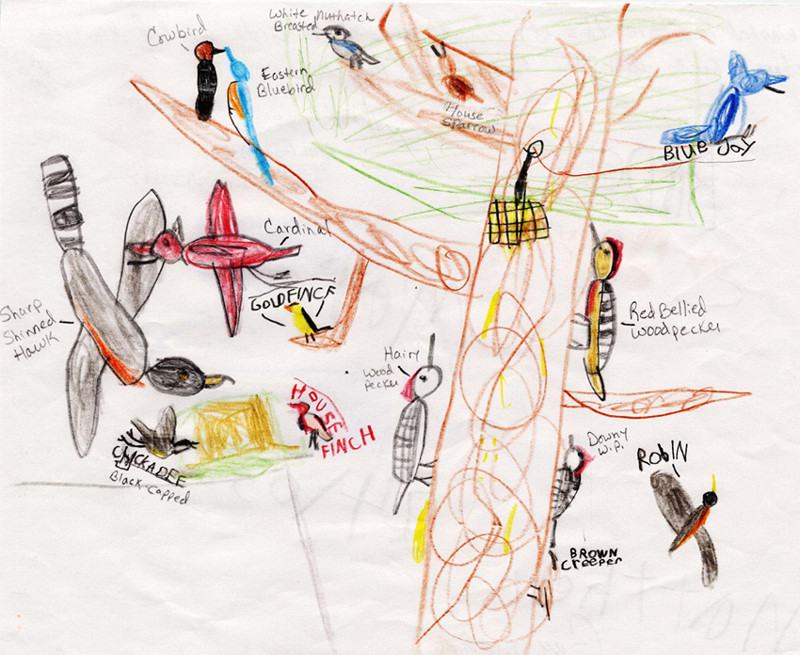
"caption": "Student's rendering of birds.",
"description": null,
"title": "Drawing248021_03",
"credit": null,
"status": "inherit",
"isLoading": false,
"fetchFailed": false
},
"mindshift_8509": {
"type": "attachments",
"id": "mindshift_8509",
"meta": {
"index": "attachments_1716263798",
"site": "mindshift",
"id": "8509",
"found": true
},
"parent": 8473,
"imgSizes": {
"thumbnail": {
"file": "https://ww2.kqed.org/app/uploads/sites/23/2011/02/girl-microscope-400x400.jpg",
"width": 400,
"mimeType": "image/jpeg",
"height": 400
},
"fd-sm": {
"file": "https://ww2.kqed.org/app/uploads/sites/23/2011/02/girl-microscope-320x320.jpg",
"width": 320,
"mimeType": "image/jpeg",
"height": 320
},
"post-thumbnail": {
"file": "https://ww2.kqed.org/app/uploads/sites/23/2011/02/girl-microscope-422x372.jpg",
"width": 422,
"mimeType": "image/jpeg",
"height": 372
},
"kqedFullSize": {
"file": "https://ww2.kqed.org/app/uploads/sites/23/2011/02/girl-microscope.jpg",
"width": 422,
"height": 422
},
"guest-author-96": {
"file": "https://ww2.kqed.org/app/uploads/sites/23/2011/02/girl-microscope-96x96.jpg",
"width": 96,
"mimeType": "image/jpeg",
"height": 96
},
"guest-author-64": {
"file": "https://ww2.kqed.org/app/uploads/sites/23/2011/02/girl-microscope-64x64.jpg",
"width": 64,
"mimeType": "image/jpeg",
"height": 64
},
"detail": {
"file": "https://ww2.kqed.org/app/uploads/sites/23/2011/02/girl-microscope-75x75.jpg",
"width": 75,
"mimeType": "image/jpeg",
"height": 75
},
"guest-author-32": {
"file": "https://ww2.kqed.org/app/uploads/sites/23/2011/02/girl-microscope-32x32.jpg",
"width": 32,
"mimeType": "image/jpeg",
"height": 32
},
"guest-author-128": {
"file": "https://ww2.kqed.org/app/uploads/sites/23/2011/02/girl-microscope-128x128.jpg",
"width": 128,
"mimeType": "image/jpeg",
"height": 128
}
},
"publishDate": 1298012878,
"modified": 1298012878,
"caption": null,
"description": null,
"title": "girl microscope",
"credit": null,
"status": "inherit",
"isLoading": false,
"fetchFailed": false
},
"mindshift_6482": {
"type": "attachments",
"id": "mindshift_6482",
"meta": {
"index": "attachments_1716263798",
"site": "mindshift",
"id": "6482",
"found": true
},
"parent": 6481,
"imgSizes": {
"thumbnail": {
"file": "https://ww2.kqed.org/app/uploads/sites/23/2011/01/Screen-shot-2011-01-13-at-11.31.31-AM-400x208.png",
"width": 400,
"mimeType": "image/png",
"height": 208
},
"fd-sm": {
"file": "https://ww2.kqed.org/app/uploads/sites/23/2011/01/Screen-shot-2011-01-13-at-11.31.31-AM-320x166.png",
"width": 320,
"mimeType": "image/png",
"height": 166
},
"kqedFullSize": {
"file": "https://ww2.kqed.org/app/uploads/sites/23/2011/01/Screen-shot-2011-01-13-at-11.31.31-AM.png",
"width": 572,
"height": 297
},
"guest-author-96": {
"file": "https://ww2.kqed.org/app/uploads/sites/23/2011/01/Screen-shot-2011-01-13-at-11.31.31-AM-96x96.png",
"width": 96,
"mimeType": "image/png",
"height": 96
},
"guest-author-64": {
"file": "https://ww2.kqed.org/app/uploads/sites/23/2011/01/Screen-shot-2011-01-13-at-11.31.31-AM-64x64.png",
"width": 64,
"mimeType": "image/png",
"height": 64
},
"detail": {
"file": "https://ww2.kqed.org/app/uploads/sites/23/2011/01/Screen-shot-2011-01-13-at-11.31.31-AM-75x75.png",
"width": 75,
"mimeType": "image/png",
"height": 75
},
"guest-author-32": {
"file": "https://ww2.kqed.org/app/uploads/sites/23/2011/01/Screen-shot-2011-01-13-at-11.31.31-AM-32x32.png",
"width": 32,
"mimeType": "image/png",
"height": 32
},
"guest-author-128": {
"file": "https://ww2.kqed.org/app/uploads/sites/23/2011/01/Screen-shot-2011-01-13-at-11.31.31-AM-128x128.png",
"width": 128,
"mimeType": "image/png",
"height": 128
}
},
"publishDate": 1294947107,
"modified": 1294947107,
"caption": null,
"description": null,
"title": "Screen shot 2011-01-13 at 11.31.31 AM",
"credit": null,
"status": "inherit",
"isLoading": false,
"fetchFailed": false
},
"mindshift_2477": {
"type": "attachments",
"id": "mindshift_2477",
"meta": {
"index": "attachments_1716263798",
"site": "mindshift",
"id": "2477",
"found": true
},
"parent": 2466,
"imgSizes": {
"thumbnail": {
"file": "https://ww2.kqed.org/app/uploads/sites/23/2010/10/makerfaire2-400x266.jpg",
"width": 400,
"mimeType": "image/jpeg",
"height": 266
},
"fd-sm": {
"file": "https://ww2.kqed.org/app/uploads/sites/23/2010/10/makerfaire2-320x213.jpg",
"width": 320,
"mimeType": "image/jpeg",
"height": 213
},
"kqedFullSize": {
"file": "https://ww2.kqed.org/app/uploads/sites/23/2010/10/makerfaire2.jpg",
"width": 500,
"height": 333
},
"guest-author-96": {
"file": "https://ww2.kqed.org/app/uploads/sites/23/2010/10/makerfaire2-96x96.jpg",
"width": 96,
"mimeType": "image/jpeg",
"height": 96
},
"guest-author-64": {
"file": "https://ww2.kqed.org/app/uploads/sites/23/2010/10/makerfaire2-64x64.jpg",
"width": 64,
"mimeType": "image/jpeg",
"height": 64
},
"detail": {
"file": "https://ww2.kqed.org/app/uploads/sites/23/2010/10/makerfaire2-75x75.jpg",
"width": 75,
"mimeType": "image/jpeg",
"height": 75
},
"guest-author-32": {
"file": "https://ww2.kqed.org/app/uploads/sites/23/2010/10/makerfaire2-32x32.jpg",
"width": 32,
"mimeType": "image/jpeg",
"height": 32
},
"guest-author-128": {
"file": "https://ww2.kqed.org/app/uploads/sites/23/2010/10/makerfaire2-128x128.jpg",
"width": 128,
"mimeType": "image/jpeg",
"height": 128
}
},
"publishDate": 1286235394,
"modified": 1286235394,
"caption": null,
"description": null,
"title": "makerfaire2",
"credit": null,
"status": "inherit",
"isLoading": false,
"fetchFailed": false
}
},
"audioPlayerReducer": {
"postId": "stream_live",
"isPaused": true,
"isPlaying": false,
"pfsActive": false,
"pledgeModalIsOpen": true,
"playerDrawerIsOpen": false,
"liveAudioPlayStartedAt": 0,
"liveAudioPlayContext": ""
},
"authorsReducer": {
"tbarseghian": {
"type": "authors",
"id": "180",
"meta": {
"index": "authors_1716337520",
"id": "180",
"found": true
},
"name": "Tina Barseghian",
"firstName": "Tina",
"lastName": "Barseghian",
"slug": "tbarseghian",
"email": "tbarseghian@kqed.org",
"display_author_email": false,
"staff_mastheads": [],
"title": null,
"bio": null,
"avatar": "https://secure.gravatar.com/avatar/de7e6ced1239b7018fe4d2b61f723c90?s=600&d=blank&r=g",
"twitter": null,
"facebook": null,
"instagram": null,
"linkedin": null,
"sites": [
{
"site": "styleguide",
"roles": [
"contributor"
]
},
{
"site": "news",
"roles": [
"subscriber"
]
},
{
"site": "mindshift",
"roles": [
"subscriber"
]
},
{
"site": "bayareabites",
"roles": [
"subscriber"
]
}
],
"headData": {
"title": "Tina Barseghian | KQED",
"description": null,
"ogImgSrc": "https://secure.gravatar.com/avatar/de7e6ced1239b7018fe4d2b61f723c90?s=600&d=blank&r=g",
"twImgSrc": "https://secure.gravatar.com/avatar/de7e6ced1239b7018fe4d2b61f723c90?s=600&d=blank&r=g"
},
"isLoading": false,
"link": "/author/tbarseghian"
},
"sbernard": {
"type": "authors",
"id": "4351",
"meta": {
"index": "authors_1716337520",
"id": "4351",
"found": true
},
"name": "Sara Bernard",
"firstName": "Sara",
"lastName": "Bernard",
"slug": "sbernard",
"email": "saralacy@gmail.com",
"display_author_email": false,
"staff_mastheads": [],
"title": null,
"bio": null,
"avatar": "https://secure.gravatar.com/avatar/69bae8afcc64ab67f6e3709cfb4bef26?s=600&d=blank&r=g",
"twitter": null,
"facebook": null,
"instagram": null,
"linkedin": null,
"sites": [
{
"site": "mindshift",
"roles": [
"subscriber"
]
}
],
"headData": {
"title": "Sara Bernard | KQED",
"description": null,
"ogImgSrc": "https://secure.gravatar.com/avatar/69bae8afcc64ab67f6e3709cfb4bef26?s=600&d=blank&r=g",
"twImgSrc": "https://secure.gravatar.com/avatar/69bae8afcc64ab67f6e3709cfb4bef26?s=600&d=blank&r=g"
},
"isLoading": false,
"link": "/author/sbernard"
}
},
"pagesReducer": {
"mindshift_tag_stem": {
"type": "terms",
"id": "mindshift_47",
"meta": {
"index": "terms_1716263798",
"site": "mindshift",
"id": "47",
"score": 8.940876
},
"featImg": null,
"name": "STEM",
"description": null,
"taxonomy": "tag",
"headData": {
"twImgId": null,
"twTitle": null,
"ogTitle": null,
"ogImgId": null,
"twDescription": null,
"description": null,
"title": "STEM Archives - KQED Mindshift",
"ogDescription": null
},
"ttid": 47,
"slug": "stem",
"isLoading": false,
"title": "STEM",
"pageMeta": {
"site": "mindshift",
"WpPageTemplate": "page-topic-editorial",
"currentPage": 9
},
"blocks": [
{
"blockName": "kqed/post-list",
"attrs": {
"layout": "cardArticle2",
"query": "posts/mindshift?tag=stem",
"seeMore": false,
"paginated": true,
"page": 9
}
},
{
"blockName": "kqed/ad"
}
]
}
},
"pfsSessionReducer": {},
"postsReducer": {
"stream_live": {
"type": "live",
"id": "stream_live",
"audioUrl": "https://hls.kqed.org/hls/kqed_app/playlist.m3u8",
"title": "Live Stream",
"excerpt": "Live Stream information currently unavailable.",
"link": "/radio",
"featImg": "",
"label": {
"name": "KQED Live",
"link": "/"
}
},
"stream_kqedNewscast": {
"type": "posts",
"id": "stream_kqedNewscast",
"audioUrl": "https://www.kqed.org/.stream/anon/radio/RDnews/newscast.mp3?_=1",
"title": "KQED Newscast",
"featImg": "",
"label": {
"name": "88.5 FM",
"link": "/"
}
},
"mindshift_9178": {
"type": "posts",
"id": "mindshift_9178",
"meta": {
"index": "posts_1716263798",
"site": "mindshift",
"id": "9178",
"score": null,
"sort": [
1299810308000
]
},
"parent": 0,
"labelTerm": {
"site": "mindshift"
},
"blocks": [],
"publishDate": 1299810308,
"format": "aside",
"disqusTitle": "Video Games and Simulations Bring Science to Life",
"title": "Video Games and Simulations Bring Science to Life",
"headTitle": "MindShift | KQED News",
"content": "\u003cp>\u003ca href=\"http://www.osep.northwestern.edu/media\">\u003cimg class=\"size-full wp-image-9208\" src=\"http://ww2.kqed.org/mindshift/wp-content/uploads/sites/23/2011/03/Screen-shot-2011-03-10-at-6.14.58-PM.png\" alt=\"\" width=\"295\" height=\"310\">\u003c/a>\u003c/p>\n\u003cp>Science textbooks might be gathering dust in some classrooms across the country, but that doesn't mean students aren't learning. Whether it's determining if cell phone radiation is harmful or it's using the premise of Space Invaders to calculate probabilities, some lucky students are using the latest high tech to learn science and theories.\u003c/p>\n\u003cp>As the public school infrastructure sorts out how informal learning through technology is going to \u003ca href=\"http://ww2.kqed.org/mindshift/2011/03/where-does-informal-learning-fit-in/\">fit into the system\u003c/a>, individual teachers, principals, administrators, and education professionals are taking initiative to engage students in science, math, engineering and technology.\u003c/p>\n\u003cp>They gathered over the last two days at the \u003ca href=\"http://www.cyberlearningstem.org/\">Cyberlearning Tools for STEM Education \u003c/a>conference to share their ideas and to inspire each other.\u003c/p>\n\u003cp>Here are just a few of the fascinating science, math, and tech experiments that bring concepts to life.\u003ca href=\"http://live.cyberlearningstem.org/index.php?option=com_community&view=events&Itemid=3\"> Adapted from the CYTSE program.\u003c/a>\u003c/p>\n\u003cul>\n\u003cli>\u003cstrong>STATS INVADERS! GAME PLAY AS HOMEWORK\u003c/strong>. A computer game called \u003ca href=\"http://www.stanford.edu/~darena/StatsInvaders/\">Stats Invaders \u003c/a>(modeled on the classic arcade game Space Invaders) gives players basic intuitions about both sampling from probability distributions and the statistical hypothesis-testing process. Educator Dylan Arena of Stanford uses these intuitions in his formal instruction. In the game, players must shoot descending aliens according to one of two probability distributions, then decide which distribution the aliens are following. The effectiveness of the game was demonstrated in a previous laboratory study. in collaboration with Dan Schwartz and Lee Martin at U.C. Davis.\u003c/li>\n\u003c/ul>\n\u003cul>\n\u003cli>\u003cstrong>PHYSICS SIMULATIONS CREATE ANIMATED ENVIRONMENTS\u003c/strong>. Educator Patricia Loblein from Evergreen High School integrates interactive simulations into high school physics and chemistry. The \u003ca href=\"http://phet.colorado.edu\">PhET Project\u003c/a> has developed more than 90 simulations for teaching and learning introductory physics, chemistry, biology and earth sciences. These research-based simulations create animated, interactive, game-like environments designed to engage students in active thinking, encourage experimentation, and help develop visual and conceptual models of physical phenomena, emphasizing their connections to everyday life. With their flexible, open-exploratory nature, these simulations are commonly used from middle school through college level teaching. Best of all, they're free, and can be run from the \u003ca href=\"http://phet.colorado.edu\">PhET website\u003c/a>.\u003c/li>\n\u003c/ul>\n\u003cul>\n\u003cli>\u003cstrong>MOBILE APP TEACHES BIODIVERSITY\u003c/strong>\u003ca href=\"http://www.engineeringpathway.com\">. \u003c/a>\u003ca href=\"http://www.engineeringpathway.com\">Green Hat & Engineering Pathway\u003c/a> is an interactive mobile learning app that helps students learn about biodiversity and sustainability issues in their surroundings from experts’ points of view, before participating in unfamiliar debates about their familiar surroundings. Using the interactive location-sensitive map and video on a smart phone, GreenHat simulates how experts go about making observations in the field and encourages students to actively observe their environment. GreenHat uses infrastructure from Engineering Pathway, a K-Gray engineering education digital library, in how it searches, organizes, and curates learning resources in a mobile context. Presented by Alice Agogino, U.C. Berkeley, Kimiko Ryokai and Lora Oehlberg.\u003c/li>\n\u003cli>\u003cstrong>CONDUCTING RESEARCH THROUGH VIRTUAL LABS.\u003c/strong> High school students using the \u003ca href=\"http://www.osep.northwestern.edu/projects-and-programs/ilab-network\">iLab Network\u003c/a> (based at Northwestern University) access real instruments remotely using their web browser. Both the Radioactivity iLab and ICP-OES iLab provide students with the opportunity to collect and analyze real data using the multiple steps of the scientific method. Students integrate conventional chemistry, physics, biology, and environmental science concepts with experiments using high-end lab equipment that's traditionally too costly for high schools to purchase. Check out the video below that describes the program.\u003c/li>\n\u003c/ul>\n\u003cp>[ad fullwidth]\u003c/p>\u003cp>\u003c/p>\n",
"disqusIdentifier": "9178 http://blogs.kqed.org/mindshift/?p=9178",
"disqusUrl": "https://ww2.kqed.org/mindshift/2011/03/10/video-games-and-simulations-bring-science-to-life/",
"stats": {
"hasVideo": false,
"hasChartOrMap": false,
"hasAudio": false,
"hasPolis": false,
"wordCount": 545,
"hasGoogleForm": false,
"hasGallery": false,
"hasHearkenModule": false,
"iframeSrcs": [],
"paragraphCount": 7
},
"modified": 1300835556,
"excerpt": null,
"headData": {
"twImgId": "",
"twTitle": "",
"ogTitle": "",
"ogImgId": "",
"twDescription": "",
"description": "Science textbooks might be gathering dust in some classrooms across the country, but that doesn't mean students aren't learning. Whether it's determining if cell phone radiation is harmful or it's using the premise of Space Invaders to calculate probabilities, some lucky students are using the latest high tech to learn science and theories. As the",
"title": "Video Games and Simulations Bring Science to Life | KQED",
"ogDescription": "",
"schema": {
"@context": "https://schema.org",
"@type": "Article",
"headline": "Video Games and Simulations Bring Science to Life",
"datePublished": "2011-03-10T18:25:08-08:00",
"dateModified": "2011-03-22T16:12:36-07:00",
"image": "https://cdn.kqed.org/wp-content/uploads/2020/02/KQED-OG-Image@1x.png"
}
},
"guestAuthors": [],
"slug": "video-games-and-simulations-bring-science-to-life",
"status": "publish",
"path": "/mindshift/9178/video-games-and-simulations-bring-science-to-life",
"audioTrackLength": null,
"parsedContent": [
{
"type": "contentString",
"content": "\u003cdiv class=\"post-body\">\u003cp>\u003cp>\u003ca href=\"http://www.osep.northwestern.edu/media\">\u003cimg class=\"size-full wp-image-9208\" src=\"http://ww2.kqed.org/mindshift/wp-content/uploads/sites/23/2011/03/Screen-shot-2011-03-10-at-6.14.58-PM.png\" alt=\"\" width=\"295\" height=\"310\">\u003c/a>\u003c/p>\n\u003cp>Science textbooks might be gathering dust in some classrooms across the country, but that doesn't mean students aren't learning. Whether it's determining if cell phone radiation is harmful or it's using the premise of Space Invaders to calculate probabilities, some lucky students are using the latest high tech to learn science and theories.\u003c/p>\n\u003cp>As the public school infrastructure sorts out how informal learning through technology is going to \u003ca href=\"http://ww2.kqed.org/mindshift/2011/03/where-does-informal-learning-fit-in/\">fit into the system\u003c/a>, individual teachers, principals, administrators, and education professionals are taking initiative to engage students in science, math, engineering and technology.\u003c/p>\n\u003cp>They gathered over the last two days at the \u003ca href=\"http://www.cyberlearningstem.org/\">Cyberlearning Tools for STEM Education \u003c/a>conference to share their ideas and to inspire each other.\u003c/p>\n\u003cp>Here are just a few of the fascinating science, math, and tech experiments that bring concepts to life.\u003ca href=\"http://live.cyberlearningstem.org/index.php?option=com_community&view=events&Itemid=3\"> Adapted from the CYTSE program.\u003c/a>\u003c/p>\n\u003cul>\n\u003cli>\u003cstrong>STATS INVADERS! GAME PLAY AS HOMEWORK\u003c/strong>. A computer game called \u003ca href=\"http://www.stanford.edu/~darena/StatsInvaders/\">Stats Invaders \u003c/a>(modeled on the classic arcade game Space Invaders) gives players basic intuitions about both sampling from probability distributions and the statistical hypothesis-testing process. Educator Dylan Arena of Stanford uses these intuitions in his formal instruction. In the game, players must shoot descending aliens according to one of two probability distributions, then decide which distribution the aliens are following. The effectiveness of the game was demonstrated in a previous laboratory study. in collaboration with Dan Schwartz and Lee Martin at U.C. Davis.\u003c/li>\n\u003c/ul>\n\u003cul>\n\u003cli>\u003cstrong>PHYSICS SIMULATIONS CREATE ANIMATED ENVIRONMENTS\u003c/strong>. Educator Patricia Loblein from Evergreen High School integrates interactive simulations into high school physics and chemistry. The \u003ca href=\"http://phet.colorado.edu\">PhET Project\u003c/a> has developed more than 90 simulations for teaching and learning introductory physics, chemistry, biology and earth sciences. These research-based simulations create animated, interactive, game-like environments designed to engage students in active thinking, encourage experimentation, and help develop visual and conceptual models of physical phenomena, emphasizing their connections to everyday life. With their flexible, open-exploratory nature, these simulations are commonly used from middle school through college level teaching. Best of all, they're free, and can be run from the \u003ca href=\"http://phet.colorado.edu\">PhET website\u003c/a>.\u003c/li>\n\u003c/ul>\n\u003cul>\n\u003cli>\u003cstrong>MOBILE APP TEACHES BIODIVERSITY\u003c/strong>\u003ca href=\"http://www.engineeringpathway.com\">. \u003c/a>\u003ca href=\"http://www.engineeringpathway.com\">Green Hat & Engineering Pathway\u003c/a> is an interactive mobile learning app that helps students learn about biodiversity and sustainability issues in their surroundings from experts’ points of view, before participating in unfamiliar debates about their familiar surroundings. Using the interactive location-sensitive map and video on a smart phone, GreenHat simulates how experts go about making observations in the field and encourages students to actively observe their environment. GreenHat uses infrastructure from Engineering Pathway, a K-Gray engineering education digital library, in how it searches, organizes, and curates learning resources in a mobile context. Presented by Alice Agogino, U.C. Berkeley, Kimiko Ryokai and Lora Oehlberg.\u003c/li>\n\u003cli>\u003cstrong>CONDUCTING RESEARCH THROUGH VIRTUAL LABS.\u003c/strong> High school students using the \u003ca href=\"http://www.osep.northwestern.edu/projects-and-programs/ilab-network\">iLab Network\u003c/a> (based at Northwestern University) access real instruments remotely using their web browser. Both the Radioactivity iLab and ICP-OES iLab provide students with the opportunity to collect and analyze real data using the multiple steps of the scientific method. Students integrate conventional chemistry, physics, biology, and environmental science concepts with experiments using high-end lab equipment that's traditionally too costly for high schools to purchase. Check out the video below that describes the program.\u003c/li>\n\u003c/ul>\n\u003cp>\u003c/p>\u003c/div>",
"attributes": {
"named": {},
"numeric": []
}
},
{
"type": "component",
"content": "",
"name": "ad",
"attributes": {
"named": {
"label": "fullwidth"
},
"numeric": [
"fullwidth"
]
}
},
{
"type": "contentString",
"content": "\u003cdiv class=\"post-body\">\u003cp>\u003c/p>\u003cp>\u003c/p>\n\u003c/div>\u003c/p>",
"attributes": {
"named": {},
"numeric": []
}
}
],
"link": "/mindshift/9178/video-games-and-simulations-bring-science-to-life",
"authors": [
"180"
],
"categories": [
"mindshift_195"
],
"tags": [
"mindshift_366",
"mindshift_20902",
"mindshift_47"
],
"featImg": "mindshift_9208",
"label": "mindshift"
},
"mindshift_8834": {
"type": "posts",
"id": "mindshift_8834",
"meta": {
"index": "posts_1716263798",
"site": "mindshift",
"id": "8834",
"score": null,
"sort": [
1299254422000
]
},
"parent": 0,
"labelTerm": {
"site": "mindshift"
},
"blocks": [],
"publishDate": 1299254422,
"format": "aside",
"disqusTitle": "Scientists Recruit Students for Research ",
"title": "Scientists Recruit Students for Research ",
"headTitle": "MindShift | KQED News",
"content": "\u003ch5>\n\u003cfigure id=\"attachment_8987\" class=\"wp-caption center\" style=\"max-width: 300px\">\u003ca href=\"http://www.birds.cornell.edu/pfw/Members/MatthewDrawing.html\">\u003cimg class=\"size-medium wp-image-8987\" title=\"Drawing248021_03\" src=\"http://ww2.kqed.org/mindshift/wp-content/uploads/sites/23/2011/03/Drawing248021_03-300x245.jpg\" alt=\"\" width=\"300\" height=\"245\">\u003c/a>\u003cfigcaption class=\"wp-caption-text\">Student's rendering of birds.\u003c/figcaption>\u003c/figure>\n\u003c/h5>\u003cp>By Sara Bernard\n\u003c/p>\u003cp>Scientists have figured out a way to leverage student enthusiasm in the sciences: conduct research that can be used for data collection.\u003c/p>\n\u003cp>So when \u003ca href=\"http://www.birds.cornell.edu/citsci/projects\" target=\"_blank\">ornithologists at Cornell University\u003c/a> study breeding and nesting behavior, when NASA researchers need \u003ca href=\"http://www.edutopia.org/charter-school-observatory-lewis\" target=\"_blank\">an extra few thousand pairs of eyes on a telescope\u003c/a>, and when biologists and gardeners investigate changes in \u003ca href=\"http://www.lostladybug.org\" target=\"_blank\">ladybug populations\u003c/a>, they ask K-12 students to participate in the research -- often as part of their regular class curriculum.\u003c/p>\n\u003cp>This isn't, of course, about getting kids to do a PhD's grunt work. It serves both parties well. Scientists acquire necessary data (sometimes even the miraculous kind, like rare \u003ca href=\"http://www.lostladybug.org/about.php\" target=\"_blank\">nine-spotted ladybugs\u003c/a>) while students get to work on real-world research projects.\u003c/p>\n\u003cp>Often, the scientific community also provides detailed lesson plans, online tools, and other resources to the students and teachers involved.\u003c/p>\n\u003cp>[ad fullwidth]\u003c/p>\n\u003cp>Here are 5 examples of citizen scientists programs across the country.\u003c/p>\n\u003cp>\u003cstrong>1) \u003ca href=\"http://www.birds.cornell.edu/citsci/projects\" target=\"_blank\">Cornell Lab of Ornithology Citizen Science program\u003c/a>\u003c/strong>\u003c/p>\n\u003cp style=\"padding-left: 30px;\">This is a set of kid-friendly research projects on all things bird-related, from \u003ca href=\"http://www.birds.cornell.edu/pigeonwatch\" target=\"_blank\">pigeons\u003c/a> to \u003ca href=\"http://www.birds.cornell.edu/pfw/\" target=\"_blank\">feeder-watching\u003c/a> to a middle school curriculum called \u003ca href=\"http://www.birds.cornell.edu/birdsleuth/\" target=\"_blank\">BirdSleuth\u003c/a>. Students can count birds and upload data using \u003ca href=\"http://ebird.org/content/ebird/\" target=\"_blank\">eBird\u003c/a> and the \u003ca href=\"http://www.birdsource.org/gbbc/\" target=\"_blank\">Great Backyard Bird Count\u003c/a>, promote urban conservation through \u003ca href=\"http://www.birds.cornell.edu/celebration\" target=\"_blank\">Celebrate Urban Birds\u003c/a>, and use photo-tagging tools to help scientists sort \u003ca href=\"http://watch.birds.cornell.edu/nestcams/clicker/clicker/index\" target=\"_blank\">8 million NestCam images\u003c/a>. The Cornell Lab of Ornithology has also created \u003ca href=\"http://sciencepipes.org/beta/home\" target=\"_blank\">SciencePipes\u003c/a>, a free site that allows users to access biodiversity data, create visual representations of that data, and embed them into their own Web pages.\u003c/p>\n\u003cp>\u003cstrong>2) \u003ca href=\"http://www.eol.org/\" target=\"_blank\">Encyclopedia of Life\u003c/a>\u003c/strong>\u003c/p>\n\u003cp style=\"padding-left: 30px;\">The project encourages students, teachers, and scientists around the world to document as many of the earth's roughly 1.9 million species as possible. Entry points for students include the \u003ca href=\"http://education.eol.org/bioblitz\" target=\"_blank\">Bioblitz\u003c/a> -- or local species inventory, which allows students to upload their findings and try \u003ca href=\"http://education.eol.org/bioblitz/activities\" target=\"_blank\">classroom activities\u003c/a> -- and the \u003ca href=\"http://education.eol.org/ideas/tools/fieldguide\" target=\"_blank\">Field Guide tool\u003c/a>, a way to organize species information based on location. The site (free and Creative-Commons licensed) also provides \u003ca href=\"http://education.eol.org/podcast\" target=\"_blank\">educational podcasts\u003c/a> and examples of \u003ca href=\"http://education.eol.org/ideas/model-projects\" target=\"_blank\">model projects\u003c/a>.\u003c/p>\n\u003cp>\u003cstrong>3)\u003ca href=\"http://www.discoverlife.org/bee/\" target=\"_blank\"> \u003c/a>\u003ca href=\"http://www.discoverlife.org/\" target=\"_blank\">DiscoverLife\u003c/a>\u003c/strong>\u003c/p>\n\u003cp style=\"padding-left: 30px;\">\u003ca href=\"http://www.discoverlife.org/bee/\" target=\"_blank\">The Bee Hunt\u003c/a> and the \u003ca href=\"http://www.lostladybug.org/\" target=\"_blank\">Lost Ladybug Project\u003c/a> are two limbs of the nonprofit that helps lead step-by-step ecological research projects via simple Web tools. In order to figure out why some ladybug populations are booming while others are nearing extinction, kids and teachers can spot and upload photos of ladybugs in their local communities and check out \u003ca href=\"http://www.lostladybug.org/data.php\" target=\"_blank\">map tools\u003c/a> and \u003ca href=\"http://www.lostladybug.org/learning.php\" target=\"_blank\">educational materials\u003c/a>. \u003ca href=\"http://www.discoverlife.org/bee/\" target=\"_blank\">The Bee Hunt\u003c/a> uses similar methods to determine the effect of climate change on various pollinators.\u003c!--more-->\u003c/p>\n\u003cp>\u003cstrong>4)\u003c/strong> \u003ca href=\"http://www.lewiscenter.org/\" target=\"_blank\">Lewis Center for Educational Research's Academy for Academic Excellence\u003c/a>\u003c/p>\n\u003cp style=\"padding-left: 30px;\">At this charter school in Apple Valley, California, kids monitor telescopes and rockets -- among many other real-world, project-based activities -- and send their observations straight to NASA. NASA's \u003ca href=\"http://deepspace.jpl.nasa.gov/dsn/gavrt/index.html\" target=\"_blank\">Goldstone Apple Valley Radio Telescope\u003c/a>, which now officially belongs to the Lewis Center's school, is open to students and teachers across the country to use as a learning tool. Participating students get a grasp of radio astronomy, teachers receive professional development training, and NASA gets to take home information about objects in the universe.\u003c/p>\n\u003cp>\u003cstrong>5) \u003c/strong>\u003ca href=\"http://www.neoninc.org/budburst/\" target=\"_blank\">Project BudBurst\u003c/a>\u003c/p>\n\u003cp>\u003c/p>\n\u003cp style=\"padding-left: 30px;\">A national field campaign to collect ecological data about the flowering and fruiting of plants, is a way for students (and adults) to learn about the effects of global warming from their own backyards. Participants in all 50 states have recorded their observations and sent them into the BudBurst \u003ca href=\"http://www.neoninc.org/budburst/_Results.php\" target=\"_blank\">results database\u003c/a>. A branch of the campaign, \u003ca href=\"http://neoninc.org/budburst/buddies/\" target=\"_blank\">BudBurst Buddies\u003c/a>, is designed for young learners, complete with friendly characters, an \u003ca href=\"http://neoninc.org/budburst/buddies/journal_pages.php\" target=\"_blank\">observation journal\u003c/a>, and certificate of completion if they make at least four contributions.\u003c/p>\n\n",
"disqusIdentifier": "8834 http://blogs.kqed.org/mindshift/?p=8834",
"disqusUrl": "https://ww2.kqed.org/mindshift/2011/03/04/scientists-recruit-students-for-research/",
"stats": {
"hasVideo": false,
"hasChartOrMap": false,
"hasAudio": false,
"hasPolis": false,
"wordCount": 606,
"hasGoogleForm": false,
"hasGallery": false,
"hasHearkenModule": false,
"iframeSrcs": [],
"paragraphCount": 13
},
"modified": 1299215175,
"excerpt": null,
"headData": {
"twImgId": "",
"twTitle": "",
"ogTitle": "",
"ogImgId": "",
"twDescription": "",
"description": "By Sara Bernard Scientists have figured out a way to leverage student enthusiasm in the sciences: conduct research that can be used for data collection. So when ornithologists at Cornell University study breeding and nesting behavior, when NASA researchers need an extra few thousand pairs of eyes on a telescope, and when biologists and gardeners",
"title": "Scientists Recruit Students for Research | KQED",
"ogDescription": "",
"schema": {
"@context": "https://schema.org",
"@type": "Article",
"headline": "Scientists Recruit Students for Research ",
"datePublished": "2011-03-04T08:00:22-08:00",
"dateModified": "2011-03-03T21:06:15-08:00",
"image": "https://cdn.kqed.org/wp-content/uploads/2020/02/KQED-OG-Image@1x.png"
}
},
"guestAuthors": [],
"slug": "scientists-recruit-students-for-research",
"status": "publish",
"path": "/mindshift/8834/scientists-recruit-students-for-research",
"audioTrackLength": null,
"parsedContent": [
{
"type": "contentString",
"content": "\u003cdiv class=\"post-body\">\u003cp>\u003ch5>\n\u003cfigure id=\"attachment_8987\" class=\"wp-caption center\" style=\"max-width: 300px\">\u003ca href=\"http://www.birds.cornell.edu/pfw/Members/MatthewDrawing.html\">\u003cimg class=\"size-medium wp-image-8987\" title=\"Drawing248021_03\" src=\"http://ww2.kqed.org/mindshift/wp-content/uploads/sites/23/2011/03/Drawing248021_03-300x245.jpg\" alt=\"\" width=\"300\" height=\"245\">\u003c/a>\u003cfigcaption class=\"wp-caption-text\">Student's rendering of birds.\u003c/figcaption>\u003c/figure>\n\u003c/h5>\u003cp>By Sara Bernard\n\u003c/p>\u003cp>Scientists have figured out a way to leverage student enthusiasm in the sciences: conduct research that can be used for data collection.\u003c/p>\n\u003cp>So when \u003ca href=\"http://www.birds.cornell.edu/citsci/projects\" target=\"_blank\">ornithologists at Cornell University\u003c/a> study breeding and nesting behavior, when NASA researchers need \u003ca href=\"http://www.edutopia.org/charter-school-observatory-lewis\" target=\"_blank\">an extra few thousand pairs of eyes on a telescope\u003c/a>, and when biologists and gardeners investigate changes in \u003ca href=\"http://www.lostladybug.org\" target=\"_blank\">ladybug populations\u003c/a>, they ask K-12 students to participate in the research -- often as part of their regular class curriculum.\u003c/p>\n\u003cp>This isn't, of course, about getting kids to do a PhD's grunt work. It serves both parties well. Scientists acquire necessary data (sometimes even the miraculous kind, like rare \u003ca href=\"http://www.lostladybug.org/about.php\" target=\"_blank\">nine-spotted ladybugs\u003c/a>) while students get to work on real-world research projects.\u003c/p>\n\u003cp>Often, the scientific community also provides detailed lesson plans, online tools, and other resources to the students and teachers involved.\u003c/p>\n\u003cp>\u003c/p>\u003c/div>",
"attributes": {
"named": {},
"numeric": []
}
},
{
"type": "component",
"content": "",
"name": "ad",
"attributes": {
"named": {
"label": "fullwidth"
},
"numeric": [
"fullwidth"
]
}
},
{
"type": "contentString",
"content": "\u003cdiv class=\"post-body\">\u003cp>\u003c/p>\n\u003cp>Here are 5 examples of citizen scientists programs across the country.\u003c/p>\n\u003cp>\u003cstrong>1) \u003ca href=\"http://www.birds.cornell.edu/citsci/projects\" target=\"_blank\">Cornell Lab of Ornithology Citizen Science program\u003c/a>\u003c/strong>\u003c/p>\n\u003cp style=\"padding-left: 30px;\">This is a set of kid-friendly research projects on all things bird-related, from \u003ca href=\"http://www.birds.cornell.edu/pigeonwatch\" target=\"_blank\">pigeons\u003c/a> to \u003ca href=\"http://www.birds.cornell.edu/pfw/\" target=\"_blank\">feeder-watching\u003c/a> to a middle school curriculum called \u003ca href=\"http://www.birds.cornell.edu/birdsleuth/\" target=\"_blank\">BirdSleuth\u003c/a>. Students can count birds and upload data using \u003ca href=\"http://ebird.org/content/ebird/\" target=\"_blank\">eBird\u003c/a> and the \u003ca href=\"http://www.birdsource.org/gbbc/\" target=\"_blank\">Great Backyard Bird Count\u003c/a>, promote urban conservation through \u003ca href=\"http://www.birds.cornell.edu/celebration\" target=\"_blank\">Celebrate Urban Birds\u003c/a>, and use photo-tagging tools to help scientists sort \u003ca href=\"http://watch.birds.cornell.edu/nestcams/clicker/clicker/index\" target=\"_blank\">8 million NestCam images\u003c/a>. The Cornell Lab of Ornithology has also created \u003ca href=\"http://sciencepipes.org/beta/home\" target=\"_blank\">SciencePipes\u003c/a>, a free site that allows users to access biodiversity data, create visual representations of that data, and embed them into their own Web pages.\u003c/p>\n\u003cp>\u003cstrong>2) \u003ca href=\"http://www.eol.org/\" target=\"_blank\">Encyclopedia of Life\u003c/a>\u003c/strong>\u003c/p>\n\u003cp style=\"padding-left: 30px;\">The project encourages students, teachers, and scientists around the world to document as many of the earth's roughly 1.9 million species as possible. Entry points for students include the \u003ca href=\"http://education.eol.org/bioblitz\" target=\"_blank\">Bioblitz\u003c/a> -- or local species inventory, which allows students to upload their findings and try \u003ca href=\"http://education.eol.org/bioblitz/activities\" target=\"_blank\">classroom activities\u003c/a> -- and the \u003ca href=\"http://education.eol.org/ideas/tools/fieldguide\" target=\"_blank\">Field Guide tool\u003c/a>, a way to organize species information based on location. The site (free and Creative-Commons licensed) also provides \u003ca href=\"http://education.eol.org/podcast\" target=\"_blank\">educational podcasts\u003c/a> and examples of \u003ca href=\"http://education.eol.org/ideas/model-projects\" target=\"_blank\">model projects\u003c/a>.\u003c/p>\n\u003cp>\u003cstrong>3)\u003ca href=\"http://www.discoverlife.org/bee/\" target=\"_blank\"> \u003c/a>\u003ca href=\"http://www.discoverlife.org/\" target=\"_blank\">DiscoverLife\u003c/a>\u003c/strong>\u003c/p>\n\u003cp style=\"padding-left: 30px;\">\u003ca href=\"http://www.discoverlife.org/bee/\" target=\"_blank\">The Bee Hunt\u003c/a> and the \u003ca href=\"http://www.lostladybug.org/\" target=\"_blank\">Lost Ladybug Project\u003c/a> are two limbs of the nonprofit that helps lead step-by-step ecological research projects via simple Web tools. In order to figure out why some ladybug populations are booming while others are nearing extinction, kids and teachers can spot and upload photos of ladybugs in their local communities and check out \u003ca href=\"http://www.lostladybug.org/data.php\" target=\"_blank\">map tools\u003c/a> and \u003ca href=\"http://www.lostladybug.org/learning.php\" target=\"_blank\">educational materials\u003c/a>. \u003ca href=\"http://www.discoverlife.org/bee/\" target=\"_blank\">The Bee Hunt\u003c/a> uses similar methods to determine the effect of climate change on various pollinators.\u003c!--more-->\u003c/p>\n\u003cp>\u003cstrong>4)\u003c/strong> \u003ca href=\"http://www.lewiscenter.org/\" target=\"_blank\">Lewis Center for Educational Research's Academy for Academic Excellence\u003c/a>\u003c/p>\n\u003cp style=\"padding-left: 30px;\">At this charter school in Apple Valley, California, kids monitor telescopes and rockets -- among many other real-world, project-based activities -- and send their observations straight to NASA. NASA's \u003ca href=\"http://deepspace.jpl.nasa.gov/dsn/gavrt/index.html\" target=\"_blank\">Goldstone Apple Valley Radio Telescope\u003c/a>, which now officially belongs to the Lewis Center's school, is open to students and teachers across the country to use as a learning tool. Participating students get a grasp of radio astronomy, teachers receive professional development training, and NASA gets to take home information about objects in the universe.\u003c/p>\n\u003cp>\u003cstrong>5) \u003c/strong>\u003ca href=\"http://www.neoninc.org/budburst/\" target=\"_blank\">Project BudBurst\u003c/a>\u003c/p>\n\u003cp>\u003c/p>\n\u003cp style=\"padding-left: 30px;\">A national field campaign to collect ecological data about the flowering and fruiting of plants, is a way for students (and adults) to learn about the effects of global warming from their own backyards. Participants in all 50 states have recorded their observations and sent them into the BudBurst \u003ca href=\"http://www.neoninc.org/budburst/_Results.php\" target=\"_blank\">results database\u003c/a>. A branch of the campaign, \u003ca href=\"http://neoninc.org/budburst/buddies/\" target=\"_blank\">BudBurst Buddies\u003c/a>, is designed for young learners, complete with friendly characters, an \u003ca href=\"http://neoninc.org/budburst/buddies/journal_pages.php\" target=\"_blank\">observation journal\u003c/a>, and certificate of completion if they make at least four contributions.\u003c/p>\n\n\u003c/div>\u003c/p>",
"attributes": {
"named": {},
"numeric": []
}
}
],
"link": "/mindshift/8834/scientists-recruit-students-for-research",
"authors": [
"4351"
],
"categories": [
"mindshift_193"
],
"tags": [
"mindshift_348",
"mindshift_350",
"mindshift_47"
],
"featImg": "mindshift_8987",
"label": "mindshift"
},
"mindshift_8473": {
"type": "posts",
"id": "mindshift_8473",
"meta": {
"index": "posts_1716263798",
"site": "mindshift",
"id": "8473",
"score": null,
"sort": [
1298918564000
]
},
"parent": 0,
"labelTerm": {
"site": "mindshift"
},
"blocks": [],
"publishDate": 1298918564,
"format": "aside",
"disqusTitle": "Can Corporate Funding Boost STEM Education?",
"title": "Can Corporate Funding Boost STEM Education?",
"headTitle": "MindShift | KQED News",
"content": "\u003cp>\u003ca href=\"http://www.flickr.com/photos/wwworks/3722745648/\">\u003cimg class=\"size-medium wp-image-8509\" src=\"http://ww2.kqed.org/mindshift/wp-content/uploads/sites/23/2011/02/girl-microscope-300x300.jpg\" alt=\"\" width=\"300\" height=\"300\">\u003c/a>\u003c/p>\n\u003ch5>By Sara Bernard\u003c/h5>\n\u003cp>Last fall, the Obama Administration launched \u003ca href=\"http://www.changetheequation.org/\" target=\"_blank\">Change the Equation\u003c/a>, a nonprofit that matches funds from corporations to programs that promote science, technology, engineering, and math (STEM).\u003c/p>\n\u003cp>Through Change the Equation, corporations like ExxonMobil, Dell Computers and Lockheed Martin, for example, have invested in a program that \u003ca href=\"http://www.changetheequation.org/featuredprograms/advanced-placement-program-clears-new-paths-to-college/\">funds advanced placement classes \u003c/a>in math and science; Google, Intel, and Cisco, among other companies, funded a program that \u003ca href=\"http://www.changetheequation.org/featuredprograms/teaching-children-that-engineering-is-elementary/\">teaches engineering\u003c/a> to K-5 public schools.\u003c/p>\n\u003cp>\u003ca href=\"http://www.whitehouse.gov/issues/education/educate-innovate\" target=\"_blank\"> \u003c/a>Five CEOs of major conglomerates -- including Time Warner Cable CEO \u003ca href=\"http://www.changetheequation.org/ceo-s/founding-partners/glenn-nbsp-a.-nbsp-britt-nbsp/\" target=\"_blank\">Glenn Britt\u003c/a> and Sally Ride Science CEO \u003ca href=\"http://www.changetheequation.org/ceo-s/founding-partners/sally-nbsp-k.-nbsp-ride-ph.d.-nbsp/?query=category.eq.Founding%20Partners&back=CEO\" target=\"_blank\">Sally Ride\u003c/a> -- helped launch the coalition, which, in the past six months has grown to 110 member companies. Each company pledges to support Change the Equation's \u003ca href=\"http://www.changetheequation.org/what/our-mission-and-goals/\" target=\"_blank\">three goals\u003c/a> (including inspiring students in STEM fields, particularly girls and students of color), and to commit to the organization for three years with at a $25,000-per-year donation.\u003c/p>\n\u003cp>I talked to CEO Linda Rosen, a former high school math teacher and former executive director of the \u003ca href=\"http://www.nctm.org/\" target=\"_blank\">National Council of Teachers of Mathematics\u003c/a>, who addressed the reasoning behind this kind of model for corporate involvement in public education -- and the importance of STEM education right now.\u003c/p>\n\u003cp>[ad fullwidth]\u003c/p>\n\u003cp>\u003cem>\u003cstrong>Q: Why is the Change the Equation model important?\u003c/strong>\u003c/em>\u003c/p>\n\u003cp>\u003cstrong>A:\u003c/strong> We've been trying this kind of reform [in STEM education] for many years. I would say that our progress in general across the nation is not commensurate with our efforts. And the business community does occupy a bully pulpit. If this community is properly used and shaped, I think it has the potential to jump start progress in a number of ways. That's why I'm excited. That's what made me come and work here.\u003c/p>\n\u003cp>I think we are the first organization of its kind, so we're going to get some things right and some things not so right. The \u003ca href=\"http://businessroundtable.org/\" target=\"_blank\">Business Roundtable\u003c/a> at both the state and national level generally has education task forces; a few are focused on STEM, but most are not. I think the laser focus on STEM that Change the Equation has is unique.\u003c/p>\n\u003caside class=\"pullquote alignleft\">\"To be a fashion designer, you have to use CAD software; to be an acoustical engineer with a rock band, you have to know the science and the physics to do that.\"\u003c/aside>\n\u003cp>\u003cem>\u003cstrong>Q: Why do these companies choose to get involved?\u003c/strong>\u003c/em>\u003c/p>\n\u003cp>\u003cstrong>A: \u003c/strong>Many of our companies are already quite invested in STEM philanthropy. There are some who've joined who are looking for advice on starting a program, or some who've been in it, but want to reconsider their portfolio. This organization gives them an opportunity to look at what they've been doing with fresh eyes. Most of the companies invest in philanthropic programs that someone else has created -- 70 percent of member companies invest in \u003ca href=\"http://www.usfirst.org/\" target=\"_blank\">First Robotics\u003c/a>, for example -- but there are a small number of companies who create their own programs, too. There's no value judgment there. What we're most interested in is helping our companies invest wisely.\u003c/p>\n\u003cp>\u003cem>\u003cstrong>Q: How do you do that?\u003c/strong>\u003c/em>\u003c/p>\n\u003cp>\u003cstrong>A:\u003c/strong> In a variety of ways. At our launch last September, we brought seven programs to the attention of our members, [suggesting] these are the kinds of high-quality programs you might want to think about. Of course, we are not in any way trying to suggest we're going to find all the good programs. We're just trying to educate our membership by providing information about \u003cem>some\u003c/em> good programs.\u003c/p>\n\u003cp>\u003cem>\u003cstrong>Q: What would you say to those skeptical about corporate funding of public education programs?\u003c/strong>\u003c/em>\u003c/p>\n\u003cp>\u003cstrong>A:\u003c/strong> I'd say that their dollars are going towards programs that have proven effectiveness. You can't argue with that. Many companies also spend dollars to support their employees' engagement in pre-K-12 education. If an employee is working with a science club every month or week, and they're still getting their salary, that's a big contribution toward a school.\u003c/p>\n\u003cp>You sometimes hear people say, \"The business community doesn't understand public education, they don't understand that kids come to school with no breakfast, that sometimes there are no desks...\" and so on. I think Change the Equation offers the education and business communities a way of having an effective conversation. We're trying to come up with guidelines so that teachers and STEM professionals can work together to plan lessons and opportunities for kids.\u003c/p>\n\u003cp>But to do that, we've got to clean house, find what works, scale up what works, and clean away the other clutter. We've got to set goals that measure our progress toward those goals, and if it's not as fast or as widespread as we want, we have to figure out how we can redouble our efforts.\u003c/p>\n\u003cp>\u003c!--more-->\u003c/p>\n\u003cp>\u003cem>\u003cstrong>Q: Why the emphasis on STEM education?\u003c/strong>\u003c/em>\u003c/p>\n\u003cp>\u003cstrong>A: \u003c/strong>We're not trying to make everyone into an engineer or an astronaut. Change the Equation is not in this for its own workforce. Of course there are those obvious careers in STEM fields, but we're also interested in \"STEM-capable\" careers -- which in today's world is just about everything else.\u003c/p>\n\u003cp>To be a fashion designer, you have to use CAD software; to be an acoustical engineer with a rock band, you have to know the science and the physics to do that. There is even some evidence that when a home health care aid -- one of the fastest-growing professions today -- has more scientific knowledge, he or she is better able to interpret doctors' orders, understand dosage, and basically be a better-informed consumer.\u003c/p>\n\u003cp>\u003c/p>\n\u003cp>We know that a functioning democracy needs citizens who can reason numerically and scientifically. People have to look at the global warming debate with some lens of scientific understanding; they have to see the health care debate with some grasp of the statistics of the dollars involved. Our democracy demands that all students achieve this form of literacy. A literate nation not only reads, but calculates, analyzes, and innovates.\u003c/p>\n\n",
"disqusIdentifier": "8473 http://blogs.kqed.org/mindshift/?p=8473",
"disqusUrl": "https://ww2.kqed.org/mindshift/2011/02/28/can-corporate-funding-boost-stem-education/",
"stats": {
"hasVideo": false,
"hasChartOrMap": false,
"hasAudio": false,
"hasPolis": false,
"wordCount": 1002,
"hasGoogleForm": false,
"hasGallery": false,
"hasHearkenModule": false,
"iframeSrcs": [],
"paragraphCount": 23
},
"modified": 1298931186,
"excerpt": null,
"headData": {
"twImgId": "",
"twTitle": "",
"ogTitle": "",
"ogImgId": "",
"twDescription": "",
"description": "By Sara Bernard Last fall, the Obama Administration launched Change the Equation, a nonprofit that matches funds from corporations to programs that promote science, technology, engineering, and math (STEM). Through Change the Equation, corporations like ExxonMobil, Dell Computers and Lockheed Martin, for example, have invested in a program that funds advanced placement classes in math",
"title": "Can Corporate Funding Boost STEM Education? | KQED",
"ogDescription": "",
"schema": {
"@context": "https://schema.org",
"@type": "Article",
"headline": "Can Corporate Funding Boost STEM Education?",
"datePublished": "2011-02-28T10:42:44-08:00",
"dateModified": "2011-02-28T14:13:06-08:00",
"image": "https://cdn.kqed.org/wp-content/uploads/2020/02/KQED-OG-Image@1x.png"
}
},
"guestAuthors": [],
"slug": "can-corporate-funding-boost-stem-education",
"status": "publish",
"path": "/mindshift/8473/can-corporate-funding-boost-stem-education",
"audioTrackLength": null,
"parsedContent": [
{
"type": "contentString",
"content": "\u003cdiv class=\"post-body\">\u003cp>\u003cp>\u003ca href=\"http://www.flickr.com/photos/wwworks/3722745648/\">\u003cimg class=\"size-medium wp-image-8509\" src=\"http://ww2.kqed.org/mindshift/wp-content/uploads/sites/23/2011/02/girl-microscope-300x300.jpg\" alt=\"\" width=\"300\" height=\"300\">\u003c/a>\u003c/p>\n\u003ch5>By Sara Bernard\u003c/h5>\n\u003cp>Last fall, the Obama Administration launched \u003ca href=\"http://www.changetheequation.org/\" target=\"_blank\">Change the Equation\u003c/a>, a nonprofit that matches funds from corporations to programs that promote science, technology, engineering, and math (STEM).\u003c/p>\n\u003cp>Through Change the Equation, corporations like ExxonMobil, Dell Computers and Lockheed Martin, for example, have invested in a program that \u003ca href=\"http://www.changetheequation.org/featuredprograms/advanced-placement-program-clears-new-paths-to-college/\">funds advanced placement classes \u003c/a>in math and science; Google, Intel, and Cisco, among other companies, funded a program that \u003ca href=\"http://www.changetheequation.org/featuredprograms/teaching-children-that-engineering-is-elementary/\">teaches engineering\u003c/a> to K-5 public schools.\u003c/p>\n\u003cp>\u003ca href=\"http://www.whitehouse.gov/issues/education/educate-innovate\" target=\"_blank\"> \u003c/a>Five CEOs of major conglomerates -- including Time Warner Cable CEO \u003ca href=\"http://www.changetheequation.org/ceo-s/founding-partners/glenn-nbsp-a.-nbsp-britt-nbsp/\" target=\"_blank\">Glenn Britt\u003c/a> and Sally Ride Science CEO \u003ca href=\"http://www.changetheequation.org/ceo-s/founding-partners/sally-nbsp-k.-nbsp-ride-ph.d.-nbsp/?query=category.eq.Founding%20Partners&back=CEO\" target=\"_blank\">Sally Ride\u003c/a> -- helped launch the coalition, which, in the past six months has grown to 110 member companies. Each company pledges to support Change the Equation's \u003ca href=\"http://www.changetheequation.org/what/our-mission-and-goals/\" target=\"_blank\">three goals\u003c/a> (including inspiring students in STEM fields, particularly girls and students of color), and to commit to the organization for three years with at a $25,000-per-year donation.\u003c/p>\n\u003cp>I talked to CEO Linda Rosen, a former high school math teacher and former executive director of the \u003ca href=\"http://www.nctm.org/\" target=\"_blank\">National Council of Teachers of Mathematics\u003c/a>, who addressed the reasoning behind this kind of model for corporate involvement in public education -- and the importance of STEM education right now.\u003c/p>\n\u003cp>\u003c/p>\u003c/div>",
"attributes": {
"named": {},
"numeric": []
}
},
{
"type": "component",
"content": "",
"name": "ad",
"attributes": {
"named": {
"label": "fullwidth"
},
"numeric": [
"fullwidth"
]
}
},
{
"type": "contentString",
"content": "\u003cdiv class=\"post-body\">\u003cp>\u003c/p>\n\u003cp>\u003cem>\u003cstrong>Q: Why is the Change the Equation model important?\u003c/strong>\u003c/em>\u003c/p>\n\u003cp>\u003cstrong>A:\u003c/strong> We've been trying this kind of reform [in STEM education] for many years. I would say that our progress in general across the nation is not commensurate with our efforts. And the business community does occupy a bully pulpit. If this community is properly used and shaped, I think it has the potential to jump start progress in a number of ways. That's why I'm excited. That's what made me come and work here.\u003c/p>\n\u003cp>I think we are the first organization of its kind, so we're going to get some things right and some things not so right. The \u003ca href=\"http://businessroundtable.org/\" target=\"_blank\">Business Roundtable\u003c/a> at both the state and national level generally has education task forces; a few are focused on STEM, but most are not. I think the laser focus on STEM that Change the Equation has is unique.\u003c/p>\n\u003caside class=\"pullquote alignleft\">\"To be a fashion designer, you have to use CAD software; to be an acoustical engineer with a rock band, you have to know the science and the physics to do that.\"\u003c/aside>\n\u003cp>\u003cem>\u003cstrong>Q: Why do these companies choose to get involved?\u003c/strong>\u003c/em>\u003c/p>\n\u003cp>\u003cstrong>A: \u003c/strong>Many of our companies are already quite invested in STEM philanthropy. There are some who've joined who are looking for advice on starting a program, or some who've been in it, but want to reconsider their portfolio. This organization gives them an opportunity to look at what they've been doing with fresh eyes. Most of the companies invest in philanthropic programs that someone else has created -- 70 percent of member companies invest in \u003ca href=\"http://www.usfirst.org/\" target=\"_blank\">First Robotics\u003c/a>, for example -- but there are a small number of companies who create their own programs, too. There's no value judgment there. What we're most interested in is helping our companies invest wisely.\u003c/p>\n\u003cp>\u003cem>\u003cstrong>Q: How do you do that?\u003c/strong>\u003c/em>\u003c/p>\n\u003cp>\u003cstrong>A:\u003c/strong> In a variety of ways. At our launch last September, we brought seven programs to the attention of our members, [suggesting] these are the kinds of high-quality programs you might want to think about. Of course, we are not in any way trying to suggest we're going to find all the good programs. We're just trying to educate our membership by providing information about \u003cem>some\u003c/em> good programs.\u003c/p>\n\u003cp>\u003cem>\u003cstrong>Q: What would you say to those skeptical about corporate funding of public education programs?\u003c/strong>\u003c/em>\u003c/p>\n\u003cp>\u003cstrong>A:\u003c/strong> I'd say that their dollars are going towards programs that have proven effectiveness. You can't argue with that. Many companies also spend dollars to support their employees' engagement in pre-K-12 education. If an employee is working with a science club every month or week, and they're still getting their salary, that's a big contribution toward a school.\u003c/p>\n\u003cp>You sometimes hear people say, \"The business community doesn't understand public education, they don't understand that kids come to school with no breakfast, that sometimes there are no desks...\" and so on. I think Change the Equation offers the education and business communities a way of having an effective conversation. We're trying to come up with guidelines so that teachers and STEM professionals can work together to plan lessons and opportunities for kids.\u003c/p>\n\u003cp>But to do that, we've got to clean house, find what works, scale up what works, and clean away the other clutter. We've got to set goals that measure our progress toward those goals, and if it's not as fast or as widespread as we want, we have to figure out how we can redouble our efforts.\u003c/p>\n\u003cp>\u003c!--more-->\u003c/p>\n\u003cp>\u003cem>\u003cstrong>Q: Why the emphasis on STEM education?\u003c/strong>\u003c/em>\u003c/p>\n\u003cp>\u003cstrong>A: \u003c/strong>We're not trying to make everyone into an engineer or an astronaut. Change the Equation is not in this for its own workforce. Of course there are those obvious careers in STEM fields, but we're also interested in \"STEM-capable\" careers -- which in today's world is just about everything else.\u003c/p>\n\u003cp>To be a fashion designer, you have to use CAD software; to be an acoustical engineer with a rock band, you have to know the science and the physics to do that. There is even some evidence that when a home health care aid -- one of the fastest-growing professions today -- has more scientific knowledge, he or she is better able to interpret doctors' orders, understand dosage, and basically be a better-informed consumer.\u003c/p>\n\u003cp>\u003c/p>\n\u003cp>We know that a functioning democracy needs citizens who can reason numerically and scientifically. People have to look at the global warming debate with some lens of scientific understanding; they have to see the health care debate with some grasp of the statistics of the dollars involved. Our democracy demands that all students achieve this form of literacy. A literate nation not only reads, but calculates, analyzes, and innovates.\u003c/p>\n\n\u003c/div>\u003c/p>",
"attributes": {
"named": {},
"numeric": []
}
}
],
"link": "/mindshift/8473/can-corporate-funding-boost-stem-education",
"authors": [
"4351"
],
"categories": [
"mindshift_193"
],
"tags": [
"mindshift_332",
"mindshift_334",
"mindshift_340",
"mindshift_337",
"mindshift_47"
],
"featImg": "mindshift_8509",
"label": "mindshift"
},
"mindshift_7061": {
"type": "posts",
"id": "mindshift_7061",
"meta": {
"index": "posts_1716263798",
"site": "mindshift",
"id": "7061",
"score": null,
"sort": [
1296072055000
]
},
"parent": 0,
"labelTerm": {
"site": "mindshift"
},
"blocks": [],
"publishDate": 1296072055,
"format": "aside",
"disqusTitle": "Dismal Science Scores in U.S. Public Schools",
"title": "Dismal Science Scores in U.S. Public Schools",
"headTitle": "MindShift | KQED News",
"content": "\u003cp>The latest news from the \u003ca href=\"http://nationsreportcard.gov/\">National Assessment of Educational Program (NAEP) scores\u003c/a> released yesterday: Major achievement gaps between racial and ethnic groups, dismal science aptitude, and failure to \"reach a basic level of achievement\" among the fourth- and eighth-graders tested, according to the Washington Post.\u003c/p>\n\u003cp>From the \u003ca href=\"http://www.washingtonpost.com/wp-dyn/content/article/2011/01/25/AR2011012506976.html\">Post article by Nick Anderson\u003c/a>:\u003c/p>\n\u003cblockquote>\u003cp>About two-thirds of U.S. fourth-graders failed to show proficiency in science in 2009, the federal government reported Tuesday, meaning that the average student was likely to be stumped when asked to interpret a temperature graph or explain an example of heat transfer.\u003c/p>\n\u003cp>\"It's disappointing,\" said Francis Eberle, executive director of the National Science Teachers Association, based in Arlington County. \"Essentially, it says that science hasn't been part of the agenda. Science has had very little attention.\" He said reading and math - the focal areas of most standardized state tests - have squeezed time for science lessons in daily classroom schedules.\u003c/p>\u003c/blockquote>\n\u003cp>From the NAEP results released yesterday:\u003c/p>\n\u003cdiv id=\"attachment_7062\" class=\"module image left mceTemp\" style=\"width: 439px;\">\n\u003cp>\u003ca rel=\"attachment wp-att-7062\" href=\"http://ww2.kqed.org/mindshift/2011/01/dismal-science-scores-in-u-s-public-schools/screen-shot-2011-01-26-at-10-36-02-am/\">\u003cimg class=\"size-full wp-image-7062\" title=\"NAEP\" src=\"http://ww2.kqed.org/mindshift/wp-content/uploads/sites/23/2011/01/Screen-shot-2011-01-26-at-10.36.02-AM.png\" alt=\"\" width=\"439\" height=\"319\" srcset=\"https://ww2.kqed.org/app/uploads/sites/23/2011/01/Screen-shot-2011-01-26-at-10.36.02-AM.png 439w, https://ww2.kqed.org/app/uploads/sites/23/2011/01/Screen-shot-2011-01-26-at-10.36.02-AM-400x291.png 400w, https://ww2.kqed.org/app/uploads/sites/23/2011/01/Screen-shot-2011-01-26-at-10.36.02-AM-320x233.png 320w\" sizes=\"(max-width: 439px) 100vw, 439px\">\u003c/a>\u003c/p>\n\u003cp>\u003ca rel=\"attachment wp-att-7063\" href=\"http://ww2.kqed.org/mindshift/2011/01/dismal-science-scores-in-u-s-public-schools/screen-shot-2011-01-26-at-10-35-18-am/\">\u003cimg class=\"alignleft size-full wp-image-7063\" title=\"Screen shot 2011-01-26 at 10.35.18 AM\" src=\"http://ww2.kqed.org/mindshift/wp-content/uploads/sites/23/2011/01/Screen-shot-2011-01-26-at-10.35.18-AM.png\" alt=\"\" width=\"559\" height=\"310\" srcset=\"https://ww2.kqed.org/app/uploads/sites/23/2011/01/Screen-shot-2011-01-26-at-10.35.18-AM.png 559w, https://ww2.kqed.org/app/uploads/sites/23/2011/01/Screen-shot-2011-01-26-at-10.35.18-AM-400x222.png 400w, https://ww2.kqed.org/app/uploads/sites/23/2011/01/Screen-shot-2011-01-26-at-10.35.18-AM-320x177.png 320w\" sizes=\"(max-width: 559px) 100vw, 559px\">\u003c/a>\u003c/p>\n\u003cp class=\"credit\">NAEP\u003c/p>\n\u003cp class=\"caption\">\n\u003c/p>\u003c/div>\n\u003cp>[ad fullwidth]\u003c/p>\u003cp>\u003c/p>\n",
"disqusIdentifier": "7061 http://blogs.kqed.org/mindshift/?p=7061",
"disqusUrl": "https://ww2.kqed.org/mindshift/2011/01/26/dismal-science-scores-in-u-s-public-schools/",
"stats": {
"hasVideo": false,
"hasChartOrMap": false,
"hasAudio": false,
"hasPolis": false,
"wordCount": 166,
"hasGoogleForm": false,
"hasGallery": false,
"hasHearkenModule": false,
"iframeSrcs": [],
"paragraphCount": 9
},
"modified": 1296068465,
"excerpt": null,
"headData": {
"twImgId": "",
"twTitle": "",
"ogTitle": "",
"ogImgId": "",
"twDescription": "",
"description": "The latest news from the National Assessment of Educational Program (NAEP) scores released yesterday: Major achievement gaps between racial and ethnic groups, dismal science aptitude, and failure to "reach a basic level of achievement" among the fourth- and eighth-graders tested, according to the Washington Post. From the Post article by Nick Anderson: About two-thirds of",
"title": "Dismal Science Scores in U.S. Public Schools | KQED",
"ogDescription": "",
"schema": {
"@context": "https://schema.org",
"@type": "Article",
"headline": "Dismal Science Scores in U.S. Public Schools",
"datePublished": "2011-01-26T12:00:55-08:00",
"dateModified": "2011-01-26T11:01:05-08:00",
"image": "https://cdn.kqed.org/wp-content/uploads/2020/02/KQED-OG-Image@1x.png"
}
},
"guestAuthors": [],
"slug": "dismal-science-scores-in-u-s-public-schools",
"status": "publish",
"path": "/mindshift/7061/dismal-science-scores-in-u-s-public-schools",
"audioTrackLength": null,
"parsedContent": [
{
"type": "contentString",
"content": "\u003cdiv class=\"post-body\">\u003cp>\u003cp>The latest news from the \u003ca href=\"http://nationsreportcard.gov/\">National Assessment of Educational Program (NAEP) scores\u003c/a> released yesterday: Major achievement gaps between racial and ethnic groups, dismal science aptitude, and failure to \"reach a basic level of achievement\" among the fourth- and eighth-graders tested, according to the Washington Post.\u003c/p>\n\u003cp>From the \u003ca href=\"http://www.washingtonpost.com/wp-dyn/content/article/2011/01/25/AR2011012506976.html\">Post article by Nick Anderson\u003c/a>:\u003c/p>\n\u003cblockquote>\u003cp>About two-thirds of U.S. fourth-graders failed to show proficiency in science in 2009, the federal government reported Tuesday, meaning that the average student was likely to be stumped when asked to interpret a temperature graph or explain an example of heat transfer.\u003c/p>\n\u003cp>\"It's disappointing,\" said Francis Eberle, executive director of the National Science Teachers Association, based in Arlington County. \"Essentially, it says that science hasn't been part of the agenda. Science has had very little attention.\" He said reading and math - the focal areas of most standardized state tests - have squeezed time for science lessons in daily classroom schedules.\u003c/p>\u003c/blockquote>\n\u003cp>From the NAEP results released yesterday:\u003c/p>\n\u003cdiv id=\"attachment_7062\" class=\"module image left mceTemp\" style=\"width: 439px;\">\n\u003cp>\u003ca rel=\"attachment wp-att-7062\" href=\"http://ww2.kqed.org/mindshift/2011/01/dismal-science-scores-in-u-s-public-schools/screen-shot-2011-01-26-at-10-36-02-am/\">\u003cimg class=\"size-full wp-image-7062\" title=\"NAEP\" src=\"http://ww2.kqed.org/mindshift/wp-content/uploads/sites/23/2011/01/Screen-shot-2011-01-26-at-10.36.02-AM.png\" alt=\"\" width=\"439\" height=\"319\" srcset=\"https://ww2.kqed.org/app/uploads/sites/23/2011/01/Screen-shot-2011-01-26-at-10.36.02-AM.png 439w, https://ww2.kqed.org/app/uploads/sites/23/2011/01/Screen-shot-2011-01-26-at-10.36.02-AM-400x291.png 400w, https://ww2.kqed.org/app/uploads/sites/23/2011/01/Screen-shot-2011-01-26-at-10.36.02-AM-320x233.png 320w\" sizes=\"(max-width: 439px) 100vw, 439px\">\u003c/a>\u003c/p>\n\u003cp>\u003ca rel=\"attachment wp-att-7063\" href=\"http://ww2.kqed.org/mindshift/2011/01/dismal-science-scores-in-u-s-public-schools/screen-shot-2011-01-26-at-10-35-18-am/\">\u003cimg class=\"alignleft size-full wp-image-7063\" title=\"Screen shot 2011-01-26 at 10.35.18 AM\" src=\"http://ww2.kqed.org/mindshift/wp-content/uploads/sites/23/2011/01/Screen-shot-2011-01-26-at-10.35.18-AM.png\" alt=\"\" width=\"559\" height=\"310\" srcset=\"https://ww2.kqed.org/app/uploads/sites/23/2011/01/Screen-shot-2011-01-26-at-10.35.18-AM.png 559w, https://ww2.kqed.org/app/uploads/sites/23/2011/01/Screen-shot-2011-01-26-at-10.35.18-AM-400x222.png 400w, https://ww2.kqed.org/app/uploads/sites/23/2011/01/Screen-shot-2011-01-26-at-10.35.18-AM-320x177.png 320w\" sizes=\"(max-width: 559px) 100vw, 559px\">\u003c/a>\u003c/p>\n\u003cp class=\"credit\">NAEP\u003c/p>\n\u003cp class=\"caption\">\n\u003c/p>\u003c/div>\n\u003cp>\u003c/p>\u003c/div>",
"attributes": {
"named": {},
"numeric": []
}
},
{
"type": "component",
"content": "",
"name": "ad",
"attributes": {
"named": {
"label": "fullwidth"
},
"numeric": [
"fullwidth"
]
}
},
{
"type": "contentString",
"content": "\u003cdiv class=\"post-body\">\u003cp>\u003c/p>\u003cp>\u003c/p>\n\u003c/div>\u003c/p>",
"attributes": {
"named": {},
"numeric": []
}
}
],
"link": "/mindshift/7061/dismal-science-scores-in-u-s-public-schools",
"authors": [
"180"
],
"categories": [
"mindshift_192"
],
"tags": [
"mindshift_93",
"mindshift_47"
],
"label": "mindshift"
},
"mindshift_6481": {
"type": "posts",
"id": "mindshift_6481",
"meta": {
"index": "posts_1716263798",
"site": "mindshift",
"id": "6481",
"score": null,
"sort": [
1294947151000
]
},
"parent": 0,
"labelTerm": {
"site": "mindshift"
},
"blocks": [],
"publishDate": 1294947151,
"format": "aside",
"disqusTitle": "A Call Out for Bright Ideas at STEMposium",
"title": "A Call Out for Bright Ideas at STEMposium",
"headTitle": "MindShift | KQED News",
"content": "\u003cp>\u003ca rel=\"attachment wp-att-6482\" href=\"http://ww2.kqed.org/mindshift/2011/01/a-call-out-for-bright-ideas-at-stemposium/screen-shot-2011-01-13-at-11-31-31-am/\">\u003cimg class=\"alignleft size-thumbnail wp-image-6482\" title=\"Screen shot 2011-01-13 at 11.31.31 AM\" src=\"http://ww2.kqed.org/mindshift/wp-content/uploads/sites/23/2011/01/Screen-shot-2011-01-13-at-11.31.31-AM-140x140.png\" alt=\"\" width=\"140\" height=\"140\">\u003c/a>Students, teachers, and educational innovators are invited to share their ideas online on how to teach, learn and engage in science, technology, engineering, and math by uploading their videos through \u003ca href=\"http://www.stemposium.org/\">STEMposium\u003c/a>.\u003c/p>\n\u003cp>Creators of the most compelling 60-second videos be invited to speak at the STEMposium Event on April 1 at the California Academy of Sciences in San Francisco, and might have the chance to up $25,000 in cash and prizes.\u003c/p>\n\u003cp>Start brainstorming about those videos -- they're due \u003cstrong>January 31\u003c/strong>. Learn more \u003ca href=\"http://www.stemposium.org/about\">here\u003c/a>.\u003c/p>\n\u003cp>[ad fullwidth]\u003c/p>\u003cp>\u003c/p>\n",
"disqusIdentifier": "6481 http://blogs.kqed.org/mindshift/?p=6481",
"disqusUrl": "https://ww2.kqed.org/mindshift/2011/01/13/a-call-out-for-bright-ideas-at-stemposium/",
"stats": {
"hasVideo": false,
"hasChartOrMap": false,
"hasAudio": false,
"hasPolis": false,
"wordCount": 87,
"hasGoogleForm": false,
"hasGallery": false,
"hasHearkenModule": false,
"iframeSrcs": [],
"paragraphCount": 5
},
"modified": 1294947164,
"excerpt": null,
"headData": {
"twImgId": "",
"twTitle": "",
"ogTitle": "",
"ogImgId": "",
"twDescription": "",
"description": "Students, teachers, and educational innovators are invited to share their ideas online on how to teach, learn and engage in science, technology, engineering, and math by uploading their videos through STEMposium. Creators of the most compelling 60-second videos be invited to speak at the STEMposium Event on April 1 at the California Academy of Sciences",
"title": "A Call Out for Bright Ideas at STEMposium | KQED",
"ogDescription": "",
"schema": {
"@context": "https://schema.org",
"@type": "Article",
"headline": "A Call Out for Bright Ideas at STEMposium",
"datePublished": "2011-01-13T11:32:31-08:00",
"dateModified": "2011-01-13T11:32:44-08:00",
"image": "https://cdn.kqed.org/wp-content/uploads/2020/02/KQED-OG-Image@1x.png"
}
},
"guestAuthors": [],
"slug": "a-call-out-for-bright-ideas-at-stemposium",
"status": "publish",
"path": "/mindshift/6481/a-call-out-for-bright-ideas-at-stemposium",
"audioTrackLength": null,
"parsedContent": [
{
"type": "contentString",
"content": "\u003cdiv class=\"post-body\">\u003cp>\u003cp>\u003ca rel=\"attachment wp-att-6482\" href=\"http://ww2.kqed.org/mindshift/2011/01/a-call-out-for-bright-ideas-at-stemposium/screen-shot-2011-01-13-at-11-31-31-am/\">\u003cimg class=\"alignleft size-thumbnail wp-image-6482\" title=\"Screen shot 2011-01-13 at 11.31.31 AM\" src=\"http://ww2.kqed.org/mindshift/wp-content/uploads/sites/23/2011/01/Screen-shot-2011-01-13-at-11.31.31-AM-140x140.png\" alt=\"\" width=\"140\" height=\"140\">\u003c/a>Students, teachers, and educational innovators are invited to share their ideas online on how to teach, learn and engage in science, technology, engineering, and math by uploading their videos through \u003ca href=\"http://www.stemposium.org/\">STEMposium\u003c/a>.\u003c/p>\n\u003cp>Creators of the most compelling 60-second videos be invited to speak at the STEMposium Event on April 1 at the California Academy of Sciences in San Francisco, and might have the chance to up $25,000 in cash and prizes.\u003c/p>\n\u003cp>Start brainstorming about those videos -- they're due \u003cstrong>January 31\u003c/strong>. Learn more \u003ca href=\"http://www.stemposium.org/about\">here\u003c/a>.\u003c/p>\n\u003cp>\u003c/p>\u003c/div>",
"attributes": {
"named": {},
"numeric": []
}
},
{
"type": "component",
"content": "",
"name": "ad",
"attributes": {
"named": {
"label": "fullwidth"
},
"numeric": [
"fullwidth"
]
}
},
{
"type": "contentString",
"content": "\u003cdiv class=\"post-body\">\u003cp>\u003c/p>\u003cp>\u003c/p>\n\u003c/div>\u003c/p>",
"attributes": {
"named": {},
"numeric": []
}
}
],
"link": "/mindshift/6481/a-call-out-for-bright-ideas-at-stemposium",
"authors": [
"180"
],
"categories": [
"mindshift_1"
],
"tags": [
"mindshift_47",
"mindshift_267"
],
"featImg": "mindshift_6482",
"label": "mindshift"
},
"mindshift_2466": {
"type": "posts",
"id": "mindshift_2466",
"meta": {
"index": "posts_1716263798",
"site": "mindshift",
"id": "2466",
"score": null,
"sort": [
1286235735000
]
},
"parent": 0,
"labelTerm": {
"site": "mindshift"
},
"blocks": [],
"publishDate": 1286235735,
"format": "aside",
"disqusTitle": "Innovation, Education, and Makers",
"title": "Innovation, Education, and Makers",
"headTitle": "MindShift | KQED News",
"content": "\u003cp>\u003ca href=\"http://www.flickr.com/photos/sparkfun/5035446650/\">\u003cimg class=\"size-medium wp-image-2477\" title=\"makerfaire2\" src=\"http://ww2.kqed.org/mindshift/wp-content/uploads/sites/23/2010/10/makerfaire2-300x199.jpg\" alt=\"\" width=\"300\" height=\"199\">\u003c/a>\u003c/p>\n\u003cp>A couple of years ago, I had the pleasure of working for \u003ca href=\"http://www.oreilly.com/%20\">O'Reilly Media \u003c/a>as the editor-in-chief of \u003ca href=\"http://www.craftzine.com\">Craft Magazine\u003c/a>. Even before I'd started working there, I attended the first two \u003ca href=\"http://www.makerfaire.com/\">Maker Faire\u003c/a> events, and was amazed by what I saw: part county fair, part science fair, part craft fair, a huge gathering of folks who were brought together with the simple connection of their love of making things. As a part of the staff, I got to work on two Maker Faires and saw first-hand the incredible amount of thought, energy, and hard work that goes into putting on such a large-scale event.\u003c/p>\n\u003cp>Last week, the event debuted in New York as \u003ca href=\"http://makerfaire.com/newyork/2010/\">World Maker Faire\u003c/a>. It was always the vision of Dale Dougherty, who founded Maker Media and the Maker Faire, to incorporate education into the world of science, technology, and innovation. In conjunction with that, Dougherty \u003ca href=\"http://radar.oreilly.com/2010/10/innovation-education-and-the-m.html\">published the following talk\u003c/a> given by Thomas Kalil, the Deputy Director for Policy for the White House Office of Science and Technology Policy. Among other points he makes, Kalil talks about the importance of communication between makers, innovators, and tinkerers, and the STEM education communities.\u003c/p>\n\u003caside class=\"pullquote alignleft\">What are the projects and initiatives that the Maker and STEM communities should be co-designing and co-creating? What are the big ideas, compelling goals and concrete \"next steps\" that would inspire individuals, companies, foundations, educators, museums, non-profits, and government agencies to work together?\u003c/aside>\n\u003cp>\u003cstrong>Innovation, Education and Makers\u003c/strong>\u003cbr>\n\u003cem> Thomas Kalil: What would education look like after a Maker make-over?\u003c/em>\u003c/p>\n\u003cp>by Dale Dougherty\u003c/p>\n\u003cp>[ad fullwidth]\u003c/p>\n\u003cp>On the Monday following Maker Faire New York, the \u003ca href=\"http://www.nsf.gov/\">National Science Foundation\u003c/a> (NSF) sponsored a workshop titled \"Innovation, Education and the Maker Movement.\" It was organized by Margaret Honey of the \u003ca href=\"http://www.nysci.org/\">New York Hall of Science\u003c/a>, \u003ca href=\"http://www.gov2summit.com/gov2010/public/schedule/speaker/67508\">Thomas Kalil\u003c/a> of the White House Office of Science and Technology Policy, and myself. I asked Tom if we could publish his talk, which opened the workshop.\u003c!--more-->\u003c/p>\n\u003cp>Remarks on Innovation, Education, and the Maker Movement\u003c/p>\n\u003cp>New York Hall of Science, September 29, 2010\u003c/p>\n\u003cp>Thomas Kalil: Good morning. It's a pleasure for me to be here.\u003c/p>\n\u003cp>I'd like to begin by thanking Margaret Honey and Dale Dougherty for organizing the workshop, NSF for sponsoring it, and all of you for participating.\u003c/p>\n\u003cp>To kick things off I'd like to provide some preliminary answers to 3 questions.\u003c/p>\n\u003cp>First -- what are the key cultural, social, technological and economic dimensions of the Maker Movement?\u003c/p>\n\u003cp>Obviously -- it begins with the Makers themselves -- who find making, tinkering, inventing, problem-solving, discovering and sharing intrinsically rewarding. These Makers have a strong \"Do It Yourself\" and \"Do It With Others\" mindset -- and making is an important element of their personal identity. That's why the tag line of Make Magazine is \"technology on your own time.\"\u003c/p>\n\u003cp>Those of you who had an opportunity to wander around the Maker Faire saw the dazzling array of Maker projects and Maker communities -- like the Madagascar Institute's 360 degree Swing of Death and jet-powered carnival rides or the cellphone-based sensors for carbon dioxide and ambient noise. We saw Makers like the chemist working to create some of the capabilities of a $10,000 Scanning Tunneling Microscope for a few hundred bucks, or the engineer who had the inspired idea to use reverse geocaching to design a wedding present -- a puzzle box that only opens on one spot on the planet.\u003c/p>\n\u003cp>It's work done in many different mediums, including electronics, open source hardware, Howtoons, metal working, DNA, medieval weapons, wood, arts and crafts, robots, rockets, quadrocopters, Diet Coke and Mentos, and fire and other dangerous things.\u003c/p>\n\u003cp>From a social perspective, vibrant communities are organizing around projects, technologies, and physical places. For example, one community called DIYDrones has developed a $500 unmanned aerial vehicle using open source chip sets and gyroscopes. Hacker Spaces and Maker Spaces are springing up around the country -- like Jigsaw Renaissance in Seattle, which seeks to encourage:\u003c/p>\n\u003cp>Ideas. Unfiltered, unencumbered, and unapologetically enthusiastic ideas. Ideas that lead to grease-smeared hands, lavender sorbet, things that go bang, clouds of steam, those goggle-marks you see on crazy chemistry geeks, and some guy (or girl) in the background juggling and swinging from a trapeze ... Walk through our door with an open mind, and you are liable to be whisked off your feet and into a project you'd never have thought up. We encourage communal learning, asking questions, and pushing that red button. Go on. Do it. If you stick around long enough, you'll end up being the one creating projects and doing the 3-2-1 countdown for some new toy. Which is exactly what we hope will happen.\u003c/p>\n\u003cp>Technologically -- we are moving towards what MIT's Neil Gershenfeld has called personal fabrication. Consider how Moore's Law has enabled the transition from the expensive and remote mainframe to the personal computer to the smartphone that fits in your pocket to the Internet of things. We are seeing the same phenomena with the dramatic reduction in the cost of the tools needed to design, make and test just about anything -- including $1,200 3D printers, CAD tools, machine tools, sensors, and actuators. Remember the replicator from Star Trek? It's rapidly moving from science fiction to science fact. What will happen as we continue to democratize the tools needed to make physical objects that are smart, aware, networked, customized, functional, and beautiful? I have absolutely no clue -- but I am confident that it will be awesome. As one maker put it, \"The renaissance is here, and it brought ice cream.\"\u003c/p>\n\u003cp>\u003ca href=\"http://www.flickr.com/photos/sparkfun/5035442456/\">\u003cimg class=\"size-medium wp-image-2485\" title=\"MakerFaire1\" src=\"http://ww2.kqed.org/mindshift/wp-content/uploads/sites/23/2010/10/MakerFaire1-300x199.jpg\" alt=\"\" width=\"300\" height=\"199\">\u003c/a>\u003c/p>\n\u003cp>Economically -- we are seeing the early beginnings of a powerful Maker innovation ecosystem. New products and services will allow individuals to not only Design it Yourself, but Make it Yourself and Sell it Yourself. For example, Tech Shops are providing access to 21st century machine tools, in the same way that Kinkos gave millions of small and home-based business access to copying, printing, and shipping, and the combination of cloud computing and Software as a Service is enabling \"lean startups\" that can explore a new idea for the cost of ramen noodles.\u003c/p>\n\u003cp>Makers are also becoming successful entrepreneurs. Dale just wrote a compelling story about Andrew Archer -- the 22-year-old founder of Detroit-based Robotics Redefined. As a teenager, Andrew started off entering robotics competitions and making printed circuit boards on the kitchen table. He is now building customized robots that transport inventory on the factory floors of auto companies. With more entrepreneurs like Andrew -- we could see a bottom-up renaissance of American manufacturing.\u003c/p>\n\u003cp>Second, why does the Obama Administration believe that the Maker phenomena is important?\u003c/p>\n\u003cp>As you know, President Obama has made science, technology, engineering and math a top priority, and in his inaugural address he honored and celebrated the \"risk-takers, the doers, the makers of things.\"\u003c/p>\n\u003cp>In his November 2009 speech launching the Educate to Innovate campaign and public-private partnerships like National Lab Day, the President said:\u003c/p>\n\u003cp>Students will launch rockets, construct miniature windmills, and get their hands dirty. They'll have the chance to build and create -- and maybe destroy just a little bit -- to see the promise of being the makers of things, and not just the consumers of things.\u003c/p>\n\u003cp>So the President is a strong supporter of hands-on, project-based approaches to learning.\u003c/p>\n\u003cp>After all, we wouldn't teach kids how to play football by lecturing to them about football for years and years before allowing them to play. And if education is about the \"lighting of a flame not the filling of a pail\" -- we should be putting the tools of discovery, invention and fabrication at the finger tips of every child -- inside and outside of the classroom.\u003c/p>\n\u003cp>Several federal agencies are beginning to support these concepts.\u003c/p>\n\u003cp>Zach Lemnios, our Director of Defense Research and Engineering, has made STEM education a priority. Our DARPA Director, Regina Dugan, has called for a \"renaissance of wonder.\" Recently, DARPA announced that it is launching a new initiative called MENTOR -- Manufacturing Experimentation and Outreach. DARPA's goal is to deploy 3D printers in a thousand high schools, and to enable student teams to develop and build vehicles such as mobile robots and go-karts.\u003c/p>\n\u003cp>NSF has been supporting some great work by academic researchers, like Hod Lipson's Fab@Home project and Neil Gershenfeld's global network of Fab Labs.\u003c/p>\n\u003cp>If we make the most of these opportunities -- I am confident that more students will get excited about excelling in STEM subjects and pursuing STEM-related fields.\u003c/p>\n\u003cp>More students will be empowered not just to get a job -- but to create the industries and jobs of the future. More graduates will pursue mechanical or electrical engineering as opposed to financial engineering.\u003c/p>\n\u003cp>More inventors will have an idea that could address the grand challenges of the 21st century, such as solar cells as cheap as paint or tumor-eating bacteria.\u003c/p>\n\u003cp>More citizens will be able to engage effectively in policy debates on scientific and technological issues, such as energy, climate, sustainability, and bio-ethics.\u003c/p>\n\u003cp>Of course, the democratization of technology has risks as well as benefits. But I believe that the benefits will far outweigh the costs -- and that the United States should actively promote distributed innovation.\u003c/p>\n\u003cp>Third -- what are my hopes and dreams for this workshop?\u003c/p>\n\u003cp>I asked Margaret and Dale to convene this workshop because it was my strong sense that there is not nearly enough interaction between Makers on the one hand and STEM educators, researchers, funders, and policy-makers on the other.\u003c/p>\n\u003cp>The history of innovation teaches us that new ideas are almost always the result of novel combinations of existing ideas.\u003c/p>\n\u003cp>So -- just imagine if there was more two-way traffic between the Maker and STEM education communities -- in terms of people, partnerships, ideas, and tools.\u003c/p>\n\u003cp>What are the projects and initiatives that the Maker and STEM communities should be co-designing and co-creating? What are the big ideas, compelling goals and concrete \"next steps\" that would inspire individuals, companies, foundations, educators, museums, non-profits, and government agencies to work together?\u003c/p>\n\u003cp>To be a bit more specific, what would career and technical education look like after a Maker make-over?\u003c/p>\n\u003cp>What would teams of students build with access to a 3-D printer, a Tech Shop, powerful but easy to use CAD tools, and an experienced mentor? What foundational knowledge and practical skills would they acquire along the way -- and what real-world problems could they solve?\u003c/p>\n\u003cp>What are the biggest barriers to bringing Makers and their tools into the classroom and informal learning environments, and what experiments should we launch to overcome or route around these barriers?\u003c/p>\n\u003cp>How do we make a special effort to engage women and under-represented minorities?\u003c/p>\n\u003cp>Recently, President Obama announced that over 100 CEOs had responded to his call to action by joining an organization called \"Change the Equation.\" These CEOs are dedicated to supporting great teachers and inspired learners, and maintaining a long-term national commitment to STEM education. What role could the private sector play if they embraced the Maker Movement?\u003c/p>\n\u003cp>I know that you have many questions and ideas of your own. I'm hoping that by the time we leave today we will have some concrete ideas that are worth pursuing -- with an initial hypothesis about the who, what, where, when, why and how.\u003c/p>\n\u003cp>Thanks again for coming -- I am really looking forward to the discussion.\u003c/p>\n\u003cp>[ad floatright]\u003c/p>\n\u003cp>Thomas Kalil is the Deputy Director for Policy, White House Office of Science and Technology Policy.\u003c/p>\n\n",
"disqusIdentifier": "2466 http://blogs.kqed.org/mindshift/?p=2466",
"disqusUrl": "https://ww2.kqed.org/mindshift/2010/10/04/innovation-education-and-makers/",
"stats": {
"hasVideo": false,
"hasChartOrMap": false,
"hasAudio": false,
"hasPolis": false,
"wordCount": 1937,
"hasGoogleForm": false,
"hasGallery": false,
"hasHearkenModule": false,
"iframeSrcs": [],
"paragraphCount": 50
},
"modified": 1286235735,
"excerpt": null,
"headData": {
"twImgId": "",
"twTitle": "",
"ogTitle": "",
"ogImgId": "",
"twDescription": "",
"description": "A couple of years ago, I had the pleasure of working for O'Reilly Media as the editor-in-chief of Craft Magazine. Even before I'd started working there, I attended the first two Maker Faire events, and was amazed by what I saw: part county fair, part science fair, part craft fair, a huge gathering of folks",
"title": "Innovation, Education, and Makers | KQED",
"ogDescription": "",
"schema": {
"@context": "https://schema.org",
"@type": "Article",
"headline": "Innovation, Education, and Makers",
"datePublished": "2010-10-04T16:42:15-07:00",
"dateModified": "2010-10-04T16:42:15-07:00",
"image": "https://cdn.kqed.org/wp-content/uploads/2020/02/KQED-OG-Image@1x.png"
}
},
"guestAuthors": [],
"slug": "innovation-education-and-makers",
"status": "publish",
"path": "/mindshift/2466/innovation-education-and-makers",
"audioTrackLength": null,
"parsedContent": [
{
"type": "contentString",
"content": "\u003cdiv class=\"post-body\">\u003cp>\u003cp>\u003ca href=\"http://www.flickr.com/photos/sparkfun/5035446650/\">\u003cimg class=\"size-medium wp-image-2477\" title=\"makerfaire2\" src=\"http://ww2.kqed.org/mindshift/wp-content/uploads/sites/23/2010/10/makerfaire2-300x199.jpg\" alt=\"\" width=\"300\" height=\"199\">\u003c/a>\u003c/p>\n\u003cp>A couple of years ago, I had the pleasure of working for \u003ca href=\"http://www.oreilly.com/%20\">O'Reilly Media \u003c/a>as the editor-in-chief of \u003ca href=\"http://www.craftzine.com\">Craft Magazine\u003c/a>. Even before I'd started working there, I attended the first two \u003ca href=\"http://www.makerfaire.com/\">Maker Faire\u003c/a> events, and was amazed by what I saw: part county fair, part science fair, part craft fair, a huge gathering of folks who were brought together with the simple connection of their love of making things. As a part of the staff, I got to work on two Maker Faires and saw first-hand the incredible amount of thought, energy, and hard work that goes into putting on such a large-scale event.\u003c/p>\n\u003cp>Last week, the event debuted in New York as \u003ca href=\"http://makerfaire.com/newyork/2010/\">World Maker Faire\u003c/a>. It was always the vision of Dale Dougherty, who founded Maker Media and the Maker Faire, to incorporate education into the world of science, technology, and innovation. In conjunction with that, Dougherty \u003ca href=\"http://radar.oreilly.com/2010/10/innovation-education-and-the-m.html\">published the following talk\u003c/a> given by Thomas Kalil, the Deputy Director for Policy for the White House Office of Science and Technology Policy. Among other points he makes, Kalil talks about the importance of communication between makers, innovators, and tinkerers, and the STEM education communities.\u003c/p>\n\u003caside class=\"pullquote alignleft\">What are the projects and initiatives that the Maker and STEM communities should be co-designing and co-creating? What are the big ideas, compelling goals and concrete \"next steps\" that would inspire individuals, companies, foundations, educators, museums, non-profits, and government agencies to work together?\u003c/aside>\n\u003cp>\u003cstrong>Innovation, Education and Makers\u003c/strong>\u003cbr>\n\u003cem> Thomas Kalil: What would education look like after a Maker make-over?\u003c/em>\u003c/p>\n\u003cp>by Dale Dougherty\u003c/p>\n\u003cp>\u003c/p>\u003c/div>",
"attributes": {
"named": {},
"numeric": []
}
},
{
"type": "component",
"content": "",
"name": "ad",
"attributes": {
"named": {
"label": "fullwidth"
},
"numeric": [
"fullwidth"
]
}
},
{
"type": "contentString",
"content": "\u003cdiv class=\"post-body\">\u003cp>\u003c/p>\n\u003cp>On the Monday following Maker Faire New York, the \u003ca href=\"http://www.nsf.gov/\">National Science Foundation\u003c/a> (NSF) sponsored a workshop titled \"Innovation, Education and the Maker Movement.\" It was organized by Margaret Honey of the \u003ca href=\"http://www.nysci.org/\">New York Hall of Science\u003c/a>, \u003ca href=\"http://www.gov2summit.com/gov2010/public/schedule/speaker/67508\">Thomas Kalil\u003c/a> of the White House Office of Science and Technology Policy, and myself. I asked Tom if we could publish his talk, which opened the workshop.\u003c!--more-->\u003c/p>\n\u003cp>Remarks on Innovation, Education, and the Maker Movement\u003c/p>\n\u003cp>New York Hall of Science, September 29, 2010\u003c/p>\n\u003cp>Thomas Kalil: Good morning. It's a pleasure for me to be here.\u003c/p>\n\u003cp>I'd like to begin by thanking Margaret Honey and Dale Dougherty for organizing the workshop, NSF for sponsoring it, and all of you for participating.\u003c/p>\n\u003cp>To kick things off I'd like to provide some preliminary answers to 3 questions.\u003c/p>\n\u003cp>First -- what are the key cultural, social, technological and economic dimensions of the Maker Movement?\u003c/p>\n\u003cp>Obviously -- it begins with the Makers themselves -- who find making, tinkering, inventing, problem-solving, discovering and sharing intrinsically rewarding. These Makers have a strong \"Do It Yourself\" and \"Do It With Others\" mindset -- and making is an important element of their personal identity. That's why the tag line of Make Magazine is \"technology on your own time.\"\u003c/p>\n\u003cp>Those of you who had an opportunity to wander around the Maker Faire saw the dazzling array of Maker projects and Maker communities -- like the Madagascar Institute's 360 degree Swing of Death and jet-powered carnival rides or the cellphone-based sensors for carbon dioxide and ambient noise. We saw Makers like the chemist working to create some of the capabilities of a $10,000 Scanning Tunneling Microscope for a few hundred bucks, or the engineer who had the inspired idea to use reverse geocaching to design a wedding present -- a puzzle box that only opens on one spot on the planet.\u003c/p>\n\u003cp>It's work done in many different mediums, including electronics, open source hardware, Howtoons, metal working, DNA, medieval weapons, wood, arts and crafts, robots, rockets, quadrocopters, Diet Coke and Mentos, and fire and other dangerous things.\u003c/p>\n\u003cp>From a social perspective, vibrant communities are organizing around projects, technologies, and physical places. For example, one community called DIYDrones has developed a $500 unmanned aerial vehicle using open source chip sets and gyroscopes. Hacker Spaces and Maker Spaces are springing up around the country -- like Jigsaw Renaissance in Seattle, which seeks to encourage:\u003c/p>\n\u003cp>Ideas. Unfiltered, unencumbered, and unapologetically enthusiastic ideas. Ideas that lead to grease-smeared hands, lavender sorbet, things that go bang, clouds of steam, those goggle-marks you see on crazy chemistry geeks, and some guy (or girl) in the background juggling and swinging from a trapeze ... Walk through our door with an open mind, and you are liable to be whisked off your feet and into a project you'd never have thought up. We encourage communal learning, asking questions, and pushing that red button. Go on. Do it. If you stick around long enough, you'll end up being the one creating projects and doing the 3-2-1 countdown for some new toy. Which is exactly what we hope will happen.\u003c/p>\n\u003cp>Technologically -- we are moving towards what MIT's Neil Gershenfeld has called personal fabrication. Consider how Moore's Law has enabled the transition from the expensive and remote mainframe to the personal computer to the smartphone that fits in your pocket to the Internet of things. We are seeing the same phenomena with the dramatic reduction in the cost of the tools needed to design, make and test just about anything -- including $1,200 3D printers, CAD tools, machine tools, sensors, and actuators. Remember the replicator from Star Trek? It's rapidly moving from science fiction to science fact. What will happen as we continue to democratize the tools needed to make physical objects that are smart, aware, networked, customized, functional, and beautiful? I have absolutely no clue -- but I am confident that it will be awesome. As one maker put it, \"The renaissance is here, and it brought ice cream.\"\u003c/p>\n\u003cp>\u003ca href=\"http://www.flickr.com/photos/sparkfun/5035442456/\">\u003cimg class=\"size-medium wp-image-2485\" title=\"MakerFaire1\" src=\"http://ww2.kqed.org/mindshift/wp-content/uploads/sites/23/2010/10/MakerFaire1-300x199.jpg\" alt=\"\" width=\"300\" height=\"199\">\u003c/a>\u003c/p>\n\u003cp>Economically -- we are seeing the early beginnings of a powerful Maker innovation ecosystem. New products and services will allow individuals to not only Design it Yourself, but Make it Yourself and Sell it Yourself. For example, Tech Shops are providing access to 21st century machine tools, in the same way that Kinkos gave millions of small and home-based business access to copying, printing, and shipping, and the combination of cloud computing and Software as a Service is enabling \"lean startups\" that can explore a new idea for the cost of ramen noodles.\u003c/p>\n\u003cp>Makers are also becoming successful entrepreneurs. Dale just wrote a compelling story about Andrew Archer -- the 22-year-old founder of Detroit-based Robotics Redefined. As a teenager, Andrew started off entering robotics competitions and making printed circuit boards on the kitchen table. He is now building customized robots that transport inventory on the factory floors of auto companies. With more entrepreneurs like Andrew -- we could see a bottom-up renaissance of American manufacturing.\u003c/p>\n\u003cp>Second, why does the Obama Administration believe that the Maker phenomena is important?\u003c/p>\n\u003cp>As you know, President Obama has made science, technology, engineering and math a top priority, and in his inaugural address he honored and celebrated the \"risk-takers, the doers, the makers of things.\"\u003c/p>\n\u003cp>In his November 2009 speech launching the Educate to Innovate campaign and public-private partnerships like National Lab Day, the President said:\u003c/p>\n\u003cp>Students will launch rockets, construct miniature windmills, and get their hands dirty. They'll have the chance to build and create -- and maybe destroy just a little bit -- to see the promise of being the makers of things, and not just the consumers of things.\u003c/p>\n\u003cp>So the President is a strong supporter of hands-on, project-based approaches to learning.\u003c/p>\n\u003cp>After all, we wouldn't teach kids how to play football by lecturing to them about football for years and years before allowing them to play. And if education is about the \"lighting of a flame not the filling of a pail\" -- we should be putting the tools of discovery, invention and fabrication at the finger tips of every child -- inside and outside of the classroom.\u003c/p>\n\u003cp>Several federal agencies are beginning to support these concepts.\u003c/p>\n\u003cp>Zach Lemnios, our Director of Defense Research and Engineering, has made STEM education a priority. Our DARPA Director, Regina Dugan, has called for a \"renaissance of wonder.\" Recently, DARPA announced that it is launching a new initiative called MENTOR -- Manufacturing Experimentation and Outreach. DARPA's goal is to deploy 3D printers in a thousand high schools, and to enable student teams to develop and build vehicles such as mobile robots and go-karts.\u003c/p>\n\u003cp>NSF has been supporting some great work by academic researchers, like Hod Lipson's Fab@Home project and Neil Gershenfeld's global network of Fab Labs.\u003c/p>\n\u003cp>If we make the most of these opportunities -- I am confident that more students will get excited about excelling in STEM subjects and pursuing STEM-related fields.\u003c/p>\n\u003cp>More students will be empowered not just to get a job -- but to create the industries and jobs of the future. More graduates will pursue mechanical or electrical engineering as opposed to financial engineering.\u003c/p>\n\u003cp>More inventors will have an idea that could address the grand challenges of the 21st century, such as solar cells as cheap as paint or tumor-eating bacteria.\u003c/p>\n\u003cp>More citizens will be able to engage effectively in policy debates on scientific and technological issues, such as energy, climate, sustainability, and bio-ethics.\u003c/p>\n\u003cp>Of course, the democratization of technology has risks as well as benefits. But I believe that the benefits will far outweigh the costs -- and that the United States should actively promote distributed innovation.\u003c/p>\n\u003cp>Third -- what are my hopes and dreams for this workshop?\u003c/p>\n\u003cp>I asked Margaret and Dale to convene this workshop because it was my strong sense that there is not nearly enough interaction between Makers on the one hand and STEM educators, researchers, funders, and policy-makers on the other.\u003c/p>\n\u003cp>The history of innovation teaches us that new ideas are almost always the result of novel combinations of existing ideas.\u003c/p>\n\u003cp>So -- just imagine if there was more two-way traffic between the Maker and STEM education communities -- in terms of people, partnerships, ideas, and tools.\u003c/p>\n\u003cp>What are the projects and initiatives that the Maker and STEM communities should be co-designing and co-creating? What are the big ideas, compelling goals and concrete \"next steps\" that would inspire individuals, companies, foundations, educators, museums, non-profits, and government agencies to work together?\u003c/p>\n\u003cp>To be a bit more specific, what would career and technical education look like after a Maker make-over?\u003c/p>\n\u003cp>What would teams of students build with access to a 3-D printer, a Tech Shop, powerful but easy to use CAD tools, and an experienced mentor? What foundational knowledge and practical skills would they acquire along the way -- and what real-world problems could they solve?\u003c/p>\n\u003cp>What are the biggest barriers to bringing Makers and their tools into the classroom and informal learning environments, and what experiments should we launch to overcome or route around these barriers?\u003c/p>\n\u003cp>How do we make a special effort to engage women and under-represented minorities?\u003c/p>\n\u003cp>Recently, President Obama announced that over 100 CEOs had responded to his call to action by joining an organization called \"Change the Equation.\" These CEOs are dedicated to supporting great teachers and inspired learners, and maintaining a long-term national commitment to STEM education. What role could the private sector play if they embraced the Maker Movement?\u003c/p>\n\u003cp>I know that you have many questions and ideas of your own. I'm hoping that by the time we leave today we will have some concrete ideas that are worth pursuing -- with an initial hypothesis about the who, what, where, when, why and how.\u003c/p>\n\u003cp>Thanks again for coming -- I am really looking forward to the discussion.\u003c/p>\n\u003cp>\u003c/p>\u003c/div>",
"attributes": {
"named": {},
"numeric": []
}
},
{
"type": "component",
"content": "",
"name": "ad",
"attributes": {
"named": {
"label": "floatright"
},
"numeric": [
"floatright"
]
}
},
{
"type": "contentString",
"content": "\u003cdiv class=\"post-body\">\u003cp>\u003c/p>\n\u003cp>Thomas Kalil is the Deputy Director for Policy, White House Office of Science and Technology Policy.\u003c/p>\n\n\u003c/div>\u003c/p>",
"attributes": {
"named": {},
"numeric": []
}
}
],
"link": "/mindshift/2466/innovation-education-and-makers",
"authors": [
"180"
],
"categories": [
"mindshift_20828"
],
"tags": [
"mindshift_100",
"mindshift_102",
"mindshift_47"
],
"featImg": "mindshift_2477",
"label": "mindshift"
},
"mindshift_2330": {
"type": "posts",
"id": "mindshift_2330",
"meta": {
"index": "posts_1716263798",
"site": "mindshift",
"id": "2330",
"score": null,
"sort": [
1285875376000
]
},
"parent": 0,
"labelTerm": {
"site": "mindshift"
},
"blocks": [],
"publishDate": 1285875376,
"format": "aside",
"disqusTitle": "Bringing Girls to Engineering, a Teacher's Quest",
"title": "Bringing Girls to Engineering, a Teacher's Quest",
"headTitle": "MindShift | KQED News",
"content": "\u003ch5>\u003ca href=\"http://ww2.kqed.org/mindshift/2010/09/bringing-girls-to-engineering-a-teachers-quest/screen-shot-2010-09-30-at-4-08-51-pm/\" rel=\"attachment wp-att-2342\">\u003cimg class=\"alignright size-medium wp-image-2342\" title=\"Screen shot 2010-09-30 at 4.08.51 PM\" src=\"http://ww2.kqed.org/mindshift/wp-content/uploads/sites/23/2010/09/Screen-shot-2010-09-30-at-4.08.51-PM-300x214.png\" alt=\"\" width=\"300\" height=\"214\">\u003c/a>By Katie Stansberry\u003c/h5>\n\u003cp>With one phone call, \u003ca href=\"http://www.macfound.org/site/c.lkLXJ8MQKrH/b.6196377/k.8704/Amir_AboShaeer.htm\">Amir Abo-Shaeer’s\u003c/a> life changed drastically. Amir has worked as a physics teacher at \u003ca href=\"http://www.dphs.org/\">Dos Pueblos High School\u003c/a> in Santa Barbara, California for the last nine years. Two weeks ago he got a phone call from a representative at the \u003ca href=\"http://http//www.macfound.org/site/c.lkLXJ8MQKrH/b.3599935/k.1648/John_D__Catherine_T_MacArthur_Foundation.htm\">MacArthur Foundation\u003c/a> informing the public educator that he was one of 23 recipients of the 2010 MacArthur fellowships. As a MacArthur fellow, Amir will receive $500,000 in quarterly installments over the next five years. That’s got to be quite a salary increase for the mechanical engineer turned public high school teacher. \u003c!--more--> MacArthur fellowships are awarded to individuals who “have shown extraordinary originality and dedication in their creative pursuits and a marked capacity for self-direction.” Amir is instilling a love of science and engineering in the students at Dos Pueblos High School by focusing on problem-based learning programs. The unique curriculum of the Dos Pueblos Engineering Academy, which Amir created, integrates physics, engineering, and mathematics courses. The program cumulates in a submission in the \u003ca href=\"http://www.usfirst.org/\">FIRST Robotics Competition\u003c/a> where the students show off their original creations. One of the most impressive aspects of Amir’s work is his tireless recruitment efforts that have resulted in a nearly 50/50 split between men and women in the engineering program. In an industry that is predominately male, Amir may well be prepping the next generation of women to take on the glass ceiling in science and engineering careers. There has been much conversation this week about the current state of public education in the United States. The recognition of Amir’s work by such a prestigious organization is a powerful reminder of the power and potential of our educators. The very fact that a high school teacher was awarded a MacArthur fellowship has been a national news story. Ironic in that the funding is described as “an investment in a person’s originality, insight, and potential.” That sounds a lot like the reason many educators get up every morning. Every time a teacher steps into a classroom they are making an investment in their students. http://www.youtube.com/watch?v=lMaUaFR_mAQ&feature=player_embedded [This post also appeared on \u003ca href=\"http://www.isteconnects.org/2010/09/29/high-school-physics-teacher-awarded-500000-macarthur-fellowship/\">IsteConnects\u003c/a>.]\u003c/p>\n\u003cp>[ad fullwidth]\u003c/p>\u003cp>\u003c/p>\n",
"disqusIdentifier": "2330 http://blogs.kqed.org/mindshift/?p=2330",
"disqusUrl": "https://ww2.kqed.org/mindshift/2010/09/30/bringing-girls-to-engineering-a-teachers-quest/",
"stats": {
"hasVideo": false,
"hasChartOrMap": false,
"hasAudio": false,
"hasPolis": false,
"wordCount": 380,
"hasGoogleForm": false,
"hasGallery": false,
"hasHearkenModule": false,
"iframeSrcs": [],
"paragraphCount": 3
},
"modified": 1340409933,
"excerpt": null,
"headData": {
"twImgId": "",
"twTitle": "",
"ogTitle": "",
"ogImgId": "",
"twDescription": "",
"description": "By Katie Stansberry With one phone call, Amir Abo-Shaeer’s life changed drastically. Amir has worked as a physics teacher at Dos Pueblos High School in Santa Barbara, California for the last nine years. Two weeks ago he got a phone call from a representative at the MacArthur Foundation informing the public educator that he was",
"title": "Bringing Girls to Engineering, a Teacher's Quest | KQED",
"ogDescription": "",
"schema": {
"@context": "https://schema.org",
"@type": "Article",
"headline": "Bringing Girls to Engineering, a Teacher's Quest",
"datePublished": "2010-09-30T12:36:16-07:00",
"dateModified": "2012-06-22T17:05:33-07:00",
"image": "https://cdn.kqed.org/wp-content/uploads/2020/02/KQED-OG-Image@1x.png"
}
},
"guestAuthors": [],
"slug": "bringing-girls-to-engineering-a-teachers-quest",
"status": "publish",
"path": "/mindshift/2330/bringing-girls-to-engineering-a-teachers-quest",
"audioTrackLength": null,
"parsedContent": [
{
"type": "contentString",
"content": "\u003cdiv class=\"post-body\">\u003cp>\u003ch5>\u003ca href=\"http://ww2.kqed.org/mindshift/2010/09/bringing-girls-to-engineering-a-teachers-quest/screen-shot-2010-09-30-at-4-08-51-pm/\" rel=\"attachment wp-att-2342\">\u003cimg class=\"alignright size-medium wp-image-2342\" title=\"Screen shot 2010-09-30 at 4.08.51 PM\" src=\"http://ww2.kqed.org/mindshift/wp-content/uploads/sites/23/2010/09/Screen-shot-2010-09-30-at-4.08.51-PM-300x214.png\" alt=\"\" width=\"300\" height=\"214\">\u003c/a>By Katie Stansberry\u003c/h5>\n\u003cp>With one phone call, \u003ca href=\"http://www.macfound.org/site/c.lkLXJ8MQKrH/b.6196377/k.8704/Amir_AboShaeer.htm\">Amir Abo-Shaeer’s\u003c/a> life changed drastically. Amir has worked as a physics teacher at \u003ca href=\"http://www.dphs.org/\">Dos Pueblos High School\u003c/a> in Santa Barbara, California for the last nine years. Two weeks ago he got a phone call from a representative at the \u003ca href=\"http://http//www.macfound.org/site/c.lkLXJ8MQKrH/b.3599935/k.1648/John_D__Catherine_T_MacArthur_Foundation.htm\">MacArthur Foundation\u003c/a> informing the public educator that he was one of 23 recipients of the 2010 MacArthur fellowships. As a MacArthur fellow, Amir will receive $500,000 in quarterly installments over the next five years. That’s got to be quite a salary increase for the mechanical engineer turned public high school teacher. \u003c!--more--> MacArthur fellowships are awarded to individuals who “have shown extraordinary originality and dedication in their creative pursuits and a marked capacity for self-direction.” Amir is instilling a love of science and engineering in the students at Dos Pueblos High School by focusing on problem-based learning programs. The unique curriculum of the Dos Pueblos Engineering Academy, which Amir created, integrates physics, engineering, and mathematics courses. The program cumulates in a submission in the \u003ca href=\"http://www.usfirst.org/\">FIRST Robotics Competition\u003c/a> where the students show off their original creations. One of the most impressive aspects of Amir’s work is his tireless recruitment efforts that have resulted in a nearly 50/50 split between men and women in the engineering program. In an industry that is predominately male, Amir may well be prepping the next generation of women to take on the glass ceiling in science and engineering careers. There has been much conversation this week about the current state of public education in the United States. The recognition of Amir’s work by such a prestigious organization is a powerful reminder of the power and potential of our educators. The very fact that a high school teacher was awarded a MacArthur fellowship has been a national news story. Ironic in that the funding is described as “an investment in a person’s originality, insight, and potential.” That sounds a lot like the reason many educators get up every morning. Every time a teacher steps into a classroom they are making an investment in their students. http://www.youtube.com/watch?v=lMaUaFR_mAQ&feature=player_embedded [This post also appeared on \u003ca href=\"http://www.isteconnects.org/2010/09/29/high-school-physics-teacher-awarded-500000-macarthur-fellowship/\">IsteConnects\u003c/a>.]\u003c/p>\n\u003cp>\u003c/p>\u003c/div>",
"attributes": {
"named": {},
"numeric": []
}
},
{
"type": "component",
"content": "",
"name": "ad",
"attributes": {
"named": {
"label": "fullwidth"
},
"numeric": [
"fullwidth"
]
}
},
{
"type": "contentString",
"content": "\u003cdiv class=\"post-body\">\u003cp>\u003c/p>\u003cp>\u003c/p>\n\u003c/div>\u003c/p>",
"attributes": {
"named": {},
"numeric": []
}
}
],
"link": "/mindshift/2330/bringing-girls-to-engineering-a-teachers-quest",
"authors": [
"180"
],
"categories": [
"mindshift_1"
],
"tags": [
"mindshift_47",
"mindshift_65"
],
"label": "mindshift"
},
"mindshift_1071": {
"type": "posts",
"id": "mindshift_1071",
"meta": {
"index": "posts_1716263798",
"site": "mindshift",
"id": "1071",
"score": null,
"sort": [
1283555691000
]
},
"parent": 0,
"labelTerm": {
"site": "mindshift"
},
"blocks": [],
"publishDate": 1283555691,
"format": "aside",
"disqusTitle": "Scitable Goes Mobile",
"title": "Scitable Goes Mobile",
"headTitle": "MindShift | KQED News",
"content": "\u003cfigure id=\"attachment_1082\" class=\"wp-caption alignright\" style=\"max-width: 140px\">\u003ca rel=\"attachment wp-att-1082\" href=\"http://ww2.kqed.org/mindshift/2010/09/scitable-goes-mobile/essgen_ribosome-peptide_square/\">\u003cimg class=\"size-thumbnail wp-image-1082\" src=\"http://ww2.kqed.org/mindshift/wp-content/uploads/sites/23/2010/09/EssGen_ribosome-peptide_SQUARE-140x140.jpg\" alt=\"\" width=\"140\" height=\"140\">\u003c/a>\u003cfigcaption class=\"wp-caption-text\">Scitable: Essentials of Genetics\u003c/figcaption>\u003c/figure>\n\u003cp>Last week, \u003ca href=\"http://www.nature.com/scitable\">Scitable\u003c/a>, the online science resource and social network for students, launched the mobile version of its open-access library. Now the content is available through the iPad, Android, BlackBerry, as well as basic-feature phones.\u003c/p>\n\u003cp>Scitable exemplifies the Web 2.0 experience in the education space. Users can peruse the rich library of scientific research and overviews, collaborate online with other students, teachers, and scientists, and publish their own findings on the website.\u003c/p>\n\u003cp>Teachers can build virtual classrooms for their students by adding videos, articles, and research information on a wide range of science topics. They can customize packaged e-books, and can conduct live discussion groups.\u003c/p>\n\u003cp>Vikram Savkar, senior vice president and publishing director at nature publishing \u003ca href=\"http://www.socialtimes.com/2010/08/scitable-science-made-social-interview/\">explained the premise \u003c/a>behind the site to Social Times.\u003c/p>\n\u003cblockquote>\u003cp>To a large extent, the idea for a collaborative science education community came right out of the way science itself works. Science isn’t an isolated discipline — it’s inherently social. All scientists pick up data and conclusions from peers and extend them with new insight of their own; and most scientists directly collaborate with peers when developing their theories or designing experiments. We realized that a powerful solution for training scientists has to foster some degree of this collaboration. Otherwise it’s only educating students about the facts, not the process, of science.\u003c/p>\u003c/blockquote>\n\u003cp>[ad fullwidth]\u003c/p>\u003cp>\u003c/p>\n",
"disqusIdentifier": "1071 http://blogs.kqed.org/mindshift/?p=1071",
"disqusUrl": "https://ww2.kqed.org/mindshift/2010/09/03/scitable-goes-mobile/",
"stats": {
"hasVideo": false,
"hasChartOrMap": false,
"hasAudio": false,
"hasPolis": false,
"wordCount": 232,
"hasGoogleForm": false,
"hasGallery": false,
"hasHearkenModule": false,
"iframeSrcs": [],
"paragraphCount": 7
},
"modified": 1283555761,
"excerpt": null,
"headData": {
"twImgId": "",
"twTitle": "",
"ogTitle": "",
"ogImgId": "",
"twDescription": "",
"description": "Last week, Scitable, the online science resource and social network for students, launched the mobile version of its open-access library. Now the content is available through the iPad, Android, BlackBerry, as well as basic-feature phones. Scitable exemplifies the Web 2.0 experience in the education space. Users can peruse the rich library of scientific research and",
"title": "Scitable Goes Mobile | KQED",
"ogDescription": "",
"schema": {
"@context": "https://schema.org",
"@type": "Article",
"headline": "Scitable Goes Mobile",
"datePublished": "2010-09-03T16:14:51-07:00",
"dateModified": "2010-09-03T16:16:01-07:00",
"image": "https://cdn.kqed.org/wp-content/uploads/2020/02/KQED-OG-Image@1x.png"
}
},
"guestAuthors": [],
"slug": "scitable-goes-mobile",
"status": "publish",
"path": "/mindshift/1071/scitable-goes-mobile",
"audioTrackLength": null,
"parsedContent": [
{
"type": "contentString",
"content": "\u003cdiv class=\"post-body\">\u003cp>\u003cfigure id=\"attachment_1082\" class=\"wp-caption alignright\" style=\"max-width: 140px\">\u003ca rel=\"attachment wp-att-1082\" href=\"http://ww2.kqed.org/mindshift/2010/09/scitable-goes-mobile/essgen_ribosome-peptide_square/\">\u003cimg class=\"size-thumbnail wp-image-1082\" src=\"http://ww2.kqed.org/mindshift/wp-content/uploads/sites/23/2010/09/EssGen_ribosome-peptide_SQUARE-140x140.jpg\" alt=\"\" width=\"140\" height=\"140\">\u003c/a>\u003cfigcaption class=\"wp-caption-text\">Scitable: Essentials of Genetics\u003c/figcaption>\u003c/figure>\n\u003cp>Last week, \u003ca href=\"http://www.nature.com/scitable\">Scitable\u003c/a>, the online science resource and social network for students, launched the mobile version of its open-access library. Now the content is available through the iPad, Android, BlackBerry, as well as basic-feature phones.\u003c/p>\n\u003cp>Scitable exemplifies the Web 2.0 experience in the education space. Users can peruse the rich library of scientific research and overviews, collaborate online with other students, teachers, and scientists, and publish their own findings on the website.\u003c/p>\n\u003cp>Teachers can build virtual classrooms for their students by adding videos, articles, and research information on a wide range of science topics. They can customize packaged e-books, and can conduct live discussion groups.\u003c/p>\n\u003cp>Vikram Savkar, senior vice president and publishing director at nature publishing \u003ca href=\"http://www.socialtimes.com/2010/08/scitable-science-made-social-interview/\">explained the premise \u003c/a>behind the site to Social Times.\u003c/p>\n\u003cblockquote>\u003cp>To a large extent, the idea for a collaborative science education community came right out of the way science itself works. Science isn’t an isolated discipline — it’s inherently social. All scientists pick up data and conclusions from peers and extend them with new insight of their own; and most scientists directly collaborate with peers when developing their theories or designing experiments. We realized that a powerful solution for training scientists has to foster some degree of this collaboration. Otherwise it’s only educating students about the facts, not the process, of science.\u003c/p>\u003c/blockquote>\n\u003cp>\u003c/p>\u003c/div>",
"attributes": {
"named": {},
"numeric": []
}
},
{
"type": "component",
"content": "",
"name": "ad",
"attributes": {
"named": {
"label": "fullwidth"
},
"numeric": [
"fullwidth"
]
}
},
{
"type": "contentString",
"content": "\u003cdiv class=\"post-body\">\u003cp>\u003c/p>\u003cp>\u003c/p>\n\u003c/div>\u003c/p>",
"attributes": {
"named": {},
"numeric": []
}
}
],
"link": "/mindshift/1071/scitable-goes-mobile",
"authors": [
"180"
],
"categories": [
"mindshift_20828"
],
"tags": [
"mindshift_33",
"mindshift_47"
],
"label": "mindshift"
}
},
"podcastsReducer": {
"isFetching": false,
"fetchFailed": false,
"hasFetched": false,
"podcasts": {}
},
"radioProgramsReducer": {
"isFetching": false,
"fetchFailed": false,
"hasFetched": false,
"radioPrograms": {}
},
"radioSearchSegmentsReducer": {},
"programsReducer": {
"all-things-considered": {
"id": "all-things-considered",
"title": "All Things Considered",
"info": "Every weekday, \u003cem>All Things Considered\u003c/em> hosts Robert Siegel, Audie Cornish, Ari Shapiro, and Kelly McEvers present the program's trademark mix of news, interviews, commentaries, reviews, and offbeat features. Michel Martin hosts on the weekends.",
"airtime": "MON-FRI 1pm-2pm, 4:30pm-6:30pm\u003cbr />SAT-SUN 5pm-6pm",
"imageSrc": "https://cdn.kqed.org/wp-content/uploads/2024/04/All-Things-Considered-Podcast-Tile-360x360-1.jpg",
"officialWebsiteLink": "https://www.npr.org/programs/all-things-considered/",
"meta": {
"site": "news",
"source": "npr"
},
"link": "/radio/program/all-things-considered"
},
"american-suburb-podcast": {
"id": "american-suburb-podcast",
"title": "American Suburb: The Podcast",
"tagline": "The flip side of gentrification, told through one town",
"info": "Gentrification is changing cities across America, forcing people from neighborhoods they have long called home. Call them the displaced. Now those priced out of the Bay Area are looking for a better life in an unlikely place. American Suburb follows this migration to one California town along the Delta, 45 miles from San Francisco. But is this once sleepy suburb ready for them?",
"imageSrc": "https://cdn.kqed.org/wp-content/uploads/2024/04/American-Suburb-Podcast-Tile-703x703-1.jpg",
"officialWebsiteLink": "/news/series/american-suburb-podcast",
"meta": {
"site": "news",
"source": "kqed",
"order": 19
},
"link": "/news/series/american-suburb-podcast/",
"subscribe": {
"npr": "https://rpb3r.app.goo.gl/RBrW",
"apple": "https://itunes.apple.com/WebObjects/MZStore.woa/wa/viewPodcast?mt=2&id=1287748328",
"tuneIn": "https://tunein.com/radio/American-Suburb-p1086805/",
"rss": "https://ww2.kqed.org/news/series/american-suburb-podcast/feed/podcast",
"google": "https://podcasts.google.com/feed/aHR0cHM6Ly9mZWVkcy5tZWdhcGhvbmUuZm0vS1FJTkMzMDExODgxNjA5"
}
},
"baycurious": {
"id": "baycurious",
"title": "Bay Curious",
"tagline": "Exploring the Bay Area, one question at a time",
"info": "KQED’s new podcast, Bay Curious, gets to the bottom of the mysteries — both profound and peculiar — that give the Bay Area its unique identity. And we’ll do it with your help! You ask the questions. You decide what Bay Curious investigates. And you join us on the journey to find the answers.",
"imageSrc": "https://cdn.kqed.org/wp-content/uploads/2024/04/Bay-Curious-Podcast-Tile-703x703-1.jpg",
"imageAlt": "KQED Bay Curious",
"officialWebsiteLink": "/news/series/baycurious",
"meta": {
"site": "news",
"source": "kqed",
"order": 3
},
"link": "/podcasts/baycurious",
"subscribe": {
"apple": "https://podcasts.apple.com/us/podcast/bay-curious/id1172473406",
"npr": "https://www.npr.org/podcasts/500557090/bay-curious",
"rss": "https://ww2.kqed.org/news/category/bay-curious-podcast/feed/podcast",
"amazon": "https://music.amazon.com/podcasts/9a90d476-aa04-455d-9a4c-0871ed6216d4/bay-curious",
"stitcher": "https://www.stitcher.com/podcast/kqed/bay-curious",
"spotify": "https://open.spotify.com/show/6O76IdmhixfijmhTZLIJ8k"
}
},
"bbc-world-service": {
"id": "bbc-world-service",
"title": "BBC World Service",
"info": "The day's top stories from BBC News compiled twice daily in the week, once at weekends.",
"airtime": "MON-FRI 9pm-10pm, TUE-FRI 1am-2am",
"imageSrc": "https://cdn.kqed.org/wp-content/uploads/2024/04/BBC-World-Service-Podcast-Tile-360x360-1.jpg",
"officialWebsiteLink": "https://www.bbc.co.uk/sounds/play/live:bbc_world_service",
"meta": {
"site": "news",
"source": "BBC World Service"
},
"link": "/radio/program/bbc-world-service",
"subscribe": {
"apple": "https://itunes.apple.com/us/podcast/global-news-podcast/id135067274?mt=2",
"tuneIn": "https://tunein.com/radio/BBC-World-Service-p455581/",
"rss": "https://podcasts.files.bbci.co.uk/p02nq0gn.rss"
}
},
"californiareport": {
"id": "californiareport",
"title": "The California Report",
"tagline": "California, day by day",
"info": "KQED’s statewide radio news program providing daily coverage of issues, trends and public policy decisions.",
"imageSrc": "https://cdn.kqed.org/wp-content/uploads/2024/04/The-California-Report-Podcast-Tile-703x703-1.jpg",
"imageAlt": "KQED The California Report",
"officialWebsiteLink": "/californiareport",
"meta": {
"site": "news",
"source": "kqed",
"order": 8
},
"link": "/californiareport",
"subscribe": {
"apple": "https://podcasts.apple.com/us/podcast/kqeds-the-california-report/id79681292",
"amazon": "https://music.amazon.com/podcasts/26099305-72af-4542-9dde-ac1807fe36d5/kqed-s-the-california-report",
"npr": "https://www.npr.org/podcasts/432285393/the-california-report",
"stitcher": "https://www.stitcher.com/podcast/kqedfm-kqeds-the-california-report-podcast-8838",
"rss": "https://ww2.kqed.org/news/tag/tcram/feed/podcast"
}
},
"californiareportmagazine": {
"id": "californiareportmagazine",
"title": "The California Report Magazine",
"tagline": "Your state, your stories",
"info": "Every week, The California Report Magazine takes you on a road trip for the ears: to visit the places and meet the people who make California unique. The in-depth storytelling podcast from the California Report.",
"airtime": "FRI 4:30pm-5pm, 6:30pm-7pm, 11pm-11:30pm",
"imageSrc": "https://cdn.kqed.org/wp-content/uploads/2024/04/The-California-Report-Magazine-Podcast-Tile-703x703-1.jpg",
"imageAlt": "KQED The California Report Magazine",
"officialWebsiteLink": "/californiareportmagazine",
"meta": {
"site": "news",
"source": "kqed",
"order": 10
},
"link": "/californiareportmagazine",
"subscribe": {
"apple": "https://podcasts.apple.com/us/podcast/the-california-report-magazine/id1314750545",
"google": "https://podcasts.google.com/feed/aHR0cHM6Ly9mZWVkcy5tZWdhcGhvbmUuZm0vS1FJTkM3NjkwNjk1OTAz",
"npr": "https://www.npr.org/podcasts/564733126/the-california-report-magazine",
"stitcher": "https://www.stitcher.com/podcast/kqed/the-california-report-magazine",
"rss": "https://ww2.kqed.org/news/tag/tcrmag/feed/podcast"
}
},
"city-arts": {
"id": "city-arts",
"title": "City Arts & Lectures",
"info": "A one-hour radio program to hear celebrated writers, artists and thinkers address contemporary ideas and values, often discussing the creative process. Please note: tapes or transcripts are not available",
"imageSrc": "https://ww2.kqed.org/radio/wp-content/uploads/sites/50/2018/05/cityartsandlecture-300x300.jpg",
"officialWebsiteLink": "https://www.cityarts.net/",
"airtime": "SUN 1pm-2pm, TUE 10pm, WED 1am",
"meta": {
"site": "news",
"source": "City Arts & Lectures"
},
"link": "https://www.cityarts.net",
"subscribe": {
"tuneIn": "https://tunein.com/radio/City-Arts-and-Lectures-p692/",
"rss": "https://www.cityarts.net/feed/"
}
},
"closealltabs": {
"id": "closealltabs",
"title": "Close All Tabs",
"tagline": "Your irreverent guide to the trends redefining our world",
"info": "Close All Tabs breaks down how digital culture shapes our world through thoughtful insights and irreverent humor.",
"imageSrc": "https://cdn.kqed.org/wp-content/uploads/2025/02/CAT_2_Tile-scaled.jpg",
"imageAlt": "KQED Close All Tabs",
"officialWebsiteLink": "/podcasts/closealltabs",
"meta": {
"site": "news",
"source": "kqed",
"order": 1
},
"link": "/podcasts/closealltabs",
"subscribe": {
"apple": "https://podcasts.apple.com/us/podcast/close-all-tabs/id214663465",
"rss": "https://feeds.megaphone.fm/KQINC6993880386",
"amazon": "https://music.amazon.com/podcasts/92d9d4ac-67a3-4eed-b10a-fb45d45b1ef2/close-all-tabs",
"spotify": "https://open.spotify.com/show/6LAJFHnGK1pYXYzv6SIol6?si=deb0cae19813417c"
}
},
"code-switch-life-kit": {
"id": "code-switch-life-kit",
"title": "Code Switch / Life Kit",
"info": "\u003cem>Code Switch\u003c/em>, which listeners will hear in the first part of the hour, has fearless and much-needed conversations about race. Hosted by journalists of color, the show tackles the subject of race head-on, exploring how it impacts every part of society — from politics and pop culture to history, sports and more.\u003cbr />\u003cbr />\u003cem>Life Kit\u003c/em>, which will be in the second part of the hour, guides you through spaces and feelings no one prepares you for — from finances to mental health, from workplace microaggressions to imposter syndrome, from relationships to parenting. The show features experts with real world experience and shares their knowledge. Because everyone needs a little help being human.\u003cbr />\u003cbr />\u003ca href=\"https://www.npr.org/podcasts/510312/codeswitch\">\u003cem>Code Switch\u003c/em> offical site and podcast\u003c/a>\u003cbr />\u003ca href=\"https://www.npr.org/lifekit\">\u003cem>Life Kit\u003c/em> offical site and podcast\u003c/a>\u003cbr />",
"airtime": "SUN 9pm-10pm",
"imageSrc": "https://cdn.kqed.org/wp-content/uploads/2024/04/Code-Switch-Life-Kit-Podcast-Tile-360x360-1.jpg",
"meta": {
"site": "radio",
"source": "npr"
},
"link": "/radio/program/code-switch-life-kit",
"subscribe": {
"apple": "https://podcasts.apple.com/podcast/1112190608?mt=2&at=11l79Y&ct=nprdirectory",
"google": "https://podcasts.google.com/feed/aHR0cHM6Ly93d3cubnByLm9yZy9yc3MvcG9kY2FzdC5waHA_aWQ9NTEwMzEy",
"spotify": "https://open.spotify.com/show/3bExJ9JQpkwNhoHvaIIuyV",
"rss": "https://feeds.npr.org/510312/podcast.xml"
}
},
"commonwealth-club": {
"id": "commonwealth-club",
"title": "Commonwealth Club of California Podcast",
"info": "The Commonwealth Club of California is the nation's oldest and largest public affairs forum. As a non-partisan forum, The Club brings to the public airwaves diverse viewpoints on important topics. The Club's weekly radio broadcast - the oldest in the U.S., dating back to 1924 - is carried across the nation on public radio stations and is now podcasting. Our website archive features audio of our recent programs, as well as selected speeches from our long and distinguished history. This podcast feed is usually updated twice a week and is always un-edited.",
"airtime": "THU 10pm, FRI 1am",
"imageSrc": "https://cdn.kqed.org/wp-content/uploads/2024/04/Commonwealth-Club-Podcast-Tile-360x360-1.jpg",
"officialWebsiteLink": "https://www.commonwealthclub.org/podcasts",
"meta": {
"site": "news",
"source": "Commonwealth Club of California"
},
"link": "/radio/program/commonwealth-club",
"subscribe": {
"apple": "https://itunes.apple.com/us/podcast/commonwealth-club-of-california-podcast/id976334034?mt=2",
"google": "https://podcasts.google.com/feed/aHR0cDovL3d3dy5jb21tb253ZWFsdGhjbHViLm9yZy9hdWRpby9wb2RjYXN0L3dlZWtseS54bWw",
"tuneIn": "https://tunein.com/radio/Commonwealth-Club-of-California-p1060/"
}
},
"forum": {
"id": "forum",
"title": "Forum",
"tagline": "The conversation starts here",
"info": "KQED’s live call-in program discussing local, state, national and international issues, as well as in-depth interviews.",
"airtime": "MON-FRI 9am-11am, 10pm-11pm",
"imageSrc": "https://cdn.kqed.org/wp-content/uploads/2024/04/Forum-Podcast-Tile-703x703-1.jpg",
"imageAlt": "KQED Forum with Mina Kim and Alexis Madrigal",
"officialWebsiteLink": "/forum",
"meta": {
"site": "news",
"source": "kqed",
"order": 9
},
"link": "/forum",
"subscribe": {
"apple": "https://podcasts.apple.com/us/podcast/kqeds-forum/id73329719",
"google": "https://podcasts.google.com/feed/aHR0cHM6Ly9mZWVkcy5tZWdhcGhvbmUuZm0vS1FJTkM5NTU3MzgxNjMz",
"npr": "https://www.npr.org/podcasts/432307980/forum",
"stitcher": "https://www.stitcher.com/podcast/kqedfm-kqeds-forum-podcast",
"rss": "https://feeds.megaphone.fm/KQINC9557381633"
}
},
"freakonomics-radio": {
"id": "freakonomics-radio",
"title": "Freakonomics Radio",
"info": "Freakonomics Radio is a one-hour award-winning podcast and public-radio project hosted by Stephen Dubner, with co-author Steve Levitt as a regular guest. It is produced in partnership with WNYC.",
"imageSrc": "https://ww2.kqed.org/news/wp-content/uploads/sites/10/2018/05/freakonomicsRadio.png",
"officialWebsiteLink": "http://freakonomics.com/",
"airtime": "SUN 1am-2am, SAT 3pm-4pm",
"meta": {
"site": "radio",
"source": "WNYC"
},
"link": "/radio/program/freakonomics-radio",
"subscribe": {
"npr": "https://rpb3r.app.goo.gl/4s8b",
"apple": "https://itunes.apple.com/us/podcast/freakonomics-radio/id354668519",
"tuneIn": "https://tunein.com/podcasts/WNYC-Podcasts/Freakonomics-Radio-p272293/",
"rss": "https://feeds.feedburner.com/freakonomicsradio"
}
},
"fresh-air": {
"id": "fresh-air",
"title": "Fresh Air",
"info": "Hosted by Terry Gross, \u003cem>Fresh Air from WHYY\u003c/em> is the Peabody Award-winning weekday magazine of contemporary arts and issues. One of public radio's most popular programs, Fresh Air features intimate conversations with today's biggest luminaries.",
"airtime": "MON-FRI 7pm-8pm",
"imageSrc": "https://cdn.kqed.org/wp-content/uploads/2024/04/Fresh-Air-Podcast-Tile-360x360-1.jpg",
"officialWebsiteLink": "https://www.npr.org/programs/fresh-air/",
"meta": {
"site": "radio",
"source": "npr"
},
"link": "/radio/program/fresh-air",
"subscribe": {
"npr": "https://rpb3r.app.goo.gl/4s8b",
"apple": "https://itunes.apple.com/WebObjects/MZStore.woa/wa/viewPodcast?s=143441&mt=2&id=214089682&at=11l79Y&ct=nprdirectory",
"tuneIn": "https://tunein.com/radio/Fresh-Air-p17/",
"rss": "https://feeds.npr.org/381444908/podcast.xml"
}
},
"here-and-now": {
"id": "here-and-now",
"title": "Here & Now",
"info": "A live production of NPR and WBUR Boston, in collaboration with stations across the country, Here & Now reflects the fluid world of news as it's happening in the middle of the day, with timely, in-depth news, interviews and conversation. Hosted by Robin Young, Jeremy Hobson and Tonya Mosley.",
"airtime": "MON-THU 11am-12pm",
"imageSrc": "https://cdn.kqed.org/wp-content/uploads/2024/04/Here-And-Now-Podcast-Tile-360x360-1.jpg",
"officialWebsiteLink": "http://www.wbur.org/hereandnow",
"meta": {
"site": "news",
"source": "npr"
},
"link": "/radio/program/here-and-now",
"subsdcribe": {
"apple": "https://itunes.apple.com/WebObjects/MZStore.woa/wa/viewPodcast?mt=2&id=426698661",
"tuneIn": "https://tunein.com/radio/Here--Now-p211/",
"rss": "https://feeds.npr.org/510051/podcast.xml"
}
},
"hidden-brain": {
"id": "hidden-brain",
"title": "Hidden Brain",
"info": "Shankar Vedantam uses science and storytelling to reveal the unconscious patterns that drive human behavior, shape our choices and direct our relationships.",
"imageSrc": "https://ww2.kqed.org/radio/wp-content/uploads/sites/50/2018/05/hiddenbrain.jpg",
"officialWebsiteLink": "https://www.npr.org/series/423302056/hidden-brain",
"airtime": "SUN 7pm-8pm",
"meta": {
"site": "news",
"source": "NPR"
},
"link": "/radio/program/hidden-brain",
"subscribe": {
"apple": "https://itunes.apple.com/us/podcast/hidden-brain/id1028908750?mt=2",
"tuneIn": "https://tunein.com/podcasts/Science-Podcasts/Hidden-Brain-p787503/",
"rss": "https://feeds.npr.org/510308/podcast.xml"
}
},
"how-i-built-this": {
"id": "how-i-built-this",
"title": "How I Built This with Guy Raz",
"info": "Guy Raz dives into the stories behind some of the world's best known companies. How I Built This weaves a narrative journey about innovators, entrepreneurs and idealists—and the movements they built.",
"imageSrc": "https://ww2.kqed.org/news/wp-content/uploads/sites/10/2018/05/howIBuiltThis.png",
"officialWebsiteLink": "https://www.npr.org/podcasts/510313/how-i-built-this",
"airtime": "SUN 7:30pm-8pm",
"meta": {
"site": "news",
"source": "npr"
},
"link": "/radio/program/how-i-built-this",
"subscribe": {
"npr": "https://rpb3r.app.goo.gl/3zxy",
"apple": "https://itunes.apple.com/us/podcast/how-i-built-this-with-guy-raz/id1150510297?mt=2",
"tuneIn": "https://tunein.com/podcasts/Arts--Culture-Podcasts/How-I-Built-This-p910896/",
"rss": "https://feeds.npr.org/510313/podcast.xml"
}
},
"hyphenacion": {
"id": "hyphenacion",
"title": "Hyphenación",
"tagline": "Where conversation and cultura meet",
"info": "What kind of no sabo word is Hyphenación? For us, it’s about living within a hyphenation. Like being a third-gen Mexican-American from the Texas border now living that Bay Area Chicano life. Like Xorje! Each week we bring together a couple of hyphenated Latinos to talk all about personal life choices: family, careers, relationships, belonging … everything is on the table. ",
"imageSrc": "https://cdn.kqed.org/wp-content/uploads/2025/03/Hyphenacion_FinalAssets_PodcastTile.png",
"imageAlt": "KQED Hyphenación",
"officialWebsiteLink": "/podcasts/hyphenacion",
"meta": {
"site": "news",
"source": "kqed",
"order": 15
},
"link": "/podcasts/hyphenacion",
"subscribe": {
"apple": "https://podcasts.apple.com/us/podcast/hyphenaci%C3%B3n/id1191591838",
"spotify": "https://open.spotify.com/show/2p3Fifq96nw9BPcmFdIq0o?si=39209f7b25774f38",
"youtube": "https://www.youtube.com/c/kqedarts",
"amazon": "https://music.amazon.com/podcasts/6c3dd23c-93fb-4aab-97ba-1725fa6315f1/hyphenaci%C3%B3n",
"rss": "https://feeds.megaphone.fm/KQINC2275451163"
}
},
"jerrybrown": {
"id": "jerrybrown",
"title": "The Political Mind of Jerry Brown",
"tagline": "Lessons from a lifetime in politics",
"info": "The Political Mind of Jerry Brown brings listeners the wisdom of the former Governor, Mayor, and presidential candidate. Scott Shafer interviewed Brown for more than 40 hours, covering the former governor's life and half-century in the political game – and Brown has some lessons he'd like to share. ",
"imageSrc": "https://cdn.kqed.org/wp-content/uploads/2024/04/The-Political-Mind-of-Jerry-Brown-Podcast-Tile-703x703-1.jpg",
"imageAlt": "KQED The Political Mind of Jerry Brown",
"officialWebsiteLink": "/podcasts/jerrybrown",
"meta": {
"site": "news",
"source": "kqed",
"order": 18
},
"link": "/podcasts/jerrybrown",
"subscribe": {
"npr": "https://www.npr.org/podcasts/790253322/the-political-mind-of-jerry-brown",
"apple": "https://itunes.apple.com/us/podcast/id1492194549",
"rss": "https://ww2.kqed.org/news/series/jerrybrown/feed/podcast/",
"tuneIn": "http://tun.in/pjGcK",
"stitcher": "https://www.stitcher.com/podcast/kqed/the-political-mind-of-jerry-brown",
"spotify": "https://open.spotify.com/show/54C1dmuyFyKMFttY6X2j6r?si=K8SgRCoISNK6ZbjpXrX5-w",
"amazon": "https://music.amazon.com/podcasts/44420f75-3b0e-4301-ab3b-16da6b09e543/the-political-mind-of-jerry-brown"
}
},
"latino-usa": {
"id": "latino-usa",
"title": "Latino USA",
"airtime": "MON 1am-2am, SUN 6pm-7pm",
"info": "Latino USA, the radio journal of news and culture, is the only national, English-language radio program produced from a Latino perspective.",
"imageSrc": "https://ww2.kqed.org/radio/wp-content/uploads/sites/50/2018/04/latinoUsa.jpg",
"officialWebsiteLink": "http://latinousa.org/",
"meta": {
"site": "news",
"source": "npr"
},
"link": "/radio/program/latino-usa",
"subscribe": {
"npr": "https://rpb3r.app.goo.gl/xtTd",
"apple": "https://itunes.apple.com/WebObjects/MZStore.woa/wa/viewPodcast?s=143441&mt=2&id=79681317&at=11l79Y&ct=nprdirectory",
"tuneIn": "https://tunein.com/radio/Latino-USA-p621/",
"rss": "https://feeds.npr.org/510016/podcast.xml"
}
},
"marketplace": {
"id": "marketplace",
"title": "Marketplace",
"info": "Our flagship program, helmed by Kai Ryssdal, examines what the day in money delivered, through stories, conversations, newsworthy numbers and more. Updated Monday through Friday at about 3:30 p.m. PT.",
"airtime": "MON-FRI 4pm-4:30pm, MON-WED 6:30pm-7pm",
"imageSrc": "https://cdn.kqed.org/wp-content/uploads/2024/04/Marketplace-Podcast-Tile-360x360-1.jpg",
"officialWebsiteLink": "https://www.marketplace.org/",
"meta": {
"site": "news",
"source": "American Public Media"
},
"link": "/radio/program/marketplace",
"subscribe": {
"apple": "https://itunes.apple.com/WebObjects/MZStore.woa/wa/viewPodcast?s=143441&mt=2&id=201853034&at=11l79Y&ct=nprdirectory",
"tuneIn": "https://tunein.com/radio/APM-Marketplace-p88/",
"rss": "https://feeds.publicradio.org/public_feeds/marketplace-pm/rss/rss"
}
},
"masters-of-scale": {
"id": "masters-of-scale",
"title": "Masters of Scale",
"info": "Masters of Scale is an original podcast in which LinkedIn co-founder and Greylock Partner Reid Hoffman sets out to describe and prove theories that explain how great entrepreneurs take their companies from zero to a gazillion in ingenious fashion.",
"airtime": "Every other Wednesday June 12 through October 16 at 8pm (repeats Thursdays at 2am)",
"imageSrc": "https://cdn.kqed.org/wp-content/uploads/2024/04/Masters-of-Scale-Podcast-Tile-360x360-1.jpg",
"officialWebsiteLink": "https://mastersofscale.com/",
"meta": {
"site": "radio",
"source": "WaitWhat"
},
"link": "/radio/program/masters-of-scale",
"subscribe": {
"apple": "http://mastersofscale.app.link/",
"rss": "https://rss.art19.com/masters-of-scale"
}
},
"mindshift": {
"id": "mindshift",
"title": "MindShift",
"tagline": "A podcast about the future of learning and how we raise our kids",
"info": "The MindShift podcast explores the innovations in education that are shaping how kids learn. Hosts Ki Sung and Katrina Schwartz introduce listeners to educators, researchers, parents and students who are developing effective ways to improve how kids learn. We cover topics like how fed-up administrators are developing surprising tactics to deal with classroom disruptions; how listening to podcasts are helping kids develop reading skills; the consequences of overparenting; and why interdisciplinary learning can engage students on all ends of the traditional achievement spectrum. This podcast is part of the MindShift education site, a division of KQED News. KQED is an NPR/PBS member station based in San Francisco. You can also visit the MindShift website for episodes and supplemental blog posts or tweet us \u003ca href=\"https://twitter.com/MindShiftKQED\">@MindShiftKQED\u003c/a> or visit us at \u003ca href=\"/mindshift\">MindShift.KQED.org\u003c/a>",
"imageSrc": "https://cdn.kqed.org/wp-content/uploads/2024/04/Mindshift-Podcast-Tile-703x703-1.jpg",
"imageAlt": "KQED MindShift: How We Will Learn",
"officialWebsiteLink": "/mindshift/",
"meta": {
"site": "news",
"source": "kqed",
"order": 12
},
"link": "/podcasts/mindshift",
"subscribe": {
"apple": "https://podcasts.apple.com/us/podcast/mindshift-podcast/id1078765985",
"google": "https://podcasts.google.com/feed/aHR0cHM6Ly9mZWVkcy5tZWdhcGhvbmUuZm0vS1FJTkM1NzY0NjAwNDI5",
"npr": "https://www.npr.org/podcasts/464615685/mind-shift-podcast",
"stitcher": "https://www.stitcher.com/podcast/kqed/stories-teachers-share",
"spotify": "https://open.spotify.com/show/0MxSpNYZKNprFLCl7eEtyx"
}
},
"morning-edition": {
"id": "morning-edition",
"title": "Morning Edition",
"info": "\u003cem>Morning Edition\u003c/em> takes listeners around the country and the world with multi-faceted stories and commentaries every weekday. Hosts Steve Inskeep, David Greene and Rachel Martin bring you the latest breaking news and features to prepare you for the day.",
"airtime": "MON-FRI 3am-9am",
"imageSrc": "https://cdn.kqed.org/wp-content/uploads/2024/04/Morning-Edition-Podcast-Tile-360x360-1.jpg",
"officialWebsiteLink": "https://www.npr.org/programs/morning-edition/",
"meta": {
"site": "news",
"source": "npr"
},
"link": "/radio/program/morning-edition"
},
"onourwatch": {
"id": "onourwatch",
"title": "On Our Watch",
"tagline": "Deeply-reported investigative journalism",
"info": "For decades, the process for how police police themselves has been inconsistent – if not opaque. In some states, like California, these proceedings were completely hidden. After a new police transparency law unsealed scores of internal affairs files, our reporters set out to examine these cases and the shadow world of police discipline. On Our Watch brings listeners into the rooms where officers are questioned and witnesses are interrogated to find out who this system is really protecting. Is it the officers, or the public they've sworn to serve?",
"imageSrc": "https://cdn.kqed.org/wp-content/uploads/2024/04/On-Our-Watch-Podcast-Tile-703x703-1.jpg",
"imageAlt": "On Our Watch from NPR and KQED",
"officialWebsiteLink": "/podcasts/onourwatch",
"meta": {
"site": "news",
"source": "kqed",
"order": 11
},
"link": "/podcasts/onourwatch",
"subscribe": {
"apple": "https://podcasts.apple.com/podcast/id1567098962",
"google": "https://podcasts.google.com/feed/aHR0cHM6Ly9mZWVkcy5ucHIub3JnLzUxMDM2MC9wb2RjYXN0LnhtbD9zYz1nb29nbGVwb2RjYXN0cw",
"npr": "https://rpb3r.app.goo.gl/onourwatch",
"spotify": "https://open.spotify.com/show/0OLWoyizopu6tY1XiuX70x",
"tuneIn": "https://tunein.com/radio/On-Our-Watch-p1436229/",
"stitcher": "https://www.stitcher.com/show/on-our-watch",
"rss": "https://feeds.npr.org/510360/podcast.xml"
}
},
"on-the-media": {
"id": "on-the-media",
"title": "On The Media",
"info": "Our weekly podcast explores how the media 'sausage' is made, casts an incisive eye on fluctuations in the marketplace of ideas, and examines threats to the freedom of information and expression in America and abroad. For one hour a week, the show tries to lift the veil from the process of \"making media,\" especially news media, because it's through that lens that we see the world and the world sees us",
"airtime": "SUN 2pm-3pm, MON 12am-1am",
"imageSrc": "https://ww2.kqed.org/radio/wp-content/uploads/sites/50/2018/04/onTheMedia.png",
"officialWebsiteLink": "https://www.wnycstudios.org/shows/otm",
"meta": {
"site": "news",
"source": "wnyc"
},
"link": "/radio/program/on-the-media",
"subscribe": {
"apple": "https://itunes.apple.com/us/podcast/on-the-media/id73330715?mt=2",
"tuneIn": "https://tunein.com/radio/On-the-Media-p69/",
"rss": "http://feeds.wnyc.org/onthemedia"
}
},
"pbs-newshour": {
"id": "pbs-newshour",
"title": "PBS NewsHour",
"info": "Analysis, background reports and updates from the PBS NewsHour putting today's news in context.",
"airtime": "MON-FRI 3pm-4pm",
"imageSrc": "https://cdn.kqed.org/wp-content/uploads/2024/04/PBS-News-Hour-Podcast-Tile-360x360-1.jpg",
"officialWebsiteLink": "https://www.pbs.org/newshour/",
"meta": {
"site": "news",
"source": "pbs"
},
"link": "/radio/program/pbs-newshour",
"subscribe": {
"apple": "https://itunes.apple.com/us/podcast/pbs-newshour-full-show/id394432287?mt=2",
"tuneIn": "https://tunein.com/radio/PBS-NewsHour---Full-Show-p425698/",
"rss": "https://www.pbs.org/newshour/feeds/rss/podcasts/show"
}
},
"perspectives": {
"id": "perspectives",
"title": "Perspectives",
"tagline": "KQED's series of daily listener commentaries since 1991",
"info": "KQED's series of daily listener commentaries since 1991.",
"imageSrc": "https://cdn.kqed.org/wp-content/uploads/2025/01/Perspectives_Tile_Final.jpg",
"imageAlt": "KQED Perspectives",
"officialWebsiteLink": "/perspectives/",
"meta": {
"site": "radio",
"source": "kqed",
"order": 14
},
"link": "/perspectives",
"subscribe": {
"apple": "https://podcasts.apple.com/us/podcast/id73801135",
"npr": "https://www.npr.org/podcasts/432309616/perspectives",
"rss": "https://ww2.kqed.org/perspectives/category/perspectives/feed/",
"google": "https://podcasts.google.com/feed/aHR0cHM6Ly93dzIua3FlZC5vcmcvcGVyc3BlY3RpdmVzL2NhdGVnb3J5L3BlcnNwZWN0aXZlcy9mZWVkLw"
}
},
"planet-money": {
"id": "planet-money",
"title": "Planet Money",
"info": "The economy explained. Imagine you could call up a friend and say, Meet me at the bar and tell me what's going on with the economy. Now imagine that's actually a fun evening.",
"airtime": "SUN 3pm-4pm",
"imageSrc": "https://ww2.kqed.org/radio/wp-content/uploads/sites/50/2018/04/planetmoney.jpg",
"officialWebsiteLink": "https://www.npr.org/sections/money/",
"meta": {
"site": "news",
"source": "npr"
},
"link": "/radio/program/planet-money",
"subscribe": {
"npr": "https://rpb3r.app.goo.gl/M4f5",
"apple": "https://itunes.apple.com/us/podcast/planet-money/id290783428?mt=2",
"tuneIn": "https://tunein.com/podcasts/Business--Economics-Podcasts/Planet-Money-p164680/",
"rss": "https://feeds.npr.org/510289/podcast.xml"
}
},
"politicalbreakdown": {
"id": "politicalbreakdown",
"title": "Political Breakdown",
"tagline": "Politics from a personal perspective",
"info": "Political Breakdown is a new series that explores the political intersection of California and the nation. Each week hosts Scott Shafer and Marisa Lagos are joined with a new special guest to unpack politics -- with personality — and offer an insider’s glimpse at how politics happens.",
"airtime": "THU 6:30pm-7pm",
"imageSrc": "https://cdn.kqed.org/wp-content/uploads/2024/04/Political-Breakdown-2024-Podcast-Tile-703x703-1.jpg",
"imageAlt": "KQED Political Breakdown",
"officialWebsiteLink": "/podcasts/politicalbreakdown",
"meta": {
"site": "radio",
"source": "kqed",
"order": 5
},
"link": "/podcasts/politicalbreakdown",
"subscribe": {
"apple": "https://podcasts.apple.com/us/podcast/political-breakdown/id1327641087",
"amazon": "https://music.amazon.com/podcasts/e0c2d153-ad36-4c8d-901d-f1da6a724824/political-breakdown",
"npr": "https://www.npr.org/podcasts/572155894/political-breakdown",
"stitcher": "https://www.stitcher.com/podcast/kqed/political-breakdown",
"spotify": "https://open.spotify.com/show/07RVyIjIdk2WDuVehvBMoN",
"rss": "https://ww2.kqed.org/news/tag/political-breakdown/feed/podcast"
}
},
"possible": {
"id": "possible",
"title": "Possible",
"info": "Possible is hosted by entrepreneur Reid Hoffman and writer Aria Finger. Together in Possible, Hoffman and Finger lead enlightening discussions about building a brighter collective future. The show features interviews with visionary guests like Trevor Noah, Sam Altman and Janette Sadik-Khan. Possible paints an optimistic portrait of the world we can create through science, policy, business, art and our shared humanity. It asks: What if everything goes right for once? How can we get there? Each episode also includes a short fiction story generated by advanced AI GPT-4, serving as a thought-provoking springboard to speculate how humanity could leverage technology for good.",
"airtime": "SUN 2pm",
"imageSrc": "https://cdn.kqed.org/wp-content/uploads/2024/04/Possible-Podcast-Tile-360x360-1.jpg",
"officialWebsiteLink": "https://www.possible.fm/",
"meta": {
"site": "news",
"source": "Possible"
},
"link": "/radio/program/possible",
"subscribe": {
"apple": "https://podcasts.apple.com/us/podcast/possible/id1677184070",
"spotify": "https://open.spotify.com/show/730YpdUSNlMyPQwNnyjp4k"
}
},
"pri-the-world": {
"id": "pri-the-world",
"title": "PRI's The World: Latest Edition",
"info": "Each weekday, host Marco Werman and his team of producers bring you the world's most interesting stories in an hour of radio that reminds us just how small our planet really is.",
"airtime": "MON-FRI 2pm-3pm",
"imageSrc": "https://cdn.kqed.org/wp-content/uploads/2024/04/The-World-Podcast-Tile-360x360-1.jpg",
"officialWebsiteLink": "https://www.pri.org/programs/the-world",
"meta": {
"site": "news",
"source": "PRI"
},
"link": "/radio/program/pri-the-world",
"subscribe": {
"apple": "https://itunes.apple.com/us/podcast/pris-the-world-latest-edition/id278196007?mt=2",
"tuneIn": "https://tunein.com/podcasts/News--Politics-Podcasts/PRIs-The-World-p24/",
"rss": "http://feeds.feedburner.com/pri/theworld"
}
},
"radiolab": {
"id": "radiolab",
"title": "Radiolab",
"info": "A two-time Peabody Award-winner, Radiolab is an investigation told through sounds and stories, and centered around one big idea. In the Radiolab world, information sounds like music and science and culture collide. Hosted by Jad Abumrad and Robert Krulwich, the show is designed for listeners who demand skepticism, but appreciate wonder. WNYC Studios is the producer of other leading podcasts including Freakonomics Radio, Death, Sex & Money, On the Media and many more.",
"airtime": "SUN 12am-1am, SAT 2pm-3pm",
"imageSrc": "https://ww2.kqed.org/radio/wp-content/uploads/sites/50/2018/04/radiolab1400.png",
"officialWebsiteLink": "https://www.wnycstudios.org/shows/radiolab/",
"meta": {
"site": "science",
"source": "WNYC"
},
"link": "/radio/program/radiolab",
"subscribe": {
"apple": "https://itunes.apple.com/us/podcast/radiolab/id152249110?mt=2",
"tuneIn": "https://tunein.com/radio/RadioLab-p68032/",
"rss": "https://feeds.wnyc.org/radiolab"
}
},
"reveal": {
"id": "reveal",
"title": "Reveal",
"info": "Created by The Center for Investigative Reporting and PRX, Reveal is public radios first one-hour weekly radio show and podcast dedicated to investigative reporting. Credible, fact based and without a partisan agenda, Reveal combines the power and artistry of driveway moment storytelling with data-rich reporting on critically important issues. The result is stories that inform and inspire, arming our listeners with information to right injustices, hold the powerful accountable and improve lives.Reveal is hosted by Al Letson and showcases the award-winning work of CIR and newsrooms large and small across the nation. In a radio and podcast market crowded with choices, Reveal focuses on important and often surprising stories that illuminate the world for our listeners.",
"airtime": "SAT 4pm-5pm",
"imageSrc": "https://ww2.kqed.org/radio/wp-content/uploads/sites/50/2018/04/reveal300px.png",
"officialWebsiteLink": "https://www.revealnews.org/episodes/",
"meta": {
"site": "news",
"source": "npr"
},
"link": "/radio/program/reveal",
"subscribe": {
"apple": "https://itunes.apple.com/us/podcast/reveal/id886009669",
"tuneIn": "https://tunein.com/radio/Reveal-p679597/",
"rss": "http://feeds.revealradio.org/revealpodcast"
}
},
"rightnowish": {
"id": "rightnowish",
"title": "Rightnowish",
"tagline": "Art is where you find it",
"info": "Rightnowish digs into life in the Bay Area right now… ish. Journalist Pendarvis Harshaw takes us to galleries painted on the sides of liquor stores in West Oakland. We'll dance in warehouses in the Bayview, make smoothies with kids in South Berkeley, and listen to classical music in a 1984 Cutlass Supreme in Richmond. Every week, Pen talks to movers and shakers about how the Bay Area shapes what they create, and how they shape the place we call home.",
"imageSrc": "https://cdn.kqed.org/wp-content/uploads/2024/04/Rightnowish-Podcast-Tile-500x500-1.jpg",
"imageAlt": "KQED Rightnowish with Pendarvis Harshaw",
"officialWebsiteLink": "/podcasts/rightnowish",
"meta": {
"site": "arts",
"source": "kqed",
"order": 16
},
"link": "/podcasts/rightnowish",
"subscribe": {
"npr": "https://www.npr.org/podcasts/721590300/rightnowish",
"rss": "https://ww2.kqed.org/arts/programs/rightnowish/feed/podcast",
"apple": "https://podcasts.apple.com/us/podcast/rightnowish/id1482187648",
"stitcher": "https://www.stitcher.com/podcast/kqed/rightnowish",
"google": "https://podcasts.google.com/feed/aHR0cHM6Ly9mZWVkcy5tZWdhcGhvbmUuZm0vS1FJTkMxMjU5MTY3NDc4",
"spotify": "https://open.spotify.com/show/7kEJuafTzTVan7B78ttz1I"
}
},
"science-friday": {
"id": "science-friday",
"title": "Science Friday",
"info": "Science Friday is a weekly science talk show, broadcast live over public radio stations nationwide. Each week, the show focuses on science topics that are in the news and tries to bring an educated, balanced discussion to bear on the scientific issues at hand. Panels of expert guests join host Ira Flatow, a veteran science journalist, to discuss science and to take questions from listeners during the call-in portion of the program.",
"airtime": "FRI 11am-1pm",
"imageSrc": "https://cdn.kqed.org/wp-content/uploads/2024/04/Science-Friday-Podcast-Tile-360x360-1.jpg",
"officialWebsiteLink": "https://www.wnycstudios.org/shows/science-friday",
"meta": {
"site": "news",
"source": "npr"
},
"link": "/radio/program/science-friday",
"subscribe": {
"apple": "https://itunes.apple.com/WebObjects/MZStore.woa/wa/viewPodcast?s=143441&mt=2&id=73329284&at=11l79Y&ct=nprdirectory",
"tuneIn": "https://tunein.com/radio/Science-Friday-p394/",
"rss": "http://feeds.wnyc.org/science-friday"
}
},
"snap-judgment": {
"id": "snap-judgment",
"title": "Snap Judgment",
"tagline": "Real stories with killer beats",
"info": "The Snap Judgment radio show and podcast mixes real stories with killer beats to produce cinematic, dramatic radio. Snap's musical brand of storytelling dares listeners to see the world through the eyes of another. This is storytelling... with a BEAT!! Snap first aired on public radio stations nationwide in July 2010. Today, Snap Judgment airs on over 450 public radio stations and is brought to the airwaves by KQED & PRX.",
"airtime": "SAT 1pm-2pm, 9pm-10pm",
"imageSrc": "https://cdn.kqed.org/wp-content/uploads/2024/05/Snap-Judgment-Podcast-Tile-703x703-1.jpg",
"imageAlt": "KQED Snap Judgment",
"officialWebsiteLink": "https://snapjudgment.org",
"meta": {
"site": "arts",
"source": "kqed",
"order": 4
},
"link": "https://snapjudgment.org",
"subscribe": {
"apple": "https://podcasts.apple.com/us/podcast/snap-judgment/id283657561",
"npr": "https://www.npr.org/podcasts/449018144/snap-judgment",
"stitcher": "https://www.pandora.com/podcast/snap-judgment/PC:241?source=stitcher-sunset",
"spotify": "https://open.spotify.com/show/3Cct7ZWmxHNAtLgBTqjC5v",
"rss": "https://snap.feed.snapjudgment.org/"
}
},
"soldout": {
"id": "soldout",
"title": "SOLD OUT: Rethinking Housing in America",
"tagline": "A new future for housing",
"info": "Sold Out: Rethinking Housing in America",
"imageSrc": "https://cdn.kqed.org/wp-content/uploads/2024/04/Sold-Out-Podcast-Tile-703x703-1.jpg",
"imageAlt": "KQED Sold Out: Rethinking Housing in America",
"officialWebsiteLink": "/podcasts/soldout",
"meta": {
"site": "news",
"source": "kqed",
"order": 13
},
"link": "/podcasts/soldout",
"subscribe": {
"npr": "https://www.npr.org/podcasts/911586047/s-o-l-d-o-u-t-a-new-future-for-housing",
"apple": "https://podcasts.apple.com/us/podcast/introducing-sold-out-rethinking-housing-in-america/id1531354937",
"rss": "https://feeds.megaphone.fm/soldout",
"spotify": "https://open.spotify.com/show/38dTBSk2ISFoPiyYNoKn1X",
"stitcher": "https://www.stitcher.com/podcast/kqed/sold-out-rethinking-housing-in-america",
"tunein": "https://tunein.com/radio/SOLD-OUT-Rethinking-Housing-in-America-p1365871/"
}
},
"spooked": {
"id": "spooked",
"title": "Spooked",
"tagline": "True-life supernatural stories",
"info": "",
"imageSrc": "https://cdn.kqed.org/wp-content/uploads/2024/10/Spooked-Podcast-Tile-703x703-1.jpg",
"imageAlt": "KQED Spooked",
"officialWebsiteLink": "https://spookedpodcast.org/",
"meta": {
"site": "news",
"source": "kqed",
"order": 7
},
"link": "https://spookedpodcast.org/",
"subscribe": {
"apple": "https://podcasts.apple.com/us/podcast/spooked/id1279361017",
"npr": "https://www.npr.org/podcasts/549547848/snap-judgment-presents-spooked",
"spotify": "https://open.spotify.com/show/76571Rfl3m7PLJQZKQIGCT",
"rss": "https://feeds.simplecast.com/TBotaapn"
}
},
"tech-nation": {
"id": "tech-nation",
"title": "Tech Nation Radio Podcast",
"info": "Tech Nation is a weekly public radio program, hosted by Dr. Moira Gunn. Founded in 1993, it has grown from a simple interview show to a multi-faceted production, featuring conversations with noted technology and science leaders, and a weekly science and technology-related commentary.",
"airtime": "FRI 10pm",
"imageSrc": "https://cdn.kqed.org/wp-content/uploads/2024/04/Tech-Nation-Radio-Podcast-Tile-360x360-1.jpg",
"officialWebsiteLink": "http://technation.podomatic.com/",
"meta": {
"site": "science",
"source": "Tech Nation Media"
},
"link": "/radio/program/tech-nation",
"subscribe": {
"rss": "https://technation.podomatic.com/rss2.xml"
}
},
"ted-radio-hour": {
"id": "ted-radio-hour",
"title": "TED Radio Hour",
"info": "The TED Radio Hour is a journey through fascinating ideas, astonishing inventions, fresh approaches to old problems, and new ways to think and create.",
"airtime": "SUN 3pm-4pm, SAT 10pm-11pm",
"imageSrc": "https://ww2.kqed.org/radio/wp-content/uploads/sites/50/2018/04/tedRadioHour.jpg",
"officialWebsiteLink": "https://www.npr.org/programs/ted-radio-hour/?showDate=2018-06-22",
"meta": {
"site": "news",
"source": "npr"
},
"link": "/radio/program/ted-radio-hour",
"subscribe": {
"npr": "https://rpb3r.app.goo.gl/8vsS",
"apple": "https://itunes.apple.com/WebObjects/MZStore.woa/wa/viewPodcast?s=143441&mt=2&id=523121474&at=11l79Y&ct=nprdirectory",
"tuneIn": "https://tunein.com/radio/TED-Radio-Hour-p418021/",
"rss": "https://feeds.npr.org/510298/podcast.xml"
}
},
"thebay": {
"id": "thebay",
"title": "The Bay",
"tagline": "Local news to keep you rooted",
"info": "Host Devin Katayama walks you through the biggest story of the day with reporters and newsmakers.",
"imageSrc": "https://cdn.kqed.org/wp-content/uploads/2024/04/The-Bay-Podcast-Tile-703x703-1.jpg",
"imageAlt": "KQED The Bay",
"officialWebsiteLink": "/podcasts/thebay",
"meta": {
"site": "radio",
"source": "kqed",
"order": 2
},
"link": "/podcasts/thebay",
"subscribe": {
"apple": "https://podcasts.apple.com/us/podcast/the-bay/id1350043452",
"amazon": "https://music.amazon.com/podcasts/d800ea4c-7a2c-42f2-b861-edaf78a5db0b/the-bay",
"npr": "https://www.npr.org/podcasts/586725995/the-bay",
"stitcher": "https://www.stitcher.com/podcast/kqed/the-bay",
"spotify": "https://open.spotify.com/show/4BIKBKIujizLHlIlBNaAqQ",
"rss": "https://feeds.megaphone.fm/KQINC8259786327"
}
},
"thelatest": {
"id": "thelatest",
"title": "The Latest",
"tagline": "Trusted local news in real time",
"info": "",
"imageSrc": "https://cdn.kqed.org/wp-content/uploads/2025/05/The-Latest-2025-Podcast-Tile-703x703-1.jpg",
"imageAlt": "KQED The Latest",
"officialWebsiteLink": "/thelatest",
"meta": {
"site": "news",
"source": "kqed",
"order": 6
},
"link": "/thelatest",
"subscribe": {
"apple": "https://podcasts.apple.com/us/podcast/the-latest-from-kqed/id1197721799",
"npr": "https://www.npr.org/podcasts/1257949365/the-latest-from-k-q-e-d",
"spotify": "https://open.spotify.com/show/5KIIXMgM9GTi5AepwOYvIZ?si=bd3053fec7244dba",
"rss": "https://feeds.megaphone.fm/KQINC9137121918"
}
},
"theleap": {
"id": "theleap",
"title": "The Leap",
"tagline": "What if you closed your eyes, and jumped?",
"info": "Stories about people making dramatic, risky changes, told by award-winning public radio reporter Judy Campbell.",
"imageSrc": "https://cdn.kqed.org/wp-content/uploads/2024/04/The-Leap-Podcast-Tile-703x703-1.jpg",
"imageAlt": "KQED The Leap",
"officialWebsiteLink": "/podcasts/theleap",
"meta": {
"site": "news",
"source": "kqed",
"order": 17
},
"link": "/podcasts/theleap",
"subscribe": {
"apple": "https://podcasts.apple.com/us/podcast/the-leap/id1046668171",
"npr": "https://www.npr.org/podcasts/447248267/the-leap",
"stitcher": "https://www.stitcher.com/podcast/kqed/the-leap",
"spotify": "https://open.spotify.com/show/3sSlVHHzU0ytLwuGs1SD1U",
"rss": "https://ww2.kqed.org/news/programs/the-leap/feed/podcast"
}
},
"the-moth-radio-hour": {
"id": "the-moth-radio-hour",
"title": "The Moth Radio Hour",
"info": "Since its launch in 1997, The Moth has presented thousands of true stories, told live and without notes, to standing-room-only crowds worldwide. Moth storytellers stand alone, under a spotlight, with only a microphone and a roomful of strangers. The storyteller and the audience embark on a high-wire act of shared experience which is both terrifying and exhilarating. Since 2008, The Moth podcast has featured many of our favorite stories told live on Moth stages around the country. For information on all of our programs and live events, visit themoth.org.",
"airtime": "SAT 8pm-9pm and SUN 11am-12pm",
"imageSrc": "https://ww2.kqed.org/radio/wp-content/uploads/sites/50/2018/04/theMoth.jpg",
"officialWebsiteLink": "https://themoth.org/",
"meta": {
"site": "arts",
"source": "prx"
},
"link": "/radio/program/the-moth-radio-hour",
"subscribe": {
"apple": "https://itunes.apple.com/us/podcast/the-moth-podcast/id275699983?mt=2",
"tuneIn": "https://tunein.com/radio/The-Moth-p273888/",
"rss": "http://feeds.themoth.org/themothpodcast"
}
},
"the-new-yorker-radio-hour": {
"id": "the-new-yorker-radio-hour",
"title": "The New Yorker Radio Hour",
"info": "The New Yorker Radio Hour is a weekly program presented by the magazine's editor, David Remnick, and produced by WNYC Studios and The New Yorker. Each episode features a diverse mix of interviews, profiles, storytelling, and an occasional burst of humor inspired by the magazine, and shaped by its writers, artists, and editors. This isn't a radio version of a magazine, but something all its own, reflecting the rich possibilities of audio storytelling and conversation. Theme music for the show was composed and performed by Merrill Garbus of tUnE-YArDs.",
"airtime": "SAT 10am-11am",
"imageSrc": "https://cdn.kqed.org/wp-content/uploads/2024/04/The-New-Yorker-Podcast-Tile-360x360-1.jpg",
"officialWebsiteLink": "https://www.wnycstudios.org/shows/tnyradiohour",
"meta": {
"site": "arts",
"source": "WNYC"
},
"link": "/radio/program/the-new-yorker-radio-hour",
"subscribe": {
"apple": "https://itunes.apple.com/us/podcast/id1050430296",
"tuneIn": "https://tunein.com/podcasts/WNYC-Podcasts/New-Yorker-Radio-Hour-p803804/",
"rss": "https://feeds.feedburner.com/newyorkerradiohour"
}
},
"the-sam-sanders-show": {
"id": "the-sam-sanders-show",
"title": "The Sam Sanders Show",
"info": "One of public radio's most dynamic voices, Sam Sanders helped launch The NPR Politics Podcast and hosted NPR's hit show It's Been A Minute. Now, the award-winning host returns with something brand new, The Sam Sanders Show. Every week, Sam Sanders and friends dig into the culture that shapes our lives: what's driving the biggest trends, how artists really think, and even the memes you can't stop scrolling past. Sam is beloved for his way of unpacking the world and bringing you up close to fresh currents and engaging conversations. The Sam Sanders Show is smart, funny and always a good time.",
"airtime": "FRI 12-1pm AND SAT 11am-12pm",
"imageSrc": "https://cdn.kqed.org/wp-content/uploads/2025/11/The-Sam-Sanders-Show-Podcast-Tile-400x400-1.jpg",
"officialWebsiteLink": "https://www.kcrw.com/shows/the-sam-sanders-show/latest",
"meta": {
"site": "arts",
"source": "KCRW"
},
"link": "https://www.kcrw.com/shows/the-sam-sanders-show/latest",
"subscribe": {
"rss": "https://feed.cdnstream1.com/zjb/feed/download/ac/28/59/ac28594c-e1d0-4231-8728-61865cdc80e8.xml"
}
},
"the-splendid-table": {
"id": "the-splendid-table",
"title": "The Splendid Table",
"info": "\u003cem>The Splendid Table\u003c/em> hosts our nation's conversations about cooking, sustainability and food culture.",
"imageSrc": "https://cdn.kqed.org/wp-content/uploads/2024/04/The-Splendid-Table-Podcast-Tile-360x360-1.jpg",
"officialWebsiteLink": "https://www.splendidtable.org/",
"airtime": "SUN 10-11 pm",
"meta": {
"site": "radio",
"source": "npr"
},
"link": "/radio/program/the-splendid-table"
},
"this-american-life": {
"id": "this-american-life",
"title": "This American Life",
"info": "This American Life is a weekly public radio show, heard by 2.2 million people on more than 500 stations. Another 2.5 million people download the weekly podcast. It is hosted by Ira Glass, produced in collaboration with Chicago Public Media, delivered to stations by PRX The Public Radio Exchange, and has won all of the major broadcasting awards.",
"airtime": "SAT 12pm-1pm, 7pm-8pm",
"imageSrc": "https://ww2.kqed.org/radio/wp-content/uploads/sites/50/2018/04/thisAmericanLife.png",
"officialWebsiteLink": "https://www.thisamericanlife.org/",
"meta": {
"site": "news",
"source": "wbez"
},
"link": "/radio/program/this-american-life",
"subscribe": {
"apple": "https://itunes.apple.com/WebObjects/MZStore.woa/wa/viewPodcast?s=143441&mt=2&id=201671138&at=11l79Y&ct=nprdirectory",
"rss": "https://www.thisamericanlife.org/podcast/rss.xml"
}
},
"tinydeskradio": {
"id": "tinydeskradio",
"title": "Tiny Desk Radio",
"info": "We're bringing the best of Tiny Desk to the airwaves, only on public radio.",
"airtime": "SUN 8pm and SAT 9pm",
"imageSrc": "https://cdn.kqed.org/wp-content/uploads/2025/04/300x300-For-Member-Station-Logo-Tiny-Desk-Radio-@2x.png",
"officialWebsiteLink": "https://www.npr.org/series/g-s1-52030/tiny-desk-radio",
"meta": {
"site": "news",
"source": "npr"
},
"link": "/radio/program/tinydeskradio",
"subscribe": {
"rss": "https://feeds.npr.org/g-s1-52030/rss.xml"
}
},
"wait-wait-dont-tell-me": {
"id": "wait-wait-dont-tell-me",
"title": "Wait Wait... Don't Tell Me!",
"info": "Peter Sagal and Bill Kurtis host the weekly NPR News quiz show alongside some of the best and brightest news and entertainment personalities.",
"airtime": "SUN 10am-11am, SAT 11am-12pm, SAT 6pm-7pm",
"imageSrc": "https://cdn.kqed.org/wp-content/uploads/2024/04/Wait-Wait-Podcast-Tile-300x300-1.jpg",
"officialWebsiteLink": "https://www.npr.org/programs/wait-wait-dont-tell-me/",
"meta": {
"site": "news",
"source": "npr"
},
"link": "/radio/program/wait-wait-dont-tell-me",
"subscribe": {
"npr": "https://rpb3r.app.goo.gl/Xogv",
"apple": "https://itunes.apple.com/WebObjects/MZStore.woa/wa/viewPodcast?s=143441&mt=2&id=121493804&at=11l79Y&ct=nprdirectory",
"tuneIn": "https://tunein.com/radio/Wait-Wait-Dont-Tell-Me-p46/",
"rss": "https://feeds.npr.org/344098539/podcast.xml"
}
},
"weekend-edition-saturday": {
"id": "weekend-edition-saturday",
"title": "Weekend Edition Saturday",
"info": "Weekend Edition Saturday wraps up the week's news and offers a mix of analysis and features on a wide range of topics, including arts, sports, entertainment, and human interest stories. The two-hour program is hosted by NPR's Peabody Award-winning Scott Simon.",
"airtime": "SAT 5am-10am",
"imageSrc": "https://cdn.kqed.org/wp-content/uploads/2024/04/Weekend-Edition-Podcast-Tile-360x360-1.jpg",
"officialWebsiteLink": "https://www.npr.org/programs/weekend-edition-saturday/",
"meta": {
"site": "news",
"source": "npr"
},
"link": "/radio/program/weekend-edition-saturday"
},
"weekend-edition-sunday": {
"id": "weekend-edition-sunday",
"title": "Weekend Edition Sunday",
"info": "Weekend Edition Sunday features interviews with newsmakers, artists, scientists, politicians, musicians, writers, theologians and historians. The program has covered news events from Nelson Mandela's 1990 release from a South African prison to the capture of Saddam Hussein.",
"airtime": "SUN 5am-10am",
"imageSrc": "https://cdn.kqed.org/wp-content/uploads/2024/04/Weekend-Edition-Podcast-Tile-360x360-1.jpg",
"officialWebsiteLink": "https://www.npr.org/programs/weekend-edition-sunday/",
"meta": {
"site": "news",
"source": "npr"
},
"link": "/radio/program/weekend-edition-sunday"
}
},
"racesReducer": {},
"racesGenElectionReducer": {},
"racesGenElection2026Reducer": {},
"racesGeneralEl2026Reducer": {},
"radioSchedulesReducer": {},
"listsReducer": {
"posts/mindshift?tag=stem": {
"isFetching": false,
"latestQuery": {
"from": 96,
"size": 12
},
"vitalsOnly": false,
"totalRequested": 8,
"isLoading": false,
"isLoadingMore": true,
"total": {
"value": 104,
"relation": "eq"
},
"items": [
"mindshift_9178",
"mindshift_8834",
"mindshift_8473",
"mindshift_7061",
"mindshift_6481",
"mindshift_2466",
"mindshift_2330",
"mindshift_1071"
],
"complete": true
}
},
"recallGuideReducer": {
"intros": {},
"policy": {},
"candidates": {}
},
"savedArticleReducer": {
"articles": [],
"status": {}
},
"newslettersReducer": {
"isFetching": false,
"fetchFailed": false,
"hasFetched": false,
"newsletters": {},
"isSubscribing": false,
"isUnsubscribing": false,
"subscribedNewsletters": {}
},
"termsReducer": {
"about": {
"name": "About",
"type": "terms",
"id": "about",
"slug": "about",
"link": "/about",
"taxonomy": "site"
},
"arts": {
"name": "Arts & Culture",
"grouping": [
"arts",
"pop",
"trulyca"
],
"description": "KQED Arts provides daily in-depth coverage of the Bay Area's music, art, film, performing arts, literature and arts news, as well as cultural commentary and criticism.",
"type": "terms",
"id": "arts",
"slug": "arts",
"link": "/arts",
"taxonomy": "site"
},
"artschool": {
"name": "Art School",
"parent": "arts",
"type": "terms",
"id": "artschool",
"slug": "artschool",
"link": "/artschool",
"taxonomy": "site"
},
"bayareabites": {
"name": "KQED food",
"grouping": [
"food",
"bayareabites",
"checkplease"
],
"parent": "food",
"type": "terms",
"id": "bayareabites",
"slug": "bayareabites",
"link": "/food",
"taxonomy": "site"
},
"bayareahiphop": {
"name": "Bay Area Hiphop",
"type": "terms",
"id": "bayareahiphop",
"slug": "bayareahiphop",
"link": "/bayareahiphop",
"taxonomy": "site"
},
"campaign21": {
"name": "Campaign 21",
"type": "terms",
"id": "campaign21",
"slug": "campaign21",
"link": "/campaign21",
"taxonomy": "site"
},
"careers": {
"name": "Careers",
"type": "terms",
"id": "careers",
"slug": "careers",
"link": "/careers",
"taxonomy": "site"
},
"checkplease": {
"name": "KQED food",
"grouping": [
"food",
"bayareabites",
"checkplease"
],
"parent": "food",
"type": "terms",
"id": "checkplease",
"slug": "checkplease",
"link": "/food",
"taxonomy": "site"
},
"education": {
"name": "Education",
"grouping": [
"education"
],
"type": "terms",
"id": "education",
"slug": "education",
"link": "/education",
"taxonomy": "site"
},
"elections": {
"name": "Elections",
"type": "terms",
"id": "elections",
"slug": "elections",
"link": "/elections",
"taxonomy": "site"
},
"events": {
"name": "Events",
"type": "terms",
"id": "events",
"slug": "events",
"link": "/events",
"taxonomy": "site"
},
"event": {
"name": "Event",
"alias": "events",
"type": "terms",
"id": "event",
"slug": "event",
"link": "/event",
"taxonomy": "site"
},
"filmschoolshorts": {
"name": "Film School Shorts",
"type": "terms",
"id": "filmschoolshorts",
"slug": "filmschoolshorts",
"link": "/filmschoolshorts",
"taxonomy": "site"
},
"food": {
"name": "KQED food",
"grouping": [
"food",
"bayareabites",
"checkplease"
],
"type": "terms",
"id": "food",
"slug": "food",
"link": "/food",
"taxonomy": "site"
},
"forum": {
"name": "Forum",
"relatedContentQuery": "posts/forum?",
"parent": "news",
"type": "terms",
"id": "forum",
"slug": "forum",
"link": "/forum",
"taxonomy": "site"
},
"futureofyou": {
"name": "Future of You",
"grouping": [
"science",
"futureofyou"
],
"parent": "science",
"type": "terms",
"id": "futureofyou",
"slug": "futureofyou",
"link": "/futureofyou",
"taxonomy": "site"
},
"jpepinheart": {
"name": "KQED food",
"relatedContentQuery": "posts/food,bayareabites,checkplease",
"parent": "food",
"type": "terms",
"id": "jpepinheart",
"slug": "jpepinheart",
"link": "/food",
"taxonomy": "site"
},
"liveblog": {
"name": "Live Blog",
"type": "terms",
"id": "liveblog",
"slug": "liveblog",
"link": "/liveblog",
"taxonomy": "site"
},
"livetv": {
"name": "Live TV",
"parent": "tv",
"type": "terms",
"id": "livetv",
"slug": "livetv",
"link": "/livetv",
"taxonomy": "site"
},
"lowdown": {
"name": "The Lowdown",
"relatedContentQuery": "posts/lowdown?",
"parent": "news",
"type": "terms",
"id": "lowdown",
"slug": "lowdown",
"link": "/lowdown",
"taxonomy": "site"
},
"mindshift": {
"name": "Mindshift",
"parent": "news",
"description": "MindShift explores the future of education by highlighting the innovative – and sometimes counterintuitive – ways educators and parents are helping all children succeed.",
"type": "terms",
"id": "mindshift",
"slug": "mindshift",
"link": "/mindshift",
"taxonomy": "site"
},
"news": {
"name": "News",
"grouping": [
"news",
"forum"
],
"type": "terms",
"id": "news",
"slug": "news",
"link": "/news",
"taxonomy": "site"
},
"newsletters": {
"name": "newsletters",
"type": "terms",
"id": "newsletters",
"slug": "newsletters",
"link": "/newsletters",
"taxonomy": "site"
},
"perspectives": {
"name": "Perspectives",
"parent": "radio",
"type": "terms",
"id": "perspectives",
"slug": "perspectives",
"link": "/perspectives",
"taxonomy": "site"
},
"podcasts": {
"name": "Podcasts",
"type": "terms",
"id": "podcasts",
"slug": "podcasts",
"link": "/podcasts",
"taxonomy": "site"
},
"pop": {
"name": "Pop",
"parent": "arts",
"type": "terms",
"id": "pop",
"slug": "pop",
"link": "/pop",
"taxonomy": "site"
},
"pressroom": {
"name": "Pressroom",
"type": "terms",
"id": "pressroom",
"slug": "pressroom",
"link": "/pressroom",
"taxonomy": "site"
},
"quest": {
"name": "Quest",
"parent": "science",
"type": "terms",
"id": "quest",
"slug": "quest",
"link": "/quest",
"taxonomy": "site"
},
"radio": {
"name": "Radio",
"grouping": [
"forum",
"perspectives"
],
"description": "Listen to KQED Public Radio – home of Forum and The California Report – on 88.5 FM in San Francisco, 89.3 FM in Sacramento, 88.3 FM in Santa Rosa and 88.1 FM in Martinez.",
"type": "terms",
"id": "radio",
"slug": "radio",
"link": "/radio",
"taxonomy": "site"
},
"root": {
"name": "KQED",
"image": "https://ww2.kqed.org/app/uploads/2020/02/KQED-OG-Image@1x.png",
"imageWidth": 1200,
"imageHeight": 630,
"headData": {
"title": "KQED | News, Radio, Podcasts, TV | Public Media for Northern California",
"description": "KQED provides public radio, television, and independent reporting on issues that matter to the Bay Area. We’re the NPR and PBS member station for Northern California."
},
"type": "terms",
"id": "root",
"slug": "root",
"link": "/root",
"taxonomy": "site"
},
"science": {
"name": "Science",
"grouping": [
"science",
"futureofyou"
],
"description": "KQED Science brings you award-winning science and environment coverage from the Bay Area and beyond.",
"type": "terms",
"id": "science",
"slug": "science",
"link": "/science",
"taxonomy": "site"
},
"stateofhealth": {
"name": "State of Health",
"parent": "science",
"type": "terms",
"id": "stateofhealth",
"slug": "stateofhealth",
"link": "/stateofhealth",
"taxonomy": "site"
},
"support": {
"name": "Support",
"type": "terms",
"id": "support",
"slug": "support",
"link": "/support",
"taxonomy": "site"
},
"thedolist": {
"name": "The Do List",
"parent": "arts",
"type": "terms",
"id": "thedolist",
"slug": "thedolist",
"link": "/thedolist",
"taxonomy": "site"
},
"trulyca": {
"name": "Truly CA",
"grouping": [
"arts",
"pop",
"trulyca"
],
"parent": "arts",
"type": "terms",
"id": "trulyca",
"slug": "trulyca",
"link": "/trulyca",
"taxonomy": "site"
},
"tv": {
"name": "TV",
"type": "terms",
"id": "tv",
"slug": "tv",
"link": "/tv",
"taxonomy": "site"
},
"voterguide": {
"name": "Voter Guide",
"parent": "elections",
"alias": "elections",
"type": "terms",
"id": "voterguide",
"slug": "voterguide",
"link": "/voterguide",
"taxonomy": "site"
},
"guiaelectoral": {
"name": "Guia Electoral",
"parent": "elections",
"alias": "elections",
"type": "terms",
"id": "guiaelectoral",
"slug": "guiaelectoral",
"link": "/guiaelectoral",
"taxonomy": "site"
},
"mindshift_tag_stem": {
"isLoading": true
},
"mindshift_47": {
"type": "terms",
"id": "mindshift_47",
"meta": {
"index": "terms_1716263798",
"site": "mindshift",
"id": "47",
"found": true
},
"relationships": {},
"featImg": null,
"name": "STEM",
"description": null,
"taxonomy": "tag",
"headData": {
"twImgId": null,
"twTitle": null,
"ogTitle": null,
"ogImgId": null,
"twDescription": null,
"description": null,
"title": "STEM Archives - KQED Mindshift",
"ogDescription": null
},
"ttid": 47,
"slug": "stem",
"isLoading": false,
"link": "/mindshift/tag/stem"
},
"mindshift_195": {
"type": "terms",
"id": "mindshift_195",
"meta": {
"index": "terms_1716263798",
"site": "mindshift",
"id": "195",
"found": true
},
"relationships": {},
"featImg": null,
"name": "Digital Tools",
"description": "How devices, software, and the Internet are changing the classroom dynamic.",
"taxonomy": "category",
"headData": {
"twImgId": null,
"twTitle": null,
"ogTitle": null,
"ogImgId": null,
"twDescription": null,
"description": "How devices, software, and the Internet are changing the classroom dynamic.",
"title": "Digital Tools Archives | KQED Mindshift",
"ogDescription": null
},
"ttid": 195,
"slug": "digital-tools",
"isLoading": false,
"link": "/mindshift/category/digital-tools"
},
"mindshift_366": {
"type": "terms",
"id": "mindshift_366",
"meta": {
"index": "terms_1716263798",
"site": "mindshift",
"id": "366",
"found": true
},
"relationships": {},
"featImg": null,
"name": "cytse",
"description": null,
"taxonomy": "tag",
"headData": {
"twImgId": null,
"twTitle": null,
"ogTitle": null,
"ogImgId": null,
"twDescription": null,
"description": null,
"title": "cytse Archives | KQED Mindshift",
"ogDescription": null
},
"ttid": 367,
"slug": "cytse",
"isLoading": false,
"link": "/mindshift/tag/cytse"
},
"mindshift_20902": {
"type": "terms",
"id": "mindshift_20902",
"meta": {
"index": "terms_1716263798",
"site": "mindshift",
"id": "20902",
"found": true
},
"relationships": {},
"featImg": null,
"name": "Games",
"description": null,
"taxonomy": "tag",
"headData": {
"twImgId": null,
"twTitle": null,
"ogTitle": null,
"ogImgId": null,
"twDescription": null,
"description": null,
"title": "Games Archives - KQED Mindshift",
"ogDescription": null
},
"ttid": 67,
"slug": "games",
"isLoading": false,
"link": "/mindshift/tag/games"
},
"mindshift_193": {
"type": "terms",
"id": "mindshift_193",
"meta": {
"index": "terms_1716263798",
"site": "mindshift",
"id": "193",
"found": true
},
"relationships": {},
"featImg": null,
"name": "Teaching Strategies",
"description": "Innovative ideas - projects, processes, curricula, and more - that are transforming how we teach and learn.",
"taxonomy": "category",
"headData": {
"twImgId": null,
"twTitle": null,
"ogTitle": null,
"ogImgId": null,
"twDescription": null,
"description": "Innovative ideas - projects, processes, curricula, and more - that are transforming how we teach and learn.",
"title": "Teaching Strategies Archives | KQED Mindshift",
"ogDescription": null
},
"ttid": 193,
"slug": "teaching-strategies",
"isLoading": false,
"link": "/mindshift/category/teaching-strategies"
},
"mindshift_348": {
"type": "terms",
"id": "mindshift_348",
"meta": {
"index": "terms_1716263798",
"site": "mindshift",
"id": "348",
"found": true
},
"relationships": {},
"featImg": null,
"name": "citizen science",
"description": null,
"taxonomy": "tag",
"headData": {
"twImgId": null,
"twTitle": null,
"ogTitle": null,
"ogImgId": null,
"twDescription": null,
"description": null,
"title": "citizen science Archives | KQED Mindshift",
"ogDescription": null
},
"ttid": 349,
"slug": "citizen-science",
"isLoading": false,
"link": "/mindshift/tag/citizen-science"
},
"mindshift_350": {
"type": "terms",
"id": "mindshift_350",
"meta": {
"index": "terms_1716263798",
"site": "mindshift",
"id": "350",
"found": true
},
"relationships": {},
"featImg": null,
"name": "NASA",
"description": null,
"taxonomy": "tag",
"headData": {
"twImgId": null,
"twTitle": null,
"ogTitle": null,
"ogImgId": null,
"twDescription": null,
"description": null,
"title": "NASA Archives | KQED Mindshift",
"ogDescription": null
},
"ttid": 351,
"slug": "nasa",
"isLoading": false,
"link": "/mindshift/tag/nasa"
},
"mindshift_332": {
"type": "terms",
"id": "mindshift_332",
"meta": {
"index": "terms_1716263798",
"site": "mindshift",
"id": "332",
"found": true
},
"relationships": {},
"featImg": null,
"name": "Change the Equation",
"description": null,
"taxonomy": "tag",
"headData": {
"twImgId": null,
"twTitle": null,
"ogTitle": null,
"ogImgId": null,
"twDescription": null,
"description": null,
"title": "Change the Equation Archives | KQED Mindshift",
"ogDescription": null
},
"ttid": 333,
"slug": "change-the-equation",
"isLoading": false,
"link": "/mindshift/tag/change-the-equation"
},
"mindshift_334": {
"type": "terms",
"id": "mindshift_334",
"meta": {
"index": "terms_1716263798",
"site": "mindshift",
"id": "334",
"found": true
},
"relationships": {},
"featImg": null,
"name": "Educate to Innovate",
"description": null,
"taxonomy": "tag",
"headData": {
"twImgId": null,
"twTitle": null,
"ogTitle": null,
"ogImgId": null,
"twDescription": null,
"description": null,
"title": "Educate to Innovate Archives | KQED Mindshift",
"ogDescription": null
},
"ttid": 335,
"slug": "educate-to-innovate",
"isLoading": false,
"link": "/mindshift/tag/educate-to-innovate"
},
"mindshift_340": {
"type": "terms",
"id": "mindshift_340",
"meta": {
"index": "terms_1716263798",
"site": "mindshift",
"id": "340",
"found": true
},
"relationships": {},
"featImg": null,
"name": "Sally Ride",
"description": null,
"taxonomy": "tag",
"headData": {
"twImgId": null,
"twTitle": null,
"ogTitle": null,
"ogImgId": null,
"twDescription": null,
"description": null,
"title": "Sally Ride Archives | KQED Mindshift",
"ogDescription": null
},
"ttid": 341,
"slug": "sally-ride",
"isLoading": false,
"link": "/mindshift/tag/sally-ride"
},
"mindshift_337": {
"type": "terms",
"id": "mindshift_337",
"meta": {
"index": "terms_1716263798",
"site": "mindshift",
"id": "337",
"found": true
},
"relationships": {},
"featImg": null,
"name": "Sally Ride Science",
"description": null,
"taxonomy": "tag",
"headData": {
"twImgId": null,
"twTitle": null,
"ogTitle": null,
"ogImgId": null,
"twDescription": null,
"description": null,
"title": "Sally Ride Science Archives | KQED Mindshift",
"ogDescription": null
},
"ttid": 338,
"slug": "sally-ride-science",
"isLoading": false,
"link": "/mindshift/tag/sally-ride-science"
},
"mindshift_192": {
"type": "terms",
"id": "mindshift_192",
"meta": {
"index": "terms_1716263798",
"site": "mindshift",
"id": "192",
"found": true
},
"relationships": {},
"featImg": null,
"name": "Big Ideas",
"description": "The latest findings from experts in the field related to the future of learning.",
"taxonomy": "category",
"headData": {
"twImgId": null,
"twTitle": null,
"ogTitle": null,
"ogImgId": null,
"twDescription": null,
"description": "The latest findings from experts in the field related to the future of learning.",
"title": "Big Ideas Archives | KQED Mindshift",
"ogDescription": null
},
"ttid": 192,
"slug": "big-ideas",
"isLoading": false,
"link": "/mindshift/category/big-ideas"
},
"mindshift_93": {
"type": "terms",
"id": "mindshift_93",
"meta": {
"index": "terms_1716263798",
"site": "mindshift",
"id": "93",
"found": true
},
"relationships": {},
"featImg": null,
"name": "NAEP",
"description": null,
"taxonomy": "tag",
"headData": {
"twImgId": null,
"twTitle": null,
"ogTitle": null,
"ogImgId": null,
"twDescription": null,
"description": null,
"title": "NAEP Archives | KQED Mindshift",
"ogDescription": null
},
"ttid": 93,
"slug": "naep",
"isLoading": false,
"link": "/mindshift/tag/naep"
},
"mindshift_1": {
"type": "terms",
"id": "mindshift_1",
"meta": {
"index": "terms_1716263798",
"site": "mindshift",
"id": "1",
"found": true
},
"relationships": {},
"featImg": null,
"name": "Uncategorized",
"description": null,
"taxonomy": "category",
"headData": {
"twImgId": null,
"twTitle": null,
"ogTitle": null,
"ogImgId": null,
"twDescription": null,
"description": null,
"title": "Uncategorized Archives | KQED Mindshift",
"ogDescription": null
},
"ttid": 1,
"slug": "uncategorized",
"isLoading": false,
"link": "/mindshift/category/uncategorized"
},
"mindshift_267": {
"type": "terms",
"id": "mindshift_267",
"meta": {
"index": "terms_1716263798",
"site": "mindshift",
"id": "267",
"found": true
},
"relationships": {},
"featImg": null,
"name": "stemposium",
"description": null,
"taxonomy": "tag",
"headData": {
"twImgId": null,
"twTitle": null,
"ogTitle": null,
"ogImgId": null,
"twDescription": null,
"description": null,
"title": "stemposium Archives | KQED Mindshift",
"ogDescription": null
},
"ttid": 268,
"slug": "stemposium",
"isLoading": false,
"link": "/mindshift/tag/stemposium"
},
"mindshift_20828": {
"type": "terms",
"id": "mindshift_20828",
"meta": {
"index": "terms_1716263798",
"site": "mindshift",
"id": "20828",
"found": true
},
"relationships": {},
"featImg": null,
"name": "Mindshift",
"description": null,
"taxonomy": "category",
"headData": {
"twImgId": null,
"twTitle": null,
"ogTitle": null,
"ogImgId": null,
"twDescription": null,
"description": null,
"title": "Mindshift Archives | KQED Mindshift",
"ogDescription": null
},
"ttid": 20106,
"slug": "mindshift",
"isLoading": false,
"link": "/mindshift/category/mindshift"
},
"mindshift_100": {
"type": "terms",
"id": "mindshift_100",
"meta": {
"index": "terms_1716263798",
"site": "mindshift",
"id": "100",
"found": true
},
"relationships": {},
"featImg": null,
"name": "Maker Faire",
"description": null,
"taxonomy": "tag",
"headData": {
"twImgId": null,
"twTitle": null,
"ogTitle": null,
"ogImgId": null,
"twDescription": null,
"description": null,
"title": "Maker Faire Archives | KQED Mindshift",
"ogDescription": null
},
"ttid": 100,
"slug": "maker-faire",
"isLoading": false,
"link": "/mindshift/tag/maker-faire"
},
"mindshift_102": {
"type": "terms",
"id": "mindshift_102",
"meta": {
"index": "terms_1716263798",
"site": "mindshift",
"id": "102",
"found": true
},
"relationships": {},
"featImg": null,
"name": "O'Reilly",
"description": null,
"taxonomy": "tag",
"headData": {
"twImgId": null,
"twTitle": null,
"ogTitle": null,
"ogImgId": null,
"twDescription": null,
"description": null,
"title": "O'Reilly Archives | KQED Mindshift",
"ogDescription": null
},
"ttid": 102,
"slug": "oreilly",
"isLoading": false,
"link": "/mindshift/tag/oreilly"
},
"mindshift_65": {
"type": "terms",
"id": "mindshift_65",
"meta": {
"index": "terms_1716263798",
"site": "mindshift",
"id": "65",
"found": true
},
"relationships": {},
"featImg": null,
"name": "Technology in Schools",
"description": null,
"taxonomy": "tag",
"headData": {
"twImgId": null,
"twTitle": null,
"ogTitle": null,
"ogImgId": null,
"twDescription": null,
"description": null,
"title": "Technology in Schools Archives - KQED Mindshift",
"ogDescription": null
},
"ttid": 65,
"slug": "technology-in-schools",
"isLoading": false,
"link": "/mindshift/tag/technology-in-schools"
},
"mindshift_33": {
"type": "terms",
"id": "mindshift_33",
"meta": {
"index": "terms_1716263798",
"site": "mindshift",
"id": "33",
"found": true
},
"relationships": {},
"featImg": null,
"name": "digital textbooks",
"description": null,
"taxonomy": "tag",
"headData": {
"twImgId": null,
"twTitle": null,
"ogTitle": null,
"ogImgId": null,
"twDescription": null,
"description": null,
"title": "digital textbooks Archives | KQED Mindshift",
"ogDescription": null
},
"ttid": 33,
"slug": "digital-textbooks",
"isLoading": false,
"link": "/mindshift/tag/digital-textbooks"
}
},
"userPermissionsReducer": {
"wpLoggedIn": false
},
"eventsReducer": {},
"fssReducer": {},
"tvDailyScheduleReducer": {},
"tvWeeklyScheduleReducer": {},
"tvPrimetimeScheduleReducer": {},
"tvMonthlyScheduleReducer": {},
"userAccountReducer": {
"user": {
"email": null,
"emailStatus": "EMAIL_UNVALIDATED",
"loggedStatus": "LOGGED_OUT",
"loggingChecked": false,
"articles": [],
"firstName": null,
"lastName": null,
"phoneNumber": null,
"fetchingMembership": false,
"membershipError": false,
"memberships": [
{
"id": null,
"startDate": null,
"firstName": null,
"lastName": null,
"familyNumber": null,
"memberNumber": null,
"memberSince": null,
"expirationDate": null,
"pfsEligible": false,
"isSustaining": false,
"membershipLevel": "Prospect",
"membershipStatus": "Non Member",
"lastGiftDate": null,
"renewalDate": null,
"lastDonationAmount": null
}
]
},
"authModal": {
"isOpen": false,
"view": "LANDING_VIEW"
},
"error": null
},
"youthMediaReducer": {},
"checkPleaseReducer": {
"filterData": {
"region": {
"key": "Restaurant Region",
"filters": [
"Any Region"
]
},
"cuisine": {
"key": "Restaurant Cuisine",
"filters": [
"Any Cuisine"
]
}
},
"restaurantDataById": {},
"restaurantIdsSorted": [],
"error": null
},
"userAgentReducer": {
"userAgent": "Mozilla/5.0 AppleWebKit/537.36 (KHTML, like Gecko; compatible; ClaudeBot/1.0; +claudebot@anthropic.com)",
"isBot": true
},
"requestOutcomesReducer": {
"notFound": []
},
"navPromosReducer": {
"isFetching": false,
"fetchFailed": false,
"hasFetched": true,
"promos": {
"news": {
"name": "2026 Voter Guide",
"link": "/voterguide",
"imageURL": "https://cdn.kqed.org/wp-content/uploads/2026/10/Nav-News-Nov2026ElectionCoverage@2x-7bd4aad4.png",
"description": "Get informed in minutes with our Voter Guide for California’s November 3 election."
},
"podcasts-radio": {},
"video-tv": {},
"events": {},
"support": {}
}
}
}