window.__IS_SSR__=true
window.__INITIAL_STATE__={
"attachmentsReducer": {
"audio_0": {
"type": "attachments",
"id": "audio_0",
"imgSizes": {
"kqedFullSize": {
"file": "https://ww2.kqed.org/news/wp-content/themes/KQED-unified/img/audio_bgs/background0.jpg"
}
}
},
"audio_1": {
"type": "attachments",
"id": "audio_1",
"imgSizes": {
"kqedFullSize": {
"file": "https://ww2.kqed.org/news/wp-content/themes/KQED-unified/img/audio_bgs/background1.jpg"
}
}
},
"audio_2": {
"type": "attachments",
"id": "audio_2",
"imgSizes": {
"kqedFullSize": {
"file": "https://ww2.kqed.org/news/wp-content/themes/KQED-unified/img/audio_bgs/background2.jpg"
}
}
},
"audio_3": {
"type": "attachments",
"id": "audio_3",
"imgSizes": {
"kqedFullSize": {
"file": "https://ww2.kqed.org/news/wp-content/themes/KQED-unified/img/audio_bgs/background3.jpg"
}
}
},
"audio_4": {
"type": "attachments",
"id": "audio_4",
"imgSizes": {
"kqedFullSize": {
"file": "https://ww2.kqed.org/news/wp-content/themes/KQED-unified/img/audio_bgs/background4.jpg"
}
}
},
"placeholder": {
"type": "attachments",
"id": "placeholder",
"imgSizes": {
"thumbnail": {
"file": "https://cdn.kqed.org/wp-content/uploads/2024/12/KQED-Default-Image-816638274-2000x1333-1-160x107.jpg",
"width": 160,
"height": 107,
"mimeType": "image/jpeg"
},
"medium": {
"file": "https://cdn.kqed.org/wp-content/uploads/2024/12/KQED-Default-Image-816638274-2000x1333-1-800x533.jpg",
"width": 800,
"height": 533,
"mimeType": "image/jpeg"
},
"medium_large": {
"file": "https://cdn.kqed.org/wp-content/uploads/2024/12/KQED-Default-Image-816638274-2000x1333-1-768x512.jpg",
"width": 768,
"height": 512,
"mimeType": "image/jpeg"
},
"large": {
"file": "https://cdn.kqed.org/wp-content/uploads/2024/12/KQED-Default-Image-816638274-2000x1333-1-1020x680.jpg",
"width": 1020,
"height": 680,
"mimeType": "image/jpeg"
},
"1536x1536": {
"file": "https://cdn.kqed.org/wp-content/uploads/2024/12/KQED-Default-Image-816638274-2000x1333-1-1536x1024.jpg",
"width": 1536,
"height": 1024,
"mimeType": "image/jpeg"
},
"fd-lrg": {
"file": "https://cdn.kqed.org/wp-content/uploads/2024/12/KQED-Default-Image-816638274-2000x1333-1-1536x1024.jpg",
"width": 1536,
"height": 1024,
"mimeType": "image/jpeg"
},
"fd-med": {
"file": "https://cdn.kqed.org/wp-content/uploads/2024/12/KQED-Default-Image-816638274-2000x1333-1-1020x680.jpg",
"width": 1020,
"height": 680,
"mimeType": "image/jpeg"
},
"fd-sm": {
"file": "https://cdn.kqed.org/wp-content/uploads/2024/12/KQED-Default-Image-816638274-2000x1333-1-800x533.jpg",
"width": 800,
"height": 533,
"mimeType": "image/jpeg"
},
"post-thumbnail": {
"file": "https://cdn.kqed.org/wp-content/uploads/2024/12/KQED-Default-Image-816638274-2000x1333-1-672x372.jpg",
"width": 672,
"height": 372,
"mimeType": "image/jpeg"
},
"twentyfourteen-full-width": {
"file": "https://cdn.kqed.org/wp-content/uploads/2024/12/KQED-Default-Image-816638274-2000x1333-1-1038x576.jpg",
"width": 1038,
"height": 576,
"mimeType": "image/jpeg"
},
"xxsmall": {
"file": "https://cdn.kqed.org/wp-content/uploads/2024/12/KQED-Default-Image-816638274-2000x1333-1-160x107.jpg",
"width": 160,
"height": 107,
"mimeType": "image/jpeg"
},
"xsmall": {
"file": "https://cdn.kqed.org/wp-content/uploads/2024/12/KQED-Default-Image-816638274-2000x1333-1-672x372.jpg",
"width": 672,
"height": 372,
"mimeType": "image/jpeg"
},
"small": {
"file": "https://cdn.kqed.org/wp-content/uploads/2024/12/KQED-Default-Image-816638274-2000x1333-1-672x372.jpg",
"width": 672,
"height": 372,
"mimeType": "image/jpeg"
},
"xlarge": {
"file": "https://cdn.kqed.org/wp-content/uploads/2024/12/KQED-Default-Image-816638274-2000x1333-1-1020x680.jpg",
"width": 1020,
"height": 680,
"mimeType": "image/jpeg"
},
"full-width": {
"file": "https://cdn.kqed.org/wp-content/uploads/2024/12/KQED-Default-Image-816638274-2000x1333-1-1920x1280.jpg",
"width": 1920,
"height": 1280,
"mimeType": "image/jpeg"
},
"guest-author-32": {
"file": "https://cdn.kqed.org/wp-content/uploads/2025/01/KQED-Default-Image-816638274-1333x1333-1-160x160.jpg",
"width": 32,
"height": 32,
"mimeType": "image/jpeg"
},
"guest-author-50": {
"file": "https://cdn.kqed.org/wp-content/uploads/2025/01/KQED-Default-Image-816638274-1333x1333-1-160x160.jpg",
"width": 50,
"height": 50,
"mimeType": "image/jpeg"
},
"guest-author-64": {
"file": "https://cdn.kqed.org/wp-content/uploads/2025/01/KQED-Default-Image-816638274-1333x1333-1-160x160.jpg",
"width": 64,
"height": 64,
"mimeType": "image/jpeg"
},
"guest-author-96": {
"file": "https://cdn.kqed.org/wp-content/uploads/2025/01/KQED-Default-Image-816638274-1333x1333-1-160x160.jpg",
"width": 96,
"height": 96,
"mimeType": "image/jpeg"
},
"guest-author-128": {
"file": "https://cdn.kqed.org/wp-content/uploads/2025/01/KQED-Default-Image-816638274-1333x1333-1-160x160.jpg",
"width": 128,
"height": 128,
"mimeType": "image/jpeg"
},
"detail": {
"file": "https://cdn.kqed.org/wp-content/uploads/2025/01/KQED-Default-Image-816638274-1333x1333-1-160x160.jpg",
"width": 160,
"height": 160,
"mimeType": "image/jpeg"
},
"kqedFullSize": {
"file": "https://cdn.kqed.org/wp-content/uploads/2024/12/KQED-Default-Image-816638274-2000x1333-1.jpg",
"width": 2000,
"height": 1333
}
}
},
"mindshift_43842": {
"type": "attachments",
"id": "mindshift_43842",
"meta": {
"index": "attachments_1716263798",
"site": "mindshift",
"id": "43842",
"found": true
},
"parent": 43827,
"imgSizes": {
"twentyfourteen-full-width": {
"file": "https://ww2.kqed.org/app/uploads/sites/23/2016/02/Robotics-CSG-1038x576.jpg",
"width": 1038,
"mimeType": "image/jpeg",
"height": 576
},
"thumbnail": {
"file": "https://ww2.kqed.org/app/uploads/sites/23/2016/02/Robotics-CSG-400x225.jpg",
"width": 400,
"mimeType": "image/jpeg",
"height": 225
},
"fd-sm": {
"file": "https://ww2.kqed.org/app/uploads/sites/23/2016/02/Robotics-CSG-960x540.jpg",
"width": 960,
"mimeType": "image/jpeg",
"height": 540
},
"post-thumbnail": {
"file": "https://ww2.kqed.org/app/uploads/sites/23/2016/02/Robotics-CSG-672x372.jpg",
"width": 672,
"mimeType": "image/jpeg",
"height": 372
},
"kqedFullSize": {
"file": "https://ww2.kqed.org/app/uploads/sites/23/2016/02/Robotics-CSG.jpg",
"width": 1920,
"height": 1080
},
"large": {
"file": "https://ww2.kqed.org/app/uploads/sites/23/2016/02/Robotics-CSG-1440x810.jpg",
"width": 1440,
"mimeType": "image/jpeg",
"height": 810
},
"guest-author-96": {
"file": "https://ww2.kqed.org/app/uploads/sites/23/2016/02/Robotics-CSG-96x96.jpg",
"width": 96,
"mimeType": "image/jpeg",
"height": 96
},
"medium": {
"file": "https://ww2.kqed.org/app/uploads/sites/23/2016/02/Robotics-CSG-800x450.jpg",
"width": 800,
"mimeType": "image/jpeg",
"height": 450
},
"guest-author-64": {
"file": "https://ww2.kqed.org/app/uploads/sites/23/2016/02/Robotics-CSG-64x64.jpg",
"width": 64,
"mimeType": "image/jpeg",
"height": 64
},
"guest-author-32": {
"file": "https://ww2.kqed.org/app/uploads/sites/23/2016/02/Robotics-CSG-32x32.jpg",
"width": 32,
"mimeType": "image/jpeg",
"height": 32
},
"cat_post_thumb_sizecategory-posts-2": {
"file": "https://ww2.kqed.org/app/uploads/sites/23/2016/02/Robotics-CSG-50x50.jpg",
"width": 50,
"mimeType": "image/jpeg",
"height": 50
},
"fd-lrg": {
"file": "https://ww2.kqed.org/app/uploads/sites/23/2016/02/Robotics-CSG-1920x1080.jpg",
"width": 1920,
"mimeType": "image/jpeg",
"height": 1080
},
"fd-med": {
"file": "https://ww2.kqed.org/app/uploads/sites/23/2016/02/Robotics-CSG-1180x664.jpg",
"width": 1180,
"mimeType": "image/jpeg",
"height": 664
},
"detail": {
"file": "https://ww2.kqed.org/app/uploads/sites/23/2016/02/Robotics-CSG-75x75.jpg",
"width": 75,
"mimeType": "image/jpeg",
"height": 75
},
"medium_large": {
"file": "https://ww2.kqed.org/app/uploads/sites/23/2016/02/Robotics-CSG-768x432.jpg",
"width": 768,
"mimeType": "image/jpeg",
"height": 432
},
"guest-author-128": {
"file": "https://ww2.kqed.org/app/uploads/sites/23/2016/02/Robotics-CSG-128x128.jpg",
"width": 128,
"mimeType": "image/jpeg",
"height": 128
}
},
"publishDate": 1456216764,
"modified": 1456217107,
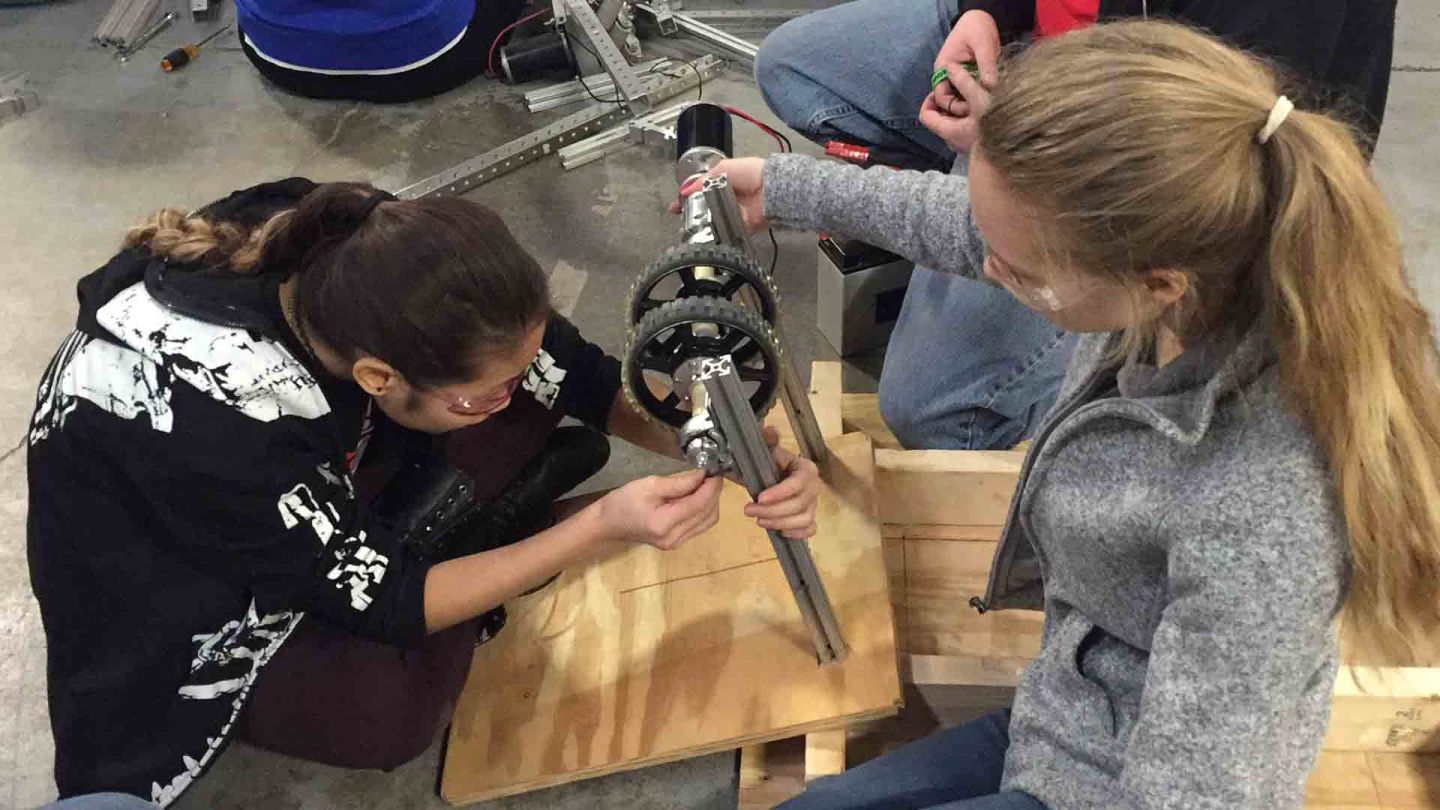
"caption": "Robotics team at Columbus School for Girls. ",
"description": null,
"title": "Robotics-CSG",
"credit": "Courtesy of Linda Swarlis",
"status": "inherit",
"isLoading": false,
"fetchFailed": false
},
"mindshift_43822": {
"type": "attachments",
"id": "mindshift_43822",
"meta": {
"index": "attachments_1716263798",
"site": "mindshift",
"id": "43822",
"found": true
},
"parent": 43802,
"imgSizes": {
"twentyfourteen-full-width": {
"file": "https://ww2.kqed.org/app/uploads/sites/23/2016/02/chailey-ipad-1-1038x576.jpg",
"width": 1038,
"mimeType": "image/jpeg",
"height": 576
},
"thumbnail": {
"file": "https://ww2.kqed.org/app/uploads/sites/23/2016/02/chailey-ipad-1-400x299.jpg",
"width": 400,
"mimeType": "image/jpeg",
"height": 299
},
"fd-sm": {
"file": "https://ww2.kqed.org/app/uploads/sites/23/2016/02/chailey-ipad-1-960x717.jpg",
"width": 960,
"mimeType": "image/jpeg",
"height": 717
},
"post-thumbnail": {
"file": "https://ww2.kqed.org/app/uploads/sites/23/2016/02/chailey-ipad-1-672x372.jpg",
"width": 672,
"mimeType": "image/jpeg",
"height": 372
},
"kqedFullSize": {
"file": "https://ww2.kqed.org/app/uploads/sites/23/2016/02/chailey-ipad-1.jpg",
"width": 1824,
"height": 1362
},
"large": {
"file": "https://ww2.kqed.org/app/uploads/sites/23/2016/02/chailey-ipad-1-1440x1075.jpg",
"width": 1440,
"mimeType": "image/jpeg",
"height": 1075
},
"guest-author-96": {
"file": "https://ww2.kqed.org/app/uploads/sites/23/2016/02/chailey-ipad-1-96x96.jpg",
"width": 96,
"mimeType": "image/jpeg",
"height": 96
},
"medium": {
"file": "https://ww2.kqed.org/app/uploads/sites/23/2016/02/chailey-ipad-1-800x597.jpg",
"width": 800,
"mimeType": "image/jpeg",
"height": 597
},
"guest-author-64": {
"file": "https://ww2.kqed.org/app/uploads/sites/23/2016/02/chailey-ipad-1-64x64.jpg",
"width": 64,
"mimeType": "image/jpeg",
"height": 64
},
"guest-author-32": {
"file": "https://ww2.kqed.org/app/uploads/sites/23/2016/02/chailey-ipad-1-32x32.jpg",
"width": 32,
"mimeType": "image/jpeg",
"height": 32
},
"cat_post_thumb_sizecategory-posts-2": {
"file": "https://ww2.kqed.org/app/uploads/sites/23/2016/02/chailey-ipad-1-50x50.jpg",
"width": 50,
"mimeType": "image/jpeg",
"height": 50
},
"fd-med": {
"file": "https://ww2.kqed.org/app/uploads/sites/23/2016/02/chailey-ipad-1-1180x881.jpg",
"width": 1180,
"mimeType": "image/jpeg",
"height": 881
},
"detail": {
"file": "https://ww2.kqed.org/app/uploads/sites/23/2016/02/chailey-ipad-1-75x75.jpg",
"width": 75,
"mimeType": "image/jpeg",
"height": 75
},
"medium_large": {
"file": "https://ww2.kqed.org/app/uploads/sites/23/2016/02/chailey-ipad-1-768x573.jpg",
"width": 768,
"mimeType": "image/jpeg",
"height": 573
},
"guest-author-128": {
"file": "https://ww2.kqed.org/app/uploads/sites/23/2016/02/chailey-ipad-1-128x128.jpg",
"width": 128,
"mimeType": "image/jpeg",
"height": 128
}
},
"publishDate": 1456126913,
"modified": 1456127081,
"caption": null,
"description": null,
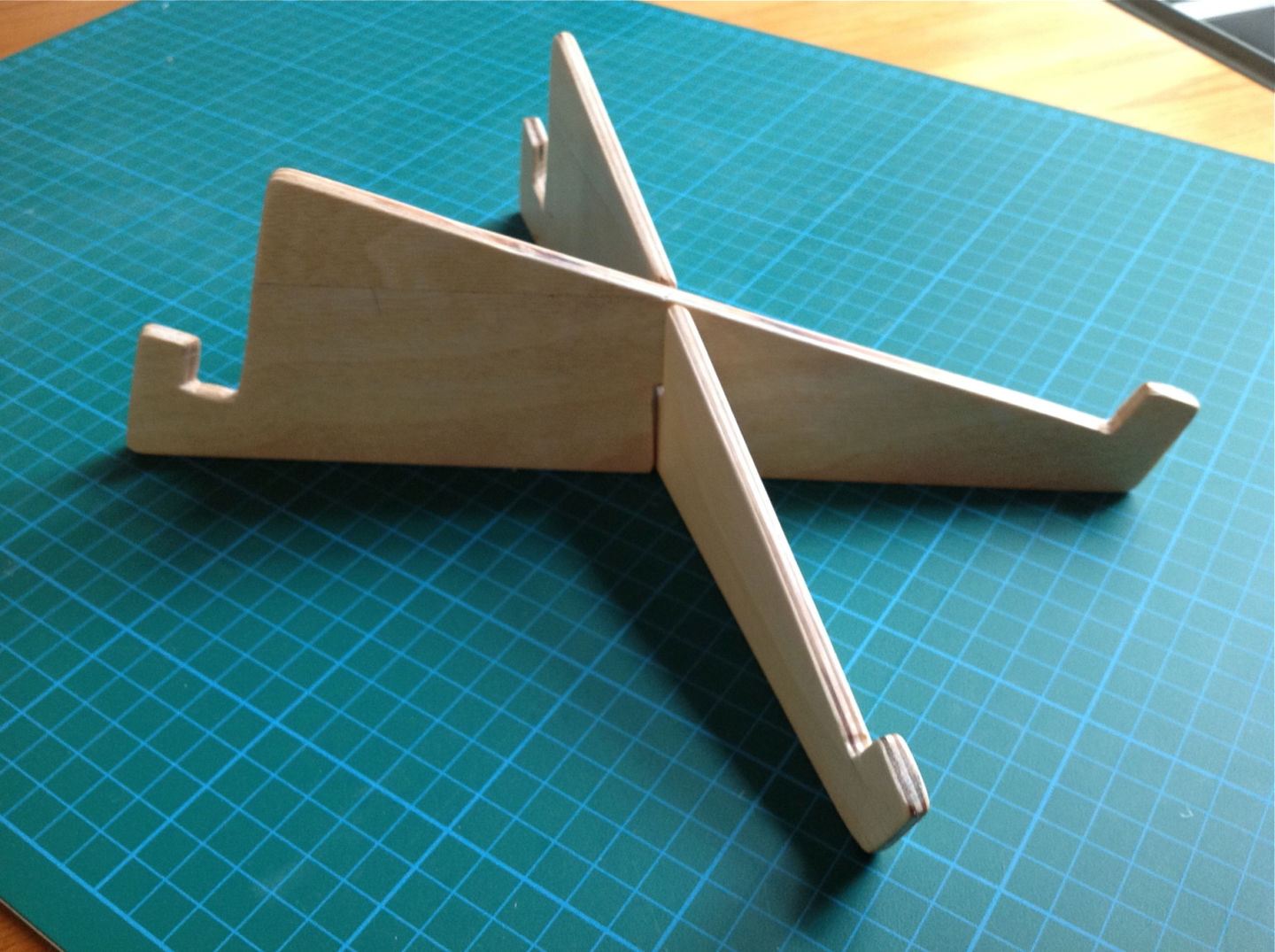
"title": "The completed wooden iPad stand",
"credit": "\u003ca href=\"https://www.flickr.com/photos/chailey/7015812939/in/photolist-5cfJSw-jWs7aj-52ox78-bFXSL4-s3LxbA-DNfwe-5nVrHi-4wYuK8-4p9jsv-3mKmjH-nSRc6H-7ecFEP-49GYC6-8kGgK-7rosg1-7fxZaT-cr5G-2w1Sp-77En3v-5mcoXt-4RTdaM-4CX1Gv-5SGHF2-kNhR-4hs4HK-hVWEhk-52sS6G-dCsVXV-dCsWAZ-dXsfsm-4s4wPn-rQT1Wa-55u9Pf-euDHmm-hZNuT-2jnhn1-7uCunn-NgcyR-7STWok-7LXqV1-rPuJw1-6YW8H-6xcCZm-55pXFa-5g9o67-4yCKNu-4nWivv-7fgvQx-o8BwV-3NVLZu\">chailey/Flickr\u003c/a>",
"status": "inherit",
"isLoading": false,
"fetchFailed": false
},
"mindshift_43697": {
"type": "attachments",
"id": "mindshift_43697",
"meta": {
"index": "attachments_1716263798",
"site": "mindshift",
"id": "43697",
"found": true
},
"parent": 43685,
"imgSizes": {
"twentyfourteen-full-width": {
"file": "https://ww2.kqed.org/app/uploads/sites/23/2016/02/Beeber1-1038x576.jpg",
"width": 1038,
"mimeType": "image/jpeg",
"height": 576
},
"thumbnail": {
"file": "https://ww2.kqed.org/app/uploads/sites/23/2016/02/Beeber1-400x225.jpg",
"width": 400,
"mimeType": "image/jpeg",
"height": 225
},
"fd-sm": {
"file": "https://ww2.kqed.org/app/uploads/sites/23/2016/02/Beeber1-960x540.jpg",
"width": 960,
"mimeType": "image/jpeg",
"height": 540
},
"post-thumbnail": {
"file": "https://ww2.kqed.org/app/uploads/sites/23/2016/02/Beeber1-672x372.jpg",
"width": 672,
"mimeType": "image/jpeg",
"height": 372
},
"kqedFullSize": {
"file": "https://ww2.kqed.org/app/uploads/sites/23/2016/02/Beeber1.jpg",
"width": 2048,
"height": 1152
},
"large": {
"file": "https://ww2.kqed.org/app/uploads/sites/23/2016/02/Beeber1-1440x810.jpg",
"width": 1440,
"mimeType": "image/jpeg",
"height": 810
},
"guest-author-96": {
"file": "https://ww2.kqed.org/app/uploads/sites/23/2016/02/Beeber1-96x96.jpg",
"width": 96,
"mimeType": "image/jpeg",
"height": 96
},
"medium": {
"file": "https://ww2.kqed.org/app/uploads/sites/23/2016/02/Beeber1-800x450.jpg",
"width": 800,
"mimeType": "image/jpeg",
"height": 450
},
"guest-author-64": {
"file": "https://ww2.kqed.org/app/uploads/sites/23/2016/02/Beeber1-64x64.jpg",
"width": 64,
"mimeType": "image/jpeg",
"height": 64
},
"guest-author-32": {
"file": "https://ww2.kqed.org/app/uploads/sites/23/2016/02/Beeber1-32x32.jpg",
"width": 32,
"mimeType": "image/jpeg",
"height": 32
},
"cat_post_thumb_sizecategory-posts-2": {
"file": "https://ww2.kqed.org/app/uploads/sites/23/2016/02/Beeber1-50x50.jpg",
"width": 50,
"mimeType": "image/jpeg",
"height": 50
},
"fd-lrg": {
"file": "https://ww2.kqed.org/app/uploads/sites/23/2016/02/Beeber1-1920x1080.jpg",
"width": 1920,
"mimeType": "image/jpeg",
"height": 1080
},
"fd-med": {
"file": "https://ww2.kqed.org/app/uploads/sites/23/2016/02/Beeber1-1180x664.jpg",
"width": 1180,
"mimeType": "image/jpeg",
"height": 664
},
"detail": {
"file": "https://ww2.kqed.org/app/uploads/sites/23/2016/02/Beeber1-75x75.jpg",
"width": 75,
"mimeType": "image/jpeg",
"height": 75
},
"medium_large": {
"file": "https://ww2.kqed.org/app/uploads/sites/23/2016/02/Beeber1-768x432.jpg",
"width": 768,
"mimeType": "image/jpeg",
"height": 432
},
"guest-author-128": {
"file": "https://ww2.kqed.org/app/uploads/sites/23/2016/02/Beeber1-128x128.jpg",
"width": 128,
"mimeType": "image/jpeg",
"height": 128
}
},
"publishDate": 1455127162,
"modified": 1455127358,
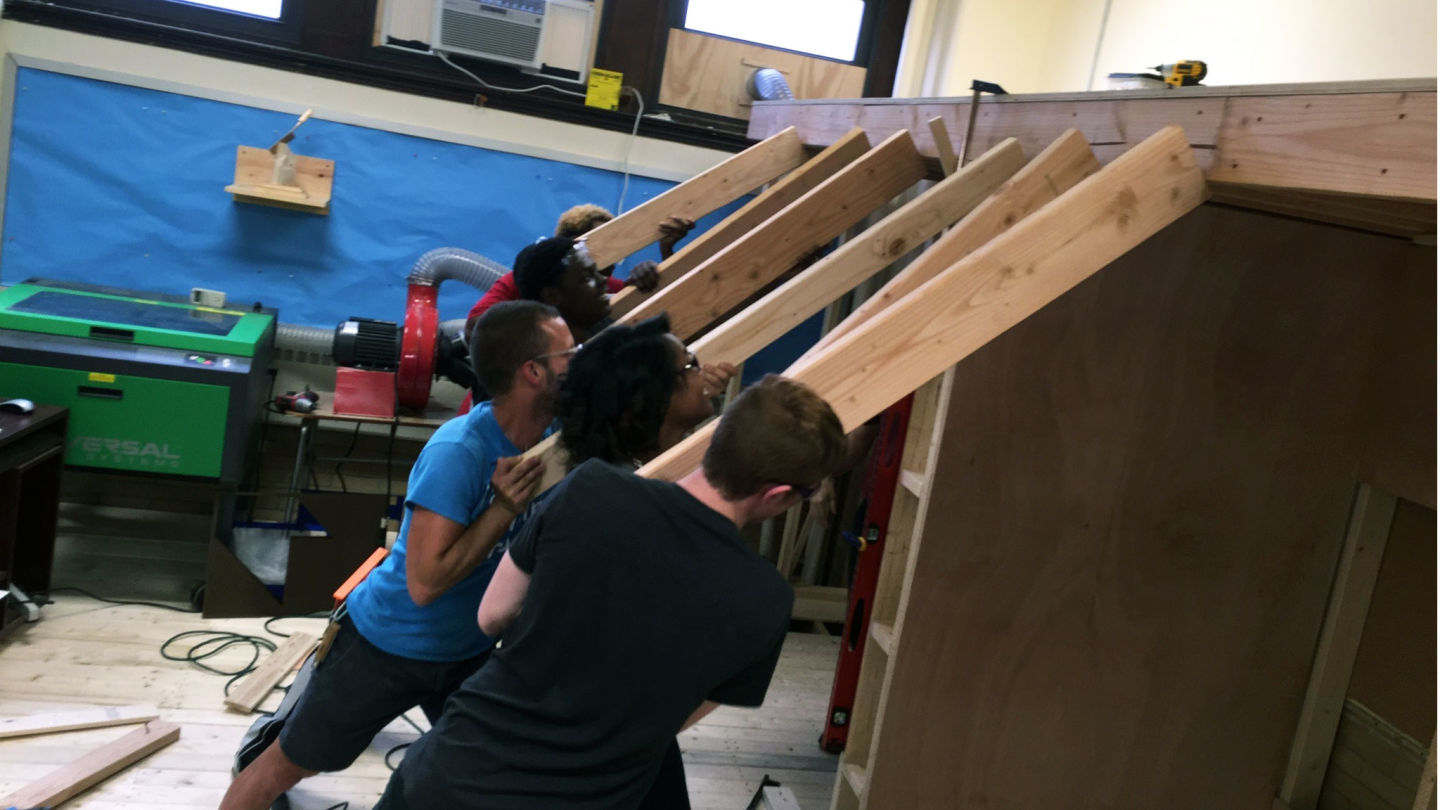
"caption": "Students at SLA Beeber erect the cupboard they built to house a laser cutter.",
"description": null,
"title": "Beeber1",
"credit": "Courtesy Alex Gilliam/Science Leadership Academy",
"status": "inherit",
"isLoading": false,
"fetchFailed": false
},
"mindshift_43137": {
"type": "attachments",
"id": "mindshift_43137",
"meta": {
"index": "attachments_1716263798",
"site": "mindshift",
"id": "43137",
"found": true
},
"parent": 43092,
"imgSizes": {
"twentyfourteen-full-width": {
"file": "https://ww2.kqed.org/app/uploads/sites/23/2015/12/Spatial-books-1038x576.jpg",
"width": 1038,
"mimeType": "image/jpeg",
"height": 576
},
"thumbnail": {
"file": "https://ww2.kqed.org/app/uploads/sites/23/2015/12/Spatial-books-400x225.jpg",
"width": 400,
"mimeType": "image/jpeg",
"height": 225
},
"fd-sm": {
"file": "https://ww2.kqed.org/app/uploads/sites/23/2015/12/Spatial-books-960x540.jpg",
"width": 960,
"mimeType": "image/jpeg",
"height": 540
},
"post-thumbnail": {
"file": "https://ww2.kqed.org/app/uploads/sites/23/2015/12/Spatial-books-672x372.jpg",
"width": 672,
"mimeType": "image/jpeg",
"height": 372
},
"kqedFullSize": {
"file": "https://ww2.kqed.org/app/uploads/sites/23/2015/12/Spatial-books.jpg",
"width": 1920,
"height": 1080
},
"large": {
"file": "https://ww2.kqed.org/app/uploads/sites/23/2015/12/Spatial-books-1440x810.jpg",
"width": 1440,
"mimeType": "image/jpeg",
"height": 810
},
"guest-author-96": {
"file": "https://ww2.kqed.org/app/uploads/sites/23/2015/12/Spatial-books-96x96.jpg",
"width": 96,
"mimeType": "image/jpeg",
"height": 96
},
"medium": {
"file": "https://ww2.kqed.org/app/uploads/sites/23/2015/12/Spatial-books-800x450.jpg",
"width": 800,
"mimeType": "image/jpeg",
"height": 450
},
"guest-author-64": {
"file": "https://ww2.kqed.org/app/uploads/sites/23/2015/12/Spatial-books-64x64.jpg",
"width": 64,
"mimeType": "image/jpeg",
"height": 64
},
"guest-author-32": {
"file": "https://ww2.kqed.org/app/uploads/sites/23/2015/12/Spatial-books-32x32.jpg",
"width": 32,
"mimeType": "image/jpeg",
"height": 32
},
"cat_post_thumb_sizecategory-posts-2": {
"file": "https://ww2.kqed.org/app/uploads/sites/23/2015/12/Spatial-books-50x50.jpg",
"width": 50,
"mimeType": "image/jpeg",
"height": 50
},
"fd-lrg": {
"file": "https://ww2.kqed.org/app/uploads/sites/23/2015/12/Spatial-books-1920x1080.jpg",
"width": 1920,
"mimeType": "image/jpeg",
"height": 1080
},
"fd-med": {
"file": "https://ww2.kqed.org/app/uploads/sites/23/2015/12/Spatial-books-1180x664.jpg",
"width": 1180,
"mimeType": "image/jpeg",
"height": 664
},
"detail": {
"file": "https://ww2.kqed.org/app/uploads/sites/23/2015/12/Spatial-books-75x75.jpg",
"width": 75,
"mimeType": "image/jpeg",
"height": 75
},
"medium_large": {
"file": "https://ww2.kqed.org/app/uploads/sites/23/2015/12/Spatial-books-768x432.jpg",
"width": 768,
"mimeType": "image/jpeg",
"height": 432
},
"guest-author-128": {
"file": "https://ww2.kqed.org/app/uploads/sites/23/2015/12/Spatial-books-128x128.jpg",
"width": 128,
"mimeType": "image/jpeg",
"height": 128
}
},
"publishDate": 1450298004,
"modified": 1450298011,
"caption": null,
"description": null,
"title": "Spatial-books",
"credit": "iStock",
"status": "inherit",
"isLoading": false,
"fetchFailed": false
},
"mindshift_43139": {
"type": "attachments",
"id": "mindshift_43139",
"meta": {
"index": "attachments_1716263798",
"site": "mindshift",
"id": "43139",
"found": true
},
"parent": 43090,
"imgSizes": {
"twentyfourteen-full-width": {
"file": "https://ww2.kqed.org/app/uploads/sites/23/2015/12/Maze-1038x576.jpg",
"width": 1038,
"mimeType": "image/jpeg",
"height": 576
},
"thumbnail": {
"file": "https://ww2.kqed.org/app/uploads/sites/23/2015/12/Maze-400x225.jpg",
"width": 400,
"mimeType": "image/jpeg",
"height": 225
},
"fd-sm": {
"file": "https://ww2.kqed.org/app/uploads/sites/23/2015/12/Maze-960x540.jpg",
"width": 960,
"mimeType": "image/jpeg",
"height": 540
},
"post-thumbnail": {
"file": "https://ww2.kqed.org/app/uploads/sites/23/2015/12/Maze-672x372.jpg",
"width": 672,
"mimeType": "image/jpeg",
"height": 372
},
"kqedFullSize": {
"file": "https://ww2.kqed.org/app/uploads/sites/23/2015/12/Maze.jpg",
"width": 1920,
"height": 1080
},
"large": {
"file": "https://ww2.kqed.org/app/uploads/sites/23/2015/12/Maze-1440x810.jpg",
"width": 1440,
"mimeType": "image/jpeg",
"height": 810
},
"guest-author-96": {
"file": "https://ww2.kqed.org/app/uploads/sites/23/2015/12/Maze-96x96.jpg",
"width": 96,
"mimeType": "image/jpeg",
"height": 96
},
"medium": {
"file": "https://ww2.kqed.org/app/uploads/sites/23/2015/12/Maze-800x450.jpg",
"width": 800,
"mimeType": "image/jpeg",
"height": 450
},
"guest-author-64": {
"file": "https://ww2.kqed.org/app/uploads/sites/23/2015/12/Maze-64x64.jpg",
"width": 64,
"mimeType": "image/jpeg",
"height": 64
},
"guest-author-32": {
"file": "https://ww2.kqed.org/app/uploads/sites/23/2015/12/Maze-32x32.jpg",
"width": 32,
"mimeType": "image/jpeg",
"height": 32
},
"cat_post_thumb_sizecategory-posts-2": {
"file": "https://ww2.kqed.org/app/uploads/sites/23/2015/12/Maze-50x50.jpg",
"width": 50,
"mimeType": "image/jpeg",
"height": 50
},
"fd-lrg": {
"file": "https://ww2.kqed.org/app/uploads/sites/23/2015/12/Maze-1920x1080.jpg",
"width": 1920,
"mimeType": "image/jpeg",
"height": 1080
},
"fd-med": {
"file": "https://ww2.kqed.org/app/uploads/sites/23/2015/12/Maze-1180x664.jpg",
"width": 1180,
"mimeType": "image/jpeg",
"height": 664
},
"detail": {
"file": "https://ww2.kqed.org/app/uploads/sites/23/2015/12/Maze-75x75.jpg",
"width": 75,
"mimeType": "image/jpeg",
"height": 75
},
"medium_large": {
"file": "https://ww2.kqed.org/app/uploads/sites/23/2015/12/Maze-768x432.jpg",
"width": 768,
"mimeType": "image/jpeg",
"height": 432
},
"guest-author-128": {
"file": "https://ww2.kqed.org/app/uploads/sites/23/2015/12/Maze-128x128.jpg",
"width": 128,
"mimeType": "image/jpeg",
"height": 128
}
},
"publishDate": 1450305483,
"modified": 1450305488,
"caption": null,
"description": null,
"title": "Maze",
"credit": "iStock",
"status": "inherit",
"isLoading": false,
"fetchFailed": false
},
"mindshift_42550": {
"type": "attachments",
"id": "mindshift_42550",
"meta": {
"index": "attachments_1716263798",
"site": "mindshift",
"id": "42550",
"found": true
},
"parent": 42301,
"imgSizes": {
"twentyfourteen-full-width": {
"file": "https://ww2.kqed.org/app/uploads/sites/23/2015/10/Wind-turbines-1038x576.jpg",
"width": 1038,
"mimeType": "image/jpeg",
"height": 576
},
"thumbnail": {
"file": "https://ww2.kqed.org/app/uploads/sites/23/2015/10/Wind-turbines-400x225.jpg",
"width": 400,
"mimeType": "image/jpeg",
"height": 225
},
"fd-sm": {
"file": "https://ww2.kqed.org/app/uploads/sites/23/2015/10/Wind-turbines-960x540.jpg",
"width": 960,
"mimeType": "image/jpeg",
"height": 540
},
"post-thumbnail": {
"file": "https://ww2.kqed.org/app/uploads/sites/23/2015/10/Wind-turbines-672x372.jpg",
"width": 672,
"mimeType": "image/jpeg",
"height": 372
},
"kqedFullSize": {
"file": "https://ww2.kqed.org/app/uploads/sites/23/2015/10/Wind-turbines.jpg",
"width": 1920,
"height": 1080
},
"large": {
"file": "https://ww2.kqed.org/app/uploads/sites/23/2015/10/Wind-turbines-1440x810.jpg",
"width": 1440,
"mimeType": "image/jpeg",
"height": 810
},
"guest-author-96": {
"file": "https://ww2.kqed.org/app/uploads/sites/23/2015/10/Wind-turbines-96x96.jpg",
"width": 96,
"mimeType": "image/jpeg",
"height": 96
},
"medium": {
"file": "https://ww2.kqed.org/app/uploads/sites/23/2015/10/Wind-turbines-800x450.jpg",
"width": 800,
"mimeType": "image/jpeg",
"height": 450
},
"guest-author-64": {
"file": "https://ww2.kqed.org/app/uploads/sites/23/2015/10/Wind-turbines-64x64.jpg",
"width": 64,
"mimeType": "image/jpeg",
"height": 64
},
"guest-author-32": {
"file": "https://ww2.kqed.org/app/uploads/sites/23/2015/10/Wind-turbines-32x32.jpg",
"width": 32,
"mimeType": "image/jpeg",
"height": 32
},
"cat_post_thumb_sizecategory-posts-2": {
"file": "https://ww2.kqed.org/app/uploads/sites/23/2015/10/Wind-turbines-50x50.jpg",
"width": 50,
"mimeType": "image/jpeg",
"height": 50
},
"fd-lrg": {
"file": "https://ww2.kqed.org/app/uploads/sites/23/2015/10/Wind-turbines-1920x1080.jpg",
"width": 1920,
"mimeType": "image/jpeg",
"height": 1080
},
"fd-med": {
"file": "https://ww2.kqed.org/app/uploads/sites/23/2015/10/Wind-turbines-1180x664.jpg",
"width": 1180,
"mimeType": "image/jpeg",
"height": 664
},
"detail": {
"file": "https://ww2.kqed.org/app/uploads/sites/23/2015/10/Wind-turbines-75x75.jpg",
"width": 75,
"mimeType": "image/jpeg",
"height": 75
},
"guest-author-128": {
"file": "https://ww2.kqed.org/app/uploads/sites/23/2015/10/Wind-turbines-128x128.jpg",
"width": 128,
"mimeType": "image/jpeg",
"height": 128
}
},
"publishDate": 1445583291,
"modified": 1445583299,
"caption": null,
"description": null,
"title": "Wind-turbines",
"credit": "Teaching Channel",
"status": "inherit",
"isLoading": false,
"fetchFailed": false
},
"mindshift_41423": {
"type": "attachments",
"id": "mindshift_41423",
"meta": {
"index": "attachments_1716263798",
"site": "mindshift",
"id": "41423",
"found": true
},
"parent": 41419,
"imgSizes": {
"twentyfourteen-full-width": {
"file": "https://ww2.kqed.org/app/uploads/sites/23/2015/07/07242015_spaghettibridge_npr_0679-edit_slide-e74b7a5a11f258a0dbbeeb4e4df34c9f13e3b317-1038x576.jpg",
"width": 1038,
"mimeType": "image/jpeg",
"height": 576
},
"thumbnail": {
"file": "https://ww2.kqed.org/app/uploads/sites/23/2015/07/07242015_spaghettibridge_npr_0679-edit_slide-e74b7a5a11f258a0dbbeeb4e4df34c9f13e3b317-400x267.jpg",
"width": 400,
"mimeType": "image/jpeg",
"height": 267
},
"fd-sm": {
"file": "https://ww2.kqed.org/app/uploads/sites/23/2015/07/07242015_spaghettibridge_npr_0679-edit_slide-e74b7a5a11f258a0dbbeeb4e4df34c9f13e3b317-960x640.jpg",
"width": 960,
"mimeType": "image/jpeg",
"height": 640
},
"post-thumbnail": {
"file": "https://ww2.kqed.org/app/uploads/sites/23/2015/07/07242015_spaghettibridge_npr_0679-edit_slide-e74b7a5a11f258a0dbbeeb4e4df34c9f13e3b317-672x372.jpg",
"width": 672,
"mimeType": "image/jpeg",
"height": 372
},
"kqedFullSize": {
"file": "https://ww2.kqed.org/app/uploads/sites/23/2015/07/07242015_spaghettibridge_npr_0679-edit_slide-e74b7a5a11f258a0dbbeeb4e4df34c9f13e3b317.jpg",
"width": 2997,
"height": 1998
},
"large": {
"file": "https://ww2.kqed.org/app/uploads/sites/23/2015/07/07242015_spaghettibridge_npr_0679-edit_slide-e74b7a5a11f258a0dbbeeb4e4df34c9f13e3b317-1440x960.jpg",
"width": 1440,
"mimeType": "image/jpeg",
"height": 960
},
"guest-author-96": {
"file": "https://ww2.kqed.org/app/uploads/sites/23/2015/07/07242015_spaghettibridge_npr_0679-edit_slide-e74b7a5a11f258a0dbbeeb4e4df34c9f13e3b317-96x96.jpg",
"width": 96,
"mimeType": "image/jpeg",
"height": 96
},
"medium": {
"file": "https://ww2.kqed.org/app/uploads/sites/23/2015/07/07242015_spaghettibridge_npr_0679-edit_slide-e74b7a5a11f258a0dbbeeb4e4df34c9f13e3b317-800x533.jpg",
"width": 800,
"mimeType": "image/jpeg",
"height": 533
},
"guest-author-64": {
"file": "https://ww2.kqed.org/app/uploads/sites/23/2015/07/07242015_spaghettibridge_npr_0679-edit_slide-e74b7a5a11f258a0dbbeeb4e4df34c9f13e3b317-64x64.jpg",
"width": 64,
"mimeType": "image/jpeg",
"height": 64
},
"guest-author-32": {
"file": "https://ww2.kqed.org/app/uploads/sites/23/2015/07/07242015_spaghettibridge_npr_0679-edit_slide-e74b7a5a11f258a0dbbeeb4e4df34c9f13e3b317-32x32.jpg",
"width": 32,
"mimeType": "image/jpeg",
"height": 32
},
"cat_post_thumb_sizecategory-posts-2": {
"file": "https://ww2.kqed.org/app/uploads/sites/23/2015/07/07242015_spaghettibridge_npr_0679-edit_slide-e74b7a5a11f258a0dbbeeb4e4df34c9f13e3b317-50x50.jpg",
"width": 50,
"mimeType": "image/jpeg",
"height": 50
},
"fd-lrg": {
"file": "https://ww2.kqed.org/app/uploads/sites/23/2015/07/07242015_spaghettibridge_npr_0679-edit_slide-e74b7a5a11f258a0dbbeeb4e4df34c9f13e3b317-1920x1280.jpg",
"width": 1920,
"mimeType": "image/jpeg",
"height": 1280
},
"fd-med": {
"file": "https://ww2.kqed.org/app/uploads/sites/23/2015/07/07242015_spaghettibridge_npr_0679-edit_slide-e74b7a5a11f258a0dbbeeb4e4df34c9f13e3b317-1180x787.jpg",
"width": 1180,
"mimeType": "image/jpeg",
"height": 787
},
"detail": {
"file": "https://ww2.kqed.org/app/uploads/sites/23/2015/07/07242015_spaghettibridge_npr_0679-edit_slide-e74b7a5a11f258a0dbbeeb4e4df34c9f13e3b317-75x75.jpg",
"width": 75,
"mimeType": "image/jpeg",
"height": 75
},
"guest-author-128": {
"file": "https://ww2.kqed.org/app/uploads/sites/23/2015/07/07242015_spaghettibridge_npr_0679-edit_slide-e74b7a5a11f258a0dbbeeb4e4df34c9f13e3b317-128x128.jpg",
"width": 128,
"mimeType": "image/jpeg",
"height": 128
}
},
"publishDate": 1438278028,
"modified": 1438279418,
"caption": "Sheidey Morales Del Valle (left), Amelia Hawley and Varsha Gopal of Team Foxy Epoxy try sending their bridge subliminal messages, willing it to hold up under pressure.",
"description": null,
"title": "Sheidey Morales Del Valle (left), Amelia Hawley and Varsha Gopal of Team Foxy Epoxy try sending their bridge subliminal messages, willing it to hold up under pressure.",
"credit": "Lydia Thompson/NPR",
"status": "inherit",
"isLoading": false,
"fetchFailed": false
},
"mindshift_40686": {
"type": "attachments",
"id": "mindshift_40686",
"meta": {
"index": "attachments_1716263798",
"site": "mindshift",
"id": "40686",
"found": true
},
"parent": 40685,
"imgSizes": {
"twentyfourteen-full-width": {
"file": "https://ww2.kqed.org/app/uploads/sites/23/2015/05/davidmullerhumed_enl-d1634d80911de9a43802b6cc31ef8dbc114de6fa-1038x576.jpg",
"width": 1038,
"mimeType": "image/jpeg",
"height": 576
},
"thumbnail": {
"file": "https://ww2.kqed.org/app/uploads/sites/23/2015/05/davidmullerhumed_enl-d1634d80911de9a43802b6cc31ef8dbc114de6fa-400x266.jpg",
"width": 400,
"mimeType": "image/jpeg",
"height": 266
},
"fd-sm": {
"file": "https://ww2.kqed.org/app/uploads/sites/23/2015/05/davidmullerhumed_enl-d1634d80911de9a43802b6cc31ef8dbc114de6fa-960x639.jpg",
"width": 960,
"mimeType": "image/jpeg",
"height": 639
},
"post-thumbnail": {
"file": "https://ww2.kqed.org/app/uploads/sites/23/2015/05/davidmullerhumed_enl-d1634d80911de9a43802b6cc31ef8dbc114de6fa-672x372.jpg",
"width": 672,
"mimeType": "image/jpeg",
"height": 372
},
"kqedFullSize": {
"file": "https://ww2.kqed.org/app/uploads/sites/23/2015/05/davidmullerhumed_enl-d1634d80911de9a43802b6cc31ef8dbc114de6fa-e1432818216685.jpg",
"width": 1920,
"height": 1279
},
"large": {
"file": "https://ww2.kqed.org/app/uploads/sites/23/2015/05/davidmullerhumed_enl-d1634d80911de9a43802b6cc31ef8dbc114de6fa-1440x959.jpg",
"width": 1440,
"mimeType": "image/jpeg",
"height": 959
},
"guest-author-96": {
"file": "https://ww2.kqed.org/app/uploads/sites/23/2015/05/davidmullerhumed_enl-d1634d80911de9a43802b6cc31ef8dbc114de6fa-96x96.jpg",
"width": 96,
"mimeType": "image/jpeg",
"height": 96
},
"medium": {
"file": "https://ww2.kqed.org/app/uploads/sites/23/2015/05/davidmullerhumed_enl-d1634d80911de9a43802b6cc31ef8dbc114de6fa-800x533.jpg",
"width": 800,
"mimeType": "image/jpeg",
"height": 533
},
"guest-author-64": {
"file": "https://ww2.kqed.org/app/uploads/sites/23/2015/05/davidmullerhumed_enl-d1634d80911de9a43802b6cc31ef8dbc114de6fa-64x64.jpg",
"width": 64,
"mimeType": "image/jpeg",
"height": 64
},
"guest-author-32": {
"file": "https://ww2.kqed.org/app/uploads/sites/23/2015/05/davidmullerhumed_enl-d1634d80911de9a43802b6cc31ef8dbc114de6fa-32x32.jpg",
"width": 32,
"mimeType": "image/jpeg",
"height": 32
},
"cat_post_thumb_sizecategory-posts-2": {
"file": "https://ww2.kqed.org/app/uploads/sites/23/2015/05/davidmullerhumed_enl-d1634d80911de9a43802b6cc31ef8dbc114de6fa-50x50.jpg",
"width": 50,
"mimeType": "image/jpeg",
"height": 50
},
"fd-med": {
"file": "https://ww2.kqed.org/app/uploads/sites/23/2015/05/davidmullerhumed_enl-d1634d80911de9a43802b6cc31ef8dbc114de6fa-1180x786.jpg",
"width": 1180,
"mimeType": "image/jpeg",
"height": 786
},
"detail": {
"file": "https://ww2.kqed.org/app/uploads/sites/23/2015/05/davidmullerhumed_enl-d1634d80911de9a43802b6cc31ef8dbc114de6fa-75x75.jpg",
"width": 75,
"mimeType": "image/jpeg",
"height": 75
},
"guest-author-128": {
"file": "https://ww2.kqed.org/app/uploads/sites/23/2015/05/davidmullerhumed_enl-d1634d80911de9a43802b6cc31ef8dbc114de6fa-128x128.jpg",
"width": 128,
"mimeType": "image/jpeg",
"height": 128
}
},
"publishDate": 1432817568,
"modified": 1432818197,
"caption": "Dr. David Muller, dean of medical education at Mount Sinai, believes that including in each medical school class some students who have a strong background in the humanities makes traditional science students better doctors, too.",
"description": "Dr. David Muller, dean of medical education at Mount Sinai, believes that including in each medical school class some students who have a strong background in the humanities makes traditional science students better doctors, too.",
"title": "Dr. David Muller, dean of medical education at Mount Sinai, believes that including in each medical school class some students who have a strong background in the humanities makes traditional science students better doctors, too.",
"credit": "Cindy Carpien for NPR",
"status": "inherit",
"isLoading": false,
"fetchFailed": false
},
"mindshift_39711": {
"type": "attachments",
"id": "mindshift_39711",
"meta": {
"index": "attachments_1716263798",
"site": "mindshift",
"id": "39711",
"found": true
},
"parent": 39408,
"imgSizes": {
"twentyfourteen-full-width": {
"file": "https://ww2.kqed.org/app/uploads/sites/23/2015/03/Techie-ladies-1038x576.jpg",
"width": 1038,
"mimeType": "image/jpeg",
"height": 576
},
"thumbnail": {
"file": "https://ww2.kqed.org/app/uploads/sites/23/2015/03/Techie-ladies-400x267.jpg",
"width": 400,
"mimeType": "image/jpeg",
"height": 267
},
"fd-sm": {
"file": "https://ww2.kqed.org/app/uploads/sites/23/2015/03/Techie-ladies-320x214.jpg",
"width": 320,
"mimeType": "image/jpeg",
"height": 214
},
"post-thumbnail": {
"file": "https://ww2.kqed.org/app/uploads/sites/23/2015/03/Techie-ladies-672x372.jpg",
"width": 672,
"mimeType": "image/jpeg",
"height": 372
},
"kqedFullSize": {
"file": "https://ww2.kqed.org/app/uploads/sites/23/2015/03/Techie-ladies.jpg",
"width": 1438,
"height": 960
},
"fd-lrg": {
"file": "https://ww2.kqed.org/app/uploads/sites/23/2015/03/Techie-ladies-1180x788.jpg",
"width": 1180,
"mimeType": "image/jpeg",
"height": 788
},
"fd-med": {
"file": "https://ww2.kqed.org/app/uploads/sites/23/2015/03/Techie-ladies-768x513.jpg",
"width": 768,
"mimeType": "image/jpeg",
"height": 513
},
"guest-author-96": {
"file": "https://ww2.kqed.org/app/uploads/sites/23/2015/03/Techie-ladies-96x96.jpg",
"width": 96,
"mimeType": "image/jpeg",
"height": 96
},
"medium": {
"file": "https://ww2.kqed.org/app/uploads/sites/23/2015/03/Techie-ladies-800x534.jpg",
"width": 800,
"mimeType": "image/jpeg",
"height": 534
},
"guest-author-64": {
"file": "https://ww2.kqed.org/app/uploads/sites/23/2015/03/Techie-ladies-64x64.jpg",
"width": 64,
"mimeType": "image/jpeg",
"height": 64
},
"guest-author-32": {
"file": "https://ww2.kqed.org/app/uploads/sites/23/2015/03/Techie-ladies-32x32.jpg",
"width": 32,
"mimeType": "image/jpeg",
"height": 32
},
"guest-author-128": {
"file": "https://ww2.kqed.org/app/uploads/sites/23/2015/03/Techie-ladies-128x128.jpg",
"width": 128,
"mimeType": "image/jpeg",
"height": 128
}
},
"publishDate": 1426253075,
"modified": 1426253154,
"caption": "A screen grab from Burlington High School's Help Desk video, \"All the Techie Ladies,\" produced by the female members of the team. ",
"description": null,
"title": "Techie-ladies",
"credit": null,
"status": "inherit",
"isLoading": false,
"fetchFailed": false
},
"mindshift_39232": {
"type": "attachments",
"id": "mindshift_39232",
"meta": {
"index": "attachments_1716263798",
"site": "mindshift",
"id": "39232",
"found": true
},
"parent": 39208,
"imgSizes": {
"twentyfourteen-full-width": {
"file": "https://ww2.kqed.org/app/uploads/sites/23/2015/02/Emily-Neblett-1038x576.gif",
"width": 1038,
"mimeType": "image/gif",
"height": 576
},
"thumbnail": {
"file": "https://ww2.kqed.org/app/uploads/sites/23/2015/02/Emily-Neblett-400x267.gif",
"width": 400,
"mimeType": "image/gif",
"height": 267
},
"fd-sm": {
"file": "https://ww2.kqed.org/app/uploads/sites/23/2015/02/Emily-Neblett-320x213.gif",
"width": 320,
"mimeType": "image/gif",
"height": 213
},
"post-thumbnail": {
"file": "https://ww2.kqed.org/app/uploads/sites/23/2015/02/Emily-Neblett-672x372.gif",
"width": 672,
"mimeType": "image/gif",
"height": 372
},
"kqedFullSize": {
"file": "https://ww2.kqed.org/app/uploads/sites/23/2015/02/Emily-Neblett.gif",
"width": 1440,
"height": 960
},
"large": {
"file": "https://ww2.kqed.org/app/uploads/sites/23/2015/02/Emily-Neblett-1440x960.gif",
"width": 1440,
"mimeType": "image/gif",
"height": 960
},
"guest-author-96": {
"file": "https://ww2.kqed.org/app/uploads/sites/23/2015/02/Emily-Neblett-96x96.gif",
"width": 96,
"mimeType": "image/gif",
"height": 96
},
"medium": {
"file": "https://ww2.kqed.org/app/uploads/sites/23/2015/02/Emily-Neblett-800x533.gif",
"width": 800,
"mimeType": "image/gif",
"height": 533
},
"guest-author-64": {
"file": "https://ww2.kqed.org/app/uploads/sites/23/2015/02/Emily-Neblett-64x64.gif",
"width": 64,
"mimeType": "image/gif",
"height": 64
},
"guest-author-32": {
"file": "https://ww2.kqed.org/app/uploads/sites/23/2015/02/Emily-Neblett-32x32.gif",
"width": 32,
"mimeType": "image/gif",
"height": 32
},
"fd-lrg": {
"file": "https://ww2.kqed.org/app/uploads/sites/23/2015/02/Emily-Neblett-1180x787.gif",
"width": 1180,
"mimeType": "image/gif",
"height": 787
},
"fd-med": {
"file": "https://ww2.kqed.org/app/uploads/sites/23/2015/02/Emily-Neblett-768x512.gif",
"width": 768,
"mimeType": "image/gif",
"height": 512
},
"guest-author-128": {
"file": "https://ww2.kqed.org/app/uploads/sites/23/2015/02/Emily-Neblett-128x128.gif",
"width": 128,
"mimeType": "image/gif",
"height": 128
}
},
"publishDate": 1423033288,
"modified": 1423033629,
"caption": "Emily Neblett stands next to a mobile maker space at at Monroe Caroll Jr. Children's Hospital at Vanderbilt University. Noah Nelson/Youth Radio",
"description": null,
"title": "Emily-Neblett",
"credit": null,
"status": "inherit",
"isLoading": false,
"fetchFailed": false
},
"mindshift_23506": {
"type": "attachments",
"id": "mindshift_23506",
"meta": {
"index": "attachments_1716263798",
"site": "mindshift",
"id": "23506",
"found": true
},
"parent": 23494,
"imgSizes": {
"thumbnail": {
"file": "https://ww2.kqed.org/app/uploads/sites/23/2012/08/137566370-1-400x266.jpg",
"width": 400,
"mimeType": "image/jpeg",
"height": 266
},
"fd-sm": {
"file": "https://ww2.kqed.org/app/uploads/sites/23/2012/08/137566370-1-320x212.jpg",
"width": 320,
"mimeType": "image/jpeg",
"height": 212
},
"post-thumbnail": {
"file": "https://ww2.kqed.org/app/uploads/sites/23/2012/08/137566370-1-672x372.jpg",
"width": 672,
"mimeType": "image/jpeg",
"height": 372
},
"kqedFullSize": {
"file": "https://ww2.kqed.org/app/uploads/sites/23/2012/08/137566370-1.jpg",
"width": 726,
"height": 482
},
"guest-author-96": {
"file": "https://ww2.kqed.org/app/uploads/sites/23/2012/08/137566370-1-96x96.jpg",
"width": 96,
"mimeType": "image/jpeg",
"height": 96
},
"guest-author-64": {
"file": "https://ww2.kqed.org/app/uploads/sites/23/2012/08/137566370-1-64x64.jpg",
"width": 64,
"mimeType": "image/jpeg",
"height": 64
},
"detail": {
"file": "https://ww2.kqed.org/app/uploads/sites/23/2012/08/137566370-1-75x75.jpg",
"width": 75,
"mimeType": "image/jpeg",
"height": 75
},
"guest-author-32": {
"file": "https://ww2.kqed.org/app/uploads/sites/23/2012/08/137566370-1-32x32.jpg",
"width": 32,
"mimeType": "image/jpeg",
"height": 32
},
"guest-author-128": {
"file": "https://ww2.kqed.org/app/uploads/sites/23/2012/08/137566370-1-128x128.jpg",
"width": 128,
"mimeType": "image/jpeg",
"height": 128
}
},
"publishDate": 1346100843,
"modified": 1346100843,
"caption": null,
"description": "Light bulb drawn on a blackboard",
"title": "137566370-1",
"credit": null,
"status": "inherit",
"isLoading": false,
"fetchFailed": false
},
"mindshift_38013": {
"type": "attachments",
"id": "mindshift_38013",
"meta": {
"index": "attachments_1716263798",
"site": "mindshift",
"id": "38013",
"found": true
},
"parent": 38010,
"imgSizes": {
"twentyfourteen-full-width": {
"file": "https://ww2.kqed.org/app/uploads/sites/23/2014/10/grace-hopper_custom-7e094af0ae451cd447568fd03d9c89ba6bf8b352-1038x576.jpg",
"width": 1038,
"mimeType": "image/jpeg",
"height": 576
},
"thumbnail": {
"file": "https://ww2.kqed.org/app/uploads/sites/23/2014/10/grace-hopper_custom-7e094af0ae451cd447568fd03d9c89ba6bf8b352-400x534.jpg",
"width": 400,
"mimeType": "image/jpeg",
"height": 534
},
"fd-sm": {
"file": "https://ww2.kqed.org/app/uploads/sites/23/2014/10/grace-hopper_custom-7e094af0ae451cd447568fd03d9c89ba6bf8b352-320x427.jpg",
"width": 320,
"mimeType": "image/jpeg",
"height": 427
},
"post-thumbnail": {
"file": "https://ww2.kqed.org/app/uploads/sites/23/2014/10/grace-hopper_custom-7e094af0ae451cd447568fd03d9c89ba6bf8b352-672x372.jpg",
"width": 672,
"mimeType": "image/jpeg",
"height": 372
},
"kqedFullSize": {
"file": "https://ww2.kqed.org/app/uploads/sites/23/2014/10/grace-hopper_custom-7e094af0ae451cd447568fd03d9c89ba6bf8b352.jpg",
"width": 1490,
"height": 1988
},
"large": {
"file": "https://ww2.kqed.org/app/uploads/sites/23/2014/10/grace-hopper_custom-7e094af0ae451cd447568fd03d9c89ba6bf8b352-1440x1921.jpg",
"width": 1440,
"mimeType": "image/jpeg",
"height": 1921
},
"guest-author-96": {
"file": "https://ww2.kqed.org/app/uploads/sites/23/2014/10/grace-hopper_custom-7e094af0ae451cd447568fd03d9c89ba6bf8b352-96x96.jpg",
"width": 96,
"mimeType": "image/jpeg",
"height": 96
},
"medium": {
"file": "https://ww2.kqed.org/app/uploads/sites/23/2014/10/grace-hopper_custom-7e094af0ae451cd447568fd03d9c89ba6bf8b352-800x1067.jpg",
"width": 800,
"mimeType": "image/jpeg",
"height": 1067
},
"guest-author-64": {
"file": "https://ww2.kqed.org/app/uploads/sites/23/2014/10/grace-hopper_custom-7e094af0ae451cd447568fd03d9c89ba6bf8b352-64x64.jpg",
"width": 64,
"mimeType": "image/jpeg",
"height": 64
},
"guest-author-32": {
"file": "https://ww2.kqed.org/app/uploads/sites/23/2014/10/grace-hopper_custom-7e094af0ae451cd447568fd03d9c89ba6bf8b352-32x32.jpg",
"width": 32,
"mimeType": "image/jpeg",
"height": 32
},
"fd-lrg": {
"file": "https://ww2.kqed.org/app/uploads/sites/23/2014/10/grace-hopper_custom-7e094af0ae451cd447568fd03d9c89ba6bf8b352-1180x1574.jpg",
"width": 1180,
"mimeType": "image/jpeg",
"height": 1574
},
"fd-med": {
"file": "https://ww2.kqed.org/app/uploads/sites/23/2014/10/grace-hopper_custom-7e094af0ae451cd447568fd03d9c89ba6bf8b352-768x1025.jpg",
"width": 768,
"mimeType": "image/jpeg",
"height": 1025
},
"guest-author-128": {
"file": "https://ww2.kqed.org/app/uploads/sites/23/2014/10/grace-hopper_custom-7e094af0ae451cd447568fd03d9c89ba6bf8b352-128x128.jpg",
"width": 128,
"mimeType": "image/jpeg",
"height": 128
}
},
"publishDate": 1412625425,
"modified": 1412625425,
"caption": "Grace Hopper originated electronic computer automatic programming for the Remington Rand Division of Sperry Rand Corp. (AP)",
"description": "Grace Hopper originated electronic computer automatic programming for the Remington Rand Division of Sperry Rand Corp.",
"title": "Grace Hopper originated electronic computer automatic programming for the Remington Rand Division of Sperry Rand Corp.",
"credit": null,
"status": "inherit",
"isLoading": false,
"fetchFailed": false
}
},
"audioPlayerReducer": {
"postId": "stream_live",
"isPaused": true,
"isPlaying": false,
"pfsActive": false,
"pledgeModalIsOpen": true,
"playerDrawerIsOpen": false,
"liveAudioPlayStartedAt": 0,
"liveAudioPlayContext": ""
},
"authorsReducer": {
"byline_mindshift_41419": {
"type": "authors",
"id": "byline_mindshift_41419",
"meta": {
"override": true
},
"slug": "byline_mindshift_41419",
"name": "\u003ca href=\"http://www.npr.org/sections/ed/2015/07/29/425058097/teaching-students-to-use-their-noodles\">Cory Turner, NPR\u003c/a>",
"isLoading": false
},
"byline_mindshift_40685": {
"type": "authors",
"id": "byline_mindshift_40685",
"meta": {
"override": true
},
"slug": "byline_mindshift_40685",
"name": "Julie Rovner, \u003ca href=\"http://www.npr.org/sections/health-shots/2015/05/27/407967899/a-top-medical-school-revamps-requirements-to-lure-english-majors\">KHN\u003c/a>",
"isLoading": false
},
"byline_mindshift_38010": {
"type": "authors",
"id": "byline_mindshift_38010",
"meta": {
"override": true
},
"slug": "byline_mindshift_38010",
"name": "Laura Sydell",
"isLoading": false
},
"katrinaschwartz": {
"type": "authors",
"id": "234",
"meta": {
"index": "authors_1716337520",
"id": "234",
"found": true
},
"name": "Katrina Schwartz",
"firstName": "Katrina",
"lastName": "Schwartz",
"slug": "katrinaschwartz",
"email": "kschwartz@kqed.org",
"display_author_email": false,
"staff_mastheads": [
"news"
],
"title": "Producer",
"bio": "Katrina Schwartz is a journalist based in San Francisco. She's worked at KPCC public radio in LA and has reported on air and online for KQED since 2010. She covered how teaching and learning is changing for MindShift between 2012 and 2020. She is the co-host of the MindShift podcast and now produces KQED's Bay Curious podcast.",
"avatar": "https://secure.gravatar.com/avatar/edb4ee79070447a018538c9aae6eeecf28786515b8a0c30e43b6b7dce5aa44c8?s=600&d=blank&r=g",
"twitter": "kschwart",
"bluesky": null,
"facebook": null,
"instagram": null,
"linkedin": null,
"sites": [
{
"site": "",
"roles": [
"editor"
]
},
{
"site": "news",
"roles": [
"editor"
]
},
{
"site": "mindshift",
"roles": [
"administrator"
]
},
{
"site": "stateofhealth",
"roles": [
"author"
]
},
{
"site": "science",
"roles": [
"editor"
]
}
],
"headData": {
"title": "Katrina Schwartz | KQED",
"description": "Producer",
"ogImgSrc": "https://secure.gravatar.com/avatar/edb4ee79070447a018538c9aae6eeecf28786515b8a0c30e43b6b7dce5aa44c8?s=600&d=blank&r=g",
"twImgSrc": "https://secure.gravatar.com/avatar/edb4ee79070447a018538c9aae6eeecf28786515b8a0c30e43b6b7dce5aa44c8?s=600&d=blank&r=g"
},
"isLoading": false,
"link": "/author/katrinaschwartz"
},
"dfkris": {
"type": "authors",
"id": "11087",
"meta": {
"index": "authors_1716337520",
"id": "11087",
"found": true
},
"name": "Deborah Farmer Kris",
"firstName": "Deborah Farmer",
"lastName": "Kris",
"slug": "dfkris",
"email": "dfkris@gmail.com",
"display_author_email": false,
"staff_mastheads": [],
"title": null,
"bio": "\u003cem>\u003ca href=\"https://twitter.com/@dfkris\">Deborah Farmer Kris\u003c/a> has taught elementary, middle and high school and served as a charter school administrator. She spent a decade as an associate at Boston University’s \u003c/em>\u003cem>\u003ca href=\"http://www.bu.edu/ccsr/about-us/\">Center for Character and Social Responsibility\u003c/a>, \u003c/em>\u003cem>researching, writing, and consulting with schools. She is the mother of two young children. You can follower her on Twitter \u003ca href=\"https://twitter.com/@dfkris\">@dfkris\u003c/a>.\u003c/em>",
"avatar": "https://secure.gravatar.com/avatar/48efe6f17031ed31222b74af9605fe5a?s=600&d=blank&r=g",
"twitter": "dfkris",
"facebook": null,
"instagram": null,
"linkedin": null,
"sites": [
{
"site": "mindshift",
"roles": [
"author"
]
}
],
"headData": {
"title": "Deborah Farmer Kris | KQED",
"description": null,
"ogImgSrc": "https://secure.gravatar.com/avatar/48efe6f17031ed31222b74af9605fe5a?s=600&d=blank&r=g",
"twImgSrc": "https://secure.gravatar.com/avatar/48efe6f17031ed31222b74af9605fe5a?s=600&d=blank&r=g"
},
"isLoading": false,
"link": "/author/dfkris"
}
},
"pagesReducer": {
"mindshift_tag_stem": {
"type": "terms",
"id": "mindshift_47",
"meta": {
"index": "terms_1716263798",
"site": "mindshift",
"id": "47",
"score": 8.940855
},
"featImg": null,
"name": "STEM",
"description": null,
"taxonomy": "tag",
"headData": {
"twImgId": null,
"twTitle": null,
"ogTitle": null,
"ogImgId": null,
"twDescription": null,
"description": null,
"title": "STEM Archives - KQED Mindshift",
"ogDescription": null
},
"ttid": 47,
"slug": "stem",
"isLoading": false,
"title": "STEM",
"pageMeta": {
"site": "mindshift",
"WpPageTemplate": "page-topic-editorial",
"currentPage": 4
},
"blocks": [
{
"blockName": "kqed/post-list",
"attrs": {
"layout": "cardArticle2",
"query": "posts/mindshift?tag=stem",
"seeMore": false,
"paginated": true,
"page": 4
}
},
{
"blockName": "kqed/ad"
}
]
}
},
"pfsSessionReducer": {},
"postsReducer": {
"stream_live": {
"type": "live",
"id": "stream_live",
"audioUrl": "https://hls.kqed.org/hls/kqed_app/playlist.m3u8",
"title": "Live Stream",
"excerpt": "Live Stream information currently unavailable.",
"link": "/radio",
"featImg": "",
"label": {
"name": "KQED Live",
"link": "/"
}
},
"stream_kqedNewscast": {
"type": "posts",
"id": "stream_kqedNewscast",
"audioUrl": "https://www.kqed.org/.stream/anon/radio/RDnews/newscast.mp3?_=1",
"title": "KQED Newscast",
"featImg": "",
"label": {
"name": "88.5 FM",
"link": "/"
}
},
"mindshift_43827": {
"type": "posts",
"id": "mindshift_43827",
"meta": {
"index": "posts_1716263798",
"site": "mindshift",
"id": "43827",
"score": null,
"sort": [
1456217945000
]
},
"parent": 0,
"labelTerm": {
"site": "mindshift"
},
"blocks": [],
"publishDate": 1456217945,
"format": "standard",
"disqusTitle": "How Teaching Spatial Skills Could Be Part of a School’s Strategic Plan",
"title": "How Teaching Spatial Skills Could Be Part of a School’s Strategic Plan",
"headTitle": "MindShift | KQED News",
"content": "\u003cp>Spatial skills don’t get a lot of attention in K-12 education, despite \u003ca href=\"https://my.vanderbilt.edu/smpy/files/2013/02/Wai2009SpatialAbility.pdf\">research\u003c/a> pointing to the link between spatial reasoning and academic achievement, creativity and the arts. So when Linda Swarlis first happened upon the research for herself, she had a revelation.\u003c/p>\n\u003cp>“This was a game changer for me,” said Swarlis, director of information services at \u003ca href=\"http://www.columbusschoolforgirls.org/\">Columbus School for Girls\u003c/a>, a PreK-12 school in Ohio. “I had never heard of the impact of spatial ability on \u003ca href=\"http://onlinelibrary.wiley.com/doi/10.1002/j.2168-9830.1997.tb00278.x/abstract\">engineering\u003c/a> and \u003ca href=\"http://msutoday.msu.edu/news/2013/spatial-training-boosts-math-skills/\">mathematics\u003c/a> success.”\u003c/p>\n\u003cp>Swarlis then learned about \u003ca href=\"http://ww2.kqed.org/mindshift/2016/02/22/can-teaching-spatial-skills-help-bridge-the-stem-gender-gap/%20http://ww2.kqed.org/mindshift/2016/02/22/can-teaching-spatial-skills-help-bridge-the-stem-gender-gap/\">Sheryl Sorby’s work\u003c/a> on retaining struggling female engineering college students by teaching them how to mentally manipulate objects and boost their visualization skills. But Swarlis wanted to engage students in spatial skills training before they got to college; she wanted to find ways to offer more spatial experiences to students at her school.\u003c/p>\n\u003cp>\u003cstrong>Getting Started\u003c/strong>\u003c/p>\n\u003cp>In 2007, Columbus School for Girls added “spatial skills development” to its new strategic plan, based on suggestions from Swarlis and a fellow administrator. “Change was not instantaneous,” Swarlis said, but supportive colleagues in each of the school’s divisions helped get the ball rolling.\u003c/p>\n\u003cp>[ad fullwidth]\u003c/p>\n\u003cp>Teachers started from a place of strength, weaving spatial activities and spatial language into their existing curriculum. The head of the lower school asked Swarlis to present the research to her faculty, with an emphasis on what can be practically accomplished. For example, the preschool and kindergarten children began to create maps of the campus, design and build 3-D treehouses and use geoboards. Teachers became more conscientious about their use of \u003ca href=\"http://www.ncbi.nlm.nih.gov/pubmed/22010900\">spatial language\u003c/a> and began to encourage the girls to \u003ca href=\"http://psychology.uchicago.edu/people/faculty/levine/Ehrlich_et_al_2006.pdf\">gesture\u003c/a> as a tool for strengthening spatial reasoning.\u003c/p>\n\u003cfigure id=\"attachment_43841\" class=\"wp-caption alignnone\" style=\"max-width: 1920px\">\u003cimg class=\"size-full wp-image-43841\" src=\"http://ww2.kqed.org/mindshift/wp-content/uploads/sites/23/2016/02/Lego-League-3.jpg\" alt=\"Students in the Columbus School for Girls Lego League during a competition. \" width=\"1920\" height=\"1080\" srcset=\"https://ww2.kqed.org/app/uploads/sites/23/2016/02/Lego-League-3.jpg 1920w, https://ww2.kqed.org/app/uploads/sites/23/2016/02/Lego-League-3-400x225.jpg 400w, https://ww2.kqed.org/app/uploads/sites/23/2016/02/Lego-League-3-800x450.jpg 800w, https://ww2.kqed.org/app/uploads/sites/23/2016/02/Lego-League-3-768x432.jpg 768w, https://ww2.kqed.org/app/uploads/sites/23/2016/02/Lego-League-3-1440x810.jpg 1440w, https://ww2.kqed.org/app/uploads/sites/23/2016/02/Lego-League-3-1180x664.jpg 1180w, https://ww2.kqed.org/app/uploads/sites/23/2016/02/Lego-League-3-960x540.jpg 960w\" sizes=\"(max-width: 1920px) 100vw, 1920px\">\u003cfigcaption class=\"wp-caption-text\">Students in the Columbus School for Girls Lego League during a competition. \u003ccite>(Courtesy of Linda Swarlis)\u003c/cite>\u003c/figcaption>\u003c/figure>\n\u003cp>Over time, their efforts have dramatically increased the cumulative opportunities for students to have rich spatial experiences. These days lower school students build with Legos, magnetic blocks, Kapla blocks and Goldiblox. Coding begins in first grade and robotics instruction begins in fourth grade. Middle school girls continue to play with blocks -- CSG has a successful Lego League team -- and they use digital design tools such the 3-D modeling software SketchUp. Middle and upper school students have a chance to engage in explicit spatial visualization training, the upper school has a thriving robotics team and teachers in every division have been using more maps.\u003c/p>\n\u003cp>\u003cstrong>Beyond Math and Science Classrooms\u003c/strong>\u003c/p>\n\u003cp>Swarlis said that many of the PE, drama and art teachers intuitively understood the importance of spatial reasoning -- and this initiative has prompted them to be a little more intentional in how they explain the concept to students.\u003c/p>\n\u003cp>Middle school drama teacher Liz Bishara engages seventh- and eighth-graders in a blocking project that requires them to notate actors’ locations while paying attention to audience sight lines. She said spatial reasoning is vital to theater because of the audience's perspective from every seat in the house. \"You need to understand angles and spacing -- and you also need to be able to rotate the stage in your head,” said Bishara.\u003c/p>\n\u003cp>In the last year, the art and science departments in the upper school have worked together to create three new offerings -- Principles of Engineering and Design, The Art of Design, and The Intersection of Art and Engineering. “I think spatial reasoning is something artists intrinsically have to work with, whether it is consciously done or not,\" said upper school art teacher Susan O’Connor. \"On a two-dimensional surface, it is all about creating the illusion that space exists . . . and in a three-dimensional work, spatial reasoning is taught via physically maneuvering the material through our physical space.”\u003c/p>\n\u003cp>Even the library has gotten on board, creating stations with Legos, knitting supplies, jigsaw puzzles and a chess set.\u003c/p>\n\u003cp>\u003cstrong>Spreading the Message\u003c/strong>\u003c/p>\n\u003cp>\u003ca href=\"https://www.ncwit.org/profile/sheryl-sorby\">Sheryl Sorby\u003c/a>, an engineering professor and researcher, has worked with several schools on creating spatial skills initiatives. She said she often encounters resistance to adding spatial skills curriculum because of existing workloads and mandates around standardized tests. Educators begin to warm up when Sorby shares spatial skills research and tells them, \"a lot of times spatial skills aren’t directly on the test, but spatial skills will help you perform better on the test.”\u003c/p>\n\u003cp>At the Columbus School for Girls, Swarlis said that as a first step, administrators need to help bridge the skills gap. \"Many teachers will need step-by-step support on how to introduce spatial skills into their curriculum,” she said.\u003c/p>\n\u003cp>She recommends starting with simple, low-cost interventions, such as encouraging teachers to use more spatial language, \u003ca href=\"http://www.pbs.org/parents/expert-tips-advice/2016/01/children-still-need-read-draw-maps/\">maps\u003c/a> and blocks or manipulatives.\u003c/p>\n\u003cp>To help other schools, Swarlis \u003ca href=\"http://columbusschoolforgirls.libguides.com/Spatialskilldevelopment#s-lg-box-8875769\">has created a website\u003c/a> that provides details about her school’s efforts, including links to lesson plans and summer reading materials for teachers. For educators and administrators beginning their research, Swarlis suggests checking out the Spatial Intelligence and Learning Center’s \u003ca href=\"http://spatiallearning.org/index.php/initiatives/initiative-8-outreach\">outreach initiative\u003c/a> and Sorby’s \u003ca href=\"http://tedxtalks.ted.com/video/Recruiting-women-for-Science-Te\">recent TEDx talk\u003c/a>.\u003c/p>\n\u003cp>\u003c/p>\n\u003cp>“The research is so compelling,” said Swarlis. “What amazes me is how much is known at the university level about the impact of spatial skills on STEM performance and how little of that research has trickled down to the K-12 world.”\u003c/p>\n\n",
"disqusIdentifier": "43827 http://ww2.kqed.org/mindshift/?p=43827",
"disqusUrl": "https://ww2.kqed.org/mindshift/2016/02/23/how-teaching-spatial-skills-could-be-part-of-a-schools-strategic-plan/",
"stats": {
"hasVideo": false,
"hasChartOrMap": false,
"hasAudio": false,
"hasPolis": false,
"wordCount": 907,
"hasGoogleForm": false,
"hasGallery": false,
"hasHearkenModule": false,
"iframeSrcs": [],
"paragraphCount": 20
},
"modified": 1456218197,
"excerpt": "One school in Columbus, Ohio, has prioritized spatial skills as part of its strategic plan and incorporates spatial skills into arts and science curriculum. ",
"headData": {
"twImgId": "",
"twTitle": "",
"ogTitle": "",
"ogImgId": "",
"twDescription": "",
"description": "One school in Columbus, Ohio, has prioritized spatial skills as part of its strategic plan and incorporates spatial skills into arts and science curriculum. ",
"title": "How Teaching Spatial Skills Could Be Part of a School’s Strategic Plan | KQED",
"ogDescription": "",
"schema": {
"@context": "https://schema.org",
"@type": "Article",
"headline": "How Teaching Spatial Skills Could Be Part of a School’s Strategic Plan",
"datePublished": "2016-02-23T00:59:05-08:00",
"dateModified": "2016-02-23T01:03:17-08:00",
"image": "https://cdn.kqed.org/wp-content/uploads/2020/02/KQED-OG-Image@1x.png"
}
},
"guestAuthors": [],
"slug": "how-teaching-spatial-skills-could-be-part-of-a-schools-strategic-plan",
"status": "publish",
"path": "/mindshift/43827/how-teaching-spatial-skills-could-be-part-of-a-schools-strategic-plan",
"audioTrackLength": null,
"parsedContent": [
{
"type": "contentString",
"content": "\u003cdiv class=\"post-body\">\u003cp>\u003cp>Spatial skills don’t get a lot of attention in K-12 education, despite \u003ca href=\"https://my.vanderbilt.edu/smpy/files/2013/02/Wai2009SpatialAbility.pdf\">research\u003c/a> pointing to the link between spatial reasoning and academic achievement, creativity and the arts. So when Linda Swarlis first happened upon the research for herself, she had a revelation.\u003c/p>\n\u003cp>“This was a game changer for me,” said Swarlis, director of information services at \u003ca href=\"http://www.columbusschoolforgirls.org/\">Columbus School for Girls\u003c/a>, a PreK-12 school in Ohio. “I had never heard of the impact of spatial ability on \u003ca href=\"http://onlinelibrary.wiley.com/doi/10.1002/j.2168-9830.1997.tb00278.x/abstract\">engineering\u003c/a> and \u003ca href=\"http://msutoday.msu.edu/news/2013/spatial-training-boosts-math-skills/\">mathematics\u003c/a> success.”\u003c/p>\n\u003cp>Swarlis then learned about \u003ca href=\"http://ww2.kqed.org/mindshift/2016/02/22/can-teaching-spatial-skills-help-bridge-the-stem-gender-gap/%20http://ww2.kqed.org/mindshift/2016/02/22/can-teaching-spatial-skills-help-bridge-the-stem-gender-gap/\">Sheryl Sorby’s work\u003c/a> on retaining struggling female engineering college students by teaching them how to mentally manipulate objects and boost their visualization skills. But Swarlis wanted to engage students in spatial skills training before they got to college; she wanted to find ways to offer more spatial experiences to students at her school.\u003c/p>\n\u003cp>\u003cstrong>Getting Started\u003c/strong>\u003c/p>\n\u003cp>In 2007, Columbus School for Girls added “spatial skills development” to its new strategic plan, based on suggestions from Swarlis and a fellow administrator. “Change was not instantaneous,” Swarlis said, but supportive colleagues in each of the school’s divisions helped get the ball rolling.\u003c/p>\n\u003cp>\u003c/p>\u003c/div>",
"attributes": {
"named": {},
"numeric": []
}
},
{
"type": "component",
"content": "",
"name": "ad",
"attributes": {
"named": {
"label": "fullwidth"
},
"numeric": [
"fullwidth"
]
}
},
{
"type": "contentString",
"content": "\u003cdiv class=\"post-body\">\u003cp>\u003c/p>\n\u003cp>Teachers started from a place of strength, weaving spatial activities and spatial language into their existing curriculum. The head of the lower school asked Swarlis to present the research to her faculty, with an emphasis on what can be practically accomplished. For example, the preschool and kindergarten children began to create maps of the campus, design and build 3-D treehouses and use geoboards. Teachers became more conscientious about their use of \u003ca href=\"http://www.ncbi.nlm.nih.gov/pubmed/22010900\">spatial language\u003c/a> and began to encourage the girls to \u003ca href=\"http://psychology.uchicago.edu/people/faculty/levine/Ehrlich_et_al_2006.pdf\">gesture\u003c/a> as a tool for strengthening spatial reasoning.\u003c/p>\n\u003cfigure id=\"attachment_43841\" class=\"wp-caption alignnone\" style=\"max-width: 1920px\">\u003cimg class=\"size-full wp-image-43841\" src=\"http://ww2.kqed.org/mindshift/wp-content/uploads/sites/23/2016/02/Lego-League-3.jpg\" alt=\"Students in the Columbus School for Girls Lego League during a competition. \" width=\"1920\" height=\"1080\" srcset=\"https://ww2.kqed.org/app/uploads/sites/23/2016/02/Lego-League-3.jpg 1920w, https://ww2.kqed.org/app/uploads/sites/23/2016/02/Lego-League-3-400x225.jpg 400w, https://ww2.kqed.org/app/uploads/sites/23/2016/02/Lego-League-3-800x450.jpg 800w, https://ww2.kqed.org/app/uploads/sites/23/2016/02/Lego-League-3-768x432.jpg 768w, https://ww2.kqed.org/app/uploads/sites/23/2016/02/Lego-League-3-1440x810.jpg 1440w, https://ww2.kqed.org/app/uploads/sites/23/2016/02/Lego-League-3-1180x664.jpg 1180w, https://ww2.kqed.org/app/uploads/sites/23/2016/02/Lego-League-3-960x540.jpg 960w\" sizes=\"(max-width: 1920px) 100vw, 1920px\">\u003cfigcaption class=\"wp-caption-text\">Students in the Columbus School for Girls Lego League during a competition. \u003ccite>(Courtesy of Linda Swarlis)\u003c/cite>\u003c/figcaption>\u003c/figure>\n\u003cp>Over time, their efforts have dramatically increased the cumulative opportunities for students to have rich spatial experiences. These days lower school students build with Legos, magnetic blocks, Kapla blocks and Goldiblox. Coding begins in first grade and robotics instruction begins in fourth grade. Middle school girls continue to play with blocks -- CSG has a successful Lego League team -- and they use digital design tools such the 3-D modeling software SketchUp. Middle and upper school students have a chance to engage in explicit spatial visualization training, the upper school has a thriving robotics team and teachers in every division have been using more maps.\u003c/p>\n\u003cp>\u003cstrong>Beyond Math and Science Classrooms\u003c/strong>\u003c/p>\n\u003cp>Swarlis said that many of the PE, drama and art teachers intuitively understood the importance of spatial reasoning -- and this initiative has prompted them to be a little more intentional in how they explain the concept to students.\u003c/p>\n\u003cp>Middle school drama teacher Liz Bishara engages seventh- and eighth-graders in a blocking project that requires them to notate actors’ locations while paying attention to audience sight lines. She said spatial reasoning is vital to theater because of the audience's perspective from every seat in the house. \"You need to understand angles and spacing -- and you also need to be able to rotate the stage in your head,” said Bishara.\u003c/p>\n\u003cp>In the last year, the art and science departments in the upper school have worked together to create three new offerings -- Principles of Engineering and Design, The Art of Design, and The Intersection of Art and Engineering. “I think spatial reasoning is something artists intrinsically have to work with, whether it is consciously done or not,\" said upper school art teacher Susan O’Connor. \"On a two-dimensional surface, it is all about creating the illusion that space exists . . . and in a three-dimensional work, spatial reasoning is taught via physically maneuvering the material through our physical space.”\u003c/p>\n\u003cp>Even the library has gotten on board, creating stations with Legos, knitting supplies, jigsaw puzzles and a chess set.\u003c/p>\n\u003cp>\u003cstrong>Spreading the Message\u003c/strong>\u003c/p>\n\u003cp>\u003ca href=\"https://www.ncwit.org/profile/sheryl-sorby\">Sheryl Sorby\u003c/a>, an engineering professor and researcher, has worked with several schools on creating spatial skills initiatives. She said she often encounters resistance to adding spatial skills curriculum because of existing workloads and mandates around standardized tests. Educators begin to warm up when Sorby shares spatial skills research and tells them, \"a lot of times spatial skills aren’t directly on the test, but spatial skills will help you perform better on the test.”\u003c/p>\n\u003cp>At the Columbus School for Girls, Swarlis said that as a first step, administrators need to help bridge the skills gap. \"Many teachers will need step-by-step support on how to introduce spatial skills into their curriculum,” she said.\u003c/p>\n\u003cp>She recommends starting with simple, low-cost interventions, such as encouraging teachers to use more spatial language, \u003ca href=\"http://www.pbs.org/parents/expert-tips-advice/2016/01/children-still-need-read-draw-maps/\">maps\u003c/a> and blocks or manipulatives.\u003c/p>\n\u003cp>To help other schools, Swarlis \u003ca href=\"http://columbusschoolforgirls.libguides.com/Spatialskilldevelopment#s-lg-box-8875769\">has created a website\u003c/a> that provides details about her school’s efforts, including links to lesson plans and summer reading materials for teachers. For educators and administrators beginning their research, Swarlis suggests checking out the Spatial Intelligence and Learning Center’s \u003ca href=\"http://spatiallearning.org/index.php/initiatives/initiative-8-outreach\">outreach initiative\u003c/a> and Sorby’s \u003ca href=\"http://tedxtalks.ted.com/video/Recruiting-women-for-Science-Te\">recent TEDx talk\u003c/a>.\u003c/p>\n\u003cp>\u003c/p>\n\u003cp>“The research is so compelling,” said Swarlis. “What amazes me is how much is known at the university level about the impact of spatial skills on STEM performance and how little of that research has trickled down to the K-12 world.”\u003c/p>\n\n\u003c/div>\u003c/p>",
"attributes": {
"named": {},
"numeric": []
}
}
],
"link": "/mindshift/43827/how-teaching-spatial-skills-could-be-part-of-a-schools-strategic-plan",
"authors": [
"11087"
],
"categories": [
"mindshift_193"
],
"tags": [
"mindshift_20784",
"mindshift_1040",
"mindshift_20530",
"mindshift_47"
],
"featImg": "mindshift_43842",
"label": "mindshift"
},
"mindshift_43802": {
"type": "posts",
"id": "mindshift_43802",
"meta": {
"index": "posts_1716263798",
"site": "mindshift",
"id": "43802",
"score": null,
"sort": [
1456128118000
]
},
"parent": 0,
"labelTerm": {
"site": "mindshift"
},
"blocks": [],
"publishDate": 1456128118,
"format": "standard",
"disqusTitle": "Can Teaching Spatial Skills Help Bridge the STEM Gender Gap?",
"title": "Can Teaching Spatial Skills Help Bridge the STEM Gender Gap?",
"headTitle": "MindShift | KQED News",
"content": "\u003cp>For all the emphasis placed on science, technology, engineering and math instruction, not much attention is given to a skill set that’s closely related with success in STEM: spatial skills.\u003c/p>\n\u003cp>The ability to mentally manipulate objects is key to success in many fields, including physics and engineering. Spatial skills are an \u003ca href=\"http://udel.edu/~roberta/pdfs/FindingMissingPiece.pdf\">early indicator\u003c/a> of later achievement in mathematics, they “\u003ca href=\"http://groups.psych.northwestern.edu/uttal/vittae/documents/Spatial%20Abilities%20and%20STEM%20education%20.pdf\">strongly predict\u003c/a>” who will pursue STEM careers, and they are \u003ca href=\"https://my.vanderbilt.edu/smpy/files/2013/01/Kell-et-al.-2013b1.pdf\">more predictive\u003c/a> of future creativity and innovation than math scores. In fact, a \u003ca href=\"https://my.vanderbilt.edu/smpy/files/2013/02/Wai2009SpatialAbility.pdf\">review\u003c/a> of 50 years of research shows that spatial skills have a “robust influence” on STEM domains.\u003c/p>\n\u003cp>However, women generally score lower than men on tests of spatial reasoning -- particularly measures of spatial visualization and mental rotation. Some researchers point to \u003ca href=\"https://www.psychologytoday.com/blog/sexual-personalities/201601/where-s-the-nearest-starbucks-sex-differences-in-wayfinding\">evolution\u003c/a> as the culprit, while others have tied the discrepancies to \u003ca href=\"https://news.illinois.edu/blog/view/6367/204881\">hormone\u003c/a> \u003ca href=\"http://www.nytimes.com/1988/11/18/us/female-sex-hormone-is-tied-to-ability-to-perform-tasks.html\">levels\u003c/a> or \u003ca href=\"http://www.sciencedaily.com/releases/2008/12/081217124430.htm\">brain structure.\u003c/a> As one researcher put it, “Sex differences in spatial ability are \u003ca href=\"http://www.ncbi.nlm.nih.gov/pubmed/7724690\">well documented\u003c/a>, but poorly understood.”\u003c/p>\n\u003cp>Sheryl Sorby said she’s not interested in arguing about why the gap exists because \u003ca href=\"http://spatiallearning.org/index.php/showcase/155-showcase-june-2012-the-malleability-of-spatial-skills-a-meta-analysis-of-training-studies\">training and practice\u003c/a> can close it.\u003c/p>\n\u003cp>“A lot of people believe that spatial intelligence is a fixed quantity -- that you either have good spatial skills or you don’t -- but that’s simply not true,” said Sorby, an \u003ca href=\"https://www.ncwit.org/profile/sheryl-sorby\">engineering professor\u003c/a>. This misperception is particularly harmful to girls who may not be encouraged to engage in spatially rich activities that would set them up for later STEM success.\u003c/p>\n\u003cp>[ad fullwidth]\u003c/p>\n\u003cp>“We may start with this small biological difference, but it grows because of our environment,” said Sorby. For example, starting at an early age, boys are more likely to engage in activities that boost spatial reasoning. Research shows that boys \u003ca href=\"http://pss.sagepub.com/content/early/2015/01/27/0956797614563338.abstract\">play with spatial toys\u003c/a> more than \u003ca href=\"http://www.npr.org/sections/monkeysee/2013/06/28/196605763/girls-legos-are-a-hit-but-why-do-girls-need-special-legos\">girls\u003c/a> do -- and spatial toys are often \u003ca href=\"http://www.theatlantic.com/business/archive/2014/12/toys-are-more-divided-by-gender-now-than-they-were-50-years-ago/383556/\">marketed\u003c/a> \u003ca href=\"http://time.com/3989850/target-gender-signs/\">explicitly\u003c/a> to boys. In addition, \u003ca href=\"http://jpepsy.oxfordjournals.org/content/23/1/33.full.pdf\">studies\u003c/a> find that parents are “less likely to restrain the exploratory behavior of boys,” such as allowing them to \u003ca href=\"http://www.ncbi.nlm.nih.gov/pmc/articles/PMC4229936/\">roam\u003c/a> further from home than girls their same age.\u003c/p>\n\u003cp>\u003cstrong>The Ripple Effects of Spatial Reasoning\u003c/strong>\u003c/p>\n\u003cp>Boosting girls’ spatial skills can have a positive effect on other domains. Sorby believes that the small but persistent gender gap in standardized math scores can be largely explained by differences in spatial reasoning: Girls tend to do worse than boys on test items that have a spatial component.\u003c/p>\n\u003cp>A \u003ca href=\"http://spatiallearning.org/index.php/showcase/195-showcase-may-2014-spatial-ability-mediates-the-gender-difference-in-middle-school-students-science-performance\">2014 review\u003c/a> of middle school physical science exam scores found that the gender difference boiled down to a few specific questions that required mental rotation. According to one report, “after students’ scores on the mental rotation assessment were taken into account, there was no longer a gender difference in physical science scores.”\u003c/p>\n\u003cp>Early in her career, Sorby wondered if spatial skills training could help colleges retain female students in engineering, a field with an acute gender disparity. \u003ca href=\"https://ngcproject.org/statistics\">As of 2011,\u003c/a> 19 percent of all undergraduate degrees in engineering were awarded to women, and 3 percent were awarded to women of color. \u003cspan class=\"s1\">Sorby said that at many colleges, the first engineering courses for beginning students cover design graphics, which is highly spatial. \u003c/span>\u003c/p>\n\u003cp>When Sorby taught at Michigan Technological University, she noticed that some female students -- who otherwise excelled in math and science -- would struggle with the class and choose to switch majors. “They assumed they didn’t have what it took to be an engineer,” said Sorby, “when the real issue was a weakness in spatial skills.”\u003c/p>\n\u003cfigure id=\"attachment_43803\" class=\"wp-caption alignnone\" style=\"max-width: 888px\">\u003cimg class=\"size-full wp-image-43803\" src=\"http://ww2.kqed.org/mindshift/wp-content/uploads/sites/23/2016/02/Spatial-test.png\" alt='From \"Educational Research in Developing 3-D Spatial Skills for Engineering Students\" by Sheryl A. Sorby.' width=\"888\" height=\"570\" srcset=\"https://ww2.kqed.org/app/uploads/sites/23/2016/02/Spatial-test.png 888w, https://ww2.kqed.org/app/uploads/sites/23/2016/02/Spatial-test-400x257.png 400w, https://ww2.kqed.org/app/uploads/sites/23/2016/02/Spatial-test-800x514.png 800w, https://ww2.kqed.org/app/uploads/sites/23/2016/02/Spatial-test-768x493.png 768w\" sizes=\"(max-width: 888px) 100vw, 888px\">\u003cfigcaption class=\"wp-caption-text\">From \"Educational Research in Developing 3-D Spatial Skills for Engineering\u003cbr>Students\" by Sheryl A. Sorby.\u003c/figcaption>\u003c/figure>\n\u003cp>To help her incoming engineering students, Sorby developed a \"short introduction to spatial visualization\" class. The course is 15 hours of instructional time -- “a miniscule amount of time” in the scheme of things -- but the payoff has been worthwhile. Sorby taught students how to sketch figures from multiple perspectives, look at cross sections of objects and create 3-D objects through paper folding exercises. Students who took the class \u003ca href=\"http://www.tandfonline.com/doi/abs/10.1080/09500690802595839#.VqElBFMrKLI\">not only\u003c/a> improved their spatial skills, but also their grades in all STEM classes improved, and they were more likely to graduate with an engineering degree.\u003c/p>\n\u003cp>In ninth grade at the \u003ca href=\"https://www.columbusschoolforgirls.org/\">Columbus School for Girls\u003c/a>, students can take a version of Sorby’s spatial visualization course as a spring elective. The course is nine lessons and is taught by Linda Swarlis, director of information services. Swarlis says she often hears from graduates about how this course helped them in their college STEM classes. One young woman described how she found herself the only female enrolled in an inorganic chemistry class at a competitive college.\u003c/p>\n\u003cp>“The professor introduced the concept of \u003ca href=\"https://en.wikipedia.org/wiki/Chirality_(chemistry)\">chirality\u003c/a>, and she recognized the concept as the right hand rule in engineering, something that she learned in her spatial visualization course,” said Swarlis.\u003c/p>\n\u003cp>Given that spatial skills can be learned, what can parents and teachers do? Sorby offers these suggestions:\u003c/p>\n\u003cp>\u003cstrong>Encourage Block Play:\u003c/strong> Playing with blocks and puzzles \u003ca href=\"http://pss.sagepub.com/content/early/2015/01/27/0956797614563338.abstract\">correlates\u003c/a> with spatial development. Lego kits are particularly good for strengthening spatial visualization because kids have to examine a 2-D diagram and turn it into a 3-D model, said Sorby. She also recommends trying out some of the new engineering toys that have hit the market, such as \u003ca href=\"http://www.goldieblox.com/\">Goldiblox\u003c/a>.\u003c/p>\n\u003cp>\u003cstrong>Involve Girls in Practical Spatial Tasks:\u003c/strong> When planning a road trip, hand a map to your daughters and ask them to plan the route, said Sorby. When putting together a piece of IKEA furniture, involve girls in reading the instructions and screwing it together. These types of activities build skills and confidence.\u003c/p>\n\u003cp>\u003cstrong>Hold, Build and Sketch 3-D Objects:\u003c/strong> Sketching 3-D objects improves students’ mental visualization and rotation skills. Have children build an object out of blocks and then sketch it. Then have them rotate the object and sketch it again. Recent research also suggests that “holding an object in your hand seems to help you visualize it,” says Sorby. For example, showing students a 2-D model of a molecule does not help them nearly as much as handing them a model that they can hold, turn and examine from different angles.\u003c/p>\n\u003cp>\u003cstrong>Play 3-D Video Games:\u003c/strong> \u003ca href=\"http://pss.sagepub.com/content/18/10/850.abstract\">One study\u003c/a> found that a mere 10 hours of “playing an action video game can virtually eliminate this gender difference in spatial attention and simultaneously decrease the gender disparity in mental rotation ability.” The authors speculate that more exposure to 3-D video games “could play a significant role as part of a larger strategy designed to interest women in science and engineering careers.”\u003c/p>\n\u003cp>[ad floatright]\u003c/p>\n\u003cp>\u003cstrong>Remember the power of expectation:\u003c/strong> “If we have a child with poor math skills, we don’t say, ‘That’s too bad -- you’ll have poor math skills for the rest of your life.’ But with spatial skills we tend to do that,” said Sorby. “Instead we need to tell kids, ‘You can develop these skills just like you develop any skill.’ ”\u003c/p>\n\n",
"disqusIdentifier": "43802 http://ww2.kqed.org/mindshift/?p=43802",
"disqusUrl": "https://ww2.kqed.org/mindshift/2016/02/22/can-teaching-spatial-skills-help-bridge-the-stem-gender-gap/",
"stats": {
"hasVideo": false,
"hasChartOrMap": false,
"hasAudio": false,
"hasPolis": false,
"wordCount": 1185,
"hasGoogleForm": false,
"hasGallery": false,
"hasHearkenModule": false,
"iframeSrcs": [],
"paragraphCount": 22
},
"modified": 1578334572,
"excerpt": "Many girls are encouraged to pursue STEM studies, but they can sometimes lack the spatial skills needed to excel. One professor created a training program to help all people improve their spatial skills. ",
"headData": {
"twImgId": "",
"twTitle": "",
"ogTitle": "",
"ogImgId": "",
"twDescription": "",
"description": "Many girls are encouraged to pursue STEM studies, but they can sometimes lack the spatial skills needed to excel. One professor created a training program to help all people improve their spatial skills. ",
"title": "Can Teaching Spatial Skills Help Bridge the STEM Gender Gap? | KQED",
"ogDescription": "",
"schema": {
"@context": "https://schema.org",
"@type": "Article",
"headline": "Can Teaching Spatial Skills Help Bridge the STEM Gender Gap?",
"datePublished": "2016-02-22T00:01:58-08:00",
"dateModified": "2020-01-06T10:16:12-08:00",
"image": "https://cdn.kqed.org/wp-content/uploads/2020/02/KQED-OG-Image@1x.png"
}
},
"guestAuthors": [],
"slug": "can-teaching-spatial-skills-help-bridge-the-stem-gender-gap",
"status": "publish",
"path": "/mindshift/43802/can-teaching-spatial-skills-help-bridge-the-stem-gender-gap",
"audioTrackLength": null,
"parsedContent": [
{
"type": "contentString",
"content": "\u003cdiv class=\"post-body\">\u003cp>\u003cp>For all the emphasis placed on science, technology, engineering and math instruction, not much attention is given to a skill set that’s closely related with success in STEM: spatial skills.\u003c/p>\n\u003cp>The ability to mentally manipulate objects is key to success in many fields, including physics and engineering. Spatial skills are an \u003ca href=\"http://udel.edu/~roberta/pdfs/FindingMissingPiece.pdf\">early indicator\u003c/a> of later achievement in mathematics, they “\u003ca href=\"http://groups.psych.northwestern.edu/uttal/vittae/documents/Spatial%20Abilities%20and%20STEM%20education%20.pdf\">strongly predict\u003c/a>” who will pursue STEM careers, and they are \u003ca href=\"https://my.vanderbilt.edu/smpy/files/2013/01/Kell-et-al.-2013b1.pdf\">more predictive\u003c/a> of future creativity and innovation than math scores. In fact, a \u003ca href=\"https://my.vanderbilt.edu/smpy/files/2013/02/Wai2009SpatialAbility.pdf\">review\u003c/a> of 50 years of research shows that spatial skills have a “robust influence” on STEM domains.\u003c/p>\n\u003cp>However, women generally score lower than men on tests of spatial reasoning -- particularly measures of spatial visualization and mental rotation. Some researchers point to \u003ca href=\"https://www.psychologytoday.com/blog/sexual-personalities/201601/where-s-the-nearest-starbucks-sex-differences-in-wayfinding\">evolution\u003c/a> as the culprit, while others have tied the discrepancies to \u003ca href=\"https://news.illinois.edu/blog/view/6367/204881\">hormone\u003c/a> \u003ca href=\"http://www.nytimes.com/1988/11/18/us/female-sex-hormone-is-tied-to-ability-to-perform-tasks.html\">levels\u003c/a> or \u003ca href=\"http://www.sciencedaily.com/releases/2008/12/081217124430.htm\">brain structure.\u003c/a> As one researcher put it, “Sex differences in spatial ability are \u003ca href=\"http://www.ncbi.nlm.nih.gov/pubmed/7724690\">well documented\u003c/a>, but poorly understood.”\u003c/p>\n\u003cp>Sheryl Sorby said she’s not interested in arguing about why the gap exists because \u003ca href=\"http://spatiallearning.org/index.php/showcase/155-showcase-june-2012-the-malleability-of-spatial-skills-a-meta-analysis-of-training-studies\">training and practice\u003c/a> can close it.\u003c/p>\n\u003cp>“A lot of people believe that spatial intelligence is a fixed quantity -- that you either have good spatial skills or you don’t -- but that’s simply not true,” said Sorby, an \u003ca href=\"https://www.ncwit.org/profile/sheryl-sorby\">engineering professor\u003c/a>. This misperception is particularly harmful to girls who may not be encouraged to engage in spatially rich activities that would set them up for later STEM success.\u003c/p>\n\u003cp>\u003c/p>\u003c/div>",
"attributes": {
"named": {},
"numeric": []
}
},
{
"type": "component",
"content": "",
"name": "ad",
"attributes": {
"named": {
"label": "fullwidth"
},
"numeric": [
"fullwidth"
]
}
},
{
"type": "contentString",
"content": "\u003cdiv class=\"post-body\">\u003cp>\u003c/p>\n\u003cp>“We may start with this small biological difference, but it grows because of our environment,” said Sorby. For example, starting at an early age, boys are more likely to engage in activities that boost spatial reasoning. Research shows that boys \u003ca href=\"http://pss.sagepub.com/content/early/2015/01/27/0956797614563338.abstract\">play with spatial toys\u003c/a> more than \u003ca href=\"http://www.npr.org/sections/monkeysee/2013/06/28/196605763/girls-legos-are-a-hit-but-why-do-girls-need-special-legos\">girls\u003c/a> do -- and spatial toys are often \u003ca href=\"http://www.theatlantic.com/business/archive/2014/12/toys-are-more-divided-by-gender-now-than-they-were-50-years-ago/383556/\">marketed\u003c/a> \u003ca href=\"http://time.com/3989850/target-gender-signs/\">explicitly\u003c/a> to boys. In addition, \u003ca href=\"http://jpepsy.oxfordjournals.org/content/23/1/33.full.pdf\">studies\u003c/a> find that parents are “less likely to restrain the exploratory behavior of boys,” such as allowing them to \u003ca href=\"http://www.ncbi.nlm.nih.gov/pmc/articles/PMC4229936/\">roam\u003c/a> further from home than girls their same age.\u003c/p>\n\u003cp>\u003cstrong>The Ripple Effects of Spatial Reasoning\u003c/strong>\u003c/p>\n\u003cp>Boosting girls’ spatial skills can have a positive effect on other domains. Sorby believes that the small but persistent gender gap in standardized math scores can be largely explained by differences in spatial reasoning: Girls tend to do worse than boys on test items that have a spatial component.\u003c/p>\n\u003cp>A \u003ca href=\"http://spatiallearning.org/index.php/showcase/195-showcase-may-2014-spatial-ability-mediates-the-gender-difference-in-middle-school-students-science-performance\">2014 review\u003c/a> of middle school physical science exam scores found that the gender difference boiled down to a few specific questions that required mental rotation. According to one report, “after students’ scores on the mental rotation assessment were taken into account, there was no longer a gender difference in physical science scores.”\u003c/p>\n\u003cp>Early in her career, Sorby wondered if spatial skills training could help colleges retain female students in engineering, a field with an acute gender disparity. \u003ca href=\"https://ngcproject.org/statistics\">As of 2011,\u003c/a> 19 percent of all undergraduate degrees in engineering were awarded to women, and 3 percent were awarded to women of color. \u003cspan class=\"s1\">Sorby said that at many colleges, the first engineering courses for beginning students cover design graphics, which is highly spatial. \u003c/span>\u003c/p>\n\u003cp>When Sorby taught at Michigan Technological University, she noticed that some female students -- who otherwise excelled in math and science -- would struggle with the class and choose to switch majors. “They assumed they didn’t have what it took to be an engineer,” said Sorby, “when the real issue was a weakness in spatial skills.”\u003c/p>\n\u003cfigure id=\"attachment_43803\" class=\"wp-caption alignnone\" style=\"max-width: 888px\">\u003cimg class=\"size-full wp-image-43803\" src=\"http://ww2.kqed.org/mindshift/wp-content/uploads/sites/23/2016/02/Spatial-test.png\" alt='From \"Educational Research in Developing 3-D Spatial Skills for Engineering Students\" by Sheryl A. Sorby.' width=\"888\" height=\"570\" srcset=\"https://ww2.kqed.org/app/uploads/sites/23/2016/02/Spatial-test.png 888w, https://ww2.kqed.org/app/uploads/sites/23/2016/02/Spatial-test-400x257.png 400w, https://ww2.kqed.org/app/uploads/sites/23/2016/02/Spatial-test-800x514.png 800w, https://ww2.kqed.org/app/uploads/sites/23/2016/02/Spatial-test-768x493.png 768w\" sizes=\"(max-width: 888px) 100vw, 888px\">\u003cfigcaption class=\"wp-caption-text\">From \"Educational Research in Developing 3-D Spatial Skills for Engineering\u003cbr>Students\" by Sheryl A. Sorby.\u003c/figcaption>\u003c/figure>\n\u003cp>To help her incoming engineering students, Sorby developed a \"short introduction to spatial visualization\" class. The course is 15 hours of instructional time -- “a miniscule amount of time” in the scheme of things -- but the payoff has been worthwhile. Sorby taught students how to sketch figures from multiple perspectives, look at cross sections of objects and create 3-D objects through paper folding exercises. Students who took the class \u003ca href=\"http://www.tandfonline.com/doi/abs/10.1080/09500690802595839#.VqElBFMrKLI\">not only\u003c/a> improved their spatial skills, but also their grades in all STEM classes improved, and they were more likely to graduate with an engineering degree.\u003c/p>\n\u003cp>In ninth grade at the \u003ca href=\"https://www.columbusschoolforgirls.org/\">Columbus School for Girls\u003c/a>, students can take a version of Sorby’s spatial visualization course as a spring elective. The course is nine lessons and is taught by Linda Swarlis, director of information services. Swarlis says she often hears from graduates about how this course helped them in their college STEM classes. One young woman described how she found herself the only female enrolled in an inorganic chemistry class at a competitive college.\u003c/p>\n\u003cp>“The professor introduced the concept of \u003ca href=\"https://en.wikipedia.org/wiki/Chirality_(chemistry)\">chirality\u003c/a>, and she recognized the concept as the right hand rule in engineering, something that she learned in her spatial visualization course,” said Swarlis.\u003c/p>\n\u003cp>Given that spatial skills can be learned, what can parents and teachers do? Sorby offers these suggestions:\u003c/p>\n\u003cp>\u003cstrong>Encourage Block Play:\u003c/strong> Playing with blocks and puzzles \u003ca href=\"http://pss.sagepub.com/content/early/2015/01/27/0956797614563338.abstract\">correlates\u003c/a> with spatial development. Lego kits are particularly good for strengthening spatial visualization because kids have to examine a 2-D diagram and turn it into a 3-D model, said Sorby. She also recommends trying out some of the new engineering toys that have hit the market, such as \u003ca href=\"http://www.goldieblox.com/\">Goldiblox\u003c/a>.\u003c/p>\n\u003cp>\u003cstrong>Involve Girls in Practical Spatial Tasks:\u003c/strong> When planning a road trip, hand a map to your daughters and ask them to plan the route, said Sorby. When putting together a piece of IKEA furniture, involve girls in reading the instructions and screwing it together. These types of activities build skills and confidence.\u003c/p>\n\u003cp>\u003cstrong>Hold, Build and Sketch 3-D Objects:\u003c/strong> Sketching 3-D objects improves students’ mental visualization and rotation skills. Have children build an object out of blocks and then sketch it. Then have them rotate the object and sketch it again. Recent research also suggests that “holding an object in your hand seems to help you visualize it,” says Sorby. For example, showing students a 2-D model of a molecule does not help them nearly as much as handing them a model that they can hold, turn and examine from different angles.\u003c/p>\n\u003cp>\u003cstrong>Play 3-D Video Games:\u003c/strong> \u003ca href=\"http://pss.sagepub.com/content/18/10/850.abstract\">One study\u003c/a> found that a mere 10 hours of “playing an action video game can virtually eliminate this gender difference in spatial attention and simultaneously decrease the gender disparity in mental rotation ability.” The authors speculate that more exposure to 3-D video games “could play a significant role as part of a larger strategy designed to interest women in science and engineering careers.”\u003c/p>\n\u003cp>\u003c/p>\u003c/div>",
"attributes": {
"named": {},
"numeric": []
}
},
{
"type": "component",
"content": "",
"name": "ad",
"attributes": {
"named": {
"label": "floatright"
},
"numeric": [
"floatright"
]
}
},
{
"type": "contentString",
"content": "\u003cdiv class=\"post-body\">\u003cp>\u003c/p>\n\u003cp>\u003cstrong>Remember the power of expectation:\u003c/strong> “If we have a child with poor math skills, we don’t say, ‘That’s too bad -- you’ll have poor math skills for the rest of your life.’ But with spatial skills we tend to do that,” said Sorby. “Instead we need to tell kids, ‘You can develop these skills just like you develop any skill.’ ”\u003c/p>\n\n\u003c/div>\u003c/p>",
"attributes": {
"named": {},
"numeric": []
}
}
],
"link": "/mindshift/43802/can-teaching-spatial-skills-help-bridge-the-stem-gender-gap",
"authors": [
"11087"
],
"categories": [
"mindshift_192",
"mindshift_193"
],
"tags": [
"mindshift_20967",
"mindshift_20784",
"mindshift_1040",
"mindshift_20825",
"mindshift_20877",
"mindshift_20530",
"mindshift_47"
],
"featImg": "mindshift_43822",
"label": "mindshift"
},
"mindshift_43685": {
"type": "posts",
"id": "mindshift_43685",
"meta": {
"index": "posts_1716263798",
"site": "mindshift",
"id": "43685",
"score": null,
"sort": [
1455523984000
]
},
"parent": 0,
"labelTerm": {
"site": "mindshift"
},
"blocks": [],
"publishDate": 1455523984,
"format": "standard",
"disqusTitle": "How Engineering Class in 9th Grade Can Excite Diverse Learners",
"title": "How Engineering Class in 9th Grade Can Excite Diverse Learners",
"headTitle": "MindShift | KQED News",
"content": "\u003cp>Engineering has been getting a lot of attention because of its real-world applications and clear job prospects, but learning to think like an engineer could be useful no matter what students decide to pursue for work. At \u003ca href=\"https://www.scienceleadership.org/\" target=\"_blank\">Science Leadership Academy\u003c/a>, a public magnet school in Philadelphia, all ninth-graders take a one-semester introduction-to-engineering course to help them learn how to tackle big projects. That’s a skill they will need in every high school class going forward at this project-based, inquiry-centered school.\u003c/p>\n\u003cp>SLA teachers see engineering as the perfect vehicle to get students practicing the transferable skills of breaking work down into manageable pieces, working together and learning from failed attempts. By introducing students to the built world and giving some simple ways to think about problems, they’ve also empowered students to design and build improvements for the physical school environment. And that freedom to make an impact has in turn attracted a more diverse set of students to the school’s elective advanced engineering classes.\u003c/p>\n\u003caside class=\"pullquote alignright\">'I don't like engineering because of engineering. I like engineering because of what it does for the rest of my life.'\u003ccite>Javier, Science Leadership Academy senior\u003c/cite>\u003c/aside>\n\u003cp>The engineering programs at SLA’s two campuses are run by two teachers who used to work in the industry and remember exactly which skills they were lacking coming out of college and starting their first engineering jobs. “I felt like I didn’t know how to make enough stuff,” said Chris Pilla, the engineering teacher at \u003ca href=\"http://slabeeber.org/\" target=\"_blank\">SLA Beeber\u003c/a> (a second campus that opened two years ago).\u003c/p>\n\u003cp>Pilla worked as a mechanical engineer at Lockheed Martin before switching to teaching. “I didn’t have enough experience working on and planning out a really big project,” he told educators gathered at the school’s annual \u003ca href=\"http://2016.educon.org/\" target=\"_blank\">EduCon conference\u003c/a>. That’s what he tries to give his students in high school.\u003c/p>\n\u003cp>SLA Beeber is co-located with a middle school in a big old building that doesn’t have any of the open collaborative spaces teachers and students would like to have. But rather than seeing that as an insurmountable barrier, Pilla has incorporated the challenge of changing the physical spaces around the school into the engineering program.\u003c/p>\n\u003cp>[ad fullwidth]\u003c/p>\n\u003cp>They started by building a makerspace to house all their tools and provide workshop space for various ambitious projects going on around the building. “There was a huge advantage of doing that over paying an architect to design and build everything,” Pilla said. Every Wednesday afternoon from 1 to 5 p.m., Pilla and a handful of committed students worked on building the makerspace into exactly what they wanted. It took six to eight months and over 1,000 hours of manpower. But because students were so involved in its design and construction, they care a lot about keeping it neat and functioning, and want to help other students learn about it.\u003c/p>\n\u003cfigure id=\"attachment_43699\" class=\"wp-caption aligncenter\" style=\"max-width: 640px\">\u003cimg class=\"size-large wp-image-43699\" src=\"http://ww2.kqed.org/mindshift/wp-content/uploads/sites/23/2016/02/Beeber3-1440x810.jpg\" alt=\"The SLA Beeber makerspace is in a converted classroom.\" width=\"640\" height=\"360\" srcset=\"https://ww2.kqed.org/app/uploads/sites/23/2016/02/Beeber3-1440x810.jpg 1440w, https://ww2.kqed.org/app/uploads/sites/23/2016/02/Beeber3-400x225.jpg 400w, https://ww2.kqed.org/app/uploads/sites/23/2016/02/Beeber3-800x450.jpg 800w, https://ww2.kqed.org/app/uploads/sites/23/2016/02/Beeber3-768x432.jpg 768w, https://ww2.kqed.org/app/uploads/sites/23/2016/02/Beeber3-1180x664.jpg 1180w, https://ww2.kqed.org/app/uploads/sites/23/2016/02/Beeber3-960x540.jpg 960w\" sizes=\"(max-width: 640px) 100vw, 640px\">\u003cfigcaption class=\"wp-caption-text\">The SLA Beeber makerspace is in a converted classroom. \u003ccite>(Courtesy Chris Pilla/Science Leadership Academy)\u003c/cite>\u003c/figcaption>\u003c/figure>\n\u003cp>“It’s slow, but it’s tremendous for them because they know they’re building something that will be used by the school,” Pilla said.\u003c/p>\n\u003cp>The team intentionally built big glass doors into the makerspace so students walking by get curious about what’s going on inside and drop in to find out. The students who were most involved in constructing the makerspace are now so competent with the tools and protocols of the space that they are teaching assistants for Pilla. When students newer to making come in excited to take on a project, the old hands help them get up to speed on the skills. And a lot of those projects are about improving the school itself.\u003c/p>\n\u003cp>“We want to make sure that they can take control of the physical environment where they go to school,” Pilla said. That’s a radical idea, but it has been a tremendous way to engage students who might not otherwise be interested in engineering.\u003c/p>\n\u003cp>“It’s bringing in new people who might not have been into building the makerspace itself, but now they found a need in the building and are starting to get more involved,” Pilla said. Two girls who showed no interest in making or engineering before came to him with an idea to build a reading loft. They had identified a lack of quiet reading space as a school need and are now building it. They’re also taking engineering as an elective.\u003c/p>\n\u003cp>When kids are excited about what they can design and build, it makes it easier to excite them about more traditional engineering topics, too, Pilla said. Early on in his teaching, he tried to teach students about circuits. They gave up quickly and lost interest because it wasn't connected to anything. But after they'd had a chance to prototype their own projects, build them, fail and try again, they had much more appetite for harder engineering challenges put forward by their teacher.\u003c/p>\n\u003cp>The SLA Beeber students and teachers have a lot of space to repurpose, which is both a lot of work and a luxury. At the Center City SLA campus space is tighter, but engineering teacher John Kamal still encourages his students to solve problems of design they see around the building.\u003c/p>\n\u003cp>“We’re just taking over any little places we can find,” Kamal said. Students noticed a hallway outside one classroom wasn’t being used for much, so they put up double doors and turned it into a storage room for some making equipment. Kamal and his students also converted a chemistry lab into a machine shop, putting the big equipment in the center of the room where the tables used to be and having students sit at the countertops in the back for times when direct instruction is necessary.\u003c/p>\n\u003cp>Using an engineering lens as a way of thinking about problem-solving and then letting students actually design and build solutions to those problems has made engineering a much more approachable subject to many students. Kamal said his goal has always been to draw more minority and female students into the discipline. Two years ago 70 percent of the engineering students were boys, partly because the courses were all electives. Now 41 percent of students in the program are women, up from 30 percent.\u003c/p>\n\u003cfigure id=\"attachment_43700\" class=\"wp-caption aligncenter\" style=\"max-width: 640px\">\u003cimg class=\"size-large wp-image-43700\" src=\"http://ww2.kqed.org/mindshift/wp-content/uploads/sites/23/2016/02/Beeber2-1440x810.jpg\" alt=\"SLA Beeber students working on projects in the makerspace.\" width=\"640\" height=\"360\" srcset=\"https://ww2.kqed.org/app/uploads/sites/23/2016/02/Beeber2-1440x810.jpg 1440w, https://ww2.kqed.org/app/uploads/sites/23/2016/02/Beeber2-400x225.jpg 400w, https://ww2.kqed.org/app/uploads/sites/23/2016/02/Beeber2-800x450.jpg 800w, https://ww2.kqed.org/app/uploads/sites/23/2016/02/Beeber2-768x432.jpg 768w, https://ww2.kqed.org/app/uploads/sites/23/2016/02/Beeber2-1180x664.jpg 1180w, https://ww2.kqed.org/app/uploads/sites/23/2016/02/Beeber2-960x540.jpg 960w\" sizes=\"(max-width: 640px) 100vw, 640px\">\u003cfigcaption class=\"wp-caption-text\">SLA Beeber students working on projects in the makerspace. \u003ccite>(Courtesy of Chris Pilla/Science Leadership Academy)\u003c/cite>\u003c/figcaption>\u003c/figure>\n\u003cp>“I come from a family where everyone builds and what-not, but I was never really involved in it,” said Tiarra Bell, a senior at SLA Center City. Design drew her into engineering. She experimented with architecture and industrial design, but has really become passionate about furniture design. She now makes and sells her own furniture.\u003c/p>\n\u003cp>“It’s really cool because I’m a female and I’m teaching all the guys to do stuff,” Bell said.\u003c/p>\n\u003cp>\u003cstrong>FOCUSING ON CORE SKILLS\u003c/strong>\u003c/p>\n\u003cp>Kamal and Pilla meet with an advisory group of engineering industry professionals periodically to make sure their program is truly equipping students with the skills they’ll need to go into these fields later. When they ask industry experts the core skills required for good employees, no one mentions the ability to do differential equations. Instead, the qualities experts list look a lot more like what every teacher in every subject wants to see from students.\u003c/p>\n\u003cp>The experts say students need to be able to write, to find problems, to communicate, to Google, to understand constraints. They need to be creative, take thoughtful risks and have a “fearlessness to leap.” One project the SLA teachers have devised to help students work on all these skills is a massive Rube Goldberg machine with 70 moving parts designed by 30 people working together. There are lots of opportunities to fail on this project, but Pilla said he’s going to let the project continue until students have some success.\u003c/p>\n\u003cp>“I realized I wasn’t giving kids enough time to succeed after they failed,” Pilla said. He likes this project because it requires a lot of communication and careful design, as well as the ability to break a big project down into its many pieces and work on them step-by-step.\u003c/p>\n\u003cfigure id=\"attachment_43701\" class=\"wp-caption aligncenter\" style=\"max-width: 640px\">\u003cimg class=\"size-large wp-image-43701\" src=\"http://ww2.kqed.org/mindshift/wp-content/uploads/sites/23/2016/02/Beeber4-1440x810.jpg\" alt=\"The makerspace has been an important way for students who are still learning English to make friends and participate in the school community. These boys are recent immigrants from Ethiopia.\" width=\"640\" height=\"360\" srcset=\"https://ww2.kqed.org/app/uploads/sites/23/2016/02/Beeber4-1440x810.jpg 1440w, https://ww2.kqed.org/app/uploads/sites/23/2016/02/Beeber4-400x225.jpg 400w, https://ww2.kqed.org/app/uploads/sites/23/2016/02/Beeber4-800x450.jpg 800w, https://ww2.kqed.org/app/uploads/sites/23/2016/02/Beeber4-768x432.jpg 768w, https://ww2.kqed.org/app/uploads/sites/23/2016/02/Beeber4-1180x664.jpg 1180w, https://ww2.kqed.org/app/uploads/sites/23/2016/02/Beeber4-960x540.jpg 960w\" sizes=\"(max-width: 640px) 100vw, 640px\">\u003cfigcaption class=\"wp-caption-text\">The makerspace has been an important way for students who are still learning English to make friends and participate in the school community. These boys are recent immigrants from Ethiopia. \u003ccite>(Courtesy of Chris Pilla/Science Leadership Academy)\u003c/cite>\u003c/figcaption>\u003c/figure>\n\u003cp>As students move into higher-level engineering electives at SLA (robotics, senior engineering, astronomy and space sciences, MakerSpace, electronics and programming), they get more and more control over the problems they’ll tackle, which is a challenge in and of itself. “We are so used to coming in and having our engineering teacher giving us a problem and a set of restraints,” said Javier, a senior at SLA Center City. In the advanced engineering class, the seniors run the whole class themselves, with Kamal playing more of a coaching role.\u003c/p>\n\u003cp>“We realized this is our class, it’s not his class, and he didn’t chime in until the very end to reflect,” Javier said. He’s found it to be good practice to sit down with peers and push one another to do the best work possible. Currently they’re working on designing a solar cooker that can be built out of materials in Madagascar, since it’s too expensive to ship parts.\u003c/p>\n\u003cp>“I don’t like engineering because of engineering,” Javier said. “I like engineering because of what it does for the rest of my life.” This multitalented young man is a self-described painter, writer and endurance runner. He says when he finishes a tough calculus problem that unlocks some part of an engineering challenge, it gives him confidence that he can finish a long run.\u003c/p>\n\u003cp>“To me it’s not about becoming an engineer in college or after. It’s about the critical thinking and the challenges and the creativity that comes with it,” Javier said. There was a collective sigh of longing and admiration from the educators in the room when he said that. What teacher doesn’t want his or her students to feel that way?\u003c/p>\n\u003cp>“We as educators are trying to develop whole people and that love of learning and that connectedness across the whole of life,” Kamal said. At both SLA campuses, engineering has been woven into the fabric of the school and has become a way for this community of people to come together and devise solutions that affect everyone.\u003c/p>\n\u003cp>[ad floatright]\u003c/p>\n\u003cp>And they’re taking it beyond the school walls. Pilla says his students’ next challenge is to transform a swath of concrete outside their school into a playground and community garden for neighbors to enjoy.\u003c/p>\n\n",
"disqusIdentifier": "43685 http://ww2.kqed.org/mindshift/?p=43685",
"disqusUrl": "https://ww2.kqed.org/mindshift/2016/02/15/how-engineering-class-in-9th-grade-can-excite-diverse-learners/",
"stats": {
"hasVideo": false,
"hasChartOrMap": false,
"hasAudio": false,
"hasPolis": false,
"wordCount": 1866,
"hasGoogleForm": false,
"hasGallery": false,
"hasHearkenModule": false,
"iframeSrcs": [],
"paragraphCount": 28
},
"modified": 1455523984,
"excerpt": "Giving kids the freedom to design, build and iterate in a high school makerspace has helped excite students about engineering and bring a more diverse set of students into STEM subjects.",
"headData": {
"twImgId": "",
"twTitle": "",
"ogTitle": "",
"ogImgId": "",
"twDescription": "",
"description": "Giving kids the freedom to design, build and iterate in a high school makerspace has helped excite students about engineering and bring a more diverse set of students into STEM subjects.",
"title": "How Engineering Class in 9th Grade Can Excite Diverse Learners | KQED",
"ogDescription": "",
"schema": {
"@context": "https://schema.org",
"@type": "Article",
"headline": "How Engineering Class in 9th Grade Can Excite Diverse Learners",
"datePublished": "2016-02-15T00:13:04-08:00",
"dateModified": "2016-02-15T00:13:04-08:00",
"image": "https://cdn.kqed.org/wp-content/uploads/2020/02/KQED-OG-Image@1x.png"
}
},
"guestAuthors": [],
"slug": "how-engineering-class-in-9th-grade-can-excite-diverse-learners",
"status": "publish",
"path": "/mindshift/43685/how-engineering-class-in-9th-grade-can-excite-diverse-learners",
"audioTrackLength": null,
"parsedContent": [
{
"type": "contentString",
"content": "\u003cdiv class=\"post-body\">\u003cp>\u003cp>Engineering has been getting a lot of attention because of its real-world applications and clear job prospects, but learning to think like an engineer could be useful no matter what students decide to pursue for work. At \u003ca href=\"https://www.scienceleadership.org/\" target=\"_blank\">Science Leadership Academy\u003c/a>, a public magnet school in Philadelphia, all ninth-graders take a one-semester introduction-to-engineering course to help them learn how to tackle big projects. That’s a skill they will need in every high school class going forward at this project-based, inquiry-centered school.\u003c/p>\n\u003cp>SLA teachers see engineering as the perfect vehicle to get students practicing the transferable skills of breaking work down into manageable pieces, working together and learning from failed attempts. By introducing students to the built world and giving some simple ways to think about problems, they’ve also empowered students to design and build improvements for the physical school environment. And that freedom to make an impact has in turn attracted a more diverse set of students to the school’s elective advanced engineering classes.\u003c/p>\n\u003caside class=\"pullquote alignright\">'I don't like engineering because of engineering. I like engineering because of what it does for the rest of my life.'\u003ccite>Javier, Science Leadership Academy senior\u003c/cite>\u003c/aside>\n\u003cp>The engineering programs at SLA’s two campuses are run by two teachers who used to work in the industry and remember exactly which skills they were lacking coming out of college and starting their first engineering jobs. “I felt like I didn’t know how to make enough stuff,” said Chris Pilla, the engineering teacher at \u003ca href=\"http://slabeeber.org/\" target=\"_blank\">SLA Beeber\u003c/a> (a second campus that opened two years ago).\u003c/p>\n\u003cp>Pilla worked as a mechanical engineer at Lockheed Martin before switching to teaching. “I didn’t have enough experience working on and planning out a really big project,” he told educators gathered at the school’s annual \u003ca href=\"http://2016.educon.org/\" target=\"_blank\">EduCon conference\u003c/a>. That’s what he tries to give his students in high school.\u003c/p>\n\u003cp>SLA Beeber is co-located with a middle school in a big old building that doesn’t have any of the open collaborative spaces teachers and students would like to have. But rather than seeing that as an insurmountable barrier, Pilla has incorporated the challenge of changing the physical spaces around the school into the engineering program.\u003c/p>\n\u003cp>\u003c/p>\u003c/div>",
"attributes": {
"named": {},
"numeric": []
}
},
{
"type": "component",
"content": "",
"name": "ad",
"attributes": {
"named": {
"label": "fullwidth"
},
"numeric": [
"fullwidth"
]
}
},
{
"type": "contentString",
"content": "\u003cdiv class=\"post-body\">\u003cp>\u003c/p>\n\u003cp>They started by building a makerspace to house all their tools and provide workshop space for various ambitious projects going on around the building. “There was a huge advantage of doing that over paying an architect to design and build everything,” Pilla said. Every Wednesday afternoon from 1 to 5 p.m., Pilla and a handful of committed students worked on building the makerspace into exactly what they wanted. It took six to eight months and over 1,000 hours of manpower. But because students were so involved in its design and construction, they care a lot about keeping it neat and functioning, and want to help other students learn about it.\u003c/p>\n\u003cfigure id=\"attachment_43699\" class=\"wp-caption aligncenter\" style=\"max-width: 640px\">\u003cimg class=\"size-large wp-image-43699\" src=\"http://ww2.kqed.org/mindshift/wp-content/uploads/sites/23/2016/02/Beeber3-1440x810.jpg\" alt=\"The SLA Beeber makerspace is in a converted classroom.\" width=\"640\" height=\"360\" srcset=\"https://ww2.kqed.org/app/uploads/sites/23/2016/02/Beeber3-1440x810.jpg 1440w, https://ww2.kqed.org/app/uploads/sites/23/2016/02/Beeber3-400x225.jpg 400w, https://ww2.kqed.org/app/uploads/sites/23/2016/02/Beeber3-800x450.jpg 800w, https://ww2.kqed.org/app/uploads/sites/23/2016/02/Beeber3-768x432.jpg 768w, https://ww2.kqed.org/app/uploads/sites/23/2016/02/Beeber3-1180x664.jpg 1180w, https://ww2.kqed.org/app/uploads/sites/23/2016/02/Beeber3-960x540.jpg 960w\" sizes=\"(max-width: 640px) 100vw, 640px\">\u003cfigcaption class=\"wp-caption-text\">The SLA Beeber makerspace is in a converted classroom. \u003ccite>(Courtesy Chris Pilla/Science Leadership Academy)\u003c/cite>\u003c/figcaption>\u003c/figure>\n\u003cp>“It’s slow, but it’s tremendous for them because they know they’re building something that will be used by the school,” Pilla said.\u003c/p>\n\u003cp>The team intentionally built big glass doors into the makerspace so students walking by get curious about what’s going on inside and drop in to find out. The students who were most involved in constructing the makerspace are now so competent with the tools and protocols of the space that they are teaching assistants for Pilla. When students newer to making come in excited to take on a project, the old hands help them get up to speed on the skills. And a lot of those projects are about improving the school itself.\u003c/p>\n\u003cp>“We want to make sure that they can take control of the physical environment where they go to school,” Pilla said. That’s a radical idea, but it has been a tremendous way to engage students who might not otherwise be interested in engineering.\u003c/p>\n\u003cp>“It’s bringing in new people who might not have been into building the makerspace itself, but now they found a need in the building and are starting to get more involved,” Pilla said. Two girls who showed no interest in making or engineering before came to him with an idea to build a reading loft. They had identified a lack of quiet reading space as a school need and are now building it. They’re also taking engineering as an elective.\u003c/p>\n\u003cp>When kids are excited about what they can design and build, it makes it easier to excite them about more traditional engineering topics, too, Pilla said. Early on in his teaching, he tried to teach students about circuits. They gave up quickly and lost interest because it wasn't connected to anything. But after they'd had a chance to prototype their own projects, build them, fail and try again, they had much more appetite for harder engineering challenges put forward by their teacher.\u003c/p>\n\u003cp>The SLA Beeber students and teachers have a lot of space to repurpose, which is both a lot of work and a luxury. At the Center City SLA campus space is tighter, but engineering teacher John Kamal still encourages his students to solve problems of design they see around the building.\u003c/p>\n\u003cp>“We’re just taking over any little places we can find,” Kamal said. Students noticed a hallway outside one classroom wasn’t being used for much, so they put up double doors and turned it into a storage room for some making equipment. Kamal and his students also converted a chemistry lab into a machine shop, putting the big equipment in the center of the room where the tables used to be and having students sit at the countertops in the back for times when direct instruction is necessary.\u003c/p>\n\u003cp>Using an engineering lens as a way of thinking about problem-solving and then letting students actually design and build solutions to those problems has made engineering a much more approachable subject to many students. Kamal said his goal has always been to draw more minority and female students into the discipline. Two years ago 70 percent of the engineering students were boys, partly because the courses were all electives. Now 41 percent of students in the program are women, up from 30 percent.\u003c/p>\n\u003cfigure id=\"attachment_43700\" class=\"wp-caption aligncenter\" style=\"max-width: 640px\">\u003cimg class=\"size-large wp-image-43700\" src=\"http://ww2.kqed.org/mindshift/wp-content/uploads/sites/23/2016/02/Beeber2-1440x810.jpg\" alt=\"SLA Beeber students working on projects in the makerspace.\" width=\"640\" height=\"360\" srcset=\"https://ww2.kqed.org/app/uploads/sites/23/2016/02/Beeber2-1440x810.jpg 1440w, https://ww2.kqed.org/app/uploads/sites/23/2016/02/Beeber2-400x225.jpg 400w, https://ww2.kqed.org/app/uploads/sites/23/2016/02/Beeber2-800x450.jpg 800w, https://ww2.kqed.org/app/uploads/sites/23/2016/02/Beeber2-768x432.jpg 768w, https://ww2.kqed.org/app/uploads/sites/23/2016/02/Beeber2-1180x664.jpg 1180w, https://ww2.kqed.org/app/uploads/sites/23/2016/02/Beeber2-960x540.jpg 960w\" sizes=\"(max-width: 640px) 100vw, 640px\">\u003cfigcaption class=\"wp-caption-text\">SLA Beeber students working on projects in the makerspace. \u003ccite>(Courtesy of Chris Pilla/Science Leadership Academy)\u003c/cite>\u003c/figcaption>\u003c/figure>\n\u003cp>“I come from a family where everyone builds and what-not, but I was never really involved in it,” said Tiarra Bell, a senior at SLA Center City. Design drew her into engineering. She experimented with architecture and industrial design, but has really become passionate about furniture design. She now makes and sells her own furniture.\u003c/p>\n\u003cp>“It’s really cool because I’m a female and I’m teaching all the guys to do stuff,” Bell said.\u003c/p>\n\u003cp>\u003cstrong>FOCUSING ON CORE SKILLS\u003c/strong>\u003c/p>\n\u003cp>Kamal and Pilla meet with an advisory group of engineering industry professionals periodically to make sure their program is truly equipping students with the skills they’ll need to go into these fields later. When they ask industry experts the core skills required for good employees, no one mentions the ability to do differential equations. Instead, the qualities experts list look a lot more like what every teacher in every subject wants to see from students.\u003c/p>\n\u003cp>The experts say students need to be able to write, to find problems, to communicate, to Google, to understand constraints. They need to be creative, take thoughtful risks and have a “fearlessness to leap.” One project the SLA teachers have devised to help students work on all these skills is a massive Rube Goldberg machine with 70 moving parts designed by 30 people working together. There are lots of opportunities to fail on this project, but Pilla said he’s going to let the project continue until students have some success.\u003c/p>\n\u003cp>“I realized I wasn’t giving kids enough time to succeed after they failed,” Pilla said. He likes this project because it requires a lot of communication and careful design, as well as the ability to break a big project down into its many pieces and work on them step-by-step.\u003c/p>\n\u003cfigure id=\"attachment_43701\" class=\"wp-caption aligncenter\" style=\"max-width: 640px\">\u003cimg class=\"size-large wp-image-43701\" src=\"http://ww2.kqed.org/mindshift/wp-content/uploads/sites/23/2016/02/Beeber4-1440x810.jpg\" alt=\"The makerspace has been an important way for students who are still learning English to make friends and participate in the school community. These boys are recent immigrants from Ethiopia.\" width=\"640\" height=\"360\" srcset=\"https://ww2.kqed.org/app/uploads/sites/23/2016/02/Beeber4-1440x810.jpg 1440w, https://ww2.kqed.org/app/uploads/sites/23/2016/02/Beeber4-400x225.jpg 400w, https://ww2.kqed.org/app/uploads/sites/23/2016/02/Beeber4-800x450.jpg 800w, https://ww2.kqed.org/app/uploads/sites/23/2016/02/Beeber4-768x432.jpg 768w, https://ww2.kqed.org/app/uploads/sites/23/2016/02/Beeber4-1180x664.jpg 1180w, https://ww2.kqed.org/app/uploads/sites/23/2016/02/Beeber4-960x540.jpg 960w\" sizes=\"(max-width: 640px) 100vw, 640px\">\u003cfigcaption class=\"wp-caption-text\">The makerspace has been an important way for students who are still learning English to make friends and participate in the school community. These boys are recent immigrants from Ethiopia. \u003ccite>(Courtesy of Chris Pilla/Science Leadership Academy)\u003c/cite>\u003c/figcaption>\u003c/figure>\n\u003cp>As students move into higher-level engineering electives at SLA (robotics, senior engineering, astronomy and space sciences, MakerSpace, electronics and programming), they get more and more control over the problems they’ll tackle, which is a challenge in and of itself. “We are so used to coming in and having our engineering teacher giving us a problem and a set of restraints,” said Javier, a senior at SLA Center City. In the advanced engineering class, the seniors run the whole class themselves, with Kamal playing more of a coaching role.\u003c/p>\n\u003cp>“We realized this is our class, it’s not his class, and he didn’t chime in until the very end to reflect,” Javier said. He’s found it to be good practice to sit down with peers and push one another to do the best work possible. Currently they’re working on designing a solar cooker that can be built out of materials in Madagascar, since it’s too expensive to ship parts.\u003c/p>\n\u003cp>“I don’t like engineering because of engineering,” Javier said. “I like engineering because of what it does for the rest of my life.” This multitalented young man is a self-described painter, writer and endurance runner. He says when he finishes a tough calculus problem that unlocks some part of an engineering challenge, it gives him confidence that he can finish a long run.\u003c/p>\n\u003cp>“To me it’s not about becoming an engineer in college or after. It’s about the critical thinking and the challenges and the creativity that comes with it,” Javier said. There was a collective sigh of longing and admiration from the educators in the room when he said that. What teacher doesn’t want his or her students to feel that way?\u003c/p>\n\u003cp>“We as educators are trying to develop whole people and that love of learning and that connectedness across the whole of life,” Kamal said. At both SLA campuses, engineering has been woven into the fabric of the school and has become a way for this community of people to come together and devise solutions that affect everyone.\u003c/p>\n\u003cp>\u003c/p>\u003c/div>",
"attributes": {
"named": {},
"numeric": []
}
},
{
"type": "component",
"content": "",
"name": "ad",
"attributes": {
"named": {
"label": "floatright"
},
"numeric": [
"floatright"
]
}
},
{
"type": "contentString",
"content": "\u003cdiv class=\"post-body\">\u003cp>\u003c/p>\n\u003cp>And they’re taking it beyond the school walls. Pilla says his students’ next challenge is to transform a swath of concrete outside their school into a playground and community garden for neighbors to enjoy.\u003c/p>\n\n\u003c/div>\u003c/p>",
"attributes": {
"named": {},
"numeric": []
}
}
],
"link": "/mindshift/43685/how-engineering-class-in-9th-grade-can-excite-diverse-learners",
"authors": [
"234"
],
"categories": [
"mindshift_20524",
"mindshift_20874"
],
"tags": [
"mindshift_997",
"mindshift_20967",
"mindshift_20784",
"mindshift_1040",
"mindshift_797",
"mindshift_20945",
"mindshift_885",
"mindshift_20877",
"mindshift_956",
"mindshift_47"
],
"featImg": "mindshift_43697",
"label": "mindshift"
},
"mindshift_43092": {
"type": "posts",
"id": "mindshift_43092",
"meta": {
"index": "posts_1716263798",
"site": "mindshift",
"id": "43092",
"score": null,
"sort": [
1450459657000
]
},
"parent": 0,
"labelTerm": {
"site": "mindshift"
},
"blocks": [],
"publishDate": 1450459657,
"format": "standard",
"disqusTitle": "15 Picture Books That Support Children’s Spatial Skills Development",
"title": "15 Picture Books That Support Children’s Spatial Skills Development",
"headTitle": "MindShift | KQED News",
"content": "\u003cp>Having strong spatial skills -- the ability to understand and mentally manipulate shapes and figures -- has been identified by researchers as \u003ca href=\"http://ww2.kqed.org/mindshift/2015/12/16/steps-to-help-foster-a-preschoolers-spatial-reasoning-skills/\">characteristic of those\u003c/a> who find success in STEM fields and creative pursuits. Developing those skills can start early through activities and the language that caregivers use with children. Parents can also support young children’s spatial reasoning skills by reading them “spatially challenging picture books,” says Temple University’s Nora Newcombe. These includes books that examine scenes from various angles or perspectives, that include maps and spatial language, or whose illustrations require close attention to decipher their meaning.\u003c/p>\n\u003cp>\u003cspan style=\"font-weight: 400\">The power of these books is both \u003c/span>\u003ca href=\"http://www.ncbi.nlm.nih.gov/pubmed/15144491\">\u003cspan style=\"font-weight: 400\">in the illustrations\u003c/span>\u003c/a>\u003cspan style=\"font-weight: 400\"> themselves and in how parents and educators talk about the pictures with children, says \u003c/span>\u003ca href=\"http://www.juliedillemuth.com/about-me.html\">\u003cspan style=\"font-weight: 400\">Julie Dillemuth\u003c/span>\u003c/a>\u003cspan style=\"font-weight: 400\">, a spatial cognition geographer. Researchers \u003c/span>\u003ca href=\"http://onlinelibrary.wiley.com/doi/10.1111/j.1751-228X.2011.01122.x/abstract\">\u003cspan style=\"font-weight: 400\">have\u003c/span>\u003c/a> \u003ca href=\"http://news.uchicago.edu/article/2011/11/09/learning-spatial-terms-improves-childrens-spatial-skills\">\u003cspan style=\"font-weight: 400\">found\u003c/span>\u003c/a>\u003cspan style=\"font-weight: 400\"> a “vast range in the \u003c/span>\u003cspan style=\"font-weight: 400\">amount of spatial language that children are exposed to,” says Dillemuth, and this has the potential of creating an early spatial skills gap.\u003c/span>\u003c/p>\n\u003cp>\u003cspan style=\"font-weight: 400\">With these studies in mind, Dillemuth asked herself, “What if I could write a kids book that would lay the foundation for spatial thinking?” The result, \u003c/span>\u003ca href=\"http://www.amazon.com/Lucy-City-Developing-Spatial-Thinking/dp/1433819287\">\u003cspan style=\"font-weight: 400\">\"Lucy in the City,\"\u003c/span>\u003c/a>\u003cspan style=\"font-weight: 400\"> follows a lost racoon who engages in three spatial activities to find her way home: retracing one’s steps, interpreting a map and being aware of one’s surroundings. She hopes books like hers will help parents talk about spatial concepts with their children and offer “a little extra nudge to help kids acquire these skills.” \u003c/span>\u003c/p>\n\u003cp>\u003cspan style=\"font-weight: 400\">MindShift asked Julie Dillemuth and Kathleen T. Horning, \u003c/span>\u003cspan style=\"font-weight: 400\"> director of the \u003c/span>\u003ca href=\"https://ccbc.education.wisc.edu/\">\u003cspan style=\"font-weight: 400\">Cooperative Children’s Book Center\u003c/span>\u003c/a>\u003cspan style=\"font-weight: 400\"> at the University of Wisconsin–Madison, to recommend some engaging, spatially challenging picture books for young children. Here are the 15 they selected. \u003c/span>\u003c/p>\n\u003cp>\u003ca href=\"http://www.amazon.com/Yellow-Ball-Molly-Bang/dp/1930900791/\">\u003cb>\u003cimg class=\"alignleft wp-image-43132 size-full\" src=\"http://ww2.kqed.org/mindshift/wp-content/uploads/sites/23/2015/12/Yellow-Ball-e1450295258141.jpg\" alt=\"Yellow Ball\" width=\"200\" height=\"239\">YELLOW BALL\u003c/b>\u003c/a>\u003cb>, by Molly Bang (Ages 1-3)\u003c/b>\u003c/p>\n\u003cp>[ad fullwidth]\u003c/p>\n\u003cp>\u003cspan style=\"font-weight: 400\">Three beachgoers interrupt a game of catch to build a sand castle on a busy sandy stretch, so they don’t notice what young readers will see: Their big yellow ball is carried away on the tide to begin a long journey out to sea. Bang's dazzling full-color pastel paintings tell most of the story as they trace the progress of the ball, \u003c/span>\u003ci>\u003cspan style=\"font-weight: 400\">over \u003c/span>\u003c/i>\u003cspan style=\"font-weight: 400\">dolphins and \u003c/span>\u003ci>\u003cspan style=\"font-weight: 400\">under\u003c/span>\u003c/i> \u003cspan style=\"font-weight: 400\">sea gulls, \u003c/span>\u003ci>\u003cspan style=\"font-weight: 400\">beyond\u003c/span>\u003c/i> \u003cspan style=\"font-weight: 400\">a bridge and \u003c/span>\u003ci>\u003cspan style=\"font-weight: 400\">through\u003c/span>\u003c/i>\u003cspan style=\"font-weight: 400\"> a night storm, before being washed ashore on a different beach and into the open arms of another child. Perspectives change but the bright yellow ball is always visible, even when it’s just a dot on the dark blue ocean. This toddler favorite has been out of print so it’s wonderful to see that a 25\u003c/span>\u003cspan style=\"font-weight: 400\">th\u003c/span>\u003cspan style=\"font-weight: 400\"> anniversary edition will be available in January 2016. --Horning\u003c/span>\u003c/p>\n\u003cp>\u003ca href=\"http://www.amazon.com/Up-Down-Around-Katherine-Ayres/dp/0763640174\">\u003cb>\u003cimg class=\"alignleft size-full wp-image-43129\" src=\"http://ww2.kqed.org/mindshift/wp-content/uploads/sites/23/2015/12/Up-Down-and-Around-e1450295303581.jpg\" alt=\"Up Down and Around\" width=\"200\" height=\"252\">UP, DOWN, AND AROUND,\u003c/b>\u003c/a>\u003cb> by Katherine Ayers and Nadine Bernard Westcott (Ages 2-4)\u003c/b>\u003c/p>\n\u003cp>\u003cspan style=\"font-weight: 400\">Two preschool-age children are busy in the garden in a breezy picture book that highlights the concepts of “up,” “down,” and “around.” Digging, planting and watering quickly give way to the garden’s bounty: “Corn grows up. Carrots grow down. Cucumbers climb around and around.” The playful narrative is complemented by Nadine Bernard Westcott’s bright, whimsical illustrations depicting a host of mouthwatering vegetables and a plethora of wiggly, wide-eyed garden creatures, offering lots for children and parents to talk about as they look at the illustrations. --Horning\u003c/span>\u003c/p>\n\u003cp>\u003ca href=\"http://www.amazon.com/Rosies-Walk-Pat-Hutchins/dp/0020437501\">\u003cb>\u003cimg class=\"alignleft size-full wp-image-43127\" src=\"http://ww2.kqed.org/mindshift/wp-content/uploads/sites/23/2015/12/Rosies-Walk-e1450295322541.jpg\" alt=\"Rosie's Walk\" width=\"200\" height=\"161\">ROSIE’S WALK,\u003c/b>\u003c/a>\u003cb> Pat Hutchins Macmillan (Ages 2-5)\u003c/b>\u003c/p>\n\u003cp>\u003cspan style=\"font-weight: 400\">It’s easy to see why \"\u003c/span>\u003cspan style=\"font-weight: 400\">Ro\u003c/span>\u003cspan style=\"font-weight: 400\">sie’s\u003c/span>\u003cspan style=\"font-weight: 400\"> Walk\" \u003c/span>\u003cspan style=\"font-weight: 400\">has been a favorite with young children for almost 50 years. The story follows a hen and a fox around a barnyard. Rosie walks around the pond, over the haystack and past the mill -- completely oblivious to the fox who’s pursuing her and the humorous setbacks he faces on each page. The understated text uses directional words to describe Rosie’s journey. --Horning\u003c/span>\u003c/p>\n\u003cp>\u003ca href=\"http://www.amazon.com/Shrinking-Mouse-Pat-Hutchins/dp/0688139612\">\u003cb>\u003cimg class=\"alignleft size-full wp-image-43128\" src=\"http://ww2.kqed.org/mindshift/wp-content/uploads/sites/23/2015/12/Shrinking-Mouse-e1450295341706.jpg\" alt=\"Shrinking Mouse\" width=\"200\" height=\"261\">SHRINKING MOUSE,\u003c/b>\u003c/a>\u003cb> Pat Hutchins (Ages 2-6)\u003c/b>\u003c/p>\n\u003cp>\u003cspan style=\"font-weight: 400\">Fox, Rabbit, Squirrel, and Mouse notice that their friend Owl gets smaller and smaller as he flies away from them, and they logically conclude that he is shrinking. One by one, the animals set off in pursuit and the same thing happens each time -- and then they grow bigger when they return. Even if toddlers don't understand the complexity of the spatial perception, there will be much for them to enjoy in the story, while older children will find humor in the animals' misunderstanding of a concept they themselves have only just mastered. --Horning\u003c/span>\u003c/p>\n\u003cp>\u003ca href=\"http://www.amazon.com/Big-Bug-Henry-Cole/dp/1442498978\">\u003cb>\u003cimg class=\"alignleft size-full wp-image-43119\" src=\"http://ww2.kqed.org/mindshift/wp-content/uploads/sites/23/2015/12/big-bug-e1450295363186.jpg\" alt=\"Big Bug\" width=\"200\" height=\"201\">BIG BUG,\u003c/b>\u003c/a>\u003cb> by Henry Cole (Ages 2-6)\u003c/b>\u003c/p>\n\u003cp>\u003cspan style=\"font-weight: 400\">Size is a matter of relativity in this deceptively simple, striking picture book. The opening spread features a ladybug so large it doesn’t quite fit on the two pages. On the next page, we see the ladybug is now small in relation to the big leaf on which it sits. Every turn of the page continues to zoom out to show that what was large is now small in comparison to a newly introduced object. Once we get to the big sky with an aerial view of a farm, the comparisons reverse course, moving in closer on details of the farm. The minimal text will invite parents and children to point and talk about what they are seeing in each scene. --Horning\u003c/span>\u003c/p>\n\u003cp>\u003ca href=\"http://www.amazon.com/You-Are-Small-Anna-Kang/dp/1477847723\">\u003cb>\u003cimg class=\"alignleft size-full wp-image-43131\" src=\"http://ww2.kqed.org/mindshift/wp-content/uploads/sites/23/2015/12/You-are-not-small-e1450295394600.jpg\" alt=\"You Are Not Small\" width=\"200\" height=\"246\">YOU ARE NOT SMALL, \u003c/b>\u003c/a>\u003cb>by Anna Kang and Christopher Weyant (Ages 2-6)\u003c/b>\u003c/p>\n\u003cp>\u003cspan style=\"font-weight: 400\">A larger bear exclaims to a smaller bear: You are small. The little bear retorts: “I am not small. You are big.” The argument builds between the two, who are similar in appearance except for size and color (one is blue and the other orange), and they resort to calling in their identical friends for comparison. Who is small and who is big? That depends on whom you ask. With simple, sparse text and bold, clean illustrations, this amusing book about size comparison also offers a clever introduction to perspective-taking. --Horning\u003c/span>\u003c/p>\n\u003cp>\u003ca href=\"http://www.amazon.com/Follow-That-Map-Mapping-Skills/dp/1554532744\">\u003cb>\u003cimg class=\"alignleft size-full wp-image-43122\" src=\"http://ww2.kqed.org/mindshift/wp-content/uploads/sites/23/2015/12/Follow-That-Map-e1450295415308.jpg\" alt=\"Follow That Map\" width=\"201\" height=\"172\">FOLLOW THAT MAP! A FIRST BOOK OF MAPPING SKILLS\u003c/b>\u003c/a>\u003cb>, by Scot Ritchie (Ages 3-5)\u003c/b>\u003c/p>\n\u003cp>\u003cspan style=\"font-weight: 400\">Ritchie cleverly introduces various kinds of maps by incorporating them into a hunt for two runaway pets. Each page invites the reader to interact with the map in a specific way. Younger kids can follow along in the search for the pets, and older readers can appreciate and learn from the map vocabulary. Because the maps resemble bird's-eye views rather than cartographic maps, there is a lot of action to observe in each of them. --Dillemuth\u003c/span>\u003c/p>\n\u003cp>\u003ca href=\"http://www.amazon.com/Piggies-Pumpkin-Patch-Mary-Peterson/dp/1570914613\">\u003cb>\u003cimg class=\"alignleft size-full wp-image-43126\" src=\"http://ww2.kqed.org/mindshift/wp-content/uploads/sites/23/2015/12/Piggies-in-the-Pumpkin-Patch-e1450295433265.jpg\" alt=\"Piggies in the Pumpkin Patch\" width=\"200\" height=\"223\">PIGGIES IN THE PUMPKIN PATCH\u003c/b>\u003c/a>\u003cb>, by Mary Peterson and Jennifer Rofe (Ages 3-7)\u003c/b>\u003c/p>\n\u003cp>\u003cspan style=\"font-weight: 400\">This playful book includes lots of spatial language as the piggies sneak out of the pumpkin patch and run around the farm. It’s a great introduction to spatial prepositions such as through, into and back. The placement of the text on the page mirrors the meaning of the words. For example, the words “along winding wagon tracks” curve around on the page. --Dillemuth\u003c/span>\u003c/p>\n\u003cp>\u003ca href=\"http://www.amazon.com/Which-Is-Round-Bigger/dp/1554539730\">\u003cb>\u003cimg class=\"alignleft size-full wp-image-43130\" src=\"http://ww2.kqed.org/mindshift/wp-content/uploads/sites/23/2015/12/Which-is-Round-Which-is-Bigger-e1450295450336.jpg\" alt=\"Which is Round Which is Bigger\" width=\"200\" height=\"209\">WHICH IS ROUND? WHICH IS BIGGER?\u003c/b>\u003c/a>\u003cb> by Mineko Marmada (Ages 3-7)\u003c/b>\u003c/p>\n\u003cp>\u003cspan style=\"font-weight: 400\">“Which one is round?” The opening page spread poses this seemingly simple question about a round red apple and a long-nosed anteater. The answer is obvious. But with a turn of the page, the apple has been eaten and all that's left is the hourglass shape of the core, while the anteater is now curled up into a tight ball, asleep. \"Which one is round? What do you think?\" The rest of the book asks additional questions about a series of different pairings. Every time, a turn of the page repeats the original question about the pair, but transforms the appearance of one or both subjects, inviting children to consider more than one answer and to articulate the reasons behind their own response. --Horning\u003c/span>\u003c/p>\n\u003cp>\u003ca href=\"http://www.amazon.com/Katy-Big-Snow-Vol-2/dp/0395185629/\">\u003cb>\u003cimg class=\"alignleft size-full wp-image-43124\" src=\"http://ww2.kqed.org/mindshift/wp-content/uploads/sites/23/2015/12/Katy-and-the-Big-Snow-e1450295464599.jpg\" alt=\"Katy and the Big Snow\" width=\"200\" height=\"182\">KATY AND THE BIG SNOW\u003c/b>\u003c/a>\u003cb>, by Virginia Lee Burton (Ages 4-7)\u003c/b>\u003c/p>\n\u003cp>\u003cspan style=\"font-weight: 400\">First published in 1943, this classic with a modern feel opens with an amazing map of “Geoppolis,” which we revisit bit by bit when the town is snowed in and Katy must plow out the various sections of town. The book incorporates cardinal directions and offers readers a neat opportunity to think about the spatial relationships of various city services as Katy figures out how to get where she needs to go next. --Dillemuth\u003c/span>\u003c/p>\n\u003cp>\u003ca href=\"http://www.amazon.com/Elephants-Aloft-Kathi-Appelt/dp/0152015566\">\u003cb>\u003cimg class=\"alignleft size-full wp-image-43120\" src=\"http://ww2.kqed.org/mindshift/wp-content/uploads/sites/23/2015/12/Elephants-aloft-e1450295487676.jpg\" alt=\"Elephants Aloft\" width=\"200\" height=\"216\">ELEPHANTS ALOFT,\u003c/b>\u003c/a>\u003cb> by Kathi Appelt (Ages 4-7)\u003c/b>\u003c/p>\n\u003cp>\u003cspan style=\"font-weight: 400\">With one word per page spread, the only text in this story is spatial language. Appelt uses positional words that take us on a journey with the elephants in the hot-air balloon. Picture books that have very few words prompt the adult reader to discuss what’s going on in the story with children, and this book’s discussion will touch on a lot of spatial themes. --Dillemuth\u003c/span>\u003c/p>\n\u003cp>\u003ca href=\"http://www.amazon.com/Henrys-Map-David-Elliot/dp/0399160728\">\u003cb>\u003cimg class=\"alignleft size-full wp-image-43123\" src=\"http://ww2.kqed.org/mindshift/wp-content/uploads/sites/23/2015/12/Henrys-Map-e1450295503491.jpg\" alt=\"Henry's Map\" width=\"200\" height=\"248\">HENRY’S MAP\u003c/b>\u003c/a>\u003cb>, by David Elliot (Ages 4-8)\u003c/b>\u003c/p>\n\u003cp>\u003cspan style=\"font-weight: 400\">Henry, a hyperorganized pig, makes a map of the farm to ensure everything is in the right place. This entertaining story introduces the concept of drawing objects in spatial relation to one another. It helps kids understand that a map is a tool to know where things are located and makes the concept of drawing a mapping accessible for young kids. --Dillemuth \u003c/span>\u003c/p>\n\u003cp>\u003ca href=\"http://www.amazon.com/Lucy-City-Developing-Spatial-Thinking/dp/1433819287\">\u003cb>\u003cimg class=\"alignleft size-full wp-image-43125\" src=\"http://ww2.kqed.org/mindshift/wp-content/uploads/sites/23/2015/12/Lucy-in-the-City-e1450295518423.jpg\" alt=\"Lucy in the City\" width=\"200\" height=\"250\">LUCY IN THE CITY: A STORY ABOUT DEVELOPING SPATIAL THINKING SKILLS\u003c/b>\u003c/a>\u003cb>, by Julie Dillemuth (Ages 4-8)\u003c/b>\u003c/p>\n\u003cp>\u003cspan style=\"font-weight: 400\">This book follows a little lost racoon trying to find her way home. The story introduces readers to three fundamental mapping concepts: interpreting a bird’s-eye view map, paying attention to one’s surroundings and retracing one’s steps as a navigation strategy. Kids trace Lucy’s journey as they look down on the city from the owl’s perspective, counting the blocks as the owl gives Lucy directions. A “Note to Parents, Caregivers, and Professionals” at the back of the book ties the story content to specific types of spatial thinking and offers additional activities to support spatial reasoning. \u003c/span>\u003c/p>\n\u003cp>\u003ca href=\"http://www.amazon.com/Actual-Size-Steve-Jenkins/dp/0547512910\">\u003cb>\u003cimg class=\"alignleft size-full wp-image-43118\" src=\"http://ww2.kqed.org/mindshift/wp-content/uploads/sites/23/2015/12/Actual-Size-e1450295540361.jpg\" alt=\"Actual Size\" width=\"200\" height=\"242\">ACTUAL SIZE\u003c/b>\u003c/a>\u003cb>, Steve Jenkins. (Ages 4-9)\u003c/b>\u003c/p>\n\u003cp>\u003cspan style=\"font-weight: 400\">Steve Jenkins always produces engaging, artful science books for children in early elementary school. \"\u003c/span>\u003cspan style=\"font-weight: 400\">Act\u003c/span>\u003cspan style=\"font-weight: 400\">ual\u003c/span>\u003cspan style=\"font-weight: 400\"> Size\" \u003c/span>\u003cspan style=\"font-weight: 400\">presents his trademark cut-paper animals, each accompanied by a pithy line of text. The difference here is the scale: Everything appears at actual size. Jenkins' master stroke, though, is his inclusion of creatures both great and small, so while petite critters fit comfortably within 12-by-20-inch spreads, larger ones appear as evocatively cropped bits and pieces: a gorilla's massive hand; a Siberian tiger's snarling mug; the unnerving, basketball-size eye of a giant squid. The resulting juxtapositions will leave children marveling at one species' daintiness, then shuddering as they mentally sketch in the unseen portions of more formidable beasts. Every child will want to put his or her own hand atop the gorilla’s hand, just for the sake of comparison. --Horning\u003c/span>\u003c/p>\n\u003cp>\u003ca href=\"http://www.amazon.com/Flotsam-David-Wiesner/dp/0618194576\">\u003cb>\u003cimg class=\"alignleft size-full wp-image-43121\" src=\"http://ww2.kqed.org/mindshift/wp-content/uploads/sites/23/2015/12/Flotsam-e1450295559532.jpg\" alt=\"Flotsam\" width=\"200\" height=\"160\">FLOTSAM\u003c/b>\u003c/a>\u003cb>, by David Wiesner (Ages 5-9)\u003c/b>\u003c/p>\n\u003cp>[ad floatright]\u003c/p>\n\u003cp>\u003cspan style=\"font-weight: 400\">The three-time Caldecott winner is known for his sophisticated wordless books for older children that require them to “read” the pictures to tell the story in their own words. When an old underwater camera washes up on a beach, the boy who finds it discovers there is film inside. When he has the pictures developed, they reveal an extraordinarily unscientific, fantastical perspective on life beneath the sea. The last photo is of a child, who is holding the photo of a child, who is holding the photo of a child. Using his microscope, the boy finally amplifies the picture 70 times, discovering that the original image contains no fewer than 10 others, all photographs of children standing on beaches. The last few photos are in black-and-white. This helps marks the clear passage of time across the decades in the photographs, just as other details show that the children are standing on beaches around the world, from cold northern climates to warm sunny shores. --Horning\u003c/span>\u003c/p>\n\n",
"disqusIdentifier": "43092 http://ww2.kqed.org/mindshift/?p=43092",
"disqusUrl": "https://ww2.kqed.org/mindshift/2015/12/18/15-picture-books-that-support-childrens-spatial-skills-development/",
"stats": {
"hasVideo": false,
"hasChartOrMap": false,
"hasAudio": false,
"hasPolis": false,
"wordCount": 2020,
"hasGoogleForm": false,
"hasGallery": false,
"hasHearkenModule": false,
"iframeSrcs": [],
"paragraphCount": 36
},
"modified": 1450460753,
"excerpt": "Spatially challenging picture books can help young children develop their ability to mentally manipulate objects, a skill connected to creative pursuits and STEM careers. ",
"headData": {
"twImgId": "",
"twTitle": "",
"ogTitle": "",
"ogImgId": "",
"twDescription": "",
"description": "Spatially challenging picture books can help young children develop their ability to mentally manipulate objects, a skill connected to creative pursuits and STEM careers. ",
"title": "15 Picture Books That Support Children’s Spatial Skills Development | KQED",
"ogDescription": "",
"schema": {
"@context": "https://schema.org",
"@type": "Article",
"headline": "15 Picture Books That Support Children’s Spatial Skills Development",
"datePublished": "2015-12-18T09:27:37-08:00",
"dateModified": "2015-12-18T09:45:53-08:00",
"image": "https://cdn.kqed.org/wp-content/uploads/2020/02/KQED-OG-Image@1x.png"
}
},
"guestAuthors": [],
"slug": "15-picture-books-that-support-childrens-spatial-skills-development",
"status": "publish",
"path": "/mindshift/43092/15-picture-books-that-support-childrens-spatial-skills-development",
"audioTrackLength": null,
"parsedContent": [
{
"type": "contentString",
"content": "\u003cdiv class=\"post-body\">\u003cp>\u003cp>Having strong spatial skills -- the ability to understand and mentally manipulate shapes and figures -- has been identified by researchers as \u003ca href=\"http://ww2.kqed.org/mindshift/2015/12/16/steps-to-help-foster-a-preschoolers-spatial-reasoning-skills/\">characteristic of those\u003c/a> who find success in STEM fields and creative pursuits. Developing those skills can start early through activities and the language that caregivers use with children. Parents can also support young children’s spatial reasoning skills by reading them “spatially challenging picture books,” says Temple University’s Nora Newcombe. These includes books that examine scenes from various angles or perspectives, that include maps and spatial language, or whose illustrations require close attention to decipher their meaning.\u003c/p>\n\u003cp>\u003cspan style=\"font-weight: 400\">The power of these books is both \u003c/span>\u003ca href=\"http://www.ncbi.nlm.nih.gov/pubmed/15144491\">\u003cspan style=\"font-weight: 400\">in the illustrations\u003c/span>\u003c/a>\u003cspan style=\"font-weight: 400\"> themselves and in how parents and educators talk about the pictures with children, says \u003c/span>\u003ca href=\"http://www.juliedillemuth.com/about-me.html\">\u003cspan style=\"font-weight: 400\">Julie Dillemuth\u003c/span>\u003c/a>\u003cspan style=\"font-weight: 400\">, a spatial cognition geographer. Researchers \u003c/span>\u003ca href=\"http://onlinelibrary.wiley.com/doi/10.1111/j.1751-228X.2011.01122.x/abstract\">\u003cspan style=\"font-weight: 400\">have\u003c/span>\u003c/a> \u003ca href=\"http://news.uchicago.edu/article/2011/11/09/learning-spatial-terms-improves-childrens-spatial-skills\">\u003cspan style=\"font-weight: 400\">found\u003c/span>\u003c/a>\u003cspan style=\"font-weight: 400\"> a “vast range in the \u003c/span>\u003cspan style=\"font-weight: 400\">amount of spatial language that children are exposed to,” says Dillemuth, and this has the potential of creating an early spatial skills gap.\u003c/span>\u003c/p>\n\u003cp>\u003cspan style=\"font-weight: 400\">With these studies in mind, Dillemuth asked herself, “What if I could write a kids book that would lay the foundation for spatial thinking?” The result, \u003c/span>\u003ca href=\"http://www.amazon.com/Lucy-City-Developing-Spatial-Thinking/dp/1433819287\">\u003cspan style=\"font-weight: 400\">\"Lucy in the City,\"\u003c/span>\u003c/a>\u003cspan style=\"font-weight: 400\"> follows a lost racoon who engages in three spatial activities to find her way home: retracing one’s steps, interpreting a map and being aware of one’s surroundings. She hopes books like hers will help parents talk about spatial concepts with their children and offer “a little extra nudge to help kids acquire these skills.” \u003c/span>\u003c/p>\n\u003cp>\u003cspan style=\"font-weight: 400\">MindShift asked Julie Dillemuth and Kathleen T. Horning, \u003c/span>\u003cspan style=\"font-weight: 400\"> director of the \u003c/span>\u003ca href=\"https://ccbc.education.wisc.edu/\">\u003cspan style=\"font-weight: 400\">Cooperative Children’s Book Center\u003c/span>\u003c/a>\u003cspan style=\"font-weight: 400\"> at the University of Wisconsin–Madison, to recommend some engaging, spatially challenging picture books for young children. Here are the 15 they selected. \u003c/span>\u003c/p>\n\u003cp>\u003ca href=\"http://www.amazon.com/Yellow-Ball-Molly-Bang/dp/1930900791/\">\u003cb>\u003cimg class=\"alignleft wp-image-43132 size-full\" src=\"http://ww2.kqed.org/mindshift/wp-content/uploads/sites/23/2015/12/Yellow-Ball-e1450295258141.jpg\" alt=\"Yellow Ball\" width=\"200\" height=\"239\">YELLOW BALL\u003c/b>\u003c/a>\u003cb>, by Molly Bang (Ages 1-3)\u003c/b>\u003c/p>\n\u003cp>\u003c/p>\u003c/div>",
"attributes": {
"named": {},
"numeric": []
}
},
{
"type": "component",
"content": "",
"name": "ad",
"attributes": {
"named": {
"label": "fullwidth"
},
"numeric": [
"fullwidth"
]
}
},
{
"type": "contentString",
"content": "\u003cdiv class=\"post-body\">\u003cp>\u003c/p>\n\u003cp>\u003cspan style=\"font-weight: 400\">Three beachgoers interrupt a game of catch to build a sand castle on a busy sandy stretch, so they don’t notice what young readers will see: Their big yellow ball is carried away on the tide to begin a long journey out to sea. Bang's dazzling full-color pastel paintings tell most of the story as they trace the progress of the ball, \u003c/span>\u003ci>\u003cspan style=\"font-weight: 400\">over \u003c/span>\u003c/i>\u003cspan style=\"font-weight: 400\">dolphins and \u003c/span>\u003ci>\u003cspan style=\"font-weight: 400\">under\u003c/span>\u003c/i> \u003cspan style=\"font-weight: 400\">sea gulls, \u003c/span>\u003ci>\u003cspan style=\"font-weight: 400\">beyond\u003c/span>\u003c/i> \u003cspan style=\"font-weight: 400\">a bridge and \u003c/span>\u003ci>\u003cspan style=\"font-weight: 400\">through\u003c/span>\u003c/i>\u003cspan style=\"font-weight: 400\"> a night storm, before being washed ashore on a different beach and into the open arms of another child. Perspectives change but the bright yellow ball is always visible, even when it’s just a dot on the dark blue ocean. This toddler favorite has been out of print so it’s wonderful to see that a 25\u003c/span>\u003cspan style=\"font-weight: 400\">th\u003c/span>\u003cspan style=\"font-weight: 400\"> anniversary edition will be available in January 2016. --Horning\u003c/span>\u003c/p>\n\u003cp>\u003ca href=\"http://www.amazon.com/Up-Down-Around-Katherine-Ayres/dp/0763640174\">\u003cb>\u003cimg class=\"alignleft size-full wp-image-43129\" src=\"http://ww2.kqed.org/mindshift/wp-content/uploads/sites/23/2015/12/Up-Down-and-Around-e1450295303581.jpg\" alt=\"Up Down and Around\" width=\"200\" height=\"252\">UP, DOWN, AND AROUND,\u003c/b>\u003c/a>\u003cb> by Katherine Ayers and Nadine Bernard Westcott (Ages 2-4)\u003c/b>\u003c/p>\n\u003cp>\u003cspan style=\"font-weight: 400\">Two preschool-age children are busy in the garden in a breezy picture book that highlights the concepts of “up,” “down,” and “around.” Digging, planting and watering quickly give way to the garden’s bounty: “Corn grows up. Carrots grow down. Cucumbers climb around and around.” The playful narrative is complemented by Nadine Bernard Westcott’s bright, whimsical illustrations depicting a host of mouthwatering vegetables and a plethora of wiggly, wide-eyed garden creatures, offering lots for children and parents to talk about as they look at the illustrations. --Horning\u003c/span>\u003c/p>\n\u003cp>\u003ca href=\"http://www.amazon.com/Rosies-Walk-Pat-Hutchins/dp/0020437501\">\u003cb>\u003cimg class=\"alignleft size-full wp-image-43127\" src=\"http://ww2.kqed.org/mindshift/wp-content/uploads/sites/23/2015/12/Rosies-Walk-e1450295322541.jpg\" alt=\"Rosie's Walk\" width=\"200\" height=\"161\">ROSIE’S WALK,\u003c/b>\u003c/a>\u003cb> Pat Hutchins Macmillan (Ages 2-5)\u003c/b>\u003c/p>\n\u003cp>\u003cspan style=\"font-weight: 400\">It’s easy to see why \"\u003c/span>\u003cspan style=\"font-weight: 400\">Ro\u003c/span>\u003cspan style=\"font-weight: 400\">sie’s\u003c/span>\u003cspan style=\"font-weight: 400\"> Walk\" \u003c/span>\u003cspan style=\"font-weight: 400\">has been a favorite with young children for almost 50 years. The story follows a hen and a fox around a barnyard. Rosie walks around the pond, over the haystack and past the mill -- completely oblivious to the fox who’s pursuing her and the humorous setbacks he faces on each page. The understated text uses directional words to describe Rosie’s journey. --Horning\u003c/span>\u003c/p>\n\u003cp>\u003ca href=\"http://www.amazon.com/Shrinking-Mouse-Pat-Hutchins/dp/0688139612\">\u003cb>\u003cimg class=\"alignleft size-full wp-image-43128\" src=\"http://ww2.kqed.org/mindshift/wp-content/uploads/sites/23/2015/12/Shrinking-Mouse-e1450295341706.jpg\" alt=\"Shrinking Mouse\" width=\"200\" height=\"261\">SHRINKING MOUSE,\u003c/b>\u003c/a>\u003cb> Pat Hutchins (Ages 2-6)\u003c/b>\u003c/p>\n\u003cp>\u003cspan style=\"font-weight: 400\">Fox, Rabbit, Squirrel, and Mouse notice that their friend Owl gets smaller and smaller as he flies away from them, and they logically conclude that he is shrinking. One by one, the animals set off in pursuit and the same thing happens each time -- and then they grow bigger when they return. Even if toddlers don't understand the complexity of the spatial perception, there will be much for them to enjoy in the story, while older children will find humor in the animals' misunderstanding of a concept they themselves have only just mastered. --Horning\u003c/span>\u003c/p>\n\u003cp>\u003ca href=\"http://www.amazon.com/Big-Bug-Henry-Cole/dp/1442498978\">\u003cb>\u003cimg class=\"alignleft size-full wp-image-43119\" src=\"http://ww2.kqed.org/mindshift/wp-content/uploads/sites/23/2015/12/big-bug-e1450295363186.jpg\" alt=\"Big Bug\" width=\"200\" height=\"201\">BIG BUG,\u003c/b>\u003c/a>\u003cb> by Henry Cole (Ages 2-6)\u003c/b>\u003c/p>\n\u003cp>\u003cspan style=\"font-weight: 400\">Size is a matter of relativity in this deceptively simple, striking picture book. The opening spread features a ladybug so large it doesn’t quite fit on the two pages. On the next page, we see the ladybug is now small in relation to the big leaf on which it sits. Every turn of the page continues to zoom out to show that what was large is now small in comparison to a newly introduced object. Once we get to the big sky with an aerial view of a farm, the comparisons reverse course, moving in closer on details of the farm. The minimal text will invite parents and children to point and talk about what they are seeing in each scene. --Horning\u003c/span>\u003c/p>\n\u003cp>\u003ca href=\"http://www.amazon.com/You-Are-Small-Anna-Kang/dp/1477847723\">\u003cb>\u003cimg class=\"alignleft size-full wp-image-43131\" src=\"http://ww2.kqed.org/mindshift/wp-content/uploads/sites/23/2015/12/You-are-not-small-e1450295394600.jpg\" alt=\"You Are Not Small\" width=\"200\" height=\"246\">YOU ARE NOT SMALL, \u003c/b>\u003c/a>\u003cb>by Anna Kang and Christopher Weyant (Ages 2-6)\u003c/b>\u003c/p>\n\u003cp>\u003cspan style=\"font-weight: 400\">A larger bear exclaims to a smaller bear: You are small. The little bear retorts: “I am not small. You are big.” The argument builds between the two, who are similar in appearance except for size and color (one is blue and the other orange), and they resort to calling in their identical friends for comparison. Who is small and who is big? That depends on whom you ask. With simple, sparse text and bold, clean illustrations, this amusing book about size comparison also offers a clever introduction to perspective-taking. --Horning\u003c/span>\u003c/p>\n\u003cp>\u003ca href=\"http://www.amazon.com/Follow-That-Map-Mapping-Skills/dp/1554532744\">\u003cb>\u003cimg class=\"alignleft size-full wp-image-43122\" src=\"http://ww2.kqed.org/mindshift/wp-content/uploads/sites/23/2015/12/Follow-That-Map-e1450295415308.jpg\" alt=\"Follow That Map\" width=\"201\" height=\"172\">FOLLOW THAT MAP! A FIRST BOOK OF MAPPING SKILLS\u003c/b>\u003c/a>\u003cb>, by Scot Ritchie (Ages 3-5)\u003c/b>\u003c/p>\n\u003cp>\u003cspan style=\"font-weight: 400\">Ritchie cleverly introduces various kinds of maps by incorporating them into a hunt for two runaway pets. Each page invites the reader to interact with the map in a specific way. Younger kids can follow along in the search for the pets, and older readers can appreciate and learn from the map vocabulary. Because the maps resemble bird's-eye views rather than cartographic maps, there is a lot of action to observe in each of them. --Dillemuth\u003c/span>\u003c/p>\n\u003cp>\u003ca href=\"http://www.amazon.com/Piggies-Pumpkin-Patch-Mary-Peterson/dp/1570914613\">\u003cb>\u003cimg class=\"alignleft size-full wp-image-43126\" src=\"http://ww2.kqed.org/mindshift/wp-content/uploads/sites/23/2015/12/Piggies-in-the-Pumpkin-Patch-e1450295433265.jpg\" alt=\"Piggies in the Pumpkin Patch\" width=\"200\" height=\"223\">PIGGIES IN THE PUMPKIN PATCH\u003c/b>\u003c/a>\u003cb>, by Mary Peterson and Jennifer Rofe (Ages 3-7)\u003c/b>\u003c/p>\n\u003cp>\u003cspan style=\"font-weight: 400\">This playful book includes lots of spatial language as the piggies sneak out of the pumpkin patch and run around the farm. It’s a great introduction to spatial prepositions such as through, into and back. The placement of the text on the page mirrors the meaning of the words. For example, the words “along winding wagon tracks” curve around on the page. --Dillemuth\u003c/span>\u003c/p>\n\u003cp>\u003ca href=\"http://www.amazon.com/Which-Is-Round-Bigger/dp/1554539730\">\u003cb>\u003cimg class=\"alignleft size-full wp-image-43130\" src=\"http://ww2.kqed.org/mindshift/wp-content/uploads/sites/23/2015/12/Which-is-Round-Which-is-Bigger-e1450295450336.jpg\" alt=\"Which is Round Which is Bigger\" width=\"200\" height=\"209\">WHICH IS ROUND? WHICH IS BIGGER?\u003c/b>\u003c/a>\u003cb> by Mineko Marmada (Ages 3-7)\u003c/b>\u003c/p>\n\u003cp>\u003cspan style=\"font-weight: 400\">“Which one is round?” The opening page spread poses this seemingly simple question about a round red apple and a long-nosed anteater. The answer is obvious. But with a turn of the page, the apple has been eaten and all that's left is the hourglass shape of the core, while the anteater is now curled up into a tight ball, asleep. \"Which one is round? What do you think?\" The rest of the book asks additional questions about a series of different pairings. Every time, a turn of the page repeats the original question about the pair, but transforms the appearance of one or both subjects, inviting children to consider more than one answer and to articulate the reasons behind their own response. --Horning\u003c/span>\u003c/p>\n\u003cp>\u003ca href=\"http://www.amazon.com/Katy-Big-Snow-Vol-2/dp/0395185629/\">\u003cb>\u003cimg class=\"alignleft size-full wp-image-43124\" src=\"http://ww2.kqed.org/mindshift/wp-content/uploads/sites/23/2015/12/Katy-and-the-Big-Snow-e1450295464599.jpg\" alt=\"Katy and the Big Snow\" width=\"200\" height=\"182\">KATY AND THE BIG SNOW\u003c/b>\u003c/a>\u003cb>, by Virginia Lee Burton (Ages 4-7)\u003c/b>\u003c/p>\n\u003cp>\u003cspan style=\"font-weight: 400\">First published in 1943, this classic with a modern feel opens with an amazing map of “Geoppolis,” which we revisit bit by bit when the town is snowed in and Katy must plow out the various sections of town. The book incorporates cardinal directions and offers readers a neat opportunity to think about the spatial relationships of various city services as Katy figures out how to get where she needs to go next. --Dillemuth\u003c/span>\u003c/p>\n\u003cp>\u003ca href=\"http://www.amazon.com/Elephants-Aloft-Kathi-Appelt/dp/0152015566\">\u003cb>\u003cimg class=\"alignleft size-full wp-image-43120\" src=\"http://ww2.kqed.org/mindshift/wp-content/uploads/sites/23/2015/12/Elephants-aloft-e1450295487676.jpg\" alt=\"Elephants Aloft\" width=\"200\" height=\"216\">ELEPHANTS ALOFT,\u003c/b>\u003c/a>\u003cb> by Kathi Appelt (Ages 4-7)\u003c/b>\u003c/p>\n\u003cp>\u003cspan style=\"font-weight: 400\">With one word per page spread, the only text in this story is spatial language. Appelt uses positional words that take us on a journey with the elephants in the hot-air balloon. Picture books that have very few words prompt the adult reader to discuss what’s going on in the story with children, and this book’s discussion will touch on a lot of spatial themes. --Dillemuth\u003c/span>\u003c/p>\n\u003cp>\u003ca href=\"http://www.amazon.com/Henrys-Map-David-Elliot/dp/0399160728\">\u003cb>\u003cimg class=\"alignleft size-full wp-image-43123\" src=\"http://ww2.kqed.org/mindshift/wp-content/uploads/sites/23/2015/12/Henrys-Map-e1450295503491.jpg\" alt=\"Henry's Map\" width=\"200\" height=\"248\">HENRY’S MAP\u003c/b>\u003c/a>\u003cb>, by David Elliot (Ages 4-8)\u003c/b>\u003c/p>\n\u003cp>\u003cspan style=\"font-weight: 400\">Henry, a hyperorganized pig, makes a map of the farm to ensure everything is in the right place. This entertaining story introduces the concept of drawing objects in spatial relation to one another. It helps kids understand that a map is a tool to know where things are located and makes the concept of drawing a mapping accessible for young kids. --Dillemuth \u003c/span>\u003c/p>\n\u003cp>\u003ca href=\"http://www.amazon.com/Lucy-City-Developing-Spatial-Thinking/dp/1433819287\">\u003cb>\u003cimg class=\"alignleft size-full wp-image-43125\" src=\"http://ww2.kqed.org/mindshift/wp-content/uploads/sites/23/2015/12/Lucy-in-the-City-e1450295518423.jpg\" alt=\"Lucy in the City\" width=\"200\" height=\"250\">LUCY IN THE CITY: A STORY ABOUT DEVELOPING SPATIAL THINKING SKILLS\u003c/b>\u003c/a>\u003cb>, by Julie Dillemuth (Ages 4-8)\u003c/b>\u003c/p>\n\u003cp>\u003cspan style=\"font-weight: 400\">This book follows a little lost racoon trying to find her way home. The story introduces readers to three fundamental mapping concepts: interpreting a bird’s-eye view map, paying attention to one’s surroundings and retracing one’s steps as a navigation strategy. Kids trace Lucy’s journey as they look down on the city from the owl’s perspective, counting the blocks as the owl gives Lucy directions. A “Note to Parents, Caregivers, and Professionals” at the back of the book ties the story content to specific types of spatial thinking and offers additional activities to support spatial reasoning. \u003c/span>\u003c/p>\n\u003cp>\u003ca href=\"http://www.amazon.com/Actual-Size-Steve-Jenkins/dp/0547512910\">\u003cb>\u003cimg class=\"alignleft size-full wp-image-43118\" src=\"http://ww2.kqed.org/mindshift/wp-content/uploads/sites/23/2015/12/Actual-Size-e1450295540361.jpg\" alt=\"Actual Size\" width=\"200\" height=\"242\">ACTUAL SIZE\u003c/b>\u003c/a>\u003cb>, Steve Jenkins. (Ages 4-9)\u003c/b>\u003c/p>\n\u003cp>\u003cspan style=\"font-weight: 400\">Steve Jenkins always produces engaging, artful science books for children in early elementary school. \"\u003c/span>\u003cspan style=\"font-weight: 400\">Act\u003c/span>\u003cspan style=\"font-weight: 400\">ual\u003c/span>\u003cspan style=\"font-weight: 400\"> Size\" \u003c/span>\u003cspan style=\"font-weight: 400\">presents his trademark cut-paper animals, each accompanied by a pithy line of text. The difference here is the scale: Everything appears at actual size. Jenkins' master stroke, though, is his inclusion of creatures both great and small, so while petite critters fit comfortably within 12-by-20-inch spreads, larger ones appear as evocatively cropped bits and pieces: a gorilla's massive hand; a Siberian tiger's snarling mug; the unnerving, basketball-size eye of a giant squid. The resulting juxtapositions will leave children marveling at one species' daintiness, then shuddering as they mentally sketch in the unseen portions of more formidable beasts. Every child will want to put his or her own hand atop the gorilla’s hand, just for the sake of comparison. --Horning\u003c/span>\u003c/p>\n\u003cp>\u003ca href=\"http://www.amazon.com/Flotsam-David-Wiesner/dp/0618194576\">\u003cb>\u003cimg class=\"alignleft size-full wp-image-43121\" src=\"http://ww2.kqed.org/mindshift/wp-content/uploads/sites/23/2015/12/Flotsam-e1450295559532.jpg\" alt=\"Flotsam\" width=\"200\" height=\"160\">FLOTSAM\u003c/b>\u003c/a>\u003cb>, by David Wiesner (Ages 5-9)\u003c/b>\u003c/p>\n\u003cp>\u003c/p>\u003c/div>",
"attributes": {
"named": {},
"numeric": []
}
},
{
"type": "component",
"content": "",
"name": "ad",
"attributes": {
"named": {
"label": "floatright"
},
"numeric": [
"floatright"
]
}
},
{
"type": "contentString",
"content": "\u003cdiv class=\"post-body\">\u003cp>\u003c/p>\n\u003cp>\u003cspan style=\"font-weight: 400\">The three-time Caldecott winner is known for his sophisticated wordless books for older children that require them to “read” the pictures to tell the story in their own words. When an old underwater camera washes up on a beach, the boy who finds it discovers there is film inside. When he has the pictures developed, they reveal an extraordinarily unscientific, fantastical perspective on life beneath the sea. The last photo is of a child, who is holding the photo of a child, who is holding the photo of a child. Using his microscope, the boy finally amplifies the picture 70 times, discovering that the original image contains no fewer than 10 others, all photographs of children standing on beaches. The last few photos are in black-and-white. This helps marks the clear passage of time across the decades in the photographs, just as other details show that the children are standing on beaches around the world, from cold northern climates to warm sunny shores. --Horning\u003c/span>\u003c/p>\n\n\u003c/div>\u003c/p>",
"attributes": {
"named": {},
"numeric": []
}
}
],
"link": "/mindshift/43092/15-picture-books-that-support-childrens-spatial-skills-development",
"authors": [
"11087"
],
"categories": [
"mindshift_20579"
],
"tags": [
"mindshift_972",
"mindshift_862",
"mindshift_20784",
"mindshift_1040",
"mindshift_20530",
"mindshift_47"
],
"featImg": "mindshift_43137",
"label": "mindshift"
},
"mindshift_43090": {
"type": "posts",
"id": "mindshift_43090",
"meta": {
"index": "posts_1716263798",
"site": "mindshift",
"id": "43090",
"score": null,
"sort": [
1450256339000
]
},
"parent": 0,
"labelTerm": {
"site": "mindshift"
},
"blocks": [],
"publishDate": 1450256339,
"format": "standard",
"disqusTitle": "Steps to Help Foster a Preschooler's Spatial Reasoning Skills",
"title": "Steps to Help Foster a Preschooler's Spatial Reasoning Skills",
"headTitle": "MindShift | KQED News",
"content": "\u003cp>\u003cspan style=\"font-weight: 400\">While boosting kids’ math and verbal skills may draw more attention from parents and educators, spatial reasoning skills play an important -- sometimes overlooked -- role in academic and career success. And preschool, it turns out, is a key time to foster children’s spatial cognition.\u003c/span>\u003c/p>\n\u003cp>Spatial skills encompass far more than having a good sense of direction, according to \u003cspan style=\"font-weight: 400\">Nora Newcombe, a Temple University professor who helps lead the \u003c/span>\u003ca href=\"http://spatiallearning.org/\">\u003cspan style=\"font-weight: 400\">Spatial Intelligence and Learning Center\u003c/span>\u003c/a>. They include the ability to read maps, diagrams and charts; to correctly identify, transform and manipulate shapes; to understand how objects relate to one another in space; and to maintain a stable mental representation of an object as it moves.\u003c/p>\n\u003cp>“We live in a spatial world,” said Newcombe. “The objects we handle are large or small, we move around certain distances, and we turn by certain angles. Thinking about how objects move and change, and how we move among and past objects -- all of this is spatial reasoning.”\u003c/p>\n\u003cp>By teaching spatial reasoning skills to young children through language and activities, caregivers can help prepare kids to develop those senses for developing other skillsets.\u003c/p>\n\u003cp>\u003cspan style=\"font-weight: 400\">“There is growing evidence that strong spatial reasoning skills in preschool help support math learning in elementary school,” said Newcombe\u003c/span>\u003cspan style=\"font-weight: 400\">. “Beyond math, spatial thinking is important in and of itself for fostering interest in science, math and technology.” \u003c/span>\u003c/p>\n\u003cp>[ad fullwidth]\u003c/p>\n\u003cp>\u003cspan style=\"font-weight: 400\">In fact, spatial skills “\u003c/span>\u003ca href=\"http://groups.psych.northwestern.edu/uttal/vittae/documents/Spatial%20Abilities%20and%20STEM%20education%20.pdf\">\u003cspan style=\"font-weight: 400\">strongly predict\u003c/span>\u003c/a>\u003cspan style=\"font-weight: 400\">” who will pursue STEM careers, and -- according to \u003c/span>\u003ca href=\"https://my.vanderbilt.edu/smpy/files/2013/01/Kell-et-al.-2013b1.pdf\">\u003cspan style=\"font-weight: 400\">one study\u003c/span>\u003c/a>\u003cspan style=\"font-weight: 400\"> -- children’s spatial reasoning skills were more predictive of future creativity and innovation in STEM fields than math scores. But learning those skills is not widespread. \u003c/span>\u003c/p>\n\u003cp>\u003cspan style=\"font-weight: 400\">“We know spatial skills can be taught and grow with practice and we know that spatial skills predict whether or not kids pursue STEM careers,\" said \u003ca href=\"http://www.juliedillemuth.com/\">Julie Dillemuth\u003c/a>, a spatial cognition geographer and children's author. \"But we don’t systematically teach these skills in schools and a lot of parents aren’t tuned in to this topic.” \u003c/span>\u003c/p>\n\u003cp>\u003cspan style=\"font-weight: 400\">That’s fixable, said Newcombe. “It’s very easy, and fun, to do spatial play with your preschoolers, and it will probably make a difference.” \u003c/span>\u003c/p>\n\u003cp>\u003cspan style=\"font-weight: 400\">How does one help?\u003c/span>\u003c/p>\n\u003cp>\u003cb>Use Spatial Language \u003c/b>\u003c/p>\n\u003cp>The way young children talk about space is a significant, early \u003ca href=\"http://news.uchicago.edu/article/2011/11/09/learning-spatial-terms-improves-childrens-spatial-skills\">predictor\u003c/a> of their future spatial cognition. According to a \u003ca href=\"http://psychology.uchicago.edu/people/faculty/levine/Pruden_2011.pdf\">University of Chicago study\u003c/a>, parents vary widely in the amount of spatial language they use with their children -- and this gap has consequences: Children who were exposed to more spatial language during their preschool years \u003ca href=\"http://www.ncbi.nlm.nih.gov/pmc/articles/PMC3372906/\">outperformed\u003c/a> their peers on spatial tests years later. Spatial language includes references to shapes (triangle, square), sizes (tall, wide), features of shapes (corner, edge) and orientation (above, below, near, between).\u003c/p>\n\u003cp>Parents and preschool teachers can address this language gap by using descriptive language to describe their environment. For example, research suggests that parents can amplify the benefits of \u003ca href=\"http://onlinelibrary.wiley.com/doi/10.1111/j.1751-228X.2011.01122.x/abstract\">block\u003c/a> and \u003ca href=\"http://www.ncbi.nlm.nih.gov/pubmed/22040312\">puzzle\u003c/a> play by using spontaneous\u003ca href=\"http://spatiallearning.org/publications_pdfs/4nora.pdf\"> spatial language\u003c/a> with their children such as, “Can you find all the pieces with a flat edge?”\u003c/p>\n\u003cp>Dillemuth recommends playing games such as “hidden treasure,” where the adult hides an object in a room and then give the child step-by-step spatial directions to find it, such as “Walk forward five steps. Turn to your left, towards the couch. Now reach your hand between the pillows.”\u003c/p>\n\u003cp>\u003cb>Engage in Simple Mapping Activities\u003c/b>\u003c/p>\n\u003cp>Research suggests that children as young as \u003ca href=\"https://www.researchgate.net/publication/223819420_The_ability_of_three-_to_four-year-old_children_to_use_a_map_in_a_large-scale_environment\">3 years old\u003c/a> can appreciate the relationship between a map and the physical world.\u003c/p>\n\u003cp>Dillemuth, whose dissertation focused on how small-screen digital maps influence our navigation decisions, said that map reading is not an obsolete skill. “When you look at maps, you are building a mental map. Mental maps are really important because it gives you freedom to navigate where you want to go -- for example, how to take a shortcut, or where to go if your road is blocked.”\u003c/p>\n\u003cp>Parents can encourage kids to draw maps of familiar places -- such as their bedroom or a favorite playground. Dillemuth said she likes to play “map hide and seek” with her preschooler. “First, we draw a map of the house,” she said. “Then I might hide a toy in the cabinet and point to the cabinet on the map.” This prompts the child to make the connection between the 2-D representation of the room and its 3-D counterpart.\u003c/p>\n\u003cp>\u003cb>Invest in Blocks and Puzzles\u003c/b>\u003c/p>\n\u003cp>\u003cspan style=\"font-weight: 400\">Parents who want a simple way to boost preschoolers’ spatial cognition should start with the toy box, said Newcombe. According to a \u003c/span>\u003ca href=\"http://pss.sagepub.com/content/early/2015/01/27/0956797614563338.abstract\">\u003cspan style=\"font-weight: 400\">2015 study\u003c/span>\u003c/a>\u003cspan style=\"font-weight: 400\"> that she co-authored, “\u003c/span>\u003cspan style=\"font-weight: 400\">children’s play with spatial toys correlates with spatial development.” Specifically, children who regularly play with blocks and jigsaw puzzles have more advanced block design scores than children who play with such toys less often. Her research also found that “females play less with spatial toys than do males, which arguably accounts for males’ spatial advantages.”\u003c/span>\u003c/p>\n\u003cp>\u003cspan style=\"font-weight: 400\">Newcombe shared a few rules of thumb for encouraging spatial play. First, procure blocks and puzzles and e\u003c/span>\u003cspan style=\"font-weight: 400\">ncourage girls as well as boys to play with them. Second, try to avoid toys that seem either too hard or too easy -- aim for the “stretch” zone. As children improve, give them something to do that is just a little bit harder. \u003c/span>\u003c/p>\n\u003cp>\u003cb>Read Spatially Challenging Picture Books\u003c/b>\u003c/p>\n\u003cp>\u003cspan style=\"font-weight: 400\">Reading \u003c/span>\u003ca href=\"http://www.ncbi.nlm.nih.gov/pubmed/15144491\">\u003cspan style=\"font-weight: 400\">spatially challenging picture books\u003c/span>\u003c/a>\u003cspan style=\"font-weight: 400\"> is another way to engage children’s spatial thinking and expose them to spatial language. Look for books that include pictures from various angles or perspectives, that contain \u003c/span>\u003ca href=\"http://www.amazon.com/Lucy-City-Developing-Spatial-Thinking/dp/1433819287\">\u003cspan style=\"font-weight: 400\">maps\u003c/span>\u003c/a>\u003cspan style=\"font-weight: 400\"> and abundant \u003c/span>\u003ca href=\"http://www.amazon.com/Piggies-Pumpkin-Patch-Mary-Peterson/dp/1570914613\">\u003cspan style=\"font-weight: 400\">spatial language\u003c/span>\u003c/a>\u003cspan style=\"font-weight: 400\">, or whose illustration require close attention to decipher their meaning -- such as \u003c/span>\u003ca href=\"http://www.amazon.com/Journey-Aaron-Becker/dp/0763660531\">\u003cspan style=\"font-weight: 400\">wordless\u003c/span>\u003c/a> \u003ca href=\"http://www.amazon.com/Flotsam-David-Wiesner/dp/0618194576\">\u003cspan style=\"font-weight: 400\">books\u003c/span>\u003c/a>\u003cspan style=\"font-weight: 400\">. \u003c/span>\u003ca href=\"http://spatiallearning.org/publications_pdfs/4nora.pdf\">\u003cspan style=\"font-weight: 400\">According\u003c/span>\u003c/a>\u003cspan style=\"font-weight: 400\"> to Newcombe, “Even though books only contain static pictures, they can help children understand spatial transformations, if adults read them with the children and stimulate their imagination.”\u003c/span>\u003c/p>\n\u003cp>\u003cspan style=\"font-weight: 400\">Dillemuth said that adults often take spatial skills for granted because we use them all day long. “If you are packing a bag, loading the dishwasher, or playing sports, you pay attention to where things are located in relation to one another. We don’t really think about our spatial skills until we have to assemble a bookcase from IKEA.” \u003c/span>\u003c/p>\n\u003cp>[ad floatright]\u003c/p>\n\u003cp>\u003cspan style=\"font-weight: 400\">But, she said, by taking a step back and consciously introducing more spatial play, spatial activities and spatial language into children’s lives, parents and teachers open doors for their future success. \u003c/span>\u003c/p>\n\n",
"disqusIdentifier": "43090 http://ww2.kqed.org/mindshift/?p=43090",
"disqusUrl": "https://ww2.kqed.org/mindshift/2015/12/16/steps-to-help-foster-a-preschoolers-spatial-reasoning-skills/",
"stats": {
"hasVideo": false,
"hasChartOrMap": false,
"hasAudio": false,
"hasPolis": false,
"wordCount": 1109,
"hasGoogleForm": false,
"hasGallery": false,
"hasHearkenModule": false,
"iframeSrcs": [],
"paragraphCount": 26
},
"modified": 1450444693,
"excerpt": "Spatial intelligence is a skill that is not widely taught, even though it's attributed to successful minds in creative fields and STEM.",
"headData": {
"twImgId": "",
"twTitle": "",
"ogTitle": "",
"ogImgId": "",
"twDescription": "",
"description": "Spatial intelligence is a skill that is not widely taught, even though it's attributed to successful minds in creative fields and STEM.",
"title": "Steps to Help Foster a Preschooler's Spatial Reasoning Skills | KQED",
"ogDescription": "",
"schema": {
"@context": "https://schema.org",
"@type": "Article",
"headline": "Steps to Help Foster a Preschooler's Spatial Reasoning Skills",
"datePublished": "2015-12-16T00:58:59-08:00",
"dateModified": "2015-12-18T05:18:13-08:00",
"image": "https://cdn.kqed.org/wp-content/uploads/2020/02/KQED-OG-Image@1x.png"
}
},
"guestAuthors": [],
"slug": "steps-to-help-foster-a-preschoolers-spatial-reasoning-skills",
"status": "publish",
"path": "/mindshift/43090/steps-to-help-foster-a-preschoolers-spatial-reasoning-skills",
"audioTrackLength": null,
"parsedContent": [
{
"type": "contentString",
"content": "\u003cdiv class=\"post-body\">\u003cp>\u003cp>\u003cspan style=\"font-weight: 400\">While boosting kids’ math and verbal skills may draw more attention from parents and educators, spatial reasoning skills play an important -- sometimes overlooked -- role in academic and career success. And preschool, it turns out, is a key time to foster children’s spatial cognition.\u003c/span>\u003c/p>\n\u003cp>Spatial skills encompass far more than having a good sense of direction, according to \u003cspan style=\"font-weight: 400\">Nora Newcombe, a Temple University professor who helps lead the \u003c/span>\u003ca href=\"http://spatiallearning.org/\">\u003cspan style=\"font-weight: 400\">Spatial Intelligence and Learning Center\u003c/span>\u003c/a>. They include the ability to read maps, diagrams and charts; to correctly identify, transform and manipulate shapes; to understand how objects relate to one another in space; and to maintain a stable mental representation of an object as it moves.\u003c/p>\n\u003cp>“We live in a spatial world,” said Newcombe. “The objects we handle are large or small, we move around certain distances, and we turn by certain angles. Thinking about how objects move and change, and how we move among and past objects -- all of this is spatial reasoning.”\u003c/p>\n\u003cp>By teaching spatial reasoning skills to young children through language and activities, caregivers can help prepare kids to develop those senses for developing other skillsets.\u003c/p>\n\u003cp>\u003cspan style=\"font-weight: 400\">“There is growing evidence that strong spatial reasoning skills in preschool help support math learning in elementary school,” said Newcombe\u003c/span>\u003cspan style=\"font-weight: 400\">. “Beyond math, spatial thinking is important in and of itself for fostering interest in science, math and technology.” \u003c/span>\u003c/p>\n\u003cp>\u003c/p>\u003c/div>",
"attributes": {
"named": {},
"numeric": []
}
},
{
"type": "component",
"content": "",
"name": "ad",
"attributes": {
"named": {
"label": "fullwidth"
},
"numeric": [
"fullwidth"
]
}
},
{
"type": "contentString",
"content": "\u003cdiv class=\"post-body\">\u003cp>\u003c/p>\n\u003cp>\u003cspan style=\"font-weight: 400\">In fact, spatial skills “\u003c/span>\u003ca href=\"http://groups.psych.northwestern.edu/uttal/vittae/documents/Spatial%20Abilities%20and%20STEM%20education%20.pdf\">\u003cspan style=\"font-weight: 400\">strongly predict\u003c/span>\u003c/a>\u003cspan style=\"font-weight: 400\">” who will pursue STEM careers, and -- according to \u003c/span>\u003ca href=\"https://my.vanderbilt.edu/smpy/files/2013/01/Kell-et-al.-2013b1.pdf\">\u003cspan style=\"font-weight: 400\">one study\u003c/span>\u003c/a>\u003cspan style=\"font-weight: 400\"> -- children’s spatial reasoning skills were more predictive of future creativity and innovation in STEM fields than math scores. But learning those skills is not widespread. \u003c/span>\u003c/p>\n\u003cp>\u003cspan style=\"font-weight: 400\">“We know spatial skills can be taught and grow with practice and we know that spatial skills predict whether or not kids pursue STEM careers,\" said \u003ca href=\"http://www.juliedillemuth.com/\">Julie Dillemuth\u003c/a>, a spatial cognition geographer and children's author. \"But we don’t systematically teach these skills in schools and a lot of parents aren’t tuned in to this topic.” \u003c/span>\u003c/p>\n\u003cp>\u003cspan style=\"font-weight: 400\">That’s fixable, said Newcombe. “It’s very easy, and fun, to do spatial play with your preschoolers, and it will probably make a difference.” \u003c/span>\u003c/p>\n\u003cp>\u003cspan style=\"font-weight: 400\">How does one help?\u003c/span>\u003c/p>\n\u003cp>\u003cb>Use Spatial Language \u003c/b>\u003c/p>\n\u003cp>The way young children talk about space is a significant, early \u003ca href=\"http://news.uchicago.edu/article/2011/11/09/learning-spatial-terms-improves-childrens-spatial-skills\">predictor\u003c/a> of their future spatial cognition. According to a \u003ca href=\"http://psychology.uchicago.edu/people/faculty/levine/Pruden_2011.pdf\">University of Chicago study\u003c/a>, parents vary widely in the amount of spatial language they use with their children -- and this gap has consequences: Children who were exposed to more spatial language during their preschool years \u003ca href=\"http://www.ncbi.nlm.nih.gov/pmc/articles/PMC3372906/\">outperformed\u003c/a> their peers on spatial tests years later. Spatial language includes references to shapes (triangle, square), sizes (tall, wide), features of shapes (corner, edge) and orientation (above, below, near, between).\u003c/p>\n\u003cp>Parents and preschool teachers can address this language gap by using descriptive language to describe their environment. For example, research suggests that parents can amplify the benefits of \u003ca href=\"http://onlinelibrary.wiley.com/doi/10.1111/j.1751-228X.2011.01122.x/abstract\">block\u003c/a> and \u003ca href=\"http://www.ncbi.nlm.nih.gov/pubmed/22040312\">puzzle\u003c/a> play by using spontaneous\u003ca href=\"http://spatiallearning.org/publications_pdfs/4nora.pdf\"> spatial language\u003c/a> with their children such as, “Can you find all the pieces with a flat edge?”\u003c/p>\n\u003cp>Dillemuth recommends playing games such as “hidden treasure,” where the adult hides an object in a room and then give the child step-by-step spatial directions to find it, such as “Walk forward five steps. Turn to your left, towards the couch. Now reach your hand between the pillows.”\u003c/p>\n\u003cp>\u003cb>Engage in Simple Mapping Activities\u003c/b>\u003c/p>\n\u003cp>Research suggests that children as young as \u003ca href=\"https://www.researchgate.net/publication/223819420_The_ability_of_three-_to_four-year-old_children_to_use_a_map_in_a_large-scale_environment\">3 years old\u003c/a> can appreciate the relationship between a map and the physical world.\u003c/p>\n\u003cp>Dillemuth, whose dissertation focused on how small-screen digital maps influence our navigation decisions, said that map reading is not an obsolete skill. “When you look at maps, you are building a mental map. Mental maps are really important because it gives you freedom to navigate where you want to go -- for example, how to take a shortcut, or where to go if your road is blocked.”\u003c/p>\n\u003cp>Parents can encourage kids to draw maps of familiar places -- such as their bedroom or a favorite playground. Dillemuth said she likes to play “map hide and seek” with her preschooler. “First, we draw a map of the house,” she said. “Then I might hide a toy in the cabinet and point to the cabinet on the map.” This prompts the child to make the connection between the 2-D representation of the room and its 3-D counterpart.\u003c/p>\n\u003cp>\u003cb>Invest in Blocks and Puzzles\u003c/b>\u003c/p>\n\u003cp>\u003cspan style=\"font-weight: 400\">Parents who want a simple way to boost preschoolers’ spatial cognition should start with the toy box, said Newcombe. According to a \u003c/span>\u003ca href=\"http://pss.sagepub.com/content/early/2015/01/27/0956797614563338.abstract\">\u003cspan style=\"font-weight: 400\">2015 study\u003c/span>\u003c/a>\u003cspan style=\"font-weight: 400\"> that she co-authored, “\u003c/span>\u003cspan style=\"font-weight: 400\">children’s play with spatial toys correlates with spatial development.” Specifically, children who regularly play with blocks and jigsaw puzzles have more advanced block design scores than children who play with such toys less often. Her research also found that “females play less with spatial toys than do males, which arguably accounts for males’ spatial advantages.”\u003c/span>\u003c/p>\n\u003cp>\u003cspan style=\"font-weight: 400\">Newcombe shared a few rules of thumb for encouraging spatial play. First, procure blocks and puzzles and e\u003c/span>\u003cspan style=\"font-weight: 400\">ncourage girls as well as boys to play with them. Second, try to avoid toys that seem either too hard or too easy -- aim for the “stretch” zone. As children improve, give them something to do that is just a little bit harder. \u003c/span>\u003c/p>\n\u003cp>\u003cb>Read Spatially Challenging Picture Books\u003c/b>\u003c/p>\n\u003cp>\u003cspan style=\"font-weight: 400\">Reading \u003c/span>\u003ca href=\"http://www.ncbi.nlm.nih.gov/pubmed/15144491\">\u003cspan style=\"font-weight: 400\">spatially challenging picture books\u003c/span>\u003c/a>\u003cspan style=\"font-weight: 400\"> is another way to engage children’s spatial thinking and expose them to spatial language. Look for books that include pictures from various angles or perspectives, that contain \u003c/span>\u003ca href=\"http://www.amazon.com/Lucy-City-Developing-Spatial-Thinking/dp/1433819287\">\u003cspan style=\"font-weight: 400\">maps\u003c/span>\u003c/a>\u003cspan style=\"font-weight: 400\"> and abundant \u003c/span>\u003ca href=\"http://www.amazon.com/Piggies-Pumpkin-Patch-Mary-Peterson/dp/1570914613\">\u003cspan style=\"font-weight: 400\">spatial language\u003c/span>\u003c/a>\u003cspan style=\"font-weight: 400\">, or whose illustration require close attention to decipher their meaning -- such as \u003c/span>\u003ca href=\"http://www.amazon.com/Journey-Aaron-Becker/dp/0763660531\">\u003cspan style=\"font-weight: 400\">wordless\u003c/span>\u003c/a> \u003ca href=\"http://www.amazon.com/Flotsam-David-Wiesner/dp/0618194576\">\u003cspan style=\"font-weight: 400\">books\u003c/span>\u003c/a>\u003cspan style=\"font-weight: 400\">. \u003c/span>\u003ca href=\"http://spatiallearning.org/publications_pdfs/4nora.pdf\">\u003cspan style=\"font-weight: 400\">According\u003c/span>\u003c/a>\u003cspan style=\"font-weight: 400\"> to Newcombe, “Even though books only contain static pictures, they can help children understand spatial transformations, if adults read them with the children and stimulate their imagination.”\u003c/span>\u003c/p>\n\u003cp>\u003cspan style=\"font-weight: 400\">Dillemuth said that adults often take spatial skills for granted because we use them all day long. “If you are packing a bag, loading the dishwasher, or playing sports, you pay attention to where things are located in relation to one another. We don’t really think about our spatial skills until we have to assemble a bookcase from IKEA.” \u003c/span>\u003c/p>\n\u003cp>\u003c/p>\u003c/div>",
"attributes": {
"named": {},
"numeric": []
}
},
{
"type": "component",
"content": "",
"name": "ad",
"attributes": {
"named": {
"label": "floatright"
},
"numeric": [
"floatright"
]
}
},
{
"type": "contentString",
"content": "\u003cdiv class=\"post-body\">\u003cp>\u003c/p>\n\u003cp>\u003cspan style=\"font-weight: 400\">But, she said, by taking a step back and consciously introducing more spatial play, spatial activities and spatial language into children’s lives, parents and teachers open doors for their future success. \u003c/span>\u003c/p>\n\n\u003c/div>\u003c/p>",
"attributes": {
"named": {},
"numeric": []
}
}
],
"link": "/mindshift/43090/steps-to-help-foster-a-preschoolers-spatial-reasoning-skills",
"authors": [
"11087"
],
"categories": [
"mindshift_192"
],
"tags": [
"mindshift_862",
"mindshift_20784",
"mindshift_1040",
"mindshift_20530",
"mindshift_47"
],
"featImg": "mindshift_43139",
"label": "mindshift"
},
"mindshift_42301": {
"type": "posts",
"id": "mindshift_42301",
"meta": {
"index": "posts_1716263798",
"site": "mindshift",
"id": "42301",
"score": null,
"sort": [
1445583682000
]
},
"parent": 0,
"labelTerm": {
"site": "mindshift"
},
"blocks": [],
"publishDate": 1445583682,
"format": "standard",
"disqusTitle": "Designing, Building and Iterating Alongside Engineering Professionals",
"title": "Designing, Building and Iterating Alongside Engineering Professionals",
"headTitle": "MindShift | KQED News",
"content": "\u003cp>The design and engineering process is an important part of the Next Generation Science Standards, but it can be difficult for teachers to work in challenges that feel authentic and relevant in the real world. Several public school teachers in Seattle and Houston worked with Boeing engineers to \u003ca href=\"https://www.teachingchannel.org/engineering-curriculum-boeing\" target=\"_blank\">develop engineering curriculum\u003c/a> that both meets required standards and gives kids a chance to build something with their hands. The Teaching Channel documented some of the lessons in practice. In the video below, students in Houston are \u003ca href=\"https://www.teachingchannel.org/wind-energy-engineering-unit-boeing\" target=\"_blank\">exploring concepts of lift and drag\u003c/a> while designing wind turbines.\u003c/p>\n\u003cp>\u003c!-- iframe plugin v.4.3 wordpress.org/plugins/iframe/ -->\u003cbr>\n\u003ciframe width=\"640\" height=\"360\" src=\"https://www.youtube.com/embed/JXrg3CTQVUM\" frameborder=\"0\" scrolling=\"yes\" class=\"iframe-class\">\u003c/iframe>\u003c/p>\n\u003cp>The curriculum is centered around the design process and encourages students to take both quantitative and qualitative notes about how their models fared in testing. They then think critically about why their models suffered in order to devise and build modifications before testing again. In addition to learning the concepts of lift and drag, students are discussing the role of alternative energy in power production, and working collaboratively in groups to design a wind turbine that produces the most power possible. Kids got excited about the challenge, but also experienced the opportunity to work with real engineers who affirm that the challenge is similar to ones they face in their everyday work.\u003c/p>\n\u003cp>Other lessons include \u003ca href=\"https://www.teachingchannel.org/polymers-engineering-unit-boeing\" target=\"_blank\">creating and testing a biopolymer\u003c/a>, \u003ca href=\"https://www.teachingchannel.org/cubesat-engineering-unit-boeing\" target=\"_blank\">creating a cubestat\u003c/a> satellite model that can carry a certain weight, and \u003ca href=\"https://www.teachingchannel.org/glider-engineering-unit-boeing\" target=\"_blank\">testing gliders\u003c/a> that can support a mobile camera, among others.\u003c/p>\n\u003cp>[ad fullwidth]\u003c/p>\u003cp>\u003c/p>\n",
"disqusIdentifier": "42301 http://ww2.kqed.org/mindshift/?p=42301",
"disqusUrl": "https://ww2.kqed.org/mindshift/2015/10/23/designing-building-and-iterating-alongside-engineering-professionals/",
"stats": {
"hasVideo": true,
"hasChartOrMap": true,
"hasAudio": false,
"hasPolis": false,
"wordCount": 240,
"hasGoogleForm": false,
"hasGallery": false,
"hasHearkenModule": false,
"iframeSrcs": [
"https://www.youtube.com/embed/JXrg3CTQVUM"
],
"paragraphCount": 6
},
"modified": 1476216778,
"excerpt": "Boeing engineers work with teachers and students in Seattle and Houston public schools on engineering projects that might be found in the real world.",
"headData": {
"twImgId": "",
"twTitle": "",
"ogTitle": "",
"ogImgId": "",
"twDescription": "",
"description": "Boeing engineers work with teachers and students in Seattle and Houston public schools on engineering projects that might be found in the real world.",
"title": "Designing, Building and Iterating Alongside Engineering Professionals | KQED",
"ogDescription": "",
"schema": {
"@context": "https://schema.org",
"@type": "Article",
"headline": "Designing, Building and Iterating Alongside Engineering Professionals",
"datePublished": "2015-10-23T00:01:22-07:00",
"dateModified": "2016-10-11T13:12:58-07:00",
"image": "https://cdn.kqed.org/wp-content/uploads/2020/02/KQED-OG-Image@1x.png"
}
},
"guestAuthors": [],
"slug": "designing-building-and-iterating-alongside-engineering-professionals",
"status": "publish",
"path": "/mindshift/42301/designing-building-and-iterating-alongside-engineering-professionals",
"audioTrackLength": null,
"parsedContent": [
{
"type": "contentString",
"content": "\u003cdiv class=\"post-body\">\u003cp>\u003cp>The design and engineering process is an important part of the Next Generation Science Standards, but it can be difficult for teachers to work in challenges that feel authentic and relevant in the real world. Several public school teachers in Seattle and Houston worked with Boeing engineers to \u003ca href=\"https://www.teachingchannel.org/engineering-curriculum-boeing\" target=\"_blank\">develop engineering curriculum\u003c/a> that both meets required standards and gives kids a chance to build something with their hands. The Teaching Channel documented some of the lessons in practice. In the video below, students in Houston are \u003ca href=\"https://www.teachingchannel.org/wind-energy-engineering-unit-boeing\" target=\"_blank\">exploring concepts of lift and drag\u003c/a> while designing wind turbines.\u003c/p>\n\u003cp>\u003c!-- iframe plugin v.4.3 wordpress.org/plugins/iframe/ -->\u003cbr>\n\u003ciframe width=\"640\" height=\"360\" src=\"https://www.youtube.com/embed/JXrg3CTQVUM\" frameborder=\"0\" scrolling=\"yes\" class=\"iframe-class\">\u003c/iframe>\u003c/p>\n\u003cp>The curriculum is centered around the design process and encourages students to take both quantitative and qualitative notes about how their models fared in testing. They then think critically about why their models suffered in order to devise and build modifications before testing again. In addition to learning the concepts of lift and drag, students are discussing the role of alternative energy in power production, and working collaboratively in groups to design a wind turbine that produces the most power possible. Kids got excited about the challenge, but also experienced the opportunity to work with real engineers who affirm that the challenge is similar to ones they face in their everyday work.\u003c/p>\n\u003cp>Other lessons include \u003ca href=\"https://www.teachingchannel.org/polymers-engineering-unit-boeing\" target=\"_blank\">creating and testing a biopolymer\u003c/a>, \u003ca href=\"https://www.teachingchannel.org/cubesat-engineering-unit-boeing\" target=\"_blank\">creating a cubestat\u003c/a> satellite model that can carry a certain weight, and \u003ca href=\"https://www.teachingchannel.org/glider-engineering-unit-boeing\" target=\"_blank\">testing gliders\u003c/a> that can support a mobile camera, among others.\u003c/p>\n\u003cp>\u003c/p>\u003c/div>",
"attributes": {
"named": {},
"numeric": []
}
},
{
"type": "component",
"content": "",
"name": "ad",
"attributes": {
"named": {
"label": "fullwidth"
},
"numeric": [
"fullwidth"
]
}
},
{
"type": "contentString",
"content": "\u003cdiv class=\"post-body\">\u003cp>\u003c/p>\u003cp>\u003c/p>\n\u003c/div>\u003c/p>",
"attributes": {
"named": {},
"numeric": []
}
}
],
"link": "/mindshift/42301/designing-building-and-iterating-alongside-engineering-professionals",
"authors": [
"234"
],
"categories": [
"mindshift_193"
],
"tags": [
"mindshift_20784",
"mindshift_1040",
"mindshift_47",
"mindshift_391",
"mindshift_20652"
],
"featImg": "mindshift_42550",
"label": "mindshift"
},
"mindshift_41419": {
"type": "posts",
"id": "mindshift_41419",
"meta": {
"index": "posts_1716263798",
"site": "mindshift",
"id": "41419",
"score": null,
"sort": [
1438288240000
]
},
"parent": 0,
"labelTerm": {
"site": "mindshift"
},
"blocks": [],
"publishDate": 1438288240,
"format": "standard",
"disqusTitle": "Teens Show Off Engineering Mettle With Pasta Bridge Competition",
"title": "Teens Show Off Engineering Mettle With Pasta Bridge Competition",
"headTitle": "MindShift | KQED News",
"content": "\u003cp>Imagine having to build a bridge — a strong bridge — out of nothing but epoxy and spaghetti.\u003c/p>\n\u003cp>Yeah, hard. Just ask one of the 160 high schoolers who recently finished \u003ca href=\"http://engineering.jhu.edu/ei/\">Engineering Innovation\u003c/a>, a rigorous, monthlong summer camp run by Johns Hopkins University in Baltimore and a handful of other cities. They didn't just have to imagine it; they had to do it.\u003c/p>\n\u003cp>Students come from all over the world to get what is, for many, their first real taste of engineering in the classroom. The idea behind the program is simple: Give students a chance to explore complex ideas using remarkably simple tools.\u003c/p>\n\u003caside class=\"pullquote alignright\">\"They've heard of engineering, but in high school they know almost nothing.\"\u003c/aside>\n\u003cp>Example: Measure the distance between two spires on the Hopkins campus using nothing but a few measuring sticks, string and tape.\u003c/p>\n\u003cp>Students also have to design a mousetrap out of nothing but paper, glue and rubber bands.\u003c/p>\n\u003cp>[ad fullwidth]\u003c/p>\n\u003cp>But the grand finale — the last big test for students — is the spaghetti bridge.\u003c/p>\n\u003cp>\u003cstrong>The Shatter\u003c/strong>\u003c/p>\n\u003cp>\"I'm so scared right now,\" says Bidyut Mani, 16, playfully cringing as his team begins adding weight to their bridge.\u003c/p>\n\u003cp>It's the last day of camp, and Bidyut's team, Penne For Your Thoughts?, sits onstage in a campus auditorium surrounded by classmates and parents. Bidyut's on edge because students here are graded, and those who finish the month with at least a B-average earn three Johns Hopkins engineering credits.\u003c/p>\n\u003cp>[contextly_sidebar id=\"FMa19v2pAPxj1wQLDqah9QS68WutDquk\"]\u003c/p>\n\u003cp>When Bidyut's bridge — named Bridget, naturally — easily holds the minimum 6.5 pounds, he and his teammates cheer as if they've just won the competition. But for them, it's only beginning. Every team is expected to keep adding weight until this happens ...\u003c/p>\n\u003cp>\u003cstrong>The Rules\u003c/strong>\u003c/p>\n\u003cp>Bridges can weigh no more than half a pound and have to be made of spaghetti or other solid, cylindrical pastas — like capellini or vermicelli.\u003c/p>\n\u003cp>No ziti, people.\u003c/p>\n\u003cp>Too tall (over 10 inches) and points will be deducted. Ditto a bridge's weight. Anything over that half-pound and judges impose a stiff penalty.\u003c/p>\n\u003cp>Onstage, teams set their bridges over a 20-inch gap, hang a chain from the middle and begin ever-so-gently attaching weights.\u003c/p>\n\u003cp>You can tell how well a bridge is built not just by the weight it holds, but by how it breaks. A weaker bridge will quickly bend, then collapse. A strong bridge will hold firm until it shatters, making this amazing sound:\u003c/p>\n\u003cp>Why the Mission: Impastable?\u003c/p>\n\u003cp>\"They've heard of engineering, but in high school they know almost nothing,\" says retired professor Michael Karweit. He designed the camp's curriculum, hoping to give promising high schoolers with an interest in engineering a chance to \"get dirty, so to speak.\"\u003c/p>\n\u003cfigure id=\"attachment_41420\" class=\"wp-caption aligncenter\" style=\"max-width: 3000px\">\u003ca href=\"http://ww2.kqed.org/mindshift/wp-content/uploads/sites/23/2015/07/spaghetti-diptych_custom-2e1ddf2e44fd1d98d0e1d1284c8bb6c2f78920a0.jpg\">\u003cimg class=\"size-full wp-image-41420\" src=\"http://ww2.kqed.org/mindshift/wp-content/uploads/sites/23/2015/07/spaghetti-diptych_custom-2e1ddf2e44fd1d98d0e1d1284c8bb6c2f78920a0.jpg\" alt=\"High school students in the Johns Hopkins University summer program, Engineering Innovation, compete in an annual spaghetti bridge-building competition. Above: The A'hunna Key-Lows push their bridge to the limit. Below: The Key-Lows' winning bridge shatters — but only after holding 53 pounds.\" width=\"3000\" height=\"4022\" srcset=\"https://ww2.kqed.org/app/uploads/sites/23/2015/07/spaghetti-diptych_custom-2e1ddf2e44fd1d98d0e1d1284c8bb6c2f78920a0.jpg 3000w, https://ww2.kqed.org/app/uploads/sites/23/2015/07/spaghetti-diptych_custom-2e1ddf2e44fd1d98d0e1d1284c8bb6c2f78920a0-400x536.jpg 400w, https://ww2.kqed.org/app/uploads/sites/23/2015/07/spaghetti-diptych_custom-2e1ddf2e44fd1d98d0e1d1284c8bb6c2f78920a0-800x1073.jpg 800w, https://ww2.kqed.org/app/uploads/sites/23/2015/07/spaghetti-diptych_custom-2e1ddf2e44fd1d98d0e1d1284c8bb6c2f78920a0-1440x1931.jpg 1440w, https://ww2.kqed.org/app/uploads/sites/23/2015/07/spaghetti-diptych_custom-2e1ddf2e44fd1d98d0e1d1284c8bb6c2f78920a0-1180x1582.jpg 1180w, https://ww2.kqed.org/app/uploads/sites/23/2015/07/spaghetti-diptych_custom-2e1ddf2e44fd1d98d0e1d1284c8bb6c2f78920a0-960x1287.jpg 960w\" sizes=\"(max-width: 3000px) 100vw, 3000px\">\u003c/a>\u003cfigcaption class=\"wp-caption-text\">High school students in the Johns Hopkins University summer program, Engineering Innovation, compete in an annual spaghetti bridge-building competition. \u003cstrong>Above:\u003c/strong> The A'hunna Key-Lows push their bridge to the limit. \u003cstrong>Below:\u003c/strong> The Key-Lows' winning bridge shatters — but only after holding 53 pounds. \u003ccite>(Lydia Thompson/NPR)\u003c/cite>\u003c/figcaption>\u003c/figure>\n\u003cp>And that's exactly what campers were doing the day before the competition, in the last frantic minutes of the allotted bridge-building time.\u003c/p>\n\u003cp>\"We're barely 1 gram under weight,\" says Bidyut, feeling more relaxed after a trip to the scale.\u003c/p>\n\u003cp>Across the workroom, Amelia Hawley, 17, wears bright green goggles. She's been sanding extra epoxy off her bridge. But it, too, came in underweight, so her team is debating some late add-ons to strengthen it. With one problem:\u003c/p>\n\u003cp>\"The epoxy takes 24 hours to dry and cure,\" Amelia says. \"And so we only have \u003cem>not\u003c/em> 24 hours before the actual competition.\"\u003c/p>\n\u003cp>Despite the deadline, everyone seems to be having fun, tweaking their bridges and their team names. Turns out, teens love their pasta puns:\u003c/p>\n\u003cp>Before revealing who won, a few pasta bridge-building basics:\u003c/p>\n\u003cp>First: The engineering equivalent of a safe bet, in this case, was the half wagon wheel. It's strong, with all of its supports focused on the center of the bridge where the weights were hung. Keep in mind, this is a terrible design for an actual bridge that will need to support weight equally across its length.\u003c/p>\n\u003cp>Second rule of bridge club: Triangles = strength.\u003c/p>\n\u003cp>Third: Some crafty students glued spaghetti strands together into hollow tubes — for the sections of bridge that would be compressed by the added weight. Because strength, in that case, comes from diameter not solidity, and keeping the tubes hollow saved weight that teams could use elsewhere.\u003c/p>\n\u003cp>So, whose pasta masterwork ultimately won the day?\u003c/p>\n\u003cp>Mani's Penne For Your Thoughts? did well, holding 15 pounds. While Hawley's team — Foxy Epoxy — tied for third place with a whopping 26 pounds.\u003c/p>\n\u003cp>But the winner, from Team A'hunna Key-Lows (A Hundred Kilos, get it?), held a mind-bending (but not bridge-bending) 53 pounds.\u003c/p>\n\u003cp>\u003c/p>\n\u003cp>Spaghetti and teenagers ... it's amazing what they can do under pressure.\u003c/p>\n\u003cdiv class=\"fullattribution\">Copyright 2015 NPR. To see more, visit http://www.npr.org/.\u003cimg src=\"http://www.google-analytics.com/__utm.gif?utmac=UA-5828686-4&utmdt=Teaching+Students+To+Use+Their+Noodles&utme=8(APIKey)9(MDAxOTAwOTE4MDEyMTkxMDAzNjczZDljZA004)\" alt=\"\">\u003c/div>\n\n",
"disqusIdentifier": "41419 http://ww2.kqed.org/mindshift/?p=41419",
"disqusUrl": "https://ww2.kqed.org/mindshift/2015/07/30/teens-demonstrate-engineering-mettle-with-pasta-bridge-competition/",
"stats": {
"hasVideo": false,
"hasChartOrMap": false,
"hasAudio": false,
"hasPolis": false,
"wordCount": 850,
"hasGoogleForm": false,
"hasGallery": false,
"hasHearkenModule": false,
"iframeSrcs": [],
"paragraphCount": 34
},
"modified": 1438357089,
"excerpt": "A summer program at Johns Hopkins University puts high schoolers' ingenuity to the test — building bridges out of nothing but spaghetti and glue.",
"headData": {
"twImgId": "",
"twTitle": "",
"ogTitle": "",
"ogImgId": "",
"twDescription": "",
"description": "A summer program at Johns Hopkins University puts high schoolers' ingenuity to the test — building bridges out of nothing but spaghetti and glue.",
"title": "Teens Show Off Engineering Mettle With Pasta Bridge Competition | KQED",
"ogDescription": "",
"schema": {
"@context": "https://schema.org",
"@type": "Article",
"headline": "Teens Show Off Engineering Mettle With Pasta Bridge Competition",
"datePublished": "2015-07-30T13:30:40-07:00",
"dateModified": "2015-07-31T08:38:09-07:00",
"image": "https://cdn.kqed.org/wp-content/uploads/2020/02/KQED-OG-Image@1x.png"
}
},
"guestAuthors": [],
"slug": "teens-demonstrate-engineering-mettle-with-pasta-bridge-competition",
"status": "publish",
"nprApiLink": "http://api.npr.org/query?id=425058097&apiKey=MDAxOTAwOTE4MDEyMTkxMDAzNjczZDljZA004",
"nprByline": "\u003ca href=\"http://www.npr.org/sections/ed/2015/07/29/425058097/teaching-students-to-use-their-noodles\">Cory Turner, NPR\u003c/a>",
"nprStoryDate": "Wed, 29 Jul 2015 13:33:00 -0400",
"nprLastModifiedDate": "Wed, 29 Jul 2015 18:59:37 -0400",
"nprHtmlLink": "http://www.npr.org/sections/ed/2015/07/29/425058097/teaching-students-to-use-their-noodles?ft=nprml&f=425058097",
"nprAudio": "http://pd.npr.org/anon.npr-mp3/npr/atc/2015/07/20150729_atc_teaching_students_to_use_their_noodles.mp3?orgId=1&topicId=1013&d=223&p=2&story=425058097&t=progseg&e=427418753&seg=11&ft=nprml&f=425058097",
"nprAudioM3u": "http://api.npr.org/m3u/1427464746-09dd25.m3u?orgId=1&topicId=1013&d=223&p=2&story=425058097&t=progseg&e=427418753&seg=11&ft=nprml&f=425058097",
"nprStoryId": "425058097",
"nprRetrievedStory": "1",
"nprPubDate": "Wed, 29 Jul 2015 19:56:00 -0400",
"path": "/mindshift/41419/teens-demonstrate-engineering-mettle-with-pasta-bridge-competition",
"audioUrl": "http://pd.npr.org/anon.npr-mp3/npr/atc/2015/07/20150729_atc_teaching_students_to_use_their_noodles.mp3?orgId=1&topicId=1013&d=223&p=2&story=425058097&t=progseg&e=427418753&seg=11&ft=nprml&f=425058097",
"audioTrackLength": null,
"parsedContent": [
{
"type": "contentString",
"content": "\u003cdiv class=\"post-body\">\u003cp>\u003cp>Imagine having to build a bridge — a strong bridge — out of nothing but epoxy and spaghetti.\u003c/p>\n\u003cp>Yeah, hard. Just ask one of the 160 high schoolers who recently finished \u003ca href=\"http://engineering.jhu.edu/ei/\">Engineering Innovation\u003c/a>, a rigorous, monthlong summer camp run by Johns Hopkins University in Baltimore and a handful of other cities. They didn't just have to imagine it; they had to do it.\u003c/p>\n\u003cp>Students come from all over the world to get what is, for many, their first real taste of engineering in the classroom. The idea behind the program is simple: Give students a chance to explore complex ideas using remarkably simple tools.\u003c/p>\n\u003caside class=\"pullquote alignright\">\"They've heard of engineering, but in high school they know almost nothing.\"\u003c/aside>\n\u003cp>Example: Measure the distance between two spires on the Hopkins campus using nothing but a few measuring sticks, string and tape.\u003c/p>\n\u003cp>Students also have to design a mousetrap out of nothing but paper, glue and rubber bands.\u003c/p>\n\u003cp>\u003c/p>\u003c/div>",
"attributes": {
"named": {},
"numeric": []
}
},
{
"type": "component",
"content": "",
"name": "ad",
"attributes": {
"named": {
"label": "fullwidth"
},
"numeric": [
"fullwidth"
]
}
},
{
"type": "contentString",
"content": "\u003cdiv class=\"post-body\">\u003cp>\u003c/p>\n\u003cp>But the grand finale — the last big test for students — is the spaghetti bridge.\u003c/p>\n\u003cp>\u003cstrong>The Shatter\u003c/strong>\u003c/p>\n\u003cp>\"I'm so scared right now,\" says Bidyut Mani, 16, playfully cringing as his team begins adding weight to their bridge.\u003c/p>\n\u003cp>It's the last day of camp, and Bidyut's team, Penne For Your Thoughts?, sits onstage in a campus auditorium surrounded by classmates and parents. Bidyut's on edge because students here are graded, and those who finish the month with at least a B-average earn three Johns Hopkins engineering credits.\u003c/p>\n\u003cp>\u003c/p>\u003cp>\u003c/p>\u003cp>\u003c/p>\n\u003cp>When Bidyut's bridge — named Bridget, naturally — easily holds the minimum 6.5 pounds, he and his teammates cheer as if they've just won the competition. But for them, it's only beginning. Every team is expected to keep adding weight until this happens ...\u003c/p>\n\u003cp>\u003cstrong>The Rules\u003c/strong>\u003c/p>\n\u003cp>Bridges can weigh no more than half a pound and have to be made of spaghetti or other solid, cylindrical pastas — like capellini or vermicelli.\u003c/p>\n\u003cp>No ziti, people.\u003c/p>\n\u003cp>Too tall (over 10 inches) and points will be deducted. Ditto a bridge's weight. Anything over that half-pound and judges impose a stiff penalty.\u003c/p>\n\u003cp>Onstage, teams set their bridges over a 20-inch gap, hang a chain from the middle and begin ever-so-gently attaching weights.\u003c/p>\n\u003cp>You can tell how well a bridge is built not just by the weight it holds, but by how it breaks. A weaker bridge will quickly bend, then collapse. A strong bridge will hold firm until it shatters, making this amazing sound:\u003c/p>\n\u003cp>Why the Mission: Impastable?\u003c/p>\n\u003cp>\"They've heard of engineering, but in high school they know almost nothing,\" says retired professor Michael Karweit. He designed the camp's curriculum, hoping to give promising high schoolers with an interest in engineering a chance to \"get dirty, so to speak.\"\u003c/p>\n\u003cfigure id=\"attachment_41420\" class=\"wp-caption aligncenter\" style=\"max-width: 3000px\">\u003ca href=\"http://ww2.kqed.org/mindshift/wp-content/uploads/sites/23/2015/07/spaghetti-diptych_custom-2e1ddf2e44fd1d98d0e1d1284c8bb6c2f78920a0.jpg\">\u003cimg class=\"size-full wp-image-41420\" src=\"http://ww2.kqed.org/mindshift/wp-content/uploads/sites/23/2015/07/spaghetti-diptych_custom-2e1ddf2e44fd1d98d0e1d1284c8bb6c2f78920a0.jpg\" alt=\"High school students in the Johns Hopkins University summer program, Engineering Innovation, compete in an annual spaghetti bridge-building competition. Above: The A'hunna Key-Lows push their bridge to the limit. Below: The Key-Lows' winning bridge shatters — but only after holding 53 pounds.\" width=\"3000\" height=\"4022\" srcset=\"https://ww2.kqed.org/app/uploads/sites/23/2015/07/spaghetti-diptych_custom-2e1ddf2e44fd1d98d0e1d1284c8bb6c2f78920a0.jpg 3000w, https://ww2.kqed.org/app/uploads/sites/23/2015/07/spaghetti-diptych_custom-2e1ddf2e44fd1d98d0e1d1284c8bb6c2f78920a0-400x536.jpg 400w, https://ww2.kqed.org/app/uploads/sites/23/2015/07/spaghetti-diptych_custom-2e1ddf2e44fd1d98d0e1d1284c8bb6c2f78920a0-800x1073.jpg 800w, https://ww2.kqed.org/app/uploads/sites/23/2015/07/spaghetti-diptych_custom-2e1ddf2e44fd1d98d0e1d1284c8bb6c2f78920a0-1440x1931.jpg 1440w, https://ww2.kqed.org/app/uploads/sites/23/2015/07/spaghetti-diptych_custom-2e1ddf2e44fd1d98d0e1d1284c8bb6c2f78920a0-1180x1582.jpg 1180w, https://ww2.kqed.org/app/uploads/sites/23/2015/07/spaghetti-diptych_custom-2e1ddf2e44fd1d98d0e1d1284c8bb6c2f78920a0-960x1287.jpg 960w\" sizes=\"(max-width: 3000px) 100vw, 3000px\">\u003c/a>\u003cfigcaption class=\"wp-caption-text\">High school students in the Johns Hopkins University summer program, Engineering Innovation, compete in an annual spaghetti bridge-building competition. \u003cstrong>Above:\u003c/strong> The A'hunna Key-Lows push their bridge to the limit. \u003cstrong>Below:\u003c/strong> The Key-Lows' winning bridge shatters — but only after holding 53 pounds. \u003ccite>(Lydia Thompson/NPR)\u003c/cite>\u003c/figcaption>\u003c/figure>\n\u003cp>And that's exactly what campers were doing the day before the competition, in the last frantic minutes of the allotted bridge-building time.\u003c/p>\n\u003cp>\"We're barely 1 gram under weight,\" says Bidyut, feeling more relaxed after a trip to the scale.\u003c/p>\n\u003cp>Across the workroom, Amelia Hawley, 17, wears bright green goggles. She's been sanding extra epoxy off her bridge. But it, too, came in underweight, so her team is debating some late add-ons to strengthen it. With one problem:\u003c/p>\n\u003cp>\"The epoxy takes 24 hours to dry and cure,\" Amelia says. \"And so we only have \u003cem>not\u003c/em> 24 hours before the actual competition.\"\u003c/p>\n\u003cp>Despite the deadline, everyone seems to be having fun, tweaking their bridges and their team names. Turns out, teens love their pasta puns:\u003c/p>\n\u003cp>Before revealing who won, a few pasta bridge-building basics:\u003c/p>\n\u003cp>First: The engineering equivalent of a safe bet, in this case, was the half wagon wheel. It's strong, with all of its supports focused on the center of the bridge where the weights were hung. Keep in mind, this is a terrible design for an actual bridge that will need to support weight equally across its length.\u003c/p>\n\u003cp>Second rule of bridge club: Triangles = strength.\u003c/p>\n\u003cp>Third: Some crafty students glued spaghetti strands together into hollow tubes — for the sections of bridge that would be compressed by the added weight. Because strength, in that case, comes from diameter not solidity, and keeping the tubes hollow saved weight that teams could use elsewhere.\u003c/p>\n\u003cp>So, whose pasta masterwork ultimately won the day?\u003c/p>\n\u003cp>Mani's Penne For Your Thoughts? did well, holding 15 pounds. While Hawley's team — Foxy Epoxy — tied for third place with a whopping 26 pounds.\u003c/p>\n\u003cp>But the winner, from Team A'hunna Key-Lows (A Hundred Kilos, get it?), held a mind-bending (but not bridge-bending) 53 pounds.\u003c/p>\n\u003cp>\u003c/p>\n\u003cp>Spaghetti and teenagers ... it's amazing what they can do under pressure.\u003c/p>\n\u003cdiv class=\"fullattribution\">Copyright 2015 NPR. To see more, visit http://www.npr.org/.\u003cimg src=\"http://www.google-analytics.com/__utm.gif?utmac=UA-5828686-4&utmdt=Teaching+Students+To+Use+Their+Noodles&utme=8(APIKey)9(MDAxOTAwOTE4MDEyMTkxMDAzNjczZDljZA004)\" alt=\"\">\u003c/div>\n\n\u003c/div>\u003c/p>",
"attributes": {
"named": {},
"numeric": []
}
}
],
"link": "/mindshift/41419/teens-demonstrate-engineering-mettle-with-pasta-bridge-competition",
"authors": [
"byline_mindshift_41419"
],
"categories": [
"mindshift_20697",
"mindshift_193",
"mindshift_20874"
],
"tags": [
"mindshift_20797",
"mindshift_47",
"mindshift_889",
"mindshift_1038"
],
"featImg": "mindshift_41423",
"label": "mindshift"
},
"mindshift_40685": {
"type": "posts",
"id": "mindshift_40685",
"meta": {
"index": "posts_1716263798",
"site": "mindshift",
"id": "40685",
"score": null,
"sort": [
1432819008000
]
},
"parent": 0,
"labelTerm": {
"site": "mindshift"
},
"blocks": [],
"publishDate": 1432819008,
"format": "standard",
"disqusTitle": "English Majors Can Be Doctors Too: Medical School Rethinks Pre-Med",
"title": "English Majors Can Be Doctors Too: Medical School Rethinks Pre-Med",
"headTitle": "MindShift | KQED News",
"content": "\u003cp>You can't tell by looking which students at Mount Sinai's school of medicine in New York City were traditional pre-meds as undergraduates and which weren't. And that's exactly the point.\u003c/p>\n\u003cp>Most of the class majored in biology or chemistry, crammed for the medical college admission test and got flawless grades and scores.\u003c/p>\n\u003cp>But a growing percentage came through a humanities-oriented program at Mount Sinai known as \u003ca href=\"https://icahn.mssm.edu/departments-and-institutes/psychiatry/newsletter/humanities-and-medicine-early-assurance-program-at-mount-sinai-accepts-liberal-arts-students-into-medical-school\">HuMed\u003c/a>. As undergraduates, they majored in things like English or history or medieval studies. And though they got good grades, too, they didn't take the \u003ca href=\"https://www.aamc.org/students/applying/mcat/\">MCAT\u003c/a>, because Mount Sinai guaranteed them admission after their sophomore year of college.\u003c/p>\n\u003cp>Adding students who are steeped in more than just science to the medical school mix is a serious strategy at Mount Sinai.\u003c/p>\n\u003cp>\u003ca href=\"http://www.mountsinai.org/profiles/david-muller\">Dr. David Muller\u003c/a> is Mount Sinai's dean for medical education. One wall of his cluttered office is a massive whiteboard covered with to-do tasks and memorable quotations. One quote reads: \"Science is the foundation of an excellent medical education, but a well-rounded humanist is best suited to make the most of that education.\"\u003c/p>\n\u003cp>[ad fullwidth]\u003c/p>\n\u003cp>The HuMed program dates back to 1987, when \u003ca href=\"http://www.mountsinai.org/profiles/nathan-kase\">Dr. Nathan Kase\u003c/a>, who was dean of medical education at the time, wanted to do something about what had become known as \u003ca href=\"http://www.fasebj.org/cgi/content/meeting_abstract/22/1_MeetingAbstracts/766.10\">pre-med syndrome\u003c/a>. Schools across the country were worried that the striving for a straight-A report card and high test scores was actually producing sub-par doctors. Applicants — and, consequently, medical students — were too single-minded.\u003c/p>\n\u003cp>Kase, according to Muller, \"really had a firm belief that you couldn't be a good doctor and a well-rounded doctor — relate to patients and communicate with them — unless you really had a good grounding in the liberal arts.\"\u003c/p>\n\u003cp>So Mount Sinai began accepting humanities majors from a handful of top-flight liberal arts schools after their second year of college. These students are expected to continue to follow their nonscientific interests for the remainder of their college careers.\u003c/p>\n\u003cp>Mount Sinai takes care of teaching these students the science they need, during the summers. Interestingly, it's not exactly the same courses that are studied in most pre-med programs.\u003c/p>\n\u003cfigure id=\"attachment_40687\" class=\"wp-caption alignleft\" style=\"max-width: 400px\">\u003ca href=\"http://ww2.kqed.org/mindshift/wp-content/uploads/sites/23/2015/05/loveandmurphy_enl-3f54de32eb2a95d70c5e73a44b3e74b7a9964f26.jpg\">\u003cimg src=\"http://ww2.kqed.org/mindshift/wp-content/uploads/sites/23/2015/05/loveandmurphy_enl-3f54de32eb2a95d70c5e73a44b3e74b7a9964f26-400x333.jpg\" alt=\"First-year medical students Keith Love (left) and Jimmy Murphy both studied environmental science as undergraduates, before joining Mount Sinai's HuMed program.\" width=\"400\" height=\"333\" class=\"size-thumbnail wp-image-40687\" srcset=\"https://ww2.kqed.org/app/uploads/sites/23/2015/05/loveandmurphy_enl-3f54de32eb2a95d70c5e73a44b3e74b7a9964f26-400x333.jpg 400w, https://ww2.kqed.org/app/uploads/sites/23/2015/05/loveandmurphy_enl-3f54de32eb2a95d70c5e73a44b3e74b7a9964f26-800x666.jpg 800w, https://ww2.kqed.org/app/uploads/sites/23/2015/05/loveandmurphy_enl-3f54de32eb2a95d70c5e73a44b3e74b7a9964f26-1440x1200.jpg 1440w, https://ww2.kqed.org/app/uploads/sites/23/2015/05/loveandmurphy_enl-3f54de32eb2a95d70c5e73a44b3e74b7a9964f26-1180x983.jpg 1180w, https://ww2.kqed.org/app/uploads/sites/23/2015/05/loveandmurphy_enl-3f54de32eb2a95d70c5e73a44b3e74b7a9964f26-960x800.jpg 960w\" sizes=\"(max-width: 400px) 100vw, 400px\">\u003c/a>\u003cfigcaption class=\"wp-caption-text\">First-year medical students Keith Love (left) and Jimmy Murphy both studied environmental science as undergraduates, before joining Mount Sinai's HuMed program. \u003ccite>(Cindy Carpien for NPR)\u003c/cite>\u003c/figcaption>\u003c/figure>\n\u003cp>The usual pre-med sciences — including several semesters of chemistry, physics, and calculus — date from the early 1900s, when an educator named \u003ca href=\"http://www.medicinenet.com/script/main/art.asp?articlekey=8795\">Abraham Flexner\u003c/a> revolutionized medical school by turning it into a truly scientific endeavor.\u003c/p>\n\u003cp>But those core science courses haven't changed much since Flexner, Muller says, while science has.\u003c/p>\n\u003cp>\"The science for 1910 is only nominally relevant today; yet that's the filter through which everyone has to come,\" he says.\u003c/p>\n\u003cp>And that filter often weeds out people who could make excellent practitioners. Too frequently, Muller says, \"if you can't get an A-minus in organic chemistry, you're not going to be a doctor.\"\u003c/p>\n\u003cp>Such artificial barriers \"exclude people from medical school that we desperately need,\" he says.\u003c/p>\n\u003cp>Studies have shown that the students in Mt. Sinai's Humanities in Medicine program are \u003ca href=\"http://journals.lww.com/academicmedicine/Fulltext/2010/08000/Challenging_Traditional_Premedical_Requirements_as.26.aspx\">just as successful\u003c/a> in medical school as the students who take more science classes in college. And they are slightly more likely to choose primary care or psychiatry as a specialty — both areas of \u003ca href=\"http://www.post-gazette.com/news/health/2014/03/16/Psychiatrists-in-short-supply-nationwide-Pittsburgh/stories/201403160076\">high need\u003c/a>.\u003c/p>\n\u003cp>At a recent end-of-year party thrown by the medical students for professors and administrators, even the teachers had trouble remembering who was a \"HuMed\" student and who wasn't.\u003c/p>\n\u003cp>Someone finally points out Virginia Flatow. She's a second-year student from New York. She majored in psychology at Bates College in Maine. But she was also on the debate team. That meant lots of traveling to tournaments. Flatow says she would never have been able to do that if she'd been on the classical pre-med track.\u003c/p>\n\u003cp>\"There are very few [medical school] courses — maybe, I can think of \u003cem>one\u003c/em> off the top of my head — where doing a lot of science in college helps you,\" Flatow says. \"The rest of it is just a matter of, 'How well do you study?' \"\u003c/p>\n\u003cp>Flatow agrees with a growing number of medical educators that organic chemistry is largely irrelevant for medical school, and that its difficulty discourages many students.\u003c/p>\n\u003cp>\"I know so many people who took one semester of organic chemistry [and] dropped pre-med,\" she says. \"My brother was one of them.\"\u003c/p>\n\u003cp>John Rhee, another second-year HuMed student, majored in public policy at Cornell and says he was even thinking about going into hotel management. But he decided to become a doctor after taking a summer job at a hospice.\u003c/p>\n\u003cp>\"The experience was so deep for me,\" he says, \"partnering with a patient through end-of-life care.\"\u003c/p>\n\u003cp>[contextly_sidebar id=\"zkzO0SE0Wzhw995nr1D00NhW9uligFwm\"]\u003c/p>\n\u003cp>Keith Love, a first-year HuMed student from Colby College in Maine, says he originally gave himself a \"zero percent chance\" of going to medical school. He studied environmental science and anthropology in college, and still escapes Manhattan some early mornings to go birding. But, he says, \"I thought about what I really wanted to get out of a career — and it was medicine.\"\u003c/p>\n\u003cp>These non-traditional students serve yet another role: They round out what could otherwise be a class full of science wonks.\u003c/p>\n\u003cp>\"I think the cross-fertilization of ideas that goes on ... ultimately everyone benefits from it,\" says Harsh Chawla, a third-year student from Danville, Calif. He did the traditional pre-med program, majoring in biology at the University of Southern California.\u003c/p>\n\u003cp>The effort has worked so well, in fact, that Mount Sinai is expanding it, opening it to students in any major from any college or university. Eventually half the class will be admitted via a slightly reconfigured program, which has a new name: \u003ca href=\"http://icahn.mssm.edu/education/medical/admissions/flexmed\">FlexMed\u003c/a>.\u003c/p>\n\u003cp>Back in his 13\u003csup>th-\u003c/sup>floor office, Muller shows visitors his commanding view of the East River and East Harlem, \"which is sort of the core community we serve as a medical school.\"\u003c/p>\n\u003cp>And while he describes his own pre-med training as \"cookie cutter,\" Muller has done his own share of thinking outside the box. Among other things, he is nationally recognized for helping create the nation's largest academic \u003ca href=\"http://www.pbs.org/wgbh/pages/frontline/facing-death/interviews/david-muller.html\">home-visiting program\u003c/a> for patients.\u003c/p>\n\u003cp>But what would he have pursued in college had he not headed straight to the science track?\u003c/p>\n\u003cp>He thinks for a moment. \"Literature — English lit,\" he says, wistfully. \"I read voraciously as a kid, and that almost came to a complete standstill in college because there was just no time to breathe.\"\u003c/p>\n\u003cp>Can pursuing different interests really make a better doctor? Of that Muller is confident.\u003c/p>\n\u003cp>[ad floatright]\u003c/p>\n\u003cp>\"People who look at the same problems through different lenses will make us better in the long run,\" he says. \"Now, can I prove that's going to be the case? No. But I'd like to believe that it is.\" \u003c/p>\n\u003cdiv class=\"fullattribution\">Copyright 2015 Kaiser Health News. To see more, visit \u003ca href=\"http://www.kaiserhealthnews.org/\">http://www.kaiserhealthnews.org/\u003c/a>.\u003cimg src=\"http://www.google-analytics.com/__utm.gif?utmac=UA-5828686-4&utmdt=A+Top+Medical+School+Revamps+Requirements+To+Lure+English+Majors&utme=8(APIKey)9(MDAxOTAwOTE4MDEyMTkxMDAzNjczZDljZA004)\">\u003c/div>\n\n",
"disqusIdentifier": "40685 http://ww2.kqed.org/mindshift/?p=40685",
"disqusUrl": "https://ww2.kqed.org/mindshift/2015/05/28/english-majors-can-be-doctors-too-medical-school-rethinks-pre-med/",
"stats": {
"hasVideo": false,
"hasChartOrMap": false,
"hasAudio": false,
"hasPolis": false,
"wordCount": 1192,
"hasGoogleForm": false,
"hasGallery": false,
"hasHearkenModule": false,
"iframeSrcs": [],
"paragraphCount": 35
},
"modified": 1432819008,
"excerpt": "Many of the students at Mount Sinai's medical school in New York majored in English or history, and never took the MCAT. The school sees that diversity among its students as a great strength.",
"headData": {
"twImgId": "",
"twTitle": "",
"ogTitle": "",
"ogImgId": "",
"twDescription": "",
"description": "Many of the students at Mount Sinai's medical school in New York majored in English or history, and never took the MCAT. The school sees that diversity among its students as a great strength.",
"title": "English Majors Can Be Doctors Too: Medical School Rethinks Pre-Med | KQED",
"ogDescription": "",
"schema": {
"@context": "https://schema.org",
"@type": "Article",
"headline": "English Majors Can Be Doctors Too: Medical School Rethinks Pre-Med",
"datePublished": "2015-05-28T06:16:48-07:00",
"dateModified": "2015-05-28T06:16:48-07:00",
"image": "https://cdn.kqed.org/wp-content/uploads/2020/02/KQED-OG-Image@1x.png"
}
},
"guestAuthors": [],
"slug": "english-majors-can-be-doctors-too-medical-school-rethinks-pre-med",
"status": "publish",
"nprApiLink": "http://api.npr.org/query?id=407967899&apiKey=MDAxOTAwOTE4MDEyMTkxMDAzNjczZDljZA004",
"nprByline": "Julie Rovner, \u003ca href=\"http://www.npr.org/sections/health-shots/2015/05/27/407967899/a-top-medical-school-revamps-requirements-to-lure-english-majors\">KHN\u003c/a>",
"nprStoryDate": "Wed, 27 May 2015 16:33:00 -0400",
"nprLastModifiedDate": "Wed, 27 May 2015 16:44:15 -0400",
"nprHtmlLink": "http://www.npr.org/sections/health-shots/2015/05/27/407967899/a-top-medical-school-revamps-requirements-to-lure-english-majors?ft=nprml&f=407967899",
"nprAudio": "http://pd.npr.org/anon.npr-mp3/npr/atc/2015/05/20150527_atc_a_top_medical_school_revamps_requirements_to_lure_english_majors.mp3?orgId=105043435&topicId=1128&d=324&p=2&story=407967899&t=progseg&e=409956590&seg=9&ft=nprml&f=407967899",
"nprAudioM3u": "http://api.npr.org/m3u/1410074641-a8bd00.m3u?orgId=105043435&topicId=1128&d=324&p=2&story=407967899&t=progseg&e=409956590&seg=9&ft=nprml&f=407967899",
"nprStoryId": "407967899",
"nprRetrievedStory": "1",
"nprPubDate": "Wed, 27 May 2015 19:11:00 -0400",
"path": "/mindshift/40685/english-majors-can-be-doctors-too-medical-school-rethinks-pre-med",
"audioUrl": "http://pd.npr.org/anon.npr-mp3/npr/atc/2015/05/20150527_atc_a_top_medical_school_revamps_requirements_to_lure_english_majors.mp3?orgId=105043435&topicId=1128&d=324&p=2&story=407967899&t=progseg&e=409956590&seg=9&ft=nprml&f=407967899",
"audioTrackLength": null,
"parsedContent": [
{
"type": "contentString",
"content": "\u003cdiv class=\"post-body\">\u003cp>\u003cp>You can't tell by looking which students at Mount Sinai's school of medicine in New York City were traditional pre-meds as undergraduates and which weren't. And that's exactly the point.\u003c/p>\n\u003cp>Most of the class majored in biology or chemistry, crammed for the medical college admission test and got flawless grades and scores.\u003c/p>\n\u003cp>But a growing percentage came through a humanities-oriented program at Mount Sinai known as \u003ca href=\"https://icahn.mssm.edu/departments-and-institutes/psychiatry/newsletter/humanities-and-medicine-early-assurance-program-at-mount-sinai-accepts-liberal-arts-students-into-medical-school\">HuMed\u003c/a>. As undergraduates, they majored in things like English or history or medieval studies. And though they got good grades, too, they didn't take the \u003ca href=\"https://www.aamc.org/students/applying/mcat/\">MCAT\u003c/a>, because Mount Sinai guaranteed them admission after their sophomore year of college.\u003c/p>\n\u003cp>Adding students who are steeped in more than just science to the medical school mix is a serious strategy at Mount Sinai.\u003c/p>\n\u003cp>\u003ca href=\"http://www.mountsinai.org/profiles/david-muller\">Dr. David Muller\u003c/a> is Mount Sinai's dean for medical education. One wall of his cluttered office is a massive whiteboard covered with to-do tasks and memorable quotations. One quote reads: \"Science is the foundation of an excellent medical education, but a well-rounded humanist is best suited to make the most of that education.\"\u003c/p>\n\u003cp>\u003c/p>\u003c/div>",
"attributes": {
"named": {},
"numeric": []
}
},
{
"type": "component",
"content": "",
"name": "ad",
"attributes": {
"named": {
"label": "fullwidth"
},
"numeric": [
"fullwidth"
]
}
},
{
"type": "contentString",
"content": "\u003cdiv class=\"post-body\">\u003cp>\u003c/p>\n\u003cp>The HuMed program dates back to 1987, when \u003ca href=\"http://www.mountsinai.org/profiles/nathan-kase\">Dr. Nathan Kase\u003c/a>, who was dean of medical education at the time, wanted to do something about what had become known as \u003ca href=\"http://www.fasebj.org/cgi/content/meeting_abstract/22/1_MeetingAbstracts/766.10\">pre-med syndrome\u003c/a>. Schools across the country were worried that the striving for a straight-A report card and high test scores was actually producing sub-par doctors. Applicants — and, consequently, medical students — were too single-minded.\u003c/p>\n\u003cp>Kase, according to Muller, \"really had a firm belief that you couldn't be a good doctor and a well-rounded doctor — relate to patients and communicate with them — unless you really had a good grounding in the liberal arts.\"\u003c/p>\n\u003cp>So Mount Sinai began accepting humanities majors from a handful of top-flight liberal arts schools after their second year of college. These students are expected to continue to follow their nonscientific interests for the remainder of their college careers.\u003c/p>\n\u003cp>Mount Sinai takes care of teaching these students the science they need, during the summers. Interestingly, it's not exactly the same courses that are studied in most pre-med programs.\u003c/p>\n\u003cfigure id=\"attachment_40687\" class=\"wp-caption alignleft\" style=\"max-width: 400px\">\u003ca href=\"http://ww2.kqed.org/mindshift/wp-content/uploads/sites/23/2015/05/loveandmurphy_enl-3f54de32eb2a95d70c5e73a44b3e74b7a9964f26.jpg\">\u003cimg src=\"http://ww2.kqed.org/mindshift/wp-content/uploads/sites/23/2015/05/loveandmurphy_enl-3f54de32eb2a95d70c5e73a44b3e74b7a9964f26-400x333.jpg\" alt=\"First-year medical students Keith Love (left) and Jimmy Murphy both studied environmental science as undergraduates, before joining Mount Sinai's HuMed program.\" width=\"400\" height=\"333\" class=\"size-thumbnail wp-image-40687\" srcset=\"https://ww2.kqed.org/app/uploads/sites/23/2015/05/loveandmurphy_enl-3f54de32eb2a95d70c5e73a44b3e74b7a9964f26-400x333.jpg 400w, https://ww2.kqed.org/app/uploads/sites/23/2015/05/loveandmurphy_enl-3f54de32eb2a95d70c5e73a44b3e74b7a9964f26-800x666.jpg 800w, https://ww2.kqed.org/app/uploads/sites/23/2015/05/loveandmurphy_enl-3f54de32eb2a95d70c5e73a44b3e74b7a9964f26-1440x1200.jpg 1440w, https://ww2.kqed.org/app/uploads/sites/23/2015/05/loveandmurphy_enl-3f54de32eb2a95d70c5e73a44b3e74b7a9964f26-1180x983.jpg 1180w, https://ww2.kqed.org/app/uploads/sites/23/2015/05/loveandmurphy_enl-3f54de32eb2a95d70c5e73a44b3e74b7a9964f26-960x800.jpg 960w\" sizes=\"(max-width: 400px) 100vw, 400px\">\u003c/a>\u003cfigcaption class=\"wp-caption-text\">First-year medical students Keith Love (left) and Jimmy Murphy both studied environmental science as undergraduates, before joining Mount Sinai's HuMed program. \u003ccite>(Cindy Carpien for NPR)\u003c/cite>\u003c/figcaption>\u003c/figure>\n\u003cp>The usual pre-med sciences — including several semesters of chemistry, physics, and calculus — date from the early 1900s, when an educator named \u003ca href=\"http://www.medicinenet.com/script/main/art.asp?articlekey=8795\">Abraham Flexner\u003c/a> revolutionized medical school by turning it into a truly scientific endeavor.\u003c/p>\n\u003cp>But those core science courses haven't changed much since Flexner, Muller says, while science has.\u003c/p>\n\u003cp>\"The science for 1910 is only nominally relevant today; yet that's the filter through which everyone has to come,\" he says.\u003c/p>\n\u003cp>And that filter often weeds out people who could make excellent practitioners. Too frequently, Muller says, \"if you can't get an A-minus in organic chemistry, you're not going to be a doctor.\"\u003c/p>\n\u003cp>Such artificial barriers \"exclude people from medical school that we desperately need,\" he says.\u003c/p>\n\u003cp>Studies have shown that the students in Mt. Sinai's Humanities in Medicine program are \u003ca href=\"http://journals.lww.com/academicmedicine/Fulltext/2010/08000/Challenging_Traditional_Premedical_Requirements_as.26.aspx\">just as successful\u003c/a> in medical school as the students who take more science classes in college. And they are slightly more likely to choose primary care or psychiatry as a specialty — both areas of \u003ca href=\"http://www.post-gazette.com/news/health/2014/03/16/Psychiatrists-in-short-supply-nationwide-Pittsburgh/stories/201403160076\">high need\u003c/a>.\u003c/p>\n\u003cp>At a recent end-of-year party thrown by the medical students for professors and administrators, even the teachers had trouble remembering who was a \"HuMed\" student and who wasn't.\u003c/p>\n\u003cp>Someone finally points out Virginia Flatow. She's a second-year student from New York. She majored in psychology at Bates College in Maine. But she was also on the debate team. That meant lots of traveling to tournaments. Flatow says she would never have been able to do that if she'd been on the classical pre-med track.\u003c/p>\n\u003cp>\"There are very few [medical school] courses — maybe, I can think of \u003cem>one\u003c/em> off the top of my head — where doing a lot of science in college helps you,\" Flatow says. \"The rest of it is just a matter of, 'How well do you study?' \"\u003c/p>\n\u003cp>Flatow agrees with a growing number of medical educators that organic chemistry is largely irrelevant for medical school, and that its difficulty discourages many students.\u003c/p>\n\u003cp>\"I know so many people who took one semester of organic chemistry [and] dropped pre-med,\" she says. \"My brother was one of them.\"\u003c/p>\n\u003cp>John Rhee, another second-year HuMed student, majored in public policy at Cornell and says he was even thinking about going into hotel management. But he decided to become a doctor after taking a summer job at a hospice.\u003c/p>\n\u003cp>\"The experience was so deep for me,\" he says, \"partnering with a patient through end-of-life care.\"\u003c/p>\n\u003cp>\u003c/p>\u003cp>\u003c/p>\u003cp>\u003c/p>\n\u003cp>Keith Love, a first-year HuMed student from Colby College in Maine, says he originally gave himself a \"zero percent chance\" of going to medical school. He studied environmental science and anthropology in college, and still escapes Manhattan some early mornings to go birding. But, he says, \"I thought about what I really wanted to get out of a career — and it was medicine.\"\u003c/p>\n\u003cp>These non-traditional students serve yet another role: They round out what could otherwise be a class full of science wonks.\u003c/p>\n\u003cp>\"I think the cross-fertilization of ideas that goes on ... ultimately everyone benefits from it,\" says Harsh Chawla, a third-year student from Danville, Calif. He did the traditional pre-med program, majoring in biology at the University of Southern California.\u003c/p>\n\u003cp>The effort has worked so well, in fact, that Mount Sinai is expanding it, opening it to students in any major from any college or university. Eventually half the class will be admitted via a slightly reconfigured program, which has a new name: \u003ca href=\"http://icahn.mssm.edu/education/medical/admissions/flexmed\">FlexMed\u003c/a>.\u003c/p>\n\u003cp>Back in his 13\u003csup>th-\u003c/sup>floor office, Muller shows visitors his commanding view of the East River and East Harlem, \"which is sort of the core community we serve as a medical school.\"\u003c/p>\n\u003cp>And while he describes his own pre-med training as \"cookie cutter,\" Muller has done his own share of thinking outside the box. Among other things, he is nationally recognized for helping create the nation's largest academic \u003ca href=\"http://www.pbs.org/wgbh/pages/frontline/facing-death/interviews/david-muller.html\">home-visiting program\u003c/a> for patients.\u003c/p>\n\u003cp>But what would he have pursued in college had he not headed straight to the science track?\u003c/p>\n\u003cp>He thinks for a moment. \"Literature — English lit,\" he says, wistfully. \"I read voraciously as a kid, and that almost came to a complete standstill in college because there was just no time to breathe.\"\u003c/p>\n\u003cp>Can pursuing different interests really make a better doctor? Of that Muller is confident.\u003c/p>\n\u003cp>\u003c/p>\u003c/div>",
"attributes": {
"named": {},
"numeric": []
}
},
{
"type": "component",
"content": "",
"name": "ad",
"attributes": {
"named": {
"label": "floatright"
},
"numeric": [
"floatright"
]
}
},
{
"type": "contentString",
"content": "\u003cdiv class=\"post-body\">\u003cp>\u003c/p>\n\u003cp>\"People who look at the same problems through different lenses will make us better in the long run,\" he says. \"Now, can I prove that's going to be the case? No. But I'd like to believe that it is.\" \u003c/p>\n\u003cdiv class=\"fullattribution\">Copyright 2015 Kaiser Health News. To see more, visit \u003ca href=\"http://www.kaiserhealthnews.org/\">http://www.kaiserhealthnews.org/\u003c/a>.\u003cimg src=\"http://www.google-analytics.com/__utm.gif?utmac=UA-5828686-4&utmdt=A+Top+Medical+School+Revamps+Requirements+To+Lure+English+Majors&utme=8(APIKey)9(MDAxOTAwOTE4MDEyMTkxMDAzNjczZDljZA004)\">\u003c/div>\n\n\u003c/div>\u003c/p>",
"attributes": {
"named": {},
"numeric": []
}
}
],
"link": "/mindshift/40685/english-majors-can-be-doctors-too-medical-school-rethinks-pre-med",
"authors": [
"byline_mindshift_40685"
],
"categories": [
"mindshift_192"
],
"tags": [
"mindshift_20784",
"mindshift_1040",
"mindshift_20710",
"mindshift_47"
],
"featImg": "mindshift_40686",
"label": "mindshift"
},
"mindshift_39408": {
"type": "posts",
"id": "mindshift_39408",
"meta": {
"index": "posts_1716263798",
"site": "mindshift",
"id": "39408",
"score": null,
"sort": [
1426274021000
]
},
"parent": 0,
"labelTerm": {
"site": "mindshift"
},
"blocks": [],
"publishDate": 1426274021,
"format": "aside",
"disqusTitle": "Want to Get More Girls Into STEM? Give Them Real-World Work",
"title": "Want to Get More Girls Into STEM? Give Them Real-World Work",
"headTitle": "MindShift | KQED News",
"content": "\u003cfigure id=\"attachment_39711\" class=\"wp-caption alignnone\" style=\"max-width: 640px\">\u003ca href=\"http://ww2.kqed.org/mindshift/2015/03/want-to-get-more-girls-into-stem-give-them-real-world-work/techie-ladies/\" rel=\"attachment wp-att-39711\">\u003cimg class=\"size-full wp-image-39711\" src=\"http://ww2.kqed.org/mindshift/wp-content/uploads/sites/23/2015/03/Techie-ladies.jpg\" alt=\"A screen grab from Burlington High School's Help Desk video, "All the Techie Ladies," produced by the female members of the team. \" width=\"640\" height=\"960\">\u003c/a>\u003cfigcaption class=\"wp-caption-text\">A screen grab from Burlington High School's Help Desk video, \"All the Techie Ladies,\" produced by the female members of the team. From the left: student Kelsey O’Brien and instructional technology specialist Jennifer Scheffer.\u003c/figcaption>\u003c/figure>\n\u003cp class=\"dropcap-serif\">In an effort to encourage girls’ interest in STEM, a high school in Massachusetts is giving students a chance to apply their skills at the school’s help desk. Students can join, regardless of their tech savviness, and learn on the job. The program's combination of strong, fun, female role models and hands-on learning has helped boost girls' confidence and excitement about tech.\u003c/p>\n\u003cp class=\"p1\">The all-student run Help Desk is part of \u003ca href=\"http://bhshelpdesk.com/about/\" target=\"_blank\">Burlington High School’s Student Technology Innovation and Integration course\u003c/a>. If any student or teacher at Burlington has a tech issue, it’s a student who solves it for them. (In a nod to Apple's support services, the Help Desk's tagline is \"A Student Run Genius Bar.\") Last year the program had only one girl. This year, with a \u003ca href=\"https://jennscheffer.wordpress.com/2014/12/27/student-tech-teams-101-a-toolkit-for-educators/\" target=\"_blank\">big push from the school’s instructional technology specialist, Jennifer Scheffer\u003c/a>, there are four girls taking the course. And they’ve got some ideas about how to make the tech and science fields more approachable to females.\u003c/p>\n\u003cp>“It’s great you have this great coursework, but what’s the real-world application of these skills?” Scheffer asked a group of educators gathered at EduCon, a conference hosted by Science Leadership Academy in Philadelphia. “That’s where Help Desk comes in.”\u003c/p>\n\u003caside class=\"pullquote alignleft\">\"Girls think they shouldn't be interested in STEM, but if they try it they often are.\"\u003c/aside>\n\u003cp>The four female students involved with Help Desk take many other science and math classes, but they’ve found technology to be a passion when solving the real problems of their peers and teachers.\u003c/p>\n\u003cp>“Help Desk is not a real-world simulation,” said senior Cat Hoyt, “Help Desk is the real world.”\u003c/p>\n\u003cp>[ad fullwidth]\u003c/p>\n\u003cp>Hoyt is an avid soccer player, but when she got injured and couldn’t play, she joined a bunch of clubs to fill up her schedule. That’s how she met Scheffer and eventually signed up for the Help Desk class her senior year. She did not feel confident with technology when she started.\u003c/p>\n\u003cp>“I found I have the problem-solving skills and the ability to work with people, so I’ve done OK in Help Desk,” Hoyt said.\u003c/p>\n\u003cp>Even though Hoyt felt out of her depth, Scheffer structures the course to gradually let students take on more and harder challenges. Scheffer says girls often come in more interested in designing and making multimedia presentations, but \u003ca href=\"http://ww2.kqed.org/mindshift/2013/04/giving-good-praise-to-girls-what-messages-stick/\" target=\"_blank\">she slowly pushes them\u003c/a> to try fixing software bugs or tinkering with broken hardware.\u003c/p>\n\u003cp>And to let other students know about their services (fixing broken iPads, using new apps, help with a project), the female Help Desk crew introduced themselves in a self-produced \"All the Techie Ladies\" video with their own lyrics, set to Beyonce's \"All the Single Ladies\" hit.\u003c/p>\n\u003cp>[youtube http://www.youtube.com/watch?v=byeiFJT0R6I&w=640&h=360]\u003c/p>\n\u003cp> \u003c/p>\n\u003cp>\u003cstrong>THE POWER OF STEREOTYPES\u003c/strong>\u003c/p>\n\u003cp>“People don’t join [Help Desk] because of the negative stereotypes,” said senior Mira Mehdi. Many girls think STEM subjects are boring, for boys only, too hard for girls or that their peers will look down on them as weird for taking an interest.\u003c/p>\n\u003cp>“Girls think they shouldn’t be interested in STEM, but if they try it they often are,” Hoyt said. The problem, she points out, is that the negative stereotypes are enough to make girls pause, and they often get pulled into other interests in the meantime.\u003c/p>\n\u003cp>One of the biggest negative stereotypes these girls say they hear from friends is that STEM jobs are isolating. But they’ve found the opposite to be true. They collaborate all the time and work off each other's strengths.\u003c/p>\n\u003cp>“We’re all different; We all see and think differently,\" said Kristin Johnson, the one girl among the four who can code in three different programming languages. She says she fell in love with computers when she was very small, watching her uncle take apart and reassemble a computer. She found a female computer science teacher who mentored her and has stuck to her passion, even though she’s often the only girl in her computer science classes.\u003c/p>\n\u003cp>“They’re hard, but fun,” said Kelsey O’Brien of her STEM classes. “I feel like science is a puzzle.”\u003c/p>\n\u003cp>Kelsey is now working to build an app that would alert teachers if kids are off-task on their iPads. It's one of her long-term projects for Scheffer's class. She’s teaching herself the code, learning as she goes. These girls are clearly proud of the work they’ve done in Help Desk. They attribute their confidence to the encouragement they’ve received from Scheffer.\u003c/p>\n\u003cp>[contextly_sidebar id=\"OcUbr8QeDxqvzshLJdqbH3HftmfNfNqY\"]\u003c/p>\n\u003cp>“A big part of getting girls engaged is who the teachers are,” O’Brien said. Most of the STEM teachers are men, so when a glamorous, fun woman like Scheffer came along, she helped these girls see that the stereotypes of nerdy, weird tech girls isn’t true. All four girls said solving tech problems is a creative process that they enjoy because they have to think critically and try multiple solutions.\u003c/p>\n\u003cp>And gradually they’ve come to see that enjoying tricky problems, coding or science doesn’t have to define them. Each girl has an active life outside school. They are athletes, musicians and active volunteers in their communities. They feel it's important to change the negative stereotypes around STEM to help girls see there’s no one model for someone who participates in these fields.\u003c/p>\n\u003cp>\u003cstrong>HOW TO ENGAGE GIRLS WITH STEM\u003c/strong>\u003c/p>\n\u003cp>One big thing all teachers can do is continue to \u003ca href=\"http://ww2.kqed.org/mindshift/2012/01/steering-girls-to-science-and-tech-careers/\" target=\"_blank\">encourage girls in STEM subjects\u003c/a> and help them see that they can and do perform as well as boys. Teachers may also need to help girls develop tough skins because if they want to continue in these fields they’re likely to continue facing discrimination.\u003c/p>\n\u003cp>Several girls on the Help Desk team described experiencing bias when visiting colleges with the intention of applying to engineering or computer science programs. Subtle and overt \u003ca href=\"http://ww2.kqed.org/mindshift/2013/09/how-to-grab-and-keep-girls-interest-in-computer-coding/\" target=\"_blank\">slights are common in many STEM careers\u003c/a>, so girls have to learn to stand up for themselves, advocate for their work and themselves, while also learning to ignore the unpleasantness.\u003c/p>\n\u003cp>“It’s really intimidating to even ask each other questions because [the boys are] always chiming in,” O'Brien said about Help Desk.\u003c/p>\n\u003cp>She and the other girls tend to work together or alone. Even though she recognizes the boys shouldn’t treat her and the other female students that way, O'Brien says she doesn’t expect them to act differently. She says if a teacher were to step in and tell the boys to behave differently, it would be perceived as more weakness. She’d rather just be confident herself so she doesn’t feel like she played into the stereotype.\u003c/p>\n\u003cp>\u003ca href=\"http://ww2.kqed.org/mindshift/2014/02/closing-the-gender-and-minority-gap-in-computer-science/\" target=\"_blank\">Other ways\u003c/a> to attract girls to STEM include naming and designing courses differently to attract a more diverse set of students. Course titles like “game design,” “app development” or “digital media communication” are much more likely to pique interest and provide a window into the coursework than generic computer science or programming titles.\u003c/p>\n\u003cp>Scheffer also thinks it’s important to have collaborative, \u003ca href=\"http://ww2.kqed.org/mindshift/2014/11/the-benefits-of-students-teaching-students-through-online-video/\" target=\"_blank\">peer-led learning opportunities\u003c/a> like \u003ca href=\"http://ww2.kqed.org/mindshift/2014/09/how-to-turn-your-school-into-a-maker-haven/\" target=\"_blank\">Makerspaces\u003c/a>, where students can exist in a \u003ca href=\"http://ww2.kqed.org/mindshift/2014/11/how-a-moveable-space-can-ignite-creativity-in-the-classroom/\" target=\"_blank\">physical space that is comfortable\u003c/a> for them and that fosters creativity. She insists this work should start with very young girls, long before eighth grade, when a lot of schools see a drop in girls’ STEM participation because of social pressure.\u003c/p>\n\u003cp>“Get the parents of elementary students in there learning and exploring together,” Scheffer said. “It’s OK if you don’t know how to do it. The kids will teach you.” When parents show a willingness to experiment and take on new challenges, it \u003ca href=\"http://ww2.kqed.org/mindshift/2014/03/whats-your-learning-disposition-how-to-foster-students-mindsets/\" target=\"_blank\">communicates a growth mindset\u003c/a> to students. In fact, Scheffer sees it as her job to model failing fast and iterating for her students.\u003c/p>\n\u003cp>“If I don’t fail at least once a day, I feel it wasn’t a productive day for me,” Scheffer said.\u003c/p>\n\u003cp>Scheffer also recommends STEM-focused clubs, opportunities to recognize and celebrate the work of STEM students, hiring or \u003ca href=\"http://ww2.kqed.org/mindshift/2014/10/the-forgotten-female-programmers-who-created-modern-tech/\" target=\"_blank\">highlighting female role models\u003c/a>, letting girls compete and giving students leadership opportunities. Scheffer asked her Help Desk students to \u003ca href=\"http://ww2.kqed.org/mindshift/2013/08/can-google-glass-take-learning-to-another-level/\" target=\"_blank\">research Google Glass\u003c/a> and present on how it could be used as an education tool.\u003c/p>\n\u003cp>“I get really excited and energized and the kids won’t admit it, but they think that’s cool,” Scheffer said. “There’s a lot I don’t know, so putting them in a leadership role [helps] and letting them just go with it.”\u003c/p>\n\u003cp>The gender gap in STEM education is well known and at least partially understood, so there are a lot of organizations out there that can support an innovative, energetic teacher who wants to take on the challenge of mentoring female students. Scheffer says groups like \u003ca href=\"http://www.engineergirl.org/\" target=\"_blank\">Engineer Girl\u003c/a>, \u003ca href=\"http://nerdgirls.com/\" target=\"_blank\">Nerd Girls\u003c/a>, \u003ca href=\"http://www.technovationchallenge.org/home/\" target=\"_blank\">Technovation Challenge\u003c/a>, \u003ca href=\"http://girlswhocode.com/\" target=\"_blank\">Girls Who Code\u003c/a>, \u003ca href=\"http://www.blackgirlscode.com/\" target=\"_blank\">Black Girls Code\u003c/a> and the \u003ca href=\"http://www.ncwit.org/\" target=\"_blank\">National Center for Women information Technology\u003c/a> have great resources.\u003c/p>\n\u003cp>[ad floatright]\u003c/p>\n\u003cp>And when girls or other underrepresented groups discover they love STEM -- hold up those examples for the world to see because kids listen to other kids.\u003c/p>\n\n",
"disqusIdentifier": "39408 http://blogs.kqed.org/mindshift/?p=39408",
"disqusUrl": "https://ww2.kqed.org/mindshift/2015/03/13/want-to-get-more-girls-into-stem-give-them-real-world-work/",
"stats": {
"hasVideo": true,
"hasChartOrMap": false,
"hasAudio": false,
"hasPolis": false,
"wordCount": 1668,
"hasGoogleForm": false,
"hasGallery": false,
"hasHearkenModule": false,
"iframeSrcs": [],
"paragraphCount": 33
},
"modified": 1426274598,
"excerpt": "A high school program’s combination of strong, fun female role models and hands-on learning has helped boost girls’ confidence and excitement about tech. ",
"headData": {
"twImgId": "",
"twTitle": "",
"ogTitle": "",
"ogImgId": "",
"twDescription": "",
"description": "A high school program’s combination of strong, fun female role models and hands-on learning has helped boost girls’ confidence and excitement about tech. ",
"title": "Want to Get More Girls Into STEM? Give Them Real-World Work | KQED",
"ogDescription": "",
"schema": {
"@context": "https://schema.org",
"@type": "Article",
"headline": "Want to Get More Girls Into STEM? Give Them Real-World Work",
"datePublished": "2015-03-13T12:13:41-07:00",
"dateModified": "2015-03-13T12:23:18-07:00",
"image": "https://cdn.kqed.org/wp-content/uploads/2020/02/KQED-OG-Image@1x.png"
}
},
"guestAuthors": [],
"slug": "want-to-get-more-girls-into-stem-give-them-real-world-work",
"status": "publish",
"path": "/mindshift/39408/want-to-get-more-girls-into-stem-give-them-real-world-work",
"audioTrackLength": null,
"parsedContent": [
{
"type": "contentString",
"content": "\u003cdiv class=\"post-body\">\u003cp>\u003cfigure id=\"attachment_39711\" class=\"wp-caption alignnone\" style=\"max-width: 640px\">\u003ca href=\"http://ww2.kqed.org/mindshift/2015/03/want-to-get-more-girls-into-stem-give-them-real-world-work/techie-ladies/\" rel=\"attachment wp-att-39711\">\u003cimg class=\"size-full wp-image-39711\" src=\"http://ww2.kqed.org/mindshift/wp-content/uploads/sites/23/2015/03/Techie-ladies.jpg\" alt=\"A screen grab from Burlington High School's Help Desk video, "All the Techie Ladies," produced by the female members of the team. \" width=\"640\" height=\"960\">\u003c/a>\u003cfigcaption class=\"wp-caption-text\">A screen grab from Burlington High School's Help Desk video, \"All the Techie Ladies,\" produced by the female members of the team. From the left: student Kelsey O’Brien and instructional technology specialist Jennifer Scheffer.\u003c/figcaption>\u003c/figure>\n\u003cp class=\"dropcap-serif\">In an effort to encourage girls’ interest in STEM, a high school in Massachusetts is giving students a chance to apply their skills at the school’s help desk. Students can join, regardless of their tech savviness, and learn on the job. The program's combination of strong, fun, female role models and hands-on learning has helped boost girls' confidence and excitement about tech.\u003c/p>\n\u003cp class=\"p1\">The all-student run Help Desk is part of \u003ca href=\"http://bhshelpdesk.com/about/\" target=\"_blank\">Burlington High School’s Student Technology Innovation and Integration course\u003c/a>. If any student or teacher at Burlington has a tech issue, it’s a student who solves it for them. (In a nod to Apple's support services, the Help Desk's tagline is \"A Student Run Genius Bar.\") Last year the program had only one girl. This year, with a \u003ca href=\"https://jennscheffer.wordpress.com/2014/12/27/student-tech-teams-101-a-toolkit-for-educators/\" target=\"_blank\">big push from the school’s instructional technology specialist, Jennifer Scheffer\u003c/a>, there are four girls taking the course. And they’ve got some ideas about how to make the tech and science fields more approachable to females.\u003c/p>\n\u003cp>“It’s great you have this great coursework, but what’s the real-world application of these skills?” Scheffer asked a group of educators gathered at EduCon, a conference hosted by Science Leadership Academy in Philadelphia. “That’s where Help Desk comes in.”\u003c/p>\n\u003caside class=\"pullquote alignleft\">\"Girls think they shouldn't be interested in STEM, but if they try it they often are.\"\u003c/aside>\n\u003cp>The four female students involved with Help Desk take many other science and math classes, but they’ve found technology to be a passion when solving the real problems of their peers and teachers.\u003c/p>\n\u003cp>“Help Desk is not a real-world simulation,” said senior Cat Hoyt, “Help Desk is the real world.”\u003c/p>\n\u003cp>\u003c/p>\u003c/div>",
"attributes": {
"named": {},
"numeric": []
}
},
{
"type": "component",
"content": "",
"name": "ad",
"attributes": {
"named": {
"label": "fullwidth"
},
"numeric": [
"fullwidth"
]
}
},
{
"type": "contentString",
"content": "\u003cdiv class=\"post-body\">\u003cp>\u003c/p>\n\u003cp>Hoyt is an avid soccer player, but when she got injured and couldn’t play, she joined a bunch of clubs to fill up her schedule. That’s how she met Scheffer and eventually signed up for the Help Desk class her senior year. She did not feel confident with technology when she started.\u003c/p>\n\u003cp>“I found I have the problem-solving skills and the ability to work with people, so I’ve done OK in Help Desk,” Hoyt said.\u003c/p>\n\u003cp>Even though Hoyt felt out of her depth, Scheffer structures the course to gradually let students take on more and harder challenges. Scheffer says girls often come in more interested in designing and making multimedia presentations, but \u003ca href=\"http://ww2.kqed.org/mindshift/2013/04/giving-good-praise-to-girls-what-messages-stick/\" target=\"_blank\">she slowly pushes them\u003c/a> to try fixing software bugs or tinkering with broken hardware.\u003c/p>\n\u003cp>And to let other students know about their services (fixing broken iPads, using new apps, help with a project), the female Help Desk crew introduced themselves in a self-produced \"All the Techie Ladies\" video with their own lyrics, set to Beyonce's \"All the Single Ladies\" hit.\u003c/p>\n\u003cp>\u003c/p>\u003cp>\u003cspan class='utils-parseShortcode-shortcodes-__youtubeShortcode__embedYoutube'>\n \u003cspan class='utils-parseShortcode-shortcodes-__youtubeShortcode__embedYoutubeInside'>\n \u003ciframe\n loading='lazy'\n class='utils-parseShortcode-shortcodes-__youtubeShortcode__youtubePlayer'\n type='text/html'\n src='//www.youtube.com/embed/byeiFJT0R6I'\n title='//www.youtube.com/embed/byeiFJT0R6I'\n allowfullscreen='true'\n style='border:0;'>\u003c/iframe>\n \u003c/span>\n \u003c/span>\u003c/p>\u003cp>\u003c/p>\n\u003cp> \u003c/p>\n\u003cp>\u003cstrong>THE POWER OF STEREOTYPES\u003c/strong>\u003c/p>\n\u003cp>“People don’t join [Help Desk] because of the negative stereotypes,” said senior Mira Mehdi. Many girls think STEM subjects are boring, for boys only, too hard for girls or that their peers will look down on them as weird for taking an interest.\u003c/p>\n\u003cp>“Girls think they shouldn’t be interested in STEM, but if they try it they often are,” Hoyt said. The problem, she points out, is that the negative stereotypes are enough to make girls pause, and they often get pulled into other interests in the meantime.\u003c/p>\n\u003cp>One of the biggest negative stereotypes these girls say they hear from friends is that STEM jobs are isolating. But they’ve found the opposite to be true. They collaborate all the time and work off each other's strengths.\u003c/p>\n\u003cp>“We’re all different; We all see and think differently,\" said Kristin Johnson, the one girl among the four who can code in three different programming languages. She says she fell in love with computers when she was very small, watching her uncle take apart and reassemble a computer. She found a female computer science teacher who mentored her and has stuck to her passion, even though she’s often the only girl in her computer science classes.\u003c/p>\n\u003cp>“They’re hard, but fun,” said Kelsey O’Brien of her STEM classes. “I feel like science is a puzzle.”\u003c/p>\n\u003cp>Kelsey is now working to build an app that would alert teachers if kids are off-task on their iPads. It's one of her long-term projects for Scheffer's class. She’s teaching herself the code, learning as she goes. These girls are clearly proud of the work they’ve done in Help Desk. They attribute their confidence to the encouragement they’ve received from Scheffer.\u003c/p>\n\u003cp>\u003c/p>\u003cp>\u003c/p>\u003cp>\u003c/p>\n\u003cp>“A big part of getting girls engaged is who the teachers are,” O’Brien said. Most of the STEM teachers are men, so when a glamorous, fun woman like Scheffer came along, she helped these girls see that the stereotypes of nerdy, weird tech girls isn’t true. All four girls said solving tech problems is a creative process that they enjoy because they have to think critically and try multiple solutions.\u003c/p>\n\u003cp>And gradually they’ve come to see that enjoying tricky problems, coding or science doesn’t have to define them. Each girl has an active life outside school. They are athletes, musicians and active volunteers in their communities. They feel it's important to change the negative stereotypes around STEM to help girls see there’s no one model for someone who participates in these fields.\u003c/p>\n\u003cp>\u003cstrong>HOW TO ENGAGE GIRLS WITH STEM\u003c/strong>\u003c/p>\n\u003cp>One big thing all teachers can do is continue to \u003ca href=\"http://ww2.kqed.org/mindshift/2012/01/steering-girls-to-science-and-tech-careers/\" target=\"_blank\">encourage girls in STEM subjects\u003c/a> and help them see that they can and do perform as well as boys. Teachers may also need to help girls develop tough skins because if they want to continue in these fields they’re likely to continue facing discrimination.\u003c/p>\n\u003cp>Several girls on the Help Desk team described experiencing bias when visiting colleges with the intention of applying to engineering or computer science programs. Subtle and overt \u003ca href=\"http://ww2.kqed.org/mindshift/2013/09/how-to-grab-and-keep-girls-interest-in-computer-coding/\" target=\"_blank\">slights are common in many STEM careers\u003c/a>, so girls have to learn to stand up for themselves, advocate for their work and themselves, while also learning to ignore the unpleasantness.\u003c/p>\n\u003cp>“It’s really intimidating to even ask each other questions because [the boys are] always chiming in,” O'Brien said about Help Desk.\u003c/p>\n\u003cp>She and the other girls tend to work together or alone. Even though she recognizes the boys shouldn’t treat her and the other female students that way, O'Brien says she doesn’t expect them to act differently. She says if a teacher were to step in and tell the boys to behave differently, it would be perceived as more weakness. She’d rather just be confident herself so she doesn’t feel like she played into the stereotype.\u003c/p>\n\u003cp>\u003ca href=\"http://ww2.kqed.org/mindshift/2014/02/closing-the-gender-and-minority-gap-in-computer-science/\" target=\"_blank\">Other ways\u003c/a> to attract girls to STEM include naming and designing courses differently to attract a more diverse set of students. Course titles like “game design,” “app development” or “digital media communication” are much more likely to pique interest and provide a window into the coursework than generic computer science or programming titles.\u003c/p>\n\u003cp>Scheffer also thinks it’s important to have collaborative, \u003ca href=\"http://ww2.kqed.org/mindshift/2014/11/the-benefits-of-students-teaching-students-through-online-video/\" target=\"_blank\">peer-led learning opportunities\u003c/a> like \u003ca href=\"http://ww2.kqed.org/mindshift/2014/09/how-to-turn-your-school-into-a-maker-haven/\" target=\"_blank\">Makerspaces\u003c/a>, where students can exist in a \u003ca href=\"http://ww2.kqed.org/mindshift/2014/11/how-a-moveable-space-can-ignite-creativity-in-the-classroom/\" target=\"_blank\">physical space that is comfortable\u003c/a> for them and that fosters creativity. She insists this work should start with very young girls, long before eighth grade, when a lot of schools see a drop in girls’ STEM participation because of social pressure.\u003c/p>\n\u003cp>“Get the parents of elementary students in there learning and exploring together,” Scheffer said. “It’s OK if you don’t know how to do it. The kids will teach you.” When parents show a willingness to experiment and take on new challenges, it \u003ca href=\"http://ww2.kqed.org/mindshift/2014/03/whats-your-learning-disposition-how-to-foster-students-mindsets/\" target=\"_blank\">communicates a growth mindset\u003c/a> to students. In fact, Scheffer sees it as her job to model failing fast and iterating for her students.\u003c/p>\n\u003cp>“If I don’t fail at least once a day, I feel it wasn’t a productive day for me,” Scheffer said.\u003c/p>\n\u003cp>Scheffer also recommends STEM-focused clubs, opportunities to recognize and celebrate the work of STEM students, hiring or \u003ca href=\"http://ww2.kqed.org/mindshift/2014/10/the-forgotten-female-programmers-who-created-modern-tech/\" target=\"_blank\">highlighting female role models\u003c/a>, letting girls compete and giving students leadership opportunities. Scheffer asked her Help Desk students to \u003ca href=\"http://ww2.kqed.org/mindshift/2013/08/can-google-glass-take-learning-to-another-level/\" target=\"_blank\">research Google Glass\u003c/a> and present on how it could be used as an education tool.\u003c/p>\n\u003cp>“I get really excited and energized and the kids won’t admit it, but they think that’s cool,” Scheffer said. “There’s a lot I don’t know, so putting them in a leadership role [helps] and letting them just go with it.”\u003c/p>\n\u003cp>The gender gap in STEM education is well known and at least partially understood, so there are a lot of organizations out there that can support an innovative, energetic teacher who wants to take on the challenge of mentoring female students. Scheffer says groups like \u003ca href=\"http://www.engineergirl.org/\" target=\"_blank\">Engineer Girl\u003c/a>, \u003ca href=\"http://nerdgirls.com/\" target=\"_blank\">Nerd Girls\u003c/a>, \u003ca href=\"http://www.technovationchallenge.org/home/\" target=\"_blank\">Technovation Challenge\u003c/a>, \u003ca href=\"http://girlswhocode.com/\" target=\"_blank\">Girls Who Code\u003c/a>, \u003ca href=\"http://www.blackgirlscode.com/\" target=\"_blank\">Black Girls Code\u003c/a> and the \u003ca href=\"http://www.ncwit.org/\" target=\"_blank\">National Center for Women information Technology\u003c/a> have great resources.\u003c/p>\n\u003cp>\u003c/p>\u003c/div>",
"attributes": {
"named": {},
"numeric": []
}
},
{
"type": "component",
"content": "",
"name": "ad",
"attributes": {
"named": {
"label": "floatright"
},
"numeric": [
"floatright"
]
}
},
{
"type": "contentString",
"content": "\u003cdiv class=\"post-body\">\u003cp>\u003c/p>\n\u003cp>And when girls or other underrepresented groups discover they love STEM -- hold up those examples for the world to see because kids listen to other kids.\u003c/p>\n\n\u003c/div>\u003c/p>",
"attributes": {
"named": {},
"numeric": []
}
}
],
"link": "/mindshift/39408/want-to-get-more-girls-into-stem-give-them-real-world-work",
"authors": [
"234"
],
"categories": [
"mindshift_193"
],
"tags": [
"mindshift_997",
"mindshift_20784",
"mindshift_1040",
"mindshift_20825",
"mindshift_47"
],
"featImg": "mindshift_39711",
"label": "mindshift"
},
"mindshift_39208": {
"type": "posts",
"id": "mindshift_39208",
"meta": {
"index": "posts_1716263798",
"site": "mindshift",
"id": "39208",
"score": null,
"sort": [
1423059316000
]
},
"parent": 0,
"labelTerm": {
"site": "mindshift"
},
"blocks": [],
"publishDate": 1423059316,
"format": "aside",
"disqusTitle": "A Maker Space That Helps Kids Create During Long Hospital Stays",
"title": "A Maker Space That Helps Kids Create During Long Hospital Stays",
"headTitle": "MindShift | KQED News",
"content": "\u003cfigure id=\"attachment_39232\" class=\"wp-caption alignnone\" style=\"max-width: 640px\">\u003ca href=\"http://ww2.kqed.org/mindshift/2015/02/a-maker-space-that-helps-kids-learn-during-long-hospital-stays/emily-neblett/\" rel=\"attachment wp-att-39232\">\u003cimg class=\"size-full wp-image-39232\" src=\"http://ww2.kqed.org/mindshift/wp-content/uploads/sites/23/2015/02/Emily-Neblett.gif\" alt=\"Emily Neblett stands next to a mobile maker space at at Monroe Caroll Jr. Children's Hospital at Vanderbilt University. Noah Nelson/Youth Radio\" width=\"640\" height=\"960\">\u003c/a>\u003cfigcaption class=\"wp-caption-text\">Emily Neblett stands next to a mobile maker space at at Monroe Caroll Jr. Children's Hospital at Vanderbilt University. Noah Nelson/Youth Radio\u003c/figcaption>\u003c/figure>\n\u003cp>\u003cstrong>By Noah Nelson, \u003ca href=\"https://youthradio.org/\">Youth Radio\u003c/a> \u003c/strong>\u003c/p>\n\u003cp class=\"dropcap-serif\">For students, the benefit of tinkering with tools and developing hands-on creative projects is that they get concrete lessons in what can otherwise feel like remote theoretical topics, especially in STEM (science, technology, engineering and math). While maker-based approaches are no longer new inside educational settings, an unexpected maker space is now being piloted at a children’s hospital, where patients can routinely experience long hospital stays, often in isolation.\u003c/p>\n\u003cp>“Many patients who have chronic illnesses are not allowed to leave their room, due to safety reasons and cross-contamination issues,” said Gokul Krishnan. “That’s why we bring the mobile maker space into the patient’s room.” He’s a Ph.D. student at Vanderbilt University’s Peabody College of Education who created the mobile maker space project to help patients learn STEM skills. He’s testing the project at Monroe Carell Jr. Children's Hospital at Vanderbilt University in Nashville, Tennessee.\u003c/p>\n\u003cp>The maker space is a rolling metal cart, filled with the equipment and materials needed for small-scale engineering projects. Cubbyholes full of wires and circuit boards are lined by lights that can cycle through the rainbow. A sleek 3-D printer is the heart of the cart, which is topped by a tablet computer on a swivel arm. The tablet is there for communicating with Krishnan and fellow patients.\u003c/p>\n\u003cp>\u003cstrong>Learning in the Hospital Room\u003c/strong>\u003c/p>\n\u003cp>[ad fullwidth]\u003c/p>\n\u003cp>Emily Neblett, 17, is one such patient who’s in and out of the hospital a lot. She has cystic fibrosis, which means that she has to come in every so often for what she calls her “two-week tuneup.” During that time, for medical reasons, she is pretty much isolated in her room.\u003c/p>\n\u003cp>“There’s not really much to see from around the hospital from the room,” said Emily. “It’s just sick kids and nurses and doctors. That’s really it.”\u003c/p>\n\u003cp>Walking around the hallways of the hospital confirms Emily’s take. It is quiet, save for the murmur of medical students making their rounds, the beep of machinery and the occasional sound of a cartoon leaking out from behind a door. Some of those doors have warning signs that say the room should not be entered without protective gear, to shield the patient inside from infection.\u003c/p>\n\u003cp>Emily first encountered an early version of the mobile maker space while visiting her cousin — who also has cystic fibrosis — in the hospital. That’s when she ran into Krishnan, who talked her into giving the cart a try.\u003c/p>\n\u003cp>“My little cousin and I started working on it together, and we made a design and everything.”\u003c/p>\n\u003cfigure id=\"attachment_39233\" class=\"wp-caption alignnone\" style=\"max-width: 640px\">\u003ca href=\"http://ww2.kqed.org/mindshift/2015/02/a-maker-space-that-helps-kids-learn-during-long-hospital-stays/mobile-maker-space-bins/\" rel=\"attachment wp-att-39233\">\u003cimg class=\"size-full wp-image-39233\" src=\"http://ww2.kqed.org/mindshift/wp-content/uploads/sites/23/2015/02/Mobile-Maker-Space-Bins.gif\" alt=\"A 3D printer and space bins offer creative possibilities for kids with long hospital stays. Noah Nelson/Youth Radio\" width=\"640\" height=\"960\">\u003c/a>\u003cfigcaption class=\"wp-caption-text\">A 3D printer and space bins offer creative possibilities for kids with long hospital stays. Noah Nelson/Youth Radio\u003c/figcaption>\u003c/figure>\n\u003cp>\u003cstrong>Creating Solutions to Real Problems\u003c/strong>\u003c/p>\n\u003cp>What sets the program that Krishnan has devised apart from an “arts and crafts” approach to hands-on learning is that he encourages the patients to identify real problems that they have in the hospital and come up with creative engineering solutions for them. For Emily, that need was a sense of control over her environment.\u003c/p>\n\u003cp>“I decided to make the doorbell just because my nurses would never knock. And it would drive me insane just having somebody walk in. So I put a sign on my door that said: Ring My Doorbell.”\u003c/p>\n\u003cp>[contextly_sidebar id=\"ZmJKflP7WWvOkuUkU2b3JrskCLLEWph8\"]\u003c/p>\n\u003cp>That doorbell was a modest affair: a tissue-paper box outfitted with wires and switches. Simple as it was, though, it worked, and gave Emily something to be proud of — and something to focus on other than the two weeks that would otherwise crawl by.\u003c/p>\n\u003cp>The mobile maker space project started when Krishnan met Brandon Bradley in September 2013. Brandon was 17 at the time and in the hospital getting treatment for leukemia.\u003c/p>\n\u003cp>“The first project he gave me was a shoebox full of just random stuff,” Brandon said of Krishnan. “I think it was string, wire ... random stuff, and he told me to make something out of it. I wound up making the Nurse Night Light that would just light up the toilet and trash areas. So, if the nurses came in at night and opened up the door and flipped the lights on, it wouldn’t wake up the child that was asleep.”\u003c/p>\n\u003cp>Krishnan credits Brandon as a co-founder of the project, now named Project M@CH, which started a serious trial this winter at the Nashville hospital. One cart has become two, and pre-med students are being trained to expand the project further. Krishnan’s next step is to publish findings from his pilot program, in hopes that it will expand beyond the halls of the Vanderbilt Children’s Hospital.\u003c/p>\n\u003cp> \u003c/p>\n\u003cp>\u003cem>\u003cimg class=\"alignleft wp-image-36186 size-thumbnail\" src=\"http://ww2.kqed.org/mindshift/wp-content/uploads/sites/23/2014/06/logo-e1402352439180-140x65.jpg\" alt=\"logo\" width=\"140\" height=\"65\">\u003c/em>\u003c/p>\n\u003cp>\u003cem>This piece was produced by \u003ca href=\"https://youthradio.org/\" target=\"_blank\">Youth Radio\u003c/a>.\u003cbr>\n\u003c/em>\u003c/p>\n\u003cp>\u003c/p>\n\u003cp> \u003c/p>\n\n",
"disqusIdentifier": "39208 http://blogs.kqed.org/mindshift/?p=39208",
"disqusUrl": "https://ww2.kqed.org/mindshift/2015/02/04/a-maker-space-that-helps-kids-learn-during-long-hospital-stays/",
"stats": {
"hasVideo": false,
"hasChartOrMap": false,
"hasAudio": false,
"hasPolis": false,
"wordCount": 858,
"hasGoogleForm": false,
"hasGallery": false,
"hasHearkenModule": false,
"iframeSrcs": [],
"paragraphCount": 21
},
"modified": 1423076348,
"excerpt": "Many young patients resort to tv to pass the time during long hospital stays. A mobile maker project aims to ignite creativity, while helping kids solve problems they face during their visits. ",
"headData": {
"twImgId": "",
"twTitle": "",
"ogTitle": "",
"ogImgId": "",
"twDescription": "",
"description": "Many young patients resort to tv to pass the time during long hospital stays. A mobile maker project aims to ignite creativity, while helping kids solve problems they face during their visits. ",
"title": "A Maker Space That Helps Kids Create During Long Hospital Stays | KQED",
"ogDescription": "",
"schema": {
"@context": "https://schema.org",
"@type": "Article",
"headline": "A Maker Space That Helps Kids Create During Long Hospital Stays",
"datePublished": "2015-02-04T06:15:16-08:00",
"dateModified": "2015-02-04T10:59:08-08:00",
"image": "https://cdn.kqed.org/wp-content/uploads/2020/02/KQED-OG-Image@1x.png"
}
},
"guestAuthors": [],
"slug": "a-maker-space-that-helps-kids-learn-during-long-hospital-stays",
"status": "publish",
"path": "/mindshift/39208/a-maker-space-that-helps-kids-learn-during-long-hospital-stays",
"audioTrackLength": null,
"parsedContent": [
{
"type": "contentString",
"content": "\u003cdiv class=\"post-body\">\u003cp>\u003cfigure id=\"attachment_39232\" class=\"wp-caption alignnone\" style=\"max-width: 640px\">\u003ca href=\"http://ww2.kqed.org/mindshift/2015/02/a-maker-space-that-helps-kids-learn-during-long-hospital-stays/emily-neblett/\" rel=\"attachment wp-att-39232\">\u003cimg class=\"size-full wp-image-39232\" src=\"http://ww2.kqed.org/mindshift/wp-content/uploads/sites/23/2015/02/Emily-Neblett.gif\" alt=\"Emily Neblett stands next to a mobile maker space at at Monroe Caroll Jr. Children's Hospital at Vanderbilt University. Noah Nelson/Youth Radio\" width=\"640\" height=\"960\">\u003c/a>\u003cfigcaption class=\"wp-caption-text\">Emily Neblett stands next to a mobile maker space at at Monroe Caroll Jr. Children's Hospital at Vanderbilt University. Noah Nelson/Youth Radio\u003c/figcaption>\u003c/figure>\n\u003cp>\u003cstrong>By Noah Nelson, \u003ca href=\"https://youthradio.org/\">Youth Radio\u003c/a> \u003c/strong>\u003c/p>\n\u003cp class=\"dropcap-serif\">For students, the benefit of tinkering with tools and developing hands-on creative projects is that they get concrete lessons in what can otherwise feel like remote theoretical topics, especially in STEM (science, technology, engineering and math). While maker-based approaches are no longer new inside educational settings, an unexpected maker space is now being piloted at a children’s hospital, where patients can routinely experience long hospital stays, often in isolation.\u003c/p>\n\u003cp>“Many patients who have chronic illnesses are not allowed to leave their room, due to safety reasons and cross-contamination issues,” said Gokul Krishnan. “That’s why we bring the mobile maker space into the patient’s room.” He’s a Ph.D. student at Vanderbilt University’s Peabody College of Education who created the mobile maker space project to help patients learn STEM skills. He’s testing the project at Monroe Carell Jr. Children's Hospital at Vanderbilt University in Nashville, Tennessee.\u003c/p>\n\u003cp>The maker space is a rolling metal cart, filled with the equipment and materials needed for small-scale engineering projects. Cubbyholes full of wires and circuit boards are lined by lights that can cycle through the rainbow. A sleek 3-D printer is the heart of the cart, which is topped by a tablet computer on a swivel arm. The tablet is there for communicating with Krishnan and fellow patients.\u003c/p>\n\u003cp>\u003cstrong>Learning in the Hospital Room\u003c/strong>\u003c/p>\n\u003cp>\u003c/p>\u003c/div>",
"attributes": {
"named": {},
"numeric": []
}
},
{
"type": "component",
"content": "",
"name": "ad",
"attributes": {
"named": {
"label": "fullwidth"
},
"numeric": [
"fullwidth"
]
}
},
{
"type": "contentString",
"content": "\u003cdiv class=\"post-body\">\u003cp>\u003c/p>\n\u003cp>Emily Neblett, 17, is one such patient who’s in and out of the hospital a lot. She has cystic fibrosis, which means that she has to come in every so often for what she calls her “two-week tuneup.” During that time, for medical reasons, she is pretty much isolated in her room.\u003c/p>\n\u003cp>“There’s not really much to see from around the hospital from the room,” said Emily. “It’s just sick kids and nurses and doctors. That’s really it.”\u003c/p>\n\u003cp>Walking around the hallways of the hospital confirms Emily’s take. It is quiet, save for the murmur of medical students making their rounds, the beep of machinery and the occasional sound of a cartoon leaking out from behind a door. Some of those doors have warning signs that say the room should not be entered without protective gear, to shield the patient inside from infection.\u003c/p>\n\u003cp>Emily first encountered an early version of the mobile maker space while visiting her cousin — who also has cystic fibrosis — in the hospital. That’s when she ran into Krishnan, who talked her into giving the cart a try.\u003c/p>\n\u003cp>“My little cousin and I started working on it together, and we made a design and everything.”\u003c/p>\n\u003cfigure id=\"attachment_39233\" class=\"wp-caption alignnone\" style=\"max-width: 640px\">\u003ca href=\"http://ww2.kqed.org/mindshift/2015/02/a-maker-space-that-helps-kids-learn-during-long-hospital-stays/mobile-maker-space-bins/\" rel=\"attachment wp-att-39233\">\u003cimg class=\"size-full wp-image-39233\" src=\"http://ww2.kqed.org/mindshift/wp-content/uploads/sites/23/2015/02/Mobile-Maker-Space-Bins.gif\" alt=\"A 3D printer and space bins offer creative possibilities for kids with long hospital stays. Noah Nelson/Youth Radio\" width=\"640\" height=\"960\">\u003c/a>\u003cfigcaption class=\"wp-caption-text\">A 3D printer and space bins offer creative possibilities for kids with long hospital stays. Noah Nelson/Youth Radio\u003c/figcaption>\u003c/figure>\n\u003cp>\u003cstrong>Creating Solutions to Real Problems\u003c/strong>\u003c/p>\n\u003cp>What sets the program that Krishnan has devised apart from an “arts and crafts” approach to hands-on learning is that he encourages the patients to identify real problems that they have in the hospital and come up with creative engineering solutions for them. For Emily, that need was a sense of control over her environment.\u003c/p>\n\u003cp>“I decided to make the doorbell just because my nurses would never knock. And it would drive me insane just having somebody walk in. So I put a sign on my door that said: Ring My Doorbell.”\u003c/p>\n\u003cp>\u003c/p>\u003cp>\u003c/p>\u003cp>\u003c/p>\n\u003cp>That doorbell was a modest affair: a tissue-paper box outfitted with wires and switches. Simple as it was, though, it worked, and gave Emily something to be proud of — and something to focus on other than the two weeks that would otherwise crawl by.\u003c/p>\n\u003cp>The mobile maker space project started when Krishnan met Brandon Bradley in September 2013. Brandon was 17 at the time and in the hospital getting treatment for leukemia.\u003c/p>\n\u003cp>“The first project he gave me was a shoebox full of just random stuff,” Brandon said of Krishnan. “I think it was string, wire ... random stuff, and he told me to make something out of it. I wound up making the Nurse Night Light that would just light up the toilet and trash areas. So, if the nurses came in at night and opened up the door and flipped the lights on, it wouldn’t wake up the child that was asleep.”\u003c/p>\n\u003cp>Krishnan credits Brandon as a co-founder of the project, now named Project M@CH, which started a serious trial this winter at the Nashville hospital. One cart has become two, and pre-med students are being trained to expand the project further. Krishnan’s next step is to publish findings from his pilot program, in hopes that it will expand beyond the halls of the Vanderbilt Children’s Hospital.\u003c/p>\n\u003cp> \u003c/p>\n\u003cp>\u003cem>\u003cimg class=\"alignleft wp-image-36186 size-thumbnail\" src=\"http://ww2.kqed.org/mindshift/wp-content/uploads/sites/23/2014/06/logo-e1402352439180-140x65.jpg\" alt=\"logo\" width=\"140\" height=\"65\">\u003c/em>\u003c/p>\n\u003cp>\u003cem>This piece was produced by \u003ca href=\"https://youthradio.org/\" target=\"_blank\">Youth Radio\u003c/a>.\u003cbr>\n\u003c/em>\u003c/p>\n\u003cp>\u003c/p>\n\u003cp> \u003c/p>\n\n\u003c/div>\u003c/p>",
"attributes": {
"named": {},
"numeric": []
}
}
],
"link": "/mindshift/39208/a-maker-space-that-helps-kids-learn-during-long-hospital-stays",
"authors": [
"4354"
],
"categories": [
"mindshift_20579",
"mindshift_20523"
],
"tags": [
"mindshift_20784",
"mindshift_1040",
"mindshift_980",
"mindshift_47",
"mindshift_241"
],
"featImg": "mindshift_39232",
"label": "mindshift"
},
"mindshift_38854": {
"type": "posts",
"id": "mindshift_38854",
"meta": {
"index": "posts_1716263798",
"site": "mindshift",
"id": "38854",
"score": null,
"sort": [
1419876524000
]
},
"parent": 0,
"labelTerm": {
"site": "mindshift"
},
"blocks": [],
"publishDate": 1419876524,
"format": "aside",
"disqusTitle": "Intro College Science Classes that Support Students Instead of Weeding Them Out",
"title": "Intro College Science Classes that Support Students Instead of Weeding Them Out",
"headTitle": "MindShift | KQED News",
"content": "\u003cp>Introductory science and math courses at four-year universities serve several purposes, one of which is to act as gatekeepers to STEM majors. It’s easy for students to get lost in rigorous materials and the lecture hall. Those who succeed may proceed onto upper division courses, while others should consider another major. However, several universities, including the University of Colorado, UC Davis and the University of North Carolina are rethinking the introductory science experience by focusing on how the classes are taught. Students, even in massive lecture halls, are breaking up into groups, working out problems during the lecture and are held accountable with rigorous questions on the spot. Instructors are quizzing students and using real-time results to assess how well students understand the material. According to the \u003ca href=\"http://www.nytimes.com/2014/12/27/us/college-science-classes-failure-rates-soar-go-back-to-drawing-board.html\">New York Times\u003c/a>:\u003c/p>\n\u003cp class=\"story-body-text story-content\">\"The \u003ca title=\"More articles about the University of Colorado.\" href=\"http://topics.nytimes.com/top/reference/timestopics/organizations/u/university_of_colorado/index.html?inline=nyt-org\">University of Colorado\u003c/a>, a \u003ca title=\"The university’s Science Education Intiative\" href=\"http://www.colorado.edu/sei/about/index.html\">national leader\u003c/a> in the overhaul of teaching science, tested thousands of students over several years, before and after they each took an introductory physics class, and \u003ca title=\"The study\" href=\"http://journals.aps.org/prstper/pdf/10.1103/PhysRevSTPER.4.010110\">reported\u003c/a> in 2008 that students in transformed classes had improved their scores by about 50 percent more than those in traditional classes.\u003c/p>\n\u003cp id=\"story-continues-3\" class=\"story-body-text story-content\">At the \u003ca title=\"More articles about University of North Carolina\" href=\"http://topics.nytimes.com/top/reference/timestopics/organizations/u/university_of_north_carolina/index.html?inline=nyt-org\">University of North Carolina\u003c/a>, researchers \u003ca title=\"Times article\" href=\"http://www.nytimes.com/2014/09/03/education/active-learning-study.html\">reported recently\u003c/a> that an overhaul of introductory biology classes had increased student performance over all and yielded a particularly beneficial effect for black students and those whose parents did not go to college.\"\u003c/p>\n\u003cp> \u003c/p>\n\u003cp>http://www.nytimes.com/2014/12/27/us/college-science-classes-failure-rates-soar-go-back-to-drawing-board.html\u003c/p>\n\u003cp>[ad fullwidth]\u003c/p>\u003cp>\u003c/p>\n",
"disqusIdentifier": "38854 http://blogs.kqed.org/mindshift/?p=38854",
"disqusUrl": "https://ww2.kqed.org/mindshift/2014/12/29/intro-college-science-classes-that-enable-instead-of-weed/",
"stats": {
"hasVideo": false,
"hasChartOrMap": false,
"hasAudio": false,
"hasPolis": false,
"wordCount": 250,
"hasGoogleForm": false,
"hasGallery": false,
"hasHearkenModule": false,
"iframeSrcs": [],
"paragraphCount": 3
},
"modified": 1456260836,
"excerpt": "Colleges are beginning to experiment with the traditional lecture to rethink how science is taught, and retain overlooked students in the process. ",
"headData": {
"twImgId": "",
"twTitle": "",
"ogTitle": "",
"ogImgId": "",
"twDescription": "",
"description": "Colleges are beginning to experiment with the traditional lecture to rethink how science is taught, and retain overlooked students in the process. ",
"title": "Intro College Science Classes that Support Students Instead of Weeding Them Out | KQED",
"ogDescription": "",
"schema": {
"@context": "https://schema.org",
"@type": "Article",
"headline": "Intro College Science Classes that Support Students Instead of Weeding Them Out",
"datePublished": "2014-12-29T10:08:44-08:00",
"dateModified": "2016-02-23T12:53:56-08:00",
"image": "https://cdn.kqed.org/wp-content/uploads/2020/02/KQED-OG-Image@1x.png"
}
},
"guestAuthors": [],
"slug": "intro-college-science-classes-that-enable-instead-of-weed",
"status": "publish",
"path": "/mindshift/38854/intro-college-science-classes-that-enable-instead-of-weed",
"audioTrackLength": null,
"parsedContent": [
{
"type": "contentString",
"content": "\u003cdiv class=\"post-body\">\u003cp>\u003cp>Introductory science and math courses at four-year universities serve several purposes, one of which is to act as gatekeepers to STEM majors. It’s easy for students to get lost in rigorous materials and the lecture hall. Those who succeed may proceed onto upper division courses, while others should consider another major. However, several universities, including the University of Colorado, UC Davis and the University of North Carolina are rethinking the introductory science experience by focusing on how the classes are taught. Students, even in massive lecture halls, are breaking up into groups, working out problems during the lecture and are held accountable with rigorous questions on the spot. Instructors are quizzing students and using real-time results to assess how well students understand the material. According to the \u003ca href=\"http://www.nytimes.com/2014/12/27/us/college-science-classes-failure-rates-soar-go-back-to-drawing-board.html\">New York Times\u003c/a>:\u003c/p>\n\u003cp class=\"story-body-text story-content\">\"The \u003ca title=\"More articles about the University of Colorado.\" href=\"http://topics.nytimes.com/top/reference/timestopics/organizations/u/university_of_colorado/index.html?inline=nyt-org\">University of Colorado\u003c/a>, a \u003ca title=\"The university’s Science Education Intiative\" href=\"http://www.colorado.edu/sei/about/index.html\">national leader\u003c/a> in the overhaul of teaching science, tested thousands of students over several years, before and after they each took an introductory physics class, and \u003ca title=\"The study\" href=\"http://journals.aps.org/prstper/pdf/10.1103/PhysRevSTPER.4.010110\">reported\u003c/a> in 2008 that students in transformed classes had improved their scores by about 50 percent more than those in traditional classes.\u003c/p>\n\u003cp id=\"story-continues-3\" class=\"story-body-text story-content\">At the \u003ca title=\"More articles about University of North Carolina\" href=\"http://topics.nytimes.com/top/reference/timestopics/organizations/u/university_of_north_carolina/index.html?inline=nyt-org\">University of North Carolina\u003c/a>, researchers \u003ca title=\"Times article\" href=\"http://www.nytimes.com/2014/09/03/education/active-learning-study.html\">reported recently\u003c/a> that an overhaul of introductory biology classes had increased student performance over all and yielded a particularly beneficial effect for black students and those whose parents did not go to college.\"\u003c/p>\n\u003cp> \u003c/p>\n\u003cp>http://www.nytimes.com/2014/12/27/us/college-science-classes-failure-rates-soar-go-back-to-drawing-board.html\u003c/p>\n\u003cp>\u003c/p>\u003c/div>",
"attributes": {
"named": {},
"numeric": []
}
},
{
"type": "component",
"content": "",
"name": "ad",
"attributes": {
"named": {
"label": "fullwidth"
},
"numeric": [
"fullwidth"
]
}
},
{
"type": "contentString",
"content": "\u003cdiv class=\"post-body\">\u003cp>\u003c/p>\u003cp>\u003c/p>\n\u003c/div>\u003c/p>",
"attributes": {
"named": {},
"numeric": []
}
}
],
"link": "/mindshift/38854/intro-college-science-classes-that-enable-instead-of-weed",
"authors": [
"4354"
],
"categories": [
"mindshift_192"
],
"tags": [
"mindshift_733",
"mindshift_20784",
"mindshift_1040",
"mindshift_47",
"mindshift_20802"
],
"featImg": "mindshift_23506",
"label": "mindshift"
},
"mindshift_38010": {
"type": "posts",
"id": "mindshift_38010",
"meta": {
"index": "posts_1716263798",
"site": "mindshift",
"id": "38010",
"score": null,
"sort": [
1412629717000
]
},
"parent": 0,
"labelTerm": {
"site": "mindshift"
},
"blocks": [],
"publishDate": 1412629717,
"format": "aside",
"disqusTitle": "The Forgotten Female Programmers Who Created Modern Tech",
"title": "The Forgotten Female Programmers Who Created Modern Tech",
"headTitle": "MindShift | KQED News",
"content": "\u003cfigure id=\"attachment_38011\" class=\"wp-caption alignnone\" style=\"max-width: 640px\">\u003ca href=\"http://ww2.kqed.org/mindshift/wp-content/uploads/sites/23/2014/10/eniac_custom-7eaba4a5c8052fe96be32f65e5e0ad90cafea9db.jpg\">\u003cimg class=\"size-large wp-image-38011\" src=\"http://ww2.kqed.org/mindshift/wp-content/uploads/sites/23/2014/10/eniac_custom-7eaba4a5c8052fe96be32f65e5e0ad90cafea9db-640x435.jpg\" alt=\"Jean Jennings (left) and Frances Bilas set up the ENIAC in 1946. Bilas is arranging the program settings on the Master Programmer. (Courtesy of University of Pennsylvania)\" width=\"640\" height=\"435\">\u003c/a>\u003cfigcaption class=\"wp-caption-text\">Jean Jennings (left) and Frances Bilas set up the ENIAC in 1946. Bilas is arranging the program settings on the Master Programmer. (Courtesy of University of Pennsylvania)\u003c/figcaption>\u003c/figure>\n\u003cp>If your image of a computer programmer is a young man, there's a good reason: It's true. Recently, many big tech companies revealed how few of their female employees worked in programming and technical jobs. Google had some of the highest rates: 17 percent of its technical staff is female.\u003c/p>\n\u003cp>It wasn't always this way. Decades ago, it was women who pioneered computer programming — but too often, that's a part of history that even the smartest people don't know.\u003c/p>\n\u003cp>I took a trip to ground zero for today's computer revolution, Stanford University, and randomly asked over a dozen students if they knew who were the first computer programmers. Almost none knew.\u003c/p>\n\u003cp>\"I'm in computer science,\" says a slightly embarrassed Stephanie Pham. \"This is so sad.\"\u003c/p>\n\u003cp>A few students, like Cheng Dao Fan, get close. \"It's a woman, probably,\" she says searching her mind for a name. \"It's not necessarily [an] electronic computer. I think it's more like a mechanic computer.\"\u003c/p>\n\u003cp>[ad fullwidth]\u003c/p>\n\u003cp>She's thinking of Ada Lovelace, also known as the Countess of Lovelace, born in 1815. Walter Isaacson begins his new book, \u003cem>The Innovators: How a Group of Hackers, Geniuses and Geeks Created the Digital Revolution\u003c/em>, with her story.\u003c/p>\n\u003cfigure id=\"attachment_38012\" class=\"wp-caption alignright\" style=\"max-width: 300px\">\u003ca href=\"http://ww2.kqed.org/mindshift/wp-content/uploads/sites/23/2014/10/ada-lovelace_custom-36235be92c6df0badbde6aed459cadf598131dee.jpg\">\u003cimg class=\"size-medium wp-image-38012\" src=\"http://ww2.kqed.org/mindshift/wp-content/uploads/sites/23/2014/10/ada-lovelace_custom-36235be92c6df0badbde6aed459cadf598131dee-300x375.jpg\" alt=\"Augusta Ada, Countess of Lovelace, was the daughter of poet Lord Byron. The computer language ADA was named after her in recognition of her pioneering work with Charles Babbagge. (Hulton Archive/Getty Images)\" width=\"300\" height=\"375\">\u003c/a>\u003cfigcaption class=\"wp-caption-text\">Augusta Ada, Countess of Lovelace, was the daughter of poet Lord Byron. The computer language ADA was named after her in recognition of her pioneering work with Charles Babbagge. (Hulton Archive/Getty Images)\u003c/figcaption>\u003c/figure>\n\u003cp>\"Ada Lovelace is Lord Byron's child, and her mother, Lady Byron, did not want her to turn out to be like her father, a romantic poet,\" says Isaacson. So Lady Byron \"had her tutored almost exclusively in mathematics as if that were an antidote to being poetic.\"\u003c/p>\n\u003cp>Lovelace saw the poetry in math. At 17, she went to a London salon and met Charles Babbage. He showed her plans for a machine that he believed would be able to do complex mathematical calculations. He asked Lovelace to write about his work for a scholarly journal. In her article, Lovelace expresses a vision for his machine that goes beyond calculations.\u003c/p>\n\u003cp>She envisioned that \"a computer can do anything that can be noted logically,\" explains Isaacson. \"Words, pictures and music, not just numbers. She understands how you take an instruction set and load it into the machine, and she even does an example, which is programming Bernoulli numbers, an incredibly complicated sequence of numbers.\"\u003c/p>\n\u003cp>Babbage's machine was never built. But his designs and Lovelace's notes were read by people building the first computer a century later.\u003c/p>\n\u003cp>The women who would program one of the world's earliest electronic computers, however, knew nothing of Lovelace and Babbage.\u003c/p>\n\u003cp>\u003ca href=\"https://www.youtube.com/watch?v=aPweFhhXFvY\">As part of the oral history project of the Computer History Museum\u003c/a>, Jean Jennings Bartik recalled how she got the job working on that computer. She was doing calculations on rocket and canon trajectories by hand in 1945. A job opened to work on a new machine.\u003c/p>\n\u003cp>\"This announcement came around that they were looking for operators of a new machine they were building called the ENIAC,\" recalls Bartik. \"Of course, I had no idea what it was, but I knew it wasn't doing hand calculation.\"\u003c/p>\n\u003cp>Bartik was one of six female mathematicians who created programs for one of the world's first fully electronic general-purpose computers. Isaacson says the men didn't think it was an important job.\u003c/p>\n\u003cp>\"Men were interested in building, the hardware,\" says Isaacson, \"doing the circuits, figuring out the machinery. And women were very good mathematicians back then.\"\u003c/p>\n\u003cp>Isaacson says in the 1930s female math majors were fairly common — though mostly they went off to teach. But during World War II, these skilled women signed up to help with the war effort.\u003c/p>\n\u003cp>\u003ca href=\"https://www.youtube.com/watch?v=buAYHonF968\">Bartik told a live audience at the Computer History Museum in 2008 \u003c/a>that the job lacked prestige. The ENIAC wasn't working the day before its first demo. Bartik's team worked late into the night and got it working.\u003c/p>\n\u003cp>\"They all went out to dinner at the announcement,\" she says. \"We weren't invited and there we were. People never recognized, they never acted as though we knew what we were doing. I mean, we were in a lot of pictures.\"\u003c/p>\n\u003cfigure id=\"attachment_38013\" class=\"wp-caption alignright\" style=\"max-width: 300px\">\u003ca href=\"http://ww2.kqed.org/mindshift/wp-content/uploads/sites/23/2014/10/grace-hopper_custom-7e094af0ae451cd447568fd03d9c89ba6bf8b352.jpg\">\u003cimg class=\"size-medium wp-image-38013\" src=\"http://ww2.kqed.org/mindshift/wp-content/uploads/sites/23/2014/10/grace-hopper_custom-7e094af0ae451cd447568fd03d9c89ba6bf8b352-300x400.jpg\" alt=\"Grace Hopper originated electronic computer automatic programming for the Remington Rand Division of Sperry Rand Corp. (AP)\" width=\"300\" height=\"400\">\u003c/a>\u003cfigcaption class=\"wp-caption-text\">Grace Hopper originated electronic computer automatic programming for the Remington Rand Division of Sperry Rand Corp. (AP)\u003c/figcaption>\u003c/figure>\n\u003cp>At the time, though, media outlets didn't name the women in the pictures. After the war, Bartik and her team went on to work on the UNIVAC, one of the first major commercial computers.\u003c/p>\n\u003cp>The women joined up with Grace Hopper, a tenured math professor who joined the Navy Reserve during the war. Walter Isaacson says Hopper had a breakthrough. She found a way to program computers using words rather than numbers — most notably a program language called COBOL.\u003c/p>\n\u003cp>\"You would be using a programming language that would allow you almost to just give it instructions, almost in regular English, and it would compile it for whatever hardware it happened to be,\" explains Isaacson. \"So that made programming more important than the hardware, 'cause you could use it on any piece of hardware.\"\u003c/p>\n\u003cp>Hopper retired from the Navy Reserve as a rear admiral. An act of Congress allowed her to stay past mandatory retirement age. She did become something of a public figure and \u003ca href=\"https://www.youtube.com/watch?v=1-vcErOPofQ\">even appeared on the David Letterman show in 1986. \u003c/a>Letterman asks her, \"You're known as the Queen of Software. Is that right?\"\u003c/p>\n\u003cp>\"More or less,\" says the 79-year-old Hopper.\u003c/p>\n\u003cp>But it was also just about this time that the number of women majoring in computer science began to drop, from close to 40 percent to around 17 percent now. There are a lot of theories about why this is so. It was around this time that Steve Jobs and Bill Gates were appearing in the media; personal computers were taking off.\u003c/p>\n\u003cp>Computer science degrees got more popular, and boys who had been tinkering with computer hardware at home looked like better candidates to computer science departments than girls who liked math, says Janet Abbate, a professor at Virginia Tech who has studied this topic.\u003c/p>\n\u003cp>\"It's kind of the classic thing,\" she says. \"You pick people who look like what you think a computer person is, which is probably a teenage boy that was in the computer club in high school.\"\u003c/p>\n\u003cp>For decades the women who pioneered the computer revolution were often overlooked, but not in Isaacson's book about the history of the digital revolution.\u003c/p>\n\u003cp>\"When they have been written out of the history, you don't have great role models,\" says Isaacson. \"But when you learn about the women who programmed ENIAC or Grace Hopper or Ada Lovelace ... it happened to my daughter. She read about all these people when she was in high school, and she became a math and computer science geek.\"\u003c/p>\n\u003cp>Lovelace, the mathematician, died when she was 36. The women who worked on the ENIAC have all passed away, as has Grace Hopper. But every time you write on a computer, play a music file or add up a number with your phone's calculator, you are using tools that might not exist without the work of these women.\u003c/p>\n\u003cp>[ad floatright]\u003c/p>\n\u003cp>Isaacson's book reminds us of that fact. And perhaps knowing that history will show a new generation of women that programming is for girls.\u003c/p>\n\u003cdiv class=\"fullattribution\">Copyright 2014 NPR. To see more, visit http://www.npr.org/.\u003cimg src=\"http://www.google-analytics.com/__utm.gif?utmac=UA-5828686-4&utmdt=The+Forgotten+Female+Programmers+Who+Created+Modern+Tech&utme=8(APIKey)9(MDAxOTAwOTE4MDEyMTkxMDAzNjczZDljZA004)\" alt=\"\">\u003c/div>\n\n",
"disqusIdentifier": "38010 http://blogs.kqed.org/mindshift/?p=38010",
"disqusUrl": "https://ww2.kqed.org/mindshift/2014/10/06/the-forgotten-female-programmers-who-created-modern-tech/",
"stats": {
"hasVideo": false,
"hasChartOrMap": false,
"hasAudio": false,
"hasPolis": false,
"wordCount": 1282,
"hasGoogleForm": false,
"hasGallery": false,
"hasHearkenModule": false,
"iframeSrcs": [],
"paragraphCount": 32
},
"modified": 1444718620,
"excerpt": "\u003cem>The Innovators,\u003c/em> Walter Isaacson's new book, tells the stories of the people who created modern computers. Women, who are now a minority in computer science, played an outsize role in that history.",
"headData": {
"twImgId": "",
"twTitle": "",
"ogTitle": "",
"ogImgId": "",
"twDescription": "",
"description": "The Innovators, Walter Isaacson's new book, tells the stories of the people who created modern computers. Women, who are now a minority in computer science, played an outsize role in that history.",
"title": "The Forgotten Female Programmers Who Created Modern Tech | KQED",
"ogDescription": "",
"schema": {
"@context": "https://schema.org",
"@type": "Article",
"headline": "The Forgotten Female Programmers Who Created Modern Tech",
"datePublished": "2014-10-06T14:08:37-07:00",
"dateModified": "2015-10-12T23:43:40-07:00",
"image": "https://cdn.kqed.org/wp-content/uploads/2020/02/KQED-OG-Image@1x.png"
}
},
"guestAuthors": [],
"slug": "the-forgotten-female-programmers-who-created-modern-tech",
"status": "publish",
"nprApiLink": "http://api.npr.org/query?id=345799830&apiKey=MDAxOTAwOTE4MDEyMTkxMDAzNjczZDljZA004",
"nprByline": "Laura Sydell",
"nprStoryDate": "Mon, 06 Oct 2014 03:28:00 -0400",
"nprLastModifiedDate": "Mon, 06 Oct 2014 09:33:18 -0400",
"nprHtmlLink": "http://www.npr.org/blogs/alltechconsidered/2014/10/06/345799830/the-forgotten-female-programmers-who-created-modern-tech?ft=3&f=345799830",
"nprAudio": "http://pd.npr.org/anon.npr-mp3/npr/me/2014/10/20141006_me_the_forgotten_female_programmers_who_created_modern_tech.mp3?orgId=1&topicId=1049&aggIds=177622347&ft=3&f=345799830",
"nprAudioM3u": "http://api.npr.org/m3u/1354001682-d9985d.m3u?orgId=1&topicId=1049&aggIds=177622347&ft=3&f=345799830",
"nprStoryId": "345799830",
"nprRetrievedStory": "1",
"nprPubDate": "Mon, 06 Oct 2014 12:32:00 -0400",
"path": "/mindshift/38010/the-forgotten-female-programmers-who-created-modern-tech",
"audioUrl": "http://pd.npr.org/anon.npr-mp3/npr/me/2014/10/20141006_me_the_forgotten_female_programmers_who_created_modern_tech.mp3?orgId=1&topicId=1049&aggIds=177622347&ft=3&f=345799830",
"audioTrackLength": null,
"parsedContent": [
{
"type": "contentString",
"content": "\u003cdiv class=\"post-body\">\u003cp>\u003cfigure id=\"attachment_38011\" class=\"wp-caption alignnone\" style=\"max-width: 640px\">\u003ca href=\"http://ww2.kqed.org/mindshift/wp-content/uploads/sites/23/2014/10/eniac_custom-7eaba4a5c8052fe96be32f65e5e0ad90cafea9db.jpg\">\u003cimg class=\"size-large wp-image-38011\" src=\"http://ww2.kqed.org/mindshift/wp-content/uploads/sites/23/2014/10/eniac_custom-7eaba4a5c8052fe96be32f65e5e0ad90cafea9db-640x435.jpg\" alt=\"Jean Jennings (left) and Frances Bilas set up the ENIAC in 1946. Bilas is arranging the program settings on the Master Programmer. (Courtesy of University of Pennsylvania)\" width=\"640\" height=\"435\">\u003c/a>\u003cfigcaption class=\"wp-caption-text\">Jean Jennings (left) and Frances Bilas set up the ENIAC in 1946. Bilas is arranging the program settings on the Master Programmer. (Courtesy of University of Pennsylvania)\u003c/figcaption>\u003c/figure>\n\u003cp>If your image of a computer programmer is a young man, there's a good reason: It's true. Recently, many big tech companies revealed how few of their female employees worked in programming and technical jobs. Google had some of the highest rates: 17 percent of its technical staff is female.\u003c/p>\n\u003cp>It wasn't always this way. Decades ago, it was women who pioneered computer programming — but too often, that's a part of history that even the smartest people don't know.\u003c/p>\n\u003cp>I took a trip to ground zero for today's computer revolution, Stanford University, and randomly asked over a dozen students if they knew who were the first computer programmers. Almost none knew.\u003c/p>\n\u003cp>\"I'm in computer science,\" says a slightly embarrassed Stephanie Pham. \"This is so sad.\"\u003c/p>\n\u003cp>A few students, like Cheng Dao Fan, get close. \"It's a woman, probably,\" she says searching her mind for a name. \"It's not necessarily [an] electronic computer. I think it's more like a mechanic computer.\"\u003c/p>\n\u003cp>\u003c/p>\u003c/div>",
"attributes": {
"named": {},
"numeric": []
}
},
{
"type": "component",
"content": "",
"name": "ad",
"attributes": {
"named": {
"label": "fullwidth"
},
"numeric": [
"fullwidth"
]
}
},
{
"type": "contentString",
"content": "\u003cdiv class=\"post-body\">\u003cp>\u003c/p>\n\u003cp>She's thinking of Ada Lovelace, also known as the Countess of Lovelace, born in 1815. Walter Isaacson begins his new book, \u003cem>The Innovators: How a Group of Hackers, Geniuses and Geeks Created the Digital Revolution\u003c/em>, with her story.\u003c/p>\n\u003cfigure id=\"attachment_38012\" class=\"wp-caption alignright\" style=\"max-width: 300px\">\u003ca href=\"http://ww2.kqed.org/mindshift/wp-content/uploads/sites/23/2014/10/ada-lovelace_custom-36235be92c6df0badbde6aed459cadf598131dee.jpg\">\u003cimg class=\"size-medium wp-image-38012\" src=\"http://ww2.kqed.org/mindshift/wp-content/uploads/sites/23/2014/10/ada-lovelace_custom-36235be92c6df0badbde6aed459cadf598131dee-300x375.jpg\" alt=\"Augusta Ada, Countess of Lovelace, was the daughter of poet Lord Byron. The computer language ADA was named after her in recognition of her pioneering work with Charles Babbagge. (Hulton Archive/Getty Images)\" width=\"300\" height=\"375\">\u003c/a>\u003cfigcaption class=\"wp-caption-text\">Augusta Ada, Countess of Lovelace, was the daughter of poet Lord Byron. The computer language ADA was named after her in recognition of her pioneering work with Charles Babbagge. (Hulton Archive/Getty Images)\u003c/figcaption>\u003c/figure>\n\u003cp>\"Ada Lovelace is Lord Byron's child, and her mother, Lady Byron, did not want her to turn out to be like her father, a romantic poet,\" says Isaacson. So Lady Byron \"had her tutored almost exclusively in mathematics as if that were an antidote to being poetic.\"\u003c/p>\n\u003cp>Lovelace saw the poetry in math. At 17, she went to a London salon and met Charles Babbage. He showed her plans for a machine that he believed would be able to do complex mathematical calculations. He asked Lovelace to write about his work for a scholarly journal. In her article, Lovelace expresses a vision for his machine that goes beyond calculations.\u003c/p>\n\u003cp>She envisioned that \"a computer can do anything that can be noted logically,\" explains Isaacson. \"Words, pictures and music, not just numbers. She understands how you take an instruction set and load it into the machine, and she even does an example, which is programming Bernoulli numbers, an incredibly complicated sequence of numbers.\"\u003c/p>\n\u003cp>Babbage's machine was never built. But his designs and Lovelace's notes were read by people building the first computer a century later.\u003c/p>\n\u003cp>The women who would program one of the world's earliest electronic computers, however, knew nothing of Lovelace and Babbage.\u003c/p>\n\u003cp>\u003ca href=\"https://www.youtube.com/watch?v=aPweFhhXFvY\">As part of the oral history project of the Computer History Museum\u003c/a>, Jean Jennings Bartik recalled how she got the job working on that computer. She was doing calculations on rocket and canon trajectories by hand in 1945. A job opened to work on a new machine.\u003c/p>\n\u003cp>\"This announcement came around that they were looking for operators of a new machine they were building called the ENIAC,\" recalls Bartik. \"Of course, I had no idea what it was, but I knew it wasn't doing hand calculation.\"\u003c/p>\n\u003cp>Bartik was one of six female mathematicians who created programs for one of the world's first fully electronic general-purpose computers. Isaacson says the men didn't think it was an important job.\u003c/p>\n\u003cp>\"Men were interested in building, the hardware,\" says Isaacson, \"doing the circuits, figuring out the machinery. And women were very good mathematicians back then.\"\u003c/p>\n\u003cp>Isaacson says in the 1930s female math majors were fairly common — though mostly they went off to teach. But during World War II, these skilled women signed up to help with the war effort.\u003c/p>\n\u003cp>\u003ca href=\"https://www.youtube.com/watch?v=buAYHonF968\">Bartik told a live audience at the Computer History Museum in 2008 \u003c/a>that the job lacked prestige. The ENIAC wasn't working the day before its first demo. Bartik's team worked late into the night and got it working.\u003c/p>\n\u003cp>\"They all went out to dinner at the announcement,\" she says. \"We weren't invited and there we were. People never recognized, they never acted as though we knew what we were doing. I mean, we were in a lot of pictures.\"\u003c/p>\n\u003cfigure id=\"attachment_38013\" class=\"wp-caption alignright\" style=\"max-width: 300px\">\u003ca href=\"http://ww2.kqed.org/mindshift/wp-content/uploads/sites/23/2014/10/grace-hopper_custom-7e094af0ae451cd447568fd03d9c89ba6bf8b352.jpg\">\u003cimg class=\"size-medium wp-image-38013\" src=\"http://ww2.kqed.org/mindshift/wp-content/uploads/sites/23/2014/10/grace-hopper_custom-7e094af0ae451cd447568fd03d9c89ba6bf8b352-300x400.jpg\" alt=\"Grace Hopper originated electronic computer automatic programming for the Remington Rand Division of Sperry Rand Corp. (AP)\" width=\"300\" height=\"400\">\u003c/a>\u003cfigcaption class=\"wp-caption-text\">Grace Hopper originated electronic computer automatic programming for the Remington Rand Division of Sperry Rand Corp. (AP)\u003c/figcaption>\u003c/figure>\n\u003cp>At the time, though, media outlets didn't name the women in the pictures. After the war, Bartik and her team went on to work on the UNIVAC, one of the first major commercial computers.\u003c/p>\n\u003cp>The women joined up with Grace Hopper, a tenured math professor who joined the Navy Reserve during the war. Walter Isaacson says Hopper had a breakthrough. She found a way to program computers using words rather than numbers — most notably a program language called COBOL.\u003c/p>\n\u003cp>\"You would be using a programming language that would allow you almost to just give it instructions, almost in regular English, and it would compile it for whatever hardware it happened to be,\" explains Isaacson. \"So that made programming more important than the hardware, 'cause you could use it on any piece of hardware.\"\u003c/p>\n\u003cp>Hopper retired from the Navy Reserve as a rear admiral. An act of Congress allowed her to stay past mandatory retirement age. She did become something of a public figure and \u003ca href=\"https://www.youtube.com/watch?v=1-vcErOPofQ\">even appeared on the David Letterman show in 1986. \u003c/a>Letterman asks her, \"You're known as the Queen of Software. Is that right?\"\u003c/p>\n\u003cp>\"More or less,\" says the 79-year-old Hopper.\u003c/p>\n\u003cp>But it was also just about this time that the number of women majoring in computer science began to drop, from close to 40 percent to around 17 percent now. There are a lot of theories about why this is so. It was around this time that Steve Jobs and Bill Gates were appearing in the media; personal computers were taking off.\u003c/p>\n\u003cp>Computer science degrees got more popular, and boys who had been tinkering with computer hardware at home looked like better candidates to computer science departments than girls who liked math, says Janet Abbate, a professor at Virginia Tech who has studied this topic.\u003c/p>\n\u003cp>\"It's kind of the classic thing,\" she says. \"You pick people who look like what you think a computer person is, which is probably a teenage boy that was in the computer club in high school.\"\u003c/p>\n\u003cp>For decades the women who pioneered the computer revolution were often overlooked, but not in Isaacson's book about the history of the digital revolution.\u003c/p>\n\u003cp>\"When they have been written out of the history, you don't have great role models,\" says Isaacson. \"But when you learn about the women who programmed ENIAC or Grace Hopper or Ada Lovelace ... it happened to my daughter. She read about all these people when she was in high school, and she became a math and computer science geek.\"\u003c/p>\n\u003cp>Lovelace, the mathematician, died when she was 36. The women who worked on the ENIAC have all passed away, as has Grace Hopper. But every time you write on a computer, play a music file or add up a number with your phone's calculator, you are using tools that might not exist without the work of these women.\u003c/p>\n\u003cp>\u003c/p>\u003c/div>",
"attributes": {
"named": {},
"numeric": []
}
},
{
"type": "component",
"content": "",
"name": "ad",
"attributes": {
"named": {
"label": "floatright"
},
"numeric": [
"floatright"
]
}
},
{
"type": "contentString",
"content": "\u003cdiv class=\"post-body\">\u003cp>\u003c/p>\n\u003cp>Isaacson's book reminds us of that fact. And perhaps knowing that history will show a new generation of women that programming is for girls.\u003c/p>\n\u003cdiv class=\"fullattribution\">Copyright 2014 NPR. To see more, visit http://www.npr.org/.\u003cimg src=\"http://www.google-analytics.com/__utm.gif?utmac=UA-5828686-4&utmdt=The+Forgotten+Female+Programmers+Who+Created+Modern+Tech&utme=8(APIKey)9(MDAxOTAwOTE4MDEyMTkxMDAzNjczZDljZA004)\" alt=\"\">\u003c/div>\n\n\u003c/div>\u003c/p>",
"attributes": {
"named": {},
"numeric": []
}
}
],
"link": "/mindshift/38010/the-forgotten-female-programmers-who-created-modern-tech",
"authors": [
"byline_mindshift_38010"
],
"categories": [
"mindshift_1"
],
"tags": [
"mindshift_732",
"mindshift_20760",
"mindshift_499",
"mindshift_47",
"mindshift_20759"
],
"featImg": "mindshift_38013",
"label": "mindshift"
}
},
"podcastsReducer": {
"isFetching": false,
"fetchFailed": false,
"hasFetched": false,
"podcasts": {}
},
"radioProgramsReducer": {
"isFetching": false,
"fetchFailed": false,
"hasFetched": false,
"radioPrograms": {}
},
"radioSearchSegmentsReducer": {},
"programsReducer": {
"all-things-considered": {
"id": "all-things-considered",
"title": "All Things Considered",
"info": "Every weekday, \u003cem>All Things Considered\u003c/em> hosts Robert Siegel, Audie Cornish, Ari Shapiro, and Kelly McEvers present the program's trademark mix of news, interviews, commentaries, reviews, and offbeat features. Michel Martin hosts on the weekends.",
"airtime": "MON-FRI 1pm-2pm, 4:30pm-6:30pm\u003cbr />SAT-SUN 5pm-6pm",
"imageSrc": "https://cdn.kqed.org/wp-content/uploads/2024/04/All-Things-Considered-Podcast-Tile-360x360-1.jpg",
"officialWebsiteLink": "https://www.npr.org/programs/all-things-considered/",
"meta": {
"site": "news",
"source": "npr"
},
"link": "/radio/program/all-things-considered"
},
"american-suburb-podcast": {
"id": "american-suburb-podcast",
"title": "American Suburb: The Podcast",
"tagline": "The flip side of gentrification, told through one town",
"info": "Gentrification is changing cities across America, forcing people from neighborhoods they have long called home. Call them the displaced. Now those priced out of the Bay Area are looking for a better life in an unlikely place. American Suburb follows this migration to one California town along the Delta, 45 miles from San Francisco. But is this once sleepy suburb ready for them?",
"imageSrc": "https://cdn.kqed.org/wp-content/uploads/2024/04/American-Suburb-Podcast-Tile-703x703-1.jpg",
"officialWebsiteLink": "/news/series/american-suburb-podcast",
"meta": {
"site": "news",
"source": "kqed",
"order": 19
},
"link": "/news/series/american-suburb-podcast/",
"subscribe": {
"npr": "https://rpb3r.app.goo.gl/RBrW",
"apple": "https://itunes.apple.com/WebObjects/MZStore.woa/wa/viewPodcast?mt=2&id=1287748328",
"tuneIn": "https://tunein.com/radio/American-Suburb-p1086805/",
"rss": "https://ww2.kqed.org/news/series/american-suburb-podcast/feed/podcast",
"google": "https://podcasts.google.com/feed/aHR0cHM6Ly9mZWVkcy5tZWdhcGhvbmUuZm0vS1FJTkMzMDExODgxNjA5"
}
},
"baycurious": {
"id": "baycurious",
"title": "Bay Curious",
"tagline": "Exploring the Bay Area, one question at a time",
"info": "KQED’s new podcast, Bay Curious, gets to the bottom of the mysteries — both profound and peculiar — that give the Bay Area its unique identity. And we’ll do it with your help! You ask the questions. You decide what Bay Curious investigates. And you join us on the journey to find the answers.",
"imageSrc": "https://cdn.kqed.org/wp-content/uploads/2024/04/Bay-Curious-Podcast-Tile-703x703-1.jpg",
"imageAlt": "KQED Bay Curious",
"officialWebsiteLink": "/news/series/baycurious",
"meta": {
"site": "news",
"source": "kqed",
"order": 3
},
"link": "/podcasts/baycurious",
"subscribe": {
"apple": "https://podcasts.apple.com/us/podcast/bay-curious/id1172473406",
"npr": "https://www.npr.org/podcasts/500557090/bay-curious",
"rss": "https://ww2.kqed.org/news/category/bay-curious-podcast/feed/podcast",
"amazon": "https://music.amazon.com/podcasts/9a90d476-aa04-455d-9a4c-0871ed6216d4/bay-curious",
"stitcher": "https://www.stitcher.com/podcast/kqed/bay-curious",
"spotify": "https://open.spotify.com/show/6O76IdmhixfijmhTZLIJ8k"
}
},
"bbc-world-service": {
"id": "bbc-world-service",
"title": "BBC World Service",
"info": "The day's top stories from BBC News compiled twice daily in the week, once at weekends.",
"airtime": "MON-FRI 9pm-10pm, TUE-FRI 1am-2am",
"imageSrc": "https://cdn.kqed.org/wp-content/uploads/2024/04/BBC-World-Service-Podcast-Tile-360x360-1.jpg",
"officialWebsiteLink": "https://www.bbc.co.uk/sounds/play/live:bbc_world_service",
"meta": {
"site": "news",
"source": "BBC World Service"
},
"link": "/radio/program/bbc-world-service",
"subscribe": {
"apple": "https://itunes.apple.com/us/podcast/global-news-podcast/id135067274?mt=2",
"tuneIn": "https://tunein.com/radio/BBC-World-Service-p455581/",
"rss": "https://podcasts.files.bbci.co.uk/p02nq0gn.rss"
}
},
"californiareport": {
"id": "californiareport",
"title": "The California Report",
"tagline": "California, day by day",
"info": "KQED’s statewide radio news program providing daily coverage of issues, trends and public policy decisions.",
"imageSrc": "https://cdn.kqed.org/wp-content/uploads/2024/04/The-California-Report-Podcast-Tile-703x703-1.jpg",
"imageAlt": "KQED The California Report",
"officialWebsiteLink": "/californiareport",
"meta": {
"site": "news",
"source": "kqed",
"order": 8
},
"link": "/californiareport",
"subscribe": {
"apple": "https://podcasts.apple.com/us/podcast/kqeds-the-california-report/id79681292",
"amazon": "https://music.amazon.com/podcasts/26099305-72af-4542-9dde-ac1807fe36d5/kqed-s-the-california-report",
"npr": "https://www.npr.org/podcasts/432285393/the-california-report",
"stitcher": "https://www.stitcher.com/podcast/kqedfm-kqeds-the-california-report-podcast-8838",
"rss": "https://ww2.kqed.org/news/tag/tcram/feed/podcast"
}
},
"californiareportmagazine": {
"id": "californiareportmagazine",
"title": "The California Report Magazine",
"tagline": "Your state, your stories",
"info": "Every week, The California Report Magazine takes you on a road trip for the ears: to visit the places and meet the people who make California unique. The in-depth storytelling podcast from the California Report.",
"airtime": "FRI 4:30pm-5pm, 6:30pm-7pm, 11pm-11:30pm",
"imageSrc": "https://cdn.kqed.org/wp-content/uploads/2024/04/The-California-Report-Magazine-Podcast-Tile-703x703-1.jpg",
"imageAlt": "KQED The California Report Magazine",
"officialWebsiteLink": "/californiareportmagazine",
"meta": {
"site": "news",
"source": "kqed",
"order": 10
},
"link": "/californiareportmagazine",
"subscribe": {
"apple": "https://podcasts.apple.com/us/podcast/the-california-report-magazine/id1314750545",
"google": "https://podcasts.google.com/feed/aHR0cHM6Ly9mZWVkcy5tZWdhcGhvbmUuZm0vS1FJTkM3NjkwNjk1OTAz",
"npr": "https://www.npr.org/podcasts/564733126/the-california-report-magazine",
"stitcher": "https://www.stitcher.com/podcast/kqed/the-california-report-magazine",
"rss": "https://ww2.kqed.org/news/tag/tcrmag/feed/podcast"
}
},
"city-arts": {
"id": "city-arts",
"title": "City Arts & Lectures",
"info": "A one-hour radio program to hear celebrated writers, artists and thinkers address contemporary ideas and values, often discussing the creative process. Please note: tapes or transcripts are not available",
"imageSrc": "https://ww2.kqed.org/radio/wp-content/uploads/sites/50/2018/05/cityartsandlecture-300x300.jpg",
"officialWebsiteLink": "https://www.cityarts.net/",
"airtime": "SUN 1pm-2pm, TUE 10pm, WED 1am",
"meta": {
"site": "news",
"source": "City Arts & Lectures"
},
"link": "https://www.cityarts.net",
"subscribe": {
"tuneIn": "https://tunein.com/radio/City-Arts-and-Lectures-p692/",
"rss": "https://www.cityarts.net/feed/"
}
},
"closealltabs": {
"id": "closealltabs",
"title": "Close All Tabs",
"tagline": "Your irreverent guide to the trends redefining our world",
"info": "Close All Tabs breaks down how digital culture shapes our world through thoughtful insights and irreverent humor.",
"imageSrc": "https://cdn.kqed.org/wp-content/uploads/2025/02/CAT_2_Tile-scaled.jpg",
"imageAlt": "KQED Close All Tabs",
"officialWebsiteLink": "/podcasts/closealltabs",
"meta": {
"site": "news",
"source": "kqed",
"order": 1
},
"link": "/podcasts/closealltabs",
"subscribe": {
"apple": "https://podcasts.apple.com/us/podcast/close-all-tabs/id214663465",
"rss": "https://feeds.megaphone.fm/KQINC6993880386",
"amazon": "https://music.amazon.com/podcasts/92d9d4ac-67a3-4eed-b10a-fb45d45b1ef2/close-all-tabs",
"spotify": "https://open.spotify.com/show/6LAJFHnGK1pYXYzv6SIol6?si=deb0cae19813417c"
}
},
"code-switch-life-kit": {
"id": "code-switch-life-kit",
"title": "Code Switch / Life Kit",
"info": "\u003cem>Code Switch\u003c/em>, which listeners will hear in the first part of the hour, has fearless and much-needed conversations about race. Hosted by journalists of color, the show tackles the subject of race head-on, exploring how it impacts every part of society — from politics and pop culture to history, sports and more.\u003cbr />\u003cbr />\u003cem>Life Kit\u003c/em>, which will be in the second part of the hour, guides you through spaces and feelings no one prepares you for — from finances to mental health, from workplace microaggressions to imposter syndrome, from relationships to parenting. The show features experts with real world experience and shares their knowledge. Because everyone needs a little help being human.\u003cbr />\u003cbr />\u003ca href=\"https://www.npr.org/podcasts/510312/codeswitch\">\u003cem>Code Switch\u003c/em> offical site and podcast\u003c/a>\u003cbr />\u003ca href=\"https://www.npr.org/lifekit\">\u003cem>Life Kit\u003c/em> offical site and podcast\u003c/a>\u003cbr />",
"airtime": "SUN 9pm-10pm",
"imageSrc": "https://cdn.kqed.org/wp-content/uploads/2024/04/Code-Switch-Life-Kit-Podcast-Tile-360x360-1.jpg",
"meta": {
"site": "radio",
"source": "npr"
},
"link": "/radio/program/code-switch-life-kit",
"subscribe": {
"apple": "https://podcasts.apple.com/podcast/1112190608?mt=2&at=11l79Y&ct=nprdirectory",
"google": "https://podcasts.google.com/feed/aHR0cHM6Ly93d3cubnByLm9yZy9yc3MvcG9kY2FzdC5waHA_aWQ9NTEwMzEy",
"spotify": "https://open.spotify.com/show/3bExJ9JQpkwNhoHvaIIuyV",
"rss": "https://feeds.npr.org/510312/podcast.xml"
}
},
"commonwealth-club": {
"id": "commonwealth-club",
"title": "Commonwealth Club of California Podcast",
"info": "The Commonwealth Club of California is the nation's oldest and largest public affairs forum. As a non-partisan forum, The Club brings to the public airwaves diverse viewpoints on important topics. The Club's weekly radio broadcast - the oldest in the U.S., dating back to 1924 - is carried across the nation on public radio stations and is now podcasting. Our website archive features audio of our recent programs, as well as selected speeches from our long and distinguished history. This podcast feed is usually updated twice a week and is always un-edited.",
"airtime": "THU 10pm, FRI 1am",
"imageSrc": "https://cdn.kqed.org/wp-content/uploads/2024/04/Commonwealth-Club-Podcast-Tile-360x360-1.jpg",
"officialWebsiteLink": "https://www.commonwealthclub.org/podcasts",
"meta": {
"site": "news",
"source": "Commonwealth Club of California"
},
"link": "/radio/program/commonwealth-club",
"subscribe": {
"apple": "https://itunes.apple.com/us/podcast/commonwealth-club-of-california-podcast/id976334034?mt=2",
"google": "https://podcasts.google.com/feed/aHR0cDovL3d3dy5jb21tb253ZWFsdGhjbHViLm9yZy9hdWRpby9wb2RjYXN0L3dlZWtseS54bWw",
"tuneIn": "https://tunein.com/radio/Commonwealth-Club-of-California-p1060/"
}
},
"forum": {
"id": "forum",
"title": "Forum",
"tagline": "The conversation starts here",
"info": "KQED’s live call-in program discussing local, state, national and international issues, as well as in-depth interviews.",
"airtime": "MON-FRI 9am-11am, 10pm-11pm",
"imageSrc": "https://cdn.kqed.org/wp-content/uploads/2024/04/Forum-Podcast-Tile-703x703-1.jpg",
"imageAlt": "KQED Forum with Mina Kim and Alexis Madrigal",
"officialWebsiteLink": "/forum",
"meta": {
"site": "news",
"source": "kqed",
"order": 9
},
"link": "/forum",
"subscribe": {
"apple": "https://podcasts.apple.com/us/podcast/kqeds-forum/id73329719",
"google": "https://podcasts.google.com/feed/aHR0cHM6Ly9mZWVkcy5tZWdhcGhvbmUuZm0vS1FJTkM5NTU3MzgxNjMz",
"npr": "https://www.npr.org/podcasts/432307980/forum",
"stitcher": "https://www.stitcher.com/podcast/kqedfm-kqeds-forum-podcast",
"rss": "https://feeds.megaphone.fm/KQINC9557381633"
}
},
"freakonomics-radio": {
"id": "freakonomics-radio",
"title": "Freakonomics Radio",
"info": "Freakonomics Radio is a one-hour award-winning podcast and public-radio project hosted by Stephen Dubner, with co-author Steve Levitt as a regular guest. It is produced in partnership with WNYC.",
"imageSrc": "https://ww2.kqed.org/news/wp-content/uploads/sites/10/2018/05/freakonomicsRadio.png",
"officialWebsiteLink": "http://freakonomics.com/",
"airtime": "SUN 1am-2am, SAT 3pm-4pm",
"meta": {
"site": "radio",
"source": "WNYC"
},
"link": "/radio/program/freakonomics-radio",
"subscribe": {
"npr": "https://rpb3r.app.goo.gl/4s8b",
"apple": "https://itunes.apple.com/us/podcast/freakonomics-radio/id354668519",
"tuneIn": "https://tunein.com/podcasts/WNYC-Podcasts/Freakonomics-Radio-p272293/",
"rss": "https://feeds.feedburner.com/freakonomicsradio"
}
},
"fresh-air": {
"id": "fresh-air",
"title": "Fresh Air",
"info": "Hosted by Terry Gross, \u003cem>Fresh Air from WHYY\u003c/em> is the Peabody Award-winning weekday magazine of contemporary arts and issues. One of public radio's most popular programs, Fresh Air features intimate conversations with today's biggest luminaries.",
"airtime": "MON-FRI 7pm-8pm",
"imageSrc": "https://cdn.kqed.org/wp-content/uploads/2024/04/Fresh-Air-Podcast-Tile-360x360-1.jpg",
"officialWebsiteLink": "https://www.npr.org/programs/fresh-air/",
"meta": {
"site": "radio",
"source": "npr"
},
"link": "/radio/program/fresh-air",
"subscribe": {
"npr": "https://rpb3r.app.goo.gl/4s8b",
"apple": "https://itunes.apple.com/WebObjects/MZStore.woa/wa/viewPodcast?s=143441&mt=2&id=214089682&at=11l79Y&ct=nprdirectory",
"tuneIn": "https://tunein.com/radio/Fresh-Air-p17/",
"rss": "https://feeds.npr.org/381444908/podcast.xml"
}
},
"here-and-now": {
"id": "here-and-now",
"title": "Here & Now",
"info": "A live production of NPR and WBUR Boston, in collaboration with stations across the country, Here & Now reflects the fluid world of news as it's happening in the middle of the day, with timely, in-depth news, interviews and conversation. Hosted by Robin Young, Jeremy Hobson and Tonya Mosley.",
"airtime": "MON-THU 11am-12pm",
"imageSrc": "https://cdn.kqed.org/wp-content/uploads/2024/04/Here-And-Now-Podcast-Tile-360x360-1.jpg",
"officialWebsiteLink": "http://www.wbur.org/hereandnow",
"meta": {
"site": "news",
"source": "npr"
},
"link": "/radio/program/here-and-now",
"subsdcribe": {
"apple": "https://itunes.apple.com/WebObjects/MZStore.woa/wa/viewPodcast?mt=2&id=426698661",
"tuneIn": "https://tunein.com/radio/Here--Now-p211/",
"rss": "https://feeds.npr.org/510051/podcast.xml"
}
},
"hidden-brain": {
"id": "hidden-brain",
"title": "Hidden Brain",
"info": "Shankar Vedantam uses science and storytelling to reveal the unconscious patterns that drive human behavior, shape our choices and direct our relationships.",
"imageSrc": "https://ww2.kqed.org/radio/wp-content/uploads/sites/50/2018/05/hiddenbrain.jpg",
"officialWebsiteLink": "https://www.npr.org/series/423302056/hidden-brain",
"airtime": "SUN 7pm-8pm",
"meta": {
"site": "news",
"source": "NPR"
},
"link": "/radio/program/hidden-brain",
"subscribe": {
"apple": "https://itunes.apple.com/us/podcast/hidden-brain/id1028908750?mt=2",
"tuneIn": "https://tunein.com/podcasts/Science-Podcasts/Hidden-Brain-p787503/",
"rss": "https://feeds.npr.org/510308/podcast.xml"
}
},
"how-i-built-this": {
"id": "how-i-built-this",
"title": "How I Built This with Guy Raz",
"info": "Guy Raz dives into the stories behind some of the world's best known companies. How I Built This weaves a narrative journey about innovators, entrepreneurs and idealists—and the movements they built.",
"imageSrc": "https://ww2.kqed.org/news/wp-content/uploads/sites/10/2018/05/howIBuiltThis.png",
"officialWebsiteLink": "https://www.npr.org/podcasts/510313/how-i-built-this",
"airtime": "SUN 7:30pm-8pm",
"meta": {
"site": "news",
"source": "npr"
},
"link": "/radio/program/how-i-built-this",
"subscribe": {
"npr": "https://rpb3r.app.goo.gl/3zxy",
"apple": "https://itunes.apple.com/us/podcast/how-i-built-this-with-guy-raz/id1150510297?mt=2",
"tuneIn": "https://tunein.com/podcasts/Arts--Culture-Podcasts/How-I-Built-This-p910896/",
"rss": "https://feeds.npr.org/510313/podcast.xml"
}
},
"hyphenacion": {
"id": "hyphenacion",
"title": "Hyphenación",
"tagline": "Where conversation and cultura meet",
"info": "What kind of no sabo word is Hyphenación? For us, it’s about living within a hyphenation. Like being a third-gen Mexican-American from the Texas border now living that Bay Area Chicano life. Like Xorje! Each week we bring together a couple of hyphenated Latinos to talk all about personal life choices: family, careers, relationships, belonging … everything is on the table. ",
"imageSrc": "https://cdn.kqed.org/wp-content/uploads/2025/03/Hyphenacion_FinalAssets_PodcastTile.png",
"imageAlt": "KQED Hyphenación",
"officialWebsiteLink": "/podcasts/hyphenacion",
"meta": {
"site": "news",
"source": "kqed",
"order": 15
},
"link": "/podcasts/hyphenacion",
"subscribe": {
"apple": "https://podcasts.apple.com/us/podcast/hyphenaci%C3%B3n/id1191591838",
"spotify": "https://open.spotify.com/show/2p3Fifq96nw9BPcmFdIq0o?si=39209f7b25774f38",
"youtube": "https://www.youtube.com/c/kqedarts",
"amazon": "https://music.amazon.com/podcasts/6c3dd23c-93fb-4aab-97ba-1725fa6315f1/hyphenaci%C3%B3n",
"rss": "https://feeds.megaphone.fm/KQINC2275451163"
}
},
"jerrybrown": {
"id": "jerrybrown",
"title": "The Political Mind of Jerry Brown",
"tagline": "Lessons from a lifetime in politics",
"info": "The Political Mind of Jerry Brown brings listeners the wisdom of the former Governor, Mayor, and presidential candidate. Scott Shafer interviewed Brown for more than 40 hours, covering the former governor's life and half-century in the political game – and Brown has some lessons he'd like to share. ",
"imageSrc": "https://cdn.kqed.org/wp-content/uploads/2024/04/The-Political-Mind-of-Jerry-Brown-Podcast-Tile-703x703-1.jpg",
"imageAlt": "KQED The Political Mind of Jerry Brown",
"officialWebsiteLink": "/podcasts/jerrybrown",
"meta": {
"site": "news",
"source": "kqed",
"order": 18
},
"link": "/podcasts/jerrybrown",
"subscribe": {
"npr": "https://www.npr.org/podcasts/790253322/the-political-mind-of-jerry-brown",
"apple": "https://itunes.apple.com/us/podcast/id1492194549",
"rss": "https://ww2.kqed.org/news/series/jerrybrown/feed/podcast/",
"tuneIn": "http://tun.in/pjGcK",
"stitcher": "https://www.stitcher.com/podcast/kqed/the-political-mind-of-jerry-brown",
"spotify": "https://open.spotify.com/show/54C1dmuyFyKMFttY6X2j6r?si=K8SgRCoISNK6ZbjpXrX5-w",
"amazon": "https://music.amazon.com/podcasts/44420f75-3b0e-4301-ab3b-16da6b09e543/the-political-mind-of-jerry-brown"
}
},
"latino-usa": {
"id": "latino-usa",
"title": "Latino USA",
"airtime": "MON 1am-2am, SUN 6pm-7pm",
"info": "Latino USA, the radio journal of news and culture, is the only national, English-language radio program produced from a Latino perspective.",
"imageSrc": "https://ww2.kqed.org/radio/wp-content/uploads/sites/50/2018/04/latinoUsa.jpg",
"officialWebsiteLink": "http://latinousa.org/",
"meta": {
"site": "news",
"source": "npr"
},
"link": "/radio/program/latino-usa",
"subscribe": {
"npr": "https://rpb3r.app.goo.gl/xtTd",
"apple": "https://itunes.apple.com/WebObjects/MZStore.woa/wa/viewPodcast?s=143441&mt=2&id=79681317&at=11l79Y&ct=nprdirectory",
"tuneIn": "https://tunein.com/radio/Latino-USA-p621/",
"rss": "https://feeds.npr.org/510016/podcast.xml"
}
},
"marketplace": {
"id": "marketplace",
"title": "Marketplace",
"info": "Our flagship program, helmed by Kai Ryssdal, examines what the day in money delivered, through stories, conversations, newsworthy numbers and more. Updated Monday through Friday at about 3:30 p.m. PT.",
"airtime": "MON-FRI 4pm-4:30pm, MON-WED 6:30pm-7pm",
"imageSrc": "https://cdn.kqed.org/wp-content/uploads/2024/04/Marketplace-Podcast-Tile-360x360-1.jpg",
"officialWebsiteLink": "https://www.marketplace.org/",
"meta": {
"site": "news",
"source": "American Public Media"
},
"link": "/radio/program/marketplace",
"subscribe": {
"apple": "https://itunes.apple.com/WebObjects/MZStore.woa/wa/viewPodcast?s=143441&mt=2&id=201853034&at=11l79Y&ct=nprdirectory",
"tuneIn": "https://tunein.com/radio/APM-Marketplace-p88/",
"rss": "https://feeds.publicradio.org/public_feeds/marketplace-pm/rss/rss"
}
},
"masters-of-scale": {
"id": "masters-of-scale",
"title": "Masters of Scale",
"info": "Masters of Scale is an original podcast in which LinkedIn co-founder and Greylock Partner Reid Hoffman sets out to describe and prove theories that explain how great entrepreneurs take their companies from zero to a gazillion in ingenious fashion.",
"airtime": "Every other Wednesday June 12 through October 16 at 8pm (repeats Thursdays at 2am)",
"imageSrc": "https://cdn.kqed.org/wp-content/uploads/2024/04/Masters-of-Scale-Podcast-Tile-360x360-1.jpg",
"officialWebsiteLink": "https://mastersofscale.com/",
"meta": {
"site": "radio",
"source": "WaitWhat"
},
"link": "/radio/program/masters-of-scale",
"subscribe": {
"apple": "http://mastersofscale.app.link/",
"rss": "https://rss.art19.com/masters-of-scale"
}
},
"mindshift": {
"id": "mindshift",
"title": "MindShift",
"tagline": "A podcast about the future of learning and how we raise our kids",
"info": "The MindShift podcast explores the innovations in education that are shaping how kids learn. Hosts Ki Sung and Katrina Schwartz introduce listeners to educators, researchers, parents and students who are developing effective ways to improve how kids learn. We cover topics like how fed-up administrators are developing surprising tactics to deal with classroom disruptions; how listening to podcasts are helping kids develop reading skills; the consequences of overparenting; and why interdisciplinary learning can engage students on all ends of the traditional achievement spectrum. This podcast is part of the MindShift education site, a division of KQED News. KQED is an NPR/PBS member station based in San Francisco. You can also visit the MindShift website for episodes and supplemental blog posts or tweet us \u003ca href=\"https://twitter.com/MindShiftKQED\">@MindShiftKQED\u003c/a> or visit us at \u003ca href=\"/mindshift\">MindShift.KQED.org\u003c/a>",
"imageSrc": "https://cdn.kqed.org/wp-content/uploads/2024/04/Mindshift-Podcast-Tile-703x703-1.jpg",
"imageAlt": "KQED MindShift: How We Will Learn",
"officialWebsiteLink": "/mindshift/",
"meta": {
"site": "news",
"source": "kqed",
"order": 12
},
"link": "/podcasts/mindshift",
"subscribe": {
"apple": "https://podcasts.apple.com/us/podcast/mindshift-podcast/id1078765985",
"google": "https://podcasts.google.com/feed/aHR0cHM6Ly9mZWVkcy5tZWdhcGhvbmUuZm0vS1FJTkM1NzY0NjAwNDI5",
"npr": "https://www.npr.org/podcasts/464615685/mind-shift-podcast",
"stitcher": "https://www.stitcher.com/podcast/kqed/stories-teachers-share",
"spotify": "https://open.spotify.com/show/0MxSpNYZKNprFLCl7eEtyx"
}
},
"morning-edition": {
"id": "morning-edition",
"title": "Morning Edition",
"info": "\u003cem>Morning Edition\u003c/em> takes listeners around the country and the world with multi-faceted stories and commentaries every weekday. Hosts Steve Inskeep, David Greene and Rachel Martin bring you the latest breaking news and features to prepare you for the day.",
"airtime": "MON-FRI 3am-9am",
"imageSrc": "https://cdn.kqed.org/wp-content/uploads/2024/04/Morning-Edition-Podcast-Tile-360x360-1.jpg",
"officialWebsiteLink": "https://www.npr.org/programs/morning-edition/",
"meta": {
"site": "news",
"source": "npr"
},
"link": "/radio/program/morning-edition"
},
"onourwatch": {
"id": "onourwatch",
"title": "On Our Watch",
"tagline": "Deeply-reported investigative journalism",
"info": "For decades, the process for how police police themselves has been inconsistent – if not opaque. In some states, like California, these proceedings were completely hidden. After a new police transparency law unsealed scores of internal affairs files, our reporters set out to examine these cases and the shadow world of police discipline. On Our Watch brings listeners into the rooms where officers are questioned and witnesses are interrogated to find out who this system is really protecting. Is it the officers, or the public they've sworn to serve?",
"imageSrc": "https://cdn.kqed.org/wp-content/uploads/2024/04/On-Our-Watch-Podcast-Tile-703x703-1.jpg",
"imageAlt": "On Our Watch from NPR and KQED",
"officialWebsiteLink": "/podcasts/onourwatch",
"meta": {
"site": "news",
"source": "kqed",
"order": 11
},
"link": "/podcasts/onourwatch",
"subscribe": {
"apple": "https://podcasts.apple.com/podcast/id1567098962",
"google": "https://podcasts.google.com/feed/aHR0cHM6Ly9mZWVkcy5ucHIub3JnLzUxMDM2MC9wb2RjYXN0LnhtbD9zYz1nb29nbGVwb2RjYXN0cw",
"npr": "https://rpb3r.app.goo.gl/onourwatch",
"spotify": "https://open.spotify.com/show/0OLWoyizopu6tY1XiuX70x",
"tuneIn": "https://tunein.com/radio/On-Our-Watch-p1436229/",
"stitcher": "https://www.stitcher.com/show/on-our-watch",
"rss": "https://feeds.npr.org/510360/podcast.xml"
}
},
"on-the-media": {
"id": "on-the-media",
"title": "On The Media",
"info": "Our weekly podcast explores how the media 'sausage' is made, casts an incisive eye on fluctuations in the marketplace of ideas, and examines threats to the freedom of information and expression in America and abroad. For one hour a week, the show tries to lift the veil from the process of \"making media,\" especially news media, because it's through that lens that we see the world and the world sees us",
"airtime": "SUN 2pm-3pm, MON 12am-1am",
"imageSrc": "https://ww2.kqed.org/radio/wp-content/uploads/sites/50/2018/04/onTheMedia.png",
"officialWebsiteLink": "https://www.wnycstudios.org/shows/otm",
"meta": {
"site": "news",
"source": "wnyc"
},
"link": "/radio/program/on-the-media",
"subscribe": {
"apple": "https://itunes.apple.com/us/podcast/on-the-media/id73330715?mt=2",
"tuneIn": "https://tunein.com/radio/On-the-Media-p69/",
"rss": "http://feeds.wnyc.org/onthemedia"
}
},
"pbs-newshour": {
"id": "pbs-newshour",
"title": "PBS NewsHour",
"info": "Analysis, background reports and updates from the PBS NewsHour putting today's news in context.",
"airtime": "MON-FRI 3pm-4pm",
"imageSrc": "https://cdn.kqed.org/wp-content/uploads/2024/04/PBS-News-Hour-Podcast-Tile-360x360-1.jpg",
"officialWebsiteLink": "https://www.pbs.org/newshour/",
"meta": {
"site": "news",
"source": "pbs"
},
"link": "/radio/program/pbs-newshour",
"subscribe": {
"apple": "https://itunes.apple.com/us/podcast/pbs-newshour-full-show/id394432287?mt=2",
"tuneIn": "https://tunein.com/radio/PBS-NewsHour---Full-Show-p425698/",
"rss": "https://www.pbs.org/newshour/feeds/rss/podcasts/show"
}
},
"perspectives": {
"id": "perspectives",
"title": "Perspectives",
"tagline": "KQED's series of daily listener commentaries since 1991",
"info": "KQED's series of daily listener commentaries since 1991.",
"imageSrc": "https://cdn.kqed.org/wp-content/uploads/2025/01/Perspectives_Tile_Final.jpg",
"imageAlt": "KQED Perspectives",
"officialWebsiteLink": "/perspectives/",
"meta": {
"site": "radio",
"source": "kqed",
"order": 14
},
"link": "/perspectives",
"subscribe": {
"apple": "https://podcasts.apple.com/us/podcast/id73801135",
"npr": "https://www.npr.org/podcasts/432309616/perspectives",
"rss": "https://ww2.kqed.org/perspectives/category/perspectives/feed/",
"google": "https://podcasts.google.com/feed/aHR0cHM6Ly93dzIua3FlZC5vcmcvcGVyc3BlY3RpdmVzL2NhdGVnb3J5L3BlcnNwZWN0aXZlcy9mZWVkLw"
}
},
"planet-money": {
"id": "planet-money",
"title": "Planet Money",
"info": "The economy explained. Imagine you could call up a friend and say, Meet me at the bar and tell me what's going on with the economy. Now imagine that's actually a fun evening.",
"airtime": "SUN 3pm-4pm",
"imageSrc": "https://ww2.kqed.org/radio/wp-content/uploads/sites/50/2018/04/planetmoney.jpg",
"officialWebsiteLink": "https://www.npr.org/sections/money/",
"meta": {
"site": "news",
"source": "npr"
},
"link": "/radio/program/planet-money",
"subscribe": {
"npr": "https://rpb3r.app.goo.gl/M4f5",
"apple": "https://itunes.apple.com/us/podcast/planet-money/id290783428?mt=2",
"tuneIn": "https://tunein.com/podcasts/Business--Economics-Podcasts/Planet-Money-p164680/",
"rss": "https://feeds.npr.org/510289/podcast.xml"
}
},
"politicalbreakdown": {
"id": "politicalbreakdown",
"title": "Political Breakdown",
"tagline": "Politics from a personal perspective",
"info": "Political Breakdown is a new series that explores the political intersection of California and the nation. Each week hosts Scott Shafer and Marisa Lagos are joined with a new special guest to unpack politics -- with personality — and offer an insider’s glimpse at how politics happens.",
"airtime": "THU 6:30pm-7pm",
"imageSrc": "https://cdn.kqed.org/wp-content/uploads/2024/04/Political-Breakdown-2024-Podcast-Tile-703x703-1.jpg",
"imageAlt": "KQED Political Breakdown",
"officialWebsiteLink": "/podcasts/politicalbreakdown",
"meta": {
"site": "radio",
"source": "kqed",
"order": 5
},
"link": "/podcasts/politicalbreakdown",
"subscribe": {
"apple": "https://podcasts.apple.com/us/podcast/political-breakdown/id1327641087",
"amazon": "https://music.amazon.com/podcasts/e0c2d153-ad36-4c8d-901d-f1da6a724824/political-breakdown",
"npr": "https://www.npr.org/podcasts/572155894/political-breakdown",
"stitcher": "https://www.stitcher.com/podcast/kqed/political-breakdown",
"spotify": "https://open.spotify.com/show/07RVyIjIdk2WDuVehvBMoN",
"rss": "https://ww2.kqed.org/news/tag/political-breakdown/feed/podcast"
}
},
"possible": {
"id": "possible",
"title": "Possible",
"info": "Possible is hosted by entrepreneur Reid Hoffman and writer Aria Finger. Together in Possible, Hoffman and Finger lead enlightening discussions about building a brighter collective future. The show features interviews with visionary guests like Trevor Noah, Sam Altman and Janette Sadik-Khan. Possible paints an optimistic portrait of the world we can create through science, policy, business, art and our shared humanity. It asks: What if everything goes right for once? How can we get there? Each episode also includes a short fiction story generated by advanced AI GPT-4, serving as a thought-provoking springboard to speculate how humanity could leverage technology for good.",
"airtime": "SUN 2pm",
"imageSrc": "https://cdn.kqed.org/wp-content/uploads/2024/04/Possible-Podcast-Tile-360x360-1.jpg",
"officialWebsiteLink": "https://www.possible.fm/",
"meta": {
"site": "news",
"source": "Possible"
},
"link": "/radio/program/possible",
"subscribe": {
"apple": "https://podcasts.apple.com/us/podcast/possible/id1677184070",
"spotify": "https://open.spotify.com/show/730YpdUSNlMyPQwNnyjp4k"
}
},
"pri-the-world": {
"id": "pri-the-world",
"title": "PRI's The World: Latest Edition",
"info": "Each weekday, host Marco Werman and his team of producers bring you the world's most interesting stories in an hour of radio that reminds us just how small our planet really is.",
"airtime": "MON-FRI 2pm-3pm",
"imageSrc": "https://cdn.kqed.org/wp-content/uploads/2024/04/The-World-Podcast-Tile-360x360-1.jpg",
"officialWebsiteLink": "https://www.pri.org/programs/the-world",
"meta": {
"site": "news",
"source": "PRI"
},
"link": "/radio/program/pri-the-world",
"subscribe": {
"apple": "https://itunes.apple.com/us/podcast/pris-the-world-latest-edition/id278196007?mt=2",
"tuneIn": "https://tunein.com/podcasts/News--Politics-Podcasts/PRIs-The-World-p24/",
"rss": "http://feeds.feedburner.com/pri/theworld"
}
},
"radiolab": {
"id": "radiolab",
"title": "Radiolab",
"info": "A two-time Peabody Award-winner, Radiolab is an investigation told through sounds and stories, and centered around one big idea. In the Radiolab world, information sounds like music and science and culture collide. Hosted by Jad Abumrad and Robert Krulwich, the show is designed for listeners who demand skepticism, but appreciate wonder. WNYC Studios is the producer of other leading podcasts including Freakonomics Radio, Death, Sex & Money, On the Media and many more.",
"airtime": "SUN 12am-1am, SAT 2pm-3pm",
"imageSrc": "https://ww2.kqed.org/radio/wp-content/uploads/sites/50/2018/04/radiolab1400.png",
"officialWebsiteLink": "https://www.wnycstudios.org/shows/radiolab/",
"meta": {
"site": "science",
"source": "WNYC"
},
"link": "/radio/program/radiolab",
"subscribe": {
"apple": "https://itunes.apple.com/us/podcast/radiolab/id152249110?mt=2",
"tuneIn": "https://tunein.com/radio/RadioLab-p68032/",
"rss": "https://feeds.wnyc.org/radiolab"
}
},
"reveal": {
"id": "reveal",
"title": "Reveal",
"info": "Created by The Center for Investigative Reporting and PRX, Reveal is public radios first one-hour weekly radio show and podcast dedicated to investigative reporting. Credible, fact based and without a partisan agenda, Reveal combines the power and artistry of driveway moment storytelling with data-rich reporting on critically important issues. The result is stories that inform and inspire, arming our listeners with information to right injustices, hold the powerful accountable and improve lives.Reveal is hosted by Al Letson and showcases the award-winning work of CIR and newsrooms large and small across the nation. In a radio and podcast market crowded with choices, Reveal focuses on important and often surprising stories that illuminate the world for our listeners.",
"airtime": "SAT 4pm-5pm",
"imageSrc": "https://ww2.kqed.org/radio/wp-content/uploads/sites/50/2018/04/reveal300px.png",
"officialWebsiteLink": "https://www.revealnews.org/episodes/",
"meta": {
"site": "news",
"source": "npr"
},
"link": "/radio/program/reveal",
"subscribe": {
"apple": "https://itunes.apple.com/us/podcast/reveal/id886009669",
"tuneIn": "https://tunein.com/radio/Reveal-p679597/",
"rss": "http://feeds.revealradio.org/revealpodcast"
}
},
"rightnowish": {
"id": "rightnowish",
"title": "Rightnowish",
"tagline": "Art is where you find it",
"info": "Rightnowish digs into life in the Bay Area right now… ish. Journalist Pendarvis Harshaw takes us to galleries painted on the sides of liquor stores in West Oakland. We'll dance in warehouses in the Bayview, make smoothies with kids in South Berkeley, and listen to classical music in a 1984 Cutlass Supreme in Richmond. Every week, Pen talks to movers and shakers about how the Bay Area shapes what they create, and how they shape the place we call home.",
"imageSrc": "https://cdn.kqed.org/wp-content/uploads/2024/04/Rightnowish-Podcast-Tile-500x500-1.jpg",
"imageAlt": "KQED Rightnowish with Pendarvis Harshaw",
"officialWebsiteLink": "/podcasts/rightnowish",
"meta": {
"site": "arts",
"source": "kqed",
"order": 16
},
"link": "/podcasts/rightnowish",
"subscribe": {
"npr": "https://www.npr.org/podcasts/721590300/rightnowish",
"rss": "https://ww2.kqed.org/arts/programs/rightnowish/feed/podcast",
"apple": "https://podcasts.apple.com/us/podcast/rightnowish/id1482187648",
"stitcher": "https://www.stitcher.com/podcast/kqed/rightnowish",
"google": "https://podcasts.google.com/feed/aHR0cHM6Ly9mZWVkcy5tZWdhcGhvbmUuZm0vS1FJTkMxMjU5MTY3NDc4",
"spotify": "https://open.spotify.com/show/7kEJuafTzTVan7B78ttz1I"
}
},
"science-friday": {
"id": "science-friday",
"title": "Science Friday",
"info": "Science Friday is a weekly science talk show, broadcast live over public radio stations nationwide. Each week, the show focuses on science topics that are in the news and tries to bring an educated, balanced discussion to bear on the scientific issues at hand. Panels of expert guests join host Ira Flatow, a veteran science journalist, to discuss science and to take questions from listeners during the call-in portion of the program.",
"airtime": "FRI 11am-1pm",
"imageSrc": "https://cdn.kqed.org/wp-content/uploads/2024/04/Science-Friday-Podcast-Tile-360x360-1.jpg",
"officialWebsiteLink": "https://www.wnycstudios.org/shows/science-friday",
"meta": {
"site": "news",
"source": "npr"
},
"link": "/radio/program/science-friday",
"subscribe": {
"apple": "https://itunes.apple.com/WebObjects/MZStore.woa/wa/viewPodcast?s=143441&mt=2&id=73329284&at=11l79Y&ct=nprdirectory",
"tuneIn": "https://tunein.com/radio/Science-Friday-p394/",
"rss": "http://feeds.wnyc.org/science-friday"
}
},
"snap-judgment": {
"id": "snap-judgment",
"title": "Snap Judgment",
"tagline": "Real stories with killer beats",
"info": "The Snap Judgment radio show and podcast mixes real stories with killer beats to produce cinematic, dramatic radio. Snap's musical brand of storytelling dares listeners to see the world through the eyes of another. This is storytelling... with a BEAT!! Snap first aired on public radio stations nationwide in July 2010. Today, Snap Judgment airs on over 450 public radio stations and is brought to the airwaves by KQED & PRX.",
"airtime": "SAT 1pm-2pm, 9pm-10pm",
"imageSrc": "https://cdn.kqed.org/wp-content/uploads/2024/05/Snap-Judgment-Podcast-Tile-703x703-1.jpg",
"imageAlt": "KQED Snap Judgment",
"officialWebsiteLink": "https://snapjudgment.org",
"meta": {
"site": "arts",
"source": "kqed",
"order": 4
},
"link": "https://snapjudgment.org",
"subscribe": {
"apple": "https://podcasts.apple.com/us/podcast/snap-judgment/id283657561",
"npr": "https://www.npr.org/podcasts/449018144/snap-judgment",
"stitcher": "https://www.pandora.com/podcast/snap-judgment/PC:241?source=stitcher-sunset",
"spotify": "https://open.spotify.com/show/3Cct7ZWmxHNAtLgBTqjC5v",
"rss": "https://snap.feed.snapjudgment.org/"
}
},
"soldout": {
"id": "soldout",
"title": "SOLD OUT: Rethinking Housing in America",
"tagline": "A new future for housing",
"info": "Sold Out: Rethinking Housing in America",
"imageSrc": "https://cdn.kqed.org/wp-content/uploads/2024/04/Sold-Out-Podcast-Tile-703x703-1.jpg",
"imageAlt": "KQED Sold Out: Rethinking Housing in America",
"officialWebsiteLink": "/podcasts/soldout",
"meta": {
"site": "news",
"source": "kqed",
"order": 13
},
"link": "/podcasts/soldout",
"subscribe": {
"npr": "https://www.npr.org/podcasts/911586047/s-o-l-d-o-u-t-a-new-future-for-housing",
"apple": "https://podcasts.apple.com/us/podcast/introducing-sold-out-rethinking-housing-in-america/id1531354937",
"rss": "https://feeds.megaphone.fm/soldout",
"spotify": "https://open.spotify.com/show/38dTBSk2ISFoPiyYNoKn1X",
"stitcher": "https://www.stitcher.com/podcast/kqed/sold-out-rethinking-housing-in-america",
"tunein": "https://tunein.com/radio/SOLD-OUT-Rethinking-Housing-in-America-p1365871/"
}
},
"spooked": {
"id": "spooked",
"title": "Spooked",
"tagline": "True-life supernatural stories",
"info": "",
"imageSrc": "https://cdn.kqed.org/wp-content/uploads/2024/10/Spooked-Podcast-Tile-703x703-1.jpg",
"imageAlt": "KQED Spooked",
"officialWebsiteLink": "https://spookedpodcast.org/",
"meta": {
"site": "news",
"source": "kqed",
"order": 7
},
"link": "https://spookedpodcast.org/",
"subscribe": {
"apple": "https://podcasts.apple.com/us/podcast/spooked/id1279361017",
"npr": "https://www.npr.org/podcasts/549547848/snap-judgment-presents-spooked",
"spotify": "https://open.spotify.com/show/76571Rfl3m7PLJQZKQIGCT",
"rss": "https://feeds.simplecast.com/TBotaapn"
}
},
"tech-nation": {
"id": "tech-nation",
"title": "Tech Nation Radio Podcast",
"info": "Tech Nation is a weekly public radio program, hosted by Dr. Moira Gunn. Founded in 1993, it has grown from a simple interview show to a multi-faceted production, featuring conversations with noted technology and science leaders, and a weekly science and technology-related commentary.",
"airtime": "FRI 10pm",
"imageSrc": "https://cdn.kqed.org/wp-content/uploads/2024/04/Tech-Nation-Radio-Podcast-Tile-360x360-1.jpg",
"officialWebsiteLink": "http://technation.podomatic.com/",
"meta": {
"site": "science",
"source": "Tech Nation Media"
},
"link": "/radio/program/tech-nation",
"subscribe": {
"rss": "https://technation.podomatic.com/rss2.xml"
}
},
"ted-radio-hour": {
"id": "ted-radio-hour",
"title": "TED Radio Hour",
"info": "The TED Radio Hour is a journey through fascinating ideas, astonishing inventions, fresh approaches to old problems, and new ways to think and create.",
"airtime": "SUN 3pm-4pm, SAT 10pm-11pm",
"imageSrc": "https://ww2.kqed.org/radio/wp-content/uploads/sites/50/2018/04/tedRadioHour.jpg",
"officialWebsiteLink": "https://www.npr.org/programs/ted-radio-hour/?showDate=2018-06-22",
"meta": {
"site": "news",
"source": "npr"
},
"link": "/radio/program/ted-radio-hour",
"subscribe": {
"npr": "https://rpb3r.app.goo.gl/8vsS",
"apple": "https://itunes.apple.com/WebObjects/MZStore.woa/wa/viewPodcast?s=143441&mt=2&id=523121474&at=11l79Y&ct=nprdirectory",
"tuneIn": "https://tunein.com/radio/TED-Radio-Hour-p418021/",
"rss": "https://feeds.npr.org/510298/podcast.xml"
}
},
"thebay": {
"id": "thebay",
"title": "The Bay",
"tagline": "Local news to keep you rooted",
"info": "Host Devin Katayama walks you through the biggest story of the day with reporters and newsmakers.",
"imageSrc": "https://cdn.kqed.org/wp-content/uploads/2024/04/The-Bay-Podcast-Tile-703x703-1.jpg",
"imageAlt": "KQED The Bay",
"officialWebsiteLink": "/podcasts/thebay",
"meta": {
"site": "radio",
"source": "kqed",
"order": 2
},
"link": "/podcasts/thebay",
"subscribe": {
"apple": "https://podcasts.apple.com/us/podcast/the-bay/id1350043452",
"amazon": "https://music.amazon.com/podcasts/d800ea4c-7a2c-42f2-b861-edaf78a5db0b/the-bay",
"npr": "https://www.npr.org/podcasts/586725995/the-bay",
"stitcher": "https://www.stitcher.com/podcast/kqed/the-bay",
"spotify": "https://open.spotify.com/show/4BIKBKIujizLHlIlBNaAqQ",
"rss": "https://feeds.megaphone.fm/KQINC8259786327"
}
},
"thelatest": {
"id": "thelatest",
"title": "The Latest",
"tagline": "Trusted local news in real time",
"info": "",
"imageSrc": "https://cdn.kqed.org/wp-content/uploads/2025/05/The-Latest-2025-Podcast-Tile-703x703-1.jpg",
"imageAlt": "KQED The Latest",
"officialWebsiteLink": "/thelatest",
"meta": {
"site": "news",
"source": "kqed",
"order": 6
},
"link": "/thelatest",
"subscribe": {
"apple": "https://podcasts.apple.com/us/podcast/the-latest-from-kqed/id1197721799",
"npr": "https://www.npr.org/podcasts/1257949365/the-latest-from-k-q-e-d",
"spotify": "https://open.spotify.com/show/5KIIXMgM9GTi5AepwOYvIZ?si=bd3053fec7244dba",
"rss": "https://feeds.megaphone.fm/KQINC9137121918"
}
},
"theleap": {
"id": "theleap",
"title": "The Leap",
"tagline": "What if you closed your eyes, and jumped?",
"info": "Stories about people making dramatic, risky changes, told by award-winning public radio reporter Judy Campbell.",
"imageSrc": "https://cdn.kqed.org/wp-content/uploads/2024/04/The-Leap-Podcast-Tile-703x703-1.jpg",
"imageAlt": "KQED The Leap",
"officialWebsiteLink": "/podcasts/theleap",
"meta": {
"site": "news",
"source": "kqed",
"order": 17
},
"link": "/podcasts/theleap",
"subscribe": {
"apple": "https://podcasts.apple.com/us/podcast/the-leap/id1046668171",
"npr": "https://www.npr.org/podcasts/447248267/the-leap",
"stitcher": "https://www.stitcher.com/podcast/kqed/the-leap",
"spotify": "https://open.spotify.com/show/3sSlVHHzU0ytLwuGs1SD1U",
"rss": "https://ww2.kqed.org/news/programs/the-leap/feed/podcast"
}
},
"the-moth-radio-hour": {
"id": "the-moth-radio-hour",
"title": "The Moth Radio Hour",
"info": "Since its launch in 1997, The Moth has presented thousands of true stories, told live and without notes, to standing-room-only crowds worldwide. Moth storytellers stand alone, under a spotlight, with only a microphone and a roomful of strangers. The storyteller and the audience embark on a high-wire act of shared experience which is both terrifying and exhilarating. Since 2008, The Moth podcast has featured many of our favorite stories told live on Moth stages around the country. For information on all of our programs and live events, visit themoth.org.",
"airtime": "SAT 8pm-9pm and SUN 11am-12pm",
"imageSrc": "https://ww2.kqed.org/radio/wp-content/uploads/sites/50/2018/04/theMoth.jpg",
"officialWebsiteLink": "https://themoth.org/",
"meta": {
"site": "arts",
"source": "prx"
},
"link": "/radio/program/the-moth-radio-hour",
"subscribe": {
"apple": "https://itunes.apple.com/us/podcast/the-moth-podcast/id275699983?mt=2",
"tuneIn": "https://tunein.com/radio/The-Moth-p273888/",
"rss": "http://feeds.themoth.org/themothpodcast"
}
},
"the-new-yorker-radio-hour": {
"id": "the-new-yorker-radio-hour",
"title": "The New Yorker Radio Hour",
"info": "The New Yorker Radio Hour is a weekly program presented by the magazine's editor, David Remnick, and produced by WNYC Studios and The New Yorker. Each episode features a diverse mix of interviews, profiles, storytelling, and an occasional burst of humor inspired by the magazine, and shaped by its writers, artists, and editors. This isn't a radio version of a magazine, but something all its own, reflecting the rich possibilities of audio storytelling and conversation. Theme music for the show was composed and performed by Merrill Garbus of tUnE-YArDs.",
"airtime": "SAT 10am-11am",
"imageSrc": "https://cdn.kqed.org/wp-content/uploads/2024/04/The-New-Yorker-Podcast-Tile-360x360-1.jpg",
"officialWebsiteLink": "https://www.wnycstudios.org/shows/tnyradiohour",
"meta": {
"site": "arts",
"source": "WNYC"
},
"link": "/radio/program/the-new-yorker-radio-hour",
"subscribe": {
"apple": "https://itunes.apple.com/us/podcast/id1050430296",
"tuneIn": "https://tunein.com/podcasts/WNYC-Podcasts/New-Yorker-Radio-Hour-p803804/",
"rss": "https://feeds.feedburner.com/newyorkerradiohour"
}
},
"the-sam-sanders-show": {
"id": "the-sam-sanders-show",
"title": "The Sam Sanders Show",
"info": "One of public radio's most dynamic voices, Sam Sanders helped launch The NPR Politics Podcast and hosted NPR's hit show It's Been A Minute. Now, the award-winning host returns with something brand new, The Sam Sanders Show. Every week, Sam Sanders and friends dig into the culture that shapes our lives: what's driving the biggest trends, how artists really think, and even the memes you can't stop scrolling past. Sam is beloved for his way of unpacking the world and bringing you up close to fresh currents and engaging conversations. The Sam Sanders Show is smart, funny and always a good time.",
"airtime": "FRI 12-1pm AND SAT 11am-12pm",
"imageSrc": "https://cdn.kqed.org/wp-content/uploads/2025/11/The-Sam-Sanders-Show-Podcast-Tile-400x400-1.jpg",
"officialWebsiteLink": "https://www.kcrw.com/shows/the-sam-sanders-show/latest",
"meta": {
"site": "arts",
"source": "KCRW"
},
"link": "https://www.kcrw.com/shows/the-sam-sanders-show/latest",
"subscribe": {
"rss": "https://feed.cdnstream1.com/zjb/feed/download/ac/28/59/ac28594c-e1d0-4231-8728-61865cdc80e8.xml"
}
},
"the-splendid-table": {
"id": "the-splendid-table",
"title": "The Splendid Table",
"info": "\u003cem>The Splendid Table\u003c/em> hosts our nation's conversations about cooking, sustainability and food culture.",
"imageSrc": "https://cdn.kqed.org/wp-content/uploads/2024/04/The-Splendid-Table-Podcast-Tile-360x360-1.jpg",
"officialWebsiteLink": "https://www.splendidtable.org/",
"airtime": "SUN 10-11 pm",
"meta": {
"site": "radio",
"source": "npr"
},
"link": "/radio/program/the-splendid-table"
},
"this-american-life": {
"id": "this-american-life",
"title": "This American Life",
"info": "This American Life is a weekly public radio show, heard by 2.2 million people on more than 500 stations. Another 2.5 million people download the weekly podcast. It is hosted by Ira Glass, produced in collaboration with Chicago Public Media, delivered to stations by PRX The Public Radio Exchange, and has won all of the major broadcasting awards.",
"airtime": "SAT 12pm-1pm, 7pm-8pm",
"imageSrc": "https://ww2.kqed.org/radio/wp-content/uploads/sites/50/2018/04/thisAmericanLife.png",
"officialWebsiteLink": "https://www.thisamericanlife.org/",
"meta": {
"site": "news",
"source": "wbez"
},
"link": "/radio/program/this-american-life",
"subscribe": {
"apple": "https://itunes.apple.com/WebObjects/MZStore.woa/wa/viewPodcast?s=143441&mt=2&id=201671138&at=11l79Y&ct=nprdirectory",
"rss": "https://www.thisamericanlife.org/podcast/rss.xml"
}
},
"tinydeskradio": {
"id": "tinydeskradio",
"title": "Tiny Desk Radio",
"info": "We're bringing the best of Tiny Desk to the airwaves, only on public radio.",
"airtime": "SUN 8pm and SAT 9pm",
"imageSrc": "https://cdn.kqed.org/wp-content/uploads/2025/04/300x300-For-Member-Station-Logo-Tiny-Desk-Radio-@2x.png",
"officialWebsiteLink": "https://www.npr.org/series/g-s1-52030/tiny-desk-radio",
"meta": {
"site": "news",
"source": "npr"
},
"link": "/radio/program/tinydeskradio",
"subscribe": {
"rss": "https://feeds.npr.org/g-s1-52030/rss.xml"
}
},
"wait-wait-dont-tell-me": {
"id": "wait-wait-dont-tell-me",
"title": "Wait Wait... Don't Tell Me!",
"info": "Peter Sagal and Bill Kurtis host the weekly NPR News quiz show alongside some of the best and brightest news and entertainment personalities.",
"airtime": "SUN 10am-11am, SAT 11am-12pm, SAT 6pm-7pm",
"imageSrc": "https://cdn.kqed.org/wp-content/uploads/2024/04/Wait-Wait-Podcast-Tile-300x300-1.jpg",
"officialWebsiteLink": "https://www.npr.org/programs/wait-wait-dont-tell-me/",
"meta": {
"site": "news",
"source": "npr"
},
"link": "/radio/program/wait-wait-dont-tell-me",
"subscribe": {
"npr": "https://rpb3r.app.goo.gl/Xogv",
"apple": "https://itunes.apple.com/WebObjects/MZStore.woa/wa/viewPodcast?s=143441&mt=2&id=121493804&at=11l79Y&ct=nprdirectory",
"tuneIn": "https://tunein.com/radio/Wait-Wait-Dont-Tell-Me-p46/",
"rss": "https://feeds.npr.org/344098539/podcast.xml"
}
},
"weekend-edition-saturday": {
"id": "weekend-edition-saturday",
"title": "Weekend Edition Saturday",
"info": "Weekend Edition Saturday wraps up the week's news and offers a mix of analysis and features on a wide range of topics, including arts, sports, entertainment, and human interest stories. The two-hour program is hosted by NPR's Peabody Award-winning Scott Simon.",
"airtime": "SAT 5am-10am",
"imageSrc": "https://cdn.kqed.org/wp-content/uploads/2024/04/Weekend-Edition-Podcast-Tile-360x360-1.jpg",
"officialWebsiteLink": "https://www.npr.org/programs/weekend-edition-saturday/",
"meta": {
"site": "news",
"source": "npr"
},
"link": "/radio/program/weekend-edition-saturday"
},
"weekend-edition-sunday": {
"id": "weekend-edition-sunday",
"title": "Weekend Edition Sunday",
"info": "Weekend Edition Sunday features interviews with newsmakers, artists, scientists, politicians, musicians, writers, theologians and historians. The program has covered news events from Nelson Mandela's 1990 release from a South African prison to the capture of Saddam Hussein.",
"airtime": "SUN 5am-10am",
"imageSrc": "https://cdn.kqed.org/wp-content/uploads/2024/04/Weekend-Edition-Podcast-Tile-360x360-1.jpg",
"officialWebsiteLink": "https://www.npr.org/programs/weekend-edition-sunday/",
"meta": {
"site": "news",
"source": "npr"
},
"link": "/radio/program/weekend-edition-sunday"
}
},
"racesReducer": {},
"racesGenElectionReducer": {},
"racesGenElection2026Reducer": {},
"racesGeneralEl2026Reducer": {},
"radioSchedulesReducer": {},
"listsReducer": {
"posts/mindshift?tag=stem": {
"isFetching": false,
"latestQuery": {
"from": 36,
"size": 12
},
"vitalsOnly": false,
"totalRequested": 12,
"isLoading": false,
"isLoadingMore": true,
"total": {
"value": 104,
"relation": "eq"
},
"items": [
"mindshift_43827",
"mindshift_43802",
"mindshift_43685",
"mindshift_43092",
"mindshift_43090",
"mindshift_42301",
"mindshift_41419",
"mindshift_40685",
"mindshift_39408",
"mindshift_39208",
"mindshift_38854",
"mindshift_38010"
],
"complete": true
}
},
"recallGuideReducer": {
"intros": {},
"policy": {},
"candidates": {}
},
"savedArticleReducer": {
"articles": [],
"status": {}
},
"newslettersReducer": {
"isFetching": false,
"fetchFailed": false,
"hasFetched": false,
"newsletters": {},
"isSubscribing": false,
"isUnsubscribing": false,
"subscribedNewsletters": {}
},
"termsReducer": {
"about": {
"name": "About",
"type": "terms",
"id": "about",
"slug": "about",
"link": "/about",
"taxonomy": "site"
},
"arts": {
"name": "Arts & Culture",
"grouping": [
"arts",
"pop",
"trulyca"
],
"description": "KQED Arts provides daily in-depth coverage of the Bay Area's music, art, film, performing arts, literature and arts news, as well as cultural commentary and criticism.",
"type": "terms",
"id": "arts",
"slug": "arts",
"link": "/arts",
"taxonomy": "site"
},
"artschool": {
"name": "Art School",
"parent": "arts",
"type": "terms",
"id": "artschool",
"slug": "artschool",
"link": "/artschool",
"taxonomy": "site"
},
"bayareabites": {
"name": "KQED food",
"grouping": [
"food",
"bayareabites",
"checkplease"
],
"parent": "food",
"type": "terms",
"id": "bayareabites",
"slug": "bayareabites",
"link": "/food",
"taxonomy": "site"
},
"bayareahiphop": {
"name": "Bay Area Hiphop",
"type": "terms",
"id": "bayareahiphop",
"slug": "bayareahiphop",
"link": "/bayareahiphop",
"taxonomy": "site"
},
"campaign21": {
"name": "Campaign 21",
"type": "terms",
"id": "campaign21",
"slug": "campaign21",
"link": "/campaign21",
"taxonomy": "site"
},
"careers": {
"name": "Careers",
"type": "terms",
"id": "careers",
"slug": "careers",
"link": "/careers",
"taxonomy": "site"
},
"checkplease": {
"name": "KQED food",
"grouping": [
"food",
"bayareabites",
"checkplease"
],
"parent": "food",
"type": "terms",
"id": "checkplease",
"slug": "checkplease",
"link": "/food",
"taxonomy": "site"
},
"education": {
"name": "Education",
"grouping": [
"education"
],
"type": "terms",
"id": "education",
"slug": "education",
"link": "/education",
"taxonomy": "site"
},
"elections": {
"name": "Elections",
"type": "terms",
"id": "elections",
"slug": "elections",
"link": "/elections",
"taxonomy": "site"
},
"events": {
"name": "Events",
"type": "terms",
"id": "events",
"slug": "events",
"link": "/events",
"taxonomy": "site"
},
"event": {
"name": "Event",
"alias": "events",
"type": "terms",
"id": "event",
"slug": "event",
"link": "/event",
"taxonomy": "site"
},
"filmschoolshorts": {
"name": "Film School Shorts",
"type": "terms",
"id": "filmschoolshorts",
"slug": "filmschoolshorts",
"link": "/filmschoolshorts",
"taxonomy": "site"
},
"food": {
"name": "KQED food",
"grouping": [
"food",
"bayareabites",
"checkplease"
],
"type": "terms",
"id": "food",
"slug": "food",
"link": "/food",
"taxonomy": "site"
},
"forum": {
"name": "Forum",
"relatedContentQuery": "posts/forum?",
"parent": "news",
"type": "terms",
"id": "forum",
"slug": "forum",
"link": "/forum",
"taxonomy": "site"
},
"futureofyou": {
"name": "Future of You",
"grouping": [
"science",
"futureofyou"
],
"parent": "science",
"type": "terms",
"id": "futureofyou",
"slug": "futureofyou",
"link": "/futureofyou",
"taxonomy": "site"
},
"jpepinheart": {
"name": "KQED food",
"relatedContentQuery": "posts/food,bayareabites,checkplease",
"parent": "food",
"type": "terms",
"id": "jpepinheart",
"slug": "jpepinheart",
"link": "/food",
"taxonomy": "site"
},
"liveblog": {
"name": "Live Blog",
"type": "terms",
"id": "liveblog",
"slug": "liveblog",
"link": "/liveblog",
"taxonomy": "site"
},
"livetv": {
"name": "Live TV",
"parent": "tv",
"type": "terms",
"id": "livetv",
"slug": "livetv",
"link": "/livetv",
"taxonomy": "site"
},
"lowdown": {
"name": "The Lowdown",
"relatedContentQuery": "posts/lowdown?",
"parent": "news",
"type": "terms",
"id": "lowdown",
"slug": "lowdown",
"link": "/lowdown",
"taxonomy": "site"
},
"mindshift": {
"name": "Mindshift",
"parent": "news",
"description": "MindShift explores the future of education by highlighting the innovative – and sometimes counterintuitive – ways educators and parents are helping all children succeed.",
"type": "terms",
"id": "mindshift",
"slug": "mindshift",
"link": "/mindshift",
"taxonomy": "site"
},
"news": {
"name": "News",
"grouping": [
"news",
"forum"
],
"type": "terms",
"id": "news",
"slug": "news",
"link": "/news",
"taxonomy": "site"
},
"newsletters": {
"name": "newsletters",
"type": "terms",
"id": "newsletters",
"slug": "newsletters",
"link": "/newsletters",
"taxonomy": "site"
},
"perspectives": {
"name": "Perspectives",
"parent": "radio",
"type": "terms",
"id": "perspectives",
"slug": "perspectives",
"link": "/perspectives",
"taxonomy": "site"
},
"podcasts": {
"name": "Podcasts",
"type": "terms",
"id": "podcasts",
"slug": "podcasts",
"link": "/podcasts",
"taxonomy": "site"
},
"pop": {
"name": "Pop",
"parent": "arts",
"type": "terms",
"id": "pop",
"slug": "pop",
"link": "/pop",
"taxonomy": "site"
},
"pressroom": {
"name": "Pressroom",
"type": "terms",
"id": "pressroom",
"slug": "pressroom",
"link": "/pressroom",
"taxonomy": "site"
},
"quest": {
"name": "Quest",
"parent": "science",
"type": "terms",
"id": "quest",
"slug": "quest",
"link": "/quest",
"taxonomy": "site"
},
"radio": {
"name": "Radio",
"grouping": [
"forum",
"perspectives"
],
"description": "Listen to KQED Public Radio – home of Forum and The California Report – on 88.5 FM in San Francisco, 89.3 FM in Sacramento, 88.3 FM in Santa Rosa and 88.1 FM in Martinez.",
"type": "terms",
"id": "radio",
"slug": "radio",
"link": "/radio",
"taxonomy": "site"
},
"root": {
"name": "KQED",
"image": "https://ww2.kqed.org/app/uploads/2020/02/KQED-OG-Image@1x.png",
"imageWidth": 1200,
"imageHeight": 630,
"headData": {
"title": "KQED | News, Radio, Podcasts, TV | Public Media for Northern California",
"description": "KQED provides public radio, television, and independent reporting on issues that matter to the Bay Area. We’re the NPR and PBS member station for Northern California."
},
"type": "terms",
"id": "root",
"slug": "root",
"link": "/root",
"taxonomy": "site"
},
"science": {
"name": "Science",
"grouping": [
"science",
"futureofyou"
],
"description": "KQED Science brings you award-winning science and environment coverage from the Bay Area and beyond.",
"type": "terms",
"id": "science",
"slug": "science",
"link": "/science",
"taxonomy": "site"
},
"stateofhealth": {
"name": "State of Health",
"parent": "science",
"type": "terms",
"id": "stateofhealth",
"slug": "stateofhealth",
"link": "/stateofhealth",
"taxonomy": "site"
},
"support": {
"name": "Support",
"type": "terms",
"id": "support",
"slug": "support",
"link": "/support",
"taxonomy": "site"
},
"thedolist": {
"name": "The Do List",
"parent": "arts",
"type": "terms",
"id": "thedolist",
"slug": "thedolist",
"link": "/thedolist",
"taxonomy": "site"
},
"trulyca": {
"name": "Truly CA",
"grouping": [
"arts",
"pop",
"trulyca"
],
"parent": "arts",
"type": "terms",
"id": "trulyca",
"slug": "trulyca",
"link": "/trulyca",
"taxonomy": "site"
},
"tv": {
"name": "TV",
"type": "terms",
"id": "tv",
"slug": "tv",
"link": "/tv",
"taxonomy": "site"
},
"voterguide": {
"name": "Voter Guide",
"parent": "elections",
"alias": "elections",
"type": "terms",
"id": "voterguide",
"slug": "voterguide",
"link": "/voterguide",
"taxonomy": "site"
},
"guiaelectoral": {
"name": "Guia Electoral",
"parent": "elections",
"alias": "elections",
"type": "terms",
"id": "guiaelectoral",
"slug": "guiaelectoral",
"link": "/guiaelectoral",
"taxonomy": "site"
},
"mindshift_tag_stem": {
"isLoading": true
},
"mindshift_47": {
"type": "terms",
"id": "mindshift_47",
"meta": {
"index": "terms_1716263798",
"site": "mindshift",
"id": "47",
"found": true
},
"relationships": {},
"featImg": null,
"name": "STEM",
"description": null,
"taxonomy": "tag",
"headData": {
"twImgId": null,
"twTitle": null,
"ogTitle": null,
"ogImgId": null,
"twDescription": null,
"description": null,
"title": "STEM Archives - KQED Mindshift",
"ogDescription": null
},
"ttid": 47,
"slug": "stem",
"isLoading": false,
"link": "/mindshift/tag/stem"
},
"mindshift_193": {
"type": "terms",
"id": "mindshift_193",
"meta": {
"index": "terms_1716263798",
"site": "mindshift",
"id": "193",
"found": true
},
"relationships": {},
"featImg": null,
"name": "Teaching Strategies",
"description": "Innovative ideas - projects, processes, curricula, and more - that are transforming how we teach and learn.",
"taxonomy": "category",
"headData": {
"twImgId": null,
"twTitle": null,
"ogTitle": null,
"ogImgId": null,
"twDescription": null,
"description": "Innovative ideas - projects, processes, curricula, and more - that are transforming how we teach and learn.",
"title": "Teaching Strategies Archives | KQED Mindshift",
"ogDescription": null
},
"ttid": 193,
"slug": "teaching-strategies",
"isLoading": false,
"link": "/mindshift/category/teaching-strategies"
},
"mindshift_20784": {
"type": "terms",
"id": "mindshift_20784",
"meta": {
"index": "terms_1716263798",
"site": "mindshift",
"id": "20784",
"found": true
},
"relationships": {},
"featImg": null,
"name": "featured",
"description": null,
"taxonomy": "tag",
"headData": {
"twImgId": null,
"twTitle": null,
"ogTitle": null,
"ogImgId": null,
"twDescription": null,
"description": null,
"title": "featured Archives | KQED Mindshift",
"ogDescription": null
},
"ttid": 20061,
"slug": "featured",
"isLoading": false,
"link": "/mindshift/tag/featured"
},
"mindshift_1040": {
"type": "terms",
"id": "mindshift_1040",
"meta": {
"index": "terms_1716263798",
"site": "mindshift",
"id": "1040",
"found": true
},
"relationships": {},
"featImg": null,
"name": "full-image",
"description": null,
"taxonomy": "tag",
"headData": {
"twImgId": null,
"twTitle": null,
"ogTitle": null,
"ogImgId": null,
"twDescription": null,
"description": null,
"title": "full-image Archives | KQED Mindshift",
"ogDescription": null
},
"ttid": 1045,
"slug": "full-image",
"isLoading": false,
"link": "/mindshift/tag/full-image"
},
"mindshift_20530": {
"type": "terms",
"id": "mindshift_20530",
"meta": {
"index": "terms_1716263798",
"site": "mindshift",
"id": "20530",
"found": true
},
"relationships": {},
"featImg": null,
"name": "spatial skills",
"description": null,
"taxonomy": "tag",
"headData": {
"twImgId": null,
"twTitle": null,
"ogTitle": null,
"ogImgId": null,
"twDescription": null,
"description": null,
"title": "spatial skills Archives | KQED Mindshift",
"ogDescription": null
},
"ttid": 19807,
"slug": "spatial-skills",
"isLoading": false,
"link": "/mindshift/tag/spatial-skills"
},
"mindshift_192": {
"type": "terms",
"id": "mindshift_192",
"meta": {
"index": "terms_1716263798",
"site": "mindshift",
"id": "192",
"found": true
},
"relationships": {},
"featImg": null,
"name": "Big Ideas",
"description": "The latest findings from experts in the field related to the future of learning.",
"taxonomy": "category",
"headData": {
"twImgId": null,
"twTitle": null,
"ogTitle": null,
"ogImgId": null,
"twDescription": null,
"description": "The latest findings from experts in the field related to the future of learning.",
"title": "Big Ideas Archives | KQED Mindshift",
"ogDescription": null
},
"ttid": 192,
"slug": "big-ideas",
"isLoading": false,
"link": "/mindshift/category/big-ideas"
},
"mindshift_20967": {
"type": "terms",
"id": "mindshift_20967",
"meta": {
"index": "terms_1716263798",
"site": "mindshift",
"id": "20967",
"found": true
},
"relationships": {},
"featImg": null,
"name": "engineering",
"description": null,
"taxonomy": "tag",
"headData": {
"twImgId": null,
"twTitle": null,
"ogTitle": null,
"ogImgId": null,
"twDescription": null,
"description": null,
"title": "engineering Archives | KQED Mindshift",
"ogDescription": null
},
"ttid": 20239,
"slug": "engineering",
"isLoading": false,
"link": "/mindshift/tag/engineering"
},
"mindshift_20825": {
"type": "terms",
"id": "mindshift_20825",
"meta": {
"index": "terms_1716263798",
"site": "mindshift",
"id": "20825",
"found": true
},
"relationships": {},
"featImg": null,
"name": "girls",
"description": null,
"taxonomy": "tag",
"headData": {
"twImgId": null,
"twTitle": null,
"ogTitle": null,
"ogImgId": null,
"twDescription": null,
"description": null,
"title": "girls Archives | KQED Mindshift",
"ogDescription": null
},
"ttid": 20102,
"slug": "girls",
"isLoading": false,
"link": "/mindshift/tag/girls"
},
"mindshift_20877": {
"type": "terms",
"id": "mindshift_20877",
"meta": {
"index": "terms_1716263798",
"site": "mindshift",
"id": "20877",
"found": true
},
"relationships": {},
"featImg": null,
"name": "Ninth Grade",
"description": null,
"taxonomy": "tag",
"headData": {
"twImgId": null,
"twTitle": null,
"ogTitle": null,
"ogImgId": null,
"twDescription": null,
"description": null,
"title": "Ninth Grade Archives | KQED Mindshift",
"ogDescription": null
},
"ttid": 20155,
"slug": "ninth-grade",
"isLoading": false,
"link": "/mindshift/tag/ninth-grade"
},
"mindshift_20524": {
"type": "terms",
"id": "mindshift_20524",
"meta": {
"index": "terms_1716263798",
"site": "mindshift",
"id": "20524",
"found": true
},
"relationships": {},
"featImg": null,
"name": "Inquiry Learning",
"description": null,
"taxonomy": "category",
"headData": {
"twImgId": null,
"twTitle": null,
"ogTitle": null,
"ogImgId": null,
"twDescription": null,
"description": null,
"title": "Inquiry Learning Archives | KQED Mindshift",
"ogDescription": null
},
"ttid": 19801,
"slug": "inquiry-learning-2",
"isLoading": false,
"link": "/mindshift/category/inquiry-learning-2"
},
"mindshift_20874": {
"type": "terms",
"id": "mindshift_20874",
"meta": {
"index": "terms_1716263798",
"site": "mindshift",
"id": "20874",
"found": true
},
"relationships": {},
"featImg": null,
"name": "Teenage Years",
"description": null,
"taxonomy": "category",
"headData": {
"twImgId": null,
"twTitle": null,
"ogTitle": null,
"ogImgId": null,
"twDescription": null,
"description": null,
"title": "Teenage Years Archives | KQED Mindshift",
"ogDescription": null
},
"ttid": 20152,
"slug": "teenage-years",
"isLoading": false,
"link": "/mindshift/category/teenage-years"
},
"mindshift_997": {
"type": "terms",
"id": "mindshift_997",
"meta": {
"index": "terms_1716263798",
"site": "mindshift",
"id": "997",
"found": true
},
"relationships": {},
"featImg": null,
"name": "Educon",
"description": null,
"taxonomy": "tag",
"headData": {
"twImgId": null,
"twTitle": null,
"ogTitle": null,
"ogImgId": null,
"twDescription": null,
"description": null,
"title": "Educon Archives | KQED Mindshift",
"ogDescription": null
},
"ttid": 1002,
"slug": "educon",
"isLoading": false,
"link": "/mindshift/tag/educon"
},
"mindshift_797": {
"type": "terms",
"id": "mindshift_797",
"meta": {
"index": "terms_1716263798",
"site": "mindshift",
"id": "797",
"found": true
},
"relationships": {},
"featImg": null,
"name": "inquiry learning",
"description": null,
"taxonomy": "tag",
"headData": {
"twImgId": null,
"twTitle": null,
"ogTitle": null,
"ogImgId": null,
"twDescription": null,
"description": null,
"title": "inquiry learning Archives - KQED Mindshift",
"ogDescription": null
},
"ttid": 800,
"slug": "inquiry-learning",
"isLoading": false,
"link": "/mindshift/tag/inquiry-learning"
},
"mindshift_20945": {
"type": "terms",
"id": "mindshift_20945",
"meta": {
"index": "terms_1716263798",
"site": "mindshift",
"id": "20945",
"found": true
},
"relationships": {},
"featImg": null,
"name": "maker education",
"description": null,
"taxonomy": "tag",
"headData": {
"twImgId": null,
"twTitle": null,
"ogTitle": null,
"ogImgId": null,
"twDescription": null,
"description": null,
"title": "maker education Archives | KQED Mindshift",
"ogDescription": null
},
"ttid": 20217,
"slug": "maker-education",
"isLoading": false,
"link": "/mindshift/tag/maker-education"
},
"mindshift_885": {
"type": "terms",
"id": "mindshift_885",
"meta": {
"index": "terms_1716263798",
"site": "mindshift",
"id": "885",
"found": true
},
"relationships": {},
"featImg": null,
"name": "Maker Space",
"description": null,
"taxonomy": "tag",
"headData": {
"twImgId": null,
"twTitle": null,
"ogTitle": null,
"ogImgId": null,
"twDescription": null,
"description": null,
"title": "Maker Space Archives | KQED Mindshift",
"ogDescription": null
},
"ttid": 888,
"slug": "maker-space",
"isLoading": false,
"link": "/mindshift/tag/maker-space"
},
"mindshift_956": {
"type": "terms",
"id": "mindshift_956",
"meta": {
"index": "terms_1716263798",
"site": "mindshift",
"id": "956",
"found": true
},
"relationships": {},
"featImg": null,
"name": "Science Leadership Academy",
"description": null,
"taxonomy": "tag",
"headData": {
"twImgId": null,
"twTitle": null,
"ogTitle": null,
"ogImgId": null,
"twDescription": null,
"description": null,
"title": "Science Leadership Academy Archives | KQED Mindshift",
"ogDescription": null
},
"ttid": 961,
"slug": "science-leadership-academy",
"isLoading": false,
"link": "/mindshift/tag/science-leadership-academy"
},
"mindshift_20579": {
"type": "terms",
"id": "mindshift_20579",
"meta": {
"index": "terms_1716263798",
"site": "mindshift",
"id": "20579",
"found": true
},
"relationships": {},
"featImg": null,
"name": "Creativity",
"description": null,
"taxonomy": "category",
"headData": {
"twImgId": null,
"twTitle": null,
"ogTitle": null,
"ogImgId": null,
"twDescription": null,
"description": null,
"title": "Creativity Archives | KQED Mindshift",
"ogDescription": null
},
"ttid": 19856,
"slug": "creativity-3",
"isLoading": false,
"link": "/mindshift/category/creativity-3"
},
"mindshift_972": {
"type": "terms",
"id": "mindshift_972",
"meta": {
"index": "terms_1716263798",
"site": "mindshift",
"id": "972",
"found": true
},
"relationships": {},
"featImg": null,
"name": "books",
"description": null,
"taxonomy": "tag",
"headData": {
"twImgId": null,
"twTitle": null,
"ogTitle": null,
"ogImgId": null,
"twDescription": null,
"description": null,
"title": "books Archives | KQED Mindshift",
"ogDescription": null
},
"ttid": 977,
"slug": "books",
"isLoading": false,
"link": "/mindshift/tag/books"
},
"mindshift_862": {
"type": "terms",
"id": "mindshift_862",
"meta": {
"index": "terms_1716263798",
"site": "mindshift",
"id": "862",
"found": true
},
"relationships": {},
"featImg": null,
"name": "creativity",
"description": null,
"taxonomy": "tag",
"headData": {
"twImgId": null,
"twTitle": null,
"ogTitle": null,
"ogImgId": null,
"twDescription": null,
"description": null,
"title": "creativity Archives | KQED Mindshift",
"ogDescription": null
},
"ttid": 865,
"slug": "creativity",
"isLoading": false,
"link": "/mindshift/tag/creativity"
},
"mindshift_391": {
"type": "terms",
"id": "mindshift_391",
"meta": {
"index": "terms_1716263798",
"site": "mindshift",
"id": "391",
"found": true
},
"relationships": {},
"featImg": null,
"name": "STEM education",
"description": null,
"taxonomy": "tag",
"headData": {
"twImgId": null,
"twTitle": null,
"ogTitle": null,
"ogImgId": null,
"twDescription": null,
"description": null,
"title": "STEM education Archives | KQED Mindshift",
"ogDescription": null
},
"ttid": 392,
"slug": "stem-education",
"isLoading": false,
"link": "/mindshift/tag/stem-education"
},
"mindshift_20652": {
"type": "terms",
"id": "mindshift_20652",
"meta": {
"index": "terms_1716263798",
"site": "mindshift",
"id": "20652",
"found": true
},
"relationships": {},
"featImg": null,
"name": "Teaching Channel",
"description": null,
"taxonomy": "tag",
"headData": {
"twImgId": null,
"twTitle": null,
"ogTitle": null,
"ogImgId": null,
"twDescription": null,
"description": null,
"title": "Teaching Channel Archives | KQED Mindshift",
"ogDescription": null
},
"ttid": 19929,
"slug": "teaching-channel",
"isLoading": false,
"link": "/mindshift/tag/teaching-channel"
},
"mindshift_20697": {
"type": "terms",
"id": "mindshift_20697",
"meta": {
"index": "terms_1716263798",
"site": "mindshift",
"id": "20697",
"found": true
},
"relationships": {},
"featImg": null,
"name": "Summer Learning",
"description": null,
"taxonomy": "category",
"headData": {
"twImgId": null,
"twTitle": null,
"ogTitle": null,
"ogImgId": null,
"twDescription": null,
"description": null,
"title": "Summer Learning Archives | KQED Mindshift",
"ogDescription": null
},
"ttid": 19974,
"slug": "summer-learning-ideas",
"isLoading": false,
"link": "/mindshift/category/summer-learning-ideas"
},
"mindshift_20797": {
"type": "terms",
"id": "mindshift_20797",
"meta": {
"index": "terms_1716263798",
"site": "mindshift",
"id": "20797",
"found": true
},
"relationships": {},
"featImg": null,
"name": "hands-on learning",
"description": null,
"taxonomy": "tag",
"headData": {
"twImgId": null,
"twTitle": null,
"ogTitle": null,
"ogImgId": null,
"twDescription": null,
"description": null,
"title": "hands-on learning Archives | KQED Mindshift",
"ogDescription": null
},
"ttid": 20074,
"slug": "hands-on-learning",
"isLoading": false,
"link": "/mindshift/tag/hands-on-learning"
},
"mindshift_889": {
"type": "terms",
"id": "mindshift_889",
"meta": {
"index": "terms_1716263798",
"site": "mindshift",
"id": "889",
"found": true
},
"relationships": {},
"featImg": null,
"name": "summer learning series",
"description": null,
"taxonomy": "tag",
"headData": {
"twImgId": null,
"twTitle": null,
"ogTitle": null,
"ogImgId": null,
"twDescription": null,
"description": null,
"title": "summer learning series Archives | KQED Mindshift",
"ogDescription": null
},
"ttid": 892,
"slug": "summer-learning-series",
"isLoading": false,
"link": "/mindshift/tag/summer-learning-series"
},
"mindshift_1038": {
"type": "terms",
"id": "mindshift_1038",
"meta": {
"index": "terms_1716263798",
"site": "mindshift",
"id": "1038",
"found": true
},
"relationships": {},
"featImg": null,
"name": "teens",
"description": null,
"taxonomy": "tag",
"headData": {
"twImgId": null,
"twTitle": null,
"ogTitle": null,
"ogImgId": null,
"twDescription": null,
"description": null,
"title": "teens Archives | KQED Mindshift",
"ogDescription": null
},
"ttid": 1043,
"slug": "teens",
"isLoading": false,
"link": "/mindshift/tag/teens"
},
"mindshift_20710": {
"type": "terms",
"id": "mindshift_20710",
"meta": {
"index": "terms_1716263798",
"site": "mindshift",
"id": "20710",
"found": true
},
"relationships": {},
"featImg": null,
"name": "humanities",
"description": null,
"taxonomy": "tag",
"headData": {
"twImgId": null,
"twTitle": null,
"ogTitle": null,
"ogImgId": null,
"twDescription": null,
"description": null,
"title": "humanities Archives | KQED Mindshift",
"ogDescription": null
},
"ttid": 19987,
"slug": "humanities",
"isLoading": false,
"link": "/mindshift/tag/humanities"
},
"mindshift_20523": {
"type": "terms",
"id": "mindshift_20523",
"meta": {
"index": "terms_1716263798",
"site": "mindshift",
"id": "20523",
"found": true
},
"relationships": {},
"featImg": null,
"name": "Design Thinking",
"description": null,
"taxonomy": "category",
"headData": {
"twImgId": null,
"twTitle": null,
"ogTitle": null,
"ogImgId": null,
"twDescription": null,
"description": null,
"title": "Design Thinking Archives | KQED Mindshift",
"ogDescription": null
},
"ttid": 19800,
"slug": "design-thinking-2",
"isLoading": false,
"link": "/mindshift/category/design-thinking-2"
},
"mindshift_980": {
"type": "terms",
"id": "mindshift_980",
"meta": {
"index": "terms_1716263798",
"site": "mindshift",
"id": "980",
"found": true
},
"relationships": {},
"featImg": null,
"name": "maker movement",
"description": null,
"taxonomy": "tag",
"headData": {
"twImgId": null,
"twTitle": null,
"ogTitle": null,
"ogImgId": null,
"twDescription": null,
"description": null,
"title": "maker movement Archives | KQED Mindshift",
"ogDescription": null
},
"ttid": 985,
"slug": "maker-movement",
"isLoading": false,
"link": "/mindshift/tag/maker-movement"
},
"mindshift_241": {
"type": "terms",
"id": "mindshift_241",
"meta": {
"index": "terms_1716263798",
"site": "mindshift",
"id": "241",
"found": true
},
"relationships": {},
"featImg": null,
"name": "youth media",
"description": null,
"taxonomy": "tag",
"headData": {
"twImgId": null,
"twTitle": null,
"ogTitle": null,
"ogImgId": null,
"twDescription": null,
"description": null,
"title": "youth media Archives | KQED Mindshift",
"ogDescription": null
},
"ttid": 241,
"slug": "youth-media",
"isLoading": false,
"link": "/mindshift/tag/youth-media"
},
"mindshift_733": {
"type": "terms",
"id": "mindshift_733",
"meta": {
"index": "terms_1716263798",
"site": "mindshift",
"id": "733",
"found": true
},
"relationships": {},
"featImg": null,
"name": "college majors",
"description": null,
"taxonomy": "tag",
"headData": {
"twImgId": null,
"twTitle": null,
"ogTitle": null,
"ogImgId": null,
"twDescription": null,
"description": null,
"title": "college majors Archives | KQED Mindshift",
"ogDescription": null
},
"ttid": 736,
"slug": "college-majors",
"isLoading": false,
"link": "/mindshift/tag/college-majors"
},
"mindshift_20802": {
"type": "terms",
"id": "mindshift_20802",
"meta": {
"index": "terms_1716263798",
"site": "mindshift",
"id": "20802",
"found": true
},
"relationships": {},
"featImg": null,
"name": "University of Colorado",
"description": null,
"taxonomy": "tag",
"headData": {
"twImgId": null,
"twTitle": null,
"ogTitle": null,
"ogImgId": null,
"twDescription": null,
"description": null,
"title": "University of Colorado Archives | KQED Mindshift",
"ogDescription": null
},
"ttid": 20079,
"slug": "university-of-colorado",
"isLoading": false,
"link": "/mindshift/tag/university-of-colorado"
},
"mindshift_1": {
"type": "terms",
"id": "mindshift_1",
"meta": {
"index": "terms_1716263798",
"site": "mindshift",
"id": "1",
"found": true
},
"relationships": {},
"featImg": null,
"name": "Uncategorized",
"description": null,
"taxonomy": "category",
"headData": {
"twImgId": null,
"twTitle": null,
"ogTitle": null,
"ogImgId": null,
"twDescription": null,
"description": null,
"title": "Uncategorized Archives | KQED Mindshift",
"ogDescription": null
},
"ttid": 1,
"slug": "uncategorized",
"isLoading": false,
"link": "/mindshift/category/uncategorized"
},
"mindshift_732": {
"type": "terms",
"id": "mindshift_732",
"meta": {
"index": "terms_1716263798",
"site": "mindshift",
"id": "732",
"found": true
},
"relationships": {},
"featImg": null,
"name": "Ada Lovelace Day",
"description": null,
"taxonomy": "tag",
"headData": {
"twImgId": null,
"twTitle": null,
"ogTitle": null,
"ogImgId": null,
"twDescription": null,
"description": null,
"title": "Ada Lovelace Day Archives | KQED Mindshift",
"ogDescription": null
},
"ttid": 735,
"slug": "ada-lovelace-day",
"isLoading": false,
"link": "/mindshift/tag/ada-lovelace-day"
},
"mindshift_20760": {
"type": "terms",
"id": "mindshift_20760",
"meta": {
"index": "terms_1716263798",
"site": "mindshift",
"id": "20760",
"found": true
},
"relationships": {},
"featImg": null,
"name": "Grace Hopper",
"description": null,
"taxonomy": "tag",
"headData": {
"twImgId": null,
"twTitle": null,
"ogTitle": null,
"ogImgId": null,
"twDescription": null,
"description": null,
"title": "Grace Hopper Archives | KQED Mindshift",
"ogDescription": null
},
"ttid": 20037,
"slug": "grace-hopper",
"isLoading": false,
"link": "/mindshift/tag/grace-hopper"
},
"mindshift_499": {
"type": "terms",
"id": "mindshift_499",
"meta": {
"index": "terms_1716263798",
"site": "mindshift",
"id": "499",
"found": true
},
"relationships": {},
"featImg": null,
"name": "programming",
"description": null,
"taxonomy": "tag",
"headData": {
"twImgId": null,
"twTitle": null,
"ogTitle": null,
"ogImgId": null,
"twDescription": null,
"description": null,
"title": "programming Archives | KQED Mindshift",
"ogDescription": null
},
"ttid": 502,
"slug": "programming",
"isLoading": false,
"link": "/mindshift/tag/programming"
},
"mindshift_20759": {
"type": "terms",
"id": "mindshift_20759",
"meta": {
"index": "terms_1716263798",
"site": "mindshift",
"id": "20759",
"found": true
},
"relationships": {},
"featImg": null,
"name": "women and technology",
"description": null,
"taxonomy": "tag",
"headData": {
"twImgId": null,
"twTitle": null,
"ogTitle": null,
"ogImgId": null,
"twDescription": null,
"description": null,
"title": "women and technology Archives | KQED Mindshift",
"ogDescription": null
},
"ttid": 20036,
"slug": "women-and-technology",
"isLoading": false,
"link": "/mindshift/tag/women-and-technology"
}
},
"userPermissionsReducer": {
"wpLoggedIn": false
},
"eventsReducer": {},
"fssReducer": {},
"tvDailyScheduleReducer": {},
"tvWeeklyScheduleReducer": {},
"tvPrimetimeScheduleReducer": {},
"tvMonthlyScheduleReducer": {},
"userAccountReducer": {
"user": {
"email": null,
"emailStatus": "EMAIL_UNVALIDATED",
"loggedStatus": "LOGGED_OUT",
"loggingChecked": false,
"articles": [],
"firstName": null,
"lastName": null,
"phoneNumber": null,
"fetchingMembership": false,
"membershipError": false,
"memberships": [
{
"id": null,
"startDate": null,
"firstName": null,
"lastName": null,
"familyNumber": null,
"memberNumber": null,
"memberSince": null,
"expirationDate": null,
"pfsEligible": false,
"isSustaining": false,
"membershipLevel": "Prospect",
"membershipStatus": "Non Member",
"lastGiftDate": null,
"renewalDate": null,
"lastDonationAmount": null
}
]
},
"authModal": {
"isOpen": false,
"view": "LANDING_VIEW"
},
"error": null
},
"youthMediaReducer": {},
"checkPleaseReducer": {
"filterData": {
"region": {
"key": "Restaurant Region",
"filters": [
"Any Region"
]
},
"cuisine": {
"key": "Restaurant Cuisine",
"filters": [
"Any Cuisine"
]
}
},
"restaurantDataById": {},
"restaurantIdsSorted": [],
"error": null
},
"userAgentReducer": {
"userAgent": "Mozilla/5.0 AppleWebKit/537.36 (KHTML, like Gecko; compatible; ClaudeBot/1.0; +claudebot@anthropic.com)",
"isBot": true
},
"requestOutcomesReducer": {
"notFound": []
},
"navPromosReducer": {
"isFetching": false,
"fetchFailed": false,
"hasFetched": true,
"promos": {
"news": {
"name": "2026 Voter Guide",
"link": "/voterguide",
"imageURL": "https://cdn.kqed.org/wp-content/uploads/2026/10/Nav-News-Nov2026ElectionCoverage@2x-7bd4aad4.png",
"description": "Get informed in minutes with our Voter Guide for California’s November 3 election."
},
"podcasts-radio": {},
"video-tv": {},
"events": {},
"support": {}
}
}
}