window.__IS_SSR__=true
window.__INITIAL_STATE__={
"attachmentsReducer": {
"audio_0": {
"type": "attachments",
"id": "audio_0",
"imgSizes": {
"kqedFullSize": {
"file": "https://ww2.kqed.org/news/wp-content/themes/KQED-unified/img/audio_bgs/background0.jpg"
}
}
},
"audio_1": {
"type": "attachments",
"id": "audio_1",
"imgSizes": {
"kqedFullSize": {
"file": "https://ww2.kqed.org/news/wp-content/themes/KQED-unified/img/audio_bgs/background1.jpg"
}
}
},
"audio_2": {
"type": "attachments",
"id": "audio_2",
"imgSizes": {
"kqedFullSize": {
"file": "https://ww2.kqed.org/news/wp-content/themes/KQED-unified/img/audio_bgs/background2.jpg"
}
}
},
"audio_3": {
"type": "attachments",
"id": "audio_3",
"imgSizes": {
"kqedFullSize": {
"file": "https://ww2.kqed.org/news/wp-content/themes/KQED-unified/img/audio_bgs/background3.jpg"
}
}
},
"audio_4": {
"type": "attachments",
"id": "audio_4",
"imgSizes": {
"kqedFullSize": {
"file": "https://ww2.kqed.org/news/wp-content/themes/KQED-unified/img/audio_bgs/background4.jpg"
}
}
},
"placeholder": {
"type": "attachments",
"id": "placeholder",
"imgSizes": {
"thumbnail": {
"file": "https://cdn.kqed.org/wp-content/uploads/2024/12/KQED-Default-Image-816638274-2000x1333-1-160x107.jpg",
"width": 160,
"height": 107,
"mimeType": "image/jpeg"
},
"medium": {
"file": "https://cdn.kqed.org/wp-content/uploads/2024/12/KQED-Default-Image-816638274-2000x1333-1-800x533.jpg",
"width": 800,
"height": 533,
"mimeType": "image/jpeg"
},
"medium_large": {
"file": "https://cdn.kqed.org/wp-content/uploads/2024/12/KQED-Default-Image-816638274-2000x1333-1-768x512.jpg",
"width": 768,
"height": 512,
"mimeType": "image/jpeg"
},
"large": {
"file": "https://cdn.kqed.org/wp-content/uploads/2024/12/KQED-Default-Image-816638274-2000x1333-1-1020x680.jpg",
"width": 1020,
"height": 680,
"mimeType": "image/jpeg"
},
"1536x1536": {
"file": "https://cdn.kqed.org/wp-content/uploads/2024/12/KQED-Default-Image-816638274-2000x1333-1-1536x1024.jpg",
"width": 1536,
"height": 1024,
"mimeType": "image/jpeg"
},
"fd-lrg": {
"file": "https://cdn.kqed.org/wp-content/uploads/2024/12/KQED-Default-Image-816638274-2000x1333-1-1536x1024.jpg",
"width": 1536,
"height": 1024,
"mimeType": "image/jpeg"
},
"fd-med": {
"file": "https://cdn.kqed.org/wp-content/uploads/2024/12/KQED-Default-Image-816638274-2000x1333-1-1020x680.jpg",
"width": 1020,
"height": 680,
"mimeType": "image/jpeg"
},
"fd-sm": {
"file": "https://cdn.kqed.org/wp-content/uploads/2024/12/KQED-Default-Image-816638274-2000x1333-1-800x533.jpg",
"width": 800,
"height": 533,
"mimeType": "image/jpeg"
},
"post-thumbnail": {
"file": "https://cdn.kqed.org/wp-content/uploads/2024/12/KQED-Default-Image-816638274-2000x1333-1-672x372.jpg",
"width": 672,
"height": 372,
"mimeType": "image/jpeg"
},
"twentyfourteen-full-width": {
"file": "https://cdn.kqed.org/wp-content/uploads/2024/12/KQED-Default-Image-816638274-2000x1333-1-1038x576.jpg",
"width": 1038,
"height": 576,
"mimeType": "image/jpeg"
},
"xxsmall": {
"file": "https://cdn.kqed.org/wp-content/uploads/2024/12/KQED-Default-Image-816638274-2000x1333-1-160x107.jpg",
"width": 160,
"height": 107,
"mimeType": "image/jpeg"
},
"xsmall": {
"file": "https://cdn.kqed.org/wp-content/uploads/2024/12/KQED-Default-Image-816638274-2000x1333-1-672x372.jpg",
"width": 672,
"height": 372,
"mimeType": "image/jpeg"
},
"small": {
"file": "https://cdn.kqed.org/wp-content/uploads/2024/12/KQED-Default-Image-816638274-2000x1333-1-672x372.jpg",
"width": 672,
"height": 372,
"mimeType": "image/jpeg"
},
"xlarge": {
"file": "https://cdn.kqed.org/wp-content/uploads/2024/12/KQED-Default-Image-816638274-2000x1333-1-1020x680.jpg",
"width": 1020,
"height": 680,
"mimeType": "image/jpeg"
},
"full-width": {
"file": "https://cdn.kqed.org/wp-content/uploads/2024/12/KQED-Default-Image-816638274-2000x1333-1-1920x1280.jpg",
"width": 1920,
"height": 1280,
"mimeType": "image/jpeg"
},
"guest-author-32": {
"file": "https://cdn.kqed.org/wp-content/uploads/2025/01/KQED-Default-Image-816638274-1333x1333-1-160x160.jpg",
"width": 32,
"height": 32,
"mimeType": "image/jpeg"
},
"guest-author-50": {
"file": "https://cdn.kqed.org/wp-content/uploads/2025/01/KQED-Default-Image-816638274-1333x1333-1-160x160.jpg",
"width": 50,
"height": 50,
"mimeType": "image/jpeg"
},
"guest-author-64": {
"file": "https://cdn.kqed.org/wp-content/uploads/2025/01/KQED-Default-Image-816638274-1333x1333-1-160x160.jpg",
"width": 64,
"height": 64,
"mimeType": "image/jpeg"
},
"guest-author-96": {
"file": "https://cdn.kqed.org/wp-content/uploads/2025/01/KQED-Default-Image-816638274-1333x1333-1-160x160.jpg",
"width": 96,
"height": 96,
"mimeType": "image/jpeg"
},
"guest-author-128": {
"file": "https://cdn.kqed.org/wp-content/uploads/2025/01/KQED-Default-Image-816638274-1333x1333-1-160x160.jpg",
"width": 128,
"height": 128,
"mimeType": "image/jpeg"
},
"detail": {
"file": "https://cdn.kqed.org/wp-content/uploads/2025/01/KQED-Default-Image-816638274-1333x1333-1-160x160.jpg",
"width": 160,
"height": 160,
"mimeType": "image/jpeg"
},
"kqedFullSize": {
"file": "https://cdn.kqed.org/wp-content/uploads/2024/12/KQED-Default-Image-816638274-2000x1333-1.jpg",
"width": 2000,
"height": 1333
}
}
},
"mindshift_60853": {
"type": "attachments",
"id": "mindshift_60853",
"meta": {
"index": "attachments_1716263798",
"site": "mindshift",
"id": "60853",
"found": true
},
"parent": 60851,
"imgSizes": {
"twentyfourteen-full-width": {
"file": "https://ww2.kqed.org/app/uploads/sites/23/2023/01/os_8547_custom-3b0d24f5b2b37d73d32a979687a0879419c41831-1038x576.jpg",
"width": 1038,
"mimeType": "image/jpeg",
"height": 576
},
"thumbnail": {
"file": "https://ww2.kqed.org/app/uploads/sites/23/2023/01/os_8547_custom-3b0d24f5b2b37d73d32a979687a0879419c41831-160x112.jpg",
"width": 160,
"mimeType": "image/jpeg",
"height": 112
},
"post-thumbnail": {
"file": "https://ww2.kqed.org/app/uploads/sites/23/2023/01/os_8547_custom-3b0d24f5b2b37d73d32a979687a0879419c41831-672x372.jpg",
"width": 672,
"mimeType": "image/jpeg",
"height": 372
},
"kqedFullSize": {
"file": "https://ww2.kqed.org/app/uploads/sites/23/2023/01/os_8547_custom-3b0d24f5b2b37d73d32a979687a0879419c41831-scaled-e1674008378407.jpg",
"width": 1920,
"height": 1349
},
"2048x2048": {
"file": "https://ww2.kqed.org/app/uploads/sites/23/2023/01/os_8547_custom-3b0d24f5b2b37d73d32a979687a0879419c41831-2048x1439.jpg",
"width": 2048,
"mimeType": "image/jpeg",
"height": 1439
},
"large": {
"file": "https://ww2.kqed.org/app/uploads/sites/23/2023/01/os_8547_custom-3b0d24f5b2b37d73d32a979687a0879419c41831-1020x717.jpg",
"width": 1020,
"mimeType": "image/jpeg",
"height": 717
},
"1536x1536": {
"file": "https://ww2.kqed.org/app/uploads/sites/23/2023/01/os_8547_custom-3b0d24f5b2b37d73d32a979687a0879419c41831-1536x1079.jpg",
"width": 1536,
"mimeType": "image/jpeg",
"height": 1079
},
"full-width": {
"file": "https://ww2.kqed.org/app/uploads/sites/23/2023/01/os_8547_custom-3b0d24f5b2b37d73d32a979687a0879419c41831-1920x1349.jpg",
"width": 1920,
"mimeType": "image/jpeg",
"height": 1349
},
"medium": {
"file": "https://ww2.kqed.org/app/uploads/sites/23/2023/01/os_8547_custom-3b0d24f5b2b37d73d32a979687a0879419c41831-800x562.jpg",
"width": 800,
"mimeType": "image/jpeg",
"height": 562
},
"medium_large": {
"file": "https://ww2.kqed.org/app/uploads/sites/23/2023/01/os_8547_custom-3b0d24f5b2b37d73d32a979687a0879419c41831-768x540.jpg",
"width": 768,
"mimeType": "image/jpeg",
"height": 540
}
},
"publishDate": 1674007905,
"modified": 1674008414,
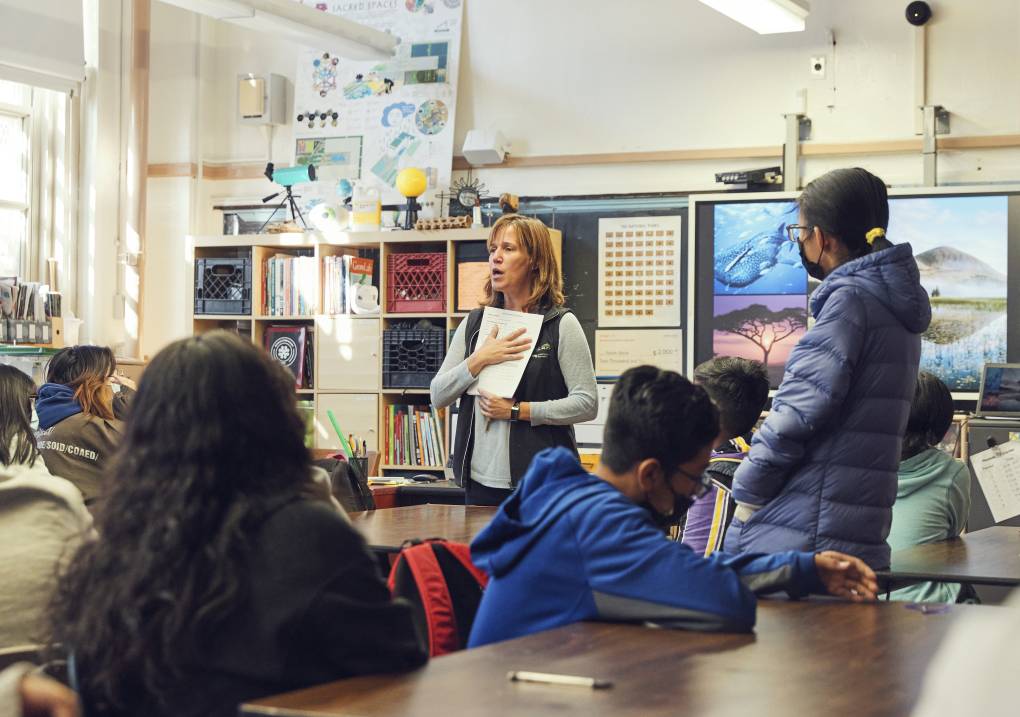
"caption": "Sarah Slack, an eighth grade science teacher at J.H.S. 223 The Montauk in Brooklyn, explains to her students how to collect temperature data on their school playground.",
"description": null,
"title": "os_8547_custom-3b0d24f5b2b37d73d32a979687a0879419c41831",
"credit": "Mohamed Sadek for NPR",
"status": "inherit",
"altTag": null,
"isLoading": false,
"fetchFailed": false
},
"mindshift_59422": {
"type": "attachments",
"id": "mindshift_59422",
"meta": {
"index": "attachments_1716263798",
"site": "mindshift",
"id": "59422",
"found": true
},
"parent": 59420,
"imgSizes": {
"twentyfourteen-full-width": {
"file": "https://ww2.kqed.org/app/uploads/sites/23/2022/05/STEM-Mantras-1038x576.jpg",
"width": 1038,
"mimeType": "image/jpeg",
"height": 576
},
"thumbnail": {
"file": "https://ww2.kqed.org/app/uploads/sites/23/2022/05/STEM-Mantras-160x124.jpg",
"width": 160,
"mimeType": "image/jpeg",
"height": 124
},
"post-thumbnail": {
"file": "https://ww2.kqed.org/app/uploads/sites/23/2022/05/STEM-Mantras-672x372.jpg",
"width": 672,
"mimeType": "image/jpeg",
"height": 372
},
"kqedFullSize": {
"file": "https://ww2.kqed.org/app/uploads/sites/23/2022/05/STEM-Mantras.jpg",
"width": 2200,
"height": 1700
},
"2048x2048": {
"file": "https://ww2.kqed.org/app/uploads/sites/23/2022/05/STEM-Mantras-2048x1583.jpg",
"width": 2048,
"mimeType": "image/jpeg",
"height": 1583
},
"large": {
"file": "https://ww2.kqed.org/app/uploads/sites/23/2022/05/STEM-Mantras-1020x788.jpg",
"width": 1020,
"mimeType": "image/jpeg",
"height": 788
},
"1536x1536": {
"file": "https://ww2.kqed.org/app/uploads/sites/23/2022/05/STEM-Mantras-1536x1187.jpg",
"width": 1536,
"mimeType": "image/jpeg",
"height": 1187
},
"full-width": {
"file": "https://ww2.kqed.org/app/uploads/sites/23/2022/05/STEM-Mantras-1920x1484.jpg",
"width": 1920,
"mimeType": "image/jpeg",
"height": 1484
},
"medium": {
"file": "https://ww2.kqed.org/app/uploads/sites/23/2022/05/STEM-Mantras-800x618.jpg",
"width": 800,
"mimeType": "image/jpeg",
"height": 618
},
"medium_large": {
"file": "https://ww2.kqed.org/app/uploads/sites/23/2022/05/STEM-Mantras-768x593.jpg",
"width": 768,
"mimeType": "image/jpeg",
"height": 593
}
},
"publishDate": 1653326326,
"modified": 1653326409,
"caption": "Illustration by Johann Hauser-Ulrich (Courtesy of Houghton Mifflin Harcourt)",
"description": null,
"title": "STEM Mantras",
"credit": null,
"status": "inherit",
"altTag": null,
"isLoading": false,
"fetchFailed": false
},
"mindshift_57219": {
"type": "attachments",
"id": "mindshift_57219",
"meta": {
"index": "attachments_1716263798",
"site": "mindshift",
"id": "57219",
"found": true
},
"parent": 57211,
"imgSizes": {
"thumbnail": {
"file": "https://ww2.kqed.org/app/uploads/sites/23/2021/01/ambitiousgirl_9780316229692_hc_int_f214_custom-7ed6474e813071c8631afcf37a2da64220dc5d0f-s800-c85-160x101.jpg",
"width": 160,
"mimeType": "image/jpeg",
"height": 101
},
"post-thumbnail": {
"file": "https://ww2.kqed.org/app/uploads/sites/23/2021/01/ambitiousgirl_9780316229692_hc_int_f214_custom-7ed6474e813071c8631afcf37a2da64220dc5d0f-s800-c85-672x372.jpg",
"width": 672,
"mimeType": "image/jpeg",
"height": 372
},
"kqedFullSize": {
"file": "https://ww2.kqed.org/app/uploads/sites/23/2021/01/ambitiousgirl_9780316229692_hc_int_f214_custom-7ed6474e813071c8631afcf37a2da64220dc5d0f-s800-c85.jpg",
"width": 800,
"height": 503
},
"medium_large": {
"file": "https://ww2.kqed.org/app/uploads/sites/23/2021/01/ambitiousgirl_9780316229692_hc_int_f214_custom-7ed6474e813071c8631afcf37a2da64220dc5d0f-s800-c85-768x483.jpg",
"width": 768,
"mimeType": "image/jpeg",
"height": 483
}
},
"publishDate": 1610526718,
"modified": 1610526729,
"caption": "Meena Harris and Marissa Valdez/Little, Brown and Company Books for Young Readers\n",
"description": null,
"title": "ambitiousgirl_9780316229692_hc_int_f214_custom-7ed6474e813071c8631afcf37a2da64220dc5d0f-s800-c85",
"credit": null,
"status": "inherit",
"altTag": null,
"isLoading": false,
"fetchFailed": false
},
"mindshift_53923": {
"type": "attachments",
"id": "mindshift_53923",
"meta": {
"index": "attachments_1716263798",
"site": "mindshift",
"id": "53923",
"found": true
},
"parent": 53920,
"imgSizes": {
"twentyfourteen-full-width": {
"file": "https://ww2.kqed.org/app/uploads/sites/23/2019/07/IMG-3275-e1562566273117-1038x576.jpg",
"width": 1038,
"mimeType": "image/jpeg",
"height": 576
},
"thumbnail": {
"file": "https://ww2.kqed.org/app/uploads/sites/23/2019/07/IMG-3275-e1562566273117-160x120.jpg",
"width": 160,
"mimeType": "image/jpeg",
"height": 120
},
"post-thumbnail": {
"file": "https://ww2.kqed.org/app/uploads/sites/23/2019/07/IMG-3275-e1562566273117-672x372.jpg",
"width": 672,
"mimeType": "image/jpeg",
"height": 372
},
"kqedFullSize": {
"file": "https://ww2.kqed.org/app/uploads/sites/23/2019/07/IMG-3275-e1562566299568.jpg",
"width": 1920,
"height": 1440
},
"large": {
"file": "https://ww2.kqed.org/app/uploads/sites/23/2019/07/IMG-3275-e1562566273117-1020x765.jpg",
"width": 1020,
"mimeType": "image/jpeg",
"height": 765
},
"complete_open_graph": {
"file": "https://ww2.kqed.org/app/uploads/sites/23/2019/07/IMG-3275-e1562566273117-1200x900.jpg",
"width": 1200,
"mimeType": "image/jpeg",
"height": 900
},
"full-width": {
"file": "https://ww2.kqed.org/app/uploads/sites/23/2019/07/IMG-3275-e1562566273117-1920x1440.jpg",
"width": 1920,
"mimeType": "image/jpeg",
"height": 1440
},
"medium": {
"file": "https://ww2.kqed.org/app/uploads/sites/23/2019/07/IMG-3275-e1562566273117-800x600.jpg",
"width": 800,
"mimeType": "image/jpeg",
"height": 600
},
"medium_large": {
"file": "https://ww2.kqed.org/app/uploads/sites/23/2019/07/IMG-3275-e1562566273117-768x576.jpg",
"width": 768,
"mimeType": "image/jpeg",
"height": 576
}
},
"publishDate": 1562566043,
"modified": 1562566322,
"caption": "Alyssa Camacho, left, a rising ninth grader, and Juliet Basinger, a rising seventh grader, with part of a robotic dog Juliet is building. Juliet hopes the robotic dog will help people who are afraid of dogs overcome their fears. ",
"description": null,
"title": "IMG-3275",
"credit": "Stephanie Strom for The Hechinger Report",
"status": "inherit",
"isLoading": false,
"fetchFailed": false
},
"mindshift_53333": {
"type": "attachments",
"id": "mindshift_53333",
"meta": {
"index": "attachments_1716263798",
"site": "mindshift",
"id": "53333",
"found": true
},
"parent": 53331,
"imgSizes": {
"twentyfourteen-full-width": {
"file": "https://ww2.kqed.org/app/uploads/sites/23/2019/03/middle-school-hands-on-science-curriculum-1038x576.jpg",
"width": 1038,
"mimeType": "image/jpeg",
"height": 576
},
"thumbnail": {
"file": "https://ww2.kqed.org/app/uploads/sites/23/2019/03/middle-school-hands-on-science-curriculum-160x107.jpg",
"width": 160,
"mimeType": "image/jpeg",
"height": 107
},
"post-thumbnail": {
"file": "https://ww2.kqed.org/app/uploads/sites/23/2019/03/middle-school-hands-on-science-curriculum-672x372.jpg",
"width": 672,
"mimeType": "image/jpeg",
"height": 372
},
"kqedFullSize": {
"file": "https://ww2.kqed.org/app/uploads/sites/23/2019/03/middle-school-hands-on-science-curriculum.jpg",
"width": 5616,
"height": 3744
},
"large": {
"file": "https://ww2.kqed.org/app/uploads/sites/23/2019/03/middle-school-hands-on-science-curriculum-1020x680.jpg",
"width": 1020,
"mimeType": "image/jpeg",
"height": 680
},
"complete_open_graph": {
"file": "https://ww2.kqed.org/app/uploads/sites/23/2019/03/middle-school-hands-on-science-curriculum-1200x800.jpg",
"width": 1200,
"mimeType": "image/jpeg",
"height": 800
},
"guest-author-50": {
"file": "https://ww2.kqed.org/app/uploads/sites/23/2019/03/middle-school-hands-on-science-curriculum-50x50.jpg",
"width": 50,
"mimeType": "image/jpeg",
"height": 50
},
"guest-author-96": {
"file": "https://ww2.kqed.org/app/uploads/sites/23/2019/03/middle-school-hands-on-science-curriculum-96x96.jpg",
"width": 96,
"mimeType": "image/jpeg",
"height": 96
},
"medium": {
"file": "https://ww2.kqed.org/app/uploads/sites/23/2019/03/middle-school-hands-on-science-curriculum-800x533.jpg",
"width": 800,
"mimeType": "image/jpeg",
"height": 533
},
"guest-author-64": {
"file": "https://ww2.kqed.org/app/uploads/sites/23/2019/03/middle-school-hands-on-science-curriculum-64x64.jpg",
"width": 64,
"mimeType": "image/jpeg",
"height": 64
},
"guest-author-32": {
"file": "https://ww2.kqed.org/app/uploads/sites/23/2019/03/middle-school-hands-on-science-curriculum-32x32.jpg",
"width": 32,
"mimeType": "image/jpeg",
"height": 32
},
"full-width": {
"file": "https://ww2.kqed.org/app/uploads/sites/23/2019/03/middle-school-hands-on-science-curriculum-1920x1280.jpg",
"width": 1920,
"mimeType": "image/jpeg",
"height": 1280
},
"medium_large": {
"file": "https://ww2.kqed.org/app/uploads/sites/23/2019/03/middle-school-hands-on-science-curriculum-768x512.jpg",
"width": 768,
"mimeType": "image/jpeg",
"height": 512
},
"guest-author-128": {
"file": "https://ww2.kqed.org/app/uploads/sites/23/2019/03/middle-school-hands-on-science-curriculum-128x128.jpg",
"width": 128,
"mimeType": "image/jpeg",
"height": 128
}
},
"publishDate": 1553627604,
"modified": 1553627724,
"caption": "Middle school students at ASMS do hands-on science inquiry in every unit they study.",
"description": null,
"title": "middle-school-hands-on-science-curriculum",
"credit": "Courtesy of \u003ca href=\"https://www.tasms.com/\">The Alternative School for Math and Science\u003c/a>",
"status": "inherit",
"isLoading": false,
"fetchFailed": false
},
"mindshift_52778": {
"type": "attachments",
"id": "mindshift_52778",
"meta": {
"index": "attachments_1716263798",
"site": "mindshift",
"id": "52778",
"found": true
},
"parent": 52775,
"imgSizes": {
"small": {
"file": "https://ww2.kqed.org/app/uploads/sites/23/2018/12/2018_sharpsteinharrypotter_0014_slide-e5fdcc0d0def9669a892f47196c277eb2abb8de2-1-520x347.jpg",
"width": 520,
"mimeType": "image/jpeg",
"height": 347
},
"twentyfourteen-full-width": {
"file": "https://ww2.kqed.org/app/uploads/sites/23/2018/12/2018_sharpsteinharrypotter_0014_slide-e5fdcc0d0def9669a892f47196c277eb2abb8de2-1-1038x576.jpg",
"width": 1038,
"mimeType": "image/jpeg",
"height": 576
},
"thumbnail": {
"file": "https://ww2.kqed.org/app/uploads/sites/23/2018/12/2018_sharpsteinharrypotter_0014_slide-e5fdcc0d0def9669a892f47196c277eb2abb8de2-1-160x107.jpg",
"width": 160,
"mimeType": "image/jpeg",
"height": 107
},
"fd-sm": {
"file": "https://ww2.kqed.org/app/uploads/sites/23/2018/12/2018_sharpsteinharrypotter_0014_slide-e5fdcc0d0def9669a892f47196c277eb2abb8de2-1-960x640.jpg",
"width": 960,
"mimeType": "image/jpeg",
"height": 640
},
"post-thumbnail": {
"file": "https://ww2.kqed.org/app/uploads/sites/23/2018/12/2018_sharpsteinharrypotter_0014_slide-e5fdcc0d0def9669a892f47196c277eb2abb8de2-1-672x372.jpg",
"width": 672,
"mimeType": "image/jpeg",
"height": 372
},
"xsmall": {
"file": "https://ww2.kqed.org/app/uploads/sites/23/2018/12/2018_sharpsteinharrypotter_0014_slide-e5fdcc0d0def9669a892f47196c277eb2abb8de2-1-375x250.jpg",
"width": 375,
"mimeType": "image/jpeg",
"height": 250
},
"kqedFullSize": {
"file": "https://ww2.kqed.org/app/uploads/sites/23/2018/12/2018_sharpsteinharrypotter_0014_slide-e5fdcc0d0def9669a892f47196c277eb2abb8de2-1-e1546284586395.jpg",
"width": 1920,
"height": 1280
},
"large": {
"file": "https://ww2.kqed.org/app/uploads/sites/23/2018/12/2018_sharpsteinharrypotter_0014_slide-e5fdcc0d0def9669a892f47196c277eb2abb8de2-1-1020x680.jpg",
"width": 1020,
"mimeType": "image/jpeg",
"height": 680
},
"xlarge": {
"file": "https://ww2.kqed.org/app/uploads/sites/23/2018/12/2018_sharpsteinharrypotter_0014_slide-e5fdcc0d0def9669a892f47196c277eb2abb8de2-1-1180x787.jpg",
"width": 1180,
"mimeType": "image/jpeg",
"height": 787
},
"complete_open_graph": {
"file": "https://ww2.kqed.org/app/uploads/sites/23/2018/12/2018_sharpsteinharrypotter_0014_slide-e5fdcc0d0def9669a892f47196c277eb2abb8de2-1-1200x800.jpg",
"width": 1200,
"mimeType": "image/jpeg",
"height": 800
},
"guest-author-50": {
"file": "https://ww2.kqed.org/app/uploads/sites/23/2018/12/2018_sharpsteinharrypotter_0014_slide-e5fdcc0d0def9669a892f47196c277eb2abb8de2-1-50x50.jpg",
"width": 50,
"mimeType": "image/jpeg",
"height": 50
},
"guest-author-96": {
"file": "https://ww2.kqed.org/app/uploads/sites/23/2018/12/2018_sharpsteinharrypotter_0014_slide-e5fdcc0d0def9669a892f47196c277eb2abb8de2-1-96x96.jpg",
"width": 96,
"mimeType": "image/jpeg",
"height": 96
},
"medium": {
"file": "https://ww2.kqed.org/app/uploads/sites/23/2018/12/2018_sharpsteinharrypotter_0014_slide-e5fdcc0d0def9669a892f47196c277eb2abb8de2-1-800x533.jpg",
"width": 800,
"mimeType": "image/jpeg",
"height": 533
},
"guest-author-64": {
"file": "https://ww2.kqed.org/app/uploads/sites/23/2018/12/2018_sharpsteinharrypotter_0014_slide-e5fdcc0d0def9669a892f47196c277eb2abb8de2-1-64x64.jpg",
"width": 64,
"mimeType": "image/jpeg",
"height": 64
},
"guest-author-32": {
"file": "https://ww2.kqed.org/app/uploads/sites/23/2018/12/2018_sharpsteinharrypotter_0014_slide-e5fdcc0d0def9669a892f47196c277eb2abb8de2-1-32x32.jpg",
"width": 32,
"mimeType": "image/jpeg",
"height": 32
},
"fd-lrg": {
"file": "https://ww2.kqed.org/app/uploads/sites/23/2018/12/2018_sharpsteinharrypotter_0014_slide-e5fdcc0d0def9669a892f47196c277eb2abb8de2-1-1920x1280.jpg",
"width": 1920,
"mimeType": "image/jpeg",
"height": 1280
},
"fd-med": {
"file": "https://ww2.kqed.org/app/uploads/sites/23/2018/12/2018_sharpsteinharrypotter_0014_slide-e5fdcc0d0def9669a892f47196c277eb2abb8de2-1-1180x787.jpg",
"width": 1180,
"mimeType": "image/jpeg",
"height": 787
},
"full-width": {
"file": "https://ww2.kqed.org/app/uploads/sites/23/2018/12/2018_sharpsteinharrypotter_0014_slide-e5fdcc0d0def9669a892f47196c277eb2abb8de2-1-1920x1280.jpg",
"width": 1920,
"mimeType": "image/jpeg",
"height": 1280
},
"detail": {
"file": "https://ww2.kqed.org/app/uploads/sites/23/2018/12/2018_sharpsteinharrypotter_0014_slide-e5fdcc0d0def9669a892f47196c277eb2abb8de2-1-150x150.jpg",
"width": 150,
"mimeType": "image/jpeg",
"height": 150
},
"medium_large": {
"file": "https://ww2.kqed.org/app/uploads/sites/23/2018/12/2018_sharpsteinharrypotter_0014_slide-e5fdcc0d0def9669a892f47196c277eb2abb8de2-1-768x512.jpg",
"width": 768,
"mimeType": "image/jpeg",
"height": 512
},
"guest-author-128": {
"file": "https://ww2.kqed.org/app/uploads/sites/23/2018/12/2018_sharpsteinharrypotter_0014_slide-e5fdcc0d0def9669a892f47196c277eb2abb8de2-1-128x128.jpg",
"width": 128,
"mimeType": "image/jpeg",
"height": 128
},
"xxsmall": {
"file": "https://ww2.kqed.org/app/uploads/sites/23/2018/12/2018_sharpsteinharrypotter_0014_slide-e5fdcc0d0def9669a892f47196c277eb2abb8de2-1-240x160.jpg",
"width": 240,
"mimeType": "image/jpeg",
"height": 160
}
},
"publishDate": 1546284524,
"modified": 1546284616,
"caption": "Kate Keyes and Ben VanDonge are two-thirds of a fifth-grade teaching team in Walla Walla, Wash. This year marks their third doing an all-encompassing Harry Potter theme.",
"description": "Kate Keyes and Ben VanDonge are two-thirds of a fifth-grade teaching team in Walla Walla, Wash. This year marks their third doing an all-encompassing Harry Potter theme.",
"title": "Kate Keyes and Ben VanDonge are two-thirds of a fifth-grade teaching team in Walla Walla, Wash. This year marks their third doing an all-encompassing Harry Potter theme.",
"credit": "Courtesy of Mark VanDonge",
"status": "inherit",
"isLoading": false,
"fetchFailed": false
},
"mindshift_52717": {
"type": "attachments",
"id": "mindshift_52717",
"meta": {
"index": "attachments_1716263798",
"site": "mindshift",
"id": "52717",
"found": true
},
"parent": 52712,
"imgSizes": {
"small": {
"file": "https://ww2.kqed.org/app/uploads/sites/23/2018/12/Lillian-Mongeau-Mongeau_NativeSTEM_photo6-800x0-c-default-520x348.jpg",
"width": 520,
"mimeType": "image/jpeg",
"height": 348
},
"thumbnail": {
"file": "https://ww2.kqed.org/app/uploads/sites/23/2018/12/Lillian-Mongeau-Mongeau_NativeSTEM_photo6-800x0-c-default-160x107.jpg",
"width": 160,
"mimeType": "image/jpeg",
"height": 107
},
"post-thumbnail": {
"file": "https://ww2.kqed.org/app/uploads/sites/23/2018/12/Lillian-Mongeau-Mongeau_NativeSTEM_photo6-800x0-c-default-672x372.jpg",
"width": 672,
"mimeType": "image/jpeg",
"height": 372
},
"xsmall": {
"file": "https://ww2.kqed.org/app/uploads/sites/23/2018/12/Lillian-Mongeau-Mongeau_NativeSTEM_photo6-800x0-c-default-375x251.jpg",
"width": 375,
"mimeType": "image/jpeg",
"height": 251
},
"kqedFullSize": {
"file": "https://ww2.kqed.org/app/uploads/sites/23/2018/12/Lillian-Mongeau-Mongeau_NativeSTEM_photo6-800x0-c-default.jpg",
"width": 800,
"height": 536
},
"guest-author-50": {
"file": "https://ww2.kqed.org/app/uploads/sites/23/2018/12/Lillian-Mongeau-Mongeau_NativeSTEM_photo6-800x0-c-default-50x50.jpg",
"width": 50,
"mimeType": "image/jpeg",
"height": 50
},
"guest-author-96": {
"file": "https://ww2.kqed.org/app/uploads/sites/23/2018/12/Lillian-Mongeau-Mongeau_NativeSTEM_photo6-800x0-c-default-96x96.jpg",
"width": 96,
"mimeType": "image/jpeg",
"height": 96
},
"medium": {
"file": "https://ww2.kqed.org/app/uploads/sites/23/2018/12/Lillian-Mongeau-Mongeau_NativeSTEM_photo6-800x0-c-default-800x536.jpg",
"width": 800,
"mimeType": "image/jpeg",
"height": 536
},
"guest-author-64": {
"file": "https://ww2.kqed.org/app/uploads/sites/23/2018/12/Lillian-Mongeau-Mongeau_NativeSTEM_photo6-800x0-c-default-64x64.jpg",
"width": 64,
"mimeType": "image/jpeg",
"height": 64
},
"guest-author-32": {
"file": "https://ww2.kqed.org/app/uploads/sites/23/2018/12/Lillian-Mongeau-Mongeau_NativeSTEM_photo6-800x0-c-default-32x32.jpg",
"width": 32,
"mimeType": "image/jpeg",
"height": 32
},
"detail": {
"file": "https://ww2.kqed.org/app/uploads/sites/23/2018/12/Lillian-Mongeau-Mongeau_NativeSTEM_photo6-800x0-c-default-150x150.jpg",
"width": 150,
"mimeType": "image/jpeg",
"height": 150
},
"medium_large": {
"file": "https://ww2.kqed.org/app/uploads/sites/23/2018/12/Lillian-Mongeau-Mongeau_NativeSTEM_photo6-800x0-c-default-768x515.jpg",
"width": 768,
"mimeType": "image/jpeg",
"height": 515
},
"guest-author-128": {
"file": "https://ww2.kqed.org/app/uploads/sites/23/2018/12/Lillian-Mongeau-Mongeau_NativeSTEM_photo6-800x0-c-default-128x128.jpg",
"width": 128,
"mimeType": "image/jpeg",
"height": 128
},
"xxsmall": {
"file": "https://ww2.kqed.org/app/uploads/sites/23/2018/12/Lillian-Mongeau-Mongeau_NativeSTEM_photo6-800x0-c-default-240x161.jpg",
"width": 240,
"mimeType": "image/jpeg",
"height": 161
}
},
"publishDate": 1544598982,
"modified": 1544599013,
"caption": "Sam Larson, 15, measures a section of his cardboard canoe during ANSEP’s summer Acceleration Academy at the University of Alaska in July 2018. ",
"description": null,
"title": "Lillian-Mongeau-Mongeau_NativeSTEM_photo6-800x0-c-default",
"credit": "The Hechinger Report/Lillian Mongeau",
"status": "inherit",
"isLoading": false,
"fetchFailed": false
},
"mindshift_50824": {
"type": "attachments",
"id": "mindshift_50824",
"meta": {
"index": "attachments_1716263798",
"site": "mindshift",
"id": "50824",
"found": true
},
"parent": 50486,
"imgSizes": {
"small": {
"file": "https://ww2.kqed.org/app/uploads/sites/23/2018/03/iStock-467251930-520x347.jpg",
"width": 520,
"mimeType": "image/jpeg",
"height": 347
},
"twentyfourteen-full-width": {
"file": "https://ww2.kqed.org/app/uploads/sites/23/2018/03/iStock-467251930-1038x576.jpg",
"width": 1038,
"mimeType": "image/jpeg",
"height": 576
},
"thumbnail": {
"file": "https://ww2.kqed.org/app/uploads/sites/23/2018/03/iStock-467251930-160x107.jpg",
"width": 160,
"mimeType": "image/jpeg",
"height": 107
},
"fd-sm": {
"file": "https://ww2.kqed.org/app/uploads/sites/23/2018/03/iStock-467251930-960x640.jpg",
"width": 960,
"mimeType": "image/jpeg",
"height": 640
},
"post-thumbnail": {
"file": "https://ww2.kqed.org/app/uploads/sites/23/2018/03/iStock-467251930-672x372.jpg",
"width": 672,
"mimeType": "image/jpeg",
"height": 372
},
"xsmall": {
"file": "https://ww2.kqed.org/app/uploads/sites/23/2018/03/iStock-467251930-375x250.jpg",
"width": 375,
"mimeType": "image/jpeg",
"height": 250
},
"kqedFullSize": {
"file": "https://ww2.kqed.org/app/uploads/sites/23/2018/03/iStock-467251930-e1521741456170.jpg",
"width": 1920,
"height": 1280
},
"large": {
"file": "https://ww2.kqed.org/app/uploads/sites/23/2018/03/iStock-467251930-1020x680.jpg",
"width": 1020,
"mimeType": "image/jpeg",
"height": 680
},
"xlarge": {
"file": "https://ww2.kqed.org/app/uploads/sites/23/2018/03/iStock-467251930-1180x787.jpg",
"width": 1180,
"mimeType": "image/jpeg",
"height": 787
},
"guest-author-50": {
"file": "https://ww2.kqed.org/app/uploads/sites/23/2018/03/iStock-467251930-50x50.jpg",
"width": 50,
"mimeType": "image/jpeg",
"height": 50
},
"guest-author-96": {
"file": "https://ww2.kqed.org/app/uploads/sites/23/2018/03/iStock-467251930-96x96.jpg",
"width": 96,
"mimeType": "image/jpeg",
"height": 96
},
"medium": {
"file": "https://ww2.kqed.org/app/uploads/sites/23/2018/03/iStock-467251930-800x533.jpg",
"width": 800,
"mimeType": "image/jpeg",
"height": 533
},
"guest-author-64": {
"file": "https://ww2.kqed.org/app/uploads/sites/23/2018/03/iStock-467251930-64x64.jpg",
"width": 64,
"mimeType": "image/jpeg",
"height": 64
},
"guest-author-32": {
"file": "https://ww2.kqed.org/app/uploads/sites/23/2018/03/iStock-467251930-32x32.jpg",
"width": 32,
"mimeType": "image/jpeg",
"height": 32
},
"fd-lrg": {
"file": "https://ww2.kqed.org/app/uploads/sites/23/2018/03/iStock-467251930-1920x1280.jpg",
"width": 1920,
"mimeType": "image/jpeg",
"height": 1280
},
"fd-med": {
"file": "https://ww2.kqed.org/app/uploads/sites/23/2018/03/iStock-467251930-1180x787.jpg",
"width": 1180,
"mimeType": "image/jpeg",
"height": 787
},
"full-width": {
"file": "https://ww2.kqed.org/app/uploads/sites/23/2018/03/iStock-467251930-1920x1280.jpg",
"width": 1920,
"mimeType": "image/jpeg",
"height": 1280
},
"detail": {
"file": "https://ww2.kqed.org/app/uploads/sites/23/2018/03/iStock-467251930-150x150.jpg",
"width": 150,
"mimeType": "image/jpeg",
"height": 150
},
"medium_large": {
"file": "https://ww2.kqed.org/app/uploads/sites/23/2018/03/iStock-467251930-768x512.jpg",
"width": 768,
"mimeType": "image/jpeg",
"height": 512
},
"guest-author-128": {
"file": "https://ww2.kqed.org/app/uploads/sites/23/2018/03/iStock-467251930-128x128.jpg",
"width": 128,
"mimeType": "image/jpeg",
"height": 128
},
"xxsmall": {
"file": "https://ww2.kqed.org/app/uploads/sites/23/2018/03/iStock-467251930-240x160.jpg",
"width": 240,
"mimeType": "image/jpeg",
"height": 160
}
},
"publishDate": 1521741428,
"modified": 1521741449,
"caption": null,
"description": null,
"title": "Pointing at sky",
"credit": "iStock/KatarzynaBialasiewicz",
"status": "inherit",
"isLoading": false,
"fetchFailed": false
},
"mindshift_50747": {
"type": "attachments",
"id": "mindshift_50747",
"meta": {
"index": "attachments_1716263798",
"site": "mindshift",
"id": "50747",
"found": true
},
"parent": 50644,
"imgSizes": {
"small": {
"file": "https://ww2.kqed.org/app/uploads/sites/23/2018/03/iStock-845547734-520x347.jpg",
"width": 520,
"mimeType": "image/jpeg",
"height": 347
},
"twentyfourteen-full-width": {
"file": "https://ww2.kqed.org/app/uploads/sites/23/2018/03/iStock-845547734-1038x576.jpg",
"width": 1038,
"mimeType": "image/jpeg",
"height": 576
},
"thumbnail": {
"file": "https://ww2.kqed.org/app/uploads/sites/23/2018/03/iStock-845547734-160x107.jpg",
"width": 160,
"mimeType": "image/jpeg",
"height": 107
},
"fd-sm": {
"file": "https://ww2.kqed.org/app/uploads/sites/23/2018/03/iStock-845547734-960x640.jpg",
"width": 960,
"mimeType": "image/jpeg",
"height": 640
},
"post-thumbnail": {
"file": "https://ww2.kqed.org/app/uploads/sites/23/2018/03/iStock-845547734-672x372.jpg",
"width": 672,
"mimeType": "image/jpeg",
"height": 372
},
"xsmall": {
"file": "https://ww2.kqed.org/app/uploads/sites/23/2018/03/iStock-845547734-375x250.jpg",
"width": 375,
"mimeType": "image/jpeg",
"height": 250
},
"kqedFullSize": {
"file": "https://ww2.kqed.org/app/uploads/sites/23/2018/03/iStock-845547734-e1520551770211.jpg",
"width": 1920,
"height": 1280
},
"large": {
"file": "https://ww2.kqed.org/app/uploads/sites/23/2018/03/iStock-845547734-1020x680.jpg",
"width": 1020,
"mimeType": "image/jpeg",
"height": 680
},
"xlarge": {
"file": "https://ww2.kqed.org/app/uploads/sites/23/2018/03/iStock-845547734-1180x787.jpg",
"width": 1180,
"mimeType": "image/jpeg",
"height": 787
},
"guest-author-50": {
"file": "https://ww2.kqed.org/app/uploads/sites/23/2018/03/iStock-845547734-50x50.jpg",
"width": 50,
"mimeType": "image/jpeg",
"height": 50
},
"guest-author-96": {
"file": "https://ww2.kqed.org/app/uploads/sites/23/2018/03/iStock-845547734-96x96.jpg",
"width": 96,
"mimeType": "image/jpeg",
"height": 96
},
"medium": {
"file": "https://ww2.kqed.org/app/uploads/sites/23/2018/03/iStock-845547734-800x533.jpg",
"width": 800,
"mimeType": "image/jpeg",
"height": 533
},
"guest-author-64": {
"file": "https://ww2.kqed.org/app/uploads/sites/23/2018/03/iStock-845547734-64x64.jpg",
"width": 64,
"mimeType": "image/jpeg",
"height": 64
},
"guest-author-32": {
"file": "https://ww2.kqed.org/app/uploads/sites/23/2018/03/iStock-845547734-32x32.jpg",
"width": 32,
"mimeType": "image/jpeg",
"height": 32
},
"fd-lrg": {
"file": "https://ww2.kqed.org/app/uploads/sites/23/2018/03/iStock-845547734-1920x1280.jpg",
"width": 1920,
"mimeType": "image/jpeg",
"height": 1280
},
"fd-med": {
"file": "https://ww2.kqed.org/app/uploads/sites/23/2018/03/iStock-845547734-1180x787.jpg",
"width": 1180,
"mimeType": "image/jpeg",
"height": 787
},
"full-width": {
"file": "https://ww2.kqed.org/app/uploads/sites/23/2018/03/iStock-845547734-1920x1280.jpg",
"width": 1920,
"mimeType": "image/jpeg",
"height": 1280
},
"detail": {
"file": "https://ww2.kqed.org/app/uploads/sites/23/2018/03/iStock-845547734-150x150.jpg",
"width": 150,
"mimeType": "image/jpeg",
"height": 150
},
"medium_large": {
"file": "https://ww2.kqed.org/app/uploads/sites/23/2018/03/iStock-845547734-768x512.jpg",
"width": 768,
"mimeType": "image/jpeg",
"height": 512
},
"guest-author-128": {
"file": "https://ww2.kqed.org/app/uploads/sites/23/2018/03/iStock-845547734-128x128.jpg",
"width": 128,
"mimeType": "image/jpeg",
"height": 128
},
"xxsmall": {
"file": "https://ww2.kqed.org/app/uploads/sites/23/2018/03/iStock-845547734-240x160.jpg",
"width": 240,
"mimeType": "image/jpeg",
"height": 160
}
},
"publishDate": 1520551741,
"modified": 1520575677,
"caption": " iStock/patpitchaya",
"description": null,
"title": null,
"credit": "iStock/patpitchaya",
"status": "inherit",
"isLoading": false,
"fetchFailed": false
},
"mindshift_50004": {
"type": "attachments",
"id": "mindshift_50004",
"meta": {
"index": "attachments_1716263798",
"site": "mindshift",
"id": "50004",
"found": true
},
"parent": 50002,
"imgSizes": {
"small": {
"file": "https://ww2.kqed.org/app/uploads/sites/23/2018/01/iStock-623714836-520x390.jpg",
"width": 520,
"mimeType": "image/jpeg",
"height": 390
},
"twentyfourteen-full-width": {
"file": "https://ww2.kqed.org/app/uploads/sites/23/2018/01/iStock-623714836-1038x576.jpg",
"width": 1038,
"mimeType": "image/jpeg",
"height": 576
},
"thumbnail": {
"file": "https://ww2.kqed.org/app/uploads/sites/23/2018/01/iStock-623714836-160x120.jpg",
"width": 160,
"mimeType": "image/jpeg",
"height": 120
},
"fd-sm": {
"file": "https://ww2.kqed.org/app/uploads/sites/23/2018/01/iStock-623714836-960x720.jpg",
"width": 960,
"mimeType": "image/jpeg",
"height": 720
},
"post-thumbnail": {
"file": "https://ww2.kqed.org/app/uploads/sites/23/2018/01/iStock-623714836-672x372.jpg",
"width": 672,
"mimeType": "image/jpeg",
"height": 372
},
"xsmall": {
"file": "https://ww2.kqed.org/app/uploads/sites/23/2018/01/iStock-623714836-375x281.jpg",
"width": 375,
"mimeType": "image/jpeg",
"height": 281
},
"kqedFullSize": {
"file": "https://ww2.kqed.org/app/uploads/sites/23/2018/01/iStock-623714836.jpg",
"width": 2000,
"height": 1499
},
"large": {
"file": "https://ww2.kqed.org/app/uploads/sites/23/2018/01/iStock-623714836-1020x764.jpg",
"width": 1020,
"mimeType": "image/jpeg",
"height": 764
},
"xlarge": {
"file": "https://ww2.kqed.org/app/uploads/sites/23/2018/01/iStock-623714836-1180x884.jpg",
"width": 1180,
"mimeType": "image/jpeg",
"height": 884
},
"guest-author-50": {
"file": "https://ww2.kqed.org/app/uploads/sites/23/2018/01/iStock-623714836-50x50.jpg",
"width": 50,
"mimeType": "image/jpeg",
"height": 50
},
"guest-author-96": {
"file": "https://ww2.kqed.org/app/uploads/sites/23/2018/01/iStock-623714836-96x96.jpg",
"width": 96,
"mimeType": "image/jpeg",
"height": 96
},
"medium": {
"file": "https://ww2.kqed.org/app/uploads/sites/23/2018/01/iStock-623714836-800x600.jpg",
"width": 800,
"mimeType": "image/jpeg",
"height": 600
},
"guest-author-64": {
"file": "https://ww2.kqed.org/app/uploads/sites/23/2018/01/iStock-623714836-64x64.jpg",
"width": 64,
"mimeType": "image/jpeg",
"height": 64
},
"guest-author-32": {
"file": "https://ww2.kqed.org/app/uploads/sites/23/2018/01/iStock-623714836-32x32.jpg",
"width": 32,
"mimeType": "image/jpeg",
"height": 32
},
"fd-lrg": {
"file": "https://ww2.kqed.org/app/uploads/sites/23/2018/01/iStock-623714836-1920x1439.jpg",
"width": 1920,
"mimeType": "image/jpeg",
"height": 1439
},
"fd-med": {
"file": "https://ww2.kqed.org/app/uploads/sites/23/2018/01/iStock-623714836-1180x884.jpg",
"width": 1180,
"mimeType": "image/jpeg",
"height": 884
},
"full-width": {
"file": "https://ww2.kqed.org/app/uploads/sites/23/2018/01/iStock-623714836-1920x1439.jpg",
"width": 1920,
"mimeType": "image/jpeg",
"height": 1439
},
"detail": {
"file": "https://ww2.kqed.org/app/uploads/sites/23/2018/01/iStock-623714836-150x150.jpg",
"width": 150,
"mimeType": "image/jpeg",
"height": 150
},
"medium_large": {
"file": "https://ww2.kqed.org/app/uploads/sites/23/2018/01/iStock-623714836-768x576.jpg",
"width": 768,
"mimeType": "image/jpeg",
"height": 576
},
"guest-author-128": {
"file": "https://ww2.kqed.org/app/uploads/sites/23/2018/01/iStock-623714836-128x128.jpg",
"width": 128,
"mimeType": "image/jpeg",
"height": 128
},
"xxsmall": {
"file": "https://ww2.kqed.org/app/uploads/sites/23/2018/01/iStock-623714836-240x180.jpg",
"width": 240,
"mimeType": "image/jpeg",
"height": 180
}
},
"publishDate": 1516262354,
"modified": 1516262368,
"caption": null,
"description": null,
"title": null,
"credit": "iStock/Satenik_Guzhanina",
"status": "inherit",
"isLoading": false,
"fetchFailed": false
},
"mindshift_49231": {
"type": "attachments",
"id": "mindshift_49231",
"meta": {
"index": "attachments_1716263798",
"site": "mindshift",
"id": "49231",
"found": true
},
"parent": 49230,
"imgSizes": {
"small": {
"file": "https://ww2.kqed.org/app/uploads/sites/23/2017/09/biomedicine-final-web_custom-ea28a702b4465e0cbccd77be12dc6715deb4add8-520x292.jpg",
"width": 520,
"mimeType": "image/jpeg",
"height": 292
},
"twentyfourteen-full-width": {
"file": "https://ww2.kqed.org/app/uploads/sites/23/2017/09/biomedicine-final-web_custom-ea28a702b4465e0cbccd77be12dc6715deb4add8-1038x576.jpg",
"width": 1038,
"mimeType": "image/jpeg",
"height": 576
},
"thumbnail": {
"file": "https://ww2.kqed.org/app/uploads/sites/23/2017/09/biomedicine-final-web_custom-ea28a702b4465e0cbccd77be12dc6715deb4add8-160x90.jpg",
"width": 160,
"mimeType": "image/jpeg",
"height": 90
},
"fd-sm": {
"file": "https://ww2.kqed.org/app/uploads/sites/23/2017/09/biomedicine-final-web_custom-ea28a702b4465e0cbccd77be12dc6715deb4add8-960x539.jpg",
"width": 960,
"mimeType": "image/jpeg",
"height": 539
},
"post-thumbnail": {
"file": "https://ww2.kqed.org/app/uploads/sites/23/2017/09/biomedicine-final-web_custom-ea28a702b4465e0cbccd77be12dc6715deb4add8-672x372.jpg",
"width": 672,
"mimeType": "image/jpeg",
"height": 372
},
"xsmall": {
"file": "https://ww2.kqed.org/app/uploads/sites/23/2017/09/biomedicine-final-web_custom-ea28a702b4465e0cbccd77be12dc6715deb4add8-375x211.jpg",
"width": 375,
"mimeType": "image/jpeg",
"height": 211
},
"kqedFullSize": {
"file": "https://ww2.kqed.org/app/uploads/sites/23/2017/09/biomedicine-final-web_custom-ea28a702b4465e0cbccd77be12dc6715deb4add8-e1505709540451.jpg",
"width": 1920,
"height": 1078
},
"large": {
"file": "https://ww2.kqed.org/app/uploads/sites/23/2017/09/biomedicine-final-web_custom-ea28a702b4465e0cbccd77be12dc6715deb4add8-1020x573.jpg",
"width": 1020,
"mimeType": "image/jpeg",
"height": 573
},
"xlarge": {
"file": "https://ww2.kqed.org/app/uploads/sites/23/2017/09/biomedicine-final-web_custom-ea28a702b4465e0cbccd77be12dc6715deb4add8-1180x663.jpg",
"width": 1180,
"mimeType": "image/jpeg",
"height": 663
},
"guest-author-50": {
"file": "https://ww2.kqed.org/app/uploads/sites/23/2017/09/biomedicine-final-web_custom-ea28a702b4465e0cbccd77be12dc6715deb4add8-50x50.jpg",
"width": 50,
"mimeType": "image/jpeg",
"height": 50
},
"guest-author-96": {
"file": "https://ww2.kqed.org/app/uploads/sites/23/2017/09/biomedicine-final-web_custom-ea28a702b4465e0cbccd77be12dc6715deb4add8-96x96.jpg",
"width": 96,
"mimeType": "image/jpeg",
"height": 96
},
"medium": {
"file": "https://ww2.kqed.org/app/uploads/sites/23/2017/09/biomedicine-final-web_custom-ea28a702b4465e0cbccd77be12dc6715deb4add8-800x449.jpg",
"width": 800,
"mimeType": "image/jpeg",
"height": 449
},
"guest-author-64": {
"file": "https://ww2.kqed.org/app/uploads/sites/23/2017/09/biomedicine-final-web_custom-ea28a702b4465e0cbccd77be12dc6715deb4add8-64x64.jpg",
"width": 64,
"mimeType": "image/jpeg",
"height": 64
},
"guest-author-32": {
"file": "https://ww2.kqed.org/app/uploads/sites/23/2017/09/biomedicine-final-web_custom-ea28a702b4465e0cbccd77be12dc6715deb4add8-32x32.jpg",
"width": 32,
"mimeType": "image/jpeg",
"height": 32
},
"fd-lrg": {
"file": "https://ww2.kqed.org/app/uploads/sites/23/2017/09/biomedicine-final-web_custom-ea28a702b4465e0cbccd77be12dc6715deb4add8-1920x1078.jpg",
"width": 1920,
"mimeType": "image/jpeg",
"height": 1078
},
"fd-med": {
"file": "https://ww2.kqed.org/app/uploads/sites/23/2017/09/biomedicine-final-web_custom-ea28a702b4465e0cbccd77be12dc6715deb4add8-1180x663.jpg",
"width": 1180,
"mimeType": "image/jpeg",
"height": 663
},
"full-width": {
"file": "https://ww2.kqed.org/app/uploads/sites/23/2017/09/biomedicine-final-web_custom-ea28a702b4465e0cbccd77be12dc6715deb4add8-1920x1078.jpg",
"width": 1920,
"mimeType": "image/jpeg",
"height": 1078
},
"detail": {
"file": "https://ww2.kqed.org/app/uploads/sites/23/2017/09/biomedicine-final-web_custom-ea28a702b4465e0cbccd77be12dc6715deb4add8-150x150.jpg",
"width": 150,
"mimeType": "image/jpeg",
"height": 150
},
"medium_large": {
"file": "https://ww2.kqed.org/app/uploads/sites/23/2017/09/biomedicine-final-web_custom-ea28a702b4465e0cbccd77be12dc6715deb4add8-768x431.jpg",
"width": 768,
"mimeType": "image/jpeg",
"height": 431
},
"guest-author-128": {
"file": "https://ww2.kqed.org/app/uploads/sites/23/2017/09/biomedicine-final-web_custom-ea28a702b4465e0cbccd77be12dc6715deb4add8-128x128.jpg",
"width": 128,
"mimeType": "image/jpeg",
"height": 128
},
"xxsmall": {
"file": "https://ww2.kqed.org/app/uploads/sites/23/2017/09/biomedicine-final-web_custom-ea28a702b4465e0cbccd77be12dc6715deb4add8-240x135.jpg",
"width": 240,
"mimeType": "image/jpeg",
"height": 135
}
},
"publishDate": 1505709364,
"modified": 1505709551,
"caption": null,
"description": null,
"title": "biomedicine-final-web_custom-ea28a702b4465e0cbccd77be12dc6715deb4add8",
"credit": "Shannon Wright for NPR",
"status": "inherit",
"isLoading": false,
"fetchFailed": false
},
"mindshift_48784": {
"type": "attachments",
"id": "mindshift_48784",
"meta": {
"index": "attachments_1716263798",
"site": "mindshift",
"id": "48784",
"found": true
},
"parent": 48783,
"imgSizes": {
"small": {
"file": "https://ww2.kqed.org/app/uploads/sites/23/2017/07/kareem-does-science_custom-ac49c93db51c149d127c29dc3595923adb2755e9-520x325.jpg",
"width": 520,
"mimeType": "image/jpeg",
"height": 325
},
"twentyfourteen-full-width": {
"file": "https://ww2.kqed.org/app/uploads/sites/23/2017/07/kareem-does-science_custom-ac49c93db51c149d127c29dc3595923adb2755e9-1038x576.jpg",
"width": 1038,
"mimeType": "image/jpeg",
"height": 576
},
"thumbnail": {
"file": "https://ww2.kqed.org/app/uploads/sites/23/2017/07/kareem-does-science_custom-ac49c93db51c149d127c29dc3595923adb2755e9-160x100.jpg",
"width": 160,
"mimeType": "image/jpeg",
"height": 100
},
"fd-sm": {
"file": "https://ww2.kqed.org/app/uploads/sites/23/2017/07/kareem-does-science_custom-ac49c93db51c149d127c29dc3595923adb2755e9-960x599.jpg",
"width": 960,
"mimeType": "image/jpeg",
"height": 599
},
"post-thumbnail": {
"file": "https://ww2.kqed.org/app/uploads/sites/23/2017/07/kareem-does-science_custom-ac49c93db51c149d127c29dc3595923adb2755e9-672x372.jpg",
"width": 672,
"mimeType": "image/jpeg",
"height": 372
},
"xsmall": {
"file": "https://ww2.kqed.org/app/uploads/sites/23/2017/07/kareem-does-science_custom-ac49c93db51c149d127c29dc3595923adb2755e9-375x234.jpg",
"width": 375,
"mimeType": "image/jpeg",
"height": 234
},
"kqedFullSize": {
"file": "https://ww2.kqed.org/app/uploads/sites/23/2017/07/kareem-does-science_custom-ac49c93db51c149d127c29dc3595923adb2755e9-e1501158537733.jpg",
"width": 1920,
"height": 1198
},
"large": {
"file": "https://ww2.kqed.org/app/uploads/sites/23/2017/07/kareem-does-science_custom-ac49c93db51c149d127c29dc3595923adb2755e9-1020x637.jpg",
"width": 1020,
"mimeType": "image/jpeg",
"height": 637
},
"xlarge": {
"file": "https://ww2.kqed.org/app/uploads/sites/23/2017/07/kareem-does-science_custom-ac49c93db51c149d127c29dc3595923adb2755e9-1180x736.jpg",
"width": 1180,
"mimeType": "image/jpeg",
"height": 736
},
"guest-author-50": {
"file": "https://ww2.kqed.org/app/uploads/sites/23/2017/07/kareem-does-science_custom-ac49c93db51c149d127c29dc3595923adb2755e9-50x50.jpg",
"width": 50,
"mimeType": "image/jpeg",
"height": 50
},
"guest-author-96": {
"file": "https://ww2.kqed.org/app/uploads/sites/23/2017/07/kareem-does-science_custom-ac49c93db51c149d127c29dc3595923adb2755e9-96x96.jpg",
"width": 96,
"mimeType": "image/jpeg",
"height": 96
},
"medium": {
"file": "https://ww2.kqed.org/app/uploads/sites/23/2017/07/kareem-does-science_custom-ac49c93db51c149d127c29dc3595923adb2755e9-800x499.jpg",
"width": 800,
"mimeType": "image/jpeg",
"height": 499
},
"guest-author-64": {
"file": "https://ww2.kqed.org/app/uploads/sites/23/2017/07/kareem-does-science_custom-ac49c93db51c149d127c29dc3595923adb2755e9-64x64.jpg",
"width": 64,
"mimeType": "image/jpeg",
"height": 64
},
"guest-author-32": {
"file": "https://ww2.kqed.org/app/uploads/sites/23/2017/07/kareem-does-science_custom-ac49c93db51c149d127c29dc3595923adb2755e9-32x32.jpg",
"width": 32,
"mimeType": "image/jpeg",
"height": 32
},
"fd-lrg": {
"file": "https://ww2.kqed.org/app/uploads/sites/23/2017/07/kareem-does-science_custom-ac49c93db51c149d127c29dc3595923adb2755e9-1920x1198.jpg",
"width": 1920,
"mimeType": "image/jpeg",
"height": 1198
},
"fd-med": {
"file": "https://ww2.kqed.org/app/uploads/sites/23/2017/07/kareem-does-science_custom-ac49c93db51c149d127c29dc3595923adb2755e9-1180x736.jpg",
"width": 1180,
"mimeType": "image/jpeg",
"height": 736
},
"full-width": {
"file": "https://ww2.kqed.org/app/uploads/sites/23/2017/07/kareem-does-science_custom-ac49c93db51c149d127c29dc3595923adb2755e9-1920x1198.jpg",
"width": 1920,
"mimeType": "image/jpeg",
"height": 1198
},
"detail": {
"file": "https://ww2.kqed.org/app/uploads/sites/23/2017/07/kareem-does-science_custom-ac49c93db51c149d127c29dc3595923adb2755e9-150x150.jpg",
"width": 150,
"mimeType": "image/jpeg",
"height": 150
},
"medium_large": {
"file": "https://ww2.kqed.org/app/uploads/sites/23/2017/07/kareem-does-science_custom-ac49c93db51c149d127c29dc3595923adb2755e9-768x479.jpg",
"width": 768,
"mimeType": "image/jpeg",
"height": 479
},
"guest-author-128": {
"file": "https://ww2.kqed.org/app/uploads/sites/23/2017/07/kareem-does-science_custom-ac49c93db51c149d127c29dc3595923adb2755e9-128x128.jpg",
"width": 128,
"mimeType": "image/jpeg",
"height": 128
},
"xxsmall": {
"file": "https://ww2.kqed.org/app/uploads/sites/23/2017/07/kareem-does-science_custom-ac49c93db51c149d127c29dc3595923adb2755e9-240x150.jpg",
"width": 240,
"mimeType": "image/jpeg",
"height": 150
}
},
"publishDate": 1501158510,
"modified": 1501158555,
"caption": null,
"description": "Kareem Abdul-Jabbar",
"title": "Kareem Abdul-Jabbar",
"credit": "LA Johnson/NPR",
"status": "inherit",
"isLoading": false,
"fetchFailed": false
}
},
"audioPlayerReducer": {
"postId": "stream_live",
"isPaused": true,
"isPlaying": false,
"pfsActive": false,
"pledgeModalIsOpen": true,
"playerDrawerIsOpen": false,
"liveAudioPlayStartedAt": 0,
"liveAudioPlayContext": ""
},
"authorsReducer": {
"byline_mindshift_60851": {
"type": "authors",
"id": "byline_mindshift_60851",
"meta": {
"override": true
},
"slug": "byline_mindshift_60851",
"name": "Anil Oza",
"isLoading": false
},
"byline_mindshift_57211": {
"type": "authors",
"id": "byline_mindshift_57211",
"meta": {
"override": true
},
"slug": "byline_mindshift_57211",
"name": "Michel Martin",
"isLoading": false
},
"byline_mindshift_53920": {
"type": "authors",
"id": "byline_mindshift_53920",
"meta": {
"override": true
},
"slug": "byline_mindshift_53920",
"name": "\u003ca href=\"https://hechingerreport.org/\">Stephanie Strom, The Hechinger Report\u003c/a>",
"isLoading": false
},
"byline_mindshift_52775": {
"type": "authors",
"id": "byline_mindshift_52775",
"meta": {
"override": true
},
"slug": "byline_mindshift_52775",
"name": "Wynne Davis",
"isLoading": false
},
"byline_mindshift_52712": {
"type": "authors",
"id": "byline_mindshift_52712",
"meta": {
"override": true
},
"slug": "byline_mindshift_52712",
"name": "\u003ca href=\"https://hechingerreport.org/\">Lillian Mongeau, The Hechinger Report\u003c/a>",
"isLoading": false
},
"byline_mindshift_50486": {
"type": "authors",
"id": "byline_mindshift_50486",
"meta": {
"override": true
},
"slug": "byline_mindshift_50486",
"name": "\u003ca href=\"https://www.commonsense.org/education/\">Danny Wagner, Common Sense Education\u003c/a>",
"isLoading": false
},
"byline_mindshift_50644": {
"type": "authors",
"id": "byline_mindshift_50644",
"meta": {
"override": true
},
"slug": "byline_mindshift_50644",
"name": "\u003ca href=\"https://www.estherlandhuis.com/\">Esther Landhuis\u003c/a>",
"isLoading": false
},
"byline_mindshift_50002": {
"type": "authors",
"id": "byline_mindshift_50002",
"meta": {
"override": true
},
"slug": "byline_mindshift_50002",
"name": "\u003ca href=\"http://hechingerreport.org/\">Jon Marcus, The Hechinger Report\u003c/a>",
"isLoading": false
},
"byline_mindshift_49230": {
"type": "authors",
"id": "byline_mindshift_49230",
"meta": {
"override": true
},
"slug": "byline_mindshift_49230",
"name": "Esther Landhuis",
"isLoading": false
},
"byline_mindshift_48783": {
"type": "authors",
"id": "byline_mindshift_48783",
"meta": {
"override": true
},
"slug": "byline_mindshift_48783",
"name": "Eric Westervelt",
"isLoading": false
},
"katrinaschwartz": {
"type": "authors",
"id": "234",
"meta": {
"index": "authors_1716337520",
"id": "234",
"found": true
},
"name": "Katrina Schwartz",
"firstName": "Katrina",
"lastName": "Schwartz",
"slug": "katrinaschwartz",
"email": "kschwartz@kqed.org",
"display_author_email": false,
"staff_mastheads": [
"news"
],
"title": "Producer",
"bio": "Katrina Schwartz is a journalist based in San Francisco. She's worked at KPCC public radio in LA and has reported on air and online for KQED since 2010. She covered how teaching and learning is changing for MindShift between 2012 and 2020. She is the co-host of the MindShift podcast and now produces KQED's Bay Curious podcast.",
"avatar": "https://secure.gravatar.com/avatar/edb4ee79070447a018538c9aae6eeecf28786515b8a0c30e43b6b7dce5aa44c8?s=600&d=blank&r=g",
"twitter": "kschwart",
"bluesky": null,
"facebook": null,
"instagram": null,
"linkedin": null,
"sites": [
{
"site": "",
"roles": [
"editor"
]
},
{
"site": "news",
"roles": [
"editor"
]
},
{
"site": "mindshift",
"roles": [
"administrator"
]
},
{
"site": "stateofhealth",
"roles": [
"author"
]
},
{
"site": "science",
"roles": [
"editor"
]
}
],
"headData": {
"title": "Katrina Schwartz | KQED",
"description": "Producer",
"ogImgSrc": "https://secure.gravatar.com/avatar/edb4ee79070447a018538c9aae6eeecf28786515b8a0c30e43b6b7dce5aa44c8?s=600&d=blank&r=g",
"twImgSrc": "https://secure.gravatar.com/avatar/edb4ee79070447a018538c9aae6eeecf28786515b8a0c30e43b6b7dce5aa44c8?s=600&d=blank&r=g"
},
"isLoading": false,
"link": "/author/katrinaschwartz"
},
"ngobir": {
"type": "authors",
"id": "11721",
"meta": {
"index": "authors_1716337520",
"id": "11721",
"found": true
},
"name": "Nimah Gobir",
"firstName": "Nimah",
"lastName": "Gobir",
"slug": "ngobir",
"email": "ngobir@kqed.org",
"display_author_email": false,
"staff_mastheads": [],
"title": "KQED Contributor",
"bio": null,
"avatar": "https://secure.gravatar.com/avatar/837f5df7045c59f3ec097cdf7ac391373ab75d5ec936dd7099b8cb6f0af1b0e9?s=600&d=blank&r=g",
"twitter": null,
"bluesky": null,
"facebook": null,
"instagram": null,
"linkedin": null,
"sites": [
{
"site": "mindshift",
"roles": [
"editor"
]
}
],
"headData": {
"title": "Nimah Gobir | KQED",
"description": "KQED Contributor",
"ogImgSrc": "https://secure.gravatar.com/avatar/837f5df7045c59f3ec097cdf7ac391373ab75d5ec936dd7099b8cb6f0af1b0e9?s=600&d=blank&r=g",
"twImgSrc": "https://secure.gravatar.com/avatar/837f5df7045c59f3ec097cdf7ac391373ab75d5ec936dd7099b8cb6f0af1b0e9?s=600&d=blank&r=g"
},
"isLoading": false,
"link": "/author/ngobir"
}
},
"pagesReducer": {
"mindshift_tag_stem": {
"type": "terms",
"id": "mindshift_47",
"meta": {
"index": "terms_1716263798",
"site": "mindshift",
"id": "47",
"score": 8.940876
},
"featImg": null,
"name": "STEM",
"description": null,
"taxonomy": "tag",
"headData": {
"twImgId": null,
"twTitle": null,
"ogTitle": null,
"ogImgId": null,
"twDescription": null,
"description": null,
"title": "STEM Archives - KQED Mindshift",
"ogDescription": null
},
"ttid": 47,
"slug": "stem",
"isLoading": false,
"title": "STEM",
"pageMeta": {
"site": "mindshift",
"WpPageTemplate": "page-topic-editorial",
"currentPage": 2
},
"blocks": [
{
"blockName": "kqed/post-list",
"attrs": {
"layout": "cardArticle2",
"query": "posts/mindshift?tag=stem",
"seeMore": false,
"paginated": true,
"page": 2
}
},
{
"blockName": "kqed/ad"
}
]
}
},
"pfsSessionReducer": {},
"postsReducer": {
"stream_live": {
"type": "live",
"id": "stream_live",
"audioUrl": "https://hls.kqed.org/hls/kqed_app/playlist.m3u8",
"title": "Live Stream",
"excerpt": "Live Stream information currently unavailable.",
"link": "/radio",
"featImg": "",
"label": {
"name": "KQED Live",
"link": "/"
}
},
"stream_kqedNewscast": {
"type": "posts",
"id": "stream_kqedNewscast",
"audioUrl": "https://www.kqed.org/.stream/anon/radio/RDnews/newscast.mp3?_=1",
"title": "KQED Newscast",
"featImg": "",
"label": {
"name": "88.5 FM",
"link": "/"
}
},
"mindshift_60851": {
"type": "posts",
"id": "mindshift_60851",
"meta": {
"index": "posts_1716263798",
"site": "mindshift",
"id": "60851",
"score": null,
"sort": [
1673633661000
]
},
"parent": 0,
"labelTerm": {
"site": "mindshift"
},
"blocks": [],
"publishDate": 1673633661,
"format": "standard",
"title": "Can a middle school class help scientists create a cooler place to play?",
"headTitle": "MindShift | KQED News",
"content": "\u003cp>\"Take a look over your data sheet and make sure you know what all the words mean,\" Sarah Slack tells her class of eighth graders. The students stop talking to each other and turn toward their science teacher, who is standing in front of a digital blackboard holding up a sample data sheet. \"We're going to be not only collecting temperatures in the sun and in the shade, but you're going to choose some words to describe the weather.\"\u003c/p>\n\u003cp>Slack's students do a lot of hands-on science. Inside their Brooklyn, N.Y. junior high school, J.H.S. 223, she's built a lab that is a small ecosystem itself. On one end of the room hydroponic gardens spritz water over patches of arugula, kale, cucumbers, peppers, and tomatoes, the grow lights casting a bright white glow across the room. In a back corner, tiny baby trout swim in a bubbling aquarium, the filter humming quietly. And on Slack's desk common mollies, another small fish, dart around a tank with basil growing out of the top. Each nourishes the other in a symbiotic cycle.\u003c/p>\n\u003cp>But on this early November day, the school playground will serve as the students' lab. \"I think we're ready, everybody,\" Slack says, opening the classroom door. \"You're going to need to bring three things with you – something to write with, your notebook, and you're going to need an infrared surface thermometer.\"\u003c/p>\n\u003cp>The students surround a milk crate at the center of the room to grab handheld thermometers, which they quickly begin testing on everything around them – the desks, the chairs and their bodies – before following their teacher out the door.\u003c/p>\n\u003cfigure id=\"attachment_60854\" class=\"wp-caption alignnone\" style=\"max-width: 800px\">\u003cimg class=\"size-medium wp-image-60854\" src=\"https://ww2.kqed.org/app/uploads/sites/23/2023/01/os_8637_custom-190e43a82b40c22eb911b7d70ec73917e7f2aa8b-800x533.jpg\" alt=\"\" width=\"800\" height=\"533\">\u003cfigcaption class=\"wp-caption-text\">Slack's students use handheld digital thermometers to measure temperatures around their school playground. \u003ccite>(Mohamed Sadek for NPR)\u003c/cite>\u003c/figcaption>\u003c/figure>\n\u003cp>While this temperature-taking lesson will provide basic practice in data collection, Slack has a much bigger lesson in mind.\u003c/p>\n\u003cp>[ad fullwidth]\u003c/p>\n\u003cp>She'll upload the measurements these students collect from playground surfaces to a database made available to climate scientists through NASA. Slack aims to help her eighth graders understand climate change and also how to use science to mitigate the tangible impacts of the warming world. Especially right here at their school and in their neighborhood.\u003c/p>\n\u003ch3>Students measure surface temps in the schoolyard\u003c/h3>\n\u003cp>Slack reminds them what surface temperatures they'll be investigating. \"We're measuring pavement, concrete, dirt and grass. Which one of these is going to be the hardest to find out there?\" she asks.\u003c/p>\n\u003cp>It's an easy question. \"Grass,\" several students mutter at once.\u003c/p>\n\u003cp>The playground they're heading toward is similar to many in New York and other urban areas. It's made of – and surrounded by – asphalt and concrete, materials that heat up quickly but cool off slowly.\u003c/p>\n\u003cp>To get there, the students have to go through a tunnel of metal construction scaffolding that surrounds their school. Some run and skip; others amble slowly, gossiping with friends. They all spill out onto a wide open blacktop. The only plant life here is a handful of spindly trees, leaves brown and falling, spaced out along the playground's perimeter in small dirt plots.\u003c/p>\n\u003cp>Students split up to take surface temperatures of different materials in the yard. Most scurry around the asphalt pavement, pointing their thermometers toward the ground. Others start collecting temperature data from the small dirt patches under the trees, trying to find both sunny and shady spots to measure. A handful of students head for a bright, colorful mural painted on a concrete wall that serves as one of the borders of the playground.\u003c/p>\n\u003cfigure id=\"attachment_60852\" class=\"wp-caption alignnone\" style=\"max-width: 800px\">\u003cimg class=\"size-medium wp-image-60852\" src=\"https://ww2.kqed.org/app/uploads/sites/23/2023/01/os_8690_custom-baadef4a33619f867bd3efd2afd656769e5d9265-800x533.jpg\" alt=\"\" width=\"800\" height=\"533\">\u003cfigcaption class=\"wp-caption-text\">The temperature data these eighth graders are collecting from various spots around their school playground will be uploaded to a NASA database for climate scientists to use. \u003ccite>(Mohamed Sadek for NPR)\u003c/cite>\u003c/figcaption>\u003c/figure>\n\u003cp>One eighth grader, Li Qing, wearing pastel pink sweats and puffy lavender jacket, points her handheld thermometer at part of the large mural. \"It's technically hotter than the dirt,\" she notes. \"I guess the cement absorbs more heat, or something,\" she thinks out loud.\u003c/p>\n\u003cp>She points her thermometer at a flower painted in the mural.\u003c/p>\n\u003cp>\"The white one is only 70 degrees,\" she says, before pivoting to a part of the mural inches away, showing a black bicycle tire.\u003c/p>\n\u003cp>\"Oh my God. 89!\" she says.\u003c/p>\n\u003cp>In short order, most students had measured and recorded temperatures of three of the four surfaces Slack asked them to measure.\u003c/p>\n\u003cp>Just one left to find. Grass.\u003c/p>\n\u003ch3>Urban schools can be neighborhood hot spots\u003c/h3>\n\u003cp>This hard surface playground is tucked between the four-story brick school building on one side and the concrete wall of a New York townhouse – with the mural – on another. Two tall chain link fences edge the rest of the playground. Through the metal links, blacktop streets lined with brick houses stretch as far as the eye can see.\u003c/p>\n\u003cp>City data ranks this neighborhood, Borough Park, high on \u003ca href=\"https://a816-dohbesp.nyc.gov/IndicatorPublic/beta/key-topics/climatehealth/hvi/\">its \"heat vulnerability\" index\u003c/a>, which shows the relative impact of extreme heat events, such as deaths, on different communities. Surface temperatures are one big indicator of risk, and as Slack's students discover, the materials surrounding their school – asphalt and concrete – get hot.\u003c/p>\n\u003cp>When scientists look at a bunch of neighborhoods like Borough Park together, they see what's called an \"urban heat island\" – places where urban centers are significantly warmer than their suburban and rural neighbors. Within cities, different neighborhoods, blocks and even buildings can have different surface temperatures.\u003c/p>\n\u003cp>Historic inequity plays a significant role: neighborhoods that have long been \u003ca href=\"https://www.npr.org/2019/09/03/754044732/as-rising-heat-bakes-u-s-cities-the-poor-often-feel-it-most\">low-income\u003c/a> and \u003ca href=\"https://www.nature.com/articles/d41586-021-01881-4\">majority people of color\u003c/a> often \u003ca href=\"https://www.sciencedirect.com/science/article/abs/pii/S0169204618307710\">lack parks, lush green lawns and trees\u003c/a> that can help cool off a neighborhood.\u003c/p>\n\u003cp>\"Formerly redlined neighborhoods are also those that tend to have fewer trees, and also more heat so that those patterns all connect to environmental justice issues,\" Slack says.\u003c/p>\n\u003cp>Borough Park has a \u003ca href=\"https://eportfolios.macaulay.cuny.edu/reelneighborhoods/2017/05/23/from-suburb-to-shtetl-how-borough-park-brooklyn-laid-claim-to-the-largest-population-of-jews-in-america/#:~:text=Borough%20Park%20had%20its%20beginnings,agriculture%20and%20crops%20to%20dwindle.\">long immigrant history\u003c/a> and high rates of \u003ca href=\"https://censusreporter.org/profiles/79500US3604014-nyc-brooklyn-community-district-12-borough-park-kensington-ocean-parkway-puma-ny/\">poverty and renters\u003c/a> compared to the average in New York City. The two parks nearest J.H.S 223 are both a five minute walk from the school. Although they provide some shade and greenery, they are also part of the urban infrastructure, with leafy trees tucked around paved play areas. One park is right next to an elevated train line.\u003c/p>\n\u003cfigure id=\"attachment_60855\" class=\"wp-caption alignnone\" style=\"max-width: 800px\">\u003cimg class=\"size-medium wp-image-60855\" src=\"https://ww2.kqed.org/app/uploads/sites/23/2023/01/os_8709_custom-6db2357a8639f4d27d1e0cf6227637322d49338d-800x533.jpg\" alt=\"\" width=\"800\" height=\"533\">\u003cfigcaption class=\"wp-caption-text\">Science teacher Sarah Slack wants her students to build scientific skills and collect data that could be used to advocate for changes to help cool down their own urban neighborhood. \u003ccite>(Mohamed Sadek for NPR)\u003c/cite>\u003c/figcaption>\u003c/figure>\n\u003cp>Slack hopes that teaching her students to think like scientists can be a catalyst for change right in this neighborhood.\u003c/p>\n\u003cp>\"If we had more trees or more grass around us in Brooklyn, then people walking to the store on a hot day would be more protected from those hot temperatures,\" Slack says. \"I think the most important thing that would come out of doing this kind of work is for students to realize that they don't have to fix climate change, but they have the ability to make things better in their own communities.\"\u003c/p>\n\u003cp>The data from their school yard might contribute to doing both.\u003c/p>\n\u003ch3>Students' measurements help fill gaps in global data\u003c/h3>\n\u003cp>The official temperature for Borough Park the fall day Slack's students did this outdoor lab was an unseasonably warm 68 degrees. Around the playground, students clocked temperatures lower and much higher than that.\u003c/p>\n\u003cp>\"53 point 6,\" one student reported to Slack, measuring the pavement in the shade of the school building.\u003c/p>\n\u003cp>\"Hold up, I got 79,\" another student told her group of friends as they stood in a circle in the sun comparing readings. \"I got 81,\" one of her friends responded, pointing her thermometer toward her feet on the hot asphalt.\u003c/p>\n\u003cp>One patch of the playground asphalt pavement isn't black. It's has a grid of six circles, each a different color of the rainbow. Two years ago, Slack and her students painted this, as a way to test what a completely different schoolyard might feel like – a playground that was yellow, or blue, or purple instead of black. \"We measure the temperature there to see what would happen if we painted the whole yard a color,\" Slack says.\u003c/p>\n\u003cfigure id=\"attachment_60856\" class=\"wp-caption alignnone\" style=\"max-width: 800px\">\u003cimg class=\"size-medium wp-image-60856\" src=\"https://ww2.kqed.org/app/uploads/sites/23/2023/01/os_8719_custom-0f5899b892f3b401900b0c6b1f946ec1297ad9a0-800x533.jpg\" alt=\"\" width=\"800\" height=\"533\">\u003cfigcaption class=\"wp-caption-text\">Students log heat measurements, then calculate the average temperature of asphalt, concrete, dirt, and grass, in both sunlight and shade. \u003ccite>(Mohamed Sadek for NPR)\u003c/cite>\u003c/figcaption>\u003c/figure>\n\u003cp>The circles are faded from two years of sun, sneakers, and bouncing balls. But they're still cooler than the surrounding blacktop.\u003c/p>\n\u003cp>\"Purple was the hottest years ago, but it's so faded now I didn't know if it would still be the hottest one,\" Slack says, reviewing one student's data sheet – which showed that even faded, the purple circle still absorbs the most heat.\u003c/p>\n\u003cp>Later, students will punch numbers from their scribbled sheets into calculators to determine average temperatures for different surfaces. Slack combines data from all her classes and adds it to a national collection via a \u003ca href=\"https://observer.globe.gov/about/get-the-app\">NASA app called GLOBE\u003c/a>.\u003c/p>\n\u003cp>Climate scientists have used a mixture of satellite measurements and on-the-ground temperature recordings to document urban heat islands. While satellites are much more convenient, since they can capture the temperature of a large area very quickly, they do not entirely reflect what people feel on the street.\u003c/p>\n\u003cp>\"We have to remember that [a satellite is] going to pick up what it hits first,\" says Jennifer Vanos, a climate scientist at Arizona State University who studies extreme heat and schools. \"So the top of the tree, the top of the building, the top of some shade canopy, which means it's not going to get what's kind of under that which is valuable information we do miss and if we're thinking about what's at the level of where human is, we might miss some of that surface temperature information.\"\u003c/p>\n\u003cp>Things like the construction scaffolding circling much of J.H.S. 223 and the awnings of nearby bodegas would block satellites from collecting street-level temperatures around the school and neighborhood.\u003c/p>\n\u003cfigure id=\"attachment_60857\" class=\"wp-caption alignnone\" style=\"max-width: 800px\">\u003cimg class=\"size-medium wp-image-60857\" src=\"https://ww2.kqed.org/app/uploads/sites/23/2023/01/os_8793_custom-431b4a9f20610a1b4c627c21fa559f10c2803618-800x533.jpg\" alt=\"\" width=\"800\" height=\"533\">\u003cfigcaption class=\"wp-caption-text\">After measuring heat levels around their playground, science students at Brooklyn's J.H.S 223, including Fatiha Khan, seen here, calculate the overall average temperatures of four types of surfaces. \u003ccite>(Mohamed Sadek for NPR)\u003c/cite>\u003c/figcaption>\u003c/figure>\n\u003cp>Satellites also average temperature data over 30 square meter chunks, which is helpful in studying larger trends between neighborhoods but leaves out a lot of detail, such as how hot one building is compared to another.\u003c/p>\n\u003cp>University of Toledo geographer Kevin Czajkowski is helping \u003ca href=\"https://www.globe.gov/\">NASA coordinate projects\u003c/a> like Slack's with schools across the country.\u003c/p>\n\u003cp>Czajkowski says that efforts to study the urban heat island effect have picked up in the past several years. \"GLOBE is facilitating studying the urban heat island. I think that's helped,\" he says.\u003c/p>\n\u003cp>In addition, this street-level data alongside the satellite readings could help local governments decide where to plant trees, set up cooling centers, or make future schools and playgrounds more resilient to heat – and safer for kids.\u003c/p>\n\u003ch3>Hot playgrounds can be dangerous\u003c/h3>\n\u003cp>Even within a dense city like New York, schools can stick out as hotspots if they lack shade or plants.\u003c/p>\n\u003cp>\"If a school yard is dark asphalt and rubber or artificial turf, or concrete and there's not much shade or vegetation, then yes, you will end up seeing that those pop out on urban [heat] maps,\" says Vanos.\u003c/p>\n\u003cp>She also says heat trapped and amplified by schools and playgrounds can become \u003ca href=\"https://www.nature.com/articles/d41586-021-01881-4\">dangerous\u003c/a> for kids.\u003c/p>\n\u003cfigure id=\"attachment_60863\" class=\"wp-caption alignnone\" style=\"max-width: 800px\">\u003cimg class=\"size-full wp-image-60863\" src=\"https://ww2.kqed.org/app/uploads/sites/23/2023/01/Picture3.png\" alt=\"\" width=\"800\" height=\"305\" srcset=\"https://ww2.kqed.org/app/uploads/sites/23/2023/01/Picture3.png 800w, https://ww2.kqed.org/app/uploads/sites/23/2023/01/Picture3-160x61.png 160w, https://ww2.kqed.org/app/uploads/sites/23/2023/01/Picture3-768x293.png 768w\" sizes=\"(max-width: 800px) 100vw, 800px\">\u003cfigcaption class=\"wp-caption-text\">Two students measure the temperature of a metal shipping container in the parking lot of their school (L). A thermal camera image (R) of them at work suggests they'll find differences even up and down the container wall. \u003ccite>(Mohamed Sadek for NPR)\u003c/cite>\u003c/figcaption>\u003c/figure>\n\u003cp>\"If they are starting to experience the signs of heat illness, a lot of times kids may not notice that and just kind of keep playing,\" she says. \"We want them to play and that's the goal of playgrounds for sure, but we want to make sure that the environments that they're provided to play are conducive to play even when it's hot out.\"\u003c/p>\n\u003cp>NASA coordinator Czajkowski knows from experience how detrimental hot playgrounds can be to children. His youngest son came home one day suffering from heat illness after playing outside at school. \"He was really sick,\" Czajkowski says.\u003c/p>\n\u003ch3>Plants can make a playground much cooler\u003c/h3>\n\u003cp>As Slack's students wrap up collecting the temperatures of asphalt, concrete, and dirt, many flock to her. \"Where is the grass?\" they ask. Slack points them outside the playground, through the gate of a chain link fence, across the school parking lot, and out onto the sidewalk.\u003c/p>\n\u003cp>The young scientists crowd around a few meager patches of green rooted under a couple of trees in the street strip. They try to aim their thermometers to catch the temperature of the sparse blades.\u003c/p>\n\u003cp>The grass appears cooler than on the blacktop. \"67, 69.9,\" one student called out numbers from his thermometer to others gathered around the tree.\u003c/p>\n\u003cfigure id=\"attachment_60859\" class=\"wp-caption alignnone\" style=\"max-width: 800px\">\u003cimg class=\"size-medium wp-image-60859\" src=\"https://ww2.kqed.org/app/uploads/sites/23/2023/01/os_8735_custom-ce212165e823a9b64b6d4d221d219943a23331eb-800x519.jpg\" alt=\"\" width=\"800\" height=\"519\">\u003cfigcaption class=\"wp-caption-text\">Students outside Brooklyn's J.H.S. 223 try to measure the surface temperature of dirt and single blades of grass. Schools can become hotspots if, like this one, they have lots of asphalt and little vegetation. \u003ccite>(Mohamed Sadek for NPR)\u003c/cite>\u003c/figcaption>\u003c/figure>\n\u003cp>But because this patch of green is so tiny, surrounded by a sea of heat-absorbing city, it can't help cool the area much. \"Just because those two surface temperatures are different does not mean that the air temperature above them is different necessarily,\" Vanos, the climate scientist says. \"When you start to have large areas of asphalt, or large parks, then you can start to see an influence on air temperature.\"\u003c/p>\n\u003cp>Slack hopes this lesson will empower her students to imagine a completely different type of playground, dominated by plants, trees and natural surfaces, that could serve as a safer place to play amid rising temperatures and help cool off the surrounding neighborhood.\u003c/p>\n\u003cp>\"I understand all the challenges of having plants in an area where 200 middle school students go outside for recess,\" Slack says. \"But I see the overwhelming value of providing them with a space that's going to be cooler and that's going to help make their entire neighborhood cooler.\"\u003c/p>\n\u003cfigure id=\"attachment_60860\" class=\"wp-caption alignnone\" style=\"max-width: 800px\">\u003cimg class=\"size-medium wp-image-60860\" src=\"https://ww2.kqed.org/app/uploads/sites/23/2023/01/os_8526_custom-68f89f7f26c3ef2af40634b603f93c299ad677bc-800x533.jpe\" alt=\"\" width=\"800\" height=\"533\">\u003cfigcaption class=\"wp-caption-text\">Slack hopes this lesson will inspire her middle school students to advocate for improvements to their outdoor environment, at school and in their wider community.\u003c/figcaption>\u003c/figure>\n\u003cp>Over the next year, Slack hopes to train other teachers in New York schools to do the same sorts of data collection she does with her students, both to add to global warming data and to help paint a picture of temperatures at schools across the city.\u003c/p>\n\u003cp>But most immediately, she hopes that students in this school walk away from her class inspired to help their own community.\u003c/p>\n\u003cp>[ad floatright]\u003c/p>\n\u003cp>\"My students are a population that need to hear and understand that they're going to have to talk louder and wave their arms around more to get the attention that their community needs more than many other communities in the city,\" Slack says.\u003c/p>\n\u003cdiv class=\"fullattribution\">Copyright 2023 NPR. To see more, visit https://www.npr.org.\u003cimg src=\"https://www.google-analytics.com/__utm.gif?utmac=UA-5828686-4&utmdt=Can+a+middle+school+class+help+scientists+create+a+cooler+place+to+play%3F&utme=8(APIKey)9(MDAxOTAwOTE4MDEyMTkxMDAzNjczZDljZA004)\">\u003c/div>\n\n",
"stats": {
"hasVideo": false,
"hasChartOrMap": false,
"hasAudio": false,
"hasPolis": false,
"wordCount": 2540,
"hasGoogleForm": false,
"hasGallery": false,
"hasHearkenModule": false,
"iframeSrcs": [],
"paragraphCount": 56
},
"modified": 1674010274,
"excerpt": "As global temperatures rise, middle school students are learning research skills that could help cool off their school and neighborhood.",
"headData": {
"twImgId": "",
"twTitle": "",
"ogTitle": "",
"ogImgId": "",
"twDescription": "",
"description": "As global temperatures rise, Brooklyn middle schoolers are learning research skills that could help cool off their school and neighborhood.",
"title": "Can a middle school class help scientists create a cooler place to play? - MindShift",
"ogDescription": "",
"schema": {
"@context": "https://schema.org",
"@type": "Article",
"headline": "Can a middle school class help scientists create a cooler place to play?",
"datePublished": "2023-01-13T10:14:21-08:00",
"dateModified": "2023-01-17T18:51:14-08:00",
"image": "https://cdn.kqed.org/wp-content/uploads/2020/02/KQED-OG-Image@1x.png"
}
},
"guestAuthors": [],
"slug": "can-a-middle-school-class-help-scientists-create-a-cooler-place-to-play",
"status": "publish",
"nprApiLink": "http://api.npr.org/query?id=1137375813&apiKey=MDAxOTAwOTE4MDEyMTkxMDAzNjczZDljZA004",
"nprByline": "Anil Oza",
"nprStoryDate": "Fri, 13 Jan 2023 05:00:36 -0500",
"excludeFromSiteSearch": "Include",
"nprLastModifiedDate": "Fri, 13 Jan 2023 05:00:36 -0500",
"nprHtmlLink": "https://www.npr.org/2023/01/13/1137375813/can-a-middle-school-class-help-scientists-create-a-cooler-place-to-play?ft=nprml&f=1137375813",
"nprImageAgency": "Mohamed Sadek for NPR",
"showOnAuthorArchivePages": "No",
"articleAge": "0",
"nprStoryId": "1137375813",
"nprRetrievedStory": "1",
"nprPubDate": "Fri, 13 Jan 2023 05:00:00 -0500",
"path": "/mindshift/60851/can-a-middle-school-class-help-scientists-create-a-cooler-place-to-play",
"audioTrackLength": null,
"parsedContent": [
{
"type": "contentString",
"content": "\u003cdiv class=\"post-body\">\u003cp>\u003cp>\"Take a look over your data sheet and make sure you know what all the words mean,\" Sarah Slack tells her class of eighth graders. The students stop talking to each other and turn toward their science teacher, who is standing in front of a digital blackboard holding up a sample data sheet. \"We're going to be not only collecting temperatures in the sun and in the shade, but you're going to choose some words to describe the weather.\"\u003c/p>\n\u003cp>Slack's students do a lot of hands-on science. Inside their Brooklyn, N.Y. junior high school, J.H.S. 223, she's built a lab that is a small ecosystem itself. On one end of the room hydroponic gardens spritz water over patches of arugula, kale, cucumbers, peppers, and tomatoes, the grow lights casting a bright white glow across the room. In a back corner, tiny baby trout swim in a bubbling aquarium, the filter humming quietly. And on Slack's desk common mollies, another small fish, dart around a tank with basil growing out of the top. Each nourishes the other in a symbiotic cycle.\u003c/p>\n\u003cp>But on this early November day, the school playground will serve as the students' lab. \"I think we're ready, everybody,\" Slack says, opening the classroom door. \"You're going to need to bring three things with you – something to write with, your notebook, and you're going to need an infrared surface thermometer.\"\u003c/p>\n\u003cp>The students surround a milk crate at the center of the room to grab handheld thermometers, which they quickly begin testing on everything around them – the desks, the chairs and their bodies – before following their teacher out the door.\u003c/p>\n\u003cfigure id=\"attachment_60854\" class=\"wp-caption alignnone\" style=\"max-width: 800px\">\u003cimg class=\"size-medium wp-image-60854\" src=\"https://ww2.kqed.org/app/uploads/sites/23/2023/01/os_8637_custom-190e43a82b40c22eb911b7d70ec73917e7f2aa8b-800x533.jpg\" alt=\"\" width=\"800\" height=\"533\">\u003cfigcaption class=\"wp-caption-text\">Slack's students use handheld digital thermometers to measure temperatures around their school playground. \u003ccite>(Mohamed Sadek for NPR)\u003c/cite>\u003c/figcaption>\u003c/figure>\n\u003cp>While this temperature-taking lesson will provide basic practice in data collection, Slack has a much bigger lesson in mind.\u003c/p>\n\u003cp>\u003c/p>\u003c/div>",
"attributes": {
"named": {},
"numeric": []
}
},
{
"type": "component",
"content": "",
"name": "ad",
"attributes": {
"named": {
"label": "fullwidth"
},
"numeric": [
"fullwidth"
]
}
},
{
"type": "contentString",
"content": "\u003cdiv class=\"post-body\">\u003cp>\u003c/p>\n\u003cp>She'll upload the measurements these students collect from playground surfaces to a database made available to climate scientists through NASA. Slack aims to help her eighth graders understand climate change and also how to use science to mitigate the tangible impacts of the warming world. Especially right here at their school and in their neighborhood.\u003c/p>\n\u003ch3>Students measure surface temps in the schoolyard\u003c/h3>\n\u003cp>Slack reminds them what surface temperatures they'll be investigating. \"We're measuring pavement, concrete, dirt and grass. Which one of these is going to be the hardest to find out there?\" she asks.\u003c/p>\n\u003cp>It's an easy question. \"Grass,\" several students mutter at once.\u003c/p>\n\u003cp>The playground they're heading toward is similar to many in New York and other urban areas. It's made of – and surrounded by – asphalt and concrete, materials that heat up quickly but cool off slowly.\u003c/p>\n\u003cp>To get there, the students have to go through a tunnel of metal construction scaffolding that surrounds their school. Some run and skip; others amble slowly, gossiping with friends. They all spill out onto a wide open blacktop. The only plant life here is a handful of spindly trees, leaves brown and falling, spaced out along the playground's perimeter in small dirt plots.\u003c/p>\n\u003cp>Students split up to take surface temperatures of different materials in the yard. Most scurry around the asphalt pavement, pointing their thermometers toward the ground. Others start collecting temperature data from the small dirt patches under the trees, trying to find both sunny and shady spots to measure. A handful of students head for a bright, colorful mural painted on a concrete wall that serves as one of the borders of the playground.\u003c/p>\n\u003cfigure id=\"attachment_60852\" class=\"wp-caption alignnone\" style=\"max-width: 800px\">\u003cimg class=\"size-medium wp-image-60852\" src=\"https://ww2.kqed.org/app/uploads/sites/23/2023/01/os_8690_custom-baadef4a33619f867bd3efd2afd656769e5d9265-800x533.jpg\" alt=\"\" width=\"800\" height=\"533\">\u003cfigcaption class=\"wp-caption-text\">The temperature data these eighth graders are collecting from various spots around their school playground will be uploaded to a NASA database for climate scientists to use. \u003ccite>(Mohamed Sadek for NPR)\u003c/cite>\u003c/figcaption>\u003c/figure>\n\u003cp>One eighth grader, Li Qing, wearing pastel pink sweats and puffy lavender jacket, points her handheld thermometer at part of the large mural. \"It's technically hotter than the dirt,\" she notes. \"I guess the cement absorbs more heat, or something,\" she thinks out loud.\u003c/p>\n\u003cp>She points her thermometer at a flower painted in the mural.\u003c/p>\n\u003cp>\"The white one is only 70 degrees,\" she says, before pivoting to a part of the mural inches away, showing a black bicycle tire.\u003c/p>\n\u003cp>\"Oh my God. 89!\" she says.\u003c/p>\n\u003cp>In short order, most students had measured and recorded temperatures of three of the four surfaces Slack asked them to measure.\u003c/p>\n\u003cp>Just one left to find. Grass.\u003c/p>\n\u003ch3>Urban schools can be neighborhood hot spots\u003c/h3>\n\u003cp>This hard surface playground is tucked between the four-story brick school building on one side and the concrete wall of a New York townhouse – with the mural – on another. Two tall chain link fences edge the rest of the playground. Through the metal links, blacktop streets lined with brick houses stretch as far as the eye can see.\u003c/p>\n\u003cp>City data ranks this neighborhood, Borough Park, high on \u003ca href=\"https://a816-dohbesp.nyc.gov/IndicatorPublic/beta/key-topics/climatehealth/hvi/\">its \"heat vulnerability\" index\u003c/a>, which shows the relative impact of extreme heat events, such as deaths, on different communities. Surface temperatures are one big indicator of risk, and as Slack's students discover, the materials surrounding their school – asphalt and concrete – get hot.\u003c/p>\n\u003cp>When scientists look at a bunch of neighborhoods like Borough Park together, they see what's called an \"urban heat island\" – places where urban centers are significantly warmer than their suburban and rural neighbors. Within cities, different neighborhoods, blocks and even buildings can have different surface temperatures.\u003c/p>\n\u003cp>Historic inequity plays a significant role: neighborhoods that have long been \u003ca href=\"https://www.npr.org/2019/09/03/754044732/as-rising-heat-bakes-u-s-cities-the-poor-often-feel-it-most\">low-income\u003c/a> and \u003ca href=\"https://www.nature.com/articles/d41586-021-01881-4\">majority people of color\u003c/a> often \u003ca href=\"https://www.sciencedirect.com/science/article/abs/pii/S0169204618307710\">lack parks, lush green lawns and trees\u003c/a> that can help cool off a neighborhood.\u003c/p>\n\u003cp>\"Formerly redlined neighborhoods are also those that tend to have fewer trees, and also more heat so that those patterns all connect to environmental justice issues,\" Slack says.\u003c/p>\n\u003cp>Borough Park has a \u003ca href=\"https://eportfolios.macaulay.cuny.edu/reelneighborhoods/2017/05/23/from-suburb-to-shtetl-how-borough-park-brooklyn-laid-claim-to-the-largest-population-of-jews-in-america/#:~:text=Borough%20Park%20had%20its%20beginnings,agriculture%20and%20crops%20to%20dwindle.\">long immigrant history\u003c/a> and high rates of \u003ca href=\"https://censusreporter.org/profiles/79500US3604014-nyc-brooklyn-community-district-12-borough-park-kensington-ocean-parkway-puma-ny/\">poverty and renters\u003c/a> compared to the average in New York City. The two parks nearest J.H.S 223 are both a five minute walk from the school. Although they provide some shade and greenery, they are also part of the urban infrastructure, with leafy trees tucked around paved play areas. One park is right next to an elevated train line.\u003c/p>\n\u003cfigure id=\"attachment_60855\" class=\"wp-caption alignnone\" style=\"max-width: 800px\">\u003cimg class=\"size-medium wp-image-60855\" src=\"https://ww2.kqed.org/app/uploads/sites/23/2023/01/os_8709_custom-6db2357a8639f4d27d1e0cf6227637322d49338d-800x533.jpg\" alt=\"\" width=\"800\" height=\"533\">\u003cfigcaption class=\"wp-caption-text\">Science teacher Sarah Slack wants her students to build scientific skills and collect data that could be used to advocate for changes to help cool down their own urban neighborhood. \u003ccite>(Mohamed Sadek for NPR)\u003c/cite>\u003c/figcaption>\u003c/figure>\n\u003cp>Slack hopes that teaching her students to think like scientists can be a catalyst for change right in this neighborhood.\u003c/p>\n\u003cp>\"If we had more trees or more grass around us in Brooklyn, then people walking to the store on a hot day would be more protected from those hot temperatures,\" Slack says. \"I think the most important thing that would come out of doing this kind of work is for students to realize that they don't have to fix climate change, but they have the ability to make things better in their own communities.\"\u003c/p>\n\u003cp>The data from their school yard might contribute to doing both.\u003c/p>\n\u003ch3>Students' measurements help fill gaps in global data\u003c/h3>\n\u003cp>The official temperature for Borough Park the fall day Slack's students did this outdoor lab was an unseasonably warm 68 degrees. Around the playground, students clocked temperatures lower and much higher than that.\u003c/p>\n\u003cp>\"53 point 6,\" one student reported to Slack, measuring the pavement in the shade of the school building.\u003c/p>\n\u003cp>\"Hold up, I got 79,\" another student told her group of friends as they stood in a circle in the sun comparing readings. \"I got 81,\" one of her friends responded, pointing her thermometer toward her feet on the hot asphalt.\u003c/p>\n\u003cp>One patch of the playground asphalt pavement isn't black. It's has a grid of six circles, each a different color of the rainbow. Two years ago, Slack and her students painted this, as a way to test what a completely different schoolyard might feel like – a playground that was yellow, or blue, or purple instead of black. \"We measure the temperature there to see what would happen if we painted the whole yard a color,\" Slack says.\u003c/p>\n\u003cfigure id=\"attachment_60856\" class=\"wp-caption alignnone\" style=\"max-width: 800px\">\u003cimg class=\"size-medium wp-image-60856\" src=\"https://ww2.kqed.org/app/uploads/sites/23/2023/01/os_8719_custom-0f5899b892f3b401900b0c6b1f946ec1297ad9a0-800x533.jpg\" alt=\"\" width=\"800\" height=\"533\">\u003cfigcaption class=\"wp-caption-text\">Students log heat measurements, then calculate the average temperature of asphalt, concrete, dirt, and grass, in both sunlight and shade. \u003ccite>(Mohamed Sadek for NPR)\u003c/cite>\u003c/figcaption>\u003c/figure>\n\u003cp>The circles are faded from two years of sun, sneakers, and bouncing balls. But they're still cooler than the surrounding blacktop.\u003c/p>\n\u003cp>\"Purple was the hottest years ago, but it's so faded now I didn't know if it would still be the hottest one,\" Slack says, reviewing one student's data sheet – which showed that even faded, the purple circle still absorbs the most heat.\u003c/p>\n\u003cp>Later, students will punch numbers from their scribbled sheets into calculators to determine average temperatures for different surfaces. Slack combines data from all her classes and adds it to a national collection via a \u003ca href=\"https://observer.globe.gov/about/get-the-app\">NASA app called GLOBE\u003c/a>.\u003c/p>\n\u003cp>Climate scientists have used a mixture of satellite measurements and on-the-ground temperature recordings to document urban heat islands. While satellites are much more convenient, since they can capture the temperature of a large area very quickly, they do not entirely reflect what people feel on the street.\u003c/p>\n\u003cp>\"We have to remember that [a satellite is] going to pick up what it hits first,\" says Jennifer Vanos, a climate scientist at Arizona State University who studies extreme heat and schools. \"So the top of the tree, the top of the building, the top of some shade canopy, which means it's not going to get what's kind of under that which is valuable information we do miss and if we're thinking about what's at the level of where human is, we might miss some of that surface temperature information.\"\u003c/p>\n\u003cp>Things like the construction scaffolding circling much of J.H.S. 223 and the awnings of nearby bodegas would block satellites from collecting street-level temperatures around the school and neighborhood.\u003c/p>\n\u003cfigure id=\"attachment_60857\" class=\"wp-caption alignnone\" style=\"max-width: 800px\">\u003cimg class=\"size-medium wp-image-60857\" src=\"https://ww2.kqed.org/app/uploads/sites/23/2023/01/os_8793_custom-431b4a9f20610a1b4c627c21fa559f10c2803618-800x533.jpg\" alt=\"\" width=\"800\" height=\"533\">\u003cfigcaption class=\"wp-caption-text\">After measuring heat levels around their playground, science students at Brooklyn's J.H.S 223, including Fatiha Khan, seen here, calculate the overall average temperatures of four types of surfaces. \u003ccite>(Mohamed Sadek for NPR)\u003c/cite>\u003c/figcaption>\u003c/figure>\n\u003cp>Satellites also average temperature data over 30 square meter chunks, which is helpful in studying larger trends between neighborhoods but leaves out a lot of detail, such as how hot one building is compared to another.\u003c/p>\n\u003cp>University of Toledo geographer Kevin Czajkowski is helping \u003ca href=\"https://www.globe.gov/\">NASA coordinate projects\u003c/a> like Slack's with schools across the country.\u003c/p>\n\u003cp>Czajkowski says that efforts to study the urban heat island effect have picked up in the past several years. \"GLOBE is facilitating studying the urban heat island. I think that's helped,\" he says.\u003c/p>\n\u003cp>In addition, this street-level data alongside the satellite readings could help local governments decide where to plant trees, set up cooling centers, or make future schools and playgrounds more resilient to heat – and safer for kids.\u003c/p>\n\u003ch3>Hot playgrounds can be dangerous\u003c/h3>\n\u003cp>Even within a dense city like New York, schools can stick out as hotspots if they lack shade or plants.\u003c/p>\n\u003cp>\"If a school yard is dark asphalt and rubber or artificial turf, or concrete and there's not much shade or vegetation, then yes, you will end up seeing that those pop out on urban [heat] maps,\" says Vanos.\u003c/p>\n\u003cp>She also says heat trapped and amplified by schools and playgrounds can become \u003ca href=\"https://www.nature.com/articles/d41586-021-01881-4\">dangerous\u003c/a> for kids.\u003c/p>\n\u003cfigure id=\"attachment_60863\" class=\"wp-caption alignnone\" style=\"max-width: 800px\">\u003cimg class=\"size-full wp-image-60863\" src=\"https://ww2.kqed.org/app/uploads/sites/23/2023/01/Picture3.png\" alt=\"\" width=\"800\" height=\"305\" srcset=\"https://ww2.kqed.org/app/uploads/sites/23/2023/01/Picture3.png 800w, https://ww2.kqed.org/app/uploads/sites/23/2023/01/Picture3-160x61.png 160w, https://ww2.kqed.org/app/uploads/sites/23/2023/01/Picture3-768x293.png 768w\" sizes=\"(max-width: 800px) 100vw, 800px\">\u003cfigcaption class=\"wp-caption-text\">Two students measure the temperature of a metal shipping container in the parking lot of their school (L). A thermal camera image (R) of them at work suggests they'll find differences even up and down the container wall. \u003ccite>(Mohamed Sadek for NPR)\u003c/cite>\u003c/figcaption>\u003c/figure>\n\u003cp>\"If they are starting to experience the signs of heat illness, a lot of times kids may not notice that and just kind of keep playing,\" she says. \"We want them to play and that's the goal of playgrounds for sure, but we want to make sure that the environments that they're provided to play are conducive to play even when it's hot out.\"\u003c/p>\n\u003cp>NASA coordinator Czajkowski knows from experience how detrimental hot playgrounds can be to children. His youngest son came home one day suffering from heat illness after playing outside at school. \"He was really sick,\" Czajkowski says.\u003c/p>\n\u003ch3>Plants can make a playground much cooler\u003c/h3>\n\u003cp>As Slack's students wrap up collecting the temperatures of asphalt, concrete, and dirt, many flock to her. \"Where is the grass?\" they ask. Slack points them outside the playground, through the gate of a chain link fence, across the school parking lot, and out onto the sidewalk.\u003c/p>\n\u003cp>The young scientists crowd around a few meager patches of green rooted under a couple of trees in the street strip. They try to aim their thermometers to catch the temperature of the sparse blades.\u003c/p>\n\u003cp>The grass appears cooler than on the blacktop. \"67, 69.9,\" one student called out numbers from his thermometer to others gathered around the tree.\u003c/p>\n\u003cfigure id=\"attachment_60859\" class=\"wp-caption alignnone\" style=\"max-width: 800px\">\u003cimg class=\"size-medium wp-image-60859\" src=\"https://ww2.kqed.org/app/uploads/sites/23/2023/01/os_8735_custom-ce212165e823a9b64b6d4d221d219943a23331eb-800x519.jpg\" alt=\"\" width=\"800\" height=\"519\">\u003cfigcaption class=\"wp-caption-text\">Students outside Brooklyn's J.H.S. 223 try to measure the surface temperature of dirt and single blades of grass. Schools can become hotspots if, like this one, they have lots of asphalt and little vegetation. \u003ccite>(Mohamed Sadek for NPR)\u003c/cite>\u003c/figcaption>\u003c/figure>\n\u003cp>But because this patch of green is so tiny, surrounded by a sea of heat-absorbing city, it can't help cool the area much. \"Just because those two surface temperatures are different does not mean that the air temperature above them is different necessarily,\" Vanos, the climate scientist says. \"When you start to have large areas of asphalt, or large parks, then you can start to see an influence on air temperature.\"\u003c/p>\n\u003cp>Slack hopes this lesson will empower her students to imagine a completely different type of playground, dominated by plants, trees and natural surfaces, that could serve as a safer place to play amid rising temperatures and help cool off the surrounding neighborhood.\u003c/p>\n\u003cp>\"I understand all the challenges of having plants in an area where 200 middle school students go outside for recess,\" Slack says. \"But I see the overwhelming value of providing them with a space that's going to be cooler and that's going to help make their entire neighborhood cooler.\"\u003c/p>\n\u003cfigure id=\"attachment_60860\" class=\"wp-caption alignnone\" style=\"max-width: 800px\">\u003cimg class=\"size-medium wp-image-60860\" src=\"https://ww2.kqed.org/app/uploads/sites/23/2023/01/os_8526_custom-68f89f7f26c3ef2af40634b603f93c299ad677bc-800x533.jpe\" alt=\"\" width=\"800\" height=\"533\">\u003cfigcaption class=\"wp-caption-text\">Slack hopes this lesson will inspire her middle school students to advocate for improvements to their outdoor environment, at school and in their wider community.\u003c/figcaption>\u003c/figure>\n\u003cp>Over the next year, Slack hopes to train other teachers in New York schools to do the same sorts of data collection she does with her students, both to add to global warming data and to help paint a picture of temperatures at schools across the city.\u003c/p>\n\u003cp>But most immediately, she hopes that students in this school walk away from her class inspired to help their own community.\u003c/p>\n\u003cp>\u003c/p>\u003c/div>",
"attributes": {
"named": {},
"numeric": []
}
},
{
"type": "component",
"content": "",
"name": "ad",
"attributes": {
"named": {
"label": "floatright"
},
"numeric": [
"floatright"
]
}
},
{
"type": "contentString",
"content": "\u003cdiv class=\"post-body\">\u003cp>\u003c/p>\n\u003cp>\"My students are a population that need to hear and understand that they're going to have to talk louder and wave their arms around more to get the attention that their community needs more than many other communities in the city,\" Slack says.\u003c/p>\n\u003cdiv class=\"fullattribution\">Copyright 2023 NPR. To see more, visit https://www.npr.org.\u003cimg src=\"https://www.google-analytics.com/__utm.gif?utmac=UA-5828686-4&utmdt=Can+a+middle+school+class+help+scientists+create+a+cooler+place+to+play%3F&utme=8(APIKey)9(MDAxOTAwOTE4MDEyMTkxMDAzNjczZDljZA004)\">\u003c/div>\n\n\u003c/div>\u003c/p>",
"attributes": {
"named": {},
"numeric": []
}
}
],
"link": "/mindshift/60851/can-a-middle-school-class-help-scientists-create-a-cooler-place-to-play",
"authors": [
"byline_mindshift_60851"
],
"categories": [
"mindshift_21508"
],
"tags": [
"mindshift_21124",
"mindshift_551",
"mindshift_47"
],
"featImg": "mindshift_60853",
"label": "mindshift"
},
"mindshift_59420": {
"type": "posts",
"id": "mindshift_59420",
"meta": {
"index": "posts_1716263798",
"site": "mindshift",
"id": "59420",
"score": null,
"sort": [
1668996048000
]
},
"parent": 0,
"labelTerm": {
"site": "mindshift"
},
"blocks": [],
"publishDate": 1668996048,
"format": "standard",
"disqusTitle": "Why students say STEM is hard and what educators can do about it",
"title": "Why students say STEM is hard and what educators can do about it",
"headTitle": "MindShift | KQED News",
"content": "\u003cp>\u003cem>The following is an excerpt from \"\u003ca href=\"https://www.amazon.com/STEM-STEAM-Make-Dream-Reimagining/dp/1328034283/ref=sr_1_1?keywords=stem%2C+steam%2C+make%2C+dream&qid=1652797003&sprefix=STEM%2C+ST%2Caps%2C102&sr=8-1\">STEM, STEAM, Make, Dream: Reimagining the Culture of Science, Technology, Engineering, and Mathematics\"\u003c/a> by Christopher Emdin, Ph.D. Copyright 2021 Houghton Mifflin Harcourt\u003c/em>\u003c/p>\n\u003cp>STEM ability is distributed evenly across the populace. STEM identity is created when that natural ability is fostered by human activity. We are at our very core scientific creatures, but we believe in our STEM selves when the world reinforces what we are. When you think about a baby being born, the very first set of knowledge they are using is scientific knowledge. They are smelling their environment and making observations in the world. They are not using English. They are not using history. They are using math and science. They are making observations, identifying patterns, testing hypotheses, and drawing conclusions. Once they start associating language with what they are seeing, they start expressing what is unfolding before them. There is magic in that unleashing, that revealing. This process is the foundation of STEM. This is what we need to build on in classrooms. Unfortunately, it is not what contemporary STEM education focuses on.\u003c/p>\n\u003cp>Today, if we ask young people, STEM is not about giving voice or language to observations and questions. The only thing it unleashes or reveals is that it is hard and not for everybody. Hundreds of interviews I have held with young people from urban classrooms about science reveal that many students simply believe that “science is hard.” Many of these students, particularly those who were not doing well in science or mathematics classrooms, also believe that the reason they are not doing well is that they are not “smart enough.” This idea of the “hardness” of science and, by proxy, STEM is important to deconstruct.\u003c/p>\n\u003cp>For many, the hardness of STEM is associated with it being academically challenging and with folks not being able to engage with it. In reality, the hardness is about the inflexibility of STEM and the fact that it does not bend to the needs of the person engaging with it. If I attempt to engage with a topic and find it hard, I blame myself without considering that there is something about the subject that is unapproachable. The perception is that the fault cannot possibly be with the academic subject or the methods used to teach it. This flawed approach to thinking about STEM does not consider the more expansive view of the concept of hardness and the notion that if the subject bends to me or my interests, I can forge a relationship to it that increases my desire to spend more time with it. Time spent equals familiarity. And familiarity eventually equals fluency in the language of the “hard” subject. What is hard becomes malleable enough to wrap around you once you are familiar with the language it speaks.\u003c/p>\n\u003cp>Make no mistake: this is not an argument for making subjects easier or less rigorous. Instead, it is an argument for making STEM subjects easier to embrace. It is about recognizing the traumas we create when we convince otherwise intelligent people that there are subjects too mentally challenging for them. This misstep overshadows the real issue, which is that the subject was likely presented poorly, spilling over with meanings attached to words like smart or hard.\u003c/p>\n\u003cfigure id=\"attachment_59421\" class=\"wp-caption alignleft\" style=\"max-width: 138px\">\u003cimg class=\" wp-image-59421\" src=\"https://ww2.kqed.org/app/uploads/sites/23/2022/05/99Fig10-800x1200.jpg\" alt=\"\" width=\"138\" height=\"207\" srcset=\"https://ww2.kqed.org/app/uploads/sites/23/2022/05/99Fig10-800x1200.jpg 800w, https://ww2.kqed.org/app/uploads/sites/23/2022/05/99Fig10-1020x1530.jpg 1020w, https://ww2.kqed.org/app/uploads/sites/23/2022/05/99Fig10-160x240.jpg 160w, https://ww2.kqed.org/app/uploads/sites/23/2022/05/99Fig10-768x1152.jpg 768w, https://ww2.kqed.org/app/uploads/sites/23/2022/05/99Fig10-1024x1536.jpg 1024w, https://ww2.kqed.org/app/uploads/sites/23/2022/05/99Fig10-1365x2048.jpg 1365w, https://ww2.kqed.org/app/uploads/sites/23/2022/05/99Fig10-1920x2880.jpg 1920w, https://ww2.kqed.org/app/uploads/sites/23/2022/05/99Fig10-scaled.jpg 1707w\" sizes=\"(max-width: 138px) 100vw, 138px\">\u003cfigcaption class=\"wp-caption-text\">Author photo by Laura Yost (Courtesy of Houghton Mifflin Harcourt)\u003c/figcaption>\u003c/figure>\n\u003cp>\u003cem>Christopher Emdin is professor and program director of Science Education in the Department of Mathematics, Science, and Technology at Teachers College, Columbia University, where he also serves as associate director of the Institute for Urban and Minority Education. The creator of the #HipHopEd social media movement and the Science Genius program, he is the author of the New York Times bestseller \"\u003ca href=\"https://www.penguinrandomhouse.com/books/237679/for-white-folks-who-teach-in-the-hood-and-the-rest-of-yall-too-by-christopher-emdin/\">For White Folks Who Teach in the Hood . . . and the Rest of Y’all Too\u003c/a>\" and \"\u003ca href=\"https://chrisemdin.com/product/urban-science-education-for-the-hip-hop-generation-cultural-and-historical-perspectives-on-science-education/\">Urban Science Education for the Hip-Hop Generation\u003c/a>.\" You can follow him on Twitter at \u003ca href=\"https://twitter.com/chrisemdin?ref_src=twsrc%5Egoogle%7Ctwcamp%5Eserp%7Ctwgr%5Eauthor\">@chrisemdin\u003c/a>.\u003c/em>\u003c/p>\n\u003cp>[ad fullwidth]\u003c/p>\u003cp>\u003c/p>\n",
"disqusIdentifier": "59420 https://ww2.kqed.org/mindshift/?p=59420",
"disqusUrl": "https://ww2.kqed.org/mindshift/2022/11/20/why-students-say-stem-is-hard-and-what-educators-can-do-about-it/",
"stats": {
"hasVideo": false,
"hasChartOrMap": false,
"hasAudio": false,
"hasPolis": false,
"wordCount": 660,
"hasGoogleForm": false,
"hasGallery": false,
"hasHearkenModule": false,
"iframeSrcs": [],
"paragraphCount": 8
},
"modified": 1669033770,
"excerpt": "In his new book \"STEM, STEAM, Make, Dream: Reimagining the Culture of Science, Technology, Engineering, and Mathematics,\" author Christopher Emdin explains how teachers can renew students' interest in science and math subjects.",
"headData": {
"twImgId": "",
"twTitle": "",
"ogTitle": "",
"ogImgId": "",
"twDescription": "",
"description": "How can teachers renew students' interest in science and math? Author Christopher Emdin explains in his new book "STEM, STEAM, Make, Dream: Reimagining the Culture of Science, Technology, Engineering, and Mathematics."",
"title": "Why students say STEM is hard and what educators can do about it - MindShift",
"ogDescription": "",
"schema": {
"@context": "https://schema.org",
"@type": "Article",
"headline": "Why students say STEM is hard and what educators can do about it",
"datePublished": "2022-11-20T18:00:48-08:00",
"dateModified": "2022-11-21T04:29:30-08:00",
"image": "https://cdn.kqed.org/wp-content/uploads/2020/02/KQED-OG-Image@1x.png"
}
},
"guestAuthors": [],
"slug": "why-students-say-stem-is-hard-and-what-educators-can-do-about-it",
"status": "publish",
"excludeFromSiteSearch": "Include",
"path": "/mindshift/59420/why-students-say-stem-is-hard-and-what-educators-can-do-about-it",
"audioTrackLength": null,
"parsedContent": [
{
"type": "contentString",
"content": "\u003cdiv class=\"post-body\">\u003cp>\u003cp>\u003cem>The following is an excerpt from \"\u003ca href=\"https://www.amazon.com/STEM-STEAM-Make-Dream-Reimagining/dp/1328034283/ref=sr_1_1?keywords=stem%2C+steam%2C+make%2C+dream&qid=1652797003&sprefix=STEM%2C+ST%2Caps%2C102&sr=8-1\">STEM, STEAM, Make, Dream: Reimagining the Culture of Science, Technology, Engineering, and Mathematics\"\u003c/a> by Christopher Emdin, Ph.D. Copyright 2021 Houghton Mifflin Harcourt\u003c/em>\u003c/p>\n\u003cp>STEM ability is distributed evenly across the populace. STEM identity is created when that natural ability is fostered by human activity. We are at our very core scientific creatures, but we believe in our STEM selves when the world reinforces what we are. When you think about a baby being born, the very first set of knowledge they are using is scientific knowledge. They are smelling their environment and making observations in the world. They are not using English. They are not using history. They are using math and science. They are making observations, identifying patterns, testing hypotheses, and drawing conclusions. Once they start associating language with what they are seeing, they start expressing what is unfolding before them. There is magic in that unleashing, that revealing. This process is the foundation of STEM. This is what we need to build on in classrooms. Unfortunately, it is not what contemporary STEM education focuses on.\u003c/p>\n\u003cp>Today, if we ask young people, STEM is not about giving voice or language to observations and questions. The only thing it unleashes or reveals is that it is hard and not for everybody. Hundreds of interviews I have held with young people from urban classrooms about science reveal that many students simply believe that “science is hard.” Many of these students, particularly those who were not doing well in science or mathematics classrooms, also believe that the reason they are not doing well is that they are not “smart enough.” This idea of the “hardness” of science and, by proxy, STEM is important to deconstruct.\u003c/p>\n\u003cp>For many, the hardness of STEM is associated with it being academically challenging and with folks not being able to engage with it. In reality, the hardness is about the inflexibility of STEM and the fact that it does not bend to the needs of the person engaging with it. If I attempt to engage with a topic and find it hard, I blame myself without considering that there is something about the subject that is unapproachable. The perception is that the fault cannot possibly be with the academic subject or the methods used to teach it. This flawed approach to thinking about STEM does not consider the more expansive view of the concept of hardness and the notion that if the subject bends to me or my interests, I can forge a relationship to it that increases my desire to spend more time with it. Time spent equals familiarity. And familiarity eventually equals fluency in the language of the “hard” subject. What is hard becomes malleable enough to wrap around you once you are familiar with the language it speaks.\u003c/p>\n\u003cp>Make no mistake: this is not an argument for making subjects easier or less rigorous. Instead, it is an argument for making STEM subjects easier to embrace. It is about recognizing the traumas we create when we convince otherwise intelligent people that there are subjects too mentally challenging for them. This misstep overshadows the real issue, which is that the subject was likely presented poorly, spilling over with meanings attached to words like smart or hard.\u003c/p>\n\u003cfigure id=\"attachment_59421\" class=\"wp-caption alignleft\" style=\"max-width: 138px\">\u003cimg class=\" wp-image-59421\" src=\"https://ww2.kqed.org/app/uploads/sites/23/2022/05/99Fig10-800x1200.jpg\" alt=\"\" width=\"138\" height=\"207\" srcset=\"https://ww2.kqed.org/app/uploads/sites/23/2022/05/99Fig10-800x1200.jpg 800w, https://ww2.kqed.org/app/uploads/sites/23/2022/05/99Fig10-1020x1530.jpg 1020w, https://ww2.kqed.org/app/uploads/sites/23/2022/05/99Fig10-160x240.jpg 160w, https://ww2.kqed.org/app/uploads/sites/23/2022/05/99Fig10-768x1152.jpg 768w, https://ww2.kqed.org/app/uploads/sites/23/2022/05/99Fig10-1024x1536.jpg 1024w, https://ww2.kqed.org/app/uploads/sites/23/2022/05/99Fig10-1365x2048.jpg 1365w, https://ww2.kqed.org/app/uploads/sites/23/2022/05/99Fig10-1920x2880.jpg 1920w, https://ww2.kqed.org/app/uploads/sites/23/2022/05/99Fig10-scaled.jpg 1707w\" sizes=\"(max-width: 138px) 100vw, 138px\">\u003cfigcaption class=\"wp-caption-text\">Author photo by Laura Yost (Courtesy of Houghton Mifflin Harcourt)\u003c/figcaption>\u003c/figure>\n\u003cp>\u003cem>Christopher Emdin is professor and program director of Science Education in the Department of Mathematics, Science, and Technology at Teachers College, Columbia University, where he also serves as associate director of the Institute for Urban and Minority Education. The creator of the #HipHopEd social media movement and the Science Genius program, he is the author of the New York Times bestseller \"\u003ca href=\"https://www.penguinrandomhouse.com/books/237679/for-white-folks-who-teach-in-the-hood-and-the-rest-of-yall-too-by-christopher-emdin/\">For White Folks Who Teach in the Hood . . . and the Rest of Y’all Too\u003c/a>\" and \"\u003ca href=\"https://chrisemdin.com/product/urban-science-education-for-the-hip-hop-generation-cultural-and-historical-perspectives-on-science-education/\">Urban Science Education for the Hip-Hop Generation\u003c/a>.\" You can follow him on Twitter at \u003ca href=\"https://twitter.com/chrisemdin?ref_src=twsrc%5Egoogle%7Ctwcamp%5Eserp%7Ctwgr%5Eauthor\">@chrisemdin\u003c/a>.\u003c/em>\u003c/p>\n\u003cp>\u003c/p>\u003c/div>",
"attributes": {
"named": {},
"numeric": []
}
},
{
"type": "component",
"content": "",
"name": "ad",
"attributes": {
"named": {
"label": "fullwidth"
},
"numeric": [
"fullwidth"
]
}
},
{
"type": "contentString",
"content": "\u003cdiv class=\"post-body\">\u003cp>\u003c/p>\u003cp>\u003c/p>\n\u003c/div>\u003c/p>",
"attributes": {
"named": {},
"numeric": []
}
}
],
"link": "/mindshift/59420/why-students-say-stem-is-hard-and-what-educators-can-do-about-it",
"authors": [
"11721"
],
"categories": [
"mindshift_21491"
],
"tags": [
"mindshift_21341",
"mindshift_392",
"mindshift_20893",
"mindshift_551",
"mindshift_47",
"mindshift_391"
],
"featImg": "mindshift_59422",
"label": "mindshift"
},
"mindshift_57211": {
"type": "posts",
"id": "mindshift_57211",
"meta": {
"index": "posts_1716263798",
"site": "mindshift",
"id": "57211",
"score": null,
"sort": [
1610353603000
]
},
"parent": 0,
"labelTerm": {
"site": "mindshift"
},
"blocks": [],
"publishDate": 1610353603,
"format": "standard",
"disqusTitle": "'Ambitious Girl' Reminds Kids: Your Dreams Are Not A Drawback",
"title": "'Ambitious Girl' Reminds Kids: Your Dreams Are Not A Drawback",
"headTitle": "MindShift | KQED News",
"content": "\u003cp>When now Vice-President-elect Kamala Harris was \"accused\" of being \"too ambitious\" on the campaign trail, it spurred her niece, activist and author Meena Harris, into action.\u003c/p>\n\u003cp>\"It really just stopped me in my tracks. ... I had had enough,\" Harris says.\u003c/p>\n\u003cp>So she wrote a children's book called \u003cem>Ambitious Girl, \u003c/em>in the hope that no young woman in the next generation would have her dreams characterized as a liability.\u003c/p>\n\u003cp>\"I was thinking about my kids ...\" Harris says. \"Like, are we still going to be doing this with my daughters? Telling them, you know: You can be ambitious but not \u003cem>too\u003c/em> ambitious. Stay in your lane. Stay in your little box.\"\u003c/p>\n\u003cp>The book, which is illustrated by Marissa Valdez, is a celebration of ambition. \"It was really about reclaiming that word, redefining it, reframing it for the next generation,\" Harris says.\u003c/p>\n\u003chr>\n\u003ch3>Interview Highlights\u003c/h3>\n\u003cp>\u003cstrong>On what inspired her to write children's books\u003c/strong>\u003c/p>\n\u003cp>[ad fullwidth]\u003c/p>\n\u003cp>Becoming a kids' book author is never what I imagined. It was never on my my bucket list. I'm sort of an accidental author. ... [I remember] reading the classics to my older daughter and wondering, you know, where the black children were. They were not represented on the pages of books. We would color the skin color in with a brown marker; often we would change pronouns from he, to she, to they.\u003c/p>\n\u003cp>And I saw, you know, firsthand ... this idea that you can't be what you can't see. ... Now [my daughter] says she wants to be a president and an astronaut when she grows up — and that is because she saw a family member running for president. It's because she read a book about [astronaut] Mae Jemison.\u003c/p>\n\u003cfigure id=\"attachment_57217\" class=\"wp-caption alignnone\" style=\"max-width: 800px\">\u003cimg class=\"size-full wp-image-57217\" src=\"https://ww2.kqed.org/app/uploads/sites/23/2021/01/ambitiousgirl_9780316229692_hc_int_12-13_custom-4bf178df771e25c6369b406751ea5a229dae5cda-s800-c85.jpg\" alt=\"\" width=\"800\" height=\"503\" srcset=\"https://ww2.kqed.org/app/uploads/sites/23/2021/01/ambitiousgirl_9780316229692_hc_int_12-13_custom-4bf178df771e25c6369b406751ea5a229dae5cda-s800-c85.jpg 800w, https://ww2.kqed.org/app/uploads/sites/23/2021/01/ambitiousgirl_9780316229692_hc_int_12-13_custom-4bf178df771e25c6369b406751ea5a229dae5cda-s800-c85-160x101.jpg 160w, https://ww2.kqed.org/app/uploads/sites/23/2021/01/ambitiousgirl_9780316229692_hc_int_12-13_custom-4bf178df771e25c6369b406751ea5a229dae5cda-s800-c85-768x483.jpg 768w\" sizes=\"(max-width: 800px) 100vw, 800px\">\u003cfigcaption class=\"wp-caption-text\">Meena Harris and Marissa Valdez/Little, Brown and Company Books for Young Readers\u003c/figcaption>\u003c/figure>\n\u003cp>\u003cstrong>On the idea that you should not let anyone else define you\u003c/strong>\u003c/p>\n\u003cp>\"Don't let anyone tell you who you are. You tell them who you are.\" ... That is actually something my grandmother used to say often to my aunt, my mom and to me. ... You are the only person who has power to define who you are — what your ambitions are and what your impact on the world will be. No one else should have the power to do that. And I think inherent in that is, again, claiming your ambition.\u003c/p>\n\u003cfigure id=\"attachment_57215\" class=\"wp-caption alignright\" style=\"max-width: 200px\">\u003cimg class=\"size-full wp-image-57215\" src=\"https://ww2.kqed.org/app/uploads/sites/23/2021/01/ambitiousgirl_custom-4143fbc1a6f980d9fb860e29c19d59f1ac2bea5e.jpg\" alt=\"\" width=\"200\" height=\"248\" srcset=\"https://ww2.kqed.org/app/uploads/sites/23/2021/01/ambitiousgirl_custom-4143fbc1a6f980d9fb860e29c19d59f1ac2bea5e.jpg 200w, https://ww2.kqed.org/app/uploads/sites/23/2021/01/ambitiousgirl_custom-4143fbc1a6f980d9fb860e29c19d59f1ac2bea5e-160x198.jpg 160w\" sizes=\"(max-width: 200px) 100vw, 200px\">\u003cfigcaption class=\"wp-caption-text\">Little, Brown and Company Books for Young Readers\u003c/figcaption>\u003c/figure>\n\u003cp>\u003cstrong>On daring to be the first\u003c/strong>\u003c/p>\n\u003cp>We need to continue to elect women leaders and to appoint women to positions of leadership ... My grandmother had another saying, which was: \"You may be the first to do many things, but make sure you're not the last.\" ... Daring to be the first woman elected to do something, or the first black woman to be elected is, by definition, ambitious. And it's also not only ... achieving representation, but in doing so, you know, people are not able to tell us: \"Oh, it can't be done — it's never been done, so it can't be done.\" It's about challenging the status quo.\u003c/p>\n\u003cp>\u003cstrong>On where she gets her creative spark\u003c/strong>\u003c/p>\n\u003cp>My grandmother was such an influential figure in my life. And when you say that \"spark,\" I mean, I immediately think of her. That's the life that she lived — just unapologetically her — and encouraged all of us to pursue our dreams in the same way.\u003c/p>\n\u003cp>I come from this family of social justice lawyers and I had these incredible role models. Right? But I was always encouraged to pursue my dreams — not to be corny — but that's how I was raised ... and I'm super thankful for that.\u003c/p>\n\u003cfigure id=\"attachment_57218\" class=\"wp-caption alignnone\" style=\"max-width: 800px\">\u003cimg class=\"size-full wp-image-57218\" src=\"https://ww2.kqed.org/app/uploads/sites/23/2021/01/ambitiousgirl_9780316229692_hc_int_f218_custom-e20c9e382fc4a91eee0c32a2a9580de961200070-s800-c85.jpg\" alt=\"\" width=\"800\" height=\"503\" srcset=\"https://ww2.kqed.org/app/uploads/sites/23/2021/01/ambitiousgirl_9780316229692_hc_int_f218_custom-e20c9e382fc4a91eee0c32a2a9580de961200070-s800-c85.jpg 800w, https://ww2.kqed.org/app/uploads/sites/23/2021/01/ambitiousgirl_9780316229692_hc_int_f218_custom-e20c9e382fc4a91eee0c32a2a9580de961200070-s800-c85-160x101.jpg 160w, https://ww2.kqed.org/app/uploads/sites/23/2021/01/ambitiousgirl_9780316229692_hc_int_f218_custom-e20c9e382fc4a91eee0c32a2a9580de961200070-s800-c85-768x483.jpg 768w\" sizes=\"(max-width: 800px) 100vw, 800px\">\u003cfigcaption class=\"wp-caption-text\">Meena Harris and Marissa Valdez/Little, Brown and Company Books for Young Readers\u003c/figcaption>\u003c/figure>\n\u003cp>\u003c/p>\n\u003cp>\u003cem>Kalyani Saxena and William Troop produced and edited this interview for broadcast. Beth Novey adapted it for the Web.\u003c/em>\u003c/p>\n\u003cdiv class=\"fullattribution\">Copyright 2021 NPR. To see more, visit https://www.npr.org.\u003cimg src=\"https://www.google-analytics.com/__utm.gif?utmac=UA-5828686-4&utmdt=%27Ambitious+Girl%27+Reminds+Kids%3A+Your+Dreams+Are+Not+A+Drawback&utme=8(APIKey)9(MDAxOTAwOTE4MDEyMTkxMDAzNjczZDljZA004)\">\u003c/div>\n\n",
"disqusIdentifier": "57211 https://ww2.kqed.org/mindshift/?p=57211",
"disqusUrl": "https://ww2.kqed.org/mindshift/2021/01/11/ambitious-girl-reminds-kids-your-dreams-are-not-a-drawback/",
"stats": {
"hasVideo": false,
"hasChartOrMap": false,
"hasAudio": false,
"hasPolis": false,
"wordCount": 660,
"hasGoogleForm": false,
"hasGallery": false,
"hasHearkenModule": false,
"iframeSrcs": [],
"paragraphCount": 18
},
"modified": 1610526821,
"excerpt": "When now Vice President-elect Kamala Harris was \"accused\" of being \"too ambitious\" on the campaign trail, it spurred her niece, activist and author Meena Harris, into action.",
"headData": {
"twImgId": "",
"twTitle": "",
"ogTitle": "",
"ogImgId": "",
"twDescription": "",
"description": "When now Vice President-elect Kamala Harris was "accused" of being "too ambitious" on the campaign trail, it spurred her niece, activist and author Meena Harris, into action.",
"title": "'Ambitious Girl' Reminds Kids: Your Dreams Are Not A Drawback - MindShift",
"ogDescription": "",
"schema": {
"@context": "https://schema.org",
"@type": "Article",
"headline": "'Ambitious Girl' Reminds Kids: Your Dreams Are Not A Drawback",
"datePublished": "2021-01-11T00:26:43-08:00",
"dateModified": "2021-01-13T00:33:41-08:00",
"image": "https://cdn.kqed.org/wp-content/uploads/2020/02/KQED-OG-Image@1x.png"
}
},
"guestAuthors": [],
"slug": "ambitious-girl-reminds-kids-your-dreams-are-not-a-drawback",
"status": "publish",
"nprApiLink": "http://api.npr.org/query?id=954750510&apiKey=MDAxOTAwOTE4MDEyMTkxMDAzNjczZDljZA004",
"nprByline": "Michel Martin",
"nprStoryDate": "Sat, 09 Jan 2021 17:18:00 -0500",
"nprLastModifiedDate": "Sat, 09 Jan 2021 17:32:47 -0500",
"nprHtmlLink": "https://www.npr.org/2021/01/09/954750510/ambitious-girl-reminds-kids-your-dreams-are-not-a-drawback?ft=nprml&f=954750510",
"nprAudio": "https://ondemand.npr.org/anon.npr-mp3/npr/atc/2021/01/20210109_atc_ambitious_girl_reminds_kids_your_dreams_are_not_a_drawback.mp3?orgId=1&topicId=1033&d=472&p=2&story=954750510&ft=nprml&f=954750510",
"nprImageAgency": "Little, Brown and Company Books for Young Readers",
"nprImageCredit": "Meena Harris and Marissa Valdez",
"nprAudioM3u": "http://api.npr.org/m3u/1955307525-15eee5.m3u?orgId=1&topicId=1033&d=472&p=2&story=954750510&ft=nprml&f=954750510",
"nprStoryId": "954750510",
"nprRetrievedStory": "1",
"nprPubDate": "Sat, 09 Jan 2021 17:34:00 -0500",
"path": "/mindshift/57211/ambitious-girl-reminds-kids-your-dreams-are-not-a-drawback",
"audioUrl": "https://ondemand.npr.org/anon.npr-mp3/npr/atc/2021/01/20210109_atc_ambitious_girl_reminds_kids_your_dreams_are_not_a_drawback.mp3?orgId=1&topicId=1033&d=472&p=2&story=954750510&ft=nprml&f=954750510",
"audioTrackLength": null,
"parsedContent": [
{
"type": "contentString",
"content": "\u003cdiv class=\"post-body\">\u003cp>\u003cp>When now Vice-President-elect Kamala Harris was \"accused\" of being \"too ambitious\" on the campaign trail, it spurred her niece, activist and author Meena Harris, into action.\u003c/p>\n\u003cp>\"It really just stopped me in my tracks. ... I had had enough,\" Harris says.\u003c/p>\n\u003cp>So she wrote a children's book called \u003cem>Ambitious Girl, \u003c/em>in the hope that no young woman in the next generation would have her dreams characterized as a liability.\u003c/p>\n\u003cp>\"I was thinking about my kids ...\" Harris says. \"Like, are we still going to be doing this with my daughters? Telling them, you know: You can be ambitious but not \u003cem>too\u003c/em> ambitious. Stay in your lane. Stay in your little box.\"\u003c/p>\n\u003cp>The book, which is illustrated by Marissa Valdez, is a celebration of ambition. \"It was really about reclaiming that word, redefining it, reframing it for the next generation,\" Harris says.\u003c/p>\n\u003chr>\n\u003ch3>Interview Highlights\u003c/h3>\n\u003cp>\u003cstrong>On what inspired her to write children's books\u003c/strong>\u003c/p>\n\u003cp>\u003c/p>\u003c/div>",
"attributes": {
"named": {},
"numeric": []
}
},
{
"type": "component",
"content": "",
"name": "ad",
"attributes": {
"named": {
"label": "fullwidth"
},
"numeric": [
"fullwidth"
]
}
},
{
"type": "contentString",
"content": "\u003cdiv class=\"post-body\">\u003cp>\u003c/p>\n\u003cp>Becoming a kids' book author is never what I imagined. It was never on my my bucket list. I'm sort of an accidental author. ... [I remember] reading the classics to my older daughter and wondering, you know, where the black children were. They were not represented on the pages of books. We would color the skin color in with a brown marker; often we would change pronouns from he, to she, to they.\u003c/p>\n\u003cp>And I saw, you know, firsthand ... this idea that you can't be what you can't see. ... Now [my daughter] says she wants to be a president and an astronaut when she grows up — and that is because she saw a family member running for president. It's because she read a book about [astronaut] Mae Jemison.\u003c/p>\n\u003cfigure id=\"attachment_57217\" class=\"wp-caption alignnone\" style=\"max-width: 800px\">\u003cimg class=\"size-full wp-image-57217\" src=\"https://ww2.kqed.org/app/uploads/sites/23/2021/01/ambitiousgirl_9780316229692_hc_int_12-13_custom-4bf178df771e25c6369b406751ea5a229dae5cda-s800-c85.jpg\" alt=\"\" width=\"800\" height=\"503\" srcset=\"https://ww2.kqed.org/app/uploads/sites/23/2021/01/ambitiousgirl_9780316229692_hc_int_12-13_custom-4bf178df771e25c6369b406751ea5a229dae5cda-s800-c85.jpg 800w, https://ww2.kqed.org/app/uploads/sites/23/2021/01/ambitiousgirl_9780316229692_hc_int_12-13_custom-4bf178df771e25c6369b406751ea5a229dae5cda-s800-c85-160x101.jpg 160w, https://ww2.kqed.org/app/uploads/sites/23/2021/01/ambitiousgirl_9780316229692_hc_int_12-13_custom-4bf178df771e25c6369b406751ea5a229dae5cda-s800-c85-768x483.jpg 768w\" sizes=\"(max-width: 800px) 100vw, 800px\">\u003cfigcaption class=\"wp-caption-text\">Meena Harris and Marissa Valdez/Little, Brown and Company Books for Young Readers\u003c/figcaption>\u003c/figure>\n\u003cp>\u003cstrong>On the idea that you should not let anyone else define you\u003c/strong>\u003c/p>\n\u003cp>\"Don't let anyone tell you who you are. You tell them who you are.\" ... That is actually something my grandmother used to say often to my aunt, my mom and to me. ... You are the only person who has power to define who you are — what your ambitions are and what your impact on the world will be. No one else should have the power to do that. And I think inherent in that is, again, claiming your ambition.\u003c/p>\n\u003cfigure id=\"attachment_57215\" class=\"wp-caption alignright\" style=\"max-width: 200px\">\u003cimg class=\"size-full wp-image-57215\" src=\"https://ww2.kqed.org/app/uploads/sites/23/2021/01/ambitiousgirl_custom-4143fbc1a6f980d9fb860e29c19d59f1ac2bea5e.jpg\" alt=\"\" width=\"200\" height=\"248\" srcset=\"https://ww2.kqed.org/app/uploads/sites/23/2021/01/ambitiousgirl_custom-4143fbc1a6f980d9fb860e29c19d59f1ac2bea5e.jpg 200w, https://ww2.kqed.org/app/uploads/sites/23/2021/01/ambitiousgirl_custom-4143fbc1a6f980d9fb860e29c19d59f1ac2bea5e-160x198.jpg 160w\" sizes=\"(max-width: 200px) 100vw, 200px\">\u003cfigcaption class=\"wp-caption-text\">Little, Brown and Company Books for Young Readers\u003c/figcaption>\u003c/figure>\n\u003cp>\u003cstrong>On daring to be the first\u003c/strong>\u003c/p>\n\u003cp>We need to continue to elect women leaders and to appoint women to positions of leadership ... My grandmother had another saying, which was: \"You may be the first to do many things, but make sure you're not the last.\" ... Daring to be the first woman elected to do something, or the first black woman to be elected is, by definition, ambitious. And it's also not only ... achieving representation, but in doing so, you know, people are not able to tell us: \"Oh, it can't be done — it's never been done, so it can't be done.\" It's about challenging the status quo.\u003c/p>\n\u003cp>\u003cstrong>On where she gets her creative spark\u003c/strong>\u003c/p>\n\u003cp>My grandmother was such an influential figure in my life. And when you say that \"spark,\" I mean, I immediately think of her. That's the life that she lived — just unapologetically her — and encouraged all of us to pursue our dreams in the same way.\u003c/p>\n\u003cp>I come from this family of social justice lawyers and I had these incredible role models. Right? But I was always encouraged to pursue my dreams — not to be corny — but that's how I was raised ... and I'm super thankful for that.\u003c/p>\n\u003cfigure id=\"attachment_57218\" class=\"wp-caption alignnone\" style=\"max-width: 800px\">\u003cimg class=\"size-full wp-image-57218\" src=\"https://ww2.kqed.org/app/uploads/sites/23/2021/01/ambitiousgirl_9780316229692_hc_int_f218_custom-e20c9e382fc4a91eee0c32a2a9580de961200070-s800-c85.jpg\" alt=\"\" width=\"800\" height=\"503\" srcset=\"https://ww2.kqed.org/app/uploads/sites/23/2021/01/ambitiousgirl_9780316229692_hc_int_f218_custom-e20c9e382fc4a91eee0c32a2a9580de961200070-s800-c85.jpg 800w, https://ww2.kqed.org/app/uploads/sites/23/2021/01/ambitiousgirl_9780316229692_hc_int_f218_custom-e20c9e382fc4a91eee0c32a2a9580de961200070-s800-c85-160x101.jpg 160w, https://ww2.kqed.org/app/uploads/sites/23/2021/01/ambitiousgirl_9780316229692_hc_int_f218_custom-e20c9e382fc4a91eee0c32a2a9580de961200070-s800-c85-768x483.jpg 768w\" sizes=\"(max-width: 800px) 100vw, 800px\">\u003cfigcaption class=\"wp-caption-text\">Meena Harris and Marissa Valdez/Little, Brown and Company Books for Young Readers\u003c/figcaption>\u003c/figure>\n\u003cp>\u003c/p>\n\u003cp>\u003cem>Kalyani Saxena and William Troop produced and edited this interview for broadcast. Beth Novey adapted it for the Web.\u003c/em>\u003c/p>\n\u003cdiv class=\"fullattribution\">Copyright 2021 NPR. To see more, visit https://www.npr.org.\u003cimg src=\"https://www.google-analytics.com/__utm.gif?utmac=UA-5828686-4&utmdt=%27Ambitious+Girl%27+Reminds+Kids%3A+Your+Dreams+Are+Not+A+Drawback&utme=8(APIKey)9(MDAxOTAwOTE4MDEyMTkxMDAzNjczZDljZA004)\">\u003c/div>\n\n\u003c/div>\u003c/p>",
"attributes": {
"named": {},
"numeric": []
}
}
],
"link": "/mindshift/57211/ambitious-girl-reminds-kids-your-dreams-are-not-a-drawback",
"authors": [
"byline_mindshift_57211"
],
"categories": [
"mindshift_20827"
],
"tags": [
"mindshift_20701",
"mindshift_20825",
"mindshift_47"
],
"featImg": "mindshift_57219",
"label": "mindshift"
},
"mindshift_53920": {
"type": "posts",
"id": "mindshift_53920",
"meta": {
"index": "posts_1716263798",
"site": "mindshift",
"id": "53920",
"score": null,
"sort": [
1562568374000
]
},
"parent": 0,
"labelTerm": {
"site": "mindshift"
},
"blocks": [],
"publishDate": 1562568374,
"format": "standard",
"disqusTitle": "What Does ‘Career Readiness’ Look Like in Middle School?",
"title": "What Does ‘Career Readiness’ Look Like in Middle School?",
"headTitle": "MindShift | KQED News",
"content": "\u003cp>\u003cem>This story about \u003c/em>\u003cem>career readiness\u003c/em>\u003cem> was produced by \u003c/em>The Hechinger Report\u003cem>, a nonprofit, independent news organization focused on inequality and innovation in education. Sign up for the \u003c/em>Hechinger newsletter.\u003c/p>\n\u003cp>MT. PLEASANT, S.C. — Juliet Basinger pressed a button on a remote control, and the drone she built did a somersault, first in one direction, then in another, before taking off around the room, cheekily snapping photos of the adults looking on. Juliet won’t finish high school before 2025, but the 11-year-old already has big plans: She wants to be a mechanical engineer.\u003c/p>\n\u003cp>This year alone, Juliet has used 3D printers, servo motors and microcontrollers to build the parts needed to construct a therapeutic robotic dog that she hopes will help those afraid of canines overcome their fears, a project she did as part of a lesson in her English class. She has learned to use technology-enabled woodcutting tools and is at work creating a virtual tour of her school, Laing Middle School in Charleston County, using another drone she built in the school’s Fab Lab.\u003c/p>\n\u003cp>A narrow room crammed with high-tech equipment including 3D printers and an electrophoresis chamber to separate molecules and study chromosomes, the Fab Lab gives students at Laing a chance to get hands-on experience with the sorts of tools they might find in the workplace. “I really have fun doing these things,” says the rising seventh grader, “but I also like that it’s preparing me to be an engineer.”\u003c/p>\n\u003cfigure id=\"attachment_53922\" class=\"wp-caption alignnone\" style=\"max-width: 750px\">\u003cimg class=\"size-full wp-image-53922\" src=\"https://ww2.kqed.org/mindshift/wp-content/uploads/sites/23/2019/07/Shell-CE-Williams.jpg\" alt=\"\" width=\"750\" height=\"631\" srcset=\"https://ww2.kqed.org/app/uploads/sites/23/2019/07/Shell-CE-Williams.jpg 750w, https://ww2.kqed.org/app/uploads/sites/23/2019/07/Shell-CE-Williams-160x135.jpg 160w\" sizes=\"(max-width: 750px) 100vw, 750px\">\u003cfigcaption class=\"wp-caption-text\">J. Patrick Shell, a teacher at C.E. Williams Middle School in Charleston, South Carolina, demonstrates soldering used to build a SeaPerch, an underwater remotely controlled vehicle, to students in a summer camp program aimed at piquing their interest in the school’s STEM programs. \u003ccite>(Charleston County School District)\u003c/cite>\u003c/figcaption>\u003c/figure>\n\u003cp>The Fab Lab is one way the Charleston County School District is trying to build career planning into curricula for children at earlier and earlier ages, a trend unfolding in school districts around the country. Having long focused on readying students for college, school systems are \u003ca href=\"https://hechingerreport.org/test-prep-to-get-into-vocational-education-yup-its-a-thing/\">beefing up their career-and-technical programs\u003c/a> amid a growing push to more closely align the skills students accumulate in school with workforce needs. Now, some school districts are pushing this job exploration into middle and even elementary school, convinced that helping students connect what they are learning to careers will not only deepen their engagement but also help them make more informed decisions about their educational paths.\u003c/p>\n\u003cp>[ad fullwidth]\u003c/p>\n\u003cp>“In the older days, we told students whether they were college material or not — that’s not appropriate today,” said Tobie Baker Wright, who until May worked as senior program manager at JFF (formerly Jobs for the Future), one of many nonprofits developing classroom plans, tools and strategies to help school districts implement and incorporate career training for younger children. “Good career exploration today is working to develop things in young people — the ability to work as part of a team, the ability to communicate effectively, personal responsibility — that help them have agency in making decisions about careers.”\u003c/p>\n\u003cp>Baker Wright said this is particularly important for students from lower-income backgrounds, who are less likely to have exposure to well-paying careers or to networks that could provide that exposure. Early training can also have direct financial benefits: If students get on track to earn a certificate or industry-recognized credential before graduating from high school, they may more easily find work to help them pay for college should they choose to attend.\u003c/p>\n\u003cp>But these nascent efforts to expose younger learners to professional paths face a number of challenges, including getting buy-in from school administrators, competing demands for student and teacher time, and a \u003ca href=\"https://hechingerreport.org/special-reports/guidance-gap/\">nationwide shortage of school counselors\u003c/a> who might oversee some of this work. There are also concerns that if done poorly, efforts to encourage younger kids to gather work-related skills could exacerbate, rather than ease, racial and socioeconomic inequities and turn schools into vehicles for job readiness instead of runways to a college education, which remains the \u003ca href=\"https://cew.georgetown.edu/cew-reports/3pathways/\">best pathway to higher pay and a better lifestyle\u003c/a>.\u003c/p>\n\u003cp>In 2018, Congress passed a \u003ca href=\"https://blog.ed.gov/2018/08/strengthening-career-technical-education-21st-century-act-signed-law/\">revamped version\u003c/a> of the Carl D. Perkins Career and Technical Education Improvement Ac, which allows school districts to spend the federal money made available under the act to implement career education and training programs at the middle school level.\u003c/p>\n\u003cp>At the state level, Maine \u003ca href=\"https://mainedoenews.net/2018/12/20/middle-school-career-and-technical-education-cte-is-gearing-up-across-maine/\">passed a law\u003c/a> two years ago to expand career-and-technical education to middle schools. And Indiana is \u003ca href=\"https://content.govdelivery.com/accounts/INDWD/bulletins/1fa1cc7\">piloting\u003c/a> an online career exploration tool that it plans to require, eventually, as part of its eighth-grade curriculum statewide. Elsewhere, school districts have forged alliances with community colleges to bring in younger students to explore the credentials needed for various jobs; cultivated ties to local business communities which can provide job shadowing and apprenticeships suitable for middle schoolers and worked to revamp instruction to integrate more career training and exposure.\u003c/p>\n\u003cfigure id=\"attachment_53925\" class=\"wp-caption alignnone\" style=\"max-width: 1920px\">\u003cimg class=\"size-full wp-image-53925\" src=\"https://ww2.kqed.org/mindshift/wp-content/uploads/sites/23/2019/07/IMG-3261-e1562566156440.jpg\" alt=\"\" width=\"1920\" height=\"2560\">\u003cfigcaption class=\"wp-caption-text\">Juliet Basinger, a rising seventh grader at Laing Middle School in Mount Pleasant, South Carolina, demonstrates the capabilities of a drone she built in the school’s Fab Lab. \u003ccite>(Stephanie Strom for The Hechinger Report)\u003c/cite>\u003c/figcaption>\u003c/figure>\n\u003cp>South Carolina’s Charleston County School District is among the many school districts around the country now working to modify and extend those programs to its middle and elementary schools. “It’s harder to do in middle school because of the academic requirements they have,” said Richard Gordon, executive director of the Charleston school district’s career and technical education program. “But we’re working on it.”\u003c/p>\n\u003cp>In 2020, the C.E. Williams Middle School, for instance, will move to the campus of West Ashley High School, where the district is building a $50 million Center for Advanced Studies that will open the following year, according to Chadwick Vail, the Work-based Learning Partnerships Coordinator for the Charleston County district. These centers house impressive work spaces — one at Wando High School in Mount Pleasant contains a fully equipped beauty salon that takes appointments, studios for producing radio and T.V. programs and labs to support students interested in engineering — and Gordon plans to maximize their impact by giving middle school students the opportunity to use them. (A third career center will open on the North Charleston campus next year.)\u003c/p>\n\u003cp>Currently, Williams students have the option of participating in two career preparation programs — robotics, and computing and coding — based on curricula designed by Project Lead the Way. The nonprofit provides STEM-focused career education, research and programming to school districts around the country.\u003c/p>\n\u003cp>On a recent weekday, J. Patrick Shell, a teacher at Williams, was laying out rubber wheels, wires, motors, sensors and other equipment sixth graders in his next class would use to build simple robots. The class combines mathematics and engineering with lessons in automation, design and modeling. Shell weaves in discussions of history, ethics and ecology. To encourage writing, students must keep an engineering journal where they document their ideas and keep track of their progress.\u003c/p>\n\u003cp>“We’ve talked about the history of the Mars Rover and space exploration and debated how much freedom a robot should have,” Shell said. “And of course, I get into whether the robot in the end is effective and multi-functional or just something cool but with little utility.”\u003c/p>\n\u003cfigure id=\"attachment_53924\" class=\"wp-caption alignnone\" style=\"max-width: 1920px\">\u003cimg class=\"size-full wp-image-53924\" src=\"https://ww2.kqed.org/mindshift/wp-content/uploads/sites/23/2019/07/IMG-3267-e1562566216539.jpg\" alt=\"\" width=\"1920\" height=\"2560\">\u003cfigcaption class=\"wp-caption-text\">Mel Goodwin, the STEM coach at Laing Middle School in Mount Pleasant, South Carolina, and Alyssa Camacho, a rising ninth grader, examine a sign made by sixth graders using light-emitting diodes and a microcontroller. \u003ccite>(Stephanie Strom for The Hechinger Report)\u003c/cite>\u003c/figcaption>\u003c/figure>\n\u003cp>About 250 of the 625 students at Williams take his robotics class each year, and another 250 opt for Gateway classes in computing and coding. (Some students may take both classes.) “I do believe these classes give them a broader idea of what’s possible as an adult,” Shell said. “So many kids are just not aware of all the options available to them or what’s needed to take advantage of those opportunities.”\u003c/p>\n\u003cp>Middle schoolers in the Charleston school system use Naviance, software designed to help students, counselors and parents align young people’s plans for college and careers with their strengths and interests. The district’s 10 “career specialists” work with school administrators, teachers and students from elementary, middle and high schools, helping them integrate career and technical education into their studies and introduce students to the skills, certifications and diplomas they will need for various jobs in each of the \u003ca href=\"https://charlestonempowered.com/cteforms/clusters/\">15 career clusters the district offers\u003c/a>.\u003c/p>\n\u003cp>The idea is that by eighth grade, when they have the option of selecting a career cluster in which to specialize, students will be more informed about the paths ahead. For instance, eighth graders who took the health science technology program will know, among other things, that to become an emergency medical technician, which pays an average of $32,670 a year in the Charleston region, they need to graduate with a high school diploma and minimum literacy score of 1250, according to district information. If they wish to be a dental assistant, they need an associate’s degree and a literacy level of 1420.\u003c/p>\n\u003cp>Any discussion of channeling students into career paths tends to raise concerns about tracking, the \u003ca href=\"https://www.future-ed.org/work/overcoming-the-stigma-of-yesterdays-voc-ed-in-todays-cte/\">now-discredited system\u003c/a> of \u003ca href=\"http://www.americanradioworks.org/segments/the-troubled-history-of-vocational-education/\">assigning students, especially those who were poor and non-white\u003c/a> to \u003ca href=\"https://www.insidehighered.com/views/2019/05/01/father-explains-why-he-supports-his-daughters-participation-career-and-technical\">vocational education\u003c/a> that frequently led to dead-end jobs. But Gordon said that students and their families in Charleston County choose which career pathways to pursue, and that supplying them more information at earlier ages will only help them to make smarter decisions. “All we do is provide information to help them make the best decision,” he said.\u003c/p>\n\u003cp>He and other career planning educators stress that four-year college isn’t the best fit for every student, especially at a time when \u003ca href=\"https://hechingerreport.org/high-paying-jobs-go-begging-while-high-school-grads-line-up-for-bachelors-degrees/\">well-paying jobs in the skilled trades are going begging\u003c/a>. By carefully planning their education, students can finish high school with a certificate or even an associate’s degree that will make them immediately employable, Gordon said.\u003c/p>\n\u003cp>That perspective bothers Kellie O’Quinn, director of the Center for Social Measurement and Research at Children at Risk, a children’s advocacy organization in Houston. “I know college isn’t for everyone, but I think in reality that statement has biased undertones,” O’Quinn said. “Even when we’re trying to do the opposite of tracking, we have to be cautious about implementation and practice.”\u003c/p>\n\u003cp>O’Quinn said she understands the rationale for introducing career and technical education at younger ages. Her concern is that neither state education departments nor individual school districts are collecting the data needed to determine whether such programs are tracking students at younger and younger ages. Charleston, for example, does not have data that would show, say, whether more African American students opt to study culinary arts or nail tech than white students. “It’s great that we’re trying to get younger children to think about what they might like to do when they grow up,” she said. “But are we also discouraging them from doing the work needed to get into college, which also has to start at an early age.”\u003c/p>\n\u003cp>Meanwhile, many supporters of career education emphasize that their goal is to expand, rather than limit, students’ options, and that career- and college-readiness often go hand in hand. Having experience with engineering in high school, for example, prepares students for the rigors of a college engineering program. Given how quickly technology is changing the job market, and the likelihood that \u003ca href=\"https://www.mckinsey.com/featured-insights/future-of-work/jobs-lost-jobs-gained-what-the-future-of-work-will-mean-for-jobs-skills-and-wages\">automation will eliminate some jobs and change the tasks involved in others\u003c/a>, they say that students also need to focus on gathering skills that will translate across professions, such as working in teams and solving problems.\u003c/p>\n\u003cp>“Not only are the jobs changing, but the very landscape they will have to navigate will be changing rapidly,” said Baker Wright, the former JFF program manager. “That’s what career training is about today, giving students skills that will make them more flexible and resilient as workers.”\u003c/p>\n\u003cp>In Charleston, said Mel Goodwin, a former consultant with the National Oceanic and Atmospheric Administration who is now a STEM coach and Fab Lab guru at Laing, “the issue isn’t so much specific training as it is providing exposure to potential career interests before students decide they aren’t interested or commit to something else.”\u003c/p>\n\u003cp>“It’s unlikely that specific training now will be relevant when our kids graduate, but if we can teach them how to learn technologies and build confidence in their abilities to use them, they will be much better prepared for the workplaces of tomorrow,” Goodwin added.\u003c/p>\n\u003cp>Other school districts say they present all possibilities to all children. Arizona began a pilot in eight schools this year to introduce middle schoolers and some ninth graders to various career possibilities, according to Cindy Erwin, director for College & Career Pathways at the Center for the Future of Arizona, which is involved in the effort to introduce career training at younger ages. She described a healthcare curriculum for eighth graders, for instance, leads students through each step of what happens after someone is injured and taken to a hospital. Students get hands-on exposure to what it’s like to work in medical jobs including nurse, doctor, emergency medical technician and hospital administrator. They learn to suture using bananas, and navy and lima beans are used to teach the components of blood.\u003c/p>\n\u003cp>“The kids experience eight to 10 healthcare careers through the duration of the class, taking on the role of young professionals and learning how science, math and other academic classes are used in those jobs,” Erwin said.\u003c/p>\n\u003cp>Based on the success of the pilot programs, 19 more schools in the state are adopting some or all of the components of the Implementing Possible Futures curriculum in the coming school year, according to Erwin. The curriculum comes to the state through its participation in the \u003ca href=\"https://ptopnetwork.jff.org/about-us\">Pathways to Prosperity Network\u003c/a>, a collaboration of JFF, the Harvard Graduate School of Education and member states and regions.\u003c/p>\n\u003cp>A few school districts are even testing career-readiness programs at the elementary level. But so far there’s little research on what approaches are most effective for young students.\u003c/p>\n\u003cp>When Kathleen Koerner, a counselor at A. J. Lindeman Elementary School in Erlanger, Kentucky, was applying for a grant, she was asked to describe the school’s career and technical education program — but it didn’t have one.\u003c/p>\n\u003cp>So she and a colleague designed a set of lessons called Operation Opportunity, aimed at helping fourth and fifth graders learn what skills and education are needed for various jobs, as well as what it takes to find a job and earn a raise.\u003c/p>\n\u003cp>At the lessons’ conclusion, Koerner assigned a job with a certain salary to each student, based on the interests they had expressed. She then sent them off to the “Reality Store,” where they used the “money” they had earning in their “job” to pay for a house or rent an apartment, and pay for transportation and other necessities.\u003c/p>\n\u003cp>During their visit to the store, students encountered various hurdles. Perhaps a student who opted not to buy health insurance would be stricken by the flu. Or a student who chose to buy a car instead of relying on public transportation would get a flat tire. “It’s basically designed to get them to thinking about how an income is used as they go through the store,” Koerner said. “We’re trying to put it into perspective, and it does help them understand why their parents might have said no to buying them a cell phone or something like that.”\u003c/p>\n\u003cp>At a career fair that capped the week of career exploration, local business executives made presentations about their jobs, and fourth and fifth graders participated in a scavenger hunt to identify 25 skill sets needed for various careers.\u003c/p>\n\u003cp>An \u003ca href=\"https://www.schoolcounselor.org/asca/media/asca/ASCAU/ASCA-U-Operation-Occupation.pdf\">evaluation of the program\u003c/a> after the first year found that 100 percent of students said they wanted to go to college after participating in Operation Occupation, compared with 72 percent before. Students said the Reality Store helped them understand the importance of making good financial choices.\u003c/p>\n\u003cp>“Introducing these concepts in elementary school is critical, in my perspective,” Koerner said. “Kids don’t really understand the underlying trajectories for careers, and that needs to be taught to them in a way they understand.”\u003c/p>\n\u003cp>But Operation Opportunity is in place at just one of the four elementary schools in the Erlanger/Elsmere School District. Koerner said she was unsure whether other schools, facing time constraints on counselors, would adopt it.\u003c/p>\n\u003cp>Back at Laing Middle School in South Carolina, Juliet Basinger wished that all students took advantage the opportunity to explore, imagine, experiment and tinker that she has had in the Fab Lab. “I try to tell everyone how interesting and fun it is and how helpful it will be in the future,” Juliet said. “Many people, though, just want to play ball in the gym or hang out outside in their free time.”\u003c/p>\n\u003cp>\u003cem>This story about \u003c/em>\u003ca href=\"https://hechingerreport.org/rural-students-often-go-unnoticed-by-colleges-can-virtual-counseling-put-them-on-the-map/\">\u003cem>middle school career education\u003c/em>\u003c/a>\u003cem> was produced by \u003c/em>\u003ca href=\"http://hechingerreport.org/\">The Hechinger Report\u003c/a>\u003cem>, a nonprofit, independent news organization focused on inequality and innovation in education. Sign up for the \u003c/em>\u003ca href=\"http://hechingerreport.us2.list-manage1.com/subscribe?u=66c306eebb323868c3ce353c1&id=d3ee4c3e04\">Hechinger newsletter\u003c/a>.\u003c/p>\n\u003cp>[ad floatright]\u003c/p>\n\u003cp> \u003c/p>\n\n",
"disqusIdentifier": "53920 https://ww2.kqed.org/mindshift/?p=53920",
"disqusUrl": "https://ww2.kqed.org/mindshift/2019/07/07/what-does-career-readiness-look-like-in-middle-school/",
"stats": {
"hasVideo": false,
"hasChartOrMap": false,
"hasAudio": false,
"hasPolis": false,
"wordCount": 2990,
"hasGoogleForm": false,
"hasGallery": false,
"hasHearkenModule": false,
"iframeSrcs": [],
"paragraphCount": 42
},
"modified": 1562882230,
"excerpt": "School districts are pushing career exploration into middle and lower grades, convinced the preparation necessary for tomorrow’s jobs needs to begin earlier. Helping students connect what they are learning to careers will not only deepen their engagement, say educators, but also help them make more informed decisions about their educational paths.\r\n\r\n",
"headData": {
"twImgId": "",
"twTitle": "",
"ogTitle": "",
"ogImgId": "",
"twDescription": "",
"description": "School districts are pushing career exploration into middle and lower grades, convinced the preparation necessary for tomorrow’s jobs needs to begin earlier. Helping students connect what they are learning to careers will not only deepen their engagement, say educators, but also help them make more informed decisions about their educational paths.\r\n\r\n",
"title": "What Does ‘Career Readiness’ Look Like in Middle School? | KQED",
"ogDescription": "",
"schema": {
"@context": "https://schema.org",
"@type": "Article",
"headline": "What Does ‘Career Readiness’ Look Like in Middle School?",
"datePublished": "2019-07-07T23:46:14-07:00",
"dateModified": "2019-07-11T14:57:10-07:00",
"image": "https://cdn.kqed.org/wp-content/uploads/2020/02/KQED-OG-Image@1x.png"
}
},
"guestAuthors": [],
"slug": "what-does-career-readiness-look-like-in-middle-school",
"status": "publish",
"nprByline": "\u003ca href=\"https://hechingerreport.org/\">Stephanie Strom, The Hechinger Report\u003c/a>",
"path": "/mindshift/53920/what-does-career-readiness-look-like-in-middle-school",
"audioTrackLength": null,
"parsedContent": [
{
"type": "contentString",
"content": "\u003cdiv class=\"post-body\">\u003cp>\u003cp>\u003cem>This story about \u003c/em>\u003cem>career readiness\u003c/em>\u003cem> was produced by \u003c/em>The Hechinger Report\u003cem>, a nonprofit, independent news organization focused on inequality and innovation in education. Sign up for the \u003c/em>Hechinger newsletter.\u003c/p>\n\u003cp>MT. PLEASANT, S.C. — Juliet Basinger pressed a button on a remote control, and the drone she built did a somersault, first in one direction, then in another, before taking off around the room, cheekily snapping photos of the adults looking on. Juliet won’t finish high school before 2025, but the 11-year-old already has big plans: She wants to be a mechanical engineer.\u003c/p>\n\u003cp>This year alone, Juliet has used 3D printers, servo motors and microcontrollers to build the parts needed to construct a therapeutic robotic dog that she hopes will help those afraid of canines overcome their fears, a project she did as part of a lesson in her English class. She has learned to use technology-enabled woodcutting tools and is at work creating a virtual tour of her school, Laing Middle School in Charleston County, using another drone she built in the school’s Fab Lab.\u003c/p>\n\u003cp>A narrow room crammed with high-tech equipment including 3D printers and an electrophoresis chamber to separate molecules and study chromosomes, the Fab Lab gives students at Laing a chance to get hands-on experience with the sorts of tools they might find in the workplace. “I really have fun doing these things,” says the rising seventh grader, “but I also like that it’s preparing me to be an engineer.”\u003c/p>\n\u003cfigure id=\"attachment_53922\" class=\"wp-caption alignnone\" style=\"max-width: 750px\">\u003cimg class=\"size-full wp-image-53922\" src=\"https://ww2.kqed.org/mindshift/wp-content/uploads/sites/23/2019/07/Shell-CE-Williams.jpg\" alt=\"\" width=\"750\" height=\"631\" srcset=\"https://ww2.kqed.org/app/uploads/sites/23/2019/07/Shell-CE-Williams.jpg 750w, https://ww2.kqed.org/app/uploads/sites/23/2019/07/Shell-CE-Williams-160x135.jpg 160w\" sizes=\"(max-width: 750px) 100vw, 750px\">\u003cfigcaption class=\"wp-caption-text\">J. Patrick Shell, a teacher at C.E. Williams Middle School in Charleston, South Carolina, demonstrates soldering used to build a SeaPerch, an underwater remotely controlled vehicle, to students in a summer camp program aimed at piquing their interest in the school’s STEM programs. \u003ccite>(Charleston County School District)\u003c/cite>\u003c/figcaption>\u003c/figure>\n\u003cp>The Fab Lab is one way the Charleston County School District is trying to build career planning into curricula for children at earlier and earlier ages, a trend unfolding in school districts around the country. Having long focused on readying students for college, school systems are \u003ca href=\"https://hechingerreport.org/test-prep-to-get-into-vocational-education-yup-its-a-thing/\">beefing up their career-and-technical programs\u003c/a> amid a growing push to more closely align the skills students accumulate in school with workforce needs. Now, some school districts are pushing this job exploration into middle and even elementary school, convinced that helping students connect what they are learning to careers will not only deepen their engagement but also help them make more informed decisions about their educational paths.\u003c/p>\n\u003cp>\u003c/p>\u003c/div>",
"attributes": {
"named": {},
"numeric": []
}
},
{
"type": "component",
"content": "",
"name": "ad",
"attributes": {
"named": {
"label": "fullwidth"
},
"numeric": [
"fullwidth"
]
}
},
{
"type": "contentString",
"content": "\u003cdiv class=\"post-body\">\u003cp>\u003c/p>\n\u003cp>“In the older days, we told students whether they were college material or not — that’s not appropriate today,” said Tobie Baker Wright, who until May worked as senior program manager at JFF (formerly Jobs for the Future), one of many nonprofits developing classroom plans, tools and strategies to help school districts implement and incorporate career training for younger children. “Good career exploration today is working to develop things in young people — the ability to work as part of a team, the ability to communicate effectively, personal responsibility — that help them have agency in making decisions about careers.”\u003c/p>\n\u003cp>Baker Wright said this is particularly important for students from lower-income backgrounds, who are less likely to have exposure to well-paying careers or to networks that could provide that exposure. Early training can also have direct financial benefits: If students get on track to earn a certificate or industry-recognized credential before graduating from high school, they may more easily find work to help them pay for college should they choose to attend.\u003c/p>\n\u003cp>But these nascent efforts to expose younger learners to professional paths face a number of challenges, including getting buy-in from school administrators, competing demands for student and teacher time, and a \u003ca href=\"https://hechingerreport.org/special-reports/guidance-gap/\">nationwide shortage of school counselors\u003c/a> who might oversee some of this work. There are also concerns that if done poorly, efforts to encourage younger kids to gather work-related skills could exacerbate, rather than ease, racial and socioeconomic inequities and turn schools into vehicles for job readiness instead of runways to a college education, which remains the \u003ca href=\"https://cew.georgetown.edu/cew-reports/3pathways/\">best pathway to higher pay and a better lifestyle\u003c/a>.\u003c/p>\n\u003cp>In 2018, Congress passed a \u003ca href=\"https://blog.ed.gov/2018/08/strengthening-career-technical-education-21st-century-act-signed-law/\">revamped version\u003c/a> of the Carl D. Perkins Career and Technical Education Improvement Ac, which allows school districts to spend the federal money made available under the act to implement career education and training programs at the middle school level.\u003c/p>\n\u003cp>At the state level, Maine \u003ca href=\"https://mainedoenews.net/2018/12/20/middle-school-career-and-technical-education-cte-is-gearing-up-across-maine/\">passed a law\u003c/a> two years ago to expand career-and-technical education to middle schools. And Indiana is \u003ca href=\"https://content.govdelivery.com/accounts/INDWD/bulletins/1fa1cc7\">piloting\u003c/a> an online career exploration tool that it plans to require, eventually, as part of its eighth-grade curriculum statewide. Elsewhere, school districts have forged alliances with community colleges to bring in younger students to explore the credentials needed for various jobs; cultivated ties to local business communities which can provide job shadowing and apprenticeships suitable for middle schoolers and worked to revamp instruction to integrate more career training and exposure.\u003c/p>\n\u003cfigure id=\"attachment_53925\" class=\"wp-caption alignnone\" style=\"max-width: 1920px\">\u003cimg class=\"size-full wp-image-53925\" src=\"https://ww2.kqed.org/mindshift/wp-content/uploads/sites/23/2019/07/IMG-3261-e1562566156440.jpg\" alt=\"\" width=\"1920\" height=\"2560\">\u003cfigcaption class=\"wp-caption-text\">Juliet Basinger, a rising seventh grader at Laing Middle School in Mount Pleasant, South Carolina, demonstrates the capabilities of a drone she built in the school’s Fab Lab. \u003ccite>(Stephanie Strom for The Hechinger Report)\u003c/cite>\u003c/figcaption>\u003c/figure>\n\u003cp>South Carolina’s Charleston County School District is among the many school districts around the country now working to modify and extend those programs to its middle and elementary schools. “It’s harder to do in middle school because of the academic requirements they have,” said Richard Gordon, executive director of the Charleston school district’s career and technical education program. “But we’re working on it.”\u003c/p>\n\u003cp>In 2020, the C.E. Williams Middle School, for instance, will move to the campus of West Ashley High School, where the district is building a $50 million Center for Advanced Studies that will open the following year, according to Chadwick Vail, the Work-based Learning Partnerships Coordinator for the Charleston County district. These centers house impressive work spaces — one at Wando High School in Mount Pleasant contains a fully equipped beauty salon that takes appointments, studios for producing radio and T.V. programs and labs to support students interested in engineering — and Gordon plans to maximize their impact by giving middle school students the opportunity to use them. (A third career center will open on the North Charleston campus next year.)\u003c/p>\n\u003cp>Currently, Williams students have the option of participating in two career preparation programs — robotics, and computing and coding — based on curricula designed by Project Lead the Way. The nonprofit provides STEM-focused career education, research and programming to school districts around the country.\u003c/p>\n\u003cp>On a recent weekday, J. Patrick Shell, a teacher at Williams, was laying out rubber wheels, wires, motors, sensors and other equipment sixth graders in his next class would use to build simple robots. The class combines mathematics and engineering with lessons in automation, design and modeling. Shell weaves in discussions of history, ethics and ecology. To encourage writing, students must keep an engineering journal where they document their ideas and keep track of their progress.\u003c/p>\n\u003cp>“We’ve talked about the history of the Mars Rover and space exploration and debated how much freedom a robot should have,” Shell said. “And of course, I get into whether the robot in the end is effective and multi-functional or just something cool but with little utility.”\u003c/p>\n\u003cfigure id=\"attachment_53924\" class=\"wp-caption alignnone\" style=\"max-width: 1920px\">\u003cimg class=\"size-full wp-image-53924\" src=\"https://ww2.kqed.org/mindshift/wp-content/uploads/sites/23/2019/07/IMG-3267-e1562566216539.jpg\" alt=\"\" width=\"1920\" height=\"2560\">\u003cfigcaption class=\"wp-caption-text\">Mel Goodwin, the STEM coach at Laing Middle School in Mount Pleasant, South Carolina, and Alyssa Camacho, a rising ninth grader, examine a sign made by sixth graders using light-emitting diodes and a microcontroller. \u003ccite>(Stephanie Strom for The Hechinger Report)\u003c/cite>\u003c/figcaption>\u003c/figure>\n\u003cp>About 250 of the 625 students at Williams take his robotics class each year, and another 250 opt for Gateway classes in computing and coding. (Some students may take both classes.) “I do believe these classes give them a broader idea of what’s possible as an adult,” Shell said. “So many kids are just not aware of all the options available to them or what’s needed to take advantage of those opportunities.”\u003c/p>\n\u003cp>Middle schoolers in the Charleston school system use Naviance, software designed to help students, counselors and parents align young people’s plans for college and careers with their strengths and interests. The district’s 10 “career specialists” work with school administrators, teachers and students from elementary, middle and high schools, helping them integrate career and technical education into their studies and introduce students to the skills, certifications and diplomas they will need for various jobs in each of the \u003ca href=\"https://charlestonempowered.com/cteforms/clusters/\">15 career clusters the district offers\u003c/a>.\u003c/p>\n\u003cp>The idea is that by eighth grade, when they have the option of selecting a career cluster in which to specialize, students will be more informed about the paths ahead. For instance, eighth graders who took the health science technology program will know, among other things, that to become an emergency medical technician, which pays an average of $32,670 a year in the Charleston region, they need to graduate with a high school diploma and minimum literacy score of 1250, according to district information. If they wish to be a dental assistant, they need an associate’s degree and a literacy level of 1420.\u003c/p>\n\u003cp>Any discussion of channeling students into career paths tends to raise concerns about tracking, the \u003ca href=\"https://www.future-ed.org/work/overcoming-the-stigma-of-yesterdays-voc-ed-in-todays-cte/\">now-discredited system\u003c/a> of \u003ca href=\"http://www.americanradioworks.org/segments/the-troubled-history-of-vocational-education/\">assigning students, especially those who were poor and non-white\u003c/a> to \u003ca href=\"https://www.insidehighered.com/views/2019/05/01/father-explains-why-he-supports-his-daughters-participation-career-and-technical\">vocational education\u003c/a> that frequently led to dead-end jobs. But Gordon said that students and their families in Charleston County choose which career pathways to pursue, and that supplying them more information at earlier ages will only help them to make smarter decisions. “All we do is provide information to help them make the best decision,” he said.\u003c/p>\n\u003cp>He and other career planning educators stress that four-year college isn’t the best fit for every student, especially at a time when \u003ca href=\"https://hechingerreport.org/high-paying-jobs-go-begging-while-high-school-grads-line-up-for-bachelors-degrees/\">well-paying jobs in the skilled trades are going begging\u003c/a>. By carefully planning their education, students can finish high school with a certificate or even an associate’s degree that will make them immediately employable, Gordon said.\u003c/p>\n\u003cp>That perspective bothers Kellie O’Quinn, director of the Center for Social Measurement and Research at Children at Risk, a children’s advocacy organization in Houston. “I know college isn’t for everyone, but I think in reality that statement has biased undertones,” O’Quinn said. “Even when we’re trying to do the opposite of tracking, we have to be cautious about implementation and practice.”\u003c/p>\n\u003cp>O’Quinn said she understands the rationale for introducing career and technical education at younger ages. Her concern is that neither state education departments nor individual school districts are collecting the data needed to determine whether such programs are tracking students at younger and younger ages. Charleston, for example, does not have data that would show, say, whether more African American students opt to study culinary arts or nail tech than white students. “It’s great that we’re trying to get younger children to think about what they might like to do when they grow up,” she said. “But are we also discouraging them from doing the work needed to get into college, which also has to start at an early age.”\u003c/p>\n\u003cp>Meanwhile, many supporters of career education emphasize that their goal is to expand, rather than limit, students’ options, and that career- and college-readiness often go hand in hand. Having experience with engineering in high school, for example, prepares students for the rigors of a college engineering program. Given how quickly technology is changing the job market, and the likelihood that \u003ca href=\"https://www.mckinsey.com/featured-insights/future-of-work/jobs-lost-jobs-gained-what-the-future-of-work-will-mean-for-jobs-skills-and-wages\">automation will eliminate some jobs and change the tasks involved in others\u003c/a>, they say that students also need to focus on gathering skills that will translate across professions, such as working in teams and solving problems.\u003c/p>\n\u003cp>“Not only are the jobs changing, but the very landscape they will have to navigate will be changing rapidly,” said Baker Wright, the former JFF program manager. “That’s what career training is about today, giving students skills that will make them more flexible and resilient as workers.”\u003c/p>\n\u003cp>In Charleston, said Mel Goodwin, a former consultant with the National Oceanic and Atmospheric Administration who is now a STEM coach and Fab Lab guru at Laing, “the issue isn’t so much specific training as it is providing exposure to potential career interests before students decide they aren’t interested or commit to something else.”\u003c/p>\n\u003cp>“It’s unlikely that specific training now will be relevant when our kids graduate, but if we can teach them how to learn technologies and build confidence in their abilities to use them, they will be much better prepared for the workplaces of tomorrow,” Goodwin added.\u003c/p>\n\u003cp>Other school districts say they present all possibilities to all children. Arizona began a pilot in eight schools this year to introduce middle schoolers and some ninth graders to various career possibilities, according to Cindy Erwin, director for College & Career Pathways at the Center for the Future of Arizona, which is involved in the effort to introduce career training at younger ages. She described a healthcare curriculum for eighth graders, for instance, leads students through each step of what happens after someone is injured and taken to a hospital. Students get hands-on exposure to what it’s like to work in medical jobs including nurse, doctor, emergency medical technician and hospital administrator. They learn to suture using bananas, and navy and lima beans are used to teach the components of blood.\u003c/p>\n\u003cp>“The kids experience eight to 10 healthcare careers through the duration of the class, taking on the role of young professionals and learning how science, math and other academic classes are used in those jobs,” Erwin said.\u003c/p>\n\u003cp>Based on the success of the pilot programs, 19 more schools in the state are adopting some or all of the components of the Implementing Possible Futures curriculum in the coming school year, according to Erwin. The curriculum comes to the state through its participation in the \u003ca href=\"https://ptopnetwork.jff.org/about-us\">Pathways to Prosperity Network\u003c/a>, a collaboration of JFF, the Harvard Graduate School of Education and member states and regions.\u003c/p>\n\u003cp>A few school districts are even testing career-readiness programs at the elementary level. But so far there’s little research on what approaches are most effective for young students.\u003c/p>\n\u003cp>When Kathleen Koerner, a counselor at A. J. Lindeman Elementary School in Erlanger, Kentucky, was applying for a grant, she was asked to describe the school’s career and technical education program — but it didn’t have one.\u003c/p>\n\u003cp>So she and a colleague designed a set of lessons called Operation Opportunity, aimed at helping fourth and fifth graders learn what skills and education are needed for various jobs, as well as what it takes to find a job and earn a raise.\u003c/p>\n\u003cp>At the lessons’ conclusion, Koerner assigned a job with a certain salary to each student, based on the interests they had expressed. She then sent them off to the “Reality Store,” where they used the “money” they had earning in their “job” to pay for a house or rent an apartment, and pay for transportation and other necessities.\u003c/p>\n\u003cp>During their visit to the store, students encountered various hurdles. Perhaps a student who opted not to buy health insurance would be stricken by the flu. Or a student who chose to buy a car instead of relying on public transportation would get a flat tire. “It’s basically designed to get them to thinking about how an income is used as they go through the store,” Koerner said. “We’re trying to put it into perspective, and it does help them understand why their parents might have said no to buying them a cell phone or something like that.”\u003c/p>\n\u003cp>At a career fair that capped the week of career exploration, local business executives made presentations about their jobs, and fourth and fifth graders participated in a scavenger hunt to identify 25 skill sets needed for various careers.\u003c/p>\n\u003cp>An \u003ca href=\"https://www.schoolcounselor.org/asca/media/asca/ASCAU/ASCA-U-Operation-Occupation.pdf\">evaluation of the program\u003c/a> after the first year found that 100 percent of students said they wanted to go to college after participating in Operation Occupation, compared with 72 percent before. Students said the Reality Store helped them understand the importance of making good financial choices.\u003c/p>\n\u003cp>“Introducing these concepts in elementary school is critical, in my perspective,” Koerner said. “Kids don’t really understand the underlying trajectories for careers, and that needs to be taught to them in a way they understand.”\u003c/p>\n\u003cp>But Operation Opportunity is in place at just one of the four elementary schools in the Erlanger/Elsmere School District. Koerner said she was unsure whether other schools, facing time constraints on counselors, would adopt it.\u003c/p>\n\u003cp>Back at Laing Middle School in South Carolina, Juliet Basinger wished that all students took advantage the opportunity to explore, imagine, experiment and tinker that she has had in the Fab Lab. “I try to tell everyone how interesting and fun it is and how helpful it will be in the future,” Juliet said. “Many people, though, just want to play ball in the gym or hang out outside in their free time.”\u003c/p>\n\u003cp>\u003cem>This story about \u003c/em>\u003ca href=\"https://hechingerreport.org/rural-students-often-go-unnoticed-by-colleges-can-virtual-counseling-put-them-on-the-map/\">\u003cem>middle school career education\u003c/em>\u003c/a>\u003cem> was produced by \u003c/em>\u003ca href=\"http://hechingerreport.org/\">The Hechinger Report\u003c/a>\u003cem>, a nonprofit, independent news organization focused on inequality and innovation in education. Sign up for the \u003c/em>\u003ca href=\"http://hechingerreport.us2.list-manage1.com/subscribe?u=66c306eebb323868c3ce353c1&id=d3ee4c3e04\">Hechinger newsletter\u003c/a>.\u003c/p>\n\u003cp>\u003c/p>\u003c/div>",
"attributes": {
"named": {},
"numeric": []
}
},
{
"type": "component",
"content": "",
"name": "ad",
"attributes": {
"named": {
"label": "floatright"
},
"numeric": [
"floatright"
]
}
},
{
"type": "contentString",
"content": "\u003cdiv class=\"post-body\">\u003cp>\u003c/p>\n\u003cp> \u003c/p>\n\n\u003c/div>\u003c/p>",
"attributes": {
"named": {},
"numeric": []
}
}
],
"link": "/mindshift/53920/what-does-career-readiness-look-like-in-middle-school",
"authors": [
"byline_mindshift_53920"
],
"categories": [
"mindshift_192"
],
"tags": [
"mindshift_21188",
"mindshift_21177",
"mindshift_20784",
"mindshift_1040",
"mindshift_145",
"mindshift_47"
],
"featImg": "mindshift_53923",
"label": "mindshift"
},
"mindshift_53331": {
"type": "posts",
"id": "mindshift_53331",
"meta": {
"index": "posts_1716263798",
"site": "mindshift",
"id": "53331",
"score": null,
"sort": [
1555309480000
]
},
"parent": 0,
"labelTerm": {
"site": "mindshift"
},
"blocks": [],
"publishDate": 1555309480,
"format": "standard",
"disqusTitle": "How Do We Get Middle School Students Excited About Science? Make It Hands-On",
"title": "How Do We Get Middle School Students Excited About Science? Make It Hands-On",
"headTitle": "MindShift | KQED News",
"content": "\u003cp>Eighth-grader Liam Bayne has always liked math and science -- that’s one reason his family sent him to \u003ca href=\"https://www.tasms.com/\" target=\"_blank\" rel=\"noopener\">The Alternative School For Math and Science (ASMS)\u003c/a>. But he was surprised and excited when his sixth-grade science class started each new topic with experimentation, not lecture or textbook learning.\u003c/p>\n\u003cp>“I was really excited because the first thing we did was experiments and hands-on stuff, which is my favorite part,” Liam said. At ASMS the teaching philosophy centers around giving students experiences that pique their interest to know more. Their science curriculum is based on a program called \u003ca href=\"https://www.fossweb.com/what-is-foss\" target=\"_blank\" rel=\"noopener\">Full Option Science System (FOSS)\u003c/a>, but has changed over time as teachers bring new ideas to the curriculum and focus on meeting the \u003ca href=\"https://www.nextgenscience.org/\" target=\"_blank\" rel=\"noopener\">Next Generation Science Standards (NGSS)\u003c/a>.\u003c/p>\n\u003cp>“It’s really based on the idea that students learn science by doing science,” said Kim Frock, co-founder of ASMS. Kids ask questions, make observations, manipulate data, analyze, “and really through that process, develop deep conceptual understanding of what they’re doing.”\u003c/p>\n\u003cp>This style of learning can feel foreign to many ASMS students at first, whether they come from a private or public elementary school, but with time and support they often come to see its value. Kids talk with one another, and ASMS kids know this isn’t how a lot of friends at other area middle schools are learning.\u003c/p>\n\u003cp>“We’re learning similar things in science except they have the facts memorized, but they don’t really know them,” said Carolyn Heckle, an ASMS eighth-grader. “Here if you have something in your brain, it's because you did something that made it a memory.”\u003c/p>\n\u003cp>[ad fullwidth]\u003c/p>\n\u003cp>For example, Carolyn clearly remembers an earth science unit about how different sedimentary rocks form, in which she and her partner, Liam, made sedimentary layers of shale, limestone and sandstone. They recreated the geological processes using sand, a sodium silicate solution, clay, plaster of Paris, oyster shells and water, slowly building up sedimentary layers and discussing their structures along the way. Heckle said watching rock formations form crystallized her learning about geology.\u003c/p>\n\u003cp>Both Liam and Carolyn admit group work was one of the hardest things to get used to at this school. But now, three years in, they can see just how much they’ve learned from peers. Liam described a sixth-grade engineering challenge that required student teams to design a spaceship that could pick up items and drop them off at a predetermined distance. No one in his group knew how to start. Liam asked a shy person in the group if they had an idea.\u003c/p>\n\u003cp>“They came up with an idea that we stuck with the whole time,” Liam said. “ I thought, wow, I could actually learn from them. That was the first time I started to ask other people for their opinion rather than asking for help for my opinion.”\u003cbr>\n\u003cstrong>\u003cbr>\nTHE TEACHING PHILOSOPHY AT ASMS\u003c/strong>\u003c/p>\n\u003cp>The Alternative School for Math and Science started 15 years ago when co-founder Kim Frock was startled at data showing only about half of eighth-grade students in her region, near Corning, New York, were meeting standards in math and English. In contrast, almost all the fifth-grade students were on track, “so it was pretty clear where the system was starting to break down,” she said.\u003c/p>\n\u003cfigure id=\"attachment_53334\" class=\"wp-caption aligncenter\" style=\"max-width: 5616px\">\u003cimg class=\"wp-image-53334 size-full\" src=\"https://ww2.kqed.org/mindshift/wp-content/uploads/sites/23/2019/03/middle-school-hands-on-science-curriculum2.jpg\" alt=\"The science curriculum at ASMS encourages students to work collaboratively to solve the road blocks that real scientists face when developing experiments.\" width=\"5616\" height=\"3744\" srcset=\"https://ww2.kqed.org/app/uploads/sites/23/2019/03/middle-school-hands-on-science-curriculum2.jpg 5616w, https://ww2.kqed.org/app/uploads/sites/23/2019/03/middle-school-hands-on-science-curriculum2-160x107.jpg 160w, https://ww2.kqed.org/app/uploads/sites/23/2019/03/middle-school-hands-on-science-curriculum2-800x533.jpg 800w, https://ww2.kqed.org/app/uploads/sites/23/2019/03/middle-school-hands-on-science-curriculum2-768x512.jpg 768w, https://ww2.kqed.org/app/uploads/sites/23/2019/03/middle-school-hands-on-science-curriculum2-1020x680.jpg 1020w, https://ww2.kqed.org/app/uploads/sites/23/2019/03/middle-school-hands-on-science-curriculum2-1200x800.jpg 1200w\" sizes=\"(max-width: 5616px) 100vw, 5616px\">\u003cfigcaption class=\"wp-caption-text\">The science curriculum at ASMS encourages students to work collaboratively to solve the roadblocks that real scientists face when developing experiments. \u003ccite>(Courtesy of \u003ca href=\"https://www.tasms.com/\">The Alternative School for Math and Science\u003c/a>)\u003c/cite>\u003c/figcaption>\u003c/figure>\n\u003cp>The data prompted Frock to start the independent school in a space made available by \u003ca href=\"https://www.corning.com/worldwide/en.html\" target=\"_blank\" rel=\"noopener\">Corning Incorporated\u003c/a>, a global company responsible for inventing products like Pyrex, the gorilla glass on smartphones and the ceramic in a catalytic converter. Corning is a small, rural community with a median income of about $50,000, but Corning Inc. draws many highly educated scientists who want good local schools.\u003c/p>\n\u003cp>Corning donates to its local public schools, but ASMS has a special relationship, getting free facility space and annual funding for financial aid. While the school is private, Frock said it doesn’t use academics to determine admissions and every child’s education is heavily subsidized, although some receive more than others. She also said the school has more kids with special needs than the public schools and draws students from over 10 local districts.\u003c/p>\n\u003cp>“If you want to bring physicists and scientists to the area you have to have a top-notch education,” said Jenna Chervenic, an eighth-grade science teacher at ASMS who used to work at Corning Inc. as a fiber optics mechanical engineer. She left that job to become a high school math teacher, but later joined the ASMS staff.\u003c/p>\n\u003cp>“What I love about this job is I get to do both,” Chervenic said. “I put a lot of engineering tasks into the science curriculum.”\u003c/p>\n\u003cp>When they started the school, Frock knew they needed to teach science differently. She didn’t think the “canned experiments” many schools do, where students walk through a step-by-step process and get a predetermined result, was a good representation of what real scientists do. It’s too controlled, and doesn’t have enough room for the types of failures and setbacks that professional scientists face everyday.\u003c/p>\n\u003cp>“That’s not learning and it’s not engaging for kids,” Frock said. “Here, instead, we have inquiries for them to do and general guidelines, but they’re really asking their own questions and discovering their own knowledge.”\u003c/p>\n\u003cp>At each grade level students do three big units focusing on Life Science, Earth and Space Science, and Physical Science. At the end of each unit they do an \u003ca href=\"https://drive.google.com/file/d/1VYuYf3gkWIFlPr6t7zIUb7Is8NkJ4whF/view?ts=5c9c04b7\" target=\"_blank\" rel=\"noopener\">engineering challenge\u003c/a> designed to fill gaps in the curriculum and to get students applying what they’ve learned throughout the unit.\u003c/p>\n\u003cp>“It’s very few tests until they get to eighth grade,” Chervenic said. “There’s just a lot of authentic evaluation and looking to see what students have learned, and if they didn’t get it we don’t just keep moving on. We figure out how to put it back in our teaching so we make sure every kid has a level of proficiency and that they have felt success.”\u003c/p>\n\u003cp>Teaching this way requires small class sizes and teachers with a deep grasp of their subject matter. The teachers have to be comfortable with students pursuing their own areas of inquiry and guiding them to continue asking questions, iterating, researching and experimenting until they’ve come up with some conclusions.\u003c/p>\n\u003cp>This process was frustrating for Liam and Carolyn at first. Liam was worried people would think he wasn’t smart if he “failed” at something.\u003c/p>\n\u003cp>“Even just the word \u003ca href=\"https://www.kqed.org/mindshift/35852/instead-of-framing-failure-as-a-positive-why-not-just-use-positive-words\" target=\"_blank\" rel=\"noopener\">failure gives a negative connotation\u003c/a>,” he said. “I remember I failed at something and then my teacher said, ‘Now we know one way not to do it.’ ”\u003c/p>\n\u003cp>He’s gradually become comfortable with the idea that when he hits a roadblock in a project, that’s a chance to re-evaluate and try something else. It’s led him to always be asking “why” in everything he learns, whether that’s social studies, earth sciences or chemistry.\u003c/p>\n\u003cp>In addition to science class at each grade level, students are required to complete an independent project or compete in a national science competition. All sixth-graders do a controlled experiment answering a question they’ve designed. Questions range: Does putting food coloring in a muffin change the taste? If I drop different sized balls off a bridge, will the crater size change? It’s a science experiment, but done at school without parental help. And even if students come up with questions the teacher knows they won’t be able to prove, educators let kids pursue the idea anyway. It’s part of the learning process.\u003c/p>\n\u003cp>“If you can create that safe environment where kids are willing to take a risk, they can present a whole experiment, even if they didn’t get an answer or didn't get the answer they were looking for,” Chervenic said.\u003c/p>\n\u003cp>When students get to seventh and eighth grade they have more options to meet their science requirements. They can do another controlled experiment if they want or they can participate in \u003ca href=\"https://www.tasms.com/academic-competitions\" target=\"_blank\" rel=\"noopener\">six different national science competitions\u003c/a>: First Lego League robotics, Rube Goldberg machines, eCybermission, Exploravision, Future Cities and 3M Young Scientist.\u003c/p>\n\u003cp>“We want kids to be doing the work independently and we want them to be doing the work here,” Frock said. The expectations are high, but teachers want students working through their own problems in a place where they can get just the right support from a teacher. Work on science competitions is almost always collaborative, so staying at school is logistically easier for kids whose homes are spread out across the region. Teachers also encourage students to attend study hall and homework club after school so they can get work done at school before heading home to rest.\u003c/p>\n\u003cp>“We’ve created an environment where they come in expecting to work hard, but there’s that internal reward,” Chervenic said. “It creates that environment where they’re excited to get into class everyday, and what the day is going to hold, so you don’t have to do a lot of redirecting and stuff like that.”\u003c/p>\n\u003cp>The collaboration teachers work hard to promote throughout their students’ learning is evident in the adult work at ASMS as well. Teachers regularly visit one another’s classrooms to make sure, for example, that they’re using the same language to talk about an algebraic concept in science as they are in math class. If the English teacher notices students are weak on their writing, then in science class they may also spend extra time writing strong conclusions. Teachers here recognize that without all school disciplines working together, students won’t become well-rounded or see how big questions in life are interconnected.\u003c/p>\n\u003cp>\u003cstrong>HIGH SCHOOL\u003c/strong>\u003c/p>\n\u003cp>After three years at ASMS, most students have gotten good at solving their problems independently and collaborating in groups. Many have discovered a deep love for science and a desire to know much more about why the world works the way it does. And then most go off to the public high school where class sizes are bigger, some teachers are more traditional, and they take regular tests and receive grades. It’s very different from ASMS and it can be a shock.\u003c/p>\n\u003cp>“The feedback we got was that they weren’t prepared to take tests and do notetaking all year long,” Frock said. These insights came out of a survey Frock conducted with early graduates. To rectify those holes, eighth-graders now spend the last trimester learning some basics about how other schools work. They practice opening a locker, discuss how to advocate for themselves to teachers, and take practice tests. They even read class syllabi together and play around with a mock gradebook to understand how grades are weighted and what scores on different items on the syllabus could do to a final grade.\u003c/p>\n\u003cp>“The transition wasn’t that bad,” said Gracie Speicher a ninth-grader at Corning Painted Post High School. “I really like my classes. I have really good teachers.”\u003c/p>\n\u003cp>She says grades and tests are different from her learning experience at ASMS but not necessarily bad, and the transition class helped her know what to expect. She says she knows who she is as a student now, and feels comfortable asking for what she needs. On some assignments she’ll stick to the rubric, but on others, when she’s passionate about something, she goes above and beyond. She recently built a scale model of the Globe Theatre, an idea her teacher was skeptical she could complete in time, instead of presenting a slideshow about Shakespeare like many of her classmates.\u003c/p>\n\u003cp>“The project work that was very interesting and engaging helped me in the long run because it got me engaged in middle school so enjoying learning in high school is easier,” Gracie said about the transition from ASMS to high school. And she learned valuable lessons about collaboration there, something that was hard for her, since she often prefers to work individually.\u003c/p>\n\u003cp>Kim Frock, co-founder of ASMS, is proud that over 70 percent of kids who went to ASMS have gone on to pursue college degrees in science, technology, engineering and math (STEM) degrees. And, she says, that’s not because they are screening for 10-year-olds who already know they want to be scientists or mathematicians. In fact, many students come in hating the sciences, but they leave excited about them. To her, that’s proof that the learning experience students get in middle school at ASMS is sticking with them, making an impact well beyond the three years students spend in her building.\u003c/p>\n\u003cp>She knows that a private school like ASMS, with financial support from Corning Inc., gives her freedom to offer exactly the kind of education she believes all kids need, and to do so for families from diverse socioeconomic backgrounds. But she also thinks middle school is such a crucial time to get students excited as learners that other schools can learn from the success they’ve had.\u003c/p>\n\u003cp>“We’ve known how to do education right for probably 40 years, but there are very few schools that have been able to implement it,” Frock said.\u003c/p>\n\u003cp>For her, it starts with hiring teachers that share a particular education philosophy.\u003c/p>\n\u003cp>[ad floatright]\u003c/p>\n\u003cp>\"In order to teach here, our teachers really have to believe that every kid can be successful,” Frock said. “And I would say that’s not the attitude I’ve seen from every public school educator.\"\u003c/p>\n\n",
"disqusIdentifier": "53331 https://ww2.kqed.org/mindshift/?p=53331",
"disqusUrl": "https://ww2.kqed.org/mindshift/2019/04/14/how-do-we-get-middle-school-students-excited-about-science-make-it-hands-on/",
"stats": {
"hasVideo": false,
"hasChartOrMap": false,
"hasAudio": false,
"hasPolis": false,
"wordCount": 2392,
"hasGoogleForm": false,
"hasGallery": false,
"hasHearkenModule": false,
"iframeSrcs": [],
"paragraphCount": 40
},
"modified": 1567805075,
"excerpt": "The inquiry-based science curriculum at this middle school has students embracing a growth mindset, using technology purposefully and exploring their identities as scientists.",
"headData": {
"twImgId": "",
"twTitle": "",
"ogTitle": "",
"ogImgId": "",
"twDescription": "",
"description": "The inquiry-based science curriculum at this middle school has students embracing a growth mindset, using technology purposefully and exploring their identities as scientists.",
"title": "How Do We Get Middle School Students Excited About Science? Make It Hands-On | KQED",
"ogDescription": "",
"schema": {
"@context": "https://schema.org",
"@type": "Article",
"headline": "How Do We Get Middle School Students Excited About Science? Make It Hands-On",
"datePublished": "2019-04-14T23:24:40-07:00",
"dateModified": "2019-09-06T14:24:35-07:00",
"image": "https://cdn.kqed.org/wp-content/uploads/2020/02/KQED-OG-Image@1x.png"
}
},
"guestAuthors": [],
"slug": "how-do-we-get-middle-school-students-excited-about-science-make-it-hands-on",
"status": "publish",
"path": "/mindshift/53331/how-do-we-get-middle-school-students-excited-about-science-make-it-hands-on",
"audioTrackLength": null,
"parsedContent": [
{
"type": "contentString",
"content": "\u003cdiv class=\"post-body\">\u003cp>\u003cp>Eighth-grader Liam Bayne has always liked math and science -- that’s one reason his family sent him to \u003ca href=\"https://www.tasms.com/\" target=\"_blank\" rel=\"noopener\">The Alternative School For Math and Science (ASMS)\u003c/a>. But he was surprised and excited when his sixth-grade science class started each new topic with experimentation, not lecture or textbook learning.\u003c/p>\n\u003cp>“I was really excited because the first thing we did was experiments and hands-on stuff, which is my favorite part,” Liam said. At ASMS the teaching philosophy centers around giving students experiences that pique their interest to know more. Their science curriculum is based on a program called \u003ca href=\"https://www.fossweb.com/what-is-foss\" target=\"_blank\" rel=\"noopener\">Full Option Science System (FOSS)\u003c/a>, but has changed over time as teachers bring new ideas to the curriculum and focus on meeting the \u003ca href=\"https://www.nextgenscience.org/\" target=\"_blank\" rel=\"noopener\">Next Generation Science Standards (NGSS)\u003c/a>.\u003c/p>\n\u003cp>“It’s really based on the idea that students learn science by doing science,” said Kim Frock, co-founder of ASMS. Kids ask questions, make observations, manipulate data, analyze, “and really through that process, develop deep conceptual understanding of what they’re doing.”\u003c/p>\n\u003cp>This style of learning can feel foreign to many ASMS students at first, whether they come from a private or public elementary school, but with time and support they often come to see its value. Kids talk with one another, and ASMS kids know this isn’t how a lot of friends at other area middle schools are learning.\u003c/p>\n\u003cp>“We’re learning similar things in science except they have the facts memorized, but they don’t really know them,” said Carolyn Heckle, an ASMS eighth-grader. “Here if you have something in your brain, it's because you did something that made it a memory.”\u003c/p>\n\u003cp>\u003c/p>\u003c/div>",
"attributes": {
"named": {},
"numeric": []
}
},
{
"type": "component",
"content": "",
"name": "ad",
"attributes": {
"named": {
"label": "fullwidth"
},
"numeric": [
"fullwidth"
]
}
},
{
"type": "contentString",
"content": "\u003cdiv class=\"post-body\">\u003cp>\u003c/p>\n\u003cp>For example, Carolyn clearly remembers an earth science unit about how different sedimentary rocks form, in which she and her partner, Liam, made sedimentary layers of shale, limestone and sandstone. They recreated the geological processes using sand, a sodium silicate solution, clay, plaster of Paris, oyster shells and water, slowly building up sedimentary layers and discussing their structures along the way. Heckle said watching rock formations form crystallized her learning about geology.\u003c/p>\n\u003cp>Both Liam and Carolyn admit group work was one of the hardest things to get used to at this school. But now, three years in, they can see just how much they’ve learned from peers. Liam described a sixth-grade engineering challenge that required student teams to design a spaceship that could pick up items and drop them off at a predetermined distance. No one in his group knew how to start. Liam asked a shy person in the group if they had an idea.\u003c/p>\n\u003cp>“They came up with an idea that we stuck with the whole time,” Liam said. “ I thought, wow, I could actually learn from them. That was the first time I started to ask other people for their opinion rather than asking for help for my opinion.”\u003cbr>\n\u003cstrong>\u003cbr>\nTHE TEACHING PHILOSOPHY AT ASMS\u003c/strong>\u003c/p>\n\u003cp>The Alternative School for Math and Science started 15 years ago when co-founder Kim Frock was startled at data showing only about half of eighth-grade students in her region, near Corning, New York, were meeting standards in math and English. In contrast, almost all the fifth-grade students were on track, “so it was pretty clear where the system was starting to break down,” she said.\u003c/p>\n\u003cfigure id=\"attachment_53334\" class=\"wp-caption aligncenter\" style=\"max-width: 5616px\">\u003cimg class=\"wp-image-53334 size-full\" src=\"https://ww2.kqed.org/mindshift/wp-content/uploads/sites/23/2019/03/middle-school-hands-on-science-curriculum2.jpg\" alt=\"The science curriculum at ASMS encourages students to work collaboratively to solve the road blocks that real scientists face when developing experiments.\" width=\"5616\" height=\"3744\" srcset=\"https://ww2.kqed.org/app/uploads/sites/23/2019/03/middle-school-hands-on-science-curriculum2.jpg 5616w, https://ww2.kqed.org/app/uploads/sites/23/2019/03/middle-school-hands-on-science-curriculum2-160x107.jpg 160w, https://ww2.kqed.org/app/uploads/sites/23/2019/03/middle-school-hands-on-science-curriculum2-800x533.jpg 800w, https://ww2.kqed.org/app/uploads/sites/23/2019/03/middle-school-hands-on-science-curriculum2-768x512.jpg 768w, https://ww2.kqed.org/app/uploads/sites/23/2019/03/middle-school-hands-on-science-curriculum2-1020x680.jpg 1020w, https://ww2.kqed.org/app/uploads/sites/23/2019/03/middle-school-hands-on-science-curriculum2-1200x800.jpg 1200w\" sizes=\"(max-width: 5616px) 100vw, 5616px\">\u003cfigcaption class=\"wp-caption-text\">The science curriculum at ASMS encourages students to work collaboratively to solve the roadblocks that real scientists face when developing experiments. \u003ccite>(Courtesy of \u003ca href=\"https://www.tasms.com/\">The Alternative School for Math and Science\u003c/a>)\u003c/cite>\u003c/figcaption>\u003c/figure>\n\u003cp>The data prompted Frock to start the independent school in a space made available by \u003ca href=\"https://www.corning.com/worldwide/en.html\" target=\"_blank\" rel=\"noopener\">Corning Incorporated\u003c/a>, a global company responsible for inventing products like Pyrex, the gorilla glass on smartphones and the ceramic in a catalytic converter. Corning is a small, rural community with a median income of about $50,000, but Corning Inc. draws many highly educated scientists who want good local schools.\u003c/p>\n\u003cp>Corning donates to its local public schools, but ASMS has a special relationship, getting free facility space and annual funding for financial aid. While the school is private, Frock said it doesn’t use academics to determine admissions and every child’s education is heavily subsidized, although some receive more than others. She also said the school has more kids with special needs than the public schools and draws students from over 10 local districts.\u003c/p>\n\u003cp>“If you want to bring physicists and scientists to the area you have to have a top-notch education,” said Jenna Chervenic, an eighth-grade science teacher at ASMS who used to work at Corning Inc. as a fiber optics mechanical engineer. She left that job to become a high school math teacher, but later joined the ASMS staff.\u003c/p>\n\u003cp>“What I love about this job is I get to do both,” Chervenic said. “I put a lot of engineering tasks into the science curriculum.”\u003c/p>\n\u003cp>When they started the school, Frock knew they needed to teach science differently. She didn’t think the “canned experiments” many schools do, where students walk through a step-by-step process and get a predetermined result, was a good representation of what real scientists do. It’s too controlled, and doesn’t have enough room for the types of failures and setbacks that professional scientists face everyday.\u003c/p>\n\u003cp>“That’s not learning and it’s not engaging for kids,” Frock said. “Here, instead, we have inquiries for them to do and general guidelines, but they’re really asking their own questions and discovering their own knowledge.”\u003c/p>\n\u003cp>At each grade level students do three big units focusing on Life Science, Earth and Space Science, and Physical Science. At the end of each unit they do an \u003ca href=\"https://drive.google.com/file/d/1VYuYf3gkWIFlPr6t7zIUb7Is8NkJ4whF/view?ts=5c9c04b7\" target=\"_blank\" rel=\"noopener\">engineering challenge\u003c/a> designed to fill gaps in the curriculum and to get students applying what they’ve learned throughout the unit.\u003c/p>\n\u003cp>“It’s very few tests until they get to eighth grade,” Chervenic said. “There’s just a lot of authentic evaluation and looking to see what students have learned, and if they didn’t get it we don’t just keep moving on. We figure out how to put it back in our teaching so we make sure every kid has a level of proficiency and that they have felt success.”\u003c/p>\n\u003cp>Teaching this way requires small class sizes and teachers with a deep grasp of their subject matter. The teachers have to be comfortable with students pursuing their own areas of inquiry and guiding them to continue asking questions, iterating, researching and experimenting until they’ve come up with some conclusions.\u003c/p>\n\u003cp>This process was frustrating for Liam and Carolyn at first. Liam was worried people would think he wasn’t smart if he “failed” at something.\u003c/p>\n\u003cp>“Even just the word \u003ca href=\"https://www.kqed.org/mindshift/35852/instead-of-framing-failure-as-a-positive-why-not-just-use-positive-words\" target=\"_blank\" rel=\"noopener\">failure gives a negative connotation\u003c/a>,” he said. “I remember I failed at something and then my teacher said, ‘Now we know one way not to do it.’ ”\u003c/p>\n\u003cp>He’s gradually become comfortable with the idea that when he hits a roadblock in a project, that’s a chance to re-evaluate and try something else. It’s led him to always be asking “why” in everything he learns, whether that’s social studies, earth sciences or chemistry.\u003c/p>\n\u003cp>In addition to science class at each grade level, students are required to complete an independent project or compete in a national science competition. All sixth-graders do a controlled experiment answering a question they’ve designed. Questions range: Does putting food coloring in a muffin change the taste? If I drop different sized balls off a bridge, will the crater size change? It’s a science experiment, but done at school without parental help. And even if students come up with questions the teacher knows they won’t be able to prove, educators let kids pursue the idea anyway. It’s part of the learning process.\u003c/p>\n\u003cp>“If you can create that safe environment where kids are willing to take a risk, they can present a whole experiment, even if they didn’t get an answer or didn't get the answer they were looking for,” Chervenic said.\u003c/p>\n\u003cp>When students get to seventh and eighth grade they have more options to meet their science requirements. They can do another controlled experiment if they want or they can participate in \u003ca href=\"https://www.tasms.com/academic-competitions\" target=\"_blank\" rel=\"noopener\">six different national science competitions\u003c/a>: First Lego League robotics, Rube Goldberg machines, eCybermission, Exploravision, Future Cities and 3M Young Scientist.\u003c/p>\n\u003cp>“We want kids to be doing the work independently and we want them to be doing the work here,” Frock said. The expectations are high, but teachers want students working through their own problems in a place where they can get just the right support from a teacher. Work on science competitions is almost always collaborative, so staying at school is logistically easier for kids whose homes are spread out across the region. Teachers also encourage students to attend study hall and homework club after school so they can get work done at school before heading home to rest.\u003c/p>\n\u003cp>“We’ve created an environment where they come in expecting to work hard, but there’s that internal reward,” Chervenic said. “It creates that environment where they’re excited to get into class everyday, and what the day is going to hold, so you don’t have to do a lot of redirecting and stuff like that.”\u003c/p>\n\u003cp>The collaboration teachers work hard to promote throughout their students’ learning is evident in the adult work at ASMS as well. Teachers regularly visit one another’s classrooms to make sure, for example, that they’re using the same language to talk about an algebraic concept in science as they are in math class. If the English teacher notices students are weak on their writing, then in science class they may also spend extra time writing strong conclusions. Teachers here recognize that without all school disciplines working together, students won’t become well-rounded or see how big questions in life are interconnected.\u003c/p>\n\u003cp>\u003cstrong>HIGH SCHOOL\u003c/strong>\u003c/p>\n\u003cp>After three years at ASMS, most students have gotten good at solving their problems independently and collaborating in groups. Many have discovered a deep love for science and a desire to know much more about why the world works the way it does. And then most go off to the public high school where class sizes are bigger, some teachers are more traditional, and they take regular tests and receive grades. It’s very different from ASMS and it can be a shock.\u003c/p>\n\u003cp>“The feedback we got was that they weren’t prepared to take tests and do notetaking all year long,” Frock said. These insights came out of a survey Frock conducted with early graduates. To rectify those holes, eighth-graders now spend the last trimester learning some basics about how other schools work. They practice opening a locker, discuss how to advocate for themselves to teachers, and take practice tests. They even read class syllabi together and play around with a mock gradebook to understand how grades are weighted and what scores on different items on the syllabus could do to a final grade.\u003c/p>\n\u003cp>“The transition wasn’t that bad,” said Gracie Speicher a ninth-grader at Corning Painted Post High School. “I really like my classes. I have really good teachers.”\u003c/p>\n\u003cp>She says grades and tests are different from her learning experience at ASMS but not necessarily bad, and the transition class helped her know what to expect. She says she knows who she is as a student now, and feels comfortable asking for what she needs. On some assignments she’ll stick to the rubric, but on others, when she’s passionate about something, she goes above and beyond. She recently built a scale model of the Globe Theatre, an idea her teacher was skeptical she could complete in time, instead of presenting a slideshow about Shakespeare like many of her classmates.\u003c/p>\n\u003cp>“The project work that was very interesting and engaging helped me in the long run because it got me engaged in middle school so enjoying learning in high school is easier,” Gracie said about the transition from ASMS to high school. And she learned valuable lessons about collaboration there, something that was hard for her, since she often prefers to work individually.\u003c/p>\n\u003cp>Kim Frock, co-founder of ASMS, is proud that over 70 percent of kids who went to ASMS have gone on to pursue college degrees in science, technology, engineering and math (STEM) degrees. And, she says, that’s not because they are screening for 10-year-olds who already know they want to be scientists or mathematicians. In fact, many students come in hating the sciences, but they leave excited about them. To her, that’s proof that the learning experience students get in middle school at ASMS is sticking with them, making an impact well beyond the three years students spend in her building.\u003c/p>\n\u003cp>She knows that a private school like ASMS, with financial support from Corning Inc., gives her freedom to offer exactly the kind of education she believes all kids need, and to do so for families from diverse socioeconomic backgrounds. But she also thinks middle school is such a crucial time to get students excited as learners that other schools can learn from the success they’ve had.\u003c/p>\n\u003cp>“We’ve known how to do education right for probably 40 years, but there are very few schools that have been able to implement it,” Frock said.\u003c/p>\n\u003cp>For her, it starts with hiring teachers that share a particular education philosophy.\u003c/p>\n\u003cp>\u003c/p>\u003c/div>",
"attributes": {
"named": {},
"numeric": []
}
},
{
"type": "component",
"content": "",
"name": "ad",
"attributes": {
"named": {
"label": "floatright"
},
"numeric": [
"floatright"
]
}
},
{
"type": "contentString",
"content": "\u003cdiv class=\"post-body\">\u003cp>\u003c/p>\n\u003cp>\"In order to teach here, our teachers really have to believe that every kid can be successful,” Frock said. “And I would say that’s not the attitude I’ve seen from every public school educator.\"\u003c/p>\n\n\u003c/div>\u003c/p>",
"attributes": {
"named": {},
"numeric": []
}
}
],
"link": "/mindshift/53331/how-do-we-get-middle-school-students-excited-about-science-make-it-hands-on",
"authors": [
"234"
],
"categories": [
"mindshift_193"
],
"tags": [
"mindshift_20784",
"mindshift_1040",
"mindshift_797",
"mindshift_505",
"mindshift_145",
"mindshift_20946",
"mindshift_551",
"mindshift_47"
],
"featImg": "mindshift_53333",
"label": "mindshift"
},
"mindshift_52775": {
"type": "posts",
"id": "mindshift_52775",
"meta": {
"index": "posts_1716263798",
"site": "mindshift",
"id": "52775",
"score": null,
"sort": [
1546329209000
]
},
"parent": 0,
"labelTerm": {
"site": "mindshift"
},
"blocks": [],
"publishDate": 1546329209,
"format": "standard",
"disqusTitle": "How Harry Potter Has Brought Magic To Classrooms For More Than 20 Years",
"title": "How Harry Potter Has Brought Magic To Classrooms For More Than 20 Years",
"headTitle": "MindShift | KQED News",
"content": "\u003cp>Whether you're a Gryffindor, a Hufflepuff, a Ravenclaw, a Slytherin or a muggle still hoping your Hogwarts letter will arrive by owl, it is undeniable that the Harry Potter fandom has had a lasting impact throughout the world.\u003c/p>\n\u003cp>September marked the 20th anniversary of \u003cem>Harry Potter and the Sorcerer's Stone's \u003c/em>U.S. release. NPR asked teachers then to tell us how the book has changed the way they teach. We learned that a lot has changed since 1998. Quidditch is no longer just game of fantasy. \u003cem>Fantastic Beasts and Where to Find Them\u003c/em> is more than a textbook to pick up in Diagon Alley. And Hogwarts is no longer a place you can only dream of visiting.\u003c/p>\n\u003cp>More than 1,000 educators, from elementary teachers to university professors, responded to NPR's callout with stories about how they incorporate the Harry Potter series into their curriculum and classrooms.\u003c/p>\n\u003cp>\u003cstrong>Changing how some classrooms look — and feel\u003c/strong>\u003c/p>\n\u003cp>Teachers like Ben VanDonge and Kate Keyes are two-thirds of a fifth-grade teaching team in Walla Walla, Wash. This year marks their third year doing an all-encompassing Harry Potter theme.\u003c/p>\n\u003cp>[ad fullwidth]\u003c/p>\n\u003cp>\"We have a sorting ceremony at the end of the year to let kids know which homeroom they'll have, play our own version of quidditch about once a month,\" VanDonge says.\u003c/p>\n\u003cp>VanDonge's classroom is decked out in Ravenclaw blue and bronze while Keyes has Hufflepuff's black and yellow. The building is older and has arched windows, much like those at Hogwarts that let natural light stream in. In one corner of Keyes' room is a Whomping Willow, the tree that terrorized Harry and Ron after they crash-landed Mr. Weasley's enchanted car between its branches.\u003c/p>\n\u003cp>And after a couple of years with just Hufflepuff and Ravenclaw representation, Keyes and VanDonge convinced their third partner teacher to join in on the engaging learning community.\u003c/p>\n\u003cp>This year his students are Gryffindors.\u003c/p>\n\u003cp>After being sorted into their houses and homerooms, the fifth graders begin their deeper dive into the wizarding world.\u003c/p>\n\u003cfigure id=\"attachment_52776\" class=\"wp-caption alignnone\" style=\"max-width: 1920px\">\u003cimg class=\"size-full wp-image-52776\" src=\"https://ww2.kqed.org/mindshift/wp-content/uploads/sites/23/2018/12/gettyimages-6668031_slide-c03270c7363362e45e1c69ed73da1c106c55150d-1-e1546284648941.jpg\" alt=\"\" width=\"1920\" height=\"1279\">\u003cfigcaption class=\"wp-caption-text\">J. K. Rowling's Harry Potter series story books sit in a bookstore July 6, 2000 in Arlington, Va. \u003ccite>(Alex Wong/Getty Images)\u003c/cite>\u003c/figcaption>\u003c/figure>\n\u003cp>\"We burn through Sorcerer's Stone in about three weeks as a read aloud using the Jim Kay illustrated edition so all our kids have access to the theme and don't just think we're crazy,\" VanDonge says. \"We refer back to the story frequently as we teach language arts concepts, too.\"\u003c/p>\n\u003cp>VanDonge and Keyes said they felt like they struck gold when they heard how the curriculum was helping their students outside of school.\u003c/p>\n\u003cp>\"We knew that we were doing a good thing when at conferences...we had numerous parents tell us it was the first time that their kids had been excited to go to school since kindergarten,\" VanDonge says. \"Or tell us that they've never been able to get their kids to read at all before and now they're having to have lights out rules.\"\u003c/p>\n\u003cp>\u003cstrong>Everyone isn't a fan\u003c/strong>\u003c/p>\n\u003cp>As enthusiastic as some parents are about how Harry Potter has helped their children in school, it hasn't always been that way.\u003c/p>\n\u003cp>A year after the first book's U.S. release, it found a place on the list of most challenged books compiled by the \u003ca href=\"http://www.ala.org/advocacy/bbooks/frequentlychallengedbooks/top10#2015\">American Library Association's Office for Intellectual Freedom.\u003c/a> The series had a steady presence on this list and even topped it at times, through 2003.\u003c/p>\n\u003cp>Parents in many states tried to push school boards and districts to ban the books.\u003c/p>\n\u003cp>One of the biggest criticisms of the series comes on religious grounds that the books promote occultism and magic.\u003c/p>\n\u003cp>In October 1999, author Judy Blume penned an Op-Ed in The New York Times titled \u003ca href=\"https://www.nytimes.com/1999/10/22/opinion/is-harry-potter-evil.html\">\"Is Harry Potter Evil?\" \u003c/a>\u003c/p>\n\u003cp>As an author, Blume is familiar with challenges to children's literature as some of her works have also topped the banned books list.\u003c/p>\n\u003cp>Blume wrote, \"I knew this was coming. The only surprise is that it took so long — as long as it took for the zealots who claim they're protecting children from evil (and evil can be found lurking everywhere these days) to discover that children actually like these books.\"\u003c/p>\n\u003cp>Today, there are still parents opposed to the series and some schools don't allow the books to be taught or included in teachers' curriculum.\u003c/p>\n\u003cp>Cynthia Richardson teaches eighth grade English just north of Bellingham, Wash. She uses the wizarding world as a basis for her behavioral management system, but she does not teach the books.\u003c/p>\n\u003cp>\"I kind of started growing the classroom and making the classroom look like the world of Harry Potter...that's when I started encountering some parents who were hesitant,\" Richardson says. \"So I actually put a disclaimer in my syllabus that this was not intended to teach witchcraft or that I was not going to teach the book because parents had been saying 'we don't agree with that book option.' \"\u003c/p>\n\u003cp>Richardson has had some parents ask that their children not be placed in her class because of the theme. Other parents who have been initially opposed or unsure have at times met with her to discuss the situation.\u003c/p>\n\u003cp>She says all of the pushback she has gotten stems from the theme of witchcraft in the books. This is something Richardson can relate to. Growing up, she says her parents did not allow her to read the books, so her first experience with them was in a children's literature course during college.\u003c/p>\n\u003cp>\"You know, I understand wanting to protect children from things that we think they're not ready for, especially some of the later books that are much darker, and I talk with them about what the power of literature can be\" Richardson says. \"How maybe it's an opportunity for them to read with their child in this case and talk about those themes and talk about the struggles that are in them and what a powerful learning opportunity that could be for the child.\"\u003c/p>\n\u003cp>\u003cstrong>Magic as a tool to bridge the gap\u003c/strong>\u003c/p>\n\u003cp>Since the series began, more than 500 million copies of the books have been sold worldwide, \u003ca href=\"https://www.pottermore.com/news/500-million-harry-potter-books-have-now-been-sold-worldwide\">according to Pottermore\u003c/a>, and the books are available to readers in 80 languages.\u003c/p>\n\u003cp>Deborah Stack teaches English as a second language at a middle school in the Bronx, N.Y., and says her classroom is mainly divided between Spanish speakers and Arabic speakers. Finding engaging material in those two languages has been hard, Stack says, especially because her students vary in their reading levels in both their native languages and English.\u003c/p>\n\u003cp>But this year, she decided to try reading \u003cem>Harry Potter and the Sorcerer's Stone \u003c/em>with them after she found the digital editions in both Spanish and Arabic.\u003c/p>\n\u003cfigure id=\"attachment_52783\" class=\"wp-caption alignnone\" style=\"max-width: 800px\">\u003cimg class=\"size-full wp-image-52783\" src=\"https://ww2.kqed.org/mindshift/wp-content/uploads/sites/23/2018/12/2018_sharpsteinharrypotter_0010_custom-57f677d923eb4edb23d12816bb7516add588d8de-s800-c85.jpg\" alt=\"Harry Potter and the Sorcerer's Stone isn't just a unite for fifth-grade teachers Kate Keyes and Ben VanDonge, it's a year-round theme for their classrooms.\" width=\"800\" height=\"533\" srcset=\"https://ww2.kqed.org/app/uploads/sites/23/2018/12/2018_sharpsteinharrypotter_0010_custom-57f677d923eb4edb23d12816bb7516add588d8de-s800-c85.jpg 800w, https://ww2.kqed.org/app/uploads/sites/23/2018/12/2018_sharpsteinharrypotter_0010_custom-57f677d923eb4edb23d12816bb7516add588d8de-s800-c85-160x107.jpg 160w, https://ww2.kqed.org/app/uploads/sites/23/2018/12/2018_sharpsteinharrypotter_0010_custom-57f677d923eb4edb23d12816bb7516add588d8de-s800-c85-768x512.jpg 768w, https://ww2.kqed.org/app/uploads/sites/23/2018/12/2018_sharpsteinharrypotter_0010_custom-57f677d923eb4edb23d12816bb7516add588d8de-s800-c85-240x160.jpg 240w, https://ww2.kqed.org/app/uploads/sites/23/2018/12/2018_sharpsteinharrypotter_0010_custom-57f677d923eb4edb23d12816bb7516add588d8de-s800-c85-375x250.jpg 375w, https://ww2.kqed.org/app/uploads/sites/23/2018/12/2018_sharpsteinharrypotter_0010_custom-57f677d923eb4edb23d12816bb7516add588d8de-s800-c85-520x346.jpg 520w\" sizes=\"(max-width: 800px) 100vw, 800px\">\u003cfigcaption class=\"wp-caption-text\">Harry Potter and the Sorcerer's Stone isn't just a unite for fifth-grade teachers Kate Keyes and Ben VanDonge, it's a year-round theme for their classrooms. \u003ccite>(Courtesy of Mark VanDonge)\u003c/cite>\u003c/figcaption>\u003c/figure>\n\u003cp>\"They were so into it like I would end class and they would moan,\" Stacks says. \"They would be like, 'Oh, it's over. I want to read more,' which never happens. It's just like the perfect combination of accessible language.\"\u003c/p>\n\u003cp>As her students continued to make their way through the first book over this fall semester, Stack says she watched conversations start between the kids who didn't speak the same language.\u003c/p>\n\u003cp>\"When you start making sure the whole class is reading the same story and that story is really exciting, that story is really engaging, you start to see kids like really talking between language groups and debating and arguing,\" she says.\u003c/p>\n\u003cp>It was this moment that really made her excited as a teacher.\u003c/p>\n\u003cp>\"You're seeing this amazing dialogue in English between a native Arabic speaker and a native Spanish speaker and they're utilizing their English and are talking about the same story,\" Stack says. \"They're not doing it because I asked them to, they're doing it because they're really excited about the story and that's where you get the authentic debate and discussion, which is what you want in an English classroom.\"\u003c/p>\n\u003cp>\u003cstrong>Discovering the magic\u003c/strong>\u003c/p>\n\u003cp>For many of the teachers who watch their students discover the magic of reading that the series brings, it reminds them of their own introduction to the series.\u003c/p>\n\u003cp>Shehtaz Huq was 9 and at her grandmother's funeral in Bangladesh when she found the first book in her aunt's purse.\u003c/p>\n\u003cp>\"She gave me the book to read because that was the first time that I had experienced death in the family and I didn't know how to deal with grief and then the book opened with the death and grief and loss, so that really resonated with me,\" Huq says.\u003c/p>\n\u003cp>Huq quickly devoured the rest of books as they came out and went on to become sixth grade English teacher. In her classroom, all of her students receive a Hogwarts letter at the beginning of the year. On one wall the Hogwarts Express is waiting at platform 9 ¾ with inspirational quotes coming out of the engine's smokestack.\u003c/p>\n\u003cp>There's also dementors because Huq says she wants her students to \"see the dichotomy of good and evil.\"\u003c/p>\n\u003cp>\"In sixth grade, we read a set of novels and the essential understanding is how individuals can overcome adversity through the help of community,\" Huq says. \"I wanted students to see how the students at Hogwarts and the adults in Hogwarts found their community whether it was their biological family or their chosen family.\"\u003c/p>\n\u003cp>\u003cstrong>More than a literature lesson\u003c/strong>\u003c/p>\n\u003cp>The Harry Potter books are a natural choice for English and literature classes, but that hasn't stopped STEM teachers from finding connections for their students.\u003c/p>\n\u003cp>Kelsey Hillenbrand teaches middle school math in Evansville, Ind. Floating candles like those in the Great Hall hang from her ceiling along with moving portraits for an immersive experience.\u003c/p>\n\u003cp>Hillenbrand acknowledges that part of the nature of math is to learn concepts and then review and practice them, but for at least three times during the year, she goes one step further with her classroom theme.\u003c/p>\n\u003cp>\"When we were studying fractions and decimals, I cover all of my desks with butcher paper to look like the wooden tables that you see in Snape's classroom — and we had potions class.\u003c/p>\n\u003cp>Cauldrons were placed in front of students, along with their supplies, and a large packet of problems, because after all, it's still math class.\u003c/p>\n\u003cp>\"I think they ended up solving like 60 questions that were all fractions and decimals. But each page had its own little puzzle so that they knew how much of each ingredient to add to their cauldron,\" Hillenbrand says.\u003c/p>\n\u003cp>In the end, Hillenbrand checks to make sure the solution is the right tint before the students get to drink their potions.\u003c/p>\n\u003cp>\"They're learning something and it's just taking that fear and that edge out of it and to see them come back in and say 'What are we going to do today, Mrs. Hillenbrand?',\" she says.\u003c/p>\n\u003cp>[ad floatright]\u003c/p>\n\u003cp>That excitement and openness to learning is what many of these teachers consider the true magic of Harry Potter and they have no plans of stopping.\u003c/p>\n\u003cdiv class=\"fullattribution\">Copyright 2018 NPR. To see more, visit https://www.npr.org.\u003cimg src=\"https://www.google-analytics.com/__utm.gif?utmac=UA-5828686-4&utmdt=How+Harry+Potter+Has+Brought+Magic+To+Classrooms+For+More+Than+20+Years&utme=8(APIKey)9(MDAxOTAwOTE4MDEyMTkxMDAzNjczZDljZA004)\">\u003c/div>\n\n",
"disqusIdentifier": "52775 https://ww2.kqed.org/mindshift/?p=52775",
"disqusUrl": "https://ww2.kqed.org/mindshift/2018/12/31/how-harry-potter-has-brought-magic-to-classrooms-for-more-than-20-years/",
"stats": {
"hasVideo": false,
"hasChartOrMap": false,
"hasAudio": false,
"hasPolis": false,
"wordCount": 1909,
"hasGoogleForm": false,
"hasGallery": false,
"hasHearkenModule": false,
"iframeSrcs": [],
"paragraphCount": 55
},
"modified": 1546329209,
"excerpt": "In the 20 years since \u003cem>Harry Potter and the Sorcerer's Stone \u003c/em>was released in the U.S., educators of all levels have used J.K. Rowling's series to bring magic to their own classrooms. ",
"headData": {
"twImgId": "",
"twTitle": "",
"ogTitle": "",
"ogImgId": "",
"twDescription": "",
"description": "In the 20 years since Harry Potter and the Sorcerer's Stone was released in the U.S., educators of all levels have used J.K. Rowling's series to bring magic to their own classrooms. ",
"title": "How Harry Potter Has Brought Magic To Classrooms For More Than 20 Years | KQED",
"ogDescription": "",
"schema": {
"@context": "https://schema.org",
"@type": "Article",
"headline": "How Harry Potter Has Brought Magic To Classrooms For More Than 20 Years",
"datePublished": "2018-12-31T23:53:29-08:00",
"dateModified": "2018-12-31T23:53:29-08:00",
"image": "https://cdn.kqed.org/wp-content/uploads/2020/02/KQED-OG-Image@1x.png"
}
},
"guestAuthors": [],
"slug": "how-harry-potter-has-brought-magic-to-classrooms-for-more-than-20-years",
"status": "publish",
"nprApiLink": "http://api.npr.org/query?id=678860349&apiKey=MDAxOTAwOTE4MDEyMTkxMDAzNjczZDljZA004",
"nprByline": "Wynne Davis",
"nprStoryDate": "Mon, 31 Dec 2018 13:05:22 -0500",
"nprLastModifiedDate": "Mon, 31 Dec 2018 13:05:22 -0500",
"nprHtmlLink": "https://www.npr.org/2018/12/31/678860349/how-harry-potter-has-brought-magic-to-classrooms-for-more-than-20-years?ft=nprml&f=678860349",
"nprImageAgency": "Getty Images",
"nprImageCredit": "Alex Wong",
"nprStoryId": "678860349",
"nprRetrievedStory": "1",
"nprPubDate": "Mon, 31 Dec 2018 13:05:00 -0500",
"path": "/mindshift/52775/how-harry-potter-has-brought-magic-to-classrooms-for-more-than-20-years",
"audioTrackLength": null,
"parsedContent": [
{
"type": "contentString",
"content": "\u003cdiv class=\"post-body\">\u003cp>\u003cp>Whether you're a Gryffindor, a Hufflepuff, a Ravenclaw, a Slytherin or a muggle still hoping your Hogwarts letter will arrive by owl, it is undeniable that the Harry Potter fandom has had a lasting impact throughout the world.\u003c/p>\n\u003cp>September marked the 20th anniversary of \u003cem>Harry Potter and the Sorcerer's Stone's \u003c/em>U.S. release. NPR asked teachers then to tell us how the book has changed the way they teach. We learned that a lot has changed since 1998. Quidditch is no longer just game of fantasy. \u003cem>Fantastic Beasts and Where to Find Them\u003c/em> is more than a textbook to pick up in Diagon Alley. And Hogwarts is no longer a place you can only dream of visiting.\u003c/p>\n\u003cp>More than 1,000 educators, from elementary teachers to university professors, responded to NPR's callout with stories about how they incorporate the Harry Potter series into their curriculum and classrooms.\u003c/p>\n\u003cp>\u003cstrong>Changing how some classrooms look — and feel\u003c/strong>\u003c/p>\n\u003cp>Teachers like Ben VanDonge and Kate Keyes are two-thirds of a fifth-grade teaching team in Walla Walla, Wash. This year marks their third year doing an all-encompassing Harry Potter theme.\u003c/p>\n\u003cp>\u003c/p>\u003c/div>",
"attributes": {
"named": {},
"numeric": []
}
},
{
"type": "component",
"content": "",
"name": "ad",
"attributes": {
"named": {
"label": "fullwidth"
},
"numeric": [
"fullwidth"
]
}
},
{
"type": "contentString",
"content": "\u003cdiv class=\"post-body\">\u003cp>\u003c/p>\n\u003cp>\"We have a sorting ceremony at the end of the year to let kids know which homeroom they'll have, play our own version of quidditch about once a month,\" VanDonge says.\u003c/p>\n\u003cp>VanDonge's classroom is decked out in Ravenclaw blue and bronze while Keyes has Hufflepuff's black and yellow. The building is older and has arched windows, much like those at Hogwarts that let natural light stream in. In one corner of Keyes' room is a Whomping Willow, the tree that terrorized Harry and Ron after they crash-landed Mr. Weasley's enchanted car between its branches.\u003c/p>\n\u003cp>And after a couple of years with just Hufflepuff and Ravenclaw representation, Keyes and VanDonge convinced their third partner teacher to join in on the engaging learning community.\u003c/p>\n\u003cp>This year his students are Gryffindors.\u003c/p>\n\u003cp>After being sorted into their houses and homerooms, the fifth graders begin their deeper dive into the wizarding world.\u003c/p>\n\u003cfigure id=\"attachment_52776\" class=\"wp-caption alignnone\" style=\"max-width: 1920px\">\u003cimg class=\"size-full wp-image-52776\" src=\"https://ww2.kqed.org/mindshift/wp-content/uploads/sites/23/2018/12/gettyimages-6668031_slide-c03270c7363362e45e1c69ed73da1c106c55150d-1-e1546284648941.jpg\" alt=\"\" width=\"1920\" height=\"1279\">\u003cfigcaption class=\"wp-caption-text\">J. K. Rowling's Harry Potter series story books sit in a bookstore July 6, 2000 in Arlington, Va. \u003ccite>(Alex Wong/Getty Images)\u003c/cite>\u003c/figcaption>\u003c/figure>\n\u003cp>\"We burn through Sorcerer's Stone in about three weeks as a read aloud using the Jim Kay illustrated edition so all our kids have access to the theme and don't just think we're crazy,\" VanDonge says. \"We refer back to the story frequently as we teach language arts concepts, too.\"\u003c/p>\n\u003cp>VanDonge and Keyes said they felt like they struck gold when they heard how the curriculum was helping their students outside of school.\u003c/p>\n\u003cp>\"We knew that we were doing a good thing when at conferences...we had numerous parents tell us it was the first time that their kids had been excited to go to school since kindergarten,\" VanDonge says. \"Or tell us that they've never been able to get their kids to read at all before and now they're having to have lights out rules.\"\u003c/p>\n\u003cp>\u003cstrong>Everyone isn't a fan\u003c/strong>\u003c/p>\n\u003cp>As enthusiastic as some parents are about how Harry Potter has helped their children in school, it hasn't always been that way.\u003c/p>\n\u003cp>A year after the first book's U.S. release, it found a place on the list of most challenged books compiled by the \u003ca href=\"http://www.ala.org/advocacy/bbooks/frequentlychallengedbooks/top10#2015\">American Library Association's Office for Intellectual Freedom.\u003c/a> The series had a steady presence on this list and even topped it at times, through 2003.\u003c/p>\n\u003cp>Parents in many states tried to push school boards and districts to ban the books.\u003c/p>\n\u003cp>One of the biggest criticisms of the series comes on religious grounds that the books promote occultism and magic.\u003c/p>\n\u003cp>In October 1999, author Judy Blume penned an Op-Ed in The New York Times titled \u003ca href=\"https://www.nytimes.com/1999/10/22/opinion/is-harry-potter-evil.html\">\"Is Harry Potter Evil?\" \u003c/a>\u003c/p>\n\u003cp>As an author, Blume is familiar with challenges to children's literature as some of her works have also topped the banned books list.\u003c/p>\n\u003cp>Blume wrote, \"I knew this was coming. The only surprise is that it took so long — as long as it took for the zealots who claim they're protecting children from evil (and evil can be found lurking everywhere these days) to discover that children actually like these books.\"\u003c/p>\n\u003cp>Today, there are still parents opposed to the series and some schools don't allow the books to be taught or included in teachers' curriculum.\u003c/p>\n\u003cp>Cynthia Richardson teaches eighth grade English just north of Bellingham, Wash. She uses the wizarding world as a basis for her behavioral management system, but she does not teach the books.\u003c/p>\n\u003cp>\"I kind of started growing the classroom and making the classroom look like the world of Harry Potter...that's when I started encountering some parents who were hesitant,\" Richardson says. \"So I actually put a disclaimer in my syllabus that this was not intended to teach witchcraft or that I was not going to teach the book because parents had been saying 'we don't agree with that book option.' \"\u003c/p>\n\u003cp>Richardson has had some parents ask that their children not be placed in her class because of the theme. Other parents who have been initially opposed or unsure have at times met with her to discuss the situation.\u003c/p>\n\u003cp>She says all of the pushback she has gotten stems from the theme of witchcraft in the books. This is something Richardson can relate to. Growing up, she says her parents did not allow her to read the books, so her first experience with them was in a children's literature course during college.\u003c/p>\n\u003cp>\"You know, I understand wanting to protect children from things that we think they're not ready for, especially some of the later books that are much darker, and I talk with them about what the power of literature can be\" Richardson says. \"How maybe it's an opportunity for them to read with their child in this case and talk about those themes and talk about the struggles that are in them and what a powerful learning opportunity that could be for the child.\"\u003c/p>\n\u003cp>\u003cstrong>Magic as a tool to bridge the gap\u003c/strong>\u003c/p>\n\u003cp>Since the series began, more than 500 million copies of the books have been sold worldwide, \u003ca href=\"https://www.pottermore.com/news/500-million-harry-potter-books-have-now-been-sold-worldwide\">according to Pottermore\u003c/a>, and the books are available to readers in 80 languages.\u003c/p>\n\u003cp>Deborah Stack teaches English as a second language at a middle school in the Bronx, N.Y., and says her classroom is mainly divided between Spanish speakers and Arabic speakers. Finding engaging material in those two languages has been hard, Stack says, especially because her students vary in their reading levels in both their native languages and English.\u003c/p>\n\u003cp>But this year, she decided to try reading \u003cem>Harry Potter and the Sorcerer's Stone \u003c/em>with them after she found the digital editions in both Spanish and Arabic.\u003c/p>\n\u003cfigure id=\"attachment_52783\" class=\"wp-caption alignnone\" style=\"max-width: 800px\">\u003cimg class=\"size-full wp-image-52783\" src=\"https://ww2.kqed.org/mindshift/wp-content/uploads/sites/23/2018/12/2018_sharpsteinharrypotter_0010_custom-57f677d923eb4edb23d12816bb7516add588d8de-s800-c85.jpg\" alt=\"Harry Potter and the Sorcerer's Stone isn't just a unite for fifth-grade teachers Kate Keyes and Ben VanDonge, it's a year-round theme for their classrooms.\" width=\"800\" height=\"533\" srcset=\"https://ww2.kqed.org/app/uploads/sites/23/2018/12/2018_sharpsteinharrypotter_0010_custom-57f677d923eb4edb23d12816bb7516add588d8de-s800-c85.jpg 800w, https://ww2.kqed.org/app/uploads/sites/23/2018/12/2018_sharpsteinharrypotter_0010_custom-57f677d923eb4edb23d12816bb7516add588d8de-s800-c85-160x107.jpg 160w, https://ww2.kqed.org/app/uploads/sites/23/2018/12/2018_sharpsteinharrypotter_0010_custom-57f677d923eb4edb23d12816bb7516add588d8de-s800-c85-768x512.jpg 768w, https://ww2.kqed.org/app/uploads/sites/23/2018/12/2018_sharpsteinharrypotter_0010_custom-57f677d923eb4edb23d12816bb7516add588d8de-s800-c85-240x160.jpg 240w, https://ww2.kqed.org/app/uploads/sites/23/2018/12/2018_sharpsteinharrypotter_0010_custom-57f677d923eb4edb23d12816bb7516add588d8de-s800-c85-375x250.jpg 375w, https://ww2.kqed.org/app/uploads/sites/23/2018/12/2018_sharpsteinharrypotter_0010_custom-57f677d923eb4edb23d12816bb7516add588d8de-s800-c85-520x346.jpg 520w\" sizes=\"(max-width: 800px) 100vw, 800px\">\u003cfigcaption class=\"wp-caption-text\">Harry Potter and the Sorcerer's Stone isn't just a unite for fifth-grade teachers Kate Keyes and Ben VanDonge, it's a year-round theme for their classrooms. \u003ccite>(Courtesy of Mark VanDonge)\u003c/cite>\u003c/figcaption>\u003c/figure>\n\u003cp>\"They were so into it like I would end class and they would moan,\" Stacks says. \"They would be like, 'Oh, it's over. I want to read more,' which never happens. It's just like the perfect combination of accessible language.\"\u003c/p>\n\u003cp>As her students continued to make their way through the first book over this fall semester, Stack says she watched conversations start between the kids who didn't speak the same language.\u003c/p>\n\u003cp>\"When you start making sure the whole class is reading the same story and that story is really exciting, that story is really engaging, you start to see kids like really talking between language groups and debating and arguing,\" she says.\u003c/p>\n\u003cp>It was this moment that really made her excited as a teacher.\u003c/p>\n\u003cp>\"You're seeing this amazing dialogue in English between a native Arabic speaker and a native Spanish speaker and they're utilizing their English and are talking about the same story,\" Stack says. \"They're not doing it because I asked them to, they're doing it because they're really excited about the story and that's where you get the authentic debate and discussion, which is what you want in an English classroom.\"\u003c/p>\n\u003cp>\u003cstrong>Discovering the magic\u003c/strong>\u003c/p>\n\u003cp>For many of the teachers who watch their students discover the magic of reading that the series brings, it reminds them of their own introduction to the series.\u003c/p>\n\u003cp>Shehtaz Huq was 9 and at her grandmother's funeral in Bangladesh when she found the first book in her aunt's purse.\u003c/p>\n\u003cp>\"She gave me the book to read because that was the first time that I had experienced death in the family and I didn't know how to deal with grief and then the book opened with the death and grief and loss, so that really resonated with me,\" Huq says.\u003c/p>\n\u003cp>Huq quickly devoured the rest of books as they came out and went on to become sixth grade English teacher. In her classroom, all of her students receive a Hogwarts letter at the beginning of the year. On one wall the Hogwarts Express is waiting at platform 9 ¾ with inspirational quotes coming out of the engine's smokestack.\u003c/p>\n\u003cp>There's also dementors because Huq says she wants her students to \"see the dichotomy of good and evil.\"\u003c/p>\n\u003cp>\"In sixth grade, we read a set of novels and the essential understanding is how individuals can overcome adversity through the help of community,\" Huq says. \"I wanted students to see how the students at Hogwarts and the adults in Hogwarts found their community whether it was their biological family or their chosen family.\"\u003c/p>\n\u003cp>\u003cstrong>More than a literature lesson\u003c/strong>\u003c/p>\n\u003cp>The Harry Potter books are a natural choice for English and literature classes, but that hasn't stopped STEM teachers from finding connections for their students.\u003c/p>\n\u003cp>Kelsey Hillenbrand teaches middle school math in Evansville, Ind. Floating candles like those in the Great Hall hang from her ceiling along with moving portraits for an immersive experience.\u003c/p>\n\u003cp>Hillenbrand acknowledges that part of the nature of math is to learn concepts and then review and practice them, but for at least three times during the year, she goes one step further with her classroom theme.\u003c/p>\n\u003cp>\"When we were studying fractions and decimals, I cover all of my desks with butcher paper to look like the wooden tables that you see in Snape's classroom — and we had potions class.\u003c/p>\n\u003cp>Cauldrons were placed in front of students, along with their supplies, and a large packet of problems, because after all, it's still math class.\u003c/p>\n\u003cp>\"I think they ended up solving like 60 questions that were all fractions and decimals. But each page had its own little puzzle so that they knew how much of each ingredient to add to their cauldron,\" Hillenbrand says.\u003c/p>\n\u003cp>In the end, Hillenbrand checks to make sure the solution is the right tint before the students get to drink their potions.\u003c/p>\n\u003cp>\"They're learning something and it's just taking that fear and that edge out of it and to see them come back in and say 'What are we going to do today, Mrs. Hillenbrand?',\" she says.\u003c/p>\n\u003cp>\u003c/p>\u003c/div>",
"attributes": {
"named": {},
"numeric": []
}
},
{
"type": "component",
"content": "",
"name": "ad",
"attributes": {
"named": {
"label": "floatright"
},
"numeric": [
"floatright"
]
}
},
{
"type": "contentString",
"content": "\u003cdiv class=\"post-body\">\u003cp>\u003c/p>\n\u003cp>That excitement and openness to learning is what many of these teachers consider the true magic of Harry Potter and they have no plans of stopping.\u003c/p>\n\u003cdiv class=\"fullattribution\">Copyright 2018 NPR. To see more, visit https://www.npr.org.\u003cimg src=\"https://www.google-analytics.com/__utm.gif?utmac=UA-5828686-4&utmdt=How+Harry+Potter+Has+Brought+Magic+To+Classrooms+For+More+Than+20+Years&utme=8(APIKey)9(MDAxOTAwOTE4MDEyMTkxMDAzNjczZDljZA004)\">\u003c/div>\n\n\u003c/div>\u003c/p>",
"attributes": {
"named": {},
"numeric": []
}
}
],
"link": "/mindshift/52775/how-harry-potter-has-brought-magic-to-classrooms-for-more-than-20-years",
"authors": [
"byline_mindshift_52775"
],
"categories": [
"mindshift_192"
],
"tags": [
"mindshift_20646",
"mindshift_20851",
"mindshift_20784",
"mindshift_1040",
"mindshift_591",
"mindshift_392",
"mindshift_20774",
"mindshift_47"
],
"featImg": "mindshift_52778",
"label": "mindshift"
},
"mindshift_52712": {
"type": "posts",
"id": "mindshift_52712",
"meta": {
"index": "posts_1716263798",
"site": "mindshift",
"id": "52712",
"score": null,
"sort": [
1544599887000
]
},
"parent": 0,
"labelTerm": {
"site": "mindshift"
},
"blocks": [],
"publishDate": 1544599887,
"format": "standard",
"disqusTitle": "How Alaska Native Students Pursue STEM, With Great Success",
"title": "How Alaska Native Students Pursue STEM, With Great Success",
"headTitle": "MindShift | KQED News",
"content": "\u003cp>ANCHORAGE, Alaska — Sam Larson was looking for loopholes.\u003c/p>\n\u003cp>Crouched on the floor of a sunny student building at the University of Alaska, Anchorage, Sam was surrounded by cardboard, scissors, rulers and about a dozen other high school students. All of them were attending a residential summer “Acceleration Academy” hosted at the university by the Alaska Native Science and Engineering Program, or ANSEP. On this July day, with pop music playing in the background, Sam and his classmates were trying to build cardboard canoes capable of transporting at least one paddling student to a target and back.\u003c/p>\n\u003cp>Sam, 15, brandished the list of rules for the Cardboard Canoe STEM Lab. (STEM is short for science, technology, engineering and math.) He had read them carefully. Jotted at the bottom were his notes about possible loopholes that had already been scuttled: “No swimming boats. No surfboard styles. Yes to rafts.”\u003c/p>\n\u003cp>Back in his hometown of Homer, a cruise-stop town on the southern coast of Alaska, Sam’s father runs an internet provider service and his grandfather owns a mechanic’s shop. But moments like this one, where he has the opportunity to use math and science to solve a complex problem with his own unique solution, have led Sam to want a different life, a life most of his ancestors couldn’t have pursued. He plans to be an engineer.\u003c/p>\n\u003cp>Like 80 percent of the students enrolled in ANSEP, Sam is Alaska Native. Children with his ethnic background are much more likely than their white peers to \u003ca href=\"http://www.pewresearch.org/fact-tank/2014/06/13/1-in-4-native-americans-and-alaska-natives-are-living-in-poverty/\">grow up in poverty\u003c/a>, \u003ca href=\"https://www.nationsreportcard.gov/math_2017/#/nation/achievement?grade=8\">fail standardized assessments of math proficiency\u003c/a> and skip college. The ANSEP kids are proof that such statistics are only true until they are not.\u003c/p>\n\u003cp>[ad fullwidth]\u003c/p>\n\u003cp>Ayiana Browning, 15, Sam’s canoe-building partner, worked on paddles and explained all the things she loved about Acceleration Academy. In addition to the college-level math classes and the STEM labs like this one, the students had been paintballing, hiking and out for fro-yo (twice).\u003c/p>\n\u003cp>“It’s so fun,” said Ayiana, who comes from the Iñupiaq culture and lives in Kotzebue, a coastal town just north of the Bering Strait. “You learn a lot not just about math and science, but also about yourself.”\u003c/p>\n\u003cp>“You take super hard math classes,” Sam added with a grin. Sam, who is also from the Iñupiaq culture, loves math. “It’s not up to interpretation,” he said. “It’s an exact science.”\u003c/p>\n\u003cp>Most of the \u003ca href=\"http://www.alaskanative.net/en/main-nav/education-and-programs/cultures-of-alaska/\">11 distinct Alaska Native cultures\u003c/a> are represented among ANSEP’s students. Enrolled students also claim American Indian, Russian, Mexican, and Filipino roots, among others. Despite the variety, Sam and Ayiana have the glowing look of people who have found their people. “Once you’re here,” Sam said, “it’s a family.”\u003c/p>\n\u003cp>In an odd twist, that family owes its start to one white guy’s search for an engineer with Native roots.\u003c/p>\n\u003cp>Herb Schroeder, who became a professor of engineering at the University of Alaska in 1991, spent his early career researching rural sanitation. A few years later, research complete, Schroeder reflected that relationships between the sanitation engineers and the people living in Alaska Native villages had been fraught. In part, he thought, this was because most public health service engineers were non-Native. Schroeder decided his next goal should be to “make” some Alaska Native engineers. There were only a few Alaska Native students majoring in any engineering discipline enrolled at the time and Schroeder could not find a single Alaska Native person in the state or country who held an engineering Ph.D.\u003c/p>\n\u003cp>Horrified, Schroeder decided to start a scholarship for Alaska Native engineering majors. Once he’d secured an initial corporate gift of $100,000, Schroeder said university officials told him they weren’t interested. “We’re not going to dumb down our school and have a bunch of Natives here,” he remembers being told.\u003c/p>\n\u003cp>“I was very irritated at the time,” Schroeder said. “What I encountered was subjugation on a massive scale.”\u003c/p>\n\u003cfigure id=\"attachment_52714\" class=\"wp-caption alignnone\" style=\"max-width: 800px\">\u003cimg class=\"size-full wp-image-52714\" src=\"https://ww2.kqed.org/mindshift/wp-content/uploads/sites/23/2018/12/Lillian-Mongeau-Mongeau_NativeSTEM_photo2-800x0-c-default.jpg\" alt=\"\" width=\"800\" height=\"533\" srcset=\"https://ww2.kqed.org/app/uploads/sites/23/2018/12/Lillian-Mongeau-Mongeau_NativeSTEM_photo2-800x0-c-default.jpg 800w, https://ww2.kqed.org/app/uploads/sites/23/2018/12/Lillian-Mongeau-Mongeau_NativeSTEM_photo2-800x0-c-default-160x107.jpg 160w, https://ww2.kqed.org/app/uploads/sites/23/2018/12/Lillian-Mongeau-Mongeau_NativeSTEM_photo2-800x0-c-default-768x512.jpg 768w, https://ww2.kqed.org/app/uploads/sites/23/2018/12/Lillian-Mongeau-Mongeau_NativeSTEM_photo2-800x0-c-default-240x160.jpg 240w, https://ww2.kqed.org/app/uploads/sites/23/2018/12/Lillian-Mongeau-Mongeau_NativeSTEM_photo2-800x0-c-default-375x250.jpg 375w, https://ww2.kqed.org/app/uploads/sites/23/2018/12/Lillian-Mongeau-Mongeau_NativeSTEM_photo2-800x0-c-default-520x346.jpg 520w\" sizes=\"(max-width: 800px) 100vw, 800px\">\u003cfigcaption class=\"wp-caption-text\">ANSEP Acceleration Academy students work on a STEM lab building cardboard canoes in the University of Alaska, Anchorage building dedicated for their use. \u003ccite>(The Hechinger Report/Lillian Mongeau)\u003c/cite>\u003c/figcaption>\u003c/figure>\n\u003cp>Refusing to subscribe to an idea he found ludicrous — that Alaska Native people as a group weren’t smart enough to succeed in science or engineering — Schroeder plowed ahead with his plans, offering a single scholarship in 1995, the year in which ANSEP officially began. Initially, he offered the scholarship along with help enrolling in remedial math classes the summer before students’ freshman year in college. When Schroeder finally concluded in 2009 that there weren’t enough university freshmen of Alaska Native descent prepared to succeed in college-level science and engineering courses, he (and the staff who had joined him by then) started a high school program. When they quickly discovered there weren’t enough high school students who’d completed algebra by ninth grade, a critical step on the road to a successful STEM degree, the group started a middle school program.\u003c/p>\n\u003cp>ANSEP now serves 2,500 students, from middle school through graduate school. As a group, the students, who refer to Schroeder as Herb and to their program by its acronym, outperform most of the rest of the country on measures of math and science. By the end of middle school, 77 percent have completed algebra, a feat only 26 percent of the nation’s eighth-graders achieve. By college graduation, all participating students have held at least one internship in either scientific research or engineering. Two of the program’s graduates are now the first Alaska Natives in the world, Schroeder thinks, to hold doctorate’s in their fields. Another ANSEP grad has begun doctoral work in Colorado and a fourth has been accepted to a doctoral program at the University of California, Berkeley.\u003c/p>\n\u003cp>Given the poverty, prejudice and generational trauma faced by many children of Alaska Native descent, a program that serves them this well is a role model. At a \u003ca href=\"http://www.ansep.net/press-releases/ansep-to-host-nine-universities-at-inaugural-dissemination-conference-in-2018-in-anchorage\">conference in January\u003c/a>, ANSEP leaders offered representatives from universities and departments of education in nine states a look at what has fueled their success in the hopes that it will be replicated.\u003c/p>\n\u003cp>The achievements of ANSEP were “inspiring and at the same time intimidating,” Chris Botanga, an associate professor of genetics at the predominantly black Chicago State University, wrote in an email. Nevertheless, Botanga has begun looking for money to fund a similar endeavor in Illinois.\u003c/p>\n\u003cfigure id=\"attachment_52720\" class=\"wp-caption alignnone\" style=\"max-width: 800px\">\u003cimg class=\"size-full wp-image-52720\" src=\"https://ww2.kqed.org/mindshift/wp-content/uploads/sites/23/2018/12/Lillian-Mongeau-Mongeau_NativeSTEM-photo1-800x0-c-default.jpg\" alt=\"\" width=\"800\" height=\"535\" srcset=\"https://ww2.kqed.org/app/uploads/sites/23/2018/12/Lillian-Mongeau-Mongeau_NativeSTEM-photo1-800x0-c-default.jpg 800w, https://ww2.kqed.org/app/uploads/sites/23/2018/12/Lillian-Mongeau-Mongeau_NativeSTEM-photo1-800x0-c-default-160x107.jpg 160w, https://ww2.kqed.org/app/uploads/sites/23/2018/12/Lillian-Mongeau-Mongeau_NativeSTEM-photo1-800x0-c-default-768x514.jpg 768w, https://ww2.kqed.org/app/uploads/sites/23/2018/12/Lillian-Mongeau-Mongeau_NativeSTEM-photo1-800x0-c-default-240x161.jpg 240w, https://ww2.kqed.org/app/uploads/sites/23/2018/12/Lillian-Mongeau-Mongeau_NativeSTEM-photo1-800x0-c-default-375x251.jpg 375w, https://ww2.kqed.org/app/uploads/sites/23/2018/12/Lillian-Mongeau-Mongeau_NativeSTEM-photo1-800x0-c-default-520x348.jpg 520w\" sizes=\"(max-width: 800px) 100vw, 800px\">\u003cfigcaption class=\"wp-caption-text\">ANSEP Bridge Intern Ariel Schneider, 18, looks out over the Arctic Ocean from the Native village of Utqiaġvek, the most northern town in the United States. In the summer of 2018, Schneider worked with the U.S. Fish and Wildlife Service to map Steller’s eider nests. \u003ccite>(The Hechinger Report/Lillian Mongeau)\u003c/cite>\u003c/figcaption>\u003c/figure>\n\u003cp>Conference attendee Overtoun Jenda, a professor of mathematics at Auburn University in Alabama, and his team have already put on an inaugural engineering summer camp for 30 sixth- though ninth-grade students living in Alabama’s rural Black Belt.\u003c/p>\n\u003cp>Teams in South Carolina, Montana and Texas have also begun work on pilot projects and on pulling together funds to better serve rural students, American Indian students and female Hispanic students, respectively.\u003c/p>\n\u003cp>“The thing that stuck with me the most is just how much of a community the ANSEP program has built,” Cole Garman, a conference attendee and college intern at the North Dakota Department of Public Instruction, wrote in an email. “They weren’t just there to get their education and get out, the students who participate in ANSEP really care” about their fellow students’ success.\u003c/p>\n\u003cp>That’s by design. Students are required to help each other with studying, homework and STEM labs. Like the program’s other primary tenets — high expectations, mentorship and frequent opportunities for success — the power of teamwork is not a radical idea in the world of education. And yet, all four are deployed with stunning success at ANSEP.\u003c/p>\n\u003cp>Because a lack of resources is the primary barrier to students living in poverty, every part of the multi-year ANSEP program — from sleep-away camps to textbooks — is provided free of charge. (University students must stay in “good standing,” \u003ca href=\"http://www.ansep.net/university-graduate/university-graduate\">a combination of participation and academic requirements\u003c/a>, to maintain their full scholarships.)\u003c/p>\n\u003cp>The majority (70 percent) of ANSEP’s $7.6 million budget in 2017 came through state and federal sources, including a few individual Alaskan school districts, the University of Alaska, the National Park Service, the U.S. Fish and Wildlife Service and the National Oceanic and Atmospheric Administration, among others. Philanthropic and private funders provided the remaining 30 percent of the budget, according to a fiscal report provided by the program’s leaders.\u003c/p>\n\u003cp>ANSEP is always looking for additional support and new funding models. The latest innovation is a partnership model that allows the program to run year-round Acceleration Academies in two Alaska school districts. Last summer, ANSEP fell $1 million short on their Acceleration Academy budget and 150 eligible students were unable to attend. For 2019, ANSEP leaders are trying to raise $3 to $4 million more because they will have 300 to 400 more qualified students graduating from their Middle School Academy. Simultaneously, they are working to boost Middle School Academy attendance to 500 a year.\u003c/p>\n\u003cfigure id=\"attachment_52716\" class=\"wp-caption alignnone\" style=\"max-width: 800px\">\u003cimg class=\"size-full wp-image-52716\" src=\"https://ww2.kqed.org/mindshift/wp-content/uploads/sites/23/2018/12/Lillian-Mongeau-Mongeau_NativeSTEM_photo5-800x0-c-default.jpg\" alt=\"\" width=\"800\" height=\"535\" srcset=\"https://ww2.kqed.org/app/uploads/sites/23/2018/12/Lillian-Mongeau-Mongeau_NativeSTEM_photo5-800x0-c-default.jpg 800w, https://ww2.kqed.org/app/uploads/sites/23/2018/12/Lillian-Mongeau-Mongeau_NativeSTEM_photo5-800x0-c-default-160x107.jpg 160w, https://ww2.kqed.org/app/uploads/sites/23/2018/12/Lillian-Mongeau-Mongeau_NativeSTEM_photo5-800x0-c-default-768x514.jpg 768w, https://ww2.kqed.org/app/uploads/sites/23/2018/12/Lillian-Mongeau-Mongeau_NativeSTEM_photo5-800x0-c-default-240x161.jpg 240w, https://ww2.kqed.org/app/uploads/sites/23/2018/12/Lillian-Mongeau-Mongeau_NativeSTEM_photo5-800x0-c-default-375x251.jpg 375w, https://ww2.kqed.org/app/uploads/sites/23/2018/12/Lillian-Mongeau-Mongeau_NativeSTEM_photo5-800x0-c-default-520x348.jpg 520w\" sizes=\"(max-width: 800px) 100vw, 800px\">\u003cfigcaption class=\"wp-caption-text\">Acceleration Academy student Jill Jacobs (right), 16, works with classmate Mackenzie Smith, 17, to build a cardboard canoe. The two have known each other for three years. “You make lifelong friends,” Jill said. \u003ccite>(The Hechinger Report/Lillian Mongeau)\u003c/cite>\u003c/figcaption>\u003c/figure>\n\u003cp>Jill Jacobs, 16, said it was the Middle School Academy’s make-your-own computer day that changed her life. Jill had signed up for the academy on a whim, only to find herself seated at a table with a few fellow students and some computer innards she’d never seen before. Like every ANSEP student before them, Jill and her classmates were told that if they could use those parts, and the others that they’d be handed, to build a personal computer, they could take it home. If they could pass Algebra I by the end of eighth grade, the promise continued, they could keep the computer for good. With help from her team and an instructor, Jill built her computer, went home and signed up for Algebra I.\u003c/p>\n\u003cp>“Seeing what you could do with your own hands and your mind,” Jill said, created a switch in her thinking. Without ANSEP, she said, “I think I’d be in the lower classes. I don’t think I’d push myself.”\u003c/p>\n\u003cp>Now a high school junior, Jill has already earned 11 college credits through the University of Alaska system and boasts a 4.0 GPA. Her plan is to graduate college early, which will save time and money on her path to becoming an ophthalmologist. She has come to love math. “I like solving a really hard problem,” she said. “That second it clicks and you understand — it’s the best feeling.”\u003c/p>\n\u003cp>Despite her academic success, she doesn’t love school. Jill, who lives in the small central Alaskan city of Fairbanks and comes from the Yup’ik culture, said she often feels out of place and worries her teachers expect her to fail. “I just want to prove them wrong,” she said. “My race doesn’t define me.”\u003c/p>\n\u003cp>Other students echoed Jill’s concerns about being viewed through the stereotype of Alaska Native people, which, they reported, was of “a wandering drunk.”\u003c/p>\n\u003cp>“Just the fact that students recognize the negative stereotype is evidence that it’s a challenge,” said Michael Bourdukofsky, a civil engineer and the chief operating officer of ANSEP.\u003c/p>\n\u003cp>The phenomenon of students performing less well on any number of tasks when reminded of negative stereotypes associated with their identity is so well documented by social scientists that it has a name: \u003ca href=\"https://diversity.arizona.edu/sites/default/files/stereotype_threat_overview.pdf\">stereotype threat\u003c/a>.\u003c/p>\n\u003cp>Alaska Native students are particularly at risk of stereotype threat when it comes to their confidence in math and science. A \u003ca href=\"http://www.ansep.net/documents/ANSEP_Brief_07December_ReaderSpreads_v3.pdf\">2015 evaluation of ANSEP\u003c/a> by the Urban Institute, a think tank focused on economic and social policy research, reports that “though Alaska Natives make up 15 percent of Alaska’s population and 10 percent of the workforce, they are only 6 percent of the state’s workers in computer, engineering, and science occupations.” The evaluation also found that Alaska Native students, who make up 23 percent of the student population in Alaska, accounted for just 12 percent of students enrolled in middle school algebra in 2010-12, and just 5 percent of students enrolled in high school calculus.\u003c/p>\n\u003cp>ANSEP students far outperform their peers. In addition to their high rates of success with middle and high school math, 62 percent graduate college once they start. Nationally, \u003ca href=\"https://nces.ed.gov/programs/digest/d16/tables/dt16_326.10.asp\">41 percent\u003c/a> of American Indian and Alaska Native students graduate college within six years. (And that’s of those who attend college — just \u003ca href=\"http://pnpi.org/native-american-students/\">16 percent\u003c/a> of Native Americans, of any culture or tribe, had attained at least a bachelor’s degree in 2017.)\u003c/p>\n\u003cp>Getting ANSEP students, especially those from tiny rural villages, to college takes more than an early introduction to differential equations, Bourdukofsky said. They also have to learn the fine art of meeting new people and, eventually, networking.\u003c/p>\n\u003cp>“It’s really tough to make this transition from hundreds of people to thousands of people,” he said. “The sooner they can have that experience and succeed — it will only help them in the long run.”\u003c/p>\n\u003cp>Bourdukofsky should know. A member of the Unangax culture, he grew up on St. Paul Island, located in the Bering Sea between the U.S. and Russia and home to just 500 souls. After attending high school in Anchorage, he arrived at the University of Alaska as a freshman in 1998, just a few years after ANSEP launched.\u003c/p>\n\u003cp>“They already had the weekly meetings, which were a time to connect with each other and with professional engineers,” Bourdukofsky said. All of his internships came from those meetings, he said.\u003c/p>\n\u003cfigure id=\"attachment_52715\" class=\"wp-caption alignnone\" style=\"max-width: 800px\">\u003cimg class=\"size-full wp-image-52715\" src=\"https://ww2.kqed.org/mindshift/wp-content/uploads/sites/23/2018/12/Lillian-Mongeau-Mongeau_NativeSTEM_photo3-800x0-c-default.jpg\" alt=\"\" width=\"800\" height=\"535\" srcset=\"https://ww2.kqed.org/app/uploads/sites/23/2018/12/Lillian-Mongeau-Mongeau_NativeSTEM_photo3-800x0-c-default.jpg 800w, https://ww2.kqed.org/app/uploads/sites/23/2018/12/Lillian-Mongeau-Mongeau_NativeSTEM_photo3-800x0-c-default-160x107.jpg 160w, https://ww2.kqed.org/app/uploads/sites/23/2018/12/Lillian-Mongeau-Mongeau_NativeSTEM_photo3-800x0-c-default-768x514.jpg 768w, https://ww2.kqed.org/app/uploads/sites/23/2018/12/Lillian-Mongeau-Mongeau_NativeSTEM_photo3-800x0-c-default-240x161.jpg 240w, https://ww2.kqed.org/app/uploads/sites/23/2018/12/Lillian-Mongeau-Mongeau_NativeSTEM_photo3-800x0-c-default-375x251.jpg 375w, https://ww2.kqed.org/app/uploads/sites/23/2018/12/Lillian-Mongeau-Mongeau_NativeSTEM_photo3-800x0-c-default-520x348.jpg 520w\" sizes=\"(max-width: 800px) 100vw, 800px\">\u003cfigcaption class=\"wp-caption-text\">Caitlyn Twito, 18, stands in the DNA lab where she completed her Summer Bridge internship before enrolling as a nursing student at the University of Alaska, Anchorage. \u003ccite>(The Hechinger Report/Lillian Mongeau)\u003c/cite>\u003c/figcaption>\u003c/figure>\n\u003cp>Another important element of those gatherings? Food.\u003c/p>\n\u003cp>Augustine Hamner, 19, said she loves the ANSEP food. Sitting two miles away from the UAA campus in the well-appointed cafeteria of BP, the major gas and oil company where she spent the summer as an engineering intern, Hamner said the Friday pizza is one of her favorite things about being part of ANSEP’s University Success program. She also is pleased that “older friends” are always available at ANSEP’s dedicated campus building to lend an ear or a hand. Last July, Hamner, a member of the Yup’ik and Iñupiaq cultures who lives in Anchorage, was on her second internship.\u003c/p>\n\u003cp>Across town at the low-slung Department of U.S. Fish and Wildlife building, Caitlyn Twito, 18, was starting her first.\u003c/p>\n\u003cp>A participant in ANSEP’s Summer Bridge internship program for rising college freshmen, Twito had been spending her summer extracting DNA from fish, instead of hauling them out of the Kuskokwim River in the Yukon Delta, as she usually does.\u003c/p>\n\u003cp>Twito, who identifies as both Yup’ik and white, is studying biology in the name of helping her family and friends. Her younger brother had to spend the first summer of his life in a Neonatal Intensive Care Unit. The closest NICU to home was nearly 400 miles away in Anchorage, with no road between the two towns. It was a hard time for her family and it inspired her to become a nurse and work in her hometown. It will be nice, she said, to care for people she knows.\u003c/p>\n\u003cp>Though many students mentioned a desire to return home after college graduation, ANSEP does not explicitly encourage any one future path.\u003c/p>\n\u003cp>Back at the ANSEP building on UAA’s campus, Charitie Ropati, 17, and two classmates worked on the readings for a summer course on Native culture. Like the advanced math classes, the Alaska Native Studies class counts towards college credit for Acceleration Academy students who successfully complete it.\u003c/p>\n\u003cp>“If you want an advantage, you have to live here [in Anchorage] and leave part of your life behind,” said Charatie, who is from the Yup’ik culture and also has Mexican and Samoan roots. Her mother moved here years ago and Charatie knows village life only as a frequent visitor. She said that a choice like the one her mother made is not without consequences. “If you want to advance in the Western world you have to sacrifice your indigenous self, at least in part,” she said.\u003c/p>\n\u003cfigure id=\"attachment_52718\" class=\"wp-caption alignnone\" style=\"max-width: 800px\">\u003cimg class=\"size-full wp-image-52718\" src=\"https://ww2.kqed.org/mindshift/wp-content/uploads/sites/23/2018/12/Lillian-Mongeau-Mongeau_NativeSTEM_photo7-800x0-c-default.jpg\" alt=\"\" width=\"800\" height=\"536\" srcset=\"https://ww2.kqed.org/app/uploads/sites/23/2018/12/Lillian-Mongeau-Mongeau_NativeSTEM_photo7-800x0-c-default.jpg 800w, https://ww2.kqed.org/app/uploads/sites/23/2018/12/Lillian-Mongeau-Mongeau_NativeSTEM_photo7-800x0-c-default-160x107.jpg 160w, https://ww2.kqed.org/app/uploads/sites/23/2018/12/Lillian-Mongeau-Mongeau_NativeSTEM_photo7-800x0-c-default-768x515.jpg 768w, https://ww2.kqed.org/app/uploads/sites/23/2018/12/Lillian-Mongeau-Mongeau_NativeSTEM_photo7-800x0-c-default-240x161.jpg 240w, https://ww2.kqed.org/app/uploads/sites/23/2018/12/Lillian-Mongeau-Mongeau_NativeSTEM_photo7-800x0-c-default-375x251.jpg 375w, https://ww2.kqed.org/app/uploads/sites/23/2018/12/Lillian-Mongeau-Mongeau_NativeSTEM_photo7-800x0-c-default-520x348.jpg 520w\" sizes=\"(max-width: 800px) 100vw, 800px\">\u003cfigcaption class=\"wp-caption-text\">Parker Pickett, 18, stands with Evangeline Dooc (left) and Lauryn Yates (center), both 18, his fellow U.S. Geological Service interns outside the agency’s Anchorage office. In a departure from their parents’ career paths, all three ANSEP students plan to pursue careers in the natural sciences. “The opportunities I have been given are things (my parents) weren’t able to have,” Yates said. \u003ccite>(The Hechinger Report/Lillian Mongeau)\u003c/cite>\u003c/figcaption>\u003c/figure>\n\u003cp>A year ahead of Charatie in school, Parker Pickett, 18, said his Native identity is “one of the drivers for me in science. I’m very passionate about climate change. My family talks about how seal skin vests they’re making now don’t last as long as ones they made even 20 years ago.”\u003c/p>\n\u003cp>Pickett was a Summer Bridge intern at the U.S. Geological Survey where he spent many days last summer in an office staring at a screen that showed a sort of stop-motion film of one black brant goose nest on the North Slope, home to the Alaska National Wildlife Refuge as well as the majority of the state’s vast oil reserves. Pickett, whose family is from the Siberian Yup’ik, Athabaskan and Iñupiaq cultures, can’t wait to join his advisors on a field excursion to see the geese up close.\u003c/p>\n\u003cp>“It’s almost like torture, looking at pictures of where I want to go,” Pickett said in the days before heading north.\u003c/p>\n\u003cp>Like many ANSEP students, Pickett’s interest in science was sparked by college coursework he completed as a high school student. But what really pulled him in was hands-on experience. First, a professor reached out to him for help with a bird dissection that included removing a sample from the oil glands in the feathers. Then he spent a summer on St. Lawrence Island helping his uncle, who is a paid guide for the University of Alaska, Fairbanks, show scientists around. Pickett was hooked.\u003c/p>\n\u003cp>Randall Friendly, 22, who started attending ANSEP programs as a high school student, also loves the hands-on nature of the biological sciences. He grew up living a subsistence lifestyle in the small community of Tuntutuliak on the Kuskokwim River in the Yukon Delta. “I thought it was important to know some other backgrounds of the animals I hunt in a different aspect than the culture I grew up with,” he said. “Then, out of all, working with birds was the most intriguing to me.”\u003c/p>\n\u003cp>Now, he is nearly done earning a biology degree (with a minor in math) at the University of Alaska, Anchorage. Friendly, who is from the Yup’ik culture, spent his last collegiate summer in Utqiaġvek, formerly Barrow, the northernmost town in the United States. Friendly found it hard to sleep in the unceasing daylight 773 miles north of his hometown, but he enjoyed his internship researching the nesting habits of Steller’s eider, a rare type of arctic duck that lives here.\u003c/p>\n\u003cfigure id=\"attachment_52719\" class=\"wp-caption alignnone\" style=\"max-width: 800px\">\u003cimg class=\"size-full wp-image-52719\" src=\"https://ww2.kqed.org/mindshift/wp-content/uploads/sites/23/2018/12/Lillian-Mongeau-Mongeau_NativeSTEM_photo8-800x0-c-default.jpg\" alt=\"\" width=\"800\" height=\"535\" srcset=\"https://ww2.kqed.org/app/uploads/sites/23/2018/12/Lillian-Mongeau-Mongeau_NativeSTEM_photo8-800x0-c-default.jpg 800w, https://ww2.kqed.org/app/uploads/sites/23/2018/12/Lillian-Mongeau-Mongeau_NativeSTEM_photo8-800x0-c-default-160x107.jpg 160w, https://ww2.kqed.org/app/uploads/sites/23/2018/12/Lillian-Mongeau-Mongeau_NativeSTEM_photo8-800x0-c-default-768x514.jpg 768w, https://ww2.kqed.org/app/uploads/sites/23/2018/12/Lillian-Mongeau-Mongeau_NativeSTEM_photo8-800x0-c-default-240x161.jpg 240w, https://ww2.kqed.org/app/uploads/sites/23/2018/12/Lillian-Mongeau-Mongeau_NativeSTEM_photo8-800x0-c-default-375x251.jpg 375w, https://ww2.kqed.org/app/uploads/sites/23/2018/12/Lillian-Mongeau-Mongeau_NativeSTEM_photo8-800x0-c-default-520x348.jpg 520w\" sizes=\"(max-width: 800px) 100vw, 800px\">\u003cfigcaption class=\"wp-caption-text\">Standing outside a home in Utqiaġvek, Alaska, ANSEP student and U.S. Fish and Wildlife intern Randall Friendly (far right), 22, listens as local Ernest Nageak (blue hood) talks about the boat crew that caught these two seals. Both Alaska Native men, who grew up hundreds of miles apart, participate with their families in the subsistence lifestyle practiced by their ancestors. \u003ccite>(The Hechinger Report/Lillian Mongeau)\u003c/cite>\u003c/figcaption>\u003c/figure>\n\u003cp>Riding down a rough road on the edge of the dark Arctic Sea, Friendly said that, after just a short time in Utqiaġvik, he’d learned to identify different types of eider by the shape of a bird’s head or the movement of its wing. He no longer needed to be close enough to see its coloring, he said, which is a help on a rainy day when everything appears in shades of gray except for the stripes of bright blue in the floating sea ice.\u003c/p>\n\u003cp>In the face of assertions that ANSEP students like Friendly are exceptional in a way that most rural Alaska Native students can’t emulate, ANSEP founder Schroeder is adamant that any student who receives the kind of support ANSEP offers can succeed.\u003c/p>\n\u003cp>“Now that we’re doing so well, we’re told it’s cream-skimming,” Schroeder said of the charge that the program is only serving the strongest students. “Well, where did the cream come from? There is no cream. We ignite that spark that illuminates a vision for their lives.”\u003c/p>\n\u003cp>Schroeder thinks that offering the necessary level of support to every student in Alaska would be possible if students were challenged regularly with hands-on, project-based math and science experiences in every public school. He thinks lectures should be outlawed and peer-led study sessions should be mandatory. While acknowledging the high teacher turnover rate and other challenges faced by Alaskan schools, Schroeder says it’s also time to stop blaming kids’ home lives for their lack of success.\u003c/p>\n\u003cp>“When you talk to educators, it’s always about how families are screwed up,” he said. “It’s never about the teaching model.”\u003c/p>\n\u003cp>Whatever the exact alchemy of teaching model, community building, high expectations and student inspiration, ANSEP makes a difference for the majority of students who participate in it. Sam Larson began his canoe lab looking for loopholes, but he and his fellow ANSEP students may have already found the biggest loophole of all: A program that grants them the opportunity to build on their natural strengths and defy anyone who thinks an old stereotype might define them.\u003c/p>\n\u003cp>\u003cem>This story about the \u003ca href=\"https://hechingerreport.org/alaska-native-students-pursue-stem-with-great-success/\">Alaska Native Science and Engineering Program\u003c/a>was produced by \u003c/em>\u003ca href=\"https://hechingerreport.org/\">\u003cu>The Hechinger Report\u003c/u>\u003c/a>\u003cem>, a nonprofit, independent news organization focused on inequality and innovation in education. Sign up for the \u003c/em>\u003ca href=\"http://hechingerreport.us2.list-manage1.com/subscribe?u=66c306eebb323868c3ce353c1&id=d3ee4c3e04\">\u003cu>Hechinger newsletter\u003c/u>.\u003c/a>\u003c/p>\n\u003cp>[ad floatright]\u003c/p>\n\u003cp> \u003c/p>\n\n",
"disqusIdentifier": "52712 https://ww2.kqed.org/mindshift/?p=52712",
"disqusUrl": "https://ww2.kqed.org/mindshift/2018/12/11/how-alaska-native-students-pursue-stem-with-great-success/",
"stats": {
"hasVideo": false,
"hasChartOrMap": false,
"hasAudio": false,
"hasPolis": false,
"wordCount": 3925,
"hasGoogleForm": false,
"hasGallery": false,
"hasHearkenModule": false,
"iframeSrcs": [],
"paragraphCount": 60
},
"modified": 1544599887,
"excerpt": "Pushing back against stereotypes, students in the Alaska Native Science and Engineering Program outperform students of all backgrounds in math and science",
"headData": {
"twImgId": "",
"twTitle": "",
"ogTitle": "",
"ogImgId": "",
"twDescription": "",
"description": "Pushing back against stereotypes, students in the Alaska Native Science and Engineering Program outperform students of all backgrounds in math and science",
"title": "How Alaska Native Students Pursue STEM, With Great Success | KQED",
"ogDescription": "",
"schema": {
"@context": "https://schema.org",
"@type": "Article",
"headline": "How Alaska Native Students Pursue STEM, With Great Success",
"datePublished": "2018-12-11T23:31:27-08:00",
"dateModified": "2018-12-11T23:31:27-08:00",
"image": "https://cdn.kqed.org/wp-content/uploads/2020/02/KQED-OG-Image@1x.png"
}
},
"guestAuthors": [],
"slug": "how-alaska-native-students-pursue-stem-with-great-success",
"status": "publish",
"nprByline": "\u003ca href=\"https://hechingerreport.org/\">Lillian Mongeau, The Hechinger Report\u003c/a>",
"path": "/mindshift/52712/how-alaska-native-students-pursue-stem-with-great-success",
"audioTrackLength": null,
"parsedContent": [
{
"type": "contentString",
"content": "\u003cdiv class=\"post-body\">\u003cp>\u003cp>ANCHORAGE, Alaska — Sam Larson was looking for loopholes.\u003c/p>\n\u003cp>Crouched on the floor of a sunny student building at the University of Alaska, Anchorage, Sam was surrounded by cardboard, scissors, rulers and about a dozen other high school students. All of them were attending a residential summer “Acceleration Academy” hosted at the university by the Alaska Native Science and Engineering Program, or ANSEP. On this July day, with pop music playing in the background, Sam and his classmates were trying to build cardboard canoes capable of transporting at least one paddling student to a target and back.\u003c/p>\n\u003cp>Sam, 15, brandished the list of rules for the Cardboard Canoe STEM Lab. (STEM is short for science, technology, engineering and math.) He had read them carefully. Jotted at the bottom were his notes about possible loopholes that had already been scuttled: “No swimming boats. No surfboard styles. Yes to rafts.”\u003c/p>\n\u003cp>Back in his hometown of Homer, a cruise-stop town on the southern coast of Alaska, Sam’s father runs an internet provider service and his grandfather owns a mechanic’s shop. But moments like this one, where he has the opportunity to use math and science to solve a complex problem with his own unique solution, have led Sam to want a different life, a life most of his ancestors couldn’t have pursued. He plans to be an engineer.\u003c/p>\n\u003cp>Like 80 percent of the students enrolled in ANSEP, Sam is Alaska Native. Children with his ethnic background are much more likely than their white peers to \u003ca href=\"http://www.pewresearch.org/fact-tank/2014/06/13/1-in-4-native-americans-and-alaska-natives-are-living-in-poverty/\">grow up in poverty\u003c/a>, \u003ca href=\"https://www.nationsreportcard.gov/math_2017/#/nation/achievement?grade=8\">fail standardized assessments of math proficiency\u003c/a> and skip college. The ANSEP kids are proof that such statistics are only true until they are not.\u003c/p>\n\u003cp>\u003c/p>\u003c/div>",
"attributes": {
"named": {},
"numeric": []
}
},
{
"type": "component",
"content": "",
"name": "ad",
"attributes": {
"named": {
"label": "fullwidth"
},
"numeric": [
"fullwidth"
]
}
},
{
"type": "contentString",
"content": "\u003cdiv class=\"post-body\">\u003cp>\u003c/p>\n\u003cp>Ayiana Browning, 15, Sam’s canoe-building partner, worked on paddles and explained all the things she loved about Acceleration Academy. In addition to the college-level math classes and the STEM labs like this one, the students had been paintballing, hiking and out for fro-yo (twice).\u003c/p>\n\u003cp>“It’s so fun,” said Ayiana, who comes from the Iñupiaq culture and lives in Kotzebue, a coastal town just north of the Bering Strait. “You learn a lot not just about math and science, but also about yourself.”\u003c/p>\n\u003cp>“You take super hard math classes,” Sam added with a grin. Sam, who is also from the Iñupiaq culture, loves math. “It’s not up to interpretation,” he said. “It’s an exact science.”\u003c/p>\n\u003cp>Most of the \u003ca href=\"http://www.alaskanative.net/en/main-nav/education-and-programs/cultures-of-alaska/\">11 distinct Alaska Native cultures\u003c/a> are represented among ANSEP’s students. Enrolled students also claim American Indian, Russian, Mexican, and Filipino roots, among others. Despite the variety, Sam and Ayiana have the glowing look of people who have found their people. “Once you’re here,” Sam said, “it’s a family.”\u003c/p>\n\u003cp>In an odd twist, that family owes its start to one white guy’s search for an engineer with Native roots.\u003c/p>\n\u003cp>Herb Schroeder, who became a professor of engineering at the University of Alaska in 1991, spent his early career researching rural sanitation. A few years later, research complete, Schroeder reflected that relationships between the sanitation engineers and the people living in Alaska Native villages had been fraught. In part, he thought, this was because most public health service engineers were non-Native. Schroeder decided his next goal should be to “make” some Alaska Native engineers. There were only a few Alaska Native students majoring in any engineering discipline enrolled at the time and Schroeder could not find a single Alaska Native person in the state or country who held an engineering Ph.D.\u003c/p>\n\u003cp>Horrified, Schroeder decided to start a scholarship for Alaska Native engineering majors. Once he’d secured an initial corporate gift of $100,000, Schroeder said university officials told him they weren’t interested. “We’re not going to dumb down our school and have a bunch of Natives here,” he remembers being told.\u003c/p>\n\u003cp>“I was very irritated at the time,” Schroeder said. “What I encountered was subjugation on a massive scale.”\u003c/p>\n\u003cfigure id=\"attachment_52714\" class=\"wp-caption alignnone\" style=\"max-width: 800px\">\u003cimg class=\"size-full wp-image-52714\" src=\"https://ww2.kqed.org/mindshift/wp-content/uploads/sites/23/2018/12/Lillian-Mongeau-Mongeau_NativeSTEM_photo2-800x0-c-default.jpg\" alt=\"\" width=\"800\" height=\"533\" srcset=\"https://ww2.kqed.org/app/uploads/sites/23/2018/12/Lillian-Mongeau-Mongeau_NativeSTEM_photo2-800x0-c-default.jpg 800w, https://ww2.kqed.org/app/uploads/sites/23/2018/12/Lillian-Mongeau-Mongeau_NativeSTEM_photo2-800x0-c-default-160x107.jpg 160w, https://ww2.kqed.org/app/uploads/sites/23/2018/12/Lillian-Mongeau-Mongeau_NativeSTEM_photo2-800x0-c-default-768x512.jpg 768w, https://ww2.kqed.org/app/uploads/sites/23/2018/12/Lillian-Mongeau-Mongeau_NativeSTEM_photo2-800x0-c-default-240x160.jpg 240w, https://ww2.kqed.org/app/uploads/sites/23/2018/12/Lillian-Mongeau-Mongeau_NativeSTEM_photo2-800x0-c-default-375x250.jpg 375w, https://ww2.kqed.org/app/uploads/sites/23/2018/12/Lillian-Mongeau-Mongeau_NativeSTEM_photo2-800x0-c-default-520x346.jpg 520w\" sizes=\"(max-width: 800px) 100vw, 800px\">\u003cfigcaption class=\"wp-caption-text\">ANSEP Acceleration Academy students work on a STEM lab building cardboard canoes in the University of Alaska, Anchorage building dedicated for their use. \u003ccite>(The Hechinger Report/Lillian Mongeau)\u003c/cite>\u003c/figcaption>\u003c/figure>\n\u003cp>Refusing to subscribe to an idea he found ludicrous — that Alaska Native people as a group weren’t smart enough to succeed in science or engineering — Schroeder plowed ahead with his plans, offering a single scholarship in 1995, the year in which ANSEP officially began. Initially, he offered the scholarship along with help enrolling in remedial math classes the summer before students’ freshman year in college. When Schroeder finally concluded in 2009 that there weren’t enough university freshmen of Alaska Native descent prepared to succeed in college-level science and engineering courses, he (and the staff who had joined him by then) started a high school program. When they quickly discovered there weren’t enough high school students who’d completed algebra by ninth grade, a critical step on the road to a successful STEM degree, the group started a middle school program.\u003c/p>\n\u003cp>ANSEP now serves 2,500 students, from middle school through graduate school. As a group, the students, who refer to Schroeder as Herb and to their program by its acronym, outperform most of the rest of the country on measures of math and science. By the end of middle school, 77 percent have completed algebra, a feat only 26 percent of the nation’s eighth-graders achieve. By college graduation, all participating students have held at least one internship in either scientific research or engineering. Two of the program’s graduates are now the first Alaska Natives in the world, Schroeder thinks, to hold doctorate’s in their fields. Another ANSEP grad has begun doctoral work in Colorado and a fourth has been accepted to a doctoral program at the University of California, Berkeley.\u003c/p>\n\u003cp>Given the poverty, prejudice and generational trauma faced by many children of Alaska Native descent, a program that serves them this well is a role model. At a \u003ca href=\"http://www.ansep.net/press-releases/ansep-to-host-nine-universities-at-inaugural-dissemination-conference-in-2018-in-anchorage\">conference in January\u003c/a>, ANSEP leaders offered representatives from universities and departments of education in nine states a look at what has fueled their success in the hopes that it will be replicated.\u003c/p>\n\u003cp>The achievements of ANSEP were “inspiring and at the same time intimidating,” Chris Botanga, an associate professor of genetics at the predominantly black Chicago State University, wrote in an email. Nevertheless, Botanga has begun looking for money to fund a similar endeavor in Illinois.\u003c/p>\n\u003cfigure id=\"attachment_52720\" class=\"wp-caption alignnone\" style=\"max-width: 800px\">\u003cimg class=\"size-full wp-image-52720\" src=\"https://ww2.kqed.org/mindshift/wp-content/uploads/sites/23/2018/12/Lillian-Mongeau-Mongeau_NativeSTEM-photo1-800x0-c-default.jpg\" alt=\"\" width=\"800\" height=\"535\" srcset=\"https://ww2.kqed.org/app/uploads/sites/23/2018/12/Lillian-Mongeau-Mongeau_NativeSTEM-photo1-800x0-c-default.jpg 800w, https://ww2.kqed.org/app/uploads/sites/23/2018/12/Lillian-Mongeau-Mongeau_NativeSTEM-photo1-800x0-c-default-160x107.jpg 160w, https://ww2.kqed.org/app/uploads/sites/23/2018/12/Lillian-Mongeau-Mongeau_NativeSTEM-photo1-800x0-c-default-768x514.jpg 768w, https://ww2.kqed.org/app/uploads/sites/23/2018/12/Lillian-Mongeau-Mongeau_NativeSTEM-photo1-800x0-c-default-240x161.jpg 240w, https://ww2.kqed.org/app/uploads/sites/23/2018/12/Lillian-Mongeau-Mongeau_NativeSTEM-photo1-800x0-c-default-375x251.jpg 375w, https://ww2.kqed.org/app/uploads/sites/23/2018/12/Lillian-Mongeau-Mongeau_NativeSTEM-photo1-800x0-c-default-520x348.jpg 520w\" sizes=\"(max-width: 800px) 100vw, 800px\">\u003cfigcaption class=\"wp-caption-text\">ANSEP Bridge Intern Ariel Schneider, 18, looks out over the Arctic Ocean from the Native village of Utqiaġvek, the most northern town in the United States. In the summer of 2018, Schneider worked with the U.S. Fish and Wildlife Service to map Steller’s eider nests. \u003ccite>(The Hechinger Report/Lillian Mongeau)\u003c/cite>\u003c/figcaption>\u003c/figure>\n\u003cp>Conference attendee Overtoun Jenda, a professor of mathematics at Auburn University in Alabama, and his team have already put on an inaugural engineering summer camp for 30 sixth- though ninth-grade students living in Alabama’s rural Black Belt.\u003c/p>\n\u003cp>Teams in South Carolina, Montana and Texas have also begun work on pilot projects and on pulling together funds to better serve rural students, American Indian students and female Hispanic students, respectively.\u003c/p>\n\u003cp>“The thing that stuck with me the most is just how much of a community the ANSEP program has built,” Cole Garman, a conference attendee and college intern at the North Dakota Department of Public Instruction, wrote in an email. “They weren’t just there to get their education and get out, the students who participate in ANSEP really care” about their fellow students’ success.\u003c/p>\n\u003cp>That’s by design. Students are required to help each other with studying, homework and STEM labs. Like the program’s other primary tenets — high expectations, mentorship and frequent opportunities for success — the power of teamwork is not a radical idea in the world of education. And yet, all four are deployed with stunning success at ANSEP.\u003c/p>\n\u003cp>Because a lack of resources is the primary barrier to students living in poverty, every part of the multi-year ANSEP program — from sleep-away camps to textbooks — is provided free of charge. (University students must stay in “good standing,” \u003ca href=\"http://www.ansep.net/university-graduate/university-graduate\">a combination of participation and academic requirements\u003c/a>, to maintain their full scholarships.)\u003c/p>\n\u003cp>The majority (70 percent) of ANSEP’s $7.6 million budget in 2017 came through state and federal sources, including a few individual Alaskan school districts, the University of Alaska, the National Park Service, the U.S. Fish and Wildlife Service and the National Oceanic and Atmospheric Administration, among others. Philanthropic and private funders provided the remaining 30 percent of the budget, according to a fiscal report provided by the program’s leaders.\u003c/p>\n\u003cp>ANSEP is always looking for additional support and new funding models. The latest innovation is a partnership model that allows the program to run year-round Acceleration Academies in two Alaska school districts. Last summer, ANSEP fell $1 million short on their Acceleration Academy budget and 150 eligible students were unable to attend. For 2019, ANSEP leaders are trying to raise $3 to $4 million more because they will have 300 to 400 more qualified students graduating from their Middle School Academy. Simultaneously, they are working to boost Middle School Academy attendance to 500 a year.\u003c/p>\n\u003cfigure id=\"attachment_52716\" class=\"wp-caption alignnone\" style=\"max-width: 800px\">\u003cimg class=\"size-full wp-image-52716\" src=\"https://ww2.kqed.org/mindshift/wp-content/uploads/sites/23/2018/12/Lillian-Mongeau-Mongeau_NativeSTEM_photo5-800x0-c-default.jpg\" alt=\"\" width=\"800\" height=\"535\" srcset=\"https://ww2.kqed.org/app/uploads/sites/23/2018/12/Lillian-Mongeau-Mongeau_NativeSTEM_photo5-800x0-c-default.jpg 800w, https://ww2.kqed.org/app/uploads/sites/23/2018/12/Lillian-Mongeau-Mongeau_NativeSTEM_photo5-800x0-c-default-160x107.jpg 160w, https://ww2.kqed.org/app/uploads/sites/23/2018/12/Lillian-Mongeau-Mongeau_NativeSTEM_photo5-800x0-c-default-768x514.jpg 768w, https://ww2.kqed.org/app/uploads/sites/23/2018/12/Lillian-Mongeau-Mongeau_NativeSTEM_photo5-800x0-c-default-240x161.jpg 240w, https://ww2.kqed.org/app/uploads/sites/23/2018/12/Lillian-Mongeau-Mongeau_NativeSTEM_photo5-800x0-c-default-375x251.jpg 375w, https://ww2.kqed.org/app/uploads/sites/23/2018/12/Lillian-Mongeau-Mongeau_NativeSTEM_photo5-800x0-c-default-520x348.jpg 520w\" sizes=\"(max-width: 800px) 100vw, 800px\">\u003cfigcaption class=\"wp-caption-text\">Acceleration Academy student Jill Jacobs (right), 16, works with classmate Mackenzie Smith, 17, to build a cardboard canoe. The two have known each other for three years. “You make lifelong friends,” Jill said. \u003ccite>(The Hechinger Report/Lillian Mongeau)\u003c/cite>\u003c/figcaption>\u003c/figure>\n\u003cp>Jill Jacobs, 16, said it was the Middle School Academy’s make-your-own computer day that changed her life. Jill had signed up for the academy on a whim, only to find herself seated at a table with a few fellow students and some computer innards she’d never seen before. Like every ANSEP student before them, Jill and her classmates were told that if they could use those parts, and the others that they’d be handed, to build a personal computer, they could take it home. If they could pass Algebra I by the end of eighth grade, the promise continued, they could keep the computer for good. With help from her team and an instructor, Jill built her computer, went home and signed up for Algebra I.\u003c/p>\n\u003cp>“Seeing what you could do with your own hands and your mind,” Jill said, created a switch in her thinking. Without ANSEP, she said, “I think I’d be in the lower classes. I don’t think I’d push myself.”\u003c/p>\n\u003cp>Now a high school junior, Jill has already earned 11 college credits through the University of Alaska system and boasts a 4.0 GPA. Her plan is to graduate college early, which will save time and money on her path to becoming an ophthalmologist. She has come to love math. “I like solving a really hard problem,” she said. “That second it clicks and you understand — it’s the best feeling.”\u003c/p>\n\u003cp>Despite her academic success, she doesn’t love school. Jill, who lives in the small central Alaskan city of Fairbanks and comes from the Yup’ik culture, said she often feels out of place and worries her teachers expect her to fail. “I just want to prove them wrong,” she said. “My race doesn’t define me.”\u003c/p>\n\u003cp>Other students echoed Jill’s concerns about being viewed through the stereotype of Alaska Native people, which, they reported, was of “a wandering drunk.”\u003c/p>\n\u003cp>“Just the fact that students recognize the negative stereotype is evidence that it’s a challenge,” said Michael Bourdukofsky, a civil engineer and the chief operating officer of ANSEP.\u003c/p>\n\u003cp>The phenomenon of students performing less well on any number of tasks when reminded of negative stereotypes associated with their identity is so well documented by social scientists that it has a name: \u003ca href=\"https://diversity.arizona.edu/sites/default/files/stereotype_threat_overview.pdf\">stereotype threat\u003c/a>.\u003c/p>\n\u003cp>Alaska Native students are particularly at risk of stereotype threat when it comes to their confidence in math and science. A \u003ca href=\"http://www.ansep.net/documents/ANSEP_Brief_07December_ReaderSpreads_v3.pdf\">2015 evaluation of ANSEP\u003c/a> by the Urban Institute, a think tank focused on economic and social policy research, reports that “though Alaska Natives make up 15 percent of Alaska’s population and 10 percent of the workforce, they are only 6 percent of the state’s workers in computer, engineering, and science occupations.” The evaluation also found that Alaska Native students, who make up 23 percent of the student population in Alaska, accounted for just 12 percent of students enrolled in middle school algebra in 2010-12, and just 5 percent of students enrolled in high school calculus.\u003c/p>\n\u003cp>ANSEP students far outperform their peers. In addition to their high rates of success with middle and high school math, 62 percent graduate college once they start. Nationally, \u003ca href=\"https://nces.ed.gov/programs/digest/d16/tables/dt16_326.10.asp\">41 percent\u003c/a> of American Indian and Alaska Native students graduate college within six years. (And that’s of those who attend college — just \u003ca href=\"http://pnpi.org/native-american-students/\">16 percent\u003c/a> of Native Americans, of any culture or tribe, had attained at least a bachelor’s degree in 2017.)\u003c/p>\n\u003cp>Getting ANSEP students, especially those from tiny rural villages, to college takes more than an early introduction to differential equations, Bourdukofsky said. They also have to learn the fine art of meeting new people and, eventually, networking.\u003c/p>\n\u003cp>“It’s really tough to make this transition from hundreds of people to thousands of people,” he said. “The sooner they can have that experience and succeed — it will only help them in the long run.”\u003c/p>\n\u003cp>Bourdukofsky should know. A member of the Unangax culture, he grew up on St. Paul Island, located in the Bering Sea between the U.S. and Russia and home to just 500 souls. After attending high school in Anchorage, he arrived at the University of Alaska as a freshman in 1998, just a few years after ANSEP launched.\u003c/p>\n\u003cp>“They already had the weekly meetings, which were a time to connect with each other and with professional engineers,” Bourdukofsky said. All of his internships came from those meetings, he said.\u003c/p>\n\u003cfigure id=\"attachment_52715\" class=\"wp-caption alignnone\" style=\"max-width: 800px\">\u003cimg class=\"size-full wp-image-52715\" src=\"https://ww2.kqed.org/mindshift/wp-content/uploads/sites/23/2018/12/Lillian-Mongeau-Mongeau_NativeSTEM_photo3-800x0-c-default.jpg\" alt=\"\" width=\"800\" height=\"535\" srcset=\"https://ww2.kqed.org/app/uploads/sites/23/2018/12/Lillian-Mongeau-Mongeau_NativeSTEM_photo3-800x0-c-default.jpg 800w, https://ww2.kqed.org/app/uploads/sites/23/2018/12/Lillian-Mongeau-Mongeau_NativeSTEM_photo3-800x0-c-default-160x107.jpg 160w, https://ww2.kqed.org/app/uploads/sites/23/2018/12/Lillian-Mongeau-Mongeau_NativeSTEM_photo3-800x0-c-default-768x514.jpg 768w, https://ww2.kqed.org/app/uploads/sites/23/2018/12/Lillian-Mongeau-Mongeau_NativeSTEM_photo3-800x0-c-default-240x161.jpg 240w, https://ww2.kqed.org/app/uploads/sites/23/2018/12/Lillian-Mongeau-Mongeau_NativeSTEM_photo3-800x0-c-default-375x251.jpg 375w, https://ww2.kqed.org/app/uploads/sites/23/2018/12/Lillian-Mongeau-Mongeau_NativeSTEM_photo3-800x0-c-default-520x348.jpg 520w\" sizes=\"(max-width: 800px) 100vw, 800px\">\u003cfigcaption class=\"wp-caption-text\">Caitlyn Twito, 18, stands in the DNA lab where she completed her Summer Bridge internship before enrolling as a nursing student at the University of Alaska, Anchorage. \u003ccite>(The Hechinger Report/Lillian Mongeau)\u003c/cite>\u003c/figcaption>\u003c/figure>\n\u003cp>Another important element of those gatherings? Food.\u003c/p>\n\u003cp>Augustine Hamner, 19, said she loves the ANSEP food. Sitting two miles away from the UAA campus in the well-appointed cafeteria of BP, the major gas and oil company where she spent the summer as an engineering intern, Hamner said the Friday pizza is one of her favorite things about being part of ANSEP’s University Success program. She also is pleased that “older friends” are always available at ANSEP’s dedicated campus building to lend an ear or a hand. Last July, Hamner, a member of the Yup’ik and Iñupiaq cultures who lives in Anchorage, was on her second internship.\u003c/p>\n\u003cp>Across town at the low-slung Department of U.S. Fish and Wildlife building, Caitlyn Twito, 18, was starting her first.\u003c/p>\n\u003cp>A participant in ANSEP’s Summer Bridge internship program for rising college freshmen, Twito had been spending her summer extracting DNA from fish, instead of hauling them out of the Kuskokwim River in the Yukon Delta, as she usually does.\u003c/p>\n\u003cp>Twito, who identifies as both Yup’ik and white, is studying biology in the name of helping her family and friends. Her younger brother had to spend the first summer of his life in a Neonatal Intensive Care Unit. The closest NICU to home was nearly 400 miles away in Anchorage, with no road between the two towns. It was a hard time for her family and it inspired her to become a nurse and work in her hometown. It will be nice, she said, to care for people she knows.\u003c/p>\n\u003cp>Though many students mentioned a desire to return home after college graduation, ANSEP does not explicitly encourage any one future path.\u003c/p>\n\u003cp>Back at the ANSEP building on UAA’s campus, Charitie Ropati, 17, and two classmates worked on the readings for a summer course on Native culture. Like the advanced math classes, the Alaska Native Studies class counts towards college credit for Acceleration Academy students who successfully complete it.\u003c/p>\n\u003cp>“If you want an advantage, you have to live here [in Anchorage] and leave part of your life behind,” said Charatie, who is from the Yup’ik culture and also has Mexican and Samoan roots. Her mother moved here years ago and Charatie knows village life only as a frequent visitor. She said that a choice like the one her mother made is not without consequences. “If you want to advance in the Western world you have to sacrifice your indigenous self, at least in part,” she said.\u003c/p>\n\u003cfigure id=\"attachment_52718\" class=\"wp-caption alignnone\" style=\"max-width: 800px\">\u003cimg class=\"size-full wp-image-52718\" src=\"https://ww2.kqed.org/mindshift/wp-content/uploads/sites/23/2018/12/Lillian-Mongeau-Mongeau_NativeSTEM_photo7-800x0-c-default.jpg\" alt=\"\" width=\"800\" height=\"536\" srcset=\"https://ww2.kqed.org/app/uploads/sites/23/2018/12/Lillian-Mongeau-Mongeau_NativeSTEM_photo7-800x0-c-default.jpg 800w, https://ww2.kqed.org/app/uploads/sites/23/2018/12/Lillian-Mongeau-Mongeau_NativeSTEM_photo7-800x0-c-default-160x107.jpg 160w, https://ww2.kqed.org/app/uploads/sites/23/2018/12/Lillian-Mongeau-Mongeau_NativeSTEM_photo7-800x0-c-default-768x515.jpg 768w, https://ww2.kqed.org/app/uploads/sites/23/2018/12/Lillian-Mongeau-Mongeau_NativeSTEM_photo7-800x0-c-default-240x161.jpg 240w, https://ww2.kqed.org/app/uploads/sites/23/2018/12/Lillian-Mongeau-Mongeau_NativeSTEM_photo7-800x0-c-default-375x251.jpg 375w, https://ww2.kqed.org/app/uploads/sites/23/2018/12/Lillian-Mongeau-Mongeau_NativeSTEM_photo7-800x0-c-default-520x348.jpg 520w\" sizes=\"(max-width: 800px) 100vw, 800px\">\u003cfigcaption class=\"wp-caption-text\">Parker Pickett, 18, stands with Evangeline Dooc (left) and Lauryn Yates (center), both 18, his fellow U.S. Geological Service interns outside the agency’s Anchorage office. In a departure from their parents’ career paths, all three ANSEP students plan to pursue careers in the natural sciences. “The opportunities I have been given are things (my parents) weren’t able to have,” Yates said. \u003ccite>(The Hechinger Report/Lillian Mongeau)\u003c/cite>\u003c/figcaption>\u003c/figure>\n\u003cp>A year ahead of Charatie in school, Parker Pickett, 18, said his Native identity is “one of the drivers for me in science. I’m very passionate about climate change. My family talks about how seal skin vests they’re making now don’t last as long as ones they made even 20 years ago.”\u003c/p>\n\u003cp>Pickett was a Summer Bridge intern at the U.S. Geological Survey where he spent many days last summer in an office staring at a screen that showed a sort of stop-motion film of one black brant goose nest on the North Slope, home to the Alaska National Wildlife Refuge as well as the majority of the state’s vast oil reserves. Pickett, whose family is from the Siberian Yup’ik, Athabaskan and Iñupiaq cultures, can’t wait to join his advisors on a field excursion to see the geese up close.\u003c/p>\n\u003cp>“It’s almost like torture, looking at pictures of where I want to go,” Pickett said in the days before heading north.\u003c/p>\n\u003cp>Like many ANSEP students, Pickett’s interest in science was sparked by college coursework he completed as a high school student. But what really pulled him in was hands-on experience. First, a professor reached out to him for help with a bird dissection that included removing a sample from the oil glands in the feathers. Then he spent a summer on St. Lawrence Island helping his uncle, who is a paid guide for the University of Alaska, Fairbanks, show scientists around. Pickett was hooked.\u003c/p>\n\u003cp>Randall Friendly, 22, who started attending ANSEP programs as a high school student, also loves the hands-on nature of the biological sciences. He grew up living a subsistence lifestyle in the small community of Tuntutuliak on the Kuskokwim River in the Yukon Delta. “I thought it was important to know some other backgrounds of the animals I hunt in a different aspect than the culture I grew up with,” he said. “Then, out of all, working with birds was the most intriguing to me.”\u003c/p>\n\u003cp>Now, he is nearly done earning a biology degree (with a minor in math) at the University of Alaska, Anchorage. Friendly, who is from the Yup’ik culture, spent his last collegiate summer in Utqiaġvek, formerly Barrow, the northernmost town in the United States. Friendly found it hard to sleep in the unceasing daylight 773 miles north of his hometown, but he enjoyed his internship researching the nesting habits of Steller’s eider, a rare type of arctic duck that lives here.\u003c/p>\n\u003cfigure id=\"attachment_52719\" class=\"wp-caption alignnone\" style=\"max-width: 800px\">\u003cimg class=\"size-full wp-image-52719\" src=\"https://ww2.kqed.org/mindshift/wp-content/uploads/sites/23/2018/12/Lillian-Mongeau-Mongeau_NativeSTEM_photo8-800x0-c-default.jpg\" alt=\"\" width=\"800\" height=\"535\" srcset=\"https://ww2.kqed.org/app/uploads/sites/23/2018/12/Lillian-Mongeau-Mongeau_NativeSTEM_photo8-800x0-c-default.jpg 800w, https://ww2.kqed.org/app/uploads/sites/23/2018/12/Lillian-Mongeau-Mongeau_NativeSTEM_photo8-800x0-c-default-160x107.jpg 160w, https://ww2.kqed.org/app/uploads/sites/23/2018/12/Lillian-Mongeau-Mongeau_NativeSTEM_photo8-800x0-c-default-768x514.jpg 768w, https://ww2.kqed.org/app/uploads/sites/23/2018/12/Lillian-Mongeau-Mongeau_NativeSTEM_photo8-800x0-c-default-240x161.jpg 240w, https://ww2.kqed.org/app/uploads/sites/23/2018/12/Lillian-Mongeau-Mongeau_NativeSTEM_photo8-800x0-c-default-375x251.jpg 375w, https://ww2.kqed.org/app/uploads/sites/23/2018/12/Lillian-Mongeau-Mongeau_NativeSTEM_photo8-800x0-c-default-520x348.jpg 520w\" sizes=\"(max-width: 800px) 100vw, 800px\">\u003cfigcaption class=\"wp-caption-text\">Standing outside a home in Utqiaġvek, Alaska, ANSEP student and U.S. Fish and Wildlife intern Randall Friendly (far right), 22, listens as local Ernest Nageak (blue hood) talks about the boat crew that caught these two seals. Both Alaska Native men, who grew up hundreds of miles apart, participate with their families in the subsistence lifestyle practiced by their ancestors. \u003ccite>(The Hechinger Report/Lillian Mongeau)\u003c/cite>\u003c/figcaption>\u003c/figure>\n\u003cp>Riding down a rough road on the edge of the dark Arctic Sea, Friendly said that, after just a short time in Utqiaġvik, he’d learned to identify different types of eider by the shape of a bird’s head or the movement of its wing. He no longer needed to be close enough to see its coloring, he said, which is a help on a rainy day when everything appears in shades of gray except for the stripes of bright blue in the floating sea ice.\u003c/p>\n\u003cp>In the face of assertions that ANSEP students like Friendly are exceptional in a way that most rural Alaska Native students can’t emulate, ANSEP founder Schroeder is adamant that any student who receives the kind of support ANSEP offers can succeed.\u003c/p>\n\u003cp>“Now that we’re doing so well, we’re told it’s cream-skimming,” Schroeder said of the charge that the program is only serving the strongest students. “Well, where did the cream come from? There is no cream. We ignite that spark that illuminates a vision for their lives.”\u003c/p>\n\u003cp>Schroeder thinks that offering the necessary level of support to every student in Alaska would be possible if students were challenged regularly with hands-on, project-based math and science experiences in every public school. He thinks lectures should be outlawed and peer-led study sessions should be mandatory. While acknowledging the high teacher turnover rate and other challenges faced by Alaskan schools, Schroeder says it’s also time to stop blaming kids’ home lives for their lack of success.\u003c/p>\n\u003cp>“When you talk to educators, it’s always about how families are screwed up,” he said. “It’s never about the teaching model.”\u003c/p>\n\u003cp>Whatever the exact alchemy of teaching model, community building, high expectations and student inspiration, ANSEP makes a difference for the majority of students who participate in it. Sam Larson began his canoe lab looking for loopholes, but he and his fellow ANSEP students may have already found the biggest loophole of all: A program that grants them the opportunity to build on their natural strengths and defy anyone who thinks an old stereotype might define them.\u003c/p>\n\u003cp>\u003cem>This story about the \u003ca href=\"https://hechingerreport.org/alaska-native-students-pursue-stem-with-great-success/\">Alaska Native Science and Engineering Program\u003c/a>was produced by \u003c/em>\u003ca href=\"https://hechingerreport.org/\">\u003cu>The Hechinger Report\u003c/u>\u003c/a>\u003cem>, a nonprofit, independent news organization focused on inequality and innovation in education. Sign up for the \u003c/em>\u003ca href=\"http://hechingerreport.us2.list-manage1.com/subscribe?u=66c306eebb323868c3ce353c1&id=d3ee4c3e04\">\u003cu>Hechinger newsletter\u003c/u>.\u003c/a>\u003c/p>\n\u003cp>\u003c/p>\u003c/div>",
"attributes": {
"named": {},
"numeric": []
}
},
{
"type": "component",
"content": "",
"name": "ad",
"attributes": {
"named": {
"label": "floatright"
},
"numeric": [
"floatright"
]
}
},
{
"type": "contentString",
"content": "\u003cdiv class=\"post-body\">\u003cp>\u003c/p>\n\u003cp> \u003c/p>\n\n\u003c/div>\u003c/p>",
"attributes": {
"named": {},
"numeric": []
}
}
],
"link": "/mindshift/52712/how-alaska-native-students-pursue-stem-with-great-success",
"authors": [
"byline_mindshift_52712"
],
"categories": [
"mindshift_192"
],
"tags": [
"mindshift_20701",
"mindshift_20784",
"mindshift_1040",
"mindshift_310",
"mindshift_47",
"mindshift_391",
"mindshift_21053",
"mindshift_21105"
],
"featImg": "mindshift_52717",
"label": "mindshift"
},
"mindshift_50486": {
"type": "posts",
"id": "mindshift_50486",
"meta": {
"index": "posts_1716263798",
"site": "mindshift",
"id": "50486",
"score": null,
"sort": [
1521742978000
]
},
"parent": 0,
"labelTerm": {
"site": "mindshift"
},
"blocks": [],
"publishDate": 1521742978,
"format": "standard",
"disqusTitle": "4 STEM Tools That Turn Students’ Curiosity Into Real Learning",
"title": "4 STEM Tools That Turn Students’ Curiosity Into Real Learning",
"headTitle": "MindShift | KQED News",
"content": "\u003cp>\u003cspan style=\"font-weight: 400\">To some, curiosity suggests actively seeking out challenges and new experiences. While that's partly true, studies suggest that curiosity has a deeper impact on learning. Scientists at the University of California, Davis found that \u003c/span>\u003ca href=\"https://www.scientificamerican.com/article/curiosity-prepares-the-brain-for-better-learning/\">\u003cspan style=\"font-weight: 400\">brain activity increased\u003c/span>\u003c/a>\u003cspan style=\"font-weight: 400\"> when participants were more curious about certain questions, resulting in greater quick recall as well as long-term memory. For teachers, this means students' curiosity might be harnessed to promote more meaningful learning. \u003c/span>\u003c/p>\n\u003cp>\u003cspan style=\"font-weight: 400\">What's most meaningful about curious exploration is the path, not the destination; STEM educators in particular have long valued inquiry- and project-based approaches that support this. But it's up to teachers to help students realize that while technology can make the discovery process easy, finding an answer from an internet search tends to be much less satisfying than the struggle it took to get there. The good news is that student curiosity isn't in short supply, and while some students seek understanding more than others, all have the ability to push the limits of what is known. \u003c/span>\u003c/p>\n\u003cp>\u003cspan style=\"font-weight: 400\">Check out these picks to get students exploring the big and small with virtual reality and augmented reality, making and coding their own inventions, and collecting real-time data from household objects to help channel kids’ curiosity for the world into deep learning.\u003c/span>\u003c/p>\n\u003cp>\u003ca href=\"https://www.commonsense.org/education/app/lifeliqe\">\u003cimg class=\"alignleft wp-image-50487\" src=\"https://ww2.kqed.org/mindshift/wp-content/uploads/sites/23/2018/02/lifeliqe-1.png\" alt=\"\" width=\"250\" height=\"250\" srcset=\"https://ww2.kqed.org/app/uploads/sites/23/2018/02/lifeliqe-1.png 400w, https://ww2.kqed.org/app/uploads/sites/23/2018/02/lifeliqe-1-160x160.png 160w, https://ww2.kqed.org/app/uploads/sites/23/2018/02/lifeliqe-1-240x240.png 240w, https://ww2.kqed.org/app/uploads/sites/23/2018/02/lifeliqe-1-375x375.png 375w, https://ww2.kqed.org/app/uploads/sites/23/2018/02/lifeliqe-1-32x32.png 32w, https://ww2.kqed.org/app/uploads/sites/23/2018/02/lifeliqe-1-50x50.png 50w, https://ww2.kqed.org/app/uploads/sites/23/2018/02/lifeliqe-1-64x64.png 64w, https://ww2.kqed.org/app/uploads/sites/23/2018/02/lifeliqe-1-96x96.png 96w, https://ww2.kqed.org/app/uploads/sites/23/2018/02/lifeliqe-1-128x128.png 128w, https://ww2.kqed.org/app/uploads/sites/23/2018/02/lifeliqe-1-150x150.png 150w\" sizes=\"(max-width: 250px) 100vw, 250px\">\u003c/a>\u003ca href=\"https://www.commonsense.org/education/app/lifeliqe\">\u003cb>Lifeliqe\u003c/b>\u003c/a>\u003c/p>\n\u003cp>\u003cspan style=\"font-weight: 400\">There’s so much to explore with this tool that contains tons of interactive 3D models. Students will find models spanning a variety of subjects and topics, including prehistoric mammals (science), a dodecahedron (geometry), or Stonehenge (culture). Besides letting students rotate or zoom in on models that peak their interest, teachers can guide students to use the augmented reality feature to take pictures of the models with real-life or student-constructed backgrounds. \u003c/span>\u003c/p>\n\u003cp>[ad fullwidth]\u003c/p>\n\u003cp>\u003ca href=\"https://www.commonsense.org/education/app/the-pocketlab\">\u003cimg class=\"alignleft wp-image-50488\" src=\"https://ww2.kqed.org/mindshift/wp-content/uploads/sites/23/2018/02/pocketlab.png\" alt=\"\" width=\"250\" height=\"250\" srcset=\"https://ww2.kqed.org/app/uploads/sites/23/2018/02/pocketlab.png 400w, https://ww2.kqed.org/app/uploads/sites/23/2018/02/pocketlab-160x160.png 160w, https://ww2.kqed.org/app/uploads/sites/23/2018/02/pocketlab-240x240.png 240w, https://ww2.kqed.org/app/uploads/sites/23/2018/02/pocketlab-375x375.png 375w, https://ww2.kqed.org/app/uploads/sites/23/2018/02/pocketlab-32x32.png 32w, https://ww2.kqed.org/app/uploads/sites/23/2018/02/pocketlab-50x50.png 50w, https://ww2.kqed.org/app/uploads/sites/23/2018/02/pocketlab-64x64.png 64w, https://ww2.kqed.org/app/uploads/sites/23/2018/02/pocketlab-96x96.png 96w, https://ww2.kqed.org/app/uploads/sites/23/2018/02/pocketlab-128x128.png 128w, https://ww2.kqed.org/app/uploads/sites/23/2018/02/pocketlab-150x150.png 150w\" sizes=\"(max-width: 250px) 100vw, 250px\">\u003c/a>\u003cbr>\n\u003ca href=\"https://www.commonsense.org/education/app/pocketlab\">\u003cb>PocketLab\u003c/b>\u003cspan style=\"font-weight: 400\">\u003cbr>\n\u003c/span>\u003c/a>\u003cspan style=\"font-weight: 400\">With PocketLab, \u003c/span>\u003cspan style=\"font-weight: 400\">a small wireless sensor pairs with your device to collect data such as acceleration, pressure, magnetic field, and temperature in real time. While there are lesson plans on the site that introduce students to engineering and other STEM topics, let kids come up with a question they want to answer. They can strap the sensor to the leg of a gymnast, place it inside a soccer ball, or attach it to a bicycle wheel, \u003c/span>\u003ca href=\"http://support.thepocketlab.com/blog/newton-s-first-and-second-laws-of-motion-with-rockets\">\u003cspan style=\"font-weight: 400\">rocket\u003c/span>\u003c/a>\u003cspan style=\"font-weight: 400\">, or \u003c/span>\u003ca href=\"http://support.thepocketlab.com/blog/experiment-17-ceiling-fan-in-winter\">\u003cspan style=\"font-weight: 400\">ceiling fan\u003c/span>\u003c/a>\u003cspan style=\"font-weight: 400\"> blade. Then, watch the student-driven learning happen.\u003c/span>\u003c/p>\n\u003cp>\u003ca href=\"https://www.commonsense.org/education/app/sam-edu\">\u003cimg class=\"alignleft wp-image-50489\" src=\"https://ww2.kqed.org/mindshift/wp-content/uploads/sites/23/2018/02/sam_labs_icon.jpg\" alt=\"\" width=\"250\" height=\"250\" srcset=\"https://ww2.kqed.org/app/uploads/sites/23/2018/02/sam_labs_icon.jpg 400w, https://ww2.kqed.org/app/uploads/sites/23/2018/02/sam_labs_icon-160x160.jpg 160w, https://ww2.kqed.org/app/uploads/sites/23/2018/02/sam_labs_icon-240x240.jpg 240w, https://ww2.kqed.org/app/uploads/sites/23/2018/02/sam_labs_icon-375x375.jpg 375w, https://ww2.kqed.org/app/uploads/sites/23/2018/02/sam_labs_icon-32x32.jpg 32w, https://ww2.kqed.org/app/uploads/sites/23/2018/02/sam_labs_icon-50x50.jpg 50w, https://ww2.kqed.org/app/uploads/sites/23/2018/02/sam_labs_icon-64x64.jpg 64w, https://ww2.kqed.org/app/uploads/sites/23/2018/02/sam_labs_icon-96x96.jpg 96w, https://ww2.kqed.org/app/uploads/sites/23/2018/02/sam_labs_icon-128x128.jpg 128w, https://ww2.kqed.org/app/uploads/sites/23/2018/02/sam_labs_icon-150x150.jpg 150w\" sizes=\"(max-width: 250px) 100vw, 250px\">\u003c/a>\u003ca href=\"https://www.commonsense.org/education/app/sam-edu\">\u003cb>SAM Edu\u003c/b>\u003c/a>\u003c/p>\n\u003cp>\u003cspan style=\"font-weight: 400\">SAM blocks include buttons, dc motors, LED lights, and more that can be programmed with drag-and-drop commands for sound, color, behavior, etc. Students will be designing and building things, practicing engineering skills, and engaging in imaginative play. Some students will relish the chance to create at their whim. However, teachers can create more meaningful experiential learning tasks by having students design a product that solves a problem at home, at school, or in the community.\u003c/span>\u003c/p>\n\u003cp>\u003ca href=\"https://www.commonsense.org/education/app/expeditions\">\u003cimg class=\"wp-image-50490 alignleft\" src=\"https://ww2.kqed.org/mindshift/wp-content/uploads/sites/23/2018/02/expeditions_0.png\" alt=\"\" width=\"250\" height=\"250\" srcset=\"https://ww2.kqed.org/app/uploads/sites/23/2018/02/expeditions_0.png 300w, https://ww2.kqed.org/app/uploads/sites/23/2018/02/expeditions_0-160x160.png 160w, https://ww2.kqed.org/app/uploads/sites/23/2018/02/expeditions_0-240x240.png 240w, https://ww2.kqed.org/app/uploads/sites/23/2018/02/expeditions_0-32x32.png 32w, https://ww2.kqed.org/app/uploads/sites/23/2018/02/expeditions_0-50x50.png 50w, https://ww2.kqed.org/app/uploads/sites/23/2018/02/expeditions_0-64x64.png 64w, https://ww2.kqed.org/app/uploads/sites/23/2018/02/expeditions_0-96x96.png 96w, https://ww2.kqed.org/app/uploads/sites/23/2018/02/expeditions_0-128x128.png 128w, https://ww2.kqed.org/app/uploads/sites/23/2018/02/expeditions_0-150x150.png 150w\" sizes=\"(max-width: 250px) 100vw, 250px\">\u003c/a>\u003ca href=\"https://www.commonsense.org/education/app/expeditions\">\u003cb>Expeditions\u003c/b>\u003c/a>\u003c/p>\n\u003cp>\u003cspan style=\"font-weight: 400\">Students will get lost in these virtual reality field trips. Each expedition is made up of various scenes that include 360-degree panoramas and 3D images, and take students from under the sea to outer space. Handy travel guides and Google Cardboard viewers make students feel like real explorers and provide needed context. Once kids have spent time investigating on their own, have them work together to create their own AR or VR experience with tools like \u003c/span>\u003ca href=\"https://www.commonsense.org/education/website/cospaces-edu\">\u003cspan style=\"font-weight: 400\">CoSpaces Edu\u003c/span>\u003c/a>\u003cspan style=\"font-weight: 400\"> or \u003c/span>\u003ca href=\"https://www.commonsense.org/education/website/metaverse\">\u003cspan style=\"font-weight: 400\">Metaverse\u003c/span>\u003c/a>\u003cspan style=\"font-weight: 400\">. \u003c/span>\u003c/p>\n\u003cp>\u003c/p>\n\u003cp>\u003cem>\u003cspan style=\"font-weight: 400\">This article’s content is an extension of the \u003c/span>\u003ca href=\"https://www.commonsense.org/education/blog/we-all-teach-sel-inspiring-activities-for-every-classroom\">\u003cspan style=\"font-weight: 400\">We All Teach SEL\u003c/span>\u003c/a>\u003cspan style=\"font-weight: 400\"> blog series from Common Sense Education. Check it out for a complete look at social and emotional learning in the classroom.\u003c/span>\u003c/em>\u003c/p>\n\n",
"disqusIdentifier": "50486 https://ww2.kqed.org/mindshift/?p=50486",
"disqusUrl": "https://ww2.kqed.org/mindshift/2018/03/22/4-stem-tools-that-turn-students-curiosity-into-real-learning/",
"stats": {
"hasVideo": false,
"hasChartOrMap": false,
"hasAudio": false,
"hasPolis": false,
"wordCount": 578,
"hasGoogleForm": false,
"hasGallery": false,
"hasHearkenModule": false,
"iframeSrcs": [],
"paragraphCount": 13
},
"modified": 1521742978,
"excerpt": "Tools like Expeditions, SAM and Lifeliqe connect kids to the greater world using augmented and virtual reality, while PocketLabs allows students to collect data for scientific experiments. ",
"headData": {
"twImgId": "",
"twTitle": "",
"ogTitle": "",
"ogImgId": "",
"twDescription": "",
"description": "Tools like Expeditions, SAM and Lifeliqe connect kids to the greater world using augmented and virtual reality, while PocketLabs allows students to collect data for scientific experiments. ",
"title": "4 STEM Tools That Turn Students’ Curiosity Into Real Learning | KQED",
"ogDescription": "",
"schema": {
"@context": "https://schema.org",
"@type": "Article",
"headline": "4 STEM Tools That Turn Students’ Curiosity Into Real Learning",
"datePublished": "2018-03-22T11:22:58-07:00",
"dateModified": "2018-03-22T11:22:58-07:00",
"image": "https://cdn.kqed.org/wp-content/uploads/2020/02/KQED-OG-Image@1x.png"
}
},
"guestAuthors": [],
"slug": "4-stem-tools-that-turn-students-curiosity-into-real-learning",
"status": "publish",
"nprByline": "\u003ca href=\"https://www.commonsense.org/education/\">Danny Wagner, Common Sense Education\u003c/a>",
"path": "/mindshift/50486/4-stem-tools-that-turn-students-curiosity-into-real-learning",
"audioTrackLength": null,
"parsedContent": [
{
"type": "contentString",
"content": "\u003cdiv class=\"post-body\">\u003cp>\u003cp>\u003cspan style=\"font-weight: 400\">To some, curiosity suggests actively seeking out challenges and new experiences. While that's partly true, studies suggest that curiosity has a deeper impact on learning. Scientists at the University of California, Davis found that \u003c/span>\u003ca href=\"https://www.scientificamerican.com/article/curiosity-prepares-the-brain-for-better-learning/\">\u003cspan style=\"font-weight: 400\">brain activity increased\u003c/span>\u003c/a>\u003cspan style=\"font-weight: 400\"> when participants were more curious about certain questions, resulting in greater quick recall as well as long-term memory. For teachers, this means students' curiosity might be harnessed to promote more meaningful learning. \u003c/span>\u003c/p>\n\u003cp>\u003cspan style=\"font-weight: 400\">What's most meaningful about curious exploration is the path, not the destination; STEM educators in particular have long valued inquiry- and project-based approaches that support this. But it's up to teachers to help students realize that while technology can make the discovery process easy, finding an answer from an internet search tends to be much less satisfying than the struggle it took to get there. The good news is that student curiosity isn't in short supply, and while some students seek understanding more than others, all have the ability to push the limits of what is known. \u003c/span>\u003c/p>\n\u003cp>\u003cspan style=\"font-weight: 400\">Check out these picks to get students exploring the big and small with virtual reality and augmented reality, making and coding their own inventions, and collecting real-time data from household objects to help channel kids’ curiosity for the world into deep learning.\u003c/span>\u003c/p>\n\u003cp>\u003ca href=\"https://www.commonsense.org/education/app/lifeliqe\">\u003cimg class=\"alignleft wp-image-50487\" src=\"https://ww2.kqed.org/mindshift/wp-content/uploads/sites/23/2018/02/lifeliqe-1.png\" alt=\"\" width=\"250\" height=\"250\" srcset=\"https://ww2.kqed.org/app/uploads/sites/23/2018/02/lifeliqe-1.png 400w, https://ww2.kqed.org/app/uploads/sites/23/2018/02/lifeliqe-1-160x160.png 160w, https://ww2.kqed.org/app/uploads/sites/23/2018/02/lifeliqe-1-240x240.png 240w, https://ww2.kqed.org/app/uploads/sites/23/2018/02/lifeliqe-1-375x375.png 375w, https://ww2.kqed.org/app/uploads/sites/23/2018/02/lifeliqe-1-32x32.png 32w, https://ww2.kqed.org/app/uploads/sites/23/2018/02/lifeliqe-1-50x50.png 50w, https://ww2.kqed.org/app/uploads/sites/23/2018/02/lifeliqe-1-64x64.png 64w, https://ww2.kqed.org/app/uploads/sites/23/2018/02/lifeliqe-1-96x96.png 96w, https://ww2.kqed.org/app/uploads/sites/23/2018/02/lifeliqe-1-128x128.png 128w, https://ww2.kqed.org/app/uploads/sites/23/2018/02/lifeliqe-1-150x150.png 150w\" sizes=\"(max-width: 250px) 100vw, 250px\">\u003c/a>\u003ca href=\"https://www.commonsense.org/education/app/lifeliqe\">\u003cb>Lifeliqe\u003c/b>\u003c/a>\u003c/p>\n\u003cp>\u003cspan style=\"font-weight: 400\">There’s so much to explore with this tool that contains tons of interactive 3D models. Students will find models spanning a variety of subjects and topics, including prehistoric mammals (science), a dodecahedron (geometry), or Stonehenge (culture). Besides letting students rotate or zoom in on models that peak their interest, teachers can guide students to use the augmented reality feature to take pictures of the models with real-life or student-constructed backgrounds. \u003c/span>\u003c/p>\n\u003cp>\u003c/p>\u003c/div>",
"attributes": {
"named": {},
"numeric": []
}
},
{
"type": "component",
"content": "",
"name": "ad",
"attributes": {
"named": {
"label": "fullwidth"
},
"numeric": [
"fullwidth"
]
}
},
{
"type": "contentString",
"content": "\u003cdiv class=\"post-body\">\u003cp>\u003c/p>\n\u003cp>\u003ca href=\"https://www.commonsense.org/education/app/the-pocketlab\">\u003cimg class=\"alignleft wp-image-50488\" src=\"https://ww2.kqed.org/mindshift/wp-content/uploads/sites/23/2018/02/pocketlab.png\" alt=\"\" width=\"250\" height=\"250\" srcset=\"https://ww2.kqed.org/app/uploads/sites/23/2018/02/pocketlab.png 400w, https://ww2.kqed.org/app/uploads/sites/23/2018/02/pocketlab-160x160.png 160w, https://ww2.kqed.org/app/uploads/sites/23/2018/02/pocketlab-240x240.png 240w, https://ww2.kqed.org/app/uploads/sites/23/2018/02/pocketlab-375x375.png 375w, https://ww2.kqed.org/app/uploads/sites/23/2018/02/pocketlab-32x32.png 32w, https://ww2.kqed.org/app/uploads/sites/23/2018/02/pocketlab-50x50.png 50w, https://ww2.kqed.org/app/uploads/sites/23/2018/02/pocketlab-64x64.png 64w, https://ww2.kqed.org/app/uploads/sites/23/2018/02/pocketlab-96x96.png 96w, https://ww2.kqed.org/app/uploads/sites/23/2018/02/pocketlab-128x128.png 128w, https://ww2.kqed.org/app/uploads/sites/23/2018/02/pocketlab-150x150.png 150w\" sizes=\"(max-width: 250px) 100vw, 250px\">\u003c/a>\u003cbr>\n\u003ca href=\"https://www.commonsense.org/education/app/pocketlab\">\u003cb>PocketLab\u003c/b>\u003cspan style=\"font-weight: 400\">\u003cbr>\n\u003c/span>\u003c/a>\u003cspan style=\"font-weight: 400\">With PocketLab, \u003c/span>\u003cspan style=\"font-weight: 400\">a small wireless sensor pairs with your device to collect data such as acceleration, pressure, magnetic field, and temperature in real time. While there are lesson plans on the site that introduce students to engineering and other STEM topics, let kids come up with a question they want to answer. They can strap the sensor to the leg of a gymnast, place it inside a soccer ball, or attach it to a bicycle wheel, \u003c/span>\u003ca href=\"http://support.thepocketlab.com/blog/newton-s-first-and-second-laws-of-motion-with-rockets\">\u003cspan style=\"font-weight: 400\">rocket\u003c/span>\u003c/a>\u003cspan style=\"font-weight: 400\">, or \u003c/span>\u003ca href=\"http://support.thepocketlab.com/blog/experiment-17-ceiling-fan-in-winter\">\u003cspan style=\"font-weight: 400\">ceiling fan\u003c/span>\u003c/a>\u003cspan style=\"font-weight: 400\"> blade. Then, watch the student-driven learning happen.\u003c/span>\u003c/p>\n\u003cp>\u003ca href=\"https://www.commonsense.org/education/app/sam-edu\">\u003cimg class=\"alignleft wp-image-50489\" src=\"https://ww2.kqed.org/mindshift/wp-content/uploads/sites/23/2018/02/sam_labs_icon.jpg\" alt=\"\" width=\"250\" height=\"250\" srcset=\"https://ww2.kqed.org/app/uploads/sites/23/2018/02/sam_labs_icon.jpg 400w, https://ww2.kqed.org/app/uploads/sites/23/2018/02/sam_labs_icon-160x160.jpg 160w, https://ww2.kqed.org/app/uploads/sites/23/2018/02/sam_labs_icon-240x240.jpg 240w, https://ww2.kqed.org/app/uploads/sites/23/2018/02/sam_labs_icon-375x375.jpg 375w, https://ww2.kqed.org/app/uploads/sites/23/2018/02/sam_labs_icon-32x32.jpg 32w, https://ww2.kqed.org/app/uploads/sites/23/2018/02/sam_labs_icon-50x50.jpg 50w, https://ww2.kqed.org/app/uploads/sites/23/2018/02/sam_labs_icon-64x64.jpg 64w, https://ww2.kqed.org/app/uploads/sites/23/2018/02/sam_labs_icon-96x96.jpg 96w, https://ww2.kqed.org/app/uploads/sites/23/2018/02/sam_labs_icon-128x128.jpg 128w, https://ww2.kqed.org/app/uploads/sites/23/2018/02/sam_labs_icon-150x150.jpg 150w\" sizes=\"(max-width: 250px) 100vw, 250px\">\u003c/a>\u003ca href=\"https://www.commonsense.org/education/app/sam-edu\">\u003cb>SAM Edu\u003c/b>\u003c/a>\u003c/p>\n\u003cp>\u003cspan style=\"font-weight: 400\">SAM blocks include buttons, dc motors, LED lights, and more that can be programmed with drag-and-drop commands for sound, color, behavior, etc. Students will be designing and building things, practicing engineering skills, and engaging in imaginative play. Some students will relish the chance to create at their whim. However, teachers can create more meaningful experiential learning tasks by having students design a product that solves a problem at home, at school, or in the community.\u003c/span>\u003c/p>\n\u003cp>\u003ca href=\"https://www.commonsense.org/education/app/expeditions\">\u003cimg class=\"wp-image-50490 alignleft\" src=\"https://ww2.kqed.org/mindshift/wp-content/uploads/sites/23/2018/02/expeditions_0.png\" alt=\"\" width=\"250\" height=\"250\" srcset=\"https://ww2.kqed.org/app/uploads/sites/23/2018/02/expeditions_0.png 300w, https://ww2.kqed.org/app/uploads/sites/23/2018/02/expeditions_0-160x160.png 160w, https://ww2.kqed.org/app/uploads/sites/23/2018/02/expeditions_0-240x240.png 240w, https://ww2.kqed.org/app/uploads/sites/23/2018/02/expeditions_0-32x32.png 32w, https://ww2.kqed.org/app/uploads/sites/23/2018/02/expeditions_0-50x50.png 50w, https://ww2.kqed.org/app/uploads/sites/23/2018/02/expeditions_0-64x64.png 64w, https://ww2.kqed.org/app/uploads/sites/23/2018/02/expeditions_0-96x96.png 96w, https://ww2.kqed.org/app/uploads/sites/23/2018/02/expeditions_0-128x128.png 128w, https://ww2.kqed.org/app/uploads/sites/23/2018/02/expeditions_0-150x150.png 150w\" sizes=\"(max-width: 250px) 100vw, 250px\">\u003c/a>\u003ca href=\"https://www.commonsense.org/education/app/expeditions\">\u003cb>Expeditions\u003c/b>\u003c/a>\u003c/p>\n\u003cp>\u003cspan style=\"font-weight: 400\">Students will get lost in these virtual reality field trips. Each expedition is made up of various scenes that include 360-degree panoramas and 3D images, and take students from under the sea to outer space. Handy travel guides and Google Cardboard viewers make students feel like real explorers and provide needed context. Once kids have spent time investigating on their own, have them work together to create their own AR or VR experience with tools like \u003c/span>\u003ca href=\"https://www.commonsense.org/education/website/cospaces-edu\">\u003cspan style=\"font-weight: 400\">CoSpaces Edu\u003c/span>\u003c/a>\u003cspan style=\"font-weight: 400\"> or \u003c/span>\u003ca href=\"https://www.commonsense.org/education/website/metaverse\">\u003cspan style=\"font-weight: 400\">Metaverse\u003c/span>\u003c/a>\u003cspan style=\"font-weight: 400\">. \u003c/span>\u003c/p>\n\u003cp>\u003c/p>\n\u003cp>\u003cem>\u003cspan style=\"font-weight: 400\">This article’s content is an extension of the \u003c/span>\u003ca href=\"https://www.commonsense.org/education/blog/we-all-teach-sel-inspiring-activities-for-every-classroom\">\u003cspan style=\"font-weight: 400\">We All Teach SEL\u003c/span>\u003c/a>\u003cspan style=\"font-weight: 400\"> blog series from Common Sense Education. Check it out for a complete look at social and emotional learning in the classroom.\u003c/span>\u003c/em>\u003c/p>\n\n\u003c/div>\u003c/p>",
"attributes": {
"named": {},
"numeric": []
}
}
],
"link": "/mindshift/50486/4-stem-tools-that-turn-students-curiosity-into-real-learning",
"authors": [
"byline_mindshift_50486"
],
"categories": [
"mindshift_195"
],
"tags": [
"mindshift_335",
"mindshift_20912",
"mindshift_20784",
"mindshift_1040",
"mindshift_47",
"mindshift_21004"
],
"featImg": "mindshift_50824",
"label": "mindshift"
},
"mindshift_50644": {
"type": "posts",
"id": "mindshift_50644",
"meta": {
"index": "posts_1716263798",
"site": "mindshift",
"id": "50644",
"score": null,
"sort": [
1520576726000
]
},
"parent": 0,
"labelTerm": {
"site": "mindshift"
},
"blocks": [],
"publishDate": 1520576726,
"format": "standard",
"disqusTitle": "Using Expressive Writing To Keep Students Grounded and Engaged in Science Courses",
"title": "Using Expressive Writing To Keep Students Grounded and Engaged in Science Courses",
"headTitle": "MindShift | KQED News",
"content": "\u003cp>Before attacking a problem set or being introduced to a new concept, some students at San Francisco State University will pause during their science class to do something unusual: ponder life, write thoughts into a journal and share them with classmates. \u003cem>Why am I here? What am I contributing to this class? Who can I go to when times are tough?\u003c/em>\u003c/p>\n\u003cp>While it’s not unexpected for humanities classes to incorporate self-reflection, such activities rarely find a place in science, technology, engineering and mathematics (STEM) — information-rich disciplines with skills and concepts that build on one another.\u003c/p>\n\u003cp>The thought of bringing expressive writing into STEM at SFSU came to \u003ca href=\"https://www.linkedin.com/in/thehopedealer/\">Khanh Tran\u003c/a> when he had an aha! moment while taking an ethnic studies class two years ago. Whereas the ethnic studies class was “all about my personal experience,” science courses are “about someone else’s — someone’s theory, someone’s discovery, someone’s knowledge,” says Tran, a SFSU biology and Asian-American studies major who is \u003cspan style=\"font-weight: 400\">the youngest son of Vietnamese immigrants\u003c/span>. Ethnic studies classes emphasize “what \u003cem>you\u003c/em> know, what you can bring to the classroom.”\u003c/p>\n\u003cfigure id=\"attachment_50721\" class=\"wp-caption alignright\" style=\"max-width: 160px\">\u003cimg class=\"wp-image-50721 size-thumbnail\" src=\"https://ww2.kqed.org/mindshift/wp-content/uploads/sites/23/2018/03/khanh-tran-headshot-160x200.jpg\" alt=\"\" width=\"160\" height=\"200\" srcset=\"https://ww2.kqed.org/app/uploads/sites/23/2018/03/khanh-tran-headshot-160x200.jpg 160w, https://ww2.kqed.org/app/uploads/sites/23/2018/03/khanh-tran-headshot-800x1000.jpg 800w, https://ww2.kqed.org/app/uploads/sites/23/2018/03/khanh-tran-headshot-768x960.jpg 768w, https://ww2.kqed.org/app/uploads/sites/23/2018/03/khanh-tran-headshot-240x300.jpg 240w, https://ww2.kqed.org/app/uploads/sites/23/2018/03/khanh-tran-headshot-375x469.jpg 375w, https://ww2.kqed.org/app/uploads/sites/23/2018/03/khanh-tran-headshot-520x650.jpg 520w, https://ww2.kqed.org/app/uploads/sites/23/2018/03/khanh-tran-headshot.jpg 853w\" sizes=\"(max-width: 160px) 100vw, 160px\">\u003cfigcaption class=\"wp-caption-text\">Courtesy of Khanh Tran \u003ccite>(Courtesy of Khanh Tran)\u003c/cite>\u003c/figcaption>\u003c/figure>\n\u003cp>Every day, as Tran recalls, his ethnic studies professor \u003ca href=\"https://aas.sfsu.edu/content/arlene-daus-magbual-edd\">Arlene Daus-Magbual\u003c/a> began class by asking students a check-in question. \u003cem>On a scale of 1 to 10, how stressed do you feel? Name the animal you feel most aligned with\u003c/em>. One student said she liked the check-ins because they didn’t simply ask what you know “but also how you’re feeling in the heart,” Tran says. The concept of a “heart check” was born. Tran wondered if this sort of activity — a brief time to consider values and purpose — could help first-generation students persist and succeed in STEM majors.\u003c/p>\n\u003cp>Tran shared his thinking with Imani Davis, an African-American classmate studying biology and ethnic studies. The idea resonated. “I never had someone in the sciences reflect who I was as a person,” Davis says. She began to wonder what if students were asked \"Who is someone in the sciences you connect with or reflects the background you’re a part of?”\u003c/p>\n\u003cp>[ad fullwidth]\u003c/p>\n\u003cp>Davis and Tran brought the idea to chemistry professor \u003ca href=\"http://www.sciencemag.org/careers/2017/10/chicana-chemist-paying-it-forward-support-students-underrepresented-groups\">Alegra Eroy-Reveles\u003c/a>, who helped them craft journaling questions for a peer-led program, known as Supplemental Instruction (SI), aimed at supporting students in large-lecture STEM courses. SI classes are open to all but particularly helpful for first-generation college students whose parents didn’t attend college, and students from ethnic groups underrepresented in STEM. The group conducted trial runs of the journaling in SI biology, chemistry and physics classes last spring.\u003c/p>\n\u003cfigure id=\"attachment_50720\" class=\"wp-caption alignnone\" style=\"max-width: 640px\">\u003cimg class=\"size-full wp-image-50720\" src=\"https://ww2.kqed.org/mindshift/wp-content/uploads/sites/23/2018/03/Alegra-Isela-Imani-at-poster.png\" alt=\"\" width=\"640\" height=\"480\" srcset=\"https://ww2.kqed.org/app/uploads/sites/23/2018/03/Alegra-Isela-Imani-at-poster.png 640w, https://ww2.kqed.org/app/uploads/sites/23/2018/03/Alegra-Isela-Imani-at-poster-160x120.png 160w, https://ww2.kqed.org/app/uploads/sites/23/2018/03/Alegra-Isela-Imani-at-poster-240x180.png 240w, https://ww2.kqed.org/app/uploads/sites/23/2018/03/Alegra-Isela-Imani-at-poster-375x281.png 375w, https://ww2.kqed.org/app/uploads/sites/23/2018/03/Alegra-Isela-Imani-at-poster-520x390.png 520w\" sizes=\"(max-width: 640px) 100vw, 640px\">\u003cfigcaption class=\"wp-caption-text\">SFSU students Isela Hernandez and Imani Davis with chemistry professor Alegra Eroy-Reveles presenting their journaling project at a conference last fall. \u003ccite>(Courtesy of Alegra Eroy-Reveles)\u003c/cite>\u003c/figcaption>\u003c/figure>\n\u003cp>Each week as class started, students spent five minutes reflecting on a provided question. They jotted thoughts into a composition book, then had the option of sharing insights and experiences with the class before returning their journals to the instructor. At first a few students balked at the activity, eager to dive straight into course material. Others hesitated because of shame or worry.\u003c/p>\n\u003cp>“We’re taught to think a bit more linearly [in STEM]...to not bring personality or thought or rationale into our classes,” says Sergio Ramirez, an SFSU senior who several years ago took the SI program and now serves as a class facilitator.\u003c/p>\n\u003cp>“At first I didn’t want to open up to anybody,” says Mireya Arreguin, a biology major. “I come from a Mexican family whose parents didn’t go to college, who didn’t even finish middle school. And it was like, why am I here? Am I the only one who’s trying to put up a face?”\u003c/p>\n\u003cfigure id=\"attachment_50715\" class=\"wp-caption alignnone\" style=\"max-width: 1920px\">\u003cimg class=\"size-full wp-image-50715\" src=\"https://ww2.kqed.org/mindshift/wp-content/uploads/sites/23/2018/03/SI-Journal-entry-2-e1520503037310.png\" alt=\"\" width=\"1920\" height=\"1199\">\u003cfigcaption class=\"wp-caption-text\">Supplemental Instruction journal entry by SFSU student Mireya Arreguin. \u003ccite>(Courtesy of Mireya Arreguin)\u003c/cite>\u003c/figcaption>\u003c/figure>\n\u003cp>If students didn’t feel like sharing, the instructors jumped in. “We answered the questions as well,” says Davis. “We didn’t want there to be a divide, like I’m the teacher and you’re the student. We were all peers.”\u003c/p>\n\u003cp>Before long students got more comfortable being honest about their struggles. “We all started opening up and liking it more,” Arreguin says. “It was actually enjoyable and stress-relieving.”\u003c/p>\n\u003cp>In end-of-semester evaluations, students gave feedback on their experience with the in-class journaling. Did it help their learning? Did it help them understand why they’re going to college?\u003c/p>\n\u003cp>“Overwhelmingly yes,” says Eroy-Reveles. “They want to do more.”\u003c/p>\n\u003cp>Some students said they wished their instructors had read what they’d written and given feedback week to week, like an interactive diary.\u003c/p>\n\u003cp>Reading through student responses, Eroy-Reveles and the team assumed the benefits of journaling would fall largely in the realm of self-affirmation. But actually less than a fifth of participants mentioned feeling affirmed. More than 85 percent noted gains from cognitive processing — taking the time to think deeply about themselves, “to look at their life, think about stress levels,\" says Eroy-Reveles. \"That’s what led to greater meaning.”\u003c/p>\n\u003cfigure id=\"attachment_50714\" class=\"wp-caption alignnone\" style=\"max-width: 1920px\">\u003cimg class=\"size-full wp-image-50714\" src=\"https://ww2.kqed.org/mindshift/wp-content/uploads/sites/23/2018/03/SI-Journal-1.png\" alt=\"\" width=\"1920\" height=\"1663\" srcset=\"https://ww2.kqed.org/app/uploads/sites/23/2018/03/SI-Journal-1.png 1920w, https://ww2.kqed.org/app/uploads/sites/23/2018/03/SI-Journal-1-160x139.png 160w, https://ww2.kqed.org/app/uploads/sites/23/2018/03/SI-Journal-1-800x693.png 800w, https://ww2.kqed.org/app/uploads/sites/23/2018/03/SI-Journal-1-768x665.png 768w, https://ww2.kqed.org/app/uploads/sites/23/2018/03/SI-Journal-1-1020x883.png 1020w, https://ww2.kqed.org/app/uploads/sites/23/2018/03/SI-Journal-1-1180x1022.png 1180w, https://ww2.kqed.org/app/uploads/sites/23/2018/03/SI-Journal-1-960x832.png 960w, https://ww2.kqed.org/app/uploads/sites/23/2018/03/SI-Journal-1-240x208.png 240w, https://ww2.kqed.org/app/uploads/sites/23/2018/03/SI-Journal-1-375x325.png 375w, https://ww2.kqed.org/app/uploads/sites/23/2018/03/SI-Journal-1-520x450.png 520w\" sizes=\"(max-width: 1920px) 100vw, 1920px\">\u003cfigcaption class=\"wp-caption-text\">Supplemental Instruction journal entry by SFSU student Jesus Barragan. \u003ccite>(Courtesy of Jesus Barragan)\u003c/cite>\u003c/figcaption>\u003c/figure>\n\u003cp>This semester, about 320 students -- 16 of 23 SI classes (biology, chemistry, physics, math) -- are doing the in-class journaling. With this expanded participation, the team hopes to get a clearer picture of the activity’s impact. For example, does it help students earn better grades or stay in STEM or reduce stress levels? The project is called SEEP (Self-Empowering Expressive Purpose). It’s funded through \u003ca href=\"https://sfbuild.sfsu.edu/home\">SF BUILD\u003c/a> (Building Infrastructure Leading to Diversity), a program the university launched in 2014 as part of the National Institutes of Health’s effort to diversify the biomedical workforce.\u003c/p>\n\u003cp>The self-reflection and journaling component helps students realize their sense of purpose, but it’s the peer-to-peer dialogue that brings affirmation.\u003c/p>\n\u003cp>\u003c/p>\n\u003cp>“It provides hope and healing,” Tran says.\u003c/p>\n\n",
"disqusIdentifier": "50644 https://ww2.kqed.org/mindshift/?p=50644",
"disqusUrl": "https://ww2.kqed.org/mindshift/2018/03/08/using-expressive-writing-to-keep-students-grounded-and-engaged-in-science-courses/",
"stats": {
"hasVideo": false,
"hasChartOrMap": false,
"hasAudio": false,
"hasPolis": false,
"wordCount": 1060,
"hasGoogleForm": false,
"hasGallery": false,
"hasHearkenModule": false,
"iframeSrcs": [],
"paragraphCount": 20
},
"modified": 1520576726,
"excerpt": "First generation college students who are at risk of dropping out of STEM majors can benefit from writing in journals about their purpose in STEM and reflecting deeply on who they are. \r\n",
"headData": {
"twImgId": "",
"twTitle": "",
"ogTitle": "",
"ogImgId": "",
"twDescription": "",
"description": "First generation college students who are at risk of dropping out of STEM majors can benefit from writing in journals about their purpose in STEM and reflecting deeply on who they are. \r\n",
"title": "Using Expressive Writing To Keep Students Grounded and Engaged in Science Courses | KQED",
"ogDescription": "",
"schema": {
"@context": "https://schema.org",
"@type": "Article",
"headline": "Using Expressive Writing To Keep Students Grounded and Engaged in Science Courses",
"datePublished": "2018-03-08T22:25:26-08:00",
"dateModified": "2018-03-08T22:25:26-08:00",
"image": "https://cdn.kqed.org/wp-content/uploads/2020/02/KQED-OG-Image@1x.png"
}
},
"guestAuthors": [],
"slug": "using-expressive-writing-to-keep-students-grounded-and-engaged-in-science-courses",
"status": "publish",
"nprByline": "\u003ca href=\"https://www.estherlandhuis.com/\">Esther Landhuis\u003c/a>",
"path": "/mindshift/50644/using-expressive-writing-to-keep-students-grounded-and-engaged-in-science-courses",
"audioTrackLength": null,
"parsedContent": [
{
"type": "contentString",
"content": "\u003cdiv class=\"post-body\">\u003cp>\u003cp>Before attacking a problem set or being introduced to a new concept, some students at San Francisco State University will pause during their science class to do something unusual: ponder life, write thoughts into a journal and share them with classmates. \u003cem>Why am I here? What am I contributing to this class? Who can I go to when times are tough?\u003c/em>\u003c/p>\n\u003cp>While it’s not unexpected for humanities classes to incorporate self-reflection, such activities rarely find a place in science, technology, engineering and mathematics (STEM) — information-rich disciplines with skills and concepts that build on one another.\u003c/p>\n\u003cp>The thought of bringing expressive writing into STEM at SFSU came to \u003ca href=\"https://www.linkedin.com/in/thehopedealer/\">Khanh Tran\u003c/a> when he had an aha! moment while taking an ethnic studies class two years ago. Whereas the ethnic studies class was “all about my personal experience,” science courses are “about someone else’s — someone’s theory, someone’s discovery, someone’s knowledge,” says Tran, a SFSU biology and Asian-American studies major who is \u003cspan style=\"font-weight: 400\">the youngest son of Vietnamese immigrants\u003c/span>. Ethnic studies classes emphasize “what \u003cem>you\u003c/em> know, what you can bring to the classroom.”\u003c/p>\n\u003cfigure id=\"attachment_50721\" class=\"wp-caption alignright\" style=\"max-width: 160px\">\u003cimg class=\"wp-image-50721 size-thumbnail\" src=\"https://ww2.kqed.org/mindshift/wp-content/uploads/sites/23/2018/03/khanh-tran-headshot-160x200.jpg\" alt=\"\" width=\"160\" height=\"200\" srcset=\"https://ww2.kqed.org/app/uploads/sites/23/2018/03/khanh-tran-headshot-160x200.jpg 160w, https://ww2.kqed.org/app/uploads/sites/23/2018/03/khanh-tran-headshot-800x1000.jpg 800w, https://ww2.kqed.org/app/uploads/sites/23/2018/03/khanh-tran-headshot-768x960.jpg 768w, https://ww2.kqed.org/app/uploads/sites/23/2018/03/khanh-tran-headshot-240x300.jpg 240w, https://ww2.kqed.org/app/uploads/sites/23/2018/03/khanh-tran-headshot-375x469.jpg 375w, https://ww2.kqed.org/app/uploads/sites/23/2018/03/khanh-tran-headshot-520x650.jpg 520w, https://ww2.kqed.org/app/uploads/sites/23/2018/03/khanh-tran-headshot.jpg 853w\" sizes=\"(max-width: 160px) 100vw, 160px\">\u003cfigcaption class=\"wp-caption-text\">Courtesy of Khanh Tran \u003ccite>(Courtesy of Khanh Tran)\u003c/cite>\u003c/figcaption>\u003c/figure>\n\u003cp>Every day, as Tran recalls, his ethnic studies professor \u003ca href=\"https://aas.sfsu.edu/content/arlene-daus-magbual-edd\">Arlene Daus-Magbual\u003c/a> began class by asking students a check-in question. \u003cem>On a scale of 1 to 10, how stressed do you feel? Name the animal you feel most aligned with\u003c/em>. One student said she liked the check-ins because they didn’t simply ask what you know “but also how you’re feeling in the heart,” Tran says. The concept of a “heart check” was born. Tran wondered if this sort of activity — a brief time to consider values and purpose — could help first-generation students persist and succeed in STEM majors.\u003c/p>\n\u003cp>Tran shared his thinking with Imani Davis, an African-American classmate studying biology and ethnic studies. The idea resonated. “I never had someone in the sciences reflect who I was as a person,” Davis says. She began to wonder what if students were asked \"Who is someone in the sciences you connect with or reflects the background you’re a part of?”\u003c/p>\n\u003cp>\u003c/p>\u003c/div>",
"attributes": {
"named": {},
"numeric": []
}
},
{
"type": "component",
"content": "",
"name": "ad",
"attributes": {
"named": {
"label": "fullwidth"
},
"numeric": [
"fullwidth"
]
}
},
{
"type": "contentString",
"content": "\u003cdiv class=\"post-body\">\u003cp>\u003c/p>\n\u003cp>Davis and Tran brought the idea to chemistry professor \u003ca href=\"http://www.sciencemag.org/careers/2017/10/chicana-chemist-paying-it-forward-support-students-underrepresented-groups\">Alegra Eroy-Reveles\u003c/a>, who helped them craft journaling questions for a peer-led program, known as Supplemental Instruction (SI), aimed at supporting students in large-lecture STEM courses. SI classes are open to all but particularly helpful for first-generation college students whose parents didn’t attend college, and students from ethnic groups underrepresented in STEM. The group conducted trial runs of the journaling in SI biology, chemistry and physics classes last spring.\u003c/p>\n\u003cfigure id=\"attachment_50720\" class=\"wp-caption alignnone\" style=\"max-width: 640px\">\u003cimg class=\"size-full wp-image-50720\" src=\"https://ww2.kqed.org/mindshift/wp-content/uploads/sites/23/2018/03/Alegra-Isela-Imani-at-poster.png\" alt=\"\" width=\"640\" height=\"480\" srcset=\"https://ww2.kqed.org/app/uploads/sites/23/2018/03/Alegra-Isela-Imani-at-poster.png 640w, https://ww2.kqed.org/app/uploads/sites/23/2018/03/Alegra-Isela-Imani-at-poster-160x120.png 160w, https://ww2.kqed.org/app/uploads/sites/23/2018/03/Alegra-Isela-Imani-at-poster-240x180.png 240w, https://ww2.kqed.org/app/uploads/sites/23/2018/03/Alegra-Isela-Imani-at-poster-375x281.png 375w, https://ww2.kqed.org/app/uploads/sites/23/2018/03/Alegra-Isela-Imani-at-poster-520x390.png 520w\" sizes=\"(max-width: 640px) 100vw, 640px\">\u003cfigcaption class=\"wp-caption-text\">SFSU students Isela Hernandez and Imani Davis with chemistry professor Alegra Eroy-Reveles presenting their journaling project at a conference last fall. \u003ccite>(Courtesy of Alegra Eroy-Reveles)\u003c/cite>\u003c/figcaption>\u003c/figure>\n\u003cp>Each week as class started, students spent five minutes reflecting on a provided question. They jotted thoughts into a composition book, then had the option of sharing insights and experiences with the class before returning their journals to the instructor. At first a few students balked at the activity, eager to dive straight into course material. Others hesitated because of shame or worry.\u003c/p>\n\u003cp>“We’re taught to think a bit more linearly [in STEM]...to not bring personality or thought or rationale into our classes,” says Sergio Ramirez, an SFSU senior who several years ago took the SI program and now serves as a class facilitator.\u003c/p>\n\u003cp>“At first I didn’t want to open up to anybody,” says Mireya Arreguin, a biology major. “I come from a Mexican family whose parents didn’t go to college, who didn’t even finish middle school. And it was like, why am I here? Am I the only one who’s trying to put up a face?”\u003c/p>\n\u003cfigure id=\"attachment_50715\" class=\"wp-caption alignnone\" style=\"max-width: 1920px\">\u003cimg class=\"size-full wp-image-50715\" src=\"https://ww2.kqed.org/mindshift/wp-content/uploads/sites/23/2018/03/SI-Journal-entry-2-e1520503037310.png\" alt=\"\" width=\"1920\" height=\"1199\">\u003cfigcaption class=\"wp-caption-text\">Supplemental Instruction journal entry by SFSU student Mireya Arreguin. \u003ccite>(Courtesy of Mireya Arreguin)\u003c/cite>\u003c/figcaption>\u003c/figure>\n\u003cp>If students didn’t feel like sharing, the instructors jumped in. “We answered the questions as well,” says Davis. “We didn’t want there to be a divide, like I’m the teacher and you’re the student. We were all peers.”\u003c/p>\n\u003cp>Before long students got more comfortable being honest about their struggles. “We all started opening up and liking it more,” Arreguin says. “It was actually enjoyable and stress-relieving.”\u003c/p>\n\u003cp>In end-of-semester evaluations, students gave feedback on their experience with the in-class journaling. Did it help their learning? Did it help them understand why they’re going to college?\u003c/p>\n\u003cp>“Overwhelmingly yes,” says Eroy-Reveles. “They want to do more.”\u003c/p>\n\u003cp>Some students said they wished their instructors had read what they’d written and given feedback week to week, like an interactive diary.\u003c/p>\n\u003cp>Reading through student responses, Eroy-Reveles and the team assumed the benefits of journaling would fall largely in the realm of self-affirmation. But actually less than a fifth of participants mentioned feeling affirmed. More than 85 percent noted gains from cognitive processing — taking the time to think deeply about themselves, “to look at their life, think about stress levels,\" says Eroy-Reveles. \"That’s what led to greater meaning.”\u003c/p>\n\u003cfigure id=\"attachment_50714\" class=\"wp-caption alignnone\" style=\"max-width: 1920px\">\u003cimg class=\"size-full wp-image-50714\" src=\"https://ww2.kqed.org/mindshift/wp-content/uploads/sites/23/2018/03/SI-Journal-1.png\" alt=\"\" width=\"1920\" height=\"1663\" srcset=\"https://ww2.kqed.org/app/uploads/sites/23/2018/03/SI-Journal-1.png 1920w, https://ww2.kqed.org/app/uploads/sites/23/2018/03/SI-Journal-1-160x139.png 160w, https://ww2.kqed.org/app/uploads/sites/23/2018/03/SI-Journal-1-800x693.png 800w, https://ww2.kqed.org/app/uploads/sites/23/2018/03/SI-Journal-1-768x665.png 768w, https://ww2.kqed.org/app/uploads/sites/23/2018/03/SI-Journal-1-1020x883.png 1020w, https://ww2.kqed.org/app/uploads/sites/23/2018/03/SI-Journal-1-1180x1022.png 1180w, https://ww2.kqed.org/app/uploads/sites/23/2018/03/SI-Journal-1-960x832.png 960w, https://ww2.kqed.org/app/uploads/sites/23/2018/03/SI-Journal-1-240x208.png 240w, https://ww2.kqed.org/app/uploads/sites/23/2018/03/SI-Journal-1-375x325.png 375w, https://ww2.kqed.org/app/uploads/sites/23/2018/03/SI-Journal-1-520x450.png 520w\" sizes=\"(max-width: 1920px) 100vw, 1920px\">\u003cfigcaption class=\"wp-caption-text\">Supplemental Instruction journal entry by SFSU student Jesus Barragan. \u003ccite>(Courtesy of Jesus Barragan)\u003c/cite>\u003c/figcaption>\u003c/figure>\n\u003cp>This semester, about 320 students -- 16 of 23 SI classes (biology, chemistry, physics, math) -- are doing the in-class journaling. With this expanded participation, the team hopes to get a clearer picture of the activity’s impact. For example, does it help students earn better grades or stay in STEM or reduce stress levels? The project is called SEEP (Self-Empowering Expressive Purpose). It’s funded through \u003ca href=\"https://sfbuild.sfsu.edu/home\">SF BUILD\u003c/a> (Building Infrastructure Leading to Diversity), a program the university launched in 2014 as part of the National Institutes of Health’s effort to diversify the biomedical workforce.\u003c/p>\n\u003cp>The self-reflection and journaling component helps students realize their sense of purpose, but it’s the peer-to-peer dialogue that brings affirmation.\u003c/p>\n\u003cp>\u003c/p>\n\u003cp>“It provides hope and healing,” Tran says.\u003c/p>\n\n\u003c/div>\u003c/p>",
"attributes": {
"named": {},
"numeric": []
}
}
],
"link": "/mindshift/50644/using-expressive-writing-to-keep-students-grounded-and-engaged-in-science-courses",
"authors": [
"byline_mindshift_50644"
],
"categories": [
"mindshift_192",
"mindshift_193"
],
"tags": [
"mindshift_21109",
"mindshift_20784",
"mindshift_1040",
"mindshift_21181",
"mindshift_21092",
"mindshift_21180",
"mindshift_47",
"mindshift_21179",
"mindshift_851"
],
"featImg": "mindshift_50747",
"label": "mindshift"
},
"mindshift_50002": {
"type": "posts",
"id": "mindshift_50002",
"meta": {
"index": "posts_1716263798",
"site": "mindshift",
"id": "50002",
"score": null,
"sort": [
1516302151000
]
},
"parent": 0,
"labelTerm": {
"site": "mindshift"
},
"blocks": [],
"publishDate": 1516302151,
"format": "standard",
"disqusTitle": "Transforming Physicists, Engineers into Teachers at New MIT Program",
"title": "Transforming Physicists, Engineers into Teachers at New MIT Program",
"headTitle": "MindShift | KQED News",
"content": "\u003cp>CAMBRIDGE, Mass. — Doyung Lee is a living rebuke to the old maxim that those who can, do, and those who can’t, teach.\u003c/p>\n\u003cp>Lee, who is 24, has a bachelor’s degree in engineering that led him to become a programmer, a profession with high pay and good prospects. But he said he was “pretty miserable in that job. You don’t interact with people. You develop web apps you never see people use, and that weren’t meaningful to me.”\u003c/p>\n\u003cp>So he’s joined a pioneering program based at MIT to take people like him, with experience in high-demand fields such as engineering, physics, math, languages, biology and neuroscience, and transform them into teachers.\u003c/p>\n\u003cp>The idea upends the disparaging assessment, attributed to George Bernard Shaw, that teachers are people who have no other useful skills. And by putting other talents first, it’s also a closely watched reversal of the conventional approach to training them.\u003c/p>\n\u003cp>“We don’t have to focus on math, because they’re already good at math,” said Yoon Jeon Kim, a research scientist in MIT’s \u003ca href=\"https://tsl.mit.edu/\">Teaching Systems Lab\u003c/a> who is monitoring the effort to see how well it works. “We don’t have to focus on science, because they’re already good at science. So we can concentrate on how to teach.”\u003c/p>\n\u003cp>[ad fullwidth]\u003c/p>\n\u003cp>This experiment, just getting under way, is called the Woodrow Wilson Academy of Teaching and Learning, named for the foundation that is underwriting it.\u003c/p>\n\u003caside class=\"pullquote alignright\">'We don’t have to focus on math, because they’re already good at math. We don’t have to focus on science, because they’re already good at science. So we can concentrate on how to teach.’\u003ccite>Yoon Jeon Kim, MIT Teaching Systems Lab\u003c/cite>\u003c/aside>\n\u003cp>In the face of a \u003ca href=\"https://www.washingtonpost.com/news/answer-sheet/wp/2017/09/18/where-have-all-the-teachers-gone/?utm_term=.6605bc249b69\">nationwide teacher shortage,\u003c/a> especially in science, technology, engineering and math, the academy is not the first program that has \u003ca href=\"https://uteach.utexas.edu/\">sought to attract\u003c/a> experts in these areas to teaching, but it offers a significant departure from traditional teacher training programs in several other high-tech ways. In addition to the familiar student teaching routine, for instance, it uses virtual reality avatars to simulate classroom situations and crises.\u003c/p>\n\u003cp>One of the more radical departures is its rejection of a fixed course schedule, organized by credit hours or semesters; students advance as soon as they can demonstrate they’ve mastered the material. This gives them experience with a process, known as competency-based learning, that a growing number of primary and secondary schools where they’ll eventually teach \u003ca href=\"http://hechingerreport.org/havent-new-federal-rules-unleashed-innovation-schools/\">are beginning to adopt\u003c/a>. \u003ca href=\"https://www.inacol.org/wp-content/uploads/2017/12/iNACOL-RethinkingAccountability.pdf\">The International Association for K-12 Online Learning urged in December\u003c/a> that competency-based learning be expanded.\u003c/p>\n\u003cp>And Lee and the other students in the inaugural class, which started in the fall, are not only learning how to become teachers; they’re also helping to design the program before more candidates show up, using input about successful training techniques from medical schools and even \u003ca href=\"http://hechingerreport.org/the-surprising-institutions-that-refuse-to-drop-the-liberal-arts/\">military academies\u003c/a> and the U.S. Army War College.\u003c/p>\n\u003cp>“We’ve thrown out tradition and rebuilt this thing,” said Arthur Levine, the academy’s founding president and former head of one of the preeminent traditional schools of education, Columbia University’s Teachers College. (The Hechinger Report, which produced this story, is housed at Teachers College and is supported by the Bill & Melinda Gates Foundation and the Carnegie Corporation of New York, which are also among the academy’s funders.)\u003c/p>\n\u003cp>“We’re taking the innovations people have been talking about and actually trying them,” said Levine, who has authored 12 books, including a series of reports on teacher preparation. Everything that succeeds, he said, will be offered to other teacher training programs.\u003c/p>\n\u003cp>“A lot of people are watching this,” said Rodrick Lucero, vice president of the American Association of Colleges for Teacher Education. “There is a lot of pressure on this program. We’ll see if it works in the small scale and then if it would work at a much bigger institution, where there are thousands of teacher candidates” and not just the 10 hand-picked “design fellows” enrolled so far. Their ranks will grow to 25 next fall.\u003c/p>\n\u003cp>With the cachet of MIT behind it, the project passed one major milestone unusually quickly, winning formal approval from the state of Massachusetts in the fall to award master’s degrees in education.\u003c/p>\n\u003cp>But there remain substantial hurdles, not the least of which is getting highly skilled professionals with in-demand degrees to go into a line of work that typically offers much less money and prestige.\u003c/p>\n\u003cp>“Why would people in these high-paying fields want to be teachers? The reality is a lot of them always wanted to be teachers, but people told them, ‘Why would you want to do that?’ Our job is to find those people,” Levine said.\u003c/p>\n\u003cp>\u003ca href=\"https://www.bls.gov/ooh/computer-and-information-technology/computer-programmers.htm\">Programmers\u003c/a>, for example, earn nearly 40 percent more than \u003ca href=\"https://www.bls.gov/ooh/education-training-and-library/high-school-teachers.htm\">high school teachers\u003c/a>, according to the Bureau of Labor Statistics. And it isn’t only the salary that makes it tough to recruit prospective teachers: In recent years, a drumbeat of criticism from politicians and others has battered teacher morale and fueled turnover. Fewer than half of teachers said they were “very satisfied” with their jobs, \u003ca href=\"https://www.edweek.org/ew/articles/2012/03/14/24metlife.h31.html\">a survey found\u003c/a>, and 29 percent said they were likely to quit.\u003c/p>\n\u003cp>“Why should you become a teacher if you can code and make so much more?” said Kim.*\u003c/p>\n\u003cp>And yet, she said, people with backgrounds in technology are particularly suited to teaching, drawn as they are to problems and how to solve them.\u003c/p>\n\u003cp>Alexandra Trunnell, who at 20 has already earned degrees in physics and astronomy and is also enrolled at the academy, sees that firsthand, she said, in her student teaching.\u003c/p>\n\u003cp>“When students ask me about things like black holes or distance over time, I can take what I’ve learned and bring it back to the classroom,” she said.\u003c/p>\n\u003cp>What these first students in the new academy share in common, Yoon said, is that “they want to change the world through education. And they think this is how they can do it. This is a perfect fit for them. It doesn’t mean that teaching will be any easier for them than it is for other teachers.”\u003c/p>\n\u003cp>The academy used social media to recruit its first class. It asked the presidents of top colleges and universities for nominees. It advertised on the Boston public transit system.\u003c/p>\n\u003cp>In addition to free tuition and a $20,000-a-year stipend, what it offered its prospective students was “the chance to invent the future,” Levine said. “This is the kind of place that when you see the job description you either say, ‘That’s crazy’ or, ‘That’s the perfect thing for me.’ ”\u003c/p>\n\u003cp>Breauna Campbell, 25, who has a bachelor’s degree in engineering with a concentration in chemical engineering, left a job testing pharmaceutical equipment to sign on.\u003c/p>\n\u003cp>“I felt like I wasn’t using all the educational opportunities I’d been given, to help the next generation,” said Campbell, who is from Indiana. “I’m not normally a risk-taker, so this is way out of my element. But the goals were in line with my thinking, realizing that how we’re educating students isn’t working.”\u003c/p>\n\u003cp>It’s the idea of inventing the future, Levine said, that conventional schools of education have been slow to envision or embrace. So the academy teamed up with MIT, which doesn’t have a school of education.\u003c/p>\n\u003cp>“We didn’t want to change an education school,” Levine said. “We wanted to invent one. It’s just very hard to move these things into established organizations. We needed to create the model, which is what we hope we’re doing here.”\u003c/p>\n\u003cp>What MIT gets out of this is the chance to try out theories developed in its Teaching Systems Lab and other departments that study teaching and learning and ways they can benefit from new technologies.\u003c/p>\n\u003cp>“There are so many thinkers and engineers and scientists here who are interested in education in general and really want to impact K-12 education,” Yoon said. “We have all these interesting ideas that have already been incubated within MIT that we want to test.”\u003c/p>\n\u003cp>In its small space on the first floor of a renovated old brick office building a few blocks from the MIT campus, the academy so far consists primarily of an open common area the size of a classroom where students sit at high counters and work on laptops and tablets.\u003c/p>\n\u003cp>Classes are provided both online and in person, supervised by a small faculty the academy calls “mentors.” Students are assessed through both conventional means and in new ways developed by these faculty and by scientists at MIT — in those virtual simulations, for example, and on video game-type tests.\u003c/p>\n\u003cp>All of these approaches are still being fine-tuned by the members of the inaugural class, who hang out in the common area when they’re not student teaching at a partner public school. On a whiteboard, color-coded sticky notes propose to answer the question: “What is an ideal teacher?” The answers include, “Passion for teaching,” “Efficient at explaining things,” “Efficient with time.”\u003c/p>\n\u003cp>Time is one of the things this program considers radically differently. Rather than requiring that students sit through a comprehensive list of required courses of a given length in a particular order, it lets them move on once they’ve demonstrated that they know a subject.\u003c/p>\n\u003cp>“If on Day One you’ve shown us you have all those competencies in the first 12 minutes, then just solve the problems and move on,” Levine said.\u003c/p>\n\u003cp>“We’re throwing out the clock, we’re throwing out credit hours, we’re throwing out seat time,” he said, listing the customary measures used in higher education. “All we care about is outcomes: What do you know?”\u003c/p>\n\u003cp>Ultimately, the academy leaders stress, candidates will be judged the old-fashioned way: by being made to prove, in a real-world classroom, that they’ve learned their stuff. Student teaching remains a central part of the curriculum.\u003c/p>\n\u003cp>But students also interact with those virtual reality avatars, which simulate difficult situations they may not encounter in their training, such as belligerent parents or young people who suffer crises of confidence.\u003c/p>\n\u003cp>“You might be in a school for an entire year and never see a student have a meltdown. We’ll make sure you do,” Levine said.\u003c/p>\n\u003cp>Voiced by actors, the avatars may appear cartoonish, but the simulations are detailed down to the background noise of people passing in the corridor. After a while, Campbell said, “You’re really in it.”\u003c/p>\n\u003cp>The biggest innovation of the program, however, is giving credit to these prospective teachers for their pre-existing knowledge and skills — especially in math and science disciplines that are so much in demand — Lucero said.\u003c/p>\n\u003cp>“It seems to make sense that competency-based education is a good fit for people who have been professionals in their field,” he said.\u003c/p>\n\u003cp>Still, Lucero said, there may be risks in separately considering all of the expertise required in a classroom, rather than combining the various parts into a collective whole.\u003c/p>\n\u003cp>“It’s not about just being good at one skill but being good at all the skills you need when you walk in the door,” he said. “The danger is this may be a very simplistic way at looking at a complicated thing, and that is pedagogy. Whatever we do, we want to make sure we’re doing it in front of real kids in a real school in front of a master teacher.”\u003c/p>\n\u003cp>If the ideas do work, said Levine, he hopes that other schools of education will adopt them.\u003c/p>\n\u003cp>“We don’t want this to be regarded as another competitor. We want it to be considered as a resource,” he said. “They don’t have to take the whole thing. They can adapt the challenges. They can adapt the simulations.”\u003c/p>\n\u003cp>What Lee has learned so far, in his student teaching, is “how not much has changed since I went to high school,” in spite of hurtling advances in technology. When he first went into a school as a student teacher, “I was, like, ‘Are you kidding me?’ ”\u003c/p>\n\u003cp>The academy, he said, can change things much more quickly than conventional schools of education.\u003c/p>\n\u003cp>“We’re preparing teachers to help build what schools can actually become,” Lee said.\u003c/p>\n\u003cp>Trunnell thinks so too.\u003c/p>\n\u003cp>“We can fix a lot of other problems in education,” she said, “if we treat teachers as the superstars that they are. Because they are.”\u003c/p>\n\u003cp>\u003cem>This story was produced by \u003c/em>\u003ca href=\"http://hechingerreport.org/\">The Hechinger Report\u003c/a>\u003cem>, a nonprofit, independent news organization focused on inequality and innovation in education. \u003c/em>\u003cem>Sign up \u003c/em>\u003ca href=\"http://eepurl.com/c36ixT\">\u003cem>here\u003c/em>\u003c/a>\u003cem> for our newsletter.\u003cbr>\n\u003c/em>\u003c/p>\n\u003cp>[ad floatright]\u003c/p>\n\u003cp>\u003cspan class=\"s1\">\u003ci>*Correction: This story has been updated with the correct surname of Yoon Jeon Kim.\u003c/i>\u003c/span>\u003c/p>\n\n",
"disqusIdentifier": "50002 https://ww2.kqed.org/mindshift/?p=50002",
"disqusUrl": "https://ww2.kqed.org/mindshift/2018/01/18/transforming-physicists-engineers-into-teachers-at-new-mit-program/",
"stats": {
"hasVideo": false,
"hasChartOrMap": false,
"hasAudio": false,
"hasPolis": false,
"wordCount": 2300,
"hasGoogleForm": false,
"hasGallery": false,
"hasHearkenModule": false,
"iframeSrcs": [],
"paragraphCount": 54
},
"modified": 1516987290,
"excerpt": "High-tech effort would also speed up teacher education by giving credit for existing skills",
"headData": {
"twImgId": "",
"twTitle": "",
"ogTitle": "",
"ogImgId": "",
"twDescription": "",
"description": "High-tech effort would also speed up teacher education by giving credit for existing skills",
"title": "Transforming Physicists, Engineers into Teachers at New MIT Program | KQED",
"ogDescription": "",
"schema": {
"@context": "https://schema.org",
"@type": "Article",
"headline": "Transforming Physicists, Engineers into Teachers at New MIT Program",
"datePublished": "2018-01-18T11:02:31-08:00",
"dateModified": "2018-01-26T09:21:30-08:00",
"image": "https://cdn.kqed.org/wp-content/uploads/2020/02/KQED-OG-Image@1x.png"
}
},
"guestAuthors": [],
"slug": "transforming-physicists-engineers-into-teachers-at-new-mit-program",
"status": "publish",
"nprByline": "\u003ca href=\"http://hechingerreport.org/\">Jon Marcus, The Hechinger Report\u003c/a>",
"path": "/mindshift/50002/transforming-physicists-engineers-into-teachers-at-new-mit-program",
"audioTrackLength": null,
"parsedContent": [
{
"type": "contentString",
"content": "\u003cdiv class=\"post-body\">\u003cp>\u003cp>CAMBRIDGE, Mass. — Doyung Lee is a living rebuke to the old maxim that those who can, do, and those who can’t, teach.\u003c/p>\n\u003cp>Lee, who is 24, has a bachelor’s degree in engineering that led him to become a programmer, a profession with high pay and good prospects. But he said he was “pretty miserable in that job. You don’t interact with people. You develop web apps you never see people use, and that weren’t meaningful to me.”\u003c/p>\n\u003cp>So he’s joined a pioneering program based at MIT to take people like him, with experience in high-demand fields such as engineering, physics, math, languages, biology and neuroscience, and transform them into teachers.\u003c/p>\n\u003cp>The idea upends the disparaging assessment, attributed to George Bernard Shaw, that teachers are people who have no other useful skills. And by putting other talents first, it’s also a closely watched reversal of the conventional approach to training them.\u003c/p>\n\u003cp>“We don’t have to focus on math, because they’re already good at math,” said Yoon Jeon Kim, a research scientist in MIT’s \u003ca href=\"https://tsl.mit.edu/\">Teaching Systems Lab\u003c/a> who is monitoring the effort to see how well it works. “We don’t have to focus on science, because they’re already good at science. So we can concentrate on how to teach.”\u003c/p>\n\u003cp>\u003c/p>\u003c/div>",
"attributes": {
"named": {},
"numeric": []
}
},
{
"type": "component",
"content": "",
"name": "ad",
"attributes": {
"named": {
"label": "fullwidth"
},
"numeric": [
"fullwidth"
]
}
},
{
"type": "contentString",
"content": "\u003cdiv class=\"post-body\">\u003cp>\u003c/p>\n\u003cp>This experiment, just getting under way, is called the Woodrow Wilson Academy of Teaching and Learning, named for the foundation that is underwriting it.\u003c/p>\n\u003caside class=\"pullquote alignright\">'We don’t have to focus on math, because they’re already good at math. We don’t have to focus on science, because they’re already good at science. So we can concentrate on how to teach.’\u003ccite>Yoon Jeon Kim, MIT Teaching Systems Lab\u003c/cite>\u003c/aside>\n\u003cp>In the face of a \u003ca href=\"https://www.washingtonpost.com/news/answer-sheet/wp/2017/09/18/where-have-all-the-teachers-gone/?utm_term=.6605bc249b69\">nationwide teacher shortage,\u003c/a> especially in science, technology, engineering and math, the academy is not the first program that has \u003ca href=\"https://uteach.utexas.edu/\">sought to attract\u003c/a> experts in these areas to teaching, but it offers a significant departure from traditional teacher training programs in several other high-tech ways. In addition to the familiar student teaching routine, for instance, it uses virtual reality avatars to simulate classroom situations and crises.\u003c/p>\n\u003cp>One of the more radical departures is its rejection of a fixed course schedule, organized by credit hours or semesters; students advance as soon as they can demonstrate they’ve mastered the material. This gives them experience with a process, known as competency-based learning, that a growing number of primary and secondary schools where they’ll eventually teach \u003ca href=\"http://hechingerreport.org/havent-new-federal-rules-unleashed-innovation-schools/\">are beginning to adopt\u003c/a>. \u003ca href=\"https://www.inacol.org/wp-content/uploads/2017/12/iNACOL-RethinkingAccountability.pdf\">The International Association for K-12 Online Learning urged in December\u003c/a> that competency-based learning be expanded.\u003c/p>\n\u003cp>And Lee and the other students in the inaugural class, which started in the fall, are not only learning how to become teachers; they’re also helping to design the program before more candidates show up, using input about successful training techniques from medical schools and even \u003ca href=\"http://hechingerreport.org/the-surprising-institutions-that-refuse-to-drop-the-liberal-arts/\">military academies\u003c/a> and the U.S. Army War College.\u003c/p>\n\u003cp>“We’ve thrown out tradition and rebuilt this thing,” said Arthur Levine, the academy’s founding president and former head of one of the preeminent traditional schools of education, Columbia University’s Teachers College. (The Hechinger Report, which produced this story, is housed at Teachers College and is supported by the Bill & Melinda Gates Foundation and the Carnegie Corporation of New York, which are also among the academy’s funders.)\u003c/p>\n\u003cp>“We’re taking the innovations people have been talking about and actually trying them,” said Levine, who has authored 12 books, including a series of reports on teacher preparation. Everything that succeeds, he said, will be offered to other teacher training programs.\u003c/p>\n\u003cp>“A lot of people are watching this,” said Rodrick Lucero, vice president of the American Association of Colleges for Teacher Education. “There is a lot of pressure on this program. We’ll see if it works in the small scale and then if it would work at a much bigger institution, where there are thousands of teacher candidates” and not just the 10 hand-picked “design fellows” enrolled so far. Their ranks will grow to 25 next fall.\u003c/p>\n\u003cp>With the cachet of MIT behind it, the project passed one major milestone unusually quickly, winning formal approval from the state of Massachusetts in the fall to award master’s degrees in education.\u003c/p>\n\u003cp>But there remain substantial hurdles, not the least of which is getting highly skilled professionals with in-demand degrees to go into a line of work that typically offers much less money and prestige.\u003c/p>\n\u003cp>“Why would people in these high-paying fields want to be teachers? The reality is a lot of them always wanted to be teachers, but people told them, ‘Why would you want to do that?’ Our job is to find those people,” Levine said.\u003c/p>\n\u003cp>\u003ca href=\"https://www.bls.gov/ooh/computer-and-information-technology/computer-programmers.htm\">Programmers\u003c/a>, for example, earn nearly 40 percent more than \u003ca href=\"https://www.bls.gov/ooh/education-training-and-library/high-school-teachers.htm\">high school teachers\u003c/a>, according to the Bureau of Labor Statistics. And it isn’t only the salary that makes it tough to recruit prospective teachers: In recent years, a drumbeat of criticism from politicians and others has battered teacher morale and fueled turnover. Fewer than half of teachers said they were “very satisfied” with their jobs, \u003ca href=\"https://www.edweek.org/ew/articles/2012/03/14/24metlife.h31.html\">a survey found\u003c/a>, and 29 percent said they were likely to quit.\u003c/p>\n\u003cp>“Why should you become a teacher if you can code and make so much more?” said Kim.*\u003c/p>\n\u003cp>And yet, she said, people with backgrounds in technology are particularly suited to teaching, drawn as they are to problems and how to solve them.\u003c/p>\n\u003cp>Alexandra Trunnell, who at 20 has already earned degrees in physics and astronomy and is also enrolled at the academy, sees that firsthand, she said, in her student teaching.\u003c/p>\n\u003cp>“When students ask me about things like black holes or distance over time, I can take what I’ve learned and bring it back to the classroom,” she said.\u003c/p>\n\u003cp>What these first students in the new academy share in common, Yoon said, is that “they want to change the world through education. And they think this is how they can do it. This is a perfect fit for them. It doesn’t mean that teaching will be any easier for them than it is for other teachers.”\u003c/p>\n\u003cp>The academy used social media to recruit its first class. It asked the presidents of top colleges and universities for nominees. It advertised on the Boston public transit system.\u003c/p>\n\u003cp>In addition to free tuition and a $20,000-a-year stipend, what it offered its prospective students was “the chance to invent the future,” Levine said. “This is the kind of place that when you see the job description you either say, ‘That’s crazy’ or, ‘That’s the perfect thing for me.’ ”\u003c/p>\n\u003cp>Breauna Campbell, 25, who has a bachelor’s degree in engineering with a concentration in chemical engineering, left a job testing pharmaceutical equipment to sign on.\u003c/p>\n\u003cp>“I felt like I wasn’t using all the educational opportunities I’d been given, to help the next generation,” said Campbell, who is from Indiana. “I’m not normally a risk-taker, so this is way out of my element. But the goals were in line with my thinking, realizing that how we’re educating students isn’t working.”\u003c/p>\n\u003cp>It’s the idea of inventing the future, Levine said, that conventional schools of education have been slow to envision or embrace. So the academy teamed up with MIT, which doesn’t have a school of education.\u003c/p>\n\u003cp>“We didn’t want to change an education school,” Levine said. “We wanted to invent one. It’s just very hard to move these things into established organizations. We needed to create the model, which is what we hope we’re doing here.”\u003c/p>\n\u003cp>What MIT gets out of this is the chance to try out theories developed in its Teaching Systems Lab and other departments that study teaching and learning and ways they can benefit from new technologies.\u003c/p>\n\u003cp>“There are so many thinkers and engineers and scientists here who are interested in education in general and really want to impact K-12 education,” Yoon said. “We have all these interesting ideas that have already been incubated within MIT that we want to test.”\u003c/p>\n\u003cp>In its small space on the first floor of a renovated old brick office building a few blocks from the MIT campus, the academy so far consists primarily of an open common area the size of a classroom where students sit at high counters and work on laptops and tablets.\u003c/p>\n\u003cp>Classes are provided both online and in person, supervised by a small faculty the academy calls “mentors.” Students are assessed through both conventional means and in new ways developed by these faculty and by scientists at MIT — in those virtual simulations, for example, and on video game-type tests.\u003c/p>\n\u003cp>All of these approaches are still being fine-tuned by the members of the inaugural class, who hang out in the common area when they’re not student teaching at a partner public school. On a whiteboard, color-coded sticky notes propose to answer the question: “What is an ideal teacher?” The answers include, “Passion for teaching,” “Efficient at explaining things,” “Efficient with time.”\u003c/p>\n\u003cp>Time is one of the things this program considers radically differently. Rather than requiring that students sit through a comprehensive list of required courses of a given length in a particular order, it lets them move on once they’ve demonstrated that they know a subject.\u003c/p>\n\u003cp>“If on Day One you’ve shown us you have all those competencies in the first 12 minutes, then just solve the problems and move on,” Levine said.\u003c/p>\n\u003cp>“We’re throwing out the clock, we’re throwing out credit hours, we’re throwing out seat time,” he said, listing the customary measures used in higher education. “All we care about is outcomes: What do you know?”\u003c/p>\n\u003cp>Ultimately, the academy leaders stress, candidates will be judged the old-fashioned way: by being made to prove, in a real-world classroom, that they’ve learned their stuff. Student teaching remains a central part of the curriculum.\u003c/p>\n\u003cp>But students also interact with those virtual reality avatars, which simulate difficult situations they may not encounter in their training, such as belligerent parents or young people who suffer crises of confidence.\u003c/p>\n\u003cp>“You might be in a school for an entire year and never see a student have a meltdown. We’ll make sure you do,” Levine said.\u003c/p>\n\u003cp>Voiced by actors, the avatars may appear cartoonish, but the simulations are detailed down to the background noise of people passing in the corridor. After a while, Campbell said, “You’re really in it.”\u003c/p>\n\u003cp>The biggest innovation of the program, however, is giving credit to these prospective teachers for their pre-existing knowledge and skills — especially in math and science disciplines that are so much in demand — Lucero said.\u003c/p>\n\u003cp>“It seems to make sense that competency-based education is a good fit for people who have been professionals in their field,” he said.\u003c/p>\n\u003cp>Still, Lucero said, there may be risks in separately considering all of the expertise required in a classroom, rather than combining the various parts into a collective whole.\u003c/p>\n\u003cp>“It’s not about just being good at one skill but being good at all the skills you need when you walk in the door,” he said. “The danger is this may be a very simplistic way at looking at a complicated thing, and that is pedagogy. Whatever we do, we want to make sure we’re doing it in front of real kids in a real school in front of a master teacher.”\u003c/p>\n\u003cp>If the ideas do work, said Levine, he hopes that other schools of education will adopt them.\u003c/p>\n\u003cp>“We don’t want this to be regarded as another competitor. We want it to be considered as a resource,” he said. “They don’t have to take the whole thing. They can adapt the challenges. They can adapt the simulations.”\u003c/p>\n\u003cp>What Lee has learned so far, in his student teaching, is “how not much has changed since I went to high school,” in spite of hurtling advances in technology. When he first went into a school as a student teacher, “I was, like, ‘Are you kidding me?’ ”\u003c/p>\n\u003cp>The academy, he said, can change things much more quickly than conventional schools of education.\u003c/p>\n\u003cp>“We’re preparing teachers to help build what schools can actually become,” Lee said.\u003c/p>\n\u003cp>Trunnell thinks so too.\u003c/p>\n\u003cp>“We can fix a lot of other problems in education,” she said, “if we treat teachers as the superstars that they are. Because they are.”\u003c/p>\n\u003cp>\u003cem>This story was produced by \u003c/em>\u003ca href=\"http://hechingerreport.org/\">The Hechinger Report\u003c/a>\u003cem>, a nonprofit, independent news organization focused on inequality and innovation in education. \u003c/em>\u003cem>Sign up \u003c/em>\u003ca href=\"http://eepurl.com/c36ixT\">\u003cem>here\u003c/em>\u003c/a>\u003cem> for our newsletter.\u003cbr>\n\u003c/em>\u003c/p>\n\u003cp>\u003c/p>\u003c/div>",
"attributes": {
"named": {},
"numeric": []
}
},
{
"type": "component",
"content": "",
"name": "ad",
"attributes": {
"named": {
"label": "floatright"
},
"numeric": [
"floatright"
]
}
},
{
"type": "contentString",
"content": "\u003cdiv class=\"post-body\">\u003cp>\u003c/p>\n\u003cp>\u003cspan class=\"s1\">\u003ci>*Correction: This story has been updated with the correct surname of Yoon Jeon Kim.\u003c/i>\u003c/span>\u003c/p>\n\n\u003c/div>\u003c/p>",
"attributes": {
"named": {},
"numeric": []
}
}
],
"link": "/mindshift/50002/transforming-physicists-engineers-into-teachers-at-new-mit-program",
"authors": [
"byline_mindshift_50002"
],
"categories": [
"mindshift_192"
],
"tags": [
"mindshift_20784",
"mindshift_1040",
"mindshift_556",
"mindshift_96",
"mindshift_47",
"mindshift_208"
],
"featImg": "mindshift_50004",
"label": "mindshift"
},
"mindshift_49230": {
"type": "posts",
"id": "mindshift_49230",
"meta": {
"index": "posts_1716263798",
"site": "mindshift",
"id": "49230",
"score": null,
"sort": [
1505710336000
]
},
"parent": 0,
"labelTerm": {
"site": "mindshift"
},
"blocks": [],
"publishDate": 1505710336,
"format": "standard",
"disqusTitle": "How A Stereotype Threat Intervention Can Help Students in STEM Fields",
"title": "How A Stereotype Threat Intervention Can Help Students in STEM Fields",
"headTitle": "MindShift | KQED News",
"content": "\u003cp>When he came to the United States 12 years ago, Edgar Velazquez hardly spoke a word of English. Most days of his first year, the 14-year-old Mexican immigrant went to the library after school to read the dictionary, determined to learn 250 words — the minimum for basic conversation.\u003c/p>\n\u003cp>At home, Velazquez often did his homework in the bathroom. It was the quietest spot in his family's 500 square-foot studio in the Tenderloin, a San Francisco neighborhood with \"needles on the ground and a lot of homeless on the streets,\" he recalls.\u003c/p>\n\u003cp>His hard work paid off. Velazquez graduated from San Francisco State University last year with a bachelor's degree in biology. He's now applying to medical school. Over coffee at the student center on a recent Monday morning, he spoke about his journey with calm fluency.\u003c/p>\n\u003cp>Still, Velazquez recalls that when meeting with school instructors or lab mentors, he worried about his accent and stressed over what they might think of him, the rare Latino pursuing a biomedical career. At times \"I was so nervous,\" he says, \"I could barely put a sentence together.\"\u003c/p>\n\u003cp>Psychologists call this type of worry \"stereotype threat\"\u003cem> — \u003c/em>the fear of confirming a negative stereotype about one's social group. \"It's unconscious most of the time, but it takes up energy,\" says SFSU biology professor \u003ca href=\"http://biology.sfsu.edu/people/leti\">Leticia Márquez-Magaña\u003c/a>.\u003c/p>\n\u003cp>[ad fullwidth]\u003c/p>\n\u003cp>At the time, Velasquez didn't realize his feelings were common among minorities, particularly those who are underrepresented in science and technology fields.\u003c/p>\n\u003cp>Stereotype threat can drive up a person's heart rate, raise stress hormones, and \u003ca href=\"http://onlinelibrary.wiley.com/doi/10.1111/psyp.12580/abstract\">sap working memory\u003c/a>, leaving less brainpower for the task at hand. Studies have shown that such worry can make women and minorities \u003ca href=\"http://journals.sagepub.com/doi/abs/10.1111/1467-9280.00272\">choke on math exams\u003c/a>. These experiences breed feelings of inadequacy and isolation that lead some to drop a course or even \u003ca href=\"http://www.npr.org/2012/07/12/156664337/stereotype-threat-why-women-quit-science-jobs\">leave science\u003c/a>.\u003c/p>\n\u003cp>SFSU researchers developed a short online tutorial to educate students about stereotype threat. They focused on ethnic groups less likely to pursue science and showed, in a recent study, that the program helped these students perform better at school and build mental resilience against future threats.\u003c/p>\n\u003cp>The work is part of the university's larger effort to create a safe, affirming culture where minorities — which make up more than half the student body — can thrive. Márquez-Magaña leads this program, called \u003ca href=\"https://sfbuild.sfsu.edu/home\">SF BUILD\u003c/a> (Building Infrastructure Leading to Diversity).\u003c/p>\n\u003cp>The university launched the initiative in fall 2014 with a $17 million grant from the National Institutes of Health. SF BUILD is one of 10 \u003ca href=\"https://diversityprogramconsortium.org/pages/build\">NIH-funded sites\u003c/a> testing strategies to expand the pool of students who choose biomedical careers.\u003c/p>\n\u003cp>Of course, diversity initiatives aren't new. For decades the NIH has used them in hopes of recruiting more minority researchers. But until recently, the agency hadn't rolled out the programs in a coordinated way to see if they were making a difference, says cardiologist \u003ca href=\"https://www.nhlbi.nih.gov/research/intramural/researchers/pi/valantine-hannah\">Hannah Valantine\u003c/a>, the chief officer of scientific workforce diversity at NIH.\u003c/p>\n\u003cp>After the Institutes reviewed a 2011 analysis that found African Americans significantly \u003ca href=\"http://www.npr.org/2011/08/22/139850480/blacks-at-disadvantage-in-winning-research-grants\">less likely\u003c/a> than white applicants to win NIH research grants, it pushed for a deeper look. It formed a committee to address \"this big question of how we enhance diversity in the scientific workforce,\" Valantine says, \"... to understand what kinds of programs work, how they work and for whom they work.\"\u003c/p>\n\u003cp>When the NIH asked universities to propose new strategies to boost diversity in biomedicine, Márquez-Magaña went to her colleague, \u003ca href=\"http://online.sfsu.edu/abenzeev/abenzeev/Avi_Ben-Zeev.html\">Avi Ben-Zeev\u003c/a>, a cognitive psychologist. Ben-Zeev studies stereotype threat. The two worked together to build and test the web-based tutorial for students. Those findings appear in the June issue of \u003ca href=\"http://www.mdpi.com/2227-7102/7/2/65\">\u003cem>Education Sciences\u003c/em>\u003c/a>.\u003c/p>\n\u003cp>The results indicate that directly discussing the phenomena of stereotype threat appears to help students of ethnic groups underrepresented in science as well, if not better, than traditional approaches that bolster students without specifically talking about stereotypes.\u003c/p>\n\u003cp>Past research shows minority students can be helped by being prompted to think about things they care about like sports, friends, or religion. It's called affirmation training. Asking students to recall these values nurtures a broader sense of self and makes individual threats, such as a math test, seem less daunting, says Stanford psychologist \u003ca href=\"http://gregorywalton-stanford.weebly.com/\">Greg Walton\u003c/a>. Indeed, a \u003ca href=\"https://diversity.llnl.gov/content/pages/docs/walton.pdf\">study\u003c/a> by Walton and colleagues showed that so-called affirmation training can improve women's attitudes about school and raise their science GPAs.\u003c/p>\n\u003cp>But sometimes relying on affirmation falls short. \"There's no acknowledgment or overt discussion of stereotypes that can affect you,\" says Ben-Zeev.\u003c/p>\n\u003cp>He and colleagues came up with a more direct approach, teaching students what stereotype threat is, then having them develop coping strategies based on how they've successfully dealt with past threats. The online tutorial they developed is called Speaking Truth to EmPower (STEP).\u003c/p>\n\u003cp>To test it, the researchers recruited 670 undergraduates in science, technology, engineering and math majors of all races and gave them a set of abstract reasoning puzzles. They told the students these were hard puzzles designed to measure intelligence. It's a subtle comment, but powerful enough to prime stereotype threat in vulnerable groups.\u003c/p>\n\u003cp>Participants were randomly assigned to receive no intervention, affirmation training, or the new STEP tutorial. For each, researchers noted their score on the puzzles and checked their grades at the end of the semester.\u003c/p>\n\u003cp>On puzzle solving, both affirmation and STEP essentially erased the performance deficit of Black, Latino, Latina, and Native American students. To some extent STEP also raised math and science grades in these underrepresented minorities. The results were encouraging \"because some people thought speaking truth might actually make people do worse,\" says Ben-Zeev.\u003c/p>\n\u003cp>The analysis had a third component — a survey that gauges how much a person cares about being judged through stereotypes. \"To open yourself to caring about something you never thought you would do, or that your group is not supposed to be doing ... that's a vulnerability,\" says Ben-Zeev, who feels a personal connection to his research. He grew up in Israel with working-class parents who didn't expect him to go to college.\u003c/p>\n\u003cp>Measuring stereotype concern is important because it predicts how easily someone succumbs to these threats, he says. In the study, STEP reduced stereotype concern in vulnerable groups — but the affirmation intervention did not.\u003c/p>\n\u003cp>So, while both interventions improved test performance, STEP seemed better at creating resilience. \"If people are experiencing threats on a regular basis,\" says Walton, \"it may be that the more direct approach of talking about stereotype threat and starting people thinking about how to respond is necessary.\"\u003c/p>\n\u003cp>In addition to creating the student intervention, Márquez-Magaña and colleagues lead workshops on stereotype threat at faculty retreats and orientation programs. They also discuss these topics when training older students to lead study sessions for STEM classes.\u003c/p>\n\u003cp>It was at one of those trainings that Velazquez first heard the term stereotype threat several years ago. \"It finally made sense,\" he recalls. Thinking about his own path in science, \"this was exactly how I'd felt in so many occasions.\"\u003c/p>\n\u003cp>[ad floatright]\u003c/p>\n\u003cp>\u003ca href=\"http://www.estherlandhuis.com/\">Esther Landhuis\u003c/a>\u003cem> is a freelance science journalist in the San Francisco Bay Area. Follow her at \u003c/em>\u003ca href=\"https://twitter.com/elandhuis\">\u003cem>@elandhuis\u003c/em>\u003c/a>\u003cem>.\u003c/em>\u003c/p>\n\u003cdiv class=\"fullattribution\">Copyright 2017 NPR. To see more, visit http://www.npr.org/.\u003cimg src=\"https://www.google-analytics.com/__utm.gif?utmac=UA-5828686-4&utmdt=Tackle+Negative+Thinking+Head-On+To+Boost+Diversity+In+Biomedicine&utme=8(APIKey)9(MDAxOTAwOTE4MDEyMTkxMDAzNjczZDljZA004)\">\u003c/div>\n\n",
"disqusIdentifier": "49230 https://ww2.kqed.org/mindshift/?p=49230",
"disqusUrl": "https://ww2.kqed.org/mindshift/2017/09/17/how-a-stereotype-threat-intervention-can-help-students-in-stem-fields/",
"stats": {
"hasVideo": false,
"hasChartOrMap": false,
"hasAudio": false,
"hasPolis": false,
"wordCount": 1231,
"hasGoogleForm": false,
"hasGallery": false,
"hasHearkenModule": false,
"iframeSrcs": [],
"paragraphCount": 28
},
"modified": 1505710336,
"excerpt": "One California university is trying a new strategy to help minority students perform better in STEM classes and develop the mental resilience to face future challenges.",
"headData": {
"twImgId": "",
"twTitle": "",
"ogTitle": "",
"ogImgId": "",
"twDescription": "",
"description": "One California university is trying a new strategy to help minority students perform better in STEM classes and develop the mental resilience to face future challenges.",
"title": "How A Stereotype Threat Intervention Can Help Students in STEM Fields | KQED",
"ogDescription": "",
"schema": {
"@context": "https://schema.org",
"@type": "Article",
"headline": "How A Stereotype Threat Intervention Can Help Students in STEM Fields",
"datePublished": "2017-09-17T21:52:16-07:00",
"dateModified": "2017-09-17T21:52:16-07:00",
"image": "https://cdn.kqed.org/wp-content/uploads/2020/02/KQED-OG-Image@1x.png"
}
},
"guestAuthors": [],
"slug": "how-a-stereotype-threat-intervention-can-help-students-in-stem-fields",
"status": "publish",
"nprApiLink": "http://api.npr.org/query?id=550192727&apiKey=MDAxOTAwOTE4MDEyMTkxMDAzNjczZDljZA004",
"nprByline": "Esther Landhuis",
"nprStoryDate": "Sat, 16 Sep 2017 05:09:27 -0400",
"nprLastModifiedDate": "Sat, 16 Sep 2017 05:09:27 -0400",
"nprHtmlLink": "http://www.npr.org/sections/health-shots/2017/09/16/550192727/tackle-negative-thinking-head-on-to-boost-diversity-in-biomedicine?ft=nprml&f=550192727",
"nprImageAgency": "Shannon Wright for NPR",
"nprStoryId": "550192727",
"nprRetrievedStory": "1",
"nprPubDate": "Sat, 16 Sep 2017 05:09:00 -0400",
"path": "/mindshift/49230/how-a-stereotype-threat-intervention-can-help-students-in-stem-fields",
"audioTrackLength": null,
"parsedContent": [
{
"type": "contentString",
"content": "\u003cdiv class=\"post-body\">\u003cp>\u003cp>When he came to the United States 12 years ago, Edgar Velazquez hardly spoke a word of English. Most days of his first year, the 14-year-old Mexican immigrant went to the library after school to read the dictionary, determined to learn 250 words — the minimum for basic conversation.\u003c/p>\n\u003cp>At home, Velazquez often did his homework in the bathroom. It was the quietest spot in his family's 500 square-foot studio in the Tenderloin, a San Francisco neighborhood with \"needles on the ground and a lot of homeless on the streets,\" he recalls.\u003c/p>\n\u003cp>His hard work paid off. Velazquez graduated from San Francisco State University last year with a bachelor's degree in biology. He's now applying to medical school. Over coffee at the student center on a recent Monday morning, he spoke about his journey with calm fluency.\u003c/p>\n\u003cp>Still, Velazquez recalls that when meeting with school instructors or lab mentors, he worried about his accent and stressed over what they might think of him, the rare Latino pursuing a biomedical career. At times \"I was so nervous,\" he says, \"I could barely put a sentence together.\"\u003c/p>\n\u003cp>Psychologists call this type of worry \"stereotype threat\"\u003cem> — \u003c/em>the fear of confirming a negative stereotype about one's social group. \"It's unconscious most of the time, but it takes up energy,\" says SFSU biology professor \u003ca href=\"http://biology.sfsu.edu/people/leti\">Leticia Márquez-Magaña\u003c/a>.\u003c/p>\n\u003cp>\u003c/p>\u003c/div>",
"attributes": {
"named": {},
"numeric": []
}
},
{
"type": "component",
"content": "",
"name": "ad",
"attributes": {
"named": {
"label": "fullwidth"
},
"numeric": [
"fullwidth"
]
}
},
{
"type": "contentString",
"content": "\u003cdiv class=\"post-body\">\u003cp>\u003c/p>\n\u003cp>At the time, Velasquez didn't realize his feelings were common among minorities, particularly those who are underrepresented in science and technology fields.\u003c/p>\n\u003cp>Stereotype threat can drive up a person's heart rate, raise stress hormones, and \u003ca href=\"http://onlinelibrary.wiley.com/doi/10.1111/psyp.12580/abstract\">sap working memory\u003c/a>, leaving less brainpower for the task at hand. Studies have shown that such worry can make women and minorities \u003ca href=\"http://journals.sagepub.com/doi/abs/10.1111/1467-9280.00272\">choke on math exams\u003c/a>. These experiences breed feelings of inadequacy and isolation that lead some to drop a course or even \u003ca href=\"http://www.npr.org/2012/07/12/156664337/stereotype-threat-why-women-quit-science-jobs\">leave science\u003c/a>.\u003c/p>\n\u003cp>SFSU researchers developed a short online tutorial to educate students about stereotype threat. They focused on ethnic groups less likely to pursue science and showed, in a recent study, that the program helped these students perform better at school and build mental resilience against future threats.\u003c/p>\n\u003cp>The work is part of the university's larger effort to create a safe, affirming culture where minorities — which make up more than half the student body — can thrive. Márquez-Magaña leads this program, called \u003ca href=\"https://sfbuild.sfsu.edu/home\">SF BUILD\u003c/a> (Building Infrastructure Leading to Diversity).\u003c/p>\n\u003cp>The university launched the initiative in fall 2014 with a $17 million grant from the National Institutes of Health. SF BUILD is one of 10 \u003ca href=\"https://diversityprogramconsortium.org/pages/build\">NIH-funded sites\u003c/a> testing strategies to expand the pool of students who choose biomedical careers.\u003c/p>\n\u003cp>Of course, diversity initiatives aren't new. For decades the NIH has used them in hopes of recruiting more minority researchers. But until recently, the agency hadn't rolled out the programs in a coordinated way to see if they were making a difference, says cardiologist \u003ca href=\"https://www.nhlbi.nih.gov/research/intramural/researchers/pi/valantine-hannah\">Hannah Valantine\u003c/a>, the chief officer of scientific workforce diversity at NIH.\u003c/p>\n\u003cp>After the Institutes reviewed a 2011 analysis that found African Americans significantly \u003ca href=\"http://www.npr.org/2011/08/22/139850480/blacks-at-disadvantage-in-winning-research-grants\">less likely\u003c/a> than white applicants to win NIH research grants, it pushed for a deeper look. It formed a committee to address \"this big question of how we enhance diversity in the scientific workforce,\" Valantine says, \"... to understand what kinds of programs work, how they work and for whom they work.\"\u003c/p>\n\u003cp>When the NIH asked universities to propose new strategies to boost diversity in biomedicine, Márquez-Magaña went to her colleague, \u003ca href=\"http://online.sfsu.edu/abenzeev/abenzeev/Avi_Ben-Zeev.html\">Avi Ben-Zeev\u003c/a>, a cognitive psychologist. Ben-Zeev studies stereotype threat. The two worked together to build and test the web-based tutorial for students. Those findings appear in the June issue of \u003ca href=\"http://www.mdpi.com/2227-7102/7/2/65\">\u003cem>Education Sciences\u003c/em>\u003c/a>.\u003c/p>\n\u003cp>The results indicate that directly discussing the phenomena of stereotype threat appears to help students of ethnic groups underrepresented in science as well, if not better, than traditional approaches that bolster students without specifically talking about stereotypes.\u003c/p>\n\u003cp>Past research shows minority students can be helped by being prompted to think about things they care about like sports, friends, or religion. It's called affirmation training. Asking students to recall these values nurtures a broader sense of self and makes individual threats, such as a math test, seem less daunting, says Stanford psychologist \u003ca href=\"http://gregorywalton-stanford.weebly.com/\">Greg Walton\u003c/a>. Indeed, a \u003ca href=\"https://diversity.llnl.gov/content/pages/docs/walton.pdf\">study\u003c/a> by Walton and colleagues showed that so-called affirmation training can improve women's attitudes about school and raise their science GPAs.\u003c/p>\n\u003cp>But sometimes relying on affirmation falls short. \"There's no acknowledgment or overt discussion of stereotypes that can affect you,\" says Ben-Zeev.\u003c/p>\n\u003cp>He and colleagues came up with a more direct approach, teaching students what stereotype threat is, then having them develop coping strategies based on how they've successfully dealt with past threats. The online tutorial they developed is called Speaking Truth to EmPower (STEP).\u003c/p>\n\u003cp>To test it, the researchers recruited 670 undergraduates in science, technology, engineering and math majors of all races and gave them a set of abstract reasoning puzzles. They told the students these were hard puzzles designed to measure intelligence. It's a subtle comment, but powerful enough to prime stereotype threat in vulnerable groups.\u003c/p>\n\u003cp>Participants were randomly assigned to receive no intervention, affirmation training, or the new STEP tutorial. For each, researchers noted their score on the puzzles and checked their grades at the end of the semester.\u003c/p>\n\u003cp>On puzzle solving, both affirmation and STEP essentially erased the performance deficit of Black, Latino, Latina, and Native American students. To some extent STEP also raised math and science grades in these underrepresented minorities. The results were encouraging \"because some people thought speaking truth might actually make people do worse,\" says Ben-Zeev.\u003c/p>\n\u003cp>The analysis had a third component — a survey that gauges how much a person cares about being judged through stereotypes. \"To open yourself to caring about something you never thought you would do, or that your group is not supposed to be doing ... that's a vulnerability,\" says Ben-Zeev, who feels a personal connection to his research. He grew up in Israel with working-class parents who didn't expect him to go to college.\u003c/p>\n\u003cp>Measuring stereotype concern is important because it predicts how easily someone succumbs to these threats, he says. In the study, STEP reduced stereotype concern in vulnerable groups — but the affirmation intervention did not.\u003c/p>\n\u003cp>So, while both interventions improved test performance, STEP seemed better at creating resilience. \"If people are experiencing threats on a regular basis,\" says Walton, \"it may be that the more direct approach of talking about stereotype threat and starting people thinking about how to respond is necessary.\"\u003c/p>\n\u003cp>In addition to creating the student intervention, Márquez-Magaña and colleagues lead workshops on stereotype threat at faculty retreats and orientation programs. They also discuss these topics when training older students to lead study sessions for STEM classes.\u003c/p>\n\u003cp>It was at one of those trainings that Velazquez first heard the term stereotype threat several years ago. \"It finally made sense,\" he recalls. Thinking about his own path in science, \"this was exactly how I'd felt in so many occasions.\"\u003c/p>\n\u003cp>\u003c/p>\u003c/div>",
"attributes": {
"named": {},
"numeric": []
}
},
{
"type": "component",
"content": "",
"name": "ad",
"attributes": {
"named": {
"label": "floatright"
},
"numeric": [
"floatright"
]
}
},
{
"type": "contentString",
"content": "\u003cdiv class=\"post-body\">\u003cp>\u003c/p>\n\u003cp>\u003ca href=\"http://www.estherlandhuis.com/\">Esther Landhuis\u003c/a>\u003cem> is a freelance science journalist in the San Francisco Bay Area. Follow her at \u003c/em>\u003ca href=\"https://twitter.com/elandhuis\">\u003cem>@elandhuis\u003c/em>\u003c/a>\u003cem>.\u003c/em>\u003c/p>\n\u003cdiv class=\"fullattribution\">Copyright 2017 NPR. To see more, visit http://www.npr.org/.\u003cimg src=\"https://www.google-analytics.com/__utm.gif?utmac=UA-5828686-4&utmdt=Tackle+Negative+Thinking+Head-On+To+Boost+Diversity+In+Biomedicine&utme=8(APIKey)9(MDAxOTAwOTE4MDEyMTkxMDAzNjczZDljZA004)\">\u003c/div>\n\n\u003c/div>\u003c/p>",
"attributes": {
"named": {},
"numeric": []
}
}
],
"link": "/mindshift/49230/how-a-stereotype-threat-intervention-can-help-students-in-stem-fields",
"authors": [
"byline_mindshift_49230"
],
"categories": [
"mindshift_192"
],
"tags": [
"mindshift_20610",
"mindshift_20784",
"mindshift_1040",
"mindshift_21038",
"mindshift_47",
"mindshift_21138",
"mindshift_21053"
],
"featImg": "mindshift_49231",
"label": "mindshift"
},
"mindshift_48783": {
"type": "posts",
"id": "mindshift_48783",
"meta": {
"index": "posts_1716263798",
"site": "mindshift",
"id": "48783",
"score": null,
"sort": [
1501158692000
]
},
"parent": 0,
"labelTerm": {
"site": "mindshift"
},
"blocks": [],
"publishDate": 1501158692,
"format": "standard",
"disqusTitle": "From Skyhook To STEM: Kareem Abdul Jabbar Brings The Science",
"title": "From Skyhook To STEM: Kareem Abdul Jabbar Brings The Science",
"headTitle": "MindShift | KQED News",
"content": "\u003cp>Kareem Abdul Jabbar is taking his shot helping narrow the opportunity and equity gaps with his \u003ca href=\"https://www.youtube.com/watch?v=Y4ANuNcRlI4\">Skyhook Foundation\u003c/a> and Camp Skyhook. The Los Angeles nonprofit helps public school students in the city access a free, fun, week-long \u003ca href=\"http://www.outdooreducation.org/clearcreek/\">STEM education camp experience\u003c/a> in the Angeles National Forest.\u003c/p>\n\u003cp>Every week throughout the year, in conjunction with the Los Angeles Unified School District, groups of 4th and 5th graders attend \u003ca href=\"https://www.facebook.com/Camp-Skyhook-141049429302836/\">Camp Skyhook\u003c/a> at the Clear Creek Outdoor Education Center, one of the oldest outdoor education centers in America. The hands-on science curriculum allows students to study nature up close: take water temperature in a stream; soil or forest samples during a hike; study the local wildlife or explore the stars. That's alongside the traditional fare of hiking, swimming, and campfire songs.\u003c/p>\n\u003cp>It's so popular there's basically a five-year waiting list for the camp in the city's schools, where about 80 percent of students receive free and reduced-price lunch.\u003c/p>\n\u003cp>Having an NBA Hall of Famer and the league's all-time leading scorer support the camp certainly helps attract attention and financial support.\u003c/p>\n\u003cp>Abdul-Jabbar puts the spotlight \"on environmental literacy and the need for students to be given the opportunity to learn about science in a place where they can do their own investigations and experiments,\" says Gerry Salazar, director of outdoor and environmental education programs at LAUSD. \"We don't have rivers and streams at LA school sites.\"\u003c/p>\n\u003cp>[ad fullwidth]\u003c/p>\n\u003cp>They do at Camp Skyhook.\u003c/p>\n\u003cp>I reached out to Kareem Abdul-Jabbar by phone for details on the program and to find out what motivates him to advocate for STEM Ed.\u003c/p>\n\u003cp>\u003cstrong>You continue to have a really interesting, engaging and productive life after your NBA career, including \u003c/strong>\u003ca href=\"http://www.npr.org/2017/05/21/529364485/kareem-abdul-jabbar-writes-about-his-friendship-with-coach-wooden\">\u003cstrong>numerous books\u003c/strong>\u003c/a>\u003cstrong> and more. Why did you decide to start the Skyhook Foundation and Camp Skyhook? \u003c/strong>\u003c/p>\n\u003cp>I've always been an advocate for literacy and just giving kids tools that they can use to have productive lives. That's so important. All the good jobs in the 21st century are going to be centered around science, technology, engineering and math. There's no way around it. So if we can give kids an idea of where the jobs are and what they have to do to get those jobs, they can adjust right now. We try to get to them before they get pulled in various directions by peer pressure and popular culture. It's so easy. So many of these kids, they want to be LeBron James or Beyonce or Denzel Washington. They think that unless they're a star they don't have anything to offer. That's not true.\u003c/p>\n\u003cp>We've had thousands of kids attend a one-week session where they do hands-on experiments in STEM. They observe the night sky and they learn about water conservation and the effect of wildlife and the effect on wildlife by human interaction with the environment and animals and everything. It's wonderful what happens there, because the kids get turned on to where to look and what to do. It makes me feel good just knowing what's been happening.\u003c/p>\n\u003cp>[note: The camp also partners with NASA to help train Camp Skyhook staff, and the program gets help from \u003ca href=\"https://centerx.gseis.ucla.edu/\">UCLA's Center X \u003c/a>on the science curriculum as well as staff training and development]\u003c/p>\n\u003cp>\u003cstrong>What do you say to a child, though, that says, \"Hey, you're a basketball star. You did it. I can do it too. I want to play basketball and you're telling me to study STEM\"?\u003c/strong>\u003c/p>\n\u003cp>The thing of it is, you can do both. That's the whole idea. There's nothing wrong with pursuing your dream as an athlete. There's been a lot of scholar athletes, and I hope that this is a tradition that continues here in our country.\u003c/p>\n\u003cp>\u003cstrong>Your camp and foundation focus on underserved or what some call \u003c/strong>\u003ca href=\"http://www.npr.org/sections/ed/2015/04/28/399949478/delinquent-dropout-at-risk-whats-in-a-name\">\u003cstrong>opportunity youth\u003c/strong>\u003c/a>\u003cstrong>. Tell me a little bit about who these youth are and what institutions and what people have underserved them?\u003c/strong>\u003c/p>\n\u003cp>These are kids mainly from the inner-city here in Los Angeles County. A lot of these kids can see the area where the camp is from where they live, but they've never been up there. They've never been out of the urban environment, never been very far away from their own home neighborhood. So we take them someplace where it's a different world, and we try to open their mind up to different possibilities.\u003c/p>\n\u003cp>\u003ca href=\"https://www.census.gov/prod/2013pubs/acs-24.pdf\">\u003cstrong>Lots of studies\u003c/strong>\u003c/a>\u003cstrong> (and \u003c/strong>\u003ca href=\"http://press.uchicago.edu/ucp/books/book/chicago/O/bo12079574.html\">\u003cstrong>books\u003c/strong>\u003c/a>\u003cstrong> and \u003c/strong>\u003ca href=\"https://www.nytimes.com/2016/02/26/upshot/dont-blame-recruiting-pipeline-for-lack-of-diversity-in-tech.html?_r=0\">\u003cstrong>reports\u003c/strong>\u003c/a>\u003cstrong>) show that African-Americans and Hispanics continue to be underrepresented in engineering and technical fields, and there are big educational equity and access gaps by race, class, and gender. Why do you think diversity in STEM fields continues to be such a challenge?\u003c/strong>\u003c/p>\n\u003cp>I think it has to do with the quality of educational opportunity. In more affluent neighborhoods, they have enough money in the school system and in the private schools to have really good science programs, good math teachers, good physics teachers. They get to the kids at an early age, so that environment really engenders more people bearing more fruit for engineering types of disciplines. It's too bad that that's the thing that we're up against. But because this is America and we can get things done here, an outreach and focus on inner-city neighborhoods would bear a lot of fruit. There's a lot of talent there. It just hasn't been organized and pushed in the right direction.\u003c/p>\n\u003cp>\u003cstrong>The talent hasn't been tapped and nurtured enough.\u003c/strong>\u003c/p>\n\u003cp>Absolutely.\u003c/p>\n\u003cp>\u003cstrong>Some of it, perhaps, comes down to self-confidence. From schools, parents, society in subtle and not-so-subtle ways — discouraging lower-income and minority children not to reach for STEM careers?\u003c/strong>\u003c/p>\n\u003cp>I think that there is a cultural aspect to this. So many kids in disadvantaged areas don't see themselves as being capable of that or worthy of that, so that's a real big problem because self-image really enables people to dream. So we've got to encourage these kids to dream in ways that heretofore were not seen as possible for them.\u003c/p>\n\u003cp>\u003cstrong>How does your camp and foundation try to instill that self-confidence and change that self-image?\u003c/strong>\u003c/p>\n\u003cp>We try to give them an idea that they are all worthy of going on and doing great things in chemistry and biology and physics and math and all those things, computer sciences. All the things that feed into this in terms of out there in the technical world are things that most kids are into, fortunately. They're curious about it, so we try to get them to keep making inquiries and sniffing up that tree. If they do that and try to get it down, if they pay attention in math class, if they pay attention in chemistry class, they can learn it.\u003c/p>\n\u003cp>\u003cstrong>What's been the most satisfying thing about doing this work?\u003cbr>\n\u003c/strong>\u003c/p>\n\u003cp>For me, the most rewarding thing is some of the feedback that we get. The popularity of the program speaks for itself. The kids are turned in the right direction, and that really counteracts the influence of gangs and the negative parts of just popular culture that makes learning, in some instances, not cool. We're going to teach the kids that it's cool to be the next George Washington Carver. There's nothing wrong with that. We hope that they learn about Luther Burbank and want to find out what he was all about.\u003c/p>\n\u003cp>\u003cstrong>You're known for your NBA career and all those championships. Talk about what interest, if any, you have in STEM and in science. How does that manifest today?\u003cbr>\n\u003c/strong>\u003c/p>\n\u003cp>My dad was into science fiction stories, and he would get science fiction magazines, and I would read those after my dad was through with them when I was a kid. The whole idea of going into space or reaching for the stars and all the information that we get from the cosmos, that kind of fascinated me when I was a kid. So that really fueled my interest. But I ended up swaying in midlife to literature, and my old focus moved away from science to literature stuff. I write now. That is my main thing at this point in my life. But the science and science fiction always fascinated me, and the stuff that has occurred in my lifetime.\u003c/p>\n\u003cp>\u003cstrong>Speaking of reaching for the stars and scientific exploration, there's lots of focus these days the potential for travel to Mars. Any interest in heading up there if there's enough legroom?\u003c/strong>\u003c/p>\n\u003cp>[ad floatright]\u003c/p>\n\u003cp>No, no, no, no, not me! I'll remain earthbound. I think there's so much more to explore here on Earth that is much more relevant to me. I'm totally fascinated by some of the things that they find in the ocean. Those guys who make those bathyspheres, those deep-diving submarines, that's pretty incredible technology right there. It's within our reach.\u003c/p>\n\u003cdiv class=\"fullattribution\">Copyright 2017 NPR. To see more, visit http://www.npr.org/.\u003cimg src=\"https://www.google-analytics.com/__utm.gif?utmac=UA-5828686-4&utmdt=From+Skyhook+To+STEM%3A+Kareem+Abdul+Jabbar+Brings+The+Science+&utme=8(APIKey)9(MDAxOTAwOTE4MDEyMTkxMDAzNjczZDljZA004)\">\u003c/div>\n\n",
"disqusIdentifier": "48783 https://ww2.kqed.org/mindshift/?p=48783",
"disqusUrl": "https://ww2.kqed.org/mindshift/2017/07/27/from-skyhook-to-stem-kareem-abdul-jabbar-brings-the-science/",
"stats": {
"hasVideo": false,
"hasChartOrMap": false,
"hasAudio": false,
"hasPolis": false,
"wordCount": 1527,
"hasGoogleForm": false,
"hasGallery": false,
"hasHearkenModule": false,
"iframeSrcs": [],
"paragraphCount": 31
},
"modified": 1501158788,
"excerpt": "The NBA's all-time leading scorer talks about the importance of STEM and his education foundation, and its support for a science camp for public school children in Los Angeles.",
"headData": {
"twImgId": "",
"twTitle": "",
"ogTitle": "",
"ogImgId": "",
"twDescription": "",
"description": "The NBA's all-time leading scorer talks about the importance of STEM and his education foundation, and its support for a science camp for public school children in Los Angeles.",
"title": "From Skyhook To STEM: Kareem Abdul Jabbar Brings The Science | KQED",
"ogDescription": "",
"schema": {
"@context": "https://schema.org",
"@type": "Article",
"headline": "From Skyhook To STEM: Kareem Abdul Jabbar Brings The Science",
"datePublished": "2017-07-27T05:31:32-07:00",
"dateModified": "2017-07-27T05:33:08-07:00",
"image": "https://cdn.kqed.org/wp-content/uploads/2020/02/KQED-OG-Image@1x.png"
}
},
"guestAuthors": [],
"slug": "from-skyhook-to-stem-kareem-abdul-jabbar-brings-the-science",
"status": "publish",
"nprApiLink": "http://api.npr.org/query?id=537759640&apiKey=MDAxOTAwOTE4MDEyMTkxMDAzNjczZDljZA004",
"nprByline": "Eric Westervelt",
"nprStoryDate": "Thu, 27 Jul 2017 06:07:24 -0400",
"nprLastModifiedDate": "Thu, 27 Jul 2017 06:07:24 -0400",
"nprHtmlLink": "http://www.npr.org/sections/ed/2017/07/27/537759640/from-skyhook-to-stem-kareem-abdul-jabbar-brings-the-science?ft=nprml&f=537759640",
"nprImageAgency": "NPR",
"nprImageCredit": "LA Johnson",
"nprStoryId": "537759640",
"nprRetrievedStory": "1",
"nprPubDate": "Thu, 27 Jul 2017 06:07:00 -0400",
"path": "/mindshift/48783/from-skyhook-to-stem-kareem-abdul-jabbar-brings-the-science",
"audioTrackLength": null,
"parsedContent": [
{
"type": "contentString",
"content": "\u003cdiv class=\"post-body\">\u003cp>\u003cp>Kareem Abdul Jabbar is taking his shot helping narrow the opportunity and equity gaps with his \u003ca href=\"https://www.youtube.com/watch?v=Y4ANuNcRlI4\">Skyhook Foundation\u003c/a> and Camp Skyhook. The Los Angeles nonprofit helps public school students in the city access a free, fun, week-long \u003ca href=\"http://www.outdooreducation.org/clearcreek/\">STEM education camp experience\u003c/a> in the Angeles National Forest.\u003c/p>\n\u003cp>Every week throughout the year, in conjunction with the Los Angeles Unified School District, groups of 4th and 5th graders attend \u003ca href=\"https://www.facebook.com/Camp-Skyhook-141049429302836/\">Camp Skyhook\u003c/a> at the Clear Creek Outdoor Education Center, one of the oldest outdoor education centers in America. The hands-on science curriculum allows students to study nature up close: take water temperature in a stream; soil or forest samples during a hike; study the local wildlife or explore the stars. That's alongside the traditional fare of hiking, swimming, and campfire songs.\u003c/p>\n\u003cp>It's so popular there's basically a five-year waiting list for the camp in the city's schools, where about 80 percent of students receive free and reduced-price lunch.\u003c/p>\n\u003cp>Having an NBA Hall of Famer and the league's all-time leading scorer support the camp certainly helps attract attention and financial support.\u003c/p>\n\u003cp>Abdul-Jabbar puts the spotlight \"on environmental literacy and the need for students to be given the opportunity to learn about science in a place where they can do their own investigations and experiments,\" says Gerry Salazar, director of outdoor and environmental education programs at LAUSD. \"We don't have rivers and streams at LA school sites.\"\u003c/p>\n\u003cp>\u003c/p>\u003c/div>",
"attributes": {
"named": {},
"numeric": []
}
},
{
"type": "component",
"content": "",
"name": "ad",
"attributes": {
"named": {
"label": "fullwidth"
},
"numeric": [
"fullwidth"
]
}
},
{
"type": "contentString",
"content": "\u003cdiv class=\"post-body\">\u003cp>\u003c/p>\n\u003cp>They do at Camp Skyhook.\u003c/p>\n\u003cp>I reached out to Kareem Abdul-Jabbar by phone for details on the program and to find out what motivates him to advocate for STEM Ed.\u003c/p>\n\u003cp>\u003cstrong>You continue to have a really interesting, engaging and productive life after your NBA career, including \u003c/strong>\u003ca href=\"http://www.npr.org/2017/05/21/529364485/kareem-abdul-jabbar-writes-about-his-friendship-with-coach-wooden\">\u003cstrong>numerous books\u003c/strong>\u003c/a>\u003cstrong> and more. Why did you decide to start the Skyhook Foundation and Camp Skyhook? \u003c/strong>\u003c/p>\n\u003cp>I've always been an advocate for literacy and just giving kids tools that they can use to have productive lives. That's so important. All the good jobs in the 21st century are going to be centered around science, technology, engineering and math. There's no way around it. So if we can give kids an idea of where the jobs are and what they have to do to get those jobs, they can adjust right now. We try to get to them before they get pulled in various directions by peer pressure and popular culture. It's so easy. So many of these kids, they want to be LeBron James or Beyonce or Denzel Washington. They think that unless they're a star they don't have anything to offer. That's not true.\u003c/p>\n\u003cp>We've had thousands of kids attend a one-week session where they do hands-on experiments in STEM. They observe the night sky and they learn about water conservation and the effect of wildlife and the effect on wildlife by human interaction with the environment and animals and everything. It's wonderful what happens there, because the kids get turned on to where to look and what to do. It makes me feel good just knowing what's been happening.\u003c/p>\n\u003cp>[note: The camp also partners with NASA to help train Camp Skyhook staff, and the program gets help from \u003ca href=\"https://centerx.gseis.ucla.edu/\">UCLA's Center X \u003c/a>on the science curriculum as well as staff training and development]\u003c/p>\n\u003cp>\u003cstrong>What do you say to a child, though, that says, \"Hey, you're a basketball star. You did it. I can do it too. I want to play basketball and you're telling me to study STEM\"?\u003c/strong>\u003c/p>\n\u003cp>The thing of it is, you can do both. That's the whole idea. There's nothing wrong with pursuing your dream as an athlete. There's been a lot of scholar athletes, and I hope that this is a tradition that continues here in our country.\u003c/p>\n\u003cp>\u003cstrong>Your camp and foundation focus on underserved or what some call \u003c/strong>\u003ca href=\"http://www.npr.org/sections/ed/2015/04/28/399949478/delinquent-dropout-at-risk-whats-in-a-name\">\u003cstrong>opportunity youth\u003c/strong>\u003c/a>\u003cstrong>. Tell me a little bit about who these youth are and what institutions and what people have underserved them?\u003c/strong>\u003c/p>\n\u003cp>These are kids mainly from the inner-city here in Los Angeles County. A lot of these kids can see the area where the camp is from where they live, but they've never been up there. They've never been out of the urban environment, never been very far away from their own home neighborhood. So we take them someplace where it's a different world, and we try to open their mind up to different possibilities.\u003c/p>\n\u003cp>\u003ca href=\"https://www.census.gov/prod/2013pubs/acs-24.pdf\">\u003cstrong>Lots of studies\u003c/strong>\u003c/a>\u003cstrong> (and \u003c/strong>\u003ca href=\"http://press.uchicago.edu/ucp/books/book/chicago/O/bo12079574.html\">\u003cstrong>books\u003c/strong>\u003c/a>\u003cstrong> and \u003c/strong>\u003ca href=\"https://www.nytimes.com/2016/02/26/upshot/dont-blame-recruiting-pipeline-for-lack-of-diversity-in-tech.html?_r=0\">\u003cstrong>reports\u003c/strong>\u003c/a>\u003cstrong>) show that African-Americans and Hispanics continue to be underrepresented in engineering and technical fields, and there are big educational equity and access gaps by race, class, and gender. Why do you think diversity in STEM fields continues to be such a challenge?\u003c/strong>\u003c/p>\n\u003cp>I think it has to do with the quality of educational opportunity. In more affluent neighborhoods, they have enough money in the school system and in the private schools to have really good science programs, good math teachers, good physics teachers. They get to the kids at an early age, so that environment really engenders more people bearing more fruit for engineering types of disciplines. It's too bad that that's the thing that we're up against. But because this is America and we can get things done here, an outreach and focus on inner-city neighborhoods would bear a lot of fruit. There's a lot of talent there. It just hasn't been organized and pushed in the right direction.\u003c/p>\n\u003cp>\u003cstrong>The talent hasn't been tapped and nurtured enough.\u003c/strong>\u003c/p>\n\u003cp>Absolutely.\u003c/p>\n\u003cp>\u003cstrong>Some of it, perhaps, comes down to self-confidence. From schools, parents, society in subtle and not-so-subtle ways — discouraging lower-income and minority children not to reach for STEM careers?\u003c/strong>\u003c/p>\n\u003cp>I think that there is a cultural aspect to this. So many kids in disadvantaged areas don't see themselves as being capable of that or worthy of that, so that's a real big problem because self-image really enables people to dream. So we've got to encourage these kids to dream in ways that heretofore were not seen as possible for them.\u003c/p>\n\u003cp>\u003cstrong>How does your camp and foundation try to instill that self-confidence and change that self-image?\u003c/strong>\u003c/p>\n\u003cp>We try to give them an idea that they are all worthy of going on and doing great things in chemistry and biology and physics and math and all those things, computer sciences. All the things that feed into this in terms of out there in the technical world are things that most kids are into, fortunately. They're curious about it, so we try to get them to keep making inquiries and sniffing up that tree. If they do that and try to get it down, if they pay attention in math class, if they pay attention in chemistry class, they can learn it.\u003c/p>\n\u003cp>\u003cstrong>What's been the most satisfying thing about doing this work?\u003cbr>\n\u003c/strong>\u003c/p>\n\u003cp>For me, the most rewarding thing is some of the feedback that we get. The popularity of the program speaks for itself. The kids are turned in the right direction, and that really counteracts the influence of gangs and the negative parts of just popular culture that makes learning, in some instances, not cool. We're going to teach the kids that it's cool to be the next George Washington Carver. There's nothing wrong with that. We hope that they learn about Luther Burbank and want to find out what he was all about.\u003c/p>\n\u003cp>\u003cstrong>You're known for your NBA career and all those championships. Talk about what interest, if any, you have in STEM and in science. How does that manifest today?\u003cbr>\n\u003c/strong>\u003c/p>\n\u003cp>My dad was into science fiction stories, and he would get science fiction magazines, and I would read those after my dad was through with them when I was a kid. The whole idea of going into space or reaching for the stars and all the information that we get from the cosmos, that kind of fascinated me when I was a kid. So that really fueled my interest. But I ended up swaying in midlife to literature, and my old focus moved away from science to literature stuff. I write now. That is my main thing at this point in my life. But the science and science fiction always fascinated me, and the stuff that has occurred in my lifetime.\u003c/p>\n\u003cp>\u003cstrong>Speaking of reaching for the stars and scientific exploration, there's lots of focus these days the potential for travel to Mars. Any interest in heading up there if there's enough legroom?\u003c/strong>\u003c/p>\n\u003cp>\u003c/p>\u003c/div>",
"attributes": {
"named": {},
"numeric": []
}
},
{
"type": "component",
"content": "",
"name": "ad",
"attributes": {
"named": {
"label": "floatright"
},
"numeric": [
"floatright"
]
}
},
{
"type": "contentString",
"content": "\u003cdiv class=\"post-body\">\u003cp>\u003c/p>\n\u003cp>No, no, no, no, not me! I'll remain earthbound. I think there's so much more to explore here on Earth that is much more relevant to me. I'm totally fascinated by some of the things that they find in the ocean. Those guys who make those bathyspheres, those deep-diving submarines, that's pretty incredible technology right there. It's within our reach.\u003c/p>\n\u003cdiv class=\"fullattribution\">Copyright 2017 NPR. To see more, visit http://www.npr.org/.\u003cimg src=\"https://www.google-analytics.com/__utm.gif?utmac=UA-5828686-4&utmdt=From+Skyhook+To+STEM%3A+Kareem+Abdul+Jabbar+Brings+The+Science+&utme=8(APIKey)9(MDAxOTAwOTE4MDEyMTkxMDAzNjczZDljZA004)\">\u003c/div>\n\n\u003c/div>\u003c/p>",
"attributes": {
"named": {},
"numeric": []
}
}
],
"link": "/mindshift/48783/from-skyhook-to-stem-kareem-abdul-jabbar-brings-the-science",
"authors": [
"byline_mindshift_48783"
],
"categories": [
"mindshift_192"
],
"tags": [
"mindshift_20701",
"mindshift_20784",
"mindshift_1040",
"mindshift_21117",
"mindshift_47",
"mindshift_21083"
],
"featImg": "mindshift_48784",
"label": "mindshift"
}
},
"podcastsReducer": {
"isFetching": false,
"fetchFailed": false,
"hasFetched": false,
"podcasts": {}
},
"radioProgramsReducer": {
"isFetching": false,
"fetchFailed": false,
"hasFetched": false,
"radioPrograms": {}
},
"radioSearchSegmentsReducer": {},
"programsReducer": {
"all-things-considered": {
"id": "all-things-considered",
"title": "All Things Considered",
"info": "Every weekday, \u003cem>All Things Considered\u003c/em> hosts Robert Siegel, Audie Cornish, Ari Shapiro, and Kelly McEvers present the program's trademark mix of news, interviews, commentaries, reviews, and offbeat features. Michel Martin hosts on the weekends.",
"airtime": "MON-FRI 1pm-2pm, 4:30pm-6:30pm\u003cbr />SAT-SUN 5pm-6pm",
"imageSrc": "https://cdn.kqed.org/wp-content/uploads/2024/04/All-Things-Considered-Podcast-Tile-360x360-1.jpg",
"officialWebsiteLink": "https://www.npr.org/programs/all-things-considered/",
"meta": {
"site": "news",
"source": "npr"
},
"link": "/radio/program/all-things-considered"
},
"american-suburb-podcast": {
"id": "american-suburb-podcast",
"title": "American Suburb: The Podcast",
"tagline": "The flip side of gentrification, told through one town",
"info": "Gentrification is changing cities across America, forcing people from neighborhoods they have long called home. Call them the displaced. Now those priced out of the Bay Area are looking for a better life in an unlikely place. American Suburb follows this migration to one California town along the Delta, 45 miles from San Francisco. But is this once sleepy suburb ready for them?",
"imageSrc": "https://cdn.kqed.org/wp-content/uploads/2024/04/American-Suburb-Podcast-Tile-703x703-1.jpg",
"officialWebsiteLink": "/news/series/american-suburb-podcast",
"meta": {
"site": "news",
"source": "kqed",
"order": 19
},
"link": "/news/series/american-suburb-podcast/",
"subscribe": {
"npr": "https://rpb3r.app.goo.gl/RBrW",
"apple": "https://itunes.apple.com/WebObjects/MZStore.woa/wa/viewPodcast?mt=2&id=1287748328",
"tuneIn": "https://tunein.com/radio/American-Suburb-p1086805/",
"rss": "https://ww2.kqed.org/news/series/american-suburb-podcast/feed/podcast",
"google": "https://podcasts.google.com/feed/aHR0cHM6Ly9mZWVkcy5tZWdhcGhvbmUuZm0vS1FJTkMzMDExODgxNjA5"
}
},
"baycurious": {
"id": "baycurious",
"title": "Bay Curious",
"tagline": "Exploring the Bay Area, one question at a time",
"info": "KQED’s new podcast, Bay Curious, gets to the bottom of the mysteries — both profound and peculiar — that give the Bay Area its unique identity. And we’ll do it with your help! You ask the questions. You decide what Bay Curious investigates. And you join us on the journey to find the answers.",
"imageSrc": "https://cdn.kqed.org/wp-content/uploads/2024/04/Bay-Curious-Podcast-Tile-703x703-1.jpg",
"imageAlt": "KQED Bay Curious",
"officialWebsiteLink": "/news/series/baycurious",
"meta": {
"site": "news",
"source": "kqed",
"order": 3
},
"link": "/podcasts/baycurious",
"subscribe": {
"apple": "https://podcasts.apple.com/us/podcast/bay-curious/id1172473406",
"npr": "https://www.npr.org/podcasts/500557090/bay-curious",
"rss": "https://ww2.kqed.org/news/category/bay-curious-podcast/feed/podcast",
"amazon": "https://music.amazon.com/podcasts/9a90d476-aa04-455d-9a4c-0871ed6216d4/bay-curious",
"stitcher": "https://www.stitcher.com/podcast/kqed/bay-curious",
"spotify": "https://open.spotify.com/show/6O76IdmhixfijmhTZLIJ8k"
}
},
"bbc-world-service": {
"id": "bbc-world-service",
"title": "BBC World Service",
"info": "The day's top stories from BBC News compiled twice daily in the week, once at weekends.",
"airtime": "MON-FRI 9pm-10pm, TUE-FRI 1am-2am",
"imageSrc": "https://cdn.kqed.org/wp-content/uploads/2024/04/BBC-World-Service-Podcast-Tile-360x360-1.jpg",
"officialWebsiteLink": "https://www.bbc.co.uk/sounds/play/live:bbc_world_service",
"meta": {
"site": "news",
"source": "BBC World Service"
},
"link": "/radio/program/bbc-world-service",
"subscribe": {
"apple": "https://itunes.apple.com/us/podcast/global-news-podcast/id135067274?mt=2",
"tuneIn": "https://tunein.com/radio/BBC-World-Service-p455581/",
"rss": "https://podcasts.files.bbci.co.uk/p02nq0gn.rss"
}
},
"californiareport": {
"id": "californiareport",
"title": "The California Report",
"tagline": "California, day by day",
"info": "KQED’s statewide radio news program providing daily coverage of issues, trends and public policy decisions.",
"imageSrc": "https://cdn.kqed.org/wp-content/uploads/2024/04/The-California-Report-Podcast-Tile-703x703-1.jpg",
"imageAlt": "KQED The California Report",
"officialWebsiteLink": "/californiareport",
"meta": {
"site": "news",
"source": "kqed",
"order": 8
},
"link": "/californiareport",
"subscribe": {
"apple": "https://podcasts.apple.com/us/podcast/kqeds-the-california-report/id79681292",
"amazon": "https://music.amazon.com/podcasts/26099305-72af-4542-9dde-ac1807fe36d5/kqed-s-the-california-report",
"npr": "https://www.npr.org/podcasts/432285393/the-california-report",
"stitcher": "https://www.stitcher.com/podcast/kqedfm-kqeds-the-california-report-podcast-8838",
"rss": "https://ww2.kqed.org/news/tag/tcram/feed/podcast"
}
},
"californiareportmagazine": {
"id": "californiareportmagazine",
"title": "The California Report Magazine",
"tagline": "Your state, your stories",
"info": "Every week, The California Report Magazine takes you on a road trip for the ears: to visit the places and meet the people who make California unique. The in-depth storytelling podcast from the California Report.",
"airtime": "FRI 4:30pm-5pm, 6:30pm-7pm, 11pm-11:30pm",
"imageSrc": "https://cdn.kqed.org/wp-content/uploads/2024/04/The-California-Report-Magazine-Podcast-Tile-703x703-1.jpg",
"imageAlt": "KQED The California Report Magazine",
"officialWebsiteLink": "/californiareportmagazine",
"meta": {
"site": "news",
"source": "kqed",
"order": 10
},
"link": "/californiareportmagazine",
"subscribe": {
"apple": "https://podcasts.apple.com/us/podcast/the-california-report-magazine/id1314750545",
"google": "https://podcasts.google.com/feed/aHR0cHM6Ly9mZWVkcy5tZWdhcGhvbmUuZm0vS1FJTkM3NjkwNjk1OTAz",
"npr": "https://www.npr.org/podcasts/564733126/the-california-report-magazine",
"stitcher": "https://www.stitcher.com/podcast/kqed/the-california-report-magazine",
"rss": "https://ww2.kqed.org/news/tag/tcrmag/feed/podcast"
}
},
"city-arts": {
"id": "city-arts",
"title": "City Arts & Lectures",
"info": "A one-hour radio program to hear celebrated writers, artists and thinkers address contemporary ideas and values, often discussing the creative process. Please note: tapes or transcripts are not available",
"imageSrc": "https://ww2.kqed.org/radio/wp-content/uploads/sites/50/2018/05/cityartsandlecture-300x300.jpg",
"officialWebsiteLink": "https://www.cityarts.net/",
"airtime": "SUN 1pm-2pm, TUE 10pm, WED 1am",
"meta": {
"site": "news",
"source": "City Arts & Lectures"
},
"link": "https://www.cityarts.net",
"subscribe": {
"tuneIn": "https://tunein.com/radio/City-Arts-and-Lectures-p692/",
"rss": "https://www.cityarts.net/feed/"
}
},
"closealltabs": {
"id": "closealltabs",
"title": "Close All Tabs",
"tagline": "Your irreverent guide to the trends redefining our world",
"info": "Close All Tabs breaks down how digital culture shapes our world through thoughtful insights and irreverent humor.",
"imageSrc": "https://cdn.kqed.org/wp-content/uploads/2025/02/CAT_2_Tile-scaled.jpg",
"imageAlt": "KQED Close All Tabs",
"officialWebsiteLink": "/podcasts/closealltabs",
"meta": {
"site": "news",
"source": "kqed",
"order": 1
},
"link": "/podcasts/closealltabs",
"subscribe": {
"apple": "https://podcasts.apple.com/us/podcast/close-all-tabs/id214663465",
"rss": "https://feeds.megaphone.fm/KQINC6993880386",
"amazon": "https://music.amazon.com/podcasts/92d9d4ac-67a3-4eed-b10a-fb45d45b1ef2/close-all-tabs",
"spotify": "https://open.spotify.com/show/6LAJFHnGK1pYXYzv6SIol6?si=deb0cae19813417c"
}
},
"code-switch-life-kit": {
"id": "code-switch-life-kit",
"title": "Code Switch / Life Kit",
"info": "\u003cem>Code Switch\u003c/em>, which listeners will hear in the first part of the hour, has fearless and much-needed conversations about race. Hosted by journalists of color, the show tackles the subject of race head-on, exploring how it impacts every part of society — from politics and pop culture to history, sports and more.\u003cbr />\u003cbr />\u003cem>Life Kit\u003c/em>, which will be in the second part of the hour, guides you through spaces and feelings no one prepares you for — from finances to mental health, from workplace microaggressions to imposter syndrome, from relationships to parenting. The show features experts with real world experience and shares their knowledge. Because everyone needs a little help being human.\u003cbr />\u003cbr />\u003ca href=\"https://www.npr.org/podcasts/510312/codeswitch\">\u003cem>Code Switch\u003c/em> offical site and podcast\u003c/a>\u003cbr />\u003ca href=\"https://www.npr.org/lifekit\">\u003cem>Life Kit\u003c/em> offical site and podcast\u003c/a>\u003cbr />",
"airtime": "SUN 9pm-10pm",
"imageSrc": "https://cdn.kqed.org/wp-content/uploads/2024/04/Code-Switch-Life-Kit-Podcast-Tile-360x360-1.jpg",
"meta": {
"site": "radio",
"source": "npr"
},
"link": "/radio/program/code-switch-life-kit",
"subscribe": {
"apple": "https://podcasts.apple.com/podcast/1112190608?mt=2&at=11l79Y&ct=nprdirectory",
"google": "https://podcasts.google.com/feed/aHR0cHM6Ly93d3cubnByLm9yZy9yc3MvcG9kY2FzdC5waHA_aWQ9NTEwMzEy",
"spotify": "https://open.spotify.com/show/3bExJ9JQpkwNhoHvaIIuyV",
"rss": "https://feeds.npr.org/510312/podcast.xml"
}
},
"commonwealth-club": {
"id": "commonwealth-club",
"title": "Commonwealth Club of California Podcast",
"info": "The Commonwealth Club of California is the nation's oldest and largest public affairs forum. As a non-partisan forum, The Club brings to the public airwaves diverse viewpoints on important topics. The Club's weekly radio broadcast - the oldest in the U.S., dating back to 1924 - is carried across the nation on public radio stations and is now podcasting. Our website archive features audio of our recent programs, as well as selected speeches from our long and distinguished history. This podcast feed is usually updated twice a week and is always un-edited.",
"airtime": "THU 10pm, FRI 1am",
"imageSrc": "https://cdn.kqed.org/wp-content/uploads/2024/04/Commonwealth-Club-Podcast-Tile-360x360-1.jpg",
"officialWebsiteLink": "https://www.commonwealthclub.org/podcasts",
"meta": {
"site": "news",
"source": "Commonwealth Club of California"
},
"link": "/radio/program/commonwealth-club",
"subscribe": {
"apple": "https://itunes.apple.com/us/podcast/commonwealth-club-of-california-podcast/id976334034?mt=2",
"google": "https://podcasts.google.com/feed/aHR0cDovL3d3dy5jb21tb253ZWFsdGhjbHViLm9yZy9hdWRpby9wb2RjYXN0L3dlZWtseS54bWw",
"tuneIn": "https://tunein.com/radio/Commonwealth-Club-of-California-p1060/"
}
},
"forum": {
"id": "forum",
"title": "Forum",
"tagline": "The conversation starts here",
"info": "KQED’s live call-in program discussing local, state, national and international issues, as well as in-depth interviews.",
"airtime": "MON-FRI 9am-11am, 10pm-11pm",
"imageSrc": "https://cdn.kqed.org/wp-content/uploads/2024/04/Forum-Podcast-Tile-703x703-1.jpg",
"imageAlt": "KQED Forum with Mina Kim and Alexis Madrigal",
"officialWebsiteLink": "/forum",
"meta": {
"site": "news",
"source": "kqed",
"order": 9
},
"link": "/forum",
"subscribe": {
"apple": "https://podcasts.apple.com/us/podcast/kqeds-forum/id73329719",
"google": "https://podcasts.google.com/feed/aHR0cHM6Ly9mZWVkcy5tZWdhcGhvbmUuZm0vS1FJTkM5NTU3MzgxNjMz",
"npr": "https://www.npr.org/podcasts/432307980/forum",
"stitcher": "https://www.stitcher.com/podcast/kqedfm-kqeds-forum-podcast",
"rss": "https://feeds.megaphone.fm/KQINC9557381633"
}
},
"freakonomics-radio": {
"id": "freakonomics-radio",
"title": "Freakonomics Radio",
"info": "Freakonomics Radio is a one-hour award-winning podcast and public-radio project hosted by Stephen Dubner, with co-author Steve Levitt as a regular guest. It is produced in partnership with WNYC.",
"imageSrc": "https://ww2.kqed.org/news/wp-content/uploads/sites/10/2018/05/freakonomicsRadio.png",
"officialWebsiteLink": "http://freakonomics.com/",
"airtime": "SUN 1am-2am, SAT 3pm-4pm",
"meta": {
"site": "radio",
"source": "WNYC"
},
"link": "/radio/program/freakonomics-radio",
"subscribe": {
"npr": "https://rpb3r.app.goo.gl/4s8b",
"apple": "https://itunes.apple.com/us/podcast/freakonomics-radio/id354668519",
"tuneIn": "https://tunein.com/podcasts/WNYC-Podcasts/Freakonomics-Radio-p272293/",
"rss": "https://feeds.feedburner.com/freakonomicsradio"
}
},
"fresh-air": {
"id": "fresh-air",
"title": "Fresh Air",
"info": "Hosted by Terry Gross, \u003cem>Fresh Air from WHYY\u003c/em> is the Peabody Award-winning weekday magazine of contemporary arts and issues. One of public radio's most popular programs, Fresh Air features intimate conversations with today's biggest luminaries.",
"airtime": "MON-FRI 7pm-8pm",
"imageSrc": "https://cdn.kqed.org/wp-content/uploads/2024/04/Fresh-Air-Podcast-Tile-360x360-1.jpg",
"officialWebsiteLink": "https://www.npr.org/programs/fresh-air/",
"meta": {
"site": "radio",
"source": "npr"
},
"link": "/radio/program/fresh-air",
"subscribe": {
"npr": "https://rpb3r.app.goo.gl/4s8b",
"apple": "https://itunes.apple.com/WebObjects/MZStore.woa/wa/viewPodcast?s=143441&mt=2&id=214089682&at=11l79Y&ct=nprdirectory",
"tuneIn": "https://tunein.com/radio/Fresh-Air-p17/",
"rss": "https://feeds.npr.org/381444908/podcast.xml"
}
},
"here-and-now": {
"id": "here-and-now",
"title": "Here & Now",
"info": "A live production of NPR and WBUR Boston, in collaboration with stations across the country, Here & Now reflects the fluid world of news as it's happening in the middle of the day, with timely, in-depth news, interviews and conversation. Hosted by Robin Young, Jeremy Hobson and Tonya Mosley.",
"airtime": "MON-THU 11am-12pm",
"imageSrc": "https://cdn.kqed.org/wp-content/uploads/2024/04/Here-And-Now-Podcast-Tile-360x360-1.jpg",
"officialWebsiteLink": "http://www.wbur.org/hereandnow",
"meta": {
"site": "news",
"source": "npr"
},
"link": "/radio/program/here-and-now",
"subsdcribe": {
"apple": "https://itunes.apple.com/WebObjects/MZStore.woa/wa/viewPodcast?mt=2&id=426698661",
"tuneIn": "https://tunein.com/radio/Here--Now-p211/",
"rss": "https://feeds.npr.org/510051/podcast.xml"
}
},
"hidden-brain": {
"id": "hidden-brain",
"title": "Hidden Brain",
"info": "Shankar Vedantam uses science and storytelling to reveal the unconscious patterns that drive human behavior, shape our choices and direct our relationships.",
"imageSrc": "https://ww2.kqed.org/radio/wp-content/uploads/sites/50/2018/05/hiddenbrain.jpg",
"officialWebsiteLink": "https://www.npr.org/series/423302056/hidden-brain",
"airtime": "SUN 7pm-8pm",
"meta": {
"site": "news",
"source": "NPR"
},
"link": "/radio/program/hidden-brain",
"subscribe": {
"apple": "https://itunes.apple.com/us/podcast/hidden-brain/id1028908750?mt=2",
"tuneIn": "https://tunein.com/podcasts/Science-Podcasts/Hidden-Brain-p787503/",
"rss": "https://feeds.npr.org/510308/podcast.xml"
}
},
"how-i-built-this": {
"id": "how-i-built-this",
"title": "How I Built This with Guy Raz",
"info": "Guy Raz dives into the stories behind some of the world's best known companies. How I Built This weaves a narrative journey about innovators, entrepreneurs and idealists—and the movements they built.",
"imageSrc": "https://ww2.kqed.org/news/wp-content/uploads/sites/10/2018/05/howIBuiltThis.png",
"officialWebsiteLink": "https://www.npr.org/podcasts/510313/how-i-built-this",
"airtime": "SUN 7:30pm-8pm",
"meta": {
"site": "news",
"source": "npr"
},
"link": "/radio/program/how-i-built-this",
"subscribe": {
"npr": "https://rpb3r.app.goo.gl/3zxy",
"apple": "https://itunes.apple.com/us/podcast/how-i-built-this-with-guy-raz/id1150510297?mt=2",
"tuneIn": "https://tunein.com/podcasts/Arts--Culture-Podcasts/How-I-Built-This-p910896/",
"rss": "https://feeds.npr.org/510313/podcast.xml"
}
},
"hyphenacion": {
"id": "hyphenacion",
"title": "Hyphenación",
"tagline": "Where conversation and cultura meet",
"info": "What kind of no sabo word is Hyphenación? For us, it’s about living within a hyphenation. Like being a third-gen Mexican-American from the Texas border now living that Bay Area Chicano life. Like Xorje! Each week we bring together a couple of hyphenated Latinos to talk all about personal life choices: family, careers, relationships, belonging … everything is on the table. ",
"imageSrc": "https://cdn.kqed.org/wp-content/uploads/2025/03/Hyphenacion_FinalAssets_PodcastTile.png",
"imageAlt": "KQED Hyphenación",
"officialWebsiteLink": "/podcasts/hyphenacion",
"meta": {
"site": "news",
"source": "kqed",
"order": 15
},
"link": "/podcasts/hyphenacion",
"subscribe": {
"apple": "https://podcasts.apple.com/us/podcast/hyphenaci%C3%B3n/id1191591838",
"spotify": "https://open.spotify.com/show/2p3Fifq96nw9BPcmFdIq0o?si=39209f7b25774f38",
"youtube": "https://www.youtube.com/c/kqedarts",
"amazon": "https://music.amazon.com/podcasts/6c3dd23c-93fb-4aab-97ba-1725fa6315f1/hyphenaci%C3%B3n",
"rss": "https://feeds.megaphone.fm/KQINC2275451163"
}
},
"jerrybrown": {
"id": "jerrybrown",
"title": "The Political Mind of Jerry Brown",
"tagline": "Lessons from a lifetime in politics",
"info": "The Political Mind of Jerry Brown brings listeners the wisdom of the former Governor, Mayor, and presidential candidate. Scott Shafer interviewed Brown for more than 40 hours, covering the former governor's life and half-century in the political game – and Brown has some lessons he'd like to share. ",
"imageSrc": "https://cdn.kqed.org/wp-content/uploads/2024/04/The-Political-Mind-of-Jerry-Brown-Podcast-Tile-703x703-1.jpg",
"imageAlt": "KQED The Political Mind of Jerry Brown",
"officialWebsiteLink": "/podcasts/jerrybrown",
"meta": {
"site": "news",
"source": "kqed",
"order": 18
},
"link": "/podcasts/jerrybrown",
"subscribe": {
"npr": "https://www.npr.org/podcasts/790253322/the-political-mind-of-jerry-brown",
"apple": "https://itunes.apple.com/us/podcast/id1492194549",
"rss": "https://ww2.kqed.org/news/series/jerrybrown/feed/podcast/",
"tuneIn": "http://tun.in/pjGcK",
"stitcher": "https://www.stitcher.com/podcast/kqed/the-political-mind-of-jerry-brown",
"spotify": "https://open.spotify.com/show/54C1dmuyFyKMFttY6X2j6r?si=K8SgRCoISNK6ZbjpXrX5-w",
"amazon": "https://music.amazon.com/podcasts/44420f75-3b0e-4301-ab3b-16da6b09e543/the-political-mind-of-jerry-brown"
}
},
"latino-usa": {
"id": "latino-usa",
"title": "Latino USA",
"airtime": "MON 1am-2am, SUN 6pm-7pm",
"info": "Latino USA, the radio journal of news and culture, is the only national, English-language radio program produced from a Latino perspective.",
"imageSrc": "https://ww2.kqed.org/radio/wp-content/uploads/sites/50/2018/04/latinoUsa.jpg",
"officialWebsiteLink": "http://latinousa.org/",
"meta": {
"site": "news",
"source": "npr"
},
"link": "/radio/program/latino-usa",
"subscribe": {
"npr": "https://rpb3r.app.goo.gl/xtTd",
"apple": "https://itunes.apple.com/WebObjects/MZStore.woa/wa/viewPodcast?s=143441&mt=2&id=79681317&at=11l79Y&ct=nprdirectory",
"tuneIn": "https://tunein.com/radio/Latino-USA-p621/",
"rss": "https://feeds.npr.org/510016/podcast.xml"
}
},
"marketplace": {
"id": "marketplace",
"title": "Marketplace",
"info": "Our flagship program, helmed by Kai Ryssdal, examines what the day in money delivered, through stories, conversations, newsworthy numbers and more. Updated Monday through Friday at about 3:30 p.m. PT.",
"airtime": "MON-FRI 4pm-4:30pm, MON-WED 6:30pm-7pm",
"imageSrc": "https://cdn.kqed.org/wp-content/uploads/2024/04/Marketplace-Podcast-Tile-360x360-1.jpg",
"officialWebsiteLink": "https://www.marketplace.org/",
"meta": {
"site": "news",
"source": "American Public Media"
},
"link": "/radio/program/marketplace",
"subscribe": {
"apple": "https://itunes.apple.com/WebObjects/MZStore.woa/wa/viewPodcast?s=143441&mt=2&id=201853034&at=11l79Y&ct=nprdirectory",
"tuneIn": "https://tunein.com/radio/APM-Marketplace-p88/",
"rss": "https://feeds.publicradio.org/public_feeds/marketplace-pm/rss/rss"
}
},
"masters-of-scale": {
"id": "masters-of-scale",
"title": "Masters of Scale",
"info": "Masters of Scale is an original podcast in which LinkedIn co-founder and Greylock Partner Reid Hoffman sets out to describe and prove theories that explain how great entrepreneurs take their companies from zero to a gazillion in ingenious fashion.",
"airtime": "Every other Wednesday June 12 through October 16 at 8pm (repeats Thursdays at 2am)",
"imageSrc": "https://cdn.kqed.org/wp-content/uploads/2024/04/Masters-of-Scale-Podcast-Tile-360x360-1.jpg",
"officialWebsiteLink": "https://mastersofscale.com/",
"meta": {
"site": "radio",
"source": "WaitWhat"
},
"link": "/radio/program/masters-of-scale",
"subscribe": {
"apple": "http://mastersofscale.app.link/",
"rss": "https://rss.art19.com/masters-of-scale"
}
},
"mindshift": {
"id": "mindshift",
"title": "MindShift",
"tagline": "A podcast about the future of learning and how we raise our kids",
"info": "The MindShift podcast explores the innovations in education that are shaping how kids learn. Hosts Ki Sung and Katrina Schwartz introduce listeners to educators, researchers, parents and students who are developing effective ways to improve how kids learn. We cover topics like how fed-up administrators are developing surprising tactics to deal with classroom disruptions; how listening to podcasts are helping kids develop reading skills; the consequences of overparenting; and why interdisciplinary learning can engage students on all ends of the traditional achievement spectrum. This podcast is part of the MindShift education site, a division of KQED News. KQED is an NPR/PBS member station based in San Francisco. You can also visit the MindShift website for episodes and supplemental blog posts or tweet us \u003ca href=\"https://twitter.com/MindShiftKQED\">@MindShiftKQED\u003c/a> or visit us at \u003ca href=\"/mindshift\">MindShift.KQED.org\u003c/a>",
"imageSrc": "https://cdn.kqed.org/wp-content/uploads/2024/04/Mindshift-Podcast-Tile-703x703-1.jpg",
"imageAlt": "KQED MindShift: How We Will Learn",
"officialWebsiteLink": "/mindshift/",
"meta": {
"site": "news",
"source": "kqed",
"order": 12
},
"link": "/podcasts/mindshift",
"subscribe": {
"apple": "https://podcasts.apple.com/us/podcast/mindshift-podcast/id1078765985",
"google": "https://podcasts.google.com/feed/aHR0cHM6Ly9mZWVkcy5tZWdhcGhvbmUuZm0vS1FJTkM1NzY0NjAwNDI5",
"npr": "https://www.npr.org/podcasts/464615685/mind-shift-podcast",
"stitcher": "https://www.stitcher.com/podcast/kqed/stories-teachers-share",
"spotify": "https://open.spotify.com/show/0MxSpNYZKNprFLCl7eEtyx"
}
},
"morning-edition": {
"id": "morning-edition",
"title": "Morning Edition",
"info": "\u003cem>Morning Edition\u003c/em> takes listeners around the country and the world with multi-faceted stories and commentaries every weekday. Hosts Steve Inskeep, David Greene and Rachel Martin bring you the latest breaking news and features to prepare you for the day.",
"airtime": "MON-FRI 3am-9am",
"imageSrc": "https://cdn.kqed.org/wp-content/uploads/2024/04/Morning-Edition-Podcast-Tile-360x360-1.jpg",
"officialWebsiteLink": "https://www.npr.org/programs/morning-edition/",
"meta": {
"site": "news",
"source": "npr"
},
"link": "/radio/program/morning-edition"
},
"onourwatch": {
"id": "onourwatch",
"title": "On Our Watch",
"tagline": "Deeply-reported investigative journalism",
"info": "For decades, the process for how police police themselves has been inconsistent – if not opaque. In some states, like California, these proceedings were completely hidden. After a new police transparency law unsealed scores of internal affairs files, our reporters set out to examine these cases and the shadow world of police discipline. On Our Watch brings listeners into the rooms where officers are questioned and witnesses are interrogated to find out who this system is really protecting. Is it the officers, or the public they've sworn to serve?",
"imageSrc": "https://cdn.kqed.org/wp-content/uploads/2024/04/On-Our-Watch-Podcast-Tile-703x703-1.jpg",
"imageAlt": "On Our Watch from NPR and KQED",
"officialWebsiteLink": "/podcasts/onourwatch",
"meta": {
"site": "news",
"source": "kqed",
"order": 11
},
"link": "/podcasts/onourwatch",
"subscribe": {
"apple": "https://podcasts.apple.com/podcast/id1567098962",
"google": "https://podcasts.google.com/feed/aHR0cHM6Ly9mZWVkcy5ucHIub3JnLzUxMDM2MC9wb2RjYXN0LnhtbD9zYz1nb29nbGVwb2RjYXN0cw",
"npr": "https://rpb3r.app.goo.gl/onourwatch",
"spotify": "https://open.spotify.com/show/0OLWoyizopu6tY1XiuX70x",
"tuneIn": "https://tunein.com/radio/On-Our-Watch-p1436229/",
"stitcher": "https://www.stitcher.com/show/on-our-watch",
"rss": "https://feeds.npr.org/510360/podcast.xml"
}
},
"on-the-media": {
"id": "on-the-media",
"title": "On The Media",
"info": "Our weekly podcast explores how the media 'sausage' is made, casts an incisive eye on fluctuations in the marketplace of ideas, and examines threats to the freedom of information and expression in America and abroad. For one hour a week, the show tries to lift the veil from the process of \"making media,\" especially news media, because it's through that lens that we see the world and the world sees us",
"airtime": "SUN 2pm-3pm, MON 12am-1am",
"imageSrc": "https://ww2.kqed.org/radio/wp-content/uploads/sites/50/2018/04/onTheMedia.png",
"officialWebsiteLink": "https://www.wnycstudios.org/shows/otm",
"meta": {
"site": "news",
"source": "wnyc"
},
"link": "/radio/program/on-the-media",
"subscribe": {
"apple": "https://itunes.apple.com/us/podcast/on-the-media/id73330715?mt=2",
"tuneIn": "https://tunein.com/radio/On-the-Media-p69/",
"rss": "http://feeds.wnyc.org/onthemedia"
}
},
"pbs-newshour": {
"id": "pbs-newshour",
"title": "PBS NewsHour",
"info": "Analysis, background reports and updates from the PBS NewsHour putting today's news in context.",
"airtime": "MON-FRI 3pm-4pm",
"imageSrc": "https://cdn.kqed.org/wp-content/uploads/2024/04/PBS-News-Hour-Podcast-Tile-360x360-1.jpg",
"officialWebsiteLink": "https://www.pbs.org/newshour/",
"meta": {
"site": "news",
"source": "pbs"
},
"link": "/radio/program/pbs-newshour",
"subscribe": {
"apple": "https://itunes.apple.com/us/podcast/pbs-newshour-full-show/id394432287?mt=2",
"tuneIn": "https://tunein.com/radio/PBS-NewsHour---Full-Show-p425698/",
"rss": "https://www.pbs.org/newshour/feeds/rss/podcasts/show"
}
},
"perspectives": {
"id": "perspectives",
"title": "Perspectives",
"tagline": "KQED's series of daily listener commentaries since 1991",
"info": "KQED's series of daily listener commentaries since 1991.",
"imageSrc": "https://cdn.kqed.org/wp-content/uploads/2025/01/Perspectives_Tile_Final.jpg",
"imageAlt": "KQED Perspectives",
"officialWebsiteLink": "/perspectives/",
"meta": {
"site": "radio",
"source": "kqed",
"order": 14
},
"link": "/perspectives",
"subscribe": {
"apple": "https://podcasts.apple.com/us/podcast/id73801135",
"npr": "https://www.npr.org/podcasts/432309616/perspectives",
"rss": "https://ww2.kqed.org/perspectives/category/perspectives/feed/",
"google": "https://podcasts.google.com/feed/aHR0cHM6Ly93dzIua3FlZC5vcmcvcGVyc3BlY3RpdmVzL2NhdGVnb3J5L3BlcnNwZWN0aXZlcy9mZWVkLw"
}
},
"planet-money": {
"id": "planet-money",
"title": "Planet Money",
"info": "The economy explained. Imagine you could call up a friend and say, Meet me at the bar and tell me what's going on with the economy. Now imagine that's actually a fun evening.",
"airtime": "SUN 3pm-4pm",
"imageSrc": "https://ww2.kqed.org/radio/wp-content/uploads/sites/50/2018/04/planetmoney.jpg",
"officialWebsiteLink": "https://www.npr.org/sections/money/",
"meta": {
"site": "news",
"source": "npr"
},
"link": "/radio/program/planet-money",
"subscribe": {
"npr": "https://rpb3r.app.goo.gl/M4f5",
"apple": "https://itunes.apple.com/us/podcast/planet-money/id290783428?mt=2",
"tuneIn": "https://tunein.com/podcasts/Business--Economics-Podcasts/Planet-Money-p164680/",
"rss": "https://feeds.npr.org/510289/podcast.xml"
}
},
"politicalbreakdown": {
"id": "politicalbreakdown",
"title": "Political Breakdown",
"tagline": "Politics from a personal perspective",
"info": "Political Breakdown is a new series that explores the political intersection of California and the nation. Each week hosts Scott Shafer and Marisa Lagos are joined with a new special guest to unpack politics -- with personality — and offer an insider’s glimpse at how politics happens.",
"airtime": "THU 6:30pm-7pm",
"imageSrc": "https://cdn.kqed.org/wp-content/uploads/2024/04/Political-Breakdown-2024-Podcast-Tile-703x703-1.jpg",
"imageAlt": "KQED Political Breakdown",
"officialWebsiteLink": "/podcasts/politicalbreakdown",
"meta": {
"site": "radio",
"source": "kqed",
"order": 5
},
"link": "/podcasts/politicalbreakdown",
"subscribe": {
"apple": "https://podcasts.apple.com/us/podcast/political-breakdown/id1327641087",
"amazon": "https://music.amazon.com/podcasts/e0c2d153-ad36-4c8d-901d-f1da6a724824/political-breakdown",
"npr": "https://www.npr.org/podcasts/572155894/political-breakdown",
"stitcher": "https://www.stitcher.com/podcast/kqed/political-breakdown",
"spotify": "https://open.spotify.com/show/07RVyIjIdk2WDuVehvBMoN",
"rss": "https://ww2.kqed.org/news/tag/political-breakdown/feed/podcast"
}
},
"possible": {
"id": "possible",
"title": "Possible",
"info": "Possible is hosted by entrepreneur Reid Hoffman and writer Aria Finger. Together in Possible, Hoffman and Finger lead enlightening discussions about building a brighter collective future. The show features interviews with visionary guests like Trevor Noah, Sam Altman and Janette Sadik-Khan. Possible paints an optimistic portrait of the world we can create through science, policy, business, art and our shared humanity. It asks: What if everything goes right for once? How can we get there? Each episode also includes a short fiction story generated by advanced AI GPT-4, serving as a thought-provoking springboard to speculate how humanity could leverage technology for good.",
"airtime": "SUN 2pm",
"imageSrc": "https://cdn.kqed.org/wp-content/uploads/2024/04/Possible-Podcast-Tile-360x360-1.jpg",
"officialWebsiteLink": "https://www.possible.fm/",
"meta": {
"site": "news",
"source": "Possible"
},
"link": "/radio/program/possible",
"subscribe": {
"apple": "https://podcasts.apple.com/us/podcast/possible/id1677184070",
"spotify": "https://open.spotify.com/show/730YpdUSNlMyPQwNnyjp4k"
}
},
"pri-the-world": {
"id": "pri-the-world",
"title": "PRI's The World: Latest Edition",
"info": "Each weekday, host Marco Werman and his team of producers bring you the world's most interesting stories in an hour of radio that reminds us just how small our planet really is.",
"airtime": "MON-FRI 2pm-3pm",
"imageSrc": "https://cdn.kqed.org/wp-content/uploads/2024/04/The-World-Podcast-Tile-360x360-1.jpg",
"officialWebsiteLink": "https://www.pri.org/programs/the-world",
"meta": {
"site": "news",
"source": "PRI"
},
"link": "/radio/program/pri-the-world",
"subscribe": {
"apple": "https://itunes.apple.com/us/podcast/pris-the-world-latest-edition/id278196007?mt=2",
"tuneIn": "https://tunein.com/podcasts/News--Politics-Podcasts/PRIs-The-World-p24/",
"rss": "http://feeds.feedburner.com/pri/theworld"
}
},
"radiolab": {
"id": "radiolab",
"title": "Radiolab",
"info": "A two-time Peabody Award-winner, Radiolab is an investigation told through sounds and stories, and centered around one big idea. In the Radiolab world, information sounds like music and science and culture collide. Hosted by Jad Abumrad and Robert Krulwich, the show is designed for listeners who demand skepticism, but appreciate wonder. WNYC Studios is the producer of other leading podcasts including Freakonomics Radio, Death, Sex & Money, On the Media and many more.",
"airtime": "SUN 12am-1am, SAT 2pm-3pm",
"imageSrc": "https://ww2.kqed.org/radio/wp-content/uploads/sites/50/2018/04/radiolab1400.png",
"officialWebsiteLink": "https://www.wnycstudios.org/shows/radiolab/",
"meta": {
"site": "science",
"source": "WNYC"
},
"link": "/radio/program/radiolab",
"subscribe": {
"apple": "https://itunes.apple.com/us/podcast/radiolab/id152249110?mt=2",
"tuneIn": "https://tunein.com/radio/RadioLab-p68032/",
"rss": "https://feeds.wnyc.org/radiolab"
}
},
"reveal": {
"id": "reveal",
"title": "Reveal",
"info": "Created by The Center for Investigative Reporting and PRX, Reveal is public radios first one-hour weekly radio show and podcast dedicated to investigative reporting. Credible, fact based and without a partisan agenda, Reveal combines the power and artistry of driveway moment storytelling with data-rich reporting on critically important issues. The result is stories that inform and inspire, arming our listeners with information to right injustices, hold the powerful accountable and improve lives.Reveal is hosted by Al Letson and showcases the award-winning work of CIR and newsrooms large and small across the nation. In a radio and podcast market crowded with choices, Reveal focuses on important and often surprising stories that illuminate the world for our listeners.",
"airtime": "SAT 4pm-5pm",
"imageSrc": "https://ww2.kqed.org/radio/wp-content/uploads/sites/50/2018/04/reveal300px.png",
"officialWebsiteLink": "https://www.revealnews.org/episodes/",
"meta": {
"site": "news",
"source": "npr"
},
"link": "/radio/program/reveal",
"subscribe": {
"apple": "https://itunes.apple.com/us/podcast/reveal/id886009669",
"tuneIn": "https://tunein.com/radio/Reveal-p679597/",
"rss": "http://feeds.revealradio.org/revealpodcast"
}
},
"rightnowish": {
"id": "rightnowish",
"title": "Rightnowish",
"tagline": "Art is where you find it",
"info": "Rightnowish digs into life in the Bay Area right now… ish. Journalist Pendarvis Harshaw takes us to galleries painted on the sides of liquor stores in West Oakland. We'll dance in warehouses in the Bayview, make smoothies with kids in South Berkeley, and listen to classical music in a 1984 Cutlass Supreme in Richmond. Every week, Pen talks to movers and shakers about how the Bay Area shapes what they create, and how they shape the place we call home.",
"imageSrc": "https://cdn.kqed.org/wp-content/uploads/2024/04/Rightnowish-Podcast-Tile-500x500-1.jpg",
"imageAlt": "KQED Rightnowish with Pendarvis Harshaw",
"officialWebsiteLink": "/podcasts/rightnowish",
"meta": {
"site": "arts",
"source": "kqed",
"order": 16
},
"link": "/podcasts/rightnowish",
"subscribe": {
"npr": "https://www.npr.org/podcasts/721590300/rightnowish",
"rss": "https://ww2.kqed.org/arts/programs/rightnowish/feed/podcast",
"apple": "https://podcasts.apple.com/us/podcast/rightnowish/id1482187648",
"stitcher": "https://www.stitcher.com/podcast/kqed/rightnowish",
"google": "https://podcasts.google.com/feed/aHR0cHM6Ly9mZWVkcy5tZWdhcGhvbmUuZm0vS1FJTkMxMjU5MTY3NDc4",
"spotify": "https://open.spotify.com/show/7kEJuafTzTVan7B78ttz1I"
}
},
"science-friday": {
"id": "science-friday",
"title": "Science Friday",
"info": "Science Friday is a weekly science talk show, broadcast live over public radio stations nationwide. Each week, the show focuses on science topics that are in the news and tries to bring an educated, balanced discussion to bear on the scientific issues at hand. Panels of expert guests join host Ira Flatow, a veteran science journalist, to discuss science and to take questions from listeners during the call-in portion of the program.",
"airtime": "FRI 11am-1pm",
"imageSrc": "https://cdn.kqed.org/wp-content/uploads/2024/04/Science-Friday-Podcast-Tile-360x360-1.jpg",
"officialWebsiteLink": "https://www.wnycstudios.org/shows/science-friday",
"meta": {
"site": "news",
"source": "npr"
},
"link": "/radio/program/science-friday",
"subscribe": {
"apple": "https://itunes.apple.com/WebObjects/MZStore.woa/wa/viewPodcast?s=143441&mt=2&id=73329284&at=11l79Y&ct=nprdirectory",
"tuneIn": "https://tunein.com/radio/Science-Friday-p394/",
"rss": "http://feeds.wnyc.org/science-friday"
}
},
"snap-judgment": {
"id": "snap-judgment",
"title": "Snap Judgment",
"tagline": "Real stories with killer beats",
"info": "The Snap Judgment radio show and podcast mixes real stories with killer beats to produce cinematic, dramatic radio. Snap's musical brand of storytelling dares listeners to see the world through the eyes of another. This is storytelling... with a BEAT!! Snap first aired on public radio stations nationwide in July 2010. Today, Snap Judgment airs on over 450 public radio stations and is brought to the airwaves by KQED & PRX.",
"airtime": "SAT 1pm-2pm, 9pm-10pm",
"imageSrc": "https://cdn.kqed.org/wp-content/uploads/2024/05/Snap-Judgment-Podcast-Tile-703x703-1.jpg",
"imageAlt": "KQED Snap Judgment",
"officialWebsiteLink": "https://snapjudgment.org",
"meta": {
"site": "arts",
"source": "kqed",
"order": 4
},
"link": "https://snapjudgment.org",
"subscribe": {
"apple": "https://podcasts.apple.com/us/podcast/snap-judgment/id283657561",
"npr": "https://www.npr.org/podcasts/449018144/snap-judgment",
"stitcher": "https://www.pandora.com/podcast/snap-judgment/PC:241?source=stitcher-sunset",
"spotify": "https://open.spotify.com/show/3Cct7ZWmxHNAtLgBTqjC5v",
"rss": "https://snap.feed.snapjudgment.org/"
}
},
"soldout": {
"id": "soldout",
"title": "SOLD OUT: Rethinking Housing in America",
"tagline": "A new future for housing",
"info": "Sold Out: Rethinking Housing in America",
"imageSrc": "https://cdn.kqed.org/wp-content/uploads/2024/04/Sold-Out-Podcast-Tile-703x703-1.jpg",
"imageAlt": "KQED Sold Out: Rethinking Housing in America",
"officialWebsiteLink": "/podcasts/soldout",
"meta": {
"site": "news",
"source": "kqed",
"order": 13
},
"link": "/podcasts/soldout",
"subscribe": {
"npr": "https://www.npr.org/podcasts/911586047/s-o-l-d-o-u-t-a-new-future-for-housing",
"apple": "https://podcasts.apple.com/us/podcast/introducing-sold-out-rethinking-housing-in-america/id1531354937",
"rss": "https://feeds.megaphone.fm/soldout",
"spotify": "https://open.spotify.com/show/38dTBSk2ISFoPiyYNoKn1X",
"stitcher": "https://www.stitcher.com/podcast/kqed/sold-out-rethinking-housing-in-america",
"tunein": "https://tunein.com/radio/SOLD-OUT-Rethinking-Housing-in-America-p1365871/"
}
},
"spooked": {
"id": "spooked",
"title": "Spooked",
"tagline": "True-life supernatural stories",
"info": "",
"imageSrc": "https://cdn.kqed.org/wp-content/uploads/2024/10/Spooked-Podcast-Tile-703x703-1.jpg",
"imageAlt": "KQED Spooked",
"officialWebsiteLink": "https://spookedpodcast.org/",
"meta": {
"site": "news",
"source": "kqed",
"order": 7
},
"link": "https://spookedpodcast.org/",
"subscribe": {
"apple": "https://podcasts.apple.com/us/podcast/spooked/id1279361017",
"npr": "https://www.npr.org/podcasts/549547848/snap-judgment-presents-spooked",
"spotify": "https://open.spotify.com/show/76571Rfl3m7PLJQZKQIGCT",
"rss": "https://feeds.simplecast.com/TBotaapn"
}
},
"tech-nation": {
"id": "tech-nation",
"title": "Tech Nation Radio Podcast",
"info": "Tech Nation is a weekly public radio program, hosted by Dr. Moira Gunn. Founded in 1993, it has grown from a simple interview show to a multi-faceted production, featuring conversations with noted technology and science leaders, and a weekly science and technology-related commentary.",
"airtime": "FRI 10pm",
"imageSrc": "https://cdn.kqed.org/wp-content/uploads/2024/04/Tech-Nation-Radio-Podcast-Tile-360x360-1.jpg",
"officialWebsiteLink": "http://technation.podomatic.com/",
"meta": {
"site": "science",
"source": "Tech Nation Media"
},
"link": "/radio/program/tech-nation",
"subscribe": {
"rss": "https://technation.podomatic.com/rss2.xml"
}
},
"ted-radio-hour": {
"id": "ted-radio-hour",
"title": "TED Radio Hour",
"info": "The TED Radio Hour is a journey through fascinating ideas, astonishing inventions, fresh approaches to old problems, and new ways to think and create.",
"airtime": "SUN 3pm-4pm, SAT 10pm-11pm",
"imageSrc": "https://ww2.kqed.org/radio/wp-content/uploads/sites/50/2018/04/tedRadioHour.jpg",
"officialWebsiteLink": "https://www.npr.org/programs/ted-radio-hour/?showDate=2018-06-22",
"meta": {
"site": "news",
"source": "npr"
},
"link": "/radio/program/ted-radio-hour",
"subscribe": {
"npr": "https://rpb3r.app.goo.gl/8vsS",
"apple": "https://itunes.apple.com/WebObjects/MZStore.woa/wa/viewPodcast?s=143441&mt=2&id=523121474&at=11l79Y&ct=nprdirectory",
"tuneIn": "https://tunein.com/radio/TED-Radio-Hour-p418021/",
"rss": "https://feeds.npr.org/510298/podcast.xml"
}
},
"thebay": {
"id": "thebay",
"title": "The Bay",
"tagline": "Local news to keep you rooted",
"info": "Host Devin Katayama walks you through the biggest story of the day with reporters and newsmakers.",
"imageSrc": "https://cdn.kqed.org/wp-content/uploads/2024/04/The-Bay-Podcast-Tile-703x703-1.jpg",
"imageAlt": "KQED The Bay",
"officialWebsiteLink": "/podcasts/thebay",
"meta": {
"site": "radio",
"source": "kqed",
"order": 2
},
"link": "/podcasts/thebay",
"subscribe": {
"apple": "https://podcasts.apple.com/us/podcast/the-bay/id1350043452",
"amazon": "https://music.amazon.com/podcasts/d800ea4c-7a2c-42f2-b861-edaf78a5db0b/the-bay",
"npr": "https://www.npr.org/podcasts/586725995/the-bay",
"stitcher": "https://www.stitcher.com/podcast/kqed/the-bay",
"spotify": "https://open.spotify.com/show/4BIKBKIujizLHlIlBNaAqQ",
"rss": "https://feeds.megaphone.fm/KQINC8259786327"
}
},
"thelatest": {
"id": "thelatest",
"title": "The Latest",
"tagline": "Trusted local news in real time",
"info": "",
"imageSrc": "https://cdn.kqed.org/wp-content/uploads/2025/05/The-Latest-2025-Podcast-Tile-703x703-1.jpg",
"imageAlt": "KQED The Latest",
"officialWebsiteLink": "/thelatest",
"meta": {
"site": "news",
"source": "kqed",
"order": 6
},
"link": "/thelatest",
"subscribe": {
"apple": "https://podcasts.apple.com/us/podcast/the-latest-from-kqed/id1197721799",
"npr": "https://www.npr.org/podcasts/1257949365/the-latest-from-k-q-e-d",
"spotify": "https://open.spotify.com/show/5KIIXMgM9GTi5AepwOYvIZ?si=bd3053fec7244dba",
"rss": "https://feeds.megaphone.fm/KQINC9137121918"
}
},
"theleap": {
"id": "theleap",
"title": "The Leap",
"tagline": "What if you closed your eyes, and jumped?",
"info": "Stories about people making dramatic, risky changes, told by award-winning public radio reporter Judy Campbell.",
"imageSrc": "https://cdn.kqed.org/wp-content/uploads/2024/04/The-Leap-Podcast-Tile-703x703-1.jpg",
"imageAlt": "KQED The Leap",
"officialWebsiteLink": "/podcasts/theleap",
"meta": {
"site": "news",
"source": "kqed",
"order": 17
},
"link": "/podcasts/theleap",
"subscribe": {
"apple": "https://podcasts.apple.com/us/podcast/the-leap/id1046668171",
"npr": "https://www.npr.org/podcasts/447248267/the-leap",
"stitcher": "https://www.stitcher.com/podcast/kqed/the-leap",
"spotify": "https://open.spotify.com/show/3sSlVHHzU0ytLwuGs1SD1U",
"rss": "https://ww2.kqed.org/news/programs/the-leap/feed/podcast"
}
},
"the-moth-radio-hour": {
"id": "the-moth-radio-hour",
"title": "The Moth Radio Hour",
"info": "Since its launch in 1997, The Moth has presented thousands of true stories, told live and without notes, to standing-room-only crowds worldwide. Moth storytellers stand alone, under a spotlight, with only a microphone and a roomful of strangers. The storyteller and the audience embark on a high-wire act of shared experience which is both terrifying and exhilarating. Since 2008, The Moth podcast has featured many of our favorite stories told live on Moth stages around the country. For information on all of our programs and live events, visit themoth.org.",
"airtime": "SAT 8pm-9pm and SUN 11am-12pm",
"imageSrc": "https://ww2.kqed.org/radio/wp-content/uploads/sites/50/2018/04/theMoth.jpg",
"officialWebsiteLink": "https://themoth.org/",
"meta": {
"site": "arts",
"source": "prx"
},
"link": "/radio/program/the-moth-radio-hour",
"subscribe": {
"apple": "https://itunes.apple.com/us/podcast/the-moth-podcast/id275699983?mt=2",
"tuneIn": "https://tunein.com/radio/The-Moth-p273888/",
"rss": "http://feeds.themoth.org/themothpodcast"
}
},
"the-new-yorker-radio-hour": {
"id": "the-new-yorker-radio-hour",
"title": "The New Yorker Radio Hour",
"info": "The New Yorker Radio Hour is a weekly program presented by the magazine's editor, David Remnick, and produced by WNYC Studios and The New Yorker. Each episode features a diverse mix of interviews, profiles, storytelling, and an occasional burst of humor inspired by the magazine, and shaped by its writers, artists, and editors. This isn't a radio version of a magazine, but something all its own, reflecting the rich possibilities of audio storytelling and conversation. Theme music for the show was composed and performed by Merrill Garbus of tUnE-YArDs.",
"airtime": "SAT 10am-11am",
"imageSrc": "https://cdn.kqed.org/wp-content/uploads/2024/04/The-New-Yorker-Podcast-Tile-360x360-1.jpg",
"officialWebsiteLink": "https://www.wnycstudios.org/shows/tnyradiohour",
"meta": {
"site": "arts",
"source": "WNYC"
},
"link": "/radio/program/the-new-yorker-radio-hour",
"subscribe": {
"apple": "https://itunes.apple.com/us/podcast/id1050430296",
"tuneIn": "https://tunein.com/podcasts/WNYC-Podcasts/New-Yorker-Radio-Hour-p803804/",
"rss": "https://feeds.feedburner.com/newyorkerradiohour"
}
},
"the-sam-sanders-show": {
"id": "the-sam-sanders-show",
"title": "The Sam Sanders Show",
"info": "One of public radio's most dynamic voices, Sam Sanders helped launch The NPR Politics Podcast and hosted NPR's hit show It's Been A Minute. Now, the award-winning host returns with something brand new, The Sam Sanders Show. Every week, Sam Sanders and friends dig into the culture that shapes our lives: what's driving the biggest trends, how artists really think, and even the memes you can't stop scrolling past. Sam is beloved for his way of unpacking the world and bringing you up close to fresh currents and engaging conversations. The Sam Sanders Show is smart, funny and always a good time.",
"airtime": "FRI 12-1pm AND SAT 11am-12pm",
"imageSrc": "https://cdn.kqed.org/wp-content/uploads/2025/11/The-Sam-Sanders-Show-Podcast-Tile-400x400-1.jpg",
"officialWebsiteLink": "https://www.kcrw.com/shows/the-sam-sanders-show/latest",
"meta": {
"site": "arts",
"source": "KCRW"
},
"link": "https://www.kcrw.com/shows/the-sam-sanders-show/latest",
"subscribe": {
"rss": "https://feed.cdnstream1.com/zjb/feed/download/ac/28/59/ac28594c-e1d0-4231-8728-61865cdc80e8.xml"
}
},
"the-splendid-table": {
"id": "the-splendid-table",
"title": "The Splendid Table",
"info": "\u003cem>The Splendid Table\u003c/em> hosts our nation's conversations about cooking, sustainability and food culture.",
"imageSrc": "https://cdn.kqed.org/wp-content/uploads/2024/04/The-Splendid-Table-Podcast-Tile-360x360-1.jpg",
"officialWebsiteLink": "https://www.splendidtable.org/",
"airtime": "SUN 10-11 pm",
"meta": {
"site": "radio",
"source": "npr"
},
"link": "/radio/program/the-splendid-table"
},
"this-american-life": {
"id": "this-american-life",
"title": "This American Life",
"info": "This American Life is a weekly public radio show, heard by 2.2 million people on more than 500 stations. Another 2.5 million people download the weekly podcast. It is hosted by Ira Glass, produced in collaboration with Chicago Public Media, delivered to stations by PRX The Public Radio Exchange, and has won all of the major broadcasting awards.",
"airtime": "SAT 12pm-1pm, 7pm-8pm",
"imageSrc": "https://ww2.kqed.org/radio/wp-content/uploads/sites/50/2018/04/thisAmericanLife.png",
"officialWebsiteLink": "https://www.thisamericanlife.org/",
"meta": {
"site": "news",
"source": "wbez"
},
"link": "/radio/program/this-american-life",
"subscribe": {
"apple": "https://itunes.apple.com/WebObjects/MZStore.woa/wa/viewPodcast?s=143441&mt=2&id=201671138&at=11l79Y&ct=nprdirectory",
"rss": "https://www.thisamericanlife.org/podcast/rss.xml"
}
},
"tinydeskradio": {
"id": "tinydeskradio",
"title": "Tiny Desk Radio",
"info": "We're bringing the best of Tiny Desk to the airwaves, only on public radio.",
"airtime": "SUN 8pm and SAT 9pm",
"imageSrc": "https://cdn.kqed.org/wp-content/uploads/2025/04/300x300-For-Member-Station-Logo-Tiny-Desk-Radio-@2x.png",
"officialWebsiteLink": "https://www.npr.org/series/g-s1-52030/tiny-desk-radio",
"meta": {
"site": "news",
"source": "npr"
},
"link": "/radio/program/tinydeskradio",
"subscribe": {
"rss": "https://feeds.npr.org/g-s1-52030/rss.xml"
}
},
"wait-wait-dont-tell-me": {
"id": "wait-wait-dont-tell-me",
"title": "Wait Wait... Don't Tell Me!",
"info": "Peter Sagal and Bill Kurtis host the weekly NPR News quiz show alongside some of the best and brightest news and entertainment personalities.",
"airtime": "SUN 10am-11am, SAT 11am-12pm, SAT 6pm-7pm",
"imageSrc": "https://cdn.kqed.org/wp-content/uploads/2024/04/Wait-Wait-Podcast-Tile-300x300-1.jpg",
"officialWebsiteLink": "https://www.npr.org/programs/wait-wait-dont-tell-me/",
"meta": {
"site": "news",
"source": "npr"
},
"link": "/radio/program/wait-wait-dont-tell-me",
"subscribe": {
"npr": "https://rpb3r.app.goo.gl/Xogv",
"apple": "https://itunes.apple.com/WebObjects/MZStore.woa/wa/viewPodcast?s=143441&mt=2&id=121493804&at=11l79Y&ct=nprdirectory",
"tuneIn": "https://tunein.com/radio/Wait-Wait-Dont-Tell-Me-p46/",
"rss": "https://feeds.npr.org/344098539/podcast.xml"
}
},
"weekend-edition-saturday": {
"id": "weekend-edition-saturday",
"title": "Weekend Edition Saturday",
"info": "Weekend Edition Saturday wraps up the week's news and offers a mix of analysis and features on a wide range of topics, including arts, sports, entertainment, and human interest stories. The two-hour program is hosted by NPR's Peabody Award-winning Scott Simon.",
"airtime": "SAT 5am-10am",
"imageSrc": "https://cdn.kqed.org/wp-content/uploads/2024/04/Weekend-Edition-Podcast-Tile-360x360-1.jpg",
"officialWebsiteLink": "https://www.npr.org/programs/weekend-edition-saturday/",
"meta": {
"site": "news",
"source": "npr"
},
"link": "/radio/program/weekend-edition-saturday"
},
"weekend-edition-sunday": {
"id": "weekend-edition-sunday",
"title": "Weekend Edition Sunday",
"info": "Weekend Edition Sunday features interviews with newsmakers, artists, scientists, politicians, musicians, writers, theologians and historians. The program has covered news events from Nelson Mandela's 1990 release from a South African prison to the capture of Saddam Hussein.",
"airtime": "SUN 5am-10am",
"imageSrc": "https://cdn.kqed.org/wp-content/uploads/2024/04/Weekend-Edition-Podcast-Tile-360x360-1.jpg",
"officialWebsiteLink": "https://www.npr.org/programs/weekend-edition-sunday/",
"meta": {
"site": "news",
"source": "npr"
},
"link": "/radio/program/weekend-edition-sunday"
}
},
"racesReducer": {},
"racesGenElectionReducer": {},
"racesGenElection2026Reducer": {},
"racesGeneralEl2026Reducer": {},
"radioSchedulesReducer": {},
"listsReducer": {
"posts/mindshift?tag=stem": {
"isFetching": false,
"latestQuery": {
"from": 12,
"size": 12
},
"vitalsOnly": false,
"totalRequested": 12,
"isLoading": false,
"isLoadingMore": true,
"total": {
"value": 104,
"relation": "eq"
},
"items": [
"mindshift_60851",
"mindshift_59420",
"mindshift_57211",
"mindshift_53920",
"mindshift_53331",
"mindshift_52775",
"mindshift_52712",
"mindshift_50486",
"mindshift_50644",
"mindshift_50002",
"mindshift_49230",
"mindshift_48783"
],
"complete": true
}
},
"recallGuideReducer": {
"intros": {},
"policy": {},
"candidates": {}
},
"savedArticleReducer": {
"articles": [],
"status": {}
},
"newslettersReducer": {
"isFetching": false,
"fetchFailed": false,
"hasFetched": false,
"newsletters": {},
"isSubscribing": false,
"isUnsubscribing": false,
"subscribedNewsletters": {}
},
"termsReducer": {
"about": {
"name": "About",
"type": "terms",
"id": "about",
"slug": "about",
"link": "/about",
"taxonomy": "site"
},
"arts": {
"name": "Arts & Culture",
"grouping": [
"arts",
"pop",
"trulyca"
],
"description": "KQED Arts provides daily in-depth coverage of the Bay Area's music, art, film, performing arts, literature and arts news, as well as cultural commentary and criticism.",
"type": "terms",
"id": "arts",
"slug": "arts",
"link": "/arts",
"taxonomy": "site"
},
"artschool": {
"name": "Art School",
"parent": "arts",
"type": "terms",
"id": "artschool",
"slug": "artschool",
"link": "/artschool",
"taxonomy": "site"
},
"bayareabites": {
"name": "KQED food",
"grouping": [
"food",
"bayareabites",
"checkplease"
],
"parent": "food",
"type": "terms",
"id": "bayareabites",
"slug": "bayareabites",
"link": "/food",
"taxonomy": "site"
},
"bayareahiphop": {
"name": "Bay Area Hiphop",
"type": "terms",
"id": "bayareahiphop",
"slug": "bayareahiphop",
"link": "/bayareahiphop",
"taxonomy": "site"
},
"campaign21": {
"name": "Campaign 21",
"type": "terms",
"id": "campaign21",
"slug": "campaign21",
"link": "/campaign21",
"taxonomy": "site"
},
"careers": {
"name": "Careers",
"type": "terms",
"id": "careers",
"slug": "careers",
"link": "/careers",
"taxonomy": "site"
},
"checkplease": {
"name": "KQED food",
"grouping": [
"food",
"bayareabites",
"checkplease"
],
"parent": "food",
"type": "terms",
"id": "checkplease",
"slug": "checkplease",
"link": "/food",
"taxonomy": "site"
},
"education": {
"name": "Education",
"grouping": [
"education"
],
"type": "terms",
"id": "education",
"slug": "education",
"link": "/education",
"taxonomy": "site"
},
"elections": {
"name": "Elections",
"type": "terms",
"id": "elections",
"slug": "elections",
"link": "/elections",
"taxonomy": "site"
},
"events": {
"name": "Events",
"type": "terms",
"id": "events",
"slug": "events",
"link": "/events",
"taxonomy": "site"
},
"event": {
"name": "Event",
"alias": "events",
"type": "terms",
"id": "event",
"slug": "event",
"link": "/event",
"taxonomy": "site"
},
"filmschoolshorts": {
"name": "Film School Shorts",
"type": "terms",
"id": "filmschoolshorts",
"slug": "filmschoolshorts",
"link": "/filmschoolshorts",
"taxonomy": "site"
},
"food": {
"name": "KQED food",
"grouping": [
"food",
"bayareabites",
"checkplease"
],
"type": "terms",
"id": "food",
"slug": "food",
"link": "/food",
"taxonomy": "site"
},
"forum": {
"name": "Forum",
"relatedContentQuery": "posts/forum?",
"parent": "news",
"type": "terms",
"id": "forum",
"slug": "forum",
"link": "/forum",
"taxonomy": "site"
},
"futureofyou": {
"name": "Future of You",
"grouping": [
"science",
"futureofyou"
],
"parent": "science",
"type": "terms",
"id": "futureofyou",
"slug": "futureofyou",
"link": "/futureofyou",
"taxonomy": "site"
},
"jpepinheart": {
"name": "KQED food",
"relatedContentQuery": "posts/food,bayareabites,checkplease",
"parent": "food",
"type": "terms",
"id": "jpepinheart",
"slug": "jpepinheart",
"link": "/food",
"taxonomy": "site"
},
"liveblog": {
"name": "Live Blog",
"type": "terms",
"id": "liveblog",
"slug": "liveblog",
"link": "/liveblog",
"taxonomy": "site"
},
"livetv": {
"name": "Live TV",
"parent": "tv",
"type": "terms",
"id": "livetv",
"slug": "livetv",
"link": "/livetv",
"taxonomy": "site"
},
"lowdown": {
"name": "The Lowdown",
"relatedContentQuery": "posts/lowdown?",
"parent": "news",
"type": "terms",
"id": "lowdown",
"slug": "lowdown",
"link": "/lowdown",
"taxonomy": "site"
},
"mindshift": {
"name": "Mindshift",
"parent": "news",
"description": "MindShift explores the future of education by highlighting the innovative – and sometimes counterintuitive – ways educators and parents are helping all children succeed.",
"type": "terms",
"id": "mindshift",
"slug": "mindshift",
"link": "/mindshift",
"taxonomy": "site"
},
"news": {
"name": "News",
"grouping": [
"news",
"forum"
],
"type": "terms",
"id": "news",
"slug": "news",
"link": "/news",
"taxonomy": "site"
},
"newsletters": {
"name": "newsletters",
"type": "terms",
"id": "newsletters",
"slug": "newsletters",
"link": "/newsletters",
"taxonomy": "site"
},
"perspectives": {
"name": "Perspectives",
"parent": "radio",
"type": "terms",
"id": "perspectives",
"slug": "perspectives",
"link": "/perspectives",
"taxonomy": "site"
},
"podcasts": {
"name": "Podcasts",
"type": "terms",
"id": "podcasts",
"slug": "podcasts",
"link": "/podcasts",
"taxonomy": "site"
},
"pop": {
"name": "Pop",
"parent": "arts",
"type": "terms",
"id": "pop",
"slug": "pop",
"link": "/pop",
"taxonomy": "site"
},
"pressroom": {
"name": "Pressroom",
"type": "terms",
"id": "pressroom",
"slug": "pressroom",
"link": "/pressroom",
"taxonomy": "site"
},
"quest": {
"name": "Quest",
"parent": "science",
"type": "terms",
"id": "quest",
"slug": "quest",
"link": "/quest",
"taxonomy": "site"
},
"radio": {
"name": "Radio",
"grouping": [
"forum",
"perspectives"
],
"description": "Listen to KQED Public Radio – home of Forum and The California Report – on 88.5 FM in San Francisco, 89.3 FM in Sacramento, 88.3 FM in Santa Rosa and 88.1 FM in Martinez.",
"type": "terms",
"id": "radio",
"slug": "radio",
"link": "/radio",
"taxonomy": "site"
},
"root": {
"name": "KQED",
"image": "https://ww2.kqed.org/app/uploads/2020/02/KQED-OG-Image@1x.png",
"imageWidth": 1200,
"imageHeight": 630,
"headData": {
"title": "KQED | News, Radio, Podcasts, TV | Public Media for Northern California",
"description": "KQED provides public radio, television, and independent reporting on issues that matter to the Bay Area. We’re the NPR and PBS member station for Northern California."
},
"type": "terms",
"id": "root",
"slug": "root",
"link": "/root",
"taxonomy": "site"
},
"science": {
"name": "Science",
"grouping": [
"science",
"futureofyou"
],
"description": "KQED Science brings you award-winning science and environment coverage from the Bay Area and beyond.",
"type": "terms",
"id": "science",
"slug": "science",
"link": "/science",
"taxonomy": "site"
},
"stateofhealth": {
"name": "State of Health",
"parent": "science",
"type": "terms",
"id": "stateofhealth",
"slug": "stateofhealth",
"link": "/stateofhealth",
"taxonomy": "site"
},
"support": {
"name": "Support",
"type": "terms",
"id": "support",
"slug": "support",
"link": "/support",
"taxonomy": "site"
},
"thedolist": {
"name": "The Do List",
"parent": "arts",
"type": "terms",
"id": "thedolist",
"slug": "thedolist",
"link": "/thedolist",
"taxonomy": "site"
},
"trulyca": {
"name": "Truly CA",
"grouping": [
"arts",
"pop",
"trulyca"
],
"parent": "arts",
"type": "terms",
"id": "trulyca",
"slug": "trulyca",
"link": "/trulyca",
"taxonomy": "site"
},
"tv": {
"name": "TV",
"type": "terms",
"id": "tv",
"slug": "tv",
"link": "/tv",
"taxonomy": "site"
},
"voterguide": {
"name": "Voter Guide",
"parent": "elections",
"alias": "elections",
"type": "terms",
"id": "voterguide",
"slug": "voterguide",
"link": "/voterguide",
"taxonomy": "site"
},
"guiaelectoral": {
"name": "Guia Electoral",
"parent": "elections",
"alias": "elections",
"type": "terms",
"id": "guiaelectoral",
"slug": "guiaelectoral",
"link": "/guiaelectoral",
"taxonomy": "site"
},
"mindshift_tag_stem": {
"isLoading": true
},
"mindshift_47": {
"type": "terms",
"id": "mindshift_47",
"meta": {
"index": "terms_1716263798",
"site": "mindshift",
"id": "47",
"found": true
},
"relationships": {},
"featImg": null,
"name": "STEM",
"description": null,
"taxonomy": "tag",
"headData": {
"twImgId": null,
"twTitle": null,
"ogTitle": null,
"ogImgId": null,
"twDescription": null,
"description": null,
"title": "STEM Archives - KQED Mindshift",
"ogDescription": null
},
"ttid": 47,
"slug": "stem",
"isLoading": false,
"link": "/mindshift/tag/stem"
},
"mindshift_21508": {
"type": "terms",
"id": "mindshift_21508",
"meta": {
"index": "terms_1716263798",
"site": "mindshift",
"id": "21508",
"found": true
},
"relationships": {},
"featImg": null,
"name": "Climate change",
"description": null,
"taxonomy": "category",
"headData": {
"twImgId": null,
"twTitle": null,
"ogTitle": null,
"ogImgId": null,
"twDescription": null,
"description": null,
"title": "Climate change Archives | KQED Mindshift",
"ogDescription": null
},
"ttid": 20780,
"slug": "climate-change",
"isLoading": false,
"link": "/mindshift/category/climate-change"
},
"mindshift_21124": {
"type": "terms",
"id": "mindshift_21124",
"meta": {
"index": "terms_1716263798",
"site": "mindshift",
"id": "21124",
"found": true
},
"relationships": {},
"featImg": null,
"name": "climate change",
"description": null,
"taxonomy": "tag",
"headData": {
"twImgId": null,
"twTitle": null,
"ogTitle": null,
"ogImgId": null,
"twDescription": null,
"description": null,
"title": "climate change Archives | KQED Mindshift",
"ogDescription": null
},
"ttid": 20396,
"slug": "climate-change",
"isLoading": false,
"link": "/mindshift/tag/climate-change"
},
"mindshift_551": {
"type": "terms",
"id": "mindshift_551",
"meta": {
"index": "terms_1716263798",
"site": "mindshift",
"id": "551",
"found": true
},
"relationships": {},
"featImg": null,
"name": "science",
"description": null,
"taxonomy": "tag",
"headData": {
"twImgId": null,
"twTitle": null,
"ogTitle": null,
"ogImgId": null,
"twDescription": null,
"description": null,
"title": "science Archives | KQED Mindshift",
"ogDescription": null
},
"ttid": 554,
"slug": "science",
"isLoading": false,
"link": "/mindshift/tag/science"
},
"mindshift_21491": {
"type": "terms",
"id": "mindshift_21491",
"meta": {
"index": "terms_1716263798",
"site": "mindshift",
"id": "21491",
"found": true
},
"relationships": {},
"featImg": null,
"name": "Book excerpt",
"description": null,
"taxonomy": "category",
"headData": {
"twImgId": null,
"twTitle": null,
"ogTitle": null,
"ogImgId": null,
"twDescription": null,
"description": null,
"title": "Book excerpt Archives | KQED Mindshift",
"ogDescription": null
},
"ttid": 20763,
"slug": "book-excerpt",
"isLoading": false,
"link": "/mindshift/category/book-excerpt"
},
"mindshift_21341": {
"type": "terms",
"id": "mindshift_21341",
"meta": {
"index": "terms_1716263798",
"site": "mindshift",
"id": "21341",
"found": true
},
"relationships": {},
"featImg": null,
"name": "humanizing math",
"description": null,
"taxonomy": "tag",
"headData": {
"twImgId": null,
"twTitle": null,
"ogTitle": null,
"ogImgId": null,
"twDescription": null,
"description": null,
"title": "humanizing math Archives | KQED Mindshift",
"ogDescription": null
},
"ttid": 20613,
"slug": "humanizing-math",
"isLoading": false,
"link": "/mindshift/tag/humanizing-math"
},
"mindshift_392": {
"type": "terms",
"id": "mindshift_392",
"meta": {
"index": "terms_1716263798",
"site": "mindshift",
"id": "392",
"found": true
},
"relationships": {},
"featImg": null,
"name": "math",
"description": null,
"taxonomy": "tag",
"headData": {
"twImgId": null,
"twTitle": null,
"ogTitle": null,
"ogImgId": null,
"twDescription": null,
"description": null,
"title": "math Archives - KQED Mindshift",
"ogDescription": null
},
"ttid": 393,
"slug": "math",
"isLoading": false,
"link": "/mindshift/tag/math"
},
"mindshift_20893": {
"type": "terms",
"id": "mindshift_20893",
"meta": {
"index": "terms_1716263798",
"site": "mindshift",
"id": "20893",
"found": true
},
"relationships": {},
"featImg": null,
"name": "math anxiety",
"description": null,
"taxonomy": "tag",
"headData": {
"twImgId": null,
"twTitle": null,
"ogTitle": null,
"ogImgId": null,
"twDescription": null,
"description": null,
"title": "math anxiety Archives | KQED Mindshift",
"ogDescription": null
},
"ttid": 20171,
"slug": "math-anxiety",
"isLoading": false,
"link": "/mindshift/tag/math-anxiety"
},
"mindshift_391": {
"type": "terms",
"id": "mindshift_391",
"meta": {
"index": "terms_1716263798",
"site": "mindshift",
"id": "391",
"found": true
},
"relationships": {},
"featImg": null,
"name": "STEM education",
"description": null,
"taxonomy": "tag",
"headData": {
"twImgId": null,
"twTitle": null,
"ogTitle": null,
"ogImgId": null,
"twDescription": null,
"description": null,
"title": "STEM education Archives | KQED Mindshift",
"ogDescription": null
},
"ttid": 392,
"slug": "stem-education",
"isLoading": false,
"link": "/mindshift/tag/stem-education"
},
"mindshift_20827": {
"type": "terms",
"id": "mindshift_20827",
"meta": {
"index": "terms_1716263798",
"site": "mindshift",
"id": "20827",
"found": true
},
"relationships": {},
"featImg": null,
"name": "Motivation",
"description": null,
"taxonomy": "category",
"headData": {
"twImgId": null,
"twTitle": null,
"ogTitle": null,
"ogImgId": null,
"twDescription": null,
"description": null,
"title": "Motivation Archives | KQED Mindshift",
"ogDescription": null
},
"ttid": 20105,
"slug": "motivation",
"isLoading": false,
"link": "/mindshift/category/motivation"
},
"mindshift_20701": {
"type": "terms",
"id": "mindshift_20701",
"meta": {
"index": "terms_1716263798",
"site": "mindshift",
"id": "20701",
"found": true
},
"relationships": {},
"featImg": null,
"name": "equity",
"description": null,
"taxonomy": "tag",
"headData": {
"twImgId": null,
"twTitle": null,
"ogTitle": null,
"ogImgId": null,
"twDescription": null,
"description": null,
"title": "equity Archives - KQED Mindshift",
"ogDescription": null
},
"ttid": 19978,
"slug": "equity",
"isLoading": false,
"link": "/mindshift/tag/equity"
},
"mindshift_20825": {
"type": "terms",
"id": "mindshift_20825",
"meta": {
"index": "terms_1716263798",
"site": "mindshift",
"id": "20825",
"found": true
},
"relationships": {},
"featImg": null,
"name": "girls",
"description": null,
"taxonomy": "tag",
"headData": {
"twImgId": null,
"twTitle": null,
"ogTitle": null,
"ogImgId": null,
"twDescription": null,
"description": null,
"title": "girls Archives | KQED Mindshift",
"ogDescription": null
},
"ttid": 20102,
"slug": "girls",
"isLoading": false,
"link": "/mindshift/tag/girls"
},
"mindshift_192": {
"type": "terms",
"id": "mindshift_192",
"meta": {
"index": "terms_1716263798",
"site": "mindshift",
"id": "192",
"found": true
},
"relationships": {},
"featImg": null,
"name": "Big Ideas",
"description": "The latest findings from experts in the field related to the future of learning.",
"taxonomy": "category",
"headData": {
"twImgId": null,
"twTitle": null,
"ogTitle": null,
"ogImgId": null,
"twDescription": null,
"description": "The latest findings from experts in the field related to the future of learning.",
"title": "Big Ideas Archives | KQED Mindshift",
"ogDescription": null
},
"ttid": 192,
"slug": "big-ideas",
"isLoading": false,
"link": "/mindshift/category/big-ideas"
},
"mindshift_21188": {
"type": "terms",
"id": "mindshift_21188",
"meta": {
"index": "terms_1716263798",
"site": "mindshift",
"id": "21188",
"found": true
},
"relationships": {},
"featImg": null,
"name": "Career and Technical Education",
"description": null,
"taxonomy": "tag",
"headData": {
"twImgId": null,
"twTitle": null,
"ogTitle": null,
"ogImgId": null,
"twDescription": null,
"description": null,
"title": "Career and Technical Education Archives | KQED Mindshift",
"ogDescription": null
},
"ttid": 20460,
"slug": "career-and-technical-education",
"isLoading": false,
"link": "/mindshift/tag/career-and-technical-education"
},
"mindshift_21177": {
"type": "terms",
"id": "mindshift_21177",
"meta": {
"index": "terms_1716263798",
"site": "mindshift",
"id": "21177",
"found": true
},
"relationships": {},
"featImg": null,
"name": "college-ready",
"description": null,
"taxonomy": "tag",
"headData": {
"twImgId": null,
"twTitle": null,
"ogTitle": null,
"ogImgId": null,
"twDescription": null,
"description": null,
"title": "college-ready Archives | KQED Mindshift",
"ogDescription": null
},
"ttid": 20449,
"slug": "college-ready",
"isLoading": false,
"link": "/mindshift/tag/college-ready"
},
"mindshift_20784": {
"type": "terms",
"id": "mindshift_20784",
"meta": {
"index": "terms_1716263798",
"site": "mindshift",
"id": "20784",
"found": true
},
"relationships": {},
"featImg": null,
"name": "featured",
"description": null,
"taxonomy": "tag",
"headData": {
"twImgId": null,
"twTitle": null,
"ogTitle": null,
"ogImgId": null,
"twDescription": null,
"description": null,
"title": "featured Archives | KQED Mindshift",
"ogDescription": null
},
"ttid": 20061,
"slug": "featured",
"isLoading": false,
"link": "/mindshift/tag/featured"
},
"mindshift_1040": {
"type": "terms",
"id": "mindshift_1040",
"meta": {
"index": "terms_1716263798",
"site": "mindshift",
"id": "1040",
"found": true
},
"relationships": {},
"featImg": null,
"name": "full-image",
"description": null,
"taxonomy": "tag",
"headData": {
"twImgId": null,
"twTitle": null,
"ogTitle": null,
"ogImgId": null,
"twDescription": null,
"description": null,
"title": "full-image Archives | KQED Mindshift",
"ogDescription": null
},
"ttid": 1045,
"slug": "full-image",
"isLoading": false,
"link": "/mindshift/tag/full-image"
},
"mindshift_145": {
"type": "terms",
"id": "mindshift_145",
"meta": {
"index": "terms_1716263798",
"site": "mindshift",
"id": "145",
"found": true
},
"relationships": {},
"featImg": null,
"name": "Middle School",
"description": null,
"taxonomy": "tag",
"headData": {
"twImgId": null,
"twTitle": null,
"ogTitle": null,
"ogImgId": null,
"twDescription": null,
"description": null,
"title": "Middle School Archives | KQED Mindshift",
"ogDescription": null
},
"ttid": 145,
"slug": "middle-school",
"isLoading": false,
"link": "/mindshift/tag/middle-school"
},
"mindshift_193": {
"type": "terms",
"id": "mindshift_193",
"meta": {
"index": "terms_1716263798",
"site": "mindshift",
"id": "193",
"found": true
},
"relationships": {},
"featImg": null,
"name": "Teaching Strategies",
"description": "Innovative ideas - projects, processes, curricula, and more - that are transforming how we teach and learn.",
"taxonomy": "category",
"headData": {
"twImgId": null,
"twTitle": null,
"ogTitle": null,
"ogImgId": null,
"twDescription": null,
"description": "Innovative ideas - projects, processes, curricula, and more - that are transforming how we teach and learn.",
"title": "Teaching Strategies Archives | KQED Mindshift",
"ogDescription": null
},
"ttid": 193,
"slug": "teaching-strategies",
"isLoading": false,
"link": "/mindshift/category/teaching-strategies"
},
"mindshift_797": {
"type": "terms",
"id": "mindshift_797",
"meta": {
"index": "terms_1716263798",
"site": "mindshift",
"id": "797",
"found": true
},
"relationships": {},
"featImg": null,
"name": "inquiry learning",
"description": null,
"taxonomy": "tag",
"headData": {
"twImgId": null,
"twTitle": null,
"ogTitle": null,
"ogImgId": null,
"twDescription": null,
"description": null,
"title": "inquiry learning Archives - KQED Mindshift",
"ogDescription": null
},
"ttid": 800,
"slug": "inquiry-learning",
"isLoading": false,
"link": "/mindshift/tag/inquiry-learning"
},
"mindshift_505": {
"type": "terms",
"id": "mindshift_505",
"meta": {
"index": "terms_1716263798",
"site": "mindshift",
"id": "505",
"found": true
},
"relationships": {},
"featImg": null,
"name": "Lego",
"description": null,
"taxonomy": "tag",
"headData": {
"twImgId": null,
"twTitle": null,
"ogTitle": null,
"ogImgId": null,
"twDescription": null,
"description": null,
"title": "Lego Archives | KQED Mindshift",
"ogDescription": null
},
"ttid": 508,
"slug": "lego",
"isLoading": false,
"link": "/mindshift/tag/lego"
},
"mindshift_20946": {
"type": "terms",
"id": "mindshift_20946",
"meta": {
"index": "terms_1716263798",
"site": "mindshift",
"id": "20946",
"found": true
},
"relationships": {},
"featImg": null,
"name": "Next Generation Science Standards",
"description": null,
"taxonomy": "tag",
"headData": {
"twImgId": null,
"twTitle": null,
"ogTitle": null,
"ogImgId": null,
"twDescription": null,
"description": null,
"title": "Next Generation Science Standards Archives | KQED Mindshift",
"ogDescription": null
},
"ttid": 20218,
"slug": "next-generation-science-standards",
"isLoading": false,
"link": "/mindshift/tag/next-generation-science-standards"
},
"mindshift_20646": {
"type": "terms",
"id": "mindshift_20646",
"meta": {
"index": "terms_1716263798",
"site": "mindshift",
"id": "20646",
"found": true
},
"relationships": {},
"featImg": null,
"name": "English Language Arts",
"description": null,
"taxonomy": "tag",
"headData": {
"twImgId": null,
"twTitle": null,
"ogTitle": null,
"ogImgId": null,
"twDescription": null,
"description": null,
"title": "English Language Arts Archives | KQED Mindshift",
"ogDescription": null
},
"ttid": 19923,
"slug": "english-language-arts",
"isLoading": false,
"link": "/mindshift/tag/english-language-arts"
},
"mindshift_20851": {
"type": "terms",
"id": "mindshift_20851",
"meta": {
"index": "terms_1716263798",
"site": "mindshift",
"id": "20851",
"found": true
},
"relationships": {},
"featImg": null,
"name": "English Language Learners",
"description": null,
"taxonomy": "tag",
"headData": {
"twImgId": null,
"twTitle": null,
"ogTitle": null,
"ogImgId": null,
"twDescription": null,
"description": null,
"title": "English Language Learners Archives | KQED Mindshift",
"ogDescription": null
},
"ttid": 20129,
"slug": "english-language-learners",
"isLoading": false,
"link": "/mindshift/tag/english-language-learners"
},
"mindshift_591": {
"type": "terms",
"id": "mindshift_591",
"meta": {
"index": "terms_1716263798",
"site": "mindshift",
"id": "591",
"found": true
},
"relationships": {},
"featImg": null,
"name": "Harry Potter",
"description": null,
"taxonomy": "tag",
"headData": {
"twImgId": null,
"twTitle": null,
"ogTitle": null,
"ogImgId": null,
"twDescription": null,
"description": null,
"title": "Harry Potter Archives | KQED Mindshift",
"ogDescription": null
},
"ttid": 594,
"slug": "harry-potter",
"isLoading": false,
"link": "/mindshift/tag/harry-potter"
},
"mindshift_20774": {
"type": "terms",
"id": "mindshift_20774",
"meta": {
"index": "terms_1716263798",
"site": "mindshift",
"id": "20774",
"found": true
},
"relationships": {},
"featImg": null,
"name": "role-playing games",
"description": null,
"taxonomy": "tag",
"headData": {
"twImgId": null,
"twTitle": null,
"ogTitle": null,
"ogImgId": null,
"twDescription": null,
"description": null,
"title": "role-playing games Archives | KQED Mindshift",
"ogDescription": null
},
"ttid": 20051,
"slug": "role-playing-games",
"isLoading": false,
"link": "/mindshift/tag/role-playing-games"
},
"mindshift_310": {
"type": "terms",
"id": "mindshift_310",
"meta": {
"index": "terms_1716263798",
"site": "mindshift",
"id": "310",
"found": true
},
"relationships": {},
"featImg": null,
"name": "Hechinger",
"description": null,
"taxonomy": "tag",
"headData": {
"twImgId": null,
"twTitle": null,
"ogTitle": null,
"ogImgId": null,
"twDescription": null,
"description": null,
"title": "Hechinger Archives | KQED Mindshift",
"ogDescription": null
},
"ttid": 311,
"slug": "hechinger",
"isLoading": false,
"link": "/mindshift/tag/hechinger"
},
"mindshift_21053": {
"type": "terms",
"id": "mindshift_21053",
"meta": {
"index": "terms_1716263798",
"site": "mindshift",
"id": "21053",
"found": true
},
"relationships": {},
"featImg": null,
"name": "stereotype threat",
"description": null,
"taxonomy": "tag",
"headData": {
"twImgId": null,
"twTitle": null,
"ogTitle": null,
"ogImgId": null,
"twDescription": null,
"description": null,
"title": "stereotype threat Archives | KQED Mindshift",
"ogDescription": null
},
"ttid": 20325,
"slug": "stereotype-threat",
"isLoading": false,
"link": "/mindshift/tag/stereotype-threat"
},
"mindshift_21105": {
"type": "terms",
"id": "mindshift_21105",
"meta": {
"index": "terms_1716263798",
"site": "mindshift",
"id": "21105",
"found": true
},
"relationships": {},
"featImg": null,
"name": "trauma",
"description": null,
"taxonomy": "tag",
"headData": {
"twImgId": null,
"twTitle": null,
"ogTitle": null,
"ogImgId": null,
"twDescription": null,
"description": null,
"title": "trauma Archives | KQED Mindshift",
"ogDescription": null
},
"ttid": 20377,
"slug": "trauma",
"isLoading": false,
"link": "/mindshift/tag/trauma"
},
"mindshift_195": {
"type": "terms",
"id": "mindshift_195",
"meta": {
"index": "terms_1716263798",
"site": "mindshift",
"id": "195",
"found": true
},
"relationships": {},
"featImg": null,
"name": "Digital Tools",
"description": "How devices, software, and the Internet are changing the classroom dynamic.",
"taxonomy": "category",
"headData": {
"twImgId": null,
"twTitle": null,
"ogTitle": null,
"ogImgId": null,
"twDescription": null,
"description": "How devices, software, and the Internet are changing the classroom dynamic.",
"title": "Digital Tools Archives | KQED Mindshift",
"ogDescription": null
},
"ttid": 195,
"slug": "digital-tools",
"isLoading": false,
"link": "/mindshift/category/digital-tools"
},
"mindshift_335": {
"type": "terms",
"id": "mindshift_335",
"meta": {
"index": "terms_1716263798",
"site": "mindshift",
"id": "335",
"found": true
},
"relationships": {},
"featImg": null,
"name": "Augmented Reality",
"description": null,
"taxonomy": "tag",
"headData": {
"twImgId": null,
"twTitle": null,
"ogTitle": null,
"ogImgId": null,
"twDescription": null,
"description": null,
"title": "Augmented Reality Archives | KQED Mindshift",
"ogDescription": null
},
"ttid": 336,
"slug": "augmented-reality",
"isLoading": false,
"link": "/mindshift/tag/augmented-reality"
},
"mindshift_20912": {
"type": "terms",
"id": "mindshift_20912",
"meta": {
"index": "terms_1716263798",
"site": "mindshift",
"id": "20912",
"found": true
},
"relationships": {},
"featImg": null,
"name": "Common Sense",
"description": null,
"taxonomy": "tag",
"headData": {
"twImgId": null,
"twTitle": null,
"ogTitle": null,
"ogImgId": null,
"twDescription": null,
"description": null,
"title": "Common Sense Archives | KQED Mindshift",
"ogDescription": null
},
"ttid": 20184,
"slug": "common-sense",
"isLoading": false,
"link": "/mindshift/tag/common-sense"
},
"mindshift_21004": {
"type": "terms",
"id": "mindshift_21004",
"meta": {
"index": "terms_1716263798",
"site": "mindshift",
"id": "21004",
"found": true
},
"relationships": {},
"featImg": null,
"name": "virtual reality",
"description": null,
"taxonomy": "tag",
"headData": {
"twImgId": null,
"twTitle": null,
"ogTitle": null,
"ogImgId": null,
"twDescription": null,
"description": null,
"title": "virtual reality Archives | KQED Mindshift",
"ogDescription": null
},
"ttid": 20276,
"slug": "virtual-reality",
"isLoading": false,
"link": "/mindshift/tag/virtual-reality"
},
"mindshift_21109": {
"type": "terms",
"id": "mindshift_21109",
"meta": {
"index": "terms_1716263798",
"site": "mindshift",
"id": "21109",
"found": true
},
"relationships": {},
"featImg": null,
"name": "college persistence",
"description": null,
"taxonomy": "tag",
"headData": {
"twImgId": null,
"twTitle": null,
"ogTitle": null,
"ogImgId": null,
"twDescription": null,
"description": null,
"title": "college persistence Archives | KQED Mindshift",
"ogDescription": null
},
"ttid": 20381,
"slug": "college-persistence",
"isLoading": false,
"link": "/mindshift/tag/college-persistence"
},
"mindshift_21181": {
"type": "terms",
"id": "mindshift_21181",
"meta": {
"index": "terms_1716263798",
"site": "mindshift",
"id": "21181",
"found": true
},
"relationships": {},
"featImg": null,
"name": "journaling",
"description": null,
"taxonomy": "tag",
"headData": {
"twImgId": null,
"twTitle": null,
"ogTitle": null,
"ogImgId": null,
"twDescription": null,
"description": null,
"title": "journaling Archives | KQED Mindshift",
"ogDescription": null
},
"ttid": 20453,
"slug": "journaling",
"isLoading": false,
"link": "/mindshift/tag/journaling"
},
"mindshift_21092": {
"type": "terms",
"id": "mindshift_21092",
"meta": {
"index": "terms_1716263798",
"site": "mindshift",
"id": "21092",
"found": true
},
"relationships": {},
"featImg": null,
"name": "purpose",
"description": null,
"taxonomy": "tag",
"headData": {
"twImgId": null,
"twTitle": null,
"ogTitle": null,
"ogImgId": null,
"twDescription": null,
"description": null,
"title": "purpose Archives | KQED Mindshift",
"ogDescription": null
},
"ttid": 20364,
"slug": "purpose",
"isLoading": false,
"link": "/mindshift/tag/purpose"
},
"mindshift_21180": {
"type": "terms",
"id": "mindshift_21180",
"meta": {
"index": "terms_1716263798",
"site": "mindshift",
"id": "21180",
"found": true
},
"relationships": {},
"featImg": null,
"name": "San Francisco State University",
"description": null,
"taxonomy": "tag",
"headData": {
"twImgId": null,
"twTitle": null,
"ogTitle": null,
"ogImgId": null,
"twDescription": null,
"description": null,
"title": "San Francisco State University Archives | KQED Mindshift",
"ogDescription": null
},
"ttid": 20452,
"slug": "san-francisco-state-university",
"isLoading": false,
"link": "/mindshift/tag/san-francisco-state-university"
},
"mindshift_21179": {
"type": "terms",
"id": "mindshift_21179",
"meta": {
"index": "terms_1716263798",
"site": "mindshift",
"id": "21179",
"found": true
},
"relationships": {},
"featImg": null,
"name": "Supplemental Instruction",
"description": null,
"taxonomy": "tag",
"headData": {
"twImgId": null,
"twTitle": null,
"ogTitle": null,
"ogImgId": null,
"twDescription": null,
"description": null,
"title": "Supplemental Instruction Archives | KQED Mindshift",
"ogDescription": null
},
"ttid": 20451,
"slug": "supplemental-instruction",
"isLoading": false,
"link": "/mindshift/tag/supplemental-instruction"
},
"mindshift_851": {
"type": "terms",
"id": "mindshift_851",
"meta": {
"index": "terms_1716263798",
"site": "mindshift",
"id": "851",
"found": true
},
"relationships": {},
"featImg": null,
"name": "writing",
"description": null,
"taxonomy": "tag",
"headData": {
"twImgId": null,
"twTitle": null,
"ogTitle": null,
"ogImgId": null,
"twDescription": null,
"description": null,
"title": "writing Archives | KQED Mindshift",
"ogDescription": null
},
"ttid": 854,
"slug": "writing",
"isLoading": false,
"link": "/mindshift/tag/writing"
},
"mindshift_556": {
"type": "terms",
"id": "mindshift_556",
"meta": {
"index": "terms_1716263798",
"site": "mindshift",
"id": "556",
"found": true
},
"relationships": {},
"featImg": null,
"name": "MIT",
"description": null,
"taxonomy": "tag",
"headData": {
"twImgId": null,
"twTitle": null,
"ogTitle": null,
"ogImgId": null,
"twDescription": null,
"description": null,
"title": "MIT Archives | KQED Mindshift",
"ogDescription": null
},
"ttid": 559,
"slug": "mit",
"isLoading": false,
"link": "/mindshift/tag/mit"
},
"mindshift_96": {
"type": "terms",
"id": "mindshift_96",
"meta": {
"index": "terms_1716263798",
"site": "mindshift",
"id": "96",
"found": true
},
"relationships": {},
"featImg": null,
"name": "professional development",
"description": null,
"taxonomy": "tag",
"headData": {
"twImgId": null,
"twTitle": null,
"ogTitle": null,
"ogImgId": null,
"twDescription": null,
"description": null,
"title": "professional development Archives | KQED Mindshift",
"ogDescription": null
},
"ttid": 96,
"slug": "professional-development",
"isLoading": false,
"link": "/mindshift/tag/professional-development"
},
"mindshift_208": {
"type": "terms",
"id": "mindshift_208",
"meta": {
"index": "terms_1716263798",
"site": "mindshift",
"id": "208",
"found": true
},
"relationships": {},
"featImg": null,
"name": "teacher-training",
"description": null,
"taxonomy": "tag",
"headData": {
"twImgId": null,
"twTitle": null,
"ogTitle": null,
"ogImgId": null,
"twDescription": null,
"description": null,
"title": "teacher-training Archives | KQED Mindshift",
"ogDescription": null
},
"ttid": 208,
"slug": "teacher-training",
"isLoading": false,
"link": "/mindshift/tag/teacher-training"
},
"mindshift_20610": {
"type": "terms",
"id": "mindshift_20610",
"meta": {
"index": "terms_1716263798",
"site": "mindshift",
"id": "20610",
"found": true
},
"relationships": {},
"featImg": null,
"name": "diversity",
"description": null,
"taxonomy": "tag",
"headData": {
"twImgId": null,
"twTitle": null,
"ogTitle": null,
"ogImgId": null,
"twDescription": null,
"description": null,
"title": "diversity Archives | KQED Mindshift",
"ogDescription": null
},
"ttid": 19887,
"slug": "diversity",
"isLoading": false,
"link": "/mindshift/tag/diversity"
},
"mindshift_21038": {
"type": "terms",
"id": "mindshift_21038",
"meta": {
"index": "terms_1716263798",
"site": "mindshift",
"id": "21038",
"found": true
},
"relationships": {},
"featImg": null,
"name": "resilience",
"description": null,
"taxonomy": "tag",
"headData": {
"twImgId": null,
"twTitle": null,
"ogTitle": null,
"ogImgId": null,
"twDescription": null,
"description": null,
"title": "resilience Archives | KQED Mindshift",
"ogDescription": null
},
"ttid": 20310,
"slug": "resilience",
"isLoading": false,
"link": "/mindshift/tag/resilience"
},
"mindshift_21138": {
"type": "terms",
"id": "mindshift_21138",
"meta": {
"index": "terms_1716263798",
"site": "mindshift",
"id": "21138",
"found": true
},
"relationships": {},
"featImg": null,
"name": "STEM ed",
"description": null,
"taxonomy": "tag",
"headData": {
"twImgId": null,
"twTitle": null,
"ogTitle": null,
"ogImgId": null,
"twDescription": null,
"description": null,
"title": "STEM ed Archives | KQED Mindshift",
"ogDescription": null
},
"ttid": 20410,
"slug": "stem-ed",
"isLoading": false,
"link": "/mindshift/tag/stem-ed"
},
"mindshift_21117": {
"type": "terms",
"id": "mindshift_21117",
"meta": {
"index": "terms_1716263798",
"site": "mindshift",
"id": "21117",
"found": true
},
"relationships": {},
"featImg": null,
"name": "outdoor education",
"description": null,
"taxonomy": "tag",
"headData": {
"twImgId": null,
"twTitle": null,
"ogTitle": null,
"ogImgId": null,
"twDescription": null,
"description": null,
"title": "outdoor education Archives | KQED Mindshift",
"ogDescription": null
},
"ttid": 20389,
"slug": "outdoor-education",
"isLoading": false,
"link": "/mindshift/tag/outdoor-education"
},
"mindshift_21083": {
"type": "terms",
"id": "mindshift_21083",
"meta": {
"index": "terms_1716263798",
"site": "mindshift",
"id": "21083",
"found": true
},
"relationships": {},
"featImg": null,
"name": "summer camp",
"description": null,
"taxonomy": "tag",
"headData": {
"twImgId": null,
"twTitle": null,
"ogTitle": null,
"ogImgId": null,
"twDescription": null,
"description": null,
"title": "summer camp Archives | KQED Mindshift",
"ogDescription": null
},
"ttid": 20355,
"slug": "summer-camp",
"isLoading": false,
"link": "/mindshift/tag/summer-camp"
}
},
"userPermissionsReducer": {
"wpLoggedIn": false
},
"eventsReducer": {},
"fssReducer": {},
"tvDailyScheduleReducer": {},
"tvWeeklyScheduleReducer": {},
"tvPrimetimeScheduleReducer": {},
"tvMonthlyScheduleReducer": {},
"userAccountReducer": {
"user": {
"email": null,
"emailStatus": "EMAIL_UNVALIDATED",
"loggedStatus": "LOGGED_OUT",
"loggingChecked": false,
"articles": [],
"firstName": null,
"lastName": null,
"phoneNumber": null,
"fetchingMembership": false,
"membershipError": false,
"memberships": [
{
"id": null,
"startDate": null,
"firstName": null,
"lastName": null,
"familyNumber": null,
"memberNumber": null,
"memberSince": null,
"expirationDate": null,
"pfsEligible": false,
"isSustaining": false,
"membershipLevel": "Prospect",
"membershipStatus": "Non Member",
"lastGiftDate": null,
"renewalDate": null,
"lastDonationAmount": null
}
]
},
"authModal": {
"isOpen": false,
"view": "LANDING_VIEW"
},
"error": null
},
"youthMediaReducer": {},
"checkPleaseReducer": {
"filterData": {
"region": {
"key": "Restaurant Region",
"filters": [
"Any Region"
]
},
"cuisine": {
"key": "Restaurant Cuisine",
"filters": [
"Any Cuisine"
]
}
},
"restaurantDataById": {},
"restaurantIdsSorted": [],
"error": null
},
"userAgentReducer": {
"userAgent": "Mozilla/5.0 AppleWebKit/537.36 (KHTML, like Gecko; compatible; ClaudeBot/1.0; +claudebot@anthropic.com)",
"isBot": true
},
"requestOutcomesReducer": {
"notFound": []
},
"navPromosReducer": {
"isFetching": false,
"fetchFailed": false,
"hasFetched": true,
"promos": {
"news": {
"name": "2026 Voter Guide",
"link": "/voterguide",
"imageURL": "https://cdn.kqed.org/wp-content/uploads/2026/10/Nav-News-Nov2026ElectionCoverage@2x-7bd4aad4.png",
"description": "Get informed in minutes with our Voter Guide for California’s November 3 election."
},
"podcasts-radio": {},
"video-tv": {},
"events": {},
"support": {}
}
}
}