window.__IS_SSR__=true
window.__INITIAL_STATE__={
"attachmentsReducer": {
"audio_0": {
"type": "attachments",
"id": "audio_0",
"imgSizes": {
"kqedFullSize": {
"file": "https://ww2.kqed.org/news/wp-content/themes/KQED-unified/img/audio_bgs/background0.jpg"
}
}
},
"audio_1": {
"type": "attachments",
"id": "audio_1",
"imgSizes": {
"kqedFullSize": {
"file": "https://ww2.kqed.org/news/wp-content/themes/KQED-unified/img/audio_bgs/background1.jpg"
}
}
},
"audio_2": {
"type": "attachments",
"id": "audio_2",
"imgSizes": {
"kqedFullSize": {
"file": "https://ww2.kqed.org/news/wp-content/themes/KQED-unified/img/audio_bgs/background2.jpg"
}
}
},
"audio_3": {
"type": "attachments",
"id": "audio_3",
"imgSizes": {
"kqedFullSize": {
"file": "https://ww2.kqed.org/news/wp-content/themes/KQED-unified/img/audio_bgs/background3.jpg"
}
}
},
"audio_4": {
"type": "attachments",
"id": "audio_4",
"imgSizes": {
"kqedFullSize": {
"file": "https://ww2.kqed.org/news/wp-content/themes/KQED-unified/img/audio_bgs/background4.jpg"
}
}
},
"placeholder": {
"type": "attachments",
"id": "placeholder",
"imgSizes": {
"thumbnail": {
"file": "https://cdn.kqed.org/wp-content/uploads/2024/12/KQED-Default-Image-816638274-2000x1333-1-160x107.jpg",
"width": 160,
"height": 107,
"mimeType": "image/jpeg"
},
"medium": {
"file": "https://cdn.kqed.org/wp-content/uploads/2024/12/KQED-Default-Image-816638274-2000x1333-1-800x533.jpg",
"width": 800,
"height": 533,
"mimeType": "image/jpeg"
},
"medium_large": {
"file": "https://cdn.kqed.org/wp-content/uploads/2024/12/KQED-Default-Image-816638274-2000x1333-1-768x512.jpg",
"width": 768,
"height": 512,
"mimeType": "image/jpeg"
},
"large": {
"file": "https://cdn.kqed.org/wp-content/uploads/2024/12/KQED-Default-Image-816638274-2000x1333-1-1020x680.jpg",
"width": 1020,
"height": 680,
"mimeType": "image/jpeg"
},
"1536x1536": {
"file": "https://cdn.kqed.org/wp-content/uploads/2024/12/KQED-Default-Image-816638274-2000x1333-1-1536x1024.jpg",
"width": 1536,
"height": 1024,
"mimeType": "image/jpeg"
},
"fd-lrg": {
"file": "https://cdn.kqed.org/wp-content/uploads/2024/12/KQED-Default-Image-816638274-2000x1333-1-1536x1024.jpg",
"width": 1536,
"height": 1024,
"mimeType": "image/jpeg"
},
"fd-med": {
"file": "https://cdn.kqed.org/wp-content/uploads/2024/12/KQED-Default-Image-816638274-2000x1333-1-1020x680.jpg",
"width": 1020,
"height": 680,
"mimeType": "image/jpeg"
},
"fd-sm": {
"file": "https://cdn.kqed.org/wp-content/uploads/2024/12/KQED-Default-Image-816638274-2000x1333-1-800x533.jpg",
"width": 800,
"height": 533,
"mimeType": "image/jpeg"
},
"post-thumbnail": {
"file": "https://cdn.kqed.org/wp-content/uploads/2024/12/KQED-Default-Image-816638274-2000x1333-1-672x372.jpg",
"width": 672,
"height": 372,
"mimeType": "image/jpeg"
},
"twentyfourteen-full-width": {
"file": "https://cdn.kqed.org/wp-content/uploads/2024/12/KQED-Default-Image-816638274-2000x1333-1-1038x576.jpg",
"width": 1038,
"height": 576,
"mimeType": "image/jpeg"
},
"xxsmall": {
"file": "https://cdn.kqed.org/wp-content/uploads/2024/12/KQED-Default-Image-816638274-2000x1333-1-160x107.jpg",
"width": 160,
"height": 107,
"mimeType": "image/jpeg"
},
"xsmall": {
"file": "https://cdn.kqed.org/wp-content/uploads/2024/12/KQED-Default-Image-816638274-2000x1333-1-672x372.jpg",
"width": 672,
"height": 372,
"mimeType": "image/jpeg"
},
"small": {
"file": "https://cdn.kqed.org/wp-content/uploads/2024/12/KQED-Default-Image-816638274-2000x1333-1-672x372.jpg",
"width": 672,
"height": 372,
"mimeType": "image/jpeg"
},
"xlarge": {
"file": "https://cdn.kqed.org/wp-content/uploads/2024/12/KQED-Default-Image-816638274-2000x1333-1-1020x680.jpg",
"width": 1020,
"height": 680,
"mimeType": "image/jpeg"
},
"full-width": {
"file": "https://cdn.kqed.org/wp-content/uploads/2024/12/KQED-Default-Image-816638274-2000x1333-1-1920x1280.jpg",
"width": 1920,
"height": 1280,
"mimeType": "image/jpeg"
},
"guest-author-32": {
"file": "https://cdn.kqed.org/wp-content/uploads/2025/01/KQED-Default-Image-816638274-1333x1333-1-160x160.jpg",
"width": 32,
"height": 32,
"mimeType": "image/jpeg"
},
"guest-author-50": {
"file": "https://cdn.kqed.org/wp-content/uploads/2025/01/KQED-Default-Image-816638274-1333x1333-1-160x160.jpg",
"width": 50,
"height": 50,
"mimeType": "image/jpeg"
},
"guest-author-64": {
"file": "https://cdn.kqed.org/wp-content/uploads/2025/01/KQED-Default-Image-816638274-1333x1333-1-160x160.jpg",
"width": 64,
"height": 64,
"mimeType": "image/jpeg"
},
"guest-author-96": {
"file": "https://cdn.kqed.org/wp-content/uploads/2025/01/KQED-Default-Image-816638274-1333x1333-1-160x160.jpg",
"width": 96,
"height": 96,
"mimeType": "image/jpeg"
},
"guest-author-128": {
"file": "https://cdn.kqed.org/wp-content/uploads/2025/01/KQED-Default-Image-816638274-1333x1333-1-160x160.jpg",
"width": 128,
"height": 128,
"mimeType": "image/jpeg"
},
"detail": {
"file": "https://cdn.kqed.org/wp-content/uploads/2025/01/KQED-Default-Image-816638274-1333x1333-1-160x160.jpg",
"width": 160,
"height": 160,
"mimeType": "image/jpeg"
},
"kqedFullSize": {
"file": "https://cdn.kqed.org/wp-content/uploads/2024/12/KQED-Default-Image-816638274-2000x1333-1.jpg",
"width": 2000,
"height": 1333
}
}
},
"mindshift_56982": {
"type": "attachments",
"id": "mindshift_56982",
"meta": {
"index": "attachments_1716263798",
"site": "mindshift",
"id": "56982",
"found": true
},
"parent": 56979,
"imgSizes": {
"twentyfourteen-full-width": {
"file": "https://ww2.kqed.org/app/uploads/sites/23/2020/11/iStock-1217089266-1038x576.jpg",
"width": 1038,
"mimeType": "image/jpeg",
"height": 576
},
"thumbnail": {
"file": "https://ww2.kqed.org/app/uploads/sites/23/2020/11/iStock-1217089266-160x107.jpg",
"width": 160,
"mimeType": "image/jpeg",
"height": 107
},
"post-thumbnail": {
"file": "https://ww2.kqed.org/app/uploads/sites/23/2020/11/iStock-1217089266-672x372.jpg",
"width": 672,
"mimeType": "image/jpeg",
"height": 372
},
"kqedFullSize": {
"file": "https://ww2.kqed.org/app/uploads/sites/23/2020/11/iStock-1217089266-e1605692253837.jpg",
"width": 1920,
"height": 1278
},
"2048x2048": {
"file": "https://ww2.kqed.org/app/uploads/sites/23/2020/11/iStock-1217089266-2048x1364.jpg",
"width": 2048,
"mimeType": "image/jpeg",
"height": 1364
},
"large": {
"file": "https://ww2.kqed.org/app/uploads/sites/23/2020/11/iStock-1217089266-1020x679.jpg",
"width": 1020,
"mimeType": "image/jpeg",
"height": 679
},
"1536x1536": {
"file": "https://ww2.kqed.org/app/uploads/sites/23/2020/11/iStock-1217089266-1536x1023.jpg",
"width": 1536,
"mimeType": "image/jpeg",
"height": 1023
},
"full-width": {
"file": "https://ww2.kqed.org/app/uploads/sites/23/2020/11/iStock-1217089266-1920x1278.jpg",
"width": 1920,
"mimeType": "image/jpeg",
"height": 1278
},
"medium": {
"file": "https://ww2.kqed.org/app/uploads/sites/23/2020/11/iStock-1217089266-800x533.jpg",
"width": 800,
"mimeType": "image/jpeg",
"height": 533
},
"medium_large": {
"file": "https://ww2.kqed.org/app/uploads/sites/23/2020/11/iStock-1217089266-768x511.jpg",
"width": 768,
"mimeType": "image/jpeg",
"height": 511
}
},
"publishDate": 1605692236,
"modified": 1605692270,
"caption": null,
"description": null,
"title": null,
"credit": "Yobro10/iStock",
"status": "inherit",
"isLoading": false,
"fetchFailed": false
},
"mindshift_56971": {
"type": "attachments",
"id": "mindshift_56971",
"meta": {
"index": "attachments_1716263798",
"site": "mindshift",
"id": "56971",
"found": true
},
"parent": 56970,
"imgSizes": {
"twentyfourteen-full-width": {
"file": "https://ww2.kqed.org/app/uploads/sites/23/2020/11/gettyimages-1229451535_custom-fbc5dfcf939e113e5a74a7569d53b7e401dbeb36-1038x576.jpg",
"width": 1038,
"mimeType": "image/jpeg",
"height": 576
},
"thumbnail": {
"file": "https://ww2.kqed.org/app/uploads/sites/23/2020/11/gettyimages-1229451535_custom-fbc5dfcf939e113e5a74a7569d53b7e401dbeb36-160x87.jpg",
"width": 160,
"mimeType": "image/jpeg",
"height": 87
},
"post-thumbnail": {
"file": "https://ww2.kqed.org/app/uploads/sites/23/2020/11/gettyimages-1229451535_custom-fbc5dfcf939e113e5a74a7569d53b7e401dbeb36-672x372.jpg",
"width": 672,
"mimeType": "image/jpeg",
"height": 372
},
"kqedFullSize": {
"file": "https://ww2.kqed.org/app/uploads/sites/23/2020/11/gettyimages-1229451535_custom-fbc5dfcf939e113e5a74a7569d53b7e401dbeb36-scaled-e1605296038923.jpg",
"width": 1920,
"height": 1049
},
"2048x2048": {
"file": "https://ww2.kqed.org/app/uploads/sites/23/2020/11/gettyimages-1229451535_custom-fbc5dfcf939e113e5a74a7569d53b7e401dbeb36-2048x1118.jpg",
"width": 2048,
"mimeType": "image/jpeg",
"height": 1118
},
"large": {
"file": "https://ww2.kqed.org/app/uploads/sites/23/2020/11/gettyimages-1229451535_custom-fbc5dfcf939e113e5a74a7569d53b7e401dbeb36-1020x557.jpg",
"width": 1020,
"mimeType": "image/jpeg",
"height": 557
},
"1536x1536": {
"file": "https://ww2.kqed.org/app/uploads/sites/23/2020/11/gettyimages-1229451535_custom-fbc5dfcf939e113e5a74a7569d53b7e401dbeb36-1536x839.jpg",
"width": 1536,
"mimeType": "image/jpeg",
"height": 839
},
"full-width": {
"file": "https://ww2.kqed.org/app/uploads/sites/23/2020/11/gettyimages-1229451535_custom-fbc5dfcf939e113e5a74a7569d53b7e401dbeb36-1920x1048.jpg",
"width": 1920,
"mimeType": "image/jpeg",
"height": 1048
},
"medium": {
"file": "https://ww2.kqed.org/app/uploads/sites/23/2020/11/gettyimages-1229451535_custom-fbc5dfcf939e113e5a74a7569d53b7e401dbeb36-800x437.jpg",
"width": 800,
"mimeType": "image/jpeg",
"height": 437
},
"medium_large": {
"file": "https://ww2.kqed.org/app/uploads/sites/23/2020/11/gettyimages-1229451535_custom-fbc5dfcf939e113e5a74a7569d53b7e401dbeb36-768x419.jpg",
"width": 768,
"mimeType": "image/jpeg",
"height": 419
}
},
"publishDate": 1605296000,
"modified": 1605296053,
"caption": "Students attend class wearing face masks in Antibes, France, on Nov. 2. At the end of October, France returned to a partial national lockdown to stem a surge in coronavirus cases. Meanwhile, schools remain open.\n",
"description": "ANTIBES, Nov. 2, 2020 -- Students attend a class wearing face masks after Halloween break in Antibes, southern France, Nov. 2, 2020.\n Starting early Friday, France returned to a partial national lockdown to stem the coronavirus pandemic. People in France now can go out only for work, health emergency, essential family needs or short exercise near home. Non-essential shops, including bars, cafes, gyms and restaurants, are closed.\n Meanwhile, schools and public institutions remain open while construction and industrial activities are operating to avoid an economic collapse. (Photo by Serge Haouzi/Xinhua via Getty) (Xinhua/Serge Haouzi via Getty Images)",
"title": "Students attend class wearing face masks in Antibes, France, on Nov. 2. At the end of October, France returned to a partial national lockdown to stem a surge in coronavirus cases. Meanwhile, schools remain open.",
"credit": "Serge Haouzi/Xinhua News Agency/Getty Images",
"status": "inherit",
"isLoading": false,
"fetchFailed": false
},
"mindshift_56850": {
"type": "attachments",
"id": "mindshift_56850",
"meta": {
"index": "attachments_1716263798",
"site": "mindshift",
"id": "56850",
"found": true
},
"parent": 56849,
"imgSizes": {
"twentyfourteen-full-width": {
"file": "https://ww2.kqed.org/app/uploads/sites/23/2020/10/mindfulness_custom-f3b4b257c2d7eed5c93b40aa00e2d096f4547ef3-1038x576.jpg",
"width": 1038,
"mimeType": "image/jpeg",
"height": 576
},
"thumbnail": {
"file": "https://ww2.kqed.org/app/uploads/sites/23/2020/10/mindfulness_custom-f3b4b257c2d7eed5c93b40aa00e2d096f4547ef3-160x100.jpg",
"width": 160,
"mimeType": "image/jpeg",
"height": 100
},
"post-thumbnail": {
"file": "https://ww2.kqed.org/app/uploads/sites/23/2020/10/mindfulness_custom-f3b4b257c2d7eed5c93b40aa00e2d096f4547ef3-672x372.jpg",
"width": 672,
"mimeType": "image/jpeg",
"height": 372
},
"kqedFullSize": {
"file": "https://ww2.kqed.org/app/uploads/sites/23/2020/10/mindfulness_custom-f3b4b257c2d7eed5c93b40aa00e2d096f4547ef3-scaled-e1603347868535.jpg",
"width": 1920,
"height": 1199
},
"2048x2048": {
"file": "https://ww2.kqed.org/app/uploads/sites/23/2020/10/mindfulness_custom-f3b4b257c2d7eed5c93b40aa00e2d096f4547ef3-2048x1278.jpg",
"width": 2048,
"mimeType": "image/jpeg",
"height": 1278
},
"large": {
"file": "https://ww2.kqed.org/app/uploads/sites/23/2020/10/mindfulness_custom-f3b4b257c2d7eed5c93b40aa00e2d096f4547ef3-1020x637.jpg",
"width": 1020,
"mimeType": "image/jpeg",
"height": 637
},
"1536x1536": {
"file": "https://ww2.kqed.org/app/uploads/sites/23/2020/10/mindfulness_custom-f3b4b257c2d7eed5c93b40aa00e2d096f4547ef3-1536x959.jpg",
"width": 1536,
"mimeType": "image/jpeg",
"height": 959
},
"full-width": {
"file": "https://ww2.kqed.org/app/uploads/sites/23/2020/10/mindfulness_custom-f3b4b257c2d7eed5c93b40aa00e2d096f4547ef3-1920x1198.jpg",
"width": 1920,
"mimeType": "image/jpeg",
"height": 1198
},
"medium": {
"file": "https://ww2.kqed.org/app/uploads/sites/23/2020/10/mindfulness_custom-f3b4b257c2d7eed5c93b40aa00e2d096f4547ef3-800x499.jpg",
"width": 800,
"mimeType": "image/jpeg",
"height": 499
},
"medium_large": {
"file": "https://ww2.kqed.org/app/uploads/sites/23/2020/10/mindfulness_custom-f3b4b257c2d7eed5c93b40aa00e2d096f4547ef3-768x479.jpg",
"width": 768,
"mimeType": "image/jpeg",
"height": 479
}
},
"publishDate": 1603347806,
"modified": 1603347875,
"caption": null,
"description": null,
"title": "Dive in.",
"credit": "LA Johnson/NPR",
"status": "inherit",
"isLoading": false,
"fetchFailed": false
},
"mindshift_56746": {
"type": "attachments",
"id": "mindshift_56746",
"meta": {
"index": "attachments_1716263798",
"site": "mindshift",
"id": "56746",
"found": true
},
"parent": 56742,
"imgSizes": {
"twentyfourteen-full-width": {
"file": "https://ww2.kqed.org/app/uploads/sites/23/2020/10/32142275523_396dac8592_k-1038x576.jpg",
"width": 1038,
"mimeType": "image/jpeg",
"height": 576
},
"thumbnail": {
"file": "https://ww2.kqed.org/app/uploads/sites/23/2020/10/32142275523_396dac8592_k-160x90.jpg",
"width": 160,
"mimeType": "image/jpeg",
"height": 90
},
"post-thumbnail": {
"file": "https://ww2.kqed.org/app/uploads/sites/23/2020/10/32142275523_396dac8592_k-672x372.jpg",
"width": 672,
"mimeType": "image/jpeg",
"height": 372
},
"kqedFullSize": {
"file": "https://ww2.kqed.org/app/uploads/sites/23/2020/10/32142275523_396dac8592_k-e1602056287578.jpg",
"width": 1920,
"height": 1080
},
"large": {
"file": "https://ww2.kqed.org/app/uploads/sites/23/2020/10/32142275523_396dac8592_k-1020x574.jpg",
"width": 1020,
"mimeType": "image/jpeg",
"height": 574
},
"1536x1536": {
"file": "https://ww2.kqed.org/app/uploads/sites/23/2020/10/32142275523_396dac8592_k-1536x864.jpg",
"width": 1536,
"mimeType": "image/jpeg",
"height": 864
},
"full-width": {
"file": "https://ww2.kqed.org/app/uploads/sites/23/2020/10/32142275523_396dac8592_k-1920x1080.jpg",
"width": 1920,
"mimeType": "image/jpeg",
"height": 1080
},
"medium": {
"file": "https://ww2.kqed.org/app/uploads/sites/23/2020/10/32142275523_396dac8592_k-800x450.jpg",
"width": 800,
"mimeType": "image/jpeg",
"height": 450
},
"medium_large": {
"file": "https://ww2.kqed.org/app/uploads/sites/23/2020/10/32142275523_396dac8592_k-768x432.jpg",
"width": 768,
"mimeType": "image/jpeg",
"height": 432
}
},
"publishDate": 1602056271,
"modified": 1602056313,
"caption": null,
"description": null,
"title": "32142275523_396dac8592_k",
"credit": "\u003ca href=\"https://www.flickr.com/photos/22695384@N06/32142275523/in/photolist-QYiyGc-UZXr-633RPu-zT4iu-7QKNvv-WgqqME-24KnmoZ-5pSBzx-c67gG3-ffEQAs-JQQpe5-51SWXq-5nqqnu-5XBHyx-bGTemp-8UapQC-6xWu1j-236Yri4-JySQfA-bsZEQL-cfEM7b-7YrfQj-nWiUDK-87GrcN-5nGvg-RyfG3v-6a1Zke-rApGmy-6wRJa5-6aWRmw-BfNvy8-2epoBaz-3Twd2-6dfKhQ-7YdGsS-6dge7C-9RukLa-7Lm8oS-6FfVcn-SbtWr-nHR4sF-29GVHTB-5AqvS-6gqRVM-wPLDGD-q2jRFo-dtU9Ra-nRNshp-UxSCPw-edxkjV\">M.K. 2016/Flickr\u003c/a>",
"status": "inherit",
"isLoading": false,
"fetchFailed": false
},
"mindshift_56661": {
"type": "attachments",
"id": "mindshift_56661",
"meta": {
"index": "attachments_1716263798",
"site": "mindshift",
"id": "56661",
"found": true
},
"parent": 56660,
"imgSizes": {
"twentyfourteen-full-width": {
"file": "https://ww2.kqed.org/app/uploads/sites/23/2020/09/img_2375_custom-4b552db6dc6c2a461e8761546e910a3637034be0-1038x576.jpg",
"width": 1038,
"mimeType": "image/jpeg",
"height": 576
},
"thumbnail": {
"file": "https://ww2.kqed.org/app/uploads/sites/23/2020/09/img_2375_custom-4b552db6dc6c2a461e8761546e910a3637034be0-160x106.jpg",
"width": 160,
"mimeType": "image/jpeg",
"height": 106
},
"post-thumbnail": {
"file": "https://ww2.kqed.org/app/uploads/sites/23/2020/09/img_2375_custom-4b552db6dc6c2a461e8761546e910a3637034be0-672x372.jpg",
"width": 672,
"mimeType": "image/jpeg",
"height": 372
},
"kqedFullSize": {
"file": "https://ww2.kqed.org/app/uploads/sites/23/2020/09/img_2375_custom-4b552db6dc6c2a461e8761546e910a3637034be0-scaled-e1600330440332.jpg",
"width": 1920,
"height": 1270
},
"2048x2048": {
"file": "https://ww2.kqed.org/app/uploads/sites/23/2020/09/img_2375_custom-4b552db6dc6c2a461e8761546e910a3637034be0-2048x1354.jpg",
"width": 2048,
"mimeType": "image/jpeg",
"height": 1354
},
"large": {
"file": "https://ww2.kqed.org/app/uploads/sites/23/2020/09/img_2375_custom-4b552db6dc6c2a461e8761546e910a3637034be0-1020x675.jpg",
"width": 1020,
"mimeType": "image/jpeg",
"height": 675
},
"1536x1536": {
"file": "https://ww2.kqed.org/app/uploads/sites/23/2020/09/img_2375_custom-4b552db6dc6c2a461e8761546e910a3637034be0-1536x1016.jpg",
"width": 1536,
"mimeType": "image/jpeg",
"height": 1016
},
"full-width": {
"file": "https://ww2.kqed.org/app/uploads/sites/23/2020/09/img_2375_custom-4b552db6dc6c2a461e8761546e910a3637034be0-1920x1270.jpg",
"width": 1920,
"mimeType": "image/jpeg",
"height": 1270
},
"medium": {
"file": "https://ww2.kqed.org/app/uploads/sites/23/2020/09/img_2375_custom-4b552db6dc6c2a461e8761546e910a3637034be0-800x529.jpg",
"width": 800,
"mimeType": "image/jpeg",
"height": 529
},
"medium_large": {
"file": "https://ww2.kqed.org/app/uploads/sites/23/2020/09/img_2375_custom-4b552db6dc6c2a461e8761546e910a3637034be0-768x508.jpg",
"width": 768,
"mimeType": "image/jpeg",
"height": 508
}
},
"publishDate": 1600330363,
"modified": 1600330458,
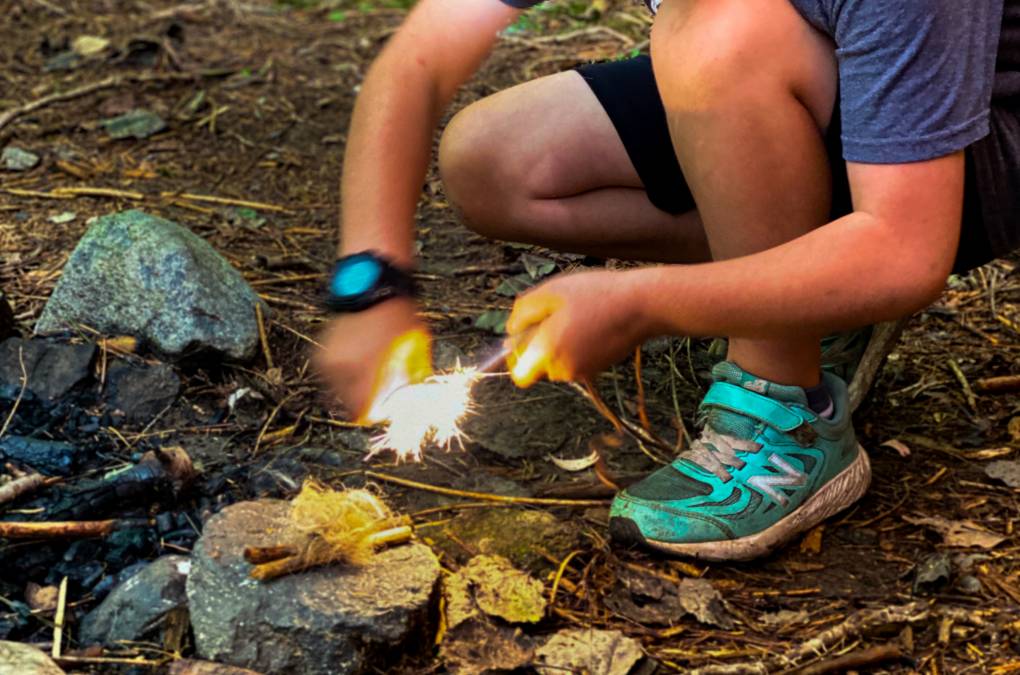
"caption": "Asher Wool, 8, uses a ferro rod and striker to light a bundle of tinder aflame at Earthwork school in western Massachusetts.\n",
"description": null,
"title": null,
"credit": "Ben James for NPR",
"status": "inherit",
"isLoading": false,
"fetchFailed": false
},
"mindshift_56403": {
"type": "attachments",
"id": "mindshift_56403",
"meta": {
"index": "attachments_1716263798",
"site": "mindshift",
"id": "56403",
"found": true
},
"parent": 56320,
"imgSizes": {
"twentyfourteen-full-width": {
"file": "https://ww2.kqed.org/app/uploads/sites/23/2020/08/iStock-1246112694-1038x576.jpg",
"width": 1038,
"mimeType": "image/jpeg",
"height": 576
},
"thumbnail": {
"file": "https://ww2.kqed.org/app/uploads/sites/23/2020/08/iStock-1246112694-160x96.jpg",
"width": 160,
"mimeType": "image/jpeg",
"height": 96
},
"post-thumbnail": {
"file": "https://ww2.kqed.org/app/uploads/sites/23/2020/08/iStock-1246112694-672x372.jpg",
"width": 672,
"mimeType": "image/jpeg",
"height": 372
},
"kqedFullSize": {
"file": "https://ww2.kqed.org/app/uploads/sites/23/2020/08/iStock-1246112694-e1596394366471.jpg",
"width": 1920,
"height": 1155
},
"2048x2048": {
"file": "https://ww2.kqed.org/app/uploads/sites/23/2020/08/iStock-1246112694-2048x1232.jpg",
"width": 2048,
"mimeType": "image/jpeg",
"height": 1232
},
"large": {
"file": "https://ww2.kqed.org/app/uploads/sites/23/2020/08/iStock-1246112694-1020x614.jpg",
"width": 1020,
"mimeType": "image/jpeg",
"height": 614
},
"1536x1536": {
"file": "https://ww2.kqed.org/app/uploads/sites/23/2020/08/iStock-1246112694-1536x924.jpg",
"width": 1536,
"mimeType": "image/jpeg",
"height": 924
},
"full-width": {
"file": "https://ww2.kqed.org/app/uploads/sites/23/2020/08/iStock-1246112694-1920x1155.jpg",
"width": 1920,
"mimeType": "image/jpeg",
"height": 1155
},
"medium": {
"file": "https://ww2.kqed.org/app/uploads/sites/23/2020/08/iStock-1246112694-800x481.jpg",
"width": 800,
"mimeType": "image/jpeg",
"height": 481
},
"medium_large": {
"file": "https://ww2.kqed.org/app/uploads/sites/23/2020/08/iStock-1246112694-768x462.jpg",
"width": 768,
"mimeType": "image/jpeg",
"height": 462
}
},
"publishDate": 1596394344,
"modified": 1596394378,
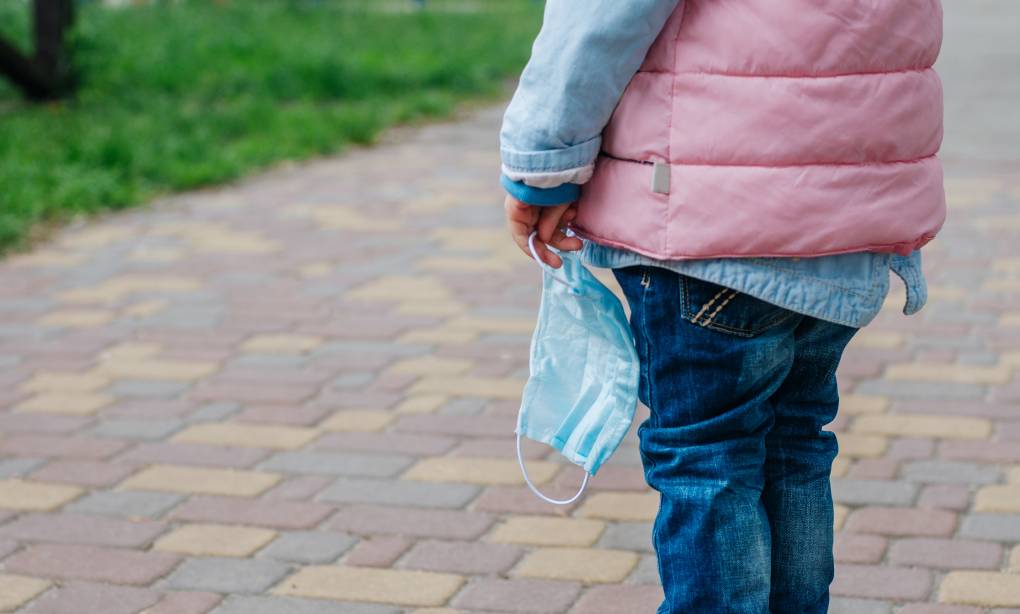
"caption": "Close up of little girl holding protective face mask outside after the end of quarantine. Pandemic COVID-19 is over concept.",
"description": null,
"title": "Close up of little girl holding protective face mask outside",
"credit": "lithiumcloud/iStock",
"status": "inherit",
"isLoading": false,
"fetchFailed": false
},
"mindshift_56310": {
"type": "attachments",
"id": "mindshift_56310",
"meta": {
"index": "attachments_1716263798",
"site": "mindshift",
"id": "56310",
"found": true
},
"parent": 56309,
"imgSizes": {
"twentyfourteen-full-width": {
"file": "https://ww2.kqed.org/app/uploads/sites/23/2020/07/Marie-Kondo-2-867x576.png",
"width": 867,
"mimeType": "image/png",
"height": 576
},
"thumbnail": {
"file": "https://ww2.kqed.org/app/uploads/sites/23/2020/07/Marie-Kondo-2-160x120.png",
"width": 160,
"mimeType": "image/png",
"height": 120
},
"post-thumbnail": {
"file": "https://ww2.kqed.org/app/uploads/sites/23/2020/07/Marie-Kondo-2-672x372.png",
"width": 672,
"mimeType": "image/png",
"height": 372
},
"kqedFullSize": {
"file": "https://ww2.kqed.org/app/uploads/sites/23/2020/07/Marie-Kondo-2.png",
"width": 867,
"height": 650
},
"medium": {
"file": "https://ww2.kqed.org/app/uploads/sites/23/2020/07/Marie-Kondo-2-800x600.png",
"width": 800,
"mimeType": "image/png",
"height": 600
},
"medium_large": {
"file": "https://ww2.kqed.org/app/uploads/sites/23/2020/07/Marie-Kondo-2-768x576.png",
"width": 768,
"mimeType": "image/png",
"height": 576
}
},
"publishDate": 1595187212,
"modified": 1595187304,
"caption": "Imagining September: Principles and Design Elements for Ambitious Schools During COVID-19",
"description": null,
"title": "Marie Kondo 2",
"credit": null,
"status": "inherit",
"isLoading": false,
"fetchFailed": false
},
"mindshift_56302": {
"type": "attachments",
"id": "mindshift_56302",
"meta": {
"index": "attachments_1716263798",
"site": "mindshift",
"id": "56302",
"found": true
},
"parent": 56301,
"imgSizes": {
"twentyfourteen-full-width": {
"file": "https://ww2.kqed.org/app/uploads/sites/23/2020/07/final_01_wide-bf632f2b32a99faf64694094326a9ae35e59c81a-1038x576.jpg",
"width": 1038,
"mimeType": "image/jpeg",
"height": 576
},
"thumbnail": {
"file": "https://ww2.kqed.org/app/uploads/sites/23/2020/07/final_01_wide-bf632f2b32a99faf64694094326a9ae35e59c81a-160x90.jpg",
"width": 160,
"mimeType": "image/jpeg",
"height": 90
},
"post-thumbnail": {
"file": "https://ww2.kqed.org/app/uploads/sites/23/2020/07/final_01_wide-bf632f2b32a99faf64694094326a9ae35e59c81a-672x372.jpg",
"width": 672,
"mimeType": "image/jpeg",
"height": 372
},
"kqedFullSize": {
"file": "https://ww2.kqed.org/app/uploads/sites/23/2020/07/final_01_wide-bf632f2b32a99faf64694094326a9ae35e59c81a-scaled-e1594885488215.jpg",
"width": 1920,
"height": 1080
},
"2048x2048": {
"file": "https://ww2.kqed.org/app/uploads/sites/23/2020/07/final_01_wide-bf632f2b32a99faf64694094326a9ae35e59c81a-2048x1152.jpg",
"width": 2048,
"mimeType": "image/jpeg",
"height": 1152
},
"large": {
"file": "https://ww2.kqed.org/app/uploads/sites/23/2020/07/final_01_wide-bf632f2b32a99faf64694094326a9ae35e59c81a-1020x574.jpg",
"width": 1020,
"mimeType": "image/jpeg",
"height": 574
},
"1536x1536": {
"file": "https://ww2.kqed.org/app/uploads/sites/23/2020/07/final_01_wide-bf632f2b32a99faf64694094326a9ae35e59c81a-1536x864.jpg",
"width": 1536,
"mimeType": "image/jpeg",
"height": 864
},
"full-width": {
"file": "https://ww2.kqed.org/app/uploads/sites/23/2020/07/final_01_wide-bf632f2b32a99faf64694094326a9ae35e59c81a-1920x1080.jpg",
"width": 1920,
"mimeType": "image/jpeg",
"height": 1080
},
"medium": {
"file": "https://ww2.kqed.org/app/uploads/sites/23/2020/07/final_01_wide-bf632f2b32a99faf64694094326a9ae35e59c81a-800x450.jpg",
"width": 800,
"mimeType": "image/jpeg",
"height": 450
},
"medium_large": {
"file": "https://ww2.kqed.org/app/uploads/sites/23/2020/07/final_01_wide-bf632f2b32a99faf64694094326a9ae35e59c81a-768x432.jpg",
"width": 768,
"mimeType": "image/jpeg",
"height": 432
}
},
"publishDate": 1594885002,
"modified": 1594885493,
"caption": "Though the pandemic has left us all less able to socialize in person with our close friends and community, we're still finding ways to use screens and other methods to connect and maintain relationships, research suggests.\n",
"description": "Though the pandemic has left us all less able to socialize in person with our close friends and community, we're still finding ways to use screens and other methods to connect and maintain relationships, research suggests.",
"title": "Though the pandemic has left us all less able to socialize in person with our close friends and community, we're still finding ways to use screens and other methods to connect and maintain relationships, research suggests.",
"credit": "Janice Chang for NPR",
"status": "inherit",
"isLoading": false,
"fetchFailed": false
},
"mindshift_56270": {
"type": "attachments",
"id": "mindshift_56270",
"meta": {
"index": "attachments_1716263798",
"site": "mindshift",
"id": "56270",
"found": true
},
"parent": 56268,
"imgSizes": {
"twentyfourteen-full-width": {
"file": "https://ww2.kqed.org/app/uploads/sites/23/2020/07/Ashanti-Branch-emotional-intelligence-1038x576.jpg",
"width": 1038,
"mimeType": "image/jpeg",
"height": 576
},
"thumbnail": {
"file": "https://ww2.kqed.org/app/uploads/sites/23/2020/07/Ashanti-Branch-emotional-intelligence-160x89.jpg",
"width": 160,
"mimeType": "image/jpeg",
"height": 89
},
"post-thumbnail": {
"file": "https://ww2.kqed.org/app/uploads/sites/23/2020/07/Ashanti-Branch-emotional-intelligence-672x372.jpg",
"width": 672,
"mimeType": "image/jpeg",
"height": 372
},
"kqedFullSize": {
"file": "https://ww2.kqed.org/app/uploads/sites/23/2020/07/Ashanti-Branch-emotional-intelligence.jpg",
"width": 1940,
"height": 1080
},
"large": {
"file": "https://ww2.kqed.org/app/uploads/sites/23/2020/07/Ashanti-Branch-emotional-intelligence-1020x568.jpg",
"width": 1020,
"mimeType": "image/jpeg",
"height": 568
},
"1536x1536": {
"file": "https://ww2.kqed.org/app/uploads/sites/23/2020/07/Ashanti-Branch-emotional-intelligence-1536x855.jpg",
"width": 1536,
"mimeType": "image/jpeg",
"height": 855
},
"full-width": {
"file": "https://ww2.kqed.org/app/uploads/sites/23/2020/07/Ashanti-Branch-emotional-intelligence-1920x1069.jpg",
"width": 1920,
"mimeType": "image/jpeg",
"height": 1069
},
"medium": {
"file": "https://ww2.kqed.org/app/uploads/sites/23/2020/07/Ashanti-Branch-emotional-intelligence-800x445.jpg",
"width": 800,
"mimeType": "image/jpeg",
"height": 445
},
"medium_large": {
"file": "https://ww2.kqed.org/app/uploads/sites/23/2020/07/Ashanti-Branch-emotional-intelligence-768x428.jpg",
"width": 768,
"mimeType": "image/jpeg",
"height": 428
}
},
"publishDate": 1594413516,
"modified": 1594413611,
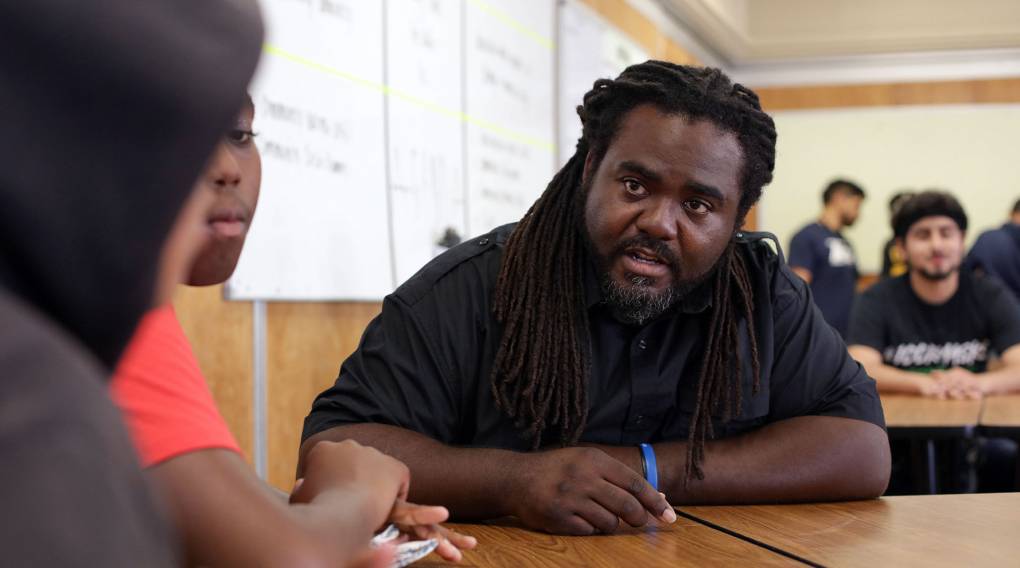
"caption": "Ashanti Branch, founder of Ever Forward/Siempre Adelante, listens intently to middle school boys at Academy of Alameda.",
"description": null,
"title": "Ashanti-Branch-emotional-intelligence",
"credit": "Josh Egel/Ever Forward Siempre Adelante",
"status": "inherit",
"isLoading": false,
"fetchFailed": false
},
"mindshift_56152": {
"type": "attachments",
"id": "mindshift_56152",
"meta": {
"index": "attachments_1716263798",
"site": "mindshift",
"id": "56152",
"found": true
},
"parent": 56151,
"imgSizes": {
"twentyfourteen-full-width": {
"file": "https://ww2.kqed.org/app/uploads/sites/23/2020/06/img-0816-50-c36761b658589909eeb63b04095d9dfcf707a579-1038x576.jpg",
"width": 1038,
"mimeType": "image/jpeg",
"height": 576
},
"thumbnail": {
"file": "https://ww2.kqed.org/app/uploads/sites/23/2020/06/img-0816-50-c36761b658589909eeb63b04095d9dfcf707a579-160x120.jpg",
"width": 160,
"mimeType": "image/jpeg",
"height": 120
},
"post-thumbnail": {
"file": "https://ww2.kqed.org/app/uploads/sites/23/2020/06/img-0816-50-c36761b658589909eeb63b04095d9dfcf707a579-672x372.jpg",
"width": 672,
"mimeType": "image/jpeg",
"height": 372
},
"kqedFullSize": {
"file": "https://ww2.kqed.org/app/uploads/sites/23/2020/06/img-0816-50-c36761b658589909eeb63b04095d9dfcf707a579-e1592894110648.jpg",
"width": 1920,
"height": 1440
},
"large": {
"file": "https://ww2.kqed.org/app/uploads/sites/23/2020/06/img-0816-50-c36761b658589909eeb63b04095d9dfcf707a579-1020x765.jpg",
"width": 1020,
"mimeType": "image/jpeg",
"height": 765
},
"full-width": {
"file": "https://ww2.kqed.org/app/uploads/sites/23/2020/06/img-0816-50-c36761b658589909eeb63b04095d9dfcf707a579-1920x1440.jpg",
"width": 1920,
"mimeType": "image/jpeg",
"height": 1440
},
"medium": {
"file": "https://ww2.kqed.org/app/uploads/sites/23/2020/06/img-0816-50-c36761b658589909eeb63b04095d9dfcf707a579-800x600.jpg",
"width": 800,
"mimeType": "image/jpeg",
"height": 600
},
"medium_large": {
"file": "https://ww2.kqed.org/app/uploads/sites/23/2020/06/img-0816-50-c36761b658589909eeb63b04095d9dfcf707a579-768x576.jpg",
"width": 768,
"mimeType": "image/jpeg",
"height": 576
}
},
"publishDate": 1592894088,
"modified": 1592894131,
"caption": "The author's two children at a South African beach.\n",
"description": "The author's two children at a South African beach.",
"title": "The author's two children at a South African beach.",
"credit": "Koketso Moeti",
"status": "inherit",
"isLoading": false,
"fetchFailed": false
},
"mindshift_56075": {
"type": "attachments",
"id": "mindshift_56075",
"meta": {
"index": "attachments_1716263798",
"site": "mindshift",
"id": "56075",
"found": true
},
"parent": 56068,
"imgSizes": {
"twentyfourteen-full-width": {
"file": "https://ww2.kqed.org/app/uploads/sites/23/2020/06/Distance-Learning-Teachers-1038x576.png",
"width": 1038,
"mimeType": "image/png",
"height": 576
},
"thumbnail": {
"file": "https://ww2.kqed.org/app/uploads/sites/23/2020/06/Distance-Learning-Teachers-160x109.png",
"width": 160,
"mimeType": "image/png",
"height": 109
},
"post-thumbnail": {
"file": "https://ww2.kqed.org/app/uploads/sites/23/2020/06/Distance-Learning-Teachers-672x372.png",
"width": 672,
"mimeType": "image/png",
"height": 372
},
"kqedFullSize": {
"file": "https://ww2.kqed.org/app/uploads/sites/23/2020/06/Distance-Learning-Teachers.png",
"width": 0,
"height": 0
},
"large": {
"file": "https://ww2.kqed.org/app/uploads/sites/23/2020/06/Distance-Learning-Teachers-1020x696.png",
"width": 1020,
"mimeType": "image/png",
"height": 696
},
"full-width": {
"file": "https://ww2.kqed.org/app/uploads/sites/23/2020/06/Distance-Learning-Teachers-1920x1311.png",
"width": 1920,
"mimeType": "image/png",
"height": 1311
},
"medium": {
"file": "https://ww2.kqed.org/app/uploads/sites/23/2020/06/Distance-Learning-Teachers-800x546.png",
"width": 800,
"mimeType": "image/png",
"height": 546
},
"medium_large": {
"file": "https://ww2.kqed.org/app/uploads/sites/23/2020/06/Distance-Learning-Teachers-768x524.png",
"width": 768,
"mimeType": "image/png",
"height": 524
}
},
"publishDate": 1591684079,
"modified": 1591684079,
"caption": null,
"description": null,
"title": "Distance-Learning-Teachers",
"credit": null,
"status": "inherit",
"isLoading": false,
"fetchFailed": false
},
"mindshift_55913": {
"type": "attachments",
"id": "mindshift_55913",
"meta": {
"index": "attachments_1716263798",
"site": "mindshift",
"id": "55913",
"found": true
},
"parent": 55912,
"imgSizes": {
"twentyfourteen-full-width": {
"file": "https://ww2.kqed.org/app/uploads/sites/23/2020/05/undefined_custom-1f2a0f3affa265355b9cd310643daa933006cf61-1038x576.jpg",
"width": 1038,
"mimeType": "image/jpeg",
"height": 576
},
"thumbnail": {
"file": "https://ww2.kqed.org/app/uploads/sites/23/2020/05/undefined_custom-1f2a0f3affa265355b9cd310643daa933006cf61-160x100.jpg",
"width": 160,
"mimeType": "image/jpeg",
"height": 100
},
"post-thumbnail": {
"file": "https://ww2.kqed.org/app/uploads/sites/23/2020/05/undefined_custom-1f2a0f3affa265355b9cd310643daa933006cf61-672x372.jpg",
"width": 672,
"mimeType": "image/jpeg",
"height": 372
},
"kqedFullSize": {
"file": "https://ww2.kqed.org/app/uploads/sites/23/2020/05/undefined_custom-1f2a0f3affa265355b9cd310643daa933006cf61-e1589467552164.jpg",
"width": 1920,
"height": 1195
},
"large": {
"file": "https://ww2.kqed.org/app/uploads/sites/23/2020/05/undefined_custom-1f2a0f3affa265355b9cd310643daa933006cf61-1020x635.jpg",
"width": 1020,
"mimeType": "image/jpeg",
"height": 635
},
"full-width": {
"file": "https://ww2.kqed.org/app/uploads/sites/23/2020/05/undefined_custom-1f2a0f3affa265355b9cd310643daa933006cf61-1920x1195.jpg",
"width": 1920,
"mimeType": "image/jpeg",
"height": 1195
},
"medium": {
"file": "https://ww2.kqed.org/app/uploads/sites/23/2020/05/undefined_custom-1f2a0f3affa265355b9cd310643daa933006cf61-800x498.jpg",
"width": 800,
"mimeType": "image/jpeg",
"height": 498
},
"medium_large": {
"file": "https://ww2.kqed.org/app/uploads/sites/23/2020/05/undefined_custom-1f2a0f3affa265355b9cd310643daa933006cf61-768x478.jpg",
"width": 768,
"mimeType": "image/jpeg",
"height": 478
}
},
"publishDate": 1589467165,
"modified": 1589467582,
"caption": "Children in isolation are developing mental health issues.",
"description": "Children in isolation are developing mental health issues.",
"title": "Children in isolation are developing mental health issues.",
"credit": "LA Johnson/NPR",
"status": "inherit",
"isLoading": false,
"fetchFailed": false
}
},
"audioPlayerReducer": {
"postId": "stream_live",
"isPaused": true,
"isPlaying": false,
"pfsActive": false,
"pledgeModalIsOpen": true,
"playerDrawerIsOpen": false,
"liveAudioPlayStartedAt": 0,
"liveAudioPlayContext": ""
},
"authorsReducer": {
"byline_mindshift_56979": {
"type": "authors",
"id": "byline_mindshift_56979",
"meta": {
"override": true
},
"slug": "byline_mindshift_56979",
"name": "Gail Cornwall",
"isLoading": false
},
"byline_mindshift_56970": {
"type": "authors",
"id": "byline_mindshift_56970",
"meta": {
"override": true
},
"slug": "byline_mindshift_56970",
"name": "Anya Kamenetz",
"isLoading": false
},
"byline_mindshift_56849": {
"type": "authors",
"id": "byline_mindshift_56849",
"meta": {
"override": true
},
"slug": "byline_mindshift_56849",
"name": "Elise Hu and Andee Tagle",
"isLoading": false
},
"byline_mindshift_56660": {
"type": "authors",
"id": "byline_mindshift_56660",
"meta": {
"override": true
},
"slug": "byline_mindshift_56660",
"name": "Ben James",
"isLoading": false
},
"byline_mindshift_56320": {
"type": "authors",
"id": "byline_mindshift_56320",
"meta": {
"override": true
},
"slug": "byline_mindshift_56320",
"name": "Suzanne Bouffard",
"isLoading": false
},
"byline_mindshift_56301": {
"type": "authors",
"id": "byline_mindshift_56301",
"meta": {
"override": true
},
"slug": "byline_mindshift_56301",
"name": "Joanne Silberner",
"isLoading": false
},
"byline_mindshift_56151": {
"type": "authors",
"id": "byline_mindshift_56151",
"meta": {
"override": true
},
"slug": "byline_mindshift_56151",
"name": "Koketso Moeti",
"isLoading": false
},
"byline_mindshift_55912": {
"type": "authors",
"id": "byline_mindshift_55912",
"meta": {
"override": true
},
"slug": "byline_mindshift_55912",
"name": "Anya Kamenetz",
"isLoading": false
},
"katrinaschwartz": {
"type": "authors",
"id": "234",
"meta": {
"index": "authors_1716337520",
"id": "234",
"found": true
},
"name": "Katrina Schwartz",
"firstName": "Katrina",
"lastName": "Schwartz",
"slug": "katrinaschwartz",
"email": "kschwartz@kqed.org",
"display_author_email": false,
"staff_mastheads": [
"news"
],
"title": "Producer",
"bio": "Katrina Schwartz is a journalist based in San Francisco. She's worked at KPCC public radio in LA and has reported on air and online for KQED since 2010. She covered how teaching and learning is changing for MindShift between 2012 and 2020. She is the co-host of the MindShift podcast and now produces KQED's Bay Curious podcast.",
"avatar": "https://secure.gravatar.com/avatar/edb4ee79070447a018538c9aae6eeecf28786515b8a0c30e43b6b7dce5aa44c8?s=600&d=blank&r=g",
"twitter": "kschwart",
"bluesky": null,
"facebook": null,
"instagram": null,
"linkedin": null,
"sites": [
{
"site": "",
"roles": [
"editor"
]
},
{
"site": "news",
"roles": [
"editor"
]
},
{
"site": "mindshift",
"roles": [
"administrator"
]
},
{
"site": "stateofhealth",
"roles": [
"author"
]
},
{
"site": "science",
"roles": [
"editor"
]
}
],
"headData": {
"title": "Katrina Schwartz | KQED",
"description": "Producer",
"ogImgSrc": "https://secure.gravatar.com/avatar/edb4ee79070447a018538c9aae6eeecf28786515b8a0c30e43b6b7dce5aa44c8?s=600&d=blank&r=g",
"twImgSrc": "https://secure.gravatar.com/avatar/edb4ee79070447a018538c9aae6eeecf28786515b8a0c30e43b6b7dce5aa44c8?s=600&d=blank&r=g"
},
"isLoading": false,
"link": "/author/katrinaschwartz"
},
"pauldarvasi": {
"type": "authors",
"id": "11107",
"meta": {
"index": "authors_1716337520",
"id": "11107",
"found": true
},
"name": "Paul Darvasi",
"firstName": "Paul",
"lastName": "Darvasi",
"slug": "pauldarvasi",
"email": "pauldarvasi@gmail.com",
"display_author_email": false,
"staff_mastheads": [],
"title": null,
"bio": "Paul Darvasi is an experienced educator whose research, speaking and writing explore the intersections of learning, technology, narrative and games. You can follow him on Twitter:\u003ca href=\"https://twitter.com/PaulDarvasi\"> @pauldarvasi\u003c/a>",
"avatar": "https://secure.gravatar.com/avatar/df387897a1bf0cd4b720b8175112731a?s=600&d=blank&r=g",
"twitter": "pauldarvasi",
"facebook": null,
"instagram": null,
"linkedin": null,
"sites": [
{
"site": "mindshift",
"roles": [
"contributor"
]
}
],
"headData": {
"title": "Paul Darvasi | KQED",
"description": null,
"ogImgSrc": "https://secure.gravatar.com/avatar/df387897a1bf0cd4b720b8175112731a?s=600&d=blank&r=g",
"twImgSrc": "https://secure.gravatar.com/avatar/df387897a1bf0cd4b720b8175112731a?s=600&d=blank&r=g"
},
"isLoading": false,
"link": "/author/pauldarvasi"
},
"kdnewhouse": {
"type": "authors",
"id": "11487",
"meta": {
"index": "authors_1716337520",
"id": "11487",
"found": true
},
"name": "Kara Newhouse",
"firstName": "Kara",
"lastName": "Newhouse",
"slug": "kdnewhouse",
"email": "knewhouse@kqed.org",
"display_author_email": false,
"staff_mastheads": [],
"title": "MindShift Editor",
"bio": null,
"avatar": "https://secure.gravatar.com/avatar/3dceed6fb271527113abfa9a8e9df34e?s=600&d=blank&r=g",
"twitter": null,
"facebook": null,
"instagram": null,
"linkedin": null,
"sites": [
{
"site": "",
"roles": [
"editor"
]
},
{
"site": "mindshift",
"roles": []
}
],
"headData": {
"title": "Kara Newhouse | KQED",
"description": "MindShift Editor",
"ogImgSrc": "https://secure.gravatar.com/avatar/3dceed6fb271527113abfa9a8e9df34e?s=600&d=blank&r=g",
"twImgSrc": "https://secure.gravatar.com/avatar/3dceed6fb271527113abfa9a8e9df34e?s=600&d=blank&r=g"
},
"isLoading": false,
"link": "/author/kdnewhouse"
}
},
"pagesReducer": {
"mindshift_tag_social-emotional-learning": {
"type": "terms",
"id": "mindshift_943",
"meta": {
"index": "terms_1716263798",
"site": "mindshift",
"id": "943",
"score": 10.40406
},
"featImg": null,
"name": "social emotional learning",
"description": null,
"taxonomy": "tag",
"headData": {
"twImgId": null,
"twTitle": null,
"ogTitle": null,
"ogImgId": null,
"twDescription": null,
"description": null,
"title": "social emotional learning Archives - KQED Mindshift",
"ogDescription": null
},
"ttid": 948,
"slug": "social-emotional-learning",
"isLoading": false,
"title": "social emotional learning",
"pageMeta": {
"site": "mindshift",
"WpPageTemplate": "page-topic-editorial",
"currentPage": 6
},
"blocks": [
{
"blockName": "kqed/post-list",
"attrs": {
"layout": "cardArticle2",
"query": "posts/mindshift?tag=social-emotional-learning",
"seeMore": false,
"paginated": true,
"page": 6
}
},
{
"blockName": "kqed/ad"
}
]
}
},
"pfsSessionReducer": {},
"postsReducer": {
"stream_live": {
"type": "live",
"id": "stream_live",
"audioUrl": "https://streams.kqed.org/kqedradio",
"title": "Live Stream",
"excerpt": "Live Stream information currently unavailable.",
"link": "/radio",
"featImg": "",
"label": {
"name": "KQED Live",
"link": "/"
}
},
"stream_kqedNewscast": {
"type": "posts",
"id": "stream_kqedNewscast",
"audioUrl": "https://www.kqed.org/.stream/anon/radio/RDnews/newscast.mp3?_=1",
"title": "KQED Newscast",
"featImg": "",
"label": {
"name": "88.5 FM",
"link": "/"
}
},
"mindshift_56979": {
"type": "posts",
"id": "mindshift_56979",
"meta": {
"index": "posts_1716263798",
"site": "mindshift",
"id": "56979",
"score": null,
"sort": [
1605694624000
]
},
"parent": 0,
"labelTerm": {
"site": "mindshift"
},
"blocks": [],
"publishDate": 1605694624,
"format": "standard",
"disqusTitle": "What the Research Says About the Academic Power of Friendship",
"title": "What the Research Says About the Academic Power of Friendship",
"headTitle": "MindShift | KQED News",
"content": "\u003cp>\u003cspan style=\"font-weight: 400\">For years, education research focused on time-on-task as a measure of effective instruction, says \u003c/span>\u003ca href=\"https://curry.virginia.edu/scott-gest\">\u003cspan style=\"font-weight: 400\">Scott Gest\u003c/span>\u003c/a>\u003cspan style=\"font-weight: 400\">, a professor at the University of Virginia. Through that lens, friends in elementary school \u003c/span>\u003ca href=\"https://www.tandfonline.com/doi/abs/10.1080/03004279685200091?journalCode=rett20&\">\u003cspan style=\"font-weight: 400\">appeared to be a negative,\u003c/span>\u003c/a>\u003cspan style=\"font-weight: 400\"> an impediment to focus and a catalyst for disruption. Even when the value of strong social ties gained recognition, friendships stood to the side conceptually, as developmentally important but not germane to academics. Yet recent research has confirmed two things many teachers have long believed to be true. First, \u003c/span>\u003ca href=\"https://pubmed.ncbi.nlm.nih.gov/28685826/\">\u003cspan style=\"font-weight: 400\">social-emotional\u003c/span>\u003c/a> \u003ca href=\"https://www.educationdive.com/news/how-peer-reviews-can-build-critical-thinking-sel-skills/574196/\">\u003cspan style=\"font-weight: 400\">benefits\u003c/span>\u003c/a>\u003cspan style=\"font-weight: 400\"> and \u003c/span>\u003ca href=\"https://www.casel.org/wp-content/uploads/2016/08/PDF-3-Durlak-Weissberg-Dymnicki-Taylor-_-Schellinger-2011-Meta-analysis.pdf\">\u003cspan style=\"font-weight: 400\">academic ones\u003c/span>\u003c/a> \u003ca href=\"https://www.researchgate.net/publication/302991262_Social_and_emotional_learning_Past_present_and_future\">\u003cspan style=\"font-weight: 400\">don’t operate in isolation\u003c/span>\u003c/a>\u003cspan style=\"font-weight: 400\">. Second, friendships in elementary school can be harnessed to drive academic growth.\u003c/span>\u003c/p>\n\u003cp>\u003cspan style=\"font-weight: 400\">Students with no friends “receive lower grades and are \u003ca href=\"https://psycnet.apa.org/record/2004-95233-001\">less academically engaged\u003c/a> compared to those with even just one friend,” \u003ca href=\"https://www.tandfonline.com/doi/abs/10.1080/00461520.2019.1655645?journalCode=hedp20\">reported\u003c/a> \u003c/span>\u003ca href=\"https://www.psych.ucla.edu/faculty/page/jjuvonen\">\u003cspan style=\"font-weight: 400\">Jaana Juvonen\u003c/span>\u003c/a>\u003cspan style=\"font-weight: 400\">, a psychology professor at UCLA, and her colleagues \u003c/span>\u003cspan style=\"font-weight: 400\"> in a 2019 issue of the journal \u003c/span>\u003ci>\u003cspan style=\"font-weight: 400\">Educational Psychologist.\u003c/span>\u003c/i>\u003cspan style=\"font-weight: 400\"> \u003c/span>\u003cspan style=\"font-weight: 400\">This is a point that bears repeating, says Florida Atlantic University’s \u003c/span>\u003ca href=\"http://www.psy.fau.edu/people/laursen.php\">\u003cspan style=\"font-weight: 400\">Brett Laursen\u003c/span>\u003c/a>\u003cspan style=\"font-weight: 400\">, editor in chief of the \u003c/span>\u003ci>\u003cspan style=\"font-weight: 400\">International Journal of Behavioral Development\u003c/span>\u003c/i>\u003cspan style=\"font-weight: 400\">: “There is a massive gap between being friended and friendless,” he says, and “studies that are as close to causation as you can get” show that becoming friendless produces a meaningful decline in mental health. Research has also tied friendlessness and exclusion to truancy, susceptibility to peer pressure, inability to focus, deficits in working memory, and lack of classroom participation.\u003c/span>\u003c/p>\n\u003cp>\u003cspan style=\"font-weight: 400\">On the flip side, friends can make mundane tasks more fun, reports Lydia Denworth in \u003c/span>\u003ca href=\"https://lydiadenworth.com/books/friendship/\">\u003ci>\u003cspan style=\"font-weight: 400\">Friendship\u003c/span>\u003c/i>\u003c/a>\u003cspan style=\"font-weight: 400\">. Her 2020 book catalogues research on the many benefits of “life’s fundamental bond.” For example, when they smell familiar fish, zebrafish show reduced levels of fear, a fact that seems cool but irrelevant until you learn that a \u003c/span>\u003ca href=\"https://pubmed.ncbi.nlm.nih.gov/21895364/\">\u003cspan style=\"font-weight: 400\">2011 study\u003c/span>\u003c/a>\u003cspan style=\"font-weight: 400\"> of humans showed that “having a best friend present during an experience significantly buffered any negative feelings, lowering cortisol and boosting a sense of self-worth.” \u003c/span>\u003ca href=\"http://mitch.web.unc.edu/files/2013/10/Calhoun-et-al-DP-2014.pdf\">\u003cspan style=\"font-weight: 400\">Another\u003c/span>\u003c/a>\u003cspan style=\"font-weight: 400\"> found that talking to supportive friends after a stressful incident increases the speed with which cortisol levels revert to normal. This buffering effect appears to insulate kids from both social and academic missteps by shifting their inner narrative in the face of failure from “there’s something wrong with me” to a more resilient response. \u003c/span>\u003c/p>\n\u003cp>\u003ca href=\"https://onlinelibrary.wiley.com/doi/abs/10.1111/jora.12219\">\u003cspan style=\"font-weight: 400\">In one study\u003c/span>\u003c/a>\u003cspan style=\"font-weight: 400\">, adolescents working together took part in more exploratory behavior, learned faster, and completed tasks better than they did working alone. In \u003c/span>\u003ca href=\"https://www.ncbi.nlm.nih.gov/pmc/articles/PMC4681000/\">\u003cspan style=\"font-weight: 400\">another\u003c/span>\u003c/a>\u003cspan style=\"font-weight: 400\">, Laursen and his colleagues arranged for pairs of students to be taught a new programming language. Kids were asked how they felt about their partner multiple times. “How much I thought that you were my friend,” he says, “predicted how much I learned in that classroom.” Taken together, \u003c/span>\u003ca href=\"https://www.ncbi.nlm.nih.gov/pmc/articles/PMC4681000/\">\u003cspan style=\"font-weight: 400\">the evidence\u003c/span>\u003c/a>\u003cspan style=\"font-weight: 400\"> suggests that with a friend on hand, a child’s tolerance for novelty and intellectual stretching tends to increase, while without one, engagement tends to decrease.\u003c/span>\u003c/p>\n\u003cp>\u003cspan style=\"font-weight: 400\">How do educators both promote this type of bond and exploit its academic power? \u003c/span>\u003c/p>\n\u003cp>[ad fullwidth]\u003c/p>\n\u003cp>\u003cspan style=\"font-weight: 400\">Gest, who is chair of human services at the Curry School of Education and Human Development, says, “There is a long tradition of informal guidance on how to think about group dynamics in the classroom, but relatively little empirical research to back up particular strategies.” That said, some things are known. There are four big impediments to friendship formation in school: lack of contact, competition, unequal status, and surface-level homophily (a.k.a., “birds of a feather flock together”). Each of these factors can prevent relationships from blossoming, particularly across gender, racial, and other divides. For each of the four roadblocks, teachers wield at least one not-so-secret weapon.\u003c/span>\u003c/p>\n\u003cp>\u003cspan style=\"font-weight: 400\">But before getting to solutions, says \u003c/span>\u003ca href=\"https://peabody.vanderbilt.edu/bio/barbara-stengel\">\u003cspan style=\"font-weight: 400\">Barbara Stengel\u003c/span>\u003c/a>\u003cspan style=\"font-weight: 400\">, a professor emerita at Vanderbilt University, who focuses on the philosophy of education, it’s important to think about what friendship really means in a classroom. Aristotle divided the concept into \u003c/span>\u003ca href=\"https://qz.com/1155649/aristotle-said-there-are-three-types-of-friendship-but-only-one-we-should-strive-for/\">\u003cspan style=\"font-weight: 400\">three categories\u003c/span>\u003c/a>\u003cspan style=\"font-weight: 400\">: friendships of utility based on mutual benefit, friendships of pleasure that usually center around a shared interest, and friendships of virtue, the kind with deeper, longer lasting mutual appreciation. When we think of a friend, most of us picture that last sort, the one we can confide in and count on, but the other two types can also make children feel “seen and encouraged,” Stengel says, producing many of the desired academic benefits.\u003c/span>\u003c/p>\n\u003ch2>\u003cspan style=\"font-weight: 400\">Encouraging contact\u003c/span>\u003c/h2>\n\u003cp>\u003cspan style=\"font-weight: 400\">Lack of contact obviously inhibits friendship formation. On the flip side, physical proximity \u003c/span>\u003ca href=\"https://link.springer.com/article/10.1007/s11218-016-9353-y\">\u003cspan style=\"font-weight: 400\">can reduce\u003c/span>\u003c/a>\u003cspan style=\"font-weight: 400\"> negative perceptions of a peer. Teachers and administrators often don’t have control over \u003c/span>\u003ca href=\"https://psycnet.apa.org/record/2018-00748-025\">\u003cspan style=\"font-weight: 400\">the biggest piece of this puzzle\u003c/span>\u003c/a>\u003cspan style=\"font-weight: 400\">—the makeup of their student body—but they can manipulate contact between the kids they do have. For starters,\u003c/span>\u003cspan style=\"font-weight: 400\"> Juvonen says, teachers and administrators should consider keeping friends together when assigning classes. Schoolwide \u003c/span>\u003ca href=\"https://www.kqed.org/mindshift/50960/how-being-part-of-a-house-within-a-school-helps-students-gain-a-sense-of-belonging\">\u003cspan style=\"font-weight: 400\">“house” programs\u003c/span>\u003c/a>\u003cspan style=\"font-weight: 400\"> that produce stable cohorts have also shown potential.\u003c/span>\u003c/p>\n\u003cp>\u003cspan style=\"font-weight: 400\">Within classes, \u003c/span>\u003ca href=\"https://onlinelibrary.wiley.com/doi/epdf/10.1111/j.1467-9604.2008.00375.x\">\u003cspan style=\"font-weight: 400\">seating arrangements\u003c/span>\u003c/a>\u003cspan style=\"font-weight: 400\"> most directly impact proximity. When children who did not like each other were seated close together for several weeks in \u003c/span>\u003ca href=\"https://link.springer.com/article/10.1007%2Fs10802-011-9567-6\">\u003cspan style=\"font-weight: 400\">one study\u003c/span>\u003c/a>\u003cspan style=\"font-weight: 400\">, their likeability ratings increased. Perhaps they formed Aristotle’s friendships of pleasure, because they were made aware of common interests (comic books!) or maybe the students formed friendships of utility, since whisperings and wisecracks require a set of ears.\u003c/span>\u003c/p>\n\u003cp>\u003cspan style=\"font-weight: 400\">Students who dislike one another \u003c/span>\u003ca href=\"https://www.ncbi.nlm.nih.gov/pmc/articles/PMC4681000/\">\u003cspan style=\"font-weight: 400\">should not\u003c/span>\u003c/a>\u003cspan style=\"font-weight: 400\">, however, be paired for peer-assisted learning. Most commonly in pairs, peer-assisted learning has been shown to improve the standing of \u003c/span>\u003ca href=\"https://onlinelibrary.wiley.com/doi/abs/10.1111/1540-5826.00046\">\u003cspan style=\"font-weight: 400\">students with learning disabilities\u003c/span>\u003c/a>\u003cspan style=\"font-weight: 400\"> and help \u003c/span>\u003ca href=\"https://journals.sagepub.com/doi/abs/10.1177/019874290503000404?journalCode=bhda\">\u003cspan style=\"font-weight: 400\">shy children\u003c/span>\u003c/a>\u003cspan style=\"font-weight: 400\"> befriend peers. In choosing dyads, professors \u003c/span>\u003ca href=\"https://frg.vkcsites.org/\">\u003cspan style=\"font-weight: 400\">Lynn and Douglas Fuchs\u003c/span>\u003c/a>\u003cspan style=\"font-weight: 400\"> suggest different strategies for \u003c/span>\u003ca href=\"https://www.researchgate.net/publication/247498599_Research_on_Peer-Assisted_Learning_Strategies_The_Promise_and_Limitations_of_Peer-Mediated_Instruction\">\u003cspan style=\"font-weight: 400\">reading\u003c/span>\u003c/a>\u003cspan style=\"font-weight: 400\"> and \u003c/span>\u003ca href=\"https://www.researchgate.net/publication/235910655_Enhancing_first-grade_children's_mathematical_development_with_Peer-Assisted_Learning_Strategies\">\u003cspan style=\"font-weight: 400\">math\u003c/span>\u003c/a>\u003cspan style=\"font-weight: 400\">, both of which involve splitting the class into a top half and a bottom half by current skill level and then choosing one student from each block. But Juvonen says teachers would do well to make these matches with pre-existing friendships and common interests in mind as well, and at least \u003c/span>\u003ca href=\"https://www.ncbi.nlm.nih.gov/pmc/articles/PMC4681000/\">\u003cspan style=\"font-weight: 400\">one study\u003c/span>\u003c/a>\u003cspan style=\"font-weight: 400\"> backs her up (there, how much partners liked each other predicted how well they learned). \u003c/span>\u003c/p>\n\u003cp>\u003cspan style=\"font-weight: 400\">Peer-assisted learning does not, unfortunately, \u003c/span>\u003ca href=\"https://journals.sagepub.com/doi/abs/10.1177/019874290503000404?journalCode=bhda\">\u003cspan style=\"font-weight: 400\">seem to be\u003c/span>\u003c/a>\u003cspan style=\"font-weight: 400\"> “sufficient to improve the social integration of children who have behavior issues or whose negative reputation is deeply entrenched,” says \u003c/span>\u003ca href=\"https://professeurs.uqam.ca/professeur/dion.e/\">\u003cspan style=\"font-weight: 400\">Éric Dion\u003c/span>\u003c/a>\u003cspan style=\"font-weight: 400\">, a professor at the University of Quebec at Montreal.\u003c/span>\u003c/p>\n\u003ch2>\u003cspan style=\"font-weight: 400\">Fostering\u003c/span>\u003cspan style=\"font-weight: 400\"> cooperati\u003c/span>\u003cspan style=\"font-weight: 400\">ve\u003c/span>\u003cspan style=\"font-weight: 400\"> learning\u003c/span>\u003c/h2>\n\u003cp>\u003cspan style=\"font-weight: 400\">Another type of grouping shows promise for that though. By doing away with competition, \u003c/span>\u003ca href=\"https://eric.ed.gov/?id=EJ888657\">\u003cspan style=\"font-weight: 400\">cooperative learning\u003c/span>\u003c/a>\u003cspan style=\"font-weight: 400\"> boosts learning and decreases problematic behaviors, says \u003c/span>\u003ca href=\"http://croseth.educ.msu.edu/\">\u003cspan style=\"font-weight: 400\">Cary Roseth\u003c/span>\u003c/a>\u003cspan style=\"font-weight: 400\">, chair of the Department of Counseling, Educational Psychology and Special Education at Michigan State University. It requires establishing \u003c/span>\u003ca href=\"https://kappanonline.org/van-ryzin-roseth-power-peer-influence-address-student-behavioral-problems/\">\u003cspan style=\"font-weight: 400\">positive interdependence\u003c/span>\u003c/a>\u003cspan style=\"font-weight: 400\">, meaning “individuals can attain their goals if (and only if) others in their group also reach their goals,” Roseth has written.\u003c/span>\u003c/p>\n\u003cblockquote>\u003cp>\u003cspan style=\"font-weight: 400\">Teachers may require a single finished product from a group (goal interdependence) or may offer a reward to the group if everyone achieves above a certain threshold (reward interdependence). Members of the group can be issued different materials that the group must share to complete the lesson (resource interdependence), or each member of the group could be assigned a different role to play (role interdependence). The group may have its own name (identity interdependence), or each group member may have to complete a different step in a task, like on an assembly line (task interdependence).\u003c/span>\u003c/p>\u003c/blockquote>\n\u003cp>\u003cspan style=\"font-weight: 400\">When teachers carefully create and scaffold small groups, an expectation that a group member will cooperate arises, and that produces liking. If one group member perceives another as attempting to promote their success, that also promotes liking, \u003c/span>\u003ci>\u003cspan style=\"font-weight: 400\">even if they ultimately fail\u003c/span>\u003c/i>\u003cspan style=\"font-weight: 400\">. A positive feedback loop results: “The more students work cooperatively to learn, the more they will tend to like each other, and the more they like each other, the harder they will work to help each other learn,” Roseth and colleagues report. In other words, positive interdependence fosters, at the very least, Aristotelian friendships of utility.\u003c/span>\u003c/p>\n\u003ch2>\u003cspan style=\"font-weight: 400\">Equalizing status\u003c/span>\u003c/h2>\n\u003cp>\u003cspan style=\"font-weight: 400\">Encouraging contact provides the opportunity for friendships to form, but budding connections can easily be nipped by social status asymmetry. Those who don’t conform with school norms on behavior, ability, sexuality, and even body size will be shunned without intervention, Juvonen says. Promoting a cooperative, rather than competitive, learning environment is one step toward redefining “smart” and “good” in children’s minds, but teachers can further decrease status gaps by drawing attention to \u003c/span>\u003ca href=\"https://www.usnews.com/news/best-states/articles/2018-02-02/california-school-district-explores-strength-based-learning\">\u003cspan style=\"font-weight: 400\">hidden strengths\u003c/span>\u003c/a>\u003cspan style=\"font-weight: 400\">.\u003c/span>\u003c/p>\n\u003cp>\u003cspan style=\"font-weight: 400\">In a \u003c/span>\u003ca href=\"https://www.ncbi.nlm.nih.gov/pmc/articles/PMC3522754/\">\u003cspan style=\"font-weight: 400\">2013 study\u003c/span>\u003c/a>\u003cspan style=\"font-weight: 400\">, when camp counselors encouraged peers to interact inclusively with children who exhibit ADHD symptoms and drew attention to those students’ positive characteristics, the reputations of the children with ADHD improved, and they had more reciprocated friendships. The study’s primary author, Amori Yee Mikami, a psychology professor at the University of British Columbia, stresses that these findings may not translate to the classroom but \u003c/span>\u003ca href=\"https://www.erudit.org/en/journals/enfance/1900-v1-n1-enfance01654/1028010ar/abstract/\">\u003cspan style=\"font-weight: 400\">other studies\u003c/span>\u003c/a>\u003cspan style=\"font-weight: 400\"> have shown that teachers voicing a favorable opinion of students and interacting with them warmly tends to increase their social integration.\u003c/span>\u003c/p>\n\u003cp>\u003cspan style=\"font-weight: 400\">To this end, teachers should think of themselves in social media parlance as “influencers” or “thought leaders.” Teachers’ relationships with kids “have a big influence on how those kids are seen,” Gest confirms: “Kids who perceive their classmates as not getting along with the teacher come to see those classmates less positively.” But “if teachers make public comments about a child’s academic or social strengths, those have an impact on how kids view that classmate” too.\u003c/span>\u003c/p>\n\u003cp>\u003cspan style=\"font-weight: 400\">There’s a problem though: Teachers’ \u003c/span>\u003ca href=\"https://www.sciencedirect.com/science/article/pii/S0193397311000219?via%3Dihub\">\u003cspan style=\"font-weight: 400\">take\u003c/span>\u003c/a>\u003cspan style=\"font-weight: 400\"> on who is high status and who isn’t doesn’t always align with kids’, Gest says. “There are kids whom teachers perceive to be disruptive and a problem yet who are quite popular with their classmates. And then conversely, sometimes kids teachers perceive as super nice and prosocial are not particularly influential.” A first step, then, in realizing children’s potential to elevate and inspire one another, is “developing an accurate understanding of what those relationship patterns are.”\u003c/span>\u003c/p>\n\u003ch2>\u003cspan style=\"font-weight: 400\">Leveraging homophily\u003c/span>\u003c/h2>\n\u003cp>\u003cspan style=\"font-weight: 400\">One pattern is called homophily. Plato once wrote “similarity begets friendship,” and modern social science research has proven him right. \u003c/span>\u003ca href=\"https://psycnet.apa.org/record/2008-08239-010\">\u003cspan style=\"font-weight: 400\">Like tends to stick with like\u003c/span>\u003c/a>\u003cspan style=\"font-weight: 400\"> in terms of attitudes and beliefs, but also ethnicity, socio-economic status, and gender even in an integrated classroom. (In \u003c/span>\u003ci>\u003cspan style=\"font-weight: 400\">Friendship\u003c/span>\u003c/i>\u003cspan style=\"font-weight: 400\">, Denworth reports: “Friendship with opposite-sex peers ‘drops off precipitously after seven years of age.’”) \u003c/span>\u003c/p>\n\u003cp>\u003cspan style=\"font-weight: 400\">Yet friendships that bridge these divides have been associated with higher academic outcomes, and Juvonen says, “students with a greater proportion of cross-ethnic friendships reported lower vulnerability” to peer victimization. On the other hand, discriminatory experiences lead to anger, impulsivity, depression, anxiety, sleep loss, and more, all conditions that drive down academic engagement and performance. \u003c/span>\u003c/p>\n\u003cp>\u003cspan style=\"font-weight: 400\">For cross-group friendships to thrive, Juvonen says, teachers and administrators have to “disrupt typical social dynamics and avoid instructional practices that highlight differences.” Going after low-hanging fruit, Juvonen recommends we stop saying, “Good morning, boys and girls.” Using these categories implies that they have functional importance in elementary school (when \u003c/span>\u003ca href=\"https://www.parents.com/toddlers-preschoolers/development/behavioral/what-science-really-says-about-boys-and-girls/\">\u003cspan style=\"font-weight: 400\">research has yet to prove they do\u003c/span>\u003c/a>\u003cspan style=\"font-weight: 400\">) and impedes same-gender bonds. \u003c/span>\u003c/p>\n\u003cp>\u003cspan style=\"font-weight: 400\">Administrators can also consider explicit anti-bias interventions. Juvonen \u003c/span>\u003ca href=\"https://www.tandfonline.com/doi/abs/10.1080/00461520.2019.1655645?scroll=top&needAccess=true&journalCode=hedp20\">\u003cspan style=\"font-weight: 400\">says\u003c/span>\u003c/a>\u003cspan style=\"font-weight: 400\"> a puppet program that “teaches about acceptance of various body shapes has been shown effective in reducing negative attitudes and stereotypes about larger body shapes.” Inclusive curricula \u003c/span>\u003ca href=\"https://www.educationdive.com/news/improving-lgbtq-representation-in-curriculum-reduces-stigma-bullying/580239/\">\u003cspan style=\"font-weight: 400\">can also alter\u003c/span>\u003c/a>\u003cspan style=\"font-weight: 400\"> social dynamics.\u003c/span>\u003c/p>\n\u003cp>\u003cspan style=\"font-weight: 400\">Though initiatives like these take time and institutional support, there’s one thing educators can do right away, Laursen says. While perceived similarities predict who will become friends better than actual similarities, it’s the latter that determines whether friendships will last. Teachers can help kids’ friendship calculus be more accurate by making less obvious similarities salient. Another way of looking at it? By drawing attention to traits and interests that aren’t as readily apparent as gender or skin tone (e.g., “You two and your Minecraft obsession!”), teachers foster Aristotelian friendships of virtue. \u003c/span>\u003c/p>\n\u003cp>\u003cspan style=\"font-weight: 400\">Juvonen says extracurricular activities like sports and interscholastic robotics competitions provide the ideal context both for highlighting shared interests and promoting positive interdependence, but access is often a problem. Administrators can try to decrease hurdles such as transportation and out-of-pocket expenses, as well as ensuring there’s extra support on hand to facilitate the participation of special needs students. But logistical stumbling blocks aren’t the only type. “Some kids are just reluctant to take the big step to join a club,” Laursen says, and schools would do well to create an emotionally safe environment. That can mean paired activities and inclusion-oriented clubs such as Gay-Straight Alliances.\u003c/span>\u003c/p>\n\u003cp>\u003cspan style=\"font-weight: 400\">Kids can also be encouraged to find hidden similarities on their own. Julia Smith, who teaches first-grade in San Francisco, reads her students \u003c/span>\u003ci>\u003cspan style=\"font-weight: 400\">The Day You Begin\u003c/span>\u003c/i>\u003cspan style=\"font-weight: 400\"> by Jacqueline Woodson: \u003c/span>\u003c/p>\n\u003cblockquote>\u003cp>\u003cspan style=\"font-weight: 400\">There will be times when you walk into a room and no one there is quite like you until the day you begin to share your stories. \u003c/span>\u003ci>\u003cspan style=\"font-weight: 400\">My name is Angelina and I spent my whole summer with my little sister\u003c/span>\u003c/i>\u003cspan style=\"font-weight: 400\">, you tell the class …. \u003c/span>\u003ci>\u003cspan style=\"font-weight: 400\">Your name is like my sister’s\u003c/span>\u003c/i>\u003cspan style=\"font-weight: 400\">, Rigoberto says. \u003c/span>\u003ci>\u003cspan style=\"font-weight: 400\">Her name is Angelina, too\u003c/span>\u003c/i>\u003cspan style=\"font-weight: 400\">…. This is the day you begin to find … every new friend has something a little like you.\u003c/span>\u003c/p>\u003c/blockquote>\n\u003cp>\u003cspan style=\"font-weight: 400\">But Elizabeth Self, an assistant professor at Vanderbilt University, says it’s important to keep in mind there simply isn’t enough research on encouraging cross-group friendships for academics like her to provide a 10-tricks book. For the most part, they are instead “going to talk about, you could do this, but you’d need to watch out for that.” \u003c/span>\u003c/p>\n\u003cp>\u003cspan style=\"font-weight: 400\">Case in point: Just how much to spread kids out. \u003c/span>\u003c/p>\n\u003cp>\u003cspan style=\"font-weight: 400\">Skill sorting and ability grouping, Juvonen says, “not only reduces contact, but also highlights status differences between demographic groups.” Tracked classes, resource rooms, and second-language learner programs that separate groups of students and highlight their differences are also “likely to hinder peer acceptance and the development of friendships,” she says. \u003c/span>\u003c/p>\n\u003cp>\u003cspan style=\"font-weight: 400\">And yet, distributing a small group of atypical kids across classrooms can also be the wrong call. In one study, children with disabilities, who can struggle with social integration, were just as likely to have friends and be accepted as their developmentally typical peers when placed in classrooms where one-third of the students had a mild disability. Juvonen’s conclusion: “There is a critical minimum mass required for groups of vulnerable students to be socially integrated.”\u003c/span>\u003c/p>\n\u003cp>\u003cspan style=\"font-weight: 400\">Research on race relations in middle and high schools suggests exactly that. In \u003c/span>\u003ca href=\"https://www.theatlantic.com/education/archive/2017/09/beverly-daniel-tatum-classroom-conversations-race/538758/\">\u003ci>\u003cspan style=\"font-weight: 400\">Why Are All the Black Kids Sitting Together in the Cafeteria?\u003c/span>\u003c/i>\u003c/a>\u003cspan style=\"font-weight: 400\"> Beverly Daniel Tatum, a psychology professor and former president of Spelman College, explains that around the onset of puberty, Black students start to explore their identity just as “the world begins to reflect their Blackness back to them more clearly.” In racially mixed settings, she writes, voluntary “racial grouping is a developmental process in response to an environmental stressor, racism.” When it comes to racial \u003ca href=\"https://www.nytimes.com/2020/12/04/parenting/remote-learning-microaggressions.html\">microaggressions\u003c/a>, white peers “are unprepared to respond in supportive ways.” That makes joining with other Black students “a positive coping strategy.” \u003c/span>\u003c/p>\n\u003cp>\u003cspan style=\"font-weight: 400\">A teacher with a class of 25 students that includes 5 Black students and needs to be split into 5 groups may be tempted to create diverse pods by placing one of the underrepresented students in each group, but doing so can actually set intergroup relations back. Once kids are old enough to grapple with race, numerical insignificance and \u003c/span>\u003ca href=\"https://www.kqed.org/mindshift/49230/how-a-stereotype-threat-intervention-can-help-students-in-stem-fields\">\u003cspan style=\"font-weight: 400\">stereotype threat\u003c/span>\u003c/a>\u003cspan style=\"font-weight: 400\">—which one of Dr. Tatum’s young sources described as “that constant burden of you always having to strive to do your best and show that you can do just as much as everybody else\"—can silence and alienate Black children, reduce their status, and thwart friendship formation. When small groups involve peer critique, preventing critical mass can also leave Black students emotionally unprepared to receive feedback. As counterintuitive as it may seem, allowing Black students “the psychological safety of their own group” can actually increase the likelihood that they form friendships outside it.\u003c/span>\u003c/p>\n\u003cp>\u003cspan style=\"font-weight: 400\">Elizabeth Self says similar concerns apply to “putting kids from the same linguistic background together in maths small group work.”\u003c/span>\u003c/p>\n\u003ch2>\u003cspan style=\"font-weight: 400\">Making game-time calls\u003c/span>\u003c/h2>\n\u003cp>\u003cspan style=\"font-weight: 400\">At the end of the day, teachers will have to make judgment calls when it comes to friendship. Students who are easily distracted may benefit from more individual work, and there’s research showing that friends \u003c/span>\u003ci>\u003cspan style=\"font-weight: 400\">do \u003c/span>\u003c/i>\u003cspan style=\"font-weight: 400\">interfere with productivity in some circumstances: for example, when they’re not engaged by the subject matter or they put one another’s feelings over giving meaningful feedback. But if a friendless child goofs off with a peer, Laursen says, a little more leeway may be in order, since research shows that kids with at least one friend are both less likely to be bullied and less harmed by bullying. It would make sense then, to seat a child with very low social status near one who is both friendly and popular. A warm relationship with someone like that could increase classwide acceptance considerably. \u003c/span>\u003c/p>\n\u003cp>\u003cspan style=\"font-weight: 400\">Elizabeth Self likes the idea of reconceptualizing friends as a resource, thinking, “How can we give them permission to draw on that person?” When a student is getting out of sorts, for example: “If they have a good bud who is not in the classroom, say: ‘Let’s go see if we can pull Margarita from Ms. Jon’s class. You all stay in the hall for five minutes. We are going to set a timer to see if spending some time together helps you to be able to come back into class.’” In the context of restorative justice circles, why not have an ally present for each child? “I think there is rich opportunity here,” she says.\u003c/span>\u003c/p>\n\u003cp>\u003cspan style=\"font-weight: 400\">But Gest wants to remind teachers, administrators, and their communities: “You can’t address everything at once, through either a seating arrangement or a group learning assignment.” Yes, friendship can present untapped academic potential, but “there’s limits to how much teachers can do.”\u003c/span>\u003c/p>\n\u003cp>\u003cem>This article is part of the “\u003ca href=\"https://www.kqed.org/mindshift/tag/friendships\">Friendship in Schools\u003c/a>” series, which explores the complexities of friendship at various stages of learning.\u003c/em>\u003c/p>\n\u003cp>[ad floatright]\u003c/p>\n\u003cp>\u003ci>\u003cspan style=\"font-weight: 400\">\u003ca href=\"https://twitter.com/gailcornwall\">Gail Cornwall\u003c/a> works as a mother and writer in San Francisco. Her youngest child is in Julia Smith’s class at Rooftop School.\u003c/span>\u003c/i>\u003c/p>\n\n",
"disqusIdentifier": "56979 https://ww2.kqed.org/mindshift/?p=56979",
"disqusUrl": "https://ww2.kqed.org/mindshift/2020/11/18/what-the-research-says-about-the-academic-power-of-friendship/",
"stats": {
"hasVideo": false,
"hasChartOrMap": false,
"hasAudio": false,
"hasPolis": false,
"wordCount": 3157,
"hasGoogleForm": false,
"hasGallery": false,
"hasHearkenModule": false,
"iframeSrcs": [],
"paragraphCount": 40
},
"modified": 1607622854,
"excerpt": "Friends can often be seen as distractions to school, but research has found the academic benefits of learning with friends. ",
"headData": {
"twImgId": "",
"twTitle": "",
"ogTitle": "",
"ogImgId": "",
"twDescription": "",
"description": "Friends can often be seen as distractions to school, but research has found the academic benefits of learning with friends. ",
"title": "What the Research Says About the Academic Power of Friendship - MindShift",
"ogDescription": "",
"schema": {
"@context": "https://schema.org",
"@type": "Article",
"headline": "What the Research Says About the Academic Power of Friendship",
"datePublished": "2020-11-18T02:17:04-08:00",
"dateModified": "2020-12-10T09:54:14-08:00",
"image": "https://cdn.kqed.org/wp-content/uploads/2020/02/KQED-OG-Image@1x.png"
}
},
"guestAuthors": [],
"slug": "what-the-research-says-about-the-academic-power-of-friendship",
"status": "publish",
"nprByline": "Gail Cornwall",
"path": "/mindshift/56979/what-the-research-says-about-the-academic-power-of-friendship",
"audioTrackLength": null,
"parsedContent": [
{
"type": "contentString",
"content": "\u003cdiv class=\"post-body\">\u003cp>\u003cp>\u003cspan style=\"font-weight: 400\">For years, education research focused on time-on-task as a measure of effective instruction, says \u003c/span>\u003ca href=\"https://curry.virginia.edu/scott-gest\">\u003cspan style=\"font-weight: 400\">Scott Gest\u003c/span>\u003c/a>\u003cspan style=\"font-weight: 400\">, a professor at the University of Virginia. Through that lens, friends in elementary school \u003c/span>\u003ca href=\"https://www.tandfonline.com/doi/abs/10.1080/03004279685200091?journalCode=rett20&\">\u003cspan style=\"font-weight: 400\">appeared to be a negative,\u003c/span>\u003c/a>\u003cspan style=\"font-weight: 400\"> an impediment to focus and a catalyst for disruption. Even when the value of strong social ties gained recognition, friendships stood to the side conceptually, as developmentally important but not germane to academics. Yet recent research has confirmed two things many teachers have long believed to be true. First, \u003c/span>\u003ca href=\"https://pubmed.ncbi.nlm.nih.gov/28685826/\">\u003cspan style=\"font-weight: 400\">social-emotional\u003c/span>\u003c/a> \u003ca href=\"https://www.educationdive.com/news/how-peer-reviews-can-build-critical-thinking-sel-skills/574196/\">\u003cspan style=\"font-weight: 400\">benefits\u003c/span>\u003c/a>\u003cspan style=\"font-weight: 400\"> and \u003c/span>\u003ca href=\"https://www.casel.org/wp-content/uploads/2016/08/PDF-3-Durlak-Weissberg-Dymnicki-Taylor-_-Schellinger-2011-Meta-analysis.pdf\">\u003cspan style=\"font-weight: 400\">academic ones\u003c/span>\u003c/a> \u003ca href=\"https://www.researchgate.net/publication/302991262_Social_and_emotional_learning_Past_present_and_future\">\u003cspan style=\"font-weight: 400\">don’t operate in isolation\u003c/span>\u003c/a>\u003cspan style=\"font-weight: 400\">. Second, friendships in elementary school can be harnessed to drive academic growth.\u003c/span>\u003c/p>\n\u003cp>\u003cspan style=\"font-weight: 400\">Students with no friends “receive lower grades and are \u003ca href=\"https://psycnet.apa.org/record/2004-95233-001\">less academically engaged\u003c/a> compared to those with even just one friend,” \u003ca href=\"https://www.tandfonline.com/doi/abs/10.1080/00461520.2019.1655645?journalCode=hedp20\">reported\u003c/a> \u003c/span>\u003ca href=\"https://www.psych.ucla.edu/faculty/page/jjuvonen\">\u003cspan style=\"font-weight: 400\">Jaana Juvonen\u003c/span>\u003c/a>\u003cspan style=\"font-weight: 400\">, a psychology professor at UCLA, and her colleagues \u003c/span>\u003cspan style=\"font-weight: 400\"> in a 2019 issue of the journal \u003c/span>\u003ci>\u003cspan style=\"font-weight: 400\">Educational Psychologist.\u003c/span>\u003c/i>\u003cspan style=\"font-weight: 400\"> \u003c/span>\u003cspan style=\"font-weight: 400\">This is a point that bears repeating, says Florida Atlantic University’s \u003c/span>\u003ca href=\"http://www.psy.fau.edu/people/laursen.php\">\u003cspan style=\"font-weight: 400\">Brett Laursen\u003c/span>\u003c/a>\u003cspan style=\"font-weight: 400\">, editor in chief of the \u003c/span>\u003ci>\u003cspan style=\"font-weight: 400\">International Journal of Behavioral Development\u003c/span>\u003c/i>\u003cspan style=\"font-weight: 400\">: “There is a massive gap between being friended and friendless,” he says, and “studies that are as close to causation as you can get” show that becoming friendless produces a meaningful decline in mental health. Research has also tied friendlessness and exclusion to truancy, susceptibility to peer pressure, inability to focus, deficits in working memory, and lack of classroom participation.\u003c/span>\u003c/p>\n\u003cp>\u003cspan style=\"font-weight: 400\">On the flip side, friends can make mundane tasks more fun, reports Lydia Denworth in \u003c/span>\u003ca href=\"https://lydiadenworth.com/books/friendship/\">\u003ci>\u003cspan style=\"font-weight: 400\">Friendship\u003c/span>\u003c/i>\u003c/a>\u003cspan style=\"font-weight: 400\">. Her 2020 book catalogues research on the many benefits of “life’s fundamental bond.” For example, when they smell familiar fish, zebrafish show reduced levels of fear, a fact that seems cool but irrelevant until you learn that a \u003c/span>\u003ca href=\"https://pubmed.ncbi.nlm.nih.gov/21895364/\">\u003cspan style=\"font-weight: 400\">2011 study\u003c/span>\u003c/a>\u003cspan style=\"font-weight: 400\"> of humans showed that “having a best friend present during an experience significantly buffered any negative feelings, lowering cortisol and boosting a sense of self-worth.” \u003c/span>\u003ca href=\"http://mitch.web.unc.edu/files/2013/10/Calhoun-et-al-DP-2014.pdf\">\u003cspan style=\"font-weight: 400\">Another\u003c/span>\u003c/a>\u003cspan style=\"font-weight: 400\"> found that talking to supportive friends after a stressful incident increases the speed with which cortisol levels revert to normal. This buffering effect appears to insulate kids from both social and academic missteps by shifting their inner narrative in the face of failure from “there’s something wrong with me” to a more resilient response. \u003c/span>\u003c/p>\n\u003cp>\u003ca href=\"https://onlinelibrary.wiley.com/doi/abs/10.1111/jora.12219\">\u003cspan style=\"font-weight: 400\">In one study\u003c/span>\u003c/a>\u003cspan style=\"font-weight: 400\">, adolescents working together took part in more exploratory behavior, learned faster, and completed tasks better than they did working alone. In \u003c/span>\u003ca href=\"https://www.ncbi.nlm.nih.gov/pmc/articles/PMC4681000/\">\u003cspan style=\"font-weight: 400\">another\u003c/span>\u003c/a>\u003cspan style=\"font-weight: 400\">, Laursen and his colleagues arranged for pairs of students to be taught a new programming language. Kids were asked how they felt about their partner multiple times. “How much I thought that you were my friend,” he says, “predicted how much I learned in that classroom.” Taken together, \u003c/span>\u003ca href=\"https://www.ncbi.nlm.nih.gov/pmc/articles/PMC4681000/\">\u003cspan style=\"font-weight: 400\">the evidence\u003c/span>\u003c/a>\u003cspan style=\"font-weight: 400\"> suggests that with a friend on hand, a child’s tolerance for novelty and intellectual stretching tends to increase, while without one, engagement tends to decrease.\u003c/span>\u003c/p>\n\u003cp>\u003cspan style=\"font-weight: 400\">How do educators both promote this type of bond and exploit its academic power? \u003c/span>\u003c/p>\n\u003cp>\u003c/p>\u003c/div>",
"attributes": {
"named": {},
"numeric": []
}
},
{
"type": "component",
"content": "",
"name": "ad",
"attributes": {
"named": {
"label": "fullwidth"
},
"numeric": [
"fullwidth"
]
}
},
{
"type": "contentString",
"content": "\u003cdiv class=\"post-body\">\u003cp>\u003c/p>\n\u003cp>\u003cspan style=\"font-weight: 400\">Gest, who is chair of human services at the Curry School of Education and Human Development, says, “There is a long tradition of informal guidance on how to think about group dynamics in the classroom, but relatively little empirical research to back up particular strategies.” That said, some things are known. There are four big impediments to friendship formation in school: lack of contact, competition, unequal status, and surface-level homophily (a.k.a., “birds of a feather flock together”). Each of these factors can prevent relationships from blossoming, particularly across gender, racial, and other divides. For each of the four roadblocks, teachers wield at least one not-so-secret weapon.\u003c/span>\u003c/p>\n\u003cp>\u003cspan style=\"font-weight: 400\">But before getting to solutions, says \u003c/span>\u003ca href=\"https://peabody.vanderbilt.edu/bio/barbara-stengel\">\u003cspan style=\"font-weight: 400\">Barbara Stengel\u003c/span>\u003c/a>\u003cspan style=\"font-weight: 400\">, a professor emerita at Vanderbilt University, who focuses on the philosophy of education, it’s important to think about what friendship really means in a classroom. Aristotle divided the concept into \u003c/span>\u003ca href=\"https://qz.com/1155649/aristotle-said-there-are-three-types-of-friendship-but-only-one-we-should-strive-for/\">\u003cspan style=\"font-weight: 400\">three categories\u003c/span>\u003c/a>\u003cspan style=\"font-weight: 400\">: friendships of utility based on mutual benefit, friendships of pleasure that usually center around a shared interest, and friendships of virtue, the kind with deeper, longer lasting mutual appreciation. When we think of a friend, most of us picture that last sort, the one we can confide in and count on, but the other two types can also make children feel “seen and encouraged,” Stengel says, producing many of the desired academic benefits.\u003c/span>\u003c/p>\n\u003ch2>\u003cspan style=\"font-weight: 400\">Encouraging contact\u003c/span>\u003c/h2>\n\u003cp>\u003cspan style=\"font-weight: 400\">Lack of contact obviously inhibits friendship formation. On the flip side, physical proximity \u003c/span>\u003ca href=\"https://link.springer.com/article/10.1007/s11218-016-9353-y\">\u003cspan style=\"font-weight: 400\">can reduce\u003c/span>\u003c/a>\u003cspan style=\"font-weight: 400\"> negative perceptions of a peer. Teachers and administrators often don’t have control over \u003c/span>\u003ca href=\"https://psycnet.apa.org/record/2018-00748-025\">\u003cspan style=\"font-weight: 400\">the biggest piece of this puzzle\u003c/span>\u003c/a>\u003cspan style=\"font-weight: 400\">—the makeup of their student body—but they can manipulate contact between the kids they do have. For starters,\u003c/span>\u003cspan style=\"font-weight: 400\"> Juvonen says, teachers and administrators should consider keeping friends together when assigning classes. Schoolwide \u003c/span>\u003ca href=\"https://www.kqed.org/mindshift/50960/how-being-part-of-a-house-within-a-school-helps-students-gain-a-sense-of-belonging\">\u003cspan style=\"font-weight: 400\">“house” programs\u003c/span>\u003c/a>\u003cspan style=\"font-weight: 400\"> that produce stable cohorts have also shown potential.\u003c/span>\u003c/p>\n\u003cp>\u003cspan style=\"font-weight: 400\">Within classes, \u003c/span>\u003ca href=\"https://onlinelibrary.wiley.com/doi/epdf/10.1111/j.1467-9604.2008.00375.x\">\u003cspan style=\"font-weight: 400\">seating arrangements\u003c/span>\u003c/a>\u003cspan style=\"font-weight: 400\"> most directly impact proximity. When children who did not like each other were seated close together for several weeks in \u003c/span>\u003ca href=\"https://link.springer.com/article/10.1007%2Fs10802-011-9567-6\">\u003cspan style=\"font-weight: 400\">one study\u003c/span>\u003c/a>\u003cspan style=\"font-weight: 400\">, their likeability ratings increased. Perhaps they formed Aristotle’s friendships of pleasure, because they were made aware of common interests (comic books!) or maybe the students formed friendships of utility, since whisperings and wisecracks require a set of ears.\u003c/span>\u003c/p>\n\u003cp>\u003cspan style=\"font-weight: 400\">Students who dislike one another \u003c/span>\u003ca href=\"https://www.ncbi.nlm.nih.gov/pmc/articles/PMC4681000/\">\u003cspan style=\"font-weight: 400\">should not\u003c/span>\u003c/a>\u003cspan style=\"font-weight: 400\">, however, be paired for peer-assisted learning. Most commonly in pairs, peer-assisted learning has been shown to improve the standing of \u003c/span>\u003ca href=\"https://onlinelibrary.wiley.com/doi/abs/10.1111/1540-5826.00046\">\u003cspan style=\"font-weight: 400\">students with learning disabilities\u003c/span>\u003c/a>\u003cspan style=\"font-weight: 400\"> and help \u003c/span>\u003ca href=\"https://journals.sagepub.com/doi/abs/10.1177/019874290503000404?journalCode=bhda\">\u003cspan style=\"font-weight: 400\">shy children\u003c/span>\u003c/a>\u003cspan style=\"font-weight: 400\"> befriend peers. In choosing dyads, professors \u003c/span>\u003ca href=\"https://frg.vkcsites.org/\">\u003cspan style=\"font-weight: 400\">Lynn and Douglas Fuchs\u003c/span>\u003c/a>\u003cspan style=\"font-weight: 400\"> suggest different strategies for \u003c/span>\u003ca href=\"https://www.researchgate.net/publication/247498599_Research_on_Peer-Assisted_Learning_Strategies_The_Promise_and_Limitations_of_Peer-Mediated_Instruction\">\u003cspan style=\"font-weight: 400\">reading\u003c/span>\u003c/a>\u003cspan style=\"font-weight: 400\"> and \u003c/span>\u003ca href=\"https://www.researchgate.net/publication/235910655_Enhancing_first-grade_children's_mathematical_development_with_Peer-Assisted_Learning_Strategies\">\u003cspan style=\"font-weight: 400\">math\u003c/span>\u003c/a>\u003cspan style=\"font-weight: 400\">, both of which involve splitting the class into a top half and a bottom half by current skill level and then choosing one student from each block. But Juvonen says teachers would do well to make these matches with pre-existing friendships and common interests in mind as well, and at least \u003c/span>\u003ca href=\"https://www.ncbi.nlm.nih.gov/pmc/articles/PMC4681000/\">\u003cspan style=\"font-weight: 400\">one study\u003c/span>\u003c/a>\u003cspan style=\"font-weight: 400\"> backs her up (there, how much partners liked each other predicted how well they learned). \u003c/span>\u003c/p>\n\u003cp>\u003cspan style=\"font-weight: 400\">Peer-assisted learning does not, unfortunately, \u003c/span>\u003ca href=\"https://journals.sagepub.com/doi/abs/10.1177/019874290503000404?journalCode=bhda\">\u003cspan style=\"font-weight: 400\">seem to be\u003c/span>\u003c/a>\u003cspan style=\"font-weight: 400\"> “sufficient to improve the social integration of children who have behavior issues or whose negative reputation is deeply entrenched,” says \u003c/span>\u003ca href=\"https://professeurs.uqam.ca/professeur/dion.e/\">\u003cspan style=\"font-weight: 400\">Éric Dion\u003c/span>\u003c/a>\u003cspan style=\"font-weight: 400\">, a professor at the University of Quebec at Montreal.\u003c/span>\u003c/p>\n\u003ch2>\u003cspan style=\"font-weight: 400\">Fostering\u003c/span>\u003cspan style=\"font-weight: 400\"> cooperati\u003c/span>\u003cspan style=\"font-weight: 400\">ve\u003c/span>\u003cspan style=\"font-weight: 400\"> learning\u003c/span>\u003c/h2>\n\u003cp>\u003cspan style=\"font-weight: 400\">Another type of grouping shows promise for that though. By doing away with competition, \u003c/span>\u003ca href=\"https://eric.ed.gov/?id=EJ888657\">\u003cspan style=\"font-weight: 400\">cooperative learning\u003c/span>\u003c/a>\u003cspan style=\"font-weight: 400\"> boosts learning and decreases problematic behaviors, says \u003c/span>\u003ca href=\"http://croseth.educ.msu.edu/\">\u003cspan style=\"font-weight: 400\">Cary Roseth\u003c/span>\u003c/a>\u003cspan style=\"font-weight: 400\">, chair of the Department of Counseling, Educational Psychology and Special Education at Michigan State University. It requires establishing \u003c/span>\u003ca href=\"https://kappanonline.org/van-ryzin-roseth-power-peer-influence-address-student-behavioral-problems/\">\u003cspan style=\"font-weight: 400\">positive interdependence\u003c/span>\u003c/a>\u003cspan style=\"font-weight: 400\">, meaning “individuals can attain their goals if (and only if) others in their group also reach their goals,” Roseth has written.\u003c/span>\u003c/p>\n\u003cblockquote>\u003cp>\u003cspan style=\"font-weight: 400\">Teachers may require a single finished product from a group (goal interdependence) or may offer a reward to the group if everyone achieves above a certain threshold (reward interdependence). Members of the group can be issued different materials that the group must share to complete the lesson (resource interdependence), or each member of the group could be assigned a different role to play (role interdependence). The group may have its own name (identity interdependence), or each group member may have to complete a different step in a task, like on an assembly line (task interdependence).\u003c/span>\u003c/p>\u003c/blockquote>\n\u003cp>\u003cspan style=\"font-weight: 400\">When teachers carefully create and scaffold small groups, an expectation that a group member will cooperate arises, and that produces liking. If one group member perceives another as attempting to promote their success, that also promotes liking, \u003c/span>\u003ci>\u003cspan style=\"font-weight: 400\">even if they ultimately fail\u003c/span>\u003c/i>\u003cspan style=\"font-weight: 400\">. A positive feedback loop results: “The more students work cooperatively to learn, the more they will tend to like each other, and the more they like each other, the harder they will work to help each other learn,” Roseth and colleagues report. In other words, positive interdependence fosters, at the very least, Aristotelian friendships of utility.\u003c/span>\u003c/p>\n\u003ch2>\u003cspan style=\"font-weight: 400\">Equalizing status\u003c/span>\u003c/h2>\n\u003cp>\u003cspan style=\"font-weight: 400\">Encouraging contact provides the opportunity for friendships to form, but budding connections can easily be nipped by social status asymmetry. Those who don’t conform with school norms on behavior, ability, sexuality, and even body size will be shunned without intervention, Juvonen says. Promoting a cooperative, rather than competitive, learning environment is one step toward redefining “smart” and “good” in children’s minds, but teachers can further decrease status gaps by drawing attention to \u003c/span>\u003ca href=\"https://www.usnews.com/news/best-states/articles/2018-02-02/california-school-district-explores-strength-based-learning\">\u003cspan style=\"font-weight: 400\">hidden strengths\u003c/span>\u003c/a>\u003cspan style=\"font-weight: 400\">.\u003c/span>\u003c/p>\n\u003cp>\u003cspan style=\"font-weight: 400\">In a \u003c/span>\u003ca href=\"https://www.ncbi.nlm.nih.gov/pmc/articles/PMC3522754/\">\u003cspan style=\"font-weight: 400\">2013 study\u003c/span>\u003c/a>\u003cspan style=\"font-weight: 400\">, when camp counselors encouraged peers to interact inclusively with children who exhibit ADHD symptoms and drew attention to those students’ positive characteristics, the reputations of the children with ADHD improved, and they had more reciprocated friendships. The study’s primary author, Amori Yee Mikami, a psychology professor at the University of British Columbia, stresses that these findings may not translate to the classroom but \u003c/span>\u003ca href=\"https://www.erudit.org/en/journals/enfance/1900-v1-n1-enfance01654/1028010ar/abstract/\">\u003cspan style=\"font-weight: 400\">other studies\u003c/span>\u003c/a>\u003cspan style=\"font-weight: 400\"> have shown that teachers voicing a favorable opinion of students and interacting with them warmly tends to increase their social integration.\u003c/span>\u003c/p>\n\u003cp>\u003cspan style=\"font-weight: 400\">To this end, teachers should think of themselves in social media parlance as “influencers” or “thought leaders.” Teachers’ relationships with kids “have a big influence on how those kids are seen,” Gest confirms: “Kids who perceive their classmates as not getting along with the teacher come to see those classmates less positively.” But “if teachers make public comments about a child’s academic or social strengths, those have an impact on how kids view that classmate” too.\u003c/span>\u003c/p>\n\u003cp>\u003cspan style=\"font-weight: 400\">There’s a problem though: Teachers’ \u003c/span>\u003ca href=\"https://www.sciencedirect.com/science/article/pii/S0193397311000219?via%3Dihub\">\u003cspan style=\"font-weight: 400\">take\u003c/span>\u003c/a>\u003cspan style=\"font-weight: 400\"> on who is high status and who isn’t doesn’t always align with kids’, Gest says. “There are kids whom teachers perceive to be disruptive and a problem yet who are quite popular with their classmates. And then conversely, sometimes kids teachers perceive as super nice and prosocial are not particularly influential.” A first step, then, in realizing children’s potential to elevate and inspire one another, is “developing an accurate understanding of what those relationship patterns are.”\u003c/span>\u003c/p>\n\u003ch2>\u003cspan style=\"font-weight: 400\">Leveraging homophily\u003c/span>\u003c/h2>\n\u003cp>\u003cspan style=\"font-weight: 400\">One pattern is called homophily. Plato once wrote “similarity begets friendship,” and modern social science research has proven him right. \u003c/span>\u003ca href=\"https://psycnet.apa.org/record/2008-08239-010\">\u003cspan style=\"font-weight: 400\">Like tends to stick with like\u003c/span>\u003c/a>\u003cspan style=\"font-weight: 400\"> in terms of attitudes and beliefs, but also ethnicity, socio-economic status, and gender even in an integrated classroom. (In \u003c/span>\u003ci>\u003cspan style=\"font-weight: 400\">Friendship\u003c/span>\u003c/i>\u003cspan style=\"font-weight: 400\">, Denworth reports: “Friendship with opposite-sex peers ‘drops off precipitously after seven years of age.’”) \u003c/span>\u003c/p>\n\u003cp>\u003cspan style=\"font-weight: 400\">Yet friendships that bridge these divides have been associated with higher academic outcomes, and Juvonen says, “students with a greater proportion of cross-ethnic friendships reported lower vulnerability” to peer victimization. On the other hand, discriminatory experiences lead to anger, impulsivity, depression, anxiety, sleep loss, and more, all conditions that drive down academic engagement and performance. \u003c/span>\u003c/p>\n\u003cp>\u003cspan style=\"font-weight: 400\">For cross-group friendships to thrive, Juvonen says, teachers and administrators have to “disrupt typical social dynamics and avoid instructional practices that highlight differences.” Going after low-hanging fruit, Juvonen recommends we stop saying, “Good morning, boys and girls.” Using these categories implies that they have functional importance in elementary school (when \u003c/span>\u003ca href=\"https://www.parents.com/toddlers-preschoolers/development/behavioral/what-science-really-says-about-boys-and-girls/\">\u003cspan style=\"font-weight: 400\">research has yet to prove they do\u003c/span>\u003c/a>\u003cspan style=\"font-weight: 400\">) and impedes same-gender bonds. \u003c/span>\u003c/p>\n\u003cp>\u003cspan style=\"font-weight: 400\">Administrators can also consider explicit anti-bias interventions. Juvonen \u003c/span>\u003ca href=\"https://www.tandfonline.com/doi/abs/10.1080/00461520.2019.1655645?scroll=top&needAccess=true&journalCode=hedp20\">\u003cspan style=\"font-weight: 400\">says\u003c/span>\u003c/a>\u003cspan style=\"font-weight: 400\"> a puppet program that “teaches about acceptance of various body shapes has been shown effective in reducing negative attitudes and stereotypes about larger body shapes.” Inclusive curricula \u003c/span>\u003ca href=\"https://www.educationdive.com/news/improving-lgbtq-representation-in-curriculum-reduces-stigma-bullying/580239/\">\u003cspan style=\"font-weight: 400\">can also alter\u003c/span>\u003c/a>\u003cspan style=\"font-weight: 400\"> social dynamics.\u003c/span>\u003c/p>\n\u003cp>\u003cspan style=\"font-weight: 400\">Though initiatives like these take time and institutional support, there’s one thing educators can do right away, Laursen says. While perceived similarities predict who will become friends better than actual similarities, it’s the latter that determines whether friendships will last. Teachers can help kids’ friendship calculus be more accurate by making less obvious similarities salient. Another way of looking at it? By drawing attention to traits and interests that aren’t as readily apparent as gender or skin tone (e.g., “You two and your Minecraft obsession!”), teachers foster Aristotelian friendships of virtue. \u003c/span>\u003c/p>\n\u003cp>\u003cspan style=\"font-weight: 400\">Juvonen says extracurricular activities like sports and interscholastic robotics competitions provide the ideal context both for highlighting shared interests and promoting positive interdependence, but access is often a problem. Administrators can try to decrease hurdles such as transportation and out-of-pocket expenses, as well as ensuring there’s extra support on hand to facilitate the participation of special needs students. But logistical stumbling blocks aren’t the only type. “Some kids are just reluctant to take the big step to join a club,” Laursen says, and schools would do well to create an emotionally safe environment. That can mean paired activities and inclusion-oriented clubs such as Gay-Straight Alliances.\u003c/span>\u003c/p>\n\u003cp>\u003cspan style=\"font-weight: 400\">Kids can also be encouraged to find hidden similarities on their own. Julia Smith, who teaches first-grade in San Francisco, reads her students \u003c/span>\u003ci>\u003cspan style=\"font-weight: 400\">The Day You Begin\u003c/span>\u003c/i>\u003cspan style=\"font-weight: 400\"> by Jacqueline Woodson: \u003c/span>\u003c/p>\n\u003cblockquote>\u003cp>\u003cspan style=\"font-weight: 400\">There will be times when you walk into a room and no one there is quite like you until the day you begin to share your stories. \u003c/span>\u003ci>\u003cspan style=\"font-weight: 400\">My name is Angelina and I spent my whole summer with my little sister\u003c/span>\u003c/i>\u003cspan style=\"font-weight: 400\">, you tell the class …. \u003c/span>\u003ci>\u003cspan style=\"font-weight: 400\">Your name is like my sister’s\u003c/span>\u003c/i>\u003cspan style=\"font-weight: 400\">, Rigoberto says. \u003c/span>\u003ci>\u003cspan style=\"font-weight: 400\">Her name is Angelina, too\u003c/span>\u003c/i>\u003cspan style=\"font-weight: 400\">…. This is the day you begin to find … every new friend has something a little like you.\u003c/span>\u003c/p>\u003c/blockquote>\n\u003cp>\u003cspan style=\"font-weight: 400\">But Elizabeth Self, an assistant professor at Vanderbilt University, says it’s important to keep in mind there simply isn’t enough research on encouraging cross-group friendships for academics like her to provide a 10-tricks book. For the most part, they are instead “going to talk about, you could do this, but you’d need to watch out for that.” \u003c/span>\u003c/p>\n\u003cp>\u003cspan style=\"font-weight: 400\">Case in point: Just how much to spread kids out. \u003c/span>\u003c/p>\n\u003cp>\u003cspan style=\"font-weight: 400\">Skill sorting and ability grouping, Juvonen says, “not only reduces contact, but also highlights status differences between demographic groups.” Tracked classes, resource rooms, and second-language learner programs that separate groups of students and highlight their differences are also “likely to hinder peer acceptance and the development of friendships,” she says. \u003c/span>\u003c/p>\n\u003cp>\u003cspan style=\"font-weight: 400\">And yet, distributing a small group of atypical kids across classrooms can also be the wrong call. In one study, children with disabilities, who can struggle with social integration, were just as likely to have friends and be accepted as their developmentally typical peers when placed in classrooms where one-third of the students had a mild disability. Juvonen’s conclusion: “There is a critical minimum mass required for groups of vulnerable students to be socially integrated.”\u003c/span>\u003c/p>\n\u003cp>\u003cspan style=\"font-weight: 400\">Research on race relations in middle and high schools suggests exactly that. In \u003c/span>\u003ca href=\"https://www.theatlantic.com/education/archive/2017/09/beverly-daniel-tatum-classroom-conversations-race/538758/\">\u003ci>\u003cspan style=\"font-weight: 400\">Why Are All the Black Kids Sitting Together in the Cafeteria?\u003c/span>\u003c/i>\u003c/a>\u003cspan style=\"font-weight: 400\"> Beverly Daniel Tatum, a psychology professor and former president of Spelman College, explains that around the onset of puberty, Black students start to explore their identity just as “the world begins to reflect their Blackness back to them more clearly.” In racially mixed settings, she writes, voluntary “racial grouping is a developmental process in response to an environmental stressor, racism.” When it comes to racial \u003ca href=\"https://www.nytimes.com/2020/12/04/parenting/remote-learning-microaggressions.html\">microaggressions\u003c/a>, white peers “are unprepared to respond in supportive ways.” That makes joining with other Black students “a positive coping strategy.” \u003c/span>\u003c/p>\n\u003cp>\u003cspan style=\"font-weight: 400\">A teacher with a class of 25 students that includes 5 Black students and needs to be split into 5 groups may be tempted to create diverse pods by placing one of the underrepresented students in each group, but doing so can actually set intergroup relations back. Once kids are old enough to grapple with race, numerical insignificance and \u003c/span>\u003ca href=\"https://www.kqed.org/mindshift/49230/how-a-stereotype-threat-intervention-can-help-students-in-stem-fields\">\u003cspan style=\"font-weight: 400\">stereotype threat\u003c/span>\u003c/a>\u003cspan style=\"font-weight: 400\">—which one of Dr. Tatum’s young sources described as “that constant burden of you always having to strive to do your best and show that you can do just as much as everybody else\"—can silence and alienate Black children, reduce their status, and thwart friendship formation. When small groups involve peer critique, preventing critical mass can also leave Black students emotionally unprepared to receive feedback. As counterintuitive as it may seem, allowing Black students “the psychological safety of their own group” can actually increase the likelihood that they form friendships outside it.\u003c/span>\u003c/p>\n\u003cp>\u003cspan style=\"font-weight: 400\">Elizabeth Self says similar concerns apply to “putting kids from the same linguistic background together in maths small group work.”\u003c/span>\u003c/p>\n\u003ch2>\u003cspan style=\"font-weight: 400\">Making game-time calls\u003c/span>\u003c/h2>\n\u003cp>\u003cspan style=\"font-weight: 400\">At the end of the day, teachers will have to make judgment calls when it comes to friendship. Students who are easily distracted may benefit from more individual work, and there’s research showing that friends \u003c/span>\u003ci>\u003cspan style=\"font-weight: 400\">do \u003c/span>\u003c/i>\u003cspan style=\"font-weight: 400\">interfere with productivity in some circumstances: for example, when they’re not engaged by the subject matter or they put one another’s feelings over giving meaningful feedback. But if a friendless child goofs off with a peer, Laursen says, a little more leeway may be in order, since research shows that kids with at least one friend are both less likely to be bullied and less harmed by bullying. It would make sense then, to seat a child with very low social status near one who is both friendly and popular. A warm relationship with someone like that could increase classwide acceptance considerably. \u003c/span>\u003c/p>\n\u003cp>\u003cspan style=\"font-weight: 400\">Elizabeth Self likes the idea of reconceptualizing friends as a resource, thinking, “How can we give them permission to draw on that person?” When a student is getting out of sorts, for example: “If they have a good bud who is not in the classroom, say: ‘Let’s go see if we can pull Margarita from Ms. Jon’s class. You all stay in the hall for five minutes. We are going to set a timer to see if spending some time together helps you to be able to come back into class.’” In the context of restorative justice circles, why not have an ally present for each child? “I think there is rich opportunity here,” she says.\u003c/span>\u003c/p>\n\u003cp>\u003cspan style=\"font-weight: 400\">But Gest wants to remind teachers, administrators, and their communities: “You can’t address everything at once, through either a seating arrangement or a group learning assignment.” Yes, friendship can present untapped academic potential, but “there’s limits to how much teachers can do.”\u003c/span>\u003c/p>\n\u003cp>\u003cem>This article is part of the “\u003ca href=\"https://www.kqed.org/mindshift/tag/friendships\">Friendship in Schools\u003c/a>” series, which explores the complexities of friendship at various stages of learning.\u003c/em>\u003c/p>\n\u003cp>\u003c/p>\u003c/div>",
"attributes": {
"named": {},
"numeric": []
}
},
{
"type": "component",
"content": "",
"name": "ad",
"attributes": {
"named": {
"label": "floatright"
},
"numeric": [
"floatright"
]
}
},
{
"type": "contentString",
"content": "\u003cdiv class=\"post-body\">\u003cp>\u003c/p>\n\u003cp>\u003ci>\u003cspan style=\"font-weight: 400\">\u003ca href=\"https://twitter.com/gailcornwall\">Gail Cornwall\u003c/a> works as a mother and writer in San Francisco. Her youngest child is in Julia Smith’s class at Rooftop School.\u003c/span>\u003c/i>\u003c/p>\n\n\u003c/div>\u003c/p>",
"attributes": {
"named": {},
"numeric": []
}
}
],
"link": "/mindshift/56979/what-the-research-says-about-the-academic-power-of-friendship",
"authors": [
"byline_mindshift_56979"
],
"categories": [
"mindshift_20828"
],
"tags": [
"mindshift_20650",
"mindshift_21396",
"mindshift_21336",
"mindshift_20865",
"mindshift_943"
],
"featImg": "mindshift_56982",
"label": "mindshift"
},
"mindshift_56970": {
"type": "posts",
"id": "mindshift_56970",
"meta": {
"index": "posts_1716263798",
"site": "mindshift",
"id": "56970",
"score": null,
"sort": [
1605296090000
]
},
"parent": 0,
"labelTerm": {
"site": "mindshift"
},
"blocks": [],
"publishDate": 1605296090,
"format": "standard",
"disqusTitle": "Lessons From Europe, Where Cases Are Rising But Schools Are Open",
"title": "Lessons From Europe, Where Cases Are Rising But Schools Are Open",
"headTitle": "MindShift | KQED News",
"content": "\u003cp>Mahua Barve lives in Frankfurt, Germany, with her husband, a son in first grade and twin daughters in kindergarten. All three children are currently attending school full time and in person. That's despite a coronavirus surge that has led Germany to \u003ca href=\"https://apnews.com/article/international-news-virus-outbreak-angela-merkel-germany-a071c4750cbee07a586640c297032bd1\">shut down\u003c/a> restaurants, bars, theaters, gyms, tattoo parlors and brothels (which are legal in the country) for November. Schools were allowed to remain open.\u003c/p>\n\u003cp>Despite the resurgence of the virus, Barve says, her children's school's careful safety strategies give her confidence. Each \"pod\" of kids goes to recess at 10 minute intervals, for example, so they don't mix in the hallways.\u003c/p>\n\u003cp>\"When I see all the parents who are coming to pick up and drop off, they're wearing masks. The teachers are always wearing masks. They're doing their best to minimize risk. And as soon as something is detected, they are quarantining.\"\u003c/p>\n\u003cp>Barve says everyone is doing their part: \"It's a little bit of choppy water, but if people are swimming in their own lanes, there's less likelihood of a disturbance.\"\u003c/p>\n\u003cp>Across Europe, schools and child care centers are staying open even as much of the continent \u003ca href=\"https://www.npr.org/sections/goatsandsoda/2020/03/30/822491838/coronavirus-world-map-tracking-the-spread-of-the-outbreak\">reports rising coronavirus cases\u003c/a>, and even as many \u003ca href=\"https://www.nbcnews.com/news/world/germany-announces-four-week-shutdown-coronavirus-cases-spike-n1245121\">businesses and gathering places\u003c/a> are \u003ca href=\"https://www.cbsnews.com/news/italy-coronavirus-restrictions-early-curfews-cafes-restaurants-covid19-pandemic-2020-10-25/\">shut or restricted\u003c/a>. Countries such as \u003ca href=\"https://www.bbc.com/news/world-europe-54716993\">France\u003c/a>, the \u003ca href=\"https://www.npr.org/sections/coronavirus-live-updates/2020/11/02/930398019/britains-boris-johnson-no-alternative-to-strict-new-coronavirus-lockdown\">United Kingdom\u003c/a>, \u003ca href=\"https://apnews.com/article/international-news-virus-outbreak-angela-merkel-germany-a071c4750cbee07a586640c297032bd1\">Germany\u003c/a> and \u003ca href=\"https://www.cbsnews.com/news/italy-coronavirus-restrictions-early-curfews-cafes-restaurants-covid19-pandemic-2020-10-25/\">Italy\u003c/a> appear to be following the \u003ca href=\"https://www.npr.org/2020/10/21/925794511/were-the-risks-of-reopening-schools-exaggerated\">emerging evidence\u003c/a> that schools have not been major centers of transmission of the virus, especially for young children. And experts say these nations are also demonstrating a commitment to avoiding the \u003ca href=\"https://www.npr.org/2020/09/10/911117577/the-pandemic-has-researchers-worried-about-teen-suicide\">worst\u003c/a> \u003ca href=\"https://www.npr.org/2020/10/07/920320592/an-impossible-choice-for-homeless-parents-a-job-or-their-childs-education\">impacts\u003c/a> \u003ca href=\"https://www.npr.org/2020/09/08/908442609/children-are-going-hungry-why-schools-are-struggling-to-feed-students\">of the pandemic \u003c/a>\u003ca href=\"https://www.npr.org/2020/08/21/902141314/for-students-with-disabilities-schools-say-they-have-to-do-better-in-the-fall\">on children\u003c/a>.\u003c/p>\n\u003cp>[ad fullwidth]\u003c/p>\n\u003cp>The U.S. has taken a different approach. As new cases climb \u003ca href=\"https://www.npr.org/sections/coronavirus-live-updates/#id933023659\">above 100,000 per day\u003c/a>, there are very few places in the U.S. where classrooms have remained full even as restaurants and bars are empty. In cities such as Boston and Washington, D.C., schools are remote, but indoor dining is allowed. This week, Detroit announced it was \u003ca href=\"https://www.detroitk12.org/site/default.aspx?PageType=3&DomainID=4&ModuleInstanceID=4585&ViewID=6446EE88-D30C-497E-9316-3F8874B3E108&RenderLoc=0&FlexDataID=41744&PageID=1\">closing its schools\u003c/a> through January, while indoor dining and bars there remain \u003ca href=\"https://detroit.eater.com/2020/10/15/21517506/michigan-restaurant-bar-covid-19-rules-mdhhs-miosha-pandemic-safety\">open at 50% capacity\u003c/a>. Meanwhile, in states like Florida and Texas, schools — along with most businesses — have stayed open, even \u003ca href=\"https://www.npr.org/sections/health-shots/2020/09/01/816707182/map-tracking-the-spread-of-the-coronavirus-in-the-u-s\">with very high and rising case rates\u003c/a>.\u003c/p>\n\u003cp>Andreas Schleicher has a global view on education from his position in Paris overseeing the PISA international assessment program at the Organisation for Economic Co-operation and Development. He says that while schools in Europe were initially closed out of an abundance of caution, \"Research has shown that if you put social distancing protocols in place, school is actually quite a safe environment, certainly safer than having children running around outside school.\"\u003c/p>\n\u003cp>At the same time, he says that in Europe, \"I do think people have understood fairly quickly how much damage the school closures have done, particularly to disadvantaged learners.\" He says the science especially favors opening elementary schools, with young children both less likely to spread the disease and less able to benefit from remote learning.\u003c/p>\n\u003cp>Randa Grob-Zakhary of the group Insights for Education \u003ca href=\"https://www.npr.org/2020/10/21/925794511/were-the-risks-of-reopening-schools-exaggerated\">recently analyzed \u003c/a>school reopening patterns across the world. When it comes to European countries, she says for the most part, \"They have ... localized closures based on numbers of cases.\" For example, at Barve's children's school in Germany, sometimes just a single \"pod\" of about 20 children and teachers will be sent home to quarantine because of a case.\u003c/p>\n\u003cp>Johannes Huebner, the head of the pediatric infectious disease department at the Ludwig-Maximilians University Hospital in Munich, recently told \u003ca href=\"https://www.npr.org/2020/11/06/932214981/schools-in-germany-remain-open-amid-a-new-lockdown\">NPR correspondent Rob Schmitz\u003c/a> that scientific studies have not detected high rates of transmission in schools. \"Most of the infections are brought into the schools by adults, by teachers, and then spread among kids. But most of the time, it's only single cases. It's two, three kids, five maybe that get positive.\"\u003c/p>\n\u003cp>Grob-Zakhary says, \"I think five, six months ago there was a view that we don't know what the heck we're dealing with and we better keep our kids safe no matter what. And now there's a view that, yes, it's dangerous, but we know so much more about how to handle it.\"\u003c/p>\n\u003cp>Even where schools are open, it doesn't mean everyone feels safe. In the U.K., teachers unions have \u003ca href=\"https://www.theguardian.com/education/2020/nov/05/nearly-half-teachers-england-worried-about-covid-safety-schools\">raised safety concerns\u003c/a>. And in Switzerland, one of the \u003ca href=\"https://globalepidemics.org/key-metrics-for-covid-suppression/\">worst coronavirus hot spots in Europe\u003c/a>, parent Anindita Basu Sempere is keeping her 6-year-old son home from school. It worries her that local health authorities don't require children under 12 to wear a mask. She is seeking a doctor's authorization to keep her son out of school as long as the current surge continues. She says her son is sad to be away from his friends, but he's told her \"it feels weird to not change what we're doing when everything else is changing.\"\u003c/p>\n\u003cp>President-elect Joe Biden has called school closures \"\u003ca href=\"https://www.npr.org/2020/09/04/909337949/biden-calls-school-reopening-a-national-emergency\">a national emergency\u003c/a>.\" Some members of his newly appointed \u003ca href=\"https://www.npr.org/sections/live-updates-2020-election-results/2020/11/09/933002962/president-elect-biden-names-13-experts-to-covid-19-transition-advisory-board\">COVID-19 task force\u003c/a> — including former Surgeon General Vivek Murthy, epidemiologist Michael Osterholm and oncologist and bioethicist Ezekiel Emanuel — have spoken \u003ca href=\"https://www.npr.org/2020/11/10/933423976/what-a-biden-presidency-could-mean-for-education\">cautiously in favor\u003c/a> of reopening schools, but only with proper mitigation measures in place such as testing, contact tracing, social distancing and masking, which not all schools or locations have the resources to do currently. Murthy and Emanuel have written that schools should be open only where the virus is controlled.\u003c/p>\n\u003cp>Other American observers are adamant that the United States ought to make a different calculation of the societywide impact of school closures, even when virus spread is high. Dimitri Christakis, a pediatrician at Seattle Children's Hospital and editor of the journal \u003cem>JAMA Pediatrics\u003c/em>, has just published \u003ca href=\"http://jamanetwork.com/journals/jamanetworkopen/fullarticle/10.1001/jamanetworkopen.2020.28786?utm_source=For_The_Media&utm_medium=referral&utm_campaign=ftm_links&utm_term=111220\">a paper\u003c/a> that estimates 5.53 million years of life could be lost as a result of school closures in the United States.\u003c/p>\n\u003cp>The calculation is based on research showing that missing months of school \u003ca href=\"https://www.brookings.edu/research/chronic-absenteeism-an-old-problem-in-search-of-new-answers/\">lowers a child's chances\u003c/a> of graduating from high school. Lower educational attainment, in turn, is well established to \u003ca href=\"https://www.ncbi.nlm.nih.gov/pmc/articles/PMC4435622/\">lower life expectancy\u003c/a> because people with less education are more likely \u003ca href=\"https://academic.oup.com/ije/article/37/3/615/742307\">to smoke\u003c/a>, more likely \u003ca href=\"https://www.sciencedaily.com/releases/2019/10/191025075838.htm\">to drink heavily\u003c/a>, more likely \u003ca href=\"https://www.sciencedirect.com/science/article/abs/pii/S0091743583710042\">to suffer from heart disease\u003c/a>, and more likely \u003ca href=\"https://www.bls.gov/opub/mlr/2006/05/art5full.pdf\">to perform more hazardous work\u003c/a>, among other reasons.\u003c/p>\n\u003cp>\"When you frame it in terms of school versus lives, it becomes a no-brainer,\" says Christakis. \"And everybody says, 'Well, we can't send kids to school if it's going to cost lives.' But in fact, not sending kids to school also costs lives.\"\u003c/p>\n\u003cp>Lala Tanmoy Das, an M.D.-Ph.D. student at Weill Cornell/Rockefeller/Memorial Sloan Kettering, is familiar with the kind of modeling Christakis used, and calls the paper \"fairly robust.\" But Das also points out that the virus is more dangerous for Black children, Latino children and those with preexisting conditions, and that we don't know enough about its long-term effects on children or adults to capture the full impacts on health. He also notes that many school districts in the U.S. have \u003ca href=\"https://www.npr.org/sections/coronavirus-live-updates/2020/10/23/926815076/americas-school-funding-crisis-budget-cuts-rising-costs-and-no-help-in-sight\">faced budget cuts\u003c/a> that make it hard to do mitigation measures, like regular disinfection, or put proper social distancing protocols in place.\u003c/p>\n\u003cp>Still, Das agrees with Christakis that schools shouldn't be closed preferentially over other restrictions, particularly for younger children.\u003c/p>\n\u003cp>[ad floatright]\u003c/p>\n\u003cp>\"In New York somehow restaurants and bars are open but we're talking about closing schools. That just doesn't make a lot of sense.\"\u003c/p>\n\u003cdiv class=\"fullattribution\">Copyright 2020 NPR. To see more, visit https://www.npr.org.\u003cimg src=\"https://www.google-analytics.com/__utm.gif?utmac=UA-5828686-4&utmdt=Lessons+From+Europe%2C+Where+Cases+Are+Rising+But+Schools+Are+Open&utme=8(APIKey)9(MDAxOTAwOTE4MDEyMTkxMDAzNjczZDljZA004)\">\u003c/div>\n\n",
"disqusIdentifier": "56970 https://ww2.kqed.org/mindshift/?p=56970",
"disqusUrl": "https://ww2.kqed.org/mindshift/2020/11/13/lessons-from-europe-where-cases-are-rising-but-schools-are-open/",
"stats": {
"hasVideo": false,
"hasChartOrMap": false,
"hasAudio": false,
"hasPolis": false,
"wordCount": 1255,
"hasGoogleForm": false,
"hasGallery": false,
"hasHearkenModule": false,
"iframeSrcs": [],
"paragraphCount": 21
},
"modified": 1605296090,
"excerpt": "Amid a new wave of coronavirus restrictions, France, the U.K. and Germany are keeping schools open. The U.S. has taken a different approach.",
"headData": {
"twImgId": "",
"twTitle": "",
"ogTitle": "",
"ogImgId": "",
"twDescription": "",
"description": "Amid a new wave of coronavirus restrictions, France, the U.K. and Germany are keeping schools open. The U.S. has taken a different approach.",
"title": "Lessons From Europe, Where Cases Are Rising But Schools Are Open - MindShift",
"ogDescription": "",
"schema": {
"@context": "https://schema.org",
"@type": "Article",
"headline": "Lessons From Europe, Where Cases Are Rising But Schools Are Open",
"datePublished": "2020-11-13T11:34:50-08:00",
"dateModified": "2020-11-13T11:34:50-08:00",
"image": "https://cdn.kqed.org/wp-content/uploads/2020/02/KQED-OG-Image@1x.png"
}
},
"guestAuthors": [],
"slug": "lessons-from-europe-where-cases-are-rising-but-schools-are-open",
"status": "publish",
"nprApiLink": "http://api.npr.org/query?id=934153674&apiKey=MDAxOTAwOTE4MDEyMTkxMDAzNjczZDljZA004",
"nprByline": "Anya Kamenetz",
"nprStoryDate": "Fri, 13 Nov 2020 07:00:27 -0500",
"nprLastModifiedDate": "Fri, 13 Nov 2020 12:05:47 -0500",
"nprHtmlLink": "https://www.npr.org/2020/11/13/934153674/lessons-from-europe-where-cases-are-rising-but-schools-are-open?ft=nprml&f=934153674",
"nprImageAgency": "Xinhua News Agency/Getty Images",
"nprImageCredit": "Serge Haouzi",
"nprStoryId": "934153674",
"nprRetrievedStory": "1",
"nprPubDate": "Fri, 13 Nov 2020 12:05:00 -0500",
"path": "/mindshift/56970/lessons-from-europe-where-cases-are-rising-but-schools-are-open",
"audioTrackLength": null,
"parsedContent": [
{
"type": "contentString",
"content": "\u003cdiv class=\"post-body\">\u003cp>\u003cp>Mahua Barve lives in Frankfurt, Germany, with her husband, a son in first grade and twin daughters in kindergarten. All three children are currently attending school full time and in person. That's despite a coronavirus surge that has led Germany to \u003ca href=\"https://apnews.com/article/international-news-virus-outbreak-angela-merkel-germany-a071c4750cbee07a586640c297032bd1\">shut down\u003c/a> restaurants, bars, theaters, gyms, tattoo parlors and brothels (which are legal in the country) for November. Schools were allowed to remain open.\u003c/p>\n\u003cp>Despite the resurgence of the virus, Barve says, her children's school's careful safety strategies give her confidence. Each \"pod\" of kids goes to recess at 10 minute intervals, for example, so they don't mix in the hallways.\u003c/p>\n\u003cp>\"When I see all the parents who are coming to pick up and drop off, they're wearing masks. The teachers are always wearing masks. They're doing their best to minimize risk. And as soon as something is detected, they are quarantining.\"\u003c/p>\n\u003cp>Barve says everyone is doing their part: \"It's a little bit of choppy water, but if people are swimming in their own lanes, there's less likelihood of a disturbance.\"\u003c/p>\n\u003cp>Across Europe, schools and child care centers are staying open even as much of the continent \u003ca href=\"https://www.npr.org/sections/goatsandsoda/2020/03/30/822491838/coronavirus-world-map-tracking-the-spread-of-the-outbreak\">reports rising coronavirus cases\u003c/a>, and even as many \u003ca href=\"https://www.nbcnews.com/news/world/germany-announces-four-week-shutdown-coronavirus-cases-spike-n1245121\">businesses and gathering places\u003c/a> are \u003ca href=\"https://www.cbsnews.com/news/italy-coronavirus-restrictions-early-curfews-cafes-restaurants-covid19-pandemic-2020-10-25/\">shut or restricted\u003c/a>. Countries such as \u003ca href=\"https://www.bbc.com/news/world-europe-54716993\">France\u003c/a>, the \u003ca href=\"https://www.npr.org/sections/coronavirus-live-updates/2020/11/02/930398019/britains-boris-johnson-no-alternative-to-strict-new-coronavirus-lockdown\">United Kingdom\u003c/a>, \u003ca href=\"https://apnews.com/article/international-news-virus-outbreak-angela-merkel-germany-a071c4750cbee07a586640c297032bd1\">Germany\u003c/a> and \u003ca href=\"https://www.cbsnews.com/news/italy-coronavirus-restrictions-early-curfews-cafes-restaurants-covid19-pandemic-2020-10-25/\">Italy\u003c/a> appear to be following the \u003ca href=\"https://www.npr.org/2020/10/21/925794511/were-the-risks-of-reopening-schools-exaggerated\">emerging evidence\u003c/a> that schools have not been major centers of transmission of the virus, especially for young children. And experts say these nations are also demonstrating a commitment to avoiding the \u003ca href=\"https://www.npr.org/2020/09/10/911117577/the-pandemic-has-researchers-worried-about-teen-suicide\">worst\u003c/a> \u003ca href=\"https://www.npr.org/2020/10/07/920320592/an-impossible-choice-for-homeless-parents-a-job-or-their-childs-education\">impacts\u003c/a> \u003ca href=\"https://www.npr.org/2020/09/08/908442609/children-are-going-hungry-why-schools-are-struggling-to-feed-students\">of the pandemic \u003c/a>\u003ca href=\"https://www.npr.org/2020/08/21/902141314/for-students-with-disabilities-schools-say-they-have-to-do-better-in-the-fall\">on children\u003c/a>.\u003c/p>\n\u003cp>\u003c/p>\u003c/div>",
"attributes": {
"named": {},
"numeric": []
}
},
{
"type": "component",
"content": "",
"name": "ad",
"attributes": {
"named": {
"label": "fullwidth"
},
"numeric": [
"fullwidth"
]
}
},
{
"type": "contentString",
"content": "\u003cdiv class=\"post-body\">\u003cp>\u003c/p>\n\u003cp>The U.S. has taken a different approach. As new cases climb \u003ca href=\"https://www.npr.org/sections/coronavirus-live-updates/#id933023659\">above 100,000 per day\u003c/a>, there are very few places in the U.S. where classrooms have remained full even as restaurants and bars are empty. In cities such as Boston and Washington, D.C., schools are remote, but indoor dining is allowed. This week, Detroit announced it was \u003ca href=\"https://www.detroitk12.org/site/default.aspx?PageType=3&DomainID=4&ModuleInstanceID=4585&ViewID=6446EE88-D30C-497E-9316-3F8874B3E108&RenderLoc=0&FlexDataID=41744&PageID=1\">closing its schools\u003c/a> through January, while indoor dining and bars there remain \u003ca href=\"https://detroit.eater.com/2020/10/15/21517506/michigan-restaurant-bar-covid-19-rules-mdhhs-miosha-pandemic-safety\">open at 50% capacity\u003c/a>. Meanwhile, in states like Florida and Texas, schools — along with most businesses — have stayed open, even \u003ca href=\"https://www.npr.org/sections/health-shots/2020/09/01/816707182/map-tracking-the-spread-of-the-coronavirus-in-the-u-s\">with very high and rising case rates\u003c/a>.\u003c/p>\n\u003cp>Andreas Schleicher has a global view on education from his position in Paris overseeing the PISA international assessment program at the Organisation for Economic Co-operation and Development. He says that while schools in Europe were initially closed out of an abundance of caution, \"Research has shown that if you put social distancing protocols in place, school is actually quite a safe environment, certainly safer than having children running around outside school.\"\u003c/p>\n\u003cp>At the same time, he says that in Europe, \"I do think people have understood fairly quickly how much damage the school closures have done, particularly to disadvantaged learners.\" He says the science especially favors opening elementary schools, with young children both less likely to spread the disease and less able to benefit from remote learning.\u003c/p>\n\u003cp>Randa Grob-Zakhary of the group Insights for Education \u003ca href=\"https://www.npr.org/2020/10/21/925794511/were-the-risks-of-reopening-schools-exaggerated\">recently analyzed \u003c/a>school reopening patterns across the world. When it comes to European countries, she says for the most part, \"They have ... localized closures based on numbers of cases.\" For example, at Barve's children's school in Germany, sometimes just a single \"pod\" of about 20 children and teachers will be sent home to quarantine because of a case.\u003c/p>\n\u003cp>Johannes Huebner, the head of the pediatric infectious disease department at the Ludwig-Maximilians University Hospital in Munich, recently told \u003ca href=\"https://www.npr.org/2020/11/06/932214981/schools-in-germany-remain-open-amid-a-new-lockdown\">NPR correspondent Rob Schmitz\u003c/a> that scientific studies have not detected high rates of transmission in schools. \"Most of the infections are brought into the schools by adults, by teachers, and then spread among kids. But most of the time, it's only single cases. It's two, three kids, five maybe that get positive.\"\u003c/p>\n\u003cp>Grob-Zakhary says, \"I think five, six months ago there was a view that we don't know what the heck we're dealing with and we better keep our kids safe no matter what. And now there's a view that, yes, it's dangerous, but we know so much more about how to handle it.\"\u003c/p>\n\u003cp>Even where schools are open, it doesn't mean everyone feels safe. In the U.K., teachers unions have \u003ca href=\"https://www.theguardian.com/education/2020/nov/05/nearly-half-teachers-england-worried-about-covid-safety-schools\">raised safety concerns\u003c/a>. And in Switzerland, one of the \u003ca href=\"https://globalepidemics.org/key-metrics-for-covid-suppression/\">worst coronavirus hot spots in Europe\u003c/a>, parent Anindita Basu Sempere is keeping her 6-year-old son home from school. It worries her that local health authorities don't require children under 12 to wear a mask. She is seeking a doctor's authorization to keep her son out of school as long as the current surge continues. She says her son is sad to be away from his friends, but he's told her \"it feels weird to not change what we're doing when everything else is changing.\"\u003c/p>\n\u003cp>President-elect Joe Biden has called school closures \"\u003ca href=\"https://www.npr.org/2020/09/04/909337949/biden-calls-school-reopening-a-national-emergency\">a national emergency\u003c/a>.\" Some members of his newly appointed \u003ca href=\"https://www.npr.org/sections/live-updates-2020-election-results/2020/11/09/933002962/president-elect-biden-names-13-experts-to-covid-19-transition-advisory-board\">COVID-19 task force\u003c/a> — including former Surgeon General Vivek Murthy, epidemiologist Michael Osterholm and oncologist and bioethicist Ezekiel Emanuel — have spoken \u003ca href=\"https://www.npr.org/2020/11/10/933423976/what-a-biden-presidency-could-mean-for-education\">cautiously in favor\u003c/a> of reopening schools, but only with proper mitigation measures in place such as testing, contact tracing, social distancing and masking, which not all schools or locations have the resources to do currently. Murthy and Emanuel have written that schools should be open only where the virus is controlled.\u003c/p>\n\u003cp>Other American observers are adamant that the United States ought to make a different calculation of the societywide impact of school closures, even when virus spread is high. Dimitri Christakis, a pediatrician at Seattle Children's Hospital and editor of the journal \u003cem>JAMA Pediatrics\u003c/em>, has just published \u003ca href=\"http://jamanetwork.com/journals/jamanetworkopen/fullarticle/10.1001/jamanetworkopen.2020.28786?utm_source=For_The_Media&utm_medium=referral&utm_campaign=ftm_links&utm_term=111220\">a paper\u003c/a> that estimates 5.53 million years of life could be lost as a result of school closures in the United States.\u003c/p>\n\u003cp>The calculation is based on research showing that missing months of school \u003ca href=\"https://www.brookings.edu/research/chronic-absenteeism-an-old-problem-in-search-of-new-answers/\">lowers a child's chances\u003c/a> of graduating from high school. Lower educational attainment, in turn, is well established to \u003ca href=\"https://www.ncbi.nlm.nih.gov/pmc/articles/PMC4435622/\">lower life expectancy\u003c/a> because people with less education are more likely \u003ca href=\"https://academic.oup.com/ije/article/37/3/615/742307\">to smoke\u003c/a>, more likely \u003ca href=\"https://www.sciencedaily.com/releases/2019/10/191025075838.htm\">to drink heavily\u003c/a>, more likely \u003ca href=\"https://www.sciencedirect.com/science/article/abs/pii/S0091743583710042\">to suffer from heart disease\u003c/a>, and more likely \u003ca href=\"https://www.bls.gov/opub/mlr/2006/05/art5full.pdf\">to perform more hazardous work\u003c/a>, among other reasons.\u003c/p>\n\u003cp>\"When you frame it in terms of school versus lives, it becomes a no-brainer,\" says Christakis. \"And everybody says, 'Well, we can't send kids to school if it's going to cost lives.' But in fact, not sending kids to school also costs lives.\"\u003c/p>\n\u003cp>Lala Tanmoy Das, an M.D.-Ph.D. student at Weill Cornell/Rockefeller/Memorial Sloan Kettering, is familiar with the kind of modeling Christakis used, and calls the paper \"fairly robust.\" But Das also points out that the virus is more dangerous for Black children, Latino children and those with preexisting conditions, and that we don't know enough about its long-term effects on children or adults to capture the full impacts on health. He also notes that many school districts in the U.S. have \u003ca href=\"https://www.npr.org/sections/coronavirus-live-updates/2020/10/23/926815076/americas-school-funding-crisis-budget-cuts-rising-costs-and-no-help-in-sight\">faced budget cuts\u003c/a> that make it hard to do mitigation measures, like regular disinfection, or put proper social distancing protocols in place.\u003c/p>\n\u003cp>Still, Das agrees with Christakis that schools shouldn't be closed preferentially over other restrictions, particularly for younger children.\u003c/p>\n\u003cp>\u003c/p>\u003c/div>",
"attributes": {
"named": {},
"numeric": []
}
},
{
"type": "component",
"content": "",
"name": "ad",
"attributes": {
"named": {
"label": "floatright"
},
"numeric": [
"floatright"
]
}
},
{
"type": "contentString",
"content": "\u003cdiv class=\"post-body\">\u003cp>\u003c/p>\n\u003cp>\"In New York somehow restaurants and bars are open but we're talking about closing schools. That just doesn't make a lot of sense.\"\u003c/p>\n\u003cdiv class=\"fullattribution\">Copyright 2020 NPR. To see more, visit https://www.npr.org.\u003cimg src=\"https://www.google-analytics.com/__utm.gif?utmac=UA-5828686-4&utmdt=Lessons+From+Europe%2C+Where+Cases+Are+Rising+But+Schools+Are+Open&utme=8(APIKey)9(MDAxOTAwOTE4MDEyMTkxMDAzNjczZDljZA004)\">\u003c/div>\n\n\u003c/div>\u003c/p>",
"attributes": {
"named": {},
"numeric": []
}
}
],
"link": "/mindshift/56970/lessons-from-europe-where-cases-are-rising-but-schools-are-open",
"authors": [
"byline_mindshift_56970"
],
"categories": [
"mindshift_21345"
],
"tags": [
"mindshift_21344",
"mindshift_21343",
"mindshift_358",
"mindshift_20865",
"mindshift_21359",
"mindshift_943"
],
"featImg": "mindshift_56971",
"label": "mindshift"
},
"mindshift_56849": {
"type": "posts",
"id": "mindshift_56849",
"meta": {
"index": "posts_1716263798",
"site": "mindshift",
"id": "56849",
"score": null,
"sort": [
1603348082000
]
},
"parent": 0,
"labelTerm": {
"site": "mindshift"
},
"blocks": [],
"publishDate": 1603348082,
"format": "standard",
"disqusTitle": "Look Inward To Make External Change: Advice From A Meditation Teacher",
"title": "Look Inward To Make External Change: Advice From A Meditation Teacher",
"headTitle": "MindShift | KQED News",
"content": "\u003cp>When you think about meditation, what comes to mind?\u003c/p>\n\u003cp>Perhaps it evokes gentle music, the soft light of candles or a cool, tranquil space. Maybe you're thinking about the last five minutes of your yoga practice or the first five minutes of your morning. Or, maybe, meditation doesn't do much for you at all.\u003c/p>\n\u003cp>But have you ever considered meditation as a means for social change? Or mindfulness as a path toward real action?\u003c/p>\n\u003cp>When the outside world feels upside-down — like it so often does these days — it might seem counterintuitive to look inside yourself for change. But that's exactly what \u003ca href=\"https://www.sharonsalzberg.com/\">Sharon Salzberg\u003c/a>, a bestselling author and world-renowned meditation teacher, says is the answer.\u003c/p>\n\u003cfigure id=\"attachment_56851\" class=\"wp-caption alignright\" style=\"max-width: 250px\">\u003cimg class=\"size-full wp-image-56851\" src=\"https://ww2.kqed.org/app/uploads/sites/23/2020/10/5dv3eh-i_400x400_vert-d626a7aac5f76dcf92dfbf97665604e2a963fba6-e1603347943297.jpg\" alt=\"\" width=\"250\" height=\"333\">\u003cfigcaption class=\"wp-caption-text\">Author and meditation teacher Sharon Salzberg. \u003ccite>(Twitter)\u003c/cite>\u003c/figcaption>\u003c/figure>\n\u003cp>Salzberg's new book, \u003ca href=\"https://www.sharonsalzberg.com/realchange/\">\u003cem>Real Change: Mindfulness to Heal Ourselves and the World\u003c/em>\u003c/a>, argues that doing work within ourselves can create ripples of real change in the outer world.\u003c/p>\n\u003cp>[ad fullwidth]\u003c/p>\n\u003cp>\"One of the strangest things I discovered about meditation practice is that while it looks like maybe the most solitary activity imaginable ... what it actually produces is a profound sense of connection, not only to yourself but to others,\" says Salzberg.\u003c/p>\n\u003cp>Salzberg wrote her new book for the many meditators she knows who are looking to bring their compassion alive into the world and for the many activists she knows on the front lines in need of relief. Wherever you are in your journey, she says, taking the time to be present with yourself and your emotions can be healing and gratifying. And that awareness can lead to connections — connections that lead to real change.\u003c/p>\n\u003cp>So, you might be asking, where do you start?\u003c/p>\n\u003cp>Mindfulness is a time to be with ourselves and our emotions \"without the intense overlay of projection or comparison or judgment ... so that we get a cleaner, clearer view of what our experience actually is,\" Salzberg says. Mindfulness can be practiced in a lot of ways, and meditation, she says, is a direct shot at it.\u003c/p>\n\u003cp>She suggests taking 10 or 15 minutes out of your day to practice mindful meditation.\u003c/p>\n\u003cp>From this space of clarity, says Salzberg, we can get a better sense of ourselves, our place in the world and our relationships to other people. We can \"reorient our priorities, and our worldview changes.\"\u003c/p>\n\u003cp>Sitting with your emotions in this way allows you to look at your experience with more objectivity. Take anger, for example.\u003c/p>\n\u003cp>\"If you just watch — not judging and not being lost in it — you see anger is a very complex emotion. It almost always has sadness in it, fear in it, maybe grief in it, maybe guilt in it, and ... you see a kind of kernel of helplessness in it,\" says Salzberg. \"And if we can get there to where we really observe the helplessness, then that's the moment we will resolve on an action, and that's the beginning of channeling the energy.\"\u003c/p>\n\u003cp>That energy won't go far without recognizing your agency, Salzberg says.\u003c/p>\n\u003cp>\"I've seen over so many years of teaching that even as we develop a lot more kindness and compassion, there's often a feeling like, 'I could never do enough, whatever I have to contribute is so meager, it's little and nothing, and so I won't do anything.' \" Agency requires that we continue to take action despite that uncertainty or insecurity.\u003c/p>\n\u003cp>\"It means finding the one thing that you can make real to begin with, just making a call or getting someone's phone number,\" says Salzberg. \"It's like we're rebuilding at the same time everything is falling apart.\"\u003c/p>\n\u003cp>It's these small individual acts, says Salzburg, that can together bring about big societal change.\u003c/p>\n\u003cp>\"We share this life. We share this planet. We need to be responsive to one another as though what we do affects others and what others do will affect us, because that's the truth of things.\"\u003c/p>\n\u003chr>\n\u003cp>\u003cem>The podcast portion of this story was produced by Andee Tagle.\u003c/em>\u003c/p>\n\u003cp>\u003cem>We'd love to hear from you. Leave us a voicemail at 202-216-9823 with a greeting, your name, your phone number and a random life tip. Or send us an email at \u003c/em>\u003ca href=\"mailto:LifeKit@npr.org\">\u003cem>LifeKit@npr.org\u003c/em>\u003c/a>\u003cem>. It might appear in an upcoming episode.\u003c/em>\u003c/p>\n\u003cp>\u003c/p>\n\u003cp>\u003cem>For more Life Kit, \u003c/em>\u003ca href=\"https://www.npr.org/newsletter/life-kit\">\u003cem>subscribe to our newsletter\u003c/em>\u003c/a>\u003cem>.\u003c/em>\u003c/p>\n\u003cdiv class=\"fullattribution\">Copyright 2020 NPR. To see more, visit https://www.npr.org.\u003cimg src=\"https://www.google-analytics.com/__utm.gif?utmac=UA-5828686-4&utmdt=Look+Inward+To+Make+External+Change%3A+Advice+From+A+Meditation+Teacher&utme=8(APIKey)9(MDAxOTAwOTE4MDEyMTkxMDAzNjczZDljZA004)\">\u003c/div>\n\n",
"disqusIdentifier": "56849 https://ww2.kqed.org/mindshift/?p=56849",
"disqusUrl": "https://ww2.kqed.org/mindshift/2020/10/21/look-inward-to-make-external-change-advice-from-a-meditation-teacher/",
"stats": {
"hasVideo": false,
"hasChartOrMap": false,
"hasAudio": false,
"hasPolis": false,
"wordCount": 740,
"hasGoogleForm": false,
"hasGallery": false,
"hasHearkenModule": false,
"iframeSrcs": [],
"paragraphCount": 23
},
"modified": 1603348082,
"excerpt": "When the world feels upside-down, it might seem counterintuitive to turn inward to create change. But that's exactly what meditation teacher Sharon Salzberg says we should do.",
"headData": {
"twImgId": "",
"twTitle": "",
"ogTitle": "",
"ogImgId": "",
"twDescription": "",
"description": "When the world feels upside-down, it might seem counterintuitive to turn inward to create change. But that's exactly what meditation teacher Sharon Salzberg says we should do.",
"title": "Look Inward To Make External Change: Advice From A Meditation Teacher - MindShift",
"ogDescription": "",
"schema": {
"@context": "https://schema.org",
"@type": "Article",
"headline": "Look Inward To Make External Change: Advice From A Meditation Teacher",
"datePublished": "2020-10-21T23:28:02-07:00",
"dateModified": "2020-10-21T23:28:02-07:00",
"image": "https://cdn.kqed.org/wp-content/uploads/2020/02/KQED-OG-Image@1x.png"
}
},
"guestAuthors": [],
"slug": "look-inward-to-make-external-change-advice-from-a-meditation-teacher",
"status": "publish",
"nprApiLink": "http://api.npr.org/query?id=925344796&profileTypeId=15&apiKey=MDAxOTAwOTE4MDEyMTkxMDAzNjczZDljZA004",
"nprByline": "Elise Hu and Andee Tagle",
"nprStoryDate": "Tue, 20 Oct 2020 00:03:07 -0400",
"nprLastModifiedDate": "Tue, 20 Oct 2020 03:39:31 -0400",
"nprHtmlLink": "https://www.npr.org/2020/10/19/925344796/look-inward-to-make-external-change-advice-from-a-meditation-teacher?ft=nprml&f=925344796",
"nprAudio": "https://ondemand.npr.org/anon.npr-podcasts/podcast/npr/lifekit/2020/10/20201020_lifekit_life_kit_sharon_salzberg__-_final-19965439-cdb0-4100-abcd-4c80c3028287.mp3?orgId=1&aggIds=676529561&d=1232&p=510338&story=925344796&t=podcast&e=925344796&ft=nprml&f=925344796",
"nprImageAgency": "NPR",
"nprImageCredit": "LA Johnson",
"nprAudioM3u": "http://api.npr.org/m3u/1925458465-4bc9e1.m3u?orgId=1&aggIds=676529561&d=1232&p=510338&story=925344796&t=podcast&e=925344796&ft=nprml&f=925344796",
"nprStoryId": "925344796",
"nprRetrievedStory": "1",
"nprPubDate": "Tue, 20 Oct 2020 00:03:00 -0400",
"path": "/mindshift/56849/look-inward-to-make-external-change-advice-from-a-meditation-teacher",
"audioUrl": "https://ondemand.npr.org/anon.npr-podcasts/podcast/npr/lifekit/2020/10/20201020_lifekit_life_kit_sharon_salzberg__-_final-19965439-cdb0-4100-abcd-4c80c3028287.mp3?orgId=1&aggIds=676529561&d=1232&p=510338&story=925344796&t=podcast&e=925344796&ft=nprml&f=925344796",
"audioTrackLength": null,
"parsedContent": [
{
"type": "contentString",
"content": "\u003cdiv class=\"post-body\">\u003cp>\u003cp>When you think about meditation, what comes to mind?\u003c/p>\n\u003cp>Perhaps it evokes gentle music, the soft light of candles or a cool, tranquil space. Maybe you're thinking about the last five minutes of your yoga practice or the first five minutes of your morning. Or, maybe, meditation doesn't do much for you at all.\u003c/p>\n\u003cp>But have you ever considered meditation as a means for social change? Or mindfulness as a path toward real action?\u003c/p>\n\u003cp>When the outside world feels upside-down — like it so often does these days — it might seem counterintuitive to look inside yourself for change. But that's exactly what \u003ca href=\"https://www.sharonsalzberg.com/\">Sharon Salzberg\u003c/a>, a bestselling author and world-renowned meditation teacher, says is the answer.\u003c/p>\n\u003cfigure id=\"attachment_56851\" class=\"wp-caption alignright\" style=\"max-width: 250px\">\u003cimg class=\"size-full wp-image-56851\" src=\"https://ww2.kqed.org/app/uploads/sites/23/2020/10/5dv3eh-i_400x400_vert-d626a7aac5f76dcf92dfbf97665604e2a963fba6-e1603347943297.jpg\" alt=\"\" width=\"250\" height=\"333\">\u003cfigcaption class=\"wp-caption-text\">Author and meditation teacher Sharon Salzberg. \u003ccite>(Twitter)\u003c/cite>\u003c/figcaption>\u003c/figure>\n\u003cp>Salzberg's new book, \u003ca href=\"https://www.sharonsalzberg.com/realchange/\">\u003cem>Real Change: Mindfulness to Heal Ourselves and the World\u003c/em>\u003c/a>, argues that doing work within ourselves can create ripples of real change in the outer world.\u003c/p>\n\u003cp>\u003c/p>\u003c/div>",
"attributes": {
"named": {},
"numeric": []
}
},
{
"type": "component",
"content": "",
"name": "ad",
"attributes": {
"named": {
"label": "fullwidth"
},
"numeric": [
"fullwidth"
]
}
},
{
"type": "contentString",
"content": "\u003cdiv class=\"post-body\">\u003cp>\u003c/p>\n\u003cp>\"One of the strangest things I discovered about meditation practice is that while it looks like maybe the most solitary activity imaginable ... what it actually produces is a profound sense of connection, not only to yourself but to others,\" says Salzberg.\u003c/p>\n\u003cp>Salzberg wrote her new book for the many meditators she knows who are looking to bring their compassion alive into the world and for the many activists she knows on the front lines in need of relief. Wherever you are in your journey, she says, taking the time to be present with yourself and your emotions can be healing and gratifying. And that awareness can lead to connections — connections that lead to real change.\u003c/p>\n\u003cp>So, you might be asking, where do you start?\u003c/p>\n\u003cp>Mindfulness is a time to be with ourselves and our emotions \"without the intense overlay of projection or comparison or judgment ... so that we get a cleaner, clearer view of what our experience actually is,\" Salzberg says. Mindfulness can be practiced in a lot of ways, and meditation, she says, is a direct shot at it.\u003c/p>\n\u003cp>She suggests taking 10 or 15 minutes out of your day to practice mindful meditation.\u003c/p>\n\u003cp>From this space of clarity, says Salzberg, we can get a better sense of ourselves, our place in the world and our relationships to other people. We can \"reorient our priorities, and our worldview changes.\"\u003c/p>\n\u003cp>Sitting with your emotions in this way allows you to look at your experience with more objectivity. Take anger, for example.\u003c/p>\n\u003cp>\"If you just watch — not judging and not being lost in it — you see anger is a very complex emotion. It almost always has sadness in it, fear in it, maybe grief in it, maybe guilt in it, and ... you see a kind of kernel of helplessness in it,\" says Salzberg. \"And if we can get there to where we really observe the helplessness, then that's the moment we will resolve on an action, and that's the beginning of channeling the energy.\"\u003c/p>\n\u003cp>That energy won't go far without recognizing your agency, Salzberg says.\u003c/p>\n\u003cp>\"I've seen over so many years of teaching that even as we develop a lot more kindness and compassion, there's often a feeling like, 'I could never do enough, whatever I have to contribute is so meager, it's little and nothing, and so I won't do anything.' \" Agency requires that we continue to take action despite that uncertainty or insecurity.\u003c/p>\n\u003cp>\"It means finding the one thing that you can make real to begin with, just making a call or getting someone's phone number,\" says Salzberg. \"It's like we're rebuilding at the same time everything is falling apart.\"\u003c/p>\n\u003cp>It's these small individual acts, says Salzburg, that can together bring about big societal change.\u003c/p>\n\u003cp>\"We share this life. We share this planet. We need to be responsive to one another as though what we do affects others and what others do will affect us, because that's the truth of things.\"\u003c/p>\n\u003chr>\n\u003cp>\u003cem>The podcast portion of this story was produced by Andee Tagle.\u003c/em>\u003c/p>\n\u003cp>\u003cem>We'd love to hear from you. Leave us a voicemail at 202-216-9823 with a greeting, your name, your phone number and a random life tip. Or send us an email at \u003c/em>\u003ca href=\"mailto:LifeKit@npr.org\">\u003cem>LifeKit@npr.org\u003c/em>\u003c/a>\u003cem>. It might appear in an upcoming episode.\u003c/em>\u003c/p>\n\u003cp>\u003c/p>\n\u003cp>\u003cem>For more Life Kit, \u003c/em>\u003ca href=\"https://www.npr.org/newsletter/life-kit\">\u003cem>subscribe to our newsletter\u003c/em>\u003c/a>\u003cem>.\u003c/em>\u003c/p>\n\u003cdiv class=\"fullattribution\">Copyright 2020 NPR. To see more, visit https://www.npr.org.\u003cimg src=\"https://www.google-analytics.com/__utm.gif?utmac=UA-5828686-4&utmdt=Look+Inward+To+Make+External+Change%3A+Advice+From+A+Meditation+Teacher&utme=8(APIKey)9(MDAxOTAwOTE4MDEyMTkxMDAzNjczZDljZA004)\">\u003c/div>\n\n\u003c/div>\u003c/p>",
"attributes": {
"named": {},
"numeric": []
}
}
],
"link": "/mindshift/56849/look-inward-to-make-external-change-advice-from-a-meditation-teacher",
"authors": [
"byline_mindshift_56849"
],
"categories": [
"mindshift_21280"
],
"tags": [
"mindshift_842",
"mindshift_20865",
"mindshift_841",
"mindshift_943"
],
"featImg": "mindshift_56850",
"label": "mindshift"
},
"mindshift_56742": {
"type": "posts",
"id": "mindshift_56742",
"meta": {
"index": "posts_1716263798",
"site": "mindshift",
"id": "56742",
"score": null,
"sort": [
1602056562000
]
},
"parent": 0,
"labelTerm": {
"site": "mindshift"
},
"blocks": [],
"publishDate": 1602056562,
"format": "standard",
"disqusTitle": "5 Tips for Embracing Outdoor Learning in Any Setting",
"title": "5 Tips for Embracing Outdoor Learning in Any Setting",
"headTitle": "MindShift | KQED News",
"content": "\u003cp>\u003cspan style=\"font-weight: 400\">In a year when all schools look different from usual, some teachers are embracing the outdoors as their classroom. The Centers for Disease Control and Prevention included outdoor learning in \u003c/span>\u003ca href=\"https://www.cdc.gov/coronavirus/2019-ncov/community/schools-childcare/reopening-schools-faqs.html\">\u003cspan style=\"font-weight: 400\">recommended strategies\u003c/span>\u003c/a>\u003cspan style=\"font-weight: 400\"> for schools to reduce the spread of COVID-19, and research has shown \u003c/span>\u003ca href=\"https://www.frontiersin.org/articles/10.3389/fpsyg.2019.00305/full\">\u003cspan style=\"font-weight: 400\">positive instructional outcomes\u003c/span>\u003c/a>\u003cspan style=\"font-weight: 400\"> from such methods. Long-time outdoor educators also tout the \u003c/span>\u003ca href=\"https://www.kqed.org/mindshift/56735/how-outdoor-learning-can-bring-curiosity-and-connection-to-education-in-tough-times\">\u003cspan style=\"font-weight: 400\">social and emotional benefits\u003c/span>\u003c/a>\u003cspan style=\"font-weight: 400\">. But getting started can feel daunting. Below are five tips from experienced teachers for trying outdoor learning in any setting.\u003c/span>\u003c/p>\n\u003ch2>\u003cb>Look for possibilities in different spaces\u003c/b>\u003c/h2>\n\u003cp>\u003ca href=\"https://twitter.com/schnekser\">\u003cspan style=\"font-weight: 400\">Becky Schnekser\u003c/span>\u003c/a>\u003cspan style=\"font-weight: 400\"> is teaching K-5 science fully outdoors this year at a private school in Virginia Beach. She has the advantage of a well developed outdoor classroom, but that’s not a prerequisite. “Any outdoor space is an opportunity, whether you have a beautiful wooded area or you have concrete jungle,” she said. From \u003c/span>\u003ca href=\"https://www.kqed.org/mindshift/55961/how-sidewalk-math-cultivates-a-playful-curious-attitude-towards-math\">\u003cspan style=\"font-weight: 400\">sidewalk math\u003c/span>\u003c/a>\u003cspan style=\"font-weight: 400\"> to \u003c/span>\u003ca href=\"https://twitter.com/cath_goulding/status/1306001825158574080\">\u003cspan style=\"font-weight: 400\">history walks\u003c/span>\u003c/a>\u003cspan style=\"font-weight: 400\"> to socially distanced \u003c/span>\u003ca href=\"https://twitter.com/RaquelCoy1/status/1306717781325422593\">\u003cspan style=\"font-weight: 400\">singing\u003c/span>\u003c/a>\u003cspan style=\"font-weight: 400\">, educators are finding ways to teach outdoors \u003c/span>\u003ca href=\"https://www.edutopia.org/article/safety-mind-schools-take-classes-outdoors\">\u003cspan style=\"font-weight: 400\">across environments\u003c/span>\u003c/a>\u003cspan style=\"font-weight: 400\"> and \u003c/span>\u003ca href=\"https://www.edutopia.org/article/simple-ways-bring-learning-outside\">\u003cspan style=\"font-weight: 400\">subjects\u003c/span>\u003c/a>\u003cspan style=\"font-weight: 400\">. It takes thinking differently, which, as Schnekser pointed out, teachers are already doing because of COVID-19. “There are ways to take advantage of that. You just have to flip a little dimmer switch in your mind,” she said. \u003c/span>\u003c/p>\n\u003cp>https://twitter.com/schnekser/status/1299136704847151106\u003c/p>\n\u003cp>\u003cb style=\"font-size: 24px\">Pack like you would for a field trip\u003c/b>\u003c/p>\n\u003cp>\u003cspan style=\"font-weight: 400\">When she’s teaching, Schnekser wears \u003c/span>\u003ca href=\"https://twitter.com/schnekser/status/1299136704847151106/photo/1\">\u003cspan style=\"font-weight: 400\">a toolbelt\u003c/span>\u003c/a>\u003cspan style=\"font-weight: 400\"> that could give Mary Poppins’ purse a run for its money. In it, she keeps duct tape, scissors, a refillable water bottle, gardening gloves, an extra mask, sticky notes, a screwdriver and more — all in easy reach. Even if you’re just going outside to read a story, it’s a good idea to carry a canvas tote bag with essentials such as a medical kit, cell phone and hand sanitizer.\u003c/span>\u003c/p>\n\u003cp>[ad fullwidth]\u003c/p>\n\u003cp>\u003cspan style=\"font-weight: 400\">Footwear is another consideration. Ditch heels, Schnekser said. Comfortable shoes are a must. Students, too, will need to wear clothing to match the weather. When \u003c/span>\u003ca href=\"https://twitter.com/MisterMinor\">\u003cspan style=\"font-weight: 400\">Cornelius Minor\u003c/span>\u003c/a>\u003cspan style=\"font-weight: 400\"> taught in New York City public schools, he kept extra coats and boots in the classroom so that his language arts students could leave the building every day, come rain, snow or sunshine.\u003c/span>\u003c/p>\n\u003ch2>\u003cb>Plan for physical distancing, of course\u003c/b>\u003c/h2>\n\u003cp>\u003cspan style=\"font-weight: 400\">While it’s easier to maintain six feet of separation from peers outside, designing classes for coronavirus safety still takes planning. Educators are using \u003c/span>\u003ca href=\"https://twitter.com/elizabeth_raff/status/1300552478824501249/photo/1\">\u003cspan style=\"font-weight: 400\">individual mats\u003c/span>\u003c/a>\u003cspan style=\"font-weight: 400\"> or even \u003c/span>\u003ca href=\"https://twitter.com/sanford_music/status/1308021115030319104\">\u003cspan style=\"font-weight: 400\">painted lines on concrete\u003c/span>\u003c/a>\u003cspan style=\"font-weight: 400\"> to help students maintain their distance. \u003c/span>\u003c/p>\n\u003cp>https://twitter.com/elizabeth_raff/status/1300552478824501249\u003c/p>\n\u003cp>\u003cspan style=\"font-weight: 400\">Those precautions can bring other challenges, though. In a \u003c/span>\u003ca href=\"https://www.eventbrite.com/e/embrace-the-outdoor-classroom-how-to-stay-safe-create-joyful-learning-tickets-117800569675\">\u003cspan style=\"font-weight: 400\">virtual course\u003c/span>\u003c/a>\u003cspan style=\"font-weight: 400\"> for teachers about outdoor learning, New York City-based educator \u003c/span>\u003ca href=\"https://twitter.com/MsKass1\">\u003cspan style=\"font-weight: 400\">Kass Minor\u003c/span>\u003c/a>\u003cspan style=\"font-weight: 400\"> noted that physical distancing can make it harder for both kids and adults to hear, especially in urban settings. She suggested adopting classwide hand signals or student-created visual cue cards to help communicate common messages, such as “I have an idea” and “I need to use the restroom.”\u003c/span>\u003c/p>\n\u003cp>\u003cspan style=\"font-weight: 400\">For Schnekser, the pandemic has prompted her to restructure hands-on activities. In field studies, “a lot of times you're in the same space, rubbing elbows,” she said. This year, instead of having students try all aspects of a project, she has assigned them to specialized tasks to limit contact with materials and peers. The upside to the change is that it’s \u003c/span>\u003ca href=\"https://www.kqed.org/mindshift/54461/how-to-bring-authenticity-to-learning-that-happens-in-school\">\u003cspan style=\"font-weight: 400\">more authentic\u003c/span>\u003c/a>\u003cspan style=\"font-weight: 400\"> to how scientists operate in the field. “So it has actually forced me to be more purposeful and intentional with what I'm doing with my students,” she said.\u003c/span>\u003c/p>\n\u003cp>\u003cspan style=\"font-weight: 400\">And here’s a fun idea from Minor: foam pool noodles are “a game changer” for physically distanced outdoor games like tag, she said.\u003c/span>\u003c/p>\n\u003ch2>\u003cb>Connect children’s curiosity to content\u003c/b>\u003c/h2>\n\u003cp>\u003cspan style=\"font-weight: 400\">While distractions like street noise can be planned for, others will be unexpected. In those cases, improv skills might come in handy. If a bald eagle flies overhead while your class is outside, you might pause to watch the eagle and then pose a question to \u003c/span>\u003ca href=\"https://www.kqed.org/mindshift/tag/student-centered-learning\">\u003cspan style=\"font-weight: 400\">connect children’s curiosity to content. \u003c/span>\u003c/a>\u003cspan class=\"s1\">If you were reading \"The Mouse and the Motorcycle,\" for example, you might ask, “If this was a book about an eagle, would it ride a motorcycle or something else?”\u003c/span>\u003cspan style=\"font-weight: 400\"> In other words, “find a way to \u003c/span>\u003ca href=\"https://www.kqed.org/mindshift/47223/how-one-teacher-let-go-of-control-to-focus-on-student-centered-approaches\">\u003cspan style=\"font-weight: 400\">embrace it\u003c/span>\u003c/a>\u003cspan style=\"font-weight: 400\">, rather than fight it,” Schnekser said.\u003c/span>\u003c/p>\n\u003ch2>\u003cb>Choose your own adventure\u003c/b>\u003c/h2>\n\u003cp>\u003cspan style=\"font-weight: 400\">In her virtual course, Minor described three levels of outdoor learning. The baseline level includes practices that may already occur in many schools: field trips, recess and traditional lessons held outside in good weather. The next level involves using outdoor experiences to \u003c/span>\u003ca href=\"https://www.kqed.org/mindshift/category/inquiry-learning-2\">\u003cspan style=\"font-weight: 400\">generate questions or ideas\u003c/span>\u003c/a>\u003cspan style=\"font-weight: 400\">, such as taking photos as story prompts. The third level entails thematic units in which students examine environmental or neighborhood issues.\u003c/span>\u003c/p>\n\u003cp>\u003c/p>\n\u003cp>\u003cspan style=\"font-weight: 400\">Minor encouraged teachers to consider their students’ cultures and experiences in their planning and to be gracious with themselves in this difficult year. Any of those three levels is \u003c/span>\u003ca href=\"https://twitter.com/elizabeth_raff/status/1306032569029459969\">\u003cspan style=\"font-weight: 400\">a good place to be\u003c/span>\u003c/a>\u003cspan style=\"font-weight: 400\">, she said. “Simply being outside is a really powerful pedagogical move for children or any person, for that matter, during this time.\"\u003c/span>\u003c/p>\n\n",
"disqusIdentifier": "56742 https://ww2.kqed.org/mindshift/?p=56742",
"disqusUrl": "https://ww2.kqed.org/mindshift/2020/10/07/5-tips-for-embracing-outdoor-learning-in-any-setting/",
"stats": {
"hasVideo": false,
"hasChartOrMap": false,
"hasAudio": false,
"hasPolis": false,
"wordCount": 862,
"hasGoogleForm": false,
"hasGallery": false,
"hasHearkenModule": false,
"iframeSrcs": [],
"paragraphCount": 14
},
"modified": 1602084521,
"excerpt": "School usually happens indoors, but getting outside for fresh air, appreciate our surroundings and feel safer about COVID-19 can help with the learning and teaching. ",
"headData": {
"twImgId": "",
"twTitle": "",
"ogTitle": "",
"ogImgId": "",
"twDescription": "",
"description": "School usually happens indoors, but getting outside for fresh air, appreciate our surroundings and feel safer about COVID-19 can help with the learning and teaching. ",
"title": "5 Tips for Embracing Outdoor Learning in Any Setting - MindShift",
"ogDescription": "",
"schema": {
"@context": "https://schema.org",
"@type": "Article",
"headline": "5 Tips for Embracing Outdoor Learning in Any Setting",
"datePublished": "2020-10-07T00:42:42-07:00",
"dateModified": "2020-10-07T08:28:41-07:00",
"image": "https://cdn.kqed.org/wp-content/uploads/2020/02/KQED-OG-Image@1x.png"
}
},
"guestAuthors": [],
"slug": "5-tips-for-embracing-outdoor-learning-in-any-setting",
"status": "publish",
"path": "/mindshift/56742/5-tips-for-embracing-outdoor-learning-in-any-setting",
"audioTrackLength": null,
"parsedContent": [
{
"type": "contentString",
"content": "\u003cdiv class=\"post-body\">\u003cp>\u003cp>\u003cspan style=\"font-weight: 400\">In a year when all schools look different from usual, some teachers are embracing the outdoors as their classroom. The Centers for Disease Control and Prevention included outdoor learning in \u003c/span>\u003ca href=\"https://www.cdc.gov/coronavirus/2019-ncov/community/schools-childcare/reopening-schools-faqs.html\">\u003cspan style=\"font-weight: 400\">recommended strategies\u003c/span>\u003c/a>\u003cspan style=\"font-weight: 400\"> for schools to reduce the spread of COVID-19, and research has shown \u003c/span>\u003ca href=\"https://www.frontiersin.org/articles/10.3389/fpsyg.2019.00305/full\">\u003cspan style=\"font-weight: 400\">positive instructional outcomes\u003c/span>\u003c/a>\u003cspan style=\"font-weight: 400\"> from such methods. Long-time outdoor educators also tout the \u003c/span>\u003ca href=\"https://www.kqed.org/mindshift/56735/how-outdoor-learning-can-bring-curiosity-and-connection-to-education-in-tough-times\">\u003cspan style=\"font-weight: 400\">social and emotional benefits\u003c/span>\u003c/a>\u003cspan style=\"font-weight: 400\">. But getting started can feel daunting. Below are five tips from experienced teachers for trying outdoor learning in any setting.\u003c/span>\u003c/p>\n\u003ch2>\u003cb>Look for possibilities in different spaces\u003c/b>\u003c/h2>\n\u003cp>\u003ca href=\"https://twitter.com/schnekser\">\u003cspan style=\"font-weight: 400\">Becky Schnekser\u003c/span>\u003c/a>\u003cspan style=\"font-weight: 400\"> is teaching K-5 science fully outdoors this year at a private school in Virginia Beach. She has the advantage of a well developed outdoor classroom, but that’s not a prerequisite. “Any outdoor space is an opportunity, whether you have a beautiful wooded area or you have concrete jungle,” she said. From \u003c/span>\u003ca href=\"https://www.kqed.org/mindshift/55961/how-sidewalk-math-cultivates-a-playful-curious-attitude-towards-math\">\u003cspan style=\"font-weight: 400\">sidewalk math\u003c/span>\u003c/a>\u003cspan style=\"font-weight: 400\"> to \u003c/span>\u003ca href=\"https://twitter.com/cath_goulding/status/1306001825158574080\">\u003cspan style=\"font-weight: 400\">history walks\u003c/span>\u003c/a>\u003cspan style=\"font-weight: 400\"> to socially distanced \u003c/span>\u003ca href=\"https://twitter.com/RaquelCoy1/status/1306717781325422593\">\u003cspan style=\"font-weight: 400\">singing\u003c/span>\u003c/a>\u003cspan style=\"font-weight: 400\">, educators are finding ways to teach outdoors \u003c/span>\u003ca href=\"https://www.edutopia.org/article/safety-mind-schools-take-classes-outdoors\">\u003cspan style=\"font-weight: 400\">across environments\u003c/span>\u003c/a>\u003cspan style=\"font-weight: 400\"> and \u003c/span>\u003ca href=\"https://www.edutopia.org/article/simple-ways-bring-learning-outside\">\u003cspan style=\"font-weight: 400\">subjects\u003c/span>\u003c/a>\u003cspan style=\"font-weight: 400\">. It takes thinking differently, which, as Schnekser pointed out, teachers are already doing because of COVID-19. “There are ways to take advantage of that. You just have to flip a little dimmer switch in your mind,” she said. \u003c/span>\u003c/p>\u003c/p>\u003c/div>",
"attributes": {
"named": {},
"numeric": []
}
},
{
"type": "component",
"content": "",
"name": "singleTwitterStatus",
"attributes": {
"named": {
"id": "1299136704847151106"
},
"numeric": []
}
},
{
"type": "contentString",
"content": "\u003cdiv class=\"post-body\">\u003cp>\n\u003cp>\u003cb style=\"font-size: 24px\">Pack like you would for a field trip\u003c/b>\u003c/p>\n\u003cp>\u003cspan style=\"font-weight: 400\">When she’s teaching, Schnekser wears \u003c/span>\u003ca href=\"https://twitter.com/schnekser/status/1299136704847151106/photo/1\">\u003cspan style=\"font-weight: 400\">a toolbelt\u003c/span>\u003c/a>\u003cspan style=\"font-weight: 400\"> that could give Mary Poppins’ purse a run for its money. In it, she keeps duct tape, scissors, a refillable water bottle, gardening gloves, an extra mask, sticky notes, a screwdriver and more — all in easy reach. Even if you’re just going outside to read a story, it’s a good idea to carry a canvas tote bag with essentials such as a medical kit, cell phone and hand sanitizer.\u003c/span>\u003c/p>\n\u003cp>\u003c/p>\u003c/div>",
"attributes": {
"named": {},
"numeric": []
}
},
{
"type": "component",
"content": "",
"name": "ad",
"attributes": {
"named": {
"label": "fullwidth"
},
"numeric": [
"fullwidth"
]
}
},
{
"type": "contentString",
"content": "\u003cdiv class=\"post-body\">\u003cp>\u003c/p>\n\u003cp>\u003cspan style=\"font-weight: 400\">Footwear is another consideration. Ditch heels, Schnekser said. Comfortable shoes are a must. Students, too, will need to wear clothing to match the weather. When \u003c/span>\u003ca href=\"https://twitter.com/MisterMinor\">\u003cspan style=\"font-weight: 400\">Cornelius Minor\u003c/span>\u003c/a>\u003cspan style=\"font-weight: 400\"> taught in New York City public schools, he kept extra coats and boots in the classroom so that his language arts students could leave the building every day, come rain, snow or sunshine.\u003c/span>\u003c/p>\n\u003ch2>\u003cb>Plan for physical distancing, of course\u003c/b>\u003c/h2>\n\u003cp>\u003cspan style=\"font-weight: 400\">While it’s easier to maintain six feet of separation from peers outside, designing classes for coronavirus safety still takes planning. Educators are using \u003c/span>\u003ca href=\"https://twitter.com/elizabeth_raff/status/1300552478824501249/photo/1\">\u003cspan style=\"font-weight: 400\">individual mats\u003c/span>\u003c/a>\u003cspan style=\"font-weight: 400\"> or even \u003c/span>\u003ca href=\"https://twitter.com/sanford_music/status/1308021115030319104\">\u003cspan style=\"font-weight: 400\">painted lines on concrete\u003c/span>\u003c/a>\u003cspan style=\"font-weight: 400\"> to help students maintain their distance. \u003c/span>\u003c/p>\u003c/p>\u003c/div>",
"attributes": {
"named": {},
"numeric": []
}
},
{
"type": "component",
"content": "",
"name": "singleTwitterStatus",
"attributes": {
"named": {
"id": "1300552478824501249"
},
"numeric": []
}
},
{
"type": "contentString",
"content": "\u003cdiv class=\"post-body\">\u003cp>\n\u003cp>\u003cspan style=\"font-weight: 400\">Those precautions can bring other challenges, though. In a \u003c/span>\u003ca href=\"https://www.eventbrite.com/e/embrace-the-outdoor-classroom-how-to-stay-safe-create-joyful-learning-tickets-117800569675\">\u003cspan style=\"font-weight: 400\">virtual course\u003c/span>\u003c/a>\u003cspan style=\"font-weight: 400\"> for teachers about outdoor learning, New York City-based educator \u003c/span>\u003ca href=\"https://twitter.com/MsKass1\">\u003cspan style=\"font-weight: 400\">Kass Minor\u003c/span>\u003c/a>\u003cspan style=\"font-weight: 400\"> noted that physical distancing can make it harder for both kids and adults to hear, especially in urban settings. She suggested adopting classwide hand signals or student-created visual cue cards to help communicate common messages, such as “I have an idea” and “I need to use the restroom.”\u003c/span>\u003c/p>\n\u003cp>\u003cspan style=\"font-weight: 400\">For Schnekser, the pandemic has prompted her to restructure hands-on activities. In field studies, “a lot of times you're in the same space, rubbing elbows,” she said. This year, instead of having students try all aspects of a project, she has assigned them to specialized tasks to limit contact with materials and peers. The upside to the change is that it’s \u003c/span>\u003ca href=\"https://www.kqed.org/mindshift/54461/how-to-bring-authenticity-to-learning-that-happens-in-school\">\u003cspan style=\"font-weight: 400\">more authentic\u003c/span>\u003c/a>\u003cspan style=\"font-weight: 400\"> to how scientists operate in the field. “So it has actually forced me to be more purposeful and intentional with what I'm doing with my students,” she said.\u003c/span>\u003c/p>\n\u003cp>\u003cspan style=\"font-weight: 400\">And here’s a fun idea from Minor: foam pool noodles are “a game changer” for physically distanced outdoor games like tag, she said.\u003c/span>\u003c/p>\n\u003ch2>\u003cb>Connect children’s curiosity to content\u003c/b>\u003c/h2>\n\u003cp>\u003cspan style=\"font-weight: 400\">While distractions like street noise can be planned for, others will be unexpected. In those cases, improv skills might come in handy. If a bald eagle flies overhead while your class is outside, you might pause to watch the eagle and then pose a question to \u003c/span>\u003ca href=\"https://www.kqed.org/mindshift/tag/student-centered-learning\">\u003cspan style=\"font-weight: 400\">connect children’s curiosity to content. \u003c/span>\u003c/a>\u003cspan class=\"s1\">If you were reading \"The Mouse and the Motorcycle,\" for example, you might ask, “If this was a book about an eagle, would it ride a motorcycle or something else?”\u003c/span>\u003cspan style=\"font-weight: 400\"> In other words, “find a way to \u003c/span>\u003ca href=\"https://www.kqed.org/mindshift/47223/how-one-teacher-let-go-of-control-to-focus-on-student-centered-approaches\">\u003cspan style=\"font-weight: 400\">embrace it\u003c/span>\u003c/a>\u003cspan style=\"font-weight: 400\">, rather than fight it,” Schnekser said.\u003c/span>\u003c/p>\n\u003ch2>\u003cb>Choose your own adventure\u003c/b>\u003c/h2>\n\u003cp>\u003cspan style=\"font-weight: 400\">In her virtual course, Minor described three levels of outdoor learning. The baseline level includes practices that may already occur in many schools: field trips, recess and traditional lessons held outside in good weather. The next level involves using outdoor experiences to \u003c/span>\u003ca href=\"https://www.kqed.org/mindshift/category/inquiry-learning-2\">\u003cspan style=\"font-weight: 400\">generate questions or ideas\u003c/span>\u003c/a>\u003cspan style=\"font-weight: 400\">, such as taking photos as story prompts. The third level entails thematic units in which students examine environmental or neighborhood issues.\u003c/span>\u003c/p>\n\u003cp>\u003c/p>\n\u003cp>\u003cspan style=\"font-weight: 400\">Minor encouraged teachers to consider their students’ cultures and experiences in their planning and to be gracious with themselves in this difficult year. Any of those three levels is \u003c/span>\u003ca href=\"https://twitter.com/elizabeth_raff/status/1306032569029459969\">\u003cspan style=\"font-weight: 400\">a good place to be\u003c/span>\u003c/a>\u003cspan style=\"font-weight: 400\">, she said. “Simply being outside is a really powerful pedagogical move for children or any person, for that matter, during this time.\"\u003c/span>\u003c/p>\n\n\u003c/div>\u003c/p>",
"attributes": {
"named": {},
"numeric": []
}
}
],
"link": "/mindshift/56742/5-tips-for-embracing-outdoor-learning-in-any-setting",
"authors": [
"11487"
],
"categories": [
"mindshift_193"
],
"tags": [
"mindshift_21344",
"mindshift_21343",
"mindshift_392",
"mindshift_20865",
"mindshift_21117",
"mindshift_20712",
"mindshift_21061",
"mindshift_943"
],
"featImg": "mindshift_56746",
"label": "mindshift"
},
"mindshift_56660": {
"type": "posts",
"id": "mindshift_56660",
"meta": {
"index": "posts_1716263798",
"site": "mindshift",
"id": "56660",
"score": null,
"sort": [
1600243990000
]
},
"parent": 0,
"labelTerm": {
"site": "mindshift"
},
"blocks": [],
"publishDate": 1600243990,
"format": "standard",
"disqusTitle": "A Growing Demand For Wilderness Education May Widen Learning Inequality",
"title": "A Growing Demand For Wilderness Education May Widen Learning Inequality",
"headTitle": "MindShift | KQED News",
"content": "\u003cp>A high school senior kneels in the forest duff, grasping a handmade bow. He moves his arm back and forth, and a high-pitched squeaking sound ricochets through the woods.\u003c/p>\n\u003cp>Eight-year-old Asher Wool stands a few feet away. He explains what this teenager is up to.\u003c/p>\n\u003cp>\"So, he's rubbing the string against the spindle to make a coal that can make a fire,\" Asher says.\u003c/p>\n\u003cp>No matches. No crumpled newspaper. The teenager has worked for years to develop the skill of building a friction fire here at Earthwork, a wilderness school located in western Massachusetts.\u003c/p>\n\u003cp>\"We work with knives, we work with fire, we work with saws, we fell trees, we build shelters, we track animals,\" says director Frank Grindrod, who founded \u003ca href=\"https://earthworkprograms.com/\">Earthwork\u003c/a> more than 20 years ago.\u003c/p>\n\u003cp>[ad fullwidth]\u003c/p>\n\u003cp>Asher spent three weeks at Earthwork camp this summer, with the kids all in masks and mostly keeping 6 feet apart. And even though he'll be in school this fall — \"We're probably doing Zoom school,\" he says — he'll also be out in these woods one full day a week, participating in a program that was previously only available to home-schooled kids.\u003c/p>\n\u003cp>His mom, Andrea Wool, says with the demands of remote schooling, her son is going to need every minute in the woods he can get.\u003c/p>\n\u003cp>\"It's just a lot of time on a screen,\" Wool says. \"And Asher's a wiggly kid. He likes to move.\"\u003c/p>\n\u003ch2>\u003cstrong>Golden age of outdoor education\u003c/strong>\u003c/h2>\n\u003cp>Demand has surged for outdoor and wilderness programs, driven by parents desperate to get their kids off-screen and out of the house. Numerous New England wilderness schools report they could double or triple their already increased programming and still have waiting lists.\u003c/p>\n\u003cp>\"I think we're entering the golden age of outdoor education,\" says Sam Stegeman, executive director of the \u003ca href=\"https://vermontwildernessschool.org/\">Vermont Wilderness School\u003c/a>. \"Because of COVID, one of the silver linings is we're finally getting huge numbers of American children outdoors during the school day.\"\u003c/p>\n\u003cp>But who gets to participate in wilderness education? Like the much-hyped \u003ca href=\"https://www.npr.org/local/309/2020/09/03/909152247/to-help-lessen-yet-another-economic-divide-parents-launch-d-i-y-learning-pods\">learning pod phenomenon\u003c/a>, the rush to secure spots in wilderness home-school groups can easily become another example of the \u003ca href=\"https://www.npr.org/2020/07/28/896334963/pandemic-pods-raise-concerns-about-equity\">opportunity hoarding\u003c/a> that leads to learning inequality.\u003c/p>\n\u003cp>David Brownstein is executive director of \u003ca href=\"https://wildearth.org/\">Wild Earth\u003c/a>, a wilderness school in New York's Hudson Valley. He says that for years he called his school accessible because of its generous financial aid program.\u003c/p>\n\u003cp>\"But it really didn't meet the needs of people who are like, 'I don't have money for these kinds of things at all. They're not even on the menu of what's possible for my family,'\" Brownstein says.\u003c/p>\n\u003cp>Four years ago, Wild Earth began a \u003ca href=\"https://wildearth.org/schools/programs-for-schools\">collaboration serving the 2,200 public middle school students\u003c/a> in the urban district of Kingston, N.Y. The instructors took the kids on forest field trips, and they met the same kids on the school playground twice a week during recess.\u003c/p>\n\u003cp>The collaboration is especially meaningful to Zachary Jones, a Wild Earth program team leader. Jones is Black and Asian — that's rare in the world of wilderness education — and he was one of the few kids of color in the woods with Wild Earth when he started doing their programs 17 years ago, at age 9.\u003c/p>\n\u003cp>\"Nature doesn't care how much money, what your race is, all these things,\" Jones says. \"It doesn't care how cool you are. It doesn't care [about] your social status in school. It's a level playing field.\"\u003c/p>\n\u003cp>Mary Beth Bonville, assistant superintendent of Kingston schools, says the forest field trips were a revelation to many Kingston middle schoolers.\u003c/p>\n\u003cp>\"We have students that have commented that they've never been in the woods before. They didn't know certain insects; they didn't understand how to build a fire.\"\u003c/p>\n\u003cp>Bonville adds that there are numerous academic benefits to Kingston's collaboration with Wild Earth.\u003c/p>\n\u003cp>\"We've had teachers that have actually taken the programming from outside and brought it into their classroom,\" she says.\u003c/p>\n\u003cp>But ultimately, Bonville says, the benefits to Kingston students come down to the social and emotional support kids receive from Wild Earth staff.\u003c/p>\n\u003cfigure id=\"attachment_56662\" class=\"wp-caption alignnone\" style=\"max-width: 1920px\">\u003cimg class=\"size-full wp-image-56662\" src=\"https://ww2.kqed.org/app/uploads/sites/23/2020/09/img_2443-332f1c670684a356ce65e99d20e9f125ff5e2c15-scaled-e1600330562316.jpg\" alt=\"\" width=\"1920\" height=\"1440\">\u003cfigcaption class=\"wp-caption-text\">(From left) Program leaders Jessie Lotrecchiano and Zachary Jones and Executive Director David Brownstein of Wild Earth, a wilderness school in New York's Hudson Valley. \u003ccite>(Ben James for NPR)\u003c/cite>\u003c/figcaption>\u003c/figure>\n\u003cp>However, the COVID-19 pandemic has put that social and emotional support for students on hold, at least for now. Kingston — like \u003ca href=\"https://www.axios.com/urban-schools-will-start-year-all-remote-learning-ae816c82-b2d9-4ba1-ad96-19733663e16a.html\">most urban districts across the country\u003c/a> — is starting the year remotely. Field trips are canceled. Recess doesn't exist. Instead, David Brownstein hopes Wild Earth will find other ways to meet kids' needs for safe, structured outdoor play.\u003c/p>\n\u003cp>\"We may end up in a parking lot running games after the school day,\" Brownstein says. \"And then, as soon as they're done, we're like, 'Come on out, and let's run around together.'\"\u003c/p>\n\u003ch2>\u003cstrong>\"I got the flame!\"\u003c/strong>\u003c/h2>\n\u003cp>Back in western Massachusetts, Andrea Wool — who already worked at home before the pandemic — says she knows it's a privilege to be able to pull her son Asher out of remote school for a weekly day in the woods at Earthwork.\u003c/p>\n\u003cp>\"I have the flexibility and schedule to just be able to drive him out here,\" Wool says. \"Not everybody can do that.\"\u003c/p>\n\u003cp>Asher himself is still working on fire-building. He kneels before a small bundle of tinder he's placed on a rock, using a survival tool called a ferro rod and striker to make a spark and set his tinder aflame.\u003c/p>\n\u003cp>Once a spark connects to the tinder and starts to glow, Earthwork instructor Michael Haynack picks up the bundle. He coaches Asher on how to use a long, gentle breath to build the heat of the coal. Suddenly the whole bundle comes alight in Haynack's hand.\u003c/p>\n\u003cp>\"Finally!\" Asher shouts.\u003c/p>\n\u003cp>\"Nice,\" says Haynack. \"I'm sorry we dropped it pretty quick there.\"\u003c/p>\n\u003cp>\"It's OK,\" Asher says. \"At least I got the flame!\"\u003c/p>\n\u003cp>\u003c/p>\n\u003cp>Asher's pride is evident. A little fire to help him make it through the rest of his week at Zoom school.\u003c/p>\n\u003cdiv class=\"fullattribution\">Copyright 2020 NPR. To see more, visit https://www.npr.org.\u003cimg src=\"https://www.google-analytics.com/__utm.gif?utmac=UA-5828686-4&utmdt=Growing+Demand+For+Wilderness+Education+May+Widen+Learning+Inequality&utme=8(APIKey)9(MDAxOTAwOTE4MDEyMTkxMDAzNjczZDljZA004)\">\u003c/div>\n\n",
"disqusIdentifier": "56660 https://ww2.kqed.org/mindshift/?p=56660",
"disqusUrl": "https://ww2.kqed.org/mindshift/2020/09/16/a-growing-demand-for-wilderness-education-may-widen-learning-inequality/",
"stats": {
"hasVideo": false,
"hasChartOrMap": false,
"hasAudio": false,
"hasPolis": false,
"wordCount": 1053,
"hasGoogleForm": false,
"hasGallery": false,
"hasHearkenModule": false,
"iframeSrcs": [],
"paragraphCount": 33
},
"modified": 1600330729,
"excerpt": "Parents desperate to get their kids outdoors and offline are choosing wilderness schools for their kids, but poor, urban kids are missing out. Educators in Kingston, N.Y., are trying to change that.",
"headData": {
"twImgId": "",
"twTitle": "",
"ogTitle": "",
"ogImgId": "",
"twDescription": "",
"description": "Parents desperate to get their kids outdoors and offline are choosing wilderness schools for their kids, but poor, urban kids are missing out. Educators in Kingston, N.Y., are trying to change that.",
"title": "A Growing Demand For Wilderness Education May Widen Learning Inequality - MindShift",
"ogDescription": "",
"schema": {
"@context": "https://schema.org",
"@type": "Article",
"headline": "A Growing Demand For Wilderness Education May Widen Learning Inequality",
"datePublished": "2020-09-16T01:13:10-07:00",
"dateModified": "2020-09-17T01:18:49-07:00",
"image": "https://cdn.kqed.org/wp-content/uploads/2020/02/KQED-OG-Image@1x.png"
}
},
"guestAuthors": [],
"slug": "a-growing-demand-for-wilderness-education-may-widen-learning-inequality",
"status": "publish",
"nprApiLink": "http://api.npr.org/query?id=912648094&apiKey=MDAxOTAwOTE4MDEyMTkxMDAzNjczZDljZA004",
"nprByline": "Ben James",
"nprStoryDate": "Tue, 15 Sep 2020 05:01:00 -0400",
"nprLastModifiedDate": "Wed, 16 Sep 2020 11:54:33 -0400",
"nprHtmlLink": "https://www.npr.org/2020/09/15/912648094/growing-demand-for-wilderness-education-may-widen-learning-inequality?ft=nprml&f=912648094",
"nprImageAgency": "Ben James for NPR",
"nprStoryId": "912648094",
"nprRetrievedStory": "1",
"nprPubDate": "Wed, 16 Sep 2020 11:54:00 -0400",
"path": "/mindshift/56660/a-growing-demand-for-wilderness-education-may-widen-learning-inequality",
"audioTrackLength": null,
"parsedContent": [
{
"type": "contentString",
"content": "\u003cdiv class=\"post-body\">\u003cp>\u003cp>A high school senior kneels in the forest duff, grasping a handmade bow. He moves his arm back and forth, and a high-pitched squeaking sound ricochets through the woods.\u003c/p>\n\u003cp>Eight-year-old Asher Wool stands a few feet away. He explains what this teenager is up to.\u003c/p>\n\u003cp>\"So, he's rubbing the string against the spindle to make a coal that can make a fire,\" Asher says.\u003c/p>\n\u003cp>No matches. No crumpled newspaper. The teenager has worked for years to develop the skill of building a friction fire here at Earthwork, a wilderness school located in western Massachusetts.\u003c/p>\n\u003cp>\"We work with knives, we work with fire, we work with saws, we fell trees, we build shelters, we track animals,\" says director Frank Grindrod, who founded \u003ca href=\"https://earthworkprograms.com/\">Earthwork\u003c/a> more than 20 years ago.\u003c/p>\n\u003cp>\u003c/p>\u003c/div>",
"attributes": {
"named": {},
"numeric": []
}
},
{
"type": "component",
"content": "",
"name": "ad",
"attributes": {
"named": {
"label": "fullwidth"
},
"numeric": [
"fullwidth"
]
}
},
{
"type": "contentString",
"content": "\u003cdiv class=\"post-body\">\u003cp>\u003c/p>\n\u003cp>Asher spent three weeks at Earthwork camp this summer, with the kids all in masks and mostly keeping 6 feet apart. And even though he'll be in school this fall — \"We're probably doing Zoom school,\" he says — he'll also be out in these woods one full day a week, participating in a program that was previously only available to home-schooled kids.\u003c/p>\n\u003cp>His mom, Andrea Wool, says with the demands of remote schooling, her son is going to need every minute in the woods he can get.\u003c/p>\n\u003cp>\"It's just a lot of time on a screen,\" Wool says. \"And Asher's a wiggly kid. He likes to move.\"\u003c/p>\n\u003ch2>\u003cstrong>Golden age of outdoor education\u003c/strong>\u003c/h2>\n\u003cp>Demand has surged for outdoor and wilderness programs, driven by parents desperate to get their kids off-screen and out of the house. Numerous New England wilderness schools report they could double or triple their already increased programming and still have waiting lists.\u003c/p>\n\u003cp>\"I think we're entering the golden age of outdoor education,\" says Sam Stegeman, executive director of the \u003ca href=\"https://vermontwildernessschool.org/\">Vermont Wilderness School\u003c/a>. \"Because of COVID, one of the silver linings is we're finally getting huge numbers of American children outdoors during the school day.\"\u003c/p>\n\u003cp>But who gets to participate in wilderness education? Like the much-hyped \u003ca href=\"https://www.npr.org/local/309/2020/09/03/909152247/to-help-lessen-yet-another-economic-divide-parents-launch-d-i-y-learning-pods\">learning pod phenomenon\u003c/a>, the rush to secure spots in wilderness home-school groups can easily become another example of the \u003ca href=\"https://www.npr.org/2020/07/28/896334963/pandemic-pods-raise-concerns-about-equity\">opportunity hoarding\u003c/a> that leads to learning inequality.\u003c/p>\n\u003cp>David Brownstein is executive director of \u003ca href=\"https://wildearth.org/\">Wild Earth\u003c/a>, a wilderness school in New York's Hudson Valley. He says that for years he called his school accessible because of its generous financial aid program.\u003c/p>\n\u003cp>\"But it really didn't meet the needs of people who are like, 'I don't have money for these kinds of things at all. They're not even on the menu of what's possible for my family,'\" Brownstein says.\u003c/p>\n\u003cp>Four years ago, Wild Earth began a \u003ca href=\"https://wildearth.org/schools/programs-for-schools\">collaboration serving the 2,200 public middle school students\u003c/a> in the urban district of Kingston, N.Y. The instructors took the kids on forest field trips, and they met the same kids on the school playground twice a week during recess.\u003c/p>\n\u003cp>The collaboration is especially meaningful to Zachary Jones, a Wild Earth program team leader. Jones is Black and Asian — that's rare in the world of wilderness education — and he was one of the few kids of color in the woods with Wild Earth when he started doing their programs 17 years ago, at age 9.\u003c/p>\n\u003cp>\"Nature doesn't care how much money, what your race is, all these things,\" Jones says. \"It doesn't care how cool you are. It doesn't care [about] your social status in school. It's a level playing field.\"\u003c/p>\n\u003cp>Mary Beth Bonville, assistant superintendent of Kingston schools, says the forest field trips were a revelation to many Kingston middle schoolers.\u003c/p>\n\u003cp>\"We have students that have commented that they've never been in the woods before. They didn't know certain insects; they didn't understand how to build a fire.\"\u003c/p>\n\u003cp>Bonville adds that there are numerous academic benefits to Kingston's collaboration with Wild Earth.\u003c/p>\n\u003cp>\"We've had teachers that have actually taken the programming from outside and brought it into their classroom,\" she says.\u003c/p>\n\u003cp>But ultimately, Bonville says, the benefits to Kingston students come down to the social and emotional support kids receive from Wild Earth staff.\u003c/p>\n\u003cfigure id=\"attachment_56662\" class=\"wp-caption alignnone\" style=\"max-width: 1920px\">\u003cimg class=\"size-full wp-image-56662\" src=\"https://ww2.kqed.org/app/uploads/sites/23/2020/09/img_2443-332f1c670684a356ce65e99d20e9f125ff5e2c15-scaled-e1600330562316.jpg\" alt=\"\" width=\"1920\" height=\"1440\">\u003cfigcaption class=\"wp-caption-text\">(From left) Program leaders Jessie Lotrecchiano and Zachary Jones and Executive Director David Brownstein of Wild Earth, a wilderness school in New York's Hudson Valley. \u003ccite>(Ben James for NPR)\u003c/cite>\u003c/figcaption>\u003c/figure>\n\u003cp>However, the COVID-19 pandemic has put that social and emotional support for students on hold, at least for now. Kingston — like \u003ca href=\"https://www.axios.com/urban-schools-will-start-year-all-remote-learning-ae816c82-b2d9-4ba1-ad96-19733663e16a.html\">most urban districts across the country\u003c/a> — is starting the year remotely. Field trips are canceled. Recess doesn't exist. Instead, David Brownstein hopes Wild Earth will find other ways to meet kids' needs for safe, structured outdoor play.\u003c/p>\n\u003cp>\"We may end up in a parking lot running games after the school day,\" Brownstein says. \"And then, as soon as they're done, we're like, 'Come on out, and let's run around together.'\"\u003c/p>\n\u003ch2>\u003cstrong>\"I got the flame!\"\u003c/strong>\u003c/h2>\n\u003cp>Back in western Massachusetts, Andrea Wool — who already worked at home before the pandemic — says she knows it's a privilege to be able to pull her son Asher out of remote school for a weekly day in the woods at Earthwork.\u003c/p>\n\u003cp>\"I have the flexibility and schedule to just be able to drive him out here,\" Wool says. \"Not everybody can do that.\"\u003c/p>\n\u003cp>Asher himself is still working on fire-building. He kneels before a small bundle of tinder he's placed on a rock, using a survival tool called a ferro rod and striker to make a spark and set his tinder aflame.\u003c/p>\n\u003cp>Once a spark connects to the tinder and starts to glow, Earthwork instructor Michael Haynack picks up the bundle. He coaches Asher on how to use a long, gentle breath to build the heat of the coal. Suddenly the whole bundle comes alight in Haynack's hand.\u003c/p>\n\u003cp>\"Finally!\" Asher shouts.\u003c/p>\n\u003cp>\"Nice,\" says Haynack. \"I'm sorry we dropped it pretty quick there.\"\u003c/p>\n\u003cp>\"It's OK,\" Asher says. \"At least I got the flame!\"\u003c/p>\n\u003cp>\u003c/p>\n\u003cp>Asher's pride is evident. A little fire to help him make it through the rest of his week at Zoom school.\u003c/p>\n\u003cdiv class=\"fullattribution\">Copyright 2020 NPR. To see more, visit https://www.npr.org.\u003cimg src=\"https://www.google-analytics.com/__utm.gif?utmac=UA-5828686-4&utmdt=Growing+Demand+For+Wilderness+Education+May+Widen+Learning+Inequality&utme=8(APIKey)9(MDAxOTAwOTE4MDEyMTkxMDAzNjczZDljZA004)\">\u003c/div>\n\n\u003c/div>\u003c/p>",
"attributes": {
"named": {},
"numeric": []
}
}
],
"link": "/mindshift/56660/a-growing-demand-for-wilderness-education-may-widen-learning-inequality",
"authors": [
"byline_mindshift_56660"
],
"categories": [
"mindshift_192",
"mindshift_21345"
],
"tags": [
"mindshift_21344",
"mindshift_21343",
"mindshift_20701",
"mindshift_20865",
"mindshift_21117",
"mindshift_20816",
"mindshift_21359",
"mindshift_943"
],
"featImg": "mindshift_56661",
"label": "mindshift"
},
"mindshift_56320": {
"type": "posts",
"id": "mindshift_56320",
"meta": {
"index": "posts_1716263798",
"site": "mindshift",
"id": "56320",
"score": null,
"sort": [
1596527666000
]
},
"parent": 0,
"labelTerm": {
"site": "mindshift"
},
"blocks": [],
"publishDate": 1596527666,
"format": "standard",
"disqusTitle": "How to Stay Physically, but Not Emotionally, Distant with Kindergarten and Pre-K Students",
"title": "How to Stay Physically, but Not Emotionally, Distant with Kindergarten and Pre-K Students",
"headTitle": "MindShift | KQED News",
"content": "\u003cp>If this were a normal summer, Katy Phinney and her colleagues would be organizing their Pre-K classrooms for the new school year, choosing classroom themes and wall décor. Instead, Phinney is worried about what Pre-K will look like if and when students return to classrooms. “My biggest concern is teachers needing to balance the importance of safety procedures with creating a welcoming and loving environment for our students,” says Phinney, the Pre-K program director in Richardson Independent School District in Texas.\u003c/p>\n\u003cp>Early childhood classrooms are going to look different this year, even if school buildings are open – no desk clusters with kids sharing materials, no cozy circles on the rug, no holding hands on the way to the bathroom. \u003ca href=\"https://www.cdc.gov/coronavirus/2019-ncov/community/schools-childcare/index.html\">CDC guidelines\u003c/a> recommend social distancing, keeping students in one classroom throughout the day, and masks for adults. (In many schools, young children will be encouraged but not required to wear masks.)\u003c/p>\n\u003cp>These measures are necessary to protect everyone’s physical health, but what will be the effects on young children’s social and emotional health? Pre-K and kindergarten are \u003ca href=\"https://www.kqed.org/mindshift/49205/why-preschool-is-the-most-important-year-in-a-childs-development\">pivotal points in a child’s education,\u003c/a> in part because they set the tone for long-term feelings about school. “How are we going to not make this a traumatic experience for our littlest learners?” Phinney wonders.\u003c/p>\n\u003ch2>\u003cstrong>Physically but not emotionally distant \u003c/strong>\u003c/h2>\n\u003cp>Trusting, nurturing relationships are the foundation of a smooth transition to school, and they are more important now than ever. “You want to encourage children to be physically distant but not emotionally distant,” says Angela Searcy, a child development instructor at the Erikson Institute and owner of Simple Solutions Educational Services, which provides consultation to early childhood educators.\u003c/p>\n\u003cp>That will take some creative thinking. For example, circle time and morning meeting will be challenging. Teachers can encourage distancing by asking kids to picture themselves in a giant bubble that will help them monitor whether they’re staying 6 feet apart.\u003c/p>\n\u003cp>[ad fullwidth]\u003c/p>\n\u003cp>Facial expressions are an important way of communicating and building relationships, so some early childhood educators plan to wear face shields or masks with clear windows around the mouth, “so the kids can see our smiles!,” says Phinney. Searcy suggests teachers take pictures of themselves and students making different facial expressions and then put the photos on keyrings or lanyards so everyone can point to the picture that expresses the emotions they’re feeling.\u003c/p>\n\u003cp>She also recommends “intensifying the use of visuals,” like sign language to complement speech and visual checklists for routines, which many teachers already use. Teachers can draw from the \u003ca href=\"https://www.kqed.org/mindshift/56195/how-students-benefit-from-a-school-reopening-plan-designed-for-those-at-the-margins\">principles of universal design\u003c/a>, incorporating strategies developed for students with disabilities to make learning more accessible to everyone.\u003c/p>\n\u003cp>\u003ca href=\"https://health.oregonstate.edu/people/megan-mcclelland\">Megan McClelland\u003c/a>, director of the Hallie E. Ford Center for Healthy Children and Families at Oregon State University, highlights the importance of building children’s self-regulation skills to help them navigate this time. She has researched how educators can use brief, fun \u003ca href=\"https://health.oregonstate.edu/biblio/stop-think-act-integrating-self-regulation-early-childhood-classroom\">games to build skills like impulse control, emotion regulation, and cognitive flexibility\u003c/a>. The games are adaptable for different situations and contexts, and the researchers find that teachers are accustomed to making those modifications based on the space and time they have. McClelland says that simply “adding a little bit of intentionality to the strategies teachers are already doing to support self-regulation can be really helpful.”\u003c/p>\n\u003ch2>\u003cstrong>The absence of touch \u003c/strong>\u003c/h2>\n\u003cp>Still, the absence of touch will be a loss for young children and their teachers, some experts say. Melissa Ali-Bell, an administrator at Baldwin Hills Elementary School in Los Angeles says, “I think it’s going to be extremely difficult for the little ones to not touch. That’s how they show their love for you and each other.” Positive touch can be reassuring for children who are stressed or who have experienced trauma, according to \u003ca href=\"https://ampersand.gseis.ucla.edu/tunette-powell-creating-a-safe-place-for-black-parents/\">Tunette Powell\u003c/a>, interim director of the UCLA Parent Empowerment Project.\u003c/p>\n\u003cp>Powell urges schools to think about other ways to establish emotional safety for students, such as applying the principles of \u003ca href=\"https://www.kqed.org/mindshift/tag/trauma-informed-teaching\">trauma-informed teaching\u003c/a>, and to be wary of focusing only on physical safety. “You can give everybody masks and testing, and you can go through a whole school year where no one has COVID, but if you didn’t think about safety in terms of love and restoration and care, that wasn’t safe,” she says.\u003c/p>\n\u003cp>Part of creating an emotionally safe environment is \u003cstrong>supporting rather than punishing children when they struggle to follow the health guidelines.\u003c/strong> “It’s important to keep the adult response focused on empathy and teaching,” says Allyson Apsey, principal of Quincy Elementary in Zeeland, Michigan. That includes focusing on “do’s” rather than “don’ts” and using images like emulating superheroes by wearing masks. Teachers and administrators should \u003ca href=\"http://www.educationalleadership-digital.com/educationalleadership/201809/MobilePagedArticle.action?articleId=1419398#articleId1419398\">avoid using behavior charts\u003c/a> and other tactics that shame children.\u003c/p>\n\u003cp>Ali-Bell is concerned that some teachers will send children out of classrooms or even suspend them if they have trouble following the distancing guidelines. This could have lasting negative impacts on children, especially Black children, who are \u003ca href=\"https://www.instituteforchildsuccess.org/wp-content/uploads/2018/12/ICS-2018-PreschoolSuspensionBrief-WEB.pdf\">suspended and expelled from preschool at disproportionate rates,\u003c/a> feeding the \u003ca href=\"https://www.tandfonline.com/doi/full/10.1080/10665684.2014.958965?casa_token=G_peJoPItBsAAAAA%3AkCFjtrP8heiqLARagHHQQLtmPGHxc84atM-1gEfvUfMiL0vhGTUJKbU05YV5Ok0nrDoX7lI3VPhL\">school-to-prison pipeline\u003c/a> at a shockingly early age. Powell, who went into education after speaking out about her sons’ repeated preschool suspensions, cautions that “we’re going to have schools that look a bit more like prison than ever before,” with strict guidelines such as how children walk through the hallways. Educators must do everything they can to make young children feel like school is a positive and loving place, she says.\u003c/p>\n\u003ch2>\u003cstrong>Adults set the tone \u003c/strong>\u003c/h2>\n\u003cp>Following the health guidelines may not be as hard for children as adults fear, say some educators.\u003c/p>\n\u003cp>“A lot of people have said this is going to be so hard on the kids, but it’s actually harder on the adults. The kids are happy and healthy,” says Janna Baasch, a program director at Play Palz 101 in Kankakee, Illinois, which stayed open as an emergency childcare center for essential workers and has recently expanded its capacity. Children at her center do not have trouble sitting several feet apart and have responded well to new curriculum elements about hygiene, she says, adding, “They really get it.”\u003c/p>\n\u003cp>Young children take their cues from adults, reminds teachers and child development specialists. “Children are mirrors of our own emotions,” principal Apsey says. If teachers and parents are calm, children will be, too. That’s not necessarily easy at a time when all of us are stressed and anxious – and when we are stressed, we are more likely to be \u003ca href=\"https://developingchild.harvard.edu/resources/building-core-capabilities-for-life/\">on the alert for perceived threats and to lose our temper or lash out\u003c/a>. To minimize the chance of such counterproductive reactions, Powell advises that “we’re going to have to invest in early childhood educators – not only in paying them more but in superb training and access to mental health services.” That might include opportunities for teachers to talk about their fears and practice calming strategies like \u003ca href=\"https://greatergood.berkeley.edu/article/item/seven_ways_mindfulness_can_help_teachers\">mindfulness.\u003c/a>\u003c/p>\n\u003cp>Educators can also help parents set a calm, reassuring tone with children. Baasch talks frequently with parents on the phone because they aren’t allowed in the center right now. She updates them, listens to their fears, and reassures them about safety protocols. Even though many of the families are new to her center in recent months, she says they and their children already feel strong bonds with the staff.\u003c/p>\n\u003cp>Julie Fatt, who has taught kindergarten through second grade at P.S. 121 in Brooklyn, NY for over 30 years, is also beefing up her family outreach. She says her school has always placed a high priority on family relationships but “we went above and beyond” when schools closed last spring, having regular one-on-one video calls with families to check in and offer support. Fatt and her colleagues are planning an event to help families prepare their children for the hybrid learning model New York City public schools are currently planning to implement.\u003c/p>\n\u003cp>It remains to be seen when classrooms in New York and around the country will actually open, and what they will look like when they do. Fortunately, teachers of young children are used to being creative and adjusting on the fly. Fatt’s motto right now is “be patient, go with the flow, and we’ll figure it out as we go.” That philosophy surely feels normal to many early childhood educators, even at a time when so little else does.\u003c/p>\n\u003cp>\u003cem>Suzanne Bouffard is the author of \"\u003ca href=\"https://www.penguinrandomhouse.com/books/534830/the-most-important-year-by-suzanne-bouffard/\">The Most Important Year: \u003c/a>\u003ca href=\"https://www.penguinrandomhouse.com/books/534830/the-most-important-year-by-suzanne-bouffard/\">Pre-Kindergarten and the Future of our Children\u003c/a>.\" You can follow her at \u003ca href=\"https://twitter.com/SuzanneBouffard\">@SuzanneBouffard\u003c/a>.\u003c/em>\u003c/p>\n\u003cp>[ad floatright]\u003c/p>\n\u003cp>\u003ci>This story is part of a MindShift series that explores solutions for returning to school during the COVID19 pandemic, supported in part by the \u003c/i>\u003ca href=\"https://www.schusterman.org/\">\u003cspan class=\"s2\">\u003ci>Charles\u003c/i>\u003c/span>\u003cspan class=\"s3\"> \u003c/span>\u003cspan class=\"s4\">\u003ci>and Lynn Schusterman Family Foundation\u003c/i>\u003c/span>\u003c/a>\u003ci>. MindShift retains sole editorial control over all content. \u003c/i>\u003c/p>\n\n",
"disqusIdentifier": "56320 https://ww2.kqed.org/mindshift/?p=56320",
"disqusUrl": "https://ww2.kqed.org/mindshift/2020/08/04/how-to-stay-physically-but-not-emotionally-distant-with-kindergarten-and-pre-k-students/",
"stats": {
"hasVideo": false,
"hasChartOrMap": false,
"hasAudio": false,
"hasPolis": false,
"wordCount": 1535,
"hasGoogleForm": false,
"hasGallery": false,
"hasHearkenModule": false,
"iframeSrcs": [],
"paragraphCount": 22
},
"modified": 1596660993,
"excerpt": "Social distancing poses several challenges for younger children whose physical and emotional needs differ from older kids. Educators have identified ways to keep kids safe while giving them the environment needed to learn and feel cared for.",
"headData": {
"twImgId": "",
"twTitle": "",
"ogTitle": "",
"ogImgId": "",
"twDescription": "",
"description": "Social distancing poses several challenges for younger children whose physical and emotional needs differ from older kids. Educators have identified ways to keep kids safe while giving them the environment needed to learn and feel cared for.",
"title": "How to Stay Physically, but Not Emotionally, Distant with Kindergarten and Pre-K Students - MindShift",
"ogDescription": "",
"schema": {
"@context": "https://schema.org",
"@type": "Article",
"headline": "How to Stay Physically, but Not Emotionally, Distant with Kindergarten and Pre-K Students",
"datePublished": "2020-08-04T00:54:26-07:00",
"dateModified": "2020-08-05T13:56:33-07:00",
"image": "https://cdn.kqed.org/wp-content/uploads/2020/02/KQED-OG-Image@1x.png"
}
},
"guestAuthors": [],
"slug": "how-to-stay-physically-but-not-emotionally-distant-with-kindergarten-and-pre-k-students",
"status": "publish",
"nprByline": "Suzanne Bouffard",
"path": "/mindshift/56320/how-to-stay-physically-but-not-emotionally-distant-with-kindergarten-and-pre-k-students",
"audioTrackLength": null,
"parsedContent": [
{
"type": "contentString",
"content": "\u003cdiv class=\"post-body\">\u003cp>\u003cp>If this were a normal summer, Katy Phinney and her colleagues would be organizing their Pre-K classrooms for the new school year, choosing classroom themes and wall décor. Instead, Phinney is worried about what Pre-K will look like if and when students return to classrooms. “My biggest concern is teachers needing to balance the importance of safety procedures with creating a welcoming and loving environment for our students,” says Phinney, the Pre-K program director in Richardson Independent School District in Texas.\u003c/p>\n\u003cp>Early childhood classrooms are going to look different this year, even if school buildings are open – no desk clusters with kids sharing materials, no cozy circles on the rug, no holding hands on the way to the bathroom. \u003ca href=\"https://www.cdc.gov/coronavirus/2019-ncov/community/schools-childcare/index.html\">CDC guidelines\u003c/a> recommend social distancing, keeping students in one classroom throughout the day, and masks for adults. (In many schools, young children will be encouraged but not required to wear masks.)\u003c/p>\n\u003cp>These measures are necessary to protect everyone’s physical health, but what will be the effects on young children’s social and emotional health? Pre-K and kindergarten are \u003ca href=\"https://www.kqed.org/mindshift/49205/why-preschool-is-the-most-important-year-in-a-childs-development\">pivotal points in a child’s education,\u003c/a> in part because they set the tone for long-term feelings about school. “How are we going to not make this a traumatic experience for our littlest learners?” Phinney wonders.\u003c/p>\n\u003ch2>\u003cstrong>Physically but not emotionally distant \u003c/strong>\u003c/h2>\n\u003cp>Trusting, nurturing relationships are the foundation of a smooth transition to school, and they are more important now than ever. “You want to encourage children to be physically distant but not emotionally distant,” says Angela Searcy, a child development instructor at the Erikson Institute and owner of Simple Solutions Educational Services, which provides consultation to early childhood educators.\u003c/p>\n\u003cp>That will take some creative thinking. For example, circle time and morning meeting will be challenging. Teachers can encourage distancing by asking kids to picture themselves in a giant bubble that will help them monitor whether they’re staying 6 feet apart.\u003c/p>\n\u003cp>\u003c/p>\u003c/div>",
"attributes": {
"named": {},
"numeric": []
}
},
{
"type": "component",
"content": "",
"name": "ad",
"attributes": {
"named": {
"label": "fullwidth"
},
"numeric": [
"fullwidth"
]
}
},
{
"type": "contentString",
"content": "\u003cdiv class=\"post-body\">\u003cp>\u003c/p>\n\u003cp>Facial expressions are an important way of communicating and building relationships, so some early childhood educators plan to wear face shields or masks with clear windows around the mouth, “so the kids can see our smiles!,” says Phinney. Searcy suggests teachers take pictures of themselves and students making different facial expressions and then put the photos on keyrings or lanyards so everyone can point to the picture that expresses the emotions they’re feeling.\u003c/p>\n\u003cp>She also recommends “intensifying the use of visuals,” like sign language to complement speech and visual checklists for routines, which many teachers already use. Teachers can draw from the \u003ca href=\"https://www.kqed.org/mindshift/56195/how-students-benefit-from-a-school-reopening-plan-designed-for-those-at-the-margins\">principles of universal design\u003c/a>, incorporating strategies developed for students with disabilities to make learning more accessible to everyone.\u003c/p>\n\u003cp>\u003ca href=\"https://health.oregonstate.edu/people/megan-mcclelland\">Megan McClelland\u003c/a>, director of the Hallie E. Ford Center for Healthy Children and Families at Oregon State University, highlights the importance of building children’s self-regulation skills to help them navigate this time. She has researched how educators can use brief, fun \u003ca href=\"https://health.oregonstate.edu/biblio/stop-think-act-integrating-self-regulation-early-childhood-classroom\">games to build skills like impulse control, emotion regulation, and cognitive flexibility\u003c/a>. The games are adaptable for different situations and contexts, and the researchers find that teachers are accustomed to making those modifications based on the space and time they have. McClelland says that simply “adding a little bit of intentionality to the strategies teachers are already doing to support self-regulation can be really helpful.”\u003c/p>\n\u003ch2>\u003cstrong>The absence of touch \u003c/strong>\u003c/h2>\n\u003cp>Still, the absence of touch will be a loss for young children and their teachers, some experts say. Melissa Ali-Bell, an administrator at Baldwin Hills Elementary School in Los Angeles says, “I think it’s going to be extremely difficult for the little ones to not touch. That’s how they show their love for you and each other.” Positive touch can be reassuring for children who are stressed or who have experienced trauma, according to \u003ca href=\"https://ampersand.gseis.ucla.edu/tunette-powell-creating-a-safe-place-for-black-parents/\">Tunette Powell\u003c/a>, interim director of the UCLA Parent Empowerment Project.\u003c/p>\n\u003cp>Powell urges schools to think about other ways to establish emotional safety for students, such as applying the principles of \u003ca href=\"https://www.kqed.org/mindshift/tag/trauma-informed-teaching\">trauma-informed teaching\u003c/a>, and to be wary of focusing only on physical safety. “You can give everybody masks and testing, and you can go through a whole school year where no one has COVID, but if you didn’t think about safety in terms of love and restoration and care, that wasn’t safe,” she says.\u003c/p>\n\u003cp>Part of creating an emotionally safe environment is \u003cstrong>supporting rather than punishing children when they struggle to follow the health guidelines.\u003c/strong> “It’s important to keep the adult response focused on empathy and teaching,” says Allyson Apsey, principal of Quincy Elementary in Zeeland, Michigan. That includes focusing on “do’s” rather than “don’ts” and using images like emulating superheroes by wearing masks. Teachers and administrators should \u003ca href=\"http://www.educationalleadership-digital.com/educationalleadership/201809/MobilePagedArticle.action?articleId=1419398#articleId1419398\">avoid using behavior charts\u003c/a> and other tactics that shame children.\u003c/p>\n\u003cp>Ali-Bell is concerned that some teachers will send children out of classrooms or even suspend them if they have trouble following the distancing guidelines. This could have lasting negative impacts on children, especially Black children, who are \u003ca href=\"https://www.instituteforchildsuccess.org/wp-content/uploads/2018/12/ICS-2018-PreschoolSuspensionBrief-WEB.pdf\">suspended and expelled from preschool at disproportionate rates,\u003c/a> feeding the \u003ca href=\"https://www.tandfonline.com/doi/full/10.1080/10665684.2014.958965?casa_token=G_peJoPItBsAAAAA%3AkCFjtrP8heiqLARagHHQQLtmPGHxc84atM-1gEfvUfMiL0vhGTUJKbU05YV5Ok0nrDoX7lI3VPhL\">school-to-prison pipeline\u003c/a> at a shockingly early age. Powell, who went into education after speaking out about her sons’ repeated preschool suspensions, cautions that “we’re going to have schools that look a bit more like prison than ever before,” with strict guidelines such as how children walk through the hallways. Educators must do everything they can to make young children feel like school is a positive and loving place, she says.\u003c/p>\n\u003ch2>\u003cstrong>Adults set the tone \u003c/strong>\u003c/h2>\n\u003cp>Following the health guidelines may not be as hard for children as adults fear, say some educators.\u003c/p>\n\u003cp>“A lot of people have said this is going to be so hard on the kids, but it’s actually harder on the adults. The kids are happy and healthy,” says Janna Baasch, a program director at Play Palz 101 in Kankakee, Illinois, which stayed open as an emergency childcare center for essential workers and has recently expanded its capacity. Children at her center do not have trouble sitting several feet apart and have responded well to new curriculum elements about hygiene, she says, adding, “They really get it.”\u003c/p>\n\u003cp>Young children take their cues from adults, reminds teachers and child development specialists. “Children are mirrors of our own emotions,” principal Apsey says. If teachers and parents are calm, children will be, too. That’s not necessarily easy at a time when all of us are stressed and anxious – and when we are stressed, we are more likely to be \u003ca href=\"https://developingchild.harvard.edu/resources/building-core-capabilities-for-life/\">on the alert for perceived threats and to lose our temper or lash out\u003c/a>. To minimize the chance of such counterproductive reactions, Powell advises that “we’re going to have to invest in early childhood educators – not only in paying them more but in superb training and access to mental health services.” That might include opportunities for teachers to talk about their fears and practice calming strategies like \u003ca href=\"https://greatergood.berkeley.edu/article/item/seven_ways_mindfulness_can_help_teachers\">mindfulness.\u003c/a>\u003c/p>\n\u003cp>Educators can also help parents set a calm, reassuring tone with children. Baasch talks frequently with parents on the phone because they aren’t allowed in the center right now. She updates them, listens to their fears, and reassures them about safety protocols. Even though many of the families are new to her center in recent months, she says they and their children already feel strong bonds with the staff.\u003c/p>\n\u003cp>Julie Fatt, who has taught kindergarten through second grade at P.S. 121 in Brooklyn, NY for over 30 years, is also beefing up her family outreach. She says her school has always placed a high priority on family relationships but “we went above and beyond” when schools closed last spring, having regular one-on-one video calls with families to check in and offer support. Fatt and her colleagues are planning an event to help families prepare their children for the hybrid learning model New York City public schools are currently planning to implement.\u003c/p>\n\u003cp>It remains to be seen when classrooms in New York and around the country will actually open, and what they will look like when they do. Fortunately, teachers of young children are used to being creative and adjusting on the fly. Fatt’s motto right now is “be patient, go with the flow, and we’ll figure it out as we go.” That philosophy surely feels normal to many early childhood educators, even at a time when so little else does.\u003c/p>\n\u003cp>\u003cem>Suzanne Bouffard is the author of \"\u003ca href=\"https://www.penguinrandomhouse.com/books/534830/the-most-important-year-by-suzanne-bouffard/\">The Most Important Year: \u003c/a>\u003ca href=\"https://www.penguinrandomhouse.com/books/534830/the-most-important-year-by-suzanne-bouffard/\">Pre-Kindergarten and the Future of our Children\u003c/a>.\" You can follow her at \u003ca href=\"https://twitter.com/SuzanneBouffard\">@SuzanneBouffard\u003c/a>.\u003c/em>\u003c/p>\n\u003cp>\u003c/p>\u003c/div>",
"attributes": {
"named": {},
"numeric": []
}
},
{
"type": "component",
"content": "",
"name": "ad",
"attributes": {
"named": {
"label": "floatright"
},
"numeric": [
"floatright"
]
}
},
{
"type": "contentString",
"content": "\u003cdiv class=\"post-body\">\u003cp>\u003c/p>\n\u003cp>\u003ci>This story is part of a MindShift series that explores solutions for returning to school during the COVID19 pandemic, supported in part by the \u003c/i>\u003ca href=\"https://www.schusterman.org/\">\u003cspan class=\"s2\">\u003ci>Charles\u003c/i>\u003c/span>\u003cspan class=\"s3\"> \u003c/span>\u003cspan class=\"s4\">\u003ci>and Lynn Schusterman Family Foundation\u003c/i>\u003c/span>\u003c/a>\u003ci>. MindShift retains sole editorial control over all content. \u003c/i>\u003c/p>\n\n\u003c/div>\u003c/p>",
"attributes": {
"named": {},
"numeric": []
}
}
],
"link": "/mindshift/56320/how-to-stay-physically-but-not-emotionally-distant-with-kindergarten-and-pre-k-students",
"authors": [
"byline_mindshift_56320"
],
"categories": [
"mindshift_21358"
],
"tags": [
"mindshift_21344",
"mindshift_21343",
"mindshift_358",
"mindshift_20720",
"mindshift_21101",
"mindshift_480",
"mindshift_790",
"mindshift_152",
"mindshift_21359",
"mindshift_943"
],
"featImg": "mindshift_56403",
"label": "mindshift"
},
"mindshift_56309": {
"type": "posts",
"id": "mindshift_56309",
"meta": {
"index": "posts_1716263798",
"site": "mindshift",
"id": "56309",
"score": null,
"sort": [
1595227870000
]
},
"parent": 0,
"labelTerm": {
"site": "mindshift"
},
"blocks": [],
"publishDate": 1595227870,
"format": "standard",
"disqusTitle": "How Giving All Stakeholders a Voice Can Improve School Reopening Plans",
"title": "How Giving All Stakeholders a Voice Can Improve School Reopening Plans",
"headTitle": "MindShift | KQED News",
"content": "\u003cp>\u003cspan style=\"font-weight: 400\">The new school year is around the corner, but many families and educators remain in the dark about what back-to-school will look like. Leaders have no playbook to contend with a developing pandemic that is as unprecedented as it is \u003c/span>\u003ca href=\"https://www.kqed.org/mindshift/56259/as-school-year-approaches-parents-and-educators-struggle-with-uncertainty\">\u003cspan style=\"font-weight: 400\">unpredictable\u003c/span>\u003c/a>\u003cspan style=\"font-weight: 400\">. Matters are further complicated by federal pressure to \u003c/span>\u003ca href=\"https://www.kqed.org/mindshift/56233/top-pediatrician-says-states-shouldnt-force-schools-to-reopen-if-virus-is-surging\">\u003cspan style=\"font-weight: 400\">resume face-to-face classes\u003c/span>\u003c/a>\u003cspan style=\"font-weight: 400\">, and officials at all levels sending \u003c/span>\u003ca href=\"https://time.com/5866524/world-health-organization-mixed-messages-coronavirus/\">\u003cspan style=\"font-weight: 400\">conflicting messages\u003c/span>\u003c/a>\u003cspan style=\"font-weight: 400\">.\u003c/span>\u003c/p>\n\u003cp>\u003cspan style=\"font-weight: 400\">Satisfactory solutions remain elusive on these shifting grounds, but a \u003c/span>\u003ca href=\"https://edarxiv.org/gqa2w\">\u003cspan style=\"font-weight: 400\">new report\u003c/span>\u003c/a>\u003cspan style=\"font-weight: 400\"> authored by Harvard and MIT researchers may offer a way forward.\u003c/span>\u003c/p>\n\u003cp>\u003cspan style=\"font-weight: 400\">Titled \u003c/span>\u003ca href=\"https://edarxiv.org/gqa2w\">\u003ci>\u003cspan style=\"font-weight: 400\">Imagining September: Principles and Design Elements for Ambitious Schools During COVID-19\u003c/span>\u003c/i>\u003c/a>\u003cspan style=\"font-weight: 400\">, the report outlines a participatory design framework to help communities equitably negotiate the challenges of schooling in the foreseeable future. It shares colorful storyboards of implementable ideas distilled from four structured brainstorming sessions carried out in May. A \u003c/span>\u003cspan style=\"font-weight: 400\">companion report,\u003c/span>\u003cem> \u003ca href=\"https://edarxiv.org/ufr4q\">Imagining September: Online Design Charrettes for Fall 2020 Planning with Students and Stakeholders\u003c/a>\u003c/em>,\u003cspan style=\"font-weight: 400\"> provides concise guidelines for districts, schools, teachers and students who want to run their own design charrettes \u003cem>together\u003c/em>.\u003c/span>\u003c/p>\n\u003cp>\u003cspan style=\"font-weight: 400\">“A charrette is a design sprint that puts people together to take on the design of a defined task that encompasses a variety of different people's views, but it also allows for something to be developed in a short period of time,” said \u003ca href=\"https://www.gse.harvard.edu/faculty/jal-mehta\">Jal Mehta\u003c/a>, a professor at the Harvard Graduate School of Education and the report’s co-author. \u003c/span>\u003c/p>\n\u003cp>\u003cspan style=\"font-weight: 400\">Collaborative planning invites parents, principals, district leaders and, importantly, teachers and students to co-construct models that become modular building blocks for the upcoming year.\u003c/span>\u003c/p>\n\u003cp>[ad fullwidth]\u003c/p>\n\u003cp>\u003cspan style=\"font-weight: 400\">“I see a lot of people sitting in district or state offices drawing up plans in their heads,” said \u003ca href=\"https://cmsw.mit.edu/profile/justin-reich/\">Justin Reich\u003c/a>, director of the MIT Teaching Systems Lab and the lead author of the report. “Part of what we're trying to say is, no, if you want to have really good plans, you need to get the people who are closest to the most vital experiences in classrooms involved in the design process, particularly students. Adults know all kinds of things about how schools operate, but there's only one generation of American kids who have gone to school during a pandemic.”\u003c/span>\u003c/p>\n\u003cp>\u003cspan style=\"font-weight: 400\">The approach is grounded in a handful of core concepts, including the premise that complexity and uncertainty are best tackled with modular and adaptable systems. To achieve this, schools can make room for trial and error experimentation and foster a culture of design and innovation.\u003c/span>\u003c/p>\n\u003cp>\u003cspan style=\"font-weight: 400\">“You don’t know exactly what is going to work,” according to the report. “Nor is it clear that what works in one context will work in another. You want to let people closest to the ground innovate and then make sensible adaptations as they see what is working.”\u003c/span>\u003c/p>\n\u003cp>\u003cspan style=\"font-weight: 400\">These localized efforts are developed under “tentpoles,” or core organizational values to ensure that all the moving parts are working in concert towards common goals. Culture, infrastructure and demographics differ from school to school, and this agile design system can generate solutions that are tailored to each institution’s unique needs.\u003c/span>\u003c/p>\n\u003ch2>\u003cb>Student Voice to Marie Kondo School Priorities\u003c/b>\u003c/h2>\n\u003cp>\u003cspan style=\"font-weight: 400\">During the pandemic, Reich and Mehta, his former professor at Harvard, exchanged concerns about schooling and decided to do something about it. They formulated a hybrid charrette framework to digest the views of diverse stakeholders through a format that is both accessible and easily implemented.\u003c/span>\u003c/p>\n\u003cp>\u003cspan style=\"font-weight: 400\">Then, they hosted three charrettes in the spring where participants with a variety of roles and backgrounds were invited to collaboratively generate ideas for the new school year. In one preliminary task, they were asked to write short diary entries from the point of view of a student or a teacher one month into the next school year. These first person accounts leveraged storytelling as a means to explore and concretize possibility spaces. Some proposals that emerged included \u003c/span>\u003ca href=\"https://www.kqed.org/mindshift/56278/how-teacher-looping-can-ease-the-learning-disruptions-caused-by-coronavirus\">\u003cspan style=\"font-weight: 400\">teacher looping\u003c/span>\u003c/a>\u003cspan style=\"font-weight: 400\">, \u003c/span>\u003ca href=\"https://www.npr.org/2020/06/17/878205853/5-radical-schooling-ideas-for-an-uncertain-fall-and-beyond\">\u003cspan style=\"font-weight: 400\">microschooling\u003c/span>\u003c/a>\u003cspan style=\"font-weight: 400\">, trading student contact time for teacher collaboration time, and increasing attention to vulnerable students.\u003c/span>\u003c/p>\n\u003cp>\u003cspan style=\"font-weight: 400\">A fourth charrette was modified to accomodate a group of fifteen Grade 8 students from Neema Avashia’s civics class at the John W. McCormack School in Boston.\u003c/span>\u003c/p>\n\u003cp>https://twitter.com/AvashiaNeema/status/1262808324237598720\u003c/p>\n\u003cp>\u003cspan style=\"font-weight: 400\">“The voices of young people have not really been acknowledged in the policy conversation, and so we decided to run the design charrette with kids, and it was awesome,” said Avashia. “They were able to speak from their experience and not get bogged down by questions of budget or politics or logistics, but just express what's worked for then, what's been hard for them, and what could be done differently in September.”\u003c/span>\u003c/p>\n\u003cp>\u003cspan style=\"font-weight: 400\">The session was documented by a \u003c/span>\u003ca href=\"https://www.kqed.org/mindshift/54655/why-teachers-are-so-excited-about-the-power-of-sketchnoting\">\u003cspan style=\"font-weight: 400\">sketchnote artist\u003c/span>\u003c/a>\u003cspan style=\"font-weight: 400\">, while Avashia’s students reflected on their needs and what schools might do without in September. However the new year looks, schools will operate with significant constraints, so it is vital to reduce clutter and identify what is essential, a process the researchers playfully refer to as \u003c/span>\u003ca href=\"https://www.shankerinstitute.org/blog/marie-kondo-curriculum\">\u003cspan style=\"font-weight: 400\">”Marie Kondo-ing” priorities and curriculum\u003c/span>\u003c/a>\u003cspan style=\"font-weight: 400\">.\u003c/span>\u003c/p>\n\u003cp>\u003cspan style=\"font-weight: 400\">Reich emphasizes that curricular efficiency does not mean concentrating on core standards but, as expressed by student voice, nourishing values like relationships and engagement through opportunities for art, recreation and social connections. For example, some students proposed eSports recreation leagues with blended teacher and student teams; others imagined hosting classes on Minecraft and Fortnite; some students proposed designating home as the place for curriculum, and school as the place for relationships.\u003c/span>\u003c/p>\n\u003cp>\u003cspan style=\"font-weight: 400\">“There are all these great ideas to consider, but if people can only do one thing, it would be to run their own charrette,” said Mehta.\u003c/span>\u003c/p>\n\u003ch2>\u003cb>Values Eat Logistics For Breakfast\u003c/b>\u003c/h2>\n\u003cp>\u003cspan style=\"font-weight: 400\">A pillar of the charrette protocol is to prioritize values over logistics. Early on, participants are asked to identify core values such as relationships, flexibility and an emphasis on social justice. Values are the broth of school culture and should define how schools are structured, rather than the reverse.\u003c/span>\u003c/p>\n\u003cp>\u003cspan style=\"font-weight: 400\">“There is a lot of discussion about how to space the students, which days students will go to school, how to transport students to school, and so forth,” states the report. “These are important discussions and we do not want to minimize the importance of keeping students safe. But if they are not grounded in values or principles about what we want for students and what produces good educational experiences, then they are not likely to work or achieve their best results.”\u003c/span>\u003c/p>\n\u003cp>\u003cspan style=\"font-weight: 400\">Building around core values puts the student at the centre of the experience, which can be particularly beneficial for kids who are underserved or struggling.\u003c/span>\u003c/p>\n\u003cp>\u003cspan style=\"font-weight: 400\">“If you aren't leading with your values, you're leading with politics and you're leading with things that don't acknowledge what kids just went through,” said Avashia. “A lot of my kids have already experienced different kinds of trauma and now we have this collective trauma. We need them to have a strong relationship with an adult who can really help them re-engage with learning and with school. If we started with values, that's where it would lead us, but because we're starting with logistics we're going to end up creating learning environments where kids can't learn because they don’t feel safe.”\u003c/span>\u003c/p>\n\u003ch2>\u003cb>From Ownership to Equity\u003c/b>\u003c/h2>\n\u003cp>\u003cspan style=\"font-weight: 400\">The charrette design protocols generate ideas from those who stand to be most impacted by decisions in regard to pandemic schooling, but their inclusive design also engenders a sense of ownership and buy-in from students and stakeholders. Otherwise, as the report warns, “people will resent what they perceive as constraints imposed from above, whereas they tend to \u003c/span>\u003ca href=\"https://www.margaretwheatley.com/articles/life.html\">\u003cspan style=\"font-weight: 400\">own what they create\u003c/span>\u003c/a>\u003cspan style=\"font-weight: 400\">.”\u003c/span>\u003c/p>\n\u003cp>\u003cspan style=\"font-weight: 400\">“It's more likely that if young people feel like they have voice and ownership and are part of the process of reopening and recreating schools, that they will be more likely to be excited to participate in them,” said Reich.\u003c/span>\u003c/p>\n\u003cp>\u003cspan style=\"font-weight: 400\">And, the sense of ownership produced through participatory design can help engage underserved students. The report underscores that involving diverse learners in design and decision-making is fundamental for establishing genuine equity. \u003c/span>\u003c/p>\n\u003cp>\u003cspan style=\"font-weight: 400\">“We tend not to think about disadvantaged students as if they had agency and thoughts of their own,” said Mehta. “So the more that you design with such students, the more likely the solutions that you're going to devise are going to be the kinds of solutions that are going to work for them.”\u003c/span>\u003c/p>\n\u003cp>\u003cspan style=\"font-weight: 400\"> \u003c/span>\u003cspan style=\"font-weight: 400\">One of the major themes that percolated from the spring sessions is the need for a liberatory approach to equity, which not only encourages academic success for students of color and underserved youth but, as the report recommends, it also involves a need to unpack “existing systems, structures, processes, pedagogies, and culture to see how they can be made more equitable.”\u003c/span>\u003c/p>\n\u003cp>[ad floatright]\u003c/p>\n\u003cp>\u003cspan style=\"font-weight: 400\">“We should be thinking how to create strong mechanisms to engage all kids in learning and really prioritize our most vulnerable kids and our most disengaged kids as the people who we need to listen to the most if we really want learning to work for everybody,” said Avashia. “Then my job – our job – is to figure out how to take those needs that kids are identifying and make them real.”\u003c/span>\u003c/p>\n\n",
"disqusIdentifier": "56309 https://ww2.kqed.org/mindshift/?p=56309",
"disqusUrl": "https://ww2.kqed.org/mindshift/2020/07/19/how-giving-all-stakeholders-a-voice-can-improve-school-reopening-plans/",
"stats": {
"hasVideo": false,
"hasChartOrMap": false,
"hasAudio": false,
"hasPolis": false,
"wordCount": 1574,
"hasGoogleForm": false,
"hasGallery": false,
"hasHearkenModule": false,
"iframeSrcs": [],
"paragraphCount": 27
},
"modified": 1595227870,
"excerpt": "A guide developed by education researchers at MIT and Harvard is helping schools prioritize what's important for reopening schools by listening to those most affected by policies: teachers and students.",
"headData": {
"twImgId": "",
"twTitle": "",
"ogTitle": "",
"ogImgId": "",
"twDescription": "",
"description": "A guide developed by education researchers at MIT and Harvard is helping schools prioritize what's important for reopening schools by listening to those most affected by policies: teachers and students.",
"title": "How Giving All Stakeholders a Voice Can Improve School Reopening Plans - MindShift",
"ogDescription": "",
"schema": {
"@context": "https://schema.org",
"@type": "Article",
"headline": "How Giving All Stakeholders a Voice Can Improve School Reopening Plans",
"datePublished": "2020-07-19T23:51:10-07:00",
"dateModified": "2020-07-19T23:51:10-07:00",
"image": "https://cdn.kqed.org/wp-content/uploads/2020/02/KQED-OG-Image@1x.png"
}
},
"guestAuthors": [],
"slug": "how-giving-all-stakeholders-a-voice-can-improve-school-reopening-plans",
"status": "publish",
"path": "/mindshift/56309/how-giving-all-stakeholders-a-voice-can-improve-school-reopening-plans",
"audioTrackLength": null,
"parsedContent": [
{
"type": "contentString",
"content": "\u003cdiv class=\"post-body\">\u003cp>\u003cp>\u003cspan style=\"font-weight: 400\">The new school year is around the corner, but many families and educators remain in the dark about what back-to-school will look like. Leaders have no playbook to contend with a developing pandemic that is as unprecedented as it is \u003c/span>\u003ca href=\"https://www.kqed.org/mindshift/56259/as-school-year-approaches-parents-and-educators-struggle-with-uncertainty\">\u003cspan style=\"font-weight: 400\">unpredictable\u003c/span>\u003c/a>\u003cspan style=\"font-weight: 400\">. Matters are further complicated by federal pressure to \u003c/span>\u003ca href=\"https://www.kqed.org/mindshift/56233/top-pediatrician-says-states-shouldnt-force-schools-to-reopen-if-virus-is-surging\">\u003cspan style=\"font-weight: 400\">resume face-to-face classes\u003c/span>\u003c/a>\u003cspan style=\"font-weight: 400\">, and officials at all levels sending \u003c/span>\u003ca href=\"https://time.com/5866524/world-health-organization-mixed-messages-coronavirus/\">\u003cspan style=\"font-weight: 400\">conflicting messages\u003c/span>\u003c/a>\u003cspan style=\"font-weight: 400\">.\u003c/span>\u003c/p>\n\u003cp>\u003cspan style=\"font-weight: 400\">Satisfactory solutions remain elusive on these shifting grounds, but a \u003c/span>\u003ca href=\"https://edarxiv.org/gqa2w\">\u003cspan style=\"font-weight: 400\">new report\u003c/span>\u003c/a>\u003cspan style=\"font-weight: 400\"> authored by Harvard and MIT researchers may offer a way forward.\u003c/span>\u003c/p>\n\u003cp>\u003cspan style=\"font-weight: 400\">Titled \u003c/span>\u003ca href=\"https://edarxiv.org/gqa2w\">\u003ci>\u003cspan style=\"font-weight: 400\">Imagining September: Principles and Design Elements for Ambitious Schools During COVID-19\u003c/span>\u003c/i>\u003c/a>\u003cspan style=\"font-weight: 400\">, the report outlines a participatory design framework to help communities equitably negotiate the challenges of schooling in the foreseeable future. It shares colorful storyboards of implementable ideas distilled from four structured brainstorming sessions carried out in May. A \u003c/span>\u003cspan style=\"font-weight: 400\">companion report,\u003c/span>\u003cem> \u003ca href=\"https://edarxiv.org/ufr4q\">Imagining September: Online Design Charrettes for Fall 2020 Planning with Students and Stakeholders\u003c/a>\u003c/em>,\u003cspan style=\"font-weight: 400\"> provides concise guidelines for districts, schools, teachers and students who want to run their own design charrettes \u003cem>together\u003c/em>.\u003c/span>\u003c/p>\n\u003cp>\u003cspan style=\"font-weight: 400\">“A charrette is a design sprint that puts people together to take on the design of a defined task that encompasses a variety of different people's views, but it also allows for something to be developed in a short period of time,” said \u003ca href=\"https://www.gse.harvard.edu/faculty/jal-mehta\">Jal Mehta\u003c/a>, a professor at the Harvard Graduate School of Education and the report’s co-author. \u003c/span>\u003c/p>\n\u003cp>\u003cspan style=\"font-weight: 400\">Collaborative planning invites parents, principals, district leaders and, importantly, teachers and students to co-construct models that become modular building blocks for the upcoming year.\u003c/span>\u003c/p>\n\u003cp>\u003c/p>\u003c/div>",
"attributes": {
"named": {},
"numeric": []
}
},
{
"type": "component",
"content": "",
"name": "ad",
"attributes": {
"named": {
"label": "fullwidth"
},
"numeric": [
"fullwidth"
]
}
},
{
"type": "contentString",
"content": "\u003cdiv class=\"post-body\">\u003cp>\u003c/p>\n\u003cp>\u003cspan style=\"font-weight: 400\">“I see a lot of people sitting in district or state offices drawing up plans in their heads,” said \u003ca href=\"https://cmsw.mit.edu/profile/justin-reich/\">Justin Reich\u003c/a>, director of the MIT Teaching Systems Lab and the lead author of the report. “Part of what we're trying to say is, no, if you want to have really good plans, you need to get the people who are closest to the most vital experiences in classrooms involved in the design process, particularly students. Adults know all kinds of things about how schools operate, but there's only one generation of American kids who have gone to school during a pandemic.”\u003c/span>\u003c/p>\n\u003cp>\u003cspan style=\"font-weight: 400\">The approach is grounded in a handful of core concepts, including the premise that complexity and uncertainty are best tackled with modular and adaptable systems. To achieve this, schools can make room for trial and error experimentation and foster a culture of design and innovation.\u003c/span>\u003c/p>\n\u003cp>\u003cspan style=\"font-weight: 400\">“You don’t know exactly what is going to work,” according to the report. “Nor is it clear that what works in one context will work in another. You want to let people closest to the ground innovate and then make sensible adaptations as they see what is working.”\u003c/span>\u003c/p>\n\u003cp>\u003cspan style=\"font-weight: 400\">These localized efforts are developed under “tentpoles,” or core organizational values to ensure that all the moving parts are working in concert towards common goals. Culture, infrastructure and demographics differ from school to school, and this agile design system can generate solutions that are tailored to each institution’s unique needs.\u003c/span>\u003c/p>\n\u003ch2>\u003cb>Student Voice to Marie Kondo School Priorities\u003c/b>\u003c/h2>\n\u003cp>\u003cspan style=\"font-weight: 400\">During the pandemic, Reich and Mehta, his former professor at Harvard, exchanged concerns about schooling and decided to do something about it. They formulated a hybrid charrette framework to digest the views of diverse stakeholders through a format that is both accessible and easily implemented.\u003c/span>\u003c/p>\n\u003cp>\u003cspan style=\"font-weight: 400\">Then, they hosted three charrettes in the spring where participants with a variety of roles and backgrounds were invited to collaboratively generate ideas for the new school year. In one preliminary task, they were asked to write short diary entries from the point of view of a student or a teacher one month into the next school year. These first person accounts leveraged storytelling as a means to explore and concretize possibility spaces. Some proposals that emerged included \u003c/span>\u003ca href=\"https://www.kqed.org/mindshift/56278/how-teacher-looping-can-ease-the-learning-disruptions-caused-by-coronavirus\">\u003cspan style=\"font-weight: 400\">teacher looping\u003c/span>\u003c/a>\u003cspan style=\"font-weight: 400\">, \u003c/span>\u003ca href=\"https://www.npr.org/2020/06/17/878205853/5-radical-schooling-ideas-for-an-uncertain-fall-and-beyond\">\u003cspan style=\"font-weight: 400\">microschooling\u003c/span>\u003c/a>\u003cspan style=\"font-weight: 400\">, trading student contact time for teacher collaboration time, and increasing attention to vulnerable students.\u003c/span>\u003c/p>\n\u003cp>\u003cspan style=\"font-weight: 400\">A fourth charrette was modified to accomodate a group of fifteen Grade 8 students from Neema Avashia’s civics class at the John W. McCormack School in Boston.\u003c/span>\u003c/p>\u003c/p>\u003c/div>",
"attributes": {
"named": {},
"numeric": []
}
},
{
"type": "component",
"content": "",
"name": "singleTwitterStatus",
"attributes": {
"named": {
"id": "1262808324237598720"
},
"numeric": []
}
},
{
"type": "contentString",
"content": "\u003cdiv class=\"post-body\">\u003cp>\n\u003cp>\u003cspan style=\"font-weight: 400\">“The voices of young people have not really been acknowledged in the policy conversation, and so we decided to run the design charrette with kids, and it was awesome,” said Avashia. “They were able to speak from their experience and not get bogged down by questions of budget or politics or logistics, but just express what's worked for then, what's been hard for them, and what could be done differently in September.”\u003c/span>\u003c/p>\n\u003cp>\u003cspan style=\"font-weight: 400\">The session was documented by a \u003c/span>\u003ca href=\"https://www.kqed.org/mindshift/54655/why-teachers-are-so-excited-about-the-power-of-sketchnoting\">\u003cspan style=\"font-weight: 400\">sketchnote artist\u003c/span>\u003c/a>\u003cspan style=\"font-weight: 400\">, while Avashia’s students reflected on their needs and what schools might do without in September. However the new year looks, schools will operate with significant constraints, so it is vital to reduce clutter and identify what is essential, a process the researchers playfully refer to as \u003c/span>\u003ca href=\"https://www.shankerinstitute.org/blog/marie-kondo-curriculum\">\u003cspan style=\"font-weight: 400\">”Marie Kondo-ing” priorities and curriculum\u003c/span>\u003c/a>\u003cspan style=\"font-weight: 400\">.\u003c/span>\u003c/p>\n\u003cp>\u003cspan style=\"font-weight: 400\">Reich emphasizes that curricular efficiency does not mean concentrating on core standards but, as expressed by student voice, nourishing values like relationships and engagement through opportunities for art, recreation and social connections. For example, some students proposed eSports recreation leagues with blended teacher and student teams; others imagined hosting classes on Minecraft and Fortnite; some students proposed designating home as the place for curriculum, and school as the place for relationships.\u003c/span>\u003c/p>\n\u003cp>\u003cspan style=\"font-weight: 400\">“There are all these great ideas to consider, but if people can only do one thing, it would be to run their own charrette,” said Mehta.\u003c/span>\u003c/p>\n\u003ch2>\u003cb>Values Eat Logistics For Breakfast\u003c/b>\u003c/h2>\n\u003cp>\u003cspan style=\"font-weight: 400\">A pillar of the charrette protocol is to prioritize values over logistics. Early on, participants are asked to identify core values such as relationships, flexibility and an emphasis on social justice. Values are the broth of school culture and should define how schools are structured, rather than the reverse.\u003c/span>\u003c/p>\n\u003cp>\u003cspan style=\"font-weight: 400\">“There is a lot of discussion about how to space the students, which days students will go to school, how to transport students to school, and so forth,” states the report. “These are important discussions and we do not want to minimize the importance of keeping students safe. But if they are not grounded in values or principles about what we want for students and what produces good educational experiences, then they are not likely to work or achieve their best results.”\u003c/span>\u003c/p>\n\u003cp>\u003cspan style=\"font-weight: 400\">Building around core values puts the student at the centre of the experience, which can be particularly beneficial for kids who are underserved or struggling.\u003c/span>\u003c/p>\n\u003cp>\u003cspan style=\"font-weight: 400\">“If you aren't leading with your values, you're leading with politics and you're leading with things that don't acknowledge what kids just went through,” said Avashia. “A lot of my kids have already experienced different kinds of trauma and now we have this collective trauma. We need them to have a strong relationship with an adult who can really help them re-engage with learning and with school. If we started with values, that's where it would lead us, but because we're starting with logistics we're going to end up creating learning environments where kids can't learn because they don’t feel safe.”\u003c/span>\u003c/p>\n\u003ch2>\u003cb>From Ownership to Equity\u003c/b>\u003c/h2>\n\u003cp>\u003cspan style=\"font-weight: 400\">The charrette design protocols generate ideas from those who stand to be most impacted by decisions in regard to pandemic schooling, but their inclusive design also engenders a sense of ownership and buy-in from students and stakeholders. Otherwise, as the report warns, “people will resent what they perceive as constraints imposed from above, whereas they tend to \u003c/span>\u003ca href=\"https://www.margaretwheatley.com/articles/life.html\">\u003cspan style=\"font-weight: 400\">own what they create\u003c/span>\u003c/a>\u003cspan style=\"font-weight: 400\">.”\u003c/span>\u003c/p>\n\u003cp>\u003cspan style=\"font-weight: 400\">“It's more likely that if young people feel like they have voice and ownership and are part of the process of reopening and recreating schools, that they will be more likely to be excited to participate in them,” said Reich.\u003c/span>\u003c/p>\n\u003cp>\u003cspan style=\"font-weight: 400\">And, the sense of ownership produced through participatory design can help engage underserved students. The report underscores that involving diverse learners in design and decision-making is fundamental for establishing genuine equity. \u003c/span>\u003c/p>\n\u003cp>\u003cspan style=\"font-weight: 400\">“We tend not to think about disadvantaged students as if they had agency and thoughts of their own,” said Mehta. “So the more that you design with such students, the more likely the solutions that you're going to devise are going to be the kinds of solutions that are going to work for them.”\u003c/span>\u003c/p>\n\u003cp>\u003cspan style=\"font-weight: 400\"> \u003c/span>\u003cspan style=\"font-weight: 400\">One of the major themes that percolated from the spring sessions is the need for a liberatory approach to equity, which not only encourages academic success for students of color and underserved youth but, as the report recommends, it also involves a need to unpack “existing systems, structures, processes, pedagogies, and culture to see how they can be made more equitable.”\u003c/span>\u003c/p>\n\u003cp>\u003c/p>\u003c/div>",
"attributes": {
"named": {},
"numeric": []
}
},
{
"type": "component",
"content": "",
"name": "ad",
"attributes": {
"named": {
"label": "floatright"
},
"numeric": [
"floatright"
]
}
},
{
"type": "contentString",
"content": "\u003cdiv class=\"post-body\">\u003cp>\u003c/p>\n\u003cp>\u003cspan style=\"font-weight: 400\">“We should be thinking how to create strong mechanisms to engage all kids in learning and really prioritize our most vulnerable kids and our most disengaged kids as the people who we need to listen to the most if we really want learning to work for everybody,” said Avashia. “Then my job – our job – is to figure out how to take those needs that kids are identifying and make them real.”\u003c/span>\u003c/p>\n\n\u003c/div>\u003c/p>",
"attributes": {
"named": {},
"numeric": []
}
}
],
"link": "/mindshift/56309/how-giving-all-stakeholders-a-voice-can-improve-school-reopening-plans",
"authors": [
"11107"
],
"categories": [
"mindshift_20523",
"mindshift_21358"
],
"tags": [
"mindshift_21365",
"mindshift_21344",
"mindshift_21343",
"mindshift_939",
"mindshift_358",
"mindshift_20701",
"mindshift_819",
"mindshift_556",
"mindshift_21069",
"mindshift_21361",
"mindshift_21359",
"mindshift_943"
],
"featImg": "mindshift_56310",
"label": "mindshift"
},
"mindshift_56301": {
"type": "posts",
"id": "mindshift_56301",
"meta": {
"index": "posts_1716263798",
"site": "mindshift",
"id": "56301",
"score": null,
"sort": [
1594885529000
]
},
"parent": 0,
"labelTerm": {
"site": "mindshift"
},
"blocks": [],
"publishDate": 1594885529,
"format": "standard",
"disqusTitle": "Loneliness Hasn't Increased Despite Pandemic, Research Finds. What Helped?",
"title": "Loneliness Hasn't Increased Despite Pandemic, Research Finds. What Helped?",
"headTitle": "MindShift | KQED News",
"content": "\u003cp>When the coronavirus barreled into the U.S. this year, the predominant public health advice for avoiding infection focused on physical isolation: No parties, concerts or sports events. No congregating inside bars or restaurants. No on-site family reunions. No play dates for kids. Just keep away from other people.\u003c/p>\n\u003cp>Meanwhile, although social scientists supported that medical advice, they feared the required physical distancing would spark another epidemic — one of loneliness, which was \u003ca href=\"https://www.npr.org/sections/health-shots/2020/01/23/798676465/most-americans-are-lonely-and-our-workplace-culture-may-not-be-helping\">already at a high level\u003c/a> in the U.S.\u003c/p>\n\u003cp>\"You might expect this would make things much worse,\" says \u003ca href=\"https://fhssfaculty.byu.edu/FacultyPage?id=jh67\">Julianne Holt-Lunstad\u003c/a>, a neuroscientist and social psychologist at Brigham Young University.\u003c/p>\n\u003cp>But several new studies suggest that huge increase in loneliness \u003cem>hasn't\u003c/em> come to pass — at least, not yet. And the researchers studying the pandemic's emotional fallout say humans may have ourselves to thank.\u003c/p>\n\u003cp>\u003ca href=\"https://public.med.fsu.edu/com/directory/Details/Full/16779\">Angelina Sutin\u003c/a>, an associate professor of behavioral sciences at Florida State University College of Medicine, was one of a team of researchers who checked in three times between January and late April with more than 1,500 Americans ages 18 to 98. Her team's survey, which aimed each time to get at measures of loneliness, was recently \u003ca href=\"https://doi.apa.org/fulltext/2020-42807-001.html\">published online\u003c/a> in \u003cem>American Psychologist,\u003c/em> a peer-reviewed journal.\u003c/p>\n\u003cp>[ad fullwidth]\u003c/p>\n\u003cp>\"Like most people who study loneliness, we expected loneliness to go up,\" Sutin says. \"Humans are social creatures. We like to be together. We need to be together.\"\u003c/p>\n\u003cp>Sutin and her colleagues had designed their survey in pre-pandemic days as a one-off look at how loneliness and other aspects of psychological health affect physical health. Respondents filled out a computer questionnaire about whether they felt lonely or isolated, whether they had people to turn to and whether they had preexisting health conditions.\u003c/p>\n\u003cp>Then came the coronavirus. By mid-March, state and local governments were issuing \"shelter in place\" rules. And even in many communities where it wasn't mandated, many people started avoiding face-to-face encounters.\u003c/p>\n\u003cp>Sutin and her colleagues realized they had a unique opportunity to measure the effects of physical isolation on loneliness. Between March 18 and 29 they asked those who had participated in their original survey how they were doing now that all those social distancing rules were in place. A month later the researchers checked in with the respondents yet again.\u003c/p>\n\u003cp>On a loneliness scale of 1 to 3, with 1 being not very lonely and 3 being very lonely, the score was 1.69 in the first survey, 1.71 in the second and 1.71 in the third — no statistically significant difference. \"The thing that everybody thought was going to happen didn't happen,\" says Sutin.\u003c/p>\n\u003cp>There \u003cem>was\u003c/em> some variation among the participants. Some people reported being newly lonely; some felt less lonely over time. The researchers say they found no racial differences in the responses, but did do an age analysis and found, as have other studies, that people 65 and older tend to be less lonely than the 18- to 64-year-old age group. The prevalence of loneliness in those 65 and older went from 16% in the first survey to 21% in the second and then dropped to 18% in the third.\u003c/p>\n\u003cp>There are limits to what can be concluded from the findings, Sutin says. \"This is an Internet survey, and so we did not capture people who don't have an Internet connection,\" for example. And people who have low incomes or who live rural areas were underrepresented.\u003c/p>\n\u003cp>The surveys also didn't include residents of nursing homes or assisted living facilities. Many of those people, Sutin notes, have had tremendous disruptions in their social networks during the pandemic and may not be as resilient as people living outside such facilities.\u003c/p>\n\u003cp>In hindsight, Holt-Lunstad says, she's not that surprised that the widely expected spike in loneliness didn't occur. As the pandemic shuttered many stores and businesses, neighbors began to rely on each other more, she notes.\u003c/p>\n\u003cp>\"I was seeing a real outpouring of communities really trying to band together and look out for neighbors and for those who might be most vulnerable,\" she says, \"and there was the hope that that would mitigate some of the effects of what was going on.\"\u003c/p>\n\u003cp>There have been other hints of resilience in neighborhoods and communities across the US. In June, researchers from Johns Hopkins University published a \u003ca href=\"https://jamanetwork.com/journals/jama/fullarticle/2766941\">research letter\u003c/a> in \u003cem>JAMA\u003c/em>, the journal of the American Medical Association, citing a national survey done in April and May 2018, in which 11% of U.S. adults reported being lonely. The Hopkins researchers did their own national survey with other participants this past April, and 13.8% of their respondents said they were lonely — an increase the scientists characterize as \"only slight.\"\u003c/p>\n\u003cp>And there are two ongoing studies being conducted by research psychologist \u003ca href=\"https://depts.washington.edu/uwcssc/content/jonathan-w-kanter-phd\">Jonathan Kanter\u003c/a> and colleagues at the University of Washington. The research team is texting people in the Seattle area and around the country nightly on their cellphones, asking them each evening to fill out a short survey that includes questions about how much social interaction they had that day, whether they felt understood or cared for by others and whether they enjoyed being alone. The data have not yet been published, but Kanter says the responses seem to be pointing in the same direction as the findings from the Florida researchers.\u003c/p>\n\u003cp>\"The levels of loneliness in our sample and in our national sample also have been largely flat across this entire period of time,\" Kanter says.\u003c/p>\n\u003cp>Which all leads to the question of — why? Why aren't people reporting dramatically more emotional pain at a time when most are more physically distant from other people and normal routines than ever before? Neither Kanter's data nor the FSU study speak directly to that. But Kanter has some ideas.\u003c/p>\n\u003cp>\"That sense of solidarity that people are feeling when they are collectively under some threat together — when they are collectively going through a challenge together — seems to be a real strong protective factor,\" he says. \"And I don't think we fully appreciated that months ago when all this started.\"\u003c/p>\n\u003cp>Kanter notes that in social critic Rebecca Solnit's book \u003cem>A Paradise Built in Hell, \u003c/em>Solnit considered a handful of disasters — including the 1906 San Francisco earthquake and fires, the Sept. 11, 2001, terrorist attacks, the London Blitz and Hurricane Katrina — and found that many survivors experienced \"an emotion graver than happiness, but deeply positive.\"\u003c/p>\n\u003cp>The anxiety that psychologists studying teen and adult use of social media call a \"fear of missing out\" \u003ca href=\"https://psycnet.apa.org/record/2016-47442-007\">has been associated\u003c/a> with symptoms of depression and physical problems such as headaches and shortness of breath. In some ways, Sutin says, this sort of social pressure has taken a dive.\u003c/p>\n\u003cp>\"I think for some people, they feel like they're missing out on things like who's going out to the party, who's going out to events,\" Sutin says. \"But when everybody's at home, there's nothing to miss out on.\"\u003c/p>\n\u003cp>Lest her findings be taken as unremittingly good news, know that neither she nor other psychologists are happy with the relatively high background level of loneliness that existed in American culture before the pandemic — and continues now. They would like to not only flatten the loneliness curve, but drive it way down. They're also concerned about the people their surveys haven't reached — those with lower incomes and others who aren't online.\u003c/p>\n\u003cp>\u003ca href=\"https://www.bu.edu/sph/profile/sandro-galea/\">Dr. Sandro Galea\u003c/a>, dean of the Boston University School of Public Health, does research investigating the ways mental health can be affected by social issues. \"Perhaps it's good news,\" he says of Sutin's study, \"but I think it's offset by other data that are emerging on poor mental health.\" \u003ca href=\"https://www.npr.org/sections/health-shots/2020/05/04/847841791/flood-of-calls-and-texts-to-crisis-hotlines-reflects-americans-rising-anxiety\">Depression and anxiety\u003c/a>, he notes, have both increased among all ages in the past several months.\u003c/p>\n\u003cp>Still, for the moment, there's this, from Kanter: \"If there is any silver lining to this [pandemic] — and it's really hard to speak of silver linings — it was that so many people are finding ways to connect and finding ways to keep relationships.\"\u003c/p>\n\u003cp>Sutin, Kanter and Holt-Lunstad all credit the resilience they're seeing to the creative ways people are continuing to \u003ca href=\"https://www.npr.org/sections/health-shots/2020/05/10/849164258/too-much-alone-time-tips-to-connect-and-find-joy-while-social-distancing\">reach out and connect with one another.\u003c/a> Across the world, including in the U.S., people have been phoning each other, signing onto Zoom meetings, having porch to porch or \u003ca href=\"https://www.youtube.com/watch?v=NV4uwPvt3Z8\">fire escape to fire escape chats\u003c/a>. They have been attending virtual religious services, enjoying virtual dinner parties, and cheering on virtual or physically distant \u003ca href=\"https://www.youtube.com/watch?v=7xBW2XgG1fg\">birthday celebrations\u003c/a>, graduations, weddings, \u003ca href=\"https://www.npr.org/2020/04/28/844781636/watch-new-orleans-musicians-perform-a-socially-distanced-funeral-song\">funerals\u003c/a> and \u003ca href=\"https://www.npr.org/2020/05/12/854363898/1-man-marching-band-entertains-mass-town-during-pandemic\">one-man marching bands\u003c/a>. Some people have even entertained their neighbors, while keeping their distance, by dressing up and marching in \u003ca href=\"https://www.jsonline.com/picture-gallery/news/2020/03/22/neighbors-organize-social-distance-dinosaur-parade-during-coronavirus/2895573001\">dinosaur parades\u003c/a>\u003cstrong>.\u003c/strong>\u003c/p>\n\u003cp>Holt-Lunstad says humans appear to inherently understand how important social relationships are — and many recognize those relationships don't have to include physical proximity. \"As soon as we had that access threatened, we all felt this urge to connect with others,\" she says.\u003c/p>\n\u003cp>And sometimes that has meant connecting with people who live nearby, when family and friends are distant.\u003c/p>\n\u003cp>Dana Lacy Amarisa and her mother Jeanne Lacy have found a pretty creative way to do that in San Francisco. Sixty-four-year-old Dana temporarily closed her Kombucha business in Mazatlán, Mexico, when the pandemic began, and moved to San Francisco to join her 93-year-old mom during the pandemic. Dana and Jeanne say they've always been very social — Dana with her nightly salsa dance with friends, her mom with trips to the theater, ballet, bridge groups and two book clubs. Stopping those activities was difficult for Jeanne.\u003c/p>\n\u003cp>\"It was very traumatic at first,\" she says. \"You don't know what to do with yourself.\"\u003c/p>\n\u003cp>The neighborhood had taken to banging on pots every night at 8 p.m., partly as an affirmation of community, but Dana and Jeanne wanted to do more. Dana said to her mom, \"Why don't we just dance?\"\u003c/p>\n\u003cp>Jeanne, though she always loved to dance, says she initially found the suggestion \"a little ridiculous,\" but figured it was worth a try. So they put up a sign on their garage door saying they would play recorded music and be out dancing in front of their house every Saturday evening. The sign invited neighbors to join them in the weekly dance party — at a distance.\u003c/p>\n\u003cp>For the first seven weeks they danced alone. Then neighbors started coming, some to watch, some to dance, some to chat. \"Dancing is healing medicine,\" Dana says.\u003c/p>\n\u003cp>Jeanne says she still misses being able to go out to dinner with friends but is thrilled with the dancing. \"It breaks up the isolation,\" she says. \"I've not been lonely.\"\u003c/p>\n\u003cp>Will it last?\u003c/p>\n\u003cp>Dana and Jeanne plan to continue dancing as long as the pandemic lasts. And Angelina Sutin and her colleagues have resurveyed their study group.\u003c/p>\n\u003cp>[ad floatright]\u003c/p>\n\u003cp>They should know within about a month, Sutin says, if the positive effects of all the different social outreach efforts like these — the porch chats, Zoom dinners, dino parades and the like — have persisted in easing loneliness in other parts of the U.S. as well.\u003c/p>\n\u003cdiv class=\"fullattribution\">Copyright 2020 NPR. To see more, visit https://www.npr.org.\u003cimg src=\"https://www.google-analytics.com/__utm.gif?utmac=UA-5828686-4&utmdt=Loneliness+Hasn%27t+Increased+Despite+Pandemic%2C+Research+Finds.+What+Helped%3F&utme=8(APIKey)9(MDAxOTAwOTE4MDEyMTkxMDAzNjczZDljZA004)\">\u003c/div>\n\n",
"disqusIdentifier": "56301 https://ww2.kqed.org/mindshift/?p=56301",
"disqusUrl": "https://ww2.kqed.org/mindshift/2020/07/16/loneliness-hasnt-increased-despite-pandemic-research-finds-what-helped/",
"stats": {
"hasVideo": false,
"hasChartOrMap": false,
"hasAudio": false,
"hasPolis": false,
"wordCount": 1899,
"hasGoogleForm": false,
"hasGallery": false,
"hasHearkenModule": false,
"iframeSrcs": [],
"paragraphCount": 40
},
"modified": 1594885529,
"excerpt": "Though anxiety has increased in the U.S. in recent months, a drastic spike in loneliness that psychologists expected hasn't emerged. People seem to be finding new ways to connect, researchers say.",
"headData": {
"twImgId": "",
"twTitle": "",
"ogTitle": "",
"ogImgId": "",
"twDescription": "",
"description": "Though anxiety has increased in the U.S. in recent months, a drastic spike in loneliness that psychologists expected hasn't emerged. People seem to be finding new ways to connect, researchers say.",
"title": "Loneliness Hasn't Increased Despite Pandemic, Research Finds. What Helped? - MindShift",
"ogDescription": "",
"schema": {
"@context": "https://schema.org",
"@type": "Article",
"headline": "Loneliness Hasn't Increased Despite Pandemic, Research Finds. What Helped?",
"datePublished": "2020-07-16T00:45:29-07:00",
"dateModified": "2020-07-16T00:45:29-07:00",
"image": "https://cdn.kqed.org/wp-content/uploads/2020/02/KQED-OG-Image@1x.png"
}
},
"guestAuthors": [],
"slug": "loneliness-hasnt-increased-despite-pandemic-research-finds-what-helped",
"status": "publish",
"nprApiLink": "http://api.npr.org/query?id=890777131&apiKey=MDAxOTAwOTE4MDEyMTkxMDAzNjczZDljZA004",
"nprByline": "Joanne Silberner",
"nprStoryDate": "Wed, 15 Jul 2020 05:00:00 -0400",
"nprLastModifiedDate": "Wed, 15 Jul 2020 20:22:42 -0400",
"nprHtmlLink": "https://www.npr.org/sections/health-shots/2020/07/15/890777131/video-chats-driveway-dances-and-dino-parades-buffer-pandemics-loneliness?ft=nprml&f=890777131",
"nprImageAgency": "Janice Chang for NPR",
"nprStoryId": "890777131",
"nprRetrievedStory": "1",
"nprPubDate": "Wed, 15 Jul 2020 20:22:00 -0400",
"path": "/mindshift/56301/loneliness-hasnt-increased-despite-pandemic-research-finds-what-helped",
"audioTrackLength": null,
"parsedContent": [
{
"type": "contentString",
"content": "\u003cdiv class=\"post-body\">\u003cp>\u003cp>When the coronavirus barreled into the U.S. this year, the predominant public health advice for avoiding infection focused on physical isolation: No parties, concerts or sports events. No congregating inside bars or restaurants. No on-site family reunions. No play dates for kids. Just keep away from other people.\u003c/p>\n\u003cp>Meanwhile, although social scientists supported that medical advice, they feared the required physical distancing would spark another epidemic — one of loneliness, which was \u003ca href=\"https://www.npr.org/sections/health-shots/2020/01/23/798676465/most-americans-are-lonely-and-our-workplace-culture-may-not-be-helping\">already at a high level\u003c/a> in the U.S.\u003c/p>\n\u003cp>\"You might expect this would make things much worse,\" says \u003ca href=\"https://fhssfaculty.byu.edu/FacultyPage?id=jh67\">Julianne Holt-Lunstad\u003c/a>, a neuroscientist and social psychologist at Brigham Young University.\u003c/p>\n\u003cp>But several new studies suggest that huge increase in loneliness \u003cem>hasn't\u003c/em> come to pass — at least, not yet. And the researchers studying the pandemic's emotional fallout say humans may have ourselves to thank.\u003c/p>\n\u003cp>\u003ca href=\"https://public.med.fsu.edu/com/directory/Details/Full/16779\">Angelina Sutin\u003c/a>, an associate professor of behavioral sciences at Florida State University College of Medicine, was one of a team of researchers who checked in three times between January and late April with more than 1,500 Americans ages 18 to 98. Her team's survey, which aimed each time to get at measures of loneliness, was recently \u003ca href=\"https://doi.apa.org/fulltext/2020-42807-001.html\">published online\u003c/a> in \u003cem>American Psychologist,\u003c/em> a peer-reviewed journal.\u003c/p>\n\u003cp>\u003c/p>\u003c/div>",
"attributes": {
"named": {},
"numeric": []
}
},
{
"type": "component",
"content": "",
"name": "ad",
"attributes": {
"named": {
"label": "fullwidth"
},
"numeric": [
"fullwidth"
]
}
},
{
"type": "contentString",
"content": "\u003cdiv class=\"post-body\">\u003cp>\u003c/p>\n\u003cp>\"Like most people who study loneliness, we expected loneliness to go up,\" Sutin says. \"Humans are social creatures. We like to be together. We need to be together.\"\u003c/p>\n\u003cp>Sutin and her colleagues had designed their survey in pre-pandemic days as a one-off look at how loneliness and other aspects of psychological health affect physical health. Respondents filled out a computer questionnaire about whether they felt lonely or isolated, whether they had people to turn to and whether they had preexisting health conditions.\u003c/p>\n\u003cp>Then came the coronavirus. By mid-March, state and local governments were issuing \"shelter in place\" rules. And even in many communities where it wasn't mandated, many people started avoiding face-to-face encounters.\u003c/p>\n\u003cp>Sutin and her colleagues realized they had a unique opportunity to measure the effects of physical isolation on loneliness. Between March 18 and 29 they asked those who had participated in their original survey how they were doing now that all those social distancing rules were in place. A month later the researchers checked in with the respondents yet again.\u003c/p>\n\u003cp>On a loneliness scale of 1 to 3, with 1 being not very lonely and 3 being very lonely, the score was 1.69 in the first survey, 1.71 in the second and 1.71 in the third — no statistically significant difference. \"The thing that everybody thought was going to happen didn't happen,\" says Sutin.\u003c/p>\n\u003cp>There \u003cem>was\u003c/em> some variation among the participants. Some people reported being newly lonely; some felt less lonely over time. The researchers say they found no racial differences in the responses, but did do an age analysis and found, as have other studies, that people 65 and older tend to be less lonely than the 18- to 64-year-old age group. The prevalence of loneliness in those 65 and older went from 16% in the first survey to 21% in the second and then dropped to 18% in the third.\u003c/p>\n\u003cp>There are limits to what can be concluded from the findings, Sutin says. \"This is an Internet survey, and so we did not capture people who don't have an Internet connection,\" for example. And people who have low incomes or who live rural areas were underrepresented.\u003c/p>\n\u003cp>The surveys also didn't include residents of nursing homes or assisted living facilities. Many of those people, Sutin notes, have had tremendous disruptions in their social networks during the pandemic and may not be as resilient as people living outside such facilities.\u003c/p>\n\u003cp>In hindsight, Holt-Lunstad says, she's not that surprised that the widely expected spike in loneliness didn't occur. As the pandemic shuttered many stores and businesses, neighbors began to rely on each other more, she notes.\u003c/p>\n\u003cp>\"I was seeing a real outpouring of communities really trying to band together and look out for neighbors and for those who might be most vulnerable,\" she says, \"and there was the hope that that would mitigate some of the effects of what was going on.\"\u003c/p>\n\u003cp>There have been other hints of resilience in neighborhoods and communities across the US. In June, researchers from Johns Hopkins University published a \u003ca href=\"https://jamanetwork.com/journals/jama/fullarticle/2766941\">research letter\u003c/a> in \u003cem>JAMA\u003c/em>, the journal of the American Medical Association, citing a national survey done in April and May 2018, in which 11% of U.S. adults reported being lonely. The Hopkins researchers did their own national survey with other participants this past April, and 13.8% of their respondents said they were lonely — an increase the scientists characterize as \"only slight.\"\u003c/p>\n\u003cp>And there are two ongoing studies being conducted by research psychologist \u003ca href=\"https://depts.washington.edu/uwcssc/content/jonathan-w-kanter-phd\">Jonathan Kanter\u003c/a> and colleagues at the University of Washington. The research team is texting people in the Seattle area and around the country nightly on their cellphones, asking them each evening to fill out a short survey that includes questions about how much social interaction they had that day, whether they felt understood or cared for by others and whether they enjoyed being alone. The data have not yet been published, but Kanter says the responses seem to be pointing in the same direction as the findings from the Florida researchers.\u003c/p>\n\u003cp>\"The levels of loneliness in our sample and in our national sample also have been largely flat across this entire period of time,\" Kanter says.\u003c/p>\n\u003cp>Which all leads to the question of — why? Why aren't people reporting dramatically more emotional pain at a time when most are more physically distant from other people and normal routines than ever before? Neither Kanter's data nor the FSU study speak directly to that. But Kanter has some ideas.\u003c/p>\n\u003cp>\"That sense of solidarity that people are feeling when they are collectively under some threat together — when they are collectively going through a challenge together — seems to be a real strong protective factor,\" he says. \"And I don't think we fully appreciated that months ago when all this started.\"\u003c/p>\n\u003cp>Kanter notes that in social critic Rebecca Solnit's book \u003cem>A Paradise Built in Hell, \u003c/em>Solnit considered a handful of disasters — including the 1906 San Francisco earthquake and fires, the Sept. 11, 2001, terrorist attacks, the London Blitz and Hurricane Katrina — and found that many survivors experienced \"an emotion graver than happiness, but deeply positive.\"\u003c/p>\n\u003cp>The anxiety that psychologists studying teen and adult use of social media call a \"fear of missing out\" \u003ca href=\"https://psycnet.apa.org/record/2016-47442-007\">has been associated\u003c/a> with symptoms of depression and physical problems such as headaches and shortness of breath. In some ways, Sutin says, this sort of social pressure has taken a dive.\u003c/p>\n\u003cp>\"I think for some people, they feel like they're missing out on things like who's going out to the party, who's going out to events,\" Sutin says. \"But when everybody's at home, there's nothing to miss out on.\"\u003c/p>\n\u003cp>Lest her findings be taken as unremittingly good news, know that neither she nor other psychologists are happy with the relatively high background level of loneliness that existed in American culture before the pandemic — and continues now. They would like to not only flatten the loneliness curve, but drive it way down. They're also concerned about the people their surveys haven't reached — those with lower incomes and others who aren't online.\u003c/p>\n\u003cp>\u003ca href=\"https://www.bu.edu/sph/profile/sandro-galea/\">Dr. Sandro Galea\u003c/a>, dean of the Boston University School of Public Health, does research investigating the ways mental health can be affected by social issues. \"Perhaps it's good news,\" he says of Sutin's study, \"but I think it's offset by other data that are emerging on poor mental health.\" \u003ca href=\"https://www.npr.org/sections/health-shots/2020/05/04/847841791/flood-of-calls-and-texts-to-crisis-hotlines-reflects-americans-rising-anxiety\">Depression and anxiety\u003c/a>, he notes, have both increased among all ages in the past several months.\u003c/p>\n\u003cp>Still, for the moment, there's this, from Kanter: \"If there is any silver lining to this [pandemic] — and it's really hard to speak of silver linings — it was that so many people are finding ways to connect and finding ways to keep relationships.\"\u003c/p>\n\u003cp>Sutin, Kanter and Holt-Lunstad all credit the resilience they're seeing to the creative ways people are continuing to \u003ca href=\"https://www.npr.org/sections/health-shots/2020/05/10/849164258/too-much-alone-time-tips-to-connect-and-find-joy-while-social-distancing\">reach out and connect with one another.\u003c/a> Across the world, including in the U.S., people have been phoning each other, signing onto Zoom meetings, having porch to porch or \u003ca href=\"https://www.youtube.com/watch?v=NV4uwPvt3Z8\">fire escape to fire escape chats\u003c/a>. They have been attending virtual religious services, enjoying virtual dinner parties, and cheering on virtual or physically distant \u003ca href=\"https://www.youtube.com/watch?v=7xBW2XgG1fg\">birthday celebrations\u003c/a>, graduations, weddings, \u003ca href=\"https://www.npr.org/2020/04/28/844781636/watch-new-orleans-musicians-perform-a-socially-distanced-funeral-song\">funerals\u003c/a> and \u003ca href=\"https://www.npr.org/2020/05/12/854363898/1-man-marching-band-entertains-mass-town-during-pandemic\">one-man marching bands\u003c/a>. Some people have even entertained their neighbors, while keeping their distance, by dressing up and marching in \u003ca href=\"https://www.jsonline.com/picture-gallery/news/2020/03/22/neighbors-organize-social-distance-dinosaur-parade-during-coronavirus/2895573001\">dinosaur parades\u003c/a>\u003cstrong>.\u003c/strong>\u003c/p>\n\u003cp>Holt-Lunstad says humans appear to inherently understand how important social relationships are — and many recognize those relationships don't have to include physical proximity. \"As soon as we had that access threatened, we all felt this urge to connect with others,\" she says.\u003c/p>\n\u003cp>And sometimes that has meant connecting with people who live nearby, when family and friends are distant.\u003c/p>\n\u003cp>Dana Lacy Amarisa and her mother Jeanne Lacy have found a pretty creative way to do that in San Francisco. Sixty-four-year-old Dana temporarily closed her Kombucha business in Mazatlán, Mexico, when the pandemic began, and moved to San Francisco to join her 93-year-old mom during the pandemic. Dana and Jeanne say they've always been very social — Dana with her nightly salsa dance with friends, her mom with trips to the theater, ballet, bridge groups and two book clubs. Stopping those activities was difficult for Jeanne.\u003c/p>\n\u003cp>\"It was very traumatic at first,\" she says. \"You don't know what to do with yourself.\"\u003c/p>\n\u003cp>The neighborhood had taken to banging on pots every night at 8 p.m., partly as an affirmation of community, but Dana and Jeanne wanted to do more. Dana said to her mom, \"Why don't we just dance?\"\u003c/p>\n\u003cp>Jeanne, though she always loved to dance, says she initially found the suggestion \"a little ridiculous,\" but figured it was worth a try. So they put up a sign on their garage door saying they would play recorded music and be out dancing in front of their house every Saturday evening. The sign invited neighbors to join them in the weekly dance party — at a distance.\u003c/p>\n\u003cp>For the first seven weeks they danced alone. Then neighbors started coming, some to watch, some to dance, some to chat. \"Dancing is healing medicine,\" Dana says.\u003c/p>\n\u003cp>Jeanne says she still misses being able to go out to dinner with friends but is thrilled with the dancing. \"It breaks up the isolation,\" she says. \"I've not been lonely.\"\u003c/p>\n\u003cp>Will it last?\u003c/p>\n\u003cp>Dana and Jeanne plan to continue dancing as long as the pandemic lasts. And Angelina Sutin and her colleagues have resurveyed their study group.\u003c/p>\n\u003cp>\u003c/p>\u003c/div>",
"attributes": {
"named": {},
"numeric": []
}
},
{
"type": "component",
"content": "",
"name": "ad",
"attributes": {
"named": {
"label": "floatright"
},
"numeric": [
"floatright"
]
}
},
{
"type": "contentString",
"content": "\u003cdiv class=\"post-body\">\u003cp>\u003c/p>\n\u003cp>They should know within about a month, Sutin says, if the positive effects of all the different social outreach efforts like these — the porch chats, Zoom dinners, dino parades and the like — have persisted in easing loneliness in other parts of the U.S. as well.\u003c/p>\n\u003cdiv class=\"fullattribution\">Copyright 2020 NPR. To see more, visit https://www.npr.org.\u003cimg src=\"https://www.google-analytics.com/__utm.gif?utmac=UA-5828686-4&utmdt=Loneliness+Hasn%27t+Increased+Despite+Pandemic%2C+Research+Finds.+What+Helped%3F&utme=8(APIKey)9(MDAxOTAwOTE4MDEyMTkxMDAzNjczZDljZA004)\">\u003c/div>\n\n\u003c/div>\u003c/p>",
"attributes": {
"named": {},
"numeric": []
}
}
],
"link": "/mindshift/56301/loneliness-hasnt-increased-despite-pandemic-research-finds-what-helped",
"authors": [
"byline_mindshift_56301"
],
"categories": [
"mindshift_21280"
],
"tags": [
"mindshift_20589",
"mindshift_21250",
"mindshift_20865",
"mindshift_943"
],
"featImg": "mindshift_56302",
"label": "mindshift"
},
"mindshift_56268": {
"type": "posts",
"id": "mindshift_56268",
"meta": {
"index": "posts_1716263798",
"site": "mindshift",
"id": "56268",
"score": null,
"sort": [
1594711629000
]
},
"guestAuthors": [],
"slug": "how-learning-emotional-skills-can-help-boys-become-men",
"title": "How Learning Emotional Skills Can Help Boys Become Men",
"publishDate": 1594711629,
"format": "standard",
"headTitle": "How Learning Emotional Skills Can Help Boys Become Men | KQED",
"labelTerm": {
"term": 21942,
"site": "mindshift"
},
"content": "\u003cp>Ashanti Branch was working as an engineer when a friend called him up to ask if he would volunteer a few hours on Saturday mornings to tutor students in math for the \u003ca href=\"https://www2.ed.gov/programs/trioupbound/index.html\">Upward Bound\u003c/a> program at Mills College. Branch grew up in Oakland, attended its public schools, worked hard and went on to get a college degree from Cal Poly in San Luis Obispo, California. He figured it was time to give back a little, but he only committed to a few months. He surprised himself by taking his students’ academic progress personally.\u003c/p>\n\u003cp>“The fire started,” Branch said. “And I was trying to run from it. I was like, wait, teachers don’t make money. I don’t want to be no teacher.”\u003c/p>\n\u003cp>But he couldn’t outrun the calling to become a teacher, so he went back to school to earn his credential and started teaching math at San Lorenzo High School near Oakland. Right away he noticed that some students were not succeeding in his class, and they were mostly young men. So he invited a group of them to come to his classroom at lunch – he’d provide food – so they could tell him how to be a better teacher.\u003c/p>\n\u003cfigure id=\"attachment_56271\" class=\"wp-caption aligncenter\" style=\"max-width: 1940px\">\u003cimg loading=\"lazy\" decoding=\"async\" class=\"size-full wp-image-56271\" src=\"https://ww2.kqed.org/app/uploads/sites/23/2020/07/Ashanti-Branch-emotional-intelligence2.jpg\" alt=\"Students sit in a circle in the gym working on an activity Ashanti Branch facilitates.\" width=\"1940\" height=\"1080\" srcset=\"https://cdn.kqed.org/wp-content/uploads/sites/23/2020/07/Ashanti-Branch-emotional-intelligence2.jpg 1940w, https://cdn.kqed.org/wp-content/uploads/sites/23/2020/07/Ashanti-Branch-emotional-intelligence2-800x445.jpg 800w, https://cdn.kqed.org/wp-content/uploads/sites/23/2020/07/Ashanti-Branch-emotional-intelligence2-1020x568.jpg 1020w, https://cdn.kqed.org/wp-content/uploads/sites/23/2020/07/Ashanti-Branch-emotional-intelligence2-160x89.jpg 160w, https://cdn.kqed.org/wp-content/uploads/sites/23/2020/07/Ashanti-Branch-emotional-intelligence2-768x428.jpg 768w, https://cdn.kqed.org/wp-content/uploads/sites/23/2020/07/Ashanti-Branch-emotional-intelligence2-1536x855.jpg 1536w, https://cdn.kqed.org/wp-content/uploads/sites/23/2020/07/Ashanti-Branch-emotional-intelligence2-1920x1069.jpg 1920w\" sizes=\"(max-width: 1940px) 100vw, 1940px\">\u003cfigcaption class=\"wp-caption-text\">Ashanti Branch facilitates and Ever Forward activity with boys at Academy of Alameda. \u003ccite>(Josh Egel/Ever Forward Siempre Adelante)\u003c/cite>\u003c/figcaption>\u003c/figure>\n\u003cp>“And what they started talking about was, ‘I ain’t gonna be no nerd, no geek, no teacher’s pet.’ Everything about ‘smart’ to them was negative. And I realized my job was to build a space that was smart and cool.”\u003c/p>\n\u003cp>So Branch kept buying those students lunch, building a rapport with them, making them feel special, chosen. He saw a lot of himself in those students.\u003c/p>\n\u003cp>[ad fullwidth]\u003c/p>\n\u003cp>“What I realized they needed was what I needed in high school. I needed a space to just be human. And to be like, ‘I’m going through stuff, and I don’t get to talk about it, I just have to pretend everything is great. Everything is not. I’m struggling.’”\u003c/p>\n\u003cp>And just like that, without even meaning to do it, Branch started the Ever Forward Club. It became a place where students felt safe to reveal their weaknesses, ask for help, get support and be smart. Branch made them feel like they mattered. He set high expectations for students and provided academic support when they needed it. If he saw Ever Forward students in the hallways when they should be in class, he challenged them on it. When they skipped school, he’d show up at their homes to ask what was going on and ask if they needed anything. He wanted them to know they were missed.\u003c/p>\n\u003cp>“What I realized happens with a lot of teachers, and at schools in general, is that if the students are not doing what we expect them to do, sometimes the teacher will be like, ‘You have to fix what you’re not doing right.’ With no instruction on how to fix it. I was going to hold them to really high expectations. And I was gonna provide a high level of support for them.”\u003c/p>\n\u003cp>Branch created the first Ever Forward Club out of an empathetic understanding of what kids needed. He grew up in Oakland. His dad died before he was born and his mom raised Branch and his younger siblings on her own. As the oldest kid, Branch had a lot of responsibilities growing up, like watching his siblings, cooking meals and cleaning. Even at a young age, he knew it felt like a burden. But he never told his teachers that stuff. Instead, he bottled up his anger and sadness. He wondered what might have been different in his life if he’d had a space like the Ever Forward Club growing up.\u003c/p>\n\u003cp>What was instinct for Branch has increasingly been on the minds of education scholars, psychologists and \u003ca href=\"https://www.kqed.org/mindshift/52413/how-teachers-designed-a-school-centered-on-caring-relationships\">educators\u003c/a>. Schools now put more emphasis on the \u003ca href=\"https://www.kqed.org/mindshift/52980/six-ways-to-teach-social-and-emotional-skills-all-day\">social and emotional needs of students\u003c/a>, taking heed of \u003ca href=\"https://casel.org/basic-research-resources/\">decades of research\u003c/a> showing that academic performance can’t be separated from overall wellness. Many schools try to create a similar sense of belonging through their \u003ca href=\"https://www.kqed.org/mindshift/43362/how-schools-build-a-positive-culture-through-advisory\">advisory programs\u003c/a>, and increasingly psychologists like Marc Brackett, the Director of the Yale Center on Emotional Intelligence, are talking about the \u003ca href=\"https://www.kqed.org/mindshift/54853/why-its-imperative-we-all-learn-to-be-emotion-scientists\">importance of emotional intelligence\u003c/a>.\u003c/p>\n\u003cp>“The really powerful emotions build up inside us, like a dark force that inevitably poisons everything we do, whether we like it or not. Hurt feelings don’t vanish on their own. They don’t heal themselves. If we don’t express our emotions, they pile up like a debt that will eventually come due,” Brackett writes in his book \u003cem>\u003ca href=\"https://us.macmillan.com/books/9781250212849\">Permission to Feel: Unlocking the Power of Emotions to Help Our Kids, Ourselves, and Our Society Thrive\u003c/a>\u003c/em>.\u003c/p>\n\u003cp>Brackett and others make the simple case that most people aren’t good at identifying or dealing with their emotions, which adversely affects their academic and work performance, as well as their happiness. But adults and kids can learn tools to improve their emotional intelligence. This work is important for everyone, but Ashanti Branch witnessed firsthand that boys in his school often had the toughest time expressing emotion. They were battling against a culture telling them what men can and can’t do.\u003c/p>\n\u003cp>“They don’t have any emotional language,” Branch said. The two most common emotions he saw kids express were anger and humor – the hammer and the tickler, as he calls them. “[For] most of them, when the tickler doesn’t work, they pull out the hammer. Some of [them] are using hammers on things that need like a screwdriver. How do we help them learn to use more tools?”\u003c/p>\n\u003cp>Branch has experience dealing with student anger. In the process of holding them to high expectations – often riding them to get their work done, show up on time and meet their commitments – students directed their frustration and anger at him. He encouraged it by telling them not to ignore their feelings.\u003c/p>\n\u003cfigure id=\"attachment_56272\" class=\"wp-caption aligncenter\" style=\"max-width: 1940px\">\u003cimg loading=\"lazy\" decoding=\"async\" class=\"size-full wp-image-56272\" src=\"https://ww2.kqed.org/app/uploads/sites/23/2020/07/Ashanti-Branch-emotional-intelligence3.jpg\" alt=\"Ashanti Branch at his former high school, where he was also a dean, Fremont High.\" width=\"1940\" height=\"1080\" srcset=\"https://cdn.kqed.org/wp-content/uploads/sites/23/2020/07/Ashanti-Branch-emotional-intelligence3.jpg 1940w, https://cdn.kqed.org/wp-content/uploads/sites/23/2020/07/Ashanti-Branch-emotional-intelligence3-800x445.jpg 800w, https://cdn.kqed.org/wp-content/uploads/sites/23/2020/07/Ashanti-Branch-emotional-intelligence3-1020x568.jpg 1020w, https://cdn.kqed.org/wp-content/uploads/sites/23/2020/07/Ashanti-Branch-emotional-intelligence3-160x89.jpg 160w, https://cdn.kqed.org/wp-content/uploads/sites/23/2020/07/Ashanti-Branch-emotional-intelligence3-768x428.jpg 768w, https://cdn.kqed.org/wp-content/uploads/sites/23/2020/07/Ashanti-Branch-emotional-intelligence3-1536x855.jpg 1536w, https://cdn.kqed.org/wp-content/uploads/sites/23/2020/07/Ashanti-Branch-emotional-intelligence3-1920x1069.jpg 1920w\" sizes=\"(max-width: 1940px) 100vw, 1940px\">\u003cfigcaption class=\"wp-caption-text\">Ashanti Branch at an empty Fremont High School during the coronavirus pandemic. Ashanti graduated from Fremont and later became a dean there. \u003ccite>(Beth LaBerge/KQED)\u003c/cite>\u003c/figcaption>\u003c/figure>\n\u003cp>“‘Cuz I didn’t do it to make you mad. But it made you \u003cem>mad\u003c/em>, or it made you \u003cem>upset\u003c/em>, or \u003cem>sad\u003c/em> or \u003cem>embarrassed\u003c/em>,’ and I used those emotion words with them because they turn everything into anger,” he said. Branch said the boys he works with reach for anger because “in our community, where I live and a lot of them live, anger is respected by men.”\u003c/p>\n\u003cp>When Branch started to realize the unique trap these young men he cared about were in, he started looking for more resources. He joined several men’s groups including ones offered by \u003ca href=\"https://mankindproject.org/\">The Mankind Project\u003c/a>, \u003ca href=\"https://www.evryman.com/\">Evryman\u003c/a> and \u003ca href=\"https://www.mentordiscoverinspire.org/\">MDI\u003c/a>. He realized he’d been looking for that kind of gender-specific space for a while – a place where he could share openly with other men about the unique challenges of being men in this world. He discovered the power men can reclaim when they are vulnerable and talk about what they are feeling. And he was surprised to find he could trust other men to hold him accountable to his commitments and goals out of care and respect. He realized that his intuition to push his students to acknowledge and talk about their feelings was more important than ever.\u003cbr>\n\u003cstrong>\u003cbr>\nThe Evolution of Ever Forward\u003c/strong>\u003c/p>\n\u003cp>Ashanti Branch taught in the classroom for 12 years, while running, supporting and fundraising for the Ever Forward Club on the side. But the crushing workload contributed to Branch having several serious panic attacks.\u003c/p>\n\u003cp>“I remember feeling so overwhelmed,” Branch said. “I didn’t know any better, but to give 100%.”\u003c/p>\n\u003cp>He wanted to have a more systemic impact, and he wanted the work to be sustainable for him, so he moved into school administration. After a few years, that didn’t seem right either, so Branch decided to start an official non-profit, \u003ca href=\"https://everforwardclub.org/\">Ever Forward/Siempre Adelante\u003c/a>.\u003c/p>\n\u003cp>Ever Forward/Siempre Adelante works on three levels: It supports Ever Forward Clubs in schools, provides professional development to teachers and administrators interested in this kind of mentoring work, and creates outward facing opportunities for schools to engage in the work through efforts like the \u003ca href=\"https://everforwardclub.org/100kmasks\">#100kMaskChallenge\u003c/a>, a simple activity that can help adults learn more about what’s going on in the lives of their students.\u003c/p>\n\u003cp>https://www.youtube.com/watch?v=hc45-ptHMxo\u003c/p>\n\u003cp>\u003cstrong>\u003cbr>\nEver Forward at Academy of Alameda\u003c/strong>\u003c/p>\n\u003cp>Carlos Velazquez runs an Ever Forward Club at Academy of Alameda, in a city just outside of Oakland. Like Ashanti Branch, Velazquez experienced the power of men’s groups in his own life. He started attending a group at \u003ca href=\"https://laclinica.org/location/la-clinica-fruitvale-village/\">La Clinica de la Raza\u003c/a>, in the Fruitvale neighborhood of Oakland, while trying to make some changes in his personal life.\u003c/p>\n\u003cfigure id=\"attachment_56273\" class=\"wp-caption aligncenter\" style=\"max-width: 1940px\">\u003cimg loading=\"lazy\" decoding=\"async\" class=\"size-full wp-image-56273\" src=\"https://ww2.kqed.org/app/uploads/sites/23/2020/07/Carlos-Velazquez-emotional-intelligence.jpg\" alt=\"Carlos Velazquez poses with a mask on at Academy of Alameda.\" width=\"1940\" height=\"1080\" srcset=\"https://cdn.kqed.org/wp-content/uploads/sites/23/2020/07/Carlos-Velazquez-emotional-intelligence.jpg 1940w, https://cdn.kqed.org/wp-content/uploads/sites/23/2020/07/Carlos-Velazquez-emotional-intelligence-800x445.jpg 800w, https://cdn.kqed.org/wp-content/uploads/sites/23/2020/07/Carlos-Velazquez-emotional-intelligence-1020x568.jpg 1020w, https://cdn.kqed.org/wp-content/uploads/sites/23/2020/07/Carlos-Velazquez-emotional-intelligence-160x89.jpg 160w, https://cdn.kqed.org/wp-content/uploads/sites/23/2020/07/Carlos-Velazquez-emotional-intelligence-768x428.jpg 768w, https://cdn.kqed.org/wp-content/uploads/sites/23/2020/07/Carlos-Velazquez-emotional-intelligence-1536x855.jpg 1536w, https://cdn.kqed.org/wp-content/uploads/sites/23/2020/07/Carlos-Velazquez-emotional-intelligence-1920x1069.jpg 1920w\" sizes=\"(max-width: 1940px) 100vw, 1940px\">\u003cfigcaption class=\"wp-caption-text\">Carlos Velazquez poses with a mask on outside a classroom at Academy of Alameda. \u003ccite>(Beth LaBerge/KQED)\u003c/cite>\u003c/figcaption>\u003c/figure>\n\u003cp>He began to realize that he’d grown up with some toxic messages about what it means to be a man – treat women badly, don’t ask for help, do everything on your own – and those were adversely affecting his romantic relationships. As he began to unpack and dismantle the messages he’d been taught explicitly and implicitly about how to be a man, he also started wondering if he could help his students see a different way of doing things.\u003c/p>\n\u003cp>“I’m well aware that conditioning and socialization is super heavy,” Velazquez said. “These kids are getting messages of what it means to be a man constantly. And I know I’m going against that. And so for me, my hope for them is that seeds get planted that show them that, yes, there is another way for a man to be in this world.”\u003c/p>\n\u003cp>Velazquez’ school runs an advisory program. The Ever Forward Club fits into that structure. Velazquez meets with his group of about 20 middle school boys four times a week. One of those meetings always focuses on checking in and talking about how the boys are feeling. The other three meetings cover more traditional advisory activities like academic support and study skills.\u003c/p>\n\u003cfigure id=\"attachment_56274\" class=\"wp-caption alignright\" style=\"max-width: 640px\">\u003cimg loading=\"lazy\" decoding=\"async\" class=\"size-large wp-image-56274\" src=\"https://ww2.kqed.org/app/uploads/sites/23/2020/07/Carlos-Velazquez-1020x1292.jpg\" alt=\"Carlos Velazquez\" width=\"640\" height=\"811\" srcset=\"https://cdn.kqed.org/wp-content/uploads/sites/23/2020/07/Carlos-Velazquez-1020x1292.jpg 1020w, https://cdn.kqed.org/wp-content/uploads/sites/23/2020/07/Carlos-Velazquez-800x1013.jpg 800w, https://cdn.kqed.org/wp-content/uploads/sites/23/2020/07/Carlos-Velazquez-160x203.jpg 160w, https://cdn.kqed.org/wp-content/uploads/sites/23/2020/07/Carlos-Velazquez-768x973.jpg 768w, https://cdn.kqed.org/wp-content/uploads/sites/23/2020/07/Carlos-Velazquez.jpg 1091w\" sizes=\"(max-width: 640px) 100vw, 640px\">\u003cfigcaption class=\"wp-caption-text\">Carlos Velazquez on his back deck. \u003ccite>(Courtesy of Carlos Velazquez)\u003c/cite>\u003c/figcaption>\u003c/figure>\n\u003cp>“They can be pretty rowdy sometimes because they come in from whatever class they had before and they bring that energy,” Velazquez said about the students’ transition to the meetings. When COVID-19 forced schools to close, and students to shelter in place, the group met via Zoom.\u003c/p>\n\u003cp>The group starts most meetings by reciting the \u003ca href=\"http://vue.annenberginstitute.org/perspectives/lak%E2%80%99ech-you-are-my-other\">Inlakesh poem\u003c/a> based on Mayan principals. Velazquez says the poem helps create “sacred space” in the group, drawing a line between what happened before the meeting, and the vulnerable space they will share together. It’s not easy. The boys often don’t open up right away. Velazquez has found that he has to model the vulnerability and language he hopes to see, and then often the boys will follow.\u003c/p>\n\u003cp>“The first time I remember that I felt safe to share in the group was when one of the boys shared something about their home life. Something they would never share in any circumstance,” said Angel, an eighth grader at the Academy of Alameda. “That was what first gave me a lot of trust in the group.”\u003c/p>\n\u003cp>Angel said he feels better knowing the boys in the group are there to support him because it’s hard to ask for help or talk about feelings in other parts of his life.\u003c/p>\n\u003cp>“People would think of you as weird or like too much for anyone else to handle,” Angel said. “It doesn’t feel too safe because you feel like other people are going to make fun of you.”\u003c/p>\n\u003cp>It can be hard to know if the Ever Forward Club is having much of an effect. Velazquez says his boys still get in fights; they still struggle in school sometimes; they still mess up. But he gets glimpses that it’s working. For example, a math teacher told him that three boys from his group stood out to her because of the way they collaborated productively in her class. Or, when Velazquez asks for help supporting a group member who is struggling, all the boys will volunteer. Those are the moments that give him hope.\u003c/p>\n\u003cp>\u003cstrong>The Future of Ever Forward/Siempre Adelante\u003c/strong>\u003c/p>\n\u003cp>Ashanti Branch has spent the last several years trying to convince other schools that this work is worth investment. It has been an uphill battle. Schools have limited budgets and many competing priorities – especially now that the coronavirus has decimated the funds states have to allocate for education, while at the same time requiring expensive changes to staffing and facilities.\u003c/p>\n\u003cp>But even before the global pandemic upended how schools operate, Branch found many educators and administrators resistant to his message. Some didn’t believe boys need gender-specific support, others didn’t have enough male teachers – and especially not \u003ca href=\"https://www.kqed.org/news/11791679/the-future-is-male-why-california-needs-more-male-teachers-of-color\">male teachers of color\u003c/a> – to support the work. Meanwhile, \u003ca href=\"https://nces.ed.gov/programs/digest/d18/tables/dt18_204.50.asp?current=yes\">national data shows\u003c/a> over 70% of emotional disturbance diagnoses are for boys.\u003c/p>\n\u003cp>“Every school is different,” Branch said, “But a lot of schools I go to, when we look at their suspension data, their attendance data, their referral data, young men are usually the highest number. Not every school, but a lot of schools. So why is it we don’t put money aside for a young men intervention program?”\u003c/p>\n\u003cp>The challenges of creating spaces like Ever Forward Clubs at schools intersect with so many other thorny issues in education: teacher shortages, faculty diversity, lack of funding, overburdened teachers and administrators, parental support and lack of time, to name just a few.\u003c/p>\n\u003cp>Branch understands all these challenges – he lived them in school buildings for more than a decade – but he has also seen how boys blossom when they have a safe space to get academic and emotional support. All the boys in the first Ever Forward Club graduated high school. Kids were clamoring to join, and Branch eventually started a separate group for young women who demanded something similar.\u003c/p>\n\u003cp>“Our young men are humans and they have big hearts,” Branch said. “But they’ve been taught to shut them down. And that’s the scariest thing I see.”\u003c/p>\n\u003cp>Ever Forward/Siempre Adelante is now thinking creatively about how to make the biggest impact. In the 2020 school year Branch started a program for students to start Ever Forward Clubs at their schools. He’s considered partnering with community organizations to run clubs, hoping to find more consistency in funding and staffing there.\u003c/p>\n\u003cp>He said his work started with boys of color because that was who he taught, but the longer he does this work, the more he realizes students and teachers are all wearing masks of different kinds. Everyone can benefit from this work.\u003c/p>\n\u003cp>[ad floatright]\u003c/p>\n\u003cp>He thinks we’d all be better off if we start acknowledging the difference between what we present and what we’re really feeling. And make space to talk about it.\u003c/p>\n\n",
"blocks": [],
"excerpt": "Society sends boys clear messages about what it means to be a man – men don’t show emotion, they handle things on their own, they don’t need other people. Some educators are emphasizing emotional intelligence as a way to move past these sometimes harmful stereotypes.",
"status": "publish",
"parent": 0,
"modified": 1726872567,
"stats": {
"hasAudio": false,
"hasVideo": true,
"hasChartOrMap": false,
"iframeSrcs": [],
"hasGoogleForm": false,
"hasGallery": false,
"hasHearkenModule": false,
"hasPolis": false,
"paragraphCount": 43,
"wordCount": 2631
},
"headData": {
"title": "How Learning Emotional Skills Can Help Boys Become Men | KQED",
"description": "Society sends boys clear messages about what it means to be a man – men don’t show emotion, they handle things on their own, they don’t need other people. Some educators are emphasizing emotional intelligence as a way to move past these sometimes harmful stereotypes.",
"ogTitle": "",
"ogDescription": "",
"ogImgId": "",
"twTitle": "",
"twDescription": "",
"twImgId": "",
"schema": {
"@context": "https://schema.org",
"@type": "Article",
"headline": "How Learning Emotional Skills Can Help Boys Become Men",
"datePublished": "2020-07-14T00:27:09-07:00",
"dateModified": "2024-09-20T15:49:27-07:00",
"image": "https://cdn.kqed.org/wp-content/uploads/2020/02/KQED-OG-Image@1x.png"
}
},
"audioUrl": "https://www.podtrac.com/pts/redirect.mp3/traffic.megaphone.fm/KQINC4142602579.mp3",
"sticky": false,
"path": "/mindshift/56268/how-learning-emotional-skills-can-help-boys-become-men",
"audioTrackLength": null,
"parsedContent": [
{
"type": "contentString",
"content": "\u003cdiv class=\"post-body\">\u003cp>\u003cp>Ashanti Branch was working as an engineer when a friend called him up to ask if he would volunteer a few hours on Saturday mornings to tutor students in math for the \u003ca href=\"https://www2.ed.gov/programs/trioupbound/index.html\">Upward Bound\u003c/a> program at Mills College. Branch grew up in Oakland, attended its public schools, worked hard and went on to get a college degree from Cal Poly in San Luis Obispo, California. He figured it was time to give back a little, but he only committed to a few months. He surprised himself by taking his students’ academic progress personally.\u003c/p>\n\u003cp>“The fire started,” Branch said. “And I was trying to run from it. I was like, wait, teachers don’t make money. I don’t want to be no teacher.”\u003c/p>\n\u003cp>But he couldn’t outrun the calling to become a teacher, so he went back to school to earn his credential and started teaching math at San Lorenzo High School near Oakland. Right away he noticed that some students were not succeeding in his class, and they were mostly young men. So he invited a group of them to come to his classroom at lunch – he’d provide food – so they could tell him how to be a better teacher.\u003c/p>\n\u003cfigure id=\"attachment_56271\" class=\"wp-caption aligncenter\" style=\"max-width: 1940px\">\u003cimg loading=\"lazy\" decoding=\"async\" class=\"size-full wp-image-56271\" src=\"https://ww2.kqed.org/app/uploads/sites/23/2020/07/Ashanti-Branch-emotional-intelligence2.jpg\" alt=\"Students sit in a circle in the gym working on an activity Ashanti Branch facilitates.\" width=\"1940\" height=\"1080\" srcset=\"https://cdn.kqed.org/wp-content/uploads/sites/23/2020/07/Ashanti-Branch-emotional-intelligence2.jpg 1940w, https://cdn.kqed.org/wp-content/uploads/sites/23/2020/07/Ashanti-Branch-emotional-intelligence2-800x445.jpg 800w, https://cdn.kqed.org/wp-content/uploads/sites/23/2020/07/Ashanti-Branch-emotional-intelligence2-1020x568.jpg 1020w, https://cdn.kqed.org/wp-content/uploads/sites/23/2020/07/Ashanti-Branch-emotional-intelligence2-160x89.jpg 160w, https://cdn.kqed.org/wp-content/uploads/sites/23/2020/07/Ashanti-Branch-emotional-intelligence2-768x428.jpg 768w, https://cdn.kqed.org/wp-content/uploads/sites/23/2020/07/Ashanti-Branch-emotional-intelligence2-1536x855.jpg 1536w, https://cdn.kqed.org/wp-content/uploads/sites/23/2020/07/Ashanti-Branch-emotional-intelligence2-1920x1069.jpg 1920w\" sizes=\"(max-width: 1940px) 100vw, 1940px\">\u003cfigcaption class=\"wp-caption-text\">Ashanti Branch facilitates and Ever Forward activity with boys at Academy of Alameda. \u003ccite>(Josh Egel/Ever Forward Siempre Adelante)\u003c/cite>\u003c/figcaption>\u003c/figure>\n\u003cp>“And what they started talking about was, ‘I ain’t gonna be no nerd, no geek, no teacher’s pet.’ Everything about ‘smart’ to them was negative. And I realized my job was to build a space that was smart and cool.”\u003c/p>\n\u003cp>So Branch kept buying those students lunch, building a rapport with them, making them feel special, chosen. He saw a lot of himself in those students.\u003c/p>\n\u003cp>\u003c/p>\u003c/div>",
"attributes": {
"named": {},
"numeric": []
}
},
{
"type": "component",
"content": "",
"name": "ad",
"attributes": {
"named": {
"label": "fullwidth"
},
"numeric": [
"fullwidth"
]
}
},
{
"type": "contentString",
"content": "\u003cdiv class=\"post-body\">\u003cp>\u003c/p>\n\u003cp>“What I realized they needed was what I needed in high school. I needed a space to just be human. And to be like, ‘I’m going through stuff, and I don’t get to talk about it, I just have to pretend everything is great. Everything is not. I’m struggling.’”\u003c/p>\n\u003cp>And just like that, without even meaning to do it, Branch started the Ever Forward Club. It became a place where students felt safe to reveal their weaknesses, ask for help, get support and be smart. Branch made them feel like they mattered. He set high expectations for students and provided academic support when they needed it. If he saw Ever Forward students in the hallways when they should be in class, he challenged them on it. When they skipped school, he’d show up at their homes to ask what was going on and ask if they needed anything. He wanted them to know they were missed.\u003c/p>\n\u003cp>“What I realized happens with a lot of teachers, and at schools in general, is that if the students are not doing what we expect them to do, sometimes the teacher will be like, ‘You have to fix what you’re not doing right.’ With no instruction on how to fix it. I was going to hold them to really high expectations. And I was gonna provide a high level of support for them.”\u003c/p>\n\u003cp>Branch created the first Ever Forward Club out of an empathetic understanding of what kids needed. He grew up in Oakland. His dad died before he was born and his mom raised Branch and his younger siblings on her own. As the oldest kid, Branch had a lot of responsibilities growing up, like watching his siblings, cooking meals and cleaning. Even at a young age, he knew it felt like a burden. But he never told his teachers that stuff. Instead, he bottled up his anger and sadness. He wondered what might have been different in his life if he’d had a space like the Ever Forward Club growing up.\u003c/p>\n\u003cp>What was instinct for Branch has increasingly been on the minds of education scholars, psychologists and \u003ca href=\"https://www.kqed.org/mindshift/52413/how-teachers-designed-a-school-centered-on-caring-relationships\">educators\u003c/a>. Schools now put more emphasis on the \u003ca href=\"https://www.kqed.org/mindshift/52980/six-ways-to-teach-social-and-emotional-skills-all-day\">social and emotional needs of students\u003c/a>, taking heed of \u003ca href=\"https://casel.org/basic-research-resources/\">decades of research\u003c/a> showing that academic performance can’t be separated from overall wellness. Many schools try to create a similar sense of belonging through their \u003ca href=\"https://www.kqed.org/mindshift/43362/how-schools-build-a-positive-culture-through-advisory\">advisory programs\u003c/a>, and increasingly psychologists like Marc Brackett, the Director of the Yale Center on Emotional Intelligence, are talking about the \u003ca href=\"https://www.kqed.org/mindshift/54853/why-its-imperative-we-all-learn-to-be-emotion-scientists\">importance of emotional intelligence\u003c/a>.\u003c/p>\n\u003cp>“The really powerful emotions build up inside us, like a dark force that inevitably poisons everything we do, whether we like it or not. Hurt feelings don’t vanish on their own. They don’t heal themselves. If we don’t express our emotions, they pile up like a debt that will eventually come due,” Brackett writes in his book \u003cem>\u003ca href=\"https://us.macmillan.com/books/9781250212849\">Permission to Feel: Unlocking the Power of Emotions to Help Our Kids, Ourselves, and Our Society Thrive\u003c/a>\u003c/em>.\u003c/p>\n\u003cp>Brackett and others make the simple case that most people aren’t good at identifying or dealing with their emotions, which adversely affects their academic and work performance, as well as their happiness. But adults and kids can learn tools to improve their emotional intelligence. This work is important for everyone, but Ashanti Branch witnessed firsthand that boys in his school often had the toughest time expressing emotion. They were battling against a culture telling them what men can and can’t do.\u003c/p>\n\u003cp>“They don’t have any emotional language,” Branch said. The two most common emotions he saw kids express were anger and humor – the hammer and the tickler, as he calls them. “[For] most of them, when the tickler doesn’t work, they pull out the hammer. Some of [them] are using hammers on things that need like a screwdriver. How do we help them learn to use more tools?”\u003c/p>\n\u003cp>Branch has experience dealing with student anger. In the process of holding them to high expectations – often riding them to get their work done, show up on time and meet their commitments – students directed their frustration and anger at him. He encouraged it by telling them not to ignore their feelings.\u003c/p>\n\u003cfigure id=\"attachment_56272\" class=\"wp-caption aligncenter\" style=\"max-width: 1940px\">\u003cimg loading=\"lazy\" decoding=\"async\" class=\"size-full wp-image-56272\" src=\"https://ww2.kqed.org/app/uploads/sites/23/2020/07/Ashanti-Branch-emotional-intelligence3.jpg\" alt=\"Ashanti Branch at his former high school, where he was also a dean, Fremont High.\" width=\"1940\" height=\"1080\" srcset=\"https://cdn.kqed.org/wp-content/uploads/sites/23/2020/07/Ashanti-Branch-emotional-intelligence3.jpg 1940w, https://cdn.kqed.org/wp-content/uploads/sites/23/2020/07/Ashanti-Branch-emotional-intelligence3-800x445.jpg 800w, https://cdn.kqed.org/wp-content/uploads/sites/23/2020/07/Ashanti-Branch-emotional-intelligence3-1020x568.jpg 1020w, https://cdn.kqed.org/wp-content/uploads/sites/23/2020/07/Ashanti-Branch-emotional-intelligence3-160x89.jpg 160w, https://cdn.kqed.org/wp-content/uploads/sites/23/2020/07/Ashanti-Branch-emotional-intelligence3-768x428.jpg 768w, https://cdn.kqed.org/wp-content/uploads/sites/23/2020/07/Ashanti-Branch-emotional-intelligence3-1536x855.jpg 1536w, https://cdn.kqed.org/wp-content/uploads/sites/23/2020/07/Ashanti-Branch-emotional-intelligence3-1920x1069.jpg 1920w\" sizes=\"(max-width: 1940px) 100vw, 1940px\">\u003cfigcaption class=\"wp-caption-text\">Ashanti Branch at an empty Fremont High School during the coronavirus pandemic. Ashanti graduated from Fremont and later became a dean there. \u003ccite>(Beth LaBerge/KQED)\u003c/cite>\u003c/figcaption>\u003c/figure>\n\u003cp>“‘Cuz I didn’t do it to make you mad. But it made you \u003cem>mad\u003c/em>, or it made you \u003cem>upset\u003c/em>, or \u003cem>sad\u003c/em> or \u003cem>embarrassed\u003c/em>,’ and I used those emotion words with them because they turn everything into anger,” he said. Branch said the boys he works with reach for anger because “in our community, where I live and a lot of them live, anger is respected by men.”\u003c/p>\n\u003cp>When Branch started to realize the unique trap these young men he cared about were in, he started looking for more resources. He joined several men’s groups including ones offered by \u003ca href=\"https://mankindproject.org/\">The Mankind Project\u003c/a>, \u003ca href=\"https://www.evryman.com/\">Evryman\u003c/a> and \u003ca href=\"https://www.mentordiscoverinspire.org/\">MDI\u003c/a>. He realized he’d been looking for that kind of gender-specific space for a while – a place where he could share openly with other men about the unique challenges of being men in this world. He discovered the power men can reclaim when they are vulnerable and talk about what they are feeling. And he was surprised to find he could trust other men to hold him accountable to his commitments and goals out of care and respect. He realized that his intuition to push his students to acknowledge and talk about their feelings was more important than ever.\u003cbr>\n\u003cstrong>\u003cbr>\nThe Evolution of Ever Forward\u003c/strong>\u003c/p>\n\u003cp>Ashanti Branch taught in the classroom for 12 years, while running, supporting and fundraising for the Ever Forward Club on the side. But the crushing workload contributed to Branch having several serious panic attacks.\u003c/p>\n\u003cp>“I remember feeling so overwhelmed,” Branch said. “I didn’t know any better, but to give 100%.”\u003c/p>\n\u003cp>He wanted to have a more systemic impact, and he wanted the work to be sustainable for him, so he moved into school administration. After a few years, that didn’t seem right either, so Branch decided to start an official non-profit, \u003ca href=\"https://everforwardclub.org/\">Ever Forward/Siempre Adelante\u003c/a>.\u003c/p>\n\u003cp>Ever Forward/Siempre Adelante works on three levels: It supports Ever Forward Clubs in schools, provides professional development to teachers and administrators interested in this kind of mentoring work, and creates outward facing opportunities for schools to engage in the work through efforts like the \u003ca href=\"https://everforwardclub.org/100kmasks\">#100kMaskChallenge\u003c/a>, a simple activity that can help adults learn more about what’s going on in the lives of their students.\u003c/p>\u003c/p>\u003cp>\u003cspan class='utils-parseShortcode-shortcodes-__youtubeShortcode__embedYoutube'>\n \u003cspan class='utils-parseShortcode-shortcodes-__youtubeShortcode__embedYoutubeInside'>\n \u003ciframe\n loading='lazy'\n class='utils-parseShortcode-shortcodes-__youtubeShortcode__youtubePlayer'\n type='text/html'\n src='//www.youtube.com/embed/hc45-ptHMxo'\n title='//www.youtube.com/embed/hc45-ptHMxo'\n allowfullscreen='true'\n style='border:0;'>\u003c/iframe>\n \u003c/span>\n \u003c/span>\u003c/p>\u003cp>\u003cp>\u003cstrong>\u003cbr>\nEver Forward at Academy of Alameda\u003c/strong>\u003c/p>\n\u003cp>Carlos Velazquez runs an Ever Forward Club at Academy of Alameda, in a city just outside of Oakland. Like Ashanti Branch, Velazquez experienced the power of men’s groups in his own life. He started attending a group at \u003ca href=\"https://laclinica.org/location/la-clinica-fruitvale-village/\">La Clinica de la Raza\u003c/a>, in the Fruitvale neighborhood of Oakland, while trying to make some changes in his personal life.\u003c/p>\n\u003cfigure id=\"attachment_56273\" class=\"wp-caption aligncenter\" style=\"max-width: 1940px\">\u003cimg loading=\"lazy\" decoding=\"async\" class=\"size-full wp-image-56273\" src=\"https://ww2.kqed.org/app/uploads/sites/23/2020/07/Carlos-Velazquez-emotional-intelligence.jpg\" alt=\"Carlos Velazquez poses with a mask on at Academy of Alameda.\" width=\"1940\" height=\"1080\" srcset=\"https://cdn.kqed.org/wp-content/uploads/sites/23/2020/07/Carlos-Velazquez-emotional-intelligence.jpg 1940w, https://cdn.kqed.org/wp-content/uploads/sites/23/2020/07/Carlos-Velazquez-emotional-intelligence-800x445.jpg 800w, https://cdn.kqed.org/wp-content/uploads/sites/23/2020/07/Carlos-Velazquez-emotional-intelligence-1020x568.jpg 1020w, https://cdn.kqed.org/wp-content/uploads/sites/23/2020/07/Carlos-Velazquez-emotional-intelligence-160x89.jpg 160w, https://cdn.kqed.org/wp-content/uploads/sites/23/2020/07/Carlos-Velazquez-emotional-intelligence-768x428.jpg 768w, https://cdn.kqed.org/wp-content/uploads/sites/23/2020/07/Carlos-Velazquez-emotional-intelligence-1536x855.jpg 1536w, https://cdn.kqed.org/wp-content/uploads/sites/23/2020/07/Carlos-Velazquez-emotional-intelligence-1920x1069.jpg 1920w\" sizes=\"(max-width: 1940px) 100vw, 1940px\">\u003cfigcaption class=\"wp-caption-text\">Carlos Velazquez poses with a mask on outside a classroom at Academy of Alameda. \u003ccite>(Beth LaBerge/KQED)\u003c/cite>\u003c/figcaption>\u003c/figure>\n\u003cp>He began to realize that he’d grown up with some toxic messages about what it means to be a man – treat women badly, don’t ask for help, do everything on your own – and those were adversely affecting his romantic relationships. As he began to unpack and dismantle the messages he’d been taught explicitly and implicitly about how to be a man, he also started wondering if he could help his students see a different way of doing things.\u003c/p>\n\u003cp>“I’m well aware that conditioning and socialization is super heavy,” Velazquez said. “These kids are getting messages of what it means to be a man constantly. And I know I’m going against that. And so for me, my hope for them is that seeds get planted that show them that, yes, there is another way for a man to be in this world.”\u003c/p>\n\u003cp>Velazquez’ school runs an advisory program. The Ever Forward Club fits into that structure. Velazquez meets with his group of about 20 middle school boys four times a week. One of those meetings always focuses on checking in and talking about how the boys are feeling. The other three meetings cover more traditional advisory activities like academic support and study skills.\u003c/p>\n\u003cfigure id=\"attachment_56274\" class=\"wp-caption alignright\" style=\"max-width: 640px\">\u003cimg loading=\"lazy\" decoding=\"async\" class=\"size-large wp-image-56274\" src=\"https://ww2.kqed.org/app/uploads/sites/23/2020/07/Carlos-Velazquez-1020x1292.jpg\" alt=\"Carlos Velazquez\" width=\"640\" height=\"811\" srcset=\"https://cdn.kqed.org/wp-content/uploads/sites/23/2020/07/Carlos-Velazquez-1020x1292.jpg 1020w, https://cdn.kqed.org/wp-content/uploads/sites/23/2020/07/Carlos-Velazquez-800x1013.jpg 800w, https://cdn.kqed.org/wp-content/uploads/sites/23/2020/07/Carlos-Velazquez-160x203.jpg 160w, https://cdn.kqed.org/wp-content/uploads/sites/23/2020/07/Carlos-Velazquez-768x973.jpg 768w, https://cdn.kqed.org/wp-content/uploads/sites/23/2020/07/Carlos-Velazquez.jpg 1091w\" sizes=\"(max-width: 640px) 100vw, 640px\">\u003cfigcaption class=\"wp-caption-text\">Carlos Velazquez on his back deck. \u003ccite>(Courtesy of Carlos Velazquez)\u003c/cite>\u003c/figcaption>\u003c/figure>\n\u003cp>“They can be pretty rowdy sometimes because they come in from whatever class they had before and they bring that energy,” Velazquez said about the students’ transition to the meetings. When COVID-19 forced schools to close, and students to shelter in place, the group met via Zoom.\u003c/p>\n\u003cp>The group starts most meetings by reciting the \u003ca href=\"http://vue.annenberginstitute.org/perspectives/lak%E2%80%99ech-you-are-my-other\">Inlakesh poem\u003c/a> based on Mayan principals. Velazquez says the poem helps create “sacred space” in the group, drawing a line between what happened before the meeting, and the vulnerable space they will share together. It’s not easy. The boys often don’t open up right away. Velazquez has found that he has to model the vulnerability and language he hopes to see, and then often the boys will follow.\u003c/p>\n\u003cp>“The first time I remember that I felt safe to share in the group was when one of the boys shared something about their home life. Something they would never share in any circumstance,” said Angel, an eighth grader at the Academy of Alameda. “That was what first gave me a lot of trust in the group.”\u003c/p>\n\u003cp>Angel said he feels better knowing the boys in the group are there to support him because it’s hard to ask for help or talk about feelings in other parts of his life.\u003c/p>\n\u003cp>“People would think of you as weird or like too much for anyone else to handle,” Angel said. “It doesn’t feel too safe because you feel like other people are going to make fun of you.”\u003c/p>\n\u003cp>It can be hard to know if the Ever Forward Club is having much of an effect. Velazquez says his boys still get in fights; they still struggle in school sometimes; they still mess up. But he gets glimpses that it’s working. For example, a math teacher told him that three boys from his group stood out to her because of the way they collaborated productively in her class. Or, when Velazquez asks for help supporting a group member who is struggling, all the boys will volunteer. Those are the moments that give him hope.\u003c/p>\n\u003cp>\u003cstrong>The Future of Ever Forward/Siempre Adelante\u003c/strong>\u003c/p>\n\u003cp>Ashanti Branch has spent the last several years trying to convince other schools that this work is worth investment. It has been an uphill battle. Schools have limited budgets and many competing priorities – especially now that the coronavirus has decimated the funds states have to allocate for education, while at the same time requiring expensive changes to staffing and facilities.\u003c/p>\n\u003cp>But even before the global pandemic upended how schools operate, Branch found many educators and administrators resistant to his message. Some didn’t believe boys need gender-specific support, others didn’t have enough male teachers – and especially not \u003ca href=\"https://www.kqed.org/news/11791679/the-future-is-male-why-california-needs-more-male-teachers-of-color\">male teachers of color\u003c/a> – to support the work. Meanwhile, \u003ca href=\"https://nces.ed.gov/programs/digest/d18/tables/dt18_204.50.asp?current=yes\">national data shows\u003c/a> over 70% of emotional disturbance diagnoses are for boys.\u003c/p>\n\u003cp>“Every school is different,” Branch said, “But a lot of schools I go to, when we look at their suspension data, their attendance data, their referral data, young men are usually the highest number. Not every school, but a lot of schools. So why is it we don’t put money aside for a young men intervention program?”\u003c/p>\n\u003cp>The challenges of creating spaces like Ever Forward Clubs at schools intersect with so many other thorny issues in education: teacher shortages, faculty diversity, lack of funding, overburdened teachers and administrators, parental support and lack of time, to name just a few.\u003c/p>\n\u003cp>Branch understands all these challenges – he lived them in school buildings for more than a decade – but he has also seen how boys blossom when they have a safe space to get academic and emotional support. All the boys in the first Ever Forward Club graduated high school. Kids were clamoring to join, and Branch eventually started a separate group for young women who demanded something similar.\u003c/p>\n\u003cp>“Our young men are humans and they have big hearts,” Branch said. “But they’ve been taught to shut them down. And that’s the scariest thing I see.”\u003c/p>\n\u003cp>Ever Forward/Siempre Adelante is now thinking creatively about how to make the biggest impact. In the 2020 school year Branch started a program for students to start Ever Forward Clubs at their schools. He’s considered partnering with community organizations to run clubs, hoping to find more consistency in funding and staffing there.\u003c/p>\n\u003cp>He said his work started with boys of color because that was who he taught, but the longer he does this work, the more he realizes students and teachers are all wearing masks of different kinds. Everyone can benefit from this work.\u003c/p>\n\u003cp>\u003c/p>\u003c/div>",
"attributes": {
"named": {},
"numeric": []
}
},
{
"type": "component",
"content": "",
"name": "ad",
"attributes": {
"named": {
"label": "floatright"
},
"numeric": [
"floatright"
]
}
},
{
"type": "contentString",
"content": "\u003cdiv class=\"post-body\">\u003cp>\u003c/p>\n\u003cp>He thinks we’d all be better off if we start acknowledging the difference between what we present and what we’re really feeling. And make space to talk about it.\u003c/p>\n\n\u003c/div>\u003c/p>",
"attributes": {
"named": {},
"numeric": []
}
}
],
"link": "/mindshift/56268/how-learning-emotional-skills-can-help-boys-become-men",
"authors": [
"234"
],
"programs": [
"mindshift_21847",
"mindshift_21942"
],
"categories": [
"mindshift_21130",
"mindshift_21848"
],
"tags": [
"mindshift_20589",
"mindshift_21157",
"mindshift_21363",
"mindshift_20784",
"mindshift_1040",
"mindshift_21330",
"mindshift_20865",
"mindshift_943"
],
"featImg": "mindshift_56270",
"label": "mindshift_21942"
},
"mindshift_56151": {
"type": "posts",
"id": "mindshift_56151",
"meta": {
"index": "posts_1716263798",
"site": "mindshift",
"id": "56151",
"score": null,
"sort": [
1592721296000
]
},
"parent": 0,
"labelTerm": {
"site": "mindshift"
},
"blocks": [],
"publishDate": 1592721296,
"format": "standard",
"disqusTitle": "How I'm Teaching My Kids Not To Fear Everything During A Pandemic",
"title": "How I'm Teaching My Kids Not To Fear Everything During A Pandemic",
"headTitle": "MindShift | KQED News",
"content": "\u003cp>The other day, while my children and I were playing outside, the ball we were throwing accidentally flew out of the yard. Under normal circumstances, I would have opened the gate, and we'd race to see who would get it first. But these aren't normal circumstances.\u003c/p>\n\u003cp>In South Africa, where we live, a suspected case of COVID-19 was confirmed to have tested positive on March 5. Exactly three weeks later, the country was put under one of the strictest lockdowns in the world. Schools, places of worship and all businesses deemed not essential were closed. Hot prepared food, alcohol and tobacco sales were banned. Even outdoor exercise was prohibited.\u003c/p>\n\u003cp>The abruptness with which physical connection became a threat was dizzying. As these restrictions are eased — and infection rates and deaths rise — I find myself needing to teach my children how to interact with our community in a way that is safe but still loving.\u003c/p>\n\u003cp>So back to retrieving that ball. Our street, in an area not too far from Johannesburg's city center, is usually busy because it leads to a shopping area for groceries and other essentials. Given the number of people walking by, I went to get a mask and gloves to venture beyond the gate.\u003c/p>\n\u003cp>But before I could go into the house, an old man with a beret and a walking cane scooped it off the street and brought it to the gate. Just as the kids started running toward him to get it, I called out to them to stop. I graciously thanked the man and asked him to please just throw it through the gate. I couldn't really tell his reaction to this, because he had a makeshift mask on. Again, the children started to run to get the ball, so I stopped them and asked them to bring me gloves and soap.\u003c/p>\n\u003cp>[ad fullwidth]\u003c/p>\n\u003cp>I put on the gloves, picked up the ball and gave it a good scrub. The kids — my 8 year-old son and 10-year-old daughter, told me that the man was just being nice and were clearly displeased with my behavior. I then reminded them of what's going on and why what I was doing was necessary. (I am well aware that it will not be possible to keep my children at home forever, so sometimes I go over the top in an attempt to model the behaviors they now have to adopt to keep themselves and others safe.)\u003c/p>\n\u003cp>My 10-year-old asked how long we are going to live like this. I shrugged and said I don't know as I left the ball to dry. Despite her slight frown, she got another one and we continued playing.\u003c/p>\n\u003cp>My children are deeply loving and social. My daughter's unhappiness reminded me how much they are struggling with the current situation.\u003c/p>\n\u003cp>As much as I want to ensure that my children protect themselves and others, this forced me to reflect quite deeply on how I can do so in a way that does not inadvertently teach them to treat people as a threat. And in the face of an invisible virus, it is very easy to see people as the problem and retreat into personal cocoons.\u003c/p>\n\u003cp>This is especially tempting in South Africa, one of the most unequal countries in the world. I am a Black South African. Our household is fortunate to have the means to stay connected to our loved ones, to work and shop from home. That has made lockdown much more comfortable for us than for the majority of the country.\u003c/p>\n\u003cp>But for most Black South Africans, the current crisis has amplified already existing inequalities, leading to increased hunger, accelerated income losses and dangerous working conditions. There's an urge to slip into self-preservation mode and ignore other people's suffering. But, now more than ever, we should feel compelled to connect with the many struggles happening all around us, and collectively build a just, equitable and loving society.\u003c/p>\n\u003cp>Thankfully, my children appreciate the importance of relationships, which are really the foundation of our family. They feel safe, cared for and loved because of the many people in our community that have been involved in raising them, shaping their values and sense of self in the world.\u003c/p>\n\u003cp>Despite being isolated, we haven't been alone. We have woken up to find oranges, Easter eggs, papaya and biscuits delivered to our gate from friends who live nearby. And from our wider community of friends, the children regularly receive loving messages and calls.\u003c/p>\n\u003cp>Our avocado tree produces more than we can eat, and because I can no longer share the bounty at my office, the kids decided to start packing up the fruit to leave outside for people passing by to take. Because they both have underlying health conditions that have required past hospitalizations — severe chronic rhinitis, eczema and allergies — I kept them home before the lockdown even started. So I suspect it is their way of reaching out to others despite not venturing beyond the yard for almost three months now. It has been fulfilling to see how much joy they get from this.\u003c/p>\n\u003cp>I don't want my children to only remember to wear masks, wash their hands and keep their distance from people. I want them to understand that this is a time when people need to show up for one another. So in the same way I talk about how physical connection is a threat, I need to be as deliberate about elevating stories of how, beyond our small part of the world, people are helping each other out.\u003c/p>\n\u003cp>I have told them about the Community Action Networks in Cape Town, which have brought unlikely groups of people together across class lines through WhatsApp groups, which convey local needs and stop the spread of misinformation. This is particularly critical as the government's already inadequate relief measures continue to fail to reach those who need them most. We've discussed \u003ca href=\"https://urldefense.com/v3/__https:/www.dailymaverick.co.za/article/2020-05-18-another-country-hungry-children-and-the-quest-for-four-big-pots/__;!!Iwwt!BOJhjNYDVV_C5pB27IL1cZBEypFfrnoSJqsiVc1-f_2xvVVKKMT_KusHwT33%24\">the women of \"Londani Lushaka,\"\u003c/a> an organization based in Alexandra, a township in South Africa, who with the help of volunteers and donated food are feeding up to 600 children on a daily basis.\u003c/p>\n\u003cp>And they know that in various cities around the world, thousands have risked infection to take to the streets to protest the state violence inflicted on black people not only in the United States but in their own respective countries.\u003c/p>\n\u003cp>What I want my children to take away from this moment is that it's possible to forge new bonds in the middle of a global pandemic. Yes, sometimes we need to be careful about retrieving a ball. But connections to other people remain crucial — if not more important.\u003c/p>\n\u003cp>[ad floatright]\u003c/p>\n\u003cp>\u003cem>Koketso Moeti is a civic activist who over the years has worked at the intersection of governance, communication and citizen action. In 2019 she was named an Atlantic Fellow for Racial Equity. She is also an inaugural Obama Foundation fellow and an Aspen New Voices Senior Fellow. Follow her on Twitter \u003c/em>\u003ca href=\"https://urldefense.com/v3/__https:/twitter.com/Kmoeti__;!!Iwwt!BOJhjNYDVV_C5pB27IL1cZBEypFfrnoSJqsiVc1-f_2xvVVKKMT_KrdFN0DK%24\">\u003cem>@Kmoeti\u003c/em>\u003c/a>\u003c/p>\n\u003cdiv class=\"fullattribution\">Copyright 2020 NPR. To see more, visit https://www.npr.org.\u003cimg src=\"https://www.google-analytics.com/__utm.gif?utmac=UA-5828686-4&utmdt=How+I%27m+Teaching+My+Kids+Not+To+Fear+Everything+During+A+Pandemic&utme=8(APIKey)9(MDAxOTAwOTE4MDEyMTkxMDAzNjczZDljZA004)\">\u003c/div>\n\n",
"disqusIdentifier": "56151 https://ww2.kqed.org/mindshift/?p=56151",
"disqusUrl": "https://ww2.kqed.org/mindshift/2020/06/20/how-im-teaching-my-kids-not-to-fear-everything-during-a-pandemic/",
"stats": {
"hasVideo": false,
"hasChartOrMap": false,
"hasAudio": false,
"hasPolis": false,
"wordCount": 1200,
"hasGoogleForm": false,
"hasGallery": false,
"hasHearkenModule": false,
"iframeSrcs": [],
"paragraphCount": 21
},
"modified": 1592894182,
"excerpt": "A mother in South Africa reflects on raising children at a time of crisis — and how to teach them the value of human connection at a time of disconnectedness.",
"headData": {
"twImgId": "",
"twTitle": "",
"ogTitle": "",
"ogImgId": "",
"twDescription": "",
"description": "A mother in South Africa reflects on raising children at a time of crisis — and how to teach them the value of human connection at a time of disconnectedness.",
"title": "How I'm Teaching My Kids Not To Fear Everything During A Pandemic - MindShift",
"ogDescription": "",
"schema": {
"@context": "https://schema.org",
"@type": "Article",
"headline": "How I'm Teaching My Kids Not To Fear Everything During A Pandemic",
"datePublished": "2020-06-20T23:34:56-07:00",
"dateModified": "2020-06-22T23:36:22-07:00",
"image": "https://cdn.kqed.org/wp-content/uploads/2020/02/KQED-OG-Image@1x.png"
}
},
"guestAuthors": [],
"slug": "how-im-teaching-my-kids-not-to-fear-everything-during-a-pandemic",
"status": "publish",
"nprApiLink": "http://api.npr.org/query?id=880858576&apiKey=MDAxOTAwOTE4MDEyMTkxMDAzNjczZDljZA004",
"nprByline": "Koketso Moeti",
"nprStoryDate": "Sat, 20 Jun 2020 07:01:04 -0400",
"nprLastModifiedDate": "Sat, 20 Jun 2020 07:01:04 -0400",
"nprHtmlLink": "https://www.npr.org/sections/goatsandsoda/2020/06/20/880858576/how-im-teaching-my-kids-not-to-fear-everything-during-a-pandemic?ft=nprml&f=880858576",
"nprImageAgency": "Koketso Moeti ",
"nprStoryId": "880858576",
"nprRetrievedStory": "1",
"nprPubDate": "Sat, 20 Jun 2020 07:01:00 -0400",
"path": "/mindshift/56151/how-im-teaching-my-kids-not-to-fear-everything-during-a-pandemic",
"audioTrackLength": null,
"parsedContent": [
{
"type": "contentString",
"content": "\u003cdiv class=\"post-body\">\u003cp>\u003cp>The other day, while my children and I were playing outside, the ball we were throwing accidentally flew out of the yard. Under normal circumstances, I would have opened the gate, and we'd race to see who would get it first. But these aren't normal circumstances.\u003c/p>\n\u003cp>In South Africa, where we live, a suspected case of COVID-19 was confirmed to have tested positive on March 5. Exactly three weeks later, the country was put under one of the strictest lockdowns in the world. Schools, places of worship and all businesses deemed not essential were closed. Hot prepared food, alcohol and tobacco sales were banned. Even outdoor exercise was prohibited.\u003c/p>\n\u003cp>The abruptness with which physical connection became a threat was dizzying. As these restrictions are eased — and infection rates and deaths rise — I find myself needing to teach my children how to interact with our community in a way that is safe but still loving.\u003c/p>\n\u003cp>So back to retrieving that ball. Our street, in an area not too far from Johannesburg's city center, is usually busy because it leads to a shopping area for groceries and other essentials. Given the number of people walking by, I went to get a mask and gloves to venture beyond the gate.\u003c/p>\n\u003cp>But before I could go into the house, an old man with a beret and a walking cane scooped it off the street and brought it to the gate. Just as the kids started running toward him to get it, I called out to them to stop. I graciously thanked the man and asked him to please just throw it through the gate. I couldn't really tell his reaction to this, because he had a makeshift mask on. Again, the children started to run to get the ball, so I stopped them and asked them to bring me gloves and soap.\u003c/p>\n\u003cp>\u003c/p>\u003c/div>",
"attributes": {
"named": {},
"numeric": []
}
},
{
"type": "component",
"content": "",
"name": "ad",
"attributes": {
"named": {
"label": "fullwidth"
},
"numeric": [
"fullwidth"
]
}
},
{
"type": "contentString",
"content": "\u003cdiv class=\"post-body\">\u003cp>\u003c/p>\n\u003cp>I put on the gloves, picked up the ball and gave it a good scrub. The kids — my 8 year-old son and 10-year-old daughter, told me that the man was just being nice and were clearly displeased with my behavior. I then reminded them of what's going on and why what I was doing was necessary. (I am well aware that it will not be possible to keep my children at home forever, so sometimes I go over the top in an attempt to model the behaviors they now have to adopt to keep themselves and others safe.)\u003c/p>\n\u003cp>My 10-year-old asked how long we are going to live like this. I shrugged and said I don't know as I left the ball to dry. Despite her slight frown, she got another one and we continued playing.\u003c/p>\n\u003cp>My children are deeply loving and social. My daughter's unhappiness reminded me how much they are struggling with the current situation.\u003c/p>\n\u003cp>As much as I want to ensure that my children protect themselves and others, this forced me to reflect quite deeply on how I can do so in a way that does not inadvertently teach them to treat people as a threat. And in the face of an invisible virus, it is very easy to see people as the problem and retreat into personal cocoons.\u003c/p>\n\u003cp>This is especially tempting in South Africa, one of the most unequal countries in the world. I am a Black South African. Our household is fortunate to have the means to stay connected to our loved ones, to work and shop from home. That has made lockdown much more comfortable for us than for the majority of the country.\u003c/p>\n\u003cp>But for most Black South Africans, the current crisis has amplified already existing inequalities, leading to increased hunger, accelerated income losses and dangerous working conditions. There's an urge to slip into self-preservation mode and ignore other people's suffering. But, now more than ever, we should feel compelled to connect with the many struggles happening all around us, and collectively build a just, equitable and loving society.\u003c/p>\n\u003cp>Thankfully, my children appreciate the importance of relationships, which are really the foundation of our family. They feel safe, cared for and loved because of the many people in our community that have been involved in raising them, shaping their values and sense of self in the world.\u003c/p>\n\u003cp>Despite being isolated, we haven't been alone. We have woken up to find oranges, Easter eggs, papaya and biscuits delivered to our gate from friends who live nearby. And from our wider community of friends, the children regularly receive loving messages and calls.\u003c/p>\n\u003cp>Our avocado tree produces more than we can eat, and because I can no longer share the bounty at my office, the kids decided to start packing up the fruit to leave outside for people passing by to take. Because they both have underlying health conditions that have required past hospitalizations — severe chronic rhinitis, eczema and allergies — I kept them home before the lockdown even started. So I suspect it is their way of reaching out to others despite not venturing beyond the yard for almost three months now. It has been fulfilling to see how much joy they get from this.\u003c/p>\n\u003cp>I don't want my children to only remember to wear masks, wash their hands and keep their distance from people. I want them to understand that this is a time when people need to show up for one another. So in the same way I talk about how physical connection is a threat, I need to be as deliberate about elevating stories of how, beyond our small part of the world, people are helping each other out.\u003c/p>\n\u003cp>I have told them about the Community Action Networks in Cape Town, which have brought unlikely groups of people together across class lines through WhatsApp groups, which convey local needs and stop the spread of misinformation. This is particularly critical as the government's already inadequate relief measures continue to fail to reach those who need them most. We've discussed \u003ca href=\"https://urldefense.com/v3/__https:/www.dailymaverick.co.za/article/2020-05-18-another-country-hungry-children-and-the-quest-for-four-big-pots/__;!!Iwwt!BOJhjNYDVV_C5pB27IL1cZBEypFfrnoSJqsiVc1-f_2xvVVKKMT_KusHwT33%24\">the women of \"Londani Lushaka,\"\u003c/a> an organization based in Alexandra, a township in South Africa, who with the help of volunteers and donated food are feeding up to 600 children on a daily basis.\u003c/p>\n\u003cp>And they know that in various cities around the world, thousands have risked infection to take to the streets to protest the state violence inflicted on black people not only in the United States but in their own respective countries.\u003c/p>\n\u003cp>What I want my children to take away from this moment is that it's possible to forge new bonds in the middle of a global pandemic. Yes, sometimes we need to be careful about retrieving a ball. But connections to other people remain crucial — if not more important.\u003c/p>\n\u003cp>\u003c/p>\u003c/div>",
"attributes": {
"named": {},
"numeric": []
}
},
{
"type": "component",
"content": "",
"name": "ad",
"attributes": {
"named": {
"label": "floatright"
},
"numeric": [
"floatright"
]
}
},
{
"type": "contentString",
"content": "\u003cdiv class=\"post-body\">\u003cp>\u003c/p>\n\u003cp>\u003cem>Koketso Moeti is a civic activist who over the years has worked at the intersection of governance, communication and citizen action. In 2019 she was named an Atlantic Fellow for Racial Equity. She is also an inaugural Obama Foundation fellow and an Aspen New Voices Senior Fellow. Follow her on Twitter \u003c/em>\u003ca href=\"https://urldefense.com/v3/__https:/twitter.com/Kmoeti__;!!Iwwt!BOJhjNYDVV_C5pB27IL1cZBEypFfrnoSJqsiVc1-f_2xvVVKKMT_KrdFN0DK%24\">\u003cem>@Kmoeti\u003c/em>\u003c/a>\u003c/p>\n\u003cdiv class=\"fullattribution\">Copyright 2020 NPR. To see more, visit https://www.npr.org.\u003cimg src=\"https://www.google-analytics.com/__utm.gif?utmac=UA-5828686-4&utmdt=How+I%27m+Teaching+My+Kids+Not+To+Fear+Everything+During+A+Pandemic&utme=8(APIKey)9(MDAxOTAwOTE4MDEyMTkxMDAzNjczZDljZA004)\">\u003c/div>\n\n\u003c/div>\u003c/p>",
"attributes": {
"named": {},
"numeric": []
}
}
],
"link": "/mindshift/56151/how-im-teaching-my-kids-not-to-fear-everything-during-a-pandemic",
"authors": [
"byline_mindshift_56151"
],
"categories": [
"mindshift_192"
],
"tags": [
"mindshift_21344",
"mindshift_21343",
"mindshift_20568",
"mindshift_21213",
"mindshift_943"
],
"featImg": "mindshift_56152",
"label": "mindshift"
},
"mindshift_56068": {
"type": "posts",
"id": "mindshift_56068",
"meta": {
"index": "posts_1716263798",
"site": "mindshift",
"id": "56068",
"score": null,
"sort": [
1591690730000
]
},
"parent": 0,
"labelTerm": {
"site": "mindshift"
},
"blocks": [],
"publishDate": 1591690730,
"format": "standard",
"disqusTitle": "How Teachers Want Emergency Distance Learning Improved",
"title": "How Teachers Want Emergency Distance Learning Improved",
"headTitle": "MindShift | KQED News",
"content": "\u003cp class=\"p1\">\u003cspan class=\"s1\">\u003ci>Teachers from across the country reflect on their experiences teaching during the \u003ca href=\"https://www.kqed.org/mindshift/tag/covid-19\">COVID-19\u003c/a> outbreak. In this post, seven teachers describe the emotional experience of recent months and share some of the successes and challenges of emergency distance learning. Quotes have been edited for length and clarity.\u003c/i>\u003c/span>\u003c/p>\n\u003cp> \u003c/p>\n\u003ch2>\u003cb>\u003cimg class=\"wp-image-56077 alignleft\" src=\"https://ww2.kqed.org/app/uploads/sites/23/2020/06/Jose-Vilson-e1591684336249.png\" alt=\"\" width=\"200\" height=\"200\" srcset=\"https://ww2.kqed.org/app/uploads/sites/23/2020/06/Jose-Vilson-e1591684336249.png 1918w, https://ww2.kqed.org/app/uploads/sites/23/2020/06/Jose-Vilson-e1591684336249-160x160.png 160w, https://ww2.kqed.org/app/uploads/sites/23/2020/06/Jose-Vilson-e1591684336249-800x800.png 800w, https://ww2.kqed.org/app/uploads/sites/23/2020/06/Jose-Vilson-e1591684336249-768x768.png 768w, https://ww2.kqed.org/app/uploads/sites/23/2020/06/Jose-Vilson-e1591684336249-1020x1020.png 1020w\" sizes=\"(max-width: 200px) 100vw, 200px\">José Vilson\u003c/b>\u003c/h2>\n\u003cp>\u003cem>\u003cspan style=\"font-weight: 400\">Middle school math teacher\u003cbr>\n\u003c/span>Harold O. Levy School \u003c/em>\u003c/p>\n\u003cp>\u003cem>Inwood/Washington Heights, New York City\u003c/em>\u003c/p>\n\u003cp>\u003cstrong>Distance learning plan: \u003c/strong>\u003cspan style=\"font-weight: 400\">Online assignments and 5-10 minute prerecorded video lessons created by Vilson, live video meetings with subgroups of students 8-12 times per week, office hours eight times per week\u003c/span>\u003c/p>\n\u003cp>[ad fullwidth]\u003c/p>\n\u003cp>\u003cb>On teaching in one of the country’s \u003c/b>\u003ca href=\"https://www.npr.org/sections/health-shots/2020/03/16/816707182/map-tracking-the-spread-of-the-coronavirus-in-the-u-s\">\u003cb>coronavirus epicenters\u003c/b>\u003c/a>\u003cb>: \u003c/b>\u003cspan style=\"font-weight: 400\">“The whole first two months and change, we were hearing about 10 sirens a day. And obviously New York City is a very special place in that respect because of the density of the population, surely. But it can really rack on the brain in a way when you have so many sirens going off and so many things happening around you and the (few) degrees of separation between you and someone who's passed away. ... For me, living in Harlem, which is not too different from Washington Heights, that's kept me closer to the kids than they can imagine. Even though I can't see them every day, I know … what they're going through. I have students whose parents have passed away, whose family members have passed away, whose families also many of them are essential workers. And that's a lot. It's a lot of things going on right now. So we're just trying to manage it day to day.”\u003c/span>\u003c/p>\n\u003cp>\u003cb>How administrative support helped: \u003c/b>\u003cspan style=\"font-weight: 400\">Vilson said his administrators checked in on teacher and student mental health and adjusted plans as needed. “I've been very appreciative of that,” he said. “And it's actually made me want to work harder, to be honest. Like, you mean that you actually care about my wellbeing? OK, great. So I can start when I need to start and I'll work as long as I need to to make up for whatever time I look like I'm missing or whatever. It's that human touch that really had been missing for me for a really long time. This year I finally was able to get it, and that was important.”\u003c/span>\u003c/p>\n\u003cp>\u003cb>What he’ll do when school ends: \u003c/b>\u003cspan style=\"font-weight: 400\">“I think I'm finally going to take a well earned nap. I haven't been faithful to naps. I'll probably do some bingeing of TV. I'm not a big binger but I can see the value in that. … My family and I are probably going to invest in daily walks. And, you know, we do have parks nearby and they're gonna have some open streets that would be good for us to have. But generally speaking, we understand that staying in is a project that we all have to do together in order to get rid of this virus. So in so far as staying in, we're going to do the majority of that specifically because of this virus. But if you told me, ‘Oh, y'all can go outside now and go to these places,’ oh we'll go ahead and do that. But only when it's safe to do so. And not a minute before.”\u003c/span>\u003c/p>\n\u003cp>\u003cb>What went well during distance learning: “\u003c/b>\u003cspan style=\"font-weight: 400\">I would say about 80 percent of the job is pretty much in rhythm. I'm doing what I can. The assignments are coming together nicely. The scope of sequence of what I would be teaching is coming together pretty well. ... But then the other 20 percent is really about transforming the things (like) live instruction, which I think there's \u003c/span>\u003ca href=\"https://www.kqed.org/mindshift/55838/seven-distance-learning-priorities-to-consider-before-reopening-schools\">\u003cspan style=\"font-weight: 400\">different expectations\u003c/span>\u003c/a>\u003cspan style=\"font-weight: 400\"> around that depending on who you ask. But we never got a clear explanation as to what that's supposed to look like from any angle, whether it's parents, students, teachers. So without that conversation, it becomes really hard to navigate what the expectation is for everybody.”\u003c/span>\u003c/p>\n\u003cp>\u003cb>What he would do differently: \u003c/b>\u003cspan style=\"font-weight: 400\">“I would just try to be able to map out what videos I'd want to put out there, what content I'd want to teach, what would constitute a big class meeting versus a subgroup meeting. ... I think that's what I would do differently. Obviously, you know, the situation didn't help. We didn't even get a break in the middle of all this. But as it turns out, this is what the job required, right?”\u003c/span>\u003c/p>\n\u003cp>\u003cb>Biggest takeaway: \u003c/b>\u003cspan style=\"font-weight: 400\">“I would say, academically, if you were inclined to think about students as human beings who \u003c/span>\u003ca href=\"https://www.kqed.org/mindshift/tag/failure\">\u003cspan style=\"font-weight: 400\">deserved chances and grace\u003c/span>\u003c/a>\u003cspan style=\"font-weight: 400\">, then this transition isn't as difficult. I respect the conversation about high expectations, not as much about rigor, but high expectations. ... But we are in a situation where our system has not been equipped and has never been equipped to give kids equitable access to the things that we need to fully teach them. And so this period has only exacerbated that. … So I think that's been a big takeaway for me is that I'm blessed that I already had an \u003c/span>\u003ca href=\"https://www.kqed.org/mindshift/tag/student-centered-learning\">\u003cspan style=\"font-weight: 400\">orientation around centering children\u003c/span>\u003c/a>\u003cspan style=\"font-weight: 400\"> because it made this transition, not easy in terms of the relationships — I miss kids daily — but I guess the technical parts, like\u003c/span> \u003cspan style=\"font-weight: 400\">what assignments I'm going to give, what am I going to do to facilitate learning, that stuff has been relatively simple.”\u003c/span>\u003c/p>\n\u003ch2>\u003cb>\u003cimg class=\"alignleft wp-image-56070\" src=\"https://ww2.kqed.org/app/uploads/sites/23/2020/06/Coral-Zayas-e1591684524605.jpeg\" alt=\"\" width=\"200\" height=\"200\" srcset=\"https://ww2.kqed.org/app/uploads/sites/23/2020/06/Coral-Zayas-e1591684524605.jpeg 801w, https://ww2.kqed.org/app/uploads/sites/23/2020/06/Coral-Zayas-e1591684524605-160x160.jpeg 160w, https://ww2.kqed.org/app/uploads/sites/23/2020/06/Coral-Zayas-e1591684524605-800x800.jpeg 800w, https://ww2.kqed.org/app/uploads/sites/23/2020/06/Coral-Zayas-e1591684524605-768x768.jpeg 768w\" sizes=\"(max-width: 200px) 100vw, 200px\">Coral Zayas\u003c/b>\u003c/h2>\n\u003cp>\u003cem>\u003cspan style=\"font-weight: 400\">Bilingual grade 5 science teacher\u003cbr>\n\u003c/span>\u003cspan style=\"font-weight: 400\">T.A. Brown Elementary School\u003cbr>\n\u003c/span>\u003cspan style=\"font-weight: 400\">Austin, Texas\u003c/span>\u003c/em>\u003c/p>\n\u003cp>\u003cstrong>Distance learning plan: \u003c/strong>\u003cspan style=\"font-weight: 400\">Paper packets or online lessons equivalent to 22.5 minutes of work per day with review content only, 2-3 optional live classes per week, grades for completion\u003c/span>\u003c/p>\n\u003cp>\u003cb>On the emotional toll of educational inequities: \u003c/b>\u003cspan style=\"font-weight: 400\">With one week remaining in the school year, many of Zayas’ students still did not have devices or internet access to participate in live classes. Seeing the \u003c/span>\u003ca href=\"https://www.edweek.org/ew/articles/2020/05/13/enormous-variation-among-state-online-learning-programs.html\">\u003cspan style=\"font-weight: 400\">gap between her district and what was happening elsewhere\u003c/span>\u003c/a>\u003cspan style=\"font-weight: 400\"> was tough. “It was so hard to watch others get (high quality education) — the same people who always have access to these things,” she said. “I love getting to create creative lessons with technology, but I can connect far more with students who are not mine than my own students. And that is the hardest part because they're my students and I want my students to be able to still see their teacher ... So it has taken a toll. There have been plenty of nights without a lot of sleep.”\u003c/span>\u003c/p>\n\u003cp>\u003cb>How her network helped: \u003c/b>\u003cspan style=\"font-weight: 400\">As a \u003c/span>\u003ca href=\"https://teachplus.org/programs/meet-our-teachers/coral-zayas\">\u003cspan style=\"font-weight: 400\">Teach Plus Ready to Lead Fellow\u003c/span>\u003c/a>\u003cspan style=\"font-weight: 400\">, Zayas volunteered to facilitate a teacher support group during the pandemic. The group met twice weekly to discuss instructional strategies and \u003c/span>\u003ca href=\"http://www.ascd.org/ascd-express/vol15/num13/5-strategies-for-teacher-self-care.aspx\">\u003cspan style=\"font-weight: 400\">self-care\u003c/span>\u003c/a>\u003cspan style=\"font-weight: 400\">. “That has been crucial for me, because a lot of times I feel that those who are not teachers do not really understand everything that we do on a daily basis. But teachers do,” she said. “So we’re very honest and we talk about what went well that week (and) what we are still working on. I may be the facilitator of that group, but I have learned just as much from the other teachers as I hope that they have learned from me.”\u003c/span>\u003c/p>\n\u003cp>\u003cb>What she’ll do when school ends: \u003c/b>\u003cspan style=\"font-weight: 400\">Zayas also finished a graduate program while teaching remotely this spring. “I'm hoping to not be working 60-hour weeks in a few weeks and to take some more time for me and focus more on self care,” she said. Her teacher support group plans to start reading \"\u003c/span>\u003ca href=\"https://www.onwardthebook.com/start-here/\">\u003cspan style=\"font-weight: 400\">Onward\u003c/span>\u003c/a>\"\u003cspan style=\"font-weight: 400\"> by Elena Aguilar, which focuses on educators’ emotional resilience. “We focus on \u003c/span>\u003ca href=\"https://www.kqed.org/mindshift/tag/social-emotional-learning\">\u003cspan style=\"font-weight: 400\">social-emotional learning\u003c/span>\u003c/a>\u003cspan style=\"font-weight: 400\"> for students, but I don't think that we focused nearly enough on that \u003c/span>\u003ca href=\"https://www.kqed.org/mindshift/55708/when-a-childs-emotions-spike-how-can-a-parent-find-their-best-self\">\u003cspan style=\"font-weight: 400\">SEL for adults\u003c/span>\u003c/a>\u003cspan style=\"font-weight: 400\">,” Zayas said. “And I'm really excited about getting to do something that I enjoy as a hobby, reading, that I never give myself enough time to do.”\u003c/span>\u003c/p>\n\u003cp>\u003cb>What went well during distance learning: \u003c/b>\u003cspan style=\"font-weight: 400\">“I really have appreciated and enjoyed the live lessons, whether they've been actual lessons or we've done ‘Fun Friday.’ So it's a whole game hour. All we do is review something we've done throughout that throughout the year, but in game format. They love it. I have more kids that come to that because they get to see each other and they get to play with each other.”\u003c/span>\u003c/p>\n\u003cp>\u003cb>What she would do differently: \u003c/b>\u003cspan style=\"font-weight: 400\">“I would have started live classes sooner because we had a lot more kids coming and engaged with the material once we started doing live lessons. ... But at the same time, it wasn't something I could do because my kids don't have computers. … I would hope that if we're in this situation again or as we prepare for potential other shutdowns or anything else that might occur in the next year, that (district leaders are) a lot more prepared than they were now. Because I don't think it's acceptable that we're one week from school (ending) and we still have kids who never received (devices).”\u003c/span>\u003c/p>\n\u003cp>\u003cb>Biggest takeaway: \u003c/b>\u003cspan style=\"font-weight: 400\">“At K-12 especially (we were) not ready for anything like this. My biggest takeaway is that I hope that others recognize that we have to be ready for whatever can come at us. And that also means that you need to be supporting not just your students, but your teachers and your employees. Because if this is gonna work, then everybody needs to be OK. Everybody needs to be taken care of emotionally, not just the students and their families, but also all the employees involved.”\u003c/span>\u003c/p>\n\u003ch2>\u003cb>\u003cimg class=\"alignleft wp-image-56074\" src=\"https://ww2.kqed.org/app/uploads/sites/23/2020/06/Colby-Sharp-e1591684629430.png\" alt=\"\" width=\"200\" height=\"200\" srcset=\"https://ww2.kqed.org/app/uploads/sites/23/2020/06/Colby-Sharp-e1591684629430.png 1857w, https://ww2.kqed.org/app/uploads/sites/23/2020/06/Colby-Sharp-e1591684629430-160x160.png 160w, https://ww2.kqed.org/app/uploads/sites/23/2020/06/Colby-Sharp-e1591684629430-800x800.png 800w, https://ww2.kqed.org/app/uploads/sites/23/2020/06/Colby-Sharp-e1591684629430-768x768.png 768w, https://ww2.kqed.org/app/uploads/sites/23/2020/06/Colby-Sharp-e1591684629430-1020x1020.png 1020w\" sizes=\"(max-width: 200px) 100vw, 200px\">Colby Sharp\u003c/b>\u003c/h2>\n\u003cp>\u003cem>\u003cspan style=\"font-weight: 400\">Grade 5 language arts and social studies teacher\u003cbr>\n\u003c/span>\u003cspan style=\"font-weight: 400\">Parma Elementary School\u003cbr>\nParma, Michigan\u003c/span>\u003c/em>\u003c/p>\n\u003cp>\u003cstrong>Distance learning plan:\u003c/strong>\u003cspan style=\"font-weight: 400\"> Two reading assignments and two writing assignments per week, optional social studies activities, prerecorded video lessons created by Sharp, three live classes per week, no grades for the fourth quarter\u003c/span>\u003c/p>\n\u003cp>\u003cb>On parenting and teaching remotely:\u003c/b>\u003cspan style=\"font-weight: 400\"> “It's pretty crazy. My wife is also a teacher. She's a high school chemistry teacher. And we have five children. Four of them are in school, and one is three. So it's pretty intense. I'd say we have between 30 and 40 Zooms between the two teachers and four kids a week that we're organizing and managing ... So that's been tricky. Today during the Zoom with my students, my 3-year-old was sitting at the table and singing the Power Rangers theme song the entire time. The (students) really enjoy that stuff when the kids drop by or the cats drop by and stop by. It's tricky.”\u003c/span>\u003c/p>\n\u003cp>\u003cb>What he’ll do when school ends: \u003c/b>\u003cspan style=\"font-weight: 400\">“The beginning of summer is so often an opportunity to spend a little bit of time with your family after running here and there and doing everything. But I've been spending all of my time with my family, so that will be an interesting transition. I plan on getting right to work. I have a stack of professional development books I want to read.”\u003c/span>\u003c/p>\n\u003cp>\u003cb>What went well during distance learning:\u003c/b>\u003cspan style=\"font-weight: 400\"> Allowing students to unmute their mics and kids chat without an agenda at the start and end of classes was valuable, Sharp said. “I think that's magical to just give kids that time. (Normally) I like to have a bit of a soft start to my school day where kids come in and kind of work on whatever it is they want to work on. Some are drawing. Some are writing. Some are chit-chatting. Some are reading magazines. Just that part, letting them hang out, I think has worked pretty well. Just \u003c/span>\u003ca href=\"https://www.kqed.org/mindshift/55729/how-will-social-isolation-during-covid-19-affect-our-kids\">\u003cspan style=\"font-weight: 400\">letting them be 10\u003c/span>\u003c/a>\u003cspan style=\"font-weight: 400\">.” Sharp also said recording his own video lessons rather than relying on pre-existing materials was important. “Kids come to school for a lot of reasons and a big reason is for the teachers. We can't be content with other people just showing videos or why do kids even need to come back to school? So I'm trying to give them me as much as possible.”\u003c/span>\u003c/p>\n\u003cp>\u003cb>What he would do differently: \u003c/b>\u003cspan style=\"font-weight: 400\">“I think just better practice. Right now I'm so focused on making sure kids are OK that I hope that I can do a better job of making sure that they're still learning the things that they need to learn. ... I really struggled with read-aloud, not having the kids there. So I think I'll talk to some of my teacher friends who have \u003c/span>\u003ca href=\"https://www.kqed.org/mindshift/55694/how-online-book-read-alouds-can-help-students-literacy-and-connection-during-social-distancing\">\u003cspan style=\"font-weight: 400\">found a lot of success with reading aloud\u003c/span>\u003c/a>\u003cspan style=\"font-weight: 400\"> over distance learning. I've just abandoned it. One of the best parts of our days just wasn't working, so I'm trying to figure that out.”\u003c/span>\u003c/p>\n\u003cp>\u003cb>Biggest takeway: \u003c/b>\u003cspan style=\"font-weight: 400\">“My biggest takeaway is that my kids have amazing caregivers. Nobody signed up for this, but everybody stepped up.”\u003c/span>\u003c/p>\n\u003ch2>\u003cb>\u003cimg class=\"alignleft wp-image-56072\" src=\"https://ww2.kqed.org/app/uploads/sites/23/2020/06/LaNesha-Tabb-e1591684714525.jpg\" alt=\"\" width=\"200\" height=\"200\" srcset=\"https://ww2.kqed.org/app/uploads/sites/23/2020/06/LaNesha-Tabb-e1591684714525.jpg 832w, https://ww2.kqed.org/app/uploads/sites/23/2020/06/LaNesha-Tabb-e1591684714525-160x160.jpg 160w, https://ww2.kqed.org/app/uploads/sites/23/2020/06/LaNesha-Tabb-e1591684714525-800x800.jpg 800w, https://ww2.kqed.org/app/uploads/sites/23/2020/06/LaNesha-Tabb-e1591684714525-768x768.jpg 768w\" sizes=\"(max-width: 200px) 100vw, 200px\">LaNesha Tabb\u003c/b>\u003c/h2>\n\u003cp>\u003cem>\u003cspan style=\"font-weight: 400\">Kindergarten teacher\u003cbr>\n\u003c/span>\u003c/em>\u003cem>\u003cspan style=\"font-weight: 400\">Early Learning Center at Mary Castle Elementary School\u003cbr>\n\u003c/span>\u003cspan style=\"font-weight: 400\"> Lawrence Township, Indiana\u003c/span>\u003c/em>\u003c/p>\n\u003cp>\u003cstrong>Distance learning plan:\u003c/strong>\u003cspan style=\"font-weight: 400\"> Lessons shared via \u003c/span>\u003ca href=\"https://web.seesaw.me/\">\u003cspan style=\"font-weight: 400\">Seesaw\u003c/span>\u003c/a>\u003cspan style=\"font-weight: 400\">, emphasis on regular communication with parents, 1-2 virtual classes per week, fourth quarter grades could not be lower than before closures\u003c/span>\u003c/p>\n\u003cp>\u003cb>On the emotional ups and downs during coronavirus closures: \u003c/b>\u003cspan style=\"font-weight: 400\">“It was a rollercoaster,” Tabb said. “Probably about the first two weeks, I was just very scared, very anxious. I kept thinking I was going to see the National Guard roll down the street any minute, and it was freaking me out. I had to really talk to myself and calm myself down.” She eventually loosened up on the schedules she initially created for her family and found a groove with teaching. As summer approached, though, \u003c/span>\u003ca href=\"http://blogs.edweek.org/edweek/campaign-k-12/2020/05/CDC-guidance-reopening-schools-masks-cafeterias-desks.html\">\u003cspan style=\"font-weight: 400\">uncertainty about the fall\u003c/span>\u003c/a>\u003cspan style=\"font-weight: 400\"> brought anxiety creeping back. “It's the highs and lows. I'm dealing one day at a time,” Tabb said.\u003c/span>\u003c/p>\n\u003cp>\u003cb>What she’ll do when school ends: \u003c/b>\u003cspan style=\"font-weight: 400\">When the pandemic caused them to cancel their 10-year anniversary trip, Tabb and her husband redirected the funds to landscape their backyard. That’s where she intended to be after packing up her school supplies. “I just really plan on making summer feel like summer, because while we've been at home, it's still like you have that mental, ‘I should be doing something, I should be doing something’ feeling,” she said. “So it'll be nice once summer hits, I plan on letting all that go away like it normally does. And just spend a lot of time in that new garden.”\u003c/span>\u003c/p>\n\u003cp>\u003cb>What went well during distance learning: \u003c/b>\u003cspan style=\"font-weight: 400\">Tabb said that the Seesaw app made it easy to communicate with both parents and kindergarteners. “So they're doing an assignment, they can click a record button and I can listen to them while they're doing the assignments. … I've gotten videos of them reading their sight words or counting to 100 or whatever the assignment was.” Even so, she struggled with the idea of teaching when not all of her students could access learning through technology. “That has been very difficult for me to reconcile, especially when I see all of the amazing things on social media that teachers are doing. I'm thinking, ‘that's so great, but is everybody able to access that? And what is the consequence of that if they can't?’ And that's very bothersome to me.”\u003c/span>\u003c/p>\n\u003cp>\u003cb>What she would do differently: \u003c/b>\u003cspan style=\"font-weight: 400\">Tabb said the remote learning that occurred this spring “was our best stab at doing something literally overnight,” but as school leaders have started to discuss \u003c/span>\u003ca href=\"https://www.kqed.org/mindshift/55790/what-it-might-look-like-to-safely-reopen-schools\">\u003cspan style=\"font-weight: 400\">staggered schedules\u003c/span>\u003c/a>\u003cspan style=\"font-weight: 400\"> or \u003c/span>\u003ca href=\"https://www.kqed.org/mindshift/55878/a-few-schools-reopen-but-remote-learning-could-go-on-for-years-in-u-s\">\u003cspan style=\"font-weight: 400\">other changes for the fall\u003c/span>\u003c/a>\u003cspan style=\"font-weight: 400\">, she worried about how those plans could affect teacher safety and mental health. “I would hate to see teachers just say, ‘I can't do this. How am I supposed to teach in person but then also manage an entire class online?’ So right now, I'm just being patient and waiting to see what these plans actually look like. And we'll have to just go from there.”\u003c/span>\u003c/p>\n\u003cp>\u003cb>Biggest takeaway: \u003c/b>\u003cspan style=\"font-weight: 400\">“If we didn't think teachers were important before, and need to be supported and need legislation in place that makes sense and funding and things like that, that is my biggest takeaway because all of the sudden the world was able to see, ‘Oh my gosh, without school and teachers, look how many things that affects,’ right? ... And then, you know, just the power of, I don't know, we just took everything for granted. When in our lifetime have we ever had to be like, ‘No, we can't go to school,’ you know? It's difficult.”\u003c/span>\u003c/p>\n\u003ch2>\u003cb>\u003cimg class=\"alignleft wp-image-56073\" src=\"https://ww2.kqed.org/app/uploads/sites/23/2020/06/Larry-Ferlazzo-e1591684803243.jpg\" alt=\"\" width=\"200\" height=\"200\" srcset=\"https://ww2.kqed.org/app/uploads/sites/23/2020/06/Larry-Ferlazzo-e1591684803243.jpg 965w, https://ww2.kqed.org/app/uploads/sites/23/2020/06/Larry-Ferlazzo-e1591684803243-160x160.jpg 160w, https://ww2.kqed.org/app/uploads/sites/23/2020/06/Larry-Ferlazzo-e1591684803243-800x800.jpg 800w, https://ww2.kqed.org/app/uploads/sites/23/2020/06/Larry-Ferlazzo-e1591684803243-768x768.jpg 768w\" sizes=\"(max-width: 200px) 100vw, 200px\">Larry Ferlazzo\u003c/b>\u003c/h2>\n\u003cp>\u003cem>\u003cspan style=\"font-weight: 400\">High school English, social studies and International Baccalaureate teacher\u003cbr>\n\u003c/span>\u003cspan style=\"font-weight: 400\">Luther Burbank High School\u003cbr>\n\u003c/span>\u003cspan style=\"font-weight: 400\">Sacramento, California\u003c/span>\u003c/em>\u003c/p>\n\u003cp>\u003cstrong>Distance learning plan\u003c/strong>\u003cspan style=\"font-weight: 400\">\u003cstrong>:\u003c/strong> Daily 15-30 minute live video classes with English language learners, asynchronous assignments leading up to live project presentations with IB students in small groups\u003c/span>\u003c/p>\n\u003cp>\u003cb>On the energy required for remote teaching:\u003c/b>\u003cspan style=\"font-weight: 400\"> “Good online teaching takes a lot of energy,” Ferlazzo said. “And one of the things that is concerning to me is if we get into a hybrid situation where we have seven students a day in our classes, if you only get one shot at our students each week, it is going to take an incredible amount of energy from teachers because you got one shot with students and you want to be on.” Ferlazzo said two things gave him an advantage for maintaining his energy this spring. First, he anticipated the school closures and spent the week prior in the computer lab preparing students. Second, his own children are grown, so it’s only him and his wife at home. In contrast, he described a recent video call during which another teacher’s child decided to hose his brother off inside the house. “She sort of just put her head in her hands,” Ferlazzo said. “So many teachers are \u003c/span>\u003ca href=\"https://www.kqed.org/mindshift/55544/coronavirus-triple-duty-working-parenting-and-teaching-from-home\">\u003cspan style=\"font-weight: 400\">having to homeschool their kids and teach their students\u003c/span>\u003c/a>\u003cspan style=\"font-weight: 400\">. I just don't know how they're doing it.”\u003c/span>\u003c/p>\n\u003cp>\u003cb>What he’ll do when school ends: \u003c/b>\u003cspan style=\"font-weight: 400\">“Try to figure out what I'm gonna do next year, as well as take a little bit of a break. My colleague and I have to write a second edition of one of our books, so that's gonna be one of the things we do over the summer. And, as plans progress about \u003c/span>\u003ca href=\"https://blogs.edweek.org/teachers/classroom_qa_with_larry_ferlazzo/2020/05/a_superintendents_thoughts_on_re-opening_schools_in_the_fall.html\">\u003cspan style=\"font-weight: 400\">what the fall looks like\u003c/span>\u003c/a>\u003cspan style=\"font-weight: 400\">, we've got to start preparing for whatever it may bring. It's one thing to do distance learning when most of the school year is done and you have relationships with all the students. I don't know what that's going to look like in September if we're still doing this and I've got 115 brand new students that I'm meeting online for the first time.”\u003c/span>\u003c/p>\n\u003cp>\u003cb>What went well during distance learning: \u003c/b>\u003cspan style=\"font-weight: 400\">Ferlazzo anticipated California’s school closures a week ahead of time and planned accordingly. He took both his IB students and his English language learners to the computer lab daily to get familiar with the technology he expected to use. That preparation allowed him to continue instruction without delay when schools did close. “Fortunately, I think what I've done has gone pretty well. It's been a combination of planning and luck. I don't know what percentage of either one,” he said. “It also helped that I use a fair amount and technology in my instruction. Not an extraordinary amount, but enough that this wasn't new.”\u003c/span>\u003c/p>\n\u003cp>\u003cb>What he would do differently: \u003c/b>\u003cspan style=\"font-weight: 400\">“I would have preferred to be able to spend more time with the English language learner newcomers because those are the students — That's one of the vulnerable populations that's going to take the biggest hit from missing these last few months of school. I think most students are going to be fine, right. But \u003c/span>\u003ca href=\"https://hechingerreport.org/teachers-use-high-and-low-tech-means-to-reach-english-language-learners-during-coronavirus-crisis/\">\u003cspan style=\"font-weight: 400\">ELLs\u003c/span>\u003c/a>\u003cspan style=\"font-weight: 400\">, \u003c/span>\u003ca href=\"https://www.kqed.org/mindshift/55737/educators-get-creative-to-serve-students-with-disabilities\">\u003cspan style=\"font-weight: 400\">special ed students\u003c/span>\u003c/a>\u003cspan style=\"font-weight: 400\"> and students who face \u003c/span>\u003ca href=\"https://www.kqed.org/mindshift/55783/homeless-families-face-high-hurdles-home-schooling-their-kids\">\u003cspan style=\"font-weight: 400\">other academic challenges\u003c/span>\u003c/a>\u003cspan style=\"font-weight: 400\">, they're going to take a hit. So I hope that next year, whatever we do, that we look beyond equality and focus on equity so we can provide extra support to the students who need it the most.”\u003c/span>\u003c/p>\n\u003cp>\u003cb>Biggest takeaway: “\u003c/b>\u003cspan style=\"font-weight: 400\">Without a doubt, the biggest takeaway is that ed tech is not the future. In my EdWeek \u003c/span>\u003ca href=\"https://blogs.edweek.org/teachers/classroom_qa_with_larry_ferlazzo/\">\u003cspan style=\"font-weight: 400\">Classroom Q&A\u003c/span>\u003c/a>\u003cspan style=\"font-weight: 400\"> column I've just finished \u003c/span>\u003ca href=\"https://blogs.edweek.org/teachers/classroom_qa_with_larry_ferlazzo/2020/05/students_thoughts_about_online_learning.html\">\u003cspan style=\"font-weight: 400\">a four-part series\u003c/span>\u003c/a>\u003cspan style=\"font-weight: 400\"> sharing commentary from students around the country about their experience, and students are just saying, ‘We want to be in a classroom.’ … Admittedly, the online classes are very mixed, I'm sure, and these classes are not ideal online examples of online learning, but no matter what it is, it is not going to replace the caring, the \u003c/span>\u003ca href=\"https://www.kqed.org/mindshift/tag/social-emotional-learning\">\u003cspan style=\"font-weight: 400\">social-emotional growth\u003c/span>\u003c/a>\u003cspan style=\"font-weight: 400\"> and the academic needs that students are only gonna be able to get from being in the classroom with a teacher.”\u003c/span>\u003c/p>\n\u003ch2>\u003cb>\u003cimg class=\"alignleft wp-image-56076\" src=\"https://ww2.kqed.org/app/uploads/sites/23/2020/06/Elizabeth-Raff-e1591684965629.png\" alt=\"\" width=\"200\" height=\"200\" srcset=\"https://ww2.kqed.org/app/uploads/sites/23/2020/06/Elizabeth-Raff-e1591684965629.png 1641w, https://ww2.kqed.org/app/uploads/sites/23/2020/06/Elizabeth-Raff-e1591684965629-160x160.png 160w, https://ww2.kqed.org/app/uploads/sites/23/2020/06/Elizabeth-Raff-e1591684965629-800x800.png 800w, https://ww2.kqed.org/app/uploads/sites/23/2020/06/Elizabeth-Raff-e1591684965629-768x768.png 768w, https://ww2.kqed.org/app/uploads/sites/23/2020/06/Elizabeth-Raff-e1591684965629-1020x1020.png 1020w\" sizes=\"(max-width: 200px) 100vw, 200px\">Elizabeth Raff\u003c/b>\u003c/h2>\n\u003cp>\u003cem>\u003cspan style=\"font-weight: 400\">Grade 5 Language Arts\u003cbr>\n\u003c/span>\u003c/em>\u003cem>\u003cspan style=\"font-weight: 400\">Pequea Elementary School\u003cbr>\n\u003c/span>\u003c/em>\u003cem>\u003cspan style=\"font-weight: 400\">Willow Street, Pennsylvania\u003c/span>\u003c/em>\u003c/p>\n\u003cp>\u003cspan style=\"font-weight: 400\">\u003cstrong>Distance learning plan:\u003c/strong> \u003c/span>\u003cspan style=\"font-weight: 400\">Asynchronous online or paper assignments, weekly virtual meetings for learning games and connection, narrative feedback instead of letter grades\u003c/span>\u003c/p>\n\u003cp>\u003cb>On finding a rhythm and looking for positives: \u003c/b>\u003cspan style=\"font-weight: 400\">“The first couple of weeks and also the transition then into distance learning were some of the hardest ones. A lot of the unknowns or just not knowing how it was actually going to happen gave me a lot of anxiety. But I do feel like I was able to get into a rhythm. And I think rhythm is so important,” Raff said. She and her husband, who is also an educator, kept track of their virtual meetings on a shared white board and tag-teamed watching their son in between. They also made sure to get outdoors to keep their spirits up. “Even though there are moments when I complain about having to have a toddler at home, and I sometimes wish I could just chill and relax, I do feel like I will look back on this time with fond memories that I wouldn't have been able to be with him.”\u003c/span>\u003c/p>\n\u003cp>\u003cb>What she’ll do when school ends: \u003c/b>\u003cspan style=\"font-weight: 400\">Raff will be taking courses toward principal certification this summer, as well as boning up on sixth-grade math since she will be teaching a self-contained classroom in the fall. Beyond that, she said, “I'll probably still chase a toddler around. It's weird, I do feel like I'm kind of in summer mode because I'm at home. And it's a weird dynamic. I really feel like it won't feel too different.”\u003c/span>\u003c/p>\n\u003cp>\u003cb>What went well during distance learning: \u003c/b>\u003cspan style=\"font-weight: 400\">“I feel really lucky for the leadership that I have at Penn Manor. I've heard teachers who are pulling their hair out trying to do live lessons throughout the day and teachers that are having to give hard grades on things, and I feel really blessed that I feel like my district was able to \u003c/span>\u003ca href=\"https://docs.google.com/document/d/1Zw_M9M6KWtcu9GXCCAGDiGqJWRaj9UNcqk7T0CvXZ-k/edit\">\u003cspan style=\"font-weight: 400\">look at it very thoughtfully\u003c/span>\u003c/a>\u003cspan style=\"font-weight: 400\"> and understand the circumstance and the context of what we're dealing with. … And I do feel like we finally started to get into a routine once we got into the distance learning … in terms of assignments and Google Hangouts, and we would do a weekly check-in. And so my students expected the same thing each week and \u003c/span>\u003ca href=\"https://www.kqed.org/mindshift/55595/staying-in-touch-why-kids-need-teachers-during-coronavirus-school-closings\">\u003cspan style=\"font-weight: 400\">that kind of normalcy was really important\u003c/span>\u003c/a>\u003cspan style=\"font-weight: 400\">.”\u003c/span>\u003c/p>\n\u003cp>\u003cb>What she would do differently: \u003c/b>\u003cspan style=\"font-weight: 400\">Raff said that if she went back in time she would try to deepen relationships among her classes sooner. “Typically, March is when you get to that sweet spot of the school year. ... I would have tried to get that groove going a little bit earlier, because we're just trying to hold on to threads right now.” And if she’d known schools would close for the remainder of the year, she said, “I would have hugged all my students as they left because I won't see them again in the same kind of capacity, especially because they're sixth-graders and moving on to middle school.”\u003c/span>\u003c/p>\n\u003cp>\u003cb>Biggest takeaway: \u003c/b>\u003cspan style=\"font-weight: 400\">“No matter how many cool tech tools you have and how much you can integrate, thoughtfully, technology into dynamic lessons online, that kind of stuff, there's just nothing like the presence of being in person with a group of kids and that learning that takes place there,” Raff said. The experience of the past few months also highlighted the needs of the most vulnerable students, she said. “You could hook up someone's Internet, you can get them the laptop that they need, but if their home life isn't stable, if they don't have the support that they have at home, we are doing a disservice to our students expecting that everybody's on the same playing field in terms of their assignments and the support that they have to get those things done. And so that's been kind of eye opening for me because we think that education is a great equalizer … But when it's forced outside of the classroom it really reminds me that there are still a lot of inequities that need to be matched even back in the classroom, too.”\u003c/span>\u003c/p>\n\u003ch2>\u003cb>\u003cimg class=\"alignleft wp-image-56071\" src=\"https://ww2.kqed.org/app/uploads/sites/23/2020/06/Juan-Gonzalez-Jr-e1591685125197.jpeg\" alt=\"\" width=\"200\" height=\"200\" srcset=\"https://ww2.kqed.org/app/uploads/sites/23/2020/06/Juan-Gonzalez-Jr-e1591685125197.jpeg 462w, https://ww2.kqed.org/app/uploads/sites/23/2020/06/Juan-Gonzalez-Jr-e1591685125197-160x160.jpeg 160w\" sizes=\"(max-width: 200px) 100vw, 200px\">Juan Gonzalez Jr.\u003c/b>\u003c/h2>\n\u003cp>\u003cem>\u003cspan style=\"font-weight: 400\">Grade 3 teacher\u003cbr>\n\u003c/span>\u003cspan style=\"font-weight: 400\">Lobit Elementary School\u003cbr>\nDickinson, Texas\u003c/span>\u003c/em>\u003c/p>\n\u003cp>\u003cstrong>Distance learning plan:\u003c/strong>\u003cspan style=\"font-weight: 400\"> at least one graded assignment per subject per week, 2-3 prerecorded lessons by Gonzalez per week, emphasis on review content, 3-4 office hours per day, one live meeting per week for learning games and connection\u003c/span>\u003c/p>\n\u003cp>\u003cb>On worrying about students who are not connected: \u003c/b>\u003cspan style=\"font-weight: 400\">Prior to COVID-19, Gonzalez did not use technology too much in his classes. Adapting to that in the midst of a pandemic was “a lot,” he said, but he approached it with optimism. Once his school decided to continue grading despite disparities in technology and other aspects of students’ home environment, his emotional state took a dive. “That's when it got really hard, and I started missing the everyday things,” Gonzalez said. “For me, it felt like teaching in the classroom but if five of my kids had to listen from the hallway. And to get over it, people would tell me, ‘Well, you know, focus on the kids who are there, who do have access.’ But I couldn't just focus on them and not think about those who weren’t getting the same.”\u003c/span>\u003c/p>\n\u003cp>\u003cb>What he’ll do when school ends: \u003c/b>\u003cspan style=\"font-weight: 400\">“I keep thinking that — about what I’ll do once I'm no longer just leaving my computer open and checking my phone constantly and my emails. To be funny, just to be silly, I feel like I just wanna grab all technology and throw it out the window,” said Gonzalez. Typically he travels to professional development and teacher networking events during the summer, but those are all canceled. Since he’s \u003c/span>\u003ca href=\"https://www.aasa.org/SchoolAdministratorArticle.aspx?id=14482\">\u003cspan style=\"font-weight: 400\">looping\u003c/span>\u003c/a>\u003cspan style=\"font-weight: 400\"> with his current students, he will use the time to design lessons for fourth grade. “I will hopefully not have to be on the Zoom for a while and then just kind of slowly and ease myself back into prepping for the following year,” he said.\u003c/span>\u003c/p>\n\u003cp>\u003cb>What went well during distance learning: \u003c/b>\u003cspan style=\"font-weight: 400\">“Learning the digital world, like technology applications and things of that sort, I think it's good that I know those things now. … I think student relationships, parent relationships, those got stronger. But as far as academics, in elementary school where it's such a social time in their life and learning and exploring — to be doing it on a computer, it's just not it.”\u003c/span>\u003c/p>\n\u003cp>\u003cb>What he would do differently: \u003c/b>\u003cspan style=\"font-weight: 400\">Establishing a routine amid the pandemic and a new work reality was hard, Gonzalez said. \u003c/span>\u003cb>“\u003c/b>\u003cspan style=\"font-weight: 400\">I would be better about scheduling myself. I found myself doing my lessons late into the night.” He also said that could have given himself more grace. “There was this enormous amount of guilt that I kept holding on to. And I think if you speak to any teachers, they'll tell you the same. I don't know why we do that to ourselves. Because we want our students, no matter who they are, to be successful. We want to be a part of that. And so it was just so hard to not feel powerless in that sense. I think that guilt also held me back from doing my best with what I had.”\u003c/span>\u003c/p>\n\u003cp>[ad floatright]\u003c/p>\n\u003cp>\u003cb>Biggest takeaway: “\u003c/b>\u003cspan style=\"font-weight: 400\">Because (teaching) was ripped away from me, I realized how much I really love it. So I'm just excited to get back to that because I miss it so much. And that's just the positive side, but also the not-so-shiny-and-happy side is, with everything that COVID has brought to us, we have unveiled the inequity that exists within schools. And so I hope that we don’t go back and we are the same. I hope that we are more understanding of students and their families and what students are also bringing to schools and going through. Hopefully that discussion stays around. … Those hard discussions sometimes are easier to move away from. So I think for me, I will always be now speaking up on it more because I don't ever want to feel that again of teaching and not being fair to all of our students.”\u003c/span>\u003c/p>\n\n",
"disqusIdentifier": "56068 https://ww2.kqed.org/mindshift/?p=56068",
"disqusUrl": "https://ww2.kqed.org/mindshift/2020/06/09/how-teachers-want-emergency-distance-learning-improved/",
"stats": {
"hasVideo": false,
"hasChartOrMap": false,
"hasAudio": false,
"hasPolis": false,
"wordCount": 5068,
"hasGoogleForm": false,
"hasGallery": false,
"hasHearkenModule": false,
"iframeSrcs": [],
"paragraphCount": 54
},
"modified": 1591690730,
"excerpt": "Seven teachers reflect on the difficulties of emergency distance learning to help inform what they'll do better next time. ",
"headData": {
"twImgId": "",
"twTitle": "",
"ogTitle": "",
"ogImgId": "",
"twDescription": "",
"description": "Seven teachers reflect on the difficulties of emergency distance learning to help inform what they'll do better next time. ",
"title": "How Teachers Want Emergency Distance Learning Improved - MindShift",
"ogDescription": "",
"schema": {
"@context": "https://schema.org",
"@type": "Article",
"headline": "How Teachers Want Emergency Distance Learning Improved",
"datePublished": "2020-06-09T01:18:50-07:00",
"dateModified": "2020-06-09T01:18:50-07:00",
"image": "https://cdn.kqed.org/wp-content/uploads/2020/02/KQED-OG-Image@1x.png"
}
},
"guestAuthors": [],
"slug": "how-teachers-want-emergency-distance-learning-improved",
"status": "publish",
"path": "/mindshift/56068/how-teachers-want-emergency-distance-learning-improved",
"audioTrackLength": null,
"parsedContent": [
{
"type": "contentString",
"content": "\u003cdiv class=\"post-body\">\u003cp>\u003cp class=\"p1\">\u003cspan class=\"s1\">\u003ci>Teachers from across the country reflect on their experiences teaching during the \u003ca href=\"https://www.kqed.org/mindshift/tag/covid-19\">COVID-19\u003c/a> outbreak. In this post, seven teachers describe the emotional experience of recent months and share some of the successes and challenges of emergency distance learning. Quotes have been edited for length and clarity.\u003c/i>\u003c/span>\u003c/p>\n\u003cp> \u003c/p>\n\u003ch2>\u003cb>\u003cimg class=\"wp-image-56077 alignleft\" src=\"https://ww2.kqed.org/app/uploads/sites/23/2020/06/Jose-Vilson-e1591684336249.png\" alt=\"\" width=\"200\" height=\"200\" srcset=\"https://ww2.kqed.org/app/uploads/sites/23/2020/06/Jose-Vilson-e1591684336249.png 1918w, https://ww2.kqed.org/app/uploads/sites/23/2020/06/Jose-Vilson-e1591684336249-160x160.png 160w, https://ww2.kqed.org/app/uploads/sites/23/2020/06/Jose-Vilson-e1591684336249-800x800.png 800w, https://ww2.kqed.org/app/uploads/sites/23/2020/06/Jose-Vilson-e1591684336249-768x768.png 768w, https://ww2.kqed.org/app/uploads/sites/23/2020/06/Jose-Vilson-e1591684336249-1020x1020.png 1020w\" sizes=\"(max-width: 200px) 100vw, 200px\">José Vilson\u003c/b>\u003c/h2>\n\u003cp>\u003cem>\u003cspan style=\"font-weight: 400\">Middle school math teacher\u003cbr>\n\u003c/span>Harold O. Levy School \u003c/em>\u003c/p>\n\u003cp>\u003cem>Inwood/Washington Heights, New York City\u003c/em>\u003c/p>\n\u003cp>\u003cstrong>Distance learning plan: \u003c/strong>\u003cspan style=\"font-weight: 400\">Online assignments and 5-10 minute prerecorded video lessons created by Vilson, live video meetings with subgroups of students 8-12 times per week, office hours eight times per week\u003c/span>\u003c/p>\n\u003cp>\u003c/p>\u003c/div>",
"attributes": {
"named": {},
"numeric": []
}
},
{
"type": "component",
"content": "",
"name": "ad",
"attributes": {
"named": {
"label": "fullwidth"
},
"numeric": [
"fullwidth"
]
}
},
{
"type": "contentString",
"content": "\u003cdiv class=\"post-body\">\u003cp>\u003c/p>\n\u003cp>\u003cb>On teaching in one of the country’s \u003c/b>\u003ca href=\"https://www.npr.org/sections/health-shots/2020/03/16/816707182/map-tracking-the-spread-of-the-coronavirus-in-the-u-s\">\u003cb>coronavirus epicenters\u003c/b>\u003c/a>\u003cb>: \u003c/b>\u003cspan style=\"font-weight: 400\">“The whole first two months and change, we were hearing about 10 sirens a day. And obviously New York City is a very special place in that respect because of the density of the population, surely. But it can really rack on the brain in a way when you have so many sirens going off and so many things happening around you and the (few) degrees of separation between you and someone who's passed away. ... For me, living in Harlem, which is not too different from Washington Heights, that's kept me closer to the kids than they can imagine. Even though I can't see them every day, I know … what they're going through. I have students whose parents have passed away, whose family members have passed away, whose families also many of them are essential workers. And that's a lot. It's a lot of things going on right now. So we're just trying to manage it day to day.”\u003c/span>\u003c/p>\n\u003cp>\u003cb>How administrative support helped: \u003c/b>\u003cspan style=\"font-weight: 400\">Vilson said his administrators checked in on teacher and student mental health and adjusted plans as needed. “I've been very appreciative of that,” he said. “And it's actually made me want to work harder, to be honest. Like, you mean that you actually care about my wellbeing? OK, great. So I can start when I need to start and I'll work as long as I need to to make up for whatever time I look like I'm missing or whatever. It's that human touch that really had been missing for me for a really long time. This year I finally was able to get it, and that was important.”\u003c/span>\u003c/p>\n\u003cp>\u003cb>What he’ll do when school ends: \u003c/b>\u003cspan style=\"font-weight: 400\">“I think I'm finally going to take a well earned nap. I haven't been faithful to naps. I'll probably do some bingeing of TV. I'm not a big binger but I can see the value in that. … My family and I are probably going to invest in daily walks. And, you know, we do have parks nearby and they're gonna have some open streets that would be good for us to have. But generally speaking, we understand that staying in is a project that we all have to do together in order to get rid of this virus. So in so far as staying in, we're going to do the majority of that specifically because of this virus. But if you told me, ‘Oh, y'all can go outside now and go to these places,’ oh we'll go ahead and do that. But only when it's safe to do so. And not a minute before.”\u003c/span>\u003c/p>\n\u003cp>\u003cb>What went well during distance learning: “\u003c/b>\u003cspan style=\"font-weight: 400\">I would say about 80 percent of the job is pretty much in rhythm. I'm doing what I can. The assignments are coming together nicely. The scope of sequence of what I would be teaching is coming together pretty well. ... But then the other 20 percent is really about transforming the things (like) live instruction, which I think there's \u003c/span>\u003ca href=\"https://www.kqed.org/mindshift/55838/seven-distance-learning-priorities-to-consider-before-reopening-schools\">\u003cspan style=\"font-weight: 400\">different expectations\u003c/span>\u003c/a>\u003cspan style=\"font-weight: 400\"> around that depending on who you ask. But we never got a clear explanation as to what that's supposed to look like from any angle, whether it's parents, students, teachers. So without that conversation, it becomes really hard to navigate what the expectation is for everybody.”\u003c/span>\u003c/p>\n\u003cp>\u003cb>What he would do differently: \u003c/b>\u003cspan style=\"font-weight: 400\">“I would just try to be able to map out what videos I'd want to put out there, what content I'd want to teach, what would constitute a big class meeting versus a subgroup meeting. ... I think that's what I would do differently. Obviously, you know, the situation didn't help. We didn't even get a break in the middle of all this. But as it turns out, this is what the job required, right?”\u003c/span>\u003c/p>\n\u003cp>\u003cb>Biggest takeaway: \u003c/b>\u003cspan style=\"font-weight: 400\">“I would say, academically, if you were inclined to think about students as human beings who \u003c/span>\u003ca href=\"https://www.kqed.org/mindshift/tag/failure\">\u003cspan style=\"font-weight: 400\">deserved chances and grace\u003c/span>\u003c/a>\u003cspan style=\"font-weight: 400\">, then this transition isn't as difficult. I respect the conversation about high expectations, not as much about rigor, but high expectations. ... But we are in a situation where our system has not been equipped and has never been equipped to give kids equitable access to the things that we need to fully teach them. And so this period has only exacerbated that. … So I think that's been a big takeaway for me is that I'm blessed that I already had an \u003c/span>\u003ca href=\"https://www.kqed.org/mindshift/tag/student-centered-learning\">\u003cspan style=\"font-weight: 400\">orientation around centering children\u003c/span>\u003c/a>\u003cspan style=\"font-weight: 400\"> because it made this transition, not easy in terms of the relationships — I miss kids daily — but I guess the technical parts, like\u003c/span> \u003cspan style=\"font-weight: 400\">what assignments I'm going to give, what am I going to do to facilitate learning, that stuff has been relatively simple.”\u003c/span>\u003c/p>\n\u003ch2>\u003cb>\u003cimg class=\"alignleft wp-image-56070\" src=\"https://ww2.kqed.org/app/uploads/sites/23/2020/06/Coral-Zayas-e1591684524605.jpeg\" alt=\"\" width=\"200\" height=\"200\" srcset=\"https://ww2.kqed.org/app/uploads/sites/23/2020/06/Coral-Zayas-e1591684524605.jpeg 801w, https://ww2.kqed.org/app/uploads/sites/23/2020/06/Coral-Zayas-e1591684524605-160x160.jpeg 160w, https://ww2.kqed.org/app/uploads/sites/23/2020/06/Coral-Zayas-e1591684524605-800x800.jpeg 800w, https://ww2.kqed.org/app/uploads/sites/23/2020/06/Coral-Zayas-e1591684524605-768x768.jpeg 768w\" sizes=\"(max-width: 200px) 100vw, 200px\">Coral Zayas\u003c/b>\u003c/h2>\n\u003cp>\u003cem>\u003cspan style=\"font-weight: 400\">Bilingual grade 5 science teacher\u003cbr>\n\u003c/span>\u003cspan style=\"font-weight: 400\">T.A. Brown Elementary School\u003cbr>\n\u003c/span>\u003cspan style=\"font-weight: 400\">Austin, Texas\u003c/span>\u003c/em>\u003c/p>\n\u003cp>\u003cstrong>Distance learning plan: \u003c/strong>\u003cspan style=\"font-weight: 400\">Paper packets or online lessons equivalent to 22.5 minutes of work per day with review content only, 2-3 optional live classes per week, grades for completion\u003c/span>\u003c/p>\n\u003cp>\u003cb>On the emotional toll of educational inequities: \u003c/b>\u003cspan style=\"font-weight: 400\">With one week remaining in the school year, many of Zayas’ students still did not have devices or internet access to participate in live classes. Seeing the \u003c/span>\u003ca href=\"https://www.edweek.org/ew/articles/2020/05/13/enormous-variation-among-state-online-learning-programs.html\">\u003cspan style=\"font-weight: 400\">gap between her district and what was happening elsewhere\u003c/span>\u003c/a>\u003cspan style=\"font-weight: 400\"> was tough. “It was so hard to watch others get (high quality education) — the same people who always have access to these things,” she said. “I love getting to create creative lessons with technology, but I can connect far more with students who are not mine than my own students. And that is the hardest part because they're my students and I want my students to be able to still see their teacher ... So it has taken a toll. There have been plenty of nights without a lot of sleep.”\u003c/span>\u003c/p>\n\u003cp>\u003cb>How her network helped: \u003c/b>\u003cspan style=\"font-weight: 400\">As a \u003c/span>\u003ca href=\"https://teachplus.org/programs/meet-our-teachers/coral-zayas\">\u003cspan style=\"font-weight: 400\">Teach Plus Ready to Lead Fellow\u003c/span>\u003c/a>\u003cspan style=\"font-weight: 400\">, Zayas volunteered to facilitate a teacher support group during the pandemic. The group met twice weekly to discuss instructional strategies and \u003c/span>\u003ca href=\"http://www.ascd.org/ascd-express/vol15/num13/5-strategies-for-teacher-self-care.aspx\">\u003cspan style=\"font-weight: 400\">self-care\u003c/span>\u003c/a>\u003cspan style=\"font-weight: 400\">. “That has been crucial for me, because a lot of times I feel that those who are not teachers do not really understand everything that we do on a daily basis. But teachers do,” she said. “So we’re very honest and we talk about what went well that week (and) what we are still working on. I may be the facilitator of that group, but I have learned just as much from the other teachers as I hope that they have learned from me.”\u003c/span>\u003c/p>\n\u003cp>\u003cb>What she’ll do when school ends: \u003c/b>\u003cspan style=\"font-weight: 400\">Zayas also finished a graduate program while teaching remotely this spring. “I'm hoping to not be working 60-hour weeks in a few weeks and to take some more time for me and focus more on self care,” she said. Her teacher support group plans to start reading \"\u003c/span>\u003ca href=\"https://www.onwardthebook.com/start-here/\">\u003cspan style=\"font-weight: 400\">Onward\u003c/span>\u003c/a>\"\u003cspan style=\"font-weight: 400\"> by Elena Aguilar, which focuses on educators’ emotional resilience. “We focus on \u003c/span>\u003ca href=\"https://www.kqed.org/mindshift/tag/social-emotional-learning\">\u003cspan style=\"font-weight: 400\">social-emotional learning\u003c/span>\u003c/a>\u003cspan style=\"font-weight: 400\"> for students, but I don't think that we focused nearly enough on that \u003c/span>\u003ca href=\"https://www.kqed.org/mindshift/55708/when-a-childs-emotions-spike-how-can-a-parent-find-their-best-self\">\u003cspan style=\"font-weight: 400\">SEL for adults\u003c/span>\u003c/a>\u003cspan style=\"font-weight: 400\">,” Zayas said. “And I'm really excited about getting to do something that I enjoy as a hobby, reading, that I never give myself enough time to do.”\u003c/span>\u003c/p>\n\u003cp>\u003cb>What went well during distance learning: \u003c/b>\u003cspan style=\"font-weight: 400\">“I really have appreciated and enjoyed the live lessons, whether they've been actual lessons or we've done ‘Fun Friday.’ So it's a whole game hour. All we do is review something we've done throughout that throughout the year, but in game format. They love it. I have more kids that come to that because they get to see each other and they get to play with each other.”\u003c/span>\u003c/p>\n\u003cp>\u003cb>What she would do differently: \u003c/b>\u003cspan style=\"font-weight: 400\">“I would have started live classes sooner because we had a lot more kids coming and engaged with the material once we started doing live lessons. ... But at the same time, it wasn't something I could do because my kids don't have computers. … I would hope that if we're in this situation again or as we prepare for potential other shutdowns or anything else that might occur in the next year, that (district leaders are) a lot more prepared than they were now. Because I don't think it's acceptable that we're one week from school (ending) and we still have kids who never received (devices).”\u003c/span>\u003c/p>\n\u003cp>\u003cb>Biggest takeaway: \u003c/b>\u003cspan style=\"font-weight: 400\">“At K-12 especially (we were) not ready for anything like this. My biggest takeaway is that I hope that others recognize that we have to be ready for whatever can come at us. And that also means that you need to be supporting not just your students, but your teachers and your employees. Because if this is gonna work, then everybody needs to be OK. Everybody needs to be taken care of emotionally, not just the students and their families, but also all the employees involved.”\u003c/span>\u003c/p>\n\u003ch2>\u003cb>\u003cimg class=\"alignleft wp-image-56074\" src=\"https://ww2.kqed.org/app/uploads/sites/23/2020/06/Colby-Sharp-e1591684629430.png\" alt=\"\" width=\"200\" height=\"200\" srcset=\"https://ww2.kqed.org/app/uploads/sites/23/2020/06/Colby-Sharp-e1591684629430.png 1857w, https://ww2.kqed.org/app/uploads/sites/23/2020/06/Colby-Sharp-e1591684629430-160x160.png 160w, https://ww2.kqed.org/app/uploads/sites/23/2020/06/Colby-Sharp-e1591684629430-800x800.png 800w, https://ww2.kqed.org/app/uploads/sites/23/2020/06/Colby-Sharp-e1591684629430-768x768.png 768w, https://ww2.kqed.org/app/uploads/sites/23/2020/06/Colby-Sharp-e1591684629430-1020x1020.png 1020w\" sizes=\"(max-width: 200px) 100vw, 200px\">Colby Sharp\u003c/b>\u003c/h2>\n\u003cp>\u003cem>\u003cspan style=\"font-weight: 400\">Grade 5 language arts and social studies teacher\u003cbr>\n\u003c/span>\u003cspan style=\"font-weight: 400\">Parma Elementary School\u003cbr>\nParma, Michigan\u003c/span>\u003c/em>\u003c/p>\n\u003cp>\u003cstrong>Distance learning plan:\u003c/strong>\u003cspan style=\"font-weight: 400\"> Two reading assignments and two writing assignments per week, optional social studies activities, prerecorded video lessons created by Sharp, three live classes per week, no grades for the fourth quarter\u003c/span>\u003c/p>\n\u003cp>\u003cb>On parenting and teaching remotely:\u003c/b>\u003cspan style=\"font-weight: 400\"> “It's pretty crazy. My wife is also a teacher. She's a high school chemistry teacher. And we have five children. Four of them are in school, and one is three. So it's pretty intense. I'd say we have between 30 and 40 Zooms between the two teachers and four kids a week that we're organizing and managing ... So that's been tricky. Today during the Zoom with my students, my 3-year-old was sitting at the table and singing the Power Rangers theme song the entire time. The (students) really enjoy that stuff when the kids drop by or the cats drop by and stop by. It's tricky.”\u003c/span>\u003c/p>\n\u003cp>\u003cb>What he’ll do when school ends: \u003c/b>\u003cspan style=\"font-weight: 400\">“The beginning of summer is so often an opportunity to spend a little bit of time with your family after running here and there and doing everything. But I've been spending all of my time with my family, so that will be an interesting transition. I plan on getting right to work. I have a stack of professional development books I want to read.”\u003c/span>\u003c/p>\n\u003cp>\u003cb>What went well during distance learning:\u003c/b>\u003cspan style=\"font-weight: 400\"> Allowing students to unmute their mics and kids chat without an agenda at the start and end of classes was valuable, Sharp said. “I think that's magical to just give kids that time. (Normally) I like to have a bit of a soft start to my school day where kids come in and kind of work on whatever it is they want to work on. Some are drawing. Some are writing. Some are chit-chatting. Some are reading magazines. Just that part, letting them hang out, I think has worked pretty well. Just \u003c/span>\u003ca href=\"https://www.kqed.org/mindshift/55729/how-will-social-isolation-during-covid-19-affect-our-kids\">\u003cspan style=\"font-weight: 400\">letting them be 10\u003c/span>\u003c/a>\u003cspan style=\"font-weight: 400\">.” Sharp also said recording his own video lessons rather than relying on pre-existing materials was important. “Kids come to school for a lot of reasons and a big reason is for the teachers. We can't be content with other people just showing videos or why do kids even need to come back to school? So I'm trying to give them me as much as possible.”\u003c/span>\u003c/p>\n\u003cp>\u003cb>What he would do differently: \u003c/b>\u003cspan style=\"font-weight: 400\">“I think just better practice. Right now I'm so focused on making sure kids are OK that I hope that I can do a better job of making sure that they're still learning the things that they need to learn. ... I really struggled with read-aloud, not having the kids there. So I think I'll talk to some of my teacher friends who have \u003c/span>\u003ca href=\"https://www.kqed.org/mindshift/55694/how-online-book-read-alouds-can-help-students-literacy-and-connection-during-social-distancing\">\u003cspan style=\"font-weight: 400\">found a lot of success with reading aloud\u003c/span>\u003c/a>\u003cspan style=\"font-weight: 400\"> over distance learning. I've just abandoned it. One of the best parts of our days just wasn't working, so I'm trying to figure that out.”\u003c/span>\u003c/p>\n\u003cp>\u003cb>Biggest takeway: \u003c/b>\u003cspan style=\"font-weight: 400\">“My biggest takeaway is that my kids have amazing caregivers. Nobody signed up for this, but everybody stepped up.”\u003c/span>\u003c/p>\n\u003ch2>\u003cb>\u003cimg class=\"alignleft wp-image-56072\" src=\"https://ww2.kqed.org/app/uploads/sites/23/2020/06/LaNesha-Tabb-e1591684714525.jpg\" alt=\"\" width=\"200\" height=\"200\" srcset=\"https://ww2.kqed.org/app/uploads/sites/23/2020/06/LaNesha-Tabb-e1591684714525.jpg 832w, https://ww2.kqed.org/app/uploads/sites/23/2020/06/LaNesha-Tabb-e1591684714525-160x160.jpg 160w, https://ww2.kqed.org/app/uploads/sites/23/2020/06/LaNesha-Tabb-e1591684714525-800x800.jpg 800w, https://ww2.kqed.org/app/uploads/sites/23/2020/06/LaNesha-Tabb-e1591684714525-768x768.jpg 768w\" sizes=\"(max-width: 200px) 100vw, 200px\">LaNesha Tabb\u003c/b>\u003c/h2>\n\u003cp>\u003cem>\u003cspan style=\"font-weight: 400\">Kindergarten teacher\u003cbr>\n\u003c/span>\u003c/em>\u003cem>\u003cspan style=\"font-weight: 400\">Early Learning Center at Mary Castle Elementary School\u003cbr>\n\u003c/span>\u003cspan style=\"font-weight: 400\"> Lawrence Township, Indiana\u003c/span>\u003c/em>\u003c/p>\n\u003cp>\u003cstrong>Distance learning plan:\u003c/strong>\u003cspan style=\"font-weight: 400\"> Lessons shared via \u003c/span>\u003ca href=\"https://web.seesaw.me/\">\u003cspan style=\"font-weight: 400\">Seesaw\u003c/span>\u003c/a>\u003cspan style=\"font-weight: 400\">, emphasis on regular communication with parents, 1-2 virtual classes per week, fourth quarter grades could not be lower than before closures\u003c/span>\u003c/p>\n\u003cp>\u003cb>On the emotional ups and downs during coronavirus closures: \u003c/b>\u003cspan style=\"font-weight: 400\">“It was a rollercoaster,” Tabb said. “Probably about the first two weeks, I was just very scared, very anxious. I kept thinking I was going to see the National Guard roll down the street any minute, and it was freaking me out. I had to really talk to myself and calm myself down.” She eventually loosened up on the schedules she initially created for her family and found a groove with teaching. As summer approached, though, \u003c/span>\u003ca href=\"http://blogs.edweek.org/edweek/campaign-k-12/2020/05/CDC-guidance-reopening-schools-masks-cafeterias-desks.html\">\u003cspan style=\"font-weight: 400\">uncertainty about the fall\u003c/span>\u003c/a>\u003cspan style=\"font-weight: 400\"> brought anxiety creeping back. “It's the highs and lows. I'm dealing one day at a time,” Tabb said.\u003c/span>\u003c/p>\n\u003cp>\u003cb>What she’ll do when school ends: \u003c/b>\u003cspan style=\"font-weight: 400\">When the pandemic caused them to cancel their 10-year anniversary trip, Tabb and her husband redirected the funds to landscape their backyard. That’s where she intended to be after packing up her school supplies. “I just really plan on making summer feel like summer, because while we've been at home, it's still like you have that mental, ‘I should be doing something, I should be doing something’ feeling,” she said. “So it'll be nice once summer hits, I plan on letting all that go away like it normally does. And just spend a lot of time in that new garden.”\u003c/span>\u003c/p>\n\u003cp>\u003cb>What went well during distance learning: \u003c/b>\u003cspan style=\"font-weight: 400\">Tabb said that the Seesaw app made it easy to communicate with both parents and kindergarteners. “So they're doing an assignment, they can click a record button and I can listen to them while they're doing the assignments. … I've gotten videos of them reading their sight words or counting to 100 or whatever the assignment was.” Even so, she struggled with the idea of teaching when not all of her students could access learning through technology. “That has been very difficult for me to reconcile, especially when I see all of the amazing things on social media that teachers are doing. I'm thinking, ‘that's so great, but is everybody able to access that? And what is the consequence of that if they can't?’ And that's very bothersome to me.”\u003c/span>\u003c/p>\n\u003cp>\u003cb>What she would do differently: \u003c/b>\u003cspan style=\"font-weight: 400\">Tabb said the remote learning that occurred this spring “was our best stab at doing something literally overnight,” but as school leaders have started to discuss \u003c/span>\u003ca href=\"https://www.kqed.org/mindshift/55790/what-it-might-look-like-to-safely-reopen-schools\">\u003cspan style=\"font-weight: 400\">staggered schedules\u003c/span>\u003c/a>\u003cspan style=\"font-weight: 400\"> or \u003c/span>\u003ca href=\"https://www.kqed.org/mindshift/55878/a-few-schools-reopen-but-remote-learning-could-go-on-for-years-in-u-s\">\u003cspan style=\"font-weight: 400\">other changes for the fall\u003c/span>\u003c/a>\u003cspan style=\"font-weight: 400\">, she worried about how those plans could affect teacher safety and mental health. “I would hate to see teachers just say, ‘I can't do this. How am I supposed to teach in person but then also manage an entire class online?’ So right now, I'm just being patient and waiting to see what these plans actually look like. And we'll have to just go from there.”\u003c/span>\u003c/p>\n\u003cp>\u003cb>Biggest takeaway: \u003c/b>\u003cspan style=\"font-weight: 400\">“If we didn't think teachers were important before, and need to be supported and need legislation in place that makes sense and funding and things like that, that is my biggest takeaway because all of the sudden the world was able to see, ‘Oh my gosh, without school and teachers, look how many things that affects,’ right? ... And then, you know, just the power of, I don't know, we just took everything for granted. When in our lifetime have we ever had to be like, ‘No, we can't go to school,’ you know? It's difficult.”\u003c/span>\u003c/p>\n\u003ch2>\u003cb>\u003cimg class=\"alignleft wp-image-56073\" src=\"https://ww2.kqed.org/app/uploads/sites/23/2020/06/Larry-Ferlazzo-e1591684803243.jpg\" alt=\"\" width=\"200\" height=\"200\" srcset=\"https://ww2.kqed.org/app/uploads/sites/23/2020/06/Larry-Ferlazzo-e1591684803243.jpg 965w, https://ww2.kqed.org/app/uploads/sites/23/2020/06/Larry-Ferlazzo-e1591684803243-160x160.jpg 160w, https://ww2.kqed.org/app/uploads/sites/23/2020/06/Larry-Ferlazzo-e1591684803243-800x800.jpg 800w, https://ww2.kqed.org/app/uploads/sites/23/2020/06/Larry-Ferlazzo-e1591684803243-768x768.jpg 768w\" sizes=\"(max-width: 200px) 100vw, 200px\">Larry Ferlazzo\u003c/b>\u003c/h2>\n\u003cp>\u003cem>\u003cspan style=\"font-weight: 400\">High school English, social studies and International Baccalaureate teacher\u003cbr>\n\u003c/span>\u003cspan style=\"font-weight: 400\">Luther Burbank High School\u003cbr>\n\u003c/span>\u003cspan style=\"font-weight: 400\">Sacramento, California\u003c/span>\u003c/em>\u003c/p>\n\u003cp>\u003cstrong>Distance learning plan\u003c/strong>\u003cspan style=\"font-weight: 400\">\u003cstrong>:\u003c/strong> Daily 15-30 minute live video classes with English language learners, asynchronous assignments leading up to live project presentations with IB students in small groups\u003c/span>\u003c/p>\n\u003cp>\u003cb>On the energy required for remote teaching:\u003c/b>\u003cspan style=\"font-weight: 400\"> “Good online teaching takes a lot of energy,” Ferlazzo said. “And one of the things that is concerning to me is if we get into a hybrid situation where we have seven students a day in our classes, if you only get one shot at our students each week, it is going to take an incredible amount of energy from teachers because you got one shot with students and you want to be on.” Ferlazzo said two things gave him an advantage for maintaining his energy this spring. First, he anticipated the school closures and spent the week prior in the computer lab preparing students. Second, his own children are grown, so it’s only him and his wife at home. In contrast, he described a recent video call during which another teacher’s child decided to hose his brother off inside the house. “She sort of just put her head in her hands,” Ferlazzo said. “So many teachers are \u003c/span>\u003ca href=\"https://www.kqed.org/mindshift/55544/coronavirus-triple-duty-working-parenting-and-teaching-from-home\">\u003cspan style=\"font-weight: 400\">having to homeschool their kids and teach their students\u003c/span>\u003c/a>\u003cspan style=\"font-weight: 400\">. I just don't know how they're doing it.”\u003c/span>\u003c/p>\n\u003cp>\u003cb>What he’ll do when school ends: \u003c/b>\u003cspan style=\"font-weight: 400\">“Try to figure out what I'm gonna do next year, as well as take a little bit of a break. My colleague and I have to write a second edition of one of our books, so that's gonna be one of the things we do over the summer. And, as plans progress about \u003c/span>\u003ca href=\"https://blogs.edweek.org/teachers/classroom_qa_with_larry_ferlazzo/2020/05/a_superintendents_thoughts_on_re-opening_schools_in_the_fall.html\">\u003cspan style=\"font-weight: 400\">what the fall looks like\u003c/span>\u003c/a>\u003cspan style=\"font-weight: 400\">, we've got to start preparing for whatever it may bring. It's one thing to do distance learning when most of the school year is done and you have relationships with all the students. I don't know what that's going to look like in September if we're still doing this and I've got 115 brand new students that I'm meeting online for the first time.”\u003c/span>\u003c/p>\n\u003cp>\u003cb>What went well during distance learning: \u003c/b>\u003cspan style=\"font-weight: 400\">Ferlazzo anticipated California’s school closures a week ahead of time and planned accordingly. He took both his IB students and his English language learners to the computer lab daily to get familiar with the technology he expected to use. That preparation allowed him to continue instruction without delay when schools did close. “Fortunately, I think what I've done has gone pretty well. It's been a combination of planning and luck. I don't know what percentage of either one,” he said. “It also helped that I use a fair amount and technology in my instruction. Not an extraordinary amount, but enough that this wasn't new.”\u003c/span>\u003c/p>\n\u003cp>\u003cb>What he would do differently: \u003c/b>\u003cspan style=\"font-weight: 400\">“I would have preferred to be able to spend more time with the English language learner newcomers because those are the students — That's one of the vulnerable populations that's going to take the biggest hit from missing these last few months of school. I think most students are going to be fine, right. But \u003c/span>\u003ca href=\"https://hechingerreport.org/teachers-use-high-and-low-tech-means-to-reach-english-language-learners-during-coronavirus-crisis/\">\u003cspan style=\"font-weight: 400\">ELLs\u003c/span>\u003c/a>\u003cspan style=\"font-weight: 400\">, \u003c/span>\u003ca href=\"https://www.kqed.org/mindshift/55737/educators-get-creative-to-serve-students-with-disabilities\">\u003cspan style=\"font-weight: 400\">special ed students\u003c/span>\u003c/a>\u003cspan style=\"font-weight: 400\"> and students who face \u003c/span>\u003ca href=\"https://www.kqed.org/mindshift/55783/homeless-families-face-high-hurdles-home-schooling-their-kids\">\u003cspan style=\"font-weight: 400\">other academic challenges\u003c/span>\u003c/a>\u003cspan style=\"font-weight: 400\">, they're going to take a hit. So I hope that next year, whatever we do, that we look beyond equality and focus on equity so we can provide extra support to the students who need it the most.”\u003c/span>\u003c/p>\n\u003cp>\u003cb>Biggest takeaway: “\u003c/b>\u003cspan style=\"font-weight: 400\">Without a doubt, the biggest takeaway is that ed tech is not the future. In my EdWeek \u003c/span>\u003ca href=\"https://blogs.edweek.org/teachers/classroom_qa_with_larry_ferlazzo/\">\u003cspan style=\"font-weight: 400\">Classroom Q&A\u003c/span>\u003c/a>\u003cspan style=\"font-weight: 400\"> column I've just finished \u003c/span>\u003ca href=\"https://blogs.edweek.org/teachers/classroom_qa_with_larry_ferlazzo/2020/05/students_thoughts_about_online_learning.html\">\u003cspan style=\"font-weight: 400\">a four-part series\u003c/span>\u003c/a>\u003cspan style=\"font-weight: 400\"> sharing commentary from students around the country about their experience, and students are just saying, ‘We want to be in a classroom.’ … Admittedly, the online classes are very mixed, I'm sure, and these classes are not ideal online examples of online learning, but no matter what it is, it is not going to replace the caring, the \u003c/span>\u003ca href=\"https://www.kqed.org/mindshift/tag/social-emotional-learning\">\u003cspan style=\"font-weight: 400\">social-emotional growth\u003c/span>\u003c/a>\u003cspan style=\"font-weight: 400\"> and the academic needs that students are only gonna be able to get from being in the classroom with a teacher.”\u003c/span>\u003c/p>\n\u003ch2>\u003cb>\u003cimg class=\"alignleft wp-image-56076\" src=\"https://ww2.kqed.org/app/uploads/sites/23/2020/06/Elizabeth-Raff-e1591684965629.png\" alt=\"\" width=\"200\" height=\"200\" srcset=\"https://ww2.kqed.org/app/uploads/sites/23/2020/06/Elizabeth-Raff-e1591684965629.png 1641w, https://ww2.kqed.org/app/uploads/sites/23/2020/06/Elizabeth-Raff-e1591684965629-160x160.png 160w, https://ww2.kqed.org/app/uploads/sites/23/2020/06/Elizabeth-Raff-e1591684965629-800x800.png 800w, https://ww2.kqed.org/app/uploads/sites/23/2020/06/Elizabeth-Raff-e1591684965629-768x768.png 768w, https://ww2.kqed.org/app/uploads/sites/23/2020/06/Elizabeth-Raff-e1591684965629-1020x1020.png 1020w\" sizes=\"(max-width: 200px) 100vw, 200px\">Elizabeth Raff\u003c/b>\u003c/h2>\n\u003cp>\u003cem>\u003cspan style=\"font-weight: 400\">Grade 5 Language Arts\u003cbr>\n\u003c/span>\u003c/em>\u003cem>\u003cspan style=\"font-weight: 400\">Pequea Elementary School\u003cbr>\n\u003c/span>\u003c/em>\u003cem>\u003cspan style=\"font-weight: 400\">Willow Street, Pennsylvania\u003c/span>\u003c/em>\u003c/p>\n\u003cp>\u003cspan style=\"font-weight: 400\">\u003cstrong>Distance learning plan:\u003c/strong> \u003c/span>\u003cspan style=\"font-weight: 400\">Asynchronous online or paper assignments, weekly virtual meetings for learning games and connection, narrative feedback instead of letter grades\u003c/span>\u003c/p>\n\u003cp>\u003cb>On finding a rhythm and looking for positives: \u003c/b>\u003cspan style=\"font-weight: 400\">“The first couple of weeks and also the transition then into distance learning were some of the hardest ones. A lot of the unknowns or just not knowing how it was actually going to happen gave me a lot of anxiety. But I do feel like I was able to get into a rhythm. And I think rhythm is so important,” Raff said. She and her husband, who is also an educator, kept track of their virtual meetings on a shared white board and tag-teamed watching their son in between. They also made sure to get outdoors to keep their spirits up. “Even though there are moments when I complain about having to have a toddler at home, and I sometimes wish I could just chill and relax, I do feel like I will look back on this time with fond memories that I wouldn't have been able to be with him.”\u003c/span>\u003c/p>\n\u003cp>\u003cb>What she’ll do when school ends: \u003c/b>\u003cspan style=\"font-weight: 400\">Raff will be taking courses toward principal certification this summer, as well as boning up on sixth-grade math since she will be teaching a self-contained classroom in the fall. Beyond that, she said, “I'll probably still chase a toddler around. It's weird, I do feel like I'm kind of in summer mode because I'm at home. And it's a weird dynamic. I really feel like it won't feel too different.”\u003c/span>\u003c/p>\n\u003cp>\u003cb>What went well during distance learning: \u003c/b>\u003cspan style=\"font-weight: 400\">“I feel really lucky for the leadership that I have at Penn Manor. I've heard teachers who are pulling their hair out trying to do live lessons throughout the day and teachers that are having to give hard grades on things, and I feel really blessed that I feel like my district was able to \u003c/span>\u003ca href=\"https://docs.google.com/document/d/1Zw_M9M6KWtcu9GXCCAGDiGqJWRaj9UNcqk7T0CvXZ-k/edit\">\u003cspan style=\"font-weight: 400\">look at it very thoughtfully\u003c/span>\u003c/a>\u003cspan style=\"font-weight: 400\"> and understand the circumstance and the context of what we're dealing with. … And I do feel like we finally started to get into a routine once we got into the distance learning … in terms of assignments and Google Hangouts, and we would do a weekly check-in. And so my students expected the same thing each week and \u003c/span>\u003ca href=\"https://www.kqed.org/mindshift/55595/staying-in-touch-why-kids-need-teachers-during-coronavirus-school-closings\">\u003cspan style=\"font-weight: 400\">that kind of normalcy was really important\u003c/span>\u003c/a>\u003cspan style=\"font-weight: 400\">.”\u003c/span>\u003c/p>\n\u003cp>\u003cb>What she would do differently: \u003c/b>\u003cspan style=\"font-weight: 400\">Raff said that if she went back in time she would try to deepen relationships among her classes sooner. “Typically, March is when you get to that sweet spot of the school year. ... I would have tried to get that groove going a little bit earlier, because we're just trying to hold on to threads right now.” And if she’d known schools would close for the remainder of the year, she said, “I would have hugged all my students as they left because I won't see them again in the same kind of capacity, especially because they're sixth-graders and moving on to middle school.”\u003c/span>\u003c/p>\n\u003cp>\u003cb>Biggest takeaway: \u003c/b>\u003cspan style=\"font-weight: 400\">“No matter how many cool tech tools you have and how much you can integrate, thoughtfully, technology into dynamic lessons online, that kind of stuff, there's just nothing like the presence of being in person with a group of kids and that learning that takes place there,” Raff said. The experience of the past few months also highlighted the needs of the most vulnerable students, she said. “You could hook up someone's Internet, you can get them the laptop that they need, but if their home life isn't stable, if they don't have the support that they have at home, we are doing a disservice to our students expecting that everybody's on the same playing field in terms of their assignments and the support that they have to get those things done. And so that's been kind of eye opening for me because we think that education is a great equalizer … But when it's forced outside of the classroom it really reminds me that there are still a lot of inequities that need to be matched even back in the classroom, too.”\u003c/span>\u003c/p>\n\u003ch2>\u003cb>\u003cimg class=\"alignleft wp-image-56071\" src=\"https://ww2.kqed.org/app/uploads/sites/23/2020/06/Juan-Gonzalez-Jr-e1591685125197.jpeg\" alt=\"\" width=\"200\" height=\"200\" srcset=\"https://ww2.kqed.org/app/uploads/sites/23/2020/06/Juan-Gonzalez-Jr-e1591685125197.jpeg 462w, https://ww2.kqed.org/app/uploads/sites/23/2020/06/Juan-Gonzalez-Jr-e1591685125197-160x160.jpeg 160w\" sizes=\"(max-width: 200px) 100vw, 200px\">Juan Gonzalez Jr.\u003c/b>\u003c/h2>\n\u003cp>\u003cem>\u003cspan style=\"font-weight: 400\">Grade 3 teacher\u003cbr>\n\u003c/span>\u003cspan style=\"font-weight: 400\">Lobit Elementary School\u003cbr>\nDickinson, Texas\u003c/span>\u003c/em>\u003c/p>\n\u003cp>\u003cstrong>Distance learning plan:\u003c/strong>\u003cspan style=\"font-weight: 400\"> at least one graded assignment per subject per week, 2-3 prerecorded lessons by Gonzalez per week, emphasis on review content, 3-4 office hours per day, one live meeting per week for learning games and connection\u003c/span>\u003c/p>\n\u003cp>\u003cb>On worrying about students who are not connected: \u003c/b>\u003cspan style=\"font-weight: 400\">Prior to COVID-19, Gonzalez did not use technology too much in his classes. Adapting to that in the midst of a pandemic was “a lot,” he said, but he approached it with optimism. Once his school decided to continue grading despite disparities in technology and other aspects of students’ home environment, his emotional state took a dive. “That's when it got really hard, and I started missing the everyday things,” Gonzalez said. “For me, it felt like teaching in the classroom but if five of my kids had to listen from the hallway. And to get over it, people would tell me, ‘Well, you know, focus on the kids who are there, who do have access.’ But I couldn't just focus on them and not think about those who weren’t getting the same.”\u003c/span>\u003c/p>\n\u003cp>\u003cb>What he’ll do when school ends: \u003c/b>\u003cspan style=\"font-weight: 400\">“I keep thinking that — about what I’ll do once I'm no longer just leaving my computer open and checking my phone constantly and my emails. To be funny, just to be silly, I feel like I just wanna grab all technology and throw it out the window,” said Gonzalez. Typically he travels to professional development and teacher networking events during the summer, but those are all canceled. Since he’s \u003c/span>\u003ca href=\"https://www.aasa.org/SchoolAdministratorArticle.aspx?id=14482\">\u003cspan style=\"font-weight: 400\">looping\u003c/span>\u003c/a>\u003cspan style=\"font-weight: 400\"> with his current students, he will use the time to design lessons for fourth grade. “I will hopefully not have to be on the Zoom for a while and then just kind of slowly and ease myself back into prepping for the following year,” he said.\u003c/span>\u003c/p>\n\u003cp>\u003cb>What went well during distance learning: \u003c/b>\u003cspan style=\"font-weight: 400\">“Learning the digital world, like technology applications and things of that sort, I think it's good that I know those things now. … I think student relationships, parent relationships, those got stronger. But as far as academics, in elementary school where it's such a social time in their life and learning and exploring — to be doing it on a computer, it's just not it.”\u003c/span>\u003c/p>\n\u003cp>\u003cb>What he would do differently: \u003c/b>\u003cspan style=\"font-weight: 400\">Establishing a routine amid the pandemic and a new work reality was hard, Gonzalez said. \u003c/span>\u003cb>“\u003c/b>\u003cspan style=\"font-weight: 400\">I would be better about scheduling myself. I found myself doing my lessons late into the night.” He also said that could have given himself more grace. “There was this enormous amount of guilt that I kept holding on to. And I think if you speak to any teachers, they'll tell you the same. I don't know why we do that to ourselves. Because we want our students, no matter who they are, to be successful. We want to be a part of that. And so it was just so hard to not feel powerless in that sense. I think that guilt also held me back from doing my best with what I had.”\u003c/span>\u003c/p>\n\u003cp>\u003c/p>\u003c/div>",
"attributes": {
"named": {},
"numeric": []
}
},
{
"type": "component",
"content": "",
"name": "ad",
"attributes": {
"named": {
"label": "floatright"
},
"numeric": [
"floatright"
]
}
},
{
"type": "contentString",
"content": "\u003cdiv class=\"post-body\">\u003cp>\u003c/p>\n\u003cp>\u003cb>Biggest takeaway: “\u003c/b>\u003cspan style=\"font-weight: 400\">Because (teaching) was ripped away from me, I realized how much I really love it. So I'm just excited to get back to that because I miss it so much. And that's just the positive side, but also the not-so-shiny-and-happy side is, with everything that COVID has brought to us, we have unveiled the inequity that exists within schools. And so I hope that we don’t go back and we are the same. I hope that we are more understanding of students and their families and what students are also bringing to schools and going through. Hopefully that discussion stays around. … Those hard discussions sometimes are easier to move away from. So I think for me, I will always be now speaking up on it more because I don't ever want to feel that again of teaching and not being fair to all of our students.”\u003c/span>\u003c/p>\n\n\u003c/div>\u003c/p>",
"attributes": {
"named": {},
"numeric": []
}
}
],
"link": "/mindshift/56068/how-teachers-want-emergency-distance-learning-improved",
"authors": [
"11487"
],
"categories": [
"mindshift_21345"
],
"tags": [
"mindshift_21344",
"mindshift_21343",
"mindshift_358",
"mindshift_20701",
"mindshift_20784",
"mindshift_1040",
"mindshift_20865",
"mindshift_943"
],
"featImg": "mindshift_56075",
"label": "mindshift"
},
"mindshift_55912": {
"type": "posts",
"id": "mindshift_55912",
"meta": {
"index": "posts_1716263798",
"site": "mindshift",
"id": "55912",
"score": null,
"sort": [
1589467628000
]
},
"parent": 0,
"labelTerm": {
"site": "mindshift"
},
"blocks": [],
"publishDate": 1589467628,
"format": "standard",
"disqusTitle": "With School Buildings Closed, Children's Mental Health Is Suffering",
"title": "With School Buildings Closed, Children's Mental Health Is Suffering",
"headTitle": "MindShift | KQED News",
"content": "\u003cp>Nightmares. Tantrums. Regressions. Grief. Violent outbursts. Exaggerated fear of strangers. Even suicidal thoughts. In response to a call on social media, parents across the country shared with NPR that the mental health of their young children appears to be suffering as the weeks of lockdown drag on.\u003c/p>\n\u003cp>Most U.S. states have canceled in-person classes for the rest of the academic year. This week in \u003ca href=\"https://www.npr.org/2020/05/12/853142098/trump-testing-asymptomatic-spread-could-be-flashpoints-in-key-senate-hearing\">Senate testimony\u003c/a>, Dr. Anthony Fauci, the director of the National Institute of Allergy and Infectious Diseases, sounded a cautionary note on the prospect of reopening school buildings nationwide, even in the fall.\u003c/p>\n\u003cp>He pointed to the emergence of serious inflammatory illness in a handful of children. \"We don't know everything about this virus, and we really better be very careful, particularly when it comes to children,\" Fauci said. He was responding to this comment by Sen. Rand Paul, Republican of Kentucky: \"I think it's a huge mistake not sending our kids back to school.\"\u003c/p>\n\u003cp>Dr. Dimitri Christakis, one of the nation's most prominent pediatricians, agrees with Paul, who is a physician by training. Christakis, who directs the Center for Child Health, Behavior and Development at Seattle Children's Hospital, is the editor-in-chief of the journal \u003cem>JAMA Pediatrics\u003c/em>. And in a\u003ca href=\"https://jamanetwork.com/journals/jamapediatrics/fullarticle/2766113\"> new piece\u003c/a> published in the journal, he argues that the risks to children's learning, social-emotional development and mental health need to be better balanced with the risks of spreading the coronavirus.\u003c/p>\n\u003cp>\u003cstrong>\"I don't care if I die\"\u003c/strong>\u003c/p>\n\u003cp>[ad fullwidth]\u003c/p>\n\u003cp>Sarah, a mom in Northern California, is one of many parents who responded to our query about how their children are handling the shutdown. She and her husband work in the tech industry and have two daughters. Their older daughter, Phoebe, turned 5 just as their area's stay-at-home orders went into effect. Her birthday party had to be postponed.\u003c/p>\n\u003cp>\"She has happy moments and laughs about things and plays and gets excited,\" says Sarah (we're not using her last name to protect her daughter's privacy). But, she adds, Phoebe has also \"started saying some things that were really freaking me out.\"\u003c/p>\n\u003cp>[aside postID=\"mindshift_55377\" hero=\"https://cdn.kqed.org/wp-content/uploads/sites/23/2020/02/iStock-489269709-1020x680.jpg\"]\u003c/p>\n\u003cp>One day, Sarah says, she asked her daughter to be more careful on the stairs in their house. \"And she got indignant and she was like, 'Why? It's my choice if I fall and kill myself.' \"\u003c/p>\n\u003cp>Another day, Phoebe asked to join her mother on a trip to the post office. \"I told her no. And she's like, 'Why? I don't care if I die.' \"\u003c/p>\n\u003cp>Sarah asked, \" 'Can you tell me more about that, please?' And she's like, 'Well, you have an extra kid [her baby sister, Hannah], and Hannah's a good kid and I'm a bad kid.' \"\u003c/p>\n\u003cp>Sarah says she's lucky that she has been able to take administrative leave from her job to be with her daughters full time during the lockdown and that they have mental health coverage. But it has been difficult finding a therapist who can treat a young child over video chat.\u003c/p>\n\u003cp>\u003cstrong>\"An imperative\"\u003c/strong>\u003c/p>\n\u003cp>Christakis says the serious effects of this crisis on children like Phoebe have been overlooked.\u003c/p>\n\u003cp>\"The decision to close schools initially, and now to potentially keep them closed, isn't, I think, taking the full measure of the impact this is going to have on children,\" he told NPR. \"Not just the short term, but the long term.\"\u003c/p>\n\u003cp>The problem, Christakis says, isn't just learning loss, which is expected to fall particularly hard on low-income children with unequal access to distance learning. Recent research from a large testing association on the \"\u003ca href=\"https://www.nwea.org/content/uploads/2020/05/Collaborative-Brief_Covid19-Slide-APR20.pdf\">COVID-19 slide\u003c/a>\" suggests children may return in the fall having made almost a third less progress in reading, and half as much progress in math, compared with what they would have in a typical school year.\u003c/p>\n\u003cp>[aside postID=\"mindshift_55533\" hero=\"https://cdn.kqed.org/wp-content/uploads/sites/23/2020/03/GoNoodlePopSeeKo-1020x500.png\"]\u003c/p>\n\u003cp>Mental health and social-emotional development, Christakis argues, have been less discussed: \"The social-emotional needs of children to connect with other children in real time and space, whether it's for physical activity, unstructured play or structured play, this is immensely important for young children in particular.\" A new study in \u003cem>JAMA Pediatrics\u003c/em>, he says, documents \u003ca href=\"https://jamanetwork.com/journals/jamapediatrics/fullarticle/2765196\">elevated depression and anxiety\u003c/a> among children under lockdown in China.\u003c/p>\n\u003cp>A third major risk, says Christakis, is child abuse. With schools closed and activities canceled, adults who are mandatory reporters, such as teachers, are less likely to catch wind of abuse or neglect. \u003ca href=\"https://www.usatoday.com/story/news/nation/2020/05/13/hospitals-seeing-more-severe-child-abuse-injuries-during-coronavirus/3116395001/\">Hospitals \u003c/a>around the \u003ca href=\"https://www.washingtonpost.com/education/2020/04/30/child-abuse-reports-coronavirus/\">country \u003c/a>are reporting a rise in admissions for severe child abuse injuries and \u003ca href=\"https://dfw.cbslocal.com/2020/04/14/texas-hospital-easter-sunday-death-child-abuse-cases-rise/\">even deaths\u003c/a> — a rise that coincides with lockdown orders. And a sex-abuse hotline \u003ca href=\"https://www.npr.org/sections/coronavirus-live-updates/2020/04/28/847251985/child-sexual-abuse-reports-are-on-the-rise-amid-lockdown-orders\">operated by\u003c/a> the Rape, Abuse & Incest National Network reported that half its calls in March came from minors, for the first time in its history.\u003c/p>\n\u003cp>In his editorial, Christakis calls for a panel made up of interdisciplinary experts to make school reopening a priority in the United States. \"I think we should sort of reason backwards from the expectation that children do start school, that that's an imperative. And then how do we make that happen safely?\"\u003c/p>\n\u003cp>Safety, of course, is the reason schools closed around the world in the first place. It's still considered very rare for children to become seriously ill from the coronavirus, but recently a handful of children have died from an inflammatory illness related to COVID-19, the disease caused by the coronavirus.\u003c/p>\n\u003cp>The science on children's role in spreading the virus is also a moving target. A new \u003ca href=\"https://science.sciencemag.org/content/early/2020/05/04/science.abb8001.full\">analysis of Chinese contact-tracing data\u003c/a> in the journal \u003cem>Science, \u003c/em>co-authored by Maria Litvinova, suggests that children are in fact less susceptible to coronavirus infections. But because they have so much close contact at school, canceling in-person classes plays a key role in flattening the curve of an outbreak.\u003c/p>\n\u003cp>Litvinova says she is doubtful that schools, especially in big cities, can reliably enforce social distancing to reduce the number of contacts. \"It's very difficult to explain to children that they shouldn't stay with their friends or talk with them or be close to each other.\"\u003c/p>\n\u003cp>[ad floatright]\u003c/p>\n\u003cp>Christakis is himself an epidemiologist by training. But he says these concerns are exactly why experts from different backgrounds need to be consulted, so that the risks of reopening schools can be properly balanced with the risks of keeping them closed. \"If we declared the meat supply a national emergency, we should do the same with the brain supply.\"\u003c/p>\n\u003cdiv class=\"fullattribution\">Copyright 2020 NPR. To see more, visit https://www.npr.org.\u003cimg src=\"https://www.google-analytics.com/__utm.gif?utmac=UA-5828686-4&utmdt=With+School+Buildings+Closed%2C+Children%27s+Mental+Health+Is+Suffering&utme=8(APIKey)9(MDAxOTAwOTE4MDEyMTkxMDAzNjczZDljZA004)\">\u003c/div>\n\n",
"disqusIdentifier": "55912 https://ww2.kqed.org/mindshift/?p=55912",
"disqusUrl": "https://ww2.kqed.org/mindshift/2020/05/14/with-school-buildings-closed-childrens-mental-health-is-suffering/",
"stats": {
"hasVideo": false,
"hasChartOrMap": false,
"hasAudio": false,
"hasPolis": false,
"wordCount": 1133,
"hasGoogleForm": false,
"hasGallery": false,
"hasHearkenModule": false,
"iframeSrcs": [],
"paragraphCount": 26
},
"modified": 1589467628,
"excerpt": "A top pediatrician calls for reopening schools as soon as possible because of the negative impact the shutdown is having on students' learning and mental health.",
"headData": {
"twImgId": "",
"twTitle": "",
"ogTitle": "",
"ogImgId": "",
"twDescription": "",
"description": "A top pediatrician calls for reopening schools as soon as possible because of the negative impact the shutdown is having on students' learning and mental health.",
"title": "With School Buildings Closed, Children's Mental Health Is Suffering | KQED",
"ogDescription": "",
"schema": {
"@context": "https://schema.org",
"@type": "Article",
"headline": "With School Buildings Closed, Children's Mental Health Is Suffering",
"datePublished": "2020-05-14T07:47:08-07:00",
"dateModified": "2020-05-14T07:47:08-07:00",
"image": "https://cdn.kqed.org/wp-content/uploads/2020/02/KQED-OG-Image@1x.png"
}
},
"guestAuthors": [],
"slug": "with-school-buildings-closed-childrens-mental-health-is-suffering",
"status": "publish",
"nprApiLink": "http://api.npr.org/query?id=855641420&apiKey=MDAxOTAwOTE4MDEyMTkxMDAzNjczZDljZA004",
"nprByline": "Anya Kamenetz",
"nprStoryDate": "Thu, 14 May 2020 05:05:00 -0400",
"nprLastModifiedDate": "Thu, 14 May 2020 06:27:34 -0400",
"nprHtmlLink": "https://www.npr.org/2020/05/14/855641420/with-school-buildings-closed-children-s-mental-health-is-suffering?ft=nprml&f=855641420",
"nprAudio": "https://ondemand.npr.org/anon.npr-mp3/npr/me/2020/05/20200514_me_with_school_buildings_closed_childrens_mental_health_is_suffering.mp3?orgId=1&topicId=1013&aggIds=812054919&d=221&p=3&story=855641420&ft=nprml&f=855641420",
"nprImageAgency": "NPR",
"nprImageCredit": "LA Johnson",
"nprAudioM3u": "http://api.npr.org/m3u/1855855777-81ed8d.m3u?orgId=1&topicId=1013&aggIds=812054919&d=221&p=3&story=855641420&ft=nprml&f=855641420",
"nprStoryId": "855641420",
"nprRetrievedStory": "1",
"nprPubDate": "Thu, 14 May 2020 07:29:00 -0400",
"path": "/mindshift/55912/with-school-buildings-closed-childrens-mental-health-is-suffering",
"audioUrl": "https://ondemand.npr.org/anon.npr-mp3/npr/me/2020/05/20200514_me_with_school_buildings_closed_childrens_mental_health_is_suffering.mp3?orgId=1&topicId=1013&aggIds=812054919&d=221&p=3&story=855641420&ft=nprml&f=855641420",
"audioTrackLength": null,
"parsedContent": [
{
"type": "contentString",
"content": "\u003cdiv class=\"post-body\">\u003cp>\u003cp>Nightmares. Tantrums. Regressions. Grief. Violent outbursts. Exaggerated fear of strangers. Even suicidal thoughts. In response to a call on social media, parents across the country shared with NPR that the mental health of their young children appears to be suffering as the weeks of lockdown drag on.\u003c/p>\n\u003cp>Most U.S. states have canceled in-person classes for the rest of the academic year. This week in \u003ca href=\"https://www.npr.org/2020/05/12/853142098/trump-testing-asymptomatic-spread-could-be-flashpoints-in-key-senate-hearing\">Senate testimony\u003c/a>, Dr. Anthony Fauci, the director of the National Institute of Allergy and Infectious Diseases, sounded a cautionary note on the prospect of reopening school buildings nationwide, even in the fall.\u003c/p>\n\u003cp>He pointed to the emergence of serious inflammatory illness in a handful of children. \"We don't know everything about this virus, and we really better be very careful, particularly when it comes to children,\" Fauci said. He was responding to this comment by Sen. Rand Paul, Republican of Kentucky: \"I think it's a huge mistake not sending our kids back to school.\"\u003c/p>\n\u003cp>Dr. Dimitri Christakis, one of the nation's most prominent pediatricians, agrees with Paul, who is a physician by training. Christakis, who directs the Center for Child Health, Behavior and Development at Seattle Children's Hospital, is the editor-in-chief of the journal \u003cem>JAMA Pediatrics\u003c/em>. And in a\u003ca href=\"https://jamanetwork.com/journals/jamapediatrics/fullarticle/2766113\"> new piece\u003c/a> published in the journal, he argues that the risks to children's learning, social-emotional development and mental health need to be better balanced with the risks of spreading the coronavirus.\u003c/p>\n\u003cp>\u003cstrong>\"I don't care if I die\"\u003c/strong>\u003c/p>\n\u003cp>\u003c/p>\u003c/div>",
"attributes": {
"named": {},
"numeric": []
}
},
{
"type": "component",
"content": "",
"name": "ad",
"attributes": {
"named": {
"label": "fullwidth"
},
"numeric": [
"fullwidth"
]
}
},
{
"type": "contentString",
"content": "\u003cdiv class=\"post-body\">\u003cp>\u003c/p>\n\u003cp>Sarah, a mom in Northern California, is one of many parents who responded to our query about how their children are handling the shutdown. She and her husband work in the tech industry and have two daughters. Their older daughter, Phoebe, turned 5 just as their area's stay-at-home orders went into effect. Her birthday party had to be postponed.\u003c/p>\n\u003cp>\"She has happy moments and laughs about things and plays and gets excited,\" says Sarah (we're not using her last name to protect her daughter's privacy). But, she adds, Phoebe has also \"started saying some things that were really freaking me out.\"\u003c/p>\n\u003cp>\u003c/p>\u003c/div>",
"attributes": {
"named": {},
"numeric": []
}
},
{
"type": "component",
"content": "",
"name": "aside",
"attributes": {
"named": {
"postid": "mindshift_55377",
"hero": "https://cdn.kqed.org/wp-content/uploads/sites/23/2020/02/iStock-489269709-1020x680.jpg",
"label": ""
},
"numeric": []
}
},
{
"type": "contentString",
"content": "\u003cdiv class=\"post-body\">\u003cp>\u003c/p>\n\u003cp>One day, Sarah says, she asked her daughter to be more careful on the stairs in their house. \"And she got indignant and she was like, 'Why? It's my choice if I fall and kill myself.' \"\u003c/p>\n\u003cp>Another day, Phoebe asked to join her mother on a trip to the post office. \"I told her no. And she's like, 'Why? I don't care if I die.' \"\u003c/p>\n\u003cp>Sarah asked, \" 'Can you tell me more about that, please?' And she's like, 'Well, you have an extra kid [her baby sister, Hannah], and Hannah's a good kid and I'm a bad kid.' \"\u003c/p>\n\u003cp>Sarah says she's lucky that she has been able to take administrative leave from her job to be with her daughters full time during the lockdown and that they have mental health coverage. But it has been difficult finding a therapist who can treat a young child over video chat.\u003c/p>\n\u003cp>\u003cstrong>\"An imperative\"\u003c/strong>\u003c/p>\n\u003cp>Christakis says the serious effects of this crisis on children like Phoebe have been overlooked.\u003c/p>\n\u003cp>\"The decision to close schools initially, and now to potentially keep them closed, isn't, I think, taking the full measure of the impact this is going to have on children,\" he told NPR. \"Not just the short term, but the long term.\"\u003c/p>\n\u003cp>The problem, Christakis says, isn't just learning loss, which is expected to fall particularly hard on low-income children with unequal access to distance learning. Recent research from a large testing association on the \"\u003ca href=\"https://www.nwea.org/content/uploads/2020/05/Collaborative-Brief_Covid19-Slide-APR20.pdf\">COVID-19 slide\u003c/a>\" suggests children may return in the fall having made almost a third less progress in reading, and half as much progress in math, compared with what they would have in a typical school year.\u003c/p>\n\u003cp>\u003c/p>\u003c/div>",
"attributes": {
"named": {},
"numeric": []
}
},
{
"type": "component",
"content": "",
"name": "aside",
"attributes": {
"named": {
"postid": "mindshift_55533",
"hero": "https://cdn.kqed.org/wp-content/uploads/sites/23/2020/03/GoNoodlePopSeeKo-1020x500.png",
"label": ""
},
"numeric": []
}
},
{
"type": "contentString",
"content": "\u003cdiv class=\"post-body\">\u003cp>\u003c/p>\n\u003cp>Mental health and social-emotional development, Christakis argues, have been less discussed: \"The social-emotional needs of children to connect with other children in real time and space, whether it's for physical activity, unstructured play or structured play, this is immensely important for young children in particular.\" A new study in \u003cem>JAMA Pediatrics\u003c/em>, he says, documents \u003ca href=\"https://jamanetwork.com/journals/jamapediatrics/fullarticle/2765196\">elevated depression and anxiety\u003c/a> among children under lockdown in China.\u003c/p>\n\u003cp>A third major risk, says Christakis, is child abuse. With schools closed and activities canceled, adults who are mandatory reporters, such as teachers, are less likely to catch wind of abuse or neglect. \u003ca href=\"https://www.usatoday.com/story/news/nation/2020/05/13/hospitals-seeing-more-severe-child-abuse-injuries-during-coronavirus/3116395001/\">Hospitals \u003c/a>around the \u003ca href=\"https://www.washingtonpost.com/education/2020/04/30/child-abuse-reports-coronavirus/\">country \u003c/a>are reporting a rise in admissions for severe child abuse injuries and \u003ca href=\"https://dfw.cbslocal.com/2020/04/14/texas-hospital-easter-sunday-death-child-abuse-cases-rise/\">even deaths\u003c/a> — a rise that coincides with lockdown orders. And a sex-abuse hotline \u003ca href=\"https://www.npr.org/sections/coronavirus-live-updates/2020/04/28/847251985/child-sexual-abuse-reports-are-on-the-rise-amid-lockdown-orders\">operated by\u003c/a> the Rape, Abuse & Incest National Network reported that half its calls in March came from minors, for the first time in its history.\u003c/p>\n\u003cp>In his editorial, Christakis calls for a panel made up of interdisciplinary experts to make school reopening a priority in the United States. \"I think we should sort of reason backwards from the expectation that children do start school, that that's an imperative. And then how do we make that happen safely?\"\u003c/p>\n\u003cp>Safety, of course, is the reason schools closed around the world in the first place. It's still considered very rare for children to become seriously ill from the coronavirus, but recently a handful of children have died from an inflammatory illness related to COVID-19, the disease caused by the coronavirus.\u003c/p>\n\u003cp>The science on children's role in spreading the virus is also a moving target. A new \u003ca href=\"https://science.sciencemag.org/content/early/2020/05/04/science.abb8001.full\">analysis of Chinese contact-tracing data\u003c/a> in the journal \u003cem>Science, \u003c/em>co-authored by Maria Litvinova, suggests that children are in fact less susceptible to coronavirus infections. But because they have so much close contact at school, canceling in-person classes plays a key role in flattening the curve of an outbreak.\u003c/p>\n\u003cp>Litvinova says she is doubtful that schools, especially in big cities, can reliably enforce social distancing to reduce the number of contacts. \"It's very difficult to explain to children that they shouldn't stay with their friends or talk with them or be close to each other.\"\u003c/p>\n\u003cp>\u003c/p>\u003c/div>",
"attributes": {
"named": {},
"numeric": []
}
},
{
"type": "component",
"content": "",
"name": "ad",
"attributes": {
"named": {
"label": "floatright"
},
"numeric": [
"floatright"
]
}
},
{
"type": "contentString",
"content": "\u003cdiv class=\"post-body\">\u003cp>\u003c/p>\n\u003cp>Christakis is himself an epidemiologist by training. But he says these concerns are exactly why experts from different backgrounds need to be consulted, so that the risks of reopening schools can be properly balanced with the risks of keeping them closed. \"If we declared the meat supply a national emergency, we should do the same with the brain supply.\"\u003c/p>\n\u003cdiv class=\"fullattribution\">Copyright 2020 NPR. To see more, visit https://www.npr.org.\u003cimg src=\"https://www.google-analytics.com/__utm.gif?utmac=UA-5828686-4&utmdt=With+School+Buildings+Closed%2C+Children%27s+Mental+Health+Is+Suffering&utme=8(APIKey)9(MDAxOTAwOTE4MDEyMTkxMDAzNjczZDljZA004)\">\u003c/div>\n\n\u003c/div>\u003c/p>",
"attributes": {
"named": {},
"numeric": []
}
}
],
"link": "/mindshift/55912/with-school-buildings-closed-childrens-mental-health-is-suffering",
"authors": [
"byline_mindshift_55912"
],
"categories": [
"mindshift_21345"
],
"tags": [
"mindshift_21344",
"mindshift_21343",
"mindshift_20784",
"mindshift_1040",
"mindshift_20865",
"mindshift_943"
],
"featImg": "mindshift_55913",
"label": "mindshift"
}
},
"podcastsReducer": {
"isFetching": false,
"fetchFailed": false,
"hasFetched": false,
"podcasts": {}
},
"radioProgramsReducer": {
"isFetching": false,
"fetchFailed": false,
"hasFetched": false,
"radioPrograms": {}
},
"radioSearchSegmentsReducer": {},
"programsReducer": {
"all-things-considered": {
"id": "all-things-considered",
"title": "All Things Considered",
"info": "Every weekday, \u003cem>All Things Considered\u003c/em> hosts Robert Siegel, Audie Cornish, Ari Shapiro, and Kelly McEvers present the program's trademark mix of news, interviews, commentaries, reviews, and offbeat features. Michel Martin hosts on the weekends.",
"airtime": "MON-FRI 1pm-2pm, 4:30pm-6:30pm\u003cbr />SAT-SUN 5pm-6pm",
"imageSrc": "https://cdn.kqed.org/wp-content/uploads/2024/04/All-Things-Considered-Podcast-Tile-360x360-1.jpg",
"officialWebsiteLink": "https://www.npr.org/programs/all-things-considered/",
"meta": {
"site": "news",
"source": "npr"
},
"link": "/radio/program/all-things-considered"
},
"american-suburb-podcast": {
"id": "american-suburb-podcast",
"title": "American Suburb: The Podcast",
"tagline": "The flip side of gentrification, told through one town",
"info": "Gentrification is changing cities across America, forcing people from neighborhoods they have long called home. Call them the displaced. Now those priced out of the Bay Area are looking for a better life in an unlikely place. American Suburb follows this migration to one California town along the Delta, 45 miles from San Francisco. But is this once sleepy suburb ready for them?",
"imageSrc": "https://cdn.kqed.org/wp-content/uploads/2024/04/American-Suburb-Podcast-Tile-703x703-1.jpg",
"officialWebsiteLink": "/news/series/american-suburb-podcast",
"meta": {
"site": "news",
"source": "kqed",
"order": 19
},
"link": "/news/series/american-suburb-podcast/",
"subscribe": {
"npr": "https://rpb3r.app.goo.gl/RBrW",
"apple": "https://itunes.apple.com/WebObjects/MZStore.woa/wa/viewPodcast?mt=2&id=1287748328",
"tuneIn": "https://tunein.com/radio/American-Suburb-p1086805/",
"rss": "https://ww2.kqed.org/news/series/american-suburb-podcast/feed/podcast",
"google": "https://podcasts.google.com/feed/aHR0cHM6Ly9mZWVkcy5tZWdhcGhvbmUuZm0vS1FJTkMzMDExODgxNjA5"
}
},
"baycurious": {
"id": "baycurious",
"title": "Bay Curious",
"tagline": "Exploring the Bay Area, one question at a time",
"info": "KQED’s new podcast, Bay Curious, gets to the bottom of the mysteries — both profound and peculiar — that give the Bay Area its unique identity. And we’ll do it with your help! You ask the questions. You decide what Bay Curious investigates. And you join us on the journey to find the answers.",
"imageSrc": "https://cdn.kqed.org/wp-content/uploads/2024/04/Bay-Curious-Podcast-Tile-703x703-1.jpg",
"imageAlt": "KQED Bay Curious",
"officialWebsiteLink": "/news/series/baycurious",
"meta": {
"site": "news",
"source": "kqed",
"order": 3
},
"link": "/podcasts/baycurious",
"subscribe": {
"apple": "https://podcasts.apple.com/us/podcast/bay-curious/id1172473406",
"npr": "https://www.npr.org/podcasts/500557090/bay-curious",
"rss": "https://ww2.kqed.org/news/category/bay-curious-podcast/feed/podcast",
"amazon": "https://music.amazon.com/podcasts/9a90d476-aa04-455d-9a4c-0871ed6216d4/bay-curious",
"stitcher": "https://www.stitcher.com/podcast/kqed/bay-curious",
"spotify": "https://open.spotify.com/show/6O76IdmhixfijmhTZLIJ8k"
}
},
"bbc-world-service": {
"id": "bbc-world-service",
"title": "BBC World Service",
"info": "The day's top stories from BBC News compiled twice daily in the week, once at weekends.",
"airtime": "MON-FRI 9pm-10pm, TUE-FRI 1am-2am",
"imageSrc": "https://cdn.kqed.org/wp-content/uploads/2024/04/BBC-World-Service-Podcast-Tile-360x360-1.jpg",
"officialWebsiteLink": "https://www.bbc.co.uk/sounds/play/live:bbc_world_service",
"meta": {
"site": "news",
"source": "BBC World Service"
},
"link": "/radio/program/bbc-world-service",
"subscribe": {
"apple": "https://itunes.apple.com/us/podcast/global-news-podcast/id135067274?mt=2",
"tuneIn": "https://tunein.com/radio/BBC-World-Service-p455581/",
"rss": "https://podcasts.files.bbci.co.uk/p02nq0gn.rss"
}
},
"californiareport": {
"id": "californiareport",
"title": "The California Report",
"tagline": "California, day by day",
"info": "KQED’s statewide radio news program providing daily coverage of issues, trends and public policy decisions.",
"imageSrc": "https://cdn.kqed.org/wp-content/uploads/2024/04/The-California-Report-Podcast-Tile-703x703-1.jpg",
"imageAlt": "KQED The California Report",
"officialWebsiteLink": "/californiareport",
"meta": {
"site": "news",
"source": "kqed",
"order": 8
},
"link": "/californiareport",
"subscribe": {
"apple": "https://podcasts.apple.com/us/podcast/kqeds-the-california-report/id79681292",
"amazon": "https://music.amazon.com/podcasts/26099305-72af-4542-9dde-ac1807fe36d5/kqed-s-the-california-report",
"npr": "https://www.npr.org/podcasts/432285393/the-california-report",
"stitcher": "https://www.stitcher.com/podcast/kqedfm-kqeds-the-california-report-podcast-8838",
"rss": "https://ww2.kqed.org/news/tag/tcram/feed/podcast"
}
},
"californiareportmagazine": {
"id": "californiareportmagazine",
"title": "The California Report Magazine",
"tagline": "Your state, your stories",
"info": "Every week, The California Report Magazine takes you on a road trip for the ears: to visit the places and meet the people who make California unique. The in-depth storytelling podcast from the California Report.",
"airtime": "FRI 4:30pm-5pm, 6:30pm-7pm, 11pm-11:30pm",
"imageSrc": "https://cdn.kqed.org/wp-content/uploads/2024/04/The-California-Report-Magazine-Podcast-Tile-703x703-1.jpg",
"imageAlt": "KQED The California Report Magazine",
"officialWebsiteLink": "/californiareportmagazine",
"meta": {
"site": "news",
"source": "kqed",
"order": 10
},
"link": "/californiareportmagazine",
"subscribe": {
"apple": "https://podcasts.apple.com/us/podcast/the-california-report-magazine/id1314750545",
"google": "https://podcasts.google.com/feed/aHR0cHM6Ly9mZWVkcy5tZWdhcGhvbmUuZm0vS1FJTkM3NjkwNjk1OTAz",
"npr": "https://www.npr.org/podcasts/564733126/the-california-report-magazine",
"stitcher": "https://www.stitcher.com/podcast/kqed/the-california-report-magazine",
"rss": "https://ww2.kqed.org/news/tag/tcrmag/feed/podcast"
}
},
"city-arts": {
"id": "city-arts",
"title": "City Arts & Lectures",
"info": "A one-hour radio program to hear celebrated writers, artists and thinkers address contemporary ideas and values, often discussing the creative process. Please note: tapes or transcripts are not available",
"imageSrc": "https://ww2.kqed.org/radio/wp-content/uploads/sites/50/2018/05/cityartsandlecture-300x300.jpg",
"officialWebsiteLink": "https://www.cityarts.net/",
"airtime": "SUN 1pm-2pm, TUE 10pm, WED 1am",
"meta": {
"site": "news",
"source": "City Arts & Lectures"
},
"link": "https://www.cityarts.net",
"subscribe": {
"tuneIn": "https://tunein.com/radio/City-Arts-and-Lectures-p692/",
"rss": "https://www.cityarts.net/feed/"
}
},
"closealltabs": {
"id": "closealltabs",
"title": "Close All Tabs",
"tagline": "Your irreverent guide to the trends redefining our world",
"info": "Close All Tabs breaks down how digital culture shapes our world through thoughtful insights and irreverent humor.",
"imageSrc": "https://cdn.kqed.org/wp-content/uploads/2025/02/CAT_2_Tile-scaled.jpg",
"imageAlt": "KQED Close All Tabs",
"officialWebsiteLink": "/podcasts/closealltabs",
"meta": {
"site": "news",
"source": "kqed",
"order": 1
},
"link": "/podcasts/closealltabs",
"subscribe": {
"apple": "https://podcasts.apple.com/us/podcast/close-all-tabs/id214663465",
"rss": "https://feeds.megaphone.fm/KQINC6993880386",
"amazon": "https://music.amazon.com/podcasts/92d9d4ac-67a3-4eed-b10a-fb45d45b1ef2/close-all-tabs",
"spotify": "https://open.spotify.com/show/6LAJFHnGK1pYXYzv6SIol6?si=deb0cae19813417c"
}
},
"code-switch-life-kit": {
"id": "code-switch-life-kit",
"title": "Code Switch / Life Kit",
"info": "\u003cem>Code Switch\u003c/em>, which listeners will hear in the first part of the hour, has fearless and much-needed conversations about race. Hosted by journalists of color, the show tackles the subject of race head-on, exploring how it impacts every part of society — from politics and pop culture to history, sports and more.\u003cbr />\u003cbr />\u003cem>Life Kit\u003c/em>, which will be in the second part of the hour, guides you through spaces and feelings no one prepares you for — from finances to mental health, from workplace microaggressions to imposter syndrome, from relationships to parenting. The show features experts with real world experience and shares their knowledge. Because everyone needs a little help being human.\u003cbr />\u003cbr />\u003ca href=\"https://www.npr.org/podcasts/510312/codeswitch\">\u003cem>Code Switch\u003c/em> offical site and podcast\u003c/a>\u003cbr />\u003ca href=\"https://www.npr.org/lifekit\">\u003cem>Life Kit\u003c/em> offical site and podcast\u003c/a>\u003cbr />",
"airtime": "SUN 9pm-10pm",
"imageSrc": "https://cdn.kqed.org/wp-content/uploads/2024/04/Code-Switch-Life-Kit-Podcast-Tile-360x360-1.jpg",
"meta": {
"site": "radio",
"source": "npr"
},
"link": "/radio/program/code-switch-life-kit",
"subscribe": {
"apple": "https://podcasts.apple.com/podcast/1112190608?mt=2&at=11l79Y&ct=nprdirectory",
"google": "https://podcasts.google.com/feed/aHR0cHM6Ly93d3cubnByLm9yZy9yc3MvcG9kY2FzdC5waHA_aWQ9NTEwMzEy",
"spotify": "https://open.spotify.com/show/3bExJ9JQpkwNhoHvaIIuyV",
"rss": "https://feeds.npr.org/510312/podcast.xml"
}
},
"commonwealth-club": {
"id": "commonwealth-club",
"title": "Commonwealth Club of California Podcast",
"info": "The Commonwealth Club of California is the nation's oldest and largest public affairs forum. As a non-partisan forum, The Club brings to the public airwaves diverse viewpoints on important topics. The Club's weekly radio broadcast - the oldest in the U.S., dating back to 1924 - is carried across the nation on public radio stations and is now podcasting. Our website archive features audio of our recent programs, as well as selected speeches from our long and distinguished history. This podcast feed is usually updated twice a week and is always un-edited.",
"airtime": "THU 10pm, FRI 1am",
"imageSrc": "https://cdn.kqed.org/wp-content/uploads/2024/04/Commonwealth-Club-Podcast-Tile-360x360-1.jpg",
"officialWebsiteLink": "https://www.commonwealthclub.org/podcasts",
"meta": {
"site": "news",
"source": "Commonwealth Club of California"
},
"link": "/radio/program/commonwealth-club",
"subscribe": {
"apple": "https://itunes.apple.com/us/podcast/commonwealth-club-of-california-podcast/id976334034?mt=2",
"google": "https://podcasts.google.com/feed/aHR0cDovL3d3dy5jb21tb253ZWFsdGhjbHViLm9yZy9hdWRpby9wb2RjYXN0L3dlZWtseS54bWw",
"tuneIn": "https://tunein.com/radio/Commonwealth-Club-of-California-p1060/"
}
},
"forum": {
"id": "forum",
"title": "Forum",
"tagline": "The conversation starts here",
"info": "KQED’s live call-in program discussing local, state, national and international issues, as well as in-depth interviews.",
"airtime": "MON-FRI 9am-11am, 10pm-11pm",
"imageSrc": "https://cdn.kqed.org/wp-content/uploads/2024/04/Forum-Podcast-Tile-703x703-1.jpg",
"imageAlt": "KQED Forum with Mina Kim and Alexis Madrigal",
"officialWebsiteLink": "/forum",
"meta": {
"site": "news",
"source": "kqed",
"order": 9
},
"link": "/forum",
"subscribe": {
"apple": "https://podcasts.apple.com/us/podcast/kqeds-forum/id73329719",
"google": "https://podcasts.google.com/feed/aHR0cHM6Ly9mZWVkcy5tZWdhcGhvbmUuZm0vS1FJTkM5NTU3MzgxNjMz",
"npr": "https://www.npr.org/podcasts/432307980/forum",
"stitcher": "https://www.stitcher.com/podcast/kqedfm-kqeds-forum-podcast",
"rss": "https://feeds.megaphone.fm/KQINC9557381633"
}
},
"freakonomics-radio": {
"id": "freakonomics-radio",
"title": "Freakonomics Radio",
"info": "Freakonomics Radio is a one-hour award-winning podcast and public-radio project hosted by Stephen Dubner, with co-author Steve Levitt as a regular guest. It is produced in partnership with WNYC.",
"imageSrc": "https://ww2.kqed.org/news/wp-content/uploads/sites/10/2018/05/freakonomicsRadio.png",
"officialWebsiteLink": "http://freakonomics.com/",
"airtime": "SUN 1am-2am, SAT 3pm-4pm",
"meta": {
"site": "radio",
"source": "WNYC"
},
"link": "/radio/program/freakonomics-radio",
"subscribe": {
"npr": "https://rpb3r.app.goo.gl/4s8b",
"apple": "https://itunes.apple.com/us/podcast/freakonomics-radio/id354668519",
"tuneIn": "https://tunein.com/podcasts/WNYC-Podcasts/Freakonomics-Radio-p272293/",
"rss": "https://feeds.feedburner.com/freakonomicsradio"
}
},
"fresh-air": {
"id": "fresh-air",
"title": "Fresh Air",
"info": "Hosted by Terry Gross, \u003cem>Fresh Air from WHYY\u003c/em> is the Peabody Award-winning weekday magazine of contemporary arts and issues. One of public radio's most popular programs, Fresh Air features intimate conversations with today's biggest luminaries.",
"airtime": "MON-FRI 7pm-8pm",
"imageSrc": "https://cdn.kqed.org/wp-content/uploads/2024/04/Fresh-Air-Podcast-Tile-360x360-1.jpg",
"officialWebsiteLink": "https://www.npr.org/programs/fresh-air/",
"meta": {
"site": "radio",
"source": "npr"
},
"link": "/radio/program/fresh-air",
"subscribe": {
"npr": "https://rpb3r.app.goo.gl/4s8b",
"apple": "https://itunes.apple.com/WebObjects/MZStore.woa/wa/viewPodcast?s=143441&mt=2&id=214089682&at=11l79Y&ct=nprdirectory",
"tuneIn": "https://tunein.com/radio/Fresh-Air-p17/",
"rss": "https://feeds.npr.org/381444908/podcast.xml"
}
},
"here-and-now": {
"id": "here-and-now",
"title": "Here & Now",
"info": "A live production of NPR and WBUR Boston, in collaboration with stations across the country, Here & Now reflects the fluid world of news as it's happening in the middle of the day, with timely, in-depth news, interviews and conversation. Hosted by Robin Young, Jeremy Hobson and Tonya Mosley.",
"airtime": "MON-THU 11am-12pm",
"imageSrc": "https://cdn.kqed.org/wp-content/uploads/2024/04/Here-And-Now-Podcast-Tile-360x360-1.jpg",
"officialWebsiteLink": "http://www.wbur.org/hereandnow",
"meta": {
"site": "news",
"source": "npr"
},
"link": "/radio/program/here-and-now",
"subsdcribe": {
"apple": "https://itunes.apple.com/WebObjects/MZStore.woa/wa/viewPodcast?mt=2&id=426698661",
"tuneIn": "https://tunein.com/radio/Here--Now-p211/",
"rss": "https://feeds.npr.org/510051/podcast.xml"
}
},
"hidden-brain": {
"id": "hidden-brain",
"title": "Hidden Brain",
"info": "Shankar Vedantam uses science and storytelling to reveal the unconscious patterns that drive human behavior, shape our choices and direct our relationships.",
"imageSrc": "https://ww2.kqed.org/radio/wp-content/uploads/sites/50/2018/05/hiddenbrain.jpg",
"officialWebsiteLink": "https://www.npr.org/series/423302056/hidden-brain",
"airtime": "SUN 7pm-8pm",
"meta": {
"site": "news",
"source": "NPR"
},
"link": "/radio/program/hidden-brain",
"subscribe": {
"apple": "https://itunes.apple.com/us/podcast/hidden-brain/id1028908750?mt=2",
"tuneIn": "https://tunein.com/podcasts/Science-Podcasts/Hidden-Brain-p787503/",
"rss": "https://feeds.npr.org/510308/podcast.xml"
}
},
"how-i-built-this": {
"id": "how-i-built-this",
"title": "How I Built This with Guy Raz",
"info": "Guy Raz dives into the stories behind some of the world's best known companies. How I Built This weaves a narrative journey about innovators, entrepreneurs and idealists—and the movements they built.",
"imageSrc": "https://ww2.kqed.org/news/wp-content/uploads/sites/10/2018/05/howIBuiltThis.png",
"officialWebsiteLink": "https://www.npr.org/podcasts/510313/how-i-built-this",
"airtime": "SUN 7:30pm-8pm",
"meta": {
"site": "news",
"source": "npr"
},
"link": "/radio/program/how-i-built-this",
"subscribe": {
"npr": "https://rpb3r.app.goo.gl/3zxy",
"apple": "https://itunes.apple.com/us/podcast/how-i-built-this-with-guy-raz/id1150510297?mt=2",
"tuneIn": "https://tunein.com/podcasts/Arts--Culture-Podcasts/How-I-Built-This-p910896/",
"rss": "https://feeds.npr.org/510313/podcast.xml"
}
},
"hyphenacion": {
"id": "hyphenacion",
"title": "Hyphenación",
"tagline": "Where conversation and cultura meet",
"info": "What kind of no sabo word is Hyphenación? For us, it’s about living within a hyphenation. Like being a third-gen Mexican-American from the Texas border now living that Bay Area Chicano life. Like Xorje! Each week we bring together a couple of hyphenated Latinos to talk all about personal life choices: family, careers, relationships, belonging … everything is on the table. ",
"imageSrc": "https://cdn.kqed.org/wp-content/uploads/2025/03/Hyphenacion_FinalAssets_PodcastTile.png",
"imageAlt": "KQED Hyphenación",
"officialWebsiteLink": "/podcasts/hyphenacion",
"meta": {
"site": "news",
"source": "kqed",
"order": 15
},
"link": "/podcasts/hyphenacion",
"subscribe": {
"apple": "https://podcasts.apple.com/us/podcast/hyphenaci%C3%B3n/id1191591838",
"spotify": "https://open.spotify.com/show/2p3Fifq96nw9BPcmFdIq0o?si=39209f7b25774f38",
"youtube": "https://www.youtube.com/c/kqedarts",
"amazon": "https://music.amazon.com/podcasts/6c3dd23c-93fb-4aab-97ba-1725fa6315f1/hyphenaci%C3%B3n",
"rss": "https://feeds.megaphone.fm/KQINC2275451163"
}
},
"jerrybrown": {
"id": "jerrybrown",
"title": "The Political Mind of Jerry Brown",
"tagline": "Lessons from a lifetime in politics",
"info": "The Political Mind of Jerry Brown brings listeners the wisdom of the former Governor, Mayor, and presidential candidate. Scott Shafer interviewed Brown for more than 40 hours, covering the former governor's life and half-century in the political game – and Brown has some lessons he'd like to share. ",
"imageSrc": "https://cdn.kqed.org/wp-content/uploads/2024/04/The-Political-Mind-of-Jerry-Brown-Podcast-Tile-703x703-1.jpg",
"imageAlt": "KQED The Political Mind of Jerry Brown",
"officialWebsiteLink": "/podcasts/jerrybrown",
"meta": {
"site": "news",
"source": "kqed",
"order": 18
},
"link": "/podcasts/jerrybrown",
"subscribe": {
"npr": "https://www.npr.org/podcasts/790253322/the-political-mind-of-jerry-brown",
"apple": "https://itunes.apple.com/us/podcast/id1492194549",
"rss": "https://ww2.kqed.org/news/series/jerrybrown/feed/podcast/",
"tuneIn": "http://tun.in/pjGcK",
"stitcher": "https://www.stitcher.com/podcast/kqed/the-political-mind-of-jerry-brown",
"spotify": "https://open.spotify.com/show/54C1dmuyFyKMFttY6X2j6r?si=K8SgRCoISNK6ZbjpXrX5-w",
"amazon": "https://music.amazon.com/podcasts/44420f75-3b0e-4301-ab3b-16da6b09e543/the-political-mind-of-jerry-brown"
}
},
"latino-usa": {
"id": "latino-usa",
"title": "Latino USA",
"airtime": "MON 1am-2am, SUN 6pm-7pm",
"info": "Latino USA, the radio journal of news and culture, is the only national, English-language radio program produced from a Latino perspective.",
"imageSrc": "https://ww2.kqed.org/radio/wp-content/uploads/sites/50/2018/04/latinoUsa.jpg",
"officialWebsiteLink": "http://latinousa.org/",
"meta": {
"site": "news",
"source": "npr"
},
"link": "/radio/program/latino-usa",
"subscribe": {
"npr": "https://rpb3r.app.goo.gl/xtTd",
"apple": "https://itunes.apple.com/WebObjects/MZStore.woa/wa/viewPodcast?s=143441&mt=2&id=79681317&at=11l79Y&ct=nprdirectory",
"tuneIn": "https://tunein.com/radio/Latino-USA-p621/",
"rss": "https://feeds.npr.org/510016/podcast.xml"
}
},
"marketplace": {
"id": "marketplace",
"title": "Marketplace",
"info": "Our flagship program, helmed by Kai Ryssdal, examines what the day in money delivered, through stories, conversations, newsworthy numbers and more. Updated Monday through Friday at about 3:30 p.m. PT.",
"airtime": "MON-FRI 4pm-4:30pm, MON-WED 6:30pm-7pm",
"imageSrc": "https://cdn.kqed.org/wp-content/uploads/2024/04/Marketplace-Podcast-Tile-360x360-1.jpg",
"officialWebsiteLink": "https://www.marketplace.org/",
"meta": {
"site": "news",
"source": "American Public Media"
},
"link": "/radio/program/marketplace",
"subscribe": {
"apple": "https://itunes.apple.com/WebObjects/MZStore.woa/wa/viewPodcast?s=143441&mt=2&id=201853034&at=11l79Y&ct=nprdirectory",
"tuneIn": "https://tunein.com/radio/APM-Marketplace-p88/",
"rss": "https://feeds.publicradio.org/public_feeds/marketplace-pm/rss/rss"
}
},
"masters-of-scale": {
"id": "masters-of-scale",
"title": "Masters of Scale",
"info": "Masters of Scale is an original podcast in which LinkedIn co-founder and Greylock Partner Reid Hoffman sets out to describe and prove theories that explain how great entrepreneurs take their companies from zero to a gazillion in ingenious fashion.",
"airtime": "Every other Wednesday June 12 through October 16 at 8pm (repeats Thursdays at 2am)",
"imageSrc": "https://cdn.kqed.org/wp-content/uploads/2024/04/Masters-of-Scale-Podcast-Tile-360x360-1.jpg",
"officialWebsiteLink": "https://mastersofscale.com/",
"meta": {
"site": "radio",
"source": "WaitWhat"
},
"link": "/radio/program/masters-of-scale",
"subscribe": {
"apple": "http://mastersofscale.app.link/",
"rss": "https://rss.art19.com/masters-of-scale"
}
},
"mindshift": {
"id": "mindshift",
"title": "MindShift",
"tagline": "A podcast about the future of learning and how we raise our kids",
"info": "The MindShift podcast explores the innovations in education that are shaping how kids learn. Hosts Ki Sung and Katrina Schwartz introduce listeners to educators, researchers, parents and students who are developing effective ways to improve how kids learn. We cover topics like how fed-up administrators are developing surprising tactics to deal with classroom disruptions; how listening to podcasts are helping kids develop reading skills; the consequences of overparenting; and why interdisciplinary learning can engage students on all ends of the traditional achievement spectrum. This podcast is part of the MindShift education site, a division of KQED News. KQED is an NPR/PBS member station based in San Francisco. You can also visit the MindShift website for episodes and supplemental blog posts or tweet us \u003ca href=\"https://twitter.com/MindShiftKQED\">@MindShiftKQED\u003c/a> or visit us at \u003ca href=\"/mindshift\">MindShift.KQED.org\u003c/a>",
"imageSrc": "https://cdn.kqed.org/wp-content/uploads/2024/04/Mindshift-Podcast-Tile-703x703-1.jpg",
"imageAlt": "KQED MindShift: How We Will Learn",
"officialWebsiteLink": "/mindshift/",
"meta": {
"site": "news",
"source": "kqed",
"order": 12
},
"link": "/podcasts/mindshift",
"subscribe": {
"apple": "https://podcasts.apple.com/us/podcast/mindshift-podcast/id1078765985",
"google": "https://podcasts.google.com/feed/aHR0cHM6Ly9mZWVkcy5tZWdhcGhvbmUuZm0vS1FJTkM1NzY0NjAwNDI5",
"npr": "https://www.npr.org/podcasts/464615685/mind-shift-podcast",
"stitcher": "https://www.stitcher.com/podcast/kqed/stories-teachers-share",
"spotify": "https://open.spotify.com/show/0MxSpNYZKNprFLCl7eEtyx"
}
},
"morning-edition": {
"id": "morning-edition",
"title": "Morning Edition",
"info": "\u003cem>Morning Edition\u003c/em> takes listeners around the country and the world with multi-faceted stories and commentaries every weekday. Hosts Steve Inskeep, David Greene and Rachel Martin bring you the latest breaking news and features to prepare you for the day.",
"airtime": "MON-FRI 3am-9am",
"imageSrc": "https://cdn.kqed.org/wp-content/uploads/2024/04/Morning-Edition-Podcast-Tile-360x360-1.jpg",
"officialWebsiteLink": "https://www.npr.org/programs/morning-edition/",
"meta": {
"site": "news",
"source": "npr"
},
"link": "/radio/program/morning-edition"
},
"onourwatch": {
"id": "onourwatch",
"title": "On Our Watch",
"tagline": "Deeply-reported investigative journalism",
"info": "For decades, the process for how police police themselves has been inconsistent – if not opaque. In some states, like California, these proceedings were completely hidden. After a new police transparency law unsealed scores of internal affairs files, our reporters set out to examine these cases and the shadow world of police discipline. On Our Watch brings listeners into the rooms where officers are questioned and witnesses are interrogated to find out who this system is really protecting. Is it the officers, or the public they've sworn to serve?",
"imageSrc": "https://cdn.kqed.org/wp-content/uploads/2024/04/On-Our-Watch-Podcast-Tile-703x703-1.jpg",
"imageAlt": "On Our Watch from NPR and KQED",
"officialWebsiteLink": "/podcasts/onourwatch",
"meta": {
"site": "news",
"source": "kqed",
"order": 11
},
"link": "/podcasts/onourwatch",
"subscribe": {
"apple": "https://podcasts.apple.com/podcast/id1567098962",
"google": "https://podcasts.google.com/feed/aHR0cHM6Ly9mZWVkcy5ucHIub3JnLzUxMDM2MC9wb2RjYXN0LnhtbD9zYz1nb29nbGVwb2RjYXN0cw",
"npr": "https://rpb3r.app.goo.gl/onourwatch",
"spotify": "https://open.spotify.com/show/0OLWoyizopu6tY1XiuX70x",
"tuneIn": "https://tunein.com/radio/On-Our-Watch-p1436229/",
"stitcher": "https://www.stitcher.com/show/on-our-watch",
"rss": "https://feeds.npr.org/510360/podcast.xml"
}
},
"on-the-media": {
"id": "on-the-media",
"title": "On The Media",
"info": "Our weekly podcast explores how the media 'sausage' is made, casts an incisive eye on fluctuations in the marketplace of ideas, and examines threats to the freedom of information and expression in America and abroad. For one hour a week, the show tries to lift the veil from the process of \"making media,\" especially news media, because it's through that lens that we see the world and the world sees us",
"airtime": "SUN 2pm-3pm, MON 12am-1am",
"imageSrc": "https://ww2.kqed.org/radio/wp-content/uploads/sites/50/2018/04/onTheMedia.png",
"officialWebsiteLink": "https://www.wnycstudios.org/shows/otm",
"meta": {
"site": "news",
"source": "wnyc"
},
"link": "/radio/program/on-the-media",
"subscribe": {
"apple": "https://itunes.apple.com/us/podcast/on-the-media/id73330715?mt=2",
"tuneIn": "https://tunein.com/radio/On-the-Media-p69/",
"rss": "http://feeds.wnyc.org/onthemedia"
}
},
"pbs-newshour": {
"id": "pbs-newshour",
"title": "PBS NewsHour",
"info": "Analysis, background reports and updates from the PBS NewsHour putting today's news in context.",
"airtime": "MON-FRI 3pm-4pm",
"imageSrc": "https://cdn.kqed.org/wp-content/uploads/2024/04/PBS-News-Hour-Podcast-Tile-360x360-1.jpg",
"officialWebsiteLink": "https://www.pbs.org/newshour/",
"meta": {
"site": "news",
"source": "pbs"
},
"link": "/radio/program/pbs-newshour",
"subscribe": {
"apple": "https://itunes.apple.com/us/podcast/pbs-newshour-full-show/id394432287?mt=2",
"tuneIn": "https://tunein.com/radio/PBS-NewsHour---Full-Show-p425698/",
"rss": "https://www.pbs.org/newshour/feeds/rss/podcasts/show"
}
},
"perspectives": {
"id": "perspectives",
"title": "Perspectives",
"tagline": "KQED's series of daily listener commentaries since 1991",
"info": "KQED's series of daily listener commentaries since 1991.",
"imageSrc": "https://cdn.kqed.org/wp-content/uploads/2025/01/Perspectives_Tile_Final.jpg",
"imageAlt": "KQED Perspectives",
"officialWebsiteLink": "/perspectives/",
"meta": {
"site": "radio",
"source": "kqed",
"order": 14
},
"link": "/perspectives",
"subscribe": {
"apple": "https://podcasts.apple.com/us/podcast/id73801135",
"npr": "https://www.npr.org/podcasts/432309616/perspectives",
"rss": "https://ww2.kqed.org/perspectives/category/perspectives/feed/",
"google": "https://podcasts.google.com/feed/aHR0cHM6Ly93dzIua3FlZC5vcmcvcGVyc3BlY3RpdmVzL2NhdGVnb3J5L3BlcnNwZWN0aXZlcy9mZWVkLw"
}
},
"planet-money": {
"id": "planet-money",
"title": "Planet Money",
"info": "The economy explained. Imagine you could call up a friend and say, Meet me at the bar and tell me what's going on with the economy. Now imagine that's actually a fun evening.",
"airtime": "SUN 3pm-4pm",
"imageSrc": "https://ww2.kqed.org/radio/wp-content/uploads/sites/50/2018/04/planetmoney.jpg",
"officialWebsiteLink": "https://www.npr.org/sections/money/",
"meta": {
"site": "news",
"source": "npr"
},
"link": "/radio/program/planet-money",
"subscribe": {
"npr": "https://rpb3r.app.goo.gl/M4f5",
"apple": "https://itunes.apple.com/us/podcast/planet-money/id290783428?mt=2",
"tuneIn": "https://tunein.com/podcasts/Business--Economics-Podcasts/Planet-Money-p164680/",
"rss": "https://feeds.npr.org/510289/podcast.xml"
}
},
"politicalbreakdown": {
"id": "politicalbreakdown",
"title": "Political Breakdown",
"tagline": "Politics from a personal perspective",
"info": "Political Breakdown is a new series that explores the political intersection of California and the nation. Each week hosts Scott Shafer and Marisa Lagos are joined with a new special guest to unpack politics -- with personality — and offer an insider’s glimpse at how politics happens.",
"airtime": "THU 6:30pm-7pm",
"imageSrc": "https://cdn.kqed.org/wp-content/uploads/2024/04/Political-Breakdown-2024-Podcast-Tile-703x703-1.jpg",
"imageAlt": "KQED Political Breakdown",
"officialWebsiteLink": "/podcasts/politicalbreakdown",
"meta": {
"site": "radio",
"source": "kqed",
"order": 5
},
"link": "/podcasts/politicalbreakdown",
"subscribe": {
"apple": "https://podcasts.apple.com/us/podcast/political-breakdown/id1327641087",
"amazon": "https://music.amazon.com/podcasts/e0c2d153-ad36-4c8d-901d-f1da6a724824/political-breakdown",
"npr": "https://www.npr.org/podcasts/572155894/political-breakdown",
"stitcher": "https://www.stitcher.com/podcast/kqed/political-breakdown",
"spotify": "https://open.spotify.com/show/07RVyIjIdk2WDuVehvBMoN",
"rss": "https://ww2.kqed.org/news/tag/political-breakdown/feed/podcast"
}
},
"possible": {
"id": "possible",
"title": "Possible",
"info": "Possible is hosted by entrepreneur Reid Hoffman and writer Aria Finger. Together in Possible, Hoffman and Finger lead enlightening discussions about building a brighter collective future. The show features interviews with visionary guests like Trevor Noah, Sam Altman and Janette Sadik-Khan. Possible paints an optimistic portrait of the world we can create through science, policy, business, art and our shared humanity. It asks: What if everything goes right for once? How can we get there? Each episode also includes a short fiction story generated by advanced AI GPT-4, serving as a thought-provoking springboard to speculate how humanity could leverage technology for good.",
"airtime": "SUN 2pm",
"imageSrc": "https://cdn.kqed.org/wp-content/uploads/2024/04/Possible-Podcast-Tile-360x360-1.jpg",
"officialWebsiteLink": "https://www.possible.fm/",
"meta": {
"site": "news",
"source": "Possible"
},
"link": "/radio/program/possible",
"subscribe": {
"apple": "https://podcasts.apple.com/us/podcast/possible/id1677184070",
"spotify": "https://open.spotify.com/show/730YpdUSNlMyPQwNnyjp4k"
}
},
"pri-the-world": {
"id": "pri-the-world",
"title": "PRI's The World: Latest Edition",
"info": "Each weekday, host Marco Werman and his team of producers bring you the world's most interesting stories in an hour of radio that reminds us just how small our planet really is.",
"airtime": "MON-FRI 2pm-3pm",
"imageSrc": "https://cdn.kqed.org/wp-content/uploads/2024/04/The-World-Podcast-Tile-360x360-1.jpg",
"officialWebsiteLink": "https://www.pri.org/programs/the-world",
"meta": {
"site": "news",
"source": "PRI"
},
"link": "/radio/program/pri-the-world",
"subscribe": {
"apple": "https://itunes.apple.com/us/podcast/pris-the-world-latest-edition/id278196007?mt=2",
"tuneIn": "https://tunein.com/podcasts/News--Politics-Podcasts/PRIs-The-World-p24/",
"rss": "http://feeds.feedburner.com/pri/theworld"
}
},
"radiolab": {
"id": "radiolab",
"title": "Radiolab",
"info": "A two-time Peabody Award-winner, Radiolab is an investigation told through sounds and stories, and centered around one big idea. In the Radiolab world, information sounds like music and science and culture collide. Hosted by Jad Abumrad and Robert Krulwich, the show is designed for listeners who demand skepticism, but appreciate wonder. WNYC Studios is the producer of other leading podcasts including Freakonomics Radio, Death, Sex & Money, On the Media and many more.",
"airtime": "SUN 12am-1am, SAT 2pm-3pm",
"imageSrc": "https://ww2.kqed.org/radio/wp-content/uploads/sites/50/2018/04/radiolab1400.png",
"officialWebsiteLink": "https://www.wnycstudios.org/shows/radiolab/",
"meta": {
"site": "science",
"source": "WNYC"
},
"link": "/radio/program/radiolab",
"subscribe": {
"apple": "https://itunes.apple.com/us/podcast/radiolab/id152249110?mt=2",
"tuneIn": "https://tunein.com/radio/RadioLab-p68032/",
"rss": "https://feeds.wnyc.org/radiolab"
}
},
"reveal": {
"id": "reveal",
"title": "Reveal",
"info": "Created by The Center for Investigative Reporting and PRX, Reveal is public radios first one-hour weekly radio show and podcast dedicated to investigative reporting. Credible, fact based and without a partisan agenda, Reveal combines the power and artistry of driveway moment storytelling with data-rich reporting on critically important issues. The result is stories that inform and inspire, arming our listeners with information to right injustices, hold the powerful accountable and improve lives.Reveal is hosted by Al Letson and showcases the award-winning work of CIR and newsrooms large and small across the nation. In a radio and podcast market crowded with choices, Reveal focuses on important and often surprising stories that illuminate the world for our listeners.",
"airtime": "SAT 4pm-5pm",
"imageSrc": "https://ww2.kqed.org/radio/wp-content/uploads/sites/50/2018/04/reveal300px.png",
"officialWebsiteLink": "https://www.revealnews.org/episodes/",
"meta": {
"site": "news",
"source": "npr"
},
"link": "/radio/program/reveal",
"subscribe": {
"apple": "https://itunes.apple.com/us/podcast/reveal/id886009669",
"tuneIn": "https://tunein.com/radio/Reveal-p679597/",
"rss": "http://feeds.revealradio.org/revealpodcast"
}
},
"rightnowish": {
"id": "rightnowish",
"title": "Rightnowish",
"tagline": "Art is where you find it",
"info": "Rightnowish digs into life in the Bay Area right now… ish. Journalist Pendarvis Harshaw takes us to galleries painted on the sides of liquor stores in West Oakland. We'll dance in warehouses in the Bayview, make smoothies with kids in South Berkeley, and listen to classical music in a 1984 Cutlass Supreme in Richmond. Every week, Pen talks to movers and shakers about how the Bay Area shapes what they create, and how they shape the place we call home.",
"imageSrc": "https://cdn.kqed.org/wp-content/uploads/2024/04/Rightnowish-Podcast-Tile-500x500-1.jpg",
"imageAlt": "KQED Rightnowish with Pendarvis Harshaw",
"officialWebsiteLink": "/podcasts/rightnowish",
"meta": {
"site": "arts",
"source": "kqed",
"order": 16
},
"link": "/podcasts/rightnowish",
"subscribe": {
"npr": "https://www.npr.org/podcasts/721590300/rightnowish",
"rss": "https://ww2.kqed.org/arts/programs/rightnowish/feed/podcast",
"apple": "https://podcasts.apple.com/us/podcast/rightnowish/id1482187648",
"stitcher": "https://www.stitcher.com/podcast/kqed/rightnowish",
"google": "https://podcasts.google.com/feed/aHR0cHM6Ly9mZWVkcy5tZWdhcGhvbmUuZm0vS1FJTkMxMjU5MTY3NDc4",
"spotify": "https://open.spotify.com/show/7kEJuafTzTVan7B78ttz1I"
}
},
"science-friday": {
"id": "science-friday",
"title": "Science Friday",
"info": "Science Friday is a weekly science talk show, broadcast live over public radio stations nationwide. Each week, the show focuses on science topics that are in the news and tries to bring an educated, balanced discussion to bear on the scientific issues at hand. Panels of expert guests join host Ira Flatow, a veteran science journalist, to discuss science and to take questions from listeners during the call-in portion of the program.",
"airtime": "FRI 11am-1pm",
"imageSrc": "https://cdn.kqed.org/wp-content/uploads/2024/04/Science-Friday-Podcast-Tile-360x360-1.jpg",
"officialWebsiteLink": "https://www.wnycstudios.org/shows/science-friday",
"meta": {
"site": "news",
"source": "npr"
},
"link": "/radio/program/science-friday",
"subscribe": {
"apple": "https://itunes.apple.com/WebObjects/MZStore.woa/wa/viewPodcast?s=143441&mt=2&id=73329284&at=11l79Y&ct=nprdirectory",
"tuneIn": "https://tunein.com/radio/Science-Friday-p394/",
"rss": "http://feeds.wnyc.org/science-friday"
}
},
"snap-judgment": {
"id": "snap-judgment",
"title": "Snap Judgment",
"tagline": "Real stories with killer beats",
"info": "The Snap Judgment radio show and podcast mixes real stories with killer beats to produce cinematic, dramatic radio. Snap's musical brand of storytelling dares listeners to see the world through the eyes of another. This is storytelling... with a BEAT!! Snap first aired on public radio stations nationwide in July 2010. Today, Snap Judgment airs on over 450 public radio stations and is brought to the airwaves by KQED & PRX.",
"airtime": "SAT 1pm-2pm, 9pm-10pm",
"imageSrc": "https://cdn.kqed.org/wp-content/uploads/2024/05/Snap-Judgment-Podcast-Tile-703x703-1.jpg",
"imageAlt": "KQED Snap Judgment",
"officialWebsiteLink": "https://snapjudgment.org",
"meta": {
"site": "arts",
"source": "kqed",
"order": 4
},
"link": "https://snapjudgment.org",
"subscribe": {
"apple": "https://podcasts.apple.com/us/podcast/snap-judgment/id283657561",
"npr": "https://www.npr.org/podcasts/449018144/snap-judgment",
"stitcher": "https://www.pandora.com/podcast/snap-judgment/PC:241?source=stitcher-sunset",
"spotify": "https://open.spotify.com/show/3Cct7ZWmxHNAtLgBTqjC5v",
"rss": "https://snap.feed.snapjudgment.org/"
}
},
"soldout": {
"id": "soldout",
"title": "SOLD OUT: Rethinking Housing in America",
"tagline": "A new future for housing",
"info": "Sold Out: Rethinking Housing in America",
"imageSrc": "https://cdn.kqed.org/wp-content/uploads/2024/04/Sold-Out-Podcast-Tile-703x703-1.jpg",
"imageAlt": "KQED Sold Out: Rethinking Housing in America",
"officialWebsiteLink": "/podcasts/soldout",
"meta": {
"site": "news",
"source": "kqed",
"order": 13
},
"link": "/podcasts/soldout",
"subscribe": {
"npr": "https://www.npr.org/podcasts/911586047/s-o-l-d-o-u-t-a-new-future-for-housing",
"apple": "https://podcasts.apple.com/us/podcast/introducing-sold-out-rethinking-housing-in-america/id1531354937",
"rss": "https://feeds.megaphone.fm/soldout",
"spotify": "https://open.spotify.com/show/38dTBSk2ISFoPiyYNoKn1X",
"stitcher": "https://www.stitcher.com/podcast/kqed/sold-out-rethinking-housing-in-america",
"tunein": "https://tunein.com/radio/SOLD-OUT-Rethinking-Housing-in-America-p1365871/"
}
},
"spooked": {
"id": "spooked",
"title": "Spooked",
"tagline": "True-life supernatural stories",
"info": "",
"imageSrc": "https://cdn.kqed.org/wp-content/uploads/2024/10/Spooked-Podcast-Tile-703x703-1.jpg",
"imageAlt": "KQED Spooked",
"officialWebsiteLink": "https://spookedpodcast.org/",
"meta": {
"site": "news",
"source": "kqed",
"order": 7
},
"link": "https://spookedpodcast.org/",
"subscribe": {
"apple": "https://podcasts.apple.com/us/podcast/spooked/id1279361017",
"npr": "https://www.npr.org/podcasts/549547848/snap-judgment-presents-spooked",
"spotify": "https://open.spotify.com/show/76571Rfl3m7PLJQZKQIGCT",
"rss": "https://feeds.simplecast.com/TBotaapn"
}
},
"tech-nation": {
"id": "tech-nation",
"title": "Tech Nation Radio Podcast",
"info": "Tech Nation is a weekly public radio program, hosted by Dr. Moira Gunn. Founded in 1993, it has grown from a simple interview show to a multi-faceted production, featuring conversations with noted technology and science leaders, and a weekly science and technology-related commentary.",
"airtime": "FRI 10pm",
"imageSrc": "https://cdn.kqed.org/wp-content/uploads/2024/04/Tech-Nation-Radio-Podcast-Tile-360x360-1.jpg",
"officialWebsiteLink": "http://technation.podomatic.com/",
"meta": {
"site": "science",
"source": "Tech Nation Media"
},
"link": "/radio/program/tech-nation",
"subscribe": {
"rss": "https://technation.podomatic.com/rss2.xml"
}
},
"ted-radio-hour": {
"id": "ted-radio-hour",
"title": "TED Radio Hour",
"info": "The TED Radio Hour is a journey through fascinating ideas, astonishing inventions, fresh approaches to old problems, and new ways to think and create.",
"airtime": "SUN 3pm-4pm, SAT 10pm-11pm",
"imageSrc": "https://ww2.kqed.org/radio/wp-content/uploads/sites/50/2018/04/tedRadioHour.jpg",
"officialWebsiteLink": "https://www.npr.org/programs/ted-radio-hour/?showDate=2018-06-22",
"meta": {
"site": "news",
"source": "npr"
},
"link": "/radio/program/ted-radio-hour",
"subscribe": {
"npr": "https://rpb3r.app.goo.gl/8vsS",
"apple": "https://itunes.apple.com/WebObjects/MZStore.woa/wa/viewPodcast?s=143441&mt=2&id=523121474&at=11l79Y&ct=nprdirectory",
"tuneIn": "https://tunein.com/radio/TED-Radio-Hour-p418021/",
"rss": "https://feeds.npr.org/510298/podcast.xml"
}
},
"thebay": {
"id": "thebay",
"title": "The Bay",
"tagline": "Local news to keep you rooted",
"info": "Host Devin Katayama walks you through the biggest story of the day with reporters and newsmakers.",
"imageSrc": "https://cdn.kqed.org/wp-content/uploads/2024/04/The-Bay-Podcast-Tile-703x703-1.jpg",
"imageAlt": "KQED The Bay",
"officialWebsiteLink": "/podcasts/thebay",
"meta": {
"site": "radio",
"source": "kqed",
"order": 2
},
"link": "/podcasts/thebay",
"subscribe": {
"apple": "https://podcasts.apple.com/us/podcast/the-bay/id1350043452",
"amazon": "https://music.amazon.com/podcasts/d800ea4c-7a2c-42f2-b861-edaf78a5db0b/the-bay",
"npr": "https://www.npr.org/podcasts/586725995/the-bay",
"stitcher": "https://www.stitcher.com/podcast/kqed/the-bay",
"spotify": "https://open.spotify.com/show/4BIKBKIujizLHlIlBNaAqQ",
"rss": "https://feeds.megaphone.fm/KQINC8259786327"
}
},
"thelatest": {
"id": "thelatest",
"title": "The Latest",
"tagline": "Trusted local news in real time",
"info": "",
"imageSrc": "https://cdn.kqed.org/wp-content/uploads/2025/05/The-Latest-2025-Podcast-Tile-703x703-1.jpg",
"imageAlt": "KQED The Latest",
"officialWebsiteLink": "/thelatest",
"meta": {
"site": "news",
"source": "kqed",
"order": 6
},
"link": "/thelatest",
"subscribe": {
"apple": "https://podcasts.apple.com/us/podcast/the-latest-from-kqed/id1197721799",
"npr": "https://www.npr.org/podcasts/1257949365/the-latest-from-k-q-e-d",
"spotify": "https://open.spotify.com/show/5KIIXMgM9GTi5AepwOYvIZ?si=bd3053fec7244dba",
"rss": "https://feeds.megaphone.fm/KQINC9137121918"
}
},
"theleap": {
"id": "theleap",
"title": "The Leap",
"tagline": "What if you closed your eyes, and jumped?",
"info": "Stories about people making dramatic, risky changes, told by award-winning public radio reporter Judy Campbell.",
"imageSrc": "https://cdn.kqed.org/wp-content/uploads/2024/04/The-Leap-Podcast-Tile-703x703-1.jpg",
"imageAlt": "KQED The Leap",
"officialWebsiteLink": "/podcasts/theleap",
"meta": {
"site": "news",
"source": "kqed",
"order": 17
},
"link": "/podcasts/theleap",
"subscribe": {
"apple": "https://podcasts.apple.com/us/podcast/the-leap/id1046668171",
"npr": "https://www.npr.org/podcasts/447248267/the-leap",
"stitcher": "https://www.stitcher.com/podcast/kqed/the-leap",
"spotify": "https://open.spotify.com/show/3sSlVHHzU0ytLwuGs1SD1U",
"rss": "https://ww2.kqed.org/news/programs/the-leap/feed/podcast"
}
},
"the-moth-radio-hour": {
"id": "the-moth-radio-hour",
"title": "The Moth Radio Hour",
"info": "Since its launch in 1997, The Moth has presented thousands of true stories, told live and without notes, to standing-room-only crowds worldwide. Moth storytellers stand alone, under a spotlight, with only a microphone and a roomful of strangers. The storyteller and the audience embark on a high-wire act of shared experience which is both terrifying and exhilarating. Since 2008, The Moth podcast has featured many of our favorite stories told live on Moth stages around the country. For information on all of our programs and live events, visit themoth.org.",
"airtime": "SAT 8pm-9pm and SUN 11am-12pm",
"imageSrc": "https://ww2.kqed.org/radio/wp-content/uploads/sites/50/2018/04/theMoth.jpg",
"officialWebsiteLink": "https://themoth.org/",
"meta": {
"site": "arts",
"source": "prx"
},
"link": "/radio/program/the-moth-radio-hour",
"subscribe": {
"apple": "https://itunes.apple.com/us/podcast/the-moth-podcast/id275699983?mt=2",
"tuneIn": "https://tunein.com/radio/The-Moth-p273888/",
"rss": "http://feeds.themoth.org/themothpodcast"
}
},
"the-new-yorker-radio-hour": {
"id": "the-new-yorker-radio-hour",
"title": "The New Yorker Radio Hour",
"info": "The New Yorker Radio Hour is a weekly program presented by the magazine's editor, David Remnick, and produced by WNYC Studios and The New Yorker. Each episode features a diverse mix of interviews, profiles, storytelling, and an occasional burst of humor inspired by the magazine, and shaped by its writers, artists, and editors. This isn't a radio version of a magazine, but something all its own, reflecting the rich possibilities of audio storytelling and conversation. Theme music for the show was composed and performed by Merrill Garbus of tUnE-YArDs.",
"airtime": "SAT 10am-11am",
"imageSrc": "https://cdn.kqed.org/wp-content/uploads/2024/04/The-New-Yorker-Podcast-Tile-360x360-1.jpg",
"officialWebsiteLink": "https://www.wnycstudios.org/shows/tnyradiohour",
"meta": {
"site": "arts",
"source": "WNYC"
},
"link": "/radio/program/the-new-yorker-radio-hour",
"subscribe": {
"apple": "https://itunes.apple.com/us/podcast/id1050430296",
"tuneIn": "https://tunein.com/podcasts/WNYC-Podcasts/New-Yorker-Radio-Hour-p803804/",
"rss": "https://feeds.feedburner.com/newyorkerradiohour"
}
},
"the-sam-sanders-show": {
"id": "the-sam-sanders-show",
"title": "The Sam Sanders Show",
"info": "One of public radio's most dynamic voices, Sam Sanders helped launch The NPR Politics Podcast and hosted NPR's hit show It's Been A Minute. Now, the award-winning host returns with something brand new, The Sam Sanders Show. Every week, Sam Sanders and friends dig into the culture that shapes our lives: what's driving the biggest trends, how artists really think, and even the memes you can't stop scrolling past. Sam is beloved for his way of unpacking the world and bringing you up close to fresh currents and engaging conversations. The Sam Sanders Show is smart, funny and always a good time.",
"airtime": "FRI 12-1pm AND SAT 11am-12pm",
"imageSrc": "https://cdn.kqed.org/wp-content/uploads/2025/11/The-Sam-Sanders-Show-Podcast-Tile-400x400-1.jpg",
"officialWebsiteLink": "https://www.kcrw.com/shows/the-sam-sanders-show/latest",
"meta": {
"site": "arts",
"source": "KCRW"
},
"link": "https://www.kcrw.com/shows/the-sam-sanders-show/latest",
"subscribe": {
"rss": "https://feed.cdnstream1.com/zjb/feed/download/ac/28/59/ac28594c-e1d0-4231-8728-61865cdc80e8.xml"
}
},
"the-splendid-table": {
"id": "the-splendid-table",
"title": "The Splendid Table",
"info": "\u003cem>The Splendid Table\u003c/em> hosts our nation's conversations about cooking, sustainability and food culture.",
"imageSrc": "https://cdn.kqed.org/wp-content/uploads/2024/04/The-Splendid-Table-Podcast-Tile-360x360-1.jpg",
"officialWebsiteLink": "https://www.splendidtable.org/",
"airtime": "SUN 10-11 pm",
"meta": {
"site": "radio",
"source": "npr"
},
"link": "/radio/program/the-splendid-table"
},
"this-american-life": {
"id": "this-american-life",
"title": "This American Life",
"info": "This American Life is a weekly public radio show, heard by 2.2 million people on more than 500 stations. Another 2.5 million people download the weekly podcast. It is hosted by Ira Glass, produced in collaboration with Chicago Public Media, delivered to stations by PRX The Public Radio Exchange, and has won all of the major broadcasting awards.",
"airtime": "SAT 12pm-1pm, 7pm-8pm",
"imageSrc": "https://ww2.kqed.org/radio/wp-content/uploads/sites/50/2018/04/thisAmericanLife.png",
"officialWebsiteLink": "https://www.thisamericanlife.org/",
"meta": {
"site": "news",
"source": "wbez"
},
"link": "/radio/program/this-american-life",
"subscribe": {
"apple": "https://itunes.apple.com/WebObjects/MZStore.woa/wa/viewPodcast?s=143441&mt=2&id=201671138&at=11l79Y&ct=nprdirectory",
"rss": "https://www.thisamericanlife.org/podcast/rss.xml"
}
},
"tinydeskradio": {
"id": "tinydeskradio",
"title": "Tiny Desk Radio",
"info": "We're bringing the best of Tiny Desk to the airwaves, only on public radio.",
"airtime": "SUN 8pm and SAT 9pm",
"imageSrc": "https://cdn.kqed.org/wp-content/uploads/2025/04/300x300-For-Member-Station-Logo-Tiny-Desk-Radio-@2x.png",
"officialWebsiteLink": "https://www.npr.org/series/g-s1-52030/tiny-desk-radio",
"meta": {
"site": "news",
"source": "npr"
},
"link": "/radio/program/tinydeskradio",
"subscribe": {
"rss": "https://feeds.npr.org/g-s1-52030/rss.xml"
}
},
"wait-wait-dont-tell-me": {
"id": "wait-wait-dont-tell-me",
"title": "Wait Wait... Don't Tell Me!",
"info": "Peter Sagal and Bill Kurtis host the weekly NPR News quiz show alongside some of the best and brightest news and entertainment personalities.",
"airtime": "SUN 10am-11am, SAT 11am-12pm, SAT 6pm-7pm",
"imageSrc": "https://cdn.kqed.org/wp-content/uploads/2024/04/Wait-Wait-Podcast-Tile-300x300-1.jpg",
"officialWebsiteLink": "https://www.npr.org/programs/wait-wait-dont-tell-me/",
"meta": {
"site": "news",
"source": "npr"
},
"link": "/radio/program/wait-wait-dont-tell-me",
"subscribe": {
"npr": "https://rpb3r.app.goo.gl/Xogv",
"apple": "https://itunes.apple.com/WebObjects/MZStore.woa/wa/viewPodcast?s=143441&mt=2&id=121493804&at=11l79Y&ct=nprdirectory",
"tuneIn": "https://tunein.com/radio/Wait-Wait-Dont-Tell-Me-p46/",
"rss": "https://feeds.npr.org/344098539/podcast.xml"
}
},
"weekend-edition-saturday": {
"id": "weekend-edition-saturday",
"title": "Weekend Edition Saturday",
"info": "Weekend Edition Saturday wraps up the week's news and offers a mix of analysis and features on a wide range of topics, including arts, sports, entertainment, and human interest stories. The two-hour program is hosted by NPR's Peabody Award-winning Scott Simon.",
"airtime": "SAT 5am-10am",
"imageSrc": "https://cdn.kqed.org/wp-content/uploads/2024/04/Weekend-Edition-Podcast-Tile-360x360-1.jpg",
"officialWebsiteLink": "https://www.npr.org/programs/weekend-edition-saturday/",
"meta": {
"site": "news",
"source": "npr"
},
"link": "/radio/program/weekend-edition-saturday"
},
"weekend-edition-sunday": {
"id": "weekend-edition-sunday",
"title": "Weekend Edition Sunday",
"info": "Weekend Edition Sunday features interviews with newsmakers, artists, scientists, politicians, musicians, writers, theologians and historians. The program has covered news events from Nelson Mandela's 1990 release from a South African prison to the capture of Saddam Hussein.",
"airtime": "SUN 5am-10am",
"imageSrc": "https://cdn.kqed.org/wp-content/uploads/2024/04/Weekend-Edition-Podcast-Tile-360x360-1.jpg",
"officialWebsiteLink": "https://www.npr.org/programs/weekend-edition-sunday/",
"meta": {
"site": "news",
"source": "npr"
},
"link": "/radio/program/weekend-edition-sunday"
}
},
"racesReducer": {},
"racesGenElectionReducer": {},
"racesGenElection2026Reducer": {},
"radioSchedulesReducer": {},
"listsReducer": {
"posts/mindshift?tag=social-emotional-learning": {
"isFetching": false,
"latestQuery": {
"from": 60,
"size": 12
},
"vitalsOnly": false,
"totalRequested": 12,
"isLoading": false,
"isLoadingMore": true,
"total": {
"value": 189,
"relation": "eq"
},
"items": [
"mindshift_56979",
"mindshift_56970",
"mindshift_56849",
"mindshift_56742",
"mindshift_56660",
"mindshift_56320",
"mindshift_56309",
"mindshift_56301",
"mindshift_56268",
"mindshift_56151",
"mindshift_56068",
"mindshift_55912"
],
"complete": true
}
},
"recallGuideReducer": {
"intros": {},
"policy": {},
"candidates": {}
},
"savedArticleReducer": {
"articles": [],
"status": {}
},
"newslettersReducer": {
"isFetching": false,
"fetchFailed": false,
"hasFetched": false,
"newsletters": {},
"isSubscribing": false,
"isUnsubscribing": false,
"subscribedNewsletters": {}
},
"termsReducer": {
"about": {
"name": "About",
"type": "terms",
"id": "about",
"slug": "about",
"link": "/about",
"taxonomy": "site"
},
"arts": {
"name": "Arts & Culture",
"grouping": [
"arts",
"pop",
"trulyca"
],
"description": "KQED Arts provides daily in-depth coverage of the Bay Area's music, art, film, performing arts, literature and arts news, as well as cultural commentary and criticism.",
"type": "terms",
"id": "arts",
"slug": "arts",
"link": "/arts",
"taxonomy": "site"
},
"artschool": {
"name": "Art School",
"parent": "arts",
"type": "terms",
"id": "artschool",
"slug": "artschool",
"link": "/artschool",
"taxonomy": "site"
},
"bayareabites": {
"name": "KQED food",
"grouping": [
"food",
"bayareabites",
"checkplease"
],
"parent": "food",
"type": "terms",
"id": "bayareabites",
"slug": "bayareabites",
"link": "/food",
"taxonomy": "site"
},
"bayareahiphop": {
"name": "Bay Area Hiphop",
"type": "terms",
"id": "bayareahiphop",
"slug": "bayareahiphop",
"link": "/bayareahiphop",
"taxonomy": "site"
},
"campaign21": {
"name": "Campaign 21",
"type": "terms",
"id": "campaign21",
"slug": "campaign21",
"link": "/campaign21",
"taxonomy": "site"
},
"careers": {
"name": "Careers",
"type": "terms",
"id": "careers",
"slug": "careers",
"link": "/careers",
"taxonomy": "site"
},
"checkplease": {
"name": "KQED food",
"grouping": [
"food",
"bayareabites",
"checkplease"
],
"parent": "food",
"type": "terms",
"id": "checkplease",
"slug": "checkplease",
"link": "/food",
"taxonomy": "site"
},
"education": {
"name": "Education",
"grouping": [
"education"
],
"type": "terms",
"id": "education",
"slug": "education",
"link": "/education",
"taxonomy": "site"
},
"elections": {
"name": "Elections",
"type": "terms",
"id": "elections",
"slug": "elections",
"link": "/elections",
"taxonomy": "site"
},
"events": {
"name": "Events",
"type": "terms",
"id": "events",
"slug": "events",
"link": "/events",
"taxonomy": "site"
},
"event": {
"name": "Event",
"alias": "events",
"type": "terms",
"id": "event",
"slug": "event",
"link": "/event",
"taxonomy": "site"
},
"filmschoolshorts": {
"name": "Film School Shorts",
"type": "terms",
"id": "filmschoolshorts",
"slug": "filmschoolshorts",
"link": "/filmschoolshorts",
"taxonomy": "site"
},
"food": {
"name": "KQED food",
"grouping": [
"food",
"bayareabites",
"checkplease"
],
"type": "terms",
"id": "food",
"slug": "food",
"link": "/food",
"taxonomy": "site"
},
"forum": {
"name": "Forum",
"relatedContentQuery": "posts/forum?",
"parent": "news",
"type": "terms",
"id": "forum",
"slug": "forum",
"link": "/forum",
"taxonomy": "site"
},
"futureofyou": {
"name": "Future of You",
"grouping": [
"science",
"futureofyou"
],
"parent": "science",
"type": "terms",
"id": "futureofyou",
"slug": "futureofyou",
"link": "/futureofyou",
"taxonomy": "site"
},
"jpepinheart": {
"name": "KQED food",
"relatedContentQuery": "posts/food,bayareabites,checkplease",
"parent": "food",
"type": "terms",
"id": "jpepinheart",
"slug": "jpepinheart",
"link": "/food",
"taxonomy": "site"
},
"liveblog": {
"name": "Live Blog",
"type": "terms",
"id": "liveblog",
"slug": "liveblog",
"link": "/liveblog",
"taxonomy": "site"
},
"livetv": {
"name": "Live TV",
"parent": "tv",
"type": "terms",
"id": "livetv",
"slug": "livetv",
"link": "/livetv",
"taxonomy": "site"
},
"lowdown": {
"name": "The Lowdown",
"relatedContentQuery": "posts/lowdown?",
"parent": "news",
"type": "terms",
"id": "lowdown",
"slug": "lowdown",
"link": "/lowdown",
"taxonomy": "site"
},
"mindshift": {
"name": "Mindshift",
"parent": "news",
"description": "MindShift explores the future of education by highlighting the innovative – and sometimes counterintuitive – ways educators and parents are helping all children succeed.",
"type": "terms",
"id": "mindshift",
"slug": "mindshift",
"link": "/mindshift",
"taxonomy": "site"
},
"news": {
"name": "News",
"grouping": [
"news",
"forum"
],
"type": "terms",
"id": "news",
"slug": "news",
"link": "/news",
"taxonomy": "site"
},
"newsletters": {
"name": "newsletters",
"type": "terms",
"id": "newsletters",
"slug": "newsletters",
"link": "/newsletters",
"taxonomy": "site"
},
"perspectives": {
"name": "Perspectives",
"parent": "radio",
"type": "terms",
"id": "perspectives",
"slug": "perspectives",
"link": "/perspectives",
"taxonomy": "site"
},
"podcasts": {
"name": "Podcasts",
"type": "terms",
"id": "podcasts",
"slug": "podcasts",
"link": "/podcasts",
"taxonomy": "site"
},
"pop": {
"name": "Pop",
"parent": "arts",
"type": "terms",
"id": "pop",
"slug": "pop",
"link": "/pop",
"taxonomy": "site"
},
"pressroom": {
"name": "Pressroom",
"type": "terms",
"id": "pressroom",
"slug": "pressroom",
"link": "/pressroom",
"taxonomy": "site"
},
"quest": {
"name": "Quest",
"parent": "science",
"type": "terms",
"id": "quest",
"slug": "quest",
"link": "/quest",
"taxonomy": "site"
},
"radio": {
"name": "Radio",
"grouping": [
"forum",
"perspectives"
],
"description": "Listen to KQED Public Radio – home of Forum and The California Report – on 88.5 FM in San Francisco, 89.3 FM in Sacramento, 88.3 FM in Santa Rosa and 88.1 FM in Martinez.",
"type": "terms",
"id": "radio",
"slug": "radio",
"link": "/radio",
"taxonomy": "site"
},
"root": {
"name": "KQED",
"image": "https://ww2.kqed.org/app/uploads/2020/02/KQED-OG-Image@1x.png",
"imageWidth": 1200,
"imageHeight": 630,
"headData": {
"title": "KQED | News, Radio, Podcasts, TV | Public Media for Northern California",
"description": "KQED provides public radio, television, and independent reporting on issues that matter to the Bay Area. We’re the NPR and PBS member station for Northern California."
},
"type": "terms",
"id": "root",
"slug": "root",
"link": "/root",
"taxonomy": "site"
},
"science": {
"name": "Science",
"grouping": [
"science",
"futureofyou"
],
"description": "KQED Science brings you award-winning science and environment coverage from the Bay Area and beyond.",
"type": "terms",
"id": "science",
"slug": "science",
"link": "/science",
"taxonomy": "site"
},
"stateofhealth": {
"name": "State of Health",
"parent": "science",
"type": "terms",
"id": "stateofhealth",
"slug": "stateofhealth",
"link": "/stateofhealth",
"taxonomy": "site"
},
"support": {
"name": "Support",
"type": "terms",
"id": "support",
"slug": "support",
"link": "/support",
"taxonomy": "site"
},
"thedolist": {
"name": "The Do List",
"parent": "arts",
"type": "terms",
"id": "thedolist",
"slug": "thedolist",
"link": "/thedolist",
"taxonomy": "site"
},
"trulyca": {
"name": "Truly CA",
"grouping": [
"arts",
"pop",
"trulyca"
],
"parent": "arts",
"type": "terms",
"id": "trulyca",
"slug": "trulyca",
"link": "/trulyca",
"taxonomy": "site"
},
"tv": {
"name": "TV",
"type": "terms",
"id": "tv",
"slug": "tv",
"link": "/tv",
"taxonomy": "site"
},
"voterguide": {
"name": "Voter Guide",
"parent": "elections",
"alias": "elections",
"type": "terms",
"id": "voterguide",
"slug": "voterguide",
"link": "/voterguide",
"taxonomy": "site"
},
"guiaelectoral": {
"name": "Guia Electoral",
"parent": "elections",
"alias": "elections",
"type": "terms",
"id": "guiaelectoral",
"slug": "guiaelectoral",
"link": "/guiaelectoral",
"taxonomy": "site"
},
"mindshift_tag_social-emotional-learning": {
"isLoading": true
},
"mindshift_943": {
"type": "terms",
"id": "mindshift_943",
"meta": {
"index": "terms_1716263798",
"site": "mindshift",
"id": "943",
"found": true
},
"relationships": {},
"featImg": null,
"name": "social emotional learning",
"description": null,
"taxonomy": "tag",
"headData": {
"twImgId": null,
"twTitle": null,
"ogTitle": null,
"ogImgId": null,
"twDescription": null,
"description": null,
"title": "social emotional learning Archives - KQED Mindshift",
"ogDescription": null
},
"ttid": 948,
"slug": "social-emotional-learning",
"isLoading": false,
"link": "/mindshift/tag/social-emotional-learning"
},
"mindshift_20828": {
"type": "terms",
"id": "mindshift_20828",
"meta": {
"index": "terms_1716263798",
"site": "mindshift",
"id": "20828",
"found": true
},
"relationships": {},
"featImg": null,
"name": "Mindshift",
"description": null,
"taxonomy": "category",
"headData": {
"twImgId": null,
"twTitle": null,
"ogTitle": null,
"ogImgId": null,
"twDescription": null,
"description": null,
"title": "Mindshift Archives | KQED Mindshift",
"ogDescription": null
},
"ttid": 20106,
"slug": "mindshift",
"isLoading": false,
"link": "/mindshift/category/mindshift"
},
"mindshift_20650": {
"type": "terms",
"id": "mindshift_20650",
"meta": {
"index": "terms_1716263798",
"site": "mindshift",
"id": "20650",
"found": true
},
"relationships": {},
"featImg": null,
"name": "academic mindsets",
"description": null,
"taxonomy": "tag",
"headData": {
"twImgId": null,
"twTitle": null,
"ogTitle": null,
"ogImgId": null,
"twDescription": null,
"description": null,
"title": "academic mindsets Archives | KQED Mindshift",
"ogDescription": null
},
"ttid": 19927,
"slug": "academic-mindsets",
"isLoading": false,
"link": "/mindshift/tag/academic-mindsets"
},
"mindshift_21396": {
"type": "terms",
"id": "mindshift_21396",
"meta": {
"index": "terms_1716263798",
"site": "mindshift",
"id": "21396",
"found": true
},
"relationships": {},
"featImg": null,
"name": "Friendship in Schools",
"description": null,
"taxonomy": "tag",
"headData": {
"twImgId": null,
"twTitle": null,
"ogTitle": null,
"ogImgId": null,
"twDescription": null,
"description": null,
"title": "Friendship in Schools Archives | KQED Mindshift",
"ogDescription": null
},
"ttid": 20668,
"slug": "friendship-in-schools",
"isLoading": false,
"link": "/mindshift/tag/friendship-in-schools"
},
"mindshift_21336": {
"type": "terms",
"id": "mindshift_21336",
"meta": {
"index": "terms_1716263798",
"site": "mindshift",
"id": "21336",
"found": true
},
"relationships": {},
"featImg": null,
"name": "friendships",
"description": null,
"taxonomy": "tag",
"headData": {
"twImgId": null,
"twTitle": null,
"ogTitle": null,
"ogImgId": null,
"twDescription": null,
"description": null,
"title": "friendships Archives - KQED Mindshift",
"ogDescription": null
},
"ttid": 20608,
"slug": "friendships",
"isLoading": false,
"link": "/mindshift/tag/friendships"
},
"mindshift_20865": {
"type": "terms",
"id": "mindshift_20865",
"meta": {
"index": "terms_1716263798",
"site": "mindshift",
"id": "20865",
"found": true
},
"relationships": {},
"featImg": null,
"name": "mental health",
"description": null,
"taxonomy": "tag",
"headData": {
"twImgId": null,
"twTitle": null,
"ogTitle": null,
"ogImgId": null,
"twDescription": null,
"description": null,
"title": "mental health Archives - KQED Mindshift",
"ogDescription": null
},
"ttid": 20143,
"slug": "mental-health",
"isLoading": false,
"link": "/mindshift/tag/mental-health"
},
"mindshift_21345": {
"type": "terms",
"id": "mindshift_21345",
"meta": {
"index": "terms_1716263798",
"site": "mindshift",
"id": "21345",
"found": true
},
"relationships": {},
"featImg": null,
"name": "COVID-19",
"description": null,
"taxonomy": "category",
"headData": {
"twImgId": null,
"twTitle": null,
"ogTitle": null,
"ogImgId": null,
"twDescription": null,
"description": null,
"title": "COVID-19 Archives | KQED Mindshift",
"ogDescription": null
},
"ttid": 20617,
"slug": "covid-19",
"isLoading": false,
"link": "/mindshift/category/covid-19"
},
"mindshift_21344": {
"type": "terms",
"id": "mindshift_21344",
"meta": {
"index": "terms_1716263798",
"site": "mindshift",
"id": "21344",
"found": true
},
"relationships": {},
"featImg": null,
"name": "coronavirus",
"description": null,
"taxonomy": "tag",
"headData": {
"twImgId": null,
"twTitle": null,
"ogTitle": null,
"ogImgId": null,
"twDescription": null,
"description": null,
"title": "coronavirus Archives | KQED Mindshift",
"ogDescription": null
},
"ttid": 20616,
"slug": "coronavirus",
"isLoading": false,
"link": "/mindshift/tag/coronavirus"
},
"mindshift_21343": {
"type": "terms",
"id": "mindshift_21343",
"meta": {
"index": "terms_1716263798",
"site": "mindshift",
"id": "21343",
"found": true
},
"relationships": {},
"featImg": null,
"name": "COVID-19",
"description": null,
"taxonomy": "tag",
"headData": {
"twImgId": null,
"twTitle": null,
"ogTitle": null,
"ogImgId": null,
"twDescription": null,
"description": null,
"title": "COVID-19 Archives - KQED Mindshift",
"ogDescription": null
},
"ttid": 20615,
"slug": "covid-19",
"isLoading": false,
"link": "/mindshift/tag/covid-19"
},
"mindshift_358": {
"type": "terms",
"id": "mindshift_358",
"meta": {
"index": "terms_1716263798",
"site": "mindshift",
"id": "358",
"found": true
},
"relationships": {},
"featImg": null,
"name": "distance learning",
"description": null,
"taxonomy": "tag",
"headData": {
"twImgId": null,
"twTitle": null,
"ogTitle": null,
"ogImgId": null,
"twDescription": null,
"description": null,
"title": "distance learning Archives - KQED Mindshift",
"ogDescription": null
},
"ttid": 359,
"slug": "distance-learning",
"isLoading": false,
"link": "/mindshift/tag/distance-learning"
},
"mindshift_21359": {
"type": "terms",
"id": "mindshift_21359",
"meta": {
"index": "terms_1716263798",
"site": "mindshift",
"id": "21359",
"found": true
},
"relationships": {},
"featImg": null,
"name": "social distancing",
"description": null,
"taxonomy": "tag",
"headData": {
"twImgId": null,
"twTitle": null,
"ogTitle": null,
"ogImgId": null,
"twDescription": null,
"description": null,
"title": "social distancing Archives | KQED Mindshift",
"ogDescription": null
},
"ttid": 20631,
"slug": "social-distancing",
"isLoading": false,
"link": "/mindshift/tag/social-distancing"
},
"mindshift_21280": {
"type": "terms",
"id": "mindshift_21280",
"meta": {
"index": "terms_1716263798",
"site": "mindshift",
"id": "21280",
"found": true
},
"relationships": {},
"featImg": null,
"name": "Mental Health",
"description": null,
"taxonomy": "category",
"headData": {
"twImgId": null,
"twTitle": null,
"ogTitle": null,
"ogImgId": null,
"twDescription": null,
"description": null,
"title": "Mental Health Archives | KQED Mindshift",
"ogDescription": null
},
"ttid": 20552,
"slug": "mental-health",
"isLoading": false,
"link": "/mindshift/category/mental-health"
},
"mindshift_842": {
"type": "terms",
"id": "mindshift_842",
"meta": {
"index": "terms_1716263798",
"site": "mindshift",
"id": "842",
"found": true
},
"relationships": {},
"featImg": null,
"name": "meditation",
"description": null,
"taxonomy": "tag",
"headData": {
"twImgId": null,
"twTitle": null,
"ogTitle": null,
"ogImgId": null,
"twDescription": null,
"description": null,
"title": "meditation Archives | KQED Mindshift",
"ogDescription": null
},
"ttid": 845,
"slug": "meditation",
"isLoading": false,
"link": "/mindshift/tag/meditation"
},
"mindshift_841": {
"type": "terms",
"id": "mindshift_841",
"meta": {
"index": "terms_1716263798",
"site": "mindshift",
"id": "841",
"found": true
},
"relationships": {},
"featImg": null,
"name": "mindfulness",
"description": null,
"taxonomy": "tag",
"headData": {
"twImgId": null,
"twTitle": null,
"ogTitle": null,
"ogImgId": null,
"twDescription": null,
"description": null,
"title": "mindfulness Archives - KQED Mindshift",
"ogDescription": null
},
"ttid": 844,
"slug": "mindfulness",
"isLoading": false,
"link": "/mindshift/tag/mindfulness"
},
"mindshift_193": {
"type": "terms",
"id": "mindshift_193",
"meta": {
"index": "terms_1716263798",
"site": "mindshift",
"id": "193",
"found": true
},
"relationships": {},
"featImg": null,
"name": "Teaching Strategies",
"description": "Innovative ideas - projects, processes, curricula, and more - that are transforming how we teach and learn.",
"taxonomy": "category",
"headData": {
"twImgId": null,
"twTitle": null,
"ogTitle": null,
"ogImgId": null,
"twDescription": null,
"description": "Innovative ideas - projects, processes, curricula, and more - that are transforming how we teach and learn.",
"title": "Teaching Strategies Archives | KQED Mindshift",
"ogDescription": null
},
"ttid": 193,
"slug": "teaching-strategies",
"isLoading": false,
"link": "/mindshift/category/teaching-strategies"
},
"mindshift_392": {
"type": "terms",
"id": "mindshift_392",
"meta": {
"index": "terms_1716263798",
"site": "mindshift",
"id": "392",
"found": true
},
"relationships": {},
"featImg": null,
"name": "math",
"description": null,
"taxonomy": "tag",
"headData": {
"twImgId": null,
"twTitle": null,
"ogTitle": null,
"ogImgId": null,
"twDescription": null,
"description": null,
"title": "math Archives - KQED Mindshift",
"ogDescription": null
},
"ttid": 393,
"slug": "math",
"isLoading": false,
"link": "/mindshift/tag/math"
},
"mindshift_21117": {
"type": "terms",
"id": "mindshift_21117",
"meta": {
"index": "terms_1716263798",
"site": "mindshift",
"id": "21117",
"found": true
},
"relationships": {},
"featImg": null,
"name": "outdoor education",
"description": null,
"taxonomy": "tag",
"headData": {
"twImgId": null,
"twTitle": null,
"ogTitle": null,
"ogImgId": null,
"twDescription": null,
"description": null,
"title": "outdoor education Archives | KQED Mindshift",
"ogDescription": null
},
"ttid": 20389,
"slug": "outdoor-education",
"isLoading": false,
"link": "/mindshift/tag/outdoor-education"
},
"mindshift_20712": {
"type": "terms",
"id": "mindshift_20712",
"meta": {
"index": "terms_1716263798",
"site": "mindshift",
"id": "20712",
"found": true
},
"relationships": {},
"featImg": null,
"name": "outdoor kindergarten",
"description": null,
"taxonomy": "tag",
"headData": {
"twImgId": null,
"twTitle": null,
"ogTitle": null,
"ogImgId": null,
"twDescription": null,
"description": null,
"title": "outdoor kindergarten Archives | KQED Mindshift",
"ogDescription": null
},
"ttid": 19989,
"slug": "outdoor-kindergarten",
"isLoading": false,
"link": "/mindshift/tag/outdoor-kindergarten"
},
"mindshift_21061": {
"type": "terms",
"id": "mindshift_21061",
"meta": {
"index": "terms_1716263798",
"site": "mindshift",
"id": "21061",
"found": true
},
"relationships": {},
"featImg": null,
"name": "outdoors",
"description": null,
"taxonomy": "tag",
"headData": {
"twImgId": null,
"twTitle": null,
"ogTitle": null,
"ogImgId": null,
"twDescription": null,
"description": null,
"title": "outdoors Archives | KQED Mindshift",
"ogDescription": null
},
"ttid": 20333,
"slug": "outdoors",
"isLoading": false,
"link": "/mindshift/tag/outdoors"
},
"mindshift_192": {
"type": "terms",
"id": "mindshift_192",
"meta": {
"index": "terms_1716263798",
"site": "mindshift",
"id": "192",
"found": true
},
"relationships": {},
"featImg": null,
"name": "Big Ideas",
"description": "The latest findings from experts in the field related to the future of learning.",
"taxonomy": "category",
"headData": {
"twImgId": null,
"twTitle": null,
"ogTitle": null,
"ogImgId": null,
"twDescription": null,
"description": "The latest findings from experts in the field related to the future of learning.",
"title": "Big Ideas Archives | KQED Mindshift",
"ogDescription": null
},
"ttid": 192,
"slug": "big-ideas",
"isLoading": false,
"link": "/mindshift/category/big-ideas"
},
"mindshift_20701": {
"type": "terms",
"id": "mindshift_20701",
"meta": {
"index": "terms_1716263798",
"site": "mindshift",
"id": "20701",
"found": true
},
"relationships": {},
"featImg": null,
"name": "equity",
"description": null,
"taxonomy": "tag",
"headData": {
"twImgId": null,
"twTitle": null,
"ogTitle": null,
"ogImgId": null,
"twDescription": null,
"description": null,
"title": "equity Archives - KQED Mindshift",
"ogDescription": null
},
"ttid": 19978,
"slug": "equity",
"isLoading": false,
"link": "/mindshift/tag/equity"
},
"mindshift_20816": {
"type": "terms",
"id": "mindshift_20816",
"meta": {
"index": "terms_1716263798",
"site": "mindshift",
"id": "20816",
"found": true
},
"relationships": {},
"featImg": null,
"name": "screen time",
"description": null,
"taxonomy": "tag",
"headData": {
"twImgId": null,
"twTitle": null,
"ogTitle": null,
"ogImgId": null,
"twDescription": null,
"description": null,
"title": "screen time Archives | KQED Mindshift",
"ogDescription": null
},
"ttid": 20093,
"slug": "screen-time",
"isLoading": false,
"link": "/mindshift/tag/screen-time"
},
"mindshift_21358": {
"type": "terms",
"id": "mindshift_21358",
"meta": {
"index": "terms_1716263798",
"site": "mindshift",
"id": "21358",
"found": true
},
"relationships": {},
"featImg": null,
"name": "Distance Learning",
"description": null,
"taxonomy": "category",
"headData": {
"twImgId": null,
"twTitle": null,
"ogTitle": null,
"ogImgId": null,
"twDescription": null,
"description": "Learn about the benefits and challenges of online learning and the future of distance education through our archive, \"Distance Learning\".",
"title": "Distance Learning - Education News and Updates | KQED",
"ogDescription": null
},
"ttid": 20630,
"slug": "distance-learning",
"isLoading": false,
"link": "/mindshift/category/distance-learning"
},
"mindshift_20720": {
"type": "terms",
"id": "mindshift_20720",
"meta": {
"index": "terms_1716263798",
"site": "mindshift",
"id": "20720",
"found": true
},
"relationships": {},
"featImg": null,
"name": "early childhood education",
"description": null,
"taxonomy": "tag",
"headData": {
"twImgId": null,
"twTitle": null,
"ogTitle": null,
"ogImgId": null,
"twDescription": null,
"description": null,
"title": "early childhood education Archives | KQED Mindshift",
"ogDescription": null
},
"ttid": 19997,
"slug": "early-childhood-education",
"isLoading": false,
"link": "/mindshift/tag/early-childhood-education"
},
"mindshift_21101": {
"type": "terms",
"id": "mindshift_21101",
"meta": {
"index": "terms_1716263798",
"site": "mindshift",
"id": "21101",
"found": true
},
"relationships": {},
"featImg": null,
"name": "elementary",
"description": null,
"taxonomy": "tag",
"headData": {
"twImgId": null,
"twTitle": null,
"ogTitle": null,
"ogImgId": null,
"twDescription": null,
"description": null,
"title": "elementary Archives | KQED Mindshift",
"ogDescription": null
},
"ttid": 20373,
"slug": "elementary",
"isLoading": false,
"link": "/mindshift/tag/elementary"
},
"mindshift_480": {
"type": "terms",
"id": "mindshift_480",
"meta": {
"index": "terms_1716263798",
"site": "mindshift",
"id": "480",
"found": true
},
"relationships": {},
"featImg": null,
"name": "hybrid learning",
"description": null,
"taxonomy": "tag",
"headData": {
"twImgId": null,
"twTitle": null,
"ogTitle": null,
"ogImgId": null,
"twDescription": null,
"description": null,
"title": "hybrid learning Archives | KQED Mindshift",
"ogDescription": null
},
"ttid": 482,
"slug": "hybrid-learning",
"isLoading": false,
"link": "/mindshift/tag/hybrid-learning"
},
"mindshift_790": {
"type": "terms",
"id": "mindshift_790",
"meta": {
"index": "terms_1716263798",
"site": "mindshift",
"id": "790",
"found": true
},
"relationships": {},
"featImg": null,
"name": "Kindergarten",
"description": null,
"taxonomy": "tag",
"headData": {
"twImgId": null,
"twTitle": null,
"ogTitle": null,
"ogImgId": null,
"twDescription": null,
"description": null,
"title": "Kindergarten Archives | KQED Mindshift",
"ogDescription": null
},
"ttid": 793,
"slug": "kindergarten",
"isLoading": false,
"link": "/mindshift/tag/kindergarten"
},
"mindshift_152": {
"type": "terms",
"id": "mindshift_152",
"meta": {
"index": "terms_1716263798",
"site": "mindshift",
"id": "152",
"found": true
},
"relationships": {},
"featImg": null,
"name": "preschool",
"description": null,
"taxonomy": "tag",
"headData": {
"twImgId": null,
"twTitle": null,
"ogTitle": null,
"ogImgId": null,
"twDescription": null,
"description": null,
"title": "preschool Archives | KQED Mindshift",
"ogDescription": null
},
"ttid": 152,
"slug": "preschool",
"isLoading": false,
"link": "/mindshift/tag/preschool"
},
"mindshift_20523": {
"type": "terms",
"id": "mindshift_20523",
"meta": {
"index": "terms_1716263798",
"site": "mindshift",
"id": "20523",
"found": true
},
"relationships": {},
"featImg": null,
"name": "Design Thinking",
"description": null,
"taxonomy": "category",
"headData": {
"twImgId": null,
"twTitle": null,
"ogTitle": null,
"ogImgId": null,
"twDescription": null,
"description": null,
"title": "Design Thinking Archives | KQED Mindshift",
"ogDescription": null
},
"ttid": 19800,
"slug": "design-thinking-2",
"isLoading": false,
"link": "/mindshift/category/design-thinking-2"
},
"mindshift_21365": {
"type": "terms",
"id": "mindshift_21365",
"meta": {
"index": "terms_1716263798",
"site": "mindshift",
"id": "21365",
"found": true
},
"relationships": {},
"featImg": null,
"name": "charrette",
"description": null,
"taxonomy": "tag",
"headData": {
"twImgId": null,
"twTitle": null,
"ogTitle": null,
"ogImgId": null,
"twDescription": null,
"description": null,
"title": "charrette Archives | KQED Mindshift",
"ogDescription": null
},
"ttid": 20637,
"slug": "charrette",
"isLoading": false,
"link": "/mindshift/tag/charrette"
},
"mindshift_939": {
"type": "terms",
"id": "mindshift_939",
"meta": {
"index": "terms_1716263798",
"site": "mindshift",
"id": "939",
"found": true
},
"relationships": {},
"featImg": null,
"name": "deeper learning",
"description": null,
"taxonomy": "tag",
"headData": {
"twImgId": null,
"twTitle": null,
"ogTitle": null,
"ogImgId": null,
"twDescription": null,
"description": null,
"title": "deeper learning Archives | KQED Mindshift",
"ogDescription": null
},
"ttid": 944,
"slug": "deeper-learning",
"isLoading": false,
"link": "/mindshift/tag/deeper-learning"
},
"mindshift_819": {
"type": "terms",
"id": "mindshift_819",
"meta": {
"index": "terms_1716263798",
"site": "mindshift",
"id": "819",
"found": true
},
"relationships": {},
"featImg": null,
"name": "Harvard",
"description": null,
"taxonomy": "tag",
"headData": {
"twImgId": null,
"twTitle": null,
"ogTitle": null,
"ogImgId": null,
"twDescription": null,
"description": null,
"title": "Harvard Archives | KQED Mindshift",
"ogDescription": null
},
"ttid": 822,
"slug": "harvard",
"isLoading": false,
"link": "/mindshift/tag/harvard"
},
"mindshift_556": {
"type": "terms",
"id": "mindshift_556",
"meta": {
"index": "terms_1716263798",
"site": "mindshift",
"id": "556",
"found": true
},
"relationships": {},
"featImg": null,
"name": "MIT",
"description": null,
"taxonomy": "tag",
"headData": {
"twImgId": null,
"twTitle": null,
"ogTitle": null,
"ogImgId": null,
"twDescription": null,
"description": null,
"title": "MIT Archives | KQED Mindshift",
"ogDescription": null
},
"ttid": 559,
"slug": "mit",
"isLoading": false,
"link": "/mindshift/tag/mit"
},
"mindshift_21069": {
"type": "terms",
"id": "mindshift_21069",
"meta": {
"index": "terms_1716263798",
"site": "mindshift",
"id": "21069",
"found": true
},
"relationships": {},
"featImg": null,
"name": "school design",
"description": null,
"taxonomy": "tag",
"headData": {
"twImgId": null,
"twTitle": null,
"ogTitle": null,
"ogImgId": null,
"twDescription": null,
"description": null,
"title": "school design Archives | KQED Mindshift",
"ogDescription": null
},
"ttid": 20341,
"slug": "school-design",
"isLoading": false,
"link": "/mindshift/tag/school-design"
},
"mindshift_21361": {
"type": "terms",
"id": "mindshift_21361",
"meta": {
"index": "terms_1716263798",
"site": "mindshift",
"id": "21361",
"found": true
},
"relationships": {},
"featImg": null,
"name": "school reopening",
"description": null,
"taxonomy": "tag",
"headData": {
"twImgId": null,
"twTitle": null,
"ogTitle": null,
"ogImgId": null,
"twDescription": null,
"description": null,
"title": "school reopening Archives | KQED Mindshift",
"ogDescription": null
},
"ttid": 20633,
"slug": "school-reopening",
"isLoading": false,
"link": "/mindshift/tag/school-reopening"
},
"mindshift_20589": {
"type": "terms",
"id": "mindshift_20589",
"meta": {
"index": "terms_1716263798",
"site": "mindshift",
"id": "20589",
"found": true
},
"relationships": {},
"featImg": null,
"name": "anxiety",
"description": null,
"taxonomy": "tag",
"headData": {
"twImgId": null,
"twTitle": null,
"ogTitle": null,
"ogImgId": null,
"twDescription": null,
"description": null,
"title": "anxiety Archives | KQED Mindshift",
"ogDescription": null
},
"ttid": 19866,
"slug": "anxiety",
"isLoading": false,
"link": "/mindshift/tag/anxiety"
},
"mindshift_21250": {
"type": "terms",
"id": "mindshift_21250",
"meta": {
"index": "terms_1716263798",
"site": "mindshift",
"id": "21250",
"found": true
},
"relationships": {},
"featImg": null,
"name": "belonging",
"description": null,
"taxonomy": "tag",
"headData": {
"twImgId": null,
"twTitle": null,
"ogTitle": null,
"ogImgId": null,
"twDescription": null,
"description": null,
"title": "belonging Archives | KQED Mindshift",
"ogDescription": null
},
"ttid": 20522,
"slug": "belonging",
"isLoading": false,
"link": "/mindshift/tag/belonging"
},
"mindshift_21847": {
"type": "terms",
"id": "mindshift_21847",
"meta": {
"index": "terms_1716263798",
"site": "mindshift",
"id": "21847",
"found": true
},
"relationships": {},
"featImg": null,
"name": "MindShift",
"description": null,
"taxonomy": "program",
"headData": {
"twImgId": null,
"twTitle": null,
"ogTitle": null,
"ogImgId": null,
"twDescription": null,
"description": null,
"title": "MindShift Archives - KQED Mindshift",
"ogDescription": null
},
"ttid": 21119,
"slug": "mindshift",
"isLoading": false,
"link": "/mindshift/program/mindshift"
},
"mindshift_21942": {
"type": "terms",
"id": "mindshift_21942",
"meta": {
"index": "terms_1716263798",
"site": "mindshift",
"id": "21942",
"found": true
},
"relationships": {},
"name": "Mindshift Podcast",
"slug": "mindshiftpodcast",
"taxonomy": "program",
"description": null,
"featImg": null,
"headData": {
"title": "Mindshift Podcast - KQED Mindshift",
"description": null,
"ogTitle": null,
"ogDescription": null,
"ogImgId": null,
"twTitle": null,
"twDescription": null,
"twImgId": null
},
"ttid": 21214,
"isLoading": false,
"link": "/mindshift/program/mindshiftpodcast"
},
"mindshift_21130": {
"type": "terms",
"id": "mindshift_21130",
"meta": {
"index": "terms_1716263798",
"site": "mindshift",
"id": "21130",
"found": true
},
"relationships": {},
"featImg": "https://ww2.kqed.org/app/uploads/sites/23/2017/08/Mindshift_KQEDorg_1440x1103_02-1.jpg",
"name": "MindShift Podcast",
"description": "It’s easy to see a child’s education as a path determined by grades, test scores and extra curricular activities. But genuine learning is about so much more than the points schools tally. MindShift explores the future of education by investigating innovations and issues that are shaping how kids learn.\r\nEmotional safety, trust, and relationships: this season, we investigate the intangible, and often overlooked, elements of academic success. You’ll hear how teacher home visits can help parents see themselves as a valued a partner in their child’s education; how far a public high school goes to develop an inclusive experience for the crucial transition to ninth grade; how parents and schools can address childhood trauma so it doesn’t become an obstacle to learning, and what parents and communities can do to help kids grow.\r\nThis podcast is part of the MindShift education site, a division of KQED News. KQED is an NPR/PBS member station based in San Francisco. You can also visit the MindShift website for episodes and supplemental blog posts or tweet us @MindShiftKQED or visit us at MindShift.KQED.org.",
"taxonomy": "category",
"headData": {
"twImgId": null,
"twTitle": null,
"ogTitle": null,
"ogImgId": null,
"twDescription": null,
"description": "It’s easy to see a child’s education as a path determined by grades, test scores and extra curricular activities. But genuine learning is about so much more than the points schools tally. MindShift explores the future of education by investigating innovations and issues that are shaping how kids learn. Emotional safety, trust, and relationships: this season, we investigate the intangible, and often overlooked, elements of academic success. You’ll hear how teacher home visits can help parents see themselves as a valued a partner in their child’s education; how far a public high school goes to develop an inclusive experience for the crucial transition to ninth grade; how parents and schools can address childhood trauma so it doesn’t become an obstacle to learning, and what parents and communities can do to help kids grow. This podcast is part of the MindShift education site, a division of KQED News. KQED is an NPR/PBS member station based in San Francisco. You can also visit the MindShift website for episodes and supplemental blog posts or tweet us @MindShiftKQED or visit us at MindShift.KQED.org.",
"title": "MindShift Podcast Archives | KQED Mindshift",
"ogDescription": null
},
"ttid": 20402,
"slug": "mindshiftpodcast",
"isLoading": false,
"link": "/mindshift/category/mindshiftpodcast"
},
"mindshift_21848": {
"type": "terms",
"id": "mindshift_21848",
"meta": {
"index": "terms_1716263798",
"site": "mindshift",
"id": "21848",
"found": true
},
"relationships": {},
"featImg": null,
"name": "Podcast",
"description": null,
"taxonomy": "category",
"headData": {
"twImgId": null,
"twTitle": null,
"ogTitle": null,
"ogImgId": null,
"twDescription": null,
"description": null,
"title": "Podcast Archives - KQED Mindshift",
"ogDescription": null
},
"ttid": 21120,
"slug": "podcast",
"isLoading": false,
"link": "/mindshift/category/podcast"
},
"mindshift_21157": {
"type": "terms",
"id": "mindshift_21157",
"meta": {
"index": "terms_1716263798",
"site": "mindshift",
"id": "21157",
"found": true
},
"relationships": {},
"featImg": null,
"name": "emotional intelligence",
"description": null,
"taxonomy": "tag",
"headData": {
"twImgId": null,
"twTitle": null,
"ogTitle": null,
"ogImgId": null,
"twDescription": null,
"description": null,
"title": "emotional intelligence Archives | KQED Mindshift",
"ogDescription": null
},
"ttid": 20429,
"slug": "emotional-intelligence",
"isLoading": false,
"link": "/mindshift/tag/emotional-intelligence"
},
"mindshift_21363": {
"type": "terms",
"id": "mindshift_21363",
"meta": {
"index": "terms_1716263798",
"site": "mindshift",
"id": "21363",
"found": true
},
"relationships": {},
"featImg": null,
"name": "Ever Forward",
"description": null,
"taxonomy": "tag",
"headData": {
"twImgId": null,
"twTitle": null,
"ogTitle": null,
"ogImgId": null,
"twDescription": null,
"description": null,
"title": "Ever Forward Archives | KQED Mindshift",
"ogDescription": null
},
"ttid": 20635,
"slug": "ever-forward",
"isLoading": false,
"link": "/mindshift/tag/ever-forward"
},
"mindshift_20784": {
"type": "terms",
"id": "mindshift_20784",
"meta": {
"index": "terms_1716263798",
"site": "mindshift",
"id": "20784",
"found": true
},
"relationships": {},
"featImg": null,
"name": "featured",
"description": null,
"taxonomy": "tag",
"headData": {
"twImgId": null,
"twTitle": null,
"ogTitle": null,
"ogImgId": null,
"twDescription": null,
"description": null,
"title": "featured Archives | KQED Mindshift",
"ogDescription": null
},
"ttid": 20061,
"slug": "featured",
"isLoading": false,
"link": "/mindshift/tag/featured"
},
"mindshift_1040": {
"type": "terms",
"id": "mindshift_1040",
"meta": {
"index": "terms_1716263798",
"site": "mindshift",
"id": "1040",
"found": true
},
"relationships": {},
"featImg": null,
"name": "full-image",
"description": null,
"taxonomy": "tag",
"headData": {
"twImgId": null,
"twTitle": null,
"ogTitle": null,
"ogImgId": null,
"twDescription": null,
"description": null,
"title": "full-image Archives | KQED Mindshift",
"ogDescription": null
},
"ttid": 1045,
"slug": "full-image",
"isLoading": false,
"link": "/mindshift/tag/full-image"
},
"mindshift_21330": {
"type": "terms",
"id": "mindshift_21330",
"meta": {
"index": "terms_1716263798",
"site": "mindshift",
"id": "21330",
"found": true
},
"relationships": {},
"featImg": null,
"name": "masculinity",
"description": null,
"taxonomy": "tag",
"headData": {
"twImgId": null,
"twTitle": null,
"ogTitle": null,
"ogImgId": null,
"twDescription": null,
"description": null,
"title": "masculinity Archives | KQED Mindshift",
"ogDescription": null
},
"ttid": 20602,
"slug": "masculinity",
"isLoading": false,
"link": "/mindshift/tag/masculinity"
},
"mindshift_20568": {
"type": "terms",
"id": "mindshift_20568",
"meta": {
"index": "terms_1716263798",
"site": "mindshift",
"id": "20568",
"found": true
},
"relationships": {},
"featImg": null,
"name": "parenting",
"description": null,
"taxonomy": "tag",
"headData": {
"twImgId": null,
"twTitle": null,
"ogTitle": null,
"ogImgId": null,
"twDescription": null,
"description": null,
"title": "parenting Archives - KQED Mindshift",
"ogDescription": null
},
"ttid": 19845,
"slug": "parenting",
"isLoading": false,
"link": "/mindshift/tag/parenting"
},
"mindshift_21213": {
"type": "terms",
"id": "mindshift_21213",
"meta": {
"index": "terms_1716263798",
"site": "mindshift",
"id": "21213",
"found": true
},
"relationships": {},
"featImg": null,
"name": "relationships",
"description": null,
"taxonomy": "tag",
"headData": {
"twImgId": null,
"twTitle": null,
"ogTitle": null,
"ogImgId": null,
"twDescription": null,
"description": null,
"title": "relationships Archives - KQED Mindshift",
"ogDescription": null
},
"ttid": 20485,
"slug": "relationships",
"isLoading": false,
"link": "/mindshift/tag/relationships"
}
},
"userPermissionsReducer": {
"wpLoggedIn": false
},
"eventsReducer": {},
"fssReducer": {},
"tvDailyScheduleReducer": {},
"tvWeeklyScheduleReducer": {},
"tvPrimetimeScheduleReducer": {},
"tvMonthlyScheduleReducer": {},
"userAccountReducer": {
"user": {
"email": null,
"emailStatus": "EMAIL_UNVALIDATED",
"loggedStatus": "LOGGED_OUT",
"loggingChecked": false,
"articles": [],
"firstName": null,
"lastName": null,
"phoneNumber": null,
"fetchingMembership": false,
"membershipError": false,
"memberships": [
{
"id": null,
"startDate": null,
"firstName": null,
"lastName": null,
"familyNumber": null,
"memberNumber": null,
"memberSince": null,
"expirationDate": null,
"pfsEligible": false,
"isSustaining": false,
"membershipLevel": "Prospect",
"membershipStatus": "Non Member",
"lastGiftDate": null,
"renewalDate": null,
"lastDonationAmount": null
}
]
},
"authModal": {
"isOpen": false,
"view": "LANDING_VIEW"
},
"error": null
},
"youthMediaReducer": {},
"checkPleaseReducer": {
"filterData": {
"region": {
"key": "Restaurant Region",
"filters": [
"Any Region"
]
},
"cuisine": {
"key": "Restaurant Cuisine",
"filters": [
"Any Cuisine"
]
}
},
"restaurantDataById": {},
"restaurantIdsSorted": [],
"error": null
},
"userAgentReducer": {
"userAgent": "Mozilla/5.0 AppleWebKit/537.36 (KHTML, like Gecko; compatible; ClaudeBot/1.0; +claudebot@anthropic.com)",
"isBot": true
},
"requestOutcomesReducer": {
"notFound": []
}
}