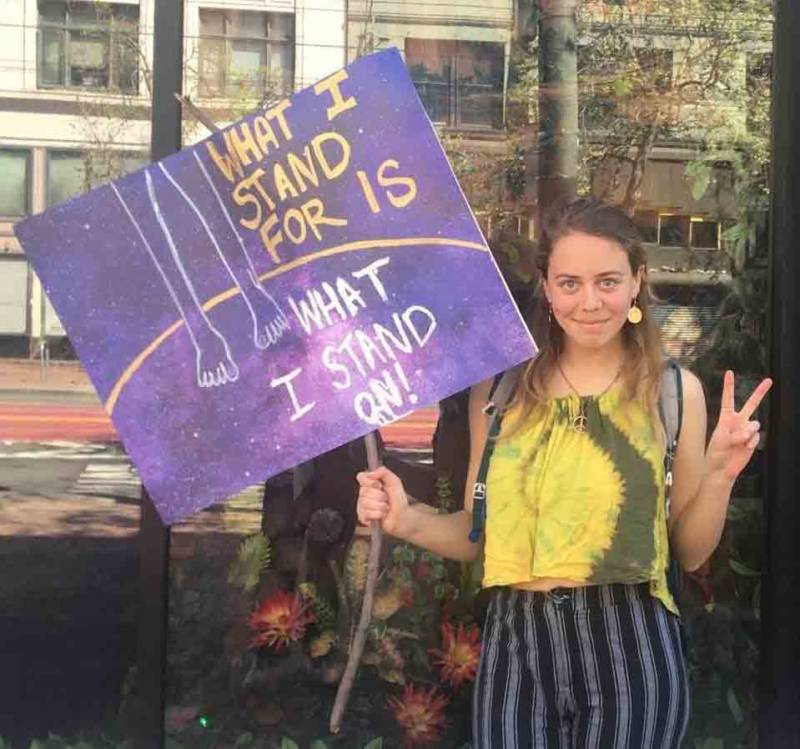
window.__IS_SSR__=true
window.__INITIAL_STATE__={
"attachmentsReducer": {
"audio_0": {
"type": "attachments",
"id": "audio_0",
"imgSizes": {
"kqedFullSize": {
"file": "https://ww2.kqed.org/news/wp-content/themes/KQED-unified/img/audio_bgs/background0.jpg"
}
}
},
"audio_1": {
"type": "attachments",
"id": "audio_1",
"imgSizes": {
"kqedFullSize": {
"file": "https://ww2.kqed.org/news/wp-content/themes/KQED-unified/img/audio_bgs/background1.jpg"
}
}
},
"audio_2": {
"type": "attachments",
"id": "audio_2",
"imgSizes": {
"kqedFullSize": {
"file": "https://ww2.kqed.org/news/wp-content/themes/KQED-unified/img/audio_bgs/background2.jpg"
}
}
},
"audio_3": {
"type": "attachments",
"id": "audio_3",
"imgSizes": {
"kqedFullSize": {
"file": "https://ww2.kqed.org/news/wp-content/themes/KQED-unified/img/audio_bgs/background3.jpg"
}
}
},
"audio_4": {
"type": "attachments",
"id": "audio_4",
"imgSizes": {
"kqedFullSize": {
"file": "https://ww2.kqed.org/news/wp-content/themes/KQED-unified/img/audio_bgs/background4.jpg"
}
}
},
"placeholder": {
"type": "attachments",
"id": "placeholder",
"imgSizes": {
"thumbnail": {
"file": "https://cdn.kqed.org/wp-content/uploads/2024/12/KQED-Default-Image-816638274-2000x1333-1-160x107.jpg",
"width": 160,
"height": 107,
"mimeType": "image/jpeg"
},
"medium": {
"file": "https://cdn.kqed.org/wp-content/uploads/2024/12/KQED-Default-Image-816638274-2000x1333-1-800x533.jpg",
"width": 800,
"height": 533,
"mimeType": "image/jpeg"
},
"medium_large": {
"file": "https://cdn.kqed.org/wp-content/uploads/2024/12/KQED-Default-Image-816638274-2000x1333-1-768x512.jpg",
"width": 768,
"height": 512,
"mimeType": "image/jpeg"
},
"large": {
"file": "https://cdn.kqed.org/wp-content/uploads/2024/12/KQED-Default-Image-816638274-2000x1333-1-1020x680.jpg",
"width": 1020,
"height": 680,
"mimeType": "image/jpeg"
},
"1536x1536": {
"file": "https://cdn.kqed.org/wp-content/uploads/2024/12/KQED-Default-Image-816638274-2000x1333-1-1536x1024.jpg",
"width": 1536,
"height": 1024,
"mimeType": "image/jpeg"
},
"fd-lrg": {
"file": "https://cdn.kqed.org/wp-content/uploads/2024/12/KQED-Default-Image-816638274-2000x1333-1-1536x1024.jpg",
"width": 1536,
"height": 1024,
"mimeType": "image/jpeg"
},
"fd-med": {
"file": "https://cdn.kqed.org/wp-content/uploads/2024/12/KQED-Default-Image-816638274-2000x1333-1-1020x680.jpg",
"width": 1020,
"height": 680,
"mimeType": "image/jpeg"
},
"fd-sm": {
"file": "https://cdn.kqed.org/wp-content/uploads/2024/12/KQED-Default-Image-816638274-2000x1333-1-800x533.jpg",
"width": 800,
"height": 533,
"mimeType": "image/jpeg"
},
"post-thumbnail": {
"file": "https://cdn.kqed.org/wp-content/uploads/2024/12/KQED-Default-Image-816638274-2000x1333-1-672x372.jpg",
"width": 672,
"height": 372,
"mimeType": "image/jpeg"
},
"twentyfourteen-full-width": {
"file": "https://cdn.kqed.org/wp-content/uploads/2024/12/KQED-Default-Image-816638274-2000x1333-1-1038x576.jpg",
"width": 1038,
"height": 576,
"mimeType": "image/jpeg"
},
"xxsmall": {
"file": "https://cdn.kqed.org/wp-content/uploads/2024/12/KQED-Default-Image-816638274-2000x1333-1-160x107.jpg",
"width": 160,
"height": 107,
"mimeType": "image/jpeg"
},
"xsmall": {
"file": "https://cdn.kqed.org/wp-content/uploads/2024/12/KQED-Default-Image-816638274-2000x1333-1-672x372.jpg",
"width": 672,
"height": 372,
"mimeType": "image/jpeg"
},
"small": {
"file": "https://cdn.kqed.org/wp-content/uploads/2024/12/KQED-Default-Image-816638274-2000x1333-1-672x372.jpg",
"width": 672,
"height": 372,
"mimeType": "image/jpeg"
},
"xlarge": {
"file": "https://cdn.kqed.org/wp-content/uploads/2024/12/KQED-Default-Image-816638274-2000x1333-1-1020x680.jpg",
"width": 1020,
"height": 680,
"mimeType": "image/jpeg"
},
"full-width": {
"file": "https://cdn.kqed.org/wp-content/uploads/2024/12/KQED-Default-Image-816638274-2000x1333-1-1920x1280.jpg",
"width": 1920,
"height": 1280,
"mimeType": "image/jpeg"
},
"guest-author-32": {
"file": "https://cdn.kqed.org/wp-content/uploads/2025/01/KQED-Default-Image-816638274-1333x1333-1-160x160.jpg",
"width": 32,
"height": 32,
"mimeType": "image/jpeg"
},
"guest-author-50": {
"file": "https://cdn.kqed.org/wp-content/uploads/2025/01/KQED-Default-Image-816638274-1333x1333-1-160x160.jpg",
"width": 50,
"height": 50,
"mimeType": "image/jpeg"
},
"guest-author-64": {
"file": "https://cdn.kqed.org/wp-content/uploads/2025/01/KQED-Default-Image-816638274-1333x1333-1-160x160.jpg",
"width": 64,
"height": 64,
"mimeType": "image/jpeg"
},
"guest-author-96": {
"file": "https://cdn.kqed.org/wp-content/uploads/2025/01/KQED-Default-Image-816638274-1333x1333-1-160x160.jpg",
"width": 96,
"height": 96,
"mimeType": "image/jpeg"
},
"guest-author-128": {
"file": "https://cdn.kqed.org/wp-content/uploads/2025/01/KQED-Default-Image-816638274-1333x1333-1-160x160.jpg",
"width": 128,
"height": 128,
"mimeType": "image/jpeg"
},
"detail": {
"file": "https://cdn.kqed.org/wp-content/uploads/2025/01/KQED-Default-Image-816638274-1333x1333-1-160x160.jpg",
"width": 160,
"height": 160,
"mimeType": "image/jpeg"
},
"kqedFullSize": {
"file": "https://cdn.kqed.org/wp-content/uploads/2024/12/KQED-Default-Image-816638274-2000x1333-1.jpg",
"width": 2000,
"height": 1333
}
}
},
"mindshift_54700": {
"type": "attachments",
"id": "mindshift_54700",
"meta": {
"index": "attachments_1716263798",
"site": "mindshift",
"id": "54700",
"found": true
},
"parent": 53955,
"imgSizes": {
"twentyfourteen-full-width": {
"file": "https://ww2.kqed.org/app/uploads/sites/23/2019/10/AnaClimateStrike-SF2019-959x576.jpg",
"width": 959,
"mimeType": "image/jpeg",
"height": 576
},
"thumbnail": {
"file": "https://ww2.kqed.org/app/uploads/sites/23/2019/10/AnaClimateStrike-SF2019-160x150.jpg",
"width": 160,
"mimeType": "image/jpeg",
"height": 150
},
"post-thumbnail": {
"file": "https://ww2.kqed.org/app/uploads/sites/23/2019/10/AnaClimateStrike-SF2019-672x372.jpg",
"width": 672,
"mimeType": "image/jpeg",
"height": 372
},
"kqedFullSize": {
"file": "https://ww2.kqed.org/app/uploads/sites/23/2019/10/AnaClimateStrike-SF2019.jpg",
"width": 959,
"height": 898
},
"medium": {
"file": "https://ww2.kqed.org/app/uploads/sites/23/2019/10/AnaClimateStrike-SF2019-800x749.jpg",
"width": 800,
"mimeType": "image/jpeg",
"height": 749
},
"medium_large": {
"file": "https://ww2.kqed.org/app/uploads/sites/23/2019/10/AnaClimateStrike-SF2019-768x719.jpg",
"width": 768,
"mimeType": "image/jpeg",
"height": 719
}
},
"publishDate": 1572328521,
"modified": 1572328539,
"caption": "Ana Ostrovsky at the San Francisco climate strike. ",
"description": null,
"title": "AnaClimateStrike-SF2019",
"credit": "Courtesy Alice Ostrovsky",
"status": "inherit",
"isLoading": false,
"fetchFailed": false
},
"mindshift_54467": {
"type": "attachments",
"id": "mindshift_54467",
"meta": {
"index": "attachments_1716263798",
"site": "mindshift",
"id": "54467",
"found": true
},
"parent": 54461,
"imgSizes": {
"twentyfourteen-full-width": {
"file": "https://ww2.kqed.org/app/uploads/sites/23/2019/09/authentic-school-learning-1038x576.jpg",
"width": 1038,
"mimeType": "image/jpeg",
"height": 576
},
"thumbnail": {
"file": "https://ww2.kqed.org/app/uploads/sites/23/2019/09/authentic-school-learning-160x90.jpg",
"width": 160,
"mimeType": "image/jpeg",
"height": 90
},
"post-thumbnail": {
"file": "https://ww2.kqed.org/app/uploads/sites/23/2019/09/authentic-school-learning-672x372.jpg",
"width": 672,
"mimeType": "image/jpeg",
"height": 372
},
"kqedFullSize": {
"file": "https://ww2.kqed.org/app/uploads/sites/23/2019/09/authentic-school-learning.jpg",
"width": 1920,
"height": 1080
},
"large": {
"file": "https://ww2.kqed.org/app/uploads/sites/23/2019/09/authentic-school-learning-1020x574.jpg",
"width": 1020,
"mimeType": "image/jpeg",
"height": 574
},
"complete_open_graph": {
"file": "https://ww2.kqed.org/app/uploads/sites/23/2019/09/authentic-school-learning-1200x675.jpg",
"width": 1200,
"mimeType": "image/jpeg",
"height": 675
},
"full-width": {
"file": "https://ww2.kqed.org/app/uploads/sites/23/2019/09/authentic-school-learning-1920x1080.jpg",
"width": 1920,
"mimeType": "image/jpeg",
"height": 1080
},
"medium": {
"file": "https://ww2.kqed.org/app/uploads/sites/23/2019/09/authentic-school-learning-800x450.jpg",
"width": 800,
"mimeType": "image/jpeg",
"height": 450
},
"medium_large": {
"file": "https://ww2.kqed.org/app/uploads/sites/23/2019/09/authentic-school-learning-768x432.jpg",
"width": 768,
"mimeType": "image/jpeg",
"height": 432
}
},
"publishDate": 1568850300,
"modified": 1568850356,
"caption": "Ninth-grade students assemble robots at MC2 STEM High School.",
"description": "Ninth-grade students assemble robots at MC2 STEM High School.",
"title": "authentic-school-learning",
"credit": "Courtesy of Allison Shelley/\u003ca href=\"https://www.flickr.com/photos/all4ed/35694191023/in/album-72157687378950276/\">The Verbatim Agency for American Education: Images of Teachers and Students in Action\u003c/a>",
"status": "inherit",
"isLoading": false,
"fetchFailed": false
},
"mindshift_53631": {
"type": "attachments",
"id": "mindshift_53631",
"meta": {
"index": "attachments_1716263798",
"site": "mindshift",
"id": "53631",
"found": true
},
"parent": 53194,
"imgSizes": {
"twentyfourteen-full-width": {
"file": "https://ww2.kqed.org/app/uploads/sites/23/2019/05/IMG_2839-768x1024v2-1038x576.png",
"width": 1038,
"mimeType": "image/png",
"height": 576
},
"thumbnail": {
"file": "https://ww2.kqed.org/app/uploads/sites/23/2019/05/IMG_2839-768x1024v2-160x165.png",
"width": 160,
"mimeType": "image/png",
"height": 165
},
"post-thumbnail": {
"file": "https://ww2.kqed.org/app/uploads/sites/23/2019/05/IMG_2839-768x1024v2-672x372.png",
"width": 672,
"mimeType": "image/png",
"height": 372
},
"kqedFullSize": {
"file": "https://ww2.kqed.org/app/uploads/sites/23/2019/05/IMG_2839-768x1024v2.png",
"width": 1920,
"height": 1975
},
"large": {
"file": "https://ww2.kqed.org/app/uploads/sites/23/2019/05/IMG_2839-768x1024v2-1020x1049.png",
"width": 1020,
"mimeType": "image/png",
"height": 1049
},
"complete_open_graph": {
"file": "https://ww2.kqed.org/app/uploads/sites/23/2019/05/IMG_2839-768x1024v2-1167x1200.png",
"width": 1167,
"mimeType": "image/png",
"height": 1200
},
"full-width": {
"file": "https://ww2.kqed.org/app/uploads/sites/23/2019/05/IMG_2839-768x1024v2-1920x1975.png",
"width": 1920,
"mimeType": "image/png",
"height": 1975
},
"medium": {
"file": "https://ww2.kqed.org/app/uploads/sites/23/2019/05/IMG_2839-768x1024v2-800x823.png",
"width": 800,
"mimeType": "image/png",
"height": 823
},
"medium_large": {
"file": "https://ww2.kqed.org/app/uploads/sites/23/2019/05/IMG_2839-768x1024v2-768x790.png",
"width": 768,
"mimeType": "image/png",
"height": 790
}
},
"publishDate": 1557294645,
"modified": 1557294686,
"caption": "Incoming ninth-graders do trust activities as part of the ropes-course day. ",
"description": null,
"title": "IMG_2839-768x1024v2",
"credit": "Courtesy of South Bronx Community Charter",
"status": "inherit",
"isLoading": false,
"fetchFailed": false
},
"mindshift_53419": {
"type": "attachments",
"id": "mindshift_53419",
"meta": {
"index": "attachments_1716263798",
"site": "mindshift",
"id": "53419",
"found": true
},
"parent": 53417,
"imgSizes": {
"twentyfourteen-full-width": {
"file": "https://ww2.kqed.org/app/uploads/sites/23/2019/04/7-Teacher-Librarian-1038x576.png",
"width": 1038,
"mimeType": "image/png",
"height": 576
},
"thumbnail": {
"file": "https://ww2.kqed.org/app/uploads/sites/23/2019/04/7-Teacher-Librarian-160x120.png",
"width": 160,
"mimeType": "image/png",
"height": 120
},
"post-thumbnail": {
"file": "https://ww2.kqed.org/app/uploads/sites/23/2019/04/7-Teacher-Librarian-672x372.png",
"width": 672,
"mimeType": "image/png",
"height": 372
},
"kqedFullSize": {
"file": "https://ww2.kqed.org/app/uploads/sites/23/2019/04/7-Teacher-Librarian.png",
"width": 2048,
"height": 1536
},
"large": {
"file": "https://ww2.kqed.org/app/uploads/sites/23/2019/04/7-Teacher-Librarian-1020x765.png",
"width": 1020,
"mimeType": "image/png",
"height": 765
},
"complete_open_graph": {
"file": "https://ww2.kqed.org/app/uploads/sites/23/2019/04/7-Teacher-Librarian-1200x900.png",
"width": 1200,
"mimeType": "image/png",
"height": 900
},
"guest-author-50": {
"file": "https://ww2.kqed.org/app/uploads/sites/23/2019/04/7-Teacher-Librarian-50x50.png",
"width": 50,
"mimeType": "image/png",
"height": 50
},
"guest-author-96": {
"file": "https://ww2.kqed.org/app/uploads/sites/23/2019/04/7-Teacher-Librarian-96x96.png",
"width": 96,
"mimeType": "image/png",
"height": 96
},
"medium": {
"file": "https://ww2.kqed.org/app/uploads/sites/23/2019/04/7-Teacher-Librarian-800x600.png",
"width": 800,
"mimeType": "image/png",
"height": 600
},
"guest-author-64": {
"file": "https://ww2.kqed.org/app/uploads/sites/23/2019/04/7-Teacher-Librarian-64x64.png",
"width": 64,
"mimeType": "image/png",
"height": 64
},
"guest-author-32": {
"file": "https://ww2.kqed.org/app/uploads/sites/23/2019/04/7-Teacher-Librarian-32x32.png",
"width": 32,
"mimeType": "image/png",
"height": 32
},
"full-width": {
"file": "https://ww2.kqed.org/app/uploads/sites/23/2019/04/7-Teacher-Librarian-1920x1440.png",
"width": 1920,
"mimeType": "image/png",
"height": 1440
},
"medium_large": {
"file": "https://ww2.kqed.org/app/uploads/sites/23/2019/04/7-Teacher-Librarian-768x576.png",
"width": 768,
"mimeType": "image/png",
"height": 576
},
"guest-author-128": {
"file": "https://ww2.kqed.org/app/uploads/sites/23/2019/04/7-Teacher-Librarian-128x128.png",
"width": 128,
"mimeType": "image/png",
"height": 128
}
},
"publishDate": 1554849493,
"modified": 1554849719,
"caption": "Your school's librarian could be a wonderful asset and support to your classroom teaching.",
"description": null,
"title": "7 Teacher Librarian",
"credit": "Courtesy \u003ca href=\"https://twitter.com/trev_mackenzie\">Trevor MacKenzie\u003c/a> and \u003ca href=\"https://twitter.com/rbathursthunt\">Rebecca Bathurst-Hunt\u003c/a>",
"status": "inherit",
"isLoading": false,
"fetchFailed": false
},
"mindshift_51582": {
"type": "attachments",
"id": "mindshift_51582",
"meta": {
"index": "attachments_1716263798",
"site": "mindshift",
"id": "51582",
"found": true
},
"parent": 51580,
"imgSizes": {
"small": {
"file": "https://ww2.kqed.org/app/uploads/sites/23/2018/07/Tree-of-Inquiry-520x390.jpg",
"width": 520,
"mimeType": "image/jpeg",
"height": 390
},
"twentyfourteen-full-width": {
"file": "https://ww2.kqed.org/app/uploads/sites/23/2018/07/Tree-of-Inquiry-1038x576.jpg",
"width": 1038,
"mimeType": "image/jpeg",
"height": 576
},
"thumbnail": {
"file": "https://ww2.kqed.org/app/uploads/sites/23/2018/07/Tree-of-Inquiry-160x120.jpg",
"width": 160,
"mimeType": "image/jpeg",
"height": 120
},
"fd-sm": {
"file": "https://ww2.kqed.org/app/uploads/sites/23/2018/07/Tree-of-Inquiry-960x720.jpg",
"width": 960,
"mimeType": "image/jpeg",
"height": 720
},
"post-thumbnail": {
"file": "https://ww2.kqed.org/app/uploads/sites/23/2018/07/Tree-of-Inquiry-672x372.jpg",
"width": 672,
"mimeType": "image/jpeg",
"height": 372
},
"xsmall": {
"file": "https://ww2.kqed.org/app/uploads/sites/23/2018/07/Tree-of-Inquiry-375x281.jpg",
"width": 375,
"mimeType": "image/jpeg",
"height": 281
},
"kqedFullSize": {
"file": "https://ww2.kqed.org/app/uploads/sites/23/2018/07/Tree-of-Inquiry.jpg",
"width": 1500,
"height": 1125
},
"large": {
"file": "https://ww2.kqed.org/app/uploads/sites/23/2018/07/Tree-of-Inquiry-1020x765.jpg",
"width": 1020,
"mimeType": "image/jpeg",
"height": 765
},
"xlarge": {
"file": "https://ww2.kqed.org/app/uploads/sites/23/2018/07/Tree-of-Inquiry-1180x885.jpg",
"width": 1180,
"mimeType": "image/jpeg",
"height": 885
},
"complete_open_graph": {
"file": "https://ww2.kqed.org/app/uploads/sites/23/2018/07/Tree-of-Inquiry-1200x900.jpg",
"width": 1200,
"mimeType": "image/jpeg",
"height": 900
},
"guest-author-50": {
"file": "https://ww2.kqed.org/app/uploads/sites/23/2018/07/Tree-of-Inquiry-50x50.jpg",
"width": 50,
"mimeType": "image/jpeg",
"height": 50
},
"guest-author-96": {
"file": "https://ww2.kqed.org/app/uploads/sites/23/2018/07/Tree-of-Inquiry-96x96.jpg",
"width": 96,
"mimeType": "image/jpeg",
"height": 96
},
"medium": {
"file": "https://ww2.kqed.org/app/uploads/sites/23/2018/07/Tree-of-Inquiry-800x600.jpg",
"width": 800,
"mimeType": "image/jpeg",
"height": 600
},
"guest-author-64": {
"file": "https://ww2.kqed.org/app/uploads/sites/23/2018/07/Tree-of-Inquiry-64x64.jpg",
"width": 64,
"mimeType": "image/jpeg",
"height": 64
},
"guest-author-32": {
"file": "https://ww2.kqed.org/app/uploads/sites/23/2018/07/Tree-of-Inquiry-32x32.jpg",
"width": 32,
"mimeType": "image/jpeg",
"height": 32
},
"fd-med": {
"file": "https://ww2.kqed.org/app/uploads/sites/23/2018/07/Tree-of-Inquiry-1180x885.jpg",
"width": 1180,
"mimeType": "image/jpeg",
"height": 885
},
"detail": {
"file": "https://ww2.kqed.org/app/uploads/sites/23/2018/07/Tree-of-Inquiry-150x150.jpg",
"width": 150,
"mimeType": "image/jpeg",
"height": 150
},
"medium_large": {
"file": "https://ww2.kqed.org/app/uploads/sites/23/2018/07/Tree-of-Inquiry-768x576.jpg",
"width": 768,
"mimeType": "image/jpeg",
"height": 576
},
"guest-author-128": {
"file": "https://ww2.kqed.org/app/uploads/sites/23/2018/07/Tree-of-Inquiry-128x128.jpg",
"width": 128,
"mimeType": "image/jpeg",
"height": 128
},
"xxsmall": {
"file": "https://ww2.kqed.org/app/uploads/sites/23/2018/07/Tree-of-Inquiry-240x180.jpg",
"width": 240,
"mimeType": "image/jpeg",
"height": 180
}
},
"publishDate": 1530648231,
"modified": 1530648323,
"caption": "The \"Tree of Inquiry\" can be a helpful visual to understand how various educational buzzwords connect to inquiry.",
"description": "The \"Tree of Inquiry\" can be a helpful visual to understand how various educational buzzwords connect to inquiry.",
"title": "Tree-of-Inquiry",
"credit": "Courtesy Trevor MacKenzie and Rebecca Bathurst-Hunt",
"status": "inherit",
"isLoading": false,
"fetchFailed": false
},
"mindshift_51036": {
"type": "attachments",
"id": "mindshift_51036",
"meta": {
"index": "attachments_1716263798",
"site": "mindshift",
"id": "51036",
"found": true
},
"parent": 50974,
"imgSizes": {
"small": {
"file": "https://ww2.kqed.org/app/uploads/sites/23/2018/04/BIG-520x309.png",
"width": 520,
"mimeType": "image/png",
"height": 309
},
"twentyfourteen-full-width": {
"file": "https://ww2.kqed.org/app/uploads/sites/23/2018/04/BIG-1038x576.png",
"width": 1038,
"mimeType": "image/png",
"height": 576
},
"thumbnail": {
"file": "https://ww2.kqed.org/app/uploads/sites/23/2018/04/BIG-160x95.png",
"width": 160,
"mimeType": "image/png",
"height": 95
},
"fd-sm": {
"file": "https://ww2.kqed.org/app/uploads/sites/23/2018/04/BIG-960x570.png",
"width": 960,
"mimeType": "image/png",
"height": 570
},
"post-thumbnail": {
"file": "https://ww2.kqed.org/app/uploads/sites/23/2018/04/BIG-672x372.png",
"width": 672,
"mimeType": "image/png",
"height": 372
},
"xsmall": {
"file": "https://ww2.kqed.org/app/uploads/sites/23/2018/04/BIG-375x223.png",
"width": 375,
"mimeType": "image/png",
"height": 223
},
"kqedFullSize": {
"file": "https://ww2.kqed.org/app/uploads/sites/23/2018/04/BIG.png",
"width": 2296,
"height": 1364
},
"large": {
"file": "https://ww2.kqed.org/app/uploads/sites/23/2018/04/BIG-1020x606.png",
"width": 1020,
"mimeType": "image/png",
"height": 606
},
"xlarge": {
"file": "https://ww2.kqed.org/app/uploads/sites/23/2018/04/BIG-1180x701.png",
"width": 1180,
"mimeType": "image/png",
"height": 701
},
"guest-author-50": {
"file": "https://ww2.kqed.org/app/uploads/sites/23/2018/04/BIG-50x50.png",
"width": 50,
"mimeType": "image/png",
"height": 50
},
"guest-author-96": {
"file": "https://ww2.kqed.org/app/uploads/sites/23/2018/04/BIG-96x96.png",
"width": 96,
"mimeType": "image/png",
"height": 96
},
"medium": {
"file": "https://ww2.kqed.org/app/uploads/sites/23/2018/04/BIG-800x475.png",
"width": 800,
"mimeType": "image/png",
"height": 475
},
"guest-author-64": {
"file": "https://ww2.kqed.org/app/uploads/sites/23/2018/04/BIG-64x64.png",
"width": 64,
"mimeType": "image/png",
"height": 64
},
"guest-author-32": {
"file": "https://ww2.kqed.org/app/uploads/sites/23/2018/04/BIG-32x32.png",
"width": 32,
"mimeType": "image/png",
"height": 32
},
"fd-lrg": {
"file": "https://ww2.kqed.org/app/uploads/sites/23/2018/04/BIG-1920x1141.png",
"width": 1920,
"mimeType": "image/png",
"height": 1141
},
"fd-med": {
"file": "https://ww2.kqed.org/app/uploads/sites/23/2018/04/BIG-1180x701.png",
"width": 1180,
"mimeType": "image/png",
"height": 701
},
"full-width": {
"file": "https://ww2.kqed.org/app/uploads/sites/23/2018/04/BIG-1920x1141.png",
"width": 1920,
"mimeType": "image/png",
"height": 1141
},
"detail": {
"file": "https://ww2.kqed.org/app/uploads/sites/23/2018/04/BIG-150x150.png",
"width": 150,
"mimeType": "image/png",
"height": 150
},
"medium_large": {
"file": "https://ww2.kqed.org/app/uploads/sites/23/2018/04/BIG-768x456.png",
"width": 768,
"mimeType": "image/png",
"height": 456
},
"guest-author-128": {
"file": "https://ww2.kqed.org/app/uploads/sites/23/2018/04/BIG-128x128.png",
"width": 128,
"mimeType": "image/png",
"height": 128
},
"xxsmall": {
"file": "https://ww2.kqed.org/app/uploads/sites/23/2018/04/BIG-240x143.png",
"width": 240,
"mimeType": "image/png",
"height": 143
}
},
"publishDate": 1523305368,
"modified": 1528149476,
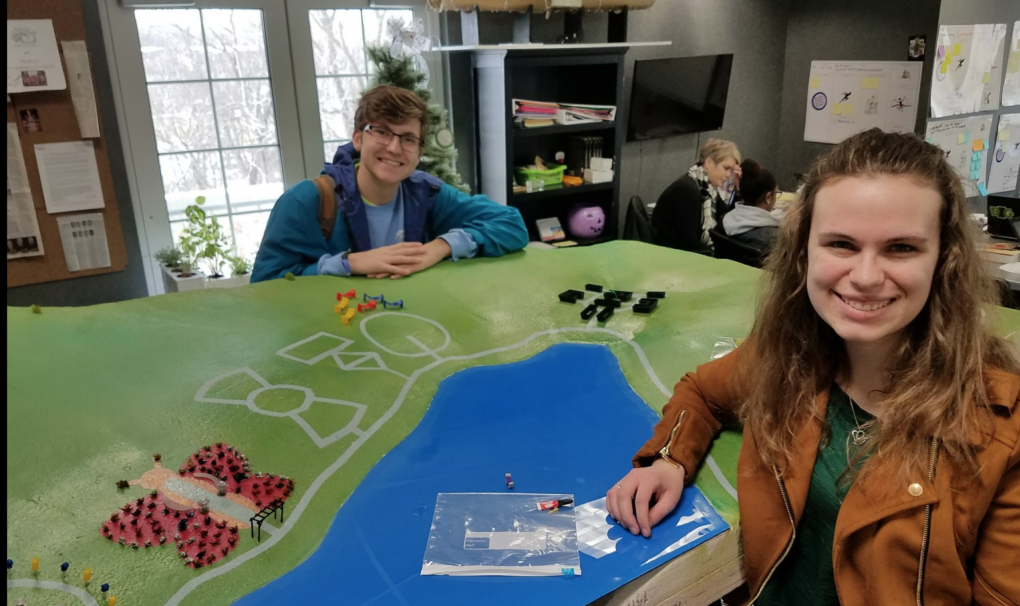
"caption": "Project lead Kaleb Cook (left) and Alexis Green (right) work on a custom 3-D model of a permaculture park design, created for partner organization Camp Courageous, which serves special needs youth and adults. The park plan will be implemented this summer.",
"description": "Project lead Kaleb Cook (left) and Alexis Green (right) work on a custom 3D model of a permaculture park design, created for partner organization Camp Courageous, which serves special needs youth and adults. The park plan will be implemented this summer.",
"title": "BIG",
"credit": "Troy Miller/Iowa BIG",
"status": "inherit",
"isLoading": false,
"fetchFailed": false
},
"mindshift_51228": {
"type": "attachments",
"id": "mindshift_51228",
"meta": {
"index": "attachments_1716263798",
"site": "mindshift",
"id": "51228",
"found": true
},
"parent": 51223,
"imgSizes": {
"small": {
"file": "https://ww2.kqed.org/app/uploads/sites/23/2018/05/Diallo_80536-1000x0-c-default-520x390.jpg",
"width": 520,
"mimeType": "image/jpeg",
"height": 390
},
"twentyfourteen-full-width": {
"file": "https://ww2.kqed.org/app/uploads/sites/23/2018/05/Diallo_80536-1000x0-c-default-1000x576.jpg",
"width": 1000,
"mimeType": "image/jpeg",
"height": 576
},
"thumbnail": {
"file": "https://ww2.kqed.org/app/uploads/sites/23/2018/05/Diallo_80536-1000x0-c-default-160x120.jpg",
"width": 160,
"mimeType": "image/jpeg",
"height": 120
},
"fd-sm": {
"file": "https://ww2.kqed.org/app/uploads/sites/23/2018/05/Diallo_80536-1000x0-c-default-960x720.jpg",
"width": 960,
"mimeType": "image/jpeg",
"height": 720
},
"post-thumbnail": {
"file": "https://ww2.kqed.org/app/uploads/sites/23/2018/05/Diallo_80536-1000x0-c-default-672x372.jpg",
"width": 672,
"mimeType": "image/jpeg",
"height": 372
},
"xsmall": {
"file": "https://ww2.kqed.org/app/uploads/sites/23/2018/05/Diallo_80536-1000x0-c-default-375x281.jpg",
"width": 375,
"mimeType": "image/jpeg",
"height": 281
},
"kqedFullSize": {
"file": "https://ww2.kqed.org/app/uploads/sites/23/2018/05/Diallo_80536-1000x0-c-default.jpg",
"width": 1000,
"height": 750
},
"guest-author-50": {
"file": "https://ww2.kqed.org/app/uploads/sites/23/2018/05/Diallo_80536-1000x0-c-default-50x50.jpg",
"width": 50,
"mimeType": "image/jpeg",
"height": 50
},
"guest-author-96": {
"file": "https://ww2.kqed.org/app/uploads/sites/23/2018/05/Diallo_80536-1000x0-c-default-96x96.jpg",
"width": 96,
"mimeType": "image/jpeg",
"height": 96
},
"medium": {
"file": "https://ww2.kqed.org/app/uploads/sites/23/2018/05/Diallo_80536-1000x0-c-default-800x600.jpg",
"width": 800,
"mimeType": "image/jpeg",
"height": 600
},
"guest-author-64": {
"file": "https://ww2.kqed.org/app/uploads/sites/23/2018/05/Diallo_80536-1000x0-c-default-64x64.jpg",
"width": 64,
"mimeType": "image/jpeg",
"height": 64
},
"guest-author-32": {
"file": "https://ww2.kqed.org/app/uploads/sites/23/2018/05/Diallo_80536-1000x0-c-default-32x32.jpg",
"width": 32,
"mimeType": "image/jpeg",
"height": 32
},
"detail": {
"file": "https://ww2.kqed.org/app/uploads/sites/23/2018/05/Diallo_80536-1000x0-c-default-150x150.jpg",
"width": 150,
"mimeType": "image/jpeg",
"height": 150
},
"medium_large": {
"file": "https://ww2.kqed.org/app/uploads/sites/23/2018/05/Diallo_80536-1000x0-c-default-768x576.jpg",
"width": 768,
"mimeType": "image/jpeg",
"height": 576
},
"guest-author-128": {
"file": "https://ww2.kqed.org/app/uploads/sites/23/2018/05/Diallo_80536-1000x0-c-default-128x128.jpg",
"width": 128,
"mimeType": "image/jpeg",
"height": 128
},
"xxsmall": {
"file": "https://ww2.kqed.org/app/uploads/sites/23/2018/05/Diallo_80536-1000x0-c-default-240x180.jpg",
"width": 240,
"mimeType": "image/jpeg",
"height": 180
}
},
"publishDate": 1526320719,
"modified": 1526320786,
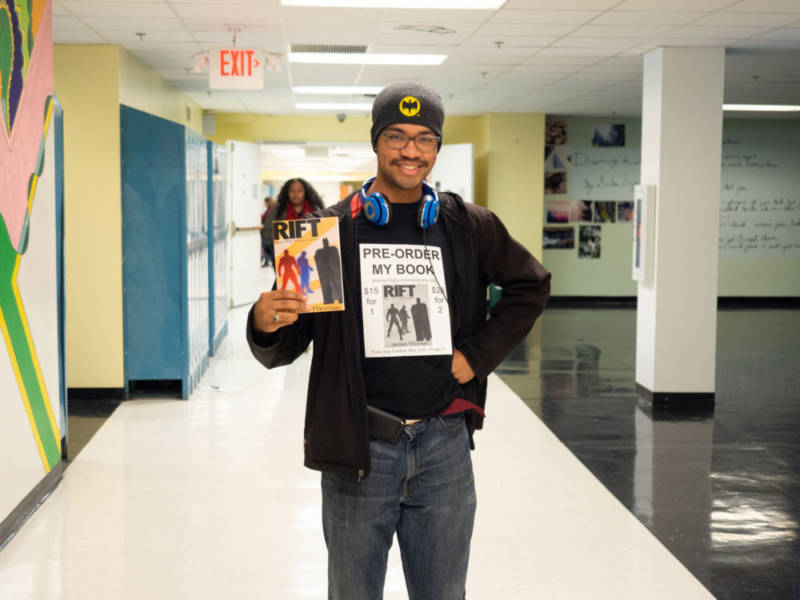
"caption": "James Thomas wrote and published a novel for his senior year Capstone project at the Science Leadership Academy. ",
"description": null,
"title": "Diallo_80536-1000x0-c-default",
"credit": "Amadou Diallo for The Hechinger Report",
"status": "inherit",
"isLoading": false,
"fetchFailed": false
},
"mindshift_50668": {
"type": "attachments",
"id": "mindshift_50668",
"meta": {
"index": "attachments_1716263798",
"site": "mindshift",
"id": "50668",
"found": true
},
"parent": 50661,
"imgSizes": {
"small": {
"file": "https://ww2.kqed.org/app/uploads/sites/23/2018/02/reDesign1-520x309.jpg",
"width": 520,
"mimeType": "image/jpeg",
"height": 309
},
"twentyfourteen-full-width": {
"file": "https://ww2.kqed.org/app/uploads/sites/23/2018/02/reDesign1-1038x576.jpg",
"width": 1038,
"mimeType": "image/jpeg",
"height": 576
},
"thumbnail": {
"file": "https://ww2.kqed.org/app/uploads/sites/23/2018/02/reDesign1-160x95.jpg",
"width": 160,
"mimeType": "image/jpeg",
"height": 95
},
"fd-sm": {
"file": "https://ww2.kqed.org/app/uploads/sites/23/2018/02/reDesign1-960x570.jpg",
"width": 960,
"mimeType": "image/jpeg",
"height": 570
},
"post-thumbnail": {
"file": "https://ww2.kqed.org/app/uploads/sites/23/2018/02/reDesign1-672x372.jpg",
"width": 672,
"mimeType": "image/jpeg",
"height": 372
},
"xsmall": {
"file": "https://ww2.kqed.org/app/uploads/sites/23/2018/02/reDesign1-375x223.jpg",
"width": 375,
"mimeType": "image/jpeg",
"height": 223
},
"kqedFullSize": {
"file": "https://ww2.kqed.org/app/uploads/sites/23/2018/02/reDesign1.jpg",
"width": 5760,
"height": 3420
},
"large": {
"file": "https://ww2.kqed.org/app/uploads/sites/23/2018/02/reDesign1-1020x606.jpg",
"width": 1020,
"mimeType": "image/jpeg",
"height": 606
},
"xlarge": {
"file": "https://ww2.kqed.org/app/uploads/sites/23/2018/02/reDesign1-1180x701.jpg",
"width": 1180,
"mimeType": "image/jpeg",
"height": 701
},
"guest-author-50": {
"file": "https://ww2.kqed.org/app/uploads/sites/23/2018/02/reDesign1-50x50.jpg",
"width": 50,
"mimeType": "image/jpeg",
"height": 50
},
"guest-author-96": {
"file": "https://ww2.kqed.org/app/uploads/sites/23/2018/02/reDesign1-96x96.jpg",
"width": 96,
"mimeType": "image/jpeg",
"height": 96
},
"medium": {
"file": "https://ww2.kqed.org/app/uploads/sites/23/2018/02/reDesign1-800x475.jpg",
"width": 800,
"mimeType": "image/jpeg",
"height": 475
},
"guest-author-64": {
"file": "https://ww2.kqed.org/app/uploads/sites/23/2018/02/reDesign1-64x64.jpg",
"width": 64,
"mimeType": "image/jpeg",
"height": 64
},
"guest-author-32": {
"file": "https://ww2.kqed.org/app/uploads/sites/23/2018/02/reDesign1-32x32.jpg",
"width": 32,
"mimeType": "image/jpeg",
"height": 32
},
"fd-lrg": {
"file": "https://ww2.kqed.org/app/uploads/sites/23/2018/02/reDesign1-1920x1140.jpg",
"width": 1920,
"mimeType": "image/jpeg",
"height": 1140
},
"fd-med": {
"file": "https://ww2.kqed.org/app/uploads/sites/23/2018/02/reDesign1-1180x701.jpg",
"width": 1180,
"mimeType": "image/jpeg",
"height": 701
},
"full-width": {
"file": "https://ww2.kqed.org/app/uploads/sites/23/2018/02/reDesign1-1920x1140.jpg",
"width": 1920,
"mimeType": "image/jpeg",
"height": 1140
},
"detail": {
"file": "https://ww2.kqed.org/app/uploads/sites/23/2018/02/reDesign1-150x150.jpg",
"width": 150,
"mimeType": "image/jpeg",
"height": 150
},
"medium_large": {
"file": "https://ww2.kqed.org/app/uploads/sites/23/2018/02/reDesign1-768x456.jpg",
"width": 768,
"mimeType": "image/jpeg",
"height": 456
},
"guest-author-128": {
"file": "https://ww2.kqed.org/app/uploads/sites/23/2018/02/reDesign1-128x128.jpg",
"width": 128,
"mimeType": "image/jpeg",
"height": 128
},
"xxsmall": {
"file": "https://ww2.kqed.org/app/uploads/sites/23/2018/02/reDesign1-240x143.jpg",
"width": 240,
"mimeType": "image/jpeg",
"height": 143
}
},
"publishDate": 1519759205,
"modified": 1519759346,
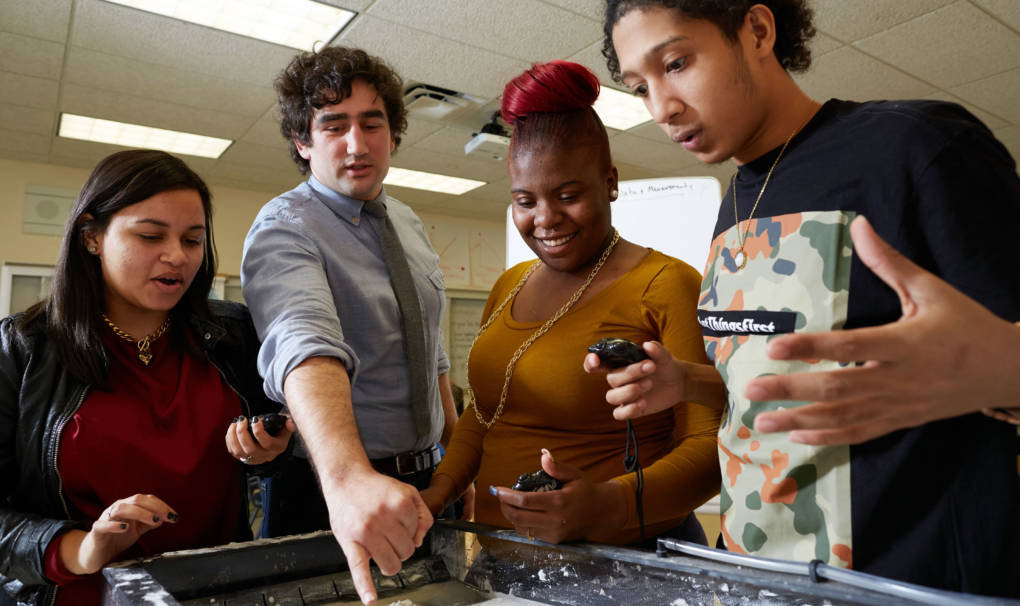
"caption": "Students at Bronx Arena High School explore erosion through a sand table simulation.",
"description": null,
"title": "reDesign1",
"credit": "\u003ca href=\"http://eleitz.com/\">Elizabeth Leitzell\u003c/a>/reDesign",
"status": "inherit",
"isLoading": false,
"fetchFailed": false
},
"mindshift_50731": {
"type": "attachments",
"id": "mindshift_50731",
"meta": {
"index": "attachments_1716263798",
"site": "mindshift",
"id": "50731",
"found": true
},
"parent": 49558,
"imgSizes": {
"small": {
"file": "https://ww2.kqed.org/app/uploads/sites/23/2018/02/Essien-9-1-520x347.jpg",
"width": 520,
"mimeType": "image/jpeg",
"height": 347
},
"twentyfourteen-full-width": {
"file": "https://ww2.kqed.org/app/uploads/sites/23/2018/02/Essien-9-1-1038x576.jpg",
"width": 1038,
"mimeType": "image/jpeg",
"height": 576
},
"thumbnail": {
"file": "https://ww2.kqed.org/app/uploads/sites/23/2018/02/Essien-9-1-160x107.jpg",
"width": 160,
"mimeType": "image/jpeg",
"height": 107
},
"fd-sm": {
"file": "https://ww2.kqed.org/app/uploads/sites/23/2018/02/Essien-9-1-960x640.jpg",
"width": 960,
"mimeType": "image/jpeg",
"height": 640
},
"post-thumbnail": {
"file": "https://ww2.kqed.org/app/uploads/sites/23/2018/02/Essien-9-1-672x372.jpg",
"width": 672,
"mimeType": "image/jpeg",
"height": 372
},
"xsmall": {
"file": "https://ww2.kqed.org/app/uploads/sites/23/2018/02/Essien-9-1-375x250.jpg",
"width": 375,
"mimeType": "image/jpeg",
"height": 250
},
"kqedFullSize": {
"file": "https://ww2.kqed.org/app/uploads/sites/23/2018/02/Essien-9-1-e1520545659287.jpg",
"width": 1920,
"height": 1280
},
"large": {
"file": "https://ww2.kqed.org/app/uploads/sites/23/2018/02/Essien-9-1-1020x680.jpg",
"width": 1020,
"mimeType": "image/jpeg",
"height": 680
},
"xlarge": {
"file": "https://ww2.kqed.org/app/uploads/sites/23/2018/02/Essien-9-1-1180x787.jpg",
"width": 1180,
"mimeType": "image/jpeg",
"height": 787
},
"guest-author-50": {
"file": "https://ww2.kqed.org/app/uploads/sites/23/2018/02/Essien-9-1-50x50.jpg",
"width": 50,
"mimeType": "image/jpeg",
"height": 50
},
"guest-author-96": {
"file": "https://ww2.kqed.org/app/uploads/sites/23/2018/02/Essien-9-1-96x96.jpg",
"width": 96,
"mimeType": "image/jpeg",
"height": 96
},
"medium": {
"file": "https://ww2.kqed.org/app/uploads/sites/23/2018/02/Essien-9-1-800x533.jpg",
"width": 800,
"mimeType": "image/jpeg",
"height": 533
},
"guest-author-64": {
"file": "https://ww2.kqed.org/app/uploads/sites/23/2018/02/Essien-9-1-64x64.jpg",
"width": 64,
"mimeType": "image/jpeg",
"height": 64
},
"guest-author-32": {
"file": "https://ww2.kqed.org/app/uploads/sites/23/2018/02/Essien-9-1-32x32.jpg",
"width": 32,
"mimeType": "image/jpeg",
"height": 32
},
"fd-lrg": {
"file": "https://ww2.kqed.org/app/uploads/sites/23/2018/02/Essien-9-1-1920x1280.jpg",
"width": 1920,
"mimeType": "image/jpeg",
"height": 1280
},
"fd-med": {
"file": "https://ww2.kqed.org/app/uploads/sites/23/2018/02/Essien-9-1-1180x787.jpg",
"width": 1180,
"mimeType": "image/jpeg",
"height": 787
},
"full-width": {
"file": "https://ww2.kqed.org/app/uploads/sites/23/2018/02/Essien-9-1-1920x1280.jpg",
"width": 1920,
"mimeType": "image/jpeg",
"height": 1280
},
"detail": {
"file": "https://ww2.kqed.org/app/uploads/sites/23/2018/02/Essien-9-1-150x150.jpg",
"width": 150,
"mimeType": "image/jpeg",
"height": 150
},
"medium_large": {
"file": "https://ww2.kqed.org/app/uploads/sites/23/2018/02/Essien-9-1-768x512.jpg",
"width": 768,
"mimeType": "image/jpeg",
"height": 512
},
"guest-author-128": {
"file": "https://ww2.kqed.org/app/uploads/sites/23/2018/02/Essien-9-1-128x128.jpg",
"width": 128,
"mimeType": "image/jpeg",
"height": 128
},
"xxsmall": {
"file": "https://ww2.kqed.org/app/uploads/sites/23/2018/02/Essien-9-1-240x160.jpg",
"width": 240,
"mimeType": "image/jpeg",
"height": 160
}
},
"publishDate": 1520544013,
"modified": 1520544044,
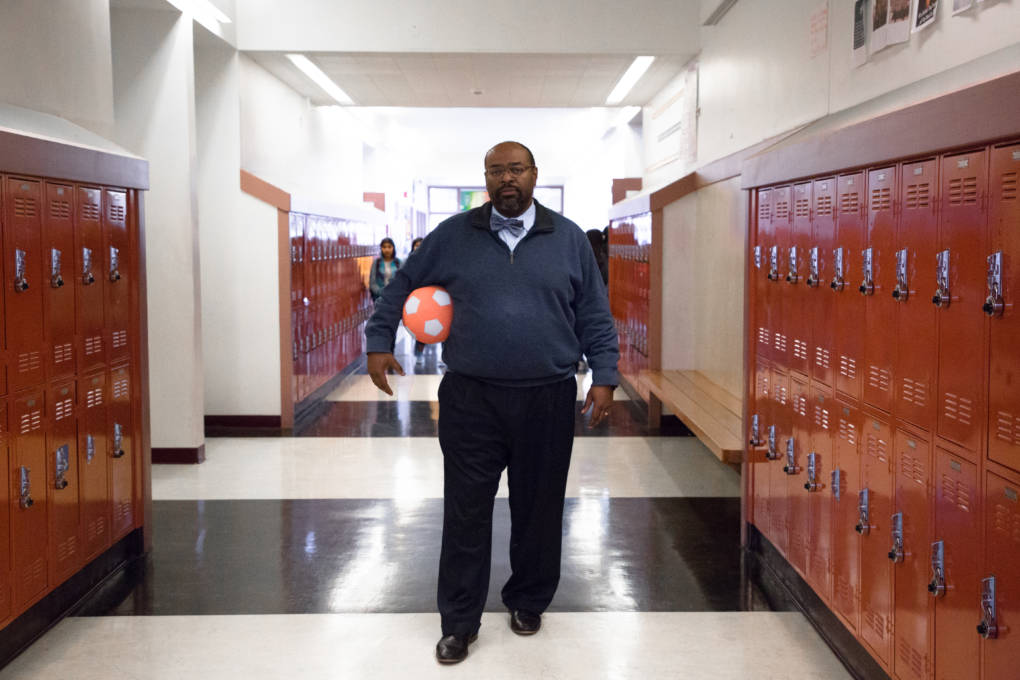
"caption": "Principal Michael Essien helps ensure a smooth passing period at Martin Luther King Jr. Academic Middle School, which included temporarily confiscating a ball from a student. ",
"description": null,
"title": "Essien-9",
"credit": "Samantha Shanahan/KQED",
"status": "inherit",
"isLoading": false,
"fetchFailed": false
},
"mindshift_50544": {
"type": "attachments",
"id": "mindshift_50544",
"meta": {
"index": "attachments_1716263798",
"site": "mindshift",
"id": "50544",
"found": true
},
"parent": 50530,
"imgSizes": {
"small": {
"file": "https://ww2.kqed.org/app/uploads/sites/23/2018/02/windturbine-520x293.jpg",
"width": 520,
"mimeType": "image/jpeg",
"height": 293
},
"twentyfourteen-full-width": {
"file": "https://ww2.kqed.org/app/uploads/sites/23/2018/02/windturbine-1038x576.jpg",
"width": 1038,
"mimeType": "image/jpeg",
"height": 576
},
"thumbnail": {
"file": "https://ww2.kqed.org/app/uploads/sites/23/2018/02/windturbine-160x90.jpg",
"width": 160,
"mimeType": "image/jpeg",
"height": 90
},
"fd-sm": {
"file": "https://ww2.kqed.org/app/uploads/sites/23/2018/02/windturbine-960x540.jpg",
"width": 960,
"mimeType": "image/jpeg",
"height": 540
},
"post-thumbnail": {
"file": "https://ww2.kqed.org/app/uploads/sites/23/2018/02/windturbine-672x372.jpg",
"width": 672,
"mimeType": "image/jpeg",
"height": 372
},
"xsmall": {
"file": "https://ww2.kqed.org/app/uploads/sites/23/2018/02/windturbine-375x211.jpg",
"width": 375,
"mimeType": "image/jpeg",
"height": 211
},
"kqedFullSize": {
"file": "https://ww2.kqed.org/app/uploads/sites/23/2018/02/windturbine.jpg",
"width": 2048,
"height": 1152
},
"large": {
"file": "https://ww2.kqed.org/app/uploads/sites/23/2018/02/windturbine-1020x574.jpg",
"width": 1020,
"mimeType": "image/jpeg",
"height": 574
},
"xlarge": {
"file": "https://ww2.kqed.org/app/uploads/sites/23/2018/02/windturbine-1180x664.jpg",
"width": 1180,
"mimeType": "image/jpeg",
"height": 664
},
"guest-author-50": {
"file": "https://ww2.kqed.org/app/uploads/sites/23/2018/02/windturbine-50x50.jpg",
"width": 50,
"mimeType": "image/jpeg",
"height": 50
},
"guest-author-96": {
"file": "https://ww2.kqed.org/app/uploads/sites/23/2018/02/windturbine-96x96.jpg",
"width": 96,
"mimeType": "image/jpeg",
"height": 96
},
"medium": {
"file": "https://ww2.kqed.org/app/uploads/sites/23/2018/02/windturbine-800x450.jpg",
"width": 800,
"mimeType": "image/jpeg",
"height": 450
},
"guest-author-64": {
"file": "https://ww2.kqed.org/app/uploads/sites/23/2018/02/windturbine-64x64.jpg",
"width": 64,
"mimeType": "image/jpeg",
"height": 64
},
"guest-author-32": {
"file": "https://ww2.kqed.org/app/uploads/sites/23/2018/02/windturbine-32x32.jpg",
"width": 32,
"mimeType": "image/jpeg",
"height": 32
},
"fd-lrg": {
"file": "https://ww2.kqed.org/app/uploads/sites/23/2018/02/windturbine-1920x1080.jpg",
"width": 1920,
"mimeType": "image/jpeg",
"height": 1080
},
"fd-med": {
"file": "https://ww2.kqed.org/app/uploads/sites/23/2018/02/windturbine-1180x664.jpg",
"width": 1180,
"mimeType": "image/jpeg",
"height": 664
},
"full-width": {
"file": "https://ww2.kqed.org/app/uploads/sites/23/2018/02/windturbine-1920x1080.jpg",
"width": 1920,
"mimeType": "image/jpeg",
"height": 1080
},
"detail": {
"file": "https://ww2.kqed.org/app/uploads/sites/23/2018/02/windturbine-150x150.jpg",
"width": 150,
"mimeType": "image/jpeg",
"height": 150
},
"medium_large": {
"file": "https://ww2.kqed.org/app/uploads/sites/23/2018/02/windturbine-768x432.jpg",
"width": 768,
"mimeType": "image/jpeg",
"height": 432
},
"guest-author-128": {
"file": "https://ww2.kqed.org/app/uploads/sites/23/2018/02/windturbine-128x128.jpg",
"width": 128,
"mimeType": "image/jpeg",
"height": 128
},
"xxsmall": {
"file": "https://ww2.kqed.org/app/uploads/sites/23/2018/02/windturbine-240x135.jpg",
"width": 240,
"mimeType": "image/jpeg",
"height": 135
}
},
"publishDate": 1518136231,
"modified": 1519431364,
"caption": "Two high school students construct a wind turbine.",
"description": "Two high school students construct a wind turbine.",
"title": "windturbine",
"credit": "Courtesy of Allison Shelley/\u003ca href=\"https://www.flickr.com/photos/all4ed/36335119132/\">The Verbatim Agency for American Education: Images of Teachers and Students in Action\u003c/a>",
"status": "inherit",
"isLoading": false,
"fetchFailed": false
},
"mindshift_50447": {
"type": "attachments",
"id": "mindshift_50447",
"meta": {
"index": "attachments_1716263798",
"site": "mindshift",
"id": "50447",
"found": true
},
"parent": 50443,
"imgSizes": {
"small": {
"file": "https://ww2.kqed.org/app/uploads/sites/23/2018/01/HTH1-520x293.jpg",
"width": 520,
"mimeType": "image/jpeg",
"height": 293
},
"twentyfourteen-full-width": {
"file": "https://ww2.kqed.org/app/uploads/sites/23/2018/01/HTH1-1038x576.jpg",
"width": 1038,
"mimeType": "image/jpeg",
"height": 576
},
"thumbnail": {
"file": "https://ww2.kqed.org/app/uploads/sites/23/2018/01/HTH1-160x90.jpg",
"width": 160,
"mimeType": "image/jpeg",
"height": 90
},
"fd-sm": {
"file": "https://ww2.kqed.org/app/uploads/sites/23/2018/01/HTH1-960x540.jpg",
"width": 960,
"mimeType": "image/jpeg",
"height": 540
},
"post-thumbnail": {
"file": "https://ww2.kqed.org/app/uploads/sites/23/2018/01/HTH1-672x372.jpg",
"width": 672,
"mimeType": "image/jpeg",
"height": 372
},
"xsmall": {
"file": "https://ww2.kqed.org/app/uploads/sites/23/2018/01/HTH1-375x211.jpg",
"width": 375,
"mimeType": "image/jpeg",
"height": 211
},
"kqedFullSize": {
"file": "https://ww2.kqed.org/app/uploads/sites/23/2018/01/HTH1.jpg",
"width": 4032,
"height": 2268
},
"large": {
"file": "https://ww2.kqed.org/app/uploads/sites/23/2018/01/HTH1-1020x574.jpg",
"width": 1020,
"mimeType": "image/jpeg",
"height": 574
},
"xlarge": {
"file": "https://ww2.kqed.org/app/uploads/sites/23/2018/01/HTH1-1180x664.jpg",
"width": 1180,
"mimeType": "image/jpeg",
"height": 664
},
"guest-author-50": {
"file": "https://ww2.kqed.org/app/uploads/sites/23/2018/01/HTH1-50x50.jpg",
"width": 50,
"mimeType": "image/jpeg",
"height": 50
},
"guest-author-96": {
"file": "https://ww2.kqed.org/app/uploads/sites/23/2018/01/HTH1-96x96.jpg",
"width": 96,
"mimeType": "image/jpeg",
"height": 96
},
"medium": {
"file": "https://ww2.kqed.org/app/uploads/sites/23/2018/01/HTH1-800x450.jpg",
"width": 800,
"mimeType": "image/jpeg",
"height": 450
},
"guest-author-64": {
"file": "https://ww2.kqed.org/app/uploads/sites/23/2018/01/HTH1-64x64.jpg",
"width": 64,
"mimeType": "image/jpeg",
"height": 64
},
"guest-author-32": {
"file": "https://ww2.kqed.org/app/uploads/sites/23/2018/01/HTH1-32x32.jpg",
"width": 32,
"mimeType": "image/jpeg",
"height": 32
},
"fd-lrg": {
"file": "https://ww2.kqed.org/app/uploads/sites/23/2018/01/HTH1-1920x1080.jpg",
"width": 1920,
"mimeType": "image/jpeg",
"height": 1080
},
"fd-med": {
"file": "https://ww2.kqed.org/app/uploads/sites/23/2018/01/HTH1-1180x664.jpg",
"width": 1180,
"mimeType": "image/jpeg",
"height": 664
},
"full-width": {
"file": "https://ww2.kqed.org/app/uploads/sites/23/2018/01/HTH1-1920x1080.jpg",
"width": 1920,
"mimeType": "image/jpeg",
"height": 1080
},
"detail": {
"file": "https://ww2.kqed.org/app/uploads/sites/23/2018/01/HTH1-150x150.jpg",
"width": 150,
"mimeType": "image/jpeg",
"height": 150
},
"medium_large": {
"file": "https://ww2.kqed.org/app/uploads/sites/23/2018/01/HTH1-768x432.jpg",
"width": 768,
"mimeType": "image/jpeg",
"height": 432
},
"guest-author-128": {
"file": "https://ww2.kqed.org/app/uploads/sites/23/2018/01/HTH1-128x128.jpg",
"width": 128,
"mimeType": "image/jpeg",
"height": 128
},
"xxsmall": {
"file": "https://ww2.kqed.org/app/uploads/sites/23/2018/01/HTH1-240x135.jpg",
"width": 240,
"mimeType": "image/jpeg",
"height": 135
}
},
"publishDate": 1517358550,
"modified": 1517358613,
"caption": "A High Tech High hallway features part of an art project, \"Bridge to Nowhere,\" along with many other examples of student work.",
"description": "A High Tech High hallway features part of an art project, \"Bridge to Nowhere,\" along with many other examples of student work.",
"title": "HTH1",
"credit": "Katrina Schwartz/KQED",
"status": "inherit",
"isLoading": false,
"fetchFailed": false
},
"mindshift_49939": {
"type": "attachments",
"id": "mindshift_49939",
"meta": {
"index": "attachments_1716263798",
"site": "mindshift",
"id": "49939",
"found": true
},
"parent": 49934,
"imgSizes": {
"small": {
"file": "https://ww2.kqed.org/app/uploads/sites/23/2018/01/iStock-485774318-520x347.jpg",
"width": 520,
"mimeType": "image/jpeg",
"height": 347
},
"twentyfourteen-full-width": {
"file": "https://ww2.kqed.org/app/uploads/sites/23/2018/01/iStock-485774318-1038x576.jpg",
"width": 1038,
"mimeType": "image/jpeg",
"height": 576
},
"thumbnail": {
"file": "https://ww2.kqed.org/app/uploads/sites/23/2018/01/iStock-485774318-160x107.jpg",
"width": 160,
"mimeType": "image/jpeg",
"height": 107
},
"fd-sm": {
"file": "https://ww2.kqed.org/app/uploads/sites/23/2018/01/iStock-485774318-960x640.jpg",
"width": 960,
"mimeType": "image/jpeg",
"height": 640
},
"post-thumbnail": {
"file": "https://ww2.kqed.org/app/uploads/sites/23/2018/01/iStock-485774318-672x372.jpg",
"width": 672,
"mimeType": "image/jpeg",
"height": 372
},
"xsmall": {
"file": "https://ww2.kqed.org/app/uploads/sites/23/2018/01/iStock-485774318-375x250.jpg",
"width": 375,
"mimeType": "image/jpeg",
"height": 250
},
"kqedFullSize": {
"file": "https://ww2.kqed.org/app/uploads/sites/23/2018/01/iStock-485774318-e1514850598412.jpg",
"width": 1920,
"height": 1280
},
"large": {
"file": "https://ww2.kqed.org/app/uploads/sites/23/2018/01/iStock-485774318-1020x680.jpg",
"width": 1020,
"mimeType": "image/jpeg",
"height": 680
},
"xlarge": {
"file": "https://ww2.kqed.org/app/uploads/sites/23/2018/01/iStock-485774318-1180x787.jpg",
"width": 1180,
"mimeType": "image/jpeg",
"height": 787
},
"guest-author-50": {
"file": "https://ww2.kqed.org/app/uploads/sites/23/2018/01/iStock-485774318-50x50.jpg",
"width": 50,
"mimeType": "image/jpeg",
"height": 50
},
"guest-author-96": {
"file": "https://ww2.kqed.org/app/uploads/sites/23/2018/01/iStock-485774318-96x96.jpg",
"width": 96,
"mimeType": "image/jpeg",
"height": 96
},
"medium": {
"file": "https://ww2.kqed.org/app/uploads/sites/23/2018/01/iStock-485774318-800x533.jpg",
"width": 800,
"mimeType": "image/jpeg",
"height": 533
},
"guest-author-64": {
"file": "https://ww2.kqed.org/app/uploads/sites/23/2018/01/iStock-485774318-64x64.jpg",
"width": 64,
"mimeType": "image/jpeg",
"height": 64
},
"guest-author-32": {
"file": "https://ww2.kqed.org/app/uploads/sites/23/2018/01/iStock-485774318-32x32.jpg",
"width": 32,
"mimeType": "image/jpeg",
"height": 32
},
"fd-lrg": {
"file": "https://ww2.kqed.org/app/uploads/sites/23/2018/01/iStock-485774318-1920x1280.jpg",
"width": 1920,
"mimeType": "image/jpeg",
"height": 1280
},
"fd-med": {
"file": "https://ww2.kqed.org/app/uploads/sites/23/2018/01/iStock-485774318-1180x787.jpg",
"width": 1180,
"mimeType": "image/jpeg",
"height": 787
},
"full-width": {
"file": "https://ww2.kqed.org/app/uploads/sites/23/2018/01/iStock-485774318-1920x1280.jpg",
"width": 1920,
"mimeType": "image/jpeg",
"height": 1280
},
"detail": {
"file": "https://ww2.kqed.org/app/uploads/sites/23/2018/01/iStock-485774318-150x150.jpg",
"width": 150,
"mimeType": "image/jpeg",
"height": 150
},
"medium_large": {
"file": "https://ww2.kqed.org/app/uploads/sites/23/2018/01/iStock-485774318-768x512.jpg",
"width": 768,
"mimeType": "image/jpeg",
"height": 512
},
"guest-author-128": {
"file": "https://ww2.kqed.org/app/uploads/sites/23/2018/01/iStock-485774318-128x128.jpg",
"width": 128,
"mimeType": "image/jpeg",
"height": 128
},
"xxsmall": {
"file": "https://ww2.kqed.org/app/uploads/sites/23/2018/01/iStock-485774318-240x160.jpg",
"width": 240,
"mimeType": "image/jpeg",
"height": 160
}
},
"publishDate": 1514850562,
"modified": 1514850624,
"caption": null,
"description": null,
"title": "Talking",
"credit": "iStock/danny4stockphoto",
"status": "inherit",
"isLoading": false,
"fetchFailed": false
}
},
"audioPlayerReducer": {
"postId": "stream_live",
"isPaused": true,
"isPlaying": false,
"pfsActive": false,
"pledgeModalIsOpen": true,
"playerDrawerIsOpen": false,
"liveAudioPlayStartedAt": 0,
"liveAudioPlayContext": ""
},
"authorsReducer": {
"byline_mindshift_53417": {
"type": "authors",
"id": "byline_mindshift_53417",
"meta": {
"override": true
},
"slug": "byline_mindshift_53417",
"name": "Trevor MacKenzie",
"isLoading": false
},
"byline_mindshift_51223": {
"type": "authors",
"id": "byline_mindshift_51223",
"meta": {
"override": true
},
"slug": "byline_mindshift_51223",
"name": "\u003ca href=\"http://hechingerreport.org/author/amadou-diallo\">Amadou Diallo\u003c/a>",
"isLoading": false
},
"katrinaschwartz": {
"type": "authors",
"id": "234",
"meta": {
"index": "authors_1716337520",
"id": "234",
"found": true
},
"name": "Katrina Schwartz",
"firstName": "Katrina",
"lastName": "Schwartz",
"slug": "katrinaschwartz",
"email": "kschwartz@kqed.org",
"display_author_email": false,
"staff_mastheads": [
"news"
],
"title": "Producer",
"bio": "Katrina Schwartz is a journalist based in San Francisco. She's worked at KPCC public radio in LA and has reported on air and online for KQED since 2010. She covered how teaching and learning is changing for MindShift between 2012 and 2020. She is the co-host of the MindShift podcast and now produces KQED's Bay Curious podcast.",
"avatar": "https://secure.gravatar.com/avatar/edb4ee79070447a018538c9aae6eeecf28786515b8a0c30e43b6b7dce5aa44c8?s=600&d=blank&r=g",
"twitter": "kschwart",
"bluesky": null,
"facebook": null,
"instagram": null,
"linkedin": null,
"sites": [
{
"site": "",
"roles": [
"editor"
]
},
{
"site": "news",
"roles": [
"editor"
]
},
{
"site": "mindshift",
"roles": [
"administrator"
]
},
{
"site": "stateofhealth",
"roles": [
"author"
]
},
{
"site": "science",
"roles": [
"editor"
]
}
],
"headData": {
"title": "Katrina Schwartz | KQED",
"description": "Producer",
"ogImgSrc": "https://secure.gravatar.com/avatar/edb4ee79070447a018538c9aae6eeecf28786515b8a0c30e43b6b7dce5aa44c8?s=600&d=blank&r=g",
"twImgSrc": "https://secure.gravatar.com/avatar/edb4ee79070447a018538c9aae6eeecf28786515b8a0c30e43b6b7dce5aa44c8?s=600&d=blank&r=g"
},
"isLoading": false,
"link": "/author/katrinaschwartz"
}
},
"pagesReducer": {
"mindshift_tag_project-based-learning": {
"type": "terms",
"id": "mindshift_256",
"meta": {
"index": "terms_1716263798",
"site": "mindshift",
"id": "256",
"score": 10.404039
},
"featImg": null,
"name": "Project Based Learning",
"description": "Educators use Project Based Learning to allow students to make projects as they learn certain subjects.",
"taxonomy": "tag",
"headData": {
"twImgId": null,
"twTitle": null,
"ogTitle": null,
"ogImgId": null,
"twDescription": null,
"description": "Educators use Project Based Learning to allow students to make projects as they learn certain subjects.",
"title": "Project Based Learning Archives - KQED Mindshift",
"ogDescription": null
},
"ttid": 256,
"slug": "project-based-learning",
"isLoading": false,
"title": "Project Based Learning",
"pageMeta": {
"site": "mindshift",
"WpPageTemplate": "page-topic-editorial",
"currentPage": 2
},
"blocks": [
{
"blockName": "kqed/company-paragraph",
"content": "Educators use Project Based Learning to allow students to make projects as they learn certain subjects."
},
{
"blockName": "kqed/post-list",
"attrs": {
"layout": "cardArticle2",
"query": "posts/mindshift?tag=project-based-learning",
"seeMore": false,
"paginated": true,
"page": 2
}
},
{
"blockName": "kqed/ad"
}
]
}
},
"pfsSessionReducer": {},
"postsReducer": {
"stream_live": {
"type": "live",
"id": "stream_live",
"audioUrl": "https://streams.kqed.org/kqedradio",
"title": "Live Stream",
"excerpt": "Live Stream information currently unavailable.",
"link": "/radio",
"featImg": "",
"label": {
"name": "KQED Live",
"link": "/"
}
},
"stream_kqedNewscast": {
"type": "posts",
"id": "stream_kqedNewscast",
"audioUrl": "https://www.kqed.org/.stream/anon/radio/RDnews/newscast.mp3?_=1",
"title": "KQED Newscast",
"featImg": "",
"label": {
"name": "88.5 FM",
"link": "/"
}
},
"mindshift_53955": {
"type": "posts",
"id": "mindshift_53955",
"meta": {
"index": "posts_1716263798",
"site": "mindshift",
"id": "53955",
"score": null,
"sort": [
1572328564000
]
},
"guestAuthors": [],
"slug": "where-did-all-these-teen-activists-come-from",
"title": "Where Did All These Teen Activists Come From?",
"publishDate": 1572328564,
"format": "audio",
"headTitle": "Where Did All These Teen Activists Come From? | KQED",
"labelTerm": {
"term": 21942,
"site": "mindshift"
},
"content": "\u003ch4>Listen and subscribe to our podcast from your mobile device:\u003cbr>\n\u003ca href=\"https://podcasts.apple.com/us/podcast/mindshift-podcast/id1078765985?mt=2\">via Apple Podcasts \u003c/a> | \u003ca href=\"https://www.stitcher.com/podcast/kqed/stories-teachers-share\">via Stitcher\u003c/a> | \u003ca href=\"https://one.npr.org/?sharedMediaId=750851136:750851138\">via NPROne\u003c/a> | \u003ca href=\"https://open.spotify.com/show/0MxSpNYZKNprFLCl7eEtyx\"> via Spotify\u003c/a>\u003c/h4>\n\u003cp> \u003c/p>\n\u003cp>I met Ana Ostrovsky at a \u003ca href=\"https://www.kqed.org/science/1939172/bay-area-students-say-theyre-not-gonna-take-it-anymore-when-it-comes-to-climate-change\">big Climate Strike event\u003c/a> in March of 2019. Thousands of students cut school and gathered in downtown San Francisco to show their solidarity with the young Swedish climate activist\u003ca href=\"https://en.wikipedia.org/wiki/Greta_Thunberg\"> Greta Thunberg\u003c/a>. It was one of 2,300 such strikes held in 130 countries that Friday.\u003c/p>\n\u003cp>At the time, Ana was a senior at Terra Linda High School. She looked like a hippie child, wearing loose striped pants, a yellow crop top and sandals. She was sporting a sign that read: “What I Stand For Is What I Stand On.” Ana is a seasoned climate protester and activist, so much so that she almost decided not to attend that particular climate strike — she was getting a little tired of protesting. But, ultimately, she decided she wanted to be in solidarity with other young people around the globe.\u003c/p>\n\u003cp>“I think it’s a super powerful moment,” Ana said. “Especially because people understand the [climate] science more now … and that’s exciting, because everyone wants a place to live that is clean and healthy.”\u003c/p>\n\u003cp>Ana started her environmental activism younger than most — in first grade. That’s when she learned that polar bears were dying as climate change threatened their habitats. Ever since, she’s believed passionately that her purpose is to save the Earth. That feeling is even more powerful now that Ana is 18, on the cusp of adulthood.\u003c/p>\n\u003cp>[ad fullwidth]\u003c/p>\n\u003cp>“If no one else is going to do it, then we’re going to make the change that we want to see in the world,” she said.\u003c/p>\n\u003cp>In the last few years, young people have been demanding to be heard about the issues that matter most to them. After the school shooting in Parkland, Florida, \u003ca href=\"https://slate.com/news-and-politics/2018/02/the-student-activists-of-marjory-stoneman-douglas-high-demonstrate-the-power-of-a-full-education.html\">students planned and delivered \u003c/a>what some called the largest student protest since the Vietnam War. Crowd estimates ranged from 200,000 to 800,000 at the Washington, D.C., March for Our Lives, and hundreds of thousands more participated in the 800 sister protests held all over the country and the world. Some of the most impactful speeches at the March for Our Lives were from student survivors.\u003c/p>\n\u003cp>“When people try to suppress your vote, and there are people who stand against you because you’re too young, we say: ‘No more!’ ” shouted Parkland survivor David Hogg that day. His message, specifically about changing gun laws, encapsulates the urgency a lot of young people are feeling about a number of issues that affect their lives and their futures.\u003c/p>\n\u003cp>Students are staging school walkouts to protest immigration policies, striking in solidarity with Greta Thunberg, supporting their teachers during their own school strikes for better contracts, and staging Black Lives Matter protests.\u003c/p>\n\u003cp>“These are young people who have been affected by these issues, these are youth who are concerned about their safety, their future,” said Jesica Fernandez, a Santa Clara University professor who studies youth movements. “They present a compelling story because of the lived realities that they are experiencing and live in. That can make it more real and palpable to adults.”\u003c/p>\n\u003cp>There are many moments in history when young people have made their voices heard about the issues that matter to them — the civil rights movement, the anti-war movement and the \u003ca href=\"https://www.kcet.org/shows/departures/east-la-blowouts-walking-out-for-justice-in-the-classrooms\">East L.A. Blowouts\u003c/a>, for example. But technology allows young people living through this moment to be heard by a much larger audience, Fernandez said.\u003c/p>\n\u003cp>Ana and her peers are increasingly using their tech savvy to mobilize protests and inspire older generations in ways that weren’t possible before social media — generations that include people like Ana’s mom, Alice Ostrovsky.\u003c/p>\n\u003cp>Alice Ostrovsky is cynical about how quickly change will happen, but she tries to keep that skepticism to herself because she knows her daughter wants to change the world.\u003c/p>\n\u003cp>“We live in extremely demoralizing times,” she said. “And I think that’s why the youth activism that’s happened in the last couple of years is getting the attention that it is, and is resonating with so many people. Because we are frustrated, tired and depressed. But if serious amounts globally of young people motivate in a connected way, maybe there’s a little bit of a chance.”\u003cbr>\n\u003cstrong>\u003cbr>\nLearning to Make Change At School\u003c/strong>\u003c/p>\n\u003cp>Even though Ana is young, she’s not naive about how difficult and frustrating it can be to create lasting change and see one’s activism pay off, especially as a young person who can’t yet vote. She can thank a magnet program at her public school for that.\u003c/p>\n\u003cp>Ana’s activism motto is “Act locally, think globally,” something she learned in her classes for the \u003ca href=\"https://www.thesel.org/\">Marin School for Environmental Leadership\u003c/a>. It’s a program that taps into the natural adolescent desire to make change and couples it with a curriculum designed to get kids out of the classroom, interacting with the real world.\u003c/p>\n\u003cfigure id=\"attachment_53964\" class=\"wp-caption alignleft\" style=\"max-width: 640px\">\u003cimg loading=\"lazy\" decoding=\"async\" class=\"wp-image-53964 size-large\" src=\"https://ww2.kqed.org/mindshift/wp-content/uploads/sites/23/2019/07/Ana-Ostrovsky-garden-1020x1530.jpg\" alt=\"Ana Ostrovsky waters chard in her school's garden.\" width=\"640\" height=\"960\" srcset=\"https://cdn.kqed.org/wp-content/uploads/sites/23/2019/07/Ana-Ostrovsky-garden-1020x1530.jpg 1020w, https://cdn.kqed.org/wp-content/uploads/sites/23/2019/07/Ana-Ostrovsky-garden-160x240.jpg 160w, https://cdn.kqed.org/wp-content/uploads/sites/23/2019/07/Ana-Ostrovsky-garden-800x1200.jpg 800w, https://cdn.kqed.org/wp-content/uploads/sites/23/2019/07/Ana-Ostrovsky-garden-768x1152.jpg 768w, https://cdn.kqed.org/wp-content/uploads/sites/23/2019/07/Ana-Ostrovsky-garden-1920x2880.jpg 1920w\" sizes=\"(max-width: 640px) 100vw, 640px\">\u003cfigcaption class=\"wp-caption-text\">Ana Ostrovsky waters chard in her school’s garden. \u003ccite>(Katrina Schwartz/KQED)\u003c/cite>\u003c/figcaption>\u003c/figure>\n\u003cp>In her freshman year, Ana realized that there were grassroots sustainability efforts happening at many schools in San Rafael, but no top-down goals or leadership to unify those efforts. Nothing bothers her more than when individuals try to “recreate the wheel,” so she worked to start a sustainability committee at the district level that includes students, teachers, parents and district representatives. Their goal is to achieve the \u003ca href=\"https://www2.ed.gov/programs/green-ribbon-schools/index.html\">Green Ribbon School Standards\u003c/a>, a distinction for schools and districts that show excellence in resource efficiency, health and wellness, and environmental and sustainability education.\u003c/p>\n\u003cp>“It’s been very bureaucratic, and so it’s moved very slowly forward,” Ana said. “But in the last year, we have finally made strides.”\u003c/p>\n\u003cp>For the first few years, Ana said the pattern was for students to do research on each sustainability sector where the district needed to make progress, present it to the committee, get a patronizing “pat on the back” from the adults, and then nothing would happen. Ana was frustrated by that.\u003c/p>\n\u003cp>“It’s really demeaning, especially when adult men are looking at me and saying, ‘Why are we doing this again? What is this for?’ And I’m just like, ‘Everything! Have you been listening the past three years?’ ”\u003c/p>\n\u003cp>At the end of four years of advocacy work, Ana is getting used to cumbersome bureaucratic systems. She and her classmates also \u003ca href=\"https://www.marinij.com/2017/01/23/san-rafael-earns-b-on-students-environmental-report-card/\">evaluated the city of San Rafael on its sustainability goals\u003c/a> and presented to the City Council. That presentation led to Ana and her classmates writing and proposing a \u003ca href=\"http://publicrecords.cityofsanrafael.org/WebLink/DocView.aspx?id=18455&dbid=0&repo=CityofSanRafael&cr=1\" target=\"_blank\" rel=\"noopener\">city resolution\u003c/a> that recognizes the importance of youth voices in future sustainability planning. She has also studied historical movements and tactics that guide her leadership.\u003c/p>\n\u003cp>[mindshift-podcast]\u003c/p>\n\u003cp>“I’ve learned about framing and tactics, and that fear tactics are not the answer,” Ana said. “And it’s because of the real-world work that we do. I am able to talk to community members, and I’m able to talk to people who don’t necessarily agree with me.”\u003c/p>\n\u003cp>Ana still gets overwhelmed by the scale of problems like climate change, but when she starts to feel that way, she finds a concrete task that feels like it makes a small difference — like planting a tree or working in the garden.\u003c/p>\n\u003cp>“The little changes that you make in your community that you can see and you can touch and feel — that makes a huge impact, because your community will then be what other communities look to,” Ana said. “You can be a leader and make a ripple effect.”\u003c/p>\n\u003cp>\u003cstrong>A Community of Activists Helps Sustain the Work\u003c/strong>\u003c/p>\n\u003cp>Activism is not easy to sustain, something Ana knows as well as anyone. She says that for herself and her fellow students, participation in protests and other efforts ebbs and flows based on what else is going on in their lives. People are busy; she gets that.\u003c/p>\n\u003cp>When she starts to feel discouraged, Ana finds comfort in a group of other teen environmental activists who meet regularly to share ideas, raise money together, and offer solidarity. At one such meeting I attended at the San Rafael Public Library, Ana and a group of teens were making bookmarks out of paper bags that they planned to give away at a local educational farm.\u003c/p>\n\u003cp>When the conversation turned to the challenge of balancing school obligations with their commitment to activism, this group had a lot to say. Lori Gerstenfeld, then a senior at Redwood High School, was frustrated that her teachers weren’t more understanding about missing a little school for big protests.\u003c/p>\n\u003cp>“[Teachers are] very single-minded,” she said. “‘Here’s what we’re doing every day. If you miss it, there’s no excuses, you still have to make it up’ — which I understand. But, I wish they had more flexibility.”\u003c/p>\n\u003cp>That makes it hard to miss even a day of school, Lori said, because the work starts piling up. And while she understands that getting a good education is important, it can also feel hypocritical. On the one hand, teachers say the point of school is to gain knowledge and skills to impact the world. But when kids want to do just that — impact the world — they’re told to stay in class.\u003c/p>\n\u003cp>Another student activist, Jillian Hickey, said she’s learned a lot of important skills from activism. She listed some of them.\u003c/p>\n\u003cp>“Being organized, which is what school wants you to be. Goal-setting, leadership development and becoming more confident in yourself. Public speaking. All of this is stuff we’re learning on the go, which I think school is trying to teach us, but it’s just so much slower at it.”\u003c/p>\n\u003cp>These students aren’t saying that school is unimportant. It’s just rigid. And the message is always about pursuing their passions later. But by some estimates, the world will be feeling dramatic, irreversible changes due to climate change by 2030. Teens are starting to feel like there’s not that much “later” left.\u003c/p>\n\u003ch4>Listen and subscribe to our podcast from your mobile device:\u003cbr>\n\u003ca href=\"https://podcasts.apple.com/us/podcast/mindshift-podcast/id1078765985?mt=2\">via Apple Podcasts \u003c/a> | \u003ca href=\"https://www.stitcher.com/podcast/kqed/stories-teachers-share\">via Stitcher\u003c/a> | \u003ca href=\"https://one.npr.org/?sharedMediaId=750851136:750851138\">via NPROne\u003c/a> | \u003ca href=\"https://open.spotify.com/show/0MxSpNYZKNprFLCl7eEtyx\"> via Spotify\u003c/a>\u003c/h4>\n\u003cp>[ad floatright]\u003c/p>\n\u003cp> \u003c/p>\n\n",
"blocks": [],
"excerpt": "Young people are taking to the streets around the issues they care most about -- gun control, climate change, immigration. They're inspiring an intergenerational movement.",
"status": "publish",
"parent": 0,
"modified": 1726872580,
"stats": {
"hasAudio": false,
"hasVideo": false,
"hasChartOrMap": false,
"iframeSrcs": [],
"hasGoogleForm": false,
"hasGallery": false,
"hasHearkenModule": false,
"hasPolis": false,
"paragraphCount": 35,
"wordCount": 1800
},
"headData": {
"title": "Where Did All These Teen Activists Come From? | KQED",
"description": "Young people are taking to the streets around the issues they care most about -- gun control, climate change, immigration. They're inspiring an intergenerational movement.",
"ogTitle": "",
"ogDescription": "",
"ogImgId": "",
"twTitle": "",
"twDescription": "",
"twImgId": "",
"schema": {
"@context": "https://schema.org",
"@type": "Article",
"headline": "Where Did All These Teen Activists Come From?",
"datePublished": "2019-10-28T22:56:04-07:00",
"dateModified": "2024-09-20T15:49:40-07:00",
"image": "https://cdn.kqed.org/wp-content/uploads/2020/02/KQED-OG-Image@1x.png"
}
},
"sticky": false,
"audioTrackLength": 1230,
"path": "/mindshift/53955/where-did-all-these-teen-activists-come-from",
"audioUrl": "https://www.kqed.org/.stream/anon/radio/storiesteachersshare/2019/10/WhereDidAllTheseTeenActivistsComeFromQC.mp3",
"audioDuration": 1229000,
"parsedContent": [
{
"type": "contentString",
"content": "\u003cdiv class=\"post-body\">\u003cp>\u003ch4>Listen and subscribe to our podcast from your mobile device:\u003cbr>\n\u003ca href=\"https://podcasts.apple.com/us/podcast/mindshift-podcast/id1078765985?mt=2\">via Apple Podcasts \u003c/a> | \u003ca href=\"https://www.stitcher.com/podcast/kqed/stories-teachers-share\">via Stitcher\u003c/a> | \u003ca href=\"https://one.npr.org/?sharedMediaId=750851136:750851138\">via NPROne\u003c/a> | \u003ca href=\"https://open.spotify.com/show/0MxSpNYZKNprFLCl7eEtyx\"> via Spotify\u003c/a>\u003c/h4>\n\u003cp> \u003c/p>\n\u003cp>I met Ana Ostrovsky at a \u003ca href=\"https://www.kqed.org/science/1939172/bay-area-students-say-theyre-not-gonna-take-it-anymore-when-it-comes-to-climate-change\">big Climate Strike event\u003c/a> in March of 2019. Thousands of students cut school and gathered in downtown San Francisco to show their solidarity with the young Swedish climate activist\u003ca href=\"https://en.wikipedia.org/wiki/Greta_Thunberg\"> Greta Thunberg\u003c/a>. It was one of 2,300 such strikes held in 130 countries that Friday.\u003c/p>\n\u003cp>At the time, Ana was a senior at Terra Linda High School. She looked like a hippie child, wearing loose striped pants, a yellow crop top and sandals. She was sporting a sign that read: “What I Stand For Is What I Stand On.” Ana is a seasoned climate protester and activist, so much so that she almost decided not to attend that particular climate strike — she was getting a little tired of protesting. But, ultimately, she decided she wanted to be in solidarity with other young people around the globe.\u003c/p>\n\u003cp>“I think it’s a super powerful moment,” Ana said. “Especially because people understand the [climate] science more now … and that’s exciting, because everyone wants a place to live that is clean and healthy.”\u003c/p>\n\u003cp>Ana started her environmental activism younger than most — in first grade. That’s when she learned that polar bears were dying as climate change threatened their habitats. Ever since, she’s believed passionately that her purpose is to save the Earth. That feeling is even more powerful now that Ana is 18, on the cusp of adulthood.\u003c/p>\n\u003cp>\u003c/p>\u003c/div>",
"attributes": {
"named": {},
"numeric": []
}
},
{
"type": "component",
"content": "",
"name": "ad",
"attributes": {
"named": {
"label": "fullwidth"
},
"numeric": [
"fullwidth"
]
}
},
{
"type": "contentString",
"content": "\u003cdiv class=\"post-body\">\u003cp>\u003c/p>\n\u003cp>“If no one else is going to do it, then we’re going to make the change that we want to see in the world,” she said.\u003c/p>\n\u003cp>In the last few years, young people have been demanding to be heard about the issues that matter most to them. After the school shooting in Parkland, Florida, \u003ca href=\"https://slate.com/news-and-politics/2018/02/the-student-activists-of-marjory-stoneman-douglas-high-demonstrate-the-power-of-a-full-education.html\">students planned and delivered \u003c/a>what some called the largest student protest since the Vietnam War. Crowd estimates ranged from 200,000 to 800,000 at the Washington, D.C., March for Our Lives, and hundreds of thousands more participated in the 800 sister protests held all over the country and the world. Some of the most impactful speeches at the March for Our Lives were from student survivors.\u003c/p>\n\u003cp>“When people try to suppress your vote, and there are people who stand against you because you’re too young, we say: ‘No more!’ ” shouted Parkland survivor David Hogg that day. His message, specifically about changing gun laws, encapsulates the urgency a lot of young people are feeling about a number of issues that affect their lives and their futures.\u003c/p>\n\u003cp>Students are staging school walkouts to protest immigration policies, striking in solidarity with Greta Thunberg, supporting their teachers during their own school strikes for better contracts, and staging Black Lives Matter protests.\u003c/p>\n\u003cp>“These are young people who have been affected by these issues, these are youth who are concerned about their safety, their future,” said Jesica Fernandez, a Santa Clara University professor who studies youth movements. “They present a compelling story because of the lived realities that they are experiencing and live in. That can make it more real and palpable to adults.”\u003c/p>\n\u003cp>There are many moments in history when young people have made their voices heard about the issues that matter to them — the civil rights movement, the anti-war movement and the \u003ca href=\"https://www.kcet.org/shows/departures/east-la-blowouts-walking-out-for-justice-in-the-classrooms\">East L.A. Blowouts\u003c/a>, for example. But technology allows young people living through this moment to be heard by a much larger audience, Fernandez said.\u003c/p>\n\u003cp>Ana and her peers are increasingly using their tech savvy to mobilize protests and inspire older generations in ways that weren’t possible before social media — generations that include people like Ana’s mom, Alice Ostrovsky.\u003c/p>\n\u003cp>Alice Ostrovsky is cynical about how quickly change will happen, but she tries to keep that skepticism to herself because she knows her daughter wants to change the world.\u003c/p>\n\u003cp>“We live in extremely demoralizing times,” she said. “And I think that’s why the youth activism that’s happened in the last couple of years is getting the attention that it is, and is resonating with so many people. Because we are frustrated, tired and depressed. But if serious amounts globally of young people motivate in a connected way, maybe there’s a little bit of a chance.”\u003cbr>\n\u003cstrong>\u003cbr>\nLearning to Make Change At School\u003c/strong>\u003c/p>\n\u003cp>Even though Ana is young, she’s not naive about how difficult and frustrating it can be to create lasting change and see one’s activism pay off, especially as a young person who can’t yet vote. She can thank a magnet program at her public school for that.\u003c/p>\n\u003cp>Ana’s activism motto is “Act locally, think globally,” something she learned in her classes for the \u003ca href=\"https://www.thesel.org/\">Marin School for Environmental Leadership\u003c/a>. It’s a program that taps into the natural adolescent desire to make change and couples it with a curriculum designed to get kids out of the classroom, interacting with the real world.\u003c/p>\n\u003cfigure id=\"attachment_53964\" class=\"wp-caption alignleft\" style=\"max-width: 640px\">\u003cimg loading=\"lazy\" decoding=\"async\" class=\"wp-image-53964 size-large\" src=\"https://ww2.kqed.org/mindshift/wp-content/uploads/sites/23/2019/07/Ana-Ostrovsky-garden-1020x1530.jpg\" alt=\"Ana Ostrovsky waters chard in her school's garden.\" width=\"640\" height=\"960\" srcset=\"https://cdn.kqed.org/wp-content/uploads/sites/23/2019/07/Ana-Ostrovsky-garden-1020x1530.jpg 1020w, https://cdn.kqed.org/wp-content/uploads/sites/23/2019/07/Ana-Ostrovsky-garden-160x240.jpg 160w, https://cdn.kqed.org/wp-content/uploads/sites/23/2019/07/Ana-Ostrovsky-garden-800x1200.jpg 800w, https://cdn.kqed.org/wp-content/uploads/sites/23/2019/07/Ana-Ostrovsky-garden-768x1152.jpg 768w, https://cdn.kqed.org/wp-content/uploads/sites/23/2019/07/Ana-Ostrovsky-garden-1920x2880.jpg 1920w\" sizes=\"(max-width: 640px) 100vw, 640px\">\u003cfigcaption class=\"wp-caption-text\">Ana Ostrovsky waters chard in her school’s garden. \u003ccite>(Katrina Schwartz/KQED)\u003c/cite>\u003c/figcaption>\u003c/figure>\n\u003cp>In her freshman year, Ana realized that there were grassroots sustainability efforts happening at many schools in San Rafael, but no top-down goals or leadership to unify those efforts. Nothing bothers her more than when individuals try to “recreate the wheel,” so she worked to start a sustainability committee at the district level that includes students, teachers, parents and district representatives. Their goal is to achieve the \u003ca href=\"https://www2.ed.gov/programs/green-ribbon-schools/index.html\">Green Ribbon School Standards\u003c/a>, a distinction for schools and districts that show excellence in resource efficiency, health and wellness, and environmental and sustainability education.\u003c/p>\n\u003cp>“It’s been very bureaucratic, and so it’s moved very slowly forward,” Ana said. “But in the last year, we have finally made strides.”\u003c/p>\n\u003cp>For the first few years, Ana said the pattern was for students to do research on each sustainability sector where the district needed to make progress, present it to the committee, get a patronizing “pat on the back” from the adults, and then nothing would happen. Ana was frustrated by that.\u003c/p>\n\u003cp>“It’s really demeaning, especially when adult men are looking at me and saying, ‘Why are we doing this again? What is this for?’ And I’m just like, ‘Everything! Have you been listening the past three years?’ ”\u003c/p>\n\u003cp>At the end of four years of advocacy work, Ana is getting used to cumbersome bureaucratic systems. She and her classmates also \u003ca href=\"https://www.marinij.com/2017/01/23/san-rafael-earns-b-on-students-environmental-report-card/\">evaluated the city of San Rafael on its sustainability goals\u003c/a> and presented to the City Council. That presentation led to Ana and her classmates writing and proposing a \u003ca href=\"http://publicrecords.cityofsanrafael.org/WebLink/DocView.aspx?id=18455&dbid=0&repo=CityofSanRafael&cr=1\" target=\"_blank\" rel=\"noopener\">city resolution\u003c/a> that recognizes the importance of youth voices in future sustainability planning. She has also studied historical movements and tactics that guide her leadership.\u003c/p>\n\u003cp>\u003c/p>\u003cp>\u003caside class=\"alignleft utils-parseShortcode-shortcodes-__mindshiftPodcastShortcode__mindshift\">\u003cimg src=https://cdn.kqed.org/wp-content/uploads/2023/02/mindshiftLogo.png alt=\"Bay Curious Podcast\" loading=\"lazy\" />\n \u003ca href=\"/mindshift/category/mindshiftpodcast\">MindShift\u003c/a> has a podcast! Listen on Apple Podcasts, Google Podcasts, NPR One or your favorite podcast app.\n Subscribe on \u003ca href=\"https://podcasts.apple.com/us/podcast/stories-teachers-share-mindshift/id1078765985\" target=\"_blank\" rel=\"noopener noreferrer\">Apple Podcasts\u003c/a>,\n \u003ca href=\"https://play.google.com/music/listen?u=0#/ps/I4hhfs3azg3avjzbuowzeal5sze\" target=\"_blank\" rel=\"noopener noreferrer\">Google Podcasts\u003c/a>,\n \u003ca href=\"https://one.npr.org/?sharedMediaId=669511148:669511150\" target=\"_blank\" rel=\"noopener noreferrer\">NPR One\u003c/a>,\n \u003ca href=\"https://www.stitcher.com/podcast/kqed/stories-teachers-share\" target=\"_blank\" rel=\"noopener noreferrer\">Stitcher\u003c/a>,\n \u003ca href=\"https://open.spotify.com/show/0MxSpNYZKNprFLCl7eEtyx\" target=\"_blank\" rel=\"noopener noreferrer\">Spotify\u003c/a> or your favorite podcast platform.\u003c/aside>\u003c/p>\u003cp>\u003c/p>\n\u003cp>“I’ve learned about framing and tactics, and that fear tactics are not the answer,” Ana said. “And it’s because of the real-world work that we do. I am able to talk to community members, and I’m able to talk to people who don’t necessarily agree with me.”\u003c/p>\n\u003cp>Ana still gets overwhelmed by the scale of problems like climate change, but when she starts to feel that way, she finds a concrete task that feels like it makes a small difference — like planting a tree or working in the garden.\u003c/p>\n\u003cp>“The little changes that you make in your community that you can see and you can touch and feel — that makes a huge impact, because your community will then be what other communities look to,” Ana said. “You can be a leader and make a ripple effect.”\u003c/p>\n\u003cp>\u003cstrong>A Community of Activists Helps Sustain the Work\u003c/strong>\u003c/p>\n\u003cp>Activism is not easy to sustain, something Ana knows as well as anyone. She says that for herself and her fellow students, participation in protests and other efforts ebbs and flows based on what else is going on in their lives. People are busy; she gets that.\u003c/p>\n\u003cp>When she starts to feel discouraged, Ana finds comfort in a group of other teen environmental activists who meet regularly to share ideas, raise money together, and offer solidarity. At one such meeting I attended at the San Rafael Public Library, Ana and a group of teens were making bookmarks out of paper bags that they planned to give away at a local educational farm.\u003c/p>\n\u003cp>When the conversation turned to the challenge of balancing school obligations with their commitment to activism, this group had a lot to say. Lori Gerstenfeld, then a senior at Redwood High School, was frustrated that her teachers weren’t more understanding about missing a little school for big protests.\u003c/p>\n\u003cp>“[Teachers are] very single-minded,” she said. “‘Here’s what we’re doing every day. If you miss it, there’s no excuses, you still have to make it up’ — which I understand. But, I wish they had more flexibility.”\u003c/p>\n\u003cp>That makes it hard to miss even a day of school, Lori said, because the work starts piling up. And while she understands that getting a good education is important, it can also feel hypocritical. On the one hand, teachers say the point of school is to gain knowledge and skills to impact the world. But when kids want to do just that — impact the world — they’re told to stay in class.\u003c/p>\n\u003cp>Another student activist, Jillian Hickey, said she’s learned a lot of important skills from activism. She listed some of them.\u003c/p>\n\u003cp>“Being organized, which is what school wants you to be. Goal-setting, leadership development and becoming more confident in yourself. Public speaking. All of this is stuff we’re learning on the go, which I think school is trying to teach us, but it’s just so much slower at it.”\u003c/p>\n\u003cp>These students aren’t saying that school is unimportant. It’s just rigid. And the message is always about pursuing their passions later. But by some estimates, the world will be feeling dramatic, irreversible changes due to climate change by 2030. Teens are starting to feel like there’s not that much “later” left.\u003c/p>\n\u003ch4>Listen and subscribe to our podcast from your mobile device:\u003cbr>\n\u003ca href=\"https://podcasts.apple.com/us/podcast/mindshift-podcast/id1078765985?mt=2\">via Apple Podcasts \u003c/a> | \u003ca href=\"https://www.stitcher.com/podcast/kqed/stories-teachers-share\">via Stitcher\u003c/a> | \u003ca href=\"https://one.npr.org/?sharedMediaId=750851136:750851138\">via NPROne\u003c/a> | \u003ca href=\"https://open.spotify.com/show/0MxSpNYZKNprFLCl7eEtyx\"> via Spotify\u003c/a>\u003c/h4>\n\u003cp>\u003c/p>\u003c/div>",
"attributes": {
"named": {},
"numeric": []
}
},
{
"type": "component",
"content": "",
"name": "ad",
"attributes": {
"named": {
"label": "floatright"
},
"numeric": [
"floatright"
]
}
},
{
"type": "contentString",
"content": "\u003cdiv class=\"post-body\">\u003cp>\u003c/p>\n\u003cp> \u003c/p>\n\n\u003c/div>\u003c/p>",
"attributes": {
"named": {},
"numeric": []
}
}
],
"link": "/mindshift/53955/where-did-all-these-teen-activists-come-from",
"authors": [
"234"
],
"programs": [
"mindshift_21847",
"mindshift_21942"
],
"categories": [
"mindshift_21130",
"mindshift_21848"
],
"tags": [
"mindshift_21124",
"mindshift_20784",
"mindshift_1040",
"mindshift_21132",
"mindshift_256",
"mindshift_21278",
"mindshift_20779"
],
"featImg": "mindshift_54700",
"label": "mindshift_21942"
},
"mindshift_54461": {
"type": "posts",
"id": "mindshift_54461",
"meta": {
"index": "posts_1716263798",
"site": "mindshift",
"id": "54461",
"score": null,
"sort": [
1569477012000
]
},
"parent": 0,
"labelTerm": {
"site": "mindshift"
},
"blocks": [],
"publishDate": 1569477012,
"format": "standard",
"disqusTitle": "How to Bring Authenticity to Learning that Happens in School",
"title": "How to Bring Authenticity to Learning that Happens in School",
"headTitle": "MindShift | KQED News",
"content": "\u003cp>\u003cem>This article was originally published on \u003ca href=\"https://www.the74million.org/article/after-school-students-are-playing-the-whole-game-in-activities-from-drama-to-sports-to-debate-backers-of-project-based-learning-ask-why-cant-all-of-education-look-like-th/\" target=\"_blank\" rel=\"noopener\">The74million.org\u003c/a> and is republished here with permission.\u003c/em>\u003c/p>\n\u003cp>\u003cstrong>By Greg Toppo\u003c/strong>\u003c/p>\n\u003cp>In 2013, attorneys at the \u003ca href=\"https://californiainnocenceproject.org/\" target=\"_blank\" rel=\"noopener\">California Innocence Project\u003c/a>, weighed down by a backlog of casework, turned for help to an unusual group: humanities students at High Tech High Chula Vista, a nearby charter school.\u003c/p>\n\u003cp>The students, all juniors, trained on a past case handled by the San Diego nonprofit, which reviews pleas from prisoners who maintain that they’re innocent. Then, in teams of three or four, the \u003ca href=\"https://www.hightechhigh.org/hthcv/project/xonr8/\" target=\"_blank\" rel=\"noopener\">students reviewed prisoners’ files\u003c/a> and ultimately presented them to Innocence Project attorneys, with a recommendation to either champion a prisoner’s case or take a pass.\u003c/p>\n\u003cp>The project lives on with a new group of students each year, buoyed by a strain of progressive education philosophy that says students learn best with real work that resembles what they will likely encounter outside of school. It has been kicking around K-12 education for decades but has yet to be widely adopted. In recent years, however, the idea has quietly gained ground as more schools try \u003ca href=\"https://www.kqed.org/mindshift/26038/what-project-based-learning-is-and-isnt\" target=\"_blank\" rel=\"noopener\">project-based learning\u003c/a> and subscribe to a philosophy known as \u003ca href=\"https://www.kqed.org/mindshift/23799/how-do-we-define-and-measure-deeper-learning\" target=\"_blank\" rel=\"noopener\">“deeper learning.”\u003c/a>\u003c/p>\n\u003cp>[ad fullwidth]\u003c/p>\n\u003cp>But does it work?\u003c/p>\n\u003cp>Harvard Graduate School of Education professor emeritus \u003ca href=\"https://www.gse.harvard.edu/faculty/david-perkins\" target=\"_blank\" rel=\"noopener\">David Perkins\u003c/a> calls it \u003ca href=\"https://www.gse.harvard.edu/news/uk/09/01/education-bat-seven-principles-educators\" target=\"_blank\" rel=\"noopener\">“playing the whole game.”\u003c/a> He sees it as an \u003ca href=\"http://:%20https://www.the74million.org/article/74-interview-author-and-harvard-scholar-david-perkins-on-what-traditional-classroom-teachers-can-learn-from-science-fairs-backyard-sports-whole-game-learning/\" target=\"_blank\" rel=\"noopener\">alternative to schools’ traditional approach\u003c/a>, which often presents students with atomized, decontextualized pieces of a subject. He conceived of the idea after thinking about the most meaningful experiences he had in high school, which were mostly “outside of the conventional curriculum”: drama, music, science fairs and the like. These and other large-scale endeavors, he said, “seemed more meaningful and I reached out for opportunities.”\u003c/p>\n\u003cp>Laid out most fully in his 2010 book \u003cem>\u003ca href=\"https://www.amazon.com/Making-Learning-Whole-Principles-Transform/dp/0470633719/ref=sr_1_1?keywords=making+learning+whole&qid=1567186274&s=gateway&sr=8-1\" target=\"_blank\" rel=\"noopener\">Making Learning Whole\u003c/a>\u003c/em>, the idea goes something like this: Let students do something big and useful, from start to finish — perhaps a simplified version, but keep it intact. Give them extra help and lower stakes and they’ll work harder, learn more and come up with creative applications and solutions that adults couldn’t imagine.\u003c/p>\n\u003cp>Though it has yet to be widely adopted outside of project-based schools, “playing the whole game” has quietly thrived for generations in another context: afterschool activities, from team sports to debate club, drama productions and marching band.\u003c/p>\n\u003cp>[aside label='More on Deeper Learning' link1='https://www.kqed.org/mindshift/34253/how-do-we-create-rich-learning-opportunities-for-all-students,Beyond Knowing Facts, How Do We Get to a Deeper Level of Learning?' link2='https://www.kqed.org/mindshift/47694/to-engage-students-and-teachers-treat-core-subjects-like-extracurriculars,To Engage Students and Teachers, Treat Core Subjects Like Extracurriculars' link3='https://www.kqed.org/mindshift/53684/going-for-depth-how-schools-and-teachers-can-foster-meaningful-learning-experiences,Going for Depth: How Schools and Teachers Can Foster Meaningful Learning Experiences']\u003c/p>\n\u003cp>“We know intuitively that when we get really serious about a domain of education, it looks more like this,” said \u003ca href=\"https://twitter.com/jal_mehta\" target=\"_blank\" rel=\"noopener\">Jal Mehta\u003c/a>, also a professor at Harvard’s education school.\u003c/p>\n\u003cp>When students go out for the baseball team, they get an attenuated version of baseball, but they go out each time and play the entire game. “It’s not ‘baseball appreciation,’” Mehta said. Likewise with just about anything that \u003ca href=\"https://www.kqed.org/mindshift/47694/to-engage-students-and-teachers-treat-core-subjects-like-extracurriculars\" target=\"_blank\" rel=\"noopener\">takes place after school\u003c/a>.\u003c/p>\n\u003cp>Afterschool activities also offer a system that supports teachers. Imagine, for instance, a classroom art teacher who wants to mount an exhibition of student artwork. She’d need to figure out how to give students longer blocks of time to complete the pieces, find an exhibition space and arrange it for exhibition night. Finally, she’d need to get people to attend.\u003c/p>\n\u003cp>“Now imagine you’re that same teacher and you’re directing a play after school,” Mehta said. “Basically, you need the same things.” But in most schools, these pieces are already in place: long rehearsal blocks, a dedicated performance space, and the expectation that students will annually mount a version of a big Broadway musical and the community will show up to see it. All of that support, he said, is already built in.\u003c/p>\n\u003cp>“The question we should ask ourselves is: If that’s the kind of method we use when we really want someone to learn something, \u003ca href=\"https://www.kqed.org/mindshift/53684/going-for-depth-how-schools-and-teachers-can-foster-meaningful-learning-experiences\" target=\"_blank\" rel=\"noopener\">why don’t we use those methods the rest of the time\u003c/a>, for the rest of the students?” Mehta said.\u003c/p>\n\u003cp>\u003ca href=\"https://twitter.com/chrislehmann?lang=en\" target=\"_blank\" rel=\"noopener\">Chris Lehmann\u003c/a>, principal and co-founder of \u003ca href=\"https://scienceleadership.org/\" target=\"_blank\" rel=\"noopener\">Science Leadership Academy\u003c/a>, a small public high school at the edge of Philadelphia’s Center City neighborhood, said afterschool experiences have another plus: They have student choice “baked-in.”\u003c/p>\n\u003cp>“You’re getting the kids somewhere they want to be,” he said, “so you already have an advantage there.” These experiences are also usually built around a performance of some sort, with a natural structure, deadline and audience.\u003c/p>\n\u003cp>[pullquote size='medium' align='left' citation='Sarah Fine, director of High Tech High's graduate teaching apprenticeship']Ultimately, school is a contrived situation. There’s no way around that.'[/pullquote]\u003c/p>\n\u003cp>Mehta said the best examples he has seen during the school day are in science classes. In one school, instead of “imbibing scientific knowledge that was discovered long ago by famous scientists,” sophomores learned about the scientific method and designed rudimentary experiments — he remembers one that asked whether studying while listening to music through earbuds produced better or worse results.\u003c/p>\n\u003cp>“That’s not an earth-shattering question, but it’s a real question,” he said. In the process, students learned how to develop a hypothesis, gather data, review the literature and write up their results. By 11th or 12th grade, they were doing more advanced work, including partnering with nearby labs, he said. But students credited the sophomore-year course with getting them excited about — and familiar with — experimentation. “It was the place where they really learned how to do science,” he said.\u003c/p>\n\u003cp>\u003ca href=\"https://twitter.com/sarahmfine?lang=en\" target=\"_blank\" rel=\"noopener\">Sarah Fine\u003c/a>, who directs High Tech High’s graduate teaching apprenticeship and who last spring \u003ca href=\"https://www.amazon.com/Search-Deeper-Learning-Remake-American/dp/0674988396/ref=sr_1_1?keywords=in+search+of+deeper+learning&qid=1567183274&s=gateway&sr=8-1\" target=\"_blank\" rel=\"noopener\">co-authored a book about deeper learning\u003c/a> with Mehta, said the larger goal of “playing the whole game” is a kind of \u003ca href=\"https://www.kqed.org/mindshift/45691/why-discipline-should-be-aligned-with-a-schools-learning-philosophy\" target=\"_blank\" rel=\"noopener\">authenticity that often eludes students\u003c/a>, especially in high school. “Ultimately, school is a contrived situation. There’s no way around that,” she said.\u003c/p>\n\u003cp>Fine recalled a student once saying to her, “‘Ms. Fine — school is just fake.’ He’s right — school is fake. We are designing experiences for the sake of kids’ learning.”\u003c/p>\n\u003cp>Yet the goal of the Innocence Project work isn’t necessarily to make students into lawyers. It’s to give them the sense that there’s “some professional domain that has rules and rhythms to it,” as well as a base of knowledge, she said. “It just has to feel real enough to kids — it has to be resonant enough with the real world that it compels them to feel like it’s worth engaging with.”\u003c/p>\n\u003cp>The students who reviewed prisoners’ cases “talked about feeling like they sort of had people’s lives in their hands,” Fine said. “And that is not a feeling they’d ever had in school before, that something they were doing had real consequences for people beyond themselves.”\u003c/p>\n\u003cp>Rebecca Jimenez, 18, who graduated last fall from High Tech High Chula Vista, said the Innocence Project gave her a sense of working on “an important cause.”\u003c/p>\n\u003cp>The more research she did on each prisoner’s plea, the more engrossed she became. “I wanted to keep reading and understand the person’s story,” she said. Eventually, she and her classmates would research a case that resulted in a judge throwing out a 20-year-old murder conviction and handing down new charges against the suspect’s nephew.\u003c/p>\n\u003cp>\u003cstrong>Novices vs. experts\u003c/strong>\u003c/p>\n\u003cp>One important aspect of “playing the whole game,” Mehta said, is interacting with professionals in the real world. “If you do an architecture project and you have real architects examining your work, that’s project-based learning. But it’s really powerful project-based learning because you’re not only showing students something about architecture. It gives them a conception: ‘I could be an architect.’”\u003c/p>\n\u003cp>But \u003ca href=\"https://www.brookings.edu/author/tom-loveless/\" target=\"_blank\" rel=\"noopener\">Tom Loveless\u003c/a>, a California-based education researcher and former director of the Brookings Institution’s Brown Center on Education Policy, advises caution. “Generally speaking, I think we should be skeptical of the whole idea,” he said.\u003c/p>\n\u003cp>For one thing, playing the whole game confuses novices with experts. “A novice can’t ‘play the whole game’ because a novice doesn’t know the whole game. In order to learn most games, you have to learn the bits and pieces that go into knowing the whole game. And with project-based learning in general, the idea is that you’re giving kids projects to do in order to learn about a particular topic.”\u003c/p>\n\u003cp>That’s a mistake, Loveless said, since students typically require “a tremendous amount of background knowledge” before they can execute a respectable project on, say, World War I. Without deep background knowledge, he said, “you have a lot of novice learners kind of sharing their ignorance and having a shared experience out of their ignorance — and there’s no guarantee … that they’re necessarily going to gain knowledge, because you’ve left all that in the hands of the students themselves.”\u003c/p>\n\u003cp>Harvard’s Mehta said “playing the whole game” actually demands more of teachers, implicitly asking them to not just be familiar with a subject but to remain, in a sense, practitioners. Just as we’d expect a good drama director to direct community theater on weekends, so do these schools expect the same of subject-matter teachers: English teachers who publish poetry or novels, or art teachers who sell their paintings, and so on.\u003c/p>\n\u003cp>Loveless said he hasn’t seen good evidence that students will necessarily enjoy school more if it’s inquiry-based. “It could be that exactly the opposite is true. It could be that actually what kids like is a lot of structure to the presentation of learning. They like the teacher taking responsibility for that.”\u003c/p>\n\u003cp>A bigger problem, he said, may be that because project-based learning tends to minimize the importance of prior knowledge, “playing the whole game” might work better in wealthy areas or in private schools, where students arrive with a measure of background knowledge about, for instance, World War I or how defense attorneys work. Elsewhere, it’s a riskier strategy.\u003c/p>\n\u003cp>SLA’s Lehmann would disagree. His school boasts that it draws students from every zip code in Philadelphia, and he can easily bring to mind the challenges that his students — past and present — bring the day they set foot on campus as freshmen.\u003c/p>\n\u003cp>A \u003ca href=\"https://eric.ed.gov/?id=ED578933\" target=\"_blank\" rel=\"noopener\">2016 meta-review\u003c/a> was cautiously optimistic about project-based learning, saying the evidence for its effectiveness is “promising but not proven.”\u003c/p>\n\u003cp>Ron Berger of \u003ca href=\"https://eleducation.org/\" target=\"_blank\" rel=\"noopener\">EL Education\u003c/a>, a Massachusetts-based advocacy group for project-based learning, pointed to a \u003ca href=\"https://www.air.org/sites/default/files/Deeper-Learning-Summary-Updated-August-2016.pdf\" target=\"_blank\" rel=\"noopener\">2016 study by the American Institutes for Research\u003c/a> that found that students in high schools that subscribed to “deeper learning” were slightly more likely to attend college — about 53 percent, versus 50 percent in other high schools. AIR also found that 22 percent of students at “deeper learning” schools enrolled in four-year colleges, compared with 18 percent for their peers elsewhere.\u003c/p>\n\u003cp>But the schools had little to show in terms of college retention — in both “deeper learning” schools and others, only 62 percent of alumni remained enrolled in college for at least three consecutive terms; about half enrolled for at least four consecutive terms.\u003c/p>\n\u003cp>Berger said the modest college-going results shouldn’t be the final word on these schools’ success. For one thing, he said, \u003ca href=\"https://www.kqed.org/mindshift/45075/why-the-language-we-use-about-learning-determines-inclusivity\" target=\"_blank\" rel=\"noopener\">many of them are works in progress\u003c/a>: his nonprofit,\u003ca href=\"https://eleducation.org/who-we-are/history\" target=\"_blank\" rel=\"noopener\"> originally a partnership\u003c/a> between Harvard’s education school and Outward Bound USA, has spent years pushing project-based schools to improve the quality of their projects, requiring field research, participation of outside experts and “an authentic audience,” among other factors. That’s not always a given, he said.\u003c/p>\n\u003cp>Where these conditions persist, Berger said, “the schools feel different,” with students able to articulate what they’re learning and why they’re there.\u003c/p>\n\u003cp>“It’s visceral,” he said. “When you walk into a building and kids are more polite, more mature, engage with you right away and want to tell you about their learning, [they] have a sense of social responsibility — it’s hard to collect quantitative data on this.”\u003c/p>\n\u003cp>\u003cstrong>‘Why do I need to know this?’\u003c/strong>\u003c/p>\n\u003cp>Lehmann, the Philadelphia principal, embodies this attitude perhaps as well as any secondary educator in America. In conversation with his students, he reminds them endlessly about how much they’ve grown and matured since he met them as freshmen. He has become well-known among educators for his head-on challenge to the notion that the job of high school is to get students ready for what comes next.\u003c/p>\n\u003cp>“School shouldn’t be preparation for real life — school should be real life,” he said. “We should ask kids to do real things that matter.”\u003c/p>\n\u003cp>Most significantly, Lehmann asks teachers to rethink the idea that high school is a “moratorium” for young people, a kind of holding pen where they wait out adolescence.\u003c/p>\n\u003cp>“‘Why do I need to know this?’ should be a real question,” he said. “And the answers we should search out for kids should not be ‘someday’ answers — ‘If you want to major in this, you might seek out this information’ — but rather, ‘Why do I need this information now to be a better human being? To effect change in the world?’”\u003c/p>\n\u003cp>For Jimenez, the High Tech High graduate, playing the whole game changed everything. Early in her high school career, she thought she might major in business. “It sounded really cool and had money attached to the name,” she joked.\u003c/p>\n\u003cp>But Jimenez liked the work at the Innocence Project so much she spent the entire month of May 2018 interning there — High Tech High juniors undertake monthlong internships each spring. “During school, if I want to do something, I might as well be doing something that might actually make a change,” she said.\u003c/p>\n\u003cp>Now a freshman at the University of California, Riverside, Jimenez is studying political science and plans to attend law school. A first-generation college-goer, she wants to work someday for the Innocence Project.\u003c/p>\n\u003cp>[ad floatright]\u003c/p>\n\u003cp>“It would be great to be back in that environment,” she said.\u003c/p>\n\n",
"disqusIdentifier": "54461 https://ww2.kqed.org/mindshift/?p=54461",
"disqusUrl": "https://ww2.kqed.org/mindshift/2019/09/25/how-to-bring-authenticity-to-learning-that-happens-in-school/",
"stats": {
"hasVideo": false,
"hasChartOrMap": false,
"hasAudio": false,
"hasPolis": false,
"wordCount": 2592,
"hasGoogleForm": false,
"hasGallery": false,
"hasHearkenModule": false,
"iframeSrcs": [],
"paragraphCount": 52
},
"modified": 1569477012,
"excerpt": "The argument goes like this: Let students do something big and useful, from start to finish — perhaps a simplified version, but keep it intact. Give them extra help and lower stakes and they'll work harder, learn more and come up with creative applications and solutions that adults couldn't imagine.",
"headData": {
"twImgId": "",
"twTitle": "",
"ogTitle": "",
"ogImgId": "",
"twDescription": "",
"description": "The argument goes like this: Let students do something big and useful, from start to finish — perhaps a simplified version, but keep it intact. Give them extra help and lower stakes and they'll work harder, learn more and come up with creative applications and solutions that adults couldn't imagine.",
"title": "How to Bring Authenticity to Learning that Happens in School | KQED",
"ogDescription": "",
"schema": {
"@context": "https://schema.org",
"@type": "Article",
"headline": "How to Bring Authenticity to Learning that Happens in School",
"datePublished": "2019-09-25T22:50:12-07:00",
"dateModified": "2019-09-25T22:50:12-07:00",
"image": "https://cdn.kqed.org/wp-content/uploads/2020/02/KQED-OG-Image@1x.png"
}
},
"guestAuthors": [],
"slug": "how-to-bring-authenticity-to-learning-that-happens-in-school",
"status": "publish",
"path": "/mindshift/54461/how-to-bring-authenticity-to-learning-that-happens-in-school",
"audioTrackLength": null,
"parsedContent": [
{
"type": "contentString",
"content": "\u003cdiv class=\"post-body\">\u003cp>\u003cp>\u003cem>This article was originally published on \u003ca href=\"https://www.the74million.org/article/after-school-students-are-playing-the-whole-game-in-activities-from-drama-to-sports-to-debate-backers-of-project-based-learning-ask-why-cant-all-of-education-look-like-th/\" target=\"_blank\" rel=\"noopener\">The74million.org\u003c/a> and is republished here with permission.\u003c/em>\u003c/p>\n\u003cp>\u003cstrong>By Greg Toppo\u003c/strong>\u003c/p>\n\u003cp>In 2013, attorneys at the \u003ca href=\"https://californiainnocenceproject.org/\" target=\"_blank\" rel=\"noopener\">California Innocence Project\u003c/a>, weighed down by a backlog of casework, turned for help to an unusual group: humanities students at High Tech High Chula Vista, a nearby charter school.\u003c/p>\n\u003cp>The students, all juniors, trained on a past case handled by the San Diego nonprofit, which reviews pleas from prisoners who maintain that they’re innocent. Then, in teams of three or four, the \u003ca href=\"https://www.hightechhigh.org/hthcv/project/xonr8/\" target=\"_blank\" rel=\"noopener\">students reviewed prisoners’ files\u003c/a> and ultimately presented them to Innocence Project attorneys, with a recommendation to either champion a prisoner’s case or take a pass.\u003c/p>\n\u003cp>The project lives on with a new group of students each year, buoyed by a strain of progressive education philosophy that says students learn best with real work that resembles what they will likely encounter outside of school. It has been kicking around K-12 education for decades but has yet to be widely adopted. In recent years, however, the idea has quietly gained ground as more schools try \u003ca href=\"https://www.kqed.org/mindshift/26038/what-project-based-learning-is-and-isnt\" target=\"_blank\" rel=\"noopener\">project-based learning\u003c/a> and subscribe to a philosophy known as \u003ca href=\"https://www.kqed.org/mindshift/23799/how-do-we-define-and-measure-deeper-learning\" target=\"_blank\" rel=\"noopener\">“deeper learning.”\u003c/a>\u003c/p>\n\u003cp>\u003c/p>\u003c/div>",
"attributes": {
"named": {},
"numeric": []
}
},
{
"type": "component",
"content": "",
"name": "ad",
"attributes": {
"named": {
"label": "fullwidth"
},
"numeric": [
"fullwidth"
]
}
},
{
"type": "contentString",
"content": "\u003cdiv class=\"post-body\">\u003cp>\u003c/p>\n\u003cp>But does it work?\u003c/p>\n\u003cp>Harvard Graduate School of Education professor emeritus \u003ca href=\"https://www.gse.harvard.edu/faculty/david-perkins\" target=\"_blank\" rel=\"noopener\">David Perkins\u003c/a> calls it \u003ca href=\"https://www.gse.harvard.edu/news/uk/09/01/education-bat-seven-principles-educators\" target=\"_blank\" rel=\"noopener\">“playing the whole game.”\u003c/a> He sees it as an \u003ca href=\"http://:%20https://www.the74million.org/article/74-interview-author-and-harvard-scholar-david-perkins-on-what-traditional-classroom-teachers-can-learn-from-science-fairs-backyard-sports-whole-game-learning/\" target=\"_blank\" rel=\"noopener\">alternative to schools’ traditional approach\u003c/a>, which often presents students with atomized, decontextualized pieces of a subject. He conceived of the idea after thinking about the most meaningful experiences he had in high school, which were mostly “outside of the conventional curriculum”: drama, music, science fairs and the like. These and other large-scale endeavors, he said, “seemed more meaningful and I reached out for opportunities.”\u003c/p>\n\u003cp>Laid out most fully in his 2010 book \u003cem>\u003ca href=\"https://www.amazon.com/Making-Learning-Whole-Principles-Transform/dp/0470633719/ref=sr_1_1?keywords=making+learning+whole&qid=1567186274&s=gateway&sr=8-1\" target=\"_blank\" rel=\"noopener\">Making Learning Whole\u003c/a>\u003c/em>, the idea goes something like this: Let students do something big and useful, from start to finish — perhaps a simplified version, but keep it intact. Give them extra help and lower stakes and they’ll work harder, learn more and come up with creative applications and solutions that adults couldn’t imagine.\u003c/p>\n\u003cp>Though it has yet to be widely adopted outside of project-based schools, “playing the whole game” has quietly thrived for generations in another context: afterschool activities, from team sports to debate club, drama productions and marching band.\u003c/p>\n\u003cp>\u003c/p>\u003c/div>",
"attributes": {
"named": {},
"numeric": []
}
},
{
"type": "component",
"content": "",
"name": "aside",
"attributes": {
"named": {
"label": "More on Deeper Learning ",
"link1": "https://www.kqed.org/mindshift/34253/how-do-we-create-rich-learning-opportunities-for-all-students,Beyond Knowing Facts, How Do We Get to a Deeper Level of Learning?",
"link2": "https://www.kqed.org/mindshift/47694/to-engage-students-and-teachers-treat-core-subjects-like-extracurriculars,To Engage Students and Teachers, Treat Core Subjects Like Extracurriculars",
"link3": "https://www.kqed.org/mindshift/53684/going-for-depth-how-schools-and-teachers-can-foster-meaningful-learning-experiences,Going for Depth: How Schools and Teachers Can Foster Meaningful Learning Experiences"
},
"numeric": []
}
},
{
"type": "contentString",
"content": "\u003cdiv class=\"post-body\">\u003cp>\u003c/p>\n\u003cp>“We know intuitively that when we get really serious about a domain of education, it looks more like this,” said \u003ca href=\"https://twitter.com/jal_mehta\" target=\"_blank\" rel=\"noopener\">Jal Mehta\u003c/a>, also a professor at Harvard’s education school.\u003c/p>\n\u003cp>When students go out for the baseball team, they get an attenuated version of baseball, but they go out each time and play the entire game. “It’s not ‘baseball appreciation,’” Mehta said. Likewise with just about anything that \u003ca href=\"https://www.kqed.org/mindshift/47694/to-engage-students-and-teachers-treat-core-subjects-like-extracurriculars\" target=\"_blank\" rel=\"noopener\">takes place after school\u003c/a>.\u003c/p>\n\u003cp>Afterschool activities also offer a system that supports teachers. Imagine, for instance, a classroom art teacher who wants to mount an exhibition of student artwork. She’d need to figure out how to give students longer blocks of time to complete the pieces, find an exhibition space and arrange it for exhibition night. Finally, she’d need to get people to attend.\u003c/p>\n\u003cp>“Now imagine you’re that same teacher and you’re directing a play after school,” Mehta said. “Basically, you need the same things.” But in most schools, these pieces are already in place: long rehearsal blocks, a dedicated performance space, and the expectation that students will annually mount a version of a big Broadway musical and the community will show up to see it. All of that support, he said, is already built in.\u003c/p>\n\u003cp>“The question we should ask ourselves is: If that’s the kind of method we use when we really want someone to learn something, \u003ca href=\"https://www.kqed.org/mindshift/53684/going-for-depth-how-schools-and-teachers-can-foster-meaningful-learning-experiences\" target=\"_blank\" rel=\"noopener\">why don’t we use those methods the rest of the time\u003c/a>, for the rest of the students?” Mehta said.\u003c/p>\n\u003cp>\u003ca href=\"https://twitter.com/chrislehmann?lang=en\" target=\"_blank\" rel=\"noopener\">Chris Lehmann\u003c/a>, principal and co-founder of \u003ca href=\"https://scienceleadership.org/\" target=\"_blank\" rel=\"noopener\">Science Leadership Academy\u003c/a>, a small public high school at the edge of Philadelphia’s Center City neighborhood, said afterschool experiences have another plus: They have student choice “baked-in.”\u003c/p>\n\u003cp>“You’re getting the kids somewhere they want to be,” he said, “so you already have an advantage there.” These experiences are also usually built around a performance of some sort, with a natural structure, deadline and audience.\u003c/p>\n\u003cp>\u003c/p>\u003c/div>",
"attributes": {
"named": {},
"numeric": []
}
},
{
"type": "component",
"content": "Ultimately, school is a contrived situation. There’s no way around that.'",
"name": "pullquote",
"attributes": {
"named": {
"size": "medium",
"align": "left",
"label": "citation='Sarah Fine, director of High Tech High's graduate teaching apprenticeship'"
},
"numeric": [
"citation='Sarah",
"Fine,",
"director",
"of",
"High",
"Tech",
"High's",
"graduate",
"teaching",
"apprenticeship'"
]
}
},
{
"type": "contentString",
"content": "\u003cdiv class=\"post-body\">\u003cp>\u003c/p>\n\u003cp>Mehta said the best examples he has seen during the school day are in science classes. In one school, instead of “imbibing scientific knowledge that was discovered long ago by famous scientists,” sophomores learned about the scientific method and designed rudimentary experiments — he remembers one that asked whether studying while listening to music through earbuds produced better or worse results.\u003c/p>\n\u003cp>“That’s not an earth-shattering question, but it’s a real question,” he said. In the process, students learned how to develop a hypothesis, gather data, review the literature and write up their results. By 11th or 12th grade, they were doing more advanced work, including partnering with nearby labs, he said. But students credited the sophomore-year course with getting them excited about — and familiar with — experimentation. “It was the place where they really learned how to do science,” he said.\u003c/p>\n\u003cp>\u003ca href=\"https://twitter.com/sarahmfine?lang=en\" target=\"_blank\" rel=\"noopener\">Sarah Fine\u003c/a>, who directs High Tech High’s graduate teaching apprenticeship and who last spring \u003ca href=\"https://www.amazon.com/Search-Deeper-Learning-Remake-American/dp/0674988396/ref=sr_1_1?keywords=in+search+of+deeper+learning&qid=1567183274&s=gateway&sr=8-1\" target=\"_blank\" rel=\"noopener\">co-authored a book about deeper learning\u003c/a> with Mehta, said the larger goal of “playing the whole game” is a kind of \u003ca href=\"https://www.kqed.org/mindshift/45691/why-discipline-should-be-aligned-with-a-schools-learning-philosophy\" target=\"_blank\" rel=\"noopener\">authenticity that often eludes students\u003c/a>, especially in high school. “Ultimately, school is a contrived situation. There’s no way around that,” she said.\u003c/p>\n\u003cp>Fine recalled a student once saying to her, “‘Ms. Fine — school is just fake.’ He’s right — school is fake. We are designing experiences for the sake of kids’ learning.”\u003c/p>\n\u003cp>Yet the goal of the Innocence Project work isn’t necessarily to make students into lawyers. It’s to give them the sense that there’s “some professional domain that has rules and rhythms to it,” as well as a base of knowledge, she said. “It just has to feel real enough to kids — it has to be resonant enough with the real world that it compels them to feel like it’s worth engaging with.”\u003c/p>\n\u003cp>The students who reviewed prisoners’ cases “talked about feeling like they sort of had people’s lives in their hands,” Fine said. “And that is not a feeling they’d ever had in school before, that something they were doing had real consequences for people beyond themselves.”\u003c/p>\n\u003cp>Rebecca Jimenez, 18, who graduated last fall from High Tech High Chula Vista, said the Innocence Project gave her a sense of working on “an important cause.”\u003c/p>\n\u003cp>The more research she did on each prisoner’s plea, the more engrossed she became. “I wanted to keep reading and understand the person’s story,” she said. Eventually, she and her classmates would research a case that resulted in a judge throwing out a 20-year-old murder conviction and handing down new charges against the suspect’s nephew.\u003c/p>\n\u003cp>\u003cstrong>Novices vs. experts\u003c/strong>\u003c/p>\n\u003cp>One important aspect of “playing the whole game,” Mehta said, is interacting with professionals in the real world. “If you do an architecture project and you have real architects examining your work, that’s project-based learning. But it’s really powerful project-based learning because you’re not only showing students something about architecture. It gives them a conception: ‘I could be an architect.’”\u003c/p>\n\u003cp>But \u003ca href=\"https://www.brookings.edu/author/tom-loveless/\" target=\"_blank\" rel=\"noopener\">Tom Loveless\u003c/a>, a California-based education researcher and former director of the Brookings Institution’s Brown Center on Education Policy, advises caution. “Generally speaking, I think we should be skeptical of the whole idea,” he said.\u003c/p>\n\u003cp>For one thing, playing the whole game confuses novices with experts. “A novice can’t ‘play the whole game’ because a novice doesn’t know the whole game. In order to learn most games, you have to learn the bits and pieces that go into knowing the whole game. And with project-based learning in general, the idea is that you’re giving kids projects to do in order to learn about a particular topic.”\u003c/p>\n\u003cp>That’s a mistake, Loveless said, since students typically require “a tremendous amount of background knowledge” before they can execute a respectable project on, say, World War I. Without deep background knowledge, he said, “you have a lot of novice learners kind of sharing their ignorance and having a shared experience out of their ignorance — and there’s no guarantee … that they’re necessarily going to gain knowledge, because you’ve left all that in the hands of the students themselves.”\u003c/p>\n\u003cp>Harvard’s Mehta said “playing the whole game” actually demands more of teachers, implicitly asking them to not just be familiar with a subject but to remain, in a sense, practitioners. Just as we’d expect a good drama director to direct community theater on weekends, so do these schools expect the same of subject-matter teachers: English teachers who publish poetry or novels, or art teachers who sell their paintings, and so on.\u003c/p>\n\u003cp>Loveless said he hasn’t seen good evidence that students will necessarily enjoy school more if it’s inquiry-based. “It could be that exactly the opposite is true. It could be that actually what kids like is a lot of structure to the presentation of learning. They like the teacher taking responsibility for that.”\u003c/p>\n\u003cp>A bigger problem, he said, may be that because project-based learning tends to minimize the importance of prior knowledge, “playing the whole game” might work better in wealthy areas or in private schools, where students arrive with a measure of background knowledge about, for instance, World War I or how defense attorneys work. Elsewhere, it’s a riskier strategy.\u003c/p>\n\u003cp>SLA’s Lehmann would disagree. His school boasts that it draws students from every zip code in Philadelphia, and he can easily bring to mind the challenges that his students — past and present — bring the day they set foot on campus as freshmen.\u003c/p>\n\u003cp>A \u003ca href=\"https://eric.ed.gov/?id=ED578933\" target=\"_blank\" rel=\"noopener\">2016 meta-review\u003c/a> was cautiously optimistic about project-based learning, saying the evidence for its effectiveness is “promising but not proven.”\u003c/p>\n\u003cp>Ron Berger of \u003ca href=\"https://eleducation.org/\" target=\"_blank\" rel=\"noopener\">EL Education\u003c/a>, a Massachusetts-based advocacy group for project-based learning, pointed to a \u003ca href=\"https://www.air.org/sites/default/files/Deeper-Learning-Summary-Updated-August-2016.pdf\" target=\"_blank\" rel=\"noopener\">2016 study by the American Institutes for Research\u003c/a> that found that students in high schools that subscribed to “deeper learning” were slightly more likely to attend college — about 53 percent, versus 50 percent in other high schools. AIR also found that 22 percent of students at “deeper learning” schools enrolled in four-year colleges, compared with 18 percent for their peers elsewhere.\u003c/p>\n\u003cp>But the schools had little to show in terms of college retention — in both “deeper learning” schools and others, only 62 percent of alumni remained enrolled in college for at least three consecutive terms; about half enrolled for at least four consecutive terms.\u003c/p>\n\u003cp>Berger said the modest college-going results shouldn’t be the final word on these schools’ success. For one thing, he said, \u003ca href=\"https://www.kqed.org/mindshift/45075/why-the-language-we-use-about-learning-determines-inclusivity\" target=\"_blank\" rel=\"noopener\">many of them are works in progress\u003c/a>: his nonprofit,\u003ca href=\"https://eleducation.org/who-we-are/history\" target=\"_blank\" rel=\"noopener\"> originally a partnership\u003c/a> between Harvard’s education school and Outward Bound USA, has spent years pushing project-based schools to improve the quality of their projects, requiring field research, participation of outside experts and “an authentic audience,” among other factors. That’s not always a given, he said.\u003c/p>\n\u003cp>Where these conditions persist, Berger said, “the schools feel different,” with students able to articulate what they’re learning and why they’re there.\u003c/p>\n\u003cp>“It’s visceral,” he said. “When you walk into a building and kids are more polite, more mature, engage with you right away and want to tell you about their learning, [they] have a sense of social responsibility — it’s hard to collect quantitative data on this.”\u003c/p>\n\u003cp>\u003cstrong>‘Why do I need to know this?’\u003c/strong>\u003c/p>\n\u003cp>Lehmann, the Philadelphia principal, embodies this attitude perhaps as well as any secondary educator in America. In conversation with his students, he reminds them endlessly about how much they’ve grown and matured since he met them as freshmen. He has become well-known among educators for his head-on challenge to the notion that the job of high school is to get students ready for what comes next.\u003c/p>\n\u003cp>“School shouldn’t be preparation for real life — school should be real life,” he said. “We should ask kids to do real things that matter.”\u003c/p>\n\u003cp>Most significantly, Lehmann asks teachers to rethink the idea that high school is a “moratorium” for young people, a kind of holding pen where they wait out adolescence.\u003c/p>\n\u003cp>“‘Why do I need to know this?’ should be a real question,” he said. “And the answers we should search out for kids should not be ‘someday’ answers — ‘If you want to major in this, you might seek out this information’ — but rather, ‘Why do I need this information now to be a better human being? To effect change in the world?’”\u003c/p>\n\u003cp>For Jimenez, the High Tech High graduate, playing the whole game changed everything. Early in her high school career, she thought she might major in business. “It sounded really cool and had money attached to the name,” she joked.\u003c/p>\n\u003cp>But Jimenez liked the work at the Innocence Project so much she spent the entire month of May 2018 interning there — High Tech High juniors undertake monthlong internships each spring. “During school, if I want to do something, I might as well be doing something that might actually make a change,” she said.\u003c/p>\n\u003cp>Now a freshman at the University of California, Riverside, Jimenez is studying political science and plans to attend law school. A first-generation college-goer, she wants to work someday for the Innocence Project.\u003c/p>\n\u003cp>\u003c/p>\u003c/div>",
"attributes": {
"named": {},
"numeric": []
}
},
{
"type": "component",
"content": "",
"name": "ad",
"attributes": {
"named": {
"label": "floatright"
},
"numeric": [
"floatright"
]
}
},
{
"type": "contentString",
"content": "\u003cdiv class=\"post-body\">\u003cp>\u003c/p>\n\u003cp>“It would be great to be back in that environment,” she said.\u003c/p>\n\n\u003c/div>\u003c/p>",
"attributes": {
"named": {},
"numeric": []
}
}
],
"link": "/mindshift/54461/how-to-bring-authenticity-to-learning-that-happens-in-school",
"authors": [
"4354"
],
"categories": [
"mindshift_192"
],
"tags": [
"mindshift_939",
"mindshift_20995",
"mindshift_20784",
"mindshift_1040",
"mindshift_819",
"mindshift_20641",
"mindshift_797",
"mindshift_256",
"mindshift_956"
],
"featImg": "mindshift_54467",
"label": "mindshift"
},
"mindshift_53194": {
"type": "posts",
"id": "mindshift_53194",
"meta": {
"index": "posts_1716263798",
"site": "mindshift",
"id": "53194",
"score": null,
"sort": [
1557294092000
]
},
"parent": 0,
"labelTerm": {
"site": "mindshift"
},
"blocks": [],
"publishDate": 1557294092,
"format": "standard",
"disqusTitle": "How Schools Can Use Life Transitions To Help Students Feel They Belong",
"title": "How Schools Can Use Life Transitions To Help Students Feel They Belong",
"headTitle": "MindShift | KQED News",
"content": "\u003cp>Transitions are important in the lives of young people. Moving from elementary school to middle school, or from middle school to high school, represents a big change in academic expectations, schedules, and social lives. These powerful moments of transition are also times when schools can focus on building a sense of belonging among incoming students that could make a lasting impact on their ability to achieve academically. When students feel like they \u003ca href=\"http://mindsetscholarsnetwork.org/learning-mindsets/belonging/#\" target=\"_blank\" rel=\"noopener\">belong to a community\u003c/a>, that they are in the right place, they are more likely to succeed academically. And they’re more likely to stay in school.\u003c/p>\n\u003cp>Universities know \u003ca href=\"https://www.edweek.org/ew/articles/2017/06/21/students-sense-of-belonging-what-the-research.html\" target=\"_blank\" rel=\"noopener\">this research\u003c/a>. That’s why the first week at many colleges is full of bonding activities, chances to make social connections, and intentional planning to heighten the emotional power of an already exhilarating moment in a young person’s life.\u003c/p>\n\u003cp>In their book \u003cem>\u003ca href=\"https://www.amazon.com/Power-Moments-Certain-Experiences-Extraordinary/dp/1501147765\" target=\"_blank\" rel=\"noopener\">The Power of Moments\u003c/a>\u003c/em>, Chip and Dan Heath write:\u003c/p>\n\u003cblockquote>\u003cp>\"What’s indisputable is that when we assess our experiences, we don’t average our minute-by-minute sensations. Rather, we tend to remember flagship moments: the peaks, the pits, and the transitions.\"\u003c/p>\u003c/blockquote>\n\u003cp>The Heaths argue that leaders can learn to spot these powerful moments and plan to heighten their memorableness by shaping them so participants feel they’ve gained new insights, and feel more connected and proud of themselves and their community.\u003c/p>\n\u003cp>Chris De La Cruz knew all this research from working with \u003ca href=\"http://www1.cuny.edu/sites/cunystart/\" target=\"_blank\" rel=\"noopener\">CUNY Start\u003c/a>, a program designed to help incoming community college students who had failed the subject area entrance exams. He knew that when white students struggle in college they assume it is because they don’t know enough, but when students of color struggle they \u003ca href=\"http://lmcreadinglist.pbworks.com/f/Walton+%26+Cohen+(2007).pdf\" target=\"_blank\" rel=\"noopener\">assume there is something wrong with them\u003c/a>. He knew it was important those students feel that they belong in college, that they were valued in the community.\u003c/p>\n\u003cp>[ad fullwidth]\u003c/p>\n\u003cp>So when De La Cruz started working at \u003ca href=\"http://www.southbronxcommunity.org/\" target=\"_blank\" rel=\"noopener\">South Bronx Community Charter\u003c/a>, a high school in New York City, he thought they should use this research to help their freshmen transition to high school. The school was designed to change the outcomes for the young black men and women in the neighborhood. Instruction is entirely project-based, the commitment to restorative discipline practices is extreme, and relationships are at the core of the model. It always had a summer orientation program, what they call Summer Bridge, but it struggled to meet two competing demands: foster a community and introduce students to project-based learning. In the summer before the school’s third year, De La Cruz decided to try focusing purely on belonging for a better experience.\u003c/p>\n\u003cp>On the first day, students were placed in small groups with a Learning Coach. These groups helped students get to know each other and open up in a smaller setting, like an advisory. A Learning Coach at South Bronx Community Charter is not a credentialed teacher, but rather someone skilled in youth development. Often these folks have experience leading after-school programs or working in the community. During the school year, they co-teach with credentialed teachers, sharing their expertise on relationship building and how to make topics engaging for young people. They also teach some elective classes and lead the school’s advisory curriculum.\u003c/p>\n\u003cp>De La Cruz subscribes to the \u003ca href=\"https://ideas.ted.com/finding-our-way-to-true-belonging/\" target=\"_blank\" rel=\"noopener\">Brené Brown definition of belonging\u003c/a>. She says: “True belonging only happens when we present our authentic, imperfect selves to the world.” He knew from experience that at the start of high school most students are primarily worried about what they’re going to wear and how they’ll fit in. After going through Summer Bridge, he wanted them to know school is a place where they can share their authentic selves and be celebrated.\u003c/p>\n\u003cp>The first activity called on students to talk about a happy memory, something that makes them angry, and something or someone that inspires them with their Summer Bridge small groups. No one was forced to share, but many did, following the example of the learning coaches who modeled being vulnerable and respectful.\u003c/p>\n\u003cp>“I was shocked at the amount they opened up,” De La Cruz said. “And of course there were some students who were resistant. Sometimes you get students who are angry resistant, but it was more like a quiet resistance.”\u003c/p>\n\u003cp>Leaders also introduced students to a self-portrait activity that students worked on throughout the week. They drew outlines of their profiles and filled them in with images and words they felt represented who they are as people.\u003c/p>\n\u003cfigure id=\"attachment_53205\" class=\"wp-caption alignnone\" style=\"max-width: 1920px\">\u003cimg class=\"size-full wp-image-53205\" src=\"https://ww2.kqed.org/mindshift/wp-content/uploads/sites/23/2019/03/wall-e1557292903987.jpg\" alt=\"Students cultivate teamwork at a ropes course outside the city.\" width=\"1920\" height=\"2560\">\u003cfigcaption class=\"wp-caption-text\">Students cultivate teamwork at a ropes course outside the city. \u003ccite>(Courtesy South Bronx Community Charter)\u003c/cite>\u003c/figcaption>\u003c/figure>\n\u003cp>On the second day, leaders took the incoming ninth-graders out of the city to a ropes course where they worked together in groups to overcome challenges. For many students this was a favorite moment of the week. Everyone was out of their comfort zone and their neighborhood, playing together.\u003c/p>\n\u003cp>“It was some challenges, but as a team we seemed to overcome them,” said freshman Rhaming Williams.\u003c/p>\n\u003cp>Day 3 activities assumed some trust had been built by this point. In the same small groups, students wrote letters to themselves from the perspective of a caregiver (mom/dad/grandparent), saying what they’d like to hear from that person. They shared parts of these letters with the group.\u003c/p>\n\u003cp>“I was hesitant because I didn’t really know these people,” said freshman Hailey Miranda about sharing personal things with the group. But ultimately she decided she felt safe because of the vulnerability her group leader modeled. “She was really opening and she was helping us, even though she didn't really know us,” Miranda said.\u003c/p>\n\u003cp>Adult authenticity and vulnerability is an important part of creating the space for this type of community-building work. De La Cruz acknowledges it can be a tricky balance to strike for teachers. He and his staff did the Summer Bridge activities together before leading students in them, so they had the opportunity to feel out the edges of their own experiences.\u003c/p>\n\u003cp>“You want to share a scar, not a wound,” De La Cruz said. “You want to share something, but something you’ve got a handle on in some way.” When adult mentors share like this with students they demonstrate their trust in them, but don’t inadvertently lean on students for support in an inappropriate way.\u003c/p>\n\u003cp>The intention behind Day 4 was to connect students to the broader freshmen class community beyond their small groups, and to recognize some of the similarities in experiences they all face. In the morning, they played a game called “Cross the Line,” in which students cross the line if the statement applies to them. The statements started out light, but became heavier, including topics like bullying or experiencing trauma. Again, honesty and modeling from leaders helped students feel confident to bravely share.\u003c/p>\n\u003cp>On the afternoon of the fourth day, the school held a graduation ceremony, inviting students’ families to be part of the transition into high school. Students hung their finished self-portraits on the wall, and families did a gallery walk through them. Learning Coaches had also reached out to parents ahead of time, asking them to write an artist bio of their student highlighting their good qualities. Reading these was an emotional experience for many students.\u003c/p>\n\u003cfigure id=\"attachment_53201\" class=\"wp-caption alignnone\" style=\"max-width: 640px\">\u003cimg class=\"size-large wp-image-53201\" src=\"https://ww2.kqed.org/mindshift/wp-content/uploads/sites/23/2019/03/gallery-walk-1020x677.jpg\" alt='A family member looks at the gallery of student portraits portrayed on \"graduation day\" of Summer Bridge.' width=\"640\" height=\"425\" srcset=\"https://ww2.kqed.org/app/uploads/sites/23/2019/03/gallery-walk-1020x677.jpg 1020w, https://ww2.kqed.org/app/uploads/sites/23/2019/03/gallery-walk-160x106.jpg 160w, https://ww2.kqed.org/app/uploads/sites/23/2019/03/gallery-walk-800x531.jpg 800w, https://ww2.kqed.org/app/uploads/sites/23/2019/03/gallery-walk-768x510.jpg 768w, https://ww2.kqed.org/app/uploads/sites/23/2019/03/gallery-walk-1200x797.jpg 1200w\" sizes=\"(max-width: 640px) 100vw, 640px\">\u003cfigcaption class=\"wp-caption-text\">A family member looks at the gallery of student portraits portrayed on \"graduation day\" of Summer Bridge. \u003ccite>(Courtesy South Bronx Community Charter)\u003c/cite>\u003c/figcaption>\u003c/figure>\n\u003cp>“My family is big so we don’t have that one-on-one time with our parents that much,” said Rhaming Williams. He said he rarely gets written letters, so it felt extra special. “Reading the letter, being able to feel emotions from my parents, was amazing.”\u003c/p>\n\u003cp>Another student, Marilyn Valentin, said “it was enlightening” to get that letter. “It was a good experience. I felt great to read that.”\u003c/p>\n\u003cp>Students also discovered on the last day of Summer Bridge that the small groups they’d spent all week cultivating would be their advisory groups all year. They'd be entering the first day of school with solid friendships already formed. It took some of the pressure off.\u003c/p>\n\u003cp>“Everybody in this group ended up being really close friends and we share our feelings and thoughts,” Valentin said. She’s learned that when she’s hurt by the actions of a peer, she can go to them and talk about it. She gets support from her advisory group when these issues come up, something she never felt in middle school. There, everyone felt fake, even when they were apologizing. “Before I didn’t know how to handle things like that and it would actually affect me a lot, but now I can handle those things and talk to people more,” she said.\u003c/p>\n\u003cp>\u003cstrong>CONTINUING INTO THE SCHOOL YEAR\u003c/strong>\u003c/p>\n\u003cp>Treating the transition to high school with an emphasis on fostering a sense of belonging has served the school well. The emotional foundation of their advisory groups -- what they call CORE groups (short for Creativity Opportunity Risk and Experience) -- has allowed students to adapt to learning through projects. Knowing their teachers and Learning Coaches care about who they are as people has allowed students to be more vulnerable in academic settings as well. Many students at South Bronx Community Charter start high school behind grade level, but teachers have the attitude that it’s not the kids’ fault when that happens. As teachers they see it as their job to boost students’ skills.\u003c/p>\n\u003cp>The co-teaching model has also allowed the school to benefit from the strengths of every staff member in the building. Teachers are learning ways to build relationships with students, engagement tactics, and how to be effective advisers from Learning Coaches. On the flip side, Learning Coaches are learning strong teaching techniques from teachers, often moving to get their own credentials with a small stipend from the school. And since many of the Learning Coaches are people of color, this model has the added benefit of making sure students have mentors that look like them in school, while helping people up a career ladder toward credentialed teaching.\u003c/p>\n\u003cp>\u003c!-- iframe plugin v.4.3 wordpress.org/plugins/iframe/ -->\u003cbr>\n\u003ciframe width=\"700\" height=\"400\" src=\"https://www.youtube.com/embed/mvsw-kze3QU?start=1752\" frameborder=\"0\" allow=\"accelerometer; autoplay; encrypted-media; gyroscope; picture-in-picture\" scrolling=\"yes\" class=\"iframe-class\">\u003c/iframe>\u003c/p>\n\u003cp>“Within the communities we are serving there are a tremendous number of talented people working with youth in effective ways,” said John Clemente, executive director and co-founder of South Bronx Community Charter School. “We saw there’s a need if we can bring those folks into the classroom and we can offer them a career pathway, that’s going to be very appealing for them, and we think it’s going to be really effective for our young people.”\u003c/p>\n\u003cp>Clemente participated in a New York Department of Education fellowship to design a “breakthrough model” school. He and a cohort of other educators designed a model they thought would create radically different outcomes for low-income teens. They planned to implement the model in four district schools and four charter schools.\u003c/p>\n\u003cp>“Every team member was excited about schools opening in both policy environments, Clemente said. \"The idea was to surface the policy constraints that arise in each and to leverage the strengths in each.”\u003c/p>\n\u003cp>In the end, they were only able to open three district schools, Nelson Mandela School for Social Justice, Epic North, and Epic South, and one charter school -- South Bronx Community Charter. Clemente says his goal is to return to the original mission of charters, incubating ideas that can be spread to district schools.\u003c/p>\n\u003cfigure id=\"attachment_53198\" class=\"wp-caption alignnone\" style=\"max-width: 1920px\">\u003cimg class=\"size-full wp-image-53198\" src=\"https://ww2.kqed.org/mindshift/wp-content/uploads/sites/23/2019/03/student-portraits.jpg\" alt=\"Examples of self-portraits incoming ninth graders made to depict who they are.\" width=\"1920\" height=\"1280\" srcset=\"https://ww2.kqed.org/app/uploads/sites/23/2019/03/student-portraits.jpg 1920w, https://ww2.kqed.org/app/uploads/sites/23/2019/03/student-portraits-160x107.jpg 160w, https://ww2.kqed.org/app/uploads/sites/23/2019/03/student-portraits-800x533.jpg 800w, https://ww2.kqed.org/app/uploads/sites/23/2019/03/student-portraits-768x512.jpg 768w, https://ww2.kqed.org/app/uploads/sites/23/2019/03/student-portraits-1020x680.jpg 1020w, https://ww2.kqed.org/app/uploads/sites/23/2019/03/student-portraits-1200x800.jpg 1200w\" sizes=\"(max-width: 1920px) 100vw, 1920px\">\u003cfigcaption class=\"wp-caption-text\">Examples of self-portraits that incoming ninth-graders made to depict who they are. \u003ccite>(Courtesy South Bronx Community Charter)\u003c/cite>\u003c/figcaption>\u003c/figure>\n\u003cp>Perhaps one of the most radical aspects of the school is its commitment to restorative practices. Clemente noted that on a \u003ca href=\"https://www.chalkbeat.org/posts/ny/2018/12/03/new-york-city-suspension-heat-map/\" target=\"_blank\" rel=\"noopener\">heat map of suspensions \u003c/a>published by Chalkbeat, the South Bronx is deep purple. Students and families expect to be suspended, but educators at this school have worked hard to change the narrative and show with their actions that they want every child to stay in school.\u003c/p>\n\u003cp>“Our students come in with a lot of trauma that’s coming in from the community,” Clemente said. “It takes a lot for us to build community with them so they can trust school as an institution.”\u003c/p>\n\u003cp>In the first week, in their first year as a school, a student got jumped by a group of other students for throwing a gang sign. That was the first test of the school’s commitment to restorative practices. The mother of the kid who was attacked wanted the perpetrators suspended. Clemente told her that wasn’t off the table, but he wanted to try something else first.\u003c/p>\n\u003cp>They asked the boys to write apology letters to both the kid they jumped and his mother. Then they had to stand in the middle of a circle of their entire grade, explain what they did, and ask the community for forgiveness. At this point the whole school was just one grade, 100 kids, small enough that everyone discussed the incident together. Each student had the chance to express how it made them feel. “And we never had another fight that year,” Clemente said.\u003c/p>\n\u003cp>Chris De La Cruz knows the impact of that moment went even deeper. One of the main perpetrators was one of his advisees. When the leadership handled the incident restoratively, the student saw they were committed to him. Now he’s the one spreading the message among peers not to fight, that conflicts can be handled nonviolently.\u003c/p>\n\u003cp>“A lot of aggression happens because there’s been a lot of aggression towards them,” De La Cruz said. He doesn’t think schools acknowledge often enough the structural influences and systemic oppression that students experience throughout their lives.\u003c/p>\n\u003cp>[ad floatright]\u003c/p>\n\u003cp>“It’s not that we’re saying you’ve made mistakes, it’s OK,” De La Cruz said. “It’s more like, you’ve made a mistake and we’re not going to kick you out of the school. That’s where real learning happens.”\u003c/p>\n\n",
"disqusIdentifier": "53194 https://ww2.kqed.org/mindshift/?p=53194",
"disqusUrl": "https://ww2.kqed.org/mindshift/2019/05/07/how-schools-can-use-life-transitions-to-help-students-feel-they-belong/",
"stats": {
"hasVideo": true,
"hasChartOrMap": true,
"hasAudio": false,
"hasPolis": false,
"wordCount": 2412,
"hasGoogleForm": false,
"hasGallery": false,
"hasHearkenModule": false,
"iframeSrcs": [
"https://www.youtube.com/embed/mvsw-kze3QU"
],
"paragraphCount": 41
},
"modified": 1557347064,
"excerpt": "In order to help ease the transition into ninth grade, South Bronx Community Charter has developed a summer program that focuses on helping students bond with one another. That relationship-building work helped students better resolve conflicts and feel a sense of belonging once school started. ",
"headData": {
"twImgId": "",
"twTitle": "",
"ogTitle": "",
"ogImgId": "",
"twDescription": "",
"description": "In order to help ease the transition into ninth grade, South Bronx Community Charter has developed a summer program that focuses on helping students bond with one another. That relationship-building work helped students better resolve conflicts and feel a sense of belonging once school started. ",
"title": "How Schools Can Use Life Transitions To Help Students Feel They Belong | KQED",
"ogDescription": "",
"schema": {
"@context": "https://schema.org",
"@type": "Article",
"headline": "How Schools Can Use Life Transitions To Help Students Feel They Belong",
"datePublished": "2019-05-07T22:41:32-07:00",
"dateModified": "2019-05-08T13:24:24-07:00",
"image": "https://cdn.kqed.org/wp-content/uploads/2020/02/KQED-OG-Image@1x.png"
}
},
"guestAuthors": [],
"slug": "how-schools-can-use-life-transitions-to-help-students-feel-they-belong",
"status": "publish",
"path": "/mindshift/53194/how-schools-can-use-life-transitions-to-help-students-feel-they-belong",
"audioTrackLength": null,
"parsedContent": [
{
"type": "contentString",
"content": "\u003cdiv class=\"post-body\">\u003cp>\u003cp>Transitions are important in the lives of young people. Moving from elementary school to middle school, or from middle school to high school, represents a big change in academic expectations, schedules, and social lives. These powerful moments of transition are also times when schools can focus on building a sense of belonging among incoming students that could make a lasting impact on their ability to achieve academically. When students feel like they \u003ca href=\"http://mindsetscholarsnetwork.org/learning-mindsets/belonging/#\" target=\"_blank\" rel=\"noopener\">belong to a community\u003c/a>, that they are in the right place, they are more likely to succeed academically. And they’re more likely to stay in school.\u003c/p>\n\u003cp>Universities know \u003ca href=\"https://www.edweek.org/ew/articles/2017/06/21/students-sense-of-belonging-what-the-research.html\" target=\"_blank\" rel=\"noopener\">this research\u003c/a>. That’s why the first week at many colleges is full of bonding activities, chances to make social connections, and intentional planning to heighten the emotional power of an already exhilarating moment in a young person’s life.\u003c/p>\n\u003cp>In their book \u003cem>\u003ca href=\"https://www.amazon.com/Power-Moments-Certain-Experiences-Extraordinary/dp/1501147765\" target=\"_blank\" rel=\"noopener\">The Power of Moments\u003c/a>\u003c/em>, Chip and Dan Heath write:\u003c/p>\n\u003cblockquote>\u003cp>\"What’s indisputable is that when we assess our experiences, we don’t average our minute-by-minute sensations. Rather, we tend to remember flagship moments: the peaks, the pits, and the transitions.\"\u003c/p>\u003c/blockquote>\n\u003cp>The Heaths argue that leaders can learn to spot these powerful moments and plan to heighten their memorableness by shaping them so participants feel they’ve gained new insights, and feel more connected and proud of themselves and their community.\u003c/p>\n\u003cp>Chris De La Cruz knew all this research from working with \u003ca href=\"http://www1.cuny.edu/sites/cunystart/\" target=\"_blank\" rel=\"noopener\">CUNY Start\u003c/a>, a program designed to help incoming community college students who had failed the subject area entrance exams. He knew that when white students struggle in college they assume it is because they don’t know enough, but when students of color struggle they \u003ca href=\"http://lmcreadinglist.pbworks.com/f/Walton+%26+Cohen+(2007).pdf\" target=\"_blank\" rel=\"noopener\">assume there is something wrong with them\u003c/a>. He knew it was important those students feel that they belong in college, that they were valued in the community.\u003c/p>\n\u003cp>\u003c/p>\u003c/div>",
"attributes": {
"named": {},
"numeric": []
}
},
{
"type": "component",
"content": "",
"name": "ad",
"attributes": {
"named": {
"label": "fullwidth"
},
"numeric": [
"fullwidth"
]
}
},
{
"type": "contentString",
"content": "\u003cdiv class=\"post-body\">\u003cp>\u003c/p>\n\u003cp>So when De La Cruz started working at \u003ca href=\"http://www.southbronxcommunity.org/\" target=\"_blank\" rel=\"noopener\">South Bronx Community Charter\u003c/a>, a high school in New York City, he thought they should use this research to help their freshmen transition to high school. The school was designed to change the outcomes for the young black men and women in the neighborhood. Instruction is entirely project-based, the commitment to restorative discipline practices is extreme, and relationships are at the core of the model. It always had a summer orientation program, what they call Summer Bridge, but it struggled to meet two competing demands: foster a community and introduce students to project-based learning. In the summer before the school’s third year, De La Cruz decided to try focusing purely on belonging for a better experience.\u003c/p>\n\u003cp>On the first day, students were placed in small groups with a Learning Coach. These groups helped students get to know each other and open up in a smaller setting, like an advisory. A Learning Coach at South Bronx Community Charter is not a credentialed teacher, but rather someone skilled in youth development. Often these folks have experience leading after-school programs or working in the community. During the school year, they co-teach with credentialed teachers, sharing their expertise on relationship building and how to make topics engaging for young people. They also teach some elective classes and lead the school’s advisory curriculum.\u003c/p>\n\u003cp>De La Cruz subscribes to the \u003ca href=\"https://ideas.ted.com/finding-our-way-to-true-belonging/\" target=\"_blank\" rel=\"noopener\">Brené Brown definition of belonging\u003c/a>. She says: “True belonging only happens when we present our authentic, imperfect selves to the world.” He knew from experience that at the start of high school most students are primarily worried about what they’re going to wear and how they’ll fit in. After going through Summer Bridge, he wanted them to know school is a place where they can share their authentic selves and be celebrated.\u003c/p>\n\u003cp>The first activity called on students to talk about a happy memory, something that makes them angry, and something or someone that inspires them with their Summer Bridge small groups. No one was forced to share, but many did, following the example of the learning coaches who modeled being vulnerable and respectful.\u003c/p>\n\u003cp>“I was shocked at the amount they opened up,” De La Cruz said. “And of course there were some students who were resistant. Sometimes you get students who are angry resistant, but it was more like a quiet resistance.”\u003c/p>\n\u003cp>Leaders also introduced students to a self-portrait activity that students worked on throughout the week. They drew outlines of their profiles and filled them in with images and words they felt represented who they are as people.\u003c/p>\n\u003cfigure id=\"attachment_53205\" class=\"wp-caption alignnone\" style=\"max-width: 1920px\">\u003cimg class=\"size-full wp-image-53205\" src=\"https://ww2.kqed.org/mindshift/wp-content/uploads/sites/23/2019/03/wall-e1557292903987.jpg\" alt=\"Students cultivate teamwork at a ropes course outside the city.\" width=\"1920\" height=\"2560\">\u003cfigcaption class=\"wp-caption-text\">Students cultivate teamwork at a ropes course outside the city. \u003ccite>(Courtesy South Bronx Community Charter)\u003c/cite>\u003c/figcaption>\u003c/figure>\n\u003cp>On the second day, leaders took the incoming ninth-graders out of the city to a ropes course where they worked together in groups to overcome challenges. For many students this was a favorite moment of the week. Everyone was out of their comfort zone and their neighborhood, playing together.\u003c/p>\n\u003cp>“It was some challenges, but as a team we seemed to overcome them,” said freshman Rhaming Williams.\u003c/p>\n\u003cp>Day 3 activities assumed some trust had been built by this point. In the same small groups, students wrote letters to themselves from the perspective of a caregiver (mom/dad/grandparent), saying what they’d like to hear from that person. They shared parts of these letters with the group.\u003c/p>\n\u003cp>“I was hesitant because I didn’t really know these people,” said freshman Hailey Miranda about sharing personal things with the group. But ultimately she decided she felt safe because of the vulnerability her group leader modeled. “She was really opening and she was helping us, even though she didn't really know us,” Miranda said.\u003c/p>\n\u003cp>Adult authenticity and vulnerability is an important part of creating the space for this type of community-building work. De La Cruz acknowledges it can be a tricky balance to strike for teachers. He and his staff did the Summer Bridge activities together before leading students in them, so they had the opportunity to feel out the edges of their own experiences.\u003c/p>\n\u003cp>“You want to share a scar, not a wound,” De La Cruz said. “You want to share something, but something you’ve got a handle on in some way.” When adult mentors share like this with students they demonstrate their trust in them, but don’t inadvertently lean on students for support in an inappropriate way.\u003c/p>\n\u003cp>The intention behind Day 4 was to connect students to the broader freshmen class community beyond their small groups, and to recognize some of the similarities in experiences they all face. In the morning, they played a game called “Cross the Line,” in which students cross the line if the statement applies to them. The statements started out light, but became heavier, including topics like bullying or experiencing trauma. Again, honesty and modeling from leaders helped students feel confident to bravely share.\u003c/p>\n\u003cp>On the afternoon of the fourth day, the school held a graduation ceremony, inviting students’ families to be part of the transition into high school. Students hung their finished self-portraits on the wall, and families did a gallery walk through them. Learning Coaches had also reached out to parents ahead of time, asking them to write an artist bio of their student highlighting their good qualities. Reading these was an emotional experience for many students.\u003c/p>\n\u003cfigure id=\"attachment_53201\" class=\"wp-caption alignnone\" style=\"max-width: 640px\">\u003cimg class=\"size-large wp-image-53201\" src=\"https://ww2.kqed.org/mindshift/wp-content/uploads/sites/23/2019/03/gallery-walk-1020x677.jpg\" alt='A family member looks at the gallery of student portraits portrayed on \"graduation day\" of Summer Bridge.' width=\"640\" height=\"425\" srcset=\"https://ww2.kqed.org/app/uploads/sites/23/2019/03/gallery-walk-1020x677.jpg 1020w, https://ww2.kqed.org/app/uploads/sites/23/2019/03/gallery-walk-160x106.jpg 160w, https://ww2.kqed.org/app/uploads/sites/23/2019/03/gallery-walk-800x531.jpg 800w, https://ww2.kqed.org/app/uploads/sites/23/2019/03/gallery-walk-768x510.jpg 768w, https://ww2.kqed.org/app/uploads/sites/23/2019/03/gallery-walk-1200x797.jpg 1200w\" sizes=\"(max-width: 640px) 100vw, 640px\">\u003cfigcaption class=\"wp-caption-text\">A family member looks at the gallery of student portraits portrayed on \"graduation day\" of Summer Bridge. \u003ccite>(Courtesy South Bronx Community Charter)\u003c/cite>\u003c/figcaption>\u003c/figure>\n\u003cp>“My family is big so we don’t have that one-on-one time with our parents that much,” said Rhaming Williams. He said he rarely gets written letters, so it felt extra special. “Reading the letter, being able to feel emotions from my parents, was amazing.”\u003c/p>\n\u003cp>Another student, Marilyn Valentin, said “it was enlightening” to get that letter. “It was a good experience. I felt great to read that.”\u003c/p>\n\u003cp>Students also discovered on the last day of Summer Bridge that the small groups they’d spent all week cultivating would be their advisory groups all year. They'd be entering the first day of school with solid friendships already formed. It took some of the pressure off.\u003c/p>\n\u003cp>“Everybody in this group ended up being really close friends and we share our feelings and thoughts,” Valentin said. She’s learned that when she’s hurt by the actions of a peer, she can go to them and talk about it. She gets support from her advisory group when these issues come up, something she never felt in middle school. There, everyone felt fake, even when they were apologizing. “Before I didn’t know how to handle things like that and it would actually affect me a lot, but now I can handle those things and talk to people more,” she said.\u003c/p>\n\u003cp>\u003cstrong>CONTINUING INTO THE SCHOOL YEAR\u003c/strong>\u003c/p>\n\u003cp>Treating the transition to high school with an emphasis on fostering a sense of belonging has served the school well. The emotional foundation of their advisory groups -- what they call CORE groups (short for Creativity Opportunity Risk and Experience) -- has allowed students to adapt to learning through projects. Knowing their teachers and Learning Coaches care about who they are as people has allowed students to be more vulnerable in academic settings as well. Many students at South Bronx Community Charter start high school behind grade level, but teachers have the attitude that it’s not the kids’ fault when that happens. As teachers they see it as their job to boost students’ skills.\u003c/p>\n\u003cp>The co-teaching model has also allowed the school to benefit from the strengths of every staff member in the building. Teachers are learning ways to build relationships with students, engagement tactics, and how to be effective advisers from Learning Coaches. On the flip side, Learning Coaches are learning strong teaching techniques from teachers, often moving to get their own credentials with a small stipend from the school. And since many of the Learning Coaches are people of color, this model has the added benefit of making sure students have mentors that look like them in school, while helping people up a career ladder toward credentialed teaching.\u003c/p>\n\u003cp>\u003c!-- iframe plugin v.4.3 wordpress.org/plugins/iframe/ -->\u003cbr>\n\u003ciframe width=\"700\" height=\"400\" src=\"https://www.youtube.com/embed/mvsw-kze3QU?start=1752\" frameborder=\"0\" allow=\"accelerometer; autoplay; encrypted-media; gyroscope; picture-in-picture\" scrolling=\"yes\" class=\"iframe-class\">\u003c/iframe>\u003c/p>\n\u003cp>“Within the communities we are serving there are a tremendous number of talented people working with youth in effective ways,” said John Clemente, executive director and co-founder of South Bronx Community Charter School. “We saw there’s a need if we can bring those folks into the classroom and we can offer them a career pathway, that’s going to be very appealing for them, and we think it’s going to be really effective for our young people.”\u003c/p>\n\u003cp>Clemente participated in a New York Department of Education fellowship to design a “breakthrough model” school. He and a cohort of other educators designed a model they thought would create radically different outcomes for low-income teens. They planned to implement the model in four district schools and four charter schools.\u003c/p>\n\u003cp>“Every team member was excited about schools opening in both policy environments, Clemente said. \"The idea was to surface the policy constraints that arise in each and to leverage the strengths in each.”\u003c/p>\n\u003cp>In the end, they were only able to open three district schools, Nelson Mandela School for Social Justice, Epic North, and Epic South, and one charter school -- South Bronx Community Charter. Clemente says his goal is to return to the original mission of charters, incubating ideas that can be spread to district schools.\u003c/p>\n\u003cfigure id=\"attachment_53198\" class=\"wp-caption alignnone\" style=\"max-width: 1920px\">\u003cimg class=\"size-full wp-image-53198\" src=\"https://ww2.kqed.org/mindshift/wp-content/uploads/sites/23/2019/03/student-portraits.jpg\" alt=\"Examples of self-portraits incoming ninth graders made to depict who they are.\" width=\"1920\" height=\"1280\" srcset=\"https://ww2.kqed.org/app/uploads/sites/23/2019/03/student-portraits.jpg 1920w, https://ww2.kqed.org/app/uploads/sites/23/2019/03/student-portraits-160x107.jpg 160w, https://ww2.kqed.org/app/uploads/sites/23/2019/03/student-portraits-800x533.jpg 800w, https://ww2.kqed.org/app/uploads/sites/23/2019/03/student-portraits-768x512.jpg 768w, https://ww2.kqed.org/app/uploads/sites/23/2019/03/student-portraits-1020x680.jpg 1020w, https://ww2.kqed.org/app/uploads/sites/23/2019/03/student-portraits-1200x800.jpg 1200w\" sizes=\"(max-width: 1920px) 100vw, 1920px\">\u003cfigcaption class=\"wp-caption-text\">Examples of self-portraits that incoming ninth-graders made to depict who they are. \u003ccite>(Courtesy South Bronx Community Charter)\u003c/cite>\u003c/figcaption>\u003c/figure>\n\u003cp>Perhaps one of the most radical aspects of the school is its commitment to restorative practices. Clemente noted that on a \u003ca href=\"https://www.chalkbeat.org/posts/ny/2018/12/03/new-york-city-suspension-heat-map/\" target=\"_blank\" rel=\"noopener\">heat map of suspensions \u003c/a>published by Chalkbeat, the South Bronx is deep purple. Students and families expect to be suspended, but educators at this school have worked hard to change the narrative and show with their actions that they want every child to stay in school.\u003c/p>\n\u003cp>“Our students come in with a lot of trauma that’s coming in from the community,” Clemente said. “It takes a lot for us to build community with them so they can trust school as an institution.”\u003c/p>\n\u003cp>In the first week, in their first year as a school, a student got jumped by a group of other students for throwing a gang sign. That was the first test of the school’s commitment to restorative practices. The mother of the kid who was attacked wanted the perpetrators suspended. Clemente told her that wasn’t off the table, but he wanted to try something else first.\u003c/p>\n\u003cp>They asked the boys to write apology letters to both the kid they jumped and his mother. Then they had to stand in the middle of a circle of their entire grade, explain what they did, and ask the community for forgiveness. At this point the whole school was just one grade, 100 kids, small enough that everyone discussed the incident together. Each student had the chance to express how it made them feel. “And we never had another fight that year,” Clemente said.\u003c/p>\n\u003cp>Chris De La Cruz knows the impact of that moment went even deeper. One of the main perpetrators was one of his advisees. When the leadership handled the incident restoratively, the student saw they were committed to him. Now he’s the one spreading the message among peers not to fight, that conflicts can be handled nonviolently.\u003c/p>\n\u003cp>“A lot of aggression happens because there’s been a lot of aggression towards them,” De La Cruz said. He doesn’t think schools acknowledge often enough the structural influences and systemic oppression that students experience throughout their lives.\u003c/p>\n\u003cp>\u003c/p>\u003c/div>",
"attributes": {
"named": {},
"numeric": []
}
},
{
"type": "component",
"content": "",
"name": "ad",
"attributes": {
"named": {
"label": "floatright"
},
"numeric": [
"floatright"
]
}
},
{
"type": "contentString",
"content": "\u003cdiv class=\"post-body\">\u003cp>\u003c/p>\n\u003cp>“It’s not that we’re saying you’ve made mistakes, it’s OK,” De La Cruz said. “It’s more like, you’ve made a mistake and we’re not going to kick you out of the school. That’s where real learning happens.”\u003c/p>\n\n\u003c/div>\u003c/p>",
"attributes": {
"named": {},
"numeric": []
}
}
],
"link": "/mindshift/53194/how-schools-can-use-life-transitions-to-help-students-feel-they-belong",
"authors": [
"234"
],
"categories": [
"mindshift_194",
"mindshift_193"
],
"tags": [
"mindshift_20784",
"mindshift_1040",
"mindshift_146",
"mindshift_20877",
"mindshift_256",
"mindshift_20793",
"mindshift_634"
],
"featImg": "mindshift_53631",
"label": "mindshift"
},
"mindshift_53417": {
"type": "posts",
"id": "mindshift_53417",
"meta": {
"index": "posts_1716263798",
"site": "mindshift",
"id": "53417",
"score": null,
"sort": [
1555912376000
]
},
"parent": 0,
"labelTerm": {
"site": "mindshift"
},
"blocks": [],
"publishDate": 1555912376,
"format": "standard",
"disqusTitle": "How Your Teacher-Librarian Can Be An Ally When Teaching With Inquiry",
"title": "How Your Teacher-Librarian Can Be An Ally When Teaching With Inquiry",
"headTitle": "MindShift | KQED News",
"content": "\u003cp>\u003cem>This article was originally published by \u003ca href=\"http://journal.canadianschoollibraries.ca/classroom-inquirys-secret-weapon-the-teacher-librarian/\" target=\"_blank\" rel=\"noopener\">Canadian School Libraries\u003c/a>, a registered non-profit charitable organization dedicated to professional research and development in the field of the school library learning commons in Canada. It is republished here with permission.\u003cbr>\n\u003c/em>\u003c/p>\n\u003cp>\u003cstrong>By Trevor MacKenzie\u003c/strong>\u003c/p>\n\u003cp>We teachers are constantly reflecting on our practice and professional growth. We want to make sure we are doing the best for our students despite the demands of constant assessment, unanticipated curricular changes and continually changing student needs and demographics. Combined with our own desire for excellence, this is so overwhelming. I’ve attended really inspiring professional development, only to figure out that teaching materials, specialized training and additional technology are out of reach for most school budgets. Where can teaching professionals go for support as we try to improve?\u003c/p>\n\u003cp>I have discovered rich support and learning in my own backyard when I have collaborated with my teacher-librarian. This \u003ca href=\"https://www.kqed.org/mindshift/38735/how-can-your-librarian-help-bolster-brain-based-teaching-practices\" target=\"_blank\" rel=\"noopener\">educational professional is often under-utilized\u003c/a> in a school environment. Many teachers see the librarian interact only with students, but they are invaluable resources for teachers as well.\u003c/p>\n\u003cp>Collaboration with a teacher-librarian creates a rich inquiry practice for classroom teachers that can easily be implemented with students. If we develop the habit of accessing this great resource as a regular class routine throughout the year, we will see the kind of progress and success we are looking for.\u003c/p>\n\u003cp>[ad fullwidth]\u003c/p>\n\u003cp>\u003cstrong>Teacher-Librarians Have More Flexible Schedules\u003c/strong>\u003c/p>\n\u003cp>The librarian’s schedule and workday provide more flexibility so they can be available to help teachers. The door is open, why not come in? Also, it is my experience that teacher-librarians love having discussions with teaching colleagues–they get to play an active role in student progress and success. I have often stopped by the library unannounced, with the intention of just asking a quick question. What starts out as a two minute query ends up in a rich, inspiring discourse that goes well beyond \"a quick question.\"\u003c/p>\n\u003cp>Sometimes I have an underdeveloped idea for an inquiry project and I need a sounding board. How do I figure out a starting point? What will be our goal? What steps should we take to get there? How do I keep things student-centered? During our conversation, the teacher-librarian is willing to listen to me, assess my students’ needs, reflect on an array of resources and learning materials to support us, and then supply them in a timely and easy manner. They ask questions I hadn’t yet thought of, and they direct me toward objectives I had not previously considered. They want to make realizing my lesson goals as easy and seamless as possible.\u003c/p>\n\u003cp>This type of personalized help makes me feel supported when I sometimes feel like I’m teaching \"on an island.\" The Teacher-librarians' unique training gives them a way to assist me in my teaching goals and help me in ways I had not previously envisioned. The flexibility continues. As our inquiry work progresses, the teacher-librarian follows up with us, visiting our classroom to see how the work is coming along, asking questions, making observations, and offering up next steps of support. Students begin to see the teacher-librarian as a “learning partner” — a more authentic support of what’s happening in the classroom.\u003c/p>\n\u003cp>\u003cstrong>Teacher-Librarians Strengthen Support\u003c/strong>\u003c/p>\n\u003cp>As committed as I am to the inquiry method of learning, and though I have \u003ca href=\"https://www.kqed.org/mindshift/50620/how-to-ease-students-into-independent-inquiry-projects\" target=\"_blank\" rel=\"noopener\">published work to help teachers in the practice\u003c/a>, I still have areas of weakness. Mine in particular is the research component. This is where the teacher-librarian is a great partner. They develop a collaborative alliance with me and discover my teaching strengths and weaknesses objectively, without judgement. Because of their training, they have a knack of offering up just the right support in ways that lift up or elevate my teaching practice. They complement my instruction with their own when working with students to assist in the research phase of inquiry.\u003c/p>\n\u003cp>Teacher-librarians employ their unique expertise as they walk students through the learning library and demonstrate how to navigate databases and locate resources. They also sharpen research skills by helping students\u003ca href=\"https://www.kqed.org/mindshift/53123/how-to-teach-students-historical-inquiry-through-media-literacy-and-critical-thinking\" target=\"_blank\" rel=\"noopener\"> understand the validity of information\u003c/a> and evaluate it by recognizing bias and persuasion in various sources. This is difficult for both teachers and students to master. I have been so thankful to have teacher-librarians who offer help in this area that I find extremely challenging. It balances out the inquiry experience for my students and provides them (and me) with the support necessary to follow through with our big ideas and meet our learning goals.\u003c/p>\n\u003cp>\u003cstrong>A True Teaching Partner\u003c/strong>\u003c/p>\n\u003cp>The teacher-librarian is truly a second teacher in inquiry, an additional support for all of my students as we embark on more personalized learning structures and objectives. The more I include my teacher-librarian, the more I find that they are able to help students with inquiry: the collaboration becomes a powerful cycle of support that gains momentum and benefits the students, the teacher, and the culture of learning in the school.\u003c/p>\n\u003cp>Students can also visit the library to seek out support from the teacher-librarian on their own time outside of class, because they now see that person as \"in on the learning\" and someone who understands the inquiry and can provide support and help. The teacher-librarian knows the resources in the library, how to locate them, and how to empower students in this process. Students then become more competent independent researchers and learners themselves.\u003c/p>\n\u003cp>Just as I intentionally nurture a culture of inquiry that \u003ca href=\"https://www.kqed.org/mindshift/50620/how-to-ease-students-into-independent-inquiry-projects\" target=\"_blank\" rel=\"noopener\">gradually releases control over learning to the student\u003c/a>, so too does the teacher-librarian partner with the teacher in their support of the student. Now there is a collaborative team dedicated to meeting the needs of the students. Each learner has access to learning and materials based on their learning strengths challenges. The teacher-librarian also gets to know each learner’s topic and can help personalize inquiry much better than I could if I worked alone. The end result is a collaborative team that reinforces independent learning.\u003c/p>\n\u003cp>Teachers everywhere struggle with meeting student needs even though we have few resources. We also struggle with the breadth of our own learning and practice. \u003ca href=\"https://www.kqed.org/mindshift/40217/sir-ken-robinson-creativity-is-in-everything-especially-teaching\" target=\"_blank\" rel=\"noopener\">We have to get creative\u003c/a>. But what if a truly great resource is at our own school, right under our noses? A teacher-librarian is the ideal partner for inquiry – they are flexible and can make time for us and our students. They are a great sounding board to help inquiry projects take shape, make authentic progress and meet meaningful objectives. They build meaningful relationships with students and help them hone their inquiry skills while taking responsibility for their own learning.\u003c/p>\n\u003cp>Teachers do not need to teach \"on an island\" with little support when there is such a rich resource in the library–not just for us, but for our students as well. Teachers also don’t have to know everything about a practice from the start: they can learn with their students along the way. It will make them better teachers. Students do better in general when they have more adults on campus they know have concern for them. The teacher-librarian can become a valuable support for teacher practice and student academic growth, as well as their emotional health. Why not make use of this amazing school asset?\u003c/p>\n\u003cp>[ad floatright]\u003c/p>\n\u003cp>\u003cem>\u003cbr>\n\u003cimg class=\"alignleft wp-image-50625\" src=\"https://ww2.kqed.org/mindshift/wp-content/uploads/sites/23/2018/02/Trevor-resized.jpg\" alt=\"\" width=\"250\" height=\"235\" srcset=\"https://ww2.kqed.org/app/uploads/sites/23/2018/02/Trevor-resized.jpg 360w, https://ww2.kqed.org/app/uploads/sites/23/2018/02/Trevor-resized-160x151.jpg 160w, https://ww2.kqed.org/app/uploads/sites/23/2018/02/Trevor-resized-240x226.jpg 240w\" sizes=\"(max-width: 250px) 100vw, 250px\">\u003ca href=\"https://twitter.com/trev_mackenzie\">Trevor MacKenzie\u003c/a> is an award winning English teacher at Oak Bay High School in Victoria, BC, Canada, who believes that it is a \u003ca href=\"http://Trevmackenzie.wordpress.com\" target=\"_blank\" rel=\"noopener\">magical time to be an educator\u003c/a>. Trevor is the author of \u003cem>\u003ca href=\"https://www.trevormackenzie.com/dive-into-inquiry\" target=\"_blank\" rel=\"noopener\">Dive into Inquiry: Amplify Learning and Empower Student Voice\u003c/a>\u003c/em> as well as \u003cem>\u003ca href=\"https://www.trevormackenzie.com/inquiry-mindset\" target=\"_blank\" rel=\"noopener\">Inquiry Mindset: Nurturing the Dreams, Wonders and Curiosities of our Youngest Learners\u003c/a>\u003c/em>, co-authored with \u003ca href=\"https://twitter.com/rbathursthunt\" target=\"_blank\" rel=\"noopener\">Rebecca Bathurst-Hunt\u003c/a>.\u003c/em>\u003c/p>\n\n",
"disqusIdentifier": "53417 https://ww2.kqed.org/mindshift/?p=53417",
"disqusUrl": "https://ww2.kqed.org/mindshift/2019/04/21/how-your-teacher-librarian-can-be-an-ally-when-teaching-with-inquiry/",
"stats": {
"hasVideo": false,
"hasChartOrMap": false,
"hasAudio": false,
"hasPolis": false,
"wordCount": 1312,
"hasGoogleForm": false,
"hasGallery": false,
"hasHearkenModule": false,
"iframeSrcs": [],
"paragraphCount": 21
},
"modified": 1555912376,
"excerpt": "Teacher-librarians have the skills and knowledge to help classroom teachers deepen inquiry-based learning projects. You just have to ask.",
"headData": {
"twImgId": "",
"twTitle": "",
"ogTitle": "",
"ogImgId": "",
"twDescription": "",
"description": "Teacher-librarians have the skills and knowledge to help classroom teachers deepen inquiry-based learning projects. You just have to ask.",
"title": "How Your Teacher-Librarian Can Be An Ally When Teaching With Inquiry | KQED",
"ogDescription": "",
"schema": {
"@context": "https://schema.org",
"@type": "Article",
"headline": "How Your Teacher-Librarian Can Be An Ally When Teaching With Inquiry",
"datePublished": "2019-04-21T22:52:56-07:00",
"dateModified": "2019-04-21T22:52:56-07:00",
"image": "https://cdn.kqed.org/wp-content/uploads/2020/02/KQED-OG-Image@1x.png"
}
},
"guestAuthors": [],
"slug": "how-your-teacher-librarian-can-be-an-ally-when-teaching-with-inquiry",
"status": "publish",
"nprByline": "Trevor MacKenzie",
"path": "/mindshift/53417/how-your-teacher-librarian-can-be-an-ally-when-teaching-with-inquiry",
"audioTrackLength": null,
"parsedContent": [
{
"type": "contentString",
"content": "\u003cdiv class=\"post-body\">\u003cp>\u003cp>\u003cem>This article was originally published by \u003ca href=\"http://journal.canadianschoollibraries.ca/classroom-inquirys-secret-weapon-the-teacher-librarian/\" target=\"_blank\" rel=\"noopener\">Canadian School Libraries\u003c/a>, a registered non-profit charitable organization dedicated to professional research and development in the field of the school library learning commons in Canada. It is republished here with permission.\u003cbr>\n\u003c/em>\u003c/p>\n\u003cp>\u003cstrong>By Trevor MacKenzie\u003c/strong>\u003c/p>\n\u003cp>We teachers are constantly reflecting on our practice and professional growth. We want to make sure we are doing the best for our students despite the demands of constant assessment, unanticipated curricular changes and continually changing student needs and demographics. Combined with our own desire for excellence, this is so overwhelming. I’ve attended really inspiring professional development, only to figure out that teaching materials, specialized training and additional technology are out of reach for most school budgets. Where can teaching professionals go for support as we try to improve?\u003c/p>\n\u003cp>I have discovered rich support and learning in my own backyard when I have collaborated with my teacher-librarian. This \u003ca href=\"https://www.kqed.org/mindshift/38735/how-can-your-librarian-help-bolster-brain-based-teaching-practices\" target=\"_blank\" rel=\"noopener\">educational professional is often under-utilized\u003c/a> in a school environment. Many teachers see the librarian interact only with students, but they are invaluable resources for teachers as well.\u003c/p>\n\u003cp>Collaboration with a teacher-librarian creates a rich inquiry practice for classroom teachers that can easily be implemented with students. If we develop the habit of accessing this great resource as a regular class routine throughout the year, we will see the kind of progress and success we are looking for.\u003c/p>\n\u003cp>\u003c/p>\u003c/div>",
"attributes": {
"named": {},
"numeric": []
}
},
{
"type": "component",
"content": "",
"name": "ad",
"attributes": {
"named": {
"label": "fullwidth"
},
"numeric": [
"fullwidth"
]
}
},
{
"type": "contentString",
"content": "\u003cdiv class=\"post-body\">\u003cp>\u003c/p>\n\u003cp>\u003cstrong>Teacher-Librarians Have More Flexible Schedules\u003c/strong>\u003c/p>\n\u003cp>The librarian’s schedule and workday provide more flexibility so they can be available to help teachers. The door is open, why not come in? Also, it is my experience that teacher-librarians love having discussions with teaching colleagues–they get to play an active role in student progress and success. I have often stopped by the library unannounced, with the intention of just asking a quick question. What starts out as a two minute query ends up in a rich, inspiring discourse that goes well beyond \"a quick question.\"\u003c/p>\n\u003cp>Sometimes I have an underdeveloped idea for an inquiry project and I need a sounding board. How do I figure out a starting point? What will be our goal? What steps should we take to get there? How do I keep things student-centered? During our conversation, the teacher-librarian is willing to listen to me, assess my students’ needs, reflect on an array of resources and learning materials to support us, and then supply them in a timely and easy manner. They ask questions I hadn’t yet thought of, and they direct me toward objectives I had not previously considered. They want to make realizing my lesson goals as easy and seamless as possible.\u003c/p>\n\u003cp>This type of personalized help makes me feel supported when I sometimes feel like I’m teaching \"on an island.\" The Teacher-librarians' unique training gives them a way to assist me in my teaching goals and help me in ways I had not previously envisioned. The flexibility continues. As our inquiry work progresses, the teacher-librarian follows up with us, visiting our classroom to see how the work is coming along, asking questions, making observations, and offering up next steps of support. Students begin to see the teacher-librarian as a “learning partner” — a more authentic support of what’s happening in the classroom.\u003c/p>\n\u003cp>\u003cstrong>Teacher-Librarians Strengthen Support\u003c/strong>\u003c/p>\n\u003cp>As committed as I am to the inquiry method of learning, and though I have \u003ca href=\"https://www.kqed.org/mindshift/50620/how-to-ease-students-into-independent-inquiry-projects\" target=\"_blank\" rel=\"noopener\">published work to help teachers in the practice\u003c/a>, I still have areas of weakness. Mine in particular is the research component. This is where the teacher-librarian is a great partner. They develop a collaborative alliance with me and discover my teaching strengths and weaknesses objectively, without judgement. Because of their training, they have a knack of offering up just the right support in ways that lift up or elevate my teaching practice. They complement my instruction with their own when working with students to assist in the research phase of inquiry.\u003c/p>\n\u003cp>Teacher-librarians employ their unique expertise as they walk students through the learning library and demonstrate how to navigate databases and locate resources. They also sharpen research skills by helping students\u003ca href=\"https://www.kqed.org/mindshift/53123/how-to-teach-students-historical-inquiry-through-media-literacy-and-critical-thinking\" target=\"_blank\" rel=\"noopener\"> understand the validity of information\u003c/a> and evaluate it by recognizing bias and persuasion in various sources. This is difficult for both teachers and students to master. I have been so thankful to have teacher-librarians who offer help in this area that I find extremely challenging. It balances out the inquiry experience for my students and provides them (and me) with the support necessary to follow through with our big ideas and meet our learning goals.\u003c/p>\n\u003cp>\u003cstrong>A True Teaching Partner\u003c/strong>\u003c/p>\n\u003cp>The teacher-librarian is truly a second teacher in inquiry, an additional support for all of my students as we embark on more personalized learning structures and objectives. The more I include my teacher-librarian, the more I find that they are able to help students with inquiry: the collaboration becomes a powerful cycle of support that gains momentum and benefits the students, the teacher, and the culture of learning in the school.\u003c/p>\n\u003cp>Students can also visit the library to seek out support from the teacher-librarian on their own time outside of class, because they now see that person as \"in on the learning\" and someone who understands the inquiry and can provide support and help. The teacher-librarian knows the resources in the library, how to locate them, and how to empower students in this process. Students then become more competent independent researchers and learners themselves.\u003c/p>\n\u003cp>Just as I intentionally nurture a culture of inquiry that \u003ca href=\"https://www.kqed.org/mindshift/50620/how-to-ease-students-into-independent-inquiry-projects\" target=\"_blank\" rel=\"noopener\">gradually releases control over learning to the student\u003c/a>, so too does the teacher-librarian partner with the teacher in their support of the student. Now there is a collaborative team dedicated to meeting the needs of the students. Each learner has access to learning and materials based on their learning strengths challenges. The teacher-librarian also gets to know each learner’s topic and can help personalize inquiry much better than I could if I worked alone. The end result is a collaborative team that reinforces independent learning.\u003c/p>\n\u003cp>Teachers everywhere struggle with meeting student needs even though we have few resources. We also struggle with the breadth of our own learning and practice. \u003ca href=\"https://www.kqed.org/mindshift/40217/sir-ken-robinson-creativity-is-in-everything-especially-teaching\" target=\"_blank\" rel=\"noopener\">We have to get creative\u003c/a>. But what if a truly great resource is at our own school, right under our noses? A teacher-librarian is the ideal partner for inquiry – they are flexible and can make time for us and our students. They are a great sounding board to help inquiry projects take shape, make authentic progress and meet meaningful objectives. They build meaningful relationships with students and help them hone their inquiry skills while taking responsibility for their own learning.\u003c/p>\n\u003cp>Teachers do not need to teach \"on an island\" with little support when there is such a rich resource in the library–not just for us, but for our students as well. Teachers also don’t have to know everything about a practice from the start: they can learn with their students along the way. It will make them better teachers. Students do better in general when they have more adults on campus they know have concern for them. The teacher-librarian can become a valuable support for teacher practice and student academic growth, as well as their emotional health. Why not make use of this amazing school asset?\u003c/p>\n\u003cp>\u003c/p>\u003c/div>",
"attributes": {
"named": {},
"numeric": []
}
},
{
"type": "component",
"content": "",
"name": "ad",
"attributes": {
"named": {
"label": "floatright"
},
"numeric": [
"floatright"
]
}
},
{
"type": "contentString",
"content": "\u003cdiv class=\"post-body\">\u003cp>\u003c/p>\n\u003cp>\u003cem>\u003cbr>\n\u003cimg class=\"alignleft wp-image-50625\" src=\"https://ww2.kqed.org/mindshift/wp-content/uploads/sites/23/2018/02/Trevor-resized.jpg\" alt=\"\" width=\"250\" height=\"235\" srcset=\"https://ww2.kqed.org/app/uploads/sites/23/2018/02/Trevor-resized.jpg 360w, https://ww2.kqed.org/app/uploads/sites/23/2018/02/Trevor-resized-160x151.jpg 160w, https://ww2.kqed.org/app/uploads/sites/23/2018/02/Trevor-resized-240x226.jpg 240w\" sizes=\"(max-width: 250px) 100vw, 250px\">\u003ca href=\"https://twitter.com/trev_mackenzie\">Trevor MacKenzie\u003c/a> is an award winning English teacher at Oak Bay High School in Victoria, BC, Canada, who believes that it is a \u003ca href=\"http://Trevmackenzie.wordpress.com\" target=\"_blank\" rel=\"noopener\">magical time to be an educator\u003c/a>. Trevor is the author of \u003cem>\u003ca href=\"https://www.trevormackenzie.com/dive-into-inquiry\" target=\"_blank\" rel=\"noopener\">Dive into Inquiry: Amplify Learning and Empower Student Voice\u003c/a>\u003c/em> as well as \u003cem>\u003ca href=\"https://www.trevormackenzie.com/inquiry-mindset\" target=\"_blank\" rel=\"noopener\">Inquiry Mindset: Nurturing the Dreams, Wonders and Curiosities of our Youngest Learners\u003c/a>\u003c/em>, co-authored with \u003ca href=\"https://twitter.com/rbathursthunt\" target=\"_blank\" rel=\"noopener\">Rebecca Bathurst-Hunt\u003c/a>.\u003c/em>\u003c/p>\n\n\u003c/div>\u003c/p>",
"attributes": {
"named": {},
"numeric": []
}
}
],
"link": "/mindshift/53417/how-your-teacher-librarian-can-be-an-ally-when-teaching-with-inquiry",
"authors": [
"byline_mindshift_53417"
],
"categories": [
"mindshift_20524",
"mindshift_193"
],
"tags": [
"mindshift_20784",
"mindshift_1040",
"mindshift_20861",
"mindshift_797",
"mindshift_895",
"mindshift_256",
"mindshift_20601",
"mindshift_21259"
],
"featImg": "mindshift_53419",
"label": "mindshift"
},
"mindshift_51580": {
"type": "posts",
"id": "mindshift_51580",
"meta": {
"index": "posts_1716263798",
"site": "mindshift",
"id": "51580",
"score": null,
"sort": [
1531724438000
]
},
"parent": 0,
"labelTerm": {
"site": "mindshift"
},
"blocks": [],
"publishDate": 1531724438,
"format": "standard",
"disqusTitle": "Four Inquiry Qualities At The Heart of Student-Centered Teaching",
"title": "Four Inquiry Qualities At The Heart of Student-Centered Teaching",
"headTitle": "MindShift | KQED News",
"content": "\u003cp>\u003cstrong>By Trevor MacKenzie\u003c/strong>\u003c/p>\n\u003cp>Whether it be \u003ca href=\"https://www.kqed.org/mindshift/tag/project-based-learning\" target=\"_blank\" rel=\"noopener\">project-based learning\u003c/a>, \u003ca href=\"https://www.kqed.org/mindshift/tag/design-thinking\" target=\"_blank\" rel=\"noopener\">design thinking\u003c/a> or \u003ca href=\"https://www.kqed.org/mindshift/tag/genius-hour\" target=\"_blank\" rel=\"noopener\">genius hour\u003c/a>, it's easy to get confused by the many education buzzwords floating about. But at their heart these pedagogies are all student-centered and there are commonalities across them that are the key to their success and far more critical than keeping the jargon straight.\u003c/p>\n\u003cp>Naturally, educators want to understand each of these frameworks in order to make an informed decision as to how to best meet the needs of their students. The \"Tree of Inquiry\" is a visual guide for educators who are interested in shifting their practice but are unsure where to begin. \u003ca href=\"https://www.kqed.org/mindshift/tag/inquiry-learning\" target=\"_blank\" rel=\"noopener\">Inquiry-based learning\u003c/a> is the foundation for all of these student-centered strategies -- students are asking their own questions, discovering answers and using their teachers as resources and guides. Schools and classrooms where deep inquiry is clearly at work invariably possess four specific characteristics no matter the specific type of inquiry utilized.\u003c/p>\n\u003cp>\u003cstrong>1. The learner is actively involved in the construction of understanding\u003c/strong>\u003c/p>\n\u003cp>In all of these frameworks, the role of the student is transformed from a passive consumer of facts and content into an active contributor to the learning experience and the exploration of problems, ideas and solutions. It is in this experience that understanding is constructed and rich learning occurs. Voice and choice are at the heart of these settings as the learner helps create the learning conditions and learning outcomes with the teacher.\u003c/p>\n\u003cp>[ad fullwidth]\u003c/p>\n\u003cp>One powerful example of students taking on a different role in the classroom happens when teachers use the \u003ca href=\"https://www.un.org/sustainabledevelopment/sustainable-development-goals/\" target=\"_blank\" rel=\"noopener\">United Nations Global Goals for Sustainable Development\u003c/a> as a framework for inquiry. Students explore their \u003ca href=\"https://www.kqed.org/mindshift/49341/how-making-an-impact-on-the-world-motivates-students\" target=\"_blank\" rel=\"noopener\">passions, interests, and curiosities\u003c/a> based on the 17 U.N. goals, identifying learning objectives connected to a particular goal where they’d like to focus. Teachers then co-design standards with learners, standards with language such as gaining a deeper understanding of \"x\" or inspiring an audience to “do y.”\u003c/p>\n\u003cp>Students achieve a more genuine ownership over their learning as they grapple with these authentic problems -- ones that have troubled global leaders for decades. In these spaces students take on more of the heavy lifting of learning as they are actively involved in the construction of understanding.\u003c/p>\n\u003cfigure id=\"attachment_51583\" class=\"wp-caption aligncenter\" style=\"max-width: 2048px\">\u003cimg class=\"wp-image-51583 size-full\" src=\"https://ww2.kqed.org/mindshift/wp-content/uploads/sites/23/2018/07/9-Inquiry-Student.png\" alt=\"\" width=\"2048\" height=\"1536\" srcset=\"https://ww2.kqed.org/app/uploads/sites/23/2018/07/9-Inquiry-Student.png 2048w, https://ww2.kqed.org/app/uploads/sites/23/2018/07/9-Inquiry-Student-160x120.png 160w, https://ww2.kqed.org/app/uploads/sites/23/2018/07/9-Inquiry-Student-800x600.png 800w, https://ww2.kqed.org/app/uploads/sites/23/2018/07/9-Inquiry-Student-768x576.png 768w, https://ww2.kqed.org/app/uploads/sites/23/2018/07/9-Inquiry-Student-1020x765.png 1020w, https://ww2.kqed.org/app/uploads/sites/23/2018/07/9-Inquiry-Student-1200x900.png 1200w, https://ww2.kqed.org/app/uploads/sites/23/2018/07/9-Inquiry-Student-1180x885.png 1180w, https://ww2.kqed.org/app/uploads/sites/23/2018/07/9-Inquiry-Student-960x720.png 960w, https://ww2.kqed.org/app/uploads/sites/23/2018/07/9-Inquiry-Student-240x180.png 240w, https://ww2.kqed.org/app/uploads/sites/23/2018/07/9-Inquiry-Student-375x281.png 375w, https://ww2.kqed.org/app/uploads/sites/23/2018/07/9-Inquiry-Student-520x390.png 520w\" sizes=\"(max-width: 2048px) 100vw, 2048px\">\u003cfigcaption class=\"wp-caption-text\">Courtesy Trevor MacKenzie and Rebecca Bathurst-Hunt \u003ccite>(Courtesy Trevor MacKenzie and Rebecca Bathurst-Hunt)\u003c/cite>\u003c/figcaption>\u003c/figure>\n\u003cp>\u003cstrong>2. The teacher as guide and mentor\u003c/strong>\u003c/p>\n\u003cp>Just as the role of the learner has shifted in these classrooms, so too has the \u003ca href=\"https://www.kqed.org/mindshift/34294/teaching-in-the-new-abundant-economy-of-information\" target=\"_blank\" rel=\"noopener\">role of the teacher\u003c/a>. Teachers in these spaces are constantly reflecting and making changes in order to foster a culture of learning. They are highly aware of what’s happening around them; they take the time to stop and listen; and they pick up on the slightest clues and use these to shape next steps. They constantly ask questions of themselves that guide their practice and inform their decisions. Cumulatively they use these reflections to revise their path and better meet the needs of their students.\u003c/p>\n\u003cp>In all of these classrooms, teachers use a variety of strategies to support their students. It’s a misperception that student-centered classrooms don’t include any lecturing. At times it’s essential the teacher share his or her expertise with the larger group. But teachers in these classrooms also make space for learner-centered discourse such as \u003ca href=\"https://ww2.kqed.org/education/2017/05/11/using-a-digital-backchannel-during-socratic-seminars/\" target=\"_blank\" rel=\"noopener\">Socratic Seminars\u003c/a>, in which students drive the discussion and the teacher guides and facilitates the collaboration. Or students might lead a lesson with the teacher observing and compiling formative feedback to support reflection, revision and growth.\u003c/p>\n\u003cp>In the \u003ca href=\"https://www.kqed.org/mindshift/50620/how-to-ease-students-into-independent-inquiry-projects\" target=\"_blank\" rel=\"noopener\">inquiry classroom\u003c/a>, students often interview experts in a specific field in order to gain a deeper understanding of their inquiry topic. Teachers support them with direct instruction that introduces the class to what a strong interview entails, and identifies the processes that should be adopted to ensure students will be successful in this task. During this time exemplars are shown and discussed, sample questions are collaboratively created and planning initial steps are accomplished.\u003c/p>\n\u003cp>Embarking in this learning together as a group, by way of a lecture, makes sense in that all students must gain this broader and more general understanding of interviewing. The teacher then facilitates smaller breakout groups where students can delve more deeply into their individual interviews and begin to personalize the task in a more meaningful and supportive manner. It is in this gradual release of control over learning that the inquiry classroom thrives.\u003c/p>\n\u003cp>\u003cstrong>3. The whole child is celebrated and nurtured\u003c/strong>\u003c/p>\n\u003cp>Whether it be \u003ca href=\"https://www.kqed.org/mindshift/tag/social-emotional-learning\" target=\"_blank\" rel=\"noopener\">social-emotional learning\u003c/a>, personal awareness and social responsibility, grit and \u003ca href=\"https://www.kqed.org/mindshift/tag/growth-mindset/\" target=\"_blank\" rel=\"noopener\">growth mindset\u003c/a>, or \u003ca href=\"https://www.kqed.org/mindshift/tag/empathy/\" target=\"_blank\" rel=\"noopener\">empathy\u003c/a>, the language around learning has shifted in these spaces to focus on \u003ca href=\"https://www.kqed.org/mindshift/tag/whole-child-approach\" target=\"_blank\" rel=\"noopener\">nurturing the whole student\u003c/a>. Dispositions are at the core of these classrooms where qualities such as creativity, collaboration and communication are explicitly discussed, reflected on and supported.\u003c/p>\n\u003cp>In all of these classrooms there’s a joint emphasis on the product or summative piece to learning as well as the process of learning. It is in this process that students demonstrate meaningful growth in the characteristics and dispositions of a lifelong learner.\u003c/p>\n\u003cp>This is evident in inquiry spaces that utilize the \u003ca href=\"https://www.kqed.org/mindshift/27348/what-does-design-thinking-look-like-in-school\" target=\"_blank\" rel=\"noopener\">design thinking method\u003c/a>. This process calls on students to identify a challenge, gather information, generate potential solutions, refine ideas, and test solutions. High school students in one Vancouver classroom designed a solution to bring clean drinking water to rural areas that did not have access to this essential resource in their communities.\u003c/p>\n\u003cp>Some students prototyped an affordable handheld water purification system, other students designed a community sewage treatment facility, and a third group created a water use plan for the community. It’s worth noting that many students didn’t ultimately achieve a tangible or working solution by the end of the unit. But that wasn’t the goal. More important was the empathy gained during the process. The design-thinking process provided rich opportunities for student reflection and allowed the teacher to see social and emotional skills at work.\u003c/p>\n\u003cp>\u003cstrong>4. Structures and frameworks exist but learning isn’t overly prescribed or standardized\u003c/strong>\u003c/p>\n\u003cp>In these classrooms, standards do not solely drive the learning and content is \u003ca href=\"https://www.kqed.org/mindshift/39142/what-do-we-really-mean-when-we-say-personalized-learning\" target=\"_blank\" rel=\"noopener\">not overly standardized\u003c/a>. Students are often learning about different things that they have all individually chosen, but each student is operating within a common unified structure. Learner agency is a core component of being student-centered. Teachers can use strategies and routines to help students organize, reflect and revise as they go.\u003c/p>\n\u003cp>This is evident in \u003ca href=\"https://www.kqed.org/mindshift/50530/the-six-must-have-elements-of-high-quality-project-based-learning\" target=\"_blank\" rel=\"noopener\">high-quality project-based learning\u003c/a> classrooms where projects are focused on student learning goals and include essential project design elements such as identifying key understandings, posing a challenging problem, partaking in sustained inquiry, reflection, revision and sharing learning with an authentic audience.\u003c/p>\n\u003cp>One example of this in action is a classroom where students were learning about positive impact on others. The provocation used by the teacher was an inspiring video titled \u003ca href=\"https://www.youtube.com/watch?v=SDYFMgrjeLg\" target=\"_blank\" rel=\"noopener\">Project Daniel\u003c/a>.\u003c/p>\n\u003cp>\u003c!-- iframe plugin v.4.3 wordpress.org/plugins/iframe/ -->\u003cbr>\n\u003ciframe width=\"640\" height=\"360\" src=\"https://www.youtube.com/embed/SDYFMgrjeLg\" frameborder=\"0\" allow=\"autoplay; encrypted-media\" scrolling=\"yes\" class=\"iframe-class\">\u003c/iframe>\u003c/p>\n\u003cp>After watching the video the teacher challenged students to “help one, help many” and identify a problem, plan a solution and put this plan into action in order to make a difference in someone else's life. One group of students 3D-printed fidget spinners for younger students dealing with anxiety. Another group designed a public service announcement campaign encouraging kindness and acceptance in their school community. And another group interviewed senior citizens at a local old-age home to document, archive and share their advice for youth in order to build empathy. Although each group was working on a uniquely personalized project, they all learned from one another throughout the process as they shared their work.\u003c/p>\n\u003cp>Inquiry is at the heart of many education buzzwords and can be a useful tool for framing ones approach to them. John Dewey, Lev Vygotsky, Paolo Freire and Jean Piaget planted the roots of inquiry long ago, but every educator can leverage their constructivist example to find a pedagogy that best fits their unique teaching style. Ultimately the goal should always be to empower students to continue wondering and seeking their own answers.\u003c/p>\n\u003cp>[ad floatright]\u003c/p>\n\u003cp>\u003cem>Trevor MacKenzie is an award-winning English teacher at Oak Bay High School in Victoria, BC, Canada, who believes that it is a \u003ca href=\"http://Trevmackenzie.wordpress.com\" target=\"_blank\" rel=\"noopener\">magical time to be an educator\u003c/a>. He is also the author of \u003ca href=\"https://www.amazon.com/Dive-Into-Inquiry-Trevor-MacKenzie/dp/1945167157/ref=tmm_pap_swatch_0?_encoding=UTF8&qid=1517784142&sr=8-7&dpID=41bWKOfZtNL&preST=_SY344_BO1,204,203,200_QL70_&dpSrc=detail\">Dive into Inquiry: Amplify Learning and Empower Student Voice\u003c/a>, and co-author of \u003ca href=\"https://www.trevormackenzie.com/\" target=\"_blank\" rel=\"noopener\">Inquiry Mindsets: Nurturing the Dreams, Wonders, and Curiosities of Our Youngest Learners, \u003c/a>along with \u003ca href=\"https://twitter.com/rbathursthunt\">Rebecca Bathurst-Hunt\u003c/a>.\u003c/em>\u003c/p>\n\n",
"disqusIdentifier": "51580 https://ww2.kqed.org/mindshift/?p=51580",
"disqusUrl": "https://ww2.kqed.org/mindshift/2018/07/16/four-inquiry-qualities-at-the-heart-of-student-centered-teaching/",
"stats": {
"hasVideo": true,
"hasChartOrMap": true,
"hasAudio": false,
"hasPolis": false,
"wordCount": 1428,
"hasGoogleForm": false,
"hasGallery": false,
"hasHearkenModule": false,
"iframeSrcs": [
"https://www.youtube.com/embed/SDYFMgrjeLg"
],
"paragraphCount": 27
},
"modified": 1532035171,
"excerpt": "Student-centered pedagogies have inquiry at their heart -- a commonality key to their success and far more critical than keeping the jargon straight.",
"headData": {
"twImgId": "",
"twTitle": "",
"ogTitle": "",
"ogImgId": "",
"twDescription": "",
"description": "Student-centered pedagogies have inquiry at their heart -- a commonality key to their success and far more critical than keeping the jargon straight.",
"title": "Four Inquiry Qualities At The Heart of Student-Centered Teaching | KQED",
"ogDescription": "",
"schema": {
"@context": "https://schema.org",
"@type": "Article",
"headline": "Four Inquiry Qualities At The Heart of Student-Centered Teaching",
"datePublished": "2018-07-16T00:00:38-07:00",
"dateModified": "2018-07-19T14:19:31-07:00",
"image": "https://cdn.kqed.org/wp-content/uploads/2020/02/KQED-OG-Image@1x.png"
}
},
"guestAuthors": [],
"slug": "four-inquiry-qualities-at-the-heart-of-student-centered-teaching",
"status": "publish",
"path": "/mindshift/51580/four-inquiry-qualities-at-the-heart-of-student-centered-teaching",
"audioTrackLength": null,
"parsedContent": [
{
"type": "contentString",
"content": "\u003cdiv class=\"post-body\">\u003cp>\u003cp>\u003cstrong>By Trevor MacKenzie\u003c/strong>\u003c/p>\n\u003cp>Whether it be \u003ca href=\"https://www.kqed.org/mindshift/tag/project-based-learning\" target=\"_blank\" rel=\"noopener\">project-based learning\u003c/a>, \u003ca href=\"https://www.kqed.org/mindshift/tag/design-thinking\" target=\"_blank\" rel=\"noopener\">design thinking\u003c/a> or \u003ca href=\"https://www.kqed.org/mindshift/tag/genius-hour\" target=\"_blank\" rel=\"noopener\">genius hour\u003c/a>, it's easy to get confused by the many education buzzwords floating about. But at their heart these pedagogies are all student-centered and there are commonalities across them that are the key to their success and far more critical than keeping the jargon straight.\u003c/p>\n\u003cp>Naturally, educators want to understand each of these frameworks in order to make an informed decision as to how to best meet the needs of their students. The \"Tree of Inquiry\" is a visual guide for educators who are interested in shifting their practice but are unsure where to begin. \u003ca href=\"https://www.kqed.org/mindshift/tag/inquiry-learning\" target=\"_blank\" rel=\"noopener\">Inquiry-based learning\u003c/a> is the foundation for all of these student-centered strategies -- students are asking their own questions, discovering answers and using their teachers as resources and guides. Schools and classrooms where deep inquiry is clearly at work invariably possess four specific characteristics no matter the specific type of inquiry utilized.\u003c/p>\n\u003cp>\u003cstrong>1. The learner is actively involved in the construction of understanding\u003c/strong>\u003c/p>\n\u003cp>In all of these frameworks, the role of the student is transformed from a passive consumer of facts and content into an active contributor to the learning experience and the exploration of problems, ideas and solutions. It is in this experience that understanding is constructed and rich learning occurs. Voice and choice are at the heart of these settings as the learner helps create the learning conditions and learning outcomes with the teacher.\u003c/p>\n\u003cp>\u003c/p>\u003c/div>",
"attributes": {
"named": {},
"numeric": []
}
},
{
"type": "component",
"content": "",
"name": "ad",
"attributes": {
"named": {
"label": "fullwidth"
},
"numeric": [
"fullwidth"
]
}
},
{
"type": "contentString",
"content": "\u003cdiv class=\"post-body\">\u003cp>\u003c/p>\n\u003cp>One powerful example of students taking on a different role in the classroom happens when teachers use the \u003ca href=\"https://www.un.org/sustainabledevelopment/sustainable-development-goals/\" target=\"_blank\" rel=\"noopener\">United Nations Global Goals for Sustainable Development\u003c/a> as a framework for inquiry. Students explore their \u003ca href=\"https://www.kqed.org/mindshift/49341/how-making-an-impact-on-the-world-motivates-students\" target=\"_blank\" rel=\"noopener\">passions, interests, and curiosities\u003c/a> based on the 17 U.N. goals, identifying learning objectives connected to a particular goal where they’d like to focus. Teachers then co-design standards with learners, standards with language such as gaining a deeper understanding of \"x\" or inspiring an audience to “do y.”\u003c/p>\n\u003cp>Students achieve a more genuine ownership over their learning as they grapple with these authentic problems -- ones that have troubled global leaders for decades. In these spaces students take on more of the heavy lifting of learning as they are actively involved in the construction of understanding.\u003c/p>\n\u003cfigure id=\"attachment_51583\" class=\"wp-caption aligncenter\" style=\"max-width: 2048px\">\u003cimg class=\"wp-image-51583 size-full\" src=\"https://ww2.kqed.org/mindshift/wp-content/uploads/sites/23/2018/07/9-Inquiry-Student.png\" alt=\"\" width=\"2048\" height=\"1536\" srcset=\"https://ww2.kqed.org/app/uploads/sites/23/2018/07/9-Inquiry-Student.png 2048w, https://ww2.kqed.org/app/uploads/sites/23/2018/07/9-Inquiry-Student-160x120.png 160w, https://ww2.kqed.org/app/uploads/sites/23/2018/07/9-Inquiry-Student-800x600.png 800w, https://ww2.kqed.org/app/uploads/sites/23/2018/07/9-Inquiry-Student-768x576.png 768w, https://ww2.kqed.org/app/uploads/sites/23/2018/07/9-Inquiry-Student-1020x765.png 1020w, https://ww2.kqed.org/app/uploads/sites/23/2018/07/9-Inquiry-Student-1200x900.png 1200w, https://ww2.kqed.org/app/uploads/sites/23/2018/07/9-Inquiry-Student-1180x885.png 1180w, https://ww2.kqed.org/app/uploads/sites/23/2018/07/9-Inquiry-Student-960x720.png 960w, https://ww2.kqed.org/app/uploads/sites/23/2018/07/9-Inquiry-Student-240x180.png 240w, https://ww2.kqed.org/app/uploads/sites/23/2018/07/9-Inquiry-Student-375x281.png 375w, https://ww2.kqed.org/app/uploads/sites/23/2018/07/9-Inquiry-Student-520x390.png 520w\" sizes=\"(max-width: 2048px) 100vw, 2048px\">\u003cfigcaption class=\"wp-caption-text\">Courtesy Trevor MacKenzie and Rebecca Bathurst-Hunt \u003ccite>(Courtesy Trevor MacKenzie and Rebecca Bathurst-Hunt)\u003c/cite>\u003c/figcaption>\u003c/figure>\n\u003cp>\u003cstrong>2. The teacher as guide and mentor\u003c/strong>\u003c/p>\n\u003cp>Just as the role of the learner has shifted in these classrooms, so too has the \u003ca href=\"https://www.kqed.org/mindshift/34294/teaching-in-the-new-abundant-economy-of-information\" target=\"_blank\" rel=\"noopener\">role of the teacher\u003c/a>. Teachers in these spaces are constantly reflecting and making changes in order to foster a culture of learning. They are highly aware of what’s happening around them; they take the time to stop and listen; and they pick up on the slightest clues and use these to shape next steps. They constantly ask questions of themselves that guide their practice and inform their decisions. Cumulatively they use these reflections to revise their path and better meet the needs of their students.\u003c/p>\n\u003cp>In all of these classrooms, teachers use a variety of strategies to support their students. It’s a misperception that student-centered classrooms don’t include any lecturing. At times it’s essential the teacher share his or her expertise with the larger group. But teachers in these classrooms also make space for learner-centered discourse such as \u003ca href=\"https://ww2.kqed.org/education/2017/05/11/using-a-digital-backchannel-during-socratic-seminars/\" target=\"_blank\" rel=\"noopener\">Socratic Seminars\u003c/a>, in which students drive the discussion and the teacher guides and facilitates the collaboration. Or students might lead a lesson with the teacher observing and compiling formative feedback to support reflection, revision and growth.\u003c/p>\n\u003cp>In the \u003ca href=\"https://www.kqed.org/mindshift/50620/how-to-ease-students-into-independent-inquiry-projects\" target=\"_blank\" rel=\"noopener\">inquiry classroom\u003c/a>, students often interview experts in a specific field in order to gain a deeper understanding of their inquiry topic. Teachers support them with direct instruction that introduces the class to what a strong interview entails, and identifies the processes that should be adopted to ensure students will be successful in this task. During this time exemplars are shown and discussed, sample questions are collaboratively created and planning initial steps are accomplished.\u003c/p>\n\u003cp>Embarking in this learning together as a group, by way of a lecture, makes sense in that all students must gain this broader and more general understanding of interviewing. The teacher then facilitates smaller breakout groups where students can delve more deeply into their individual interviews and begin to personalize the task in a more meaningful and supportive manner. It is in this gradual release of control over learning that the inquiry classroom thrives.\u003c/p>\n\u003cp>\u003cstrong>3. The whole child is celebrated and nurtured\u003c/strong>\u003c/p>\n\u003cp>Whether it be \u003ca href=\"https://www.kqed.org/mindshift/tag/social-emotional-learning\" target=\"_blank\" rel=\"noopener\">social-emotional learning\u003c/a>, personal awareness and social responsibility, grit and \u003ca href=\"https://www.kqed.org/mindshift/tag/growth-mindset/\" target=\"_blank\" rel=\"noopener\">growth mindset\u003c/a>, or \u003ca href=\"https://www.kqed.org/mindshift/tag/empathy/\" target=\"_blank\" rel=\"noopener\">empathy\u003c/a>, the language around learning has shifted in these spaces to focus on \u003ca href=\"https://www.kqed.org/mindshift/tag/whole-child-approach\" target=\"_blank\" rel=\"noopener\">nurturing the whole student\u003c/a>. Dispositions are at the core of these classrooms where qualities such as creativity, collaboration and communication are explicitly discussed, reflected on and supported.\u003c/p>\n\u003cp>In all of these classrooms there’s a joint emphasis on the product or summative piece to learning as well as the process of learning. It is in this process that students demonstrate meaningful growth in the characteristics and dispositions of a lifelong learner.\u003c/p>\n\u003cp>This is evident in inquiry spaces that utilize the \u003ca href=\"https://www.kqed.org/mindshift/27348/what-does-design-thinking-look-like-in-school\" target=\"_blank\" rel=\"noopener\">design thinking method\u003c/a>. This process calls on students to identify a challenge, gather information, generate potential solutions, refine ideas, and test solutions. High school students in one Vancouver classroom designed a solution to bring clean drinking water to rural areas that did not have access to this essential resource in their communities.\u003c/p>\n\u003cp>Some students prototyped an affordable handheld water purification system, other students designed a community sewage treatment facility, and a third group created a water use plan for the community. It’s worth noting that many students didn’t ultimately achieve a tangible or working solution by the end of the unit. But that wasn’t the goal. More important was the empathy gained during the process. The design-thinking process provided rich opportunities for student reflection and allowed the teacher to see social and emotional skills at work.\u003c/p>\n\u003cp>\u003cstrong>4. Structures and frameworks exist but learning isn’t overly prescribed or standardized\u003c/strong>\u003c/p>\n\u003cp>In these classrooms, standards do not solely drive the learning and content is \u003ca href=\"https://www.kqed.org/mindshift/39142/what-do-we-really-mean-when-we-say-personalized-learning\" target=\"_blank\" rel=\"noopener\">not overly standardized\u003c/a>. Students are often learning about different things that they have all individually chosen, but each student is operating within a common unified structure. Learner agency is a core component of being student-centered. Teachers can use strategies and routines to help students organize, reflect and revise as they go.\u003c/p>\n\u003cp>This is evident in \u003ca href=\"https://www.kqed.org/mindshift/50530/the-six-must-have-elements-of-high-quality-project-based-learning\" target=\"_blank\" rel=\"noopener\">high-quality project-based learning\u003c/a> classrooms where projects are focused on student learning goals and include essential project design elements such as identifying key understandings, posing a challenging problem, partaking in sustained inquiry, reflection, revision and sharing learning with an authentic audience.\u003c/p>\n\u003cp>One example of this in action is a classroom where students were learning about positive impact on others. The provocation used by the teacher was an inspiring video titled \u003ca href=\"https://www.youtube.com/watch?v=SDYFMgrjeLg\" target=\"_blank\" rel=\"noopener\">Project Daniel\u003c/a>.\u003c/p>\n\u003cp>\u003c!-- iframe plugin v.4.3 wordpress.org/plugins/iframe/ -->\u003cbr>\n\u003ciframe width=\"640\" height=\"360\" src=\"https://www.youtube.com/embed/SDYFMgrjeLg\" frameborder=\"0\" allow=\"autoplay; encrypted-media\" scrolling=\"yes\" class=\"iframe-class\">\u003c/iframe>\u003c/p>\n\u003cp>After watching the video the teacher challenged students to “help one, help many” and identify a problem, plan a solution and put this plan into action in order to make a difference in someone else's life. One group of students 3D-printed fidget spinners for younger students dealing with anxiety. Another group designed a public service announcement campaign encouraging kindness and acceptance in their school community. And another group interviewed senior citizens at a local old-age home to document, archive and share their advice for youth in order to build empathy. Although each group was working on a uniquely personalized project, they all learned from one another throughout the process as they shared their work.\u003c/p>\n\u003cp>Inquiry is at the heart of many education buzzwords and can be a useful tool for framing ones approach to them. John Dewey, Lev Vygotsky, Paolo Freire and Jean Piaget planted the roots of inquiry long ago, but every educator can leverage their constructivist example to find a pedagogy that best fits their unique teaching style. Ultimately the goal should always be to empower students to continue wondering and seeking their own answers.\u003c/p>\n\u003cp>\u003c/p>\u003c/div>",
"attributes": {
"named": {},
"numeric": []
}
},
{
"type": "component",
"content": "",
"name": "ad",
"attributes": {
"named": {
"label": "floatright"
},
"numeric": [
"floatright"
]
}
},
{
"type": "contentString",
"content": "\u003cdiv class=\"post-body\">\u003cp>\u003c/p>\n\u003cp>\u003cem>Trevor MacKenzie is an award-winning English teacher at Oak Bay High School in Victoria, BC, Canada, who believes that it is a \u003ca href=\"http://Trevmackenzie.wordpress.com\" target=\"_blank\" rel=\"noopener\">magical time to be an educator\u003c/a>. He is also the author of \u003ca href=\"https://www.amazon.com/Dive-Into-Inquiry-Trevor-MacKenzie/dp/1945167157/ref=tmm_pap_swatch_0?_encoding=UTF8&qid=1517784142&sr=8-7&dpID=41bWKOfZtNL&preST=_SY344_BO1,204,203,200_QL70_&dpSrc=detail\">Dive into Inquiry: Amplify Learning and Empower Student Voice\u003c/a>, and co-author of \u003ca href=\"https://www.trevormackenzie.com/\" target=\"_blank\" rel=\"noopener\">Inquiry Mindsets: Nurturing the Dreams, Wonders, and Curiosities of Our Youngest Learners, \u003c/a>along with \u003ca href=\"https://twitter.com/rbathursthunt\">Rebecca Bathurst-Hunt\u003c/a>.\u003c/em>\u003c/p>\n\n\u003c/div>\u003c/p>",
"attributes": {
"named": {},
"numeric": []
}
}
],
"link": "/mindshift/51580/four-inquiry-qualities-at-the-heart-of-student-centered-teaching",
"authors": [
"4354"
],
"categories": [
"mindshift_193"
],
"tags": [
"mindshift_167",
"mindshift_20784",
"mindshift_1040",
"mindshift_20861",
"mindshift_797",
"mindshift_256",
"mindshift_943"
],
"featImg": "mindshift_51582",
"label": "mindshift"
},
"mindshift_50974": {
"type": "posts",
"id": "mindshift_50974",
"meta": {
"index": "posts_1716263798",
"site": "mindshift",
"id": "50974",
"score": null,
"sort": [
1528184107000
]
},
"parent": 0,
"labelTerm": {
"site": "mindshift"
},
"blocks": [],
"publishDate": 1528184107,
"format": "standard",
"disqusTitle": "How Passion Projects and Community Partners Create Relevant Learning for Teens in School",
"title": "How Passion Projects and Community Partners Create Relevant Learning for Teens in School",
"headTitle": "MindShift | KQED News",
"content": "\u003cp>When a huge flood devastated Cedar Rapids, Iowa, in 2008 the community was faced with a host of problems more commonly seen in big cities, like homelessness. But in the midst of this tragedy the residents began to see an opportunity to rethink how they would rebuild the core institutions of the town.\u003c/p>\n\u003cp>“We’re in Iowa, these are not things you deal with,” said Shawn Cornally, co-founder of Iowa BIG, a project-based school that came into being after the flood. “So the entire city was grappling with these giant questions together.”\u003c/p>\n\u003cp>The local newspaper, owned by the Gazette Co., wanted to be part of rebuilding the community. As part of a series on reimagining Cedar Rapids, the company tapped Cornally -- a high school STEM teacher whose subjects have included calculus, physics and computer science -- to spearhead an effort called “The Return to School Project.” Over 100 adults strapped on backpacks and went back to school -- walking in the shoes of students. They were asked to report back on what they noticed about the experience.\u003c/p>\n\u003cp>“They said stuff like, ‘Man, teachers work their butts off and it’s kind of like no one in the building cares, even other teachers,’” said Cornally. They also noticed that students spent a lot of time transitioning, and they talked only about grades, never about what they were learning. But the adults noticed a lot of positives as well. They said it was clear school was a second home to kids and played an important support role for many of them.\u003c/p>\n\u003cp>Cornally wrote an article about these observations that ended with a call for Cedar Rapids to consider a school without grades or classes as part of its effort to rebuild. Rather than using standardized tests to measure learning, students would be held accountable by community partners with whom they would work on projects.\u003c/p>\n\u003cp>[ad fullwidth]\u003c/p>\n\u003cp>That article sparked a small experiment at the community college, with just 12 students and one half-time teacher. Over the next 10 years it grew into Iowa BIG, an alternative education offering that now has two sites, 240 students, eight teachers and a huge network of community partners. They even recently won one of the smaller \u003ca href=\"https://xqsuperschool.org/xq-schools/iowa-big\" target=\"_blank\" rel=\"noopener\">XQ Super School grants\u003c/a> for innovative school models.\u003c/p>\n\u003cp>\u003cstrong>WHO ATTENDS IOWA BIG?\u003c/strong>\u003c/p>\n\u003cp>Cornally said students interested in attending BIG often come in two types: super-high achievers looking for something interesting for their résumé, and kids for whom traditional school does not work. “They come to us because we don’t control their time, just their output,” Cornally said.\u003c/p>\n\u003cp>Iowa BIG is far from a traditional school, but it is public. According to Cornally, Cedar Rapids doesn’t have private or charter schools almost as a matter of tradition. All kids attend public school, so those schools are well-funded, strong academic institutions. Generations of Cedar Rapids-area families attend the same high schools and there is a lot of pride and identity around them. But the big, comprehensive high school with bells, AP classes and more traditional teaching styles doesn’t suit all learners.\u003c/p>\n\u003cp>That’s where Iowa BIG comes into the picture. It’s a partnership between the three school districts in the Cedar Rapids area. Students can take classes at Iowa BIG, but they graduate from their home schools and often split time between the two institutions. All three districts contribute full-time employees to BIG, and all get to claim the program as part of what they offer. This arrangement can be both great and hard for students. On the one hand, they have access to different kinds of opportunities at BIG, but some have to travel long distances between schools.\u003c/p>\n\u003cp>BIG classes are focused around \u003ca href=\"http://projectbbq.com/BBQ/public.php\" target=\"_blank\" rel=\"noopener\">big projects\u003c/a> that students care about. Cornally calls them “Saturday projects,” something the student would want to be working on over the weekend, but gets to do for school instead. The projects almost always include an outside partner with whom students collaborate. That real-world home for the product helps make students accountable for their work and to their collaborators. Cornally said this approach to collaborative projects is more palatable to students who have rebelled against traditional homework. Despite all that, the courses that appear on student transcripts sound standard.\u003c/p>\n\u003cp>“We have a custom-built software system that tracks each kid against the state standards they're responsible for,” Cornally said. While the classes don’t look like traditional English or chemistry classes, the teachers are aware of the standards they need to hit. They try hard to build those standards into the project in interdisciplinary ways, but when they can’t they are honest about it with the students.\u003c/p>\n\u003cp>“That honesty is worth a million dollars to a teenager,” Cornally said. Because students come from different schools, are on different schedules and live far apart, most don’t come to the BIG building every day. Students communicate with each other and with teachers through Slack and schedule times to meet up only when necessary.\u003c/p>\n\u003cp>Kellen Ochs likes BIG because the adults there respect his time. He likes science and thought he wanted to be a chemist until he started taking chemistry classes at his traditional high school. He learned about BIG from a friend who is a year older. Kellen was a disenchanted freshman enviously watching his sophomore friend leave to go to BIG nearly every day.\u003c/p>\n\u003cp>“He would always talk about how he went to do actual things, with real people where he learned actual things,” Kellen said. That sounded interesting, and when Kellen saw Shawn Cornally’s \u003ca href=\"https://www.youtube.com/watch?v=aldMBgT6u-4\" target=\"_blank\" rel=\"noopener\">TED talk\u003c/a> he thought to himself, “This guy’s reading my mind. This is exactly what I want.”\u003c/p>\n\u003cp>\u003c!-- iframe plugin v.4.3 wordpress.org/plugins/iframe/ -->\u003cbr>\n\u003ciframe width=\"640\" height=\"360\" src=\"https://www.youtube.com/embed/aldMBgT6u-4?rel=0\" frameborder=\"0\" allow=\"autoplay; encrypted-media\" scrolling=\"yes\" class=\"iframe-class\">\u003c/iframe>\u003c/p>\n\u003cp>One of Kellen’s favorite projects at BIG is building a biodiesel engine. He and his group have been teaching themselves about how motors work and working out the chemistry to convert used cooking oil into something combustible.\u003c/p>\n\u003cp>“I think everybody knows what we’re doing and what’s going on at a molecular level now,” Kellen explained about his group’s progress. “The hard part is we had to build a fume hood and that took so long. Now we’re getting back to the fun inorganic chemistry part.”\u003c/p>\n\u003cp>He said his group made a batch of oil but didn’t get it hot enough, so only some combusted. It’s all about adding the right amount of ethyl alcohol and other reactants, Kellen explained. He’s been using a lot of YouTube videos and online materials to teach himself the inorganic chemistry he needs, and his group has taught each other a lot through trial and error.\u003c/p>\n\u003cp>The group meets once a week for an hour and half to check in on progress and divvy up new tasks, but Kellen says the amount of work he puts in varies from week to week. Sometimes he spends hours on it, and other times his part doesn’t take that long. He likes that he’s learning how to manage his time and that his group trusts him to complete his tasks.\u003c/p>\n\u003cp>Kellen is also taking English literature at BIG, a class he was originally less enthused about, but has found surprisingly enjoyable. “I thought I was going to be really bored because we did poetry in the ninth grade and it was horrible and I hated it,” Kellen said. But at BIG the poems feel more relevant -- they’ve been reading poems about the African-American experience in America.\u003c/p>\n\u003cp>“They are living in my reality whereas when you read Shakespeare I could swear he was living in a different reality,” Kellen said. He stopped and looked up some of the names of the poets he’d enjoyed: \u003ca href=\"https://www.poetryfoundation.org/poets/natasha-trethewey\" target=\"_blank\" rel=\"noopener\">Natasha Trethewey\u003c/a>, \u003ca href=\"https://www.poetryfoundation.org/poets/gregory-pardlo\" target=\"_blank\" rel=\"noopener\">Gregory Pardlo\u003c/a>, \u003ca href=\"https://www.poetryfoundation.org/poets/claudia-rankine\" target=\"_blank\" rel=\"noopener\">Claudia Rankine\u003c/a>.\u003c/p>\n\u003cp>But Kellen’s passion project at BIG is pool alarms. The project idea came from a local professor whose nephew drowned when his parents lost sight of him for just a moment. The pool alarm didn’t go off. Now Kellen and his friend are trying to build a better pool alarm, one that can’t fail when it’s needed.\u003c/p>\n\u003cp>\u003cstrong>THE PROJECTS\u003c/strong>\u003c/p>\n\u003cp>BIG finds projects in three main ways: businesses or organizations come asking to collaborate, teachers develop projects and find partners interested in collaborating, and students initiate projects. “The kids’ ideas are just as good as the adults' ideas,” Cornally said.\u003c/p>\n\u003cp>“We are excited when a kid has an idea because half the time they’re good and half the time they’re bad, but it’s the same as the adults.” No matter how the project comes to them, Cornally said teachers work to think it through, flesh it out and make sure it’s a viable project. If it is, it gets added to a custom-built database that students can browse when they shop for projects at the start of the semester.\u003c/p>\n\u003cp>“We live in that universe of just below your resource line, but well above flippant,” Cornally said. In other words, many businesses come to BIG with projects that would help operations, but aren’t mission critical. That’s a perfect space for high school students to bring their enthusiasm, creativity and energy.\u003c/p>\n\u003cp>For example, the United States Geological Survey wanted to create an app to streamline the process when citizen scientists send in fossils. That’s an app the agency probably wouldn’t spend limited resources on, but they’re excited to have it if a student can build it.\u003c/p>\n\u003cp>As students work on their projects they get support from teachers, who also ensure that students are meeting the state standards required for the course. Teachers meet in a daily “scrum” where they talk about projects, individual students, who needs more support, who is avoiding all the math in the project, and who on staff would be most effective at reaching out.\u003c/p>\n\u003cp>At the end of the semester the school carefully translates all the project work students did into traditional credits that are recognized by traditional high schools and colleges. “You cannot be the person who changes how college does admissions and how they want to see data reported,” Cornally said. “And you can’t screw your students over by doing that.”\u003c/p>\n\u003cp>While the projects may not neatly fit the criteria colleges expect to see, students often discover passions they want to pursue in college through the projects they do at BIG. Bailey Swartzendruber is a good student at her traditional high school, but began taking BIG classes her senior year because she wanted to use her learning to take more of a leadership role in the community. She’s headed to the University of Iowa for college and plans to major in International Business with a minor in human rights.\u003c/p>\n\u003cp>“BIG really opened that up for me,” Swartzendruber said. She came into BIG with vague goals of wanting to do something positive for the community that connected to business. She and her adviser started talking about the refugee crisis, which soon became a project writing social studies curriculum around refugee issues. Swartzendruber is excited that her work could soon be used by students around the world.\u003c/p>\n\u003cp>“Living in the Midwest, living in Iowa, I just never thought I would get this opportunity,” she said.\u003c/p>\n\u003cp>Swartzendruber also took statistics at BIG, an experience that left her with conflicting emotions. She found the open-ended, self-directed approach to math difficult. She had weekly seminars on the content and then was asked to apply it to her refugee project. For example, her teacher gave her data on the location and number of displaced persons and asked her to use coding software to analyze it. She felt overwhelmed by the task.\u003c/p>\n\u003cp>“At first I kind of gave up on it and didn’t turn any of my stuff in, which is so not me,” Swartzendruber said. She didn’t feel she had fully grasped the concepts before she was being asked to apply them to a situation where she also didn’t know how to use the coding software. It felt uncomfortable to learn by doing, rather than through rote practice. With hindsight, she can see that learning in a new way was uncomfortable, but that she gained valuable skills she’ll be able to use in the future. She looked at the college coursework she’ll be tackling next year and immediately noticed one class requires the same coding software she now knows how to use.\u003c/p>\n\u003cp>Ultimately, Swartzendruber is aware that, despite being a good student coming into BIG, she didn’t have a lot of the practical skills required for work. She was terrified to email her partner organization, didn’t know how to manage her time when she wasn’t being told exactly what to do, and had little experience disagreeing with collaborators. These are all skills she knows she has improved while at BIG. They are also skills her teachers explicitly monitor and work to improve in students.\u003c/p>\n\u003cp>“I feel like at my regular high school I’m just going through the motions. I felt it wasn’t pushing my boundaries,” Swartzendruber said. Now, when she goes into the BIG building, she’s inspired by the work of her fellow students. One girl designed a fashion line, coordinated a fashion show, and took it on the road with real models. Another is interviewing faith groups to find out how welcoming they are to people with alternative lifestyles.\u003c/p>\n\u003cp>“Whenever you go there you see kids working on crazy things, and so dialed in to what they’re doing,” Swartzendruber said. “When I go to BIG I want to be there.”\u003c/p>\n\u003cp>That’s one of the most important things to Cornally. He was a successful AP computer science teacher for years before helping to start Iowa BIG. He worked at a high-achieving high school, but when he ran into former students home on break from college and asked them what they learned in AP calculus that was useful in college, they rarely had an answer.\u003c/p>\n\u003cp>It was a clarifying moment. “Why do I lose sleep over you?” Cornally asked himself. If students didn’t need what he taught them, and didn’t remember it either, why was he working so hard? “I’m just a baby sitter that talks about calculus,” he realized. That’s when he began a journey to transform education. At BIG he’s confident students remember the work they did and can point to how it impacted their development. At Iowa BIG the “rigor” comes from knowing his students really well.\u003c/p>\n\u003cp>\"As a district we've been looking for a personalized learning environment for a while,\" said Erik Anderson, principal of Prairie High School in the College Community School District outside Cedar Rapids. As the district works towards a 10-year plan that will include changes at all its sites, Anderson said Iowa BIG is offering interested students some of that personalization now. And, his teachers are learning from Iowa BIG, too -- some are trying to incorporate community-driven projects into their classes, while others are reimagining class as independent work time with teacher consultations available.\u003c/p>\n\u003cp>\"There's been flexibility required from everyone,\" Anderson said. He's proud of his staff for understanding that the goal is for students to have a good learning experience. And he sees the effect BIG is having on students in other small ways.\u003c/p>\n\u003cp>[ad floatright]\u003c/p>\n\u003cp>\"You can see these young people grow and mature at a different rate, especially in how they interact with adults,\" he said.\u003c/p>\n\n",
"disqusIdentifier": "50974 https://ww2.kqed.org/mindshift/?p=50974",
"disqusUrl": "https://ww2.kqed.org/mindshift/2018/06/05/how-passion-projects-and-community-partners-create-relevant-learning-for-teens-in-school/",
"stats": {
"hasVideo": true,
"hasChartOrMap": true,
"hasAudio": false,
"hasPolis": false,
"wordCount": 2710,
"hasGoogleForm": false,
"hasGallery": false,
"hasHearkenModule": false,
"iframeSrcs": [
"https://www.youtube.com/embed/aldMBgT6u-4"
],
"paragraphCount": 45
},
"modified": 1528242575,
"excerpt": "Schools in Iowa are collaborating with businesses, organizations and partners to provide real-world relevance to student interests. The result is that students work on projects meaningful to them while learning how to manage their time.",
"headData": {
"twImgId": "",
"twTitle": "",
"ogTitle": "",
"ogImgId": "",
"twDescription": "",
"description": "Schools in Iowa are collaborating with businesses, organizations and partners to provide real-world relevance to student interests. The result is that students work on projects meaningful to them while learning how to manage their time.",
"title": "How Passion Projects and Community Partners Create Relevant Learning for Teens in School | KQED",
"ogDescription": "",
"schema": {
"@context": "https://schema.org",
"@type": "Article",
"headline": "How Passion Projects and Community Partners Create Relevant Learning for Teens in School",
"datePublished": "2018-06-05T00:35:07-07:00",
"dateModified": "2018-06-05T16:49:35-07:00",
"image": "https://cdn.kqed.org/wp-content/uploads/2020/02/KQED-OG-Image@1x.png"
}
},
"guestAuthors": [],
"slug": "how-passion-projects-and-community-partners-create-relevant-learning-for-teens-in-school",
"status": "publish",
"path": "/mindshift/50974/how-passion-projects-and-community-partners-create-relevant-learning-for-teens-in-school",
"audioTrackLength": null,
"parsedContent": [
{
"type": "contentString",
"content": "\u003cdiv class=\"post-body\">\u003cp>\u003cp>When a huge flood devastated Cedar Rapids, Iowa, in 2008 the community was faced with a host of problems more commonly seen in big cities, like homelessness. But in the midst of this tragedy the residents began to see an opportunity to rethink how they would rebuild the core institutions of the town.\u003c/p>\n\u003cp>“We’re in Iowa, these are not things you deal with,” said Shawn Cornally, co-founder of Iowa BIG, a project-based school that came into being after the flood. “So the entire city was grappling with these giant questions together.”\u003c/p>\n\u003cp>The local newspaper, owned by the Gazette Co., wanted to be part of rebuilding the community. As part of a series on reimagining Cedar Rapids, the company tapped Cornally -- a high school STEM teacher whose subjects have included calculus, physics and computer science -- to spearhead an effort called “The Return to School Project.” Over 100 adults strapped on backpacks and went back to school -- walking in the shoes of students. They were asked to report back on what they noticed about the experience.\u003c/p>\n\u003cp>“They said stuff like, ‘Man, teachers work their butts off and it’s kind of like no one in the building cares, even other teachers,’” said Cornally. They also noticed that students spent a lot of time transitioning, and they talked only about grades, never about what they were learning. But the adults noticed a lot of positives as well. They said it was clear school was a second home to kids and played an important support role for many of them.\u003c/p>\n\u003cp>Cornally wrote an article about these observations that ended with a call for Cedar Rapids to consider a school without grades or classes as part of its effort to rebuild. Rather than using standardized tests to measure learning, students would be held accountable by community partners with whom they would work on projects.\u003c/p>\n\u003cp>\u003c/p>\u003c/div>",
"attributes": {
"named": {},
"numeric": []
}
},
{
"type": "component",
"content": "",
"name": "ad",
"attributes": {
"named": {
"label": "fullwidth"
},
"numeric": [
"fullwidth"
]
}
},
{
"type": "contentString",
"content": "\u003cdiv class=\"post-body\">\u003cp>\u003c/p>\n\u003cp>That article sparked a small experiment at the community college, with just 12 students and one half-time teacher. Over the next 10 years it grew into Iowa BIG, an alternative education offering that now has two sites, 240 students, eight teachers and a huge network of community partners. They even recently won one of the smaller \u003ca href=\"https://xqsuperschool.org/xq-schools/iowa-big\" target=\"_blank\" rel=\"noopener\">XQ Super School grants\u003c/a> for innovative school models.\u003c/p>\n\u003cp>\u003cstrong>WHO ATTENDS IOWA BIG?\u003c/strong>\u003c/p>\n\u003cp>Cornally said students interested in attending BIG often come in two types: super-high achievers looking for something interesting for their résumé, and kids for whom traditional school does not work. “They come to us because we don’t control their time, just their output,” Cornally said.\u003c/p>\n\u003cp>Iowa BIG is far from a traditional school, but it is public. According to Cornally, Cedar Rapids doesn’t have private or charter schools almost as a matter of tradition. All kids attend public school, so those schools are well-funded, strong academic institutions. Generations of Cedar Rapids-area families attend the same high schools and there is a lot of pride and identity around them. But the big, comprehensive high school with bells, AP classes and more traditional teaching styles doesn’t suit all learners.\u003c/p>\n\u003cp>That’s where Iowa BIG comes into the picture. It’s a partnership between the three school districts in the Cedar Rapids area. Students can take classes at Iowa BIG, but they graduate from their home schools and often split time between the two institutions. All three districts contribute full-time employees to BIG, and all get to claim the program as part of what they offer. This arrangement can be both great and hard for students. On the one hand, they have access to different kinds of opportunities at BIG, but some have to travel long distances between schools.\u003c/p>\n\u003cp>BIG classes are focused around \u003ca href=\"http://projectbbq.com/BBQ/public.php\" target=\"_blank\" rel=\"noopener\">big projects\u003c/a> that students care about. Cornally calls them “Saturday projects,” something the student would want to be working on over the weekend, but gets to do for school instead. The projects almost always include an outside partner with whom students collaborate. That real-world home for the product helps make students accountable for their work and to their collaborators. Cornally said this approach to collaborative projects is more palatable to students who have rebelled against traditional homework. Despite all that, the courses that appear on student transcripts sound standard.\u003c/p>\n\u003cp>“We have a custom-built software system that tracks each kid against the state standards they're responsible for,” Cornally said. While the classes don’t look like traditional English or chemistry classes, the teachers are aware of the standards they need to hit. They try hard to build those standards into the project in interdisciplinary ways, but when they can’t they are honest about it with the students.\u003c/p>\n\u003cp>“That honesty is worth a million dollars to a teenager,” Cornally said. Because students come from different schools, are on different schedules and live far apart, most don’t come to the BIG building every day. Students communicate with each other and with teachers through Slack and schedule times to meet up only when necessary.\u003c/p>\n\u003cp>Kellen Ochs likes BIG because the adults there respect his time. He likes science and thought he wanted to be a chemist until he started taking chemistry classes at his traditional high school. He learned about BIG from a friend who is a year older. Kellen was a disenchanted freshman enviously watching his sophomore friend leave to go to BIG nearly every day.\u003c/p>\n\u003cp>“He would always talk about how he went to do actual things, with real people where he learned actual things,” Kellen said. That sounded interesting, and when Kellen saw Shawn Cornally’s \u003ca href=\"https://www.youtube.com/watch?v=aldMBgT6u-4\" target=\"_blank\" rel=\"noopener\">TED talk\u003c/a> he thought to himself, “This guy’s reading my mind. This is exactly what I want.”\u003c/p>\n\u003cp>\u003c!-- iframe plugin v.4.3 wordpress.org/plugins/iframe/ -->\u003cbr>\n\u003ciframe width=\"640\" height=\"360\" src=\"https://www.youtube.com/embed/aldMBgT6u-4?rel=0\" frameborder=\"0\" allow=\"autoplay; encrypted-media\" scrolling=\"yes\" class=\"iframe-class\">\u003c/iframe>\u003c/p>\n\u003cp>One of Kellen’s favorite projects at BIG is building a biodiesel engine. He and his group have been teaching themselves about how motors work and working out the chemistry to convert used cooking oil into something combustible.\u003c/p>\n\u003cp>“I think everybody knows what we’re doing and what’s going on at a molecular level now,” Kellen explained about his group’s progress. “The hard part is we had to build a fume hood and that took so long. Now we’re getting back to the fun inorganic chemistry part.”\u003c/p>\n\u003cp>He said his group made a batch of oil but didn’t get it hot enough, so only some combusted. It’s all about adding the right amount of ethyl alcohol and other reactants, Kellen explained. He’s been using a lot of YouTube videos and online materials to teach himself the inorganic chemistry he needs, and his group has taught each other a lot through trial and error.\u003c/p>\n\u003cp>The group meets once a week for an hour and half to check in on progress and divvy up new tasks, but Kellen says the amount of work he puts in varies from week to week. Sometimes he spends hours on it, and other times his part doesn’t take that long. He likes that he’s learning how to manage his time and that his group trusts him to complete his tasks.\u003c/p>\n\u003cp>Kellen is also taking English literature at BIG, a class he was originally less enthused about, but has found surprisingly enjoyable. “I thought I was going to be really bored because we did poetry in the ninth grade and it was horrible and I hated it,” Kellen said. But at BIG the poems feel more relevant -- they’ve been reading poems about the African-American experience in America.\u003c/p>\n\u003cp>“They are living in my reality whereas when you read Shakespeare I could swear he was living in a different reality,” Kellen said. He stopped and looked up some of the names of the poets he’d enjoyed: \u003ca href=\"https://www.poetryfoundation.org/poets/natasha-trethewey\" target=\"_blank\" rel=\"noopener\">Natasha Trethewey\u003c/a>, \u003ca href=\"https://www.poetryfoundation.org/poets/gregory-pardlo\" target=\"_blank\" rel=\"noopener\">Gregory Pardlo\u003c/a>, \u003ca href=\"https://www.poetryfoundation.org/poets/claudia-rankine\" target=\"_blank\" rel=\"noopener\">Claudia Rankine\u003c/a>.\u003c/p>\n\u003cp>But Kellen’s passion project at BIG is pool alarms. The project idea came from a local professor whose nephew drowned when his parents lost sight of him for just a moment. The pool alarm didn’t go off. Now Kellen and his friend are trying to build a better pool alarm, one that can’t fail when it’s needed.\u003c/p>\n\u003cp>\u003cstrong>THE PROJECTS\u003c/strong>\u003c/p>\n\u003cp>BIG finds projects in three main ways: businesses or organizations come asking to collaborate, teachers develop projects and find partners interested in collaborating, and students initiate projects. “The kids’ ideas are just as good as the adults' ideas,” Cornally said.\u003c/p>\n\u003cp>“We are excited when a kid has an idea because half the time they’re good and half the time they’re bad, but it’s the same as the adults.” No matter how the project comes to them, Cornally said teachers work to think it through, flesh it out and make sure it’s a viable project. If it is, it gets added to a custom-built database that students can browse when they shop for projects at the start of the semester.\u003c/p>\n\u003cp>“We live in that universe of just below your resource line, but well above flippant,” Cornally said. In other words, many businesses come to BIG with projects that would help operations, but aren’t mission critical. That’s a perfect space for high school students to bring their enthusiasm, creativity and energy.\u003c/p>\n\u003cp>For example, the United States Geological Survey wanted to create an app to streamline the process when citizen scientists send in fossils. That’s an app the agency probably wouldn’t spend limited resources on, but they’re excited to have it if a student can build it.\u003c/p>\n\u003cp>As students work on their projects they get support from teachers, who also ensure that students are meeting the state standards required for the course. Teachers meet in a daily “scrum” where they talk about projects, individual students, who needs more support, who is avoiding all the math in the project, and who on staff would be most effective at reaching out.\u003c/p>\n\u003cp>At the end of the semester the school carefully translates all the project work students did into traditional credits that are recognized by traditional high schools and colleges. “You cannot be the person who changes how college does admissions and how they want to see data reported,” Cornally said. “And you can’t screw your students over by doing that.”\u003c/p>\n\u003cp>While the projects may not neatly fit the criteria colleges expect to see, students often discover passions they want to pursue in college through the projects they do at BIG. Bailey Swartzendruber is a good student at her traditional high school, but began taking BIG classes her senior year because she wanted to use her learning to take more of a leadership role in the community. She’s headed to the University of Iowa for college and plans to major in International Business with a minor in human rights.\u003c/p>\n\u003cp>“BIG really opened that up for me,” Swartzendruber said. She came into BIG with vague goals of wanting to do something positive for the community that connected to business. She and her adviser started talking about the refugee crisis, which soon became a project writing social studies curriculum around refugee issues. Swartzendruber is excited that her work could soon be used by students around the world.\u003c/p>\n\u003cp>“Living in the Midwest, living in Iowa, I just never thought I would get this opportunity,” she said.\u003c/p>\n\u003cp>Swartzendruber also took statistics at BIG, an experience that left her with conflicting emotions. She found the open-ended, self-directed approach to math difficult. She had weekly seminars on the content and then was asked to apply it to her refugee project. For example, her teacher gave her data on the location and number of displaced persons and asked her to use coding software to analyze it. She felt overwhelmed by the task.\u003c/p>\n\u003cp>“At first I kind of gave up on it and didn’t turn any of my stuff in, which is so not me,” Swartzendruber said. She didn’t feel she had fully grasped the concepts before she was being asked to apply them to a situation where she also didn’t know how to use the coding software. It felt uncomfortable to learn by doing, rather than through rote practice. With hindsight, she can see that learning in a new way was uncomfortable, but that she gained valuable skills she’ll be able to use in the future. She looked at the college coursework she’ll be tackling next year and immediately noticed one class requires the same coding software she now knows how to use.\u003c/p>\n\u003cp>Ultimately, Swartzendruber is aware that, despite being a good student coming into BIG, she didn’t have a lot of the practical skills required for work. She was terrified to email her partner organization, didn’t know how to manage her time when she wasn’t being told exactly what to do, and had little experience disagreeing with collaborators. These are all skills she knows she has improved while at BIG. They are also skills her teachers explicitly monitor and work to improve in students.\u003c/p>\n\u003cp>“I feel like at my regular high school I’m just going through the motions. I felt it wasn’t pushing my boundaries,” Swartzendruber said. Now, when she goes into the BIG building, she’s inspired by the work of her fellow students. One girl designed a fashion line, coordinated a fashion show, and took it on the road with real models. Another is interviewing faith groups to find out how welcoming they are to people with alternative lifestyles.\u003c/p>\n\u003cp>“Whenever you go there you see kids working on crazy things, and so dialed in to what they’re doing,” Swartzendruber said. “When I go to BIG I want to be there.”\u003c/p>\n\u003cp>That’s one of the most important things to Cornally. He was a successful AP computer science teacher for years before helping to start Iowa BIG. He worked at a high-achieving high school, but when he ran into former students home on break from college and asked them what they learned in AP calculus that was useful in college, they rarely had an answer.\u003c/p>\n\u003cp>It was a clarifying moment. “Why do I lose sleep over you?” Cornally asked himself. If students didn’t need what he taught them, and didn’t remember it either, why was he working so hard? “I’m just a baby sitter that talks about calculus,” he realized. That’s when he began a journey to transform education. At BIG he’s confident students remember the work they did and can point to how it impacted their development. At Iowa BIG the “rigor” comes from knowing his students really well.\u003c/p>\n\u003cp>\"As a district we've been looking for a personalized learning environment for a while,\" said Erik Anderson, principal of Prairie High School in the College Community School District outside Cedar Rapids. As the district works towards a 10-year plan that will include changes at all its sites, Anderson said Iowa BIG is offering interested students some of that personalization now. And, his teachers are learning from Iowa BIG, too -- some are trying to incorporate community-driven projects into their classes, while others are reimagining class as independent work time with teacher consultations available.\u003c/p>\n\u003cp>\"There's been flexibility required from everyone,\" Anderson said. He's proud of his staff for understanding that the goal is for students to have a good learning experience. And he sees the effect BIG is having on students in other small ways.\u003c/p>\n\u003cp>\u003c/p>\u003c/div>",
"attributes": {
"named": {},
"numeric": []
}
},
{
"type": "component",
"content": "",
"name": "ad",
"attributes": {
"named": {
"label": "floatright"
},
"numeric": [
"floatright"
]
}
},
{
"type": "contentString",
"content": "\u003cdiv class=\"post-body\">\u003cp>\u003c/p>\n\u003cp>\"You can see these young people grow and mature at a different rate, especially in how they interact with adults,\" he said.\u003c/p>\n\n\u003c/div>\u003c/p>",
"attributes": {
"named": {},
"numeric": []
}
}
],
"link": "/mindshift/50974/how-passion-projects-and-community-partners-create-relevant-learning-for-teens-in-school",
"authors": [
"234"
],
"categories": [
"mindshift_192"
],
"tags": [
"mindshift_20984",
"mindshift_20784",
"mindshift_1040",
"mindshift_70",
"mindshift_21200",
"mindshift_421",
"mindshift_256",
"mindshift_21199"
],
"featImg": "mindshift_51036",
"label": "mindshift"
},
"mindshift_51223": {
"type": "posts",
"id": "mindshift_51223",
"meta": {
"index": "posts_1716263798",
"site": "mindshift",
"id": "51223",
"score": null,
"sort": [
1526324969000
]
},
"parent": 0,
"labelTerm": {
"site": "mindshift"
},
"blocks": [],
"publishDate": 1526324969,
"format": "standard",
"disqusTitle": "Can Schools Change Measures of Success by Focusing on Meaningful Work Instead of Test Scores?",
"title": "Can Schools Change Measures of Success by Focusing on Meaningful Work Instead of Test Scores?",
"headTitle": "MindShift | KQED News",
"content": "\u003cp>\u003cem>This story about project-based learning was produced by The Hechinger Report, a nonprofit, independent news organization focused on inequality and innovation in education. Sign up for the \u003ca href=\"http://eepurl.com/hagg-/\">Hechinger newsletter.\u003c/a>\u003c/em>\u003c/p>\n\u003cp>PHILADELPHIA — In a city that’s struggled to meet the educational needs of many of its children, especially its most vulnerable ones, a select group of district high schools is shunning the traditional classroom model in which teachers dispense knowledge from the front of the room and measure progress with tests. Instead, the schools have adopted an approach that’s become increasingly popular among education advocates and funders: project-based learning.\u003c/p>\n\u003cp>In this model, students embark on in-depth investigations relevant to their lives and their communities. Projects are organized around the development of skills like student collaboration, problem-solving and self-reflection through assignments that blend research with public presentations. They’re precisely the skills that colleges and \u003ca href=\"http://www.amanet.org/uploaded/2012-Critical-Skills-Survey.pdf\">employers say graduates need for success\u003c/a>.\u003c/p>\n\u003cp>Yet, in a school district where \u003ca href=\"https://www.philasd.org/performance/programsservices/school-progress-reports/district-scorecard/#1516201963551-80237f7d-9a0d\">more than half of 8-year-olds are reading below grade level and a third of high school students don’t graduate\u003c/a>, there’s an urgency to demonstrate improved results. One of the challenges facing a project-based learning (PBL) model lies in measuring the very benefits that characterize it. “We haven’t figured out how to assess the outcomes of PBL and that is a huge issue,” said Maia Bloomfield Cucchiara, associate professor at Temple University.\u003c/p>\n\u003cp>Standardized tests don’t measure student engagement or deep thinking about relevant, meaningful content. The tests have their place, said Cucchiara, who also serves on the board of the city’s newest project-based high school, but “they don’t begin to capture all the things that we’re hoping [kids] will get out of this education.”\u003c/p>\n\u003cp>[ad fullwidth]\u003c/p>\n\u003cp>That’s a potential liability in a city looking to change the narrative of an urban school system that persistently \u003ca href=\"https://cdn.philasd.org/offices/performance/Open_Data/School_Performance/PSSA_Keystone/2016_2017_PSSA_Keystone_All_Data.zip\">lags behind\u003c/a> \u003ca href=\"http://www.education.pa.gov/Data-and-Statistics/Pages/Keystone-Exams-Results.aspx\">statewide averages\u003c/a> in academic proficiency. Philadelphia’s move toward the project-based model is part of a broader push to open alternatives to neighborhood comprehensive schools, which have struggled in the face of chronic underfunding.\u003c/p>\n\u003cp>Project-based learning advocates are confident that the model can succeed in Philadelphia by providing students with skills that translate equally to both postsecondary and career options. Less certain, however, is whether its adoption can push educators, students and families to re-examine assumptions about the very purpose of high school. Is the goal to improve test scores or prepare students for adulthood?\u003c/p>\n\u003cfigure id=\"attachment_51229\" class=\"wp-caption alignnone\" style=\"max-width: 1000px\">\u003cimg class=\"size-full wp-image-51229\" src=\"https://ww2.kqed.org/mindshift/wp-content/uploads/sites/23/2018/05/Diallo_80558-1000x0-c-default.jpg\" alt=\"\" width=\"1000\" height=\"750\" srcset=\"https://ww2.kqed.org/app/uploads/sites/23/2018/05/Diallo_80558-1000x0-c-default.jpg 1000w, https://ww2.kqed.org/app/uploads/sites/23/2018/05/Diallo_80558-1000x0-c-default-160x120.jpg 160w, https://ww2.kqed.org/app/uploads/sites/23/2018/05/Diallo_80558-1000x0-c-default-800x600.jpg 800w, https://ww2.kqed.org/app/uploads/sites/23/2018/05/Diallo_80558-1000x0-c-default-768x576.jpg 768w, https://ww2.kqed.org/app/uploads/sites/23/2018/05/Diallo_80558-1000x0-c-default-960x720.jpg 960w, https://ww2.kqed.org/app/uploads/sites/23/2018/05/Diallo_80558-1000x0-c-default-240x180.jpg 240w, https://ww2.kqed.org/app/uploads/sites/23/2018/05/Diallo_80558-1000x0-c-default-375x281.jpg 375w, https://ww2.kqed.org/app/uploads/sites/23/2018/05/Diallo_80558-1000x0-c-default-520x390.jpg 520w\" sizes=\"(max-width: 1000px) 100vw, 1000px\">\u003cfigcaption class=\"wp-caption-text\">Ninth-graders at the Science Leadership Academy work on a group project in science class. \u003ccite>(Amadou Diallo for The Hechinger Report)\u003c/cite>\u003c/figcaption>\u003c/figure>\n\u003cp>At the city’s project-based schools, the student experience is markedly different from that in more traditional high schools.\u003c/p>\n\u003cp>Spread out among the retro-chic sofas and love seats of the Bar Hygge brewpub in Philadelphia’s gentrified Fairmount neighborhood, a class of ninth-graders from Vaux Big Picture High School listens to restaurant co-owner Stew Keener talk about the collaboration and problem-solving that occurs on a daily basis in the food business. “Every meal service here is like the fourth quarter of a tie ball game,” he told them. “So when a problem comes up you can’t look for somebody to blame, you have to work together and come up with a solution.”\u003c/p>\n\u003cp>The message of teamwork and accountability, all in the service of a tangible product is, by now, a familiar one for this inaugural class of students at Vaux, the newest addition to Philadelphia’s network of recently opened small high schools designed around the project-based learning curriculum.\u003c/p>\n\u003cp>The visit to Bar Hygge is part of a required course in which freshmen spend one afternoon each week visiting a different business or community organization in order to identify internship opportunities they’d like to pursue in their sophomore year.\u003c/p>\n\u003cfigure class=\"media-mod img-container alignright inline-core-image\">\u003c/figure>\n\u003cp>The internships will serve as a linchpin of the school’s “real-world learning” academic model, said David Bromley, founder and executive director of Big Picture Philadelphia, which started the school. “For us, PBL is when they’re developing projects that they’re interested in with somebody in the community … projects that have some kind of impact. Our goal is that everything they learn in the classroom they apply in their internships.”\u003c/p>\n\u003cp>Vaux principal Gabriel Kuriloff emphasizes that the school has developed rigorous internal assessments to measure progress. “We’re getting an incredible amount of data about our students on the ground. But that doesn’t translate to a school report card,” he said, referring to the annual assessments that highlight a school’s performance on standardized tests. “There’s no [statewide] assessment for being able to look people in the eye and speak clearly.”\u003c/p>\n\u003cp>One of the barriers to measuring the effectiveness of the model is that there’s no universal standard for what constitutes a project-based learning curriculum. At Vaux, the model is designed around the internship program. Some schools have adopted a more career and technical education approach while others focus on projects tied to community needs.\u003c/p>\n\u003cfigure id=\"attachment_51226\" class=\"wp-caption alignnone\" style=\"max-width: 1000px\">\u003cimg class=\"size-full wp-image-51226\" src=\"https://ww2.kqed.org/mindshift/wp-content/uploads/sites/23/2018/05/Diallo_00451-1000x0-c-default.jpg\" alt=\"\" width=\"1000\" height=\"750\" srcset=\"https://ww2.kqed.org/app/uploads/sites/23/2018/05/Diallo_00451-1000x0-c-default.jpg 1000w, https://ww2.kqed.org/app/uploads/sites/23/2018/05/Diallo_00451-1000x0-c-default-160x120.jpg 160w, https://ww2.kqed.org/app/uploads/sites/23/2018/05/Diallo_00451-1000x0-c-default-800x600.jpg 800w, https://ww2.kqed.org/app/uploads/sites/23/2018/05/Diallo_00451-1000x0-c-default-768x576.jpg 768w, https://ww2.kqed.org/app/uploads/sites/23/2018/05/Diallo_00451-1000x0-c-default-960x720.jpg 960w, https://ww2.kqed.org/app/uploads/sites/23/2018/05/Diallo_00451-1000x0-c-default-240x180.jpg 240w, https://ww2.kqed.org/app/uploads/sites/23/2018/05/Diallo_00451-1000x0-c-default-375x281.jpg 375w, https://ww2.kqed.org/app/uploads/sites/23/2018/05/Diallo_00451-1000x0-c-default-520x390.jpg 520w\" sizes=\"(max-width: 1000px) 100vw, 1000px\">\u003cfigcaption class=\"wp-caption-text\">At The Workshop School, English teacher Swetha Narasimhan works with ninth-graders on a project in which they create an original children’s book. \u003ccite>(Amadou Diallo for The Hechinger Report)\u003c/cite>\u003c/figcaption>\u003c/figure>\n\u003cp>At The Workshop School, a project-based high school just a few miles west of Philadelphia’s Center City, more than 50 percent of each student’s day is dedicated to the research and implementation of a project, from designing a solar cellphone charger for personal use to auto repair for neighborhood clients (the school houses automotive and woodworking facilities). College-bound 18-year-old senior Miracle Townes has dreamed of owning her own businesses from an early age. She’s always been a self-motivated student, but what’s changed during her time at the school has been her ability to work with others. “When I came here,” she said, “I didn’t really want to share my work with people. I used to take the projects over and just do it myself, like ‘I’m gonna get us all an A on this project.’ But here you have to make sure everybody participates.”\u003c/p>\n\u003cp>What she’s learned, she says, is how to recognize group dynamics. “We have a few people in my class who are shy and don’t like to talk,” she explained. “If I’m placed in a group project with them I won’t say anything at the beginning even if I already have an idea because I want to hear from them. In my career I’m going to be working with other people and bringing my ideas to the table. Now I feel like I can tell when I’m talking too much, so I’ll know when to pull back.”\u003c/p>\n\u003cp>The process of learning is just as important as the resulting product, said Workshop principal Simon Hauger. “For our kids, we want the work of school to be closely tied to the work that’s going to be demanded of them as adults.”\u003c/p>\n\u003cp>Hauger doesn’t sugarcoat the challenges that his students face. “Our kids are dealing with the trauma of poverty,” he said. (Eighty-eight percent of the school’s students qualify for free or reduced-price lunch, a national measure of poverty.) Hauger believes that the project-based learning framework is flexible enough to accommodate the needs of schools serving affluent neighborhoods and those serving under-resourced neighborhoods because, at its core, he says, is the effort to build a real sense of community where kids feel safe enough to take risks, identify their passions and act on honest self-evaluations of their strengths and weaknesses. High school, he said, should be a place where students “develop a deep sense of who they are and tie that to a future vision for themselves.”\u003c/p>\n\u003cp>Education advocates say that, looking beyond test scores, a more accurate measure of success for Workshop, or any other high school, should involve following kids in the years after graduation. Are they engaged in a postsecondary experience that’s meaningful, like working at a living wage job with upward mobility or attending a college or technical school?\u003c/p>\n\u003cp>Fostering that kind of success isn’t easy. It demands unwavering commitment from teachers and stable leadership through the inevitable challenges. North Philadelphia’s The LINC High School, set in an area with \u003ca href=\"http://www.philly.com/philly/news/crime/philly-crime-decrease-homicides-over-300-ross-police-20171229.html\">one of the city’s highest violent crime rates\u003c/a>, has faced several obstacles in its short history. Designed around a project-based learning curriculum when it opened in 2014, the school’s founding principal announced she was leaving for a job in Baltimore \u003ca href=\"http://thenotebook.org/articles/2014/09/17/principal-saliyah-cruz-leaving-the-linc-for-job-in-baltimore\">just days into the first school year\u003c/a>, a move that led to an exodus of some faculty and students and a retreat to more traditional methods.\u003c/p>\n\u003cfigure id=\"attachment_51227\" class=\"wp-caption alignnone\" style=\"max-width: 1000px\">\u003cimg class=\"size-full wp-image-51227\" src=\"https://ww2.kqed.org/mindshift/wp-content/uploads/sites/23/2018/05/Diallo_10502-1000x0-c-default.jpg\" alt=\"\" width=\"1000\" height=\"750\" srcset=\"https://ww2.kqed.org/app/uploads/sites/23/2018/05/Diallo_10502-1000x0-c-default.jpg 1000w, https://ww2.kqed.org/app/uploads/sites/23/2018/05/Diallo_10502-1000x0-c-default-160x120.jpg 160w, https://ww2.kqed.org/app/uploads/sites/23/2018/05/Diallo_10502-1000x0-c-default-800x600.jpg 800w, https://ww2.kqed.org/app/uploads/sites/23/2018/05/Diallo_10502-1000x0-c-default-768x576.jpg 768w, https://ww2.kqed.org/app/uploads/sites/23/2018/05/Diallo_10502-1000x0-c-default-960x720.jpg 960w, https://ww2.kqed.org/app/uploads/sites/23/2018/05/Diallo_10502-1000x0-c-default-240x180.jpg 240w, https://ww2.kqed.org/app/uploads/sites/23/2018/05/Diallo_10502-1000x0-c-default-375x281.jpg 375w, https://ww2.kqed.org/app/uploads/sites/23/2018/05/Diallo_10502-1000x0-c-default-520x390.jpg 520w\" sizes=\"(max-width: 1000px) 100vw, 1000px\">\u003cfigcaption class=\"wp-caption-text\">At The LINC High School, students Jose Vasquez, Sevonne Brockington and Anjeline Genao review a video project in the school’s digital lab. \u003ccite>(Amadou Diallo for The Hechinger Report)\u003c/cite>\u003c/figcaption>\u003c/figure>\n\u003cp>Current principal Bridget Bujak says that following the upheaval of having three principals in a single year, the school did not begin to reintroduce the schoolwide project-based learning curriculum until 2017. “Everyone really struggled with the model,” she said, noting that as a nonselective school, she has some ninth-graders coming in at a kindergarten reading level. While the program is less hands-on than Workshop’s, student work remains focused on the surrounding community. Recent projects involved creating designs for residential construction and analysis of neighborhood crime patterns.\u003c/p>\n\u003cp>“Projects are really hard, collaboration is really hard,” said Bujak. “For this to work there has to be a culture of care for each other. And when there is friction among students or teachers we have to put it on the table. We have sit-downs, we have conversations. We can’t ignore it.”\u003c/p>\n\u003cp>Project-based learning’s student-focused approach, which values the process of learning for each child rather than simply recording test grades, forces everyone in the building to work more closely together, Philadelphia educators in the project-based learning schools say. The result has been strengthened relationships between students and teachers, helping schools be more attentive to their students’ needs beyond academics.\u003c/p>\n\u003cp>Sixteen-year-old junior, Rosbeiris Gomez, who will be taking community college classes during her senior year, says the work at LINC has been challenging and meaningful. But just as important, she adds, is the sense of care, which has allowed her to talk to school staff about personal issues in situations where she has needed outside help. “Everybody here knows each other,” she said. “There are times when I walk by Ms. Bujak in the hallway and she’s like ‘Rose, come here.’ She wants to catch up if it’s been a while since we have talked because she knows that since my first year, when I was down or feeling sad, she would be the one I would go to.”\u003c/p>\n\u003cp>Building meaningful, caring relationships like these is crucial to success, teachers and principals say, but is not something you’re rewarded for on a proficiency test. Philadelphia assistant superintendent Christina Grant, who oversees the district’s network of project-based learning high schools, stresses that while project-based learning schools may put an emphasis on difficult-to-measure metrics, they will be held to the same level of accountability as other district schools. “None of the things we measure have shifted,” she said.\u003c/p>\n\u003cp>If the project-based learning schools show measurable gains in test scores or graduation rates, she said, the district will look to them for methods that can be expanded to primary schools.\u003c/p>\n\u003cp>An unqualified success for these new schools would be results like those at Science Leadership Academy, a magnet school that is home to the district’s longest-running project-based learning program, which opened in 2006. The school combines rigorous research with student-driven projects that have impact beyond the school building. One student project involved putting on a city-wide Ultimate Frisbee tournament. In the 2016-17 school year, 99 percent of its seniors graduated, and 84 percent attended college immediately afterward. Algebra, Biology and English literature proficiency scores at the school are more than double the district high school average.\u003c/p>\n\u003cp>“As a magnet school,” said Science Leadership Academy principal Chris Lehmann, “we need to be able to prove that the learning we engage in here shows up on the test … without falling into a teach-for-the-test problem. It’s a balancing act. It always has been.”\u003c/p>\n\u003cp>It may prove difficult for other schools to replicate Science Leadership Academy’s performance, however. As a magnet school, it has selective admissions and attracts students from a wider range of socioeconomic backgrounds (fewer than half its students receive free or reduced-price lunch, for example) than the city’s other project-based learning schools.\u003c/p>\n\u003cp>Lehmann acknowledges the inherent advantages at a school that’s able to choose its students — applicants must meet minimum grade requirements and sit for an interview — but, like his counterparts at Philadelphia’s nonselective project-based learning schools, he argues that we need to be taking a more holistic view of school performance. “How you judge a school is an incredibly nuanced thing,” he said. “The way that we take care of each other and the way that we learn are intertwined.” There may not be a quantitative metric to assess whether students are being provided with meaningful work in an environment that lets them know they are cared for, but Lehmann believes that without those components, grades and test scores become an end unto themselves.\u003c/p>\n\u003cp>Tamir Harper is an 18-year-old senior at Science Leadership Academy whose passion is education reform: In 2017 he founded a \u003ca href=\"https://www.urbedadvocates.org/\">nonprofit that advocates for quality urban education\u003c/a>. He says that when he arrived at the school he was obsessed with grades. “I just wanted to know ‘How can I get an A?’ I didn’t care if I was learning, or comprehending,” he said. “Now I’m a student that wants to learn, and I don’t worry about the end result [grade]. I’m into the process.” He says a big part of that shift was the relationships he forged at school. “We’re not just project-based, we’re a community-driven school,” he said.\u003c/p>\n\u003cp>Fellow senior Madison Militello, 18, says her middle school was very strict, with no room for individual connections. “Here I don’t feel like the teachers are above me. I feel like we’re on the same level,” she said, noting that she’s still close with some teachers even though she doesn’t have their classes anymore. “You can’t teach a group of students you don’t have a connection with.”\u003c/p>\n\u003cp>That sentiment was a common refrain at Vaux, LINC and Workshop, each of which offer slightly different approaches to project-based learning in underserved communities. Educators at each are confident that the skills their students are acquiring — collaboration, critical thinking and problem-solving — will eventually manifest themselves in improved results on more traditional metrics like math and reading tests. More importantly, however, they believe that students will be much more prepared for the real world when they leave school. Whether project-based learning done on a larger scale can turn the tide in Philadelphia is another question.\u003c/p>\n\u003cp>“You can create the perfect school model and it’s still not going to solve American poverty,” Hauger said. “We’re moving the needle for every child who comes through the door and sometimes that doesn’t feel like enough.”\u003c/p>\n\u003cp>[ad floatright]\u003c/p>\n\u003cp>\u003cem>This story about project-based learning \u003c/em>\u003cem>was produced by \u003c/em>The Hechinger Report\u003cem>, a nonprofit, independent news organization focused on inequality and innovation in education. Sign up for the \u003c/em>\u003ca href=\"http://eepurl.com/hagg-/\">\u003cem>Hechinger newsletter\u003c/em>\u003c/a>\u003cem>.\u003c/em>\u003c/p>\n\n",
"disqusIdentifier": "51223 https://ww2.kqed.org/mindshift/?p=51223",
"disqusUrl": "https://ww2.kqed.org/mindshift/2018/05/14/can-schools-change-measures-of-success-by-focusing-on-meaningful-work-instead-of-test-scores/",
"stats": {
"hasVideo": false,
"hasChartOrMap": false,
"hasAudio": false,
"hasPolis": false,
"wordCount": 2801,
"hasGoogleForm": false,
"hasGallery": false,
"hasHearkenModule": false,
"iframeSrcs": [],
"paragraphCount": 37
},
"modified": 1526324969,
"excerpt": "Can the long-struggling Philadelphia school system change how we measure success by focusing on meaningful work instead of test scores?\r\n",
"headData": {
"twImgId": "",
"twTitle": "",
"ogTitle": "",
"ogImgId": "",
"twDescription": "",
"description": "Can the long-struggling Philadelphia school system change how we measure success by focusing on meaningful work instead of test scores?\r\n",
"title": "Can Schools Change Measures of Success by Focusing on Meaningful Work Instead of Test Scores? | KQED",
"ogDescription": "",
"schema": {
"@context": "https://schema.org",
"@type": "Article",
"headline": "Can Schools Change Measures of Success by Focusing on Meaningful Work Instead of Test Scores?",
"datePublished": "2018-05-14T12:09:29-07:00",
"dateModified": "2018-05-14T12:09:29-07:00",
"image": "https://cdn.kqed.org/wp-content/uploads/2020/02/KQED-OG-Image@1x.png"
}
},
"guestAuthors": [],
"slug": "can-schools-change-measures-of-success-by-focusing-on-meaningful-work-instead-of-test-scores",
"status": "publish",
"nprByline": "\u003ca href=\"http://hechingerreport.org/author/amadou-diallo\">Amadou Diallo\u003c/a>",
"path": "/mindshift/51223/can-schools-change-measures-of-success-by-focusing-on-meaningful-work-instead-of-test-scores",
"audioTrackLength": null,
"parsedContent": [
{
"type": "contentString",
"content": "\u003cdiv class=\"post-body\">\u003cp>\u003cp>\u003cem>This story about project-based learning was produced by The Hechinger Report, a nonprofit, independent news organization focused on inequality and innovation in education. Sign up for the \u003ca href=\"http://eepurl.com/hagg-/\">Hechinger newsletter.\u003c/a>\u003c/em>\u003c/p>\n\u003cp>PHILADELPHIA — In a city that’s struggled to meet the educational needs of many of its children, especially its most vulnerable ones, a select group of district high schools is shunning the traditional classroom model in which teachers dispense knowledge from the front of the room and measure progress with tests. Instead, the schools have adopted an approach that’s become increasingly popular among education advocates and funders: project-based learning.\u003c/p>\n\u003cp>In this model, students embark on in-depth investigations relevant to their lives and their communities. Projects are organized around the development of skills like student collaboration, problem-solving and self-reflection through assignments that blend research with public presentations. They’re precisely the skills that colleges and \u003ca href=\"http://www.amanet.org/uploaded/2012-Critical-Skills-Survey.pdf\">employers say graduates need for success\u003c/a>.\u003c/p>\n\u003cp>Yet, in a school district where \u003ca href=\"https://www.philasd.org/performance/programsservices/school-progress-reports/district-scorecard/#1516201963551-80237f7d-9a0d\">more than half of 8-year-olds are reading below grade level and a third of high school students don’t graduate\u003c/a>, there’s an urgency to demonstrate improved results. One of the challenges facing a project-based learning (PBL) model lies in measuring the very benefits that characterize it. “We haven’t figured out how to assess the outcomes of PBL and that is a huge issue,” said Maia Bloomfield Cucchiara, associate professor at Temple University.\u003c/p>\n\u003cp>Standardized tests don’t measure student engagement or deep thinking about relevant, meaningful content. The tests have their place, said Cucchiara, who also serves on the board of the city’s newest project-based high school, but “they don’t begin to capture all the things that we’re hoping [kids] will get out of this education.”\u003c/p>\n\u003cp>\u003c/p>\u003c/div>",
"attributes": {
"named": {},
"numeric": []
}
},
{
"type": "component",
"content": "",
"name": "ad",
"attributes": {
"named": {
"label": "fullwidth"
},
"numeric": [
"fullwidth"
]
}
},
{
"type": "contentString",
"content": "\u003cdiv class=\"post-body\">\u003cp>\u003c/p>\n\u003cp>That’s a potential liability in a city looking to change the narrative of an urban school system that persistently \u003ca href=\"https://cdn.philasd.org/offices/performance/Open_Data/School_Performance/PSSA_Keystone/2016_2017_PSSA_Keystone_All_Data.zip\">lags behind\u003c/a> \u003ca href=\"http://www.education.pa.gov/Data-and-Statistics/Pages/Keystone-Exams-Results.aspx\">statewide averages\u003c/a> in academic proficiency. Philadelphia’s move toward the project-based model is part of a broader push to open alternatives to neighborhood comprehensive schools, which have struggled in the face of chronic underfunding.\u003c/p>\n\u003cp>Project-based learning advocates are confident that the model can succeed in Philadelphia by providing students with skills that translate equally to both postsecondary and career options. Less certain, however, is whether its adoption can push educators, students and families to re-examine assumptions about the very purpose of high school. Is the goal to improve test scores or prepare students for adulthood?\u003c/p>\n\u003cfigure id=\"attachment_51229\" class=\"wp-caption alignnone\" style=\"max-width: 1000px\">\u003cimg class=\"size-full wp-image-51229\" src=\"https://ww2.kqed.org/mindshift/wp-content/uploads/sites/23/2018/05/Diallo_80558-1000x0-c-default.jpg\" alt=\"\" width=\"1000\" height=\"750\" srcset=\"https://ww2.kqed.org/app/uploads/sites/23/2018/05/Diallo_80558-1000x0-c-default.jpg 1000w, https://ww2.kqed.org/app/uploads/sites/23/2018/05/Diallo_80558-1000x0-c-default-160x120.jpg 160w, https://ww2.kqed.org/app/uploads/sites/23/2018/05/Diallo_80558-1000x0-c-default-800x600.jpg 800w, https://ww2.kqed.org/app/uploads/sites/23/2018/05/Diallo_80558-1000x0-c-default-768x576.jpg 768w, https://ww2.kqed.org/app/uploads/sites/23/2018/05/Diallo_80558-1000x0-c-default-960x720.jpg 960w, https://ww2.kqed.org/app/uploads/sites/23/2018/05/Diallo_80558-1000x0-c-default-240x180.jpg 240w, https://ww2.kqed.org/app/uploads/sites/23/2018/05/Diallo_80558-1000x0-c-default-375x281.jpg 375w, https://ww2.kqed.org/app/uploads/sites/23/2018/05/Diallo_80558-1000x0-c-default-520x390.jpg 520w\" sizes=\"(max-width: 1000px) 100vw, 1000px\">\u003cfigcaption class=\"wp-caption-text\">Ninth-graders at the Science Leadership Academy work on a group project in science class. \u003ccite>(Amadou Diallo for The Hechinger Report)\u003c/cite>\u003c/figcaption>\u003c/figure>\n\u003cp>At the city’s project-based schools, the student experience is markedly different from that in more traditional high schools.\u003c/p>\n\u003cp>Spread out among the retro-chic sofas and love seats of the Bar Hygge brewpub in Philadelphia’s gentrified Fairmount neighborhood, a class of ninth-graders from Vaux Big Picture High School listens to restaurant co-owner Stew Keener talk about the collaboration and problem-solving that occurs on a daily basis in the food business. “Every meal service here is like the fourth quarter of a tie ball game,” he told them. “So when a problem comes up you can’t look for somebody to blame, you have to work together and come up with a solution.”\u003c/p>\n\u003cp>The message of teamwork and accountability, all in the service of a tangible product is, by now, a familiar one for this inaugural class of students at Vaux, the newest addition to Philadelphia’s network of recently opened small high schools designed around the project-based learning curriculum.\u003c/p>\n\u003cp>The visit to Bar Hygge is part of a required course in which freshmen spend one afternoon each week visiting a different business or community organization in order to identify internship opportunities they’d like to pursue in their sophomore year.\u003c/p>\n\u003cfigure class=\"media-mod img-container alignright inline-core-image\">\u003c/figure>\n\u003cp>The internships will serve as a linchpin of the school’s “real-world learning” academic model, said David Bromley, founder and executive director of Big Picture Philadelphia, which started the school. “For us, PBL is when they’re developing projects that they’re interested in with somebody in the community … projects that have some kind of impact. Our goal is that everything they learn in the classroom they apply in their internships.”\u003c/p>\n\u003cp>Vaux principal Gabriel Kuriloff emphasizes that the school has developed rigorous internal assessments to measure progress. “We’re getting an incredible amount of data about our students on the ground. But that doesn’t translate to a school report card,” he said, referring to the annual assessments that highlight a school’s performance on standardized tests. “There’s no [statewide] assessment for being able to look people in the eye and speak clearly.”\u003c/p>\n\u003cp>One of the barriers to measuring the effectiveness of the model is that there’s no universal standard for what constitutes a project-based learning curriculum. At Vaux, the model is designed around the internship program. Some schools have adopted a more career and technical education approach while others focus on projects tied to community needs.\u003c/p>\n\u003cfigure id=\"attachment_51226\" class=\"wp-caption alignnone\" style=\"max-width: 1000px\">\u003cimg class=\"size-full wp-image-51226\" src=\"https://ww2.kqed.org/mindshift/wp-content/uploads/sites/23/2018/05/Diallo_00451-1000x0-c-default.jpg\" alt=\"\" width=\"1000\" height=\"750\" srcset=\"https://ww2.kqed.org/app/uploads/sites/23/2018/05/Diallo_00451-1000x0-c-default.jpg 1000w, https://ww2.kqed.org/app/uploads/sites/23/2018/05/Diallo_00451-1000x0-c-default-160x120.jpg 160w, https://ww2.kqed.org/app/uploads/sites/23/2018/05/Diallo_00451-1000x0-c-default-800x600.jpg 800w, https://ww2.kqed.org/app/uploads/sites/23/2018/05/Diallo_00451-1000x0-c-default-768x576.jpg 768w, https://ww2.kqed.org/app/uploads/sites/23/2018/05/Diallo_00451-1000x0-c-default-960x720.jpg 960w, https://ww2.kqed.org/app/uploads/sites/23/2018/05/Diallo_00451-1000x0-c-default-240x180.jpg 240w, https://ww2.kqed.org/app/uploads/sites/23/2018/05/Diallo_00451-1000x0-c-default-375x281.jpg 375w, https://ww2.kqed.org/app/uploads/sites/23/2018/05/Diallo_00451-1000x0-c-default-520x390.jpg 520w\" sizes=\"(max-width: 1000px) 100vw, 1000px\">\u003cfigcaption class=\"wp-caption-text\">At The Workshop School, English teacher Swetha Narasimhan works with ninth-graders on a project in which they create an original children’s book. \u003ccite>(Amadou Diallo for The Hechinger Report)\u003c/cite>\u003c/figcaption>\u003c/figure>\n\u003cp>At The Workshop School, a project-based high school just a few miles west of Philadelphia’s Center City, more than 50 percent of each student’s day is dedicated to the research and implementation of a project, from designing a solar cellphone charger for personal use to auto repair for neighborhood clients (the school houses automotive and woodworking facilities). College-bound 18-year-old senior Miracle Townes has dreamed of owning her own businesses from an early age. She’s always been a self-motivated student, but what’s changed during her time at the school has been her ability to work with others. “When I came here,” she said, “I didn’t really want to share my work with people. I used to take the projects over and just do it myself, like ‘I’m gonna get us all an A on this project.’ But here you have to make sure everybody participates.”\u003c/p>\n\u003cp>What she’s learned, she says, is how to recognize group dynamics. “We have a few people in my class who are shy and don’t like to talk,” she explained. “If I’m placed in a group project with them I won’t say anything at the beginning even if I already have an idea because I want to hear from them. In my career I’m going to be working with other people and bringing my ideas to the table. Now I feel like I can tell when I’m talking too much, so I’ll know when to pull back.”\u003c/p>\n\u003cp>The process of learning is just as important as the resulting product, said Workshop principal Simon Hauger. “For our kids, we want the work of school to be closely tied to the work that’s going to be demanded of them as adults.”\u003c/p>\n\u003cp>Hauger doesn’t sugarcoat the challenges that his students face. “Our kids are dealing with the trauma of poverty,” he said. (Eighty-eight percent of the school’s students qualify for free or reduced-price lunch, a national measure of poverty.) Hauger believes that the project-based learning framework is flexible enough to accommodate the needs of schools serving affluent neighborhoods and those serving under-resourced neighborhoods because, at its core, he says, is the effort to build a real sense of community where kids feel safe enough to take risks, identify their passions and act on honest self-evaluations of their strengths and weaknesses. High school, he said, should be a place where students “develop a deep sense of who they are and tie that to a future vision for themselves.”\u003c/p>\n\u003cp>Education advocates say that, looking beyond test scores, a more accurate measure of success for Workshop, or any other high school, should involve following kids in the years after graduation. Are they engaged in a postsecondary experience that’s meaningful, like working at a living wage job with upward mobility or attending a college or technical school?\u003c/p>\n\u003cp>Fostering that kind of success isn’t easy. It demands unwavering commitment from teachers and stable leadership through the inevitable challenges. North Philadelphia’s The LINC High School, set in an area with \u003ca href=\"http://www.philly.com/philly/news/crime/philly-crime-decrease-homicides-over-300-ross-police-20171229.html\">one of the city’s highest violent crime rates\u003c/a>, has faced several obstacles in its short history. Designed around a project-based learning curriculum when it opened in 2014, the school’s founding principal announced she was leaving for a job in Baltimore \u003ca href=\"http://thenotebook.org/articles/2014/09/17/principal-saliyah-cruz-leaving-the-linc-for-job-in-baltimore\">just days into the first school year\u003c/a>, a move that led to an exodus of some faculty and students and a retreat to more traditional methods.\u003c/p>\n\u003cfigure id=\"attachment_51227\" class=\"wp-caption alignnone\" style=\"max-width: 1000px\">\u003cimg class=\"size-full wp-image-51227\" src=\"https://ww2.kqed.org/mindshift/wp-content/uploads/sites/23/2018/05/Diallo_10502-1000x0-c-default.jpg\" alt=\"\" width=\"1000\" height=\"750\" srcset=\"https://ww2.kqed.org/app/uploads/sites/23/2018/05/Diallo_10502-1000x0-c-default.jpg 1000w, https://ww2.kqed.org/app/uploads/sites/23/2018/05/Diallo_10502-1000x0-c-default-160x120.jpg 160w, https://ww2.kqed.org/app/uploads/sites/23/2018/05/Diallo_10502-1000x0-c-default-800x600.jpg 800w, https://ww2.kqed.org/app/uploads/sites/23/2018/05/Diallo_10502-1000x0-c-default-768x576.jpg 768w, https://ww2.kqed.org/app/uploads/sites/23/2018/05/Diallo_10502-1000x0-c-default-960x720.jpg 960w, https://ww2.kqed.org/app/uploads/sites/23/2018/05/Diallo_10502-1000x0-c-default-240x180.jpg 240w, https://ww2.kqed.org/app/uploads/sites/23/2018/05/Diallo_10502-1000x0-c-default-375x281.jpg 375w, https://ww2.kqed.org/app/uploads/sites/23/2018/05/Diallo_10502-1000x0-c-default-520x390.jpg 520w\" sizes=\"(max-width: 1000px) 100vw, 1000px\">\u003cfigcaption class=\"wp-caption-text\">At The LINC High School, students Jose Vasquez, Sevonne Brockington and Anjeline Genao review a video project in the school’s digital lab. \u003ccite>(Amadou Diallo for The Hechinger Report)\u003c/cite>\u003c/figcaption>\u003c/figure>\n\u003cp>Current principal Bridget Bujak says that following the upheaval of having three principals in a single year, the school did not begin to reintroduce the schoolwide project-based learning curriculum until 2017. “Everyone really struggled with the model,” she said, noting that as a nonselective school, she has some ninth-graders coming in at a kindergarten reading level. While the program is less hands-on than Workshop’s, student work remains focused on the surrounding community. Recent projects involved creating designs for residential construction and analysis of neighborhood crime patterns.\u003c/p>\n\u003cp>“Projects are really hard, collaboration is really hard,” said Bujak. “For this to work there has to be a culture of care for each other. And when there is friction among students or teachers we have to put it on the table. We have sit-downs, we have conversations. We can’t ignore it.”\u003c/p>\n\u003cp>Project-based learning’s student-focused approach, which values the process of learning for each child rather than simply recording test grades, forces everyone in the building to work more closely together, Philadelphia educators in the project-based learning schools say. The result has been strengthened relationships between students and teachers, helping schools be more attentive to their students’ needs beyond academics.\u003c/p>\n\u003cp>Sixteen-year-old junior, Rosbeiris Gomez, who will be taking community college classes during her senior year, says the work at LINC has been challenging and meaningful. But just as important, she adds, is the sense of care, which has allowed her to talk to school staff about personal issues in situations where she has needed outside help. “Everybody here knows each other,” she said. “There are times when I walk by Ms. Bujak in the hallway and she’s like ‘Rose, come here.’ She wants to catch up if it’s been a while since we have talked because she knows that since my first year, when I was down or feeling sad, she would be the one I would go to.”\u003c/p>\n\u003cp>Building meaningful, caring relationships like these is crucial to success, teachers and principals say, but is not something you’re rewarded for on a proficiency test. Philadelphia assistant superintendent Christina Grant, who oversees the district’s network of project-based learning high schools, stresses that while project-based learning schools may put an emphasis on difficult-to-measure metrics, they will be held to the same level of accountability as other district schools. “None of the things we measure have shifted,” she said.\u003c/p>\n\u003cp>If the project-based learning schools show measurable gains in test scores or graduation rates, she said, the district will look to them for methods that can be expanded to primary schools.\u003c/p>\n\u003cp>An unqualified success for these new schools would be results like those at Science Leadership Academy, a magnet school that is home to the district’s longest-running project-based learning program, which opened in 2006. The school combines rigorous research with student-driven projects that have impact beyond the school building. One student project involved putting on a city-wide Ultimate Frisbee tournament. In the 2016-17 school year, 99 percent of its seniors graduated, and 84 percent attended college immediately afterward. Algebra, Biology and English literature proficiency scores at the school are more than double the district high school average.\u003c/p>\n\u003cp>“As a magnet school,” said Science Leadership Academy principal Chris Lehmann, “we need to be able to prove that the learning we engage in here shows up on the test … without falling into a teach-for-the-test problem. It’s a balancing act. It always has been.”\u003c/p>\n\u003cp>It may prove difficult for other schools to replicate Science Leadership Academy’s performance, however. As a magnet school, it has selective admissions and attracts students from a wider range of socioeconomic backgrounds (fewer than half its students receive free or reduced-price lunch, for example) than the city’s other project-based learning schools.\u003c/p>\n\u003cp>Lehmann acknowledges the inherent advantages at a school that’s able to choose its students — applicants must meet minimum grade requirements and sit for an interview — but, like his counterparts at Philadelphia’s nonselective project-based learning schools, he argues that we need to be taking a more holistic view of school performance. “How you judge a school is an incredibly nuanced thing,” he said. “The way that we take care of each other and the way that we learn are intertwined.” There may not be a quantitative metric to assess whether students are being provided with meaningful work in an environment that lets them know they are cared for, but Lehmann believes that without those components, grades and test scores become an end unto themselves.\u003c/p>\n\u003cp>Tamir Harper is an 18-year-old senior at Science Leadership Academy whose passion is education reform: In 2017 he founded a \u003ca href=\"https://www.urbedadvocates.org/\">nonprofit that advocates for quality urban education\u003c/a>. He says that when he arrived at the school he was obsessed with grades. “I just wanted to know ‘How can I get an A?’ I didn’t care if I was learning, or comprehending,” he said. “Now I’m a student that wants to learn, and I don’t worry about the end result [grade]. I’m into the process.” He says a big part of that shift was the relationships he forged at school. “We’re not just project-based, we’re a community-driven school,” he said.\u003c/p>\n\u003cp>Fellow senior Madison Militello, 18, says her middle school was very strict, with no room for individual connections. “Here I don’t feel like the teachers are above me. I feel like we’re on the same level,” she said, noting that she’s still close with some teachers even though she doesn’t have their classes anymore. “You can’t teach a group of students you don’t have a connection with.”\u003c/p>\n\u003cp>That sentiment was a common refrain at Vaux, LINC and Workshop, each of which offer slightly different approaches to project-based learning in underserved communities. Educators at each are confident that the skills their students are acquiring — collaboration, critical thinking and problem-solving — will eventually manifest themselves in improved results on more traditional metrics like math and reading tests. More importantly, however, they believe that students will be much more prepared for the real world when they leave school. Whether project-based learning done on a larger scale can turn the tide in Philadelphia is another question.\u003c/p>\n\u003cp>“You can create the perfect school model and it’s still not going to solve American poverty,” Hauger said. “We’re moving the needle for every child who comes through the door and sometimes that doesn’t feel like enough.”\u003c/p>\n\u003cp>\u003c/p>\u003c/div>",
"attributes": {
"named": {},
"numeric": []
}
},
{
"type": "component",
"content": "",
"name": "ad",
"attributes": {
"named": {
"label": "floatright"
},
"numeric": [
"floatright"
]
}
},
{
"type": "contentString",
"content": "\u003cdiv class=\"post-body\">\u003cp>\u003c/p>\n\u003cp>\u003cem>This story about project-based learning \u003c/em>\u003cem>was produced by \u003c/em>The Hechinger Report\u003cem>, a nonprofit, independent news organization focused on inequality and innovation in education. Sign up for the \u003c/em>\u003ca href=\"http://eepurl.com/hagg-/\">\u003cem>Hechinger newsletter\u003c/em>\u003c/a>\u003cem>.\u003c/em>\u003c/p>\n\n\u003c/div>\u003c/p>",
"attributes": {
"named": {},
"numeric": []
}
}
],
"link": "/mindshift/51223/can-schools-change-measures-of-success-by-focusing-on-meaningful-work-instead-of-test-scores",
"authors": [
"byline_mindshift_51223"
],
"categories": [
"mindshift_192"
],
"tags": [
"mindshift_108",
"mindshift_20891",
"mindshift_20784",
"mindshift_1040",
"mindshift_20848",
"mindshift_256",
"mindshift_956",
"mindshift_883"
],
"featImg": "mindshift_51228",
"label": "mindshift"
},
"mindshift_50661": {
"type": "posts",
"id": "mindshift_50661",
"meta": {
"index": "posts_1716263798",
"site": "mindshift",
"id": "50661",
"score": null,
"sort": [
1525069613000
]
},
"parent": 0,
"labelTerm": {
"site": "mindshift"
},
"blocks": [],
"publishDate": 1525069613,
"format": "standard",
"disqusTitle": "Building Thinking Skills to Help Students Access Their Best Work",
"title": "Building Thinking Skills to Help Students Access Their Best Work",
"headTitle": "MindShift | KQED News",
"content": "\u003cp>\u003cspan style=\"font-weight: 400\">Urban Maker Assembly Academy serves students from all over New York City, many of whom come in behind grade level. The school uses a\u003c/span>\u003ca href=\"https://www.uamaker.nyc/mastery-grading-1/\"> \u003cspan style=\"font-weight: 400\">mastery-based approach\u003c/span>\u003c/a>\u003cspan style=\"font-weight: 400\">, focusing on helping each student become proficient in the necessary skills no matter how long it takes. They’re also committed to doing interesting, hands-on projects and letting students have autonomy over their learning. Despite the greater freedom that comes from this kind of learning, a couple of years ago, principal \u003c/span>\u003ca href=\"https://www.uamaker.nyc/principal\">\u003cspan style=\"font-weight: 400\">Luke Bauer\u003c/span>\u003c/a>\u003cspan style=\"font-weight: 400\"> realized his students needed more direction. \u003c/span>\u003c/p>\n\u003cp>\u003cspan style=\"font-weight: 400\">“A lot of schools that start with project-based learning think that you can throw this ambiguous project out and kids will naturally know how to solve it,” said\u003c/span> \u003cspan style=\"font-weight: 400\">Bauer. “The thing we’ve found is that kids need some more structure than that.”\u003c/span>\u003c/p>\n\u003cp>\u003cspan style=\"font-weight: 400\">Bauer brought in reDesign, an education consulting firm, to help him and his teachers intentionally build skills they hadn't previously realized were required for the projects they had planned.\u003c/span>\u003c/p>\n\u003cp>\u003cspan style=\"font-weight: 400\">The premise of reDesign’s approach is that there are many\u003c/span>\u003ca href=\"http://www.redesignu.org/design-lab/skills\"> \u003cspan style=\"font-weight: 400\">“portable skills”\u003c/span>\u003c/a> \u003cspan style=\"font-weight: 400\">required in any academic project, no matter the subject. These are things like determining importance, asking questions, thinking about purpose and audience, and even clarifying confusion. Students need these skills in everything they learn, but often aren’t aware of them as interstitial thinking steps necessary for a deeper analysis or more meaningful product. And often teachers don’t realize students are missing those thinking skills either.\u003c/span>\u003c/p>\n\u003cp> \u003c/p>\n\u003cfigure id=\"attachment_50669\" class=\"wp-caption aligncenter\" style=\"max-width: 640px\">\u003cimg class=\"size-large wp-image-50669\" src=\"https://ww2.kqed.org/mindshift/wp-content/uploads/sites/23/2018/02/reDesign3.jpg-1020x511.png\" alt=\"\" width=\"640\" height=\"321\" srcset=\"https://ww2.kqed.org/app/uploads/sites/23/2018/02/reDesign3.jpg-1020x511.png 1020w, https://ww2.kqed.org/app/uploads/sites/23/2018/02/reDesign3.jpg-160x80.png 160w, https://ww2.kqed.org/app/uploads/sites/23/2018/02/reDesign3.jpg-800x401.png 800w, https://ww2.kqed.org/app/uploads/sites/23/2018/02/reDesign3.jpg-768x385.png 768w, https://ww2.kqed.org/app/uploads/sites/23/2018/02/reDesign3.jpg-1180x591.png 1180w, https://ww2.kqed.org/app/uploads/sites/23/2018/02/reDesign3.jpg-960x481.png 960w, https://ww2.kqed.org/app/uploads/sites/23/2018/02/reDesign3.jpg-240x120.png 240w, https://ww2.kqed.org/app/uploads/sites/23/2018/02/reDesign3.jpg-375x188.png 375w, https://ww2.kqed.org/app/uploads/sites/23/2018/02/reDesign3.jpg-520x261.png 520w\" sizes=\"(max-width: 640px) 100vw, 640px\">\u003cfigcaption class=\"wp-caption-text\">An informal study of college syllabi found remarkably similar requirements of college freshman. \u003ccite>(Courtesy reDesign)\u003c/cite>\u003c/figcaption>\u003c/figure>\n\u003cp>\u003cspan style=\"font-weight: 400\">reDesign works with many schools that serve over-aged and under-credited students, so their goal is to find the fastest way to raise student skill level without succumbing to rote learning. Co-founder Antonia Rudenstine said their approach is rooted in a fundamental belief: “You get to deeper learning by taking students through a deep thinking process.”\u003c/span>\u003c/p>\n\u003cp>[ad fullwidth]\u003c/p>\n\u003cp>\u003cspan style=\"font-weight: 400\">So whether the project will ultimately result in a website, a speech, a three-dimensional model or an academic paper, there are certain thinking skills like identifying evidence or choosing a focus that can be embedded across subjects. When teachers explicitly name these skills, and identify them as something that can be learned, students become more aware of them. With practice they build up a comfort level with a thinking process that will be required again and again in any learning situation. And crucially, because these skills are found in almost everything, they can be\u003c/span>\u003ca href=\"http://www.redesignu.org/design-lab/learning-activities\"> \u003cspan style=\"font-weight: 400\">baked into\u003c/span>\u003c/a>\u003cspan style=\"font-weight: 400\"> more traditional lessons, as well as project-based curriculum.\u003c/span>\u003c/p>\n\u003cp>\u003cspan style=\"font-weight: 400\">“Projects are breaking down at the level of the thinking,” Rudenstine said. “There’s just way too many intellectual jumps that are expected of students who have had no exposure.”\u003c/span>\u003c/p>\n\u003cp>\u003cspan style=\"font-weight: 400\">She says teachers have to be very clear about the skills they are teaching through the content and communicate those learning goals to students. So, for example, rather than asking students to name the five causes of the Civil War -- essentially a memorization task -- a teacher could explain that the goal is to understand cause and effect. She could then ask students to read an article and pull out causes and their effects.\u003c/span>\u003c/p>\n\u003cp>\u003cspan style=\"font-weight: 400\">“That’s really different from breaking content down into bite-sized pieces,” Rudenstine said. “You’re breaking thinking into bite-sized nuggets.”\u003c/span>\u003c/p>\n\u003cp>[contextly_sidebar id=\"Ovl7ZbVwTCz1beVAPSP8Cg8UEK9HNW68\"]\u003c/p>\n\u003cp>\u003cspan style=\"font-weight: 400\">The advantage of this modular approach to skill building is that it can be mapped across a school to ensure students are getting enough practice. Especially when students are coming to high school without key skills, they’ll need more practice analyzing and synthesizing than they can possibly get if those skills are only taught in Humanities classes. Instead, analysis and synthesis have to become part of every performance task in every class. Rudenstine calls this\u003c/span>\u003ca href=\"https://docs.google.com/spreadsheets/d/1fK5PoxPgLdjAeY3kgWJQC37uKb_XaeJwU0QsLID8rf0/edit#gid=1956944941\"> \u003cspan style=\"font-weight: 400\">“opportunity mapping”\u003c/span>\u003c/a>\u003cspan style=\"font-weight: 400\"> and says it’s a crucial step to make sure students are prepared for the kind of learning expected in most colleges.\u003c/span>\u003c/p>\n\u003cp>\u003cb>IN PRACTICE AT A PROJECT-BASED SCHOOL\u003c/b>\u003c/p>\n\u003cp>\u003cspan style=\"font-weight: 400\">Earth science and AP Human Geography teacher\u003c/span>\u003ca href=\"https://www.uamaker.nyc/earthscience\"> \u003cspan style=\"font-weight: 400\">Ben Hoser\u003c/span>\u003c/a>\u003cspan style=\"font-weight: 400\"> has also found the reDesign modules to be a helpful tool to evaluate and rethink his projects. He’s in his second year of teaching at Urban Assembly Maker Academy and has struggled to find the right balance between content and skills-based work.\u003c/span>\u003c/p>\n\u003cp>\u003cspan style=\"font-weight: 400\">“One of my main takeaways from last year was kids’ engagement rates were really high, submission rates were really high, but then their scores on their Regents exams were really low,” Hoser said. That made him wonder if he wasn’t teaching the content explicitly enough.\u003c/span>\u003c/p>\n\u003cfigure id=\"attachment_50670\" class=\"wp-caption aligncenter\" style=\"max-width: 640px\">\u003cimg class=\"size-large wp-image-50670\" src=\"https://ww2.kqed.org/mindshift/wp-content/uploads/sites/23/2018/02/reDesign2-1020x606.jpg\" alt=\"\" width=\"640\" height=\"380\" srcset=\"https://ww2.kqed.org/app/uploads/sites/23/2018/02/reDesign2-1020x606.jpg 1020w, https://ww2.kqed.org/app/uploads/sites/23/2018/02/reDesign2-160x95.jpg 160w, https://ww2.kqed.org/app/uploads/sites/23/2018/02/reDesign2-800x475.jpg 800w, https://ww2.kqed.org/app/uploads/sites/23/2018/02/reDesign2-768x456.jpg 768w, https://ww2.kqed.org/app/uploads/sites/23/2018/02/reDesign2-1180x701.jpg 1180w, https://ww2.kqed.org/app/uploads/sites/23/2018/02/reDesign2-960x570.jpg 960w, https://ww2.kqed.org/app/uploads/sites/23/2018/02/reDesign2-240x142.jpg 240w, https://ww2.kqed.org/app/uploads/sites/23/2018/02/reDesign2-375x223.jpg 375w, https://ww2.kqed.org/app/uploads/sites/23/2018/02/reDesign2-520x309.jpg 520w\" sizes=\"(max-width: 640px) 100vw, 640px\">\u003cfigcaption class=\"wp-caption-text\">A student at Phoenix Charter Academy in Massachusetts explores the concept of density by measuring mass. \u003ccite>(Courtesy reDesign)\u003c/cite>\u003c/figcaption>\u003c/figure>\n\u003cp>\u003cspan style=\"font-weight: 400\">In his first year, he’d started out with a natural disaster project that didn’t have much core earth science content in it, but did bring up some key skills like asking the right questions, researching, and entering into an\u003c/span>\u003ca href=\"https://ww2.kqed.org/mindshift/2015/09/21/10-tips-for-launching-an-inquiry-based-classroom/\"> \u003cspan style=\"font-weight: 400\">inquiry\u003c/span>\u003c/a>\u003cspan style=\"font-weight: 400\">. At the time he thought the project was a success because it showed him that if he could help students establish a base ability to cite sources, read accurately, and find patterns he was setting up a framework for them to digest any content. Over the year, he was increasingly able to give students work without scaffolds, until they were leading socratic seminars.\u003c/span>\u003c/p>\n\u003cp>\u003cspan style=\"font-weight: 400\">Now, Hoser is taking the good elements of that first year to the next level, making sure the content is the explicit vehicle for skill building. To do that, he’s been clear that all his assessments will focus on skills, but the tasks themselves are rooted in content.\u003c/span>\u003c/p>\n\u003cp>\u003cspan style=\"font-weight: 400\">“I’m actually finding that I’m more able now to step away from the reDesign resources because I’ve used the reDesign stuff to identify what skills they need and that’s helped me reinvent the standards for our department and then my projects are more content driven,” Hoser said.\u003c/span>\u003c/p>\n\u003cp>\u003cspan style=\"font-weight: 400\">For example, Hoser has to teach a unit on landscapes, which is split between map reading and more traditional landscape topics like erosion and rivers. Previously he had struggled to bring those two ideas together in one project. Now, he has students creating maps of their neighborhoods to identify how they would fare in another storm like Hurricane Sandy.\u003c/span>\u003c/p>\n\u003cp>\u003cspan style=\"color: #767676;font-size: 19px;font-style: italic\">Diving into designing competency-based professional development series. Thank you \u003c/span>\u003ca style=\"font-size: 19px;font-style: italic\" href=\"https://twitter.com/reDesignLLC?ref_src=twsrc%5Etfw\">@reDesignLLC\u003c/a>\u003cspan style=\"color: #767676;font-size: 19px;font-style: italic\"> for inspiring the work. \u003c/span>\u003ca style=\"font-size: 19px;font-style: italic\" href=\"https://t.co/DHdAa3K538\">pic.twitter.com/DHdAa3K538\u003c/a>\u003c/p>\n\u003cblockquote class=\"twitter-tweet\">\u003cp>— Gillian Riley (@GillianRiley00) \u003ca href=\"https://twitter.com/GillianRiley00/status/933185883217346565?ref_src=twsrc%5Etfw\">November 22, 2017\u003c/a>\u003c/p>\u003c/blockquote>\n\u003cp>\u003cspan style=\"font-weight: 400\">Hoser asks students to survey their neighborhoods on foot, logging waypoints in a data table. Then they map the data and draw contour lines. “That’s testing are they understanding what a contour line is and can they construct a continental map from these spot heights,” Hoser said. He thinks it’s more rigorous to have students create their own maps than to read existing ones, which is what the Regents exam requires.\u003c/span>\u003c/p>\n\u003cp>\u003cspan style=\"font-weight: 400\">Hoser\u003c/span>\u003ca href=\"http://www.instructables.com/id/Augmented-Reality-Sandbox/\"> \u003cspan style=\"font-weight: 400\">built an augmented sandbox\u003c/span>\u003c/a>\u003cspan style=\"font-weight: 400\"> in his classroom last year with students. Step three of this project asks students to input their data into the sandbox and project what they’ve recorded in three-dimensional contour lines. That essentially creates a 3D topographical map of the student’s neighborhood, which they can then flood to see what happens. Lastly they have to write to their congressperson addressing the issues they found.\u003c/span>\u003c/p>\n\u003cp>\u003cspan style=\"font-weight: 400\">“The final tasks is a writing task, not a scientific one, so they have to really understand it and use evidence to make their argument,” Hoser said. It’s also a good example of how those “portable skills” show up in science class and reinforce what’s happening elsewhere in the school. \u003c/span>\u003c/p>\n\u003cp>\u003cspan style=\"font-weight: 400\">Hoser thinks the augmented sandbox element added a lot to the project because students didn’t expect some of the ways the water moved across the landscape. They didn’t all know, for example, that downhill isn’t always south, but they figured it out as the water flooded areas they know well in real life.\u003c/span>\u003c/p>\n\u003cfigure id=\"attachment_50690\" class=\"wp-caption alignnone\" style=\"max-width: 640px\">\u003cimg class=\"size-large wp-image-50690\" src=\"https://ww2.kqed.org/mindshift/wp-content/uploads/sites/23/2018/03/augmented-sandbox-1020x765.jpg\" alt=\"\" width=\"640\" height=\"480\">\u003cfigcaption class=\"wp-caption-text\">The augmented sandbox helps students visualize the data they collect. \u003ccite>(Courtesy Ben Hoser/Urban Assembly Maker Academy)\u003c/cite>\u003c/figcaption>\u003c/figure>\n\u003cp>\u003cspan style=\"font-weight: 400\">“It’s so heavily grounded in and driven by the content, but each stage of it requires them to use skills that I think they need,” Hoser said. He thinks he’s found a model for what a really good project looks like. And now he’s not shy to run smaller skill-based lessons for things that might come up in a project. For example, he taught students how to read a map for their landscape project, but it was a quick mini-lesson within a project that students otherwise largely drove themselves.\u003c/span>\u003c/p>\n\u003cp>\u003cspan style=\"font-weight: 400\">“What I’m trying to do is set kids up with those skills so they can feel that feeling of discovery,” Hoser said. He likes the reDesign tools because he can check his projects against them to make sure he isn’t missing key skills; they've become a back stop as he iterates on his projects. The tools have helped guide his thinking, but haven’t limited\u003c/span>\u003ca href=\"https://ww2.kqed.org/mindshift/2015/04/22/sir-ken-robinson-creativity-is-in-everything-especially-teaching/\"> \u003cspan style=\"font-weight: 400\">his creativity\u003c/span>\u003c/a>\u003cspan style=\"font-weight: 400\"> or autonomy as a teacher. \u003c/span>\u003c/p>\n\u003cp>\u003ca href=\"https://www.uamaker.nyc/english\">\u003cspan style=\"font-weight: 400\">Margarita Lopez\u003c/span>\u003c/a>\u003cspan style=\"font-weight: 400\"> teaches sophomores and seniors English. She’s only been teaching for a few years and has found the reDesign modules helpful as she evaluates what worked and what didn’t in various projects. For example, she wanted to understand why students weren’t turning in the level of work she expected in a multimedia storytelling project she does with sophomores every year.\u003c/span>\u003c/p>\n\u003cp>\u003cspan style=\"font-weight: 400\">“What I realized using the reDesign materials when I reassessed that entire project was that it needed more of the little pieces that make the connection to the overall bigger project,” Lopez said.\u003c/span>\u003c/p>\n\u003cp>[contextly_sidebar id=\"akfxeY6JF0Sv3QGmQ1IupviYKwbv9Iy2\"]\u003c/p>\n\u003cp>\u003cspan style=\"font-weight: 400\">The project requires students to interview an immigrant in their community and represent their life story in a video. While Lopez thought the aim was clear, she hadn’t realized that her students weren’t independently doing things like researching the history of their interviewee or scripting out their questions. They were diving in without planning, which resulted in shallow products.\u003c/span>\u003c/p>\n\u003cp>\u003cspan style=\"font-weight: 400\">Now, Lopez scaffolds these steps more explicitly. She discusses different types of\u003c/span>\u003ca href=\"https://ww2.kqed.org/mindshift/2012/10/26/for-students-why-the-question-is-more-important-than-the-answer/\">\u003cspan style=\"font-weight: 400\"> questioning strategies\u003c/span>\u003c/a>\u003cspan style=\"font-weight: 400\"> with students so they have tools to use when doing their interviews. Lopez hadn’t realized that students didn’t know how to get started on such a big project, but once she made the switch students turned their work in at higher rates and were ultimately able to approach the next project more independently.\u003c/span>\u003c/p>\n\u003cp>\u003cspan style=\"font-weight: 400\">These successes are exactly what Rudenstine is hoping to support. She has experience teaching in both traditional settings and more progressive ones, but worried that neither truly served students. She’s firm that there are fundamental skills students need if they want to be successful in college and that educators can’t expects students to pick those up through osmosis while doing a project. But with expert guidance from a skilled teacher, students can do the exciting hands-on project work that many constructivist educators love without sacrificing skill development.\u003c/span>\u003c/p>\n\u003cp>\u003cb>HOW IT LOOKS IN A TRADITIONAL SCHOOL\u003c/b>\u003c/p>\n\u003cp>\u003cspan style=\"font-weight: 400\">Even in more traditional schools where drilling academic skills is the focus, many teachers still skill over fundamental skills required for deep thinking, working with other people, and figuring things out on one’s own. That’s where Rudenstine says the reDesign materials might help.\u003c/span>\u003c/p>\n\u003cp>\u003cspan style=\"font-weight: 400\">Karen McCallion, a biology teacher at Epping High School in New Hampshire, teaches at a fairly traditional high school -- they still have rows of desks and bells. McCallion, like so many teachers, feels pressure to get through the content, but as she’s looked at the skills laid out by reDesign she’s given herself permission to slow down and make sure students have what they need to succeed.\u003c/span>\u003c/p>\n\u003cp>[contextly_sidebar id=\"yXxgnx6uDRya71qZ8hZMQqreU2m98u03\"]\u003c/p>\n\u003cp>\u003cspan style=\"font-weight: 400\">“It does feel like I’m going away from the content -- or it did at the beginning -- but then I realized I’m teaching them how to learn,” she said. She’s begun to realize that to succeed in science her students need to be good readers, and they need to be able to determine what’s important. She’s started helping them do that work with non-science texts first, then later asking them to apply those skills to science texts that can feel daunting to students.\u003c/span>\u003c/p>\n\u003cp>\u003cspan style=\"font-weight: 400\">“If you can give them some ownership and some skills then whatever content you put in front of them, even if it frustrates them, then they’re going to be able to engage with it,” McCallion said. She’s never going to give up lab reports, but she does see ways she can open up assignments she’s done in the past to build student skills beyond memorization.\u003c/span>\u003c/p>\n\u003cp>\u003cspan style=\"font-weight: 400\">For example, McCallion used to do a “design a cell project,” where each student was assigned an organelle and had to research and present on its function in the cell. “That’s not really what I want. It’s very surface. So I changed it,” she said. Now, she’s trying to emphasize collaboration and connections.\u003c/span>\u003c/p>\n\u003cp>\u003cspan style=\"font-weight: 400\">She modified the project so that students work in groups to come up with an analogy for what the organelle does, along with a representation of the analogy. At first, McCallion thought she had made a big mistake. Students didn’t know how to work together, they struggled to come up with a plan to collaborate and when they ran into problems they wanted her to solve them.\u003c/span>\u003c/p>\n\u003cp>\u003cspan style=\"font-weight: 400\">“Instead of telling them how to solve it we conference,” she said. “We sit and discuss and I have them speak up. I enjoy so much watching those light bulbs go off, and I don’t see them go off as much when I make them regurgitate facts,” she said.\u003c/span>\u003c/p>\n\u003cp>\u003cspan style=\"font-weight: 400\">As we talk, McCallion looks at her white board and tells me almost every assignment written in the top corner comes out of reDesign. She’s got the learning goal, the competency being covered, and the product she expects students to produce. Perhaps more importantly, she’s thought through some bigger questions about her lessons: Why is she doing it? What will the product look like? How will she support them? What strategies will she explicitly teach along the way?\u003c/span>\u003c/p>\n\u003cp>[ad floatright]\u003c/p>\n\u003cp>\u003cspan style=\"font-weight: 400\">McCallion says she’s even starting to think this way about her tests. She always writes in a few questions that require synthesis -- that’s where kids either fall down or wow her. And it’s a good indicator of where she might need to offer a little more support.\u003c/span>\u003c/p>\n\n",
"disqusIdentifier": "50661 https://ww2.kqed.org/mindshift/?p=50661",
"disqusUrl": "https://ww2.kqed.org/mindshift/2018/04/29/how-to-make-deep-thinking-bite-sized-for-students-with-skill-gaps/",
"stats": {
"hasVideo": false,
"hasChartOrMap": false,
"hasAudio": false,
"hasPolis": false,
"wordCount": 2521,
"hasGoogleForm": false,
"hasGallery": false,
"hasHearkenModule": false,
"iframeSrcs": [],
"paragraphCount": 45
},
"modified": 1525069684,
"excerpt": "To get to deeper levels of learning, many kids need explicit help breaking down the thinking steps in any academic project.",
"headData": {
"twImgId": "",
"twTitle": "",
"ogTitle": "",
"ogImgId": "",
"twDescription": "",
"description": "To get to deeper levels of learning, many kids need explicit help breaking down the thinking steps in any academic project.",
"title": "Building Thinking Skills to Help Students Access Their Best Work | KQED",
"ogDescription": "",
"schema": {
"@context": "https://schema.org",
"@type": "Article",
"headline": "Building Thinking Skills to Help Students Access Their Best Work",
"datePublished": "2018-04-29T23:26:53-07:00",
"dateModified": "2018-04-29T23:28:04-07:00",
"image": "https://cdn.kqed.org/wp-content/uploads/2020/02/KQED-OG-Image@1x.png"
}
},
"guestAuthors": [],
"slug": "how-to-make-deep-thinking-bite-sized-for-students-with-skill-gaps",
"status": "publish",
"path": "/mindshift/50661/how-to-make-deep-thinking-bite-sized-for-students-with-skill-gaps",
"audioTrackLength": null,
"parsedContent": [
{
"type": "contentString",
"content": "\u003cdiv class=\"post-body\">\u003cp>\u003cp>\u003cspan style=\"font-weight: 400\">Urban Maker Assembly Academy serves students from all over New York City, many of whom come in behind grade level. The school uses a\u003c/span>\u003ca href=\"https://www.uamaker.nyc/mastery-grading-1/\"> \u003cspan style=\"font-weight: 400\">mastery-based approach\u003c/span>\u003c/a>\u003cspan style=\"font-weight: 400\">, focusing on helping each student become proficient in the necessary skills no matter how long it takes. They’re also committed to doing interesting, hands-on projects and letting students have autonomy over their learning. Despite the greater freedom that comes from this kind of learning, a couple of years ago, principal \u003c/span>\u003ca href=\"https://www.uamaker.nyc/principal\">\u003cspan style=\"font-weight: 400\">Luke Bauer\u003c/span>\u003c/a>\u003cspan style=\"font-weight: 400\"> realized his students needed more direction. \u003c/span>\u003c/p>\n\u003cp>\u003cspan style=\"font-weight: 400\">“A lot of schools that start with project-based learning think that you can throw this ambiguous project out and kids will naturally know how to solve it,” said\u003c/span> \u003cspan style=\"font-weight: 400\">Bauer. “The thing we’ve found is that kids need some more structure than that.”\u003c/span>\u003c/p>\n\u003cp>\u003cspan style=\"font-weight: 400\">Bauer brought in reDesign, an education consulting firm, to help him and his teachers intentionally build skills they hadn't previously realized were required for the projects they had planned.\u003c/span>\u003c/p>\n\u003cp>\u003cspan style=\"font-weight: 400\">The premise of reDesign’s approach is that there are many\u003c/span>\u003ca href=\"http://www.redesignu.org/design-lab/skills\"> \u003cspan style=\"font-weight: 400\">“portable skills”\u003c/span>\u003c/a> \u003cspan style=\"font-weight: 400\">required in any academic project, no matter the subject. These are things like determining importance, asking questions, thinking about purpose and audience, and even clarifying confusion. Students need these skills in everything they learn, but often aren’t aware of them as interstitial thinking steps necessary for a deeper analysis or more meaningful product. And often teachers don’t realize students are missing those thinking skills either.\u003c/span>\u003c/p>\n\u003cp> \u003c/p>\n\u003cfigure id=\"attachment_50669\" class=\"wp-caption aligncenter\" style=\"max-width: 640px\">\u003cimg class=\"size-large wp-image-50669\" src=\"https://ww2.kqed.org/mindshift/wp-content/uploads/sites/23/2018/02/reDesign3.jpg-1020x511.png\" alt=\"\" width=\"640\" height=\"321\" srcset=\"https://ww2.kqed.org/app/uploads/sites/23/2018/02/reDesign3.jpg-1020x511.png 1020w, https://ww2.kqed.org/app/uploads/sites/23/2018/02/reDesign3.jpg-160x80.png 160w, https://ww2.kqed.org/app/uploads/sites/23/2018/02/reDesign3.jpg-800x401.png 800w, https://ww2.kqed.org/app/uploads/sites/23/2018/02/reDesign3.jpg-768x385.png 768w, https://ww2.kqed.org/app/uploads/sites/23/2018/02/reDesign3.jpg-1180x591.png 1180w, https://ww2.kqed.org/app/uploads/sites/23/2018/02/reDesign3.jpg-960x481.png 960w, https://ww2.kqed.org/app/uploads/sites/23/2018/02/reDesign3.jpg-240x120.png 240w, https://ww2.kqed.org/app/uploads/sites/23/2018/02/reDesign3.jpg-375x188.png 375w, https://ww2.kqed.org/app/uploads/sites/23/2018/02/reDesign3.jpg-520x261.png 520w\" sizes=\"(max-width: 640px) 100vw, 640px\">\u003cfigcaption class=\"wp-caption-text\">An informal study of college syllabi found remarkably similar requirements of college freshman. \u003ccite>(Courtesy reDesign)\u003c/cite>\u003c/figcaption>\u003c/figure>\n\u003cp>\u003cspan style=\"font-weight: 400\">reDesign works with many schools that serve over-aged and under-credited students, so their goal is to find the fastest way to raise student skill level without succumbing to rote learning. Co-founder Antonia Rudenstine said their approach is rooted in a fundamental belief: “You get to deeper learning by taking students through a deep thinking process.”\u003c/span>\u003c/p>\n\u003cp>\u003c/p>\u003c/div>",
"attributes": {
"named": {},
"numeric": []
}
},
{
"type": "component",
"content": "",
"name": "ad",
"attributes": {
"named": {
"label": "fullwidth"
},
"numeric": [
"fullwidth"
]
}
},
{
"type": "contentString",
"content": "\u003cdiv class=\"post-body\">\u003cp>\u003c/p>\n\u003cp>\u003cspan style=\"font-weight: 400\">So whether the project will ultimately result in a website, a speech, a three-dimensional model or an academic paper, there are certain thinking skills like identifying evidence or choosing a focus that can be embedded across subjects. When teachers explicitly name these skills, and identify them as something that can be learned, students become more aware of them. With practice they build up a comfort level with a thinking process that will be required again and again in any learning situation. And crucially, because these skills are found in almost everything, they can be\u003c/span>\u003ca href=\"http://www.redesignu.org/design-lab/learning-activities\"> \u003cspan style=\"font-weight: 400\">baked into\u003c/span>\u003c/a>\u003cspan style=\"font-weight: 400\"> more traditional lessons, as well as project-based curriculum.\u003c/span>\u003c/p>\n\u003cp>\u003cspan style=\"font-weight: 400\">“Projects are breaking down at the level of the thinking,” Rudenstine said. “There’s just way too many intellectual jumps that are expected of students who have had no exposure.”\u003c/span>\u003c/p>\n\u003cp>\u003cspan style=\"font-weight: 400\">She says teachers have to be very clear about the skills they are teaching through the content and communicate those learning goals to students. So, for example, rather than asking students to name the five causes of the Civil War -- essentially a memorization task -- a teacher could explain that the goal is to understand cause and effect. She could then ask students to read an article and pull out causes and their effects.\u003c/span>\u003c/p>\n\u003cp>\u003cspan style=\"font-weight: 400\">“That’s really different from breaking content down into bite-sized pieces,” Rudenstine said. “You’re breaking thinking into bite-sized nuggets.”\u003c/span>\u003c/p>\n\u003cp>\u003c/p>\u003cp>\u003c/p>\u003cp>\u003c/p>\n\u003cp>\u003cspan style=\"font-weight: 400\">The advantage of this modular approach to skill building is that it can be mapped across a school to ensure students are getting enough practice. Especially when students are coming to high school without key skills, they’ll need more practice analyzing and synthesizing than they can possibly get if those skills are only taught in Humanities classes. Instead, analysis and synthesis have to become part of every performance task in every class. Rudenstine calls this\u003c/span>\u003ca href=\"https://docs.google.com/spreadsheets/d/1fK5PoxPgLdjAeY3kgWJQC37uKb_XaeJwU0QsLID8rf0/edit#gid=1956944941\"> \u003cspan style=\"font-weight: 400\">“opportunity mapping”\u003c/span>\u003c/a>\u003cspan style=\"font-weight: 400\"> and says it’s a crucial step to make sure students are prepared for the kind of learning expected in most colleges.\u003c/span>\u003c/p>\n\u003cp>\u003cb>IN PRACTICE AT A PROJECT-BASED SCHOOL\u003c/b>\u003c/p>\n\u003cp>\u003cspan style=\"font-weight: 400\">Earth science and AP Human Geography teacher\u003c/span>\u003ca href=\"https://www.uamaker.nyc/earthscience\"> \u003cspan style=\"font-weight: 400\">Ben Hoser\u003c/span>\u003c/a>\u003cspan style=\"font-weight: 400\"> has also found the reDesign modules to be a helpful tool to evaluate and rethink his projects. He’s in his second year of teaching at Urban Assembly Maker Academy and has struggled to find the right balance between content and skills-based work.\u003c/span>\u003c/p>\n\u003cp>\u003cspan style=\"font-weight: 400\">“One of my main takeaways from last year was kids’ engagement rates were really high, submission rates were really high, but then their scores on their Regents exams were really low,” Hoser said. That made him wonder if he wasn’t teaching the content explicitly enough.\u003c/span>\u003c/p>\n\u003cfigure id=\"attachment_50670\" class=\"wp-caption aligncenter\" style=\"max-width: 640px\">\u003cimg class=\"size-large wp-image-50670\" src=\"https://ww2.kqed.org/mindshift/wp-content/uploads/sites/23/2018/02/reDesign2-1020x606.jpg\" alt=\"\" width=\"640\" height=\"380\" srcset=\"https://ww2.kqed.org/app/uploads/sites/23/2018/02/reDesign2-1020x606.jpg 1020w, https://ww2.kqed.org/app/uploads/sites/23/2018/02/reDesign2-160x95.jpg 160w, https://ww2.kqed.org/app/uploads/sites/23/2018/02/reDesign2-800x475.jpg 800w, https://ww2.kqed.org/app/uploads/sites/23/2018/02/reDesign2-768x456.jpg 768w, https://ww2.kqed.org/app/uploads/sites/23/2018/02/reDesign2-1180x701.jpg 1180w, https://ww2.kqed.org/app/uploads/sites/23/2018/02/reDesign2-960x570.jpg 960w, https://ww2.kqed.org/app/uploads/sites/23/2018/02/reDesign2-240x142.jpg 240w, https://ww2.kqed.org/app/uploads/sites/23/2018/02/reDesign2-375x223.jpg 375w, https://ww2.kqed.org/app/uploads/sites/23/2018/02/reDesign2-520x309.jpg 520w\" sizes=\"(max-width: 640px) 100vw, 640px\">\u003cfigcaption class=\"wp-caption-text\">A student at Phoenix Charter Academy in Massachusetts explores the concept of density by measuring mass. \u003ccite>(Courtesy reDesign)\u003c/cite>\u003c/figcaption>\u003c/figure>\n\u003cp>\u003cspan style=\"font-weight: 400\">In his first year, he’d started out with a natural disaster project that didn’t have much core earth science content in it, but did bring up some key skills like asking the right questions, researching, and entering into an\u003c/span>\u003ca href=\"https://ww2.kqed.org/mindshift/2015/09/21/10-tips-for-launching-an-inquiry-based-classroom/\"> \u003cspan style=\"font-weight: 400\">inquiry\u003c/span>\u003c/a>\u003cspan style=\"font-weight: 400\">. At the time he thought the project was a success because it showed him that if he could help students establish a base ability to cite sources, read accurately, and find patterns he was setting up a framework for them to digest any content. Over the year, he was increasingly able to give students work without scaffolds, until they were leading socratic seminars.\u003c/span>\u003c/p>\n\u003cp>\u003cspan style=\"font-weight: 400\">Now, Hoser is taking the good elements of that first year to the next level, making sure the content is the explicit vehicle for skill building. To do that, he’s been clear that all his assessments will focus on skills, but the tasks themselves are rooted in content.\u003c/span>\u003c/p>\n\u003cp>\u003cspan style=\"font-weight: 400\">“I’m actually finding that I’m more able now to step away from the reDesign resources because I’ve used the reDesign stuff to identify what skills they need and that’s helped me reinvent the standards for our department and then my projects are more content driven,” Hoser said.\u003c/span>\u003c/p>\n\u003cp>\u003cspan style=\"font-weight: 400\">For example, Hoser has to teach a unit on landscapes, which is split between map reading and more traditional landscape topics like erosion and rivers. Previously he had struggled to bring those two ideas together in one project. Now, he has students creating maps of their neighborhoods to identify how they would fare in another storm like Hurricane Sandy.\u003c/span>\u003c/p>\n\u003cp>\u003cspan style=\"color: #767676;font-size: 19px;font-style: italic\">Diving into designing competency-based professional development series. Thank you \u003c/span>\u003ca style=\"font-size: 19px;font-style: italic\" href=\"https://twitter.com/reDesignLLC?ref_src=twsrc%5Etfw\">@reDesignLLC\u003c/a>\u003cspan style=\"color: #767676;font-size: 19px;font-style: italic\"> for inspiring the work. \u003c/span>\u003ca style=\"font-size: 19px;font-style: italic\" href=\"https://t.co/DHdAa3K538\">pic.twitter.com/DHdAa3K538\u003c/a>\u003c/p>\n\u003cblockquote class=\"twitter-tweet\">\u003cp>— Gillian Riley (@GillianRiley00) \u003ca href=\"https://twitter.com/GillianRiley00/status/933185883217346565?ref_src=twsrc%5Etfw\">November 22, 2017\u003c/a>\u003c/p>\u003c/blockquote>\n\u003cp>\u003cspan style=\"font-weight: 400\">Hoser asks students to survey their neighborhoods on foot, logging waypoints in a data table. Then they map the data and draw contour lines. “That’s testing are they understanding what a contour line is and can they construct a continental map from these spot heights,” Hoser said. He thinks it’s more rigorous to have students create their own maps than to read existing ones, which is what the Regents exam requires.\u003c/span>\u003c/p>\n\u003cp>\u003cspan style=\"font-weight: 400\">Hoser\u003c/span>\u003ca href=\"http://www.instructables.com/id/Augmented-Reality-Sandbox/\"> \u003cspan style=\"font-weight: 400\">built an augmented sandbox\u003c/span>\u003c/a>\u003cspan style=\"font-weight: 400\"> in his classroom last year with students. Step three of this project asks students to input their data into the sandbox and project what they’ve recorded in three-dimensional contour lines. That essentially creates a 3D topographical map of the student’s neighborhood, which they can then flood to see what happens. Lastly they have to write to their congressperson addressing the issues they found.\u003c/span>\u003c/p>\n\u003cp>\u003cspan style=\"font-weight: 400\">“The final tasks is a writing task, not a scientific one, so they have to really understand it and use evidence to make their argument,” Hoser said. It’s also a good example of how those “portable skills” show up in science class and reinforce what’s happening elsewhere in the school. \u003c/span>\u003c/p>\n\u003cp>\u003cspan style=\"font-weight: 400\">Hoser thinks the augmented sandbox element added a lot to the project because students didn’t expect some of the ways the water moved across the landscape. They didn’t all know, for example, that downhill isn’t always south, but they figured it out as the water flooded areas they know well in real life.\u003c/span>\u003c/p>\n\u003cfigure id=\"attachment_50690\" class=\"wp-caption alignnone\" style=\"max-width: 640px\">\u003cimg class=\"size-large wp-image-50690\" src=\"https://ww2.kqed.org/mindshift/wp-content/uploads/sites/23/2018/03/augmented-sandbox-1020x765.jpg\" alt=\"\" width=\"640\" height=\"480\">\u003cfigcaption class=\"wp-caption-text\">The augmented sandbox helps students visualize the data they collect. \u003ccite>(Courtesy Ben Hoser/Urban Assembly Maker Academy)\u003c/cite>\u003c/figcaption>\u003c/figure>\n\u003cp>\u003cspan style=\"font-weight: 400\">“It’s so heavily grounded in and driven by the content, but each stage of it requires them to use skills that I think they need,” Hoser said. He thinks he’s found a model for what a really good project looks like. And now he’s not shy to run smaller skill-based lessons for things that might come up in a project. For example, he taught students how to read a map for their landscape project, but it was a quick mini-lesson within a project that students otherwise largely drove themselves.\u003c/span>\u003c/p>\n\u003cp>\u003cspan style=\"font-weight: 400\">“What I’m trying to do is set kids up with those skills so they can feel that feeling of discovery,” Hoser said. He likes the reDesign tools because he can check his projects against them to make sure he isn’t missing key skills; they've become a back stop as he iterates on his projects. The tools have helped guide his thinking, but haven’t limited\u003c/span>\u003ca href=\"https://ww2.kqed.org/mindshift/2015/04/22/sir-ken-robinson-creativity-is-in-everything-especially-teaching/\"> \u003cspan style=\"font-weight: 400\">his creativity\u003c/span>\u003c/a>\u003cspan style=\"font-weight: 400\"> or autonomy as a teacher. \u003c/span>\u003c/p>\n\u003cp>\u003ca href=\"https://www.uamaker.nyc/english\">\u003cspan style=\"font-weight: 400\">Margarita Lopez\u003c/span>\u003c/a>\u003cspan style=\"font-weight: 400\"> teaches sophomores and seniors English. She’s only been teaching for a few years and has found the reDesign modules helpful as she evaluates what worked and what didn’t in various projects. For example, she wanted to understand why students weren’t turning in the level of work she expected in a multimedia storytelling project she does with sophomores every year.\u003c/span>\u003c/p>\n\u003cp>\u003cspan style=\"font-weight: 400\">“What I realized using the reDesign materials when I reassessed that entire project was that it needed more of the little pieces that make the connection to the overall bigger project,” Lopez said.\u003c/span>\u003c/p>\n\u003cp>\u003c/p>\u003cp>\u003c/p>\u003cp>\u003c/p>\n\u003cp>\u003cspan style=\"font-weight: 400\">The project requires students to interview an immigrant in their community and represent their life story in a video. While Lopez thought the aim was clear, she hadn’t realized that her students weren’t independently doing things like researching the history of their interviewee or scripting out their questions. They were diving in without planning, which resulted in shallow products.\u003c/span>\u003c/p>\n\u003cp>\u003cspan style=\"font-weight: 400\">Now, Lopez scaffolds these steps more explicitly. She discusses different types of\u003c/span>\u003ca href=\"https://ww2.kqed.org/mindshift/2012/10/26/for-students-why-the-question-is-more-important-than-the-answer/\">\u003cspan style=\"font-weight: 400\"> questioning strategies\u003c/span>\u003c/a>\u003cspan style=\"font-weight: 400\"> with students so they have tools to use when doing their interviews. Lopez hadn’t realized that students didn’t know how to get started on such a big project, but once she made the switch students turned their work in at higher rates and were ultimately able to approach the next project more independently.\u003c/span>\u003c/p>\n\u003cp>\u003cspan style=\"font-weight: 400\">These successes are exactly what Rudenstine is hoping to support. She has experience teaching in both traditional settings and more progressive ones, but worried that neither truly served students. She’s firm that there are fundamental skills students need if they want to be successful in college and that educators can’t expects students to pick those up through osmosis while doing a project. But with expert guidance from a skilled teacher, students can do the exciting hands-on project work that many constructivist educators love without sacrificing skill development.\u003c/span>\u003c/p>\n\u003cp>\u003cb>HOW IT LOOKS IN A TRADITIONAL SCHOOL\u003c/b>\u003c/p>\n\u003cp>\u003cspan style=\"font-weight: 400\">Even in more traditional schools where drilling academic skills is the focus, many teachers still skill over fundamental skills required for deep thinking, working with other people, and figuring things out on one’s own. That’s where Rudenstine says the reDesign materials might help.\u003c/span>\u003c/p>\n\u003cp>\u003cspan style=\"font-weight: 400\">Karen McCallion, a biology teacher at Epping High School in New Hampshire, teaches at a fairly traditional high school -- they still have rows of desks and bells. McCallion, like so many teachers, feels pressure to get through the content, but as she’s looked at the skills laid out by reDesign she’s given herself permission to slow down and make sure students have what they need to succeed.\u003c/span>\u003c/p>\n\u003cp>\u003c/p>\u003cp>\u003c/p>\u003cp>\u003c/p>\n\u003cp>\u003cspan style=\"font-weight: 400\">“It does feel like I’m going away from the content -- or it did at the beginning -- but then I realized I’m teaching them how to learn,” she said. She’s begun to realize that to succeed in science her students need to be good readers, and they need to be able to determine what’s important. She’s started helping them do that work with non-science texts first, then later asking them to apply those skills to science texts that can feel daunting to students.\u003c/span>\u003c/p>\n\u003cp>\u003cspan style=\"font-weight: 400\">“If you can give them some ownership and some skills then whatever content you put in front of them, even if it frustrates them, then they’re going to be able to engage with it,” McCallion said. She’s never going to give up lab reports, but she does see ways she can open up assignments she’s done in the past to build student skills beyond memorization.\u003c/span>\u003c/p>\n\u003cp>\u003cspan style=\"font-weight: 400\">For example, McCallion used to do a “design a cell project,” where each student was assigned an organelle and had to research and present on its function in the cell. “That’s not really what I want. It’s very surface. So I changed it,” she said. Now, she’s trying to emphasize collaboration and connections.\u003c/span>\u003c/p>\n\u003cp>\u003cspan style=\"font-weight: 400\">She modified the project so that students work in groups to come up with an analogy for what the organelle does, along with a representation of the analogy. At first, McCallion thought she had made a big mistake. Students didn’t know how to work together, they struggled to come up with a plan to collaborate and when they ran into problems they wanted her to solve them.\u003c/span>\u003c/p>\n\u003cp>\u003cspan style=\"font-weight: 400\">“Instead of telling them how to solve it we conference,” she said. “We sit and discuss and I have them speak up. I enjoy so much watching those light bulbs go off, and I don’t see them go off as much when I make them regurgitate facts,” she said.\u003c/span>\u003c/p>\n\u003cp>\u003cspan style=\"font-weight: 400\">As we talk, McCallion looks at her white board and tells me almost every assignment written in the top corner comes out of reDesign. She’s got the learning goal, the competency being covered, and the product she expects students to produce. Perhaps more importantly, she’s thought through some bigger questions about her lessons: Why is she doing it? What will the product look like? How will she support them? What strategies will she explicitly teach along the way?\u003c/span>\u003c/p>\n\u003cp>\u003c/p>\u003c/div>",
"attributes": {
"named": {},
"numeric": []
}
},
{
"type": "component",
"content": "",
"name": "ad",
"attributes": {
"named": {
"label": "floatright"
},
"numeric": [
"floatright"
]
}
},
{
"type": "contentString",
"content": "\u003cdiv class=\"post-body\">\u003cp>\u003c/p>\n\u003cp>\u003cspan style=\"font-weight: 400\">McCallion says she’s even starting to think this way about her tests. She always writes in a few questions that require synthesis -- that’s where kids either fall down or wow her. And it’s a good indicator of where she might need to offer a little more support.\u003c/span>\u003c/p>\n\n\u003c/div>\u003c/p>",
"attributes": {
"named": {},
"numeric": []
}
}
],
"link": "/mindshift/50661/how-to-make-deep-thinking-bite-sized-for-students-with-skill-gaps",
"authors": [
"234"
],
"categories": [
"mindshift_193"
],
"tags": [
"mindshift_21177",
"mindshift_939",
"mindshift_20784",
"mindshift_1040",
"mindshift_146",
"mindshift_20945",
"mindshift_21176",
"mindshift_256"
],
"featImg": "mindshift_50668",
"label": "mindshift"
},
"mindshift_49558": {
"type": "posts",
"id": "mindshift_49558",
"meta": {
"index": "posts_1716263798",
"site": "mindshift",
"id": "49558",
"score": null,
"sort": [
1520839981000
]
},
"parent": 0,
"labelTerm": {
"site": "mindshift"
},
"blocks": [],
"publishDate": 1520839981,
"format": "standard",
"disqusTitle": "A Deeper Look at the Whole School Approach to Behavior",
"title": "A Deeper Look at the Whole School Approach to Behavior",
"headTitle": "MindShift | KQED News",
"content": "\u003cp>\u003cem>To hear a podcast version of this story, check out the \u003ca href=\"https://www.kqed.org/mindshift/category/mindshiftpodcast\">MindShift Podcast\u003c/a> on \u003ca href=\"https://itunes.apple.com/us/podcast/stories-teachers-share-mindshift/id1078765985\">Apple Podcasts\u003c/a>, \u003ca href=\"https://one.npr.org/?sharedMediaId=546984001:546984003\">NPR One\u003c/a>, \u003ca href=\"https://play.google.com/music/m/Drlb2qbaj3fmll7zlzpciyxf2ou?t=A_Whole_School_Approach_to_Behavior_Issues-MindShift_Podcast\">Google Play\u003c/a> or wherever you get your podcasts. \u003c/em>\u003c/p>\n\u003cp>Classroom management is an essential tool for an effective teacher, but it’s not always easy to do well. Without an orderly classroom it’s hard for teachers with upward of 25 kids in their classrooms to lead effective lessons, help students who are struggling, and perhaps most important, to trust students. That’s why getting behavior under control was Michael Essien’s number one goal when he started as the assistant principal at Dr. Martin Luther King Jr. Academic Middle School (MLK) in San Francisco.\u003c/p>\n\u003cp>Essien became an administrator after more than 20 years in Oakland classrooms, where he taught math and special education. He saw firsthand how students responded to project-based learning that was connected to the real world when he became an instructor with the \u003ca href=\"https://mesa.ucop.edu/\" target=\"_blank\" rel=\"noopener noreferrer\">University of California Mathematics, Engineering, Science Achievement (MESA) program\u003c/a>. The program supports students from low-performing or poorly resourced schools in STEM fields through hands-on competitions, summer learning and academic mentoring at school sites throughout the year.\u003c/p>\n\u003cp>“I saw that kids who are in public school, if they were exposed to certain pedagogy and had certain content, that they can learn regardless of situation,” Essien said. The program doesn’t use lectures. Instead, instructors try to hook kids by posing inquiry-based questions and empowering students to find answers for themselves.\u003c/p>\n\u003cp>“Kids had a great time, especially since in the project-based learning they had to produce something in the end,” Essien said. “So we had kids doing things like building prosthetic arms -- like literally building,” or figuring out how to measure the height of the Campanile on UC Berkeley’s campus. Essien was blown away by what kids could do. But even better, he saw those students return to school with more confidence, succeeding even when the pedagogy of their classrooms wasn’t as dynamic.\u003c/p>\n\u003cblockquote class=\"twitter-tweet\">\n\u003cp dir=\"ltr\" lang=\"en\">MLK and Vis Valley students at Oregon St. vs Cal Football game. Producing life long memories \u003ca href=\"https://twitter.com/SFUnified?ref_src=twsrc%5Etfw\">@SFUnified\u003c/a> \u003ca href=\"https://twitter.com/SFUSD_Supe?ref_src=twsrc%5Etfw\">@SFUSD_Supe\u003c/a> \u003ca href=\"https://twitter.com/pliucb?ref_src=twsrc%5Etfw\">@pliucb\u003c/a> \u003ca href=\"https://twitter.com/VVMSFalcons?ref_src=twsrc%5Etfw\">@VVMSFalcons\u003c/a> \u003ca href=\"https://t.co/uDFkbAez4Z\">pic.twitter.com/uDFkbAez4Z\u003c/a>\u003c/p>\n\u003cp>— MLK Middle (@mlk_ms) \u003ca href=\"https://twitter.com/mlk_ms/status/926985955872874496?ref_src=twsrc%5Etfw\">November 5, 2017\u003c/a>\u003c/p>\u003c/blockquote>\n\u003cp>“The students actually developed skills around agency that it didn't make a difference where they went and or who was teaching; kids began to excel in classes,” Essien said.\u003c/p>\n\u003cp>[ad fullwidth]\u003c/p>\n\u003cp>These experiences made him want to lead similar changes on a larger scale, which brought him to MLK Middle. But teachers there were drowning in behavior issues and burning out along the way. Essien knew he needed to help them manage that before he could convince them to take a plunge into new teaching techniques.\u003c/p>\n\u003cp>“We were surviving,” Essien said honestly of the tone at MLK when he started four years ago. “Students weren't learning because students were having challenges in the classroom with their own academic abilities and or behaviors. Teachers who were trying to teach were having a difficult time getting into lessons because they were dealing with behaviors. It was challenging to hold collaborative conversations among the teachers because all teachers could deal with in any setting was the overwhelming behavior.”\u003c/p>\n\u003cp>MLK serves many students who live in poverty, for whom English is not their first language, and who have been poorly served by the education system for a long time. So it’s no surprise that some students are academically behind and struggle to access grade-level content. When Essien started at MLK, teachers dealt with behavior disruptions by sending students out of class to a room where they waited for the deans in charge of discipline to write them up. While that may have calmed down the classroom, kids soon learned that if the day’s lesson was challenging they could make a disturbance and get sent to a room where many of their friends had also been sent.\u003c/p>\n\u003cfigure id=\"attachment_50733\" class=\"wp-caption alignnone\" style=\"max-width: 1920px\">\u003cimg class=\"size-full wp-image-50733\" src=\"https://ww2.kqed.org/mindshift/wp-content/uploads/sites/23/2018/02/Essien-8-e1520544205430.jpg\" alt=\"\" width=\"1920\" height=\"1280\">\u003cfigcaption class=\"wp-caption-text\">Michael Essien greets students warmly during a passing period. \u003ccite>(Samantha Shanahan/KQED)\u003c/cite>\u003c/figcaption>\u003c/figure>\n\u003cp>Eighth-grade English and history teacher Jennifer Founds’ classroom was right next door to this holding room. “You would just hear through the walls sort of like screams and loud music and cursing as the one person supervising this room of 10 kids who've been kicked out of class is trying to keep things under control,” Founds said. Worse, kids wanted to go there precisely because it was chaotic and out of control. “Especially if a kid has no idea how to do the work for the day, or has a bad relationship with the teacher, or doesn't think the teacher believes in them, then they're like, 'I'm out of here,' \" Founds said.\u003c/p>\n\u003cp>Everyone at the school knew something needed to change, but figuring out what would work better was an iterative process. First, Essien thought he could “cocoon” the chronically difficult kids during transition periods, but that didn’t help the classroom dynamic. Then he and the counseling staff tried talking with kids who were sent out of class about what was going on in their lives. They hoped they could leverage the strong relationships they had with kids to get at the underlying problems. They found out that often kids were hungry and \u003ca href=\"https://ww2.kqed.org/mindshift/2017/06/01/when-schools-meet-trauma-with-understanding-not-discipline/\" target=\"_blank\" rel=\"noopener noreferrer\">traumatized\u003c/a>, but that didn’t ultimately solve the classroom behavior issues either.\u003c/p>\n\u003cp>“At the end of the first year it struck me that we were saying we were holding \u003ca href=\"https://ww2.kqed.org/mindshift/2014/12/17/alternative-to-school-suspension-explored-with-restorative-justice/\" target=\"_blank\" rel=\"noopener noreferrer\">restorative conversations, \u003c/a>but they could not be restorative conversations because the kids didn't do anything to us,” Essien said. “What needed to be restored was actually in the classroom between the teacher and the classroom where the disruptive behavior occurred.”\u003c/p>\n\u003cblockquote class=\"twitter-tweet\">\n\u003cp dir=\"ltr\" lang=\"en\">A full day of school-wide behavior expectations for students, with passport accountability and fun BINGO. And still we rise!!!! \u003ca href=\"https://twitter.com/hashtag/MLKstrong?src=hash&ref_src=twsrc%5Etfw\">#MLKstrong\u003c/a> \u003ca href=\"https://t.co/V6QWKaI1ME\">pic.twitter.com/V6QWKaI1ME\u003c/a>\u003c/p>\n\u003cp>— MLK Middle (@mlk_ms) \u003ca href=\"https://twitter.com/mlk_ms/status/900835994609504258?ref_src=twsrc%5Etfw\">August 24, 2017\u003c/a>\u003c/p>\u003c/blockquote>\n\u003cp>So, Essien started trying to support teachers to have restorative conversations in the classroom, at the moment when a disruption occurred. This sounds like a good idea, but in an environment like MLK disruptive behavior was constant, and teachers didn’t always have strong relationships with their students, which are the foundation of effective restorative practices. Restorative practices are still central to the school's approach, but the burden isn't all on teachers now.\u003c/p>\n\u003cp>“We were asking teachers to do too many things,” Essien realized. “They need to be rigorous in their instruction; they need to be big brother/big sister; they need to be counselors; they need to be therapists. And how are teachers supposed to do all of that and still deliver a quality lesson? There was just too much.” He needed to figure out how to remove something from teachers’ plates, not add another big mandate that they felt unprepared to carry out.\u003c/p>\n\u003cp>That’s when Essien hit on the idea of sending support staff -- adults who don’t have teaching roles, like the social worker, deans, academic adviser -- into the classroom to help when a situation arose. He calls it “push-in” and his staff started implementing it at the start of Essien’s third year at MLK, but his first year as principal. They had no information about whether it would work or not because they hadn’t been able to run an accurate trial at the end of the previous year. All they knew was that something had to change.\u003c/p>\n\u003cfigure id=\"attachment_50738\" class=\"wp-caption alignnone\" style=\"max-width: 1920px\">\u003cimg class=\"size-full wp-image-50738\" src=\"https://ww2.kqed.org/mindshift/wp-content/uploads/sites/23/2018/02/Essien-7-e1520545531570.jpg\" alt=\"\" width=\"1920\" height=\"1280\">\u003cfigcaption class=\"wp-caption-text\">Counselor Clifton Szeto returns from helping a teacher and student with a push-in call. \u003ccite>(Samantha Shanahan/KQED)\u003c/cite>\u003c/figcaption>\u003c/figure>\n\u003cp>Here’s how it works: First, Essien got all his teachers trained in de-escalation tactics. They learned about how nonverbal communication, tone, volume, cadence, word choice and proximity work to either escalate or de-escalate a situation. Now, when a teacher sees that a student has become escalated, rather than engaging with her and potentially worsening the situation, teachers pick up the phone, call the office for a push-in, and go back to teaching. The support staff all carry walkie-talkies where they receive the call and they respond on a rotation.\u003c/p>\n\u003cp>“The idea of going to the room and the push-in is to help the teacher repair the damage, the harm that has been done, the disturbance, whatever you want to call it, in the class,” said Antoinette Marracq, who was head counselor at MLK during this transition. When support staff show up in class they can either take over supervising the lesson so the teacher can step out into the hallway and resolve the issue with the student, or intervene themselves. The hope is to help de-escalate the situation and get the student back into class and learning.\u003c/p>\n\u003cp>“Students ended up learning that, when a teacher calls for a push-in that they were never getting out of class, that somebody was coming,” Essien said. Once students got used to the new system, he said, their behavior started to change. Even the threat of a push-in is enough sometimes to convince a student to get back on task. And in some cases the relationships between teachers and students started to improve as teachers were freed up to talk things out with students.\u003c/p>\n\u003cp>“I think it communicates this idea that we're here to learn and our interest, all of our interests, are for students to be in the class and learning and engaged and to feel supported,” Founds said. She says she doesn’t often have to call for push-ins anymore. When the classroom is calmer overall most kids will stay on task and that has allowed her to feel more comfortable giving students more choice and freedom over their assignments.\u003c/p>\n\u003cblockquote class=\"twitter-tweet\">\n\u003cp dir=\"ltr\" lang=\"en\">HONORED for Team \u003ca href=\"https://twitter.com/sfusdCEC?ref_src=twsrc%5Etfw\">@sfusdCEC\u003c/a> to catch a photo with \u003ca href=\"https://twitter.com/SFUSD_Supe?ref_src=twsrc%5Etfw\">@SFUSD_Supe\u003c/a>, Principal \u003ca href=\"https://twitter.com/EssienPmessien?ref_src=twsrc%5Etfw\">@EssienPmessien\u003c/a>, & the amazing \u003ca href=\"https://twitter.com/mlk_ms?ref_src=twsrc%5Etfw\">@mlk_ms\u003c/a> Team! \u003ca href=\"https://twitter.com/hashtag/SFUSDEnrollmentFair17?src=hash&ref_src=twsrc%5Etfw\">#SFUSDEnrollmentFair17\u003c/a> \u003ca href=\"https://t.co/BzV9dqkhSO\">pic.twitter.com/BzV9dqkhSO\u003c/a>\u003c/p>\n\u003cp>— Victor Tam (@PrincipalTam) \u003ca href=\"https://twitter.com/PrincipalTam/status/919321605079044096?ref_src=twsrc%5Etfw\">October 14, 2017\u003c/a>\u003c/p>\u003c/blockquote>\n\u003cp>Eighth-grade students who have experienced these changes agreed that the school culture has improved at MLK. On the whole, they said they felt safer and more supported, although they acknowledged discipline felt stricter. Some students weren’t so sure that the push-in process had improved their relationships with teachers, though. They like teachers who demonstrate some understanding and give them chances to improve before getting upset. It was clear, however, that they like and respect the support staff, even saying they feel bad when a teacher calls for a push-in because it means a support person would have to come to the room.\u003c/p>\n\u003cp>There are still students who want to get out of class and run around the hallways, but they are the exception now. And, when a serious issue does come up, support staff are more available to streamline support systems, make a phone call home, or suspend a student if warranted.\u003c/p>\n\u003cp>The push-in system isn’t easy for the support staff, who all have other jobs like coordinating social services for students, conducting counseling sessions, communicating with parents and taking care of the paperwork that accompanies any kind of disciplinary action.\u003c/p>\n\u003cp>“Push-in is a priority because the student is escalated,” said Clifton Szeto, a dean who handles much of the discipline. “So sometimes we have to drop what we’re doing and go for a push-in, and it makes it hard to get your other things done.” All of the seven support staff have these feelings at times, but they also say the culture and climate of the school has improved dramatically because of the push-in system.\u003c/p>\n\u003cp>Overall, the disruptions feel worth it. Even better, by working more directly alongside teachers, support staff are sharing some of their knowledge about how to form deep relationships with students. Some teachers even ask for feedback on how they handled different situations, looking for guidance on how to improve.\u003c/p>\n\u003cp>\u003cstrong>SHIFTING TEACHING PRACTICES\u003c/strong>\u003c/p>\n\u003cp>As an instructional leader Essien has credibility because he spent so long in the classroom, but when he started at MLK teachers were wary of him. He knew he needed to show them he could teach, so they’d trust him as a thought partner on how teaching practices could change. He remembers leading a three-day inquiry with an algebra class that got students making predictions, talking to the adults in their lives about algebraic concepts, and \u003ca href=\"https://ww2.kqed.org/mindshift/2017/03/27/how-kids-benefit-from-learning-to-explain-math-thinking/\" target=\"_blank\" rel=\"noopener noreferrer\">debating mathematical ideas\u003c/a>. When the lesson was over, the teacher had a new appreciation for what might be possible in his classroom.\u003c/p>\n\u003cblockquote class=\"twitter-tweet\">\n\u003cp dir=\"ltr\" lang=\"en\">Students exploring actual data around diversity of children's books. I love my AMAZING staff \u003ca href=\"https://twitter.com/SFUSD_Supe?ref_src=twsrc%5Etfw\">@SFUSD_Supe\u003c/a> \u003ca href=\"https://twitter.com/SFUnified?ref_src=twsrc%5Etfw\">@SFUnified\u003c/a> \u003ca href=\"https://twitter.com/pliucb?ref_src=twsrc%5Etfw\">@pliucb\u003c/a> \u003ca href=\"https://twitter.com/hashtag/MLKstrong?src=hash&ref_src=twsrc%5Etfw\">#MLKstrong\u003c/a> \u003ca href=\"https://t.co/0XH7Ziw12r\">pic.twitter.com/0XH7Ziw12r\u003c/a>\u003c/p>\n\u003cp>— MLK Middle (@mlk_ms) \u003ca href=\"https://twitter.com/mlk_ms/status/920719246094565376?ref_src=twsrc%5Etfw\">October 18, 2017\u003c/a>\u003c/p>\u003c/blockquote>\n\u003cp>Essien calls this “cognitive disequilibrium,” an experience that displaces teachers from some of their previously held beliefs. With behavior issues causing less stress, teachers are experimenting with project-based learning. MLK held a STEAM night where students displayed their work to the community. Essien said it was a wonderful event, but he noticed that teachers did all the talking. He waited a week so he wouldn’t seem too critical, but then convened teachers to think about how the following year they could get students speaking more. And when the second annual STEAM event rolled around, he said teachers agreed it was even better.\u003c/p>\n\u003cp>“So what made it better? Teachers still did the same work in terms of working with kids and projects, but the students presented.” Now he’s thinking about how he can make sure every kid presents, and how the school could do themed nights in every subject.\u003c/p>\n\u003cfigure id=\"attachment_50740\" class=\"wp-caption alignnone\" style=\"max-width: 1920px\">\u003cimg class=\"size-full wp-image-50740\" src=\"https://ww2.kqed.org/mindshift/wp-content/uploads/sites/23/2018/03/Essien-11-e1520545799781.jpg\" alt=\"\" width=\"1920\" height=\"1280\">\u003cfigcaption class=\"wp-caption-text\">Principal Michael Essien in his office. \u003ccite>(Samantha Shanahan/KQED)\u003c/cite>\u003c/figcaption>\u003c/figure>\n\u003cp>“I’m the guy who is always thinking about how can we drill deeper. How can we make something better,” Essien said. “So although I feel good that we're making these changes, I'm thinking still: How can I support teachers in increasing their capacity.” This quality might also be why Essien has been successful at MLK, something he attributes to his special education training. He’s used to making a plan, evaluating if it’s working, and changing course if goals aren’t being met.\u003c/p>\n\u003cp>MLK still deals with some behavior issues; it hasn’t completely transformed. But there’s a feeling that all the adults in the building are working toward the same goal and they’ve got a leader who has articulated a clear vision -- make MLK Middle the best school in San Francisco. Essien knows his students deserve that.\u003c/p>\n\u003cp>[ad floatright]\u003c/p>\n\u003cp>\u003cem>To hear a podcast version of this story, check out the \u003ca href=\"https://www.kqed.org/mindshift/category/mindshiftpodcast\">MindShift Podcast\u003c/a> on \u003ca href=\"https://itunes.apple.com/us/podcast/stories-teachers-share-mindshift/id1078765985\">Apple Podcasts\u003c/a>, \u003ca href=\"https://one.npr.org/?sharedMediaId=546984001:546984003\">NPR One\u003c/a>, \u003ca href=\"https://play.google.com/music/m/Drlb2qbaj3fmll7zlzpciyxf2ou?t=A_Whole_School_Approach_to_Behavior_Issues-MindShift_Podcast\">Google Play\u003c/a> or wherever you get your podcasts. \u003c/em>\u003c/p>\n\n",
"disqusIdentifier": "49558 https://ww2.kqed.org/mindshift/?p=49558",
"disqusUrl": "https://ww2.kqed.org/mindshift/2018/03/12/a-deeper-look-at-the-whole-school-approach-to-behavior/",
"stats": {
"hasVideo": false,
"hasChartOrMap": false,
"hasAudio": false,
"hasPolis": false,
"wordCount": 2511,
"hasGoogleForm": false,
"hasGallery": false,
"hasHearkenModule": false,
"iframeSrcs": [],
"paragraphCount": 37
},
"modified": 1602948058,
"excerpt": "Before helping kids better engage with learning, teachers at one middle school needed a lot of help managing student behavior. Principal Michael Essien found a solution in the \"push-in\" method, which kept students in class while counselors worked through disruptive behaviors on the spot. ",
"headData": {
"twImgId": "",
"twTitle": "",
"ogTitle": "",
"ogImgId": "",
"twDescription": "",
"description": "Before helping kids better engage with learning, teachers at one middle school needed a lot of help managing student behavior. Principal Michael Essien found a solution in the "push-in" method, which kept students in class while counselors worked through disruptive behaviors on the spot. ",
"title": "A Deeper Look at the Whole School Approach to Behavior - MindShift",
"ogDescription": "",
"schema": {
"@context": "https://schema.org",
"@type": "Article",
"headline": "A Deeper Look at the Whole School Approach to Behavior",
"datePublished": "2018-03-12T00:33:01-07:00",
"dateModified": "2020-10-17T08:20:58-07:00",
"image": "https://cdn.kqed.org/wp-content/uploads/2020/02/KQED-OG-Image@1x.png"
}
},
"guestAuthors": [],
"slug": "a-deeper-look-at-the-whole-school-approach-to-behavior",
"status": "publish",
"path": "/mindshift/49558/a-deeper-look-at-the-whole-school-approach-to-behavior",
"audioTrackLength": null,
"parsedContent": [
{
"type": "contentString",
"content": "\u003cdiv class=\"post-body\">\u003cp>\u003cp>\u003cem>To hear a podcast version of this story, check out the \u003ca href=\"https://www.kqed.org/mindshift/category/mindshiftpodcast\">MindShift Podcast\u003c/a> on \u003ca href=\"https://itunes.apple.com/us/podcast/stories-teachers-share-mindshift/id1078765985\">Apple Podcasts\u003c/a>, \u003ca href=\"https://one.npr.org/?sharedMediaId=546984001:546984003\">NPR One\u003c/a>, \u003ca href=\"https://play.google.com/music/m/Drlb2qbaj3fmll7zlzpciyxf2ou?t=A_Whole_School_Approach_to_Behavior_Issues-MindShift_Podcast\">Google Play\u003c/a> or wherever you get your podcasts. \u003c/em>\u003c/p>\n\u003cp>Classroom management is an essential tool for an effective teacher, but it’s not always easy to do well. Without an orderly classroom it’s hard for teachers with upward of 25 kids in their classrooms to lead effective lessons, help students who are struggling, and perhaps most important, to trust students. That’s why getting behavior under control was Michael Essien’s number one goal when he started as the assistant principal at Dr. Martin Luther King Jr. Academic Middle School (MLK) in San Francisco.\u003c/p>\n\u003cp>Essien became an administrator after more than 20 years in Oakland classrooms, where he taught math and special education. He saw firsthand how students responded to project-based learning that was connected to the real world when he became an instructor with the \u003ca href=\"https://mesa.ucop.edu/\" target=\"_blank\" rel=\"noopener noreferrer\">University of California Mathematics, Engineering, Science Achievement (MESA) program\u003c/a>. The program supports students from low-performing or poorly resourced schools in STEM fields through hands-on competitions, summer learning and academic mentoring at school sites throughout the year.\u003c/p>\n\u003cp>“I saw that kids who are in public school, if they were exposed to certain pedagogy and had certain content, that they can learn regardless of situation,” Essien said. The program doesn’t use lectures. Instead, instructors try to hook kids by posing inquiry-based questions and empowering students to find answers for themselves.\u003c/p>\n\u003cp>“Kids had a great time, especially since in the project-based learning they had to produce something in the end,” Essien said. “So we had kids doing things like building prosthetic arms -- like literally building,” or figuring out how to measure the height of the Campanile on UC Berkeley’s campus. Essien was blown away by what kids could do. But even better, he saw those students return to school with more confidence, succeeding even when the pedagogy of their classrooms wasn’t as dynamic.\u003c/p>\n\u003cblockquote class=\"twitter-tweet\">\n\u003cp dir=\"ltr\" lang=\"en\">MLK and Vis Valley students at Oregon St. vs Cal Football game. Producing life long memories \u003ca href=\"https://twitter.com/SFUnified?ref_src=twsrc%5Etfw\">@SFUnified\u003c/a> \u003ca href=\"https://twitter.com/SFUSD_Supe?ref_src=twsrc%5Etfw\">@SFUSD_Supe\u003c/a> \u003ca href=\"https://twitter.com/pliucb?ref_src=twsrc%5Etfw\">@pliucb\u003c/a> \u003ca href=\"https://twitter.com/VVMSFalcons?ref_src=twsrc%5Etfw\">@VVMSFalcons\u003c/a> \u003ca href=\"https://t.co/uDFkbAez4Z\">pic.twitter.com/uDFkbAez4Z\u003c/a>\u003c/p>\n\u003cp>— MLK Middle (@mlk_ms) \u003ca href=\"https://twitter.com/mlk_ms/status/926985955872874496?ref_src=twsrc%5Etfw\">November 5, 2017\u003c/a>\u003c/p>\u003c/blockquote>\n\u003cp>“The students actually developed skills around agency that it didn't make a difference where they went and or who was teaching; kids began to excel in classes,” Essien said.\u003c/p>\n\u003cp>\u003c/p>\u003c/div>",
"attributes": {
"named": {},
"numeric": []
}
},
{
"type": "component",
"content": "",
"name": "ad",
"attributes": {
"named": {
"label": "fullwidth"
},
"numeric": [
"fullwidth"
]
}
},
{
"type": "contentString",
"content": "\u003cdiv class=\"post-body\">\u003cp>\u003c/p>\n\u003cp>These experiences made him want to lead similar changes on a larger scale, which brought him to MLK Middle. But teachers there were drowning in behavior issues and burning out along the way. Essien knew he needed to help them manage that before he could convince them to take a plunge into new teaching techniques.\u003c/p>\n\u003cp>“We were surviving,” Essien said honestly of the tone at MLK when he started four years ago. “Students weren't learning because students were having challenges in the classroom with their own academic abilities and or behaviors. Teachers who were trying to teach were having a difficult time getting into lessons because they were dealing with behaviors. It was challenging to hold collaborative conversations among the teachers because all teachers could deal with in any setting was the overwhelming behavior.”\u003c/p>\n\u003cp>MLK serves many students who live in poverty, for whom English is not their first language, and who have been poorly served by the education system for a long time. So it’s no surprise that some students are academically behind and struggle to access grade-level content. When Essien started at MLK, teachers dealt with behavior disruptions by sending students out of class to a room where they waited for the deans in charge of discipline to write them up. While that may have calmed down the classroom, kids soon learned that if the day’s lesson was challenging they could make a disturbance and get sent to a room where many of their friends had also been sent.\u003c/p>\n\u003cfigure id=\"attachment_50733\" class=\"wp-caption alignnone\" style=\"max-width: 1920px\">\u003cimg class=\"size-full wp-image-50733\" src=\"https://ww2.kqed.org/mindshift/wp-content/uploads/sites/23/2018/02/Essien-8-e1520544205430.jpg\" alt=\"\" width=\"1920\" height=\"1280\">\u003cfigcaption class=\"wp-caption-text\">Michael Essien greets students warmly during a passing period. \u003ccite>(Samantha Shanahan/KQED)\u003c/cite>\u003c/figcaption>\u003c/figure>\n\u003cp>Eighth-grade English and history teacher Jennifer Founds’ classroom was right next door to this holding room. “You would just hear through the walls sort of like screams and loud music and cursing as the one person supervising this room of 10 kids who've been kicked out of class is trying to keep things under control,” Founds said. Worse, kids wanted to go there precisely because it was chaotic and out of control. “Especially if a kid has no idea how to do the work for the day, or has a bad relationship with the teacher, or doesn't think the teacher believes in them, then they're like, 'I'm out of here,' \" Founds said.\u003c/p>\n\u003cp>Everyone at the school knew something needed to change, but figuring out what would work better was an iterative process. First, Essien thought he could “cocoon” the chronically difficult kids during transition periods, but that didn’t help the classroom dynamic. Then he and the counseling staff tried talking with kids who were sent out of class about what was going on in their lives. They hoped they could leverage the strong relationships they had with kids to get at the underlying problems. They found out that often kids were hungry and \u003ca href=\"https://ww2.kqed.org/mindshift/2017/06/01/when-schools-meet-trauma-with-understanding-not-discipline/\" target=\"_blank\" rel=\"noopener noreferrer\">traumatized\u003c/a>, but that didn’t ultimately solve the classroom behavior issues either.\u003c/p>\n\u003cp>“At the end of the first year it struck me that we were saying we were holding \u003ca href=\"https://ww2.kqed.org/mindshift/2014/12/17/alternative-to-school-suspension-explored-with-restorative-justice/\" target=\"_blank\" rel=\"noopener noreferrer\">restorative conversations, \u003c/a>but they could not be restorative conversations because the kids didn't do anything to us,” Essien said. “What needed to be restored was actually in the classroom between the teacher and the classroom where the disruptive behavior occurred.”\u003c/p>\n\u003cblockquote class=\"twitter-tweet\">\n\u003cp dir=\"ltr\" lang=\"en\">A full day of school-wide behavior expectations for students, with passport accountability and fun BINGO. And still we rise!!!! \u003ca href=\"https://twitter.com/hashtag/MLKstrong?src=hash&ref_src=twsrc%5Etfw\">#MLKstrong\u003c/a> \u003ca href=\"https://t.co/V6QWKaI1ME\">pic.twitter.com/V6QWKaI1ME\u003c/a>\u003c/p>\n\u003cp>— MLK Middle (@mlk_ms) \u003ca href=\"https://twitter.com/mlk_ms/status/900835994609504258?ref_src=twsrc%5Etfw\">August 24, 2017\u003c/a>\u003c/p>\u003c/blockquote>\n\u003cp>So, Essien started trying to support teachers to have restorative conversations in the classroom, at the moment when a disruption occurred. This sounds like a good idea, but in an environment like MLK disruptive behavior was constant, and teachers didn’t always have strong relationships with their students, which are the foundation of effective restorative practices. Restorative practices are still central to the school's approach, but the burden isn't all on teachers now.\u003c/p>\n\u003cp>“We were asking teachers to do too many things,” Essien realized. “They need to be rigorous in their instruction; they need to be big brother/big sister; they need to be counselors; they need to be therapists. And how are teachers supposed to do all of that and still deliver a quality lesson? There was just too much.” He needed to figure out how to remove something from teachers’ plates, not add another big mandate that they felt unprepared to carry out.\u003c/p>\n\u003cp>That’s when Essien hit on the idea of sending support staff -- adults who don’t have teaching roles, like the social worker, deans, academic adviser -- into the classroom to help when a situation arose. He calls it “push-in” and his staff started implementing it at the start of Essien’s third year at MLK, but his first year as principal. They had no information about whether it would work or not because they hadn’t been able to run an accurate trial at the end of the previous year. All they knew was that something had to change.\u003c/p>\n\u003cfigure id=\"attachment_50738\" class=\"wp-caption alignnone\" style=\"max-width: 1920px\">\u003cimg class=\"size-full wp-image-50738\" src=\"https://ww2.kqed.org/mindshift/wp-content/uploads/sites/23/2018/02/Essien-7-e1520545531570.jpg\" alt=\"\" width=\"1920\" height=\"1280\">\u003cfigcaption class=\"wp-caption-text\">Counselor Clifton Szeto returns from helping a teacher and student with a push-in call. \u003ccite>(Samantha Shanahan/KQED)\u003c/cite>\u003c/figcaption>\u003c/figure>\n\u003cp>Here’s how it works: First, Essien got all his teachers trained in de-escalation tactics. They learned about how nonverbal communication, tone, volume, cadence, word choice and proximity work to either escalate or de-escalate a situation. Now, when a teacher sees that a student has become escalated, rather than engaging with her and potentially worsening the situation, teachers pick up the phone, call the office for a push-in, and go back to teaching. The support staff all carry walkie-talkies where they receive the call and they respond on a rotation.\u003c/p>\n\u003cp>“The idea of going to the room and the push-in is to help the teacher repair the damage, the harm that has been done, the disturbance, whatever you want to call it, in the class,” said Antoinette Marracq, who was head counselor at MLK during this transition. When support staff show up in class they can either take over supervising the lesson so the teacher can step out into the hallway and resolve the issue with the student, or intervene themselves. The hope is to help de-escalate the situation and get the student back into class and learning.\u003c/p>\n\u003cp>“Students ended up learning that, when a teacher calls for a push-in that they were never getting out of class, that somebody was coming,” Essien said. Once students got used to the new system, he said, their behavior started to change. Even the threat of a push-in is enough sometimes to convince a student to get back on task. And in some cases the relationships between teachers and students started to improve as teachers were freed up to talk things out with students.\u003c/p>\n\u003cp>“I think it communicates this idea that we're here to learn and our interest, all of our interests, are for students to be in the class and learning and engaged and to feel supported,” Founds said. She says she doesn’t often have to call for push-ins anymore. When the classroom is calmer overall most kids will stay on task and that has allowed her to feel more comfortable giving students more choice and freedom over their assignments.\u003c/p>\n\u003cblockquote class=\"twitter-tweet\">\n\u003cp dir=\"ltr\" lang=\"en\">HONORED for Team \u003ca href=\"https://twitter.com/sfusdCEC?ref_src=twsrc%5Etfw\">@sfusdCEC\u003c/a> to catch a photo with \u003ca href=\"https://twitter.com/SFUSD_Supe?ref_src=twsrc%5Etfw\">@SFUSD_Supe\u003c/a>, Principal \u003ca href=\"https://twitter.com/EssienPmessien?ref_src=twsrc%5Etfw\">@EssienPmessien\u003c/a>, & the amazing \u003ca href=\"https://twitter.com/mlk_ms?ref_src=twsrc%5Etfw\">@mlk_ms\u003c/a> Team! \u003ca href=\"https://twitter.com/hashtag/SFUSDEnrollmentFair17?src=hash&ref_src=twsrc%5Etfw\">#SFUSDEnrollmentFair17\u003c/a> \u003ca href=\"https://t.co/BzV9dqkhSO\">pic.twitter.com/BzV9dqkhSO\u003c/a>\u003c/p>\n\u003cp>— Victor Tam (@PrincipalTam) \u003ca href=\"https://twitter.com/PrincipalTam/status/919321605079044096?ref_src=twsrc%5Etfw\">October 14, 2017\u003c/a>\u003c/p>\u003c/blockquote>\n\u003cp>Eighth-grade students who have experienced these changes agreed that the school culture has improved at MLK. On the whole, they said they felt safer and more supported, although they acknowledged discipline felt stricter. Some students weren’t so sure that the push-in process had improved their relationships with teachers, though. They like teachers who demonstrate some understanding and give them chances to improve before getting upset. It was clear, however, that they like and respect the support staff, even saying they feel bad when a teacher calls for a push-in because it means a support person would have to come to the room.\u003c/p>\n\u003cp>There are still students who want to get out of class and run around the hallways, but they are the exception now. And, when a serious issue does come up, support staff are more available to streamline support systems, make a phone call home, or suspend a student if warranted.\u003c/p>\n\u003cp>The push-in system isn’t easy for the support staff, who all have other jobs like coordinating social services for students, conducting counseling sessions, communicating with parents and taking care of the paperwork that accompanies any kind of disciplinary action.\u003c/p>\n\u003cp>“Push-in is a priority because the student is escalated,” said Clifton Szeto, a dean who handles much of the discipline. “So sometimes we have to drop what we’re doing and go for a push-in, and it makes it hard to get your other things done.” All of the seven support staff have these feelings at times, but they also say the culture and climate of the school has improved dramatically because of the push-in system.\u003c/p>\n\u003cp>Overall, the disruptions feel worth it. Even better, by working more directly alongside teachers, support staff are sharing some of their knowledge about how to form deep relationships with students. Some teachers even ask for feedback on how they handled different situations, looking for guidance on how to improve.\u003c/p>\n\u003cp>\u003cstrong>SHIFTING TEACHING PRACTICES\u003c/strong>\u003c/p>\n\u003cp>As an instructional leader Essien has credibility because he spent so long in the classroom, but when he started at MLK teachers were wary of him. He knew he needed to show them he could teach, so they’d trust him as a thought partner on how teaching practices could change. He remembers leading a three-day inquiry with an algebra class that got students making predictions, talking to the adults in their lives about algebraic concepts, and \u003ca href=\"https://ww2.kqed.org/mindshift/2017/03/27/how-kids-benefit-from-learning-to-explain-math-thinking/\" target=\"_blank\" rel=\"noopener noreferrer\">debating mathematical ideas\u003c/a>. When the lesson was over, the teacher had a new appreciation for what might be possible in his classroom.\u003c/p>\n\u003cblockquote class=\"twitter-tweet\">\n\u003cp dir=\"ltr\" lang=\"en\">Students exploring actual data around diversity of children's books. I love my AMAZING staff \u003ca href=\"https://twitter.com/SFUSD_Supe?ref_src=twsrc%5Etfw\">@SFUSD_Supe\u003c/a> \u003ca href=\"https://twitter.com/SFUnified?ref_src=twsrc%5Etfw\">@SFUnified\u003c/a> \u003ca href=\"https://twitter.com/pliucb?ref_src=twsrc%5Etfw\">@pliucb\u003c/a> \u003ca href=\"https://twitter.com/hashtag/MLKstrong?src=hash&ref_src=twsrc%5Etfw\">#MLKstrong\u003c/a> \u003ca href=\"https://t.co/0XH7Ziw12r\">pic.twitter.com/0XH7Ziw12r\u003c/a>\u003c/p>\n\u003cp>— MLK Middle (@mlk_ms) \u003ca href=\"https://twitter.com/mlk_ms/status/920719246094565376?ref_src=twsrc%5Etfw\">October 18, 2017\u003c/a>\u003c/p>\u003c/blockquote>\n\u003cp>Essien calls this “cognitive disequilibrium,” an experience that displaces teachers from some of their previously held beliefs. With behavior issues causing less stress, teachers are experimenting with project-based learning. MLK held a STEAM night where students displayed their work to the community. Essien said it was a wonderful event, but he noticed that teachers did all the talking. He waited a week so he wouldn’t seem too critical, but then convened teachers to think about how the following year they could get students speaking more. And when the second annual STEAM event rolled around, he said teachers agreed it was even better.\u003c/p>\n\u003cp>“So what made it better? Teachers still did the same work in terms of working with kids and projects, but the students presented.” Now he’s thinking about how he can make sure every kid presents, and how the school could do themed nights in every subject.\u003c/p>\n\u003cfigure id=\"attachment_50740\" class=\"wp-caption alignnone\" style=\"max-width: 1920px\">\u003cimg class=\"size-full wp-image-50740\" src=\"https://ww2.kqed.org/mindshift/wp-content/uploads/sites/23/2018/03/Essien-11-e1520545799781.jpg\" alt=\"\" width=\"1920\" height=\"1280\">\u003cfigcaption class=\"wp-caption-text\">Principal Michael Essien in his office. \u003ccite>(Samantha Shanahan/KQED)\u003c/cite>\u003c/figcaption>\u003c/figure>\n\u003cp>“I’m the guy who is always thinking about how can we drill deeper. How can we make something better,” Essien said. “So although I feel good that we're making these changes, I'm thinking still: How can I support teachers in increasing their capacity.” This quality might also be why Essien has been successful at MLK, something he attributes to his special education training. He’s used to making a plan, evaluating if it’s working, and changing course if goals aren’t being met.\u003c/p>\n\u003cp>MLK still deals with some behavior issues; it hasn’t completely transformed. But there’s a feeling that all the adults in the building are working toward the same goal and they’ve got a leader who has articulated a clear vision -- make MLK Middle the best school in San Francisco. Essien knows his students deserve that.\u003c/p>\n\u003cp>\u003c/p>\u003c/div>",
"attributes": {
"named": {},
"numeric": []
}
},
{
"type": "component",
"content": "",
"name": "ad",
"attributes": {
"named": {
"label": "floatright"
},
"numeric": [
"floatright"
]
}
},
{
"type": "contentString",
"content": "\u003cdiv class=\"post-body\">\u003cp>\u003c/p>\n\u003cp>\u003cem>To hear a podcast version of this story, check out the \u003ca href=\"https://www.kqed.org/mindshift/category/mindshiftpodcast\">MindShift Podcast\u003c/a> on \u003ca href=\"https://itunes.apple.com/us/podcast/stories-teachers-share-mindshift/id1078765985\">Apple Podcasts\u003c/a>, \u003ca href=\"https://one.npr.org/?sharedMediaId=546984001:546984003\">NPR One\u003c/a>, \u003ca href=\"https://play.google.com/music/m/Drlb2qbaj3fmll7zlzpciyxf2ou?t=A_Whole_School_Approach_to_Behavior_Issues-MindShift_Podcast\">Google Play\u003c/a> or wherever you get your podcasts. \u003c/em>\u003c/p>\n\n\u003c/div>\u003c/p>",
"attributes": {
"named": {},
"numeric": []
}
}
],
"link": "/mindshift/49558/a-deeper-look-at-the-whole-school-approach-to-behavior",
"authors": [
"234"
],
"categories": [
"mindshift_192",
"mindshift_193"
],
"tags": [
"mindshift_20794",
"mindshift_20784",
"mindshift_1040",
"mindshift_1041",
"mindshift_20952",
"mindshift_256",
"mindshift_20793",
"mindshift_20795"
],
"featImg": "mindshift_50731",
"label": "mindshift"
},
"mindshift_50530": {
"type": "posts",
"id": "mindshift_50530",
"meta": {
"index": "posts_1716263798",
"site": "mindshift",
"id": "50530",
"score": null,
"sort": [
1519289380000
]
},
"parent": 0,
"labelTerm": {
"site": "mindshift"
},
"blocks": [],
"publishDate": 1519289380,
"format": "standard",
"disqusTitle": "The Six Must-Have Elements Of High Quality Project-Based Learning",
"title": "The Six Must-Have Elements Of High Quality Project-Based Learning",
"headTitle": "MindShift | KQED News",
"content": "\u003cp>Elizabeth Vega teaches pre-kindergarten at Loma Verde Elementary in Novato, California. Her school and district leaders want to do more project-based learning and have invested in getting teachers like Vega some training. That means she took one workshop on project-based learning, got excited about the possibilities, and then was sent back to her classroom to try it out.\u003c/p>\n\u003cp>“It sounded all great when they talked us through it,” Vega said, but when she got back to her classroom, and only had her notes for pointers, the whole endeavor became overwhelming. That didn’t stop Vega from trying, but the first project she and her team teachers implemented didn’t go at all how they’d planned.\u003c/p>\n\u003caside class=\"pullquote alignright\">'One of the most common things that's missing from what people call projects is that it's not intellectually challenging.'\u003ccite>Bob Lenz, Executive Director of the Buck Institute\u003c/cite>\u003c/aside>\n\u003cp>The team noticed the school’s garden was dying and they thought it would be neat for students to design a new watering system. But the kids didn’t care about the project at all. They just said, “use the hose.” Vega wasn’t entirely sure they even fully understood the problem, but she could tell they weren’t engaged in solving it, so her team ended up dropping the project.\u003c/p>\n\u003cp>“I think it was eye-opening for us,” Vega said. It was a clear example of why students need a voice in the design process, something Vega remembers from her training, but that somehow got glossed over when the teachers sat down to plan. “We need to have that conversation with our students first and ask them what problems we’re having at Loma Verde. That way they have voice in that process,” Vega said.\u003c/p>\n\u003cp>This first hiccup hasn’t deterred Vega. When she’s had success she can clearly see students are engaged with projects. She does wish she had more support as a way to check the things she’s trying against best practices. She’d really like to have a project-based learning coach, but if she can’t have that, she’d like tools to help her reflect on how to improve.\u003c/p>\n\u003cp>[ad fullwidth]\u003c/p>\n\u003cp>“I think teachers crave resources,” Vega said. “Right now they feel like they don’t have the tools, and we don’t even know where to start.”\u003c/p>\n\u003cp>There are a lot of teachers in the same position as Vega. Interest in project-based learning has exploded, and the practice can now be found in some form or another all over the United States. But while interest in projects is high, a deep understanding of what makes project work meaningful and impactful to students is less ubiquitous.\u003c/p>\n\u003cp>“People are calling a lot of things project-based learning that aren’t necessarily high quality learning experiences for kids,” said \u003ca href=\"https://www.bie.org/people/person/bob_lenz/noarrow\" target=\"_blank\" rel=\"noopener\">Bob Lenz\u003c/a>, executive director of the Buck Institute for Education. That’s a concern for many educators, like Lenz, who have worked on project-based learning for decades and know there’s danger in an education trend that goes wild, but isn’t implemented well.\u003c/p>\n\u003cp>“It could be just another wave of PBL that came and went,” Lenz said. That’s why the Buck Institute convened a broad range of teachers, education leaders, policy groups, foundation representatives, international stakeholders and others to design \u003ca href=\"https://hqpbl.org/\" target=\"_blank\" rel=\"noopener\">“A Framework For High Quality Project Based Learning.”\u003c/a>\u003c/p>\n\u003cfigure id=\"attachment_50542\" class=\"wp-caption aligncenter\" style=\"max-width: 640px\">\u003cimg class=\"size-large wp-image-50542\" src=\"https://ww2.kqed.org/mindshift/wp-content/uploads/sites/23/2018/02/6-elements-1020x577.png\" alt=\"\" width=\"640\" height=\"362\" srcset=\"https://ww2.kqed.org/app/uploads/sites/23/2018/02/6-elements-1020x577.png 1020w, https://ww2.kqed.org/app/uploads/sites/23/2018/02/6-elements-160x91.png 160w, https://ww2.kqed.org/app/uploads/sites/23/2018/02/6-elements-800x453.png 800w, https://ww2.kqed.org/app/uploads/sites/23/2018/02/6-elements-768x434.png 768w, https://ww2.kqed.org/app/uploads/sites/23/2018/02/6-elements-1180x667.png 1180w, https://ww2.kqed.org/app/uploads/sites/23/2018/02/6-elements-960x543.png 960w, https://ww2.kqed.org/app/uploads/sites/23/2018/02/6-elements-240x136.png 240w, https://ww2.kqed.org/app/uploads/sites/23/2018/02/6-elements-375x212.png 375w, https://ww2.kqed.org/app/uploads/sites/23/2018/02/6-elements-520x294.png 520w, https://ww2.kqed.org/app/uploads/sites/23/2018/02/6-elements.png 1257w\" sizes=\"(max-width: 640px) 100vw, 640px\">\u003cfigcaption class=\"wp-caption-text\">The Buck Institute for Education convened a steering committee of project-based learning stakeholders to write a framework for high quality PBL. \u003ccite>(Courtesy/\u003ca href=\"https://hqpbl.org/\">HQPBL\u003c/a>)\u003c/cite>\u003c/figcaption>\u003c/figure>\n\u003cp>To write this document, a \u003ca href=\"https://hqpbl.org/about/\" target=\"_blank\" rel=\"noopener\">core group\u003c/a> of educators who have taught with projects for a long time wrote a draft and got feedback from the convened stakeholders. They made revisions and then put the new draft out for public comment. They got a few thousand comments within the U.S. and globally, which they used to revise once again. The third iteration went back to the steering committee for final sign-off and touch-ups.\u003c/p>\n\u003cp>“It wasn’t too hard to find consensus, but some of the challenge was, ‘are we describing what teachers are doing or are we describing what kids are doing?’” Lenz said. Ultimately, the steering group decided that there are plenty of existing materials focused on teachers, but few that describe what student learning looked like in a high quality project-based learning environment. Lenz hopes that by focusing on students, parents can also use the framework to hold schools accountable.\u003c/p>\n\u003cp>The framework is built around six basic elements that the framers believe must be present: intellectual challenge and accomplishment, authenticity, public product, collaboration, project management and reflection.\u003c/p>\n\u003cp>[contextly_sidebar id=\"AvO30V9rBGnCASTGE0hjpl6Gx1z2Hvq1\"]\u003c/p>\n\u003cp>“One of the most common things that's missing from what people call projects is that it’s not intellectually challenging,” Lenz said. He acknowledges that progressive educators often criticize the Buck Institute for coaching teachers that projects should be standards-based, but Lenz said that's one way to make sure the projects aren't disconnected from content.\u003c/p>\n\u003cp>The Mission Project -- which until recently was common for fourth graders in California schools -- is a good example of \"project\" that doesn't hold up under this framework. Usually students learn a lot of history about how the missions in California came to be, and then as an afterthought they build a model mission. The “project” part could be completed by a parent or bought off the shelf. It has very little connection to the learning. This is what some educators call a “dessert project” -- it comes after the learning. And according to the new framework, \u003ca href=\"https://ww2.kqed.org/mindshift/2013/01/02/what-project-based-learning-is-and-isnt/\" target=\"_blank\" rel=\"noopener\">it’s not really project-based learning\u003c/a>.\u003c/p>\n\u003cp>“The big ah-ha for a lot of teachers in our workshops is that projects can be about academic content,” Lenz said. “It’s often seen as something after kids have learned their academic content.” But there are other misconceptions as well.\u003c/p>\n\u003cp>“A lot of new models are oriented, and have as part of their espoused design, that they want to use personalized learning and skill-based work so kids can do project-based learning,” Lenz said. He’s describing a strain of the “personalized learning” movement that uses online playlists to move students through content, but also tries to blend projects in as demonstrations of learning.\u003c/p>\n\u003cp>“I don’t think they’re very clear on what makes high quality PBL,” Lenz said. That’s where the \u003ca href=\"https://ww2.kqed.org/mindshift/2016/09/06/how-failure-and-solving-real-problems-helps-this-school-thrive/\">authenticity\u003c/a> and public product standards come into play. If the project doesn’t mirror the ways people work in the real world then it isn’t authentic, according to Lenz.\u003c/p>\n\u003cp>“When PBL is done really well the context engages kids and then teachers can apply the same strategies they might have used out of context to kids who are a little more engaged,” Lenz said. He emphasized that teachers have to give students structure and support to get good outcomes, especially when students haven’t experienced projects before.\u003c/p>\n\u003cp>“The process is what it should be all about,” Lenz said. But in order to move beyond content, teachers have to be clear about teaching skills like setting goals and making action plans, and then teachers have to assess those skills as they would content. As with anything else in the classroom, project-based learning teachers can’t assume kids already have the skills.\u003c/p>\n\u003cp>\u003cstrong>DEEPENING PROJECTS\u003c/strong>\u003c/p>\n\u003cp>\u003ca href=\"https://twitter.com/thnorfar?ref_src=twsrc%5Etfw&ref_url=http%3A%2F%2Ftweetsrepeat.com%2Fthnorfar%2F\" target=\"_blank\" rel=\"noopener\">Telannia Norfar\u003c/a> teaches high school math at Northwest Classen High School in Oklahoma City -- where she was also a student. She’s had a few careers before teaching, but since she entered the classroom 11 years ago she’s been using project-based learning. Norfar is on the steering committee that worked to create the High Quality Project Based Learning Framework.\u003c/p>\n\u003cp>“With so many practitioners who have been in the project world -- and did it even when it wasn’t popular in education -- for all of them to come together and come up with common language will be really helpful,” Norfar said.\u003c/p>\n\u003cp>[contextly_sidebar id=\"FaX2lOMjAh5hWlhrj2leSJ3ikcWQclvF\"]\u003c/p>\n\u003cp>Norfar’s district isn’t big on project-based learning and for a long time she didn’t have any colleagues who were interested in collaborating with her. But she has continued to use projects to teach the most important math concepts, the ones she really wants students to nail, for one simple reason -- she says it works.\u003c/p>\n\u003cp>“When I think of what is the magic sauce for me, it’s the public audience or public product piece,” Norfar said. “It happens every time, no matter what the project is, as long as it’s outside our four walls, they do amazing stuff.”\u003c/p>\n\u003cp>Norfar doesn’t want to simplify the many important pieces of quality projects, but she also doesn’t want interested teachers to feel so overwhelmed they never start trying. She finds a lot of her math projects by talking to people outside of education. In social situations, on airplanes, at networking events for other professions, she asks professionals how they actually use math in their work. She builds projects from there.\u003c/p>\n\u003cp>“You can start with your friends, especially if you didn’t come from a family where everybody is a teacher,” Norfar said. Many math teachers, she said, haven’t used math in a profession; they were just good math students. To help students see relevance in math, and to empower them to make a difference with the knowledge they are gaining, Norfar wants them to use math in authentic ways.\u003c/p>\n\u003cp>Norfar has done financial planning projects, architectural design projects, aerospace engineering projects (inspired by a conversation about matrices with an engineer on a plane), and she’s currently exploring a chemistry related project with a professor friend.\u003c/p>\n\u003cp>Norfar says every year it’s the projects that change students’ minds about their future in mathematics. She remembers one student in a pre-AP class who was struggling. As a class they worked on a project to design a new house for a family that was outgrowing theirs. The student’s father worked in construction, and he helped her draw plans that were blueprint quality. “And it inspired her to become an architect,” Norfar said.\u003c/p>\n\u003cp>One misperception Norfar sees among many colleagues who are skeptical of project-based learning is the belief that everything has to fit into a project. Norfar says she only spends time on projects for the standards that are most important. To decide, she used the book “Power Standards” to get at the heart of her content standards. She breaks out the six most important units and spends a month on each of them.\u003c/p>\n\u003cp>“It looks like we’re covering a lot, but even inside of it we intentionally said we really need to introduce this to help them understand, but it’s not the diehard thing,” Norfar said. She’s finally got an algebra teaching team interested in collaborating and it is intentionally spiraling back to the idea of the line, what it is and what it isn’t, because it’s a foundational algebraic idea.\u003c/p>\n\u003cp>“I could either pretend that I'm really getting through it or I could really care about a few things. And less is always more,” Norfar said. A good example is vocabulary words like domain, range, independent, dependent, discrete and continuous. These words help students talk about the performance tasks Norfar gives them, but they aren’t the “diehard thing.”\u003c/p>\n\u003cp>Norfar admits that it has been a long journey to get to a place where she’s comfortable owning her content in this way; and she’s still improving. Right now, her focus is on improving how she works reflection into her classes. She says teaching with high quality projects means always believing you can improve.\u003c/p>\n\u003cp>“I would never say I’ve got this down. That’s not possible. There’s always room to grow,” Norfar said. She’s surprised sometimes about how resistant her colleagues are to change. “I'm like, ‘the world changes, you have to change too,’ “ she said.\u003c/p>\n\u003cp>That’s why as much as Norfar wants all projects to involve all six of the elements set out in the framework, on a practical level she just wants people to try something new. And she’s worried that unless the value of project-based learning is assessed with more than just tests many educators will abandon it.\u003c/p>\n\u003cp>“I’m so concerned that we will be the next fad for education,” Norfar said. “I'll be honest, I have some of the same test scores as the teacher next to me who does not do PBL.” But she doesn’t think the tests reveal the ways students are growing as people and thinkers when they’re engaged in projects. She wishes there were other metrics for the type of growth she sees.\u003c/p>\n\u003cp>[ad floatright]\u003c/p>\n\u003cp>“My students are so much more prepared once they leave high school than the teacher next door who got the test results, but his kids don't know how to work together,” she said.\u003c/p>\n\n",
"disqusIdentifier": "50530 https://ww2.kqed.org/mindshift/?p=50530",
"disqusUrl": "https://ww2.kqed.org/mindshift/2018/02/22/the-six-must-have-elements-of-high-quality-project-based-learning/",
"stats": {
"hasVideo": false,
"hasChartOrMap": false,
"hasAudio": false,
"hasPolis": false,
"wordCount": 2294,
"hasGoogleForm": false,
"hasGallery": false,
"hasHearkenModule": false,
"iframeSrcs": [],
"paragraphCount": 40
},
"modified": 1519431384,
"excerpt": "Project-based learning advocates are concerned that as the practice becomes more popular many people don't know what high quality learning experiences look like. They're trying to fix that.",
"headData": {
"twImgId": "",
"twTitle": "",
"ogTitle": "",
"ogImgId": "",
"twDescription": "",
"description": "Project-based learning advocates are concerned that as the practice becomes more popular many people don't know what high quality learning experiences look like. They're trying to fix that.",
"title": "The Six Must-Have Elements Of High Quality Project-Based Learning | KQED",
"ogDescription": "",
"schema": {
"@context": "https://schema.org",
"@type": "Article",
"headline": "The Six Must-Have Elements Of High Quality Project-Based Learning",
"datePublished": "2018-02-22T00:49:40-08:00",
"dateModified": "2018-02-23T16:16:24-08:00",
"image": "https://cdn.kqed.org/wp-content/uploads/2020/02/KQED-OG-Image@1x.png"
}
},
"guestAuthors": [],
"slug": "the-six-must-have-elements-of-high-quality-project-based-learning",
"status": "publish",
"path": "/mindshift/50530/the-six-must-have-elements-of-high-quality-project-based-learning",
"audioTrackLength": null,
"parsedContent": [
{
"type": "contentString",
"content": "\u003cdiv class=\"post-body\">\u003cp>\u003cp>Elizabeth Vega teaches pre-kindergarten at Loma Verde Elementary in Novato, California. Her school and district leaders want to do more project-based learning and have invested in getting teachers like Vega some training. That means she took one workshop on project-based learning, got excited about the possibilities, and then was sent back to her classroom to try it out.\u003c/p>\n\u003cp>“It sounded all great when they talked us through it,” Vega said, but when she got back to her classroom, and only had her notes for pointers, the whole endeavor became overwhelming. That didn’t stop Vega from trying, but the first project she and her team teachers implemented didn’t go at all how they’d planned.\u003c/p>\n\u003caside class=\"pullquote alignright\">'One of the most common things that's missing from what people call projects is that it's not intellectually challenging.'\u003ccite>Bob Lenz, Executive Director of the Buck Institute\u003c/cite>\u003c/aside>\n\u003cp>The team noticed the school’s garden was dying and they thought it would be neat for students to design a new watering system. But the kids didn’t care about the project at all. They just said, “use the hose.” Vega wasn’t entirely sure they even fully understood the problem, but she could tell they weren’t engaged in solving it, so her team ended up dropping the project.\u003c/p>\n\u003cp>“I think it was eye-opening for us,” Vega said. It was a clear example of why students need a voice in the design process, something Vega remembers from her training, but that somehow got glossed over when the teachers sat down to plan. “We need to have that conversation with our students first and ask them what problems we’re having at Loma Verde. That way they have voice in that process,” Vega said.\u003c/p>\n\u003cp>This first hiccup hasn’t deterred Vega. When she’s had success she can clearly see students are engaged with projects. She does wish she had more support as a way to check the things she’s trying against best practices. She’d really like to have a project-based learning coach, but if she can’t have that, she’d like tools to help her reflect on how to improve.\u003c/p>\n\u003cp>\u003c/p>\u003c/div>",
"attributes": {
"named": {},
"numeric": []
}
},
{
"type": "component",
"content": "",
"name": "ad",
"attributes": {
"named": {
"label": "fullwidth"
},
"numeric": [
"fullwidth"
]
}
},
{
"type": "contentString",
"content": "\u003cdiv class=\"post-body\">\u003cp>\u003c/p>\n\u003cp>“I think teachers crave resources,” Vega said. “Right now they feel like they don’t have the tools, and we don’t even know where to start.”\u003c/p>\n\u003cp>There are a lot of teachers in the same position as Vega. Interest in project-based learning has exploded, and the practice can now be found in some form or another all over the United States. But while interest in projects is high, a deep understanding of what makes project work meaningful and impactful to students is less ubiquitous.\u003c/p>\n\u003cp>“People are calling a lot of things project-based learning that aren’t necessarily high quality learning experiences for kids,” said \u003ca href=\"https://www.bie.org/people/person/bob_lenz/noarrow\" target=\"_blank\" rel=\"noopener\">Bob Lenz\u003c/a>, executive director of the Buck Institute for Education. That’s a concern for many educators, like Lenz, who have worked on project-based learning for decades and know there’s danger in an education trend that goes wild, but isn’t implemented well.\u003c/p>\n\u003cp>“It could be just another wave of PBL that came and went,” Lenz said. That’s why the Buck Institute convened a broad range of teachers, education leaders, policy groups, foundation representatives, international stakeholders and others to design \u003ca href=\"https://hqpbl.org/\" target=\"_blank\" rel=\"noopener\">“A Framework For High Quality Project Based Learning.”\u003c/a>\u003c/p>\n\u003cfigure id=\"attachment_50542\" class=\"wp-caption aligncenter\" style=\"max-width: 640px\">\u003cimg class=\"size-large wp-image-50542\" src=\"https://ww2.kqed.org/mindshift/wp-content/uploads/sites/23/2018/02/6-elements-1020x577.png\" alt=\"\" width=\"640\" height=\"362\" srcset=\"https://ww2.kqed.org/app/uploads/sites/23/2018/02/6-elements-1020x577.png 1020w, https://ww2.kqed.org/app/uploads/sites/23/2018/02/6-elements-160x91.png 160w, https://ww2.kqed.org/app/uploads/sites/23/2018/02/6-elements-800x453.png 800w, https://ww2.kqed.org/app/uploads/sites/23/2018/02/6-elements-768x434.png 768w, https://ww2.kqed.org/app/uploads/sites/23/2018/02/6-elements-1180x667.png 1180w, https://ww2.kqed.org/app/uploads/sites/23/2018/02/6-elements-960x543.png 960w, https://ww2.kqed.org/app/uploads/sites/23/2018/02/6-elements-240x136.png 240w, https://ww2.kqed.org/app/uploads/sites/23/2018/02/6-elements-375x212.png 375w, https://ww2.kqed.org/app/uploads/sites/23/2018/02/6-elements-520x294.png 520w, https://ww2.kqed.org/app/uploads/sites/23/2018/02/6-elements.png 1257w\" sizes=\"(max-width: 640px) 100vw, 640px\">\u003cfigcaption class=\"wp-caption-text\">The Buck Institute for Education convened a steering committee of project-based learning stakeholders to write a framework for high quality PBL. \u003ccite>(Courtesy/\u003ca href=\"https://hqpbl.org/\">HQPBL\u003c/a>)\u003c/cite>\u003c/figcaption>\u003c/figure>\n\u003cp>To write this document, a \u003ca href=\"https://hqpbl.org/about/\" target=\"_blank\" rel=\"noopener\">core group\u003c/a> of educators who have taught with projects for a long time wrote a draft and got feedback from the convened stakeholders. They made revisions and then put the new draft out for public comment. They got a few thousand comments within the U.S. and globally, which they used to revise once again. The third iteration went back to the steering committee for final sign-off and touch-ups.\u003c/p>\n\u003cp>“It wasn’t too hard to find consensus, but some of the challenge was, ‘are we describing what teachers are doing or are we describing what kids are doing?’” Lenz said. Ultimately, the steering group decided that there are plenty of existing materials focused on teachers, but few that describe what student learning looked like in a high quality project-based learning environment. Lenz hopes that by focusing on students, parents can also use the framework to hold schools accountable.\u003c/p>\n\u003cp>The framework is built around six basic elements that the framers believe must be present: intellectual challenge and accomplishment, authenticity, public product, collaboration, project management and reflection.\u003c/p>\n\u003cp>\u003c/p>\u003cp>\u003c/p>\u003cp>\u003c/p>\n\u003cp>“One of the most common things that's missing from what people call projects is that it’s not intellectually challenging,” Lenz said. He acknowledges that progressive educators often criticize the Buck Institute for coaching teachers that projects should be standards-based, but Lenz said that's one way to make sure the projects aren't disconnected from content.\u003c/p>\n\u003cp>The Mission Project -- which until recently was common for fourth graders in California schools -- is a good example of \"project\" that doesn't hold up under this framework. Usually students learn a lot of history about how the missions in California came to be, and then as an afterthought they build a model mission. The “project” part could be completed by a parent or bought off the shelf. It has very little connection to the learning. This is what some educators call a “dessert project” -- it comes after the learning. And according to the new framework, \u003ca href=\"https://ww2.kqed.org/mindshift/2013/01/02/what-project-based-learning-is-and-isnt/\" target=\"_blank\" rel=\"noopener\">it’s not really project-based learning\u003c/a>.\u003c/p>\n\u003cp>“The big ah-ha for a lot of teachers in our workshops is that projects can be about academic content,” Lenz said. “It’s often seen as something after kids have learned their academic content.” But there are other misconceptions as well.\u003c/p>\n\u003cp>“A lot of new models are oriented, and have as part of their espoused design, that they want to use personalized learning and skill-based work so kids can do project-based learning,” Lenz said. He’s describing a strain of the “personalized learning” movement that uses online playlists to move students through content, but also tries to blend projects in as demonstrations of learning.\u003c/p>\n\u003cp>“I don’t think they’re very clear on what makes high quality PBL,” Lenz said. That’s where the \u003ca href=\"https://ww2.kqed.org/mindshift/2016/09/06/how-failure-and-solving-real-problems-helps-this-school-thrive/\">authenticity\u003c/a> and public product standards come into play. If the project doesn’t mirror the ways people work in the real world then it isn’t authentic, according to Lenz.\u003c/p>\n\u003cp>“When PBL is done really well the context engages kids and then teachers can apply the same strategies they might have used out of context to kids who are a little more engaged,” Lenz said. He emphasized that teachers have to give students structure and support to get good outcomes, especially when students haven’t experienced projects before.\u003c/p>\n\u003cp>“The process is what it should be all about,” Lenz said. But in order to move beyond content, teachers have to be clear about teaching skills like setting goals and making action plans, and then teachers have to assess those skills as they would content. As with anything else in the classroom, project-based learning teachers can’t assume kids already have the skills.\u003c/p>\n\u003cp>\u003cstrong>DEEPENING PROJECTS\u003c/strong>\u003c/p>\n\u003cp>\u003ca href=\"https://twitter.com/thnorfar?ref_src=twsrc%5Etfw&ref_url=http%3A%2F%2Ftweetsrepeat.com%2Fthnorfar%2F\" target=\"_blank\" rel=\"noopener\">Telannia Norfar\u003c/a> teaches high school math at Northwest Classen High School in Oklahoma City -- where she was also a student. She’s had a few careers before teaching, but since she entered the classroom 11 years ago she’s been using project-based learning. Norfar is on the steering committee that worked to create the High Quality Project Based Learning Framework.\u003c/p>\n\u003cp>“With so many practitioners who have been in the project world -- and did it even when it wasn’t popular in education -- for all of them to come together and come up with common language will be really helpful,” Norfar said.\u003c/p>\n\u003cp>\u003c/p>\u003cp>\u003c/p>\u003cp>\u003c/p>\n\u003cp>Norfar’s district isn’t big on project-based learning and for a long time she didn’t have any colleagues who were interested in collaborating with her. But she has continued to use projects to teach the most important math concepts, the ones she really wants students to nail, for one simple reason -- she says it works.\u003c/p>\n\u003cp>“When I think of what is the magic sauce for me, it’s the public audience or public product piece,” Norfar said. “It happens every time, no matter what the project is, as long as it’s outside our four walls, they do amazing stuff.”\u003c/p>\n\u003cp>Norfar doesn’t want to simplify the many important pieces of quality projects, but she also doesn’t want interested teachers to feel so overwhelmed they never start trying. She finds a lot of her math projects by talking to people outside of education. In social situations, on airplanes, at networking events for other professions, she asks professionals how they actually use math in their work. She builds projects from there.\u003c/p>\n\u003cp>“You can start with your friends, especially if you didn’t come from a family where everybody is a teacher,” Norfar said. Many math teachers, she said, haven’t used math in a profession; they were just good math students. To help students see relevance in math, and to empower them to make a difference with the knowledge they are gaining, Norfar wants them to use math in authentic ways.\u003c/p>\n\u003cp>Norfar has done financial planning projects, architectural design projects, aerospace engineering projects (inspired by a conversation about matrices with an engineer on a plane), and she’s currently exploring a chemistry related project with a professor friend.\u003c/p>\n\u003cp>Norfar says every year it’s the projects that change students’ minds about their future in mathematics. She remembers one student in a pre-AP class who was struggling. As a class they worked on a project to design a new house for a family that was outgrowing theirs. The student’s father worked in construction, and he helped her draw plans that were blueprint quality. “And it inspired her to become an architect,” Norfar said.\u003c/p>\n\u003cp>One misperception Norfar sees among many colleagues who are skeptical of project-based learning is the belief that everything has to fit into a project. Norfar says she only spends time on projects for the standards that are most important. To decide, she used the book “Power Standards” to get at the heart of her content standards. She breaks out the six most important units and spends a month on each of them.\u003c/p>\n\u003cp>“It looks like we’re covering a lot, but even inside of it we intentionally said we really need to introduce this to help them understand, but it’s not the diehard thing,” Norfar said. She’s finally got an algebra teaching team interested in collaborating and it is intentionally spiraling back to the idea of the line, what it is and what it isn’t, because it’s a foundational algebraic idea.\u003c/p>\n\u003cp>“I could either pretend that I'm really getting through it or I could really care about a few things. And less is always more,” Norfar said. A good example is vocabulary words like domain, range, independent, dependent, discrete and continuous. These words help students talk about the performance tasks Norfar gives them, but they aren’t the “diehard thing.”\u003c/p>\n\u003cp>Norfar admits that it has been a long journey to get to a place where she’s comfortable owning her content in this way; and she’s still improving. Right now, her focus is on improving how she works reflection into her classes. She says teaching with high quality projects means always believing you can improve.\u003c/p>\n\u003cp>“I would never say I’ve got this down. That’s not possible. There’s always room to grow,” Norfar said. She’s surprised sometimes about how resistant her colleagues are to change. “I'm like, ‘the world changes, you have to change too,’ “ she said.\u003c/p>\n\u003cp>That’s why as much as Norfar wants all projects to involve all six of the elements set out in the framework, on a practical level she just wants people to try something new. And she’s worried that unless the value of project-based learning is assessed with more than just tests many educators will abandon it.\u003c/p>\n\u003cp>“I’m so concerned that we will be the next fad for education,” Norfar said. “I'll be honest, I have some of the same test scores as the teacher next to me who does not do PBL.” But she doesn’t think the tests reveal the ways students are growing as people and thinkers when they’re engaged in projects. She wishes there were other metrics for the type of growth she sees.\u003c/p>\n\u003cp>\u003c/p>\u003c/div>",
"attributes": {
"named": {},
"numeric": []
}
},
{
"type": "component",
"content": "",
"name": "ad",
"attributes": {
"named": {
"label": "floatright"
},
"numeric": [
"floatright"
]
}
},
{
"type": "contentString",
"content": "\u003cdiv class=\"post-body\">\u003cp>\u003c/p>\n\u003cp>“My students are so much more prepared once they leave high school than the teacher next door who got the test results, but his kids don't know how to work together,” she said.\u003c/p>\n\n\u003c/div>\u003c/p>",
"attributes": {
"named": {},
"numeric": []
}
}
],
"link": "/mindshift/50530/the-six-must-have-elements-of-high-quality-project-based-learning",
"authors": [
"234"
],
"categories": [
"mindshift_193"
],
"tags": [
"mindshift_21170",
"mindshift_20784",
"mindshift_1040",
"mindshift_256"
],
"featImg": "mindshift_50544",
"label": "mindshift"
},
"mindshift_50443": {
"type": "posts",
"id": "mindshift_50443",
"meta": {
"index": "posts_1716263798",
"site": "mindshift",
"id": "50443",
"score": null,
"sort": [
1517905431000
]
},
"parent": 0,
"labelTerm": {
"site": "mindshift"
},
"blocks": [],
"publishDate": 1517905431,
"format": "standard",
"disqusTitle": "What's So Different About High Tech High Anyway?",
"title": "What's So Different About High Tech High Anyway?",
"headTitle": "MindShift | KQED News",
"content": "\u003cp>Walking onto a \u003ca href=\"https://www.hightechhigh.org/\" target=\"_blank\" rel=\"noopener\">High Tech High \u003c/a>campus is like entering a workshop. Our tour guide, sophomore Caroline Egler, pointed out classrooms that supposedly housed physics or humanities or biology, but most students weren’t in those rooms. They were in the hallways working on projects, huddled around computers together, or even working at desks elevated 8 feet above the ground so they towered over the floor. Students seem to be working with purpose, even if it’s not immediately obvious what they’re doing. The scene is chaotic, but not out of control.\u003c/p>\n\u003cp>It’s not always like this, Egler assured us, a group of education journalists visiting as part of the Education Writers Association’s \u003ca href=\"https://www.ewa.org/reporters-guide-rethinking-american-high-school\" target=\"_blank\" rel=\"noopener\">Rethinking the American High School seminar\u003c/a>. Students at this campus of the San Diego-based charter network seemed more frantic than usual because they were rushing to finish projects they’d been working on all semester, she said. They’d be exhibiting their work to real-world audiences at the end of the week.\u003c/p>\n\u003caside class=\"pullquote alignright\">'All of this is stuff students are researching and learning about, but it's all integrated into this project, rather than being this cold, removed, isolated content that we study for a while and then we move on to the next thing.'\u003ccite>Russell Walker, Humanities teacher at High Tech High\u003c/cite>\u003c/aside>\n\u003cp>Each student had to develop a physical product to represent their learning over the semester; they planned to exhibit their work at the Mexican border in coordination with Mexican students they had been working with over Skype since the class began.\u003c/p>\n\u003cp>Egler explained that she was making \u003ca href=\"https://www.youtube.com/watch?v=NKLFR_IT4nw&feature=youtu.be\" target=\"_blank\" rel=\"noopener\">a podcast\u003c/a> -- complete with original music composed by a classmate -- about differing views on President Trump’s proposed border wall with Mexico. Other students in her class were exploring topics like drug trafficking and sexual harassment; the only requirement was that the project relate to the border. It was a \u003ca href=\"https://griffinlisa.weebly.com/projects-at-hth.html\" target=\"_blank\" rel=\"noopener\">shared project between Spanish and humanities classes\u003c/a>.\u003c/p>\n\u003cp>These kinds of community-grounded events are part of what High Tech High calls real-world work. The learning and its products are displayed not just to teachers, students or even parents, but to a larger community of experts. That gives school assignments more relevance -- the work actually matters to the world.\u003c/p>\n\u003cp>[ad fullwidth]\u003c/p>\n\u003cp>The other thing visitors immediately notice about the school is the incredible work hanging from ceilings, lining the walls, and built into the hallways. Photographs, \u003ca href=\"https://www.hightechhigh.org/hth/project/staircase-to-nowhere/\" target=\"_blank\" rel=\"noopener\">a bridge to nowhere\u003c/a>, self-portraits, full-size boats, weather balloons, robots -- beautiful work is celebrated at the school and its constant presence reminds students of the high expectations their teachers set for them.\u003c/p>\n\u003cp>The High Tech High network mostly operates on the California per-pupil funding formula, but it chooses to allocate its money very differently from many other school systems. High Tech High School doesn’t have a football team, a library or textbooks, all pricey areas where the school saves some money. It also offers few class choices to students; for the most part, students take classes that satisfy the University of \u003ca href=\"http://www.ucop.edu/agguide/a-g-requirements/\" target=\"_blank\" rel=\"noopener\">California’s A-G requirements\u003c/a>. And many teachers have dual credentials, allowing them to teach multiple subjects or combine subjects.\u003c/p>\n\u003cfigure id=\"attachment_50448\" class=\"wp-caption aligncenter\" style=\"max-width: 640px\">\u003cimg class=\"size-large wp-image-50448\" src=\"https://ww2.kqed.org/mindshift/wp-content/uploads/sites/23/2018/01/HTH-boat-1020x574.png\" alt=\"Boat making is a favorite High Tech High project.\" width=\"640\" height=\"360\" srcset=\"https://ww2.kqed.org/app/uploads/sites/23/2018/01/HTH-boat-1020x574.png 1020w, https://ww2.kqed.org/app/uploads/sites/23/2018/01/HTH-boat-160x90.png 160w, https://ww2.kqed.org/app/uploads/sites/23/2018/01/HTH-boat-800x450.png 800w, https://ww2.kqed.org/app/uploads/sites/23/2018/01/HTH-boat-768x432.png 768w, https://ww2.kqed.org/app/uploads/sites/23/2018/01/HTH-boat-1180x664.png 1180w, https://ww2.kqed.org/app/uploads/sites/23/2018/01/HTH-boat-960x540.png 960w, https://ww2.kqed.org/app/uploads/sites/23/2018/01/HTH-boat-240x135.png 240w, https://ww2.kqed.org/app/uploads/sites/23/2018/01/HTH-boat-375x211.png 375w, https://ww2.kqed.org/app/uploads/sites/23/2018/01/HTH-boat-520x293.png 520w\" sizes=\"(max-width: 640px) 100vw, 640px\">\u003cfigcaption class=\"wp-caption-text\">Boat-making is a favorite High Tech High project. \u003ccite>(Katrina Schwartz)\u003c/cite>\u003c/figcaption>\u003c/figure>\n\u003cp>But what seems like a lack of choice in classes isn’t as limiting as one might think. The charter network’s schools are built around \u003ca href=\"https://www.hightechhigh.org/about-us/\" target=\"_blank\" rel=\"noopener\">four essential design principles\u003c/a>: equity, personalization, authentic work and collaborative design. While those guiding principles are at the heart of every class, there’s a lot of variety in every other way. And students are encouraged to pursue ideas they’re passionate about, which allows for some of the choice they might otherwise lack.\u003c/p>\n\u003cp>For example, Aaron Price is in the same humanities-Spanish class as Caroline Egler. He built a data logger that he attached to a weather balloon and used it to measure CO2 levels at the border. He was part of a team investigating shared environmental concerns in the U.S.-Mexico border region. Price’s physical work product was more technical, but he also wrote and published a research paper, as well as \u003ca href=\"https://aaronpriceblog.wordpress.com/proyecto-comunidad/\" target=\"_blank\" rel=\"noopener\">a website\u003c/a> with his findings. It’s almost like Egler with her political podcast and Price with his weather balloon are in two different classes. That’s what personalization looks like at High Tech High schools, and it’s why students don’t mind that the course catalog is limited.\u003c/p>\n\u003cp>The charter network accepts students through a lottery that randomly takes a certain number of students from every ZIP code in San Diego. Since the city, like many others, has many neighborhoods that are racially and ethnically isolated, this ensures the student body reflects San Diego’s population.\u003c/p>\n\u003cblockquote class=\"twitter-tweet\">\n\u003cp dir=\"ltr\" lang=\"en\">SS learn about blood types, heredity and codominance of traits by typing themselves- one of the most engaging labs of the year! \u003ca href=\"https://twitter.com/hightechhigh?ref_src=twsrc%5Etfw\">@hightechhigh\u003c/a> \u003ca href=\"https://twitter.com/hashtag/labscience?src=hash&ref_src=twsrc%5Etfw\">#labscience\u003c/a> \u003ca href=\"https://twitter.com/hashtag/shareyourlearning?src=hash&ref_src=twsrc%5Etfw\">#shareyourlearning\u003c/a> \u003ca href=\"https://twitter.com/hashtag/deeperlearning?src=hash&ref_src=twsrc%5Etfw\">#deeperlearning\u003c/a> \u003ca href=\"https://twitter.com/hashtag/biology?src=hash&ref_src=twsrc%5Etfw\">#biology\u003c/a> \u003ca href=\"https://t.co/bVGGuHCC2F\">pic.twitter.com/bVGGuHCC2F\u003c/a>\u003c/p>\n\u003cp>— KalleApplegatePalmer (@palmer_kalle) \u003ca href=\"https://twitter.com/palmer_kalle/status/956319727755800577?ref_src=twsrc%5Etfw\">January 25, 2018\u003c/a>\u003c/p>\u003c/blockquote>\n\u003cp>\u003ca href=\"https://ww2.kqed.org/mindshift/2015/02/02/what-do-we-really-mean-when-we-say-personalized-learning/\" target=\"_blank\" rel=\"noopener\">Personalization\u003c/a> is achieved in part by keeping class sizes small; teachers have the opportunity to get to know students and their passions well. They can adapt projects to students’ interests, and push individuals to do their best work.\u003c/p>\n\u003cp>“It is not students all sitting in front of computers doing a self-paced math program,” said \u003ca href=\"https://ww2.kqed.org/mindshift/2014/05/14/what-it-takes-for-public-schools-to-move-forward/\" target=\"_blank\" rel=\"noopener\">Larry Rosenstock\u003c/a>, founding principal and CEO of High Tech High. “It is not finding the right pace or right technique to get this inert content to each student.”\u003c/p>\n\u003cp>Instead, personalization at High Tech High is a partnership between the teacher and student to find an authentic project that genuinely motivates students to produce meaningful work. And, because teachers' schedules are arranged so they see fewer students at a time, they can push the young people they work with to reach individual goals.\u003c/p>\n\u003cp>“It means you and the student are going to work together to design something that’s going to be academically relevant to what you’re trying to teach them, but also personally meaningful to the student,” said \u003ca href=\"https://www.linkedin.com/in/russell-walker-40a3b795\" target=\"_blank\" rel=\"noopener\">Russell Walker\u003c/a>, an 11th-grade history teacher. He designs the broad strokes of the project, but students take it in many different directions.\u003c/p>\n\u003cp>“I would say it is criminal negligence if you’re not doing that in project-based learning,” Walker said. “Because if you’re saying, ‘Here’s this project and you’re all going to make the same thing,’ that’s not really very interesting. They’ll just copy what you did.”\u003c/p>\n\u003cblockquote class=\"twitter-tweet\">\n\u003cp dir=\"ltr\" lang=\"en\">Involving S voice into the development of a project provides expert insight, valuable information, and creative solutions! We invite Ss into our work to give them voice and standing...How do you engage Ss in the process of planning and learning? \u003ca href=\"https://t.co/WmnPaE5eg7\">pic.twitter.com/WmnPaE5eg7\u003c/a>\u003c/p>\n\u003cp>— Edrick Macalaguim (@EdrickMac) \u003ca href=\"https://twitter.com/EdrickMac/status/948351501012889600?ref_src=twsrc%5Etfw\">January 3, 2018\u003c/a>\u003c/p>\u003c/blockquote>\n\u003cp>During the fall semester, Walker collaborated with a biology teacher on a semester-long project about space colonization. Students were tasked with thinking through what they’d need to sustain life off earth, and along the way they learned about DNA, cell replication, physiological systems in the body, ecosystems and more.\u003c/p>\n\u003cp>“It’s all the stuff you would normally do in a biology class,\" Walker said, \"but it’s applied in a way that students are interested in learning and applying it.”\u003c/p>\n\u003cp>For the history side of things, students had to decide what kind of society they would build on their space colony. To do that, they read political theory and philosophers from the Enlightenment. Students discussed the mistakes of colonialism, and covered a broad swath of history as they worked to create something better on their new planet.\u003c/p>\n\u003cp>“All of this is stuff students are researching and learning about, but it's all integrated into this project, rather than being this cold, removed, isolated content that we study for a while and then we move on to the next thing,” Walker said.\u003c/p>\n\u003cp>Walker used to teach Advanced Placement environmental science at a high school in Los Angeles, where he taught 150 students each day and was expected to help as many as possible pass the AP test. He said the experience left him feeling uninspired as a professional and drained of his creativity because he spent hours handling the minutiae of lesson planning and grading.\u003c/p>\n\u003cp>Now, Walker says he works with 48 students (although some High Tech High teachers see between 50-100 students in core classes). His time as an educator is spent researching to prepare a great project, experimenting with the tasks for students, meeting one-on-one with students, providing critique and feedback on their work, and generally engaging with students around ideas.\u003c/p>\n\u003cblockquote class=\"twitter-tweet\">\n\u003cp dir=\"ltr\" lang=\"en\">\u003ca href=\"https://twitter.com/hightechhigh?ref_src=twsrc%5Etfw\">@hightechhigh\u003c/a> beautiful school, ethos and people! John, thanks again for the tour! \u003ca href=\"https://t.co/xLbGCwDIdd\">pic.twitter.com/xLbGCwDIdd\u003c/a>\u003c/p>\n\u003cp>— Nicholas Pattison (@CubedSTEM) \u003ca href=\"https://twitter.com/CubedSTEM/status/951957230781255680?ref_src=twsrc%5Etfw\">January 12, 2018\u003c/a>\u003c/p>\u003c/blockquote>\n\u003cp>“As a teacher, it's way more fun and interesting to work here,” Walker said. “And I think a lot of teachers who are burned out or losing hope on the way things are running could benefit from shifting to [project-based learning].”\u003c/p>\n\u003cp>Another High Tech High teacher, \u003ca href=\"https://songsandstories.org/\" target=\"_blank\" rel=\"noopener\">Mike Strong\u003c/a>, agreed that one of his favorite things about the school is the \u003ca href=\"https://ww2.kqed.org/mindshift/2016/03/16/7-qualities-that-promote-teacher-leadership-in-schools/\" target=\"_blank\" rel=\"noopener\">autonomy\u003c/a> it offers him. Teachers are treated as professionals and are allowed to be creative, he said. That’s a tall order, and can be exhausting, but it’s much more exciting. And when teachers are given autonomy, they tend to transfer it to students as well.\u003c/p>\n\u003cp>Egler said her teachers trust her -- something she’s come to expect.\u003c/p>\n\u003cp>“Teachers trust that if they put [students] outside of the class and let them go, that the students are going to be diligent and get to work,” she said.\u003c/p>\n\u003cp>If a particular student fails to live up to her end of the bargain, or is flagrantly disrespectful, the teacher can take away privileges. The school doesn’t give detentions and only \u003ca href=\"https://ww2.kqed.org/mindshift/2016/07/12/why-discipline-should-be-aligned-with-a-schools-learning-philosophy/\" target=\"_blank\" rel=\"noopener\">rarely suspends or expels students\u003c/a>, according to Egler. Instead, students will have a conversation with the teacher about their behavior and will be asked to think of a way to make amends.\u003c/p>\n\u003cp>\u003ca href=\"http://mraguirresdp.weebly.com/\" target=\"_blank\" rel=\"noopener\">Mark Aguirre\u003c/a>, a ninth-grade humanities teacher, sees a lot of students who don’t think they like school, but when they're 14, there’s still a chance to convince them that they’re wrong. He admits it doesn’t work for every kid, and some do leave, but he’s been teaching at High Tech High since 2001 and says he firmly believes it works for most students.\u003c/p>\n\u003cp>“You have to convince them that what we’re doing has value by coming up with something interesting for them to do,” he said.\u003c/p>\n\u003cp>Aside from the small class sizes, autonomy, project-based curriculum, freedom to design classes based on loose themes, and expectation that students will create work that experts will want to evaluate, High Tech High is different from the conventional high school in other ways. \u003ca href=\"https://ww2.kqed.org/mindshift/2015/04/06/what-students-gain-from-being-on-the-same-track-for-college/\" target=\"_blank\" rel=\"noopener\">Students aren’t tracked\u003c/a>, and there are no AP classes. All students can opt into honors-level work, which comes with a few different requirements but doesn’t separate them into a different section. Crucially, students decide whether they want to be on the honors track two to three weeks into the semester, which gives tentative students the opportunity to try out honors-level work before committing.\u003c/p>\n\u003cp>“My first instinct was that honors students should read more or different books than the non-honors students,” said \u003ca href=\"http://gse.hightechhigh.org/people/?Randy_Scherer\" target=\"_blank\" rel=\"noopener\">Randy Scherer\u003c/a>, who used to teach English at the school, but now directs the High Tech High Graduate School’s professional development program to support other project-based-learning teachers.\u003c/p>\n\u003cp>He soon realized that only kids who already loved reading were signing up for honors. That didn’t seem fair; he realized he was just padding the GPAs of kids who would read anyway. Instead he defined honors as “adding knowledge to the world that did not exist,” such as by building Wikipedia pages and writing books, for example.\u003c/p>\n\u003cp>“We’re trying to be creatively compliant,” Scherer said. “We have to do something so people will recognize it. But we really want everyone to be in honors.”\u003c/p>\n\u003cp>The charter network has skillfully pushed boundaries while making sure its students aren’t disadvantaged when they apply to college, according to Scherer. After nearly 20 years, they’ve got a good reputation, which gives them more wiggle room with the state.\u003c/p>\n\u003cp>“Some of the practices we push on students, like reflection, teachers do that as well,\" said teacher Mike Strong about working at a charter network like High Tech High. \"There’s constant critique and revision for even things like how we have meetings.”\u003c/p>\n\u003cp>[ad floatright]\u003c/p>\n\u003cp>That can become exhausting, but it’s also what keeps the school from regressing to the mean, one of Larry Rosenstock's biggest fears.\u003c/p>\n\n",
"disqusIdentifier": "50443 https://ww2.kqed.org/mindshift/?p=50443",
"disqusUrl": "https://ww2.kqed.org/mindshift/2018/02/06/whats-so-different-about-high-tech-high-anyway/",
"stats": {
"hasVideo": false,
"hasChartOrMap": false,
"hasAudio": false,
"hasPolis": false,
"wordCount": 2209,
"hasGoogleForm": false,
"hasGallery": false,
"hasHearkenModule": false,
"iframeSrcs": [],
"paragraphCount": 40
},
"modified": 1517905431,
"excerpt": "Students and teachers at High Tech High in San Diego explain what makes the charter network's schools so different.",
"headData": {
"twImgId": "",
"twTitle": "",
"ogTitle": "",
"ogImgId": "",
"twDescription": "",
"description": "Students and teachers at High Tech High in San Diego explain what makes the charter network's schools so different.",
"title": "What's So Different About High Tech High Anyway? | KQED",
"ogDescription": "",
"schema": {
"@context": "https://schema.org",
"@type": "Article",
"headline": "What's So Different About High Tech High Anyway?",
"datePublished": "2018-02-06T00:23:51-08:00",
"dateModified": "2018-02-06T00:23:51-08:00",
"image": "https://cdn.kqed.org/wp-content/uploads/2020/02/KQED-OG-Image@1x.png"
}
},
"guestAuthors": [],
"slug": "whats-so-different-about-high-tech-high-anyway",
"status": "publish",
"path": "/mindshift/50443/whats-so-different-about-high-tech-high-anyway",
"audioTrackLength": null,
"parsedContent": [
{
"type": "contentString",
"content": "\u003cdiv class=\"post-body\">\u003cp>\u003cp>Walking onto a \u003ca href=\"https://www.hightechhigh.org/\" target=\"_blank\" rel=\"noopener\">High Tech High \u003c/a>campus is like entering a workshop. Our tour guide, sophomore Caroline Egler, pointed out classrooms that supposedly housed physics or humanities or biology, but most students weren’t in those rooms. They were in the hallways working on projects, huddled around computers together, or even working at desks elevated 8 feet above the ground so they towered over the floor. Students seem to be working with purpose, even if it’s not immediately obvious what they’re doing. The scene is chaotic, but not out of control.\u003c/p>\n\u003cp>It’s not always like this, Egler assured us, a group of education journalists visiting as part of the Education Writers Association’s \u003ca href=\"https://www.ewa.org/reporters-guide-rethinking-american-high-school\" target=\"_blank\" rel=\"noopener\">Rethinking the American High School seminar\u003c/a>. Students at this campus of the San Diego-based charter network seemed more frantic than usual because they were rushing to finish projects they’d been working on all semester, she said. They’d be exhibiting their work to real-world audiences at the end of the week.\u003c/p>\n\u003caside class=\"pullquote alignright\">'All of this is stuff students are researching and learning about, but it's all integrated into this project, rather than being this cold, removed, isolated content that we study for a while and then we move on to the next thing.'\u003ccite>Russell Walker, Humanities teacher at High Tech High\u003c/cite>\u003c/aside>\n\u003cp>Each student had to develop a physical product to represent their learning over the semester; they planned to exhibit their work at the Mexican border in coordination with Mexican students they had been working with over Skype since the class began.\u003c/p>\n\u003cp>Egler explained that she was making \u003ca href=\"https://www.youtube.com/watch?v=NKLFR_IT4nw&feature=youtu.be\" target=\"_blank\" rel=\"noopener\">a podcast\u003c/a> -- complete with original music composed by a classmate -- about differing views on President Trump’s proposed border wall with Mexico. Other students in her class were exploring topics like drug trafficking and sexual harassment; the only requirement was that the project relate to the border. It was a \u003ca href=\"https://griffinlisa.weebly.com/projects-at-hth.html\" target=\"_blank\" rel=\"noopener\">shared project between Spanish and humanities classes\u003c/a>.\u003c/p>\n\u003cp>These kinds of community-grounded events are part of what High Tech High calls real-world work. The learning and its products are displayed not just to teachers, students or even parents, but to a larger community of experts. That gives school assignments more relevance -- the work actually matters to the world.\u003c/p>\n\u003cp>\u003c/p>\u003c/div>",
"attributes": {
"named": {},
"numeric": []
}
},
{
"type": "component",
"content": "",
"name": "ad",
"attributes": {
"named": {
"label": "fullwidth"
},
"numeric": [
"fullwidth"
]
}
},
{
"type": "contentString",
"content": "\u003cdiv class=\"post-body\">\u003cp>\u003c/p>\n\u003cp>The other thing visitors immediately notice about the school is the incredible work hanging from ceilings, lining the walls, and built into the hallways. Photographs, \u003ca href=\"https://www.hightechhigh.org/hth/project/staircase-to-nowhere/\" target=\"_blank\" rel=\"noopener\">a bridge to nowhere\u003c/a>, self-portraits, full-size boats, weather balloons, robots -- beautiful work is celebrated at the school and its constant presence reminds students of the high expectations their teachers set for them.\u003c/p>\n\u003cp>The High Tech High network mostly operates on the California per-pupil funding formula, but it chooses to allocate its money very differently from many other school systems. High Tech High School doesn’t have a football team, a library or textbooks, all pricey areas where the school saves some money. It also offers few class choices to students; for the most part, students take classes that satisfy the University of \u003ca href=\"http://www.ucop.edu/agguide/a-g-requirements/\" target=\"_blank\" rel=\"noopener\">California’s A-G requirements\u003c/a>. And many teachers have dual credentials, allowing them to teach multiple subjects or combine subjects.\u003c/p>\n\u003cfigure id=\"attachment_50448\" class=\"wp-caption aligncenter\" style=\"max-width: 640px\">\u003cimg class=\"size-large wp-image-50448\" src=\"https://ww2.kqed.org/mindshift/wp-content/uploads/sites/23/2018/01/HTH-boat-1020x574.png\" alt=\"Boat making is a favorite High Tech High project.\" width=\"640\" height=\"360\" srcset=\"https://ww2.kqed.org/app/uploads/sites/23/2018/01/HTH-boat-1020x574.png 1020w, https://ww2.kqed.org/app/uploads/sites/23/2018/01/HTH-boat-160x90.png 160w, https://ww2.kqed.org/app/uploads/sites/23/2018/01/HTH-boat-800x450.png 800w, https://ww2.kqed.org/app/uploads/sites/23/2018/01/HTH-boat-768x432.png 768w, https://ww2.kqed.org/app/uploads/sites/23/2018/01/HTH-boat-1180x664.png 1180w, https://ww2.kqed.org/app/uploads/sites/23/2018/01/HTH-boat-960x540.png 960w, https://ww2.kqed.org/app/uploads/sites/23/2018/01/HTH-boat-240x135.png 240w, https://ww2.kqed.org/app/uploads/sites/23/2018/01/HTH-boat-375x211.png 375w, https://ww2.kqed.org/app/uploads/sites/23/2018/01/HTH-boat-520x293.png 520w\" sizes=\"(max-width: 640px) 100vw, 640px\">\u003cfigcaption class=\"wp-caption-text\">Boat-making is a favorite High Tech High project. \u003ccite>(Katrina Schwartz)\u003c/cite>\u003c/figcaption>\u003c/figure>\n\u003cp>But what seems like a lack of choice in classes isn’t as limiting as one might think. The charter network’s schools are built around \u003ca href=\"https://www.hightechhigh.org/about-us/\" target=\"_blank\" rel=\"noopener\">four essential design principles\u003c/a>: equity, personalization, authentic work and collaborative design. While those guiding principles are at the heart of every class, there’s a lot of variety in every other way. And students are encouraged to pursue ideas they’re passionate about, which allows for some of the choice they might otherwise lack.\u003c/p>\n\u003cp>For example, Aaron Price is in the same humanities-Spanish class as Caroline Egler. He built a data logger that he attached to a weather balloon and used it to measure CO2 levels at the border. He was part of a team investigating shared environmental concerns in the U.S.-Mexico border region. Price’s physical work product was more technical, but he also wrote and published a research paper, as well as \u003ca href=\"https://aaronpriceblog.wordpress.com/proyecto-comunidad/\" target=\"_blank\" rel=\"noopener\">a website\u003c/a> with his findings. It’s almost like Egler with her political podcast and Price with his weather balloon are in two different classes. That’s what personalization looks like at High Tech High schools, and it’s why students don’t mind that the course catalog is limited.\u003c/p>\n\u003cp>The charter network accepts students through a lottery that randomly takes a certain number of students from every ZIP code in San Diego. Since the city, like many others, has many neighborhoods that are racially and ethnically isolated, this ensures the student body reflects San Diego’s population.\u003c/p>\n\u003cblockquote class=\"twitter-tweet\">\n\u003cp dir=\"ltr\" lang=\"en\">SS learn about blood types, heredity and codominance of traits by typing themselves- one of the most engaging labs of the year! \u003ca href=\"https://twitter.com/hightechhigh?ref_src=twsrc%5Etfw\">@hightechhigh\u003c/a> \u003ca href=\"https://twitter.com/hashtag/labscience?src=hash&ref_src=twsrc%5Etfw\">#labscience\u003c/a> \u003ca href=\"https://twitter.com/hashtag/shareyourlearning?src=hash&ref_src=twsrc%5Etfw\">#shareyourlearning\u003c/a> \u003ca href=\"https://twitter.com/hashtag/deeperlearning?src=hash&ref_src=twsrc%5Etfw\">#deeperlearning\u003c/a> \u003ca href=\"https://twitter.com/hashtag/biology?src=hash&ref_src=twsrc%5Etfw\">#biology\u003c/a> \u003ca href=\"https://t.co/bVGGuHCC2F\">pic.twitter.com/bVGGuHCC2F\u003c/a>\u003c/p>\n\u003cp>— KalleApplegatePalmer (@palmer_kalle) \u003ca href=\"https://twitter.com/palmer_kalle/status/956319727755800577?ref_src=twsrc%5Etfw\">January 25, 2018\u003c/a>\u003c/p>\u003c/blockquote>\n\u003cp>\u003ca href=\"https://ww2.kqed.org/mindshift/2015/02/02/what-do-we-really-mean-when-we-say-personalized-learning/\" target=\"_blank\" rel=\"noopener\">Personalization\u003c/a> is achieved in part by keeping class sizes small; teachers have the opportunity to get to know students and their passions well. They can adapt projects to students’ interests, and push individuals to do their best work.\u003c/p>\n\u003cp>“It is not students all sitting in front of computers doing a self-paced math program,” said \u003ca href=\"https://ww2.kqed.org/mindshift/2014/05/14/what-it-takes-for-public-schools-to-move-forward/\" target=\"_blank\" rel=\"noopener\">Larry Rosenstock\u003c/a>, founding principal and CEO of High Tech High. “It is not finding the right pace or right technique to get this inert content to each student.”\u003c/p>\n\u003cp>Instead, personalization at High Tech High is a partnership between the teacher and student to find an authentic project that genuinely motivates students to produce meaningful work. And, because teachers' schedules are arranged so they see fewer students at a time, they can push the young people they work with to reach individual goals.\u003c/p>\n\u003cp>“It means you and the student are going to work together to design something that’s going to be academically relevant to what you’re trying to teach them, but also personally meaningful to the student,” said \u003ca href=\"https://www.linkedin.com/in/russell-walker-40a3b795\" target=\"_blank\" rel=\"noopener\">Russell Walker\u003c/a>, an 11th-grade history teacher. He designs the broad strokes of the project, but students take it in many different directions.\u003c/p>\n\u003cp>“I would say it is criminal negligence if you’re not doing that in project-based learning,” Walker said. “Because if you’re saying, ‘Here’s this project and you’re all going to make the same thing,’ that’s not really very interesting. They’ll just copy what you did.”\u003c/p>\n\u003cblockquote class=\"twitter-tweet\">\n\u003cp dir=\"ltr\" lang=\"en\">Involving S voice into the development of a project provides expert insight, valuable information, and creative solutions! We invite Ss into our work to give them voice and standing...How do you engage Ss in the process of planning and learning? \u003ca href=\"https://t.co/WmnPaE5eg7\">pic.twitter.com/WmnPaE5eg7\u003c/a>\u003c/p>\n\u003cp>— Edrick Macalaguim (@EdrickMac) \u003ca href=\"https://twitter.com/EdrickMac/status/948351501012889600?ref_src=twsrc%5Etfw\">January 3, 2018\u003c/a>\u003c/p>\u003c/blockquote>\n\u003cp>During the fall semester, Walker collaborated with a biology teacher on a semester-long project about space colonization. Students were tasked with thinking through what they’d need to sustain life off earth, and along the way they learned about DNA, cell replication, physiological systems in the body, ecosystems and more.\u003c/p>\n\u003cp>“It’s all the stuff you would normally do in a biology class,\" Walker said, \"but it’s applied in a way that students are interested in learning and applying it.”\u003c/p>\n\u003cp>For the history side of things, students had to decide what kind of society they would build on their space colony. To do that, they read political theory and philosophers from the Enlightenment. Students discussed the mistakes of colonialism, and covered a broad swath of history as they worked to create something better on their new planet.\u003c/p>\n\u003cp>“All of this is stuff students are researching and learning about, but it's all integrated into this project, rather than being this cold, removed, isolated content that we study for a while and then we move on to the next thing,” Walker said.\u003c/p>\n\u003cp>Walker used to teach Advanced Placement environmental science at a high school in Los Angeles, where he taught 150 students each day and was expected to help as many as possible pass the AP test. He said the experience left him feeling uninspired as a professional and drained of his creativity because he spent hours handling the minutiae of lesson planning and grading.\u003c/p>\n\u003cp>Now, Walker says he works with 48 students (although some High Tech High teachers see between 50-100 students in core classes). His time as an educator is spent researching to prepare a great project, experimenting with the tasks for students, meeting one-on-one with students, providing critique and feedback on their work, and generally engaging with students around ideas.\u003c/p>\n\u003cblockquote class=\"twitter-tweet\">\n\u003cp dir=\"ltr\" lang=\"en\">\u003ca href=\"https://twitter.com/hightechhigh?ref_src=twsrc%5Etfw\">@hightechhigh\u003c/a> beautiful school, ethos and people! John, thanks again for the tour! \u003ca href=\"https://t.co/xLbGCwDIdd\">pic.twitter.com/xLbGCwDIdd\u003c/a>\u003c/p>\n\u003cp>— Nicholas Pattison (@CubedSTEM) \u003ca href=\"https://twitter.com/CubedSTEM/status/951957230781255680?ref_src=twsrc%5Etfw\">January 12, 2018\u003c/a>\u003c/p>\u003c/blockquote>\n\u003cp>“As a teacher, it's way more fun and interesting to work here,” Walker said. “And I think a lot of teachers who are burned out or losing hope on the way things are running could benefit from shifting to [project-based learning].”\u003c/p>\n\u003cp>Another High Tech High teacher, \u003ca href=\"https://songsandstories.org/\" target=\"_blank\" rel=\"noopener\">Mike Strong\u003c/a>, agreed that one of his favorite things about the school is the \u003ca href=\"https://ww2.kqed.org/mindshift/2016/03/16/7-qualities-that-promote-teacher-leadership-in-schools/\" target=\"_blank\" rel=\"noopener\">autonomy\u003c/a> it offers him. Teachers are treated as professionals and are allowed to be creative, he said. That’s a tall order, and can be exhausting, but it’s much more exciting. And when teachers are given autonomy, they tend to transfer it to students as well.\u003c/p>\n\u003cp>Egler said her teachers trust her -- something she’s come to expect.\u003c/p>\n\u003cp>“Teachers trust that if they put [students] outside of the class and let them go, that the students are going to be diligent and get to work,” she said.\u003c/p>\n\u003cp>If a particular student fails to live up to her end of the bargain, or is flagrantly disrespectful, the teacher can take away privileges. The school doesn’t give detentions and only \u003ca href=\"https://ww2.kqed.org/mindshift/2016/07/12/why-discipline-should-be-aligned-with-a-schools-learning-philosophy/\" target=\"_blank\" rel=\"noopener\">rarely suspends or expels students\u003c/a>, according to Egler. Instead, students will have a conversation with the teacher about their behavior and will be asked to think of a way to make amends.\u003c/p>\n\u003cp>\u003ca href=\"http://mraguirresdp.weebly.com/\" target=\"_blank\" rel=\"noopener\">Mark Aguirre\u003c/a>, a ninth-grade humanities teacher, sees a lot of students who don’t think they like school, but when they're 14, there’s still a chance to convince them that they’re wrong. He admits it doesn’t work for every kid, and some do leave, but he’s been teaching at High Tech High since 2001 and says he firmly believes it works for most students.\u003c/p>\n\u003cp>“You have to convince them that what we’re doing has value by coming up with something interesting for them to do,” he said.\u003c/p>\n\u003cp>Aside from the small class sizes, autonomy, project-based curriculum, freedom to design classes based on loose themes, and expectation that students will create work that experts will want to evaluate, High Tech High is different from the conventional high school in other ways. \u003ca href=\"https://ww2.kqed.org/mindshift/2015/04/06/what-students-gain-from-being-on-the-same-track-for-college/\" target=\"_blank\" rel=\"noopener\">Students aren’t tracked\u003c/a>, and there are no AP classes. All students can opt into honors-level work, which comes with a few different requirements but doesn’t separate them into a different section. Crucially, students decide whether they want to be on the honors track two to three weeks into the semester, which gives tentative students the opportunity to try out honors-level work before committing.\u003c/p>\n\u003cp>“My first instinct was that honors students should read more or different books than the non-honors students,” said \u003ca href=\"http://gse.hightechhigh.org/people/?Randy_Scherer\" target=\"_blank\" rel=\"noopener\">Randy Scherer\u003c/a>, who used to teach English at the school, but now directs the High Tech High Graduate School’s professional development program to support other project-based-learning teachers.\u003c/p>\n\u003cp>He soon realized that only kids who already loved reading were signing up for honors. That didn’t seem fair; he realized he was just padding the GPAs of kids who would read anyway. Instead he defined honors as “adding knowledge to the world that did not exist,” such as by building Wikipedia pages and writing books, for example.\u003c/p>\n\u003cp>“We’re trying to be creatively compliant,” Scherer said. “We have to do something so people will recognize it. But we really want everyone to be in honors.”\u003c/p>\n\u003cp>The charter network has skillfully pushed boundaries while making sure its students aren’t disadvantaged when they apply to college, according to Scherer. After nearly 20 years, they’ve got a good reputation, which gives them more wiggle room with the state.\u003c/p>\n\u003cp>“Some of the practices we push on students, like reflection, teachers do that as well,\" said teacher Mike Strong about working at a charter network like High Tech High. \"There’s constant critique and revision for even things like how we have meetings.”\u003c/p>\n\u003cp>\u003c/p>\u003c/div>",
"attributes": {
"named": {},
"numeric": []
}
},
{
"type": "component",
"content": "",
"name": "ad",
"attributes": {
"named": {
"label": "floatright"
},
"numeric": [
"floatright"
]
}
},
{
"type": "contentString",
"content": "\u003cdiv class=\"post-body\">\u003cp>\u003c/p>\n\u003cp>That can become exhausting, but it’s also what keeps the school from regressing to the mean, one of Larry Rosenstock's biggest fears.\u003c/p>\n\n\u003c/div>\u003c/p>",
"attributes": {
"named": {},
"numeric": []
}
}
],
"link": "/mindshift/50443/whats-so-different-about-high-tech-high-anyway",
"authors": [
"234"
],
"categories": [
"mindshift_193"
],
"tags": [
"mindshift_20892",
"mindshift_20784",
"mindshift_1040",
"mindshift_20641",
"mindshift_20772",
"mindshift_20681",
"mindshift_256"
],
"featImg": "mindshift_50447",
"label": "mindshift"
},
"mindshift_49934": {
"type": "posts",
"id": "mindshift_49934",
"meta": {
"index": "posts_1716263798",
"site": "mindshift",
"id": "49934",
"score": null,
"sort": [
1514898481000
]
},
"parent": 0,
"labelTerm": {
"site": "mindshift"
},
"blocks": [],
"publishDate": 1514898481,
"format": "standard",
"disqusTitle": "In Our Connected World, What If Empathy Is Learning?",
"title": "In Our Connected World, What If Empathy Is Learning?",
"headTitle": "MindShift | KQED News",
"content": "\u003cp>\u003cstrong>By \u003ca href=\"http://pblglobal.com/about/\">Thom Markham\u003c/a>\u003c/strong>\u003c/p>\n\u003cp>Observing a group of students conversing deeply as a team, checking resources on a Chromebook, presenting solutions to a problem in a project, or responding to open ended questions, you might ask yourself: What the heck is going on? Is this learning?\u003c/p>\n\u003cp>In times past, this was an easy question to answer. Traditional, recognizable elements of education, such as lectures, worksheets, spelling tests, writing, and standardized tests were prominent. There was also a shared mental model of what learning \u003cem>meant\u003c/em>. It was assumed that individuals operate as a unit separate from each other and the environment, which enabled the transmission version of learning—the input-output model in which packets of information enter the brain, form building blocks of knowledge, rewire circuits, stimulate executive function, and thinking happens… (The conversation trails off a bit at this point because the whole process gets mysterious, especially the thinking part.)\u003c/p>\n\u003cp>But what now? Information is everywhere, making it impossible to package. Collaboration and networking underpin life, and constant communication is the norm, even for \u003ca href=\"http://www.the-scientist.com/?articles.view/articleNo/38727/title/Plant-Talk/\">plants\u003c/a>. Each time you check your smart phone you tap into a global brain. And when you finally put down the phone, you shake your head: \u003cem>So much going on\u003c/em>. In fact, the tightening weave in the global network means that never has there been an era in human history in which so many people \u003cem>learn\u003c/em> together.\u003c/p>\n\u003cp>Education has noticed, driving the move to personalized, learner-centered, teacher facilitated, applied skills approaches to schooling, with increased emphasis on teamwork and collaborative project-based work in school, accompanied by a sharp necessity to tap deep student attributes such as engagement, motivation, openness, and curiosity.\u003c/p>\n\u003cp>[ad fullwidth]\u003c/p>\n\u003cp>That the transmission model has collapsed is clear. But it’s now time to take the more difficult step: To acknowledge that living a densely linked life and operating in a non-linear, intimately connected, globally diverse, culturally conflicted world with 16 million text messages exchanged every minute and knowledge itself becoming a social construct mediated by the whole requires entirely new thinking about learning itself.\u003c/p>\n\u003cp>What will replace the old model? There are three important clues—three sets of data from emerging science—that point us in the direction of a radically new notion of learning in the remainder of the 21\u003csup>st\u003c/sup> century and beyond.\u003c/p>\n\u003cp>First, consider that conventional evolutionary theory is being challenged by \u003ca href=\"https://www.wired.com/2008/02/complexity-theo/\">complexity\u003c/a>, which assumes the primary unit of evolution is the organic whole, not the individual. This theory follows the rule of dynamic systems, in which chaotic patterns (and we have plenty now) accelerate until crisis reaches a penultimate stage and chaos resolves itself into a new order. In other words, the entire ‘building block’ notion of life, with a long evolutionary timeline and subtle changes in individual genes over many lifetimes, may be replaced by the notion of collective intelligence and evolution of the whole.\u003c/p>\n\u003cp>Second, there is increasing evidence that in our highly connected world the social environment interacts with human consciousness to create a \u003ca href=\"http://www.huffingtonpost.com/otto-scharmer/uncovering-the-grammar-of-the-social-field_b_7524910.html\">social field\u003c/a> of information. Like fish trying to see water, the field is invisible to us, but we \u003cem>learn\u003c/em> from the field. It’s now our chief source of curriculum.\u003c/p>\n\u003cp>Third, experts in the field of social neuroscience assert that our relationship to the field can be mediated through an expression of \u003ca href=\"http://journal.frontiersin.org/article/10.3389/fnhum.2013.00236/full\">empathy and openness\u003c/a>. That may be why empathy has suddenly morphed beyond a narrow definition as a tolerant attitude into a deep interpersonal skill necessary for effective teaming, customer design, and other aspects of life that require openness to the flow of information\u003cem>. \u003c/em>\u003c/p>\n\u003cp>What does this mean for education? In my view, it’s time to match the emerging science with the tempo of the times and upend established ‘truths’ around learning. It’s time to act on the assumption that knowledge is flowing through students, not being delivered to them, and that the chief skill is openness. That means, for the foreseeable future, empathy \u003cem>is\u003c/em> learning. This is the game-changer. Anything less is a slow dance solution in a rock and roll world.\u003c/p>\n\u003cp>This may seem theoretical and far away from present school practices. But recall the complexity approach to evolution: More chaos indicates the problem is intensifying to the point of a sudden shift. We are not as far from a 21\u003csup>st\u003c/sup> century model of learning as we might believe. In fact, there are at least six ways that schools can get out in front of the shift:\u003c/p>\n\u003cp>\u003cstrong>Promote a Holistic, Non-Brain Centric View of Learning\u003c/strong>\u003c/p>\n\u003cp>Empathy be a behavior, but it has a physiological underpinning. In an empathetic state, the body relaxes and brain activity shifts to the higher centers. To an extent larger than generally realized, this shift is mediated by the \u003ca href=\"http://www.management-issues.com/opinion/6621/empathy-comes-from-the-heart-not-the-mind/\">heart\u003c/a>. Further, the physiology of the heart—in the form of heart rate variability, which affects the messaging to the brain—is influenced by emotions. All the emotions associated with empathy, such as openness, humility, gratitude, and \u003ca href=\"https://www.ncbi.nlm.nih.gov/pmc/articles/PMC5340770/\">compassion\u003c/a>, affect the heart positively.\u003c/p>\n\u003cp>\u003cstrong>View Empathy as the Foundation\u003c/strong>\u003c/p>\n\u003cp>Old schemata for learning, such as Bloom’s Taxonomy, need to be replaced by \u003ca href=\"https://parentingfromscratch.wordpress.com/2014/08/11/behavior-is-an-iceberg/\">iceberg models\u003c/a> that give us better insight into \u003ca href=\"https://www.nomensa.com/blog/2012/researching-meaning-making-sense-of-behaviour\">behaviors\u003c/a> that matter in the world, including social awareness, self-awareness, and attitudes that lead to connection with others. This includes replacing the term ‘social-emotional’ learning, an industrial hangover from a time in which academic and social skills could be distinguished, with a strengths-based focus that binds intellect, passion, and skillfulness into a whole. Teaching SEL skills is on the rise, but teaching the core strength—openness, curiosity, and empathy—and acknowledging empathy’s \u003ca href=\"https://ww2.kqed.org/mindshift/2016/11/16/why-empathy-holds-the-key-to-transforming-21st-century-learning/\">fundamental role in cognition and achievement\u003c/a> is the next step.\u003c/p>\n\u003cp>\u003cstrong>Turn Empathy into an Outcome\u003c/strong>\u003c/p>\n\u003cp>Empathy can be learned, demonstrated, and evaluated, but it needs to be defined in terms deeper than ‘I like others.’ Empathy is the first step in the \u003ca href=\"https://www.interaction-design.org/literature/article/design-thinking-getting-started-with-empathy\">design process\u003c/a>. Empathetic behavior makes teams function better and can be identified in teamwork rubrics as active listening, open body posture, kind critique, and similar behaviors that can be assessed. Learning to be empathetic, however, does require the right conditions -- sitting in a row of desks and answering teacher questions doesn’t do it. Empathy is best learned through service or teams in a project-based environment.\u003c/p>\n\u003cp>\u003cstrong>Continue to Personalize Learning\u003c/strong>\u003c/p>\n\u003cp>The exact definition of personalized learning is a work in progress, but is a visible response to our intuition that the old model of learning no longer holds. The more that an individual is not confined to chapters in a text book or a set of lecture notes, and has 24/7 access to a broader field of knowledge, the more that learning becomes personal as well as collectivized. Many choices equal many paths equal multiple ways to become educated. This is a huge challenge for formal education, but unavoidable.\u003c/p>\n\u003cp>\u003cstrong>Recognize Teachers as Co-creators\u003c/strong>\u003c/p>\n\u003cp>With the learner at the center, the teacher is the facilitator. But education requires a serious build-out of this concept. In the new model, the real teacher is not a single person, but the social field, which leads to learning, but also awakens deeper levels of creativity and a \u003ca href=\"https://internationaljournalofwellbeing.org/index.php/ijow/article/view/538\">desire for service\u003c/a>. In the transmission model, learning is very much geared toward self-fulfillment; in the new model, we can expect empathy to shift the focus to the common good. Teachers will inevitably begin to apply their subject expertise to real-world demands for solutions, innovation, and problem solving. That’s really the outgrowth of an empathic model of learning: To make a positive difference in the world.\u003c/p>\n\u003cp>\u003cstrong>Get Students Out of the Classroom and into the World\u003c/strong>\u003c/p>\n\u003cp>In a world of collective ‘learning’, the standards-based approach will inevitably fail or undergo severe modification to focus on skillfulness rather than content. The replacement is ‘learning while doing’, hopefully in service to the greater good. Expect to see service learning, out of school social good projects, and opportunities for students to share their collaborative knowledge to explode over the next few years.\u003c/p>\n\u003cp>[ad floatright]\u003c/p>\n\u003cp>\u003cimg class=\"wp-image-49935 size-thumbnail alignleft\" src=\"https://ww2.kqed.org/mindshift/wp-content/uploads/sites/23/2018/01/Thom-Markham-e1514846933931-160x175.jpg\" alt=\"\" width=\"160\" height=\"175\">\u003cem>\u003ca href=\"https://twitter.com/thommarkham\">Thom Markham\u003c/a> is the founder of \u003ca href=\"http://pblglobal.com/\">PBL Global\u003c/a> and Global Director of Online Learning for ZSchool.org. He is the author of the \"Buck Institute for Education’s Handbook on Project Based Learning,\" the \"\u003ca href=\"https://www.amazon.com/Project-Based-Learning-Design-Coaching/dp/1616233613\">Project Based Learning Design and Coaching Guide: Expert tools for Innovation and Inquiry for K – 12 Educators\u003c/a>,\" and \"\u003ca href=\"https://www.amazon.com/Redefining-Smart-Awakening-Students-Reimagine/dp/1483358968/ref=sr_1_3?s=books&ie=UTF8&qid=1514897463&sr=1-3\">Redefining Smart: Awakening Students’ Power to Reimagine Their World\u003c/a>.\"\u003c/em>\u003c/p>\n\n",
"disqusIdentifier": "49934 https://ww2.kqed.org/mindshift/?p=49934",
"disqusUrl": "https://ww2.kqed.org/mindshift/2018/01/02/in-our-connected-world-what-if-empathy-is-learning/",
"stats": {
"hasVideo": false,
"hasChartOrMap": false,
"hasAudio": false,
"hasPolis": false,
"wordCount": 1434,
"hasGoogleForm": false,
"hasGallery": false,
"hasHearkenModule": false,
"iframeSrcs": [],
"paragraphCount": 27
},
"modified": 1514898481,
"excerpt": "Now that we have access to so much information, it's time to recognize empathy as core to how students learn and make the most of all the resources around them, including one another. ",
"headData": {
"twImgId": "",
"twTitle": "",
"ogTitle": "",
"ogImgId": "",
"twDescription": "",
"description": "Now that we have access to so much information, it's time to recognize empathy as core to how students learn and make the most of all the resources around them, including one another. ",
"title": "In Our Connected World, What If Empathy Is Learning? | KQED",
"ogDescription": "",
"schema": {
"@context": "https://schema.org",
"@type": "Article",
"headline": "In Our Connected World, What If Empathy Is Learning?",
"datePublished": "2018-01-02T05:08:01-08:00",
"dateModified": "2018-01-02T05:08:01-08:00",
"image": "https://cdn.kqed.org/wp-content/uploads/2020/02/KQED-OG-Image@1x.png"
}
},
"guestAuthors": [],
"slug": "in-our-connected-world-what-if-empathy-is-learning",
"status": "publish",
"path": "/mindshift/49934/in-our-connected-world-what-if-empathy-is-learning",
"audioTrackLength": null,
"parsedContent": [
{
"type": "contentString",
"content": "\u003cdiv class=\"post-body\">\u003cp>\u003cp>\u003cstrong>By \u003ca href=\"http://pblglobal.com/about/\">Thom Markham\u003c/a>\u003c/strong>\u003c/p>\n\u003cp>Observing a group of students conversing deeply as a team, checking resources on a Chromebook, presenting solutions to a problem in a project, or responding to open ended questions, you might ask yourself: What the heck is going on? Is this learning?\u003c/p>\n\u003cp>In times past, this was an easy question to answer. Traditional, recognizable elements of education, such as lectures, worksheets, spelling tests, writing, and standardized tests were prominent. There was also a shared mental model of what learning \u003cem>meant\u003c/em>. It was assumed that individuals operate as a unit separate from each other and the environment, which enabled the transmission version of learning—the input-output model in which packets of information enter the brain, form building blocks of knowledge, rewire circuits, stimulate executive function, and thinking happens… (The conversation trails off a bit at this point because the whole process gets mysterious, especially the thinking part.)\u003c/p>\n\u003cp>But what now? Information is everywhere, making it impossible to package. Collaboration and networking underpin life, and constant communication is the norm, even for \u003ca href=\"http://www.the-scientist.com/?articles.view/articleNo/38727/title/Plant-Talk/\">plants\u003c/a>. Each time you check your smart phone you tap into a global brain. And when you finally put down the phone, you shake your head: \u003cem>So much going on\u003c/em>. In fact, the tightening weave in the global network means that never has there been an era in human history in which so many people \u003cem>learn\u003c/em> together.\u003c/p>\n\u003cp>Education has noticed, driving the move to personalized, learner-centered, teacher facilitated, applied skills approaches to schooling, with increased emphasis on teamwork and collaborative project-based work in school, accompanied by a sharp necessity to tap deep student attributes such as engagement, motivation, openness, and curiosity.\u003c/p>\n\u003cp>\u003c/p>\u003c/div>",
"attributes": {
"named": {},
"numeric": []
}
},
{
"type": "component",
"content": "",
"name": "ad",
"attributes": {
"named": {
"label": "fullwidth"
},
"numeric": [
"fullwidth"
]
}
},
{
"type": "contentString",
"content": "\u003cdiv class=\"post-body\">\u003cp>\u003c/p>\n\u003cp>That the transmission model has collapsed is clear. But it’s now time to take the more difficult step: To acknowledge that living a densely linked life and operating in a non-linear, intimately connected, globally diverse, culturally conflicted world with 16 million text messages exchanged every minute and knowledge itself becoming a social construct mediated by the whole requires entirely new thinking about learning itself.\u003c/p>\n\u003cp>What will replace the old model? There are three important clues—three sets of data from emerging science—that point us in the direction of a radically new notion of learning in the remainder of the 21\u003csup>st\u003c/sup> century and beyond.\u003c/p>\n\u003cp>First, consider that conventional evolutionary theory is being challenged by \u003ca href=\"https://www.wired.com/2008/02/complexity-theo/\">complexity\u003c/a>, which assumes the primary unit of evolution is the organic whole, not the individual. This theory follows the rule of dynamic systems, in which chaotic patterns (and we have plenty now) accelerate until crisis reaches a penultimate stage and chaos resolves itself into a new order. In other words, the entire ‘building block’ notion of life, with a long evolutionary timeline and subtle changes in individual genes over many lifetimes, may be replaced by the notion of collective intelligence and evolution of the whole.\u003c/p>\n\u003cp>Second, there is increasing evidence that in our highly connected world the social environment interacts with human consciousness to create a \u003ca href=\"http://www.huffingtonpost.com/otto-scharmer/uncovering-the-grammar-of-the-social-field_b_7524910.html\">social field\u003c/a> of information. Like fish trying to see water, the field is invisible to us, but we \u003cem>learn\u003c/em> from the field. It’s now our chief source of curriculum.\u003c/p>\n\u003cp>Third, experts in the field of social neuroscience assert that our relationship to the field can be mediated through an expression of \u003ca href=\"http://journal.frontiersin.org/article/10.3389/fnhum.2013.00236/full\">empathy and openness\u003c/a>. That may be why empathy has suddenly morphed beyond a narrow definition as a tolerant attitude into a deep interpersonal skill necessary for effective teaming, customer design, and other aspects of life that require openness to the flow of information\u003cem>. \u003c/em>\u003c/p>\n\u003cp>What does this mean for education? In my view, it’s time to match the emerging science with the tempo of the times and upend established ‘truths’ around learning. It’s time to act on the assumption that knowledge is flowing through students, not being delivered to them, and that the chief skill is openness. That means, for the foreseeable future, empathy \u003cem>is\u003c/em> learning. This is the game-changer. Anything less is a slow dance solution in a rock and roll world.\u003c/p>\n\u003cp>This may seem theoretical and far away from present school practices. But recall the complexity approach to evolution: More chaos indicates the problem is intensifying to the point of a sudden shift. We are not as far from a 21\u003csup>st\u003c/sup> century model of learning as we might believe. In fact, there are at least six ways that schools can get out in front of the shift:\u003c/p>\n\u003cp>\u003cstrong>Promote a Holistic, Non-Brain Centric View of Learning\u003c/strong>\u003c/p>\n\u003cp>Empathy be a behavior, but it has a physiological underpinning. In an empathetic state, the body relaxes and brain activity shifts to the higher centers. To an extent larger than generally realized, this shift is mediated by the \u003ca href=\"http://www.management-issues.com/opinion/6621/empathy-comes-from-the-heart-not-the-mind/\">heart\u003c/a>. Further, the physiology of the heart—in the form of heart rate variability, which affects the messaging to the brain—is influenced by emotions. All the emotions associated with empathy, such as openness, humility, gratitude, and \u003ca href=\"https://www.ncbi.nlm.nih.gov/pmc/articles/PMC5340770/\">compassion\u003c/a>, affect the heart positively.\u003c/p>\n\u003cp>\u003cstrong>View Empathy as the Foundation\u003c/strong>\u003c/p>\n\u003cp>Old schemata for learning, such as Bloom’s Taxonomy, need to be replaced by \u003ca href=\"https://parentingfromscratch.wordpress.com/2014/08/11/behavior-is-an-iceberg/\">iceberg models\u003c/a> that give us better insight into \u003ca href=\"https://www.nomensa.com/blog/2012/researching-meaning-making-sense-of-behaviour\">behaviors\u003c/a> that matter in the world, including social awareness, self-awareness, and attitudes that lead to connection with others. This includes replacing the term ‘social-emotional’ learning, an industrial hangover from a time in which academic and social skills could be distinguished, with a strengths-based focus that binds intellect, passion, and skillfulness into a whole. Teaching SEL skills is on the rise, but teaching the core strength—openness, curiosity, and empathy—and acknowledging empathy’s \u003ca href=\"https://ww2.kqed.org/mindshift/2016/11/16/why-empathy-holds-the-key-to-transforming-21st-century-learning/\">fundamental role in cognition and achievement\u003c/a> is the next step.\u003c/p>\n\u003cp>\u003cstrong>Turn Empathy into an Outcome\u003c/strong>\u003c/p>\n\u003cp>Empathy can be learned, demonstrated, and evaluated, but it needs to be defined in terms deeper than ‘I like others.’ Empathy is the first step in the \u003ca href=\"https://www.interaction-design.org/literature/article/design-thinking-getting-started-with-empathy\">design process\u003c/a>. Empathetic behavior makes teams function better and can be identified in teamwork rubrics as active listening, open body posture, kind critique, and similar behaviors that can be assessed. Learning to be empathetic, however, does require the right conditions -- sitting in a row of desks and answering teacher questions doesn’t do it. Empathy is best learned through service or teams in a project-based environment.\u003c/p>\n\u003cp>\u003cstrong>Continue to Personalize Learning\u003c/strong>\u003c/p>\n\u003cp>The exact definition of personalized learning is a work in progress, but is a visible response to our intuition that the old model of learning no longer holds. The more that an individual is not confined to chapters in a text book or a set of lecture notes, and has 24/7 access to a broader field of knowledge, the more that learning becomes personal as well as collectivized. Many choices equal many paths equal multiple ways to become educated. This is a huge challenge for formal education, but unavoidable.\u003c/p>\n\u003cp>\u003cstrong>Recognize Teachers as Co-creators\u003c/strong>\u003c/p>\n\u003cp>With the learner at the center, the teacher is the facilitator. But education requires a serious build-out of this concept. In the new model, the real teacher is not a single person, but the social field, which leads to learning, but also awakens deeper levels of creativity and a \u003ca href=\"https://internationaljournalofwellbeing.org/index.php/ijow/article/view/538\">desire for service\u003c/a>. In the transmission model, learning is very much geared toward self-fulfillment; in the new model, we can expect empathy to shift the focus to the common good. Teachers will inevitably begin to apply their subject expertise to real-world demands for solutions, innovation, and problem solving. That’s really the outgrowth of an empathic model of learning: To make a positive difference in the world.\u003c/p>\n\u003cp>\u003cstrong>Get Students Out of the Classroom and into the World\u003c/strong>\u003c/p>\n\u003cp>In a world of collective ‘learning’, the standards-based approach will inevitably fail or undergo severe modification to focus on skillfulness rather than content. The replacement is ‘learning while doing’, hopefully in service to the greater good. Expect to see service learning, out of school social good projects, and opportunities for students to share their collaborative knowledge to explode over the next few years.\u003c/p>\n\u003cp>\u003c/p>\u003c/div>",
"attributes": {
"named": {},
"numeric": []
}
},
{
"type": "component",
"content": "",
"name": "ad",
"attributes": {
"named": {
"label": "floatright"
},
"numeric": [
"floatright"
]
}
},
{
"type": "contentString",
"content": "\u003cdiv class=\"post-body\">\u003cp>\u003c/p>\n\u003cp>\u003cimg class=\"wp-image-49935 size-thumbnail alignleft\" src=\"https://ww2.kqed.org/mindshift/wp-content/uploads/sites/23/2018/01/Thom-Markham-e1514846933931-160x175.jpg\" alt=\"\" width=\"160\" height=\"175\">\u003cem>\u003ca href=\"https://twitter.com/thommarkham\">Thom Markham\u003c/a> is the founder of \u003ca href=\"http://pblglobal.com/\">PBL Global\u003c/a> and Global Director of Online Learning for ZSchool.org. He is the author of the \"Buck Institute for Education’s Handbook on Project Based Learning,\" the \"\u003ca href=\"https://www.amazon.com/Project-Based-Learning-Design-Coaching/dp/1616233613\">Project Based Learning Design and Coaching Guide: Expert tools for Innovation and Inquiry for K – 12 Educators\u003c/a>,\" and \"\u003ca href=\"https://www.amazon.com/Redefining-Smart-Awakening-Students-Reimagine/dp/1483358968/ref=sr_1_3?s=books&ie=UTF8&qid=1514897463&sr=1-3\">Redefining Smart: Awakening Students’ Power to Reimagine Their World\u003c/a>.\"\u003c/em>\u003c/p>\n\n\u003c/div>\u003c/p>",
"attributes": {
"named": {},
"numeric": []
}
}
],
"link": "/mindshift/49934/in-our-connected-world-what-if-empathy-is-learning",
"authors": [
"4354"
],
"categories": [
"mindshift_192"
],
"tags": [
"mindshift_20699",
"mindshift_20784",
"mindshift_1040",
"mindshift_421",
"mindshift_96",
"mindshift_256",
"mindshift_943"
],
"featImg": "mindshift_49939",
"label": "mindshift"
}
},
"podcastsReducer": {
"isFetching": false,
"fetchFailed": false,
"hasFetched": false,
"podcasts": {}
},
"radioProgramsReducer": {
"isFetching": false,
"fetchFailed": false,
"hasFetched": false,
"radioPrograms": {}
},
"radioSearchSegmentsReducer": {},
"programsReducer": {
"all-things-considered": {
"id": "all-things-considered",
"title": "All Things Considered",
"info": "Every weekday, \u003cem>All Things Considered\u003c/em> hosts Robert Siegel, Audie Cornish, Ari Shapiro, and Kelly McEvers present the program's trademark mix of news, interviews, commentaries, reviews, and offbeat features. Michel Martin hosts on the weekends.",
"airtime": "MON-FRI 1pm-2pm, 4:30pm-6:30pm\u003cbr />SAT-SUN 5pm-6pm",
"imageSrc": "https://cdn.kqed.org/wp-content/uploads/2024/04/All-Things-Considered-Podcast-Tile-360x360-1.jpg",
"officialWebsiteLink": "https://www.npr.org/programs/all-things-considered/",
"meta": {
"site": "news",
"source": "npr"
},
"link": "/radio/program/all-things-considered"
},
"american-suburb-podcast": {
"id": "american-suburb-podcast",
"title": "American Suburb: The Podcast",
"tagline": "The flip side of gentrification, told through one town",
"info": "Gentrification is changing cities across America, forcing people from neighborhoods they have long called home. Call them the displaced. Now those priced out of the Bay Area are looking for a better life in an unlikely place. American Suburb follows this migration to one California town along the Delta, 45 miles from San Francisco. But is this once sleepy suburb ready for them?",
"imageSrc": "https://cdn.kqed.org/wp-content/uploads/2024/04/American-Suburb-Podcast-Tile-703x703-1.jpg",
"officialWebsiteLink": "/news/series/american-suburb-podcast",
"meta": {
"site": "news",
"source": "kqed",
"order": 19
},
"link": "/news/series/american-suburb-podcast/",
"subscribe": {
"npr": "https://rpb3r.app.goo.gl/RBrW",
"apple": "https://itunes.apple.com/WebObjects/MZStore.woa/wa/viewPodcast?mt=2&id=1287748328",
"tuneIn": "https://tunein.com/radio/American-Suburb-p1086805/",
"rss": "https://ww2.kqed.org/news/series/american-suburb-podcast/feed/podcast",
"google": "https://podcasts.google.com/feed/aHR0cHM6Ly9mZWVkcy5tZWdhcGhvbmUuZm0vS1FJTkMzMDExODgxNjA5"
}
},
"baycurious": {
"id": "baycurious",
"title": "Bay Curious",
"tagline": "Exploring the Bay Area, one question at a time",
"info": "KQED’s new podcast, Bay Curious, gets to the bottom of the mysteries — both profound and peculiar — that give the Bay Area its unique identity. And we’ll do it with your help! You ask the questions. You decide what Bay Curious investigates. And you join us on the journey to find the answers.",
"imageSrc": "https://cdn.kqed.org/wp-content/uploads/2024/04/Bay-Curious-Podcast-Tile-703x703-1.jpg",
"imageAlt": "KQED Bay Curious",
"officialWebsiteLink": "/news/series/baycurious",
"meta": {
"site": "news",
"source": "kqed",
"order": 3
},
"link": "/podcasts/baycurious",
"subscribe": {
"apple": "https://podcasts.apple.com/us/podcast/bay-curious/id1172473406",
"npr": "https://www.npr.org/podcasts/500557090/bay-curious",
"rss": "https://ww2.kqed.org/news/category/bay-curious-podcast/feed/podcast",
"amazon": "https://music.amazon.com/podcasts/9a90d476-aa04-455d-9a4c-0871ed6216d4/bay-curious",
"stitcher": "https://www.stitcher.com/podcast/kqed/bay-curious",
"spotify": "https://open.spotify.com/show/6O76IdmhixfijmhTZLIJ8k"
}
},
"bbc-world-service": {
"id": "bbc-world-service",
"title": "BBC World Service",
"info": "The day's top stories from BBC News compiled twice daily in the week, once at weekends.",
"airtime": "MON-FRI 9pm-10pm, TUE-FRI 1am-2am",
"imageSrc": "https://cdn.kqed.org/wp-content/uploads/2024/04/BBC-World-Service-Podcast-Tile-360x360-1.jpg",
"officialWebsiteLink": "https://www.bbc.co.uk/sounds/play/live:bbc_world_service",
"meta": {
"site": "news",
"source": "BBC World Service"
},
"link": "/radio/program/bbc-world-service",
"subscribe": {
"apple": "https://itunes.apple.com/us/podcast/global-news-podcast/id135067274?mt=2",
"tuneIn": "https://tunein.com/radio/BBC-World-Service-p455581/",
"rss": "https://podcasts.files.bbci.co.uk/p02nq0gn.rss"
}
},
"californiareport": {
"id": "californiareport",
"title": "The California Report",
"tagline": "California, day by day",
"info": "KQED’s statewide radio news program providing daily coverage of issues, trends and public policy decisions.",
"imageSrc": "https://cdn.kqed.org/wp-content/uploads/2024/04/The-California-Report-Podcast-Tile-703x703-1.jpg",
"imageAlt": "KQED The California Report",
"officialWebsiteLink": "/californiareport",
"meta": {
"site": "news",
"source": "kqed",
"order": 8
},
"link": "/californiareport",
"subscribe": {
"apple": "https://podcasts.apple.com/us/podcast/kqeds-the-california-report/id79681292",
"amazon": "https://music.amazon.com/podcasts/26099305-72af-4542-9dde-ac1807fe36d5/kqed-s-the-california-report",
"npr": "https://www.npr.org/podcasts/432285393/the-california-report",
"stitcher": "https://www.stitcher.com/podcast/kqedfm-kqeds-the-california-report-podcast-8838",
"rss": "https://ww2.kqed.org/news/tag/tcram/feed/podcast"
}
},
"californiareportmagazine": {
"id": "californiareportmagazine",
"title": "The California Report Magazine",
"tagline": "Your state, your stories",
"info": "Every week, The California Report Magazine takes you on a road trip for the ears: to visit the places and meet the people who make California unique. The in-depth storytelling podcast from the California Report.",
"airtime": "FRI 4:30pm-5pm, 6:30pm-7pm, 11pm-11:30pm",
"imageSrc": "https://cdn.kqed.org/wp-content/uploads/2024/04/The-California-Report-Magazine-Podcast-Tile-703x703-1.jpg",
"imageAlt": "KQED The California Report Magazine",
"officialWebsiteLink": "/californiareportmagazine",
"meta": {
"site": "news",
"source": "kqed",
"order": 10
},
"link": "/californiareportmagazine",
"subscribe": {
"apple": "https://podcasts.apple.com/us/podcast/the-california-report-magazine/id1314750545",
"google": "https://podcasts.google.com/feed/aHR0cHM6Ly9mZWVkcy5tZWdhcGhvbmUuZm0vS1FJTkM3NjkwNjk1OTAz",
"npr": "https://www.npr.org/podcasts/564733126/the-california-report-magazine",
"stitcher": "https://www.stitcher.com/podcast/kqed/the-california-report-magazine",
"rss": "https://ww2.kqed.org/news/tag/tcrmag/feed/podcast"
}
},
"city-arts": {
"id": "city-arts",
"title": "City Arts & Lectures",
"info": "A one-hour radio program to hear celebrated writers, artists and thinkers address contemporary ideas and values, often discussing the creative process. Please note: tapes or transcripts are not available",
"imageSrc": "https://ww2.kqed.org/radio/wp-content/uploads/sites/50/2018/05/cityartsandlecture-300x300.jpg",
"officialWebsiteLink": "https://www.cityarts.net/",
"airtime": "SUN 1pm-2pm, TUE 10pm, WED 1am",
"meta": {
"site": "news",
"source": "City Arts & Lectures"
},
"link": "https://www.cityarts.net",
"subscribe": {
"tuneIn": "https://tunein.com/radio/City-Arts-and-Lectures-p692/",
"rss": "https://www.cityarts.net/feed/"
}
},
"closealltabs": {
"id": "closealltabs",
"title": "Close All Tabs",
"tagline": "Your irreverent guide to the trends redefining our world",
"info": "Close All Tabs breaks down how digital culture shapes our world through thoughtful insights and irreverent humor.",
"imageSrc": "https://cdn.kqed.org/wp-content/uploads/2025/02/CAT_2_Tile-scaled.jpg",
"imageAlt": "KQED Close All Tabs",
"officialWebsiteLink": "/podcasts/closealltabs",
"meta": {
"site": "news",
"source": "kqed",
"order": 1
},
"link": "/podcasts/closealltabs",
"subscribe": {
"apple": "https://podcasts.apple.com/us/podcast/close-all-tabs/id214663465",
"rss": "https://feeds.megaphone.fm/KQINC6993880386",
"amazon": "https://music.amazon.com/podcasts/92d9d4ac-67a3-4eed-b10a-fb45d45b1ef2/close-all-tabs",
"spotify": "https://open.spotify.com/show/6LAJFHnGK1pYXYzv6SIol6?si=deb0cae19813417c"
}
},
"code-switch-life-kit": {
"id": "code-switch-life-kit",
"title": "Code Switch / Life Kit",
"info": "\u003cem>Code Switch\u003c/em>, which listeners will hear in the first part of the hour, has fearless and much-needed conversations about race. Hosted by journalists of color, the show tackles the subject of race head-on, exploring how it impacts every part of society — from politics and pop culture to history, sports and more.\u003cbr />\u003cbr />\u003cem>Life Kit\u003c/em>, which will be in the second part of the hour, guides you through spaces and feelings no one prepares you for — from finances to mental health, from workplace microaggressions to imposter syndrome, from relationships to parenting. The show features experts with real world experience and shares their knowledge. Because everyone needs a little help being human.\u003cbr />\u003cbr />\u003ca href=\"https://www.npr.org/podcasts/510312/codeswitch\">\u003cem>Code Switch\u003c/em> offical site and podcast\u003c/a>\u003cbr />\u003ca href=\"https://www.npr.org/lifekit\">\u003cem>Life Kit\u003c/em> offical site and podcast\u003c/a>\u003cbr />",
"airtime": "SUN 9pm-10pm",
"imageSrc": "https://cdn.kqed.org/wp-content/uploads/2024/04/Code-Switch-Life-Kit-Podcast-Tile-360x360-1.jpg",
"meta": {
"site": "radio",
"source": "npr"
},
"link": "/radio/program/code-switch-life-kit",
"subscribe": {
"apple": "https://podcasts.apple.com/podcast/1112190608?mt=2&at=11l79Y&ct=nprdirectory",
"google": "https://podcasts.google.com/feed/aHR0cHM6Ly93d3cubnByLm9yZy9yc3MvcG9kY2FzdC5waHA_aWQ9NTEwMzEy",
"spotify": "https://open.spotify.com/show/3bExJ9JQpkwNhoHvaIIuyV",
"rss": "https://feeds.npr.org/510312/podcast.xml"
}
},
"commonwealth-club": {
"id": "commonwealth-club",
"title": "Commonwealth Club of California Podcast",
"info": "The Commonwealth Club of California is the nation's oldest and largest public affairs forum. As a non-partisan forum, The Club brings to the public airwaves diverse viewpoints on important topics. The Club's weekly radio broadcast - the oldest in the U.S., dating back to 1924 - is carried across the nation on public radio stations and is now podcasting. Our website archive features audio of our recent programs, as well as selected speeches from our long and distinguished history. This podcast feed is usually updated twice a week and is always un-edited.",
"airtime": "THU 10pm, FRI 1am",
"imageSrc": "https://cdn.kqed.org/wp-content/uploads/2024/04/Commonwealth-Club-Podcast-Tile-360x360-1.jpg",
"officialWebsiteLink": "https://www.commonwealthclub.org/podcasts",
"meta": {
"site": "news",
"source": "Commonwealth Club of California"
},
"link": "/radio/program/commonwealth-club",
"subscribe": {
"apple": "https://itunes.apple.com/us/podcast/commonwealth-club-of-california-podcast/id976334034?mt=2",
"google": "https://podcasts.google.com/feed/aHR0cDovL3d3dy5jb21tb253ZWFsdGhjbHViLm9yZy9hdWRpby9wb2RjYXN0L3dlZWtseS54bWw",
"tuneIn": "https://tunein.com/radio/Commonwealth-Club-of-California-p1060/"
}
},
"forum": {
"id": "forum",
"title": "Forum",
"tagline": "The conversation starts here",
"info": "KQED’s live call-in program discussing local, state, national and international issues, as well as in-depth interviews.",
"airtime": "MON-FRI 9am-11am, 10pm-11pm",
"imageSrc": "https://cdn.kqed.org/wp-content/uploads/2024/04/Forum-Podcast-Tile-703x703-1.jpg",
"imageAlt": "KQED Forum with Mina Kim and Alexis Madrigal",
"officialWebsiteLink": "/forum",
"meta": {
"site": "news",
"source": "kqed",
"order": 9
},
"link": "/forum",
"subscribe": {
"apple": "https://podcasts.apple.com/us/podcast/kqeds-forum/id73329719",
"google": "https://podcasts.google.com/feed/aHR0cHM6Ly9mZWVkcy5tZWdhcGhvbmUuZm0vS1FJTkM5NTU3MzgxNjMz",
"npr": "https://www.npr.org/podcasts/432307980/forum",
"stitcher": "https://www.stitcher.com/podcast/kqedfm-kqeds-forum-podcast",
"rss": "https://feeds.megaphone.fm/KQINC9557381633"
}
},
"freakonomics-radio": {
"id": "freakonomics-radio",
"title": "Freakonomics Radio",
"info": "Freakonomics Radio is a one-hour award-winning podcast and public-radio project hosted by Stephen Dubner, with co-author Steve Levitt as a regular guest. It is produced in partnership with WNYC.",
"imageSrc": "https://ww2.kqed.org/news/wp-content/uploads/sites/10/2018/05/freakonomicsRadio.png",
"officialWebsiteLink": "http://freakonomics.com/",
"airtime": "SUN 1am-2am, SAT 3pm-4pm",
"meta": {
"site": "radio",
"source": "WNYC"
},
"link": "/radio/program/freakonomics-radio",
"subscribe": {
"npr": "https://rpb3r.app.goo.gl/4s8b",
"apple": "https://itunes.apple.com/us/podcast/freakonomics-radio/id354668519",
"tuneIn": "https://tunein.com/podcasts/WNYC-Podcasts/Freakonomics-Radio-p272293/",
"rss": "https://feeds.feedburner.com/freakonomicsradio"
}
},
"fresh-air": {
"id": "fresh-air",
"title": "Fresh Air",
"info": "Hosted by Terry Gross, \u003cem>Fresh Air from WHYY\u003c/em> is the Peabody Award-winning weekday magazine of contemporary arts and issues. One of public radio's most popular programs, Fresh Air features intimate conversations with today's biggest luminaries.",
"airtime": "MON-FRI 7pm-8pm",
"imageSrc": "https://cdn.kqed.org/wp-content/uploads/2024/04/Fresh-Air-Podcast-Tile-360x360-1.jpg",
"officialWebsiteLink": "https://www.npr.org/programs/fresh-air/",
"meta": {
"site": "radio",
"source": "npr"
},
"link": "/radio/program/fresh-air",
"subscribe": {
"npr": "https://rpb3r.app.goo.gl/4s8b",
"apple": "https://itunes.apple.com/WebObjects/MZStore.woa/wa/viewPodcast?s=143441&mt=2&id=214089682&at=11l79Y&ct=nprdirectory",
"tuneIn": "https://tunein.com/radio/Fresh-Air-p17/",
"rss": "https://feeds.npr.org/381444908/podcast.xml"
}
},
"here-and-now": {
"id": "here-and-now",
"title": "Here & Now",
"info": "A live production of NPR and WBUR Boston, in collaboration with stations across the country, Here & Now reflects the fluid world of news as it's happening in the middle of the day, with timely, in-depth news, interviews and conversation. Hosted by Robin Young, Jeremy Hobson and Tonya Mosley.",
"airtime": "MON-THU 11am-12pm",
"imageSrc": "https://cdn.kqed.org/wp-content/uploads/2024/04/Here-And-Now-Podcast-Tile-360x360-1.jpg",
"officialWebsiteLink": "http://www.wbur.org/hereandnow",
"meta": {
"site": "news",
"source": "npr"
},
"link": "/radio/program/here-and-now",
"subsdcribe": {
"apple": "https://itunes.apple.com/WebObjects/MZStore.woa/wa/viewPodcast?mt=2&id=426698661",
"tuneIn": "https://tunein.com/radio/Here--Now-p211/",
"rss": "https://feeds.npr.org/510051/podcast.xml"
}
},
"hidden-brain": {
"id": "hidden-brain",
"title": "Hidden Brain",
"info": "Shankar Vedantam uses science and storytelling to reveal the unconscious patterns that drive human behavior, shape our choices and direct our relationships.",
"imageSrc": "https://ww2.kqed.org/radio/wp-content/uploads/sites/50/2018/05/hiddenbrain.jpg",
"officialWebsiteLink": "https://www.npr.org/series/423302056/hidden-brain",
"airtime": "SUN 7pm-8pm",
"meta": {
"site": "news",
"source": "NPR"
},
"link": "/radio/program/hidden-brain",
"subscribe": {
"apple": "https://itunes.apple.com/us/podcast/hidden-brain/id1028908750?mt=2",
"tuneIn": "https://tunein.com/podcasts/Science-Podcasts/Hidden-Brain-p787503/",
"rss": "https://feeds.npr.org/510308/podcast.xml"
}
},
"how-i-built-this": {
"id": "how-i-built-this",
"title": "How I Built This with Guy Raz",
"info": "Guy Raz dives into the stories behind some of the world's best known companies. How I Built This weaves a narrative journey about innovators, entrepreneurs and idealists—and the movements they built.",
"imageSrc": "https://ww2.kqed.org/news/wp-content/uploads/sites/10/2018/05/howIBuiltThis.png",
"officialWebsiteLink": "https://www.npr.org/podcasts/510313/how-i-built-this",
"airtime": "SUN 7:30pm-8pm",
"meta": {
"site": "news",
"source": "npr"
},
"link": "/radio/program/how-i-built-this",
"subscribe": {
"npr": "https://rpb3r.app.goo.gl/3zxy",
"apple": "https://itunes.apple.com/us/podcast/how-i-built-this-with-guy-raz/id1150510297?mt=2",
"tuneIn": "https://tunein.com/podcasts/Arts--Culture-Podcasts/How-I-Built-This-p910896/",
"rss": "https://feeds.npr.org/510313/podcast.xml"
}
},
"hyphenacion": {
"id": "hyphenacion",
"title": "Hyphenación",
"tagline": "Where conversation and cultura meet",
"info": "What kind of no sabo word is Hyphenación? For us, it’s about living within a hyphenation. Like being a third-gen Mexican-American from the Texas border now living that Bay Area Chicano life. Like Xorje! Each week we bring together a couple of hyphenated Latinos to talk all about personal life choices: family, careers, relationships, belonging … everything is on the table. ",
"imageSrc": "https://cdn.kqed.org/wp-content/uploads/2025/03/Hyphenacion_FinalAssets_PodcastTile.png",
"imageAlt": "KQED Hyphenación",
"officialWebsiteLink": "/podcasts/hyphenacion",
"meta": {
"site": "news",
"source": "kqed",
"order": 15
},
"link": "/podcasts/hyphenacion",
"subscribe": {
"apple": "https://podcasts.apple.com/us/podcast/hyphenaci%C3%B3n/id1191591838",
"spotify": "https://open.spotify.com/show/2p3Fifq96nw9BPcmFdIq0o?si=39209f7b25774f38",
"youtube": "https://www.youtube.com/c/kqedarts",
"amazon": "https://music.amazon.com/podcasts/6c3dd23c-93fb-4aab-97ba-1725fa6315f1/hyphenaci%C3%B3n",
"rss": "https://feeds.megaphone.fm/KQINC2275451163"
}
},
"jerrybrown": {
"id": "jerrybrown",
"title": "The Political Mind of Jerry Brown",
"tagline": "Lessons from a lifetime in politics",
"info": "The Political Mind of Jerry Brown brings listeners the wisdom of the former Governor, Mayor, and presidential candidate. Scott Shafer interviewed Brown for more than 40 hours, covering the former governor's life and half-century in the political game – and Brown has some lessons he'd like to share. ",
"imageSrc": "https://cdn.kqed.org/wp-content/uploads/2024/04/The-Political-Mind-of-Jerry-Brown-Podcast-Tile-703x703-1.jpg",
"imageAlt": "KQED The Political Mind of Jerry Brown",
"officialWebsiteLink": "/podcasts/jerrybrown",
"meta": {
"site": "news",
"source": "kqed",
"order": 18
},
"link": "/podcasts/jerrybrown",
"subscribe": {
"npr": "https://www.npr.org/podcasts/790253322/the-political-mind-of-jerry-brown",
"apple": "https://itunes.apple.com/us/podcast/id1492194549",
"rss": "https://ww2.kqed.org/news/series/jerrybrown/feed/podcast/",
"tuneIn": "http://tun.in/pjGcK",
"stitcher": "https://www.stitcher.com/podcast/kqed/the-political-mind-of-jerry-brown",
"spotify": "https://open.spotify.com/show/54C1dmuyFyKMFttY6X2j6r?si=K8SgRCoISNK6ZbjpXrX5-w",
"amazon": "https://music.amazon.com/podcasts/44420f75-3b0e-4301-ab3b-16da6b09e543/the-political-mind-of-jerry-brown"
}
},
"latino-usa": {
"id": "latino-usa",
"title": "Latino USA",
"airtime": "MON 1am-2am, SUN 6pm-7pm",
"info": "Latino USA, the radio journal of news and culture, is the only national, English-language radio program produced from a Latino perspective.",
"imageSrc": "https://ww2.kqed.org/radio/wp-content/uploads/sites/50/2018/04/latinoUsa.jpg",
"officialWebsiteLink": "http://latinousa.org/",
"meta": {
"site": "news",
"source": "npr"
},
"link": "/radio/program/latino-usa",
"subscribe": {
"npr": "https://rpb3r.app.goo.gl/xtTd",
"apple": "https://itunes.apple.com/WebObjects/MZStore.woa/wa/viewPodcast?s=143441&mt=2&id=79681317&at=11l79Y&ct=nprdirectory",
"tuneIn": "https://tunein.com/radio/Latino-USA-p621/",
"rss": "https://feeds.npr.org/510016/podcast.xml"
}
},
"marketplace": {
"id": "marketplace",
"title": "Marketplace",
"info": "Our flagship program, helmed by Kai Ryssdal, examines what the day in money delivered, through stories, conversations, newsworthy numbers and more. Updated Monday through Friday at about 3:30 p.m. PT.",
"airtime": "MON-FRI 4pm-4:30pm, MON-WED 6:30pm-7pm",
"imageSrc": "https://cdn.kqed.org/wp-content/uploads/2024/04/Marketplace-Podcast-Tile-360x360-1.jpg",
"officialWebsiteLink": "https://www.marketplace.org/",
"meta": {
"site": "news",
"source": "American Public Media"
},
"link": "/radio/program/marketplace",
"subscribe": {
"apple": "https://itunes.apple.com/WebObjects/MZStore.woa/wa/viewPodcast?s=143441&mt=2&id=201853034&at=11l79Y&ct=nprdirectory",
"tuneIn": "https://tunein.com/radio/APM-Marketplace-p88/",
"rss": "https://feeds.publicradio.org/public_feeds/marketplace-pm/rss/rss"
}
},
"masters-of-scale": {
"id": "masters-of-scale",
"title": "Masters of Scale",
"info": "Masters of Scale is an original podcast in which LinkedIn co-founder and Greylock Partner Reid Hoffman sets out to describe and prove theories that explain how great entrepreneurs take their companies from zero to a gazillion in ingenious fashion.",
"airtime": "Every other Wednesday June 12 through October 16 at 8pm (repeats Thursdays at 2am)",
"imageSrc": "https://cdn.kqed.org/wp-content/uploads/2024/04/Masters-of-Scale-Podcast-Tile-360x360-1.jpg",
"officialWebsiteLink": "https://mastersofscale.com/",
"meta": {
"site": "radio",
"source": "WaitWhat"
},
"link": "/radio/program/masters-of-scale",
"subscribe": {
"apple": "http://mastersofscale.app.link/",
"rss": "https://rss.art19.com/masters-of-scale"
}
},
"mindshift": {
"id": "mindshift",
"title": "MindShift",
"tagline": "A podcast about the future of learning and how we raise our kids",
"info": "The MindShift podcast explores the innovations in education that are shaping how kids learn. Hosts Ki Sung and Katrina Schwartz introduce listeners to educators, researchers, parents and students who are developing effective ways to improve how kids learn. We cover topics like how fed-up administrators are developing surprising tactics to deal with classroom disruptions; how listening to podcasts are helping kids develop reading skills; the consequences of overparenting; and why interdisciplinary learning can engage students on all ends of the traditional achievement spectrum. This podcast is part of the MindShift education site, a division of KQED News. KQED is an NPR/PBS member station based in San Francisco. You can also visit the MindShift website for episodes and supplemental blog posts or tweet us \u003ca href=\"https://twitter.com/MindShiftKQED\">@MindShiftKQED\u003c/a> or visit us at \u003ca href=\"/mindshift\">MindShift.KQED.org\u003c/a>",
"imageSrc": "https://cdn.kqed.org/wp-content/uploads/2024/04/Mindshift-Podcast-Tile-703x703-1.jpg",
"imageAlt": "KQED MindShift: How We Will Learn",
"officialWebsiteLink": "/mindshift/",
"meta": {
"site": "news",
"source": "kqed",
"order": 12
},
"link": "/podcasts/mindshift",
"subscribe": {
"apple": "https://podcasts.apple.com/us/podcast/mindshift-podcast/id1078765985",
"google": "https://podcasts.google.com/feed/aHR0cHM6Ly9mZWVkcy5tZWdhcGhvbmUuZm0vS1FJTkM1NzY0NjAwNDI5",
"npr": "https://www.npr.org/podcasts/464615685/mind-shift-podcast",
"stitcher": "https://www.stitcher.com/podcast/kqed/stories-teachers-share",
"spotify": "https://open.spotify.com/show/0MxSpNYZKNprFLCl7eEtyx"
}
},
"morning-edition": {
"id": "morning-edition",
"title": "Morning Edition",
"info": "\u003cem>Morning Edition\u003c/em> takes listeners around the country and the world with multi-faceted stories and commentaries every weekday. Hosts Steve Inskeep, David Greene and Rachel Martin bring you the latest breaking news and features to prepare you for the day.",
"airtime": "MON-FRI 3am-9am",
"imageSrc": "https://cdn.kqed.org/wp-content/uploads/2024/04/Morning-Edition-Podcast-Tile-360x360-1.jpg",
"officialWebsiteLink": "https://www.npr.org/programs/morning-edition/",
"meta": {
"site": "news",
"source": "npr"
},
"link": "/radio/program/morning-edition"
},
"onourwatch": {
"id": "onourwatch",
"title": "On Our Watch",
"tagline": "Deeply-reported investigative journalism",
"info": "For decades, the process for how police police themselves has been inconsistent – if not opaque. In some states, like California, these proceedings were completely hidden. After a new police transparency law unsealed scores of internal affairs files, our reporters set out to examine these cases and the shadow world of police discipline. On Our Watch brings listeners into the rooms where officers are questioned and witnesses are interrogated to find out who this system is really protecting. Is it the officers, or the public they've sworn to serve?",
"imageSrc": "https://cdn.kqed.org/wp-content/uploads/2024/04/On-Our-Watch-Podcast-Tile-703x703-1.jpg",
"imageAlt": "On Our Watch from NPR and KQED",
"officialWebsiteLink": "/podcasts/onourwatch",
"meta": {
"site": "news",
"source": "kqed",
"order": 11
},
"link": "/podcasts/onourwatch",
"subscribe": {
"apple": "https://podcasts.apple.com/podcast/id1567098962",
"google": "https://podcasts.google.com/feed/aHR0cHM6Ly9mZWVkcy5ucHIub3JnLzUxMDM2MC9wb2RjYXN0LnhtbD9zYz1nb29nbGVwb2RjYXN0cw",
"npr": "https://rpb3r.app.goo.gl/onourwatch",
"spotify": "https://open.spotify.com/show/0OLWoyizopu6tY1XiuX70x",
"tuneIn": "https://tunein.com/radio/On-Our-Watch-p1436229/",
"stitcher": "https://www.stitcher.com/show/on-our-watch",
"rss": "https://feeds.npr.org/510360/podcast.xml"
}
},
"on-the-media": {
"id": "on-the-media",
"title": "On The Media",
"info": "Our weekly podcast explores how the media 'sausage' is made, casts an incisive eye on fluctuations in the marketplace of ideas, and examines threats to the freedom of information and expression in America and abroad. For one hour a week, the show tries to lift the veil from the process of \"making media,\" especially news media, because it's through that lens that we see the world and the world sees us",
"airtime": "SUN 2pm-3pm, MON 12am-1am",
"imageSrc": "https://ww2.kqed.org/radio/wp-content/uploads/sites/50/2018/04/onTheMedia.png",
"officialWebsiteLink": "https://www.wnycstudios.org/shows/otm",
"meta": {
"site": "news",
"source": "wnyc"
},
"link": "/radio/program/on-the-media",
"subscribe": {
"apple": "https://itunes.apple.com/us/podcast/on-the-media/id73330715?mt=2",
"tuneIn": "https://tunein.com/radio/On-the-Media-p69/",
"rss": "http://feeds.wnyc.org/onthemedia"
}
},
"pbs-newshour": {
"id": "pbs-newshour",
"title": "PBS NewsHour",
"info": "Analysis, background reports and updates from the PBS NewsHour putting today's news in context.",
"airtime": "MON-FRI 3pm-4pm",
"imageSrc": "https://cdn.kqed.org/wp-content/uploads/2024/04/PBS-News-Hour-Podcast-Tile-360x360-1.jpg",
"officialWebsiteLink": "https://www.pbs.org/newshour/",
"meta": {
"site": "news",
"source": "pbs"
},
"link": "/radio/program/pbs-newshour",
"subscribe": {
"apple": "https://itunes.apple.com/us/podcast/pbs-newshour-full-show/id394432287?mt=2",
"tuneIn": "https://tunein.com/radio/PBS-NewsHour---Full-Show-p425698/",
"rss": "https://www.pbs.org/newshour/feeds/rss/podcasts/show"
}
},
"perspectives": {
"id": "perspectives",
"title": "Perspectives",
"tagline": "KQED's series of daily listener commentaries since 1991",
"info": "KQED's series of daily listener commentaries since 1991.",
"imageSrc": "https://cdn.kqed.org/wp-content/uploads/2025/01/Perspectives_Tile_Final.jpg",
"imageAlt": "KQED Perspectives",
"officialWebsiteLink": "/perspectives/",
"meta": {
"site": "radio",
"source": "kqed",
"order": 14
},
"link": "/perspectives",
"subscribe": {
"apple": "https://podcasts.apple.com/us/podcast/id73801135",
"npr": "https://www.npr.org/podcasts/432309616/perspectives",
"rss": "https://ww2.kqed.org/perspectives/category/perspectives/feed/",
"google": "https://podcasts.google.com/feed/aHR0cHM6Ly93dzIua3FlZC5vcmcvcGVyc3BlY3RpdmVzL2NhdGVnb3J5L3BlcnNwZWN0aXZlcy9mZWVkLw"
}
},
"planet-money": {
"id": "planet-money",
"title": "Planet Money",
"info": "The economy explained. Imagine you could call up a friend and say, Meet me at the bar and tell me what's going on with the economy. Now imagine that's actually a fun evening.",
"airtime": "SUN 3pm-4pm",
"imageSrc": "https://ww2.kqed.org/radio/wp-content/uploads/sites/50/2018/04/planetmoney.jpg",
"officialWebsiteLink": "https://www.npr.org/sections/money/",
"meta": {
"site": "news",
"source": "npr"
},
"link": "/radio/program/planet-money",
"subscribe": {
"npr": "https://rpb3r.app.goo.gl/M4f5",
"apple": "https://itunes.apple.com/us/podcast/planet-money/id290783428?mt=2",
"tuneIn": "https://tunein.com/podcasts/Business--Economics-Podcasts/Planet-Money-p164680/",
"rss": "https://feeds.npr.org/510289/podcast.xml"
}
},
"politicalbreakdown": {
"id": "politicalbreakdown",
"title": "Political Breakdown",
"tagline": "Politics from a personal perspective",
"info": "Political Breakdown is a new series that explores the political intersection of California and the nation. Each week hosts Scott Shafer and Marisa Lagos are joined with a new special guest to unpack politics -- with personality — and offer an insider’s glimpse at how politics happens.",
"airtime": "THU 6:30pm-7pm",
"imageSrc": "https://cdn.kqed.org/wp-content/uploads/2024/04/Political-Breakdown-2024-Podcast-Tile-703x703-1.jpg",
"imageAlt": "KQED Political Breakdown",
"officialWebsiteLink": "/podcasts/politicalbreakdown",
"meta": {
"site": "radio",
"source": "kqed",
"order": 5
},
"link": "/podcasts/politicalbreakdown",
"subscribe": {
"apple": "https://podcasts.apple.com/us/podcast/political-breakdown/id1327641087",
"amazon": "https://music.amazon.com/podcasts/e0c2d153-ad36-4c8d-901d-f1da6a724824/political-breakdown",
"npr": "https://www.npr.org/podcasts/572155894/political-breakdown",
"stitcher": "https://www.stitcher.com/podcast/kqed/political-breakdown",
"spotify": "https://open.spotify.com/show/07RVyIjIdk2WDuVehvBMoN",
"rss": "https://ww2.kqed.org/news/tag/political-breakdown/feed/podcast"
}
},
"possible": {
"id": "possible",
"title": "Possible",
"info": "Possible is hosted by entrepreneur Reid Hoffman and writer Aria Finger. Together in Possible, Hoffman and Finger lead enlightening discussions about building a brighter collective future. The show features interviews with visionary guests like Trevor Noah, Sam Altman and Janette Sadik-Khan. Possible paints an optimistic portrait of the world we can create through science, policy, business, art and our shared humanity. It asks: What if everything goes right for once? How can we get there? Each episode also includes a short fiction story generated by advanced AI GPT-4, serving as a thought-provoking springboard to speculate how humanity could leverage technology for good.",
"airtime": "SUN 2pm",
"imageSrc": "https://cdn.kqed.org/wp-content/uploads/2024/04/Possible-Podcast-Tile-360x360-1.jpg",
"officialWebsiteLink": "https://www.possible.fm/",
"meta": {
"site": "news",
"source": "Possible"
},
"link": "/radio/program/possible",
"subscribe": {
"apple": "https://podcasts.apple.com/us/podcast/possible/id1677184070",
"spotify": "https://open.spotify.com/show/730YpdUSNlMyPQwNnyjp4k"
}
},
"pri-the-world": {
"id": "pri-the-world",
"title": "PRI's The World: Latest Edition",
"info": "Each weekday, host Marco Werman and his team of producers bring you the world's most interesting stories in an hour of radio that reminds us just how small our planet really is.",
"airtime": "MON-FRI 2pm-3pm",
"imageSrc": "https://cdn.kqed.org/wp-content/uploads/2024/04/The-World-Podcast-Tile-360x360-1.jpg",
"officialWebsiteLink": "https://www.pri.org/programs/the-world",
"meta": {
"site": "news",
"source": "PRI"
},
"link": "/radio/program/pri-the-world",
"subscribe": {
"apple": "https://itunes.apple.com/us/podcast/pris-the-world-latest-edition/id278196007?mt=2",
"tuneIn": "https://tunein.com/podcasts/News--Politics-Podcasts/PRIs-The-World-p24/",
"rss": "http://feeds.feedburner.com/pri/theworld"
}
},
"radiolab": {
"id": "radiolab",
"title": "Radiolab",
"info": "A two-time Peabody Award-winner, Radiolab is an investigation told through sounds and stories, and centered around one big idea. In the Radiolab world, information sounds like music and science and culture collide. Hosted by Jad Abumrad and Robert Krulwich, the show is designed for listeners who demand skepticism, but appreciate wonder. WNYC Studios is the producer of other leading podcasts including Freakonomics Radio, Death, Sex & Money, On the Media and many more.",
"airtime": "SUN 12am-1am, SAT 2pm-3pm",
"imageSrc": "https://ww2.kqed.org/radio/wp-content/uploads/sites/50/2018/04/radiolab1400.png",
"officialWebsiteLink": "https://www.wnycstudios.org/shows/radiolab/",
"meta": {
"site": "science",
"source": "WNYC"
},
"link": "/radio/program/radiolab",
"subscribe": {
"apple": "https://itunes.apple.com/us/podcast/radiolab/id152249110?mt=2",
"tuneIn": "https://tunein.com/radio/RadioLab-p68032/",
"rss": "https://feeds.wnyc.org/radiolab"
}
},
"reveal": {
"id": "reveal",
"title": "Reveal",
"info": "Created by The Center for Investigative Reporting and PRX, Reveal is public radios first one-hour weekly radio show and podcast dedicated to investigative reporting. Credible, fact based and without a partisan agenda, Reveal combines the power and artistry of driveway moment storytelling with data-rich reporting on critically important issues. The result is stories that inform and inspire, arming our listeners with information to right injustices, hold the powerful accountable and improve lives.Reveal is hosted by Al Letson and showcases the award-winning work of CIR and newsrooms large and small across the nation. In a radio and podcast market crowded with choices, Reveal focuses on important and often surprising stories that illuminate the world for our listeners.",
"airtime": "SAT 4pm-5pm",
"imageSrc": "https://ww2.kqed.org/radio/wp-content/uploads/sites/50/2018/04/reveal300px.png",
"officialWebsiteLink": "https://www.revealnews.org/episodes/",
"meta": {
"site": "news",
"source": "npr"
},
"link": "/radio/program/reveal",
"subscribe": {
"apple": "https://itunes.apple.com/us/podcast/reveal/id886009669",
"tuneIn": "https://tunein.com/radio/Reveal-p679597/",
"rss": "http://feeds.revealradio.org/revealpodcast"
}
},
"rightnowish": {
"id": "rightnowish",
"title": "Rightnowish",
"tagline": "Art is where you find it",
"info": "Rightnowish digs into life in the Bay Area right now… ish. Journalist Pendarvis Harshaw takes us to galleries painted on the sides of liquor stores in West Oakland. We'll dance in warehouses in the Bayview, make smoothies with kids in South Berkeley, and listen to classical music in a 1984 Cutlass Supreme in Richmond. Every week, Pen talks to movers and shakers about how the Bay Area shapes what they create, and how they shape the place we call home.",
"imageSrc": "https://cdn.kqed.org/wp-content/uploads/2024/04/Rightnowish-Podcast-Tile-500x500-1.jpg",
"imageAlt": "KQED Rightnowish with Pendarvis Harshaw",
"officialWebsiteLink": "/podcasts/rightnowish",
"meta": {
"site": "arts",
"source": "kqed",
"order": 16
},
"link": "/podcasts/rightnowish",
"subscribe": {
"npr": "https://www.npr.org/podcasts/721590300/rightnowish",
"rss": "https://ww2.kqed.org/arts/programs/rightnowish/feed/podcast",
"apple": "https://podcasts.apple.com/us/podcast/rightnowish/id1482187648",
"stitcher": "https://www.stitcher.com/podcast/kqed/rightnowish",
"google": "https://podcasts.google.com/feed/aHR0cHM6Ly9mZWVkcy5tZWdhcGhvbmUuZm0vS1FJTkMxMjU5MTY3NDc4",
"spotify": "https://open.spotify.com/show/7kEJuafTzTVan7B78ttz1I"
}
},
"science-friday": {
"id": "science-friday",
"title": "Science Friday",
"info": "Science Friday is a weekly science talk show, broadcast live over public radio stations nationwide. Each week, the show focuses on science topics that are in the news and tries to bring an educated, balanced discussion to bear on the scientific issues at hand. Panels of expert guests join host Ira Flatow, a veteran science journalist, to discuss science and to take questions from listeners during the call-in portion of the program.",
"airtime": "FRI 11am-1pm",
"imageSrc": "https://cdn.kqed.org/wp-content/uploads/2024/04/Science-Friday-Podcast-Tile-360x360-1.jpg",
"officialWebsiteLink": "https://www.wnycstudios.org/shows/science-friday",
"meta": {
"site": "news",
"source": "npr"
},
"link": "/radio/program/science-friday",
"subscribe": {
"apple": "https://itunes.apple.com/WebObjects/MZStore.woa/wa/viewPodcast?s=143441&mt=2&id=73329284&at=11l79Y&ct=nprdirectory",
"tuneIn": "https://tunein.com/radio/Science-Friday-p394/",
"rss": "http://feeds.wnyc.org/science-friday"
}
},
"snap-judgment": {
"id": "snap-judgment",
"title": "Snap Judgment",
"tagline": "Real stories with killer beats",
"info": "The Snap Judgment radio show and podcast mixes real stories with killer beats to produce cinematic, dramatic radio. Snap's musical brand of storytelling dares listeners to see the world through the eyes of another. This is storytelling... with a BEAT!! Snap first aired on public radio stations nationwide in July 2010. Today, Snap Judgment airs on over 450 public radio stations and is brought to the airwaves by KQED & PRX.",
"airtime": "SAT 1pm-2pm, 9pm-10pm",
"imageSrc": "https://cdn.kqed.org/wp-content/uploads/2024/05/Snap-Judgment-Podcast-Tile-703x703-1.jpg",
"imageAlt": "KQED Snap Judgment",
"officialWebsiteLink": "https://snapjudgment.org",
"meta": {
"site": "arts",
"source": "kqed",
"order": 4
},
"link": "https://snapjudgment.org",
"subscribe": {
"apple": "https://podcasts.apple.com/us/podcast/snap-judgment/id283657561",
"npr": "https://www.npr.org/podcasts/449018144/snap-judgment",
"stitcher": "https://www.pandora.com/podcast/snap-judgment/PC:241?source=stitcher-sunset",
"spotify": "https://open.spotify.com/show/3Cct7ZWmxHNAtLgBTqjC5v",
"rss": "https://snap.feed.snapjudgment.org/"
}
},
"soldout": {
"id": "soldout",
"title": "SOLD OUT: Rethinking Housing in America",
"tagline": "A new future for housing",
"info": "Sold Out: Rethinking Housing in America",
"imageSrc": "https://cdn.kqed.org/wp-content/uploads/2024/04/Sold-Out-Podcast-Tile-703x703-1.jpg",
"imageAlt": "KQED Sold Out: Rethinking Housing in America",
"officialWebsiteLink": "/podcasts/soldout",
"meta": {
"site": "news",
"source": "kqed",
"order": 13
},
"link": "/podcasts/soldout",
"subscribe": {
"npr": "https://www.npr.org/podcasts/911586047/s-o-l-d-o-u-t-a-new-future-for-housing",
"apple": "https://podcasts.apple.com/us/podcast/introducing-sold-out-rethinking-housing-in-america/id1531354937",
"rss": "https://feeds.megaphone.fm/soldout",
"spotify": "https://open.spotify.com/show/38dTBSk2ISFoPiyYNoKn1X",
"stitcher": "https://www.stitcher.com/podcast/kqed/sold-out-rethinking-housing-in-america",
"tunein": "https://tunein.com/radio/SOLD-OUT-Rethinking-Housing-in-America-p1365871/"
}
},
"spooked": {
"id": "spooked",
"title": "Spooked",
"tagline": "True-life supernatural stories",
"info": "",
"imageSrc": "https://cdn.kqed.org/wp-content/uploads/2024/10/Spooked-Podcast-Tile-703x703-1.jpg",
"imageAlt": "KQED Spooked",
"officialWebsiteLink": "https://spookedpodcast.org/",
"meta": {
"site": "news",
"source": "kqed",
"order": 7
},
"link": "https://spookedpodcast.org/",
"subscribe": {
"apple": "https://podcasts.apple.com/us/podcast/spooked/id1279361017",
"npr": "https://www.npr.org/podcasts/549547848/snap-judgment-presents-spooked",
"spotify": "https://open.spotify.com/show/76571Rfl3m7PLJQZKQIGCT",
"rss": "https://feeds.simplecast.com/TBotaapn"
}
},
"tech-nation": {
"id": "tech-nation",
"title": "Tech Nation Radio Podcast",
"info": "Tech Nation is a weekly public radio program, hosted by Dr. Moira Gunn. Founded in 1993, it has grown from a simple interview show to a multi-faceted production, featuring conversations with noted technology and science leaders, and a weekly science and technology-related commentary.",
"airtime": "FRI 10pm",
"imageSrc": "https://cdn.kqed.org/wp-content/uploads/2024/04/Tech-Nation-Radio-Podcast-Tile-360x360-1.jpg",
"officialWebsiteLink": "http://technation.podomatic.com/",
"meta": {
"site": "science",
"source": "Tech Nation Media"
},
"link": "/radio/program/tech-nation",
"subscribe": {
"rss": "https://technation.podomatic.com/rss2.xml"
}
},
"ted-radio-hour": {
"id": "ted-radio-hour",
"title": "TED Radio Hour",
"info": "The TED Radio Hour is a journey through fascinating ideas, astonishing inventions, fresh approaches to old problems, and new ways to think and create.",
"airtime": "SUN 3pm-4pm, SAT 10pm-11pm",
"imageSrc": "https://ww2.kqed.org/radio/wp-content/uploads/sites/50/2018/04/tedRadioHour.jpg",
"officialWebsiteLink": "https://www.npr.org/programs/ted-radio-hour/?showDate=2018-06-22",
"meta": {
"site": "news",
"source": "npr"
},
"link": "/radio/program/ted-radio-hour",
"subscribe": {
"npr": "https://rpb3r.app.goo.gl/8vsS",
"apple": "https://itunes.apple.com/WebObjects/MZStore.woa/wa/viewPodcast?s=143441&mt=2&id=523121474&at=11l79Y&ct=nprdirectory",
"tuneIn": "https://tunein.com/radio/TED-Radio-Hour-p418021/",
"rss": "https://feeds.npr.org/510298/podcast.xml"
}
},
"thebay": {
"id": "thebay",
"title": "The Bay",
"tagline": "Local news to keep you rooted",
"info": "Host Devin Katayama walks you through the biggest story of the day with reporters and newsmakers.",
"imageSrc": "https://cdn.kqed.org/wp-content/uploads/2024/04/The-Bay-Podcast-Tile-703x703-1.jpg",
"imageAlt": "KQED The Bay",
"officialWebsiteLink": "/podcasts/thebay",
"meta": {
"site": "radio",
"source": "kqed",
"order": 2
},
"link": "/podcasts/thebay",
"subscribe": {
"apple": "https://podcasts.apple.com/us/podcast/the-bay/id1350043452",
"amazon": "https://music.amazon.com/podcasts/d800ea4c-7a2c-42f2-b861-edaf78a5db0b/the-bay",
"npr": "https://www.npr.org/podcasts/586725995/the-bay",
"stitcher": "https://www.stitcher.com/podcast/kqed/the-bay",
"spotify": "https://open.spotify.com/show/4BIKBKIujizLHlIlBNaAqQ",
"rss": "https://feeds.megaphone.fm/KQINC8259786327"
}
},
"thelatest": {
"id": "thelatest",
"title": "The Latest",
"tagline": "Trusted local news in real time",
"info": "",
"imageSrc": "https://cdn.kqed.org/wp-content/uploads/2025/05/The-Latest-2025-Podcast-Tile-703x703-1.jpg",
"imageAlt": "KQED The Latest",
"officialWebsiteLink": "/thelatest",
"meta": {
"site": "news",
"source": "kqed",
"order": 6
},
"link": "/thelatest",
"subscribe": {
"apple": "https://podcasts.apple.com/us/podcast/the-latest-from-kqed/id1197721799",
"npr": "https://www.npr.org/podcasts/1257949365/the-latest-from-k-q-e-d",
"spotify": "https://open.spotify.com/show/5KIIXMgM9GTi5AepwOYvIZ?si=bd3053fec7244dba",
"rss": "https://feeds.megaphone.fm/KQINC9137121918"
}
},
"theleap": {
"id": "theleap",
"title": "The Leap",
"tagline": "What if you closed your eyes, and jumped?",
"info": "Stories about people making dramatic, risky changes, told by award-winning public radio reporter Judy Campbell.",
"imageSrc": "https://cdn.kqed.org/wp-content/uploads/2024/04/The-Leap-Podcast-Tile-703x703-1.jpg",
"imageAlt": "KQED The Leap",
"officialWebsiteLink": "/podcasts/theleap",
"meta": {
"site": "news",
"source": "kqed",
"order": 17
},
"link": "/podcasts/theleap",
"subscribe": {
"apple": "https://podcasts.apple.com/us/podcast/the-leap/id1046668171",
"npr": "https://www.npr.org/podcasts/447248267/the-leap",
"stitcher": "https://www.stitcher.com/podcast/kqed/the-leap",
"spotify": "https://open.spotify.com/show/3sSlVHHzU0ytLwuGs1SD1U",
"rss": "https://ww2.kqed.org/news/programs/the-leap/feed/podcast"
}
},
"the-moth-radio-hour": {
"id": "the-moth-radio-hour",
"title": "The Moth Radio Hour",
"info": "Since its launch in 1997, The Moth has presented thousands of true stories, told live and without notes, to standing-room-only crowds worldwide. Moth storytellers stand alone, under a spotlight, with only a microphone and a roomful of strangers. The storyteller and the audience embark on a high-wire act of shared experience which is both terrifying and exhilarating. Since 2008, The Moth podcast has featured many of our favorite stories told live on Moth stages around the country. For information on all of our programs and live events, visit themoth.org.",
"airtime": "SAT 8pm-9pm and SUN 11am-12pm",
"imageSrc": "https://ww2.kqed.org/radio/wp-content/uploads/sites/50/2018/04/theMoth.jpg",
"officialWebsiteLink": "https://themoth.org/",
"meta": {
"site": "arts",
"source": "prx"
},
"link": "/radio/program/the-moth-radio-hour",
"subscribe": {
"apple": "https://itunes.apple.com/us/podcast/the-moth-podcast/id275699983?mt=2",
"tuneIn": "https://tunein.com/radio/The-Moth-p273888/",
"rss": "http://feeds.themoth.org/themothpodcast"
}
},
"the-new-yorker-radio-hour": {
"id": "the-new-yorker-radio-hour",
"title": "The New Yorker Radio Hour",
"info": "The New Yorker Radio Hour is a weekly program presented by the magazine's editor, David Remnick, and produced by WNYC Studios and The New Yorker. Each episode features a diverse mix of interviews, profiles, storytelling, and an occasional burst of humor inspired by the magazine, and shaped by its writers, artists, and editors. This isn't a radio version of a magazine, but something all its own, reflecting the rich possibilities of audio storytelling and conversation. Theme music for the show was composed and performed by Merrill Garbus of tUnE-YArDs.",
"airtime": "SAT 10am-11am",
"imageSrc": "https://cdn.kqed.org/wp-content/uploads/2024/04/The-New-Yorker-Podcast-Tile-360x360-1.jpg",
"officialWebsiteLink": "https://www.wnycstudios.org/shows/tnyradiohour",
"meta": {
"site": "arts",
"source": "WNYC"
},
"link": "/radio/program/the-new-yorker-radio-hour",
"subscribe": {
"apple": "https://itunes.apple.com/us/podcast/id1050430296",
"tuneIn": "https://tunein.com/podcasts/WNYC-Podcasts/New-Yorker-Radio-Hour-p803804/",
"rss": "https://feeds.feedburner.com/newyorkerradiohour"
}
},
"the-sam-sanders-show": {
"id": "the-sam-sanders-show",
"title": "The Sam Sanders Show",
"info": "One of public radio's most dynamic voices, Sam Sanders helped launch The NPR Politics Podcast and hosted NPR's hit show It's Been A Minute. Now, the award-winning host returns with something brand new, The Sam Sanders Show. Every week, Sam Sanders and friends dig into the culture that shapes our lives: what's driving the biggest trends, how artists really think, and even the memes you can't stop scrolling past. Sam is beloved for his way of unpacking the world and bringing you up close to fresh currents and engaging conversations. The Sam Sanders Show is smart, funny and always a good time.",
"airtime": "FRI 12-1pm AND SAT 11am-12pm",
"imageSrc": "https://cdn.kqed.org/wp-content/uploads/2025/11/The-Sam-Sanders-Show-Podcast-Tile-400x400-1.jpg",
"officialWebsiteLink": "https://www.kcrw.com/shows/the-sam-sanders-show/latest",
"meta": {
"site": "arts",
"source": "KCRW"
},
"link": "https://www.kcrw.com/shows/the-sam-sanders-show/latest",
"subscribe": {
"rss": "https://feed.cdnstream1.com/zjb/feed/download/ac/28/59/ac28594c-e1d0-4231-8728-61865cdc80e8.xml"
}
},
"the-splendid-table": {
"id": "the-splendid-table",
"title": "The Splendid Table",
"info": "\u003cem>The Splendid Table\u003c/em> hosts our nation's conversations about cooking, sustainability and food culture.",
"imageSrc": "https://cdn.kqed.org/wp-content/uploads/2024/04/The-Splendid-Table-Podcast-Tile-360x360-1.jpg",
"officialWebsiteLink": "https://www.splendidtable.org/",
"airtime": "SUN 10-11 pm",
"meta": {
"site": "radio",
"source": "npr"
},
"link": "/radio/program/the-splendid-table"
},
"this-american-life": {
"id": "this-american-life",
"title": "This American Life",
"info": "This American Life is a weekly public radio show, heard by 2.2 million people on more than 500 stations. Another 2.5 million people download the weekly podcast. It is hosted by Ira Glass, produced in collaboration with Chicago Public Media, delivered to stations by PRX The Public Radio Exchange, and has won all of the major broadcasting awards.",
"airtime": "SAT 12pm-1pm, 7pm-8pm",
"imageSrc": "https://ww2.kqed.org/radio/wp-content/uploads/sites/50/2018/04/thisAmericanLife.png",
"officialWebsiteLink": "https://www.thisamericanlife.org/",
"meta": {
"site": "news",
"source": "wbez"
},
"link": "/radio/program/this-american-life",
"subscribe": {
"apple": "https://itunes.apple.com/WebObjects/MZStore.woa/wa/viewPodcast?s=143441&mt=2&id=201671138&at=11l79Y&ct=nprdirectory",
"rss": "https://www.thisamericanlife.org/podcast/rss.xml"
}
},
"tinydeskradio": {
"id": "tinydeskradio",
"title": "Tiny Desk Radio",
"info": "We're bringing the best of Tiny Desk to the airwaves, only on public radio.",
"airtime": "SUN 8pm and SAT 9pm",
"imageSrc": "https://cdn.kqed.org/wp-content/uploads/2025/04/300x300-For-Member-Station-Logo-Tiny-Desk-Radio-@2x.png",
"officialWebsiteLink": "https://www.npr.org/series/g-s1-52030/tiny-desk-radio",
"meta": {
"site": "news",
"source": "npr"
},
"link": "/radio/program/tinydeskradio",
"subscribe": {
"rss": "https://feeds.npr.org/g-s1-52030/rss.xml"
}
},
"wait-wait-dont-tell-me": {
"id": "wait-wait-dont-tell-me",
"title": "Wait Wait... Don't Tell Me!",
"info": "Peter Sagal and Bill Kurtis host the weekly NPR News quiz show alongside some of the best and brightest news and entertainment personalities.",
"airtime": "SUN 10am-11am, SAT 11am-12pm, SAT 6pm-7pm",
"imageSrc": "https://cdn.kqed.org/wp-content/uploads/2024/04/Wait-Wait-Podcast-Tile-300x300-1.jpg",
"officialWebsiteLink": "https://www.npr.org/programs/wait-wait-dont-tell-me/",
"meta": {
"site": "news",
"source": "npr"
},
"link": "/radio/program/wait-wait-dont-tell-me",
"subscribe": {
"npr": "https://rpb3r.app.goo.gl/Xogv",
"apple": "https://itunes.apple.com/WebObjects/MZStore.woa/wa/viewPodcast?s=143441&mt=2&id=121493804&at=11l79Y&ct=nprdirectory",
"tuneIn": "https://tunein.com/radio/Wait-Wait-Dont-Tell-Me-p46/",
"rss": "https://feeds.npr.org/344098539/podcast.xml"
}
},
"weekend-edition-saturday": {
"id": "weekend-edition-saturday",
"title": "Weekend Edition Saturday",
"info": "Weekend Edition Saturday wraps up the week's news and offers a mix of analysis and features on a wide range of topics, including arts, sports, entertainment, and human interest stories. The two-hour program is hosted by NPR's Peabody Award-winning Scott Simon.",
"airtime": "SAT 5am-10am",
"imageSrc": "https://cdn.kqed.org/wp-content/uploads/2024/04/Weekend-Edition-Podcast-Tile-360x360-1.jpg",
"officialWebsiteLink": "https://www.npr.org/programs/weekend-edition-saturday/",
"meta": {
"site": "news",
"source": "npr"
},
"link": "/radio/program/weekend-edition-saturday"
},
"weekend-edition-sunday": {
"id": "weekend-edition-sunday",
"title": "Weekend Edition Sunday",
"info": "Weekend Edition Sunday features interviews with newsmakers, artists, scientists, politicians, musicians, writers, theologians and historians. The program has covered news events from Nelson Mandela's 1990 release from a South African prison to the capture of Saddam Hussein.",
"airtime": "SUN 5am-10am",
"imageSrc": "https://cdn.kqed.org/wp-content/uploads/2024/04/Weekend-Edition-Podcast-Tile-360x360-1.jpg",
"officialWebsiteLink": "https://www.npr.org/programs/weekend-edition-sunday/",
"meta": {
"site": "news",
"source": "npr"
},
"link": "/radio/program/weekend-edition-sunday"
}
},
"racesReducer": {},
"racesGenElectionReducer": {},
"racesGenElection2026Reducer": {},
"radioSchedulesReducer": {},
"listsReducer": {
"posts/mindshift?tag=project-based-learning": {
"isFetching": false,
"latestQuery": {
"from": 12,
"size": 12
},
"vitalsOnly": false,
"totalRequested": 12,
"isLoading": false,
"isLoadingMore": true,
"total": {
"value": 91,
"relation": "eq"
},
"items": [
"mindshift_53955",
"mindshift_54461",
"mindshift_53194",
"mindshift_53417",
"mindshift_51580",
"mindshift_50974",
"mindshift_51223",
"mindshift_50661",
"mindshift_49558",
"mindshift_50530",
"mindshift_50443",
"mindshift_49934"
],
"complete": true
}
},
"recallGuideReducer": {
"intros": {},
"policy": {},
"candidates": {}
},
"savedArticleReducer": {
"articles": [],
"status": {}
},
"newslettersReducer": {
"isFetching": false,
"fetchFailed": false,
"hasFetched": false,
"newsletters": {},
"isSubscribing": false,
"isUnsubscribing": false,
"subscribedNewsletters": {}
},
"termsReducer": {
"about": {
"name": "About",
"type": "terms",
"id": "about",
"slug": "about",
"link": "/about",
"taxonomy": "site"
},
"arts": {
"name": "Arts & Culture",
"grouping": [
"arts",
"pop",
"trulyca"
],
"description": "KQED Arts provides daily in-depth coverage of the Bay Area's music, art, film, performing arts, literature and arts news, as well as cultural commentary and criticism.",
"type": "terms",
"id": "arts",
"slug": "arts",
"link": "/arts",
"taxonomy": "site"
},
"artschool": {
"name": "Art School",
"parent": "arts",
"type": "terms",
"id": "artschool",
"slug": "artschool",
"link": "/artschool",
"taxonomy": "site"
},
"bayareabites": {
"name": "KQED food",
"grouping": [
"food",
"bayareabites",
"checkplease"
],
"parent": "food",
"type": "terms",
"id": "bayareabites",
"slug": "bayareabites",
"link": "/food",
"taxonomy": "site"
},
"bayareahiphop": {
"name": "Bay Area Hiphop",
"type": "terms",
"id": "bayareahiphop",
"slug": "bayareahiphop",
"link": "/bayareahiphop",
"taxonomy": "site"
},
"campaign21": {
"name": "Campaign 21",
"type": "terms",
"id": "campaign21",
"slug": "campaign21",
"link": "/campaign21",
"taxonomy": "site"
},
"careers": {
"name": "Careers",
"type": "terms",
"id": "careers",
"slug": "careers",
"link": "/careers",
"taxonomy": "site"
},
"checkplease": {
"name": "KQED food",
"grouping": [
"food",
"bayareabites",
"checkplease"
],
"parent": "food",
"type": "terms",
"id": "checkplease",
"slug": "checkplease",
"link": "/food",
"taxonomy": "site"
},
"education": {
"name": "Education",
"grouping": [
"education"
],
"type": "terms",
"id": "education",
"slug": "education",
"link": "/education",
"taxonomy": "site"
},
"elections": {
"name": "Elections",
"type": "terms",
"id": "elections",
"slug": "elections",
"link": "/elections",
"taxonomy": "site"
},
"events": {
"name": "Events",
"type": "terms",
"id": "events",
"slug": "events",
"link": "/events",
"taxonomy": "site"
},
"event": {
"name": "Event",
"alias": "events",
"type": "terms",
"id": "event",
"slug": "event",
"link": "/event",
"taxonomy": "site"
},
"filmschoolshorts": {
"name": "Film School Shorts",
"type": "terms",
"id": "filmschoolshorts",
"slug": "filmschoolshorts",
"link": "/filmschoolshorts",
"taxonomy": "site"
},
"food": {
"name": "KQED food",
"grouping": [
"food",
"bayareabites",
"checkplease"
],
"type": "terms",
"id": "food",
"slug": "food",
"link": "/food",
"taxonomy": "site"
},
"forum": {
"name": "Forum",
"relatedContentQuery": "posts/forum?",
"parent": "news",
"type": "terms",
"id": "forum",
"slug": "forum",
"link": "/forum",
"taxonomy": "site"
},
"futureofyou": {
"name": "Future of You",
"grouping": [
"science",
"futureofyou"
],
"parent": "science",
"type": "terms",
"id": "futureofyou",
"slug": "futureofyou",
"link": "/futureofyou",
"taxonomy": "site"
},
"jpepinheart": {
"name": "KQED food",
"relatedContentQuery": "posts/food,bayareabites,checkplease",
"parent": "food",
"type": "terms",
"id": "jpepinheart",
"slug": "jpepinheart",
"link": "/food",
"taxonomy": "site"
},
"liveblog": {
"name": "Live Blog",
"type": "terms",
"id": "liveblog",
"slug": "liveblog",
"link": "/liveblog",
"taxonomy": "site"
},
"livetv": {
"name": "Live TV",
"parent": "tv",
"type": "terms",
"id": "livetv",
"slug": "livetv",
"link": "/livetv",
"taxonomy": "site"
},
"lowdown": {
"name": "The Lowdown",
"relatedContentQuery": "posts/lowdown?",
"parent": "news",
"type": "terms",
"id": "lowdown",
"slug": "lowdown",
"link": "/lowdown",
"taxonomy": "site"
},
"mindshift": {
"name": "Mindshift",
"parent": "news",
"description": "MindShift explores the future of education by highlighting the innovative – and sometimes counterintuitive – ways educators and parents are helping all children succeed.",
"type": "terms",
"id": "mindshift",
"slug": "mindshift",
"link": "/mindshift",
"taxonomy": "site"
},
"news": {
"name": "News",
"grouping": [
"news",
"forum"
],
"type": "terms",
"id": "news",
"slug": "news",
"link": "/news",
"taxonomy": "site"
},
"newsletters": {
"name": "newsletters",
"type": "terms",
"id": "newsletters",
"slug": "newsletters",
"link": "/newsletters",
"taxonomy": "site"
},
"perspectives": {
"name": "Perspectives",
"parent": "radio",
"type": "terms",
"id": "perspectives",
"slug": "perspectives",
"link": "/perspectives",
"taxonomy": "site"
},
"podcasts": {
"name": "Podcasts",
"type": "terms",
"id": "podcasts",
"slug": "podcasts",
"link": "/podcasts",
"taxonomy": "site"
},
"pop": {
"name": "Pop",
"parent": "arts",
"type": "terms",
"id": "pop",
"slug": "pop",
"link": "/pop",
"taxonomy": "site"
},
"pressroom": {
"name": "Pressroom",
"type": "terms",
"id": "pressroom",
"slug": "pressroom",
"link": "/pressroom",
"taxonomy": "site"
},
"quest": {
"name": "Quest",
"parent": "science",
"type": "terms",
"id": "quest",
"slug": "quest",
"link": "/quest",
"taxonomy": "site"
},
"radio": {
"name": "Radio",
"grouping": [
"forum",
"perspectives"
],
"description": "Listen to KQED Public Radio – home of Forum and The California Report – on 88.5 FM in San Francisco, 89.3 FM in Sacramento, 88.3 FM in Santa Rosa and 88.1 FM in Martinez.",
"type": "terms",
"id": "radio",
"slug": "radio",
"link": "/radio",
"taxonomy": "site"
},
"root": {
"name": "KQED",
"image": "https://ww2.kqed.org/app/uploads/2020/02/KQED-OG-Image@1x.png",
"imageWidth": 1200,
"imageHeight": 630,
"headData": {
"title": "KQED | News, Radio, Podcasts, TV | Public Media for Northern California",
"description": "KQED provides public radio, television, and independent reporting on issues that matter to the Bay Area. We’re the NPR and PBS member station for Northern California."
},
"type": "terms",
"id": "root",
"slug": "root",
"link": "/root",
"taxonomy": "site"
},
"science": {
"name": "Science",
"grouping": [
"science",
"futureofyou"
],
"description": "KQED Science brings you award-winning science and environment coverage from the Bay Area and beyond.",
"type": "terms",
"id": "science",
"slug": "science",
"link": "/science",
"taxonomy": "site"
},
"stateofhealth": {
"name": "State of Health",
"parent": "science",
"type": "terms",
"id": "stateofhealth",
"slug": "stateofhealth",
"link": "/stateofhealth",
"taxonomy": "site"
},
"support": {
"name": "Support",
"type": "terms",
"id": "support",
"slug": "support",
"link": "/support",
"taxonomy": "site"
},
"thedolist": {
"name": "The Do List",
"parent": "arts",
"type": "terms",
"id": "thedolist",
"slug": "thedolist",
"link": "/thedolist",
"taxonomy": "site"
},
"trulyca": {
"name": "Truly CA",
"grouping": [
"arts",
"pop",
"trulyca"
],
"parent": "arts",
"type": "terms",
"id": "trulyca",
"slug": "trulyca",
"link": "/trulyca",
"taxonomy": "site"
},
"tv": {
"name": "TV",
"type": "terms",
"id": "tv",
"slug": "tv",
"link": "/tv",
"taxonomy": "site"
},
"voterguide": {
"name": "Voter Guide",
"parent": "elections",
"alias": "elections",
"type": "terms",
"id": "voterguide",
"slug": "voterguide",
"link": "/voterguide",
"taxonomy": "site"
},
"guiaelectoral": {
"name": "Guia Electoral",
"parent": "elections",
"alias": "elections",
"type": "terms",
"id": "guiaelectoral",
"slug": "guiaelectoral",
"link": "/guiaelectoral",
"taxonomy": "site"
},
"mindshift_tag_project-based-learning": {
"isLoading": true
},
"mindshift_256": {
"type": "terms",
"id": "mindshift_256",
"meta": {
"index": "terms_1716263798",
"site": "mindshift",
"id": "256",
"found": true
},
"relationships": {},
"featImg": null,
"name": "Project Based Learning",
"description": "Educators use Project Based Learning to allow students to make projects as they learn certain subjects.",
"taxonomy": "tag",
"headData": {
"twImgId": null,
"twTitle": null,
"ogTitle": null,
"ogImgId": null,
"twDescription": null,
"description": "Educators use Project Based Learning to allow students to make projects as they learn certain subjects.",
"title": "Project Based Learning Archives - KQED Mindshift",
"ogDescription": null
},
"ttid": 256,
"slug": "project-based-learning",
"isLoading": false,
"link": "/mindshift/tag/project-based-learning"
},
"mindshift_21847": {
"type": "terms",
"id": "mindshift_21847",
"meta": {
"index": "terms_1716263798",
"site": "mindshift",
"id": "21847",
"found": true
},
"relationships": {},
"featImg": null,
"name": "MindShift",
"description": null,
"taxonomy": "program",
"headData": {
"twImgId": null,
"twTitle": null,
"ogTitle": null,
"ogImgId": null,
"twDescription": null,
"description": null,
"title": "MindShift Archives - KQED Mindshift",
"ogDescription": null
},
"ttid": 21119,
"slug": "mindshift",
"isLoading": false,
"link": "/mindshift/program/mindshift"
},
"mindshift_21942": {
"type": "terms",
"id": "mindshift_21942",
"meta": {
"index": "terms_1716263798",
"site": "mindshift",
"id": "21942",
"found": true
},
"relationships": {},
"name": "Mindshift Podcast",
"slug": "mindshiftpodcast",
"taxonomy": "program",
"description": null,
"featImg": null,
"headData": {
"title": "Mindshift Podcast - KQED Mindshift",
"description": null,
"ogTitle": null,
"ogDescription": null,
"ogImgId": null,
"twTitle": null,
"twDescription": null,
"twImgId": null
},
"ttid": 21214,
"isLoading": false,
"link": "/mindshift/program/mindshiftpodcast"
},
"mindshift_21130": {
"type": "terms",
"id": "mindshift_21130",
"meta": {
"index": "terms_1716263798",
"site": "mindshift",
"id": "21130",
"found": true
},
"relationships": {},
"featImg": "https://ww2.kqed.org/app/uploads/sites/23/2017/08/Mindshift_KQEDorg_1440x1103_02-1.jpg",
"name": "MindShift Podcast",
"description": "It’s easy to see a child’s education as a path determined by grades, test scores and extra curricular activities. But genuine learning is about so much more than the points schools tally. MindShift explores the future of education by investigating innovations and issues that are shaping how kids learn.\r\nEmotional safety, trust, and relationships: this season, we investigate the intangible, and often overlooked, elements of academic success. You’ll hear how teacher home visits can help parents see themselves as a valued a partner in their child’s education; how far a public high school goes to develop an inclusive experience for the crucial transition to ninth grade; how parents and schools can address childhood trauma so it doesn’t become an obstacle to learning, and what parents and communities can do to help kids grow.\r\nThis podcast is part of the MindShift education site, a division of KQED News. KQED is an NPR/PBS member station based in San Francisco. You can also visit the MindShift website for episodes and supplemental blog posts or tweet us @MindShiftKQED or visit us at MindShift.KQED.org.",
"taxonomy": "category",
"headData": {
"twImgId": null,
"twTitle": null,
"ogTitle": null,
"ogImgId": null,
"twDescription": null,
"description": "It’s easy to see a child’s education as a path determined by grades, test scores and extra curricular activities. But genuine learning is about so much more than the points schools tally. MindShift explores the future of education by investigating innovations and issues that are shaping how kids learn. Emotional safety, trust, and relationships: this season, we investigate the intangible, and often overlooked, elements of academic success. You’ll hear how teacher home visits can help parents see themselves as a valued a partner in their child’s education; how far a public high school goes to develop an inclusive experience for the crucial transition to ninth grade; how parents and schools can address childhood trauma so it doesn’t become an obstacle to learning, and what parents and communities can do to help kids grow. This podcast is part of the MindShift education site, a division of KQED News. KQED is an NPR/PBS member station based in San Francisco. You can also visit the MindShift website for episodes and supplemental blog posts or tweet us @MindShiftKQED or visit us at MindShift.KQED.org.",
"title": "MindShift Podcast Archives | KQED Mindshift",
"ogDescription": null
},
"ttid": 20402,
"slug": "mindshiftpodcast",
"isLoading": false,
"link": "/mindshift/category/mindshiftpodcast"
},
"mindshift_21848": {
"type": "terms",
"id": "mindshift_21848",
"meta": {
"index": "terms_1716263798",
"site": "mindshift",
"id": "21848",
"found": true
},
"relationships": {},
"featImg": null,
"name": "Podcast",
"description": null,
"taxonomy": "category",
"headData": {
"twImgId": null,
"twTitle": null,
"ogTitle": null,
"ogImgId": null,
"twDescription": null,
"description": null,
"title": "Podcast Archives - KQED Mindshift",
"ogDescription": null
},
"ttid": 21120,
"slug": "podcast",
"isLoading": false,
"link": "/mindshift/category/podcast"
},
"mindshift_21124": {
"type": "terms",
"id": "mindshift_21124",
"meta": {
"index": "terms_1716263798",
"site": "mindshift",
"id": "21124",
"found": true
},
"relationships": {},
"featImg": null,
"name": "climate change",
"description": null,
"taxonomy": "tag",
"headData": {
"twImgId": null,
"twTitle": null,
"ogTitle": null,
"ogImgId": null,
"twDescription": null,
"description": null,
"title": "climate change Archives | KQED Mindshift",
"ogDescription": null
},
"ttid": 20396,
"slug": "climate-change",
"isLoading": false,
"link": "/mindshift/tag/climate-change"
},
"mindshift_20784": {
"type": "terms",
"id": "mindshift_20784",
"meta": {
"index": "terms_1716263798",
"site": "mindshift",
"id": "20784",
"found": true
},
"relationships": {},
"featImg": null,
"name": "featured",
"description": null,
"taxonomy": "tag",
"headData": {
"twImgId": null,
"twTitle": null,
"ogTitle": null,
"ogImgId": null,
"twDescription": null,
"description": null,
"title": "featured Archives | KQED Mindshift",
"ogDescription": null
},
"ttid": 20061,
"slug": "featured",
"isLoading": false,
"link": "/mindshift/tag/featured"
},
"mindshift_1040": {
"type": "terms",
"id": "mindshift_1040",
"meta": {
"index": "terms_1716263798",
"site": "mindshift",
"id": "1040",
"found": true
},
"relationships": {},
"featImg": null,
"name": "full-image",
"description": null,
"taxonomy": "tag",
"headData": {
"twImgId": null,
"twTitle": null,
"ogTitle": null,
"ogImgId": null,
"twDescription": null,
"description": null,
"title": "full-image Archives | KQED Mindshift",
"ogDescription": null
},
"ttid": 1045,
"slug": "full-image",
"isLoading": false,
"link": "/mindshift/tag/full-image"
},
"mindshift_21132": {
"type": "terms",
"id": "mindshift_21132",
"meta": {
"index": "terms_1716263798",
"site": "mindshift",
"id": "21132",
"found": true
},
"relationships": {},
"featImg": null,
"name": "MindShift Podcast",
"description": null,
"taxonomy": "tag",
"headData": {
"twImgId": null,
"twTitle": null,
"ogTitle": null,
"ogImgId": null,
"twDescription": null,
"description": null,
"title": "MindShift Podcast Archives | KQED Mindshift",
"ogDescription": null
},
"ttid": 20404,
"slug": "mindshift-podcast",
"isLoading": false,
"link": "/mindshift/tag/mindshift-podcast"
},
"mindshift_21278": {
"type": "terms",
"id": "mindshift_21278",
"meta": {
"index": "terms_1716263798",
"site": "mindshift",
"id": "21278",
"found": true
},
"relationships": {},
"featImg": null,
"name": "student activism",
"description": null,
"taxonomy": "tag",
"headData": {
"twImgId": null,
"twTitle": null,
"ogTitle": null,
"ogImgId": null,
"twDescription": null,
"description": null,
"title": "student activism Archives | KQED Mindshift",
"ogDescription": null
},
"ttid": 20550,
"slug": "student-activism",
"isLoading": false,
"link": "/mindshift/tag/student-activism"
},
"mindshift_20779": {
"type": "terms",
"id": "mindshift_20779",
"meta": {
"index": "terms_1716263798",
"site": "mindshift",
"id": "20779",
"found": true
},
"relationships": {},
"featImg": null,
"name": "student voice",
"description": null,
"taxonomy": "tag",
"headData": {
"twImgId": null,
"twTitle": null,
"ogTitle": null,
"ogImgId": null,
"twDescription": null,
"description": null,
"title": "student voice Archives - KQED Mindshift",
"ogDescription": null
},
"ttid": 20056,
"slug": "student-voice",
"isLoading": false,
"link": "/mindshift/tag/student-voice"
},
"mindshift_192": {
"type": "terms",
"id": "mindshift_192",
"meta": {
"index": "terms_1716263798",
"site": "mindshift",
"id": "192",
"found": true
},
"relationships": {},
"featImg": null,
"name": "Big Ideas",
"description": "The latest findings from experts in the field related to the future of learning.",
"taxonomy": "category",
"headData": {
"twImgId": null,
"twTitle": null,
"ogTitle": null,
"ogImgId": null,
"twDescription": null,
"description": "The latest findings from experts in the field related to the future of learning.",
"title": "Big Ideas Archives | KQED Mindshift",
"ogDescription": null
},
"ttid": 192,
"slug": "big-ideas",
"isLoading": false,
"link": "/mindshift/category/big-ideas"
},
"mindshift_939": {
"type": "terms",
"id": "mindshift_939",
"meta": {
"index": "terms_1716263798",
"site": "mindshift",
"id": "939",
"found": true
},
"relationships": {},
"featImg": null,
"name": "deeper learning",
"description": null,
"taxonomy": "tag",
"headData": {
"twImgId": null,
"twTitle": null,
"ogTitle": null,
"ogImgId": null,
"twDescription": null,
"description": null,
"title": "deeper learning Archives | KQED Mindshift",
"ogDescription": null
},
"ttid": 944,
"slug": "deeper-learning",
"isLoading": false,
"link": "/mindshift/tag/deeper-learning"
},
"mindshift_20995": {
"type": "terms",
"id": "mindshift_20995",
"meta": {
"index": "terms_1716263798",
"site": "mindshift",
"id": "20995",
"found": true
},
"relationships": {},
"featImg": null,
"name": "EL Education",
"description": null,
"taxonomy": "tag",
"headData": {
"twImgId": null,
"twTitle": null,
"ogTitle": null,
"ogImgId": null,
"twDescription": null,
"description": null,
"title": "EL Education Archives | KQED Mindshift",
"ogDescription": null
},
"ttid": 20267,
"slug": "el-education",
"isLoading": false,
"link": "/mindshift/tag/el-education"
},
"mindshift_819": {
"type": "terms",
"id": "mindshift_819",
"meta": {
"index": "terms_1716263798",
"site": "mindshift",
"id": "819",
"found": true
},
"relationships": {},
"featImg": null,
"name": "Harvard",
"description": null,
"taxonomy": "tag",
"headData": {
"twImgId": null,
"twTitle": null,
"ogTitle": null,
"ogImgId": null,
"twDescription": null,
"description": null,
"title": "Harvard Archives | KQED Mindshift",
"ogDescription": null
},
"ttid": 822,
"slug": "harvard",
"isLoading": false,
"link": "/mindshift/tag/harvard"
},
"mindshift_20641": {
"type": "terms",
"id": "mindshift_20641",
"meta": {
"index": "terms_1716263798",
"site": "mindshift",
"id": "20641",
"found": true
},
"relationships": {},
"featImg": null,
"name": "High Tech High",
"description": null,
"taxonomy": "tag",
"headData": {
"twImgId": null,
"twTitle": null,
"ogTitle": null,
"ogImgId": null,
"twDescription": null,
"description": null,
"title": "High Tech High Archives | KQED Mindshift",
"ogDescription": null
},
"ttid": 19918,
"slug": "high-tech-high",
"isLoading": false,
"link": "/mindshift/tag/high-tech-high"
},
"mindshift_797": {
"type": "terms",
"id": "mindshift_797",
"meta": {
"index": "terms_1716263798",
"site": "mindshift",
"id": "797",
"found": true
},
"relationships": {},
"featImg": null,
"name": "inquiry learning",
"description": null,
"taxonomy": "tag",
"headData": {
"twImgId": null,
"twTitle": null,
"ogTitle": null,
"ogImgId": null,
"twDescription": null,
"description": null,
"title": "inquiry learning Archives - KQED Mindshift",
"ogDescription": null
},
"ttid": 800,
"slug": "inquiry-learning",
"isLoading": false,
"link": "/mindshift/tag/inquiry-learning"
},
"mindshift_956": {
"type": "terms",
"id": "mindshift_956",
"meta": {
"index": "terms_1716263798",
"site": "mindshift",
"id": "956",
"found": true
},
"relationships": {},
"featImg": null,
"name": "Science Leadership Academy",
"description": null,
"taxonomy": "tag",
"headData": {
"twImgId": null,
"twTitle": null,
"ogTitle": null,
"ogImgId": null,
"twDescription": null,
"description": null,
"title": "Science Leadership Academy Archives | KQED Mindshift",
"ogDescription": null
},
"ttid": 961,
"slug": "science-leadership-academy",
"isLoading": false,
"link": "/mindshift/tag/science-leadership-academy"
},
"mindshift_194": {
"type": "terms",
"id": "mindshift_194",
"meta": {
"index": "terms_1716263798",
"site": "mindshift",
"id": "194",
"found": true
},
"relationships": {},
"featImg": null,
"name": "Culture",
"description": "How trends in technology – social networks, Internet privacy, cyberbullying – influence education.",
"taxonomy": "category",
"headData": {
"twImgId": null,
"twTitle": null,
"ogTitle": null,
"ogImgId": null,
"twDescription": null,
"description": "How trends in technology – social networks, Internet privacy, cyberbullying – influence education.",
"title": "Culture Archives | KQED Mindshift",
"ogDescription": null
},
"ttid": 194,
"slug": "culture",
"isLoading": false,
"link": "/mindshift/category/culture"
},
"mindshift_193": {
"type": "terms",
"id": "mindshift_193",
"meta": {
"index": "terms_1716263798",
"site": "mindshift",
"id": "193",
"found": true
},
"relationships": {},
"featImg": null,
"name": "Teaching Strategies",
"description": "Innovative ideas - projects, processes, curricula, and more - that are transforming how we teach and learn.",
"taxonomy": "category",
"headData": {
"twImgId": null,
"twTitle": null,
"ogTitle": null,
"ogImgId": null,
"twDescription": null,
"description": "Innovative ideas - projects, processes, curricula, and more - that are transforming how we teach and learn.",
"title": "Teaching Strategies Archives | KQED Mindshift",
"ogDescription": null
},
"ttid": 193,
"slug": "teaching-strategies",
"isLoading": false,
"link": "/mindshift/category/teaching-strategies"
},
"mindshift_146": {
"type": "terms",
"id": "mindshift_146",
"meta": {
"index": "terms_1716263798",
"site": "mindshift",
"id": "146",
"found": true
},
"relationships": {},
"featImg": null,
"name": "High School",
"description": null,
"taxonomy": "tag",
"headData": {
"twImgId": null,
"twTitle": null,
"ogTitle": null,
"ogImgId": null,
"twDescription": null,
"description": null,
"title": "High School Archives | KQED Mindshift",
"ogDescription": null
},
"ttid": 146,
"slug": "high-school",
"isLoading": false,
"link": "/mindshift/tag/high-school"
},
"mindshift_20877": {
"type": "terms",
"id": "mindshift_20877",
"meta": {
"index": "terms_1716263798",
"site": "mindshift",
"id": "20877",
"found": true
},
"relationships": {},
"featImg": null,
"name": "Ninth Grade",
"description": null,
"taxonomy": "tag",
"headData": {
"twImgId": null,
"twTitle": null,
"ogTitle": null,
"ogImgId": null,
"twDescription": null,
"description": null,
"title": "Ninth Grade Archives | KQED Mindshift",
"ogDescription": null
},
"ttid": 20155,
"slug": "ninth-grade",
"isLoading": false,
"link": "/mindshift/tag/ninth-grade"
},
"mindshift_20793": {
"type": "terms",
"id": "mindshift_20793",
"meta": {
"index": "terms_1716263798",
"site": "mindshift",
"id": "20793",
"found": true
},
"relationships": {},
"featImg": null,
"name": "restorative justice",
"description": null,
"taxonomy": "tag",
"headData": {
"twImgId": null,
"twTitle": null,
"ogTitle": null,
"ogImgId": null,
"twDescription": null,
"description": null,
"title": "restorative justice Archives | KQED Mindshift",
"ogDescription": null
},
"ttid": 20070,
"slug": "restorative-justice",
"isLoading": false,
"link": "/mindshift/tag/restorative-justice"
},
"mindshift_634": {
"type": "terms",
"id": "mindshift_634",
"meta": {
"index": "terms_1716263798",
"site": "mindshift",
"id": "634",
"found": true
},
"relationships": {},
"featImg": null,
"name": "summer",
"description": null,
"taxonomy": "tag",
"headData": {
"twImgId": null,
"twTitle": null,
"ogTitle": null,
"ogImgId": null,
"twDescription": null,
"description": null,
"title": "summer Archives | KQED Mindshift",
"ogDescription": null
},
"ttid": 637,
"slug": "summer",
"isLoading": false,
"link": "/mindshift/tag/summer"
},
"mindshift_20524": {
"type": "terms",
"id": "mindshift_20524",
"meta": {
"index": "terms_1716263798",
"site": "mindshift",
"id": "20524",
"found": true
},
"relationships": {},
"featImg": null,
"name": "Inquiry Learning",
"description": null,
"taxonomy": "category",
"headData": {
"twImgId": null,
"twTitle": null,
"ogTitle": null,
"ogImgId": null,
"twDescription": null,
"description": null,
"title": "Inquiry Learning Archives | KQED Mindshift",
"ogDescription": null
},
"ttid": 19801,
"slug": "inquiry-learning-2",
"isLoading": false,
"link": "/mindshift/category/inquiry-learning-2"
},
"mindshift_20861": {
"type": "terms",
"id": "mindshift_20861",
"meta": {
"index": "terms_1716263798",
"site": "mindshift",
"id": "20861",
"found": true
},
"relationships": {},
"featImg": null,
"name": "genius hour",
"description": null,
"taxonomy": "tag",
"headData": {
"twImgId": null,
"twTitle": null,
"ogTitle": null,
"ogImgId": null,
"twDescription": null,
"description": null,
"title": "genius hour Archives | KQED Mindshift",
"ogDescription": null
},
"ttid": 20139,
"slug": "genius-hour",
"isLoading": false,
"link": "/mindshift/tag/genius-hour"
},
"mindshift_895": {
"type": "terms",
"id": "mindshift_895",
"meta": {
"index": "terms_1716263798",
"site": "mindshift",
"id": "895",
"found": true
},
"relationships": {},
"featImg": null,
"name": "libraries",
"description": null,
"taxonomy": "tag",
"headData": {
"twImgId": null,
"twTitle": null,
"ogTitle": null,
"ogImgId": null,
"twDescription": null,
"description": null,
"title": "libraries Archives | KQED Mindshift",
"ogDescription": null
},
"ttid": 899,
"slug": "libraries",
"isLoading": false,
"link": "/mindshift/tag/libraries"
},
"mindshift_20601": {
"type": "terms",
"id": "mindshift_20601",
"meta": {
"index": "terms_1716263798",
"site": "mindshift",
"id": "20601",
"found": true
},
"relationships": {},
"featImg": null,
"name": "questions",
"description": null,
"taxonomy": "tag",
"headData": {
"twImgId": null,
"twTitle": null,
"ogTitle": null,
"ogImgId": null,
"twDescription": null,
"description": null,
"title": "questions Archives | KQED Mindshift",
"ogDescription": null
},
"ttid": 19878,
"slug": "questions",
"isLoading": false,
"link": "/mindshift/tag/questions"
},
"mindshift_21259": {
"type": "terms",
"id": "mindshift_21259",
"meta": {
"index": "terms_1716263798",
"site": "mindshift",
"id": "21259",
"found": true
},
"relationships": {},
"featImg": null,
"name": "teacher-librarian",
"description": null,
"taxonomy": "tag",
"headData": {
"twImgId": null,
"twTitle": null,
"ogTitle": null,
"ogImgId": null,
"twDescription": null,
"description": null,
"title": "teacher-librarian Archives | KQED Mindshift",
"ogDescription": null
},
"ttid": 20531,
"slug": "teacher-librarian",
"isLoading": false,
"link": "/mindshift/tag/teacher-librarian"
},
"mindshift_167": {
"type": "terms",
"id": "mindshift_167",
"meta": {
"index": "terms_1716263798",
"site": "mindshift",
"id": "167",
"found": true
},
"relationships": {},
"featImg": null,
"name": "design thinking",
"description": null,
"taxonomy": "tag",
"headData": {
"twImgId": null,
"twTitle": null,
"ogTitle": null,
"ogImgId": null,
"twDescription": null,
"description": null,
"title": "design thinking Archives | KQED Mindshift",
"ogDescription": null
},
"ttid": 167,
"slug": "design-thinking",
"isLoading": false,
"link": "/mindshift/tag/design-thinking"
},
"mindshift_943": {
"type": "terms",
"id": "mindshift_943",
"meta": {
"index": "terms_1716263798",
"site": "mindshift",
"id": "943",
"found": true
},
"relationships": {},
"featImg": null,
"name": "social emotional learning",
"description": null,
"taxonomy": "tag",
"headData": {
"twImgId": null,
"twTitle": null,
"ogTitle": null,
"ogImgId": null,
"twDescription": null,
"description": null,
"title": "social emotional learning Archives - KQED Mindshift",
"ogDescription": null
},
"ttid": 948,
"slug": "social-emotional-learning",
"isLoading": false,
"link": "/mindshift/tag/social-emotional-learning"
},
"mindshift_20984": {
"type": "terms",
"id": "mindshift_20984",
"meta": {
"index": "terms_1716263798",
"site": "mindshift",
"id": "20984",
"found": true
},
"relationships": {},
"featImg": null,
"name": "agency",
"description": null,
"taxonomy": "tag",
"headData": {
"twImgId": null,
"twTitle": null,
"ogTitle": null,
"ogImgId": null,
"twDescription": null,
"description": null,
"title": "agency Archives | KQED Mindshift",
"ogDescription": null
},
"ttid": 20256,
"slug": "agency",
"isLoading": false,
"link": "/mindshift/tag/agency"
},
"mindshift_70": {
"type": "terms",
"id": "mindshift_70",
"meta": {
"index": "terms_1716263798",
"site": "mindshift",
"id": "70",
"found": true
},
"relationships": {},
"featImg": null,
"name": "Innovation",
"description": null,
"taxonomy": "tag",
"headData": {
"twImgId": null,
"twTitle": null,
"ogTitle": null,
"ogImgId": null,
"twDescription": null,
"description": null,
"title": "Innovation Archives | KQED Mindshift",
"ogDescription": null
},
"ttid": 70,
"slug": "innovation",
"isLoading": false,
"link": "/mindshift/tag/innovation"
},
"mindshift_21200": {
"type": "terms",
"id": "mindshift_21200",
"meta": {
"index": "terms_1716263798",
"site": "mindshift",
"id": "21200",
"found": true
},
"relationships": {},
"featImg": null,
"name": "Iowa BIG",
"description": null,
"taxonomy": "tag",
"headData": {
"twImgId": null,
"twTitle": null,
"ogTitle": null,
"ogImgId": null,
"twDescription": null,
"description": null,
"title": "Iowa BIG Archives | KQED Mindshift",
"ogDescription": null
},
"ttid": 20472,
"slug": "iowa-big",
"isLoading": false,
"link": "/mindshift/tag/iowa-big"
},
"mindshift_421": {
"type": "terms",
"id": "mindshift_421",
"meta": {
"index": "terms_1716263798",
"site": "mindshift",
"id": "421",
"found": true
},
"relationships": {},
"featImg": null,
"name": "personalized learning",
"description": null,
"taxonomy": "tag",
"headData": {
"twImgId": null,
"twTitle": null,
"ogTitle": null,
"ogImgId": null,
"twDescription": null,
"description": null,
"title": "personalized learning Archives | KQED Mindshift",
"ogDescription": null
},
"ttid": 422,
"slug": "personalized-learning",
"isLoading": false,
"link": "/mindshift/tag/personalized-learning"
},
"mindshift_21199": {
"type": "terms",
"id": "mindshift_21199",
"meta": {
"index": "terms_1716263798",
"site": "mindshift",
"id": "21199",
"found": true
},
"relationships": {},
"featImg": null,
"name": "XQ",
"description": null,
"taxonomy": "tag",
"headData": {
"twImgId": null,
"twTitle": null,
"ogTitle": null,
"ogImgId": null,
"twDescription": null,
"description": null,
"title": "XQ Archives | KQED Mindshift",
"ogDescription": null
},
"ttid": 20471,
"slug": "xq",
"isLoading": false,
"link": "/mindshift/tag/xq"
},
"mindshift_108": {
"type": "terms",
"id": "mindshift_108",
"meta": {
"index": "terms_1716263798",
"site": "mindshift",
"id": "108",
"found": true
},
"relationships": {},
"featImg": null,
"name": "assessment",
"description": null,
"taxonomy": "tag",
"headData": {
"twImgId": null,
"twTitle": null,
"ogTitle": null,
"ogImgId": null,
"twDescription": null,
"description": null,
"title": "assessment Archives | KQED Mindshift",
"ogDescription": null
},
"ttid": 108,
"slug": "assessments",
"isLoading": false,
"link": "/mindshift/tag/assessments"
},
"mindshift_20891": {
"type": "terms",
"id": "mindshift_20891",
"meta": {
"index": "terms_1716263798",
"site": "mindshift",
"id": "20891",
"found": true
},
"relationships": {},
"featImg": null,
"name": "Big Picture Learning",
"description": null,
"taxonomy": "tag",
"headData": {
"twImgId": null,
"twTitle": null,
"ogTitle": null,
"ogImgId": null,
"twDescription": null,
"description": null,
"title": "Big Picture Learning Archives | KQED Mindshift",
"ogDescription": null
},
"ttid": 20169,
"slug": "big-picture-learning",
"isLoading": false,
"link": "/mindshift/tag/big-picture-learning"
},
"mindshift_20848": {
"type": "terms",
"id": "mindshift_20848",
"meta": {
"index": "terms_1716263798",
"site": "mindshift",
"id": "20848",
"found": true
},
"relationships": {},
"featImg": null,
"name": "internship",
"description": null,
"taxonomy": "tag",
"headData": {
"twImgId": null,
"twTitle": null,
"ogTitle": null,
"ogImgId": null,
"twDescription": null,
"description": null,
"title": "internship Archives | KQED Mindshift",
"ogDescription": null
},
"ttid": 20126,
"slug": "internship",
"isLoading": false,
"link": "/mindshift/tag/internship"
},
"mindshift_883": {
"type": "terms",
"id": "mindshift_883",
"meta": {
"index": "terms_1716263798",
"site": "mindshift",
"id": "883",
"found": true
},
"relationships": {},
"featImg": null,
"name": "standardized tests",
"description": null,
"taxonomy": "tag",
"headData": {
"twImgId": null,
"twTitle": null,
"ogTitle": null,
"ogImgId": null,
"twDescription": null,
"description": null,
"title": "standardized tests Archives | KQED Mindshift",
"ogDescription": null
},
"ttid": 886,
"slug": "standardized-tests",
"isLoading": false,
"link": "/mindshift/tag/standardized-tests"
},
"mindshift_21177": {
"type": "terms",
"id": "mindshift_21177",
"meta": {
"index": "terms_1716263798",
"site": "mindshift",
"id": "21177",
"found": true
},
"relationships": {},
"featImg": null,
"name": "college-ready",
"description": null,
"taxonomy": "tag",
"headData": {
"twImgId": null,
"twTitle": null,
"ogTitle": null,
"ogImgId": null,
"twDescription": null,
"description": null,
"title": "college-ready Archives | KQED Mindshift",
"ogDescription": null
},
"ttid": 20449,
"slug": "college-ready",
"isLoading": false,
"link": "/mindshift/tag/college-ready"
},
"mindshift_20945": {
"type": "terms",
"id": "mindshift_20945",
"meta": {
"index": "terms_1716263798",
"site": "mindshift",
"id": "20945",
"found": true
},
"relationships": {},
"featImg": null,
"name": "maker education",
"description": null,
"taxonomy": "tag",
"headData": {
"twImgId": null,
"twTitle": null,
"ogTitle": null,
"ogImgId": null,
"twDescription": null,
"description": null,
"title": "maker education Archives | KQED Mindshift",
"ogDescription": null
},
"ttid": 20217,
"slug": "maker-education",
"isLoading": false,
"link": "/mindshift/tag/maker-education"
},
"mindshift_21176": {
"type": "terms",
"id": "mindshift_21176",
"meta": {
"index": "terms_1716263798",
"site": "mindshift",
"id": "21176",
"found": true
},
"relationships": {},
"featImg": null,
"name": "mastery-based",
"description": null,
"taxonomy": "tag",
"headData": {
"twImgId": null,
"twTitle": null,
"ogTitle": null,
"ogImgId": null,
"twDescription": null,
"description": null,
"title": "mastery-based Archives | KQED Mindshift",
"ogDescription": null
},
"ttid": 20448,
"slug": "mastery-based",
"isLoading": false,
"link": "/mindshift/tag/mastery-based"
},
"mindshift_20794": {
"type": "terms",
"id": "mindshift_20794",
"meta": {
"index": "terms_1716263798",
"site": "mindshift",
"id": "20794",
"found": true
},
"relationships": {},
"featImg": null,
"name": "discipline",
"description": null,
"taxonomy": "tag",
"headData": {
"twImgId": null,
"twTitle": null,
"ogTitle": null,
"ogImgId": null,
"twDescription": null,
"description": null,
"title": "discipline Archives | KQED Mindshift",
"ogDescription": null
},
"ttid": 20071,
"slug": "discipline",
"isLoading": false,
"link": "/mindshift/tag/discipline"
},
"mindshift_1041": {
"type": "terms",
"id": "mindshift_1041",
"meta": {
"index": "terms_1716263798",
"site": "mindshift",
"id": "1041",
"found": true
},
"relationships": {},
"featImg": null,
"name": "leadership",
"description": null,
"taxonomy": "tag",
"headData": {
"twImgId": null,
"twTitle": null,
"ogTitle": null,
"ogImgId": null,
"twDescription": null,
"description": null,
"title": "leadership Archives | KQED Mindshift",
"ogDescription": null
},
"ttid": 1046,
"slug": "leadership",
"isLoading": false,
"link": "/mindshift/tag/leadership"
},
"mindshift_20952": {
"type": "terms",
"id": "mindshift_20952",
"meta": {
"index": "terms_1716263798",
"site": "mindshift",
"id": "20952",
"found": true
},
"relationships": {},
"featImg": null,
"name": "mental health. behavior",
"description": null,
"taxonomy": "tag",
"headData": {
"twImgId": null,
"twTitle": null,
"ogTitle": null,
"ogImgId": null,
"twDescription": null,
"description": null,
"title": "mental health. behavior Archives | KQED Mindshift",
"ogDescription": null
},
"ttid": 20224,
"slug": "mental-health-behavior",
"isLoading": false,
"link": "/mindshift/tag/mental-health-behavior"
},
"mindshift_20795": {
"type": "terms",
"id": "mindshift_20795",
"meta": {
"index": "terms_1716263798",
"site": "mindshift",
"id": "20795",
"found": true
},
"relationships": {},
"featImg": null,
"name": "suspension",
"description": null,
"taxonomy": "tag",
"headData": {
"twImgId": null,
"twTitle": null,
"ogTitle": null,
"ogImgId": null,
"twDescription": null,
"description": null,
"title": "suspension Archives | KQED Mindshift",
"ogDescription": null
},
"ttid": 20072,
"slug": "suspension",
"isLoading": false,
"link": "/mindshift/tag/suspension"
},
"mindshift_21170": {
"type": "terms",
"id": "mindshift_21170",
"meta": {
"index": "terms_1716263798",
"site": "mindshift",
"id": "21170",
"found": true
},
"relationships": {},
"featImg": null,
"name": "Buck Institute for Education",
"description": null,
"taxonomy": "tag",
"headData": {
"twImgId": null,
"twTitle": null,
"ogTitle": null,
"ogImgId": null,
"twDescription": null,
"description": null,
"title": "Buck Institute for Education Archives | KQED Mindshift",
"ogDescription": null
},
"ttid": 20442,
"slug": "buck-institute-for-education",
"isLoading": false,
"link": "/mindshift/tag/buck-institute-for-education"
},
"mindshift_20892": {
"type": "terms",
"id": "mindshift_20892",
"meta": {
"index": "terms_1716263798",
"site": "mindshift",
"id": "20892",
"found": true
},
"relationships": {},
"featImg": null,
"name": "autonomy",
"description": null,
"taxonomy": "tag",
"headData": {
"twImgId": null,
"twTitle": null,
"ogTitle": null,
"ogImgId": null,
"twDescription": null,
"description": null,
"title": "autonomy Archives | KQED Mindshift",
"ogDescription": null
},
"ttid": 20170,
"slug": "autonomy",
"isLoading": false,
"link": "/mindshift/tag/autonomy"
},
"mindshift_20772": {
"type": "terms",
"id": "mindshift_20772",
"meta": {
"index": "terms_1716263798",
"site": "mindshift",
"id": "20772",
"found": true
},
"relationships": {},
"featImg": null,
"name": "intrinsic motivation",
"description": null,
"taxonomy": "tag",
"headData": {
"twImgId": null,
"twTitle": null,
"ogTitle": null,
"ogImgId": null,
"twDescription": null,
"description": null,
"title": "intrinsic motivation Archives | KQED Mindshift",
"ogDescription": null
},
"ttid": 20049,
"slug": "intrinsic-motivation",
"isLoading": false,
"link": "/mindshift/tag/intrinsic-motivation"
},
"mindshift_20681": {
"type": "terms",
"id": "mindshift_20681",
"meta": {
"index": "terms_1716263798",
"site": "mindshift",
"id": "20681",
"found": true
},
"relationships": {},
"featImg": null,
"name": "Larry Rosenstock",
"description": null,
"taxonomy": "tag",
"headData": {
"twImgId": null,
"twTitle": null,
"ogTitle": null,
"ogImgId": null,
"twDescription": null,
"description": null,
"title": "Larry Rosenstock Archives | KQED Mindshift",
"ogDescription": null
},
"ttid": 19958,
"slug": "larry-rosenstock",
"isLoading": false,
"link": "/mindshift/tag/larry-rosenstock"
},
"mindshift_20699": {
"type": "terms",
"id": "mindshift_20699",
"meta": {
"index": "terms_1716263798",
"site": "mindshift",
"id": "20699",
"found": true
},
"relationships": {},
"featImg": null,
"name": "empathy",
"description": null,
"taxonomy": "tag",
"headData": {
"twImgId": null,
"twTitle": null,
"ogTitle": null,
"ogImgId": null,
"twDescription": null,
"description": null,
"title": "empathy Archives | KQED Mindshift",
"ogDescription": null
},
"ttid": 19976,
"slug": "empathy",
"isLoading": false,
"link": "/mindshift/tag/empathy"
},
"mindshift_96": {
"type": "terms",
"id": "mindshift_96",
"meta": {
"index": "terms_1716263798",
"site": "mindshift",
"id": "96",
"found": true
},
"relationships": {},
"featImg": null,
"name": "professional development",
"description": null,
"taxonomy": "tag",
"headData": {
"twImgId": null,
"twTitle": null,
"ogTitle": null,
"ogImgId": null,
"twDescription": null,
"description": null,
"title": "professional development Archives | KQED Mindshift",
"ogDescription": null
},
"ttid": 96,
"slug": "professional-development",
"isLoading": false,
"link": "/mindshift/tag/professional-development"
}
},
"userPermissionsReducer": {
"wpLoggedIn": false
},
"eventsReducer": {},
"fssReducer": {},
"tvDailyScheduleReducer": {},
"tvWeeklyScheduleReducer": {},
"tvPrimetimeScheduleReducer": {},
"tvMonthlyScheduleReducer": {},
"userAccountReducer": {
"user": {
"email": null,
"emailStatus": "EMAIL_UNVALIDATED",
"loggedStatus": "LOGGED_OUT",
"loggingChecked": false,
"articles": [],
"firstName": null,
"lastName": null,
"phoneNumber": null,
"fetchingMembership": false,
"membershipError": false,
"memberships": [
{
"id": null,
"startDate": null,
"firstName": null,
"lastName": null,
"familyNumber": null,
"memberNumber": null,
"memberSince": null,
"expirationDate": null,
"pfsEligible": false,
"isSustaining": false,
"membershipLevel": "Prospect",
"membershipStatus": "Non Member",
"lastGiftDate": null,
"renewalDate": null,
"lastDonationAmount": null
}
]
},
"authModal": {
"isOpen": false,
"view": "LANDING_VIEW"
},
"error": null
},
"youthMediaReducer": {},
"checkPleaseReducer": {
"filterData": {
"region": {
"key": "Restaurant Region",
"filters": [
"Any Region"
]
},
"cuisine": {
"key": "Restaurant Cuisine",
"filters": [
"Any Cuisine"
]
}
},
"restaurantDataById": {},
"restaurantIdsSorted": [],
"error": null
},
"userAgentReducer": {
"userAgent": "Mozilla/5.0 AppleWebKit/537.36 (KHTML, like Gecko; compatible; ClaudeBot/1.0; +claudebot@anthropic.com)",
"isBot": true
},
"requestOutcomesReducer": {
"notFound": []
}
}