window.__IS_SSR__=true
window.__INITIAL_STATE__={
"attachmentsReducer": {
"audio_0": {
"type": "attachments",
"id": "audio_0",
"imgSizes": {
"kqedFullSize": {
"file": "https://ww2.kqed.org/news/wp-content/themes/KQED-unified/img/audio_bgs/background0.jpg"
}
}
},
"audio_1": {
"type": "attachments",
"id": "audio_1",
"imgSizes": {
"kqedFullSize": {
"file": "https://ww2.kqed.org/news/wp-content/themes/KQED-unified/img/audio_bgs/background1.jpg"
}
}
},
"audio_2": {
"type": "attachments",
"id": "audio_2",
"imgSizes": {
"kqedFullSize": {
"file": "https://ww2.kqed.org/news/wp-content/themes/KQED-unified/img/audio_bgs/background2.jpg"
}
}
},
"audio_3": {
"type": "attachments",
"id": "audio_3",
"imgSizes": {
"kqedFullSize": {
"file": "https://ww2.kqed.org/news/wp-content/themes/KQED-unified/img/audio_bgs/background3.jpg"
}
}
},
"audio_4": {
"type": "attachments",
"id": "audio_4",
"imgSizes": {
"kqedFullSize": {
"file": "https://ww2.kqed.org/news/wp-content/themes/KQED-unified/img/audio_bgs/background4.jpg"
}
}
},
"placeholder": {
"type": "attachments",
"id": "placeholder",
"imgSizes": {
"thumbnail": {
"file": "https://cdn.kqed.org/wp-content/uploads/2024/12/KQED-Default-Image-816638274-2000x1333-1-160x107.jpg",
"width": 160,
"height": 107,
"mimeType": "image/jpeg"
},
"medium": {
"file": "https://cdn.kqed.org/wp-content/uploads/2024/12/KQED-Default-Image-816638274-2000x1333-1-800x533.jpg",
"width": 800,
"height": 533,
"mimeType": "image/jpeg"
},
"medium_large": {
"file": "https://cdn.kqed.org/wp-content/uploads/2024/12/KQED-Default-Image-816638274-2000x1333-1-768x512.jpg",
"width": 768,
"height": 512,
"mimeType": "image/jpeg"
},
"large": {
"file": "https://cdn.kqed.org/wp-content/uploads/2024/12/KQED-Default-Image-816638274-2000x1333-1-1020x680.jpg",
"width": 1020,
"height": 680,
"mimeType": "image/jpeg"
},
"1536x1536": {
"file": "https://cdn.kqed.org/wp-content/uploads/2024/12/KQED-Default-Image-816638274-2000x1333-1-1536x1024.jpg",
"width": 1536,
"height": 1024,
"mimeType": "image/jpeg"
},
"fd-lrg": {
"file": "https://cdn.kqed.org/wp-content/uploads/2024/12/KQED-Default-Image-816638274-2000x1333-1-1536x1024.jpg",
"width": 1536,
"height": 1024,
"mimeType": "image/jpeg"
},
"fd-med": {
"file": "https://cdn.kqed.org/wp-content/uploads/2024/12/KQED-Default-Image-816638274-2000x1333-1-1020x680.jpg",
"width": 1020,
"height": 680,
"mimeType": "image/jpeg"
},
"fd-sm": {
"file": "https://cdn.kqed.org/wp-content/uploads/2024/12/KQED-Default-Image-816638274-2000x1333-1-800x533.jpg",
"width": 800,
"height": 533,
"mimeType": "image/jpeg"
},
"post-thumbnail": {
"file": "https://cdn.kqed.org/wp-content/uploads/2024/12/KQED-Default-Image-816638274-2000x1333-1-672x372.jpg",
"width": 672,
"height": 372,
"mimeType": "image/jpeg"
},
"twentyfourteen-full-width": {
"file": "https://cdn.kqed.org/wp-content/uploads/2024/12/KQED-Default-Image-816638274-2000x1333-1-1038x576.jpg",
"width": 1038,
"height": 576,
"mimeType": "image/jpeg"
},
"xxsmall": {
"file": "https://cdn.kqed.org/wp-content/uploads/2024/12/KQED-Default-Image-816638274-2000x1333-1-160x107.jpg",
"width": 160,
"height": 107,
"mimeType": "image/jpeg"
},
"xsmall": {
"file": "https://cdn.kqed.org/wp-content/uploads/2024/12/KQED-Default-Image-816638274-2000x1333-1-672x372.jpg",
"width": 672,
"height": 372,
"mimeType": "image/jpeg"
},
"small": {
"file": "https://cdn.kqed.org/wp-content/uploads/2024/12/KQED-Default-Image-816638274-2000x1333-1-672x372.jpg",
"width": 672,
"height": 372,
"mimeType": "image/jpeg"
},
"xlarge": {
"file": "https://cdn.kqed.org/wp-content/uploads/2024/12/KQED-Default-Image-816638274-2000x1333-1-1020x680.jpg",
"width": 1020,
"height": 680,
"mimeType": "image/jpeg"
},
"full-width": {
"file": "https://cdn.kqed.org/wp-content/uploads/2024/12/KQED-Default-Image-816638274-2000x1333-1-1920x1280.jpg",
"width": 1920,
"height": 1280,
"mimeType": "image/jpeg"
},
"guest-author-32": {
"file": "https://cdn.kqed.org/wp-content/uploads/2025/01/KQED-Default-Image-816638274-1333x1333-1-160x160.jpg",
"width": 32,
"height": 32,
"mimeType": "image/jpeg"
},
"guest-author-50": {
"file": "https://cdn.kqed.org/wp-content/uploads/2025/01/KQED-Default-Image-816638274-1333x1333-1-160x160.jpg",
"width": 50,
"height": 50,
"mimeType": "image/jpeg"
},
"guest-author-64": {
"file": "https://cdn.kqed.org/wp-content/uploads/2025/01/KQED-Default-Image-816638274-1333x1333-1-160x160.jpg",
"width": 64,
"height": 64,
"mimeType": "image/jpeg"
},
"guest-author-96": {
"file": "https://cdn.kqed.org/wp-content/uploads/2025/01/KQED-Default-Image-816638274-1333x1333-1-160x160.jpg",
"width": 96,
"height": 96,
"mimeType": "image/jpeg"
},
"guest-author-128": {
"file": "https://cdn.kqed.org/wp-content/uploads/2025/01/KQED-Default-Image-816638274-1333x1333-1-160x160.jpg",
"width": 128,
"height": 128,
"mimeType": "image/jpeg"
},
"detail": {
"file": "https://cdn.kqed.org/wp-content/uploads/2025/01/KQED-Default-Image-816638274-1333x1333-1-160x160.jpg",
"width": 160,
"height": 160,
"mimeType": "image/jpeg"
},
"kqedFullSize": {
"file": "https://cdn.kqed.org/wp-content/uploads/2024/12/KQED-Default-Image-816638274-2000x1333-1.jpg",
"width": 2000,
"height": 1333
}
}
},
"mindshift_52214": {
"type": "attachments",
"id": "mindshift_52214",
"meta": {
"index": "attachments_1716263798",
"site": "mindshift",
"id": "52214",
"found": true
},
"parent": 52183,
"imgSizes": {
"small": {
"file": "https://ww2.kqed.org/app/uploads/sites/23/2018/09/Names-520x334.png",
"width": 520,
"mimeType": "image/png",
"height": 334
},
"twentyfourteen-full-width": {
"file": "https://ww2.kqed.org/app/uploads/sites/23/2018/09/Names-1038x576.png",
"width": 1038,
"mimeType": "image/png",
"height": 576
},
"thumbnail": {
"file": "https://ww2.kqed.org/app/uploads/sites/23/2018/09/Names-160x103.png",
"width": 160,
"mimeType": "image/png",
"height": 103
},
"fd-sm": {
"file": "https://ww2.kqed.org/app/uploads/sites/23/2018/09/Names-960x617.png",
"width": 960,
"mimeType": "image/png",
"height": 617
},
"post-thumbnail": {
"file": "https://ww2.kqed.org/app/uploads/sites/23/2018/09/Names-672x372.png",
"width": 672,
"mimeType": "image/png",
"height": 372
},
"xsmall": {
"file": "https://ww2.kqed.org/app/uploads/sites/23/2018/09/Names-375x241.png",
"width": 375,
"mimeType": "image/png",
"height": 241
},
"kqedFullSize": {
"file": "https://ww2.kqed.org/app/uploads/sites/23/2018/09/Names.png",
"width": 1328,
"height": 854
},
"large": {
"file": "https://ww2.kqed.org/app/uploads/sites/23/2018/09/Names-1020x656.png",
"width": 1020,
"mimeType": "image/png",
"height": 656
},
"xlarge": {
"file": "https://ww2.kqed.org/app/uploads/sites/23/2018/09/Names-1180x759.png",
"width": 1180,
"mimeType": "image/png",
"height": 759
},
"complete_open_graph": {
"file": "https://ww2.kqed.org/app/uploads/sites/23/2018/09/Names-1200x772.png",
"width": 1200,
"mimeType": "image/png",
"height": 772
},
"guest-author-50": {
"file": "https://ww2.kqed.org/app/uploads/sites/23/2018/09/Names-50x50.png",
"width": 50,
"mimeType": "image/png",
"height": 50
},
"guest-author-96": {
"file": "https://ww2.kqed.org/app/uploads/sites/23/2018/09/Names-96x96.png",
"width": 96,
"mimeType": "image/png",
"height": 96
},
"medium": {
"file": "https://ww2.kqed.org/app/uploads/sites/23/2018/09/Names-800x514.png",
"width": 800,
"mimeType": "image/png",
"height": 514
},
"guest-author-64": {
"file": "https://ww2.kqed.org/app/uploads/sites/23/2018/09/Names-64x64.png",
"width": 64,
"mimeType": "image/png",
"height": 64
},
"guest-author-32": {
"file": "https://ww2.kqed.org/app/uploads/sites/23/2018/09/Names-32x32.png",
"width": 32,
"mimeType": "image/png",
"height": 32
},
"fd-med": {
"file": "https://ww2.kqed.org/app/uploads/sites/23/2018/09/Names-1180x759.png",
"width": 1180,
"mimeType": "image/png",
"height": 759
},
"detail": {
"file": "https://ww2.kqed.org/app/uploads/sites/23/2018/09/Names-150x150.png",
"width": 150,
"mimeType": "image/png",
"height": 150
},
"medium_large": {
"file": "https://ww2.kqed.org/app/uploads/sites/23/2018/09/Names-768x494.png",
"width": 768,
"mimeType": "image/png",
"height": 494
},
"guest-author-128": {
"file": "https://ww2.kqed.org/app/uploads/sites/23/2018/09/Names-128x128.png",
"width": 128,
"mimeType": "image/png",
"height": 128
},
"xxsmall": {
"file": "https://ww2.kqed.org/app/uploads/sites/23/2018/09/Names-240x154.png",
"width": 240,
"mimeType": "image/png",
"height": 154
}
},
"publishDate": 1537447006,
"modified": 1537447032,
"caption": null,
"description": null,
"title": "Names",
"credit": "iStock/HansJoachim",
"status": "inherit",
"isLoading": false,
"fetchFailed": false
},
"mindshift_52196": {
"type": "attachments",
"id": "mindshift_52196",
"meta": {
"index": "attachments_1716263798",
"site": "mindshift",
"id": "52196",
"found": true
},
"parent": 52193,
"imgSizes": {
"small": {
"file": "https://ww2.kqed.org/app/uploads/sites/23/2018/09/GonserRobotProof1-520x347.jpg",
"width": 520,
"mimeType": "image/jpeg",
"height": 347
},
"twentyfourteen-full-width": {
"file": "https://ww2.kqed.org/app/uploads/sites/23/2018/09/GonserRobotProof1-1038x576.jpg",
"width": 1038,
"mimeType": "image/jpeg",
"height": 576
},
"thumbnail": {
"file": "https://ww2.kqed.org/app/uploads/sites/23/2018/09/GonserRobotProof1-160x107.jpg",
"width": 160,
"mimeType": "image/jpeg",
"height": 107
},
"fd-sm": {
"file": "https://ww2.kqed.org/app/uploads/sites/23/2018/09/GonserRobotProof1-960x640.jpg",
"width": 960,
"mimeType": "image/jpeg",
"height": 640
},
"post-thumbnail": {
"file": "https://ww2.kqed.org/app/uploads/sites/23/2018/09/GonserRobotProof1-672x372.jpg",
"width": 672,
"mimeType": "image/jpeg",
"height": 372
},
"xsmall": {
"file": "https://ww2.kqed.org/app/uploads/sites/23/2018/09/GonserRobotProof1-375x250.jpg",
"width": 375,
"mimeType": "image/jpeg",
"height": 250
},
"kqedFullSize": {
"file": "https://ww2.kqed.org/app/uploads/sites/23/2018/09/GonserRobotProof1-e1537248892227.jpg",
"width": 1920,
"height": 1280
},
"large": {
"file": "https://ww2.kqed.org/app/uploads/sites/23/2018/09/GonserRobotProof1-1020x680.jpg",
"width": 1020,
"mimeType": "image/jpeg",
"height": 680
},
"xlarge": {
"file": "https://ww2.kqed.org/app/uploads/sites/23/2018/09/GonserRobotProof1-1180x787.jpg",
"width": 1180,
"mimeType": "image/jpeg",
"height": 787
},
"complete_open_graph": {
"file": "https://ww2.kqed.org/app/uploads/sites/23/2018/09/GonserRobotProof1-1200x800.jpg",
"width": 1200,
"mimeType": "image/jpeg",
"height": 800
},
"guest-author-50": {
"file": "https://ww2.kqed.org/app/uploads/sites/23/2018/09/GonserRobotProof1-50x50.jpg",
"width": 50,
"mimeType": "image/jpeg",
"height": 50
},
"guest-author-96": {
"file": "https://ww2.kqed.org/app/uploads/sites/23/2018/09/GonserRobotProof1-96x96.jpg",
"width": 96,
"mimeType": "image/jpeg",
"height": 96
},
"medium": {
"file": "https://ww2.kqed.org/app/uploads/sites/23/2018/09/GonserRobotProof1-800x533.jpg",
"width": 800,
"mimeType": "image/jpeg",
"height": 533
},
"guest-author-64": {
"file": "https://ww2.kqed.org/app/uploads/sites/23/2018/09/GonserRobotProof1-64x64.jpg",
"width": 64,
"mimeType": "image/jpeg",
"height": 64
},
"guest-author-32": {
"file": "https://ww2.kqed.org/app/uploads/sites/23/2018/09/GonserRobotProof1-32x32.jpg",
"width": 32,
"mimeType": "image/jpeg",
"height": 32
},
"fd-lrg": {
"file": "https://ww2.kqed.org/app/uploads/sites/23/2018/09/GonserRobotProof1-1920x1280.jpg",
"width": 1920,
"mimeType": "image/jpeg",
"height": 1280
},
"fd-med": {
"file": "https://ww2.kqed.org/app/uploads/sites/23/2018/09/GonserRobotProof1-1180x787.jpg",
"width": 1180,
"mimeType": "image/jpeg",
"height": 787
},
"full-width": {
"file": "https://ww2.kqed.org/app/uploads/sites/23/2018/09/GonserRobotProof1-1920x1280.jpg",
"width": 1920,
"mimeType": "image/jpeg",
"height": 1280
},
"detail": {
"file": "https://ww2.kqed.org/app/uploads/sites/23/2018/09/GonserRobotProof1-150x150.jpg",
"width": 150,
"mimeType": "image/jpeg",
"height": 150
},
"medium_large": {
"file": "https://ww2.kqed.org/app/uploads/sites/23/2018/09/GonserRobotProof1-768x512.jpg",
"width": 768,
"mimeType": "image/jpeg",
"height": 512
},
"guest-author-128": {
"file": "https://ww2.kqed.org/app/uploads/sites/23/2018/09/GonserRobotProof1-128x128.jpg",
"width": 128,
"mimeType": "image/jpeg",
"height": 128
},
"xxsmall": {
"file": "https://ww2.kqed.org/app/uploads/sites/23/2018/09/GonserRobotProof1-240x160.jpg",
"width": 240,
"mimeType": "image/jpeg",
"height": 160
}
},
"publishDate": 1537248845,
"modified": 1537248885,
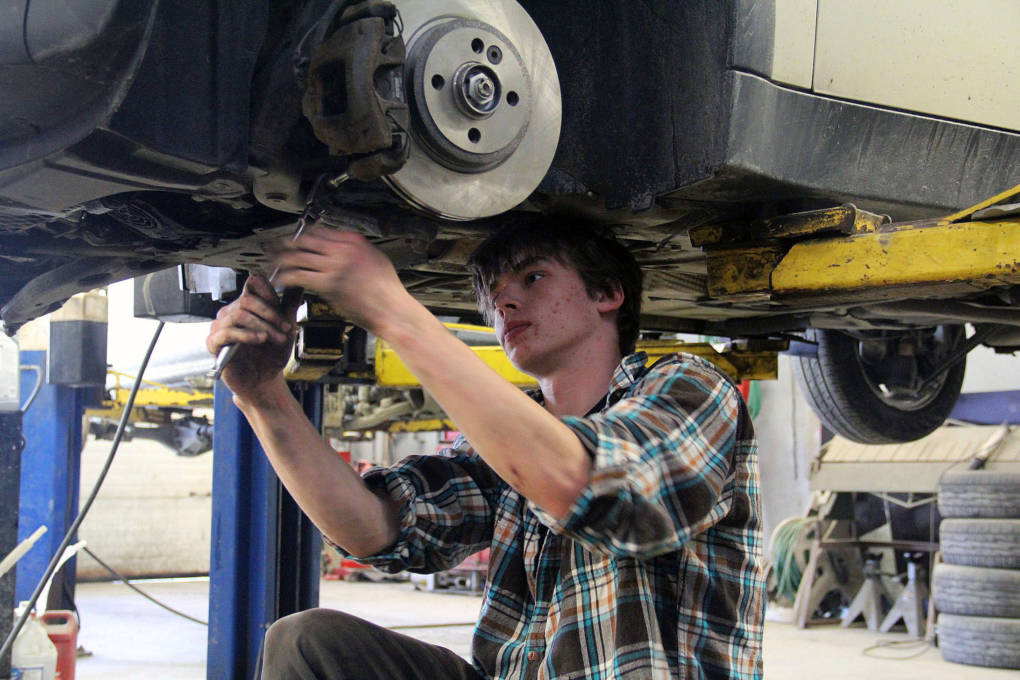
"caption": "A high school student repairs a car in an automotive shop class. Jobs in automotive body repair are relatively safe from automation, and they don't require a college degree. ",
"description": null,
"title": "GonserRobotProof1",
"credit": "The Hechinger Report/Jackie Mader",
"status": "inherit",
"isLoading": false,
"fetchFailed": false
},
"mindshift_52190": {
"type": "attachments",
"id": "mindshift_52190",
"meta": {
"index": "attachments_1716263798",
"site": "mindshift",
"id": "52190",
"found": true
},
"parent": 52189,
"imgSizes": {
"small": {
"file": "https://ww2.kqed.org/app/uploads/sites/23/2018/09/childdoor_enl-69bb36017d460a3e15ed64732a8d295557a457b1-520x346.jpg",
"width": 520,
"mimeType": "image/jpeg",
"height": 346
},
"twentyfourteen-full-width": {
"file": "https://ww2.kqed.org/app/uploads/sites/23/2018/09/childdoor_enl-69bb36017d460a3e15ed64732a8d295557a457b1-1038x576.jpg",
"width": 1038,
"mimeType": "image/jpeg",
"height": 576
},
"thumbnail": {
"file": "https://ww2.kqed.org/app/uploads/sites/23/2018/09/childdoor_enl-69bb36017d460a3e15ed64732a8d295557a457b1-160x107.jpg",
"width": 160,
"mimeType": "image/jpeg",
"height": 107
},
"fd-sm": {
"file": "https://ww2.kqed.org/app/uploads/sites/23/2018/09/childdoor_enl-69bb36017d460a3e15ed64732a8d295557a457b1-960x639.jpg",
"width": 960,
"mimeType": "image/jpeg",
"height": 639
},
"post-thumbnail": {
"file": "https://ww2.kqed.org/app/uploads/sites/23/2018/09/childdoor_enl-69bb36017d460a3e15ed64732a8d295557a457b1-672x372.jpg",
"width": 672,
"mimeType": "image/jpeg",
"height": 372
},
"xsmall": {
"file": "https://ww2.kqed.org/app/uploads/sites/23/2018/09/childdoor_enl-69bb36017d460a3e15ed64732a8d295557a457b1-375x250.jpg",
"width": 375,
"mimeType": "image/jpeg",
"height": 250
},
"kqedFullSize": {
"file": "https://ww2.kqed.org/app/uploads/sites/23/2018/09/childdoor_enl-69bb36017d460a3e15ed64732a8d295557a457b1-e1537248682365.jpg",
"width": 1920,
"height": 1279
},
"large": {
"file": "https://ww2.kqed.org/app/uploads/sites/23/2018/09/childdoor_enl-69bb36017d460a3e15ed64732a8d295557a457b1-1020x679.jpg",
"width": 1020,
"mimeType": "image/jpeg",
"height": 679
},
"xlarge": {
"file": "https://ww2.kqed.org/app/uploads/sites/23/2018/09/childdoor_enl-69bb36017d460a3e15ed64732a8d295557a457b1-1180x786.jpg",
"width": 1180,
"mimeType": "image/jpeg",
"height": 786
},
"complete_open_graph": {
"file": "https://ww2.kqed.org/app/uploads/sites/23/2018/09/childdoor_enl-69bb36017d460a3e15ed64732a8d295557a457b1-1200x799.jpg",
"width": 1200,
"mimeType": "image/jpeg",
"height": 799
},
"guest-author-50": {
"file": "https://ww2.kqed.org/app/uploads/sites/23/2018/09/childdoor_enl-69bb36017d460a3e15ed64732a8d295557a457b1-50x50.jpg",
"width": 50,
"mimeType": "image/jpeg",
"height": 50
},
"guest-author-96": {
"file": "https://ww2.kqed.org/app/uploads/sites/23/2018/09/childdoor_enl-69bb36017d460a3e15ed64732a8d295557a457b1-96x96.jpg",
"width": 96,
"mimeType": "image/jpeg",
"height": 96
},
"medium": {
"file": "https://ww2.kqed.org/app/uploads/sites/23/2018/09/childdoor_enl-69bb36017d460a3e15ed64732a8d295557a457b1-800x533.jpg",
"width": 800,
"mimeType": "image/jpeg",
"height": 533
},
"guest-author-64": {
"file": "https://ww2.kqed.org/app/uploads/sites/23/2018/09/childdoor_enl-69bb36017d460a3e15ed64732a8d295557a457b1-64x64.jpg",
"width": 64,
"mimeType": "image/jpeg",
"height": 64
},
"guest-author-32": {
"file": "https://ww2.kqed.org/app/uploads/sites/23/2018/09/childdoor_enl-69bb36017d460a3e15ed64732a8d295557a457b1-32x32.jpg",
"width": 32,
"mimeType": "image/jpeg",
"height": 32
},
"fd-lrg": {
"file": "https://ww2.kqed.org/app/uploads/sites/23/2018/09/childdoor_enl-69bb36017d460a3e15ed64732a8d295557a457b1-1920x1279.jpg",
"width": 1920,
"mimeType": "image/jpeg",
"height": 1279
},
"fd-med": {
"file": "https://ww2.kqed.org/app/uploads/sites/23/2018/09/childdoor_enl-69bb36017d460a3e15ed64732a8d295557a457b1-1180x786.jpg",
"width": 1180,
"mimeType": "image/jpeg",
"height": 786
},
"full-width": {
"file": "https://ww2.kqed.org/app/uploads/sites/23/2018/09/childdoor_enl-69bb36017d460a3e15ed64732a8d295557a457b1-1920x1279.jpg",
"width": 1920,
"mimeType": "image/jpeg",
"height": 1279
},
"detail": {
"file": "https://ww2.kqed.org/app/uploads/sites/23/2018/09/childdoor_enl-69bb36017d460a3e15ed64732a8d295557a457b1-150x150.jpg",
"width": 150,
"mimeType": "image/jpeg",
"height": 150
},
"medium_large": {
"file": "https://ww2.kqed.org/app/uploads/sites/23/2018/09/childdoor_enl-69bb36017d460a3e15ed64732a8d295557a457b1-768x511.jpg",
"width": 768,
"mimeType": "image/jpeg",
"height": 511
},
"guest-author-128": {
"file": "https://ww2.kqed.org/app/uploads/sites/23/2018/09/childdoor_enl-69bb36017d460a3e15ed64732a8d295557a457b1-128x128.jpg",
"width": 128,
"mimeType": "image/jpeg",
"height": 128
},
"xxsmall": {
"file": "https://ww2.kqed.org/app/uploads/sites/23/2018/09/childdoor_enl-69bb36017d460a3e15ed64732a8d295557a457b1-240x160.jpg",
"width": 240,
"mimeType": "image/jpeg",
"height": 160
}
},
"publishDate": 1537248571,
"modified": 1537248698,
"caption": "Nearly 62 percent of respondents had at least one ACE and a quarter reported three or more. The remaining respondents had at least two ACEs, including 16 percent with four or more such experiences.",
"description": null,
"title": "Nearly 62 percent of respondents had at least one ACE and a quarter reported three or more. The remaining respondents had at least two ACEs, including 16 percent with four or more such experiences.",
"credit": " Elva Etienne/Getty Images",
"status": "inherit",
"isLoading": false,
"fetchFailed": false
},
"mindshift_52097": {
"type": "attachments",
"id": "mindshift_52097",
"meta": {
"index": "attachments_1716263798",
"site": "mindshift",
"id": "52097",
"found": true
},
"parent": 51589,
"imgSizes": {
"small": {
"file": "https://ww2.kqed.org/app/uploads/sites/23/2018/09/PTSD-TED-ED-520x297.png",
"width": 520,
"mimeType": "image/png",
"height": 297
},
"twentyfourteen-full-width": {
"file": "https://ww2.kqed.org/app/uploads/sites/23/2018/09/PTSD-TED-ED-1038x576.png",
"width": 1038,
"mimeType": "image/png",
"height": 576
},
"thumbnail": {
"file": "https://ww2.kqed.org/app/uploads/sites/23/2018/09/PTSD-TED-ED-160x91.png",
"width": 160,
"mimeType": "image/png",
"height": 91
},
"fd-sm": {
"file": "https://ww2.kqed.org/app/uploads/sites/23/2018/09/PTSD-TED-ED-960x548.png",
"width": 960,
"mimeType": "image/png",
"height": 548
},
"post-thumbnail": {
"file": "https://ww2.kqed.org/app/uploads/sites/23/2018/09/PTSD-TED-ED-672x372.png",
"width": 672,
"mimeType": "image/png",
"height": 372
},
"xsmall": {
"file": "https://ww2.kqed.org/app/uploads/sites/23/2018/09/PTSD-TED-ED-375x214.png",
"width": 375,
"mimeType": "image/png",
"height": 214
},
"kqedFullSize": {
"file": "https://ww2.kqed.org/app/uploads/sites/23/2018/09/PTSD-TED-ED.png",
"width": 1278,
"height": 730
},
"large": {
"file": "https://ww2.kqed.org/app/uploads/sites/23/2018/09/PTSD-TED-ED-1020x583.png",
"width": 1020,
"mimeType": "image/png",
"height": 583
},
"xlarge": {
"file": "https://ww2.kqed.org/app/uploads/sites/23/2018/09/PTSD-TED-ED-1180x674.png",
"width": 1180,
"mimeType": "image/png",
"height": 674
},
"complete_open_graph": {
"file": "https://ww2.kqed.org/app/uploads/sites/23/2018/09/PTSD-TED-ED-1200x685.png",
"width": 1200,
"mimeType": "image/png",
"height": 685
},
"guest-author-50": {
"file": "https://ww2.kqed.org/app/uploads/sites/23/2018/09/PTSD-TED-ED-50x50.png",
"width": 50,
"mimeType": "image/png",
"height": 50
},
"guest-author-96": {
"file": "https://ww2.kqed.org/app/uploads/sites/23/2018/09/PTSD-TED-ED-96x96.png",
"width": 96,
"mimeType": "image/png",
"height": 96
},
"medium": {
"file": "https://ww2.kqed.org/app/uploads/sites/23/2018/09/PTSD-TED-ED-800x457.png",
"width": 800,
"mimeType": "image/png",
"height": 457
},
"guest-author-64": {
"file": "https://ww2.kqed.org/app/uploads/sites/23/2018/09/PTSD-TED-ED-64x64.png",
"width": 64,
"mimeType": "image/png",
"height": 64
},
"guest-author-32": {
"file": "https://ww2.kqed.org/app/uploads/sites/23/2018/09/PTSD-TED-ED-32x32.png",
"width": 32,
"mimeType": "image/png",
"height": 32
},
"fd-med": {
"file": "https://ww2.kqed.org/app/uploads/sites/23/2018/09/PTSD-TED-ED-1180x674.png",
"width": 1180,
"mimeType": "image/png",
"height": 674
},
"detail": {
"file": "https://ww2.kqed.org/app/uploads/sites/23/2018/09/PTSD-TED-ED-150x150.png",
"width": 150,
"mimeType": "image/png",
"height": 150
},
"medium_large": {
"file": "https://ww2.kqed.org/app/uploads/sites/23/2018/09/PTSD-TED-ED-768x439.png",
"width": 768,
"mimeType": "image/png",
"height": 439
},
"guest-author-128": {
"file": "https://ww2.kqed.org/app/uploads/sites/23/2018/09/PTSD-TED-ED-128x128.png",
"width": 128,
"mimeType": "image/png",
"height": 128
},
"xxsmall": {
"file": "https://ww2.kqed.org/app/uploads/sites/23/2018/09/PTSD-TED-ED-240x137.png",
"width": 240,
"mimeType": "image/png",
"height": 137
}
},
"publishDate": 1536174851,
"modified": 1536174892,
"caption": null,
"description": null,
"title": "PTSD-TED-ED",
"credit": "\u003ca href=\"https://www.ted.com/talks/joelle_rabow_maletis_the_psychology_of_post_traumatic_stress_disorder#t-295212\">TED-Ed\u003c/a>",
"status": "inherit",
"isLoading": false,
"fetchFailed": false
},
"mindshift_52153": {
"type": "attachments",
"id": "mindshift_52153",
"meta": {
"index": "attachments_1716263798",
"site": "mindshift",
"id": "52153",
"found": true
},
"parent": 52150,
"imgSizes": {
"small": {
"file": "https://ww2.kqed.org/app/uploads/sites/23/2018/09/HillsdaleHigh-25-520x347.jpg",
"width": 520,
"mimeType": "image/jpeg",
"height": 347
},
"twentyfourteen-full-width": {
"file": "https://ww2.kqed.org/app/uploads/sites/23/2018/09/HillsdaleHigh-25-1038x576.jpg",
"width": 1038,
"mimeType": "image/jpeg",
"height": 576
},
"thumbnail": {
"file": "https://ww2.kqed.org/app/uploads/sites/23/2018/09/HillsdaleHigh-25-160x107.jpg",
"width": 160,
"mimeType": "image/jpeg",
"height": 107
},
"fd-sm": {
"file": "https://ww2.kqed.org/app/uploads/sites/23/2018/09/HillsdaleHigh-25-960x640.jpg",
"width": 960,
"mimeType": "image/jpeg",
"height": 640
},
"post-thumbnail": {
"file": "https://ww2.kqed.org/app/uploads/sites/23/2018/09/HillsdaleHigh-25-672x372.jpg",
"width": 672,
"mimeType": "image/jpeg",
"height": 372
},
"xsmall": {
"file": "https://ww2.kqed.org/app/uploads/sites/23/2018/09/HillsdaleHigh-25-375x250.jpg",
"width": 375,
"mimeType": "image/jpeg",
"height": 250
},
"kqedFullSize": {
"file": "https://ww2.kqed.org/app/uploads/sites/23/2018/09/HillsdaleHigh-25-e1536646557223.jpg",
"width": 1920,
"height": 1280
},
"large": {
"file": "https://ww2.kqed.org/app/uploads/sites/23/2018/09/HillsdaleHigh-25-1020x680.jpg",
"width": 1020,
"mimeType": "image/jpeg",
"height": 680
},
"xlarge": {
"file": "https://ww2.kqed.org/app/uploads/sites/23/2018/09/HillsdaleHigh-25-1180x787.jpg",
"width": 1180,
"mimeType": "image/jpeg",
"height": 787
},
"complete_open_graph": {
"file": "https://ww2.kqed.org/app/uploads/sites/23/2018/09/HillsdaleHigh-25-1200x800.jpg",
"width": 1200,
"mimeType": "image/jpeg",
"height": 800
},
"guest-author-50": {
"file": "https://ww2.kqed.org/app/uploads/sites/23/2018/09/HillsdaleHigh-25-50x50.jpg",
"width": 50,
"mimeType": "image/jpeg",
"height": 50
},
"guest-author-96": {
"file": "https://ww2.kqed.org/app/uploads/sites/23/2018/09/HillsdaleHigh-25-96x96.jpg",
"width": 96,
"mimeType": "image/jpeg",
"height": 96
},
"medium": {
"file": "https://ww2.kqed.org/app/uploads/sites/23/2018/09/HillsdaleHigh-25-800x533.jpg",
"width": 800,
"mimeType": "image/jpeg",
"height": 533
},
"guest-author-64": {
"file": "https://ww2.kqed.org/app/uploads/sites/23/2018/09/HillsdaleHigh-25-64x64.jpg",
"width": 64,
"mimeType": "image/jpeg",
"height": 64
},
"guest-author-32": {
"file": "https://ww2.kqed.org/app/uploads/sites/23/2018/09/HillsdaleHigh-25-32x32.jpg",
"width": 32,
"mimeType": "image/jpeg",
"height": 32
},
"fd-lrg": {
"file": "https://ww2.kqed.org/app/uploads/sites/23/2018/09/HillsdaleHigh-25-1920x1280.jpg",
"width": 1920,
"mimeType": "image/jpeg",
"height": 1280
},
"fd-med": {
"file": "https://ww2.kqed.org/app/uploads/sites/23/2018/09/HillsdaleHigh-25-1180x787.jpg",
"width": 1180,
"mimeType": "image/jpeg",
"height": 787
},
"full-width": {
"file": "https://ww2.kqed.org/app/uploads/sites/23/2018/09/HillsdaleHigh-25-1920x1280.jpg",
"width": 1920,
"mimeType": "image/jpeg",
"height": 1280
},
"detail": {
"file": "https://ww2.kqed.org/app/uploads/sites/23/2018/09/HillsdaleHigh-25-150x150.jpg",
"width": 150,
"mimeType": "image/jpeg",
"height": 150
},
"medium_large": {
"file": "https://ww2.kqed.org/app/uploads/sites/23/2018/09/HillsdaleHigh-25-768x512.jpg",
"width": 768,
"mimeType": "image/jpeg",
"height": 512
},
"guest-author-128": {
"file": "https://ww2.kqed.org/app/uploads/sites/23/2018/09/HillsdaleHigh-25-128x128.jpg",
"width": 128,
"mimeType": "image/jpeg",
"height": 128
},
"xxsmall": {
"file": "https://ww2.kqed.org/app/uploads/sites/23/2018/09/HillsdaleHigh-25-240x160.jpg",
"width": 240,
"mimeType": "image/jpeg",
"height": 160
}
},
"publishDate": 1536646362,
"modified": 1536734595,
"caption": "Ninth grade can be a difficult year for any student. It took a lot of hard work and support from educators and family to get Hillsdale High School student Jeffery Aragon back on track. ",
"description": null,
"title": "HillsdaleHigh-25",
"credit": "KQED/Samantha Shanahan",
"status": "inherit",
"isLoading": false,
"fetchFailed": false
},
"mindshift_52144": {
"type": "attachments",
"id": "mindshift_52144",
"meta": {
"index": "attachments_1716263798",
"site": "mindshift",
"id": "52144",
"found": true
},
"parent": 52116,
"imgSizes": {
"small": {
"file": "https://ww2.kqed.org/app/uploads/sites/23/2018/09/iStock-616100524-520x346.jpg",
"width": 520,
"mimeType": "image/jpeg",
"height": 346
},
"twentyfourteen-full-width": {
"file": "https://ww2.kqed.org/app/uploads/sites/23/2018/09/iStock-616100524-1038x576.jpg",
"width": 1038,
"mimeType": "image/jpeg",
"height": 576
},
"thumbnail": {
"file": "https://ww2.kqed.org/app/uploads/sites/23/2018/09/iStock-616100524-160x106.jpg",
"width": 160,
"mimeType": "image/jpeg",
"height": 106
},
"fd-sm": {
"file": "https://ww2.kqed.org/app/uploads/sites/23/2018/09/iStock-616100524-960x638.jpg",
"width": 960,
"mimeType": "image/jpeg",
"height": 638
},
"post-thumbnail": {
"file": "https://ww2.kqed.org/app/uploads/sites/23/2018/09/iStock-616100524-672x372.jpg",
"width": 672,
"mimeType": "image/jpeg",
"height": 372
},
"xsmall": {
"file": "https://ww2.kqed.org/app/uploads/sites/23/2018/09/iStock-616100524-375x249.jpg",
"width": 375,
"mimeType": "image/jpeg",
"height": 249
},
"kqedFullSize": {
"file": "https://ww2.kqed.org/app/uploads/sites/23/2018/09/iStock-616100524-e1536583308899.jpg",
"width": 1920,
"height": 1277
},
"large": {
"file": "https://ww2.kqed.org/app/uploads/sites/23/2018/09/iStock-616100524-1020x678.jpg",
"width": 1020,
"mimeType": "image/jpeg",
"height": 678
},
"xlarge": {
"file": "https://ww2.kqed.org/app/uploads/sites/23/2018/09/iStock-616100524-1180x785.jpg",
"width": 1180,
"mimeType": "image/jpeg",
"height": 785
},
"complete_open_graph": {
"file": "https://ww2.kqed.org/app/uploads/sites/23/2018/09/iStock-616100524-1200x798.jpg",
"width": 1200,
"mimeType": "image/jpeg",
"height": 798
},
"guest-author-50": {
"file": "https://ww2.kqed.org/app/uploads/sites/23/2018/09/iStock-616100524-50x50.jpg",
"width": 50,
"mimeType": "image/jpeg",
"height": 50
},
"guest-author-96": {
"file": "https://ww2.kqed.org/app/uploads/sites/23/2018/09/iStock-616100524-96x96.jpg",
"width": 96,
"mimeType": "image/jpeg",
"height": 96
},
"medium": {
"file": "https://ww2.kqed.org/app/uploads/sites/23/2018/09/iStock-616100524-800x532.jpg",
"width": 800,
"mimeType": "image/jpeg",
"height": 532
},
"guest-author-64": {
"file": "https://ww2.kqed.org/app/uploads/sites/23/2018/09/iStock-616100524-64x64.jpg",
"width": 64,
"mimeType": "image/jpeg",
"height": 64
},
"guest-author-32": {
"file": "https://ww2.kqed.org/app/uploads/sites/23/2018/09/iStock-616100524-32x32.jpg",
"width": 32,
"mimeType": "image/jpeg",
"height": 32
},
"fd-lrg": {
"file": "https://ww2.kqed.org/app/uploads/sites/23/2018/09/iStock-616100524-1920x1277.jpg",
"width": 1920,
"mimeType": "image/jpeg",
"height": 1277
},
"fd-med": {
"file": "https://ww2.kqed.org/app/uploads/sites/23/2018/09/iStock-616100524-1180x785.jpg",
"width": 1180,
"mimeType": "image/jpeg",
"height": 785
},
"full-width": {
"file": "https://ww2.kqed.org/app/uploads/sites/23/2018/09/iStock-616100524-1920x1277.jpg",
"width": 1920,
"mimeType": "image/jpeg",
"height": 1277
},
"detail": {
"file": "https://ww2.kqed.org/app/uploads/sites/23/2018/09/iStock-616100524-150x150.jpg",
"width": 150,
"mimeType": "image/jpeg",
"height": 150
},
"medium_large": {
"file": "https://ww2.kqed.org/app/uploads/sites/23/2018/09/iStock-616100524-768x511.jpg",
"width": 768,
"mimeType": "image/jpeg",
"height": 511
},
"guest-author-128": {
"file": "https://ww2.kqed.org/app/uploads/sites/23/2018/09/iStock-616100524-128x128.jpg",
"width": 128,
"mimeType": "image/jpeg",
"height": 128
},
"xxsmall": {
"file": "https://ww2.kqed.org/app/uploads/sites/23/2018/09/iStock-616100524-240x160.jpg",
"width": 240,
"mimeType": "image/jpeg",
"height": 160
}
},
"publishDate": 1536583256,
"modified": 1536583272,
"caption": null,
"description": null,
"title": "American School Buses",
"credit": "iStock/Allard1",
"status": "inherit",
"isLoading": false,
"fetchFailed": false
},
"mindshift_52127": {
"type": "attachments",
"id": "mindshift_52127",
"meta": {
"index": "attachments_1716263798",
"site": "mindshift",
"id": "52127",
"found": true
},
"parent": 52121,
"imgSizes": {
"small": {
"file": "https://ww2.kqed.org/app/uploads/sites/23/2018/09/iStock-938993594-520x372.jpg",
"width": 520,
"mimeType": "image/jpeg",
"height": 372
},
"twentyfourteen-full-width": {
"file": "https://ww2.kqed.org/app/uploads/sites/23/2018/09/iStock-938993594-1038x576.jpg",
"width": 1038,
"mimeType": "image/jpeg",
"height": 576
},
"thumbnail": {
"file": "https://ww2.kqed.org/app/uploads/sites/23/2018/09/iStock-938993594-160x115.jpg",
"width": 160,
"mimeType": "image/jpeg",
"height": 115
},
"fd-sm": {
"file": "https://ww2.kqed.org/app/uploads/sites/23/2018/09/iStock-938993594-960x687.jpg",
"width": 960,
"mimeType": "image/jpeg",
"height": 687
},
"post-thumbnail": {
"file": "https://ww2.kqed.org/app/uploads/sites/23/2018/09/iStock-938993594-672x372.jpg",
"width": 672,
"mimeType": "image/jpeg",
"height": 372
},
"xsmall": {
"file": "https://ww2.kqed.org/app/uploads/sites/23/2018/09/iStock-938993594-375x268.jpg",
"width": 375,
"mimeType": "image/jpeg",
"height": 268
},
"kqedFullSize": {
"file": "https://ww2.kqed.org/app/uploads/sites/23/2018/09/iStock-938993594.jpg",
"width": 2047,
"height": 1465
},
"large": {
"file": "https://ww2.kqed.org/app/uploads/sites/23/2018/09/iStock-938993594-1020x730.jpg",
"width": 1020,
"mimeType": "image/jpeg",
"height": 730
},
"xlarge": {
"file": "https://ww2.kqed.org/app/uploads/sites/23/2018/09/iStock-938993594-1180x845.jpg",
"width": 1180,
"mimeType": "image/jpeg",
"height": 845
},
"complete_open_graph": {
"file": "https://ww2.kqed.org/app/uploads/sites/23/2018/09/iStock-938993594-1200x859.jpg",
"width": 1200,
"mimeType": "image/jpeg",
"height": 859
},
"guest-author-50": {
"file": "https://ww2.kqed.org/app/uploads/sites/23/2018/09/iStock-938993594-50x50.jpg",
"width": 50,
"mimeType": "image/jpeg",
"height": 50
},
"guest-author-96": {
"file": "https://ww2.kqed.org/app/uploads/sites/23/2018/09/iStock-938993594-96x96.jpg",
"width": 96,
"mimeType": "image/jpeg",
"height": 96
},
"medium": {
"file": "https://ww2.kqed.org/app/uploads/sites/23/2018/09/iStock-938993594-800x573.jpg",
"width": 800,
"mimeType": "image/jpeg",
"height": 573
},
"guest-author-64": {
"file": "https://ww2.kqed.org/app/uploads/sites/23/2018/09/iStock-938993594-64x64.jpg",
"width": 64,
"mimeType": "image/jpeg",
"height": 64
},
"guest-author-32": {
"file": "https://ww2.kqed.org/app/uploads/sites/23/2018/09/iStock-938993594-32x32.jpg",
"width": 32,
"mimeType": "image/jpeg",
"height": 32
},
"fd-lrg": {
"file": "https://ww2.kqed.org/app/uploads/sites/23/2018/09/iStock-938993594-1920x1374.jpg",
"width": 1920,
"mimeType": "image/jpeg",
"height": 1374
},
"fd-med": {
"file": "https://ww2.kqed.org/app/uploads/sites/23/2018/09/iStock-938993594-1180x845.jpg",
"width": 1180,
"mimeType": "image/jpeg",
"height": 845
},
"full-width": {
"file": "https://ww2.kqed.org/app/uploads/sites/23/2018/09/iStock-938993594-1920x1374.jpg",
"width": 1920,
"mimeType": "image/jpeg",
"height": 1374
},
"detail": {
"file": "https://ww2.kqed.org/app/uploads/sites/23/2018/09/iStock-938993594-150x150.jpg",
"width": 150,
"mimeType": "image/jpeg",
"height": 150
},
"medium_large": {
"file": "https://ww2.kqed.org/app/uploads/sites/23/2018/09/iStock-938993594-768x550.jpg",
"width": 768,
"mimeType": "image/jpeg",
"height": 550
},
"guest-author-128": {
"file": "https://ww2.kqed.org/app/uploads/sites/23/2018/09/iStock-938993594-128x128.jpg",
"width": 128,
"mimeType": "image/jpeg",
"height": 128
},
"xxsmall": {
"file": "https://ww2.kqed.org/app/uploads/sites/23/2018/09/iStock-938993594-240x172.jpg",
"width": 240,
"mimeType": "image/jpeg",
"height": 172
}
},
"publishDate": 1536364193,
"modified": 1536364210,
"caption": null,
"description": null,
"title": "Aerial view of various coffee",
"credit": "iStock/Rawpixel",
"status": "inherit",
"isLoading": false,
"fetchFailed": false
},
"mindshift_52107": {
"type": "attachments",
"id": "mindshift_52107",
"meta": {
"index": "attachments_1716263798",
"site": "mindshift",
"id": "52107",
"found": true
},
"parent": 52106,
"imgSizes": {
"small": {
"file": "https://ww2.kqed.org/app/uploads/sites/23/2018/09/learning-through-ages_slide-5229b70415711943f815c5662022c91df6efcd64-520x346.jpg",
"width": 520,
"mimeType": "image/jpeg",
"height": 346
},
"twentyfourteen-full-width": {
"file": "https://ww2.kqed.org/app/uploads/sites/23/2018/09/learning-through-ages_slide-5229b70415711943f815c5662022c91df6efcd64-1038x576.jpg",
"width": 1038,
"mimeType": "image/jpeg",
"height": 576
},
"thumbnail": {
"file": "https://ww2.kqed.org/app/uploads/sites/23/2018/09/learning-through-ages_slide-5229b70415711943f815c5662022c91df6efcd64-160x107.jpg",
"width": 160,
"mimeType": "image/jpeg",
"height": 107
},
"fd-sm": {
"file": "https://ww2.kqed.org/app/uploads/sites/23/2018/09/learning-through-ages_slide-5229b70415711943f815c5662022c91df6efcd64-960x640.jpg",
"width": 960,
"mimeType": "image/jpeg",
"height": 640
},
"post-thumbnail": {
"file": "https://ww2.kqed.org/app/uploads/sites/23/2018/09/learning-through-ages_slide-5229b70415711943f815c5662022c91df6efcd64-672x372.jpg",
"width": 672,
"mimeType": "image/jpeg",
"height": 372
},
"xsmall": {
"file": "https://ww2.kqed.org/app/uploads/sites/23/2018/09/learning-through-ages_slide-5229b70415711943f815c5662022c91df6efcd64-375x250.jpg",
"width": 375,
"mimeType": "image/jpeg",
"height": 250
},
"kqedFullSize": {
"file": "https://ww2.kqed.org/app/uploads/sites/23/2018/09/learning-through-ages_slide-5229b70415711943f815c5662022c91df6efcd64-e1536211692169.jpg",
"width": 1920,
"height": 1279
},
"large": {
"file": "https://ww2.kqed.org/app/uploads/sites/23/2018/09/learning-through-ages_slide-5229b70415711943f815c5662022c91df6efcd64-1020x680.jpg",
"width": 1020,
"mimeType": "image/jpeg",
"height": 680
},
"xlarge": {
"file": "https://ww2.kqed.org/app/uploads/sites/23/2018/09/learning-through-ages_slide-5229b70415711943f815c5662022c91df6efcd64-1180x786.jpg",
"width": 1180,
"mimeType": "image/jpeg",
"height": 786
},
"complete_open_graph": {
"file": "https://ww2.kqed.org/app/uploads/sites/23/2018/09/learning-through-ages_slide-5229b70415711943f815c5662022c91df6efcd64-1200x800.jpg",
"width": 1200,
"mimeType": "image/jpeg",
"height": 800
},
"guest-author-50": {
"file": "https://ww2.kqed.org/app/uploads/sites/23/2018/09/learning-through-ages_slide-5229b70415711943f815c5662022c91df6efcd64-50x50.jpg",
"width": 50,
"mimeType": "image/jpeg",
"height": 50
},
"guest-author-96": {
"file": "https://ww2.kqed.org/app/uploads/sites/23/2018/09/learning-through-ages_slide-5229b70415711943f815c5662022c91df6efcd64-96x96.jpg",
"width": 96,
"mimeType": "image/jpeg",
"height": 96
},
"medium": {
"file": "https://ww2.kqed.org/app/uploads/sites/23/2018/09/learning-through-ages_slide-5229b70415711943f815c5662022c91df6efcd64-800x533.jpg",
"width": 800,
"mimeType": "image/jpeg",
"height": 533
},
"guest-author-64": {
"file": "https://ww2.kqed.org/app/uploads/sites/23/2018/09/learning-through-ages_slide-5229b70415711943f815c5662022c91df6efcd64-64x64.jpg",
"width": 64,
"mimeType": "image/jpeg",
"height": 64
},
"guest-author-32": {
"file": "https://ww2.kqed.org/app/uploads/sites/23/2018/09/learning-through-ages_slide-5229b70415711943f815c5662022c91df6efcd64-32x32.jpg",
"width": 32,
"mimeType": "image/jpeg",
"height": 32
},
"fd-lrg": {
"file": "https://ww2.kqed.org/app/uploads/sites/23/2018/09/learning-through-ages_slide-5229b70415711943f815c5662022c91df6efcd64-1920x1279.jpg",
"width": 1920,
"mimeType": "image/jpeg",
"height": 1279
},
"fd-med": {
"file": "https://ww2.kqed.org/app/uploads/sites/23/2018/09/learning-through-ages_slide-5229b70415711943f815c5662022c91df6efcd64-1180x786.jpg",
"width": 1180,
"mimeType": "image/jpeg",
"height": 786
},
"full-width": {
"file": "https://ww2.kqed.org/app/uploads/sites/23/2018/09/learning-through-ages_slide-5229b70415711943f815c5662022c91df6efcd64-1920x1279.jpg",
"width": 1920,
"mimeType": "image/jpeg",
"height": 1279
},
"detail": {
"file": "https://ww2.kqed.org/app/uploads/sites/23/2018/09/learning-through-ages_slide-5229b70415711943f815c5662022c91df6efcd64-150x150.jpg",
"width": 150,
"mimeType": "image/jpeg",
"height": 150
},
"medium_large": {
"file": "https://ww2.kqed.org/app/uploads/sites/23/2018/09/learning-through-ages_slide-5229b70415711943f815c5662022c91df6efcd64-768x512.jpg",
"width": 768,
"mimeType": "image/jpeg",
"height": 512
},
"guest-author-128": {
"file": "https://ww2.kqed.org/app/uploads/sites/23/2018/09/learning-through-ages_slide-5229b70415711943f815c5662022c91df6efcd64-128x128.jpg",
"width": 128,
"mimeType": "image/jpeg",
"height": 128
},
"xxsmall": {
"file": "https://ww2.kqed.org/app/uploads/sites/23/2018/09/learning-through-ages_slide-5229b70415711943f815c5662022c91df6efcd64-240x160.jpg",
"width": 240,
"mimeType": "image/jpeg",
"height": 160
}
},
"publishDate": 1536211608,
"modified": 1536211682,
"caption": null,
"description": "Learning through the ages.",
"title": "Learning through the ages.",
"credit": "LA Johnson/NPR",
"status": "inherit",
"isLoading": false,
"fetchFailed": false
},
"mindshift_52090": {
"type": "attachments",
"id": "mindshift_52090",
"meta": {
"index": "attachments_1716263798",
"site": "mindshift",
"id": "52090",
"found": true
},
"parent": 51781,
"imgSizes": {
"small": {
"file": "https://ww2.kqed.org/app/uploads/sites/23/2018/09/14791463053_6714f5174c_k-520x347.jpg",
"width": 520,
"mimeType": "image/jpeg",
"height": 347
},
"twentyfourteen-full-width": {
"file": "https://ww2.kqed.org/app/uploads/sites/23/2018/09/14791463053_6714f5174c_k-1038x576.jpg",
"width": 1038,
"mimeType": "image/jpeg",
"height": 576
},
"thumbnail": {
"file": "https://ww2.kqed.org/app/uploads/sites/23/2018/09/14791463053_6714f5174c_k-160x107.jpg",
"width": 160,
"mimeType": "image/jpeg",
"height": 107
},
"fd-sm": {
"file": "https://ww2.kqed.org/app/uploads/sites/23/2018/09/14791463053_6714f5174c_k-960x640.jpg",
"width": 960,
"mimeType": "image/jpeg",
"height": 640
},
"post-thumbnail": {
"file": "https://ww2.kqed.org/app/uploads/sites/23/2018/09/14791463053_6714f5174c_k-672x372.jpg",
"width": 672,
"mimeType": "image/jpeg",
"height": 372
},
"xsmall": {
"file": "https://ww2.kqed.org/app/uploads/sites/23/2018/09/14791463053_6714f5174c_k-375x250.jpg",
"width": 375,
"mimeType": "image/jpeg",
"height": 250
},
"kqedFullSize": {
"file": "https://ww2.kqed.org/app/uploads/sites/23/2018/09/14791463053_6714f5174c_k.jpg",
"width": 2048,
"height": 1365
},
"large": {
"file": "https://ww2.kqed.org/app/uploads/sites/23/2018/09/14791463053_6714f5174c_k-1020x680.jpg",
"width": 1020,
"mimeType": "image/jpeg",
"height": 680
},
"xlarge": {
"file": "https://ww2.kqed.org/app/uploads/sites/23/2018/09/14791463053_6714f5174c_k-1180x786.jpg",
"width": 1180,
"mimeType": "image/jpeg",
"height": 786
},
"complete_open_graph": {
"file": "https://ww2.kqed.org/app/uploads/sites/23/2018/09/14791463053_6714f5174c_k-1200x800.jpg",
"width": 1200,
"mimeType": "image/jpeg",
"height": 800
},
"guest-author-50": {
"file": "https://ww2.kqed.org/app/uploads/sites/23/2018/09/14791463053_6714f5174c_k-50x50.jpg",
"width": 50,
"mimeType": "image/jpeg",
"height": 50
},
"guest-author-96": {
"file": "https://ww2.kqed.org/app/uploads/sites/23/2018/09/14791463053_6714f5174c_k-96x96.jpg",
"width": 96,
"mimeType": "image/jpeg",
"height": 96
},
"medium": {
"file": "https://ww2.kqed.org/app/uploads/sites/23/2018/09/14791463053_6714f5174c_k-800x533.jpg",
"width": 800,
"mimeType": "image/jpeg",
"height": 533
},
"guest-author-64": {
"file": "https://ww2.kqed.org/app/uploads/sites/23/2018/09/14791463053_6714f5174c_k-64x64.jpg",
"width": 64,
"mimeType": "image/jpeg",
"height": 64
},
"guest-author-32": {
"file": "https://ww2.kqed.org/app/uploads/sites/23/2018/09/14791463053_6714f5174c_k-32x32.jpg",
"width": 32,
"mimeType": "image/jpeg",
"height": 32
},
"fd-lrg": {
"file": "https://ww2.kqed.org/app/uploads/sites/23/2018/09/14791463053_6714f5174c_k-1920x1280.jpg",
"width": 1920,
"mimeType": "image/jpeg",
"height": 1280
},
"fd-med": {
"file": "https://ww2.kqed.org/app/uploads/sites/23/2018/09/14791463053_6714f5174c_k-1180x786.jpg",
"width": 1180,
"mimeType": "image/jpeg",
"height": 786
},
"full-width": {
"file": "https://ww2.kqed.org/app/uploads/sites/23/2018/09/14791463053_6714f5174c_k-1920x1280.jpg",
"width": 1920,
"mimeType": "image/jpeg",
"height": 1280
},
"detail": {
"file": "https://ww2.kqed.org/app/uploads/sites/23/2018/09/14791463053_6714f5174c_k-150x150.jpg",
"width": 150,
"mimeType": "image/jpeg",
"height": 150
},
"medium_large": {
"file": "https://ww2.kqed.org/app/uploads/sites/23/2018/09/14791463053_6714f5174c_k-768x512.jpg",
"width": 768,
"mimeType": "image/jpeg",
"height": 512
},
"guest-author-128": {
"file": "https://ww2.kqed.org/app/uploads/sites/23/2018/09/14791463053_6714f5174c_k-128x128.jpg",
"width": 128,
"mimeType": "image/jpeg",
"height": 128
},
"xxsmall": {
"file": "https://ww2.kqed.org/app/uploads/sites/23/2018/09/14791463053_6714f5174c_k-240x160.jpg",
"width": 240,
"mimeType": "image/jpeg",
"height": 160
}
},
"publishDate": 1536124417,
"modified": 1536124433,
"caption": null,
"description": null,
"title": "14791463053_6714f5174c_k",
"credit": "\u003ca href=\"https://www.flickr.com/photos/28277470@N05/14791463053/in/photolist-ox57D4-hMdodw-rhtap8-9pZUP3-hMe2b6-ehc8yL-2SWksV-a7rum-hMdXBc-bnXL2A-apR3rV-amvSHt-WhLL2d-591k2C-6uPMXG-6robm-ahP39z-4vV3pg-8e4Gp3-aV73ik-b32qAV-b32qne-aDb2bZ-b1XXjc-hMdo3G-aDeRZb-b1XXtX-6WcT9e-9UCWmv-aDeRCL-goQirQ-aqvMu2-b1XUsB-aqyte3-4nEBdm-aXuuq2-aDeSB9-5hqGJi-iqWY-5MbtZA-7KFzkU-fsiePk-oaa39i-amvRqD-dWgW1Z-7FDBTJ-2LXKgh-amvLng-dTVzHB-Wu9CyG\">Flickr/William Tung\u003c/a>",
"status": "inherit",
"isLoading": false,
"fetchFailed": false
},
"mindshift_52065": {
"type": "attachments",
"id": "mindshift_52065",
"meta": {
"index": "attachments_1716263798",
"site": "mindshift",
"id": "52065",
"found": true
},
"parent": 0,
"imgSizes": {
"small": {
"file": "https://ww2.kqed.org/app/uploads/sites/23/2018/09/letitgrowfront_enl-08dc14d0d91d3036acdcafe29bf2eec2bb029a71-5-520x382.jpg",
"width": 520,
"mimeType": "image/jpeg",
"height": 382
},
"twentyfourteen-full-width": {
"file": "https://ww2.kqed.org/app/uploads/sites/23/2018/09/letitgrowfront_enl-08dc14d0d91d3036acdcafe29bf2eec2bb029a71-5-1038x576.jpg",
"width": 1038,
"mimeType": "image/jpeg",
"height": 576
},
"thumbnail": {
"file": "https://ww2.kqed.org/app/uploads/sites/23/2018/09/letitgrowfront_enl-08dc14d0d91d3036acdcafe29bf2eec2bb029a71-5-160x118.jpg",
"width": 160,
"mimeType": "image/jpeg",
"height": 118
},
"fd-sm": {
"file": "https://ww2.kqed.org/app/uploads/sites/23/2018/09/letitgrowfront_enl-08dc14d0d91d3036acdcafe29bf2eec2bb029a71-5-960x706.jpg",
"width": 960,
"mimeType": "image/jpeg",
"height": 706
},
"post-thumbnail": {
"file": "https://ww2.kqed.org/app/uploads/sites/23/2018/09/letitgrowfront_enl-08dc14d0d91d3036acdcafe29bf2eec2bb029a71-5-672x372.jpg",
"width": 672,
"mimeType": "image/jpeg",
"height": 372
},
"xsmall": {
"file": "https://ww2.kqed.org/app/uploads/sites/23/2018/09/letitgrowfront_enl-08dc14d0d91d3036acdcafe29bf2eec2bb029a71-5-375x276.jpg",
"width": 375,
"mimeType": "image/jpeg",
"height": 276
},
"kqedFullSize": {
"file": "https://ww2.kqed.org/app/uploads/sites/23/2018/09/letitgrowfront_enl-08dc14d0d91d3036acdcafe29bf2eec2bb029a71-5-e1536034375950.jpg",
"width": 1920,
"height": 1412
},
"large": {
"file": "https://ww2.kqed.org/app/uploads/sites/23/2018/09/letitgrowfront_enl-08dc14d0d91d3036acdcafe29bf2eec2bb029a71-5-1020x750.jpg",
"width": 1020,
"mimeType": "image/jpeg",
"height": 750
},
"xlarge": {
"file": "https://ww2.kqed.org/app/uploads/sites/23/2018/09/letitgrowfront_enl-08dc14d0d91d3036acdcafe29bf2eec2bb029a71-5-1180x868.jpg",
"width": 1180,
"mimeType": "image/jpeg",
"height": 868
},
"complete_open_graph": {
"file": "https://ww2.kqed.org/app/uploads/sites/23/2018/09/letitgrowfront_enl-08dc14d0d91d3036acdcafe29bf2eec2bb029a71-5-1200x883.jpg",
"width": 1200,
"mimeType": "image/jpeg",
"height": 883
},
"guest-author-50": {
"file": "https://ww2.kqed.org/app/uploads/sites/23/2018/09/letitgrowfront_enl-08dc14d0d91d3036acdcafe29bf2eec2bb029a71-5-50x50.jpg",
"width": 50,
"mimeType": "image/jpeg",
"height": 50
},
"guest-author-96": {
"file": "https://ww2.kqed.org/app/uploads/sites/23/2018/09/letitgrowfront_enl-08dc14d0d91d3036acdcafe29bf2eec2bb029a71-5-96x96.jpg",
"width": 96,
"mimeType": "image/jpeg",
"height": 96
},
"medium": {
"file": "https://ww2.kqed.org/app/uploads/sites/23/2018/09/letitgrowfront_enl-08dc14d0d91d3036acdcafe29bf2eec2bb029a71-5-800x588.jpg",
"width": 800,
"mimeType": "image/jpeg",
"height": 588
},
"guest-author-64": {
"file": "https://ww2.kqed.org/app/uploads/sites/23/2018/09/letitgrowfront_enl-08dc14d0d91d3036acdcafe29bf2eec2bb029a71-5-64x64.jpg",
"width": 64,
"mimeType": "image/jpeg",
"height": 64
},
"guest-author-32": {
"file": "https://ww2.kqed.org/app/uploads/sites/23/2018/09/letitgrowfront_enl-08dc14d0d91d3036acdcafe29bf2eec2bb029a71-5-32x32.jpg",
"width": 32,
"mimeType": "image/jpeg",
"height": 32
},
"fd-lrg": {
"file": "https://ww2.kqed.org/app/uploads/sites/23/2018/09/letitgrowfront_enl-08dc14d0d91d3036acdcafe29bf2eec2bb029a71-5-1920x1412.jpg",
"width": 1920,
"mimeType": "image/jpeg",
"height": 1412
},
"fd-med": {
"file": "https://ww2.kqed.org/app/uploads/sites/23/2018/09/letitgrowfront_enl-08dc14d0d91d3036acdcafe29bf2eec2bb029a71-5-1180x868.jpg",
"width": 1180,
"mimeType": "image/jpeg",
"height": 868
},
"full-width": {
"file": "https://ww2.kqed.org/app/uploads/sites/23/2018/09/letitgrowfront_enl-08dc14d0d91d3036acdcafe29bf2eec2bb029a71-5-1920x1412.jpg",
"width": 1920,
"mimeType": "image/jpeg",
"height": 1412
},
"detail": {
"file": "https://ww2.kqed.org/app/uploads/sites/23/2018/09/letitgrowfront_enl-08dc14d0d91d3036acdcafe29bf2eec2bb029a71-5-150x150.jpg",
"width": 150,
"mimeType": "image/jpeg",
"height": 150
},
"medium_large": {
"file": "https://ww2.kqed.org/app/uploads/sites/23/2018/09/letitgrowfront_enl-08dc14d0d91d3036acdcafe29bf2eec2bb029a71-5-768x565.jpg",
"width": 768,
"mimeType": "image/jpeg",
"height": 565
},
"guest-author-128": {
"file": "https://ww2.kqed.org/app/uploads/sites/23/2018/09/letitgrowfront_enl-08dc14d0d91d3036acdcafe29bf2eec2bb029a71-5-128x128.jpg",
"width": 128,
"mimeType": "image/jpeg",
"height": 128
},
"xxsmall": {
"file": "https://ww2.kqed.org/app/uploads/sites/23/2018/09/letitgrowfront_enl-08dc14d0d91d3036acdcafe29bf2eec2bb029a71-5-240x177.jpg",
"width": 240,
"mimeType": "image/jpeg",
"height": 177
}
},
"publishDate": 1536034151,
"modified": 1536034485,
"caption": "Laura Randall, pictured at Mill Pond Park in Portland, gives her son, Matthew Randall, 7, a lot of freedom to explore on his own.",
"description": null,
"title": "Laura Randall, pictured at Mill Pond Park in Portland, gives her son, Matthew Randall, 7, a lot of freedom to explore on his own.",
"credit": "Beth Nakamura for NPR",
"status": "inherit",
"isLoading": false,
"fetchFailed": false
},
"mindshift_52032": {
"type": "attachments",
"id": "mindshift_52032",
"meta": {
"index": "attachments_1716263798",
"site": "mindshift",
"id": "52032",
"found": true
},
"parent": 51772,
"imgSizes": {
"small": {
"file": "https://ww2.kqed.org/app/uploads/sites/23/2018/08/Sarcophagus-Clue-1-520x390.jpg",
"width": 520,
"mimeType": "image/jpeg",
"height": 390
},
"twentyfourteen-full-width": {
"file": "https://ww2.kqed.org/app/uploads/sites/23/2018/08/Sarcophagus-Clue-1-1038x576.jpg",
"width": 1038,
"mimeType": "image/jpeg",
"height": 576
},
"thumbnail": {
"file": "https://ww2.kqed.org/app/uploads/sites/23/2018/08/Sarcophagus-Clue-1-160x120.jpg",
"width": 160,
"mimeType": "image/jpeg",
"height": 120
},
"fd-sm": {
"file": "https://ww2.kqed.org/app/uploads/sites/23/2018/08/Sarcophagus-Clue-1-960x720.jpg",
"width": 960,
"mimeType": "image/jpeg",
"height": 720
},
"post-thumbnail": {
"file": "https://ww2.kqed.org/app/uploads/sites/23/2018/08/Sarcophagus-Clue-1-672x372.jpg",
"width": 672,
"mimeType": "image/jpeg",
"height": 372
},
"xsmall": {
"file": "https://ww2.kqed.org/app/uploads/sites/23/2018/08/Sarcophagus-Clue-1-375x281.jpg",
"width": 375,
"mimeType": "image/jpeg",
"height": 281
},
"kqedFullSize": {
"file": "https://ww2.kqed.org/app/uploads/sites/23/2018/08/Sarcophagus-Clue-1-e1535695877739.jpg",
"width": 1920,
"height": 1440
},
"large": {
"file": "https://ww2.kqed.org/app/uploads/sites/23/2018/08/Sarcophagus-Clue-1-1020x765.jpg",
"width": 1020,
"mimeType": "image/jpeg",
"height": 765
},
"xlarge": {
"file": "https://ww2.kqed.org/app/uploads/sites/23/2018/08/Sarcophagus-Clue-1-1180x885.jpg",
"width": 1180,
"mimeType": "image/jpeg",
"height": 885
},
"complete_open_graph": {
"file": "https://ww2.kqed.org/app/uploads/sites/23/2018/08/Sarcophagus-Clue-1-1200x900.jpg",
"width": 1200,
"mimeType": "image/jpeg",
"height": 900
},
"guest-author-50": {
"file": "https://ww2.kqed.org/app/uploads/sites/23/2018/08/Sarcophagus-Clue-1-50x50.jpg",
"width": 50,
"mimeType": "image/jpeg",
"height": 50
},
"guest-author-96": {
"file": "https://ww2.kqed.org/app/uploads/sites/23/2018/08/Sarcophagus-Clue-1-96x96.jpg",
"width": 96,
"mimeType": "image/jpeg",
"height": 96
},
"medium": {
"file": "https://ww2.kqed.org/app/uploads/sites/23/2018/08/Sarcophagus-Clue-1-800x600.jpg",
"width": 800,
"mimeType": "image/jpeg",
"height": 600
},
"guest-author-64": {
"file": "https://ww2.kqed.org/app/uploads/sites/23/2018/08/Sarcophagus-Clue-1-64x64.jpg",
"width": 64,
"mimeType": "image/jpeg",
"height": 64
},
"guest-author-32": {
"file": "https://ww2.kqed.org/app/uploads/sites/23/2018/08/Sarcophagus-Clue-1-32x32.jpg",
"width": 32,
"mimeType": "image/jpeg",
"height": 32
},
"fd-lrg": {
"file": "https://ww2.kqed.org/app/uploads/sites/23/2018/08/Sarcophagus-Clue-1-1920x1440.jpg",
"width": 1920,
"mimeType": "image/jpeg",
"height": 1440
},
"fd-med": {
"file": "https://ww2.kqed.org/app/uploads/sites/23/2018/08/Sarcophagus-Clue-1-1180x885.jpg",
"width": 1180,
"mimeType": "image/jpeg",
"height": 885
},
"full-width": {
"file": "https://ww2.kqed.org/app/uploads/sites/23/2018/08/Sarcophagus-Clue-1-1920x1440.jpg",
"width": 1920,
"mimeType": "image/jpeg",
"height": 1440
},
"detail": {
"file": "https://ww2.kqed.org/app/uploads/sites/23/2018/08/Sarcophagus-Clue-1-150x150.jpg",
"width": 150,
"mimeType": "image/jpeg",
"height": 150
},
"medium_large": {
"file": "https://ww2.kqed.org/app/uploads/sites/23/2018/08/Sarcophagus-Clue-1-768x576.jpg",
"width": 768,
"mimeType": "image/jpeg",
"height": 576
},
"guest-author-128": {
"file": "https://ww2.kqed.org/app/uploads/sites/23/2018/08/Sarcophagus-Clue-1-128x128.jpg",
"width": 128,
"mimeType": "image/jpeg",
"height": 128
},
"xxsmall": {
"file": "https://ww2.kqed.org/app/uploads/sites/23/2018/08/Sarcophagus-Clue-1-240x180.jpg",
"width": 240,
"mimeType": "image/jpeg",
"height": 180
}
},
"publishDate": 1535695859,
"modified": 1535695900,
"caption": "Students unlock a series of puzzles and clues to ultimately learn the identities and location of their opponents as part of the \"Blind Protocol\" game. Important clues are hidden away in this USB drive. ",
"description": null,
"title": "Sarcophagus Clue",
"credit": "Courtesy of Paul Darvasi",
"status": "inherit",
"isLoading": false,
"fetchFailed": false
},
"mindshift_52003": {
"type": "attachments",
"id": "mindshift_52003",
"meta": {
"index": "attachments_1716263798",
"site": "mindshift",
"id": "52003",
"found": true
},
"parent": 52000,
"imgSizes": {
"small": {
"file": "https://ww2.kqed.org/app/uploads/sites/23/2018/08/Tara-Garcia-Mathewson-BARR3-520x780.jpg",
"width": 520,
"mimeType": "image/jpeg",
"height": 780
},
"twentyfourteen-full-width": {
"file": "https://ww2.kqed.org/app/uploads/sites/23/2018/08/Tara-Garcia-Mathewson-BARR3-1038x576.jpg",
"width": 1038,
"mimeType": "image/jpeg",
"height": 576
},
"thumbnail": {
"file": "https://ww2.kqed.org/app/uploads/sites/23/2018/08/Tara-Garcia-Mathewson-BARR3-160x240.jpg",
"width": 160,
"mimeType": "image/jpeg",
"height": 240
},
"fd-sm": {
"file": "https://ww2.kqed.org/app/uploads/sites/23/2018/08/Tara-Garcia-Mathewson-BARR3-960x1440.jpg",
"width": 960,
"mimeType": "image/jpeg",
"height": 1440
},
"post-thumbnail": {
"file": "https://ww2.kqed.org/app/uploads/sites/23/2018/08/Tara-Garcia-Mathewson-BARR3-672x372.jpg",
"width": 672,
"mimeType": "image/jpeg",
"height": 372
},
"xsmall": {
"file": "https://ww2.kqed.org/app/uploads/sites/23/2018/08/Tara-Garcia-Mathewson-BARR3-375x563.jpg",
"width": 375,
"mimeType": "image/jpeg",
"height": 563
},
"kqedFullSize": {
"file": "https://ww2.kqed.org/app/uploads/sites/23/2018/08/Tara-Garcia-Mathewson-BARR3-e1535573538882.jpg",
"width": 1920,
"height": 2880
},
"large": {
"file": "https://ww2.kqed.org/app/uploads/sites/23/2018/08/Tara-Garcia-Mathewson-BARR3-1020x1530.jpg",
"width": 1020,
"mimeType": "image/jpeg",
"height": 1530
},
"xlarge": {
"file": "https://ww2.kqed.org/app/uploads/sites/23/2018/08/Tara-Garcia-Mathewson-BARR3-1180x1770.jpg",
"width": 1180,
"mimeType": "image/jpeg",
"height": 1770
},
"complete_open_graph": {
"file": "https://ww2.kqed.org/app/uploads/sites/23/2018/08/Tara-Garcia-Mathewson-BARR3-800x1200.jpg",
"width": 800,
"mimeType": "image/jpeg",
"height": 1200
},
"guest-author-50": {
"file": "https://ww2.kqed.org/app/uploads/sites/23/2018/08/Tara-Garcia-Mathewson-BARR3-50x50.jpg",
"width": 50,
"mimeType": "image/jpeg",
"height": 50
},
"guest-author-96": {
"file": "https://ww2.kqed.org/app/uploads/sites/23/2018/08/Tara-Garcia-Mathewson-BARR3-96x96.jpg",
"width": 96,
"mimeType": "image/jpeg",
"height": 96
},
"medium": {
"file": "https://ww2.kqed.org/app/uploads/sites/23/2018/08/Tara-Garcia-Mathewson-BARR3-800x1200.jpg",
"width": 800,
"mimeType": "image/jpeg",
"height": 1200
},
"guest-author-64": {
"file": "https://ww2.kqed.org/app/uploads/sites/23/2018/08/Tara-Garcia-Mathewson-BARR3-64x64.jpg",
"width": 64,
"mimeType": "image/jpeg",
"height": 64
},
"guest-author-32": {
"file": "https://ww2.kqed.org/app/uploads/sites/23/2018/08/Tara-Garcia-Mathewson-BARR3-32x32.jpg",
"width": 32,
"mimeType": "image/jpeg",
"height": 32
},
"fd-lrg": {
"file": "https://ww2.kqed.org/app/uploads/sites/23/2018/08/Tara-Garcia-Mathewson-BARR3-1920x2880.jpg",
"width": 1920,
"mimeType": "image/jpeg",
"height": 2880
},
"fd-med": {
"file": "https://ww2.kqed.org/app/uploads/sites/23/2018/08/Tara-Garcia-Mathewson-BARR3-1180x1770.jpg",
"width": 1180,
"mimeType": "image/jpeg",
"height": 1770
},
"full-width": {
"file": "https://ww2.kqed.org/app/uploads/sites/23/2018/08/Tara-Garcia-Mathewson-BARR3-1920x2880.jpg",
"width": 1920,
"mimeType": "image/jpeg",
"height": 2880
},
"detail": {
"file": "https://ww2.kqed.org/app/uploads/sites/23/2018/08/Tara-Garcia-Mathewson-BARR3-150x150.jpg",
"width": 150,
"mimeType": "image/jpeg",
"height": 150
},
"medium_large": {
"file": "https://ww2.kqed.org/app/uploads/sites/23/2018/08/Tara-Garcia-Mathewson-BARR3-768x1152.jpg",
"width": 768,
"mimeType": "image/jpeg",
"height": 1152
},
"guest-author-128": {
"file": "https://ww2.kqed.org/app/uploads/sites/23/2018/08/Tara-Garcia-Mathewson-BARR3-128x128.jpg",
"width": 128,
"mimeType": "image/jpeg",
"height": 128
},
"xxsmall": {
"file": "https://ww2.kqed.org/app/uploads/sites/23/2018/08/Tara-Garcia-Mathewson-BARR3-240x360.jpg",
"width": 240,
"mimeType": "image/jpeg",
"height": 360
}
},
"publishDate": 1535573434,
"modified": 1535573566,
"caption": "Part of the Building Assets, Reducing Risks program is I-Time, which ninth graders have weekly as an opportunity to get to know their peers and teachers and discuss teenage problems. ",
"description": null,
"title": "BARR3",
"credit": "Tara García Mathewson/The Hechinger Report",
"status": "inherit",
"isLoading": false,
"fetchFailed": false
}
},
"audioPlayerReducer": {
"postId": "stream_live",
"isPaused": true,
"isPlaying": false,
"pfsActive": false,
"pledgeModalIsOpen": true,
"playerDrawerIsOpen": false,
"liveAudioPlayStartedAt": 0,
"liveAudioPlayContext": ""
},
"authorsReducer": {
"byline_mindshift_52183": {
"type": "authors",
"id": "byline_mindshift_52183",
"meta": {
"override": true
},
"slug": "byline_mindshift_52183",
"name": "\u003ca href=\"https://twitter.com/gailcornwall\">Gail Cornwall\u003c/a>",
"isLoading": false
},
"byline_mindshift_52193": {
"type": "authors",
"id": "byline_mindshift_52193",
"meta": {
"override": true
},
"slug": "byline_mindshift_52193",
"name": "\u003ca href=\"http://hechingerreport.org/\">Sarah Gonser, The Hechinger Report\u003c/a>",
"isLoading": false
},
"byline_mindshift_52189": {
"type": "authors",
"id": "byline_mindshift_52189",
"meta": {
"override": true
},
"slug": "byline_mindshift_52189",
"name": "Tara Haelle",
"isLoading": false
},
"byline_mindshift_52116": {
"type": "authors",
"id": "byline_mindshift_52116",
"meta": {
"override": true
},
"slug": "byline_mindshift_52116",
"name": "\u003ca href=\"https://twitter.com/gailcornwall\">Gail Cornwall\u003c/a>",
"isLoading": false
},
"byline_mindshift_52121": {
"type": "authors",
"id": "byline_mindshift_52121",
"meta": {
"override": true
},
"slug": "byline_mindshift_52121",
"name": "\u003ca href=\"http://hechingerreport.org/\">Laura Pappano, The Hechinger Report\u003c/a>",
"isLoading": false
},
"byline_mindshift_52106": {
"type": "authors",
"id": "byline_mindshift_52106",
"meta": {
"override": true
},
"slug": "byline_mindshift_52106",
"name": "Elissa Nadworny",
"isLoading": false
},
"byline_mindshift_52070": {
"type": "authors",
"id": "byline_mindshift_52070",
"meta": {
"override": true
},
"slug": "byline_mindshift_52070",
"name": "DEENA PRICHEP",
"isLoading": false
},
"byline_mindshift_51772": {
"type": "authors",
"id": "byline_mindshift_51772",
"meta": {
"override": true
},
"slug": "byline_mindshift_51772",
"name": "\u003ca href=\"https://twitter.com/MatthewFarber\">Matthew Farber\u003c/a>",
"isLoading": false
},
"byline_mindshift_52000": {
"type": "authors",
"id": "byline_mindshift_52000",
"meta": {
"override": true
},
"slug": "byline_mindshift_52000",
"name": "\u003ca href=\"http://hechingerreport.org/\">Tara García Mathewson, The Hechinger Report\u003c/a>",
"isLoading": false
},
"katrinaschwartz": {
"type": "authors",
"id": "234",
"meta": {
"index": "authors_1716337520",
"id": "234",
"found": true
},
"name": "Katrina Schwartz",
"firstName": "Katrina",
"lastName": "Schwartz",
"slug": "katrinaschwartz",
"email": "kschwartz@kqed.org",
"display_author_email": false,
"staff_mastheads": [
"news"
],
"title": "Producer",
"bio": "Katrina Schwartz is a journalist based in San Francisco. She's worked at KPCC public radio in LA and has reported on air and online for KQED since 2010. She covered how teaching and learning is changing for MindShift between 2012 and 2020. She is the co-host of the MindShift podcast and now produces KQED's Bay Curious podcast.",
"avatar": "https://secure.gravatar.com/avatar/edb4ee79070447a018538c9aae6eeecf28786515b8a0c30e43b6b7dce5aa44c8?s=600&d=blank&r=g",
"twitter": "kschwart",
"bluesky": null,
"facebook": null,
"instagram": null,
"linkedin": null,
"sites": [
{
"site": "",
"roles": [
"editor"
]
},
{
"site": "news",
"roles": [
"editor"
]
},
{
"site": "mindshift",
"roles": [
"administrator"
]
},
{
"site": "stateofhealth",
"roles": [
"author"
]
},
{
"site": "science",
"roles": [
"editor"
]
}
],
"headData": {
"title": "Katrina Schwartz | KQED",
"description": "Producer",
"ogImgSrc": "https://secure.gravatar.com/avatar/edb4ee79070447a018538c9aae6eeecf28786515b8a0c30e43b6b7dce5aa44c8?s=600&d=blank&r=g",
"twImgSrc": "https://secure.gravatar.com/avatar/edb4ee79070447a018538c9aae6eeecf28786515b8a0c30e43b6b7dce5aa44c8?s=600&d=blank&r=g"
},
"isLoading": false,
"link": "/author/katrinaschwartz"
},
"ksung": {
"type": "authors",
"id": "4596",
"meta": {
"index": "authors_1716337520",
"id": "4596",
"found": true
},
"name": "Ki Sung",
"firstName": "Ki",
"lastName": "Sung",
"slug": "ksung",
"email": "ksung@kqed.org",
"display_author_email": false,
"staff_mastheads": [
"news"
],
"title": "KQED Contributor",
"bio": "Ki Sung is Managing Editor of Digital News at KQED. She is former Senior Editor of MindShift and worked at NPR before joining KQED in 2014.",
"avatar": "https://secure.gravatar.com/avatar/64271e01dc95486c133be56937739045b7c00c990525bf9add12d3dd4f0433c9?s=600&d=blank&r=g",
"twitter": null,
"bluesky": null,
"facebook": null,
"instagram": null,
"linkedin": null,
"sites": [
{
"site": "arts",
"roles": [
"administrator"
]
},
{
"site": "news",
"roles": [
"administrator"
]
},
{
"site": "mindshift",
"roles": [
"administrator"
]
},
{
"site": "science",
"roles": [
"administrator"
]
},
{
"site": "forum",
"roles": [
"administrator"
]
},
{
"site": "perspectives",
"roles": [
"administrator"
]
},
{
"site": "elections",
"roles": [
"administrator"
]
}
],
"headData": {
"title": "Ki Sung | KQED",
"description": "KQED Contributor",
"ogImgSrc": "https://secure.gravatar.com/avatar/64271e01dc95486c133be56937739045b7c00c990525bf9add12d3dd4f0433c9?s=600&d=blank&r=g",
"twImgSrc": "https://secure.gravatar.com/avatar/64271e01dc95486c133be56937739045b7c00c990525bf9add12d3dd4f0433c9?s=600&d=blank&r=g"
},
"isLoading": false,
"link": "/author/ksung"
},
"pauldarvasi": {
"type": "authors",
"id": "11107",
"meta": {
"index": "authors_1716337520",
"id": "11107",
"found": true
},
"name": "Paul Darvasi",
"firstName": "Paul",
"lastName": "Darvasi",
"slug": "pauldarvasi",
"email": "pauldarvasi@gmail.com",
"display_author_email": false,
"staff_mastheads": [],
"title": null,
"bio": "Paul Darvasi is an experienced educator whose research, speaking and writing explore the intersections of learning, technology, narrative and games. You can follow him on Twitter:\u003ca href=\"https://twitter.com/PaulDarvasi\"> @pauldarvasi\u003c/a>",
"avatar": "https://secure.gravatar.com/avatar/df387897a1bf0cd4b720b8175112731a?s=600&d=blank&r=g",
"twitter": "pauldarvasi",
"facebook": null,
"instagram": null,
"linkedin": null,
"sites": [
{
"site": "mindshift",
"roles": [
"contributor"
]
}
],
"headData": {
"title": "Paul Darvasi | KQED",
"description": null,
"ogImgSrc": "https://secure.gravatar.com/avatar/df387897a1bf0cd4b720b8175112731a?s=600&d=blank&r=g",
"twImgSrc": "https://secure.gravatar.com/avatar/df387897a1bf0cd4b720b8175112731a?s=600&d=blank&r=g"
},
"isLoading": false,
"link": "/author/pauldarvasi"
}
},
"pagesReducer": {
"mindshift_tag_featured": {
"type": "terms",
"id": "mindshift_20784",
"meta": {
"index": "terms_1716263798",
"site": "mindshift",
"id": "20784",
"score": 7.6563478
},
"featImg": null,
"name": "featured",
"description": null,
"taxonomy": "tag",
"headData": {
"twImgId": null,
"twTitle": null,
"ogTitle": null,
"ogImgId": null,
"twDescription": null,
"description": null,
"title": "featured Archives | KQED Mindshift",
"ogDescription": null
},
"ttid": 20061,
"slug": "featured",
"isLoading": false,
"title": "featured",
"pageMeta": {
"site": "mindshift",
"WpPageTemplate": "page-topic-editorial",
"currentPage": 26
},
"blocks": [
{
"blockName": "kqed/post-list",
"attrs": {
"layout": "cardArticle2",
"query": "posts/mindshift?tag=featured",
"seeMore": false,
"paginated": true,
"page": 26
}
},
{
"blockName": "kqed/ad"
}
]
}
},
"pfsSessionReducer": {},
"postsReducer": {
"stream_live": {
"type": "live",
"id": "stream_live",
"audioUrl": "https://hls.kqed.org/hls/kqed_app/playlist.m3u8",
"title": "Live Stream",
"excerpt": "Live Stream information currently unavailable.",
"link": "/radio",
"featImg": "",
"label": {
"name": "KQED Live",
"link": "/"
}
},
"stream_kqedNewscast": {
"type": "posts",
"id": "stream_kqedNewscast",
"audioUrl": "https://www.kqed.org/.stream/anon/radio/RDnews/newscast.mp3?_=1",
"title": "KQED Newscast",
"featImg": "",
"label": {
"name": "88.5 FM",
"link": "/"
}
},
"mindshift_52183": {
"type": "posts",
"id": "mindshift_52183",
"meta": {
"index": "posts_1716263798",
"site": "mindshift",
"id": "52183",
"score": null,
"sort": [
1537447435000
]
},
"parent": 0,
"labelTerm": {
"site": "mindshift"
},
"blocks": [],
"publishDate": 1537447435,
"format": "standard",
"disqusTitle": "Teachers' Strategies for Pronouncing and Remembering Students' Names Correctly",
"title": "Teachers' Strategies for Pronouncing and Remembering Students' Names Correctly",
"headTitle": "MindShift | KQED News",
"content": "\u003cp class=\"p3\">\u003cspan class=\"s1\">Sandeep \u003c/span>Acharya answered when his teachers and classmates called him Sand-eep, even Sandy, for 12 years before he decided he couldn’t take it any longer: “Junior year of high school, I walked up to the blackboard in every one of my classes and drew a circle with lines radiating from the center. ‘Sun-deep,’ I said in a loud, firm voice. ‘Sun. Like a sun.’ ”\u003c/p>\n\u003cp class=\"p3\">The memory returned to Acharya, CEO of a health care startup, recently when he noticed his 2-year-old daughter introducing herself differently. “To white people, she’d say Savita, with a hard ‘t’ like in ‘torch.’ To everyone else, she’d say her name, Savita, where the ‘t’ makes a soft ‘th’ sound, like in ‘the.’ ”\u003c/p>\n\u003cp class=\"p3\">\u003cspan class=\"s1\">Rita \u003c/span>Kohli, a professor in the Graduate School of Education at UC Riverside, explains the Hindi phenomenon as it applies to her own name: “It’s like Aretha Franklin but without the ‘uh.’ ”\u003c/p>\n\u003cp class=\"p3\">While mispronouncing a student’s name may seem minor, it can have a significant impact on how they see themselves and their cultural background, causing feelings of anxiety, invisibility, shame, resentment and humiliation, all of which can lead to social and educational disengagement. Kohli documented these findings in a \u003cspan class=\"s2\">\u003ca href=\"https://www.tandfonline.com/doi/abs/10.1080/13613324.2012.674026\">2012 \u003c/a>\u003c/span>\u003ca href=\"https://www.tandfonline.com/doi/abs/10.1080/13613324.2012.674026\">\u003cspan class=\"s3\">article\u003c/span>\u003c/a>\u003cspan class=\"s1\"> she co-authored with UCLA \u003c/span>professor Daniel Solórzano titled “\u003ca href=\"https://www.tandfonline.com/doi/abs/10.1080/13613324.2012.674026\">Teachers, please learn our names!\u003c/a>”\u003c/p>\n\u003cp class=\"p3\">Aspirations and motivation can suffer from the cumulative effect of these “mini-disasters,” which also set the tone for how students treat each other. On the other side of the coin, correct pronunciation can help “develop trust and rapport,” according to Christine Yeh, a professor at the University of San Francisco School of Education.\u003c/p>\n\u003cp>[ad fullwidth]\u003c/p>\n\u003cp class=\"p3\">\u003cspan class=\"s1\">That’s \u003c/span>why California’s Santa Clara County Office of Education created the “\u003ca href=\"https://www.mynamemyidentity.org/\">\u003cspan class=\"s4\">My \u003c/span>\u003cspan class=\"s2\">Name, My Identity\u003c/span>\u003c/a>\u003cspan class=\"s5\">” campaign. The \u003c/span>initiative asks community members to take a pledge to pronounce names correctly in order to foster a sense that students of all backgrounds are valuable and belong.\u003c/p>\n\u003cp>https://www.youtube.com/watch?v=Dsnaytwk2ug\u003c/p>\n\u003cp class=\"p3\">The names of white and nonwhite children alike are mispronounced, Kohli and Solórzano write, but the experience is much more damaging for a child who “goes to school and reads textbooks that do not reference her culture, sees no teachers or administrators that look like her, and perhaps does not hear her home language,” since these cues (plus advertisements, movies and other indicators of societal values at large) already communicate “that who they are and where they come from is not important.” For one Latina study participant, having her name mispronounced made her wish her parents were more Americanized; a Sri Lankan American reported feeling that his name was “an imposition on others.”\u003c/p>\n\u003cp class=\"p3\">\u003cspan class=\"s1\">They’re \u003c/span>not imagining things. Kathryn Campbell-Kibler, a sociolinguist at The Ohio State University, says the effort we put into overcoming a “barrier to communication” depends on (and communicates) social values. “You see the difference if you think about the way Americans typically respond to somebody with a heavy French accent versus somebody with a heavy Mandarin accent,” she explains. When it comes to names, an American who mispronounces the British surname St. Clair (think “Sinclair”), she says, will tend to have a sense of, “Oh, they have a fancy, special language, and if I don’t know how to handle that, it’s a flaw in me.” Whereas a Chinese name might provoke the reaction: “Those names are really hard to understand, and it’s not my responsibility to engage with that.”\u003c/p>\n\u003cp class=\"p3\">\u003cspan class=\"s1\"> The latter also “happens a lot with white teachers responding to names that are seen as typically black,” Campbell-Kibler says. \u003c/span>\u003cspan class=\"s1\">According \u003c/span>to Robert Bjork—a psychology professor at UCLA who is a leading scholar on human learning and memory—there are several reasons why names of all cultures can be difficult to remember. For starters, they’re arbitrary labels, as opposed to a nickname like “Red” or “Tiny,” which a person’s physical appearance might trigger. Then there’s the fact that “other demands often occupy our attentional and memory processes when we are meeting somebody new.” Whether that’s at a cocktail party or in a classroom with 33 children, distraction can make it impossible to recall a new name just minutes later. Even when initial storage is successful, Bjork says, retrieval is hampered because we accumulate a huge number of names over our lifetimes, many of which are similar.\u003c/p>\n\u003cp class=\"p3\">\u003cspan class=\"s1\">On \u003c/span>top of these difficulties, there can be linguistic barriers to pronouncing names that aren’t in one’s native tongue, particularly when dealing with differing sound systems. Professor Campbell-Kibler offers up Korean as an example. She says there are two separate sounds that occupy what an English speaker would think of as the “s” space, and a teacher might not have the cognitive capacity to perceive the difference between them.\u003c/p>\n\u003cp class=\"p3\">“If I don’t go and actually learn how to speak Korean extensively for years, I may just always get that wrong,” she says, but this type of real linguistic constraint “doesn’t come up all that often.” In other words, teachers are capable of pronouncing most names correctly.\u003c/p>\n\u003cp class=\"p3\">\u003cstrong>\u003cspan class=\"s1\">How \u003c/span>then can educators overcome the hurdles to doing so?\u003c/strong>\u003c/p>\n\u003cp class=\"p3\">It’s tempting to put the first key practice—mustering a legitimate interest in the name—into the bucket labeled “duh” by Samantha Giles, a special education teacher at Hill Elementary School in Garden Grove, California, but it stems from neural complexities. Say you were to ask Professor Bjork how to spell and pronounce his last name. He explains that if he replied “Bee-york” you might ask why it is not pronounced “Bah-Jork,” after which he would tell you that \u003cspan class=\"s1\">it is a Scandinavian name, similar to the word “fjord” where the “j” is pronounced like a “y.” Or he might add that “Bjork” means “birch,” as in the tree. An exchange like this, he says, “will exercise the very types of processing that enhance memory.” In \u003c/span>other words, it overcomes the cocktail party problem. The second essential step, he says, is “to produce—that is, actually say, someone’s name, because retrieving a name makes that name more retrievable in the future than does just hearing it.”\u003c/p>\n\u003cp class=\"p3\">\u003cspan class=\"s1\">“How \u003c/span>would you like me to say your child’s name?” is the specific wording Professor Kohli recommends for parents, and the following for students:\u003c/p>\n\u003cp class=\"p3\">\u003cspan class=\"s1\">“I don’t know how to say your name yet, \u003c/span>can you explain it to me? I’m working on learning it, and it’s important to me to say it the way it’s meant to be said, the way your parents say it.”\u003c/p>\n\u003cp class=\"p3\">\u003cspan class=\"s1\"> Then try the name. Ask if you’re right. Try again, “no matter how long it takes.” Once you’ve got the proper pronunciation, repeat it aloud. Eighth-grade science teacher Carry Hansen, who also coaches cross-country and track as well as coordinating the advisory \u003c/span>program for Trinity Valley School in Fort Worth, Texas, recommends using kids’ names as much as possible, almost as obnoxiously as a telemarketer would, until they sink in.\u003c/p>\n\u003cp class=\"p3\">\u003cspan class=\"s1\">If \u003c/span>that whole process sounds awkward, good. Professor Bjork’s research, conducted in partnership with Elizabeth Ligon Bjork, shows that difficulty learning something gives the thing being learned a sense of importance, and errors that trigger elaboration produce better retention. This concept of “desirable difficulties” means the discomfort of admitting you're having trouble pronouncing someone's name could actually aid in recall, and Bjork says “that such a clarifying exchange has a positive effect, not a negative effect, on the person whose name you are having trouble pronouncing.”\u003c/p>\n\u003cp class=\"p3\">\u003cspan class=\"s1\">Thanks \u003c/span>to the power dynamic that makes it hard for a student to question a teacher, the onus of initiating this type of conversation falls on educators, in Kohli’s view, and she says they should take a learner’s approach in doing so. Start with a little soul-searching:\u003c/p>\n\u003cp class=\"p3\">\u003cspan class=\"s1\">\u003ci>Is this name hard to pronounce, or is \u003c/i>\u003c/span>\u003ci>that just my vantage point\u003c/i>? (Susan Balogh, a teacher at Baker School in Chestnut Hill, Massachusetts, reminds herself, “Unless our names are Lakota, Penobscot or Apache in heritage, they are all ‘foreign.’ ”) Then, be explicit, Kohli says, telling the class “that this is our limitation, not any fault of the student.” Use the “I” statements suggested above and avoid the frustrated looks and embarrassed laughs that tend to accompany pronunciation difficulty. Hansen gives students permission to correct her; in fact, she advises, “tell the kid that they MUST correct you if you are saying their name incorrectly.”\u003c/p>\n\u003cp class=\"p3\">\u003cspan class=\"s1\">Many \u003c/span>teachers report playing “the name game” and Professor Yeh, who teaches school counselors with caseloads of 200-500 students, takes a similar approach, asking each of her graduate students to share the story of their chosen name and its proper pronunciation on the first day of class. Then she, too, gets frank about it, declaring that “we won’t consistently mispronounce a name because we are too afraid to ask, or too afraid to correct ourselves.”\u003c/p>\n\u003cp class=\"p3\">\u003cspan class=\"s1\">Yeh \u003c/span>draws attention to another tactic that can help with pronunciation: learning the basic rules from a variety of languages, “like an ‘x’ in Chinese is pronounced as an ‘sh’ sound, with the tip of your tongue down, below your lower front teeth.” (Just as “a” in Savita makes the “uh” sound thanks to Hindi origin, and the letter “j” in Spanish makes the sound English speakers attribute to the letter “h.” If this seems like too much to wrap one’s head around, remember the classic example of “ghoti” as an alternative English spelling of “fish,” because “gh” makes the “f” sound in “enough,” “o” makes the “i” sound in “women,” and “ti” makes the “sh” sound in “nation.”) Campbell-Kibler, the linguistics professor, confirms: “You can go find that out. Each language is a system, just like English, but the question is, is somebody willing to do that, and what influences how willing they are to do that?”\u003c/p>\n\u003cp class=\"p3\">\u003cspan class=\"s1\">Even \u003c/span>those who know how to say a name like a native speaker may hesitate for fear of cultural appropriation: “It might be socially a little strange to perfectly produce somebody’s name as if I were saying it in the language,” Campbell-Kibler says. That’s why this diverse group of experts all come back to the same bottom-line recommendation: Ask the student and family which pronunciation they prefer.\u003c/p>\n\u003cp class=\"p3\">\u003cspan class=\"s1\">It \u003c/span>won’t always be the one used at home. It is not uncommon for students to choose an Americanized pronunciation or a new name entirely. “At the end of the day, I have to respect the person standing in front of me,” Campbell-Kibler says, “and if they are saying, ‘Call me Joe,’ OK, I’ll call you Joe.”\u003c/p>\n\u003cp class=\"p3\">\u003cspan class=\"s1\">Just \u003c/span>so long as it isn’t for the expediency of school personnel. Professor Yeh says that in the early 2000s, she was told by students at Lower East Side Preparatory High School that they had been assigned an American name or asked to choose one. When kids “basically said, ‘We want our Chinese names back,’ ” Yeh talked to teachers and administrators and was told they “couldn’t possibly learn 300 Chinese names.” And yet, when the students hosted a brown bag lunch where they offered to teach the proper pronunciation of their names, Yeh says, “almost every single teacher and counselor and staff member showed up.”\u003c/p>\n\u003cp class=\"p3\">\u003cspan class=\"s1\">In \u003c/span>the absence of a similar initiative, teachers report using time-honored tricks to remember name pronunciation, like word association (which addresses Bjork’s arbitrary label problem), writing down each syllable in English phonetics, and rhyming (“Alazaeia = Princess Leia” is one Giles uses), as well as new-fangled ones like name pronunciation websites (e.g., \u003ca href=\"https://www.pronouncenames.com/\">\u003cspan class=\"s2\">www.pronouncenames.com\u003c/span>\u003c/a>\u003cspan class=\"s5\">).\u003c/span>\u003c/p>\n\u003cp class=\"p3\">\u003cstrong>\u003cspan class=\"s1\">What \u003c/span>if you witness a mispronunciation by another adult?\u003c/strong>\u003c/p>\n\u003cp class=\"p3\">Kohli says a classmate of her daughter\u003cspan class=\"s1\"> \u003c/span>benefited from a Latina kindergarten teacher who referred to him as his parents did. His first-grade teacher, however, changed both the sounds and inflection. (Professor Yeh reminds, “With many of the names that have tildes \u003cspan class=\"s1\">or umlauts or little markings, that is actually really important, too.” When making name tents and folders, she says, remember “it’s not just the spoken word; it’s the written name as well.”) \u003c/span>While Kohli encourages parents to be direct in advocating for their own child’s name, she sought balance in her dual role as a professor and parent of a classmate, figuring, “I can’t just \u003cspan class=\"s1\">go in there and slap down my research.”\u003c/span>\u003c/p>\n\u003cp class=\"p3\">\u003cspan class=\"s1\"> Instead, whenever the first-grade \u003c/span>teacher was in earshot, she made a point to properly pronounce that student's \u003cspan class=\"s1\">name. Eventually,\u003c/span> it worked.\u003c/p>\n\u003cp class=\"p3\">\u003cspan class=\"s1\">And \u003c/span>that might be the most important lesson Kohli and Solórzano have to offer: “[Since] students will often take the cue of fearing or celebrating difference from the climate set up by teachers, … educators are in a unique position to shape the perceptions of their students” about themselves and others. In the age of growth mindset and “marvelous mistakes,” teachers, counselors, literacy specialists, social workers, administrators, yard staff, PTA members and any other adult who interacts with children at a school can reframe name pronunciation as an opportunity rather than a challenge.\u003c/p>\n\u003cp>[ad floatright]\u003c/p>\n\u003cp class=\"p3\">\u003cspan class=\"s1\">Balogh, \u003c/span>the Boston-area teacher, sums it up: “If I can’t make a consistent, good-faith effort to pronounce a name correctly, the implicit message is that I can’t be bothered.” Those who show that they can take an important step toward making all students feel seen and respected, necessary prerequisites for an engaging social and academic experience.\u003c/p>\n\n",
"disqusIdentifier": "52183 https://ww2.kqed.org/mindshift/?p=52183",
"disqusUrl": "https://ww2.kqed.org/mindshift/2018/09/20/teachers-strategies-for-pronouncing-and-remembering-students-names-correctly/",
"stats": {
"hasVideo": true,
"hasChartOrMap": false,
"hasAudio": false,
"hasPolis": false,
"wordCount": 2527,
"hasGoogleForm": false,
"hasGallery": false,
"hasHearkenModule": false,
"iframeSrcs": [],
"paragraphCount": 2
},
"modified": 1547068385,
"excerpt": "A mispronounced or forgotten name can have a lasting impact on students on how they feel about school. Teachers provide tips on how to make those names stick. ",
"headData": {
"twImgId": "",
"twTitle": "",
"ogTitle": "",
"ogImgId": "",
"twDescription": "",
"description": "A mispronounced or forgotten name can have a lasting impact on students on how they feel about school. Teachers provide tips on how to make those names stick. ",
"title": "Teachers' Strategies for Pronouncing and Remembering Students' Names Correctly | KQED",
"ogDescription": "",
"schema": {
"@context": "https://schema.org",
"@type": "Article",
"headline": "Teachers' Strategies for Pronouncing and Remembering Students' Names Correctly",
"datePublished": "2018-09-20T05:43:55-07:00",
"dateModified": "2019-01-09T13:13:05-08:00",
"image": "https://cdn.kqed.org/wp-content/uploads/2020/02/KQED-OG-Image@1x.png"
}
},
"guestAuthors": [],
"slug": "teachers-strategies-for-pronouncing-and-remembering-students-names-correctly",
"status": "publish",
"nprByline": "\u003ca href=\"https://twitter.com/gailcornwall\">Gail Cornwall\u003c/a>",
"path": "/mindshift/52183/teachers-strategies-for-pronouncing-and-remembering-students-names-correctly",
"audioTrackLength": null,
"parsedContent": [
{
"type": "contentString",
"content": "\u003cdiv class=\"post-body\">\u003cp>\u003cp class=\"p3\">\u003cspan class=\"s1\">Sandeep \u003c/span>Acharya answered when his teachers and classmates called him Sand-eep, even Sandy, for 12 years before he decided he couldn’t take it any longer: “Junior year of high school, I walked up to the blackboard in every one of my classes and drew a circle with lines radiating from the center. ‘Sun-deep,’ I said in a loud, firm voice. ‘Sun. Like a sun.’ ”\u003c/p>\n\u003cp class=\"p3\">The memory returned to Acharya, CEO of a health care startup, recently when he noticed his 2-year-old daughter introducing herself differently. “To white people, she’d say Savita, with a hard ‘t’ like in ‘torch.’ To everyone else, she’d say her name, Savita, where the ‘t’ makes a soft ‘th’ sound, like in ‘the.’ ”\u003c/p>\n\u003cp class=\"p3\">\u003cspan class=\"s1\">Rita \u003c/span>Kohli, a professor in the Graduate School of Education at UC Riverside, explains the Hindi phenomenon as it applies to her own name: “It’s like Aretha Franklin but without the ‘uh.’ ”\u003c/p>\n\u003cp class=\"p3\">While mispronouncing a student’s name may seem minor, it can have a significant impact on how they see themselves and their cultural background, causing feelings of anxiety, invisibility, shame, resentment and humiliation, all of which can lead to social and educational disengagement. Kohli documented these findings in a \u003cspan class=\"s2\">\u003ca href=\"https://www.tandfonline.com/doi/abs/10.1080/13613324.2012.674026\">2012 \u003c/a>\u003c/span>\u003ca href=\"https://www.tandfonline.com/doi/abs/10.1080/13613324.2012.674026\">\u003cspan class=\"s3\">article\u003c/span>\u003c/a>\u003cspan class=\"s1\"> she co-authored with UCLA \u003c/span>professor Daniel Solórzano titled “\u003ca href=\"https://www.tandfonline.com/doi/abs/10.1080/13613324.2012.674026\">Teachers, please learn our names!\u003c/a>”\u003c/p>\n\u003cp class=\"p3\">Aspirations and motivation can suffer from the cumulative effect of these “mini-disasters,” which also set the tone for how students treat each other. On the other side of the coin, correct pronunciation can help “develop trust and rapport,” according to Christine Yeh, a professor at the University of San Francisco School of Education.\u003c/p>\n\u003cp>\u003c/p>\u003c/div>",
"attributes": {
"named": {},
"numeric": []
}
},
{
"type": "component",
"content": "",
"name": "ad",
"attributes": {
"named": {
"label": "fullwidth"
},
"numeric": [
"fullwidth"
]
}
},
{
"type": "contentString",
"content": "\u003cdiv class=\"post-body\">\u003cp>\u003c/p>\n\u003cp class=\"p3\">\u003cspan class=\"s1\">That’s \u003c/span>why California’s Santa Clara County Office of Education created the “\u003ca href=\"https://www.mynamemyidentity.org/\">\u003cspan class=\"s4\">My \u003c/span>\u003cspan class=\"s2\">Name, My Identity\u003c/span>\u003c/a>\u003cspan class=\"s5\">” campaign. The \u003c/span>initiative asks community members to take a pledge to pronounce names correctly in order to foster a sense that students of all backgrounds are valuable and belong.\u003c/p>\u003c/p>\u003cp>\u003cspan class='utils-parseShortcode-shortcodes-__youtubeShortcode__embedYoutube'>\n \u003cspan class='utils-parseShortcode-shortcodes-__youtubeShortcode__embedYoutubeInside'>\n \u003ciframe\n loading='lazy'\n class='utils-parseShortcode-shortcodes-__youtubeShortcode__youtubePlayer'\n type='text/html'\n src='//www.youtube.com/embed/Dsnaytwk2ug'\n title='//www.youtube.com/embed/Dsnaytwk2ug'\n allowfullscreen='true'\n style='border:0;'>\u003c/iframe>\n \u003c/span>\n \u003c/span>\u003c/p>\u003cp>\u003cp class=\"p3\">The names of white and nonwhite children alike are mispronounced, Kohli and Solórzano write, but the experience is much more damaging for a child who “goes to school and reads textbooks that do not reference her culture, sees no teachers or administrators that look like her, and perhaps does not hear her home language,” since these cues (plus advertisements, movies and other indicators of societal values at large) already communicate “that who they are and where they come from is not important.” For one Latina study participant, having her name mispronounced made her wish her parents were more Americanized; a Sri Lankan American reported feeling that his name was “an imposition on others.”\u003c/p>\n\u003cp class=\"p3\">\u003cspan class=\"s1\">They’re \u003c/span>not imagining things. Kathryn Campbell-Kibler, a sociolinguist at The Ohio State University, says the effort we put into overcoming a “barrier to communication” depends on (and communicates) social values. “You see the difference if you think about the way Americans typically respond to somebody with a heavy French accent versus somebody with a heavy Mandarin accent,” she explains. When it comes to names, an American who mispronounces the British surname St. Clair (think “Sinclair”), she says, will tend to have a sense of, “Oh, they have a fancy, special language, and if I don’t know how to handle that, it’s a flaw in me.” Whereas a Chinese name might provoke the reaction: “Those names are really hard to understand, and it’s not my responsibility to engage with that.”\u003c/p>\n\u003cp class=\"p3\">\u003cspan class=\"s1\"> The latter also “happens a lot with white teachers responding to names that are seen as typically black,” Campbell-Kibler says. \u003c/span>\u003cspan class=\"s1\">According \u003c/span>to Robert Bjork—a psychology professor at UCLA who is a leading scholar on human learning and memory—there are several reasons why names of all cultures can be difficult to remember. For starters, they’re arbitrary labels, as opposed to a nickname like “Red” or “Tiny,” which a person’s physical appearance might trigger. Then there’s the fact that “other demands often occupy our attentional and memory processes when we are meeting somebody new.” Whether that’s at a cocktail party or in a classroom with 33 children, distraction can make it impossible to recall a new name just minutes later. Even when initial storage is successful, Bjork says, retrieval is hampered because we accumulate a huge number of names over our lifetimes, many of which are similar.\u003c/p>\n\u003cp class=\"p3\">\u003cspan class=\"s1\">On \u003c/span>top of these difficulties, there can be linguistic barriers to pronouncing names that aren’t in one’s native tongue, particularly when dealing with differing sound systems. Professor Campbell-Kibler offers up Korean as an example. She says there are two separate sounds that occupy what an English speaker would think of as the “s” space, and a teacher might not have the cognitive capacity to perceive the difference between them.\u003c/p>\n\u003cp class=\"p3\">“If I don’t go and actually learn how to speak Korean extensively for years, I may just always get that wrong,” she says, but this type of real linguistic constraint “doesn’t come up all that often.” In other words, teachers are capable of pronouncing most names correctly.\u003c/p>\n\u003cp class=\"p3\">\u003cstrong>\u003cspan class=\"s1\">How \u003c/span>then can educators overcome the hurdles to doing so?\u003c/strong>\u003c/p>\n\u003cp class=\"p3\">It’s tempting to put the first key practice—mustering a legitimate interest in the name—into the bucket labeled “duh” by Samantha Giles, a special education teacher at Hill Elementary School in Garden Grove, California, but it stems from neural complexities. Say you were to ask Professor Bjork how to spell and pronounce his last name. He explains that if he replied “Bee-york” you might ask why it is not pronounced “Bah-Jork,” after which he would tell you that \u003cspan class=\"s1\">it is a Scandinavian name, similar to the word “fjord” where the “j” is pronounced like a “y.” Or he might add that “Bjork” means “birch,” as in the tree. An exchange like this, he says, “will exercise the very types of processing that enhance memory.” In \u003c/span>other words, it overcomes the cocktail party problem. The second essential step, he says, is “to produce—that is, actually say, someone’s name, because retrieving a name makes that name more retrievable in the future than does just hearing it.”\u003c/p>\n\u003cp class=\"p3\">\u003cspan class=\"s1\">“How \u003c/span>would you like me to say your child’s name?” is the specific wording Professor Kohli recommends for parents, and the following for students:\u003c/p>\n\u003cp class=\"p3\">\u003cspan class=\"s1\">“I don’t know how to say your name yet, \u003c/span>can you explain it to me? I’m working on learning it, and it’s important to me to say it the way it’s meant to be said, the way your parents say it.”\u003c/p>\n\u003cp class=\"p3\">\u003cspan class=\"s1\"> Then try the name. Ask if you’re right. Try again, “no matter how long it takes.” Once you’ve got the proper pronunciation, repeat it aloud. Eighth-grade science teacher Carry Hansen, who also coaches cross-country and track as well as coordinating the advisory \u003c/span>program for Trinity Valley School in Fort Worth, Texas, recommends using kids’ names as much as possible, almost as obnoxiously as a telemarketer would, until they sink in.\u003c/p>\n\u003cp class=\"p3\">\u003cspan class=\"s1\">If \u003c/span>that whole process sounds awkward, good. Professor Bjork’s research, conducted in partnership with Elizabeth Ligon Bjork, shows that difficulty learning something gives the thing being learned a sense of importance, and errors that trigger elaboration produce better retention. This concept of “desirable difficulties” means the discomfort of admitting you're having trouble pronouncing someone's name could actually aid in recall, and Bjork says “that such a clarifying exchange has a positive effect, not a negative effect, on the person whose name you are having trouble pronouncing.”\u003c/p>\n\u003cp class=\"p3\">\u003cspan class=\"s1\">Thanks \u003c/span>to the power dynamic that makes it hard for a student to question a teacher, the onus of initiating this type of conversation falls on educators, in Kohli’s view, and she says they should take a learner’s approach in doing so. Start with a little soul-searching:\u003c/p>\n\u003cp class=\"p3\">\u003cspan class=\"s1\">\u003ci>Is this name hard to pronounce, or is \u003c/i>\u003c/span>\u003ci>that just my vantage point\u003c/i>? (Susan Balogh, a teacher at Baker School in Chestnut Hill, Massachusetts, reminds herself, “Unless our names are Lakota, Penobscot or Apache in heritage, they are all ‘foreign.’ ”) Then, be explicit, Kohli says, telling the class “that this is our limitation, not any fault of the student.” Use the “I” statements suggested above and avoid the frustrated looks and embarrassed laughs that tend to accompany pronunciation difficulty. Hansen gives students permission to correct her; in fact, she advises, “tell the kid that they MUST correct you if you are saying their name incorrectly.”\u003c/p>\n\u003cp class=\"p3\">\u003cspan class=\"s1\">Many \u003c/span>teachers report playing “the name game” and Professor Yeh, who teaches school counselors with caseloads of 200-500 students, takes a similar approach, asking each of her graduate students to share the story of their chosen name and its proper pronunciation on the first day of class. Then she, too, gets frank about it, declaring that “we won’t consistently mispronounce a name because we are too afraid to ask, or too afraid to correct ourselves.”\u003c/p>\n\u003cp class=\"p3\">\u003cspan class=\"s1\">Yeh \u003c/span>draws attention to another tactic that can help with pronunciation: learning the basic rules from a variety of languages, “like an ‘x’ in Chinese is pronounced as an ‘sh’ sound, with the tip of your tongue down, below your lower front teeth.” (Just as “a” in Savita makes the “uh” sound thanks to Hindi origin, and the letter “j” in Spanish makes the sound English speakers attribute to the letter “h.” If this seems like too much to wrap one’s head around, remember the classic example of “ghoti” as an alternative English spelling of “fish,” because “gh” makes the “f” sound in “enough,” “o” makes the “i” sound in “women,” and “ti” makes the “sh” sound in “nation.”) Campbell-Kibler, the linguistics professor, confirms: “You can go find that out. Each language is a system, just like English, but the question is, is somebody willing to do that, and what influences how willing they are to do that?”\u003c/p>\n\u003cp class=\"p3\">\u003cspan class=\"s1\">Even \u003c/span>those who know how to say a name like a native speaker may hesitate for fear of cultural appropriation: “It might be socially a little strange to perfectly produce somebody’s name as if I were saying it in the language,” Campbell-Kibler says. That’s why this diverse group of experts all come back to the same bottom-line recommendation: Ask the student and family which pronunciation they prefer.\u003c/p>\n\u003cp class=\"p3\">\u003cspan class=\"s1\">It \u003c/span>won’t always be the one used at home. It is not uncommon for students to choose an Americanized pronunciation or a new name entirely. “At the end of the day, I have to respect the person standing in front of me,” Campbell-Kibler says, “and if they are saying, ‘Call me Joe,’ OK, I’ll call you Joe.”\u003c/p>\n\u003cp class=\"p3\">\u003cspan class=\"s1\">Just \u003c/span>so long as it isn’t for the expediency of school personnel. Professor Yeh says that in the early 2000s, she was told by students at Lower East Side Preparatory High School that they had been assigned an American name or asked to choose one. When kids “basically said, ‘We want our Chinese names back,’ ” Yeh talked to teachers and administrators and was told they “couldn’t possibly learn 300 Chinese names.” And yet, when the students hosted a brown bag lunch where they offered to teach the proper pronunciation of their names, Yeh says, “almost every single teacher and counselor and staff member showed up.”\u003c/p>\n\u003cp class=\"p3\">\u003cspan class=\"s1\">In \u003c/span>the absence of a similar initiative, teachers report using time-honored tricks to remember name pronunciation, like word association (which addresses Bjork’s arbitrary label problem), writing down each syllable in English phonetics, and rhyming (“Alazaeia = Princess Leia” is one Giles uses), as well as new-fangled ones like name pronunciation websites (e.g., \u003ca href=\"https://www.pronouncenames.com/\">\u003cspan class=\"s2\">www.pronouncenames.com\u003c/span>\u003c/a>\u003cspan class=\"s5\">).\u003c/span>\u003c/p>\n\u003cp class=\"p3\">\u003cstrong>\u003cspan class=\"s1\">What \u003c/span>if you witness a mispronunciation by another adult?\u003c/strong>\u003c/p>\n\u003cp class=\"p3\">Kohli says a classmate of her daughter\u003cspan class=\"s1\"> \u003c/span>benefited from a Latina kindergarten teacher who referred to him as his parents did. His first-grade teacher, however, changed both the sounds and inflection. (Professor Yeh reminds, “With many of the names that have tildes \u003cspan class=\"s1\">or umlauts or little markings, that is actually really important, too.” When making name tents and folders, she says, remember “it’s not just the spoken word; it’s the written name as well.”) \u003c/span>While Kohli encourages parents to be direct in advocating for their own child’s name, she sought balance in her dual role as a professor and parent of a classmate, figuring, “I can’t just \u003cspan class=\"s1\">go in there and slap down my research.”\u003c/span>\u003c/p>\n\u003cp class=\"p3\">\u003cspan class=\"s1\"> Instead, whenever the first-grade \u003c/span>teacher was in earshot, she made a point to properly pronounce that student's \u003cspan class=\"s1\">name. Eventually,\u003c/span> it worked.\u003c/p>\n\u003cp class=\"p3\">\u003cspan class=\"s1\">And \u003c/span>that might be the most important lesson Kohli and Solórzano have to offer: “[Since] students will often take the cue of fearing or celebrating difference from the climate set up by teachers, … educators are in a unique position to shape the perceptions of their students” about themselves and others. In the age of growth mindset and “marvelous mistakes,” teachers, counselors, literacy specialists, social workers, administrators, yard staff, PTA members and any other adult who interacts with children at a school can reframe name pronunciation as an opportunity rather than a challenge.\u003c/p>\n\u003cp>\u003c/p>\u003c/div>",
"attributes": {
"named": {},
"numeric": []
}
},
{
"type": "component",
"content": "",
"name": "ad",
"attributes": {
"named": {
"label": "floatright"
},
"numeric": [
"floatright"
]
}
},
{
"type": "contentString",
"content": "\u003cdiv class=\"post-body\">\u003cp>\u003c/p>\n\u003cp class=\"p3\">\u003cspan class=\"s1\">Balogh, \u003c/span>the Boston-area teacher, sums it up: “If I can’t make a consistent, good-faith effort to pronounce a name correctly, the implicit message is that I can’t be bothered.” Those who show that they can take an important step toward making all students feel seen and respected, necessary prerequisites for an engaging social and academic experience.\u003c/p>\n\n\u003c/div>\u003c/p>",
"attributes": {
"named": {},
"numeric": []
}
}
],
"link": "/mindshift/52183/teachers-strategies-for-pronouncing-and-remembering-students-names-correctly",
"authors": [
"byline_mindshift_52183"
],
"categories": [
"mindshift_193"
],
"tags": [
"mindshift_20784",
"mindshift_1040",
"mindshift_21223",
"mindshift_20562",
"mindshift_20556",
"mindshift_21222",
"mindshift_21221",
"mindshift_21243"
],
"featImg": "mindshift_52214",
"label": "mindshift"
},
"mindshift_52193": {
"type": "posts",
"id": "mindshift_52193",
"meta": {
"index": "posts_1716263798",
"site": "mindshift",
"id": "52193",
"score": null,
"sort": [
1537288541000
]
},
"parent": 0,
"labelTerm": {
"site": "mindshift"
},
"blocks": [],
"publishDate": 1537288541,
"format": "standard",
"disqusTitle": "Ten Jobs That Should Be Safe From Automation",
"title": "Ten Jobs That Should Be Safe From Automation",
"headTitle": "MindShift | KQED News",
"content": "\u003cp>\u003cem>This story about \u003c/em>\u003ca href=\"https://hechingerreport.org/ten-jobs-that-are-safe-from-robots/\">\u003cem>robots and jobs\u003c/em>\u003c/a>\u003cem> was produced by \u003c/em>\u003ca href=\"http://hechingerreport.org/\">The Hechinger Report\u003c/a>\u003cem>, a nonprofit, independent news organization focused on inequality and innovation in education. Sign up for \u003c/em>\u003ca href=\"http://eepurl.com/c36ixT\">our newsletter\u003c/a>\u003cem>.\u003c/em>\u003c/p>\n\u003cp>\u003cem> \u003c/em>Yes, the robots are definitely coming for the jobs of America’s \u003ca href=\"https://www.bls.gov/ooh/sales/cashiers.htm\">3.5 million cashiers\u003c/a>. Just ask the retail workers who’ve already been \u003ca href=\"https://www.cnbc.com/2018/01/09/between-walmart-and-kroger-500-stores-are-about-to-ditch-cashiers.html\">displaced \u003c/a>\u003ca href=\"https://www.cnbc.com/2018/01/09/between-walmart-and-kroger-500-stores-are-about-to-ditch-cashiers.html\">by\u003c/a>\u003ca href=\"https://www.cnbc.com/2018/01/09/between-walmart-and-kroger-500-stores-are-about-to-ditch-cashiers.html\"> automated checkout machines\u003c/a>. Robots may also be coming for radiologists, whose expertise diagnosing diseases through X-rays and MRIs is facing stiff \u003ca href=\"https://www.newyorker.com/magazine/2017/04/03/ai-versus-md\">competition from artificial intelligence\u003c/a>. And robots are starting to do some of the work in professions as diverse as \u003ca href=\"https://www.washingtonpost.com/news/innovations/wp/2018/05/17/will-robots-replace-chefs-at-this-new-boston-restaurant-they-already-have/?utm_term=.de9a87225e7b\">chef\u003c/a>, \u003ca href=\"http://www.chicagotribune.com/business/ct-white-collar-job-automation-0910-biz-20170907-story.html\">office clerk\u003c/a> and \u003ca href=\"https://www.wired.com/2016/10/ubers-self-driving-truck-makes-first-delivery-50000-beers/\">tractor-trailer operator\u003c/a>.\u003c/p>\n\u003cp>For most of us, though, the robot invasion will simply change the tasks we do, not destroy our jobs altogether. That’s according to researchers who study the impact of automation on jobs. They also note that, as the spread of artificial intelligence automates the rote parts of our jobs, it will not only force us to upgrade our skills but also free us up to take on more sophisticated tasks. Meanwhile, the education system will have to adapt by focusing on giving people the high-level problem-solving and interpersonal skills that robots may never be able to master.\u003c/p>\n\u003cp>Over the next decade, at least one-third of the tasks in about \u003ca href=\"https://www.mckinsey.com/featured-insights/future-of-organizations-and-work/jobs-lost-jobs-gained-what-the-future-of-work-will-mean-for-jobs-skills-and-wages\">60 percent\u003c/a> of jobs could be automated, according to research by consulting firm McKinsey & Company. Globally, the firm estimates that up to \u003ca href=\"https://www.mckinsey.com/featured-insights/future-of-organizations-and-work/jobs-lost-jobs-gained-what-the-future-of-work-will-mean-for-jobs-skills-and-wages\">30 percent\u003c/a> of current work hours will be automated. Less than \u003ca href=\"https://www.mckinsey.com/featured-insights/digital-disruption/harnessing-automation-for-a-future-that-works\">5 percent\u003c/a> of jobs, McKinsey says, will disappear completely in that period. Here, we take a look at jobs that, to the extent that workforce and automation research can predict the future, will continue to depend largely on uniquely human skills, thus remaining relatively robot-proof.\u003c/p>\n\u003cp>The most vulnerable jobs are low-skill positions in very structured and predictable settings, such as heavy-machinery operations and fast-food work. Significant parts of white-collar jobs that involve collecting and processing information — paralegal work, accounting and mortgage origination, for example — are also likely to be automated. “The jobs that will go away are the jobs that are routine in nature,” said Joseph B. Fuller, professor of management practice at Harvard Business School. Jobs that don't require much deviation from a central task, he noted, are the easiest to describe in an algorithm and thus prime candidates for automation.\u003c/p>\n\u003cp>[ad fullwidth]\u003c/p>\n\u003cp>In contrast, robot-proof jobs tend to involve tasks like decision-making and problem-solving, and require a flexible mindset and a willingness to multitask. They’re also likely to require higher education, according to a Georgetown University Center on Education and the Workforce analysis conducted for The Hechinger Report. “For the most part, a bachelor’s degree has a higher probability of giving you automation protection,” said Megan Fasules, an assistant professor and research economist at the center who compiled the data. “So even if my job has a degree of automation, a bachelor’s degree might allow me to have the skills to adapt to changes more easily.”\u003c/p>\n\u003cp>As artificial intelligence enters workplaces, many jobs will become hybrid versions of earlier jobs. Job roles and skills will mix together in new ways — forcing education programs to adapt as well. For example, Harvard’s Fuller cites the growing demand for registered nurses with specialized computer science skills. “I’ve looked all across the U.S., there is no such education program available.”\u003c/p>\n\u003cp>Workers in all job levels will need to keep sharpening their skills and continuing to learn, according to Benjamin Pring, co-founder and managing director of The Center for the Future of Work, a research unit funded by Cognizant, a tech services company. “If you’re a doctor, you should aim to be an even smarter doctor. If you’re a garbage collector, you should aim to be a smarter garbage collector.”\u003c/p>\n\u003cfigure id=\"attachment_52195\" class=\"wp-caption alignnone\" style=\"max-width: 800px\">\u003cimg class=\"size-medium wp-image-52195\" src=\"https://ww2.kqed.org/mindshift/wp-content/uploads/sites/23/2018/09/GonserRobotProofJobs2-800x533.jpg\" alt=\"\" width=\"800\" height=\"533\" srcset=\"https://ww2.kqed.org/app/uploads/sites/23/2018/09/GonserRobotProofJobs2-800x533.jpg 800w, https://ww2.kqed.org/app/uploads/sites/23/2018/09/GonserRobotProofJobs2-160x107.jpg 160w, https://ww2.kqed.org/app/uploads/sites/23/2018/09/GonserRobotProofJobs2-768x512.jpg 768w, https://ww2.kqed.org/app/uploads/sites/23/2018/09/GonserRobotProofJobs2-1020x679.jpg 1020w, https://ww2.kqed.org/app/uploads/sites/23/2018/09/GonserRobotProofJobs2-1200x799.jpg 1200w, https://ww2.kqed.org/app/uploads/sites/23/2018/09/GonserRobotProofJobs2-1180x786.jpg 1180w, https://ww2.kqed.org/app/uploads/sites/23/2018/09/GonserRobotProofJobs2-960x639.jpg 960w, https://ww2.kqed.org/app/uploads/sites/23/2018/09/GonserRobotProofJobs2-240x160.jpg 240w, https://ww2.kqed.org/app/uploads/sites/23/2018/09/GonserRobotProofJobs2-375x250.jpg 375w, https://ww2.kqed.org/app/uploads/sites/23/2018/09/GonserRobotProofJobs2-520x346.jpg 520w\" sizes=\"(max-width: 800px) 100vw, 800px\">\u003cfigcaption class=\"wp-caption-text\">A high school teacher in New York helps a student during class. Due to its highly interpersonal nature, high school teaching ranks very low on the automation-risk scale. \u003ccite>(The Hechinger Report/Jackie Mader)\u003c/cite>\u003c/figcaption>\u003c/figure>\n\u003cp>He says that a more \u003ca href=\"https://hechingerreport.org/is-the-new-education-reform-hiding-in-plain-sight/\">personalized method\u003c/a> of education, rather than a one-size-fits-all approach, may do the best job of preparing young people for the future work environment. Whereas traditional, standardized teaching models work for motivated students, they often leave less motivated or struggling students behind, he says. “A more personalized approach, where the performance of each child is improved, will create, in aggregate, smarter people who can thrive in this era in which tools and machines are smarter than ourselves,” said Pring.\u003c/p>\n\u003cp>But there’s only so much educators, and workers, can do now to prepare. “The notion that we can train someone in 2018 for job requirements in 2028 isn’t realistic,” Fuller said. Given the fast pace of change, job training will have to be fluid rather than static, helping people gather the skills to survive as workplaces and needs continuously evolve.\u003c/p>\n\u003cp>[youtube https://www.youtube.com/watch?v=OjJvDiZJeGE]\u003c/p>\n\u003cp>In its analysis for The Hechinger Report, the Georgetown University Center on Education and the Workforce identified 10 robot-proof jobs, in sizable fields that pay a solid middle-class wage. The analysis was based on information from the \u003ca href=\"https://www.onetcenter.org/whatsnew.html\">O*NET Resource Center\u003c/a> and the U.S. Census Bureau, American Community Survey, 2016. Job wages and details are from the Bureau of Labor Statistics.\u003c/p>\n\u003cp>\u003cstrong>Best robot-proof jobs requiring a high-school degree but no college:\u003c/strong>\u003c/p>\n\u003cp>\u003cstrong>Automotive body and glass repairs\u003c/strong>\u003c/p>\n\u003cp>With a median wage of \u003ca href=\"https://www.bls.gov/ooh/installation-maintenance-and-repair/automotive-service-technicians-and-mechanics.htm\">$40,580\u003c/a>, this is among the better jobs that don’t call for education beyond high school — especially now that auto shops are well-ventilated, so that fumes and dust are dispersed. And because this job requires technical knowledge plus problem-solving and customer service skills, it has a low risk of automation.\u003c/p>\n\u003cp>\u003cstrong>Heavy vehicle and mobile equipment service technicians\u003c/strong>\u003c/p>\n\u003cp>These mechanics inspect and repair the vehicles and machinery used in such growing fields as construction, farming and rail transportation. Employers will hire workers right out of high school, though postsecondary training is an asset. With a median wage of \u003ca href=\"https://www.bls.gov/ooh/installation-maintenance-and-repair/heavy-vehicle-and-mobile-equipment-service-technicians.htm\">$49,440\u003c/a> and required (and robot-proof) customer service and problem-solving skills and technical know-how, the real downside to this job is that it’s tough, physical and often dirty work.\u003c/p>\n\u003cp>\u003cstrong>Best robot-proof jobs requiring a certification or 2-year degree:\u003c/strong>\u003c/p>\n\u003cp>\u003cstrong>Bus and truck mechanics and diesel engine specialists\u003c/strong>\u003c/p>\n\u003cp>Industry certification in diesel engine repair, or other postsecondary preparation, is strongly preferred for this job. This is physically demanding work, often in noisy repair shops, and it pays a middle-class wage of \u003ca href=\"https://www.bls.gov/ooh/installation-maintenance-and-repair/diesel-service-technicians-and-mechanics.htm\">$46,360\u003c/a>. Because this job requires the ability to troubleshoot, deal with customers and handle sophisticated technology such as engine diagnostic software, it rates low for automation risk.\u003c/p>\n\u003cp>\u003cstrong>Line installers and workers\u003c/strong>\u003c/p>\n\u003cp>Line workers install and repair electrical power systems and telecommunications cables. The job requires a high school diploma, technical certification and on-the-job training, and it can be physically demanding and hazardous. Still, because of the degree of customer interaction, complex problem-solving and critical thinking involved in the job, it is relatively automation-proof and pays \u003ca href=\"https://www.bls.gov/ooh/Installation-Maintenance-and-Repair/Line-installers-and-repairers.htm\">$64,190\u003c/a> per year.\u003c/p>\n\u003cp>\u003cstrong>Best robot-proof jobs requiring a bachelor’s degree or more:\u003c/strong>\u003c/p>\n\u003cp>\u003cstrong>High school teachers\u003c/strong>\u003c/p>\n\u003cp>High school teachers need at least a bachelor’s degree and, to work in public schools, a teaching license or certification. The median wage is \u003ca href=\"https://www.bls.gov/ooh/education-training-and-library/high-school-teachers.htm\">$59,170\u003c/a> and, with some variation by region, employment in the profession is expected to grow. While there is the big upside of summer and holiday vacations, this advantage is offset by the reality that teachers tend to work evenings and weekends grading papers and preparing lessons. Due to its highly interpersonal nature, high school teaching ranks very low on the automation-risk scale.\u003c/p>\n\u003cp>\u003cstrong>Occupational therapists\u003c/strong>\u003c/p>\n\u003cp>Occupational therapists work in settings such as hospitals and schools to help ill, injured or disabled people build the skills needed for everyday life. Demand for the jobs, which pay an average of \u003ca href=\"https://www.bls.gov/ooh/healthcare/occupational-therapists.htm\">$83,200\u003c/a>, is increasing rapidly: Employment is projected to grow 24 percent in the next decade. This job requires sophisticated reasoning, strong communication skills and high-level problem-solving and decision-making abilities — making it an unpredictable, challenging and thus robot-proof job.\u003c/p>\n\u003cp>\u003cstrong>Special education teachers\u003c/strong>\u003c/p>\n\u003cp>Special education teachers work with students with disabilities, from preschool through high school, and earn a median annual wage of \u003ca href=\"https://www.bls.gov/ooh/education-training-and-library/special-education-teachers.htm\">$58,980\u003c/a>. This job requires a bachelor’s degree and a state certification or license. While some special education teachers receive summers and holidays off, many work year-round. The job’s automation-proof skills include the ability to build strong relationships with students and co-workers, modify curriculum based on students’ needs and assess students’ abilities.\u003c/p>\n\u003cp>\u003cstrong>Aerospace engineers\u003c/strong>\u003c/p>\n\u003cp>Investment in redesigning aircraft to be quieter and more fuel efficient is driving job creation for aerospace engineers. With a median annual wage of \u003ca href=\"https://www.bls.gov/ooh/architecture-and-engineering/aerospace-engineers.htm\">$113,030\u003c/a>, positions require a bachelor’s degree in aerospace engineering or a related science or engineering field. Workers must possess deep technical knowledge, critical-thinking skills and complex problem-solving abilities, among many other automation-proof skills.\u003c/p>\n\u003cp>\u003cstrong>Nurse practitioners and nurse midwives\u003c/strong>\u003c/p>\n\u003cp>Nurse practitioners and nurse midwives need a master’s degree and a state license, at minimum; they must also pass a national certification exam. The average annual wage is \u003ca href=\"https://www.bls.gov/ooh/healthcare/nurse-anesthetists-nurse-midwives-and-nurse-practitioners.htm\">$110,930\u003c/a>. As Americans age, this job sector is projected to grow a whopping 31 percent in the next decade. Because this job requires a unique and demanding combination of critical-thinking and social skills and adaptability, it ranks low for risk of automation.\u003c/p>\n\u003cp>\u003cstrong>Writers and authors\u003c/strong>\u003c/p>\n\u003cp>These jobs — \u003ca href=\"https://www.bls.gov/ooh/media-and-communication/writers-and-authors.htm#tab-1\">in copy and technical writing, book authorship and other fields\u003c/a> — pay a median annual wage of $61,820 and generally require at least a bachelor’s degree. While computer programs are starting to \u003ca href=\"https://www.poynter.org/news/will-robots-automate-our-journalism-jobs-many-ways-they-already-have\">produce simple news articles\u003c/a>, the overall threat of a robot penning the next novel you read, or the next advertising jingle you hear, is very low.\u003c/p>\n\u003cp>[ad floatright]\u003c/p>\n\u003cp>\u003cem>This story about \u003c/em>\u003ca href=\"https://hechingerreport.org/ten-jobs-that-are-safe-from-robots/\">\u003cem>robots and jobs\u003c/em>\u003c/a>\u003cem> was produced by \u003c/em>\u003ca href=\"http://hechingerreport.org/\">The Hechinger Report\u003c/a>\u003cem>, a nonprofit, independent news organization focused on inequality and innovation in education. Sign up for \u003c/em>\u003ca href=\"http://eepurl.com/c36ixT\">our newsletter\u003c/a>\u003cem>. Do you have questions about the future of work? Submit them \u003ca href=\"https://hechingerreport.org/special-reports/map-to-the-middle-class/\">here\u003c/a>.\u003c/em>\u003c/p>\n\n",
"disqusIdentifier": "52193 https://ww2.kqed.org/mindshift/?p=52193",
"disqusUrl": "https://ww2.kqed.org/mindshift/2018/09/18/ten-jobs-that-should-be-safe-from-automation/",
"stats": {
"hasVideo": true,
"hasChartOrMap": false,
"hasAudio": false,
"hasPolis": false,
"wordCount": 1757,
"hasGoogleForm": false,
"hasGallery": false,
"hasHearkenModule": false,
"iframeSrcs": [],
"paragraphCount": 37
},
"modified": 1549926781,
"excerpt": "By 2028, likely one-third of the current tasks in most jobs will be automated. Competing with robots will require adaptability and, for the best jobs, a college education. The Center on Education and the Workforce says that the middle-class jobs at lowest risk of automation include aerospace engineers and nurse practitioners.\r\n",
"headData": {
"twImgId": "",
"twTitle": "",
"ogTitle": "",
"ogImgId": "",
"twDescription": "",
"description": "By 2028, likely one-third of the current tasks in most jobs will be automated. Competing with robots will require adaptability and, for the best jobs, a college education. The Center on Education and the Workforce says that the middle-class jobs at lowest risk of automation include aerospace engineers and nurse practitioners.\r\n",
"title": "Ten Jobs That Should Be Safe From Automation | KQED",
"ogDescription": "",
"schema": {
"@context": "https://schema.org",
"@type": "Article",
"headline": "Ten Jobs That Should Be Safe From Automation",
"datePublished": "2018-09-18T09:35:41-07:00",
"dateModified": "2019-02-11T15:13:01-08:00",
"image": "https://cdn.kqed.org/wp-content/uploads/2020/02/KQED-OG-Image@1x.png"
}
},
"guestAuthors": [],
"slug": "ten-jobs-that-should-be-safe-from-automation",
"status": "publish",
"nprByline": "\u003ca href=\"http://hechingerreport.org/\">Sarah Gonser, The Hechinger Report\u003c/a>",
"path": "/mindshift/52193/ten-jobs-that-should-be-safe-from-automation",
"audioTrackLength": null,
"parsedContent": [
{
"type": "contentString",
"content": "\u003cdiv class=\"post-body\">\u003cp>\u003cp>\u003cem>This story about \u003c/em>\u003ca href=\"https://hechingerreport.org/ten-jobs-that-are-safe-from-robots/\">\u003cem>robots and jobs\u003c/em>\u003c/a>\u003cem> was produced by \u003c/em>\u003ca href=\"http://hechingerreport.org/\">The Hechinger Report\u003c/a>\u003cem>, a nonprofit, independent news organization focused on inequality and innovation in education. Sign up for \u003c/em>\u003ca href=\"http://eepurl.com/c36ixT\">our newsletter\u003c/a>\u003cem>.\u003c/em>\u003c/p>\n\u003cp>\u003cem> \u003c/em>Yes, the robots are definitely coming for the jobs of America’s \u003ca href=\"https://www.bls.gov/ooh/sales/cashiers.htm\">3.5 million cashiers\u003c/a>. Just ask the retail workers who’ve already been \u003ca href=\"https://www.cnbc.com/2018/01/09/between-walmart-and-kroger-500-stores-are-about-to-ditch-cashiers.html\">displaced \u003c/a>\u003ca href=\"https://www.cnbc.com/2018/01/09/between-walmart-and-kroger-500-stores-are-about-to-ditch-cashiers.html\">by\u003c/a>\u003ca href=\"https://www.cnbc.com/2018/01/09/between-walmart-and-kroger-500-stores-are-about-to-ditch-cashiers.html\"> automated checkout machines\u003c/a>. Robots may also be coming for radiologists, whose expertise diagnosing diseases through X-rays and MRIs is facing stiff \u003ca href=\"https://www.newyorker.com/magazine/2017/04/03/ai-versus-md\">competition from artificial intelligence\u003c/a>. And robots are starting to do some of the work in professions as diverse as \u003ca href=\"https://www.washingtonpost.com/news/innovations/wp/2018/05/17/will-robots-replace-chefs-at-this-new-boston-restaurant-they-already-have/?utm_term=.de9a87225e7b\">chef\u003c/a>, \u003ca href=\"http://www.chicagotribune.com/business/ct-white-collar-job-automation-0910-biz-20170907-story.html\">office clerk\u003c/a> and \u003ca href=\"https://www.wired.com/2016/10/ubers-self-driving-truck-makes-first-delivery-50000-beers/\">tractor-trailer operator\u003c/a>.\u003c/p>\n\u003cp>For most of us, though, the robot invasion will simply change the tasks we do, not destroy our jobs altogether. That’s according to researchers who study the impact of automation on jobs. They also note that, as the spread of artificial intelligence automates the rote parts of our jobs, it will not only force us to upgrade our skills but also free us up to take on more sophisticated tasks. Meanwhile, the education system will have to adapt by focusing on giving people the high-level problem-solving and interpersonal skills that robots may never be able to master.\u003c/p>\n\u003cp>Over the next decade, at least one-third of the tasks in about \u003ca href=\"https://www.mckinsey.com/featured-insights/future-of-organizations-and-work/jobs-lost-jobs-gained-what-the-future-of-work-will-mean-for-jobs-skills-and-wages\">60 percent\u003c/a> of jobs could be automated, according to research by consulting firm McKinsey & Company. Globally, the firm estimates that up to \u003ca href=\"https://www.mckinsey.com/featured-insights/future-of-organizations-and-work/jobs-lost-jobs-gained-what-the-future-of-work-will-mean-for-jobs-skills-and-wages\">30 percent\u003c/a> of current work hours will be automated. Less than \u003ca href=\"https://www.mckinsey.com/featured-insights/digital-disruption/harnessing-automation-for-a-future-that-works\">5 percent\u003c/a> of jobs, McKinsey says, will disappear completely in that period. Here, we take a look at jobs that, to the extent that workforce and automation research can predict the future, will continue to depend largely on uniquely human skills, thus remaining relatively robot-proof.\u003c/p>\n\u003cp>The most vulnerable jobs are low-skill positions in very structured and predictable settings, such as heavy-machinery operations and fast-food work. Significant parts of white-collar jobs that involve collecting and processing information — paralegal work, accounting and mortgage origination, for example — are also likely to be automated. “The jobs that will go away are the jobs that are routine in nature,” said Joseph B. Fuller, professor of management practice at Harvard Business School. Jobs that don't require much deviation from a central task, he noted, are the easiest to describe in an algorithm and thus prime candidates for automation.\u003c/p>\n\u003cp>\u003c/p>\u003c/div>",
"attributes": {
"named": {},
"numeric": []
}
},
{
"type": "component",
"content": "",
"name": "ad",
"attributes": {
"named": {
"label": "fullwidth"
},
"numeric": [
"fullwidth"
]
}
},
{
"type": "contentString",
"content": "\u003cdiv class=\"post-body\">\u003cp>\u003c/p>\n\u003cp>In contrast, robot-proof jobs tend to involve tasks like decision-making and problem-solving, and require a flexible mindset and a willingness to multitask. They’re also likely to require higher education, according to a Georgetown University Center on Education and the Workforce analysis conducted for The Hechinger Report. “For the most part, a bachelor’s degree has a higher probability of giving you automation protection,” said Megan Fasules, an assistant professor and research economist at the center who compiled the data. “So even if my job has a degree of automation, a bachelor’s degree might allow me to have the skills to adapt to changes more easily.”\u003c/p>\n\u003cp>As artificial intelligence enters workplaces, many jobs will become hybrid versions of earlier jobs. Job roles and skills will mix together in new ways — forcing education programs to adapt as well. For example, Harvard’s Fuller cites the growing demand for registered nurses with specialized computer science skills. “I’ve looked all across the U.S., there is no such education program available.”\u003c/p>\n\u003cp>Workers in all job levels will need to keep sharpening their skills and continuing to learn, according to Benjamin Pring, co-founder and managing director of The Center for the Future of Work, a research unit funded by Cognizant, a tech services company. “If you’re a doctor, you should aim to be an even smarter doctor. If you’re a garbage collector, you should aim to be a smarter garbage collector.”\u003c/p>\n\u003cfigure id=\"attachment_52195\" class=\"wp-caption alignnone\" style=\"max-width: 800px\">\u003cimg class=\"size-medium wp-image-52195\" src=\"https://ww2.kqed.org/mindshift/wp-content/uploads/sites/23/2018/09/GonserRobotProofJobs2-800x533.jpg\" alt=\"\" width=\"800\" height=\"533\" srcset=\"https://ww2.kqed.org/app/uploads/sites/23/2018/09/GonserRobotProofJobs2-800x533.jpg 800w, https://ww2.kqed.org/app/uploads/sites/23/2018/09/GonserRobotProofJobs2-160x107.jpg 160w, https://ww2.kqed.org/app/uploads/sites/23/2018/09/GonserRobotProofJobs2-768x512.jpg 768w, https://ww2.kqed.org/app/uploads/sites/23/2018/09/GonserRobotProofJobs2-1020x679.jpg 1020w, https://ww2.kqed.org/app/uploads/sites/23/2018/09/GonserRobotProofJobs2-1200x799.jpg 1200w, https://ww2.kqed.org/app/uploads/sites/23/2018/09/GonserRobotProofJobs2-1180x786.jpg 1180w, https://ww2.kqed.org/app/uploads/sites/23/2018/09/GonserRobotProofJobs2-960x639.jpg 960w, https://ww2.kqed.org/app/uploads/sites/23/2018/09/GonserRobotProofJobs2-240x160.jpg 240w, https://ww2.kqed.org/app/uploads/sites/23/2018/09/GonserRobotProofJobs2-375x250.jpg 375w, https://ww2.kqed.org/app/uploads/sites/23/2018/09/GonserRobotProofJobs2-520x346.jpg 520w\" sizes=\"(max-width: 800px) 100vw, 800px\">\u003cfigcaption class=\"wp-caption-text\">A high school teacher in New York helps a student during class. Due to its highly interpersonal nature, high school teaching ranks very low on the automation-risk scale. \u003ccite>(The Hechinger Report/Jackie Mader)\u003c/cite>\u003c/figcaption>\u003c/figure>\n\u003cp>He says that a more \u003ca href=\"https://hechingerreport.org/is-the-new-education-reform-hiding-in-plain-sight/\">personalized method\u003c/a> of education, rather than a one-size-fits-all approach, may do the best job of preparing young people for the future work environment. Whereas traditional, standardized teaching models work for motivated students, they often leave less motivated or struggling students behind, he says. “A more personalized approach, where the performance of each child is improved, will create, in aggregate, smarter people who can thrive in this era in which tools and machines are smarter than ourselves,” said Pring.\u003c/p>\n\u003cp>But there’s only so much educators, and workers, can do now to prepare. “The notion that we can train someone in 2018 for job requirements in 2028 isn’t realistic,” Fuller said. Given the fast pace of change, job training will have to be fluid rather than static, helping people gather the skills to survive as workplaces and needs continuously evolve.\u003c/p>\n\u003cp>\u003c/p>\u003cp>\u003cspan class='utils-parseShortcode-shortcodes-__youtubeShortcode__embedYoutube'>\n \u003cspan class='utils-parseShortcode-shortcodes-__youtubeShortcode__embedYoutubeInside'>\n \u003ciframe\n loading='lazy'\n class='utils-parseShortcode-shortcodes-__youtubeShortcode__youtubePlayer'\n type='text/html'\n src='//www.youtube.com/embed/OjJvDiZJeGE'\n title='//www.youtube.com/embed/OjJvDiZJeGE'\n allowfullscreen='true'\n style='border:0;'>\u003c/iframe>\n \u003c/span>\n \u003c/span>\u003c/p>\u003cp>\u003c/p>\n\u003cp>In its analysis for The Hechinger Report, the Georgetown University Center on Education and the Workforce identified 10 robot-proof jobs, in sizable fields that pay a solid middle-class wage. The analysis was based on information from the \u003ca href=\"https://www.onetcenter.org/whatsnew.html\">O*NET Resource Center\u003c/a> and the U.S. Census Bureau, American Community Survey, 2016. Job wages and details are from the Bureau of Labor Statistics.\u003c/p>\n\u003cp>\u003cstrong>Best robot-proof jobs requiring a high-school degree but no college:\u003c/strong>\u003c/p>\n\u003cp>\u003cstrong>Automotive body and glass repairs\u003c/strong>\u003c/p>\n\u003cp>With a median wage of \u003ca href=\"https://www.bls.gov/ooh/installation-maintenance-and-repair/automotive-service-technicians-and-mechanics.htm\">$40,580\u003c/a>, this is among the better jobs that don’t call for education beyond high school — especially now that auto shops are well-ventilated, so that fumes and dust are dispersed. And because this job requires technical knowledge plus problem-solving and customer service skills, it has a low risk of automation.\u003c/p>\n\u003cp>\u003cstrong>Heavy vehicle and mobile equipment service technicians\u003c/strong>\u003c/p>\n\u003cp>These mechanics inspect and repair the vehicles and machinery used in such growing fields as construction, farming and rail transportation. Employers will hire workers right out of high school, though postsecondary training is an asset. With a median wage of \u003ca href=\"https://www.bls.gov/ooh/installation-maintenance-and-repair/heavy-vehicle-and-mobile-equipment-service-technicians.htm\">$49,440\u003c/a> and required (and robot-proof) customer service and problem-solving skills and technical know-how, the real downside to this job is that it’s tough, physical and often dirty work.\u003c/p>\n\u003cp>\u003cstrong>Best robot-proof jobs requiring a certification or 2-year degree:\u003c/strong>\u003c/p>\n\u003cp>\u003cstrong>Bus and truck mechanics and diesel engine specialists\u003c/strong>\u003c/p>\n\u003cp>Industry certification in diesel engine repair, or other postsecondary preparation, is strongly preferred for this job. This is physically demanding work, often in noisy repair shops, and it pays a middle-class wage of \u003ca href=\"https://www.bls.gov/ooh/installation-maintenance-and-repair/diesel-service-technicians-and-mechanics.htm\">$46,360\u003c/a>. Because this job requires the ability to troubleshoot, deal with customers and handle sophisticated technology such as engine diagnostic software, it rates low for automation risk.\u003c/p>\n\u003cp>\u003cstrong>Line installers and workers\u003c/strong>\u003c/p>\n\u003cp>Line workers install and repair electrical power systems and telecommunications cables. The job requires a high school diploma, technical certification and on-the-job training, and it can be physically demanding and hazardous. Still, because of the degree of customer interaction, complex problem-solving and critical thinking involved in the job, it is relatively automation-proof and pays \u003ca href=\"https://www.bls.gov/ooh/Installation-Maintenance-and-Repair/Line-installers-and-repairers.htm\">$64,190\u003c/a> per year.\u003c/p>\n\u003cp>\u003cstrong>Best robot-proof jobs requiring a bachelor’s degree or more:\u003c/strong>\u003c/p>\n\u003cp>\u003cstrong>High school teachers\u003c/strong>\u003c/p>\n\u003cp>High school teachers need at least a bachelor’s degree and, to work in public schools, a teaching license or certification. The median wage is \u003ca href=\"https://www.bls.gov/ooh/education-training-and-library/high-school-teachers.htm\">$59,170\u003c/a> and, with some variation by region, employment in the profession is expected to grow. While there is the big upside of summer and holiday vacations, this advantage is offset by the reality that teachers tend to work evenings and weekends grading papers and preparing lessons. Due to its highly interpersonal nature, high school teaching ranks very low on the automation-risk scale.\u003c/p>\n\u003cp>\u003cstrong>Occupational therapists\u003c/strong>\u003c/p>\n\u003cp>Occupational therapists work in settings such as hospitals and schools to help ill, injured or disabled people build the skills needed for everyday life. Demand for the jobs, which pay an average of \u003ca href=\"https://www.bls.gov/ooh/healthcare/occupational-therapists.htm\">$83,200\u003c/a>, is increasing rapidly: Employment is projected to grow 24 percent in the next decade. This job requires sophisticated reasoning, strong communication skills and high-level problem-solving and decision-making abilities — making it an unpredictable, challenging and thus robot-proof job.\u003c/p>\n\u003cp>\u003cstrong>Special education teachers\u003c/strong>\u003c/p>\n\u003cp>Special education teachers work with students with disabilities, from preschool through high school, and earn a median annual wage of \u003ca href=\"https://www.bls.gov/ooh/education-training-and-library/special-education-teachers.htm\">$58,980\u003c/a>. This job requires a bachelor’s degree and a state certification or license. While some special education teachers receive summers and holidays off, many work year-round. The job’s automation-proof skills include the ability to build strong relationships with students and co-workers, modify curriculum based on students’ needs and assess students’ abilities.\u003c/p>\n\u003cp>\u003cstrong>Aerospace engineers\u003c/strong>\u003c/p>\n\u003cp>Investment in redesigning aircraft to be quieter and more fuel efficient is driving job creation for aerospace engineers. With a median annual wage of \u003ca href=\"https://www.bls.gov/ooh/architecture-and-engineering/aerospace-engineers.htm\">$113,030\u003c/a>, positions require a bachelor’s degree in aerospace engineering or a related science or engineering field. Workers must possess deep technical knowledge, critical-thinking skills and complex problem-solving abilities, among many other automation-proof skills.\u003c/p>\n\u003cp>\u003cstrong>Nurse practitioners and nurse midwives\u003c/strong>\u003c/p>\n\u003cp>Nurse practitioners and nurse midwives need a master’s degree and a state license, at minimum; they must also pass a national certification exam. The average annual wage is \u003ca href=\"https://www.bls.gov/ooh/healthcare/nurse-anesthetists-nurse-midwives-and-nurse-practitioners.htm\">$110,930\u003c/a>. As Americans age, this job sector is projected to grow a whopping 31 percent in the next decade. Because this job requires a unique and demanding combination of critical-thinking and social skills and adaptability, it ranks low for risk of automation.\u003c/p>\n\u003cp>\u003cstrong>Writers and authors\u003c/strong>\u003c/p>\n\u003cp>These jobs — \u003ca href=\"https://www.bls.gov/ooh/media-and-communication/writers-and-authors.htm#tab-1\">in copy and technical writing, book authorship and other fields\u003c/a> — pay a median annual wage of $61,820 and generally require at least a bachelor’s degree. While computer programs are starting to \u003ca href=\"https://www.poynter.org/news/will-robots-automate-our-journalism-jobs-many-ways-they-already-have\">produce simple news articles\u003c/a>, the overall threat of a robot penning the next novel you read, or the next advertising jingle you hear, is very low.\u003c/p>\n\u003cp>\u003c/p>\u003c/div>",
"attributes": {
"named": {},
"numeric": []
}
},
{
"type": "component",
"content": "",
"name": "ad",
"attributes": {
"named": {
"label": "floatright"
},
"numeric": [
"floatright"
]
}
},
{
"type": "contentString",
"content": "\u003cdiv class=\"post-body\">\u003cp>\u003c/p>\n\u003cp>\u003cem>This story about \u003c/em>\u003ca href=\"https://hechingerreport.org/ten-jobs-that-are-safe-from-robots/\">\u003cem>robots and jobs\u003c/em>\u003c/a>\u003cem> was produced by \u003c/em>\u003ca href=\"http://hechingerreport.org/\">The Hechinger Report\u003c/a>\u003cem>, a nonprofit, independent news organization focused on inequality and innovation in education. Sign up for \u003c/em>\u003ca href=\"http://eepurl.com/c36ixT\">our newsletter\u003c/a>\u003cem>. Do you have questions about the future of work? Submit them \u003ca href=\"https://hechingerreport.org/special-reports/map-to-the-middle-class/\">here\u003c/a>.\u003c/em>\u003c/p>\n\n\u003c/div>\u003c/p>",
"attributes": {
"named": {},
"numeric": []
}
}
],
"link": "/mindshift/52193/ten-jobs-that-should-be-safe-from-automation",
"authors": [
"byline_mindshift_52193"
],
"categories": [
"mindshift_192"
],
"tags": [
"mindshift_1023",
"mindshift_21220",
"mindshift_21188",
"mindshift_20784",
"mindshift_1040",
"mindshift_110"
],
"featImg": "mindshift_52196",
"label": "mindshift"
},
"mindshift_52189": {
"type": "posts",
"id": "mindshift_52189",
"meta": {
"index": "posts_1716263798",
"site": "mindshift",
"id": "52189",
"score": null,
"sort": [
1537250884000
]
},
"parent": 0,
"labelTerm": {
"site": "mindshift"
},
"blocks": [],
"publishDate": 1537250884,
"format": "standard",
"disqusTitle": "Childhood Trauma And Its Lifelong Health Effects More Prevalent Among Minorities",
"title": "Childhood Trauma And Its Lifelong Health Effects More Prevalent Among Minorities",
"headTitle": "MindShift | KQED News",
"content": "\u003cp>When researchers first discovered a link in the late 1990s between childhood adversity and chronic health problems later in life, the real revelation was how common those experiences were across all socioeconomic groups.\u003c/p>\n\u003cp>But the first major study to focus on adverse childhood experiences (ACEs) was limited to a single healthcare system in San Diego. Now a new study — the \u003ca href=\"http://10.1001/jamapediatrics.2018.2537\">largest nationally representative study\u003c/a> to date on ACEs — confirms that these experiences are universal, yet highlights some disparities among socioeconomic groups. People with low-income and educational attainment, people of color and people who identified as gay, lesbian or bisexual had significantly higher chance of having experienced adversity in childhood.\u003c/p>\n\u003cp>The study finds three out of five adults across the U.S. had at least one adverse experience in their childhood, such as divorce, a parent's death, physical or emotional abuse, or a family member's incarceration or substance abuse problem. A quarter of adults have at least three such experiences in childhood, which – according to other research — increases their risk for most common chronic diseases, from heart disease and cancer to depression and substance abuse.\u003c/p>\n\u003cp>\"This is the first study of this kind that allows us to talk about adverse childhood experience as a public health problem in the same way we talk about obesity or hypertension or any other highly prevalent population risk factor,\" says Adam Schickedanz, an assistant professor of pediatrics at the David Geffen School of Medicine at UCLA, who was not involved in the research. \"Up until now, we haven't really had a study that takes a national look.\"\u003c/p>\n\u003cp>The study researchers, led by Centers for Disease Control and Prevention researcher Melissa T. Merrick, analyzed data from 214,157 adults in 23 states between 2011 and 2014. The participants answered 11 questions about whether they'd experienced what have now become \u003ca href=\"http://www.samhsa.gov/capt/practicing-effective-prevention/prevention-behavioral-health/adverse-childhood-experiences\">well recognized as ACEs\u003c/a>: parental separation or divorce, child abuse (physical, emotional and sexual), domestic violence and living with someone who has been incarcerated or has a mental illness or a substance use disorder.\u003c/p>\n\u003cp>[ad fullwidth]\u003c/p>\n\u003cp>Nearly 62 percent of respondents had at least one ACE and a quarter reported three or more. The remaining respondents had at least two ACEs, including 16 percent with four or more such experiences.\u003c/p>\n\u003cp>Those identifying as black or Latino and those with less than a high school education or an annual income below $15,000 were more likely to have more ACEs. But a relatively new finding was that multiracial and gay, lesbian and bisexual individuals carried the greatest burden.\u003c/p>\n\u003cp>Multiracial participants reported roughly 2.5 ACEs, and bisexual adults reported 3.1, both the highest scores reported. Women, younger adults, unemployed people and those unable to work also tended to have higher scores.\u003c/p>\n\u003cp>But Schickedanz cautions that, while the disparities are real, it's important to recognize how common these experiences are among all people, including white and middle class families.\u003c/p>\n\u003cp>\"This [study] shows that ACEs affect people from all walks of life everywhere,\" he says.\u003c/p>\n\u003cp>\u003cstrong>The link between trauma and health\u003c/strong>\u003c/p>\n\u003cp>The \u003ca href=\"http://www.ajpmonline.org/article/S0749-3797(98)00017-8/abstract\">original ACE study\u003c/a>, published in 1998, analyzed data from more than 9,000 primarily middle class adults in the San Diego area, starting in 1995-1997. Its publication opened people's eyes to how common adverse experiences are even among children in seemingly more privileged homes. Nearly 40 percent of \u003ca href=\"http://www.cdc.gov/violenceprevention/acestudy/about.html\">participants \u003c/a>had at least a college degree, and 75 percent were white.\u003c/p>\n\u003cp>More than a quarter of those original participants reported physical abuse in childhood, and one in five reported sexual abuse. And the study identified the link between adverse childhood experiences and poor physical and mental health decades later.\u003c/p>\n\u003cp>Since that study, an increasing number of states have begun collecting data on ACEs with the \u003ca href=\"http://www.cdc.gov/brfss/index.html\">Behavioral Risk Factor Surveillance System\u003c/a>, the database used by the new study's researchers. All states use the system, and \u003ca href=\"http://www.cdc.gov/violenceprevention/acestudy/ace_brfss.html\">32 states since 2009\u003c/a> have collected ACEs data.\u003c/p>\n\u003cp>The CDC tracks the many \u003ca href=\"http://www.cdc.gov/violenceprevention/acestudy/journal.html\">ACE-related studies\u003c/a> published on a website \u003ca href=\"http://www.cdc.gov/violenceprevention/acestudy/index.html\">section specifically about ACEs\u003c/a>. Studies have linked a greater number of ACEs with greater risk of heart disease, cancer, bone fractures and chronic lung or liver diseases, diabetes and stroke. Those with the most ACEs, four to six or more, tend to have higher rates of mental illness.\u003c/p>\n\u003cp>Scientists have just begun understanding the social and biological mechanisms that might explain how highly stressful experiences in childhood could translate to greater risks for heart disease or diabetes. One way has to do with the stress response itself: the body produces and releases the hormones cortisol and adrenaline while increasing blood sugar and blood pressure — all of which help with the body's need for fight or flight.\u003c/p>\n\u003cp>But chronic stress means chronically high levels of these substances, which isn't healthy in the long term. Consistently high blood sugar, for example, increases the risk of diabetes, and high blood pressure is linked to heart disease.\u003c/p>\n\u003cp>\u003cstrong>Opportunities for intervention\u003c/strong>\u003c/p>\n\u003cp>This new study suggests a need to target prevention resources where they can help most, says \u003ca href=\"http://developingchild.harvard.edu/about/who-we-are/\">Jack Shonkoff\u003c/a>, a professor of child health and development at the Harvard T.H. Chan School of Public Health. This also requires identifying what makes some people more susceptible than others to the effects of adversity.\u003c/p>\n\u003cp>\"Nobody is immune to adverse experiences in childhood but for some population groups, they're a larger burden of childhood adversity than others,\" he says. \"We need to focus on targeting limited resources to the people at greatest risk and making sure those resources go into programs that reduce or mitigate adversity.\"\u003c/p>\n\u003cp>Doing that will require developing tools to screen for people's sensitivity to adversity, he says. He also notes that ACEs alone don't account for health disparities. Genetics play a key role in health outcomes as well, he explains.\u003c/p>\n\u003cp>\"Environmental risk factors are only part of the story. You can't separate genetics from environment,\" Shonkoff says.\u003c/p>\n\u003cp>To address the consequences of childhood adversity, it will be important to develop programs that help children learn healthy coping mechanisms and strengthen families and communities overall, says Andrew Garner, a clinical professor of pediatrics at Case Western Reserve University School of Medicine in Cleveland.\u003c/p>\n\u003cp>\"Our objective is not to put kids in a bubble but teach kids how to deal with adversity in a healthy manner,\" Garner says. \"If parents are in survival mode, their kids are in survival mode too, and they're not going to learn as well and learn coping mechanisms. Those poor coping mechanisms are what we think links adversity to poor health outcomes.\"\u003c/p>\n\u003cp>For example, youth who cope by using drugs, alcohol, sex or other risky behaviors are increasing their risk of substance abuse problems, teen pregnancy and sexually transmitted infections, all of which increase risk of other chronic diseases later on.\u003c/p>\n\u003cp>Garner and Schickedanz both pointed to increasing levels of social isolation documented by other researchers as a substantial likely contributor to the health outcomes linked to ACEs.\u003c/p>\n\u003cp>\"If you look the very highest risk group, it's bisexuals, and we know they may feel isolated. The second highest is multiracial people who may not necessary feel they belong in any particular group,\" Garner says. \"We know from biology that it's really bad to be socially isolated and we're seeing that disparities in adversity are mirrored in health outcomes later on.\"\u003c/p>\n\u003cp>But Garner emphasizes that an ACE score is \"not destiny.\" In addition to social programs that address underlying income and racial disparities, it's vital to teach kids resilience.\u003c/p>\n\u003cp>\"Resilience reflects using skills, and the beauty of that is that skills can be learned, taught, modeled, practiced and reinforced, and kids learn better when they're in relationships,\" he says. \"We need to do better job of primary prevention by focusing on emotional learning and promoting safe, stable, nurturing relationships.\"\u003c/p>\n\u003cp>[ad floatright]\u003c/p>\n\u003cp>\u003cem>Tara Haelle is a freelance health and science writer.\u003c/em>\u003c/p>\n\u003cdiv class=\"fullattribution\">Copyright 2018 NPR. To see more, visit http://www.npr.org/.\u003cimg src=\"https://www.google-analytics.com/__utm.gif?utmac=UA-5828686-4&utmdt=Childhood+Trauma+And+Its+Lifelong+Health+Effects+More+Prevalent+Among+Minorities&utme=8(APIKey)9(MDAxOTAwOTE4MDEyMTkxMDAzNjczZDljZA004)\">\u003c/div>\n\n",
"disqusIdentifier": "52189 https://ww2.kqed.org/mindshift/?p=52189",
"disqusUrl": "https://ww2.kqed.org/mindshift/2018/09/17/childhood-trauma-and-its-lifelong-health-effects-more-prevalent-among-minorities/",
"stats": {
"hasVideo": false,
"hasChartOrMap": false,
"hasAudio": false,
"hasPolis": false,
"wordCount": 1332,
"hasGoogleForm": false,
"hasGallery": false,
"hasHearkenModule": false,
"iframeSrcs": [],
"paragraphCount": 32
},
"modified": 1537250884,
"excerpt": "The largest study of its kind shows a high prevalence of adverse childhood experiences — or ACEs — across the population, but especially among some vulnerable groups. ",
"headData": {
"twImgId": "",
"twTitle": "",
"ogTitle": "",
"ogImgId": "",
"twDescription": "",
"description": "The largest study of its kind shows a high prevalence of adverse childhood experiences — or ACEs — across the population, but especially among some vulnerable groups. ",
"title": "Childhood Trauma And Its Lifelong Health Effects More Prevalent Among Minorities | KQED",
"ogDescription": "",
"schema": {
"@context": "https://schema.org",
"@type": "Article",
"headline": "Childhood Trauma And Its Lifelong Health Effects More Prevalent Among Minorities",
"datePublished": "2018-09-17T23:08:04-07:00",
"dateModified": "2018-09-17T23:08:04-07:00",
"image": "https://cdn.kqed.org/wp-content/uploads/2020/02/KQED-OG-Image@1x.png"
}
},
"guestAuthors": [],
"slug": "childhood-trauma-and-its-lifelong-health-effects-more-prevalent-among-minorities",
"status": "publish",
"nprApiLink": "http://api.npr.org/query?id=648710859&apiKey=MDAxOTAwOTE4MDEyMTkxMDAzNjczZDljZA004",
"nprByline": "Tara Haelle",
"nprStoryDate": "Mon, 17 Sep 2018 12:20:14 -0400",
"nprLastModifiedDate": "Mon, 17 Sep 2018 14:33:02 -0400",
"nprHtmlLink": "https://www.npr.org/sections/health-shots/2018/09/17/648710859/childhood-trauma-and-its-lifelong-health-effects-more-prevalent-among-minorities?ft=nprml&f=648710859",
"nprImageAgency": "Elva Etienne/Getty Images",
"nprStoryId": "648710859",
"nprRetrievedStory": "1",
"nprPubDate": "Mon, 17 Sep 2018 14:33:00 -0400",
"path": "/mindshift/52189/childhood-trauma-and-its-lifelong-health-effects-more-prevalent-among-minorities",
"audioTrackLength": null,
"parsedContent": [
{
"type": "contentString",
"content": "\u003cdiv class=\"post-body\">\u003cp>\u003cp>When researchers first discovered a link in the late 1990s between childhood adversity and chronic health problems later in life, the real revelation was how common those experiences were across all socioeconomic groups.\u003c/p>\n\u003cp>But the first major study to focus on adverse childhood experiences (ACEs) was limited to a single healthcare system in San Diego. Now a new study — the \u003ca href=\"http://10.1001/jamapediatrics.2018.2537\">largest nationally representative study\u003c/a> to date on ACEs — confirms that these experiences are universal, yet highlights some disparities among socioeconomic groups. People with low-income and educational attainment, people of color and people who identified as gay, lesbian or bisexual had significantly higher chance of having experienced adversity in childhood.\u003c/p>\n\u003cp>The study finds three out of five adults across the U.S. had at least one adverse experience in their childhood, such as divorce, a parent's death, physical or emotional abuse, or a family member's incarceration or substance abuse problem. A quarter of adults have at least three such experiences in childhood, which – according to other research — increases their risk for most common chronic diseases, from heart disease and cancer to depression and substance abuse.\u003c/p>\n\u003cp>\"This is the first study of this kind that allows us to talk about adverse childhood experience as a public health problem in the same way we talk about obesity or hypertension or any other highly prevalent population risk factor,\" says Adam Schickedanz, an assistant professor of pediatrics at the David Geffen School of Medicine at UCLA, who was not involved in the research. \"Up until now, we haven't really had a study that takes a national look.\"\u003c/p>\n\u003cp>The study researchers, led by Centers for Disease Control and Prevention researcher Melissa T. Merrick, analyzed data from 214,157 adults in 23 states between 2011 and 2014. The participants answered 11 questions about whether they'd experienced what have now become \u003ca href=\"http://www.samhsa.gov/capt/practicing-effective-prevention/prevention-behavioral-health/adverse-childhood-experiences\">well recognized as ACEs\u003c/a>: parental separation or divorce, child abuse (physical, emotional and sexual), domestic violence and living with someone who has been incarcerated or has a mental illness or a substance use disorder.\u003c/p>\n\u003cp>\u003c/p>\u003c/div>",
"attributes": {
"named": {},
"numeric": []
}
},
{
"type": "component",
"content": "",
"name": "ad",
"attributes": {
"named": {
"label": "fullwidth"
},
"numeric": [
"fullwidth"
]
}
},
{
"type": "contentString",
"content": "\u003cdiv class=\"post-body\">\u003cp>\u003c/p>\n\u003cp>Nearly 62 percent of respondents had at least one ACE and a quarter reported three or more. The remaining respondents had at least two ACEs, including 16 percent with four or more such experiences.\u003c/p>\n\u003cp>Those identifying as black or Latino and those with less than a high school education or an annual income below $15,000 were more likely to have more ACEs. But a relatively new finding was that multiracial and gay, lesbian and bisexual individuals carried the greatest burden.\u003c/p>\n\u003cp>Multiracial participants reported roughly 2.5 ACEs, and bisexual adults reported 3.1, both the highest scores reported. Women, younger adults, unemployed people and those unable to work also tended to have higher scores.\u003c/p>\n\u003cp>But Schickedanz cautions that, while the disparities are real, it's important to recognize how common these experiences are among all people, including white and middle class families.\u003c/p>\n\u003cp>\"This [study] shows that ACEs affect people from all walks of life everywhere,\" he says.\u003c/p>\n\u003cp>\u003cstrong>The link between trauma and health\u003c/strong>\u003c/p>\n\u003cp>The \u003ca href=\"http://www.ajpmonline.org/article/S0749-3797(98)00017-8/abstract\">original ACE study\u003c/a>, published in 1998, analyzed data from more than 9,000 primarily middle class adults in the San Diego area, starting in 1995-1997. Its publication opened people's eyes to how common adverse experiences are even among children in seemingly more privileged homes. Nearly 40 percent of \u003ca href=\"http://www.cdc.gov/violenceprevention/acestudy/about.html\">participants \u003c/a>had at least a college degree, and 75 percent were white.\u003c/p>\n\u003cp>More than a quarter of those original participants reported physical abuse in childhood, and one in five reported sexual abuse. And the study identified the link between adverse childhood experiences and poor physical and mental health decades later.\u003c/p>\n\u003cp>Since that study, an increasing number of states have begun collecting data on ACEs with the \u003ca href=\"http://www.cdc.gov/brfss/index.html\">Behavioral Risk Factor Surveillance System\u003c/a>, the database used by the new study's researchers. All states use the system, and \u003ca href=\"http://www.cdc.gov/violenceprevention/acestudy/ace_brfss.html\">32 states since 2009\u003c/a> have collected ACEs data.\u003c/p>\n\u003cp>The CDC tracks the many \u003ca href=\"http://www.cdc.gov/violenceprevention/acestudy/journal.html\">ACE-related studies\u003c/a> published on a website \u003ca href=\"http://www.cdc.gov/violenceprevention/acestudy/index.html\">section specifically about ACEs\u003c/a>. Studies have linked a greater number of ACEs with greater risk of heart disease, cancer, bone fractures and chronic lung or liver diseases, diabetes and stroke. Those with the most ACEs, four to six or more, tend to have higher rates of mental illness.\u003c/p>\n\u003cp>Scientists have just begun understanding the social and biological mechanisms that might explain how highly stressful experiences in childhood could translate to greater risks for heart disease or diabetes. One way has to do with the stress response itself: the body produces and releases the hormones cortisol and adrenaline while increasing blood sugar and blood pressure — all of which help with the body's need for fight or flight.\u003c/p>\n\u003cp>But chronic stress means chronically high levels of these substances, which isn't healthy in the long term. Consistently high blood sugar, for example, increases the risk of diabetes, and high blood pressure is linked to heart disease.\u003c/p>\n\u003cp>\u003cstrong>Opportunities for intervention\u003c/strong>\u003c/p>\n\u003cp>This new study suggests a need to target prevention resources where they can help most, says \u003ca href=\"http://developingchild.harvard.edu/about/who-we-are/\">Jack Shonkoff\u003c/a>, a professor of child health and development at the Harvard T.H. Chan School of Public Health. This also requires identifying what makes some people more susceptible than others to the effects of adversity.\u003c/p>\n\u003cp>\"Nobody is immune to adverse experiences in childhood but for some population groups, they're a larger burden of childhood adversity than others,\" he says. \"We need to focus on targeting limited resources to the people at greatest risk and making sure those resources go into programs that reduce or mitigate adversity.\"\u003c/p>\n\u003cp>Doing that will require developing tools to screen for people's sensitivity to adversity, he says. He also notes that ACEs alone don't account for health disparities. Genetics play a key role in health outcomes as well, he explains.\u003c/p>\n\u003cp>\"Environmental risk factors are only part of the story. You can't separate genetics from environment,\" Shonkoff says.\u003c/p>\n\u003cp>To address the consequences of childhood adversity, it will be important to develop programs that help children learn healthy coping mechanisms and strengthen families and communities overall, says Andrew Garner, a clinical professor of pediatrics at Case Western Reserve University School of Medicine in Cleveland.\u003c/p>\n\u003cp>\"Our objective is not to put kids in a bubble but teach kids how to deal with adversity in a healthy manner,\" Garner says. \"If parents are in survival mode, their kids are in survival mode too, and they're not going to learn as well and learn coping mechanisms. Those poor coping mechanisms are what we think links adversity to poor health outcomes.\"\u003c/p>\n\u003cp>For example, youth who cope by using drugs, alcohol, sex or other risky behaviors are increasing their risk of substance abuse problems, teen pregnancy and sexually transmitted infections, all of which increase risk of other chronic diseases later on.\u003c/p>\n\u003cp>Garner and Schickedanz both pointed to increasing levels of social isolation documented by other researchers as a substantial likely contributor to the health outcomes linked to ACEs.\u003c/p>\n\u003cp>\"If you look the very highest risk group, it's bisexuals, and we know they may feel isolated. The second highest is multiracial people who may not necessary feel they belong in any particular group,\" Garner says. \"We know from biology that it's really bad to be socially isolated and we're seeing that disparities in adversity are mirrored in health outcomes later on.\"\u003c/p>\n\u003cp>But Garner emphasizes that an ACE score is \"not destiny.\" In addition to social programs that address underlying income and racial disparities, it's vital to teach kids resilience.\u003c/p>\n\u003cp>\"Resilience reflects using skills, and the beauty of that is that skills can be learned, taught, modeled, practiced and reinforced, and kids learn better when they're in relationships,\" he says. \"We need to do better job of primary prevention by focusing on emotional learning and promoting safe, stable, nurturing relationships.\"\u003c/p>\n\u003cp>\u003c/p>\u003c/div>",
"attributes": {
"named": {},
"numeric": []
}
},
{
"type": "component",
"content": "",
"name": "ad",
"attributes": {
"named": {
"label": "floatright"
},
"numeric": [
"floatright"
]
}
},
{
"type": "contentString",
"content": "\u003cdiv class=\"post-body\">\u003cp>\u003c/p>\n\u003cp>\u003cem>Tara Haelle is a freelance health and science writer.\u003c/em>\u003c/p>\n\u003cdiv class=\"fullattribution\">Copyright 2018 NPR. To see more, visit http://www.npr.org/.\u003cimg src=\"https://www.google-analytics.com/__utm.gif?utmac=UA-5828686-4&utmdt=Childhood+Trauma+And+Its+Lifelong+Health+Effects+More+Prevalent+Among+Minorities&utme=8(APIKey)9(MDAxOTAwOTE4MDEyMTkxMDAzNjczZDljZA004)\">\u003c/div>\n\n\u003c/div>\u003c/p>",
"attributes": {
"named": {},
"numeric": []
}
}
],
"link": "/mindshift/52189/childhood-trauma-and-its-lifelong-health-effects-more-prevalent-among-minorities",
"authors": [
"byline_mindshift_52189"
],
"categories": [
"mindshift_192"
],
"tags": [
"mindshift_21143",
"mindshift_20784",
"mindshift_1040",
"mindshift_21038",
"mindshift_21105"
],
"featImg": "mindshift_52190",
"label": "mindshift"
},
"mindshift_51589": {
"type": "posts",
"id": "mindshift_51589",
"meta": {
"index": "posts_1716263798",
"site": "mindshift",
"id": "51589",
"score": null,
"sort": [
1536932532000
]
},
"parent": 0,
"labelTerm": {
"site": "mindshift"
},
"blocks": [],
"publishDate": 1536932532,
"format": "standard",
"disqusTitle": "What's Going On In the Brain Of A Child Who Has Experienced Trauma?",
"title": "What's Going On In the Brain Of A Child Who Has Experienced Trauma?",
"headTitle": "MindShift | KQED News",
"content": "\u003cp>Educators are increasingly recognizing that \u003ca href=\"https://www.kqed.org/mindshift/48401/how-schools-use-brain-science-to-help-traumatized-kids-heal-and-learn\" target=\"_blank\" rel=\"noopener\">students often have complicated lives outside of school\u003c/a> that affect how ready they are to learn. Many students experience \u003ca href=\"https://www.kqed.org/mindshift/49894/how-trauma-abuse-and-neglect-in-childhood-connects-to-serious-diseases-in-adults\" target=\"_blank\" rel=\"noopener\">some kind of trauma in their lives\u003c/a>, whether it's a health problem, divorce, violence in their neighborhood, or a combination of experiences. Research shows these experiences affect kids' brains and behavior -- a challenge for teachers expecting to arrive in class and only focus on content.\u003c/p>\n\u003cp>\u003ca href=\"https://www.kqed.org/mindshift/45322/how-trauma-informed-teaching-builds-a-sense-of-safety-and-care\" target=\"_blank\" rel=\"noopener\">Trauma-informed teaching\u003c/a> has become a popular topic of conversation in recent years, as teachers try to adapt their methods to best serve the kids in front of them. It all starts with understanding what kids who have experienced trauma might be feeling. This \u003ca href=\"https://www.ted.com/talks/joelle_rabow_maletis_the_psychology_of_post_traumatic_stress_disorder#t-16\" target=\"_blank\" rel=\"noopener\">TED-Ed video\u003c/a> lays out the biology and reminds viewers of some of the symptoms of Post Traumatic Stress Disorder:\u003c/p>\n\u003cul>\n\u003cli>intrusive thoughts\u003c/li>\n\u003cli>reactive symptoms like irritability and difficulty sleeping\u003c/li>\n\u003cli>negative thoughts like anger, guilt, and fear\u003c/li>\n\u003cli>avoiding reminders of trauma\u003c/li>\n\u003c/ul>\n\u003cp>https://www.youtube.com/watch?v=b_n9qegR7C4\u003c/p>\n\u003cp>[ad fullwidth]\u003c/p>\u003cp>\u003c/p>\n",
"disqusIdentifier": "51589 https://ww2.kqed.org/mindshift/?p=51589",
"disqusUrl": "https://ww2.kqed.org/mindshift/2018/09/14/whats-going-on-in-the-brain-of-a-child-who-has-experienced-trauma/",
"stats": {
"hasVideo": true,
"hasChartOrMap": false,
"hasAudio": false,
"hasPolis": false,
"wordCount": 163,
"hasGoogleForm": false,
"hasGallery": false,
"hasHearkenModule": false,
"iframeSrcs": [],
"paragraphCount": 4
},
"modified": 1549926879,
"excerpt": "A helpful TED-Ed explainer for understanding the biological effects of trauma.",
"headData": {
"twImgId": "",
"twTitle": "",
"ogTitle": "",
"ogImgId": "",
"twDescription": "",
"description": "A helpful TED-Ed explainer for understanding the biological effects of trauma.",
"title": "What's Going On In the Brain Of A Child Who Has Experienced Trauma? | KQED",
"ogDescription": "",
"schema": {
"@context": "https://schema.org",
"@type": "Article",
"headline": "What's Going On In the Brain Of A Child Who Has Experienced Trauma?",
"datePublished": "2018-09-14T06:42:12-07:00",
"dateModified": "2019-02-11T15:14:39-08:00",
"image": "https://cdn.kqed.org/wp-content/uploads/2020/02/KQED-OG-Image@1x.png"
}
},
"guestAuthors": [],
"slug": "whats-going-on-in-the-brain-of-a-child-who-has-experienced-trauma",
"status": "publish",
"path": "/mindshift/51589/whats-going-on-in-the-brain-of-a-child-who-has-experienced-trauma",
"audioTrackLength": null,
"parsedContent": [
{
"type": "contentString",
"content": "\u003cdiv class=\"post-body\">\u003cp>\u003cp>Educators are increasingly recognizing that \u003ca href=\"https://www.kqed.org/mindshift/48401/how-schools-use-brain-science-to-help-traumatized-kids-heal-and-learn\" target=\"_blank\" rel=\"noopener\">students often have complicated lives outside of school\u003c/a> that affect how ready they are to learn. Many students experience \u003ca href=\"https://www.kqed.org/mindshift/49894/how-trauma-abuse-and-neglect-in-childhood-connects-to-serious-diseases-in-adults\" target=\"_blank\" rel=\"noopener\">some kind of trauma in their lives\u003c/a>, whether it's a health problem, divorce, violence in their neighborhood, or a combination of experiences. Research shows these experiences affect kids' brains and behavior -- a challenge for teachers expecting to arrive in class and only focus on content.\u003c/p>\n\u003cp>\u003ca href=\"https://www.kqed.org/mindshift/45322/how-trauma-informed-teaching-builds-a-sense-of-safety-and-care\" target=\"_blank\" rel=\"noopener\">Trauma-informed teaching\u003c/a> has become a popular topic of conversation in recent years, as teachers try to adapt their methods to best serve the kids in front of them. It all starts with understanding what kids who have experienced trauma might be feeling. This \u003ca href=\"https://www.ted.com/talks/joelle_rabow_maletis_the_psychology_of_post_traumatic_stress_disorder#t-16\" target=\"_blank\" rel=\"noopener\">TED-Ed video\u003c/a> lays out the biology and reminds viewers of some of the symptoms of Post Traumatic Stress Disorder:\u003c/p>\n\u003cul>\n\u003cli>intrusive thoughts\u003c/li>\n\u003cli>reactive symptoms like irritability and difficulty sleeping\u003c/li>\n\u003cli>negative thoughts like anger, guilt, and fear\u003c/li>\n\u003cli>avoiding reminders of trauma\u003c/li>\n\u003c/ul>\u003c/p>\u003cp>\u003cspan class='utils-parseShortcode-shortcodes-__youtubeShortcode__embedYoutube'>\n \u003cspan class='utils-parseShortcode-shortcodes-__youtubeShortcode__embedYoutubeInside'>\n \u003ciframe\n loading='lazy'\n class='utils-parseShortcode-shortcodes-__youtubeShortcode__youtubePlayer'\n type='text/html'\n src='//www.youtube.com/embed/b_n9qegR7C4'\n title='//www.youtube.com/embed/b_n9qegR7C4'\n allowfullscreen='true'\n style='border:0;'>\u003c/iframe>\n \u003c/span>\n \u003c/span>\u003c/p>\u003cp>\u003cp>\u003c/p>\u003c/div>",
"attributes": {
"named": {},
"numeric": []
}
},
{
"type": "component",
"content": "",
"name": "ad",
"attributes": {
"named": {
"label": "fullwidth"
},
"numeric": [
"fullwidth"
]
}
},
{
"type": "contentString",
"content": "\u003cdiv class=\"post-body\">\u003cp>\u003c/p>\u003cp>\u003c/p>\n\u003c/div>\u003c/p>",
"attributes": {
"named": {},
"numeric": []
}
}
],
"link": "/mindshift/51589/whats-going-on-in-the-brain-of-a-child-who-has-experienced-trauma",
"authors": [
"234"
],
"categories": [
"mindshift_192"
],
"tags": [
"mindshift_21143",
"mindshift_20784",
"mindshift_1040",
"mindshift_20865",
"mindshift_21105",
"mindshift_20999"
],
"featImg": "mindshift_52097",
"label": "mindshift"
},
"mindshift_52150": {
"type": "posts",
"id": "mindshift_52150",
"meta": {
"index": "posts_1716263798",
"site": "mindshift",
"id": "52150",
"score": null,
"sort": [
1536732811000
]
},
"guestAuthors": [],
"slug": "why-ninth-grade-can-be-a-big-shock-for-high-school-students",
"title": "Why Ninth Grade Can Be a Big Shock For High School Students",
"publishDate": 1536732811,
"format": "audio",
"headTitle": "Why Ninth Grade Can Be a Big Shock For High School Students | KQED",
"labelTerm": {
"term": 21942,
"site": "mindshift"
},
"content": "\u003cp class=\"p2\">\u003cspan class=\"s1\">High school is an important time in the life of any teen: hormones are raging, social cliques are forming and the pressure is on to develop a college résumé. Teens gain more independence as they get older, but adults also expect more from teens without providing as much of the nurturing and guidance of their earlier years. Starting high school is a big transition and, it turns out, the ninth is grade a pivotal moment for teens’ potential success or failure in high school. \u003c/span>\u003c/p>\n\u003cp class=\"p2\">\u003cspan class=\"s1\">When students enter ninth grade at a traditional high school, they experience “ninth grade shock.” Kids experience a “dramatic drop” in their academic performance once they transition to high school, according to \u003ca href=\"https://www.ncbi.nlm.nih.gov/pmc/articles/PMC3461187/\">research\u003c/a> conducted by Nikolas Pharris-Ciurej while at the University of Washington. \u003c/span>\u003c/p>\n\u003cp class=\"p2\">\u003cspan class=\"s1\">The differences are understandable in this period of change — in addition to adjusting to a bigger school environment, students are faced with more rigorous coursework that carry greater consequences. Many students get back on track and recover, but researchers have found that students who fail courses in the ninth grade have a harder time recovering and making up those credits; catching up to their peers becomes more difficult and these students face a greater risk of dropping out of high school.\u003c/span>\u003c/p>\n\u003cp class=\"p2\">\u003cspan class=\"s1\">At \u003ca href=\"https://www.smuhsd.org/hillsdalehigh\">Hillsdale High School\u003c/a> in San Mateo, California, educators are combatting “ninth grade shock” by developing the kind of community kids don’t want to miss. To create this environment, the public school applies strategies that are centered around relationship-building and meaningful work. Students enter the school belonging to a “\u003ca href=\"https://www.kqed.org/mindshift/50960/how-being-part-of-a-house-within-a-school-helps-students-gain-a-sense-of-belonging\">house\u003c/a>,” which is comprised of about 110 students, to help carve out smaller learning communities on this campus of about 1,400 kids. Students learn four core subjects (math, social science, English Language Arts and science) together within their house, and those subjects are taught by the same four teachers for both ninth and tenth grade. \u003c/span>\u003cspan class=\"s1\">Students also stay in the same advisory for both years. \u003c/span>\u003c/p>\n\u003cp class=\"p2\">\u003cspan class=\"s1\"> These four core subject teachers meet several times a week to discuss each student’s academic progress and personal dilemmas. Through sharing what they know about each student within their house, this team of teachers can see multiple sides of a student, not just what that child’s performance is in one subject. \u003c/span>\u003c/p>\n\u003cfigure id=\"attachment_52154\" class=\"wp-caption alignnone\" style=\"max-width: 800px\">\u003cimg loading=\"lazy\" decoding=\"async\" class=\"size-medium wp-image-52154\" src=\"https://ww2.kqed.org/mindshift/wp-content/uploads/sites/23/2018/09/HillsdaleHigh-26-800x533.jpg\" alt=\"\" width=\"800\" height=\"533\">\u003cfigcaption class=\"wp-caption-text\">Teachers Danielle Robledo and Mike McCall have their weekly house meeting to discuss what’s going on in the lives of their students in order to identify areas of need. \u003ccite>(KQED/Samantha Shanahan)\u003c/cite>\u003c/figcaption>\u003c/figure>\n\u003cp class=\"p4\">\u003cspan class=\"s1\">“Since we’re sharing kids, nothing really gets through the cracks,” said House Marrakech social sciences teacher Danielle Robledo last spring. “We celebrate together we grieve together. We are a team with this one group of kids for two years and so you get to know people.” \u003c/span>\u003c/p>\n\u003cp>[ad fullwidth]\u003c/p>\n\u003cp class=\"p6\">\u003cspan class=\"s1\">But for all the support systems Hillsdale has in place, kids still have challenges that can get in the way of learning. Hear how student Jeffery Aragon overcame some of the failures he experienced in the ninth grade to find success as a high school junior. \u003c/span>\u003c/p>\n\u003cp>\u003c/p>\n\u003cp>Listen on \u003cstrong>\u003ca href=\"https://podcasts.apple.com/us/podcast/why-ninth-grade-can-be-a-big-shock-for-high-school-students/id1078765985?i=1000419581460\">Apple Podcasts\u003c/a>\u003c/strong>, \u003ca href=\"https://play.google.com/music/m/Diii77oqsrojr6pnv64xa2kk6w4?t=Why_Ninth_Grade_Can_Be_a_Big_Shock_For_High_School_Students-MindShift_Podcast\">\u003cstrong>Google Play\u003c/strong>\u003c/a>, \u003ca href=\"https://one.npr.org/i/646951678:646951680\">\u003cstrong>NPR One\u003c/strong>\u003c/a>, \u003cstrong>\u003ca href=\"https://open.spotify.com/episode/4V5hm5iscNKfKLvbO9jXQX\">Spotify\u003c/a>, \u003ca href=\"https://www.stitcher.com/s?eid=56219087&autoplay=1\">Stitcher\u003c/a>\u003c/strong> or wherever you get your podcasts.\u003c/p>\n\n",
"blocks": [],
"excerpt": "Starting high school is a big transition, and it turns out, the ninth grade a pivotal moment for teens’ potential success or failure in high school. At Hillsdale High School in San Mateo, California, educators are combating “ninth grade shock” by developing the kind of community kids don’t want to miss.\r\n",
"status": "publish",
"parent": 0,
"modified": 1726872653,
"stats": {
"hasAudio": false,
"hasVideo": false,
"hasChartOrMap": false,
"iframeSrcs": [],
"hasGoogleForm": false,
"hasGallery": false,
"hasHearkenModule": false,
"hasPolis": false,
"paragraphCount": 3,
"wordCount": 551
},
"headData": {
"title": "Why Ninth Grade Can Be a Big Shock For High School Students | KQED",
"description": "Starting high school is a big transition, and it turns out, the ninth grade a pivotal moment for teens’ potential success or failure in high school. At Hillsdale High School in San Mateo, California, educators are combating “ninth grade shock” by developing the kind of community kids don’t want to miss.\r\n",
"ogTitle": "",
"ogDescription": "",
"ogImgId": "",
"twTitle": "",
"twDescription": "",
"twImgId": "",
"schema": {
"@context": "https://schema.org",
"@type": "Article",
"headline": "Why Ninth Grade Can Be a Big Shock For High School Students",
"datePublished": "2018-09-11T23:13:31-07:00",
"dateModified": "2024-09-20T15:50:53-07:00",
"image": "https://cdn.kqed.org/wp-content/uploads/2020/02/KQED-OG-Image@1x.png"
}
},
"sticky": false,
"audioTrackLength": 1901,
"path": "/mindshift/52150/why-ninth-grade-can-be-a-big-shock-for-high-school-students",
"audioUrl": "https://od1.kqed.org/anon.kqed/radio/storiesteachersshare/2018/09/WhyNinthGradeCanBeaBigShockForHighSchoolStudents.mp3",
"audioDuration": 1925000,
"parsedContent": [
{
"type": "contentString",
"content": "\u003cdiv class=\"post-body\">\u003cp>\u003cp class=\"p2\">\u003cspan class=\"s1\">High school is an important time in the life of any teen: hormones are raging, social cliques are forming and the pressure is on to develop a college résumé. Teens gain more independence as they get older, but adults also expect more from teens without providing as much of the nurturing and guidance of their earlier years. Starting high school is a big transition and, it turns out, the ninth is grade a pivotal moment for teens’ potential success or failure in high school. \u003c/span>\u003c/p>\n\u003cp class=\"p2\">\u003cspan class=\"s1\">When students enter ninth grade at a traditional high school, they experience “ninth grade shock.” Kids experience a “dramatic drop” in their academic performance once they transition to high school, according to \u003ca href=\"https://www.ncbi.nlm.nih.gov/pmc/articles/PMC3461187/\">research\u003c/a> conducted by Nikolas Pharris-Ciurej while at the University of Washington. \u003c/span>\u003c/p>\n\u003cp class=\"p2\">\u003cspan class=\"s1\">The differences are understandable in this period of change — in addition to adjusting to a bigger school environment, students are faced with more rigorous coursework that carry greater consequences. Many students get back on track and recover, but researchers have found that students who fail courses in the ninth grade have a harder time recovering and making up those credits; catching up to their peers becomes more difficult and these students face a greater risk of dropping out of high school.\u003c/span>\u003c/p>\n\u003cp class=\"p2\">\u003cspan class=\"s1\">At \u003ca href=\"https://www.smuhsd.org/hillsdalehigh\">Hillsdale High School\u003c/a> in San Mateo, California, educators are combatting “ninth grade shock” by developing the kind of community kids don’t want to miss. To create this environment, the public school applies strategies that are centered around relationship-building and meaningful work. Students enter the school belonging to a “\u003ca href=\"https://www.kqed.org/mindshift/50960/how-being-part-of-a-house-within-a-school-helps-students-gain-a-sense-of-belonging\">house\u003c/a>,” which is comprised of about 110 students, to help carve out smaller learning communities on this campus of about 1,400 kids. Students learn four core subjects (math, social science, English Language Arts and science) together within their house, and those subjects are taught by the same four teachers for both ninth and tenth grade. \u003c/span>\u003cspan class=\"s1\">Students also stay in the same advisory for both years. \u003c/span>\u003c/p>\n\u003cp class=\"p2\">\u003cspan class=\"s1\"> These four core subject teachers meet several times a week to discuss each student’s academic progress and personal dilemmas. Through sharing what they know about each student within their house, this team of teachers can see multiple sides of a student, not just what that child’s performance is in one subject. \u003c/span>\u003c/p>\n\u003cfigure id=\"attachment_52154\" class=\"wp-caption alignnone\" style=\"max-width: 800px\">\u003cimg loading=\"lazy\" decoding=\"async\" class=\"size-medium wp-image-52154\" src=\"https://ww2.kqed.org/mindshift/wp-content/uploads/sites/23/2018/09/HillsdaleHigh-26-800x533.jpg\" alt=\"\" width=\"800\" height=\"533\">\u003cfigcaption class=\"wp-caption-text\">Teachers Danielle Robledo and Mike McCall have their weekly house meeting to discuss what’s going on in the lives of their students in order to identify areas of need. \u003ccite>(KQED/Samantha Shanahan)\u003c/cite>\u003c/figcaption>\u003c/figure>\n\u003cp class=\"p4\">\u003cspan class=\"s1\">“Since we’re sharing kids, nothing really gets through the cracks,” said House Marrakech social sciences teacher Danielle Robledo last spring. “We celebrate together we grieve together. We are a team with this one group of kids for two years and so you get to know people.” \u003c/span>\u003c/p>\n\u003cp>\u003c/p>\u003c/div>",
"attributes": {
"named": {},
"numeric": []
}
},
{
"type": "component",
"content": "",
"name": "ad",
"attributes": {
"named": {
"label": "fullwidth"
},
"numeric": [
"fullwidth"
]
}
},
{
"type": "contentString",
"content": "\u003cdiv class=\"post-body\">\u003cp>\u003c/p>\n\u003cp class=\"p6\">\u003cspan class=\"s1\">But for all the support systems Hillsdale has in place, kids still have challenges that can get in the way of learning. Hear how student Jeffery Aragon overcame some of the failures he experienced in the ninth grade to find success as a high school junior. \u003c/span>\u003c/p>\n\u003cp>\u003c/p>\n\u003cp>Listen on \u003cstrong>\u003ca href=\"https://podcasts.apple.com/us/podcast/why-ninth-grade-can-be-a-big-shock-for-high-school-students/id1078765985?i=1000419581460\">Apple Podcasts\u003c/a>\u003c/strong>, \u003ca href=\"https://play.google.com/music/m/Diii77oqsrojr6pnv64xa2kk6w4?t=Why_Ninth_Grade_Can_Be_a_Big_Shock_For_High_School_Students-MindShift_Podcast\">\u003cstrong>Google Play\u003c/strong>\u003c/a>, \u003ca href=\"https://one.npr.org/i/646951678:646951680\">\u003cstrong>NPR One\u003c/strong>\u003c/a>, \u003cstrong>\u003ca href=\"https://open.spotify.com/episode/4V5hm5iscNKfKLvbO9jXQX\">Spotify\u003c/a>, \u003ca href=\"https://www.stitcher.com/s?eid=56219087&autoplay=1\">Stitcher\u003c/a>\u003c/strong> or wherever you get your podcasts.\u003c/p>\n\n\u003c/div>\u003c/p>",
"attributes": {
"named": {},
"numeric": []
}
}
],
"link": "/mindshift/52150/why-ninth-grade-can-be-a-big-shock-for-high-school-students",
"authors": [
"4596"
],
"programs": [
"mindshift_21847",
"mindshift_21942"
],
"categories": [
"mindshift_21130",
"mindshift_21848"
],
"tags": [
"mindshift_20784",
"mindshift_21195",
"mindshift_21217",
"mindshift_21132",
"mindshift_943"
],
"featImg": "mindshift_52153",
"label": "mindshift_21942"
},
"mindshift_52116": {
"type": "posts",
"id": "mindshift_52116",
"meta": {
"index": "posts_1716263798",
"site": "mindshift",
"id": "52116",
"score": null,
"sort": [
1536583728000
]
},
"parent": 0,
"labelTerm": {
"site": "mindshift"
},
"blocks": [],
"publishDate": 1536583728,
"format": "standard",
"disqusTitle": "How to Create Learning Opportunities For Kids on the Bus",
"title": "How to Create Learning Opportunities For Kids on the Bus",
"headTitle": "MindShift | KQED News",
"content": "\u003cdiv>\n\u003cp>Though her own children are long since grown, Sheila Hall rides alongside her “babies” on a yellow school bus for about an hour every weekday morning during the school year. In the afternoon she accompanies the group of primarily African-American and Latino kids for the return trip, while many of their classmates at Rooftop School in the San Francisco Unified School District stay behind for after-school activities like French, guitar and “Lego robotics.”\u003c/p>\n\u003cp>One of the biggest \u003ca href=\"https://www.forbes.com/sites/gailcornwall/2018/05/01/why-tech-is-prepping-to-overhaul-school-transportation/#740bc60b588a\">flaws with traditional school transportation\u003c/a>, says Todd Ely, director of the Center for Local Government Research and Training at the University of Colorado Denver, is that 66-passenger buses must make several stops along an indirect path. That design translates to long swaths of time with energetic children managed in triage fashion. (“Never put a student off your bus” and “never use profanity” are two tips for drivers in a \u003ca href=\"https://www.aft.org/sites/default/files/schoolbusbehavior0907.pdf\">pamphlet\u003c/a> from the American Federation of Teachers.)\u003c/p>\n\u003cp>Buses are also expensive to operate, which means most of the more than \u003ca href=\"http://citiesandschools.berkeley.edu/reports/CC%2BSYellowBus2014.pdf\">25 million children\u003c/a> in the U.S. who ride them are offered only one return trip: right after school. As a result, transportation-dependent kids like Hall’s babies miss out on a \u003ca href=\"http://citiesandschools.berkeley.edu/reports/CC%2BSYellowBus2014.pdf\">hidden curriculum\u003c/a> of on-site after-school enrichment, as well as interpersonal engagement, like impromptu conversations with teachers. The status quo puts the rural students and low-income children in large urban districts who rack up the most bus minutes at a disadvantage compared to their peers who live within walking distance of school or whose parents have the time and money to drive.\u003c/p>\n\u003cfigure id=\"attachment_52119\" class=\"wp-caption alignright\" style=\"max-width: 800px\">\u003cimg class=\"wp-image-52119 size-medium\" src=\"https://ww2.kqed.org/mindshift/wp-content/uploads/sites/23/2018/09/IMG_7670-28129-1-e1536348070103-800x1067.jpg\" alt=\"\" width=\"800\" height=\"1067\">\u003cfigcaption class=\"wp-caption-text\">Sheila Hall and her roller bag of student activities.\u003c/figcaption>\u003c/figure>\n\u003cp>Some are trying to change that with a variety of \u003ca href=\"https://www.usnews.com/news/best-states/articles/2018-06-06/will-ride-sharing-replace-traditional-school-buses\">ride-sharing\u003c/a> initiatives that decrease transit time, but long rides sometimes can’t be helped and even relatively short ones could be better managed. Ely says: “I always thought, just put Bill Nye the Science Guy on. You don’t want kids just watching TV, but … if it’s something that’s going to broaden exposure, it would be beneficial. At least the time isn’t lost time.” Districts have experimented with piping music onto buses, but Ely would prefer more, envisioning “interactive games where kids have clickers, and they’re actually responding to questions.”\u003c/p>\n\u003cp>It sounds fanciful, but one district has brought something along these lines to life. Over the last two years, Google piloted its \u003ca href=\"https://apnews.com/5f394f60d0344748bb4f9be0579bc762\">Rolling Study Halls\u003c/a> program, providing grants to help equip school buses with Wi-Fi and stripped-down laptops. Priscilla Calcutt, director of instructional technology for the Berkeley County School District in South Carolina, says the students who live in the more high-poverty areas of her district ride the bus for 90 to 120 minutes each direction. For them, “the Wi-Fi has been a great tool.” The district has filters in place that block certain websites and keywords on both the district-provided Chromebooks and kids’ handheld devices, “but they could play games if they wanted to on the bus on the way home,” Calcutt says. Or they can get a jump on the \u003ca href=\"http://www.wbtv.com/story/32124689/wifi-on-school-buses-why-not-says-caldwell-county/\">evening’s homework\u003c/a>.\u003c/p>\n\u003cp>To incentivize enrichment over entertainment, Berkeley County instructional technologist Jessica Levine helped create “bus challenges” aligned with Achieve3000, a reading and writing instruction platform used by the district’s schools. Calcutt explains: “One of the bus challenges would be to read two articles from Achieve3000 and score 80 percent or higher on your quiz.” For tackling the extra work, students earn incentives such as badges, a dance or a pizza party. A virtual help desk, Levine says, allows kids to connect with teachers and ask questions about the challenges, or get help with other homework, all while in transit.\u003c/p>\n\u003cp>These innovations, aligned as they are with in-school work, function as a virtual analog of something \u003ca href=\"http://milehighconnects.org/wp-content/uploads/2014/12/Transportation-Extended-Learning-Time-Report-2014-sm.pdf\">academic research \u003c/a>shows districts relying on busing often can’t adopt: extended learning programs such as longer school days. They also help level the playing field vis-a-vis children who have essentially cobbled that together by living close to school (they get after-school tutoring on site and hop on Achieve3000 from home, Calcutt says).\u003c/p>\n\u003cp>Though the district doesn’t have data directly tying the program to improved academic performance, Levine says teachers report the kids coming off the bus with “improved overall attitude” and bus drivers see less misbehavior “because students are engaged in doing something.” It’s enough to justify \u003ca href=\"https://gizmodo.com/googles-school-bus-wi-fi-rollout-means-kids-can-cram-be-1824263022\">Google expanding\u003c/a> the program.\u003c/p>\n\u003cp>During the 2016-17 school year, Berkeley County even had teachers on the bus giving coding lessons thanks to a grant awarded to the College of Charleston, but Calcutt says the model wasn’t sustainable, both financially (once the grant money ran out) and due to other demands on teachers’ time (their training often takes place after school, and even when that’s not an issue, riding four hours round trip after teaching a full day is a tall order).\u003c/p>\n\u003cp>On the other side of the country, Rooftop’s on-site after-school program director, Leslie Einhorn, sees an easy solution to that logistical hurdle: putting someone who doesn’t teach at the school on the bus. The instructor could work in conjunction with high-tech solutions or go analog, she says, getting the kids involved in something like singing. But she and parent advocates haven’t been able to arrange \u003ca href=\"https://www.forbes.com/sites/gailcornwall/2018/05/01/why-tech-is-prepping-to-overhaul-school-transportation/#54c33b7b588a\">evening bus service\u003c/a> to try it out. In a 2014 grant application, Einhorn tried to work around that hurdle, proposing what she calls “escorted transportation” where her instructors would ride public transit with students, spending the hour-plus commute facilitating conversations that boost social-emotional development.\u003c/p>\n\u003cp>The school’s principal decided not to wait for any of these big ideas to materialize. In her first semester on the job, Nancy Bui five times rode the bus that delivers students from the Bayview neighborhood up into the hills where her school is nestled, the same one that bus monitor Sheila Hall boards. Bui and her vice principal observed not just what one would expect—that incendiary pairing: boredom and energy—but also anxiety. Second-grade teacher Nicole Wickstrom agrees, describing students having arrived at her classroom in the morning “often in a state of fight-or-flight or heightened emotions.”\u003c/p>\n\u003cp>On a shoestring budget and with the help of the school’s art coordinators, Bui launched a program dubbed #FirstClass that distributes kits filled with supplies like markers, modeling clay, connect-the-dots, origami and whiteboards. Hall brings extras along in a rolling backpack, “like a stewardess, only for enrichment materials instead of drinks,” Bui jokes before adding, “though Ms. Sheila is so much more than that.” The school’s literacy specialist got involved, too, ensuring that vocabulary words included on cards in the kits serve students’ individual needs.\u003c/p>\n\u003cp>“It’s boring; it’s bumpy,” Bui says: “Traffic happens. Things happen.” Four times during the 2017-18 school year the bus was involved in an accident. The first occurred before the #FirstClass rollout, and Bui calls it “a disaster.” But after a subsequent fender bender, she says: “The police were shocked. They were like, ‘They’re so happy!’” Wickstrom echoes the qualitative conclusions of her teacher counterparts in South Carolina, saying engaging in something meaningful on the bus “can allow them to come to school ready to learn.”\u003c/p>\n\u003cp>As promising as these small programs are, Professor Ely hasn’t heard anyone else “talking about how to make that time more constructive.” He says: “I don’t think that’s out there. It’s still a logistics field where if you talk to transportation people, it’s all time and distance for them. They’re not educators.”\u003c/p>\n\u003cp>Yet high-quality, in-transit enrichment—in conjunction with programs that decrease ride times—could address a problem that has plagued integration efforts for more than half a century: how to keep the burden of transportation from falling solely on the backs of brown-skinned and low-income children. Decreasing the level of strain is a step in the right direction, Ely says. There’s a second theory—that the more appealing busing can be made, the more likely wealthier families are to use it—but Pedro Noguera, director of the Center for the Transformation of Schools at UCLA’s Graduate School of Education and Information Studies, is skeptical.\u003c/p>\n\u003cp>“I like the idea of using travel time to educate or sing,” he says, but knowing what he does about racial bias and fear, he isn’t “sure if anything will make the bus attractive to the white middle class, unless it was to attend school with white elites.” The kids who currently ride buses need programs to ensure bus time isn’t wasted time, Noguera concludes, but they deserve far more.\u003c/p>\n\u003cp>\u003cem>Gail Cornwall is a former public school teacher and lawyer whose children attend Rooftop Elementary School in San Francisco.\u003c/em>\u003c/p>\n\u003c/div>\n\u003cp>[ad fullwidth]\u003c/p>\u003cp>[ad floatright]\u003c/p>\n",
"disqusIdentifier": "52116 https://ww2.kqed.org/mindshift/?p=52116",
"disqusUrl": "https://ww2.kqed.org/mindshift/2018/09/10/how-to-create-learning-opportunities-for-kids-on-the-bus/",
"stats": {
"hasVideo": false,
"hasChartOrMap": false,
"hasAudio": false,
"hasPolis": false,
"wordCount": 1608,
"hasGoogleForm": false,
"hasGallery": false,
"hasHearkenModule": false,
"iframeSrcs": [],
"paragraphCount": 19
},
"modified": 1536583728,
"excerpt": "Kids who have to get on buses right after school can miss out on after school activities and help. Some schools are helping make up for that difference by bringing digital and analog learning opportunities to the bus. ",
"headData": {
"twImgId": "",
"twTitle": "",
"ogTitle": "",
"ogImgId": "",
"twDescription": "",
"description": "Kids who have to get on buses right after school can miss out on after school activities and help. Some schools are helping make up for that difference by bringing digital and analog learning opportunities to the bus. ",
"title": "How to Create Learning Opportunities For Kids on the Bus | KQED",
"ogDescription": "",
"schema": {
"@context": "https://schema.org",
"@type": "Article",
"headline": "How to Create Learning Opportunities For Kids on the Bus",
"datePublished": "2018-09-10T05:48:48-07:00",
"dateModified": "2018-09-10T05:48:48-07:00",
"image": "https://cdn.kqed.org/wp-content/uploads/2020/02/KQED-OG-Image@1x.png"
}
},
"guestAuthors": [],
"slug": "how-to-create-learning-opportunities-for-kids-on-the-bus",
"status": "publish",
"nprByline": "\u003ca href=\"https://twitter.com/gailcornwall\">Gail Cornwall\u003c/a>",
"path": "/mindshift/52116/how-to-create-learning-opportunities-for-kids-on-the-bus",
"audioTrackLength": null,
"parsedContent": [
{
"type": "contentString",
"content": "\u003cdiv class=\"post-body\">\u003cp>\u003cdiv>\n\u003cp>Though her own children are long since grown, Sheila Hall rides alongside her “babies” on a yellow school bus for about an hour every weekday morning during the school year. In the afternoon she accompanies the group of primarily African-American and Latino kids for the return trip, while many of their classmates at Rooftop School in the San Francisco Unified School District stay behind for after-school activities like French, guitar and “Lego robotics.”\u003c/p>\n\u003cp>One of the biggest \u003ca href=\"https://www.forbes.com/sites/gailcornwall/2018/05/01/why-tech-is-prepping-to-overhaul-school-transportation/#740bc60b588a\">flaws with traditional school transportation\u003c/a>, says Todd Ely, director of the Center for Local Government Research and Training at the University of Colorado Denver, is that 66-passenger buses must make several stops along an indirect path. That design translates to long swaths of time with energetic children managed in triage fashion. (“Never put a student off your bus” and “never use profanity” are two tips for drivers in a \u003ca href=\"https://www.aft.org/sites/default/files/schoolbusbehavior0907.pdf\">pamphlet\u003c/a> from the American Federation of Teachers.)\u003c/p>\n\u003cp>Buses are also expensive to operate, which means most of the more than \u003ca href=\"http://citiesandschools.berkeley.edu/reports/CC%2BSYellowBus2014.pdf\">25 million children\u003c/a> in the U.S. who ride them are offered only one return trip: right after school. As a result, transportation-dependent kids like Hall’s babies miss out on a \u003ca href=\"http://citiesandschools.berkeley.edu/reports/CC%2BSYellowBus2014.pdf\">hidden curriculum\u003c/a> of on-site after-school enrichment, as well as interpersonal engagement, like impromptu conversations with teachers. The status quo puts the rural students and low-income children in large urban districts who rack up the most bus minutes at a disadvantage compared to their peers who live within walking distance of school or whose parents have the time and money to drive.\u003c/p>\n\u003cfigure id=\"attachment_52119\" class=\"wp-caption alignright\" style=\"max-width: 800px\">\u003cimg class=\"wp-image-52119 size-medium\" src=\"https://ww2.kqed.org/mindshift/wp-content/uploads/sites/23/2018/09/IMG_7670-28129-1-e1536348070103-800x1067.jpg\" alt=\"\" width=\"800\" height=\"1067\">\u003cfigcaption class=\"wp-caption-text\">Sheila Hall and her roller bag of student activities.\u003c/figcaption>\u003c/figure>\n\u003cp>Some are trying to change that with a variety of \u003ca href=\"https://www.usnews.com/news/best-states/articles/2018-06-06/will-ride-sharing-replace-traditional-school-buses\">ride-sharing\u003c/a> initiatives that decrease transit time, but long rides sometimes can’t be helped and even relatively short ones could be better managed. Ely says: “I always thought, just put Bill Nye the Science Guy on. You don’t want kids just watching TV, but … if it’s something that’s going to broaden exposure, it would be beneficial. At least the time isn’t lost time.” Districts have experimented with piping music onto buses, but Ely would prefer more, envisioning “interactive games where kids have clickers, and they’re actually responding to questions.”\u003c/p>\n\u003cp>It sounds fanciful, but one district has brought something along these lines to life. Over the last two years, Google piloted its \u003ca href=\"https://apnews.com/5f394f60d0344748bb4f9be0579bc762\">Rolling Study Halls\u003c/a> program, providing grants to help equip school buses with Wi-Fi and stripped-down laptops. Priscilla Calcutt, director of instructional technology for the Berkeley County School District in South Carolina, says the students who live in the more high-poverty areas of her district ride the bus for 90 to 120 minutes each direction. For them, “the Wi-Fi has been a great tool.” The district has filters in place that block certain websites and keywords on both the district-provided Chromebooks and kids’ handheld devices, “but they could play games if they wanted to on the bus on the way home,” Calcutt says. Or they can get a jump on the \u003ca href=\"http://www.wbtv.com/story/32124689/wifi-on-school-buses-why-not-says-caldwell-county/\">evening’s homework\u003c/a>.\u003c/p>\n\u003cp>To incentivize enrichment over entertainment, Berkeley County instructional technologist Jessica Levine helped create “bus challenges” aligned with Achieve3000, a reading and writing instruction platform used by the district’s schools. Calcutt explains: “One of the bus challenges would be to read two articles from Achieve3000 and score 80 percent or higher on your quiz.” For tackling the extra work, students earn incentives such as badges, a dance or a pizza party. A virtual help desk, Levine says, allows kids to connect with teachers and ask questions about the challenges, or get help with other homework, all while in transit.\u003c/p>\n\u003cp>These innovations, aligned as they are with in-school work, function as a virtual analog of something \u003ca href=\"http://milehighconnects.org/wp-content/uploads/2014/12/Transportation-Extended-Learning-Time-Report-2014-sm.pdf\">academic research \u003c/a>shows districts relying on busing often can’t adopt: extended learning programs such as longer school days. They also help level the playing field vis-a-vis children who have essentially cobbled that together by living close to school (they get after-school tutoring on site and hop on Achieve3000 from home, Calcutt says).\u003c/p>\n\u003cp>Though the district doesn’t have data directly tying the program to improved academic performance, Levine says teachers report the kids coming off the bus with “improved overall attitude” and bus drivers see less misbehavior “because students are engaged in doing something.” It’s enough to justify \u003ca href=\"https://gizmodo.com/googles-school-bus-wi-fi-rollout-means-kids-can-cram-be-1824263022\">Google expanding\u003c/a> the program.\u003c/p>\n\u003cp>During the 2016-17 school year, Berkeley County even had teachers on the bus giving coding lessons thanks to a grant awarded to the College of Charleston, but Calcutt says the model wasn’t sustainable, both financially (once the grant money ran out) and due to other demands on teachers’ time (their training often takes place after school, and even when that’s not an issue, riding four hours round trip after teaching a full day is a tall order).\u003c/p>\n\u003cp>On the other side of the country, Rooftop’s on-site after-school program director, Leslie Einhorn, sees an easy solution to that logistical hurdle: putting someone who doesn’t teach at the school on the bus. The instructor could work in conjunction with high-tech solutions or go analog, she says, getting the kids involved in something like singing. But she and parent advocates haven’t been able to arrange \u003ca href=\"https://www.forbes.com/sites/gailcornwall/2018/05/01/why-tech-is-prepping-to-overhaul-school-transportation/#54c33b7b588a\">evening bus service\u003c/a> to try it out. In a 2014 grant application, Einhorn tried to work around that hurdle, proposing what she calls “escorted transportation” where her instructors would ride public transit with students, spending the hour-plus commute facilitating conversations that boost social-emotional development.\u003c/p>\n\u003cp>The school’s principal decided not to wait for any of these big ideas to materialize. In her first semester on the job, Nancy Bui five times rode the bus that delivers students from the Bayview neighborhood up into the hills where her school is nestled, the same one that bus monitor Sheila Hall boards. Bui and her vice principal observed not just what one would expect—that incendiary pairing: boredom and energy—but also anxiety. Second-grade teacher Nicole Wickstrom agrees, describing students having arrived at her classroom in the morning “often in a state of fight-or-flight or heightened emotions.”\u003c/p>\n\u003cp>On a shoestring budget and with the help of the school’s art coordinators, Bui launched a program dubbed #FirstClass that distributes kits filled with supplies like markers, modeling clay, connect-the-dots, origami and whiteboards. Hall brings extras along in a rolling backpack, “like a stewardess, only for enrichment materials instead of drinks,” Bui jokes before adding, “though Ms. Sheila is so much more than that.” The school’s literacy specialist got involved, too, ensuring that vocabulary words included on cards in the kits serve students’ individual needs.\u003c/p>\n\u003cp>“It’s boring; it’s bumpy,” Bui says: “Traffic happens. Things happen.” Four times during the 2017-18 school year the bus was involved in an accident. The first occurred before the #FirstClass rollout, and Bui calls it “a disaster.” But after a subsequent fender bender, she says: “The police were shocked. They were like, ‘They’re so happy!’” Wickstrom echoes the qualitative conclusions of her teacher counterparts in South Carolina, saying engaging in something meaningful on the bus “can allow them to come to school ready to learn.”\u003c/p>\n\u003cp>As promising as these small programs are, Professor Ely hasn’t heard anyone else “talking about how to make that time more constructive.” He says: “I don’t think that’s out there. It’s still a logistics field where if you talk to transportation people, it’s all time and distance for them. They’re not educators.”\u003c/p>\n\u003cp>Yet high-quality, in-transit enrichment—in conjunction with programs that decrease ride times—could address a problem that has plagued integration efforts for more than half a century: how to keep the burden of transportation from falling solely on the backs of brown-skinned and low-income children. Decreasing the level of strain is a step in the right direction, Ely says. There’s a second theory—that the more appealing busing can be made, the more likely wealthier families are to use it—but Pedro Noguera, director of the Center for the Transformation of Schools at UCLA’s Graduate School of Education and Information Studies, is skeptical.\u003c/p>\n\u003cp>“I like the idea of using travel time to educate or sing,” he says, but knowing what he does about racial bias and fear, he isn’t “sure if anything will make the bus attractive to the white middle class, unless it was to attend school with white elites.” The kids who currently ride buses need programs to ensure bus time isn’t wasted time, Noguera concludes, but they deserve far more.\u003c/p>\n\u003cp>\u003cem>Gail Cornwall is a former public school teacher and lawyer whose children attend Rooftop Elementary School in San Francisco.\u003c/em>\u003c/p>\n\u003c/div>\n\u003cp>\u003c/p>\u003c/div>",
"attributes": {
"named": {},
"numeric": []
}
},
{
"type": "component",
"content": "",
"name": "ad",
"attributes": {
"named": {
"label": "fullwidth"
},
"numeric": [
"fullwidth"
]
}
},
{
"type": "contentString",
"content": "\u003cdiv class=\"post-body\">\u003cp>\u003c/p>\u003cp>\u003c/p>\u003c/div>",
"attributes": {
"named": {},
"numeric": []
}
},
{
"type": "component",
"content": "",
"name": "ad",
"attributes": {
"named": {
"label": "floatright"
},
"numeric": [
"floatright"
]
}
},
{
"type": "contentString",
"content": "\u003cdiv class=\"post-body\">\u003cp>\u003c/p>\n\u003c/div>\u003c/p>",
"attributes": {
"named": {},
"numeric": []
}
}
],
"link": "/mindshift/52116/how-to-create-learning-opportunities-for-kids-on-the-bus",
"authors": [
"byline_mindshift_52116"
],
"categories": [
"mindshift_192"
],
"tags": [
"mindshift_20928",
"mindshift_252",
"mindshift_20701",
"mindshift_20784",
"mindshift_1040",
"mindshift_20801",
"mindshift_21216"
],
"featImg": "mindshift_52144",
"label": "mindshift"
},
"mindshift_52121": {
"type": "posts",
"id": "mindshift_52121",
"meta": {
"index": "posts_1716263798",
"site": "mindshift",
"id": "52121",
"score": null,
"sort": [
1536364541000
]
},
"parent": 0,
"labelTerm": {
"site": "mindshift"
},
"blocks": [],
"publishDate": 1536364541,
"format": "standard",
"disqusTitle": "What Putting Teachers in Charge of Personalized Learning Can Look Like",
"title": "What Putting Teachers in Charge of Personalized Learning Can Look Like",
"headTitle": "MindShift | KQED News",
"content": "\u003cp>\u003ci>This story about \u003c/i>\u003ca href=\"https://hechingerreport.org/a-handmade-forerunner-of-personalized-learning-forged-by-teachers/\" target=\"_blank\" rel=\"noopener noreferrer\">\u003ci>personalized learning\u003c/i>\u003c/a>\u003ci> was produced by \u003c/i>\u003ca href=\"https://hechingerreport.org/\" target=\"_blank\" rel=\"noopener noreferrer\">The Hechinger Report\u003c/a>\u003ci>, a nonprofit, independent news organization focused on inequality and innovation in education. Sign up for the\u003ca href=\"https://us2.list-manage.com/subscribe?u=66c306eebb323868c3ce353c1&id=d3ee4c3e04\"> \u003c/a>\u003c/i>\u003ca href=\"https://us2.list-manage.com/subscribe?u=66c306eebb323868c3ce353c1&id=d3ee4c3e04\">\u003ci>Hechinger newsletter\u003c/i>\u003c/a>\u003ci>.\u003c/i>\u003c/p>\n\u003cp>The idea was never to disregard the individual student.\u003c/p>\n\u003cp>Yet, over the past 25 years the official quest for educational progress has tightly molded itself around measurable content standards and achievement goals, making testing the single most powerful legacy of education reform in America.\u003c/p>\n\u003cp>That measurement mania has dominated what being in school \u003cem>feels \u003c/em>like for students (and teachers), as well as what counts and what gets discussed. It glosses over the herky-jerky reality of learning and the nuanced practice of teaching. Which is what stirred teachers at Orchard Lake Elementary School in Minnesota back in 2011.\u003c/p>\n\u003cp>In what now looks prescient – years before the “personalized learning” craze ignited a new national interest in tailoring schooling with the student at its center – a group of teachers saw trouble with the lockstep approach to progress.\u003c/p>\n\u003cp>[ad fullwidth]\u003c/p>\n\u003cp>In most schools, “It is, ‘OK you are nine years old, you sit here for nine months and then you get to the next box,’ ” said Julene Oxton, one of the Lakeville Area Public School teachers who were bothered by the system. Test scores were fine, said Oxton, “but what was really happening down in the trenches was that not every kid was getting their needs met.”\u003c/p>\n\u003cfigure id=\"attachment_52124\" class=\"wp-caption alignnone\" style=\"max-width: 750px\">\u003cimg class=\"size-full wp-image-52124\" src=\"https://ww2.kqed.org/mindshift/wp-content/uploads/sites/23/2018/09/IMG_0266-750x0-c-default.jpg\" alt=\"\" width=\"750\" height=\"1000\" srcset=\"https://ww2.kqed.org/app/uploads/sites/23/2018/09/IMG_0266-750x0-c-default.jpg 750w, https://ww2.kqed.org/app/uploads/sites/23/2018/09/IMG_0266-750x0-c-default-160x213.jpg 160w, https://ww2.kqed.org/app/uploads/sites/23/2018/09/IMG_0266-750x0-c-default-240x320.jpg 240w, https://ww2.kqed.org/app/uploads/sites/23/2018/09/IMG_0266-750x0-c-default-375x500.jpg 375w, https://ww2.kqed.org/app/uploads/sites/23/2018/09/IMG_0266-750x0-c-default-520x693.jpg 520w\" sizes=\"(max-width: 750px) 100vw, 750px\">\u003cfigcaption class=\"wp-caption-text\">Jenn Zweber and a group of students in grades K through 3 discuss the impact of a Service Learning project on their community, during the first year that Impact Academy at Orchard Lake opened in Lakeville, Minnesota. \u003ccite>(Julene Oxton)\u003c/cite>\u003c/figcaption>\u003c/figure>\n\u003cp>Even though federal law since No Child Left Behind had required tracking student performance in ways that encouraged teachers to notice each child, the top-down system – curriculum, schedule, student groupings – ignored individual differences. (Some say the system also shut down earlier stabs at student-centered innovation.)\u003c/p>\n\u003cp>That got teachers gathering on Sundays in Oxton’s living room. With 106 years of classroom leadership among them, seven educators over the next two years grappled with a key question: Could you keep the same 6 ½-hour school day, and the same school personnel, but design a radically different learning experience for students?\u003c/p>\n\u003cp>In other words, could you innovate within the rigid confines of a traditional public school?\u003c/p>\n\u003cp>What the teachers created was a handmade forerunner of what good educational software does now: Find students’ granular learning level and customize instruction. (Physically, it did require knocking down walls to make fluid learning spaces.)\u003c/p>\n\u003cp>Each student was assigned to a K-5, multi-age “community.” Teachers arranged the schedule so that all students had reading and math simultaneously. They chunked the curriculum into “strands,” with assessments so students could progress at their own pace.\u003c/p>\n\u003cp>During reading and math blocks, students got their “right fit” group. A fourth grader could tackle fifth-grade math topics, then speed up or slow down. If a student was spatially inclined and “got geometry,” he or she zipped ahead. If, say, algebra was confounding, the same student could slow down. As a result, students are constantly “moving up and down the ladder,” said Oxton.\u003c/p>\n\u003cp>The approach has worked, she said, because when students are in lessons, “the learning is relevant to them, it is do-able.” Even those who need more time, she said, “are like, ‘Wow, I can do this.’ That breeds a success mindset.”\u003c/p>\n\u003cp>The teachers called it Impact Academy and piloted it in the fall of 2013 within Orchard Lake Elementary. In 2016-2017, it was expanded to the entire school, where it continues. Oxton, who served two years as the district’s Innovation Coordinator, said so many educators came to observe the model that she has gathered them into a network, a move supported by the St. Paul-based \u003ca href=\"https://www.bushfoundation.org/\">Bush Foundation\u003c/a>.\u003c/p>\n\u003cp>Now three elementary schools in Minnesota – two charters and one district – are using the approach this year for math. This fall, Oxton will also be working with \u003ca href=\"http://edvisions.org/\">EdVisions\u003c/a>, a St. Paul nonprofit that has focused on charters, to build innovations in district schools.\u003c/p>\n\u003cp>Lars Edsal, executive director of \u003ca href=\"https://www.educationevolving.org/\">Education Evolving\u003c/a>, a Minnesota nonprofit advocating teacher-driven, student-centered learning, sees an exploding conversation around personalized learning that is focused on the power of teacher innovation.\u003c/p>\n\u003cp>“There is a middle ground between the top-down scripted approach and the teacher as the lone wolf in the classroom,” he said. “We are designers, we are entrepreneurs.”\u003c/p>\n\u003cp>Teachers understand the subtle needs of their students, said Oxton. She is not opposed to technology, but believes that just because tech has gotten good at presenting 3-D, does not mean every math concept should be taught on a screen. Especially in elementary school, she said, “there is nothing like picking up base-10 blocks or money – and feeling it.”\u003c/p>\n\u003cp>\u003c/p>\n\u003cp>\u003ci>This story about \u003c/i>\u003ca href=\"https://hechingerreport.org/a-handmade-forerunner-of-personalized-learning-forged-by-teachers/\" target=\"_blank\" rel=\"noopener noreferrer\">\u003ci>personalized learning\u003c/i>\u003c/a>\u003ci> was produced by \u003c/i>\u003ca href=\"https://hechingerreport.org/\" target=\"_blank\" rel=\"noopener noreferrer\">The Hechinger Report\u003c/a>\u003ci>, a nonprofit, independent news organization focused on inequality and innovation in education. Sign up for the\u003ca href=\"https://us2.list-manage.com/subscribe?u=66c306eebb323868c3ce353c1&id=d3ee4c3e04\"> \u003c/a>\u003c/i>\u003ca href=\"https://us2.list-manage.com/subscribe?u=66c306eebb323868c3ce353c1&id=d3ee4c3e04\">\u003ci>Hechinger newsletter\u003c/i>\u003c/a>\u003ci>.\u003c/i>\u003c/p>\n\n",
"disqusIdentifier": "52121 https://ww2.kqed.org/mindshift/?p=52121",
"disqusUrl": "https://ww2.kqed.org/mindshift/2018/09/07/what-putting-teachers-in-charge-of-personalized-learning-can-look-like/",
"stats": {
"hasVideo": false,
"hasChartOrMap": false,
"hasAudio": false,
"hasPolis": false,
"wordCount": 887,
"hasGoogleForm": false,
"hasGallery": false,
"hasHearkenModule": false,
"iframeSrcs": [],
"paragraphCount": 21
},
"modified": 1536364541,
"excerpt": "Long before the movement gathered momentum, a student-centered model arose in Minnesota.",
"headData": {
"twImgId": "",
"twTitle": "",
"ogTitle": "",
"ogImgId": "",
"twDescription": "",
"description": "Long before the movement gathered momentum, a student-centered model arose in Minnesota.",
"title": "What Putting Teachers in Charge of Personalized Learning Can Look Like | KQED",
"ogDescription": "",
"schema": {
"@context": "https://schema.org",
"@type": "Article",
"headline": "What Putting Teachers in Charge of Personalized Learning Can Look Like",
"datePublished": "2018-09-07T16:55:41-07:00",
"dateModified": "2018-09-07T16:55:41-07:00",
"image": "https://cdn.kqed.org/wp-content/uploads/2020/02/KQED-OG-Image@1x.png"
}
},
"guestAuthors": [],
"slug": "what-putting-teachers-in-charge-of-personalized-learning-can-look-like",
"status": "publish",
"nprByline": "\u003ca href=\"http://hechingerreport.org/\">Laura Pappano, The Hechinger Report\u003c/a>",
"path": "/mindshift/52121/what-putting-teachers-in-charge-of-personalized-learning-can-look-like",
"audioTrackLength": null,
"parsedContent": [
{
"type": "contentString",
"content": "\u003cdiv class=\"post-body\">\u003cp>\u003cp>\u003ci>This story about \u003c/i>\u003ca href=\"https://hechingerreport.org/a-handmade-forerunner-of-personalized-learning-forged-by-teachers/\" target=\"_blank\" rel=\"noopener noreferrer\">\u003ci>personalized learning\u003c/i>\u003c/a>\u003ci> was produced by \u003c/i>\u003ca href=\"https://hechingerreport.org/\" target=\"_blank\" rel=\"noopener noreferrer\">The Hechinger Report\u003c/a>\u003ci>, a nonprofit, independent news organization focused on inequality and innovation in education. Sign up for the\u003ca href=\"https://us2.list-manage.com/subscribe?u=66c306eebb323868c3ce353c1&id=d3ee4c3e04\"> \u003c/a>\u003c/i>\u003ca href=\"https://us2.list-manage.com/subscribe?u=66c306eebb323868c3ce353c1&id=d3ee4c3e04\">\u003ci>Hechinger newsletter\u003c/i>\u003c/a>\u003ci>.\u003c/i>\u003c/p>\n\u003cp>The idea was never to disregard the individual student.\u003c/p>\n\u003cp>Yet, over the past 25 years the official quest for educational progress has tightly molded itself around measurable content standards and achievement goals, making testing the single most powerful legacy of education reform in America.\u003c/p>\n\u003cp>That measurement mania has dominated what being in school \u003cem>feels \u003c/em>like for students (and teachers), as well as what counts and what gets discussed. It glosses over the herky-jerky reality of learning and the nuanced practice of teaching. Which is what stirred teachers at Orchard Lake Elementary School in Minnesota back in 2011.\u003c/p>\n\u003cp>In what now looks prescient – years before the “personalized learning” craze ignited a new national interest in tailoring schooling with the student at its center – a group of teachers saw trouble with the lockstep approach to progress.\u003c/p>\n\u003cp>\u003c/p>\u003c/div>",
"attributes": {
"named": {},
"numeric": []
}
},
{
"type": "component",
"content": "",
"name": "ad",
"attributes": {
"named": {
"label": "fullwidth"
},
"numeric": [
"fullwidth"
]
}
},
{
"type": "contentString",
"content": "\u003cdiv class=\"post-body\">\u003cp>\u003c/p>\n\u003cp>In most schools, “It is, ‘OK you are nine years old, you sit here for nine months and then you get to the next box,’ ” said Julene Oxton, one of the Lakeville Area Public School teachers who were bothered by the system. Test scores were fine, said Oxton, “but what was really happening down in the trenches was that not every kid was getting their needs met.”\u003c/p>\n\u003cfigure id=\"attachment_52124\" class=\"wp-caption alignnone\" style=\"max-width: 750px\">\u003cimg class=\"size-full wp-image-52124\" src=\"https://ww2.kqed.org/mindshift/wp-content/uploads/sites/23/2018/09/IMG_0266-750x0-c-default.jpg\" alt=\"\" width=\"750\" height=\"1000\" srcset=\"https://ww2.kqed.org/app/uploads/sites/23/2018/09/IMG_0266-750x0-c-default.jpg 750w, https://ww2.kqed.org/app/uploads/sites/23/2018/09/IMG_0266-750x0-c-default-160x213.jpg 160w, https://ww2.kqed.org/app/uploads/sites/23/2018/09/IMG_0266-750x0-c-default-240x320.jpg 240w, https://ww2.kqed.org/app/uploads/sites/23/2018/09/IMG_0266-750x0-c-default-375x500.jpg 375w, https://ww2.kqed.org/app/uploads/sites/23/2018/09/IMG_0266-750x0-c-default-520x693.jpg 520w\" sizes=\"(max-width: 750px) 100vw, 750px\">\u003cfigcaption class=\"wp-caption-text\">Jenn Zweber and a group of students in grades K through 3 discuss the impact of a Service Learning project on their community, during the first year that Impact Academy at Orchard Lake opened in Lakeville, Minnesota. \u003ccite>(Julene Oxton)\u003c/cite>\u003c/figcaption>\u003c/figure>\n\u003cp>Even though federal law since No Child Left Behind had required tracking student performance in ways that encouraged teachers to notice each child, the top-down system – curriculum, schedule, student groupings – ignored individual differences. (Some say the system also shut down earlier stabs at student-centered innovation.)\u003c/p>\n\u003cp>That got teachers gathering on Sundays in Oxton’s living room. With 106 years of classroom leadership among them, seven educators over the next two years grappled with a key question: Could you keep the same 6 ½-hour school day, and the same school personnel, but design a radically different learning experience for students?\u003c/p>\n\u003cp>In other words, could you innovate within the rigid confines of a traditional public school?\u003c/p>\n\u003cp>What the teachers created was a handmade forerunner of what good educational software does now: Find students’ granular learning level and customize instruction. (Physically, it did require knocking down walls to make fluid learning spaces.)\u003c/p>\n\u003cp>Each student was assigned to a K-5, multi-age “community.” Teachers arranged the schedule so that all students had reading and math simultaneously. They chunked the curriculum into “strands,” with assessments so students could progress at their own pace.\u003c/p>\n\u003cp>During reading and math blocks, students got their “right fit” group. A fourth grader could tackle fifth-grade math topics, then speed up or slow down. If a student was spatially inclined and “got geometry,” he or she zipped ahead. If, say, algebra was confounding, the same student could slow down. As a result, students are constantly “moving up and down the ladder,” said Oxton.\u003c/p>\n\u003cp>The approach has worked, she said, because when students are in lessons, “the learning is relevant to them, it is do-able.” Even those who need more time, she said, “are like, ‘Wow, I can do this.’ That breeds a success mindset.”\u003c/p>\n\u003cp>The teachers called it Impact Academy and piloted it in the fall of 2013 within Orchard Lake Elementary. In 2016-2017, it was expanded to the entire school, where it continues. Oxton, who served two years as the district’s Innovation Coordinator, said so many educators came to observe the model that she has gathered them into a network, a move supported by the St. Paul-based \u003ca href=\"https://www.bushfoundation.org/\">Bush Foundation\u003c/a>.\u003c/p>\n\u003cp>Now three elementary schools in Minnesota – two charters and one district – are using the approach this year for math. This fall, Oxton will also be working with \u003ca href=\"http://edvisions.org/\">EdVisions\u003c/a>, a St. Paul nonprofit that has focused on charters, to build innovations in district schools.\u003c/p>\n\u003cp>Lars Edsal, executive director of \u003ca href=\"https://www.educationevolving.org/\">Education Evolving\u003c/a>, a Minnesota nonprofit advocating teacher-driven, student-centered learning, sees an exploding conversation around personalized learning that is focused on the power of teacher innovation.\u003c/p>\n\u003cp>“There is a middle ground between the top-down scripted approach and the teacher as the lone wolf in the classroom,” he said. “We are designers, we are entrepreneurs.”\u003c/p>\n\u003cp>Teachers understand the subtle needs of their students, said Oxton. She is not opposed to technology, but believes that just because tech has gotten good at presenting 3-D, does not mean every math concept should be taught on a screen. Especially in elementary school, she said, “there is nothing like picking up base-10 blocks or money – and feeling it.”\u003c/p>\n\u003cp>\u003c/p>\n\u003cp>\u003ci>This story about \u003c/i>\u003ca href=\"https://hechingerreport.org/a-handmade-forerunner-of-personalized-learning-forged-by-teachers/\" target=\"_blank\" rel=\"noopener noreferrer\">\u003ci>personalized learning\u003c/i>\u003c/a>\u003ci> was produced by \u003c/i>\u003ca href=\"https://hechingerreport.org/\" target=\"_blank\" rel=\"noopener noreferrer\">The Hechinger Report\u003c/a>\u003ci>, a nonprofit, independent news organization focused on inequality and innovation in education. Sign up for the\u003ca href=\"https://us2.list-manage.com/subscribe?u=66c306eebb323868c3ce353c1&id=d3ee4c3e04\"> \u003c/a>\u003c/i>\u003ca href=\"https://us2.list-manage.com/subscribe?u=66c306eebb323868c3ce353c1&id=d3ee4c3e04\">\u003ci>Hechinger newsletter\u003c/i>\u003c/a>\u003ci>.\u003c/i>\u003c/p>\n\n\u003c/div>\u003c/p>",
"attributes": {
"named": {},
"numeric": []
}
}
],
"link": "/mindshift/52121/what-putting-teachers-in-charge-of-personalized-learning-can-look-like",
"authors": [
"byline_mindshift_52121"
],
"categories": [
"mindshift_192"
],
"tags": [
"mindshift_20784",
"mindshift_1040",
"mindshift_310",
"mindshift_421",
"mindshift_20685"
],
"featImg": "mindshift_52127",
"label": "mindshift"
},
"mindshift_52106": {
"type": "posts",
"id": "mindshift_52106",
"meta": {
"index": "posts_1716263798",
"site": "mindshift",
"id": "52106",
"score": null,
"sort": [
1536211974000
]
},
"parent": 0,
"labelTerm": {
"site": "mindshift"
},
"blocks": [],
"publishDate": 1536211974,
"format": "standard",
"disqusTitle": "From Poverty To Rocket Scientist To CEO, A Girl Scout's Inspiring Story",
"title": "From Poverty To Rocket Scientist To CEO, A Girl Scout's Inspiring Story",
"headTitle": "MindShift | KQED News",
"content": "\u003cp>Sylvia Acevedo grew up on a dirt road in New Mexico. Her family was poor, living \"paycheck to paycheck.\"\u003c/p>\n\u003cp>After a meningitis outbreak in her Las Cruces neighborhood nearly killed her younger sister, her mother moved the family to a different neighborhood. At her new school, young Acevedo knew no one. Until a classmate convinced her to become a Brownie Girl Scout.\u003c/p>\n\u003cp>And from that moment, she says, her life took on a new path.\u003c/p>\n\u003cp>On one camping trip, Acevedo's troop leader saw her looking up at the stars.\u003c/p>\n\u003cp>\"I didn't know that there were planets,\" Acevedo remembers, \"I didn't know there were constellations.\" Her troop leader pointed out the Big Dipper, the Little Dipper and a few planets. Later, when the girls were earning badges, Acevedo's leader remembered her fascination with the stars and suggested she try for her science badge.\u003c/p>\n\u003cp>[ad fullwidth]\u003c/p>\n\u003cp>\u003ca href=\"https://www.npr.org/books/titles/644912699/path-to-the-stars-my-journey-from-girl-scout-to-rocket-scientist\">\u003cimg class=\"alignright wp-image-52110\" src=\"https://ww2.kqed.org/mindshift/wp-content/uploads/sites/23/2018/09/Acevedo.jpg\" alt=\"\" width=\"250\" height=\"375\" srcset=\"https://ww2.kqed.org/app/uploads/sites/23/2018/09/Acevedo.jpg 300w, https://ww2.kqed.org/app/uploads/sites/23/2018/09/Acevedo-160x240.jpg 160w, https://ww2.kqed.org/app/uploads/sites/23/2018/09/Acevedo-240x360.jpg 240w\" sizes=\"(max-width: 250px) 100vw, 250px\">\u003c/a>Acevedo writes about this pivotal moment in her new memoir, \u003cem>Path to the Stars.\u003c/em>\u003c/p>\n\u003cp>She went on to get a master's in engineering from Stanford University, then became a rocket scientist with NASA, and then, in 2016, was tapped to head the Girl Scouts.\u003c/p>\n\u003cp>She was in Washington, D.C., recently, where I spoke with her about her new book and the relevance of Girl Scouts in an era of declining membership but also national concern about the education of girls.\u003c/p>\n\u003cp>Our conversation has been edited for length and clarity.\u003c/p>\n\u003cp>\u003cstrong>In the book, you talk a lot about perseverance. Can you give an example of something you overcame? \u003c/strong>\u003c/p>\n\u003cp>I'll tell you about my high school counselor. When she looked at me she saw a female, but she saw a Hispanic girl. And so she said, \"girls like you don't go to college.\" But you know what? Water off a duck's back! I showed her.\u003c/p>\n\u003cp>So don't let anyone dissuade you with words. Don't let anyone say you don't belong. Don't let anyone do that. Being a rocket scientist was my dream, but everyone has their own dream. I hope girls read this book and get the message, you can live your dreams.\u003c/p>\n\u003cp>\u003cstrong>Now that \u003ca href=\"https://www.npr.org/sections/thetwo-way/2017/10/11/557144847/in-major-shift-boy-scouts-says-it-will-begin-allowing-girls-to-join\">Boy Scouts have allowed girls\u003c/a>, are Girl Scouts still relevant?\u003c/strong>\u003c/p>\n\u003cp>Because it's a girl-only environment, it's safe. We know how girls learn and lead. We're the experts in that.\u003c/p>\n\u003cp>\u003cstrong>The book is being published in Spanish and English. Why Spanish? \u003c/strong>\u003c/p>\n\u003cp>In my family we spoke Spanish, so I wanted to make sure that girls from families that spoke Spanish would understand the advantages that Girl Scouts give them.\u003c/p>\n\u003cfigure id=\"attachment_52108\" class=\"wp-caption alignright\" style=\"max-width: 200px\">\u003cimg class=\"size-full wp-image-52108\" src=\"https://ww2.kqed.org/mindshift/wp-content/uploads/sites/23/2018/09/undefined_custom-e1dfc65d211b921aeb8bd0d848a91694c70f5639.jpe\" alt=\"\" width=\"200\" height=\"266\" srcset=\"https://ww2.kqed.org/app/uploads/sites/23/2018/09/undefined_custom-e1dfc65d211b921aeb8bd0d848a91694c70f5639.jpe 200w, https://ww2.kqed.org/app/uploads/sites/23/2018/09/undefined_custom-e1dfc65d211b921aeb8bd0d848a91694c70f5639-160x213.jpe 160w\" sizes=\"(max-width: 200px) 100vw, 200px\">\u003cfigcaption class=\"wp-caption-text\">Sylvia Acevedo as a young girl scout. \u003ccite>(Courtesy of Sylvia Acevedo)\u003c/cite>\u003c/figcaption>\u003c/figure>\n\u003cp>\u003cstrong>When folks think of Girl Scouts, they often just think of cookies. \u003c/strong>\u003c/p>\n\u003cp>You know we're incredibly proud of our cookie program. It really is the best entrepreneur program for girls and it's an amazing financial literacy program. I meet women constantly in the financial sector that told me they got their start through the great cookie program. So we're very proud of it. It allows us to be independent as well because the money stays local to drive girl projects and also their local councils. But you're right. You know a lot of folks don't know about our STEM [science, technology, engineering and math]. We are helping girls learn about cybersecurity, coding and programming.\u003c/p>\n\u003cp>\u003cstrong>Did you sell cookies when you were a Girl Scout? \u003c/strong>\u003c/p>\n\u003cp>I was there going door-to-door — to all my neighbors. I was really excited because we were able to make our goal and do all the fun activities. There's a famous sales technique that my troop leader gave me: She taught me that you never leave the side of a sale until you've heard \"no\" three times, and to this day I live by that. What it taught me was persistence, determination and resilience and I've kept that lesson in my life ever since.\u003c/p>\n\u003cp>\u003cstrong>Favorite cookie? \u003c/strong>\u003c/p>\n\u003cp>Thin Mints. I love opening a sleeve of Girl Scout cookies. It's like aroma therapy for me, just smelling that thin mint. I just feel calm.\u003c/p>\n\u003cp>\u003cstrong>What are some things you're hoping to bring to the Girl Scouts? What does the future look like? \u003c/strong>\u003c/p>\n\u003cp>Well, when girls are earning different badges they have all those job skills that are tied directly to what they've learned. So imagine, as you earn those badges, that a digital resume is created. So that when you're going to an employer that you're able to present your Girl Scout experience in a way that can get you hired. You've run your own business, you have made a budget, have great customer service.\u003c/p>\n\u003cp>\u003c/p>\n\u003cp>We're also really excited about re-imagining how girls represent their affiliation with Girl Scouts. So we don't even want to define ourselves by uniform. And right now there is a revolution going on in fashion and clothing and wearables. Imagine if we have technology embedded in a shirt. And when you came to another girl that was a Girl Scout that it would identify them. It's such a great time to be a Girl Scout.\u003c/p>\n\u003cdiv class=\"fullattribution\">Copyright 2018 NPR. To see more, visit http://www.npr.org/.\u003cimg src=\"https://www.google-analytics.com/__utm.gif?utmac=UA-5828686-4&utmdt=From+Poverty+To+Rocket+Scientist+To+CEO%2C+A+Girl+Scout%27s+Inspiring+Story+&utme=8(APIKey)9(MDAxOTAwOTE4MDEyMTkxMDAzNjczZDljZA004)\">\u003c/div>\n\n",
"disqusIdentifier": "52106 https://ww2.kqed.org/mindshift/?p=52106",
"disqusUrl": "https://ww2.kqed.org/mindshift/2018/09/05/from-poverty-to-rocket-scientist-to-ceo-a-girl-scouts-inspiring-story/",
"stats": {
"hasVideo": false,
"hasChartOrMap": false,
"hasAudio": false,
"hasPolis": false,
"wordCount": 876,
"hasGoogleForm": false,
"hasGallery": false,
"hasHearkenModule": false,
"iframeSrcs": [],
"paragraphCount": 27
},
"modified": 1536212195,
"excerpt": "When she was a Brownie, Sylvia Acevedo was inspired to earn her science badge. In her new memoir, the Girl Scouts CEO says this experience led directly to her career at NASA.",
"headData": {
"twImgId": "",
"twTitle": "",
"ogTitle": "",
"ogImgId": "",
"twDescription": "",
"description": "When she was a Brownie, Sylvia Acevedo was inspired to earn her science badge. In her new memoir, the Girl Scouts CEO says this experience led directly to her career at NASA.",
"title": "From Poverty To Rocket Scientist To CEO, A Girl Scout's Inspiring Story | KQED",
"ogDescription": "",
"schema": {
"@context": "https://schema.org",
"@type": "Article",
"headline": "From Poverty To Rocket Scientist To CEO, A Girl Scout's Inspiring Story",
"datePublished": "2018-09-05T22:32:54-07:00",
"dateModified": "2018-09-05T22:36:35-07:00",
"image": "https://cdn.kqed.org/wp-content/uploads/2020/02/KQED-OG-Image@1x.png"
}
},
"guestAuthors": [],
"slug": "from-poverty-to-rocket-scientist-to-ceo-a-girl-scouts-inspiring-story",
"status": "publish",
"nprApiLink": "http://api.npr.org/query?id=644383683&apiKey=MDAxOTAwOTE4MDEyMTkxMDAzNjczZDljZA004",
"nprStoryDate": "Wed, 05 Sep 2018 16:38:00 -0400",
"nprLastModifiedDate": "Wed, 05 Sep 2018 17:28:44 -0400",
"nprHtmlLink": "https://www.npr.org/2018/09/05/644383683/from-poverty-to-rocket-scientist-to-ceo-a-girl-scouts-inspiring-story?ft=nprml&f=644383683",
"nprAudio": "https://ondemand.npr.org/anon.npr-mp3/npr/atc/2018/09/20180905_atc_from_poverty_to_rocket_scientist_the_inspiring_story_of_the_girl_scouts_ceo.mp3?orgId=1&topicId=1013&d=274&p=2&story=644383683&ft=nprml&f=644383683",
"nprImageAgency": "NPR",
"nprAudioM3u": "http://api.npr.org/m3u/1644973535-35270d.m3u?orgId=1&topicId=1013&d=274&p=2&story=644383683&ft=nprml&f=644383683",
"nprStoryId": "644383683",
"nprByline": "Elissa Nadworny",
"audioTrackLength": 275,
"nprImageCredit": "LA Johnson",
"nprRetrievedStory": "1",
"nprPubDate": "Wed, 05 Sep 2018 19:18:00 -0400",
"path": "/mindshift/52106/from-poverty-to-rocket-scientist-to-ceo-a-girl-scouts-inspiring-story",
"audioUrl": "https://ondemand.npr.org/anon.npr-mp3/npr/atc/2018/09/20180905_atc_from_poverty_to_rocket_scientist_the_inspiring_story_of_the_girl_scouts_ceo.mp3?orgId=1&topicId=1013&d=274&p=2&story=644383683&ft=nprml&f=644383683",
"parsedContent": [
{
"type": "contentString",
"content": "\u003cdiv class=\"post-body\">\u003cp>\u003cp>Sylvia Acevedo grew up on a dirt road in New Mexico. Her family was poor, living \"paycheck to paycheck.\"\u003c/p>\n\u003cp>After a meningitis outbreak in her Las Cruces neighborhood nearly killed her younger sister, her mother moved the family to a different neighborhood. At her new school, young Acevedo knew no one. Until a classmate convinced her to become a Brownie Girl Scout.\u003c/p>\n\u003cp>And from that moment, she says, her life took on a new path.\u003c/p>\n\u003cp>On one camping trip, Acevedo's troop leader saw her looking up at the stars.\u003c/p>\n\u003cp>\"I didn't know that there were planets,\" Acevedo remembers, \"I didn't know there were constellations.\" Her troop leader pointed out the Big Dipper, the Little Dipper and a few planets. Later, when the girls were earning badges, Acevedo's leader remembered her fascination with the stars and suggested she try for her science badge.\u003c/p>\n\u003cp>\u003c/p>\u003c/div>",
"attributes": {
"named": {},
"numeric": []
}
},
{
"type": "component",
"content": "",
"name": "ad",
"attributes": {
"named": {
"label": "fullwidth"
},
"numeric": [
"fullwidth"
]
}
},
{
"type": "contentString",
"content": "\u003cdiv class=\"post-body\">\u003cp>\u003c/p>\n\u003cp>\u003ca href=\"https://www.npr.org/books/titles/644912699/path-to-the-stars-my-journey-from-girl-scout-to-rocket-scientist\">\u003cimg class=\"alignright wp-image-52110\" src=\"https://ww2.kqed.org/mindshift/wp-content/uploads/sites/23/2018/09/Acevedo.jpg\" alt=\"\" width=\"250\" height=\"375\" srcset=\"https://ww2.kqed.org/app/uploads/sites/23/2018/09/Acevedo.jpg 300w, https://ww2.kqed.org/app/uploads/sites/23/2018/09/Acevedo-160x240.jpg 160w, https://ww2.kqed.org/app/uploads/sites/23/2018/09/Acevedo-240x360.jpg 240w\" sizes=\"(max-width: 250px) 100vw, 250px\">\u003c/a>Acevedo writes about this pivotal moment in her new memoir, \u003cem>Path to the Stars.\u003c/em>\u003c/p>\n\u003cp>She went on to get a master's in engineering from Stanford University, then became a rocket scientist with NASA, and then, in 2016, was tapped to head the Girl Scouts.\u003c/p>\n\u003cp>She was in Washington, D.C., recently, where I spoke with her about her new book and the relevance of Girl Scouts in an era of declining membership but also national concern about the education of girls.\u003c/p>\n\u003cp>Our conversation has been edited for length and clarity.\u003c/p>\n\u003cp>\u003cstrong>In the book, you talk a lot about perseverance. Can you give an example of something you overcame? \u003c/strong>\u003c/p>\n\u003cp>I'll tell you about my high school counselor. When she looked at me she saw a female, but she saw a Hispanic girl. And so she said, \"girls like you don't go to college.\" But you know what? Water off a duck's back! I showed her.\u003c/p>\n\u003cp>So don't let anyone dissuade you with words. Don't let anyone say you don't belong. Don't let anyone do that. Being a rocket scientist was my dream, but everyone has their own dream. I hope girls read this book and get the message, you can live your dreams.\u003c/p>\n\u003cp>\u003cstrong>Now that \u003ca href=\"https://www.npr.org/sections/thetwo-way/2017/10/11/557144847/in-major-shift-boy-scouts-says-it-will-begin-allowing-girls-to-join\">Boy Scouts have allowed girls\u003c/a>, are Girl Scouts still relevant?\u003c/strong>\u003c/p>\n\u003cp>Because it's a girl-only environment, it's safe. We know how girls learn and lead. We're the experts in that.\u003c/p>\n\u003cp>\u003cstrong>The book is being published in Spanish and English. Why Spanish? \u003c/strong>\u003c/p>\n\u003cp>In my family we spoke Spanish, so I wanted to make sure that girls from families that spoke Spanish would understand the advantages that Girl Scouts give them.\u003c/p>\n\u003cfigure id=\"attachment_52108\" class=\"wp-caption alignright\" style=\"max-width: 200px\">\u003cimg class=\"size-full wp-image-52108\" src=\"https://ww2.kqed.org/mindshift/wp-content/uploads/sites/23/2018/09/undefined_custom-e1dfc65d211b921aeb8bd0d848a91694c70f5639.jpe\" alt=\"\" width=\"200\" height=\"266\" srcset=\"https://ww2.kqed.org/app/uploads/sites/23/2018/09/undefined_custom-e1dfc65d211b921aeb8bd0d848a91694c70f5639.jpe 200w, https://ww2.kqed.org/app/uploads/sites/23/2018/09/undefined_custom-e1dfc65d211b921aeb8bd0d848a91694c70f5639-160x213.jpe 160w\" sizes=\"(max-width: 200px) 100vw, 200px\">\u003cfigcaption class=\"wp-caption-text\">Sylvia Acevedo as a young girl scout. \u003ccite>(Courtesy of Sylvia Acevedo)\u003c/cite>\u003c/figcaption>\u003c/figure>\n\u003cp>\u003cstrong>When folks think of Girl Scouts, they often just think of cookies. \u003c/strong>\u003c/p>\n\u003cp>You know we're incredibly proud of our cookie program. It really is the best entrepreneur program for girls and it's an amazing financial literacy program. I meet women constantly in the financial sector that told me they got their start through the great cookie program. So we're very proud of it. It allows us to be independent as well because the money stays local to drive girl projects and also their local councils. But you're right. You know a lot of folks don't know about our STEM [science, technology, engineering and math]. We are helping girls learn about cybersecurity, coding and programming.\u003c/p>\n\u003cp>\u003cstrong>Did you sell cookies when you were a Girl Scout? \u003c/strong>\u003c/p>\n\u003cp>I was there going door-to-door — to all my neighbors. I was really excited because we were able to make our goal and do all the fun activities. There's a famous sales technique that my troop leader gave me: She taught me that you never leave the side of a sale until you've heard \"no\" three times, and to this day I live by that. What it taught me was persistence, determination and resilience and I've kept that lesson in my life ever since.\u003c/p>\n\u003cp>\u003cstrong>Favorite cookie? \u003c/strong>\u003c/p>\n\u003cp>Thin Mints. I love opening a sleeve of Girl Scout cookies. It's like aroma therapy for me, just smelling that thin mint. I just feel calm.\u003c/p>\n\u003cp>\u003cstrong>What are some things you're hoping to bring to the Girl Scouts? What does the future look like? \u003c/strong>\u003c/p>\n\u003cp>Well, when girls are earning different badges they have all those job skills that are tied directly to what they've learned. So imagine, as you earn those badges, that a digital resume is created. So that when you're going to an employer that you're able to present your Girl Scout experience in a way that can get you hired. You've run your own business, you have made a budget, have great customer service.\u003c/p>\n\u003cp>\u003c/p>\n\u003cp>We're also really excited about re-imagining how girls represent their affiliation with Girl Scouts. So we don't even want to define ourselves by uniform. And right now there is a revolution going on in fashion and clothing and wearables. Imagine if we have technology embedded in a shirt. And when you came to another girl that was a Girl Scout that it would identify them. It's such a great time to be a Girl Scout.\u003c/p>\n\u003cdiv class=\"fullattribution\">Copyright 2018 NPR. To see more, visit http://www.npr.org/.\u003cimg src=\"https://www.google-analytics.com/__utm.gif?utmac=UA-5828686-4&utmdt=From+Poverty+To+Rocket+Scientist+To+CEO%2C+A+Girl+Scout%27s+Inspiring+Story+&utme=8(APIKey)9(MDAxOTAwOTE4MDEyMTkxMDAzNjczZDljZA004)\">\u003c/div>\n\n\u003c/div>\u003c/p>",
"attributes": {
"named": {},
"numeric": []
}
}
],
"link": "/mindshift/52106/from-poverty-to-rocket-scientist-to-ceo-a-girl-scouts-inspiring-story",
"authors": [
"byline_mindshift_52106"
],
"categories": [
"mindshift_194"
],
"tags": [
"mindshift_20784",
"mindshift_1040",
"mindshift_21215",
"mindshift_391"
],
"featImg": "mindshift_52107",
"label": "mindshift"
},
"mindshift_51781": {
"type": "posts",
"id": "mindshift_51781",
"meta": {
"index": "posts_1716263798",
"site": "mindshift",
"id": "51781",
"score": null,
"sort": [
1536127745000
]
},
"parent": 0,
"labelTerm": {
"site": "mindshift"
},
"blocks": [],
"publishDate": 1536127745,
"format": "standard",
"disqusTitle": "Hacking the Education Narrative with Dungeons & Dragons",
"title": "Hacking the Education Narrative with Dungeons & Dragons",
"headTitle": "MindShift | KQED News",
"content": "\u003cp>A timid ninth-grade student cautiously approaches the table with downcast eyes, picks up the oddly shaped dice, shakes them awkwardly and rolls. Cheers erupt from her fellow players and she is transported to a distant shore where she becomes a formidable Amazon warrior, shipwrecked with a party of companions. They’re exhausted and about to turn in at their makeshift camp when the night air is pierced by the shrieks of ambushing raiders. The fierce warrior uses her newfound strength to drive them back into the surf while her friends hoot and holler encouragements. In the months that follow, her confidence grows with every setback and triumph until she overcomes her greatest adversary: school.\u003c/p>\n\u003cp>Kade Wells, a Houston-area teacher and occasional wizard, loves to tell this story when describing the remarkable transformations he has witnessed since introducing \u003cem>Dungeons & Dragons\u003c/em> to his students.\u003c/p>\n\u003cp>“She was the sweetest girl,\" said Wells, but had several struggles academically. After warming up to the game, her social and emotional growth \"happened almost instantly, and her reading improved almost overnight. Her teachers came to me shortly after, exulting that she was asking and answering questions and had become a leader in all of her classes.”\u003c/p>\n\u003cp>Wells is one of a growing cadre of teachers, professors and therapists who are using the iconic tabletop role-playing game (RPG) and others like it as tools for teaching, learning and social-emotional development. And many report that the potent alchemical elixir of role-play, learning and storytelling has, in many cases, been transformational.\u003c/p>\n\u003cp>But \u003cem>Dungeons & Dragons\u003c/em>? Really?\u003c/p>\n\u003cp>[ad fullwidth]\u003c/p>\n\u003cp>Really. In a reversal of fortune that seems lifted from fantasy, the once stigmatized refuge of the antisocial is now the new social, and it has returned from exile with a vengeance. No longer played in the shameful obscurity of closed dorms and basements, \u003cem>Dungeons & Dragons\u003c/em> groups are claiming public spaces, and campaigns are \u003ca href=\"https://www.theverge.com/2017/11/16/16666344/dungeons-and-dragons-twitch-roleplay-rpgs-critical-role-streaming-gaming\">proudly streamed\u003c/a> on Twitch, YouTube and featured in dozens of popular podcasts. And, perhaps most remarkably, the fear that immersive role-play might damage vulnerable adolescents has been replaced with the radical notion that D&D might actually be saving lives and, according to educator and filmmaker Maria Laura Ruggiero, even the world.\u003c/p>\n\u003cp>https://www.youtube.com/watch?v=2PEt5RdNHNw\u003c/p>\n\u003cp>\u003cstrong>The Return of the King\u003c/strong>\u003c/p>\n\u003cp>Despite its early commercial success in the late '70s and early '80s, \u003cem>Dungeons & Dragons \u003c/em>occupied a dubious place in the popular imagination. It was widely ridiculed as escapist fantasy for socially awkward adolescents, and sparked a few eruptions of the \u003ca href=\"https://www.nytimes.com/2016/04/18/us/when-dungeons-dragons-set-off-a-moral-panic.html\">moral panic\u003c/a> that seems to greet all new cultural phenomena that captivate our youth. It reached its zenith when it was memorably featured in the opening scene of Steven Spielberg’s beloved \u003cem>E.T. the Extra-Terrestrial\u003c/em>, marking the start of a slow decline until 1997 when, faced with bankruptcy, the original publisher sold the game to the franchise’s current owner, Wizards of the Coast.\u003c/p>\n\u003cp>Meanwhile, in the decades that \u003cem>D&D\u003c/em> receded, the spell it cast on popular culture seemed to spread inversely to its decline. Its influence enchanted every corner of the entertainment industry and, in the process, conjured the conditions for its own resurrection.\u003c/p>\n\u003cp>“RPGs are a very flexible form and, as the popularity of computer games exploded in the last decades, the digital RPG has been right there enjoying the ride,\" said Trent Hergenrader, a professor from the Rochester Institute of Technology who uses role-playing games like \u003cem>Dungeons & Dragons\u003c/em> to teach creative writing. \"Game series like \u003cem>Final Fantasy¸ Mass Effect, Dragon Age\u003c/em>, \u003cem>Fallout \u003c/em>and \u003cem>Elder Scrolls\u003c/em> have enormous followings, and it’s no secret that they grow out of \u003cem>D&D\u003c/em> and other tabletop RPGs.”\u003c/p>\n\u003cp>Besides video games, \u003cem>D&D\u003c/em>’s sword and sorcery ethos pervades hundreds of novels, board games, films and TV shows, including global media behemoths like \u003cem>Game of Thrones\u003c/em> and \u003cem>Harry Potter\u003c/em>. It was also a major plot element in the Netflix nostalgic megahit \u003ca href=\"https://screenrant.com/stranger-things-2-dungeons-dragons-references-explained/\">\u003cem>Stranger Things\u003c/em>\u003c/a>.\u003c/p>\n\u003cp>But its tendrils run much deeper than influencing the fantasy genre.\u003c/p>\n\u003cp>Born in a time where entertainment was largely passive and spectatorial, \u003cem>Dungeons & Dragons\u003c/em> was a bellwether for our current modes of interactive and participatory culture. Many of the geeky kids who played at collaborative and interactive storytelling while earning loot, levels and experience points have gone on to shape the modern world. Its legacy directly or indirectly accounts for social media profiles, video games, interactive theater, loyalty points, the gamification of anything, and the burgeoning array of board game cafes and escape rooms that are cropping up in cities around the world.\u003c/p>\n\u003cp>“The first \u003cem>D&D\u003c/em> generation has grown up,” said Hergenrader. “We’re writers, publishers, professors, artists and journalists now. We’re old enough to be nostalgic for our youth. As a 40-something child of the '80s myself, I can look back at my time playing tabletop RPGs, and understand how important they were for my budding imagination. Far from being an embarrassing hobby, playing RPGs turns out to be one of \u003cem>the\u003c/em> formative experiences for many of my generation.”\u003c/p>\n\u003cp>\u003cem>D&D\u003c/em> may have anticipated the interactivity of the digital age but, in a twist of irony, York University professor and professional \u003ca href=\"http://www.blackdragongames.ca/\">Dungeon Master for hire\u003c/a> Ian Slater partially credits the games resurgence to a growing desire to socialize away from screens.\u003c/p>\n\u003cp>“Between our phones and our computers we do so many things on screen, and although we don’t want to give it up, there is something refreshing and kind of subversive about playing a pen and paper tabletop game,” said Slater.\u003c/p>\n\u003cp>The explosive return of \u003cem>Dungeons & Dragons\u003c/em> speaks to its relevance in a society now willing to embrace what it was once so eager to cast away, which is one of many paradoxes raised by its resurgence: It’s both old and new; it offers digital interactivity in an analog format; it is steeped in fantasy, but has (as will be seen) real-world impact; it was reviled for being antisocial and is now celebrated for its sociability; it was once accused of being immoral, and is now used for moral instruction.\u003c/p>\n\u003cp>\u003cstrong>Hacking the Education Narrative\u003c/strong>\u003c/p>\n\u003cp>Maria Laura Ruggiero is an award-winning filmmaker, narrative designer and self-styled storyhacker who believes that \u003cem>Dungeons & Dragons\u003c/em> can save the world, her topic in a recent \u003ca href=\"https://schedule.sxswedu.com/2018/events/PP76787\">session at SXSW EDU\u003c/a>. It sounds like a stretch, but she backs up her provocative claim with some persuasive logic.\u003c/p>\n\u003cp>Stories and narratives not only shape individual identity, but also set the template for culture and society. “Understanding that the world is made of stories, and we are nothing but the stories we tell ourselves, can be a very powerful experience,” said Ruggiero.\u003c/p>\n\u003cp>She believes that “hacking” social and personal narratives with new and improved stories can imaginatively re-envision reality to produce a better self and, by extension, a better world. As a collaborative, dynamic storytelling system that demands sustained role-play, \u003cem>Dungeons & Dragons\u003c/em> acts as a sort of crucible to deconstruct and recast new identities and new worlds.\u003c/p>\n\u003cp>“\u003cem>D&D\u003c/em> gives us a powerful tool to explore new realities and how those realities are built: through action, choices, community, negotiation, resilience and responsibility,\" said Ruggiero. \"It’s not a novelty that stories change the world, but by exercising all those characteristics in a game, it becomes an obvious lesson: If you want to make any change, change the narrative first. Changing your own narrative as a character affects not only you, but your group. Group narratives affect community narratives and it all becomes an empowering cycle that is key for humanity.”\u003c/p>\n\u003cp>This plays into a theoretical strain in the humanities, known as the “\u003ca href=\"https://www.sunypress.edu/pdf/60665.pdf\">narrative turn,\u003c/a>” which frames most human knowledge production, including science, as an amplification of the fundamental human impulse to make sense of and organize the world with stories. In preliterate societies, stories contained collective histories and memories, defined cultural identity, instructed on social norms and morality, explained where the world originated and how it works and, of course, they entertained. Today, these functions have extended to a variety of institutions and technologies, all of which can still be understood in a narrative context.\u003c/p>\n\u003cp>Consequently, education is a dominant and influential narrative with an often predictable plotline and a broad but familiar cast of characters, including bullies, jocks, dropouts, keeners, inspiring teachers and bad teachers, to name a few. Of course there is much to celebrate but, in too many cases, the education story is about pain, injustice, exclusion, coercion, insecurity and unhealthy competition. And it’s a story that fails many of our youth and ultimately society.\u003c/p>\n\u003cp>[ad floatright]\u003c/p>\n\u003cp>Educators like Kade Wells who have hacked the education narrative with \u003cem>D&D\u003c/em> anecdotally report significant emotional and cognitive transformations in the lives of their students. In a research paper on his experience, Wells echoes Ruggiero when he writes: “My \u003cem>D&D\u003c/em> kids are changed forever and they, in turn, will change others with what they have learned. From what I, and others just like me are witnessing, these strategies need to be a primary focus for the future of teaching.”\u003c/p>\n\n",
"disqusIdentifier": "51781 https://ww2.kqed.org/mindshift/?p=51781",
"disqusUrl": "https://ww2.kqed.org/mindshift/2018/09/04/hacking-the-education-narrative-with-dungeons-dragons/",
"stats": {
"hasVideo": true,
"hasChartOrMap": false,
"hasAudio": false,
"hasPolis": false,
"wordCount": 1564,
"hasGoogleForm": false,
"hasGallery": false,
"hasHearkenModule": false,
"iframeSrcs": [],
"paragraphCount": 27
},
"modified": 1536210947,
"excerpt": "Teachers who are using tabletop role-playing game Dungeons & Dragons at school are discovering the social-emotional and academic benefits of this kind of play. ",
"headData": {
"twImgId": "",
"twTitle": "",
"ogTitle": "",
"ogImgId": "",
"twDescription": "",
"description": "Teachers who are using tabletop role-playing game Dungeons & Dragons at school are discovering the social-emotional and academic benefits of this kind of play. ",
"title": "Hacking the Education Narrative with Dungeons & Dragons | KQED",
"ogDescription": "",
"schema": {
"@context": "https://schema.org",
"@type": "Article",
"headline": "Hacking the Education Narrative with Dungeons & Dragons",
"datePublished": "2018-09-04T23:09:05-07:00",
"dateModified": "2018-09-05T22:15:47-07:00",
"image": "https://cdn.kqed.org/wp-content/uploads/2020/02/KQED-OG-Image@1x.png"
}
},
"guestAuthors": [],
"slug": "hacking-the-education-narrative-with-dungeons-dragons",
"status": "publish",
"path": "/mindshift/51781/hacking-the-education-narrative-with-dungeons-dragons",
"audioTrackLength": null,
"parsedContent": [
{
"type": "contentString",
"content": "\u003cdiv class=\"post-body\">\u003cp>\u003cp>A timid ninth-grade student cautiously approaches the table with downcast eyes, picks up the oddly shaped dice, shakes them awkwardly and rolls. Cheers erupt from her fellow players and she is transported to a distant shore where she becomes a formidable Amazon warrior, shipwrecked with a party of companions. They’re exhausted and about to turn in at their makeshift camp when the night air is pierced by the shrieks of ambushing raiders. The fierce warrior uses her newfound strength to drive them back into the surf while her friends hoot and holler encouragements. In the months that follow, her confidence grows with every setback and triumph until she overcomes her greatest adversary: school.\u003c/p>\n\u003cp>Kade Wells, a Houston-area teacher and occasional wizard, loves to tell this story when describing the remarkable transformations he has witnessed since introducing \u003cem>Dungeons & Dragons\u003c/em> to his students.\u003c/p>\n\u003cp>“She was the sweetest girl,\" said Wells, but had several struggles academically. After warming up to the game, her social and emotional growth \"happened almost instantly, and her reading improved almost overnight. Her teachers came to me shortly after, exulting that she was asking and answering questions and had become a leader in all of her classes.”\u003c/p>\n\u003cp>Wells is one of a growing cadre of teachers, professors and therapists who are using the iconic tabletop role-playing game (RPG) and others like it as tools for teaching, learning and social-emotional development. And many report that the potent alchemical elixir of role-play, learning and storytelling has, in many cases, been transformational.\u003c/p>\n\u003cp>But \u003cem>Dungeons & Dragons\u003c/em>? Really?\u003c/p>\n\u003cp>\u003c/p>\u003c/div>",
"attributes": {
"named": {},
"numeric": []
}
},
{
"type": "component",
"content": "",
"name": "ad",
"attributes": {
"named": {
"label": "fullwidth"
},
"numeric": [
"fullwidth"
]
}
},
{
"type": "contentString",
"content": "\u003cdiv class=\"post-body\">\u003cp>\u003c/p>\n\u003cp>Really. In a reversal of fortune that seems lifted from fantasy, the once stigmatized refuge of the antisocial is now the new social, and it has returned from exile with a vengeance. No longer played in the shameful obscurity of closed dorms and basements, \u003cem>Dungeons & Dragons\u003c/em> groups are claiming public spaces, and campaigns are \u003ca href=\"https://www.theverge.com/2017/11/16/16666344/dungeons-and-dragons-twitch-roleplay-rpgs-critical-role-streaming-gaming\">proudly streamed\u003c/a> on Twitch, YouTube and featured in dozens of popular podcasts. And, perhaps most remarkably, the fear that immersive role-play might damage vulnerable adolescents has been replaced with the radical notion that D&D might actually be saving lives and, according to educator and filmmaker Maria Laura Ruggiero, even the world.\u003c/p>\u003c/p>\u003cp>\u003cspan class='utils-parseShortcode-shortcodes-__youtubeShortcode__embedYoutube'>\n \u003cspan class='utils-parseShortcode-shortcodes-__youtubeShortcode__embedYoutubeInside'>\n \u003ciframe\n loading='lazy'\n class='utils-parseShortcode-shortcodes-__youtubeShortcode__youtubePlayer'\n type='text/html'\n src='//www.youtube.com/embed/2PEt5RdNHNw'\n title='//www.youtube.com/embed/2PEt5RdNHNw'\n allowfullscreen='true'\n style='border:0;'>\u003c/iframe>\n \u003c/span>\n \u003c/span>\u003c/p>\u003cp>\u003cp>\u003cstrong>The Return of the King\u003c/strong>\u003c/p>\n\u003cp>Despite its early commercial success in the late '70s and early '80s, \u003cem>Dungeons & Dragons \u003c/em>occupied a dubious place in the popular imagination. It was widely ridiculed as escapist fantasy for socially awkward adolescents, and sparked a few eruptions of the \u003ca href=\"https://www.nytimes.com/2016/04/18/us/when-dungeons-dragons-set-off-a-moral-panic.html\">moral panic\u003c/a> that seems to greet all new cultural phenomena that captivate our youth. It reached its zenith when it was memorably featured in the opening scene of Steven Spielberg’s beloved \u003cem>E.T. the Extra-Terrestrial\u003c/em>, marking the start of a slow decline until 1997 when, faced with bankruptcy, the original publisher sold the game to the franchise’s current owner, Wizards of the Coast.\u003c/p>\n\u003cp>Meanwhile, in the decades that \u003cem>D&D\u003c/em> receded, the spell it cast on popular culture seemed to spread inversely to its decline. Its influence enchanted every corner of the entertainment industry and, in the process, conjured the conditions for its own resurrection.\u003c/p>\n\u003cp>“RPGs are a very flexible form and, as the popularity of computer games exploded in the last decades, the digital RPG has been right there enjoying the ride,\" said Trent Hergenrader, a professor from the Rochester Institute of Technology who uses role-playing games like \u003cem>Dungeons & Dragons\u003c/em> to teach creative writing. \"Game series like \u003cem>Final Fantasy¸ Mass Effect, Dragon Age\u003c/em>, \u003cem>Fallout \u003c/em>and \u003cem>Elder Scrolls\u003c/em> have enormous followings, and it’s no secret that they grow out of \u003cem>D&D\u003c/em> and other tabletop RPGs.”\u003c/p>\n\u003cp>Besides video games, \u003cem>D&D\u003c/em>’s sword and sorcery ethos pervades hundreds of novels, board games, films and TV shows, including global media behemoths like \u003cem>Game of Thrones\u003c/em> and \u003cem>Harry Potter\u003c/em>. It was also a major plot element in the Netflix nostalgic megahit \u003ca href=\"https://screenrant.com/stranger-things-2-dungeons-dragons-references-explained/\">\u003cem>Stranger Things\u003c/em>\u003c/a>.\u003c/p>\n\u003cp>But its tendrils run much deeper than influencing the fantasy genre.\u003c/p>\n\u003cp>Born in a time where entertainment was largely passive and spectatorial, \u003cem>Dungeons & Dragons\u003c/em> was a bellwether for our current modes of interactive and participatory culture. Many of the geeky kids who played at collaborative and interactive storytelling while earning loot, levels and experience points have gone on to shape the modern world. Its legacy directly or indirectly accounts for social media profiles, video games, interactive theater, loyalty points, the gamification of anything, and the burgeoning array of board game cafes and escape rooms that are cropping up in cities around the world.\u003c/p>\n\u003cp>“The first \u003cem>D&D\u003c/em> generation has grown up,” said Hergenrader. “We’re writers, publishers, professors, artists and journalists now. We’re old enough to be nostalgic for our youth. As a 40-something child of the '80s myself, I can look back at my time playing tabletop RPGs, and understand how important they were for my budding imagination. Far from being an embarrassing hobby, playing RPGs turns out to be one of \u003cem>the\u003c/em> formative experiences for many of my generation.”\u003c/p>\n\u003cp>\u003cem>D&D\u003c/em> may have anticipated the interactivity of the digital age but, in a twist of irony, York University professor and professional \u003ca href=\"http://www.blackdragongames.ca/\">Dungeon Master for hire\u003c/a> Ian Slater partially credits the games resurgence to a growing desire to socialize away from screens.\u003c/p>\n\u003cp>“Between our phones and our computers we do so many things on screen, and although we don’t want to give it up, there is something refreshing and kind of subversive about playing a pen and paper tabletop game,” said Slater.\u003c/p>\n\u003cp>The explosive return of \u003cem>Dungeons & Dragons\u003c/em> speaks to its relevance in a society now willing to embrace what it was once so eager to cast away, which is one of many paradoxes raised by its resurgence: It’s both old and new; it offers digital interactivity in an analog format; it is steeped in fantasy, but has (as will be seen) real-world impact; it was reviled for being antisocial and is now celebrated for its sociability; it was once accused of being immoral, and is now used for moral instruction.\u003c/p>\n\u003cp>\u003cstrong>Hacking the Education Narrative\u003c/strong>\u003c/p>\n\u003cp>Maria Laura Ruggiero is an award-winning filmmaker, narrative designer and self-styled storyhacker who believes that \u003cem>Dungeons & Dragons\u003c/em> can save the world, her topic in a recent \u003ca href=\"https://schedule.sxswedu.com/2018/events/PP76787\">session at SXSW EDU\u003c/a>. It sounds like a stretch, but she backs up her provocative claim with some persuasive logic.\u003c/p>\n\u003cp>Stories and narratives not only shape individual identity, but also set the template for culture and society. “Understanding that the world is made of stories, and we are nothing but the stories we tell ourselves, can be a very powerful experience,” said Ruggiero.\u003c/p>\n\u003cp>She believes that “hacking” social and personal narratives with new and improved stories can imaginatively re-envision reality to produce a better self and, by extension, a better world. As a collaborative, dynamic storytelling system that demands sustained role-play, \u003cem>Dungeons & Dragons\u003c/em> acts as a sort of crucible to deconstruct and recast new identities and new worlds.\u003c/p>\n\u003cp>“\u003cem>D&D\u003c/em> gives us a powerful tool to explore new realities and how those realities are built: through action, choices, community, negotiation, resilience and responsibility,\" said Ruggiero. \"It’s not a novelty that stories change the world, but by exercising all those characteristics in a game, it becomes an obvious lesson: If you want to make any change, change the narrative first. Changing your own narrative as a character affects not only you, but your group. Group narratives affect community narratives and it all becomes an empowering cycle that is key for humanity.”\u003c/p>\n\u003cp>This plays into a theoretical strain in the humanities, known as the “\u003ca href=\"https://www.sunypress.edu/pdf/60665.pdf\">narrative turn,\u003c/a>” which frames most human knowledge production, including science, as an amplification of the fundamental human impulse to make sense of and organize the world with stories. In preliterate societies, stories contained collective histories and memories, defined cultural identity, instructed on social norms and morality, explained where the world originated and how it works and, of course, they entertained. Today, these functions have extended to a variety of institutions and technologies, all of which can still be understood in a narrative context.\u003c/p>\n\u003cp>Consequently, education is a dominant and influential narrative with an often predictable plotline and a broad but familiar cast of characters, including bullies, jocks, dropouts, keeners, inspiring teachers and bad teachers, to name a few. Of course there is much to celebrate but, in too many cases, the education story is about pain, injustice, exclusion, coercion, insecurity and unhealthy competition. And it’s a story that fails many of our youth and ultimately society.\u003c/p>\n\u003cp>\u003c/p>\u003c/div>",
"attributes": {
"named": {},
"numeric": []
}
},
{
"type": "component",
"content": "",
"name": "ad",
"attributes": {
"named": {
"label": "floatright"
},
"numeric": [
"floatright"
]
}
},
{
"type": "contentString",
"content": "\u003cdiv class=\"post-body\">\u003cp>\u003c/p>\n\u003cp>Educators like Kade Wells who have hacked the education narrative with \u003cem>D&D\u003c/em> anecdotally report significant emotional and cognitive transformations in the lives of their students. In a research paper on his experience, Wells echoes Ruggiero when he writes: “My \u003cem>D&D\u003c/em> kids are changed forever and they, in turn, will change others with what they have learned. From what I, and others just like me are witnessing, these strategies need to be a primary focus for the future of teaching.”\u003c/p>\n\n\u003c/div>\u003c/p>",
"attributes": {
"named": {},
"numeric": []
}
}
],
"link": "/mindshift/51781/hacking-the-education-narrative-with-dungeons-dragons",
"authors": [
"11107"
],
"categories": [
"mindshift_192",
"mindshift_193"
],
"tags": [
"mindshift_21211",
"mindshift_20784",
"mindshift_1040",
"mindshift_498",
"mindshift_20774",
"mindshift_1011",
"mindshift_20931"
],
"featImg": "mindshift_52090",
"label": "mindshift"
},
"mindshift_52070": {
"type": "posts",
"id": "mindshift_52070",
"meta": {
"index": "posts_1716263798",
"site": "mindshift",
"id": "52070",
"score": null,
"sort": [
1536035145000
]
},
"parent": 0,
"labelTerm": {
"site": "mindshift"
},
"blocks": [],
"publishDate": 1536035145,
"format": "standard",
"disqusTitle": "To Raise Confident, Independent Kids, Some Parents Are Trying To 'Let Grow'",
"title": "To Raise Confident, Independent Kids, Some Parents Are Trying To 'Let Grow'",
"headTitle": "MindShift | KQED News",
"content": "\u003cp>Walking through the woods alone can be a scary prospect for a kid, but not for 7-year-old Matthew of Portland, Oregon. He doesn't have much of a backyard at his condo, so the woods behind his house essentially serve the same purpose. He spends hours out there: swinging on a tire swing, tromping across the ravine to a friend's house, and using garden shears to cut a path. He lays down sticks to form a bridge across the small stream that flows in the winter.\u003c/p>\n\u003cp>And he does all of this without any adult supervision.\u003c/p>\n\u003cp>Matthew's mom, Laura Randall, wants her son to gain the sort of skills and confidence that only come with doing things yourself. But she didn't just toss her 7-year-old out the door with some hiking boots and garden shears one day. They worked up to it gradually with what Randall calls \"experiments in independence.\"\u003c/p>\n\u003cp>\"Just those moments, incrementally bigger moments, where he can choose to be on his own,\" Randall explains. Randall knows this isn't the norm for today's parenting style, where kids are shuttled from one supervised, structured activity to another. Gone are the days where kids ride their bikes alone until the streetlights come on.\u003c/p>\n\u003cp>And Randall has encountered people who think she's a bad parent — like the man who identified himself as an off-duty police officer, and started yelling at her when she left Matthew alone in the car for a few minutes while she ran into the pharmacy to pick up a prescription.\u003c/p>\n\u003cfigure id=\"attachment_52066\" class=\"wp-caption alignnone\" style=\"max-width: 800px\">\u003cimg class=\"size-medium wp-image-52066\" src=\"https://ww2.kqed.org/mindshift/wp-content/uploads/sites/23/2018/09/let-it-grow101757-5e5e84ec07de7b7e8a2af7607a79dc8ef8206daf-5-800x600.jpg\" alt=\"\" width=\"800\" height=\"600\">\u003cfigcaption class=\"wp-caption-text\">Matthew makes a transaction at the counter of a local market in his neighborhood. \u003ccite>(Beth Nakamura for NPR)\u003c/cite>\u003c/figcaption>\u003c/figure>\n\u003cp>Randall knows that parents in several states have \u003ca href=\"https://www.npr.org/2018/08/27/641351421/raising-kids-in-an-age-of-fear-results-in-impossible-choices-for-parents\">been arrested for leaving kids unattended\u003c/a>, for letting them walk to the park on their own, or even allowing them walk to school. And so she was worried about what this man might do.\u003c/p>\n\u003cp>[ad fullwidth]\u003c/p>\n\u003cp>\"[H]e ... says, 'Do you know how many kids go missing a year?' And I said 'By coincidence, I think I do know, and it's very small!' \"\u003c/p>\n\u003cp>They talked it out, and the man eventually threw up his hands and walked away. Randall's heart was pounding, but she felt confident defending her parenting — partly because she had connected with a group called Free Range Kids, which promotes childhood independence, and gives families the information they need to push back against a culture of overprotection. Its founder is Lenore Skenazy.\u003c/p>\n\u003cp>\"This very pessimistic, fearful way of looking at childhood isn't based in reality,\" Skenazy explains. \"It is something that we have been taught.\"\u003c/p>\n\u003cp>For years, Skenazy sought to correct the \u003ca href=\"https://letgrow.org/resources/really/\">misconception of childhood dangers\u003c/a> — telling parents that childhood abductions and murders are at \u003ca href=\"https://www.washingtonpost.com/news/wonk/wp/2015/04/14/theres-never-been-a-safer-time-to-be-a-kid-in-america/?utm_term=.91947bf92bc6\">record lows\u003c/a>, even as \u003ca href=\"http://www.freerangekids.com/crime-statistics/\">perceptions of danger\u003c/a> have risen.\u003c/p>\n\u003cfigure id=\"attachment_52067\" class=\"wp-caption alignnone\" style=\"max-width: 800px\">\u003cimg class=\"size-medium wp-image-52067\" src=\"https://ww2.kqed.org/mindshift/wp-content/uploads/sites/23/2018/09/let-it-grow101759_enl-0988e941800002033784ab9a5051ff79e4700680-5-800x527.jpg\" alt=\"\" width=\"800\" height=\"527\">\u003cfigcaption class=\"wp-caption-text\">Laura Randall and her son, Matthew, 7, toast each other with pizza on a recent weeknight in their neighborhood. \u003ccite>(Beth Nakamura for NPR)\u003c/cite>\u003c/figcaption>\u003c/figure>\n\u003cp>But even as she talked about the benefits of giving kids independence, of free time, and of self-directed play, she realized that addressing the individual parents was only half the battle. Because even if they have the facts, parents could still feel uncomfortable if they're the only ones affording their kids these freedoms. Also, it could get lonely being the only kid riding your bike down the street.\u003c/p>\n\u003cp>\"You send your kid outside and there's nobody out there for them to play with — they're gonna come right back in,\" Skenazy laughs. \"Because there is somebody to play with if they're online.\"\u003c/p>\n\u003cp>Skenazy set out not just to change parents' minds, but the culture at large. And founded a project called \u003ca href=\"http://letgrow.org/\">Let Grow\u003c/a>.\u003c/p>\n\u003cp>While its goal is a cultural shift, its methods are almost laughably simple. Let Grow is reaching out to elementary schools across the country to assign kids the Let Grow project as homework. Participating kids decide to do something on their own that they haven't done before — whether it's walking the dog around the block, or making dinner, or walking a few aisles over in the supermarket to get some eggs. The schools also set up \"Let Grow play clubs\" — mixed ages, no structure, and no adult direction. Just free, child-led play.\u003c/p>\n\u003cp>\u003ca href=\"https://www.pmschools.org/domain/931\">Lori Koerner\u003c/a> is the principal at Tremont Elementary in Long Island, one of a dozen New York schools piloting the project. She said that they saw a direct effect in the classroom. \"The children were just more self-assured, and confident.\"\u003c/p>\n\u003cfigure id=\"attachment_52068\" class=\"wp-caption alignnone\" style=\"max-width: 800px\">\u003cimg class=\"size-medium wp-image-52068\" src=\"https://ww2.kqed.org/mindshift/wp-content/uploads/sites/23/2018/09/let-it-grow101771_enl-a0ad81cb3858136498b352788203ae52ab3b1356-5-800x533.jpg\" alt=\"\" width=\"800\" height=\"533\">\u003cfigcaption class=\"wp-caption-text\">At the park, Matthew went off on his own, and encountered two men and their dogs. He asked the men if he could play with them and they said yes. \u003ccite>(Beth Nakamura for NPR)\u003c/cite>\u003c/figcaption>\u003c/figure>\n\u003cp>Koerner says with Let Grow, kids discover skills and abilities they didn't know they had. And they also discover what it's like to fail. While on the surface might not sound all that appealing, failure is how kids learn how to overcome obstacles, try out new ideas, and become \u003ca href=\"https://hbr.org/2015/01/what-resilience-means-and-why-it-matters\">resilient\u003c/a>. It's also \u003ca href=\"https://www.forbes.com/sites/amymorin/2014/12/14/5-ways-resilient-people-use-failure-to-their-advantage/#a6e6acb10f8b\">how adults learn as well\u003c/a> — ask any CEO.)\u003c/p>\n\u003cp>\"If we don't offer them these opportunities to communicate, to collaborate, to problem-solve, then how can they be successful in a global society?\" Koerner asks.\u003c/p>\n\u003cp>According to psychologists, that's an important question. \u003ca href=\"https://www.bc.edu/bc-web/schools/mcas/departments/psychology/people/faculty-directory/peter-gray.html\">Dr. Peter Gray\u003c/a>, research professor at Boston College who focuses on child play, says that erring on the side of caution isn't helping children. By trying to give kids a leg up, scheduling every free minute with karate or Little League or music lessons, parents are in fact doing them enormous harm.\u003c/p>\n\u003cp>Gray says that over the past 50 years, as we've seen a \u003ca href=\"https://www.psychologytoday.com/files/attachments/1195/ajp-decline-play-published.pdf\">decline in children's freedom\u003c/a>, we've seen an increase in responses on standardized questionnaires that indicate both depression and anxiety disorders. Specifically, an eight-fold increase on depression, and five-to-ten-fold increase on generalized anxiety disorder. Gray notes that this is just a correlation, and he's looked at many possible explanations.\u003c/p>\n\u003cp>\"It doesn't correlate with economic cycles, wars, or divorce rates. But it correlates very well with the decline of children's freedom to play.\"\u003c/p>\n\u003cp>To Gray, this makes perfect sense. Especially when you consider that not having control of their decisions and life creates an external rather than internal \u003ca href=\"https://www.psychologytoday.com/us/blog/moments-matter/201708/locus-control\">locus of control\u003c/a>.\u003c/p>\n\u003cp>Internal locus of control is \"the degree to which you feel that you're in control of your own life, versus the degree you feel you're a victim of fate and circumstance and powerful other people,\" he says. \"Every decade, young people report less internal locus of control, more external locus of control.\"\u003c/p>\n\u003cp>Putting kids in control helps them learn to solve problems, and cope better in new environments. Gray says \u003ca href=\"http://www.journalofplay.org/sites/www.journalofplay.org/files/pdf-articles/7-1-article-how-play-makes-for-a-more-adaptable-brain.pdf\">animal studies\u003c/a> even indicate that free play can promote pathways in the prefrontal cortex, strengthening control over the emotion-eliciting areas of the limbic system.\u003c/p>\n\u003cp>For parents, like Laura Randall, it's all part of the goal of parenting.\u003c/p>\n\u003cp>\"There's the short game, where you're sort of doing the best you can in the moment,\" Randall explains. \"But there's the long game. And there's paying attention to allowing a little risk, because it will pay off in the long run.\"\u003c/p>\n\u003cp>Randall understands that life has real risks. But so does getting in a car. And most of us still do it every day, because that's how to get where we want to go. For her son Matthew to become a confident, competent adult, Randall wants him to go outside, make his own mistakes, and figure things out. And she hopes he won't be the only kid out there doing it.\u003c/p>\n\u003cp>[ad floatright]\u003c/p>\n\u003cp>Copyright 2017 NPR. To see more, visit http://www.npr.org/.\u003cimg src=\"https://www.google-analytics.com/__utm.gif?utmac=UA-5828686-4&utmdt=Want+Change+In+Education%3F+Look+Beyond+The+Usual+Suspects+%28Like+Finland%29&utme=8(APIKey)9(MDAxOTAwOTE4MDEyMTkxMDAzNjczZDljZA004)\">\u003c/p>\n\n",
"disqusIdentifier": "52070 https://ww2.kqed.org/mindshift/?p=52070",
"disqusUrl": "https://ww2.kqed.org/mindshift/2018/09/03/to-raise-confident-independent-kids-some-parents-are-trying-to-let-grow/",
"stats": {
"hasVideo": false,
"hasChartOrMap": false,
"hasAudio": false,
"hasPolis": false,
"wordCount": 1328,
"hasGoogleForm": false,
"hasGallery": false,
"hasHearkenModule": false,
"iframeSrcs": [],
"paragraphCount": 29
},
"modified": 1536035145,
"excerpt": "Raising free-range kids in the age of helicopter parenting is tough. But supporters of free play and a more independent childhood say the longer term benefits are in the child's best interests. ",
"headData": {
"twImgId": "",
"twTitle": "",
"ogTitle": "",
"ogImgId": "",
"twDescription": "",
"description": "Raising free-range kids in the age of helicopter parenting is tough. But supporters of free play and a more independent childhood say the longer term benefits are in the child's best interests. ",
"title": "To Raise Confident, Independent Kids, Some Parents Are Trying To 'Let Grow' | KQED",
"ogDescription": "",
"schema": {
"@context": "https://schema.org",
"@type": "Article",
"headline": "To Raise Confident, Independent Kids, Some Parents Are Trying To 'Let Grow'",
"datePublished": "2018-09-03T21:25:45-07:00",
"dateModified": "2018-09-03T21:25:45-07:00",
"image": "https://cdn.kqed.org/wp-content/uploads/2020/02/KQED-OG-Image@1x.png"
}
},
"guestAuthors": [],
"slug": "to-raise-confident-independent-kids-some-parents-are-trying-to-let-grow",
"status": "publish",
"nprByline": "DEENA PRICHEP",
"path": "/mindshift/52070/to-raise-confident-independent-kids-some-parents-are-trying-to-let-grow",
"audioTrackLength": null,
"parsedContent": [
{
"type": "contentString",
"content": "\u003cdiv class=\"post-body\">\u003cp>\u003cp>Walking through the woods alone can be a scary prospect for a kid, but not for 7-year-old Matthew of Portland, Oregon. He doesn't have much of a backyard at his condo, so the woods behind his house essentially serve the same purpose. He spends hours out there: swinging on a tire swing, tromping across the ravine to a friend's house, and using garden shears to cut a path. He lays down sticks to form a bridge across the small stream that flows in the winter.\u003c/p>\n\u003cp>And he does all of this without any adult supervision.\u003c/p>\n\u003cp>Matthew's mom, Laura Randall, wants her son to gain the sort of skills and confidence that only come with doing things yourself. But she didn't just toss her 7-year-old out the door with some hiking boots and garden shears one day. They worked up to it gradually with what Randall calls \"experiments in independence.\"\u003c/p>\n\u003cp>\"Just those moments, incrementally bigger moments, where he can choose to be on his own,\" Randall explains. Randall knows this isn't the norm for today's parenting style, where kids are shuttled from one supervised, structured activity to another. Gone are the days where kids ride their bikes alone until the streetlights come on.\u003c/p>\n\u003cp>And Randall has encountered people who think she's a bad parent — like the man who identified himself as an off-duty police officer, and started yelling at her when she left Matthew alone in the car for a few minutes while she ran into the pharmacy to pick up a prescription.\u003c/p>\n\u003cfigure id=\"attachment_52066\" class=\"wp-caption alignnone\" style=\"max-width: 800px\">\u003cimg class=\"size-medium wp-image-52066\" src=\"https://ww2.kqed.org/mindshift/wp-content/uploads/sites/23/2018/09/let-it-grow101757-5e5e84ec07de7b7e8a2af7607a79dc8ef8206daf-5-800x600.jpg\" alt=\"\" width=\"800\" height=\"600\">\u003cfigcaption class=\"wp-caption-text\">Matthew makes a transaction at the counter of a local market in his neighborhood. \u003ccite>(Beth Nakamura for NPR)\u003c/cite>\u003c/figcaption>\u003c/figure>\n\u003cp>Randall knows that parents in several states have \u003ca href=\"https://www.npr.org/2018/08/27/641351421/raising-kids-in-an-age-of-fear-results-in-impossible-choices-for-parents\">been arrested for leaving kids unattended\u003c/a>, for letting them walk to the park on their own, or even allowing them walk to school. And so she was worried about what this man might do.\u003c/p>\n\u003cp>\u003c/p>\u003c/div>",
"attributes": {
"named": {},
"numeric": []
}
},
{
"type": "component",
"content": "",
"name": "ad",
"attributes": {
"named": {
"label": "fullwidth"
},
"numeric": [
"fullwidth"
]
}
},
{
"type": "contentString",
"content": "\u003cdiv class=\"post-body\">\u003cp>\u003c/p>\n\u003cp>\"[H]e ... says, 'Do you know how many kids go missing a year?' And I said 'By coincidence, I think I do know, and it's very small!' \"\u003c/p>\n\u003cp>They talked it out, and the man eventually threw up his hands and walked away. Randall's heart was pounding, but she felt confident defending her parenting — partly because she had connected with a group called Free Range Kids, which promotes childhood independence, and gives families the information they need to push back against a culture of overprotection. Its founder is Lenore Skenazy.\u003c/p>\n\u003cp>\"This very pessimistic, fearful way of looking at childhood isn't based in reality,\" Skenazy explains. \"It is something that we have been taught.\"\u003c/p>\n\u003cp>For years, Skenazy sought to correct the \u003ca href=\"https://letgrow.org/resources/really/\">misconception of childhood dangers\u003c/a> — telling parents that childhood abductions and murders are at \u003ca href=\"https://www.washingtonpost.com/news/wonk/wp/2015/04/14/theres-never-been-a-safer-time-to-be-a-kid-in-america/?utm_term=.91947bf92bc6\">record lows\u003c/a>, even as \u003ca href=\"http://www.freerangekids.com/crime-statistics/\">perceptions of danger\u003c/a> have risen.\u003c/p>\n\u003cfigure id=\"attachment_52067\" class=\"wp-caption alignnone\" style=\"max-width: 800px\">\u003cimg class=\"size-medium wp-image-52067\" src=\"https://ww2.kqed.org/mindshift/wp-content/uploads/sites/23/2018/09/let-it-grow101759_enl-0988e941800002033784ab9a5051ff79e4700680-5-800x527.jpg\" alt=\"\" width=\"800\" height=\"527\">\u003cfigcaption class=\"wp-caption-text\">Laura Randall and her son, Matthew, 7, toast each other with pizza on a recent weeknight in their neighborhood. \u003ccite>(Beth Nakamura for NPR)\u003c/cite>\u003c/figcaption>\u003c/figure>\n\u003cp>But even as she talked about the benefits of giving kids independence, of free time, and of self-directed play, she realized that addressing the individual parents was only half the battle. Because even if they have the facts, parents could still feel uncomfortable if they're the only ones affording their kids these freedoms. Also, it could get lonely being the only kid riding your bike down the street.\u003c/p>\n\u003cp>\"You send your kid outside and there's nobody out there for them to play with — they're gonna come right back in,\" Skenazy laughs. \"Because there is somebody to play with if they're online.\"\u003c/p>\n\u003cp>Skenazy set out not just to change parents' minds, but the culture at large. And founded a project called \u003ca href=\"http://letgrow.org/\">Let Grow\u003c/a>.\u003c/p>\n\u003cp>While its goal is a cultural shift, its methods are almost laughably simple. Let Grow is reaching out to elementary schools across the country to assign kids the Let Grow project as homework. Participating kids decide to do something on their own that they haven't done before — whether it's walking the dog around the block, or making dinner, or walking a few aisles over in the supermarket to get some eggs. The schools also set up \"Let Grow play clubs\" — mixed ages, no structure, and no adult direction. Just free, child-led play.\u003c/p>\n\u003cp>\u003ca href=\"https://www.pmschools.org/domain/931\">Lori Koerner\u003c/a> is the principal at Tremont Elementary in Long Island, one of a dozen New York schools piloting the project. She said that they saw a direct effect in the classroom. \"The children were just more self-assured, and confident.\"\u003c/p>\n\u003cfigure id=\"attachment_52068\" class=\"wp-caption alignnone\" style=\"max-width: 800px\">\u003cimg class=\"size-medium wp-image-52068\" src=\"https://ww2.kqed.org/mindshift/wp-content/uploads/sites/23/2018/09/let-it-grow101771_enl-a0ad81cb3858136498b352788203ae52ab3b1356-5-800x533.jpg\" alt=\"\" width=\"800\" height=\"533\">\u003cfigcaption class=\"wp-caption-text\">At the park, Matthew went off on his own, and encountered two men and their dogs. He asked the men if he could play with them and they said yes. \u003ccite>(Beth Nakamura for NPR)\u003c/cite>\u003c/figcaption>\u003c/figure>\n\u003cp>Koerner says with Let Grow, kids discover skills and abilities they didn't know they had. And they also discover what it's like to fail. While on the surface might not sound all that appealing, failure is how kids learn how to overcome obstacles, try out new ideas, and become \u003ca href=\"https://hbr.org/2015/01/what-resilience-means-and-why-it-matters\">resilient\u003c/a>. It's also \u003ca href=\"https://www.forbes.com/sites/amymorin/2014/12/14/5-ways-resilient-people-use-failure-to-their-advantage/#a6e6acb10f8b\">how adults learn as well\u003c/a> — ask any CEO.)\u003c/p>\n\u003cp>\"If we don't offer them these opportunities to communicate, to collaborate, to problem-solve, then how can they be successful in a global society?\" Koerner asks.\u003c/p>\n\u003cp>According to psychologists, that's an important question. \u003ca href=\"https://www.bc.edu/bc-web/schools/mcas/departments/psychology/people/faculty-directory/peter-gray.html\">Dr. Peter Gray\u003c/a>, research professor at Boston College who focuses on child play, says that erring on the side of caution isn't helping children. By trying to give kids a leg up, scheduling every free minute with karate or Little League or music lessons, parents are in fact doing them enormous harm.\u003c/p>\n\u003cp>Gray says that over the past 50 years, as we've seen a \u003ca href=\"https://www.psychologytoday.com/files/attachments/1195/ajp-decline-play-published.pdf\">decline in children's freedom\u003c/a>, we've seen an increase in responses on standardized questionnaires that indicate both depression and anxiety disorders. Specifically, an eight-fold increase on depression, and five-to-ten-fold increase on generalized anxiety disorder. Gray notes that this is just a correlation, and he's looked at many possible explanations.\u003c/p>\n\u003cp>\"It doesn't correlate with economic cycles, wars, or divorce rates. But it correlates very well with the decline of children's freedom to play.\"\u003c/p>\n\u003cp>To Gray, this makes perfect sense. Especially when you consider that not having control of their decisions and life creates an external rather than internal \u003ca href=\"https://www.psychologytoday.com/us/blog/moments-matter/201708/locus-control\">locus of control\u003c/a>.\u003c/p>\n\u003cp>Internal locus of control is \"the degree to which you feel that you're in control of your own life, versus the degree you feel you're a victim of fate and circumstance and powerful other people,\" he says. \"Every decade, young people report less internal locus of control, more external locus of control.\"\u003c/p>\n\u003cp>Putting kids in control helps them learn to solve problems, and cope better in new environments. Gray says \u003ca href=\"http://www.journalofplay.org/sites/www.journalofplay.org/files/pdf-articles/7-1-article-how-play-makes-for-a-more-adaptable-brain.pdf\">animal studies\u003c/a> even indicate that free play can promote pathways in the prefrontal cortex, strengthening control over the emotion-eliciting areas of the limbic system.\u003c/p>\n\u003cp>For parents, like Laura Randall, it's all part of the goal of parenting.\u003c/p>\n\u003cp>\"There's the short game, where you're sort of doing the best you can in the moment,\" Randall explains. \"But there's the long game. And there's paying attention to allowing a little risk, because it will pay off in the long run.\"\u003c/p>\n\u003cp>Randall understands that life has real risks. But so does getting in a car. And most of us still do it every day, because that's how to get where we want to go. For her son Matthew to become a confident, competent adult, Randall wants him to go outside, make his own mistakes, and figure things out. And she hopes he won't be the only kid out there doing it.\u003c/p>\n\u003cp>\u003c/p>\u003c/div>",
"attributes": {
"named": {},
"numeric": []
}
},
{
"type": "component",
"content": "",
"name": "ad",
"attributes": {
"named": {
"label": "floatright"
},
"numeric": [
"floatright"
]
}
},
{
"type": "contentString",
"content": "\u003cdiv class=\"post-body\">\u003cp>\u003c/p>\n\u003cp>Copyright 2017 NPR. To see more, visit http://www.npr.org/.\u003cimg src=\"https://www.google-analytics.com/__utm.gif?utmac=UA-5828686-4&utmdt=Want+Change+In+Education%3F+Look+Beyond+The+Usual+Suspects+%28Like+Finland%29&utme=8(APIKey)9(MDAxOTAwOTE4MDEyMTkxMDAzNjczZDljZA004)\">\u003c/p>\n\n\u003c/div>\u003c/p>",
"attributes": {
"named": {},
"numeric": []
}
}
],
"link": "/mindshift/52070/to-raise-confident-independent-kids-some-parents-are-trying-to-let-grow",
"authors": [
"byline_mindshift_52070"
],
"categories": [
"mindshift_192",
"mindshift_194"
],
"tags": [
"mindshift_20984",
"mindshift_20784",
"mindshift_21214",
"mindshift_1040",
"mindshift_20870",
"mindshift_20570",
"mindshift_20764"
],
"featImg": "mindshift_52065",
"label": "mindshift"
},
"mindshift_51772": {
"type": "posts",
"id": "mindshift_51772",
"meta": {
"index": "posts_1716263798",
"site": "mindshift",
"id": "51772",
"score": null,
"sort": [
1535695130000
]
},
"parent": 0,
"labelTerm": {
"site": "mindshift"
},
"blocks": [],
"publishDate": 1535695130,
"format": "standard",
"disqusTitle": "How Data Privacy Lessons in Alternative Reality Games Can Help Kids In Real Life",
"title": "How Data Privacy Lessons in Alternative Reality Games Can Help Kids In Real Life",
"headTitle": "MindShift | KQED News",
"content": "\u003cp>\u003cspan style=\"font-weight: 400\">Ubiquitous social media platforms—including Facebook, Twitter and Instagram—have created a venue for people to share and connect with others. We use these services by clicking “I Agree” on Terms of Service screens, trading off some of our private and personal data for seemingly free services. While these services say data collection helps create a better user experience, that data is also potentially exploitable. \u003c/span>\u003c/p>\n\u003cp>\u003cspan style=\"font-weight: 400\">The news about how third parties \u003c/span>\u003ca href=\"https://www.nytimes.com/2018/03/19/technology/facebook-cambridge-analytica-explained.html\">\u003cspan style=\"font-weight: 400\">obtain and use Facebook users’\u003c/span>\u003c/a>\u003cspan style=\"font-weight: 400\"> data to wage political campaigns and the mounting evidence of election interference have shined a spotlight on just how secure our data is when we share online. Educating youth about data security can fall under the larger umbrella of\u003c/span>\u003ca href=\"https://www.commonsensemedia.org/videos/what-is-digital-citizenship\"> \u003cspan style=\"font-weight: 400\">digital citizenship\u003c/span>\u003c/a>\u003cspan style=\"font-weight: 400\">, such as social media uses and misuses and learning how not to embarrass or endanger oneself while using the internet. But few resources compare to actually experiencing a data and privacy breach. \u003c/span>\u003c/p>\n\u003cp>\u003cspan style=\"font-weight: 400\">To ensure that students learn about online privacy and data security, high school English language arts teachers \u003c/span>\u003ca href=\"https://thealternateclassroom.org/\">\u003cspan style=\"font-weight: 400\">John Fallon\u003c/span>\u003c/a>\u003cspan style=\"font-weight: 400\"> in Connecticut and\u003c/span>\u003ca href=\"http://www.ludiclearning.org/\"> \u003cspan style=\"font-weight: 400\">Paul Darvasi\u003c/span>\u003c/a> (who also reports for \u003ca href=\"https://www.kqed.org/author/pauldarvasi\">\u003cem>MindShift\u003c/em>\u003c/a>)\u003cspan style=\"font-weight: 400\"> in Toronto co-created Blind Protocol, an\u003c/span>\u003ca href=\"https://en.wikipedia.org/wiki/Alternate_reality_game\"> \u003cspan style=\"font-weight: 400\">alternate reality game\u003c/span>\u003c/a>\u003cspan style=\"font-weight: 400\">. ARGs blend fiction with the real world by creating narratives and puzzles that take participants deeper into the story by way of their actions. F\u003c/span>\u003cspan style=\"font-weight: 400\">allon and Darvasi’s ARG goal was not to inform students on how to actually hack or spy; rather, they use game tactics to teach about the vulnerability of their data.\u003c/span>\u003c/p>\n\u003cp>\u003cspan style=\"font-weight: 400\">“Every decision and click you make is being recorded and scraped by somebody who doesn’t have your privacy and interests at heart,” Fallon says to his students. “Think carefully about whether you want your cookie crumbs to be spread.”\u003c/span>\u003c/p>\n\u003cfigure id=\"attachment_51774\" class=\"wp-caption alignnone\" style=\"max-width: 1920px\">\u003cimg class=\"wp-image-51774 size-full\" src=\"https://ww2.kqed.org/mindshift/wp-content/uploads/sites/23/2018/08/2017-02-03_11-00-02_9291-e1533161202668.jpeg\" alt=\"\" width=\"1920\" height=\"1440\" srcset=\"https://ww2.kqed.org/app/uploads/sites/23/2018/08/2017-02-03_11-00-02_9291-e1533161202668.jpeg 1920w, https://ww2.kqed.org/app/uploads/sites/23/2018/08/2017-02-03_11-00-02_9291-e1533161202668-160x120.jpeg 160w, https://ww2.kqed.org/app/uploads/sites/23/2018/08/2017-02-03_11-00-02_9291-e1533161202668-800x600.jpeg 800w, https://ww2.kqed.org/app/uploads/sites/23/2018/08/2017-02-03_11-00-02_9291-e1533161202668-768x576.jpeg 768w, https://ww2.kqed.org/app/uploads/sites/23/2018/08/2017-02-03_11-00-02_9291-e1533161202668-1020x765.jpeg 1020w, https://ww2.kqed.org/app/uploads/sites/23/2018/08/2017-02-03_11-00-02_9291-e1533161202668-1200x900.jpeg 1200w, https://ww2.kqed.org/app/uploads/sites/23/2018/08/2017-02-03_11-00-02_9291-e1533161202668-1180x885.jpeg 1180w, https://ww2.kqed.org/app/uploads/sites/23/2018/08/2017-02-03_11-00-02_9291-e1533161202668-960x720.jpeg 960w, https://ww2.kqed.org/app/uploads/sites/23/2018/08/2017-02-03_11-00-02_9291-e1533161202668-240x180.jpeg 240w, https://ww2.kqed.org/app/uploads/sites/23/2018/08/2017-02-03_11-00-02_9291-e1533161202668-375x281.jpeg 375w, https://ww2.kqed.org/app/uploads/sites/23/2018/08/2017-02-03_11-00-02_9291-e1533161202668-520x390.jpeg 520w\" sizes=\"(max-width: 1920px) 100vw, 1920px\">\u003cfigcaption class=\"wp-caption-text\">John Fallon's students create work that will earn them faux bitcoins that can be used for purchasing and launching protocols against the other team so they can uncover their identities. \u003ccite>(Courtesy of John Fallon)\u003c/cite>\u003c/figcaption>\u003c/figure>\n\u003cp>\u003cb>HOW ALTERNATE REALITY BEGINS\u003c/b>\u003c/p>\n\u003cp>[ad fullwidth]\u003c/p>\n\u003cp>\u003cspan style=\"font-weight: 400\">The ARG unit starts with the viewing of several privacy-focused films, including the Edward Snowden documentary\u003c/span>\u003ca href=\"http://watchdocumentaries.com/citizenfour/\">\u003cspan style=\"font-weight: 400\"> “\u003c/span>\u003cspan style=\"font-weight: 400\">Citizenfour\u003c/span>\u003c/a>\u003cspan style=\"font-weight: 400\">,” PBS Frontline's\u003c/span>\u003ca href=\"https://www.pbs.org/wgbh/frontline/film/united-states-of-secrets/\">\u003cspan style=\"font-weight: 400\"> “\u003c/span>\u003cspan style=\"font-weight: 400\">The United States of Secrets\u003c/span>\u003c/a>\u003cspan style=\"font-weight: 400\">,” which is about the National Security Administration, and the film “Terms and Conditions May Apply.”\u003c/span>\u003c/p>\n\u003cp>\u003cspan style=\"font-weight: 400\">When the teachers are ready to begin the ARG -- Fallon in Connecticut with his Fairfield Country Day School students and Darvasi in Toronto with his Royal St. George's College pupils -- students start out by viewing a TED Talk about online privacy and data surveillance. (The two classes are experiencing the ARG separately and the students are unaware of each other's existence, until they eventually interact halfway through the four-week unit.) \u003c/span>\u003c/p>\n\u003cp>\u003cspan style=\"font-weight: 400\">“All of a sudden, I get a phone call,” Darvasi said. Fallon gets the same fake phone call, too, as each follows the same setup. Each teacher then steps outside his classroom, leaving the students alone. Then the video restarts, seemingly gets hacked and a voice urges students to check their email. Students then find an email from a mysterious entity named HORUS that has an email with the school domain address. The message from HORUS contains a video message with instructions for the ARG. \u003c/span>\u003c/p>\n\u003cp>https://vimeo.com/200696219\u003c/p>\n\u003cp>\u003cspan style=\"font-weight: 400\">Students are then given a series of clues that unlock more clues as the game progresses. For example, clues in the email lead students to four canopic jars containing USB drives. Details on the jars unlock access to the contents of the password-protected USB drives. The clues within the drives lead students to a game manual buried somewhere on campus that allows them to unlock more clues. \u003c/span>\u003c/p>\n\u003cp>\u003cspan style=\"font-weight: 400\">In the second week, students come up with user profiles on a PDF that include four details -- a self-selected image, nickname, symbol and motto -- and turn them into their teacher, who acts as a conduit for HORUS. Several days later, much to their shock, according to the teachers, the students find a stash of profiles delivered by HORUS that include photos, nicknames, symbols and mottos -- but the profiles are not their own. They are surprised to discover that, somewhere else in the world, HORUS has clearly led another group of students through the same steps. The questions is: Who are they and where are they?\u003c/span>\u003c/p>\n\u003cp>\u003cspan style=\"font-weight: 400\">The students’ game goal is to uncover the location and identities of their newly discovered counterparts. The process of uncovering this data is the win condition of the game, and the central mechanic that drives student engagement and learning.\u003c/span>\u003c/p>\n\u003cp>\u003cspan style=\"font-weight: 400\">“John and I play dumb,” said Darvasi, who said it’s up to the students to solve the game while the teachers act as intermediaries. “We tell the students we know a little more than you do. Obviously, they know we're pulling the wool over their eyes and we’re in on it, but they still happily play along.”\u003c/span>\u003c/p>\n\u003cfigure id=\"attachment_51776\" class=\"wp-caption alignnone\" style=\"max-width: 1920px\">\u003cimg class=\"wp-image-51776 size-full\" src=\"https://ww2.kqed.org/mindshift/wp-content/uploads/sites/23/2018/08/Library-Clue-e1533161308966.jpg\" alt=\"\" width=\"1920\" height=\"1695\">\u003cfigcaption class=\"wp-caption-text\">A clue for a side mission was planted at the school library inside a digital privacy book, \"I Know Who You Are and I Saw What You Did: Social Networks and the Death of Privacy\" by Lori Andrews. \u003ccite>(Courtesy of Paul Darvasi)\u003c/cite>\u003c/figcaption>\u003c/figure>\n\u003cp>\u003cspan style=\"font-weight: 400\">In the process of uncovering data about the other students with four details and additional tools, students learn about how much data people, especially teens, reveal about themselves online and how little information it takes to identify someone. \u003c/span>\u003c/p>\n\u003cp>\u003cb>LAUNCHING PROTOCOLS\u003c/b>\u003c/p>\n\u003cp>\u003cspan style=\"font-weight: 400\">Through an additional series of clues, students are led to another important tool to unlock the game: a catalog of 20 protocols. Inspired by the NSA ANT \u003ca href=\"https://gizmodo.com/a-peek-inside-the-nsas-spy-gear-catalog-1491827763\">catalog\u003c/a> that detailed the types of protocols that can be launched against a target for cyber surveillance (with names such as GOPHERSET and COTTONMOUTH-1), Darvasi and Fallon created their own catalog from which students can purchase protocols with faux cryptocurrency they’re given at the start of the game. No student has enough to buy a protocol on their own, so students have to pool their money and make selections strategically as a group. \u003c/span>\u003c/p>\n\u003cp>\u003cspan style=\"font-weight: 400\">For example, Darvasi’s students in Toronto can pool together 55 faux bitcoins to purchase and launch the \u003ca href=\"https://ww2.kqed.org/mindshift/wp-content/uploads/sites/23/2018/08/Catalog-Protocol-16.pdf\">BOTTING\u003c/a> protocol against an opponent. The student targeted at Fallon’s school in Connecticut would then have 48 hours to record audio of 10 words of Darvasi’s students choosing and send it back to them through an intermediary (Darvasi or Fallon). For a higher price of 65 faux bitcoins, students can launch \u003ca href=\"https://ww2.kqed.org/mindshift/wp-content/uploads/sites/23/2018/08/Catalog-Protocol-008.pdf\">MORPHLING\u003c/a>, which would give the opponent 48 hours to record a one-minute video explaining three ways to stay safe while using Facebook, while making their school mascot (or a close approximation of) appear in the video in some way during the entire minute. \u003c/span>\u003c/p>\n\u003cp>\u003cspan style=\"font-weight: 400\">Ultimately, the students on the receiving end of the protocol are trying to comply with the request while revealing as little information as possible. The goal is to avoid having their true identities revealed. \u003c/span>\u003c/p>\n\u003cp>\u003cspan style=\"font-weight: 400\">In an example of how snippets of data can reveal a bigger picture, students launched a desktop protocol, in which the opponent is required to take a screenshot of their own computer desktop. The student whose screenshot was submitted left his first name on one file and last name on another document that was visible. Opponents searched for that student’s name and identified their Facebook profile -- where he was wearing his school colors -- and won. \u003c/span>\u003c/p>\n\u003cfigure id=\"attachment_51775\" class=\"wp-caption alignnone\" style=\"max-width: 1920px\">\u003cimg class=\"wp-image-51775 size-full\" src=\"https://ww2.kqed.org/mindshift/wp-content/uploads/sites/23/2018/08/Pole-Poster-Clue-e1533161469485.jpg\" alt=\"\" width=\"1920\" height=\"1920\">\u003cfigcaption class=\"wp-caption-text\">One of several clues planted near Darvasi's school that helped students advance in the game. (Courtesy of Paul Darvasi)\u003c/figcaption>\u003c/figure>\n\u003cp>\u003cb>MAKING LEARNING REAL\u003c/b>\u003c/p>\n\u003cp>\u003cspan style=\"font-weight: 400\">Running the game with two different groups imbues students with\u003c/span> \u003cspan style=\"font-weight: 400\">the sensation of online vulnerability without actually putting anyone’s real-life data at risk. The two teachers run the game together, but are exploring playing with more classes around the world. \u003c/span>\u003c/p>\n\u003cp>\u003cspan style=\"font-weight: 400\">Ultimately, the teachers’ learning goal is to drive home a deeper understanding of what it takes to maintain good online security and privacy practices. More than \u003c/span>\u003ci>\u003cspan style=\"font-weight: 400\">how\u003c/span>\u003c/i>\u003cspan style=\"font-weight: 400\">, students learn \u003c/span>\u003ci>\u003cspan style=\"font-weight: 400\">why\u003c/span>\u003c/i>\u003cspan style=\"font-weight: 400\"> they should be careful about what they post on social media. “Students learn why they must change passwords, and why they should be careful about their digital footprints,” Fallon said. \u003c/span>\u003c/p>\n\u003cp>[ad floatright]\u003c/p>\n\u003cp>\u003cspan style=\"font-weight: 400\">Fallon and Darvasi carefully mediate the entire experience, pulling the game’s strings and levers in the background, as students play in class. “The game is metaphorical, not real—but the impact is,” said Fallon, who now teaches at a different school. Students know they are in a game and that their actual identities are safe. “If a group of strangers from another country only needed a street sign and your school colors to figure out where you are, think about how vulnerable you are online.”\u003c/span>\u003c/p>\n\n",
"disqusIdentifier": "51772 https://ww2.kqed.org/mindshift/?p=51772",
"disqusUrl": "https://ww2.kqed.org/mindshift/2018/08/30/how-data-privacy-lessons-in-alternative-reality-games-can-help-kids-in-real-life/",
"stats": {
"hasVideo": false,
"hasChartOrMap": false,
"hasAudio": false,
"hasPolis": false,
"wordCount": 1473,
"hasGoogleForm": false,
"hasGallery": false,
"hasHearkenModule": false,
"iframeSrcs": [],
"paragraphCount": 24
},
"modified": 1535695904,
"excerpt": "By creating an alternative reality game about data and privacy, teachers imbue students with a deeper understanding of what's at stake in regards to what they reveal online. ",
"headData": {
"twImgId": "",
"twTitle": "",
"ogTitle": "",
"ogImgId": "",
"twDescription": "",
"description": "By creating an alternative reality game about data and privacy, teachers imbue students with a deeper understanding of what's at stake in regards to what they reveal online. ",
"title": "How Data Privacy Lessons in Alternative Reality Games Can Help Kids In Real Life | KQED",
"ogDescription": "",
"schema": {
"@context": "https://schema.org",
"@type": "Article",
"headline": "How Data Privacy Lessons in Alternative Reality Games Can Help Kids In Real Life",
"datePublished": "2018-08-30T22:58:50-07:00",
"dateModified": "2018-08-30T23:11:44-07:00",
"image": "https://cdn.kqed.org/wp-content/uploads/2020/02/KQED-OG-Image@1x.png"
}
},
"guestAuthors": [],
"slug": "how-data-privacy-lessons-in-alternative-reality-games-can-help-kids-in-real-life",
"status": "publish",
"nprByline": "\u003ca href=\"https://twitter.com/MatthewFarber\">Matthew Farber\u003c/a>",
"path": "/mindshift/51772/how-data-privacy-lessons-in-alternative-reality-games-can-help-kids-in-real-life",
"audioTrackLength": null,
"parsedContent": [
{
"type": "contentString",
"content": "\u003cdiv class=\"post-body\">\u003cp>\u003cp>\u003cspan style=\"font-weight: 400\">Ubiquitous social media platforms—including Facebook, Twitter and Instagram—have created a venue for people to share and connect with others. We use these services by clicking “I Agree” on Terms of Service screens, trading off some of our private and personal data for seemingly free services. While these services say data collection helps create a better user experience, that data is also potentially exploitable. \u003c/span>\u003c/p>\n\u003cp>\u003cspan style=\"font-weight: 400\">The news about how third parties \u003c/span>\u003ca href=\"https://www.nytimes.com/2018/03/19/technology/facebook-cambridge-analytica-explained.html\">\u003cspan style=\"font-weight: 400\">obtain and use Facebook users’\u003c/span>\u003c/a>\u003cspan style=\"font-weight: 400\"> data to wage political campaigns and the mounting evidence of election interference have shined a spotlight on just how secure our data is when we share online. Educating youth about data security can fall under the larger umbrella of\u003c/span>\u003ca href=\"https://www.commonsensemedia.org/videos/what-is-digital-citizenship\"> \u003cspan style=\"font-weight: 400\">digital citizenship\u003c/span>\u003c/a>\u003cspan style=\"font-weight: 400\">, such as social media uses and misuses and learning how not to embarrass or endanger oneself while using the internet. But few resources compare to actually experiencing a data and privacy breach. \u003c/span>\u003c/p>\n\u003cp>\u003cspan style=\"font-weight: 400\">To ensure that students learn about online privacy and data security, high school English language arts teachers \u003c/span>\u003ca href=\"https://thealternateclassroom.org/\">\u003cspan style=\"font-weight: 400\">John Fallon\u003c/span>\u003c/a>\u003cspan style=\"font-weight: 400\"> in Connecticut and\u003c/span>\u003ca href=\"http://www.ludiclearning.org/\"> \u003cspan style=\"font-weight: 400\">Paul Darvasi\u003c/span>\u003c/a> (who also reports for \u003ca href=\"https://www.kqed.org/author/pauldarvasi\">\u003cem>MindShift\u003c/em>\u003c/a>)\u003cspan style=\"font-weight: 400\"> in Toronto co-created Blind Protocol, an\u003c/span>\u003ca href=\"https://en.wikipedia.org/wiki/Alternate_reality_game\"> \u003cspan style=\"font-weight: 400\">alternate reality game\u003c/span>\u003c/a>\u003cspan style=\"font-weight: 400\">. ARGs blend fiction with the real world by creating narratives and puzzles that take participants deeper into the story by way of their actions. F\u003c/span>\u003cspan style=\"font-weight: 400\">allon and Darvasi’s ARG goal was not to inform students on how to actually hack or spy; rather, they use game tactics to teach about the vulnerability of their data.\u003c/span>\u003c/p>\n\u003cp>\u003cspan style=\"font-weight: 400\">“Every decision and click you make is being recorded and scraped by somebody who doesn’t have your privacy and interests at heart,” Fallon says to his students. “Think carefully about whether you want your cookie crumbs to be spread.”\u003c/span>\u003c/p>\n\u003cfigure id=\"attachment_51774\" class=\"wp-caption alignnone\" style=\"max-width: 1920px\">\u003cimg class=\"wp-image-51774 size-full\" src=\"https://ww2.kqed.org/mindshift/wp-content/uploads/sites/23/2018/08/2017-02-03_11-00-02_9291-e1533161202668.jpeg\" alt=\"\" width=\"1920\" height=\"1440\" srcset=\"https://ww2.kqed.org/app/uploads/sites/23/2018/08/2017-02-03_11-00-02_9291-e1533161202668.jpeg 1920w, https://ww2.kqed.org/app/uploads/sites/23/2018/08/2017-02-03_11-00-02_9291-e1533161202668-160x120.jpeg 160w, https://ww2.kqed.org/app/uploads/sites/23/2018/08/2017-02-03_11-00-02_9291-e1533161202668-800x600.jpeg 800w, https://ww2.kqed.org/app/uploads/sites/23/2018/08/2017-02-03_11-00-02_9291-e1533161202668-768x576.jpeg 768w, https://ww2.kqed.org/app/uploads/sites/23/2018/08/2017-02-03_11-00-02_9291-e1533161202668-1020x765.jpeg 1020w, https://ww2.kqed.org/app/uploads/sites/23/2018/08/2017-02-03_11-00-02_9291-e1533161202668-1200x900.jpeg 1200w, https://ww2.kqed.org/app/uploads/sites/23/2018/08/2017-02-03_11-00-02_9291-e1533161202668-1180x885.jpeg 1180w, https://ww2.kqed.org/app/uploads/sites/23/2018/08/2017-02-03_11-00-02_9291-e1533161202668-960x720.jpeg 960w, https://ww2.kqed.org/app/uploads/sites/23/2018/08/2017-02-03_11-00-02_9291-e1533161202668-240x180.jpeg 240w, https://ww2.kqed.org/app/uploads/sites/23/2018/08/2017-02-03_11-00-02_9291-e1533161202668-375x281.jpeg 375w, https://ww2.kqed.org/app/uploads/sites/23/2018/08/2017-02-03_11-00-02_9291-e1533161202668-520x390.jpeg 520w\" sizes=\"(max-width: 1920px) 100vw, 1920px\">\u003cfigcaption class=\"wp-caption-text\">John Fallon's students create work that will earn them faux bitcoins that can be used for purchasing and launching protocols against the other team so they can uncover their identities. \u003ccite>(Courtesy of John Fallon)\u003c/cite>\u003c/figcaption>\u003c/figure>\n\u003cp>\u003cb>HOW ALTERNATE REALITY BEGINS\u003c/b>\u003c/p>\n\u003cp>\u003c/p>\u003c/div>",
"attributes": {
"named": {},
"numeric": []
}
},
{
"type": "component",
"content": "",
"name": "ad",
"attributes": {
"named": {
"label": "fullwidth"
},
"numeric": [
"fullwidth"
]
}
},
{
"type": "contentString",
"content": "\u003cdiv class=\"post-body\">\u003cp>\u003c/p>\n\u003cp>\u003cspan style=\"font-weight: 400\">The ARG unit starts with the viewing of several privacy-focused films, including the Edward Snowden documentary\u003c/span>\u003ca href=\"http://watchdocumentaries.com/citizenfour/\">\u003cspan style=\"font-weight: 400\"> “\u003c/span>\u003cspan style=\"font-weight: 400\">Citizenfour\u003c/span>\u003c/a>\u003cspan style=\"font-weight: 400\">,” PBS Frontline's\u003c/span>\u003ca href=\"https://www.pbs.org/wgbh/frontline/film/united-states-of-secrets/\">\u003cspan style=\"font-weight: 400\"> “\u003c/span>\u003cspan style=\"font-weight: 400\">The United States of Secrets\u003c/span>\u003c/a>\u003cspan style=\"font-weight: 400\">,” which is about the National Security Administration, and the film “Terms and Conditions May Apply.”\u003c/span>\u003c/p>\n\u003cp>\u003cspan style=\"font-weight: 400\">When the teachers are ready to begin the ARG -- Fallon in Connecticut with his Fairfield Country Day School students and Darvasi in Toronto with his Royal St. George's College pupils -- students start out by viewing a TED Talk about online privacy and data surveillance. (The two classes are experiencing the ARG separately and the students are unaware of each other's existence, until they eventually interact halfway through the four-week unit.) \u003c/span>\u003c/p>\n\u003cp>\u003cspan style=\"font-weight: 400\">“All of a sudden, I get a phone call,” Darvasi said. Fallon gets the same fake phone call, too, as each follows the same setup. Each teacher then steps outside his classroom, leaving the students alone. Then the video restarts, seemingly gets hacked and a voice urges students to check their email. Students then find an email from a mysterious entity named HORUS that has an email with the school domain address. The message from HORUS contains a video message with instructions for the ARG. \u003c/span>\u003c/p>\u003c/p>\u003c/div>",
"attributes": {
"named": {},
"numeric": []
}
},
{
"type": "component",
"content": "",
"name": "vimeoLink",
"attributes": {
"named": {
"vimeoId": "200696219"
},
"numeric": []
}
},
{
"type": "contentString",
"content": "\u003cdiv class=\"post-body\">\u003cp>\u003cp>\u003cspan style=\"font-weight: 400\">Students are then given a series of clues that unlock more clues as the game progresses. For example, clues in the email lead students to four canopic jars containing USB drives. Details on the jars unlock access to the contents of the password-protected USB drives. The clues within the drives lead students to a game manual buried somewhere on campus that allows them to unlock more clues. \u003c/span>\u003c/p>\n\u003cp>\u003cspan style=\"font-weight: 400\">In the second week, students come up with user profiles on a PDF that include four details -- a self-selected image, nickname, symbol and motto -- and turn them into their teacher, who acts as a conduit for HORUS. Several days later, much to their shock, according to the teachers, the students find a stash of profiles delivered by HORUS that include photos, nicknames, symbols and mottos -- but the profiles are not their own. They are surprised to discover that, somewhere else in the world, HORUS has clearly led another group of students through the same steps. The questions is: Who are they and where are they?\u003c/span>\u003c/p>\n\u003cp>\u003cspan style=\"font-weight: 400\">The students’ game goal is to uncover the location and identities of their newly discovered counterparts. The process of uncovering this data is the win condition of the game, and the central mechanic that drives student engagement and learning.\u003c/span>\u003c/p>\n\u003cp>\u003cspan style=\"font-weight: 400\">“John and I play dumb,” said Darvasi, who said it’s up to the students to solve the game while the teachers act as intermediaries. “We tell the students we know a little more than you do. Obviously, they know we're pulling the wool over their eyes and we’re in on it, but they still happily play along.”\u003c/span>\u003c/p>\n\u003cfigure id=\"attachment_51776\" class=\"wp-caption alignnone\" style=\"max-width: 1920px\">\u003cimg class=\"wp-image-51776 size-full\" src=\"https://ww2.kqed.org/mindshift/wp-content/uploads/sites/23/2018/08/Library-Clue-e1533161308966.jpg\" alt=\"\" width=\"1920\" height=\"1695\">\u003cfigcaption class=\"wp-caption-text\">A clue for a side mission was planted at the school library inside a digital privacy book, \"I Know Who You Are and I Saw What You Did: Social Networks and the Death of Privacy\" by Lori Andrews. \u003ccite>(Courtesy of Paul Darvasi)\u003c/cite>\u003c/figcaption>\u003c/figure>\n\u003cp>\u003cspan style=\"font-weight: 400\">In the process of uncovering data about the other students with four details and additional tools, students learn about how much data people, especially teens, reveal about themselves online and how little information it takes to identify someone. \u003c/span>\u003c/p>\n\u003cp>\u003cb>LAUNCHING PROTOCOLS\u003c/b>\u003c/p>\n\u003cp>\u003cspan style=\"font-weight: 400\">Through an additional series of clues, students are led to another important tool to unlock the game: a catalog of 20 protocols. Inspired by the NSA ANT \u003ca href=\"https://gizmodo.com/a-peek-inside-the-nsas-spy-gear-catalog-1491827763\">catalog\u003c/a> that detailed the types of protocols that can be launched against a target for cyber surveillance (with names such as GOPHERSET and COTTONMOUTH-1), Darvasi and Fallon created their own catalog from which students can purchase protocols with faux cryptocurrency they’re given at the start of the game. No student has enough to buy a protocol on their own, so students have to pool their money and make selections strategically as a group. \u003c/span>\u003c/p>\n\u003cp>\u003cspan style=\"font-weight: 400\">For example, Darvasi’s students in Toronto can pool together 55 faux bitcoins to purchase and launch the \u003ca href=\"https://ww2.kqed.org/mindshift/wp-content/uploads/sites/23/2018/08/Catalog-Protocol-16.pdf\">BOTTING\u003c/a> protocol against an opponent. The student targeted at Fallon’s school in Connecticut would then have 48 hours to record audio of 10 words of Darvasi’s students choosing and send it back to them through an intermediary (Darvasi or Fallon). For a higher price of 65 faux bitcoins, students can launch \u003ca href=\"https://ww2.kqed.org/mindshift/wp-content/uploads/sites/23/2018/08/Catalog-Protocol-008.pdf\">MORPHLING\u003c/a>, which would give the opponent 48 hours to record a one-minute video explaining three ways to stay safe while using Facebook, while making their school mascot (or a close approximation of) appear in the video in some way during the entire minute. \u003c/span>\u003c/p>\n\u003cp>\u003cspan style=\"font-weight: 400\">Ultimately, the students on the receiving end of the protocol are trying to comply with the request while revealing as little information as possible. The goal is to avoid having their true identities revealed. \u003c/span>\u003c/p>\n\u003cp>\u003cspan style=\"font-weight: 400\">In an example of how snippets of data can reveal a bigger picture, students launched a desktop protocol, in which the opponent is required to take a screenshot of their own computer desktop. The student whose screenshot was submitted left his first name on one file and last name on another document that was visible. Opponents searched for that student’s name and identified their Facebook profile -- where he was wearing his school colors -- and won. \u003c/span>\u003c/p>\n\u003cfigure id=\"attachment_51775\" class=\"wp-caption alignnone\" style=\"max-width: 1920px\">\u003cimg class=\"wp-image-51775 size-full\" src=\"https://ww2.kqed.org/mindshift/wp-content/uploads/sites/23/2018/08/Pole-Poster-Clue-e1533161469485.jpg\" alt=\"\" width=\"1920\" height=\"1920\">\u003cfigcaption class=\"wp-caption-text\">One of several clues planted near Darvasi's school that helped students advance in the game. (Courtesy of Paul Darvasi)\u003c/figcaption>\u003c/figure>\n\u003cp>\u003cb>MAKING LEARNING REAL\u003c/b>\u003c/p>\n\u003cp>\u003cspan style=\"font-weight: 400\">Running the game with two different groups imbues students with\u003c/span> \u003cspan style=\"font-weight: 400\">the sensation of online vulnerability without actually putting anyone’s real-life data at risk. The two teachers run the game together, but are exploring playing with more classes around the world. \u003c/span>\u003c/p>\n\u003cp>\u003cspan style=\"font-weight: 400\">Ultimately, the teachers’ learning goal is to drive home a deeper understanding of what it takes to maintain good online security and privacy practices. More than \u003c/span>\u003ci>\u003cspan style=\"font-weight: 400\">how\u003c/span>\u003c/i>\u003cspan style=\"font-weight: 400\">, students learn \u003c/span>\u003ci>\u003cspan style=\"font-weight: 400\">why\u003c/span>\u003c/i>\u003cspan style=\"font-weight: 400\"> they should be careful about what they post on social media. “Students learn why they must change passwords, and why they should be careful about their digital footprints,” Fallon said. \u003c/span>\u003c/p>\n\u003cp>\u003c/p>\u003c/div>",
"attributes": {
"named": {},
"numeric": []
}
},
{
"type": "component",
"content": "",
"name": "ad",
"attributes": {
"named": {
"label": "floatright"
},
"numeric": [
"floatright"
]
}
},
{
"type": "contentString",
"content": "\u003cdiv class=\"post-body\">\u003cp>\u003c/p>\n\u003cp>\u003cspan style=\"font-weight: 400\">Fallon and Darvasi carefully mediate the entire experience, pulling the game’s strings and levers in the background, as students play in class. “The game is metaphorical, not real—but the impact is,” said Fallon, who now teaches at a different school. Students know they are in a game and that their actual identities are safe. “If a group of strangers from another country only needed a street sign and your school colors to figure out where you are, think about how vulnerable you are online.”\u003c/span>\u003c/p>\n\n\u003c/div>\u003c/p>",
"attributes": {
"named": {},
"numeric": []
}
}
],
"link": "/mindshift/51772/how-data-privacy-lessons-in-alternative-reality-games-can-help-kids-in-real-life",
"authors": [
"byline_mindshift_51772"
],
"categories": [
"mindshift_195"
],
"tags": [
"mindshift_631",
"mindshift_968",
"mindshift_20784",
"mindshift_1040",
"mindshift_548",
"mindshift_117"
],
"featImg": "mindshift_52032",
"label": "mindshift"
},
"mindshift_52000": {
"type": "posts",
"id": "mindshift_52000",
"meta": {
"index": "posts_1716263798",
"site": "mindshift",
"id": "52000",
"score": null,
"sort": [
1535626829000
]
},
"parent": 0,
"labelTerm": {
"site": "mindshift"
},
"blocks": [],
"publishDate": 1535626829,
"format": "standard",
"disqusTitle": "What Makes the BARR Program Effective in Helping Ninth Graders in Virtually Every Type of School?",
"title": "What Makes the BARR Program Effective in Helping Ninth Graders in Virtually Every Type of School?",
"headTitle": "MindShift | KQED News",
"content": "\u003cp>\u003cem>This story was produced by \u003c/em>\u003ca href=\"http://www.hechingerreport.org\">The Hechinger Report\u003c/a>\u003cem>, a nonprofit, independent news organization focused on inequality and innovation in education. Sign up for \u003c/em>\u003ca href=\"http://eepurl.com/c36ixT\">\u003cem>our newsletter\u003c/em>\u003c/a>\u003cem>.\u003c/em>\u003c/p>\n\u003cp>MINNEAPOLIS – There’s a school improvement model that has gotten consistent results in large schools, small schools, high-performing ones, low-performing ones, those with large achievement gaps, diverse schools, homogenous ones, and schools that are rural, urban and suburban. An impressive track record of hard evidence has made it the only program to earn three levels of competitive grant funding from the federal government since 2010.\u003c/p>\n\u003cp>But you’ve probably never heard of it.\u003c/p>\n\u003cp>The Building Assets, Reducing Risks program, known as BARR, was started by a Minneapolis school counselor in 1999, and remained in relative obscurity for a decade. Since 2010, its creator, Angela Jerabek, has sought research support to test the BARR program in other schools. The BARR mantra – “Same Students. Same Teachers. Better Results.” – has led Jerabek to aggressively seek out schools in different regions, with different demographics, to test her theory. So far, it holds up.\u003c/p>\n\u003cp>At large, diverse Hemet High School in urban southern California, this program helped close the achievement gap between ninth-grade Latino students and their peers within two years. At mid-sized Noble High School in predominantly white, rural southern Maine, ninth-graders participating in the program were absent half as much as their peers who weren’t exposed to it. At large, majority-Latino Bryan Adams High School in Dallas, the number of freshman failing classes dropped from 44 percent to 28 percent in one year.\u003c/p>\n\u003cp>[ad fullwidth]\u003c/p>\n\u003cp>No matter where a school starts, the BARR model seems to make it better, and it does so without hiring all new teachers, transforming the school curriculum, or spending a lot of money – though it does require a strong commitment in time.\u003c/p>\n\u003cp>BARR targets students during a make-or-break year: ninth grade. The UChicago Consortium on School Research \u003ca href=\"https://consortium.uchicago.edu/publications/track-indicator-predictor-high-school-graduation\">has found\u003c/a> that students who earn at least five credits in ninth grade (enough to go on to 10th grade) and get no more than a one-semester failing grade in a core course are 3.5 times more likely to graduate on time.\u003c/p>\n\u003cp>But these students are hard to reach.\u003c/p>\n\u003cp>“If you’re going to change kids’ trajectories, the earlier you do it, the easier it is,” said Johannes Bos, a senior vice president at the American Institutes for Research who specializes in randomized control trials in education and has studied the BARR model for the last two years. “You can have nice solid impacts in early childhood programs, or in first-grade programs or as late as third grade, but once you get into ninth grade, it becomes really difficult to change, especially academic, outcomes.”\u003c/p>\n\u003cp>BARR does it by prioritizing strong relationships and a focus on student strengths. It forces teachers to track student progress closely and creates a structure for stepping in at the first sign something might be wrong.\u003c/p>\n\u003cp>“Our system is to catch those coughs before they become pneumonia,” said Justin Barbeau, technical assistance director at the BARR Center and a former social studies teacher at St. Louis Park High School. “It’s really about giving kids the things they need.”\u003c/p>\n\u003cp>BARR has eight broad strategies, and on their own, they sound like plain old, good schooling: focus on the whole student; prioritize social and emotional learning; provide professional development for teachers, counselors and administrators; create teams of students; give teachers time to talk about the students on their respective teams; engage families; engage administrators; and meet to discuss the highest-risk students.\u003c/p>\n\u003cp>Giving a concrete structure to such a holistic focus is what sets BARR apart.\u003c/p>\n\u003cp>The model requires at least three ninth-grade teachers from core content areas (like English or math) to be on a BARR team. These teachers should have the same students in their classes so they can all bring personal experiences with these kids to their joint conversations. But teachers also split up students and become the main point of contact for a subset of them, which seems to reduce the likelihood anyone will get overlooked.\u003c/p>\n\u003cp>The BARR model dictates teachers should meet at least once per week and a larger team of the BARR teachers plus counseling staff should, too.\u003c/p>\n\u003cp>In both meetings, educators work off spreadsheets that identify the students, their grades in all their classes, their strengths, the things they struggle with (in and out of school), specific problems they’re having, achievable goals to get or keep them on track and a running list of solutions teachers have tried. Having access to this comprehensive information is crucial to the model. It creates accountability for educators as they develop and execute plans to intervene with struggling students, and it keeps a running record of a student’s experiences.\u003c/p>\n\u003cp>Nancy Simard, BARR coordinator and guidance director at Noble High School in Maine, said team meetings have happened at Noble since the 1990s, but BARR made them more effective. Instead of simply bringing up kids whom teachers happened to be worried about that day, teams track all students, monitoring progress and setbacks for everyone, along with attempts to intervene when students need extra support.\u003c/p>\n\u003cp>“If you’re just talking about kids in general, it doesn’t give you the structure to have those really pointed conversations about what’s working and what isn’t working for the child,” Simard said. “It really helps us target, not only our interventions, but thinking about student strengths.”\u003c/p>\n\u003cfigure id=\"attachment_52002\" class=\"wp-caption alignnone\" style=\"max-width: 800px\">\u003cimg class=\"size-medium wp-image-52002\" src=\"https://ww2.kqed.org/mindshift/wp-content/uploads/sites/23/2018/08/Tara-Garcia-Mathewson-BARR4-800x533.jpg\" alt=\"\" width=\"800\" height=\"533\">\u003cfigcaption class=\"wp-caption-text\">St. Louis Park High School students, just outside of Minneapolis, work together to build the tallest straw tower as part of a class exercise related to the Building Assets, Reducing Risks program. \u003ccite>(Tara García Mathewson/The Hechinger Report)\u003c/cite>\u003c/figcaption>\u003c/figure>\n\u003cp>During a BARR meeting with teachers and counselors at St. Louis Park High School just outside Minneapolis this past winter, the team worked through a list of students highlighted on a shared spreadsheet. One had missed a lot of school recently and his grades were low. The team clicked into the school’s learning management system to pull up more information about his attendance, missing assignments and class schedule. A teacher pointed out that he wants to go into the music industry and doesn’t seem to think high school is useful on that path. The team discussed options for working business courses into his schedule, along with more music, and strategized ways to get him more engaged in the rest of his classes. There was general agreement that his grades did not reflect his capacity.\u003c/p>\n\u003cp>“He has so much ability, but he’s putting in so little effort,” said Sara Peterson, the ninth-grade science teacher.\u003c/p>\n\u003cp>As they wrapped up their conversation, they filled out a Google form, describing the plan to help keep the student on track, noting his strengths and interests. This automatically populated the spreadsheet and created a record for teachers to review as they followed up with the student and helped change his schedule for the next semester.\u003c/p>\n\u003cp>These meetings happen weekly, as teams cycle through all the ninth-graders.\u003c/p>\n\u003cp>When teacher teams run out of ideas for how to help students in trouble, they pass along the challenge to a school “risk review team,” made up of administrators, counseling staff members and others. This team meets weekly to discuss the highest-need students, struggling with severe mental health problems, family dysfunction and serious crises.\u003c/p>\n\u003cp>The goal in all of these meetings is to discuss students’ strengths and capitalize on them. The various elements of BARR serve as a safety net of sorts. They ensure adults are watching every kid, ready to step in when needed.\u003c/p>\n\u003cp>The program will be in more than 100 schools in 15 states this coming academic year (up from 80 last year), and the BARR Center expects to expand to 250 schools by 2020, thanks to money from the federal government to support its scale-up.\u003c/p>\n\u003cp>John B. King Jr., president and CEO of the Education Trust and former secretary of education in the Obama Administration, said what he likes best about BARR, besides its promising early results, is that it “is grounded in the simple idea that relationships matter.”\u003c/p>\n\u003cp>\"The BARR model reflects the conviction that all students can excel regardless of race, zip code, or family income when they are provided with the right supports,\" King said at a BARR conference last year.\u003c/p>\n\u003cfigure id=\"attachment_52005\" class=\"wp-caption alignnone\" style=\"max-width: 800px\">\u003cimg class=\"size-medium wp-image-52005\" src=\"https://ww2.kqed.org/mindshift/wp-content/uploads/sites/23/2018/08/Tara-Garcia-Mathewson-BARR1-800x450.jpg\" alt=\"\" width=\"800\" height=\"450\">\u003cfigcaption class=\"wp-caption-text\">Freshmen at St. Louis Park High School, just outside of Minneapolis, take time out of their social studies class for a team-building exercise that is part of the school’s Building Assets, Reducing Risks program. \u003ccite>(Tara García Mathewson/The Hechinger Report)\u003c/cite>\u003c/figcaption>\u003c/figure>\n\u003cp>Along with all the behind-the-scenes work by teachers, the BARR program features a weekly period for students called “I-Time,” which replaces a portion of one core class. (The “I” in I-Time is for the pronoun, with the period focusing on individuals.) The BARR teachers take turns teaching an I-Time, choosing from a list of lessons concerned with developing students’ social and emotional skills, addressing issues like bullying and substance abuse, and giving students a chance to get to know both their peers and their teachers in a more relaxed, social setting.\u003c/p>\n\u003cp>Relationships developed in I-Time are meant to increase student engagement in the school community and increase the likelihood kids will show up. Steady attendance means students are present to learn the material that will help them pass classes and do well on tests, two metrics that BARR schools track to consider the program’s success.\u003c/p>\n\u003cp>Sarah Lindenberg, a ninth-grade social studies teacher at St. Louis Park, started one I-Time class with a straw tower construction project. Students were split into small teams and given 40 straws plus two feet of tape. Their task was to construct the largest free-standing tower they could in 15 minutes. The challenge required them to work together, practice design thinking and move quickly.\u003c/p>\n\u003cp>“Communication is key,” Lindenberg called out as she walked around the room, monitoring team progress.\u003c/p>\n\u003cp>Students picked up on the friendly competition, urging their teams on to win. While a handful weren’t particularly active contributors in their groups, most were highly engaged.\u003c/p>\n\u003cp>I-Time lessons range widely, content-wise, from fun games to serious discussions. At nearby St. Anthony Village High School, a small suburban school just northeast of Minneapolis that is in its third year with BARR, ninth-grader Alice Grooms, 15, said she particularly liked an I-Time that her math teacher had led earlier this year. Students put pieces of paper on their backs and let their peers write notes to them, anonymously. At the end of the activity, students could read through the comments.\u003c/p>\n\u003cp>Grooms, whose hair is dyed bright orange, got several notes commending her style and celebrating that she isn’t afraid to be herself.\u003c/p>\n\u003cp>“People that I didn’t really know were giving me compliments, so that felt really nice,” Grooms said. I-Time offers a chance to get to know peers on a deeper level, she said: “I really like spending time with kids in my class who I see every day but I feel like I don’t know that well.”\u003c/p>\n\u003cfigure id=\"attachment_52004\" class=\"wp-caption alignnone\" style=\"max-width: 800px\">\u003cimg class=\"size-medium wp-image-52004\" src=\"https://ww2.kqed.org/mindshift/wp-content/uploads/sites/23/2018/08/Tara-Garcia-Mathewson-BARR2-800x533.jpg\" alt=\"\" width=\"800\" height=\"533\">\u003cfigcaption class=\"wp-caption-text\">Alicia Grooms, 15, is a freshman at St. Anthony Village High School, where she has been able to get to know some of her classmates better through the Building Assets, Reducing Risk program. \u003ccite>(Tara García Mathewson/The Hechinger Report)\u003c/cite>\u003c/figcaption>\u003c/figure>\n\u003cp>Teachers get some of the same benefits from I-Time. They learn more about students that can inform intervention plans and deepen their understanding of why students are behaving in certain ways. I-Time generates great fodder for the “strengths” column on the BARR teachers’ spreadsheets.\u003c/p>\n\u003cp>Bos, the A.I.R. researcher, said BARR is less intensive than many programs aimed at high schoolers. It doesn’t require a lot of training for teachers — just six days over three years — and schools don’t have to overhaul their curriculum, purchase new products or hire a number of new staff members.\u003c/p>\n\u003cp>“Most interventions are definitely more intensive, more expensive and more invasive,” Bos said. Most also target smaller groups of students, based on some specific risk factor, rather than an entire grade level. And when it comes to impact, focusing intensive services on a small population can garner big results within it. Because BARR focuses on all students, its measured effects can be considered relatively modest. But they’re consistently present, and Bos said BARR is one of the best programs he has studied when it comes to value for the money.\u003c/p>\n\u003cp>Its power also lies in the universality of its potential impact. In all the different types of schools in which it has been tried, BARR has led to fewer course failures among ninth graders, higher attendance, better standardized test scores, and reports from both teachers and students that they feel more supported.\u003c/p>\n\u003cp>Astein Osei, the superintendent of St. Louis Park Public Schools, sees the root of BARR’s success in its focus on positives.\u003c/p>\n\u003cp>“In education, unfortunately there is a lot of emphasis on deficits,” Osei said. “We’re always trying to figure out how to help students with their deficits. The BARR model flips that on its head.” It asks, he said, what are students good at and how can we connect with them?\u003c/p>\n\u003cp>And the benefits flow from there.\u003c/p>\n\u003cp>[ad floatright]\u003c/p>\n\u003cp>\u003cem>This story was produced by \u003c/em>\u003ca href=\"http://www.hechingerreport.org\">The Hechinger Report\u003c/a>\u003cem>, a nonprofit, independent news organization focused on inequality and innovation in education. Sign up for \u003c/em>\u003ca href=\"http://eepurl.com/c36ixT\">\u003cem>our newsletter\u003c/em>\u003c/a>\u003cem>.\u003c/em>\u003c/p>\n\n",
"disqusIdentifier": "52000 https://ww2.kqed.org/mindshift/?p=52000",
"disqusUrl": "https://ww2.kqed.org/mindshift/2018/08/30/what-makes-the-barr-program-effective-in-helping-ninth-graders-in-virtually-every-type-of-school/",
"stats": {
"hasVideo": false,
"hasChartOrMap": false,
"hasAudio": false,
"hasPolis": false,
"wordCount": 2344,
"hasGoogleForm": false,
"hasGallery": false,
"hasHearkenModule": false,
"iframeSrcs": [],
"paragraphCount": 45
},
"modified": 1535610667,
"excerpt": "The ‘Building Assets, Reducing Risks’ model focuses on relationships and student strengths. The model uses a holistic approach with students to “catch those coughs before they become pneumonia.”",
"headData": {
"twImgId": "",
"twTitle": "",
"ogTitle": "",
"ogImgId": "",
"twDescription": "",
"description": "The ‘Building Assets, Reducing Risks’ model focuses on relationships and student strengths. The model uses a holistic approach with students to “catch those coughs before they become pneumonia.”",
"title": "What Makes the BARR Program Effective in Helping Ninth Graders in Virtually Every Type of School? | KQED",
"ogDescription": "",
"schema": {
"@context": "https://schema.org",
"@type": "Article",
"headline": "What Makes the BARR Program Effective in Helping Ninth Graders in Virtually Every Type of School?",
"datePublished": "2018-08-30T04:00:29-07:00",
"dateModified": "2018-08-29T23:31:07-07:00",
"image": "https://cdn.kqed.org/wp-content/uploads/2020/02/KQED-OG-Image@1x.png"
}
},
"guestAuthors": [],
"slug": "what-makes-the-barr-program-effective-in-helping-ninth-graders-in-virtually-every-type-of-school",
"status": "publish",
"nprByline": "\u003ca href=\"http://hechingerreport.org/\">Tara García Mathewson, The Hechinger Report\u003c/a>",
"path": "/mindshift/52000/what-makes-the-barr-program-effective-in-helping-ninth-graders-in-virtually-every-type-of-school",
"audioTrackLength": null,
"parsedContent": [
{
"type": "contentString",
"content": "\u003cdiv class=\"post-body\">\u003cp>\u003cp>\u003cem>This story was produced by \u003c/em>\u003ca href=\"http://www.hechingerreport.org\">The Hechinger Report\u003c/a>\u003cem>, a nonprofit, independent news organization focused on inequality and innovation in education. Sign up for \u003c/em>\u003ca href=\"http://eepurl.com/c36ixT\">\u003cem>our newsletter\u003c/em>\u003c/a>\u003cem>.\u003c/em>\u003c/p>\n\u003cp>MINNEAPOLIS – There’s a school improvement model that has gotten consistent results in large schools, small schools, high-performing ones, low-performing ones, those with large achievement gaps, diverse schools, homogenous ones, and schools that are rural, urban and suburban. An impressive track record of hard evidence has made it the only program to earn three levels of competitive grant funding from the federal government since 2010.\u003c/p>\n\u003cp>But you’ve probably never heard of it.\u003c/p>\n\u003cp>The Building Assets, Reducing Risks program, known as BARR, was started by a Minneapolis school counselor in 1999, and remained in relative obscurity for a decade. Since 2010, its creator, Angela Jerabek, has sought research support to test the BARR program in other schools. The BARR mantra – “Same Students. Same Teachers. Better Results.” – has led Jerabek to aggressively seek out schools in different regions, with different demographics, to test her theory. So far, it holds up.\u003c/p>\n\u003cp>At large, diverse Hemet High School in urban southern California, this program helped close the achievement gap between ninth-grade Latino students and their peers within two years. At mid-sized Noble High School in predominantly white, rural southern Maine, ninth-graders participating in the program were absent half as much as their peers who weren’t exposed to it. At large, majority-Latino Bryan Adams High School in Dallas, the number of freshman failing classes dropped from 44 percent to 28 percent in one year.\u003c/p>\n\u003cp>\u003c/p>\u003c/div>",
"attributes": {
"named": {},
"numeric": []
}
},
{
"type": "component",
"content": "",
"name": "ad",
"attributes": {
"named": {
"label": "fullwidth"
},
"numeric": [
"fullwidth"
]
}
},
{
"type": "contentString",
"content": "\u003cdiv class=\"post-body\">\u003cp>\u003c/p>\n\u003cp>No matter where a school starts, the BARR model seems to make it better, and it does so without hiring all new teachers, transforming the school curriculum, or spending a lot of money – though it does require a strong commitment in time.\u003c/p>\n\u003cp>BARR targets students during a make-or-break year: ninth grade. The UChicago Consortium on School Research \u003ca href=\"https://consortium.uchicago.edu/publications/track-indicator-predictor-high-school-graduation\">has found\u003c/a> that students who earn at least five credits in ninth grade (enough to go on to 10th grade) and get no more than a one-semester failing grade in a core course are 3.5 times more likely to graduate on time.\u003c/p>\n\u003cp>But these students are hard to reach.\u003c/p>\n\u003cp>“If you’re going to change kids’ trajectories, the earlier you do it, the easier it is,” said Johannes Bos, a senior vice president at the American Institutes for Research who specializes in randomized control trials in education and has studied the BARR model for the last two years. “You can have nice solid impacts in early childhood programs, or in first-grade programs or as late as third grade, but once you get into ninth grade, it becomes really difficult to change, especially academic, outcomes.”\u003c/p>\n\u003cp>BARR does it by prioritizing strong relationships and a focus on student strengths. It forces teachers to track student progress closely and creates a structure for stepping in at the first sign something might be wrong.\u003c/p>\n\u003cp>“Our system is to catch those coughs before they become pneumonia,” said Justin Barbeau, technical assistance director at the BARR Center and a former social studies teacher at St. Louis Park High School. “It’s really about giving kids the things they need.”\u003c/p>\n\u003cp>BARR has eight broad strategies, and on their own, they sound like plain old, good schooling: focus on the whole student; prioritize social and emotional learning; provide professional development for teachers, counselors and administrators; create teams of students; give teachers time to talk about the students on their respective teams; engage families; engage administrators; and meet to discuss the highest-risk students.\u003c/p>\n\u003cp>Giving a concrete structure to such a holistic focus is what sets BARR apart.\u003c/p>\n\u003cp>The model requires at least three ninth-grade teachers from core content areas (like English or math) to be on a BARR team. These teachers should have the same students in their classes so they can all bring personal experiences with these kids to their joint conversations. But teachers also split up students and become the main point of contact for a subset of them, which seems to reduce the likelihood anyone will get overlooked.\u003c/p>\n\u003cp>The BARR model dictates teachers should meet at least once per week and a larger team of the BARR teachers plus counseling staff should, too.\u003c/p>\n\u003cp>In both meetings, educators work off spreadsheets that identify the students, their grades in all their classes, their strengths, the things they struggle with (in and out of school), specific problems they’re having, achievable goals to get or keep them on track and a running list of solutions teachers have tried. Having access to this comprehensive information is crucial to the model. It creates accountability for educators as they develop and execute plans to intervene with struggling students, and it keeps a running record of a student’s experiences.\u003c/p>\n\u003cp>Nancy Simard, BARR coordinator and guidance director at Noble High School in Maine, said team meetings have happened at Noble since the 1990s, but BARR made them more effective. Instead of simply bringing up kids whom teachers happened to be worried about that day, teams track all students, monitoring progress and setbacks for everyone, along with attempts to intervene when students need extra support.\u003c/p>\n\u003cp>“If you’re just talking about kids in general, it doesn’t give you the structure to have those really pointed conversations about what’s working and what isn’t working for the child,” Simard said. “It really helps us target, not only our interventions, but thinking about student strengths.”\u003c/p>\n\u003cfigure id=\"attachment_52002\" class=\"wp-caption alignnone\" style=\"max-width: 800px\">\u003cimg class=\"size-medium wp-image-52002\" src=\"https://ww2.kqed.org/mindshift/wp-content/uploads/sites/23/2018/08/Tara-Garcia-Mathewson-BARR4-800x533.jpg\" alt=\"\" width=\"800\" height=\"533\">\u003cfigcaption class=\"wp-caption-text\">St. Louis Park High School students, just outside of Minneapolis, work together to build the tallest straw tower as part of a class exercise related to the Building Assets, Reducing Risks program. \u003ccite>(Tara García Mathewson/The Hechinger Report)\u003c/cite>\u003c/figcaption>\u003c/figure>\n\u003cp>During a BARR meeting with teachers and counselors at St. Louis Park High School just outside Minneapolis this past winter, the team worked through a list of students highlighted on a shared spreadsheet. One had missed a lot of school recently and his grades were low. The team clicked into the school’s learning management system to pull up more information about his attendance, missing assignments and class schedule. A teacher pointed out that he wants to go into the music industry and doesn’t seem to think high school is useful on that path. The team discussed options for working business courses into his schedule, along with more music, and strategized ways to get him more engaged in the rest of his classes. There was general agreement that his grades did not reflect his capacity.\u003c/p>\n\u003cp>“He has so much ability, but he’s putting in so little effort,” said Sara Peterson, the ninth-grade science teacher.\u003c/p>\n\u003cp>As they wrapped up their conversation, they filled out a Google form, describing the plan to help keep the student on track, noting his strengths and interests. This automatically populated the spreadsheet and created a record for teachers to review as they followed up with the student and helped change his schedule for the next semester.\u003c/p>\n\u003cp>These meetings happen weekly, as teams cycle through all the ninth-graders.\u003c/p>\n\u003cp>When teacher teams run out of ideas for how to help students in trouble, they pass along the challenge to a school “risk review team,” made up of administrators, counseling staff members and others. This team meets weekly to discuss the highest-need students, struggling with severe mental health problems, family dysfunction and serious crises.\u003c/p>\n\u003cp>The goal in all of these meetings is to discuss students’ strengths and capitalize on them. The various elements of BARR serve as a safety net of sorts. They ensure adults are watching every kid, ready to step in when needed.\u003c/p>\n\u003cp>The program will be in more than 100 schools in 15 states this coming academic year (up from 80 last year), and the BARR Center expects to expand to 250 schools by 2020, thanks to money from the federal government to support its scale-up.\u003c/p>\n\u003cp>John B. King Jr., president and CEO of the Education Trust and former secretary of education in the Obama Administration, said what he likes best about BARR, besides its promising early results, is that it “is grounded in the simple idea that relationships matter.”\u003c/p>\n\u003cp>\"The BARR model reflects the conviction that all students can excel regardless of race, zip code, or family income when they are provided with the right supports,\" King said at a BARR conference last year.\u003c/p>\n\u003cfigure id=\"attachment_52005\" class=\"wp-caption alignnone\" style=\"max-width: 800px\">\u003cimg class=\"size-medium wp-image-52005\" src=\"https://ww2.kqed.org/mindshift/wp-content/uploads/sites/23/2018/08/Tara-Garcia-Mathewson-BARR1-800x450.jpg\" alt=\"\" width=\"800\" height=\"450\">\u003cfigcaption class=\"wp-caption-text\">Freshmen at St. Louis Park High School, just outside of Minneapolis, take time out of their social studies class for a team-building exercise that is part of the school’s Building Assets, Reducing Risks program. \u003ccite>(Tara García Mathewson/The Hechinger Report)\u003c/cite>\u003c/figcaption>\u003c/figure>\n\u003cp>Along with all the behind-the-scenes work by teachers, the BARR program features a weekly period for students called “I-Time,” which replaces a portion of one core class. (The “I” in I-Time is for the pronoun, with the period focusing on individuals.) The BARR teachers take turns teaching an I-Time, choosing from a list of lessons concerned with developing students’ social and emotional skills, addressing issues like bullying and substance abuse, and giving students a chance to get to know both their peers and their teachers in a more relaxed, social setting.\u003c/p>\n\u003cp>Relationships developed in I-Time are meant to increase student engagement in the school community and increase the likelihood kids will show up. Steady attendance means students are present to learn the material that will help them pass classes and do well on tests, two metrics that BARR schools track to consider the program’s success.\u003c/p>\n\u003cp>Sarah Lindenberg, a ninth-grade social studies teacher at St. Louis Park, started one I-Time class with a straw tower construction project. Students were split into small teams and given 40 straws plus two feet of tape. Their task was to construct the largest free-standing tower they could in 15 minutes. The challenge required them to work together, practice design thinking and move quickly.\u003c/p>\n\u003cp>“Communication is key,” Lindenberg called out as she walked around the room, monitoring team progress.\u003c/p>\n\u003cp>Students picked up on the friendly competition, urging their teams on to win. While a handful weren’t particularly active contributors in their groups, most were highly engaged.\u003c/p>\n\u003cp>I-Time lessons range widely, content-wise, from fun games to serious discussions. At nearby St. Anthony Village High School, a small suburban school just northeast of Minneapolis that is in its third year with BARR, ninth-grader Alice Grooms, 15, said she particularly liked an I-Time that her math teacher had led earlier this year. Students put pieces of paper on their backs and let their peers write notes to them, anonymously. At the end of the activity, students could read through the comments.\u003c/p>\n\u003cp>Grooms, whose hair is dyed bright orange, got several notes commending her style and celebrating that she isn’t afraid to be herself.\u003c/p>\n\u003cp>“People that I didn’t really know were giving me compliments, so that felt really nice,” Grooms said. I-Time offers a chance to get to know peers on a deeper level, she said: “I really like spending time with kids in my class who I see every day but I feel like I don’t know that well.”\u003c/p>\n\u003cfigure id=\"attachment_52004\" class=\"wp-caption alignnone\" style=\"max-width: 800px\">\u003cimg class=\"size-medium wp-image-52004\" src=\"https://ww2.kqed.org/mindshift/wp-content/uploads/sites/23/2018/08/Tara-Garcia-Mathewson-BARR2-800x533.jpg\" alt=\"\" width=\"800\" height=\"533\">\u003cfigcaption class=\"wp-caption-text\">Alicia Grooms, 15, is a freshman at St. Anthony Village High School, where she has been able to get to know some of her classmates better through the Building Assets, Reducing Risk program. \u003ccite>(Tara García Mathewson/The Hechinger Report)\u003c/cite>\u003c/figcaption>\u003c/figure>\n\u003cp>Teachers get some of the same benefits from I-Time. They learn more about students that can inform intervention plans and deepen their understanding of why students are behaving in certain ways. I-Time generates great fodder for the “strengths” column on the BARR teachers’ spreadsheets.\u003c/p>\n\u003cp>Bos, the A.I.R. researcher, said BARR is less intensive than many programs aimed at high schoolers. It doesn’t require a lot of training for teachers — just six days over three years — and schools don’t have to overhaul their curriculum, purchase new products or hire a number of new staff members.\u003c/p>\n\u003cp>“Most interventions are definitely more intensive, more expensive and more invasive,” Bos said. Most also target smaller groups of students, based on some specific risk factor, rather than an entire grade level. And when it comes to impact, focusing intensive services on a small population can garner big results within it. Because BARR focuses on all students, its measured effects can be considered relatively modest. But they’re consistently present, and Bos said BARR is one of the best programs he has studied when it comes to value for the money.\u003c/p>\n\u003cp>Its power also lies in the universality of its potential impact. In all the different types of schools in which it has been tried, BARR has led to fewer course failures among ninth graders, higher attendance, better standardized test scores, and reports from both teachers and students that they feel more supported.\u003c/p>\n\u003cp>Astein Osei, the superintendent of St. Louis Park Public Schools, sees the root of BARR’s success in its focus on positives.\u003c/p>\n\u003cp>“In education, unfortunately there is a lot of emphasis on deficits,” Osei said. “We’re always trying to figure out how to help students with their deficits. The BARR model flips that on its head.” It asks, he said, what are students good at and how can we connect with them?\u003c/p>\n\u003cp>And the benefits flow from there.\u003c/p>\n\u003cp>\u003c/p>\u003c/div>",
"attributes": {
"named": {},
"numeric": []
}
},
{
"type": "component",
"content": "",
"name": "ad",
"attributes": {
"named": {
"label": "floatright"
},
"numeric": [
"floatright"
]
}
},
{
"type": "contentString",
"content": "\u003cdiv class=\"post-body\">\u003cp>\u003c/p>\n\u003cp>\u003cem>This story was produced by \u003c/em>\u003ca href=\"http://www.hechingerreport.org\">The Hechinger Report\u003c/a>\u003cem>, a nonprofit, independent news organization focused on inequality and innovation in education. Sign up for \u003c/em>\u003ca href=\"http://eepurl.com/c36ixT\">\u003cem>our newsletter\u003c/em>\u003c/a>\u003cem>.\u003c/em>\u003c/p>\n\n\u003c/div>\u003c/p>",
"attributes": {
"named": {},
"numeric": []
}
}
],
"link": "/mindshift/52000/what-makes-the-barr-program-effective-in-helping-ninth-graders-in-virtually-every-type-of-school",
"authors": [
"byline_mindshift_52000"
],
"categories": [
"mindshift_192",
"mindshift_193"
],
"tags": [
"mindshift_21183",
"mindshift_20784",
"mindshift_1040",
"mindshift_146",
"mindshift_20877",
"mindshift_943"
],
"featImg": "mindshift_52003",
"label": "mindshift"
}
},
"podcastsReducer": {
"isFetching": false,
"fetchFailed": false,
"hasFetched": false,
"podcasts": {}
},
"radioProgramsReducer": {
"isFetching": false,
"fetchFailed": false,
"hasFetched": false,
"radioPrograms": {}
},
"radioSearchSegmentsReducer": {},
"programsReducer": {
"all-things-considered": {
"id": "all-things-considered",
"title": "All Things Considered",
"info": "Every weekday, \u003cem>All Things Considered\u003c/em> hosts Robert Siegel, Audie Cornish, Ari Shapiro, and Kelly McEvers present the program's trademark mix of news, interviews, commentaries, reviews, and offbeat features. Michel Martin hosts on the weekends.",
"airtime": "MON-FRI 1pm-2pm, 4:30pm-6:30pm\u003cbr />SAT-SUN 5pm-6pm",
"imageSrc": "https://cdn.kqed.org/wp-content/uploads/2024/04/All-Things-Considered-Podcast-Tile-360x360-1.jpg",
"officialWebsiteLink": "https://www.npr.org/programs/all-things-considered/",
"meta": {
"site": "news",
"source": "npr"
},
"link": "/radio/program/all-things-considered"
},
"american-suburb-podcast": {
"id": "american-suburb-podcast",
"title": "American Suburb: The Podcast",
"tagline": "The flip side of gentrification, told through one town",
"info": "Gentrification is changing cities across America, forcing people from neighborhoods they have long called home. Call them the displaced. Now those priced out of the Bay Area are looking for a better life in an unlikely place. American Suburb follows this migration to one California town along the Delta, 45 miles from San Francisco. But is this once sleepy suburb ready for them?",
"imageSrc": "https://cdn.kqed.org/wp-content/uploads/2024/04/American-Suburb-Podcast-Tile-703x703-1.jpg",
"officialWebsiteLink": "/news/series/american-suburb-podcast",
"meta": {
"site": "news",
"source": "kqed",
"order": 19
},
"link": "/news/series/american-suburb-podcast/",
"subscribe": {
"npr": "https://rpb3r.app.goo.gl/RBrW",
"apple": "https://itunes.apple.com/WebObjects/MZStore.woa/wa/viewPodcast?mt=2&id=1287748328",
"tuneIn": "https://tunein.com/radio/American-Suburb-p1086805/",
"rss": "https://ww2.kqed.org/news/series/american-suburb-podcast/feed/podcast",
"google": "https://podcasts.google.com/feed/aHR0cHM6Ly9mZWVkcy5tZWdhcGhvbmUuZm0vS1FJTkMzMDExODgxNjA5"
}
},
"baycurious": {
"id": "baycurious",
"title": "Bay Curious",
"tagline": "Exploring the Bay Area, one question at a time",
"info": "KQED’s new podcast, Bay Curious, gets to the bottom of the mysteries — both profound and peculiar — that give the Bay Area its unique identity. And we’ll do it with your help! You ask the questions. You decide what Bay Curious investigates. And you join us on the journey to find the answers.",
"imageSrc": "https://cdn.kqed.org/wp-content/uploads/2024/04/Bay-Curious-Podcast-Tile-703x703-1.jpg",
"imageAlt": "KQED Bay Curious",
"officialWebsiteLink": "/news/series/baycurious",
"meta": {
"site": "news",
"source": "kqed",
"order": 3
},
"link": "/podcasts/baycurious",
"subscribe": {
"apple": "https://podcasts.apple.com/us/podcast/bay-curious/id1172473406",
"npr": "https://www.npr.org/podcasts/500557090/bay-curious",
"rss": "https://ww2.kqed.org/news/category/bay-curious-podcast/feed/podcast",
"amazon": "https://music.amazon.com/podcasts/9a90d476-aa04-455d-9a4c-0871ed6216d4/bay-curious",
"stitcher": "https://www.stitcher.com/podcast/kqed/bay-curious",
"spotify": "https://open.spotify.com/show/6O76IdmhixfijmhTZLIJ8k"
}
},
"bbc-world-service": {
"id": "bbc-world-service",
"title": "BBC World Service",
"info": "The day's top stories from BBC News compiled twice daily in the week, once at weekends.",
"airtime": "MON-FRI 9pm-10pm, TUE-FRI 1am-2am",
"imageSrc": "https://cdn.kqed.org/wp-content/uploads/2024/04/BBC-World-Service-Podcast-Tile-360x360-1.jpg",
"officialWebsiteLink": "https://www.bbc.co.uk/sounds/play/live:bbc_world_service",
"meta": {
"site": "news",
"source": "BBC World Service"
},
"link": "/radio/program/bbc-world-service",
"subscribe": {
"apple": "https://itunes.apple.com/us/podcast/global-news-podcast/id135067274?mt=2",
"tuneIn": "https://tunein.com/radio/BBC-World-Service-p455581/",
"rss": "https://podcasts.files.bbci.co.uk/p02nq0gn.rss"
}
},
"californiareport": {
"id": "californiareport",
"title": "The California Report",
"tagline": "California, day by day",
"info": "KQED’s statewide radio news program providing daily coverage of issues, trends and public policy decisions.",
"imageSrc": "https://cdn.kqed.org/wp-content/uploads/2024/04/The-California-Report-Podcast-Tile-703x703-1.jpg",
"imageAlt": "KQED The California Report",
"officialWebsiteLink": "/californiareport",
"meta": {
"site": "news",
"source": "kqed",
"order": 8
},
"link": "/californiareport",
"subscribe": {
"apple": "https://podcasts.apple.com/us/podcast/kqeds-the-california-report/id79681292",
"amazon": "https://music.amazon.com/podcasts/26099305-72af-4542-9dde-ac1807fe36d5/kqed-s-the-california-report",
"npr": "https://www.npr.org/podcasts/432285393/the-california-report",
"stitcher": "https://www.stitcher.com/podcast/kqedfm-kqeds-the-california-report-podcast-8838",
"rss": "https://ww2.kqed.org/news/tag/tcram/feed/podcast"
}
},
"californiareportmagazine": {
"id": "californiareportmagazine",
"title": "The California Report Magazine",
"tagline": "Your state, your stories",
"info": "Every week, The California Report Magazine takes you on a road trip for the ears: to visit the places and meet the people who make California unique. The in-depth storytelling podcast from the California Report.",
"airtime": "FRI 4:30pm-5pm, 6:30pm-7pm, 11pm-11:30pm",
"imageSrc": "https://cdn.kqed.org/wp-content/uploads/2024/04/The-California-Report-Magazine-Podcast-Tile-703x703-1.jpg",
"imageAlt": "KQED The California Report Magazine",
"officialWebsiteLink": "/californiareportmagazine",
"meta": {
"site": "news",
"source": "kqed",
"order": 10
},
"link": "/californiareportmagazine",
"subscribe": {
"apple": "https://podcasts.apple.com/us/podcast/the-california-report-magazine/id1314750545",
"google": "https://podcasts.google.com/feed/aHR0cHM6Ly9mZWVkcy5tZWdhcGhvbmUuZm0vS1FJTkM3NjkwNjk1OTAz",
"npr": "https://www.npr.org/podcasts/564733126/the-california-report-magazine",
"stitcher": "https://www.stitcher.com/podcast/kqed/the-california-report-magazine",
"rss": "https://ww2.kqed.org/news/tag/tcrmag/feed/podcast"
}
},
"city-arts": {
"id": "city-arts",
"title": "City Arts & Lectures",
"info": "A one-hour radio program to hear celebrated writers, artists and thinkers address contemporary ideas and values, often discussing the creative process. Please note: tapes or transcripts are not available",
"imageSrc": "https://ww2.kqed.org/radio/wp-content/uploads/sites/50/2018/05/cityartsandlecture-300x300.jpg",
"officialWebsiteLink": "https://www.cityarts.net/",
"airtime": "SUN 1pm-2pm, TUE 10pm, WED 1am",
"meta": {
"site": "news",
"source": "City Arts & Lectures"
},
"link": "https://www.cityarts.net",
"subscribe": {
"tuneIn": "https://tunein.com/radio/City-Arts-and-Lectures-p692/",
"rss": "https://www.cityarts.net/feed/"
}
},
"closealltabs": {
"id": "closealltabs",
"title": "Close All Tabs",
"tagline": "Your irreverent guide to the trends redefining our world",
"info": "Close All Tabs breaks down how digital culture shapes our world through thoughtful insights and irreverent humor.",
"imageSrc": "https://cdn.kqed.org/wp-content/uploads/2025/02/CAT_2_Tile-scaled.jpg",
"imageAlt": "KQED Close All Tabs",
"officialWebsiteLink": "/podcasts/closealltabs",
"meta": {
"site": "news",
"source": "kqed",
"order": 1
},
"link": "/podcasts/closealltabs",
"subscribe": {
"apple": "https://podcasts.apple.com/us/podcast/close-all-tabs/id214663465",
"rss": "https://feeds.megaphone.fm/KQINC6993880386",
"amazon": "https://music.amazon.com/podcasts/92d9d4ac-67a3-4eed-b10a-fb45d45b1ef2/close-all-tabs",
"spotify": "https://open.spotify.com/show/6LAJFHnGK1pYXYzv6SIol6?si=deb0cae19813417c"
}
},
"code-switch-life-kit": {
"id": "code-switch-life-kit",
"title": "Code Switch / Life Kit",
"info": "\u003cem>Code Switch\u003c/em>, which listeners will hear in the first part of the hour, has fearless and much-needed conversations about race. Hosted by journalists of color, the show tackles the subject of race head-on, exploring how it impacts every part of society — from politics and pop culture to history, sports and more.\u003cbr />\u003cbr />\u003cem>Life Kit\u003c/em>, which will be in the second part of the hour, guides you through spaces and feelings no one prepares you for — from finances to mental health, from workplace microaggressions to imposter syndrome, from relationships to parenting. The show features experts with real world experience and shares their knowledge. Because everyone needs a little help being human.\u003cbr />\u003cbr />\u003ca href=\"https://www.npr.org/podcasts/510312/codeswitch\">\u003cem>Code Switch\u003c/em> offical site and podcast\u003c/a>\u003cbr />\u003ca href=\"https://www.npr.org/lifekit\">\u003cem>Life Kit\u003c/em> offical site and podcast\u003c/a>\u003cbr />",
"airtime": "SUN 9pm-10pm",
"imageSrc": "https://cdn.kqed.org/wp-content/uploads/2024/04/Code-Switch-Life-Kit-Podcast-Tile-360x360-1.jpg",
"meta": {
"site": "radio",
"source": "npr"
},
"link": "/radio/program/code-switch-life-kit",
"subscribe": {
"apple": "https://podcasts.apple.com/podcast/1112190608?mt=2&at=11l79Y&ct=nprdirectory",
"google": "https://podcasts.google.com/feed/aHR0cHM6Ly93d3cubnByLm9yZy9yc3MvcG9kY2FzdC5waHA_aWQ9NTEwMzEy",
"spotify": "https://open.spotify.com/show/3bExJ9JQpkwNhoHvaIIuyV",
"rss": "https://feeds.npr.org/510312/podcast.xml"
}
},
"commonwealth-club": {
"id": "commonwealth-club",
"title": "Commonwealth Club of California Podcast",
"info": "The Commonwealth Club of California is the nation's oldest and largest public affairs forum. As a non-partisan forum, The Club brings to the public airwaves diverse viewpoints on important topics. The Club's weekly radio broadcast - the oldest in the U.S., dating back to 1924 - is carried across the nation on public radio stations and is now podcasting. Our website archive features audio of our recent programs, as well as selected speeches from our long and distinguished history. This podcast feed is usually updated twice a week and is always un-edited.",
"airtime": "THU 10pm, FRI 1am",
"imageSrc": "https://cdn.kqed.org/wp-content/uploads/2024/04/Commonwealth-Club-Podcast-Tile-360x360-1.jpg",
"officialWebsiteLink": "https://www.commonwealthclub.org/podcasts",
"meta": {
"site": "news",
"source": "Commonwealth Club of California"
},
"link": "/radio/program/commonwealth-club",
"subscribe": {
"apple": "https://itunes.apple.com/us/podcast/commonwealth-club-of-california-podcast/id976334034?mt=2",
"google": "https://podcasts.google.com/feed/aHR0cDovL3d3dy5jb21tb253ZWFsdGhjbHViLm9yZy9hdWRpby9wb2RjYXN0L3dlZWtseS54bWw",
"tuneIn": "https://tunein.com/radio/Commonwealth-Club-of-California-p1060/"
}
},
"forum": {
"id": "forum",
"title": "Forum",
"tagline": "The conversation starts here",
"info": "KQED’s live call-in program discussing local, state, national and international issues, as well as in-depth interviews.",
"airtime": "MON-FRI 9am-11am, 10pm-11pm",
"imageSrc": "https://cdn.kqed.org/wp-content/uploads/2024/04/Forum-Podcast-Tile-703x703-1.jpg",
"imageAlt": "KQED Forum with Mina Kim and Alexis Madrigal",
"officialWebsiteLink": "/forum",
"meta": {
"site": "news",
"source": "kqed",
"order": 9
},
"link": "/forum",
"subscribe": {
"apple": "https://podcasts.apple.com/us/podcast/kqeds-forum/id73329719",
"google": "https://podcasts.google.com/feed/aHR0cHM6Ly9mZWVkcy5tZWdhcGhvbmUuZm0vS1FJTkM5NTU3MzgxNjMz",
"npr": "https://www.npr.org/podcasts/432307980/forum",
"stitcher": "https://www.stitcher.com/podcast/kqedfm-kqeds-forum-podcast",
"rss": "https://feeds.megaphone.fm/KQINC9557381633"
}
},
"freakonomics-radio": {
"id": "freakonomics-radio",
"title": "Freakonomics Radio",
"info": "Freakonomics Radio is a one-hour award-winning podcast and public-radio project hosted by Stephen Dubner, with co-author Steve Levitt as a regular guest. It is produced in partnership with WNYC.",
"imageSrc": "https://ww2.kqed.org/news/wp-content/uploads/sites/10/2018/05/freakonomicsRadio.png",
"officialWebsiteLink": "http://freakonomics.com/",
"airtime": "SUN 1am-2am, SAT 3pm-4pm",
"meta": {
"site": "radio",
"source": "WNYC"
},
"link": "/radio/program/freakonomics-radio",
"subscribe": {
"npr": "https://rpb3r.app.goo.gl/4s8b",
"apple": "https://itunes.apple.com/us/podcast/freakonomics-radio/id354668519",
"tuneIn": "https://tunein.com/podcasts/WNYC-Podcasts/Freakonomics-Radio-p272293/",
"rss": "https://feeds.feedburner.com/freakonomicsradio"
}
},
"fresh-air": {
"id": "fresh-air",
"title": "Fresh Air",
"info": "Hosted by Terry Gross, \u003cem>Fresh Air from WHYY\u003c/em> is the Peabody Award-winning weekday magazine of contemporary arts and issues. One of public radio's most popular programs, Fresh Air features intimate conversations with today's biggest luminaries.",
"airtime": "MON-FRI 7pm-8pm",
"imageSrc": "https://cdn.kqed.org/wp-content/uploads/2024/04/Fresh-Air-Podcast-Tile-360x360-1.jpg",
"officialWebsiteLink": "https://www.npr.org/programs/fresh-air/",
"meta": {
"site": "radio",
"source": "npr"
},
"link": "/radio/program/fresh-air",
"subscribe": {
"npr": "https://rpb3r.app.goo.gl/4s8b",
"apple": "https://itunes.apple.com/WebObjects/MZStore.woa/wa/viewPodcast?s=143441&mt=2&id=214089682&at=11l79Y&ct=nprdirectory",
"tuneIn": "https://tunein.com/radio/Fresh-Air-p17/",
"rss": "https://feeds.npr.org/381444908/podcast.xml"
}
},
"here-and-now": {
"id": "here-and-now",
"title": "Here & Now",
"info": "A live production of NPR and WBUR Boston, in collaboration with stations across the country, Here & Now reflects the fluid world of news as it's happening in the middle of the day, with timely, in-depth news, interviews and conversation. Hosted by Robin Young, Jeremy Hobson and Tonya Mosley.",
"airtime": "MON-THU 11am-12pm",
"imageSrc": "https://cdn.kqed.org/wp-content/uploads/2024/04/Here-And-Now-Podcast-Tile-360x360-1.jpg",
"officialWebsiteLink": "http://www.wbur.org/hereandnow",
"meta": {
"site": "news",
"source": "npr"
},
"link": "/radio/program/here-and-now",
"subsdcribe": {
"apple": "https://itunes.apple.com/WebObjects/MZStore.woa/wa/viewPodcast?mt=2&id=426698661",
"tuneIn": "https://tunein.com/radio/Here--Now-p211/",
"rss": "https://feeds.npr.org/510051/podcast.xml"
}
},
"hidden-brain": {
"id": "hidden-brain",
"title": "Hidden Brain",
"info": "Shankar Vedantam uses science and storytelling to reveal the unconscious patterns that drive human behavior, shape our choices and direct our relationships.",
"imageSrc": "https://ww2.kqed.org/radio/wp-content/uploads/sites/50/2018/05/hiddenbrain.jpg",
"officialWebsiteLink": "https://www.npr.org/series/423302056/hidden-brain",
"airtime": "SUN 7pm-8pm",
"meta": {
"site": "news",
"source": "NPR"
},
"link": "/radio/program/hidden-brain",
"subscribe": {
"apple": "https://itunes.apple.com/us/podcast/hidden-brain/id1028908750?mt=2",
"tuneIn": "https://tunein.com/podcasts/Science-Podcasts/Hidden-Brain-p787503/",
"rss": "https://feeds.npr.org/510308/podcast.xml"
}
},
"how-i-built-this": {
"id": "how-i-built-this",
"title": "How I Built This with Guy Raz",
"info": "Guy Raz dives into the stories behind some of the world's best known companies. How I Built This weaves a narrative journey about innovators, entrepreneurs and idealists—and the movements they built.",
"imageSrc": "https://ww2.kqed.org/news/wp-content/uploads/sites/10/2018/05/howIBuiltThis.png",
"officialWebsiteLink": "https://www.npr.org/podcasts/510313/how-i-built-this",
"airtime": "SUN 7:30pm-8pm",
"meta": {
"site": "news",
"source": "npr"
},
"link": "/radio/program/how-i-built-this",
"subscribe": {
"npr": "https://rpb3r.app.goo.gl/3zxy",
"apple": "https://itunes.apple.com/us/podcast/how-i-built-this-with-guy-raz/id1150510297?mt=2",
"tuneIn": "https://tunein.com/podcasts/Arts--Culture-Podcasts/How-I-Built-This-p910896/",
"rss": "https://feeds.npr.org/510313/podcast.xml"
}
},
"hyphenacion": {
"id": "hyphenacion",
"title": "Hyphenación",
"tagline": "Where conversation and cultura meet",
"info": "What kind of no sabo word is Hyphenación? For us, it’s about living within a hyphenation. Like being a third-gen Mexican-American from the Texas border now living that Bay Area Chicano life. Like Xorje! Each week we bring together a couple of hyphenated Latinos to talk all about personal life choices: family, careers, relationships, belonging … everything is on the table. ",
"imageSrc": "https://cdn.kqed.org/wp-content/uploads/2025/03/Hyphenacion_FinalAssets_PodcastTile.png",
"imageAlt": "KQED Hyphenación",
"officialWebsiteLink": "/podcasts/hyphenacion",
"meta": {
"site": "news",
"source": "kqed",
"order": 15
},
"link": "/podcasts/hyphenacion",
"subscribe": {
"apple": "https://podcasts.apple.com/us/podcast/hyphenaci%C3%B3n/id1191591838",
"spotify": "https://open.spotify.com/show/2p3Fifq96nw9BPcmFdIq0o?si=39209f7b25774f38",
"youtube": "https://www.youtube.com/c/kqedarts",
"amazon": "https://music.amazon.com/podcasts/6c3dd23c-93fb-4aab-97ba-1725fa6315f1/hyphenaci%C3%B3n",
"rss": "https://feeds.megaphone.fm/KQINC2275451163"
}
},
"jerrybrown": {
"id": "jerrybrown",
"title": "The Political Mind of Jerry Brown",
"tagline": "Lessons from a lifetime in politics",
"info": "The Political Mind of Jerry Brown brings listeners the wisdom of the former Governor, Mayor, and presidential candidate. Scott Shafer interviewed Brown for more than 40 hours, covering the former governor's life and half-century in the political game – and Brown has some lessons he'd like to share. ",
"imageSrc": "https://cdn.kqed.org/wp-content/uploads/2024/04/The-Political-Mind-of-Jerry-Brown-Podcast-Tile-703x703-1.jpg",
"imageAlt": "KQED The Political Mind of Jerry Brown",
"officialWebsiteLink": "/podcasts/jerrybrown",
"meta": {
"site": "news",
"source": "kqed",
"order": 18
},
"link": "/podcasts/jerrybrown",
"subscribe": {
"npr": "https://www.npr.org/podcasts/790253322/the-political-mind-of-jerry-brown",
"apple": "https://itunes.apple.com/us/podcast/id1492194549",
"rss": "https://ww2.kqed.org/news/series/jerrybrown/feed/podcast/",
"tuneIn": "http://tun.in/pjGcK",
"stitcher": "https://www.stitcher.com/podcast/kqed/the-political-mind-of-jerry-brown",
"spotify": "https://open.spotify.com/show/54C1dmuyFyKMFttY6X2j6r?si=K8SgRCoISNK6ZbjpXrX5-w",
"amazon": "https://music.amazon.com/podcasts/44420f75-3b0e-4301-ab3b-16da6b09e543/the-political-mind-of-jerry-brown"
}
},
"latino-usa": {
"id": "latino-usa",
"title": "Latino USA",
"airtime": "MON 1am-2am, SUN 6pm-7pm",
"info": "Latino USA, the radio journal of news and culture, is the only national, English-language radio program produced from a Latino perspective.",
"imageSrc": "https://ww2.kqed.org/radio/wp-content/uploads/sites/50/2018/04/latinoUsa.jpg",
"officialWebsiteLink": "http://latinousa.org/",
"meta": {
"site": "news",
"source": "npr"
},
"link": "/radio/program/latino-usa",
"subscribe": {
"npr": "https://rpb3r.app.goo.gl/xtTd",
"apple": "https://itunes.apple.com/WebObjects/MZStore.woa/wa/viewPodcast?s=143441&mt=2&id=79681317&at=11l79Y&ct=nprdirectory",
"tuneIn": "https://tunein.com/radio/Latino-USA-p621/",
"rss": "https://feeds.npr.org/510016/podcast.xml"
}
},
"marketplace": {
"id": "marketplace",
"title": "Marketplace",
"info": "Our flagship program, helmed by Kai Ryssdal, examines what the day in money delivered, through stories, conversations, newsworthy numbers and more. Updated Monday through Friday at about 3:30 p.m. PT.",
"airtime": "MON-FRI 4pm-4:30pm, MON-WED 6:30pm-7pm",
"imageSrc": "https://cdn.kqed.org/wp-content/uploads/2024/04/Marketplace-Podcast-Tile-360x360-1.jpg",
"officialWebsiteLink": "https://www.marketplace.org/",
"meta": {
"site": "news",
"source": "American Public Media"
},
"link": "/radio/program/marketplace",
"subscribe": {
"apple": "https://itunes.apple.com/WebObjects/MZStore.woa/wa/viewPodcast?s=143441&mt=2&id=201853034&at=11l79Y&ct=nprdirectory",
"tuneIn": "https://tunein.com/radio/APM-Marketplace-p88/",
"rss": "https://feeds.publicradio.org/public_feeds/marketplace-pm/rss/rss"
}
},
"masters-of-scale": {
"id": "masters-of-scale",
"title": "Masters of Scale",
"info": "Masters of Scale is an original podcast in which LinkedIn co-founder and Greylock Partner Reid Hoffman sets out to describe and prove theories that explain how great entrepreneurs take their companies from zero to a gazillion in ingenious fashion.",
"airtime": "Every other Wednesday June 12 through October 16 at 8pm (repeats Thursdays at 2am)",
"imageSrc": "https://cdn.kqed.org/wp-content/uploads/2024/04/Masters-of-Scale-Podcast-Tile-360x360-1.jpg",
"officialWebsiteLink": "https://mastersofscale.com/",
"meta": {
"site": "radio",
"source": "WaitWhat"
},
"link": "/radio/program/masters-of-scale",
"subscribe": {
"apple": "http://mastersofscale.app.link/",
"rss": "https://rss.art19.com/masters-of-scale"
}
},
"mindshift": {
"id": "mindshift",
"title": "MindShift",
"tagline": "A podcast about the future of learning and how we raise our kids",
"info": "The MindShift podcast explores the innovations in education that are shaping how kids learn. Hosts Ki Sung and Katrina Schwartz introduce listeners to educators, researchers, parents and students who are developing effective ways to improve how kids learn. We cover topics like how fed-up administrators are developing surprising tactics to deal with classroom disruptions; how listening to podcasts are helping kids develop reading skills; the consequences of overparenting; and why interdisciplinary learning can engage students on all ends of the traditional achievement spectrum. This podcast is part of the MindShift education site, a division of KQED News. KQED is an NPR/PBS member station based in San Francisco. You can also visit the MindShift website for episodes and supplemental blog posts or tweet us \u003ca href=\"https://twitter.com/MindShiftKQED\">@MindShiftKQED\u003c/a> or visit us at \u003ca href=\"/mindshift\">MindShift.KQED.org\u003c/a>",
"imageSrc": "https://cdn.kqed.org/wp-content/uploads/2024/04/Mindshift-Podcast-Tile-703x703-1.jpg",
"imageAlt": "KQED MindShift: How We Will Learn",
"officialWebsiteLink": "/mindshift/",
"meta": {
"site": "news",
"source": "kqed",
"order": 12
},
"link": "/podcasts/mindshift",
"subscribe": {
"apple": "https://podcasts.apple.com/us/podcast/mindshift-podcast/id1078765985",
"google": "https://podcasts.google.com/feed/aHR0cHM6Ly9mZWVkcy5tZWdhcGhvbmUuZm0vS1FJTkM1NzY0NjAwNDI5",
"npr": "https://www.npr.org/podcasts/464615685/mind-shift-podcast",
"stitcher": "https://www.stitcher.com/podcast/kqed/stories-teachers-share",
"spotify": "https://open.spotify.com/show/0MxSpNYZKNprFLCl7eEtyx"
}
},
"morning-edition": {
"id": "morning-edition",
"title": "Morning Edition",
"info": "\u003cem>Morning Edition\u003c/em> takes listeners around the country and the world with multi-faceted stories and commentaries every weekday. Hosts Steve Inskeep, David Greene and Rachel Martin bring you the latest breaking news and features to prepare you for the day.",
"airtime": "MON-FRI 3am-9am",
"imageSrc": "https://cdn.kqed.org/wp-content/uploads/2024/04/Morning-Edition-Podcast-Tile-360x360-1.jpg",
"officialWebsiteLink": "https://www.npr.org/programs/morning-edition/",
"meta": {
"site": "news",
"source": "npr"
},
"link": "/radio/program/morning-edition"
},
"onourwatch": {
"id": "onourwatch",
"title": "On Our Watch",
"tagline": "Deeply-reported investigative journalism",
"info": "For decades, the process for how police police themselves has been inconsistent – if not opaque. In some states, like California, these proceedings were completely hidden. After a new police transparency law unsealed scores of internal affairs files, our reporters set out to examine these cases and the shadow world of police discipline. On Our Watch brings listeners into the rooms where officers are questioned and witnesses are interrogated to find out who this system is really protecting. Is it the officers, or the public they've sworn to serve?",
"imageSrc": "https://cdn.kqed.org/wp-content/uploads/2024/04/On-Our-Watch-Podcast-Tile-703x703-1.jpg",
"imageAlt": "On Our Watch from NPR and KQED",
"officialWebsiteLink": "/podcasts/onourwatch",
"meta": {
"site": "news",
"source": "kqed",
"order": 11
},
"link": "/podcasts/onourwatch",
"subscribe": {
"apple": "https://podcasts.apple.com/podcast/id1567098962",
"google": "https://podcasts.google.com/feed/aHR0cHM6Ly9mZWVkcy5ucHIub3JnLzUxMDM2MC9wb2RjYXN0LnhtbD9zYz1nb29nbGVwb2RjYXN0cw",
"npr": "https://rpb3r.app.goo.gl/onourwatch",
"spotify": "https://open.spotify.com/show/0OLWoyizopu6tY1XiuX70x",
"tuneIn": "https://tunein.com/radio/On-Our-Watch-p1436229/",
"stitcher": "https://www.stitcher.com/show/on-our-watch",
"rss": "https://feeds.npr.org/510360/podcast.xml"
}
},
"on-the-media": {
"id": "on-the-media",
"title": "On The Media",
"info": "Our weekly podcast explores how the media 'sausage' is made, casts an incisive eye on fluctuations in the marketplace of ideas, and examines threats to the freedom of information and expression in America and abroad. For one hour a week, the show tries to lift the veil from the process of \"making media,\" especially news media, because it's through that lens that we see the world and the world sees us",
"airtime": "SUN 2pm-3pm, MON 12am-1am",
"imageSrc": "https://ww2.kqed.org/radio/wp-content/uploads/sites/50/2018/04/onTheMedia.png",
"officialWebsiteLink": "https://www.wnycstudios.org/shows/otm",
"meta": {
"site": "news",
"source": "wnyc"
},
"link": "/radio/program/on-the-media",
"subscribe": {
"apple": "https://itunes.apple.com/us/podcast/on-the-media/id73330715?mt=2",
"tuneIn": "https://tunein.com/radio/On-the-Media-p69/",
"rss": "http://feeds.wnyc.org/onthemedia"
}
},
"pbs-newshour": {
"id": "pbs-newshour",
"title": "PBS NewsHour",
"info": "Analysis, background reports and updates from the PBS NewsHour putting today's news in context.",
"airtime": "MON-FRI 3pm-4pm",
"imageSrc": "https://cdn.kqed.org/wp-content/uploads/2024/04/PBS-News-Hour-Podcast-Tile-360x360-1.jpg",
"officialWebsiteLink": "https://www.pbs.org/newshour/",
"meta": {
"site": "news",
"source": "pbs"
},
"link": "/radio/program/pbs-newshour",
"subscribe": {
"apple": "https://itunes.apple.com/us/podcast/pbs-newshour-full-show/id394432287?mt=2",
"tuneIn": "https://tunein.com/radio/PBS-NewsHour---Full-Show-p425698/",
"rss": "https://www.pbs.org/newshour/feeds/rss/podcasts/show"
}
},
"perspectives": {
"id": "perspectives",
"title": "Perspectives",
"tagline": "KQED's series of daily listener commentaries since 1991",
"info": "KQED's series of daily listener commentaries since 1991.",
"imageSrc": "https://cdn.kqed.org/wp-content/uploads/2025/01/Perspectives_Tile_Final.jpg",
"imageAlt": "KQED Perspectives",
"officialWebsiteLink": "/perspectives/",
"meta": {
"site": "radio",
"source": "kqed",
"order": 14
},
"link": "/perspectives",
"subscribe": {
"apple": "https://podcasts.apple.com/us/podcast/id73801135",
"npr": "https://www.npr.org/podcasts/432309616/perspectives",
"rss": "https://ww2.kqed.org/perspectives/category/perspectives/feed/",
"google": "https://podcasts.google.com/feed/aHR0cHM6Ly93dzIua3FlZC5vcmcvcGVyc3BlY3RpdmVzL2NhdGVnb3J5L3BlcnNwZWN0aXZlcy9mZWVkLw"
}
},
"planet-money": {
"id": "planet-money",
"title": "Planet Money",
"info": "The economy explained. Imagine you could call up a friend and say, Meet me at the bar and tell me what's going on with the economy. Now imagine that's actually a fun evening.",
"airtime": "SUN 3pm-4pm",
"imageSrc": "https://ww2.kqed.org/radio/wp-content/uploads/sites/50/2018/04/planetmoney.jpg",
"officialWebsiteLink": "https://www.npr.org/sections/money/",
"meta": {
"site": "news",
"source": "npr"
},
"link": "/radio/program/planet-money",
"subscribe": {
"npr": "https://rpb3r.app.goo.gl/M4f5",
"apple": "https://itunes.apple.com/us/podcast/planet-money/id290783428?mt=2",
"tuneIn": "https://tunein.com/podcasts/Business--Economics-Podcasts/Planet-Money-p164680/",
"rss": "https://feeds.npr.org/510289/podcast.xml"
}
},
"politicalbreakdown": {
"id": "politicalbreakdown",
"title": "Political Breakdown",
"tagline": "Politics from a personal perspective",
"info": "Political Breakdown is a new series that explores the political intersection of California and the nation. Each week hosts Scott Shafer and Marisa Lagos are joined with a new special guest to unpack politics -- with personality — and offer an insider’s glimpse at how politics happens.",
"airtime": "THU 6:30pm-7pm",
"imageSrc": "https://cdn.kqed.org/wp-content/uploads/2024/04/Political-Breakdown-2024-Podcast-Tile-703x703-1.jpg",
"imageAlt": "KQED Political Breakdown",
"officialWebsiteLink": "/podcasts/politicalbreakdown",
"meta": {
"site": "radio",
"source": "kqed",
"order": 5
},
"link": "/podcasts/politicalbreakdown",
"subscribe": {
"apple": "https://podcasts.apple.com/us/podcast/political-breakdown/id1327641087",
"amazon": "https://music.amazon.com/podcasts/e0c2d153-ad36-4c8d-901d-f1da6a724824/political-breakdown",
"npr": "https://www.npr.org/podcasts/572155894/political-breakdown",
"stitcher": "https://www.stitcher.com/podcast/kqed/political-breakdown",
"spotify": "https://open.spotify.com/show/07RVyIjIdk2WDuVehvBMoN",
"rss": "https://ww2.kqed.org/news/tag/political-breakdown/feed/podcast"
}
},
"possible": {
"id": "possible",
"title": "Possible",
"info": "Possible is hosted by entrepreneur Reid Hoffman and writer Aria Finger. Together in Possible, Hoffman and Finger lead enlightening discussions about building a brighter collective future. The show features interviews with visionary guests like Trevor Noah, Sam Altman and Janette Sadik-Khan. Possible paints an optimistic portrait of the world we can create through science, policy, business, art and our shared humanity. It asks: What if everything goes right for once? How can we get there? Each episode also includes a short fiction story generated by advanced AI GPT-4, serving as a thought-provoking springboard to speculate how humanity could leverage technology for good.",
"airtime": "SUN 2pm",
"imageSrc": "https://cdn.kqed.org/wp-content/uploads/2024/04/Possible-Podcast-Tile-360x360-1.jpg",
"officialWebsiteLink": "https://www.possible.fm/",
"meta": {
"site": "news",
"source": "Possible"
},
"link": "/radio/program/possible",
"subscribe": {
"apple": "https://podcasts.apple.com/us/podcast/possible/id1677184070",
"spotify": "https://open.spotify.com/show/730YpdUSNlMyPQwNnyjp4k"
}
},
"pri-the-world": {
"id": "pri-the-world",
"title": "PRI's The World: Latest Edition",
"info": "Each weekday, host Marco Werman and his team of producers bring you the world's most interesting stories in an hour of radio that reminds us just how small our planet really is.",
"airtime": "MON-FRI 2pm-3pm",
"imageSrc": "https://cdn.kqed.org/wp-content/uploads/2024/04/The-World-Podcast-Tile-360x360-1.jpg",
"officialWebsiteLink": "https://www.pri.org/programs/the-world",
"meta": {
"site": "news",
"source": "PRI"
},
"link": "/radio/program/pri-the-world",
"subscribe": {
"apple": "https://itunes.apple.com/us/podcast/pris-the-world-latest-edition/id278196007?mt=2",
"tuneIn": "https://tunein.com/podcasts/News--Politics-Podcasts/PRIs-The-World-p24/",
"rss": "http://feeds.feedburner.com/pri/theworld"
}
},
"radiolab": {
"id": "radiolab",
"title": "Radiolab",
"info": "A two-time Peabody Award-winner, Radiolab is an investigation told through sounds and stories, and centered around one big idea. In the Radiolab world, information sounds like music and science and culture collide. Hosted by Jad Abumrad and Robert Krulwich, the show is designed for listeners who demand skepticism, but appreciate wonder. WNYC Studios is the producer of other leading podcasts including Freakonomics Radio, Death, Sex & Money, On the Media and many more.",
"airtime": "SUN 12am-1am, SAT 2pm-3pm",
"imageSrc": "https://ww2.kqed.org/radio/wp-content/uploads/sites/50/2018/04/radiolab1400.png",
"officialWebsiteLink": "https://www.wnycstudios.org/shows/radiolab/",
"meta": {
"site": "science",
"source": "WNYC"
},
"link": "/radio/program/radiolab",
"subscribe": {
"apple": "https://itunes.apple.com/us/podcast/radiolab/id152249110?mt=2",
"tuneIn": "https://tunein.com/radio/RadioLab-p68032/",
"rss": "https://feeds.wnyc.org/radiolab"
}
},
"reveal": {
"id": "reveal",
"title": "Reveal",
"info": "Created by The Center for Investigative Reporting and PRX, Reveal is public radios first one-hour weekly radio show and podcast dedicated to investigative reporting. Credible, fact based and without a partisan agenda, Reveal combines the power and artistry of driveway moment storytelling with data-rich reporting on critically important issues. The result is stories that inform and inspire, arming our listeners with information to right injustices, hold the powerful accountable and improve lives.Reveal is hosted by Al Letson and showcases the award-winning work of CIR and newsrooms large and small across the nation. In a radio and podcast market crowded with choices, Reveal focuses on important and often surprising stories that illuminate the world for our listeners.",
"airtime": "SAT 4pm-5pm",
"imageSrc": "https://ww2.kqed.org/radio/wp-content/uploads/sites/50/2018/04/reveal300px.png",
"officialWebsiteLink": "https://www.revealnews.org/episodes/",
"meta": {
"site": "news",
"source": "npr"
},
"link": "/radio/program/reveal",
"subscribe": {
"apple": "https://itunes.apple.com/us/podcast/reveal/id886009669",
"tuneIn": "https://tunein.com/radio/Reveal-p679597/",
"rss": "http://feeds.revealradio.org/revealpodcast"
}
},
"rightnowish": {
"id": "rightnowish",
"title": "Rightnowish",
"tagline": "Art is where you find it",
"info": "Rightnowish digs into life in the Bay Area right now… ish. Journalist Pendarvis Harshaw takes us to galleries painted on the sides of liquor stores in West Oakland. We'll dance in warehouses in the Bayview, make smoothies with kids in South Berkeley, and listen to classical music in a 1984 Cutlass Supreme in Richmond. Every week, Pen talks to movers and shakers about how the Bay Area shapes what they create, and how they shape the place we call home.",
"imageSrc": "https://cdn.kqed.org/wp-content/uploads/2024/04/Rightnowish-Podcast-Tile-500x500-1.jpg",
"imageAlt": "KQED Rightnowish with Pendarvis Harshaw",
"officialWebsiteLink": "/podcasts/rightnowish",
"meta": {
"site": "arts",
"source": "kqed",
"order": 16
},
"link": "/podcasts/rightnowish",
"subscribe": {
"npr": "https://www.npr.org/podcasts/721590300/rightnowish",
"rss": "https://ww2.kqed.org/arts/programs/rightnowish/feed/podcast",
"apple": "https://podcasts.apple.com/us/podcast/rightnowish/id1482187648",
"stitcher": "https://www.stitcher.com/podcast/kqed/rightnowish",
"google": "https://podcasts.google.com/feed/aHR0cHM6Ly9mZWVkcy5tZWdhcGhvbmUuZm0vS1FJTkMxMjU5MTY3NDc4",
"spotify": "https://open.spotify.com/show/7kEJuafTzTVan7B78ttz1I"
}
},
"science-friday": {
"id": "science-friday",
"title": "Science Friday",
"info": "Science Friday is a weekly science talk show, broadcast live over public radio stations nationwide. Each week, the show focuses on science topics that are in the news and tries to bring an educated, balanced discussion to bear on the scientific issues at hand. Panels of expert guests join host Ira Flatow, a veteran science journalist, to discuss science and to take questions from listeners during the call-in portion of the program.",
"airtime": "FRI 11am-1pm",
"imageSrc": "https://cdn.kqed.org/wp-content/uploads/2024/04/Science-Friday-Podcast-Tile-360x360-1.jpg",
"officialWebsiteLink": "https://www.wnycstudios.org/shows/science-friday",
"meta": {
"site": "news",
"source": "npr"
},
"link": "/radio/program/science-friday",
"subscribe": {
"apple": "https://itunes.apple.com/WebObjects/MZStore.woa/wa/viewPodcast?s=143441&mt=2&id=73329284&at=11l79Y&ct=nprdirectory",
"tuneIn": "https://tunein.com/radio/Science-Friday-p394/",
"rss": "http://feeds.wnyc.org/science-friday"
}
},
"snap-judgment": {
"id": "snap-judgment",
"title": "Snap Judgment",
"tagline": "Real stories with killer beats",
"info": "The Snap Judgment radio show and podcast mixes real stories with killer beats to produce cinematic, dramatic radio. Snap's musical brand of storytelling dares listeners to see the world through the eyes of another. This is storytelling... with a BEAT!! Snap first aired on public radio stations nationwide in July 2010. Today, Snap Judgment airs on over 450 public radio stations and is brought to the airwaves by KQED & PRX.",
"airtime": "SAT 1pm-2pm, 9pm-10pm",
"imageSrc": "https://cdn.kqed.org/wp-content/uploads/2024/05/Snap-Judgment-Podcast-Tile-703x703-1.jpg",
"imageAlt": "KQED Snap Judgment",
"officialWebsiteLink": "https://snapjudgment.org",
"meta": {
"site": "arts",
"source": "kqed",
"order": 4
},
"link": "https://snapjudgment.org",
"subscribe": {
"apple": "https://podcasts.apple.com/us/podcast/snap-judgment/id283657561",
"npr": "https://www.npr.org/podcasts/449018144/snap-judgment",
"stitcher": "https://www.pandora.com/podcast/snap-judgment/PC:241?source=stitcher-sunset",
"spotify": "https://open.spotify.com/show/3Cct7ZWmxHNAtLgBTqjC5v",
"rss": "https://snap.feed.snapjudgment.org/"
}
},
"soldout": {
"id": "soldout",
"title": "SOLD OUT: Rethinking Housing in America",
"tagline": "A new future for housing",
"info": "Sold Out: Rethinking Housing in America",
"imageSrc": "https://cdn.kqed.org/wp-content/uploads/2024/04/Sold-Out-Podcast-Tile-703x703-1.jpg",
"imageAlt": "KQED Sold Out: Rethinking Housing in America",
"officialWebsiteLink": "/podcasts/soldout",
"meta": {
"site": "news",
"source": "kqed",
"order": 13
},
"link": "/podcasts/soldout",
"subscribe": {
"npr": "https://www.npr.org/podcasts/911586047/s-o-l-d-o-u-t-a-new-future-for-housing",
"apple": "https://podcasts.apple.com/us/podcast/introducing-sold-out-rethinking-housing-in-america/id1531354937",
"rss": "https://feeds.megaphone.fm/soldout",
"spotify": "https://open.spotify.com/show/38dTBSk2ISFoPiyYNoKn1X",
"stitcher": "https://www.stitcher.com/podcast/kqed/sold-out-rethinking-housing-in-america",
"tunein": "https://tunein.com/radio/SOLD-OUT-Rethinking-Housing-in-America-p1365871/"
}
},
"spooked": {
"id": "spooked",
"title": "Spooked",
"tagline": "True-life supernatural stories",
"info": "",
"imageSrc": "https://cdn.kqed.org/wp-content/uploads/2024/10/Spooked-Podcast-Tile-703x703-1.jpg",
"imageAlt": "KQED Spooked",
"officialWebsiteLink": "https://spookedpodcast.org/",
"meta": {
"site": "news",
"source": "kqed",
"order": 7
},
"link": "https://spookedpodcast.org/",
"subscribe": {
"apple": "https://podcasts.apple.com/us/podcast/spooked/id1279361017",
"npr": "https://www.npr.org/podcasts/549547848/snap-judgment-presents-spooked",
"spotify": "https://open.spotify.com/show/76571Rfl3m7PLJQZKQIGCT",
"rss": "https://feeds.simplecast.com/TBotaapn"
}
},
"tech-nation": {
"id": "tech-nation",
"title": "Tech Nation Radio Podcast",
"info": "Tech Nation is a weekly public radio program, hosted by Dr. Moira Gunn. Founded in 1993, it has grown from a simple interview show to a multi-faceted production, featuring conversations with noted technology and science leaders, and a weekly science and technology-related commentary.",
"airtime": "FRI 10pm",
"imageSrc": "https://cdn.kqed.org/wp-content/uploads/2024/04/Tech-Nation-Radio-Podcast-Tile-360x360-1.jpg",
"officialWebsiteLink": "http://technation.podomatic.com/",
"meta": {
"site": "science",
"source": "Tech Nation Media"
},
"link": "/radio/program/tech-nation",
"subscribe": {
"rss": "https://technation.podomatic.com/rss2.xml"
}
},
"ted-radio-hour": {
"id": "ted-radio-hour",
"title": "TED Radio Hour",
"info": "The TED Radio Hour is a journey through fascinating ideas, astonishing inventions, fresh approaches to old problems, and new ways to think and create.",
"airtime": "SUN 3pm-4pm, SAT 10pm-11pm",
"imageSrc": "https://ww2.kqed.org/radio/wp-content/uploads/sites/50/2018/04/tedRadioHour.jpg",
"officialWebsiteLink": "https://www.npr.org/programs/ted-radio-hour/?showDate=2018-06-22",
"meta": {
"site": "news",
"source": "npr"
},
"link": "/radio/program/ted-radio-hour",
"subscribe": {
"npr": "https://rpb3r.app.goo.gl/8vsS",
"apple": "https://itunes.apple.com/WebObjects/MZStore.woa/wa/viewPodcast?s=143441&mt=2&id=523121474&at=11l79Y&ct=nprdirectory",
"tuneIn": "https://tunein.com/radio/TED-Radio-Hour-p418021/",
"rss": "https://feeds.npr.org/510298/podcast.xml"
}
},
"thebay": {
"id": "thebay",
"title": "The Bay",
"tagline": "Local news to keep you rooted",
"info": "Host Devin Katayama walks you through the biggest story of the day with reporters and newsmakers.",
"imageSrc": "https://cdn.kqed.org/wp-content/uploads/2024/04/The-Bay-Podcast-Tile-703x703-1.jpg",
"imageAlt": "KQED The Bay",
"officialWebsiteLink": "/podcasts/thebay",
"meta": {
"site": "radio",
"source": "kqed",
"order": 2
},
"link": "/podcasts/thebay",
"subscribe": {
"apple": "https://podcasts.apple.com/us/podcast/the-bay/id1350043452",
"amazon": "https://music.amazon.com/podcasts/d800ea4c-7a2c-42f2-b861-edaf78a5db0b/the-bay",
"npr": "https://www.npr.org/podcasts/586725995/the-bay",
"stitcher": "https://www.stitcher.com/podcast/kqed/the-bay",
"spotify": "https://open.spotify.com/show/4BIKBKIujizLHlIlBNaAqQ",
"rss": "https://feeds.megaphone.fm/KQINC8259786327"
}
},
"thelatest": {
"id": "thelatest",
"title": "The Latest",
"tagline": "Trusted local news in real time",
"info": "",
"imageSrc": "https://cdn.kqed.org/wp-content/uploads/2025/05/The-Latest-2025-Podcast-Tile-703x703-1.jpg",
"imageAlt": "KQED The Latest",
"officialWebsiteLink": "/thelatest",
"meta": {
"site": "news",
"source": "kqed",
"order": 6
},
"link": "/thelatest",
"subscribe": {
"apple": "https://podcasts.apple.com/us/podcast/the-latest-from-kqed/id1197721799",
"npr": "https://www.npr.org/podcasts/1257949365/the-latest-from-k-q-e-d",
"spotify": "https://open.spotify.com/show/5KIIXMgM9GTi5AepwOYvIZ?si=bd3053fec7244dba",
"rss": "https://feeds.megaphone.fm/KQINC9137121918"
}
},
"theleap": {
"id": "theleap",
"title": "The Leap",
"tagline": "What if you closed your eyes, and jumped?",
"info": "Stories about people making dramatic, risky changes, told by award-winning public radio reporter Judy Campbell.",
"imageSrc": "https://cdn.kqed.org/wp-content/uploads/2024/04/The-Leap-Podcast-Tile-703x703-1.jpg",
"imageAlt": "KQED The Leap",
"officialWebsiteLink": "/podcasts/theleap",
"meta": {
"site": "news",
"source": "kqed",
"order": 17
},
"link": "/podcasts/theleap",
"subscribe": {
"apple": "https://podcasts.apple.com/us/podcast/the-leap/id1046668171",
"npr": "https://www.npr.org/podcasts/447248267/the-leap",
"stitcher": "https://www.stitcher.com/podcast/kqed/the-leap",
"spotify": "https://open.spotify.com/show/3sSlVHHzU0ytLwuGs1SD1U",
"rss": "https://ww2.kqed.org/news/programs/the-leap/feed/podcast"
}
},
"the-moth-radio-hour": {
"id": "the-moth-radio-hour",
"title": "The Moth Radio Hour",
"info": "Since its launch in 1997, The Moth has presented thousands of true stories, told live and without notes, to standing-room-only crowds worldwide. Moth storytellers stand alone, under a spotlight, with only a microphone and a roomful of strangers. The storyteller and the audience embark on a high-wire act of shared experience which is both terrifying and exhilarating. Since 2008, The Moth podcast has featured many of our favorite stories told live on Moth stages around the country. For information on all of our programs and live events, visit themoth.org.",
"airtime": "SAT 8pm-9pm and SUN 11am-12pm",
"imageSrc": "https://ww2.kqed.org/radio/wp-content/uploads/sites/50/2018/04/theMoth.jpg",
"officialWebsiteLink": "https://themoth.org/",
"meta": {
"site": "arts",
"source": "prx"
},
"link": "/radio/program/the-moth-radio-hour",
"subscribe": {
"apple": "https://itunes.apple.com/us/podcast/the-moth-podcast/id275699983?mt=2",
"tuneIn": "https://tunein.com/radio/The-Moth-p273888/",
"rss": "http://feeds.themoth.org/themothpodcast"
}
},
"the-new-yorker-radio-hour": {
"id": "the-new-yorker-radio-hour",
"title": "The New Yorker Radio Hour",
"info": "The New Yorker Radio Hour is a weekly program presented by the magazine's editor, David Remnick, and produced by WNYC Studios and The New Yorker. Each episode features a diverse mix of interviews, profiles, storytelling, and an occasional burst of humor inspired by the magazine, and shaped by its writers, artists, and editors. This isn't a radio version of a magazine, but something all its own, reflecting the rich possibilities of audio storytelling and conversation. Theme music for the show was composed and performed by Merrill Garbus of tUnE-YArDs.",
"airtime": "SAT 10am-11am",
"imageSrc": "https://cdn.kqed.org/wp-content/uploads/2024/04/The-New-Yorker-Podcast-Tile-360x360-1.jpg",
"officialWebsiteLink": "https://www.wnycstudios.org/shows/tnyradiohour",
"meta": {
"site": "arts",
"source": "WNYC"
},
"link": "/radio/program/the-new-yorker-radio-hour",
"subscribe": {
"apple": "https://itunes.apple.com/us/podcast/id1050430296",
"tuneIn": "https://tunein.com/podcasts/WNYC-Podcasts/New-Yorker-Radio-Hour-p803804/",
"rss": "https://feeds.feedburner.com/newyorkerradiohour"
}
},
"the-sam-sanders-show": {
"id": "the-sam-sanders-show",
"title": "The Sam Sanders Show",
"info": "One of public radio's most dynamic voices, Sam Sanders helped launch The NPR Politics Podcast and hosted NPR's hit show It's Been A Minute. Now, the award-winning host returns with something brand new, The Sam Sanders Show. Every week, Sam Sanders and friends dig into the culture that shapes our lives: what's driving the biggest trends, how artists really think, and even the memes you can't stop scrolling past. Sam is beloved for his way of unpacking the world and bringing you up close to fresh currents and engaging conversations. The Sam Sanders Show is smart, funny and always a good time.",
"airtime": "FRI 12-1pm AND SAT 11am-12pm",
"imageSrc": "https://cdn.kqed.org/wp-content/uploads/2025/11/The-Sam-Sanders-Show-Podcast-Tile-400x400-1.jpg",
"officialWebsiteLink": "https://www.kcrw.com/shows/the-sam-sanders-show/latest",
"meta": {
"site": "arts",
"source": "KCRW"
},
"link": "https://www.kcrw.com/shows/the-sam-sanders-show/latest",
"subscribe": {
"rss": "https://feed.cdnstream1.com/zjb/feed/download/ac/28/59/ac28594c-e1d0-4231-8728-61865cdc80e8.xml"
}
},
"the-splendid-table": {
"id": "the-splendid-table",
"title": "The Splendid Table",
"info": "\u003cem>The Splendid Table\u003c/em> hosts our nation's conversations about cooking, sustainability and food culture.",
"imageSrc": "https://cdn.kqed.org/wp-content/uploads/2024/04/The-Splendid-Table-Podcast-Tile-360x360-1.jpg",
"officialWebsiteLink": "https://www.splendidtable.org/",
"airtime": "SUN 10-11 pm",
"meta": {
"site": "radio",
"source": "npr"
},
"link": "/radio/program/the-splendid-table"
},
"this-american-life": {
"id": "this-american-life",
"title": "This American Life",
"info": "This American Life is a weekly public radio show, heard by 2.2 million people on more than 500 stations. Another 2.5 million people download the weekly podcast. It is hosted by Ira Glass, produced in collaboration with Chicago Public Media, delivered to stations by PRX The Public Radio Exchange, and has won all of the major broadcasting awards.",
"airtime": "SAT 12pm-1pm, 7pm-8pm",
"imageSrc": "https://ww2.kqed.org/radio/wp-content/uploads/sites/50/2018/04/thisAmericanLife.png",
"officialWebsiteLink": "https://www.thisamericanlife.org/",
"meta": {
"site": "news",
"source": "wbez"
},
"link": "/radio/program/this-american-life",
"subscribe": {
"apple": "https://itunes.apple.com/WebObjects/MZStore.woa/wa/viewPodcast?s=143441&mt=2&id=201671138&at=11l79Y&ct=nprdirectory",
"rss": "https://www.thisamericanlife.org/podcast/rss.xml"
}
},
"tinydeskradio": {
"id": "tinydeskradio",
"title": "Tiny Desk Radio",
"info": "We're bringing the best of Tiny Desk to the airwaves, only on public radio.",
"airtime": "SUN 8pm and SAT 9pm",
"imageSrc": "https://cdn.kqed.org/wp-content/uploads/2025/04/300x300-For-Member-Station-Logo-Tiny-Desk-Radio-@2x.png",
"officialWebsiteLink": "https://www.npr.org/series/g-s1-52030/tiny-desk-radio",
"meta": {
"site": "news",
"source": "npr"
},
"link": "/radio/program/tinydeskradio",
"subscribe": {
"rss": "https://feeds.npr.org/g-s1-52030/rss.xml"
}
},
"wait-wait-dont-tell-me": {
"id": "wait-wait-dont-tell-me",
"title": "Wait Wait... Don't Tell Me!",
"info": "Peter Sagal and Bill Kurtis host the weekly NPR News quiz show alongside some of the best and brightest news and entertainment personalities.",
"airtime": "SUN 10am-11am, SAT 11am-12pm, SAT 6pm-7pm",
"imageSrc": "https://cdn.kqed.org/wp-content/uploads/2024/04/Wait-Wait-Podcast-Tile-300x300-1.jpg",
"officialWebsiteLink": "https://www.npr.org/programs/wait-wait-dont-tell-me/",
"meta": {
"site": "news",
"source": "npr"
},
"link": "/radio/program/wait-wait-dont-tell-me",
"subscribe": {
"npr": "https://rpb3r.app.goo.gl/Xogv",
"apple": "https://itunes.apple.com/WebObjects/MZStore.woa/wa/viewPodcast?s=143441&mt=2&id=121493804&at=11l79Y&ct=nprdirectory",
"tuneIn": "https://tunein.com/radio/Wait-Wait-Dont-Tell-Me-p46/",
"rss": "https://feeds.npr.org/344098539/podcast.xml"
}
},
"weekend-edition-saturday": {
"id": "weekend-edition-saturday",
"title": "Weekend Edition Saturday",
"info": "Weekend Edition Saturday wraps up the week's news and offers a mix of analysis and features on a wide range of topics, including arts, sports, entertainment, and human interest stories. The two-hour program is hosted by NPR's Peabody Award-winning Scott Simon.",
"airtime": "SAT 5am-10am",
"imageSrc": "https://cdn.kqed.org/wp-content/uploads/2024/04/Weekend-Edition-Podcast-Tile-360x360-1.jpg",
"officialWebsiteLink": "https://www.npr.org/programs/weekend-edition-saturday/",
"meta": {
"site": "news",
"source": "npr"
},
"link": "/radio/program/weekend-edition-saturday"
},
"weekend-edition-sunday": {
"id": "weekend-edition-sunday",
"title": "Weekend Edition Sunday",
"info": "Weekend Edition Sunday features interviews with newsmakers, artists, scientists, politicians, musicians, writers, theologians and historians. The program has covered news events from Nelson Mandela's 1990 release from a South African prison to the capture of Saddam Hussein.",
"airtime": "SUN 5am-10am",
"imageSrc": "https://cdn.kqed.org/wp-content/uploads/2024/04/Weekend-Edition-Podcast-Tile-360x360-1.jpg",
"officialWebsiteLink": "https://www.npr.org/programs/weekend-edition-sunday/",
"meta": {
"site": "news",
"source": "npr"
},
"link": "/radio/program/weekend-edition-sunday"
}
},
"racesReducer": {},
"racesGenElectionReducer": {},
"racesGenElection2026Reducer": {},
"racesGeneralEl2026Reducer": {},
"radioSchedulesReducer": {},
"listsReducer": {
"posts/mindshift?tag=featured": {
"isFetching": false,
"latestQuery": {
"from": 300,
"size": 12
},
"vitalsOnly": false,
"totalRequested": 12,
"isLoading": false,
"isLoadingMore": true,
"total": {
"value": 1082,
"relation": "eq"
},
"items": [
"mindshift_52183",
"mindshift_52193",
"mindshift_52189",
"mindshift_51589",
"mindshift_52150",
"mindshift_52116",
"mindshift_52121",
"mindshift_52106",
"mindshift_51781",
"mindshift_52070",
"mindshift_51772",
"mindshift_52000"
],
"complete": true
}
},
"recallGuideReducer": {
"intros": {},
"policy": {},
"candidates": {}
},
"savedArticleReducer": {
"articles": [],
"status": {}
},
"newslettersReducer": {
"isFetching": false,
"fetchFailed": false,
"hasFetched": false,
"newsletters": {},
"isSubscribing": false,
"isUnsubscribing": false,
"subscribedNewsletters": {}
},
"termsReducer": {
"about": {
"name": "About",
"type": "terms",
"id": "about",
"slug": "about",
"link": "/about",
"taxonomy": "site"
},
"arts": {
"name": "Arts & Culture",
"grouping": [
"arts",
"pop",
"trulyca"
],
"description": "KQED Arts provides daily in-depth coverage of the Bay Area's music, art, film, performing arts, literature and arts news, as well as cultural commentary and criticism.",
"type": "terms",
"id": "arts",
"slug": "arts",
"link": "/arts",
"taxonomy": "site"
},
"artschool": {
"name": "Art School",
"parent": "arts",
"type": "terms",
"id": "artschool",
"slug": "artschool",
"link": "/artschool",
"taxonomy": "site"
},
"bayareabites": {
"name": "KQED food",
"grouping": [
"food",
"bayareabites",
"checkplease"
],
"parent": "food",
"type": "terms",
"id": "bayareabites",
"slug": "bayareabites",
"link": "/food",
"taxonomy": "site"
},
"bayareahiphop": {
"name": "Bay Area Hiphop",
"type": "terms",
"id": "bayareahiphop",
"slug": "bayareahiphop",
"link": "/bayareahiphop",
"taxonomy": "site"
},
"campaign21": {
"name": "Campaign 21",
"type": "terms",
"id": "campaign21",
"slug": "campaign21",
"link": "/campaign21",
"taxonomy": "site"
},
"careers": {
"name": "Careers",
"type": "terms",
"id": "careers",
"slug": "careers",
"link": "/careers",
"taxonomy": "site"
},
"checkplease": {
"name": "KQED food",
"grouping": [
"food",
"bayareabites",
"checkplease"
],
"parent": "food",
"type": "terms",
"id": "checkplease",
"slug": "checkplease",
"link": "/food",
"taxonomy": "site"
},
"education": {
"name": "Education",
"grouping": [
"education"
],
"type": "terms",
"id": "education",
"slug": "education",
"link": "/education",
"taxonomy": "site"
},
"elections": {
"name": "Elections",
"type": "terms",
"id": "elections",
"slug": "elections",
"link": "/elections",
"taxonomy": "site"
},
"events": {
"name": "Events",
"type": "terms",
"id": "events",
"slug": "events",
"link": "/events",
"taxonomy": "site"
},
"event": {
"name": "Event",
"alias": "events",
"type": "terms",
"id": "event",
"slug": "event",
"link": "/event",
"taxonomy": "site"
},
"filmschoolshorts": {
"name": "Film School Shorts",
"type": "terms",
"id": "filmschoolshorts",
"slug": "filmschoolshorts",
"link": "/filmschoolshorts",
"taxonomy": "site"
},
"food": {
"name": "KQED food",
"grouping": [
"food",
"bayareabites",
"checkplease"
],
"type": "terms",
"id": "food",
"slug": "food",
"link": "/food",
"taxonomy": "site"
},
"forum": {
"name": "Forum",
"relatedContentQuery": "posts/forum?",
"parent": "news",
"type": "terms",
"id": "forum",
"slug": "forum",
"link": "/forum",
"taxonomy": "site"
},
"futureofyou": {
"name": "Future of You",
"grouping": [
"science",
"futureofyou"
],
"parent": "science",
"type": "terms",
"id": "futureofyou",
"slug": "futureofyou",
"link": "/futureofyou",
"taxonomy": "site"
},
"jpepinheart": {
"name": "KQED food",
"relatedContentQuery": "posts/food,bayareabites,checkplease",
"parent": "food",
"type": "terms",
"id": "jpepinheart",
"slug": "jpepinheart",
"link": "/food",
"taxonomy": "site"
},
"liveblog": {
"name": "Live Blog",
"type": "terms",
"id": "liveblog",
"slug": "liveblog",
"link": "/liveblog",
"taxonomy": "site"
},
"livetv": {
"name": "Live TV",
"parent": "tv",
"type": "terms",
"id": "livetv",
"slug": "livetv",
"link": "/livetv",
"taxonomy": "site"
},
"lowdown": {
"name": "The Lowdown",
"relatedContentQuery": "posts/lowdown?",
"parent": "news",
"type": "terms",
"id": "lowdown",
"slug": "lowdown",
"link": "/lowdown",
"taxonomy": "site"
},
"mindshift": {
"name": "Mindshift",
"parent": "news",
"description": "MindShift explores the future of education by highlighting the innovative – and sometimes counterintuitive – ways educators and parents are helping all children succeed.",
"type": "terms",
"id": "mindshift",
"slug": "mindshift",
"link": "/mindshift",
"taxonomy": "site"
},
"news": {
"name": "News",
"grouping": [
"news",
"forum"
],
"type": "terms",
"id": "news",
"slug": "news",
"link": "/news",
"taxonomy": "site"
},
"newsletters": {
"name": "newsletters",
"type": "terms",
"id": "newsletters",
"slug": "newsletters",
"link": "/newsletters",
"taxonomy": "site"
},
"perspectives": {
"name": "Perspectives",
"parent": "radio",
"type": "terms",
"id": "perspectives",
"slug": "perspectives",
"link": "/perspectives",
"taxonomy": "site"
},
"podcasts": {
"name": "Podcasts",
"type": "terms",
"id": "podcasts",
"slug": "podcasts",
"link": "/podcasts",
"taxonomy": "site"
},
"pop": {
"name": "Pop",
"parent": "arts",
"type": "terms",
"id": "pop",
"slug": "pop",
"link": "/pop",
"taxonomy": "site"
},
"pressroom": {
"name": "Pressroom",
"type": "terms",
"id": "pressroom",
"slug": "pressroom",
"link": "/pressroom",
"taxonomy": "site"
},
"quest": {
"name": "Quest",
"parent": "science",
"type": "terms",
"id": "quest",
"slug": "quest",
"link": "/quest",
"taxonomy": "site"
},
"radio": {
"name": "Radio",
"grouping": [
"forum",
"perspectives"
],
"description": "Listen to KQED Public Radio – home of Forum and The California Report – on 88.5 FM in San Francisco, 89.3 FM in Sacramento, 88.3 FM in Santa Rosa and 88.1 FM in Martinez.",
"type": "terms",
"id": "radio",
"slug": "radio",
"link": "/radio",
"taxonomy": "site"
},
"root": {
"name": "KQED",
"image": "https://ww2.kqed.org/app/uploads/2020/02/KQED-OG-Image@1x.png",
"imageWidth": 1200,
"imageHeight": 630,
"headData": {
"title": "KQED | News, Radio, Podcasts, TV | Public Media for Northern California",
"description": "KQED provides public radio, television, and independent reporting on issues that matter to the Bay Area. We’re the NPR and PBS member station for Northern California."
},
"type": "terms",
"id": "root",
"slug": "root",
"link": "/root",
"taxonomy": "site"
},
"science": {
"name": "Science",
"grouping": [
"science",
"futureofyou"
],
"description": "KQED Science brings you award-winning science and environment coverage from the Bay Area and beyond.",
"type": "terms",
"id": "science",
"slug": "science",
"link": "/science",
"taxonomy": "site"
},
"stateofhealth": {
"name": "State of Health",
"parent": "science",
"type": "terms",
"id": "stateofhealth",
"slug": "stateofhealth",
"link": "/stateofhealth",
"taxonomy": "site"
},
"support": {
"name": "Support",
"type": "terms",
"id": "support",
"slug": "support",
"link": "/support",
"taxonomy": "site"
},
"thedolist": {
"name": "The Do List",
"parent": "arts",
"type": "terms",
"id": "thedolist",
"slug": "thedolist",
"link": "/thedolist",
"taxonomy": "site"
},
"trulyca": {
"name": "Truly CA",
"grouping": [
"arts",
"pop",
"trulyca"
],
"parent": "arts",
"type": "terms",
"id": "trulyca",
"slug": "trulyca",
"link": "/trulyca",
"taxonomy": "site"
},
"tv": {
"name": "TV",
"type": "terms",
"id": "tv",
"slug": "tv",
"link": "/tv",
"taxonomy": "site"
},
"voterguide": {
"name": "Voter Guide",
"parent": "elections",
"alias": "elections",
"type": "terms",
"id": "voterguide",
"slug": "voterguide",
"link": "/voterguide",
"taxonomy": "site"
},
"guiaelectoral": {
"name": "Guia Electoral",
"parent": "elections",
"alias": "elections",
"type": "terms",
"id": "guiaelectoral",
"slug": "guiaelectoral",
"link": "/guiaelectoral",
"taxonomy": "site"
},
"mindshift_tag_featured": {
"isLoading": true
},
"mindshift_20784": {
"type": "terms",
"id": "mindshift_20784",
"meta": {
"index": "terms_1716263798",
"site": "mindshift",
"id": "20784",
"found": true
},
"relationships": {},
"featImg": null,
"name": "featured",
"description": null,
"taxonomy": "tag",
"headData": {
"twImgId": null,
"twTitle": null,
"ogTitle": null,
"ogImgId": null,
"twDescription": null,
"description": null,
"title": "featured Archives | KQED Mindshift",
"ogDescription": null
},
"ttid": 20061,
"slug": "featured",
"isLoading": false,
"link": "/mindshift/tag/featured"
},
"mindshift_193": {
"type": "terms",
"id": "mindshift_193",
"meta": {
"index": "terms_1716263798",
"site": "mindshift",
"id": "193",
"found": true
},
"relationships": {},
"featImg": null,
"name": "Teaching Strategies",
"description": "Innovative ideas - projects, processes, curricula, and more - that are transforming how we teach and learn.",
"taxonomy": "category",
"headData": {
"twImgId": null,
"twTitle": null,
"ogTitle": null,
"ogImgId": null,
"twDescription": null,
"description": "Innovative ideas - projects, processes, curricula, and more - that are transforming how we teach and learn.",
"title": "Teaching Strategies Archives | KQED Mindshift",
"ogDescription": null
},
"ttid": 193,
"slug": "teaching-strategies",
"isLoading": false,
"link": "/mindshift/category/teaching-strategies"
},
"mindshift_1040": {
"type": "terms",
"id": "mindshift_1040",
"meta": {
"index": "terms_1716263798",
"site": "mindshift",
"id": "1040",
"found": true
},
"relationships": {},
"featImg": null,
"name": "full-image",
"description": null,
"taxonomy": "tag",
"headData": {
"twImgId": null,
"twTitle": null,
"ogTitle": null,
"ogImgId": null,
"twDescription": null,
"description": null,
"title": "full-image Archives | KQED Mindshift",
"ogDescription": null
},
"ttid": 1045,
"slug": "full-image",
"isLoading": false,
"link": "/mindshift/tag/full-image"
},
"mindshift_21223": {
"type": "terms",
"id": "mindshift_21223",
"meta": {
"index": "terms_1716263798",
"site": "mindshift",
"id": "21223",
"found": true
},
"relationships": {},
"featImg": null,
"name": "inclusion",
"description": null,
"taxonomy": "tag",
"headData": {
"twImgId": null,
"twTitle": null,
"ogTitle": null,
"ogImgId": null,
"twDescription": null,
"description": null,
"title": "inclusion Archives | KQED Mindshift",
"ogDescription": null
},
"ttid": 20495,
"slug": "inclusion",
"isLoading": false,
"link": "/mindshift/tag/inclusion"
},
"mindshift_20562": {
"type": "terms",
"id": "mindshift_20562",
"meta": {
"index": "terms_1716263798",
"site": "mindshift",
"id": "20562",
"found": true
},
"relationships": {},
"featImg": null,
"name": "learning strategies",
"description": null,
"taxonomy": "tag",
"headData": {
"twImgId": null,
"twTitle": null,
"ogTitle": null,
"ogImgId": null,
"twDescription": null,
"description": null,
"title": "learning strategies Archives | KQED Mindshift",
"ogDescription": null
},
"ttid": 19839,
"slug": "learning-strategies",
"isLoading": false,
"link": "/mindshift/tag/learning-strategies"
},
"mindshift_20556": {
"type": "terms",
"id": "mindshift_20556",
"meta": {
"index": "terms_1716263798",
"site": "mindshift",
"id": "20556",
"found": true
},
"relationships": {},
"featImg": null,
"name": "memory",
"description": null,
"taxonomy": "tag",
"headData": {
"twImgId": null,
"twTitle": null,
"ogTitle": null,
"ogImgId": null,
"twDescription": null,
"description": null,
"title": "memory Archives | KQED Mindshift",
"ogDescription": null
},
"ttid": 19833,
"slug": "memory",
"isLoading": false,
"link": "/mindshift/tag/memory"
},
"mindshift_21222": {
"type": "terms",
"id": "mindshift_21222",
"meta": {
"index": "terms_1716263798",
"site": "mindshift",
"id": "21222",
"found": true
},
"relationships": {},
"featImg": null,
"name": "mispronouncing names",
"description": null,
"taxonomy": "tag",
"headData": {
"twImgId": null,
"twTitle": null,
"ogTitle": null,
"ogImgId": null,
"twDescription": null,
"description": null,
"title": "mispronouncing names Archives | KQED Mindshift",
"ogDescription": null
},
"ttid": 20494,
"slug": "mispronouncing-names",
"isLoading": false,
"link": "/mindshift/tag/mispronouncing-names"
},
"mindshift_21221": {
"type": "terms",
"id": "mindshift_21221",
"meta": {
"index": "terms_1716263798",
"site": "mindshift",
"id": "21221",
"found": true
},
"relationships": {},
"featImg": null,
"name": "My Name My Identity",
"description": null,
"taxonomy": "tag",
"headData": {
"twImgId": null,
"twTitle": null,
"ogTitle": null,
"ogImgId": null,
"twDescription": null,
"description": null,
"title": "My Name My Identity Archives | KQED Mindshift",
"ogDescription": null
},
"ttid": 20493,
"slug": "my-name-my-identity",
"isLoading": false,
"link": "/mindshift/tag/my-name-my-identity"
},
"mindshift_21243": {
"type": "terms",
"id": "mindshift_21243",
"meta": {
"index": "terms_1716263798",
"site": "mindshift",
"id": "21243",
"found": true
},
"relationships": {},
"featImg": null,
"name": "newyearsresolve",
"description": null,
"taxonomy": "tag",
"headData": {
"twImgId": null,
"twTitle": null,
"ogTitle": null,
"ogImgId": null,
"twDescription": null,
"description": null,
"title": "newyearsresolve Archives | KQED Mindshift",
"ogDescription": null
},
"ttid": 20515,
"slug": "newyearsresolve",
"isLoading": false,
"link": "/mindshift/tag/newyearsresolve"
},
"mindshift_192": {
"type": "terms",
"id": "mindshift_192",
"meta": {
"index": "terms_1716263798",
"site": "mindshift",
"id": "192",
"found": true
},
"relationships": {},
"featImg": null,
"name": "Big Ideas",
"description": "The latest findings from experts in the field related to the future of learning.",
"taxonomy": "category",
"headData": {
"twImgId": null,
"twTitle": null,
"ogTitle": null,
"ogImgId": null,
"twDescription": null,
"description": "The latest findings from experts in the field related to the future of learning.",
"title": "Big Ideas Archives | KQED Mindshift",
"ogDescription": null
},
"ttid": 192,
"slug": "big-ideas",
"isLoading": false,
"link": "/mindshift/category/big-ideas"
},
"mindshift_1023": {
"type": "terms",
"id": "mindshift_1023",
"meta": {
"index": "terms_1716263798",
"site": "mindshift",
"id": "1023",
"found": true
},
"relationships": {},
"featImg": null,
"name": "artificial intelligence",
"description": null,
"taxonomy": "tag",
"headData": {
"twImgId": null,
"twTitle": null,
"ogTitle": null,
"ogImgId": null,
"twDescription": null,
"description": null,
"title": "artificial intelligence Archives | KQED Mindshift",
"ogDescription": null
},
"ttid": 1028,
"slug": "artificial-intelligence",
"isLoading": false,
"link": "/mindshift/tag/artificial-intelligence"
},
"mindshift_21220": {
"type": "terms",
"id": "mindshift_21220",
"meta": {
"index": "terms_1716263798",
"site": "mindshift",
"id": "21220",
"found": true
},
"relationships": {},
"featImg": null,
"name": "automation",
"description": null,
"taxonomy": "tag",
"headData": {
"twImgId": null,
"twTitle": null,
"ogTitle": null,
"ogImgId": null,
"twDescription": null,
"description": null,
"title": "automation Archives | KQED Mindshift",
"ogDescription": null
},
"ttid": 20492,
"slug": "automation",
"isLoading": false,
"link": "/mindshift/tag/automation"
},
"mindshift_21188": {
"type": "terms",
"id": "mindshift_21188",
"meta": {
"index": "terms_1716263798",
"site": "mindshift",
"id": "21188",
"found": true
},
"relationships": {},
"featImg": null,
"name": "Career and Technical Education",
"description": null,
"taxonomy": "tag",
"headData": {
"twImgId": null,
"twTitle": null,
"ogTitle": null,
"ogImgId": null,
"twDescription": null,
"description": null,
"title": "Career and Technical Education Archives | KQED Mindshift",
"ogDescription": null
},
"ttid": 20460,
"slug": "career-and-technical-education",
"isLoading": false,
"link": "/mindshift/tag/career-and-technical-education"
},
"mindshift_110": {
"type": "terms",
"id": "mindshift_110",
"meta": {
"index": "terms_1716263798",
"site": "mindshift",
"id": "110",
"found": true
},
"relationships": {},
"featImg": null,
"name": "future of education",
"description": null,
"taxonomy": "tag",
"headData": {
"twImgId": null,
"twTitle": null,
"ogTitle": null,
"ogImgId": null,
"twDescription": null,
"description": null,
"title": "future of education Archives | KQED Mindshift",
"ogDescription": null
},
"ttid": 110,
"slug": "future-of-education",
"isLoading": false,
"link": "/mindshift/tag/future-of-education"
},
"mindshift_21143": {
"type": "terms",
"id": "mindshift_21143",
"meta": {
"index": "terms_1716263798",
"site": "mindshift",
"id": "21143",
"found": true
},
"relationships": {},
"featImg": null,
"name": "adverse childhood experiences",
"description": null,
"taxonomy": "tag",
"headData": {
"twImgId": null,
"twTitle": null,
"ogTitle": null,
"ogImgId": null,
"twDescription": null,
"description": null,
"title": "adverse childhood experiences Archives | KQED Mindshift",
"ogDescription": null
},
"ttid": 20415,
"slug": "adverse-childhood-experiences",
"isLoading": false,
"link": "/mindshift/tag/adverse-childhood-experiences"
},
"mindshift_21038": {
"type": "terms",
"id": "mindshift_21038",
"meta": {
"index": "terms_1716263798",
"site": "mindshift",
"id": "21038",
"found": true
},
"relationships": {},
"featImg": null,
"name": "resilience",
"description": null,
"taxonomy": "tag",
"headData": {
"twImgId": null,
"twTitle": null,
"ogTitle": null,
"ogImgId": null,
"twDescription": null,
"description": null,
"title": "resilience Archives | KQED Mindshift",
"ogDescription": null
},
"ttid": 20310,
"slug": "resilience",
"isLoading": false,
"link": "/mindshift/tag/resilience"
},
"mindshift_21105": {
"type": "terms",
"id": "mindshift_21105",
"meta": {
"index": "terms_1716263798",
"site": "mindshift",
"id": "21105",
"found": true
},
"relationships": {},
"featImg": null,
"name": "trauma",
"description": null,
"taxonomy": "tag",
"headData": {
"twImgId": null,
"twTitle": null,
"ogTitle": null,
"ogImgId": null,
"twDescription": null,
"description": null,
"title": "trauma Archives | KQED Mindshift",
"ogDescription": null
},
"ttid": 20377,
"slug": "trauma",
"isLoading": false,
"link": "/mindshift/tag/trauma"
},
"mindshift_20865": {
"type": "terms",
"id": "mindshift_20865",
"meta": {
"index": "terms_1716263798",
"site": "mindshift",
"id": "20865",
"found": true
},
"relationships": {},
"featImg": null,
"name": "mental health",
"description": null,
"taxonomy": "tag",
"headData": {
"twImgId": null,
"twTitle": null,
"ogTitle": null,
"ogImgId": null,
"twDescription": null,
"description": null,
"title": "mental health Archives - KQED Mindshift",
"ogDescription": null
},
"ttid": 20143,
"slug": "mental-health",
"isLoading": false,
"link": "/mindshift/tag/mental-health"
},
"mindshift_20999": {
"type": "terms",
"id": "mindshift_20999",
"meta": {
"index": "terms_1716263798",
"site": "mindshift",
"id": "20999",
"found": true
},
"relationships": {},
"featImg": null,
"name": "trauma-informed teaching",
"description": null,
"taxonomy": "tag",
"headData": {
"twImgId": null,
"twTitle": null,
"ogTitle": null,
"ogImgId": null,
"twDescription": null,
"description": null,
"title": "trauma-informed teaching Archives | KQED Mindshift",
"ogDescription": null
},
"ttid": 20271,
"slug": "trauma-informed-teaching",
"isLoading": false,
"link": "/mindshift/tag/trauma-informed-teaching"
},
"mindshift_21847": {
"type": "terms",
"id": "mindshift_21847",
"meta": {
"index": "terms_1716263798",
"site": "mindshift",
"id": "21847",
"found": true
},
"relationships": {},
"featImg": null,
"name": "MindShift",
"description": null,
"taxonomy": "program",
"headData": {
"twImgId": null,
"twTitle": null,
"ogTitle": null,
"ogImgId": null,
"twDescription": null,
"description": null,
"title": "MindShift Archives - KQED Mindshift",
"ogDescription": null
},
"ttid": 21119,
"slug": "mindshift",
"isLoading": false,
"link": "/mindshift/program/mindshift"
},
"mindshift_21942": {
"type": "terms",
"id": "mindshift_21942",
"meta": {
"index": "terms_1716263798",
"site": "mindshift",
"id": "21942",
"found": true
},
"relationships": {},
"name": "Mindshift Podcast",
"slug": "mindshiftpodcast",
"taxonomy": "program",
"description": null,
"featImg": null,
"headData": {
"title": "Mindshift Podcast - KQED Mindshift",
"description": null,
"ogTitle": null,
"ogDescription": null,
"ogImgId": null,
"twTitle": null,
"twDescription": null,
"twImgId": null
},
"ttid": 21214,
"isLoading": false,
"link": "/mindshift/program/mindshiftpodcast"
},
"mindshift_21130": {
"type": "terms",
"id": "mindshift_21130",
"meta": {
"index": "terms_1716263798",
"site": "mindshift",
"id": "21130",
"found": true
},
"relationships": {},
"featImg": "https://ww2.kqed.org/app/uploads/sites/23/2017/08/Mindshift_KQEDorg_1440x1103_02-1.jpg",
"name": "MindShift Podcast",
"description": "It’s easy to see a child’s education as a path determined by grades, test scores and extra curricular activities. But genuine learning is about so much more than the points schools tally. MindShift explores the future of education by investigating innovations and issues that are shaping how kids learn.\r\nEmotional safety, trust, and relationships: this season, we investigate the intangible, and often overlooked, elements of academic success. You’ll hear how teacher home visits can help parents see themselves as a valued a partner in their child’s education; how far a public high school goes to develop an inclusive experience for the crucial transition to ninth grade; how parents and schools can address childhood trauma so it doesn’t become an obstacle to learning, and what parents and communities can do to help kids grow.\r\nThis podcast is part of the MindShift education site, a division of KQED News. KQED is an NPR/PBS member station based in San Francisco. You can also visit the MindShift website for episodes and supplemental blog posts or tweet us @MindShiftKQED or visit us at MindShift.KQED.org.",
"taxonomy": "category",
"headData": {
"twImgId": null,
"twTitle": null,
"ogTitle": null,
"ogImgId": null,
"twDescription": null,
"description": "It’s easy to see a child’s education as a path determined by grades, test scores and extra curricular activities. But genuine learning is about so much more than the points schools tally. MindShift explores the future of education by investigating innovations and issues that are shaping how kids learn. Emotional safety, trust, and relationships: this season, we investigate the intangible, and often overlooked, elements of academic success. You’ll hear how teacher home visits can help parents see themselves as a valued a partner in their child’s education; how far a public high school goes to develop an inclusive experience for the crucial transition to ninth grade; how parents and schools can address childhood trauma so it doesn’t become an obstacle to learning, and what parents and communities can do to help kids grow. This podcast is part of the MindShift education site, a division of KQED News. KQED is an NPR/PBS member station based in San Francisco. You can also visit the MindShift website for episodes and supplemental blog posts or tweet us @MindShiftKQED or visit us at MindShift.KQED.org.",
"title": "MindShift Podcast Archives | KQED Mindshift",
"ogDescription": null
},
"ttid": 20402,
"slug": "mindshiftpodcast",
"isLoading": false,
"link": "/mindshift/category/mindshiftpodcast"
},
"mindshift_21848": {
"type": "terms",
"id": "mindshift_21848",
"meta": {
"index": "terms_1716263798",
"site": "mindshift",
"id": "21848",
"found": true
},
"relationships": {},
"featImg": null,
"name": "Podcast",
"description": null,
"taxonomy": "category",
"headData": {
"twImgId": null,
"twTitle": null,
"ogTitle": null,
"ogImgId": null,
"twDescription": null,
"description": null,
"title": "Podcast Archives - KQED Mindshift",
"ogDescription": null
},
"ttid": 21120,
"slug": "podcast",
"isLoading": false,
"link": "/mindshift/category/podcast"
},
"mindshift_21195": {
"type": "terms",
"id": "mindshift_21195",
"meta": {
"index": "terms_1716263798",
"site": "mindshift",
"id": "21195",
"found": true
},
"relationships": {},
"featImg": null,
"name": "house system",
"description": null,
"taxonomy": "tag",
"headData": {
"twImgId": null,
"twTitle": null,
"ogTitle": null,
"ogImgId": null,
"twDescription": null,
"description": null,
"title": "house system Archives | KQED Mindshift",
"ogDescription": null
},
"ttid": 20467,
"slug": "house-system",
"isLoading": false,
"link": "/mindshift/tag/house-system"
},
"mindshift_21217": {
"type": "terms",
"id": "mindshift_21217",
"meta": {
"index": "terms_1716263798",
"site": "mindshift",
"id": "21217",
"found": true
},
"relationships": {},
"featImg": null,
"name": "looping",
"description": null,
"taxonomy": "tag",
"headData": {
"twImgId": null,
"twTitle": null,
"ogTitle": null,
"ogImgId": null,
"twDescription": null,
"description": null,
"title": "looping Archives | KQED Mindshift",
"ogDescription": null
},
"ttid": 20489,
"slug": "looping",
"isLoading": false,
"link": "/mindshift/tag/looping"
},
"mindshift_21132": {
"type": "terms",
"id": "mindshift_21132",
"meta": {
"index": "terms_1716263798",
"site": "mindshift",
"id": "21132",
"found": true
},
"relationships": {},
"featImg": null,
"name": "MindShift Podcast",
"description": null,
"taxonomy": "tag",
"headData": {
"twImgId": null,
"twTitle": null,
"ogTitle": null,
"ogImgId": null,
"twDescription": null,
"description": null,
"title": "MindShift Podcast Archives | KQED Mindshift",
"ogDescription": null
},
"ttid": 20404,
"slug": "mindshift-podcast",
"isLoading": false,
"link": "/mindshift/tag/mindshift-podcast"
},
"mindshift_943": {
"type": "terms",
"id": "mindshift_943",
"meta": {
"index": "terms_1716263798",
"site": "mindshift",
"id": "943",
"found": true
},
"relationships": {},
"featImg": null,
"name": "social emotional learning",
"description": null,
"taxonomy": "tag",
"headData": {
"twImgId": null,
"twTitle": null,
"ogTitle": null,
"ogImgId": null,
"twDescription": null,
"description": null,
"title": "social emotional learning Archives - KQED Mindshift",
"ogDescription": null
},
"ttid": 948,
"slug": "social-emotional-learning",
"isLoading": false,
"link": "/mindshift/tag/social-emotional-learning"
},
"mindshift_20928": {
"type": "terms",
"id": "mindshift_20928",
"meta": {
"index": "terms_1716263798",
"site": "mindshift",
"id": "20928",
"found": true
},
"relationships": {},
"featImg": null,
"name": "afterschool",
"description": null,
"taxonomy": "tag",
"headData": {
"twImgId": null,
"twTitle": null,
"ogTitle": null,
"ogImgId": null,
"twDescription": null,
"description": null,
"title": "afterschool Archives | KQED Mindshift",
"ogDescription": null
},
"ttid": 20200,
"slug": "afterschool",
"isLoading": false,
"link": "/mindshift/tag/afterschool"
},
"mindshift_252": {
"type": "terms",
"id": "mindshift_252",
"meta": {
"index": "terms_1716263798",
"site": "mindshift",
"id": "252",
"found": true
},
"relationships": {},
"featImg": null,
"name": "digital-divide",
"description": null,
"taxonomy": "tag",
"headData": {
"twImgId": null,
"twTitle": null,
"ogTitle": null,
"ogImgId": null,
"twDescription": null,
"description": null,
"title": "digital-divide Archives | KQED Mindshift",
"ogDescription": null
},
"ttid": 252,
"slug": "digital-divide",
"isLoading": false,
"link": "/mindshift/tag/digital-divide"
},
"mindshift_20701": {
"type": "terms",
"id": "mindshift_20701",
"meta": {
"index": "terms_1716263798",
"site": "mindshift",
"id": "20701",
"found": true
},
"relationships": {},
"featImg": null,
"name": "equity",
"description": null,
"taxonomy": "tag",
"headData": {
"twImgId": null,
"twTitle": null,
"ogTitle": null,
"ogImgId": null,
"twDescription": null,
"description": null,
"title": "equity Archives - KQED Mindshift",
"ogDescription": null
},
"ttid": 19978,
"slug": "equity",
"isLoading": false,
"link": "/mindshift/tag/equity"
},
"mindshift_20801": {
"type": "terms",
"id": "mindshift_20801",
"meta": {
"index": "terms_1716263798",
"site": "mindshift",
"id": "20801",
"found": true
},
"relationships": {},
"featImg": null,
"name": "internet access",
"description": null,
"taxonomy": "tag",
"headData": {
"twImgId": null,
"twTitle": null,
"ogTitle": null,
"ogImgId": null,
"twDescription": null,
"description": null,
"title": "internet access Archives | KQED Mindshift",
"ogDescription": null
},
"ttid": 20078,
"slug": "internet-access",
"isLoading": false,
"link": "/mindshift/tag/internet-access"
},
"mindshift_21216": {
"type": "terms",
"id": "mindshift_21216",
"meta": {
"index": "terms_1716263798",
"site": "mindshift",
"id": "21216",
"found": true
},
"relationships": {},
"featImg": null,
"name": "school transportation",
"description": null,
"taxonomy": "tag",
"headData": {
"twImgId": null,
"twTitle": null,
"ogTitle": null,
"ogImgId": null,
"twDescription": null,
"description": null,
"title": "school transportation Archives | KQED Mindshift",
"ogDescription": null
},
"ttid": 20488,
"slug": "school-transportation",
"isLoading": false,
"link": "/mindshift/tag/school-transportation"
},
"mindshift_310": {
"type": "terms",
"id": "mindshift_310",
"meta": {
"index": "terms_1716263798",
"site": "mindshift",
"id": "310",
"found": true
},
"relationships": {},
"featImg": null,
"name": "Hechinger",
"description": null,
"taxonomy": "tag",
"headData": {
"twImgId": null,
"twTitle": null,
"ogTitle": null,
"ogImgId": null,
"twDescription": null,
"description": null,
"title": "Hechinger Archives | KQED Mindshift",
"ogDescription": null
},
"ttid": 311,
"slug": "hechinger",
"isLoading": false,
"link": "/mindshift/tag/hechinger"
},
"mindshift_421": {
"type": "terms",
"id": "mindshift_421",
"meta": {
"index": "terms_1716263798",
"site": "mindshift",
"id": "421",
"found": true
},
"relationships": {},
"featImg": null,
"name": "personalized learning",
"description": null,
"taxonomy": "tag",
"headData": {
"twImgId": null,
"twTitle": null,
"ogTitle": null,
"ogImgId": null,
"twDescription": null,
"description": null,
"title": "personalized learning Archives | KQED Mindshift",
"ogDescription": null
},
"ttid": 422,
"slug": "personalized-learning",
"isLoading": false,
"link": "/mindshift/tag/personalized-learning"
},
"mindshift_20685": {
"type": "terms",
"id": "mindshift_20685",
"meta": {
"index": "terms_1716263798",
"site": "mindshift",
"id": "20685",
"found": true
},
"relationships": {},
"featImg": null,
"name": "Teacher Powered School",
"description": null,
"taxonomy": "tag",
"headData": {
"twImgId": null,
"twTitle": null,
"ogTitle": null,
"ogImgId": null,
"twDescription": null,
"description": null,
"title": "Teacher Powered School Archives | KQED Mindshift",
"ogDescription": null
},
"ttid": 19962,
"slug": "teacher-powered-school",
"isLoading": false,
"link": "/mindshift/tag/teacher-powered-school"
},
"mindshift_194": {
"type": "terms",
"id": "mindshift_194",
"meta": {
"index": "terms_1716263798",
"site": "mindshift",
"id": "194",
"found": true
},
"relationships": {},
"featImg": null,
"name": "Culture",
"description": "How trends in technology – social networks, Internet privacy, cyberbullying – influence education.",
"taxonomy": "category",
"headData": {
"twImgId": null,
"twTitle": null,
"ogTitle": null,
"ogImgId": null,
"twDescription": null,
"description": "How trends in technology – social networks, Internet privacy, cyberbullying – influence education.",
"title": "Culture Archives | KQED Mindshift",
"ogDescription": null
},
"ttid": 194,
"slug": "culture",
"isLoading": false,
"link": "/mindshift/category/culture"
},
"mindshift_21215": {
"type": "terms",
"id": "mindshift_21215",
"meta": {
"index": "terms_1716263798",
"site": "mindshift",
"id": "21215",
"found": true
},
"relationships": {},
"featImg": null,
"name": "Girl Scouts",
"description": null,
"taxonomy": "tag",
"headData": {
"twImgId": null,
"twTitle": null,
"ogTitle": null,
"ogImgId": null,
"twDescription": null,
"description": null,
"title": "Girl Scouts Archives | KQED Mindshift",
"ogDescription": null
},
"ttid": 20487,
"slug": "girl-scouts",
"isLoading": false,
"link": "/mindshift/tag/girl-scouts"
},
"mindshift_391": {
"type": "terms",
"id": "mindshift_391",
"meta": {
"index": "terms_1716263798",
"site": "mindshift",
"id": "391",
"found": true
},
"relationships": {},
"featImg": null,
"name": "STEM education",
"description": null,
"taxonomy": "tag",
"headData": {
"twImgId": null,
"twTitle": null,
"ogTitle": null,
"ogImgId": null,
"twDescription": null,
"description": null,
"title": "STEM education Archives | KQED Mindshift",
"ogDescription": null
},
"ttid": 392,
"slug": "stem-education",
"isLoading": false,
"link": "/mindshift/tag/stem-education"
},
"mindshift_21211": {
"type": "terms",
"id": "mindshift_21211",
"meta": {
"index": "terms_1716263798",
"site": "mindshift",
"id": "21211",
"found": true
},
"relationships": {},
"featImg": null,
"name": "Dungeons & Dragons",
"description": null,
"taxonomy": "tag",
"headData": {
"twImgId": null,
"twTitle": null,
"ogTitle": null,
"ogImgId": null,
"twDescription": null,
"description": null,
"title": "Dungeons & Dragons Archives | KQED Mindshift",
"ogDescription": null
},
"ttid": 20483,
"slug": "dungeons-dragons",
"isLoading": false,
"link": "/mindshift/tag/dungeons-dragons"
},
"mindshift_498": {
"type": "terms",
"id": "mindshift_498",
"meta": {
"index": "terms_1716263798",
"site": "mindshift",
"id": "498",
"found": true
},
"relationships": {},
"featImg": null,
"name": "play",
"description": null,
"taxonomy": "tag",
"headData": {
"twImgId": null,
"twTitle": null,
"ogTitle": null,
"ogImgId": null,
"twDescription": null,
"description": null,
"title": "play Archives | KQED Mindshift",
"ogDescription": null
},
"ttid": 501,
"slug": "play",
"isLoading": false,
"link": "/mindshift/tag/play"
},
"mindshift_20774": {
"type": "terms",
"id": "mindshift_20774",
"meta": {
"index": "terms_1716263798",
"site": "mindshift",
"id": "20774",
"found": true
},
"relationships": {},
"featImg": null,
"name": "role-playing games",
"description": null,
"taxonomy": "tag",
"headData": {
"twImgId": null,
"twTitle": null,
"ogTitle": null,
"ogImgId": null,
"twDescription": null,
"description": null,
"title": "role-playing games Archives | KQED Mindshift",
"ogDescription": null
},
"ttid": 20051,
"slug": "role-playing-games",
"isLoading": false,
"link": "/mindshift/tag/role-playing-games"
},
"mindshift_1011": {
"type": "terms",
"id": "mindshift_1011",
"meta": {
"index": "terms_1716263798",
"site": "mindshift",
"id": "1011",
"found": true
},
"relationships": {},
"featImg": null,
"name": "SXSWEdu",
"description": null,
"taxonomy": "tag",
"headData": {
"twImgId": null,
"twTitle": null,
"ogTitle": null,
"ogImgId": null,
"twDescription": null,
"description": null,
"title": "SXSWEdu Archives | KQED Mindshift",
"ogDescription": null
},
"ttid": 1016,
"slug": "sxswedu",
"isLoading": false,
"link": "/mindshift/tag/sxswedu"
},
"mindshift_20931": {
"type": "terms",
"id": "mindshift_20931",
"meta": {
"index": "terms_1716263798",
"site": "mindshift",
"id": "20931",
"found": true
},
"relationships": {},
"featImg": null,
"name": "tabletop role-playing games",
"description": null,
"taxonomy": "tag",
"headData": {
"twImgId": null,
"twTitle": null,
"ogTitle": null,
"ogImgId": null,
"twDescription": null,
"description": null,
"title": "tabletop role-playing games Archives | KQED Mindshift",
"ogDescription": null
},
"ttid": 20203,
"slug": "tabletop-role-playing-games",
"isLoading": false,
"link": "/mindshift/tag/tabletop-role-playing-games"
},
"mindshift_20984": {
"type": "terms",
"id": "mindshift_20984",
"meta": {
"index": "terms_1716263798",
"site": "mindshift",
"id": "20984",
"found": true
},
"relationships": {},
"featImg": null,
"name": "agency",
"description": null,
"taxonomy": "tag",
"headData": {
"twImgId": null,
"twTitle": null,
"ogTitle": null,
"ogImgId": null,
"twDescription": null,
"description": null,
"title": "agency Archives | KQED Mindshift",
"ogDescription": null
},
"ttid": 20256,
"slug": "agency",
"isLoading": false,
"link": "/mindshift/tag/agency"
},
"mindshift_21214": {
"type": "terms",
"id": "mindshift_21214",
"meta": {
"index": "terms_1716263798",
"site": "mindshift",
"id": "21214",
"found": true
},
"relationships": {},
"featImg": null,
"name": "free play",
"description": null,
"taxonomy": "tag",
"headData": {
"twImgId": null,
"twTitle": null,
"ogTitle": null,
"ogImgId": null,
"twDescription": null,
"description": null,
"title": "free play Archives | KQED Mindshift",
"ogDescription": null
},
"ttid": 20486,
"slug": "free-play",
"isLoading": false,
"link": "/mindshift/tag/free-play"
},
"mindshift_20870": {
"type": "terms",
"id": "mindshift_20870",
"meta": {
"index": "terms_1716263798",
"site": "mindshift",
"id": "20870",
"found": true
},
"relationships": {},
"featImg": null,
"name": "overparenting",
"description": null,
"taxonomy": "tag",
"headData": {
"twImgId": null,
"twTitle": null,
"ogTitle": null,
"ogImgId": null,
"twDescription": null,
"description": null,
"title": "overparenting Archives | KQED Mindshift",
"ogDescription": null
},
"ttid": 20148,
"slug": "overparenting",
"isLoading": false,
"link": "/mindshift/tag/overparenting"
},
"mindshift_20570": {
"type": "terms",
"id": "mindshift_20570",
"meta": {
"index": "terms_1716263798",
"site": "mindshift",
"id": "20570",
"found": true
},
"relationships": {},
"featImg": null,
"name": "Peter Gray",
"description": null,
"taxonomy": "tag",
"headData": {
"twImgId": null,
"twTitle": null,
"ogTitle": null,
"ogImgId": null,
"twDescription": null,
"description": null,
"title": "Peter Gray Archives | KQED Mindshift",
"ogDescription": null
},
"ttid": 19847,
"slug": "peter-gray",
"isLoading": false,
"link": "/mindshift/tag/peter-gray"
},
"mindshift_20764": {
"type": "terms",
"id": "mindshift_20764",
"meta": {
"index": "terms_1716263798",
"site": "mindshift",
"id": "20764",
"found": true
},
"relationships": {},
"featImg": null,
"name": "self-directed learning",
"description": null,
"taxonomy": "tag",
"headData": {
"twImgId": null,
"twTitle": null,
"ogTitle": null,
"ogImgId": null,
"twDescription": null,
"description": null,
"title": "self-directed learning Archives | KQED Mindshift",
"ogDescription": null
},
"ttid": 20041,
"slug": "self-directed-learning",
"isLoading": false,
"link": "/mindshift/tag/self-directed-learning"
},
"mindshift_195": {
"type": "terms",
"id": "mindshift_195",
"meta": {
"index": "terms_1716263798",
"site": "mindshift",
"id": "195",
"found": true
},
"relationships": {},
"featImg": null,
"name": "Digital Tools",
"description": "How devices, software, and the Internet are changing the classroom dynamic.",
"taxonomy": "category",
"headData": {
"twImgId": null,
"twTitle": null,
"ogTitle": null,
"ogImgId": null,
"twDescription": null,
"description": "How devices, software, and the Internet are changing the classroom dynamic.",
"title": "Digital Tools Archives | KQED Mindshift",
"ogDescription": null
},
"ttid": 195,
"slug": "digital-tools",
"isLoading": false,
"link": "/mindshift/category/digital-tools"
},
"mindshift_631": {
"type": "terms",
"id": "mindshift_631",
"meta": {
"index": "terms_1716263798",
"site": "mindshift",
"id": "631",
"found": true
},
"relationships": {},
"featImg": null,
"name": "data",
"description": null,
"taxonomy": "tag",
"headData": {
"twImgId": null,
"twTitle": null,
"ogTitle": null,
"ogImgId": null,
"twDescription": null,
"description": null,
"title": "data Archives | KQED Mindshift",
"ogDescription": null
},
"ttid": 634,
"slug": "data",
"isLoading": false,
"link": "/mindshift/tag/data"
},
"mindshift_968": {
"type": "terms",
"id": "mindshift_968",
"meta": {
"index": "terms_1716263798",
"site": "mindshift",
"id": "968",
"found": true
},
"relationships": {},
"featImg": null,
"name": "digital literacy",
"description": null,
"taxonomy": "tag",
"headData": {
"twImgId": null,
"twTitle": null,
"ogTitle": null,
"ogImgId": null,
"twDescription": null,
"description": null,
"title": "digital literacy Archives | KQED Mindshift",
"ogDescription": null
},
"ttid": 973,
"slug": "digital-literacy",
"isLoading": false,
"link": "/mindshift/tag/digital-literacy"
},
"mindshift_548": {
"type": "terms",
"id": "mindshift_548",
"meta": {
"index": "terms_1716263798",
"site": "mindshift",
"id": "548",
"found": true
},
"relationships": {},
"featImg": null,
"name": "game-based learning",
"description": null,
"taxonomy": "tag",
"headData": {
"twImgId": null,
"twTitle": null,
"ogTitle": null,
"ogImgId": null,
"twDescription": null,
"description": null,
"title": "game-based learning Archives | KQED Mindshift",
"ogDescription": null
},
"ttid": 551,
"slug": "game-based-learning",
"isLoading": false,
"link": "/mindshift/tag/game-based-learning"
},
"mindshift_117": {
"type": "terms",
"id": "mindshift_117",
"meta": {
"index": "terms_1716263798",
"site": "mindshift",
"id": "117",
"found": true
},
"relationships": {},
"featImg": null,
"name": "privacy",
"description": null,
"taxonomy": "tag",
"headData": {
"twImgId": null,
"twTitle": null,
"ogTitle": null,
"ogImgId": null,
"twDescription": null,
"description": null,
"title": "privacy Archives | KQED Mindshift",
"ogDescription": null
},
"ttid": 117,
"slug": "privacy",
"isLoading": false,
"link": "/mindshift/tag/privacy"
},
"mindshift_21183": {
"type": "terms",
"id": "mindshift_21183",
"meta": {
"index": "terms_1716263798",
"site": "mindshift",
"id": "21183",
"found": true
},
"relationships": {},
"featImg": null,
"name": "BARR",
"description": null,
"taxonomy": "tag",
"headData": {
"twImgId": null,
"twTitle": null,
"ogTitle": null,
"ogImgId": null,
"twDescription": null,
"description": null,
"title": "BARR Archives | KQED Mindshift",
"ogDescription": null
},
"ttid": 20455,
"slug": "barr",
"isLoading": false,
"link": "/mindshift/tag/barr"
},
"mindshift_146": {
"type": "terms",
"id": "mindshift_146",
"meta": {
"index": "terms_1716263798",
"site": "mindshift",
"id": "146",
"found": true
},
"relationships": {},
"featImg": null,
"name": "High School",
"description": null,
"taxonomy": "tag",
"headData": {
"twImgId": null,
"twTitle": null,
"ogTitle": null,
"ogImgId": null,
"twDescription": null,
"description": null,
"title": "High School Archives | KQED Mindshift",
"ogDescription": null
},
"ttid": 146,
"slug": "high-school",
"isLoading": false,
"link": "/mindshift/tag/high-school"
},
"mindshift_20877": {
"type": "terms",
"id": "mindshift_20877",
"meta": {
"index": "terms_1716263798",
"site": "mindshift",
"id": "20877",
"found": true
},
"relationships": {},
"featImg": null,
"name": "Ninth Grade",
"description": null,
"taxonomy": "tag",
"headData": {
"twImgId": null,
"twTitle": null,
"ogTitle": null,
"ogImgId": null,
"twDescription": null,
"description": null,
"title": "Ninth Grade Archives | KQED Mindshift",
"ogDescription": null
},
"ttid": 20155,
"slug": "ninth-grade",
"isLoading": false,
"link": "/mindshift/tag/ninth-grade"
}
},
"userPermissionsReducer": {
"wpLoggedIn": false
},
"eventsReducer": {},
"fssReducer": {},
"tvDailyScheduleReducer": {},
"tvWeeklyScheduleReducer": {},
"tvPrimetimeScheduleReducer": {},
"tvMonthlyScheduleReducer": {},
"userAccountReducer": {
"user": {
"email": null,
"emailStatus": "EMAIL_UNVALIDATED",
"loggedStatus": "LOGGED_OUT",
"loggingChecked": false,
"articles": [],
"firstName": null,
"lastName": null,
"phoneNumber": null,
"fetchingMembership": false,
"membershipError": false,
"memberships": [
{
"id": null,
"startDate": null,
"firstName": null,
"lastName": null,
"familyNumber": null,
"memberNumber": null,
"memberSince": null,
"expirationDate": null,
"pfsEligible": false,
"isSustaining": false,
"membershipLevel": "Prospect",
"membershipStatus": "Non Member",
"lastGiftDate": null,
"renewalDate": null,
"lastDonationAmount": null
}
]
},
"authModal": {
"isOpen": false,
"view": "LANDING_VIEW"
},
"error": null
},
"youthMediaReducer": {},
"checkPleaseReducer": {
"filterData": {
"region": {
"key": "Restaurant Region",
"filters": [
"Any Region"
]
},
"cuisine": {
"key": "Restaurant Cuisine",
"filters": [
"Any Cuisine"
]
}
},
"restaurantDataById": {},
"restaurantIdsSorted": [],
"error": null
},
"userAgentReducer": {
"userAgent": "Mozilla/5.0 AppleWebKit/537.36 (KHTML, like Gecko; compatible; ClaudeBot/1.0; +claudebot@anthropic.com)",
"isBot": true
},
"requestOutcomesReducer": {
"notFound": []
},
"navPromosReducer": {
"isFetching": false,
"fetchFailed": false,
"hasFetched": true,
"promos": {
"news": {},
"podcasts-radio": {},
"video-tv": {},
"events": {},
"support": {
"name": "Shop exclusive Bay Area offers",
"link": "https://shop.kqed.org/",
"imageURL": "https://cdn.kqed.org/wp-content/uploads/2026/11/Nav-Support-KQED-Marketplace@2x-e29b8111.png",
"description": "100% of net proceeds go to support KQED’s mission."
}
}
}
}