window.__IS_SSR__=true
window.__INITIAL_STATE__={
"attachmentsReducer": {
"audio_0": {
"type": "attachments",
"id": "audio_0",
"imgSizes": {
"kqedFullSize": {
"file": "https://ww2.kqed.org/news/wp-content/themes/KQED-unified/img/audio_bgs/background0.jpg"
}
}
},
"audio_1": {
"type": "attachments",
"id": "audio_1",
"imgSizes": {
"kqedFullSize": {
"file": "https://ww2.kqed.org/news/wp-content/themes/KQED-unified/img/audio_bgs/background1.jpg"
}
}
},
"audio_2": {
"type": "attachments",
"id": "audio_2",
"imgSizes": {
"kqedFullSize": {
"file": "https://ww2.kqed.org/news/wp-content/themes/KQED-unified/img/audio_bgs/background2.jpg"
}
}
},
"audio_3": {
"type": "attachments",
"id": "audio_3",
"imgSizes": {
"kqedFullSize": {
"file": "https://ww2.kqed.org/news/wp-content/themes/KQED-unified/img/audio_bgs/background3.jpg"
}
}
},
"audio_4": {
"type": "attachments",
"id": "audio_4",
"imgSizes": {
"kqedFullSize": {
"file": "https://ww2.kqed.org/news/wp-content/themes/KQED-unified/img/audio_bgs/background4.jpg"
}
}
},
"placeholder": {
"type": "attachments",
"id": "placeholder",
"imgSizes": {
"thumbnail": {
"file": "https://cdn.kqed.org/wp-content/uploads/2024/12/KQED-Default-Image-816638274-2000x1333-1-160x107.jpg",
"width": 160,
"height": 107,
"mimeType": "image/jpeg"
},
"medium": {
"file": "https://cdn.kqed.org/wp-content/uploads/2024/12/KQED-Default-Image-816638274-2000x1333-1-800x533.jpg",
"width": 800,
"height": 533,
"mimeType": "image/jpeg"
},
"medium_large": {
"file": "https://cdn.kqed.org/wp-content/uploads/2024/12/KQED-Default-Image-816638274-2000x1333-1-768x512.jpg",
"width": 768,
"height": 512,
"mimeType": "image/jpeg"
},
"large": {
"file": "https://cdn.kqed.org/wp-content/uploads/2024/12/KQED-Default-Image-816638274-2000x1333-1-1020x680.jpg",
"width": 1020,
"height": 680,
"mimeType": "image/jpeg"
},
"1536x1536": {
"file": "https://cdn.kqed.org/wp-content/uploads/2024/12/KQED-Default-Image-816638274-2000x1333-1-1536x1024.jpg",
"width": 1536,
"height": 1024,
"mimeType": "image/jpeg"
},
"fd-lrg": {
"file": "https://cdn.kqed.org/wp-content/uploads/2024/12/KQED-Default-Image-816638274-2000x1333-1-1536x1024.jpg",
"width": 1536,
"height": 1024,
"mimeType": "image/jpeg"
},
"fd-med": {
"file": "https://cdn.kqed.org/wp-content/uploads/2024/12/KQED-Default-Image-816638274-2000x1333-1-1020x680.jpg",
"width": 1020,
"height": 680,
"mimeType": "image/jpeg"
},
"fd-sm": {
"file": "https://cdn.kqed.org/wp-content/uploads/2024/12/KQED-Default-Image-816638274-2000x1333-1-800x533.jpg",
"width": 800,
"height": 533,
"mimeType": "image/jpeg"
},
"post-thumbnail": {
"file": "https://cdn.kqed.org/wp-content/uploads/2024/12/KQED-Default-Image-816638274-2000x1333-1-672x372.jpg",
"width": 672,
"height": 372,
"mimeType": "image/jpeg"
},
"twentyfourteen-full-width": {
"file": "https://cdn.kqed.org/wp-content/uploads/2024/12/KQED-Default-Image-816638274-2000x1333-1-1038x576.jpg",
"width": 1038,
"height": 576,
"mimeType": "image/jpeg"
},
"xxsmall": {
"file": "https://cdn.kqed.org/wp-content/uploads/2024/12/KQED-Default-Image-816638274-2000x1333-1-160x107.jpg",
"width": 160,
"height": 107,
"mimeType": "image/jpeg"
},
"xsmall": {
"file": "https://cdn.kqed.org/wp-content/uploads/2024/12/KQED-Default-Image-816638274-2000x1333-1-672x372.jpg",
"width": 672,
"height": 372,
"mimeType": "image/jpeg"
},
"small": {
"file": "https://cdn.kqed.org/wp-content/uploads/2024/12/KQED-Default-Image-816638274-2000x1333-1-672x372.jpg",
"width": 672,
"height": 372,
"mimeType": "image/jpeg"
},
"xlarge": {
"file": "https://cdn.kqed.org/wp-content/uploads/2024/12/KQED-Default-Image-816638274-2000x1333-1-1020x680.jpg",
"width": 1020,
"height": 680,
"mimeType": "image/jpeg"
},
"full-width": {
"file": "https://cdn.kqed.org/wp-content/uploads/2024/12/KQED-Default-Image-816638274-2000x1333-1-1920x1280.jpg",
"width": 1920,
"height": 1280,
"mimeType": "image/jpeg"
},
"guest-author-32": {
"file": "https://cdn.kqed.org/wp-content/uploads/2025/01/KQED-Default-Image-816638274-1333x1333-1-160x160.jpg",
"width": 32,
"height": 32,
"mimeType": "image/jpeg"
},
"guest-author-50": {
"file": "https://cdn.kqed.org/wp-content/uploads/2025/01/KQED-Default-Image-816638274-1333x1333-1-160x160.jpg",
"width": 50,
"height": 50,
"mimeType": "image/jpeg"
},
"guest-author-64": {
"file": "https://cdn.kqed.org/wp-content/uploads/2025/01/KQED-Default-Image-816638274-1333x1333-1-160x160.jpg",
"width": 64,
"height": 64,
"mimeType": "image/jpeg"
},
"guest-author-96": {
"file": "https://cdn.kqed.org/wp-content/uploads/2025/01/KQED-Default-Image-816638274-1333x1333-1-160x160.jpg",
"width": 96,
"height": 96,
"mimeType": "image/jpeg"
},
"guest-author-128": {
"file": "https://cdn.kqed.org/wp-content/uploads/2025/01/KQED-Default-Image-816638274-1333x1333-1-160x160.jpg",
"width": 128,
"height": 128,
"mimeType": "image/jpeg"
},
"detail": {
"file": "https://cdn.kqed.org/wp-content/uploads/2025/01/KQED-Default-Image-816638274-1333x1333-1-160x160.jpg",
"width": 160,
"height": 160,
"mimeType": "image/jpeg"
},
"kqedFullSize": {
"file": "https://cdn.kqed.org/wp-content/uploads/2024/12/KQED-Default-Image-816638274-2000x1333-1.jpg",
"width": 2000,
"height": 1333
}
}
},
"mindshift_59023": {
"type": "attachments",
"id": "mindshift_59023",
"meta": {
"index": "attachments_1716263798",
"site": "mindshift",
"id": "59023",
"found": true
},
"parent": 59022,
"imgSizes": {
"twentyfourteen-full-width": {
"file": "https://ww2.kqed.org/app/uploads/sites/23/2022/01/chicago-school_custom-4bb92415e2c3e0d3ee3bb23375f67d2faa07b24f-1022x576.jpg",
"width": 1022,
"mimeType": "image/jpeg",
"height": 576
},
"thumbnail": {
"file": "https://ww2.kqed.org/app/uploads/sites/23/2022/01/chicago-school_custom-4bb92415e2c3e0d3ee3bb23375f67d2faa07b24f-160x107.jpg",
"width": 160,
"mimeType": "image/jpeg",
"height": 107
},
"post-thumbnail": {
"file": "https://ww2.kqed.org/app/uploads/sites/23/2022/01/chicago-school_custom-4bb92415e2c3e0d3ee3bb23375f67d2faa07b24f-672x372.jpg",
"width": 672,
"mimeType": "image/jpeg",
"height": 372
},
"kqedFullSize": {
"file": "https://ww2.kqed.org/app/uploads/sites/23/2022/01/chicago-school_custom-4bb92415e2c3e0d3ee3bb23375f67d2faa07b24f.jpg",
"width": 1022,
"height": 682
},
"large": {
"file": "https://ww2.kqed.org/app/uploads/sites/23/2022/01/chicago-school_custom-4bb92415e2c3e0d3ee3bb23375f67d2faa07b24f-1020x681.jpg",
"width": 1020,
"mimeType": "image/jpeg",
"height": 681
},
"medium": {
"file": "https://ww2.kqed.org/app/uploads/sites/23/2022/01/chicago-school_custom-4bb92415e2c3e0d3ee3bb23375f67d2faa07b24f-800x534.jpg",
"width": 800,
"mimeType": "image/jpeg",
"height": 534
},
"medium_large": {
"file": "https://ww2.kqed.org/app/uploads/sites/23/2022/01/chicago-school_custom-4bb92415e2c3e0d3ee3bb23375f67d2faa07b24f-768x513.jpg",
"width": 768,
"mimeType": "image/jpeg",
"height": 513
}
},
"publishDate": 1643790531,
"modified": 1643790608,
"caption": "A sign in a hallway at a Chicago elementary school reinforces the mantra of social distancing.\n",
"description": null,
"title": "A sign in a hallway at a Chicago elementary school reinforces the mantra of social distancing.",
"credit": "Scott Olson/Getty Images",
"status": "inherit",
"altTag": null,
"isLoading": false,
"fetchFailed": false
},
"mindshift_58959": {
"type": "attachments",
"id": "mindshift_58959",
"meta": {
"index": "attachments_1716263798",
"site": "mindshift",
"id": "58959",
"found": true
},
"parent": 58954,
"imgSizes": {
"twentyfourteen-full-width": {
"file": "https://ww2.kqed.org/app/uploads/sites/23/2022/01/edit_c1n08697_slide-e57d75a7467592f7747fc34c0c80322b14c154c0-1038x576.jpg",
"width": 1038,
"mimeType": "image/jpeg",
"height": 576
},
"thumbnail": {
"file": "https://ww2.kqed.org/app/uploads/sites/23/2022/01/edit_c1n08697_slide-e57d75a7467592f7747fc34c0c80322b14c154c0-160x107.jpg",
"width": 160,
"mimeType": "image/jpeg",
"height": 107
},
"post-thumbnail": {
"file": "https://ww2.kqed.org/app/uploads/sites/23/2022/01/edit_c1n08697_slide-e57d75a7467592f7747fc34c0c80322b14c154c0-672x372.jpg",
"width": 672,
"mimeType": "image/jpeg",
"height": 372
},
"kqedFullSize": {
"file": "https://ww2.kqed.org/app/uploads/sites/23/2022/01/edit_c1n08697_slide-e57d75a7467592f7747fc34c0c80322b14c154c0-scaled.jpg",
"width": 2560,
"height": 1707
},
"2048x2048": {
"file": "https://ww2.kqed.org/app/uploads/sites/23/2022/01/edit_c1n08697_slide-e57d75a7467592f7747fc34c0c80322b14c154c0-2048x1365.jpg",
"width": 2048,
"mimeType": "image/jpeg",
"height": 1365
},
"large": {
"file": "https://ww2.kqed.org/app/uploads/sites/23/2022/01/edit_c1n08697_slide-e57d75a7467592f7747fc34c0c80322b14c154c0-1020x680.jpg",
"width": 1020,
"mimeType": "image/jpeg",
"height": 680
},
"1536x1536": {
"file": "https://ww2.kqed.org/app/uploads/sites/23/2022/01/edit_c1n08697_slide-e57d75a7467592f7747fc34c0c80322b14c154c0-1536x1024.jpg",
"width": 1536,
"mimeType": "image/jpeg",
"height": 1024
},
"full-width": {
"file": "https://ww2.kqed.org/app/uploads/sites/23/2022/01/edit_c1n08697_slide-e57d75a7467592f7747fc34c0c80322b14c154c0-1920x1280.jpg",
"width": 1920,
"mimeType": "image/jpeg",
"height": 1280
},
"medium": {
"file": "https://ww2.kqed.org/app/uploads/sites/23/2022/01/edit_c1n08697_slide-e57d75a7467592f7747fc34c0c80322b14c154c0-800x533.jpg",
"width": 800,
"mimeType": "image/jpeg",
"height": 533
},
"medium_large": {
"file": "https://ww2.kqed.org/app/uploads/sites/23/2022/01/edit_c1n08697_slide-e57d75a7467592f7747fc34c0c80322b14c154c0-768x512.jpg",
"width": 768,
"mimeType": "image/jpeg",
"height": 512
}
},
"publishDate": 1642750032,
"modified": 1642750032,
"caption": null,
"description": "Cori Berg poses for a portrait at New Hope School in Dallas, Texas, Monday, Jan. 17, 2022. (Cooper Neill / NPR)",
"title": "Cori Berg is executive director of the Hope Day School early childhood program in Dallas.",
"credit": null,
"status": "inherit",
"altTag": null,
"isLoading": false,
"fetchFailed": false
},
"mindshift_58943": {
"type": "attachments",
"id": "mindshift_58943",
"meta": {
"index": "attachments_1716263798",
"site": "mindshift",
"id": "58943",
"found": true
},
"parent": 58942,
"imgSizes": {
"twentyfourteen-full-width": {
"file": "https://ww2.kqed.org/app/uploads/sites/23/2022/01/kids-mental-health-getty-1281854873_enl-faacb473e855ecb2ac236b7bb596bd7593767ce2-1038x576.jpg",
"width": 1038,
"mimeType": "image/jpeg",
"height": 576
},
"thumbnail": {
"file": "https://ww2.kqed.org/app/uploads/sites/23/2022/01/kids-mental-health-getty-1281854873_enl-faacb473e855ecb2ac236b7bb596bd7593767ce2-160x107.jpg",
"width": 160,
"mimeType": "image/jpeg",
"height": 107
},
"post-thumbnail": {
"file": "https://ww2.kqed.org/app/uploads/sites/23/2022/01/kids-mental-health-getty-1281854873_enl-faacb473e855ecb2ac236b7bb596bd7593767ce2-672x372.jpg",
"width": 672,
"mimeType": "image/jpeg",
"height": 372
},
"kqedFullSize": {
"file": "https://ww2.kqed.org/app/uploads/sites/23/2022/01/kids-mental-health-getty-1281854873_enl-faacb473e855ecb2ac236b7bb596bd7593767ce2-e1641887932434.jpg",
"width": 1920,
"height": 1280
},
"large": {
"file": "https://ww2.kqed.org/app/uploads/sites/23/2022/01/kids-mental-health-getty-1281854873_enl-faacb473e855ecb2ac236b7bb596bd7593767ce2-1020x680.jpg",
"width": 1020,
"mimeType": "image/jpeg",
"height": 680
},
"1536x1536": {
"file": "https://ww2.kqed.org/app/uploads/sites/23/2022/01/kids-mental-health-getty-1281854873_enl-faacb473e855ecb2ac236b7bb596bd7593767ce2-1536x1024.jpg",
"width": 1536,
"mimeType": "image/jpeg",
"height": 1024
},
"full-width": {
"file": "https://ww2.kqed.org/app/uploads/sites/23/2022/01/kids-mental-health-getty-1281854873_enl-faacb473e855ecb2ac236b7bb596bd7593767ce2-1920x1280.jpg",
"width": 1920,
"mimeType": "image/jpeg",
"height": 1280
},
"medium": {
"file": "https://ww2.kqed.org/app/uploads/sites/23/2022/01/kids-mental-health-getty-1281854873_enl-faacb473e855ecb2ac236b7bb596bd7593767ce2-800x533.jpg",
"width": 800,
"mimeType": "image/jpeg",
"height": 533
},
"medium_large": {
"file": "https://ww2.kqed.org/app/uploads/sites/23/2022/01/kids-mental-health-getty-1281854873_enl-faacb473e855ecb2ac236b7bb596bd7593767ce2-768x512.jpg",
"width": 768,
"mimeType": "image/jpeg",
"height": 512
}
},
"publishDate": 1641887911,
"modified": 1641887943,
"caption": "As students have returned to school this year, mental health issues related to the pandemic are surging.\n",
"description": "Group of elementary school student with teacher sitting in classroom online,Elementary school,back at school after covid-19 quarantine and lockdown,Learning and people concept.",
"title": "As students have returned to school this year, mental health issues related to the pandemic are surging.",
"credit": "Cavan Images RF/Getty Images",
"status": "inherit",
"altTag": null,
"isLoading": false,
"fetchFailed": false
},
"mindshift_58939": {
"type": "attachments",
"id": "mindshift_58939",
"meta": {
"index": "attachments_1716263798",
"site": "mindshift",
"id": "58939",
"found": true
},
"parent": 58938,
"imgSizes": {
"twentyfourteen-full-width": {
"file": "https://ww2.kqed.org/app/uploads/sites/23/2022/01/gettyimages-1362924597_slide-eaa218674b30329385e37db9e5ba8891339d6bec-1038x576.jpg",
"width": 1038,
"mimeType": "image/jpeg",
"height": 576
},
"thumbnail": {
"file": "https://ww2.kqed.org/app/uploads/sites/23/2022/01/gettyimages-1362924597_slide-eaa218674b30329385e37db9e5ba8891339d6bec-160x107.jpg",
"width": 160,
"mimeType": "image/jpeg",
"height": 107
},
"post-thumbnail": {
"file": "https://ww2.kqed.org/app/uploads/sites/23/2022/01/gettyimages-1362924597_slide-eaa218674b30329385e37db9e5ba8891339d6bec-672x372.jpg",
"width": 672,
"mimeType": "image/jpeg",
"height": 372
},
"kqedFullSize": {
"file": "https://ww2.kqed.org/app/uploads/sites/23/2022/01/gettyimages-1362924597_slide-eaa218674b30329385e37db9e5ba8891339d6bec-scaled.jpg",
"width": 2560,
"height": 1707
},
"2048x2048": {
"file": "https://ww2.kqed.org/app/uploads/sites/23/2022/01/gettyimages-1362924597_slide-eaa218674b30329385e37db9e5ba8891339d6bec-2048x1365.jpg",
"width": 2048,
"mimeType": "image/jpeg",
"height": 1365
},
"large": {
"file": "https://ww2.kqed.org/app/uploads/sites/23/2022/01/gettyimages-1362924597_slide-eaa218674b30329385e37db9e5ba8891339d6bec-1020x680.jpg",
"width": 1020,
"mimeType": "image/jpeg",
"height": 680
},
"1536x1536": {
"file": "https://ww2.kqed.org/app/uploads/sites/23/2022/01/gettyimages-1362924597_slide-eaa218674b30329385e37db9e5ba8891339d6bec-1536x1024.jpg",
"width": 1536,
"mimeType": "image/jpeg",
"height": 1024
},
"full-width": {
"file": "https://ww2.kqed.org/app/uploads/sites/23/2022/01/gettyimages-1362924597_slide-eaa218674b30329385e37db9e5ba8891339d6bec-1920x1280.jpg",
"width": 1920,
"mimeType": "image/jpeg",
"height": 1280
},
"medium": {
"file": "https://ww2.kqed.org/app/uploads/sites/23/2022/01/gettyimages-1362924597_slide-eaa218674b30329385e37db9e5ba8891339d6bec-800x533.jpg",
"width": 800,
"mimeType": "image/jpeg",
"height": 533
},
"medium_large": {
"file": "https://ww2.kqed.org/app/uploads/sites/23/2022/01/gettyimages-1362924597_slide-eaa218674b30329385e37db9e5ba8891339d6bec-768x512.jpg",
"width": 768,
"mimeType": "image/jpeg",
"height": 512
}
},
"publishDate": 1641887742,
"modified": 1641887844,
"caption": "In Chicago, the teachers union voted this week to return to virtual learning, citing COVID-19 concerns, despite district plans to continue in person. In response, the district canceled classes for its more than 300,000 students.\n",
"description": "CHICAGO, ILLINOIS - JANUARY 05: A sign on the fence outside of Lowell elementary school welcomes students on January 05, 2022 in Chicago, Illinois. Classes at all of Chicago public schools have been canceled today by the school district after the teacher's union voted to return to virtual learning, citing unsafe conditions in the schools as the Omicron variant of the coronavirus continues to spread. (Photo by Scott Olson/Getty Images)",
"title": "In Chicago, the teachers union voted this week to return to virtual learning, citing COVID-19 concerns, despite district plans to continue in person. In response, the district canceled classes for its more than 300,000 students.",
"credit": "Scott Olson/Getty Images",
"status": "inherit",
"altTag": null,
"isLoading": false,
"fetchFailed": false
},
"mindshift_58873": {
"type": "attachments",
"id": "mindshift_58873",
"meta": {
"index": "attachments_1716263798",
"site": "mindshift",
"id": "58873",
"found": true
},
"parent": 58872,
"imgSizes": {
"twentyfourteen-full-width": {
"file": "https://ww2.kqed.org/app/uploads/sites/23/2021/12/learning-hub-12_slide-c986093233838a5a27140677dc33fcde659794a6-1038x576.jpg",
"width": 1038,
"mimeType": "image/jpeg",
"height": 576
},
"thumbnail": {
"file": "https://ww2.kqed.org/app/uploads/sites/23/2021/12/learning-hub-12_slide-c986093233838a5a27140677dc33fcde659794a6-160x107.jpg",
"width": 160,
"mimeType": "image/jpeg",
"height": 107
},
"post-thumbnail": {
"file": "https://ww2.kqed.org/app/uploads/sites/23/2021/12/learning-hub-12_slide-c986093233838a5a27140677dc33fcde659794a6-672x372.jpg",
"width": 672,
"mimeType": "image/jpeg",
"height": 372
},
"kqedFullSize": {
"file": "https://ww2.kqed.org/app/uploads/sites/23/2021/12/learning-hub-12_slide-c986093233838a5a27140677dc33fcde659794a6-scaled-e1640162622252.jpg",
"width": 1920,
"height": 1280
},
"2048x2048": {
"file": "https://ww2.kqed.org/app/uploads/sites/23/2021/12/learning-hub-12_slide-c986093233838a5a27140677dc33fcde659794a6-2048x1365.jpg",
"width": 2048,
"mimeType": "image/jpeg",
"height": 1365
},
"large": {
"file": "https://ww2.kqed.org/app/uploads/sites/23/2021/12/learning-hub-12_slide-c986093233838a5a27140677dc33fcde659794a6-1020x680.jpg",
"width": 1020,
"mimeType": "image/jpeg",
"height": 680
},
"1536x1536": {
"file": "https://ww2.kqed.org/app/uploads/sites/23/2021/12/learning-hub-12_slide-c986093233838a5a27140677dc33fcde659794a6-1536x1024.jpg",
"width": 1536,
"mimeType": "image/jpeg",
"height": 1024
},
"full-width": {
"file": "https://ww2.kqed.org/app/uploads/sites/23/2021/12/learning-hub-12_slide-c986093233838a5a27140677dc33fcde659794a6-1920x1280.jpg",
"width": 1920,
"mimeType": "image/jpeg",
"height": 1280
},
"medium": {
"file": "https://ww2.kqed.org/app/uploads/sites/23/2021/12/learning-hub-12_slide-c986093233838a5a27140677dc33fcde659794a6-800x533.jpg",
"width": 800,
"mimeType": "image/jpeg",
"height": 533
},
"medium_large": {
"file": "https://ww2.kqed.org/app/uploads/sites/23/2021/12/learning-hub-12_slide-c986093233838a5a27140677dc33fcde659794a6-768x512.jpg",
"width": 768,
"mimeType": "image/jpeg",
"height": 512
}
},
"publishDate": 1640162492,
"modified": 1640162674,
"caption": "Sophomore Dreshon Robinson stands outside his high school cafeteria, where the learning hub takes place. He wants to go to college and be an audio engineer.\n",
"description": "GREENSBORO, NC - DECEMBER 9TH: Dreshon Robinson stands outside the cafeteria where the learning hub takes place at Grimsley High school in Greensboro, North Carolina. (Photo by Cornell Watson for NPR)",
"title": "Sophomore Dreshon Robinson stands outside his high school cafeteria, where the learning hub takes place. He wants to go to college and be an audio engineer.",
"credit": "Cornell Watson for NPR",
"status": "inherit",
"altTag": null,
"isLoading": false,
"fetchFailed": false
},
"mindshift_58845": {
"type": "attachments",
"id": "mindshift_58845",
"meta": {
"index": "attachments_1716263798",
"site": "mindshift",
"id": "58845",
"found": true
},
"parent": 58844,
"imgSizes": {
"twentyfourteen-full-width": {
"file": "https://ww2.kqed.org/app/uploads/sites/23/2021/12/yalonda-chandler-and-her-children-for-kyra-miles-homeschooling-story-e5cc9a6b24d0f5dac192d891aa489759bd7d2d2b-1038x576.jpg",
"width": 1038,
"mimeType": "image/jpeg",
"height": 576
},
"thumbnail": {
"file": "https://ww2.kqed.org/app/uploads/sites/23/2021/12/yalonda-chandler-and-her-children-for-kyra-miles-homeschooling-story-e5cc9a6b24d0f5dac192d891aa489759bd7d2d2b-160x120.jpg",
"width": 160,
"mimeType": "image/jpeg",
"height": 120
},
"post-thumbnail": {
"file": "https://ww2.kqed.org/app/uploads/sites/23/2021/12/yalonda-chandler-and-her-children-for-kyra-miles-homeschooling-story-e5cc9a6b24d0f5dac192d891aa489759bd7d2d2b-672x372.jpg",
"width": 672,
"mimeType": "image/jpeg",
"height": 372
},
"kqedFullSize": {
"file": "https://ww2.kqed.org/app/uploads/sites/23/2021/12/yalonda-chandler-and-her-children-for-kyra-miles-homeschooling-story-e5cc9a6b24d0f5dac192d891aa489759bd7d2d2b-scaled-e1639460381813.jpg",
"width": 1920,
"height": 1440
},
"2048x2048": {
"file": "https://ww2.kqed.org/app/uploads/sites/23/2021/12/yalonda-chandler-and-her-children-for-kyra-miles-homeschooling-story-e5cc9a6b24d0f5dac192d891aa489759bd7d2d2b-2048x1536.jpg",
"width": 2048,
"mimeType": "image/jpeg",
"height": 1536
},
"large": {
"file": "https://ww2.kqed.org/app/uploads/sites/23/2021/12/yalonda-chandler-and-her-children-for-kyra-miles-homeschooling-story-e5cc9a6b24d0f5dac192d891aa489759bd7d2d2b-1020x765.jpg",
"width": 1020,
"mimeType": "image/jpeg",
"height": 765
},
"1536x1536": {
"file": "https://ww2.kqed.org/app/uploads/sites/23/2021/12/yalonda-chandler-and-her-children-for-kyra-miles-homeschooling-story-e5cc9a6b24d0f5dac192d891aa489759bd7d2d2b-1536x1152.jpg",
"width": 1536,
"mimeType": "image/jpeg",
"height": 1152
},
"full-width": {
"file": "https://ww2.kqed.org/app/uploads/sites/23/2021/12/yalonda-chandler-and-her-children-for-kyra-miles-homeschooling-story-e5cc9a6b24d0f5dac192d891aa489759bd7d2d2b-1920x1440.jpg",
"width": 1920,
"mimeType": "image/jpeg",
"height": 1440
},
"medium": {
"file": "https://ww2.kqed.org/app/uploads/sites/23/2021/12/yalonda-chandler-and-her-children-for-kyra-miles-homeschooling-story-e5cc9a6b24d0f5dac192d891aa489759bd7d2d2b-800x600.jpg",
"width": 800,
"mimeType": "image/jpeg",
"height": 600
},
"medium_large": {
"file": "https://ww2.kqed.org/app/uploads/sites/23/2021/12/yalonda-chandler-and-her-children-for-kyra-miles-homeschooling-story-e5cc9a6b24d0f5dac192d891aa489759bd7d2d2b-768x576.jpg",
"width": 768,
"mimeType": "image/jpeg",
"height": 576
}
},
"publishDate": 1639460262,
"modified": 1639460413,
"caption": "Yalonda Chandler homeschools her children, Madison and Matthew. She co-founded Black Homeschoolers of Birmingham, in Alabama, and has seen the organization grow since the pandemic began.\n",
"description": null,
"title": "Yalonda Chandler homeschools her children, Madison and Matthew. She co-founded Black Homeschoolers of Birmingham, in Alabama, and has seen the organization grow since the pandemic began.",
"credit": "Kyra Miles/WBHM",
"status": "inherit",
"altTag": null,
"isLoading": false,
"fetchFailed": false
},
"mindshift_58767": {
"type": "attachments",
"id": "mindshift_58767",
"meta": {
"index": "attachments_1716263798",
"site": "mindshift",
"id": "58767",
"found": true
},
"parent": 58766,
"imgSizes": {
"twentyfourteen-full-width": {
"file": "https://ww2.kqed.org/app/uploads/sites/23/2021/11/lajohnson-vaccines-comic-promo_slide-a6a69df3da8e96b49619f2fa5d0ebccea1948ab5-1038x576.jpg",
"width": 1038,
"mimeType": "image/jpeg",
"height": 576
},
"thumbnail": {
"file": "https://ww2.kqed.org/app/uploads/sites/23/2021/11/lajohnson-vaccines-comic-promo_slide-a6a69df3da8e96b49619f2fa5d0ebccea1948ab5-160x107.jpg",
"width": 160,
"mimeType": "image/jpeg",
"height": 107
},
"post-thumbnail": {
"file": "https://ww2.kqed.org/app/uploads/sites/23/2021/11/lajohnson-vaccines-comic-promo_slide-a6a69df3da8e96b49619f2fa5d0ebccea1948ab5-672x372.jpg",
"width": 672,
"mimeType": "image/jpeg",
"height": 372
},
"kqedFullSize": {
"file": "https://ww2.kqed.org/app/uploads/sites/23/2021/11/lajohnson-vaccines-comic-promo_slide-a6a69df3da8e96b49619f2fa5d0ebccea1948ab5-scaled.jpg",
"width": 2560,
"height": 1707
},
"2048x2048": {
"file": "https://ww2.kqed.org/app/uploads/sites/23/2021/11/lajohnson-vaccines-comic-promo_slide-a6a69df3da8e96b49619f2fa5d0ebccea1948ab5-2048x1365.jpg",
"width": 2048,
"mimeType": "image/jpeg",
"height": 1365
},
"large": {
"file": "https://ww2.kqed.org/app/uploads/sites/23/2021/11/lajohnson-vaccines-comic-promo_slide-a6a69df3da8e96b49619f2fa5d0ebccea1948ab5-1020x680.jpg",
"width": 1020,
"mimeType": "image/jpeg",
"height": 680
},
"1536x1536": {
"file": "https://ww2.kqed.org/app/uploads/sites/23/2021/11/lajohnson-vaccines-comic-promo_slide-a6a69df3da8e96b49619f2fa5d0ebccea1948ab5-1536x1024.jpg",
"width": 1536,
"mimeType": "image/jpeg",
"height": 1024
},
"full-width": {
"file": "https://ww2.kqed.org/app/uploads/sites/23/2021/11/lajohnson-vaccines-comic-promo_slide-a6a69df3da8e96b49619f2fa5d0ebccea1948ab5-1920x1280.jpg",
"width": 1920,
"mimeType": "image/jpeg",
"height": 1280
},
"medium": {
"file": "https://ww2.kqed.org/app/uploads/sites/23/2021/11/lajohnson-vaccines-comic-promo_slide-a6a69df3da8e96b49619f2fa5d0ebccea1948ab5-800x533.jpg",
"width": 800,
"mimeType": "image/jpeg",
"height": 533
},
"medium_large": {
"file": "https://ww2.kqed.org/app/uploads/sites/23/2021/11/lajohnson-vaccines-comic-promo_slide-a6a69df3da8e96b49619f2fa5d0ebccea1948ab5-768x512.jpg",
"width": 768,
"mimeType": "image/jpeg",
"height": 512
}
},
"publishDate": 1637345101,
"modified": 1637345101,
"caption": null,
"description": null,
"title": "A look at the history of vaccines in schools.",
"credit": null,
"status": "inherit",
"altTag": null,
"isLoading": false,
"fetchFailed": false
},
"mindshift_58777": {
"type": "attachments",
"id": "mindshift_58777",
"meta": {
"index": "attachments_1716263798",
"site": "mindshift",
"id": "58777",
"found": true
},
"parent": 58776,
"imgSizes": {
"twentyfourteen-full-width": {
"file": "https://ww2.kqed.org/app/uploads/sites/23/2021/11/lice6-33658cb614342df303972e59207e7ed3461444b1-1038x576.jpg",
"width": 1038,
"mimeType": "image/jpeg",
"height": 576
},
"thumbnail": {
"file": "https://ww2.kqed.org/app/uploads/sites/23/2021/11/lice6-33658cb614342df303972e59207e7ed3461444b1-160x120.jpg",
"width": 160,
"mimeType": "image/jpeg",
"height": 120
},
"post-thumbnail": {
"file": "https://ww2.kqed.org/app/uploads/sites/23/2021/11/lice6-33658cb614342df303972e59207e7ed3461444b1-672x372.jpg",
"width": 672,
"mimeType": "image/jpeg",
"height": 372
},
"kqedFullSize": {
"file": "https://ww2.kqed.org/app/uploads/sites/23/2021/11/lice6-33658cb614342df303972e59207e7ed3461444b1-scaled-e1637346046207.jpg",
"width": 1920,
"height": 1440
},
"2048x2048": {
"file": "https://ww2.kqed.org/app/uploads/sites/23/2021/11/lice6-33658cb614342df303972e59207e7ed3461444b1-2048x1536.jpg",
"width": 2048,
"mimeType": "image/jpeg",
"height": 1536
},
"large": {
"file": "https://ww2.kqed.org/app/uploads/sites/23/2021/11/lice6-33658cb614342df303972e59207e7ed3461444b1-1020x765.jpg",
"width": 1020,
"mimeType": "image/jpeg",
"height": 765
},
"1536x1536": {
"file": "https://ww2.kqed.org/app/uploads/sites/23/2021/11/lice6-33658cb614342df303972e59207e7ed3461444b1-1536x1152.jpg",
"width": 1536,
"mimeType": "image/jpeg",
"height": 1152
},
"full-width": {
"file": "https://ww2.kqed.org/app/uploads/sites/23/2021/11/lice6-33658cb614342df303972e59207e7ed3461444b1-1920x1440.jpg",
"width": 1920,
"mimeType": "image/jpeg",
"height": 1440
},
"medium": {
"file": "https://ww2.kqed.org/app/uploads/sites/23/2021/11/lice6-33658cb614342df303972e59207e7ed3461444b1-800x600.jpg",
"width": 800,
"mimeType": "image/jpeg",
"height": 600
},
"medium_large": {
"file": "https://ww2.kqed.org/app/uploads/sites/23/2021/11/lice6-33658cb614342df303972e59207e7ed3461444b1-768x576.jpg",
"width": 768,
"mimeType": "image/jpeg",
"height": 576
}
},
"publishDate": 1637345814,
"modified": 1637346057,
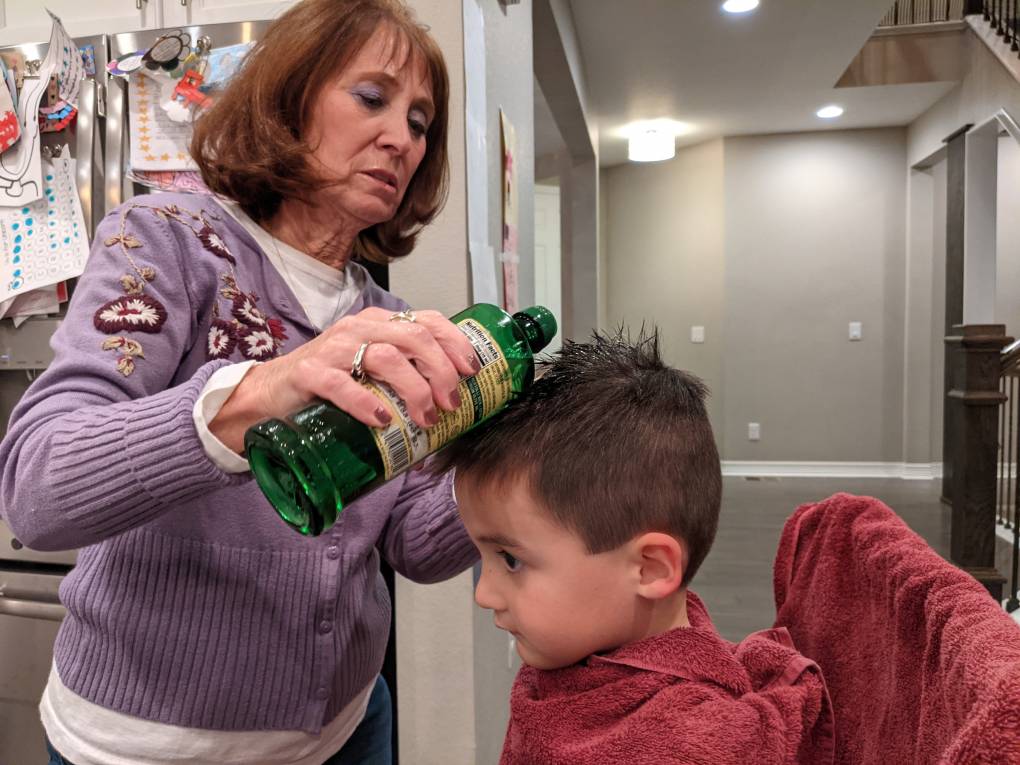
"caption": "LiceDoctors technician Linda Holmes checks the heads of everyone in the Marker family for lice, including preschooler Hudson. It cost more than $200 to get the four-person household checked — eyebrows and Dad's beard included.\n",
"description": "LiceDoctors technician Linda Holmes checks the heads of everyone in the Marker family for lice, including preschooler Hudson. It cost more than $200 to get the four-person household checked — eyebrows and Dad’s beard included. (Rae Ellen Bichell/KHN)",
"title": "LiceDoctors technician Linda Holmes checks the heads of everyone in the Marker family for lice, including preschooler Hudson. It cost more than $200 to get the four-person household checked — eyebrows and Dad's beard included.",
"credit": "Rae Ellen Bichell/KHN",
"status": "inherit",
"altTag": null,
"isLoading": false,
"fetchFailed": false
},
"mindshift_58750": {
"type": "attachments",
"id": "mindshift_58750",
"meta": {
"index": "attachments_1716263798",
"site": "mindshift",
"id": "58750",
"found": true
},
"parent": 58749,
"imgSizes": {
"twentyfourteen-full-width": {
"file": "https://ww2.kqed.org/app/uploads/sites/23/2021/11/enad031121_dinecollege0785_slide-6d12f4b78423b42e3133c1ad9fcdbd72d9b9ddc2-1038x576.jpg",
"width": 1038,
"mimeType": "image/jpeg",
"height": 576
},
"thumbnail": {
"file": "https://ww2.kqed.org/app/uploads/sites/23/2021/11/enad031121_dinecollege0785_slide-6d12f4b78423b42e3133c1ad9fcdbd72d9b9ddc2-160x107.jpg",
"width": 160,
"mimeType": "image/jpeg",
"height": 107
},
"post-thumbnail": {
"file": "https://ww2.kqed.org/app/uploads/sites/23/2021/11/enad031121_dinecollege0785_slide-6d12f4b78423b42e3133c1ad9fcdbd72d9b9ddc2-672x372.jpg",
"width": 672,
"mimeType": "image/jpeg",
"height": 372
},
"kqedFullSize": {
"file": "https://ww2.kqed.org/app/uploads/sites/23/2021/11/enad031121_dinecollege0785_slide-6d12f4b78423b42e3133c1ad9fcdbd72d9b9ddc2-scaled-e1637052533451.jpg",
"width": 1920,
"height": 1280
},
"2048x2048": {
"file": "https://ww2.kqed.org/app/uploads/sites/23/2021/11/enad031121_dinecollege0785_slide-6d12f4b78423b42e3133c1ad9fcdbd72d9b9ddc2-2048x1365.jpg",
"width": 2048,
"mimeType": "image/jpeg",
"height": 1365
},
"large": {
"file": "https://ww2.kqed.org/app/uploads/sites/23/2021/11/enad031121_dinecollege0785_slide-6d12f4b78423b42e3133c1ad9fcdbd72d9b9ddc2-1020x680.jpg",
"width": 1020,
"mimeType": "image/jpeg",
"height": 680
},
"1536x1536": {
"file": "https://ww2.kqed.org/app/uploads/sites/23/2021/11/enad031121_dinecollege0785_slide-6d12f4b78423b42e3133c1ad9fcdbd72d9b9ddc2-1536x1024.jpg",
"width": 1536,
"mimeType": "image/jpeg",
"height": 1024
},
"full-width": {
"file": "https://ww2.kqed.org/app/uploads/sites/23/2021/11/enad031121_dinecollege0785_slide-6d12f4b78423b42e3133c1ad9fcdbd72d9b9ddc2-1920x1280.jpg",
"width": 1920,
"mimeType": "image/jpeg",
"height": 1280
},
"medium": {
"file": "https://ww2.kqed.org/app/uploads/sites/23/2021/11/enad031121_dinecollege0785_slide-6d12f4b78423b42e3133c1ad9fcdbd72d9b9ddc2-800x533.jpg",
"width": 800,
"mimeType": "image/jpeg",
"height": 533
},
"medium_large": {
"file": "https://ww2.kqed.org/app/uploads/sites/23/2021/11/enad031121_dinecollege0785_slide-6d12f4b78423b42e3133c1ad9fcdbd72d9b9ddc2-768x512.jpg",
"width": 768,
"mimeType": "image/jpeg",
"height": 512
}
},
"publishDate": 1637052177,
"modified": 1637052557,
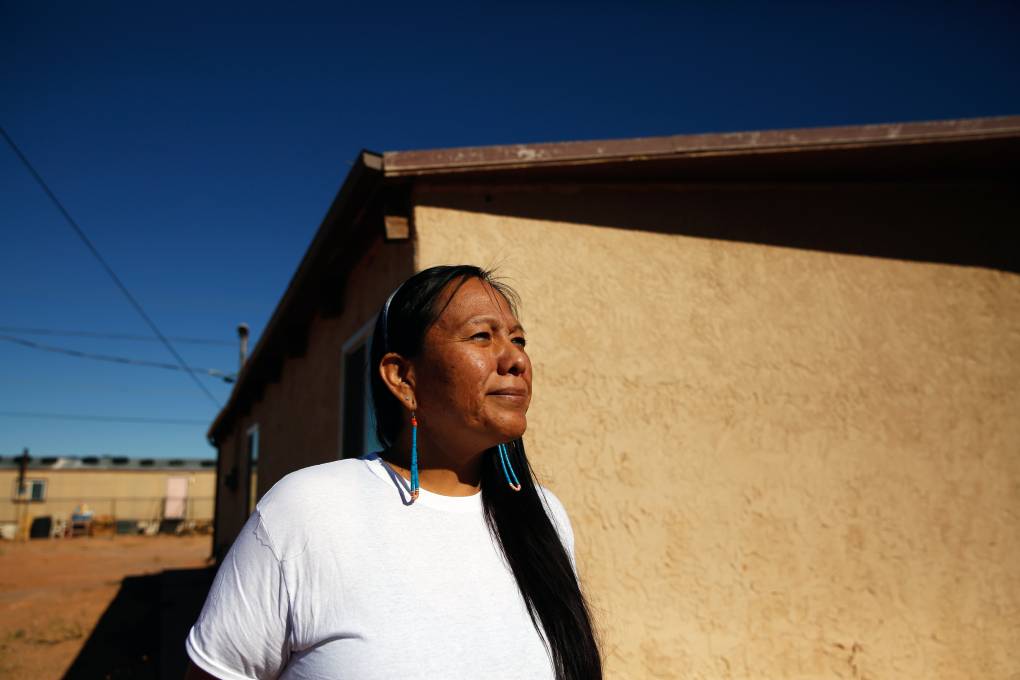
"caption": "Internet access has always been a problem for Faylene Begay, a single mother of four living on the Navajo reservation in Arizona.\n",
"description": null,
"title": "Internet access has always been a problem for Faylene Begay, a single mother of four living on the Navajo reservation in Arizona.",
"credit": "Elissa Nadworny/NPR",
"status": "inherit",
"altTag": null,
"isLoading": false,
"fetchFailed": false
},
"mindshift_58762": {
"type": "attachments",
"id": "mindshift_58762",
"meta": {
"index": "attachments_1716263798",
"site": "mindshift",
"id": "58762",
"found": true
},
"parent": 58761,
"imgSizes": {
"twentyfourteen-full-width": {
"file": "https://ww2.kqed.org/app/uploads/sites/23/2021/11/npred-masks-ljohnson_custom-80ee6d0d7a8e62318d028ecd1fd35b4fb356c7e1-1038x576.jpg",
"width": 1038,
"mimeType": "image/jpeg",
"height": 576
},
"thumbnail": {
"file": "https://ww2.kqed.org/app/uploads/sites/23/2021/11/npred-masks-ljohnson_custom-80ee6d0d7a8e62318d028ecd1fd35b4fb356c7e1-160x107.jpg",
"width": 160,
"mimeType": "image/jpeg",
"height": 107
},
"post-thumbnail": {
"file": "https://ww2.kqed.org/app/uploads/sites/23/2021/11/npred-masks-ljohnson_custom-80ee6d0d7a8e62318d028ecd1fd35b4fb356c7e1-672x372.jpg",
"width": 672,
"mimeType": "image/jpeg",
"height": 372
},
"kqedFullSize": {
"file": "https://ww2.kqed.org/app/uploads/sites/23/2021/11/npred-masks-ljohnson_custom-80ee6d0d7a8e62318d028ecd1fd35b4fb356c7e1-scaled-e1637052946286.jpg",
"width": 1920,
"height": 1279
},
"2048x2048": {
"file": "https://ww2.kqed.org/app/uploads/sites/23/2021/11/npred-masks-ljohnson_custom-80ee6d0d7a8e62318d028ecd1fd35b4fb356c7e1-2048x1364.jpg",
"width": 2048,
"mimeType": "image/jpeg",
"height": 1364
},
"large": {
"file": "https://ww2.kqed.org/app/uploads/sites/23/2021/11/npred-masks-ljohnson_custom-80ee6d0d7a8e62318d028ecd1fd35b4fb356c7e1-1020x679.jpg",
"width": 1020,
"mimeType": "image/jpeg",
"height": 679
},
"1536x1536": {
"file": "https://ww2.kqed.org/app/uploads/sites/23/2021/11/npred-masks-ljohnson_custom-80ee6d0d7a8e62318d028ecd1fd35b4fb356c7e1-1536x1023.jpg",
"width": 1536,
"mimeType": "image/jpeg",
"height": 1023
},
"full-width": {
"file": "https://ww2.kqed.org/app/uploads/sites/23/2021/11/npred-masks-ljohnson_custom-80ee6d0d7a8e62318d028ecd1fd35b4fb356c7e1-1920x1279.jpg",
"width": 1920,
"mimeType": "image/jpeg",
"height": 1279
},
"medium": {
"file": "https://ww2.kqed.org/app/uploads/sites/23/2021/11/npred-masks-ljohnson_custom-80ee6d0d7a8e62318d028ecd1fd35b4fb356c7e1-800x533.jpg",
"width": 800,
"mimeType": "image/jpeg",
"height": 533
},
"medium_large": {
"file": "https://ww2.kqed.org/app/uploads/sites/23/2021/11/npred-masks-ljohnson_custom-80ee6d0d7a8e62318d028ecd1fd35b4fb356c7e1-768x511.jpg",
"width": 768,
"mimeType": "image/jpeg",
"height": 511
}
},
"publishDate": 1637052904,
"modified": 1637052959,
"caption": null,
"description": null,
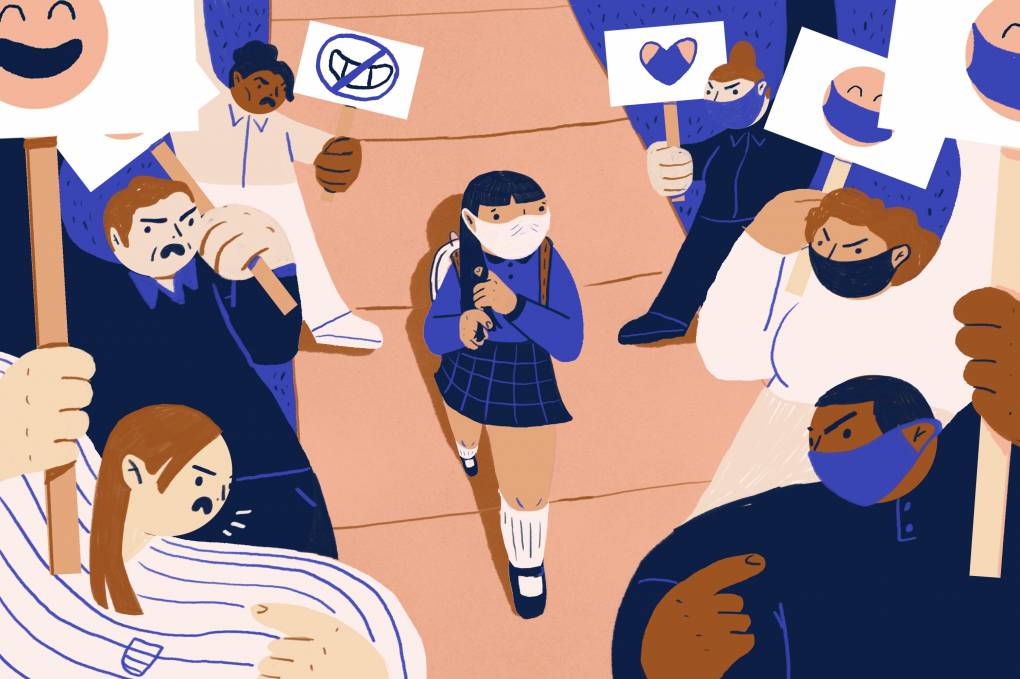
"title": "A student walks to school in the middle of parent protesters.",
"credit": "LA Johnson/NPR",
"status": "inherit",
"altTag": null,
"isLoading": false,
"fetchFailed": false
},
"mindshift_58721": {
"type": "attachments",
"id": "mindshift_58721",
"meta": {
"index": "attachments_1716263798",
"site": "mindshift",
"id": "58721",
"found": true
},
"parent": 58720,
"imgSizes": {
"twentyfourteen-full-width": {
"file": "https://ww2.kqed.org/app/uploads/sites/23/2021/11/backtope-15-FEAT-other-option-1038x576.jpg",
"width": 1038,
"mimeType": "image/jpeg",
"height": 576
},
"thumbnail": {
"file": "https://ww2.kqed.org/app/uploads/sites/23/2021/11/backtope-15-FEAT-other-option-160x120.jpg",
"width": 160,
"mimeType": "image/jpeg",
"height": 120
},
"post-thumbnail": {
"file": "https://ww2.kqed.org/app/uploads/sites/23/2021/11/backtope-15-FEAT-other-option-672x372.jpg",
"width": 672,
"mimeType": "image/jpeg",
"height": 372
},
"kqedFullSize": {
"file": "https://ww2.kqed.org/app/uploads/sites/23/2021/11/backtope-15-FEAT-other-option-scaled-e1636350138696.jpg",
"width": 1920,
"height": 1440
},
"2048x2048": {
"file": "https://ww2.kqed.org/app/uploads/sites/23/2021/11/backtope-15-FEAT-other-option-2048x1536.jpg",
"width": 2048,
"mimeType": "image/jpeg",
"height": 1536
},
"large": {
"file": "https://ww2.kqed.org/app/uploads/sites/23/2021/11/backtope-15-FEAT-other-option-1020x765.jpg",
"width": 1020,
"mimeType": "image/jpeg",
"height": 765
},
"1536x1536": {
"file": "https://ww2.kqed.org/app/uploads/sites/23/2021/11/backtope-15-FEAT-other-option-1536x1152.jpg",
"width": 1536,
"mimeType": "image/jpeg",
"height": 1152
},
"full-width": {
"file": "https://ww2.kqed.org/app/uploads/sites/23/2021/11/backtope-15-FEAT-other-option-1920x1440.jpg",
"width": 1920,
"mimeType": "image/jpeg",
"height": 1440
},
"medium": {
"file": "https://ww2.kqed.org/app/uploads/sites/23/2021/11/backtope-15-FEAT-other-option-800x600.jpg",
"width": 800,
"mimeType": "image/jpeg",
"height": 600
},
"medium_large": {
"file": "https://ww2.kqed.org/app/uploads/sites/23/2021/11/backtope-15-FEAT-other-option-768x576.jpg",
"width": 768,
"mimeType": "image/jpeg",
"height": 576
}
},
"publishDate": 1636350097,
"modified": 1636350176,
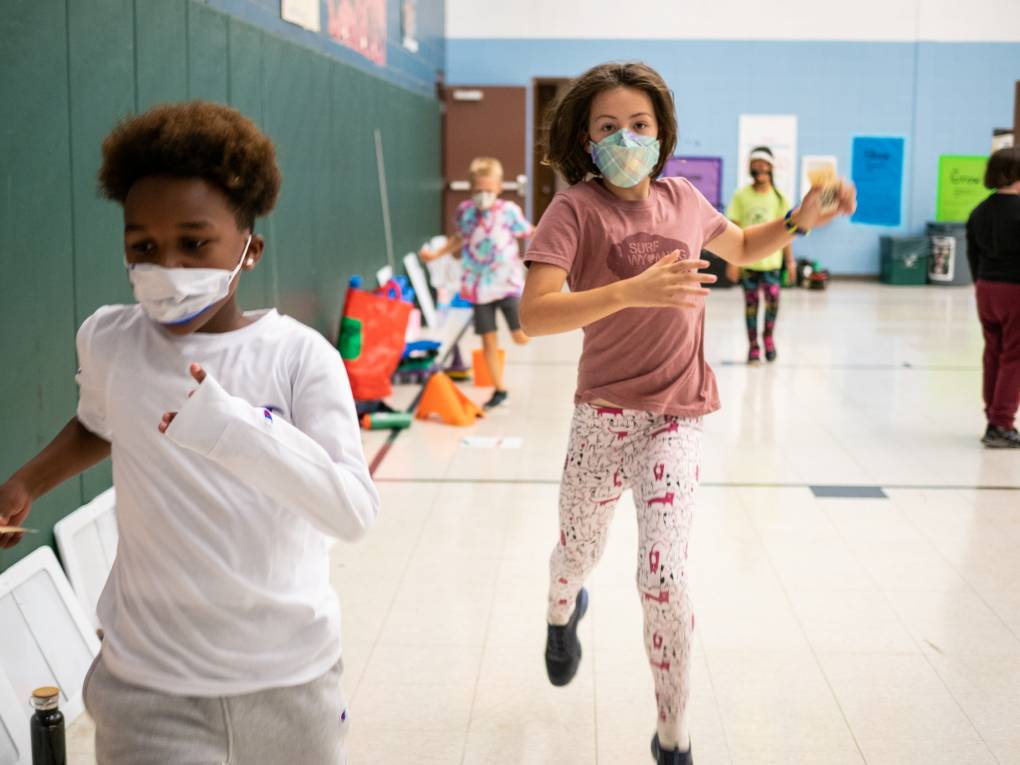
"caption": "After rain forced classes indoors, fourth graders at Middletown elementary run around the gym. ",
"description": null,
"title": "backtope-15 FEAT other option",
"credit": "Yunuen Bonaparte for The Hechinger Report",
"status": "inherit",
"altTag": null,
"isLoading": false,
"fetchFailed": false
},
"mindshift_58715": {
"type": "attachments",
"id": "mindshift_58715",
"meta": {
"index": "attachments_1716263798",
"site": "mindshift",
"id": "58715",
"found": true
},
"parent": 58714,
"imgSizes": {
"twentyfourteen-full-width": {
"file": "https://ww2.kqed.org/app/uploads/sites/23/2021/11/gettyimages-1236307440-42e3ce19ce1126cb310116ddc8bfb65316104af1-1038x576.jpg",
"width": 1038,
"mimeType": "image/jpeg",
"height": 576
},
"thumbnail": {
"file": "https://ww2.kqed.org/app/uploads/sites/23/2021/11/gettyimages-1236307440-42e3ce19ce1126cb310116ddc8bfb65316104af1-160x120.jpg",
"width": 160,
"mimeType": "image/jpeg",
"height": 120
},
"post-thumbnail": {
"file": "https://ww2.kqed.org/app/uploads/sites/23/2021/11/gettyimages-1236307440-42e3ce19ce1126cb310116ddc8bfb65316104af1-672x372.jpg",
"width": 672,
"mimeType": "image/jpeg",
"height": 372
},
"kqedFullSize": {
"file": "https://ww2.kqed.org/app/uploads/sites/23/2021/11/gettyimages-1236307440-42e3ce19ce1126cb310116ddc8bfb65316104af1-scaled-e1636098797142.jpg",
"width": 1920,
"height": 1439
},
"2048x2048": {
"file": "https://ww2.kqed.org/app/uploads/sites/23/2021/11/gettyimages-1236307440-42e3ce19ce1126cb310116ddc8bfb65316104af1-2048x1535.jpg",
"width": 2048,
"mimeType": "image/jpeg",
"height": 1535
},
"large": {
"file": "https://ww2.kqed.org/app/uploads/sites/23/2021/11/gettyimages-1236307440-42e3ce19ce1126cb310116ddc8bfb65316104af1-1020x765.jpg",
"width": 1020,
"mimeType": "image/jpeg",
"height": 765
},
"1536x1536": {
"file": "https://ww2.kqed.org/app/uploads/sites/23/2021/11/gettyimages-1236307440-42e3ce19ce1126cb310116ddc8bfb65316104af1-1536x1151.jpg",
"width": 1536,
"mimeType": "image/jpeg",
"height": 1151
},
"full-width": {
"file": "https://ww2.kqed.org/app/uploads/sites/23/2021/11/gettyimages-1236307440-42e3ce19ce1126cb310116ddc8bfb65316104af1-1920x1439.jpg",
"width": 1920,
"mimeType": "image/jpeg",
"height": 1439
},
"medium": {
"file": "https://ww2.kqed.org/app/uploads/sites/23/2021/11/gettyimages-1236307440-42e3ce19ce1126cb310116ddc8bfb65316104af1-800x600.jpg",
"width": 800,
"mimeType": "image/jpeg",
"height": 600
},
"medium_large": {
"file": "https://ww2.kqed.org/app/uploads/sites/23/2021/11/gettyimages-1236307440-42e3ce19ce1126cb310116ddc8bfb65316104af1-768x576.jpg",
"width": 768,
"mimeType": "image/jpeg",
"height": 576
}
},
"publishDate": 1636098684,
"modified": 1636098812,
"caption": "A 10-year-old high-fives pharmacist Colleen Teevan after he received the Pfizer-BioNTech COVID-19 vaccine for kids at Hartford Hospital in Hartford, Conn., on Tuesday.\n",
"description": "TOPSHOT - A ten year old child high fives Pharmacist Colleen Teevan after he received the Pfizer-BioNTech Covid-19 Vaccine for kids at Hartford Hospital in Hartford, Connecticut on November 2, 2021. - The United States can now start giving children aged 5-11 the Pfizer-BioNtech Covid vaccine, US health authorities said Tuesday in a move hailed by President Joe Biden as a \"turning point\" in the fight against the pandemic. (Photo by JOSEPH PREZIOSO / AFP) (Photo by JOSEPH PREZIOSO/AFP via Getty Images)",
"title": "A 10-year-old high-fives pharmacist Colleen Teevan after he received the Pfizer-BioNTech COVID-19 vaccine for kids at Hartford Hospital in Hartford, Conn., on Tuesday.",
"credit": "Joseph Prezioso/AFP via Getty Images",
"status": "inherit",
"altTag": null,
"isLoading": false,
"fetchFailed": false
}
},
"audioPlayerReducer": {
"postId": "stream_live",
"isPaused": true,
"isPlaying": false,
"pfsActive": false,
"pledgeModalIsOpen": true,
"playerDrawerIsOpen": false,
"liveAudioPlayStartedAt": 0,
"liveAudioPlayContext": ""
},
"authorsReducer": {
"byline_mindshift_59022": {
"type": "authors",
"id": "byline_mindshift_59022",
"meta": {
"override": true
},
"slug": "byline_mindshift_59022",
"name": "Asma Khalid, Casey Morell, Amy Isackson, Patrick Jarenwattananon",
"isLoading": false
},
"byline_mindshift_58954": {
"type": "authors",
"id": "byline_mindshift_58954",
"meta": {
"override": true
},
"slug": "byline_mindshift_58954",
"name": "Anya Kamenetz",
"isLoading": false
},
"byline_mindshift_58942": {
"type": "authors",
"id": "byline_mindshift_58942",
"meta": {
"override": true
},
"slug": "byline_mindshift_58942",
"name": "Rhitu Chatterjee",
"isLoading": false
},
"byline_mindshift_58938": {
"type": "authors",
"id": "byline_mindshift_58938",
"meta": {
"override": true
},
"slug": "byline_mindshift_58938",
"name": "Anya Kamenetz",
"isLoading": false
},
"byline_mindshift_58872": {
"type": "authors",
"id": "byline_mindshift_58872",
"meta": {
"override": true
},
"slug": "byline_mindshift_58872",
"name": "Anya Kamenetz",
"isLoading": false
},
"byline_mindshift_58844": {
"type": "authors",
"id": "byline_mindshift_58844",
"meta": {
"override": true
},
"slug": "byline_mindshift_58844",
"name": "Kyra Miles",
"isLoading": false
},
"byline_mindshift_58766": {
"type": "authors",
"id": "byline_mindshift_58766",
"meta": {
"override": true
},
"slug": "byline_mindshift_58766",
"name": "Anya Kamenetz",
"isLoading": false
},
"byline_mindshift_58776": {
"type": "authors",
"id": "byline_mindshift_58776",
"meta": {
"override": true
},
"slug": "byline_mindshift_58776",
"name": "Rae Ellen Bichell",
"isLoading": false
},
"byline_mindshift_58749": {
"type": "authors",
"id": "byline_mindshift_58749",
"meta": {
"override": true
},
"slug": "byline_mindshift_58749",
"name": "Elissa Nadworny ",
"isLoading": false
},
"byline_mindshift_58761": {
"type": "authors",
"id": "byline_mindshift_58761",
"meta": {
"override": true
},
"slug": "byline_mindshift_58761",
"name": "Anya Kamenetz",
"isLoading": false
},
"byline_mindshift_58720": {
"type": "authors",
"id": "byline_mindshift_58720",
"meta": {
"override": true
},
"slug": "byline_mindshift_58720",
"name": "Kelly Field, \u003ca href=\"https://hechingerreport.org/\">The Hechinger Report\u003c/a>",
"isLoading": false
},
"byline_mindshift_58714": {
"type": "authors",
"id": "byline_mindshift_58714",
"meta": {
"override": true
},
"slug": "byline_mindshift_58714",
"name": "Wynne Davis",
"isLoading": false
}
},
"pagesReducer": {
"mindshift_tag_covid-19": {
"type": "terms",
"id": "mindshift_21343",
"meta": {
"index": "terms_1716263798",
"site": "mindshift",
"id": "21343",
"score": 8.558781
},
"featImg": null,
"name": "COVID-19",
"description": null,
"taxonomy": "tag",
"headData": {
"twImgId": null,
"twTitle": null,
"ogTitle": null,
"ogImgId": null,
"twDescription": null,
"description": null,
"title": "COVID-19 Archives - KQED Mindshift",
"ogDescription": null
},
"ttid": 20615,
"slug": "covid-19",
"isLoading": false,
"title": "COVID-19",
"pageMeta": {
"site": "mindshift",
"WpPageTemplate": "page-topic-editorial",
"currentPage": 5
},
"blocks": [
{
"blockName": "kqed/post-list",
"attrs": {
"layout": "cardArticle2",
"query": "posts/mindshift?tag=covid-19",
"seeMore": false,
"paginated": true,
"page": 5
}
},
{
"blockName": "kqed/ad"
}
]
}
},
"pfsSessionReducer": {},
"postsReducer": {
"stream_live": {
"type": "live",
"id": "stream_live",
"audioUrl": "https://streams.kqed.org/kqedradio",
"title": "Live Stream",
"excerpt": "Live Stream information currently unavailable.",
"link": "/radio",
"featImg": "",
"label": {
"name": "KQED Live",
"link": "/"
}
},
"stream_kqedNewscast": {
"type": "posts",
"id": "stream_kqedNewscast",
"audioUrl": "https://www.kqed.org/.stream/anon/radio/RDnews/newscast.mp3?_=1",
"title": "KQED Newscast",
"featImg": "",
"label": {
"name": "88.5 FM",
"link": "/"
}
},
"mindshift_59022": {
"type": "posts",
"id": "mindshift_59022",
"meta": {
"index": "posts_1716263798",
"site": "mindshift",
"id": "59022",
"score": null,
"sort": [
1643444974000
]
},
"parent": 0,
"labelTerm": {
"site": "mindshift"
},
"blocks": [],
"publishDate": 1643444974,
"format": "standard",
"disqusTitle": "A school principal's blunt warning: We can't pretend the pandemic is over",
"title": "A school principal's blunt warning: We can't pretend the pandemic is over",
"headTitle": "MindShift | KQED News",
"content": "\u003cp>Kids are carrying the trauma of the pandemic and, even if COVID is eventually defanged, it has already left indelible marks on students' psyches and education.\u003c/p>\n\u003cp>That's the warning of Chicago school principal, Seth Lavin.\u003c/p>\n\u003cp>As the pandemic has disrupted education across the country, the situation in Chicago has been particularly acute. The city's public school system shut down for five days earlier this month as the teachers union and city officials were in a standoff over COVID safety rules.\u003c/p>\n\u003cp>\"Our schools are not OK. Children are not OK. Teachers are not OK,\" Lavin wrote in a \u003ca href=\"https://chicago.suntimes.com/2022/1/24/22899360/chicago-principal-our-schools-are-not-ok-mental-health-pandemic-seth-lavin-op-ed\">recent commentary for the Chicago Sun-Times\u003c/a>. \"Yesterday we COVID-tested a line of students 300 children long. But this surreal circus is not the main plot of this year. The surge is ending. The crisis will still be here.\"\u003c/p>\n\u003cp>Lavin, who heads the Brentano Elementary Math & Science Academy (Pre-K - 8th grade), spoke with NPR's \u003cem>All Things Considered.\u003c/em>\u003c/p>\n\u003cp>[ad fullwidth]\u003c/p>\n\u003cp>\u003cem>The interview has been edited for brevity and clarity.\u003c/em>\u003c/p>\n\u003cfigure id=\"attachment_59024\" class=\"wp-caption alignnone\" style=\"max-width: 1920px\">\u003cimg class=\"size-full wp-image-59024\" src=\"https://ww2.kqed.org/app/uploads/sites/23/2022/01/gettyimages-1363878066-ca8690285cc140929f82f785443ecaff407a0a68-scaled-e1643790653123.jpg\" alt=\"\" width=\"1920\" height=\"1440\">\u003cfigcaption class=\"wp-caption-text\">Members of the Chicago Teachers Union and their supporters participate in a car caravan around City Hall to protest against in-person learning in Chicago public schools on January 10, 2022 in Chicago, Illinois. \u003ccite>(Scott Olson/Getty Images)\u003c/cite>\u003c/figcaption>\u003c/figure>\n\u003ch2>\u003cstrong>What's not OK?\u003c/strong>\u003c/h2>\n\u003cp>We've all been through so much in the past two years. Most of last year we were apart and now we're together again. Children and all of us are out of practice being a community. We've all lost a lot. We've all been hurt a lot. So, the children need help. They need love. The adults need help and love too. And so as a community, we're struggling through it.\u003c/p>\n\u003ch2>\u003cstrong>How children carry the burdens of COVID\u003c/strong>\u003c/h2>\n\u003cfigure id=\"attachment_59025\" class=\"wp-caption alignright\" style=\"max-width: 250px\">\u003cimg class=\"size-full wp-image-59025\" src=\"https://ww2.kqed.org/app/uploads/sites/23/2022/01/seth-levin_vert-3ac7a7c17bd23647449f4b84e32e65a63c38eae9-scaled-e1643790702982.jpe\" alt=\"\" width=\"250\" height=\"334\">\u003cfigcaption class=\"wp-caption-text\">Principal Seth Lavin. \u003ccite>(Seth Lavin)\u003c/cite>\u003c/figcaption>\u003c/figure>\n\u003cp>Kids have experienced loss and kids have lost experiences. They are carrying trauma and, even the ones who aren't carrying trauma from really terrible things happening during this pandemic, they've had experiences that kids shouldn't have and have lacked experiences that kids should have.\u003c/p>\n\u003cp>Their friendships are harder. Their emotions are bigger. Their ability to have empathy, and process with those around them, and notice the humans around them is lower. And that just makes everything more challenging in a school because, in a school, we are together and everything we do impacts the people around us directly.\u003c/p>\n\u003cp>I talk to friends of mine who are teachers, who are principals, and we all share these stories, just examples of things that worry us about our kids – stories that you wouldn't hear two or three years ago. A friend of mine who's a principal told me when I asked how she's doing, she said in the last three years, she had once gone through the process that you go through when a child has suicidal ideation, when they talk a lot about self-harm. She said [she has] done it four times in the last one month.\u003c/p>\n\u003cfigure id=\"attachment_59026\" class=\"wp-caption alignnone\" style=\"max-width: 1920px\">\u003cimg class=\"size-full wp-image-59026\" src=\"https://ww2.kqed.org/app/uploads/sites/23/2022/01/gettyimages-1364241597-cc1d1b535356926e13257a61ad89e2358c894d1d-scaled-e1643790741473.jpg\" alt=\"\" width=\"1920\" height=\"1440\">\u003cfigcaption class=\"wp-caption-text\">A student arrives for classes at a Chicago elementary school on January 12, 2022. \u003ccite>(Scott Olson/Getty Images)\u003c/cite>\u003c/figcaption>\u003c/figure>\n\u003ch2>\u003cstrong>Too much focus on learning loss\u003c/strong>\u003c/h2>\n\u003cp>It is objectively true that over the last two years, kids have not experienced the same lessons they would have, if school had just been in person. But, I really think there's too much focus on that or on this idea of learning loss, whatever that means.\u003c/p>\n\u003cp>What school does and what school is isn't just a sequence of lessons that you're supposed to get in order at the right time in order to grow up to be the person you're supposed to grow up to be. That's not what school is really about. School is about becoming the person you're meant to be through being in community and having experiences with others, learning who you are, learning how to be a person who shows up in a way that is good for others – and fractions and grammar.\u003c/p>\n\u003cp>So, yes, our kids missed out on things. They have experiences that they need to have, now, to grow into the people they need to be and to grow in community in the right way. That is all much more important and much more urgent than this idea that we need to somehow make up for the lessons that they didn't have because they were remote or because school was closed at a certain period of time. That stuff will come. The urgency is we need to help our kids feel safe and good in community at school, so they know how to be with others.\u003c/p>\n\u003ch2>\u003cstrong>When will things get back to normal?\u003c/strong>\u003c/h2>\n\u003cp>We can't pretend that we're not still in the present tense in the pandemic, and I think it's important to say that out loud because when we pretend the pandemic is over, when we pretend that these disruptions aren't still existing in school, when we pretend our kids aren't still experiencing the hardship that they're experiencing as a result of this pandemic, we aren't opening our eyes to what kids and teachers and schools and parents are actually experiencing, and in doing so, we create a disconnect and we make things worse.\u003c/p>\n\u003cp>I'm an optimist. I think the omicron surge ending is a really good thing and it may mean we have a time of lower cases and normalcy for a while. That'll give us a longer time of more calm and more stability and school, which is going to help kids and teachers feel more calm and more stable in their bodies and their classrooms to rebuild the community and do the work that we need to do.\u003c/p>\n\u003cp>But in the long term, this isn't a blip. I mean, this is now part of our collective experience. It's been a quarter of my younger son's life. It's not just a thing that happened. It's the world. So, we're going to be making sense of that forever.\u003c/p>\n\u003cp>[ad floatright]\u003c/p>\n\u003cp>We want to go back to normal, but we also always have to ask what normal even was. This moment, cataclysmic as it is, has to be a time when we rebuild the world in a better way. And I really think that people, schools, teachers and their kids and the parents they work with are doing that work classroom by classroom.\u003c/p>\n\u003cdiv class=\"fullattribution\">Copyright 2022 NPR. To see more, visit https://www.npr.org.\u003cimg src=\"https://www.google-analytics.com/__utm.gif?utmac=UA-5828686-4&utmdt=A+school+principal%27s+blunt+warning%3A+We+can%27t+pretend+the+pandemic+is+over&utme=8(APIKey)9(MDAxOTAwOTE4MDEyMTkxMDAzNjczZDljZA004)\">\u003c/div>\n\n",
"disqusIdentifier": "59022 https://ww2.kqed.org/mindshift/?p=59022",
"disqusUrl": "https://ww2.kqed.org/mindshift/2022/01/29/a-school-principals-blunt-warning-we-cant-pretend-the-pandemic-is-over/",
"stats": {
"hasVideo": false,
"hasChartOrMap": false,
"hasAudio": false,
"hasPolis": false,
"wordCount": 1093,
"hasGoogleForm": false,
"hasGallery": false,
"hasHearkenModule": false,
"iframeSrcs": [],
"paragraphCount": 19
},
"modified": 1643790938,
"excerpt": "Principal Seth Lavin says even after the omicron surge ends, the crisis for children will continue.",
"headData": {
"twImgId": "",
"twTitle": "",
"ogTitle": "",
"ogImgId": "",
"twDescription": "",
"description": "Principal Seth Lavin says even after the omicron surge ends, the crisis for children will continue.",
"title": "A school principal's blunt warning: We can't pretend the pandemic is over - MindShift",
"ogDescription": "",
"schema": {
"@context": "https://schema.org",
"@type": "Article",
"headline": "A school principal's blunt warning: We can't pretend the pandemic is over",
"datePublished": "2022-01-29T00:29:34-08:00",
"dateModified": "2022-02-02T00:35:38-08:00",
"image": "https://cdn.kqed.org/wp-content/uploads/2020/02/KQED-OG-Image@1x.png"
}
},
"guestAuthors": [],
"slug": "a-school-principals-blunt-warning-we-cant-pretend-the-pandemic-is-over",
"status": "publish",
"nprApiLink": "http://api.npr.org/query?id=1076178383&apiKey=MDAxOTAwOTE4MDEyMTkxMDAzNjczZDljZA004",
"nprByline": "Asma Khalid, Casey Morell, Amy Isackson, Patrick Jarenwattananon",
"nprStoryDate": "Fri, 28 Jan 2022 06:00:32 -0500",
"excludeFromSiteSearch": "Include",
"nprLastModifiedDate": "Fri, 28 Jan 2022 06:00:32 -0500",
"nprHtmlLink": "https://www.npr.org/2022/01/28/1076178383/a-school-principals-blunt-warning-we-cant-pretend-the-pandemic-is-over?ft=nprml&f=1076178383",
"nprImageAgency": "Getty Images",
"nprImageCredit": "Scott Olson",
"showOnAuthorArchivePages": "No",
"nprStoryId": "1076178383",
"nprRetrievedStory": "1",
"nprPubDate": "Fri, 28 Jan 2022 06:00:00 -0500",
"path": "/mindshift/59022/a-school-principals-blunt-warning-we-cant-pretend-the-pandemic-is-over",
"audioTrackLength": null,
"parsedContent": [
{
"type": "contentString",
"content": "\u003cdiv class=\"post-body\">\u003cp>\u003cp>Kids are carrying the trauma of the pandemic and, even if COVID is eventually defanged, it has already left indelible marks on students' psyches and education.\u003c/p>\n\u003cp>That's the warning of Chicago school principal, Seth Lavin.\u003c/p>\n\u003cp>As the pandemic has disrupted education across the country, the situation in Chicago has been particularly acute. The city's public school system shut down for five days earlier this month as the teachers union and city officials were in a standoff over COVID safety rules.\u003c/p>\n\u003cp>\"Our schools are not OK. Children are not OK. Teachers are not OK,\" Lavin wrote in a \u003ca href=\"https://chicago.suntimes.com/2022/1/24/22899360/chicago-principal-our-schools-are-not-ok-mental-health-pandemic-seth-lavin-op-ed\">recent commentary for the Chicago Sun-Times\u003c/a>. \"Yesterday we COVID-tested a line of students 300 children long. But this surreal circus is not the main plot of this year. The surge is ending. The crisis will still be here.\"\u003c/p>\n\u003cp>Lavin, who heads the Brentano Elementary Math & Science Academy (Pre-K - 8th grade), spoke with NPR's \u003cem>All Things Considered.\u003c/em>\u003c/p>\n\u003cp>\u003c/p>\u003c/div>",
"attributes": {
"named": {},
"numeric": []
}
},
{
"type": "component",
"content": "",
"name": "ad",
"attributes": {
"named": {
"label": "fullwidth"
},
"numeric": [
"fullwidth"
]
}
},
{
"type": "contentString",
"content": "\u003cdiv class=\"post-body\">\u003cp>\u003c/p>\n\u003cp>\u003cem>The interview has been edited for brevity and clarity.\u003c/em>\u003c/p>\n\u003cfigure id=\"attachment_59024\" class=\"wp-caption alignnone\" style=\"max-width: 1920px\">\u003cimg class=\"size-full wp-image-59024\" src=\"https://ww2.kqed.org/app/uploads/sites/23/2022/01/gettyimages-1363878066-ca8690285cc140929f82f785443ecaff407a0a68-scaled-e1643790653123.jpg\" alt=\"\" width=\"1920\" height=\"1440\">\u003cfigcaption class=\"wp-caption-text\">Members of the Chicago Teachers Union and their supporters participate in a car caravan around City Hall to protest against in-person learning in Chicago public schools on January 10, 2022 in Chicago, Illinois. \u003ccite>(Scott Olson/Getty Images)\u003c/cite>\u003c/figcaption>\u003c/figure>\n\u003ch2>\u003cstrong>What's not OK?\u003c/strong>\u003c/h2>\n\u003cp>We've all been through so much in the past two years. Most of last year we were apart and now we're together again. Children and all of us are out of practice being a community. We've all lost a lot. We've all been hurt a lot. So, the children need help. They need love. The adults need help and love too. And so as a community, we're struggling through it.\u003c/p>\n\u003ch2>\u003cstrong>How children carry the burdens of COVID\u003c/strong>\u003c/h2>\n\u003cfigure id=\"attachment_59025\" class=\"wp-caption alignright\" style=\"max-width: 250px\">\u003cimg class=\"size-full wp-image-59025\" src=\"https://ww2.kqed.org/app/uploads/sites/23/2022/01/seth-levin_vert-3ac7a7c17bd23647449f4b84e32e65a63c38eae9-scaled-e1643790702982.jpe\" alt=\"\" width=\"250\" height=\"334\">\u003cfigcaption class=\"wp-caption-text\">Principal Seth Lavin. \u003ccite>(Seth Lavin)\u003c/cite>\u003c/figcaption>\u003c/figure>\n\u003cp>Kids have experienced loss and kids have lost experiences. They are carrying trauma and, even the ones who aren't carrying trauma from really terrible things happening during this pandemic, they've had experiences that kids shouldn't have and have lacked experiences that kids should have.\u003c/p>\n\u003cp>Their friendships are harder. Their emotions are bigger. Their ability to have empathy, and process with those around them, and notice the humans around them is lower. And that just makes everything more challenging in a school because, in a school, we are together and everything we do impacts the people around us directly.\u003c/p>\n\u003cp>I talk to friends of mine who are teachers, who are principals, and we all share these stories, just examples of things that worry us about our kids – stories that you wouldn't hear two or three years ago. A friend of mine who's a principal told me when I asked how she's doing, she said in the last three years, she had once gone through the process that you go through when a child has suicidal ideation, when they talk a lot about self-harm. She said [she has] done it four times in the last one month.\u003c/p>\n\u003cfigure id=\"attachment_59026\" class=\"wp-caption alignnone\" style=\"max-width: 1920px\">\u003cimg class=\"size-full wp-image-59026\" src=\"https://ww2.kqed.org/app/uploads/sites/23/2022/01/gettyimages-1364241597-cc1d1b535356926e13257a61ad89e2358c894d1d-scaled-e1643790741473.jpg\" alt=\"\" width=\"1920\" height=\"1440\">\u003cfigcaption class=\"wp-caption-text\">A student arrives for classes at a Chicago elementary school on January 12, 2022. \u003ccite>(Scott Olson/Getty Images)\u003c/cite>\u003c/figcaption>\u003c/figure>\n\u003ch2>\u003cstrong>Too much focus on learning loss\u003c/strong>\u003c/h2>\n\u003cp>It is objectively true that over the last two years, kids have not experienced the same lessons they would have, if school had just been in person. But, I really think there's too much focus on that or on this idea of learning loss, whatever that means.\u003c/p>\n\u003cp>What school does and what school is isn't just a sequence of lessons that you're supposed to get in order at the right time in order to grow up to be the person you're supposed to grow up to be. That's not what school is really about. School is about becoming the person you're meant to be through being in community and having experiences with others, learning who you are, learning how to be a person who shows up in a way that is good for others – and fractions and grammar.\u003c/p>\n\u003cp>So, yes, our kids missed out on things. They have experiences that they need to have, now, to grow into the people they need to be and to grow in community in the right way. That is all much more important and much more urgent than this idea that we need to somehow make up for the lessons that they didn't have because they were remote or because school was closed at a certain period of time. That stuff will come. The urgency is we need to help our kids feel safe and good in community at school, so they know how to be with others.\u003c/p>\n\u003ch2>\u003cstrong>When will things get back to normal?\u003c/strong>\u003c/h2>\n\u003cp>We can't pretend that we're not still in the present tense in the pandemic, and I think it's important to say that out loud because when we pretend the pandemic is over, when we pretend that these disruptions aren't still existing in school, when we pretend our kids aren't still experiencing the hardship that they're experiencing as a result of this pandemic, we aren't opening our eyes to what kids and teachers and schools and parents are actually experiencing, and in doing so, we create a disconnect and we make things worse.\u003c/p>\n\u003cp>I'm an optimist. I think the omicron surge ending is a really good thing and it may mean we have a time of lower cases and normalcy for a while. That'll give us a longer time of more calm and more stability and school, which is going to help kids and teachers feel more calm and more stable in their bodies and their classrooms to rebuild the community and do the work that we need to do.\u003c/p>\n\u003cp>But in the long term, this isn't a blip. I mean, this is now part of our collective experience. It's been a quarter of my younger son's life. It's not just a thing that happened. It's the world. So, we're going to be making sense of that forever.\u003c/p>\n\u003cp>\u003c/p>\u003c/div>",
"attributes": {
"named": {},
"numeric": []
}
},
{
"type": "component",
"content": "",
"name": "ad",
"attributes": {
"named": {
"label": "floatright"
},
"numeric": [
"floatright"
]
}
},
{
"type": "contentString",
"content": "\u003cdiv class=\"post-body\">\u003cp>\u003c/p>\n\u003cp>We want to go back to normal, but we also always have to ask what normal even was. This moment, cataclysmic as it is, has to be a time when we rebuild the world in a better way. And I really think that people, schools, teachers and their kids and the parents they work with are doing that work classroom by classroom.\u003c/p>\n\u003cdiv class=\"fullattribution\">Copyright 2022 NPR. To see more, visit https://www.npr.org.\u003cimg src=\"https://www.google-analytics.com/__utm.gif?utmac=UA-5828686-4&utmdt=A+school+principal%27s+blunt+warning%3A+We+can%27t+pretend+the+pandemic+is+over&utme=8(APIKey)9(MDAxOTAwOTE4MDEyMTkxMDAzNjczZDljZA004)\">\u003c/div>\n\n\u003c/div>\u003c/p>",
"attributes": {
"named": {},
"numeric": []
}
}
],
"link": "/mindshift/59022/a-school-principals-blunt-warning-we-cant-pretend-the-pandemic-is-over",
"authors": [
"byline_mindshift_59022"
],
"categories": [
"mindshift_21345"
],
"tags": [
"mindshift_21344",
"mindshift_21343",
"mindshift_21398",
"mindshift_21461"
],
"featImg": "mindshift_59023",
"label": "mindshift"
},
"mindshift_58954": {
"type": "posts",
"id": "mindshift_58954",
"meta": {
"index": "posts_1716263798",
"site": "mindshift",
"id": "58954",
"score": null,
"sort": [
1642751136000
]
},
"parent": 0,
"labelTerm": {
"site": "mindshift"
},
"blocks": [],
"publishDate": 1642751136,
"format": "standard",
"disqusTitle": "Parents and caregivers of young kids say they've hit pandemic rock bottom",
"title": "Parents and caregivers of young kids say they've hit pandemic rock bottom",
"headTitle": "MindShift | KQED News",
"content": "\u003cp>\"I had a parent tell me to f*** off last week,\" Cori Berg said. She directs the Hope Day School, a church-affiliated early childhood program in Dallas.\u003c/p>\n\u003cp>The unhappy mother took her two children out of Berg's center after each of their classrooms were closed for quarantines, saying she'd hire a nanny. Wanting to return, she emailed, called and finally showed up in the middle of the day. Just as Berg had warned her, her spots were taken.\u003c/p>\n\u003cp>The mother, according to Berg, threw a fit before coming back and apologizing. \"She was like a toddler — she was jumping up and down.\"\u003c/p>\n\u003cp>The people who take care of and educate children under 5 years old — both parents \u003cem>and \u003c/em>providers — are in a special kind of hell right now. These children are too young to be vaccinated, and it's difficult for them to wear masks consistently. Many child care directors, like Berg, are still following 10- or 14-day quarantines, closing entire classrooms after a single positive test, which has caused nonstop disruptions given the current record numbers of COVID-19 cases. Recently, Berg's infant room had \"double-decker\" quarantines: closed for two weeks, back for one day, then closed for another two weeks.\u003c/p>\n\u003cp>Meanwhile, caregivers told NPR that they can't get hold of enough rapid tests and that they're struggling to apply the Centers for Disease Control and Prevention's \u003ca href=\"https://www.cdc.gov/coronavirus/2019-ncov/community/schools-childcare/child-care-guidance.html\">safety guidance\u003c/a>. Child care directors say they have few substitutes to cover for those out sick, and early childhood educators \u003ca href=\"https://hechingerreport.org/the-child-care-system-is-facing-collapse-could-unionizing-help-bring-the-industry-back-from-the-brink/\">typically don't have union protection\u003c/a>. Providers say they are spending out of pocket on equipment such as masks and gloves.\u003c/p>\n\u003cp>[ad fullwidth]\u003c/p>\n\u003cp>Parents, meanwhile, are losing their tempers, losing sleep and losing jobs when the child care they pay for is canceled, over and over. About 1 in 6 parents told pollsters they had experienced either a school or a day care shutdown in the past few weeks, in a \u003ca href=\"https://www.ipsos.com/en-us/news-polls/axios-ipsos-coronavirus-index\">national poll\u003c/a> from Axios and Ipsos released on Jan. 11.\u003c/p>\n\u003ch3>Child care centers are struggling with repeated quarantines\u003c/h3>\n\u003cfigure id=\"attachment_58955\" class=\"wp-caption alignnone\" style=\"max-width: 1920px\">\u003cimg class=\"size-full wp-image-58955\" src=\"https://ww2.kqed.org/app/uploads/sites/23/2022/01/edit_c1n08643_slide-ffc4752128da679911e51a9ba13df31ce67a47a7-scaled-e1642750482296.jpg\" alt=\"childcare worker \" width=\"1920\" height=\"1280\">\u003cfigcaption class=\"wp-caption-text\">Berg spoke to NPR while quarantining at home after being exposed to the coronavirus at work. (She has since returned to the classroom.) Before this quarantine, Berg had taken only about two sick days in her nine years at the school. \u003ccite>(Cooper Neill / NPR)\u003c/cite>\u003c/figcaption>\u003c/figure>\n\u003cp>The child care crisis in the U.S. predates the coronavirus pandemic. Average annual public spending on early childhood care across rich countries is $14,436 per child. \u003ca href=\"https://www.nytimes.com/2021/10/06/upshot/child-care-biden.html\">In the U.S., it's $500\u003c/a>. Child care is scarce, expensive for most families and of varying quality; and providers earn an average of around $25,000 a year, even with specialized training and degrees.\u003c/p>\n\u003cp>Still, as hard as things have been, advocates, parents and early childhood educators like Berg told NPR that January 2022 has been the worst month of the pandemic.\u003c/p>\n\u003cp>The latest job numbers show \u003ca href=\"https://www.bls.gov/news.release/pdf/empsit.pdf\">child care workers leaving the workforce\u003c/a>, even as other sectors are hiring. The federal incentives for employers to offer paid leave ran out in September. And while the American Rescue Plan provided $24 billion in stabilization grants to child care programs in 2021, the Build Back Better plan, with its $400 billion in federal child care and preschool funding, \u003ca href=\"https://www.npr.org/2021/12/16/1064927774/democrats-forced-to-regroup-as-bidens-signature-spending-bill-stalls\">is stalled in Congress\u003c/a>.\u003c/p>\n\u003cp>\"This is the worst it has ever been,\" Berg said. \"It is so fractious between parents and centers. Last week in particular, every single director I know got really beat up.\"\u003c/p>\n\u003cp>Berg spoke to NPR while she was quarantining at home after being exposed to the coronavirus at work. (She has since returned to the classroom.)\u003c/p>\n\u003cp>\"I've got [a] sore throat, fever, chills.\"\u003c/p>\n\u003cfigure id=\"attachment_58956\" class=\"wp-caption alignnone\" style=\"max-width: 1920px\">\u003cimg class=\"size-full wp-image-58956\" src=\"https://ww2.kqed.org/app/uploads/sites/23/2022/01/edit_c1n08687_slide-4410b3d3cb142c31ac2f3d727a3089870c5cdbd2-scaled-e1642750572143.jpg\" alt=\"books at day care center\" width=\"1920\" height=\"1280\">\u003cfigcaption class=\"wp-caption-text\">Recently, Berg's infant room had \"double-decker\" quarantines: closed for two weeks, back for one day, then closed for another two weeks. \u003ccite>(Cooper Neill for NPR)\u003c/cite>\u003c/figcaption>\u003c/figure>\n\u003cp>But she wasn't sure she actually had COVID-19 — she couldn't find a rapid test, and the earliest PCR test appointment she could find was four days later.\u003c/p>\n\u003cp>\"I'm almost more worried that I don't have it and people are going to be mad at me that I've been out these days,\" she said.\u003c/p>\n\u003cp>Before this quarantine, Berg had taken only about two sick days in her nine years at the school.\u003c/p>\n\u003cp>Berg has already downsized from eight classes to four since the start of the pandemic because of a lack of available staff. As of Tuesday, she had 12 cases reported among children and two of her four classrooms shut down for quarantine.\u003c/p>\n\u003cp>Like Berg, Kasia Kaim-Gonçalves, who runs an early childhood program in Brooklyn, N.Y., also said the omicron wave has marked the hardest time of the pandemic.\u003c/p>\n\u003cp>\"Not only did I get sick — my whole family was sick — but also with such high positivity rates, half the children are out at a given time.\"\u003c/p>\n\u003cp>In January, she has resorted to requiring rapid tests every day for the roughly half of her children who have yet to contract COVID-19.\u003c/p>\n\u003cp>\"It's very stressful for families. It's very stressful for us,\" she said.\u003c/p>\n\u003cp>Both of her employees quit recently.\u003c/p>\n\u003cp>\"One said that she didn't feel safe coming in, and that was really difficult for her and for me.\"\u003c/p>\n\u003ch3>Working parents can't always afford to keep a sick child home\u003c/h3>\n\u003cfigure id=\"attachment_58960\" class=\"wp-caption alignnone\" style=\"max-width: 1920px\">\u003cimg class=\"size-full wp-image-58960\" src=\"https://ww2.kqed.org/app/uploads/sites/23/2022/01/cb_6112_slide-82784f4d952828e04e729f66806b2f1fe4042eb3-scaled-e1642750622882.jpg\" alt=\"Bernadette Ngoh runs an at-home day care in West Haven, Connecticut. \" width=\"1920\" height=\"1280\">\u003cfigcaption class=\"wp-caption-text\">Bernadette Ngoh runs an at-home day care in West Haven, Conn. She said some of her parents are front-line workers who have been reluctant to test their children for the coronavirus. \u003ccite>(Mohamed Sadek for NPR)\u003c/cite>\u003c/figcaption>\u003c/figure>\n\u003cp>Gladys Jones is an in-home day care provider in Staten Island, N.Y. She serves families on public subsidies who are living paycheck to paycheck. Some are in shelters. They can't afford to miss work, so sometimes sick children show up at Jones' house. One recent morning, a toddler girl started vomiting — it turned out her sister had been exposed to the coronavirus on the school bus.\u003c/p>\n\u003cp>\"Her mother didn't come get her until the evening. We cleaned her up, made her comfortable, but in the meantime we're all exposed,\" Jones said.\u003c/p>\n\u003cp>Bernadette Ngoh also cares for children in her home, in West Haven, Conn. She said some of her parents are front-line workers who have been reluctant to get their children tested for the coronavirus when they show symptoms.\u003c/p>\n\u003cfigure id=\"attachment_58961\" class=\"wp-caption alignnone\" style=\"max-width: 1920px\">\u003cimg class=\"size-full wp-image-58961\" src=\"https://ww2.kqed.org/app/uploads/sites/23/2022/01/cb_6089_slide-a868e09796ab7f48a433e71aa04ae9741823e80c-scaled-e1642750721928.jpg\" alt=\"Ngoh cares for children at her home.\" width=\"1920\" height=\"1280\">\u003cfigcaption class=\"wp-caption-text\">Ngoh cares for children at her home in West Haven. She said they spend a lot of time outdoors, no matter the weather. \u003ccite>(Mohamed Sadek for NPR)\u003c/cite>\u003c/figcaption>\u003c/figure>\n\u003cp>\"Some parents explain to me, 'If I take my child to test and then it comes back positive, then I cannot go to work, because this child cannot go to day care. What will I do with my rent, with my bills?' \"\u003c/p>\n\u003cp>She has told families that she will not charge them if they keep a sick child out for a week, even though she can't really afford to do that.\u003c/p>\n\u003cp>\"It was so, so expensive [for me] — but if more than one child might get sick, then the whole program will be closed.\"\u003c/p>\n\u003ch3>Parents and children are dealing with unpredictable disruptions\u003c/h3>\n\u003cp>\"We got the email at 9:30 p.m. ... There's been an exposure. And now we're done with having child care for our 4-year-old for the rest of the week,\" said Elliot Haspel. He's a father of two in Richmond, Va., and this is his second day care shutdown in as many months. He also happens to be an early childhood care advocate and author of the book \u003cem>Crawling Behind: America's Child Care Crisis and How to Fix It. \u003c/em>\u003c/p>\n\u003cp>\"My experience is privileged. I can work from home. My wife works part time. She can work from home,\" he said. \"It's just the constant — it's like a quakestorm of disruption, and it's so unpredictable, which is not great for young kids either, by the way, who thrive on predictability and reliability. That's certainly not great for the mental health of parents.\"\u003c/p>\n\u003ch3>Early childhood educators don't know what health guidance to follow\u003c/h3>\n\u003cfigure id=\"attachment_58957\" class=\"wp-caption alignnone\" style=\"max-width: 1920px\">\u003cimg class=\"size-full wp-image-58957\" src=\"https://ww2.kqed.org/app/uploads/sites/23/2022/01/cb_6148_slide-0fda3caf0720e47f96dd1774f34a33750c7a2d4c-scaled-e1642750778134.jpg\" alt=\"Child and children's art at day care center. \" width=\"1920\" height=\"1280\">\u003cfigcaption class=\"wp-caption-text\">The walls of Ngoh's day care display children's artwork and reminders about wearing masks and washing hands. \u003ccite>(Mohamed Sadek for NPR)\u003c/cite>\u003c/figcaption>\u003c/figure>\n\u003cp>In December, the CDC \u003ca href=\"https://www.npr.org/2021/12/17/1065189208/cdc-school-coronavirus-testing-quarantines-vaccines-masks\">endorsed \"test to stay\" policies\u003c/a> to keep K-12 students in school despite coronavirus exposures by using rapid tests. The agency also \u003ca href=\"https://www.npr.org/sections/coronavirus-live-updates/2021/12/27/1068358102/cdc-quarantine-covid\">cut its recommended isolation periods\u003c/a> for people infected with the coronavirus from 10 days to five, without requiring a test to return to activities. With \u003ca href=\"https://www.npr.org/2022/01/07/1071005184/december-jobs-report-omicron-inflation\">worker shortages across the economy\u003c/a>, employers are summoning people, including working parents, back to work faster than before. And those parents need child care.\u003c/p>\n\u003cp>But child care centers, full of unvaccinated children, aren't sure exactly how to apply the new rules. That leads to tension between parents and providers.\u003c/p>\n\u003cfigure id=\"attachment_58962\" class=\"wp-caption alignnone\" style=\"max-width: 1920px\">\u003cimg class=\"size-full wp-image-58962\" src=\"https://ww2.kqed.org/app/uploads/sites/23/2022/01/os_6544_slide-cd7a094f3c213b751595df2532cba31b9ccebb54-scaled-e1642750850957.jpg\" alt=\"Early childhood educator and parent with a preschooler and baby\" width=\"1920\" height=\"1280\">\u003cfigcaption class=\"wp-caption-text\">Gladys Jones (left) runs a day care in Staten Island, N.Y. \u003ccite>(Mohamed Sadek for NPR)\u003c/cite>\u003c/figcaption>\u003c/figure>\n\u003cp>\"It's crazy because we don't know which guidelines to follow,\" said Kaim-Gonçalves, in Brooklyn.\u003c/p>\n\u003cp>On Monday, New York state \u003ca href=\"https://ocfs.ny.gov/programs/childcare/provider-letters/2022/Dear-Provider-2022Jan17-COVID-Guidance.pdf\">issued new guidance\u003c/a>, recommending a shortened five-day isolation period for children in child care, in some cases. Before that, Kaim-Gonçalves had been requiring 10 days, and families had been lobbying her to change the rules.\u003c/p>\n\u003cp>\"People send me articles like, 'Look, I've read this. Look, CDC changed the rules to decrease the quarantine. Can't we do that?' \"\u003c/p>\n\u003cp>In Texas, Berg said some parents who don't like her day care's policies have gone one step further, calling the state's health department and its child care licensing agency to demand changes.\u003c/p>\n\u003cp>Back in March 2021, Texas Gov. Greg Abbott issued an executive order \u003ca href=\"https://www.houstonpublicmedia.org/articles/news/politics/2021/08/20/406474/how-we-got-here-a-timeline-of-gov-greg-abbotts-covid-policies/\">lifting all state-imposed COVID-19 operating limits on businesses\u003c/a>. So it's now up to \"little mom and pops\" like her to enforce health guidance all by themselves, Berg said.\u003c/p>\n\u003cp>\"Everybody threw us under the bus.\"\u003c/p>\n\u003ch3>The market can't solve the child care problem\u003c/h3>\n\u003cp>To child care advocates like Haspel, in Richmond, the omicron wave is an acute disaster on top of the long-term problem of child care supply.\u003c/p>\n\u003cp>\"Child care staffing is still 10% below its pre-pandemic levels,\" he said, \"and pre-pandemic was not robust. ... There is so little public money in the child care sector that programs cannot offer competitive wages at a time when many other industries have been able to raise their benefits and their wages.\"\u003c/p>\n\u003cp>The child care industry has \u003ca href=\"https://www.bls.gov/news.release/pdf/empsit.pdf\">bled workers for the past three months\u003c/a> — 3,700 in December alone — at a time when other sectors are hiring.\u003c/p>\n\u003cp>\"You can get paid more to go work at Walmart than you can to take care of a child for eight hours a day. We can't compete,\" said Berg, who starts her assistant teachers at $12.50 an hour.\u003c/p>\n\u003cp>\"We can't take in any more children. Parents are upset with us, but they can't leave to go find another center that meets their needs because they can't get in somewhere.\"\u003c/p>\n\u003cp>In September, a study of American child care put it this way: \"The existing child care system in the United States, which relies on private financing ... fails to adequately serve many families. This is not just happenstance — sound economic principles explain why relying on private money to provide child care is bound to come up short.\"\u003c/p>\n\u003cp>Those words didn't come from a progressive child advocacy group, but from the \u003ca href=\"https://home.treasury.gov/system/files/136/The-Economics-of-Childcare-Supply-09-14-final.pdf\">U.S. Treasury Department\u003c/a>. The report explains that high-quality care and education for small children requires low child-staff ratios, specialized training and experience, and clean, healthy facilities. Being human-capital intensive, it is inherently expensive.\u003c/p>\n\u003cp>President Biden's Build Back Better bill includes funding for states to expand infant and toddler care, a universal preschool program for 3- and 4-year-olds and payments directly to parents to lower the out-of-pocket cost of care, plus a child tax credit for all parents. While the full package seems to have faltered, in a \u003ca href=\"https://www.npr.org/2022/01/19/1073825012/biden-press-conference-covid-19-aid-infrastructure\">news conference\u003c/a> on Wednesday, Biden \u003ca href=\"https://www.whitehouse.gov/briefing-room/speeches-remarks/2022/01/19/remarks-by-president-biden-in-press-conference-6/\">said\u003c/a>, \"I'm confident we can get pieces, big chunks, of the Build Back Better law signed into law.\" But he said he was \"not sure\" about the child tax credit.\u003c/p>\n\u003cp>\u003ca href=\"https://www.washingtonpost.com/us-policy/2021/12/20/manchin-biden-child-tax-credit/\">By some reports\u003c/a>, Sen. Joe Manchin, D-W.Va., one of the two Democrats whose votes on the full package have been most elusive, backs at least the pre-K part of the proposal.\u003c/p>\n\u003cp>\"What we're seeing now is sort of a taste of what is to come on a more permanent basis if we don't put public money into the child care sector,\" warned Haspel. \"The U.S. Treasury Department is very clear. It's a market failure — and it's not a pandemic artifact. It's not going away.\"\u003c/p>\n\u003cp>[ad floatright]\u003c/p>\n\u003cp>He said unless the Senate can pass a new plan, this is the new \"terrible\" normal.\u003c/p>\n\u003cdiv class=\"fullattribution\">Copyright 2022 NPR. To see more, visit https://www.npr.org.\u003cimg src=\"https://www.google-analytics.com/__utm.gif?utmac=UA-5828686-4&utmdt=Parents+and+caregivers+of+young+children+say+they%27ve+hit+pandemic+rock+bottom&utme=8(APIKey)9(MDAxOTAwOTE4MDEyMTkxMDAzNjczZDljZA004)\">\u003c/div>\n\n",
"disqusIdentifier": "58954 https://ww2.kqed.org/mindshift/?p=58954",
"disqusUrl": "https://ww2.kqed.org/mindshift/2022/01/20/parents-and-caregivers-of-young-kids-say-theyve-hit-pandemic-rock-bottom/",
"stats": {
"hasVideo": false,
"hasChartOrMap": false,
"hasAudio": false,
"hasPolis": false,
"wordCount": 2193,
"hasGoogleForm": false,
"hasGallery": false,
"hasHearkenModule": false,
"iframeSrcs": [],
"paragraphCount": 51
},
"modified": 1642751136,
"excerpt": "The people who take care of and educate children under 5 years old, who are too young to be vaccinated, are in a special kind of hell right now.",
"headData": {
"twImgId": "",
"twTitle": "",
"ogTitle": "",
"ogImgId": "",
"twDescription": "",
"description": "Parents are losing their tempers and their income when the child care they pay for is canceled. Child care centers are struggling to stay open because of omicron.",
"title": "Parents and caregivers of young kids say they've hit pandemic rock bottom - MindShift",
"ogDescription": "",
"schema": {
"@context": "https://schema.org",
"@type": "Article",
"headline": "Parents and caregivers of young kids say they've hit pandemic rock bottom",
"datePublished": "2022-01-20T23:45:36-08:00",
"dateModified": "2022-01-20T23:45:36-08:00",
"image": "https://cdn.kqed.org/wp-content/uploads/2020/02/KQED-OG-Image@1x.png"
}
},
"guestAuthors": [],
"slug": "parents-and-caregivers-of-young-kids-say-theyve-hit-pandemic-rock-bottom",
"status": "publish",
"nprApiLink": "http://api.npr.org/query?id=1074182352&apiKey=MDAxOTAwOTE4MDEyMTkxMDAzNjczZDljZA004",
"nprStoryDate": "Thu, 20 Jan 2022 07:01:00 -0500",
"excludeFromSiteSearch": "Include",
"nprLastModifiedDate": "Thu, 20 Jan 2022 17:48:46 -0500",
"nprHtmlLink": "https://www.npr.org/2022/01/20/1074182352/unvaccinated-young-kids-child-care-parents-omicron-disruptions?ft=nprml&f=1074182352",
"nprAudio": "https://ondemand.npr.org/anon.npr-mp3/npr/me/2022/01/20220119_me_childcare_disaster.mp3?orgId=1&topicId=1013&d=459&story=1074182352&ft=nprml&f=1074182352",
"nprImageAgency": "Cooper Neill for NPR",
"nprAudioM3u": "http://api.npr.org/m3u/11074278816-2474e7.m3u?orgId=1&topicId=1013&d=459&story=1074182352&ft=nprml&f=1074182352",
"nprStoryId": "1074182352",
"nprByline": "Anya Kamenetz",
"showOnAuthorArchivePages": "No",
"nprRetrievedStory": "1",
"nprPubDate": "Thu, 20 Jan 2022 17:48:00 -0500",
"path": "/mindshift/58954/parents-and-caregivers-of-young-kids-say-theyve-hit-pandemic-rock-bottom",
"audioUrl": "https://ondemand.npr.org/anon.npr-mp3/npr/me/2022/01/20220119_me_childcare_disaster.mp3?orgId=1&topicId=1013&d=459&story=1074182352&ft=nprml&f=1074182352",
"audioTrackLength": null,
"parsedContent": [
{
"type": "contentString",
"content": "\u003cdiv class=\"post-body\">\u003cp>\u003cp>\"I had a parent tell me to f*** off last week,\" Cori Berg said. She directs the Hope Day School, a church-affiliated early childhood program in Dallas.\u003c/p>\n\u003cp>The unhappy mother took her two children out of Berg's center after each of their classrooms were closed for quarantines, saying she'd hire a nanny. Wanting to return, she emailed, called and finally showed up in the middle of the day. Just as Berg had warned her, her spots were taken.\u003c/p>\n\u003cp>The mother, according to Berg, threw a fit before coming back and apologizing. \"She was like a toddler — she was jumping up and down.\"\u003c/p>\n\u003cp>The people who take care of and educate children under 5 years old — both parents \u003cem>and \u003c/em>providers — are in a special kind of hell right now. These children are too young to be vaccinated, and it's difficult for them to wear masks consistently. Many child care directors, like Berg, are still following 10- or 14-day quarantines, closing entire classrooms after a single positive test, which has caused nonstop disruptions given the current record numbers of COVID-19 cases. Recently, Berg's infant room had \"double-decker\" quarantines: closed for two weeks, back for one day, then closed for another two weeks.\u003c/p>\n\u003cp>Meanwhile, caregivers told NPR that they can't get hold of enough rapid tests and that they're struggling to apply the Centers for Disease Control and Prevention's \u003ca href=\"https://www.cdc.gov/coronavirus/2019-ncov/community/schools-childcare/child-care-guidance.html\">safety guidance\u003c/a>. Child care directors say they have few substitutes to cover for those out sick, and early childhood educators \u003ca href=\"https://hechingerreport.org/the-child-care-system-is-facing-collapse-could-unionizing-help-bring-the-industry-back-from-the-brink/\">typically don't have union protection\u003c/a>. Providers say they are spending out of pocket on equipment such as masks and gloves.\u003c/p>\n\u003cp>\u003c/p>\u003c/div>",
"attributes": {
"named": {},
"numeric": []
}
},
{
"type": "component",
"content": "",
"name": "ad",
"attributes": {
"named": {
"label": "fullwidth"
},
"numeric": [
"fullwidth"
]
}
},
{
"type": "contentString",
"content": "\u003cdiv class=\"post-body\">\u003cp>\u003c/p>\n\u003cp>Parents, meanwhile, are losing their tempers, losing sleep and losing jobs when the child care they pay for is canceled, over and over. About 1 in 6 parents told pollsters they had experienced either a school or a day care shutdown in the past few weeks, in a \u003ca href=\"https://www.ipsos.com/en-us/news-polls/axios-ipsos-coronavirus-index\">national poll\u003c/a> from Axios and Ipsos released on Jan. 11.\u003c/p>\n\u003ch3>Child care centers are struggling with repeated quarantines\u003c/h3>\n\u003cfigure id=\"attachment_58955\" class=\"wp-caption alignnone\" style=\"max-width: 1920px\">\u003cimg class=\"size-full wp-image-58955\" src=\"https://ww2.kqed.org/app/uploads/sites/23/2022/01/edit_c1n08643_slide-ffc4752128da679911e51a9ba13df31ce67a47a7-scaled-e1642750482296.jpg\" alt=\"childcare worker \" width=\"1920\" height=\"1280\">\u003cfigcaption class=\"wp-caption-text\">Berg spoke to NPR while quarantining at home after being exposed to the coronavirus at work. (She has since returned to the classroom.) Before this quarantine, Berg had taken only about two sick days in her nine years at the school. \u003ccite>(Cooper Neill / NPR)\u003c/cite>\u003c/figcaption>\u003c/figure>\n\u003cp>The child care crisis in the U.S. predates the coronavirus pandemic. Average annual public spending on early childhood care across rich countries is $14,436 per child. \u003ca href=\"https://www.nytimes.com/2021/10/06/upshot/child-care-biden.html\">In the U.S., it's $500\u003c/a>. Child care is scarce, expensive for most families and of varying quality; and providers earn an average of around $25,000 a year, even with specialized training and degrees.\u003c/p>\n\u003cp>Still, as hard as things have been, advocates, parents and early childhood educators like Berg told NPR that January 2022 has been the worst month of the pandemic.\u003c/p>\n\u003cp>The latest job numbers show \u003ca href=\"https://www.bls.gov/news.release/pdf/empsit.pdf\">child care workers leaving the workforce\u003c/a>, even as other sectors are hiring. The federal incentives for employers to offer paid leave ran out in September. And while the American Rescue Plan provided $24 billion in stabilization grants to child care programs in 2021, the Build Back Better plan, with its $400 billion in federal child care and preschool funding, \u003ca href=\"https://www.npr.org/2021/12/16/1064927774/democrats-forced-to-regroup-as-bidens-signature-spending-bill-stalls\">is stalled in Congress\u003c/a>.\u003c/p>\n\u003cp>\"This is the worst it has ever been,\" Berg said. \"It is so fractious between parents and centers. Last week in particular, every single director I know got really beat up.\"\u003c/p>\n\u003cp>Berg spoke to NPR while she was quarantining at home after being exposed to the coronavirus at work. (She has since returned to the classroom.)\u003c/p>\n\u003cp>\"I've got [a] sore throat, fever, chills.\"\u003c/p>\n\u003cfigure id=\"attachment_58956\" class=\"wp-caption alignnone\" style=\"max-width: 1920px\">\u003cimg class=\"size-full wp-image-58956\" src=\"https://ww2.kqed.org/app/uploads/sites/23/2022/01/edit_c1n08687_slide-4410b3d3cb142c31ac2f3d727a3089870c5cdbd2-scaled-e1642750572143.jpg\" alt=\"books at day care center\" width=\"1920\" height=\"1280\">\u003cfigcaption class=\"wp-caption-text\">Recently, Berg's infant room had \"double-decker\" quarantines: closed for two weeks, back for one day, then closed for another two weeks. \u003ccite>(Cooper Neill for NPR)\u003c/cite>\u003c/figcaption>\u003c/figure>\n\u003cp>But she wasn't sure she actually had COVID-19 — she couldn't find a rapid test, and the earliest PCR test appointment she could find was four days later.\u003c/p>\n\u003cp>\"I'm almost more worried that I don't have it and people are going to be mad at me that I've been out these days,\" she said.\u003c/p>\n\u003cp>Before this quarantine, Berg had taken only about two sick days in her nine years at the school.\u003c/p>\n\u003cp>Berg has already downsized from eight classes to four since the start of the pandemic because of a lack of available staff. As of Tuesday, she had 12 cases reported among children and two of her four classrooms shut down for quarantine.\u003c/p>\n\u003cp>Like Berg, Kasia Kaim-Gonçalves, who runs an early childhood program in Brooklyn, N.Y., also said the omicron wave has marked the hardest time of the pandemic.\u003c/p>\n\u003cp>\"Not only did I get sick — my whole family was sick — but also with such high positivity rates, half the children are out at a given time.\"\u003c/p>\n\u003cp>In January, she has resorted to requiring rapid tests every day for the roughly half of her children who have yet to contract COVID-19.\u003c/p>\n\u003cp>\"It's very stressful for families. It's very stressful for us,\" she said.\u003c/p>\n\u003cp>Both of her employees quit recently.\u003c/p>\n\u003cp>\"One said that she didn't feel safe coming in, and that was really difficult for her and for me.\"\u003c/p>\n\u003ch3>Working parents can't always afford to keep a sick child home\u003c/h3>\n\u003cfigure id=\"attachment_58960\" class=\"wp-caption alignnone\" style=\"max-width: 1920px\">\u003cimg class=\"size-full wp-image-58960\" src=\"https://ww2.kqed.org/app/uploads/sites/23/2022/01/cb_6112_slide-82784f4d952828e04e729f66806b2f1fe4042eb3-scaled-e1642750622882.jpg\" alt=\"Bernadette Ngoh runs an at-home day care in West Haven, Connecticut. \" width=\"1920\" height=\"1280\">\u003cfigcaption class=\"wp-caption-text\">Bernadette Ngoh runs an at-home day care in West Haven, Conn. She said some of her parents are front-line workers who have been reluctant to test their children for the coronavirus. \u003ccite>(Mohamed Sadek for NPR)\u003c/cite>\u003c/figcaption>\u003c/figure>\n\u003cp>Gladys Jones is an in-home day care provider in Staten Island, N.Y. She serves families on public subsidies who are living paycheck to paycheck. Some are in shelters. They can't afford to miss work, so sometimes sick children show up at Jones' house. One recent morning, a toddler girl started vomiting — it turned out her sister had been exposed to the coronavirus on the school bus.\u003c/p>\n\u003cp>\"Her mother didn't come get her until the evening. We cleaned her up, made her comfortable, but in the meantime we're all exposed,\" Jones said.\u003c/p>\n\u003cp>Bernadette Ngoh also cares for children in her home, in West Haven, Conn. She said some of her parents are front-line workers who have been reluctant to get their children tested for the coronavirus when they show symptoms.\u003c/p>\n\u003cfigure id=\"attachment_58961\" class=\"wp-caption alignnone\" style=\"max-width: 1920px\">\u003cimg class=\"size-full wp-image-58961\" src=\"https://ww2.kqed.org/app/uploads/sites/23/2022/01/cb_6089_slide-a868e09796ab7f48a433e71aa04ae9741823e80c-scaled-e1642750721928.jpg\" alt=\"Ngoh cares for children at her home.\" width=\"1920\" height=\"1280\">\u003cfigcaption class=\"wp-caption-text\">Ngoh cares for children at her home in West Haven. She said they spend a lot of time outdoors, no matter the weather. \u003ccite>(Mohamed Sadek for NPR)\u003c/cite>\u003c/figcaption>\u003c/figure>\n\u003cp>\"Some parents explain to me, 'If I take my child to test and then it comes back positive, then I cannot go to work, because this child cannot go to day care. What will I do with my rent, with my bills?' \"\u003c/p>\n\u003cp>She has told families that she will not charge them if they keep a sick child out for a week, even though she can't really afford to do that.\u003c/p>\n\u003cp>\"It was so, so expensive [for me] — but if more than one child might get sick, then the whole program will be closed.\"\u003c/p>\n\u003ch3>Parents and children are dealing with unpredictable disruptions\u003c/h3>\n\u003cp>\"We got the email at 9:30 p.m. ... There's been an exposure. And now we're done with having child care for our 4-year-old for the rest of the week,\" said Elliot Haspel. He's a father of two in Richmond, Va., and this is his second day care shutdown in as many months. He also happens to be an early childhood care advocate and author of the book \u003cem>Crawling Behind: America's Child Care Crisis and How to Fix It. \u003c/em>\u003c/p>\n\u003cp>\"My experience is privileged. I can work from home. My wife works part time. She can work from home,\" he said. \"It's just the constant — it's like a quakestorm of disruption, and it's so unpredictable, which is not great for young kids either, by the way, who thrive on predictability and reliability. That's certainly not great for the mental health of parents.\"\u003c/p>\n\u003ch3>Early childhood educators don't know what health guidance to follow\u003c/h3>\n\u003cfigure id=\"attachment_58957\" class=\"wp-caption alignnone\" style=\"max-width: 1920px\">\u003cimg class=\"size-full wp-image-58957\" src=\"https://ww2.kqed.org/app/uploads/sites/23/2022/01/cb_6148_slide-0fda3caf0720e47f96dd1774f34a33750c7a2d4c-scaled-e1642750778134.jpg\" alt=\"Child and children's art at day care center. \" width=\"1920\" height=\"1280\">\u003cfigcaption class=\"wp-caption-text\">The walls of Ngoh's day care display children's artwork and reminders about wearing masks and washing hands. \u003ccite>(Mohamed Sadek for NPR)\u003c/cite>\u003c/figcaption>\u003c/figure>\n\u003cp>In December, the CDC \u003ca href=\"https://www.npr.org/2021/12/17/1065189208/cdc-school-coronavirus-testing-quarantines-vaccines-masks\">endorsed \"test to stay\" policies\u003c/a> to keep K-12 students in school despite coronavirus exposures by using rapid tests. The agency also \u003ca href=\"https://www.npr.org/sections/coronavirus-live-updates/2021/12/27/1068358102/cdc-quarantine-covid\">cut its recommended isolation periods\u003c/a> for people infected with the coronavirus from 10 days to five, without requiring a test to return to activities. With \u003ca href=\"https://www.npr.org/2022/01/07/1071005184/december-jobs-report-omicron-inflation\">worker shortages across the economy\u003c/a>, employers are summoning people, including working parents, back to work faster than before. And those parents need child care.\u003c/p>\n\u003cp>But child care centers, full of unvaccinated children, aren't sure exactly how to apply the new rules. That leads to tension between parents and providers.\u003c/p>\n\u003cfigure id=\"attachment_58962\" class=\"wp-caption alignnone\" style=\"max-width: 1920px\">\u003cimg class=\"size-full wp-image-58962\" src=\"https://ww2.kqed.org/app/uploads/sites/23/2022/01/os_6544_slide-cd7a094f3c213b751595df2532cba31b9ccebb54-scaled-e1642750850957.jpg\" alt=\"Early childhood educator and parent with a preschooler and baby\" width=\"1920\" height=\"1280\">\u003cfigcaption class=\"wp-caption-text\">Gladys Jones (left) runs a day care in Staten Island, N.Y. \u003ccite>(Mohamed Sadek for NPR)\u003c/cite>\u003c/figcaption>\u003c/figure>\n\u003cp>\"It's crazy because we don't know which guidelines to follow,\" said Kaim-Gonçalves, in Brooklyn.\u003c/p>\n\u003cp>On Monday, New York state \u003ca href=\"https://ocfs.ny.gov/programs/childcare/provider-letters/2022/Dear-Provider-2022Jan17-COVID-Guidance.pdf\">issued new guidance\u003c/a>, recommending a shortened five-day isolation period for children in child care, in some cases. Before that, Kaim-Gonçalves had been requiring 10 days, and families had been lobbying her to change the rules.\u003c/p>\n\u003cp>\"People send me articles like, 'Look, I've read this. Look, CDC changed the rules to decrease the quarantine. Can't we do that?' \"\u003c/p>\n\u003cp>In Texas, Berg said some parents who don't like her day care's policies have gone one step further, calling the state's health department and its child care licensing agency to demand changes.\u003c/p>\n\u003cp>Back in March 2021, Texas Gov. Greg Abbott issued an executive order \u003ca href=\"https://www.houstonpublicmedia.org/articles/news/politics/2021/08/20/406474/how-we-got-here-a-timeline-of-gov-greg-abbotts-covid-policies/\">lifting all state-imposed COVID-19 operating limits on businesses\u003c/a>. So it's now up to \"little mom and pops\" like her to enforce health guidance all by themselves, Berg said.\u003c/p>\n\u003cp>\"Everybody threw us under the bus.\"\u003c/p>\n\u003ch3>The market can't solve the child care problem\u003c/h3>\n\u003cp>To child care advocates like Haspel, in Richmond, the omicron wave is an acute disaster on top of the long-term problem of child care supply.\u003c/p>\n\u003cp>\"Child care staffing is still 10% below its pre-pandemic levels,\" he said, \"and pre-pandemic was not robust. ... There is so little public money in the child care sector that programs cannot offer competitive wages at a time when many other industries have been able to raise their benefits and their wages.\"\u003c/p>\n\u003cp>The child care industry has \u003ca href=\"https://www.bls.gov/news.release/pdf/empsit.pdf\">bled workers for the past three months\u003c/a> — 3,700 in December alone — at a time when other sectors are hiring.\u003c/p>\n\u003cp>\"You can get paid more to go work at Walmart than you can to take care of a child for eight hours a day. We can't compete,\" said Berg, who starts her assistant teachers at $12.50 an hour.\u003c/p>\n\u003cp>\"We can't take in any more children. Parents are upset with us, but they can't leave to go find another center that meets their needs because they can't get in somewhere.\"\u003c/p>\n\u003cp>In September, a study of American child care put it this way: \"The existing child care system in the United States, which relies on private financing ... fails to adequately serve many families. This is not just happenstance — sound economic principles explain why relying on private money to provide child care is bound to come up short.\"\u003c/p>\n\u003cp>Those words didn't come from a progressive child advocacy group, but from the \u003ca href=\"https://home.treasury.gov/system/files/136/The-Economics-of-Childcare-Supply-09-14-final.pdf\">U.S. Treasury Department\u003c/a>. The report explains that high-quality care and education for small children requires low child-staff ratios, specialized training and experience, and clean, healthy facilities. Being human-capital intensive, it is inherently expensive.\u003c/p>\n\u003cp>President Biden's Build Back Better bill includes funding for states to expand infant and toddler care, a universal preschool program for 3- and 4-year-olds and payments directly to parents to lower the out-of-pocket cost of care, plus a child tax credit for all parents. While the full package seems to have faltered, in a \u003ca href=\"https://www.npr.org/2022/01/19/1073825012/biden-press-conference-covid-19-aid-infrastructure\">news conference\u003c/a> on Wednesday, Biden \u003ca href=\"https://www.whitehouse.gov/briefing-room/speeches-remarks/2022/01/19/remarks-by-president-biden-in-press-conference-6/\">said\u003c/a>, \"I'm confident we can get pieces, big chunks, of the Build Back Better law signed into law.\" But he said he was \"not sure\" about the child tax credit.\u003c/p>\n\u003cp>\u003ca href=\"https://www.washingtonpost.com/us-policy/2021/12/20/manchin-biden-child-tax-credit/\">By some reports\u003c/a>, Sen. Joe Manchin, D-W.Va., one of the two Democrats whose votes on the full package have been most elusive, backs at least the pre-K part of the proposal.\u003c/p>\n\u003cp>\"What we're seeing now is sort of a taste of what is to come on a more permanent basis if we don't put public money into the child care sector,\" warned Haspel. \"The U.S. Treasury Department is very clear. It's a market failure — and it's not a pandemic artifact. It's not going away.\"\u003c/p>\n\u003cp>\u003c/p>\u003c/div>",
"attributes": {
"named": {},
"numeric": []
}
},
{
"type": "component",
"content": "",
"name": "ad",
"attributes": {
"named": {
"label": "floatright"
},
"numeric": [
"floatright"
]
}
},
{
"type": "contentString",
"content": "\u003cdiv class=\"post-body\">\u003cp>\u003c/p>\n\u003cp>He said unless the Senate can pass a new plan, this is the new \"terrible\" normal.\u003c/p>\n\u003cdiv class=\"fullattribution\">Copyright 2022 NPR. To see more, visit https://www.npr.org.\u003cimg src=\"https://www.google-analytics.com/__utm.gif?utmac=UA-5828686-4&utmdt=Parents+and+caregivers+of+young+children+say+they%27ve+hit+pandemic+rock+bottom&utme=8(APIKey)9(MDAxOTAwOTE4MDEyMTkxMDAzNjczZDljZA004)\">\u003c/div>\n\n\u003c/div>\u003c/p>",
"attributes": {
"named": {},
"numeric": []
}
}
],
"link": "/mindshift/58954/parents-and-caregivers-of-young-kids-say-theyve-hit-pandemic-rock-bottom",
"authors": [
"byline_mindshift_58954"
],
"categories": [
"mindshift_21345"
],
"tags": [
"mindshift_21343",
"mindshift_20720",
"mindshift_165"
],
"featImg": "mindshift_58959",
"label": "mindshift"
},
"mindshift_58942": {
"type": "posts",
"id": "mindshift_58942",
"meta": {
"index": "posts_1716263798",
"site": "mindshift",
"id": "58942",
"score": null,
"sort": [
1641715119000
]
},
"parent": 0,
"labelTerm": {
"site": "mindshift"
},
"blocks": [],
"publishDate": 1641715119,
"format": "standard",
"disqusTitle": "Students' social and mental health care needs weigh heavily on schools",
"title": "Students' social and mental health care needs weigh heavily on schools",
"headTitle": "MindShift | KQED News",
"content": "\u003cp>When \u003ca href=\"https://www.millisps.org/\">Millis Public Schools\u003c/a> opened its doors for the start of the 2021-22 school year, teachers and staff were looking forward to seeing their students back in real classrooms.\u003c/p>\n\u003cp>\"We were so excited that everyone was coming back to begin the school year,\" says Bob Mullaney, the superintendent of the suburban Boston school district.\u003c/p>\n\u003cp>But the transition has been more fraught than anticipated.\u003c/p>\n\u003cp>\"From the beginning, we've seen elevated levels of stress, anxiety, different behavioral issues in students,\" says Mullaney.\u003c/p>\n\u003cp>Schools across the country are overwhelmed with K-12 students struggling with mental health problems, according to school staff, pediatricians and mental health care workers. Not only has this surge made the return to classrooms more challenging to educators, it's also taxing an already strained health-care system.\u003c/p>\n\u003cp>[ad fullwidth]\u003c/p>\n\u003cp>Of course, the rise in children's mental health symptoms didn't start with this school year. Recent studies show that the pandemic exacerbated an already growing crisis in youth mental health. CDC data shows that the proportion of mental health emergency visits for kids \u003ca href=\"https://www.cdc.gov/mmwr/volumes/69/wr/mm6945a3.htm\">started going up early on in the pandemic\u003c/a>. In the fall of 2020, the American Academy of Pediatrics, the Children's Hospital Association and the American Academy of Child & Adolescent Psychiatry declared \u003ca href=\"https://www.aap.org/en/advocacy/child-and-adolescent-healthy-mental-development/aap-aacap-cha-declaration-of-a-national-emergency-in-child-and-adolescent-mental-health/\">an emergency in child and adolescent mental health\u003c/a>.\u003c/p>\n\u003cp>The U.S. Surgeon General also called attention to the crisis in an advisory on youth mental health issued in December 2020.\u003c/p>\n\u003cp>The rise in symptoms continued through 2021. According to data from the \u003ca href=\"https://www.childrenshospitals.org/-/media/Files/CHA/Main/Issues_and_Advocacy/Key_Issues/Mental-Health/2021/covid_and_childrens_mental_health_factsheet_091721.pdf?la=en&hash=F201013848F9B9C97FAE16A89B01A38547C7C5C7\">Children's Hospital Association\u003c/a>, there were more than 47,000 mental health visits to emergency departments at 38 children's hospitals around the country in the first three quarters of 2021 – nearly 40% higher than the same period in 2020.\u003c/p>\n\u003cp>And the situation has worsened in recent months.\u003c/p>\n\u003ch3>Stressed students are hurting others — and themselves\u003c/h3>\n\u003cp>Schools are seeing many kids acting younger than their age, says \u003ca href=\"https://www.linkedin.com/in/vera-feuer-3831365b\">Dr. Vera Feuer\u003c/a>, an associate vice president of school mental health at Cohen's Children's Medical Center in Long Island. For example, high schoolers are behaving more like middle school students, often shoving and pushing each other in the hallways, she says. Some kids who are struggling often manifest their emotions with more aggression and violence.\u003c/p>\n\u003cp>\"In some districts, they are seeing really alarming numbers of fights among students,\" says Mullaney.\u003c/p>\n\u003cp>In addition, Mullaney says there have been recent reports of violence against those in authority: a school principal in Massachusetts was assaulted by a student, he says, and other schools have had staff members assaulted by students.\u003c/p>\n\u003cp>And many students are hurting themselves. There has been a rise in students reporting self-harm, suicidal thoughts and attempts in his district, says Mullaney. His school district has referred more kids for mental health treatment than ever before, he adds.\u003c/p>\n\u003cp>Based on data from nearly 40 children's hospitals around the country, there were 14,630 ER visits for children aged 5-18 years between January and September of last year.\u003c/p>\n\u003cp>\"And unfortunately, younger children are experiencing higher rates of this than they have in the past,\" said Amy Knight, president of the \u003ca href=\"https://www.childrenshospitals.org/\">Children's Hospital Association (CHA),\u003c/a> who moderated a congressional briefing on the youth mental health crisis.\u003c/p>\n\u003cp>Indeed, health-care providers across the country are seeing more referrals with cases that go beyond schools' capacities.\u003c/p>\n\u003cp>\"Definitely we're seeing schools referring kids with more behavioral issues and aggression,\" Feuer says. She and her colleagues are also seeing kids with depressive symptoms and those refusing to go to school and needing to be assessed for suicide risk. \u003ca href=\"blank\">According to CDC data\u003c/a>, the number of Emergency Department visits due to suspected suicide attempts by people aged 12-25 started to rise by May 2020, and children's \u003ca href=\"https://www.npr.org/sections/health-shots/2021/02/02/962060105/child-psychiatrists-warn-that-the-pandemic-may-be-driving-up-kids-suicide-risk\">hospitals around the country\u003c/a> have seen those numbers continue to increase.\u003c/p>\n\u003ch3>The psychological cost of a year away from in-person school\u003c/h3>\n\u003cp>Much of this \u003ca href=\"https://www.npr.org/sections/back-to-school-live-updates/2021/08/30/1032461532/as-schools-reopen-child-psychiatrists-expect-to-see-a-surge-of-kids-who-need-hel\">increase in reports of mental health issues\u003c/a> stems from the stress of returning to school, says \u003ca href=\"https://www.chop.edu/doctors/benton-tami-d\">Dr. Tami Benton\u003c/a>, psychiatrist-in-chief at \u003ca href=\"https://www.chop.edu/\">Children's Hospital of Philadelphia\u003c/a>, referring to her and her colleagues' observations working with patients and schools.\u003c/p>\n\u003cp>\"The year that they were out of school was a year that they didn't have the opportunities for developing the social skills that normally happen during their period of development,\" she says. \"And you're sort of catching up on all of that under extraordinary circumstances.\"\u003c/p>\n\u003cp>High school junior \u003ca href=\"https://www.linkedin.com/in/francesca-henderson-469114218\">Francesca Henderson\u003c/a> of Atlanta says many of her friends have felt anxious about navigating the social landscape after a year in isolation. While Henderson herself was able to maintain her friendships through the pandemic, she says she initially found it difficult to interact with people up close again.\u003c/p>\n\u003cp>\"The biggest issue I had was adjusting back to in-person life,\" says the 17-year-old.\u003c/p>\n\u003cp>Academics have been stressful, too. \"They made a lot of things a lot easier [last year],\" Henderson says. \"We didn't have exams; we had projects and almost all of our assessments were open. So you didn't have to study as much.\"\u003c/p>\n\u003cp>Henderson and her peers have had to re-learn skills like time management and are focusing to catch up with this year's tougher academic pressures.\u003c/p>\n\u003cp>That catching up has been particularly hard for some kids, Benton says.\u003c/p>\n\u003cp>Children with special needs who relied on in-person support at school fell far behind their peers both academically and developmentally last school year, as did kids who had a mental health diagnosis before the pandemic.\u003c/p>\n\u003cp>\"Many people had delayed services, so by the time they did seek mental health treatment, they were actually doing worse,\" says Benton. \"For some of those kids, who had actually pretty strong peer support groups prior to the pandemic, [they] had to reestablish those [relationships] when they returned to school.\"\u003c/p>\n\u003cp>Henderson has seen that among some of her friends, whose emotional wellbeing benefited greatly from social interactions at school before the pandemic. \"So you take that away cold turkey, it was kind of detrimental.\"\u003c/p>\n\u003cp>Then there are children grieving the loss of loved ones to COVID-19. An estimated \u003ca href=\"https://www.npr.org/sections/health-shots/2021/10/07/1043881136/covid-deaths-leave-thousands-of-u-s-kids-grieving-parents-or-primary-caregivers\">175,000 lost a parent or a caregiver\u003c/a>, according to a CDC study. Kids of color have been disproportionately affected by these losses because long standing inequities caused \u003ca href=\"https://www.npr.org/sections/health-shots/2020/05/30/865413079/what-do-coronavirus-racial-disparities-look-like-state-by-state\">higher death rates in their communities\u003c/a>. The CDC study showed that compared to white children, Asian children were 4.5 times as likely to have lost a parent or another caregiver to COVID-19, Black children were 2.4 times as likely and Hispanic kids twice as likely.\u003c/p>\n\u003cp>\"And that trauma alone is very significant,\" says \u003ca href=\"https://arraybc.com/mngmt-team-member/nicole-christian-brathwaite-m-d\">Dr. Nicole Christian-Brathwaite\u003c/a>, a child and adolescent psychiatrist and chief medical officer at Array Behavioral Health, a telepsychiatry company. It's especially strong \"when there are some children who have lost generations of family members and then going into school and having to manage that stress without necessarily having a therapist available or school counselor or nurse.\"\u003c/p>\n\u003cp>Nor is there always adequate help for these children. Schools in many underserved communities have no mental health support, she adds. \"Some schools have one counselor spread across an entire district.\"\u003c/p>\n\u003cp>And many kids who developed symptoms of mental health problems during the first year of the pandemic didn't get help right away because they were away from school staff who might have spotted symptoms early on.\u003c/p>\n\u003cp>Pre-pandemic, schools were \"kind of like the first responders\" with respect to student mental health issues, explains Mullaney, the Massachusetts superintendent. Teachers and other school staff would spot changes in behavior or symptoms of mental illness and connect those kids to help. But that proved harder in a virtual learning environment.\u003c/p>\n\u003ch3>A perfect storm: more need for help, harder to get it\u003c/h3>\n\u003cp>With an already saturated health-care system, kids and families are struggling to get timely help.\u003c/p>\n\u003cp>\"You're seeing this perfect storm of just the increased need [and] difficulty accessing care,\" says psychiatrist Feuer, referring to the demand on mental health professionals. \"Everybody's booked or not taking new patients or really scheduling very far in advance. But in many cases, not even scheduling, just saying 'right now, we can't take anybody new,' because they are so full.\"\u003c/p>\n\u003cp>As a result, families are left with no options but to take their child to a hospital emergency room for diagnosis and treatment of mental health issues, especially if the child is in a crisis.\u003c/p>\n\u003cp>Emergency department visits at Colorado Children's hospital for child and adolescent mental health increased by 75% in recent months, said \u003ca href=\"https://medschool.cuanschutz.edu/farleyhealthpolicycenter/who-we-are/national-steering-committee/heidi-baskfield\">Heidi Baskfield\u003c/a>, vice president of population health and advocacy at \u003ca href=\"https://www.childrenscolorado.org/\">Children's Hospital Colorado\u003c/a>, speaking at a virtual congressional briefing last month. She called the situation \"untenable\" for providers and communities.\u003c/p>\n\u003cp>\"On any given day in our emergency departments, there are between 15 and 40 children with mental health needs seeking care,\" she says. \"We are consistently full with all of our mental health units. Our outpatient visits went from a three-week wait to sometimes upwards of nine months. Imagine you're the parent of a child in crisis calling for help and being told, 'call us back in a year.' \"\u003c/p>\n\u003cp>The steep rise in need has led schools and health-care providers to come up with some solutions on the fly. Overwhelmed school staff in many places have reached out to mental health-care providers for advice on better spotting symptoms of mental and behavioral problems so that they can help kids sooner. In some well-resourced communities, schools and providers are collaborating to connect kids to care before things escalate.\u003c/p>\n\u003cp>There has been some recognition of the problem at the federal level, \u003ca href=\"https://www.hhs.gov/about/news/2021/10/08/fact-sheet-efforts-across-hhs-promote-behavioral-health-for-children-and-youth.html\">and some resources to address it\u003c/a>. The CARES Act and the American Rescue Act have helped many schools add more counselors and social workers to address the increased demand.\u003c/p>\n\u003cp>But Mullaney is still concerned about what will happen when the money from COVID relief plans run out.\u003c/p>\n\u003cp>[ad floatright]\u003c/p>\n\u003cp>\"We need to find a way to continue these services,\" he says. \"The need is still going to exist for years to come.\"\u003c/p>\n\u003cdiv class=\"fullattribution\">Copyright 2022 NPR. To see more, visit https://www.npr.org.\u003cimg src=\"https://www.google-analytics.com/__utm.gif?utmac=UA-5828686-4&utmdt=Kids+are+back+in+school+%E2%80%94+and+struggling+with+mental+health+issues&utme=8(APIKey)9(MDAxOTAwOTE4MDEyMTkxMDAzNjczZDljZA004)\">\u003c/div>\n\n",
"disqusIdentifier": "58942 https://ww2.kqed.org/mindshift/?p=58942",
"disqusUrl": "https://ww2.kqed.org/mindshift/2022/01/08/students-social-and-mental-health-care-needs-weigh-heavily-on-schools/",
"stats": {
"hasVideo": false,
"hasChartOrMap": false,
"hasAudio": false,
"hasPolis": false,
"wordCount": 1700,
"hasGoogleForm": false,
"hasGallery": false,
"hasHearkenModule": false,
"iframeSrcs": [],
"paragraphCount": 43
},
"modified": 1641888397,
"excerpt": "This school year was supposed to bring a return to normalcy. But the stress of transitioning back to in-person learning and the ever-changing pandemic has caused a surge in mental health needs.",
"headData": {
"twImgId": "",
"twTitle": "",
"ogTitle": "",
"ogImgId": "",
"twDescription": "",
"description": "This school year was supposed to bring a return to normalcy. But the stress of transitioning back to in-person learning and the ever-changing pandemic has caused a surge in mental health needs.",
"title": "Students' social and mental health care needs weigh heavily on schools - MindShift",
"ogDescription": "",
"schema": {
"@context": "https://schema.org",
"@type": "Article",
"headline": "Students' social and mental health care needs weigh heavily on schools",
"datePublished": "2022-01-08T23:58:39-08:00",
"dateModified": "2022-01-11T00:06:37-08:00",
"image": "https://cdn.kqed.org/wp-content/uploads/2020/02/KQED-OG-Image@1x.png"
}
},
"guestAuthors": [],
"slug": "students-social-and-mental-health-care-needs-weigh-heavily-on-schools",
"status": "publish",
"nprApiLink": "http://api.npr.org/query?id=1070969456&apiKey=MDAxOTAwOTE4MDEyMTkxMDAzNjczZDljZA004",
"nprStoryDate": "Fri, 07 Jan 2022 12:22:38 -0500",
"excludeFromSiteSearch": "Include",
"nprLastModifiedDate": "Fri, 07 Jan 2022 21:06:21 -0500",
"nprHtmlLink": "https://www.npr.org/sections/health-shots/2022/01/07/1070969456/kids-are-back-in-school-and-struggling-with-mental-health-issues?ft=nprml&f=1070969456",
"nprAudio": "https://ondemand.npr.org/anon.npr-mp3/npr/atc/2021/12/20211223_atc_theres_a_surge_of_mental_health_issues_for_kids_back_for_in-school_learning.mp3?orgId=1&topicId=1013&d=381&story=1070969456&ft=nprml&f=1070969456",
"nprImageAgency": "Cavan Images RF/Getty Images",
"nprAudioM3u": "http://api.npr.org/m3u/11070970153-094d44.m3u?orgId=1&topicId=1013&d=381&story=1070969456&ft=nprml&f=1070969456",
"nprStoryId": "1070969456",
"nprByline": "Rhitu Chatterjee",
"showOnAuthorArchivePages": "No",
"nprRetrievedStory": "1",
"nprPubDate": "Fri, 07 Jan 2022 21:06:00 -0500",
"path": "/mindshift/58942/students-social-and-mental-health-care-needs-weigh-heavily-on-schools",
"audioUrl": "https://ondemand.npr.org/anon.npr-mp3/npr/atc/2021/12/20211223_atc_theres_a_surge_of_mental_health_issues_for_kids_back_for_in-school_learning.mp3?orgId=1&topicId=1013&d=381&story=1070969456&ft=nprml&f=1070969456",
"audioTrackLength": null,
"parsedContent": [
{
"type": "contentString",
"content": "\u003cdiv class=\"post-body\">\u003cp>\u003cp>When \u003ca href=\"https://www.millisps.org/\">Millis Public Schools\u003c/a> opened its doors for the start of the 2021-22 school year, teachers and staff were looking forward to seeing their students back in real classrooms.\u003c/p>\n\u003cp>\"We were so excited that everyone was coming back to begin the school year,\" says Bob Mullaney, the superintendent of the suburban Boston school district.\u003c/p>\n\u003cp>But the transition has been more fraught than anticipated.\u003c/p>\n\u003cp>\"From the beginning, we've seen elevated levels of stress, anxiety, different behavioral issues in students,\" says Mullaney.\u003c/p>\n\u003cp>Schools across the country are overwhelmed with K-12 students struggling with mental health problems, according to school staff, pediatricians and mental health care workers. Not only has this surge made the return to classrooms more challenging to educators, it's also taxing an already strained health-care system.\u003c/p>\n\u003cp>\u003c/p>\u003c/div>",
"attributes": {
"named": {},
"numeric": []
}
},
{
"type": "component",
"content": "",
"name": "ad",
"attributes": {
"named": {
"label": "fullwidth"
},
"numeric": [
"fullwidth"
]
}
},
{
"type": "contentString",
"content": "\u003cdiv class=\"post-body\">\u003cp>\u003c/p>\n\u003cp>Of course, the rise in children's mental health symptoms didn't start with this school year. Recent studies show that the pandemic exacerbated an already growing crisis in youth mental health. CDC data shows that the proportion of mental health emergency visits for kids \u003ca href=\"https://www.cdc.gov/mmwr/volumes/69/wr/mm6945a3.htm\">started going up early on in the pandemic\u003c/a>. In the fall of 2020, the American Academy of Pediatrics, the Children's Hospital Association and the American Academy of Child & Adolescent Psychiatry declared \u003ca href=\"https://www.aap.org/en/advocacy/child-and-adolescent-healthy-mental-development/aap-aacap-cha-declaration-of-a-national-emergency-in-child-and-adolescent-mental-health/\">an emergency in child and adolescent mental health\u003c/a>.\u003c/p>\n\u003cp>The U.S. Surgeon General also called attention to the crisis in an advisory on youth mental health issued in December 2020.\u003c/p>\n\u003cp>The rise in symptoms continued through 2021. According to data from the \u003ca href=\"https://www.childrenshospitals.org/-/media/Files/CHA/Main/Issues_and_Advocacy/Key_Issues/Mental-Health/2021/covid_and_childrens_mental_health_factsheet_091721.pdf?la=en&hash=F201013848F9B9C97FAE16A89B01A38547C7C5C7\">Children's Hospital Association\u003c/a>, there were more than 47,000 mental health visits to emergency departments at 38 children's hospitals around the country in the first three quarters of 2021 – nearly 40% higher than the same period in 2020.\u003c/p>\n\u003cp>And the situation has worsened in recent months.\u003c/p>\n\u003ch3>Stressed students are hurting others — and themselves\u003c/h3>\n\u003cp>Schools are seeing many kids acting younger than their age, says \u003ca href=\"https://www.linkedin.com/in/vera-feuer-3831365b\">Dr. Vera Feuer\u003c/a>, an associate vice president of school mental health at Cohen's Children's Medical Center in Long Island. For example, high schoolers are behaving more like middle school students, often shoving and pushing each other in the hallways, she says. Some kids who are struggling often manifest their emotions with more aggression and violence.\u003c/p>\n\u003cp>\"In some districts, they are seeing really alarming numbers of fights among students,\" says Mullaney.\u003c/p>\n\u003cp>In addition, Mullaney says there have been recent reports of violence against those in authority: a school principal in Massachusetts was assaulted by a student, he says, and other schools have had staff members assaulted by students.\u003c/p>\n\u003cp>And many students are hurting themselves. There has been a rise in students reporting self-harm, suicidal thoughts and attempts in his district, says Mullaney. His school district has referred more kids for mental health treatment than ever before, he adds.\u003c/p>\n\u003cp>Based on data from nearly 40 children's hospitals around the country, there were 14,630 ER visits for children aged 5-18 years between January and September of last year.\u003c/p>\n\u003cp>\"And unfortunately, younger children are experiencing higher rates of this than they have in the past,\" said Amy Knight, president of the \u003ca href=\"https://www.childrenshospitals.org/\">Children's Hospital Association (CHA),\u003c/a> who moderated a congressional briefing on the youth mental health crisis.\u003c/p>\n\u003cp>Indeed, health-care providers across the country are seeing more referrals with cases that go beyond schools' capacities.\u003c/p>\n\u003cp>\"Definitely we're seeing schools referring kids with more behavioral issues and aggression,\" Feuer says. She and her colleagues are also seeing kids with depressive symptoms and those refusing to go to school and needing to be assessed for suicide risk. \u003ca href=\"blank\">According to CDC data\u003c/a>, the number of Emergency Department visits due to suspected suicide attempts by people aged 12-25 started to rise by May 2020, and children's \u003ca href=\"https://www.npr.org/sections/health-shots/2021/02/02/962060105/child-psychiatrists-warn-that-the-pandemic-may-be-driving-up-kids-suicide-risk\">hospitals around the country\u003c/a> have seen those numbers continue to increase.\u003c/p>\n\u003ch3>The psychological cost of a year away from in-person school\u003c/h3>\n\u003cp>Much of this \u003ca href=\"https://www.npr.org/sections/back-to-school-live-updates/2021/08/30/1032461532/as-schools-reopen-child-psychiatrists-expect-to-see-a-surge-of-kids-who-need-hel\">increase in reports of mental health issues\u003c/a> stems from the stress of returning to school, says \u003ca href=\"https://www.chop.edu/doctors/benton-tami-d\">Dr. Tami Benton\u003c/a>, psychiatrist-in-chief at \u003ca href=\"https://www.chop.edu/\">Children's Hospital of Philadelphia\u003c/a>, referring to her and her colleagues' observations working with patients and schools.\u003c/p>\n\u003cp>\"The year that they were out of school was a year that they didn't have the opportunities for developing the social skills that normally happen during their period of development,\" she says. \"And you're sort of catching up on all of that under extraordinary circumstances.\"\u003c/p>\n\u003cp>High school junior \u003ca href=\"https://www.linkedin.com/in/francesca-henderson-469114218\">Francesca Henderson\u003c/a> of Atlanta says many of her friends have felt anxious about navigating the social landscape after a year in isolation. While Henderson herself was able to maintain her friendships through the pandemic, she says she initially found it difficult to interact with people up close again.\u003c/p>\n\u003cp>\"The biggest issue I had was adjusting back to in-person life,\" says the 17-year-old.\u003c/p>\n\u003cp>Academics have been stressful, too. \"They made a lot of things a lot easier [last year],\" Henderson says. \"We didn't have exams; we had projects and almost all of our assessments were open. So you didn't have to study as much.\"\u003c/p>\n\u003cp>Henderson and her peers have had to re-learn skills like time management and are focusing to catch up with this year's tougher academic pressures.\u003c/p>\n\u003cp>That catching up has been particularly hard for some kids, Benton says.\u003c/p>\n\u003cp>Children with special needs who relied on in-person support at school fell far behind their peers both academically and developmentally last school year, as did kids who had a mental health diagnosis before the pandemic.\u003c/p>\n\u003cp>\"Many people had delayed services, so by the time they did seek mental health treatment, they were actually doing worse,\" says Benton. \"For some of those kids, who had actually pretty strong peer support groups prior to the pandemic, [they] had to reestablish those [relationships] when they returned to school.\"\u003c/p>\n\u003cp>Henderson has seen that among some of her friends, whose emotional wellbeing benefited greatly from social interactions at school before the pandemic. \"So you take that away cold turkey, it was kind of detrimental.\"\u003c/p>\n\u003cp>Then there are children grieving the loss of loved ones to COVID-19. An estimated \u003ca href=\"https://www.npr.org/sections/health-shots/2021/10/07/1043881136/covid-deaths-leave-thousands-of-u-s-kids-grieving-parents-or-primary-caregivers\">175,000 lost a parent or a caregiver\u003c/a>, according to a CDC study. Kids of color have been disproportionately affected by these losses because long standing inequities caused \u003ca href=\"https://www.npr.org/sections/health-shots/2020/05/30/865413079/what-do-coronavirus-racial-disparities-look-like-state-by-state\">higher death rates in their communities\u003c/a>. The CDC study showed that compared to white children, Asian children were 4.5 times as likely to have lost a parent or another caregiver to COVID-19, Black children were 2.4 times as likely and Hispanic kids twice as likely.\u003c/p>\n\u003cp>\"And that trauma alone is very significant,\" says \u003ca href=\"https://arraybc.com/mngmt-team-member/nicole-christian-brathwaite-m-d\">Dr. Nicole Christian-Brathwaite\u003c/a>, a child and adolescent psychiatrist and chief medical officer at Array Behavioral Health, a telepsychiatry company. It's especially strong \"when there are some children who have lost generations of family members and then going into school and having to manage that stress without necessarily having a therapist available or school counselor or nurse.\"\u003c/p>\n\u003cp>Nor is there always adequate help for these children. Schools in many underserved communities have no mental health support, she adds. \"Some schools have one counselor spread across an entire district.\"\u003c/p>\n\u003cp>And many kids who developed symptoms of mental health problems during the first year of the pandemic didn't get help right away because they were away from school staff who might have spotted symptoms early on.\u003c/p>\n\u003cp>Pre-pandemic, schools were \"kind of like the first responders\" with respect to student mental health issues, explains Mullaney, the Massachusetts superintendent. Teachers and other school staff would spot changes in behavior or symptoms of mental illness and connect those kids to help. But that proved harder in a virtual learning environment.\u003c/p>\n\u003ch3>A perfect storm: more need for help, harder to get it\u003c/h3>\n\u003cp>With an already saturated health-care system, kids and families are struggling to get timely help.\u003c/p>\n\u003cp>\"You're seeing this perfect storm of just the increased need [and] difficulty accessing care,\" says psychiatrist Feuer, referring to the demand on mental health professionals. \"Everybody's booked or not taking new patients or really scheduling very far in advance. But in many cases, not even scheduling, just saying 'right now, we can't take anybody new,' because they are so full.\"\u003c/p>\n\u003cp>As a result, families are left with no options but to take their child to a hospital emergency room for diagnosis and treatment of mental health issues, especially if the child is in a crisis.\u003c/p>\n\u003cp>Emergency department visits at Colorado Children's hospital for child and adolescent mental health increased by 75% in recent months, said \u003ca href=\"https://medschool.cuanschutz.edu/farleyhealthpolicycenter/who-we-are/national-steering-committee/heidi-baskfield\">Heidi Baskfield\u003c/a>, vice president of population health and advocacy at \u003ca href=\"https://www.childrenscolorado.org/\">Children's Hospital Colorado\u003c/a>, speaking at a virtual congressional briefing last month. She called the situation \"untenable\" for providers and communities.\u003c/p>\n\u003cp>\"On any given day in our emergency departments, there are between 15 and 40 children with mental health needs seeking care,\" she says. \"We are consistently full with all of our mental health units. Our outpatient visits went from a three-week wait to sometimes upwards of nine months. Imagine you're the parent of a child in crisis calling for help and being told, 'call us back in a year.' \"\u003c/p>\n\u003cp>The steep rise in need has led schools and health-care providers to come up with some solutions on the fly. Overwhelmed school staff in many places have reached out to mental health-care providers for advice on better spotting symptoms of mental and behavioral problems so that they can help kids sooner. In some well-resourced communities, schools and providers are collaborating to connect kids to care before things escalate.\u003c/p>\n\u003cp>There has been some recognition of the problem at the federal level, \u003ca href=\"https://www.hhs.gov/about/news/2021/10/08/fact-sheet-efforts-across-hhs-promote-behavioral-health-for-children-and-youth.html\">and some resources to address it\u003c/a>. The CARES Act and the American Rescue Act have helped many schools add more counselors and social workers to address the increased demand.\u003c/p>\n\u003cp>But Mullaney is still concerned about what will happen when the money from COVID relief plans run out.\u003c/p>\n\u003cp>\u003c/p>\u003c/div>",
"attributes": {
"named": {},
"numeric": []
}
},
{
"type": "component",
"content": "",
"name": "ad",
"attributes": {
"named": {
"label": "floatright"
},
"numeric": [
"floatright"
]
}
},
{
"type": "contentString",
"content": "\u003cdiv class=\"post-body\">\u003cp>\u003c/p>\n\u003cp>\"We need to find a way to continue these services,\" he says. \"The need is still going to exist for years to come.\"\u003c/p>\n\u003cdiv class=\"fullattribution\">Copyright 2022 NPR. To see more, visit https://www.npr.org.\u003cimg src=\"https://www.google-analytics.com/__utm.gif?utmac=UA-5828686-4&utmdt=Kids+are+back+in+school+%E2%80%94+and+struggling+with+mental+health+issues&utme=8(APIKey)9(MDAxOTAwOTE4MDEyMTkxMDAzNjczZDljZA004)\">\u003c/div>\n\n\u003c/div>\u003c/p>",
"attributes": {
"named": {},
"numeric": []
}
}
],
"link": "/mindshift/58942/students-social-and-mental-health-care-needs-weigh-heavily-on-schools",
"authors": [
"byline_mindshift_58942"
],
"categories": [
"mindshift_21280"
],
"tags": [
"mindshift_21343",
"mindshift_20865"
],
"featImg": "mindshift_58943",
"label": "mindshift"
},
"mindshift_58938": {
"type": "posts",
"id": "mindshift_58938",
"meta": {
"index": "posts_1716263798",
"site": "mindshift",
"id": "58938",
"score": null,
"sort": [
1641628554000
]
},
"parent": 0,
"labelTerm": {
"site": "mindshift"
},
"blocks": [],
"publishDate": 1641628554,
"format": "standard",
"disqusTitle": "What it really takes to keep schools open during the omicron surge",
"title": "What it really takes to keep schools open during the omicron surge",
"headTitle": "MindShift | KQED News",
"content": "\u003cp>Brittany Gonzalez has 10 students, and only five of them consistently wear masks. She teaches special education to second- and third-graders in Lee County, Fla.\u003c/p>\n\u003cp>\"It is a foreign piece of cloth on their face,\" she says. \"And not all of them have the level of understanding as to why we're doing it and what it means and how to wear it.\"\u003c/p>\n\u003cp>Gonzalez knows that showing up to work every day in person, as she has since fall 2020, means risking exposure to COVID-19.\u003c/p>\n\u003cp>\"I have not been — knock on wood — impacted by a death personally,\" she says. \"But a lot of people around my county have. So it's very scary.\"\u003c/p>\n\u003cp>In a rare show of pandemic consensus, political leaders at all levels are singing from the same hymnal when it comes to in-person learning during the omicron surge. Governors as ideologically far apart as \u003ca href=\"https://www.politico.com/news/2022/01/04/biden-schools-omicron-526474\">Ron DeSantis in Florida\u003c/a> and \u003ca href=\"https://www.politico.com/states/california/story/2021/12/22/newsom-unions-commit-to-keeping-our-classrooms-open-9428091\">Gavin Newsom in California\u003c/a> are pledging to keep classrooms open, and President Biden \u003ca href=\"https://www.whitehouse.gov/briefing-room/speeches-remarks/2022/01/04/remarks-by-president-biden-before-meeting-on-covid-19/\">has said\u003c/a> \"schools should remain open.\" The Centers for Disease Control and Prevention has updated its schools guidance, underlining that it's possible to limit COVID-19 transmission even during an outbreak, given proper mitigation. And indeed, according to \u003ca href=\"https://cai.burbio.com/school-opening-tracker/\">Burbio\u003c/a>, an organization that tracks individual school and district websites, most U.S. schools are open for in-person learning.\u003c/p>\n\u003cp>[ad fullwidth]\u003c/p>\n\u003cp>But NPR interviewed teachers and administrators from around the country, and they say the devil is in the details. Schools are just starting to get consistent access to testing. Teachers are still, in 2022, paying out of pocket for essential safety equipment like high-quality masks and air purifiers. And qualified staff, from substitutes to bus drivers, can't be conjured out of thin air, even when federal dollars exist to pay for them.\u003c/p>\n\u003cp>\"I see people on Twitter, you know, 'Just open the schools! Just open the schools!' \" says Joseph Ricca. He's the superintendent of White Plains Public Schools, in New York, which is open for in-person learning. \"Every teacher and every administrator and every parent wants to open the schools. But it's not just opening schools, it's are the schools safe? Are they staffed? Are the children coming? Do you have everything you need? ... A lot of these 'just open\u003cem>'\u003c/em> proclamations are coming from folks who are comfortably seated in their own home.\"\u003c/p>\n\u003ch3>Schools are trying to use tests to stay safe, but it isn't easy\u003c/h3>\n\u003cp>The CDC has placed \u003ca href=\"https://www.npr.org/2021/12/17/1065189208/cdc-school-coronavirus-testing-quarantines-vaccines-masks\">increasing emphasis\u003c/a> on the use of tests, including rapid tests, to prevent transmission in schools and to keep exposed students in school.\u003c/p>\n\u003cp>Some districts, like Seattle and \u003ca href=\"https://www.washingtonpost.com/education/2022/01/06/dc-schools-covid-test-return/\">Washington, D.C.\u003c/a>, canceled classes for a day or more to test students coming back from winter break. And states and cities \u003ca href=\"https://www.npr.org/2022/01/03/1069907437/officials-are-determined-to-keep-schools-open-despite-omicron\">have purchased and sent millions of tests to schools\u003c/a> in the past few weeks. Besides general screening, these can be used in \"\u003ca href=\"https://www.npr.org/2021/12/17/1065189208/cdc-school-coronavirus-testing-quarantines-vaccines-masks\">test to stay\u003c/a>\" programs, where students who are exposed to COVID-19 can avoid quarantines and keep coming to class as long as they test negative.\u003c/p>\n\u003cp>But the increased demand for tests, combined with rising cases, has led to lab delays and logistical snarls.\u003c/p>\n\u003cp>Chicago, where teachers this week \u003ca href=\"https://www.wbez.org/stories/classes-for-chicago-public-schools-students-cancelled-for-a-second-day/787890f3-5486-452b-b546-a4def19037ed\">refused to teach in person\u003c/a> due to safety concerns, is a case in point: Over winter break, Chicago Public Schools \u003ca href=\"https://chicago.chalkbeat.org/2021/12/14/22834852/chicago-public-schools-covid-home-testing-kits-students-quarantine-winter-break\">distributed about 150,000 take-home COVID-19 tests\u003c/a> to students, directing them to communities hardest hit by the virus. Families were supposed to mail back the samples for results. Then the trouble started.\u003c/p>\n\u003cp>Local news reports \u003ca href=\"https://chicago.cbslocal.com/2021/12/28/chicago-public-schools-covid-19-test-pileup/\">show FedEx drop boxes that were overflowing with completed test kits\u003c/a>, piled on sidewalks, in the snow. CPS \u003ca href=\"https://www.cps.edu/services-and-supports/covid-19-resources/covid-19-readiness-data/\">reported\u003c/a> 35,944 tests were completed between Dec. 26 and Jan. 1, but 25,026 — nearly 70% — were ruled invalid. In response to a request for comment from NPR, CPS gave a statement that read, in part: \"Over the holiday weekend, we learned from our vendors, ThermoFisher and Color, that more than half of the 40,000 submitted tests could not be validated. While we continue to seek answers, we are focused on increasing on-site testing opportunities for the impacted students and schools this week as part of our ongoing weekly testing.\"\u003c/p>\n\u003cp>New York state provided Ricca, the superintendent in White Plains, with one rapid test for each of his 7,000-odd students during winter break.\u003c/p>\n\u003cp>\"Kudos to the New York state government for recognizing we've got to get tests in the hands of schools if we expect schools to stay open,\" he says. But he's already put more orders in, knowing that they're going to be using the tests continuously and the supply is unpredictable.\u003c/p>\n\u003cp>\"We have lines out the door\" at testing centers, says Gonzalez, in Florida. \"I personally don't know that if I needed to do a test today, I could.\"\u003c/p>\n\u003ch3>There aren't enough substitutes and bus drivers to cover quarantining staff\u003c/h3>\n\u003cp>Insufficient testing can snowball into staff and student absences. Aaron Neimark, who teaches kindergarten in San Francisco, missed the first few days back from winter break because he was waiting for the results of a PCR test after being exposed.\u003c/p>\n\u003cp>He said a lot of his colleagues were out too. \"It was about like eight or nine teachers [out] with only one substitute.\"\u003c/p>\n\u003cp>Schools have had to close or limit service because of staff shortages \u003ca href=\"https://www.npr.org/2021/11/23/1057979170/school-closures-mental-health-days-families-childcare-thanksgiving-break\">since earlier in the fall\u003c/a>. Montgomery County Public Schools, a large, affluent district in Maryland, \u003ca href=\"https://ww2.montgomeryschoolsmd.org/press/index.aspx?pagetype=showrelease&id=13086&type=&startYear=&pageNumber=&mode=\">canceled scores of bus routes\u003c/a> earlier this week because of a lack of drivers.\u003c/p>\n\u003cp>A music teacher, a superintendent and an instructional coach who typically trains teachers all told NPR they are pinch-hitting as substitutes. Other teachers said they are giving up their planning periods to cover classes.\u003c/p>\n\u003cp>Kennita Ballard teaches sixth grade at an all-girls, primarily Black public school in Louisville, Ky. There's a nationwide \u003ca href=\"https://time.com/6121336/substitute-teacher-shortage-pandemic/\">shortage of substitute teachers\u003c/a>, but she says it hits even harder in schools like hers.\u003c/p>\n\u003cp>\"We're just trying to put bodies into the classroom, and not all the bodies that we're putting into the classroom need to be around all of our children,\" she says. \"There's a portion of our subs who cannot be in [schools like mine] because ... they bring in ... their not-so-implicit biases.\"\u003c/p>\n\u003cp>She says the educational mission suffers when too many classes are covered by stand-ins. \"We are not here to be babysitters and to make sure that they are eating and breathing. No. As teachers, we're not able to do what we have gone to school for a number of years to be able to do — build out this generation of critical thinkers and future leaders.\"\u003c/p>\n\u003ch3>Safety equipment can be hard to find\u003c/h3>\n\u003cp>Most of the teachers NPR spoke with were providing their own masks, paying for them out of pocket. Ballard, in Kentucky, chooses pink KN95s to express her individuality. The district says N95 masks were delivered to schools starting this week, but Ballard says she hasn't seen them yet.\u003c/p>\n\u003cp>Making sure students have the right safety supplies adds another layer of difficulty. Neimark, in San Francisco, says, \"The kids are going to come with either their own cloth mask, which is almost useless, or the surgical mask, which is almost as useless because you can't really have a 5-year-old double mask. They need those little KN95s, but we don't have those yet.\"\u003c/p>\n\u003cp>William Baur, a high school science teacher in Vancouver, Wash., has repurposed a piece of science lab equipment for COVID-19 safety: a carbon dioxide monitor, which indicates the quality of ventilation in his classroom.\u003c/p>\n\u003cp>\"The previous school [I was] at didn't have a central HVAC system, so the CO2 levels would get pretty elevated,\" he says. He's also spent a few hundred dollars out of pocket hacking together DIY air purifiers, \u003ca href=\"https://www.npr.org/sections/back-to-school-live-updates/2021/08/26/1031018250/does-your-kids-classroom-need-an-air-purifier-heres-how-you-can-make-one-yoursel\">using box fans\u003c/a>.\u003c/p>\n\u003ch3>Everyone agrees kids need school\u003c/h3>\n\u003cp>Every educator NPR spoke with described navigating an emotional storm as the omicron variant continues to spread. They're trying to give kids continuity, warmth and normalcy, while also watching out for signs of illness that can send students and teachers home abruptly. Teachers say they're reliving the scary days of the early pandemic and wondering what is going to happen next.\u003c/p>\n\u003cp>\"We can feel the intensity,\" says Gonzalez, in Florida. \"I don't want to say hysteria, because it's not hysteria — it's warranted. But you can start feeling the mounting pressure here again, that it's coming back.\"\u003c/p>\n\u003cp>She describes calling a mother to pick up a student with a runny nose on the first day of school after winter break. Gonzalez herself has two children attending the school where she teaches and has had to quarantine multiple times, so she sympathized with that working mother.\u003c/p>\n\u003cp>\"It's very hard to go to work, and two hours later: 'Hi, it's the school district. You need to come pick up your kid or else they're going to sit in an isolation room until you do.' It's kind of scary and sad and frustrating, but we're kind of in this stalemate in 2022, because we're trying to protect your kid and you're trying to live your life. But you also want us to protect your kids, and we have to figure out a way to make it work.\"\u003c/p>\n\u003cp>Ricca, in White Plains, says, \"All of us have been sustaining some level of trauma since March of 2020. We're going to be dealing with the effects of the pandemic for years to come. But it's certainly going to be a larger problem if we start taking steps backwards. In our community, in White Plains, the preponderance of parents and guardians and faculty and staff members want our schools open. We know how important it is for kids to be in school.\"\u003c/p>\n\u003cp>Ballard, in Kentucky, feels the surge \"looming\" and is worried that higher poverty schools like hers will be disproportionately driven into remote learning because of staff shortages. She says she's trying to reassure her students: \"Hey, if you need me, you all have my number. We've gotten through this before, we're going to get through this again. Trust your teachers here, that we are competent enough, going into this nebulous future.\"\u003c/p>\n\u003cp>[ad floatright]\u003c/p>\n\u003cp>Ballard says she wants her students to know that above all, she's got their back.\u003c/p>\n\u003cdiv class=\"fullattribution\">Copyright 2022 NPR. To see more, visit https://www.npr.org.\u003cimg src=\"https://www.google-analytics.com/__utm.gif?utmac=UA-5828686-4&utmdt=What+it+really+takes+to+keep+schools+open+during+the+omicron+surge&utme=8(APIKey)9(MDAxOTAwOTE4MDEyMTkxMDAzNjczZDljZA004)\">\u003c/div>\n\n",
"disqusIdentifier": "58938 https://ww2.kqed.org/mindshift/?p=58938",
"disqusUrl": "https://ww2.kqed.org/mindshift/2022/01/07/what-it-really-takes-to-keep-schools-open-during-the-omicron-surge/",
"stats": {
"hasVideo": false,
"hasChartOrMap": false,
"hasAudio": false,
"hasPolis": false,
"wordCount": 1763,
"hasGoogleForm": false,
"hasGallery": false,
"hasHearkenModule": false,
"iframeSrcs": [],
"paragraphCount": 35
},
"modified": 1641887887,
"excerpt": "Schools are just starting to get regular access to testing; teachers are still paying out of pocket for masks and air purifiers; and qualified substitutes and bus drivers can be hard to find.",
"headData": {
"twImgId": "",
"twTitle": "",
"ogTitle": "",
"ogImgId": "",
"twDescription": "",
"description": "Schools are just starting to get regular access to testing; teachers are still paying out of pocket for masks and air purifiers; and qualified substitutes and bus drivers can be hard to find.",
"title": "What it really takes to keep schools open during the omicron surge - MindShift",
"ogDescription": "",
"schema": {
"@context": "https://schema.org",
"@type": "Article",
"headline": "What it really takes to keep schools open during the omicron surge",
"datePublished": "2022-01-07T23:55:54-08:00",
"dateModified": "2022-01-10T23:58:07-08:00",
"image": "https://cdn.kqed.org/wp-content/uploads/2020/02/KQED-OG-Image@1x.png"
}
},
"guestAuthors": [],
"slug": "what-it-really-takes-to-keep-schools-open-during-the-omicron-surge",
"status": "publish",
"nprApiLink": "http://api.npr.org/query?id=1071014195&apiKey=MDAxOTAwOTE4MDEyMTkxMDAzNjczZDljZA004",
"nprStoryDate": "Fri, 07 Jan 2022 07:01:00 -0500",
"excludeFromSiteSearch": "Include",
"nprLastModifiedDate": "Sun, 09 Jan 2022 10:16:47 -0500",
"nprHtmlLink": "https://www.npr.org/2022/01/07/1071014195/tests-staffing-schools-closed-schools-open-omicron-surge?ft=nprml&f=1071014195",
"nprAudio": "https://ondemand.npr.org/anon.npr-mp3/npr/wesun/2022/01/20220109_wesun_what_it_really_takes_to_keep_schools_open_during_the_omicron_surge.mp3?orgId=1&topicId=1013&d=259&p=10&story=1071014195&ft=nprml&f=1071014195",
"nprImageAgency": "Getty Images",
"nprAudioM3u": "http://api.npr.org/m3u/11071663639-ba2d29.m3u?orgId=1&topicId=1013&d=259&p=10&story=1071014195&ft=nprml&f=1071014195",
"nprStoryId": "1071014195",
"nprByline": "Anya Kamenetz",
"nprImageCredit": "Scott Olson",
"showOnAuthorArchivePages": "No",
"nprRetrievedStory": "1",
"nprPubDate": "Sun, 09 Jan 2022 09:06:00 -0500",
"path": "/mindshift/58938/what-it-really-takes-to-keep-schools-open-during-the-omicron-surge",
"audioUrl": "https://ondemand.npr.org/anon.npr-mp3/npr/wesun/2022/01/20220109_wesun_what_it_really_takes_to_keep_schools_open_during_the_omicron_surge.mp3?orgId=1&topicId=1013&d=259&p=10&story=1071014195&ft=nprml&f=1071014195",
"audioTrackLength": null,
"parsedContent": [
{
"type": "contentString",
"content": "\u003cdiv class=\"post-body\">\u003cp>\u003cp>Brittany Gonzalez has 10 students, and only five of them consistently wear masks. She teaches special education to second- and third-graders in Lee County, Fla.\u003c/p>\n\u003cp>\"It is a foreign piece of cloth on their face,\" she says. \"And not all of them have the level of understanding as to why we're doing it and what it means and how to wear it.\"\u003c/p>\n\u003cp>Gonzalez knows that showing up to work every day in person, as she has since fall 2020, means risking exposure to COVID-19.\u003c/p>\n\u003cp>\"I have not been — knock on wood — impacted by a death personally,\" she says. \"But a lot of people around my county have. So it's very scary.\"\u003c/p>\n\u003cp>In a rare show of pandemic consensus, political leaders at all levels are singing from the same hymnal when it comes to in-person learning during the omicron surge. Governors as ideologically far apart as \u003ca href=\"https://www.politico.com/news/2022/01/04/biden-schools-omicron-526474\">Ron DeSantis in Florida\u003c/a> and \u003ca href=\"https://www.politico.com/states/california/story/2021/12/22/newsom-unions-commit-to-keeping-our-classrooms-open-9428091\">Gavin Newsom in California\u003c/a> are pledging to keep classrooms open, and President Biden \u003ca href=\"https://www.whitehouse.gov/briefing-room/speeches-remarks/2022/01/04/remarks-by-president-biden-before-meeting-on-covid-19/\">has said\u003c/a> \"schools should remain open.\" The Centers for Disease Control and Prevention has updated its schools guidance, underlining that it's possible to limit COVID-19 transmission even during an outbreak, given proper mitigation. And indeed, according to \u003ca href=\"https://cai.burbio.com/school-opening-tracker/\">Burbio\u003c/a>, an organization that tracks individual school and district websites, most U.S. schools are open for in-person learning.\u003c/p>\n\u003cp>\u003c/p>\u003c/div>",
"attributes": {
"named": {},
"numeric": []
}
},
{
"type": "component",
"content": "",
"name": "ad",
"attributes": {
"named": {
"label": "fullwidth"
},
"numeric": [
"fullwidth"
]
}
},
{
"type": "contentString",
"content": "\u003cdiv class=\"post-body\">\u003cp>\u003c/p>\n\u003cp>But NPR interviewed teachers and administrators from around the country, and they say the devil is in the details. Schools are just starting to get consistent access to testing. Teachers are still, in 2022, paying out of pocket for essential safety equipment like high-quality masks and air purifiers. And qualified staff, from substitutes to bus drivers, can't be conjured out of thin air, even when federal dollars exist to pay for them.\u003c/p>\n\u003cp>\"I see people on Twitter, you know, 'Just open the schools! Just open the schools!' \" says Joseph Ricca. He's the superintendent of White Plains Public Schools, in New York, which is open for in-person learning. \"Every teacher and every administrator and every parent wants to open the schools. But it's not just opening schools, it's are the schools safe? Are they staffed? Are the children coming? Do you have everything you need? ... A lot of these 'just open\u003cem>'\u003c/em> proclamations are coming from folks who are comfortably seated in their own home.\"\u003c/p>\n\u003ch3>Schools are trying to use tests to stay safe, but it isn't easy\u003c/h3>\n\u003cp>The CDC has placed \u003ca href=\"https://www.npr.org/2021/12/17/1065189208/cdc-school-coronavirus-testing-quarantines-vaccines-masks\">increasing emphasis\u003c/a> on the use of tests, including rapid tests, to prevent transmission in schools and to keep exposed students in school.\u003c/p>\n\u003cp>Some districts, like Seattle and \u003ca href=\"https://www.washingtonpost.com/education/2022/01/06/dc-schools-covid-test-return/\">Washington, D.C.\u003c/a>, canceled classes for a day or more to test students coming back from winter break. And states and cities \u003ca href=\"https://www.npr.org/2022/01/03/1069907437/officials-are-determined-to-keep-schools-open-despite-omicron\">have purchased and sent millions of tests to schools\u003c/a> in the past few weeks. Besides general screening, these can be used in \"\u003ca href=\"https://www.npr.org/2021/12/17/1065189208/cdc-school-coronavirus-testing-quarantines-vaccines-masks\">test to stay\u003c/a>\" programs, where students who are exposed to COVID-19 can avoid quarantines and keep coming to class as long as they test negative.\u003c/p>\n\u003cp>But the increased demand for tests, combined with rising cases, has led to lab delays and logistical snarls.\u003c/p>\n\u003cp>Chicago, where teachers this week \u003ca href=\"https://www.wbez.org/stories/classes-for-chicago-public-schools-students-cancelled-for-a-second-day/787890f3-5486-452b-b546-a4def19037ed\">refused to teach in person\u003c/a> due to safety concerns, is a case in point: Over winter break, Chicago Public Schools \u003ca href=\"https://chicago.chalkbeat.org/2021/12/14/22834852/chicago-public-schools-covid-home-testing-kits-students-quarantine-winter-break\">distributed about 150,000 take-home COVID-19 tests\u003c/a> to students, directing them to communities hardest hit by the virus. Families were supposed to mail back the samples for results. Then the trouble started.\u003c/p>\n\u003cp>Local news reports \u003ca href=\"https://chicago.cbslocal.com/2021/12/28/chicago-public-schools-covid-19-test-pileup/\">show FedEx drop boxes that were overflowing with completed test kits\u003c/a>, piled on sidewalks, in the snow. CPS \u003ca href=\"https://www.cps.edu/services-and-supports/covid-19-resources/covid-19-readiness-data/\">reported\u003c/a> 35,944 tests were completed between Dec. 26 and Jan. 1, but 25,026 — nearly 70% — were ruled invalid. In response to a request for comment from NPR, CPS gave a statement that read, in part: \"Over the holiday weekend, we learned from our vendors, ThermoFisher and Color, that more than half of the 40,000 submitted tests could not be validated. While we continue to seek answers, we are focused on increasing on-site testing opportunities for the impacted students and schools this week as part of our ongoing weekly testing.\"\u003c/p>\n\u003cp>New York state provided Ricca, the superintendent in White Plains, with one rapid test for each of his 7,000-odd students during winter break.\u003c/p>\n\u003cp>\"Kudos to the New York state government for recognizing we've got to get tests in the hands of schools if we expect schools to stay open,\" he says. But he's already put more orders in, knowing that they're going to be using the tests continuously and the supply is unpredictable.\u003c/p>\n\u003cp>\"We have lines out the door\" at testing centers, says Gonzalez, in Florida. \"I personally don't know that if I needed to do a test today, I could.\"\u003c/p>\n\u003ch3>There aren't enough substitutes and bus drivers to cover quarantining staff\u003c/h3>\n\u003cp>Insufficient testing can snowball into staff and student absences. Aaron Neimark, who teaches kindergarten in San Francisco, missed the first few days back from winter break because he was waiting for the results of a PCR test after being exposed.\u003c/p>\n\u003cp>He said a lot of his colleagues were out too. \"It was about like eight or nine teachers [out] with only one substitute.\"\u003c/p>\n\u003cp>Schools have had to close or limit service because of staff shortages \u003ca href=\"https://www.npr.org/2021/11/23/1057979170/school-closures-mental-health-days-families-childcare-thanksgiving-break\">since earlier in the fall\u003c/a>. Montgomery County Public Schools, a large, affluent district in Maryland, \u003ca href=\"https://ww2.montgomeryschoolsmd.org/press/index.aspx?pagetype=showrelease&id=13086&type=&startYear=&pageNumber=&mode=\">canceled scores of bus routes\u003c/a> earlier this week because of a lack of drivers.\u003c/p>\n\u003cp>A music teacher, a superintendent and an instructional coach who typically trains teachers all told NPR they are pinch-hitting as substitutes. Other teachers said they are giving up their planning periods to cover classes.\u003c/p>\n\u003cp>Kennita Ballard teaches sixth grade at an all-girls, primarily Black public school in Louisville, Ky. There's a nationwide \u003ca href=\"https://time.com/6121336/substitute-teacher-shortage-pandemic/\">shortage of substitute teachers\u003c/a>, but she says it hits even harder in schools like hers.\u003c/p>\n\u003cp>\"We're just trying to put bodies into the classroom, and not all the bodies that we're putting into the classroom need to be around all of our children,\" she says. \"There's a portion of our subs who cannot be in [schools like mine] because ... they bring in ... their not-so-implicit biases.\"\u003c/p>\n\u003cp>She says the educational mission suffers when too many classes are covered by stand-ins. \"We are not here to be babysitters and to make sure that they are eating and breathing. No. As teachers, we're not able to do what we have gone to school for a number of years to be able to do — build out this generation of critical thinkers and future leaders.\"\u003c/p>\n\u003ch3>Safety equipment can be hard to find\u003c/h3>\n\u003cp>Most of the teachers NPR spoke with were providing their own masks, paying for them out of pocket. Ballard, in Kentucky, chooses pink KN95s to express her individuality. The district says N95 masks were delivered to schools starting this week, but Ballard says she hasn't seen them yet.\u003c/p>\n\u003cp>Making sure students have the right safety supplies adds another layer of difficulty. Neimark, in San Francisco, says, \"The kids are going to come with either their own cloth mask, which is almost useless, or the surgical mask, which is almost as useless because you can't really have a 5-year-old double mask. They need those little KN95s, but we don't have those yet.\"\u003c/p>\n\u003cp>William Baur, a high school science teacher in Vancouver, Wash., has repurposed a piece of science lab equipment for COVID-19 safety: a carbon dioxide monitor, which indicates the quality of ventilation in his classroom.\u003c/p>\n\u003cp>\"The previous school [I was] at didn't have a central HVAC system, so the CO2 levels would get pretty elevated,\" he says. He's also spent a few hundred dollars out of pocket hacking together DIY air purifiers, \u003ca href=\"https://www.npr.org/sections/back-to-school-live-updates/2021/08/26/1031018250/does-your-kids-classroom-need-an-air-purifier-heres-how-you-can-make-one-yoursel\">using box fans\u003c/a>.\u003c/p>\n\u003ch3>Everyone agrees kids need school\u003c/h3>\n\u003cp>Every educator NPR spoke with described navigating an emotional storm as the omicron variant continues to spread. They're trying to give kids continuity, warmth and normalcy, while also watching out for signs of illness that can send students and teachers home abruptly. Teachers say they're reliving the scary days of the early pandemic and wondering what is going to happen next.\u003c/p>\n\u003cp>\"We can feel the intensity,\" says Gonzalez, in Florida. \"I don't want to say hysteria, because it's not hysteria — it's warranted. But you can start feeling the mounting pressure here again, that it's coming back.\"\u003c/p>\n\u003cp>She describes calling a mother to pick up a student with a runny nose on the first day of school after winter break. Gonzalez herself has two children attending the school where she teaches and has had to quarantine multiple times, so she sympathized with that working mother.\u003c/p>\n\u003cp>\"It's very hard to go to work, and two hours later: 'Hi, it's the school district. You need to come pick up your kid or else they're going to sit in an isolation room until you do.' It's kind of scary and sad and frustrating, but we're kind of in this stalemate in 2022, because we're trying to protect your kid and you're trying to live your life. But you also want us to protect your kids, and we have to figure out a way to make it work.\"\u003c/p>\n\u003cp>Ricca, in White Plains, says, \"All of us have been sustaining some level of trauma since March of 2020. We're going to be dealing with the effects of the pandemic for years to come. But it's certainly going to be a larger problem if we start taking steps backwards. In our community, in White Plains, the preponderance of parents and guardians and faculty and staff members want our schools open. We know how important it is for kids to be in school.\"\u003c/p>\n\u003cp>Ballard, in Kentucky, feels the surge \"looming\" and is worried that higher poverty schools like hers will be disproportionately driven into remote learning because of staff shortages. She says she's trying to reassure her students: \"Hey, if you need me, you all have my number. We've gotten through this before, we're going to get through this again. Trust your teachers here, that we are competent enough, going into this nebulous future.\"\u003c/p>\n\u003cp>\u003c/p>\u003c/div>",
"attributes": {
"named": {},
"numeric": []
}
},
{
"type": "component",
"content": "",
"name": "ad",
"attributes": {
"named": {
"label": "floatright"
},
"numeric": [
"floatright"
]
}
},
{
"type": "contentString",
"content": "\u003cdiv class=\"post-body\">\u003cp>\u003c/p>\n\u003cp>Ballard says she wants her students to know that above all, she's got their back.\u003c/p>\n\u003cdiv class=\"fullattribution\">Copyright 2022 NPR. To see more, visit https://www.npr.org.\u003cimg src=\"https://www.google-analytics.com/__utm.gif?utmac=UA-5828686-4&utmdt=What+it+really+takes+to+keep+schools+open+during+the+omicron+surge&utme=8(APIKey)9(MDAxOTAwOTE4MDEyMTkxMDAzNjczZDljZA004)\">\u003c/div>\n\n\u003c/div>\u003c/p>",
"attributes": {
"named": {},
"numeric": []
}
}
],
"link": "/mindshift/58938/what-it-really-takes-to-keep-schools-open-during-the-omicron-surge",
"authors": [
"byline_mindshift_58938"
],
"categories": [
"mindshift_21345"
],
"tags": [
"mindshift_21343"
],
"featImg": "mindshift_58939",
"label": "mindshift"
},
"mindshift_58872": {
"type": "posts",
"id": "mindshift_58872",
"meta": {
"index": "posts_1716263798",
"site": "mindshift",
"id": "58872",
"score": null,
"sort": [
1640163097000
]
},
"parent": 0,
"labelTerm": {
"site": "mindshift"
},
"blocks": [],
"publishDate": 1640163097,
"format": "standard",
"disqusTitle": "How extra funding and learning time are helping students catch up from COVID interruptions",
"title": "How extra funding and learning time are helping students catch up from COVID interruptions",
"headTitle": "MindShift | KQED News",
"content": "\u003cp>It's 4:30 in the afternoon, and the fall colors in the trees are glowing as the sun drops low over the sprawling, historic campus of Grimsley High School in Greensboro, N.C. Dozens of students are waiting outside the cafeteria.\u003c/p>\n\u003cp>One of them is sophomore Dreshon Robinson. He wants to be a music engineer someday. He loves Adele and Bruno Mars. But right now, he's working evenings in a restaurant. And Monday through Thursday after school, he comes to Grimsley High school's \"learning hub.\"\u003c/p>\n\u003cp>Here, from 4:30 to 6 p.m., there are certified teachers to help with any subject Dre needs. On Tuesdays and Thursdays, there's free dinner too – maybe Chick-fil-A or pizza – and a bus to take you home.\u003c/p>\n\u003cp>\"If I do need tutoring or if I need help,\" Dre says, \"it's teachers in there, so I can get help with my schoolwork. So I don't ever get behind. Because I'm not one for catching up.\"\u003c/p>\n\u003ch3>A place for students – and the district – to catch up\u003c/h3>\n\u003cp>Like districts all over the country, Guilford County, a large system of more than 70,000 students in the north-central part of the state, is playing catchup.\u003c/p>\n\u003cp>[ad fullwidth]\u003c/p>\n\u003cp>They have seen falling test scores after months of remote and hybrid learning and all of the stresses and traumas of the pandemic. Many high school students started working last year when their parents lost jobs. Some are working two jobs.\u003c/p>\n\u003cp>Dreshon typically works from 6:30 to 10 p.m., five days a week. When he's home, he crashes, exhausted, or dedicates time to friends or family. \"I'm not ever doing school work at home.\"\u003c/p>\n\u003cfigure id=\"attachment_58874\" class=\"wp-caption alignnone\" style=\"max-width: 1920px\">\u003cimg class=\"size-full wp-image-58874\" src=\"https://ww2.kqed.org/app/uploads/sites/23/2021/12/learning-hub-16_slide-6c23bb039599a353d8a2f2b27524ccdb8b82d7f4-scaled-e1640162704853.jpg\" alt=\"\" width=\"1920\" height=\"1280\">\u003cfigcaption class=\"wp-caption-text\">Dreshon Robinson says Sierra Hanapole is his favorite teacher. \"She just has a good character. She's really cool. You know, she's not one of those teachers that freak out.\" \u003ccite>(Cornell Watson for NPR)\u003c/cite>\u003c/figcaption>\u003c/figure>\n\u003cp>Guilford County first opened a version of these learning hubs last school year during remote learning. They were there to give students access to computers and broadband internet, which 1 in 5 families lacked at the start of the pandemic.\u003c/p>\n\u003cp>The Walton Family Foundation and the Michael & Susan Dell Foundation (Dell Technologies is a financial supporter of NPR) funded the hubs this fall to help students stay engaged in school. The grants cover payment for teachers, transportation, meals and incentives for students who stick with their commitment to attend, like gift cards to buy gas.\u003c/p>\n\u003cp>The hubs opened across the district in October. Some schools have Saturday sessions as well as after school. So far about 2,450 students have shown up at least once, a number the district is hoping will grow.\u003c/p>\n\u003cp>At Grimsley High School, word has spread, and the hub has had to move from the media center to the larger cafeteria.\u003c/p>\n\u003cp>Teachers identify students who are behind and recommend them for the hub. \"We have got a lot of kids who typically would have tapped out at this particular point in the year,\" says Grimsley's assistant principal, Christopher Burnette, who oversees the hub.\u003c/p>\n\u003cp>When students get their report cards and see low grades in the first quarter, Burnette explained, \"they realize that this is a no-win situation. And then they start to fade back.\" Attendance drops. They're turning less work in. Grades plummet.\u003c/p>\n\u003cp>That could have been Dreshon Robinson. He lost 15 days this fall to COVID quarantines.\u003c/p>\n\u003cp>\"Biology is hard to teach from a computer,\" says Dreshon's favorite teacher, Sierra Hannipole. \"When he got behind, there was a struggle to pick him back up. And that's unfair to him because he does try. \"\u003c/p>\n\u003cfigure id=\"attachment_58875\" class=\"wp-caption alignnone\" style=\"max-width: 1920px\">\u003cimg class=\"size-full wp-image-58875\" src=\"https://ww2.kqed.org/app/uploads/sites/23/2021/12/learning-hub-6_slide-ebec9e295fe453f5f2746f76c35ea39ff1bafc45-scaled-e1640162743122.jpg\" alt=\"\" width=\"1920\" height=\"1280\">\u003cfigcaption class=\"wp-caption-text\">Sierra Hannipole says her science students who attend the learning hub at Grimsley High School have seen their grades bump up. \u003ccite>(Cornell Watson for NPR)\u003c/cite>\u003c/figcaption>\u003c/figure>\n\u003cp>\"I don't want to ever fall behind again because it is really hard,\" Dreshon agrees.\u003c/p>\n\u003cp>\"Like, you come in, and everybody's like, 'Oh, Dre's back!' Then you be like, 'Oh, what are we doing?' 'We doing this.' I'm like, 'Oh. I don't know what that is.'\"\u003c/p>\n\u003cp>Since Dreshon started attending the hub, Hannipole says, he's not only caught up, but he's more on top of his deadlines, more proactive. \"What I've noticed different from him is a stronger level of accountability.\"\u003c/p>\n\u003ch3>A place for teachers to build stronger relationships\u003c/h3>\n\u003cp>The cafeteria is a newer building with high ceilings and walls of windows. Inside, the mood is calm and friendly. Students are sitting with their friends, but they're staying on task. Some high achievers on the school's International Baccalaureate track have been showing up voluntarily to not only do their own homework, but help their friends.\u003c/p>\n\u003cp>All over the country, schools are reporting\u003ca href=\"https://www.npr.org/2021/11/23/1057979170/school-closures-mental-health-days-families-childcare-thanksgiving-break\"> record levels of staff burnout\u003c/a>. The hub model relies on teachers volunteering to extend their work day, not to mention counselors, the custodians and the bus drivers.\u003c/p>\n\u003cp>On the evening we visit, Burnette's children join him for the school-provided dinner. His wife is an assistant principal at another school, so they trade evening duties.\u003c/p>\n\u003cfigure id=\"attachment_58876\" class=\"wp-caption alignnone\" style=\"max-width: 1920px\">\u003cimg class=\"size-full wp-image-58876\" src=\"https://ww2.kqed.org/app/uploads/sites/23/2021/12/learning-hub-15_slide-196091a0ccab58c1c25bead93106149f9ceaedf3-scaled-e1640162774755.jpg\" alt=\"\" width=\"1920\" height=\"1280\">\u003cfigcaption class=\"wp-caption-text\">Sierra Hannipole helps Dreshon Robinson with biology during the learning hub. The hub is open to all students Monday through Thursday after school. Students can get help with schoolwork or see a counselor. There's also free food. \u003ccite>(Cornell Watson for NPR)\u003c/cite>\u003c/figcaption>\u003c/figure>\n\u003cp>\"We have to make sure that we practice what we preach,\" he says. When he asks teachers to volunteer, he reminds them it will be helpful for the students. \"I just ask, if you can give your kids an hour, it will be more beneficial to them.\"\u003c/p>\n\u003cp>Tajae Pryce, who teaches special education at Grimsley, is consistently at the hub.\u003c/p>\n\u003cp>\"Students have always benefited from one-on-one and small groups,\" he says. \"Being able to have that time built in to do that has been really great.\"\u003c/p>\n\u003cp>For Pryce, the big payoff is better relationships with his students. \"I've met kids who have never spoken in class before, who hadn't had that confidence before or made a connection ... because of lack of time,\" he explains. \"So I really feel like Grimsley High School is like a model of what we could be doing. It's been pretty successful.\"\u003c/p>\n\u003cp>Counselors and social workers also come to the hub, for students who need someone to talk to.\u003c/p>\n\u003cp>\"Our kids have been through trauma that we can't imagine. Not even counting the disease, but just the economic effects,\" Pryce says. \"I have kids whose parents have lost jobs, kids who are working, helping with rent and bills. These kids are impacted by crime and other things in our community. So this is a good place for them to be.\"\u003c/p>\n\u003ch3>A future of more flexible options\u003c/h3>\n\u003cp>In the spring of 2021, with the help of Saturday learning hubs, increased flexibility from the state, and a summer quarter, Guilford County posted the highest high school graduation rate in its history: 91.4 percent. That's in a district where nearly two-thirds of students are living in poverty.\u003c/p>\n\u003cp>This school year, when they came back in person, Sharon Contreras, the superintendent, says they did not want to leave any student behind.\u003c/p>\n\u003cfigure id=\"attachment_58877\" class=\"wp-caption alignnone\" style=\"max-width: 1920px\">\u003cimg class=\"size-full wp-image-58877\" src=\"https://ww2.kqed.org/app/uploads/sites/23/2021/12/learning-hub-2_slide-6d07505f3eeb42006458f7a09bd6165c861ba38f-scaled-e1640162807327.jpg\" alt=\"\" width=\"1920\" height=\"1280\">\u003cfigcaption class=\"wp-caption-text\">The pandemic has forced schools to come up with new solutions. Sierra Hannipole teaches biology and astronomy at Grimsley High school in Greensboro, North Carolina. \u003ccite>(Cornell Watson for NPR)\u003c/cite>\u003c/figcaption>\u003c/figure>\n\u003cp>\"We did home visits. Everyone from myself to principals to school resource officers knocked on doors. We visited shelters,\" she said. \"We were very concerned that we could not place our eyes on students, we did not know if they were OK. We already knew that academically they were suffering. But there are many more concerns that go beyond academic concerns. ... So we just knocked on doors saying, 'Please come back, it's safe to come back to school.'\"\u003c/p>\n\u003cp>Contreras has a grand vision for the future of these hubs. She would like to offer more flexible scheduling for students, especially those who must work to support their families. They could attend hubs before, and after, regular school hours to get their main course credits for graduation.\u003c/p>\n\u003cp>And she'd even like to pay students directly for attending the hub. \"I think it's part of the silver lining of the pandemic that we thought about some of the old practices that just weren't beneficial for students. \"\u003c/p>\n\u003cp>For his part, Dreshon Robinson says the learning hub is giving him new skills to handle his schoolwork.\u003c/p>\n\u003cp>\"I was like, studying is whack,\" he says. \"But then you get to high school, you're like, 'Dang. maybe I do need to study,' but I'm like, 'I don't know how to study.' So you go to the learning hub, they help you.\"\u003c/p>\n\u003cp>[ad floatright]\u003c/p>\n\u003cp>He's happy to be back at school in person. He says he wants to go to college and pursue his dreams.\u003c/p>\n\u003cdiv class=\"fullattribution\">Copyright 2021 NPR. To see more, visit https://www.npr.org.\u003cimg src=\"https://www.google-analytics.com/__utm.gif?utmac=UA-5828686-4&utmdt=Extra+learning+time+is+helping+these+students+catch+up+from+COVID+interruptions&utme=8(APIKey)9(MDAxOTAwOTE4MDEyMTkxMDAzNjczZDljZA004)\">\u003c/div>\n\n",
"disqusIdentifier": "58872 https://ww2.kqed.org/mindshift/?p=58872",
"disqusUrl": "https://ww2.kqed.org/mindshift/2021/12/22/how-extra-funding-and-learning-time-are-helping-students-catch-up-from-covid-interruptions/",
"stats": {
"hasVideo": false,
"hasChartOrMap": false,
"hasAudio": false,
"hasPolis": false,
"wordCount": 1511,
"hasGoogleForm": false,
"hasGallery": false,
"hasHearkenModule": false,
"iframeSrcs": [],
"paragraphCount": 37
},
"modified": 1640163152,
"excerpt": "After school \"learning hubs\" are helping some high school students in North Carolina catch up on academic time lost due to COVID — and stay on track for graduation. ",
"headData": {
"twImgId": "",
"twTitle": "",
"ogTitle": "",
"ogImgId": "",
"twDescription": "",
"description": "After school "learning hubs" are helping some high school students in North Carolina catch up on academic time lost due to COVID — and stay on track for graduation. ",
"title": "How extra funding and learning time are helping students catch up from COVID interruptions - MindShift",
"ogDescription": "",
"schema": {
"@context": "https://schema.org",
"@type": "Article",
"headline": "How extra funding and learning time are helping students catch up from COVID interruptions",
"datePublished": "2021-12-22T00:51:37-08:00",
"dateModified": "2021-12-22T00:52:32-08:00",
"image": "https://cdn.kqed.org/wp-content/uploads/2020/02/KQED-OG-Image@1x.png"
}
},
"guestAuthors": [],
"slug": "how-extra-funding-and-learning-time-are-helping-students-catch-up-from-covid-interruptions",
"status": "publish",
"nprApiLink": "http://api.npr.org/query?id=1063004934&apiKey=MDAxOTAwOTE4MDEyMTkxMDAzNjczZDljZA004",
"nprStoryDate": "Tue, 21 Dec 2021 15:54:00 -0500",
"excludeFromSiteSearch": "Include",
"nprLastModifiedDate": "Tue, 21 Dec 2021 17:59:10 -0500",
"nprHtmlLink": "https://www.npr.org/2021/12/21/1063004934/extra-learning-time-is-helping-these-students-catch-up-from-covid-interruptions?ft=nprml&f=1063004934",
"nprAudio": "https://ondemand.npr.org/anon.npr-mp3/npr/atc/2021/12/20211221_atc_extra_learning_time_is_helping_these_students_catch_up_from_covid_interruptions.mp3?orgId=1&topicId=1013&d=300&p=2&story=1063004934&ft=nprml&f=1063004934",
"nprImageAgency": "Cornell Watson for NPR",
"nprAudioM3u": "http://api.npr.org/m3u/11066493481-660937.m3u?orgId=1&topicId=1013&d=300&p=2&story=1063004934&ft=nprml&f=1063004934",
"nprStoryId": "1063004934",
"nprByline": "Anya Kamenetz",
"showOnAuthorArchivePages": "No",
"nprRetrievedStory": "1",
"nprPubDate": "Tue, 21 Dec 2021 18:36:00 -0500",
"path": "/mindshift/58872/how-extra-funding-and-learning-time-are-helping-students-catch-up-from-covid-interruptions",
"audioUrl": "https://ondemand.npr.org/anon.npr-mp3/npr/atc/2021/12/20211221_atc_extra_learning_time_is_helping_these_students_catch_up_from_covid_interruptions.mp3?orgId=1&topicId=1013&d=300&p=2&story=1063004934&ft=nprml&f=1063004934",
"audioTrackLength": null,
"parsedContent": [
{
"type": "contentString",
"content": "\u003cdiv class=\"post-body\">\u003cp>\u003cp>It's 4:30 in the afternoon, and the fall colors in the trees are glowing as the sun drops low over the sprawling, historic campus of Grimsley High School in Greensboro, N.C. Dozens of students are waiting outside the cafeteria.\u003c/p>\n\u003cp>One of them is sophomore Dreshon Robinson. He wants to be a music engineer someday. He loves Adele and Bruno Mars. But right now, he's working evenings in a restaurant. And Monday through Thursday after school, he comes to Grimsley High school's \"learning hub.\"\u003c/p>\n\u003cp>Here, from 4:30 to 6 p.m., there are certified teachers to help with any subject Dre needs. On Tuesdays and Thursdays, there's free dinner too – maybe Chick-fil-A or pizza – and a bus to take you home.\u003c/p>\n\u003cp>\"If I do need tutoring or if I need help,\" Dre says, \"it's teachers in there, so I can get help with my schoolwork. So I don't ever get behind. Because I'm not one for catching up.\"\u003c/p>\n\u003ch3>A place for students – and the district – to catch up\u003c/h3>\n\u003cp>Like districts all over the country, Guilford County, a large system of more than 70,000 students in the north-central part of the state, is playing catchup.\u003c/p>\n\u003cp>\u003c/p>\u003c/div>",
"attributes": {
"named": {},
"numeric": []
}
},
{
"type": "component",
"content": "",
"name": "ad",
"attributes": {
"named": {
"label": "fullwidth"
},
"numeric": [
"fullwidth"
]
}
},
{
"type": "contentString",
"content": "\u003cdiv class=\"post-body\">\u003cp>\u003c/p>\n\u003cp>They have seen falling test scores after months of remote and hybrid learning and all of the stresses and traumas of the pandemic. Many high school students started working last year when their parents lost jobs. Some are working two jobs.\u003c/p>\n\u003cp>Dreshon typically works from 6:30 to 10 p.m., five days a week. When he's home, he crashes, exhausted, or dedicates time to friends or family. \"I'm not ever doing school work at home.\"\u003c/p>\n\u003cfigure id=\"attachment_58874\" class=\"wp-caption alignnone\" style=\"max-width: 1920px\">\u003cimg class=\"size-full wp-image-58874\" src=\"https://ww2.kqed.org/app/uploads/sites/23/2021/12/learning-hub-16_slide-6c23bb039599a353d8a2f2b27524ccdb8b82d7f4-scaled-e1640162704853.jpg\" alt=\"\" width=\"1920\" height=\"1280\">\u003cfigcaption class=\"wp-caption-text\">Dreshon Robinson says Sierra Hanapole is his favorite teacher. \"She just has a good character. She's really cool. You know, she's not one of those teachers that freak out.\" \u003ccite>(Cornell Watson for NPR)\u003c/cite>\u003c/figcaption>\u003c/figure>\n\u003cp>Guilford County first opened a version of these learning hubs last school year during remote learning. They were there to give students access to computers and broadband internet, which 1 in 5 families lacked at the start of the pandemic.\u003c/p>\n\u003cp>The Walton Family Foundation and the Michael & Susan Dell Foundation (Dell Technologies is a financial supporter of NPR) funded the hubs this fall to help students stay engaged in school. The grants cover payment for teachers, transportation, meals and incentives for students who stick with their commitment to attend, like gift cards to buy gas.\u003c/p>\n\u003cp>The hubs opened across the district in October. Some schools have Saturday sessions as well as after school. So far about 2,450 students have shown up at least once, a number the district is hoping will grow.\u003c/p>\n\u003cp>At Grimsley High School, word has spread, and the hub has had to move from the media center to the larger cafeteria.\u003c/p>\n\u003cp>Teachers identify students who are behind and recommend them for the hub. \"We have got a lot of kids who typically would have tapped out at this particular point in the year,\" says Grimsley's assistant principal, Christopher Burnette, who oversees the hub.\u003c/p>\n\u003cp>When students get their report cards and see low grades in the first quarter, Burnette explained, \"they realize that this is a no-win situation. And then they start to fade back.\" Attendance drops. They're turning less work in. Grades plummet.\u003c/p>\n\u003cp>That could have been Dreshon Robinson. He lost 15 days this fall to COVID quarantines.\u003c/p>\n\u003cp>\"Biology is hard to teach from a computer,\" says Dreshon's favorite teacher, Sierra Hannipole. \"When he got behind, there was a struggle to pick him back up. And that's unfair to him because he does try. \"\u003c/p>\n\u003cfigure id=\"attachment_58875\" class=\"wp-caption alignnone\" style=\"max-width: 1920px\">\u003cimg class=\"size-full wp-image-58875\" src=\"https://ww2.kqed.org/app/uploads/sites/23/2021/12/learning-hub-6_slide-ebec9e295fe453f5f2746f76c35ea39ff1bafc45-scaled-e1640162743122.jpg\" alt=\"\" width=\"1920\" height=\"1280\">\u003cfigcaption class=\"wp-caption-text\">Sierra Hannipole says her science students who attend the learning hub at Grimsley High School have seen their grades bump up. \u003ccite>(Cornell Watson for NPR)\u003c/cite>\u003c/figcaption>\u003c/figure>\n\u003cp>\"I don't want to ever fall behind again because it is really hard,\" Dreshon agrees.\u003c/p>\n\u003cp>\"Like, you come in, and everybody's like, 'Oh, Dre's back!' Then you be like, 'Oh, what are we doing?' 'We doing this.' I'm like, 'Oh. I don't know what that is.'\"\u003c/p>\n\u003cp>Since Dreshon started attending the hub, Hannipole says, he's not only caught up, but he's more on top of his deadlines, more proactive. \"What I've noticed different from him is a stronger level of accountability.\"\u003c/p>\n\u003ch3>A place for teachers to build stronger relationships\u003c/h3>\n\u003cp>The cafeteria is a newer building with high ceilings and walls of windows. Inside, the mood is calm and friendly. Students are sitting with their friends, but they're staying on task. Some high achievers on the school's International Baccalaureate track have been showing up voluntarily to not only do their own homework, but help their friends.\u003c/p>\n\u003cp>All over the country, schools are reporting\u003ca href=\"https://www.npr.org/2021/11/23/1057979170/school-closures-mental-health-days-families-childcare-thanksgiving-break\"> record levels of staff burnout\u003c/a>. The hub model relies on teachers volunteering to extend their work day, not to mention counselors, the custodians and the bus drivers.\u003c/p>\n\u003cp>On the evening we visit, Burnette's children join him for the school-provided dinner. His wife is an assistant principal at another school, so they trade evening duties.\u003c/p>\n\u003cfigure id=\"attachment_58876\" class=\"wp-caption alignnone\" style=\"max-width: 1920px\">\u003cimg class=\"size-full wp-image-58876\" src=\"https://ww2.kqed.org/app/uploads/sites/23/2021/12/learning-hub-15_slide-196091a0ccab58c1c25bead93106149f9ceaedf3-scaled-e1640162774755.jpg\" alt=\"\" width=\"1920\" height=\"1280\">\u003cfigcaption class=\"wp-caption-text\">Sierra Hannipole helps Dreshon Robinson with biology during the learning hub. The hub is open to all students Monday through Thursday after school. Students can get help with schoolwork or see a counselor. There's also free food. \u003ccite>(Cornell Watson for NPR)\u003c/cite>\u003c/figcaption>\u003c/figure>\n\u003cp>\"We have to make sure that we practice what we preach,\" he says. When he asks teachers to volunteer, he reminds them it will be helpful for the students. \"I just ask, if you can give your kids an hour, it will be more beneficial to them.\"\u003c/p>\n\u003cp>Tajae Pryce, who teaches special education at Grimsley, is consistently at the hub.\u003c/p>\n\u003cp>\"Students have always benefited from one-on-one and small groups,\" he says. \"Being able to have that time built in to do that has been really great.\"\u003c/p>\n\u003cp>For Pryce, the big payoff is better relationships with his students. \"I've met kids who have never spoken in class before, who hadn't had that confidence before or made a connection ... because of lack of time,\" he explains. \"So I really feel like Grimsley High School is like a model of what we could be doing. It's been pretty successful.\"\u003c/p>\n\u003cp>Counselors and social workers also come to the hub, for students who need someone to talk to.\u003c/p>\n\u003cp>\"Our kids have been through trauma that we can't imagine. Not even counting the disease, but just the economic effects,\" Pryce says. \"I have kids whose parents have lost jobs, kids who are working, helping with rent and bills. These kids are impacted by crime and other things in our community. So this is a good place for them to be.\"\u003c/p>\n\u003ch3>A future of more flexible options\u003c/h3>\n\u003cp>In the spring of 2021, with the help of Saturday learning hubs, increased flexibility from the state, and a summer quarter, Guilford County posted the highest high school graduation rate in its history: 91.4 percent. That's in a district where nearly two-thirds of students are living in poverty.\u003c/p>\n\u003cp>This school year, when they came back in person, Sharon Contreras, the superintendent, says they did not want to leave any student behind.\u003c/p>\n\u003cfigure id=\"attachment_58877\" class=\"wp-caption alignnone\" style=\"max-width: 1920px\">\u003cimg class=\"size-full wp-image-58877\" src=\"https://ww2.kqed.org/app/uploads/sites/23/2021/12/learning-hub-2_slide-6d07505f3eeb42006458f7a09bd6165c861ba38f-scaled-e1640162807327.jpg\" alt=\"\" width=\"1920\" height=\"1280\">\u003cfigcaption class=\"wp-caption-text\">The pandemic has forced schools to come up with new solutions. Sierra Hannipole teaches biology and astronomy at Grimsley High school in Greensboro, North Carolina. \u003ccite>(Cornell Watson for NPR)\u003c/cite>\u003c/figcaption>\u003c/figure>\n\u003cp>\"We did home visits. Everyone from myself to principals to school resource officers knocked on doors. We visited shelters,\" she said. \"We were very concerned that we could not place our eyes on students, we did not know if they were OK. We already knew that academically they were suffering. But there are many more concerns that go beyond academic concerns. ... So we just knocked on doors saying, 'Please come back, it's safe to come back to school.'\"\u003c/p>\n\u003cp>Contreras has a grand vision for the future of these hubs. She would like to offer more flexible scheduling for students, especially those who must work to support their families. They could attend hubs before, and after, regular school hours to get their main course credits for graduation.\u003c/p>\n\u003cp>And she'd even like to pay students directly for attending the hub. \"I think it's part of the silver lining of the pandemic that we thought about some of the old practices that just weren't beneficial for students. \"\u003c/p>\n\u003cp>For his part, Dreshon Robinson says the learning hub is giving him new skills to handle his schoolwork.\u003c/p>\n\u003cp>\"I was like, studying is whack,\" he says. \"But then you get to high school, you're like, 'Dang. maybe I do need to study,' but I'm like, 'I don't know how to study.' So you go to the learning hub, they help you.\"\u003c/p>\n\u003cp>\u003c/p>\u003c/div>",
"attributes": {
"named": {},
"numeric": []
}
},
{
"type": "component",
"content": "",
"name": "ad",
"attributes": {
"named": {
"label": "floatright"
},
"numeric": [
"floatright"
]
}
},
{
"type": "contentString",
"content": "\u003cdiv class=\"post-body\">\u003cp>\u003c/p>\n\u003cp>He's happy to be back at school in person. He says he wants to go to college and pursue his dreams.\u003c/p>\n\u003cdiv class=\"fullattribution\">Copyright 2021 NPR. To see more, visit https://www.npr.org.\u003cimg src=\"https://www.google-analytics.com/__utm.gif?utmac=UA-5828686-4&utmdt=Extra+learning+time+is+helping+these+students+catch+up+from+COVID+interruptions&utme=8(APIKey)9(MDAxOTAwOTE4MDEyMTkxMDAzNjczZDljZA004)\">\u003c/div>\n\n\u003c/div>\u003c/p>",
"attributes": {
"named": {},
"numeric": []
}
}
],
"link": "/mindshift/58872/how-extra-funding-and-learning-time-are-helping-students-catch-up-from-covid-interruptions",
"authors": [
"byline_mindshift_58872"
],
"categories": [
"mindshift_192"
],
"tags": [
"mindshift_21343",
"mindshift_471"
],
"featImg": "mindshift_58873",
"label": "mindshift"
},
"mindshift_58844": {
"type": "posts",
"id": "mindshift_58844",
"meta": {
"index": "posts_1716263798",
"site": "mindshift",
"id": "58844",
"score": null,
"sort": [
1639461117000
]
},
"parent": 0,
"labelTerm": {
"site": "mindshift"
},
"blocks": [],
"publishDate": 1639461117,
"format": "standard",
"disqusTitle": "Why more Black families are homeschooling their children",
"title": "Why more Black families are homeschooling their children",
"headTitle": "MindShift | KQED News",
"content": "\u003cp>It's a common perception that white, evangelical families are the most likely to homeschool their children. But a growing number of Black families have started teaching their kids at home — especially during the pandemic. The Census Bureau's Household Pulse Survey found that in April 2020, 3% of Black households homeschooled their children, and by October 2020 it was up to 16%.\u003c/p>\n\u003cp>Those numbers may not be completely accurate, the Bureau noted, because \u003ca href=\"https://www.npr.org/2021/03/22/980149971/homeschooling-doubled-during-the-pandemic-u-s-census-survey-finds\">a lot of children were learning at home in 2020\u003c/a>. So part way through the survey period, the homeschooling question was expdanded to clarify that homeschoolers did not include children enrolled in public or private school. Even so, the numbers signal a significant increase.\u003c/p>\n\u003cp>Joyce Burges, founder of National Black Home Educators, said that since 2020, thousands of families have joined her organization.\u003c/p>\n\u003cp>\"I think you're going to see more and more parents, Black parents, homeschooling their children like never before,\" Burges said.\u003c/p>\n\u003ch2>\"COVID was the catalyst\"\u003c/h2>\n\u003cp>Didakeje Griffin in Birmingham, Ala., is one of them. When she and her husband realized their kids wouldn't be going back to public school in March 2020, they knew they had to make a change.\u003c/p>\n\u003cp>[ad fullwidth]\u003c/p>\n\u003cp>\"It was like a light bulb moment,\" Griffin said. \"Ultimately, what I realized is that the pandemic just gave us an opportunity to do what we needed to do anyway, which is homeschooling.\"\u003c/p>\n\u003cp>The mother of two said she'd always coached her kids at home to keep them on track. But three things made her decide to officially start homeschooling. First, she wanted her children to be safe from bullies. She also wanted them to understand their cultural history. The third factor was freedom.\u003c/p>\n\u003cp>\"I want to have time to cultivate my children's African-American, their Nigerian history and culture in them first, before anybody tries to tell them who they are,\" Griffin said. COVID was the catalyst, \"but it has not been the reason that we kept going.\"\u003c/p>\n\u003cp>The Griffins celebrate Juneteenth more than July Fourth. They have discussions about the Black Lives Matter movement and talk about critical race theory with their children, ages 11 and 8. Griffin sees homeschooling as a way to protect her children.\u003c/p>\n\u003cp>\"I don't want my kids to be subjected to racism in certain ways so early,\" she said.\u003c/p>\n\u003ch2>Homeschooling as activism\u003c/h2>\n\u003cp>In Black households, homeschooling can be its own unique form of activism and resistance.\u003c/p>\n\u003cp>\"The history that's taught is that we've tried through Brown v. Board of Ed to get access to schools, and schools are integrated,\" said Cheryl Fields-Smith, a professor at the University of Georgia who studies Black homeschooling and its cultural significance.\u003c/p>\n\u003cp>\"And that's true,\" she added. \"But we've also always been self-taught.\"\u003c/p>\n\u003cp>Fields-Smith said homeschooling is a way to combat educational racism, which comes in many forms.\u003c/p>\n\u003cp>\"We all know that there are structures and policies and practices within our traditional schools that can be damaging to students of color, Black students in particular,\" she said.\u003c/p>\n\u003cp>School discipline is one of them. Data from a 2014 study by the U.S. Department of Education Office for Civil Rights showed that Black students were suspended at three times the rate of white students, and were more likely to be reprimanded. A 2015 study from the Association for Psychological Science found that Black students are more likely to be labeled \"troublemakers\" by teachers.\u003c/p>\n\u003cp>These statistics can make parents and caretakers of Black children distrust the education system. In the last couple years a number of states have moved to add more Black history into their lesson plans. Still, earlier this year, Alabama and a handful of other states banned critical race theory in K-12 classrooms, even though it's an academic theory of structural racism that is largely taught at the university level.\u003c/p>\n\u003cp>\"This idea of white supremacy and the inferiority of Black people lingers today,\" Fields-Smith said. \"We are overcoming racism through homeschooling. I don't think white people can say that.\"\u003c/p>\n\u003ch2>A growing community\u003c/h2>\n\u003cp>Some families are also creating community through homeschooling.\u003c/p>\n\u003cp>In Alabama, Alfrea Moore said homeschooling her children for the last three years has given them the freedom to ask questions and learn without a strict curriculum. It's also allowed them to connect with their culture.\u003c/p>\n\u003cp>\"The thing about homeschooling in the South as a Black family that I'm finding is that there are a lot more of us than we actually know of,\" Moore said.\u003c/p>\n\u003cp>\"When we moved to get my kids to interact with other kids, there are networks of homeschoolers and Black homeschoolers in not just this part of Alabama where we live, but all over.\"\u003c/p>\n\u003cfigure id=\"attachment_58846\" class=\"wp-caption alignnone\" style=\"max-width: 1920px\">\u003cimg class=\"size-full wp-image-58846\" src=\"https://ww2.kqed.org/app/uploads/sites/23/2021/12/duckworth-children-for-kyra-miles-homeschooling-story-515c5db5342c14b1c6b62b4528437787352b4d92-scaled-e1639460566676.jpg\" alt=\"\" width=\"1920\" height=\"1440\">\u003cfigcaption class=\"wp-caption-text\">Carleigh and Alexander Duckworth get some play time as part of their homeschooling day. Their mother, Jennifer Duckworth, is a co-founder of Black Homeschoolers of Birmingham. \u003ccite>(Kyra Miles/WBHM)\u003c/cite>\u003c/figcaption>\u003c/figure>\n\u003cp>Jennifer Duckworth and Yalonda Chandler co-founded the Black Homeschoolers of Birmingham three years ago so more homeschooling families of color could find and support each other.\u003c/p>\n\u003cp>Duckworth said she started homeschooling because she was concerned that if her son were in public school, he would start to withdraw.\u003c/p>\n\u003cp>\"My son, being a young Black boy with positive self-esteem about himself, can sometimes be threatening, for lack of a better word, to some teachers,\" Duckworth said. \"They'll create an identity for the Black and brown children that they don't even realize they're doing.\"\u003c/p>\n\u003cp>Duckworth said the Black Homeschoolers of Birmingham has created a community where children don't feel different because of their race.\u003c/p>\n\u003cp>Her 10-year-old son, Alexander, agrees. \"It just feels great to be around kids like me so you don't always have to be alone, like the odd person out,\" he said.\u003c/p>\n\u003cp>Duckworth has been homeschooling her three children for several years. They participate in a lot of the Black homeschooling group's activities, like the debate club and field trips.\u003c/p>\n\u003cp>Last month the group held its first homeschooling summit. The founders said in just three years, the Black Homeschoolers of Birmingham has grown from two families to 70.\u003c/p>\n\u003cp>\"Black families, they understand now that they don't have to be trapped in a system that overpolices them, that marginalizes them, that makes their children feel criminalized for just being who they are,\" said Chandler.\u003c/p>\n\u003cp>For a long time, the U.S. had barriers that made it hard for Black people to get an education, so learning and knowledge were always shared within the community.\u003c/p>\n\u003cp>[ad floatright]\u003c/p>\n\u003cp>\"The African-American and African culture, we are the culture that has been homeschooling our children since the beginning,\" Duckworth said. \"And so I feel like it's just in our DNA.\"\u003c/p>\n\u003cdiv class=\"fullattribution\">Copyright 2021 WBHM 90.3 FM. To see more, visit \u003ca href=\"https://wbhm.org\">WBHM 90.3 FM\u003c/a>.\u003cimg src=\"https://www.google-analytics.com/__utm.gif?utmac=UA-5828686-4&utmdt=More+Black+families+are+homeschooling+their+children%2C+citing+the+pandemic+and+racism+&utme=8(APIKey)9(MDAxOTAwOTE4MDEyMTkxMDAzNjczZDljZA004)\">\u003c/div>\n\n",
"disqusIdentifier": "58844 https://ww2.kqed.org/mindshift/?p=58844",
"disqusUrl": "https://ww2.kqed.org/mindshift/2021/12/13/why-more-black-families-are-homeschooling-their-children/",
"stats": {
"hasVideo": false,
"hasChartOrMap": false,
"hasAudio": false,
"hasPolis": false,
"wordCount": 1141,
"hasGoogleForm": false,
"hasGallery": false,
"hasHearkenModule": false,
"iframeSrcs": [],
"paragraphCount": 34
},
"modified": 1639461117,
"excerpt": "In Alabama, the co-founders of Black Homeschoolers of Birmingham say membership is growing as parents try to shield their children from racism in education and teach them about their own heritage. ",
"headData": {
"twImgId": "",
"twTitle": "",
"ogTitle": "",
"ogImgId": "",
"twDescription": "",
"description": "Homeschooling is growing among Black families as parents try to shield their children from racism in education and teach them about their own heritage.",
"title": "Why more Black families are homeschooling their children - MindShift",
"ogDescription": "",
"schema": {
"@context": "https://schema.org",
"@type": "Article",
"headline": "Why more Black families are homeschooling their children",
"datePublished": "2021-12-13T21:51:57-08:00",
"dateModified": "2021-12-13T21:51:57-08:00",
"image": "https://cdn.kqed.org/wp-content/uploads/2020/02/KQED-OG-Image@1x.png"
}
},
"guestAuthors": [],
"slug": "why-more-black-families-are-homeschooling-their-children",
"status": "publish",
"nprApiLink": "http://api.npr.org/query?id=1061787233&apiKey=MDAxOTAwOTE4MDEyMTkxMDAzNjczZDljZA004",
"nprStoryDate": "Mon, 13 Dec 2021 16:17:00 -0500",
"excludeFromSiteSearch": "Include",
"nprLastModifiedDate": "Mon, 13 Dec 2021 16:45:54 -0500",
"nprHtmlLink": "https://www.npr.org/2021/12/13/1061787233/more-black-families-are-homeschooling-their-children-citing-the-pandemic-and-rac?ft=nprml&f=1061787233",
"nprAudio": "https://ondemand.npr.org/anon.npr-mp3/npr/atc/2021/12/20211213_atc_more_black_families_are_homeschooling_their_children_citing_the_pandemic_and_racism_.mp3?orgId=315&topicId=1013&d=217&p=2&story=1061787233&ft=nprml&f=1061787233",
"nprImageAgency": "WBHM",
"nprAudioM3u": "http://api.npr.org/m3u/11063824419-979881.m3u?orgId=315&topicId=1013&d=217&p=2&story=1061787233&ft=nprml&f=1061787233",
"nprStoryId": "1061787233",
"nprByline": "Kyra Miles",
"nprImageCredit": "Kyra Miles",
"showOnAuthorArchivePages": "No",
"nprRetrievedStory": "1",
"nprPubDate": "Mon, 13 Dec 2021 20:02:00 -0500",
"path": "/mindshift/58844/why-more-black-families-are-homeschooling-their-children",
"audioUrl": "https://ondemand.npr.org/anon.npr-mp3/npr/atc/2021/12/20211213_atc_more_black_families_are_homeschooling_their_children_citing_the_pandemic_and_racism_.mp3?orgId=315&topicId=1013&d=217&p=2&story=1061787233&ft=nprml&f=1061787233",
"audioTrackLength": null,
"parsedContent": [
{
"type": "contentString",
"content": "\u003cdiv class=\"post-body\">\u003cp>\u003cp>It's a common perception that white, evangelical families are the most likely to homeschool their children. But a growing number of Black families have started teaching their kids at home — especially during the pandemic. The Census Bureau's Household Pulse Survey found that in April 2020, 3% of Black households homeschooled their children, and by October 2020 it was up to 16%.\u003c/p>\n\u003cp>Those numbers may not be completely accurate, the Bureau noted, because \u003ca href=\"https://www.npr.org/2021/03/22/980149971/homeschooling-doubled-during-the-pandemic-u-s-census-survey-finds\">a lot of children were learning at home in 2020\u003c/a>. So part way through the survey period, the homeschooling question was expdanded to clarify that homeschoolers did not include children enrolled in public or private school. Even so, the numbers signal a significant increase.\u003c/p>\n\u003cp>Joyce Burges, founder of National Black Home Educators, said that since 2020, thousands of families have joined her organization.\u003c/p>\n\u003cp>\"I think you're going to see more and more parents, Black parents, homeschooling their children like never before,\" Burges said.\u003c/p>\n\u003ch2>\"COVID was the catalyst\"\u003c/h2>\n\u003cp>Didakeje Griffin in Birmingham, Ala., is one of them. When she and her husband realized their kids wouldn't be going back to public school in March 2020, they knew they had to make a change.\u003c/p>\n\u003cp>\u003c/p>\u003c/div>",
"attributes": {
"named": {},
"numeric": []
}
},
{
"type": "component",
"content": "",
"name": "ad",
"attributes": {
"named": {
"label": "fullwidth"
},
"numeric": [
"fullwidth"
]
}
},
{
"type": "contentString",
"content": "\u003cdiv class=\"post-body\">\u003cp>\u003c/p>\n\u003cp>\"It was like a light bulb moment,\" Griffin said. \"Ultimately, what I realized is that the pandemic just gave us an opportunity to do what we needed to do anyway, which is homeschooling.\"\u003c/p>\n\u003cp>The mother of two said she'd always coached her kids at home to keep them on track. But three things made her decide to officially start homeschooling. First, she wanted her children to be safe from bullies. She also wanted them to understand their cultural history. The third factor was freedom.\u003c/p>\n\u003cp>\"I want to have time to cultivate my children's African-American, their Nigerian history and culture in them first, before anybody tries to tell them who they are,\" Griffin said. COVID was the catalyst, \"but it has not been the reason that we kept going.\"\u003c/p>\n\u003cp>The Griffins celebrate Juneteenth more than July Fourth. They have discussions about the Black Lives Matter movement and talk about critical race theory with their children, ages 11 and 8. Griffin sees homeschooling as a way to protect her children.\u003c/p>\n\u003cp>\"I don't want my kids to be subjected to racism in certain ways so early,\" she said.\u003c/p>\n\u003ch2>Homeschooling as activism\u003c/h2>\n\u003cp>In Black households, homeschooling can be its own unique form of activism and resistance.\u003c/p>\n\u003cp>\"The history that's taught is that we've tried through Brown v. Board of Ed to get access to schools, and schools are integrated,\" said Cheryl Fields-Smith, a professor at the University of Georgia who studies Black homeschooling and its cultural significance.\u003c/p>\n\u003cp>\"And that's true,\" she added. \"But we've also always been self-taught.\"\u003c/p>\n\u003cp>Fields-Smith said homeschooling is a way to combat educational racism, which comes in many forms.\u003c/p>\n\u003cp>\"We all know that there are structures and policies and practices within our traditional schools that can be damaging to students of color, Black students in particular,\" she said.\u003c/p>\n\u003cp>School discipline is one of them. Data from a 2014 study by the U.S. Department of Education Office for Civil Rights showed that Black students were suspended at three times the rate of white students, and were more likely to be reprimanded. A 2015 study from the Association for Psychological Science found that Black students are more likely to be labeled \"troublemakers\" by teachers.\u003c/p>\n\u003cp>These statistics can make parents and caretakers of Black children distrust the education system. In the last couple years a number of states have moved to add more Black history into their lesson plans. Still, earlier this year, Alabama and a handful of other states banned critical race theory in K-12 classrooms, even though it's an academic theory of structural racism that is largely taught at the university level.\u003c/p>\n\u003cp>\"This idea of white supremacy and the inferiority of Black people lingers today,\" Fields-Smith said. \"We are overcoming racism through homeschooling. I don't think white people can say that.\"\u003c/p>\n\u003ch2>A growing community\u003c/h2>\n\u003cp>Some families are also creating community through homeschooling.\u003c/p>\n\u003cp>In Alabama, Alfrea Moore said homeschooling her children for the last three years has given them the freedom to ask questions and learn without a strict curriculum. It's also allowed them to connect with their culture.\u003c/p>\n\u003cp>\"The thing about homeschooling in the South as a Black family that I'm finding is that there are a lot more of us than we actually know of,\" Moore said.\u003c/p>\n\u003cp>\"When we moved to get my kids to interact with other kids, there are networks of homeschoolers and Black homeschoolers in not just this part of Alabama where we live, but all over.\"\u003c/p>\n\u003cfigure id=\"attachment_58846\" class=\"wp-caption alignnone\" style=\"max-width: 1920px\">\u003cimg class=\"size-full wp-image-58846\" src=\"https://ww2.kqed.org/app/uploads/sites/23/2021/12/duckworth-children-for-kyra-miles-homeschooling-story-515c5db5342c14b1c6b62b4528437787352b4d92-scaled-e1639460566676.jpg\" alt=\"\" width=\"1920\" height=\"1440\">\u003cfigcaption class=\"wp-caption-text\">Carleigh and Alexander Duckworth get some play time as part of their homeschooling day. Their mother, Jennifer Duckworth, is a co-founder of Black Homeschoolers of Birmingham. \u003ccite>(Kyra Miles/WBHM)\u003c/cite>\u003c/figcaption>\u003c/figure>\n\u003cp>Jennifer Duckworth and Yalonda Chandler co-founded the Black Homeschoolers of Birmingham three years ago so more homeschooling families of color could find and support each other.\u003c/p>\n\u003cp>Duckworth said she started homeschooling because she was concerned that if her son were in public school, he would start to withdraw.\u003c/p>\n\u003cp>\"My son, being a young Black boy with positive self-esteem about himself, can sometimes be threatening, for lack of a better word, to some teachers,\" Duckworth said. \"They'll create an identity for the Black and brown children that they don't even realize they're doing.\"\u003c/p>\n\u003cp>Duckworth said the Black Homeschoolers of Birmingham has created a community where children don't feel different because of their race.\u003c/p>\n\u003cp>Her 10-year-old son, Alexander, agrees. \"It just feels great to be around kids like me so you don't always have to be alone, like the odd person out,\" he said.\u003c/p>\n\u003cp>Duckworth has been homeschooling her three children for several years. They participate in a lot of the Black homeschooling group's activities, like the debate club and field trips.\u003c/p>\n\u003cp>Last month the group held its first homeschooling summit. The founders said in just three years, the Black Homeschoolers of Birmingham has grown from two families to 70.\u003c/p>\n\u003cp>\"Black families, they understand now that they don't have to be trapped in a system that overpolices them, that marginalizes them, that makes their children feel criminalized for just being who they are,\" said Chandler.\u003c/p>\n\u003cp>For a long time, the U.S. had barriers that made it hard for Black people to get an education, so learning and knowledge were always shared within the community.\u003c/p>\n\u003cp>\u003c/p>\u003c/div>",
"attributes": {
"named": {},
"numeric": []
}
},
{
"type": "component",
"content": "",
"name": "ad",
"attributes": {
"named": {
"label": "floatright"
},
"numeric": [
"floatright"
]
}
},
{
"type": "contentString",
"content": "\u003cdiv class=\"post-body\">\u003cp>\u003c/p>\n\u003cp>\"The African-American and African culture, we are the culture that has been homeschooling our children since the beginning,\" Duckworth said. \"And so I feel like it's just in our DNA.\"\u003c/p>\n\u003cdiv class=\"fullattribution\">Copyright 2021 WBHM 90.3 FM. To see more, visit \u003ca href=\"https://wbhm.org\">WBHM 90.3 FM\u003c/a>.\u003cimg src=\"https://www.google-analytics.com/__utm.gif?utmac=UA-5828686-4&utmdt=More+Black+families+are+homeschooling+their+children%2C+citing+the+pandemic+and+racism+&utme=8(APIKey)9(MDAxOTAwOTE4MDEyMTkxMDAzNjczZDljZA004)\">\u003c/div>\n\n\u003c/div>\u003c/p>",
"attributes": {
"named": {},
"numeric": []
}
}
],
"link": "/mindshift/58844/why-more-black-families-are-homeschooling-their-children",
"authors": [
"byline_mindshift_58844"
],
"categories": [
"mindshift_193"
],
"tags": [
"mindshift_21455",
"mindshift_21343",
"mindshift_289",
"mindshift_21317"
],
"featImg": "mindshift_58845",
"label": "mindshift"
},
"mindshift_58766": {
"type": "posts",
"id": "mindshift_58766",
"meta": {
"index": "posts_1716263798",
"site": "mindshift",
"id": "58766",
"score": null,
"sort": [
1637345633000
]
},
"parent": 0,
"labelTerm": {
"site": "mindshift"
},
"blocks": [],
"publishDate": 1637345633,
"format": "standard",
"disqusTitle": "Should schools require the COVID vaccine? Many experts say it's too soon",
"title": "Should schools require the COVID vaccine? Many experts say it's too soon",
"headTitle": "MindShift | KQED News",
"content": "\u003cp>The vaccination of children ages 5 to 11 against COVID-19 is well under way: The White House \u003ca href=\"https://www.whitehouse.gov/briefing-room/\">announced this week \u003c/a>that an estimated 10 percent of children in that age group have received their first shot.\u003c/p>\n\u003cp>California has become the first state to announce that it will add this vaccine to its list of the shots required for all school children. And a handful of districts in 14 states are making similar moves, starting with mandates for student-athletes to participate in sports.\u003c/p>\n\u003cp>Because almost every child attends school, vaccine mandates have been uniquely effective against diseases like smallpox, polio, pertussis, and most recently chickenpox. But school mandates have also always brought pushback — and that has intensified to a new level in the 21st century.\u003c/p>\n\u003cp>\"Vaccines have been controversial since the very first vaccine was developed against smallpox,\" says Elena Conis, a historian of medicine at the University of California, Berkeley. \"And vaccination became increasingly controversial when states began to make it mandatory.\"\u003c/p>\n\u003cp>Here's a whirlwind tour of the past, present and future of vaccine mandates, with some surprises along the way.\u003c/p>\n\u003cp>[ad fullwidth]\u003c/p>\n\u003cp>\u003cstrong>1. The first school vaccine mandates date back more than 200 years\u003c/strong>\u003c/p>\n\u003cfigure class=\"wp-caption alignnone\" style=\"max-width: 2000px\">\u003cimg src=\"https://media.npr.org/assets/img/2021/11/17/ljohnson-vaccines-comicfinalartboard-2_custom-b4820e83dbcff85cc2f5cb316f611603628f07c4-s2000-c85.webp\" alt=\"\" width=\"2000\" height=\"1250\">\u003cfigcaption class=\"wp-caption-text\">LA Johnson/NPR\u003c/figcaption>\u003c/figure>\n\u003cp>In 1818, the King of Wittenberg, in east-central Germany, issued what appears to have been the first school vaccination requirement, for smallpox. The king decreed: \"No person to be received into any school, college or charitable institution; be bound apprentice to any trade; or hold any public office, who has not been vaccinated.\" In 1827, Boston became the first city in the United States to do the same. As the country became more urban toward the end of the 19th century, vaccine requirements increased, and mortality rates from smallpox plummeted.\u003c/p>\n\u003cp>\u003cstrong>2. The first vaccine mandates gave rise to the first anti-vaccinationists. \u003c/strong>\u003c/p>\n\u003cfigure class=\"wp-caption alignnone\" style=\"max-width: 2000px\">\u003cimg src=\"https://media.npr.org/assets/img/2021/11/17/ljohnson-vaccines-comicfinalartboard-6_custom-50a4905022fb821ef37e1d275765ac1c744a5f1e-s2000-c85.webp\" alt=\"\" width=\"2000\" height=\"1650\">\u003cfigcaption class=\"wp-caption-text\">LA Johnson/NPR\u003c/figcaption>\u003c/figure>\n\u003cp>In 1882 the Anti-Vaccination League of America \u003ca href=\"https://www.historyofvaccines.org/content/anti-vaccination-arguments-spread\">held its first meeting\u003c/a> in New York. Among the false assertions made by speakers at the meeting was the idea that smallpox was spread by dirt, not germs. Just as they do today, 19th-century anti-vaccinationists professed doubt in science, faith in religion, and zeal for personal liberty. They made common cause with a range of other outside-the-mainstream groups, like temperance advocates, vegetarians, homeopaths, phrenologists and palm readers. They championed unfounded alternatives to vaccination, like homeopathic remedies; and made false claims, such as that vaccines caused eczema.\u003c/p>\n\u003cp>Conis points out that there were real cases of vaccine injuries in the 19th century that contributed to doubts: \"Vaccination was carried out in a couple of different ways, sometimes with a matter taken from livestock, in particular cows, and sometimes done in a procedure called arm-to-arm,\" where one person's blister from vaccination would be used to vaccinate the next person. \"And both of these methods could sometimes transmit other infections, like tetanus and syphilis.\"\u003c/p>\n\u003cp>\u003cstrong>3. The Supreme Court upheld school vaccine mandates a century ago. \u003c/strong>\u003c/p>\n\u003cp>The key U.S. Supreme Court ruling on school vaccine mandates came in the 1922 case \u003cem>Zucht v. King. \u003c/em>\"The court was very clear: This is not a liberty violation,\" says James Hodge, a professor of law at Arizona State University and a member of the Network for Public Health Law. \"This is not a constitutional issue. States and localities can impose school vaccination requirements, period. And as a result, we saw obviously 80-plus more years of schools doing exactly that through state law.\" Hodge has been tracking legal challenges to COVID vaccine mandates.\u003c/p>\n\u003cp>\u003cstrong>4. The polio vaccine wasn't mandated for years after it was introduced in 1955.\u003c/strong>\u003c/p>\n\u003cfigure class=\"wp-caption alignnone\" style=\"max-width: 2000px\">\u003cimg src=\"https://media.npr.org/assets/img/2021/11/17/ljohnson-vaccines-comicfinalartboard-5_custom-1154c418a7beb107b06862c1bddc7d0310b52397-s2000-c85.webp\" alt=\"\" width=\"2000\" height=\"1174\">\u003cfigcaption class=\"wp-caption-text\">LA Johnson/NPR\u003c/figcaption>\u003c/figure>\n\u003cp>\"When the polio vaccine was first approved, loads and loads of people showed up to get it for themselves, for their children,\" says Conis. \"And it was several years before states even considered mandates to require that vaccine for children.\"\u003c/p>\n\u003cp>\u003cstrong>5. Since 1979, Mississippi has banned religious and personal belief exemptions to school vaccine mandates, and the state has the \u003c/strong>\u003ca href=\"https://www.forbes.com/sites/ninashapiro/2021/07/10/mississippi-has-the-lowest-covid-19-vaccination-rate-but-the-highest-childhood-vaccination-rate-heres-why/?sh=4699265d19ab\">\u003cstrong>highest rate of childhood vaccinations\u003c/strong>\u003c/a>\u003cstrong> in the U.S.\u003c/strong>\u003c/p>\n\u003cp>West Virginia, too, has allowed only medical exemptions since it passed its first statewide compulsory vaccination law way back in 1905. California, Connecticut, Maine and New York followed suit in the 2010s, eliminating nonmedical exemptions in response to measles outbreaks that followed from a rise in people opting out of vaccines.\u003c/p>\n\u003cp>\u003cstrong>6. In 1980, 28,000 New York City students were excluded from school after failing to get their measles shots. \u003c/strong>\u003c/p>\n\u003cp>It was one thing to put state laws on the books requiring vaccinations; it was another thing for schools to enforce them. In 1977, during a measles epidemic in Los Angeles, it was estimated that only two-thirds of lower-income children nationwide were actually vaccinated for the disease. Excluding children from school, as New York City did, was a last resort. Throughout the second half of the 20th century, outbreaks led in turn to crackdowns on one hand, and public immunization campaigns on the other.\u003c/p>\n\u003cp>\u003cstrong>7. The World Health Organization named \"vaccine hesitancy\" as one of the 10 most notable threats to global health — back in 2019. \u003c/strong>\u003c/p>\n\u003cfigure class=\"wp-caption alignnone\" style=\"max-width: 1000px\">\u003cimg src=\"https://media.npr.org/assets/img/2021/11/17/ljohnson-vaccines-comicfinalartboard-8_custom-406fe5c9c178fa13211e686688435ef282fc999f-s1000-c85.webp\" alt=\"\" width=\"1000\" height=\"1226\">\u003cfigcaption class=\"wp-caption-text\">LA Johnson/NPR\u003c/figcaption>\u003c/figure>\n\u003cp>Although opposition to vaccine mandates is as old as the mandates themselves, scholars agree that the 21st-century movement has been different. That's partly because of the ease of spreading misinformation on social media. It's also partly because of the emotional weight of the opposition, argues Dorit Reiss, a professor at the University of California's Hastings College of Law.\u003c/p>\n\u003cp>\"Parents of children with autism were pulled into the anti-vaccine movement. The anti-vaccine movement offered support, offered them an explanation for how their children became autistic, offered them cures — fake cures, but cures,\" Reiss says. \"It created a very strong core group of people who believed passionately that it was the vaccines [that caused their children's autism], and the movement got more organized, more institutionalized.\"\u003c/p>\n\u003cp>\u003cstrong>8. Adding new vaccines to the school mandate list has proven difficult in the 21st century.\u003c/strong>\u003c/p>\n\u003cp>All 50 states currently require schoolchildren to be immunized for polio, smallpox, MMR (measles, mumps and rubella), Tdap (tetanus, diphtheria, pertussis), and varicella. Varicella (chickenpox) is the newest, making the list in the early 2000s, according to the \u003ca href=\"https://www.immunize.org/aboutus/\">Immunization Action Coalition\u003c/a>.\u003c/p>\n\u003cp>But only a handful of states require rotavirus, flu, or HPV vaccines for school. Because of its association with sexual activity, the HPV vaccine has been especially controversial. \"One of the last vaccines we attempted to mandate for kids was the HPV vaccine,\" says Elena Conis at Berkeley. \"That didn't go so well. And we're in a much more polarized moment with respect to vaccination now than we were back then.\"\u003c/p>\n\u003cp>\u003cstrong>9. In light of history, especially recent history, many public health experts and vaccine historians say it's not yet time for school vaccine mandates for COVID. \u003c/strong>\u003c/p>\n\u003cp>\"I would say in the next three to six months, encouraging a self-directed push to get people to vaccinate their their kids is probably what will help it to not be so 'line in the sand,' \" says Dr. Stella Safo, founder of Just Equity for Health, a New York City-based health care company that focuses on equitable care delivery. \"And then I think down the line, just as we've mandated that you have to be vaccinated against chickenpox before you can go to school, I think COVID will eventually be added to that portfolio. \"\u003c/p>\n\u003cfigure class=\"wp-caption alignnone\" style=\"max-width: 2000px\">\u003cimg src=\"https://media.npr.org/assets/img/2021/11/17/ljohnson-vaccines-comicfinalartboard-9_custom-174628cfc3abd72744c7e5a0a4774fd9f018e1fb-s2000-c85.webp\" alt=\"\" width=\"2000\" height=\"1537\">\u003cfigcaption class=\"wp-caption-text\">LA Johnson/NPR\u003c/figcaption>\u003c/figure>\n\u003cp>\"My view is still that mandates are premature,\" says Reiss. \"But I want to make it clear ... I'm making my recommendation a little bit from the ivory tower, and the people on the ground may have a very different perspective.\"\u003c/p>\n\u003cp>[ad floatright]\u003c/p>\n\u003cp>\"I don't think that it would be the right time to [mandate the COVID vaccine at a state level], especially if we look in the context of the entire pandemic,\" says \u003ca href=\"https://msdh.ms.gov/msdhsite/_static/19,19972,161.html\">Dr. Thomas Dobbs\u003c/a>, Mississippi's state health officer. \"Patients trust their own physician more than anybody else and especially where we are right now in the pandemic, that's the best place for that conversation.\"\u003c/p>\n\u003cdiv class=\"fullattribution\">Copyright 2021 NPR. To see more, visit https://www.npr.org.\u003cimg src=\"https://www.google-analytics.com/__utm.gif?utmac=UA-5828686-4&utmdt=Should+schools+require+the+COVID+vaccine%3F+Many+experts+say+it%27s+too+soon&utme=8(APIKey)9(MDAxOTAwOTE4MDEyMTkxMDAzNjczZDljZA004)\">\u003c/div>\n\n",
"disqusIdentifier": "58766 https://ww2.kqed.org/mindshift/?p=58766",
"disqusUrl": "https://ww2.kqed.org/mindshift/2021/11/19/should-schools-require-the-covid-vaccine-many-experts-say-its-too-soon/",
"stats": {
"hasVideo": false,
"hasChartOrMap": false,
"hasAudio": false,
"hasPolis": false,
"wordCount": 1369,
"hasGoogleForm": false,
"hasGallery": false,
"hasHearkenModule": false,
"iframeSrcs": [],
"paragraphCount": 30
},
"modified": 1637345633,
"excerpt": "School vaccine mandates have been around for two centuries, but they've always brought pushback. ",
"headData": {
"twImgId": "",
"twTitle": "",
"ogTitle": "",
"ogImgId": "",
"twDescription": "",
"description": "School vaccine mandates have been around for two centuries, but they've always brought pushback. ",
"title": "Should schools require the COVID vaccine? Many experts say it's too soon - MindShift",
"ogDescription": "",
"schema": {
"@context": "https://schema.org",
"@type": "Article",
"headline": "Should schools require the COVID vaccine? Many experts say it's too soon",
"datePublished": "2021-11-19T10:13:53-08:00",
"dateModified": "2021-11-19T10:13:53-08:00",
"image": "https://cdn.kqed.org/wp-content/uploads/2020/02/KQED-OG-Image@1x.png"
}
},
"guestAuthors": [],
"slug": "should-schools-require-the-covid-vaccine-many-experts-say-its-too-soon",
"status": "publish",
"nprApiLink": "http://api.npr.org/query?id=1056568867&apiKey=MDAxOTAwOTE4MDEyMTkxMDAzNjczZDljZA004",
"nprByline": "Anya Kamenetz",
"nprStoryDate": "Fri, 19 Nov 2021 06:06:20 -0500",
"excludeFromSiteSearch": "Include",
"nprLastModifiedDate": "Fri, 19 Nov 2021 06:06:20 -0500",
"nprHtmlLink": "https://www.npr.org/2021/11/19/1056568867/should-schools-mandate-covid-vaccine-for-children?ft=nprml&f=1056568867",
"nprImageAgency": "NPR",
"nprImageCredit": "LA Johnson",
"nprStoryId": "1056568867",
"nprRetrievedStory": "1",
"nprPubDate": "Fri, 19 Nov 2021 06:06:00 -0500",
"path": "/mindshift/58766/should-schools-require-the-covid-vaccine-many-experts-say-its-too-soon",
"audioTrackLength": null,
"parsedContent": [
{
"type": "contentString",
"content": "\u003cdiv class=\"post-body\">\u003cp>\u003cp>The vaccination of children ages 5 to 11 against COVID-19 is well under way: The White House \u003ca href=\"https://www.whitehouse.gov/briefing-room/\">announced this week \u003c/a>that an estimated 10 percent of children in that age group have received their first shot.\u003c/p>\n\u003cp>California has become the first state to announce that it will add this vaccine to its list of the shots required for all school children. And a handful of districts in 14 states are making similar moves, starting with mandates for student-athletes to participate in sports.\u003c/p>\n\u003cp>Because almost every child attends school, vaccine mandates have been uniquely effective against diseases like smallpox, polio, pertussis, and most recently chickenpox. But school mandates have also always brought pushback — and that has intensified to a new level in the 21st century.\u003c/p>\n\u003cp>\"Vaccines have been controversial since the very first vaccine was developed against smallpox,\" says Elena Conis, a historian of medicine at the University of California, Berkeley. \"And vaccination became increasingly controversial when states began to make it mandatory.\"\u003c/p>\n\u003cp>Here's a whirlwind tour of the past, present and future of vaccine mandates, with some surprises along the way.\u003c/p>\n\u003cp>\u003c/p>\u003c/div>",
"attributes": {
"named": {},
"numeric": []
}
},
{
"type": "component",
"content": "",
"name": "ad",
"attributes": {
"named": {
"label": "fullwidth"
},
"numeric": [
"fullwidth"
]
}
},
{
"type": "contentString",
"content": "\u003cdiv class=\"post-body\">\u003cp>\u003c/p>\n\u003cp>\u003cstrong>1. The first school vaccine mandates date back more than 200 years\u003c/strong>\u003c/p>\n\u003cfigure class=\"wp-caption alignnone\" style=\"max-width: 2000px\">\u003cimg src=\"https://media.npr.org/assets/img/2021/11/17/ljohnson-vaccines-comicfinalartboard-2_custom-b4820e83dbcff85cc2f5cb316f611603628f07c4-s2000-c85.webp\" alt=\"\" width=\"2000\" height=\"1250\">\u003cfigcaption class=\"wp-caption-text\">LA Johnson/NPR\u003c/figcaption>\u003c/figure>\n\u003cp>In 1818, the King of Wittenberg, in east-central Germany, issued what appears to have been the first school vaccination requirement, for smallpox. The king decreed: \"No person to be received into any school, college or charitable institution; be bound apprentice to any trade; or hold any public office, who has not been vaccinated.\" In 1827, Boston became the first city in the United States to do the same. As the country became more urban toward the end of the 19th century, vaccine requirements increased, and mortality rates from smallpox plummeted.\u003c/p>\n\u003cp>\u003cstrong>2. The first vaccine mandates gave rise to the first anti-vaccinationists. \u003c/strong>\u003c/p>\n\u003cfigure class=\"wp-caption alignnone\" style=\"max-width: 2000px\">\u003cimg src=\"https://media.npr.org/assets/img/2021/11/17/ljohnson-vaccines-comicfinalartboard-6_custom-50a4905022fb821ef37e1d275765ac1c744a5f1e-s2000-c85.webp\" alt=\"\" width=\"2000\" height=\"1650\">\u003cfigcaption class=\"wp-caption-text\">LA Johnson/NPR\u003c/figcaption>\u003c/figure>\n\u003cp>In 1882 the Anti-Vaccination League of America \u003ca href=\"https://www.historyofvaccines.org/content/anti-vaccination-arguments-spread\">held its first meeting\u003c/a> in New York. Among the false assertions made by speakers at the meeting was the idea that smallpox was spread by dirt, not germs. Just as they do today, 19th-century anti-vaccinationists professed doubt in science, faith in religion, and zeal for personal liberty. They made common cause with a range of other outside-the-mainstream groups, like temperance advocates, vegetarians, homeopaths, phrenologists and palm readers. They championed unfounded alternatives to vaccination, like homeopathic remedies; and made false claims, such as that vaccines caused eczema.\u003c/p>\n\u003cp>Conis points out that there were real cases of vaccine injuries in the 19th century that contributed to doubts: \"Vaccination was carried out in a couple of different ways, sometimes with a matter taken from livestock, in particular cows, and sometimes done in a procedure called arm-to-arm,\" where one person's blister from vaccination would be used to vaccinate the next person. \"And both of these methods could sometimes transmit other infections, like tetanus and syphilis.\"\u003c/p>\n\u003cp>\u003cstrong>3. The Supreme Court upheld school vaccine mandates a century ago. \u003c/strong>\u003c/p>\n\u003cp>The key U.S. Supreme Court ruling on school vaccine mandates came in the 1922 case \u003cem>Zucht v. King. \u003c/em>\"The court was very clear: This is not a liberty violation,\" says James Hodge, a professor of law at Arizona State University and a member of the Network for Public Health Law. \"This is not a constitutional issue. States and localities can impose school vaccination requirements, period. And as a result, we saw obviously 80-plus more years of schools doing exactly that through state law.\" Hodge has been tracking legal challenges to COVID vaccine mandates.\u003c/p>\n\u003cp>\u003cstrong>4. The polio vaccine wasn't mandated for years after it was introduced in 1955.\u003c/strong>\u003c/p>\n\u003cfigure class=\"wp-caption alignnone\" style=\"max-width: 2000px\">\u003cimg src=\"https://media.npr.org/assets/img/2021/11/17/ljohnson-vaccines-comicfinalartboard-5_custom-1154c418a7beb107b06862c1bddc7d0310b52397-s2000-c85.webp\" alt=\"\" width=\"2000\" height=\"1174\">\u003cfigcaption class=\"wp-caption-text\">LA Johnson/NPR\u003c/figcaption>\u003c/figure>\n\u003cp>\"When the polio vaccine was first approved, loads and loads of people showed up to get it for themselves, for their children,\" says Conis. \"And it was several years before states even considered mandates to require that vaccine for children.\"\u003c/p>\n\u003cp>\u003cstrong>5. Since 1979, Mississippi has banned religious and personal belief exemptions to school vaccine mandates, and the state has the \u003c/strong>\u003ca href=\"https://www.forbes.com/sites/ninashapiro/2021/07/10/mississippi-has-the-lowest-covid-19-vaccination-rate-but-the-highest-childhood-vaccination-rate-heres-why/?sh=4699265d19ab\">\u003cstrong>highest rate of childhood vaccinations\u003c/strong>\u003c/a>\u003cstrong> in the U.S.\u003c/strong>\u003c/p>\n\u003cp>West Virginia, too, has allowed only medical exemptions since it passed its first statewide compulsory vaccination law way back in 1905. California, Connecticut, Maine and New York followed suit in the 2010s, eliminating nonmedical exemptions in response to measles outbreaks that followed from a rise in people opting out of vaccines.\u003c/p>\n\u003cp>\u003cstrong>6. In 1980, 28,000 New York City students were excluded from school after failing to get their measles shots. \u003c/strong>\u003c/p>\n\u003cp>It was one thing to put state laws on the books requiring vaccinations; it was another thing for schools to enforce them. In 1977, during a measles epidemic in Los Angeles, it was estimated that only two-thirds of lower-income children nationwide were actually vaccinated for the disease. Excluding children from school, as New York City did, was a last resort. Throughout the second half of the 20th century, outbreaks led in turn to crackdowns on one hand, and public immunization campaigns on the other.\u003c/p>\n\u003cp>\u003cstrong>7. The World Health Organization named \"vaccine hesitancy\" as one of the 10 most notable threats to global health — back in 2019. \u003c/strong>\u003c/p>\n\u003cfigure class=\"wp-caption alignnone\" style=\"max-width: 1000px\">\u003cimg src=\"https://media.npr.org/assets/img/2021/11/17/ljohnson-vaccines-comicfinalartboard-8_custom-406fe5c9c178fa13211e686688435ef282fc999f-s1000-c85.webp\" alt=\"\" width=\"1000\" height=\"1226\">\u003cfigcaption class=\"wp-caption-text\">LA Johnson/NPR\u003c/figcaption>\u003c/figure>\n\u003cp>Although opposition to vaccine mandates is as old as the mandates themselves, scholars agree that the 21st-century movement has been different. That's partly because of the ease of spreading misinformation on social media. It's also partly because of the emotional weight of the opposition, argues Dorit Reiss, a professor at the University of California's Hastings College of Law.\u003c/p>\n\u003cp>\"Parents of children with autism were pulled into the anti-vaccine movement. The anti-vaccine movement offered support, offered them an explanation for how their children became autistic, offered them cures — fake cures, but cures,\" Reiss says. \"It created a very strong core group of people who believed passionately that it was the vaccines [that caused their children's autism], and the movement got more organized, more institutionalized.\"\u003c/p>\n\u003cp>\u003cstrong>8. Adding new vaccines to the school mandate list has proven difficult in the 21st century.\u003c/strong>\u003c/p>\n\u003cp>All 50 states currently require schoolchildren to be immunized for polio, smallpox, MMR (measles, mumps and rubella), Tdap (tetanus, diphtheria, pertussis), and varicella. Varicella (chickenpox) is the newest, making the list in the early 2000s, according to the \u003ca href=\"https://www.immunize.org/aboutus/\">Immunization Action Coalition\u003c/a>.\u003c/p>\n\u003cp>But only a handful of states require rotavirus, flu, or HPV vaccines for school. Because of its association with sexual activity, the HPV vaccine has been especially controversial. \"One of the last vaccines we attempted to mandate for kids was the HPV vaccine,\" says Elena Conis at Berkeley. \"That didn't go so well. And we're in a much more polarized moment with respect to vaccination now than we were back then.\"\u003c/p>\n\u003cp>\u003cstrong>9. In light of history, especially recent history, many public health experts and vaccine historians say it's not yet time for school vaccine mandates for COVID. \u003c/strong>\u003c/p>\n\u003cp>\"I would say in the next three to six months, encouraging a self-directed push to get people to vaccinate their their kids is probably what will help it to not be so 'line in the sand,' \" says Dr. Stella Safo, founder of Just Equity for Health, a New York City-based health care company that focuses on equitable care delivery. \"And then I think down the line, just as we've mandated that you have to be vaccinated against chickenpox before you can go to school, I think COVID will eventually be added to that portfolio. \"\u003c/p>\n\u003cfigure class=\"wp-caption alignnone\" style=\"max-width: 2000px\">\u003cimg src=\"https://media.npr.org/assets/img/2021/11/17/ljohnson-vaccines-comicfinalartboard-9_custom-174628cfc3abd72744c7e5a0a4774fd9f018e1fb-s2000-c85.webp\" alt=\"\" width=\"2000\" height=\"1537\">\u003cfigcaption class=\"wp-caption-text\">LA Johnson/NPR\u003c/figcaption>\u003c/figure>\n\u003cp>\"My view is still that mandates are premature,\" says Reiss. \"But I want to make it clear ... I'm making my recommendation a little bit from the ivory tower, and the people on the ground may have a very different perspective.\"\u003c/p>\n\u003cp>\u003c/p>\u003c/div>",
"attributes": {
"named": {},
"numeric": []
}
},
{
"type": "component",
"content": "",
"name": "ad",
"attributes": {
"named": {
"label": "floatright"
},
"numeric": [
"floatright"
]
}
},
{
"type": "contentString",
"content": "\u003cdiv class=\"post-body\">\u003cp>\u003c/p>\n\u003cp>\"I don't think that it would be the right time to [mandate the COVID vaccine at a state level], especially if we look in the context of the entire pandemic,\" says \u003ca href=\"https://msdh.ms.gov/msdhsite/_static/19,19972,161.html\">Dr. Thomas Dobbs\u003c/a>, Mississippi's state health officer. \"Patients trust their own physician more than anybody else and especially where we are right now in the pandemic, that's the best place for that conversation.\"\u003c/p>\n\u003cdiv class=\"fullattribution\">Copyright 2021 NPR. To see more, visit https://www.npr.org.\u003cimg src=\"https://www.google-analytics.com/__utm.gif?utmac=UA-5828686-4&utmdt=Should+schools+require+the+COVID+vaccine%3F+Many+experts+say+it%27s+too+soon&utme=8(APIKey)9(MDAxOTAwOTE4MDEyMTkxMDAzNjczZDljZA004)\">\u003c/div>\n\n\u003c/div>\u003c/p>",
"attributes": {
"named": {},
"numeric": []
}
}
],
"link": "/mindshift/58766/should-schools-require-the-covid-vaccine-many-experts-say-its-too-soon",
"authors": [
"byline_mindshift_58766"
],
"categories": [
"mindshift_21345"
],
"tags": [
"mindshift_21344",
"mindshift_21343",
"mindshift_21453"
],
"featImg": "mindshift_58767",
"label": "mindshift"
},
"mindshift_58776": {
"type": "posts",
"id": "mindshift_58776",
"meta": {
"index": "posts_1716263798",
"site": "mindshift",
"id": "58776",
"score": null,
"sort": [
1637306242000
]
},
"parent": 0,
"labelTerm": {
"site": "mindshift"
},
"blocks": [],
"publishDate": 1637306242,
"format": "standard",
"disqusTitle": "Pandemic or no, kids are still getting — and spreading — head lice",
"title": "Pandemic or no, kids are still getting — and spreading — head lice",
"headTitle": "MindShift | KQED News",
"content": "\u003cp>The Marker family opened their door on a recent evening in Parker, Colo., to a woman dressed in purple with a military attitude to cleanliness.\u003c/p>\n\u003cp>Linda Holmes, who has worked as a technician with LiceDoctors for five years, came straight from her day job at a hospital after she got the call from a dispatcher that the Marker family needed her ASAP.\u003c/p>\n\u003cp>According to those in the world of professional nitpicking, \u003cem>Pediculus humanus capitis, \u003c/em>the much-despised head louse, has returned.\u003c/p>\n\u003cp>\"It's definitely back,\" said Kelli Boswell, owner of Lice & Easy, a boutique where people in the Denver area can get deloused, a process that can range from minutes to hours depending on the method and the infestation. \"It's a sign that things are coming back to normal.\"\u003c/p>\n\u003cp>Colds and more serious bugs like respiratory syncytial virus, or RSV, are also back. That may leave some to wonder: With all the COVID-19 prevention measures in place, how are kids sharing these things?\u003c/p>\n\u003cp>[ad fullwidth]\u003c/p>\n\u003cp>Like the coronavirus, all these bugs depend on human sociability. Unfortunately, the measures that many reopened schools have taken to prevent the transmission of COVID-19 — masks, hand-washing, vaccination — do little to deter the spread of the head louse. However, physical distancing, such as spacing desks 3 feet apart, should be helping, if it's actually happening.\u003c/p>\n\u003cp>Lice are, in theory, harder to spread than the SARS-CoV-2 virus because proximity alone isn't enough: They usually need head-to-head contact. If a kid gets lice, odds are it means that kid spent some quality time close enough to another kid for the parasite to make its move. (Researchers \u003ca href=\"https://www.aerzteblatt.de/int/archive/article/183660\">tend to agree\u003c/a> that transmission via inanimate objects like combs and hats is minimal.)\u003c/p>\n\u003ch3>It's the couch potato of pests\u003c/h3>\n\u003cp>The head louse is not known for its fortitude or athletic prowess. It's basically the couch potato of pests. Adults can't survive more than \u003ca href=\"https://www.dshs.texas.gov/region1/documents/Epi/Head-Lice-Fact-Sheet.pdf\">a day or two\u003c/a> without snacking on blood. Their eggs can't hatch without the warmth of a human head, and will die within about a week if not in those cozy conditions. The bugs can't jump or fly — only crawl. The one thing going for the head louse is its highly specialized claws, evolved to grasp human hair.\u003c/p>\n\u003cfigure class=\"wp-caption alignnone\" style=\"max-width: 1100px\">\u003cimg src=\"https://media.npr.org/assets/img/2021/11/17/lice1_custom-115c7046b5a5c4fa1c6b8925ef8333771c2a358f-s1100-c50.jpg\" alt=\"\" width=\"1100\" height=\"1120\">\u003cfigcaption class=\"wp-caption-text\">Professional delouser Linda Holmes' tools of choice for nitpicking her customers' heads are extra-virgin olive oil and a set of fine-toothed combs. Other methods involve tools that run the gamut from special gels to devices that heat the head at a temperature thought to kill louse eggs. Rae Ellen Bichell/KHN\u003c/figcaption>\u003c/figure>\n\u003cp>Unlike the \u003ca href=\"https://khn.org/news/an-ickier-outbreak-trench-fever-spread-by-lice-is-found-in-denver/\">body louse\u003c/a>, the head louse isn't known to spread disease. An infestation doesn't indicate anything about a person's hygiene. (In fact, the lore of delousers says that the bugs prefer clean hair because it's more grabbable.) And despite common misconceptions, they can colonize people of all ages, races and ethnicities.\u003c/p>\n\u003cp>COVID-19 lockdowns were not great from a louse-world-domination standpoint. But the critters have been bonding with us \u003ca href=\"https://www.cell.com/current-biology/fulltext/S0960-9822(03)00507-4\">for tens of thousands of years\u003c/a>. A little lockdown wasn't going to end the romance.\u003c/p>\n\u003cp>Federico Galassi, a researcher with Argentina's Pest and Insecticide Research Center, \u003ca href=\"https://www.ncbi.nlm.nih.gov/pmc/articles/PMC7787699/\">found that\u003c/a> strict, early COVID-19 lockdowns did, indeed, lead to a decline in head lice among kids in Buenos Aires, but the bugs came nowhere close to being eliminated. His study found prevalence dropped from about 70% to about 44%.\u003c/p>\n\u003cp>And one thing is clear: When people shut their doors and hunkered down in early lockdowns, the lice were right there hunkered down with us. When SaLeah Snelling reopened the doors of her Lice Clinics of America salon in Boise, Idaho, in May, she said, \"the cases of head lice were heavier than we've ever seen.\" And it wasn't just one or two people in the household with lice, but the entire household.\u003c/p>\n\u003ch3>Where the lice are\u003c/h3>\n\u003cp>Now, Galassi and American louse workers say, infestation rates are back to pre-lockdown norms, despite school COVID-19 protections.\u003c/p>\n\u003cp>Nix, a brand of anti-louse products, \u003ca href=\"https://www.nixlice.com/lice-tracker\">publishes\u003c/a>\u003ca href=\"https://www.nixlice.com/lice-tracker\"> a map\u003c/a> that claims lice are bad right now in Houston, most of Alabama and New Mexico, plus Tulsa, Okla. The map directs people to locations that carry its products since many parents use a DIY approach once they spy the critter on a child's head.\u003c/p>\n\u003cfigure id=\"attachment_58779\" class=\"wp-caption alignnone\" style=\"max-width: 1920px\">\u003cimg class=\"size-full wp-image-58779\" src=\"https://ww2.kqed.org/app/uploads/sites/23/2021/11/lice5-444c86d45c28553e8aa819ed9bc142beb4fa5d79-scaled-e1637346135968.jpg\" alt=\"\" width=\"1920\" height=\"1440\">\u003cfigcaption class=\"wp-caption-text\">Paris Marker washes olive oil out of her daughter's hair after LiceDoctors technician Linda Holmes finished combing through it, looking for lice and nits — the eggs of the parasitic insects. The Markers paid more than $200 for Holmes to check and delouse everyone in the four-person household in Parker, Colorado. \u003ccite>(Rae Ellen Bichell/KHN)\u003c/cite>\u003c/figcaption>\u003c/figure>\n\u003cp>Richard Pollack, chief scientific officer with pro-bono pest-identification service \u003ca href=\"https://identify.us.com/\">IdentifyUS\u003c/a>, said most claims about louse prevalence are \"marketing nonsense\" from a largely unregulated industry focused on apparent infestations that often turn out to be just dandruff, glitter, hair spray, grass-dwelling \u003ca href=\"https://extension.umn.edu/nuisance-insects/springtails\">springtail insects\u003c/a>, innocuous fungus or even cookie crumbs.\u003c/p>\n\u003cp>It's possible that the recent increase in business for professional nitpickery suggests that people are now comfortable seeking help outside the home rather than it being a sign of a surge in the bugs.\u003c/p>\n\u003cp>While little research exists to confirm whether there is a real rise in lice, Boswell, Pollack and even the National Association of School Nurses agree that the bugs \u003ca href=\"https://pubmed.ncbi.nlm.nih.gov/25929113/\">aren't likely spreading in the classroom\u003c/a> because in-school louse transmission is considered rare. Instead, Boswell said, it's more likely that as other activities resumed — sleepovers, play dates, summer camp, family gatherings — the bugs prospered once more.\u003c/p>\n\u003cp>Pollack once wrote in a presentation slide, \"Head lice indicate that the child has friends.\"\u003c/p>\n\u003cp>Preschoolers tend to get the infestations the most \"because they're more cuddly,\" said Julia Wilson, co-owner of Rocky Mountain Lice Removal in Lafayette, Colo. But she has also noticed a rise among teenagers, which she ascribes to them taking selfies with pals.\u003c/p>\n\u003cp>\"You say to them, 'Have you touched heads?' and the teenager's like 'No, never,'\" said Wilson. \"And then all of a sudden, they're literally taking a selfie photo with their friends.\"\u003c/p>\n\u003cp>The Marker family isn't sure where third-grader Huntley's lice originated. Perhaps a close friend or her dance team? The Markers spent more than $200 to get the four-person household checked — eyebrows and Dad's beard included. Her dad and her preschool-age brother were free of nits. But Holmes did find a couple of nits on Huntley's mom, Paris.\u003c/p>\n\u003cp>\"You can just burn my whole head right now,\" said Paris.\u003c/p>\n\u003cp>After combing each head carefully, Holmes ended the session by hugging her customers goodbye, proof that she trusts her work.\u003c/p>\n\u003cp>[ad floatright]\u003c/p>\n\u003cp>\u003ca href=\"https://khn.org/about-us\">\u003cem>KHN\u003c/em>\u003c/a>\u003cem> (Kaiser Health News) is an editorially independent program of \u003c/em>\u003ca href=\"https://www.kff.org/about-us/\">\u003cem>KFF\u003c/em>\u003c/a>\u003cem> (Kaiser Family Foundation). \u003c/em>\u003c/p>\n\u003cdiv class=\"fullattribution\">Copyright 2021 Kaiser Health News. To see more, visit \u003ca href=\"http://www.kaiserhealthnews.org/\">Kaiser Health News\u003c/a>.\u003cimg src=\"https://www.google-analytics.com/__utm.gif?utmac=UA-5828686-4&utmdt=Pandemic+or+no%2C+kids+are+still+getting+%E2%80%94+and+spreading+%E2%80%94+head+lice&utme=8(APIKey)9(MDAxOTAwOTE4MDEyMTkxMDAzNjczZDljZA004)\">\u003c/div>\n\n",
"disqusIdentifier": "58776 https://ww2.kqed.org/mindshift/?p=58776",
"disqusUrl": "https://ww2.kqed.org/mindshift/2021/11/18/pandemic-or-no-kids-are-still-getting-and-spreading-head-lice/",
"stats": {
"hasVideo": false,
"hasChartOrMap": false,
"hasAudio": false,
"hasPolis": false,
"wordCount": 1170,
"hasGoogleForm": false,
"hasGallery": false,
"hasHearkenModule": false,
"iframeSrcs": [],
"paragraphCount": 26
},
"modified": 1637346203,
"excerpt": "With kids back in school, business is picking back up for professional delousers. But how are kids getting head lice if they're physically distancing in the classroom? ",
"headData": {
"twImgId": "",
"twTitle": "",
"ogTitle": "",
"ogImgId": "",
"twDescription": "",
"description": "With kids back in school, business is picking back up for professional delousers. But how are kids getting head lice if they're physically distancing in the classroom? ",
"title": "Pandemic or no, kids are still getting — and spreading — head lice - MindShift",
"ogDescription": "",
"schema": {
"@context": "https://schema.org",
"@type": "Article",
"headline": "Pandemic or no, kids are still getting — and spreading — head lice",
"datePublished": "2021-11-18T23:17:22-08:00",
"dateModified": "2021-11-19T10:23:23-08:00",
"image": "https://cdn.kqed.org/wp-content/uploads/2020/02/KQED-OG-Image@1x.png"
}
},
"guestAuthors": [],
"slug": "pandemic-or-no-kids-are-still-getting-and-spreading-head-lice",
"status": "publish",
"nprApiLink": "http://api.npr.org/query?id=1056737280&apiKey=MDAxOTAwOTE4MDEyMTkxMDAzNjczZDljZA004",
"nprByline": "Rae Ellen Bichell",
"nprStoryDate": "Thu, 18 Nov 2021 05:00:22 -0500",
"excludeFromSiteSearch": "Include",
"nprLastModifiedDate": "Thu, 18 Nov 2021 12:58:42 -0500",
"nprHtmlLink": "https://www.npr.org/sections/health-shots/2021/11/18/1056737280/pandemic-or-no-kids-are-still-getting-and-spreading-head-lice?ft=nprml&f=1056737280",
"nprImageAgency": "Rae Ellen Bichell/KHN",
"nprStoryId": "1056737280",
"nprRetrievedStory": "1",
"nprPubDate": "Thu, 18 Nov 2021 12:58:00 -0500",
"path": "/mindshift/58776/pandemic-or-no-kids-are-still-getting-and-spreading-head-lice",
"audioTrackLength": null,
"parsedContent": [
{
"type": "contentString",
"content": "\u003cdiv class=\"post-body\">\u003cp>\u003cp>The Marker family opened their door on a recent evening in Parker, Colo., to a woman dressed in purple with a military attitude to cleanliness.\u003c/p>\n\u003cp>Linda Holmes, who has worked as a technician with LiceDoctors for five years, came straight from her day job at a hospital after she got the call from a dispatcher that the Marker family needed her ASAP.\u003c/p>\n\u003cp>According to those in the world of professional nitpicking, \u003cem>Pediculus humanus capitis, \u003c/em>the much-despised head louse, has returned.\u003c/p>\n\u003cp>\"It's definitely back,\" said Kelli Boswell, owner of Lice & Easy, a boutique where people in the Denver area can get deloused, a process that can range from minutes to hours depending on the method and the infestation. \"It's a sign that things are coming back to normal.\"\u003c/p>\n\u003cp>Colds and more serious bugs like respiratory syncytial virus, or RSV, are also back. That may leave some to wonder: With all the COVID-19 prevention measures in place, how are kids sharing these things?\u003c/p>\n\u003cp>\u003c/p>\u003c/div>",
"attributes": {
"named": {},
"numeric": []
}
},
{
"type": "component",
"content": "",
"name": "ad",
"attributes": {
"named": {
"label": "fullwidth"
},
"numeric": [
"fullwidth"
]
}
},
{
"type": "contentString",
"content": "\u003cdiv class=\"post-body\">\u003cp>\u003c/p>\n\u003cp>Like the coronavirus, all these bugs depend on human sociability. Unfortunately, the measures that many reopened schools have taken to prevent the transmission of COVID-19 — masks, hand-washing, vaccination — do little to deter the spread of the head louse. However, physical distancing, such as spacing desks 3 feet apart, should be helping, if it's actually happening.\u003c/p>\n\u003cp>Lice are, in theory, harder to spread than the SARS-CoV-2 virus because proximity alone isn't enough: They usually need head-to-head contact. If a kid gets lice, odds are it means that kid spent some quality time close enough to another kid for the parasite to make its move. (Researchers \u003ca href=\"https://www.aerzteblatt.de/int/archive/article/183660\">tend to agree\u003c/a> that transmission via inanimate objects like combs and hats is minimal.)\u003c/p>\n\u003ch3>It's the couch potato of pests\u003c/h3>\n\u003cp>The head louse is not known for its fortitude or athletic prowess. It's basically the couch potato of pests. Adults can't survive more than \u003ca href=\"https://www.dshs.texas.gov/region1/documents/Epi/Head-Lice-Fact-Sheet.pdf\">a day or two\u003c/a> without snacking on blood. Their eggs can't hatch without the warmth of a human head, and will die within about a week if not in those cozy conditions. The bugs can't jump or fly — only crawl. The one thing going for the head louse is its highly specialized claws, evolved to grasp human hair.\u003c/p>\n\u003cfigure class=\"wp-caption alignnone\" style=\"max-width: 1100px\">\u003cimg src=\"https://media.npr.org/assets/img/2021/11/17/lice1_custom-115c7046b5a5c4fa1c6b8925ef8333771c2a358f-s1100-c50.jpg\" alt=\"\" width=\"1100\" height=\"1120\">\u003cfigcaption class=\"wp-caption-text\">Professional delouser Linda Holmes' tools of choice for nitpicking her customers' heads are extra-virgin olive oil and a set of fine-toothed combs. Other methods involve tools that run the gamut from special gels to devices that heat the head at a temperature thought to kill louse eggs. Rae Ellen Bichell/KHN\u003c/figcaption>\u003c/figure>\n\u003cp>Unlike the \u003ca href=\"https://khn.org/news/an-ickier-outbreak-trench-fever-spread-by-lice-is-found-in-denver/\">body louse\u003c/a>, the head louse isn't known to spread disease. An infestation doesn't indicate anything about a person's hygiene. (In fact, the lore of delousers says that the bugs prefer clean hair because it's more grabbable.) And despite common misconceptions, they can colonize people of all ages, races and ethnicities.\u003c/p>\n\u003cp>COVID-19 lockdowns were not great from a louse-world-domination standpoint. But the critters have been bonding with us \u003ca href=\"https://www.cell.com/current-biology/fulltext/S0960-9822(03)00507-4\">for tens of thousands of years\u003c/a>. A little lockdown wasn't going to end the romance.\u003c/p>\n\u003cp>Federico Galassi, a researcher with Argentina's Pest and Insecticide Research Center, \u003ca href=\"https://www.ncbi.nlm.nih.gov/pmc/articles/PMC7787699/\">found that\u003c/a> strict, early COVID-19 lockdowns did, indeed, lead to a decline in head lice among kids in Buenos Aires, but the bugs came nowhere close to being eliminated. His study found prevalence dropped from about 70% to about 44%.\u003c/p>\n\u003cp>And one thing is clear: When people shut their doors and hunkered down in early lockdowns, the lice were right there hunkered down with us. When SaLeah Snelling reopened the doors of her Lice Clinics of America salon in Boise, Idaho, in May, she said, \"the cases of head lice were heavier than we've ever seen.\" And it wasn't just one or two people in the household with lice, but the entire household.\u003c/p>\n\u003ch3>Where the lice are\u003c/h3>\n\u003cp>Now, Galassi and American louse workers say, infestation rates are back to pre-lockdown norms, despite school COVID-19 protections.\u003c/p>\n\u003cp>Nix, a brand of anti-louse products, \u003ca href=\"https://www.nixlice.com/lice-tracker\">publishes\u003c/a>\u003ca href=\"https://www.nixlice.com/lice-tracker\"> a map\u003c/a> that claims lice are bad right now in Houston, most of Alabama and New Mexico, plus Tulsa, Okla. The map directs people to locations that carry its products since many parents use a DIY approach once they spy the critter on a child's head.\u003c/p>\n\u003cfigure id=\"attachment_58779\" class=\"wp-caption alignnone\" style=\"max-width: 1920px\">\u003cimg class=\"size-full wp-image-58779\" src=\"https://ww2.kqed.org/app/uploads/sites/23/2021/11/lice5-444c86d45c28553e8aa819ed9bc142beb4fa5d79-scaled-e1637346135968.jpg\" alt=\"\" width=\"1920\" height=\"1440\">\u003cfigcaption class=\"wp-caption-text\">Paris Marker washes olive oil out of her daughter's hair after LiceDoctors technician Linda Holmes finished combing through it, looking for lice and nits — the eggs of the parasitic insects. The Markers paid more than $200 for Holmes to check and delouse everyone in the four-person household in Parker, Colorado. \u003ccite>(Rae Ellen Bichell/KHN)\u003c/cite>\u003c/figcaption>\u003c/figure>\n\u003cp>Richard Pollack, chief scientific officer with pro-bono pest-identification service \u003ca href=\"https://identify.us.com/\">IdentifyUS\u003c/a>, said most claims about louse prevalence are \"marketing nonsense\" from a largely unregulated industry focused on apparent infestations that often turn out to be just dandruff, glitter, hair spray, grass-dwelling \u003ca href=\"https://extension.umn.edu/nuisance-insects/springtails\">springtail insects\u003c/a>, innocuous fungus or even cookie crumbs.\u003c/p>\n\u003cp>It's possible that the recent increase in business for professional nitpickery suggests that people are now comfortable seeking help outside the home rather than it being a sign of a surge in the bugs.\u003c/p>\n\u003cp>While little research exists to confirm whether there is a real rise in lice, Boswell, Pollack and even the National Association of School Nurses agree that the bugs \u003ca href=\"https://pubmed.ncbi.nlm.nih.gov/25929113/\">aren't likely spreading in the classroom\u003c/a> because in-school louse transmission is considered rare. Instead, Boswell said, it's more likely that as other activities resumed — sleepovers, play dates, summer camp, family gatherings — the bugs prospered once more.\u003c/p>\n\u003cp>Pollack once wrote in a presentation slide, \"Head lice indicate that the child has friends.\"\u003c/p>\n\u003cp>Preschoolers tend to get the infestations the most \"because they're more cuddly,\" said Julia Wilson, co-owner of Rocky Mountain Lice Removal in Lafayette, Colo. But she has also noticed a rise among teenagers, which she ascribes to them taking selfies with pals.\u003c/p>\n\u003cp>\"You say to them, 'Have you touched heads?' and the teenager's like 'No, never,'\" said Wilson. \"And then all of a sudden, they're literally taking a selfie photo with their friends.\"\u003c/p>\n\u003cp>The Marker family isn't sure where third-grader Huntley's lice originated. Perhaps a close friend or her dance team? The Markers spent more than $200 to get the four-person household checked — eyebrows and Dad's beard included. Her dad and her preschool-age brother were free of nits. But Holmes did find a couple of nits on Huntley's mom, Paris.\u003c/p>\n\u003cp>\"You can just burn my whole head right now,\" said Paris.\u003c/p>\n\u003cp>After combing each head carefully, Holmes ended the session by hugging her customers goodbye, proof that she trusts her work.\u003c/p>\n\u003cp>\u003c/p>\u003c/div>",
"attributes": {
"named": {},
"numeric": []
}
},
{
"type": "component",
"content": "",
"name": "ad",
"attributes": {
"named": {
"label": "floatright"
},
"numeric": [
"floatright"
]
}
},
{
"type": "contentString",
"content": "\u003cdiv class=\"post-body\">\u003cp>\u003c/p>\n\u003cp>\u003ca href=\"https://khn.org/about-us\">\u003cem>KHN\u003c/em>\u003c/a>\u003cem> (Kaiser Health News) is an editorially independent program of \u003c/em>\u003ca href=\"https://www.kff.org/about-us/\">\u003cem>KFF\u003c/em>\u003c/a>\u003cem> (Kaiser Family Foundation). \u003c/em>\u003c/p>\n\u003cdiv class=\"fullattribution\">Copyright 2021 Kaiser Health News. To see more, visit \u003ca href=\"http://www.kaiserhealthnews.org/\">Kaiser Health News\u003c/a>.\u003cimg src=\"https://www.google-analytics.com/__utm.gif?utmac=UA-5828686-4&utmdt=Pandemic+or+no%2C+kids+are+still+getting+%E2%80%94+and+spreading+%E2%80%94+head+lice&utme=8(APIKey)9(MDAxOTAwOTE4MDEyMTkxMDAzNjczZDljZA004)\">\u003c/div>\n\n\u003c/div>\u003c/p>",
"attributes": {
"named": {},
"numeric": []
}
}
],
"link": "/mindshift/58776/pandemic-or-no-kids-are-still-getting-and-spreading-head-lice",
"authors": [
"byline_mindshift_58776"
],
"categories": [
"mindshift_1"
],
"tags": [
"mindshift_21344",
"mindshift_21343",
"mindshift_268"
],
"featImg": "mindshift_58777",
"label": "mindshift"
},
"mindshift_58749": {
"type": "posts",
"id": "mindshift_58749",
"meta": {
"index": "posts_1716263798",
"site": "mindshift",
"id": "58749",
"score": null,
"sort": [
1637048731000
]
},
"parent": 0,
"labelTerm": {
"site": "mindshift"
},
"blocks": [],
"publishDate": 1637048731,
"format": "standard",
"disqusTitle": "Students are still struggling to get internet. The infrastructure law could help",
"title": "Students are still struggling to get internet. The infrastructure law could help",
"headTitle": "MindShift | KQED News",
"content": "\u003cdiv class=\"storyMajorUpdateDate\">\u003cstrong>Updated November 15, 2021 at 5:22 PM ET\u003c/strong>\u003c/div>\n\u003cp>Internet access has always been a problem for Faylene Begay, a single mother of four living in Tuba City, Ariz.\u003c/p>\n\u003cp>Before the pandemic, she didn't have an internet connection at her home on the Navajo Nation Reservation — all she had was an old phone with limited data. Back then, her lack of connection was a nuisance as she worked her way through classes at Diné College.\u003c/p>\n\u003cp>But when her college campus closed in spring 2020, internet access became a major challenge: She could complete all of her assignments, but uploading them required a strong internet connection, which she didn't have.\u003c/p>\n\u003cp>\"Doing the work alone is a lot of work, but not even being able to submit it is just more tragic,\" she says. Her professors were understanding, but she knew if they couldn't see her work, she couldn't get credit for it.\u003c/p>\n\u003cp>\"It was just beyond my power to submit my work,\" Begay recalls. \"That alone just kind of depleted my purpose ... made me feel like I was defeated by the internet.\"\u003c/p>\n\u003cp>[ad fullwidth]\u003c/p>\n\u003cp>She made it through the semester without failing, but after that she was done. Begay didn't sign up for classes the next semester, despite being only a handful of credits away from her goal: an associate degree in health occupations.\u003c/p>\n\u003cp>In many parts of the country, access to a strong internet connection isn't a given. The Hope Center at Temple University \u003ca href=\"https://hope4college.com/wp-content/uploads/2021/03/RCReport2021.pdf\">reported in March\u003c/a> that about 40% of college students have struggled with internet or computer access during the pandemic. The real number may be much higher: The report noted that, because the research relied on student responses from an online survey, \"inadequate internet access could have contributed to low response rates.\"\u003c/p>\n\u003cp>But help is on the way. President Biden signed the infrastructure package into law on Monday. It includes $65 billion for improving broadband. The majority of that money goes toward creating access and improving speed. It's poised to help students across the country, especially those living in rural areas and tribal communities, like Faylene Begay.\u003c/p>\n\u003cfigure id=\"attachment_58752\" class=\"wp-caption alignnone\" style=\"max-width: 1920px\">\u003cimg class=\"size-full wp-image-58752\" src=\"https://ww2.kqed.org/app/uploads/sites/23/2021/11/enad031121_dinecollege0822_slide-73069004f4aaef355fc6b6340ec14db94c967712-scaled-e1637052624354.jpg\" alt=\"\" width=\"1920\" height=\"1280\">\u003cfigcaption class=\"wp-caption-text\">President Biden's infrastructure law includes $65 billion for improving broadband access. The money could help students across the country, especially those in rural areas and tribal communities. \u003ccite>(Elissa Nadworny/NPR)\u003c/cite>\u003c/figcaption>\u003c/figure>\n\u003ch3>Rural college students are especially disconnected\u003c/h3>\n\u003cp>The pandemic forced many colleges \u003ca href=\"https://www.chronicle.com/article/one-college-district-brainstorms-internet-access-solutions-with-help-from-the-local-school-system\">to address\u003c/a> \u003ca href=\"https://www.wgu.edu/newsroom/press-release/2020/texas/wgu-grant-one-million-scholarships-internet-access.html\">their students'\u003c/a> \u003ca href=\"https://www.npr.org/2020/08/15/902500905/need-a-laptop-colleges-boost-loaner-programs-amid-pandemic\">lack of access\u003c/a> to the internet, but experts say most schools still don't have good data on their students' home connections. For regional public universities, community colleges and commuter schools, that can be a hard blind spot to navigate. You can't fix a problem if you don't know the extent of it.\u003c/p>\n\u003cp>\"There is this presumption of connectivity when you get to college, like, 'Oh, you'll just have it.' Well, that's not the case,\" says Christopher Ali, who studies internet access at the University of Virginia.\u003c/p>\n\u003cp>Rural students, like those living \u003ca href=\"https://www.arc.gov/computer-and-broadband-access-in-appalachia/\">in parts of Appalachia\u003c/a> and \u003ca href=\"https://www.diverseeducation.com/demographics/native-americans/article/15113590/broadband-access-still-a-struggle-for-tribal-colleges-and-universities-18-months-into-the-pandemic\">in tribal communities\u003c/a>, are particularly affected. Sixty-eight percent of people living in rural areas of tribal lands don't have access to broadband, \u003ca href=\"https://www.fcc.gov/reports-research/reports/broadband-progress-reports/2016-broadband-progress-report\">according to research\u003c/a> by the Federal Communications Commission, though a 2018 U.S. Government Accountability Office \u003ca href=\"https://www.gao.gov/products/gao-18-630\">report\u003c/a> indicates the real number may be even higher.\u003c/p>\n\u003cfigure id=\"attachment_58753\" class=\"wp-caption alignnone\" style=\"max-width: 1920px\">\u003cimg class=\"size-full wp-image-58753\" src=\"https://ww2.kqed.org/app/uploads/sites/23/2021/11/enad021121_dinecollege0265_slide-0245bbfafadd754c9d403f89d53861ca8b4b2138-scaled-e1637052673881.jpg\" alt=\"\" width=\"1920\" height=\"1280\">\u003cfigcaption class=\"wp-caption-text\">Diné College students are scattered across 27,000 square miles and multiple states, and it's not uncommon for students to live several hours from campus. \u003ccite>(Elissa Nadworny/NPR)\u003c/cite>\u003c/figcaption>\u003c/figure>\n\u003cp>\"In rural communities, tribal communities, the traditional logic has been there are not enough people and they live too far apart from each other to merit a high quality, high speed, affordable broadband,\" explains Ali. \"But we know this problem is solvable because it's not a matter of technology, it's a matter of politics and market rate. By constantly prioritizing the private market and the largest providers who have no financial incentive to serve the Navajo Nation [and other Indigenous communities], they're not going to get served right.\"\u003c/p>\n\u003cp>Tribal colleges and universities (TCUs) — often some of the main places students and community members go for strong internet — are also underequipped when it comes to internet speeds. According to \u003ca href=\"http://aihec.org/what-we-do/docs/FY21/AIHEC%20TCU%20E-Rate..3.17.20_clb.pdf\">a report from\u003c/a> the American Indian Higher Education Consortium, on average, TCUs have more expensive, yet much slower internet than other U.S. institutions of higher education.\u003c/p>\n\u003ch3>A tribal college is trying to bring the internet to its students\u003c/h3>\n\u003cp>Charles \"Monty\" Roessel is the president of Diné College, where Faylene Begay had been taking classes. When he thinks about the ideal student experience, he imagines a seamless transition between campus and home, life and study.\u003c/p>\n\u003cp>\"Education is an extension of the home,\" he says from his office overlooking Diné's main campus, which is laid out in a circle, to represent a traditional Navajo home, or \u003cem>hogan\u003c/em>.\u003c/p>\n\u003cfigure id=\"attachment_58754\" class=\"wp-caption alignnone\" style=\"max-width: 1920px\">\u003cimg class=\"size-full wp-image-58754\" src=\"https://ww2.kqed.org/app/uploads/sites/23/2021/11/enad021121_dinecollege0171_slide-7c1f19f653f0fb85eabbe3ac82e0d453d2f01158-scaled-e1637052708530.jpg\" alt=\"\" width=\"1920\" height=\"1280\">\u003cfigcaption class=\"wp-caption-text\">Charles \"Monty\" Roessel, the president of Diné College, says \"Everyone has a right to the internet,\" and by internet he means more than just two bars on your phone. \u003ccite>(Elissa Nadworny/NPR)\u003c/cite>\u003c/figcaption>\u003c/figure>\n\u003cp>\"Education is the extension of the school, the community, everything.\"\u003c/p>\n\u003cp>But without good internet access, his ideal of a seamless transition is nearly impossible. \"Because of technology, it's only where you have enough bars, right? And it just really creates a very different approach to education.\"\u003c/p>\n\u003cp>In recent years, Roessel has started to think of the internet as an essential service. He feels his college should play an important role in making sure his students have access to it. \"Everyone has a right to the internet,\" he says, and by internet he means more than just two bars on your phone.\u003c/p>\n\u003cp>Established in 1968, Diné is America's first tribal college, serving more than 1,000 students. In addition to the main campus in Tsaile, Ariz., it has several satellite campuses throughout the Navajo Nation. The college's students are scattered across 27,000 square miles and multiple states, and it's not uncommon for students to live several hours from campus.\u003c/p>\n\u003cfigure id=\"attachment_58755\" class=\"wp-caption alignnone\" style=\"max-width: 1920px\">\u003cimg class=\"size-full wp-image-58755\" src=\"https://ww2.kqed.org/app/uploads/sites/23/2021/11/enad021121_dinecollege0117_slide-7f109633f5558ed23347751f68b514b95f694b70-scaled-e1637052748601.jpg\" alt=\"\" width=\"1920\" height=\"1280\">\u003cfigcaption class=\"wp-caption-text\">Established in 1968, Diné College is America's first tribal college. The main campus in Tsaile, Ariz., is laid out in a circle, to represent a traditional Navajo home, or hogan. \u003ccite>(Elissa Nadworny/NPR)\u003c/cite>\u003c/figcaption>\u003c/figure>\n\u003cp>When the pandemic forced campuses to close, Roessel was impressed that professors and staff were able to transfer all their work and classes online so quickly.\u003c/p>\n\u003cp>\"I remember sitting back in my chair, I said, 'We did it.' \" he recalls. \"But most of our students had to go home and use their phones. So they ran out of minutes. They ran out of data. They couldn't access anything.\"\u003c/p>\n\u003cp>He remembers thinking, \"We didn't even solve the right problem here.\"\u003c/p>\n\u003cp>The problem was student access: \"We were sending a signal out, but nobody's getting it.\"\u003c/p>\n\u003cp>So Diné College shifted its focus to student access. It used federal CARES Act money to help purchase Wi-Fi hotspots and laptops for students. It built two additional microcampuses with internet access — one in Aneth, Utah, and another in Newcomb, N.M. — so students wouldn't have to drive as far to get connected.\u003c/p>\n\u003cp>The college also upgraded the connection it already had. Before the pandemic, Diné's on-campus internet bandwidth was about 400 megabytes per second. \"You can imagine that in the best of times, we were, you know, very, very slow. And in the worst of times, we were standing still and falling forward,\" Roessel says. CARES Act money allowed the college to increase the strength of campus internet to 2.5 gigabytes per second, a major improvement.\u003c/p>\n\u003cp>But off campus upgrades posed a greater challenge. Roessel points to the limitations of the Wi-Fi hot spots the college handed out. In some locations, they just don't work well — students have told him they have to drive to the top of a nearby hill to get a good connection, so they're still doing their homework in their car instead of at home.\u003c/p>\n\u003cp>\"We've got to look at the big picture and not just these little wins,\" he says. \"I know it's helpful. Don't get me wrong, it is helpful. But there's a larger issue here. And if we don't address that, then that was a waste of tragedy.\"\u003c/p>\n\u003ch3>The infrastructure package offers a one-in-a-lifetime fix\u003c/h3>\n\u003cp>One way Roessel is hoping to address the larger issue — the lack of connectivity — comes in the form of President Biden's infrastructure package. The new law includes $65 billion for broadband access, aimed at improving internet service in rural areas, including tribal communities. Of that, $2 billion is set aside for the Tribal Broadband Connectivity Program, a federal grant program.\u003c/p>\n\u003cp>\"This is going to be a once-in-a-lifetime opportunity to pour in this much money,\" says Christopher Ali at UVA. \"For students who are un- and under-connected, this will hopefully make a tremendous difference in their online learning experiences or just in their educational experiences more generally.\"\u003c/p>\n\u003cp>He's hopeful the infrastructure law will help reframe the way we think about the internet. \"It's no longer a luxury, but let's start thinking about it as infrastructure, as essential as a paved road or a sewer system.\"\u003c/p>\n\u003cp>Experts say getting good internet to rural communities may take a while. The challenge now lies in implementing programs at the state and local level, and maintaining them once they're established. While most states do have task forces or internet initiatives, as of June 2020, \u003ca href=\"https://www.ncsl.org/research/telecommunications-and-information-technology/state-broadband-task-forces-commissions.aspx\">only about 26 states\u003c/a> had a centralized internet or broadband office to facilitate such updates and improvements. And Ali says those offices are often understaffed.\u003c/p>\n\u003ch3>Improved internet paved the way for one student to try again\u003c/h3>\n\u003cp>Last spring, after taking time off from school, Faylene Begay decided it was time to go back.\u003c/p>\n\u003cp>\"Everything just revolves around the internet. I can't get away from it. So you have to adapt. If you don't have it. It's kind of like ....\" she trails off looking out the window. \"You have to make sure that you do,\" she finally says.\u003c/p>\n\u003cfigure id=\"attachment_58757\" class=\"wp-caption alignnone\" style=\"max-width: 1920px\">\u003cimg class=\"size-full wp-image-58757\" src=\"https://ww2.kqed.org/app/uploads/sites/23/2021/11/enad031121_dinecollege0687_slide-48b3fa75c13eb2001544b40c8c9d0171166302c4-scaled-e1637052794685.jpg\" alt=\"\" width=\"1920\" height=\"1280\">\u003cfigcaption class=\"wp-caption-text\">\"Everything just revolves around the internet. I can't get away from it. So you have to adapt,\" says Begay, who has had many internet challenges throughout the pandemic. \u003ccite>(Elissa Nadworny/NPR)\u003c/cite>\u003c/figcaption>\u003c/figure>\n\u003cp>In early November, when NPR visited her home — an hour and a half drive from Flagstaff, surrounded by desert — she was in the middle of a Zoom biology class, learning about whales. Diné College had provided her with a free Wi-Fi hotspot, and she had a home internet connection now, though neither option is particularly strong.\u003c/p>\n\u003cp>Begay says it's an incredible improvement over a year ago — but it still makes being a college student a real challenge. Her internet can cut in and out, especially when it's windy, and twice now she's had to give class presentations without her planned visuals, because the internet wasn't stable enough.\u003c/p>\n\u003cp>Her chemistry class requires a special program to do labs online, but those programs take up too much bandwidth for her to connect from home. For that, she drives to the Tuba City satellite campus, which is now open, though with limited hours, to use the school's internet.\u003c/p>\n\u003cp>She says despite her current internet challenges, being back in classes has offered her a lifeline, and a connection to professors and classmates at a time when she has felt really alone. She mentions the Navajo word \u003cem>hózhó\u003c/em> several times to describe her reenrollment at Diné. It means balance and beauty, a state of harmony.\u003c/p>\n\u003cp>\"I went through a really bad depression during the time that the pandemic hit,\" she explains. She was dealing with domestic violence, homelessness and a recent miscarriage.\u003c/p>\n\u003cp>\"This is my reality,\" she says, \"I've been fighting to be in college for so long.\"\u003c/p>\n\u003cp>Her uncle also died of COVID-19, a grief she says she's still processing. It's been hard to escape the toll the pandemic has taken on the Navajo people. Across the country, Native Americans have been \u003ca href=\"https://www.cdc.gov/mmwr/volumes/69/wr/mm6949a3.htm\">hit especially hard\u003c/a> by COVID-19.\u003c/p>\n\u003cp>Going back to school helped Begay process that grief, and a class on microbiology helped her better understand the virus. She says that knowledge was empowering. She used it to educate her family about how to protect themselves. She says her new goal is to earn a bachelor's degree in biomedical sciences and maybe go on for a master's degree.\u003c/p>\n\u003cp>Her persistence and focus has left an impression on her children. On her fridge, she's taped up a photo of herself in a lab coat, looking into a microscope.\u003c/p>\n\u003cp>[ad floatright]\u003c/p>\n\u003cp>She says when her son sees the photo, he declares, \"My mom's a scientist. I'm going to be a scientist, too.\"\u003c/p>\n\u003cdiv class=\"fullattribution\">Copyright 2021 NPR. To see more, visit https://www.npr.org.\u003cimg src=\"https://www.google-analytics.com/__utm.gif?utmac=UA-5828686-4&utmdt=Students+are+still+struggling+to+get+internet.+The+infrastructure+law+could+help&utme=8(APIKey)9(MDAxOTAwOTE4MDEyMTkxMDAzNjczZDljZA004)\">\u003c/div>\n\n",
"disqusIdentifier": "58749 https://ww2.kqed.org/mindshift/?p=58749",
"disqusUrl": "https://ww2.kqed.org/mindshift/2021/11/15/students-are-still-struggling-to-get-internet-the-infrastructure-law-could-help/",
"stats": {
"hasVideo": false,
"hasChartOrMap": false,
"hasAudio": false,
"hasPolis": false,
"wordCount": 2182,
"hasGoogleForm": false,
"hasGallery": false,
"hasHearkenModule": false,
"iframeSrcs": [],
"paragraphCount": 45
},
"modified": 1637052859,
"excerpt": "President Biden's infrastructure package includes $65 billion for improving broadband. That money could make a big difference for rural college students, who are especially disconnected. ",
"headData": {
"twImgId": "",
"twTitle": "",
"ogTitle": "",
"ogImgId": "",
"twDescription": "",
"description": "President Biden's infrastructure package includes $65 billion for improving broadband. That money could make a big difference for rural college students, who are especially disconnected. ",
"title": "Students are still struggling to get internet. The infrastructure law could help - MindShift",
"ogDescription": "",
"schema": {
"@context": "https://schema.org",
"@type": "Article",
"headline": "Students are still struggling to get internet. The infrastructure law could help",
"datePublished": "2021-11-15T23:45:31-08:00",
"dateModified": "2021-11-16T00:54:19-08:00",
"image": "https://cdn.kqed.org/wp-content/uploads/2020/02/KQED-OG-Image@1x.png"
}
},
"guestAuthors": [],
"slug": "students-are-still-struggling-to-get-internet-the-infrastructure-law-could-help",
"status": "publish",
"nprApiLink": "http://api.npr.org/query?id=1053917252&apiKey=MDAxOTAwOTE4MDEyMTkxMDAzNjczZDljZA004",
"nprStoryDate": "Mon, 15 Nov 2021 05:00:00 -0500",
"excludeFromSiteSearch": "Include",
"nprLastModifiedDate": "Tue, 16 Nov 2021 01:40:00 -0500",
"nprHtmlLink": "https://www.npr.org/2021/11/15/1053917252/infrastructure-bill-broadband-internet-rural-college-students?ft=nprml&f=1053917252",
"nprAudio": "https://ondemand.npr.org/anon.npr-mp3/npr/me/2021/11/20211115_me_students_are_still_struggling_to_get_internet_the_infrastructure_bill_could_help.mp3?orgId=1&topicId=1013&d=414&p=3&story=1053917252&ft=nprml&f=1053917252",
"nprImageAgency": "NPR",
"nprAudioM3u": "http://api.npr.org/m3u/11055749105-874530.m3u?orgId=1&topicId=1013&d=414&p=3&story=1053917252&ft=nprml&f=1053917252",
"nprStoryId": "1053917252",
"nprByline": "Elissa Nadworny ",
"nprImageCredit": "Elissa Nadworny",
"nprRetrievedStory": "1",
"nprPubDate": "Tue, 16 Nov 2021 01:40:00 -0500",
"path": "/mindshift/58749/students-are-still-struggling-to-get-internet-the-infrastructure-law-could-help",
"audioUrl": "https://ondemand.npr.org/anon.npr-mp3/npr/me/2021/11/20211115_me_students_are_still_struggling_to_get_internet_the_infrastructure_bill_could_help.mp3?orgId=1&topicId=1013&d=414&p=3&story=1053917252&ft=nprml&f=1053917252",
"audioTrackLength": null,
"parsedContent": [
{
"type": "contentString",
"content": "\u003cdiv class=\"post-body\">\u003cp>\u003cdiv class=\"storyMajorUpdateDate\">\u003cstrong>Updated November 15, 2021 at 5:22 PM ET\u003c/strong>\u003c/div>\n\u003cp>Internet access has always been a problem for Faylene Begay, a single mother of four living in Tuba City, Ariz.\u003c/p>\n\u003cp>Before the pandemic, she didn't have an internet connection at her home on the Navajo Nation Reservation — all she had was an old phone with limited data. Back then, her lack of connection was a nuisance as she worked her way through classes at Diné College.\u003c/p>\n\u003cp>But when her college campus closed in spring 2020, internet access became a major challenge: She could complete all of her assignments, but uploading them required a strong internet connection, which she didn't have.\u003c/p>\n\u003cp>\"Doing the work alone is a lot of work, but not even being able to submit it is just more tragic,\" she says. Her professors were understanding, but she knew if they couldn't see her work, she couldn't get credit for it.\u003c/p>\n\u003cp>\"It was just beyond my power to submit my work,\" Begay recalls. \"That alone just kind of depleted my purpose ... made me feel like I was defeated by the internet.\"\u003c/p>\n\u003cp>\u003c/p>\u003c/div>",
"attributes": {
"named": {},
"numeric": []
}
},
{
"type": "component",
"content": "",
"name": "ad",
"attributes": {
"named": {
"label": "fullwidth"
},
"numeric": [
"fullwidth"
]
}
},
{
"type": "contentString",
"content": "\u003cdiv class=\"post-body\">\u003cp>\u003c/p>\n\u003cp>She made it through the semester without failing, but after that she was done. Begay didn't sign up for classes the next semester, despite being only a handful of credits away from her goal: an associate degree in health occupations.\u003c/p>\n\u003cp>In many parts of the country, access to a strong internet connection isn't a given. The Hope Center at Temple University \u003ca href=\"https://hope4college.com/wp-content/uploads/2021/03/RCReport2021.pdf\">reported in March\u003c/a> that about 40% of college students have struggled with internet or computer access during the pandemic. The real number may be much higher: The report noted that, because the research relied on student responses from an online survey, \"inadequate internet access could have contributed to low response rates.\"\u003c/p>\n\u003cp>But help is on the way. President Biden signed the infrastructure package into law on Monday. It includes $65 billion for improving broadband. The majority of that money goes toward creating access and improving speed. It's poised to help students across the country, especially those living in rural areas and tribal communities, like Faylene Begay.\u003c/p>\n\u003cfigure id=\"attachment_58752\" class=\"wp-caption alignnone\" style=\"max-width: 1920px\">\u003cimg class=\"size-full wp-image-58752\" src=\"https://ww2.kqed.org/app/uploads/sites/23/2021/11/enad031121_dinecollege0822_slide-73069004f4aaef355fc6b6340ec14db94c967712-scaled-e1637052624354.jpg\" alt=\"\" width=\"1920\" height=\"1280\">\u003cfigcaption class=\"wp-caption-text\">President Biden's infrastructure law includes $65 billion for improving broadband access. The money could help students across the country, especially those in rural areas and tribal communities. \u003ccite>(Elissa Nadworny/NPR)\u003c/cite>\u003c/figcaption>\u003c/figure>\n\u003ch3>Rural college students are especially disconnected\u003c/h3>\n\u003cp>The pandemic forced many colleges \u003ca href=\"https://www.chronicle.com/article/one-college-district-brainstorms-internet-access-solutions-with-help-from-the-local-school-system\">to address\u003c/a> \u003ca href=\"https://www.wgu.edu/newsroom/press-release/2020/texas/wgu-grant-one-million-scholarships-internet-access.html\">their students'\u003c/a> \u003ca href=\"https://www.npr.org/2020/08/15/902500905/need-a-laptop-colleges-boost-loaner-programs-amid-pandemic\">lack of access\u003c/a> to the internet, but experts say most schools still don't have good data on their students' home connections. For regional public universities, community colleges and commuter schools, that can be a hard blind spot to navigate. You can't fix a problem if you don't know the extent of it.\u003c/p>\n\u003cp>\"There is this presumption of connectivity when you get to college, like, 'Oh, you'll just have it.' Well, that's not the case,\" says Christopher Ali, who studies internet access at the University of Virginia.\u003c/p>\n\u003cp>Rural students, like those living \u003ca href=\"https://www.arc.gov/computer-and-broadband-access-in-appalachia/\">in parts of Appalachia\u003c/a> and \u003ca href=\"https://www.diverseeducation.com/demographics/native-americans/article/15113590/broadband-access-still-a-struggle-for-tribal-colleges-and-universities-18-months-into-the-pandemic\">in tribal communities\u003c/a>, are particularly affected. Sixty-eight percent of people living in rural areas of tribal lands don't have access to broadband, \u003ca href=\"https://www.fcc.gov/reports-research/reports/broadband-progress-reports/2016-broadband-progress-report\">according to research\u003c/a> by the Federal Communications Commission, though a 2018 U.S. Government Accountability Office \u003ca href=\"https://www.gao.gov/products/gao-18-630\">report\u003c/a> indicates the real number may be even higher.\u003c/p>\n\u003cfigure id=\"attachment_58753\" class=\"wp-caption alignnone\" style=\"max-width: 1920px\">\u003cimg class=\"size-full wp-image-58753\" src=\"https://ww2.kqed.org/app/uploads/sites/23/2021/11/enad021121_dinecollege0265_slide-0245bbfafadd754c9d403f89d53861ca8b4b2138-scaled-e1637052673881.jpg\" alt=\"\" width=\"1920\" height=\"1280\">\u003cfigcaption class=\"wp-caption-text\">Diné College students are scattered across 27,000 square miles and multiple states, and it's not uncommon for students to live several hours from campus. \u003ccite>(Elissa Nadworny/NPR)\u003c/cite>\u003c/figcaption>\u003c/figure>\n\u003cp>\"In rural communities, tribal communities, the traditional logic has been there are not enough people and they live too far apart from each other to merit a high quality, high speed, affordable broadband,\" explains Ali. \"But we know this problem is solvable because it's not a matter of technology, it's a matter of politics and market rate. By constantly prioritizing the private market and the largest providers who have no financial incentive to serve the Navajo Nation [and other Indigenous communities], they're not going to get served right.\"\u003c/p>\n\u003cp>Tribal colleges and universities (TCUs) — often some of the main places students and community members go for strong internet — are also underequipped when it comes to internet speeds. According to \u003ca href=\"http://aihec.org/what-we-do/docs/FY21/AIHEC%20TCU%20E-Rate..3.17.20_clb.pdf\">a report from\u003c/a> the American Indian Higher Education Consortium, on average, TCUs have more expensive, yet much slower internet than other U.S. institutions of higher education.\u003c/p>\n\u003ch3>A tribal college is trying to bring the internet to its students\u003c/h3>\n\u003cp>Charles \"Monty\" Roessel is the president of Diné College, where Faylene Begay had been taking classes. When he thinks about the ideal student experience, he imagines a seamless transition between campus and home, life and study.\u003c/p>\n\u003cp>\"Education is an extension of the home,\" he says from his office overlooking Diné's main campus, which is laid out in a circle, to represent a traditional Navajo home, or \u003cem>hogan\u003c/em>.\u003c/p>\n\u003cfigure id=\"attachment_58754\" class=\"wp-caption alignnone\" style=\"max-width: 1920px\">\u003cimg class=\"size-full wp-image-58754\" src=\"https://ww2.kqed.org/app/uploads/sites/23/2021/11/enad021121_dinecollege0171_slide-7c1f19f653f0fb85eabbe3ac82e0d453d2f01158-scaled-e1637052708530.jpg\" alt=\"\" width=\"1920\" height=\"1280\">\u003cfigcaption class=\"wp-caption-text\">Charles \"Monty\" Roessel, the president of Diné College, says \"Everyone has a right to the internet,\" and by internet he means more than just two bars on your phone. \u003ccite>(Elissa Nadworny/NPR)\u003c/cite>\u003c/figcaption>\u003c/figure>\n\u003cp>\"Education is the extension of the school, the community, everything.\"\u003c/p>\n\u003cp>But without good internet access, his ideal of a seamless transition is nearly impossible. \"Because of technology, it's only where you have enough bars, right? And it just really creates a very different approach to education.\"\u003c/p>\n\u003cp>In recent years, Roessel has started to think of the internet as an essential service. He feels his college should play an important role in making sure his students have access to it. \"Everyone has a right to the internet,\" he says, and by internet he means more than just two bars on your phone.\u003c/p>\n\u003cp>Established in 1968, Diné is America's first tribal college, serving more than 1,000 students. In addition to the main campus in Tsaile, Ariz., it has several satellite campuses throughout the Navajo Nation. The college's students are scattered across 27,000 square miles and multiple states, and it's not uncommon for students to live several hours from campus.\u003c/p>\n\u003cfigure id=\"attachment_58755\" class=\"wp-caption alignnone\" style=\"max-width: 1920px\">\u003cimg class=\"size-full wp-image-58755\" src=\"https://ww2.kqed.org/app/uploads/sites/23/2021/11/enad021121_dinecollege0117_slide-7f109633f5558ed23347751f68b514b95f694b70-scaled-e1637052748601.jpg\" alt=\"\" width=\"1920\" height=\"1280\">\u003cfigcaption class=\"wp-caption-text\">Established in 1968, Diné College is America's first tribal college. The main campus in Tsaile, Ariz., is laid out in a circle, to represent a traditional Navajo home, or hogan. \u003ccite>(Elissa Nadworny/NPR)\u003c/cite>\u003c/figcaption>\u003c/figure>\n\u003cp>When the pandemic forced campuses to close, Roessel was impressed that professors and staff were able to transfer all their work and classes online so quickly.\u003c/p>\n\u003cp>\"I remember sitting back in my chair, I said, 'We did it.' \" he recalls. \"But most of our students had to go home and use their phones. So they ran out of minutes. They ran out of data. They couldn't access anything.\"\u003c/p>\n\u003cp>He remembers thinking, \"We didn't even solve the right problem here.\"\u003c/p>\n\u003cp>The problem was student access: \"We were sending a signal out, but nobody's getting it.\"\u003c/p>\n\u003cp>So Diné College shifted its focus to student access. It used federal CARES Act money to help purchase Wi-Fi hotspots and laptops for students. It built two additional microcampuses with internet access — one in Aneth, Utah, and another in Newcomb, N.M. — so students wouldn't have to drive as far to get connected.\u003c/p>\n\u003cp>The college also upgraded the connection it already had. Before the pandemic, Diné's on-campus internet bandwidth was about 400 megabytes per second. \"You can imagine that in the best of times, we were, you know, very, very slow. And in the worst of times, we were standing still and falling forward,\" Roessel says. CARES Act money allowed the college to increase the strength of campus internet to 2.5 gigabytes per second, a major improvement.\u003c/p>\n\u003cp>But off campus upgrades posed a greater challenge. Roessel points to the limitations of the Wi-Fi hot spots the college handed out. In some locations, they just don't work well — students have told him they have to drive to the top of a nearby hill to get a good connection, so they're still doing their homework in their car instead of at home.\u003c/p>\n\u003cp>\"We've got to look at the big picture and not just these little wins,\" he says. \"I know it's helpful. Don't get me wrong, it is helpful. But there's a larger issue here. And if we don't address that, then that was a waste of tragedy.\"\u003c/p>\n\u003ch3>The infrastructure package offers a one-in-a-lifetime fix\u003c/h3>\n\u003cp>One way Roessel is hoping to address the larger issue — the lack of connectivity — comes in the form of President Biden's infrastructure package. The new law includes $65 billion for broadband access, aimed at improving internet service in rural areas, including tribal communities. Of that, $2 billion is set aside for the Tribal Broadband Connectivity Program, a federal grant program.\u003c/p>\n\u003cp>\"This is going to be a once-in-a-lifetime opportunity to pour in this much money,\" says Christopher Ali at UVA. \"For students who are un- and under-connected, this will hopefully make a tremendous difference in their online learning experiences or just in their educational experiences more generally.\"\u003c/p>\n\u003cp>He's hopeful the infrastructure law will help reframe the way we think about the internet. \"It's no longer a luxury, but let's start thinking about it as infrastructure, as essential as a paved road or a sewer system.\"\u003c/p>\n\u003cp>Experts say getting good internet to rural communities may take a while. The challenge now lies in implementing programs at the state and local level, and maintaining them once they're established. While most states do have task forces or internet initiatives, as of June 2020, \u003ca href=\"https://www.ncsl.org/research/telecommunications-and-information-technology/state-broadband-task-forces-commissions.aspx\">only about 26 states\u003c/a> had a centralized internet or broadband office to facilitate such updates and improvements. And Ali says those offices are often understaffed.\u003c/p>\n\u003ch3>Improved internet paved the way for one student to try again\u003c/h3>\n\u003cp>Last spring, after taking time off from school, Faylene Begay decided it was time to go back.\u003c/p>\n\u003cp>\"Everything just revolves around the internet. I can't get away from it. So you have to adapt. If you don't have it. It's kind of like ....\" she trails off looking out the window. \"You have to make sure that you do,\" she finally says.\u003c/p>\n\u003cfigure id=\"attachment_58757\" class=\"wp-caption alignnone\" style=\"max-width: 1920px\">\u003cimg class=\"size-full wp-image-58757\" src=\"https://ww2.kqed.org/app/uploads/sites/23/2021/11/enad031121_dinecollege0687_slide-48b3fa75c13eb2001544b40c8c9d0171166302c4-scaled-e1637052794685.jpg\" alt=\"\" width=\"1920\" height=\"1280\">\u003cfigcaption class=\"wp-caption-text\">\"Everything just revolves around the internet. I can't get away from it. So you have to adapt,\" says Begay, who has had many internet challenges throughout the pandemic. \u003ccite>(Elissa Nadworny/NPR)\u003c/cite>\u003c/figcaption>\u003c/figure>\n\u003cp>In early November, when NPR visited her home — an hour and a half drive from Flagstaff, surrounded by desert — she was in the middle of a Zoom biology class, learning about whales. Diné College had provided her with a free Wi-Fi hotspot, and she had a home internet connection now, though neither option is particularly strong.\u003c/p>\n\u003cp>Begay says it's an incredible improvement over a year ago — but it still makes being a college student a real challenge. Her internet can cut in and out, especially when it's windy, and twice now she's had to give class presentations without her planned visuals, because the internet wasn't stable enough.\u003c/p>\n\u003cp>Her chemistry class requires a special program to do labs online, but those programs take up too much bandwidth for her to connect from home. For that, she drives to the Tuba City satellite campus, which is now open, though with limited hours, to use the school's internet.\u003c/p>\n\u003cp>She says despite her current internet challenges, being back in classes has offered her a lifeline, and a connection to professors and classmates at a time when she has felt really alone. She mentions the Navajo word \u003cem>hózhó\u003c/em> several times to describe her reenrollment at Diné. It means balance and beauty, a state of harmony.\u003c/p>\n\u003cp>\"I went through a really bad depression during the time that the pandemic hit,\" she explains. She was dealing with domestic violence, homelessness and a recent miscarriage.\u003c/p>\n\u003cp>\"This is my reality,\" she says, \"I've been fighting to be in college for so long.\"\u003c/p>\n\u003cp>Her uncle also died of COVID-19, a grief she says she's still processing. It's been hard to escape the toll the pandemic has taken on the Navajo people. Across the country, Native Americans have been \u003ca href=\"https://www.cdc.gov/mmwr/volumes/69/wr/mm6949a3.htm\">hit especially hard\u003c/a> by COVID-19.\u003c/p>\n\u003cp>Going back to school helped Begay process that grief, and a class on microbiology helped her better understand the virus. She says that knowledge was empowering. She used it to educate her family about how to protect themselves. She says her new goal is to earn a bachelor's degree in biomedical sciences and maybe go on for a master's degree.\u003c/p>\n\u003cp>Her persistence and focus has left an impression on her children. On her fridge, she's taped up a photo of herself in a lab coat, looking into a microscope.\u003c/p>\n\u003cp>\u003c/p>\u003c/div>",
"attributes": {
"named": {},
"numeric": []
}
},
{
"type": "component",
"content": "",
"name": "ad",
"attributes": {
"named": {
"label": "floatright"
},
"numeric": [
"floatright"
]
}
},
{
"type": "contentString",
"content": "\u003cdiv class=\"post-body\">\u003cp>\u003c/p>\n\u003cp>She says when her son sees the photo, he declares, \"My mom's a scientist. I'm going to be a scientist, too.\"\u003c/p>\n\u003cdiv class=\"fullattribution\">Copyright 2021 NPR. To see more, visit https://www.npr.org.\u003cimg src=\"https://www.google-analytics.com/__utm.gif?utmac=UA-5828686-4&utmdt=Students+are+still+struggling+to+get+internet.+The+infrastructure+law+could+help&utme=8(APIKey)9(MDAxOTAwOTE4MDEyMTkxMDAzNjczZDljZA004)\">\u003c/div>\n\n\u003c/div>\u003c/p>",
"attributes": {
"named": {},
"numeric": []
}
}
],
"link": "/mindshift/58749/students-are-still-struggling-to-get-internet-the-infrastructure-law-could-help",
"authors": [
"byline_mindshift_58749"
],
"categories": [
"mindshift_21358"
],
"tags": [
"mindshift_21344",
"mindshift_21343",
"mindshift_20701",
"mindshift_20801"
],
"featImg": "mindshift_58750",
"label": "mindshift"
},
"mindshift_58761": {
"type": "posts",
"id": "mindshift_58761",
"meta": {
"index": "posts_1716263798",
"site": "mindshift",
"id": "58761",
"score": null,
"sort": [
1636793714000
]
},
"parent": 0,
"labelTerm": {
"site": "mindshift"
},
"blocks": [],
"publishDate": 1636793714,
"format": "standard",
"disqusTitle": "When can kids take off their masks in school? Here's what some experts say",
"title": "When can kids take off their masks in school? Here's what some experts say",
"headTitle": "MindShift | KQED News",
"content": "\u003cp>When can kids safely take off their masks in school? About three-fourths of the nation's largest districts required masks at the \u003ca href=\"https://www.crpe.org/thelens/notes-our-database-latest-2021-22s-rocky-return-school\">start of the school year\u003c/a>. Recently, the calls by some parents to unmask children have grown louder, especially now that there is a COVID-19 vaccine available with emergency authorization for children as young as 5 years old.\u003c/p>\n\u003cp>The country is still in a pandemic that's killing more than 1,000 Americans every day. And a \u003ca href=\"https://www.npr.org/sections/back-to-school-live-updates/2021/09/10/1035954587/yes-gov-desantis-studies-do-show-masks-curb-covid-19-in-schools\">body of evidence\u003c/a> shows masking, in combination with other safety measures, effectively cuts COVID-19 transmission in K-12 schools. Masks are cheaper than renovating school buildings to improve ventilation or create outdoor learning spaces, and they're (still) easier to get ahold of than COVID-19 tests, which can also be used to preempt transmission.\u003c/p>\n\u003cp>On the other hand, masking has continued, in many cases, into a third school semester. Several months after most adults have been eligible for vaccines, tens of millions of children are spending school days with the bottom half of their faces swathed in either fabric or, in the case of surgical masks, a substance called \"melt-blown polypropylene.\" If they have a long commute, they could be masking for 10 or more hours a day; in some districts, masks are required even outside. Parents are concerned about social development, language learning, skin irritation and mental health.\u003c/p>\n\u003cp>NPR posed the question of when kids can safely take their masks off in school to scientists and policy leaders in different parts of the country and found a range of nuanced positions and timelines.\u003c/p>\n\u003ch3>Centers for Disease Control and Prevention\u003c/h3>\n\u003cp>When can kids take off their masks? Not now.\u003c/p>\n\u003cp>[ad fullwidth]\u003c/p>\n\u003cp>In a statement to NPR, a spokesperson said, \"CDC continues to recommend universal indoor masking for all teachers, staff, students, and visitors to K-12 schools, regardless of vaccination status or community transmission levels. At this time, there are no changes, however, as the science changes, we will update our guidance as needed.\" CDC director Rochelle Walensky has backed keeping masks on in schools \"as we head into these winter months.\"\u003c/p>\n\u003ch3>Massachusetts State Department of Elementary and Secondary Education\u003c/h3>\n\u003cp>When? Immediately — with enough vaccinations.\u003c/p>\n\u003cp>How? A school must demonstrate a vaccination rate of 80% or more of both staff and students. The \u003ca href=\"https://www.doe.mass.edu/covid19/on-desktop/2021-1026mask-requirement-extension.pdf\">decision can be made\u003c/a> \"by local school and district leaders in consultation with local health officials.\" Schools must collect proof of vaccination of everyone from administrative assistants to after-school staff. Unvaccinated people must keep masking.\u003c/p>\n\u003ch3>Joseph Allen, Harvard T.H. Chan School of Public Health\u003c/h3>\n\u003cp>When? Jan. 1, 2022, once younger children have a chance to get vaccinated.\u003c/p>\n\u003cp>How? Allen, whose expertise is healthy buildings, is not in favor of a vaccine threshold for unmasking students, given the low risk of COVID-19 to children. He thinks schools should mandate vaccines for adults in school buildings, hold vaccination clinics on-site and provide education to encourage vaccines for kids, and use rapid antigen testing, ventilation and air filtration to lower risk even further.\u003c/p>\n\u003cp>\"I've been a big proponent of mask wearing for a long time, for over a year, but at this point in the pandemic, it no longer makes sense to me,\" he tells NPR. \"If we don't offer paths to removing masks at this point in a pandemic, when risks are low and the tools for protection are there — the vaccine specifically — then we lose trust.\"\u003c/p>\n\u003ch3>Danny Benjamin, distinguished professor of pediatrics at Duke University, co-chair of the ABC Collaborative\u003c/h3>\n\u003cp>When? January 2022, once younger children have ample chance to get vaccinated.\u003c/p>\n\u003cp>How? Benjamin of the ABC Collaborative, which has done some of the \u003ca href=\"https://abcsciencecollaborative.org/masking-in-schools-the-abc-science-collaborative-provides-clarity-on-questions/\">largest studies\u003c/a> showing the efficacy of universal masking in schools, would prefer that 100% of adults in the building are vaccinated or masked, and at least 70% of the children are vaccinated. At \"70 to 80 percent, there's a good chance you're going to be successful.\" And, because risk tolerance varies by district, he says, some districts might go mask-free with as few as half the children vaccinated — if they can accept more COVID-19 transmission as a result.\u003c/p>\n\u003ch3>Amy Falk, pediatrician, Wisconsin Rapids, Wis.\u003c/h3>\n\u003cp>When? \"In my heart of hearts,\" not for a while, but realistically, once children's vaccines have been available for at least several weeks.\u003c/p>\n\u003cp>\"My big holdout is getting every kid protected who wants to be protected. And that, you know, whatever happens after that, I guess everyone's made their choice with it.\"\u003c/p>\n\u003cp>Falk is lead author of a \u003ca href=\"https://www.cdc.gov/mmwr/volumes/70/wr/mm7004e3.htm\">widely cited study\u003c/a> showing that 90% mask compliance cut COVID-19 transmission within several schools in Wisconsin last fall, even when the spread in the community was high.\u003c/p>\n\u003cp>Vaccination rates in her community are low — around 50% for adults and even lower for teenagers — and she doesn't expect much better for her younger patients. Opposition to mask mandates, meanwhile, has grown intense. Falk, who offers medical advice to her local school district, has been personally afraid to attend school board meetings since the May 2021 meeting, which she describes as \"a very unsafe situation. There was a mass of anti-masking parents and some students. They were heckling us. They were not letting us leave. It was very, very heartbreaking.\"\u003c/p>\n\u003cp>Public pressure led to the mask mandate in high schools being lifted this fall, which led in turn, she said, to \"massive spread. It was unreal.\" The board reinstated masking after two weeks. Falk wishes for continued masking, but, she says, \"I actually don't know if I think, at a state level, they could pull it off.\"\u003c/p>\n\u003ch3>Ali Mokdad, professor of global health at the Institute for Health Metrics and Evaluation at the University of Washington\u003c/h3>\n\u003cp>When? Let's not even talk about it until the spring.\u003c/p>\n\u003cp>Mokdad sees signs of a coming winter COVID-19 surge and of waning immunity from adult vaccination. He implores, \"We should not celebrate prematurely. We should be very wise about what's happening right now. We're talking about our children. We're talking about our future.\"\u003c/p>\n\u003ch3>Jeanne Noble, associate professor of emergency medicine at the University of California, San Francisco, and director of COVID response for the UCSF Emergency Department\u003c/h3>\n\u003cp>When? Dec. 28 in the Bay Area, eight weeks after the FDA's emergency authorization of the vaccine for 5- to 11-year-olds.\u003c/p>\n\u003cp>How? Noble's recommendation is for schools to follow the metrics the Bay Area has set for unmasking adults in public spaces: low community transmission, low and stable COVID-19 hospitalizations, and high rates of vaccination — currently at 80% of San Francisco residents over 5 years old.\u003c/p>\n\u003cp>Like Benjamin and the state of Massachusetts, Noble thinks that unmasking once schools reach a threshold of 70% to 80% vaccination rates for students would be fine, even conservative. But she says going by community metrics is preferable because it's simpler and more consistent. Dr. Noble is one of the authors of \u003ca href=\"https://www.caparentpower.org/cdphletter?emci=d53ea0f6-013c-ec11-9820-c896653b26c8&emdi=8c2602cc-083c-ec11-9820-c896653b26c8&ceid=50079\">a petition signed\u003c/a> by 150 Bay Area medical professionals, asking the state of California to create a clear masking off-ramp for schools.\u003c/p>\n\u003cp>\"People are tired of this,\" Dr. Noble says. \"There's a sense, I think, in a child's life, particularly, that things are never going to change.\" She says that parents need to be able to give kids hope by telling them that a day is coming when they will be able to play at school with their friends without masks on. \u003c/p>\n\u003ch3>Pennsylvania Gov. Tom Wolf\u003c/h3>\n\u003cp>When? Jan. 1, 2022\u003c/p>\n\u003cp>On Nov. 9, \u003ca href=\"https://www.governor.pa.gov/newsroom/gov-wolf-state-anticipates-returning-k-12-school-mask-requirement-to-local-leaders%E2%80%AFjanuary-17-2022/\">Wolf, a Democrat, announced\u003c/a> the statewide K-12 mask mandate will lift on Jan. 1. He's not tying it to any requirements around student vaccination but is leaving the decision to local jurisdictions.\u003c/p>\n\u003ch3>Outgoing New York City Mayor Bill de Blasio\u003c/h3>\n\u003cp>When? Not yet. The Democratic mayor, who oversees the country's largest school district, said at a news conference that the mandate would stay in place \"out of an abundance of caution.\"\u003c/p>\n\u003ch3>Incoming New York City Mayor Eric Adams:\u003c/h3>\n\u003cp>[ad floatright]\u003c/p>\n\u003cp>When? He \u003ca href=\"https://www.cnn.com/videos/politics/2021/11/07/sotu-adams-full.cnn\">told CNN\u003c/a> he \"looks forward to it ... if we can find a safe way to do it.\"\u003c/p>\n\u003cdiv class=\"fullattribution\">Copyright 2021 NPR. To see more, visit https://www.npr.org.\u003cimg src=\"https://www.google-analytics.com/__utm.gif?utmac=UA-5828686-4&utmdt=When+can+kids+take+off+their+masks+in+school%3F+Here%27s+what+some+experts+say&utme=8(APIKey)9(MDAxOTAwOTE4MDEyMTkxMDAzNjczZDljZA004)\">\u003c/div>\n\n",
"disqusIdentifier": "58761 https://ww2.kqed.org/mindshift/?p=58761",
"disqusUrl": "https://ww2.kqed.org/mindshift/2021/11/13/when-can-kids-take-off-their-masks-in-school-heres-what-some-experts-say/",
"stats": {
"hasVideo": false,
"hasChartOrMap": false,
"hasAudio": false,
"hasPolis": false,
"wordCount": 1386,
"hasGoogleForm": false,
"hasGallery": false,
"hasHearkenModule": false,
"iframeSrcs": [],
"paragraphCount": 30
},
"modified": 1637052983,
"excerpt": "With vaccines now available for children as young as 5, some school districts are easing up on their mask policies.",
"headData": {
"twImgId": "",
"twTitle": "",
"ogTitle": "",
"ogImgId": "",
"twDescription": "",
"description": "With vaccines now available for children as young as 5, some school districts are easing up on their mask policies.",
"title": "When can kids take off their masks in school? Here's what some experts say - MindShift",
"ogDescription": "",
"schema": {
"@context": "https://schema.org",
"@type": "Article",
"headline": "When can kids take off their masks in school? Here's what some experts say",
"datePublished": "2021-11-13T00:55:14-08:00",
"dateModified": "2021-11-16T00:56:23-08:00",
"image": "https://cdn.kqed.org/wp-content/uploads/2020/02/KQED-OG-Image@1x.png"
}
},
"guestAuthors": [],
"slug": "when-can-kids-take-off-their-masks-in-school-heres-what-some-experts-say",
"status": "publish",
"nprApiLink": "http://api.npr.org/query?id=1053891686&apiKey=MDAxOTAwOTE4MDEyMTkxMDAzNjczZDljZA004",
"nprStoryDate": "Fri, 12 Nov 2021 06:00:00 -0500",
"excludeFromSiteSearch": "Include",
"nprLastModifiedDate": "Fri, 12 Nov 2021 11:46:00 -0500",
"nprHtmlLink": "https://www.npr.org/2021/11/12/1053891686/when-will-schools-end-mask-requirements?ft=nprml&f=1053891686",
"nprAudio": "https://ondemand.npr.org/anon.npr-mp3/npr/me/2021/11/20211112_me_when_can_kids_take_off_their_masks_in_school_heres_what_some_experts_say.mp3?orgId=1&topicId=1013&d=446&p=3&story=1053891686&ft=nprml&f=1053891686",
"nprImageAgency": "NPR",
"nprAudioM3u": "http://api.npr.org/m3u/11055030297-a0a235.m3u?orgId=1&topicId=1013&d=446&p=3&story=1053891686&ft=nprml&f=1053891686",
"nprStoryId": "1053891686",
"nprByline": "Anya Kamenetz",
"nprImageCredit": "LA Johnson",
"nprRetrievedStory": "1",
"nprPubDate": "Fri, 12 Nov 2021 11:45:00 -0500",
"path": "/mindshift/58761/when-can-kids-take-off-their-masks-in-school-heres-what-some-experts-say",
"audioUrl": "https://ondemand.npr.org/anon.npr-mp3/npr/me/2021/11/20211112_me_when_can_kids_take_off_their_masks_in_school_heres_what_some_experts_say.mp3?orgId=1&topicId=1013&d=446&p=3&story=1053891686&ft=nprml&f=1053891686",
"audioTrackLength": null,
"parsedContent": [
{
"type": "contentString",
"content": "\u003cdiv class=\"post-body\">\u003cp>\u003cp>When can kids safely take off their masks in school? About three-fourths of the nation's largest districts required masks at the \u003ca href=\"https://www.crpe.org/thelens/notes-our-database-latest-2021-22s-rocky-return-school\">start of the school year\u003c/a>. Recently, the calls by some parents to unmask children have grown louder, especially now that there is a COVID-19 vaccine available with emergency authorization for children as young as 5 years old.\u003c/p>\n\u003cp>The country is still in a pandemic that's killing more than 1,000 Americans every day. And a \u003ca href=\"https://www.npr.org/sections/back-to-school-live-updates/2021/09/10/1035954587/yes-gov-desantis-studies-do-show-masks-curb-covid-19-in-schools\">body of evidence\u003c/a> shows masking, in combination with other safety measures, effectively cuts COVID-19 transmission in K-12 schools. Masks are cheaper than renovating school buildings to improve ventilation or create outdoor learning spaces, and they're (still) easier to get ahold of than COVID-19 tests, which can also be used to preempt transmission.\u003c/p>\n\u003cp>On the other hand, masking has continued, in many cases, into a third school semester. Several months after most adults have been eligible for vaccines, tens of millions of children are spending school days with the bottom half of their faces swathed in either fabric or, in the case of surgical masks, a substance called \"melt-blown polypropylene.\" If they have a long commute, they could be masking for 10 or more hours a day; in some districts, masks are required even outside. Parents are concerned about social development, language learning, skin irritation and mental health.\u003c/p>\n\u003cp>NPR posed the question of when kids can safely take their masks off in school to scientists and policy leaders in different parts of the country and found a range of nuanced positions and timelines.\u003c/p>\n\u003ch3>Centers for Disease Control and Prevention\u003c/h3>\n\u003cp>When can kids take off their masks? Not now.\u003c/p>\n\u003cp>\u003c/p>\u003c/div>",
"attributes": {
"named": {},
"numeric": []
}
},
{
"type": "component",
"content": "",
"name": "ad",
"attributes": {
"named": {
"label": "fullwidth"
},
"numeric": [
"fullwidth"
]
}
},
{
"type": "contentString",
"content": "\u003cdiv class=\"post-body\">\u003cp>\u003c/p>\n\u003cp>In a statement to NPR, a spokesperson said, \"CDC continues to recommend universal indoor masking for all teachers, staff, students, and visitors to K-12 schools, regardless of vaccination status or community transmission levels. At this time, there are no changes, however, as the science changes, we will update our guidance as needed.\" CDC director Rochelle Walensky has backed keeping masks on in schools \"as we head into these winter months.\"\u003c/p>\n\u003ch3>Massachusetts State Department of Elementary and Secondary Education\u003c/h3>\n\u003cp>When? Immediately — with enough vaccinations.\u003c/p>\n\u003cp>How? A school must demonstrate a vaccination rate of 80% or more of both staff and students. The \u003ca href=\"https://www.doe.mass.edu/covid19/on-desktop/2021-1026mask-requirement-extension.pdf\">decision can be made\u003c/a> \"by local school and district leaders in consultation with local health officials.\" Schools must collect proof of vaccination of everyone from administrative assistants to after-school staff. Unvaccinated people must keep masking.\u003c/p>\n\u003ch3>Joseph Allen, Harvard T.H. Chan School of Public Health\u003c/h3>\n\u003cp>When? Jan. 1, 2022, once younger children have a chance to get vaccinated.\u003c/p>\n\u003cp>How? Allen, whose expertise is healthy buildings, is not in favor of a vaccine threshold for unmasking students, given the low risk of COVID-19 to children. He thinks schools should mandate vaccines for adults in school buildings, hold vaccination clinics on-site and provide education to encourage vaccines for kids, and use rapid antigen testing, ventilation and air filtration to lower risk even further.\u003c/p>\n\u003cp>\"I've been a big proponent of mask wearing for a long time, for over a year, but at this point in the pandemic, it no longer makes sense to me,\" he tells NPR. \"If we don't offer paths to removing masks at this point in a pandemic, when risks are low and the tools for protection are there — the vaccine specifically — then we lose trust.\"\u003c/p>\n\u003ch3>Danny Benjamin, distinguished professor of pediatrics at Duke University, co-chair of the ABC Collaborative\u003c/h3>\n\u003cp>When? January 2022, once younger children have ample chance to get vaccinated.\u003c/p>\n\u003cp>How? Benjamin of the ABC Collaborative, which has done some of the \u003ca href=\"https://abcsciencecollaborative.org/masking-in-schools-the-abc-science-collaborative-provides-clarity-on-questions/\">largest studies\u003c/a> showing the efficacy of universal masking in schools, would prefer that 100% of adults in the building are vaccinated or masked, and at least 70% of the children are vaccinated. At \"70 to 80 percent, there's a good chance you're going to be successful.\" And, because risk tolerance varies by district, he says, some districts might go mask-free with as few as half the children vaccinated — if they can accept more COVID-19 transmission as a result.\u003c/p>\n\u003ch3>Amy Falk, pediatrician, Wisconsin Rapids, Wis.\u003c/h3>\n\u003cp>When? \"In my heart of hearts,\" not for a while, but realistically, once children's vaccines have been available for at least several weeks.\u003c/p>\n\u003cp>\"My big holdout is getting every kid protected who wants to be protected. And that, you know, whatever happens after that, I guess everyone's made their choice with it.\"\u003c/p>\n\u003cp>Falk is lead author of a \u003ca href=\"https://www.cdc.gov/mmwr/volumes/70/wr/mm7004e3.htm\">widely cited study\u003c/a> showing that 90% mask compliance cut COVID-19 transmission within several schools in Wisconsin last fall, even when the spread in the community was high.\u003c/p>\n\u003cp>Vaccination rates in her community are low — around 50% for adults and even lower for teenagers — and she doesn't expect much better for her younger patients. Opposition to mask mandates, meanwhile, has grown intense. Falk, who offers medical advice to her local school district, has been personally afraid to attend school board meetings since the May 2021 meeting, which she describes as \"a very unsafe situation. There was a mass of anti-masking parents and some students. They were heckling us. They were not letting us leave. It was very, very heartbreaking.\"\u003c/p>\n\u003cp>Public pressure led to the mask mandate in high schools being lifted this fall, which led in turn, she said, to \"massive spread. It was unreal.\" The board reinstated masking after two weeks. Falk wishes for continued masking, but, she says, \"I actually don't know if I think, at a state level, they could pull it off.\"\u003c/p>\n\u003ch3>Ali Mokdad, professor of global health at the Institute for Health Metrics and Evaluation at the University of Washington\u003c/h3>\n\u003cp>When? Let's not even talk about it until the spring.\u003c/p>\n\u003cp>Mokdad sees signs of a coming winter COVID-19 surge and of waning immunity from adult vaccination. He implores, \"We should not celebrate prematurely. We should be very wise about what's happening right now. We're talking about our children. We're talking about our future.\"\u003c/p>\n\u003ch3>Jeanne Noble, associate professor of emergency medicine at the University of California, San Francisco, and director of COVID response for the UCSF Emergency Department\u003c/h3>\n\u003cp>When? Dec. 28 in the Bay Area, eight weeks after the FDA's emergency authorization of the vaccine for 5- to 11-year-olds.\u003c/p>\n\u003cp>How? Noble's recommendation is for schools to follow the metrics the Bay Area has set for unmasking adults in public spaces: low community transmission, low and stable COVID-19 hospitalizations, and high rates of vaccination — currently at 80% of San Francisco residents over 5 years old.\u003c/p>\n\u003cp>Like Benjamin and the state of Massachusetts, Noble thinks that unmasking once schools reach a threshold of 70% to 80% vaccination rates for students would be fine, even conservative. But she says going by community metrics is preferable because it's simpler and more consistent. Dr. Noble is one of the authors of \u003ca href=\"https://www.caparentpower.org/cdphletter?emci=d53ea0f6-013c-ec11-9820-c896653b26c8&emdi=8c2602cc-083c-ec11-9820-c896653b26c8&ceid=50079\">a petition signed\u003c/a> by 150 Bay Area medical professionals, asking the state of California to create a clear masking off-ramp for schools.\u003c/p>\n\u003cp>\"People are tired of this,\" Dr. Noble says. \"There's a sense, I think, in a child's life, particularly, that things are never going to change.\" She says that parents need to be able to give kids hope by telling them that a day is coming when they will be able to play at school with their friends without masks on. \u003c/p>\n\u003ch3>Pennsylvania Gov. Tom Wolf\u003c/h3>\n\u003cp>When? Jan. 1, 2022\u003c/p>\n\u003cp>On Nov. 9, \u003ca href=\"https://www.governor.pa.gov/newsroom/gov-wolf-state-anticipates-returning-k-12-school-mask-requirement-to-local-leaders%E2%80%AFjanuary-17-2022/\">Wolf, a Democrat, announced\u003c/a> the statewide K-12 mask mandate will lift on Jan. 1. He's not tying it to any requirements around student vaccination but is leaving the decision to local jurisdictions.\u003c/p>\n\u003ch3>Outgoing New York City Mayor Bill de Blasio\u003c/h3>\n\u003cp>When? Not yet. The Democratic mayor, who oversees the country's largest school district, said at a news conference that the mandate would stay in place \"out of an abundance of caution.\"\u003c/p>\n\u003ch3>Incoming New York City Mayor Eric Adams:\u003c/h3>\n\u003cp>\u003c/p>\u003c/div>",
"attributes": {
"named": {},
"numeric": []
}
},
{
"type": "component",
"content": "",
"name": "ad",
"attributes": {
"named": {
"label": "floatright"
},
"numeric": [
"floatright"
]
}
},
{
"type": "contentString",
"content": "\u003cdiv class=\"post-body\">\u003cp>\u003c/p>\n\u003cp>When? He \u003ca href=\"https://www.cnn.com/videos/politics/2021/11/07/sotu-adams-full.cnn\">told CNN\u003c/a> he \"looks forward to it ... if we can find a safe way to do it.\"\u003c/p>\n\u003cdiv class=\"fullattribution\">Copyright 2021 NPR. To see more, visit https://www.npr.org.\u003cimg src=\"https://www.google-analytics.com/__utm.gif?utmac=UA-5828686-4&utmdt=When+can+kids+take+off+their+masks+in+school%3F+Here%27s+what+some+experts+say&utme=8(APIKey)9(MDAxOTAwOTE4MDEyMTkxMDAzNjczZDljZA004)\">\u003c/div>\n\n\u003c/div>\u003c/p>",
"attributes": {
"named": {},
"numeric": []
}
}
],
"link": "/mindshift/58761/when-can-kids-take-off-their-masks-in-school-heres-what-some-experts-say",
"authors": [
"byline_mindshift_58761"
],
"categories": [
"mindshift_21345"
],
"tags": [
"mindshift_21344",
"mindshift_21343"
],
"featImg": "mindshift_58762",
"label": "mindshift"
},
"mindshift_58720": {
"type": "posts",
"id": "mindshift_58720",
"meta": {
"index": "posts_1716263798",
"site": "mindshift",
"id": "58720",
"score": null,
"sort": [
1636360539000
]
},
"parent": 0,
"labelTerm": {
"site": "mindshift"
},
"blocks": [],
"publishDate": 1636360539,
"format": "standard",
"disqusTitle": "Why PE matters for student academics and wellness right now",
"title": "Why PE matters for student academics and wellness right now",
"headTitle": "MindShift | KQED News",
"content": "\u003cp>\u003cem>This story about \u003c/em>\u003ca href=\"https://hechingerreport.org/how-pe-teachers-are-tackling-physical-learning-loss/\">\u003cem>PE teachers\u003c/em>\u003c/a>\u003cem> was produced by \u003c/em>\u003ca href=\"http://hechingerreport.org/\">\u003cem>The Hechinger Report\u003c/em>\u003c/a>\u003cem>, a nonprofit, independent news organization focused on inequality and innovation in education. Sign up for \u003c/em>\u003ca href=\"http://eepurl.com/c36ixT\">\u003cem>Hechinger’s newsletter\u003c/em>\u003c/a>\u003cem>.\u003c/em>\u003c/p>\n\u003cp>Amanda Amtmanis, an elementary physical education instructor in Middletown, Connecticut, handed out cards with QR codes to a class of third graders, and told them to start running.\u003c/p>\n\u003cp>The kids sprinted off around the baseball field in a light drizzle, but by the end of the first lap, a fifth of a mile, many were winded and walking. They paused to scan the cards, which track their mileage, on their teacher’s iPad and got some encouragement from an electronic coach — “Way to run your socks off!” or “Leave it all on the track!”\u003c/p>\n\u003cp>A boy in a red Nike shirt surged ahead, telling Amtmanis his goal was to run 5 miles. “Whoa, look at Dominic!” another boy exclaimed.\u003c/p>\n\u003cp>“We don’t need to compare ourselves to others,” Amtmanis reminded him.\u003c/p>\n\u003cfigure id=\"attachment_58725\" class=\"wp-caption alignnone\" style=\"max-width: 640px\">\u003cimg class=\"wp-image-58725 size-large\" src=\"https://ww2.kqed.org/app/uploads/sites/23/2021/11/backtope-09-1020x765.jpg\" alt=\"\" width=\"640\" height=\"480\" srcset=\"https://ww2.kqed.org/app/uploads/sites/23/2021/11/backtope-09-1020x765.jpg 1020w, https://ww2.kqed.org/app/uploads/sites/23/2021/11/backtope-09-800x600.jpg 800w, https://ww2.kqed.org/app/uploads/sites/23/2021/11/backtope-09-160x120.jpg 160w, https://ww2.kqed.org/app/uploads/sites/23/2021/11/backtope-09-768x576.jpg 768w, https://ww2.kqed.org/app/uploads/sites/23/2021/11/backtope-09-1536x1152.jpg 1536w, https://ww2.kqed.org/app/uploads/sites/23/2021/11/backtope-09-2048x1536.jpg 2048w, https://ww2.kqed.org/app/uploads/sites/23/2021/11/backtope-09-1920x1440.jpg 1920w\" sizes=\"(max-width: 640px) 100vw, 640px\">\u003cfigcaption class=\"wp-caption-text\">A fifth grader scans a QR code card that tracks his running mileage. \u003ccite>(Yunuen Bonaparte for The Hechinger Report)\u003c/cite>\u003c/figcaption>\u003c/figure>\n\u003cp>The third graders finished a third lap, alternating running and walking, and were about to start on a scavenger hunt when the rain picked up, forcing them inside. Amtmanis thanked her students for their willingness to adjust — a skill many of them have practiced far more often than running these past 18 months.\u003c/p>\n\u003cp>[ad fullwidth]\u003c/p>\n\u003cp>The full impact of the pandemic on kids’ health and fitness won’t be known for some time. But it’s already caused at least a short-term spike in \u003ca href=\"https://jamanetwork.com/journals/jama/fullarticle/2783690?utm_campaign=articlePDF&utm_medium=articlePDFlink&utm_source=articlePDF&utm_content=jama.2021.15036\">childhood obesity\u003c/a> Rates of overweight and obesity in 5- through 11-year-olds rose nearly 10 percentage points in the first few months of 2020.\u003c/p>\n\u003cp>Amtmanis’ “mileage club,” which tracks students’ running, both in and out of school, and rewards them with Pokémon cards when they hit certain targets, is an example of how PE teachers around the country are trying to get kids back in shape.\u003c/p>\n\u003cp>But inclement weather isn’t the only thing PE teachers are up against as they confront what might be called “physical learning loss.” Physical education as a discipline has long fought to be taken as seriously as its academic counterparts. Even before the pandemic, fewer than \u003ca href=\"https://www.shapeamerica.org/advocacy/son/upload/shape-of-the-nation-infographic1.pdf\">half the states\u003c/a> set any minimum amount of time for students to participate in physical education, according to the Society of Health and Physical Educators (SHAPE), which represents PE and health instructors.\u003c/p>\n\u003cp>Now, as schools scramble to help kids catch up academically, there are signs that PE is taking a back seat to the core subjects yet again. In some California schools, administrators are shifting instructional minutes from PE to academic subjects — or canceling class altogether so PE teachers can sub for classroom teachers; in others, they’re growing class sizes in the gym, so they can shrink them in the classroom.\u003c/p>\n\u003cp>Meanwhile, innovative instructors like Amtmanis, who has worked in her district for more than 20 years, are struggling to get their ideas off the ground. Over the summer, the principal of Macdonough Elementary, one of two schools where Amtmanis teaches, approved her request to participate in another running program called The Daily Mile, in which kids walk or run 15 minutes a day during school hours.\u003c/p>\n\u003cp>Daily running breaks “boost attentiveness, which has positive effects on academics,” Amtmanis argued.\u003c/p>\n\u003cp>But two weeks into the school year, not a single teacher had bought into the idea.\u003c/p>\n\u003cp>“The issue is their packed schedule,” Amtmanis said.\u003c/p>\n\u003cp>Last year, many schools conducted gym class remotely, with students joining in from their bedrooms and living rooms.\u003c/p>\n\u003cp>The online format presented several challenges. Many students lacked the equipment, space, or parental support to participate fully. And many instructors grappled with how to teach and assess motor skills and teamwork online.\u003c/p>\n\u003cp>Though instructors found \u003ca href=\"https://hechingerreport.org/kids-are-shooting-hoops-with-rolled-up-socks-but-pandemic-phys-ed-is-not-cancelled/\">creative ways to keep students moving\u003c/a> — substituting rolled-up socks for balls, and “disguising fitness” in scavenger hunts and beat-the-teacher challenges — they still fretted that online gym wasn’t giving students the same benefits as in-person classes.\u003c/p>\n\u003cp>Compounding their concern was the fact that many students were also missing out on recess and extracurricular sports.\u003c/p>\n\u003cp>In a March 2021 \u003ca href=\"https://link.springer.com/epdf/10.1186/s12889-021-10545-x?sharing_token=ui-wbaHy2SbTtsoJXEPOwm_BpE1tBhCbnbw3BuzI2RM1aboLAUGnazRcnXea8sbbkng8EmA-rTgX2Py05VZsyMdgwZKEL8JOR344i7JDaP1EWZquEz9MeiWBHvXiNxyZMkI9qJvUWTZcFW0fD8iPN0kNNdBnX6Cr4UFu3AmDvS8%3D\">survey\u003c/a> conducted by the Cooper Institute, maker of the popular FitnessGram assessments, close to half the PE teachers and school and district administrators responding said their students were “significantly less” physically active during their schools’ closure than before it.\u003c/p>\n\u003cp>Schools that reopened last year faced their own set of challenges, including bans on shared equipment that made even a simple game of catch impossible. Schools that were open for in-person learning were also much more likely to cut back on PE instructional time, or eliminate it altogether, the survey found.\u003c/p>\n\u003cp>The consequences of these reductions in physical activity are hard to quantify, especially since many schools suspended fitness testing during the pandemic and have yet to resume it, but some PE teachers say they’re seeing more kids with locomotor delays and weaker stamina than normal.\u003c/p>\n\u003cp>“The second graders are like first graders, and some are even like kindergarteners,” said Robin Richardson, an elementary PE instructor in Kentucky. They can jump and hop, she said, but they can’t leap. They’re exhausted after 20 seconds of jumping jacks.\u003c/p>\n\u003cp>An unusually high number of Richardson’s first graders can’t skip or do windmills. Some lack the spatial awareness that’s essential to group games.\u003c/p>\n\u003cp>“They don’t know how to move without running into each other,” she said.\u003c/p>\n\u003cp>Other instructors are seeing an increase in cognitive issues, such as difficulty paying attention or following directions, particularly among kids who remained remote for most or all of last year.\u003c/p>\n\u003cp>Kyle Bragg, an elementary PE instructor in Arizona, has seen kids sitting with their backs to him, staring off into space when he’s talking. “I say ‘Knees, please,’ so they spin around to face me,” he said.\u003c/p>\n\u003cp>And some PE teachers say their students’ social-emotional skills have suffered more than their gross motor skills. “They forgot how to share; how to be nice to each other; how to relate to each other,” said Donn Tobin, an elementary PE instructor in New York.\u003c/p>\n\u003cp>PE has a key role to play in boosting those skills, which affect how kids interact in other classes, said Will Potter, an elementary PE teacher in California.\u003c/p>\n\u003cp>“We’re uniquely situated to handle the social-emotional needs that came out of the pandemic, in a way classroom teachers are not,” Potter said.\u003c/p>\n\u003cfigure id=\"attachment_58726\" class=\"wp-caption alignnone\" style=\"max-width: 1920px\">\u003cimg class=\"wp-image-58726 size-full\" src=\"https://ww2.kqed.org/app/uploads/sites/23/2021/11/backtope-07-scaled-e1636359729788.jpg\" alt=\"\" width=\"1920\" height=\"1440\">\u003cfigcaption class=\"wp-caption-text\">Amanda Amtmanis, the PE instructor at Macdonough Elementary, hands a fifth grader a card with a QR code for tracking her mileage. \u003ccite>(Yunuen Bonaparte for The Hechinger Report)\u003c/cite>\u003c/figcaption>\u003c/figure>\n\u003cp>Amtmanis, for her part, worries about her students’ mental health. She sees the little signs of strain daily — the kid who got upset because he couldn’t pick his group, for example, and the one who was distressed that his Mileage Club card had gotten mixed up in the front office.\u003c/p>\n\u003cp>“Their emotional reserves are low,” she said.\u003c/p>\n\u003cp>Yet not all instructors are reporting drops in their students’ fitness and skill development. Teachers in some middle- and upper-income districts said they haven’t noticed much of a change at all. In some communities, families seemed to spend more time outdoors.\u003c/p>\n\u003cp>“We saw the skyrocketing sale of bicycles, we saw families going for walks,” said Dianne Wilson-Graham, executive director of the California Physical Education and Health Project.\u003c/p>\n\u003cp>But in Title I schools like Macdonough, where more than half the students are low-income, some kids didn’t even have access to a safe place to exercise or play during school closures.\u003c/p>\n\u003cp>“Not only are they not in soccer leagues, but sometimes they don’t even have a park,” Amtmanis said.\u003c/p>\n\u003cp>Amtmanis came up with the idea of doing the Daily Mile after spring fitness tests revealed drops in her students’ strength, flexibility and endurance.\u003c/p>\n\u003cp>But many schools still aren’t sure how much physical learning loss their students have experienced as a result of the pandemic. Most schools pressed pause on fitness testing last year, and some elementary-school instructors are reluctant to restart it. They say the tests aren’t valid with young children, even in ordinary times, and argue the time they take could be better spent on Covid catch-up.\u003c/p>\n\u003cp>Andjelka Pavlovic, director of research and education for the Cooper Institute, said its tests are scientifically proven to be valid for students who are 10 and up, or roughly starting in fourth grade.\u003c/p>\n\u003cp>Fitness testing requirements vary by state, county or even district. Some states specify how often students must be tested; others leave it largely to the teacher.\u003c/p>\n\u003cp>Bragg, the Arizona teacher, said he has put testing “on the backburner” because “right now it’s not at the forefront of what’s important.”\u003c/p>\n\u003cp>Richardson said she is avoiding testing because she doesn’t want to use up precious instructional time or demoralize her students. “I want my kids to enjoy movement,” she said. If they perform poorly on the tests, “they may not feel as strong.”\u003c/p>\n\u003cp>In Connecticut, where schools are required to test fourth graders’ fitness annually, Amtmanis approached testing cautiously last year. She didn’t want to embarrass her students, so she made it into a series of games.\u003c/p>\n\u003cp>Instead of Sit-and-Reach, they had a “flexibility contest,” in which kids broke into teams for tag then had to perform stretches if they were tagged. She measured the distances stretched with curling ribbon, tied the ribbons together, and attached a balloon to the end. The team whose balloon soared the highest won fidget putty.\u003c/p>\n\u003cp>Pushups became a Bingo game, with the center space representing pushups.\u003c/p>\n\u003cp>“My goal was to get through it without ever using the words ‘fitness” or ‘testing,’” she said.\u003c/p>\n\u003cp>As the pandemic drags on, some instructors are taking a similar approach to fitness remediation and acceleration.\u003c/p>\n\u003cp>Bragg likes a warmup called “\u003ca href=\"https://www.youtube.com/watch?v=86vTR7qc53M\">Touch Spots\u003c/a>,” in which first graders listen as the instructor reads off the name of a color, then run and touch a corresponding dot on the floor. It works on reaction time, cardiovascular endurance, spatial awareness and sequencing — but the kids don’t know that.\u003c/p>\n\u003cp>“Students are having so much fun that they don’t realize how much fitness they are doing,” Bragg said.\u003c/p>\n\u003cp>Differentiation — tailoring instruction to meet individual students’ needs — has become even more essential, with former remote learners often lagging behind their in-person peers, Bragg said.\u003c/p>\n\u003cp>When playing catch, for example, he offers his students different sized balls — the smaller ones are more challenging.\u003c/p>\n\u003cp>Potter, the California teacher, spent the first two weeks of school teaching his students how to connect with their partners, stressing the importance of eye contact and body language.\u003c/p>\n\u003cp>“When you’re on Zoom, you look at the camera to make eye contact,” he said. “It’s a very different environment.”\u003c/p>\n\u003cp>Bragg reminds his students how to include kids who are standing on the sidelines, modeling excited body language and tone of voice. Lately, he’s noticed that kids who were remote last year are being excluded from groups.\u003c/p>\n\u003cp>“Social interaction needs to be practiced, just like how to throw a ball,” he said.\u003c/p>\n\u003cp>Richardson, the Kentucky PE teacher, is trying to build up her students’ stamina gradually, through progressively longer intervals of exercise.\u003c/p>\n\u003cp>But she works in a school with pods, so she sees each group of kids for five consecutive days, every third week. The two weeks in between, she has to hope that teachers will provide recess and “movement breaks.” She’s trying to get them to give kids breaks “when they get glassy-eyed and frustrated.”\u003c/p>\n\u003cp>Recently, Richardson was at a staff training session at which depleted teachers were “popping candy in the back.” When she raised her hand and requested a break in the training, her colleagues cheered. She told them to remember how they felt when their students return to the building.\u003c/p>\n\u003cp>“I always say, ‘If your bum is numb, your brain is the same,’” she said.\u003c/p>\n\u003cp>Convincing classroom teachers to set aside more time for movement can be challenging, though. As students return from months of online learning, teachers are under enormous pressure to get them caught up academically.\u003c/p>\n\u003cp>Kate Cox, an elementary and middle-school PE teacher in California, wishes schools would “realize what they’re missing when they cut PE because of learning loss in other areas.” Physical education is “readying their minds and bodies to be more successful in other areas,” Cox said.\u003c/p>\n\u003cp>Terri Drain, the president of SHAPE, argued that schools fail students when they treat physical learning loss as less serious than its academic counterpart.\u003c/p>\n\u003cp>“In the primary grades, children develop fundamental motor skills, such as throwing, catching, running, kicking and jumping,” she said. Unless schools commit to helping kids catch up, “the impacts of this ‘missed learning’ will be lifelong.”\u003c/p>\n\u003cfigure id=\"attachment_58724\" class=\"wp-caption alignnone\" style=\"max-width: 1920px\">\u003cimg class=\"wp-image-58724 size-full\" src=\"https://ww2.kqed.org/app/uploads/sites/23/2021/11/backtope-19-scaled.jpg\" alt=\"\" width=\"1920\" height=\"2560\" srcset=\"https://ww2.kqed.org/app/uploads/sites/23/2021/11/backtope-19-scaled.jpg 1920w, https://ww2.kqed.org/app/uploads/sites/23/2021/11/backtope-19-800x1067.jpg 800w, https://ww2.kqed.org/app/uploads/sites/23/2021/11/backtope-19-1020x1360.jpg 1020w, https://ww2.kqed.org/app/uploads/sites/23/2021/11/backtope-19-160x213.jpg 160w, https://ww2.kqed.org/app/uploads/sites/23/2021/11/backtope-19-768x1024.jpg 768w, https://ww2.kqed.org/app/uploads/sites/23/2021/11/backtope-19-1152x1536.jpg 1152w, https://ww2.kqed.org/app/uploads/sites/23/2021/11/backtope-19-1536x2048.jpg 1536w\" sizes=\"(max-width: 1920px) 100vw, 1920px\">\u003cfigcaption class=\"wp-caption-text\">Amtmanis, a 20-year veteran of the Middletown school district in Connecticut, is using running to help her students get back in shape. \u003ccite>(Yunuen Bonaparte for The Hechinger Report)\u003c/cite>\u003c/figcaption>\u003c/figure>\n\u003cp>In Connecticut, Amtmanis hasn’t given up on convincing teachers to carve out time for the Daily Mile. She recently sent them a list of suggestions on how to fit 15 minutes of running into the day, including by incorporating it as an active transition between academic blocks.\u003c/p>\n\u003cp>“While it may seem like there aren’t minutes to spare,” she wrote, “the energizing effect of the active transition should result in more on-task behavior and more efficient working.”\u003c/p>\n\u003cp>In the meantime, Amtmanis plans to keep using the mileage club to motivate her students to run and to monitor their progress.\u003c/p>\n\u003cp>“I don’t want to call attention to the fact that not everyone is fit,” she said. “This is an unobtrusive way to keep the data.”\u003c/p>\n\u003cp>[ad floatright]\u003c/p>\n\u003cp>\u003cem>This story about \u003c/em>\u003ca href=\"https://hechingerreport.org/how-pe-teachers-are-tackling-physical-learning-loss/\">\u003cem>PE teachers\u003c/em>\u003c/a>\u003cem> was produced by \u003c/em>\u003ca href=\"http://hechingerreport.org/\">\u003cem>The Hechinger Report\u003c/em>\u003c/a>\u003cem>, a nonprofit, independent news organization focused on inequality and innovation in education. Sign up for \u003c/em>\u003ca href=\"http://eepurl.com/c36ixT\">\u003cem>Hechinger’s newsletter\u003c/em>\u003c/a>\u003cem>.\u003c/em>\u003c/p>\n\n",
"disqusIdentifier": "58720 https://ww2.kqed.org/mindshift/?p=58720",
"disqusUrl": "https://ww2.kqed.org/mindshift/2021/11/08/why-pe-matters-for-student-academics-and-wellness-right-now/",
"stats": {
"hasVideo": false,
"hasChartOrMap": false,
"hasAudio": false,
"hasPolis": false,
"wordCount": 2486,
"hasGoogleForm": false,
"hasGallery": false,
"hasHearkenModule": false,
"iframeSrcs": [],
"paragraphCount": 69
},
"modified": 1636360539,
"excerpt": "The pandemic caused a spike in childhood obesity But now, as schools scramble to catch kids up academically, there are signs that PE is taking a back seat to the core subjects yet again.",
"headData": {
"twImgId": "",
"twTitle": "",
"ogTitle": "",
"ogImgId": "",
"twDescription": "",
"description": "The pandemic caused a spike in childhood obesity But now, as schools scramble to catch kids up academically, there are signs that PE is taking a back seat to the core subjects yet again.",
"title": "Why PE matters for student academics and wellness right now - MindShift",
"ogDescription": "",
"schema": {
"@context": "https://schema.org",
"@type": "Article",
"headline": "Why PE matters for student academics and wellness right now",
"datePublished": "2021-11-08T00:35:39-08:00",
"dateModified": "2021-11-08T00:35:39-08:00",
"image": "https://cdn.kqed.org/wp-content/uploads/2020/02/KQED-OG-Image@1x.png"
}
},
"guestAuthors": [],
"slug": "why-pe-matters-for-student-academics-and-wellness-right-now",
"status": "publish",
"nprByline": "Kelly Field, \u003ca href=\"https://hechingerreport.org/\">The Hechinger Report\u003c/a>",
"excludeFromSiteSearch": "Include",
"path": "/mindshift/58720/why-pe-matters-for-student-academics-and-wellness-right-now",
"audioTrackLength": null,
"parsedContent": [
{
"type": "contentString",
"content": "\u003cdiv class=\"post-body\">\u003cp>\u003cp>\u003cem>This story about \u003c/em>\u003ca href=\"https://hechingerreport.org/how-pe-teachers-are-tackling-physical-learning-loss/\">\u003cem>PE teachers\u003c/em>\u003c/a>\u003cem> was produced by \u003c/em>\u003ca href=\"http://hechingerreport.org/\">\u003cem>The Hechinger Report\u003c/em>\u003c/a>\u003cem>, a nonprofit, independent news organization focused on inequality and innovation in education. Sign up for \u003c/em>\u003ca href=\"http://eepurl.com/c36ixT\">\u003cem>Hechinger’s newsletter\u003c/em>\u003c/a>\u003cem>.\u003c/em>\u003c/p>\n\u003cp>Amanda Amtmanis, an elementary physical education instructor in Middletown, Connecticut, handed out cards with QR codes to a class of third graders, and told them to start running.\u003c/p>\n\u003cp>The kids sprinted off around the baseball field in a light drizzle, but by the end of the first lap, a fifth of a mile, many were winded and walking. They paused to scan the cards, which track their mileage, on their teacher’s iPad and got some encouragement from an electronic coach — “Way to run your socks off!” or “Leave it all on the track!”\u003c/p>\n\u003cp>A boy in a red Nike shirt surged ahead, telling Amtmanis his goal was to run 5 miles. “Whoa, look at Dominic!” another boy exclaimed.\u003c/p>\n\u003cp>“We don’t need to compare ourselves to others,” Amtmanis reminded him.\u003c/p>\n\u003cfigure id=\"attachment_58725\" class=\"wp-caption alignnone\" style=\"max-width: 640px\">\u003cimg class=\"wp-image-58725 size-large\" src=\"https://ww2.kqed.org/app/uploads/sites/23/2021/11/backtope-09-1020x765.jpg\" alt=\"\" width=\"640\" height=\"480\" srcset=\"https://ww2.kqed.org/app/uploads/sites/23/2021/11/backtope-09-1020x765.jpg 1020w, https://ww2.kqed.org/app/uploads/sites/23/2021/11/backtope-09-800x600.jpg 800w, https://ww2.kqed.org/app/uploads/sites/23/2021/11/backtope-09-160x120.jpg 160w, https://ww2.kqed.org/app/uploads/sites/23/2021/11/backtope-09-768x576.jpg 768w, https://ww2.kqed.org/app/uploads/sites/23/2021/11/backtope-09-1536x1152.jpg 1536w, https://ww2.kqed.org/app/uploads/sites/23/2021/11/backtope-09-2048x1536.jpg 2048w, https://ww2.kqed.org/app/uploads/sites/23/2021/11/backtope-09-1920x1440.jpg 1920w\" sizes=\"(max-width: 640px) 100vw, 640px\">\u003cfigcaption class=\"wp-caption-text\">A fifth grader scans a QR code card that tracks his running mileage. \u003ccite>(Yunuen Bonaparte for The Hechinger Report)\u003c/cite>\u003c/figcaption>\u003c/figure>\n\u003cp>The third graders finished a third lap, alternating running and walking, and were about to start on a scavenger hunt when the rain picked up, forcing them inside. Amtmanis thanked her students for their willingness to adjust — a skill many of them have practiced far more often than running these past 18 months.\u003c/p>\n\u003cp>\u003c/p>\u003c/div>",
"attributes": {
"named": {},
"numeric": []
}
},
{
"type": "component",
"content": "",
"name": "ad",
"attributes": {
"named": {
"label": "fullwidth"
},
"numeric": [
"fullwidth"
]
}
},
{
"type": "contentString",
"content": "\u003cdiv class=\"post-body\">\u003cp>\u003c/p>\n\u003cp>The full impact of the pandemic on kids’ health and fitness won’t be known for some time. But it’s already caused at least a short-term spike in \u003ca href=\"https://jamanetwork.com/journals/jama/fullarticle/2783690?utm_campaign=articlePDF&utm_medium=articlePDFlink&utm_source=articlePDF&utm_content=jama.2021.15036\">childhood obesity\u003c/a> Rates of overweight and obesity in 5- through 11-year-olds rose nearly 10 percentage points in the first few months of 2020.\u003c/p>\n\u003cp>Amtmanis’ “mileage club,” which tracks students’ running, both in and out of school, and rewards them with Pokémon cards when they hit certain targets, is an example of how PE teachers around the country are trying to get kids back in shape.\u003c/p>\n\u003cp>But inclement weather isn’t the only thing PE teachers are up against as they confront what might be called “physical learning loss.” Physical education as a discipline has long fought to be taken as seriously as its academic counterparts. Even before the pandemic, fewer than \u003ca href=\"https://www.shapeamerica.org/advocacy/son/upload/shape-of-the-nation-infographic1.pdf\">half the states\u003c/a> set any minimum amount of time for students to participate in physical education, according to the Society of Health and Physical Educators (SHAPE), which represents PE and health instructors.\u003c/p>\n\u003cp>Now, as schools scramble to help kids catch up academically, there are signs that PE is taking a back seat to the core subjects yet again. In some California schools, administrators are shifting instructional minutes from PE to academic subjects — or canceling class altogether so PE teachers can sub for classroom teachers; in others, they’re growing class sizes in the gym, so they can shrink them in the classroom.\u003c/p>\n\u003cp>Meanwhile, innovative instructors like Amtmanis, who has worked in her district for more than 20 years, are struggling to get their ideas off the ground. Over the summer, the principal of Macdonough Elementary, one of two schools where Amtmanis teaches, approved her request to participate in another running program called The Daily Mile, in which kids walk or run 15 minutes a day during school hours.\u003c/p>\n\u003cp>Daily running breaks “boost attentiveness, which has positive effects on academics,” Amtmanis argued.\u003c/p>\n\u003cp>But two weeks into the school year, not a single teacher had bought into the idea.\u003c/p>\n\u003cp>“The issue is their packed schedule,” Amtmanis said.\u003c/p>\n\u003cp>Last year, many schools conducted gym class remotely, with students joining in from their bedrooms and living rooms.\u003c/p>\n\u003cp>The online format presented several challenges. Many students lacked the equipment, space, or parental support to participate fully. And many instructors grappled with how to teach and assess motor skills and teamwork online.\u003c/p>\n\u003cp>Though instructors found \u003ca href=\"https://hechingerreport.org/kids-are-shooting-hoops-with-rolled-up-socks-but-pandemic-phys-ed-is-not-cancelled/\">creative ways to keep students moving\u003c/a> — substituting rolled-up socks for balls, and “disguising fitness” in scavenger hunts and beat-the-teacher challenges — they still fretted that online gym wasn’t giving students the same benefits as in-person classes.\u003c/p>\n\u003cp>Compounding their concern was the fact that many students were also missing out on recess and extracurricular sports.\u003c/p>\n\u003cp>In a March 2021 \u003ca href=\"https://link.springer.com/epdf/10.1186/s12889-021-10545-x?sharing_token=ui-wbaHy2SbTtsoJXEPOwm_BpE1tBhCbnbw3BuzI2RM1aboLAUGnazRcnXea8sbbkng8EmA-rTgX2Py05VZsyMdgwZKEL8JOR344i7JDaP1EWZquEz9MeiWBHvXiNxyZMkI9qJvUWTZcFW0fD8iPN0kNNdBnX6Cr4UFu3AmDvS8%3D\">survey\u003c/a> conducted by the Cooper Institute, maker of the popular FitnessGram assessments, close to half the PE teachers and school and district administrators responding said their students were “significantly less” physically active during their schools’ closure than before it.\u003c/p>\n\u003cp>Schools that reopened last year faced their own set of challenges, including bans on shared equipment that made even a simple game of catch impossible. Schools that were open for in-person learning were also much more likely to cut back on PE instructional time, or eliminate it altogether, the survey found.\u003c/p>\n\u003cp>The consequences of these reductions in physical activity are hard to quantify, especially since many schools suspended fitness testing during the pandemic and have yet to resume it, but some PE teachers say they’re seeing more kids with locomotor delays and weaker stamina than normal.\u003c/p>\n\u003cp>“The second graders are like first graders, and some are even like kindergarteners,” said Robin Richardson, an elementary PE instructor in Kentucky. They can jump and hop, she said, but they can’t leap. They’re exhausted after 20 seconds of jumping jacks.\u003c/p>\n\u003cp>An unusually high number of Richardson’s first graders can’t skip or do windmills. Some lack the spatial awareness that’s essential to group games.\u003c/p>\n\u003cp>“They don’t know how to move without running into each other,” she said.\u003c/p>\n\u003cp>Other instructors are seeing an increase in cognitive issues, such as difficulty paying attention or following directions, particularly among kids who remained remote for most or all of last year.\u003c/p>\n\u003cp>Kyle Bragg, an elementary PE instructor in Arizona, has seen kids sitting with their backs to him, staring off into space when he’s talking. “I say ‘Knees, please,’ so they spin around to face me,” he said.\u003c/p>\n\u003cp>And some PE teachers say their students’ social-emotional skills have suffered more than their gross motor skills. “They forgot how to share; how to be nice to each other; how to relate to each other,” said Donn Tobin, an elementary PE instructor in New York.\u003c/p>\n\u003cp>PE has a key role to play in boosting those skills, which affect how kids interact in other classes, said Will Potter, an elementary PE teacher in California.\u003c/p>\n\u003cp>“We’re uniquely situated to handle the social-emotional needs that came out of the pandemic, in a way classroom teachers are not,” Potter said.\u003c/p>\n\u003cfigure id=\"attachment_58726\" class=\"wp-caption alignnone\" style=\"max-width: 1920px\">\u003cimg class=\"wp-image-58726 size-full\" src=\"https://ww2.kqed.org/app/uploads/sites/23/2021/11/backtope-07-scaled-e1636359729788.jpg\" alt=\"\" width=\"1920\" height=\"1440\">\u003cfigcaption class=\"wp-caption-text\">Amanda Amtmanis, the PE instructor at Macdonough Elementary, hands a fifth grader a card with a QR code for tracking her mileage. \u003ccite>(Yunuen Bonaparte for The Hechinger Report)\u003c/cite>\u003c/figcaption>\u003c/figure>\n\u003cp>Amtmanis, for her part, worries about her students’ mental health. She sees the little signs of strain daily — the kid who got upset because he couldn’t pick his group, for example, and the one who was distressed that his Mileage Club card had gotten mixed up in the front office.\u003c/p>\n\u003cp>“Their emotional reserves are low,” she said.\u003c/p>\n\u003cp>Yet not all instructors are reporting drops in their students’ fitness and skill development. Teachers in some middle- and upper-income districts said they haven’t noticed much of a change at all. In some communities, families seemed to spend more time outdoors.\u003c/p>\n\u003cp>“We saw the skyrocketing sale of bicycles, we saw families going for walks,” said Dianne Wilson-Graham, executive director of the California Physical Education and Health Project.\u003c/p>\n\u003cp>But in Title I schools like Macdonough, where more than half the students are low-income, some kids didn’t even have access to a safe place to exercise or play during school closures.\u003c/p>\n\u003cp>“Not only are they not in soccer leagues, but sometimes they don’t even have a park,” Amtmanis said.\u003c/p>\n\u003cp>Amtmanis came up with the idea of doing the Daily Mile after spring fitness tests revealed drops in her students’ strength, flexibility and endurance.\u003c/p>\n\u003cp>But many schools still aren’t sure how much physical learning loss their students have experienced as a result of the pandemic. Most schools pressed pause on fitness testing last year, and some elementary-school instructors are reluctant to restart it. They say the tests aren’t valid with young children, even in ordinary times, and argue the time they take could be better spent on Covid catch-up.\u003c/p>\n\u003cp>Andjelka Pavlovic, director of research and education for the Cooper Institute, said its tests are scientifically proven to be valid for students who are 10 and up, or roughly starting in fourth grade.\u003c/p>\n\u003cp>Fitness testing requirements vary by state, county or even district. Some states specify how often students must be tested; others leave it largely to the teacher.\u003c/p>\n\u003cp>Bragg, the Arizona teacher, said he has put testing “on the backburner” because “right now it’s not at the forefront of what’s important.”\u003c/p>\n\u003cp>Richardson said she is avoiding testing because she doesn’t want to use up precious instructional time or demoralize her students. “I want my kids to enjoy movement,” she said. If they perform poorly on the tests, “they may not feel as strong.”\u003c/p>\n\u003cp>In Connecticut, where schools are required to test fourth graders’ fitness annually, Amtmanis approached testing cautiously last year. She didn’t want to embarrass her students, so she made it into a series of games.\u003c/p>\n\u003cp>Instead of Sit-and-Reach, they had a “flexibility contest,” in which kids broke into teams for tag then had to perform stretches if they were tagged. She measured the distances stretched with curling ribbon, tied the ribbons together, and attached a balloon to the end. The team whose balloon soared the highest won fidget putty.\u003c/p>\n\u003cp>Pushups became a Bingo game, with the center space representing pushups.\u003c/p>\n\u003cp>“My goal was to get through it without ever using the words ‘fitness” or ‘testing,’” she said.\u003c/p>\n\u003cp>As the pandemic drags on, some instructors are taking a similar approach to fitness remediation and acceleration.\u003c/p>\n\u003cp>Bragg likes a warmup called “\u003ca href=\"https://www.youtube.com/watch?v=86vTR7qc53M\">Touch Spots\u003c/a>,” in which first graders listen as the instructor reads off the name of a color, then run and touch a corresponding dot on the floor. It works on reaction time, cardiovascular endurance, spatial awareness and sequencing — but the kids don’t know that.\u003c/p>\n\u003cp>“Students are having so much fun that they don’t realize how much fitness they are doing,” Bragg said.\u003c/p>\n\u003cp>Differentiation — tailoring instruction to meet individual students’ needs — has become even more essential, with former remote learners often lagging behind their in-person peers, Bragg said.\u003c/p>\n\u003cp>When playing catch, for example, he offers his students different sized balls — the smaller ones are more challenging.\u003c/p>\n\u003cp>Potter, the California teacher, spent the first two weeks of school teaching his students how to connect with their partners, stressing the importance of eye contact and body language.\u003c/p>\n\u003cp>“When you’re on Zoom, you look at the camera to make eye contact,” he said. “It’s a very different environment.”\u003c/p>\n\u003cp>Bragg reminds his students how to include kids who are standing on the sidelines, modeling excited body language and tone of voice. Lately, he’s noticed that kids who were remote last year are being excluded from groups.\u003c/p>\n\u003cp>“Social interaction needs to be practiced, just like how to throw a ball,” he said.\u003c/p>\n\u003cp>Richardson, the Kentucky PE teacher, is trying to build up her students’ stamina gradually, through progressively longer intervals of exercise.\u003c/p>\n\u003cp>But she works in a school with pods, so she sees each group of kids for five consecutive days, every third week. The two weeks in between, she has to hope that teachers will provide recess and “movement breaks.” She’s trying to get them to give kids breaks “when they get glassy-eyed and frustrated.”\u003c/p>\n\u003cp>Recently, Richardson was at a staff training session at which depleted teachers were “popping candy in the back.” When she raised her hand and requested a break in the training, her colleagues cheered. She told them to remember how they felt when their students return to the building.\u003c/p>\n\u003cp>“I always say, ‘If your bum is numb, your brain is the same,’” she said.\u003c/p>\n\u003cp>Convincing classroom teachers to set aside more time for movement can be challenging, though. As students return from months of online learning, teachers are under enormous pressure to get them caught up academically.\u003c/p>\n\u003cp>Kate Cox, an elementary and middle-school PE teacher in California, wishes schools would “realize what they’re missing when they cut PE because of learning loss in other areas.” Physical education is “readying their minds and bodies to be more successful in other areas,” Cox said.\u003c/p>\n\u003cp>Terri Drain, the president of SHAPE, argued that schools fail students when they treat physical learning loss as less serious than its academic counterpart.\u003c/p>\n\u003cp>“In the primary grades, children develop fundamental motor skills, such as throwing, catching, running, kicking and jumping,” she said. Unless schools commit to helping kids catch up, “the impacts of this ‘missed learning’ will be lifelong.”\u003c/p>\n\u003cfigure id=\"attachment_58724\" class=\"wp-caption alignnone\" style=\"max-width: 1920px\">\u003cimg class=\"wp-image-58724 size-full\" src=\"https://ww2.kqed.org/app/uploads/sites/23/2021/11/backtope-19-scaled.jpg\" alt=\"\" width=\"1920\" height=\"2560\" srcset=\"https://ww2.kqed.org/app/uploads/sites/23/2021/11/backtope-19-scaled.jpg 1920w, https://ww2.kqed.org/app/uploads/sites/23/2021/11/backtope-19-800x1067.jpg 800w, https://ww2.kqed.org/app/uploads/sites/23/2021/11/backtope-19-1020x1360.jpg 1020w, https://ww2.kqed.org/app/uploads/sites/23/2021/11/backtope-19-160x213.jpg 160w, https://ww2.kqed.org/app/uploads/sites/23/2021/11/backtope-19-768x1024.jpg 768w, https://ww2.kqed.org/app/uploads/sites/23/2021/11/backtope-19-1152x1536.jpg 1152w, https://ww2.kqed.org/app/uploads/sites/23/2021/11/backtope-19-1536x2048.jpg 1536w\" sizes=\"(max-width: 1920px) 100vw, 1920px\">\u003cfigcaption class=\"wp-caption-text\">Amtmanis, a 20-year veteran of the Middletown school district in Connecticut, is using running to help her students get back in shape. \u003ccite>(Yunuen Bonaparte for The Hechinger Report)\u003c/cite>\u003c/figcaption>\u003c/figure>\n\u003cp>In Connecticut, Amtmanis hasn’t given up on convincing teachers to carve out time for the Daily Mile. She recently sent them a list of suggestions on how to fit 15 minutes of running into the day, including by incorporating it as an active transition between academic blocks.\u003c/p>\n\u003cp>“While it may seem like there aren’t minutes to spare,” she wrote, “the energizing effect of the active transition should result in more on-task behavior and more efficient working.”\u003c/p>\n\u003cp>In the meantime, Amtmanis plans to keep using the mileage club to motivate her students to run and to monitor their progress.\u003c/p>\n\u003cp>“I don’t want to call attention to the fact that not everyone is fit,” she said. “This is an unobtrusive way to keep the data.”\u003c/p>\n\u003cp>\u003c/p>\u003c/div>",
"attributes": {
"named": {},
"numeric": []
}
},
{
"type": "component",
"content": "",
"name": "ad",
"attributes": {
"named": {
"label": "floatright"
},
"numeric": [
"floatright"
]
}
},
{
"type": "contentString",
"content": "\u003cdiv class=\"post-body\">\u003cp>\u003c/p>\n\u003cp>\u003cem>This story about \u003c/em>\u003ca href=\"https://hechingerreport.org/how-pe-teachers-are-tackling-physical-learning-loss/\">\u003cem>PE teachers\u003c/em>\u003c/a>\u003cem> was produced by \u003c/em>\u003ca href=\"http://hechingerreport.org/\">\u003cem>The Hechinger Report\u003c/em>\u003c/a>\u003cem>, a nonprofit, independent news organization focused on inequality and innovation in education. Sign up for \u003c/em>\u003ca href=\"http://eepurl.com/c36ixT\">\u003cem>Hechinger’s newsletter\u003c/em>\u003c/a>\u003cem>.\u003c/em>\u003c/p>\n\n\u003c/div>\u003c/p>",
"attributes": {
"named": {},
"numeric": []
}
}
],
"link": "/mindshift/58720/why-pe-matters-for-student-academics-and-wellness-right-now",
"authors": [
"byline_mindshift_58720"
],
"categories": [
"mindshift_21345"
],
"tags": [
"mindshift_21344",
"mindshift_21343",
"mindshift_20770",
"mindshift_21057"
],
"featImg": "mindshift_58721",
"label": "mindshift"
},
"mindshift_58714": {
"type": "posts",
"id": "mindshift_58714",
"meta": {
"index": "posts_1716263798",
"site": "mindshift",
"id": "58714",
"score": null,
"sort": [
1636098924000
]
},
"parent": 0,
"labelTerm": {
"site": "mindshift"
},
"blocks": [],
"publishDate": 1636098924,
"format": "standard",
"disqusTitle": "Birthday parties and sleepovers are back as parents welcome COVID vaccine for kids",
"title": "Birthday parties and sleepovers are back as parents welcome COVID vaccine for kids",
"headTitle": "MindShift | KQED News",
"content": "\u003cp>Sleepovers. Birthday parties. Long-awaited family reunions.\u003c/p>\n\u003cp>Those are among the activities and gatherings that parents told NPR they hope to make possible for their kids following \u003ca href=\"https://www.npr.org/sections/health-shots/2021/11/02/1051301705/cdc-advisors-recommend-pfizers-covid-vaccine-for-children-ages-5-through-11\">a formal recommendation of Pfizer's COVID-19 vaccine\u003c/a> for children ages 5 to 11 from the Centers for Disease Control and Prevention.\u003c/p>\n\u003cp>CDC Director Rochelle Walensky \u003ca href=\"https://www.npr.org/sections/health-shots/2021/11/02/1051301705/cdc-advisors-recommend-pfizers-covid-vaccine-for-children-ages-5-through-11\">gave her recommendation\u003c/a> Tuesday evening, just a few hours after a panel advising the CDC voted unanimously to support the vaccine for the age group, and days after the Food and Drug Administration authorized its use for this age group. The latest \u003ca href=\"https://www.npr.org/2021/11/01/1051020063/the-covid-19-pandemic-has-killed-5-million-people-globally\">pandemic milestone\u003c/a> makes around 28 million kids in the U.S. eligible to receive the vaccine in a lower dose than what adults are given.\u003c/p>\n\u003ch3>Living with less fear\u003c/h3>\n\u003cp>Many parents, including Eric Nichols and Nell Hathaway, expressed relief and hope that this would mark another step in the direction of normalcy. Their daughter Harper is 5, and though Nichols and Hathaway are both vaccinated, they say they're still limited in what they feel safe doing as a family until everyone has had their shots.\u003c/p>\n\u003cp>\"You can't eat at restaurants or go to the children's museum ... here because of the risk,\" Hathaway says. \"It just really has limited her life.\"\u003c/p>\n\u003cp>[ad fullwidth]\u003c/p>\n\u003cp>That includes not being able to see family. Nichols says it's been two years since they've seen his side of the family in Ohio. But they're planning to make the trip from Olympia, Wash. this year, and Nichols says it will \"be a very big day when we get to hug them.\"\u003c/p>\n\u003cp>Hathaway says it's been nearly two years of living with constant stress over the pandemic. Not all of that will go away, but she's looking forward to having less fear once Harper is vaccinated.\u003c/p>\n\u003cp>\"Seeing family in Ohio is really important and it's kind of scary,\" they say. \"We're going this November for Thanksgiving, but we're really hoping to at least get the first shot before then, because the relief of our safety is just greatly reduced when she has it.\"\u003c/p>\n\u003cp>Some of that relief came Wednesday morning when they were able to secure an appointment for Harper for next Monday.\u003c/p>\n\u003cfigure id=\"attachment_58716\" class=\"wp-caption alignnone\" style=\"max-width: 1920px\">\u003cimg class=\"wp-image-58716 size-full\" src=\"https://ww2.kqed.org/app/uploads/sites/23/2021/11/gettyimages-1236330198-91b44aef5ea035b6739352c029cbf645f94b2f05-scaled-e1636098838918.jpg\" alt=\"\" width=\"1920\" height=\"1440\">\u003cfigcaption class=\"wp-caption-text\">Natasha Greaves holds her daughter, Laila Greaves, 5, after Laila received a Pfizer-BioNtech COVID-19 vaccine on Wednesday in Shoreline, Wash. \u003ccite>(David Ryder/Getty Images)\u003c/cite>\u003c/figcaption>\u003c/figure>\n\u003ch3>Families with kids under 5\u003c/h3>\n\u003cp>The latest vaccine authorization and CDC guidance means that some families may be completely vaccinated. But in many families, not all children are old enough to receive the vaccine.\u003c/p>\n\u003cp>Mabel Cordero Leathem is a mom to a 6-year-old daughter and a 4-year-old son. She says she and her husband have been following the news leading up to this moment closely, and are excited to soon have one more family member vaccinated.\u003c/p>\n\u003cp>Cordero Leathem says she's looking forward to giving her daughter the childhood rite of passage that is a sleepover with a friend (whose family is also vaccinated).\u003c/p>\n\u003cp>\"You know, you can have playdates ... but to me the idea of having another child [from another family] in my home, you know, making them breakfast, sharing our air ... that's like the closest you can get, right? And it's just so joyful,\" she says. \"I'm ready for that.\"\u003c/p>\n\u003cp>The family will remain cautious because of their son who's not yet eligible for a vaccine, Cordero Leathem says. But this current phase will give their daughter \"that little bit of extra freedom\" to enjoy her friendships without as much anxiety.\u003c/p>\n\u003ch3>The parents who plan to wait\u003c/h3>\n\u003cp>While some parents are planning to vaccinate their kids as soon as possible, others are \u003ca href=\"https://www.npr.org/2021/10/28/1049923897/parents-covid-19-children-vaccine-fda-cdc\">planning to wait a little\u003c/a> bit before scheduling those shots.\u003c/p>\n\u003cp>A \u003ca href=\"https://www.kff.org/coronavirus-covid-19/poll-finding/kff-covid-19-vaccine-monitor-october-2021/\">recent Kaiser Family Foundation survey \u003c/a>showed how parents feel about vaccinating the 5-11 age group varies widely. Nearly a third of parents said they were eager to secure a vaccine for their child in this age group upon authorization. Another third said they \u003ca href=\"https://www.npr.org/2021/10/28/1049923897/parents-covid-19-children-vaccine-fda-cdc\">wanted to wait and see\u003c/a> how the vaccine works in this age group before scheduling their own appointments. And the last third of parents said they do not plan on getting their child the vaccine.\u003c/p>\n\u003cp>In Greenville, N.C., Heather Gilbert and her husband, who works in family medicine, fall more into the second group of parents who are waiting to see how the vaccine does in a larger group of kids, specifically when it comes to side effects like myocarditis, a form of heart inflammation. The side effect has shown to be rare after COVID vaccinations, with \u003ca href=\"https://www.fda.gov/media/153514/download\">the CDC reporting 877 confirmed cases\u003c/a> in people 30 or younger with no resulting deaths.\u003c/p>\n\u003cp>\"We just want to wait until there is more of a population that's been recorded and studied to make sure that the side effects — the adverse side effects — aren't outweighing the benefits for the vaccine,\" Gilbert says.\u003c/p>\n\u003cp>Gilbert says she is supportive of parents who do want to get their kids vaccinated immediately, but that the risk calculus for her family is slightly different.\u003c/p>\n\u003cp>Both she and her husband are fully vaccinated, and the couple's two daughters, ages 6 and 7, are homeschooled. Gilbert says they wear masks when in indoor spaces and all of their playdates are outside. But overall, they're not in environments with large groups of people indoors.\u003c/p>\n\u003cp>The family does belong to a large church, but because of a lack of masks on parents and kids, they've continued attending worship virtually, Gilbert says.\u003c/p>\n\u003cp>She says she'd like to get her girls back to in-person church sooner rather than later and hopes to revisit the conversation on COVID vaccinations at the beginning of the new year.\u003c/p>\n\u003cp>\"We know that vaccines, what they're given, have a pretty quick turnaround for reaction time, so it shouldn't take that long once people start getting their children vaccinated to see whether there are a substantial amount of adverse side effects or not,\" Gilbert says. \"I'm hoping by the beginning of January we can revisit that topic after a couple hundred thousand children have been vaccinated, and there's a larger population that's been looked at.\"\u003c/p>\n\u003chr>\n\u003cp>[ad floatright]\u003c/p>\n\u003cp>\u003cem>For this story, we reached out to our audience and heard from more than 3,000 parents on what they're planning to do when it comes to vaccinating their kids in the 5-11 year-old age group, and from parents who have kids that are not yet eligible for a vaccine.\u003c/em>\u003c/p>\n\u003chr>\n\u003cdiv class=\"fullattribution\">Copyright 2021 NPR. To see more, visit https://www.npr.org.\u003cimg src=\"https://www.google-analytics.com/__utm.gif?utmac=UA-5828686-4&utmdt=Birthday+parties+and+sleepovers+are+back+as+parents+welcome+COVID+vaccine+for+kids&utme=8(APIKey)9(MDAxOTAwOTE4MDEyMTkxMDAzNjczZDljZA004)\">\u003c/div>\n\n",
"disqusIdentifier": "58714 https://ww2.kqed.org/mindshift/?p=58714",
"disqusUrl": "https://ww2.kqed.org/mindshift/2021/11/05/birthday-parties-and-sleepovers-are-back-as-parents-welcome-covid-vaccine-for-kids/",
"stats": {
"hasVideo": false,
"hasChartOrMap": false,
"hasAudio": false,
"hasPolis": false,
"wordCount": 1111,
"hasGoogleForm": false,
"hasGallery": false,
"hasHearkenModule": false,
"iframeSrcs": [],
"paragraphCount": 26
},
"modified": 1636098924,
"excerpt": "After months of waiting, many parents of kids ages 5 to 11 expressed relief and joy when the CDC gave its recommendation for Pfizer's vaccine to be made available to that age group.",
"headData": {
"twImgId": "",
"twTitle": "",
"ogTitle": "",
"ogImgId": "",
"twDescription": "",
"description": "After months of waiting, many parents of kids ages 5 to 11 expressed relief and joy when the CDC gave its recommendation for Pfizer's vaccine to be made available to that age group.",
"title": "Birthday parties and sleepovers are back as parents welcome COVID vaccine for kids - MindShift",
"ogDescription": "",
"schema": {
"@context": "https://schema.org",
"@type": "Article",
"headline": "Birthday parties and sleepovers are back as parents welcome COVID vaccine for kids",
"datePublished": "2021-11-05T00:55:24-07:00",
"dateModified": "2021-11-05T00:55:24-07:00",
"image": "https://cdn.kqed.org/wp-content/uploads/2020/02/KQED-OG-Image@1x.png"
}
},
"guestAuthors": [],
"slug": "birthday-parties-and-sleepovers-are-back-as-parents-welcome-covid-vaccine-for-kids",
"status": "publish",
"nprApiLink": "http://api.npr.org/query?id=1052366451&apiKey=MDAxOTAwOTE4MDEyMTkxMDAzNjczZDljZA004",
"nprStoryDate": "Thu, 04 Nov 2021 13:46:01 -0400",
"excludeFromSiteSearch": "Include",
"nprLastModifiedDate": "Thu, 04 Nov 2021 14:28:11 -0400",
"nprHtmlLink": "https://www.npr.org/2021/11/04/1052366451/parents-covid-vaccine-kids-5-11?ft=nprml&f=1052366451",
"nprAudio": "https://ondemand.npr.org/anon.npr-mp3/npr/atc/2021/11/20211103_atc_parents_react_to_vaccine_authorization.mp3?orgId=1&topicId=1003&d=182&story=1052366451&ft=nprml&f=1052366451",
"nprImageAgency": "AFP via Getty Images",
"nprAudioM3u": "http://api.npr.org/m3u/11052375564-c81123.m3u?orgId=1&topicId=1003&d=182&story=1052366451&ft=nprml&f=1052366451",
"nprStoryId": "1052366451",
"nprByline": "Wynne Davis",
"nprImageCredit": "Joseph Prezioso",
"nprRetrievedStory": "1",
"nprPubDate": "Thu, 04 Nov 2021 14:28:00 -0400",
"path": "/mindshift/58714/birthday-parties-and-sleepovers-are-back-as-parents-welcome-covid-vaccine-for-kids",
"audioUrl": "https://ondemand.npr.org/anon.npr-mp3/npr/atc/2021/11/20211103_atc_parents_react_to_vaccine_authorization.mp3?orgId=1&topicId=1003&d=182&story=1052366451&ft=nprml&f=1052366451",
"audioTrackLength": null,
"parsedContent": [
{
"type": "contentString",
"content": "\u003cdiv class=\"post-body\">\u003cp>\u003cp>Sleepovers. Birthday parties. Long-awaited family reunions.\u003c/p>\n\u003cp>Those are among the activities and gatherings that parents told NPR they hope to make possible for their kids following \u003ca href=\"https://www.npr.org/sections/health-shots/2021/11/02/1051301705/cdc-advisors-recommend-pfizers-covid-vaccine-for-children-ages-5-through-11\">a formal recommendation of Pfizer's COVID-19 vaccine\u003c/a> for children ages 5 to 11 from the Centers for Disease Control and Prevention.\u003c/p>\n\u003cp>CDC Director Rochelle Walensky \u003ca href=\"https://www.npr.org/sections/health-shots/2021/11/02/1051301705/cdc-advisors-recommend-pfizers-covid-vaccine-for-children-ages-5-through-11\">gave her recommendation\u003c/a> Tuesday evening, just a few hours after a panel advising the CDC voted unanimously to support the vaccine for the age group, and days after the Food and Drug Administration authorized its use for this age group. The latest \u003ca href=\"https://www.npr.org/2021/11/01/1051020063/the-covid-19-pandemic-has-killed-5-million-people-globally\">pandemic milestone\u003c/a> makes around 28 million kids in the U.S. eligible to receive the vaccine in a lower dose than what adults are given.\u003c/p>\n\u003ch3>Living with less fear\u003c/h3>\n\u003cp>Many parents, including Eric Nichols and Nell Hathaway, expressed relief and hope that this would mark another step in the direction of normalcy. Their daughter Harper is 5, and though Nichols and Hathaway are both vaccinated, they say they're still limited in what they feel safe doing as a family until everyone has had their shots.\u003c/p>\n\u003cp>\"You can't eat at restaurants or go to the children's museum ... here because of the risk,\" Hathaway says. \"It just really has limited her life.\"\u003c/p>\n\u003cp>\u003c/p>\u003c/div>",
"attributes": {
"named": {},
"numeric": []
}
},
{
"type": "component",
"content": "",
"name": "ad",
"attributes": {
"named": {
"label": "fullwidth"
},
"numeric": [
"fullwidth"
]
}
},
{
"type": "contentString",
"content": "\u003cdiv class=\"post-body\">\u003cp>\u003c/p>\n\u003cp>That includes not being able to see family. Nichols says it's been two years since they've seen his side of the family in Ohio. But they're planning to make the trip from Olympia, Wash. this year, and Nichols says it will \"be a very big day when we get to hug them.\"\u003c/p>\n\u003cp>Hathaway says it's been nearly two years of living with constant stress over the pandemic. Not all of that will go away, but she's looking forward to having less fear once Harper is vaccinated.\u003c/p>\n\u003cp>\"Seeing family in Ohio is really important and it's kind of scary,\" they say. \"We're going this November for Thanksgiving, but we're really hoping to at least get the first shot before then, because the relief of our safety is just greatly reduced when she has it.\"\u003c/p>\n\u003cp>Some of that relief came Wednesday morning when they were able to secure an appointment for Harper for next Monday.\u003c/p>\n\u003cfigure id=\"attachment_58716\" class=\"wp-caption alignnone\" style=\"max-width: 1920px\">\u003cimg class=\"wp-image-58716 size-full\" src=\"https://ww2.kqed.org/app/uploads/sites/23/2021/11/gettyimages-1236330198-91b44aef5ea035b6739352c029cbf645f94b2f05-scaled-e1636098838918.jpg\" alt=\"\" width=\"1920\" height=\"1440\">\u003cfigcaption class=\"wp-caption-text\">Natasha Greaves holds her daughter, Laila Greaves, 5, after Laila received a Pfizer-BioNtech COVID-19 vaccine on Wednesday in Shoreline, Wash. \u003ccite>(David Ryder/Getty Images)\u003c/cite>\u003c/figcaption>\u003c/figure>\n\u003ch3>Families with kids under 5\u003c/h3>\n\u003cp>The latest vaccine authorization and CDC guidance means that some families may be completely vaccinated. But in many families, not all children are old enough to receive the vaccine.\u003c/p>\n\u003cp>Mabel Cordero Leathem is a mom to a 6-year-old daughter and a 4-year-old son. She says she and her husband have been following the news leading up to this moment closely, and are excited to soon have one more family member vaccinated.\u003c/p>\n\u003cp>Cordero Leathem says she's looking forward to giving her daughter the childhood rite of passage that is a sleepover with a friend (whose family is also vaccinated).\u003c/p>\n\u003cp>\"You know, you can have playdates ... but to me the idea of having another child [from another family] in my home, you know, making them breakfast, sharing our air ... that's like the closest you can get, right? And it's just so joyful,\" she says. \"I'm ready for that.\"\u003c/p>\n\u003cp>The family will remain cautious because of their son who's not yet eligible for a vaccine, Cordero Leathem says. But this current phase will give their daughter \"that little bit of extra freedom\" to enjoy her friendships without as much anxiety.\u003c/p>\n\u003ch3>The parents who plan to wait\u003c/h3>\n\u003cp>While some parents are planning to vaccinate their kids as soon as possible, others are \u003ca href=\"https://www.npr.org/2021/10/28/1049923897/parents-covid-19-children-vaccine-fda-cdc\">planning to wait a little\u003c/a> bit before scheduling those shots.\u003c/p>\n\u003cp>A \u003ca href=\"https://www.kff.org/coronavirus-covid-19/poll-finding/kff-covid-19-vaccine-monitor-october-2021/\">recent Kaiser Family Foundation survey \u003c/a>showed how parents feel about vaccinating the 5-11 age group varies widely. Nearly a third of parents said they were eager to secure a vaccine for their child in this age group upon authorization. Another third said they \u003ca href=\"https://www.npr.org/2021/10/28/1049923897/parents-covid-19-children-vaccine-fda-cdc\">wanted to wait and see\u003c/a> how the vaccine works in this age group before scheduling their own appointments. And the last third of parents said they do not plan on getting their child the vaccine.\u003c/p>\n\u003cp>In Greenville, N.C., Heather Gilbert and her husband, who works in family medicine, fall more into the second group of parents who are waiting to see how the vaccine does in a larger group of kids, specifically when it comes to side effects like myocarditis, a form of heart inflammation. The side effect has shown to be rare after COVID vaccinations, with \u003ca href=\"https://www.fda.gov/media/153514/download\">the CDC reporting 877 confirmed cases\u003c/a> in people 30 or younger with no resulting deaths.\u003c/p>\n\u003cp>\"We just want to wait until there is more of a population that's been recorded and studied to make sure that the side effects — the adverse side effects — aren't outweighing the benefits for the vaccine,\" Gilbert says.\u003c/p>\n\u003cp>Gilbert says she is supportive of parents who do want to get their kids vaccinated immediately, but that the risk calculus for her family is slightly different.\u003c/p>\n\u003cp>Both she and her husband are fully vaccinated, and the couple's two daughters, ages 6 and 7, are homeschooled. Gilbert says they wear masks when in indoor spaces and all of their playdates are outside. But overall, they're not in environments with large groups of people indoors.\u003c/p>\n\u003cp>The family does belong to a large church, but because of a lack of masks on parents and kids, they've continued attending worship virtually, Gilbert says.\u003c/p>\n\u003cp>She says she'd like to get her girls back to in-person church sooner rather than later and hopes to revisit the conversation on COVID vaccinations at the beginning of the new year.\u003c/p>\n\u003cp>\"We know that vaccines, what they're given, have a pretty quick turnaround for reaction time, so it shouldn't take that long once people start getting their children vaccinated to see whether there are a substantial amount of adverse side effects or not,\" Gilbert says. \"I'm hoping by the beginning of January we can revisit that topic after a couple hundred thousand children have been vaccinated, and there's a larger population that's been looked at.\"\u003c/p>\n\u003chr>\n\u003cp>\u003c/p>\u003c/div>",
"attributes": {
"named": {},
"numeric": []
}
},
{
"type": "component",
"content": "",
"name": "ad",
"attributes": {
"named": {
"label": "floatright"
},
"numeric": [
"floatright"
]
}
},
{
"type": "contentString",
"content": "\u003cdiv class=\"post-body\">\u003cp>\u003c/p>\n\u003cp>\u003cem>For this story, we reached out to our audience and heard from more than 3,000 parents on what they're planning to do when it comes to vaccinating their kids in the 5-11 year-old age group, and from parents who have kids that are not yet eligible for a vaccine.\u003c/em>\u003c/p>\n\u003chr>\n\u003cdiv class=\"fullattribution\">Copyright 2021 NPR. To see more, visit https://www.npr.org.\u003cimg src=\"https://www.google-analytics.com/__utm.gif?utmac=UA-5828686-4&utmdt=Birthday+parties+and+sleepovers+are+back+as+parents+welcome+COVID+vaccine+for+kids&utme=8(APIKey)9(MDAxOTAwOTE4MDEyMTkxMDAzNjczZDljZA004)\">\u003c/div>\n\n\u003c/div>\u003c/p>",
"attributes": {
"named": {},
"numeric": []
}
}
],
"link": "/mindshift/58714/birthday-parties-and-sleepovers-are-back-as-parents-welcome-covid-vaccine-for-kids",
"authors": [
"byline_mindshift_58714"
],
"categories": [
"mindshift_21345"
],
"tags": [
"mindshift_21344",
"mindshift_21343"
],
"featImg": "mindshift_58715",
"label": "mindshift"
}
},
"podcastsReducer": {
"isFetching": false,
"fetchFailed": false,
"hasFetched": false,
"podcasts": {}
},
"radioProgramsReducer": {
"isFetching": false,
"fetchFailed": false,
"hasFetched": false,
"radioPrograms": {}
},
"radioSearchSegmentsReducer": {},
"programsReducer": {
"all-things-considered": {
"id": "all-things-considered",
"title": "All Things Considered",
"info": "Every weekday, \u003cem>All Things Considered\u003c/em> hosts Robert Siegel, Audie Cornish, Ari Shapiro, and Kelly McEvers present the program's trademark mix of news, interviews, commentaries, reviews, and offbeat features. Michel Martin hosts on the weekends.",
"airtime": "MON-FRI 1pm-2pm, 4:30pm-6:30pm\u003cbr />SAT-SUN 5pm-6pm",
"imageSrc": "https://cdn.kqed.org/wp-content/uploads/2024/04/All-Things-Considered-Podcast-Tile-360x360-1.jpg",
"officialWebsiteLink": "https://www.npr.org/programs/all-things-considered/",
"meta": {
"site": "news",
"source": "npr"
},
"link": "/radio/program/all-things-considered"
},
"american-suburb-podcast": {
"id": "american-suburb-podcast",
"title": "American Suburb: The Podcast",
"tagline": "The flip side of gentrification, told through one town",
"info": "Gentrification is changing cities across America, forcing people from neighborhoods they have long called home. Call them the displaced. Now those priced out of the Bay Area are looking for a better life in an unlikely place. American Suburb follows this migration to one California town along the Delta, 45 miles from San Francisco. But is this once sleepy suburb ready for them?",
"imageSrc": "https://cdn.kqed.org/wp-content/uploads/2024/04/American-Suburb-Podcast-Tile-703x703-1.jpg",
"officialWebsiteLink": "/news/series/american-suburb-podcast",
"meta": {
"site": "news",
"source": "kqed",
"order": 19
},
"link": "/news/series/american-suburb-podcast/",
"subscribe": {
"npr": "https://rpb3r.app.goo.gl/RBrW",
"apple": "https://itunes.apple.com/WebObjects/MZStore.woa/wa/viewPodcast?mt=2&id=1287748328",
"tuneIn": "https://tunein.com/radio/American-Suburb-p1086805/",
"rss": "https://ww2.kqed.org/news/series/american-suburb-podcast/feed/podcast",
"google": "https://podcasts.google.com/feed/aHR0cHM6Ly9mZWVkcy5tZWdhcGhvbmUuZm0vS1FJTkMzMDExODgxNjA5"
}
},
"baycurious": {
"id": "baycurious",
"title": "Bay Curious",
"tagline": "Exploring the Bay Area, one question at a time",
"info": "KQED’s new podcast, Bay Curious, gets to the bottom of the mysteries — both profound and peculiar — that give the Bay Area its unique identity. And we’ll do it with your help! You ask the questions. You decide what Bay Curious investigates. And you join us on the journey to find the answers.",
"imageSrc": "https://cdn.kqed.org/wp-content/uploads/2024/04/Bay-Curious-Podcast-Tile-703x703-1.jpg",
"imageAlt": "KQED Bay Curious",
"officialWebsiteLink": "/news/series/baycurious",
"meta": {
"site": "news",
"source": "kqed",
"order": 3
},
"link": "/podcasts/baycurious",
"subscribe": {
"apple": "https://podcasts.apple.com/us/podcast/bay-curious/id1172473406",
"npr": "https://www.npr.org/podcasts/500557090/bay-curious",
"rss": "https://ww2.kqed.org/news/category/bay-curious-podcast/feed/podcast",
"amazon": "https://music.amazon.com/podcasts/9a90d476-aa04-455d-9a4c-0871ed6216d4/bay-curious",
"stitcher": "https://www.stitcher.com/podcast/kqed/bay-curious",
"spotify": "https://open.spotify.com/show/6O76IdmhixfijmhTZLIJ8k"
}
},
"bbc-world-service": {
"id": "bbc-world-service",
"title": "BBC World Service",
"info": "The day's top stories from BBC News compiled twice daily in the week, once at weekends.",
"airtime": "MON-FRI 9pm-10pm, TUE-FRI 1am-2am",
"imageSrc": "https://cdn.kqed.org/wp-content/uploads/2024/04/BBC-World-Service-Podcast-Tile-360x360-1.jpg",
"officialWebsiteLink": "https://www.bbc.co.uk/sounds/play/live:bbc_world_service",
"meta": {
"site": "news",
"source": "BBC World Service"
},
"link": "/radio/program/bbc-world-service",
"subscribe": {
"apple": "https://itunes.apple.com/us/podcast/global-news-podcast/id135067274?mt=2",
"tuneIn": "https://tunein.com/radio/BBC-World-Service-p455581/",
"rss": "https://podcasts.files.bbci.co.uk/p02nq0gn.rss"
}
},
"californiareport": {
"id": "californiareport",
"title": "The California Report",
"tagline": "California, day by day",
"info": "KQED’s statewide radio news program providing daily coverage of issues, trends and public policy decisions.",
"imageSrc": "https://cdn.kqed.org/wp-content/uploads/2024/04/The-California-Report-Podcast-Tile-703x703-1.jpg",
"imageAlt": "KQED The California Report",
"officialWebsiteLink": "/californiareport",
"meta": {
"site": "news",
"source": "kqed",
"order": 8
},
"link": "/californiareport",
"subscribe": {
"apple": "https://podcasts.apple.com/us/podcast/kqeds-the-california-report/id79681292",
"amazon": "https://music.amazon.com/podcasts/26099305-72af-4542-9dde-ac1807fe36d5/kqed-s-the-california-report",
"npr": "https://www.npr.org/podcasts/432285393/the-california-report",
"stitcher": "https://www.stitcher.com/podcast/kqedfm-kqeds-the-california-report-podcast-8838",
"rss": "https://ww2.kqed.org/news/tag/tcram/feed/podcast"
}
},
"californiareportmagazine": {
"id": "californiareportmagazine",
"title": "The California Report Magazine",
"tagline": "Your state, your stories",
"info": "Every week, The California Report Magazine takes you on a road trip for the ears: to visit the places and meet the people who make California unique. The in-depth storytelling podcast from the California Report.",
"airtime": "FRI 4:30pm-5pm, 6:30pm-7pm, 11pm-11:30pm",
"imageSrc": "https://cdn.kqed.org/wp-content/uploads/2024/04/The-California-Report-Magazine-Podcast-Tile-703x703-1.jpg",
"imageAlt": "KQED The California Report Magazine",
"officialWebsiteLink": "/californiareportmagazine",
"meta": {
"site": "news",
"source": "kqed",
"order": 10
},
"link": "/californiareportmagazine",
"subscribe": {
"apple": "https://podcasts.apple.com/us/podcast/the-california-report-magazine/id1314750545",
"google": "https://podcasts.google.com/feed/aHR0cHM6Ly9mZWVkcy5tZWdhcGhvbmUuZm0vS1FJTkM3NjkwNjk1OTAz",
"npr": "https://www.npr.org/podcasts/564733126/the-california-report-magazine",
"stitcher": "https://www.stitcher.com/podcast/kqed/the-california-report-magazine",
"rss": "https://ww2.kqed.org/news/tag/tcrmag/feed/podcast"
}
},
"city-arts": {
"id": "city-arts",
"title": "City Arts & Lectures",
"info": "A one-hour radio program to hear celebrated writers, artists and thinkers address contemporary ideas and values, often discussing the creative process. Please note: tapes or transcripts are not available",
"imageSrc": "https://ww2.kqed.org/radio/wp-content/uploads/sites/50/2018/05/cityartsandlecture-300x300.jpg",
"officialWebsiteLink": "https://www.cityarts.net/",
"airtime": "SUN 1pm-2pm, TUE 10pm, WED 1am",
"meta": {
"site": "news",
"source": "City Arts & Lectures"
},
"link": "https://www.cityarts.net",
"subscribe": {
"tuneIn": "https://tunein.com/radio/City-Arts-and-Lectures-p692/",
"rss": "https://www.cityarts.net/feed/"
}
},
"closealltabs": {
"id": "closealltabs",
"title": "Close All Tabs",
"tagline": "Your irreverent guide to the trends redefining our world",
"info": "Close All Tabs breaks down how digital culture shapes our world through thoughtful insights and irreverent humor.",
"imageSrc": "https://cdn.kqed.org/wp-content/uploads/2025/02/CAT_2_Tile-scaled.jpg",
"imageAlt": "KQED Close All Tabs",
"officialWebsiteLink": "/podcasts/closealltabs",
"meta": {
"site": "news",
"source": "kqed",
"order": 1
},
"link": "/podcasts/closealltabs",
"subscribe": {
"apple": "https://podcasts.apple.com/us/podcast/close-all-tabs/id214663465",
"rss": "https://feeds.megaphone.fm/KQINC6993880386",
"amazon": "https://music.amazon.com/podcasts/92d9d4ac-67a3-4eed-b10a-fb45d45b1ef2/close-all-tabs",
"spotify": "https://open.spotify.com/show/6LAJFHnGK1pYXYzv6SIol6?si=deb0cae19813417c"
}
},
"code-switch-life-kit": {
"id": "code-switch-life-kit",
"title": "Code Switch / Life Kit",
"info": "\u003cem>Code Switch\u003c/em>, which listeners will hear in the first part of the hour, has fearless and much-needed conversations about race. Hosted by journalists of color, the show tackles the subject of race head-on, exploring how it impacts every part of society — from politics and pop culture to history, sports and more.\u003cbr />\u003cbr />\u003cem>Life Kit\u003c/em>, which will be in the second part of the hour, guides you through spaces and feelings no one prepares you for — from finances to mental health, from workplace microaggressions to imposter syndrome, from relationships to parenting. The show features experts with real world experience and shares their knowledge. Because everyone needs a little help being human.\u003cbr />\u003cbr />\u003ca href=\"https://www.npr.org/podcasts/510312/codeswitch\">\u003cem>Code Switch\u003c/em> offical site and podcast\u003c/a>\u003cbr />\u003ca href=\"https://www.npr.org/lifekit\">\u003cem>Life Kit\u003c/em> offical site and podcast\u003c/a>\u003cbr />",
"airtime": "SUN 9pm-10pm",
"imageSrc": "https://cdn.kqed.org/wp-content/uploads/2024/04/Code-Switch-Life-Kit-Podcast-Tile-360x360-1.jpg",
"meta": {
"site": "radio",
"source": "npr"
},
"link": "/radio/program/code-switch-life-kit",
"subscribe": {
"apple": "https://podcasts.apple.com/podcast/1112190608?mt=2&at=11l79Y&ct=nprdirectory",
"google": "https://podcasts.google.com/feed/aHR0cHM6Ly93d3cubnByLm9yZy9yc3MvcG9kY2FzdC5waHA_aWQ9NTEwMzEy",
"spotify": "https://open.spotify.com/show/3bExJ9JQpkwNhoHvaIIuyV",
"rss": "https://feeds.npr.org/510312/podcast.xml"
}
},
"commonwealth-club": {
"id": "commonwealth-club",
"title": "Commonwealth Club of California Podcast",
"info": "The Commonwealth Club of California is the nation's oldest and largest public affairs forum. As a non-partisan forum, The Club brings to the public airwaves diverse viewpoints on important topics. The Club's weekly radio broadcast - the oldest in the U.S., dating back to 1924 - is carried across the nation on public radio stations and is now podcasting. Our website archive features audio of our recent programs, as well as selected speeches from our long and distinguished history. This podcast feed is usually updated twice a week and is always un-edited.",
"airtime": "THU 10pm, FRI 1am",
"imageSrc": "https://cdn.kqed.org/wp-content/uploads/2024/04/Commonwealth-Club-Podcast-Tile-360x360-1.jpg",
"officialWebsiteLink": "https://www.commonwealthclub.org/podcasts",
"meta": {
"site": "news",
"source": "Commonwealth Club of California"
},
"link": "/radio/program/commonwealth-club",
"subscribe": {
"apple": "https://itunes.apple.com/us/podcast/commonwealth-club-of-california-podcast/id976334034?mt=2",
"google": "https://podcasts.google.com/feed/aHR0cDovL3d3dy5jb21tb253ZWFsdGhjbHViLm9yZy9hdWRpby9wb2RjYXN0L3dlZWtseS54bWw",
"tuneIn": "https://tunein.com/radio/Commonwealth-Club-of-California-p1060/"
}
},
"forum": {
"id": "forum",
"title": "Forum",
"tagline": "The conversation starts here",
"info": "KQED’s live call-in program discussing local, state, national and international issues, as well as in-depth interviews.",
"airtime": "MON-FRI 9am-11am, 10pm-11pm",
"imageSrc": "https://cdn.kqed.org/wp-content/uploads/2024/04/Forum-Podcast-Tile-703x703-1.jpg",
"imageAlt": "KQED Forum with Mina Kim and Alexis Madrigal",
"officialWebsiteLink": "/forum",
"meta": {
"site": "news",
"source": "kqed",
"order": 9
},
"link": "/forum",
"subscribe": {
"apple": "https://podcasts.apple.com/us/podcast/kqeds-forum/id73329719",
"google": "https://podcasts.google.com/feed/aHR0cHM6Ly9mZWVkcy5tZWdhcGhvbmUuZm0vS1FJTkM5NTU3MzgxNjMz",
"npr": "https://www.npr.org/podcasts/432307980/forum",
"stitcher": "https://www.stitcher.com/podcast/kqedfm-kqeds-forum-podcast",
"rss": "https://feeds.megaphone.fm/KQINC9557381633"
}
},
"freakonomics-radio": {
"id": "freakonomics-radio",
"title": "Freakonomics Radio",
"info": "Freakonomics Radio is a one-hour award-winning podcast and public-radio project hosted by Stephen Dubner, with co-author Steve Levitt as a regular guest. It is produced in partnership with WNYC.",
"imageSrc": "https://ww2.kqed.org/news/wp-content/uploads/sites/10/2018/05/freakonomicsRadio.png",
"officialWebsiteLink": "http://freakonomics.com/",
"airtime": "SUN 1am-2am, SAT 3pm-4pm",
"meta": {
"site": "radio",
"source": "WNYC"
},
"link": "/radio/program/freakonomics-radio",
"subscribe": {
"npr": "https://rpb3r.app.goo.gl/4s8b",
"apple": "https://itunes.apple.com/us/podcast/freakonomics-radio/id354668519",
"tuneIn": "https://tunein.com/podcasts/WNYC-Podcasts/Freakonomics-Radio-p272293/",
"rss": "https://feeds.feedburner.com/freakonomicsradio"
}
},
"fresh-air": {
"id": "fresh-air",
"title": "Fresh Air",
"info": "Hosted by Terry Gross, \u003cem>Fresh Air from WHYY\u003c/em> is the Peabody Award-winning weekday magazine of contemporary arts and issues. One of public radio's most popular programs, Fresh Air features intimate conversations with today's biggest luminaries.",
"airtime": "MON-FRI 7pm-8pm",
"imageSrc": "https://cdn.kqed.org/wp-content/uploads/2024/04/Fresh-Air-Podcast-Tile-360x360-1.jpg",
"officialWebsiteLink": "https://www.npr.org/programs/fresh-air/",
"meta": {
"site": "radio",
"source": "npr"
},
"link": "/radio/program/fresh-air",
"subscribe": {
"npr": "https://rpb3r.app.goo.gl/4s8b",
"apple": "https://itunes.apple.com/WebObjects/MZStore.woa/wa/viewPodcast?s=143441&mt=2&id=214089682&at=11l79Y&ct=nprdirectory",
"tuneIn": "https://tunein.com/radio/Fresh-Air-p17/",
"rss": "https://feeds.npr.org/381444908/podcast.xml"
}
},
"here-and-now": {
"id": "here-and-now",
"title": "Here & Now",
"info": "A live production of NPR and WBUR Boston, in collaboration with stations across the country, Here & Now reflects the fluid world of news as it's happening in the middle of the day, with timely, in-depth news, interviews and conversation. Hosted by Robin Young, Jeremy Hobson and Tonya Mosley.",
"airtime": "MON-THU 11am-12pm",
"imageSrc": "https://cdn.kqed.org/wp-content/uploads/2024/04/Here-And-Now-Podcast-Tile-360x360-1.jpg",
"officialWebsiteLink": "http://www.wbur.org/hereandnow",
"meta": {
"site": "news",
"source": "npr"
},
"link": "/radio/program/here-and-now",
"subsdcribe": {
"apple": "https://itunes.apple.com/WebObjects/MZStore.woa/wa/viewPodcast?mt=2&id=426698661",
"tuneIn": "https://tunein.com/radio/Here--Now-p211/",
"rss": "https://feeds.npr.org/510051/podcast.xml"
}
},
"hidden-brain": {
"id": "hidden-brain",
"title": "Hidden Brain",
"info": "Shankar Vedantam uses science and storytelling to reveal the unconscious patterns that drive human behavior, shape our choices and direct our relationships.",
"imageSrc": "https://ww2.kqed.org/radio/wp-content/uploads/sites/50/2018/05/hiddenbrain.jpg",
"officialWebsiteLink": "https://www.npr.org/series/423302056/hidden-brain",
"airtime": "SUN 7pm-8pm",
"meta": {
"site": "news",
"source": "NPR"
},
"link": "/radio/program/hidden-brain",
"subscribe": {
"apple": "https://itunes.apple.com/us/podcast/hidden-brain/id1028908750?mt=2",
"tuneIn": "https://tunein.com/podcasts/Science-Podcasts/Hidden-Brain-p787503/",
"rss": "https://feeds.npr.org/510308/podcast.xml"
}
},
"how-i-built-this": {
"id": "how-i-built-this",
"title": "How I Built This with Guy Raz",
"info": "Guy Raz dives into the stories behind some of the world's best known companies. How I Built This weaves a narrative journey about innovators, entrepreneurs and idealists—and the movements they built.",
"imageSrc": "https://ww2.kqed.org/news/wp-content/uploads/sites/10/2018/05/howIBuiltThis.png",
"officialWebsiteLink": "https://www.npr.org/podcasts/510313/how-i-built-this",
"airtime": "SUN 7:30pm-8pm",
"meta": {
"site": "news",
"source": "npr"
},
"link": "/radio/program/how-i-built-this",
"subscribe": {
"npr": "https://rpb3r.app.goo.gl/3zxy",
"apple": "https://itunes.apple.com/us/podcast/how-i-built-this-with-guy-raz/id1150510297?mt=2",
"tuneIn": "https://tunein.com/podcasts/Arts--Culture-Podcasts/How-I-Built-This-p910896/",
"rss": "https://feeds.npr.org/510313/podcast.xml"
}
},
"hyphenacion": {
"id": "hyphenacion",
"title": "Hyphenación",
"tagline": "Where conversation and cultura meet",
"info": "What kind of no sabo word is Hyphenación? For us, it’s about living within a hyphenation. Like being a third-gen Mexican-American from the Texas border now living that Bay Area Chicano life. Like Xorje! Each week we bring together a couple of hyphenated Latinos to talk all about personal life choices: family, careers, relationships, belonging … everything is on the table. ",
"imageSrc": "https://cdn.kqed.org/wp-content/uploads/2025/03/Hyphenacion_FinalAssets_PodcastTile.png",
"imageAlt": "KQED Hyphenación",
"officialWebsiteLink": "/podcasts/hyphenacion",
"meta": {
"site": "news",
"source": "kqed",
"order": 15
},
"link": "/podcasts/hyphenacion",
"subscribe": {
"apple": "https://podcasts.apple.com/us/podcast/hyphenaci%C3%B3n/id1191591838",
"spotify": "https://open.spotify.com/show/2p3Fifq96nw9BPcmFdIq0o?si=39209f7b25774f38",
"youtube": "https://www.youtube.com/c/kqedarts",
"amazon": "https://music.amazon.com/podcasts/6c3dd23c-93fb-4aab-97ba-1725fa6315f1/hyphenaci%C3%B3n",
"rss": "https://feeds.megaphone.fm/KQINC2275451163"
}
},
"jerrybrown": {
"id": "jerrybrown",
"title": "The Political Mind of Jerry Brown",
"tagline": "Lessons from a lifetime in politics",
"info": "The Political Mind of Jerry Brown brings listeners the wisdom of the former Governor, Mayor, and presidential candidate. Scott Shafer interviewed Brown for more than 40 hours, covering the former governor's life and half-century in the political game – and Brown has some lessons he'd like to share. ",
"imageSrc": "https://cdn.kqed.org/wp-content/uploads/2024/04/The-Political-Mind-of-Jerry-Brown-Podcast-Tile-703x703-1.jpg",
"imageAlt": "KQED The Political Mind of Jerry Brown",
"officialWebsiteLink": "/podcasts/jerrybrown",
"meta": {
"site": "news",
"source": "kqed",
"order": 18
},
"link": "/podcasts/jerrybrown",
"subscribe": {
"npr": "https://www.npr.org/podcasts/790253322/the-political-mind-of-jerry-brown",
"apple": "https://itunes.apple.com/us/podcast/id1492194549",
"rss": "https://ww2.kqed.org/news/series/jerrybrown/feed/podcast/",
"tuneIn": "http://tun.in/pjGcK",
"stitcher": "https://www.stitcher.com/podcast/kqed/the-political-mind-of-jerry-brown",
"spotify": "https://open.spotify.com/show/54C1dmuyFyKMFttY6X2j6r?si=K8SgRCoISNK6ZbjpXrX5-w",
"amazon": "https://music.amazon.com/podcasts/44420f75-3b0e-4301-ab3b-16da6b09e543/the-political-mind-of-jerry-brown"
}
},
"latino-usa": {
"id": "latino-usa",
"title": "Latino USA",
"airtime": "MON 1am-2am, SUN 6pm-7pm",
"info": "Latino USA, the radio journal of news and culture, is the only national, English-language radio program produced from a Latino perspective.",
"imageSrc": "https://ww2.kqed.org/radio/wp-content/uploads/sites/50/2018/04/latinoUsa.jpg",
"officialWebsiteLink": "http://latinousa.org/",
"meta": {
"site": "news",
"source": "npr"
},
"link": "/radio/program/latino-usa",
"subscribe": {
"npr": "https://rpb3r.app.goo.gl/xtTd",
"apple": "https://itunes.apple.com/WebObjects/MZStore.woa/wa/viewPodcast?s=143441&mt=2&id=79681317&at=11l79Y&ct=nprdirectory",
"tuneIn": "https://tunein.com/radio/Latino-USA-p621/",
"rss": "https://feeds.npr.org/510016/podcast.xml"
}
},
"marketplace": {
"id": "marketplace",
"title": "Marketplace",
"info": "Our flagship program, helmed by Kai Ryssdal, examines what the day in money delivered, through stories, conversations, newsworthy numbers and more. Updated Monday through Friday at about 3:30 p.m. PT.",
"airtime": "MON-FRI 4pm-4:30pm, MON-WED 6:30pm-7pm",
"imageSrc": "https://cdn.kqed.org/wp-content/uploads/2024/04/Marketplace-Podcast-Tile-360x360-1.jpg",
"officialWebsiteLink": "https://www.marketplace.org/",
"meta": {
"site": "news",
"source": "American Public Media"
},
"link": "/radio/program/marketplace",
"subscribe": {
"apple": "https://itunes.apple.com/WebObjects/MZStore.woa/wa/viewPodcast?s=143441&mt=2&id=201853034&at=11l79Y&ct=nprdirectory",
"tuneIn": "https://tunein.com/radio/APM-Marketplace-p88/",
"rss": "https://feeds.publicradio.org/public_feeds/marketplace-pm/rss/rss"
}
},
"masters-of-scale": {
"id": "masters-of-scale",
"title": "Masters of Scale",
"info": "Masters of Scale is an original podcast in which LinkedIn co-founder and Greylock Partner Reid Hoffman sets out to describe and prove theories that explain how great entrepreneurs take their companies from zero to a gazillion in ingenious fashion.",
"airtime": "Every other Wednesday June 12 through October 16 at 8pm (repeats Thursdays at 2am)",
"imageSrc": "https://cdn.kqed.org/wp-content/uploads/2024/04/Masters-of-Scale-Podcast-Tile-360x360-1.jpg",
"officialWebsiteLink": "https://mastersofscale.com/",
"meta": {
"site": "radio",
"source": "WaitWhat"
},
"link": "/radio/program/masters-of-scale",
"subscribe": {
"apple": "http://mastersofscale.app.link/",
"rss": "https://rss.art19.com/masters-of-scale"
}
},
"mindshift": {
"id": "mindshift",
"title": "MindShift",
"tagline": "A podcast about the future of learning and how we raise our kids",
"info": "The MindShift podcast explores the innovations in education that are shaping how kids learn. Hosts Ki Sung and Katrina Schwartz introduce listeners to educators, researchers, parents and students who are developing effective ways to improve how kids learn. We cover topics like how fed-up administrators are developing surprising tactics to deal with classroom disruptions; how listening to podcasts are helping kids develop reading skills; the consequences of overparenting; and why interdisciplinary learning can engage students on all ends of the traditional achievement spectrum. This podcast is part of the MindShift education site, a division of KQED News. KQED is an NPR/PBS member station based in San Francisco. You can also visit the MindShift website for episodes and supplemental blog posts or tweet us \u003ca href=\"https://twitter.com/MindShiftKQED\">@MindShiftKQED\u003c/a> or visit us at \u003ca href=\"/mindshift\">MindShift.KQED.org\u003c/a>",
"imageSrc": "https://cdn.kqed.org/wp-content/uploads/2024/04/Mindshift-Podcast-Tile-703x703-1.jpg",
"imageAlt": "KQED MindShift: How We Will Learn",
"officialWebsiteLink": "/mindshift/",
"meta": {
"site": "news",
"source": "kqed",
"order": 12
},
"link": "/podcasts/mindshift",
"subscribe": {
"apple": "https://podcasts.apple.com/us/podcast/mindshift-podcast/id1078765985",
"google": "https://podcasts.google.com/feed/aHR0cHM6Ly9mZWVkcy5tZWdhcGhvbmUuZm0vS1FJTkM1NzY0NjAwNDI5",
"npr": "https://www.npr.org/podcasts/464615685/mind-shift-podcast",
"stitcher": "https://www.stitcher.com/podcast/kqed/stories-teachers-share",
"spotify": "https://open.spotify.com/show/0MxSpNYZKNprFLCl7eEtyx"
}
},
"morning-edition": {
"id": "morning-edition",
"title": "Morning Edition",
"info": "\u003cem>Morning Edition\u003c/em> takes listeners around the country and the world with multi-faceted stories and commentaries every weekday. Hosts Steve Inskeep, David Greene and Rachel Martin bring you the latest breaking news and features to prepare you for the day.",
"airtime": "MON-FRI 3am-9am",
"imageSrc": "https://cdn.kqed.org/wp-content/uploads/2024/04/Morning-Edition-Podcast-Tile-360x360-1.jpg",
"officialWebsiteLink": "https://www.npr.org/programs/morning-edition/",
"meta": {
"site": "news",
"source": "npr"
},
"link": "/radio/program/morning-edition"
},
"onourwatch": {
"id": "onourwatch",
"title": "On Our Watch",
"tagline": "Deeply-reported investigative journalism",
"info": "For decades, the process for how police police themselves has been inconsistent – if not opaque. In some states, like California, these proceedings were completely hidden. After a new police transparency law unsealed scores of internal affairs files, our reporters set out to examine these cases and the shadow world of police discipline. On Our Watch brings listeners into the rooms where officers are questioned and witnesses are interrogated to find out who this system is really protecting. Is it the officers, or the public they've sworn to serve?",
"imageSrc": "https://cdn.kqed.org/wp-content/uploads/2024/04/On-Our-Watch-Podcast-Tile-703x703-1.jpg",
"imageAlt": "On Our Watch from NPR and KQED",
"officialWebsiteLink": "/podcasts/onourwatch",
"meta": {
"site": "news",
"source": "kqed",
"order": 11
},
"link": "/podcasts/onourwatch",
"subscribe": {
"apple": "https://podcasts.apple.com/podcast/id1567098962",
"google": "https://podcasts.google.com/feed/aHR0cHM6Ly9mZWVkcy5ucHIub3JnLzUxMDM2MC9wb2RjYXN0LnhtbD9zYz1nb29nbGVwb2RjYXN0cw",
"npr": "https://rpb3r.app.goo.gl/onourwatch",
"spotify": "https://open.spotify.com/show/0OLWoyizopu6tY1XiuX70x",
"tuneIn": "https://tunein.com/radio/On-Our-Watch-p1436229/",
"stitcher": "https://www.stitcher.com/show/on-our-watch",
"rss": "https://feeds.npr.org/510360/podcast.xml"
}
},
"on-the-media": {
"id": "on-the-media",
"title": "On The Media",
"info": "Our weekly podcast explores how the media 'sausage' is made, casts an incisive eye on fluctuations in the marketplace of ideas, and examines threats to the freedom of information and expression in America and abroad. For one hour a week, the show tries to lift the veil from the process of \"making media,\" especially news media, because it's through that lens that we see the world and the world sees us",
"airtime": "SUN 2pm-3pm, MON 12am-1am",
"imageSrc": "https://ww2.kqed.org/radio/wp-content/uploads/sites/50/2018/04/onTheMedia.png",
"officialWebsiteLink": "https://www.wnycstudios.org/shows/otm",
"meta": {
"site": "news",
"source": "wnyc"
},
"link": "/radio/program/on-the-media",
"subscribe": {
"apple": "https://itunes.apple.com/us/podcast/on-the-media/id73330715?mt=2",
"tuneIn": "https://tunein.com/radio/On-the-Media-p69/",
"rss": "http://feeds.wnyc.org/onthemedia"
}
},
"pbs-newshour": {
"id": "pbs-newshour",
"title": "PBS NewsHour",
"info": "Analysis, background reports and updates from the PBS NewsHour putting today's news in context.",
"airtime": "MON-FRI 3pm-4pm",
"imageSrc": "https://cdn.kqed.org/wp-content/uploads/2024/04/PBS-News-Hour-Podcast-Tile-360x360-1.jpg",
"officialWebsiteLink": "https://www.pbs.org/newshour/",
"meta": {
"site": "news",
"source": "pbs"
},
"link": "/radio/program/pbs-newshour",
"subscribe": {
"apple": "https://itunes.apple.com/us/podcast/pbs-newshour-full-show/id394432287?mt=2",
"tuneIn": "https://tunein.com/radio/PBS-NewsHour---Full-Show-p425698/",
"rss": "https://www.pbs.org/newshour/feeds/rss/podcasts/show"
}
},
"perspectives": {
"id": "perspectives",
"title": "Perspectives",
"tagline": "KQED's series of daily listener commentaries since 1991",
"info": "KQED's series of daily listener commentaries since 1991.",
"imageSrc": "https://cdn.kqed.org/wp-content/uploads/2025/01/Perspectives_Tile_Final.jpg",
"imageAlt": "KQED Perspectives",
"officialWebsiteLink": "/perspectives/",
"meta": {
"site": "radio",
"source": "kqed",
"order": 14
},
"link": "/perspectives",
"subscribe": {
"apple": "https://podcasts.apple.com/us/podcast/id73801135",
"npr": "https://www.npr.org/podcasts/432309616/perspectives",
"rss": "https://ww2.kqed.org/perspectives/category/perspectives/feed/",
"google": "https://podcasts.google.com/feed/aHR0cHM6Ly93dzIua3FlZC5vcmcvcGVyc3BlY3RpdmVzL2NhdGVnb3J5L3BlcnNwZWN0aXZlcy9mZWVkLw"
}
},
"planet-money": {
"id": "planet-money",
"title": "Planet Money",
"info": "The economy explained. Imagine you could call up a friend and say, Meet me at the bar and tell me what's going on with the economy. Now imagine that's actually a fun evening.",
"airtime": "SUN 3pm-4pm",
"imageSrc": "https://ww2.kqed.org/radio/wp-content/uploads/sites/50/2018/04/planetmoney.jpg",
"officialWebsiteLink": "https://www.npr.org/sections/money/",
"meta": {
"site": "news",
"source": "npr"
},
"link": "/radio/program/planet-money",
"subscribe": {
"npr": "https://rpb3r.app.goo.gl/M4f5",
"apple": "https://itunes.apple.com/us/podcast/planet-money/id290783428?mt=2",
"tuneIn": "https://tunein.com/podcasts/Business--Economics-Podcasts/Planet-Money-p164680/",
"rss": "https://feeds.npr.org/510289/podcast.xml"
}
},
"politicalbreakdown": {
"id": "politicalbreakdown",
"title": "Political Breakdown",
"tagline": "Politics from a personal perspective",
"info": "Political Breakdown is a new series that explores the political intersection of California and the nation. Each week hosts Scott Shafer and Marisa Lagos are joined with a new special guest to unpack politics -- with personality — and offer an insider’s glimpse at how politics happens.",
"airtime": "THU 6:30pm-7pm",
"imageSrc": "https://cdn.kqed.org/wp-content/uploads/2024/04/Political-Breakdown-2024-Podcast-Tile-703x703-1.jpg",
"imageAlt": "KQED Political Breakdown",
"officialWebsiteLink": "/podcasts/politicalbreakdown",
"meta": {
"site": "radio",
"source": "kqed",
"order": 5
},
"link": "/podcasts/politicalbreakdown",
"subscribe": {
"apple": "https://podcasts.apple.com/us/podcast/political-breakdown/id1327641087",
"amazon": "https://music.amazon.com/podcasts/e0c2d153-ad36-4c8d-901d-f1da6a724824/political-breakdown",
"npr": "https://www.npr.org/podcasts/572155894/political-breakdown",
"stitcher": "https://www.stitcher.com/podcast/kqed/political-breakdown",
"spotify": "https://open.spotify.com/show/07RVyIjIdk2WDuVehvBMoN",
"rss": "https://ww2.kqed.org/news/tag/political-breakdown/feed/podcast"
}
},
"possible": {
"id": "possible",
"title": "Possible",
"info": "Possible is hosted by entrepreneur Reid Hoffman and writer Aria Finger. Together in Possible, Hoffman and Finger lead enlightening discussions about building a brighter collective future. The show features interviews with visionary guests like Trevor Noah, Sam Altman and Janette Sadik-Khan. Possible paints an optimistic portrait of the world we can create through science, policy, business, art and our shared humanity. It asks: What if everything goes right for once? How can we get there? Each episode also includes a short fiction story generated by advanced AI GPT-4, serving as a thought-provoking springboard to speculate how humanity could leverage technology for good.",
"airtime": "SUN 2pm",
"imageSrc": "https://cdn.kqed.org/wp-content/uploads/2024/04/Possible-Podcast-Tile-360x360-1.jpg",
"officialWebsiteLink": "https://www.possible.fm/",
"meta": {
"site": "news",
"source": "Possible"
},
"link": "/radio/program/possible",
"subscribe": {
"apple": "https://podcasts.apple.com/us/podcast/possible/id1677184070",
"spotify": "https://open.spotify.com/show/730YpdUSNlMyPQwNnyjp4k"
}
},
"pri-the-world": {
"id": "pri-the-world",
"title": "PRI's The World: Latest Edition",
"info": "Each weekday, host Marco Werman and his team of producers bring you the world's most interesting stories in an hour of radio that reminds us just how small our planet really is.",
"airtime": "MON-FRI 2pm-3pm",
"imageSrc": "https://cdn.kqed.org/wp-content/uploads/2024/04/The-World-Podcast-Tile-360x360-1.jpg",
"officialWebsiteLink": "https://www.pri.org/programs/the-world",
"meta": {
"site": "news",
"source": "PRI"
},
"link": "/radio/program/pri-the-world",
"subscribe": {
"apple": "https://itunes.apple.com/us/podcast/pris-the-world-latest-edition/id278196007?mt=2",
"tuneIn": "https://tunein.com/podcasts/News--Politics-Podcasts/PRIs-The-World-p24/",
"rss": "http://feeds.feedburner.com/pri/theworld"
}
},
"radiolab": {
"id": "radiolab",
"title": "Radiolab",
"info": "A two-time Peabody Award-winner, Radiolab is an investigation told through sounds and stories, and centered around one big idea. In the Radiolab world, information sounds like music and science and culture collide. Hosted by Jad Abumrad and Robert Krulwich, the show is designed for listeners who demand skepticism, but appreciate wonder. WNYC Studios is the producer of other leading podcasts including Freakonomics Radio, Death, Sex & Money, On the Media and many more.",
"airtime": "SUN 12am-1am, SAT 2pm-3pm",
"imageSrc": "https://ww2.kqed.org/radio/wp-content/uploads/sites/50/2018/04/radiolab1400.png",
"officialWebsiteLink": "https://www.wnycstudios.org/shows/radiolab/",
"meta": {
"site": "science",
"source": "WNYC"
},
"link": "/radio/program/radiolab",
"subscribe": {
"apple": "https://itunes.apple.com/us/podcast/radiolab/id152249110?mt=2",
"tuneIn": "https://tunein.com/radio/RadioLab-p68032/",
"rss": "https://feeds.wnyc.org/radiolab"
}
},
"reveal": {
"id": "reveal",
"title": "Reveal",
"info": "Created by The Center for Investigative Reporting and PRX, Reveal is public radios first one-hour weekly radio show and podcast dedicated to investigative reporting. Credible, fact based and without a partisan agenda, Reveal combines the power and artistry of driveway moment storytelling with data-rich reporting on critically important issues. The result is stories that inform and inspire, arming our listeners with information to right injustices, hold the powerful accountable and improve lives.Reveal is hosted by Al Letson and showcases the award-winning work of CIR and newsrooms large and small across the nation. In a radio and podcast market crowded with choices, Reveal focuses on important and often surprising stories that illuminate the world for our listeners.",
"airtime": "SAT 4pm-5pm",
"imageSrc": "https://ww2.kqed.org/radio/wp-content/uploads/sites/50/2018/04/reveal300px.png",
"officialWebsiteLink": "https://www.revealnews.org/episodes/",
"meta": {
"site": "news",
"source": "npr"
},
"link": "/radio/program/reveal",
"subscribe": {
"apple": "https://itunes.apple.com/us/podcast/reveal/id886009669",
"tuneIn": "https://tunein.com/radio/Reveal-p679597/",
"rss": "http://feeds.revealradio.org/revealpodcast"
}
},
"rightnowish": {
"id": "rightnowish",
"title": "Rightnowish",
"tagline": "Art is where you find it",
"info": "Rightnowish digs into life in the Bay Area right now… ish. Journalist Pendarvis Harshaw takes us to galleries painted on the sides of liquor stores in West Oakland. We'll dance in warehouses in the Bayview, make smoothies with kids in South Berkeley, and listen to classical music in a 1984 Cutlass Supreme in Richmond. Every week, Pen talks to movers and shakers about how the Bay Area shapes what they create, and how they shape the place we call home.",
"imageSrc": "https://cdn.kqed.org/wp-content/uploads/2024/04/Rightnowish-Podcast-Tile-500x500-1.jpg",
"imageAlt": "KQED Rightnowish with Pendarvis Harshaw",
"officialWebsiteLink": "/podcasts/rightnowish",
"meta": {
"site": "arts",
"source": "kqed",
"order": 16
},
"link": "/podcasts/rightnowish",
"subscribe": {
"npr": "https://www.npr.org/podcasts/721590300/rightnowish",
"rss": "https://ww2.kqed.org/arts/programs/rightnowish/feed/podcast",
"apple": "https://podcasts.apple.com/us/podcast/rightnowish/id1482187648",
"stitcher": "https://www.stitcher.com/podcast/kqed/rightnowish",
"google": "https://podcasts.google.com/feed/aHR0cHM6Ly9mZWVkcy5tZWdhcGhvbmUuZm0vS1FJTkMxMjU5MTY3NDc4",
"spotify": "https://open.spotify.com/show/7kEJuafTzTVan7B78ttz1I"
}
},
"science-friday": {
"id": "science-friday",
"title": "Science Friday",
"info": "Science Friday is a weekly science talk show, broadcast live over public radio stations nationwide. Each week, the show focuses on science topics that are in the news and tries to bring an educated, balanced discussion to bear on the scientific issues at hand. Panels of expert guests join host Ira Flatow, a veteran science journalist, to discuss science and to take questions from listeners during the call-in portion of the program.",
"airtime": "FRI 11am-1pm",
"imageSrc": "https://cdn.kqed.org/wp-content/uploads/2024/04/Science-Friday-Podcast-Tile-360x360-1.jpg",
"officialWebsiteLink": "https://www.wnycstudios.org/shows/science-friday",
"meta": {
"site": "news",
"source": "npr"
},
"link": "/radio/program/science-friday",
"subscribe": {
"apple": "https://itunes.apple.com/WebObjects/MZStore.woa/wa/viewPodcast?s=143441&mt=2&id=73329284&at=11l79Y&ct=nprdirectory",
"tuneIn": "https://tunein.com/radio/Science-Friday-p394/",
"rss": "http://feeds.wnyc.org/science-friday"
}
},
"snap-judgment": {
"id": "snap-judgment",
"title": "Snap Judgment",
"tagline": "Real stories with killer beats",
"info": "The Snap Judgment radio show and podcast mixes real stories with killer beats to produce cinematic, dramatic radio. Snap's musical brand of storytelling dares listeners to see the world through the eyes of another. This is storytelling... with a BEAT!! Snap first aired on public radio stations nationwide in July 2010. Today, Snap Judgment airs on over 450 public radio stations and is brought to the airwaves by KQED & PRX.",
"airtime": "SAT 1pm-2pm, 9pm-10pm",
"imageSrc": "https://cdn.kqed.org/wp-content/uploads/2024/05/Snap-Judgment-Podcast-Tile-703x703-1.jpg",
"imageAlt": "KQED Snap Judgment",
"officialWebsiteLink": "https://snapjudgment.org",
"meta": {
"site": "arts",
"source": "kqed",
"order": 4
},
"link": "https://snapjudgment.org",
"subscribe": {
"apple": "https://podcasts.apple.com/us/podcast/snap-judgment/id283657561",
"npr": "https://www.npr.org/podcasts/449018144/snap-judgment",
"stitcher": "https://www.pandora.com/podcast/snap-judgment/PC:241?source=stitcher-sunset",
"spotify": "https://open.spotify.com/show/3Cct7ZWmxHNAtLgBTqjC5v",
"rss": "https://snap.feed.snapjudgment.org/"
}
},
"soldout": {
"id": "soldout",
"title": "SOLD OUT: Rethinking Housing in America",
"tagline": "A new future for housing",
"info": "Sold Out: Rethinking Housing in America",
"imageSrc": "https://cdn.kqed.org/wp-content/uploads/2024/04/Sold-Out-Podcast-Tile-703x703-1.jpg",
"imageAlt": "KQED Sold Out: Rethinking Housing in America",
"officialWebsiteLink": "/podcasts/soldout",
"meta": {
"site": "news",
"source": "kqed",
"order": 13
},
"link": "/podcasts/soldout",
"subscribe": {
"npr": "https://www.npr.org/podcasts/911586047/s-o-l-d-o-u-t-a-new-future-for-housing",
"apple": "https://podcasts.apple.com/us/podcast/introducing-sold-out-rethinking-housing-in-america/id1531354937",
"rss": "https://feeds.megaphone.fm/soldout",
"spotify": "https://open.spotify.com/show/38dTBSk2ISFoPiyYNoKn1X",
"stitcher": "https://www.stitcher.com/podcast/kqed/sold-out-rethinking-housing-in-america",
"tunein": "https://tunein.com/radio/SOLD-OUT-Rethinking-Housing-in-America-p1365871/"
}
},
"spooked": {
"id": "spooked",
"title": "Spooked",
"tagline": "True-life supernatural stories",
"info": "",
"imageSrc": "https://cdn.kqed.org/wp-content/uploads/2024/10/Spooked-Podcast-Tile-703x703-1.jpg",
"imageAlt": "KQED Spooked",
"officialWebsiteLink": "https://spookedpodcast.org/",
"meta": {
"site": "news",
"source": "kqed",
"order": 7
},
"link": "https://spookedpodcast.org/",
"subscribe": {
"apple": "https://podcasts.apple.com/us/podcast/spooked/id1279361017",
"npr": "https://www.npr.org/podcasts/549547848/snap-judgment-presents-spooked",
"spotify": "https://open.spotify.com/show/76571Rfl3m7PLJQZKQIGCT",
"rss": "https://feeds.simplecast.com/TBotaapn"
}
},
"tech-nation": {
"id": "tech-nation",
"title": "Tech Nation Radio Podcast",
"info": "Tech Nation is a weekly public radio program, hosted by Dr. Moira Gunn. Founded in 1993, it has grown from a simple interview show to a multi-faceted production, featuring conversations with noted technology and science leaders, and a weekly science and technology-related commentary.",
"airtime": "FRI 10pm",
"imageSrc": "https://cdn.kqed.org/wp-content/uploads/2024/04/Tech-Nation-Radio-Podcast-Tile-360x360-1.jpg",
"officialWebsiteLink": "http://technation.podomatic.com/",
"meta": {
"site": "science",
"source": "Tech Nation Media"
},
"link": "/radio/program/tech-nation",
"subscribe": {
"rss": "https://technation.podomatic.com/rss2.xml"
}
},
"ted-radio-hour": {
"id": "ted-radio-hour",
"title": "TED Radio Hour",
"info": "The TED Radio Hour is a journey through fascinating ideas, astonishing inventions, fresh approaches to old problems, and new ways to think and create.",
"airtime": "SUN 3pm-4pm, SAT 10pm-11pm",
"imageSrc": "https://ww2.kqed.org/radio/wp-content/uploads/sites/50/2018/04/tedRadioHour.jpg",
"officialWebsiteLink": "https://www.npr.org/programs/ted-radio-hour/?showDate=2018-06-22",
"meta": {
"site": "news",
"source": "npr"
},
"link": "/radio/program/ted-radio-hour",
"subscribe": {
"npr": "https://rpb3r.app.goo.gl/8vsS",
"apple": "https://itunes.apple.com/WebObjects/MZStore.woa/wa/viewPodcast?s=143441&mt=2&id=523121474&at=11l79Y&ct=nprdirectory",
"tuneIn": "https://tunein.com/radio/TED-Radio-Hour-p418021/",
"rss": "https://feeds.npr.org/510298/podcast.xml"
}
},
"thebay": {
"id": "thebay",
"title": "The Bay",
"tagline": "Local news to keep you rooted",
"info": "Host Devin Katayama walks you through the biggest story of the day with reporters and newsmakers.",
"imageSrc": "https://cdn.kqed.org/wp-content/uploads/2024/04/The-Bay-Podcast-Tile-703x703-1.jpg",
"imageAlt": "KQED The Bay",
"officialWebsiteLink": "/podcasts/thebay",
"meta": {
"site": "radio",
"source": "kqed",
"order": 2
},
"link": "/podcasts/thebay",
"subscribe": {
"apple": "https://podcasts.apple.com/us/podcast/the-bay/id1350043452",
"amazon": "https://music.amazon.com/podcasts/d800ea4c-7a2c-42f2-b861-edaf78a5db0b/the-bay",
"npr": "https://www.npr.org/podcasts/586725995/the-bay",
"stitcher": "https://www.stitcher.com/podcast/kqed/the-bay",
"spotify": "https://open.spotify.com/show/4BIKBKIujizLHlIlBNaAqQ",
"rss": "https://feeds.megaphone.fm/KQINC8259786327"
}
},
"thelatest": {
"id": "thelatest",
"title": "The Latest",
"tagline": "Trusted local news in real time",
"info": "",
"imageSrc": "https://cdn.kqed.org/wp-content/uploads/2025/05/The-Latest-2025-Podcast-Tile-703x703-1.jpg",
"imageAlt": "KQED The Latest",
"officialWebsiteLink": "/thelatest",
"meta": {
"site": "news",
"source": "kqed",
"order": 6
},
"link": "/thelatest",
"subscribe": {
"apple": "https://podcasts.apple.com/us/podcast/the-latest-from-kqed/id1197721799",
"npr": "https://www.npr.org/podcasts/1257949365/the-latest-from-k-q-e-d",
"spotify": "https://open.spotify.com/show/5KIIXMgM9GTi5AepwOYvIZ?si=bd3053fec7244dba",
"rss": "https://feeds.megaphone.fm/KQINC9137121918"
}
},
"theleap": {
"id": "theleap",
"title": "The Leap",
"tagline": "What if you closed your eyes, and jumped?",
"info": "Stories about people making dramatic, risky changes, told by award-winning public radio reporter Judy Campbell.",
"imageSrc": "https://cdn.kqed.org/wp-content/uploads/2024/04/The-Leap-Podcast-Tile-703x703-1.jpg",
"imageAlt": "KQED The Leap",
"officialWebsiteLink": "/podcasts/theleap",
"meta": {
"site": "news",
"source": "kqed",
"order": 17
},
"link": "/podcasts/theleap",
"subscribe": {
"apple": "https://podcasts.apple.com/us/podcast/the-leap/id1046668171",
"npr": "https://www.npr.org/podcasts/447248267/the-leap",
"stitcher": "https://www.stitcher.com/podcast/kqed/the-leap",
"spotify": "https://open.spotify.com/show/3sSlVHHzU0ytLwuGs1SD1U",
"rss": "https://ww2.kqed.org/news/programs/the-leap/feed/podcast"
}
},
"the-moth-radio-hour": {
"id": "the-moth-radio-hour",
"title": "The Moth Radio Hour",
"info": "Since its launch in 1997, The Moth has presented thousands of true stories, told live and without notes, to standing-room-only crowds worldwide. Moth storytellers stand alone, under a spotlight, with only a microphone and a roomful of strangers. The storyteller and the audience embark on a high-wire act of shared experience which is both terrifying and exhilarating. Since 2008, The Moth podcast has featured many of our favorite stories told live on Moth stages around the country. For information on all of our programs and live events, visit themoth.org.",
"airtime": "SAT 8pm-9pm and SUN 11am-12pm",
"imageSrc": "https://ww2.kqed.org/radio/wp-content/uploads/sites/50/2018/04/theMoth.jpg",
"officialWebsiteLink": "https://themoth.org/",
"meta": {
"site": "arts",
"source": "prx"
},
"link": "/radio/program/the-moth-radio-hour",
"subscribe": {
"apple": "https://itunes.apple.com/us/podcast/the-moth-podcast/id275699983?mt=2",
"tuneIn": "https://tunein.com/radio/The-Moth-p273888/",
"rss": "http://feeds.themoth.org/themothpodcast"
}
},
"the-new-yorker-radio-hour": {
"id": "the-new-yorker-radio-hour",
"title": "The New Yorker Radio Hour",
"info": "The New Yorker Radio Hour is a weekly program presented by the magazine's editor, David Remnick, and produced by WNYC Studios and The New Yorker. Each episode features a diverse mix of interviews, profiles, storytelling, and an occasional burst of humor inspired by the magazine, and shaped by its writers, artists, and editors. This isn't a radio version of a magazine, but something all its own, reflecting the rich possibilities of audio storytelling and conversation. Theme music for the show was composed and performed by Merrill Garbus of tUnE-YArDs.",
"airtime": "SAT 10am-11am",
"imageSrc": "https://cdn.kqed.org/wp-content/uploads/2024/04/The-New-Yorker-Podcast-Tile-360x360-1.jpg",
"officialWebsiteLink": "https://www.wnycstudios.org/shows/tnyradiohour",
"meta": {
"site": "arts",
"source": "WNYC"
},
"link": "/radio/program/the-new-yorker-radio-hour",
"subscribe": {
"apple": "https://itunes.apple.com/us/podcast/id1050430296",
"tuneIn": "https://tunein.com/podcasts/WNYC-Podcasts/New-Yorker-Radio-Hour-p803804/",
"rss": "https://feeds.feedburner.com/newyorkerradiohour"
}
},
"the-sam-sanders-show": {
"id": "the-sam-sanders-show",
"title": "The Sam Sanders Show",
"info": "One of public radio's most dynamic voices, Sam Sanders helped launch The NPR Politics Podcast and hosted NPR's hit show It's Been A Minute. Now, the award-winning host returns with something brand new, The Sam Sanders Show. Every week, Sam Sanders and friends dig into the culture that shapes our lives: what's driving the biggest trends, how artists really think, and even the memes you can't stop scrolling past. Sam is beloved for his way of unpacking the world and bringing you up close to fresh currents and engaging conversations. The Sam Sanders Show is smart, funny and always a good time.",
"airtime": "FRI 12-1pm AND SAT 11am-12pm",
"imageSrc": "https://cdn.kqed.org/wp-content/uploads/2025/11/The-Sam-Sanders-Show-Podcast-Tile-400x400-1.jpg",
"officialWebsiteLink": "https://www.kcrw.com/shows/the-sam-sanders-show/latest",
"meta": {
"site": "arts",
"source": "KCRW"
},
"link": "https://www.kcrw.com/shows/the-sam-sanders-show/latest",
"subscribe": {
"rss": "https://feed.cdnstream1.com/zjb/feed/download/ac/28/59/ac28594c-e1d0-4231-8728-61865cdc80e8.xml"
}
},
"the-splendid-table": {
"id": "the-splendid-table",
"title": "The Splendid Table",
"info": "\u003cem>The Splendid Table\u003c/em> hosts our nation's conversations about cooking, sustainability and food culture.",
"imageSrc": "https://cdn.kqed.org/wp-content/uploads/2024/04/The-Splendid-Table-Podcast-Tile-360x360-1.jpg",
"officialWebsiteLink": "https://www.splendidtable.org/",
"airtime": "SUN 10-11 pm",
"meta": {
"site": "radio",
"source": "npr"
},
"link": "/radio/program/the-splendid-table"
},
"this-american-life": {
"id": "this-american-life",
"title": "This American Life",
"info": "This American Life is a weekly public radio show, heard by 2.2 million people on more than 500 stations. Another 2.5 million people download the weekly podcast. It is hosted by Ira Glass, produced in collaboration with Chicago Public Media, delivered to stations by PRX The Public Radio Exchange, and has won all of the major broadcasting awards.",
"airtime": "SAT 12pm-1pm, 7pm-8pm",
"imageSrc": "https://ww2.kqed.org/radio/wp-content/uploads/sites/50/2018/04/thisAmericanLife.png",
"officialWebsiteLink": "https://www.thisamericanlife.org/",
"meta": {
"site": "news",
"source": "wbez"
},
"link": "/radio/program/this-american-life",
"subscribe": {
"apple": "https://itunes.apple.com/WebObjects/MZStore.woa/wa/viewPodcast?s=143441&mt=2&id=201671138&at=11l79Y&ct=nprdirectory",
"rss": "https://www.thisamericanlife.org/podcast/rss.xml"
}
},
"tinydeskradio": {
"id": "tinydeskradio",
"title": "Tiny Desk Radio",
"info": "We're bringing the best of Tiny Desk to the airwaves, only on public radio.",
"airtime": "SUN 8pm and SAT 9pm",
"imageSrc": "https://cdn.kqed.org/wp-content/uploads/2025/04/300x300-For-Member-Station-Logo-Tiny-Desk-Radio-@2x.png",
"officialWebsiteLink": "https://www.npr.org/series/g-s1-52030/tiny-desk-radio",
"meta": {
"site": "news",
"source": "npr"
},
"link": "/radio/program/tinydeskradio",
"subscribe": {
"rss": "https://feeds.npr.org/g-s1-52030/rss.xml"
}
},
"wait-wait-dont-tell-me": {
"id": "wait-wait-dont-tell-me",
"title": "Wait Wait... Don't Tell Me!",
"info": "Peter Sagal and Bill Kurtis host the weekly NPR News quiz show alongside some of the best and brightest news and entertainment personalities.",
"airtime": "SUN 10am-11am, SAT 11am-12pm, SAT 6pm-7pm",
"imageSrc": "https://cdn.kqed.org/wp-content/uploads/2024/04/Wait-Wait-Podcast-Tile-300x300-1.jpg",
"officialWebsiteLink": "https://www.npr.org/programs/wait-wait-dont-tell-me/",
"meta": {
"site": "news",
"source": "npr"
},
"link": "/radio/program/wait-wait-dont-tell-me",
"subscribe": {
"npr": "https://rpb3r.app.goo.gl/Xogv",
"apple": "https://itunes.apple.com/WebObjects/MZStore.woa/wa/viewPodcast?s=143441&mt=2&id=121493804&at=11l79Y&ct=nprdirectory",
"tuneIn": "https://tunein.com/radio/Wait-Wait-Dont-Tell-Me-p46/",
"rss": "https://feeds.npr.org/344098539/podcast.xml"
}
},
"weekend-edition-saturday": {
"id": "weekend-edition-saturday",
"title": "Weekend Edition Saturday",
"info": "Weekend Edition Saturday wraps up the week's news and offers a mix of analysis and features on a wide range of topics, including arts, sports, entertainment, and human interest stories. The two-hour program is hosted by NPR's Peabody Award-winning Scott Simon.",
"airtime": "SAT 5am-10am",
"imageSrc": "https://cdn.kqed.org/wp-content/uploads/2024/04/Weekend-Edition-Podcast-Tile-360x360-1.jpg",
"officialWebsiteLink": "https://www.npr.org/programs/weekend-edition-saturday/",
"meta": {
"site": "news",
"source": "npr"
},
"link": "/radio/program/weekend-edition-saturday"
},
"weekend-edition-sunday": {
"id": "weekend-edition-sunday",
"title": "Weekend Edition Sunday",
"info": "Weekend Edition Sunday features interviews with newsmakers, artists, scientists, politicians, musicians, writers, theologians and historians. The program has covered news events from Nelson Mandela's 1990 release from a South African prison to the capture of Saddam Hussein.",
"airtime": "SUN 5am-10am",
"imageSrc": "https://cdn.kqed.org/wp-content/uploads/2024/04/Weekend-Edition-Podcast-Tile-360x360-1.jpg",
"officialWebsiteLink": "https://www.npr.org/programs/weekend-edition-sunday/",
"meta": {
"site": "news",
"source": "npr"
},
"link": "/radio/program/weekend-edition-sunday"
}
},
"racesReducer": {},
"racesGenElectionReducer": {},
"racesGenElection2026Reducer": {},
"racesGenElection2026PresidentialReducer": {},
"radioSchedulesReducer": {},
"listsReducer": {
"posts/mindshift?tag=covid-19": {
"isFetching": false,
"latestQuery": {
"from": 48,
"size": 12
},
"vitalsOnly": false,
"totalRequested": 12,
"isLoading": false,
"isLoadingMore": true,
"total": {
"value": 255,
"relation": "eq"
},
"items": [
"mindshift_59022",
"mindshift_58954",
"mindshift_58942",
"mindshift_58938",
"mindshift_58872",
"mindshift_58844",
"mindshift_58766",
"mindshift_58776",
"mindshift_58749",
"mindshift_58761",
"mindshift_58720",
"mindshift_58714"
],
"complete": true
}
},
"recallGuideReducer": {
"intros": {},
"policy": {},
"candidates": {}
},
"savedArticleReducer": {
"articles": [],
"status": {}
},
"newslettersReducer": {
"isFetching": false,
"fetchFailed": false,
"hasFetched": false,
"newsletters": {},
"isSubscribing": false,
"isUnsubscribing": false,
"subscribedNewsletters": {}
},
"termsReducer": {
"about": {
"name": "About",
"type": "terms",
"id": "about",
"slug": "about",
"link": "/about",
"taxonomy": "site"
},
"arts": {
"name": "Arts & Culture",
"grouping": [
"arts",
"pop",
"trulyca"
],
"description": "KQED Arts provides daily in-depth coverage of the Bay Area's music, art, film, performing arts, literature and arts news, as well as cultural commentary and criticism.",
"type": "terms",
"id": "arts",
"slug": "arts",
"link": "/arts",
"taxonomy": "site"
},
"artschool": {
"name": "Art School",
"parent": "arts",
"type": "terms",
"id": "artschool",
"slug": "artschool",
"link": "/artschool",
"taxonomy": "site"
},
"bayareabites": {
"name": "KQED food",
"grouping": [
"food",
"bayareabites",
"checkplease"
],
"parent": "food",
"type": "terms",
"id": "bayareabites",
"slug": "bayareabites",
"link": "/food",
"taxonomy": "site"
},
"bayareahiphop": {
"name": "Bay Area Hiphop",
"type": "terms",
"id": "bayareahiphop",
"slug": "bayareahiphop",
"link": "/bayareahiphop",
"taxonomy": "site"
},
"campaign21": {
"name": "Campaign 21",
"type": "terms",
"id": "campaign21",
"slug": "campaign21",
"link": "/campaign21",
"taxonomy": "site"
},
"careers": {
"name": "Careers",
"type": "terms",
"id": "careers",
"slug": "careers",
"link": "/careers",
"taxonomy": "site"
},
"checkplease": {
"name": "KQED food",
"grouping": [
"food",
"bayareabites",
"checkplease"
],
"parent": "food",
"type": "terms",
"id": "checkplease",
"slug": "checkplease",
"link": "/food",
"taxonomy": "site"
},
"education": {
"name": "Education",
"grouping": [
"education"
],
"type": "terms",
"id": "education",
"slug": "education",
"link": "/education",
"taxonomy": "site"
},
"elections": {
"name": "Elections",
"type": "terms",
"id": "elections",
"slug": "elections",
"link": "/elections",
"taxonomy": "site"
},
"events": {
"name": "Events",
"type": "terms",
"id": "events",
"slug": "events",
"link": "/events",
"taxonomy": "site"
},
"event": {
"name": "Event",
"alias": "events",
"type": "terms",
"id": "event",
"slug": "event",
"link": "/event",
"taxonomy": "site"
},
"filmschoolshorts": {
"name": "Film School Shorts",
"type": "terms",
"id": "filmschoolshorts",
"slug": "filmschoolshorts",
"link": "/filmschoolshorts",
"taxonomy": "site"
},
"food": {
"name": "KQED food",
"grouping": [
"food",
"bayareabites",
"checkplease"
],
"type": "terms",
"id": "food",
"slug": "food",
"link": "/food",
"taxonomy": "site"
},
"forum": {
"name": "Forum",
"relatedContentQuery": "posts/forum?",
"parent": "news",
"type": "terms",
"id": "forum",
"slug": "forum",
"link": "/forum",
"taxonomy": "site"
},
"futureofyou": {
"name": "Future of You",
"grouping": [
"science",
"futureofyou"
],
"parent": "science",
"type": "terms",
"id": "futureofyou",
"slug": "futureofyou",
"link": "/futureofyou",
"taxonomy": "site"
},
"jpepinheart": {
"name": "KQED food",
"relatedContentQuery": "posts/food,bayareabites,checkplease",
"parent": "food",
"type": "terms",
"id": "jpepinheart",
"slug": "jpepinheart",
"link": "/food",
"taxonomy": "site"
},
"liveblog": {
"name": "Live Blog",
"type": "terms",
"id": "liveblog",
"slug": "liveblog",
"link": "/liveblog",
"taxonomy": "site"
},
"livetv": {
"name": "Live TV",
"parent": "tv",
"type": "terms",
"id": "livetv",
"slug": "livetv",
"link": "/livetv",
"taxonomy": "site"
},
"lowdown": {
"name": "The Lowdown",
"relatedContentQuery": "posts/lowdown?",
"parent": "news",
"type": "terms",
"id": "lowdown",
"slug": "lowdown",
"link": "/lowdown",
"taxonomy": "site"
},
"mindshift": {
"name": "Mindshift",
"parent": "news",
"description": "MindShift explores the future of education by highlighting the innovative – and sometimes counterintuitive – ways educators and parents are helping all children succeed.",
"type": "terms",
"id": "mindshift",
"slug": "mindshift",
"link": "/mindshift",
"taxonomy": "site"
},
"news": {
"name": "News",
"grouping": [
"news",
"forum"
],
"type": "terms",
"id": "news",
"slug": "news",
"link": "/news",
"taxonomy": "site"
},
"newsletters": {
"name": "newsletters",
"type": "terms",
"id": "newsletters",
"slug": "newsletters",
"link": "/newsletters",
"taxonomy": "site"
},
"perspectives": {
"name": "Perspectives",
"parent": "radio",
"type": "terms",
"id": "perspectives",
"slug": "perspectives",
"link": "/perspectives",
"taxonomy": "site"
},
"podcasts": {
"name": "Podcasts",
"type": "terms",
"id": "podcasts",
"slug": "podcasts",
"link": "/podcasts",
"taxonomy": "site"
},
"pop": {
"name": "Pop",
"parent": "arts",
"type": "terms",
"id": "pop",
"slug": "pop",
"link": "/pop",
"taxonomy": "site"
},
"pressroom": {
"name": "Pressroom",
"type": "terms",
"id": "pressroom",
"slug": "pressroom",
"link": "/pressroom",
"taxonomy": "site"
},
"quest": {
"name": "Quest",
"parent": "science",
"type": "terms",
"id": "quest",
"slug": "quest",
"link": "/quest",
"taxonomy": "site"
},
"radio": {
"name": "Radio",
"grouping": [
"forum",
"perspectives"
],
"description": "Listen to KQED Public Radio – home of Forum and The California Report – on 88.5 FM in San Francisco, 89.3 FM in Sacramento, 88.3 FM in Santa Rosa and 88.1 FM in Martinez.",
"type": "terms",
"id": "radio",
"slug": "radio",
"link": "/radio",
"taxonomy": "site"
},
"root": {
"name": "KQED",
"image": "https://ww2.kqed.org/app/uploads/2020/02/KQED-OG-Image@1x.png",
"imageWidth": 1200,
"imageHeight": 630,
"headData": {
"title": "KQED | News, Radio, Podcasts, TV | Public Media for Northern California",
"description": "KQED provides public radio, television, and independent reporting on issues that matter to the Bay Area. We’re the NPR and PBS member station for Northern California."
},
"type": "terms",
"id": "root",
"slug": "root",
"link": "/root",
"taxonomy": "site"
},
"science": {
"name": "Science",
"grouping": [
"science",
"futureofyou"
],
"description": "KQED Science brings you award-winning science and environment coverage from the Bay Area and beyond.",
"type": "terms",
"id": "science",
"slug": "science",
"link": "/science",
"taxonomy": "site"
},
"stateofhealth": {
"name": "State of Health",
"parent": "science",
"type": "terms",
"id": "stateofhealth",
"slug": "stateofhealth",
"link": "/stateofhealth",
"taxonomy": "site"
},
"support": {
"name": "Support",
"type": "terms",
"id": "support",
"slug": "support",
"link": "/support",
"taxonomy": "site"
},
"thedolist": {
"name": "The Do List",
"parent": "arts",
"type": "terms",
"id": "thedolist",
"slug": "thedolist",
"link": "/thedolist",
"taxonomy": "site"
},
"trulyca": {
"name": "Truly CA",
"grouping": [
"arts",
"pop",
"trulyca"
],
"parent": "arts",
"type": "terms",
"id": "trulyca",
"slug": "trulyca",
"link": "/trulyca",
"taxonomy": "site"
},
"tv": {
"name": "TV",
"type": "terms",
"id": "tv",
"slug": "tv",
"link": "/tv",
"taxonomy": "site"
},
"voterguide": {
"name": "Voter Guide",
"parent": "elections",
"alias": "elections",
"type": "terms",
"id": "voterguide",
"slug": "voterguide",
"link": "/voterguide",
"taxonomy": "site"
},
"guiaelectoral": {
"name": "Guia Electoral",
"parent": "elections",
"alias": "elections",
"type": "terms",
"id": "guiaelectoral",
"slug": "guiaelectoral",
"link": "/guiaelectoral",
"taxonomy": "site"
},
"mindshift_tag_covid-19": {
"isLoading": true
},
"mindshift_21343": {
"type": "terms",
"id": "mindshift_21343",
"meta": {
"index": "terms_1716263798",
"site": "mindshift",
"id": "21343",
"found": true
},
"relationships": {},
"featImg": null,
"name": "COVID-19",
"description": null,
"taxonomy": "tag",
"headData": {
"twImgId": null,
"twTitle": null,
"ogTitle": null,
"ogImgId": null,
"twDescription": null,
"description": null,
"title": "COVID-19 Archives - KQED Mindshift",
"ogDescription": null
},
"ttid": 20615,
"slug": "covid-19",
"isLoading": false,
"link": "/mindshift/tag/covid-19"
},
"mindshift_21345": {
"type": "terms",
"id": "mindshift_21345",
"meta": {
"index": "terms_1716263798",
"site": "mindshift",
"id": "21345",
"found": true
},
"relationships": {},
"featImg": null,
"name": "COVID-19",
"description": null,
"taxonomy": "category",
"headData": {
"twImgId": null,
"twTitle": null,
"ogTitle": null,
"ogImgId": null,
"twDescription": null,
"description": null,
"title": "COVID-19 Archives | KQED Mindshift",
"ogDescription": null
},
"ttid": 20617,
"slug": "covid-19",
"isLoading": false,
"link": "/mindshift/category/covid-19"
},
"mindshift_21344": {
"type": "terms",
"id": "mindshift_21344",
"meta": {
"index": "terms_1716263798",
"site": "mindshift",
"id": "21344",
"found": true
},
"relationships": {},
"featImg": null,
"name": "coronavirus",
"description": null,
"taxonomy": "tag",
"headData": {
"twImgId": null,
"twTitle": null,
"ogTitle": null,
"ogImgId": null,
"twDescription": null,
"description": null,
"title": "coronavirus Archives | KQED Mindshift",
"ogDescription": null
},
"ttid": 20616,
"slug": "coronavirus",
"isLoading": false,
"link": "/mindshift/tag/coronavirus"
},
"mindshift_21398": {
"type": "terms",
"id": "mindshift_21398",
"meta": {
"index": "terms_1716263798",
"site": "mindshift",
"id": "21398",
"found": true
},
"relationships": {},
"featImg": null,
"name": "teacher burnout",
"description": null,
"taxonomy": "tag",
"headData": {
"twImgId": null,
"twTitle": null,
"ogTitle": null,
"ogImgId": null,
"twDescription": null,
"description": null,
"title": "teacher burnout Archives | KQED Mindshift",
"ogDescription": null
},
"ttid": 20670,
"slug": "teacher-burnout",
"isLoading": false,
"link": "/mindshift/tag/teacher-burnout"
},
"mindshift_21461": {
"type": "terms",
"id": "mindshift_21461",
"meta": {
"index": "terms_1716263798",
"site": "mindshift",
"id": "21461",
"found": true
},
"relationships": {},
"featImg": null,
"name": "teacher retention",
"description": null,
"taxonomy": "tag",
"headData": {
"twImgId": null,
"twTitle": null,
"ogTitle": null,
"ogImgId": null,
"twDescription": null,
"description": null,
"title": "teacher retention Archives | KQED Mindshift",
"ogDescription": null
},
"ttid": 20733,
"slug": "teacher-retention",
"isLoading": false,
"link": "/mindshift/tag/teacher-retention"
},
"mindshift_20720": {
"type": "terms",
"id": "mindshift_20720",
"meta": {
"index": "terms_1716263798",
"site": "mindshift",
"id": "20720",
"found": true
},
"relationships": {},
"featImg": null,
"name": "early childhood education",
"description": null,
"taxonomy": "tag",
"headData": {
"twImgId": null,
"twTitle": null,
"ogTitle": null,
"ogImgId": null,
"twDescription": null,
"description": null,
"title": "early childhood education Archives | KQED Mindshift",
"ogDescription": null
},
"ttid": 19997,
"slug": "early-childhood-education",
"isLoading": false,
"link": "/mindshift/tag/early-childhood-education"
},
"mindshift_165": {
"type": "terms",
"id": "mindshift_165",
"meta": {
"index": "terms_1716263798",
"site": "mindshift",
"id": "165",
"found": true
},
"relationships": {},
"featImg": null,
"name": "early-education",
"description": null,
"taxonomy": "tag",
"headData": {
"twImgId": null,
"twTitle": null,
"ogTitle": null,
"ogImgId": null,
"twDescription": null,
"description": null,
"title": "early-education Archives | KQED Mindshift",
"ogDescription": null
},
"ttid": 165,
"slug": "early-education",
"isLoading": false,
"link": "/mindshift/tag/early-education"
},
"mindshift_21280": {
"type": "terms",
"id": "mindshift_21280",
"meta": {
"index": "terms_1716263798",
"site": "mindshift",
"id": "21280",
"found": true
},
"relationships": {},
"featImg": null,
"name": "Mental Health",
"description": null,
"taxonomy": "category",
"headData": {
"twImgId": null,
"twTitle": null,
"ogTitle": null,
"ogImgId": null,
"twDescription": null,
"description": null,
"title": "Mental Health Archives | KQED Mindshift",
"ogDescription": null
},
"ttid": 20552,
"slug": "mental-health",
"isLoading": false,
"link": "/mindshift/category/mental-health"
},
"mindshift_20865": {
"type": "terms",
"id": "mindshift_20865",
"meta": {
"index": "terms_1716263798",
"site": "mindshift",
"id": "20865",
"found": true
},
"relationships": {},
"featImg": null,
"name": "mental health",
"description": null,
"taxonomy": "tag",
"headData": {
"twImgId": null,
"twTitle": null,
"ogTitle": null,
"ogImgId": null,
"twDescription": null,
"description": null,
"title": "mental health Archives - KQED Mindshift",
"ogDescription": null
},
"ttid": 20143,
"slug": "mental-health",
"isLoading": false,
"link": "/mindshift/tag/mental-health"
},
"mindshift_192": {
"type": "terms",
"id": "mindshift_192",
"meta": {
"index": "terms_1716263798",
"site": "mindshift",
"id": "192",
"found": true
},
"relationships": {},
"featImg": null,
"name": "Big Ideas",
"description": "The latest findings from experts in the field related to the future of learning.",
"taxonomy": "category",
"headData": {
"twImgId": null,
"twTitle": null,
"ogTitle": null,
"ogImgId": null,
"twDescription": null,
"description": "The latest findings from experts in the field related to the future of learning.",
"title": "Big Ideas Archives | KQED Mindshift",
"ogDescription": null
},
"ttid": 192,
"slug": "big-ideas",
"isLoading": false,
"link": "/mindshift/category/big-ideas"
},
"mindshift_471": {
"type": "terms",
"id": "mindshift_471",
"meta": {
"index": "terms_1716263798",
"site": "mindshift",
"id": "471",
"found": true
},
"relationships": {},
"featImg": null,
"name": "Extended Learning Time",
"description": null,
"taxonomy": "tag",
"headData": {
"twImgId": null,
"twTitle": null,
"ogTitle": null,
"ogImgId": null,
"twDescription": null,
"description": null,
"title": "Extended Learning Time Archives | KQED Mindshift",
"ogDescription": null
},
"ttid": 473,
"slug": "extended-learning-time",
"isLoading": false,
"link": "/mindshift/tag/extended-learning-time"
},
"mindshift_193": {
"type": "terms",
"id": "mindshift_193",
"meta": {
"index": "terms_1716263798",
"site": "mindshift",
"id": "193",
"found": true
},
"relationships": {},
"featImg": null,
"name": "Teaching Strategies",
"description": "Innovative ideas - projects, processes, curricula, and more - that are transforming how we teach and learn.",
"taxonomy": "category",
"headData": {
"twImgId": null,
"twTitle": null,
"ogTitle": null,
"ogImgId": null,
"twDescription": null,
"description": "Innovative ideas - projects, processes, curricula, and more - that are transforming how we teach and learn.",
"title": "Teaching Strategies Archives | KQED Mindshift",
"ogDescription": null
},
"ttid": 193,
"slug": "teaching-strategies",
"isLoading": false,
"link": "/mindshift/category/teaching-strategies"
},
"mindshift_21455": {
"type": "terms",
"id": "mindshift_21455",
"meta": {
"index": "terms_1716263798",
"site": "mindshift",
"id": "21455",
"found": true
},
"relationships": {},
"featImg": null,
"name": "Black students",
"description": null,
"taxonomy": "tag",
"headData": {
"twImgId": null,
"twTitle": null,
"ogTitle": null,
"ogImgId": null,
"twDescription": null,
"description": null,
"title": "Black students Archives | KQED Mindshift",
"ogDescription": null
},
"ttid": 20727,
"slug": "black-students",
"isLoading": false,
"link": "/mindshift/tag/black-students"
},
"mindshift_289": {
"type": "terms",
"id": "mindshift_289",
"meta": {
"index": "terms_1716263798",
"site": "mindshift",
"id": "289",
"found": true
},
"relationships": {},
"featImg": null,
"name": "homeschool",
"description": null,
"taxonomy": "tag",
"headData": {
"twImgId": null,
"twTitle": null,
"ogTitle": null,
"ogImgId": null,
"twDescription": null,
"description": null,
"title": "homeschool Archives | KQED Mindshift",
"ogDescription": null
},
"ttid": 290,
"slug": "homeschool",
"isLoading": false,
"link": "/mindshift/tag/homeschool"
},
"mindshift_21317": {
"type": "terms",
"id": "mindshift_21317",
"meta": {
"index": "terms_1716263798",
"site": "mindshift",
"id": "21317",
"found": true
},
"relationships": {},
"featImg": null,
"name": "racism",
"description": null,
"taxonomy": "tag",
"headData": {
"twImgId": null,
"twTitle": null,
"ogTitle": null,
"ogImgId": null,
"twDescription": null,
"description": null,
"title": "racism Archives | KQED Mindshift",
"ogDescription": null
},
"ttid": 20589,
"slug": "racism",
"isLoading": false,
"link": "/mindshift/tag/racism"
},
"mindshift_21453": {
"type": "terms",
"id": "mindshift_21453",
"meta": {
"index": "terms_1716263798",
"site": "mindshift",
"id": "21453",
"found": true
},
"relationships": {},
"featImg": null,
"name": "vaccines",
"description": null,
"taxonomy": "tag",
"headData": {
"twImgId": null,
"twTitle": null,
"ogTitle": null,
"ogImgId": null,
"twDescription": null,
"description": null,
"title": "vaccines Archives | KQED Mindshift",
"ogDescription": null
},
"ttid": 20725,
"slug": "vaccines",
"isLoading": false,
"link": "/mindshift/tag/vaccines"
},
"mindshift_1": {
"type": "terms",
"id": "mindshift_1",
"meta": {
"index": "terms_1716263798",
"site": "mindshift",
"id": "1",
"found": true
},
"relationships": {},
"featImg": null,
"name": "Uncategorized",
"description": null,
"taxonomy": "category",
"headData": {
"twImgId": null,
"twTitle": null,
"ogTitle": null,
"ogImgId": null,
"twDescription": null,
"description": null,
"title": "Uncategorized Archives | KQED Mindshift",
"ogDescription": null
},
"ttid": 1,
"slug": "uncategorized",
"isLoading": false,
"link": "/mindshift/category/uncategorized"
},
"mindshift_268": {
"type": "terms",
"id": "mindshift_268",
"meta": {
"index": "terms_1716263798",
"site": "mindshift",
"id": "268",
"found": true
},
"relationships": {},
"featImg": null,
"name": "health",
"description": null,
"taxonomy": "tag",
"headData": {
"twImgId": null,
"twTitle": null,
"ogTitle": null,
"ogImgId": null,
"twDescription": null,
"description": null,
"title": "health Archives | KQED Mindshift",
"ogDescription": null
},
"ttid": 269,
"slug": "health",
"isLoading": false,
"link": "/mindshift/tag/health"
},
"mindshift_21358": {
"type": "terms",
"id": "mindshift_21358",
"meta": {
"index": "terms_1716263798",
"site": "mindshift",
"id": "21358",
"found": true
},
"relationships": {},
"featImg": null,
"name": "Distance Learning",
"description": null,
"taxonomy": "category",
"headData": {
"twImgId": null,
"twTitle": null,
"ogTitle": null,
"ogImgId": null,
"twDescription": null,
"description": "Learn about the benefits and challenges of online learning and the future of distance education through our archive, \"Distance Learning\".",
"title": "Distance Learning - Education News and Updates | KQED",
"ogDescription": null
},
"ttid": 20630,
"slug": "distance-learning",
"isLoading": false,
"link": "/mindshift/category/distance-learning"
},
"mindshift_20701": {
"type": "terms",
"id": "mindshift_20701",
"meta": {
"index": "terms_1716263798",
"site": "mindshift",
"id": "20701",
"found": true
},
"relationships": {},
"featImg": null,
"name": "equity",
"description": null,
"taxonomy": "tag",
"headData": {
"twImgId": null,
"twTitle": null,
"ogTitle": null,
"ogImgId": null,
"twDescription": null,
"description": null,
"title": "equity Archives - KQED Mindshift",
"ogDescription": null
},
"ttid": 19978,
"slug": "equity",
"isLoading": false,
"link": "/mindshift/tag/equity"
},
"mindshift_20801": {
"type": "terms",
"id": "mindshift_20801",
"meta": {
"index": "terms_1716263798",
"site": "mindshift",
"id": "20801",
"found": true
},
"relationships": {},
"featImg": null,
"name": "internet access",
"description": null,
"taxonomy": "tag",
"headData": {
"twImgId": null,
"twTitle": null,
"ogTitle": null,
"ogImgId": null,
"twDescription": null,
"description": null,
"title": "internet access Archives | KQED Mindshift",
"ogDescription": null
},
"ttid": 20078,
"slug": "internet-access",
"isLoading": false,
"link": "/mindshift/tag/internet-access"
},
"mindshift_20770": {
"type": "terms",
"id": "mindshift_20770",
"meta": {
"index": "terms_1716263798",
"site": "mindshift",
"id": "20770",
"found": true
},
"relationships": {},
"featImg": null,
"name": "obesity",
"description": null,
"taxonomy": "tag",
"headData": {
"twImgId": null,
"twTitle": null,
"ogTitle": null,
"ogImgId": null,
"twDescription": null,
"description": null,
"title": "obesity Archives | KQED Mindshift",
"ogDescription": null
},
"ttid": 20047,
"slug": "obesity",
"isLoading": false,
"link": "/mindshift/tag/obesity"
},
"mindshift_21057": {
"type": "terms",
"id": "mindshift_21057",
"meta": {
"index": "terms_1716263798",
"site": "mindshift",
"id": "21057",
"found": true
},
"relationships": {},
"featImg": null,
"name": "physical education",
"description": null,
"taxonomy": "tag",
"headData": {
"twImgId": null,
"twTitle": null,
"ogTitle": null,
"ogImgId": null,
"twDescription": null,
"description": null,
"title": "physical education Archives | KQED Mindshift",
"ogDescription": null
},
"ttid": 20329,
"slug": "physical-education",
"isLoading": false,
"link": "/mindshift/tag/physical-education"
}
},
"userPermissionsReducer": {
"wpLoggedIn": false
},
"eventsReducer": {},
"fssReducer": {},
"tvDailyScheduleReducer": {},
"tvWeeklyScheduleReducer": {},
"tvPrimetimeScheduleReducer": {},
"tvMonthlyScheduleReducer": {},
"userAccountReducer": {
"user": {
"email": null,
"emailStatus": "EMAIL_UNVALIDATED",
"loggedStatus": "LOGGED_OUT",
"loggingChecked": false,
"articles": [],
"firstName": null,
"lastName": null,
"phoneNumber": null,
"fetchingMembership": false,
"membershipError": false,
"memberships": [
{
"id": null,
"startDate": null,
"firstName": null,
"lastName": null,
"familyNumber": null,
"memberNumber": null,
"memberSince": null,
"expirationDate": null,
"pfsEligible": false,
"isSustaining": false,
"membershipLevel": "Prospect",
"membershipStatus": "Non Member",
"lastGiftDate": null,
"renewalDate": null,
"lastDonationAmount": null
}
]
},
"authModal": {
"isOpen": false,
"view": "LANDING_VIEW"
},
"error": null
},
"youthMediaReducer": {},
"checkPleaseReducer": {
"filterData": {
"region": {
"key": "Restaurant Region",
"filters": [
"Any Region"
]
},
"cuisine": {
"key": "Restaurant Cuisine",
"filters": [
"Any Cuisine"
]
}
},
"restaurantDataById": {},
"restaurantIdsSorted": [],
"error": null
},
"userAgentReducer": {
"userAgent": "Mozilla/5.0 AppleWebKit/537.36 (KHTML, like Gecko; compatible; ClaudeBot/1.0; +claudebot@anthropic.com)",
"isBot": true
},
"requestOutcomesReducer": {
"notFound": []
}
}