window.__IS_SSR__=true
window.__INITIAL_STATE__={
"attachmentsReducer": {
"audio_0": {
"type": "attachments",
"id": "audio_0",
"imgSizes": {
"kqedFullSize": {
"file": "https://ww2.kqed.org/news/wp-content/themes/KQED-unified/img/audio_bgs/background0.jpg"
}
}
},
"audio_1": {
"type": "attachments",
"id": "audio_1",
"imgSizes": {
"kqedFullSize": {
"file": "https://ww2.kqed.org/news/wp-content/themes/KQED-unified/img/audio_bgs/background1.jpg"
}
}
},
"audio_2": {
"type": "attachments",
"id": "audio_2",
"imgSizes": {
"kqedFullSize": {
"file": "https://ww2.kqed.org/news/wp-content/themes/KQED-unified/img/audio_bgs/background2.jpg"
}
}
},
"audio_3": {
"type": "attachments",
"id": "audio_3",
"imgSizes": {
"kqedFullSize": {
"file": "https://ww2.kqed.org/news/wp-content/themes/KQED-unified/img/audio_bgs/background3.jpg"
}
}
},
"audio_4": {
"type": "attachments",
"id": "audio_4",
"imgSizes": {
"kqedFullSize": {
"file": "https://ww2.kqed.org/news/wp-content/themes/KQED-unified/img/audio_bgs/background4.jpg"
}
}
},
"placeholder": {
"type": "attachments",
"id": "placeholder",
"imgSizes": {
"thumbnail": {
"file": "https://cdn.kqed.org/wp-content/uploads/2024/12/KQED-Default-Image-816638274-2000x1333-1-160x107.jpg",
"width": 160,
"height": 107,
"mimeType": "image/jpeg"
},
"medium": {
"file": "https://cdn.kqed.org/wp-content/uploads/2024/12/KQED-Default-Image-816638274-2000x1333-1-800x533.jpg",
"width": 800,
"height": 533,
"mimeType": "image/jpeg"
},
"medium_large": {
"file": "https://cdn.kqed.org/wp-content/uploads/2024/12/KQED-Default-Image-816638274-2000x1333-1-768x512.jpg",
"width": 768,
"height": 512,
"mimeType": "image/jpeg"
},
"large": {
"file": "https://cdn.kqed.org/wp-content/uploads/2024/12/KQED-Default-Image-816638274-2000x1333-1-1020x680.jpg",
"width": 1020,
"height": 680,
"mimeType": "image/jpeg"
},
"1536x1536": {
"file": "https://cdn.kqed.org/wp-content/uploads/2024/12/KQED-Default-Image-816638274-2000x1333-1-1536x1024.jpg",
"width": 1536,
"height": 1024,
"mimeType": "image/jpeg"
},
"fd-lrg": {
"file": "https://cdn.kqed.org/wp-content/uploads/2024/12/KQED-Default-Image-816638274-2000x1333-1-1536x1024.jpg",
"width": 1536,
"height": 1024,
"mimeType": "image/jpeg"
},
"fd-med": {
"file": "https://cdn.kqed.org/wp-content/uploads/2024/12/KQED-Default-Image-816638274-2000x1333-1-1020x680.jpg",
"width": 1020,
"height": 680,
"mimeType": "image/jpeg"
},
"fd-sm": {
"file": "https://cdn.kqed.org/wp-content/uploads/2024/12/KQED-Default-Image-816638274-2000x1333-1-800x533.jpg",
"width": 800,
"height": 533,
"mimeType": "image/jpeg"
},
"post-thumbnail": {
"file": "https://cdn.kqed.org/wp-content/uploads/2024/12/KQED-Default-Image-816638274-2000x1333-1-672x372.jpg",
"width": 672,
"height": 372,
"mimeType": "image/jpeg"
},
"twentyfourteen-full-width": {
"file": "https://cdn.kqed.org/wp-content/uploads/2024/12/KQED-Default-Image-816638274-2000x1333-1-1038x576.jpg",
"width": 1038,
"height": 576,
"mimeType": "image/jpeg"
},
"xxsmall": {
"file": "https://cdn.kqed.org/wp-content/uploads/2024/12/KQED-Default-Image-816638274-2000x1333-1-160x107.jpg",
"width": 160,
"height": 107,
"mimeType": "image/jpeg"
},
"xsmall": {
"file": "https://cdn.kqed.org/wp-content/uploads/2024/12/KQED-Default-Image-816638274-2000x1333-1-672x372.jpg",
"width": 672,
"height": 372,
"mimeType": "image/jpeg"
},
"small": {
"file": "https://cdn.kqed.org/wp-content/uploads/2024/12/KQED-Default-Image-816638274-2000x1333-1-672x372.jpg",
"width": 672,
"height": 372,
"mimeType": "image/jpeg"
},
"xlarge": {
"file": "https://cdn.kqed.org/wp-content/uploads/2024/12/KQED-Default-Image-816638274-2000x1333-1-1020x680.jpg",
"width": 1020,
"height": 680,
"mimeType": "image/jpeg"
},
"full-width": {
"file": "https://cdn.kqed.org/wp-content/uploads/2024/12/KQED-Default-Image-816638274-2000x1333-1-1920x1280.jpg",
"width": 1920,
"height": 1280,
"mimeType": "image/jpeg"
},
"guest-author-32": {
"file": "https://cdn.kqed.org/wp-content/uploads/2025/01/KQED-Default-Image-816638274-1333x1333-1-160x160.jpg",
"width": 32,
"height": 32,
"mimeType": "image/jpeg"
},
"guest-author-50": {
"file": "https://cdn.kqed.org/wp-content/uploads/2025/01/KQED-Default-Image-816638274-1333x1333-1-160x160.jpg",
"width": 50,
"height": 50,
"mimeType": "image/jpeg"
},
"guest-author-64": {
"file": "https://cdn.kqed.org/wp-content/uploads/2025/01/KQED-Default-Image-816638274-1333x1333-1-160x160.jpg",
"width": 64,
"height": 64,
"mimeType": "image/jpeg"
},
"guest-author-96": {
"file": "https://cdn.kqed.org/wp-content/uploads/2025/01/KQED-Default-Image-816638274-1333x1333-1-160x160.jpg",
"width": 96,
"height": 96,
"mimeType": "image/jpeg"
},
"guest-author-128": {
"file": "https://cdn.kqed.org/wp-content/uploads/2025/01/KQED-Default-Image-816638274-1333x1333-1-160x160.jpg",
"width": 128,
"height": 128,
"mimeType": "image/jpeg"
},
"detail": {
"file": "https://cdn.kqed.org/wp-content/uploads/2025/01/KQED-Default-Image-816638274-1333x1333-1-160x160.jpg",
"width": 160,
"height": 160,
"mimeType": "image/jpeg"
},
"kqedFullSize": {
"file": "https://cdn.kqed.org/wp-content/uploads/2024/12/KQED-Default-Image-816638274-2000x1333-1.jpg",
"width": 2000,
"height": 1333
}
}
},
"mindshift_58694": {
"type": "attachments",
"id": "mindshift_58694",
"meta": {
"index": "attachments_1716263798",
"site": "mindshift",
"id": "58694",
"found": true
},
"parent": 58693,
"imgSizes": {
"twentyfourteen-full-width": {
"file": "https://ww2.kqed.org/app/uploads/sites/23/2021/10/gettyimages-1234979403_slide-9b4f70a6e8292953e9529e0ad68f7a4157a91b45-1038x576.jpg",
"width": 1038,
"mimeType": "image/jpeg",
"height": 576
},
"thumbnail": {
"file": "https://ww2.kqed.org/app/uploads/sites/23/2021/10/gettyimages-1234979403_slide-9b4f70a6e8292953e9529e0ad68f7a4157a91b45-160x107.jpg",
"width": 160,
"mimeType": "image/jpeg",
"height": 107
},
"post-thumbnail": {
"file": "https://ww2.kqed.org/app/uploads/sites/23/2021/10/gettyimages-1234979403_slide-9b4f70a6e8292953e9529e0ad68f7a4157a91b45-672x372.jpg",
"width": 672,
"mimeType": "image/jpeg",
"height": 372
},
"kqedFullSize": {
"file": "https://ww2.kqed.org/app/uploads/sites/23/2021/10/gettyimages-1234979403_slide-9b4f70a6e8292953e9529e0ad68f7a4157a91b45-scaled-e1635398167635.jpg",
"width": 1920,
"height": 1280
},
"2048x2048": {
"file": "https://ww2.kqed.org/app/uploads/sites/23/2021/10/gettyimages-1234979403_slide-9b4f70a6e8292953e9529e0ad68f7a4157a91b45-2048x1365.jpg",
"width": 2048,
"mimeType": "image/jpeg",
"height": 1365
},
"large": {
"file": "https://ww2.kqed.org/app/uploads/sites/23/2021/10/gettyimages-1234979403_slide-9b4f70a6e8292953e9529e0ad68f7a4157a91b45-1020x680.jpg",
"width": 1020,
"mimeType": "image/jpeg",
"height": 680
},
"1536x1536": {
"file": "https://ww2.kqed.org/app/uploads/sites/23/2021/10/gettyimages-1234979403_slide-9b4f70a6e8292953e9529e0ad68f7a4157a91b45-1536x1024.jpg",
"width": 1536,
"mimeType": "image/jpeg",
"height": 1024
},
"full-width": {
"file": "https://ww2.kqed.org/app/uploads/sites/23/2021/10/gettyimages-1234979403_slide-9b4f70a6e8292953e9529e0ad68f7a4157a91b45-1920x1280.jpg",
"width": 1920,
"mimeType": "image/jpeg",
"height": 1280
},
"medium": {
"file": "https://ww2.kqed.org/app/uploads/sites/23/2021/10/gettyimages-1234979403_slide-9b4f70a6e8292953e9529e0ad68f7a4157a91b45-800x533.jpg",
"width": 800,
"mimeType": "image/jpeg",
"height": 533
},
"medium_large": {
"file": "https://ww2.kqed.org/app/uploads/sites/23/2021/10/gettyimages-1234979403_slide-9b4f70a6e8292953e9529e0ad68f7a4157a91b45-768x512.jpg",
"width": 768,
"mimeType": "image/jpeg",
"height": 512
}
},
"publishDate": 1635398145,
"modified": 1635398183,
"caption": "A majority of students at Los Angeles City College, the United States' largest community college district, are continuing with online classes for this fall semester in Los Angeles.\n",
"description": null,
"title": "A majority of students at Los Angeles City College, the United States' largest community college district, are continuing with online classes for this fall semester in Los Angeles.",
"credit": "Al Seib/Los Angeles Times via Getty Images",
"status": "inherit",
"altTag": null,
"isLoading": false,
"fetchFailed": false
},
"mindshift_58636": {
"type": "attachments",
"id": "mindshift_58636",
"meta": {
"index": "attachments_1716263798",
"site": "mindshift",
"id": "58636",
"found": true
},
"parent": 58633,
"imgSizes": {
"twentyfourteen-full-width": {
"file": "https://ww2.kqed.org/app/uploads/sites/23/2021/10/iStock-1266808508-1038x576.jpg",
"width": 1038,
"mimeType": "image/jpeg",
"height": 576
},
"thumbnail": {
"file": "https://ww2.kqed.org/app/uploads/sites/23/2021/10/iStock-1266808508-160x107.jpg",
"width": 160,
"mimeType": "image/jpeg",
"height": 107
},
"post-thumbnail": {
"file": "https://ww2.kqed.org/app/uploads/sites/23/2021/10/iStock-1266808508-672x372.jpg",
"width": 672,
"mimeType": "image/jpeg",
"height": 372
},
"kqedFullSize": {
"file": "https://ww2.kqed.org/app/uploads/sites/23/2021/10/iStock-1266808508-e1634280245528.jpg",
"width": 1920,
"height": 1281
},
"2048x2048": {
"file": "https://ww2.kqed.org/app/uploads/sites/23/2021/10/iStock-1266808508-2048x1366.jpg",
"width": 2048,
"mimeType": "image/jpeg",
"height": 1366
},
"large": {
"file": "https://ww2.kqed.org/app/uploads/sites/23/2021/10/iStock-1266808508-1020x680.jpg",
"width": 1020,
"mimeType": "image/jpeg",
"height": 680
},
"1536x1536": {
"file": "https://ww2.kqed.org/app/uploads/sites/23/2021/10/iStock-1266808508-1536x1024.jpg",
"width": 1536,
"mimeType": "image/jpeg",
"height": 1024
},
"full-width": {
"file": "https://ww2.kqed.org/app/uploads/sites/23/2021/10/iStock-1266808508-1920x1281.jpg",
"width": 1920,
"mimeType": "image/jpeg",
"height": 1281
},
"medium": {
"file": "https://ww2.kqed.org/app/uploads/sites/23/2021/10/iStock-1266808508-800x534.jpg",
"width": 800,
"mimeType": "image/jpeg",
"height": 534
},
"medium_large": {
"file": "https://ww2.kqed.org/app/uploads/sites/23/2021/10/iStock-1266808508-768x512.jpg",
"width": 768,
"mimeType": "image/jpeg",
"height": 512
}
},
"publishDate": 1634280222,
"modified": 1634280259,
"caption": null,
"description": null,
"title": null,
"credit": "VisualArtStudio/iStock",
"status": "inherit",
"altTag": null,
"isLoading": false,
"fetchFailed": false
},
"mindshift_58613": {
"type": "attachments",
"id": "mindshift_58613",
"meta": {
"index": "attachments_1716263798",
"site": "mindshift",
"id": "58613",
"found": true
},
"parent": 58612,
"imgSizes": {
"twentyfourteen-full-width": {
"file": "https://ww2.kqed.org/app/uploads/sites/23/2021/10/covid-testing-in-schools_final_kondrich_wide-b3499536e6065ee6dde6343ee31d225ad9da6930-1038x576.jpg",
"width": 1038,
"mimeType": "image/jpeg",
"height": 576
},
"thumbnail": {
"file": "https://ww2.kqed.org/app/uploads/sites/23/2021/10/covid-testing-in-schools_final_kondrich_wide-b3499536e6065ee6dde6343ee31d225ad9da6930-160x90.jpg",
"width": 160,
"mimeType": "image/jpeg",
"height": 90
},
"post-thumbnail": {
"file": "https://ww2.kqed.org/app/uploads/sites/23/2021/10/covid-testing-in-schools_final_kondrich_wide-b3499536e6065ee6dde6343ee31d225ad9da6930-672x372.jpg",
"width": 672,
"mimeType": "image/jpeg",
"height": 372
},
"kqedFullSize": {
"file": "https://ww2.kqed.org/app/uploads/sites/23/2021/10/covid-testing-in-schools_final_kondrich_wide-b3499536e6065ee6dde6343ee31d225ad9da6930-scaled-e1633711571719.jpg",
"width": 1920,
"height": 1080
},
"2048x2048": {
"file": "https://ww2.kqed.org/app/uploads/sites/23/2021/10/covid-testing-in-schools_final_kondrich_wide-b3499536e6065ee6dde6343ee31d225ad9da6930-2048x1152.jpg",
"width": 2048,
"mimeType": "image/jpeg",
"height": 1152
},
"large": {
"file": "https://ww2.kqed.org/app/uploads/sites/23/2021/10/covid-testing-in-schools_final_kondrich_wide-b3499536e6065ee6dde6343ee31d225ad9da6930-1020x574.jpg",
"width": 1020,
"mimeType": "image/jpeg",
"height": 574
},
"1536x1536": {
"file": "https://ww2.kqed.org/app/uploads/sites/23/2021/10/covid-testing-in-schools_final_kondrich_wide-b3499536e6065ee6dde6343ee31d225ad9da6930-1536x864.jpg",
"width": 1536,
"mimeType": "image/jpeg",
"height": 864
},
"full-width": {
"file": "https://ww2.kqed.org/app/uploads/sites/23/2021/10/covid-testing-in-schools_final_kondrich_wide-b3499536e6065ee6dde6343ee31d225ad9da6930-1920x1080.jpg",
"width": 1920,
"mimeType": "image/jpeg",
"height": 1080
},
"medium": {
"file": "https://ww2.kqed.org/app/uploads/sites/23/2021/10/covid-testing-in-schools_final_kondrich_wide-b3499536e6065ee6dde6343ee31d225ad9da6930-800x450.jpg",
"width": 800,
"mimeType": "image/jpeg",
"height": 450
},
"medium_large": {
"file": "https://ww2.kqed.org/app/uploads/sites/23/2021/10/covid-testing-in-schools_final_kondrich_wide-b3499536e6065ee6dde6343ee31d225ad9da6930-768x432.jpg",
"width": 768,
"mimeType": "image/jpeg",
"height": 432
}
},
"publishDate": 1633711544,
"modified": 1633711579,
"caption": null,
"description": null,
"title": "Covid testing in schools as a bridge to getting back in the classroom.",
"credit": "Michelle Kondrich for NPR",
"status": "inherit",
"altTag": null,
"isLoading": false,
"fetchFailed": false
},
"mindshift_58605": {
"type": "attachments",
"id": "mindshift_58605",
"meta": {
"index": "attachments_1716263798",
"site": "mindshift",
"id": "58605",
"found": true
},
"parent": 58604,
"imgSizes": {
"twentyfourteen-full-width": {
"file": "https://ww2.kqed.org/app/uploads/sites/23/2021/10/ap21219665390257-760756e4ef6eea12dba7bba4ede6f8c4134ec46f-1038x576.jpg",
"width": 1038,
"mimeType": "image/jpeg",
"height": 576
},
"thumbnail": {
"file": "https://ww2.kqed.org/app/uploads/sites/23/2021/10/ap21219665390257-760756e4ef6eea12dba7bba4ede6f8c4134ec46f-160x120.jpg",
"width": 160,
"mimeType": "image/jpeg",
"height": 120
},
"post-thumbnail": {
"file": "https://ww2.kqed.org/app/uploads/sites/23/2021/10/ap21219665390257-760756e4ef6eea12dba7bba4ede6f8c4134ec46f-672x372.jpg",
"width": 672,
"mimeType": "image/jpeg",
"height": 372
},
"kqedFullSize": {
"file": "https://ww2.kqed.org/app/uploads/sites/23/2021/10/ap21219665390257-760756e4ef6eea12dba7bba4ede6f8c4134ec46f-scaled-e1633628681516.jpg",
"width": 1920,
"height": 1440
},
"2048x2048": {
"file": "https://ww2.kqed.org/app/uploads/sites/23/2021/10/ap21219665390257-760756e4ef6eea12dba7bba4ede6f8c4134ec46f-2048x1536.jpg",
"width": 2048,
"mimeType": "image/jpeg",
"height": 1536
},
"large": {
"file": "https://ww2.kqed.org/app/uploads/sites/23/2021/10/ap21219665390257-760756e4ef6eea12dba7bba4ede6f8c4134ec46f-1020x765.jpg",
"width": 1020,
"mimeType": "image/jpeg",
"height": 765
},
"1536x1536": {
"file": "https://ww2.kqed.org/app/uploads/sites/23/2021/10/ap21219665390257-760756e4ef6eea12dba7bba4ede6f8c4134ec46f-1536x1152.jpg",
"width": 1536,
"mimeType": "image/jpeg",
"height": 1152
},
"full-width": {
"file": "https://ww2.kqed.org/app/uploads/sites/23/2021/10/ap21219665390257-760756e4ef6eea12dba7bba4ede6f8c4134ec46f-1920x1440.jpg",
"width": 1920,
"mimeType": "image/jpeg",
"height": 1440
},
"medium": {
"file": "https://ww2.kqed.org/app/uploads/sites/23/2021/10/ap21219665390257-760756e4ef6eea12dba7bba4ede6f8c4134ec46f-800x600.jpg",
"width": 800,
"mimeType": "image/jpeg",
"height": 600
},
"medium_large": {
"file": "https://ww2.kqed.org/app/uploads/sites/23/2021/10/ap21219665390257-760756e4ef6eea12dba7bba4ede6f8c4134ec46f-768x576.jpg",
"width": 768,
"mimeType": "image/jpeg",
"height": 576
}
},
"publishDate": 1633628648,
"modified": 1633628711,
"caption": "COVID-19 survivors gather in New York and place stickers representing lost relatives on a wall in remembrance of those who have died during the pandemic.\n",
"description": null,
"title": "COVID-19 survivors gather in New York and place stickers representing lost relatives on a wall in remembrance of those who have died during the pandemic.",
"credit": "Stefan Jeremiah/AP",
"status": "inherit",
"altTag": null,
"isLoading": false,
"fetchFailed": false
},
"mindshift_58573": {
"type": "attachments",
"id": "mindshift_58573",
"meta": {
"index": "attachments_1716263798",
"site": "mindshift",
"id": "58573",
"found": true
},
"parent": 58572,
"imgSizes": {
"twentyfourteen-full-width": {
"file": "https://ww2.kqed.org/app/uploads/sites/23/2021/09/iStock-1224548497-1038x576.jpg",
"width": 1038,
"mimeType": "image/jpeg",
"height": 576
},
"thumbnail": {
"file": "https://ww2.kqed.org/app/uploads/sites/23/2021/09/iStock-1224548497-160x128.jpg",
"width": 160,
"mimeType": "image/jpeg",
"height": 128
},
"post-thumbnail": {
"file": "https://ww2.kqed.org/app/uploads/sites/23/2021/09/iStock-1224548497-672x372.jpg",
"width": 672,
"mimeType": "image/jpeg",
"height": 372
},
"kqedFullSize": {
"file": "https://ww2.kqed.org/app/uploads/sites/23/2021/09/iStock-1224548497-e1632897089528.jpg",
"width": 1920,
"height": 1536
},
"large": {
"file": "https://ww2.kqed.org/app/uploads/sites/23/2021/09/iStock-1224548497-1020x816.jpg",
"width": 1020,
"mimeType": "image/jpeg",
"height": 816
},
"1536x1536": {
"file": "https://ww2.kqed.org/app/uploads/sites/23/2021/09/iStock-1224548497-1536x1229.jpg",
"width": 1536,
"mimeType": "image/jpeg",
"height": 1229
},
"full-width": {
"file": "https://ww2.kqed.org/app/uploads/sites/23/2021/09/iStock-1224548497-1920x1536.jpg",
"width": 1920,
"mimeType": "image/jpeg",
"height": 1536
},
"medium": {
"file": "https://ww2.kqed.org/app/uploads/sites/23/2021/09/iStock-1224548497-800x640.jpg",
"width": 800,
"mimeType": "image/jpeg",
"height": 640
},
"medium_large": {
"file": "https://ww2.kqed.org/app/uploads/sites/23/2021/09/iStock-1224548497-768x614.jpg",
"width": 768,
"mimeType": "image/jpeg",
"height": 614
}
},
"publishDate": 1632897067,
"modified": 1632897099,
"caption": null,
"description": null,
"title": "iStock-1224548497",
"credit": "Prostock-Studio/iStock",
"status": "inherit",
"altTag": null,
"isLoading": false,
"fetchFailed": false
},
"mindshift_58526": {
"type": "attachments",
"id": "mindshift_58526",
"meta": {
"index": "attachments_1716263798",
"site": "mindshift",
"id": "58526",
"found": true
},
"parent": 58525,
"imgSizes": {
"twentyfourteen-full-width": {
"file": "https://ww2.kqed.org/app/uploads/sites/23/2021/09/gettyimages-1039771404-826c05ced61eb3468ca6dca7a1d2773360ca1438-1038x576.jpg",
"width": 1038,
"mimeType": "image/jpeg",
"height": 576
},
"thumbnail": {
"file": "https://ww2.kqed.org/app/uploads/sites/23/2021/09/gettyimages-1039771404-826c05ced61eb3468ca6dca7a1d2773360ca1438-160x120.jpg",
"width": 160,
"mimeType": "image/jpeg",
"height": 120
},
"post-thumbnail": {
"file": "https://ww2.kqed.org/app/uploads/sites/23/2021/09/gettyimages-1039771404-826c05ced61eb3468ca6dca7a1d2773360ca1438-672x372.jpg",
"width": 672,
"mimeType": "image/jpeg",
"height": 372
},
"kqedFullSize": {
"file": "https://ww2.kqed.org/app/uploads/sites/23/2021/09/gettyimages-1039771404-826c05ced61eb3468ca6dca7a1d2773360ca1438-scaled-e1631894055684.jpg",
"width": 1920,
"height": 1438
},
"2048x2048": {
"file": "https://ww2.kqed.org/app/uploads/sites/23/2021/09/gettyimages-1039771404-826c05ced61eb3468ca6dca7a1d2773360ca1438-2048x1534.jpg",
"width": 2048,
"mimeType": "image/jpeg",
"height": 1534
},
"large": {
"file": "https://ww2.kqed.org/app/uploads/sites/23/2021/09/gettyimages-1039771404-826c05ced61eb3468ca6dca7a1d2773360ca1438-1020x764.jpg",
"width": 1020,
"mimeType": "image/jpeg",
"height": 764
},
"1536x1536": {
"file": "https://ww2.kqed.org/app/uploads/sites/23/2021/09/gettyimages-1039771404-826c05ced61eb3468ca6dca7a1d2773360ca1438-1536x1150.jpg",
"width": 1536,
"mimeType": "image/jpeg",
"height": 1150
},
"full-width": {
"file": "https://ww2.kqed.org/app/uploads/sites/23/2021/09/gettyimages-1039771404-826c05ced61eb3468ca6dca7a1d2773360ca1438-1920x1438.jpg",
"width": 1920,
"mimeType": "image/jpeg",
"height": 1438
},
"medium": {
"file": "https://ww2.kqed.org/app/uploads/sites/23/2021/09/gettyimages-1039771404-826c05ced61eb3468ca6dca7a1d2773360ca1438-800x599.jpg",
"width": 800,
"mimeType": "image/jpeg",
"height": 599
},
"medium_large": {
"file": "https://ww2.kqed.org/app/uploads/sites/23/2021/09/gettyimages-1039771404-826c05ced61eb3468ca6dca7a1d2773360ca1438-768x575.jpg",
"width": 768,
"mimeType": "image/jpeg",
"height": 575
}
},
"publishDate": 1631894013,
"modified": 1631894066,
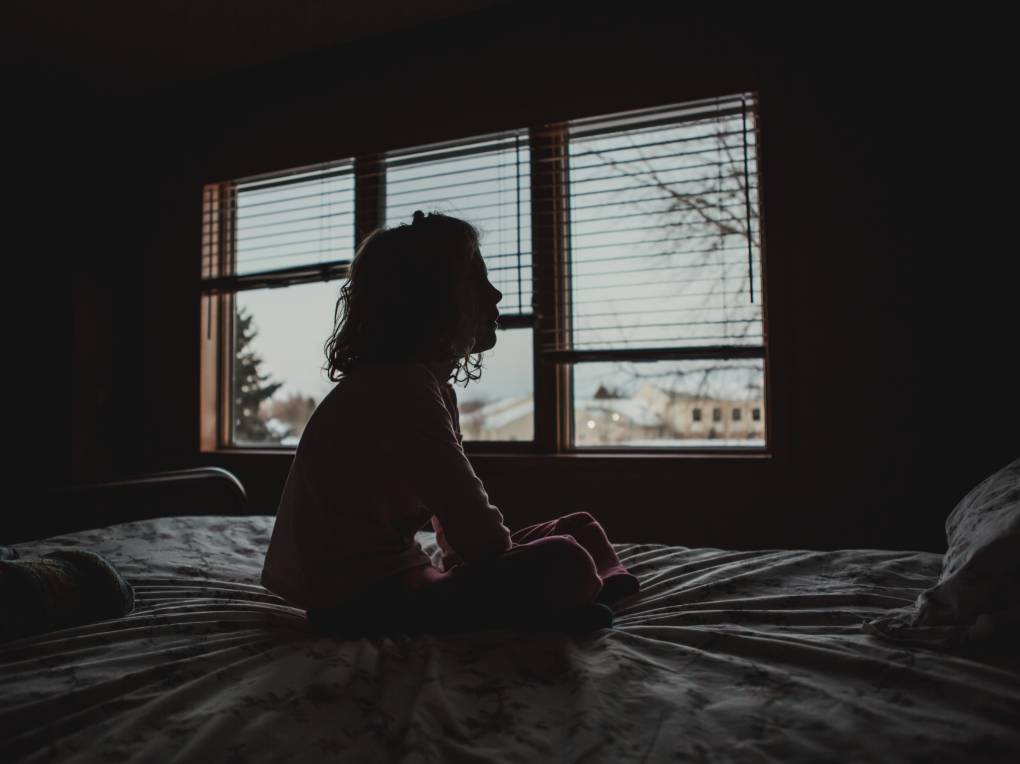
"caption": "According to the CDC, between March and May, 2020, hospitals across the country saw a 24% increase in mental health emergency visits by kids aged 5 to 11 years old, and a 31% increase for kids 12 to 17.\n",
"description": "Little girl sits on a bed in a dark bedroom with blue sky and trees can be seen behind her in the window.",
"title": "According to the CDC, between March and May, 2020, hospitals across the country saw a 24% increase in mental health emergency visits by kids aged 5 to 11 years old, and a 31% increase for kids 12 to 17.",
"credit": "Annie Otzen/Getty Images",
"status": "inherit",
"altTag": null,
"isLoading": false,
"fetchFailed": false
},
"mindshift_58452": {
"type": "attachments",
"id": "mindshift_58452",
"meta": {
"index": "attachments_1716263798",
"site": "mindshift",
"id": "58452",
"found": true
},
"parent": 58451,
"imgSizes": {
"twentyfourteen-full-width": {
"file": "https://ww2.kqed.org/app/uploads/sites/23/2021/09/classroom1_wide-2307fa12dc2aa42480101665e68addd492cd1c4c-1038x576.jpg",
"width": 1038,
"mimeType": "image/jpeg",
"height": 576
},
"thumbnail": {
"file": "https://ww2.kqed.org/app/uploads/sites/23/2021/09/classroom1_wide-2307fa12dc2aa42480101665e68addd492cd1c4c-160x90.jpg",
"width": 160,
"mimeType": "image/jpeg",
"height": 90
},
"post-thumbnail": {
"file": "https://ww2.kqed.org/app/uploads/sites/23/2021/09/classroom1_wide-2307fa12dc2aa42480101665e68addd492cd1c4c-672x372.jpg",
"width": 672,
"mimeType": "image/jpeg",
"height": 372
},
"kqedFullSize": {
"file": "https://ww2.kqed.org/app/uploads/sites/23/2021/09/classroom1_wide-2307fa12dc2aa42480101665e68addd492cd1c4c-scaled-e1630685132366.jpg",
"width": 1920,
"height": 1080
},
"2048x2048": {
"file": "https://ww2.kqed.org/app/uploads/sites/23/2021/09/classroom1_wide-2307fa12dc2aa42480101665e68addd492cd1c4c-2048x1152.jpg",
"width": 2048,
"mimeType": "image/jpeg",
"height": 1152
},
"large": {
"file": "https://ww2.kqed.org/app/uploads/sites/23/2021/09/classroom1_wide-2307fa12dc2aa42480101665e68addd492cd1c4c-1020x574.jpg",
"width": 1020,
"mimeType": "image/jpeg",
"height": 574
},
"1536x1536": {
"file": "https://ww2.kqed.org/app/uploads/sites/23/2021/09/classroom1_wide-2307fa12dc2aa42480101665e68addd492cd1c4c-1536x864.jpg",
"width": 1536,
"mimeType": "image/jpeg",
"height": 864
},
"full-width": {
"file": "https://ww2.kqed.org/app/uploads/sites/23/2021/09/classroom1_wide-2307fa12dc2aa42480101665e68addd492cd1c4c-1920x1080.jpg",
"width": 1920,
"mimeType": "image/jpeg",
"height": 1080
},
"medium": {
"file": "https://ww2.kqed.org/app/uploads/sites/23/2021/09/classroom1_wide-2307fa12dc2aa42480101665e68addd492cd1c4c-800x450.jpg",
"width": 800,
"mimeType": "image/jpeg",
"height": 450
},
"medium_large": {
"file": "https://ww2.kqed.org/app/uploads/sites/23/2021/09/classroom1_wide-2307fa12dc2aa42480101665e68addd492cd1c4c-768x432.jpg",
"width": 768,
"mimeType": "image/jpeg",
"height": 432
}
},
"publishDate": 1630685057,
"modified": 1630685168,
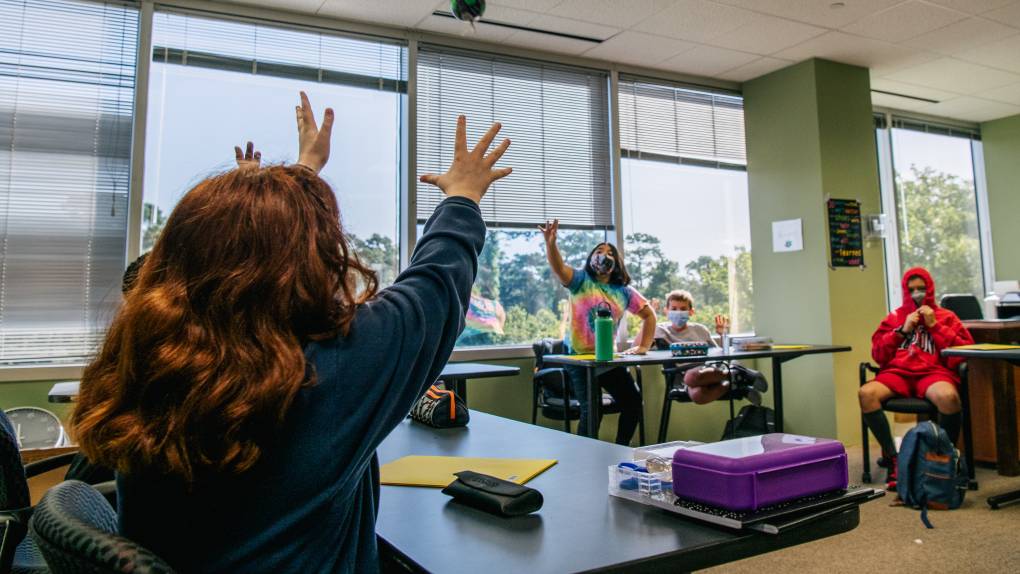
"caption": "HOUSTON, TEXAS - AUGUST 23: Students at the Xavier Academy, like many schools around Houston, are required to wear masks. Staff and faculty have been vaccinated and 90% of students in attendance have also been vaccinated.\n",
"description": "HOUSTON, TEXAS - AUGUST 23: Students participate in an activity in class at the Xavier Academy on August 23, 2021 in Houston, Texas. In-person classroom sessions are resuming and schools around Houston are requiring mask mandates, keeping in accordance with CDC guidelines. Harris County Judge Lina Hidalgo has gone against Gov. Greg Abbott's statewide ban on mask mandates and has issued an order that requires face coverings to be worn in schools. All staff and faculty at Xavier Academy have been vaccinated and 90% of students in attendance have also been vaccinated. (Photo by Brandon Bell/Getty Images)",
"title": "HOUSTON, TEXAS - AUGUST 23: Students at the Xavier Academy, like many schools around Houston, are required to wear masks. Staff and faculty have been vaccinated and 90% of students in attendance have also been vaccinated.",
"credit": "Brandon Bell/Getty Images",
"status": "inherit",
"altTag": null,
"isLoading": false,
"fetchFailed": false
},
"mindshift_58448": {
"type": "attachments",
"id": "mindshift_58448",
"meta": {
"index": "attachments_1716263798",
"site": "mindshift",
"id": "58448",
"found": true
},
"parent": 58447,
"imgSizes": {
"twentyfourteen-full-width": {
"file": "https://ww2.kqed.org/app/uploads/sites/23/2021/09/IllinoisSchoolBus-fbbd1bfb4dea89079cb8719580ee2e647a48a1cd-1038x576.jpg",
"width": 1038,
"mimeType": "image/jpeg",
"height": 576
},
"thumbnail": {
"file": "https://ww2.kqed.org/app/uploads/sites/23/2021/09/IllinoisSchoolBus-fbbd1bfb4dea89079cb8719580ee2e647a48a1cd-160x120.jpg",
"width": 160,
"mimeType": "image/jpeg",
"height": 120
},
"post-thumbnail": {
"file": "https://ww2.kqed.org/app/uploads/sites/23/2021/09/IllinoisSchoolBus-fbbd1bfb4dea89079cb8719580ee2e647a48a1cd-672x372.jpg",
"width": 672,
"mimeType": "image/jpeg",
"height": 372
},
"kqedFullSize": {
"file": "https://ww2.kqed.org/app/uploads/sites/23/2021/09/IllinoisSchoolBus-fbbd1bfb4dea89079cb8719580ee2e647a48a1cd-scaled-e1630652687930.jpg",
"width": 1920,
"height": 1440
},
"2048x2048": {
"file": "https://ww2.kqed.org/app/uploads/sites/23/2021/09/IllinoisSchoolBus-fbbd1bfb4dea89079cb8719580ee2e647a48a1cd-2048x1536.jpg",
"width": 2048,
"mimeType": "image/jpeg",
"height": 1536
},
"large": {
"file": "https://ww2.kqed.org/app/uploads/sites/23/2021/09/IllinoisSchoolBus-fbbd1bfb4dea89079cb8719580ee2e647a48a1cd-1020x765.jpg",
"width": 1020,
"mimeType": "image/jpeg",
"height": 765
},
"1536x1536": {
"file": "https://ww2.kqed.org/app/uploads/sites/23/2021/09/IllinoisSchoolBus-fbbd1bfb4dea89079cb8719580ee2e647a48a1cd-1536x1152.jpg",
"width": 1536,
"mimeType": "image/jpeg",
"height": 1152
},
"full-width": {
"file": "https://ww2.kqed.org/app/uploads/sites/23/2021/09/IllinoisSchoolBus-fbbd1bfb4dea89079cb8719580ee2e647a48a1cd-1920x1440.jpg",
"width": 1920,
"mimeType": "image/jpeg",
"height": 1440
},
"medium": {
"file": "https://ww2.kqed.org/app/uploads/sites/23/2021/09/IllinoisSchoolBus-fbbd1bfb4dea89079cb8719580ee2e647a48a1cd-800x600.jpg",
"width": 800,
"mimeType": "image/jpeg",
"height": 600
},
"medium_large": {
"file": "https://ww2.kqed.org/app/uploads/sites/23/2021/09/IllinoisSchoolBus-fbbd1bfb4dea89079cb8719580ee2e647a48a1cd-768x576.jpg",
"width": 768,
"mimeType": "image/jpeg",
"height": 576
}
},
"publishDate": 1630652594,
"modified": 1630652746,
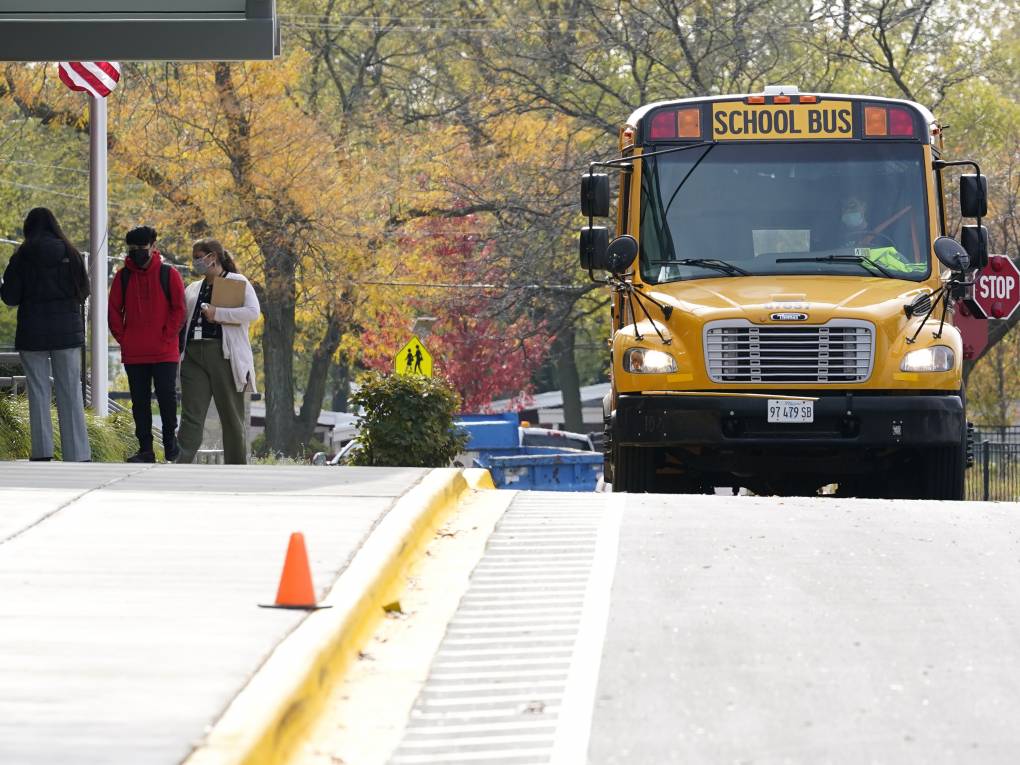
"caption": "Students wear mask as they arrive their school for in- person learning at Holmes Middle School in Wheeling, Ill., Wednesday, Oct. 21, 2020. The Lake County Health Department recommended that all public and private schools in the county currently education children in the classroom immediately return to virtual learning because of the threats posed by the coronavirus pandemic. ",
"description": "Students wear mask as they arrive their school for in- person learning at Holmes Middle School in Wheeling, Ill., Wednesday, Oct. 21, 2020. The Lake County Health Department recommended that all public and private schools in the county currently education children in the classroom immediately return to virtual learning because of the threats posed by the coronavirus pandemic. ",
"title": "Students wear mask as they arrive at school for in-person learning at Holmes Middle School in Wheeling, Ill., on Oct. 21, 2020. Students in Illinois schools will be able to take up to five excused mental or behavioral health days beginning in January 2022.",
"credit": "AP Photo/Nam Y. Huh",
"status": "inherit",
"altTag": null,
"isLoading": false,
"fetchFailed": false
},
"mindshift_58427": {
"type": "attachments",
"id": "mindshift_58427",
"meta": {
"index": "attachments_1716263798",
"site": "mindshift",
"id": "58427",
"found": true
},
"parent": 58426,
"imgSizes": {
"twentyfourteen-full-width": {
"file": "https://ww2.kqed.org/app/uploads/sites/23/2021/08/gettyimages-1152656345-876e1f998ef784fa6c6ae3a79cf8c7c243956cfc-1038x576.jpg",
"width": 1038,
"mimeType": "image/jpeg",
"height": 576
},
"thumbnail": {
"file": "https://ww2.kqed.org/app/uploads/sites/23/2021/08/gettyimages-1152656345-876e1f998ef784fa6c6ae3a79cf8c7c243956cfc-160x120.jpg",
"width": 160,
"mimeType": "image/jpeg",
"height": 120
},
"post-thumbnail": {
"file": "https://ww2.kqed.org/app/uploads/sites/23/2021/08/gettyimages-1152656345-876e1f998ef784fa6c6ae3a79cf8c7c243956cfc-672x372.jpg",
"width": 672,
"mimeType": "image/jpeg",
"height": 372
},
"kqedFullSize": {
"file": "https://ww2.kqed.org/app/uploads/sites/23/2021/08/gettyimages-1152656345-876e1f998ef784fa6c6ae3a79cf8c7c243956cfc-scaled-e1630478535243.jpg",
"width": 1920,
"height": 1438
},
"2048x2048": {
"file": "https://ww2.kqed.org/app/uploads/sites/23/2021/08/gettyimages-1152656345-876e1f998ef784fa6c6ae3a79cf8c7c243956cfc-2048x1534.jpg",
"width": 2048,
"mimeType": "image/jpeg",
"height": 1534
},
"large": {
"file": "https://ww2.kqed.org/app/uploads/sites/23/2021/08/gettyimages-1152656345-876e1f998ef784fa6c6ae3a79cf8c7c243956cfc-1020x764.jpg",
"width": 1020,
"mimeType": "image/jpeg",
"height": 764
},
"1536x1536": {
"file": "https://ww2.kqed.org/app/uploads/sites/23/2021/08/gettyimages-1152656345-876e1f998ef784fa6c6ae3a79cf8c7c243956cfc-1536x1150.jpg",
"width": 1536,
"mimeType": "image/jpeg",
"height": 1150
},
"full-width": {
"file": "https://ww2.kqed.org/app/uploads/sites/23/2021/08/gettyimages-1152656345-876e1f998ef784fa6c6ae3a79cf8c7c243956cfc-1920x1438.jpg",
"width": 1920,
"mimeType": "image/jpeg",
"height": 1438
},
"medium": {
"file": "https://ww2.kqed.org/app/uploads/sites/23/2021/08/gettyimages-1152656345-876e1f998ef784fa6c6ae3a79cf8c7c243956cfc-800x599.jpg",
"width": 800,
"mimeType": "image/jpeg",
"height": 599
},
"medium_large": {
"file": "https://ww2.kqed.org/app/uploads/sites/23/2021/08/gettyimages-1152656345-876e1f998ef784fa6c6ae3a79cf8c7c243956cfc-768x575.jpg",
"width": 768,
"mimeType": "image/jpeg",
"height": 575
}
},
"publishDate": 1630478507,
"modified": 1630478569,
"caption": null,
"description": null,
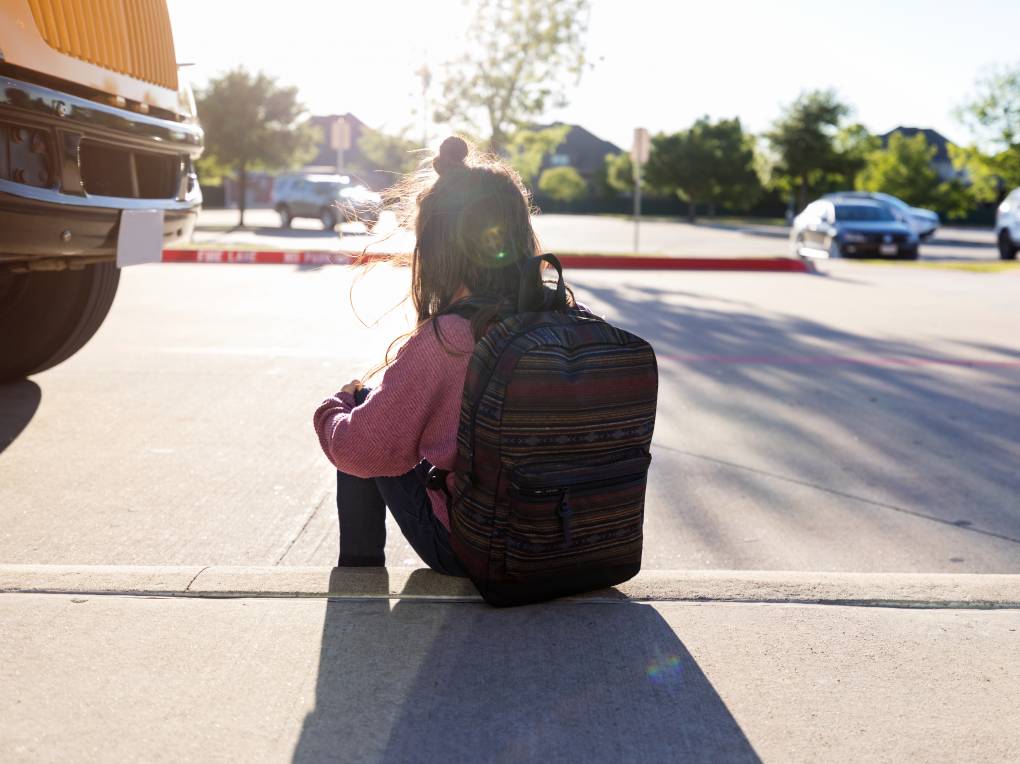
"title": "\"We have already been seeing a lot of pick up in pre-existing anxiety in anticipation of school starting,\" says child and adolescent psychiatrist Dr. Ujjwal Ramtekkar. \"They're worried about getting sick,\" or their parents getting sick.",
"credit": "SDI Productions/Getty Images",
"status": "inherit",
"altTag": "An unknown schoolgirl with a backpack hugs her knees and sits on the curb by herself at a bus stop, while the bus is parked nearby.",
"isLoading": false,
"fetchFailed": false
},
"mindshift_58402": {
"type": "attachments",
"id": "mindshift_58402",
"meta": {
"index": "attachments_1716263798",
"site": "mindshift",
"id": "58402",
"found": true
},
"parent": 58377,
"imgSizes": {
"twentyfourteen-full-width": {
"file": "https://ww2.kqed.org/app/uploads/sites/23/2021/08/Unplanned-Lessons-1038x576.png",
"width": 1038,
"mimeType": "image/png",
"height": 576
},
"thumbnail": {
"file": "https://ww2.kqed.org/app/uploads/sites/23/2021/08/Unplanned-Lessons-160x50.png",
"width": 160,
"mimeType": "image/png",
"height": 50
},
"post-thumbnail": {
"file": "https://ww2.kqed.org/app/uploads/sites/23/2021/08/Unplanned-Lessons-672x372.png",
"width": 672,
"mimeType": "image/png",
"height": 372
},
"kqedFullSize": {
"file": "https://ww2.kqed.org/app/uploads/sites/23/2021/08/Unplanned-Lessons.png",
"width": 2730,
"height": 858
},
"2048x2048": {
"file": "https://ww2.kqed.org/app/uploads/sites/23/2021/08/Unplanned-Lessons-2048x644.png",
"width": 2048,
"mimeType": "image/png",
"height": 644
},
"large": {
"file": "https://ww2.kqed.org/app/uploads/sites/23/2021/08/Unplanned-Lessons-1020x321.png",
"width": 1020,
"mimeType": "image/png",
"height": 321
},
"1536x1536": {
"file": "https://ww2.kqed.org/app/uploads/sites/23/2021/08/Unplanned-Lessons-1536x483.png",
"width": 1536,
"mimeType": "image/png",
"height": 483
},
"full-width": {
"file": "https://ww2.kqed.org/app/uploads/sites/23/2021/08/Unplanned-Lessons-1920x603.png",
"width": 1920,
"mimeType": "image/png",
"height": 603
},
"medium": {
"file": "https://ww2.kqed.org/app/uploads/sites/23/2021/08/Unplanned-Lessons-800x251.png",
"width": 800,
"mimeType": "image/png",
"height": 251
},
"medium_large": {
"file": "https://ww2.kqed.org/app/uploads/sites/23/2021/08/Unplanned-Lessons-768x241.png",
"width": 768,
"mimeType": "image/png",
"height": 241
}
},
"publishDate": 1630310299,
"modified": 1630310299,
"caption": null,
"description": null,
"title": "Unplanned Lessons",
"credit": null,
"status": "inherit",
"altTag": null,
"isLoading": false,
"fetchFailed": false
},
"mindshift_58389": {
"type": "attachments",
"id": "mindshift_58389",
"meta": {
"index": "attachments_1716263798",
"site": "mindshift",
"id": "58389",
"found": true
},
"parent": 58388,
"imgSizes": {
"twentyfourteen-full-width": {
"file": "https://ww2.kqed.org/app/uploads/sites/23/2021/08/gettyimages-1334497045_custom-51439ace42a028e5599c2b1d10e4c8feae0bbad5-1038x576.jpg",
"width": 1038,
"mimeType": "image/jpeg",
"height": 576
},
"thumbnail": {
"file": "https://ww2.kqed.org/app/uploads/sites/23/2021/08/gettyimages-1334497045_custom-51439ace42a028e5599c2b1d10e4c8feae0bbad5-160x103.jpg",
"width": 160,
"mimeType": "image/jpeg",
"height": 103
},
"post-thumbnail": {
"file": "https://ww2.kqed.org/app/uploads/sites/23/2021/08/gettyimages-1334497045_custom-51439ace42a028e5599c2b1d10e4c8feae0bbad5-672x372.jpg",
"width": 672,
"mimeType": "image/jpeg",
"height": 372
},
"kqedFullSize": {
"file": "https://ww2.kqed.org/app/uploads/sites/23/2021/08/gettyimages-1334497045_custom-51439ace42a028e5599c2b1d10e4c8feae0bbad5-e1629959826221.jpg",
"width": 1920,
"height": 1232
},
"large": {
"file": "https://ww2.kqed.org/app/uploads/sites/23/2021/08/gettyimages-1334497045_custom-51439ace42a028e5599c2b1d10e4c8feae0bbad5-1020x654.jpg",
"width": 1020,
"mimeType": "image/jpeg",
"height": 654
},
"1536x1536": {
"file": "https://ww2.kqed.org/app/uploads/sites/23/2021/08/gettyimages-1334497045_custom-51439ace42a028e5599c2b1d10e4c8feae0bbad5-1536x985.jpg",
"width": 1536,
"mimeType": "image/jpeg",
"height": 985
},
"full-width": {
"file": "https://ww2.kqed.org/app/uploads/sites/23/2021/08/gettyimages-1334497045_custom-51439ace42a028e5599c2b1d10e4c8feae0bbad5-1920x1232.jpg",
"width": 1920,
"mimeType": "image/jpeg",
"height": 1232
},
"medium": {
"file": "https://ww2.kqed.org/app/uploads/sites/23/2021/08/gettyimages-1334497045_custom-51439ace42a028e5599c2b1d10e4c8feae0bbad5-800x513.jpg",
"width": 800,
"mimeType": "image/jpeg",
"height": 513
},
"medium_large": {
"file": "https://ww2.kqed.org/app/uploads/sites/23/2021/08/gettyimages-1334497045_custom-51439ace42a028e5599c2b1d10e4c8feae0bbad5-768x493.jpg",
"width": 768,
"mimeType": "image/jpeg",
"height": 493
}
},
"publishDate": 1629959681,
"modified": 1629959846,
"caption": "First-graders listen to the interim superintendent of the Los Angeles Unified School District, Megan Reilly, read a book at Normont Elementary School in Harbor City on Aug. 16, the first day of school.\n",
"description": "HARBOR CITY , CA - AUGUST 16: First graders listen to LAUSD interim Superintendent Megan Reilly read a book at Normont Elementary in Harbor City on Monday, August 16, 2021, the first day of school. (Photo by Brittany Murray/MediaNews Group/Long Beach Press-Telegram via Getty Images)",
"title": "First-graders listen to the interim superintendent of the Los Angeles Unified School District, Megan Reilly, read a book at Normont Elementary School in Harbor City on Aug. 16, the first day of school.",
"credit": "Brittany Murray/MediaNews Group via Getty Images",
"status": "inherit",
"altTag": null,
"isLoading": false,
"fetchFailed": false
},
"mindshift_58385": {
"type": "attachments",
"id": "mindshift_58385",
"meta": {
"index": "attachments_1716263798",
"site": "mindshift",
"id": "58385",
"found": true
},
"parent": 58384,
"imgSizes": {
"twentyfourteen-full-width": {
"file": "https://ww2.kqed.org/app/uploads/sites/23/2021/08/gettyimages-1333814590_wide-48c7a25fdde20883fe675b84dbebf86835de2a4b-1038x576.jpg",
"width": 1038,
"mimeType": "image/jpeg",
"height": 576
},
"thumbnail": {
"file": "https://ww2.kqed.org/app/uploads/sites/23/2021/08/gettyimages-1333814590_wide-48c7a25fdde20883fe675b84dbebf86835de2a4b-160x90.jpg",
"width": 160,
"mimeType": "image/jpeg",
"height": 90
},
"post-thumbnail": {
"file": "https://ww2.kqed.org/app/uploads/sites/23/2021/08/gettyimages-1333814590_wide-48c7a25fdde20883fe675b84dbebf86835de2a4b-672x372.jpg",
"width": 672,
"mimeType": "image/jpeg",
"height": 372
},
"kqedFullSize": {
"file": "https://ww2.kqed.org/app/uploads/sites/23/2021/08/gettyimages-1333814590_wide-48c7a25fdde20883fe675b84dbebf86835de2a4b-scaled-e1629910738757.jpg",
"width": 1920,
"height": 1080
},
"2048x2048": {
"file": "https://ww2.kqed.org/app/uploads/sites/23/2021/08/gettyimages-1333814590_wide-48c7a25fdde20883fe675b84dbebf86835de2a4b-2048x1152.jpg",
"width": 2048,
"mimeType": "image/jpeg",
"height": 1152
},
"large": {
"file": "https://ww2.kqed.org/app/uploads/sites/23/2021/08/gettyimages-1333814590_wide-48c7a25fdde20883fe675b84dbebf86835de2a4b-1020x574.jpg",
"width": 1020,
"mimeType": "image/jpeg",
"height": 574
},
"1536x1536": {
"file": "https://ww2.kqed.org/app/uploads/sites/23/2021/08/gettyimages-1333814590_wide-48c7a25fdde20883fe675b84dbebf86835de2a4b-1536x864.jpg",
"width": 1536,
"mimeType": "image/jpeg",
"height": 864
},
"full-width": {
"file": "https://ww2.kqed.org/app/uploads/sites/23/2021/08/gettyimages-1333814590_wide-48c7a25fdde20883fe675b84dbebf86835de2a4b-1920x1080.jpg",
"width": 1920,
"mimeType": "image/jpeg",
"height": 1080
},
"medium": {
"file": "https://ww2.kqed.org/app/uploads/sites/23/2021/08/gettyimages-1333814590_wide-48c7a25fdde20883fe675b84dbebf86835de2a4b-800x450.jpg",
"width": 800,
"mimeType": "image/jpeg",
"height": 450
},
"medium_large": {
"file": "https://ww2.kqed.org/app/uploads/sites/23/2021/08/gettyimages-1333814590_wide-48c7a25fdde20883fe675b84dbebf86835de2a4b-768x432.jpg",
"width": 768,
"mimeType": "image/jpeg",
"height": 432
}
},
"publishDate": 1629910716,
"modified": 1629910767,
"caption": "Students listen to their teacher during their first day of transitional kindergarten this month at Tustin Ranch Elementary School in Tustin, Calif.\n",
"description": "Tustin, CA - August 11: Students listen to their teacher during their first day of transitional kindergarten at Tustin Ranch Elementary School in Tustin, CA on Wednesday, August 11, 2021. (Photo by Paul Bersebach/MediaNews Group/Orange County Register via Getty Images)",
"title": "Students listen to their teacher during their first day of transitional kindergarten this month at Tustin Ranch Elementary School in Tustin, Calif.",
"credit": "Paul Bersebach/MediaNews Group/Orange County (Calif.) Register via Getty Images",
"status": "inherit",
"altTag": null,
"isLoading": false,
"fetchFailed": false
}
},
"audioPlayerReducer": {
"postId": "stream_live",
"isPaused": true,
"isPlaying": false,
"pfsActive": false,
"pledgeModalIsOpen": true,
"playerDrawerIsOpen": false,
"liveAudioPlayStartedAt": 0,
"liveAudioPlayContext": ""
},
"authorsReducer": {
"byline_mindshift_58693": {
"type": "authors",
"id": "byline_mindshift_58693",
"meta": {
"override": true
},
"slug": "byline_mindshift_58693",
"name": "Elissa Nadworny ",
"isLoading": false
},
"byline_mindshift_58633": {
"type": "authors",
"id": "byline_mindshift_58633",
"meta": {
"override": true
},
"slug": "byline_mindshift_58633",
"name": "Kalyn Belsha, \u003ca href=\"https://www.chalkbeat.org/2021/10/14/22726271/students-with-disabilities-denied-virtual-special-education\">Chalkbeat\u003c/a>",
"isLoading": false
},
"byline_mindshift_58612": {
"type": "authors",
"id": "byline_mindshift_58612",
"meta": {
"override": true
},
"slug": "byline_mindshift_58612",
"name": "Anya Kamenetz",
"isLoading": false
},
"byline_mindshift_58604": {
"type": "authors",
"id": "byline_mindshift_58604",
"meta": {
"override": true
},
"slug": "byline_mindshift_58604",
"name": "Carmel Wroth",
"isLoading": false
},
"byline_mindshift_58572": {
"type": "authors",
"id": "byline_mindshift_58572",
"meta": {
"override": true
},
"slug": "byline_mindshift_58572",
"name": "Kalyn Belsha, \u003ca href=\"https://www.chalkbeat.org/2021/9/27/22691601/student-behavior-stress-trauma-return/\">Chalkbeat\u003c/a>",
"isLoading": false
},
"byline_mindshift_58525": {
"type": "authors",
"id": "byline_mindshift_58525",
"meta": {
"override": true
},
"slug": "byline_mindshift_58525",
"name": "Rhitu Chatterjee",
"isLoading": false
},
"byline_mindshift_58451": {
"type": "authors",
"id": "byline_mindshift_58451",
"meta": {
"override": true
},
"slug": "byline_mindshift_58451",
"name": "Maria Godoy",
"isLoading": false
},
"byline_mindshift_58447": {
"type": "authors",
"id": "byline_mindshift_58447",
"meta": {
"override": true
},
"slug": "byline_mindshift_58447",
"name": "Jonathan Franklin",
"isLoading": false
},
"byline_mindshift_58426": {
"type": "authors",
"id": "byline_mindshift_58426",
"meta": {
"override": true
},
"slug": "byline_mindshift_58426",
"name": "Rhitu Chatterjee",
"isLoading": false
},
"byline_mindshift_58388": {
"type": "authors",
"id": "byline_mindshift_58388",
"meta": {
"override": true
},
"slug": "byline_mindshift_58388",
"name": "Maria Godoy",
"isLoading": false
},
"byline_mindshift_58384": {
"type": "authors",
"id": "byline_mindshift_58384",
"meta": {
"override": true
},
"slug": "byline_mindshift_58384",
"name": "Cory Turner",
"isLoading": false
},
"kdnewhouse": {
"type": "authors",
"id": "11487",
"meta": {
"index": "authors_1716337520",
"id": "11487",
"found": true
},
"name": "Kara Newhouse",
"firstName": "Kara",
"lastName": "Newhouse",
"slug": "kdnewhouse",
"email": "knewhouse@kqed.org",
"display_author_email": false,
"staff_mastheads": [],
"title": "MindShift Editor",
"bio": null,
"avatar": "https://secure.gravatar.com/avatar/3dceed6fb271527113abfa9a8e9df34e?s=600&d=blank&r=g",
"twitter": null,
"facebook": null,
"instagram": null,
"linkedin": null,
"sites": [
{
"site": "",
"roles": [
"editor"
]
},
{
"site": "mindshift",
"roles": []
}
],
"headData": {
"title": "Kara Newhouse | KQED",
"description": "MindShift Editor",
"ogImgSrc": "https://secure.gravatar.com/avatar/3dceed6fb271527113abfa9a8e9df34e?s=600&d=blank&r=g",
"twImgSrc": "https://secure.gravatar.com/avatar/3dceed6fb271527113abfa9a8e9df34e?s=600&d=blank&r=g"
},
"isLoading": false,
"link": "/author/kdnewhouse"
}
},
"pagesReducer": {
"mindshift_tag_covid-19": {
"type": "terms",
"id": "mindshift_21343",
"meta": {
"index": "terms_1716263798",
"site": "mindshift",
"id": "21343",
"score": 8.5588
},
"featImg": null,
"name": "COVID-19",
"description": null,
"taxonomy": "tag",
"headData": {
"twImgId": null,
"twTitle": null,
"ogTitle": null,
"ogImgId": null,
"twDescription": null,
"description": null,
"title": "COVID-19 Archives - KQED Mindshift",
"ogDescription": null
},
"ttid": 20615,
"slug": "covid-19",
"isLoading": false,
"title": "COVID-19",
"pageMeta": {
"site": "mindshift",
"WpPageTemplate": "page-topic-editorial",
"currentPage": 6
},
"blocks": [
{
"blockName": "kqed/post-list",
"attrs": {
"layout": "cardArticle2",
"query": "posts/mindshift?tag=covid-19",
"seeMore": false,
"paginated": true,
"page": 6
}
},
{
"blockName": "kqed/ad"
}
]
}
},
"pfsSessionReducer": {},
"postsReducer": {
"stream_live": {
"type": "live",
"id": "stream_live",
"audioUrl": "https://streams.kqed.org/kqedradio",
"title": "Live Stream",
"excerpt": "Live Stream information currently unavailable.",
"link": "/radio",
"featImg": "",
"label": {
"name": "KQED Live",
"link": "/"
}
},
"stream_kqedNewscast": {
"type": "posts",
"id": "stream_kqedNewscast",
"audioUrl": "https://www.kqed.org/.stream/anon/radio/RDnews/newscast.mp3?_=1",
"title": "KQED Newscast",
"featImg": "",
"label": {
"name": "88.5 FM",
"link": "/"
}
},
"mindshift_58693": {
"type": "posts",
"id": "mindshift_58693",
"meta": {
"index": "posts_1716263798",
"site": "mindshift",
"id": "58693",
"score": null,
"sort": [
1635311757000
]
},
"parent": 0,
"labelTerm": {
"site": "mindshift"
},
"blocks": [],
"publishDate": 1635311757,
"format": "standard",
"disqusTitle": "College enrollment plummeted during the pandemic. This fall, it's even worse",
"title": "College enrollment plummeted during the pandemic. This fall, it's even worse",
"headTitle": "MindShift | KQED News",
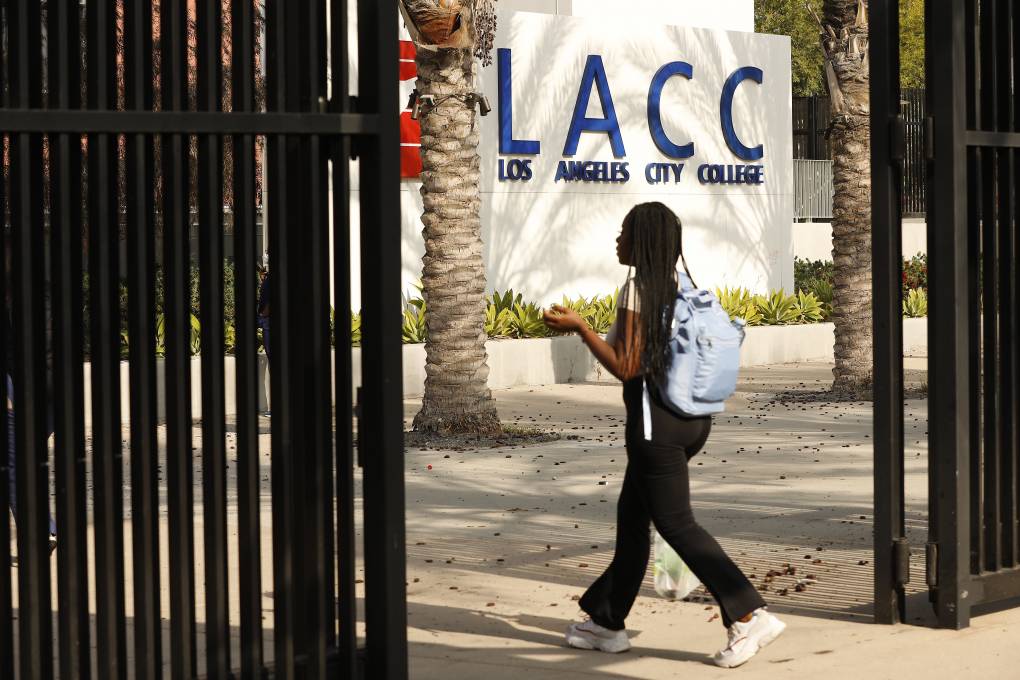
"content": "\u003cp>Enrollment at U.S. colleges and universities is on track to fall by another nearly 500,000 undergraduate students this fall, continuing the historic drops that began with the start of the coronavirus pandemic, according to new data out Tuesday.\u003c/p>\n\u003cp>The decline of 3.2% in undergraduate enrollment this fall follows a similar drop of 3.4% the previous year, the first fall of the pandemic, according to the research from the National Student Clearinghouse Research Center.\u003c/p>\n\u003cp>The numbers are from a preliminary data set representing 8.4 million undergrad and graduate students from about 50% of U.S. colleges. The numbers show there are now 240,000 fewer undergraduates enrolled this fall compared with the same time last year, and if that rate of decline holds up for the rest of the colleges, that could translate into almost a half-million fewer undergraduate students.\u003c/p>\n\u003cp>\"It's very frightening,\" says Doug Shapiro, who runs the nonprofit research center. \"Far from filling the hole of last year's enrollment declines, we are still digging it deeper.\"\u003c/p>\n\u003cp>If these preliminary numbers hold up, Shapiro says the last two years of undergrad decline, totaling more than 6%, would be the largest two-year decrease in at least half a century.\u003c/p>\n\u003cp>[ad fullwidth]\u003c/p>\n\u003cp>Overall, enrollment in undergraduate and graduate programs has been\u003ca href=\"https://www.npr.org/2021/06/10/1005177324/spring-numbers-show-dramatic-drop-in-college-enrollment#:~:text=Overall%20enrollment%20in%20undergraduate%20and,spring%202019%20to%20spring%202020\"> trending downward since around 2012\u003c/a>, but the pandemic turbocharged the declines at the undergrad level. When fewer students go to college, fewer students graduate, get job training and move on to higher-paying jobs, meaning all this could have huge ramifications \u003ca href=\"https://www.npr.org/2019/12/16/787909495/fewer-students-are-going-to-college-heres-why-that-matters\">for the U.S. economy\u003c/a>.\u003c/p>\n\u003cp>\"College is the best chance you have to get into well-paying jobs in this economy,\" says Shapiro. \"It's not the only path, and it's certainly not a guarantee, but it's the best path we have right now. And so, if more students are thrown off that path, their families and communities suffer, and our economy suffers because businesses have fewer skilled workers to hire from.\"\u003c/p>\n\u003cp>In previous recessions, college enrollments have followed a wavelike pattern: When the economy is doing poorly, enrollment, especially at community colleges, typically goes up. Students go to college when they can't find work. But as the job market improves, they leave college and join the workforce.\u003c/p>\n\u003cp>\"This time, that entire crest of that wave just didn't happen — it got swallowed up by the pandemic,\" explains Shapiro. \"What we've seen instead is literally two troughs, one after the other. So there was no upside from the recession. We just got the downside from the recovery, as the labor market recovers and jobs are going back up.\"\u003c/p>\n\u003cp>This fall, the drop in undergraduate enrollment is spread across all sectors, but numbers are worse at community colleges, public four-year colleges and private for-profits. While schools that are primarily online saw gains last year during the height of the pandemic, those positives turned to negatives this fall, with enrollment dropping by 5.4% for undergrad programs and 13.6% for graduate programs.\u003c/p>\n\u003cp>Community colleges, which often enroll more low-income students and students of color, have consistently been the hardest hit. The preliminary fall data show the decline this fall to be 5.6%. That's not quite as steep as last year: In the fall of 2020, community college enrollment fell by roughly 10% nationally — a loss of over 544,200 students when compared with the fall of 2019. That \u003ca href=\"https://www.npr.org/2021/06/10/1005177324/spring-numbers-show-dramatic-drop-in-college-enrollment\">sharp decline continued last spring\u003c/a>.\u003c/p>\n\u003cp>The new figures confirm other signs that declines among undergraduates will continue — notably, the number of high school seniors who fill out the financial aid form known as the FAFSA. That figure for seniors who graduated in the spring of 2021 fell \u003ca href=\"https://www.ncan.org/news/573024/FAFSA-Completion-Declines-Nearly-5-Nation-Loses-270K-FAFSAs-Since-2019.htm\">4.8% \u003c/a>compared with the class of 2020, which was itself down 3.7% from 2019.\u003c/p>\n\u003cp>\"The FAFSA is one of the best indicators that we have about college-going,\" explains Bill DeBaun, who works for the National College Attainment Network and tracks FAFSA completion. \"To see it really go off the rails for two graduating classes, and not have a ton of confidence that it's going to get back on track for the current one, you know, really, really does sound the alarm.\"\u003c/p>\n\u003cp>Numbers from the organization's \u003ca href=\"https://formyourfuture.org/fafsa-tracker/\">FAFSA Tracker \u003c/a>show that high-poverty schools, as well as those with large numbers of Black and Hispanic students, had a smaller percentage of students filling out the form than at wealthier schools with predominantly white enrollment.\u003c/p>\n\u003cp>The new data from the National Student Clearinghouse Research Center shows enrollment among first-year students declined 3.1% this fall. Nationally, freshman enrollment fell most steeply among white students (8.6%) and Black students (7.5%).\u003c/p>\n\u003cp>\u003c/p>\n\u003cp>At U.S. community colleges, the freshman class is now 20.8% below the number for the freshman class in 2019. \"A lot of young people seem to be going to work instead of to college,\" says Shapiro. The big question now, he adds, is \"will those students ever get back onto the college path?\"\u003c/p>\n\u003cdiv class=\"fullattribution\">Copyright 2021 NPR. To see more, visit https://www.npr.org.\u003cimg src=\"https://www.google-analytics.com/__utm.gif?utmac=UA-5828686-4&utmdt=College+enrollment+plummeted+during+the+pandemic.+This+fall%2C+it%27s+even+worse&utme=8(APIKey)9(MDAxOTAwOTE4MDEyMTkxMDAzNjczZDljZA004)\">\u003c/div>\n\n",
"disqusIdentifier": "58693 https://ww2.kqed.org/mindshift/?p=58693",
"disqusUrl": "https://ww2.kqed.org/mindshift/2021/10/26/college-enrollment-plummeted-during-the-pandemic-this-fall-its-even-worse/",
"stats": {
"hasVideo": false,
"hasChartOrMap": false,
"hasAudio": false,
"hasPolis": false,
"wordCount": 855,
"hasGoogleForm": false,
"hasGallery": false,
"hasHearkenModule": false,
"iframeSrcs": [],
"paragraphCount": 18
},
"modified": 1635398268,
"excerpt": "The pandemic has seen far fewer students go to college — that trend continued this fall, according to preliminary data from the National Student Clearinghouse Research Center.",
"headData": {
"twImgId": "",
"twTitle": "",
"ogTitle": "",
"ogImgId": "",
"twDescription": "",
"description": "The pandemic has seen far fewer students go to college — that trend continued this fall, according to preliminary data from the National Student Clearinghouse Research Center.",
"title": "College enrollment plummeted during the pandemic. This fall, it's even worse - MindShift",
"ogDescription": "",
"schema": {
"@context": "https://schema.org",
"@type": "Article",
"headline": "College enrollment plummeted during the pandemic. This fall, it's even worse",
"datePublished": "2021-10-26T22:15:57-07:00",
"dateModified": "2021-10-27T22:17:48-07:00",
"image": "https://cdn.kqed.org/wp-content/uploads/2020/02/KQED-OG-Image@1x.png"
}
},
"guestAuthors": [],
"slug": "college-enrollment-plummeted-during-the-pandemic-this-fall-its-even-worse",
"status": "publish",
"nprApiLink": "http://api.npr.org/query?id=1048955023&apiKey=MDAxOTAwOTE4MDEyMTkxMDAzNjczZDljZA004",
"nprStoryDate": "Tue, 26 Oct 2021 05:07:00 -0400",
"excludeFromSiteSearch": "Include",
"nprLastModifiedDate": "Tue, 26 Oct 2021 13:42:24 -0400",
"nprHtmlLink": "https://www.npr.org/2021/10/26/1048955023/college-enrollment-down-pandemic-economy?ft=nprml&f=1048955023",
"nprAudio": "https://ondemand.npr.org/anon.npr-mp3/npr/me/2021/10/20211026_me_college_enrollment_has_plummeted_during_the_pandemic_this_fall_its_even_worse.mp3?orgId=1&topicId=1013&d=113&p=3&story=1048955023&ft=nprml&f=1048955023",
"nprImageAgency": "Los Angeles Times via Getty Images",
"nprAudioM3u": "http://api.npr.org/m3u/11049222072-3c3d9a.m3u?orgId=1&topicId=1013&d=113&p=3&story=1048955023&ft=nprml&f=1048955023",
"nprStoryId": "1048955023",
"nprByline": "Elissa Nadworny ",
"nprImageCredit": "Al Seib",
"nprRetrievedStory": "1",
"nprPubDate": "Tue, 26 Oct 2021 13:42:00 -0400",
"path": "/mindshift/58693/college-enrollment-plummeted-during-the-pandemic-this-fall-its-even-worse",
"audioUrl": "https://ondemand.npr.org/anon.npr-mp3/npr/me/2021/10/20211026_me_college_enrollment_has_plummeted_during_the_pandemic_this_fall_its_even_worse.mp3?orgId=1&topicId=1013&d=113&p=3&story=1048955023&ft=nprml&f=1048955023",
"audioTrackLength": null,
"parsedContent": [
{
"type": "contentString",
"content": "\u003cdiv class=\"post-body\">\u003cp>\u003cp>Enrollment at U.S. colleges and universities is on track to fall by another nearly 500,000 undergraduate students this fall, continuing the historic drops that began with the start of the coronavirus pandemic, according to new data out Tuesday.\u003c/p>\n\u003cp>The decline of 3.2% in undergraduate enrollment this fall follows a similar drop of 3.4% the previous year, the first fall of the pandemic, according to the research from the National Student Clearinghouse Research Center.\u003c/p>\n\u003cp>The numbers are from a preliminary data set representing 8.4 million undergrad and graduate students from about 50% of U.S. colleges. The numbers show there are now 240,000 fewer undergraduates enrolled this fall compared with the same time last year, and if that rate of decline holds up for the rest of the colleges, that could translate into almost a half-million fewer undergraduate students.\u003c/p>\n\u003cp>\"It's very frightening,\" says Doug Shapiro, who runs the nonprofit research center. \"Far from filling the hole of last year's enrollment declines, we are still digging it deeper.\"\u003c/p>\n\u003cp>If these preliminary numbers hold up, Shapiro says the last two years of undergrad decline, totaling more than 6%, would be the largest two-year decrease in at least half a century.\u003c/p>\n\u003cp>\u003c/p>\u003c/div>",
"attributes": {
"named": {},
"numeric": []
}
},
{
"type": "component",
"content": "",
"name": "ad",
"attributes": {
"named": {
"label": "fullwidth"
},
"numeric": [
"fullwidth"
]
}
},
{
"type": "contentString",
"content": "\u003cdiv class=\"post-body\">\u003cp>\u003c/p>\n\u003cp>Overall, enrollment in undergraduate and graduate programs has been\u003ca href=\"https://www.npr.org/2021/06/10/1005177324/spring-numbers-show-dramatic-drop-in-college-enrollment#:~:text=Overall%20enrollment%20in%20undergraduate%20and,spring%202019%20to%20spring%202020\"> trending downward since around 2012\u003c/a>, but the pandemic turbocharged the declines at the undergrad level. When fewer students go to college, fewer students graduate, get job training and move on to higher-paying jobs, meaning all this could have huge ramifications \u003ca href=\"https://www.npr.org/2019/12/16/787909495/fewer-students-are-going-to-college-heres-why-that-matters\">for the U.S. economy\u003c/a>.\u003c/p>\n\u003cp>\"College is the best chance you have to get into well-paying jobs in this economy,\" says Shapiro. \"It's not the only path, and it's certainly not a guarantee, but it's the best path we have right now. And so, if more students are thrown off that path, their families and communities suffer, and our economy suffers because businesses have fewer skilled workers to hire from.\"\u003c/p>\n\u003cp>In previous recessions, college enrollments have followed a wavelike pattern: When the economy is doing poorly, enrollment, especially at community colleges, typically goes up. Students go to college when they can't find work. But as the job market improves, they leave college and join the workforce.\u003c/p>\n\u003cp>\"This time, that entire crest of that wave just didn't happen — it got swallowed up by the pandemic,\" explains Shapiro. \"What we've seen instead is literally two troughs, one after the other. So there was no upside from the recession. We just got the downside from the recovery, as the labor market recovers and jobs are going back up.\"\u003c/p>\n\u003cp>This fall, the drop in undergraduate enrollment is spread across all sectors, but numbers are worse at community colleges, public four-year colleges and private for-profits. While schools that are primarily online saw gains last year during the height of the pandemic, those positives turned to negatives this fall, with enrollment dropping by 5.4% for undergrad programs and 13.6% for graduate programs.\u003c/p>\n\u003cp>Community colleges, which often enroll more low-income students and students of color, have consistently been the hardest hit. The preliminary fall data show the decline this fall to be 5.6%. That's not quite as steep as last year: In the fall of 2020, community college enrollment fell by roughly 10% nationally — a loss of over 544,200 students when compared with the fall of 2019. That \u003ca href=\"https://www.npr.org/2021/06/10/1005177324/spring-numbers-show-dramatic-drop-in-college-enrollment\">sharp decline continued last spring\u003c/a>.\u003c/p>\n\u003cp>The new figures confirm other signs that declines among undergraduates will continue — notably, the number of high school seniors who fill out the financial aid form known as the FAFSA. That figure for seniors who graduated in the spring of 2021 fell \u003ca href=\"https://www.ncan.org/news/573024/FAFSA-Completion-Declines-Nearly-5-Nation-Loses-270K-FAFSAs-Since-2019.htm\">4.8% \u003c/a>compared with the class of 2020, which was itself down 3.7% from 2019.\u003c/p>\n\u003cp>\"The FAFSA is one of the best indicators that we have about college-going,\" explains Bill DeBaun, who works for the National College Attainment Network and tracks FAFSA completion. \"To see it really go off the rails for two graduating classes, and not have a ton of confidence that it's going to get back on track for the current one, you know, really, really does sound the alarm.\"\u003c/p>\n\u003cp>Numbers from the organization's \u003ca href=\"https://formyourfuture.org/fafsa-tracker/\">FAFSA Tracker \u003c/a>show that high-poverty schools, as well as those with large numbers of Black and Hispanic students, had a smaller percentage of students filling out the form than at wealthier schools with predominantly white enrollment.\u003c/p>\n\u003cp>The new data from the National Student Clearinghouse Research Center shows enrollment among first-year students declined 3.1% this fall. Nationally, freshman enrollment fell most steeply among white students (8.6%) and Black students (7.5%).\u003c/p>\n\u003cp>\u003c/p>\n\u003cp>At U.S. community colleges, the freshman class is now 20.8% below the number for the freshman class in 2019. \"A lot of young people seem to be going to work instead of to college,\" says Shapiro. The big question now, he adds, is \"will those students ever get back onto the college path?\"\u003c/p>\n\u003cdiv class=\"fullattribution\">Copyright 2021 NPR. To see more, visit https://www.npr.org.\u003cimg src=\"https://www.google-analytics.com/__utm.gif?utmac=UA-5828686-4&utmdt=College+enrollment+plummeted+during+the+pandemic.+This+fall%2C+it%27s+even+worse&utme=8(APIKey)9(MDAxOTAwOTE4MDEyMTkxMDAzNjczZDljZA004)\">\u003c/div>\n\n\u003c/div>\u003c/p>",
"attributes": {
"named": {},
"numeric": []
}
}
],
"link": "/mindshift/58693/college-enrollment-plummeted-during-the-pandemic-this-fall-its-even-worse",
"authors": [
"byline_mindshift_58693"
],
"categories": [
"mindshift_20874"
],
"tags": [
"mindshift_21189",
"mindshift_21305",
"mindshift_21343"
],
"featImg": "mindshift_58694",
"label": "mindshift"
},
"mindshift_58633": {
"type": "posts",
"id": "mindshift_58633",
"meta": {
"index": "posts_1716263798",
"site": "mindshift",
"id": "58633",
"score": null,
"sort": [
1634280575000
]
},
"parent": 0,
"labelTerm": {
"site": "mindshift"
},
"blocks": [],
"publishDate": 1634280575,
"format": "standard",
"disqusTitle": "‘This is not inclusive.’ Some students with disabilities are going without as districts scale back virtual programs",
"title": "‘This is not inclusive.’ Some students with disabilities are going without as districts scale back virtual programs",
"headTitle": "MindShift | KQED News",
"content": "\u003cp>\u003ctime>Oct 14, 4:46pm EDT\u003c/time>\u003c/p>\n\u003cp>As the new school year approached, Susan Graham wanted to know: Would her California school district have a remote learning option for her fifth grader?\u003c/p>\n\u003cp>State lawmakers put \u003ca href=\"https://edsource.org/2021/california-directs-districts-to-offer-remote-independent-study-this-fall/657578\">strict limits\u003c/a> on virtual learning this year, so her son’s district wasn’t offering daily classes over Zoom anymore. Instead, the district had an “independent study” program. Graham hoped it could work as a stopgap until her 10-year-old, who has Down syndrome and a respiratory condition, could be vaccinated against COVID.\u003c/p>\n\u003cp>At a virtual town hall about the remote program, though, she was told it was a “general education” program only. If her son enrolled, he would lose access to modified lessons, speech therapy, and occupational therapy.\u003c/p>\n\u003cp>“I was pretty stunned,” Graham said. “This is not inclusive.”\u003c/p>\n\u003cp>[ad fullwidth]\u003c/p>\n\u003cp>School districts don’t have to offer virtual learning this year, and most have \u003ca href=\"https://www.chalkbeat.org/2021/9/2/22654905/virtual-school-option-standalone-interest-dips\">scaled back their virtual offerings\u003c/a> to encourage students to return to in-person school. But where virtual school is available, some students with disabilities are finding it’s closed to them — or they are being asked to \u003ca href=\"https://www.latimes.com/california/story/2021-09-27/independent-study-california-lausd\">give up certain kinds of support\u003c/a> to enroll.\u003c/p>\n\u003cp>That’s left families, advocates, lawyers, and school districts disagreeing on a key question: With schools open nationwide, what exactly must districts provide online?\u003c/p>\n\u003cp>Federal officials have stressed the importance of in-person learning for students with disabilities, many of whom have \u003ca href=\"https://www.chalkbeat.org/2020/10/22/21529431/students-with-disabilities-return-to-schools-more-learning-and-needed-services-not-normal-yet\">struggled to learn online\u003c/a> while trading hands-on services for virtual stand-ins. “The best thing we could do for students with disabilities is the same thing we can do for all students — get them back in the classroom,” Secretary of Education Miguel Cardona \u003ca href=\"https://www.help.senate.gov/hearings/school-reopening-during-covid-19-supporting-students-educators-and-families\">said at a Senate hearing\u003c/a> last month.\u003c/p>\n\u003cp>In a lengthy \u003ca href=\"https://sites.ed.gov/idea/idea-files/return-to-school-roadmap-development-and-implementation-of-ieps/#_Toc83713882,citem_53a6-0311\">guidance document\u003c/a>, the federal education department recently told districts that if they open a virtual program to all students, the district “must ensure that a child with a disability whose needs can be met through virtual learning” receives all of the services they’re legally entitled to. That leaves districts with some discretion to decide who those students are.\u003c/p>\n\u003cp>But across the country, lawyers say districts are inappropriately excluding students and saying their needs cannot be met online, including many students who received special education services virtually last year.\u003c/p>\n\u003cp>A Maryland attorney recently filed a civil rights complaint with the U.S. Department of Education after Baltimore County schools denied a third grader with Down syndrome access to the district’s virtual school. In California, attorneys \u003ca href=\"https://www.disabilityrightsca.org/press-release/complaint-filed-on-behalf-of-students-with-disabilities-for-discrimination-from-new\">filed a complaint\u003c/a> with the U.S. Department of Justice and a federal lawsuit over instances in which students with disabilities, including Graham’s son, were denied access to independent study programs or were told they’d have to give up their services to enroll.\u003c/p>\n\u003cp>If a district declines to modify lessons or add staff to make a virtual program work for all, “That’s a choice,” said Leslie Seid Margolis, the managing attorney at Disability Rights Maryland, who is representing several families who were told their children with disabilities couldn’t be served in virtual programs this year. “And it’s a choice that has a discriminatory impact on kids who may need those supplementary aids and services.”\u003c/p>\n\u003cp>School officials, for their part, \u003ca href=\"https://calmatters.org/education/k-12-education/2021/09/special-education/\">are wary\u003c/a> of letting students with disabilities attend virtual programs that they believe will be inferior to in-person school or that they can’t staff appropriately while also serving students in person. \u003ca href=\"https://www.chalkbeat.org/2021/9/23/22689774/teacher-vacancies-shortages-covid\">Special education teachers\u003c/a> and \u003ca href=\"https://www.bridgemi.com/talent-education/michigan-schools-cant-fill-teacher-aide-jobs-there-are-no-applicants\">paraprofessionals\u003c/a> have been among the hardest positions for schools to fill this school year, adding to the challenge.\u003c/p>\n\u003cp>Detroit, for example, offered a virtual program that includes live instruction to any student who wanted to learn online this year. But the district turned down some students with disabilities who had needs the district didn’t think it could meet in the virtual school. Many who were denied entry previously attended centers that offer specialized support.\u003c/p>\n\u003cp>“We did not want to violate IEPs,” Superintendent Nikolai Vitti said in a statement, referring to the plans that spell out a student’s accommodations and services. “Some children’s needs, whether it be instructional or physical, cannot be met through virtual learning.”\u003c/p>\n\u003cp>Philadelphia \u003ca href=\"https://philadelphia.chalkbeat.org/2021/8/11/22620931/heres-what-we-know-about-philadelphias-remote-school-option\">expanded its virtual school\u003c/a> to every grade except pre-kindergarten this year, and \u003ca href=\"https://pva.philasd.org/ktofiveintakeform/#PVAFAQ\">the district says\u003c/a> the virtual school does offer certain services, like speech therapy, and employs special education teachers who can modify lessons. Some virtual students can receive specialized services through an outside agency.\u003c/p>\n\u003cp>But Anna Perng, who advocates for Philadelphia students through the Chinatown Disability Advocacy Project, said when she attended a meeting with a family seeking to enroll their child in the district’s virtual school, the family’s request for their child’s usual one-on-one aide was turned down. In an email, spokesperson Marissa Orbanek said that if the district determines that a student’s needs can’t be met virtually, the available option is to attend “in-person, in the currently assigned school.”\u003c/p>\n\u003cp>Students who’ve been admitted to virtual programs expecting to receive extra help from teachers and paraprofessionals have gone without that support, too.\u003c/p>\n\u003cfigure>\u003cimg src=\"https://cdn.vox-cdn.com/uploads/chorus_asset/file/22926587/National_20211014_DETOnlineLearning_Di_AmondMoore_003.JPG\">Di’Amond Moore / Detroit Free Press\u003cfigcaption>Students like 12-year-old Tyliya Wilson in Detroit are still waiting to receive their required services virtually.\u003c/figcaption>\u003c/figure>\n\u003cp>Twelve-year-old Tyliya Wilson is supposed to get five hours of extra help each week with a teacher, according to her learning plan. Last year, she met with a teacher every day over video chat, and the teacher would pop into Tyliya’s other virtual classes to check on her.\u003c/p>\n\u003cp>But over the last five weeks in Detroit’s virtual school, Tyliya has seen such a teacher just a handful of times to get help retaking a test.\u003c/p>\n\u003cp>“It’s kind of hard, like when I need some help with my work,” Tyliya said. “Sometimes I ask my teachers, but it’s a bunch of kids in my class so they can’t help all the students.”\u003c/p>\n\u003cp>Detroit officials told her mother, Aliya Moore, that they intend to provide her daughter’s services, emails show, but Moore was told it won’t be until November that Tyliya will receive extra time with a teacher. The district struggled to \u003ca href=\"https://detroit.chalkbeat.org/2021/9/29/22701319/first-month-of-classes-in-detroit-sees-virtual-school-challenges-demand-for-hourly-employees\">adequately staff the virtual school\u003c/a>, Moore was told, after more students enrolled than were expected.\u003c/p>\n\u003cp>When Maria Juarez enrolled her 10-year-old in her Texas district’s virtual program, she was initially told that her daughter would receive her services after school. Her fifth grader has an emotional disability and attention-deficit hyperactivity disorder and is entitled to extra help from a teacher and visual charts to help with math skills like subtraction and division.\u003c/p>\n\u003cp>But so far, she’s gotten none of that. Juarez says she was later told her daughter’s needs are too complex for the virtual program. (Her district, Arlington Independent schools, did not respond to a request for comment.)\u003c/p>\n\u003cp>“I am just so lost right now because she needs the help,” Juarez said. “Whether you’re virtual or you’re in class, you should be offered the same education.”\u003c/p>\n\u003cp>Some say the continued demand for virtual learning was foreseeable, especially since some students with disabilities have medical conditions that make them more vulnerable to COVID and there is no vaccine for children under 12 yet. On top of that, school districts received extra \u003ca href=\"https://www2.ed.gov/policy/speced/leg/arp/index.html\">COVID relief funding\u003c/a> specifically to help students with disabilities.\u003c/p>\n\u003cp>“I don’t understand how after 18 months of this, that schools were not better prepared to offer virtual options to students with disabilities,” said Selene Almazan, the legal director at the Council of Parent Attorneys and Advocates. “I really don’t.”\u003c/p>\n\u003cp>Some families who were told their district’s virtual option wasn’t a good match for their child’s needs \u003ca href=\"https://co.chalkbeat.org/2021/9/3/22656415/denver-virtual-school-students-with-disabilities\">have been directed\u003c/a> to \u003ca href=\"https://www.palmbeachpost.com/story/news/education/2021/07/23/ese-students-struggling-find-virtual-options-could-violate-their-rights/7769465002/\">home and hospital instruction\u003c/a>, programs typically reserved for students with a short-term medical condition. These programs offer \u003ca href=\"https://www.timesfreepress.com/news/local/story/2021/sep/26/few-school-options-kids-disabilities-during-c/554879/?bcsubid=9ecb0787-4dfd-4f92-9dda-6fc4e2506c32&pbdialog=reg-wall-login-created-tfp\">significantly less instruction\u003c/a> than a regular school day and usually don’t provide interaction with peers.\u003c/p>\n\u003cfigure>\u003cimg src=\"https://cdn.vox-cdn.com/uploads/chorus_asset/file/22926585/National_20211014_DETOnlineLearning_Di_AmondMoore_001.JPG\">Di’Amond Moore / Detroit Free Press\u003cfigcaption>Tyliya Wilson’s mother gives her extra work for times when teachers have been missing from her virtual classes.\u003c/figcaption>\u003c/figure>\n\u003cp>Allegra and Arik Marcell’s 9-year-old son, who has Down syndrome, went a month without school after Baltimore County schools told the family the district’s virtual program wasn’t a fit for their son’s needs. Recently, their son has been meeting with a virtual tutor for about eight hours a week through the district’s home and hospital program, and he’s started receiving virtual speech and occupational therapy, too.\u003c/p>\n\u003cp>Still, the Marcells worry their son is falling behind, as he’s often given assignments below his grade level.\u003c/p>\n\u003cp>The third grader has an active imagination, but without classmates, he’s spending a lot of time in his own private world. “He’s extremely isolated,” Arik Marcell said.\u003c/p>\n\u003cp>Charles Herndon, a spokesperson for Baltimore County schools, said the district doesn’t comment on cases involving specific students or families due to privacy concerns. The county’s virtual learning program is open to students with disabilities, he said in a statement, but it’s up to the team that works on the student’s learning plan to decide whether that’s an appropriate placement.\u003c/p>\n\u003cp>For students who’ve been shut out of both virtual and home and hospital programs, there are few other remote options.\u003c/p>\n\u003cp>In California, Graham hired a private tutor to work a few hours a week with her son, after deciding not to give up his services to enroll in their district’s independent study and being denied home and hospital services. Now she’s waiting for the legal process to play out.\u003c/p>\n\u003cp>In the meantime, she’s worried her son is missing out on lessons that would help him write independently and refine his motor skills.\u003c/p>\n\u003cp>“He’s not progressing,” she said. “Trying to step in and do those specialty things — my toolbox is very limited.”\u003c/p>\n\u003cp>\u003cem>This story was updated to include a response from Baltimore County schools.\u003c/em>\u003c/p>\n\u003cp>Chalkbeat is a nonprofit news site covering educational change in public schools.\u003c/p>\n\u003cp>[ad floatright]\u003c/p>\n\u003cp>\u003cimg src=\"http://www.itjon.com/phppt/pixel.php?a=https%3A%2F%2Fwww.chalkbeat.org%2F2021%2F10%2F14%2F22726271%2Fstudents-with-disabilities-denied-virtual-special-education\" alt=\"\">\u003c/p>\n\n",
"disqusIdentifier": "58633 https://ww2.kqed.org/mindshift/?p=58633",
"disqusUrl": "https://ww2.kqed.org/mindshift/2021/10/14/this-is-not-inclusive-some-students-with-disabilities-are-going-without-as-districts-scale-back-virtual-programs/",
"stats": {
"hasVideo": false,
"hasChartOrMap": false,
"hasAudio": false,
"hasPolis": false,
"wordCount": 1789,
"hasGoogleForm": false,
"hasGallery": false,
"hasHearkenModule": false,
"iframeSrcs": [],
"paragraphCount": 41
},
"modified": 1634280575,
"excerpt": "Since school buildings reopened and in-person learning restarted, students with disabilities who need to learn online are facing difficulties.",
"headData": {
"twImgId": "",
"twTitle": "",
"ogTitle": "",
"ogImgId": "",
"twDescription": "",
"description": "Since school buildings reopened and in-person learning restarted, students with disabilities who need to learn online are facing difficulties.",
"title": "‘This is not inclusive.’ Some students with disabilities are going without as districts scale back virtual programs - MindShift",
"ogDescription": "",
"schema": {
"@context": "https://schema.org",
"@type": "Article",
"headline": "‘This is not inclusive.’ Some students with disabilities are going without as districts scale back virtual programs",
"datePublished": "2021-10-14T23:49:35-07:00",
"dateModified": "2021-10-14T23:49:35-07:00",
"image": "https://cdn.kqed.org/wp-content/uploads/2020/02/KQED-OG-Image@1x.png"
}
},
"guestAuthors": [],
"slug": "this-is-not-inclusive-some-students-with-disabilities-are-going-without-as-districts-scale-back-virtual-programs",
"status": "publish",
"nprByline": "Kalyn Belsha, \u003ca href=\"https://www.chalkbeat.org/2021/10/14/22726271/students-with-disabilities-denied-virtual-special-education\">Chalkbeat\u003c/a>",
"path": "/mindshift/58633/this-is-not-inclusive-some-students-with-disabilities-are-going-without-as-districts-scale-back-virtual-programs",
"audioTrackLength": null,
"parsedContent": [
{
"type": "contentString",
"content": "\u003cdiv class=\"post-body\">\u003cp>\u003cp>\u003ctime>Oct 14, 4:46pm EDT\u003c/time>\u003c/p>\n\u003cp>As the new school year approached, Susan Graham wanted to know: Would her California school district have a remote learning option for her fifth grader?\u003c/p>\n\u003cp>State lawmakers put \u003ca href=\"https://edsource.org/2021/california-directs-districts-to-offer-remote-independent-study-this-fall/657578\">strict limits\u003c/a> on virtual learning this year, so her son’s district wasn’t offering daily classes over Zoom anymore. Instead, the district had an “independent study” program. Graham hoped it could work as a stopgap until her 10-year-old, who has Down syndrome and a respiratory condition, could be vaccinated against COVID.\u003c/p>\n\u003cp>At a virtual town hall about the remote program, though, she was told it was a “general education” program only. If her son enrolled, he would lose access to modified lessons, speech therapy, and occupational therapy.\u003c/p>\n\u003cp>“I was pretty stunned,” Graham said. “This is not inclusive.”\u003c/p>\n\u003cp>\u003c/p>\u003c/div>",
"attributes": {
"named": {},
"numeric": []
}
},
{
"type": "component",
"content": "",
"name": "ad",
"attributes": {
"named": {
"label": "fullwidth"
},
"numeric": [
"fullwidth"
]
}
},
{
"type": "contentString",
"content": "\u003cdiv class=\"post-body\">\u003cp>\u003c/p>\n\u003cp>School districts don’t have to offer virtual learning this year, and most have \u003ca href=\"https://www.chalkbeat.org/2021/9/2/22654905/virtual-school-option-standalone-interest-dips\">scaled back their virtual offerings\u003c/a> to encourage students to return to in-person school. But where virtual school is available, some students with disabilities are finding it’s closed to them — or they are being asked to \u003ca href=\"https://www.latimes.com/california/story/2021-09-27/independent-study-california-lausd\">give up certain kinds of support\u003c/a> to enroll.\u003c/p>\n\u003cp>That’s left families, advocates, lawyers, and school districts disagreeing on a key question: With schools open nationwide, what exactly must districts provide online?\u003c/p>\n\u003cp>Federal officials have stressed the importance of in-person learning for students with disabilities, many of whom have \u003ca href=\"https://www.chalkbeat.org/2020/10/22/21529431/students-with-disabilities-return-to-schools-more-learning-and-needed-services-not-normal-yet\">struggled to learn online\u003c/a> while trading hands-on services for virtual stand-ins. “The best thing we could do for students with disabilities is the same thing we can do for all students — get them back in the classroom,” Secretary of Education Miguel Cardona \u003ca href=\"https://www.help.senate.gov/hearings/school-reopening-during-covid-19-supporting-students-educators-and-families\">said at a Senate hearing\u003c/a> last month.\u003c/p>\n\u003cp>In a lengthy \u003ca href=\"https://sites.ed.gov/idea/idea-files/return-to-school-roadmap-development-and-implementation-of-ieps/#_Toc83713882,citem_53a6-0311\">guidance document\u003c/a>, the federal education department recently told districts that if they open a virtual program to all students, the district “must ensure that a child with a disability whose needs can be met through virtual learning” receives all of the services they’re legally entitled to. That leaves districts with some discretion to decide who those students are.\u003c/p>\n\u003cp>But across the country, lawyers say districts are inappropriately excluding students and saying their needs cannot be met online, including many students who received special education services virtually last year.\u003c/p>\n\u003cp>A Maryland attorney recently filed a civil rights complaint with the U.S. Department of Education after Baltimore County schools denied a third grader with Down syndrome access to the district’s virtual school. In California, attorneys \u003ca href=\"https://www.disabilityrightsca.org/press-release/complaint-filed-on-behalf-of-students-with-disabilities-for-discrimination-from-new\">filed a complaint\u003c/a> with the U.S. Department of Justice and a federal lawsuit over instances in which students with disabilities, including Graham’s son, were denied access to independent study programs or were told they’d have to give up their services to enroll.\u003c/p>\n\u003cp>If a district declines to modify lessons or add staff to make a virtual program work for all, “That’s a choice,” said Leslie Seid Margolis, the managing attorney at Disability Rights Maryland, who is representing several families who were told their children with disabilities couldn’t be served in virtual programs this year. “And it’s a choice that has a discriminatory impact on kids who may need those supplementary aids and services.”\u003c/p>\n\u003cp>School officials, for their part, \u003ca href=\"https://calmatters.org/education/k-12-education/2021/09/special-education/\">are wary\u003c/a> of letting students with disabilities attend virtual programs that they believe will be inferior to in-person school or that they can’t staff appropriately while also serving students in person. \u003ca href=\"https://www.chalkbeat.org/2021/9/23/22689774/teacher-vacancies-shortages-covid\">Special education teachers\u003c/a> and \u003ca href=\"https://www.bridgemi.com/talent-education/michigan-schools-cant-fill-teacher-aide-jobs-there-are-no-applicants\">paraprofessionals\u003c/a> have been among the hardest positions for schools to fill this school year, adding to the challenge.\u003c/p>\n\u003cp>Detroit, for example, offered a virtual program that includes live instruction to any student who wanted to learn online this year. But the district turned down some students with disabilities who had needs the district didn’t think it could meet in the virtual school. Many who were denied entry previously attended centers that offer specialized support.\u003c/p>\n\u003cp>“We did not want to violate IEPs,” Superintendent Nikolai Vitti said in a statement, referring to the plans that spell out a student’s accommodations and services. “Some children’s needs, whether it be instructional or physical, cannot be met through virtual learning.”\u003c/p>\n\u003cp>Philadelphia \u003ca href=\"https://philadelphia.chalkbeat.org/2021/8/11/22620931/heres-what-we-know-about-philadelphias-remote-school-option\">expanded its virtual school\u003c/a> to every grade except pre-kindergarten this year, and \u003ca href=\"https://pva.philasd.org/ktofiveintakeform/#PVAFAQ\">the district says\u003c/a> the virtual school does offer certain services, like speech therapy, and employs special education teachers who can modify lessons. Some virtual students can receive specialized services through an outside agency.\u003c/p>\n\u003cp>But Anna Perng, who advocates for Philadelphia students through the Chinatown Disability Advocacy Project, said when she attended a meeting with a family seeking to enroll their child in the district’s virtual school, the family’s request for their child’s usual one-on-one aide was turned down. In an email, spokesperson Marissa Orbanek said that if the district determines that a student’s needs can’t be met virtually, the available option is to attend “in-person, in the currently assigned school.”\u003c/p>\n\u003cp>Students who’ve been admitted to virtual programs expecting to receive extra help from teachers and paraprofessionals have gone without that support, too.\u003c/p>\n\u003cfigure>\u003cimg src=\"https://cdn.vox-cdn.com/uploads/chorus_asset/file/22926587/National_20211014_DETOnlineLearning_Di_AmondMoore_003.JPG\">Di’Amond Moore / Detroit Free Press\u003cfigcaption>Students like 12-year-old Tyliya Wilson in Detroit are still waiting to receive their required services virtually.\u003c/figcaption>\u003c/figure>\n\u003cp>Twelve-year-old Tyliya Wilson is supposed to get five hours of extra help each week with a teacher, according to her learning plan. Last year, she met with a teacher every day over video chat, and the teacher would pop into Tyliya’s other virtual classes to check on her.\u003c/p>\n\u003cp>But over the last five weeks in Detroit’s virtual school, Tyliya has seen such a teacher just a handful of times to get help retaking a test.\u003c/p>\n\u003cp>“It’s kind of hard, like when I need some help with my work,” Tyliya said. “Sometimes I ask my teachers, but it’s a bunch of kids in my class so they can’t help all the students.”\u003c/p>\n\u003cp>Detroit officials told her mother, Aliya Moore, that they intend to provide her daughter’s services, emails show, but Moore was told it won’t be until November that Tyliya will receive extra time with a teacher. The district struggled to \u003ca href=\"https://detroit.chalkbeat.org/2021/9/29/22701319/first-month-of-classes-in-detroit-sees-virtual-school-challenges-demand-for-hourly-employees\">adequately staff the virtual school\u003c/a>, Moore was told, after more students enrolled than were expected.\u003c/p>\n\u003cp>When Maria Juarez enrolled her 10-year-old in her Texas district’s virtual program, she was initially told that her daughter would receive her services after school. Her fifth grader has an emotional disability and attention-deficit hyperactivity disorder and is entitled to extra help from a teacher and visual charts to help with math skills like subtraction and division.\u003c/p>\n\u003cp>But so far, she’s gotten none of that. Juarez says she was later told her daughter’s needs are too complex for the virtual program. (Her district, Arlington Independent schools, did not respond to a request for comment.)\u003c/p>\n\u003cp>“I am just so lost right now because she needs the help,” Juarez said. “Whether you’re virtual or you’re in class, you should be offered the same education.”\u003c/p>\n\u003cp>Some say the continued demand for virtual learning was foreseeable, especially since some students with disabilities have medical conditions that make them more vulnerable to COVID and there is no vaccine for children under 12 yet. On top of that, school districts received extra \u003ca href=\"https://www2.ed.gov/policy/speced/leg/arp/index.html\">COVID relief funding\u003c/a> specifically to help students with disabilities.\u003c/p>\n\u003cp>“I don’t understand how after 18 months of this, that schools were not better prepared to offer virtual options to students with disabilities,” said Selene Almazan, the legal director at the Council of Parent Attorneys and Advocates. “I really don’t.”\u003c/p>\n\u003cp>Some families who were told their district’s virtual option wasn’t a good match for their child’s needs \u003ca href=\"https://co.chalkbeat.org/2021/9/3/22656415/denver-virtual-school-students-with-disabilities\">have been directed\u003c/a> to \u003ca href=\"https://www.palmbeachpost.com/story/news/education/2021/07/23/ese-students-struggling-find-virtual-options-could-violate-their-rights/7769465002/\">home and hospital instruction\u003c/a>, programs typically reserved for students with a short-term medical condition. These programs offer \u003ca href=\"https://www.timesfreepress.com/news/local/story/2021/sep/26/few-school-options-kids-disabilities-during-c/554879/?bcsubid=9ecb0787-4dfd-4f92-9dda-6fc4e2506c32&pbdialog=reg-wall-login-created-tfp\">significantly less instruction\u003c/a> than a regular school day and usually don’t provide interaction with peers.\u003c/p>\n\u003cfigure>\u003cimg src=\"https://cdn.vox-cdn.com/uploads/chorus_asset/file/22926585/National_20211014_DETOnlineLearning_Di_AmondMoore_001.JPG\">Di’Amond Moore / Detroit Free Press\u003cfigcaption>Tyliya Wilson’s mother gives her extra work for times when teachers have been missing from her virtual classes.\u003c/figcaption>\u003c/figure>\n\u003cp>Allegra and Arik Marcell’s 9-year-old son, who has Down syndrome, went a month without school after Baltimore County schools told the family the district’s virtual program wasn’t a fit for their son’s needs. Recently, their son has been meeting with a virtual tutor for about eight hours a week through the district’s home and hospital program, and he’s started receiving virtual speech and occupational therapy, too.\u003c/p>\n\u003cp>Still, the Marcells worry their son is falling behind, as he’s often given assignments below his grade level.\u003c/p>\n\u003cp>The third grader has an active imagination, but without classmates, he’s spending a lot of time in his own private world. “He’s extremely isolated,” Arik Marcell said.\u003c/p>\n\u003cp>Charles Herndon, a spokesperson for Baltimore County schools, said the district doesn’t comment on cases involving specific students or families due to privacy concerns. The county’s virtual learning program is open to students with disabilities, he said in a statement, but it’s up to the team that works on the student’s learning plan to decide whether that’s an appropriate placement.\u003c/p>\n\u003cp>For students who’ve been shut out of both virtual and home and hospital programs, there are few other remote options.\u003c/p>\n\u003cp>In California, Graham hired a private tutor to work a few hours a week with her son, after deciding not to give up his services to enroll in their district’s independent study and being denied home and hospital services. Now she’s waiting for the legal process to play out.\u003c/p>\n\u003cp>In the meantime, she’s worried her son is missing out on lessons that would help him write independently and refine his motor skills.\u003c/p>\n\u003cp>“He’s not progressing,” she said. “Trying to step in and do those specialty things — my toolbox is very limited.”\u003c/p>\n\u003cp>\u003cem>This story was updated to include a response from Baltimore County schools.\u003c/em>\u003c/p>\n\u003cp>Chalkbeat is a nonprofit news site covering educational change in public schools.\u003c/p>\n\u003cp>\u003c/p>\u003c/div>",
"attributes": {
"named": {},
"numeric": []
}
},
{
"type": "component",
"content": "",
"name": "ad",
"attributes": {
"named": {
"label": "floatright"
},
"numeric": [
"floatright"
]
}
},
{
"type": "contentString",
"content": "\u003cdiv class=\"post-body\">\u003cp>\u003c/p>\n\u003cp>\u003cimg src=\"http://www.itjon.com/phppt/pixel.php?a=https%3A%2F%2Fwww.chalkbeat.org%2F2021%2F10%2F14%2F22726271%2Fstudents-with-disabilities-denied-virtual-special-education\" alt=\"\">\u003c/p>\n\n\u003c/div>\u003c/p>",
"attributes": {
"named": {},
"numeric": []
}
}
],
"link": "/mindshift/58633/this-is-not-inclusive-some-students-with-disabilities-are-going-without-as-districts-scale-back-virtual-programs",
"authors": [
"byline_mindshift_58633"
],
"categories": [
"mindshift_192"
],
"tags": [
"mindshift_21344",
"mindshift_21343",
"mindshift_358",
"mindshift_21347",
"mindshift_20934"
],
"featImg": "mindshift_58636",
"label": "mindshift"
},
"mindshift_58612": {
"type": "posts",
"id": "mindshift_58612",
"meta": {
"index": "posts_1716263798",
"site": "mindshift",
"id": "58612",
"score": null,
"sort": [
1633711598000
]
},
"parent": 0,
"labelTerm": {
"site": "mindshift"
},
"blocks": [],
"publishDate": 1633711598,
"format": "standard",
"disqusTitle": "Kids are losing school days to quarantines. Here's a way to keep them in classrooms",
"title": "Kids are losing school days to quarantines. Here's a way to keep them in classrooms",
"headTitle": "MindShift | KQED News",
"content": "\u003cp>Brayan has spent only one uninterrupted week in fifth grade since classes started in early August. His charter school has sent him home six separate times to quarantine because of exposure to COVID-19, though he has never tested positive. He's struggling to keep up with his lessons.\u003c/p>\n\u003cp>\"Yesterday he was crying. He says he wants to go to school, he wants to be smart, he wants to learn, but he can't,\" says his father, José.\u003c/p>\n\u003cp>Brayan is the second of five siblings. His family emigrated from Mexico, and his parents run a restaurant in Nashville, Tenn. NPR isn't using his family's last name to protect his privacy as a minor.\u003c/p>\n\u003cp>Brayan's is an extreme case, but quarantines are keeping many children home this year.\u003c/p>\n\u003cp>When a student tests positive, the Centers for Disease Control and Prevention \u003ca href=\"https://www.cdc.gov/coronavirus/2019-ncov/community/schools-childcare/k-12-contact-tracing/about-quarantine.html\">recommends\u003c/a> sending the infected student and all unvaccinated close contacts home from school for 14 days. In communities with lots of cases, that can quickly add up to thousands or even millions of lost in-person school days combined.\u003c/p>\n\u003cp>[ad fullwidth]\u003c/p>\n\u003cp>The organization Burbio, which \u003ca href=\"https://info.burbio.com/school-tracker-update-latest/\">has been tracking this\u003c/a>, estimates at least 2,200 schools have closed entirely since the beginning of the school year. In late August, the state of Mississippi reported it had \u003ca href=\"https://www.mississippifreepress.org/15173/mississippi-has-quarantined-15-of-all-k-12-students-for-covid-cases-or-exposures/\">already quarantined 15% of its students\u003c/a>. And reports from around the country suggest tens of thousands of students have been out on quarantine at various points in the still-new school year: \u003ca href=\"https://www.wsbtv.com/news/local/over-23000-metro-atlanta-students-quarantine-weeks-into-school-year/6FP3J5IHTBBAJMOTQDBWCGE65U/\">more than 23,000\u003c/a> students and school staff in the Atlanta metro area; \u003ca href=\"https://thehill.com/policy/healthcare/569565-at-least-90-thousand-students-have-had-to-quarantine-because-of-covid-19-so\">at least 7,500\u003c/a> students and staff members in the New Orleans area, \u003ca href=\"https://chicago.suntimes.com/education/2021/9/14/22674471/cps-students-quarantine-covid-exposure-public-schools\">more than 5,600\u003c/a> students in Chicago; and \u003ca href=\"https://www.wcnc.com/article/news/health/coronavirus/rock-hill-students-quarantined-school-year/275-850446ef-74e2-4969-9306-ae126805eabc\">4,790 students\u003c/a> in Rock Hill, S.C.\u003c/p>\n\u003cp>But there is a safe alternative to all these disruptions that could reduce quarantines without increasing spread: more testing.\u003c/p>\n\u003ch3>Test-to-stay could dramatically reduce close contact quarantines\u003c/h3>\n\u003cp>Community spread of COVID-19 is still \u003ca href=\"https://covid.cdc.gov/covid-data-tracker/#cases_community\">considered high in every U.S. state\u003c/a> but California and Connecticut. Schools have been gradually softening their quarantine rules as they face the reality of sending home hundreds or thousands of students for weeks at a time.\u003c/p>\n\u003cp>In the few weeks since their school years started, New York City; Philadelphia; Montgomery County, Md.; Anchorage, Alaska; and several other locations around the country have loosened quarantine restrictions, \u003ca href=\"https://info.burbio.com/school-tracker-update-sept-27-21/\">according to Burbio\u003c/a>. In Florida, for example, schools may notify close contacts but \u003ca href=\"https://www.npr.org/sections/coronavirus-live-updates/2021/09/22/1039907024/florida-quarantine-optional-for-students-exposed-covid\">quarantine is optional\u003c/a> for families as of Sept. 22. In Utah, instead of staying home to quarantine, close contacts can attend school as long as they wear a mask. (Masking in Utah is optional for other students and for staff members.) But there is a fear that these policies could allow cases to spread.\u003c/p>\n\u003cp>CDC guidance does provide \u003ca href=\"https://www.cdc.gov/coronavirus/2019-ncov/science/science-briefs/scientific-brief-options-to-reduce-quarantine.html\">an alternative to 14-day quarantines\u003c/a> in its general population guidance: It says that if there's sufficient testing available, it's permissible to shorten quarantines of close contacts to seven days, as long as there are no symptoms and a COVID-19 test taken within 48 hours of the seventh day comes back negative.\u003c/p>\n\u003cp>Some places are trying to reduce quarantines even further by swabbing more noses. The state of Massachusetts has a\u003ca href=\"https://www.doe.mass.edu/covid19/testing/\"> \"Test and Stay\" program\u003c/a> in which close contacts come to school and take a rapid test every day for five school days. They can stay at school as long as they remain negative.\u003c/p>\n\u003cp>There's research to back what Massachusetts is doing. A peer-reviewed, randomized controlled trial \u003ca href=\"https://www.thelancet.com/journals/lancet/article/PIIS0140-6736(21)01908-5/fulltext\">conducted in the U.K.\u003c/a> last spring found that a similar test-to-stay policy with daily testing for seven days was just as effective as a 10-day quarantine in preventing COVID-19 spread in high schools.\u003c/p>\n\u003cp>If used widely, test-to-stay could prevent millions of students from missing school days by the end of the year. But access to rapid tests, and in particular the nurses or other staff to administer them, is not equal everywhere in the country.\u003c/p>\n\u003cp>\"It's an incredibly difficult lift,\" says Maggie Graul, the K-12 COVID-19 testing program manager for the Utah Department of Health. Students in her state are allowed to take a test at day seven either to come back from quarantine or to take off their masks, but few are doing so.\u003c/p>\n\u003ch3>How quarantines can hurt student progress\u003c/h3>\n\u003cp>As in Brayan's case, repeated quarantines can mean a lot of lost learning time. Schools don't always have remote learning plans that can snap into place instantly when individual students are sent home unexpectedly. And parents lose child care, again unexpectedly.\u003c/p>\n\u003cp>Quarantines make it harder for students to settle into the routines of in-person learning and make up for lost time, says Bree Dusseault. She's been tracking school reopening plans for the Center on Reinventing Public Education.\u003c/p>\n\u003cp>\"If you imagine some number of students, possibly each day, having to go home due to new exposures, it makes it really, really hard for teachers and staff to apply the learning strategies that we know are necessary to help catch kids up from the last two school years of losses.\"\u003c/p>\n\u003cp>She points out that \"chronic absenteeism\" is typically defined as missing 10% of school days in a year, or 18 days of school. It's considered an important risk factor for failing school and dropping out. A student sent home repeatedly on quarantine with no live teaching may be similarly at risk of disengaging from school.\u003c/p>\n\u003cp>Still, test-to-return policies may be an inequitable solution if districts don't have easy access to tests. Dusseault says students from high-income families may be able to afford to take a test privately to return to class earlier, while those from low-income families in the same district have to stay home for the full 10 days or two weeks.\u003c/p>\n\u003cp>Brayan's parents have had trouble taking him to be tested, not only because of the expense but because they work such long hours and have younger children to take care of.\u003c/p>\n\u003cp>Last year, Brayan did fine in virtual learning over Zoom. But during these repeated quarantines, he's only gotten homework assignments to complete.\u003c/p>\n\u003cp>\"They don't call on the phone to explain it, nothing,\" says his father, José. \"How is he going to learn if there's no one to teach him?\"\u003c/p>\n\u003cp>[ad floatright]\u003c/p>\n\u003cp>José doesn't feel able to help Brayan because he completed only six years of education in Mexico. The school has already sent a letter home for Brayan's parents to sign saying that he is in danger of failing two of his classes.\u003c/p>\n\u003cdiv class=\"fullattribution\">Copyright 2021 NPR. To see more, visit https://www.npr.org.\u003cimg src=\"https://www.google-analytics.com/__utm.gif?utmac=UA-5828686-4&utmdt=Kids+are+losing+school+days+to+quarantines.+Here%27s+a+way+to+keep+them+in+classrooms&utme=8(APIKey)9(MDAxOTAwOTE4MDEyMTkxMDAzNjczZDljZA004)\">\u003c/div>\n\n",
"disqusIdentifier": "58612 https://ww2.kqed.org/mindshift/?p=58612",
"disqusUrl": "https://ww2.kqed.org/mindshift/2021/10/08/kids-are-losing-school-days-to-quarantines-heres-a-way-to-keep-them-in-classrooms/",
"stats": {
"hasVideo": false,
"hasChartOrMap": false,
"hasAudio": false,
"hasPolis": false,
"wordCount": 1121,
"hasGoogleForm": false,
"hasGallery": false,
"hasHearkenModule": false,
"iframeSrcs": [],
"paragraphCount": 25
},
"modified": 1633711598,
"excerpt": "Test-to-stay policies could help keep students in in-person school. But amid a national shortage, rapid tests can be hard to come by, and the practice isn't common. ",
"headData": {
"twImgId": "",
"twTitle": "",
"ogTitle": "",
"ogImgId": "",
"twDescription": "",
"description": "Test-to-stay policies could help keep students in in-person school. But amid a national shortage, rapid tests can be hard to come by, and the practice isn't common. ",
"title": "Kids are losing school days to quarantines. Here's a way to keep them in classrooms - MindShift",
"ogDescription": "",
"schema": {
"@context": "https://schema.org",
"@type": "Article",
"headline": "Kids are losing school days to quarantines. Here's a way to keep them in classrooms",
"datePublished": "2021-10-08T09:46:38-07:00",
"dateModified": "2021-10-08T09:46:38-07:00",
"image": "https://cdn.kqed.org/wp-content/uploads/2020/02/KQED-OG-Image@1x.png"
}
},
"guestAuthors": [],
"slug": "kids-are-losing-school-days-to-quarantines-heres-a-way-to-keep-them-in-classrooms",
"status": "publish",
"nprApiLink": "http://api.npr.org/query?id=1044015104&apiKey=MDAxOTAwOTE4MDEyMTkxMDAzNjczZDljZA004",
"nprByline": "Anya Kamenetz",
"nprStoryDate": "Fri, 08 Oct 2021 07:00:55 -0400",
"nprLastModifiedDate": "Fri, 08 Oct 2021 11:34:44 -0400",
"nprHtmlLink": "https://www.npr.org/2021/10/08/1044015104/rapid-tests-school-quarantines-test-and-stay-in-person-learning?ft=nprml&f=1044015104",
"nprImageAgency": "Michelle Kondrich for NPR",
"nprStoryId": "1044015104",
"nprRetrievedStory": "1",
"nprPubDate": "Fri, 08 Oct 2021 11:34:00 -0400",
"path": "/mindshift/58612/kids-are-losing-school-days-to-quarantines-heres-a-way-to-keep-them-in-classrooms",
"audioTrackLength": null,
"parsedContent": [
{
"type": "contentString",
"content": "\u003cdiv class=\"post-body\">\u003cp>\u003cp>Brayan has spent only one uninterrupted week in fifth grade since classes started in early August. His charter school has sent him home six separate times to quarantine because of exposure to COVID-19, though he has never tested positive. He's struggling to keep up with his lessons.\u003c/p>\n\u003cp>\"Yesterday he was crying. He says he wants to go to school, he wants to be smart, he wants to learn, but he can't,\" says his father, José.\u003c/p>\n\u003cp>Brayan is the second of five siblings. His family emigrated from Mexico, and his parents run a restaurant in Nashville, Tenn. NPR isn't using his family's last name to protect his privacy as a minor.\u003c/p>\n\u003cp>Brayan's is an extreme case, but quarantines are keeping many children home this year.\u003c/p>\n\u003cp>When a student tests positive, the Centers for Disease Control and Prevention \u003ca href=\"https://www.cdc.gov/coronavirus/2019-ncov/community/schools-childcare/k-12-contact-tracing/about-quarantine.html\">recommends\u003c/a> sending the infected student and all unvaccinated close contacts home from school for 14 days. In communities with lots of cases, that can quickly add up to thousands or even millions of lost in-person school days combined.\u003c/p>\n\u003cp>\u003c/p>\u003c/div>",
"attributes": {
"named": {},
"numeric": []
}
},
{
"type": "component",
"content": "",
"name": "ad",
"attributes": {
"named": {
"label": "fullwidth"
},
"numeric": [
"fullwidth"
]
}
},
{
"type": "contentString",
"content": "\u003cdiv class=\"post-body\">\u003cp>\u003c/p>\n\u003cp>The organization Burbio, which \u003ca href=\"https://info.burbio.com/school-tracker-update-latest/\">has been tracking this\u003c/a>, estimates at least 2,200 schools have closed entirely since the beginning of the school year. In late August, the state of Mississippi reported it had \u003ca href=\"https://www.mississippifreepress.org/15173/mississippi-has-quarantined-15-of-all-k-12-students-for-covid-cases-or-exposures/\">already quarantined 15% of its students\u003c/a>. And reports from around the country suggest tens of thousands of students have been out on quarantine at various points in the still-new school year: \u003ca href=\"https://www.wsbtv.com/news/local/over-23000-metro-atlanta-students-quarantine-weeks-into-school-year/6FP3J5IHTBBAJMOTQDBWCGE65U/\">more than 23,000\u003c/a> students and school staff in the Atlanta metro area; \u003ca href=\"https://thehill.com/policy/healthcare/569565-at-least-90-thousand-students-have-had-to-quarantine-because-of-covid-19-so\">at least 7,500\u003c/a> students and staff members in the New Orleans area, \u003ca href=\"https://chicago.suntimes.com/education/2021/9/14/22674471/cps-students-quarantine-covid-exposure-public-schools\">more than 5,600\u003c/a> students in Chicago; and \u003ca href=\"https://www.wcnc.com/article/news/health/coronavirus/rock-hill-students-quarantined-school-year/275-850446ef-74e2-4969-9306-ae126805eabc\">4,790 students\u003c/a> in Rock Hill, S.C.\u003c/p>\n\u003cp>But there is a safe alternative to all these disruptions that could reduce quarantines without increasing spread: more testing.\u003c/p>\n\u003ch3>Test-to-stay could dramatically reduce close contact quarantines\u003c/h3>\n\u003cp>Community spread of COVID-19 is still \u003ca href=\"https://covid.cdc.gov/covid-data-tracker/#cases_community\">considered high in every U.S. state\u003c/a> but California and Connecticut. Schools have been gradually softening their quarantine rules as they face the reality of sending home hundreds or thousands of students for weeks at a time.\u003c/p>\n\u003cp>In the few weeks since their school years started, New York City; Philadelphia; Montgomery County, Md.; Anchorage, Alaska; and several other locations around the country have loosened quarantine restrictions, \u003ca href=\"https://info.burbio.com/school-tracker-update-sept-27-21/\">according to Burbio\u003c/a>. In Florida, for example, schools may notify close contacts but \u003ca href=\"https://www.npr.org/sections/coronavirus-live-updates/2021/09/22/1039907024/florida-quarantine-optional-for-students-exposed-covid\">quarantine is optional\u003c/a> for families as of Sept. 22. In Utah, instead of staying home to quarantine, close contacts can attend school as long as they wear a mask. (Masking in Utah is optional for other students and for staff members.) But there is a fear that these policies could allow cases to spread.\u003c/p>\n\u003cp>CDC guidance does provide \u003ca href=\"https://www.cdc.gov/coronavirus/2019-ncov/science/science-briefs/scientific-brief-options-to-reduce-quarantine.html\">an alternative to 14-day quarantines\u003c/a> in its general population guidance: It says that if there's sufficient testing available, it's permissible to shorten quarantines of close contacts to seven days, as long as there are no symptoms and a COVID-19 test taken within 48 hours of the seventh day comes back negative.\u003c/p>\n\u003cp>Some places are trying to reduce quarantines even further by swabbing more noses. The state of Massachusetts has a\u003ca href=\"https://www.doe.mass.edu/covid19/testing/\"> \"Test and Stay\" program\u003c/a> in which close contacts come to school and take a rapid test every day for five school days. They can stay at school as long as they remain negative.\u003c/p>\n\u003cp>There's research to back what Massachusetts is doing. A peer-reviewed, randomized controlled trial \u003ca href=\"https://www.thelancet.com/journals/lancet/article/PIIS0140-6736(21)01908-5/fulltext\">conducted in the U.K.\u003c/a> last spring found that a similar test-to-stay policy with daily testing for seven days was just as effective as a 10-day quarantine in preventing COVID-19 spread in high schools.\u003c/p>\n\u003cp>If used widely, test-to-stay could prevent millions of students from missing school days by the end of the year. But access to rapid tests, and in particular the nurses or other staff to administer them, is not equal everywhere in the country.\u003c/p>\n\u003cp>\"It's an incredibly difficult lift,\" says Maggie Graul, the K-12 COVID-19 testing program manager for the Utah Department of Health. Students in her state are allowed to take a test at day seven either to come back from quarantine or to take off their masks, but few are doing so.\u003c/p>\n\u003ch3>How quarantines can hurt student progress\u003c/h3>\n\u003cp>As in Brayan's case, repeated quarantines can mean a lot of lost learning time. Schools don't always have remote learning plans that can snap into place instantly when individual students are sent home unexpectedly. And parents lose child care, again unexpectedly.\u003c/p>\n\u003cp>Quarantines make it harder for students to settle into the routines of in-person learning and make up for lost time, says Bree Dusseault. She's been tracking school reopening plans for the Center on Reinventing Public Education.\u003c/p>\n\u003cp>\"If you imagine some number of students, possibly each day, having to go home due to new exposures, it makes it really, really hard for teachers and staff to apply the learning strategies that we know are necessary to help catch kids up from the last two school years of losses.\"\u003c/p>\n\u003cp>She points out that \"chronic absenteeism\" is typically defined as missing 10% of school days in a year, or 18 days of school. It's considered an important risk factor for failing school and dropping out. A student sent home repeatedly on quarantine with no live teaching may be similarly at risk of disengaging from school.\u003c/p>\n\u003cp>Still, test-to-return policies may be an inequitable solution if districts don't have easy access to tests. Dusseault says students from high-income families may be able to afford to take a test privately to return to class earlier, while those from low-income families in the same district have to stay home for the full 10 days or two weeks.\u003c/p>\n\u003cp>Brayan's parents have had trouble taking him to be tested, not only because of the expense but because they work such long hours and have younger children to take care of.\u003c/p>\n\u003cp>Last year, Brayan did fine in virtual learning over Zoom. But during these repeated quarantines, he's only gotten homework assignments to complete.\u003c/p>\n\u003cp>\"They don't call on the phone to explain it, nothing,\" says his father, José. \"How is he going to learn if there's no one to teach him?\"\u003c/p>\n\u003cp>\u003c/p>\u003c/div>",
"attributes": {
"named": {},
"numeric": []
}
},
{
"type": "component",
"content": "",
"name": "ad",
"attributes": {
"named": {
"label": "floatright"
},
"numeric": [
"floatright"
]
}
},
{
"type": "contentString",
"content": "\u003cdiv class=\"post-body\">\u003cp>\u003c/p>\n\u003cp>José doesn't feel able to help Brayan because he completed only six years of education in Mexico. The school has already sent a letter home for Brayan's parents to sign saying that he is in danger of failing two of his classes.\u003c/p>\n\u003cdiv class=\"fullattribution\">Copyright 2021 NPR. To see more, visit https://www.npr.org.\u003cimg src=\"https://www.google-analytics.com/__utm.gif?utmac=UA-5828686-4&utmdt=Kids+are+losing+school+days+to+quarantines.+Here%27s+a+way+to+keep+them+in+classrooms&utme=8(APIKey)9(MDAxOTAwOTE4MDEyMTkxMDAzNjczZDljZA004)\">\u003c/div>\n\n\u003c/div>\u003c/p>",
"attributes": {
"named": {},
"numeric": []
}
}
],
"link": "/mindshift/58612/kids-are-losing-school-days-to-quarantines-heres-a-way-to-keep-them-in-classrooms",
"authors": [
"byline_mindshift_58612"
],
"categories": [
"mindshift_21345"
],
"tags": [
"mindshift_21344",
"mindshift_21343"
],
"featImg": "mindshift_58613",
"label": "mindshift"
},
"mindshift_58604": {
"type": "posts",
"id": "mindshift_58604",
"meta": {
"index": "posts_1716263798",
"site": "mindshift",
"id": "58604",
"score": null,
"sort": [
1633628813000
]
},
"parent": 0,
"labelTerm": {
"site": "mindshift"
},
"blocks": [],
"publishDate": 1633628813,
"format": "standard",
"disqusTitle": "COVID deaths leave thousands of U.S. kids grieving for their parents or primary caregivers",
"title": "COVID deaths leave thousands of U.S. kids grieving for their parents or primary caregivers",
"headTitle": "MindShift | KQED News",
"content": "\u003cp>Of all the sad statistics the U.S. has dealt with this past year and a half, here is a particularly difficult one: A new study estimates that more than 140,000 children in the U.S. have lost a parent or a grandparent caregiver to COVID-19. The majority of these children come from racial and ethnic minority groups.\u003c/p>\n\u003cp>\"This means that for every four COVID-19 deaths, one child was left behind without a mother, father and/or a grandparent who provided for that child's home needs and nurture — needs such as love, security and daily care,\" says Susan Hillis, an epidemiologist at the Centers for Disease Control and Prevention and lead author of the new study.\u003c/p>\n\u003cp>The study, which was published Thursday in t\u003ca href=\"https://pediatrics.aappublications.org/content/early/2021/10/06/peds.2021-053760\">he journal \u003cem>Pediatrics\u003c/em>\u003c/a>, estimated the number of losses from April 1, 2020, through the end of June 2021 at 140,000. And that number has risen in the past three months: Hillis estimates it is around 175,000 today.\u003c/p>\n\u003cp>\"This number will continue to grow as long as our pandemic deaths increase,\" Hillis says.\u003c/p>\n\u003ch3>These children are going to need support\u003c/h3>\n\u003cp>Once a child loses their parent or primary caregiver, Hillis says, the tragedy is something they live with for \"the entire duration of their childhoods.\"\u003c/p>\n\u003cp>[ad fullwidth]\u003c/p>\n\u003cp>It's a situation that calls for urgent action, Hillis notes. These children need \"understanding, help, support,\" she says. And it's important \"to ensure that they have a safe and loving family to continue to support their needs and nurture.\"\u003c/p>\n\u003cp>And, just as COVID-19 has killed more people in communities of color, children in these communities are the most impacted by the loss of parents and primary caregivers.\u003c/p>\n\u003cp>\"Sixty-five percent of all children experiencing COVID-associated orphanhood or death of their primary caregiver are of racial and ethnic minority,\" says Hillis. \"That is such an extreme disparity.\"\u003c/p>\n\u003cp>The study defines orphanhood as the death of one or both parents. The study also tracked the loss of caregiving grandparents.\u003c/p>\n\u003cp>And if you look more closely at individual groups, American Indian and Alaska Native children were 4.5 times more likely to have lost a primary caregiver compared with white children. Black children were 2.4 times more likely and Hispanic children almost twice as likely.\u003c/p>\n\u003cp>Losing a parent or caregiver in childhood is a significant trauma. The study notes that this type of adverse childhood experience \"may result in profound long-term impact on health and well-being for children.\"\u003c/p>\n\u003cp>\"Adverse childhood experiences are associated with increased risks of every major cause of death in adulthood,\" says Hillis.\u003c/p>\n\u003ch3>Losing a parent has other long-term effects\u003c/h3>\n\u003cp>And in the short term, the impact of losing a parent or primary caregiver can lead to mental health crises for kids, including increased suicide risk, Hillis says, and \"increased exposure to sexual, physical and emotional violence and exploitation.\"\u003c/p>\n\u003cp>And in terms of life outcomes, a body of earlier research shows that losing a parent can put kids at a higher risk of economic, food and housing insecurity.\u003c/p>\n\u003cp>This adds a new layer of risk to kids in communities of color, which are already disadvantaged.\u003c/p>\n\u003cp>These communities experience inequities in access to health care, housing, education, and other factors that contribute to children's well-being, says \u003ca href=\"https://www.columbiapsychiatry.org/profile/warren-y-ng-md\">Dr. Warren Ng\u003c/a>, a psychiatrist at Columbia University who primarily works with kids in communities of color.\u003c/p>\n\u003cp>\"The numbers don't tell the full stories,\" he says. \"The full story is really in the lives and the affected future of these children and adolescents and their families.\"\u003c/p>\n\u003ch3>Many children didn't even get to say goodbye\u003c/h3>\n\u003cp>Mental health care providers who are seeing the mental health effects of the pandemic on kids say these losses are particularly traumatic. Ng says even grieving has been difficult for them — many didn't even get to see their parents or grandparents in the hospital, or say goodbye.\u003c/p>\n\u003cp>\"One of the things that's unique about the pandemic is that it's also not only deprived us of a loved one, but it's also deprived us of our opportunities that come together, so that families can heal, [and] support one another in order to really get through the most difficult times of life,\" he says.\u003c/p>\n\u003cp>The study authors also call for policy action. \"What we are proposing is that there be serious consideration to adding a fourth pillar to our COVID response, and that fourth pillar would be called care for children,\" says Hillis.\u003c/p>\n\u003cp>This would involve finding resources and coming up with systems for \"finding the children, assessing how they are doing and linking them to appropriate care,\" she says, and strengthening economic support for families who care for the children.\u003c/p>\n\u003cp>\u003c/p>\n\u003cp>The data highlighted here, especially the racial and ethnic inequities, \"really does demand an urgent and effective response for all children,\" Hillis says.\u003c/p>\n\u003cdiv class=\"fullattribution\">Copyright 2021 NPR. To see more, visit https://www.npr.org.\u003cimg src=\"https://www.google-analytics.com/__utm.gif?utmac=UA-5828686-4&utmdt=COVID+deaths+leave+thousands+of+U.S.+kids+grieving+parents+or+primary+caregivers&utme=8(APIKey)9(MDAxOTAwOTE4MDEyMTkxMDAzNjczZDljZA004)\">\u003c/div>\n\n",
"disqusIdentifier": "58604 https://ww2.kqed.org/mindshift/?p=58604",
"disqusUrl": "https://ww2.kqed.org/mindshift/2021/10/07/covid-deaths-leave-thousands-of-u-s-kids-grieving-for-their-parents-or-primary-caregivers/",
"stats": {
"hasVideo": false,
"hasChartOrMap": false,
"hasAudio": false,
"hasPolis": false,
"wordCount": 825,
"hasGoogleForm": false,
"hasGallery": false,
"hasHearkenModule": false,
"iframeSrcs": [],
"paragraphCount": 24
},
"modified": 1633628813,
"excerpt": "Roughly 175,000 children in the U.S. have lost one or both parents or a grandparent caregiver to COVID-19, according to a new study. The majority come from racial and ethnic minority groups.",
"headData": {
"twImgId": "",
"twTitle": "",
"ogTitle": "",
"ogImgId": "",
"twDescription": "",
"description": "Roughly 175,000 children in the U.S. have lost one or both parents or a grandparent caregiver to COVID-19, according to a new study. The majority come from racial and ethnic minority groups.",
"title": "COVID deaths leave thousands of U.S. kids grieving for their parents or primary caregivers - MindShift",
"ogDescription": "",
"schema": {
"@context": "https://schema.org",
"@type": "Article",
"headline": "COVID deaths leave thousands of U.S. kids grieving for their parents or primary caregivers",
"datePublished": "2021-10-07T10:46:53-07:00",
"dateModified": "2021-10-07T10:46:53-07:00",
"image": "https://cdn.kqed.org/wp-content/uploads/2020/02/KQED-OG-Image@1x.png"
}
},
"guestAuthors": [],
"slug": "covid-deaths-leave-thousands-of-u-s-kids-grieving-for-their-parents-or-primary-caregivers",
"status": "publish",
"nprApiLink": "http://api.npr.org/query?id=1043881136&apiKey=MDAxOTAwOTE4MDEyMTkxMDAzNjczZDljZA004",
"nprByline": "Carmel Wroth",
"nprStoryDate": "Thu, 07 Oct 2021 00:01:00 -0400",
"nprLastModifiedDate": "Thu, 07 Oct 2021 12:42:49 -0400",
"nprHtmlLink": "https://www.npr.org/sections/health-shots/2021/10/07/1043881136/covid-deaths-leave-thousands-of-u-s-kids-grieving-parents-or-primary-caregivers?ft=nprml&f=1043881136",
"nprAudio": "https://ondemand.npr.org/anon.npr-mp3/npr/me/2021/10/20211007_me_covid_deaths_leave_thousands_of_us_kids_grieving_parents_or_primary_caregivers.mp3?orgId=1&topicId=1128&aggIds=812054919&d=192&p=3&story=1043881136&ft=nprml&f=1043881136",
"nprImageAgency": "AP",
"nprImageCredit": "Stefan Jeremiah",
"nprAudioM3u": "http://api.npr.org/m3u/11043938136-52989b.m3u?orgId=1&topicId=1128&aggIds=812054919&d=192&p=3&story=1043881136&ft=nprml&f=1043881136",
"nprStoryId": "1043881136",
"nprRetrievedStory": "1",
"nprPubDate": "Thu, 07 Oct 2021 12:42:00 -0400",
"path": "/mindshift/58604/covid-deaths-leave-thousands-of-u-s-kids-grieving-for-their-parents-or-primary-caregivers",
"audioUrl": "https://ondemand.npr.org/anon.npr-mp3/npr/me/2021/10/20211007_me_covid_deaths_leave_thousands_of_us_kids_grieving_parents_or_primary_caregivers.mp3?orgId=1&topicId=1128&aggIds=812054919&d=192&p=3&story=1043881136&ft=nprml&f=1043881136",
"audioTrackLength": null,
"parsedContent": [
{
"type": "contentString",
"content": "\u003cdiv class=\"post-body\">\u003cp>\u003cp>Of all the sad statistics the U.S. has dealt with this past year and a half, here is a particularly difficult one: A new study estimates that more than 140,000 children in the U.S. have lost a parent or a grandparent caregiver to COVID-19. The majority of these children come from racial and ethnic minority groups.\u003c/p>\n\u003cp>\"This means that for every four COVID-19 deaths, one child was left behind without a mother, father and/or a grandparent who provided for that child's home needs and nurture — needs such as love, security and daily care,\" says Susan Hillis, an epidemiologist at the Centers for Disease Control and Prevention and lead author of the new study.\u003c/p>\n\u003cp>The study, which was published Thursday in t\u003ca href=\"https://pediatrics.aappublications.org/content/early/2021/10/06/peds.2021-053760\">he journal \u003cem>Pediatrics\u003c/em>\u003c/a>, estimated the number of losses from April 1, 2020, through the end of June 2021 at 140,000. And that number has risen in the past three months: Hillis estimates it is around 175,000 today.\u003c/p>\n\u003cp>\"This number will continue to grow as long as our pandemic deaths increase,\" Hillis says.\u003c/p>\n\u003ch3>These children are going to need support\u003c/h3>\n\u003cp>Once a child loses their parent or primary caregiver, Hillis says, the tragedy is something they live with for \"the entire duration of their childhoods.\"\u003c/p>\n\u003cp>\u003c/p>\u003c/div>",
"attributes": {
"named": {},
"numeric": []
}
},
{
"type": "component",
"content": "",
"name": "ad",
"attributes": {
"named": {
"label": "fullwidth"
},
"numeric": [
"fullwidth"
]
}
},
{
"type": "contentString",
"content": "\u003cdiv class=\"post-body\">\u003cp>\u003c/p>\n\u003cp>It's a situation that calls for urgent action, Hillis notes. These children need \"understanding, help, support,\" she says. And it's important \"to ensure that they have a safe and loving family to continue to support their needs and nurture.\"\u003c/p>\n\u003cp>And, just as COVID-19 has killed more people in communities of color, children in these communities are the most impacted by the loss of parents and primary caregivers.\u003c/p>\n\u003cp>\"Sixty-five percent of all children experiencing COVID-associated orphanhood or death of their primary caregiver are of racial and ethnic minority,\" says Hillis. \"That is such an extreme disparity.\"\u003c/p>\n\u003cp>The study defines orphanhood as the death of one or both parents. The study also tracked the loss of caregiving grandparents.\u003c/p>\n\u003cp>And if you look more closely at individual groups, American Indian and Alaska Native children were 4.5 times more likely to have lost a primary caregiver compared with white children. Black children were 2.4 times more likely and Hispanic children almost twice as likely.\u003c/p>\n\u003cp>Losing a parent or caregiver in childhood is a significant trauma. The study notes that this type of adverse childhood experience \"may result in profound long-term impact on health and well-being for children.\"\u003c/p>\n\u003cp>\"Adverse childhood experiences are associated with increased risks of every major cause of death in adulthood,\" says Hillis.\u003c/p>\n\u003ch3>Losing a parent has other long-term effects\u003c/h3>\n\u003cp>And in the short term, the impact of losing a parent or primary caregiver can lead to mental health crises for kids, including increased suicide risk, Hillis says, and \"increased exposure to sexual, physical and emotional violence and exploitation.\"\u003c/p>\n\u003cp>And in terms of life outcomes, a body of earlier research shows that losing a parent can put kids at a higher risk of economic, food and housing insecurity.\u003c/p>\n\u003cp>This adds a new layer of risk to kids in communities of color, which are already disadvantaged.\u003c/p>\n\u003cp>These communities experience inequities in access to health care, housing, education, and other factors that contribute to children's well-being, says \u003ca href=\"https://www.columbiapsychiatry.org/profile/warren-y-ng-md\">Dr. Warren Ng\u003c/a>, a psychiatrist at Columbia University who primarily works with kids in communities of color.\u003c/p>\n\u003cp>\"The numbers don't tell the full stories,\" he says. \"The full story is really in the lives and the affected future of these children and adolescents and their families.\"\u003c/p>\n\u003ch3>Many children didn't even get to say goodbye\u003c/h3>\n\u003cp>Mental health care providers who are seeing the mental health effects of the pandemic on kids say these losses are particularly traumatic. Ng says even grieving has been difficult for them — many didn't even get to see their parents or grandparents in the hospital, or say goodbye.\u003c/p>\n\u003cp>\"One of the things that's unique about the pandemic is that it's also not only deprived us of a loved one, but it's also deprived us of our opportunities that come together, so that families can heal, [and] support one another in order to really get through the most difficult times of life,\" he says.\u003c/p>\n\u003cp>The study authors also call for policy action. \"What we are proposing is that there be serious consideration to adding a fourth pillar to our COVID response, and that fourth pillar would be called care for children,\" says Hillis.\u003c/p>\n\u003cp>This would involve finding resources and coming up with systems for \"finding the children, assessing how they are doing and linking them to appropriate care,\" she says, and strengthening economic support for families who care for the children.\u003c/p>\n\u003cp>\u003c/p>\n\u003cp>The data highlighted here, especially the racial and ethnic inequities, \"really does demand an urgent and effective response for all children,\" Hillis says.\u003c/p>\n\u003cdiv class=\"fullattribution\">Copyright 2021 NPR. To see more, visit https://www.npr.org.\u003cimg src=\"https://www.google-analytics.com/__utm.gif?utmac=UA-5828686-4&utmdt=COVID+deaths+leave+thousands+of+U.S.+kids+grieving+parents+or+primary+caregivers&utme=8(APIKey)9(MDAxOTAwOTE4MDEyMTkxMDAzNjczZDljZA004)\">\u003c/div>\n\n\u003c/div>\u003c/p>",
"attributes": {
"named": {},
"numeric": []
}
}
],
"link": "/mindshift/58604/covid-deaths-leave-thousands-of-u-s-kids-grieving-for-their-parents-or-primary-caregivers",
"authors": [
"byline_mindshift_58604"
],
"categories": [
"mindshift_21345"
],
"tags": [
"mindshift_21143",
"mindshift_21229",
"mindshift_21344",
"mindshift_21343",
"mindshift_20865"
],
"featImg": "mindshift_58605",
"label": "mindshift"
},
"mindshift_58572": {
"type": "posts",
"id": "mindshift_58572",
"meta": {
"index": "posts_1716263798",
"site": "mindshift",
"id": "58572",
"score": null,
"sort": [
1632897313000
]
},
"parent": 0,
"labelTerm": {
"site": "mindshift"
},
"blocks": [],
"publishDate": 1632897313,
"format": "standard",
"disqusTitle": "Stress and Short Tempers: Schools Struggle with Behavior as Students Return",
"title": "Stress and Short Tempers: Schools Struggle with Behavior as Students Return",
"headTitle": "MindShift | KQED News",
"content": "\u003cp>\u003cem>\u003ctime>Sep 27, 5:00am EDT\u003c/time>\u003c/em>\u003c/p>\n\u003cp>Alyssa Rodriguez expected a rocky readjustment this school year. The Chicago social worker figured she’d see more students who felt anxious, frustrated by their schoolwork, or disoriented by unfamiliar routines.\u003c/p>\n\u003cp>A month into school, she says she underestimated the challenge ahead. Student behavior referrals are up, as middle schoolers hurt each others’ feelings with comments they’d usually only be bold enough to say online. She and other social workers have seen more verbal and physical fights, and worried parents are calling with concerns about their child’s shorter-than-usual temper.\u003c/p>\n\u003cp>“It’s definitely a lot more than I think any of us were mentally prepared for, even though we tried to prepare for it,” Rodriguez said.\u003c/p>\n\u003cp>Schools across the country say they’re seeing an uptick in disruptive behaviors. Some are obvious and visible, like students trashing bathrooms, fighting over social media posts, or running out of classrooms. Others are quieter calls for help, like students putting their head down and refusing to talk.\u003c/p>\n\u003cp>[ad fullwidth]\u003c/p>\n\u003cp>“This is a prolonged adjustment period,” said Dr. Tali Raviv, the associate director of the Center for Childhood Resilience at Lurie Children’s Hospital in Chicago. As children return to school, “There’s much more interaction, there’s much less downtime to recharge, there’s much less flexibility.”\u003c/p>\n\u003cp>The behavior issues are a reflection of the stress the pandemic placed on children, experts say, upending their education, schedules, and social lives. For students dealing with grief, mental health issues, or the layered effects of poverty and racism, big transitions can be even more challenging.\u003c/p>\n\u003cp>Anxiety and chronic stress also trigger a child’s “survival brain,” as Raviv put it. While some students retreat, others feel like they’re on high alert — turning a nudge in the hallway into cause for an outburst, for example. “You can get these really big reactions over really small things,” she said.\u003c/p>\n\u003cp>Coupled with staff exhaustion, the behavior challenges are making school environments more tense than educators and students had anticipated — and underscoring how much support students need right now.\u003c/p>\n\u003ch3>\u003cstrong>‘It’s like we’ve forgotten how to socialize’ \u003c/strong>\u003c/h3>\n\u003cp>Alex Magaña saw behavioral challenges crop up last year at the two Denver middle schools he oversees as executive principal, Grant Beacon and Kepner Beacon, when students were largely confined to one classroom. Students would occasionally rip off their masks and storm away, leaving staff members to chase them around the building, trying to prevent more disruption.\u003c/p>\n\u003cp>When classes resumed last month, the acting out intensified, Magaña said. There was a fight on the first day of school instigated by a social media slight, plus more defiance and challenging of authority.\u003c/p>\n\u003cp>“It’s hard when there are bumps,” said Kelsy Schmidt, the schools’ dean of instruction. “We want everything to be nice and smooth, and have high academic growth for students. But there are bumps now.”\u003c/p>\n\u003cp>Across the district, fights are up 21% this fall from the pre-pandemic fall of 2019, according to statistics shared publicly by Denver Public Schools officials. Mike Eaton, the chief of safety for the 90,000-student district, said he doesn’t know for sure what is driving the increase but suspects staff shortages are playing a role.\u003c/p>\n\u003cp>Chanyce Johnson, a junior at Houston’s North Forest High School, has also noticed more student fights this year, especially among freshmen and sophomores. Social interactions feel different, too.\u003c/p>\n\u003cp>“Everybody is off in their own little la la land. It’s like we just go there, get to class, get out of the class, go home,” said Johnson, who’s also a member of Houston’s student-led congress. During group projects in class, teachers have to urge students to talk with one another. “It’s like we’ve forgotten how to socialize since we’ve been out of school for so long.”\u003c/p>\n\u003cp>Among teachers of younger students, it’s not uncommon to hear that students seem two grade levels behind socially. Educators have noticed that elementary schoolers who spent much of the last two years learning online are — to no one’s surprise — struggling to share and walk slowly in the hallway.\u003c/p>\n\u003cp>One challenge is that teachers often can’t point back to established rules and expectations, because those looked very different last year.\u003c/p>\n\u003cp>In Los Angeles, Cabrillo Avenue Elementary principal Nathan Mac Ainsh is hearing from parents asking why their children are getting hit on the playground. The reality is they’re just playing “a little too rough,” and not used to the rules on the playground after last year’s recess consisted of socially distanced walks.\u003c/p>\n\u003cp>“We’re doing a lot of conflict resolution,” Mac Ainsh said. “But it takes time.”\u003c/p>\n\u003cp>Some students have responded differently. In Chicago, Rodriguez has watched students who are fearful of the virus refuse to get out of the car or hover at the entrance of school, afraid to go inside.\u003c/p>\n\u003cp>Other schools that expected to see more emotional outbursts and disruptive behavior \u003ca href=\"https://whyy.org/articles/new-friends-missing-students-and-lingering-tests-inside-a-reopened-north-philly-school/\">haven’t seen them\u003c/a>. In some places, staff have noticed behavior improvement, as students regain the structure and schedules they didn’t have last school year — though they acknowledge it may be a “honeymoon phase.”\u003c/p>\n\u003cp>“Kids are excited to be in this social environment. They missed each other,” said Shirley Brown, the high school principal at Detroit Edison Public School Academy. She’s noticed behavior is better than usual, perhaps because students don’t want to risk being suspended. “The students really want to be in the building, and they’re not quick to jeopardize that.”\u003c/p>\n\u003ch3>\u003cstrong>Holiday exhaustion hits early for teachers\u003c/strong>\u003c/h3>\n\u003cp>Complicating how schools are responding to disruptive behavior is the fact that many educators are on edge, too. Staff shortages and quarantines have stretched teachers thin, leaving many with less of the patience needed to de-escalate student conflicts. Some say they’re already as tired as they’d typically be by Thanksgiving.\u003c/p>\n\u003cp>“Normally we are really energized and rocking and rolling at the end of September,” said Roxanne James, the principal of Jerome Mack Middle School in Las Vegas. This year, staffers are already exhausted. “They’re being asked to be those emotional supports for kids, for their families, for each other,” she said. “And they themselves have gone through the trauma of the pandemic.”\u003c/p>\n\u003cp>That community-wide stress takes a toll, Raviv said.\u003c/p>\n\u003cp>“One of the things different about COVID is that it’s not something just happening to one student and one family, and the teacher is on the outside. Teachers are right in there,” she said. “What we see a lot of is teachers feeling overwhelmed and burned out, and that does make a difference in how available they can be for their students.”\u003c/p>\n\u003cp>Sixteen-year-old Johnson has seen that dynamic at her Houston high school.\u003c/p>\n\u003cp>“You can tell some teachers really, really do love their job, but I feel like some teachers over the course of the pandemic, they really got a short temper,” she said.\u003c/p>\n\u003cp>She’s seen educators yell at students for talking and assign punishments usually used for younger students, like silent lunch. Johnson wants to see her school hire more counselors so they can spend more time talking with students and less time building schedules. Her counselor, she said, is always busy.\u003c/p>\n\u003ch3>\u003cstrong>Teachers and students look for solutions\u003c/strong>\u003c/h3>\n\u003cp>Schools are making changes meant to help, often with the help of COVID relief funding. Missoula County schools in Montana, for example, hired a dozen additional staffers to focus on student behavior and mental health. Now they have staff at every elementary and middle school to teach coping strategies to kids who are getting frustrated quickly.\u003c/p>\n\u003cp>Brown’s school in Detroit adjusted schedules this year so every morning begins with 15 minutes students can spend on deep breathing, discussing something in the news, or venting about personal stress.\u003c/p>\n\u003cp>“The needs are different than in a typical year because there’s such a high level of grief,” Brown said. “If they don’t have the opportunity to talk it out, they’ll act it out.”\u003c/p>\n\u003cp>Schools within the Indianapolis-based Phalen Leadership Academies charter network expanded their art and theater programs, and brought in adults — “semi-therapists,” as the network’s CEO Earl Martin Phalen dubbed them — to help kids make connections and sort through their emotions. The organization also boosted staffing by 10% across its 25 schools, with a focus on coaches and teachers who spend time daily with students to build “sticky relationships,” Phalen said.\u003c/p>\n\u003cp>Students are working to improve school environments, too. When school was remote, 15-year-old Carlos Alvarado, like many teens, realized that LGBTQIA+ students were experiencing less bullying away from school. When Alvarado, who uses he and they pronouns, returned this year to Houston’s Furr High School wearing a skirt, they were called names and filmed by older students.\u003c/p>\n\u003cp>He’s now planning a week of activities to make his school more welcoming, including a day where students will be asked to wear pins with their pronouns.\u003c/p>\n\u003cp>“I know people’s judgments and other people’s opinions. I was like: ‘Why not make an activity where people can learn?’” they said. “I feel these activities that we’re creating helps.”\u003c/p>\n\u003cp>At the two Denver middle schools, leaders are trying to take an empathetic approach. They have incorporated more downtime into daily schedules and loosened some rules, too — if students want to wear their hoodies up, they can.\u003c/p>\n\u003cp>One day earlier this month, Schmidt was making coffee when she saw another staff member consoling a former student sobbing in the hallway. She took the eighth grade boy under her arm, walked with him outside, and listened.\u003c/p>\n\u003cp>“Don’t we all sometimes just need a safe person to walk with?” Schmidt said. “A lot of our kids need that right now.”\u003c/p>\n\u003cp>\u003cem>Melanie Asmar, Matt Barnum, Sarah Darville, Eric Gorski, Tracie Mauriello, and Sharon Noguchi contributed reporting.\u003c/em>\u003c/p>\n\u003cp>[ad floatright]\u003c/p>\n\u003cp>Chalkbeat is a nonprofit news site covering educational change in public schools.\u003c/p>\n\n",
"disqusIdentifier": "58572 https://ww2.kqed.org/mindshift/?p=58572",
"disqusUrl": "https://ww2.kqed.org/mindshift/2021/09/28/stress-and-short-tempers-schools-struggle-with-behavior-as-students-return/",
"stats": {
"hasVideo": false,
"hasChartOrMap": false,
"hasAudio": false,
"hasPolis": false,
"wordCount": 1798,
"hasGoogleForm": false,
"hasGallery": false,
"hasHearkenModule": false,
"iframeSrcs": [],
"paragraphCount": 43
},
"modified": 1632897313,
"excerpt": "Teachers are seeing more stress and short tempers among students as they readjust to being in school buildings again with one another.",
"headData": {
"twImgId": "",
"twTitle": "",
"ogTitle": "",
"ogImgId": "",
"twDescription": "",
"description": "Teachers are seeing more stress and short tempers among students as they readjust to being in school buildings again with one another.",
"title": "Stress and Short Tempers: Schools Struggle with Behavior as Students Return - MindShift",
"ogDescription": "",
"schema": {
"@context": "https://schema.org",
"@type": "Article",
"headline": "Stress and Short Tempers: Schools Struggle with Behavior as Students Return",
"datePublished": "2021-09-28T23:35:13-07:00",
"dateModified": "2021-09-28T23:35:13-07:00",
"image": "https://cdn.kqed.org/wp-content/uploads/2020/02/KQED-OG-Image@1x.png"
}
},
"guestAuthors": [],
"slug": "stress-and-short-tempers-schools-struggle-with-behavior-as-students-return",
"status": "publish",
"nprByline": "Kalyn Belsha, \u003ca href=\"https://www.chalkbeat.org/2021/9/27/22691601/student-behavior-stress-trauma-return/\">Chalkbeat\u003c/a>",
"path": "/mindshift/58572/stress-and-short-tempers-schools-struggle-with-behavior-as-students-return",
"audioTrackLength": null,
"parsedContent": [
{
"type": "contentString",
"content": "\u003cdiv class=\"post-body\">\u003cp>\u003cp>\u003cem>\u003ctime>Sep 27, 5:00am EDT\u003c/time>\u003c/em>\u003c/p>\n\u003cp>Alyssa Rodriguez expected a rocky readjustment this school year. The Chicago social worker figured she’d see more students who felt anxious, frustrated by their schoolwork, or disoriented by unfamiliar routines.\u003c/p>\n\u003cp>A month into school, she says she underestimated the challenge ahead. Student behavior referrals are up, as middle schoolers hurt each others’ feelings with comments they’d usually only be bold enough to say online. She and other social workers have seen more verbal and physical fights, and worried parents are calling with concerns about their child’s shorter-than-usual temper.\u003c/p>\n\u003cp>“It’s definitely a lot more than I think any of us were mentally prepared for, even though we tried to prepare for it,” Rodriguez said.\u003c/p>\n\u003cp>Schools across the country say they’re seeing an uptick in disruptive behaviors. Some are obvious and visible, like students trashing bathrooms, fighting over social media posts, or running out of classrooms. Others are quieter calls for help, like students putting their head down and refusing to talk.\u003c/p>\n\u003cp>\u003c/p>\u003c/div>",
"attributes": {
"named": {},
"numeric": []
}
},
{
"type": "component",
"content": "",
"name": "ad",
"attributes": {
"named": {
"label": "fullwidth"
},
"numeric": [
"fullwidth"
]
}
},
{
"type": "contentString",
"content": "\u003cdiv class=\"post-body\">\u003cp>\u003c/p>\n\u003cp>“This is a prolonged adjustment period,” said Dr. Tali Raviv, the associate director of the Center for Childhood Resilience at Lurie Children’s Hospital in Chicago. As children return to school, “There’s much more interaction, there’s much less downtime to recharge, there’s much less flexibility.”\u003c/p>\n\u003cp>The behavior issues are a reflection of the stress the pandemic placed on children, experts say, upending their education, schedules, and social lives. For students dealing with grief, mental health issues, or the layered effects of poverty and racism, big transitions can be even more challenging.\u003c/p>\n\u003cp>Anxiety and chronic stress also trigger a child’s “survival brain,” as Raviv put it. While some students retreat, others feel like they’re on high alert — turning a nudge in the hallway into cause for an outburst, for example. “You can get these really big reactions over really small things,” she said.\u003c/p>\n\u003cp>Coupled with staff exhaustion, the behavior challenges are making school environments more tense than educators and students had anticipated — and underscoring how much support students need right now.\u003c/p>\n\u003ch3>\u003cstrong>‘It’s like we’ve forgotten how to socialize’ \u003c/strong>\u003c/h3>\n\u003cp>Alex Magaña saw behavioral challenges crop up last year at the two Denver middle schools he oversees as executive principal, Grant Beacon and Kepner Beacon, when students were largely confined to one classroom. Students would occasionally rip off their masks and storm away, leaving staff members to chase them around the building, trying to prevent more disruption.\u003c/p>\n\u003cp>When classes resumed last month, the acting out intensified, Magaña said. There was a fight on the first day of school instigated by a social media slight, plus more defiance and challenging of authority.\u003c/p>\n\u003cp>“It’s hard when there are bumps,” said Kelsy Schmidt, the schools’ dean of instruction. “We want everything to be nice and smooth, and have high academic growth for students. But there are bumps now.”\u003c/p>\n\u003cp>Across the district, fights are up 21% this fall from the pre-pandemic fall of 2019, according to statistics shared publicly by Denver Public Schools officials. Mike Eaton, the chief of safety for the 90,000-student district, said he doesn’t know for sure what is driving the increase but suspects staff shortages are playing a role.\u003c/p>\n\u003cp>Chanyce Johnson, a junior at Houston’s North Forest High School, has also noticed more student fights this year, especially among freshmen and sophomores. Social interactions feel different, too.\u003c/p>\n\u003cp>“Everybody is off in their own little la la land. It’s like we just go there, get to class, get out of the class, go home,” said Johnson, who’s also a member of Houston’s student-led congress. During group projects in class, teachers have to urge students to talk with one another. “It’s like we’ve forgotten how to socialize since we’ve been out of school for so long.”\u003c/p>\n\u003cp>Among teachers of younger students, it’s not uncommon to hear that students seem two grade levels behind socially. Educators have noticed that elementary schoolers who spent much of the last two years learning online are — to no one’s surprise — struggling to share and walk slowly in the hallway.\u003c/p>\n\u003cp>One challenge is that teachers often can’t point back to established rules and expectations, because those looked very different last year.\u003c/p>\n\u003cp>In Los Angeles, Cabrillo Avenue Elementary principal Nathan Mac Ainsh is hearing from parents asking why their children are getting hit on the playground. The reality is they’re just playing “a little too rough,” and not used to the rules on the playground after last year’s recess consisted of socially distanced walks.\u003c/p>\n\u003cp>“We’re doing a lot of conflict resolution,” Mac Ainsh said. “But it takes time.”\u003c/p>\n\u003cp>Some students have responded differently. In Chicago, Rodriguez has watched students who are fearful of the virus refuse to get out of the car or hover at the entrance of school, afraid to go inside.\u003c/p>\n\u003cp>Other schools that expected to see more emotional outbursts and disruptive behavior \u003ca href=\"https://whyy.org/articles/new-friends-missing-students-and-lingering-tests-inside-a-reopened-north-philly-school/\">haven’t seen them\u003c/a>. In some places, staff have noticed behavior improvement, as students regain the structure and schedules they didn’t have last school year — though they acknowledge it may be a “honeymoon phase.”\u003c/p>\n\u003cp>“Kids are excited to be in this social environment. They missed each other,” said Shirley Brown, the high school principal at Detroit Edison Public School Academy. She’s noticed behavior is better than usual, perhaps because students don’t want to risk being suspended. “The students really want to be in the building, and they’re not quick to jeopardize that.”\u003c/p>\n\u003ch3>\u003cstrong>Holiday exhaustion hits early for teachers\u003c/strong>\u003c/h3>\n\u003cp>Complicating how schools are responding to disruptive behavior is the fact that many educators are on edge, too. Staff shortages and quarantines have stretched teachers thin, leaving many with less of the patience needed to de-escalate student conflicts. Some say they’re already as tired as they’d typically be by Thanksgiving.\u003c/p>\n\u003cp>“Normally we are really energized and rocking and rolling at the end of September,” said Roxanne James, the principal of Jerome Mack Middle School in Las Vegas. This year, staffers are already exhausted. “They’re being asked to be those emotional supports for kids, for their families, for each other,” she said. “And they themselves have gone through the trauma of the pandemic.”\u003c/p>\n\u003cp>That community-wide stress takes a toll, Raviv said.\u003c/p>\n\u003cp>“One of the things different about COVID is that it’s not something just happening to one student and one family, and the teacher is on the outside. Teachers are right in there,” she said. “What we see a lot of is teachers feeling overwhelmed and burned out, and that does make a difference in how available they can be for their students.”\u003c/p>\n\u003cp>Sixteen-year-old Johnson has seen that dynamic at her Houston high school.\u003c/p>\n\u003cp>“You can tell some teachers really, really do love their job, but I feel like some teachers over the course of the pandemic, they really got a short temper,” she said.\u003c/p>\n\u003cp>She’s seen educators yell at students for talking and assign punishments usually used for younger students, like silent lunch. Johnson wants to see her school hire more counselors so they can spend more time talking with students and less time building schedules. Her counselor, she said, is always busy.\u003c/p>\n\u003ch3>\u003cstrong>Teachers and students look for solutions\u003c/strong>\u003c/h3>\n\u003cp>Schools are making changes meant to help, often with the help of COVID relief funding. Missoula County schools in Montana, for example, hired a dozen additional staffers to focus on student behavior and mental health. Now they have staff at every elementary and middle school to teach coping strategies to kids who are getting frustrated quickly.\u003c/p>\n\u003cp>Brown’s school in Detroit adjusted schedules this year so every morning begins with 15 minutes students can spend on deep breathing, discussing something in the news, or venting about personal stress.\u003c/p>\n\u003cp>“The needs are different than in a typical year because there’s such a high level of grief,” Brown said. “If they don’t have the opportunity to talk it out, they’ll act it out.”\u003c/p>\n\u003cp>Schools within the Indianapolis-based Phalen Leadership Academies charter network expanded their art and theater programs, and brought in adults — “semi-therapists,” as the network’s CEO Earl Martin Phalen dubbed them — to help kids make connections and sort through their emotions. The organization also boosted staffing by 10% across its 25 schools, with a focus on coaches and teachers who spend time daily with students to build “sticky relationships,” Phalen said.\u003c/p>\n\u003cp>Students are working to improve school environments, too. When school was remote, 15-year-old Carlos Alvarado, like many teens, realized that LGBTQIA+ students were experiencing less bullying away from school. When Alvarado, who uses he and they pronouns, returned this year to Houston’s Furr High School wearing a skirt, they were called names and filmed by older students.\u003c/p>\n\u003cp>He’s now planning a week of activities to make his school more welcoming, including a day where students will be asked to wear pins with their pronouns.\u003c/p>\n\u003cp>“I know people’s judgments and other people’s opinions. I was like: ‘Why not make an activity where people can learn?’” they said. “I feel these activities that we’re creating helps.”\u003c/p>\n\u003cp>At the two Denver middle schools, leaders are trying to take an empathetic approach. They have incorporated more downtime into daily schedules and loosened some rules, too — if students want to wear their hoodies up, they can.\u003c/p>\n\u003cp>One day earlier this month, Schmidt was making coffee when she saw another staff member consoling a former student sobbing in the hallway. She took the eighth grade boy under her arm, walked with him outside, and listened.\u003c/p>\n\u003cp>“Don’t we all sometimes just need a safe person to walk with?” Schmidt said. “A lot of our kids need that right now.”\u003c/p>\n\u003cp>\u003cem>Melanie Asmar, Matt Barnum, Sarah Darville, Eric Gorski, Tracie Mauriello, and Sharon Noguchi contributed reporting.\u003c/em>\u003c/p>\n\u003cp>\u003c/p>\u003c/div>",
"attributes": {
"named": {},
"numeric": []
}
},
{
"type": "component",
"content": "",
"name": "ad",
"attributes": {
"named": {
"label": "floatright"
},
"numeric": [
"floatright"
]
}
},
{
"type": "contentString",
"content": "\u003cdiv class=\"post-body\">\u003cp>\u003c/p>\n\u003cp>Chalkbeat is a nonprofit news site covering educational change in public schools.\u003c/p>\n\n\u003c/div>\u003c/p>",
"attributes": {
"named": {},
"numeric": []
}
}
],
"link": "/mindshift/58572/stress-and-short-tempers-schools-struggle-with-behavior-as-students-return",
"authors": [
"byline_mindshift_58572"
],
"categories": [
"mindshift_21280"
],
"tags": [
"mindshift_21448",
"mindshift_21344",
"mindshift_21343",
"mindshift_20865",
"mindshift_21274",
"mindshift_20999"
],
"featImg": "mindshift_58573",
"label": "mindshift"
},
"mindshift_58525": {
"type": "posts",
"id": "mindshift_58525",
"meta": {
"index": "posts_1716263798",
"site": "mindshift",
"id": "58525",
"score": null,
"sort": [
1631894107000
]
},
"parent": 0,
"labelTerm": {
"site": "mindshift"
},
"blocks": [],
"publishDate": 1631894107,
"format": "standard",
"disqusTitle": "We Know Students Are Struggling With Their Mental Health. Here's How You Can Help",
"title": "We Know Students Are Struggling With Their Mental Health. Here's How You Can Help",
"headTitle": "MindShift | KQED News",
"content": "\u003cp>Most kids around the country are back in classrooms by now, but this school year isn't quite the return-to-normalcy that everyone had hoped for. Covid-19 cases are surging again, and many school districts have \u003ca href=\"https://districtadministration.com/school-closings-tracker-where-covid-shut-down-schools-again/\">already closed due to outbreaks\u003c/a>. Others are \u003ca href=\"https://www.npr.org/sections/back-to-school-live-updates/2021/09/13/1036613586/moms-on-both-sides-of-the-back-to-school-debate\">offering remote learning options\u003c/a>. This school year is already feeling uncertain and anxiety ridden for many students.\u003c/p>\n\u003cp>\"Teacher, kids, everybody thought we were going to come back this year and everything would be back to normal,\" says \u003ca href=\"https://www.wellmindsconsulting.com/about.php\">Dr. Nicole Christian-Brathwaite\u003c/a>, a child and adolescent psychiatrist and a senior vice president at \u003ca href=\"https://arraybc.com/about/our-history\">Array Behavioral Care\u003c/a>. \"And now that it's not, how do we prepare kids for another potentially challenging year?\"\u003c/p>\n\u003cp>That's a question she's been getting a lot from schools in recent weeks. So what do you do? Christian-Brathwaite and other mental health experts gave NPR some tips that parents, teachers and all adults can use to help kids cope better in these uncertain times.\u003c/p>\n\u003cp>\u003cstrong>1. Adults, take care of your own well being first.\u003c/strong>\u003c/p>\n\u003cp>\"There are no healthy children without healthy adults,\" says Christian-Brathwaite.\u003c/p>\n\u003cp>[ad fullwidth]\u003c/p>\n\u003cp>It's important for adults in charge of kids to take care of their own mental health, she says, so they are able to better manage whatever comes their way.\u003c/p>\n\u003cp>Practice things that will support your resilience, advises child and adolescent psychiatrist \u003ca href=\"https://www.northwell.edu/find-care/find-a-doctor/psychiatry/dr-vera-feuer-md-11351332\">Dr. Vera Feuer\u003c/a>, the associate vice president for school mental health at Northwell Health.\u003c/p>\n\u003cp>Feuer suggests doing calming activities like yoga and meditation. In fact, any physical activity can help, she adds, like hiking, dancing or playing sports. It will help you manage your emotions better and stay calm during stressful times, she says. And in the process you can teach your kids or students these important skills, too.\u003c/p>\n\u003cp>\"Kids and parents should understand that we all have anxiety and stress in our lives, and the goal is not to eliminate it, but to learn to manage it,\" adds Feuer.\u003c/p>\n\u003cp>Christian-Brathwaite suggests incorporating calming activities like meditation into the school day — either at the start of the day, or during transitions between classes.\u003c/p>\n\u003cp>\"Something as simple as a regular practice of meditation or mindfulness, it decreases our stress response,\" she says. \"It brings kids out of that fight, flight or freeze, and it brings the adults out of it as well.\"\u003c/p>\n\u003cp>\u003cstrong>2. Talk to kids about their concerns — and validate their feelings\u003c/strong>\u003c/p>\n\u003cp>It's important to start talking to kids about their emotions and their mental health early, and before things reach a crisis point.\u003c/p>\n\u003cp>Families should \"provide kids with open spaces to discuss their concerns,\" says Feuer. \"This generation is changing in terms of their view of mental health. And there is a positive shift in the stigma issue in terms of kids being more willing and able to come forward and talk about things. And really, adults need to continue to support that.\"\u003c/p>\n\u003cp>The same advice goes for schools, too, says Dena Trujillo, interim CEO of Crisis Text Line, which has created \u003ca href=\"https://www.crisistextline.org/school-mental-health/\">a toolkit called Mental Health School Supplies\u003c/a> to help kids cope better during these times.\u003c/p>\n\u003cp>\u003cstrong>\"\u003c/strong>Some of these things seem basic, but they're really important,\" she says.\u003c/p>\n\u003cp>And when kids express their concerns, say about being back in school, or fear of infections, parents and teachers need to accept their concerns as valid, says Feuer, and then teach them tools to manage their anxiety and stress, like yoga, meditation and mindfulness.\u003c/p>\n\u003cp>Even better: practice these skills as a family.\u003c/p>\n\u003cp>\"Combining that with family time to give parents the opportunity to implement these practices, but to open the door for dialogue,\" says Christian-Brathwaite.\u003c/p>\n\u003cp>And be on the lookout for changes in behavior like sleeping and eating patterns, she adds.\u003c/p>\n\u003cp>\"Just being aware of those behavioral changes: Is there a decrease or increase in eating? Is there a decrease or increase in exercise? Who are they hanging out with? What are they doing?\"\u003c/p>\n\u003cp>All of those can be indicators of a child starting to struggle emotionally.\u003c/p>\n\u003cp>\u003cstrong>3. Be ready to provide extra support to students \u003c/strong>\u003cem>\u003cstrong>and \u003c/strong>\u003c/em>\u003cstrong>teachers\u003c/strong>\u003c/p>\n\u003cp>\"I really recommend that you just assume that everyone has experienced some level of pain,\" says Chirstian-Brathwaite. \"Every child that you engage with has some level of trauma.\"\u003c/p>\n\u003cp>But children's pain and emotional struggles often come out in the form of behavioral problems, like being disruptive in a classroom or inability to focus and learn.\u003c/p>\n\u003cp>For kids being disruptive in class, she advises against disciplinary action.\u003c/p>\n\u003cp>\"I'm really asking schools not to implement suspensions or detentions immediately and to really take a more trauma sensitive lens,\" says Christian-Brathwaite. \"Instead of focusing on the behavior, disciplining them, sending them out of school, leading to more disruption in education, let's focus on what's behind that behavior. Where is this pain coming from? What was the catalyst for this child to act out? What's happened at home that may lead this child to misbehave?\"\u003c/p>\n\u003cp>School administrators should take a similar approach toward teachers, she adds. If a teacher is late, or having a hard time, she suggests that the school principal or superintendent ask the teacher what additional support they need to be successful.\u003c/p>\n\u003cp>\u003cstrong>4. Help kids embrace structure and routine \u003c/strong>\u003c/p>\n\u003cp>In a world filled with so much uncertainty, structure and routine are one's friends.\u003c/p>\n\u003cp>\"Some of what is helpful is actually making a schedule,\" says Trujillo. \"As you go back into this new way of living, structure is helpful. Writing down that schedule or having it in your calendar so that you have that sense of control and stability.\"\u003c/p>\n\u003cp>Feuer suggests working ahead of time with your child to come up with a structure and stick to it. \"Be consistent,\" she says.\u003c/p>\n\u003cp>And if a child is worried about past experiences that have stressed them out, she suggests \"collaborative problem solving.\"\u003c/p>\n\u003cp>\"Just talking to kids about what they [can] do if that were to happen and how to manage it and how to talk about what skills they can use in terms of managing it,\" says Feuer.\u003c/p>\n\u003cp>\u003cstrong>5. Know where to turn for help\u003c/strong>\u003c/p>\n\u003cp>If a child is struggling emotionally, or in crisis, know beforehand where to reach for help, suggests Trujillo.\u003c/p>\n\u003cp>The easiest option for kids or their teachers or families is the Crisis Text Line, by texting HOME to 741741 and connecting to a trained counselor.\u003c/p>\n\u003cp>[ad floatright]\u003c/p>\n\u003cp>If you know a child struggling with thoughts of suicide, you can call the \u003ca href=\"http://suicidepreventionlifeline.org/\">Suicide Prevention Lifeline\u003c/a> at 1(800) 273-8255.\u003c/p>\n\u003cdiv class=\"fullattribution\">Copyright 2021 NPR. To see more, visit https://www.npr.org.\u003cimg src=\"https://www.google-analytics.com/__utm.gif?utmac=UA-5828686-4&utmdt=We+Know+Students+Are+Struggling+With+Their+Mental+Health.+Here%27s+How+You+Can+Help&utme=8(APIKey)9(MDAxOTAwOTE4MDEyMTkxMDAzNjczZDljZA004)\">\u003c/div>\n\n",
"disqusIdentifier": "58525 https://ww2.kqed.org/mindshift/?p=58525",
"disqusUrl": "https://ww2.kqed.org/mindshift/2021/09/17/we-know-students-are-struggling-with-their-mental-health-heres-how-you-can-help/",
"stats": {
"hasVideo": false,
"hasChartOrMap": false,
"hasAudio": false,
"hasPolis": false,
"wordCount": 1102,
"hasGoogleForm": false,
"hasGallery": false,
"hasHearkenModule": false,
"iframeSrcs": [],
"paragraphCount": 40
},
"modified": 1631894107,
"excerpt": "Experts say taking care of your own wellbeing first will allow you to help your kids and students. You should also listen to their concerns and teach them tools to manage their anxieties.",
"headData": {
"twImgId": "",
"twTitle": "",
"ogTitle": "",
"ogImgId": "",
"twDescription": "",
"description": "Experts say taking care of your own wellbeing first will allow you to help your kids and students. You should also listen to their concerns and teach them tools to manage their anxieties.",
"title": "We Know Students Are Struggling With Their Mental Health. Here's How You Can Help - MindShift",
"ogDescription": "",
"schema": {
"@context": "https://schema.org",
"@type": "Article",
"headline": "We Know Students Are Struggling With Their Mental Health. Here's How You Can Help",
"datePublished": "2021-09-17T08:55:07-07:00",
"dateModified": "2021-09-17T08:55:07-07:00",
"image": "https://cdn.kqed.org/wp-content/uploads/2020/02/KQED-OG-Image@1x.png"
}
},
"guestAuthors": [],
"slug": "we-know-students-are-struggling-with-their-mental-health-heres-how-you-can-help",
"status": "publish",
"nprApiLink": "http://api.npr.org/query?id=1038022995&apiKey=MDAxOTAwOTE4MDEyMTkxMDAzNjczZDljZA004",
"nprByline": "Rhitu Chatterjee",
"nprStoryDate": "Fri, 17 Sep 2021 09:11:16 -0400",
"nprLastModifiedDate": "Fri, 17 Sep 2021 09:11:27 -0400",
"nprHtmlLink": "https://www.npr.org/sections/back-to-school-live-updates/2021/09/17/1038022995/we-know-students-are-struggling-with-their-mental-health-heres-how-you-can-help?ft=nprml&f=1038022995",
"nprImageAgency": "Getty Images",
"nprImageCredit": "Annie Otzen",
"nprStoryId": "1038022995",
"nprRetrievedStory": "1",
"nprPubDate": "Fri, 17 Sep 2021 09:11:00 -0400",
"path": "/mindshift/58525/we-know-students-are-struggling-with-their-mental-health-heres-how-you-can-help",
"audioTrackLength": null,
"parsedContent": [
{
"type": "contentString",
"content": "\u003cdiv class=\"post-body\">\u003cp>\u003cp>Most kids around the country are back in classrooms by now, but this school year isn't quite the return-to-normalcy that everyone had hoped for. Covid-19 cases are surging again, and many school districts have \u003ca href=\"https://districtadministration.com/school-closings-tracker-where-covid-shut-down-schools-again/\">already closed due to outbreaks\u003c/a>. Others are \u003ca href=\"https://www.npr.org/sections/back-to-school-live-updates/2021/09/13/1036613586/moms-on-both-sides-of-the-back-to-school-debate\">offering remote learning options\u003c/a>. This school year is already feeling uncertain and anxiety ridden for many students.\u003c/p>\n\u003cp>\"Teacher, kids, everybody thought we were going to come back this year and everything would be back to normal,\" says \u003ca href=\"https://www.wellmindsconsulting.com/about.php\">Dr. Nicole Christian-Brathwaite\u003c/a>, a child and adolescent psychiatrist and a senior vice president at \u003ca href=\"https://arraybc.com/about/our-history\">Array Behavioral Care\u003c/a>. \"And now that it's not, how do we prepare kids for another potentially challenging year?\"\u003c/p>\n\u003cp>That's a question she's been getting a lot from schools in recent weeks. So what do you do? Christian-Brathwaite and other mental health experts gave NPR some tips that parents, teachers and all adults can use to help kids cope better in these uncertain times.\u003c/p>\n\u003cp>\u003cstrong>1. Adults, take care of your own well being first.\u003c/strong>\u003c/p>\n\u003cp>\"There are no healthy children without healthy adults,\" says Christian-Brathwaite.\u003c/p>\n\u003cp>\u003c/p>\u003c/div>",
"attributes": {
"named": {},
"numeric": []
}
},
{
"type": "component",
"content": "",
"name": "ad",
"attributes": {
"named": {
"label": "fullwidth"
},
"numeric": [
"fullwidth"
]
}
},
{
"type": "contentString",
"content": "\u003cdiv class=\"post-body\">\u003cp>\u003c/p>\n\u003cp>It's important for adults in charge of kids to take care of their own mental health, she says, so they are able to better manage whatever comes their way.\u003c/p>\n\u003cp>Practice things that will support your resilience, advises child and adolescent psychiatrist \u003ca href=\"https://www.northwell.edu/find-care/find-a-doctor/psychiatry/dr-vera-feuer-md-11351332\">Dr. Vera Feuer\u003c/a>, the associate vice president for school mental health at Northwell Health.\u003c/p>\n\u003cp>Feuer suggests doing calming activities like yoga and meditation. In fact, any physical activity can help, she adds, like hiking, dancing or playing sports. It will help you manage your emotions better and stay calm during stressful times, she says. And in the process you can teach your kids or students these important skills, too.\u003c/p>\n\u003cp>\"Kids and parents should understand that we all have anxiety and stress in our lives, and the goal is not to eliminate it, but to learn to manage it,\" adds Feuer.\u003c/p>\n\u003cp>Christian-Brathwaite suggests incorporating calming activities like meditation into the school day — either at the start of the day, or during transitions between classes.\u003c/p>\n\u003cp>\"Something as simple as a regular practice of meditation or mindfulness, it decreases our stress response,\" she says. \"It brings kids out of that fight, flight or freeze, and it brings the adults out of it as well.\"\u003c/p>\n\u003cp>\u003cstrong>2. Talk to kids about their concerns — and validate their feelings\u003c/strong>\u003c/p>\n\u003cp>It's important to start talking to kids about their emotions and their mental health early, and before things reach a crisis point.\u003c/p>\n\u003cp>Families should \"provide kids with open spaces to discuss their concerns,\" says Feuer. \"This generation is changing in terms of their view of mental health. And there is a positive shift in the stigma issue in terms of kids being more willing and able to come forward and talk about things. And really, adults need to continue to support that.\"\u003c/p>\n\u003cp>The same advice goes for schools, too, says Dena Trujillo, interim CEO of Crisis Text Line, which has created \u003ca href=\"https://www.crisistextline.org/school-mental-health/\">a toolkit called Mental Health School Supplies\u003c/a> to help kids cope better during these times.\u003c/p>\n\u003cp>\u003cstrong>\"\u003c/strong>Some of these things seem basic, but they're really important,\" she says.\u003c/p>\n\u003cp>And when kids express their concerns, say about being back in school, or fear of infections, parents and teachers need to accept their concerns as valid, says Feuer, and then teach them tools to manage their anxiety and stress, like yoga, meditation and mindfulness.\u003c/p>\n\u003cp>Even better: practice these skills as a family.\u003c/p>\n\u003cp>\"Combining that with family time to give parents the opportunity to implement these practices, but to open the door for dialogue,\" says Christian-Brathwaite.\u003c/p>\n\u003cp>And be on the lookout for changes in behavior like sleeping and eating patterns, she adds.\u003c/p>\n\u003cp>\"Just being aware of those behavioral changes: Is there a decrease or increase in eating? Is there a decrease or increase in exercise? Who are they hanging out with? What are they doing?\"\u003c/p>\n\u003cp>All of those can be indicators of a child starting to struggle emotionally.\u003c/p>\n\u003cp>\u003cstrong>3. Be ready to provide extra support to students \u003c/strong>\u003cem>\u003cstrong>and \u003c/strong>\u003c/em>\u003cstrong>teachers\u003c/strong>\u003c/p>\n\u003cp>\"I really recommend that you just assume that everyone has experienced some level of pain,\" says Chirstian-Brathwaite. \"Every child that you engage with has some level of trauma.\"\u003c/p>\n\u003cp>But children's pain and emotional struggles often come out in the form of behavioral problems, like being disruptive in a classroom or inability to focus and learn.\u003c/p>\n\u003cp>For kids being disruptive in class, she advises against disciplinary action.\u003c/p>\n\u003cp>\"I'm really asking schools not to implement suspensions or detentions immediately and to really take a more trauma sensitive lens,\" says Christian-Brathwaite. \"Instead of focusing on the behavior, disciplining them, sending them out of school, leading to more disruption in education, let's focus on what's behind that behavior. Where is this pain coming from? What was the catalyst for this child to act out? What's happened at home that may lead this child to misbehave?\"\u003c/p>\n\u003cp>School administrators should take a similar approach toward teachers, she adds. If a teacher is late, or having a hard time, she suggests that the school principal or superintendent ask the teacher what additional support they need to be successful.\u003c/p>\n\u003cp>\u003cstrong>4. Help kids embrace structure and routine \u003c/strong>\u003c/p>\n\u003cp>In a world filled with so much uncertainty, structure and routine are one's friends.\u003c/p>\n\u003cp>\"Some of what is helpful is actually making a schedule,\" says Trujillo. \"As you go back into this new way of living, structure is helpful. Writing down that schedule or having it in your calendar so that you have that sense of control and stability.\"\u003c/p>\n\u003cp>Feuer suggests working ahead of time with your child to come up with a structure and stick to it. \"Be consistent,\" she says.\u003c/p>\n\u003cp>And if a child is worried about past experiences that have stressed them out, she suggests \"collaborative problem solving.\"\u003c/p>\n\u003cp>\"Just talking to kids about what they [can] do if that were to happen and how to manage it and how to talk about what skills they can use in terms of managing it,\" says Feuer.\u003c/p>\n\u003cp>\u003cstrong>5. Know where to turn for help\u003c/strong>\u003c/p>\n\u003cp>If a child is struggling emotionally, or in crisis, know beforehand where to reach for help, suggests Trujillo.\u003c/p>\n\u003cp>The easiest option for kids or their teachers or families is the Crisis Text Line, by texting HOME to 741741 and connecting to a trained counselor.\u003c/p>\n\u003cp>\u003c/p>\u003c/div>",
"attributes": {
"named": {},
"numeric": []
}
},
{
"type": "component",
"content": "",
"name": "ad",
"attributes": {
"named": {
"label": "floatright"
},
"numeric": [
"floatright"
]
}
},
{
"type": "contentString",
"content": "\u003cdiv class=\"post-body\">\u003cp>\u003c/p>\n\u003cp>If you know a child struggling with thoughts of suicide, you can call the \u003ca href=\"http://suicidepreventionlifeline.org/\">Suicide Prevention Lifeline\u003c/a> at 1(800) 273-8255.\u003c/p>\n\u003cdiv class=\"fullattribution\">Copyright 2021 NPR. To see more, visit https://www.npr.org.\u003cimg src=\"https://www.google-analytics.com/__utm.gif?utmac=UA-5828686-4&utmdt=We+Know+Students+Are+Struggling+With+Their+Mental+Health.+Here%27s+How+You+Can+Help&utme=8(APIKey)9(MDAxOTAwOTE4MDEyMTkxMDAzNjczZDljZA004)\">\u003c/div>\n\n\u003c/div>\u003c/p>",
"attributes": {
"named": {},
"numeric": []
}
}
],
"link": "/mindshift/58525/we-know-students-are-struggling-with-their-mental-health-heres-how-you-can-help",
"authors": [
"byline_mindshift_58525"
],
"categories": [
"mindshift_21280"
],
"tags": [
"mindshift_20589",
"mindshift_21343",
"mindshift_21070",
"mindshift_20865",
"mindshift_21359"
],
"featImg": "mindshift_58526",
"label": "mindshift"
},
"mindshift_58451": {
"type": "posts",
"id": "mindshift_58451",
"meta": {
"index": "posts_1716263798",
"site": "mindshift",
"id": "58451",
"score": null,
"sort": [
1630685275000
]
},
"parent": 0,
"labelTerm": {
"site": "mindshift"
},
"blocks": [],
"publishDate": 1630685275,
"format": "standard",
"disqusTitle": "6 Strategies To Make Classrooms Safer As The Delta Variant Spreads",
"title": "6 Strategies To Make Classrooms Safer As The Delta Variant Spreads",
"headTitle": "MindShift | KQED News",
"content": "\u003cp>It's the kind of news story that keeps parents of school-age children up at night: Kids go to school, dutifully wear masks, and still half the class ends up infected with the coronavirus.\u003c/p>\n\u003cp>That's what happened this past spring at an elementary school in Marin County, Calif. The school seemed to be taking all the right precautions against COVID-19 transmission. Teachers and students were required to be masked while indoors. Student desks were spaced 6 feet apart. Doors and windows were left open.\u003c/p>\n\u003cp>Still, when an unvaccinated teacher who had mild allergy-like symptoms briefly removed their mask to read out loud to the class, the result was a classroom outbreak. All told, 27 cases were identified, including infections in other classrooms. None of the infections resulted in severe cases, and no kids were hospitalized.\u003c/p>\n\u003cp>\"For me, the takeaway of this story really is that even just momentary short, brief lapses in, you know, taking off a mask can open up an opportunity for delta to escape through,\" says Tracy Lam-Hine, the Marin County epidemiologist who authored \u003ca href=\"https://www.cdc.gov/mmwr/volumes/70/wr/mm7035e2.htm\">the report\u003c/a> on the outbreak.\u003c/p>\n\u003cp>And because delta is so contagious, more than twice as contagious as the original strain of the virus, according to studies, experts say it's more critical than ever that schools deploy multiple layers of precautions to curb the spread of the virus.\u003c/p>\n\u003cp>[ad fullwidth]\u003c/p>\n\u003cp>Here are some of the strategies experts recommend for safer classrooms:\u003c/p>\n\u003cp>\u003cstrong>1.\u003c/strong> \u003cstrong>Create a protective cocoon around children - with vaccines: \u003c/strong>Because children younger than 12 are still not eligible to get a covid vaccine, public health experts say it's essential that anybody who spends time indoors with kids in this age group get vaccinated. That includes adults and vaccine eligible children age 12 and up. This creates a kind of \u003ca href=\"https://www.npr.org/sections/goatsandsoda/2021/07/09/1014543918/coronavirus-faq-whats-the-latest-advice-to-protect-kids-in-school-and-on-vacatio\">protective cocoon \u003c/a>around unvaccinated kids. Lam-Hine says the California elementary school outbreak underscores why this is so important. The teacher at the center of the outbreak was not vaccinated. If they had been, \"that potentially could have prevented some of this,\" says Lam-Hine.\u003c/p>\n\u003cp>\u003ca href=\"http://pediatrics.wustl.edu/faculty/Newland_J\">Dr. Jason Newland\u003c/a>, a pediatric infectious disease physician at Washington University in St. Louis, points to\u003ca href=\"https://www.nature.com/articles/s41591-021-01407-5\"> data from Israel\u003c/a> showing that the more adults got vaccinated, the fewer kids got the virus. \"They actually drove down their rates [of infections] in kids, which I think just goes to show the cocooning thing works,\" Newland says.\u003c/p>\n\u003cp>\u003cstrong>2\u003c/strong>. \u003cstrong> Enforce mask wearing – and wear good masks: \u003c/strong>When schools enforce universal masking, studies show they can successfully curb the spread of the virus. Unpublished data from summer schools in North Carolina found that good masking helped keep transmission of the delta variant down to below 3%, according to \u003ca href=\"https://dcasip.medicine.duke.edu/staff/ibukun-c-kalu-md\">Dr. Ibukun Kalu \u003c/a>of Duke University, one of the researchers on \u003ca href=\"https://abcsciencecollaborative.org/\">that project\u003c/a>. Because the delta variant spreads much more easily, experts say it's more important than ever that \u003ca href=\"https://www.npr.org/sections/health-shots/2021/08/24/1029503990/best-face-masks-for-kids-focus-on-comfort-and-a-snug-fit\">kids wear good masks\u003c/a> – ones that are comfortable, fit properly (without big gaps around the face) and do a good job of filtration. Here's a list of some kids \u003ca href=\"https://docs.google.com/spreadsheets/d/1tbFFi-mKyDCKkqlqLza28hMVJb7-U3cBwkeOAHhQlHI/edit#gid=697284395\">masks recommended by aerosols experts\u003c/a> at Virginia Tech.\u003c/p>\n\u003cfigure id=\"attachment_58453\" class=\"wp-caption alignnone\" style=\"max-width: 1920px\">\u003cimg class=\"size-full wp-image-58453\" src=\"https://ww2.kqed.org/app/uploads/sites/23/2021/09/windows_wide-0bc8adaa92242c7559fe8b4d96ba0d7a77062c04-scaled-e1630685199569.jpg\" alt=\"\" width=\"1920\" height=\"1080\">\u003cfigcaption class=\"wp-caption-text\">Keeping doors and windows open to create cross ventilation is important in dispersing viral particles. \u003ccite>(Sonja Jordan/Getty Images)\u003c/cite>\u003c/figcaption>\u003c/figure>\n\u003cp>\u003cstrong>3.\u003c/strong> \u003cstrong>Improve indoor ventilation: \u003c/strong>The coronavirus spreads primarily through the air. Viral particles can accumulate indoors and linger, sometimes for hours — think of it like cigarette smoke, says \u003ca href=\"https://www.colorado.edu/chemistry/jose-luis-jimenez\">Jose-Luis Jimenez,\u003c/a> a professor at the University of Colorado Boulder and aerosols scientist. When a smoker lights up, at first the smoke just hovers around them. \"But after half an hour ... the whole room is filled with smoke,\" he says.\u003c/p>\n\u003cp>If you want to clear smoke from a room, you open the windows and doors. The same thing holds true when it comes to dispersing infectious particles – opening windows and doors creates cross ventilation.\u003c/p>\n\u003cp>Jimenez recommends that every school test how well each room is ventilated by using a portable nondispersive infrared (NDIR) carbon dioxide meter. That's because CO2 is a useful proxy for infectious aerosols. People are constantly exhaling CO2, and, like aerosols, the gas can get trapped inside a room. So if the CO2 levels are too high, that means not enough air is flowing in and out of the room. You want to keep indoor CO2 levels under 700 parts per million, Jimenez says. If the levels are much higher, turn to other strategies to improve the room's ventilation, like keeping windows and doors open whenever students are in the classroom.\u003c/p>\n\u003cp>The cost of a good NDIR CO2 meter starts at roughly $90, Jimenez says. Cheaper CO2 monitors that don't use NDIR technology are available, but he warns that they don't really work.\u003c/p>\n\u003cp>\u003cstrong>4. \u003c/strong> \u003cstrong>Use portable air filters: \u003c/strong>Portable HEPA filters are effective at removing virus particles from a room, Jimenez says. Make sure the air filter you buy is large enough for the classroom, keep it at the highest setting and, he says, place it in the center of the classroom.\u003c/p>\n\u003cp>You can also buy several smaller air filters and put them around the classroom, he says. (For more on buying high-quality air filters and improving classroom ventilation and filtration, \u003ca href=\"https://www.cpr.org/2021/08/27/colorado-schools-covid-air-filtration/\">check out this in-depth post from Colorado Public Radio.)\u003c/a>\u003c/p>\n\u003cp>\u003cstrong>5.\u003c/strong> \u003cstrong>Take things outdoors whenever possible – especially during lunch\u003c/strong>: Jimenez and many other experts urge schools to have activities outdoors as much as they can — especially during lunch, a vulnerable time when kids are unmasked en masse. If kids must eat indoors, open windows, use portable air filters, reduce eating time and space students out as much as possible. Also, try to keep them from talking.\u003c/p>\n\u003cp>\u003cstrong>6. Physical distancing still matters: \u003c/strong>Experts say that schools should continue to keep three feet of distance between students. But, they note, in many public schools that have reopened at full capacity, that's just not happening. Which is one more reason why schools should focus their energy on these other strategies, they say.\u003c/p>\n\u003cp>\u003c/p>\n\u003cp>\"I think our foundational protective element here is vaccination,\" Kalu says, \"and we're layering other things on top of it in schools.\"\u003c/p>\n\u003cdiv class=\"fullattribution\">Copyright 2021 NPR. To see more, visit https://www.npr.org.\u003cimg src=\"https://www.google-analytics.com/__utm.gif?utmac=UA-5828686-4&utmdt=6+Strategies+To+Make+Classrooms+Safer+As+The+Delta+Variant+Spreads+&utme=8(APIKey)9(MDAxOTAwOTE4MDEyMTkxMDAzNjczZDljZA004)\">\u003c/div>\n\n",
"disqusIdentifier": "58451 https://ww2.kqed.org/mindshift/?p=58451",
"disqusUrl": "https://ww2.kqed.org/mindshift/2021/09/03/6-strategies-to-make-classrooms-safer-as-the-delta-variant-spreads/",
"stats": {
"hasVideo": false,
"hasChartOrMap": false,
"hasAudio": false,
"hasPolis": false,
"wordCount": 1037,
"hasGoogleForm": false,
"hasGallery": false,
"hasHearkenModule": false,
"iframeSrcs": [],
"paragraphCount": 20
},
"modified": 1630685275,
"excerpt": "Research shows increasingly that layering one strategy on top of another can help minimize the spread of the coronavirus in classrooms. ",
"headData": {
"twImgId": "",
"twTitle": "",
"ogTitle": "",
"ogImgId": "",
"twDescription": "",
"description": "Research shows increasingly that layering one strategy on top of another can help minimize the spread of the coronavirus in classrooms. ",
"title": "6 Strategies To Make Classrooms Safer As The Delta Variant Spreads - MindShift",
"ogDescription": "",
"schema": {
"@context": "https://schema.org",
"@type": "Article",
"headline": "6 Strategies To Make Classrooms Safer As The Delta Variant Spreads",
"datePublished": "2021-09-03T09:07:55-07:00",
"dateModified": "2021-09-03T09:07:55-07:00",
"image": "https://cdn.kqed.org/wp-content/uploads/2020/02/KQED-OG-Image@1x.png"
}
},
"guestAuthors": [],
"slug": "6-strategies-to-make-classrooms-safer-as-the-delta-variant-spreads",
"status": "publish",
"nprApiLink": "http://api.npr.org/query?id=1033691323&apiKey=MDAxOTAwOTE4MDEyMTkxMDAzNjczZDljZA004",
"nprByline": "Maria Godoy",
"nprStoryDate": "Fri, 03 Sep 2021 07:54:17 -0400",
"nprLastModifiedDate": "Fri, 03 Sep 2021 11:31:22 -0400",
"nprHtmlLink": "https://www.npr.org/sections/back-to-school-live-updates/2021/09/03/1033691323/your-school-can-keep-delta-spread-to-a-minimum-by-using-layers-of-protection?ft=nprml&f=1033691323",
"nprImageAgency": "Getty Images",
"nprImageCredit": "Brandon Bell",
"nprStoryId": "1033691323",
"nprRetrievedStory": "1",
"nprPubDate": "Fri, 03 Sep 2021 11:31:00 -0400",
"path": "/mindshift/58451/6-strategies-to-make-classrooms-safer-as-the-delta-variant-spreads",
"audioTrackLength": null,
"parsedContent": [
{
"type": "contentString",
"content": "\u003cdiv class=\"post-body\">\u003cp>\u003cp>It's the kind of news story that keeps parents of school-age children up at night: Kids go to school, dutifully wear masks, and still half the class ends up infected with the coronavirus.\u003c/p>\n\u003cp>That's what happened this past spring at an elementary school in Marin County, Calif. The school seemed to be taking all the right precautions against COVID-19 transmission. Teachers and students were required to be masked while indoors. Student desks were spaced 6 feet apart. Doors and windows were left open.\u003c/p>\n\u003cp>Still, when an unvaccinated teacher who had mild allergy-like symptoms briefly removed their mask to read out loud to the class, the result was a classroom outbreak. All told, 27 cases were identified, including infections in other classrooms. None of the infections resulted in severe cases, and no kids were hospitalized.\u003c/p>\n\u003cp>\"For me, the takeaway of this story really is that even just momentary short, brief lapses in, you know, taking off a mask can open up an opportunity for delta to escape through,\" says Tracy Lam-Hine, the Marin County epidemiologist who authored \u003ca href=\"https://www.cdc.gov/mmwr/volumes/70/wr/mm7035e2.htm\">the report\u003c/a> on the outbreak.\u003c/p>\n\u003cp>And because delta is so contagious, more than twice as contagious as the original strain of the virus, according to studies, experts say it's more critical than ever that schools deploy multiple layers of precautions to curb the spread of the virus.\u003c/p>\n\u003cp>\u003c/p>\u003c/div>",
"attributes": {
"named": {},
"numeric": []
}
},
{
"type": "component",
"content": "",
"name": "ad",
"attributes": {
"named": {
"label": "fullwidth"
},
"numeric": [
"fullwidth"
]
}
},
{
"type": "contentString",
"content": "\u003cdiv class=\"post-body\">\u003cp>\u003c/p>\n\u003cp>Here are some of the strategies experts recommend for safer classrooms:\u003c/p>\n\u003cp>\u003cstrong>1.\u003c/strong> \u003cstrong>Create a protective cocoon around children - with vaccines: \u003c/strong>Because children younger than 12 are still not eligible to get a covid vaccine, public health experts say it's essential that anybody who spends time indoors with kids in this age group get vaccinated. That includes adults and vaccine eligible children age 12 and up. This creates a kind of \u003ca href=\"https://www.npr.org/sections/goatsandsoda/2021/07/09/1014543918/coronavirus-faq-whats-the-latest-advice-to-protect-kids-in-school-and-on-vacatio\">protective cocoon \u003c/a>around unvaccinated kids. Lam-Hine says the California elementary school outbreak underscores why this is so important. The teacher at the center of the outbreak was not vaccinated. If they had been, \"that potentially could have prevented some of this,\" says Lam-Hine.\u003c/p>\n\u003cp>\u003ca href=\"http://pediatrics.wustl.edu/faculty/Newland_J\">Dr. Jason Newland\u003c/a>, a pediatric infectious disease physician at Washington University in St. Louis, points to\u003ca href=\"https://www.nature.com/articles/s41591-021-01407-5\"> data from Israel\u003c/a> showing that the more adults got vaccinated, the fewer kids got the virus. \"They actually drove down their rates [of infections] in kids, which I think just goes to show the cocooning thing works,\" Newland says.\u003c/p>\n\u003cp>\u003cstrong>2\u003c/strong>. \u003cstrong> Enforce mask wearing – and wear good masks: \u003c/strong>When schools enforce universal masking, studies show they can successfully curb the spread of the virus. Unpublished data from summer schools in North Carolina found that good masking helped keep transmission of the delta variant down to below 3%, according to \u003ca href=\"https://dcasip.medicine.duke.edu/staff/ibukun-c-kalu-md\">Dr. Ibukun Kalu \u003c/a>of Duke University, one of the researchers on \u003ca href=\"https://abcsciencecollaborative.org/\">that project\u003c/a>. Because the delta variant spreads much more easily, experts say it's more important than ever that \u003ca href=\"https://www.npr.org/sections/health-shots/2021/08/24/1029503990/best-face-masks-for-kids-focus-on-comfort-and-a-snug-fit\">kids wear good masks\u003c/a> – ones that are comfortable, fit properly (without big gaps around the face) and do a good job of filtration. Here's a list of some kids \u003ca href=\"https://docs.google.com/spreadsheets/d/1tbFFi-mKyDCKkqlqLza28hMVJb7-U3cBwkeOAHhQlHI/edit#gid=697284395\">masks recommended by aerosols experts\u003c/a> at Virginia Tech.\u003c/p>\n\u003cfigure id=\"attachment_58453\" class=\"wp-caption alignnone\" style=\"max-width: 1920px\">\u003cimg class=\"size-full wp-image-58453\" src=\"https://ww2.kqed.org/app/uploads/sites/23/2021/09/windows_wide-0bc8adaa92242c7559fe8b4d96ba0d7a77062c04-scaled-e1630685199569.jpg\" alt=\"\" width=\"1920\" height=\"1080\">\u003cfigcaption class=\"wp-caption-text\">Keeping doors and windows open to create cross ventilation is important in dispersing viral particles. \u003ccite>(Sonja Jordan/Getty Images)\u003c/cite>\u003c/figcaption>\u003c/figure>\n\u003cp>\u003cstrong>3.\u003c/strong> \u003cstrong>Improve indoor ventilation: \u003c/strong>The coronavirus spreads primarily through the air. Viral particles can accumulate indoors and linger, sometimes for hours — think of it like cigarette smoke, says \u003ca href=\"https://www.colorado.edu/chemistry/jose-luis-jimenez\">Jose-Luis Jimenez,\u003c/a> a professor at the University of Colorado Boulder and aerosols scientist. When a smoker lights up, at first the smoke just hovers around them. \"But after half an hour ... the whole room is filled with smoke,\" he says.\u003c/p>\n\u003cp>If you want to clear smoke from a room, you open the windows and doors. The same thing holds true when it comes to dispersing infectious particles – opening windows and doors creates cross ventilation.\u003c/p>\n\u003cp>Jimenez recommends that every school test how well each room is ventilated by using a portable nondispersive infrared (NDIR) carbon dioxide meter. That's because CO2 is a useful proxy for infectious aerosols. People are constantly exhaling CO2, and, like aerosols, the gas can get trapped inside a room. So if the CO2 levels are too high, that means not enough air is flowing in and out of the room. You want to keep indoor CO2 levels under 700 parts per million, Jimenez says. If the levels are much higher, turn to other strategies to improve the room's ventilation, like keeping windows and doors open whenever students are in the classroom.\u003c/p>\n\u003cp>The cost of a good NDIR CO2 meter starts at roughly $90, Jimenez says. Cheaper CO2 monitors that don't use NDIR technology are available, but he warns that they don't really work.\u003c/p>\n\u003cp>\u003cstrong>4. \u003c/strong> \u003cstrong>Use portable air filters: \u003c/strong>Portable HEPA filters are effective at removing virus particles from a room, Jimenez says. Make sure the air filter you buy is large enough for the classroom, keep it at the highest setting and, he says, place it in the center of the classroom.\u003c/p>\n\u003cp>You can also buy several smaller air filters and put them around the classroom, he says. (For more on buying high-quality air filters and improving classroom ventilation and filtration, \u003ca href=\"https://www.cpr.org/2021/08/27/colorado-schools-covid-air-filtration/\">check out this in-depth post from Colorado Public Radio.)\u003c/a>\u003c/p>\n\u003cp>\u003cstrong>5.\u003c/strong> \u003cstrong>Take things outdoors whenever possible – especially during lunch\u003c/strong>: Jimenez and many other experts urge schools to have activities outdoors as much as they can — especially during lunch, a vulnerable time when kids are unmasked en masse. If kids must eat indoors, open windows, use portable air filters, reduce eating time and space students out as much as possible. Also, try to keep them from talking.\u003c/p>\n\u003cp>\u003cstrong>6. Physical distancing still matters: \u003c/strong>Experts say that schools should continue to keep three feet of distance between students. But, they note, in many public schools that have reopened at full capacity, that's just not happening. Which is one more reason why schools should focus their energy on these other strategies, they say.\u003c/p>\n\u003cp>\u003c/p>\n\u003cp>\"I think our foundational protective element here is vaccination,\" Kalu says, \"and we're layering other things on top of it in schools.\"\u003c/p>\n\u003cdiv class=\"fullattribution\">Copyright 2021 NPR. To see more, visit https://www.npr.org.\u003cimg src=\"https://www.google-analytics.com/__utm.gif?utmac=UA-5828686-4&utmdt=6+Strategies+To+Make+Classrooms+Safer+As+The+Delta+Variant+Spreads+&utme=8(APIKey)9(MDAxOTAwOTE4MDEyMTkxMDAzNjczZDljZA004)\">\u003c/div>\n\n\u003c/div>\u003c/p>",
"attributes": {
"named": {},
"numeric": []
}
}
],
"link": "/mindshift/58451/6-strategies-to-make-classrooms-safer-as-the-delta-variant-spreads",
"authors": [
"byline_mindshift_58451"
],
"categories": [
"mindshift_21345"
],
"tags": [
"mindshift_21343",
"mindshift_21359"
],
"featImg": "mindshift_58452",
"label": "mindshift"
},
"mindshift_58447": {
"type": "posts",
"id": "mindshift_58447",
"meta": {
"index": "posts_1716263798",
"site": "mindshift",
"id": "58447",
"score": null,
"sort": [
1630652367000
]
},
"parent": 0,
"labelTerm": {
"site": "mindshift"
},
"blocks": [],
"publishDate": 1630652367,
"format": "standard",
"disqusTitle": "Kids In Illinois Will Soon Be Able To Take 5 Mental Health Days From School",
"title": "Kids In Illinois Will Soon Be Able To Take 5 Mental Health Days From School",
"headTitle": "MindShift | KQED News",
"content": "\u003cp>Students across Illinois will be able to take up to five excused mental health days starting in January.\u003c/p>\n\u003cp>Under a\u003ca href=\"https://www.ilga.gov/legislation/102/SB/PDF/10200SB1577lv.pdf\"> bill\u003c/a> signed into law by Gov. J.B. Pritzker last month, students who decide to take a mental health day will not be required to provide their school with a doctor's note and will be able to make up any work that was missed on their day off.\u003c/p>\n\u003cp>\"Having this now for all students across the state will be really beneficial, especially with what's going on with COVID,\" State Rep. Barbara Hernandez, who co-sponsored the bill, told the \u003ca href=\"https://www.myjournalcourier.com/news/article/School-students-to-get-no-questions-asked-16427152.php\">Journal-Courier\u003c/a>. \"Many students feel stressed, and have developed anxiety and depression because they're not able to see teachers and friends, and may have lower grades due to remote learning.\"\u003c/p>\n\u003ch2>Child psychiatrists say they expect more children will need help\u003c/h2>\n\u003cp>The pandemic has placed unique strains on children, and as a new school year begins, child psychiatrists say they expect to see a surge of kids who need help.\u003c/p>\n\u003cp>\u003ca href=\"https://www.cdc.gov/mmwr/volumes/69/wr/mm6945a3.htm?s_cid=mm6945a3_w\">According to the Centers for Disease Control and Prevention\u003c/a>, between March and May of last year, hospitals across the country saw a 24% increase in the number of mental health emergency visits by kids aged 5 to 11 years old, and a 31% increase for kids 12 to 17.\u003c/p>\n\u003cp>[ad fullwidth]\u003c/p>\n\u003cp>\"The younger school-age kids are more anxious about separation from their parents and caregivers,\" child and adolescent psychiatrist Dr. Ujjwal Ramtekkar at Nationwide Children's Hospital in Ohio, \u003ca href=\"https://www.npr.org/sections/back-to-school-live-updates/2021/08/30/1032461532/as-schools-reopen-child-psychiatrists-expect-to-see-a-surge-of-kids-who-need-hel\">told NPR\u003c/a>. \"They're worried about getting sick,\" or their parents getting sick.\u003c/p>\n\u003cp>For teens, the challenges can be somewhat different, according to Ramtekkar. Most teenagers are struggling with social and academic anxiety, he said, as most are worried about socializing with their peers again and adapting to full-time in-person learning.\u003c/p>\n\u003ch2>The new law is designed to help kids get care\u003c/h2>\n\u003cp>With the new law in Illinois, Hernandez says students will have more of an opportunity to get the care they need.\u003c/p>\n\u003cp>\"I am really excited for this. I think it will help students, parents and teachers, and can help them understand what's going on in their students' lives,\" Hernandez said.\u003c/p>\n\u003cp>Once a student requests a second mental health day, a school counselor will reach out to their family and the student may be referred to get professional help, according to the \u003ca href=\"https://www.ilga.gov/legislation/102/SB/PDF/10200SB1577lv.pdf\">bill\u003c/a>.\u003c/p>\n\u003cp>Hernandez says that after students take their second mental health day, they should understand that a conversation with an adult is needed about whatever it is they're going through.\u003c/p>\n\u003cp>\"Many students are going through a lot mentally and emotionally and they need support,\" Hernandez said.\u003c/p>\n\u003ch2>Several states have taken similar steps\u003c/h2>\n\u003cp>School districts across Illinois will have until the end of the year to come up with a specific plan to execute the new law ahead of its effective date in January.\u003c/p>\n\u003cp>\u003c/p>\n\u003cp>Illinois joins states such as Arizona, Colorado, Connecticut, Illinois, Maine, Nevada, Oregon and Virginia that have passed similar bills over the last two years allowing students to be absent from school due to mental or behavioral health reasons, according to \u003ca href=\"https://www.nytimes.com/2021/08/23/well/mind/mental-health-day-laws-kids.html\">The New York Times\u003c/a>.\u003c/p>\n\u003cdiv class=\"fullattribution\">Copyright 2021 NPR. To see more, visit https://www.npr.org.\u003cimg src=\"https://www.google-analytics.com/__utm.gif?utmac=UA-5828686-4&utmdt=Kids+In+Illinois+Will+Soon+Be+Able+To+Take+5+Mental+Health+Days+From+School&utme=8(APIKey)9(MDAxOTAwOTE4MDEyMTkxMDAzNjczZDljZA004)\">\u003c/div>\n\n",
"disqusIdentifier": "58447 https://ww2.kqed.org/mindshift/?p=58447",
"disqusUrl": "https://ww2.kqed.org/mindshift/2021/09/02/kids-in-illinois-will-soon-be-able-to-take-5-mental-health-days-from-school/",
"stats": {
"hasVideo": false,
"hasChartOrMap": false,
"hasAudio": false,
"hasPolis": false,
"wordCount": 535,
"hasGoogleForm": false,
"hasGallery": false,
"hasHearkenModule": false,
"iframeSrcs": [],
"paragraphCount": 16
},
"modified": 1630652783,
"excerpt": "Starting in January, students will be allowed to use their five mental health days without needing to provide a doctor's note for their absence.",
"headData": {
"twImgId": "",
"twTitle": "",
"ogTitle": "",
"ogImgId": "",
"twDescription": "",
"description": "Starting in January, students will be allowed to use their five mental health days without needing to provide a doctor's note for their absence.",
"title": "Kids In Illinois Will Soon Be Able To Take 5 Mental Health Days From School - MindShift",
"ogDescription": "",
"schema": {
"@context": "https://schema.org",
"@type": "Article",
"headline": "Kids In Illinois Will Soon Be Able To Take 5 Mental Health Days From School",
"datePublished": "2021-09-02T23:59:27-07:00",
"dateModified": "2021-09-03T00:06:23-07:00",
"image": "https://cdn.kqed.org/wp-content/uploads/2020/02/KQED-OG-Image@1x.png"
}
},
"guestAuthors": [],
"slug": "kids-in-illinois-will-soon-be-able-to-take-5-mental-health-days-from-school",
"status": "publish",
"nprApiLink": "http://api.npr.org/query?id=1033605650&apiKey=MDAxOTAwOTE4MDEyMTkxMDAzNjczZDljZA004",
"nprByline": "Jonathan Franklin",
"nprStoryDate": "Thu, 02 Sep 2021 12:27:51 -0400",
"nprLastModifiedDate": "Thu, 02 Sep 2021 13:36:54 -0400",
"nprHtmlLink": "https://www.npr.org/sections/back-to-school-live-updates/2021/09/02/1033605650/illinois-children-mental-health-days-schools-coronavirus?ft=nprml&f=1033605650",
"nprImageAgency": "AP",
"nprImageCredit": "Nam Y. Huh",
"nprStoryId": "1033605650",
"nprRetrievedStory": "1",
"nprPubDate": "Thu, 02 Sep 2021 13:36:00 -0400",
"path": "/mindshift/58447/kids-in-illinois-will-soon-be-able-to-take-5-mental-health-days-from-school",
"audioTrackLength": null,
"parsedContent": [
{
"type": "contentString",
"content": "\u003cdiv class=\"post-body\">\u003cp>\u003cp>Students across Illinois will be able to take up to five excused mental health days starting in January.\u003c/p>\n\u003cp>Under a\u003ca href=\"https://www.ilga.gov/legislation/102/SB/PDF/10200SB1577lv.pdf\"> bill\u003c/a> signed into law by Gov. J.B. Pritzker last month, students who decide to take a mental health day will not be required to provide their school with a doctor's note and will be able to make up any work that was missed on their day off.\u003c/p>\n\u003cp>\"Having this now for all students across the state will be really beneficial, especially with what's going on with COVID,\" State Rep. Barbara Hernandez, who co-sponsored the bill, told the \u003ca href=\"https://www.myjournalcourier.com/news/article/School-students-to-get-no-questions-asked-16427152.php\">Journal-Courier\u003c/a>. \"Many students feel stressed, and have developed anxiety and depression because they're not able to see teachers and friends, and may have lower grades due to remote learning.\"\u003c/p>\n\u003ch2>Child psychiatrists say they expect more children will need help\u003c/h2>\n\u003cp>The pandemic has placed unique strains on children, and as a new school year begins, child psychiatrists say they expect to see a surge of kids who need help.\u003c/p>\n\u003cp>\u003ca href=\"https://www.cdc.gov/mmwr/volumes/69/wr/mm6945a3.htm?s_cid=mm6945a3_w\">According to the Centers for Disease Control and Prevention\u003c/a>, between March and May of last year, hospitals across the country saw a 24% increase in the number of mental health emergency visits by kids aged 5 to 11 years old, and a 31% increase for kids 12 to 17.\u003c/p>\n\u003cp>\u003c/p>\u003c/div>",
"attributes": {
"named": {},
"numeric": []
}
},
{
"type": "component",
"content": "",
"name": "ad",
"attributes": {
"named": {
"label": "fullwidth"
},
"numeric": [
"fullwidth"
]
}
},
{
"type": "contentString",
"content": "\u003cdiv class=\"post-body\">\u003cp>\u003c/p>\n\u003cp>\"The younger school-age kids are more anxious about separation from their parents and caregivers,\" child and adolescent psychiatrist Dr. Ujjwal Ramtekkar at Nationwide Children's Hospital in Ohio, \u003ca href=\"https://www.npr.org/sections/back-to-school-live-updates/2021/08/30/1032461532/as-schools-reopen-child-psychiatrists-expect-to-see-a-surge-of-kids-who-need-hel\">told NPR\u003c/a>. \"They're worried about getting sick,\" or their parents getting sick.\u003c/p>\n\u003cp>For teens, the challenges can be somewhat different, according to Ramtekkar. Most teenagers are struggling with social and academic anxiety, he said, as most are worried about socializing with their peers again and adapting to full-time in-person learning.\u003c/p>\n\u003ch2>The new law is designed to help kids get care\u003c/h2>\n\u003cp>With the new law in Illinois, Hernandez says students will have more of an opportunity to get the care they need.\u003c/p>\n\u003cp>\"I am really excited for this. I think it will help students, parents and teachers, and can help them understand what's going on in their students' lives,\" Hernandez said.\u003c/p>\n\u003cp>Once a student requests a second mental health day, a school counselor will reach out to their family and the student may be referred to get professional help, according to the \u003ca href=\"https://www.ilga.gov/legislation/102/SB/PDF/10200SB1577lv.pdf\">bill\u003c/a>.\u003c/p>\n\u003cp>Hernandez says that after students take their second mental health day, they should understand that a conversation with an adult is needed about whatever it is they're going through.\u003c/p>\n\u003cp>\"Many students are going through a lot mentally and emotionally and they need support,\" Hernandez said.\u003c/p>\n\u003ch2>Several states have taken similar steps\u003c/h2>\n\u003cp>School districts across Illinois will have until the end of the year to come up with a specific plan to execute the new law ahead of its effective date in January.\u003c/p>\n\u003cp>\u003c/p>\n\u003cp>Illinois joins states such as Arizona, Colorado, Connecticut, Illinois, Maine, Nevada, Oregon and Virginia that have passed similar bills over the last two years allowing students to be absent from school due to mental or behavioral health reasons, according to \u003ca href=\"https://www.nytimes.com/2021/08/23/well/mind/mental-health-day-laws-kids.html\">The New York Times\u003c/a>.\u003c/p>\n\u003cdiv class=\"fullattribution\">Copyright 2021 NPR. To see more, visit https://www.npr.org.\u003cimg src=\"https://www.google-analytics.com/__utm.gif?utmac=UA-5828686-4&utmdt=Kids+In+Illinois+Will+Soon+Be+Able+To+Take+5+Mental+Health+Days+From+School&utme=8(APIKey)9(MDAxOTAwOTE4MDEyMTkxMDAzNjczZDljZA004)\">\u003c/div>\n\n\u003c/div>\u003c/p>",
"attributes": {
"named": {},
"numeric": []
}
}
],
"link": "/mindshift/58447/kids-in-illinois-will-soon-be-able-to-take-5-mental-health-days-from-school",
"authors": [
"byline_mindshift_58447"
],
"categories": [
"mindshift_21280"
],
"tags": [
"mindshift_21093",
"mindshift_20589",
"mindshift_21343",
"mindshift_358",
"mindshift_20865"
],
"featImg": "mindshift_58448",
"label": "mindshift"
},
"mindshift_58426": {
"type": "posts",
"id": "mindshift_58426",
"meta": {
"index": "posts_1716263798",
"site": "mindshift",
"id": "58426",
"score": null,
"sort": [
1630479063000
]
},
"parent": 0,
"labelTerm": {
"site": "mindshift"
},
"blocks": [],
"publishDate": 1630479063,
"format": "standard",
"disqusTitle": "With Return to School, Number of Kids Who Need Mental Health Help Expected to Rise",
"title": "With Return to School, Number of Kids Who Need Mental Health Help Expected to Rise",
"headTitle": "MindShift | KQED News",
"content": "\u003cp>As schools across the country reopen, mental health professionals are anticipating a surge in the number of kids seeking help in the coming weeks.\u003c/p>\n\u003cp>That's not unlike previous years.\u003c/p>\n\u003cp>\"Historically, our busiest times of the year are a couple of weeks into the school year, perhaps the end of September, beginning of October,\" says \u003ca href=\"https://healthcare.utah.edu/fad/mddetail.php?physicianID=u0615696&name=d-richard-martini\">Dr. Richard Martini\u003c/a>, a child and adolescent psychiatrist at the University of Utah and Primary Children's Hospital in Salt Lake City. \"These are times where you really begin to identify kids that are struggling — the schools begin to identify them.\"\u003c/p>\n\u003cp>But what's different this year is that the pandemic has already increased the number of kids struggling with mental illness. Another surge this fall might mean a further worsening of an ongoing crisis.\u003c/p>\n\u003cp>\"It was about this time last year that hospitals started raising red flags, like 'we are being overrun in the [emergency department],' \" says Amy Knight, president of the Children's Hospital Association.\u003c/p>\n\u003cp>[ad fullwidth]\u003c/p>\n\u003cp>\u003ca href=\"https://www.cdc.gov/mmwr/volumes/69/wr/mm6945a3.htm?s_cid=mm6945a3_w\">According to the CDC\u003c/a>, between March and May, 2020, hospitals across the country saw a 24% increase in the proportion of mental health emergency visits by kids aged 5 to 11 years old, and a 31% increase for kids 12 to 17.\u003c/p>\n\u003cp>\"And it hasn't really subsided,\" says Knight.\u003c/p>\n\u003cp>This year, the number of kids coming to hospitals for mental health needs in 2021 is 15% higher than two years ago, says Knight, referring to data collected by the Children's Hospital Association.\u003c/p>\n\u003cp>While many kids are excited to go back to school, mental health care providers around the country are already seeing signs of growing anxiety among students.\u003c/p>\n\u003cp>\"We have already been seeing a lot of pick up in pre-existing anxiety in anticipation of school starting,\" says child and adolescent psychiatrist \u003ca href=\"https://www.nationwidechildrens.org/find-a-doctor/profiles/ujjwal-p-ramtekkar\">Dr. Ujjwal Ramtekkar\u003c/a> at Nationwide Children's Hospital. The hospital has a school-based mental health program in 70 schools in the area. (It also provides financial support to NPR.)\u003c/p>\n\u003cp>The causes for anxiety differ for different age groups. \"The younger school-age kids are more anxious about separation from their parents and caregivers,\" he says. \"They're worried about getting sick,\" or their parents getting sick.\u003c/p>\n\u003cp>On the other hand, most teenagers are struggling with social and academic anxiety, he adds. They are worried about socializing with their peers again and adapting to full-time in-person learning.\u003c/p>\n\u003cp>\"As the [Covid-19 case] numbers were improving, there was a significant amount of hope that, oh, great, now I can play basketball, or I can hug my friends when I see them,\" says \u003ca href=\"https://www.wellmindsconsulting.com/about.php\">Dr. Nicole Christian-Brathwaite\u003c/a>, a child and adolescent psychiatrist in Boston.\u003c/p>\n\u003cp>With cases rising again, she says, there's a lot of disappointment especially among older students. Many of her patients are angry, frustrated and stressed by the uncertainty of what this school year will look like.\u003c/p>\n\u003cp>\"That uncertainty increases anxiety,\" says Christian-Brathwaite.\u003c/p>\n\u003cp>Kids most vulnerable to feeling anxious right now, or to having other mental health problems are those with certain risk factors, say child and adolescent psychiatrists.\u003c/p>\n\u003cp>\"This is more for kids who already are prone to anxiety or they already had pre-existing depression, anxiety, separation related issues, trauma or things like that,\" says Ramtekkar.\u003c/p>\n\u003cp>And kids in communities of color have been disproportionately affected by trauma during the pandemic, says \u003ca href=\"https://childadolescentpsych.cumc.columbia.edu/faculty/warren-yk-ng-md\">Dr. Warren Ng\u003c/a>, president-elect for the American Academy of Child and Adolescent Psychiatry. That's because their communities have been disproportionately affected by the health and economic impacts of the pandemic.\u003c/p>\n\u003cp>\"What we've experienced over the past 18 months is that there's been a lot of stress and anxiety experienced by our children and adolescents and families,\" says Ng, who also directs outpatient behavioral health at Columbia University, which primarily serves Latino and African American families in Manhattan and the Bronx.\u003c/p>\n\u003cp>\"Many of these children also live in households where there are more multigenerational family members, where you're more likely to experience a loss,\" he says\u003c/p>\n\u003cp>They are also more likely to have fallen behind with school work, he adds, because many don't have a private space at home for attending school online.\u003c/p>\n\u003cp>\"What we've seen with the youth has been much more anxiety related to preparedness,\" says Ng. \"They're concerned about how far they've fallen in terms of their schooling and their education and their progress. They've worried that they've lost a year of schooling.\"\u003c/p>\n\u003cp>Fortunately, schools and teachers are aware of all these issues. And many have been proactively reaching out to mental health experts for guidance and advice, says Christian-Brathwaite.\u003c/p>\n\u003cp>\"I am getting a significant number of calls from schools requesting education and professional development for teachers around how to support kids with trauma,\" she says. \"They're looking for tools to help support students.\"\u003c/p>\n\u003cp>Children's hospitals, too, have been preparing, some adding more resources in anticipation of a fall surge in mental health visits.\u003c/p>\n\u003cp>\"This summer allowed us at the children's hospital and at the psychiatric hospital to catch up a little bit with recruitment and expanding services and capacity,\" says \u003ca href=\"https://www.northwell.edu/find-care/find-a-doctor/psychiatry/dr-vera-feuer-md-11351332\">Dr. Vera Feuer\u003c/a>, a child and adolescent psychiatrist at Cohen's Children's Medical Center in Long Island, N.Y., and the associate vice president for school mental health at Northwell Health.\u003c/p>\n\u003cp>\u003c/p>\n\u003cp>She hopes more kids and families will have access to care if and when kids struggle with mental health problems. For now, she says, her team is just watching and waiting. \"It's the quiet before the storm phase.\"\u003c/p>\n\u003cdiv class=\"fullattribution\">Copyright 2021 NPR. To see more, visit https://www.npr.org.\u003cimg src=\"https://www.google-analytics.com/__utm.gif?utmac=UA-5828686-4&utmdt=As+Schools+Reopen%2C+Child+Psychiatrists+Expect+To+See+A+Surge+Of+Kids+Who+Need+Help&utme=8(APIKey)9(MDAxOTAwOTE4MDEyMTkxMDAzNjczZDljZA004)\">\u003c/div>\n\n",
"disqusIdentifier": "58426 https://ww2.kqed.org/mindshift/?p=58426",
"disqusUrl": "https://ww2.kqed.org/mindshift/2021/08/31/with-return-to-school-number-of-kids-who-need-mental-health-help-expected-to-rise/",
"stats": {
"hasVideo": false,
"hasChartOrMap": false,
"hasAudio": false,
"hasPolis": false,
"wordCount": 937,
"hasGoogleForm": false,
"hasGallery": false,
"hasHearkenModule": false,
"iframeSrcs": [],
"paragraphCount": 29
},
"modified": 1630479063,
"excerpt": "Many kids are feeling anxious about returning to school. Mental health providers say that kids with past trauma and pre-existing mental illness are the most vulnerable. ",
"headData": {
"twImgId": "",
"twTitle": "",
"ogTitle": "",
"ogImgId": "",
"twDescription": "",
"description": "Many kids are feeling anxious about returning to school. Mental health providers say that kids with past trauma and pre-existing mental illness are the most vulnerable.",
"title": "With Return to School, Number of Kids Who Need Mental Health Help Expected to Rise - MindShift",
"ogDescription": "",
"schema": {
"@context": "https://schema.org",
"@type": "Article",
"headline": "With Return to School, Number of Kids Who Need Mental Health Help Expected to Rise",
"datePublished": "2021-08-31T23:51:03-07:00",
"dateModified": "2021-08-31T23:51:03-07:00",
"image": "https://cdn.kqed.org/wp-content/uploads/2020/02/KQED-OG-Image@1x.png"
}
},
"guestAuthors": [],
"slug": "with-return-to-school-number-of-kids-who-need-mental-health-help-expected-to-rise",
"status": "publish",
"nprApiLink": "http://api.npr.org/query?id=1032461532&apiKey=MDAxOTAwOTE4MDEyMTkxMDAzNjczZDljZA004",
"nprByline": "Rhitu Chatterjee",
"nprStoryDate": "Mon, 30 Aug 2021 13:46:52 -0400",
"nprLastModifiedDate": "Mon, 30 Aug 2021 13:48:25 -0400",
"nprHtmlLink": "https://www.npr.org/sections/back-to-school-live-updates/2021/08/30/1032461532/as-schools-reopen-child-psychiatrists-expect-to-see-a-surge-of-kids-who-need-hel?ft=nprml&f=1032461532",
"nprImageAgency": "Getty Images",
"nprImageCredit": "SDI Productions",
"nprStoryId": "1032461532",
"nprRetrievedStory": "1",
"nprPubDate": "Mon, 30 Aug 2021 13:46:00 -0400",
"path": "/mindshift/58426/with-return-to-school-number-of-kids-who-need-mental-health-help-expected-to-rise",
"audioTrackLength": null,
"parsedContent": [
{
"type": "contentString",
"content": "\u003cdiv class=\"post-body\">\u003cp>\u003cp>As schools across the country reopen, mental health professionals are anticipating a surge in the number of kids seeking help in the coming weeks.\u003c/p>\n\u003cp>That's not unlike previous years.\u003c/p>\n\u003cp>\"Historically, our busiest times of the year are a couple of weeks into the school year, perhaps the end of September, beginning of October,\" says \u003ca href=\"https://healthcare.utah.edu/fad/mddetail.php?physicianID=u0615696&name=d-richard-martini\">Dr. Richard Martini\u003c/a>, a child and adolescent psychiatrist at the University of Utah and Primary Children's Hospital in Salt Lake City. \"These are times where you really begin to identify kids that are struggling — the schools begin to identify them.\"\u003c/p>\n\u003cp>But what's different this year is that the pandemic has already increased the number of kids struggling with mental illness. Another surge this fall might mean a further worsening of an ongoing crisis.\u003c/p>\n\u003cp>\"It was about this time last year that hospitals started raising red flags, like 'we are being overrun in the [emergency department],' \" says Amy Knight, president of the Children's Hospital Association.\u003c/p>\n\u003cp>\u003c/p>\u003c/div>",
"attributes": {
"named": {},
"numeric": []
}
},
{
"type": "component",
"content": "",
"name": "ad",
"attributes": {
"named": {
"label": "fullwidth"
},
"numeric": [
"fullwidth"
]
}
},
{
"type": "contentString",
"content": "\u003cdiv class=\"post-body\">\u003cp>\u003c/p>\n\u003cp>\u003ca href=\"https://www.cdc.gov/mmwr/volumes/69/wr/mm6945a3.htm?s_cid=mm6945a3_w\">According to the CDC\u003c/a>, between March and May, 2020, hospitals across the country saw a 24% increase in the proportion of mental health emergency visits by kids aged 5 to 11 years old, and a 31% increase for kids 12 to 17.\u003c/p>\n\u003cp>\"And it hasn't really subsided,\" says Knight.\u003c/p>\n\u003cp>This year, the number of kids coming to hospitals for mental health needs in 2021 is 15% higher than two years ago, says Knight, referring to data collected by the Children's Hospital Association.\u003c/p>\n\u003cp>While many kids are excited to go back to school, mental health care providers around the country are already seeing signs of growing anxiety among students.\u003c/p>\n\u003cp>\"We have already been seeing a lot of pick up in pre-existing anxiety in anticipation of school starting,\" says child and adolescent psychiatrist \u003ca href=\"https://www.nationwidechildrens.org/find-a-doctor/profiles/ujjwal-p-ramtekkar\">Dr. Ujjwal Ramtekkar\u003c/a> at Nationwide Children's Hospital. The hospital has a school-based mental health program in 70 schools in the area. (It also provides financial support to NPR.)\u003c/p>\n\u003cp>The causes for anxiety differ for different age groups. \"The younger school-age kids are more anxious about separation from their parents and caregivers,\" he says. \"They're worried about getting sick,\" or their parents getting sick.\u003c/p>\n\u003cp>On the other hand, most teenagers are struggling with social and academic anxiety, he adds. They are worried about socializing with their peers again and adapting to full-time in-person learning.\u003c/p>\n\u003cp>\"As the [Covid-19 case] numbers were improving, there was a significant amount of hope that, oh, great, now I can play basketball, or I can hug my friends when I see them,\" says \u003ca href=\"https://www.wellmindsconsulting.com/about.php\">Dr. Nicole Christian-Brathwaite\u003c/a>, a child and adolescent psychiatrist in Boston.\u003c/p>\n\u003cp>With cases rising again, she says, there's a lot of disappointment especially among older students. Many of her patients are angry, frustrated and stressed by the uncertainty of what this school year will look like.\u003c/p>\n\u003cp>\"That uncertainty increases anxiety,\" says Christian-Brathwaite.\u003c/p>\n\u003cp>Kids most vulnerable to feeling anxious right now, or to having other mental health problems are those with certain risk factors, say child and adolescent psychiatrists.\u003c/p>\n\u003cp>\"This is more for kids who already are prone to anxiety or they already had pre-existing depression, anxiety, separation related issues, trauma or things like that,\" says Ramtekkar.\u003c/p>\n\u003cp>And kids in communities of color have been disproportionately affected by trauma during the pandemic, says \u003ca href=\"https://childadolescentpsych.cumc.columbia.edu/faculty/warren-yk-ng-md\">Dr. Warren Ng\u003c/a>, president-elect for the American Academy of Child and Adolescent Psychiatry. That's because their communities have been disproportionately affected by the health and economic impacts of the pandemic.\u003c/p>\n\u003cp>\"What we've experienced over the past 18 months is that there's been a lot of stress and anxiety experienced by our children and adolescents and families,\" says Ng, who also directs outpatient behavioral health at Columbia University, which primarily serves Latino and African American families in Manhattan and the Bronx.\u003c/p>\n\u003cp>\"Many of these children also live in households where there are more multigenerational family members, where you're more likely to experience a loss,\" he says\u003c/p>\n\u003cp>They are also more likely to have fallen behind with school work, he adds, because many don't have a private space at home for attending school online.\u003c/p>\n\u003cp>\"What we've seen with the youth has been much more anxiety related to preparedness,\" says Ng. \"They're concerned about how far they've fallen in terms of their schooling and their education and their progress. They've worried that they've lost a year of schooling.\"\u003c/p>\n\u003cp>Fortunately, schools and teachers are aware of all these issues. And many have been proactively reaching out to mental health experts for guidance and advice, says Christian-Brathwaite.\u003c/p>\n\u003cp>\"I am getting a significant number of calls from schools requesting education and professional development for teachers around how to support kids with trauma,\" she says. \"They're looking for tools to help support students.\"\u003c/p>\n\u003cp>Children's hospitals, too, have been preparing, some adding more resources in anticipation of a fall surge in mental health visits.\u003c/p>\n\u003cp>\"This summer allowed us at the children's hospital and at the psychiatric hospital to catch up a little bit with recruitment and expanding services and capacity,\" says \u003ca href=\"https://www.northwell.edu/find-care/find-a-doctor/psychiatry/dr-vera-feuer-md-11351332\">Dr. Vera Feuer\u003c/a>, a child and adolescent psychiatrist at Cohen's Children's Medical Center in Long Island, N.Y., and the associate vice president for school mental health at Northwell Health.\u003c/p>\n\u003cp>\u003c/p>\n\u003cp>She hopes more kids and families will have access to care if and when kids struggle with mental health problems. For now, she says, her team is just watching and waiting. \"It's the quiet before the storm phase.\"\u003c/p>\n\u003cdiv class=\"fullattribution\">Copyright 2021 NPR. To see more, visit https://www.npr.org.\u003cimg src=\"https://www.google-analytics.com/__utm.gif?utmac=UA-5828686-4&utmdt=As+Schools+Reopen%2C+Child+Psychiatrists+Expect+To+See+A+Surge+Of+Kids+Who+Need+Help&utme=8(APIKey)9(MDAxOTAwOTE4MDEyMTkxMDAzNjczZDljZA004)\">\u003c/div>\n\n\u003c/div>\u003c/p>",
"attributes": {
"named": {},
"numeric": []
}
}
],
"link": "/mindshift/58426/with-return-to-school-number-of-kids-who-need-mental-health-help-expected-to-rise",
"authors": [
"byline_mindshift_58426"
],
"categories": [
"mindshift_21280"
],
"tags": [
"mindshift_20589",
"mindshift_21343",
"mindshift_358",
"mindshift_20865",
"mindshift_21447"
],
"featImg": "mindshift_58427",
"label": "mindshift"
},
"mindshift_58377": {
"type": "posts",
"id": "mindshift_58377",
"meta": {
"index": "posts_1716263798",
"site": "mindshift",
"id": "58377",
"score": null,
"sort": [
1630310554000
]
},
"parent": 0,
"labelTerm": {
"site": "mindshift"
},
"blocks": [],
"publishDate": 1630310554,
"format": "standard",
"disqusTitle": "Unplanned Lessons: What Pandemic Education Has Taught Teachers",
"title": "Unplanned Lessons: What Pandemic Education Has Taught Teachers",
"headTitle": "MindShift | KQED News",
"content": "\u003cp>\u003cspan style=\"font-weight: 400\">Throughout the COVID-19 pandemic, American educators have experienced unprecedented change and challenges. But not everything unexpected is undesirable. Whether in virtual classrooms, hybrid instruction or in-person schools, teachers also gained new insights on themselves, their students and their practice. Now, as the Delta variant sparks ongoing worries about school building re-openings, five teachers share the unplanned lessons they will carry into the new school year and beyond.\u003c/span>\u003c/p>\n\u003cp>\u003cb>\u003cimg class=\"alignleft size-thumbnail wp-image-58396\" src=\"https://ww2.kqed.org/app/uploads/sites/23/2021/08/lucia_bowers1-160x213.jpg\" alt=\"\" width=\"160\" height=\"213\" srcset=\"https://ww2.kqed.org/app/uploads/sites/23/2021/08/lucia_bowers1-160x213.jpg 160w, https://ww2.kqed.org/app/uploads/sites/23/2021/08/lucia_bowers1-800x1067.jpg 800w, https://ww2.kqed.org/app/uploads/sites/23/2021/08/lucia_bowers1-768x1024.jpg 768w, https://ww2.kqed.org/app/uploads/sites/23/2021/08/lucia_bowers1.jpg 960w\" sizes=\"(max-width: 160px) 100vw, 160px\">Lucia Bowers\u003cbr>\n\u003c/b>\u003cem>English teacher, Dolores Huerta Middle School\u003cbr>\nBurbank, California\u003c/em>\u003c/p>\n\u003cp>\u003cstrong>Recognizing resilience\u003c/strong>\u003c/p>\n\u003cp>“We talk about kids being resilient all the time. I truly believe they are. But this is the first time where I noticed my own resiliency in the moment. I'm proud of that.”\u003c/p>\n\u003cp>\u003cspan style=\"font-weight: 400\">For Lucia Bowers, a mom of three and teacher to more than 100, the idea of teaching online while keeping her own family afloat and the house stocked with toilet paper sounds like a science fiction novel. Yet for the past year, it was her reality.\u003c/span>\u003c/p>\n\u003cp>[ad fullwidth]\u003c/p>\n\u003cp>\u003cspan style=\"font-weight: 400\">Sure, there were days when the WiFi went out, but Bowers took those hurdles one at a time. And sometime last fall, she looked up from teaching to a smoothly operating scene. She saw her second-grader attending Zoom class in the living room right beside her and her sophomore daughter dancing in the backyard for P.E. Meanwhile, her freshman son studied biology in his bedroom and her husband worked from the family room.\u003c/span>\u003c/p>\n\u003cp>\u003cspan style=\"font-weight: 400\">“I thought, ‘Is this really happening?’ We talk about kids being resilient all the time. I truly believe they are. But this is the first time where I noticed my own resiliency in the moment. I'm proud of that,” Bowers said.\u003c/span>\u003c/p>\n\u003cp>\u003cspan style=\"font-weight: 400\">The pandemic also highlighted to Bowers that her students may not have the same resources that were in her home. She said that as the year progressed and students used up school-provided supplies, some families quickly replaced them while others couldn’t.\u003c/span>\u003c/p>\n\u003cp>\u003cspan style=\"font-weight: 400\">Her school worked to fill in the gaps, but seeing those disparities has changed how Bowers thinks about equity in the school building, too. She said \u003c/span>\u003ca href=\"https://dredwardseducator.com/it-was-never-about-pencils/\">\u003cspan style=\"font-weight: 400\">it can create stigma and shame when teachers call out students who don’t have supplies ready\u003c/span>\u003c/a>\u003cspan style=\"font-weight: 400\">, or when they put flags on classroom pencils to make sure they stay in the room. Going forward, her assumption will be that every kid needs a pencil or other materials. “And if they don't — great, cool. But I'm going to still provide it for them and just hope that they will not feel embarrassed to take the supplies that are there.”\u003c/span>\u003c/p>\n\u003cp> \u003c/p>\n\u003cp>\u003cb>\u003cimg class=\"alignleft size-thumbnail wp-image-58394\" src=\"https://ww2.kqed.org/app/uploads/sites/23/2021/08/rickey_townsend-scaled-e1630308852609-160x253.jpg\" alt=\"\" width=\"160\" height=\"253\" srcset=\"https://ww2.kqed.org/app/uploads/sites/23/2021/08/rickey_townsend-scaled-e1630308852609-160x253.jpg 160w, https://ww2.kqed.org/app/uploads/sites/23/2021/08/rickey_townsend-scaled-e1630308852609-800x1267.jpg 800w, https://ww2.kqed.org/app/uploads/sites/23/2021/08/rickey_townsend-scaled-e1630308852609-1020x1616.jpg 1020w, https://ww2.kqed.org/app/uploads/sites/23/2021/08/rickey_townsend-scaled-e1630308852609-768x1217.jpg 768w, https://ww2.kqed.org/app/uploads/sites/23/2021/08/rickey_townsend-scaled-e1630308852609-970x1536.jpg 970w, https://ww2.kqed.org/app/uploads/sites/23/2021/08/rickey_townsend-scaled-e1630308852609-1293x2048.jpg 1293w, https://ww2.kqed.org/app/uploads/sites/23/2021/08/rickey_townsend-scaled-e1630308852609.jpg 1337w\" sizes=\"(max-width: 160px) 100vw, 160px\">Rickey Townsend\u003c/b>\u003c/p>\n\u003cp>\u003cem>7th grade math teacher, Benjamin Franklin International Exploratory Academy\u003cbr>\nDallas, Texas\u003c/em>\u003c/p>\n\u003cp>\u003cstrong>Opening up online\u003c/strong>\u003c/p>\n\u003cp>\u003cspan style=\"font-weight: 400\">“I am learning that there are platforms to capture the voice of all students, no matter if extroverted or introverted.”\u003c/span>\u003c/p>\n\u003cp>\u003cspan style=\"font-weight: 400\">One day in late 2020, as students logged into Rickey Townsend’s hybrid classroom, they encountered the usual digital scene. Their math teacher, wearing a suit and tie with matching glasses, greeted students by name. His own name was displayed in the bottom corner of his picture. But that day, the transparent gray label included a few new words: “He/Him/His.”\u003c/span>\u003c/p>\n\u003cp>\u003cspan style=\"font-weight: 400\">Townsend appended those \u003c/span>\u003ca href=\"https://www.gse.upenn.edu/news/educators-playbook/erin-cross-pronouns-gender-identity\">\u003cspan style=\"font-weight: 400\">pronouns\u003c/span>\u003c/a>\u003cspan style=\"font-weight: 400\"> after seeing a tweet that suggested including them would acknowledge and affirm \u003c/span>\u003ca href=\"https://www.edweek.org/leadership/the-pandemic-and-politics-made-life-especially-rough-for-lgbtq-youth-survey-finds/2021/07\">\u003cspan style=\"font-weight: 400\">LGBTQ students\u003c/span>\u003c/a>\u003cspan style=\"font-weight: 400\">. He didn’t point out the change, but his seventh graders noticed. One student sent him a private message saying they’d never seen a teacher do that and asking if it was OK to list their pronouns, too. It was the start of conversations Townsend said probably wouldn’t have happened in another year. And it contributed to a larger trend of his students opening up more in Zoom chat than when within an arms’ length of peers. “This is the first year a lot of students shared about who they are personally, how they identify,” Townsend said. They shared what's going on at home (and about) \u003c/span>\u003ca href=\"https://www.kqed.org/mindshift/57511/why-helping-grieving-students-heal-matters-so-much\">\u003cspan style=\"font-weight: 400\">deaths in the family\u003c/span>\u003c/a>\u003cspan style=\"font-weight: 400\">. I don't think that I would have gotten that in a traditional school setting.” \u003c/span>\u003c/p>\n\u003cp>\u003cspan style=\"font-weight: 400\">Townsend found other small but intentional acts to connect with students, too. He used Zoom polls for mental health checks, and he \u003c/span>\u003ca href=\"https://www.kqed.org/mindshift/58221/down-with-toxic-positivity-for-teachers-and-students-healing-isnt-blind-optimism\">\u003cspan style=\"font-weight: 400\">spoke honestly\u003c/span>\u003c/a>\u003cspan style=\"font-weight: 400\"> about his own ups and downs. Several times per week, he started class with non-math questions about student interests, and after the \u003c/span>\u003ca href=\"https://www.npr.org/sections/insurrection-at-the-capitol/2021/01/07/954415771/how-to-talk-to-kids-about-the-riots-at-the-u-s-capitol\">\u003cspan style=\"font-weight: 400\">Capitol riot in January\u003c/span>\u003c/a>\u003cspan style=\"font-weight: 400\">, he set aside linear equations so students could process national events.\u003c/span>\u003c/p>\n\u003cp>\u003cspan style=\"font-weight: 400\">Those kinds of conversations, along with \u003c/span>\u003ca href=\"https://www.kqed.org/mindshift/56836/how-teachers-are-leaning-on-each-other-to-stay-resilient-during-covid-19\">\u003cspan style=\"font-weight: 400\">a supportive network\u003c/span>\u003c/a>\u003cspan style=\"font-weight: 400\">, helped Townsend through the \u003c/span>\u003ca href=\"https://www.kqed.org/mindshift/57716/we-need-to-be-nurtured-too-many-teachers-say-theyre-reaching-a-breaking-point\">\u003cspan style=\"font-weight: 400\">harder days\u003c/span>\u003c/a>\u003cspan style=\"font-weight: 400\">. This was his fifth year teaching and the first time he contemplated quitting. He said the Zoom connections weren’t as fulfilling as those in a physical classroom, but they have caused him to reflect on how he \u003c/span>\u003ca href=\"https://www.kqed.org/mindshift/tag/introvert\">\u003cspan style=\"font-weight: 400\">engages with quiet students\u003c/span>\u003c/a>\u003cspan style=\"font-weight: 400\"> in-person. He might, for example, continue using virtual check-in polls or give student index cards as an alternate way to share. “Pre-coronavirus, I was guilty of encouraging students who were labeled as quiet scholars to speak up in class,” Townsend said. “I am learning that there are platforms to capture the voice of all students, no matter if (they are) extroverted or introverted.”\u003c/span>\u003c/p>\n\u003cp>\u003cb>\u003cimg class=\"alignleft size-thumbnail wp-image-58399\" src=\"https://ww2.kqed.org/app/uploads/sites/23/2021/08/janelle_henderson-scaled-e1630309065654-160x213.jpg\" alt=\"\" width=\"160\" height=\"213\" srcset=\"https://ww2.kqed.org/app/uploads/sites/23/2021/08/janelle_henderson-scaled-e1630309065654-160x213.jpg 160w, https://ww2.kqed.org/app/uploads/sites/23/2021/08/janelle_henderson-scaled-e1630309065654-800x1067.jpg 800w, https://ww2.kqed.org/app/uploads/sites/23/2021/08/janelle_henderson-scaled-e1630309065654-1020x1360.jpg 1020w, https://ww2.kqed.org/app/uploads/sites/23/2021/08/janelle_henderson-scaled-e1630309065654-768x1024.jpg 768w, https://ww2.kqed.org/app/uploads/sites/23/2021/08/janelle_henderson-scaled-e1630309065654-1152x1536.jpg 1152w, https://ww2.kqed.org/app/uploads/sites/23/2021/08/janelle_henderson-scaled-e1630309065654-1536x2048.jpg 1536w, https://ww2.kqed.org/app/uploads/sites/23/2021/08/janelle_henderson-scaled-e1630309065654.jpg 1920w\" sizes=\"(max-width: 160px) 100vw, 160px\">Janelle Henderson\u003c/b>\u003c/p>\n\u003cp>\u003cem>Grade 3 teacher, Mill Creek Leadership Academy\u003cbr>\nLouisville, Kentucky\u003c/em>\u003c/p>\n\u003cp>\u003cstrong>Hard conversations, healthy habits\u003c/strong>\u003c/p>\n\u003cp>\u003cspan style=\"font-weight: 400\">“I was in a lighter mood, we had more fun together. And I know my students got more out of our content.”\u003c/span>\u003c/p>\n\u003cp>\u003cspan style=\"font-weight: 400\">Last September, when a Kentucky grand jury \u003c/span>\u003ca href=\"https://www.npr.org/sections/live-updates-protests-for-racial-justice/2020/09/23/914250463/breonna-taylor-charging-decision-to-be-announced-this-afternoon-lawyer-says\">\u003cspan style=\"font-weight: 400\">brought no charges\u003c/span>\u003c/a>\u003cspan style=\"font-weight: 400\"> against the police officers who shot and killed Breonna Taylor, Janelle Henderson took a deep breath. Discussing tough topics is nothing new to Henderson’s third grade classroom, but she knew this conversation would be different. For one thing, it came early in the year, with little time to \u003c/span>\u003ca href=\"https://www.kqed.org/mindshift/57241/six-ways-to-build-community-in-online-classrooms\">\u003cspan style=\"font-weight: 400\">build trust among students\u003c/span>\u003c/a>\u003cspan style=\"font-weight: 400\">. What’s more, the events quite literally hit close to home.\u003c/span>\u003c/p>\n\u003cp>\u003cspan style=\"font-weight: 400\">“I don't want to say our city was on fire, but the energy was palpable, like everyone was in a very heightened state of anxiety and stress,” Henderson said. That meant she needed to establish a clear structure and ground rules for discussing the news. Those rules included speaking in “I” statements, not “we” statements, that it’s not OK to hurt people or things, that no one was required to share, and that anyone could turn off their screens at any time.\u003c/span>\u003c/p>\n\u003cp>\u003cspan style=\"font-weight: 400\">Henderson raised the topic in small group sessions with students. With each group, she started by sharing that she was “not OK” and \u003c/span>\u003ca href=\"https://www.kqed.org/mindshift/tag/social-emotional-learning\">\u003cspan style=\"font-weight: 400\">affirming any emotions\u003c/span>\u003c/a>\u003cspan style=\"font-weight: 400\"> her students felt. Then she stepped back to listen. After everyone got a chance to speak, they moved on to the day’s regular content. \u003c/span>\u003c/p>\n\u003cp>\u003cspan style=\"font-weight: 400\">Henderson said that facilitating those conversations terrified her — especially knowing that families of students would be listening and watching — but they were necessary. And September was just the start. Throughout the year, her third graders circled up online to discuss the presidential election, \u003c/span>\u003ca href=\"https://www.kqed.org/arts/13885541/black-panther-star-chadwick-boseman-dies-of-cancer-at-43\">\u003cspan style=\"font-weight: 400\">Chadwick Boseman’s death\u003c/span>\u003c/a>\u003cspan style=\"font-weight: 400\">, the Capitol insurrection and more. “We did a lot in this virtual setting that I didn't ever expect to do, but it just worked, and that was the classroom that I had,” Henderson said.\u003c/span>\u003c/p>\n\u003cp>\u003cspan style=\"font-weight: 400\">It helped that Henderson herself felt more grounded and present this year. Her school didn’t require as many hours of synchronous virtual instruction as they would have in-person, and Henderson used the first hour of the day to prepare at her own pace. She also took more movement and \u003c/span>\u003ca href=\"https://www.kqed.org/mindshift/56849/look-inward-to-make-external-change-advice-from-a-meditation-teacher\">\u003cspan style=\"font-weight: 400\">meditation breaks\u003c/span>\u003c/a>\u003cspan style=\"font-weight: 400\"> throughout the day. “So as a human, I just felt really grounded, like I didn't feel like there was this pressure to rush, rush, rush and go, go, go.”\u003c/span>\u003c/p>\n\u003cp>\u003cspan style=\"font-weight: 400\">That pace may be hard to maintain with a return to \u003c/span>\u003ca href=\"https://www.edweek.org/teaching-learning/here-we-are-again-weary-teachers-brace-for-another-covid-school-year/2021/08\">\u003cspan style=\"font-weight: 400\">regular schedules\u003c/span>\u003c/a>\u003cspan style=\"font-weight: 400\">, but Henderson said she’ll try to set boundaries, like guarding her planning period for self-care rather than squeezing in a dozen miscellaneous tasks. If she can, she knows it will be good for herself and for her third-graders. Just as it was this year. “I was in a lighter mood, we had more fun together. And I know my students got more out of our content,” she said.\u003c/span>\u003c/p>\n\u003cp>\u003cb>\u003cimg class=\"alignleft size-thumbnail wp-image-58398\" src=\"https://ww2.kqed.org/app/uploads/sites/23/2021/08/jennifer_dao-e1630309274176-160x301.png\" alt=\"\" width=\"160\" height=\"301\" srcset=\"https://ww2.kqed.org/app/uploads/sites/23/2021/08/jennifer_dao-e1630309274176-160x301.png 160w, https://ww2.kqed.org/app/uploads/sites/23/2021/08/jennifer_dao-e1630309274176.png 560w\" sizes=\"(max-width: 160px) 100vw, 160px\">Jennifer Dao\u003c/b>\u003c/p>\n\u003cp>\u003cem>Algebra teacher, Nichols Middle School\u003cbr>\nEvanston, Illinois\u003c/em>\u003c/p>\n\u003cp>\u003cstrong>Tapping into technology\u003c/strong>\u003c/p>\n\u003cp>\u003cspan style=\"font-weight: 400\">“I used to think I was a pretty tech savvy teacher, but remote learning has taught me to tap more into my tech skills and use them to be more intentional with my students.”\u003c/span>\u003c/p>\n\u003cp>\u003cspan style=\"font-weight: 400\">Jennifer Dao’s mathematics teaching style has always been pretty open-ended. There’s a lesson plan and a learning goal, of course, but after presenting a problem, she follows her students’ lead. “Whatever the kids do, I use it throughout the lesson to summarize and to piece together their work,” she explained.\u003c/span>\u003c/p>\n\u003cp>\u003cspan style=\"font-weight: 400\">Without students in the same room as her until February, Dao decided to implement a new structure this year. Along with some colleagues, she adopted a practice called \u003c/span>\u003ca href=\"https://www.geniconsulting.org/chapter-6#learning-contracts-the-structure-of-self-directedness\">\u003cspan style=\"font-weight: 400\">learning contracts\u003c/span>\u003c/a>\u003cspan style=\"font-weight: 400\"> from \u003c/span>\u003ca href=\"https://www.geniconsulting.org/bio\">\u003cspan style=\"font-weight: 400\">Larry Geni\u003c/span>\u003c/a>\u003cspan style=\"font-weight: 400\">, a retired science teacher. Using this model, Dao started each class with a slide containing information and links to everything that would be covered that day. The class spent the first 40 minutes on a warm-up and the main lesson. For the second half of class, students chose a task from three options to work on independently or with \u003c/span>\u003ca href=\"https://www.kqed.org/mindshift/54986/how-black-girls-benefit-when-math-has-social-interaction-and-ways-to-learn-together\">\u003cspan style=\"font-weight: 400\">small groups\u003c/span>\u003c/a>\u003cspan style=\"font-weight: 400\">.\u003c/span>\u003c/p>\n\u003cp>\u003cspan style=\"font-weight: 400\">One task might be watching a review video on a foundational skill or completing guided notes with teacher support. There are also advanced practice exercises for the day’s topic and advanced challenges related to the standard. Dao said these options helped her organize class more clearly, and it showed her that students benefit from visual and written instructions, in addition to the oral ones she gives in-person. “I used to think I was a pretty tech savvy teacher, but remote learning has taught me to tap more into my tech skills and use them to be more intentional with my students,” she said.\u003c/span>\u003c/p>\n\u003cp>\u003cspan style=\"font-weight: 400\">Choosing between tasks also improved students’ \u003c/span>\u003ca href=\"https://www.kqed.org/mindshift/53524/how-revising-math-exams-turns-students-into-learners-not-processors\">\u003cspan style=\"font-weight: 400\">metacognitive skills\u003c/span>\u003c/a>\u003cspan style=\"font-weight: 400\"> by requiring them to take stock of their understanding. Students were “brutally honest” about themselves in weekly self-evaluations and optional blog posts, Dao said. Since she couldn’t \u003c/span>\u003ca href=\"https://www.kqed.org/mindshift/54504/three-simple-tech-tools-to-make-math-thinking-visible\">\u003cspan style=\"font-weight: 400\">see students’ independent work\u003c/span>\u003c/a>\u003cspan style=\"font-weight: 400\"> on paper, reading their self-reflections encouraged her. “It made me feel like the work that I put in wasn't for nothing, because a lot of teachers felt that frustration on Zoom, seeing just squares on a page. … It gave me a better snapshot of the kids.”\u003c/span>\u003c/p>\n\u003cp>\u003cb>\u003cimg class=\"alignleft wp-image-58397 size-thumbnail\" src=\"https://ww2.kqed.org/app/uploads/sites/23/2021/08/lauren_merkley-e1630309436791-160x240.jpeg\" alt=\"\" width=\"160\" height=\"240\" srcset=\"https://ww2.kqed.org/app/uploads/sites/23/2021/08/lauren_merkley-e1630309436791-160x240.jpeg 160w, https://ww2.kqed.org/app/uploads/sites/23/2021/08/lauren_merkley-e1630309436791.jpeg 645w\" sizes=\"(max-width: 160px) 100vw, 160px\">Lauren Merkley\u003c/b>\u003c/p>\n\u003cp>\u003cem>English teacher, Cottonwood High School\u003cbr>\nMurray, Utah\u003c/em>\u003c/p>\n\u003cp>\u003cstrong>A “both/and” year\u003c/strong>\u003c/p>\n\u003cp>\u003cspan style=\"font-weight: 400\">“I must have said, ‘I can't do this’ 1,000 times this school year … But every time — every time! — I could do it. I could keep going.”\u003c/span>\u003c/p>\n\u003cp>\u003cspan style=\"font-weight: 400\">For Lauren Merkley, the 2020-21 school year started with a sense of foreboding. Her school began with both in-person and asynchronous virtual options. That meant she had to build an online class while also preparing for socially distanced traditional instruction. At the same time, ambient anxiety about possible closures loomed large. The school went fully remote twice in the fall because of surging COVID-19 numbers.\u003c/span>\u003c/p>\n\u003cp>\u003cspan style=\"font-weight: 400\">“First quarter was brutal,” Merkley said. In her virtual classes, there were dozens of students she never saw or heard from. “They were ghosts,” she said. And that meant failing more students than ever before. It was all so much. “I must have said, ‘I can't do this’ 1,000 times this school year,” Merkley recalled. “But every morning my heart was beating, and I found that I could do it. Whatever ‘it’ was that day.”\u003c/span>\u003c/p>\n\u003cp>\u003cspan style=\"font-weight: 400\">The seeming impossibility of so many tasks forced Merkley, who in 2020 was the \u003c/span>\u003ca href=\"https://www.deseret.com/utah/2019/9/6/20851964/utahs-teacher-of-the-year-2020-lauren-merkley\">\u003cspan style=\"font-weight: 400\">Utah Teacher of the Year\u003c/span>\u003c/a>\u003cspan style=\"font-weight: 400\">, to accept \u003c/span>\u003ca href=\"https://www.kqed.org/mindshift/56650/were-all-new-this-year-how-advice-for-rookie-teachers-can-help-everyone-during-virtual-learning\">\u003cspan style=\"font-weight: 400\">imperfection in her teaching\u003c/span>\u003c/a>\u003cspan style=\"font-weight: 400\">. She told students that she was learning alongside them and asked for their feedback. Though uncertainty persisted, things did improve after the first quarter. And like flowers pushing through cracks in concrete, some wonderful moments blossomed, too. Like when her students read Martin Luther King Jr.’s “Letter from Birmingham Jail.” In FlipGrid video responses and comments, the high schoolers drew connections between King’s rhetoric and contemporary questions about police violence and the Black Lives Matter movement. The discussion had the highest engagement of any activity in Merkley’s virtual classes.\u003c/span>\u003c/p>\n\u003cp>\u003cspan style=\"font-weight: 400\">While not every lesson sparked that kind of response, Merkley said that the pandemic and the politics of the past year catalyzed students to look beyond their usual rhythm of school or work or soccer practice. They \u003c/span>\u003ca href=\"https://www.kqed.org/mindshift/56141/im-willing-to-fight-for-america-5-student-activists-on-protesting-for-change\">\u003cspan style=\"font-weight: 400\">made connections\u003c/span>\u003c/a>\u003cspan style=\"font-weight: 400\"> between their lives and larger systems. “It's a both/and,” Merkley said. “It was (a year that we survived). But there were also moments where my kids felt so alive, where they felt so relevant, where what we were doing felt like it mattered.”\u003c/span>\u003c/p>\n\u003cp>[ad floatright]\u003c/p>\n\u003cp>\u003cspan style=\"font-weight: 400\">For some teachers, the pandemic has tipped the scale from a stressful job to an untenable one, \u003c/span>\u003ca href=\"https://www.cnbc.com/2021/06/24/1-in-4-teachers-are-considering-quitting-after-this-past-year.html\">\u003cspan style=\"font-weight: 400\">prompting them to walk away\u003c/span>\u003c/a>\u003cspan style=\"font-weight: 400\">. Merkley, however, said this year reaffirmed her place in the profession. The successes may have been fewer, but they were hard won. “You're in it to help kids and to have those moments of discovery,” she said. “So when they came this year, I think they were all the sweeter because of that juxtaposition.”\u003c/span>\u003c/p>\n\n",
"disqusIdentifier": "58377 https://ww2.kqed.org/mindshift/?p=58377",
"disqusUrl": "https://ww2.kqed.org/mindshift/2021/08/30/unplanned-lessons-what-pandemic-education-has-taught-teachers/",
"stats": {
"hasVideo": false,
"hasChartOrMap": false,
"hasAudio": false,
"hasPolis": false,
"wordCount": 2319,
"hasGoogleForm": false,
"hasGallery": false,
"hasHearkenModule": false,
"iframeSrcs": [],
"paragraphCount": 46
},
"modified": 1631039000,
"excerpt": "Teachers reflect on what they learned during the ongoing pandemic and how they will apply those lessons in the new school year. ",
"headData": {
"twImgId": "",
"twTitle": "",
"ogTitle": "",
"ogImgId": "",
"twDescription": "",
"description": "Teachers reflect on what they learned during the ongoing pandemic and how they will apply those lessons in the new school year. ",
"title": "Unplanned Lessons: What Pandemic Education Has Taught Teachers - MindShift",
"ogDescription": "",
"schema": {
"@context": "https://schema.org",
"@type": "Article",
"headline": "Unplanned Lessons: What Pandemic Education Has Taught Teachers",
"datePublished": "2021-08-30T01:02:34-07:00",
"dateModified": "2021-09-07T11:23:20-07:00",
"image": "https://cdn.kqed.org/wp-content/uploads/2020/02/KQED-OG-Image@1x.png"
}
},
"guestAuthors": [],
"slug": "unplanned-lessons-what-pandemic-education-has-taught-teachers",
"status": "publish",
"path": "/mindshift/58377/unplanned-lessons-what-pandemic-education-has-taught-teachers",
"audioTrackLength": null,
"parsedContent": [
{
"type": "contentString",
"content": "\u003cdiv class=\"post-body\">\u003cp>\u003cp>\u003cspan style=\"font-weight: 400\">Throughout the COVID-19 pandemic, American educators have experienced unprecedented change and challenges. But not everything unexpected is undesirable. Whether in virtual classrooms, hybrid instruction or in-person schools, teachers also gained new insights on themselves, their students and their practice. Now, as the Delta variant sparks ongoing worries about school building re-openings, five teachers share the unplanned lessons they will carry into the new school year and beyond.\u003c/span>\u003c/p>\n\u003cp>\u003cb>\u003cimg class=\"alignleft size-thumbnail wp-image-58396\" src=\"https://ww2.kqed.org/app/uploads/sites/23/2021/08/lucia_bowers1-160x213.jpg\" alt=\"\" width=\"160\" height=\"213\" srcset=\"https://ww2.kqed.org/app/uploads/sites/23/2021/08/lucia_bowers1-160x213.jpg 160w, https://ww2.kqed.org/app/uploads/sites/23/2021/08/lucia_bowers1-800x1067.jpg 800w, https://ww2.kqed.org/app/uploads/sites/23/2021/08/lucia_bowers1-768x1024.jpg 768w, https://ww2.kqed.org/app/uploads/sites/23/2021/08/lucia_bowers1.jpg 960w\" sizes=\"(max-width: 160px) 100vw, 160px\">Lucia Bowers\u003cbr>\n\u003c/b>\u003cem>English teacher, Dolores Huerta Middle School\u003cbr>\nBurbank, California\u003c/em>\u003c/p>\n\u003cp>\u003cstrong>Recognizing resilience\u003c/strong>\u003c/p>\n\u003cp>“We talk about kids being resilient all the time. I truly believe they are. But this is the first time where I noticed my own resiliency in the moment. I'm proud of that.”\u003c/p>\n\u003cp>\u003cspan style=\"font-weight: 400\">For Lucia Bowers, a mom of three and teacher to more than 100, the idea of teaching online while keeping her own family afloat and the house stocked with toilet paper sounds like a science fiction novel. Yet for the past year, it was her reality.\u003c/span>\u003c/p>\n\u003cp>\u003c/p>\u003c/div>",
"attributes": {
"named": {},
"numeric": []
}
},
{
"type": "component",
"content": "",
"name": "ad",
"attributes": {
"named": {
"label": "fullwidth"
},
"numeric": [
"fullwidth"
]
}
},
{
"type": "contentString",
"content": "\u003cdiv class=\"post-body\">\u003cp>\u003c/p>\n\u003cp>\u003cspan style=\"font-weight: 400\">Sure, there were days when the WiFi went out, but Bowers took those hurdles one at a time. And sometime last fall, she looked up from teaching to a smoothly operating scene. She saw her second-grader attending Zoom class in the living room right beside her and her sophomore daughter dancing in the backyard for P.E. Meanwhile, her freshman son studied biology in his bedroom and her husband worked from the family room.\u003c/span>\u003c/p>\n\u003cp>\u003cspan style=\"font-weight: 400\">“I thought, ‘Is this really happening?’ We talk about kids being resilient all the time. I truly believe they are. But this is the first time where I noticed my own resiliency in the moment. I'm proud of that,” Bowers said.\u003c/span>\u003c/p>\n\u003cp>\u003cspan style=\"font-weight: 400\">The pandemic also highlighted to Bowers that her students may not have the same resources that were in her home. She said that as the year progressed and students used up school-provided supplies, some families quickly replaced them while others couldn’t.\u003c/span>\u003c/p>\n\u003cp>\u003cspan style=\"font-weight: 400\">Her school worked to fill in the gaps, but seeing those disparities has changed how Bowers thinks about equity in the school building, too. She said \u003c/span>\u003ca href=\"https://dredwardseducator.com/it-was-never-about-pencils/\">\u003cspan style=\"font-weight: 400\">it can create stigma and shame when teachers call out students who don’t have supplies ready\u003c/span>\u003c/a>\u003cspan style=\"font-weight: 400\">, or when they put flags on classroom pencils to make sure they stay in the room. Going forward, her assumption will be that every kid needs a pencil or other materials. “And if they don't — great, cool. But I'm going to still provide it for them and just hope that they will not feel embarrassed to take the supplies that are there.”\u003c/span>\u003c/p>\n\u003cp> \u003c/p>\n\u003cp>\u003cb>\u003cimg class=\"alignleft size-thumbnail wp-image-58394\" src=\"https://ww2.kqed.org/app/uploads/sites/23/2021/08/rickey_townsend-scaled-e1630308852609-160x253.jpg\" alt=\"\" width=\"160\" height=\"253\" srcset=\"https://ww2.kqed.org/app/uploads/sites/23/2021/08/rickey_townsend-scaled-e1630308852609-160x253.jpg 160w, https://ww2.kqed.org/app/uploads/sites/23/2021/08/rickey_townsend-scaled-e1630308852609-800x1267.jpg 800w, https://ww2.kqed.org/app/uploads/sites/23/2021/08/rickey_townsend-scaled-e1630308852609-1020x1616.jpg 1020w, https://ww2.kqed.org/app/uploads/sites/23/2021/08/rickey_townsend-scaled-e1630308852609-768x1217.jpg 768w, https://ww2.kqed.org/app/uploads/sites/23/2021/08/rickey_townsend-scaled-e1630308852609-970x1536.jpg 970w, https://ww2.kqed.org/app/uploads/sites/23/2021/08/rickey_townsend-scaled-e1630308852609-1293x2048.jpg 1293w, https://ww2.kqed.org/app/uploads/sites/23/2021/08/rickey_townsend-scaled-e1630308852609.jpg 1337w\" sizes=\"(max-width: 160px) 100vw, 160px\">Rickey Townsend\u003c/b>\u003c/p>\n\u003cp>\u003cem>7th grade math teacher, Benjamin Franklin International Exploratory Academy\u003cbr>\nDallas, Texas\u003c/em>\u003c/p>\n\u003cp>\u003cstrong>Opening up online\u003c/strong>\u003c/p>\n\u003cp>\u003cspan style=\"font-weight: 400\">“I am learning that there are platforms to capture the voice of all students, no matter if extroverted or introverted.”\u003c/span>\u003c/p>\n\u003cp>\u003cspan style=\"font-weight: 400\">One day in late 2020, as students logged into Rickey Townsend’s hybrid classroom, they encountered the usual digital scene. Their math teacher, wearing a suit and tie with matching glasses, greeted students by name. His own name was displayed in the bottom corner of his picture. But that day, the transparent gray label included a few new words: “He/Him/His.”\u003c/span>\u003c/p>\n\u003cp>\u003cspan style=\"font-weight: 400\">Townsend appended those \u003c/span>\u003ca href=\"https://www.gse.upenn.edu/news/educators-playbook/erin-cross-pronouns-gender-identity\">\u003cspan style=\"font-weight: 400\">pronouns\u003c/span>\u003c/a>\u003cspan style=\"font-weight: 400\"> after seeing a tweet that suggested including them would acknowledge and affirm \u003c/span>\u003ca href=\"https://www.edweek.org/leadership/the-pandemic-and-politics-made-life-especially-rough-for-lgbtq-youth-survey-finds/2021/07\">\u003cspan style=\"font-weight: 400\">LGBTQ students\u003c/span>\u003c/a>\u003cspan style=\"font-weight: 400\">. He didn’t point out the change, but his seventh graders noticed. One student sent him a private message saying they’d never seen a teacher do that and asking if it was OK to list their pronouns, too. It was the start of conversations Townsend said probably wouldn’t have happened in another year. And it contributed to a larger trend of his students opening up more in Zoom chat than when within an arms’ length of peers. “This is the first year a lot of students shared about who they are personally, how they identify,” Townsend said. They shared what's going on at home (and about) \u003c/span>\u003ca href=\"https://www.kqed.org/mindshift/57511/why-helping-grieving-students-heal-matters-so-much\">\u003cspan style=\"font-weight: 400\">deaths in the family\u003c/span>\u003c/a>\u003cspan style=\"font-weight: 400\">. I don't think that I would have gotten that in a traditional school setting.” \u003c/span>\u003c/p>\n\u003cp>\u003cspan style=\"font-weight: 400\">Townsend found other small but intentional acts to connect with students, too. He used Zoom polls for mental health checks, and he \u003c/span>\u003ca href=\"https://www.kqed.org/mindshift/58221/down-with-toxic-positivity-for-teachers-and-students-healing-isnt-blind-optimism\">\u003cspan style=\"font-weight: 400\">spoke honestly\u003c/span>\u003c/a>\u003cspan style=\"font-weight: 400\"> about his own ups and downs. Several times per week, he started class with non-math questions about student interests, and after the \u003c/span>\u003ca href=\"https://www.npr.org/sections/insurrection-at-the-capitol/2021/01/07/954415771/how-to-talk-to-kids-about-the-riots-at-the-u-s-capitol\">\u003cspan style=\"font-weight: 400\">Capitol riot in January\u003c/span>\u003c/a>\u003cspan style=\"font-weight: 400\">, he set aside linear equations so students could process national events.\u003c/span>\u003c/p>\n\u003cp>\u003cspan style=\"font-weight: 400\">Those kinds of conversations, along with \u003c/span>\u003ca href=\"https://www.kqed.org/mindshift/56836/how-teachers-are-leaning-on-each-other-to-stay-resilient-during-covid-19\">\u003cspan style=\"font-weight: 400\">a supportive network\u003c/span>\u003c/a>\u003cspan style=\"font-weight: 400\">, helped Townsend through the \u003c/span>\u003ca href=\"https://www.kqed.org/mindshift/57716/we-need-to-be-nurtured-too-many-teachers-say-theyre-reaching-a-breaking-point\">\u003cspan style=\"font-weight: 400\">harder days\u003c/span>\u003c/a>\u003cspan style=\"font-weight: 400\">. This was his fifth year teaching and the first time he contemplated quitting. He said the Zoom connections weren’t as fulfilling as those in a physical classroom, but they have caused him to reflect on how he \u003c/span>\u003ca href=\"https://www.kqed.org/mindshift/tag/introvert\">\u003cspan style=\"font-weight: 400\">engages with quiet students\u003c/span>\u003c/a>\u003cspan style=\"font-weight: 400\"> in-person. He might, for example, continue using virtual check-in polls or give student index cards as an alternate way to share. “Pre-coronavirus, I was guilty of encouraging students who were labeled as quiet scholars to speak up in class,” Townsend said. “I am learning that there are platforms to capture the voice of all students, no matter if (they are) extroverted or introverted.”\u003c/span>\u003c/p>\n\u003cp>\u003cb>\u003cimg class=\"alignleft size-thumbnail wp-image-58399\" src=\"https://ww2.kqed.org/app/uploads/sites/23/2021/08/janelle_henderson-scaled-e1630309065654-160x213.jpg\" alt=\"\" width=\"160\" height=\"213\" srcset=\"https://ww2.kqed.org/app/uploads/sites/23/2021/08/janelle_henderson-scaled-e1630309065654-160x213.jpg 160w, https://ww2.kqed.org/app/uploads/sites/23/2021/08/janelle_henderson-scaled-e1630309065654-800x1067.jpg 800w, https://ww2.kqed.org/app/uploads/sites/23/2021/08/janelle_henderson-scaled-e1630309065654-1020x1360.jpg 1020w, https://ww2.kqed.org/app/uploads/sites/23/2021/08/janelle_henderson-scaled-e1630309065654-768x1024.jpg 768w, https://ww2.kqed.org/app/uploads/sites/23/2021/08/janelle_henderson-scaled-e1630309065654-1152x1536.jpg 1152w, https://ww2.kqed.org/app/uploads/sites/23/2021/08/janelle_henderson-scaled-e1630309065654-1536x2048.jpg 1536w, https://ww2.kqed.org/app/uploads/sites/23/2021/08/janelle_henderson-scaled-e1630309065654.jpg 1920w\" sizes=\"(max-width: 160px) 100vw, 160px\">Janelle Henderson\u003c/b>\u003c/p>\n\u003cp>\u003cem>Grade 3 teacher, Mill Creek Leadership Academy\u003cbr>\nLouisville, Kentucky\u003c/em>\u003c/p>\n\u003cp>\u003cstrong>Hard conversations, healthy habits\u003c/strong>\u003c/p>\n\u003cp>\u003cspan style=\"font-weight: 400\">“I was in a lighter mood, we had more fun together. And I know my students got more out of our content.”\u003c/span>\u003c/p>\n\u003cp>\u003cspan style=\"font-weight: 400\">Last September, when a Kentucky grand jury \u003c/span>\u003ca href=\"https://www.npr.org/sections/live-updates-protests-for-racial-justice/2020/09/23/914250463/breonna-taylor-charging-decision-to-be-announced-this-afternoon-lawyer-says\">\u003cspan style=\"font-weight: 400\">brought no charges\u003c/span>\u003c/a>\u003cspan style=\"font-weight: 400\"> against the police officers who shot and killed Breonna Taylor, Janelle Henderson took a deep breath. Discussing tough topics is nothing new to Henderson’s third grade classroom, but she knew this conversation would be different. For one thing, it came early in the year, with little time to \u003c/span>\u003ca href=\"https://www.kqed.org/mindshift/57241/six-ways-to-build-community-in-online-classrooms\">\u003cspan style=\"font-weight: 400\">build trust among students\u003c/span>\u003c/a>\u003cspan style=\"font-weight: 400\">. What’s more, the events quite literally hit close to home.\u003c/span>\u003c/p>\n\u003cp>\u003cspan style=\"font-weight: 400\">“I don't want to say our city was on fire, but the energy was palpable, like everyone was in a very heightened state of anxiety and stress,” Henderson said. That meant she needed to establish a clear structure and ground rules for discussing the news. Those rules included speaking in “I” statements, not “we” statements, that it’s not OK to hurt people or things, that no one was required to share, and that anyone could turn off their screens at any time.\u003c/span>\u003c/p>\n\u003cp>\u003cspan style=\"font-weight: 400\">Henderson raised the topic in small group sessions with students. With each group, she started by sharing that she was “not OK” and \u003c/span>\u003ca href=\"https://www.kqed.org/mindshift/tag/social-emotional-learning\">\u003cspan style=\"font-weight: 400\">affirming any emotions\u003c/span>\u003c/a>\u003cspan style=\"font-weight: 400\"> her students felt. Then she stepped back to listen. After everyone got a chance to speak, they moved on to the day’s regular content. \u003c/span>\u003c/p>\n\u003cp>\u003cspan style=\"font-weight: 400\">Henderson said that facilitating those conversations terrified her — especially knowing that families of students would be listening and watching — but they were necessary. And September was just the start. Throughout the year, her third graders circled up online to discuss the presidential election, \u003c/span>\u003ca href=\"https://www.kqed.org/arts/13885541/black-panther-star-chadwick-boseman-dies-of-cancer-at-43\">\u003cspan style=\"font-weight: 400\">Chadwick Boseman’s death\u003c/span>\u003c/a>\u003cspan style=\"font-weight: 400\">, the Capitol insurrection and more. “We did a lot in this virtual setting that I didn't ever expect to do, but it just worked, and that was the classroom that I had,” Henderson said.\u003c/span>\u003c/p>\n\u003cp>\u003cspan style=\"font-weight: 400\">It helped that Henderson herself felt more grounded and present this year. Her school didn’t require as many hours of synchronous virtual instruction as they would have in-person, and Henderson used the first hour of the day to prepare at her own pace. She also took more movement and \u003c/span>\u003ca href=\"https://www.kqed.org/mindshift/56849/look-inward-to-make-external-change-advice-from-a-meditation-teacher\">\u003cspan style=\"font-weight: 400\">meditation breaks\u003c/span>\u003c/a>\u003cspan style=\"font-weight: 400\"> throughout the day. “So as a human, I just felt really grounded, like I didn't feel like there was this pressure to rush, rush, rush and go, go, go.”\u003c/span>\u003c/p>\n\u003cp>\u003cspan style=\"font-weight: 400\">That pace may be hard to maintain with a return to \u003c/span>\u003ca href=\"https://www.edweek.org/teaching-learning/here-we-are-again-weary-teachers-brace-for-another-covid-school-year/2021/08\">\u003cspan style=\"font-weight: 400\">regular schedules\u003c/span>\u003c/a>\u003cspan style=\"font-weight: 400\">, but Henderson said she’ll try to set boundaries, like guarding her planning period for self-care rather than squeezing in a dozen miscellaneous tasks. If she can, she knows it will be good for herself and for her third-graders. Just as it was this year. “I was in a lighter mood, we had more fun together. And I know my students got more out of our content,” she said.\u003c/span>\u003c/p>\n\u003cp>\u003cb>\u003cimg class=\"alignleft size-thumbnail wp-image-58398\" src=\"https://ww2.kqed.org/app/uploads/sites/23/2021/08/jennifer_dao-e1630309274176-160x301.png\" alt=\"\" width=\"160\" height=\"301\" srcset=\"https://ww2.kqed.org/app/uploads/sites/23/2021/08/jennifer_dao-e1630309274176-160x301.png 160w, https://ww2.kqed.org/app/uploads/sites/23/2021/08/jennifer_dao-e1630309274176.png 560w\" sizes=\"(max-width: 160px) 100vw, 160px\">Jennifer Dao\u003c/b>\u003c/p>\n\u003cp>\u003cem>Algebra teacher, Nichols Middle School\u003cbr>\nEvanston, Illinois\u003c/em>\u003c/p>\n\u003cp>\u003cstrong>Tapping into technology\u003c/strong>\u003c/p>\n\u003cp>\u003cspan style=\"font-weight: 400\">“I used to think I was a pretty tech savvy teacher, but remote learning has taught me to tap more into my tech skills and use them to be more intentional with my students.”\u003c/span>\u003c/p>\n\u003cp>\u003cspan style=\"font-weight: 400\">Jennifer Dao’s mathematics teaching style has always been pretty open-ended. There’s a lesson plan and a learning goal, of course, but after presenting a problem, she follows her students’ lead. “Whatever the kids do, I use it throughout the lesson to summarize and to piece together their work,” she explained.\u003c/span>\u003c/p>\n\u003cp>\u003cspan style=\"font-weight: 400\">Without students in the same room as her until February, Dao decided to implement a new structure this year. Along with some colleagues, she adopted a practice called \u003c/span>\u003ca href=\"https://www.geniconsulting.org/chapter-6#learning-contracts-the-structure-of-self-directedness\">\u003cspan style=\"font-weight: 400\">learning contracts\u003c/span>\u003c/a>\u003cspan style=\"font-weight: 400\"> from \u003c/span>\u003ca href=\"https://www.geniconsulting.org/bio\">\u003cspan style=\"font-weight: 400\">Larry Geni\u003c/span>\u003c/a>\u003cspan style=\"font-weight: 400\">, a retired science teacher. Using this model, Dao started each class with a slide containing information and links to everything that would be covered that day. The class spent the first 40 minutes on a warm-up and the main lesson. For the second half of class, students chose a task from three options to work on independently or with \u003c/span>\u003ca href=\"https://www.kqed.org/mindshift/54986/how-black-girls-benefit-when-math-has-social-interaction-and-ways-to-learn-together\">\u003cspan style=\"font-weight: 400\">small groups\u003c/span>\u003c/a>\u003cspan style=\"font-weight: 400\">.\u003c/span>\u003c/p>\n\u003cp>\u003cspan style=\"font-weight: 400\">One task might be watching a review video on a foundational skill or completing guided notes with teacher support. There are also advanced practice exercises for the day’s topic and advanced challenges related to the standard. Dao said these options helped her organize class more clearly, and it showed her that students benefit from visual and written instructions, in addition to the oral ones she gives in-person. “I used to think I was a pretty tech savvy teacher, but remote learning has taught me to tap more into my tech skills and use them to be more intentional with my students,” she said.\u003c/span>\u003c/p>\n\u003cp>\u003cspan style=\"font-weight: 400\">Choosing between tasks also improved students’ \u003c/span>\u003ca href=\"https://www.kqed.org/mindshift/53524/how-revising-math-exams-turns-students-into-learners-not-processors\">\u003cspan style=\"font-weight: 400\">metacognitive skills\u003c/span>\u003c/a>\u003cspan style=\"font-weight: 400\"> by requiring them to take stock of their understanding. Students were “brutally honest” about themselves in weekly self-evaluations and optional blog posts, Dao said. Since she couldn’t \u003c/span>\u003ca href=\"https://www.kqed.org/mindshift/54504/three-simple-tech-tools-to-make-math-thinking-visible\">\u003cspan style=\"font-weight: 400\">see students’ independent work\u003c/span>\u003c/a>\u003cspan style=\"font-weight: 400\"> on paper, reading their self-reflections encouraged her. “It made me feel like the work that I put in wasn't for nothing, because a lot of teachers felt that frustration on Zoom, seeing just squares on a page. … It gave me a better snapshot of the kids.”\u003c/span>\u003c/p>\n\u003cp>\u003cb>\u003cimg class=\"alignleft wp-image-58397 size-thumbnail\" src=\"https://ww2.kqed.org/app/uploads/sites/23/2021/08/lauren_merkley-e1630309436791-160x240.jpeg\" alt=\"\" width=\"160\" height=\"240\" srcset=\"https://ww2.kqed.org/app/uploads/sites/23/2021/08/lauren_merkley-e1630309436791-160x240.jpeg 160w, https://ww2.kqed.org/app/uploads/sites/23/2021/08/lauren_merkley-e1630309436791.jpeg 645w\" sizes=\"(max-width: 160px) 100vw, 160px\">Lauren Merkley\u003c/b>\u003c/p>\n\u003cp>\u003cem>English teacher, Cottonwood High School\u003cbr>\nMurray, Utah\u003c/em>\u003c/p>\n\u003cp>\u003cstrong>A “both/and” year\u003c/strong>\u003c/p>\n\u003cp>\u003cspan style=\"font-weight: 400\">“I must have said, ‘I can't do this’ 1,000 times this school year … But every time — every time! — I could do it. I could keep going.”\u003c/span>\u003c/p>\n\u003cp>\u003cspan style=\"font-weight: 400\">For Lauren Merkley, the 2020-21 school year started with a sense of foreboding. Her school began with both in-person and asynchronous virtual options. That meant she had to build an online class while also preparing for socially distanced traditional instruction. At the same time, ambient anxiety about possible closures loomed large. The school went fully remote twice in the fall because of surging COVID-19 numbers.\u003c/span>\u003c/p>\n\u003cp>\u003cspan style=\"font-weight: 400\">“First quarter was brutal,” Merkley said. In her virtual classes, there were dozens of students she never saw or heard from. “They were ghosts,” she said. And that meant failing more students than ever before. It was all so much. “I must have said, ‘I can't do this’ 1,000 times this school year,” Merkley recalled. “But every morning my heart was beating, and I found that I could do it. Whatever ‘it’ was that day.”\u003c/span>\u003c/p>\n\u003cp>\u003cspan style=\"font-weight: 400\">The seeming impossibility of so many tasks forced Merkley, who in 2020 was the \u003c/span>\u003ca href=\"https://www.deseret.com/utah/2019/9/6/20851964/utahs-teacher-of-the-year-2020-lauren-merkley\">\u003cspan style=\"font-weight: 400\">Utah Teacher of the Year\u003c/span>\u003c/a>\u003cspan style=\"font-weight: 400\">, to accept \u003c/span>\u003ca href=\"https://www.kqed.org/mindshift/56650/were-all-new-this-year-how-advice-for-rookie-teachers-can-help-everyone-during-virtual-learning\">\u003cspan style=\"font-weight: 400\">imperfection in her teaching\u003c/span>\u003c/a>\u003cspan style=\"font-weight: 400\">. She told students that she was learning alongside them and asked for their feedback. Though uncertainty persisted, things did improve after the first quarter. And like flowers pushing through cracks in concrete, some wonderful moments blossomed, too. Like when her students read Martin Luther King Jr.’s “Letter from Birmingham Jail.” In FlipGrid video responses and comments, the high schoolers drew connections between King’s rhetoric and contemporary questions about police violence and the Black Lives Matter movement. The discussion had the highest engagement of any activity in Merkley’s virtual classes.\u003c/span>\u003c/p>\n\u003cp>\u003cspan style=\"font-weight: 400\">While not every lesson sparked that kind of response, Merkley said that the pandemic and the politics of the past year catalyzed students to look beyond their usual rhythm of school or work or soccer practice. They \u003c/span>\u003ca href=\"https://www.kqed.org/mindshift/56141/im-willing-to-fight-for-america-5-student-activists-on-protesting-for-change\">\u003cspan style=\"font-weight: 400\">made connections\u003c/span>\u003c/a>\u003cspan style=\"font-weight: 400\"> between their lives and larger systems. “It's a both/and,” Merkley said. “It was (a year that we survived). But there were also moments where my kids felt so alive, where they felt so relevant, where what we were doing felt like it mattered.”\u003c/span>\u003c/p>\n\u003cp>\u003c/p>\u003c/div>",
"attributes": {
"named": {},
"numeric": []
}
},
{
"type": "component",
"content": "",
"name": "ad",
"attributes": {
"named": {
"label": "floatright"
},
"numeric": [
"floatright"
]
}
},
{
"type": "contentString",
"content": "\u003cdiv class=\"post-body\">\u003cp>\u003c/p>\n\u003cp>\u003cspan style=\"font-weight: 400\">For some teachers, the pandemic has tipped the scale from a stressful job to an untenable one, \u003c/span>\u003ca href=\"https://www.cnbc.com/2021/06/24/1-in-4-teachers-are-considering-quitting-after-this-past-year.html\">\u003cspan style=\"font-weight: 400\">prompting them to walk away\u003c/span>\u003c/a>\u003cspan style=\"font-weight: 400\">. Merkley, however, said this year reaffirmed her place in the profession. The successes may have been fewer, but they were hard won. “You're in it to help kids and to have those moments of discovery,” she said. “So when they came this year, I think they were all the sweeter because of that juxtaposition.”\u003c/span>\u003c/p>\n\n\u003c/div>\u003c/p>",
"attributes": {
"named": {},
"numeric": []
}
}
],
"link": "/mindshift/58377/unplanned-lessons-what-pandemic-education-has-taught-teachers",
"authors": [
"11487"
],
"categories": [
"mindshift_21280"
],
"tags": [
"mindshift_21344",
"mindshift_21343",
"mindshift_358",
"mindshift_122",
"mindshift_21038",
"mindshift_21359"
],
"featImg": "mindshift_58402",
"label": "mindshift"
},
"mindshift_58388": {
"type": "posts",
"id": "mindshift_58388",
"meta": {
"index": "posts_1716263798",
"site": "mindshift",
"id": "58388",
"score": null,
"sort": [
1629960254000
]
},
"parent": 0,
"labelTerm": {
"site": "mindshift"
},
"blocks": [],
"publishDate": 1629960254,
"format": "standard",
"disqusTitle": "How to Choose the Best Face Mask for Your Kids",
"title": "How to Choose the Best Face Mask for Your Kids",
"headTitle": "MindShift | KQED News",
"content": "\u003cp>Which masks are best to keep kids safe? It's a question on many parents' minds as students return to in-person school amid a huge wave of coronavirus infections. Masking is a key safety measure in schools for all kids, especially for children too young to be eligible for any COVID-19 vaccine.\u003c/p>\n\u003cp>A\u003ca href=\"https://abcsciencecollaborative.org/wp-content/uploads/2021/06/ABCs-Final-Report-June-2021.06-esig-DB-KZ-6-29-21.pdf\"> recent study\u003c/a> involving 100 school districts and 14 charter schools in North Carolina found that masks were effective at preventing in-school transmission of COVID-19 — even with physical distancing of less than 3 feet.\u003c/p>\n\u003cp>We asked several experts what parents should consider when it comes to masks for their kids. They all agreed that the most important thing is to choose one that a child will actually wear properly all day long.\u003c/p>\n\u003cp>Here's more of their advice:\u003c/p>\n\u003ch3>1. Focus on comfort and fit\u003c/h3>\n\u003cp>A mask is only protective if your child is actually wearing it. For younger kids especially, you want to choose a mask that is comfortable, so they won't fiddle with it all day long, says \u003ca href=\"https://dcasip.medicine.duke.edu/staff/ibukun-c-kalu-md\">Ibukun Kalu\u003c/a>, an infectious disease pediatrician at Duke University.\u003c/p>\n\u003cp>[ad fullwidth]\u003c/p>\n\u003cp>\"I would advise using the most comfortable mask, but at least ensure that it's a double-layer cotton mask,\" she says — and don't use one with an exhaust valve. (A three-layer mask is a great option if you can find it.) Multiple studies have shown that tightly woven cotton fabrics do a surprisingly good job of filtering out particles, and their performance can actually improve under humid conditions, such as those created when you breathe.\u003c/p>\n\u003cp>Most importantly, pick a mask that fits closely over the nose and mouth and down to the chin — bonus if it has adjustable ear loops and/or an adjustable nose piece. Remember: A snug fit is key to having a protective mask, so make sure your kid's mask doesn't gape open along the edges.\u003c/p>\n\u003ch3>2. Pack a spare for school\u003c/h3>\n\u003cp>Kids tend to be messy, so it's a good idea to throw an extra mask in their backpacks in case the one they're wearing gets soiled or sweaty, says \u003ca href=\"https://www.luriechildrens.org/en/doctors/tan-tina-q-1996/\">Tina Tan\u003c/a>, a pediatric infectious disease physician at Lurie Children's Hospital in Chicago. She says that's one reason parents might want to choose cloth masks over disposable ones for their kids.\u003c/p>\n\u003cp>\"If the mask gets a little bit wet and it's very uncomfortable, they could go through two or three [masks] a day, so it could get more costly,\" she says. \"Whereas with the cloth mask, if you buy a couple of them, you could wash them in between.\"\u003c/p>\n\u003ch3>3. Skip the neck gaiters\u003c/h3>\n\u003cp>Many kids like to wear gaiters because they're easy to pull up and down and they don't have any ear loops to fuss with. But while any mask is better than no mask, \"I would really put [gaiters] way at the bottom of the list,\" says \u003ca href=\"https://profiles.stanford.edu/yvonne-maldonado\">Yvonne Maldonado\u003c/a>, a pediatrics and infectious disease specialist at Stanford University who also serves as chair of the Committee on Infectious Diseases for the American Academy of Pediatrics.\u003c/p>\n\u003cp>\"They might look kind of cute for some people, but they really aren't doing too much because they stretch so much and the fabric is really porous,\" she says. \"Everything can just come right through.\"\u003c/p>\n\u003ch3>4. Consider adding a filter or double-masking\u003c/h3>\n\u003cp>If your child can wear it comfortably, now would be the time to add a filter to the mask, says \u003ca href=\"https://cee.vt.edu/people/faculty/lmarr.html\">Linsey Marr\u003c/a>, a researcher at Virginia Tech who studies how viruses transmit in the air. She's also the mother of two children, one of whom is still too young to be vaccinated. \"Right now I'm emphasizing [to them], 'You have to have the filter in there. We need our best mask game right now,\" Marr says.\u003c/p>\n\u003cp>Many masks are sold with a filter layer built in. If your cloth mask has a pocket for a filter, Marr suggests inserting a good-quality surgical mask, because they're made of material that's very efficient at filtering out particles. Cut the surgical mask to fit inside the pocket if need be. She says HEPA filters cut out from the filters used in portable air cleaners also work well (\u003ca href=\"https://www.youtube.com/watch?v=GBIaWCO6iFs&feature=youtu.be\">here's her how-to video\u003c/a>).\u003c/p>\n\u003cp>Double-masking is also an option, she says. Your child would wear a surgical mask closest to their face, with a snug-fitting cloth mask on top to eliminate any gaps. The goal is to \"achieve good filtration and fit, which are both key to having a protective mask,\" Marr says.\u003c/p>\n\u003cp>However, not everyone agrees that double-masking is necessary. So if your kid finds this uncomfortable, skip it.\u003c/p>\n\u003ch3>5. What to make of KN95s for kids?\u003c/h3>\n\u003cp>While child-size KN95 respirators do exist now, they're not necessary, says Tan — and like double masking, they can be uncomfortable to wear for long periods of time.\u003c/p>\n\u003cp>Maldonado agrees that a KN95 isn't needed, but she also understands that some people's risk tolerance is a lot lower than others'. \"If people feel more comfortable with a KN95 and their child can wear it, I don't have a problem with it.\"\u003c/p>\n\u003cp>Another important consideration with KN95s is fit. For these types of respirators to work as effectively as billed (blocking out at least 95% of small airborne particles), they have to fit really well. A poor-fitting KN95 might not be all that protective for your child and could give a false sense of security.\u003c/p>\n\u003ch3>6. Practice good masking techniques at home\u003c/h3>\n\u003cp>Kids are proving capable of learning to wear their masks correctly, which is key to their effectiveness. \"I've been rather impressed by how well kids are able to keep on their mask. We've seen good compliance,\" says Kalu, who was part of the research team that found masks worked to curb transmissions in North Carolina schools.\u003c/p>\n\u003cp>[ad floatright]\u003c/p>\n\u003cp>But not every child knows proper mask etiquette, she says, so it's important for parents to model that behavior. That means making sure kids know how to put the mask on properly — with the adjustable nose piece worn on top of their nose bridge, not under their nostrils, for example, and without gaps around their face. It also means knowing not to touch the front of the mask, she says, lest they contaminate their fingers.\u003c/p>\n\u003cdiv class=\"fullattribution\">Copyright 2021 NPR. To see more, visit https://www.npr.org.\u003cimg src=\"https://www.google-analytics.com/__utm.gif?utmac=UA-5828686-4&utmdt=Use+These+6+Expert+Tips+To+Find+The+Best+Masks+For+Your+Kids&utme=8(APIKey)9(MDAxOTAwOTE4MDEyMTkxMDAzNjczZDljZA004)\">\u003c/div>\n\n",
"disqusIdentifier": "58388 https://ww2.kqed.org/mindshift/?p=58388",
"disqusUrl": "https://ww2.kqed.org/mindshift/2021/08/25/how-to-choose-the-best-face-mask-for-your-kids/",
"stats": {
"hasVideo": false,
"hasChartOrMap": false,
"hasAudio": false,
"hasPolis": false,
"wordCount": 1086,
"hasGoogleForm": false,
"hasGallery": false,
"hasHearkenModule": false,
"iframeSrcs": [],
"paragraphCount": 22
},
"modified": 1629960254,
"excerpt": "This year, face masks are on most parents' list of back-to-school supplies. But which ones are most effective? Here's how to choose the right one for your child.",
"headData": {
"twImgId": "",
"twTitle": "",
"ogTitle": "",
"ogImgId": "",
"twDescription": "",
"description": "This year, face masks are on most parents' list of back-to-school supplies. But which ones are most effective? Here's how to choose the right one for your child.",
"title": "How to Choose the Best Face Mask for Your Kids - MindShift",
"ogDescription": "",
"schema": {
"@context": "https://schema.org",
"@type": "Article",
"headline": "How to Choose the Best Face Mask for Your Kids",
"datePublished": "2021-08-25T23:44:14-07:00",
"dateModified": "2021-08-25T23:44:14-07:00",
"image": "https://cdn.kqed.org/wp-content/uploads/2020/02/KQED-OG-Image@1x.png"
}
},
"guestAuthors": [],
"slug": "how-to-choose-the-best-face-mask-for-your-kids",
"status": "publish",
"nprApiLink": "http://api.npr.org/query?id=1029503990&apiKey=MDAxOTAwOTE4MDEyMTkxMDAzNjczZDljZA004",
"nprByline": "Maria Godoy",
"nprStoryDate": "Tue, 24 Aug 2021 05:00:00 -0400",
"nprLastModifiedDate": "Tue, 24 Aug 2021 10:09:49 -0400",
"nprHtmlLink": "https://www.npr.org/sections/health-shots/2021/08/24/1029503990/best-face-masks-for-kids-focus-on-comfort-and-a-snug-fit?ft=nprml&f=1029503990",
"nprImageAgency": "MediaNews Group via Getty Images",
"nprImageCredit": "Brittany Murray",
"nprStoryId": "1029503990",
"nprRetrievedStory": "1",
"nprPubDate": "Tue, 24 Aug 2021 10:09:00 -0400",
"path": "/mindshift/58388/how-to-choose-the-best-face-mask-for-your-kids",
"audioTrackLength": null,
"parsedContent": [
{
"type": "contentString",
"content": "\u003cdiv class=\"post-body\">\u003cp>\u003cp>Which masks are best to keep kids safe? It's a question on many parents' minds as students return to in-person school amid a huge wave of coronavirus infections. Masking is a key safety measure in schools for all kids, especially for children too young to be eligible for any COVID-19 vaccine.\u003c/p>\n\u003cp>A\u003ca href=\"https://abcsciencecollaborative.org/wp-content/uploads/2021/06/ABCs-Final-Report-June-2021.06-esig-DB-KZ-6-29-21.pdf\"> recent study\u003c/a> involving 100 school districts and 14 charter schools in North Carolina found that masks were effective at preventing in-school transmission of COVID-19 — even with physical distancing of less than 3 feet.\u003c/p>\n\u003cp>We asked several experts what parents should consider when it comes to masks for their kids. They all agreed that the most important thing is to choose one that a child will actually wear properly all day long.\u003c/p>\n\u003cp>Here's more of their advice:\u003c/p>\n\u003ch3>1. Focus on comfort and fit\u003c/h3>\n\u003cp>A mask is only protective if your child is actually wearing it. For younger kids especially, you want to choose a mask that is comfortable, so they won't fiddle with it all day long, says \u003ca href=\"https://dcasip.medicine.duke.edu/staff/ibukun-c-kalu-md\">Ibukun Kalu\u003c/a>, an infectious disease pediatrician at Duke University.\u003c/p>\n\u003cp>\u003c/p>\u003c/div>",
"attributes": {
"named": {},
"numeric": []
}
},
{
"type": "component",
"content": "",
"name": "ad",
"attributes": {
"named": {
"label": "fullwidth"
},
"numeric": [
"fullwidth"
]
}
},
{
"type": "contentString",
"content": "\u003cdiv class=\"post-body\">\u003cp>\u003c/p>\n\u003cp>\"I would advise using the most comfortable mask, but at least ensure that it's a double-layer cotton mask,\" she says — and don't use one with an exhaust valve. (A three-layer mask is a great option if you can find it.) Multiple studies have shown that tightly woven cotton fabrics do a surprisingly good job of filtering out particles, and their performance can actually improve under humid conditions, such as those created when you breathe.\u003c/p>\n\u003cp>Most importantly, pick a mask that fits closely over the nose and mouth and down to the chin — bonus if it has adjustable ear loops and/or an adjustable nose piece. Remember: A snug fit is key to having a protective mask, so make sure your kid's mask doesn't gape open along the edges.\u003c/p>\n\u003ch3>2. Pack a spare for school\u003c/h3>\n\u003cp>Kids tend to be messy, so it's a good idea to throw an extra mask in their backpacks in case the one they're wearing gets soiled or sweaty, says \u003ca href=\"https://www.luriechildrens.org/en/doctors/tan-tina-q-1996/\">Tina Tan\u003c/a>, a pediatric infectious disease physician at Lurie Children's Hospital in Chicago. She says that's one reason parents might want to choose cloth masks over disposable ones for their kids.\u003c/p>\n\u003cp>\"If the mask gets a little bit wet and it's very uncomfortable, they could go through two or three [masks] a day, so it could get more costly,\" she says. \"Whereas with the cloth mask, if you buy a couple of them, you could wash them in between.\"\u003c/p>\n\u003ch3>3. Skip the neck gaiters\u003c/h3>\n\u003cp>Many kids like to wear gaiters because they're easy to pull up and down and they don't have any ear loops to fuss with. But while any mask is better than no mask, \"I would really put [gaiters] way at the bottom of the list,\" says \u003ca href=\"https://profiles.stanford.edu/yvonne-maldonado\">Yvonne Maldonado\u003c/a>, a pediatrics and infectious disease specialist at Stanford University who also serves as chair of the Committee on Infectious Diseases for the American Academy of Pediatrics.\u003c/p>\n\u003cp>\"They might look kind of cute for some people, but they really aren't doing too much because they stretch so much and the fabric is really porous,\" she says. \"Everything can just come right through.\"\u003c/p>\n\u003ch3>4. Consider adding a filter or double-masking\u003c/h3>\n\u003cp>If your child can wear it comfortably, now would be the time to add a filter to the mask, says \u003ca href=\"https://cee.vt.edu/people/faculty/lmarr.html\">Linsey Marr\u003c/a>, a researcher at Virginia Tech who studies how viruses transmit in the air. She's also the mother of two children, one of whom is still too young to be vaccinated. \"Right now I'm emphasizing [to them], 'You have to have the filter in there. We need our best mask game right now,\" Marr says.\u003c/p>\n\u003cp>Many masks are sold with a filter layer built in. If your cloth mask has a pocket for a filter, Marr suggests inserting a good-quality surgical mask, because they're made of material that's very efficient at filtering out particles. Cut the surgical mask to fit inside the pocket if need be. She says HEPA filters cut out from the filters used in portable air cleaners also work well (\u003ca href=\"https://www.youtube.com/watch?v=GBIaWCO6iFs&feature=youtu.be\">here's her how-to video\u003c/a>).\u003c/p>\n\u003cp>Double-masking is also an option, she says. Your child would wear a surgical mask closest to their face, with a snug-fitting cloth mask on top to eliminate any gaps. The goal is to \"achieve good filtration and fit, which are both key to having a protective mask,\" Marr says.\u003c/p>\n\u003cp>However, not everyone agrees that double-masking is necessary. So if your kid finds this uncomfortable, skip it.\u003c/p>\n\u003ch3>5. What to make of KN95s for kids?\u003c/h3>\n\u003cp>While child-size KN95 respirators do exist now, they're not necessary, says Tan — and like double masking, they can be uncomfortable to wear for long periods of time.\u003c/p>\n\u003cp>Maldonado agrees that a KN95 isn't needed, but she also understands that some people's risk tolerance is a lot lower than others'. \"If people feel more comfortable with a KN95 and their child can wear it, I don't have a problem with it.\"\u003c/p>\n\u003cp>Another important consideration with KN95s is fit. For these types of respirators to work as effectively as billed (blocking out at least 95% of small airborne particles), they have to fit really well. A poor-fitting KN95 might not be all that protective for your child and could give a false sense of security.\u003c/p>\n\u003ch3>6. Practice good masking techniques at home\u003c/h3>\n\u003cp>Kids are proving capable of learning to wear their masks correctly, which is key to their effectiveness. \"I've been rather impressed by how well kids are able to keep on their mask. We've seen good compliance,\" says Kalu, who was part of the research team that found masks worked to curb transmissions in North Carolina schools.\u003c/p>\n\u003cp>\u003c/p>\u003c/div>",
"attributes": {
"named": {},
"numeric": []
}
},
{
"type": "component",
"content": "",
"name": "ad",
"attributes": {
"named": {
"label": "floatright"
},
"numeric": [
"floatright"
]
}
},
{
"type": "contentString",
"content": "\u003cdiv class=\"post-body\">\u003cp>\u003c/p>\n\u003cp>But not every child knows proper mask etiquette, she says, so it's important for parents to model that behavior. That means making sure kids know how to put the mask on properly — with the adjustable nose piece worn on top of their nose bridge, not under their nostrils, for example, and without gaps around their face. It also means knowing not to touch the front of the mask, she says, lest they contaminate their fingers.\u003c/p>\n\u003cdiv class=\"fullattribution\">Copyright 2021 NPR. To see more, visit https://www.npr.org.\u003cimg src=\"https://www.google-analytics.com/__utm.gif?utmac=UA-5828686-4&utmdt=Use+These+6+Expert+Tips+To+Find+The+Best+Masks+For+Your+Kids&utme=8(APIKey)9(MDAxOTAwOTE4MDEyMTkxMDAzNjczZDljZA004)\">\u003c/div>\n\n\u003c/div>\u003c/p>",
"attributes": {
"named": {},
"numeric": []
}
}
],
"link": "/mindshift/58388/how-to-choose-the-best-face-mask-for-your-kids",
"authors": [
"byline_mindshift_58388"
],
"categories": [
"mindshift_21345"
],
"tags": [
"mindshift_21344",
"mindshift_21343",
"mindshift_21359"
],
"featImg": "mindshift_58389",
"label": "mindshift"
},
"mindshift_58384": {
"type": "posts",
"id": "mindshift_58384",
"meta": {
"index": "posts_1716263798",
"site": "mindshift",
"id": "58384",
"score": null,
"sort": [
1629874728000
]
},
"parent": 0,
"labelTerm": {
"site": "mindshift"
},
"blocks": [],
"publishDate": 1629874728,
"format": "standard",
"disqusTitle": "A Vaccine For Children Is Not Likely To Be Approved Until The End Of Year",
"title": "A Vaccine For Children Is Not Likely To Be Approved Until The End Of Year",
"headTitle": "MindShift | KQED News",
"content": "\u003cp>Parents and caregivers may have to wait until the end of 2021 before a COVID-19 vaccine is fully approved for young children ages 5 to 11. The news comes from Dr. Francis Collins, director of the National Institutes of Health, in an interview with NPR's \u003cem>Morning Edition\u003c/em>.\u003c/p>\n\u003cp>Collins said both Pfizer and Moderna are still collecting trial data, trying to understand — among other things — whether young children should receive a smaller vaccine dose than what has already been approved for adults.\u003c/p>\n\u003cp>Pfizer could submit its data to the Food and Drug Administration for review by the end of September, Collins said. But he added, \"I've got to be honest, I don't see the approval for kids — 5 to 11 — coming much before the end of 2021.\"\u003c/p>\n\u003cp>While full FDA approval is likely several months away, Pfizer's vaccine could be cleared for emergency use earlier, possibly in October, after the submission of its trial data.\u003c/p>\n\u003cp>Collins' remarks come one day after the \u003ca href=\"https://www.npr.org/sections/coronavirus-live-updates/2021/08/23/1030251410/pfizer-covid-vaccine-fda-approval\">FDA granted full approval\u003c/a> to Pfizer-BioNTech's COVID-19 vaccine for people 16 and older. The vaccine remains available for kids between the ages of 12 and 15 through the current emergency use authorization.\u003c/p>\n\u003cp>[ad fullwidth]\u003c/p>\n\u003cp>The NIH director also weighed in on the heated fight in states requiring children to wear masks in schools. Collins said he's \"puzzled\" by the debate, saying there is ample evidence that wearing masks will help prevent COVID-19 outbreaks.\u003c/p>\n\u003cp>Several states, including Texas, Florida and Arizona, have banned school districts from broadly requiring mask-wearing. Nevertheless, some large, urban districts — including \u003ca href=\"https://www.npr.org/2021/08/17/1028542833/local-leaders-in-texas-are-defying-the-governors-ban-on-mask-mandates\">Dallas\u003c/a> and \u003ca href=\"https://www.npr.org/2021/08/13/1027317306/arizona-school-districts-head-to-court-over-mask-mandate-bans\">Phoenix\u003c/a> — have defied those orders. The Biden administration and the U.S. Department of Education have thrown their support behind these embattled district leaders, even \u003ca href=\"https://www.npr.org/sections/back-to-school-live-updates/2021/08/23/1030277164/states-blocking-school-mask-mandates-could-face-civil-rights-probes-official-say\">threatening states with civil rights investigations\u003c/a> if students feel they cannot safely learn because of a lack of masking\u003c/p>\n\u003cp>Ultimately, Collins said, masking will help keep schools open.\u003c/p>\n\u003cp>\"If you want to avoid having that outbreak that's going to send all the kids home again, you should be doing everything to avoid that. And that means wearing masks,\" Collins told NPR. \"And by the way, if somebody tries to tell you we don't really have scientific evidence to say that masks reduce infection in schools, that's just not true. There are dozens of publications, both from the U.S. and other countries, to show that's the case. So, boy, I wish we could get over that fight.\"\u003c/p>\n\u003cp>\u003c/p>\n\u003cp>It's a fight, Collins said, that is getting in the way of \"what is going to be a tough enough fall as it is.\"\u003c/p>\n\u003cdiv class=\"fullattribution\">Copyright 2021 NPR. To see more, visit https://www.npr.org.\u003cimg src=\"https://www.google-analytics.com/__utm.gif?utmac=UA-5828686-4&utmdt=A+Vaccine+For+Children+Is+Not+Likely+To+Be+Approved+Until+The+End+Of+Year&utme=8(APIKey)9(MDAxOTAwOTE4MDEyMTkxMDAzNjczZDljZA004)\">\u003c/div>\n\n",
"disqusIdentifier": "58384 https://ww2.kqed.org/mindshift/?p=58384",
"disqusUrl": "https://ww2.kqed.org/mindshift/2021/08/24/a-vaccine-for-children-is-not-likely-to-be-approved-until-the-end-of-year/",
"stats": {
"hasVideo": false,
"hasChartOrMap": false,
"hasAudio": false,
"hasPolis": false,
"wordCount": 456,
"hasGoogleForm": false,
"hasGallery": false,
"hasHearkenModule": false,
"iframeSrcs": [],
"paragraphCount": 12
},
"modified": 1629910824,
"excerpt": "The director of the National Institutes of Health, Dr. Francis Collins, says that after vaccine companies submit their trial data, the FDA will have to review it, which could take time. ",
"headData": {
"twImgId": "",
"twTitle": "",
"ogTitle": "",
"ogImgId": "",
"twDescription": "",
"description": "The director of the National Institutes of Health, Dr. Francis Collins, says that after vaccine companies submit their trial data, the FDA will have to review it, which could take time. ",
"title": "A Vaccine For Children Is Not Likely To Be Approved Until The End Of Year - MindShift",
"ogDescription": "",
"schema": {
"@context": "https://schema.org",
"@type": "Article",
"headline": "A Vaccine For Children Is Not Likely To Be Approved Until The End Of Year",
"datePublished": "2021-08-24T23:58:48-07:00",
"dateModified": "2021-08-25T10:00:24-07:00",
"image": "https://cdn.kqed.org/wp-content/uploads/2020/02/KQED-OG-Image@1x.png"
}
},
"guestAuthors": [],
"slug": "a-vaccine-for-children-is-not-likely-to-be-approved-until-the-end-of-year",
"status": "publish",
"nprApiLink": "http://api.npr.org/query?id=1030611406&apiKey=MDAxOTAwOTE4MDEyMTkxMDAzNjczZDljZA004",
"nprByline": "Cory Turner",
"nprStoryDate": "Tue, 24 Aug 2021 12:51:00 -0400",
"nprLastModifiedDate": "Tue, 24 Aug 2021 17:52:34 -0400",
"nprHtmlLink": "https://www.npr.org/sections/back-to-school-live-updates/2021/08/24/1030611406/a-vaccine-for-young-children-is-not-likely-until-the-end-of-year-nih-director-sa?ft=nprml&f=1030611406",
"nprAudio": "https://ondemand.npr.org/anon.npr-mp3/npr/me/2021/08/20210824_me_nih_director_on_pfizer_vaccine_fda_approval.mp3?orgId=1&topicId=1013&d=404&story=1030611406&ft=nprml&f=1030611406",
"nprImageAgency": "MediaNews Group/Orange County (Calif.) Register via Getty Images",
"nprImageCredit": "Paul Bersebach",
"nprAudioM3u": "http://api.npr.org/m3u/11030658042-1d135b.m3u?orgId=1&topicId=1013&d=404&story=1030611406&ft=nprml&f=1030611406",
"nprStoryId": "1030611406",
"nprRetrievedStory": "1",
"nprPubDate": "Tue, 24 Aug 2021 17:52:00 -0400",
"path": "/mindshift/58384/a-vaccine-for-children-is-not-likely-to-be-approved-until-the-end-of-year",
"audioUrl": "https://ondemand.npr.org/anon.npr-mp3/npr/me/2021/08/20210824_me_nih_director_on_pfizer_vaccine_fda_approval.mp3?orgId=1&topicId=1013&d=404&story=1030611406&ft=nprml&f=1030611406",
"audioTrackLength": null,
"parsedContent": [
{
"type": "contentString",
"content": "\u003cdiv class=\"post-body\">\u003cp>\u003cp>Parents and caregivers may have to wait until the end of 2021 before a COVID-19 vaccine is fully approved for young children ages 5 to 11. The news comes from Dr. Francis Collins, director of the National Institutes of Health, in an interview with NPR's \u003cem>Morning Edition\u003c/em>.\u003c/p>\n\u003cp>Collins said both Pfizer and Moderna are still collecting trial data, trying to understand — among other things — whether young children should receive a smaller vaccine dose than what has already been approved for adults.\u003c/p>\n\u003cp>Pfizer could submit its data to the Food and Drug Administration for review by the end of September, Collins said. But he added, \"I've got to be honest, I don't see the approval for kids — 5 to 11 — coming much before the end of 2021.\"\u003c/p>\n\u003cp>While full FDA approval is likely several months away, Pfizer's vaccine could be cleared for emergency use earlier, possibly in October, after the submission of its trial data.\u003c/p>\n\u003cp>Collins' remarks come one day after the \u003ca href=\"https://www.npr.org/sections/coronavirus-live-updates/2021/08/23/1030251410/pfizer-covid-vaccine-fda-approval\">FDA granted full approval\u003c/a> to Pfizer-BioNTech's COVID-19 vaccine for people 16 and older. The vaccine remains available for kids between the ages of 12 and 15 through the current emergency use authorization.\u003c/p>\n\u003cp>\u003c/p>\u003c/div>",
"attributes": {
"named": {},
"numeric": []
}
},
{
"type": "component",
"content": "",
"name": "ad",
"attributes": {
"named": {
"label": "fullwidth"
},
"numeric": [
"fullwidth"
]
}
},
{
"type": "contentString",
"content": "\u003cdiv class=\"post-body\">\u003cp>\u003c/p>\n\u003cp>The NIH director also weighed in on the heated fight in states requiring children to wear masks in schools. Collins said he's \"puzzled\" by the debate, saying there is ample evidence that wearing masks will help prevent COVID-19 outbreaks.\u003c/p>\n\u003cp>Several states, including Texas, Florida and Arizona, have banned school districts from broadly requiring mask-wearing. Nevertheless, some large, urban districts — including \u003ca href=\"https://www.npr.org/2021/08/17/1028542833/local-leaders-in-texas-are-defying-the-governors-ban-on-mask-mandates\">Dallas\u003c/a> and \u003ca href=\"https://www.npr.org/2021/08/13/1027317306/arizona-school-districts-head-to-court-over-mask-mandate-bans\">Phoenix\u003c/a> — have defied those orders. The Biden administration and the U.S. Department of Education have thrown their support behind these embattled district leaders, even \u003ca href=\"https://www.npr.org/sections/back-to-school-live-updates/2021/08/23/1030277164/states-blocking-school-mask-mandates-could-face-civil-rights-probes-official-say\">threatening states with civil rights investigations\u003c/a> if students feel they cannot safely learn because of a lack of masking\u003c/p>\n\u003cp>Ultimately, Collins said, masking will help keep schools open.\u003c/p>\n\u003cp>\"If you want to avoid having that outbreak that's going to send all the kids home again, you should be doing everything to avoid that. And that means wearing masks,\" Collins told NPR. \"And by the way, if somebody tries to tell you we don't really have scientific evidence to say that masks reduce infection in schools, that's just not true. There are dozens of publications, both from the U.S. and other countries, to show that's the case. So, boy, I wish we could get over that fight.\"\u003c/p>\n\u003cp>\u003c/p>\n\u003cp>It's a fight, Collins said, that is getting in the way of \"what is going to be a tough enough fall as it is.\"\u003c/p>\n\u003cdiv class=\"fullattribution\">Copyright 2021 NPR. To see more, visit https://www.npr.org.\u003cimg src=\"https://www.google-analytics.com/__utm.gif?utmac=UA-5828686-4&utmdt=A+Vaccine+For+Children+Is+Not+Likely+To+Be+Approved+Until+The+End+Of+Year&utme=8(APIKey)9(MDAxOTAwOTE4MDEyMTkxMDAzNjczZDljZA004)\">\u003c/div>\n\n\u003c/div>\u003c/p>",
"attributes": {
"named": {},
"numeric": []
}
}
],
"link": "/mindshift/58384/a-vaccine-for-children-is-not-likely-to-be-approved-until-the-end-of-year",
"authors": [
"byline_mindshift_58384"
],
"categories": [
"mindshift_21345"
],
"tags": [
"mindshift_21344",
"mindshift_21343",
"mindshift_358",
"mindshift_21359"
],
"featImg": "mindshift_58385",
"label": "mindshift"
}
},
"podcastsReducer": {
"isFetching": false,
"fetchFailed": false,
"hasFetched": false,
"podcasts": {}
},
"radioProgramsReducer": {
"isFetching": false,
"fetchFailed": false,
"hasFetched": false,
"radioPrograms": {}
},
"radioSearchSegmentsReducer": {},
"programsReducer": {
"all-things-considered": {
"id": "all-things-considered",
"title": "All Things Considered",
"info": "Every weekday, \u003cem>All Things Considered\u003c/em> hosts Robert Siegel, Audie Cornish, Ari Shapiro, and Kelly McEvers present the program's trademark mix of news, interviews, commentaries, reviews, and offbeat features. Michel Martin hosts on the weekends.",
"airtime": "MON-FRI 1pm-2pm, 4:30pm-6:30pm\u003cbr />SAT-SUN 5pm-6pm",
"imageSrc": "https://cdn.kqed.org/wp-content/uploads/2024/04/All-Things-Considered-Podcast-Tile-360x360-1.jpg",
"officialWebsiteLink": "https://www.npr.org/programs/all-things-considered/",
"meta": {
"site": "news",
"source": "npr"
},
"link": "/radio/program/all-things-considered"
},
"american-suburb-podcast": {
"id": "american-suburb-podcast",
"title": "American Suburb: The Podcast",
"tagline": "The flip side of gentrification, told through one town",
"info": "Gentrification is changing cities across America, forcing people from neighborhoods they have long called home. Call them the displaced. Now those priced out of the Bay Area are looking for a better life in an unlikely place. American Suburb follows this migration to one California town along the Delta, 45 miles from San Francisco. But is this once sleepy suburb ready for them?",
"imageSrc": "https://cdn.kqed.org/wp-content/uploads/2024/04/American-Suburb-Podcast-Tile-703x703-1.jpg",
"officialWebsiteLink": "/news/series/american-suburb-podcast",
"meta": {
"site": "news",
"source": "kqed",
"order": 19
},
"link": "/news/series/american-suburb-podcast/",
"subscribe": {
"npr": "https://rpb3r.app.goo.gl/RBrW",
"apple": "https://itunes.apple.com/WebObjects/MZStore.woa/wa/viewPodcast?mt=2&id=1287748328",
"tuneIn": "https://tunein.com/radio/American-Suburb-p1086805/",
"rss": "https://ww2.kqed.org/news/series/american-suburb-podcast/feed/podcast",
"google": "https://podcasts.google.com/feed/aHR0cHM6Ly9mZWVkcy5tZWdhcGhvbmUuZm0vS1FJTkMzMDExODgxNjA5"
}
},
"baycurious": {
"id": "baycurious",
"title": "Bay Curious",
"tagline": "Exploring the Bay Area, one question at a time",
"info": "KQED’s new podcast, Bay Curious, gets to the bottom of the mysteries — both profound and peculiar — that give the Bay Area its unique identity. And we’ll do it with your help! You ask the questions. You decide what Bay Curious investigates. And you join us on the journey to find the answers.",
"imageSrc": "https://cdn.kqed.org/wp-content/uploads/2024/04/Bay-Curious-Podcast-Tile-703x703-1.jpg",
"imageAlt": "KQED Bay Curious",
"officialWebsiteLink": "/news/series/baycurious",
"meta": {
"site": "news",
"source": "kqed",
"order": 3
},
"link": "/podcasts/baycurious",
"subscribe": {
"apple": "https://podcasts.apple.com/us/podcast/bay-curious/id1172473406",
"npr": "https://www.npr.org/podcasts/500557090/bay-curious",
"rss": "https://ww2.kqed.org/news/category/bay-curious-podcast/feed/podcast",
"amazon": "https://music.amazon.com/podcasts/9a90d476-aa04-455d-9a4c-0871ed6216d4/bay-curious",
"stitcher": "https://www.stitcher.com/podcast/kqed/bay-curious",
"spotify": "https://open.spotify.com/show/6O76IdmhixfijmhTZLIJ8k"
}
},
"bbc-world-service": {
"id": "bbc-world-service",
"title": "BBC World Service",
"info": "The day's top stories from BBC News compiled twice daily in the week, once at weekends.",
"airtime": "MON-FRI 9pm-10pm, TUE-FRI 1am-2am",
"imageSrc": "https://cdn.kqed.org/wp-content/uploads/2024/04/BBC-World-Service-Podcast-Tile-360x360-1.jpg",
"officialWebsiteLink": "https://www.bbc.co.uk/sounds/play/live:bbc_world_service",
"meta": {
"site": "news",
"source": "BBC World Service"
},
"link": "/radio/program/bbc-world-service",
"subscribe": {
"apple": "https://itunes.apple.com/us/podcast/global-news-podcast/id135067274?mt=2",
"tuneIn": "https://tunein.com/radio/BBC-World-Service-p455581/",
"rss": "https://podcasts.files.bbci.co.uk/p02nq0gn.rss"
}
},
"californiareport": {
"id": "californiareport",
"title": "The California Report",
"tagline": "California, day by day",
"info": "KQED’s statewide radio news program providing daily coverage of issues, trends and public policy decisions.",
"imageSrc": "https://cdn.kqed.org/wp-content/uploads/2024/04/The-California-Report-Podcast-Tile-703x703-1.jpg",
"imageAlt": "KQED The California Report",
"officialWebsiteLink": "/californiareport",
"meta": {
"site": "news",
"source": "kqed",
"order": 8
},
"link": "/californiareport",
"subscribe": {
"apple": "https://podcasts.apple.com/us/podcast/kqeds-the-california-report/id79681292",
"amazon": "https://music.amazon.com/podcasts/26099305-72af-4542-9dde-ac1807fe36d5/kqed-s-the-california-report",
"npr": "https://www.npr.org/podcasts/432285393/the-california-report",
"stitcher": "https://www.stitcher.com/podcast/kqedfm-kqeds-the-california-report-podcast-8838",
"rss": "https://ww2.kqed.org/news/tag/tcram/feed/podcast"
}
},
"californiareportmagazine": {
"id": "californiareportmagazine",
"title": "The California Report Magazine",
"tagline": "Your state, your stories",
"info": "Every week, The California Report Magazine takes you on a road trip for the ears: to visit the places and meet the people who make California unique. The in-depth storytelling podcast from the California Report.",
"airtime": "FRI 4:30pm-5pm, 6:30pm-7pm, 11pm-11:30pm",
"imageSrc": "https://cdn.kqed.org/wp-content/uploads/2024/04/The-California-Report-Magazine-Podcast-Tile-703x703-1.jpg",
"imageAlt": "KQED The California Report Magazine",
"officialWebsiteLink": "/californiareportmagazine",
"meta": {
"site": "news",
"source": "kqed",
"order": 10
},
"link": "/californiareportmagazine",
"subscribe": {
"apple": "https://podcasts.apple.com/us/podcast/the-california-report-magazine/id1314750545",
"google": "https://podcasts.google.com/feed/aHR0cHM6Ly9mZWVkcy5tZWdhcGhvbmUuZm0vS1FJTkM3NjkwNjk1OTAz",
"npr": "https://www.npr.org/podcasts/564733126/the-california-report-magazine",
"stitcher": "https://www.stitcher.com/podcast/kqed/the-california-report-magazine",
"rss": "https://ww2.kqed.org/news/tag/tcrmag/feed/podcast"
}
},
"city-arts": {
"id": "city-arts",
"title": "City Arts & Lectures",
"info": "A one-hour radio program to hear celebrated writers, artists and thinkers address contemporary ideas and values, often discussing the creative process. Please note: tapes or transcripts are not available",
"imageSrc": "https://ww2.kqed.org/radio/wp-content/uploads/sites/50/2018/05/cityartsandlecture-300x300.jpg",
"officialWebsiteLink": "https://www.cityarts.net/",
"airtime": "SUN 1pm-2pm, TUE 10pm, WED 1am",
"meta": {
"site": "news",
"source": "City Arts & Lectures"
},
"link": "https://www.cityarts.net",
"subscribe": {
"tuneIn": "https://tunein.com/radio/City-Arts-and-Lectures-p692/",
"rss": "https://www.cityarts.net/feed/"
}
},
"closealltabs": {
"id": "closealltabs",
"title": "Close All Tabs",
"tagline": "Your irreverent guide to the trends redefining our world",
"info": "Close All Tabs breaks down how digital culture shapes our world through thoughtful insights and irreverent humor.",
"imageSrc": "https://cdn.kqed.org/wp-content/uploads/2025/02/CAT_2_Tile-scaled.jpg",
"imageAlt": "KQED Close All Tabs",
"officialWebsiteLink": "/podcasts/closealltabs",
"meta": {
"site": "news",
"source": "kqed",
"order": 1
},
"link": "/podcasts/closealltabs",
"subscribe": {
"apple": "https://podcasts.apple.com/us/podcast/close-all-tabs/id214663465",
"rss": "https://feeds.megaphone.fm/KQINC6993880386",
"amazon": "https://music.amazon.com/podcasts/92d9d4ac-67a3-4eed-b10a-fb45d45b1ef2/close-all-tabs",
"spotify": "https://open.spotify.com/show/6LAJFHnGK1pYXYzv6SIol6?si=deb0cae19813417c"
}
},
"code-switch-life-kit": {
"id": "code-switch-life-kit",
"title": "Code Switch / Life Kit",
"info": "\u003cem>Code Switch\u003c/em>, which listeners will hear in the first part of the hour, has fearless and much-needed conversations about race. Hosted by journalists of color, the show tackles the subject of race head-on, exploring how it impacts every part of society — from politics and pop culture to history, sports and more.\u003cbr />\u003cbr />\u003cem>Life Kit\u003c/em>, which will be in the second part of the hour, guides you through spaces and feelings no one prepares you for — from finances to mental health, from workplace microaggressions to imposter syndrome, from relationships to parenting. The show features experts with real world experience and shares their knowledge. Because everyone needs a little help being human.\u003cbr />\u003cbr />\u003ca href=\"https://www.npr.org/podcasts/510312/codeswitch\">\u003cem>Code Switch\u003c/em> offical site and podcast\u003c/a>\u003cbr />\u003ca href=\"https://www.npr.org/lifekit\">\u003cem>Life Kit\u003c/em> offical site and podcast\u003c/a>\u003cbr />",
"airtime": "SUN 9pm-10pm",
"imageSrc": "https://cdn.kqed.org/wp-content/uploads/2024/04/Code-Switch-Life-Kit-Podcast-Tile-360x360-1.jpg",
"meta": {
"site": "radio",
"source": "npr"
},
"link": "/radio/program/code-switch-life-kit",
"subscribe": {
"apple": "https://podcasts.apple.com/podcast/1112190608?mt=2&at=11l79Y&ct=nprdirectory",
"google": "https://podcasts.google.com/feed/aHR0cHM6Ly93d3cubnByLm9yZy9yc3MvcG9kY2FzdC5waHA_aWQ9NTEwMzEy",
"spotify": "https://open.spotify.com/show/3bExJ9JQpkwNhoHvaIIuyV",
"rss": "https://feeds.npr.org/510312/podcast.xml"
}
},
"commonwealth-club": {
"id": "commonwealth-club",
"title": "Commonwealth Club of California Podcast",
"info": "The Commonwealth Club of California is the nation's oldest and largest public affairs forum. As a non-partisan forum, The Club brings to the public airwaves diverse viewpoints on important topics. The Club's weekly radio broadcast - the oldest in the U.S., dating back to 1924 - is carried across the nation on public radio stations and is now podcasting. Our website archive features audio of our recent programs, as well as selected speeches from our long and distinguished history. This podcast feed is usually updated twice a week and is always un-edited.",
"airtime": "THU 10pm, FRI 1am",
"imageSrc": "https://cdn.kqed.org/wp-content/uploads/2024/04/Commonwealth-Club-Podcast-Tile-360x360-1.jpg",
"officialWebsiteLink": "https://www.commonwealthclub.org/podcasts",
"meta": {
"site": "news",
"source": "Commonwealth Club of California"
},
"link": "/radio/program/commonwealth-club",
"subscribe": {
"apple": "https://itunes.apple.com/us/podcast/commonwealth-club-of-california-podcast/id976334034?mt=2",
"google": "https://podcasts.google.com/feed/aHR0cDovL3d3dy5jb21tb253ZWFsdGhjbHViLm9yZy9hdWRpby9wb2RjYXN0L3dlZWtseS54bWw",
"tuneIn": "https://tunein.com/radio/Commonwealth-Club-of-California-p1060/"
}
},
"forum": {
"id": "forum",
"title": "Forum",
"tagline": "The conversation starts here",
"info": "KQED’s live call-in program discussing local, state, national and international issues, as well as in-depth interviews.",
"airtime": "MON-FRI 9am-11am, 10pm-11pm",
"imageSrc": "https://cdn.kqed.org/wp-content/uploads/2024/04/Forum-Podcast-Tile-703x703-1.jpg",
"imageAlt": "KQED Forum with Mina Kim and Alexis Madrigal",
"officialWebsiteLink": "/forum",
"meta": {
"site": "news",
"source": "kqed",
"order": 9
},
"link": "/forum",
"subscribe": {
"apple": "https://podcasts.apple.com/us/podcast/kqeds-forum/id73329719",
"google": "https://podcasts.google.com/feed/aHR0cHM6Ly9mZWVkcy5tZWdhcGhvbmUuZm0vS1FJTkM5NTU3MzgxNjMz",
"npr": "https://www.npr.org/podcasts/432307980/forum",
"stitcher": "https://www.stitcher.com/podcast/kqedfm-kqeds-forum-podcast",
"rss": "https://feeds.megaphone.fm/KQINC9557381633"
}
},
"freakonomics-radio": {
"id": "freakonomics-radio",
"title": "Freakonomics Radio",
"info": "Freakonomics Radio is a one-hour award-winning podcast and public-radio project hosted by Stephen Dubner, with co-author Steve Levitt as a regular guest. It is produced in partnership with WNYC.",
"imageSrc": "https://ww2.kqed.org/news/wp-content/uploads/sites/10/2018/05/freakonomicsRadio.png",
"officialWebsiteLink": "http://freakonomics.com/",
"airtime": "SUN 1am-2am, SAT 3pm-4pm",
"meta": {
"site": "radio",
"source": "WNYC"
},
"link": "/radio/program/freakonomics-radio",
"subscribe": {
"npr": "https://rpb3r.app.goo.gl/4s8b",
"apple": "https://itunes.apple.com/us/podcast/freakonomics-radio/id354668519",
"tuneIn": "https://tunein.com/podcasts/WNYC-Podcasts/Freakonomics-Radio-p272293/",
"rss": "https://feeds.feedburner.com/freakonomicsradio"
}
},
"fresh-air": {
"id": "fresh-air",
"title": "Fresh Air",
"info": "Hosted by Terry Gross, \u003cem>Fresh Air from WHYY\u003c/em> is the Peabody Award-winning weekday magazine of contemporary arts and issues. One of public radio's most popular programs, Fresh Air features intimate conversations with today's biggest luminaries.",
"airtime": "MON-FRI 7pm-8pm",
"imageSrc": "https://cdn.kqed.org/wp-content/uploads/2024/04/Fresh-Air-Podcast-Tile-360x360-1.jpg",
"officialWebsiteLink": "https://www.npr.org/programs/fresh-air/",
"meta": {
"site": "radio",
"source": "npr"
},
"link": "/radio/program/fresh-air",
"subscribe": {
"npr": "https://rpb3r.app.goo.gl/4s8b",
"apple": "https://itunes.apple.com/WebObjects/MZStore.woa/wa/viewPodcast?s=143441&mt=2&id=214089682&at=11l79Y&ct=nprdirectory",
"tuneIn": "https://tunein.com/radio/Fresh-Air-p17/",
"rss": "https://feeds.npr.org/381444908/podcast.xml"
}
},
"here-and-now": {
"id": "here-and-now",
"title": "Here & Now",
"info": "A live production of NPR and WBUR Boston, in collaboration with stations across the country, Here & Now reflects the fluid world of news as it's happening in the middle of the day, with timely, in-depth news, interviews and conversation. Hosted by Robin Young, Jeremy Hobson and Tonya Mosley.",
"airtime": "MON-THU 11am-12pm",
"imageSrc": "https://cdn.kqed.org/wp-content/uploads/2024/04/Here-And-Now-Podcast-Tile-360x360-1.jpg",
"officialWebsiteLink": "http://www.wbur.org/hereandnow",
"meta": {
"site": "news",
"source": "npr"
},
"link": "/radio/program/here-and-now",
"subsdcribe": {
"apple": "https://itunes.apple.com/WebObjects/MZStore.woa/wa/viewPodcast?mt=2&id=426698661",
"tuneIn": "https://tunein.com/radio/Here--Now-p211/",
"rss": "https://feeds.npr.org/510051/podcast.xml"
}
},
"hidden-brain": {
"id": "hidden-brain",
"title": "Hidden Brain",
"info": "Shankar Vedantam uses science and storytelling to reveal the unconscious patterns that drive human behavior, shape our choices and direct our relationships.",
"imageSrc": "https://ww2.kqed.org/radio/wp-content/uploads/sites/50/2018/05/hiddenbrain.jpg",
"officialWebsiteLink": "https://www.npr.org/series/423302056/hidden-brain",
"airtime": "SUN 7pm-8pm",
"meta": {
"site": "news",
"source": "NPR"
},
"link": "/radio/program/hidden-brain",
"subscribe": {
"apple": "https://itunes.apple.com/us/podcast/hidden-brain/id1028908750?mt=2",
"tuneIn": "https://tunein.com/podcasts/Science-Podcasts/Hidden-Brain-p787503/",
"rss": "https://feeds.npr.org/510308/podcast.xml"
}
},
"how-i-built-this": {
"id": "how-i-built-this",
"title": "How I Built This with Guy Raz",
"info": "Guy Raz dives into the stories behind some of the world's best known companies. How I Built This weaves a narrative journey about innovators, entrepreneurs and idealists—and the movements they built.",
"imageSrc": "https://ww2.kqed.org/news/wp-content/uploads/sites/10/2018/05/howIBuiltThis.png",
"officialWebsiteLink": "https://www.npr.org/podcasts/510313/how-i-built-this",
"airtime": "SUN 7:30pm-8pm",
"meta": {
"site": "news",
"source": "npr"
},
"link": "/radio/program/how-i-built-this",
"subscribe": {
"npr": "https://rpb3r.app.goo.gl/3zxy",
"apple": "https://itunes.apple.com/us/podcast/how-i-built-this-with-guy-raz/id1150510297?mt=2",
"tuneIn": "https://tunein.com/podcasts/Arts--Culture-Podcasts/How-I-Built-This-p910896/",
"rss": "https://feeds.npr.org/510313/podcast.xml"
}
},
"hyphenacion": {
"id": "hyphenacion",
"title": "Hyphenación",
"tagline": "Where conversation and cultura meet",
"info": "What kind of no sabo word is Hyphenación? For us, it’s about living within a hyphenation. Like being a third-gen Mexican-American from the Texas border now living that Bay Area Chicano life. Like Xorje! Each week we bring together a couple of hyphenated Latinos to talk all about personal life choices: family, careers, relationships, belonging … everything is on the table. ",
"imageSrc": "https://cdn.kqed.org/wp-content/uploads/2025/03/Hyphenacion_FinalAssets_PodcastTile.png",
"imageAlt": "KQED Hyphenación",
"officialWebsiteLink": "/podcasts/hyphenacion",
"meta": {
"site": "news",
"source": "kqed",
"order": 15
},
"link": "/podcasts/hyphenacion",
"subscribe": {
"apple": "https://podcasts.apple.com/us/podcast/hyphenaci%C3%B3n/id1191591838",
"spotify": "https://open.spotify.com/show/2p3Fifq96nw9BPcmFdIq0o?si=39209f7b25774f38",
"youtube": "https://www.youtube.com/c/kqedarts",
"amazon": "https://music.amazon.com/podcasts/6c3dd23c-93fb-4aab-97ba-1725fa6315f1/hyphenaci%C3%B3n",
"rss": "https://feeds.megaphone.fm/KQINC2275451163"
}
},
"jerrybrown": {
"id": "jerrybrown",
"title": "The Political Mind of Jerry Brown",
"tagline": "Lessons from a lifetime in politics",
"info": "The Political Mind of Jerry Brown brings listeners the wisdom of the former Governor, Mayor, and presidential candidate. Scott Shafer interviewed Brown for more than 40 hours, covering the former governor's life and half-century in the political game – and Brown has some lessons he'd like to share. ",
"imageSrc": "https://cdn.kqed.org/wp-content/uploads/2024/04/The-Political-Mind-of-Jerry-Brown-Podcast-Tile-703x703-1.jpg",
"imageAlt": "KQED The Political Mind of Jerry Brown",
"officialWebsiteLink": "/podcasts/jerrybrown",
"meta": {
"site": "news",
"source": "kqed",
"order": 18
},
"link": "/podcasts/jerrybrown",
"subscribe": {
"npr": "https://www.npr.org/podcasts/790253322/the-political-mind-of-jerry-brown",
"apple": "https://itunes.apple.com/us/podcast/id1492194549",
"rss": "https://ww2.kqed.org/news/series/jerrybrown/feed/podcast/",
"tuneIn": "http://tun.in/pjGcK",
"stitcher": "https://www.stitcher.com/podcast/kqed/the-political-mind-of-jerry-brown",
"spotify": "https://open.spotify.com/show/54C1dmuyFyKMFttY6X2j6r?si=K8SgRCoISNK6ZbjpXrX5-w",
"amazon": "https://music.amazon.com/podcasts/44420f75-3b0e-4301-ab3b-16da6b09e543/the-political-mind-of-jerry-brown"
}
},
"latino-usa": {
"id": "latino-usa",
"title": "Latino USA",
"airtime": "MON 1am-2am, SUN 6pm-7pm",
"info": "Latino USA, the radio journal of news and culture, is the only national, English-language radio program produced from a Latino perspective.",
"imageSrc": "https://ww2.kqed.org/radio/wp-content/uploads/sites/50/2018/04/latinoUsa.jpg",
"officialWebsiteLink": "http://latinousa.org/",
"meta": {
"site": "news",
"source": "npr"
},
"link": "/radio/program/latino-usa",
"subscribe": {
"npr": "https://rpb3r.app.goo.gl/xtTd",
"apple": "https://itunes.apple.com/WebObjects/MZStore.woa/wa/viewPodcast?s=143441&mt=2&id=79681317&at=11l79Y&ct=nprdirectory",
"tuneIn": "https://tunein.com/radio/Latino-USA-p621/",
"rss": "https://feeds.npr.org/510016/podcast.xml"
}
},
"marketplace": {
"id": "marketplace",
"title": "Marketplace",
"info": "Our flagship program, helmed by Kai Ryssdal, examines what the day in money delivered, through stories, conversations, newsworthy numbers and more. Updated Monday through Friday at about 3:30 p.m. PT.",
"airtime": "MON-FRI 4pm-4:30pm, MON-WED 6:30pm-7pm",
"imageSrc": "https://cdn.kqed.org/wp-content/uploads/2024/04/Marketplace-Podcast-Tile-360x360-1.jpg",
"officialWebsiteLink": "https://www.marketplace.org/",
"meta": {
"site": "news",
"source": "American Public Media"
},
"link": "/radio/program/marketplace",
"subscribe": {
"apple": "https://itunes.apple.com/WebObjects/MZStore.woa/wa/viewPodcast?s=143441&mt=2&id=201853034&at=11l79Y&ct=nprdirectory",
"tuneIn": "https://tunein.com/radio/APM-Marketplace-p88/",
"rss": "https://feeds.publicradio.org/public_feeds/marketplace-pm/rss/rss"
}
},
"masters-of-scale": {
"id": "masters-of-scale",
"title": "Masters of Scale",
"info": "Masters of Scale is an original podcast in which LinkedIn co-founder and Greylock Partner Reid Hoffman sets out to describe and prove theories that explain how great entrepreneurs take their companies from zero to a gazillion in ingenious fashion.",
"airtime": "Every other Wednesday June 12 through October 16 at 8pm (repeats Thursdays at 2am)",
"imageSrc": "https://cdn.kqed.org/wp-content/uploads/2024/04/Masters-of-Scale-Podcast-Tile-360x360-1.jpg",
"officialWebsiteLink": "https://mastersofscale.com/",
"meta": {
"site": "radio",
"source": "WaitWhat"
},
"link": "/radio/program/masters-of-scale",
"subscribe": {
"apple": "http://mastersofscale.app.link/",
"rss": "https://rss.art19.com/masters-of-scale"
}
},
"mindshift": {
"id": "mindshift",
"title": "MindShift",
"tagline": "A podcast about the future of learning and how we raise our kids",
"info": "The MindShift podcast explores the innovations in education that are shaping how kids learn. Hosts Ki Sung and Katrina Schwartz introduce listeners to educators, researchers, parents and students who are developing effective ways to improve how kids learn. We cover topics like how fed-up administrators are developing surprising tactics to deal with classroom disruptions; how listening to podcasts are helping kids develop reading skills; the consequences of overparenting; and why interdisciplinary learning can engage students on all ends of the traditional achievement spectrum. This podcast is part of the MindShift education site, a division of KQED News. KQED is an NPR/PBS member station based in San Francisco. You can also visit the MindShift website for episodes and supplemental blog posts or tweet us \u003ca href=\"https://twitter.com/MindShiftKQED\">@MindShiftKQED\u003c/a> or visit us at \u003ca href=\"/mindshift\">MindShift.KQED.org\u003c/a>",
"imageSrc": "https://cdn.kqed.org/wp-content/uploads/2024/04/Mindshift-Podcast-Tile-703x703-1.jpg",
"imageAlt": "KQED MindShift: How We Will Learn",
"officialWebsiteLink": "/mindshift/",
"meta": {
"site": "news",
"source": "kqed",
"order": 12
},
"link": "/podcasts/mindshift",
"subscribe": {
"apple": "https://podcasts.apple.com/us/podcast/mindshift-podcast/id1078765985",
"google": "https://podcasts.google.com/feed/aHR0cHM6Ly9mZWVkcy5tZWdhcGhvbmUuZm0vS1FJTkM1NzY0NjAwNDI5",
"npr": "https://www.npr.org/podcasts/464615685/mind-shift-podcast",
"stitcher": "https://www.stitcher.com/podcast/kqed/stories-teachers-share",
"spotify": "https://open.spotify.com/show/0MxSpNYZKNprFLCl7eEtyx"
}
},
"morning-edition": {
"id": "morning-edition",
"title": "Morning Edition",
"info": "\u003cem>Morning Edition\u003c/em> takes listeners around the country and the world with multi-faceted stories and commentaries every weekday. Hosts Steve Inskeep, David Greene and Rachel Martin bring you the latest breaking news and features to prepare you for the day.",
"airtime": "MON-FRI 3am-9am",
"imageSrc": "https://cdn.kqed.org/wp-content/uploads/2024/04/Morning-Edition-Podcast-Tile-360x360-1.jpg",
"officialWebsiteLink": "https://www.npr.org/programs/morning-edition/",
"meta": {
"site": "news",
"source": "npr"
},
"link": "/radio/program/morning-edition"
},
"onourwatch": {
"id": "onourwatch",
"title": "On Our Watch",
"tagline": "Deeply-reported investigative journalism",
"info": "For decades, the process for how police police themselves has been inconsistent – if not opaque. In some states, like California, these proceedings were completely hidden. After a new police transparency law unsealed scores of internal affairs files, our reporters set out to examine these cases and the shadow world of police discipline. On Our Watch brings listeners into the rooms where officers are questioned and witnesses are interrogated to find out who this system is really protecting. Is it the officers, or the public they've sworn to serve?",
"imageSrc": "https://cdn.kqed.org/wp-content/uploads/2024/04/On-Our-Watch-Podcast-Tile-703x703-1.jpg",
"imageAlt": "On Our Watch from NPR and KQED",
"officialWebsiteLink": "/podcasts/onourwatch",
"meta": {
"site": "news",
"source": "kqed",
"order": 11
},
"link": "/podcasts/onourwatch",
"subscribe": {
"apple": "https://podcasts.apple.com/podcast/id1567098962",
"google": "https://podcasts.google.com/feed/aHR0cHM6Ly9mZWVkcy5ucHIub3JnLzUxMDM2MC9wb2RjYXN0LnhtbD9zYz1nb29nbGVwb2RjYXN0cw",
"npr": "https://rpb3r.app.goo.gl/onourwatch",
"spotify": "https://open.spotify.com/show/0OLWoyizopu6tY1XiuX70x",
"tuneIn": "https://tunein.com/radio/On-Our-Watch-p1436229/",
"stitcher": "https://www.stitcher.com/show/on-our-watch",
"rss": "https://feeds.npr.org/510360/podcast.xml"
}
},
"on-the-media": {
"id": "on-the-media",
"title": "On The Media",
"info": "Our weekly podcast explores how the media 'sausage' is made, casts an incisive eye on fluctuations in the marketplace of ideas, and examines threats to the freedom of information and expression in America and abroad. For one hour a week, the show tries to lift the veil from the process of \"making media,\" especially news media, because it's through that lens that we see the world and the world sees us",
"airtime": "SUN 2pm-3pm, MON 12am-1am",
"imageSrc": "https://ww2.kqed.org/radio/wp-content/uploads/sites/50/2018/04/onTheMedia.png",
"officialWebsiteLink": "https://www.wnycstudios.org/shows/otm",
"meta": {
"site": "news",
"source": "wnyc"
},
"link": "/radio/program/on-the-media",
"subscribe": {
"apple": "https://itunes.apple.com/us/podcast/on-the-media/id73330715?mt=2",
"tuneIn": "https://tunein.com/radio/On-the-Media-p69/",
"rss": "http://feeds.wnyc.org/onthemedia"
}
},
"pbs-newshour": {
"id": "pbs-newshour",
"title": "PBS NewsHour",
"info": "Analysis, background reports and updates from the PBS NewsHour putting today's news in context.",
"airtime": "MON-FRI 3pm-4pm",
"imageSrc": "https://cdn.kqed.org/wp-content/uploads/2024/04/PBS-News-Hour-Podcast-Tile-360x360-1.jpg",
"officialWebsiteLink": "https://www.pbs.org/newshour/",
"meta": {
"site": "news",
"source": "pbs"
},
"link": "/radio/program/pbs-newshour",
"subscribe": {
"apple": "https://itunes.apple.com/us/podcast/pbs-newshour-full-show/id394432287?mt=2",
"tuneIn": "https://tunein.com/radio/PBS-NewsHour---Full-Show-p425698/",
"rss": "https://www.pbs.org/newshour/feeds/rss/podcasts/show"
}
},
"perspectives": {
"id": "perspectives",
"title": "Perspectives",
"tagline": "KQED's series of daily listener commentaries since 1991",
"info": "KQED's series of daily listener commentaries since 1991.",
"imageSrc": "https://cdn.kqed.org/wp-content/uploads/2025/01/Perspectives_Tile_Final.jpg",
"imageAlt": "KQED Perspectives",
"officialWebsiteLink": "/perspectives/",
"meta": {
"site": "radio",
"source": "kqed",
"order": 14
},
"link": "/perspectives",
"subscribe": {
"apple": "https://podcasts.apple.com/us/podcast/id73801135",
"npr": "https://www.npr.org/podcasts/432309616/perspectives",
"rss": "https://ww2.kqed.org/perspectives/category/perspectives/feed/",
"google": "https://podcasts.google.com/feed/aHR0cHM6Ly93dzIua3FlZC5vcmcvcGVyc3BlY3RpdmVzL2NhdGVnb3J5L3BlcnNwZWN0aXZlcy9mZWVkLw"
}
},
"planet-money": {
"id": "planet-money",
"title": "Planet Money",
"info": "The economy explained. Imagine you could call up a friend and say, Meet me at the bar and tell me what's going on with the economy. Now imagine that's actually a fun evening.",
"airtime": "SUN 3pm-4pm",
"imageSrc": "https://ww2.kqed.org/radio/wp-content/uploads/sites/50/2018/04/planetmoney.jpg",
"officialWebsiteLink": "https://www.npr.org/sections/money/",
"meta": {
"site": "news",
"source": "npr"
},
"link": "/radio/program/planet-money",
"subscribe": {
"npr": "https://rpb3r.app.goo.gl/M4f5",
"apple": "https://itunes.apple.com/us/podcast/planet-money/id290783428?mt=2",
"tuneIn": "https://tunein.com/podcasts/Business--Economics-Podcasts/Planet-Money-p164680/",
"rss": "https://feeds.npr.org/510289/podcast.xml"
}
},
"politicalbreakdown": {
"id": "politicalbreakdown",
"title": "Political Breakdown",
"tagline": "Politics from a personal perspective",
"info": "Political Breakdown is a new series that explores the political intersection of California and the nation. Each week hosts Scott Shafer and Marisa Lagos are joined with a new special guest to unpack politics -- with personality — and offer an insider’s glimpse at how politics happens.",
"airtime": "THU 6:30pm-7pm",
"imageSrc": "https://cdn.kqed.org/wp-content/uploads/2024/04/Political-Breakdown-2024-Podcast-Tile-703x703-1.jpg",
"imageAlt": "KQED Political Breakdown",
"officialWebsiteLink": "/podcasts/politicalbreakdown",
"meta": {
"site": "radio",
"source": "kqed",
"order": 5
},
"link": "/podcasts/politicalbreakdown",
"subscribe": {
"apple": "https://podcasts.apple.com/us/podcast/political-breakdown/id1327641087",
"amazon": "https://music.amazon.com/podcasts/e0c2d153-ad36-4c8d-901d-f1da6a724824/political-breakdown",
"npr": "https://www.npr.org/podcasts/572155894/political-breakdown",
"stitcher": "https://www.stitcher.com/podcast/kqed/political-breakdown",
"spotify": "https://open.spotify.com/show/07RVyIjIdk2WDuVehvBMoN",
"rss": "https://ww2.kqed.org/news/tag/political-breakdown/feed/podcast"
}
},
"possible": {
"id": "possible",
"title": "Possible",
"info": "Possible is hosted by entrepreneur Reid Hoffman and writer Aria Finger. Together in Possible, Hoffman and Finger lead enlightening discussions about building a brighter collective future. The show features interviews with visionary guests like Trevor Noah, Sam Altman and Janette Sadik-Khan. Possible paints an optimistic portrait of the world we can create through science, policy, business, art and our shared humanity. It asks: What if everything goes right for once? How can we get there? Each episode also includes a short fiction story generated by advanced AI GPT-4, serving as a thought-provoking springboard to speculate how humanity could leverage technology for good.",
"airtime": "SUN 2pm",
"imageSrc": "https://cdn.kqed.org/wp-content/uploads/2024/04/Possible-Podcast-Tile-360x360-1.jpg",
"officialWebsiteLink": "https://www.possible.fm/",
"meta": {
"site": "news",
"source": "Possible"
},
"link": "/radio/program/possible",
"subscribe": {
"apple": "https://podcasts.apple.com/us/podcast/possible/id1677184070",
"spotify": "https://open.spotify.com/show/730YpdUSNlMyPQwNnyjp4k"
}
},
"pri-the-world": {
"id": "pri-the-world",
"title": "PRI's The World: Latest Edition",
"info": "Each weekday, host Marco Werman and his team of producers bring you the world's most interesting stories in an hour of radio that reminds us just how small our planet really is.",
"airtime": "MON-FRI 2pm-3pm",
"imageSrc": "https://cdn.kqed.org/wp-content/uploads/2024/04/The-World-Podcast-Tile-360x360-1.jpg",
"officialWebsiteLink": "https://www.pri.org/programs/the-world",
"meta": {
"site": "news",
"source": "PRI"
},
"link": "/radio/program/pri-the-world",
"subscribe": {
"apple": "https://itunes.apple.com/us/podcast/pris-the-world-latest-edition/id278196007?mt=2",
"tuneIn": "https://tunein.com/podcasts/News--Politics-Podcasts/PRIs-The-World-p24/",
"rss": "http://feeds.feedburner.com/pri/theworld"
}
},
"radiolab": {
"id": "radiolab",
"title": "Radiolab",
"info": "A two-time Peabody Award-winner, Radiolab is an investigation told through sounds and stories, and centered around one big idea. In the Radiolab world, information sounds like music and science and culture collide. Hosted by Jad Abumrad and Robert Krulwich, the show is designed for listeners who demand skepticism, but appreciate wonder. WNYC Studios is the producer of other leading podcasts including Freakonomics Radio, Death, Sex & Money, On the Media and many more.",
"airtime": "SUN 12am-1am, SAT 2pm-3pm",
"imageSrc": "https://ww2.kqed.org/radio/wp-content/uploads/sites/50/2018/04/radiolab1400.png",
"officialWebsiteLink": "https://www.wnycstudios.org/shows/radiolab/",
"meta": {
"site": "science",
"source": "WNYC"
},
"link": "/radio/program/radiolab",
"subscribe": {
"apple": "https://itunes.apple.com/us/podcast/radiolab/id152249110?mt=2",
"tuneIn": "https://tunein.com/radio/RadioLab-p68032/",
"rss": "https://feeds.wnyc.org/radiolab"
}
},
"reveal": {
"id": "reveal",
"title": "Reveal",
"info": "Created by The Center for Investigative Reporting and PRX, Reveal is public radios first one-hour weekly radio show and podcast dedicated to investigative reporting. Credible, fact based and without a partisan agenda, Reveal combines the power and artistry of driveway moment storytelling with data-rich reporting on critically important issues. The result is stories that inform and inspire, arming our listeners with information to right injustices, hold the powerful accountable and improve lives.Reveal is hosted by Al Letson and showcases the award-winning work of CIR and newsrooms large and small across the nation. In a radio and podcast market crowded with choices, Reveal focuses on important and often surprising stories that illuminate the world for our listeners.",
"airtime": "SAT 4pm-5pm",
"imageSrc": "https://ww2.kqed.org/radio/wp-content/uploads/sites/50/2018/04/reveal300px.png",
"officialWebsiteLink": "https://www.revealnews.org/episodes/",
"meta": {
"site": "news",
"source": "npr"
},
"link": "/radio/program/reveal",
"subscribe": {
"apple": "https://itunes.apple.com/us/podcast/reveal/id886009669",
"tuneIn": "https://tunein.com/radio/Reveal-p679597/",
"rss": "http://feeds.revealradio.org/revealpodcast"
}
},
"rightnowish": {
"id": "rightnowish",
"title": "Rightnowish",
"tagline": "Art is where you find it",
"info": "Rightnowish digs into life in the Bay Area right now… ish. Journalist Pendarvis Harshaw takes us to galleries painted on the sides of liquor stores in West Oakland. We'll dance in warehouses in the Bayview, make smoothies with kids in South Berkeley, and listen to classical music in a 1984 Cutlass Supreme in Richmond. Every week, Pen talks to movers and shakers about how the Bay Area shapes what they create, and how they shape the place we call home.",
"imageSrc": "https://cdn.kqed.org/wp-content/uploads/2024/04/Rightnowish-Podcast-Tile-500x500-1.jpg",
"imageAlt": "KQED Rightnowish with Pendarvis Harshaw",
"officialWebsiteLink": "/podcasts/rightnowish",
"meta": {
"site": "arts",
"source": "kqed",
"order": 16
},
"link": "/podcasts/rightnowish",
"subscribe": {
"npr": "https://www.npr.org/podcasts/721590300/rightnowish",
"rss": "https://ww2.kqed.org/arts/programs/rightnowish/feed/podcast",
"apple": "https://podcasts.apple.com/us/podcast/rightnowish/id1482187648",
"stitcher": "https://www.stitcher.com/podcast/kqed/rightnowish",
"google": "https://podcasts.google.com/feed/aHR0cHM6Ly9mZWVkcy5tZWdhcGhvbmUuZm0vS1FJTkMxMjU5MTY3NDc4",
"spotify": "https://open.spotify.com/show/7kEJuafTzTVan7B78ttz1I"
}
},
"science-friday": {
"id": "science-friday",
"title": "Science Friday",
"info": "Science Friday is a weekly science talk show, broadcast live over public radio stations nationwide. Each week, the show focuses on science topics that are in the news and tries to bring an educated, balanced discussion to bear on the scientific issues at hand. Panels of expert guests join host Ira Flatow, a veteran science journalist, to discuss science and to take questions from listeners during the call-in portion of the program.",
"airtime": "FRI 11am-1pm",
"imageSrc": "https://cdn.kqed.org/wp-content/uploads/2024/04/Science-Friday-Podcast-Tile-360x360-1.jpg",
"officialWebsiteLink": "https://www.wnycstudios.org/shows/science-friday",
"meta": {
"site": "news",
"source": "npr"
},
"link": "/radio/program/science-friday",
"subscribe": {
"apple": "https://itunes.apple.com/WebObjects/MZStore.woa/wa/viewPodcast?s=143441&mt=2&id=73329284&at=11l79Y&ct=nprdirectory",
"tuneIn": "https://tunein.com/radio/Science-Friday-p394/",
"rss": "http://feeds.wnyc.org/science-friday"
}
},
"snap-judgment": {
"id": "snap-judgment",
"title": "Snap Judgment",
"tagline": "Real stories with killer beats",
"info": "The Snap Judgment radio show and podcast mixes real stories with killer beats to produce cinematic, dramatic radio. Snap's musical brand of storytelling dares listeners to see the world through the eyes of another. This is storytelling... with a BEAT!! Snap first aired on public radio stations nationwide in July 2010. Today, Snap Judgment airs on over 450 public radio stations and is brought to the airwaves by KQED & PRX.",
"airtime": "SAT 1pm-2pm, 9pm-10pm",
"imageSrc": "https://cdn.kqed.org/wp-content/uploads/2024/05/Snap-Judgment-Podcast-Tile-703x703-1.jpg",
"imageAlt": "KQED Snap Judgment",
"officialWebsiteLink": "https://snapjudgment.org",
"meta": {
"site": "arts",
"source": "kqed",
"order": 4
},
"link": "https://snapjudgment.org",
"subscribe": {
"apple": "https://podcasts.apple.com/us/podcast/snap-judgment/id283657561",
"npr": "https://www.npr.org/podcasts/449018144/snap-judgment",
"stitcher": "https://www.pandora.com/podcast/snap-judgment/PC:241?source=stitcher-sunset",
"spotify": "https://open.spotify.com/show/3Cct7ZWmxHNAtLgBTqjC5v",
"rss": "https://snap.feed.snapjudgment.org/"
}
},
"soldout": {
"id": "soldout",
"title": "SOLD OUT: Rethinking Housing in America",
"tagline": "A new future for housing",
"info": "Sold Out: Rethinking Housing in America",
"imageSrc": "https://cdn.kqed.org/wp-content/uploads/2024/04/Sold-Out-Podcast-Tile-703x703-1.jpg",
"imageAlt": "KQED Sold Out: Rethinking Housing in America",
"officialWebsiteLink": "/podcasts/soldout",
"meta": {
"site": "news",
"source": "kqed",
"order": 13
},
"link": "/podcasts/soldout",
"subscribe": {
"npr": "https://www.npr.org/podcasts/911586047/s-o-l-d-o-u-t-a-new-future-for-housing",
"apple": "https://podcasts.apple.com/us/podcast/introducing-sold-out-rethinking-housing-in-america/id1531354937",
"rss": "https://feeds.megaphone.fm/soldout",
"spotify": "https://open.spotify.com/show/38dTBSk2ISFoPiyYNoKn1X",
"stitcher": "https://www.stitcher.com/podcast/kqed/sold-out-rethinking-housing-in-america",
"tunein": "https://tunein.com/radio/SOLD-OUT-Rethinking-Housing-in-America-p1365871/"
}
},
"spooked": {
"id": "spooked",
"title": "Spooked",
"tagline": "True-life supernatural stories",
"info": "",
"imageSrc": "https://cdn.kqed.org/wp-content/uploads/2024/10/Spooked-Podcast-Tile-703x703-1.jpg",
"imageAlt": "KQED Spooked",
"officialWebsiteLink": "https://spookedpodcast.org/",
"meta": {
"site": "news",
"source": "kqed",
"order": 7
},
"link": "https://spookedpodcast.org/",
"subscribe": {
"apple": "https://podcasts.apple.com/us/podcast/spooked/id1279361017",
"npr": "https://www.npr.org/podcasts/549547848/snap-judgment-presents-spooked",
"spotify": "https://open.spotify.com/show/76571Rfl3m7PLJQZKQIGCT",
"rss": "https://feeds.simplecast.com/TBotaapn"
}
},
"tech-nation": {
"id": "tech-nation",
"title": "Tech Nation Radio Podcast",
"info": "Tech Nation is a weekly public radio program, hosted by Dr. Moira Gunn. Founded in 1993, it has grown from a simple interview show to a multi-faceted production, featuring conversations with noted technology and science leaders, and a weekly science and technology-related commentary.",
"airtime": "FRI 10pm",
"imageSrc": "https://cdn.kqed.org/wp-content/uploads/2024/04/Tech-Nation-Radio-Podcast-Tile-360x360-1.jpg",
"officialWebsiteLink": "http://technation.podomatic.com/",
"meta": {
"site": "science",
"source": "Tech Nation Media"
},
"link": "/radio/program/tech-nation",
"subscribe": {
"rss": "https://technation.podomatic.com/rss2.xml"
}
},
"ted-radio-hour": {
"id": "ted-radio-hour",
"title": "TED Radio Hour",
"info": "The TED Radio Hour is a journey through fascinating ideas, astonishing inventions, fresh approaches to old problems, and new ways to think and create.",
"airtime": "SUN 3pm-4pm, SAT 10pm-11pm",
"imageSrc": "https://ww2.kqed.org/radio/wp-content/uploads/sites/50/2018/04/tedRadioHour.jpg",
"officialWebsiteLink": "https://www.npr.org/programs/ted-radio-hour/?showDate=2018-06-22",
"meta": {
"site": "news",
"source": "npr"
},
"link": "/radio/program/ted-radio-hour",
"subscribe": {
"npr": "https://rpb3r.app.goo.gl/8vsS",
"apple": "https://itunes.apple.com/WebObjects/MZStore.woa/wa/viewPodcast?s=143441&mt=2&id=523121474&at=11l79Y&ct=nprdirectory",
"tuneIn": "https://tunein.com/radio/TED-Radio-Hour-p418021/",
"rss": "https://feeds.npr.org/510298/podcast.xml"
}
},
"thebay": {
"id": "thebay",
"title": "The Bay",
"tagline": "Local news to keep you rooted",
"info": "Host Devin Katayama walks you through the biggest story of the day with reporters and newsmakers.",
"imageSrc": "https://cdn.kqed.org/wp-content/uploads/2024/04/The-Bay-Podcast-Tile-703x703-1.jpg",
"imageAlt": "KQED The Bay",
"officialWebsiteLink": "/podcasts/thebay",
"meta": {
"site": "radio",
"source": "kqed",
"order": 2
},
"link": "/podcasts/thebay",
"subscribe": {
"apple": "https://podcasts.apple.com/us/podcast/the-bay/id1350043452",
"amazon": "https://music.amazon.com/podcasts/d800ea4c-7a2c-42f2-b861-edaf78a5db0b/the-bay",
"npr": "https://www.npr.org/podcasts/586725995/the-bay",
"stitcher": "https://www.stitcher.com/podcast/kqed/the-bay",
"spotify": "https://open.spotify.com/show/4BIKBKIujizLHlIlBNaAqQ",
"rss": "https://feeds.megaphone.fm/KQINC8259786327"
}
},
"thelatest": {
"id": "thelatest",
"title": "The Latest",
"tagline": "Trusted local news in real time",
"info": "",
"imageSrc": "https://cdn.kqed.org/wp-content/uploads/2025/05/The-Latest-2025-Podcast-Tile-703x703-1.jpg",
"imageAlt": "KQED The Latest",
"officialWebsiteLink": "/thelatest",
"meta": {
"site": "news",
"source": "kqed",
"order": 6
},
"link": "/thelatest",
"subscribe": {
"apple": "https://podcasts.apple.com/us/podcast/the-latest-from-kqed/id1197721799",
"npr": "https://www.npr.org/podcasts/1257949365/the-latest-from-k-q-e-d",
"spotify": "https://open.spotify.com/show/5KIIXMgM9GTi5AepwOYvIZ?si=bd3053fec7244dba",
"rss": "https://feeds.megaphone.fm/KQINC9137121918"
}
},
"theleap": {
"id": "theleap",
"title": "The Leap",
"tagline": "What if you closed your eyes, and jumped?",
"info": "Stories about people making dramatic, risky changes, told by award-winning public radio reporter Judy Campbell.",
"imageSrc": "https://cdn.kqed.org/wp-content/uploads/2024/04/The-Leap-Podcast-Tile-703x703-1.jpg",
"imageAlt": "KQED The Leap",
"officialWebsiteLink": "/podcasts/theleap",
"meta": {
"site": "news",
"source": "kqed",
"order": 17
},
"link": "/podcasts/theleap",
"subscribe": {
"apple": "https://podcasts.apple.com/us/podcast/the-leap/id1046668171",
"npr": "https://www.npr.org/podcasts/447248267/the-leap",
"stitcher": "https://www.stitcher.com/podcast/kqed/the-leap",
"spotify": "https://open.spotify.com/show/3sSlVHHzU0ytLwuGs1SD1U",
"rss": "https://ww2.kqed.org/news/programs/the-leap/feed/podcast"
}
},
"the-moth-radio-hour": {
"id": "the-moth-radio-hour",
"title": "The Moth Radio Hour",
"info": "Since its launch in 1997, The Moth has presented thousands of true stories, told live and without notes, to standing-room-only crowds worldwide. Moth storytellers stand alone, under a spotlight, with only a microphone and a roomful of strangers. The storyteller and the audience embark on a high-wire act of shared experience which is both terrifying and exhilarating. Since 2008, The Moth podcast has featured many of our favorite stories told live on Moth stages around the country. For information on all of our programs and live events, visit themoth.org.",
"airtime": "SAT 8pm-9pm and SUN 11am-12pm",
"imageSrc": "https://ww2.kqed.org/radio/wp-content/uploads/sites/50/2018/04/theMoth.jpg",
"officialWebsiteLink": "https://themoth.org/",
"meta": {
"site": "arts",
"source": "prx"
},
"link": "/radio/program/the-moth-radio-hour",
"subscribe": {
"apple": "https://itunes.apple.com/us/podcast/the-moth-podcast/id275699983?mt=2",
"tuneIn": "https://tunein.com/radio/The-Moth-p273888/",
"rss": "http://feeds.themoth.org/themothpodcast"
}
},
"the-new-yorker-radio-hour": {
"id": "the-new-yorker-radio-hour",
"title": "The New Yorker Radio Hour",
"info": "The New Yorker Radio Hour is a weekly program presented by the magazine's editor, David Remnick, and produced by WNYC Studios and The New Yorker. Each episode features a diverse mix of interviews, profiles, storytelling, and an occasional burst of humor inspired by the magazine, and shaped by its writers, artists, and editors. This isn't a radio version of a magazine, but something all its own, reflecting the rich possibilities of audio storytelling and conversation. Theme music for the show was composed and performed by Merrill Garbus of tUnE-YArDs.",
"airtime": "SAT 10am-11am",
"imageSrc": "https://cdn.kqed.org/wp-content/uploads/2024/04/The-New-Yorker-Podcast-Tile-360x360-1.jpg",
"officialWebsiteLink": "https://www.wnycstudios.org/shows/tnyradiohour",
"meta": {
"site": "arts",
"source": "WNYC"
},
"link": "/radio/program/the-new-yorker-radio-hour",
"subscribe": {
"apple": "https://itunes.apple.com/us/podcast/id1050430296",
"tuneIn": "https://tunein.com/podcasts/WNYC-Podcasts/New-Yorker-Radio-Hour-p803804/",
"rss": "https://feeds.feedburner.com/newyorkerradiohour"
}
},
"the-sam-sanders-show": {
"id": "the-sam-sanders-show",
"title": "The Sam Sanders Show",
"info": "One of public radio's most dynamic voices, Sam Sanders helped launch The NPR Politics Podcast and hosted NPR's hit show It's Been A Minute. Now, the award-winning host returns with something brand new, The Sam Sanders Show. Every week, Sam Sanders and friends dig into the culture that shapes our lives: what's driving the biggest trends, how artists really think, and even the memes you can't stop scrolling past. Sam is beloved for his way of unpacking the world and bringing you up close to fresh currents and engaging conversations. The Sam Sanders Show is smart, funny and always a good time.",
"airtime": "FRI 12-1pm AND SAT 11am-12pm",
"imageSrc": "https://cdn.kqed.org/wp-content/uploads/2025/11/The-Sam-Sanders-Show-Podcast-Tile-400x400-1.jpg",
"officialWebsiteLink": "https://www.kcrw.com/shows/the-sam-sanders-show/latest",
"meta": {
"site": "arts",
"source": "KCRW"
},
"link": "https://www.kcrw.com/shows/the-sam-sanders-show/latest",
"subscribe": {
"rss": "https://feed.cdnstream1.com/zjb/feed/download/ac/28/59/ac28594c-e1d0-4231-8728-61865cdc80e8.xml"
}
},
"the-splendid-table": {
"id": "the-splendid-table",
"title": "The Splendid Table",
"info": "\u003cem>The Splendid Table\u003c/em> hosts our nation's conversations about cooking, sustainability and food culture.",
"imageSrc": "https://cdn.kqed.org/wp-content/uploads/2024/04/The-Splendid-Table-Podcast-Tile-360x360-1.jpg",
"officialWebsiteLink": "https://www.splendidtable.org/",
"airtime": "SUN 10-11 pm",
"meta": {
"site": "radio",
"source": "npr"
},
"link": "/radio/program/the-splendid-table"
},
"this-american-life": {
"id": "this-american-life",
"title": "This American Life",
"info": "This American Life is a weekly public radio show, heard by 2.2 million people on more than 500 stations. Another 2.5 million people download the weekly podcast. It is hosted by Ira Glass, produced in collaboration with Chicago Public Media, delivered to stations by PRX The Public Radio Exchange, and has won all of the major broadcasting awards.",
"airtime": "SAT 12pm-1pm, 7pm-8pm",
"imageSrc": "https://ww2.kqed.org/radio/wp-content/uploads/sites/50/2018/04/thisAmericanLife.png",
"officialWebsiteLink": "https://www.thisamericanlife.org/",
"meta": {
"site": "news",
"source": "wbez"
},
"link": "/radio/program/this-american-life",
"subscribe": {
"apple": "https://itunes.apple.com/WebObjects/MZStore.woa/wa/viewPodcast?s=143441&mt=2&id=201671138&at=11l79Y&ct=nprdirectory",
"rss": "https://www.thisamericanlife.org/podcast/rss.xml"
}
},
"tinydeskradio": {
"id": "tinydeskradio",
"title": "Tiny Desk Radio",
"info": "We're bringing the best of Tiny Desk to the airwaves, only on public radio.",
"airtime": "SUN 8pm and SAT 9pm",
"imageSrc": "https://cdn.kqed.org/wp-content/uploads/2025/04/300x300-For-Member-Station-Logo-Tiny-Desk-Radio-@2x.png",
"officialWebsiteLink": "https://www.npr.org/series/g-s1-52030/tiny-desk-radio",
"meta": {
"site": "news",
"source": "npr"
},
"link": "/radio/program/tinydeskradio",
"subscribe": {
"rss": "https://feeds.npr.org/g-s1-52030/rss.xml"
}
},
"wait-wait-dont-tell-me": {
"id": "wait-wait-dont-tell-me",
"title": "Wait Wait... Don't Tell Me!",
"info": "Peter Sagal and Bill Kurtis host the weekly NPR News quiz show alongside some of the best and brightest news and entertainment personalities.",
"airtime": "SUN 10am-11am, SAT 11am-12pm, SAT 6pm-7pm",
"imageSrc": "https://cdn.kqed.org/wp-content/uploads/2024/04/Wait-Wait-Podcast-Tile-300x300-1.jpg",
"officialWebsiteLink": "https://www.npr.org/programs/wait-wait-dont-tell-me/",
"meta": {
"site": "news",
"source": "npr"
},
"link": "/radio/program/wait-wait-dont-tell-me",
"subscribe": {
"npr": "https://rpb3r.app.goo.gl/Xogv",
"apple": "https://itunes.apple.com/WebObjects/MZStore.woa/wa/viewPodcast?s=143441&mt=2&id=121493804&at=11l79Y&ct=nprdirectory",
"tuneIn": "https://tunein.com/radio/Wait-Wait-Dont-Tell-Me-p46/",
"rss": "https://feeds.npr.org/344098539/podcast.xml"
}
},
"weekend-edition-saturday": {
"id": "weekend-edition-saturday",
"title": "Weekend Edition Saturday",
"info": "Weekend Edition Saturday wraps up the week's news and offers a mix of analysis and features on a wide range of topics, including arts, sports, entertainment, and human interest stories. The two-hour program is hosted by NPR's Peabody Award-winning Scott Simon.",
"airtime": "SAT 5am-10am",
"imageSrc": "https://cdn.kqed.org/wp-content/uploads/2024/04/Weekend-Edition-Podcast-Tile-360x360-1.jpg",
"officialWebsiteLink": "https://www.npr.org/programs/weekend-edition-saturday/",
"meta": {
"site": "news",
"source": "npr"
},
"link": "/radio/program/weekend-edition-saturday"
},
"weekend-edition-sunday": {
"id": "weekend-edition-sunday",
"title": "Weekend Edition Sunday",
"info": "Weekend Edition Sunday features interviews with newsmakers, artists, scientists, politicians, musicians, writers, theologians and historians. The program has covered news events from Nelson Mandela's 1990 release from a South African prison to the capture of Saddam Hussein.",
"airtime": "SUN 5am-10am",
"imageSrc": "https://cdn.kqed.org/wp-content/uploads/2024/04/Weekend-Edition-Podcast-Tile-360x360-1.jpg",
"officialWebsiteLink": "https://www.npr.org/programs/weekend-edition-sunday/",
"meta": {
"site": "news",
"source": "npr"
},
"link": "/radio/program/weekend-edition-sunday"
}
},
"racesReducer": {},
"racesGenElectionReducer": {},
"racesGenElection2026Reducer": {},
"racesGenElection2026PresidentialReducer": {},
"radioSchedulesReducer": {},
"listsReducer": {
"posts/mindshift?tag=covid-19": {
"isFetching": false,
"latestQuery": {
"from": 60,
"size": 12
},
"vitalsOnly": false,
"totalRequested": 12,
"isLoading": false,
"isLoadingMore": true,
"total": {
"value": 255,
"relation": "eq"
},
"items": [
"mindshift_58693",
"mindshift_58633",
"mindshift_58612",
"mindshift_58604",
"mindshift_58572",
"mindshift_58525",
"mindshift_58451",
"mindshift_58447",
"mindshift_58426",
"mindshift_58377",
"mindshift_58388",
"mindshift_58384"
],
"complete": true
}
},
"recallGuideReducer": {
"intros": {},
"policy": {},
"candidates": {}
},
"savedArticleReducer": {
"articles": [],
"status": {}
},
"newslettersReducer": {
"isFetching": false,
"fetchFailed": false,
"hasFetched": false,
"newsletters": {},
"isSubscribing": false,
"isUnsubscribing": false,
"subscribedNewsletters": {}
},
"termsReducer": {
"about": {
"name": "About",
"type": "terms",
"id": "about",
"slug": "about",
"link": "/about",
"taxonomy": "site"
},
"arts": {
"name": "Arts & Culture",
"grouping": [
"arts",
"pop",
"trulyca"
],
"description": "KQED Arts provides daily in-depth coverage of the Bay Area's music, art, film, performing arts, literature and arts news, as well as cultural commentary and criticism.",
"type": "terms",
"id": "arts",
"slug": "arts",
"link": "/arts",
"taxonomy": "site"
},
"artschool": {
"name": "Art School",
"parent": "arts",
"type": "terms",
"id": "artschool",
"slug": "artschool",
"link": "/artschool",
"taxonomy": "site"
},
"bayareabites": {
"name": "KQED food",
"grouping": [
"food",
"bayareabites",
"checkplease"
],
"parent": "food",
"type": "terms",
"id": "bayareabites",
"slug": "bayareabites",
"link": "/food",
"taxonomy": "site"
},
"bayareahiphop": {
"name": "Bay Area Hiphop",
"type": "terms",
"id": "bayareahiphop",
"slug": "bayareahiphop",
"link": "/bayareahiphop",
"taxonomy": "site"
},
"campaign21": {
"name": "Campaign 21",
"type": "terms",
"id": "campaign21",
"slug": "campaign21",
"link": "/campaign21",
"taxonomy": "site"
},
"careers": {
"name": "Careers",
"type": "terms",
"id": "careers",
"slug": "careers",
"link": "/careers",
"taxonomy": "site"
},
"checkplease": {
"name": "KQED food",
"grouping": [
"food",
"bayareabites",
"checkplease"
],
"parent": "food",
"type": "terms",
"id": "checkplease",
"slug": "checkplease",
"link": "/food",
"taxonomy": "site"
},
"education": {
"name": "Education",
"grouping": [
"education"
],
"type": "terms",
"id": "education",
"slug": "education",
"link": "/education",
"taxonomy": "site"
},
"elections": {
"name": "Elections",
"type": "terms",
"id": "elections",
"slug": "elections",
"link": "/elections",
"taxonomy": "site"
},
"events": {
"name": "Events",
"type": "terms",
"id": "events",
"slug": "events",
"link": "/events",
"taxonomy": "site"
},
"event": {
"name": "Event",
"alias": "events",
"type": "terms",
"id": "event",
"slug": "event",
"link": "/event",
"taxonomy": "site"
},
"filmschoolshorts": {
"name": "Film School Shorts",
"type": "terms",
"id": "filmschoolshorts",
"slug": "filmschoolshorts",
"link": "/filmschoolshorts",
"taxonomy": "site"
},
"food": {
"name": "KQED food",
"grouping": [
"food",
"bayareabites",
"checkplease"
],
"type": "terms",
"id": "food",
"slug": "food",
"link": "/food",
"taxonomy": "site"
},
"forum": {
"name": "Forum",
"relatedContentQuery": "posts/forum?",
"parent": "news",
"type": "terms",
"id": "forum",
"slug": "forum",
"link": "/forum",
"taxonomy": "site"
},
"futureofyou": {
"name": "Future of You",
"grouping": [
"science",
"futureofyou"
],
"parent": "science",
"type": "terms",
"id": "futureofyou",
"slug": "futureofyou",
"link": "/futureofyou",
"taxonomy": "site"
},
"jpepinheart": {
"name": "KQED food",
"relatedContentQuery": "posts/food,bayareabites,checkplease",
"parent": "food",
"type": "terms",
"id": "jpepinheart",
"slug": "jpepinheart",
"link": "/food",
"taxonomy": "site"
},
"liveblog": {
"name": "Live Blog",
"type": "terms",
"id": "liveblog",
"slug": "liveblog",
"link": "/liveblog",
"taxonomy": "site"
},
"livetv": {
"name": "Live TV",
"parent": "tv",
"type": "terms",
"id": "livetv",
"slug": "livetv",
"link": "/livetv",
"taxonomy": "site"
},
"lowdown": {
"name": "The Lowdown",
"relatedContentQuery": "posts/lowdown?",
"parent": "news",
"type": "terms",
"id": "lowdown",
"slug": "lowdown",
"link": "/lowdown",
"taxonomy": "site"
},
"mindshift": {
"name": "Mindshift",
"parent": "news",
"description": "MindShift explores the future of education by highlighting the innovative – and sometimes counterintuitive – ways educators and parents are helping all children succeed.",
"type": "terms",
"id": "mindshift",
"slug": "mindshift",
"link": "/mindshift",
"taxonomy": "site"
},
"news": {
"name": "News",
"grouping": [
"news",
"forum"
],
"type": "terms",
"id": "news",
"slug": "news",
"link": "/news",
"taxonomy": "site"
},
"newsletters": {
"name": "newsletters",
"type": "terms",
"id": "newsletters",
"slug": "newsletters",
"link": "/newsletters",
"taxonomy": "site"
},
"perspectives": {
"name": "Perspectives",
"parent": "radio",
"type": "terms",
"id": "perspectives",
"slug": "perspectives",
"link": "/perspectives",
"taxonomy": "site"
},
"podcasts": {
"name": "Podcasts",
"type": "terms",
"id": "podcasts",
"slug": "podcasts",
"link": "/podcasts",
"taxonomy": "site"
},
"pop": {
"name": "Pop",
"parent": "arts",
"type": "terms",
"id": "pop",
"slug": "pop",
"link": "/pop",
"taxonomy": "site"
},
"pressroom": {
"name": "Pressroom",
"type": "terms",
"id": "pressroom",
"slug": "pressroom",
"link": "/pressroom",
"taxonomy": "site"
},
"quest": {
"name": "Quest",
"parent": "science",
"type": "terms",
"id": "quest",
"slug": "quest",
"link": "/quest",
"taxonomy": "site"
},
"radio": {
"name": "Radio",
"grouping": [
"forum",
"perspectives"
],
"description": "Listen to KQED Public Radio – home of Forum and The California Report – on 88.5 FM in San Francisco, 89.3 FM in Sacramento, 88.3 FM in Santa Rosa and 88.1 FM in Martinez.",
"type": "terms",
"id": "radio",
"slug": "radio",
"link": "/radio",
"taxonomy": "site"
},
"root": {
"name": "KQED",
"image": "https://ww2.kqed.org/app/uploads/2020/02/KQED-OG-Image@1x.png",
"imageWidth": 1200,
"imageHeight": 630,
"headData": {
"title": "KQED | News, Radio, Podcasts, TV | Public Media for Northern California",
"description": "KQED provides public radio, television, and independent reporting on issues that matter to the Bay Area. We’re the NPR and PBS member station for Northern California."
},
"type": "terms",
"id": "root",
"slug": "root",
"link": "/root",
"taxonomy": "site"
},
"science": {
"name": "Science",
"grouping": [
"science",
"futureofyou"
],
"description": "KQED Science brings you award-winning science and environment coverage from the Bay Area and beyond.",
"type": "terms",
"id": "science",
"slug": "science",
"link": "/science",
"taxonomy": "site"
},
"stateofhealth": {
"name": "State of Health",
"parent": "science",
"type": "terms",
"id": "stateofhealth",
"slug": "stateofhealth",
"link": "/stateofhealth",
"taxonomy": "site"
},
"support": {
"name": "Support",
"type": "terms",
"id": "support",
"slug": "support",
"link": "/support",
"taxonomy": "site"
},
"thedolist": {
"name": "The Do List",
"parent": "arts",
"type": "terms",
"id": "thedolist",
"slug": "thedolist",
"link": "/thedolist",
"taxonomy": "site"
},
"trulyca": {
"name": "Truly CA",
"grouping": [
"arts",
"pop",
"trulyca"
],
"parent": "arts",
"type": "terms",
"id": "trulyca",
"slug": "trulyca",
"link": "/trulyca",
"taxonomy": "site"
},
"tv": {
"name": "TV",
"type": "terms",
"id": "tv",
"slug": "tv",
"link": "/tv",
"taxonomy": "site"
},
"voterguide": {
"name": "Voter Guide",
"parent": "elections",
"alias": "elections",
"type": "terms",
"id": "voterguide",
"slug": "voterguide",
"link": "/voterguide",
"taxonomy": "site"
},
"guiaelectoral": {
"name": "Guia Electoral",
"parent": "elections",
"alias": "elections",
"type": "terms",
"id": "guiaelectoral",
"slug": "guiaelectoral",
"link": "/guiaelectoral",
"taxonomy": "site"
},
"mindshift_tag_covid-19": {
"isLoading": true
},
"mindshift_21343": {
"type": "terms",
"id": "mindshift_21343",
"meta": {
"index": "terms_1716263798",
"site": "mindshift",
"id": "21343",
"found": true
},
"relationships": {},
"featImg": null,
"name": "COVID-19",
"description": null,
"taxonomy": "tag",
"headData": {
"twImgId": null,
"twTitle": null,
"ogTitle": null,
"ogImgId": null,
"twDescription": null,
"description": null,
"title": "COVID-19 Archives - KQED Mindshift",
"ogDescription": null
},
"ttid": 20615,
"slug": "covid-19",
"isLoading": false,
"link": "/mindshift/tag/covid-19"
},
"mindshift_20874": {
"type": "terms",
"id": "mindshift_20874",
"meta": {
"index": "terms_1716263798",
"site": "mindshift",
"id": "20874",
"found": true
},
"relationships": {},
"featImg": null,
"name": "Teenage Years",
"description": null,
"taxonomy": "category",
"headData": {
"twImgId": null,
"twTitle": null,
"ogTitle": null,
"ogImgId": null,
"twDescription": null,
"description": null,
"title": "Teenage Years Archives | KQED Mindshift",
"ogDescription": null
},
"ttid": 20152,
"slug": "teenage-years",
"isLoading": false,
"link": "/mindshift/category/teenage-years"
},
"mindshift_21189": {
"type": "terms",
"id": "mindshift_21189",
"meta": {
"index": "terms_1716263798",
"site": "mindshift",
"id": "21189",
"found": true
},
"relationships": {},
"featImg": null,
"name": "college admissions",
"description": null,
"taxonomy": "tag",
"headData": {
"twImgId": null,
"twTitle": null,
"ogTitle": null,
"ogImgId": null,
"twDescription": null,
"description": null,
"title": "college admissions Archives | KQED Mindshift",
"ogDescription": null
},
"ttid": 20461,
"slug": "college-admissions",
"isLoading": false,
"link": "/mindshift/tag/college-admissions"
},
"mindshift_21305": {
"type": "terms",
"id": "mindshift_21305",
"meta": {
"index": "terms_1716263798",
"site": "mindshift",
"id": "21305",
"found": true
},
"relationships": {},
"featImg": null,
"name": "college affordability",
"description": null,
"taxonomy": "tag",
"headData": {
"twImgId": null,
"twTitle": null,
"ogTitle": null,
"ogImgId": null,
"twDescription": null,
"description": null,
"title": "college affordability Archives | KQED Mindshift",
"ogDescription": null
},
"ttid": 20577,
"slug": "college-affordability",
"isLoading": false,
"link": "/mindshift/tag/college-affordability"
},
"mindshift_192": {
"type": "terms",
"id": "mindshift_192",
"meta": {
"index": "terms_1716263798",
"site": "mindshift",
"id": "192",
"found": true
},
"relationships": {},
"featImg": null,
"name": "Big Ideas",
"description": "The latest findings from experts in the field related to the future of learning.",
"taxonomy": "category",
"headData": {
"twImgId": null,
"twTitle": null,
"ogTitle": null,
"ogImgId": null,
"twDescription": null,
"description": "The latest findings from experts in the field related to the future of learning.",
"title": "Big Ideas Archives | KQED Mindshift",
"ogDescription": null
},
"ttid": 192,
"slug": "big-ideas",
"isLoading": false,
"link": "/mindshift/category/big-ideas"
},
"mindshift_21344": {
"type": "terms",
"id": "mindshift_21344",
"meta": {
"index": "terms_1716263798",
"site": "mindshift",
"id": "21344",
"found": true
},
"relationships": {},
"featImg": null,
"name": "coronavirus",
"description": null,
"taxonomy": "tag",
"headData": {
"twImgId": null,
"twTitle": null,
"ogTitle": null,
"ogImgId": null,
"twDescription": null,
"description": null,
"title": "coronavirus Archives | KQED Mindshift",
"ogDescription": null
},
"ttid": 20616,
"slug": "coronavirus",
"isLoading": false,
"link": "/mindshift/tag/coronavirus"
},
"mindshift_358": {
"type": "terms",
"id": "mindshift_358",
"meta": {
"index": "terms_1716263798",
"site": "mindshift",
"id": "358",
"found": true
},
"relationships": {},
"featImg": null,
"name": "distance learning",
"description": null,
"taxonomy": "tag",
"headData": {
"twImgId": null,
"twTitle": null,
"ogTitle": null,
"ogImgId": null,
"twDescription": null,
"description": null,
"title": "distance learning Archives - KQED Mindshift",
"ogDescription": null
},
"ttid": 359,
"slug": "distance-learning",
"isLoading": false,
"link": "/mindshift/tag/distance-learning"
},
"mindshift_21347": {
"type": "terms",
"id": "mindshift_21347",
"meta": {
"index": "terms_1716263798",
"site": "mindshift",
"id": "21347",
"found": true
},
"relationships": {},
"featImg": null,
"name": "remote learning",
"description": null,
"taxonomy": "tag",
"headData": {
"twImgId": null,
"twTitle": null,
"ogTitle": null,
"ogImgId": null,
"twDescription": null,
"description": null,
"title": "remote learning Archives | KQED Mindshift",
"ogDescription": null
},
"ttid": 20619,
"slug": "remote-learning",
"isLoading": false,
"link": "/mindshift/tag/remote-learning"
},
"mindshift_20934": {
"type": "terms",
"id": "mindshift_20934",
"meta": {
"index": "terms_1716263798",
"site": "mindshift",
"id": "20934",
"found": true
},
"relationships": {},
"featImg": null,
"name": "special education",
"description": null,
"taxonomy": "tag",
"headData": {
"twImgId": null,
"twTitle": null,
"ogTitle": null,
"ogImgId": null,
"twDescription": null,
"description": null,
"title": "special education Archives | KQED Mindshift",
"ogDescription": null
},
"ttid": 20206,
"slug": "special-education",
"isLoading": false,
"link": "/mindshift/tag/special-education"
},
"mindshift_21345": {
"type": "terms",
"id": "mindshift_21345",
"meta": {
"index": "terms_1716263798",
"site": "mindshift",
"id": "21345",
"found": true
},
"relationships": {},
"featImg": null,
"name": "COVID-19",
"description": null,
"taxonomy": "category",
"headData": {
"twImgId": null,
"twTitle": null,
"ogTitle": null,
"ogImgId": null,
"twDescription": null,
"description": null,
"title": "COVID-19 Archives | KQED Mindshift",
"ogDescription": null
},
"ttid": 20617,
"slug": "covid-19",
"isLoading": false,
"link": "/mindshift/category/covid-19"
},
"mindshift_21143": {
"type": "terms",
"id": "mindshift_21143",
"meta": {
"index": "terms_1716263798",
"site": "mindshift",
"id": "21143",
"found": true
},
"relationships": {},
"featImg": null,
"name": "adverse childhood experiences",
"description": null,
"taxonomy": "tag",
"headData": {
"twImgId": null,
"twTitle": null,
"ogTitle": null,
"ogImgId": null,
"twDescription": null,
"description": null,
"title": "adverse childhood experiences Archives | KQED Mindshift",
"ogDescription": null
},
"ttid": 20415,
"slug": "adverse-childhood-experiences",
"isLoading": false,
"link": "/mindshift/tag/adverse-childhood-experiences"
},
"mindshift_21229": {
"type": "terms",
"id": "mindshift_21229",
"meta": {
"index": "terms_1716263798",
"site": "mindshift",
"id": "21229",
"found": true
},
"relationships": {},
"featImg": null,
"name": "adverse community experiences",
"description": null,
"taxonomy": "tag",
"headData": {
"twImgId": null,
"twTitle": null,
"ogTitle": null,
"ogImgId": null,
"twDescription": null,
"description": null,
"title": "adverse community experiences Archives | KQED Mindshift",
"ogDescription": null
},
"ttid": 20501,
"slug": "adverse-community-experiences",
"isLoading": false,
"link": "/mindshift/tag/adverse-community-experiences"
},
"mindshift_20865": {
"type": "terms",
"id": "mindshift_20865",
"meta": {
"index": "terms_1716263798",
"site": "mindshift",
"id": "20865",
"found": true
},
"relationships": {},
"featImg": null,
"name": "mental health",
"description": null,
"taxonomy": "tag",
"headData": {
"twImgId": null,
"twTitle": null,
"ogTitle": null,
"ogImgId": null,
"twDescription": null,
"description": null,
"title": "mental health Archives - KQED Mindshift",
"ogDescription": null
},
"ttid": 20143,
"slug": "mental-health",
"isLoading": false,
"link": "/mindshift/tag/mental-health"
},
"mindshift_21280": {
"type": "terms",
"id": "mindshift_21280",
"meta": {
"index": "terms_1716263798",
"site": "mindshift",
"id": "21280",
"found": true
},
"relationships": {},
"featImg": null,
"name": "Mental Health",
"description": null,
"taxonomy": "category",
"headData": {
"twImgId": null,
"twTitle": null,
"ogTitle": null,
"ogImgId": null,
"twDescription": null,
"description": null,
"title": "Mental Health Archives | KQED Mindshift",
"ogDescription": null
},
"ttid": 20552,
"slug": "mental-health",
"isLoading": false,
"link": "/mindshift/category/mental-health"
},
"mindshift_21448": {
"type": "terms",
"id": "mindshift_21448",
"meta": {
"index": "terms_1716263798",
"site": "mindshift",
"id": "21448",
"found": true
},
"relationships": {},
"featImg": null,
"name": "community trauma",
"description": null,
"taxonomy": "tag",
"headData": {
"twImgId": null,
"twTitle": null,
"ogTitle": null,
"ogImgId": null,
"twDescription": null,
"description": null,
"title": "community trauma Archives | KQED Mindshift",
"ogDescription": null
},
"ttid": 20720,
"slug": "community-trauma",
"isLoading": false,
"link": "/mindshift/tag/community-trauma"
},
"mindshift_21274": {
"type": "terms",
"id": "mindshift_21274",
"meta": {
"index": "terms_1716263798",
"site": "mindshift",
"id": "21274",
"found": true
},
"relationships": {},
"featImg": null,
"name": "secondary traumatic stress",
"description": null,
"taxonomy": "tag",
"headData": {
"twImgId": null,
"twTitle": null,
"ogTitle": null,
"ogImgId": null,
"twDescription": null,
"description": null,
"title": "secondary traumatic stress Archives | KQED Mindshift",
"ogDescription": null
},
"ttid": 20546,
"slug": "secondary-traumatic-stress",
"isLoading": false,
"link": "/mindshift/tag/secondary-traumatic-stress"
},
"mindshift_20999": {
"type": "terms",
"id": "mindshift_20999",
"meta": {
"index": "terms_1716263798",
"site": "mindshift",
"id": "20999",
"found": true
},
"relationships": {},
"featImg": null,
"name": "trauma-informed teaching",
"description": null,
"taxonomy": "tag",
"headData": {
"twImgId": null,
"twTitle": null,
"ogTitle": null,
"ogImgId": null,
"twDescription": null,
"description": null,
"title": "trauma-informed teaching Archives | KQED Mindshift",
"ogDescription": null
},
"ttid": 20271,
"slug": "trauma-informed-teaching",
"isLoading": false,
"link": "/mindshift/tag/trauma-informed-teaching"
},
"mindshift_20589": {
"type": "terms",
"id": "mindshift_20589",
"meta": {
"index": "terms_1716263798",
"site": "mindshift",
"id": "20589",
"found": true
},
"relationships": {},
"featImg": null,
"name": "anxiety",
"description": null,
"taxonomy": "tag",
"headData": {
"twImgId": null,
"twTitle": null,
"ogTitle": null,
"ogImgId": null,
"twDescription": null,
"description": null,
"title": "anxiety Archives | KQED Mindshift",
"ogDescription": null
},
"ttid": 19866,
"slug": "anxiety",
"isLoading": false,
"link": "/mindshift/tag/anxiety"
},
"mindshift_21070": {
"type": "terms",
"id": "mindshift_21070",
"meta": {
"index": "terms_1716263798",
"site": "mindshift",
"id": "21070",
"found": true
},
"relationships": {},
"featImg": null,
"name": "depression",
"description": null,
"taxonomy": "tag",
"headData": {
"twImgId": null,
"twTitle": null,
"ogTitle": null,
"ogImgId": null,
"twDescription": null,
"description": null,
"title": "depression Archives | KQED Mindshift",
"ogDescription": null
},
"ttid": 20342,
"slug": "depression",
"isLoading": false,
"link": "/mindshift/tag/depression"
},
"mindshift_21359": {
"type": "terms",
"id": "mindshift_21359",
"meta": {
"index": "terms_1716263798",
"site": "mindshift",
"id": "21359",
"found": true
},
"relationships": {},
"featImg": null,
"name": "social distancing",
"description": null,
"taxonomy": "tag",
"headData": {
"twImgId": null,
"twTitle": null,
"ogTitle": null,
"ogImgId": null,
"twDescription": null,
"description": null,
"title": "social distancing Archives | KQED Mindshift",
"ogDescription": null
},
"ttid": 20631,
"slug": "social-distancing",
"isLoading": false,
"link": "/mindshift/tag/social-distancing"
},
"mindshift_21093": {
"type": "terms",
"id": "mindshift_21093",
"meta": {
"index": "terms_1716263798",
"site": "mindshift",
"id": "21093",
"found": true
},
"relationships": {},
"featImg": null,
"name": "adolescence",
"description": null,
"taxonomy": "tag",
"headData": {
"twImgId": null,
"twTitle": null,
"ogTitle": null,
"ogImgId": null,
"twDescription": null,
"description": null,
"title": "adolescence Archives | KQED Mindshift",
"ogDescription": null
},
"ttid": 20365,
"slug": "adolescence",
"isLoading": false,
"link": "/mindshift/tag/adolescence"
},
"mindshift_21447": {
"type": "terms",
"id": "mindshift_21447",
"meta": {
"index": "terms_1716263798",
"site": "mindshift",
"id": "21447",
"found": true
},
"relationships": {},
"featImg": null,
"name": "therapy",
"description": null,
"taxonomy": "tag",
"headData": {
"twImgId": null,
"twTitle": null,
"ogTitle": null,
"ogImgId": null,
"twDescription": null,
"description": null,
"title": "therapy Archives | KQED Mindshift",
"ogDescription": null
},
"ttid": 20719,
"slug": "therapy",
"isLoading": false,
"link": "/mindshift/tag/therapy"
},
"mindshift_122": {
"type": "terms",
"id": "mindshift_122",
"meta": {
"index": "terms_1716263798",
"site": "mindshift",
"id": "122",
"found": true
},
"relationships": {},
"featImg": null,
"name": "online learning",
"description": null,
"taxonomy": "tag",
"headData": {
"twImgId": null,
"twTitle": null,
"ogTitle": null,
"ogImgId": null,
"twDescription": null,
"description": null,
"title": "online learning Archives | KQED Mindshift",
"ogDescription": null
},
"ttid": 122,
"slug": "online-learning",
"isLoading": false,
"link": "/mindshift/tag/online-learning"
},
"mindshift_21038": {
"type": "terms",
"id": "mindshift_21038",
"meta": {
"index": "terms_1716263798",
"site": "mindshift",
"id": "21038",
"found": true
},
"relationships": {},
"featImg": null,
"name": "resilience",
"description": null,
"taxonomy": "tag",
"headData": {
"twImgId": null,
"twTitle": null,
"ogTitle": null,
"ogImgId": null,
"twDescription": null,
"description": null,
"title": "resilience Archives | KQED Mindshift",
"ogDescription": null
},
"ttid": 20310,
"slug": "resilience",
"isLoading": false,
"link": "/mindshift/tag/resilience"
}
},
"userPermissionsReducer": {
"wpLoggedIn": false
},
"eventsReducer": {},
"fssReducer": {},
"tvDailyScheduleReducer": {},
"tvWeeklyScheduleReducer": {},
"tvPrimetimeScheduleReducer": {},
"tvMonthlyScheduleReducer": {},
"userAccountReducer": {
"user": {
"email": null,
"emailStatus": "EMAIL_UNVALIDATED",
"loggedStatus": "LOGGED_OUT",
"loggingChecked": false,
"articles": [],
"firstName": null,
"lastName": null,
"phoneNumber": null,
"fetchingMembership": false,
"membershipError": false,
"memberships": [
{
"id": null,
"startDate": null,
"firstName": null,
"lastName": null,
"familyNumber": null,
"memberNumber": null,
"memberSince": null,
"expirationDate": null,
"pfsEligible": false,
"isSustaining": false,
"membershipLevel": "Prospect",
"membershipStatus": "Non Member",
"lastGiftDate": null,
"renewalDate": null,
"lastDonationAmount": null
}
]
},
"authModal": {
"isOpen": false,
"view": "LANDING_VIEW"
},
"error": null
},
"youthMediaReducer": {},
"checkPleaseReducer": {
"filterData": {
"region": {
"key": "Restaurant Region",
"filters": [
"Any Region"
]
},
"cuisine": {
"key": "Restaurant Cuisine",
"filters": [
"Any Cuisine"
]
}
},
"restaurantDataById": {},
"restaurantIdsSorted": [],
"error": null
},
"userAgentReducer": {
"userAgent": "Mozilla/5.0 AppleWebKit/537.36 (KHTML, like Gecko; compatible; ClaudeBot/1.0; +claudebot@anthropic.com)",
"isBot": true
},
"requestOutcomesReducer": {
"notFound": []
}
}