window.__IS_SSR__=true
window.__INITIAL_STATE__={
"attachmentsReducer": {
"audio_0": {
"type": "attachments",
"id": "audio_0",
"imgSizes": {
"kqedFullSize": {
"file": "https://ww2.kqed.org/news/wp-content/themes/KQED-unified/img/audio_bgs/background0.jpg"
}
}
},
"audio_1": {
"type": "attachments",
"id": "audio_1",
"imgSizes": {
"kqedFullSize": {
"file": "https://ww2.kqed.org/news/wp-content/themes/KQED-unified/img/audio_bgs/background1.jpg"
}
}
},
"audio_2": {
"type": "attachments",
"id": "audio_2",
"imgSizes": {
"kqedFullSize": {
"file": "https://ww2.kqed.org/news/wp-content/themes/KQED-unified/img/audio_bgs/background2.jpg"
}
}
},
"audio_3": {
"type": "attachments",
"id": "audio_3",
"imgSizes": {
"kqedFullSize": {
"file": "https://ww2.kqed.org/news/wp-content/themes/KQED-unified/img/audio_bgs/background3.jpg"
}
}
},
"audio_4": {
"type": "attachments",
"id": "audio_4",
"imgSizes": {
"kqedFullSize": {
"file": "https://ww2.kqed.org/news/wp-content/themes/KQED-unified/img/audio_bgs/background4.jpg"
}
}
},
"placeholder": {
"type": "attachments",
"id": "placeholder",
"imgSizes": {
"thumbnail": {
"file": "https://cdn.kqed.org/wp-content/uploads/2024/12/KQED-Default-Image-816638274-2000x1333-1-160x107.jpg",
"width": 160,
"height": 107,
"mimeType": "image/jpeg"
},
"medium": {
"file": "https://cdn.kqed.org/wp-content/uploads/2024/12/KQED-Default-Image-816638274-2000x1333-1-800x533.jpg",
"width": 800,
"height": 533,
"mimeType": "image/jpeg"
},
"medium_large": {
"file": "https://cdn.kqed.org/wp-content/uploads/2024/12/KQED-Default-Image-816638274-2000x1333-1-768x512.jpg",
"width": 768,
"height": 512,
"mimeType": "image/jpeg"
},
"large": {
"file": "https://cdn.kqed.org/wp-content/uploads/2024/12/KQED-Default-Image-816638274-2000x1333-1-1020x680.jpg",
"width": 1020,
"height": 680,
"mimeType": "image/jpeg"
},
"1536x1536": {
"file": "https://cdn.kqed.org/wp-content/uploads/2024/12/KQED-Default-Image-816638274-2000x1333-1-1536x1024.jpg",
"width": 1536,
"height": 1024,
"mimeType": "image/jpeg"
},
"fd-lrg": {
"file": "https://cdn.kqed.org/wp-content/uploads/2024/12/KQED-Default-Image-816638274-2000x1333-1-1536x1024.jpg",
"width": 1536,
"height": 1024,
"mimeType": "image/jpeg"
},
"fd-med": {
"file": "https://cdn.kqed.org/wp-content/uploads/2024/12/KQED-Default-Image-816638274-2000x1333-1-1020x680.jpg",
"width": 1020,
"height": 680,
"mimeType": "image/jpeg"
},
"fd-sm": {
"file": "https://cdn.kqed.org/wp-content/uploads/2024/12/KQED-Default-Image-816638274-2000x1333-1-800x533.jpg",
"width": 800,
"height": 533,
"mimeType": "image/jpeg"
},
"post-thumbnail": {
"file": "https://cdn.kqed.org/wp-content/uploads/2024/12/KQED-Default-Image-816638274-2000x1333-1-672x372.jpg",
"width": 672,
"height": 372,
"mimeType": "image/jpeg"
},
"twentyfourteen-full-width": {
"file": "https://cdn.kqed.org/wp-content/uploads/2024/12/KQED-Default-Image-816638274-2000x1333-1-1038x576.jpg",
"width": 1038,
"height": 576,
"mimeType": "image/jpeg"
},
"xxsmall": {
"file": "https://cdn.kqed.org/wp-content/uploads/2024/12/KQED-Default-Image-816638274-2000x1333-1-160x107.jpg",
"width": 160,
"height": 107,
"mimeType": "image/jpeg"
},
"xsmall": {
"file": "https://cdn.kqed.org/wp-content/uploads/2024/12/KQED-Default-Image-816638274-2000x1333-1-672x372.jpg",
"width": 672,
"height": 372,
"mimeType": "image/jpeg"
},
"small": {
"file": "https://cdn.kqed.org/wp-content/uploads/2024/12/KQED-Default-Image-816638274-2000x1333-1-672x372.jpg",
"width": 672,
"height": 372,
"mimeType": "image/jpeg"
},
"xlarge": {
"file": "https://cdn.kqed.org/wp-content/uploads/2024/12/KQED-Default-Image-816638274-2000x1333-1-1020x680.jpg",
"width": 1020,
"height": 680,
"mimeType": "image/jpeg"
},
"full-width": {
"file": "https://cdn.kqed.org/wp-content/uploads/2024/12/KQED-Default-Image-816638274-2000x1333-1-1920x1280.jpg",
"width": 1920,
"height": 1280,
"mimeType": "image/jpeg"
},
"guest-author-32": {
"file": "https://cdn.kqed.org/wp-content/uploads/2025/01/KQED-Default-Image-816638274-1333x1333-1-160x160.jpg",
"width": 32,
"height": 32,
"mimeType": "image/jpeg"
},
"guest-author-50": {
"file": "https://cdn.kqed.org/wp-content/uploads/2025/01/KQED-Default-Image-816638274-1333x1333-1-160x160.jpg",
"width": 50,
"height": 50,
"mimeType": "image/jpeg"
},
"guest-author-64": {
"file": "https://cdn.kqed.org/wp-content/uploads/2025/01/KQED-Default-Image-816638274-1333x1333-1-160x160.jpg",
"width": 64,
"height": 64,
"mimeType": "image/jpeg"
},
"guest-author-96": {
"file": "https://cdn.kqed.org/wp-content/uploads/2025/01/KQED-Default-Image-816638274-1333x1333-1-160x160.jpg",
"width": 96,
"height": 96,
"mimeType": "image/jpeg"
},
"guest-author-128": {
"file": "https://cdn.kqed.org/wp-content/uploads/2025/01/KQED-Default-Image-816638274-1333x1333-1-160x160.jpg",
"width": 128,
"height": 128,
"mimeType": "image/jpeg"
},
"detail": {
"file": "https://cdn.kqed.org/wp-content/uploads/2025/01/KQED-Default-Image-816638274-1333x1333-1-160x160.jpg",
"width": 160,
"height": 160,
"mimeType": "image/jpeg"
},
"kqedFullSize": {
"file": "https://cdn.kqed.org/wp-content/uploads/2024/12/KQED-Default-Image-816638274-2000x1333-1.jpg",
"width": 2000,
"height": 1333
}
}
},
"mindshift_58864": {
"type": "attachments",
"id": "mindshift_58864",
"meta": {
"index": "attachments_1716263798",
"site": "mindshift",
"id": "58864",
"found": true
},
"parent": 58862,
"imgSizes": {
"twentyfourteen-full-width": {
"file": "https://ww2.kqed.org/app/uploads/sites/23/2021/12/ap21352667848597-41b1bfbe356d341fde2252b8b1928de48b06cb36-1038x576.jpg",
"width": 1038,
"mimeType": "image/jpeg",
"height": 576
},
"thumbnail": {
"file": "https://ww2.kqed.org/app/uploads/sites/23/2021/12/ap21352667848597-41b1bfbe356d341fde2252b8b1928de48b06cb36-160x120.jpg",
"width": 160,
"mimeType": "image/jpeg",
"height": 120
},
"post-thumbnail": {
"file": "https://ww2.kqed.org/app/uploads/sites/23/2021/12/ap21352667848597-41b1bfbe356d341fde2252b8b1928de48b06cb36-672x372.jpg",
"width": 672,
"mimeType": "image/jpeg",
"height": 372
},
"kqedFullSize": {
"file": "https://ww2.kqed.org/app/uploads/sites/23/2021/12/ap21352667848597-41b1bfbe356d341fde2252b8b1928de48b06cb36-scaled-e1640076624406.jpg",
"width": 1920,
"height": 1440
},
"2048x2048": {
"file": "https://ww2.kqed.org/app/uploads/sites/23/2021/12/ap21352667848597-41b1bfbe356d341fde2252b8b1928de48b06cb36-2048x1536.jpg",
"width": 2048,
"mimeType": "image/jpeg",
"height": 1536
},
"large": {
"file": "https://ww2.kqed.org/app/uploads/sites/23/2021/12/ap21352667848597-41b1bfbe356d341fde2252b8b1928de48b06cb36-1020x765.jpg",
"width": 1020,
"mimeType": "image/jpeg",
"height": 765
},
"1536x1536": {
"file": "https://ww2.kqed.org/app/uploads/sites/23/2021/12/ap21352667848597-41b1bfbe356d341fde2252b8b1928de48b06cb36-1536x1152.jpg",
"width": 1536,
"mimeType": "image/jpeg",
"height": 1152
},
"full-width": {
"file": "https://ww2.kqed.org/app/uploads/sites/23/2021/12/ap21352667848597-41b1bfbe356d341fde2252b8b1928de48b06cb36-1920x1440.jpg",
"width": 1920,
"mimeType": "image/jpeg",
"height": 1440
},
"medium": {
"file": "https://ww2.kqed.org/app/uploads/sites/23/2021/12/ap21352667848597-41b1bfbe356d341fde2252b8b1928de48b06cb36-800x600.jpg",
"width": 800,
"mimeType": "image/jpeg",
"height": 600
},
"medium_large": {
"file": "https://ww2.kqed.org/app/uploads/sites/23/2021/12/ap21352667848597-41b1bfbe356d341fde2252b8b1928de48b06cb36-768x576.jpg",
"width": 768,
"mimeType": "image/jpeg",
"height": 576
}
},
"publishDate": 1640076327,
"modified": 1640076663,
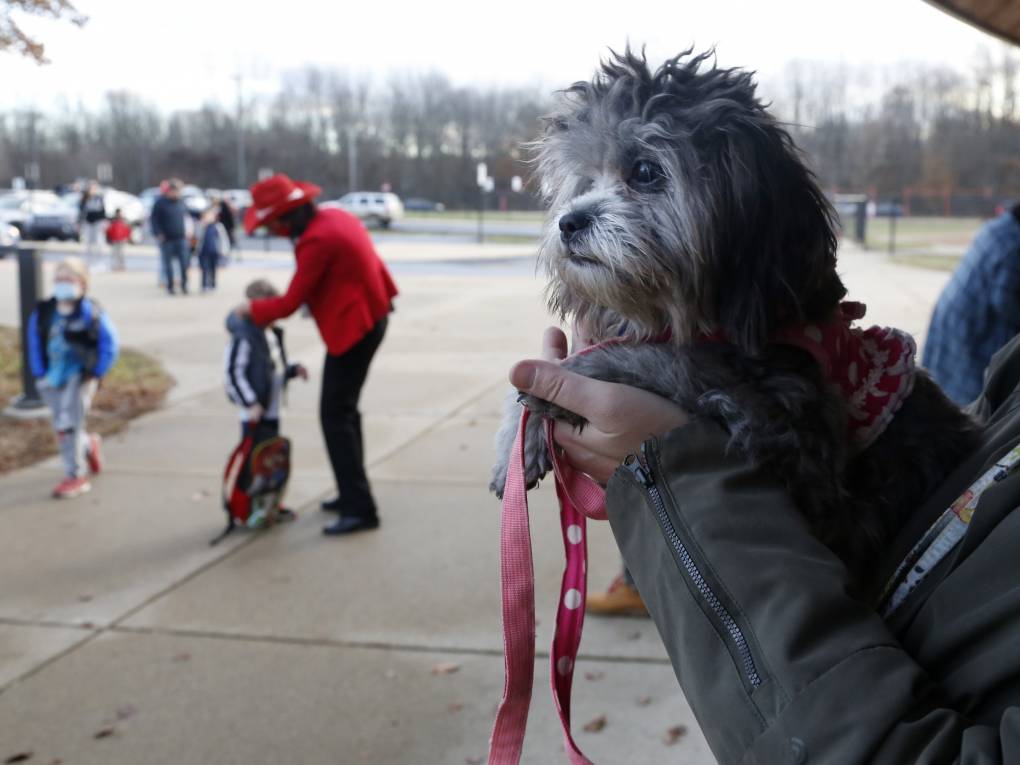
"caption": "Trixie, a comfort dog, waits to greet students at the early elementary wing of the Paw Paw Elementary School in Paw Paw, Mich. Staff members, from teachers to kitchen staff and bus drivers, have received training in social-emotional support to help students, more of whom have struggled in the pandemic.\n",
"description": null,
"title": null,
"credit": "Martha Irvine/AP",
"status": "inherit",
"altTag": "Trixie, a comfort dog, waits to greet students at the early elementary wing of the Paw Paw Elementary School.",
"isLoading": false,
"fetchFailed": false
},
"mindshift_58526": {
"type": "attachments",
"id": "mindshift_58526",
"meta": {
"index": "attachments_1716263798",
"site": "mindshift",
"id": "58526",
"found": true
},
"parent": 58525,
"imgSizes": {
"twentyfourteen-full-width": {
"file": "https://ww2.kqed.org/app/uploads/sites/23/2021/09/gettyimages-1039771404-826c05ced61eb3468ca6dca7a1d2773360ca1438-1038x576.jpg",
"width": 1038,
"mimeType": "image/jpeg",
"height": 576
},
"thumbnail": {
"file": "https://ww2.kqed.org/app/uploads/sites/23/2021/09/gettyimages-1039771404-826c05ced61eb3468ca6dca7a1d2773360ca1438-160x120.jpg",
"width": 160,
"mimeType": "image/jpeg",
"height": 120
},
"post-thumbnail": {
"file": "https://ww2.kqed.org/app/uploads/sites/23/2021/09/gettyimages-1039771404-826c05ced61eb3468ca6dca7a1d2773360ca1438-672x372.jpg",
"width": 672,
"mimeType": "image/jpeg",
"height": 372
},
"kqedFullSize": {
"file": "https://ww2.kqed.org/app/uploads/sites/23/2021/09/gettyimages-1039771404-826c05ced61eb3468ca6dca7a1d2773360ca1438-scaled-e1631894055684.jpg",
"width": 1920,
"height": 1438
},
"2048x2048": {
"file": "https://ww2.kqed.org/app/uploads/sites/23/2021/09/gettyimages-1039771404-826c05ced61eb3468ca6dca7a1d2773360ca1438-2048x1534.jpg",
"width": 2048,
"mimeType": "image/jpeg",
"height": 1534
},
"large": {
"file": "https://ww2.kqed.org/app/uploads/sites/23/2021/09/gettyimages-1039771404-826c05ced61eb3468ca6dca7a1d2773360ca1438-1020x764.jpg",
"width": 1020,
"mimeType": "image/jpeg",
"height": 764
},
"1536x1536": {
"file": "https://ww2.kqed.org/app/uploads/sites/23/2021/09/gettyimages-1039771404-826c05ced61eb3468ca6dca7a1d2773360ca1438-1536x1150.jpg",
"width": 1536,
"mimeType": "image/jpeg",
"height": 1150
},
"full-width": {
"file": "https://ww2.kqed.org/app/uploads/sites/23/2021/09/gettyimages-1039771404-826c05ced61eb3468ca6dca7a1d2773360ca1438-1920x1438.jpg",
"width": 1920,
"mimeType": "image/jpeg",
"height": 1438
},
"medium": {
"file": "https://ww2.kqed.org/app/uploads/sites/23/2021/09/gettyimages-1039771404-826c05ced61eb3468ca6dca7a1d2773360ca1438-800x599.jpg",
"width": 800,
"mimeType": "image/jpeg",
"height": 599
},
"medium_large": {
"file": "https://ww2.kqed.org/app/uploads/sites/23/2021/09/gettyimages-1039771404-826c05ced61eb3468ca6dca7a1d2773360ca1438-768x575.jpg",
"width": 768,
"mimeType": "image/jpeg",
"height": 575
}
},
"publishDate": 1631894013,
"modified": 1631894066,
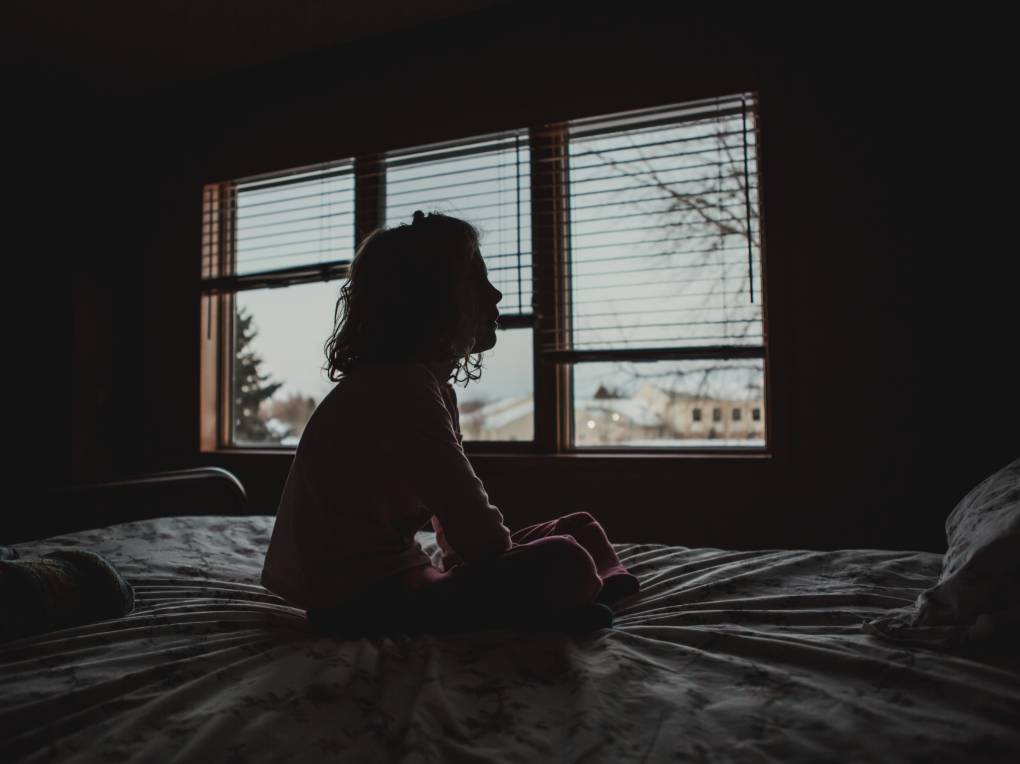
"caption": "According to the CDC, between March and May, 2020, hospitals across the country saw a 24% increase in mental health emergency visits by kids aged 5 to 11 years old, and a 31% increase for kids 12 to 17.\n",
"description": "Little girl sits on a bed in a dark bedroom with blue sky and trees can be seen behind her in the window.",
"title": "According to the CDC, between March and May, 2020, hospitals across the country saw a 24% increase in mental health emergency visits by kids aged 5 to 11 years old, and a 31% increase for kids 12 to 17.",
"credit": "Annie Otzen/Getty Images",
"status": "inherit",
"altTag": null,
"isLoading": false,
"fetchFailed": false
},
"mindshift_58464": {
"type": "attachments",
"id": "mindshift_58464",
"meta": {
"index": "attachments_1716263798",
"site": "mindshift",
"id": "58464",
"found": true
},
"parent": 58462,
"imgSizes": {
"twentyfourteen-full-width": {
"file": "https://ww2.kqed.org/app/uploads/sites/23/2021/09/iStock-650146050-1038x576.jpg",
"width": 1038,
"mimeType": "image/jpeg",
"height": 576
},
"thumbnail": {
"file": "https://ww2.kqed.org/app/uploads/sites/23/2021/09/iStock-650146050-160x107.jpg",
"width": 160,
"mimeType": "image/jpeg",
"height": 107
},
"post-thumbnail": {
"file": "https://ww2.kqed.org/app/uploads/sites/23/2021/09/iStock-650146050-672x372.jpg",
"width": 672,
"mimeType": "image/jpeg",
"height": 372
},
"kqedFullSize": {
"file": "https://ww2.kqed.org/app/uploads/sites/23/2021/09/iStock-650146050.jpg",
"width": 2121,
"height": 1414
},
"2048x2048": {
"file": "https://ww2.kqed.org/app/uploads/sites/23/2021/09/iStock-650146050-2048x1365.jpg",
"width": 2048,
"mimeType": "image/jpeg",
"height": 1365
},
"large": {
"file": "https://ww2.kqed.org/app/uploads/sites/23/2021/09/iStock-650146050-1020x680.jpg",
"width": 1020,
"mimeType": "image/jpeg",
"height": 680
},
"1536x1536": {
"file": "https://ww2.kqed.org/app/uploads/sites/23/2021/09/iStock-650146050-1536x1024.jpg",
"width": 1536,
"mimeType": "image/jpeg",
"height": 1024
},
"full-width": {
"file": "https://ww2.kqed.org/app/uploads/sites/23/2021/09/iStock-650146050-1920x1280.jpg",
"width": 1920,
"mimeType": "image/jpeg",
"height": 1280
},
"medium": {
"file": "https://ww2.kqed.org/app/uploads/sites/23/2021/09/iStock-650146050-800x533.jpg",
"width": 800,
"mimeType": "image/jpeg",
"height": 533
},
"medium_large": {
"file": "https://ww2.kqed.org/app/uploads/sites/23/2021/09/iStock-650146050-768x512.jpg",
"width": 768,
"mimeType": "image/jpeg",
"height": 512
}
},
"publishDate": 1631000719,
"modified": 1631000759,
"caption": null,
"description": null,
"title": "Quiet Anxiety",
"credit": "RJohn97/iStock",
"status": "inherit",
"altTag": "Hands clasped with nervous energy",
"isLoading": false,
"fetchFailed": false
},
"mindshift_58448": {
"type": "attachments",
"id": "mindshift_58448",
"meta": {
"index": "attachments_1716263798",
"site": "mindshift",
"id": "58448",
"found": true
},
"parent": 58447,
"imgSizes": {
"twentyfourteen-full-width": {
"file": "https://ww2.kqed.org/app/uploads/sites/23/2021/09/IllinoisSchoolBus-fbbd1bfb4dea89079cb8719580ee2e647a48a1cd-1038x576.jpg",
"width": 1038,
"mimeType": "image/jpeg",
"height": 576
},
"thumbnail": {
"file": "https://ww2.kqed.org/app/uploads/sites/23/2021/09/IllinoisSchoolBus-fbbd1bfb4dea89079cb8719580ee2e647a48a1cd-160x120.jpg",
"width": 160,
"mimeType": "image/jpeg",
"height": 120
},
"post-thumbnail": {
"file": "https://ww2.kqed.org/app/uploads/sites/23/2021/09/IllinoisSchoolBus-fbbd1bfb4dea89079cb8719580ee2e647a48a1cd-672x372.jpg",
"width": 672,
"mimeType": "image/jpeg",
"height": 372
},
"kqedFullSize": {
"file": "https://ww2.kqed.org/app/uploads/sites/23/2021/09/IllinoisSchoolBus-fbbd1bfb4dea89079cb8719580ee2e647a48a1cd-scaled-e1630652687930.jpg",
"width": 1920,
"height": 1440
},
"2048x2048": {
"file": "https://ww2.kqed.org/app/uploads/sites/23/2021/09/IllinoisSchoolBus-fbbd1bfb4dea89079cb8719580ee2e647a48a1cd-2048x1536.jpg",
"width": 2048,
"mimeType": "image/jpeg",
"height": 1536
},
"large": {
"file": "https://ww2.kqed.org/app/uploads/sites/23/2021/09/IllinoisSchoolBus-fbbd1bfb4dea89079cb8719580ee2e647a48a1cd-1020x765.jpg",
"width": 1020,
"mimeType": "image/jpeg",
"height": 765
},
"1536x1536": {
"file": "https://ww2.kqed.org/app/uploads/sites/23/2021/09/IllinoisSchoolBus-fbbd1bfb4dea89079cb8719580ee2e647a48a1cd-1536x1152.jpg",
"width": 1536,
"mimeType": "image/jpeg",
"height": 1152
},
"full-width": {
"file": "https://ww2.kqed.org/app/uploads/sites/23/2021/09/IllinoisSchoolBus-fbbd1bfb4dea89079cb8719580ee2e647a48a1cd-1920x1440.jpg",
"width": 1920,
"mimeType": "image/jpeg",
"height": 1440
},
"medium": {
"file": "https://ww2.kqed.org/app/uploads/sites/23/2021/09/IllinoisSchoolBus-fbbd1bfb4dea89079cb8719580ee2e647a48a1cd-800x600.jpg",
"width": 800,
"mimeType": "image/jpeg",
"height": 600
},
"medium_large": {
"file": "https://ww2.kqed.org/app/uploads/sites/23/2021/09/IllinoisSchoolBus-fbbd1bfb4dea89079cb8719580ee2e647a48a1cd-768x576.jpg",
"width": 768,
"mimeType": "image/jpeg",
"height": 576
}
},
"publishDate": 1630652594,
"modified": 1630652746,
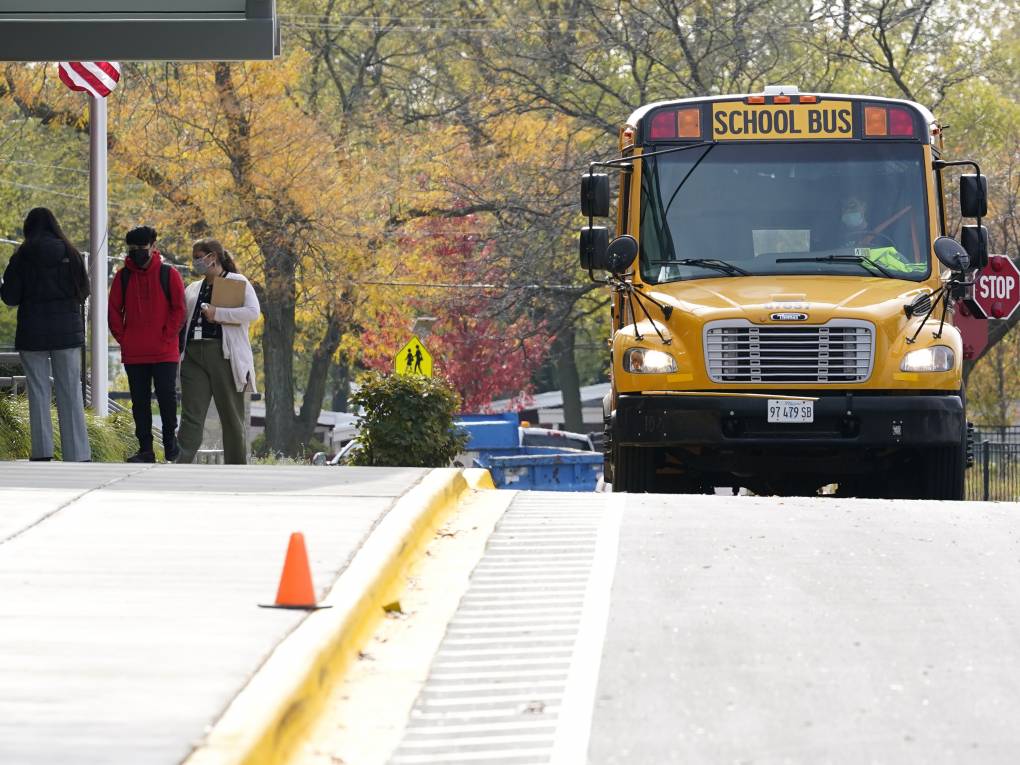
"caption": "Students wear mask as they arrive their school for in- person learning at Holmes Middle School in Wheeling, Ill., Wednesday, Oct. 21, 2020. The Lake County Health Department recommended that all public and private schools in the county currently education children in the classroom immediately return to virtual learning because of the threats posed by the coronavirus pandemic. ",
"description": "Students wear mask as they arrive their school for in- person learning at Holmes Middle School in Wheeling, Ill., Wednesday, Oct. 21, 2020. The Lake County Health Department recommended that all public and private schools in the county currently education children in the classroom immediately return to virtual learning because of the threats posed by the coronavirus pandemic. ",
"title": "Students wear mask as they arrive at school for in-person learning at Holmes Middle School in Wheeling, Ill., on Oct. 21, 2020. Students in Illinois schools will be able to take up to five excused mental or behavioral health days beginning in January 2022.",
"credit": "AP Photo/Nam Y. Huh",
"status": "inherit",
"altTag": null,
"isLoading": false,
"fetchFailed": false
},
"mindshift_58427": {
"type": "attachments",
"id": "mindshift_58427",
"meta": {
"index": "attachments_1716263798",
"site": "mindshift",
"id": "58427",
"found": true
},
"parent": 58426,
"imgSizes": {
"twentyfourteen-full-width": {
"file": "https://ww2.kqed.org/app/uploads/sites/23/2021/08/gettyimages-1152656345-876e1f998ef784fa6c6ae3a79cf8c7c243956cfc-1038x576.jpg",
"width": 1038,
"mimeType": "image/jpeg",
"height": 576
},
"thumbnail": {
"file": "https://ww2.kqed.org/app/uploads/sites/23/2021/08/gettyimages-1152656345-876e1f998ef784fa6c6ae3a79cf8c7c243956cfc-160x120.jpg",
"width": 160,
"mimeType": "image/jpeg",
"height": 120
},
"post-thumbnail": {
"file": "https://ww2.kqed.org/app/uploads/sites/23/2021/08/gettyimages-1152656345-876e1f998ef784fa6c6ae3a79cf8c7c243956cfc-672x372.jpg",
"width": 672,
"mimeType": "image/jpeg",
"height": 372
},
"kqedFullSize": {
"file": "https://ww2.kqed.org/app/uploads/sites/23/2021/08/gettyimages-1152656345-876e1f998ef784fa6c6ae3a79cf8c7c243956cfc-scaled-e1630478535243.jpg",
"width": 1920,
"height": 1438
},
"2048x2048": {
"file": "https://ww2.kqed.org/app/uploads/sites/23/2021/08/gettyimages-1152656345-876e1f998ef784fa6c6ae3a79cf8c7c243956cfc-2048x1534.jpg",
"width": 2048,
"mimeType": "image/jpeg",
"height": 1534
},
"large": {
"file": "https://ww2.kqed.org/app/uploads/sites/23/2021/08/gettyimages-1152656345-876e1f998ef784fa6c6ae3a79cf8c7c243956cfc-1020x764.jpg",
"width": 1020,
"mimeType": "image/jpeg",
"height": 764
},
"1536x1536": {
"file": "https://ww2.kqed.org/app/uploads/sites/23/2021/08/gettyimages-1152656345-876e1f998ef784fa6c6ae3a79cf8c7c243956cfc-1536x1150.jpg",
"width": 1536,
"mimeType": "image/jpeg",
"height": 1150
},
"full-width": {
"file": "https://ww2.kqed.org/app/uploads/sites/23/2021/08/gettyimages-1152656345-876e1f998ef784fa6c6ae3a79cf8c7c243956cfc-1920x1438.jpg",
"width": 1920,
"mimeType": "image/jpeg",
"height": 1438
},
"medium": {
"file": "https://ww2.kqed.org/app/uploads/sites/23/2021/08/gettyimages-1152656345-876e1f998ef784fa6c6ae3a79cf8c7c243956cfc-800x599.jpg",
"width": 800,
"mimeType": "image/jpeg",
"height": 599
},
"medium_large": {
"file": "https://ww2.kqed.org/app/uploads/sites/23/2021/08/gettyimages-1152656345-876e1f998ef784fa6c6ae3a79cf8c7c243956cfc-768x575.jpg",
"width": 768,
"mimeType": "image/jpeg",
"height": 575
}
},
"publishDate": 1630478507,
"modified": 1630478569,
"caption": null,
"description": null,
"title": "\"We have already been seeing a lot of pick up in pre-existing anxiety in anticipation of school starting,\" says child and adolescent psychiatrist Dr. Ujjwal Ramtekkar. \"They're worried about getting sick,\" or their parents getting sick.",
"credit": "SDI Productions/Getty Images",
"status": "inherit",
"altTag": "An unknown schoolgirl with a backpack hugs her knees and sits on the curb by herself at a bus stop, while the bus is parked nearby.",
"isLoading": false,
"fetchFailed": false
},
"mindshift_58412": {
"type": "attachments",
"id": "mindshift_58412",
"meta": {
"index": "attachments_1716263798",
"site": "mindshift",
"id": "58412",
"found": true
},
"parent": 58404,
"imgSizes": {
"twentyfourteen-full-width": {
"file": "https://ww2.kqed.org/app/uploads/sites/23/2021/08/Young-people-mental-health-1-1038x576.jpg",
"width": 1038,
"mimeType": "image/jpeg",
"height": 576
},
"thumbnail": {
"file": "https://ww2.kqed.org/app/uploads/sites/23/2021/08/Young-people-mental-health-1-160x117.jpg",
"width": 160,
"mimeType": "image/jpeg",
"height": 117
},
"post-thumbnail": {
"file": "https://ww2.kqed.org/app/uploads/sites/23/2021/08/Young-people-mental-health-1-672x372.jpg",
"width": 672,
"mimeType": "image/jpeg",
"height": 372
},
"kqedFullSize": {
"file": "https://ww2.kqed.org/app/uploads/sites/23/2021/08/Young-people-mental-health-1.jpg",
"width": 1920,
"height": 1406
},
"large": {
"file": "https://ww2.kqed.org/app/uploads/sites/23/2021/08/Young-people-mental-health-1-1020x747.jpg",
"width": 1020,
"mimeType": "image/jpeg",
"height": 747
},
"1536x1536": {
"file": "https://ww2.kqed.org/app/uploads/sites/23/2021/08/Young-people-mental-health-1-1536x1125.jpg",
"width": 1536,
"mimeType": "image/jpeg",
"height": 1125
},
"medium": {
"file": "https://ww2.kqed.org/app/uploads/sites/23/2021/08/Young-people-mental-health-1-800x586.jpg",
"width": 800,
"mimeType": "image/jpeg",
"height": 586
},
"medium_large": {
"file": "https://ww2.kqed.org/app/uploads/sites/23/2021/08/Young-people-mental-health-1-768x562.jpg",
"width": 768,
"mimeType": "image/jpeg",
"height": 562
}
},
"publishDate": 1630355342,
"modified": 1630355369,
"caption": null,
"description": null,
"title": "Young people, teenagers, suffering from psychological diseases, anxiety. Girls and boys sitting sad by the window or wall",
"credit": "ma_rish/iStock",
"status": "inherit",
"altTag": null,
"isLoading": false,
"fetchFailed": false
},
"mindshift_58277": {
"type": "attachments",
"id": "mindshift_58277",
"meta": {
"index": "attachments_1716263798",
"site": "mindshift",
"id": "58277",
"found": true
},
"parent": 58274,
"imgSizes": {
"twentyfourteen-full-width": {
"file": "https://ww2.kqed.org/app/uploads/sites/23/2021/08/back-to-school_learning-loss-1038x576.jpg",
"width": 1038,
"mimeType": "image/jpeg",
"height": 576
},
"thumbnail": {
"file": "https://ww2.kqed.org/app/uploads/sites/23/2021/08/back-to-school_learning-loss-160x80.jpg",
"width": 160,
"mimeType": "image/jpeg",
"height": 80
},
"post-thumbnail": {
"file": "https://ww2.kqed.org/app/uploads/sites/23/2021/08/back-to-school_learning-loss-672x372.jpg",
"width": 672,
"mimeType": "image/jpeg",
"height": 372
},
"kqedFullSize": {
"file": "https://ww2.kqed.org/app/uploads/sites/23/2021/08/back-to-school_learning-loss.jpg",
"width": 2448,
"height": 1224
},
"2048x2048": {
"file": "https://ww2.kqed.org/app/uploads/sites/23/2021/08/back-to-school_learning-loss-2048x1024.jpg",
"width": 2048,
"mimeType": "image/jpeg",
"height": 1024
},
"large": {
"file": "https://ww2.kqed.org/app/uploads/sites/23/2021/08/back-to-school_learning-loss-1020x510.jpg",
"width": 1020,
"mimeType": "image/jpeg",
"height": 510
},
"1536x1536": {
"file": "https://ww2.kqed.org/app/uploads/sites/23/2021/08/back-to-school_learning-loss-1536x768.jpg",
"width": 1536,
"mimeType": "image/jpeg",
"height": 768
},
"full-width": {
"file": "https://ww2.kqed.org/app/uploads/sites/23/2021/08/back-to-school_learning-loss-1920x960.jpg",
"width": 1920,
"mimeType": "image/jpeg",
"height": 960
},
"medium": {
"file": "https://ww2.kqed.org/app/uploads/sites/23/2021/08/back-to-school_learning-loss-800x400.jpg",
"width": 800,
"mimeType": "image/jpeg",
"height": 400
},
"medium_large": {
"file": "https://ww2.kqed.org/app/uploads/sites/23/2021/08/back-to-school_learning-loss-768x384.jpg",
"width": 768,
"mimeType": "image/jpeg",
"height": 384
}
},
"publishDate": 1628723799,
"modified": 1628723828,
"caption": null,
"description": null,
"title": "back-to-school_learning-loss",
"credit": "elenabs/iStock",
"status": "inherit",
"altTag": null,
"isLoading": false,
"fetchFailed": false
},
"mindshift_57819": {
"type": "attachments",
"id": "mindshift_57819",
"meta": {
"index": "attachments_1716263798",
"site": "mindshift",
"id": "57819",
"found": true
},
"parent": 57818,
"imgSizes": {
"twentyfourteen-full-width": {
"file": "https://ww2.kqed.org/app/uploads/sites/23/2021/05/gettyimages-1257996355_wide-350f2de5f7c45a45bb8154ff0335720bdca052eb-1038x576.jpg",
"width": 1038,
"mimeType": "image/jpeg",
"height": 576
},
"thumbnail": {
"file": "https://ww2.kqed.org/app/uploads/sites/23/2021/05/gettyimages-1257996355_wide-350f2de5f7c45a45bb8154ff0335720bdca052eb-160x90.jpg",
"width": 160,
"mimeType": "image/jpeg",
"height": 90
},
"post-thumbnail": {
"file": "https://ww2.kqed.org/app/uploads/sites/23/2021/05/gettyimages-1257996355_wide-350f2de5f7c45a45bb8154ff0335720bdca052eb-672x372.jpg",
"width": 672,
"mimeType": "image/jpeg",
"height": 372
},
"kqedFullSize": {
"file": "https://ww2.kqed.org/app/uploads/sites/23/2021/05/gettyimages-1257996355_wide-350f2de5f7c45a45bb8154ff0335720bdca052eb-scaled-e1620304507297.jpg",
"width": 1920,
"height": 1080
},
"2048x2048": {
"file": "https://ww2.kqed.org/app/uploads/sites/23/2021/05/gettyimages-1257996355_wide-350f2de5f7c45a45bb8154ff0335720bdca052eb-2048x1152.jpg",
"width": 2048,
"mimeType": "image/jpeg",
"height": 1152
},
"large": {
"file": "https://ww2.kqed.org/app/uploads/sites/23/2021/05/gettyimages-1257996355_wide-350f2de5f7c45a45bb8154ff0335720bdca052eb-1020x574.jpg",
"width": 1020,
"mimeType": "image/jpeg",
"height": 574
},
"1536x1536": {
"file": "https://ww2.kqed.org/app/uploads/sites/23/2021/05/gettyimages-1257996355_wide-350f2de5f7c45a45bb8154ff0335720bdca052eb-1536x864.jpg",
"width": 1536,
"mimeType": "image/jpeg",
"height": 864
},
"full-width": {
"file": "https://ww2.kqed.org/app/uploads/sites/23/2021/05/gettyimages-1257996355_wide-350f2de5f7c45a45bb8154ff0335720bdca052eb-1920x1080.jpg",
"width": 1920,
"mimeType": "image/jpeg",
"height": 1080
},
"medium": {
"file": "https://ww2.kqed.org/app/uploads/sites/23/2021/05/gettyimages-1257996355_wide-350f2de5f7c45a45bb8154ff0335720bdca052eb-800x450.jpg",
"width": 800,
"mimeType": "image/jpeg",
"height": 450
},
"medium_large": {
"file": "https://ww2.kqed.org/app/uploads/sites/23/2021/05/gettyimages-1257996355_wide-350f2de5f7c45a45bb8154ff0335720bdca052eb-768x432.jpg",
"width": 768,
"mimeType": "image/jpeg",
"height": 432
}
},
"publishDate": 1620304473,
"modified": 1620304527,
"caption": "Feelings of exhaustion, irritability and mental fogginess are our bodies' normal response to an abnormal year of pandemic life.\n",
"description": "Working, Office, Sitting, Business, Using Laptop, Tired,Boredom,Illness, Occupation,Sleeping,",
"title": "Feelings of exhaustion, irritability and mental fogginess are our bodies' normal response to an abnormal year of pandemic life.",
"credit": "Wenjin Chen/Getty Images",
"status": "inherit",
"altTag": null,
"isLoading": false,
"fetchFailed": false
},
"mindshift_57605": {
"type": "attachments",
"id": "mindshift_57605",
"meta": {
"index": "attachments_1716263798",
"site": "mindshift",
"id": "57605",
"found": true
},
"parent": 57600,
"imgSizes": {
"twentyfourteen-full-width": {
"file": "https://ww2.kqed.org/app/uploads/sites/23/2021/03/Books-About-Grief-for-Children-and-Teens-MindShift-KQED-1038x576.png",
"width": 1038,
"mimeType": "image/png",
"height": 576
},
"thumbnail": {
"file": "https://ww2.kqed.org/app/uploads/sites/23/2021/03/Books-About-Grief-for-Children-and-Teens-MindShift-KQED-160x101.png",
"width": 160,
"mimeType": "image/png",
"height": 101
},
"post-thumbnail": {
"file": "https://ww2.kqed.org/app/uploads/sites/23/2021/03/Books-About-Grief-for-Children-and-Teens-MindShift-KQED-672x372.png",
"width": 672,
"mimeType": "image/png",
"height": 372
},
"kqedFullSize": {
"file": "https://ww2.kqed.org/app/uploads/sites/23/2021/03/Books-About-Grief-for-Children-and-Teens-MindShift-KQED.png",
"width": 1598,
"height": 1008
},
"large": {
"file": "https://ww2.kqed.org/app/uploads/sites/23/2021/03/Books-About-Grief-for-Children-and-Teens-MindShift-KQED-1020x643.png",
"width": 1020,
"mimeType": "image/png",
"height": 643
},
"1536x1536": {
"file": "https://ww2.kqed.org/app/uploads/sites/23/2021/03/Books-About-Grief-for-Children-and-Teens-MindShift-KQED-1536x969.png",
"width": 1536,
"mimeType": "image/png",
"height": 969
},
"medium": {
"file": "https://ww2.kqed.org/app/uploads/sites/23/2021/03/Books-About-Grief-for-Children-and-Teens-MindShift-KQED-800x505.png",
"width": 800,
"mimeType": "image/png",
"height": 505
},
"medium_large": {
"file": "https://ww2.kqed.org/app/uploads/sites/23/2021/03/Books-About-Grief-for-Children-and-Teens-MindShift-KQED-768x484.png",
"width": 768,
"mimeType": "image/png",
"height": 484
}
},
"publishDate": 1616694283,
"modified": 1616694283,
"caption": null,
"description": null,
"title": "Books-About-Grief-for-Children-and-Teens MindShift KQED",
"credit": null,
"status": "inherit",
"altTag": null,
"isLoading": false,
"fetchFailed": false
},
"mindshift_57628": {
"type": "attachments",
"id": "mindshift_57628",
"meta": {
"index": "attachments_1716263798",
"site": "mindshift",
"id": "57628",
"found": true
},
"parent": 57627,
"imgSizes": {
"twentyfourteen-full-width": {
"file": "https://ww2.kqed.org/app/uploads/sites/23/2021/03/erickmramos_lifekit-v2_wide-35735ea8907e051b04146d5945b9840798378ca6-1038x576.jpg",
"width": 1038,
"mimeType": "image/jpeg",
"height": 576
},
"thumbnail": {
"file": "https://ww2.kqed.org/app/uploads/sites/23/2021/03/erickmramos_lifekit-v2_wide-35735ea8907e051b04146d5945b9840798378ca6-160x90.jpg",
"width": 160,
"mimeType": "image/jpeg",
"height": 90
},
"post-thumbnail": {
"file": "https://ww2.kqed.org/app/uploads/sites/23/2021/03/erickmramos_lifekit-v2_wide-35735ea8907e051b04146d5945b9840798378ca6-672x372.jpg",
"width": 672,
"mimeType": "image/jpeg",
"height": 372
},
"kqedFullSize": {
"file": "https://ww2.kqed.org/app/uploads/sites/23/2021/03/erickmramos_lifekit-v2_wide-35735ea8907e051b04146d5945b9840798378ca6.jpg",
"width": 1900,
"height": 1068
},
"large": {
"file": "https://ww2.kqed.org/app/uploads/sites/23/2021/03/erickmramos_lifekit-v2_wide-35735ea8907e051b04146d5945b9840798378ca6-1020x573.jpg",
"width": 1020,
"mimeType": "image/jpeg",
"height": 573
},
"1536x1536": {
"file": "https://ww2.kqed.org/app/uploads/sites/23/2021/03/erickmramos_lifekit-v2_wide-35735ea8907e051b04146d5945b9840798378ca6-1536x863.jpg",
"width": 1536,
"mimeType": "image/jpeg",
"height": 863
},
"medium": {
"file": "https://ww2.kqed.org/app/uploads/sites/23/2021/03/erickmramos_lifekit-v2_wide-35735ea8907e051b04146d5945b9840798378ca6-800x450.jpg",
"width": 800,
"mimeType": "image/jpeg",
"height": 450
},
"medium_large": {
"file": "https://ww2.kqed.org/app/uploads/sites/23/2021/03/erickmramos_lifekit-v2_wide-35735ea8907e051b04146d5945b9840798378ca6-768x432.jpg",
"width": 768,
"mimeType": "image/jpeg",
"height": 432
}
},
"publishDate": 1616747146,
"modified": 1616747213,
"caption": null,
"description": null,
"title": "Illustration of a teenage girl sitting on her bed with her head in her hands, her phone sitting next to her. Her mother walks through the door on the other side of the room, but is separated by a deep chasm that it appears she cannot cross.",
"credit": "Erick M. Ramos for NPR",
"status": "inherit",
"altTag": null,
"isLoading": false,
"fetchFailed": false
},
"mindshift_57439": {
"type": "attachments",
"id": "mindshift_57439",
"meta": {
"index": "attachments_1716263798",
"site": "mindshift",
"id": "57439",
"found": true
},
"parent": 57438,
"imgSizes": {
"twentyfourteen-full-width": {
"file": "https://ww2.kqed.org/app/uploads/sites/23/2021/02/pandemic_connections_d_wide-07c97391630f2e12eea3e484c78a1426a599c9f0-1038x576.jpg",
"width": 1038,
"mimeType": "image/jpeg",
"height": 576
},
"thumbnail": {
"file": "https://ww2.kqed.org/app/uploads/sites/23/2021/02/pandemic_connections_d_wide-07c97391630f2e12eea3e484c78a1426a599c9f0-160x90.jpg",
"width": 160,
"mimeType": "image/jpeg",
"height": 90
},
"post-thumbnail": {
"file": "https://ww2.kqed.org/app/uploads/sites/23/2021/02/pandemic_connections_d_wide-07c97391630f2e12eea3e484c78a1426a599c9f0-672x372.jpg",
"width": 672,
"mimeType": "image/jpeg",
"height": 372
},
"kqedFullSize": {
"file": "https://ww2.kqed.org/app/uploads/sites/23/2021/02/pandemic_connections_d_wide-07c97391630f2e12eea3e484c78a1426a599c9f0-scaled.jpg",
"width": 2560,
"height": 1440
},
"2048x2048": {
"file": "https://ww2.kqed.org/app/uploads/sites/23/2021/02/pandemic_connections_d_wide-07c97391630f2e12eea3e484c78a1426a599c9f0-2048x1152.jpg",
"width": 2048,
"mimeType": "image/jpeg",
"height": 1152
},
"large": {
"file": "https://ww2.kqed.org/app/uploads/sites/23/2021/02/pandemic_connections_d_wide-07c97391630f2e12eea3e484c78a1426a599c9f0-1020x574.jpg",
"width": 1020,
"mimeType": "image/jpeg",
"height": 574
},
"1536x1536": {
"file": "https://ww2.kqed.org/app/uploads/sites/23/2021/02/pandemic_connections_d_wide-07c97391630f2e12eea3e484c78a1426a599c9f0-1536x864.jpg",
"width": 1536,
"mimeType": "image/jpeg",
"height": 864
},
"full-width": {
"file": "https://ww2.kqed.org/app/uploads/sites/23/2021/02/pandemic_connections_d_wide-07c97391630f2e12eea3e484c78a1426a599c9f0-1920x1080.jpg",
"width": 1920,
"mimeType": "image/jpeg",
"height": 1080
},
"medium": {
"file": "https://ww2.kqed.org/app/uploads/sites/23/2021/02/pandemic_connections_d_wide-07c97391630f2e12eea3e484c78a1426a599c9f0-800x450.jpg",
"width": 800,
"mimeType": "image/jpeg",
"height": 450
},
"medium_large": {
"file": "https://ww2.kqed.org/app/uploads/sites/23/2021/02/pandemic_connections_d_wide-07c97391630f2e12eea3e484c78a1426a599c9f0-768x432.jpg",
"width": 768,
"mimeType": "image/jpeg",
"height": 432
}
},
"publishDate": 1614152420,
"modified": 1614153090,
"caption": "Maintaining friendships and social networks during the pandemic often takes effort.\n",
"description": null,
"title": "Maintaining friendships and social networks during the pandemic often takes effort.",
"credit": "Susan Haejin Lee for NPR",
"status": "inherit",
"altTag": null,
"isLoading": false,
"fetchFailed": false
},
"mindshift_57339": {
"type": "attachments",
"id": "mindshift_57339",
"meta": {
"index": "attachments_1716263798",
"site": "mindshift",
"id": "57339",
"found": true
},
"parent": 57338,
"imgSizes": {
"twentyfourteen-full-width": {
"file": "https://ww2.kqed.org/app/uploads/sites/23/2021/02/zhang-suicide-help-parents_wide-d86646258e96471a77a04da06ee18809239c74d0-1038x576.jpg",
"width": 1038,
"mimeType": "image/jpeg",
"height": 576
},
"thumbnail": {
"file": "https://ww2.kqed.org/app/uploads/sites/23/2021/02/zhang-suicide-help-parents_wide-d86646258e96471a77a04da06ee18809239c74d0-160x90.jpg",
"width": 160,
"mimeType": "image/jpeg",
"height": 90
},
"post-thumbnail": {
"file": "https://ww2.kqed.org/app/uploads/sites/23/2021/02/zhang-suicide-help-parents_wide-d86646258e96471a77a04da06ee18809239c74d0-672x372.jpg",
"width": 672,
"mimeType": "image/jpeg",
"height": 372
},
"kqedFullSize": {
"file": "https://ww2.kqed.org/app/uploads/sites/23/2021/02/zhang-suicide-help-parents_wide-d86646258e96471a77a04da06ee18809239c74d0-scaled-e1612341619942.jpg",
"width": 1920,
"height": 1080
},
"2048x2048": {
"file": "https://ww2.kqed.org/app/uploads/sites/23/2021/02/zhang-suicide-help-parents_wide-d86646258e96471a77a04da06ee18809239c74d0-2048x1152.jpg",
"width": 2048,
"mimeType": "image/jpeg",
"height": 1152
},
"large": {
"file": "https://ww2.kqed.org/app/uploads/sites/23/2021/02/zhang-suicide-help-parents_wide-d86646258e96471a77a04da06ee18809239c74d0-1020x574.jpg",
"width": 1020,
"mimeType": "image/jpeg",
"height": 574
},
"1536x1536": {
"file": "https://ww2.kqed.org/app/uploads/sites/23/2021/02/zhang-suicide-help-parents_wide-d86646258e96471a77a04da06ee18809239c74d0-1536x864.jpg",
"width": 1536,
"mimeType": "image/jpeg",
"height": 864
},
"full-width": {
"file": "https://ww2.kqed.org/app/uploads/sites/23/2021/02/zhang-suicide-help-parents_wide-d86646258e96471a77a04da06ee18809239c74d0-1920x1080.jpg",
"width": 1920,
"mimeType": "image/jpeg",
"height": 1080
},
"medium": {
"file": "https://ww2.kqed.org/app/uploads/sites/23/2021/02/zhang-suicide-help-parents_wide-d86646258e96471a77a04da06ee18809239c74d0-800x450.jpg",
"width": 800,
"mimeType": "image/jpeg",
"height": 450
},
"medium_large": {
"file": "https://ww2.kqed.org/app/uploads/sites/23/2021/02/zhang-suicide-help-parents_wide-d86646258e96471a77a04da06ee18809239c74d0-768x432.jpg",
"width": 768,
"mimeType": "image/jpeg",
"height": 432
}
},
"publishDate": 1612341560,
"modified": 1612341630,
"caption": null,
"description": null,
"title": "If your child tells you they're thinking of wanting to end their life, how do you help? Number one, don't panic. Suicide is preventable. Here's advice for helping young people in crisis, from people who've lived through it.",
"credit": "Jesse Zhang for NPR",
"status": "inherit",
"altTag": null,
"isLoading": false,
"fetchFailed": false
}
},
"audioPlayerReducer": {
"postId": "stream_live",
"isPaused": true,
"isPlaying": false,
"pfsActive": false,
"pledgeModalIsOpen": true,
"playerDrawerIsOpen": false,
"liveAudioPlayStartedAt": 0,
"liveAudioPlayContext": ""
},
"authorsReducer": {
"byline_mindshift_58862": {
"type": "authors",
"id": "byline_mindshift_58862",
"meta": {
"override": true
},
"slug": "byline_mindshift_58862",
"name": "Lindsey Tanner, The Associated Press",
"isLoading": false
},
"byline_mindshift_58525": {
"type": "authors",
"id": "byline_mindshift_58525",
"meta": {
"override": true
},
"slug": "byline_mindshift_58525",
"name": "Rhitu Chatterjee",
"isLoading": false
},
"byline_mindshift_58447": {
"type": "authors",
"id": "byline_mindshift_58447",
"meta": {
"override": true
},
"slug": "byline_mindshift_58447",
"name": "Jonathan Franklin",
"isLoading": false
},
"byline_mindshift_58426": {
"type": "authors",
"id": "byline_mindshift_58426",
"meta": {
"override": true
},
"slug": "byline_mindshift_58426",
"name": "Rhitu Chatterjee",
"isLoading": false
},
"byline_mindshift_57818": {
"type": "authors",
"id": "byline_mindshift_57818",
"meta": {
"override": true
},
"slug": "byline_mindshift_57818",
"name": "Rhitu Chatterjee",
"isLoading": false
},
"byline_mindshift_57627": {
"type": "authors",
"id": "byline_mindshift_57627",
"meta": {
"override": true
},
"slug": "byline_mindshift_57627",
"name": "Anya Kamenetz",
"isLoading": false
},
"byline_mindshift_57438": {
"type": "authors",
"id": "byline_mindshift_57438",
"meta": {
"override": true
},
"slug": "byline_mindshift_57438",
"name": "Hadia Bakkar",
"isLoading": false
},
"byline_mindshift_57338": {
"type": "authors",
"id": "byline_mindshift_57338",
"meta": {
"override": true
},
"slug": "byline_mindshift_57338",
"name": "Rhitu Chatterjee",
"isLoading": false
},
"kdnewhouse": {
"type": "authors",
"id": "11487",
"meta": {
"index": "authors_1716337520",
"id": "11487",
"found": true
},
"name": "Kara Newhouse",
"firstName": "Kara",
"lastName": "Newhouse",
"slug": "kdnewhouse",
"email": "knewhouse@kqed.org",
"display_author_email": false,
"staff_mastheads": [],
"title": "MindShift Editor",
"bio": null,
"avatar": "https://secure.gravatar.com/avatar/3dceed6fb271527113abfa9a8e9df34e?s=600&d=blank&r=g",
"twitter": null,
"facebook": null,
"instagram": null,
"linkedin": null,
"sites": [
{
"site": "",
"roles": [
"editor"
]
},
{
"site": "mindshift",
"roles": []
}
],
"headData": {
"title": "Kara Newhouse | KQED",
"description": "MindShift Editor",
"ogImgSrc": "https://secure.gravatar.com/avatar/3dceed6fb271527113abfa9a8e9df34e?s=600&d=blank&r=g",
"twImgSrc": "https://secure.gravatar.com/avatar/3dceed6fb271527113abfa9a8e9df34e?s=600&d=blank&r=g"
},
"isLoading": false,
"link": "/author/kdnewhouse"
},
"ngobir": {
"type": "authors",
"id": "11721",
"meta": {
"index": "authors_1716337520",
"id": "11721",
"found": true
},
"name": "Nimah Gobir",
"firstName": "Nimah",
"lastName": "Gobir",
"slug": "ngobir",
"email": "ngobir@kqed.org",
"display_author_email": false,
"staff_mastheads": [],
"title": "KQED Contributor",
"bio": null,
"avatar": "https://secure.gravatar.com/avatar/837f5df7045c59f3ec097cdf7ac391373ab75d5ec936dd7099b8cb6f0af1b0e9?s=600&d=blank&r=g",
"twitter": null,
"bluesky": null,
"facebook": null,
"instagram": null,
"linkedin": null,
"sites": [
{
"site": "mindshift",
"roles": [
"editor"
]
}
],
"headData": {
"title": "Nimah Gobir | KQED",
"description": "KQED Contributor",
"ogImgSrc": "https://secure.gravatar.com/avatar/837f5df7045c59f3ec097cdf7ac391373ab75d5ec936dd7099b8cb6f0af1b0e9?s=600&d=blank&r=g",
"twImgSrc": "https://secure.gravatar.com/avatar/837f5df7045c59f3ec097cdf7ac391373ab75d5ec936dd7099b8cb6f0af1b0e9?s=600&d=blank&r=g"
},
"isLoading": false,
"link": "/author/ngobir"
}
},
"pagesReducer": {
"mindshift_tag_anxiety": {
"type": "terms",
"id": "mindshift_20589",
"meta": {
"index": "terms_1716263798",
"site": "mindshift",
"id": "20589",
"score": 8.670227
},
"featImg": null,
"name": "anxiety",
"description": null,
"taxonomy": "tag",
"headData": {
"twImgId": null,
"twTitle": null,
"ogTitle": null,
"ogImgId": null,
"twDescription": null,
"description": null,
"title": "anxiety Archives | KQED Mindshift",
"ogDescription": null
},
"ttid": 19866,
"slug": "anxiety",
"isLoading": false,
"title": "anxiety",
"pageMeta": {
"site": "mindshift",
"WpPageTemplate": "page-topic-editorial",
"currentPage": 3
},
"blocks": [
{
"blockName": "kqed/post-list",
"attrs": {
"layout": "cardArticle2",
"query": "posts/mindshift?tag=anxiety",
"seeMore": false,
"paginated": true,
"page": 3
}
},
{
"blockName": "kqed/ad"
}
]
}
},
"pfsSessionReducer": {},
"postsReducer": {
"stream_live": {
"type": "live",
"id": "stream_live",
"audioUrl": "https://streams.kqed.org/kqedradio",
"title": "Live Stream",
"excerpt": "Live Stream information currently unavailable.",
"link": "/radio",
"featImg": "",
"label": {
"name": "KQED Live",
"link": "/"
}
},
"stream_kqedNewscast": {
"type": "posts",
"id": "stream_kqedNewscast",
"audioUrl": "https://www.kqed.org/.stream/anon/radio/RDnews/newscast.mp3?_=1",
"title": "KQED Newscast",
"featImg": "",
"label": {
"name": "88.5 FM",
"link": "/"
}
},
"mindshift_58862": {
"type": "posts",
"id": "mindshift_58862",
"meta": {
"index": "posts_1716263798",
"site": "mindshift",
"id": "58862",
"score": null,
"sort": [
1640077384000
]
},
"parent": 0,
"labelTerm": {
"site": "mindshift"
},
"blocks": [],
"publishDate": 1640077384,
"format": "standard",
"disqusTitle": "Schools embrace tools to help 'overwhelmed' students",
"title": "Schools embrace tools to help 'overwhelmed' students",
"headTitle": "MindShift | KQED News",
"content": "\u003cp>PAW PAW, Mich. — On a windy December morning in rural southwest Michigan, an American flag flapped at half-staff outside Paw Paw Early Elementary School. A social worker with a miniature therapy dog named Trixie offered comfort at the entry doors.\u003c/p>\n\u003cp>Children wearing face masks scampered off buses into the morning chill, some stooping to pet the shaggy pup before ambling inside.\u003c/p>\n\u003cp>Like kids in so many cities and towns around the globe, the youngsters in Michigan's Van Buren Intermediate School District have been through a lot these past few years. A relentless pandemic that continues to disrupt classrooms, sicken friends and loved ones, and has left some district families jobless and homeless. Three student suicide attempts since in-person school resumed full-time this fall, two student suicides last year. And now, a deadly shooting just two days earlier at a school a few hours away.\u003c/p>\n\u003cp>But with an infusion of federal COVID relief money and state funding this year plus a belief among local school officials that kids can't succeed academically if they are struggling emotionally, every child in this district's 11 schools is receiving extra help.\u003c/p>\n\u003cp>In a school year that was supposed to be a return to normal but has proven anything but, the district has launched an educational program based on a key component of modern psychology — cognitive behavior therapy. Principles of this method are embedded in the curriculum and are part of the district's full embrace of social and emotional learning.\u003c/p>\n\u003cp>[ad fullwidth]\u003c/p>\n\u003cp>Students in every grade are taught how thoughts, feelings and behaviors are linked and how learning how to control and reframe thoughts can lead to more positive outcomes. The program includes more intensive lessons for kids struggling with anxiety, depression or trauma, along with sessions on suicide prevention. All district employees learn about the concepts.\u003c/p>\n\u003cp>While schools in the U.S. and elsewhere are increasingly teaching social and emotional learning skills, many use a more piecemeal approach, creating a designated class for talking about feelings, or focusing that attention only on the most troubled kids. Many lack funding and resources to adopt the kind of comprehensive approach that Paw Paw and its neighbor schools are attempting, weaving evidence-based psychology methods into the curriculum and involving all students and staff.\u003c/p>\n\u003cp>Effective social and emotional learning doesn't happen \"only at certain times of the day or with certain people,\" it should be reflected in all school operations and practices, said Olga Acosta Price, director of the national Center for Health and Health Care in Schools. With disruptions from the pandemic so widespread, that kind of approach is needed \"now more than ever,\" she said.\u003c/p>\n\u003cfigure id=\"attachment_58863\" class=\"wp-caption alignnone\" style=\"max-width: 1920px\">\u003cimg class=\"size-full wp-image-58863\" src=\"https://ww2.kqed.org/app/uploads/sites/23/2021/12/ap21352668106100-4ecfea18207b543fe0d6cee0b47ad3612a994f01-scaled-e1640076527963.jpg\" alt='Second-graders hold their heads as they talk about \"thoughts\" and how they compare with \"feelings\" and resulting \"actions.\"' width=\"1920\" height=\"1440\">\u003cfigcaption class=\"wp-caption-text\">Second-graders hold their heads as they talk about \"thoughts\" and how they compare with \"feelings\" and resulting \"actions,\" at Paw Paw Elementary School earlier this month, in Paw Paw, Mich. \u003ccite>(Martha Irvine/AP)\u003c/cite>\u003c/figcaption>\u003c/figure>\n\u003cp>As second-graders at Paw Paw Early Elementary sat crossed-legged on the floor on this December day, they received an introduction from their teacher and a video presentation, learning how to identify, manage and reframe \"big\" feelings like anxiety, anger and sadness.\u003c/p>\n\u003cp>The youngsters were given an example: Feeling angry and yelling at your mom because she forgot to buy your favorite breakfast cereal. That makes you more upset and your mom feel sad. Instead, remember that you also like waffles and could ask her nicely to make some, leading you both to feel happier as you begin your day.\u003c/p>\n\u003cp>At the adjoining elementary school for older grades, in a group session for more at-risk kids, four fifth graders practiced a mindfulness exercise, slowly breathing in and out while using a forefinger to trace up and down the fingers on the other hand. Behavior specialist Eric Clark, wearing a black face mask printed with the message, \"Be Nice,\" led the session, calmly accepting a defiant girl's refusal to participate.\u003c/p>\n\u003cp>Clark said that since school resumed, he's seen kids with lots of anxiety, thoughts of self-harm and feeling \"completely overwhelmed, they just don't want to do it anymore.\"\u003c/p>\n\u003cp>\"I think we're starting to see some of the effects of the past few years,\" he said. \"The extra stresses of not knowing what's next and not knowing if we're going to have school because we have too many cases or not knowing if another variant has come in or not knowing if somebody has a job still.\"\u003c/p>\n\u003cp>Clark said the psychology-focused program the district has adopted, dubbed \"TRAILS\" by its University of Michigan creators, is helping everyone manage the challenges.\u003c/p>\n\u003cfigure id=\"attachment_58865\" class=\"wp-caption alignnone\" style=\"max-width: 1920px\">\u003cimg class=\"size-full wp-image-58865\" src=\"https://ww2.kqed.org/app/uploads/sites/23/2021/12/ap21352668154502-bafaccce50f9f9d80e734ea1d1f002d5d6369648-scaled-e1640076699861.jpg\" alt=\"\" width=\"1920\" height=\"1440\">\u003cfigcaption class=\"wp-caption-text\">Second-graders talk in small groups about their how they're feeling at Paw Paw Elementary School in Paw Paw, Mich. With an infusion of federal COVID relief money and state funding this year, every child in this district's 11 schools is receiving extra support of some kind. \u003ccite>(Martha Irvine/AP)\u003c/cite>\u003c/figcaption>\u003c/figure>\n\u003cp>\"We can't control what's coming at us, but we can control how we respond to it,\" Clark said.\u003c/p>\n\u003cp>Abby Olmstead, a dark-haired, dark-eyed 10-year-old girl with a splash of freckles across her nose, says the finger-breathing exercise calms her and that working with Clark \"has been helping me a lot.\"\u003c/p>\n\u003cp>\"He always makes me laugh when I have anxiety, and that's not a bad thing,\" she said.\u003c/p>\n\u003cp>Her mom, Dawn Olmstead, said Abby struggled with online school last year and is learning how to better manage her frustrations.\u003c/p>\n\u003cp>\"I definitely approve of what they're doing for social and emotional learning,\" Olmstead said. \"If that was not there, you couldn't get down to the basics for my own daughter.\"\u003c/p>\n\u003cp>More than 1,000 district employees, even bus drivers, have received training in the program.\u003c/p>\n\u003cp>\"From the superintendent on down to every staff person, we have said you need to know what makes kids tick,\" said Corey Harbaugh, Paw Paw schools' curriculum director. \"You need to be better at that so that every adult a student comes into contact with — from the moment they get on a bus in the morning, the moment they get off in the afternoon — every adult has been trained and has been given some tools to work with kids around social, emotional skills.\"\u003c/p>\n\u003cp>Some parents have questioned the approach, arguing that their kids are \"well-regulated\" and don't need it. And some mistakenly think social and emotional learning is somehow related to a method of understanding American racism called critical race theory.\u003c/p>\n\u003cp>Harbaugh doesn't back down.\u003c/p>\n\u003cp>\"We're very direct in saying we know this is good for kids. The research is there,\" he said.\u003c/p>\n\u003cp>Studies have shown that social and emotional learning programs can improve academic performance, classroom behavior and stress management. Research also suggests TRAILS lessons for at-risk kids can reduce depression and improve coping skills.\u003c/p>\n\u003cp>Almost 700 U.S. schools have paid contracts to receive support and implement the program. Its website provides free online materials that are downloaded more than 2,000 times daily, and users come from all over the world, said Elizabeth Koschmann, a University of Michigan researcher who developed the program. Those downloads have skyrocketed during the pandemic.\u003c/p>\n\u003cp>She said schools contact her almost daily, asking \"how how they can possibly keep up with students who are falling apart, staff who are losing morale and experiencing tremendous burnout, and just a pervasive sense of exhaustion, despair, and hopelessness.\"\u003c/p>\n\u003cp>Evidence supporting the need for more attention to students' mental well-being is plentiful.\u003c/p>\n\u003cp>U.S. emergency rooms have seen a surge in kids with mental health crises including suicidal behavior, depression and eating disorders. Pediatric mental health therapists are scarce in many areas and kids often wait months for outpatient treatment.\u003c/p>\n\u003cp>In a Dec. 7 public health advisory, U.S. Surgeon General Vivek Murthy cited research showing that depression and anxiety symptoms doubled among youth worldwide during the pandemic. Expanding school-based programs is among his recommendations.\u003c/p>\n\u003cp>The American Academy of Pediatrics is among groups that recently made similar recommendations in declaring children's faltering mental health a national emergency.\u003c/p>\n\u003cp>With teachers and students all struggling with the effects of the pandemic, \"more needs to be done,\" said Dr. Sara Bode, chair-elect of the academy's council on school health and a pediatrician at Nationwide Children's Hospital in Columbus, Ohio. Comprehensive programs are \"critical because we cannot individually treat our way out of this crisis.\"\u003c/p>\n\u003cp>At Paw Paw Middle School, an emergency drill interrupted 8th graders writing down values and behavior they'd like to see in a social contract for the class. The drill gave students and administrators time to reflect on the recent school shooting in Oxford, Michigan, allegedly by a boy just a few years older than these kids.\u003c/p>\n\u003cp>Paw Paw students were told to seek the nearest classroom rather than flee outside, in case a shooter was positioned there.\u003c/p>\n\u003cp>Will Bowater, 13, said the reminders are stressful but that \"it helps to know that there are people who are, like, collected enough to think about how to deal with stuff like that.\"\u003c/p>\n\u003cp>He said the school's focus on feelings and positivity is a good thing, even if \"sometimes it does kind of sound, a bit, like, corny.\"\u003c/p>\n\u003cp>Harbaugh acknowledged it's a work in progress.\u003c/p>\n\u003cp>[ad floatright]\u003c/p>\n\u003cp>\"If you come to look at our school, social, emotional learning and Paw Paw, we're not serving up a gourmet meal here,\" he said. \"We're in the kitchen, there's flour everywhere, the eggs are broken and you know, we've got things in motion and the ovens are heating behind us. We're trying to figure it out. And we're going to keep at it.\"\u003c/p>\n\u003cdiv class=\"fullattribution\">Copyright 2021 NPR. To see more, visit https://www.npr.org.\u003cimg src=\"https://www.google-analytics.com/__utm.gif?utmac=UA-5828686-4&utmdt=Schools+embrace+social+and+emotional+learning+to+help+%27overwhelmed%27+students&utme=8(APIKey)9(MDAxOTAwOTE4MDEyMTkxMDAzNjczZDljZA004)\">\u003c/div>\n\n",
"disqusIdentifier": "58862 https://ww2.kqed.org/mindshift/?p=58862",
"disqusUrl": "https://ww2.kqed.org/mindshift/2021/12/21/schools-embrace-tools-to-help-overwhelmed-students/",
"stats": {
"hasVideo": false,
"hasChartOrMap": false,
"hasAudio": false,
"hasPolis": false,
"wordCount": 1641,
"hasGoogleForm": false,
"hasGallery": false,
"hasHearkenModule": false,
"iframeSrcs": [],
"paragraphCount": 40
},
"modified": 1640077384,
"excerpt": "School officials believe that kids can't succeed academically if they are struggling emotionally.",
"headData": {
"twImgId": "",
"twTitle": "",
"ogTitle": "",
"ogImgId": "",
"twDescription": "",
"description": "School officials believe that kids can't succeed academically if they are struggling emotionally.",
"title": "Schools embrace tools to help 'overwhelmed' students - MindShift",
"ogDescription": "",
"schema": {
"@context": "https://schema.org",
"@type": "Article",
"headline": "Schools embrace tools to help 'overwhelmed' students",
"datePublished": "2021-12-21T01:03:04-08:00",
"dateModified": "2021-12-21T01:03:04-08:00",
"image": "https://cdn.kqed.org/wp-content/uploads/2020/02/KQED-OG-Image@1x.png"
}
},
"guestAuthors": [],
"slug": "schools-embrace-tools-to-help-overwhelmed-students",
"status": "publish",
"nprApiLink": "http://api.npr.org/query?id=1065714681&apiKey=MDAxOTAwOTE4MDEyMTkxMDAzNjczZDljZA004",
"nprByline": "Lindsey Tanner, The Associated Press",
"nprStoryDate": "Mon, 20 Dec 2021 02:30:19 -0500",
"excludeFromSiteSearch": "Include",
"nprLastModifiedDate": "Mon, 20 Dec 2021 02:30:19 -0500",
"nprHtmlLink": "https://www.npr.org/2021/12/20/1065714681/schools-embrace-social-and-emotional-learning-to-help-overwhelmed-students?ft=nprml&f=1065714681",
"nprImageAgency": "AP",
"nprImageCredit": "Martha Irvine",
"showOnAuthorArchivePages": "No",
"nprStoryId": "1065714681",
"nprRetrievedStory": "1",
"nprPubDate": "Mon, 20 Dec 2021 02:30:00 -0500",
"path": "/mindshift/58862/schools-embrace-tools-to-help-overwhelmed-students",
"audioTrackLength": null,
"parsedContent": [
{
"type": "contentString",
"content": "\u003cdiv class=\"post-body\">\u003cp>\u003cp>PAW PAW, Mich. — On a windy December morning in rural southwest Michigan, an American flag flapped at half-staff outside Paw Paw Early Elementary School. A social worker with a miniature therapy dog named Trixie offered comfort at the entry doors.\u003c/p>\n\u003cp>Children wearing face masks scampered off buses into the morning chill, some stooping to pet the shaggy pup before ambling inside.\u003c/p>\n\u003cp>Like kids in so many cities and towns around the globe, the youngsters in Michigan's Van Buren Intermediate School District have been through a lot these past few years. A relentless pandemic that continues to disrupt classrooms, sicken friends and loved ones, and has left some district families jobless and homeless. Three student suicide attempts since in-person school resumed full-time this fall, two student suicides last year. And now, a deadly shooting just two days earlier at a school a few hours away.\u003c/p>\n\u003cp>But with an infusion of federal COVID relief money and state funding this year plus a belief among local school officials that kids can't succeed academically if they are struggling emotionally, every child in this district's 11 schools is receiving extra help.\u003c/p>\n\u003cp>In a school year that was supposed to be a return to normal but has proven anything but, the district has launched an educational program based on a key component of modern psychology — cognitive behavior therapy. Principles of this method are embedded in the curriculum and are part of the district's full embrace of social and emotional learning.\u003c/p>\n\u003cp>\u003c/p>\u003c/div>",
"attributes": {
"named": {},
"numeric": []
}
},
{
"type": "component",
"content": "",
"name": "ad",
"attributes": {
"named": {
"label": "fullwidth"
},
"numeric": [
"fullwidth"
]
}
},
{
"type": "contentString",
"content": "\u003cdiv class=\"post-body\">\u003cp>\u003c/p>\n\u003cp>Students in every grade are taught how thoughts, feelings and behaviors are linked and how learning how to control and reframe thoughts can lead to more positive outcomes. The program includes more intensive lessons for kids struggling with anxiety, depression or trauma, along with sessions on suicide prevention. All district employees learn about the concepts.\u003c/p>\n\u003cp>While schools in the U.S. and elsewhere are increasingly teaching social and emotional learning skills, many use a more piecemeal approach, creating a designated class for talking about feelings, or focusing that attention only on the most troubled kids. Many lack funding and resources to adopt the kind of comprehensive approach that Paw Paw and its neighbor schools are attempting, weaving evidence-based psychology methods into the curriculum and involving all students and staff.\u003c/p>\n\u003cp>Effective social and emotional learning doesn't happen \"only at certain times of the day or with certain people,\" it should be reflected in all school operations and practices, said Olga Acosta Price, director of the national Center for Health and Health Care in Schools. With disruptions from the pandemic so widespread, that kind of approach is needed \"now more than ever,\" she said.\u003c/p>\n\u003cfigure id=\"attachment_58863\" class=\"wp-caption alignnone\" style=\"max-width: 1920px\">\u003cimg class=\"size-full wp-image-58863\" src=\"https://ww2.kqed.org/app/uploads/sites/23/2021/12/ap21352668106100-4ecfea18207b543fe0d6cee0b47ad3612a994f01-scaled-e1640076527963.jpg\" alt='Second-graders hold their heads as they talk about \"thoughts\" and how they compare with \"feelings\" and resulting \"actions.\"' width=\"1920\" height=\"1440\">\u003cfigcaption class=\"wp-caption-text\">Second-graders hold their heads as they talk about \"thoughts\" and how they compare with \"feelings\" and resulting \"actions,\" at Paw Paw Elementary School earlier this month, in Paw Paw, Mich. \u003ccite>(Martha Irvine/AP)\u003c/cite>\u003c/figcaption>\u003c/figure>\n\u003cp>As second-graders at Paw Paw Early Elementary sat crossed-legged on the floor on this December day, they received an introduction from their teacher and a video presentation, learning how to identify, manage and reframe \"big\" feelings like anxiety, anger and sadness.\u003c/p>\n\u003cp>The youngsters were given an example: Feeling angry and yelling at your mom because she forgot to buy your favorite breakfast cereal. That makes you more upset and your mom feel sad. Instead, remember that you also like waffles and could ask her nicely to make some, leading you both to feel happier as you begin your day.\u003c/p>\n\u003cp>At the adjoining elementary school for older grades, in a group session for more at-risk kids, four fifth graders practiced a mindfulness exercise, slowly breathing in and out while using a forefinger to trace up and down the fingers on the other hand. Behavior specialist Eric Clark, wearing a black face mask printed with the message, \"Be Nice,\" led the session, calmly accepting a defiant girl's refusal to participate.\u003c/p>\n\u003cp>Clark said that since school resumed, he's seen kids with lots of anxiety, thoughts of self-harm and feeling \"completely overwhelmed, they just don't want to do it anymore.\"\u003c/p>\n\u003cp>\"I think we're starting to see some of the effects of the past few years,\" he said. \"The extra stresses of not knowing what's next and not knowing if we're going to have school because we have too many cases or not knowing if another variant has come in or not knowing if somebody has a job still.\"\u003c/p>\n\u003cp>Clark said the psychology-focused program the district has adopted, dubbed \"TRAILS\" by its University of Michigan creators, is helping everyone manage the challenges.\u003c/p>\n\u003cfigure id=\"attachment_58865\" class=\"wp-caption alignnone\" style=\"max-width: 1920px\">\u003cimg class=\"size-full wp-image-58865\" src=\"https://ww2.kqed.org/app/uploads/sites/23/2021/12/ap21352668154502-bafaccce50f9f9d80e734ea1d1f002d5d6369648-scaled-e1640076699861.jpg\" alt=\"\" width=\"1920\" height=\"1440\">\u003cfigcaption class=\"wp-caption-text\">Second-graders talk in small groups about their how they're feeling at Paw Paw Elementary School in Paw Paw, Mich. With an infusion of federal COVID relief money and state funding this year, every child in this district's 11 schools is receiving extra support of some kind. \u003ccite>(Martha Irvine/AP)\u003c/cite>\u003c/figcaption>\u003c/figure>\n\u003cp>\"We can't control what's coming at us, but we can control how we respond to it,\" Clark said.\u003c/p>\n\u003cp>Abby Olmstead, a dark-haired, dark-eyed 10-year-old girl with a splash of freckles across her nose, says the finger-breathing exercise calms her and that working with Clark \"has been helping me a lot.\"\u003c/p>\n\u003cp>\"He always makes me laugh when I have anxiety, and that's not a bad thing,\" she said.\u003c/p>\n\u003cp>Her mom, Dawn Olmstead, said Abby struggled with online school last year and is learning how to better manage her frustrations.\u003c/p>\n\u003cp>\"I definitely approve of what they're doing for social and emotional learning,\" Olmstead said. \"If that was not there, you couldn't get down to the basics for my own daughter.\"\u003c/p>\n\u003cp>More than 1,000 district employees, even bus drivers, have received training in the program.\u003c/p>\n\u003cp>\"From the superintendent on down to every staff person, we have said you need to know what makes kids tick,\" said Corey Harbaugh, Paw Paw schools' curriculum director. \"You need to be better at that so that every adult a student comes into contact with — from the moment they get on a bus in the morning, the moment they get off in the afternoon — every adult has been trained and has been given some tools to work with kids around social, emotional skills.\"\u003c/p>\n\u003cp>Some parents have questioned the approach, arguing that their kids are \"well-regulated\" and don't need it. And some mistakenly think social and emotional learning is somehow related to a method of understanding American racism called critical race theory.\u003c/p>\n\u003cp>Harbaugh doesn't back down.\u003c/p>\n\u003cp>\"We're very direct in saying we know this is good for kids. The research is there,\" he said.\u003c/p>\n\u003cp>Studies have shown that social and emotional learning programs can improve academic performance, classroom behavior and stress management. Research also suggests TRAILS lessons for at-risk kids can reduce depression and improve coping skills.\u003c/p>\n\u003cp>Almost 700 U.S. schools have paid contracts to receive support and implement the program. Its website provides free online materials that are downloaded more than 2,000 times daily, and users come from all over the world, said Elizabeth Koschmann, a University of Michigan researcher who developed the program. Those downloads have skyrocketed during the pandemic.\u003c/p>\n\u003cp>She said schools contact her almost daily, asking \"how how they can possibly keep up with students who are falling apart, staff who are losing morale and experiencing tremendous burnout, and just a pervasive sense of exhaustion, despair, and hopelessness.\"\u003c/p>\n\u003cp>Evidence supporting the need for more attention to students' mental well-being is plentiful.\u003c/p>\n\u003cp>U.S. emergency rooms have seen a surge in kids with mental health crises including suicidal behavior, depression and eating disorders. Pediatric mental health therapists are scarce in many areas and kids often wait months for outpatient treatment.\u003c/p>\n\u003cp>In a Dec. 7 public health advisory, U.S. Surgeon General Vivek Murthy cited research showing that depression and anxiety symptoms doubled among youth worldwide during the pandemic. Expanding school-based programs is among his recommendations.\u003c/p>\n\u003cp>The American Academy of Pediatrics is among groups that recently made similar recommendations in declaring children's faltering mental health a national emergency.\u003c/p>\n\u003cp>With teachers and students all struggling with the effects of the pandemic, \"more needs to be done,\" said Dr. Sara Bode, chair-elect of the academy's council on school health and a pediatrician at Nationwide Children's Hospital in Columbus, Ohio. Comprehensive programs are \"critical because we cannot individually treat our way out of this crisis.\"\u003c/p>\n\u003cp>At Paw Paw Middle School, an emergency drill interrupted 8th graders writing down values and behavior they'd like to see in a social contract for the class. The drill gave students and administrators time to reflect on the recent school shooting in Oxford, Michigan, allegedly by a boy just a few years older than these kids.\u003c/p>\n\u003cp>Paw Paw students were told to seek the nearest classroom rather than flee outside, in case a shooter was positioned there.\u003c/p>\n\u003cp>Will Bowater, 13, said the reminders are stressful but that \"it helps to know that there are people who are, like, collected enough to think about how to deal with stuff like that.\"\u003c/p>\n\u003cp>He said the school's focus on feelings and positivity is a good thing, even if \"sometimes it does kind of sound, a bit, like, corny.\"\u003c/p>\n\u003cp>Harbaugh acknowledged it's a work in progress.\u003c/p>\n\u003cp>\u003c/p>\u003c/div>",
"attributes": {
"named": {},
"numeric": []
}
},
{
"type": "component",
"content": "",
"name": "ad",
"attributes": {
"named": {
"label": "floatright"
},
"numeric": [
"floatright"
]
}
},
{
"type": "contentString",
"content": "\u003cdiv class=\"post-body\">\u003cp>\u003c/p>\n\u003cp>\"If you come to look at our school, social, emotional learning and Paw Paw, we're not serving up a gourmet meal here,\" he said. \"We're in the kitchen, there's flour everywhere, the eggs are broken and you know, we've got things in motion and the ovens are heating behind us. We're trying to figure it out. And we're going to keep at it.\"\u003c/p>\n\u003cdiv class=\"fullattribution\">Copyright 2021 NPR. To see more, visit https://www.npr.org.\u003cimg src=\"https://www.google-analytics.com/__utm.gif?utmac=UA-5828686-4&utmdt=Schools+embrace+social+and+emotional+learning+to+help+%27overwhelmed%27+students&utme=8(APIKey)9(MDAxOTAwOTE4MDEyMTkxMDAzNjczZDljZA004)\">\u003c/div>\n\n\u003c/div>\u003c/p>",
"attributes": {
"named": {},
"numeric": []
}
}
],
"link": "/mindshift/58862/schools-embrace-tools-to-help-overwhelmed-students",
"authors": [
"byline_mindshift_58862"
],
"categories": [
"mindshift_21280"
],
"tags": [
"mindshift_20589",
"mindshift_21137",
"mindshift_21047",
"mindshift_20865",
"mindshift_943"
],
"featImg": "mindshift_58864",
"label": "mindshift"
},
"mindshift_58525": {
"type": "posts",
"id": "mindshift_58525",
"meta": {
"index": "posts_1716263798",
"site": "mindshift",
"id": "58525",
"score": null,
"sort": [
1631894107000
]
},
"parent": 0,
"labelTerm": {
"site": "mindshift"
},
"blocks": [],
"publishDate": 1631894107,
"format": "standard",
"disqusTitle": "We Know Students Are Struggling With Their Mental Health. Here's How You Can Help",
"title": "We Know Students Are Struggling With Their Mental Health. Here's How You Can Help",
"headTitle": "MindShift | KQED News",
"content": "\u003cp>Most kids around the country are back in classrooms by now, but this school year isn't quite the return-to-normalcy that everyone had hoped for. Covid-19 cases are surging again, and many school districts have \u003ca href=\"https://districtadministration.com/school-closings-tracker-where-covid-shut-down-schools-again/\">already closed due to outbreaks\u003c/a>. Others are \u003ca href=\"https://www.npr.org/sections/back-to-school-live-updates/2021/09/13/1036613586/moms-on-both-sides-of-the-back-to-school-debate\">offering remote learning options\u003c/a>. This school year is already feeling uncertain and anxiety ridden for many students.\u003c/p>\n\u003cp>\"Teacher, kids, everybody thought we were going to come back this year and everything would be back to normal,\" says \u003ca href=\"https://www.wellmindsconsulting.com/about.php\">Dr. Nicole Christian-Brathwaite\u003c/a>, a child and adolescent psychiatrist and a senior vice president at \u003ca href=\"https://arraybc.com/about/our-history\">Array Behavioral Care\u003c/a>. \"And now that it's not, how do we prepare kids for another potentially challenging year?\"\u003c/p>\n\u003cp>That's a question she's been getting a lot from schools in recent weeks. So what do you do? Christian-Brathwaite and other mental health experts gave NPR some tips that parents, teachers and all adults can use to help kids cope better in these uncertain times.\u003c/p>\n\u003cp>\u003cstrong>1. Adults, take care of your own well being first.\u003c/strong>\u003c/p>\n\u003cp>\"There are no healthy children without healthy adults,\" says Christian-Brathwaite.\u003c/p>\n\u003cp>[ad fullwidth]\u003c/p>\n\u003cp>It's important for adults in charge of kids to take care of their own mental health, she says, so they are able to better manage whatever comes their way.\u003c/p>\n\u003cp>Practice things that will support your resilience, advises child and adolescent psychiatrist \u003ca href=\"https://www.northwell.edu/find-care/find-a-doctor/psychiatry/dr-vera-feuer-md-11351332\">Dr. Vera Feuer\u003c/a>, the associate vice president for school mental health at Northwell Health.\u003c/p>\n\u003cp>Feuer suggests doing calming activities like yoga and meditation. In fact, any physical activity can help, she adds, like hiking, dancing or playing sports. It will help you manage your emotions better and stay calm during stressful times, she says. And in the process you can teach your kids or students these important skills, too.\u003c/p>\n\u003cp>\"Kids and parents should understand that we all have anxiety and stress in our lives, and the goal is not to eliminate it, but to learn to manage it,\" adds Feuer.\u003c/p>\n\u003cp>Christian-Brathwaite suggests incorporating calming activities like meditation into the school day — either at the start of the day, or during transitions between classes.\u003c/p>\n\u003cp>\"Something as simple as a regular practice of meditation or mindfulness, it decreases our stress response,\" she says. \"It brings kids out of that fight, flight or freeze, and it brings the adults out of it as well.\"\u003c/p>\n\u003cp>\u003cstrong>2. Talk to kids about their concerns — and validate their feelings\u003c/strong>\u003c/p>\n\u003cp>It's important to start talking to kids about their emotions and their mental health early, and before things reach a crisis point.\u003c/p>\n\u003cp>Families should \"provide kids with open spaces to discuss their concerns,\" says Feuer. \"This generation is changing in terms of their view of mental health. And there is a positive shift in the stigma issue in terms of kids being more willing and able to come forward and talk about things. And really, adults need to continue to support that.\"\u003c/p>\n\u003cp>The same advice goes for schools, too, says Dena Trujillo, interim CEO of Crisis Text Line, which has created \u003ca href=\"https://www.crisistextline.org/school-mental-health/\">a toolkit called Mental Health School Supplies\u003c/a> to help kids cope better during these times.\u003c/p>\n\u003cp>\u003cstrong>\"\u003c/strong>Some of these things seem basic, but they're really important,\" she says.\u003c/p>\n\u003cp>And when kids express their concerns, say about being back in school, or fear of infections, parents and teachers need to accept their concerns as valid, says Feuer, and then teach them tools to manage their anxiety and stress, like yoga, meditation and mindfulness.\u003c/p>\n\u003cp>Even better: practice these skills as a family.\u003c/p>\n\u003cp>\"Combining that with family time to give parents the opportunity to implement these practices, but to open the door for dialogue,\" says Christian-Brathwaite.\u003c/p>\n\u003cp>And be on the lookout for changes in behavior like sleeping and eating patterns, she adds.\u003c/p>\n\u003cp>\"Just being aware of those behavioral changes: Is there a decrease or increase in eating? Is there a decrease or increase in exercise? Who are they hanging out with? What are they doing?\"\u003c/p>\n\u003cp>All of those can be indicators of a child starting to struggle emotionally.\u003c/p>\n\u003cp>\u003cstrong>3. Be ready to provide extra support to students \u003c/strong>\u003cem>\u003cstrong>and \u003c/strong>\u003c/em>\u003cstrong>teachers\u003c/strong>\u003c/p>\n\u003cp>\"I really recommend that you just assume that everyone has experienced some level of pain,\" says Chirstian-Brathwaite. \"Every child that you engage with has some level of trauma.\"\u003c/p>\n\u003cp>But children's pain and emotional struggles often come out in the form of behavioral problems, like being disruptive in a classroom or inability to focus and learn.\u003c/p>\n\u003cp>For kids being disruptive in class, she advises against disciplinary action.\u003c/p>\n\u003cp>\"I'm really asking schools not to implement suspensions or detentions immediately and to really take a more trauma sensitive lens,\" says Christian-Brathwaite. \"Instead of focusing on the behavior, disciplining them, sending them out of school, leading to more disruption in education, let's focus on what's behind that behavior. Where is this pain coming from? What was the catalyst for this child to act out? What's happened at home that may lead this child to misbehave?\"\u003c/p>\n\u003cp>School administrators should take a similar approach toward teachers, she adds. If a teacher is late, or having a hard time, she suggests that the school principal or superintendent ask the teacher what additional support they need to be successful.\u003c/p>\n\u003cp>\u003cstrong>4. Help kids embrace structure and routine \u003c/strong>\u003c/p>\n\u003cp>In a world filled with so much uncertainty, structure and routine are one's friends.\u003c/p>\n\u003cp>\"Some of what is helpful is actually making a schedule,\" says Trujillo. \"As you go back into this new way of living, structure is helpful. Writing down that schedule or having it in your calendar so that you have that sense of control and stability.\"\u003c/p>\n\u003cp>Feuer suggests working ahead of time with your child to come up with a structure and stick to it. \"Be consistent,\" she says.\u003c/p>\n\u003cp>And if a child is worried about past experiences that have stressed them out, she suggests \"collaborative problem solving.\"\u003c/p>\n\u003cp>\"Just talking to kids about what they [can] do if that were to happen and how to manage it and how to talk about what skills they can use in terms of managing it,\" says Feuer.\u003c/p>\n\u003cp>\u003cstrong>5. Know where to turn for help\u003c/strong>\u003c/p>\n\u003cp>If a child is struggling emotionally, or in crisis, know beforehand where to reach for help, suggests Trujillo.\u003c/p>\n\u003cp>The easiest option for kids or their teachers or families is the Crisis Text Line, by texting HOME to 741741 and connecting to a trained counselor.\u003c/p>\n\u003cp>[ad floatright]\u003c/p>\n\u003cp>If you know a child struggling with thoughts of suicide, you can call the \u003ca href=\"http://suicidepreventionlifeline.org/\">Suicide Prevention Lifeline\u003c/a> at 1(800) 273-8255.\u003c/p>\n\u003cdiv class=\"fullattribution\">Copyright 2021 NPR. To see more, visit https://www.npr.org.\u003cimg src=\"https://www.google-analytics.com/__utm.gif?utmac=UA-5828686-4&utmdt=We+Know+Students+Are+Struggling+With+Their+Mental+Health.+Here%27s+How+You+Can+Help&utme=8(APIKey)9(MDAxOTAwOTE4MDEyMTkxMDAzNjczZDljZA004)\">\u003c/div>\n\n",
"disqusIdentifier": "58525 https://ww2.kqed.org/mindshift/?p=58525",
"disqusUrl": "https://ww2.kqed.org/mindshift/2021/09/17/we-know-students-are-struggling-with-their-mental-health-heres-how-you-can-help/",
"stats": {
"hasVideo": false,
"hasChartOrMap": false,
"hasAudio": false,
"hasPolis": false,
"wordCount": 1102,
"hasGoogleForm": false,
"hasGallery": false,
"hasHearkenModule": false,
"iframeSrcs": [],
"paragraphCount": 40
},
"modified": 1631894107,
"excerpt": "Experts say taking care of your own wellbeing first will allow you to help your kids and students. You should also listen to their concerns and teach them tools to manage their anxieties.",
"headData": {
"twImgId": "",
"twTitle": "",
"ogTitle": "",
"ogImgId": "",
"twDescription": "",
"description": "Experts say taking care of your own wellbeing first will allow you to help your kids and students. You should also listen to their concerns and teach them tools to manage their anxieties.",
"title": "We Know Students Are Struggling With Their Mental Health. Here's How You Can Help - MindShift",
"ogDescription": "",
"schema": {
"@context": "https://schema.org",
"@type": "Article",
"headline": "We Know Students Are Struggling With Their Mental Health. Here's How You Can Help",
"datePublished": "2021-09-17T08:55:07-07:00",
"dateModified": "2021-09-17T08:55:07-07:00",
"image": "https://cdn.kqed.org/wp-content/uploads/2020/02/KQED-OG-Image@1x.png"
}
},
"guestAuthors": [],
"slug": "we-know-students-are-struggling-with-their-mental-health-heres-how-you-can-help",
"status": "publish",
"nprApiLink": "http://api.npr.org/query?id=1038022995&apiKey=MDAxOTAwOTE4MDEyMTkxMDAzNjczZDljZA004",
"nprByline": "Rhitu Chatterjee",
"nprStoryDate": "Fri, 17 Sep 2021 09:11:16 -0400",
"nprLastModifiedDate": "Fri, 17 Sep 2021 09:11:27 -0400",
"nprHtmlLink": "https://www.npr.org/sections/back-to-school-live-updates/2021/09/17/1038022995/we-know-students-are-struggling-with-their-mental-health-heres-how-you-can-help?ft=nprml&f=1038022995",
"nprImageAgency": "Getty Images",
"nprImageCredit": "Annie Otzen",
"nprStoryId": "1038022995",
"nprRetrievedStory": "1",
"nprPubDate": "Fri, 17 Sep 2021 09:11:00 -0400",
"path": "/mindshift/58525/we-know-students-are-struggling-with-their-mental-health-heres-how-you-can-help",
"audioTrackLength": null,
"parsedContent": [
{
"type": "contentString",
"content": "\u003cdiv class=\"post-body\">\u003cp>\u003cp>Most kids around the country are back in classrooms by now, but this school year isn't quite the return-to-normalcy that everyone had hoped for. Covid-19 cases are surging again, and many school districts have \u003ca href=\"https://districtadministration.com/school-closings-tracker-where-covid-shut-down-schools-again/\">already closed due to outbreaks\u003c/a>. Others are \u003ca href=\"https://www.npr.org/sections/back-to-school-live-updates/2021/09/13/1036613586/moms-on-both-sides-of-the-back-to-school-debate\">offering remote learning options\u003c/a>. This school year is already feeling uncertain and anxiety ridden for many students.\u003c/p>\n\u003cp>\"Teacher, kids, everybody thought we were going to come back this year and everything would be back to normal,\" says \u003ca href=\"https://www.wellmindsconsulting.com/about.php\">Dr. Nicole Christian-Brathwaite\u003c/a>, a child and adolescent psychiatrist and a senior vice president at \u003ca href=\"https://arraybc.com/about/our-history\">Array Behavioral Care\u003c/a>. \"And now that it's not, how do we prepare kids for another potentially challenging year?\"\u003c/p>\n\u003cp>That's a question she's been getting a lot from schools in recent weeks. So what do you do? Christian-Brathwaite and other mental health experts gave NPR some tips that parents, teachers and all adults can use to help kids cope better in these uncertain times.\u003c/p>\n\u003cp>\u003cstrong>1. Adults, take care of your own well being first.\u003c/strong>\u003c/p>\n\u003cp>\"There are no healthy children without healthy adults,\" says Christian-Brathwaite.\u003c/p>\n\u003cp>\u003c/p>\u003c/div>",
"attributes": {
"named": {},
"numeric": []
}
},
{
"type": "component",
"content": "",
"name": "ad",
"attributes": {
"named": {
"label": "fullwidth"
},
"numeric": [
"fullwidth"
]
}
},
{
"type": "contentString",
"content": "\u003cdiv class=\"post-body\">\u003cp>\u003c/p>\n\u003cp>It's important for adults in charge of kids to take care of their own mental health, she says, so they are able to better manage whatever comes their way.\u003c/p>\n\u003cp>Practice things that will support your resilience, advises child and adolescent psychiatrist \u003ca href=\"https://www.northwell.edu/find-care/find-a-doctor/psychiatry/dr-vera-feuer-md-11351332\">Dr. Vera Feuer\u003c/a>, the associate vice president for school mental health at Northwell Health.\u003c/p>\n\u003cp>Feuer suggests doing calming activities like yoga and meditation. In fact, any physical activity can help, she adds, like hiking, dancing or playing sports. It will help you manage your emotions better and stay calm during stressful times, she says. And in the process you can teach your kids or students these important skills, too.\u003c/p>\n\u003cp>\"Kids and parents should understand that we all have anxiety and stress in our lives, and the goal is not to eliminate it, but to learn to manage it,\" adds Feuer.\u003c/p>\n\u003cp>Christian-Brathwaite suggests incorporating calming activities like meditation into the school day — either at the start of the day, or during transitions between classes.\u003c/p>\n\u003cp>\"Something as simple as a regular practice of meditation or mindfulness, it decreases our stress response,\" she says. \"It brings kids out of that fight, flight or freeze, and it brings the adults out of it as well.\"\u003c/p>\n\u003cp>\u003cstrong>2. Talk to kids about their concerns — and validate their feelings\u003c/strong>\u003c/p>\n\u003cp>It's important to start talking to kids about their emotions and their mental health early, and before things reach a crisis point.\u003c/p>\n\u003cp>Families should \"provide kids with open spaces to discuss their concerns,\" says Feuer. \"This generation is changing in terms of their view of mental health. And there is a positive shift in the stigma issue in terms of kids being more willing and able to come forward and talk about things. And really, adults need to continue to support that.\"\u003c/p>\n\u003cp>The same advice goes for schools, too, says Dena Trujillo, interim CEO of Crisis Text Line, which has created \u003ca href=\"https://www.crisistextline.org/school-mental-health/\">a toolkit called Mental Health School Supplies\u003c/a> to help kids cope better during these times.\u003c/p>\n\u003cp>\u003cstrong>\"\u003c/strong>Some of these things seem basic, but they're really important,\" she says.\u003c/p>\n\u003cp>And when kids express their concerns, say about being back in school, or fear of infections, parents and teachers need to accept their concerns as valid, says Feuer, and then teach them tools to manage their anxiety and stress, like yoga, meditation and mindfulness.\u003c/p>\n\u003cp>Even better: practice these skills as a family.\u003c/p>\n\u003cp>\"Combining that with family time to give parents the opportunity to implement these practices, but to open the door for dialogue,\" says Christian-Brathwaite.\u003c/p>\n\u003cp>And be on the lookout for changes in behavior like sleeping and eating patterns, she adds.\u003c/p>\n\u003cp>\"Just being aware of those behavioral changes: Is there a decrease or increase in eating? Is there a decrease or increase in exercise? Who are they hanging out with? What are they doing?\"\u003c/p>\n\u003cp>All of those can be indicators of a child starting to struggle emotionally.\u003c/p>\n\u003cp>\u003cstrong>3. Be ready to provide extra support to students \u003c/strong>\u003cem>\u003cstrong>and \u003c/strong>\u003c/em>\u003cstrong>teachers\u003c/strong>\u003c/p>\n\u003cp>\"I really recommend that you just assume that everyone has experienced some level of pain,\" says Chirstian-Brathwaite. \"Every child that you engage with has some level of trauma.\"\u003c/p>\n\u003cp>But children's pain and emotional struggles often come out in the form of behavioral problems, like being disruptive in a classroom or inability to focus and learn.\u003c/p>\n\u003cp>For kids being disruptive in class, she advises against disciplinary action.\u003c/p>\n\u003cp>\"I'm really asking schools not to implement suspensions or detentions immediately and to really take a more trauma sensitive lens,\" says Christian-Brathwaite. \"Instead of focusing on the behavior, disciplining them, sending them out of school, leading to more disruption in education, let's focus on what's behind that behavior. Where is this pain coming from? What was the catalyst for this child to act out? What's happened at home that may lead this child to misbehave?\"\u003c/p>\n\u003cp>School administrators should take a similar approach toward teachers, she adds. If a teacher is late, or having a hard time, she suggests that the school principal or superintendent ask the teacher what additional support they need to be successful.\u003c/p>\n\u003cp>\u003cstrong>4. Help kids embrace structure and routine \u003c/strong>\u003c/p>\n\u003cp>In a world filled with so much uncertainty, structure and routine are one's friends.\u003c/p>\n\u003cp>\"Some of what is helpful is actually making a schedule,\" says Trujillo. \"As you go back into this new way of living, structure is helpful. Writing down that schedule or having it in your calendar so that you have that sense of control and stability.\"\u003c/p>\n\u003cp>Feuer suggests working ahead of time with your child to come up with a structure and stick to it. \"Be consistent,\" she says.\u003c/p>\n\u003cp>And if a child is worried about past experiences that have stressed them out, she suggests \"collaborative problem solving.\"\u003c/p>\n\u003cp>\"Just talking to kids about what they [can] do if that were to happen and how to manage it and how to talk about what skills they can use in terms of managing it,\" says Feuer.\u003c/p>\n\u003cp>\u003cstrong>5. Know where to turn for help\u003c/strong>\u003c/p>\n\u003cp>If a child is struggling emotionally, or in crisis, know beforehand where to reach for help, suggests Trujillo.\u003c/p>\n\u003cp>The easiest option for kids or their teachers or families is the Crisis Text Line, by texting HOME to 741741 and connecting to a trained counselor.\u003c/p>\n\u003cp>\u003c/p>\u003c/div>",
"attributes": {
"named": {},
"numeric": []
}
},
{
"type": "component",
"content": "",
"name": "ad",
"attributes": {
"named": {
"label": "floatright"
},
"numeric": [
"floatright"
]
}
},
{
"type": "contentString",
"content": "\u003cdiv class=\"post-body\">\u003cp>\u003c/p>\n\u003cp>If you know a child struggling with thoughts of suicide, you can call the \u003ca href=\"http://suicidepreventionlifeline.org/\">Suicide Prevention Lifeline\u003c/a> at 1(800) 273-8255.\u003c/p>\n\u003cdiv class=\"fullattribution\">Copyright 2021 NPR. To see more, visit https://www.npr.org.\u003cimg src=\"https://www.google-analytics.com/__utm.gif?utmac=UA-5828686-4&utmdt=We+Know+Students+Are+Struggling+With+Their+Mental+Health.+Here%27s+How+You+Can+Help&utme=8(APIKey)9(MDAxOTAwOTE4MDEyMTkxMDAzNjczZDljZA004)\">\u003c/div>\n\n\u003c/div>\u003c/p>",
"attributes": {
"named": {},
"numeric": []
}
}
],
"link": "/mindshift/58525/we-know-students-are-struggling-with-their-mental-health-heres-how-you-can-help",
"authors": [
"byline_mindshift_58525"
],
"categories": [
"mindshift_21280"
],
"tags": [
"mindshift_20589",
"mindshift_21343",
"mindshift_21070",
"mindshift_20865",
"mindshift_21359"
],
"featImg": "mindshift_58526",
"label": "mindshift"
},
"mindshift_58462": {
"type": "posts",
"id": "mindshift_58462",
"meta": {
"index": "posts_1716263798",
"site": "mindshift",
"id": "58462",
"score": null,
"sort": [
1631000848000
]
},
"parent": 0,
"labelTerm": {
"site": "mindshift"
},
"blocks": [],
"publishDate": 1631000848,
"format": "standard",
"title": "How to Help Anxious Students Re-Adjust to Social Settings",
"headTitle": "How to Help Anxious Students Re-Adjust to Social Settings | KQED",
"content": "\u003cp>\u003cspan style=\"font-weight: 400\">For the first three days of summer camp, Stephanie Lucianovic’s 8-year-old son arrived home with tear-streaked cheeks. The causes varied — a skinned knee, another child kicking sand on his water bottle and other small bumps in days filled with climbing trees and making clay art. “All valid, emotional things, but he was really very quick to tears those first couple of days,” said Lucianovic, who lives in Menlo Park, California. For most of the 2020-21 school year, her son attended second grade in a hybrid format, with alternating weeks of in-person and virtual classes. She attributed his summer camp reactions to emotions worn thin by the dealing with many changes since COVID-19 arrived in the spring of his first grade year.\u003c/span>\u003c/p>\n\u003cp>https://twitter.com/grubreport/status/1418620388406218752\u003c/p>\n\u003cp>\u003cspan style=\"font-weight: 400\">Lucianovic’s observations echoed what camp directors noticed among many kids this season, according to Tom Rosenberg, President and CEO of the American Camp Association. One camp director called it “the summer of more,” he said, because they saw “\u003c/span>\u003ca href=\"https://www.kqed.org/mindshift/58263/at-summer-camp-more-anxiety-more-learning-more-hugs-same-fun\">\u003cspan style=\"font-weight: 400\">more joy, but also more anxiety\u003c/span>\u003c/a>\u003cspan style=\"font-weight: 400\">, more amplified emotional distress, more, you know, challenges.”\u003c/span>\u003c/p>\n\u003cp>\u003cspan style=\"font-weight: 400\">For \u003c/span>\u003ca href=\"http://www.muniyakhannaphd.com/drkhanna.html\">\u003cspan style=\"font-weight: 400\">Muniya Khanna\u003c/span>\u003c/a>\u003cspan style=\"font-weight: 400\">, strong emotional reactions and increased social discomfort are predictable responses as youngsters emerge from more than a year of isolation and altered routines caused by the pandemic. Khanna is a clinical psychologist in Pennsylvania who specializes in treatment of childhood anxiety. She explained that anxiety is part of the body’s fight-or-flight response to uncertainty. While in-person activities may be billed as a “return to normal,” Khanna said it also brings with it the uncertainties of social interactions with which children have been out of practice. As a result, she said, children’s bodies are “kind of primed to feel really more uncomfortable than ever before in going towards those things.”\u003c/span>\u003c/p>\n\u003cp>\u003cspan style=\"font-weight: 400\">To ease the adjustment, Khanna and other experts recommended that parents and teachers \u003c/span>\u003ca href=\"https://www.kqed.org/mindshift/57108/listen-and-connect-how-parents-can-support-teens-mental-health-right-now\">\u003cspan style=\"font-weight: 400\">listen\u003c/span>\u003c/a>\u003cspan style=\"font-weight: 400\"> and observe, help children shift their focus, \u003c/span>\u003ca href=\"https://www.kqed.org/mindshift/58274/safety-agency-connection-priorities-to-help-students-transition-back-to-school\">\u003cspan style=\"font-weight: 400\">reestablish routines\u003c/span>\u003c/a>\u003cspan style=\"font-weight: 400\"> and communicate with each other. “This won’t be an ideal transition. But I do think if we kind of stick to those basics, that we’re going to get there,” said Khanna.\u003c/span>\u003c/p>\n\u003ch2>\u003cb>What Parents Can Do\u003c/b>\u003c/h2>\n\u003cp>\u003cspan style=\"font-weight: 400\">For parents like Lucianovic, child psychiatrist \u003c/span>\u003ca href=\"https://childmind.org/bio/michael-enenbach-md/\">\u003cspan style=\"font-weight: 400\">Michael Enenbach\u003c/span>\u003c/a>\u003cspan style=\"font-weight: 400\"> recommends learning the \u003c/span>\u003ca href=\"https://childmind.org/article/what-are-the-signs-of-anxiety/\">\u003cspan style=\"font-weight: 400\">signs of anxiety\u003c/span>\u003c/a>\u003cspan style=\"font-weight: 400\"> and simply paying attention. “Checking in every day, like, ‘How’s your anxiety? How’s your depression?’ can be a little bit much for a kid,” said Enenbach, who is clinical director and associate medical director at the Child Mind Institute. “So it’s about observing their behaviors, observing what they’re struggling with and then sort of having an open-ended conversation with them.”\u003c/span>\u003c/p>\n\u003cp>[ad fullwidth]\u003c/p>\n\u003cp>\u003cspan style=\"font-weight: 400\">While problems such as bullying or severe depression may require help from school leaders or a psychologist, Khanna said anxiety usually comes from the “what ifs.” The fastest way to get out of that spiral is to help children ask different questions and plan action. One young girl Khanna worked with this summer was worried about getting teased on the bus. Rather than identifying all the ways to solve the potential problem, Khanna helped the girl plan what she wanted to do more of on the bus, including saying “hi” to all the classmates she knows. “Planning that action actually creates a lot of relief,” Khanna said. “It’s like you’ve just given your body the signal that you’re OK because you’ve just planned to do something.”\u003c/span>\u003c/p>\n\u003cp>\u003cspan style=\"font-weight: 400\">Shifting the focus \u003c/span>\u003ca href=\"https://www.kqed.org/mindshift/58221/down-with-toxic-positivity-for-teachers-and-students-healing-isnt-blind-optimism\">\u003cspan style=\"font-weight: 400\">doesn’t mean pretending everything is OK\u003c/span>\u003c/a>\u003cspan style=\"font-weight: 400\">, and it doesn’t mean children won’t experience discomfort when they get back on the bus or in the classroom. But Dr. Khanna said it can guide children to strategies for making themselves feel better in hard moments. “Whenever we work with kids with any kind of anxiety, we’re trying to help them identify the thing that they’ve been avoiding and then try to move them slowly towards getting more and more comfortable doing those things.”\u003c/span>\u003c/p>\n\u003cp>\u003cspan style=\"font-weight: 400\">To help her son through the first week of camp, Lucianovic said they talked about his feelings and strategized how to recover and return to fun throughout the day. By the time three weeks had passed, the 8-year-old had a different reason to be sad: he didn’t want camp to end. Still, the experience made Lucianovic worried about the emotional needs of other kids as schools reopen in the wake of distance or hybrid learning.\u003c/span>\u003c/p>\n\u003ch2>\u003cb>What Teachers Can Do\u003c/b>\u003c/h2>\n\u003cp>\u003cspan style=\"font-weight: 400\">“I’m very concerned that our schools are just going to act like everything is just normal and fine because we’re all back together,” Lucianovic said. Rather than waiting to \u003c/span>\u003ca href=\"https://childmind.org/audience/for-educators/\">\u003cspan style=\"font-weight: 400\">respond to warning signs\u003c/span>\u003c/a>\u003cspan style=\"font-weight: 400\">, she wants to see schools proactively help students \u003c/span>\u003ca href=\"https://www.kqed.org/mindshift/57503/outside-inside-is-a-time-capsule-that-helps-kids-and-adults-reflect-on-pandemic-life\">\u003cspan style=\"font-weight: 400\">process what’s happened in their lives since March 2020\u003c/span>\u003c/a>\u003cspan style=\"font-weight: 400\">. “I’m talking about really open forums of, like, ‘Hey, we’ve been through this and we should sit with the fact that it sucks and validate those feelings,’ so that kids just don’t feel like they’re supposed to pretend to be normal.”\u003c/span>\u003c/p>\n\u003cp>\u003cspan style=\"font-weight: 400\">Affirming children’s emotions is one the best things adults can do as kids cope with stressful changes, according to Khanna. “Our job is to demonstrate confidence and calm and that they’re going to be OK,” she said. Another role that teachers in particular can play is creating predictability. That can include taking tours of the school and classroom, setting behavioral expectations, breaking down tasks into individual steps and providing an agenda. “Every time we do something in a consistent way … our body learns and it resets and it will get better.”\u003c/span>\u003c/p>\n\u003cp>\u003cspan style=\"font-weight: 400\">With amplified stress this year, kids might need more practice with routines, and teachers might need more patience. Rosenberg, of the ACA, said camp staff this summer found that kids needed more transition time between activities. They also found that, even as campers expressed more discomfort with interacting with new people, they really craved chances to just talk. Making time right away for students to build relationships is a lesson teachers can take from summer camps, Rosenberg said. And getting outside and being active is a great way to do that. “I think that \u003c/span>\u003ca href=\"https://www.kqed.org/mindshift/56735/how-outdoor-learning-can-bring-curiosity-and-connection-to-education-in-tough-times\">\u003cspan style=\"font-weight: 400\">kinetic and experiential learning\u003c/span>\u003c/a>\u003cspan style=\"font-weight: 400\"> is exactly what kids need after they’ve been isolated and sheltered for 18 months.”\u003c/span>\u003c/p>\n\u003cp>\u003cspan style=\"font-weight: 400\">To manage the tension between social anxiety and the need to connect, Dr. Khanna recommended starting with small steps and building up. For example, instead of jumping into round-robin reading, a teacher can have pairs read aloud to each other, then to a group of five, then to the whole class.\u003c/span>\u003c/p>\n\u003cp>\u003cspan style=\"font-weight: 400\">When tolerable anxiety morphs into a breakdown or acting out, removing the student from the classroom or stressor isn’t the best idea, Khanna said. It’s a short-term solution, because the relief from the fight-or-flight reaction “actually came in the form of leaving the problem and now you’re probably going to have it come up again.” Instead, she suggested finding a small task that allows the student to regain a sense of control — that planned action idea again. Ideally, the task will include an avenue for rejoining the group when the student is ready. For instance, a teacher might ask if the student wants to organize the classroom bookshelf for a few minutes and then pick one book that the class can read together.\u003c/span>\u003c/p>\n\u003ch2>\u003cb>How Parents and Teachers Can Work Together\u003c/b>\u003c/h2>\n\u003cp>\u003cspan style=\"font-weight: 400\">Anxiety about the return to school buildings isn’t exclusive to children or teens. Parents and teachers have dealt with a lot of change during the pandemic, and surging coronavirus cases from the Delta variant have thrown \u003c/span>\u003ca href=\"https://www.kqed.org/mindshift/58384/a-vaccine-for-children-is-not-likely-to-be-approved-until-the-end-of-year\">\u003cspan style=\"font-weight: 400\">additional stressors\u003c/span>\u003c/a>\u003cspan style=\"font-weight: 400\"> into the mix. To ensure that they can support young people, adults first need to \u003c/span>\u003ca href=\"https://www.kqed.org/mindshift/57818/if-your-brain-feels-foggy-and-youre-tired-all-the-time-youre-not-alone\">\u003cspan style=\"font-weight: 400\">take care of themselves\u003c/span>\u003c/a>\u003cspan style=\"font-weight: 400\">, Enenbach said.\u003c/span>\u003c/p>\n\u003cp>\u003cspan style=\"font-weight: 400\">Additionally, parents and teachers need to support each other. “Parent-teacher conferences generally revolve around how the kid is doing,” Enenbach said. “But I think it’s nice for the teacher to check in with the parents and the parent to check in with the teacher just to see how they’re doing. It’s just sort of an empathic thing to do that really solidifies that relationship.”\u003c/span>\u003c/p>\n\u003cp>\u003cspan style=\"font-weight: 400\">Enenbach also said it’s more important than ever for parents and teachers to communicate about what they’re observing in the classroom and at home. He pointed out that back-to-school time always brings \u003c/span>\u003ca href=\"https://www.kqed.org/mindshift/58292/an-8th-grader-finally-returns-to-school-in-person-hoping-it-lasts\">\u003cspan style=\"font-weight: 400\">a mix of excitement and anxiety\u003c/span>\u003c/a>\u003cspan style=\"font-weight: 400\">. While those feelings are understandably heightened now, he said, “We’ll get through this and we’ll get through it together.”\u003c/span>\u003c/p>\n\u003cp>\u003cspan style=\"font-weight: 400\">Enenbach and Khanna both warned against imposing artificial timelines, though. In particular, the readjustment period may be hardest and longest for children who \u003c/span>\u003ca href=\"https://www.kqed.org/mindshift/54238/your-strategies-for-supporting-anxious-kids-at-home-and-at-school\">\u003cspan style=\"font-weight: 400\">struggled with anxiety\u003c/span>\u003c/a>\u003cspan style=\"font-weight: 400\"> before the pandemic, those who entered remote learning \u003c/span>\u003ca href=\"https://www.kqed.org/mindshift/57373/why-we-need-to-pay-more-attention-to-the-youngest-children-right-now-and-their-parents\">\u003cspan style=\"font-weight: 400\">just before hitting a developmental milestone\u003c/span>\u003c/a>\u003cspan style=\"font-weight: 400\"> and children who \u003c/span>\u003ca href=\"https://www.kqed.org/mindshift/57982/trauma-is-a-lens-not-a-label-how-schools-can-support-all-students\">\u003cspan style=\"font-weight: 400\">experienced trauma\u003c/span>\u003c/a>\u003cspan style=\"font-weight: 400\"> during this period.\u003c/span>\u003c/p>\n\u003cp>[ad floatright]\u003c/p>\n\u003cp>\u003cspan style=\"font-weight: 400\">In Menlo Park, Lucianovic’s freshly minted third grader returned to school in late August. So did her older son, a middle schooler who completed all of last year online. After the first week, Lucianovic reported that her kids’ spirits were high. Still, she was bracing for tears or yelling to come eventually. As Rosenberg said, “The impact of the pandemic is not going to melt away with one summer camp.” The same goes for the first week of school.\u003c/span>\u003c/p>\n\n",
"stats": {
"hasVideo": false,
"hasChartOrMap": false,
"hasAudio": false,
"hasPolis": false,
"wordCount": 1655,
"hasGoogleForm": false,
"hasGallery": false,
"hasHearkenModule": false,
"iframeSrcs": [],
"paragraphCount": 20
},
"modified": 1712610518,
"excerpt": "There's a lot to readjust to as students go back to school buildings. ",
"headData": {
"twImgId": "",
"twTitle": "",
"ogTitle": "",
"ogImgId": "",
"twDescription": "",
"description": "There's a lot to readjust to as students go back to school buildings. ",
"title": "How to Help Anxious Students Re-Adjust to Social Settings | KQED",
"ogDescription": "",
"schema": {
"@context": "https://schema.org",
"@type": "Article",
"headline": "How to Help Anxious Students Re-Adjust to Social Settings",
"datePublished": "2021-09-07T00:47:28-07:00",
"dateModified": "2024-04-08T14:08:38-07:00",
"image": "https://cdn.kqed.org/wp-content/uploads/2020/02/KQED-OG-Image@1x.png"
}
},
"guestAuthors": [],
"slug": "how-to-help-anxious-students-re-adjust-to-social-settings",
"status": "publish",
"excludeFromSiteSearch": "Include",
"sticky": false,
"articleAge": "0",
"path": "/mindshift/58462/how-to-help-anxious-students-re-adjust-to-social-settings",
"audioTrackLength": null,
"parsedContent": [
{
"type": "contentString",
"content": "\u003cdiv class=\"post-body\">\u003cp>\u003cp>\u003cspan style=\"font-weight: 400\">For the first three days of summer camp, Stephanie Lucianovic’s 8-year-old son arrived home with tear-streaked cheeks. The causes varied — a skinned knee, another child kicking sand on his water bottle and other small bumps in days filled with climbing trees and making clay art. “All valid, emotional things, but he was really very quick to tears those first couple of days,” said Lucianovic, who lives in Menlo Park, California. For most of the 2020-21 school year, her son attended second grade in a hybrid format, with alternating weeks of in-person and virtual classes. She attributed his summer camp reactions to emotions worn thin by the dealing with many changes since COVID-19 arrived in the spring of his first grade year.\u003c/span>\u003c/p>\u003c/p>\u003c/div>",
"attributes": {
"named": {},
"numeric": []
}
},
{
"type": "component",
"content": "",
"name": "singleTwitterStatus",
"attributes": {
"named": {
"id": "1418620388406218752"
},
"numeric": []
}
},
{
"type": "contentString",
"content": "\u003cdiv class=\"post-body\">\u003cp>\n\u003cp>\u003cspan style=\"font-weight: 400\">Lucianovic’s observations echoed what camp directors noticed among many kids this season, according to Tom Rosenberg, President and CEO of the American Camp Association. One camp director called it “the summer of more,” he said, because they saw “\u003c/span>\u003ca href=\"https://www.kqed.org/mindshift/58263/at-summer-camp-more-anxiety-more-learning-more-hugs-same-fun\">\u003cspan style=\"font-weight: 400\">more joy, but also more anxiety\u003c/span>\u003c/a>\u003cspan style=\"font-weight: 400\">, more amplified emotional distress, more, you know, challenges.”\u003c/span>\u003c/p>\n\u003cp>\u003cspan style=\"font-weight: 400\">For \u003c/span>\u003ca href=\"http://www.muniyakhannaphd.com/drkhanna.html\">\u003cspan style=\"font-weight: 400\">Muniya Khanna\u003c/span>\u003c/a>\u003cspan style=\"font-weight: 400\">, strong emotional reactions and increased social discomfort are predictable responses as youngsters emerge from more than a year of isolation and altered routines caused by the pandemic. Khanna is a clinical psychologist in Pennsylvania who specializes in treatment of childhood anxiety. She explained that anxiety is part of the body’s fight-or-flight response to uncertainty. While in-person activities may be billed as a “return to normal,” Khanna said it also brings with it the uncertainties of social interactions with which children have been out of practice. As a result, she said, children’s bodies are “kind of primed to feel really more uncomfortable than ever before in going towards those things.”\u003c/span>\u003c/p>\n\u003cp>\u003cspan style=\"font-weight: 400\">To ease the adjustment, Khanna and other experts recommended that parents and teachers \u003c/span>\u003ca href=\"https://www.kqed.org/mindshift/57108/listen-and-connect-how-parents-can-support-teens-mental-health-right-now\">\u003cspan style=\"font-weight: 400\">listen\u003c/span>\u003c/a>\u003cspan style=\"font-weight: 400\"> and observe, help children shift their focus, \u003c/span>\u003ca href=\"https://www.kqed.org/mindshift/58274/safety-agency-connection-priorities-to-help-students-transition-back-to-school\">\u003cspan style=\"font-weight: 400\">reestablish routines\u003c/span>\u003c/a>\u003cspan style=\"font-weight: 400\"> and communicate with each other. “This won’t be an ideal transition. But I do think if we kind of stick to those basics, that we’re going to get there,” said Khanna.\u003c/span>\u003c/p>\n\u003ch2>\u003cb>What Parents Can Do\u003c/b>\u003c/h2>\n\u003cp>\u003cspan style=\"font-weight: 400\">For parents like Lucianovic, child psychiatrist \u003c/span>\u003ca href=\"https://childmind.org/bio/michael-enenbach-md/\">\u003cspan style=\"font-weight: 400\">Michael Enenbach\u003c/span>\u003c/a>\u003cspan style=\"font-weight: 400\"> recommends learning the \u003c/span>\u003ca href=\"https://childmind.org/article/what-are-the-signs-of-anxiety/\">\u003cspan style=\"font-weight: 400\">signs of anxiety\u003c/span>\u003c/a>\u003cspan style=\"font-weight: 400\"> and simply paying attention. “Checking in every day, like, ‘How’s your anxiety? How’s your depression?’ can be a little bit much for a kid,” said Enenbach, who is clinical director and associate medical director at the Child Mind Institute. “So it’s about observing their behaviors, observing what they’re struggling with and then sort of having an open-ended conversation with them.”\u003c/span>\u003c/p>\n\u003cp>\u003c/p>\u003c/div>",
"attributes": {
"named": {},
"numeric": []
}
},
{
"type": "component",
"content": "",
"name": "ad",
"attributes": {
"named": {
"label": "fullwidth"
},
"numeric": [
"fullwidth"
]
}
},
{
"type": "contentString",
"content": "\u003cdiv class=\"post-body\">\u003cp>\u003c/p>\n\u003cp>\u003cspan style=\"font-weight: 400\">While problems such as bullying or severe depression may require help from school leaders or a psychologist, Khanna said anxiety usually comes from the “what ifs.” The fastest way to get out of that spiral is to help children ask different questions and plan action. One young girl Khanna worked with this summer was worried about getting teased on the bus. Rather than identifying all the ways to solve the potential problem, Khanna helped the girl plan what she wanted to do more of on the bus, including saying “hi” to all the classmates she knows. “Planning that action actually creates a lot of relief,” Khanna said. “It’s like you’ve just given your body the signal that you’re OK because you’ve just planned to do something.”\u003c/span>\u003c/p>\n\u003cp>\u003cspan style=\"font-weight: 400\">Shifting the focus \u003c/span>\u003ca href=\"https://www.kqed.org/mindshift/58221/down-with-toxic-positivity-for-teachers-and-students-healing-isnt-blind-optimism\">\u003cspan style=\"font-weight: 400\">doesn’t mean pretending everything is OK\u003c/span>\u003c/a>\u003cspan style=\"font-weight: 400\">, and it doesn’t mean children won’t experience discomfort when they get back on the bus or in the classroom. But Dr. Khanna said it can guide children to strategies for making themselves feel better in hard moments. “Whenever we work with kids with any kind of anxiety, we’re trying to help them identify the thing that they’ve been avoiding and then try to move them slowly towards getting more and more comfortable doing those things.”\u003c/span>\u003c/p>\n\u003cp>\u003cspan style=\"font-weight: 400\">To help her son through the first week of camp, Lucianovic said they talked about his feelings and strategized how to recover and return to fun throughout the day. By the time three weeks had passed, the 8-year-old had a different reason to be sad: he didn’t want camp to end. Still, the experience made Lucianovic worried about the emotional needs of other kids as schools reopen in the wake of distance or hybrid learning.\u003c/span>\u003c/p>\n\u003ch2>\u003cb>What Teachers Can Do\u003c/b>\u003c/h2>\n\u003cp>\u003cspan style=\"font-weight: 400\">“I’m very concerned that our schools are just going to act like everything is just normal and fine because we’re all back together,” Lucianovic said. Rather than waiting to \u003c/span>\u003ca href=\"https://childmind.org/audience/for-educators/\">\u003cspan style=\"font-weight: 400\">respond to warning signs\u003c/span>\u003c/a>\u003cspan style=\"font-weight: 400\">, she wants to see schools proactively help students \u003c/span>\u003ca href=\"https://www.kqed.org/mindshift/57503/outside-inside-is-a-time-capsule-that-helps-kids-and-adults-reflect-on-pandemic-life\">\u003cspan style=\"font-weight: 400\">process what’s happened in their lives since March 2020\u003c/span>\u003c/a>\u003cspan style=\"font-weight: 400\">. “I’m talking about really open forums of, like, ‘Hey, we’ve been through this and we should sit with the fact that it sucks and validate those feelings,’ so that kids just don’t feel like they’re supposed to pretend to be normal.”\u003c/span>\u003c/p>\n\u003cp>\u003cspan style=\"font-weight: 400\">Affirming children’s emotions is one the best things adults can do as kids cope with stressful changes, according to Khanna. “Our job is to demonstrate confidence and calm and that they’re going to be OK,” she said. Another role that teachers in particular can play is creating predictability. That can include taking tours of the school and classroom, setting behavioral expectations, breaking down tasks into individual steps and providing an agenda. “Every time we do something in a consistent way … our body learns and it resets and it will get better.”\u003c/span>\u003c/p>\n\u003cp>\u003cspan style=\"font-weight: 400\">With amplified stress this year, kids might need more practice with routines, and teachers might need more patience. Rosenberg, of the ACA, said camp staff this summer found that kids needed more transition time between activities. They also found that, even as campers expressed more discomfort with interacting with new people, they really craved chances to just talk. Making time right away for students to build relationships is a lesson teachers can take from summer camps, Rosenberg said. And getting outside and being active is a great way to do that. “I think that \u003c/span>\u003ca href=\"https://www.kqed.org/mindshift/56735/how-outdoor-learning-can-bring-curiosity-and-connection-to-education-in-tough-times\">\u003cspan style=\"font-weight: 400\">kinetic and experiential learning\u003c/span>\u003c/a>\u003cspan style=\"font-weight: 400\"> is exactly what kids need after they’ve been isolated and sheltered for 18 months.”\u003c/span>\u003c/p>\n\u003cp>\u003cspan style=\"font-weight: 400\">To manage the tension between social anxiety and the need to connect, Dr. Khanna recommended starting with small steps and building up. For example, instead of jumping into round-robin reading, a teacher can have pairs read aloud to each other, then to a group of five, then to the whole class.\u003c/span>\u003c/p>\n\u003cp>\u003cspan style=\"font-weight: 400\">When tolerable anxiety morphs into a breakdown or acting out, removing the student from the classroom or stressor isn’t the best idea, Khanna said. It’s a short-term solution, because the relief from the fight-or-flight reaction “actually came in the form of leaving the problem and now you’re probably going to have it come up again.” Instead, she suggested finding a small task that allows the student to regain a sense of control — that planned action idea again. Ideally, the task will include an avenue for rejoining the group when the student is ready. For instance, a teacher might ask if the student wants to organize the classroom bookshelf for a few minutes and then pick one book that the class can read together.\u003c/span>\u003c/p>\n\u003ch2>\u003cb>How Parents and Teachers Can Work Together\u003c/b>\u003c/h2>\n\u003cp>\u003cspan style=\"font-weight: 400\">Anxiety about the return to school buildings isn’t exclusive to children or teens. Parents and teachers have dealt with a lot of change during the pandemic, and surging coronavirus cases from the Delta variant have thrown \u003c/span>\u003ca href=\"https://www.kqed.org/mindshift/58384/a-vaccine-for-children-is-not-likely-to-be-approved-until-the-end-of-year\">\u003cspan style=\"font-weight: 400\">additional stressors\u003c/span>\u003c/a>\u003cspan style=\"font-weight: 400\"> into the mix. To ensure that they can support young people, adults first need to \u003c/span>\u003ca href=\"https://www.kqed.org/mindshift/57818/if-your-brain-feels-foggy-and-youre-tired-all-the-time-youre-not-alone\">\u003cspan style=\"font-weight: 400\">take care of themselves\u003c/span>\u003c/a>\u003cspan style=\"font-weight: 400\">, Enenbach said.\u003c/span>\u003c/p>\n\u003cp>\u003cspan style=\"font-weight: 400\">Additionally, parents and teachers need to support each other. “Parent-teacher conferences generally revolve around how the kid is doing,” Enenbach said. “But I think it’s nice for the teacher to check in with the parents and the parent to check in with the teacher just to see how they’re doing. It’s just sort of an empathic thing to do that really solidifies that relationship.”\u003c/span>\u003c/p>\n\u003cp>\u003cspan style=\"font-weight: 400\">Enenbach also said it’s more important than ever for parents and teachers to communicate about what they’re observing in the classroom and at home. He pointed out that back-to-school time always brings \u003c/span>\u003ca href=\"https://www.kqed.org/mindshift/58292/an-8th-grader-finally-returns-to-school-in-person-hoping-it-lasts\">\u003cspan style=\"font-weight: 400\">a mix of excitement and anxiety\u003c/span>\u003c/a>\u003cspan style=\"font-weight: 400\">. While those feelings are understandably heightened now, he said, “We’ll get through this and we’ll get through it together.”\u003c/span>\u003c/p>\n\u003cp>\u003cspan style=\"font-weight: 400\">Enenbach and Khanna both warned against imposing artificial timelines, though. In particular, the readjustment period may be hardest and longest for children who \u003c/span>\u003ca href=\"https://www.kqed.org/mindshift/54238/your-strategies-for-supporting-anxious-kids-at-home-and-at-school\">\u003cspan style=\"font-weight: 400\">struggled with anxiety\u003c/span>\u003c/a>\u003cspan style=\"font-weight: 400\"> before the pandemic, those who entered remote learning \u003c/span>\u003ca href=\"https://www.kqed.org/mindshift/57373/why-we-need-to-pay-more-attention-to-the-youngest-children-right-now-and-their-parents\">\u003cspan style=\"font-weight: 400\">just before hitting a developmental milestone\u003c/span>\u003c/a>\u003cspan style=\"font-weight: 400\"> and children who \u003c/span>\u003ca href=\"https://www.kqed.org/mindshift/57982/trauma-is-a-lens-not-a-label-how-schools-can-support-all-students\">\u003cspan style=\"font-weight: 400\">experienced trauma\u003c/span>\u003c/a>\u003cspan style=\"font-weight: 400\"> during this period.\u003c/span>\u003c/p>\n\u003cp>\u003c/p>\u003c/div>",
"attributes": {
"named": {},
"numeric": []
}
},
{
"type": "component",
"content": "",
"name": "ad",
"attributes": {
"named": {
"label": "floatright"
},
"numeric": [
"floatright"
]
}
},
{
"type": "contentString",
"content": "\u003cdiv class=\"post-body\">\u003cp>\u003c/p>\n\u003cp>\u003cspan style=\"font-weight: 400\">In Menlo Park, Lucianovic’s freshly minted third grader returned to school in late August. So did her older son, a middle schooler who completed all of last year online. After the first week, Lucianovic reported that her kids’ spirits were high. Still, she was bracing for tears or yelling to come eventually. As Rosenberg said, “The impact of the pandemic is not going to melt away with one summer camp.” The same goes for the first week of school.\u003c/span>\u003c/p>\n\n\u003c/div>\u003c/p>",
"attributes": {
"named": {},
"numeric": []
}
}
],
"link": "/mindshift/58462/how-to-help-anxious-students-re-adjust-to-social-settings",
"authors": [
"11487"
],
"categories": [
"mindshift_1"
],
"tags": [
"mindshift_20589",
"mindshift_358",
"mindshift_20865",
"mindshift_21359",
"mindshift_943"
],
"featImg": "mindshift_58464",
"label": "mindshift"
},
"mindshift_58447": {
"type": "posts",
"id": "mindshift_58447",
"meta": {
"index": "posts_1716263798",
"site": "mindshift",
"id": "58447",
"score": null,
"sort": [
1630652367000
]
},
"parent": 0,
"labelTerm": {
"site": "mindshift"
},
"blocks": [],
"publishDate": 1630652367,
"format": "standard",
"disqusTitle": "Kids In Illinois Will Soon Be Able To Take 5 Mental Health Days From School",
"title": "Kids In Illinois Will Soon Be Able To Take 5 Mental Health Days From School",
"headTitle": "MindShift | KQED News",
"content": "\u003cp>Students across Illinois will be able to take up to five excused mental health days starting in January.\u003c/p>\n\u003cp>Under a\u003ca href=\"https://www.ilga.gov/legislation/102/SB/PDF/10200SB1577lv.pdf\"> bill\u003c/a> signed into law by Gov. J.B. Pritzker last month, students who decide to take a mental health day will not be required to provide their school with a doctor's note and will be able to make up any work that was missed on their day off.\u003c/p>\n\u003cp>\"Having this now for all students across the state will be really beneficial, especially with what's going on with COVID,\" State Rep. Barbara Hernandez, who co-sponsored the bill, told the \u003ca href=\"https://www.myjournalcourier.com/news/article/School-students-to-get-no-questions-asked-16427152.php\">Journal-Courier\u003c/a>. \"Many students feel stressed, and have developed anxiety and depression because they're not able to see teachers and friends, and may have lower grades due to remote learning.\"\u003c/p>\n\u003ch2>Child psychiatrists say they expect more children will need help\u003c/h2>\n\u003cp>The pandemic has placed unique strains on children, and as a new school year begins, child psychiatrists say they expect to see a surge of kids who need help.\u003c/p>\n\u003cp>\u003ca href=\"https://www.cdc.gov/mmwr/volumes/69/wr/mm6945a3.htm?s_cid=mm6945a3_w\">According to the Centers for Disease Control and Prevention\u003c/a>, between March and May of last year, hospitals across the country saw a 24% increase in the number of mental health emergency visits by kids aged 5 to 11 years old, and a 31% increase for kids 12 to 17.\u003c/p>\n\u003cp>[ad fullwidth]\u003c/p>\n\u003cp>\"The younger school-age kids are more anxious about separation from their parents and caregivers,\" child and adolescent psychiatrist Dr. Ujjwal Ramtekkar at Nationwide Children's Hospital in Ohio, \u003ca href=\"https://www.npr.org/sections/back-to-school-live-updates/2021/08/30/1032461532/as-schools-reopen-child-psychiatrists-expect-to-see-a-surge-of-kids-who-need-hel\">told NPR\u003c/a>. \"They're worried about getting sick,\" or their parents getting sick.\u003c/p>\n\u003cp>For teens, the challenges can be somewhat different, according to Ramtekkar. Most teenagers are struggling with social and academic anxiety, he said, as most are worried about socializing with their peers again and adapting to full-time in-person learning.\u003c/p>\n\u003ch2>The new law is designed to help kids get care\u003c/h2>\n\u003cp>With the new law in Illinois, Hernandez says students will have more of an opportunity to get the care they need.\u003c/p>\n\u003cp>\"I am really excited for this. I think it will help students, parents and teachers, and can help them understand what's going on in their students' lives,\" Hernandez said.\u003c/p>\n\u003cp>Once a student requests a second mental health day, a school counselor will reach out to their family and the student may be referred to get professional help, according to the \u003ca href=\"https://www.ilga.gov/legislation/102/SB/PDF/10200SB1577lv.pdf\">bill\u003c/a>.\u003c/p>\n\u003cp>Hernandez says that after students take their second mental health day, they should understand that a conversation with an adult is needed about whatever it is they're going through.\u003c/p>\n\u003cp>\"Many students are going through a lot mentally and emotionally and they need support,\" Hernandez said.\u003c/p>\n\u003ch2>Several states have taken similar steps\u003c/h2>\n\u003cp>School districts across Illinois will have until the end of the year to come up with a specific plan to execute the new law ahead of its effective date in January.\u003c/p>\n\u003cp>\u003c/p>\n\u003cp>Illinois joins states such as Arizona, Colorado, Connecticut, Illinois, Maine, Nevada, Oregon and Virginia that have passed similar bills over the last two years allowing students to be absent from school due to mental or behavioral health reasons, according to \u003ca href=\"https://www.nytimes.com/2021/08/23/well/mind/mental-health-day-laws-kids.html\">The New York Times\u003c/a>.\u003c/p>\n\u003cdiv class=\"fullattribution\">Copyright 2021 NPR. To see more, visit https://www.npr.org.\u003cimg src=\"https://www.google-analytics.com/__utm.gif?utmac=UA-5828686-4&utmdt=Kids+In+Illinois+Will+Soon+Be+Able+To+Take+5+Mental+Health+Days+From+School&utme=8(APIKey)9(MDAxOTAwOTE4MDEyMTkxMDAzNjczZDljZA004)\">\u003c/div>\n\n",
"disqusIdentifier": "58447 https://ww2.kqed.org/mindshift/?p=58447",
"disqusUrl": "https://ww2.kqed.org/mindshift/2021/09/02/kids-in-illinois-will-soon-be-able-to-take-5-mental-health-days-from-school/",
"stats": {
"hasVideo": false,
"hasChartOrMap": false,
"hasAudio": false,
"hasPolis": false,
"wordCount": 535,
"hasGoogleForm": false,
"hasGallery": false,
"hasHearkenModule": false,
"iframeSrcs": [],
"paragraphCount": 16
},
"modified": 1630652783,
"excerpt": "Starting in January, students will be allowed to use their five mental health days without needing to provide a doctor's note for their absence.",
"headData": {
"twImgId": "",
"twTitle": "",
"ogTitle": "",
"ogImgId": "",
"twDescription": "",
"description": "Starting in January, students will be allowed to use their five mental health days without needing to provide a doctor's note for their absence.",
"title": "Kids In Illinois Will Soon Be Able To Take 5 Mental Health Days From School - MindShift",
"ogDescription": "",
"schema": {
"@context": "https://schema.org",
"@type": "Article",
"headline": "Kids In Illinois Will Soon Be Able To Take 5 Mental Health Days From School",
"datePublished": "2021-09-02T23:59:27-07:00",
"dateModified": "2021-09-03T00:06:23-07:00",
"image": "https://cdn.kqed.org/wp-content/uploads/2020/02/KQED-OG-Image@1x.png"
}
},
"guestAuthors": [],
"slug": "kids-in-illinois-will-soon-be-able-to-take-5-mental-health-days-from-school",
"status": "publish",
"nprApiLink": "http://api.npr.org/query?id=1033605650&apiKey=MDAxOTAwOTE4MDEyMTkxMDAzNjczZDljZA004",
"nprByline": "Jonathan Franklin",
"nprStoryDate": "Thu, 02 Sep 2021 12:27:51 -0400",
"nprLastModifiedDate": "Thu, 02 Sep 2021 13:36:54 -0400",
"nprHtmlLink": "https://www.npr.org/sections/back-to-school-live-updates/2021/09/02/1033605650/illinois-children-mental-health-days-schools-coronavirus?ft=nprml&f=1033605650",
"nprImageAgency": "AP",
"nprImageCredit": "Nam Y. Huh",
"nprStoryId": "1033605650",
"nprRetrievedStory": "1",
"nprPubDate": "Thu, 02 Sep 2021 13:36:00 -0400",
"path": "/mindshift/58447/kids-in-illinois-will-soon-be-able-to-take-5-mental-health-days-from-school",
"audioTrackLength": null,
"parsedContent": [
{
"type": "contentString",
"content": "\u003cdiv class=\"post-body\">\u003cp>\u003cp>Students across Illinois will be able to take up to five excused mental health days starting in January.\u003c/p>\n\u003cp>Under a\u003ca href=\"https://www.ilga.gov/legislation/102/SB/PDF/10200SB1577lv.pdf\"> bill\u003c/a> signed into law by Gov. J.B. Pritzker last month, students who decide to take a mental health day will not be required to provide their school with a doctor's note and will be able to make up any work that was missed on their day off.\u003c/p>\n\u003cp>\"Having this now for all students across the state will be really beneficial, especially with what's going on with COVID,\" State Rep. Barbara Hernandez, who co-sponsored the bill, told the \u003ca href=\"https://www.myjournalcourier.com/news/article/School-students-to-get-no-questions-asked-16427152.php\">Journal-Courier\u003c/a>. \"Many students feel stressed, and have developed anxiety and depression because they're not able to see teachers and friends, and may have lower grades due to remote learning.\"\u003c/p>\n\u003ch2>Child psychiatrists say they expect more children will need help\u003c/h2>\n\u003cp>The pandemic has placed unique strains on children, and as a new school year begins, child psychiatrists say they expect to see a surge of kids who need help.\u003c/p>\n\u003cp>\u003ca href=\"https://www.cdc.gov/mmwr/volumes/69/wr/mm6945a3.htm?s_cid=mm6945a3_w\">According to the Centers for Disease Control and Prevention\u003c/a>, between March and May of last year, hospitals across the country saw a 24% increase in the number of mental health emergency visits by kids aged 5 to 11 years old, and a 31% increase for kids 12 to 17.\u003c/p>\n\u003cp>\u003c/p>\u003c/div>",
"attributes": {
"named": {},
"numeric": []
}
},
{
"type": "component",
"content": "",
"name": "ad",
"attributes": {
"named": {
"label": "fullwidth"
},
"numeric": [
"fullwidth"
]
}
},
{
"type": "contentString",
"content": "\u003cdiv class=\"post-body\">\u003cp>\u003c/p>\n\u003cp>\"The younger school-age kids are more anxious about separation from their parents and caregivers,\" child and adolescent psychiatrist Dr. Ujjwal Ramtekkar at Nationwide Children's Hospital in Ohio, \u003ca href=\"https://www.npr.org/sections/back-to-school-live-updates/2021/08/30/1032461532/as-schools-reopen-child-psychiatrists-expect-to-see-a-surge-of-kids-who-need-hel\">told NPR\u003c/a>. \"They're worried about getting sick,\" or their parents getting sick.\u003c/p>\n\u003cp>For teens, the challenges can be somewhat different, according to Ramtekkar. Most teenagers are struggling with social and academic anxiety, he said, as most are worried about socializing with their peers again and adapting to full-time in-person learning.\u003c/p>\n\u003ch2>The new law is designed to help kids get care\u003c/h2>\n\u003cp>With the new law in Illinois, Hernandez says students will have more of an opportunity to get the care they need.\u003c/p>\n\u003cp>\"I am really excited for this. I think it will help students, parents and teachers, and can help them understand what's going on in their students' lives,\" Hernandez said.\u003c/p>\n\u003cp>Once a student requests a second mental health day, a school counselor will reach out to their family and the student may be referred to get professional help, according to the \u003ca href=\"https://www.ilga.gov/legislation/102/SB/PDF/10200SB1577lv.pdf\">bill\u003c/a>.\u003c/p>\n\u003cp>Hernandez says that after students take their second mental health day, they should understand that a conversation with an adult is needed about whatever it is they're going through.\u003c/p>\n\u003cp>\"Many students are going through a lot mentally and emotionally and they need support,\" Hernandez said.\u003c/p>\n\u003ch2>Several states have taken similar steps\u003c/h2>\n\u003cp>School districts across Illinois will have until the end of the year to come up with a specific plan to execute the new law ahead of its effective date in January.\u003c/p>\n\u003cp>\u003c/p>\n\u003cp>Illinois joins states such as Arizona, Colorado, Connecticut, Illinois, Maine, Nevada, Oregon and Virginia that have passed similar bills over the last two years allowing students to be absent from school due to mental or behavioral health reasons, according to \u003ca href=\"https://www.nytimes.com/2021/08/23/well/mind/mental-health-day-laws-kids.html\">The New York Times\u003c/a>.\u003c/p>\n\u003cdiv class=\"fullattribution\">Copyright 2021 NPR. To see more, visit https://www.npr.org.\u003cimg src=\"https://www.google-analytics.com/__utm.gif?utmac=UA-5828686-4&utmdt=Kids+In+Illinois+Will+Soon+Be+Able+To+Take+5+Mental+Health+Days+From+School&utme=8(APIKey)9(MDAxOTAwOTE4MDEyMTkxMDAzNjczZDljZA004)\">\u003c/div>\n\n\u003c/div>\u003c/p>",
"attributes": {
"named": {},
"numeric": []
}
}
],
"link": "/mindshift/58447/kids-in-illinois-will-soon-be-able-to-take-5-mental-health-days-from-school",
"authors": [
"byline_mindshift_58447"
],
"categories": [
"mindshift_21280"
],
"tags": [
"mindshift_21093",
"mindshift_20589",
"mindshift_21343",
"mindshift_358",
"mindshift_20865"
],
"featImg": "mindshift_58448",
"label": "mindshift"
},
"mindshift_58426": {
"type": "posts",
"id": "mindshift_58426",
"meta": {
"index": "posts_1716263798",
"site": "mindshift",
"id": "58426",
"score": null,
"sort": [
1630479063000
]
},
"parent": 0,
"labelTerm": {
"site": "mindshift"
},
"blocks": [],
"publishDate": 1630479063,
"format": "standard",
"disqusTitle": "With Return to School, Number of Kids Who Need Mental Health Help Expected to Rise",
"title": "With Return to School, Number of Kids Who Need Mental Health Help Expected to Rise",
"headTitle": "MindShift | KQED News",
"content": "\u003cp>As schools across the country reopen, mental health professionals are anticipating a surge in the number of kids seeking help in the coming weeks.\u003c/p>\n\u003cp>That's not unlike previous years.\u003c/p>\n\u003cp>\"Historically, our busiest times of the year are a couple of weeks into the school year, perhaps the end of September, beginning of October,\" says \u003ca href=\"https://healthcare.utah.edu/fad/mddetail.php?physicianID=u0615696&name=d-richard-martini\">Dr. Richard Martini\u003c/a>, a child and adolescent psychiatrist at the University of Utah and Primary Children's Hospital in Salt Lake City. \"These are times where you really begin to identify kids that are struggling — the schools begin to identify them.\"\u003c/p>\n\u003cp>But what's different this year is that the pandemic has already increased the number of kids struggling with mental illness. Another surge this fall might mean a further worsening of an ongoing crisis.\u003c/p>\n\u003cp>\"It was about this time last year that hospitals started raising red flags, like 'we are being overrun in the [emergency department],' \" says Amy Knight, president of the Children's Hospital Association.\u003c/p>\n\u003cp>[ad fullwidth]\u003c/p>\n\u003cp>\u003ca href=\"https://www.cdc.gov/mmwr/volumes/69/wr/mm6945a3.htm?s_cid=mm6945a3_w\">According to the CDC\u003c/a>, between March and May, 2020, hospitals across the country saw a 24% increase in the proportion of mental health emergency visits by kids aged 5 to 11 years old, and a 31% increase for kids 12 to 17.\u003c/p>\n\u003cp>\"And it hasn't really subsided,\" says Knight.\u003c/p>\n\u003cp>This year, the number of kids coming to hospitals for mental health needs in 2021 is 15% higher than two years ago, says Knight, referring to data collected by the Children's Hospital Association.\u003c/p>\n\u003cp>While many kids are excited to go back to school, mental health care providers around the country are already seeing signs of growing anxiety among students.\u003c/p>\n\u003cp>\"We have already been seeing a lot of pick up in pre-existing anxiety in anticipation of school starting,\" says child and adolescent psychiatrist \u003ca href=\"https://www.nationwidechildrens.org/find-a-doctor/profiles/ujjwal-p-ramtekkar\">Dr. Ujjwal Ramtekkar\u003c/a> at Nationwide Children's Hospital. The hospital has a school-based mental health program in 70 schools in the area. (It also provides financial support to NPR.)\u003c/p>\n\u003cp>The causes for anxiety differ for different age groups. \"The younger school-age kids are more anxious about separation from their parents and caregivers,\" he says. \"They're worried about getting sick,\" or their parents getting sick.\u003c/p>\n\u003cp>On the other hand, most teenagers are struggling with social and academic anxiety, he adds. They are worried about socializing with their peers again and adapting to full-time in-person learning.\u003c/p>\n\u003cp>\"As the [Covid-19 case] numbers were improving, there was a significant amount of hope that, oh, great, now I can play basketball, or I can hug my friends when I see them,\" says \u003ca href=\"https://www.wellmindsconsulting.com/about.php\">Dr. Nicole Christian-Brathwaite\u003c/a>, a child and adolescent psychiatrist in Boston.\u003c/p>\n\u003cp>With cases rising again, she says, there's a lot of disappointment especially among older students. Many of her patients are angry, frustrated and stressed by the uncertainty of what this school year will look like.\u003c/p>\n\u003cp>\"That uncertainty increases anxiety,\" says Christian-Brathwaite.\u003c/p>\n\u003cp>Kids most vulnerable to feeling anxious right now, or to having other mental health problems are those with certain risk factors, say child and adolescent psychiatrists.\u003c/p>\n\u003cp>\"This is more for kids who already are prone to anxiety or they already had pre-existing depression, anxiety, separation related issues, trauma or things like that,\" says Ramtekkar.\u003c/p>\n\u003cp>And kids in communities of color have been disproportionately affected by trauma during the pandemic, says \u003ca href=\"https://childadolescentpsych.cumc.columbia.edu/faculty/warren-yk-ng-md\">Dr. Warren Ng\u003c/a>, president-elect for the American Academy of Child and Adolescent Psychiatry. That's because their communities have been disproportionately affected by the health and economic impacts of the pandemic.\u003c/p>\n\u003cp>\"What we've experienced over the past 18 months is that there's been a lot of stress and anxiety experienced by our children and adolescents and families,\" says Ng, who also directs outpatient behavioral health at Columbia University, which primarily serves Latino and African American families in Manhattan and the Bronx.\u003c/p>\n\u003cp>\"Many of these children also live in households where there are more multigenerational family members, where you're more likely to experience a loss,\" he says\u003c/p>\n\u003cp>They are also more likely to have fallen behind with school work, he adds, because many don't have a private space at home for attending school online.\u003c/p>\n\u003cp>\"What we've seen with the youth has been much more anxiety related to preparedness,\" says Ng. \"They're concerned about how far they've fallen in terms of their schooling and their education and their progress. They've worried that they've lost a year of schooling.\"\u003c/p>\n\u003cp>Fortunately, schools and teachers are aware of all these issues. And many have been proactively reaching out to mental health experts for guidance and advice, says Christian-Brathwaite.\u003c/p>\n\u003cp>\"I am getting a significant number of calls from schools requesting education and professional development for teachers around how to support kids with trauma,\" she says. \"They're looking for tools to help support students.\"\u003c/p>\n\u003cp>Children's hospitals, too, have been preparing, some adding more resources in anticipation of a fall surge in mental health visits.\u003c/p>\n\u003cp>\"This summer allowed us at the children's hospital and at the psychiatric hospital to catch up a little bit with recruitment and expanding services and capacity,\" says \u003ca href=\"https://www.northwell.edu/find-care/find-a-doctor/psychiatry/dr-vera-feuer-md-11351332\">Dr. Vera Feuer\u003c/a>, a child and adolescent psychiatrist at Cohen's Children's Medical Center in Long Island, N.Y., and the associate vice president for school mental health at Northwell Health.\u003c/p>\n\u003cp>\u003c/p>\n\u003cp>She hopes more kids and families will have access to care if and when kids struggle with mental health problems. For now, she says, her team is just watching and waiting. \"It's the quiet before the storm phase.\"\u003c/p>\n\u003cdiv class=\"fullattribution\">Copyright 2021 NPR. To see more, visit https://www.npr.org.\u003cimg src=\"https://www.google-analytics.com/__utm.gif?utmac=UA-5828686-4&utmdt=As+Schools+Reopen%2C+Child+Psychiatrists+Expect+To+See+A+Surge+Of+Kids+Who+Need+Help&utme=8(APIKey)9(MDAxOTAwOTE4MDEyMTkxMDAzNjczZDljZA004)\">\u003c/div>\n\n",
"disqusIdentifier": "58426 https://ww2.kqed.org/mindshift/?p=58426",
"disqusUrl": "https://ww2.kqed.org/mindshift/2021/08/31/with-return-to-school-number-of-kids-who-need-mental-health-help-expected-to-rise/",
"stats": {
"hasVideo": false,
"hasChartOrMap": false,
"hasAudio": false,
"hasPolis": false,
"wordCount": 937,
"hasGoogleForm": false,
"hasGallery": false,
"hasHearkenModule": false,
"iframeSrcs": [],
"paragraphCount": 29
},
"modified": 1630479063,
"excerpt": "Many kids are feeling anxious about returning to school. Mental health providers say that kids with past trauma and pre-existing mental illness are the most vulnerable. ",
"headData": {
"twImgId": "",
"twTitle": "",
"ogTitle": "",
"ogImgId": "",
"twDescription": "",
"description": "Many kids are feeling anxious about returning to school. Mental health providers say that kids with past trauma and pre-existing mental illness are the most vulnerable.",
"title": "With Return to School, Number of Kids Who Need Mental Health Help Expected to Rise - MindShift",
"ogDescription": "",
"schema": {
"@context": "https://schema.org",
"@type": "Article",
"headline": "With Return to School, Number of Kids Who Need Mental Health Help Expected to Rise",
"datePublished": "2021-08-31T23:51:03-07:00",
"dateModified": "2021-08-31T23:51:03-07:00",
"image": "https://cdn.kqed.org/wp-content/uploads/2020/02/KQED-OG-Image@1x.png"
}
},
"guestAuthors": [],
"slug": "with-return-to-school-number-of-kids-who-need-mental-health-help-expected-to-rise",
"status": "publish",
"nprApiLink": "http://api.npr.org/query?id=1032461532&apiKey=MDAxOTAwOTE4MDEyMTkxMDAzNjczZDljZA004",
"nprByline": "Rhitu Chatterjee",
"nprStoryDate": "Mon, 30 Aug 2021 13:46:52 -0400",
"nprLastModifiedDate": "Mon, 30 Aug 2021 13:48:25 -0400",
"nprHtmlLink": "https://www.npr.org/sections/back-to-school-live-updates/2021/08/30/1032461532/as-schools-reopen-child-psychiatrists-expect-to-see-a-surge-of-kids-who-need-hel?ft=nprml&f=1032461532",
"nprImageAgency": "Getty Images",
"nprImageCredit": "SDI Productions",
"nprStoryId": "1032461532",
"nprRetrievedStory": "1",
"nprPubDate": "Mon, 30 Aug 2021 13:46:00 -0400",
"path": "/mindshift/58426/with-return-to-school-number-of-kids-who-need-mental-health-help-expected-to-rise",
"audioTrackLength": null,
"parsedContent": [
{
"type": "contentString",
"content": "\u003cdiv class=\"post-body\">\u003cp>\u003cp>As schools across the country reopen, mental health professionals are anticipating a surge in the number of kids seeking help in the coming weeks.\u003c/p>\n\u003cp>That's not unlike previous years.\u003c/p>\n\u003cp>\"Historically, our busiest times of the year are a couple of weeks into the school year, perhaps the end of September, beginning of October,\" says \u003ca href=\"https://healthcare.utah.edu/fad/mddetail.php?physicianID=u0615696&name=d-richard-martini\">Dr. Richard Martini\u003c/a>, a child and adolescent psychiatrist at the University of Utah and Primary Children's Hospital in Salt Lake City. \"These are times where you really begin to identify kids that are struggling — the schools begin to identify them.\"\u003c/p>\n\u003cp>But what's different this year is that the pandemic has already increased the number of kids struggling with mental illness. Another surge this fall might mean a further worsening of an ongoing crisis.\u003c/p>\n\u003cp>\"It was about this time last year that hospitals started raising red flags, like 'we are being overrun in the [emergency department],' \" says Amy Knight, president of the Children's Hospital Association.\u003c/p>\n\u003cp>\u003c/p>\u003c/div>",
"attributes": {
"named": {},
"numeric": []
}
},
{
"type": "component",
"content": "",
"name": "ad",
"attributes": {
"named": {
"label": "fullwidth"
},
"numeric": [
"fullwidth"
]
}
},
{
"type": "contentString",
"content": "\u003cdiv class=\"post-body\">\u003cp>\u003c/p>\n\u003cp>\u003ca href=\"https://www.cdc.gov/mmwr/volumes/69/wr/mm6945a3.htm?s_cid=mm6945a3_w\">According to the CDC\u003c/a>, between March and May, 2020, hospitals across the country saw a 24% increase in the proportion of mental health emergency visits by kids aged 5 to 11 years old, and a 31% increase for kids 12 to 17.\u003c/p>\n\u003cp>\"And it hasn't really subsided,\" says Knight.\u003c/p>\n\u003cp>This year, the number of kids coming to hospitals for mental health needs in 2021 is 15% higher than two years ago, says Knight, referring to data collected by the Children's Hospital Association.\u003c/p>\n\u003cp>While many kids are excited to go back to school, mental health care providers around the country are already seeing signs of growing anxiety among students.\u003c/p>\n\u003cp>\"We have already been seeing a lot of pick up in pre-existing anxiety in anticipation of school starting,\" says child and adolescent psychiatrist \u003ca href=\"https://www.nationwidechildrens.org/find-a-doctor/profiles/ujjwal-p-ramtekkar\">Dr. Ujjwal Ramtekkar\u003c/a> at Nationwide Children's Hospital. The hospital has a school-based mental health program in 70 schools in the area. (It also provides financial support to NPR.)\u003c/p>\n\u003cp>The causes for anxiety differ for different age groups. \"The younger school-age kids are more anxious about separation from their parents and caregivers,\" he says. \"They're worried about getting sick,\" or their parents getting sick.\u003c/p>\n\u003cp>On the other hand, most teenagers are struggling with social and academic anxiety, he adds. They are worried about socializing with their peers again and adapting to full-time in-person learning.\u003c/p>\n\u003cp>\"As the [Covid-19 case] numbers were improving, there was a significant amount of hope that, oh, great, now I can play basketball, or I can hug my friends when I see them,\" says \u003ca href=\"https://www.wellmindsconsulting.com/about.php\">Dr. Nicole Christian-Brathwaite\u003c/a>, a child and adolescent psychiatrist in Boston.\u003c/p>\n\u003cp>With cases rising again, she says, there's a lot of disappointment especially among older students. Many of her patients are angry, frustrated and stressed by the uncertainty of what this school year will look like.\u003c/p>\n\u003cp>\"That uncertainty increases anxiety,\" says Christian-Brathwaite.\u003c/p>\n\u003cp>Kids most vulnerable to feeling anxious right now, or to having other mental health problems are those with certain risk factors, say child and adolescent psychiatrists.\u003c/p>\n\u003cp>\"This is more for kids who already are prone to anxiety or they already had pre-existing depression, anxiety, separation related issues, trauma or things like that,\" says Ramtekkar.\u003c/p>\n\u003cp>And kids in communities of color have been disproportionately affected by trauma during the pandemic, says \u003ca href=\"https://childadolescentpsych.cumc.columbia.edu/faculty/warren-yk-ng-md\">Dr. Warren Ng\u003c/a>, president-elect for the American Academy of Child and Adolescent Psychiatry. That's because their communities have been disproportionately affected by the health and economic impacts of the pandemic.\u003c/p>\n\u003cp>\"What we've experienced over the past 18 months is that there's been a lot of stress and anxiety experienced by our children and adolescents and families,\" says Ng, who also directs outpatient behavioral health at Columbia University, which primarily serves Latino and African American families in Manhattan and the Bronx.\u003c/p>\n\u003cp>\"Many of these children also live in households where there are more multigenerational family members, where you're more likely to experience a loss,\" he says\u003c/p>\n\u003cp>They are also more likely to have fallen behind with school work, he adds, because many don't have a private space at home for attending school online.\u003c/p>\n\u003cp>\"What we've seen with the youth has been much more anxiety related to preparedness,\" says Ng. \"They're concerned about how far they've fallen in terms of their schooling and their education and their progress. They've worried that they've lost a year of schooling.\"\u003c/p>\n\u003cp>Fortunately, schools and teachers are aware of all these issues. And many have been proactively reaching out to mental health experts for guidance and advice, says Christian-Brathwaite.\u003c/p>\n\u003cp>\"I am getting a significant number of calls from schools requesting education and professional development for teachers around how to support kids with trauma,\" she says. \"They're looking for tools to help support students.\"\u003c/p>\n\u003cp>Children's hospitals, too, have been preparing, some adding more resources in anticipation of a fall surge in mental health visits.\u003c/p>\n\u003cp>\"This summer allowed us at the children's hospital and at the psychiatric hospital to catch up a little bit with recruitment and expanding services and capacity,\" says \u003ca href=\"https://www.northwell.edu/find-care/find-a-doctor/psychiatry/dr-vera-feuer-md-11351332\">Dr. Vera Feuer\u003c/a>, a child and adolescent psychiatrist at Cohen's Children's Medical Center in Long Island, N.Y., and the associate vice president for school mental health at Northwell Health.\u003c/p>\n\u003cp>\u003c/p>\n\u003cp>She hopes more kids and families will have access to care if and when kids struggle with mental health problems. For now, she says, her team is just watching and waiting. \"It's the quiet before the storm phase.\"\u003c/p>\n\u003cdiv class=\"fullattribution\">Copyright 2021 NPR. To see more, visit https://www.npr.org.\u003cimg src=\"https://www.google-analytics.com/__utm.gif?utmac=UA-5828686-4&utmdt=As+Schools+Reopen%2C+Child+Psychiatrists+Expect+To+See+A+Surge+Of+Kids+Who+Need+Help&utme=8(APIKey)9(MDAxOTAwOTE4MDEyMTkxMDAzNjczZDljZA004)\">\u003c/div>\n\n\u003c/div>\u003c/p>",
"attributes": {
"named": {},
"numeric": []
}
}
],
"link": "/mindshift/58426/with-return-to-school-number-of-kids-who-need-mental-health-help-expected-to-rise",
"authors": [
"byline_mindshift_58426"
],
"categories": [
"mindshift_21280"
],
"tags": [
"mindshift_20589",
"mindshift_21343",
"mindshift_358",
"mindshift_20865",
"mindshift_21447"
],
"featImg": "mindshift_58427",
"label": "mindshift"
},
"mindshift_58404": {
"type": "posts",
"id": "mindshift_58404",
"meta": {
"index": "posts_1716263798",
"site": "mindshift",
"id": "58404",
"score": null,
"sort": [
1630360439000
]
},
"guestAuthors": [],
"slug": "how-to-improve-mental-health-at-school",
"title": "How to Improve Mental Health at School",
"publishDate": 1630360439,
"format": "audio",
"headTitle": "How to Improve Mental Health at School | KQED",
"labelTerm": {
"term": 21942,
"site": "mindshift"
},
"content": "\u003cp>\u003cem>You can listen to this episode of the MindShift Podcast on \u003cstrong>\u003ca href=\"https://podcasts.apple.com/us/podcast/how-to-improve-mental-health-at-school/id1078765985?i=1000533850620\">Apple Podcasts\u003c/a>, \u003ca href=\"https://podcasts.google.com/feed/aHR0cHM6Ly9mZWVkcy5tZWdhcGhvbmUuZm0vS1FJTkM1NzY0NjAwNDI5/episode/MGRiOGRlZGEtMDlkNC0xMWVjLTg5ZTAtYmJmYjg2NGFlODk0?hl=en&ved=2ahUKEwi56-zAyf_yAhVtGDQIHRNfBT0QieUEegQIAhAI&ep=6\">Google Podcasts\u003c/a>, \u003ca href=\"https://www.npr.org/podcasts/464615685/mind-shift-podcast\">NPR One\u003c/a>, \u003ca href=\"https://open.spotify.com/episode/0xIxQc7ovef6wGCv4anToU?si=Ol8YW72eQcq0NH7FEIS1Sw&dl_branch=1\">Spotify\u003c/a>, \u003c/strong>\u003ca href=\"https://www.stitcher.com/show/stories-teachers-share/episode/how-to-improve-mental-health-at-school-86459977\">\u003cstrong>Stitcher\u003c/strong>\u003c/a> or wherever you get your podcasts.\u003c/em>\u003c/p>\n\u003cp>Mental health has only become more important and more fraught as the pandemic has confined children to their homes and limited their social interactions. With parents losing jobs and COVID-19 claiming loved ones, adolescents are experiencing a lot more strain on their mental health.\u003c/p>\n\u003cp>“There’s just a lot more worry about everyday things. So there’s anxiety about things – and I’m not talking necessarily diagnostic anxiety. I’m just talking about the result of living in a really chaotic, stressful world,” says Tracy Smith, director of the Wright Institute’s \u003ca href=\"https://www.wi.edu/training-sbc\">School-Based Collaboration\u003c/a>, a clinical psychology program that connects therapists in masters and doctoral programs with schools in the San Francisco Bay Area.\u003c/p>\n\u003cp>According to Smith, middle-school-age students experienced anxiety about general safety and whether they’re communicating with their peers enough, whereas high schoolers are stressed about family security and took on more responsibilities like childcare or jobs outside of school.\u003c/p>\n\u003cfigure id=\"attachment_58406\" class=\"wp-caption alignright\" style=\"max-width: 160px\">\u003cimg loading=\"lazy\" decoding=\"async\" class=\"size-thumbnail wp-image-58406\" src=\"https://ww2.kqed.org/app/uploads/sites/23/2021/08/Tracy-Wright-school-based-partnerships-e1630395396444-160x216.jpg\" alt=\"\" width=\"160\" height=\"216\" srcset=\"https://cdn.kqed.org/wp-content/uploads/sites/23/2021/08/Tracy-Wright-school-based-partnerships-e1630395396444-160x216.jpg 160w, https://cdn.kqed.org/wp-content/uploads/sites/23/2021/08/Tracy-Wright-school-based-partnerships-e1630395396444.jpg 519w\" sizes=\"(max-width: 160px) 100vw, 160px\">\u003cfigcaption class=\"wp-caption-text\">Tracy Smith, director of the Wright Institute’s School-Based Collaboration (Courtesy of Tracy Smith)\u003c/figcaption>\u003c/figure>\n\u003cp>There are ways, however, that schools can try to ensure that children can get their needs met when they are struggling and be proactive about maintaining their mental health and wellbeing. Long before the pandemic, educators at Urban Promise Academy (UPA), a middle school in Oakland, California, started offering their students therapy services through a partnership with the Wright Institute to address mental health concerns. UPA’s students faced things that many adolescents experience, like anxiety, trauma and self harm. Although UPA uses social and emotional learning and counseling that’s common in many schools, they benefited from having therapy services that offer individualized and hands-on support tailored to each student. With a few big adjustments, they continued to support students’ mental health even when they were no longer in school buildings.\u003c/p>\n\u003ch2>Cultivate a Positive School Culture\u003c/h2>\n\u003cp>When UPA first opened in 2001, the founders, including current school counselor Mary Ellen Bayardo, wanted to create a school that responded to students’ needs and focused on student mental health. Bayardo worked to destigmatize mental health care by giving counseling and support services a strong presence at the school. Outfitted with plush chairs and blankets, her counseling office is a comforting space where students are encouraged to drop in with any concerns. “When you have that kind of environment, you really get all the information you need to be able to really match the services to the kid,” says Bayardo.\u003c/p>\n\u003cfigure id=\"attachment_58407\" class=\"wp-caption alignright\" style=\"max-width: 160px\">\u003cimg loading=\"lazy\" decoding=\"async\" class=\"size-thumbnail wp-image-58407\" src=\"https://ww2.kqed.org/app/uploads/sites/23/2021/08/Bayardo-school-counselor-scaled-e1630395472283-160x197.jpg\" alt=\"\" width=\"160\" height=\"197\" srcset=\"https://cdn.kqed.org/wp-content/uploads/sites/23/2021/08/Bayardo-school-counselor-scaled-e1630395472283-160x197.jpg 160w, https://cdn.kqed.org/wp-content/uploads/sites/23/2021/08/Bayardo-school-counselor-scaled-e1630395472283-800x985.jpg 800w, https://cdn.kqed.org/wp-content/uploads/sites/23/2021/08/Bayardo-school-counselor-scaled-e1630395472283-1020x1255.jpg 1020w, https://cdn.kqed.org/wp-content/uploads/sites/23/2021/08/Bayardo-school-counselor-scaled-e1630395472283-768x945.jpg 768w, https://cdn.kqed.org/wp-content/uploads/sites/23/2021/08/Bayardo-school-counselor-scaled-e1630395472283-1248x1536.jpg 1248w, https://cdn.kqed.org/wp-content/uploads/sites/23/2021/08/Bayardo-school-counselor-scaled-e1630395472283.jpg 1638w\" sizes=\"(max-width: 160px) 100vw, 160px\">\u003cfigcaption class=\"wp-caption-text\">Mary Ellen Bayardo, UPA school counselor (Courtesy of Mary Ellen Bayardo)\u003c/figcaption>\u003c/figure>\n\u003cp>School environments are complex and one solution rarely solves all problems. Additionally, people often overlook how schools can be sites of trauma and the attention is usually focused on addressing the trauma that children “\u003ca href=\"https://www.kqed.org/mindshift/57982/trauma-is-a-lens-not-a-label-how-schools-can-support-all-students\">bring to school.\u003c/a>” For UPA, \u003ca href=\"https://www.edweek.org/leadership/the-essential-traits-of-a-positive-school-climate/2020/10\">school culture was as important\u003c/a> as the services themselves. “If a school is iffy or mixed about how important mental health is to education, we have a harder time,” says Smith about how schools must normalize mental health care to make therapy services more effective.\u003c/p>\n\u003ch2>Getting Help\u003c/h2>\n\u003cp>Strong relationships with teachers is a priority at UPA because teachers are instrumental in noticing signs that a student might be in need of support. Research shows that it’s important for children to have at least \u003ca href=\"https://burkefoundation.org/what-drives-us/adverse-childhood-experiences-aces/\">one trusted adult\u003c/a> in their life. “We’ve had strong leadership and because we have teachers that stay for years and years, this is what’s built up: that core of resiliency, that core of safety and stability,” says Bayardo.\u003c/p>\n\u003cp>[ad fullwidth]\u003c/p>\n\u003cp>\u003c!-- iframe plugin v.4.3 wordpress.org/plugins/iframe/ -->\u003cbr>\n\u003ciframe loading=\"lazy\" frameborder=\"0\" height=\"200\" scrolling=\"no\" src=\"https://playlist.megaphone.fm?e=KQINC2327673806\" width=\"100%\" class=\"iframe-class\">\u003c/iframe>\u003c/p>\n\u003cp>One UPA sixth grader I spoke with got connected with therapy services when a teacher noticed she had lower energy than usual. “[The teacher] said that it’s not good to keep my problems inside of me. It’s better to talk to someone than to keep it to myself,” said the student, recalling when her teacher invited her to use UPA’s therapy services.\u003c/p>\n\u003cp>Many students are new to therapy and just starting to learn how to describe their complex emotions as they navigate home life and adolescence. “There are questions that I really don’t want to answer, but I have the need to answer them because I don’t want to keep them in my chest,” says the sixth grader.\u003c/p>\n\u003cp>But not all needs are visible to teachers, so in order to help identify students in need of support, UPA distributes a school-wide student wellness survey every six weeks. These \u003ca href=\"https://www.kqed.org/mindshift/53780/its-ok-to-not-be-ok-how-one-high-school-saved-lives-with-a-34-question-survey\">types of surveys\u003c/a> are used in school districts around the country to assess every student and then connect them with services. The survey asks questions such as, “Is there food in the fridge?” to get more information about how things are at students’ homes. There are also questions about students’ experience at UPA like: “Do you have friends?” and “What is your overall rating of UPA?” Then there are general questions about their state of mind, including “How are you feeling?” and “Do you need support for those feelings?”\u003c/p>\n\u003cp>After receiving survey results, Bayardo and other members of UPA’s care team will follow up individually with students who need help.\u003c/p>\n\u003cfigure id=\"attachment_58408\" class=\"wp-caption alignnone\" style=\"max-width: 800px\">\u003cimg loading=\"lazy\" decoding=\"async\" class=\"size-medium wp-image-58408\" src=\"https://ww2.kqed.org/app/uploads/sites/23/2021/08/Sample-mental-health-survey-800x714.png\" alt=\"\" width=\"800\" height=\"714\" srcset=\"https://cdn.kqed.org/wp-content/uploads/sites/23/2021/08/Sample-mental-health-survey-800x714.png 800w, https://cdn.kqed.org/wp-content/uploads/sites/23/2021/08/Sample-mental-health-survey-1020x911.png 1020w, https://cdn.kqed.org/wp-content/uploads/sites/23/2021/08/Sample-mental-health-survey-160x143.png 160w, https://cdn.kqed.org/wp-content/uploads/sites/23/2021/08/Sample-mental-health-survey-768x686.png 768w, https://cdn.kqed.org/wp-content/uploads/sites/23/2021/08/Sample-mental-health-survey.png 1286w\" sizes=\"(max-width: 800px) 100vw, 800px\">\u003cfigcaption class=\"wp-caption-text\">Sample questions from UPA’s student wellness survey\u003c/figcaption>\u003c/figure>\n\u003ch2>Connecting with Reluctant Parents and Caregivers\u003c/h2>\n\u003cp>Even though UPA has systems in place to provide mental health services, parents and caregivers play an important role. However, it can be challenging for schools to engage them. In particular, many families of color and caregivers who are recent immigrants have stigma around therapy, so they are often concerned when asked if their child can be in therapy, \u003ca href=\"https://www.nami.org/Your-Journey/Identity-and-Cultural-Dimensions\">according to the National Alliance on Mental Illness\u003c/a>. That’s where UPA’s family coordinator Glendy Cordero Rodriguez plays an important outreach role. She’s there to help families, often in Spanish, understand how therapy can help their children.\u003c/p>\n\u003cfigure id=\"attachment_58409\" class=\"wp-caption alignnone\" style=\"max-width: 512px\">\u003cimg loading=\"lazy\" decoding=\"async\" class=\"size-full wp-image-58409\" src=\"https://ww2.kqed.org/app/uploads/sites/23/2021/08/Glendy-family-coordinator.jpg\" alt=\"\" width=\"512\" height=\"341\" srcset=\"https://cdn.kqed.org/wp-content/uploads/sites/23/2021/08/Glendy-family-coordinator.jpg 512w, https://cdn.kqed.org/wp-content/uploads/sites/23/2021/08/Glendy-family-coordinator-160x107.jpg 160w\" sizes=\"(max-width: 512px) 100vw, 512px\">\u003cfigcaption class=\"wp-caption-text\">Glendy Cordero Rodriguez, UPA’s family coordinator (Courtesy of UPA)\u003c/figcaption>\u003c/figure>\n\u003cp>“I personally make the first call to the families and let them know how we have our intakes for therapy,” says Rodriguez. “I explain to them clearly what those reasons are – mainly feeling overwhelmed, stressed out, all other emotional situations that had been happening in the child’s life.”\u003c/p>\n\u003cp>She works with parents and caregivers who are initially resistant to having their children start therapy and patiently answers any questions they might have. She’s even invited them to see their child on the playground. Her hope is that parents see the way their child interacts with others and gain insights into bullying, isolation or fighting that they wouldn’t know about at home. She also provides resources like parenting workshops or English classes to caregivers to support families and build stronger community relationships.\u003c/p>\n\u003cp>Parents’ continued support is important. “Not just by signing the agreement or waivers,” says Rodriguez. “But as well to continue developing their skills at home so they can support the child.”\u003c/p>\n\u003ch2>Communication and Flexibility\u003c/h2>\n\u003cp>When remote learning started, UPA had to scramble to make sure students had the devices they needed to continue therapy at home. Some of the essentials include access to Wi-Fi, access to a computer, access to a phone and “enough minutes on the phone to have regular sessions,” says Smith.\u003c/p>\n\u003cp>“Sometimes, some of our kids don’t have phones, so they’re using their parents’ phones. And so they can only do that when their parents are home,” according to Smith.\u003c/p>\n\u003cp>With entire families in the house, privacy is also hard to come by. Kids who are normally comfortable sharing about their struggles on campus may shut down when siblings are within earshot. Glendy recalls checking in with a student on Zoom when the screen suddenly got darker. “And I asked, ‘Where are you right now?’ And he said, ‘I opened up my tent in the middle of the living room just to have a sense of privacy.’”\u003c/p>\n\u003cp>UPA staff addressed students’ access and space concerns by upping the communication and flexibility, knowing that students were going to miss appointments.\u003c/p>\n\u003cp>“We used to say, ‘Oh, yeah, that student is in room 21, let me go get that kid for you.’ All of a sudden it’s like, ‘I need to find that phone number, I need to track that kid down, I need to make sure we have a secure line – Zoom or phone – for you to talk to that kid,’” says Bayardo.\u003c/p>\n\u003cp>Bayardo and Rodriguez were constantly following up with students to work around their childcare duties, jobs and device schedules. They tried to find a time that would allow for students to have consistent weekly support.\u003c/p>\n\u003cp>\u003c!-- iframe plugin v.4.3 wordpress.org/plugins/iframe/ -->\u003cbr>\n\u003ciframe loading=\"lazy\" frameborder=\"0\" height=\"200\" scrolling=\"no\" src=\"https://playlist.megaphone.fm?e=KQINC2327673806\" width=\"100%\" class=\"iframe-class\">\u003c/iframe>\u003c/p>\n\u003cp>And with many districts committed to having students in school buildings this year, therapy will continue to be important in supporting students during the transition, especially for children who have fared better with remote schooling.\u003c/p>\n\u003cp>“What I realized is that for some of my students, their biggest source of stress is their peers,” says Bayardo about kids’ experiences with bullying and social anxiety. She says that many aspects of remote therapy will remain as they figure out the safest way to have students in the school.\u003c/p>\n\u003cp>[ad floatright]\u003c/p>\n\u003cp>“We’ll be checking in with our students and anybody who has anxiety, anybody who’s really having trouble adjusting from pajama wardrobe to dress code, from mom’s cooking to school lunch, whoever is having whatever difficulty. That’s why we have therapy.”\u003c/p>\n\n",
"blocks": [],
"excerpt": "During the pandemic, many adolescents struggled with anxiety and stress. Here’s how positive school culture, therapy services and relationships with caregivers helped one school in Oakland meet students' mental health needs.",
"status": "publish",
"parent": 0,
"modified": 1726872488,
"stats": {
"hasAudio": true,
"hasVideo": false,
"hasChartOrMap": false,
"iframeSrcs": [],
"hasGoogleForm": false,
"hasGallery": false,
"hasHearkenModule": false,
"hasPolis": false,
"paragraphCount": 29,
"wordCount": 1682
},
"headData": {
"title": "How to Improve Mental Health at School | KQED",
"description": "During the pandemic, many adolescents struggled with anxiety and stress. Here’s how positive school culture, therapy services and relationships with caregivers helped one school in Oakland meet students' mental health needs.",
"ogTitle": "",
"ogDescription": "",
"ogImgId": "",
"twTitle": "",
"twDescription": "",
"twImgId": "",
"socialDescription": "During the pandemic, many adolescents struggled with anxiety and stress. Here’s how positive school culture, therapy services and relationships with caregivers helped one school in Oakland meet students' mental health needs.",
"schema": {
"@context": "https://schema.org",
"@type": "Article",
"headline": "How to Improve Mental Health at School",
"datePublished": "2021-08-30T14:53:59-07:00",
"dateModified": "2024-09-20T15:48:08-07:00",
"image": "https://cdn.kqed.org/wp-content/uploads/2020/02/KQED-OG-Image@1x.png"
}
},
"audioUrl": "https://www.podtrac.com/pts/redirect.mp3/traffic.megaphone.fm/KQINC2327673806.mp3?updated=1630357558",
"sticky": false,
"path": "/mindshift/58404/how-to-improve-mental-health-at-school",
"audioTrackLength": null,
"parsedContent": [
{
"type": "contentString",
"content": "\u003cdiv class=\"post-body\">\u003cp>\u003cp>\u003cem>You can listen to this episode of the MindShift Podcast on \u003cstrong>\u003ca href=\"https://podcasts.apple.com/us/podcast/how-to-improve-mental-health-at-school/id1078765985?i=1000533850620\">Apple Podcasts\u003c/a>, \u003ca href=\"https://podcasts.google.com/feed/aHR0cHM6Ly9mZWVkcy5tZWdhcGhvbmUuZm0vS1FJTkM1NzY0NjAwNDI5/episode/MGRiOGRlZGEtMDlkNC0xMWVjLTg5ZTAtYmJmYjg2NGFlODk0?hl=en&ved=2ahUKEwi56-zAyf_yAhVtGDQIHRNfBT0QieUEegQIAhAI&ep=6\">Google Podcasts\u003c/a>, \u003ca href=\"https://www.npr.org/podcasts/464615685/mind-shift-podcast\">NPR One\u003c/a>, \u003ca href=\"https://open.spotify.com/episode/0xIxQc7ovef6wGCv4anToU?si=Ol8YW72eQcq0NH7FEIS1Sw&dl_branch=1\">Spotify\u003c/a>, \u003c/strong>\u003ca href=\"https://www.stitcher.com/show/stories-teachers-share/episode/how-to-improve-mental-health-at-school-86459977\">\u003cstrong>Stitcher\u003c/strong>\u003c/a> or wherever you get your podcasts.\u003c/em>\u003c/p>\n\u003cp>Mental health has only become more important and more fraught as the pandemic has confined children to their homes and limited their social interactions. With parents losing jobs and COVID-19 claiming loved ones, adolescents are experiencing a lot more strain on their mental health.\u003c/p>\n\u003cp>“There’s just a lot more worry about everyday things. So there’s anxiety about things – and I’m not talking necessarily diagnostic anxiety. I’m just talking about the result of living in a really chaotic, stressful world,” says Tracy Smith, director of the Wright Institute’s \u003ca href=\"https://www.wi.edu/training-sbc\">School-Based Collaboration\u003c/a>, a clinical psychology program that connects therapists in masters and doctoral programs with schools in the San Francisco Bay Area.\u003c/p>\n\u003cp>According to Smith, middle-school-age students experienced anxiety about general safety and whether they’re communicating with their peers enough, whereas high schoolers are stressed about family security and took on more responsibilities like childcare or jobs outside of school.\u003c/p>\n\u003cfigure id=\"attachment_58406\" class=\"wp-caption alignright\" style=\"max-width: 160px\">\u003cimg loading=\"lazy\" decoding=\"async\" class=\"size-thumbnail wp-image-58406\" src=\"https://ww2.kqed.org/app/uploads/sites/23/2021/08/Tracy-Wright-school-based-partnerships-e1630395396444-160x216.jpg\" alt=\"\" width=\"160\" height=\"216\" srcset=\"https://cdn.kqed.org/wp-content/uploads/sites/23/2021/08/Tracy-Wright-school-based-partnerships-e1630395396444-160x216.jpg 160w, https://cdn.kqed.org/wp-content/uploads/sites/23/2021/08/Tracy-Wright-school-based-partnerships-e1630395396444.jpg 519w\" sizes=\"(max-width: 160px) 100vw, 160px\">\u003cfigcaption class=\"wp-caption-text\">Tracy Smith, director of the Wright Institute’s School-Based Collaboration (Courtesy of Tracy Smith)\u003c/figcaption>\u003c/figure>\n\u003cp>There are ways, however, that schools can try to ensure that children can get their needs met when they are struggling and be proactive about maintaining their mental health and wellbeing. Long before the pandemic, educators at Urban Promise Academy (UPA), a middle school in Oakland, California, started offering their students therapy services through a partnership with the Wright Institute to address mental health concerns. UPA’s students faced things that many adolescents experience, like anxiety, trauma and self harm. Although UPA uses social and emotional learning and counseling that’s common in many schools, they benefited from having therapy services that offer individualized and hands-on support tailored to each student. With a few big adjustments, they continued to support students’ mental health even when they were no longer in school buildings.\u003c/p>\n\u003ch2>Cultivate a Positive School Culture\u003c/h2>\n\u003cp>When UPA first opened in 2001, the founders, including current school counselor Mary Ellen Bayardo, wanted to create a school that responded to students’ needs and focused on student mental health. Bayardo worked to destigmatize mental health care by giving counseling and support services a strong presence at the school. Outfitted with plush chairs and blankets, her counseling office is a comforting space where students are encouraged to drop in with any concerns. “When you have that kind of environment, you really get all the information you need to be able to really match the services to the kid,” says Bayardo.\u003c/p>\n\u003cfigure id=\"attachment_58407\" class=\"wp-caption alignright\" style=\"max-width: 160px\">\u003cimg loading=\"lazy\" decoding=\"async\" class=\"size-thumbnail wp-image-58407\" src=\"https://ww2.kqed.org/app/uploads/sites/23/2021/08/Bayardo-school-counselor-scaled-e1630395472283-160x197.jpg\" alt=\"\" width=\"160\" height=\"197\" srcset=\"https://cdn.kqed.org/wp-content/uploads/sites/23/2021/08/Bayardo-school-counselor-scaled-e1630395472283-160x197.jpg 160w, https://cdn.kqed.org/wp-content/uploads/sites/23/2021/08/Bayardo-school-counselor-scaled-e1630395472283-800x985.jpg 800w, https://cdn.kqed.org/wp-content/uploads/sites/23/2021/08/Bayardo-school-counselor-scaled-e1630395472283-1020x1255.jpg 1020w, https://cdn.kqed.org/wp-content/uploads/sites/23/2021/08/Bayardo-school-counselor-scaled-e1630395472283-768x945.jpg 768w, https://cdn.kqed.org/wp-content/uploads/sites/23/2021/08/Bayardo-school-counselor-scaled-e1630395472283-1248x1536.jpg 1248w, https://cdn.kqed.org/wp-content/uploads/sites/23/2021/08/Bayardo-school-counselor-scaled-e1630395472283.jpg 1638w\" sizes=\"(max-width: 160px) 100vw, 160px\">\u003cfigcaption class=\"wp-caption-text\">Mary Ellen Bayardo, UPA school counselor (Courtesy of Mary Ellen Bayardo)\u003c/figcaption>\u003c/figure>\n\u003cp>School environments are complex and one solution rarely solves all problems. Additionally, people often overlook how schools can be sites of trauma and the attention is usually focused on addressing the trauma that children “\u003ca href=\"https://www.kqed.org/mindshift/57982/trauma-is-a-lens-not-a-label-how-schools-can-support-all-students\">bring to school.\u003c/a>” For UPA, \u003ca href=\"https://www.edweek.org/leadership/the-essential-traits-of-a-positive-school-climate/2020/10\">school culture was as important\u003c/a> as the services themselves. “If a school is iffy or mixed about how important mental health is to education, we have a harder time,” says Smith about how schools must normalize mental health care to make therapy services more effective.\u003c/p>\n\u003ch2>Getting Help\u003c/h2>\n\u003cp>Strong relationships with teachers is a priority at UPA because teachers are instrumental in noticing signs that a student might be in need of support. Research shows that it’s important for children to have at least \u003ca href=\"https://burkefoundation.org/what-drives-us/adverse-childhood-experiences-aces/\">one trusted adult\u003c/a> in their life. “We’ve had strong leadership and because we have teachers that stay for years and years, this is what’s built up: that core of resiliency, that core of safety and stability,” says Bayardo.\u003c/p>\n\u003cp>\u003c/p>\u003c/div>",
"attributes": {
"named": {},
"numeric": []
}
},
{
"type": "component",
"content": "",
"name": "ad",
"attributes": {
"named": {
"label": "fullwidth"
},
"numeric": [
"fullwidth"
]
}
},
{
"type": "contentString",
"content": "\u003cdiv class=\"post-body\">\u003cp>\u003c/p>\n\u003cp>\u003c!-- iframe plugin v.4.3 wordpress.org/plugins/iframe/ -->\u003cbr>\n\u003ciframe loading=\"lazy\" frameborder=\"0\" height=\"200\" scrolling=\"no\" src=\"https://playlist.megaphone.fm?e=KQINC2327673806\" width=\"100%\" class=\"iframe-class\">\u003c/iframe>\u003c/p>\n\u003cp>One UPA sixth grader I spoke with got connected with therapy services when a teacher noticed she had lower energy than usual. “[The teacher] said that it’s not good to keep my problems inside of me. It’s better to talk to someone than to keep it to myself,” said the student, recalling when her teacher invited her to use UPA’s therapy services.\u003c/p>\n\u003cp>Many students are new to therapy and just starting to learn how to describe their complex emotions as they navigate home life and adolescence. “There are questions that I really don’t want to answer, but I have the need to answer them because I don’t want to keep them in my chest,” says the sixth grader.\u003c/p>\n\u003cp>But not all needs are visible to teachers, so in order to help identify students in need of support, UPA distributes a school-wide student wellness survey every six weeks. These \u003ca href=\"https://www.kqed.org/mindshift/53780/its-ok-to-not-be-ok-how-one-high-school-saved-lives-with-a-34-question-survey\">types of surveys\u003c/a> are used in school districts around the country to assess every student and then connect them with services. The survey asks questions such as, “Is there food in the fridge?” to get more information about how things are at students’ homes. There are also questions about students’ experience at UPA like: “Do you have friends?” and “What is your overall rating of UPA?” Then there are general questions about their state of mind, including “How are you feeling?” and “Do you need support for those feelings?”\u003c/p>\n\u003cp>After receiving survey results, Bayardo and other members of UPA’s care team will follow up individually with students who need help.\u003c/p>\n\u003cfigure id=\"attachment_58408\" class=\"wp-caption alignnone\" style=\"max-width: 800px\">\u003cimg loading=\"lazy\" decoding=\"async\" class=\"size-medium wp-image-58408\" src=\"https://ww2.kqed.org/app/uploads/sites/23/2021/08/Sample-mental-health-survey-800x714.png\" alt=\"\" width=\"800\" height=\"714\" srcset=\"https://cdn.kqed.org/wp-content/uploads/sites/23/2021/08/Sample-mental-health-survey-800x714.png 800w, https://cdn.kqed.org/wp-content/uploads/sites/23/2021/08/Sample-mental-health-survey-1020x911.png 1020w, https://cdn.kqed.org/wp-content/uploads/sites/23/2021/08/Sample-mental-health-survey-160x143.png 160w, https://cdn.kqed.org/wp-content/uploads/sites/23/2021/08/Sample-mental-health-survey-768x686.png 768w, https://cdn.kqed.org/wp-content/uploads/sites/23/2021/08/Sample-mental-health-survey.png 1286w\" sizes=\"(max-width: 800px) 100vw, 800px\">\u003cfigcaption class=\"wp-caption-text\">Sample questions from UPA’s student wellness survey\u003c/figcaption>\u003c/figure>\n\u003ch2>Connecting with Reluctant Parents and Caregivers\u003c/h2>\n\u003cp>Even though UPA has systems in place to provide mental health services, parents and caregivers play an important role. However, it can be challenging for schools to engage them. In particular, many families of color and caregivers who are recent immigrants have stigma around therapy, so they are often concerned when asked if their child can be in therapy, \u003ca href=\"https://www.nami.org/Your-Journey/Identity-and-Cultural-Dimensions\">according to the National Alliance on Mental Illness\u003c/a>. That’s where UPA’s family coordinator Glendy Cordero Rodriguez plays an important outreach role. She’s there to help families, often in Spanish, understand how therapy can help their children.\u003c/p>\n\u003cfigure id=\"attachment_58409\" class=\"wp-caption alignnone\" style=\"max-width: 512px\">\u003cimg loading=\"lazy\" decoding=\"async\" class=\"size-full wp-image-58409\" src=\"https://ww2.kqed.org/app/uploads/sites/23/2021/08/Glendy-family-coordinator.jpg\" alt=\"\" width=\"512\" height=\"341\" srcset=\"https://cdn.kqed.org/wp-content/uploads/sites/23/2021/08/Glendy-family-coordinator.jpg 512w, https://cdn.kqed.org/wp-content/uploads/sites/23/2021/08/Glendy-family-coordinator-160x107.jpg 160w\" sizes=\"(max-width: 512px) 100vw, 512px\">\u003cfigcaption class=\"wp-caption-text\">Glendy Cordero Rodriguez, UPA’s family coordinator (Courtesy of UPA)\u003c/figcaption>\u003c/figure>\n\u003cp>“I personally make the first call to the families and let them know how we have our intakes for therapy,” says Rodriguez. “I explain to them clearly what those reasons are – mainly feeling overwhelmed, stressed out, all other emotional situations that had been happening in the child’s life.”\u003c/p>\n\u003cp>She works with parents and caregivers who are initially resistant to having their children start therapy and patiently answers any questions they might have. She’s even invited them to see their child on the playground. Her hope is that parents see the way their child interacts with others and gain insights into bullying, isolation or fighting that they wouldn’t know about at home. She also provides resources like parenting workshops or English classes to caregivers to support families and build stronger community relationships.\u003c/p>\n\u003cp>Parents’ continued support is important. “Not just by signing the agreement or waivers,” says Rodriguez. “But as well to continue developing their skills at home so they can support the child.”\u003c/p>\n\u003ch2>Communication and Flexibility\u003c/h2>\n\u003cp>When remote learning started, UPA had to scramble to make sure students had the devices they needed to continue therapy at home. Some of the essentials include access to Wi-Fi, access to a computer, access to a phone and “enough minutes on the phone to have regular sessions,” says Smith.\u003c/p>\n\u003cp>“Sometimes, some of our kids don’t have phones, so they’re using their parents’ phones. And so they can only do that when their parents are home,” according to Smith.\u003c/p>\n\u003cp>With entire families in the house, privacy is also hard to come by. Kids who are normally comfortable sharing about their struggles on campus may shut down when siblings are within earshot. Glendy recalls checking in with a student on Zoom when the screen suddenly got darker. “And I asked, ‘Where are you right now?’ And he said, ‘I opened up my tent in the middle of the living room just to have a sense of privacy.’”\u003c/p>\n\u003cp>UPA staff addressed students’ access and space concerns by upping the communication and flexibility, knowing that students were going to miss appointments.\u003c/p>\n\u003cp>“We used to say, ‘Oh, yeah, that student is in room 21, let me go get that kid for you.’ All of a sudden it’s like, ‘I need to find that phone number, I need to track that kid down, I need to make sure we have a secure line – Zoom or phone – for you to talk to that kid,’” says Bayardo.\u003c/p>\n\u003cp>Bayardo and Rodriguez were constantly following up with students to work around their childcare duties, jobs and device schedules. They tried to find a time that would allow for students to have consistent weekly support.\u003c/p>\n\u003cp>\u003c!-- iframe plugin v.4.3 wordpress.org/plugins/iframe/ -->\u003cbr>\n\u003ciframe loading=\"lazy\" frameborder=\"0\" height=\"200\" scrolling=\"no\" src=\"https://playlist.megaphone.fm?e=KQINC2327673806\" width=\"100%\" class=\"iframe-class\">\u003c/iframe>\u003c/p>\n\u003cp>And with many districts committed to having students in school buildings this year, therapy will continue to be important in supporting students during the transition, especially for children who have fared better with remote schooling.\u003c/p>\n\u003cp>“What I realized is that for some of my students, their biggest source of stress is their peers,” says Bayardo about kids’ experiences with bullying and social anxiety. She says that many aspects of remote therapy will remain as they figure out the safest way to have students in the school.\u003c/p>\n\u003cp>\u003c/p>\u003c/div>",
"attributes": {
"named": {},
"numeric": []
}
},
{
"type": "component",
"content": "",
"name": "ad",
"attributes": {
"named": {
"label": "floatright"
},
"numeric": [
"floatright"
]
}
},
{
"type": "contentString",
"content": "\u003cdiv class=\"post-body\">\u003cp>\u003c/p>\n\u003cp>“We’ll be checking in with our students and anybody who has anxiety, anybody who’s really having trouble adjusting from pajama wardrobe to dress code, from mom’s cooking to school lunch, whoever is having whatever difficulty. That’s why we have therapy.”\u003c/p>\n\n\u003c/div>\u003c/p>",
"attributes": {
"named": {},
"numeric": []
}
}
],
"link": "/mindshift/58404/how-to-improve-mental-health-at-school",
"authors": [
"11721"
],
"programs": [
"mindshift_21847",
"mindshift_21942"
],
"categories": [
"mindshift_21130",
"mindshift_21848"
],
"tags": [
"mindshift_20589",
"mindshift_377",
"mindshift_20865",
"mindshift_231",
"mindshift_486",
"mindshift_21420",
"mindshift_21105"
],
"featImg": "mindshift_58412",
"label": "mindshift_21942"
},
"mindshift_58274": {
"type": "posts",
"id": "mindshift_58274",
"meta": {
"index": "posts_1716263798",
"site": "mindshift",
"id": "58274",
"score": null,
"sort": [
1629792560000
]
},
"parent": 0,
"labelTerm": {
"site": "mindshift"
},
"blocks": [],
"publishDate": 1629792560,
"format": "standard",
"title": "Safety, Agency, Connection: Priorities to Help Students Transition Back to School",
"headTitle": "Safety, Agency, Connection: Priorities to Help Students Transition Back to School | KQED",
"content": "\u003cp>\u003cspan style=\"font-weight: 400;\">School districts are committed to having students back in school buildings even as the delta variant of the coronavirus threatens to derail in-person learning. However, c\u003c/span>\u003cspan style=\"font-weight: 400;\">utting through all of the concerns about academics is the realization that students will need support that goes beyond schoolwork. \u003c/span>\u003c/p>\n\u003cp>\u003cspan style=\"font-weight: 400;\">“\u003c/span>\u003cspan style=\"font-weight: 400;\">There’s been this slow IV drip of stress,” said Joyce Dorado, UCSF clinical \u003ca href=\"https://profiles.ucsf.edu/joyce.dorado\">professor\u003c/a> and director of Healthy Environments and Response to Trauma in Schools, during a recent \u003ca href=\"https://www.ewa.org/agenda/ewa-74th-national-seminar-agenda\">Education Writers Association Conference\u003c/a>. “There will be triggers in the environment that make people suddenly feel terrified or unsafe.”\u003c/span>\u003c/p>\n\u003cp>\u003cspan style=\"font-weight: 400;\">She said that if kids are having a hard time as school gets started, they are probably expressing a need for one of three things: safety, agency or connection. E\u003c/span>\u003cspan style=\"font-weight: 400;\">ducators and caregivers can prioritize these three areas to support kids through this transition, which will be challenging for many.\u003c/span>\u003c/p>\n\u003cp>\u003cspan style=\"font-weight: 400;\">Dorado recommends that teachers allow for \u003ca href=\"https://www.kqed.org/mindshift/56946/how-can-teachers-nurture-meaningful-student-agency\">as much room for student agency as possible\u003c/a> and empower them by making sure they have voice and choice around the things that are affecting them. Having control goes a long way in easing students back into the physical classroom after months learning within the constraints of online school. \u003c/span>\u003c/p>\n\u003ch2>\u003cspan style=\"font-weight: 400;\">Rebuild Learning Skills with Student Agency\u003c/span>\u003c/h2>\n\u003cp>\u003cspan style=\"font-weight: 400;\">Every year students come back from summer break or vacation at all different levels, said Torrie Vicklund, a teacher at a K-8 school in Winnipeg, Manitoba. Teaching students who are returning from remote learning will most likely be similar, though teachers will need to attend to fears about the delta variant and \u003ca href=\"https://www.kqed.org/mindshift/57982/trauma-is-a-lens-not-a-label-how-schools-can-support-all-students\">any traumas children might be experiencing\u003c/a>. \u003c/span>\u003c/p>\n\u003cp>[ad fullwidth]\u003c/p>\n\u003cp>\u003cspan style=\"font-weight: 400;\">To prepare for the start of the school year, Vicklund is concentrating on building learning skills. “It’s not so much that they didn’t learn about algebra this year. It’s more so that they didn’t have a chance to grow and learn together,” she said.\u003c/span>\u003c/p>\n\u003cp>\u003cspan style=\"font-weight: 400;\">There’s been a lot of attention on learning loss, but framing student learning that way is a deficit perspective and only focuses on the ways students are off track. If students see adults in their lives recognizing the ways that they have grown, it communicates to kids that they are resilient. “They will need support in the next year in certain aspects,” said Vicklund. “But they’ll still come through with a lot more pluses as well in resiliency and adaptability.”\u003c/span>\u003c/p>\n\u003cp>\u003cspan style=\"font-weight: 400;\">Vicklund is expecting the ways students learn with one another to be different, too. For example, if students are coming back from remote learning, they may feel more anxiety about speaking in front of the classroom or going up to the board to work out a math problem in front of peers. “I’ve already seen it,” said Vicklund. “If you are already anxious about school and you don’t quite feel safe here, you can’t learn and you can’t take other chances on top of that.”\u003c/span>\u003c/p>\n\u003cp>\u003cspan style=\"font-weight: 400;\">Vicklund hopes to help students acclimate by being mindful of when they do classroom activities that require performance and high levels of interaction with the whole class. She’s opting to save these exercises for later in the school year. \u003c/span>\u003c/p>\n\u003cp>\u003cspan style=\"font-weight: 400;\">When students start learning in school buildings full time, caregivers will also have a role to play in making sure students feel a sense of agency, according to Dorado. For example, if a child is having trouble getting started on homework after school, caregivers can give them options. She recommends saying something like, “You could do your homework now or you could take a 15 minute break, get something to eat, get some water, take a walk and do it then. Which would you prefer?” Dorado said these moments of giving over control can be very healing. \u003c/span>\u003c/p>\n\u003ch2>\u003cspan style=\"font-weight: 400;\">Create Opportunities for Connection Among Peers \u003c/span>\u003c/h2>\n\u003cp>\u003cspan style=\"font-weight: 400;\">Educators can also help students form better connections with their peers, which will be critical to students’ wellbeing and ability to learn. “Without the relationships, the academics definitely suffer,” said Tammy Stephens, a teacher at Bear Lake High School in Idaho. She noticed that students who experience a strong sense of connection feel less stressed and are more willing to try learning new things. Even students who were in school buildings last year may have struggled to connect with classmates when they were behind masks and six feet apart. \u003c/span>\u003c/p>\n\u003cp>\u003cspan style=\"font-weight: 400;\">Younger students may have never been in the school building due to the pandemic, notes Tika Epstein, assistant principal at J.T. McWilliams Elementary School in Nevada. To help students acclimate to face-to-face learning, her school district provided an optional six-week summer acceleration program for elementary school-aged children with opportunities for social-emotional support, physical education, fine arts, project-based learning and academics throughout the day. They wanted to scaffold the learning experience before the school year started with extra individualized and small group support.\u003c/span>\u003c/p>\n\u003cblockquote class=\"twitter-tweet\">\n\u003cp dir=\"ltr\" lang=\"en\">Our 4th graders have used 1200 water bottles so far to build our greenhouse! They still have to cover the roof. How many more bottles will they use? \u003ca href=\"https://twitter.com/hashtag/estimation?src=hash&ref_src=twsrc%5Etfw\">#estimation\u003c/a> \u003ca href=\"https://twitter.com/hashtag/ElemMathChat?src=hash&ref_src=twsrc%5Etfw\">#ElemMathChat\u003c/a> \u003ca href=\"https://twitter.com/hashtag/STEM?src=hash&ref_src=twsrc%5Etfw\">#STEM\u003c/a> \u003ca href=\"https://twitter.com/hashtag/summeracceleration?src=hash&ref_src=twsrc%5Etfw\">#summeracceleration\u003c/a> \u003ca href=\"https://t.co/sDPS5QzgDF\">pic.twitter.com/sDPS5QzgDF\u003c/a>\u003c/p>\n\u003cp>— JT McWilliams ES (@JTMcWilliamsES) \u003ca href=\"https://twitter.com/JTMcWilliamsES/status/1410223823820001285?ref_src=twsrc%5Etfw\">June 30, 2021\u003c/a>\u003c/p>\u003c/blockquote>\n\u003cp>\u003cspan style=\"font-weight: 400;\">For older students, the isolation of remote learning has been especially hard because they need to socialize with people their age to receive affirmation about the hard things that they’re going through as they grow up. \u003c/span>\u003c/p>\n\u003cp>\u003cspan style=\"font-weight: 400;\">“I am lucky to not only teach grade seven, but have a grade seven student at home too,” said Vicklund. “She is an only child and going through all of this on her own. And so I am constantly having to reassure her that she is not the only one going through social anxiety, body changes and other issues in her life.” \u003c/span>\u003c/p>\n\u003cp>\u003cspan style=\"font-weight: 400;\">She plans on spending a lot more time doing cooperative activities and giving students more informal time to interact with each other to make up for the lack of connection many of her students had been feeling.\u003c/span>\u003c/p>\n\u003ch2>\u003cspan style=\"font-weight: 400;\">Families and emotional safety\u003c/span>\u003c/h2>\n\u003cp>\u003cspan style=\"font-weight: 400;\">Caregivers and educators may feel an urge to gloss over the pandemic and try to move on from the experience. According to Dorado, talking about the good and bad parts of the pandemic with children can help with healing. “If we simply pretend like it never happened,” she said, “then we lose the ability to learn from it.”\u003c/span>\u003c/p>\n\u003cblockquote class=\"twitter-tweet\">\n\u003cp dir=\"ltr\" lang=\"en\">The phrase “Learning Loss” positions school as the source of all knowledge dissemination, implying families provide no source of wisdom or intellectual capital. This is why some of us rural folk have always been wary of learning institutions that devalue working class histories.\u003c/p>\n\u003cp>— Adam W. Jordan, Ph.D. (@aj_wade) \u003ca href=\"https://twitter.com/aj_wade/status/1302575032967876608?ref_src=twsrc%5Etfw\">September 6, 2020\u003c/a>\u003c/p>\u003c/blockquote>\n\u003cp>\u003cspan style=\"font-weight: 400;\">To help students feel a sense of emotional safety, Dorado encourages teachers to invite students to discuss the ways their families coped with the pandemic and integrate these practices into the classroom. Dorado invites educators to validate the time students spent at home because families will be essential in helping students adjust to the next school year. \u003c/span>\u003c/p>\n\u003cp>\u003cspan style=\"font-weight: 400;\">Focusing on learning loss has devalued time spent with caregivers, according to Adam Jordan, professor of special education at the College of Charleston. Even for students who experienced challenges during remote learning, such as \u003ca href=\"https://www.chalkbeat.org/2020/6/26/21304405/surveys-remote-learning-coronavirus-success-failure-teachers-parents\">low engagement and participation\u003c/a> in online classes, learning never stopped.\u003c/span>\u003c/p>\n\u003cp>\u003cspan style=\"font-weight: 400;\">“I learned a lot from my dad, who was a welder on the weekend. I would learn how to stick metal together,” he said. “And it sparked curiosity in me. And now my son sits with me and we work on motorcycles. And it’s something that I didn’t learn at school.”\u003c/span>\u003c/p>\n\u003cp>[ad floatright]\u003c/p>\n\u003cp>\u003cem>MindShift is part of KQED, a non-profit NPR and PBS member station in San Francisco, CA. The text of this specific article is available to republish for noncommercial purposes under a Creative Commons \u003ca href=\"https://creativecommons.org/licenses/by-nc-nd/4.0/\">CC BY-NC-ND 4.0\u003c/a> license, thanks to support from the William and Flora Hewlett Foundation.\u003c/em>\u003c/p>\n\n",
"stats": {
"hasVideo": false,
"hasChartOrMap": false,
"hasAudio": false,
"hasPolis": false,
"wordCount": 1364,
"hasGoogleForm": false,
"hasGallery": false,
"hasHearkenModule": false,
"iframeSrcs": [],
"paragraphCount": 24
},
"modified": 1713642441,
"excerpt": "Caregivers and parents can use these back-to-school strategies focused on agency, safety and connection to help kids get ready to learn with their peers again.",
"headData": {
"twImgId": "",
"twTitle": "",
"ogTitle": "",
"ogImgId": "",
"twDescription": "",
"description": "Caregivers and parents can use these back-to-school strategies focused on agency, safety, and connection to help kids get ready to learn with their peers again.",
"socialDescription": "Caregivers and parents can use these back-to-school strategies focused on agency, safety, and connection to help kids get ready to learn with their peers again.",
"title": "Safety, Agency, Connection: Priorities to Help Students Transition Back to School | KQED",
"ogDescription": "",
"schema": {
"@context": "https://schema.org",
"@type": "Article",
"headline": "Safety, Agency, Connection: Priorities to Help Students Transition Back to School",
"datePublished": "2021-08-24T01:09:20-07:00",
"dateModified": "2024-04-20T12:47:21-07:00",
"image": "https://cdn.kqed.org/wp-content/uploads/2020/02/KQED-OG-Image@1x.png"
}
},
"guestAuthors": [],
"slug": "safety-agency-connection-priorities-to-help-students-transition-back-to-school",
"status": "publish",
"excludeFromSiteSearch": "Include",
"sticky": false,
"articleAge": "0",
"path": "/mindshift/58274/safety-agency-connection-priorities-to-help-students-transition-back-to-school",
"audioTrackLength": null,
"parsedContent": [
{
"type": "contentString",
"content": "\u003cdiv class=\"post-body\">\u003cp>\u003cp>\u003cspan style=\"font-weight: 400;\">School districts are committed to having students back in school buildings even as the delta variant of the coronavirus threatens to derail in-person learning. However, c\u003c/span>\u003cspan style=\"font-weight: 400;\">utting through all of the concerns about academics is the realization that students will need support that goes beyond schoolwork. \u003c/span>\u003c/p>\n\u003cp>\u003cspan style=\"font-weight: 400;\">“\u003c/span>\u003cspan style=\"font-weight: 400;\">There’s been this slow IV drip of stress,” said Joyce Dorado, UCSF clinical \u003ca href=\"https://profiles.ucsf.edu/joyce.dorado\">professor\u003c/a> and director of Healthy Environments and Response to Trauma in Schools, during a recent \u003ca href=\"https://www.ewa.org/agenda/ewa-74th-national-seminar-agenda\">Education Writers Association Conference\u003c/a>. “There will be triggers in the environment that make people suddenly feel terrified or unsafe.”\u003c/span>\u003c/p>\n\u003cp>\u003cspan style=\"font-weight: 400;\">She said that if kids are having a hard time as school gets started, they are probably expressing a need for one of three things: safety, agency or connection. E\u003c/span>\u003cspan style=\"font-weight: 400;\">ducators and caregivers can prioritize these three areas to support kids through this transition, which will be challenging for many.\u003c/span>\u003c/p>\n\u003cp>\u003cspan style=\"font-weight: 400;\">Dorado recommends that teachers allow for \u003ca href=\"https://www.kqed.org/mindshift/56946/how-can-teachers-nurture-meaningful-student-agency\">as much room for student agency as possible\u003c/a> and empower them by making sure they have voice and choice around the things that are affecting them. Having control goes a long way in easing students back into the physical classroom after months learning within the constraints of online school. \u003c/span>\u003c/p>\n\u003ch2>\u003cspan style=\"font-weight: 400;\">Rebuild Learning Skills with Student Agency\u003c/span>\u003c/h2>\n\u003cp>\u003cspan style=\"font-weight: 400;\">Every year students come back from summer break or vacation at all different levels, said Torrie Vicklund, a teacher at a K-8 school in Winnipeg, Manitoba. Teaching students who are returning from remote learning will most likely be similar, though teachers will need to attend to fears about the delta variant and \u003ca href=\"https://www.kqed.org/mindshift/57982/trauma-is-a-lens-not-a-label-how-schools-can-support-all-students\">any traumas children might be experiencing\u003c/a>. \u003c/span>\u003c/p>\n\u003cp>\u003c/p>\u003c/div>",
"attributes": {
"named": {},
"numeric": []
}
},
{
"type": "component",
"content": "",
"name": "ad",
"attributes": {
"named": {
"label": "fullwidth"
},
"numeric": [
"fullwidth"
]
}
},
{
"type": "contentString",
"content": "\u003cdiv class=\"post-body\">\u003cp>\u003c/p>\n\u003cp>\u003cspan style=\"font-weight: 400;\">To prepare for the start of the school year, Vicklund is concentrating on building learning skills. “It’s not so much that they didn’t learn about algebra this year. It’s more so that they didn’t have a chance to grow and learn together,” she said.\u003c/span>\u003c/p>\n\u003cp>\u003cspan style=\"font-weight: 400;\">There’s been a lot of attention on learning loss, but framing student learning that way is a deficit perspective and only focuses on the ways students are off track. If students see adults in their lives recognizing the ways that they have grown, it communicates to kids that they are resilient. “They will need support in the next year in certain aspects,” said Vicklund. “But they’ll still come through with a lot more pluses as well in resiliency and adaptability.”\u003c/span>\u003c/p>\n\u003cp>\u003cspan style=\"font-weight: 400;\">Vicklund is expecting the ways students learn with one another to be different, too. For example, if students are coming back from remote learning, they may feel more anxiety about speaking in front of the classroom or going up to the board to work out a math problem in front of peers. “I’ve already seen it,” said Vicklund. “If you are already anxious about school and you don’t quite feel safe here, you can’t learn and you can’t take other chances on top of that.”\u003c/span>\u003c/p>\n\u003cp>\u003cspan style=\"font-weight: 400;\">Vicklund hopes to help students acclimate by being mindful of when they do classroom activities that require performance and high levels of interaction with the whole class. She’s opting to save these exercises for later in the school year. \u003c/span>\u003c/p>\n\u003cp>\u003cspan style=\"font-weight: 400;\">When students start learning in school buildings full time, caregivers will also have a role to play in making sure students feel a sense of agency, according to Dorado. For example, if a child is having trouble getting started on homework after school, caregivers can give them options. She recommends saying something like, “You could do your homework now or you could take a 15 minute break, get something to eat, get some water, take a walk and do it then. Which would you prefer?” Dorado said these moments of giving over control can be very healing. \u003c/span>\u003c/p>\n\u003ch2>\u003cspan style=\"font-weight: 400;\">Create Opportunities for Connection Among Peers \u003c/span>\u003c/h2>\n\u003cp>\u003cspan style=\"font-weight: 400;\">Educators can also help students form better connections with their peers, which will be critical to students’ wellbeing and ability to learn. “Without the relationships, the academics definitely suffer,” said Tammy Stephens, a teacher at Bear Lake High School in Idaho. She noticed that students who experience a strong sense of connection feel less stressed and are more willing to try learning new things. Even students who were in school buildings last year may have struggled to connect with classmates when they were behind masks and six feet apart. \u003c/span>\u003c/p>\n\u003cp>\u003cspan style=\"font-weight: 400;\">Younger students may have never been in the school building due to the pandemic, notes Tika Epstein, assistant principal at J.T. McWilliams Elementary School in Nevada. To help students acclimate to face-to-face learning, her school district provided an optional six-week summer acceleration program for elementary school-aged children with opportunities for social-emotional support, physical education, fine arts, project-based learning and academics throughout the day. They wanted to scaffold the learning experience before the school year started with extra individualized and small group support.\u003c/span>\u003c/p>\n\u003cblockquote class=\"twitter-tweet\">\n\u003cp dir=\"ltr\" lang=\"en\">Our 4th graders have used 1200 water bottles so far to build our greenhouse! They still have to cover the roof. How many more bottles will they use? \u003ca href=\"https://twitter.com/hashtag/estimation?src=hash&ref_src=twsrc%5Etfw\">#estimation\u003c/a> \u003ca href=\"https://twitter.com/hashtag/ElemMathChat?src=hash&ref_src=twsrc%5Etfw\">#ElemMathChat\u003c/a> \u003ca href=\"https://twitter.com/hashtag/STEM?src=hash&ref_src=twsrc%5Etfw\">#STEM\u003c/a> \u003ca href=\"https://twitter.com/hashtag/summeracceleration?src=hash&ref_src=twsrc%5Etfw\">#summeracceleration\u003c/a> \u003ca href=\"https://t.co/sDPS5QzgDF\">pic.twitter.com/sDPS5QzgDF\u003c/a>\u003c/p>\n\u003cp>— JT McWilliams ES (@JTMcWilliamsES) \u003ca href=\"https://twitter.com/JTMcWilliamsES/status/1410223823820001285?ref_src=twsrc%5Etfw\">June 30, 2021\u003c/a>\u003c/p>\u003c/blockquote>\n\u003cp>\u003cspan style=\"font-weight: 400;\">For older students, the isolation of remote learning has been especially hard because they need to socialize with people their age to receive affirmation about the hard things that they’re going through as they grow up. \u003c/span>\u003c/p>\n\u003cp>\u003cspan style=\"font-weight: 400;\">“I am lucky to not only teach grade seven, but have a grade seven student at home too,” said Vicklund. “She is an only child and going through all of this on her own. And so I am constantly having to reassure her that she is not the only one going through social anxiety, body changes and other issues in her life.” \u003c/span>\u003c/p>\n\u003cp>\u003cspan style=\"font-weight: 400;\">She plans on spending a lot more time doing cooperative activities and giving students more informal time to interact with each other to make up for the lack of connection many of her students had been feeling.\u003c/span>\u003c/p>\n\u003ch2>\u003cspan style=\"font-weight: 400;\">Families and emotional safety\u003c/span>\u003c/h2>\n\u003cp>\u003cspan style=\"font-weight: 400;\">Caregivers and educators may feel an urge to gloss over the pandemic and try to move on from the experience. According to Dorado, talking about the good and bad parts of the pandemic with children can help with healing. “If we simply pretend like it never happened,” she said, “then we lose the ability to learn from it.”\u003c/span>\u003c/p>\n\u003cblockquote class=\"twitter-tweet\">\n\u003cp dir=\"ltr\" lang=\"en\">The phrase “Learning Loss” positions school as the source of all knowledge dissemination, implying families provide no source of wisdom or intellectual capital. This is why some of us rural folk have always been wary of learning institutions that devalue working class histories.\u003c/p>\n\u003cp>— Adam W. Jordan, Ph.D. (@aj_wade) \u003ca href=\"https://twitter.com/aj_wade/status/1302575032967876608?ref_src=twsrc%5Etfw\">September 6, 2020\u003c/a>\u003c/p>\u003c/blockquote>\n\u003cp>\u003cspan style=\"font-weight: 400;\">To help students feel a sense of emotional safety, Dorado encourages teachers to invite students to discuss the ways their families coped with the pandemic and integrate these practices into the classroom. Dorado invites educators to validate the time students spent at home because families will be essential in helping students adjust to the next school year. \u003c/span>\u003c/p>\n\u003cp>\u003cspan style=\"font-weight: 400;\">Focusing on learning loss has devalued time spent with caregivers, according to Adam Jordan, professor of special education at the College of Charleston. Even for students who experienced challenges during remote learning, such as \u003ca href=\"https://www.chalkbeat.org/2020/6/26/21304405/surveys-remote-learning-coronavirus-success-failure-teachers-parents\">low engagement and participation\u003c/a> in online classes, learning never stopped.\u003c/span>\u003c/p>\n\u003cp>\u003cspan style=\"font-weight: 400;\">“I learned a lot from my dad, who was a welder on the weekend. I would learn how to stick metal together,” he said. “And it sparked curiosity in me. And now my son sits with me and we work on motorcycles. And it’s something that I didn’t learn at school.”\u003c/span>\u003c/p>\n\u003cp>\u003c/p>\u003c/div>",
"attributes": {
"named": {},
"numeric": []
}
},
{
"type": "component",
"content": "",
"name": "ad",
"attributes": {
"named": {
"label": "floatright"
},
"numeric": [
"floatright"
]
}
},
{
"type": "contentString",
"content": "\u003cdiv class=\"post-body\">\u003cp>\u003c/p>\n\u003cp>\u003cem>MindShift is part of KQED, a non-profit NPR and PBS member station in San Francisco, CA. The text of this specific article is available to republish for noncommercial purposes under a Creative Commons \u003ca href=\"https://creativecommons.org/licenses/by-nc-nd/4.0/\">CC BY-NC-ND 4.0\u003c/a> license, thanks to support from the William and Flora Hewlett Foundation.\u003c/em>\u003c/p>\n\n\u003c/div>\u003c/p>",
"attributes": {
"named": {},
"numeric": []
}
}
],
"link": "/mindshift/58274/safety-agency-connection-priorities-to-help-students-transition-back-to-school",
"authors": [
"11721"
],
"categories": [
"mindshift_20729"
],
"tags": [
"mindshift_20589",
"mindshift_20738",
"mindshift_21213",
"mindshift_21906",
"mindshift_21395",
"mindshift_20999"
],
"featImg": "mindshift_58277",
"label": "mindshift"
},
"mindshift_57818": {
"type": "posts",
"id": "mindshift_57818",
"meta": {
"index": "posts_1716263798",
"site": "mindshift",
"id": "57818",
"score": null,
"sort": [
1620304629000
]
},
"parent": 0,
"labelTerm": {
"site": "mindshift"
},
"blocks": [],
"publishDate": 1620304629,
"format": "standard",
"disqusTitle": "If Your Brain Feels Foggy And You're Tired All The Time, You're Not Alone",
"title": "If Your Brain Feels Foggy And You're Tired All The Time, You're Not Alone",
"headTitle": "MindShift | KQED News",
"content": "\u003cp>In recent weeks, \u003ca href=\"https://www.kalidcmd.com/about-me\">Dr. Kali Cyrus\u003c/a> has struggled with periods of exhaustion.\u003c/p>\n\u003cp>\"I am taking a nap in between patients,\" says Cyrus, a psychiatrist at Johns Hopkins University. \"I'm going to bed earlier. It's hard to even just get out of bed. I don't feel like being active again.\"\u003c/p>\n\u003cp>Exhaustion is also one of the top complaints she hears from her patients these days. They say things like, \"It's just so hard to get out of bed\" or \"I've been misplacing things more often,\" she says.\u003c/p>\n\u003cp>Some patients tell Cyrus they've been making mistakes at work. Some tell her they can \"barely turn on the TV. 'All I want to do is stare at the ceiling.' \" Others say they are more irritable.\u003c/p>\n\u003cp>Mental health care providers around the U.S. are hearing similar complaints. And many providers, like Cyrus, are feeling it themselves.\u003c/p>\n\u003cp>[ad fullwidth]\u003c/p>\n\u003cp>This kind of mental fog is real and can have a few different causes. But at the root of it are the stress and trauma of the past year, say Cyrus and other mental health experts. It's a normal reaction to a very abnormal year.\u003c/p>\n\u003cp>And while many people will likely continue to struggle with mental health symptoms in the long run, \u003ca href=\"https://pubmed.ncbi.nlm.nih.gov/19403217/\">research on past mass traumas\u003c/a> suggests that most people will recover once the coronavirus pandemic ends.\u003c/p>\n\u003cp>\"We know that the majority of people tend to be resilient,\" says \u003ca href=\"https://www.apa.org/research/action/speaking-of-psychology/stress-discrimination\">Lynn Bufka\u003c/a>, a psychologist with the American Psychological Association. \"They may have struggled during the time of the challenges but generally come out OK on the other end.\"\u003c/p>\n\u003cp>In the meantime, Bufka and other experts say that there are things we can do now to fight the mental fog and exhaustion.\u003c/p>\n\u003cp>\u003cstrong>How stress and sleep are linked\u003c/strong>\u003c/p>\n\u003cp>\"Exhaustion can be a symptom of many things,\" says Cyrus.\u003c/p>\n\u003cp>For one, it can be a symptom of stress.\u003c/p>\n\u003cp>\"We know from \u003ca href=\"https://bmcpsychiatry.biomedcentral.com/articles/10.1186/1471-244X-14-118\">other research \u003c/a>that people will talk about fatigue as something that they experience when they're feeling overstressed,\" says Bufka.\u003c/p>\n\u003cp>A \u003ca href=\"https://www.apa.org/news/press/releases/2020/11/coronavirus-pandemic-stress\">recent survey\u003c/a> by the American Psychological Association found that 3 in 4 Americans said that the pandemic is a significant source of stress.\u003c/p>\n\u003cp>Millions of people have lost loved ones, have become ill themselves and/or have lost income as a result of the pandemic. The threat of COVID-19 alone has been stressful for most people, as has all of the upheaval that the pandemic has brought, says Bufka.\u003c/p>\n\u003cp>Stress \"keeps our mind vigilant and our nervous system vigilant, and that uses more energy,\" says \u003ca href=\"https://profiles.ucsf.edu/elissa.epel\">Elissa Epel\u003c/a>, a psychologist at the University of California, San Francisco. That's one reason that prolonged stress can leave us feeling drained.\u003c/p>\n\u003cp>Another way that chronic stress makes us feel exhausted is by interfering with sleep, says Bufka. \"When we're feeling stressed, our sleep can get disrupted, which naturally leads to feelings of tiredness and exhaustion,\" she says.\u003c/p>\n\u003cp>\"We really rely on sleep to recover each day,\" explains Epel. \"And so for many of us, even though we might think we're sleeping the same number of hours, it's not the same quality. It doesn't have the same restorative ability, because we're getting less deep sleep, and we think that is tied to this chronic, subtle uncertainty, stress.\"\u003c/p>\n\u003cp>Chronic stress also triggers \u003ca href=\"https://pubmed.ncbi.nlm.nih.gov/24608036/\">low-grade inflammation\u003c/a>, she adds.\u003c/p>\n\u003cp>\"We have this inflammatory response when we're feeling severe states of stress that can last. It's subtle, it's low grade and it can absolutely cause fatigue and a worse mood.\"\u003c/p>\n\u003cp>\u003cstrong>A year of anxiety, grief and trauma\u003c/strong>\u003c/p>\n\u003cp>The fatigue and fog so many are feeling now also could be symptoms of other mental health issues that flared over the last year, says \u003ca href=\"https://psychiatry.wustl.edu/people/jessica-gold-md-ms/\">Dr. Jessica Gold\u003c/a>, a psychiatrist at Washington University in St. Louis. \"After this long, most people have had some degree of anxiety, depression, trauma, something,\" she says.\u003c/p>\n\u003cp>As \u003ca href=\"https://www.cdc.gov/mmwr/volumes/70/wr/mm7013e2.htm\">studies\u003c/a> have shown, rates of anxiety and depression in the population have gone up during the course of the pandemic.\u003c/p>\n\u003cp>Long-term anxiety can also exhaust the body, says Gold.\u003c/p>\n\u003cp>\"We evolved as creatures, people that run from predators in the animal kingdom, right? To have anxiety as a way to predict and run from threat,\" she says.\u003c/p>\n\u003cp>When we're anxious, \u003ca href=\"https://www.nm.org/healthbeat/healthy-tips/emotional-health/the-science-of-anxiety\">our hearts race and our muscles tense up\u003c/a> as we prepare to fight a predator or run from it. But \"you can only run a 100-yard dash for a short amount of time. Not a year, and not a year where they keep moving the finish line,\" says Gold. \"We can't do that. Eventually our muscles and our body say, 'No, I'm tired.' \"\u003c/p>\n\u003cp>The rise in symptoms of anxiety and depression, which include exhaustion, is a predictable response to the trauma of the pandemic, says \u003ca href=\"https://www.bu.edu/sph/profile/sandro-galea/\">Dr. Sandro Galea\u003c/a>, dean of the School of Public Health at Boston University.\u003c/p>\n\u003cp>\"The definition of a trauma is an event that threatens people's sense of safety and stability,\" which this pandemic is, he adds.\u003c/p>\n\u003cp>Nearly all of us are grieving the loss of life as we knew it, says \u003ca href=\"https://www.hopkinsmedicine.org/profiles/details/jennifer-payne\">Dr. Jennifer Payne\u003c/a>, director of the Women's Mood Disorders Center at Johns Hopkins. \"We're just in a completely different world right now,\" she says. \"A lot of things are not going to go back to the way they were. And so that causes grief and is a normal reaction to a big change.\"\u003c/p>\n\u003cp>However, the trauma is much bigger for individuals directly affected by the pandemic, says Galea — for instance, those who've lost loved ones or who had COVID-19, lost a job or housing, or struggled with child care.\u003c/p>\n\u003cp>Some people have been hit so hard — and are so worn down — that \"they are having trouble coming back from this,\" says Cyrus, the Johns Hopkins psychiatrist, whose patients are mostly people of color and/or queer. Black and Latino communities in particular have been \u003ca href=\"https://www.npr.org/sections/health-shots/2020/09/23/914427907/as-pandemic-deaths-add-up-racial-disparities-persist-and-in-some-cases-worsen\">disproportionately affected by the pandemic and its fallout\u003c/a>.\u003c/p>\n\u003cp>And people in these communities will likely struggle with more mental and physical health issues in the long run, notes Galea, and need access to mental health care and greater support to recover.\u003c/p>\n\u003cp>\u003cstrong>Steps to take now\u003c/strong>\u003c/p>\n\u003cp>For many people, the relaxing social activities that can help buffer against stress and anxiety — like seeing friends or going out to dinner — are not yet reality, due to uneven vaccination rates. So what can we do now to help recharge?\u003c/p>\n\u003cp>Payne, of Johns Hopkins' Women's Mood Disorders Center, encourages people to keep in mind all of the usual things that help during stressful times: exercise, a healthy diet, going outdoors and \u003ca href=\"https://www.npr.org/2020/10/23/927134772/when-the-headlines-wont-stop-here-s-how-to-cope-with-anxiety\">limiting news consumption\u003c/a>. And engage in relaxing activities often, like a hobby you love, listening to or watching something funny, or reading books you enjoy.\u003c/p>\n\u003cp>If these diversions aren't working for you now, she recommends trying a change of scenery if you can.\u003c/p>\n\u003cp>For Payne, who lives in Baltimore, that meant staying at her parents' home in West Virginia for three nights.\u003c/p>\n\u003cp>\"It was not a very exciting trip, but we got away and it was a completely different environment. And I didn't have any projects around the house that I could do other than reading or listening to a podcast, sleeping, eating,\" Payne says. \"And that was really, really renewing for me.\"\u003c/p>\n\u003cp>However, Cyrus, who is also at Johns Hopkins, says some of her patients say their normal coping strategies aren't working.\u003c/p>\n\u003cp>That's because we are running on an emptier gas tank than usual, she says. \"Your coping strategies that might be able to refill you a certain percent, [but now] you're starting lower. So it's not quite getting you where you need to be.\"\u003c/p>\n\u003cp>If that's the case for you, try changing up your routine, Payne says. \"If you're walking every day and that's no longer helping, you try biking.\"\u003c/p>\n\u003cp>Self-care is important, notes Gold of Washington University. \"Take the vacation time you need,\" she recommends. \"Make sure that you're taking care of yourself in the short and long term.\"\u003c/p>\n\u003cp>And, she adds, \"there's no wrong time to go talk to someone.\" If you can't get an appointment with a therapist, talk to a friend or co-worker, she suggests.\u003c/p>\n\u003cp>\"I think that because so many people are struggling with this and because it is so normal, everybody has something to say,\" says Gold. \"If we could just get to the point where we could be talking about the stuff more openly, we'd feel a lot less alone.\"\u003c/p>\n\u003cp>Feeling more connected can help ease some of our stress and related exhaustion.\u003c/p>\n\u003cp>Also, Payne encourages trying to find things to be grateful for. Research shows that \u003ca href=\"https://www.npr.org/sections/health-shots/2018/12/24/678232331/if-you-feel-thankful-write-it-down-its-good-for-your-health\">gratitude journaling\u003c/a> lifts your mood and is good for your mental health.\u003c/p>\n\u003cp>\"We can always find things to be grateful for,\" says Payne. \"It's springtime and the days are starting to be beautiful and the trees are blossoming, and really thinking about that and admiring the trees, for example, can make you feel really grateful.\"\u003c/p>\n\u003cp>Acceptance and self-compassion will also help, notes Gold. \"We have to be able to give ourselves a little bit of grace,\" she says. In other words, accept that you might not work as efficiently or get as much done right now.\u003c/p>\n\u003cp>For most of us, the brain fog will likely fade away when we are able to resume some normalcy in our lives, say Gold and others.\u003c/p>\n\u003cp>[ad floatright]\u003c/p>\n\u003cp>\"Most people are resilient to traumatic events, and we should always keep that in mind,\" says Galea of Boston University. \"Most people bounce back fairly quickly once the trauma resolves.\"\u003c/p>\n\u003cdiv class=\"fullattribution\">Copyright 2021 NPR. To see more, visit https://www.npr.org.\u003cimg src=\"https://www.google-analytics.com/__utm.gif?utmac=UA-5828686-4&utmdt=If+Your+Brain+Feels+Foggy+And+You%27re+Tired+All+The+Time%2C+You%27re+Not+Alone&utme=8(APIKey)9(MDAxOTAwOTE4MDEyMTkxMDAzNjczZDljZA004)\">\u003c/div>\n\n",
"disqusIdentifier": "57818 https://ww2.kqed.org/mindshift/?p=57818",
"disqusUrl": "https://ww2.kqed.org/mindshift/2021/05/06/if-your-brain-feels-foggy-and-youre-tired-all-the-time-youre-not-alone/",
"stats": {
"hasVideo": false,
"hasChartOrMap": false,
"hasAudio": false,
"hasPolis": false,
"wordCount": 1633,
"hasGoogleForm": false,
"hasGallery": false,
"hasHearkenModule": false,
"iframeSrcs": [],
"paragraphCount": 52
},
"modified": 1620304629,
"excerpt": "The pandemic has done a number on us, in too many ways to count. Our bodies are responding with feelings of fatigue and lack of focus, experts say. Here are some tips to help you feel better.",
"headData": {
"twImgId": "",
"twTitle": "",
"ogTitle": "",
"ogImgId": "",
"twDescription": "",
"description": "The pandemic has done a number on us, in too many ways to count. Our bodies are responding with feelings of fatigue and lack of focus, experts say. Here are some tips to help you feel better.",
"title": "If Your Brain Feels Foggy And You're Tired All The Time, You're Not Alone - MindShift",
"ogDescription": "",
"schema": {
"@context": "https://schema.org",
"@type": "Article",
"headline": "If Your Brain Feels Foggy And You're Tired All The Time, You're Not Alone",
"datePublished": "2021-05-06T05:37:09-07:00",
"dateModified": "2021-05-06T05:37:09-07:00",
"image": "https://cdn.kqed.org/wp-content/uploads/2020/02/KQED-OG-Image@1x.png"
}
},
"guestAuthors": [],
"slug": "if-your-brain-feels-foggy-and-youre-tired-all-the-time-youre-not-alone",
"status": "publish",
"nprApiLink": "http://api.npr.org/query?id=992401123&apiKey=MDAxOTAwOTE4MDEyMTkxMDAzNjczZDljZA004",
"nprByline": "Rhitu Chatterjee",
"nprStoryDate": "Thu, 06 May 2021 05:01:21 -0400",
"nprLastModifiedDate": "Thu, 06 May 2021 05:01:21 -0400",
"nprHtmlLink": "https://www.npr.org/sections/health-shots/2021/05/06/992401123/if-your-brain-feels-foggy-and-youre-tired-all-the-time-youre-not-alone?ft=nprml&f=992401123",
"nprAudio": "https://ondemand.npr.org/anon.npr-mp3/npr/wesat/2021/04/20210417_wesat_pandemic_fog_is_real.mp3?orgId=1&topicId=1029&aggIds=812054919&d=270&story=992401123&ft=nprml&f=992401123",
"nprImageAgency": "Getty Images",
"nprImageCredit": "Wenjin Chen",
"nprAudioM3u": "http://api.npr.org/m3u/1993099405-a335df.m3u?orgId=1&topicId=1029&aggIds=812054919&d=270&story=992401123&ft=nprml&f=992401123",
"nprStoryId": "992401123",
"nprRetrievedStory": "1",
"nprPubDate": "Thu, 06 May 2021 05:01:00 -0400",
"path": "/mindshift/57818/if-your-brain-feels-foggy-and-youre-tired-all-the-time-youre-not-alone",
"audioUrl": "https://ondemand.npr.org/anon.npr-mp3/npr/wesat/2021/04/20210417_wesat_pandemic_fog_is_real.mp3?orgId=1&topicId=1029&aggIds=812054919&d=270&story=992401123&ft=nprml&f=992401123",
"audioTrackLength": null,
"parsedContent": [
{
"type": "contentString",
"content": "\u003cdiv class=\"post-body\">\u003cp>\u003cp>In recent weeks, \u003ca href=\"https://www.kalidcmd.com/about-me\">Dr. Kali Cyrus\u003c/a> has struggled with periods of exhaustion.\u003c/p>\n\u003cp>\"I am taking a nap in between patients,\" says Cyrus, a psychiatrist at Johns Hopkins University. \"I'm going to bed earlier. It's hard to even just get out of bed. I don't feel like being active again.\"\u003c/p>\n\u003cp>Exhaustion is also one of the top complaints she hears from her patients these days. They say things like, \"It's just so hard to get out of bed\" or \"I've been misplacing things more often,\" she says.\u003c/p>\n\u003cp>Some patients tell Cyrus they've been making mistakes at work. Some tell her they can \"barely turn on the TV. 'All I want to do is stare at the ceiling.' \" Others say they are more irritable.\u003c/p>\n\u003cp>Mental health care providers around the U.S. are hearing similar complaints. And many providers, like Cyrus, are feeling it themselves.\u003c/p>\n\u003cp>\u003c/p>\u003c/div>",
"attributes": {
"named": {},
"numeric": []
}
},
{
"type": "component",
"content": "",
"name": "ad",
"attributes": {
"named": {
"label": "fullwidth"
},
"numeric": [
"fullwidth"
]
}
},
{
"type": "contentString",
"content": "\u003cdiv class=\"post-body\">\u003cp>\u003c/p>\n\u003cp>This kind of mental fog is real and can have a few different causes. But at the root of it are the stress and trauma of the past year, say Cyrus and other mental health experts. It's a normal reaction to a very abnormal year.\u003c/p>\n\u003cp>And while many people will likely continue to struggle with mental health symptoms in the long run, \u003ca href=\"https://pubmed.ncbi.nlm.nih.gov/19403217/\">research on past mass traumas\u003c/a> suggests that most people will recover once the coronavirus pandemic ends.\u003c/p>\n\u003cp>\"We know that the majority of people tend to be resilient,\" says \u003ca href=\"https://www.apa.org/research/action/speaking-of-psychology/stress-discrimination\">Lynn Bufka\u003c/a>, a psychologist with the American Psychological Association. \"They may have struggled during the time of the challenges but generally come out OK on the other end.\"\u003c/p>\n\u003cp>In the meantime, Bufka and other experts say that there are things we can do now to fight the mental fog and exhaustion.\u003c/p>\n\u003cp>\u003cstrong>How stress and sleep are linked\u003c/strong>\u003c/p>\n\u003cp>\"Exhaustion can be a symptom of many things,\" says Cyrus.\u003c/p>\n\u003cp>For one, it can be a symptom of stress.\u003c/p>\n\u003cp>\"We know from \u003ca href=\"https://bmcpsychiatry.biomedcentral.com/articles/10.1186/1471-244X-14-118\">other research \u003c/a>that people will talk about fatigue as something that they experience when they're feeling overstressed,\" says Bufka.\u003c/p>\n\u003cp>A \u003ca href=\"https://www.apa.org/news/press/releases/2020/11/coronavirus-pandemic-stress\">recent survey\u003c/a> by the American Psychological Association found that 3 in 4 Americans said that the pandemic is a significant source of stress.\u003c/p>\n\u003cp>Millions of people have lost loved ones, have become ill themselves and/or have lost income as a result of the pandemic. The threat of COVID-19 alone has been stressful for most people, as has all of the upheaval that the pandemic has brought, says Bufka.\u003c/p>\n\u003cp>Stress \"keeps our mind vigilant and our nervous system vigilant, and that uses more energy,\" says \u003ca href=\"https://profiles.ucsf.edu/elissa.epel\">Elissa Epel\u003c/a>, a psychologist at the University of California, San Francisco. That's one reason that prolonged stress can leave us feeling drained.\u003c/p>\n\u003cp>Another way that chronic stress makes us feel exhausted is by interfering with sleep, says Bufka. \"When we're feeling stressed, our sleep can get disrupted, which naturally leads to feelings of tiredness and exhaustion,\" she says.\u003c/p>\n\u003cp>\"We really rely on sleep to recover each day,\" explains Epel. \"And so for many of us, even though we might think we're sleeping the same number of hours, it's not the same quality. It doesn't have the same restorative ability, because we're getting less deep sleep, and we think that is tied to this chronic, subtle uncertainty, stress.\"\u003c/p>\n\u003cp>Chronic stress also triggers \u003ca href=\"https://pubmed.ncbi.nlm.nih.gov/24608036/\">low-grade inflammation\u003c/a>, she adds.\u003c/p>\n\u003cp>\"We have this inflammatory response when we're feeling severe states of stress that can last. It's subtle, it's low grade and it can absolutely cause fatigue and a worse mood.\"\u003c/p>\n\u003cp>\u003cstrong>A year of anxiety, grief and trauma\u003c/strong>\u003c/p>\n\u003cp>The fatigue and fog so many are feeling now also could be symptoms of other mental health issues that flared over the last year, says \u003ca href=\"https://psychiatry.wustl.edu/people/jessica-gold-md-ms/\">Dr. Jessica Gold\u003c/a>, a psychiatrist at Washington University in St. Louis. \"After this long, most people have had some degree of anxiety, depression, trauma, something,\" she says.\u003c/p>\n\u003cp>As \u003ca href=\"https://www.cdc.gov/mmwr/volumes/70/wr/mm7013e2.htm\">studies\u003c/a> have shown, rates of anxiety and depression in the population have gone up during the course of the pandemic.\u003c/p>\n\u003cp>Long-term anxiety can also exhaust the body, says Gold.\u003c/p>\n\u003cp>\"We evolved as creatures, people that run from predators in the animal kingdom, right? To have anxiety as a way to predict and run from threat,\" she says.\u003c/p>\n\u003cp>When we're anxious, \u003ca href=\"https://www.nm.org/healthbeat/healthy-tips/emotional-health/the-science-of-anxiety\">our hearts race and our muscles tense up\u003c/a> as we prepare to fight a predator or run from it. But \"you can only run a 100-yard dash for a short amount of time. Not a year, and not a year where they keep moving the finish line,\" says Gold. \"We can't do that. Eventually our muscles and our body say, 'No, I'm tired.' \"\u003c/p>\n\u003cp>The rise in symptoms of anxiety and depression, which include exhaustion, is a predictable response to the trauma of the pandemic, says \u003ca href=\"https://www.bu.edu/sph/profile/sandro-galea/\">Dr. Sandro Galea\u003c/a>, dean of the School of Public Health at Boston University.\u003c/p>\n\u003cp>\"The definition of a trauma is an event that threatens people's sense of safety and stability,\" which this pandemic is, he adds.\u003c/p>\n\u003cp>Nearly all of us are grieving the loss of life as we knew it, says \u003ca href=\"https://www.hopkinsmedicine.org/profiles/details/jennifer-payne\">Dr. Jennifer Payne\u003c/a>, director of the Women's Mood Disorders Center at Johns Hopkins. \"We're just in a completely different world right now,\" she says. \"A lot of things are not going to go back to the way they were. And so that causes grief and is a normal reaction to a big change.\"\u003c/p>\n\u003cp>However, the trauma is much bigger for individuals directly affected by the pandemic, says Galea — for instance, those who've lost loved ones or who had COVID-19, lost a job or housing, or struggled with child care.\u003c/p>\n\u003cp>Some people have been hit so hard — and are so worn down — that \"they are having trouble coming back from this,\" says Cyrus, the Johns Hopkins psychiatrist, whose patients are mostly people of color and/or queer. Black and Latino communities in particular have been \u003ca href=\"https://www.npr.org/sections/health-shots/2020/09/23/914427907/as-pandemic-deaths-add-up-racial-disparities-persist-and-in-some-cases-worsen\">disproportionately affected by the pandemic and its fallout\u003c/a>.\u003c/p>\n\u003cp>And people in these communities will likely struggle with more mental and physical health issues in the long run, notes Galea, and need access to mental health care and greater support to recover.\u003c/p>\n\u003cp>\u003cstrong>Steps to take now\u003c/strong>\u003c/p>\n\u003cp>For many people, the relaxing social activities that can help buffer against stress and anxiety — like seeing friends or going out to dinner — are not yet reality, due to uneven vaccination rates. So what can we do now to help recharge?\u003c/p>\n\u003cp>Payne, of Johns Hopkins' Women's Mood Disorders Center, encourages people to keep in mind all of the usual things that help during stressful times: exercise, a healthy diet, going outdoors and \u003ca href=\"https://www.npr.org/2020/10/23/927134772/when-the-headlines-wont-stop-here-s-how-to-cope-with-anxiety\">limiting news consumption\u003c/a>. And engage in relaxing activities often, like a hobby you love, listening to or watching something funny, or reading books you enjoy.\u003c/p>\n\u003cp>If these diversions aren't working for you now, she recommends trying a change of scenery if you can.\u003c/p>\n\u003cp>For Payne, who lives in Baltimore, that meant staying at her parents' home in West Virginia for three nights.\u003c/p>\n\u003cp>\"It was not a very exciting trip, but we got away and it was a completely different environment. And I didn't have any projects around the house that I could do other than reading or listening to a podcast, sleeping, eating,\" Payne says. \"And that was really, really renewing for me.\"\u003c/p>\n\u003cp>However, Cyrus, who is also at Johns Hopkins, says some of her patients say their normal coping strategies aren't working.\u003c/p>\n\u003cp>That's because we are running on an emptier gas tank than usual, she says. \"Your coping strategies that might be able to refill you a certain percent, [but now] you're starting lower. So it's not quite getting you where you need to be.\"\u003c/p>\n\u003cp>If that's the case for you, try changing up your routine, Payne says. \"If you're walking every day and that's no longer helping, you try biking.\"\u003c/p>\n\u003cp>Self-care is important, notes Gold of Washington University. \"Take the vacation time you need,\" she recommends. \"Make sure that you're taking care of yourself in the short and long term.\"\u003c/p>\n\u003cp>And, she adds, \"there's no wrong time to go talk to someone.\" If you can't get an appointment with a therapist, talk to a friend or co-worker, she suggests.\u003c/p>\n\u003cp>\"I think that because so many people are struggling with this and because it is so normal, everybody has something to say,\" says Gold. \"If we could just get to the point where we could be talking about the stuff more openly, we'd feel a lot less alone.\"\u003c/p>\n\u003cp>Feeling more connected can help ease some of our stress and related exhaustion.\u003c/p>\n\u003cp>Also, Payne encourages trying to find things to be grateful for. Research shows that \u003ca href=\"https://www.npr.org/sections/health-shots/2018/12/24/678232331/if-you-feel-thankful-write-it-down-its-good-for-your-health\">gratitude journaling\u003c/a> lifts your mood and is good for your mental health.\u003c/p>\n\u003cp>\"We can always find things to be grateful for,\" says Payne. \"It's springtime and the days are starting to be beautiful and the trees are blossoming, and really thinking about that and admiring the trees, for example, can make you feel really grateful.\"\u003c/p>\n\u003cp>Acceptance and self-compassion will also help, notes Gold. \"We have to be able to give ourselves a little bit of grace,\" she says. In other words, accept that you might not work as efficiently or get as much done right now.\u003c/p>\n\u003cp>For most of us, the brain fog will likely fade away when we are able to resume some normalcy in our lives, say Gold and others.\u003c/p>\n\u003cp>\u003c/p>\u003c/div>",
"attributes": {
"named": {},
"numeric": []
}
},
{
"type": "component",
"content": "",
"name": "ad",
"attributes": {
"named": {
"label": "floatright"
},
"numeric": [
"floatright"
]
}
},
{
"type": "contentString",
"content": "\u003cdiv class=\"post-body\">\u003cp>\u003c/p>\n\u003cp>\"Most people are resilient to traumatic events, and we should always keep that in mind,\" says Galea of Boston University. \"Most people bounce back fairly quickly once the trauma resolves.\"\u003c/p>\n\u003cdiv class=\"fullattribution\">Copyright 2021 NPR. To see more, visit https://www.npr.org.\u003cimg src=\"https://www.google-analytics.com/__utm.gif?utmac=UA-5828686-4&utmdt=If+Your+Brain+Feels+Foggy+And+You%27re+Tired+All+The+Time%2C+You%27re+Not+Alone&utme=8(APIKey)9(MDAxOTAwOTE4MDEyMTkxMDAzNjczZDljZA004)\">\u003c/div>\n\n\u003c/div>\u003c/p>",
"attributes": {
"named": {},
"numeric": []
}
}
],
"link": "/mindshift/57818/if-your-brain-feels-foggy-and-youre-tired-all-the-time-youre-not-alone",
"authors": [
"byline_mindshift_57818"
],
"categories": [
"mindshift_21280"
],
"tags": [
"mindshift_20589",
"mindshift_21344",
"mindshift_21343",
"mindshift_358",
"mindshift_21419",
"mindshift_20865",
"mindshift_21347",
"mindshift_21359",
"mindshift_21105"
],
"featImg": "mindshift_57819",
"label": "mindshift"
},
"mindshift_57600": {
"type": "posts",
"id": "mindshift_57600",
"meta": {
"index": "posts_1716263798",
"site": "mindshift",
"id": "57600",
"score": null,
"sort": [
1617002905000
]
},
"parent": 0,
"labelTerm": {
"site": "mindshift"
},
"blocks": [],
"publishDate": 1617002905,
"format": "standard",
"disqusTitle": "18 Books to Help Grieving Children and Teens Heal",
"title": "18 Books to Help Grieving Children and Teens Heal",
"headTitle": "MindShift | KQED News",
"content": "\u003cp>\u003cspan style=\"font-weight: 400\">Kids have dealt with a lot in the last year, says \u003c/span>\u003ca href=\"https://twitter.com/ashlm_12\">\u003cspan style=\"font-weight: 400\">Ashley McCall\u003c/span>\u003c/a>\u003cspan style=\"font-weight: 400\">, a third grade teacher in Chicago. \u003c/span>\u003c/p>\n\u003cp>\u003cspan style=\"font-weight: 400\">“Our students have had COVID-19, have watched relatives struggle through COVID-19, and lost relatives. And yet the world keeps spinning around them with seemingly little interruption or change in what's expected of them,” she said. To help students \u003c/span>\u003ca href=\"https://www.kqed.org/mindshift/tag/social-emotional-learning\">\u003cspan style=\"font-weight: 400\">name their emotions\u003c/span>\u003c/a>\u003cspan style=\"font-weight: 400\"> and develop coping strategies, McCall and her colleague Lindsay Singer developed social studies and \u003c/span>\u003ca href=\"https://www.donorschoose.org/project/processing-our-purpose-and-place-during/5345352/?rf=email-system-2021-01-proposal_message_donation&utm_swu=9681&utm_source=dc&utm_medium=page&utm_campaign=project&utm_term=teacher_1614753\">\u003cspan style=\"font-weight: 400\">reading units\u003c/span>\u003c/a>\u003cspan style=\"font-weight: 400\"> centered around children’s books about “big feelings.”\u003c/span>\u003c/p>\n\u003cp>\u003cspan style=\"font-weight: 400\">In Brooklyn, when schools were closed last spring, social worker Maria Garcia also turned to books to connect with grieving students. She partnered with a \u003c/span>\u003ca href=\"https://www.bookmarkshoppe.com/\">\u003cspan style=\"font-weight: 400\">local bookstore\u003c/span>\u003c/a>\u003cspan style=\"font-weight: 400\"> to send “bereavement baskets” to students at her Brooklyn elementary school who lost family members to coronavirus. Garcia said the baskets were a way to “acknowledge their grief until we were able to provide something more solid in terms of counseling and services.”\u003c/span>\u003c/p>\n\u003cp>\u003ca href=\"https://twitter.com/Adriana_Edu\">\u003cspan style=\"font-weight: 400\">Adriana White\u003c/span>\u003c/a>\u003cspan style=\"font-weight: 400\">, a middle school librarian in San Antonio, Texas, also sees the value in literature about loss. She has shared books with grief themes through individual recommendations and \u003c/span>\u003ca href=\"https://view.genial.ly/5fb3ee7eb637790d16dfc412/horizontal-infographic-review-childrens-grief-awareness-day\">\u003cspan style=\"font-weight: 400\">a virtual book display\u003c/span>\u003c/a>\u003cspan style=\"font-weight: 400\">. “Kids may not be ready or willing to talk about their feelings of grief right away,” she said. “They need time to process. And books about grief can help bridge that gap between being alone in your pain and reaching out to others for healing.”\u003c/span>\u003c/p>\n\u003cp>\u003cspan style=\"font-weight: 400\">Even as vaccination efforts offer hope for the pandemic’s end, and as more schools reopen, \u003c/span>\u003ca href=\"https://www.kqed.org/mindshift/57511/why-helping-grieving-students-heal-matters-so-much\">\u003cspan style=\"font-weight: 400\">the road to healing may just be starting\u003c/span>\u003c/a>\u003cspan style=\"font-weight: 400\"> for many students. Here are 18 books recommended by educators to help along the way.\u003c/span>\u003c/p>\n\u003ch1>\u003cb>Picture Books\u003c/b>\u003c/h1>\n\u003cp> \u003c/p>\n\u003cp>[ad fullwidth]\u003c/p>\n\u003cp>\u003ca href=\"https://www.goodreads.com/book/show/39293561-the-invisible-string\">\u003cb>\u003cimg class=\"wp-image-57607 alignleft\" src=\"https://ww2.kqed.org/app/uploads/sites/23/2021/03/The-Invisible-String.jpeg\" alt=\"\" width=\"200\" height=\"200\" srcset=\"https://ww2.kqed.org/app/uploads/sites/23/2021/03/The-Invisible-String.jpeg 1000w, https://ww2.kqed.org/app/uploads/sites/23/2021/03/The-Invisible-String-800x800.jpeg 800w, https://ww2.kqed.org/app/uploads/sites/23/2021/03/The-Invisible-String-160x160.jpeg 160w, https://ww2.kqed.org/app/uploads/sites/23/2021/03/The-Invisible-String-768x768.jpeg 768w\" sizes=\"(max-width: 200px) 100vw, 200px\">\u003c/b>\u003c/a>\u003cb>\u003ca href=\"https://www.goodreads.com/book/show/39293561-the-invisible-string\">The Invisible String\u003c/a>\u003cbr>\nwritten by Patrice Karst and illustrated by Joanne Lew-Vriethoff \u003c/b>\u003c/p>\n\u003cp>\u003cspan style=\"font-weight: 400\">This picture book was one included in the bereavement baskets for Garcia’s students. First published in 2000, it has become a staple for educators, therapists and caregivers helping children cope with loneliness and loss. It revolves around the idea of children being connected to adults through an invisible string of love. In 2019, Karst co-authored \u003c/span>\u003ci>\u003cspan style=\"font-weight: 400\">The Invisible String Workbook: Creative Activities to Comfort, Calm, and Connect\u003c/span>\u003c/i>\u003cspan style=\"font-weight: 400\">, with art therapist Dana Wyss.\u003c/span>\u003c/p>\n\u003cp>\u003c/p>\n\u003cp>\u003ca href=\"https://www.goodreads.com/book/show/220223.When_Someone_Very_Special_Dies\">\u003cb>\u003cimg class=\"alignleft wp-image-57608\" src=\"https://ww2.kqed.org/app/uploads/sites/23/2021/03/When-Someone-Very-Special-Dies-Children-Can-Learn-to-Cope-with-Grief.jpg\" alt=\"\" width=\"200\" height=\"152\" srcset=\"https://ww2.kqed.org/app/uploads/sites/23/2021/03/When-Someone-Very-Special-Dies-Children-Can-Learn-to-Cope-with-Grief.jpg 499w, https://ww2.kqed.org/app/uploads/sites/23/2021/03/When-Someone-Very-Special-Dies-Children-Can-Learn-to-Cope-with-Grief-160x122.jpg 160w\" sizes=\"(max-width: 200px) 100vw, 200px\">When Someone Very Special Dies: Children Can Learn to Cope\u003c/b>\u003c/a>\u003cb>\u003ca href=\"https://www.goodreads.com/book/show/220223.When_Someone_Very_Special_Dies\"> with Grief\u003c/a>\u003cbr>\nby Marge Eaton Heegaard\u003c/b>\u003c/p>\n\u003cp>\u003cspan style=\"font-weight: 400\">This one is an activity book with spaces for children to draw and reflect while processing emotions. It was also included in the bereavement baskets for Garcia’s students.\u003c/span>\u003c/p>\n\u003cp>\u003c/p>\n\u003cp>\u003ca href=\"https://www.goodreads.com/book/show/238136.I_Miss_You\">\u003cimg class=\"alignleft wp-image-57636\" src=\"https://ww2.kqed.org/app/uploads/sites/23/2021/03/When-Dinosaurs-Die-and-I-Miss-You.png\" alt=\"\" width=\"200\" height=\"372\" srcset=\"https://ww2.kqed.org/app/uploads/sites/23/2021/03/When-Dinosaurs-Die-and-I-Miss-You.png 241w, https://ww2.kqed.org/app/uploads/sites/23/2021/03/When-Dinosaurs-Die-and-I-Miss-You-160x297.png 160w\" sizes=\"(max-width: 200px) 100vw, 200px\">\u003c/a>\u003c/p>\n\u003cp>\u003cb>\u003ca href=\"https://www.goodreads.com/book/show/242824.When_Dinosaurs_Die\">When Dinosaurs Die: A Guide to Understanding Death\u003c/a>\u003cbr>\nby Laurie Krasny Brown and Marc Brown and \u003c/b>\u003cbr>\n\u003ca href=\"https://www.goodreads.com/book/show/238136.I_Miss_You\">\u003cb>I Miss You: a First Look at Death\u003c/b>\u003c/a>\u003cb>\u003cbr>\nby Pat Thomas\u003c/b>\u003c/p>\n\u003cp>\u003cspan style=\"font-weight: 400\">Well-meaning grown-ups sometimes talk about heaven, sleeping forever or someone being in the sky instead of directly explaining death to kids. Garcia said those ideas can cause confusion, fear and anxiety. She uses both of these books in her office to give children clear information about death. Particularly for children under age 7, who struggle to understand the permanency of death, didactic books can be important, Garcia said. “Because adults understand story based books they often feel like it’s a better way to explain it to kids, but developmentally that’s not always true. It depends on where the student is in their understanding of death.”\u003c/span>\u003c/p>\n\u003cp>\u003c/p>\n\u003cp>\u003ca href=\"https://twitter.com/goodbookpusher\">\u003cb>\u003cimg class=\"alignleft wp-image-57610\" src=\"https://ww2.kqed.org/app/uploads/sites/23/2021/03/Remembering-Crystal.jpeg\" alt=\"\" width=\"200\" height=\"145\" srcset=\"https://ww2.kqed.org/app/uploads/sites/23/2021/03/Remembering-Crystal.jpeg 264w, https://ww2.kqed.org/app/uploads/sites/23/2021/03/Remembering-Crystal-160x116.jpeg 160w\" sizes=\"(max-width: 200px) 100vw, 200px\">Remembering Crystal\u003c/b>\u003c/a>\u003cb>\u003cbr>\nby Sebastian Loth\u003c/b>\u003c/p>\n\u003cp>\u003cspan style=\"font-weight: 400\">Featuring a friendship between an aging turtle and a young goose, Abby Harrison, a school librarian in Addison, Texas, said this picture book is her go-to purchase for grieving families. And its comforting words and images aren’t just for children. “It helped me as an adult when I lost my beloved grandmother and my kids when they lost their grandfather,” she said.\u003c/span>\u003c/p>\n\u003cp>\u003c/p>\n\u003cp>\u003cimg class=\"alignleft wp-image-57611\" src=\"https://ww2.kqed.org/app/uploads/sites/23/2021/03/The-Rabbit-Listened-by-Cori-Doerrfeld.jpeg\" alt=\"\" width=\"200\" height=\"199\" srcset=\"https://ww2.kqed.org/app/uploads/sites/23/2021/03/The-Rabbit-Listened-by-Cori-Doerrfeld.jpeg 225w, https://ww2.kqed.org/app/uploads/sites/23/2021/03/The-Rabbit-Listened-by-Cori-Doerrfeld-160x159.jpeg 160w\" sizes=\"(max-width: 200px) 100vw, 200px\">\u003ca href=\"https://www.goodreads.com/book/show/35248504-the-rabbit-listened\">\u003cb>The Rabbit Listened\u003c/b>\u003c/a>\u003cb>\u003cbr>\nby Cori Doerrfeld\u003c/b>\u003c/p>\n\u003cp>\u003cspan style=\"font-weight: 400\">A simple story with a profound heart. When things come crashing down (literally) in Taylor's world, a stream of animals offer advice on ways to cope. But the rabbit offers what Taylor needs most of all: a steady presence and listening ear. Reading teacher Dena Rice \u003c/span>\u003ca href=\"https://twitter.com/denarice/status/1032733393149218817\">\u003cspan style=\"font-weight: 400\">wrote on Twitter\u003c/span>\u003c/a>\u003cspan style=\"font-weight: 400\"> that the empathetic takeaway from this book resonates with middle schoolers, too.\u003c/span>\u003c/p>\n\u003cp>\u003c/p>\n\u003cp>\u003cimg class=\"alignleft wp-image-57612\" src=\"https://ww2.kqed.org/app/uploads/sites/23/2021/03/Death-Is-Stupid-by-Anastasia-Higginbotham.jpeg\" alt=\"\" width=\"200\" height=\"199\" srcset=\"https://ww2.kqed.org/app/uploads/sites/23/2021/03/Death-Is-Stupid-by-Anastasia-Higginbotham.jpeg 225w, https://ww2.kqed.org/app/uploads/sites/23/2021/03/Death-Is-Stupid-by-Anastasia-Higginbotham-160x159.jpeg 160w\" sizes=\"(max-width: 200px) 100vw, 200px\">\u003ca href=\"https://www.goodreads.com/author/show/8511578.Anastasia_Higginbotham\">\u003cb>Death Is Stupid\u003c/b>\u003c/a>\u003cb>\u003cbr>\nby Anastasia Higginbotham\u003c/b>\u003c/p>\n\u003cp>\u003cspan style=\"font-weight: 400\">Part of the author’s “Ordinary Terrible Things” series, this frank picture book acknowledges that grief is hard and adults’ platitudes aren’t always helpful. Illustrated in magazine cut-outs and fabric scraps on a grocery bag background, it gives voices to the frustrations children may feel in addition to sadness after losing a loved one.\u003c/span>\u003c/p>\n\u003cp>\u003c/p>\n\u003cp>\u003ca href=\"https://www.goodreads.com/book/show/36206220-one-wave-at-a-time\">\u003cb>\u003cimg class=\"alignleft wp-image-57613\" src=\"https://ww2.kqed.org/app/uploads/sites/23/2021/03/One-Wave-at-a-Time-A-Story-about-Grief-and-Healing.jpeg\" alt=\"\" width=\"200\" height=\"164\" srcset=\"https://ww2.kqed.org/app/uploads/sites/23/2021/03/One-Wave-at-a-Time-A-Story-about-Grief-and-Healing.jpeg 248w, https://ww2.kqed.org/app/uploads/sites/23/2021/03/One-Wave-at-a-Time-A-Story-about-Grief-and-Healing-160x131.jpeg 160w\" sizes=\"(max-width: 200px) 100vw, 200px\">One Wave at a Time: A Story about Grief and Healing\u003c/b>\u003c/a>\u003cbr>\n\u003cb>written by Holly Thompson and illustrated by Ashley Crowley\u003c/b>\u003c/p>\n\u003cp>\u003cspan style=\"font-weight: 400\">With lyrical text and washes of color conveying waves of emotion, Kai moves through daily routines as he heals from his father’s death. “This book shows that there is no one way, no right way and no wrong way to experience grief,” said McCall.\u003c/span>\u003c/p>\n\u003ch1>\u003cb>Middle Grade\u003c/b>\u003c/h1>\n\u003cp> \u003c/p>\n\u003cp>\u003ca href=\"https://www.goodreads.com/book/show/27064348-ms-bixby-s-last-day\">\u003cb>\u003cimg class=\"alignleft wp-image-57614 size-full\" src=\"https://ww2.kqed.org/app/uploads/sites/23/2021/03/Ms.-Bixbys-Last-Day.jpeg\" alt=\"\" width=\"184\" height=\"274\" srcset=\"https://ww2.kqed.org/app/uploads/sites/23/2021/03/Ms.-Bixbys-Last-Day.jpeg 184w, https://ww2.kqed.org/app/uploads/sites/23/2021/03/Ms.-Bixbys-Last-Day-160x238.jpeg 160w\" sizes=\"(max-width: 184px) 100vw, 184px\">Ms. Bixby's Last Day\u003c/b>\u003c/a>\u003cb>\u003cbr>\nby John David Anderson\u003c/b>\u003c/p>\n\u003cp>\u003cspan style=\"font-weight: 400\">“Adults forget that kids feel especially powerless. They have no agency to make things better and very little life experience to equip them with ways to handle grief,” said Harrison. In this novel, three boys who “most people don’t expect much from” take action to give their beloved and terminally ill teacher a special day. Though their teacher’s death “forever changes them” they also realize “that her life will forever shape them,” Harrison said.\u003c/span>\u003c/p>\n\u003cp> \u003c/p>\n\u003cp>\u003cimg class=\"size-full wp-image-57615 alignleft\" src=\"https://ww2.kqed.org/app/uploads/sites/23/2021/03/After-Zero.jpeg\" alt=\"\" width=\"183\" height=\"275\" srcset=\"https://ww2.kqed.org/app/uploads/sites/23/2021/03/After-Zero.jpeg 183w, https://ww2.kqed.org/app/uploads/sites/23/2021/03/After-Zero-160x240.jpeg 160w\" sizes=\"(max-width: 183px) 100vw, 183px\">\u003ca href=\"https://www.goodreads.com/book/show/32194556-after-zero\">\u003cb>After Zero\u003c/b>\u003c/a>\u003cb>\u003cbr>\nby Christina Collins\u003c/b>\u003c/p>\n\u003cp>\u003cspan style=\"font-weight: 400\">Featuring a main character coping with anxiety that has progressed to mutism, this is “a story that is both heartbreaking and hopeful,” said White. “Elise's struggles with mental health and grief will resonate with anyone who has ever felt like the world was too loud, too demanding or too overwhelming.”\u003c/span>\u003c/p>\n\u003cp> \u003c/p>\n\u003cp>\u003ca href=\"https://www.goodreads.com/book/show/44575111-king-and-the-dragonflies\">\u003cb>\u003cimg class=\"size-full wp-image-57616 alignleft\" src=\"https://ww2.kqed.org/app/uploads/sites/23/2021/03/King-and-the-Dragonflies-.jpeg\" alt=\"\" width=\"183\" height=\"276\" srcset=\"https://ww2.kqed.org/app/uploads/sites/23/2021/03/King-and-the-Dragonflies-.jpeg 183w, https://ww2.kqed.org/app/uploads/sites/23/2021/03/King-and-the-Dragonflies--160x241.jpeg 160w\" sizes=\"(max-width: 183px) 100vw, 183px\">King and the Dragonflies\u003c/b>\u003c/a>\u003cb>\u003cbr>\nby Kacen Callender\u003c/b>\u003c/p>\n\u003cp>\u003cspan style=\"font-weight: 400\">Not long after 12-year-old King’s brother dies, his best friend goes missing. In this middle grade novel set in rural Louisiana, the author “explores how grief affects families while also masterfully tackling larger issues like race, masculinity, and identity, including LGBTQ identity,” said White.\u003c/span>\u003c/p>\n\u003cp> \u003c/p>\n\u003cp> \u003c/p>\n\u003cp>\u003ca href=\"https://www.goodreads.com/book/show/44901877-when-you-trap-a-tiger\">\u003cb>\u003cimg class=\"size-full wp-image-57617 alignleft\" src=\"https://ww2.kqed.org/app/uploads/sites/23/2021/03/When-You-Trap-a-Tiger.jpeg\" alt=\"\" width=\"182\" height=\"276\" srcset=\"https://ww2.kqed.org/app/uploads/sites/23/2021/03/When-You-Trap-a-Tiger.jpeg 182w, https://ww2.kqed.org/app/uploads/sites/23/2021/03/When-You-Trap-a-Tiger-160x243.jpeg 160w\" sizes=\"(max-width: 182px) 100vw, 182px\">When You Trap a Tiger\u003c/b>\u003c/a>\u003cb>\u003cbr>\nby Tae Keller\u003c/b>\u003c/p>\n\u003cp>\u003cspan style=\"font-weight: 400\">“This is a story about a girl whose family moves in with her grandmother, but it is also so much more,” said White. A “tale of grief, family and identity,” the book is interwoven with Korean folklore and shows its main character, along with readers, the power of stories.\u003c/span>\u003c/p>\n\u003cp> \u003c/p>\n\u003ch1>\u003cb>Young Adult\u003c/b>\u003c/h1>\n\u003cp> \u003c/p>\n\u003cp>\u003ca href=\"https://www.goodreads.com/book/show/21490991-the-boy-in-the-black-suit\">\u003cb>\u003cimg class=\"size-full wp-image-57618 alignleft\" src=\"https://ww2.kqed.org/app/uploads/sites/23/2021/03/The-Boy-in-the-Black-Suit-.jpeg\" alt=\"\" width=\"180\" height=\"279\" srcset=\"https://ww2.kqed.org/app/uploads/sites/23/2021/03/The-Boy-in-the-Black-Suit-.jpeg 180w, https://ww2.kqed.org/app/uploads/sites/23/2021/03/The-Boy-in-the-Black-Suit--160x248.jpeg 160w\" sizes=\"(max-width: 180px) 100vw, 180px\">The Boy in the Black Suit\u003c/b>\u003c/a>\u003cb>\u003cbr>\nby Jason Reynolds\u003c/b>\u003c/p>\n\u003cp>\u003cspan style=\"font-weight: 400\">Jason Reynolds is “known for writing about tough topics in an authentic way that respects the emotions and struggles of his young readers,” said White. In this novel, the protagonist, Matt, works at a funeral home while simultaneously grieving the loss of his mother. \u003c/span>\u003c/p>\n\u003cp> \u003c/p>\n\u003cp>\u003ca href=\"https://www.goodreads.com/book/show/43334416-the-truth-is\">\u003cb>\u003cimg class=\"size-full wp-image-57619 alignleft\" src=\"https://ww2.kqed.org/app/uploads/sites/23/2021/03/The-Truth-Is-by-NoNieqa-Ramos.jpeg\" alt=\"\" width=\"184\" height=\"275\" srcset=\"https://ww2.kqed.org/app/uploads/sites/23/2021/03/The-Truth-Is-by-NoNieqa-Ramos.jpeg 184w, https://ww2.kqed.org/app/uploads/sites/23/2021/03/The-Truth-Is-by-NoNieqa-Ramos-160x239.jpeg 160w\" sizes=\"(max-width: 184px) 100vw, 184px\">The Truth Is\u003c/b>\u003c/a>\u003cb>\u003cbr>\nby NoNieqa Ramos\u003c/b>\u003c/p>\n\u003cp>\u003cspan style=\"font-weight: 400\">While coping with the recent death of her best friend, Verdad finds herself falling for a new classmate, who is transgender. Her new relationship prompts questions about her own identity and tension with her mother. “Many teens not only struggle with grieving for the loss of a loved friend or family member, but as they come-of-age, they grieve for childhood, broken friendships and misguided parents,” according to Harrison. This novel, she said, “shines a light” on those challenges.\u003c/span>\u003c/p>\n\u003cp> \u003c/p>\n\u003cp>\u003cimg class=\"size-full wp-image-57620 alignleft\" src=\"https://ww2.kqed.org/app/uploads/sites/23/2021/03/Early-Departures-by-Justin-A.-Reynolds.jpeg\" alt=\"\" width=\"184\" height=\"274\" srcset=\"https://ww2.kqed.org/app/uploads/sites/23/2021/03/Early-Departures-by-Justin-A.-Reynolds.jpeg 184w, https://ww2.kqed.org/app/uploads/sites/23/2021/03/Early-Departures-by-Justin-A.-Reynolds-160x238.jpeg 160w\" sizes=\"(max-width: 184px) 100vw, 184px\">\u003ca href=\"https://www.goodreads.com/book/show/45734692-early-departures\">\u003cb>Early Departures\u003c/b>\u003c/a>\u003cb>\u003cbr>\n\u003c/b>\u003cb>by Justin A. Reynolds\u003c/b>\u003c/p>\n\u003cp>\u003cspan style=\"font-weight: 400\">Themes of grief and loss aren’t limited to realistic teen fiction. High school English teacher Laura Malafarina \u003c/span>\u003ca href=\"https://twitter.com/lauramalafarina/status/1368337989131243527\">\u003cspan style=\"font-weight: 400\">described \u003c/span>\u003ci>\u003cspan style=\"font-weight: 400\">Early Departures\u003c/span>\u003c/i>\u003c/a> \u003cspan style=\"font-weight: 400\">as “a poignant exploration of friendship & grief, with a sci-fi twist” featuring “smart, witty banter and dynamic characters.”\u003c/span>\u003c/p>\n\u003cp> \u003c/p>\n\u003cp>\u003ca href=\"https://www.goodreads.com/book/show/41941681-patron-saints-of-nothing\">\u003cb>\u003cimg class=\"wp-image-57621 size-full alignleft\" src=\"https://ww2.kqed.org/app/uploads/sites/23/2021/03/The-Patron-Saints-of-Nothing-by-Randy-Ribay-e1616695626443.jpeg\" alt=\"\" width=\"149\" height=\"225\">The Patron Saints of Nothing\u003c/b>\u003c/a>\u003cb>\u003cbr>\nby Randy Ribay\u003c/b>\u003c/p>\n\u003cp>\u003cspan style=\"font-weight: 400\">Words Alive, a nonprofit that organizes teen book clubs and other literacy programs in San Diego, \u003c/span>\u003ca href=\"https://twitter.com/WordsAliveSD/status/1369343552770035712\">\u003cspan style=\"font-weight: 400\">wrote on Twitter\u003c/span>\u003c/a>\u003cspan style=\"font-weight: 400\"> that this 2019 National Book Award finalist “is a favorite for our students. It's a beautiful novel about grief, guilt, and the risks a Filipino-American teenager takes to uncover the truth about his cousin's murder.”\u003c/span>\u003c/p>\n\u003cp> \u003c/p>\n\u003cp>\u003ca href=\"https://www.goodreads.com/book/show/35604686-the-astonishing-color-of-after\">\u003cb>\u003cimg class=\"size-full wp-image-57622 alignleft\" src=\"https://ww2.kqed.org/app/uploads/sites/23/2021/03/The-Astonishing-Color-of-After-by-Emily-X.R.-Pan.jpeg\" alt=\"\" width=\"183\" height=\"275\" srcset=\"https://ww2.kqed.org/app/uploads/sites/23/2021/03/The-Astonishing-Color-of-After-by-Emily-X.R.-Pan.jpeg 183w, https://ww2.kqed.org/app/uploads/sites/23/2021/03/The-Astonishing-Color-of-After-by-Emily-X.R.-Pan-160x240.jpeg 160w\" sizes=\"(max-width: 183px) 100vw, 183px\">The Astonishing Color of After\u003c/b>\u003c/a>\u003cb>\u003cbr>\nby Emily X.R. Pan\u003c/b>\u003c/p>\n\u003cp>\u003cspan style=\"font-weight: 400\">After Leigh’s mother dies by suicide, the biracial teen becomes convinced that her mom has turned into a bird. So Leigh travels to find her in Taiwan, where she also meets her maternal grandparents for the first time. “Pan's writing is beautiful and magical, and Leigh's grief is wonderfully interwoven with issues like identity, stigma, family, love and so much more,” said White.\u003c/span>\u003c/p>\n\u003cp>\u003ca href=\"https://www.goodreads.com/book/show/50010932-dancing-at-the-pity-party\">\u003cb>\u003cimg class=\"size-full wp-image-57623 alignleft\" src=\"https://ww2.kqed.org/app/uploads/sites/23/2021/03/Dancing-at-the-Pity-Party-by-Tyler-Feder.jpeg\" alt=\"\" width=\"184\" height=\"273\" srcset=\"https://ww2.kqed.org/app/uploads/sites/23/2021/03/Dancing-at-the-Pity-Party-by-Tyler-Feder.jpeg 184w, https://ww2.kqed.org/app/uploads/sites/23/2021/03/Dancing-at-the-Pity-Party-by-Tyler-Feder-160x237.jpeg 160w\" sizes=\"(max-width: 184px) 100vw, 184px\">Dancing at the Pity Party\u003c/b>\u003c/a>\u003cb>\u003cbr>\nby Tyler Feder\u003c/b>\u003c/p>\n\u003cp>\u003cspan style=\"font-weight: 400\">In this graphic memoir, Feder recounts losing her mother to cancer while in college and the difficult moments that followed, such as cleaning out her mom’s closet or celebrating holidays without her. “This book is part memoir, part how-to, and most importantly a celebration of her mother's life,” said Harrison. “It's the perfect book for someone who has suffered a loss and the perfect book for someone trying to understand a friend who has suffered loss.”\u003c/span>\u003c/p>\n\u003cp>[ad floatright]\u003c/p>\n\u003cp> \u003c/p>\n\n",
"disqusIdentifier": "57600 https://ww2.kqed.org/mindshift/?p=57600",
"disqusUrl": "https://ww2.kqed.org/mindshift/2021/03/29/18-books-to-help-grieving-children-and-teens-heal/",
"stats": {
"hasVideo": false,
"hasChartOrMap": false,
"hasAudio": false,
"hasPolis": false,
"wordCount": 1571,
"hasGoogleForm": false,
"hasGallery": false,
"hasHearkenModule": false,
"iframeSrcs": [],
"paragraphCount": 48
},
"modified": 1617002905,
"excerpt": "COVID-19 related deaths may mean teachers, librarians and caregivers need books about death for kids who are grieving, especially if it's a student who lost a parent. ",
"headData": {
"twImgId": "",
"twTitle": "",
"ogTitle": "",
"ogImgId": "",
"twDescription": "",
"description": "COVID-19 related deaths may mean teachers, librarians and caregivers need books about death for kids who are grieving, especially if it's a student who lost a parent.",
"title": "18 Books to Help Grieving Children and Teens Heal - MindShift",
"ogDescription": "",
"schema": {
"@context": "https://schema.org",
"@type": "Article",
"headline": "18 Books to Help Grieving Children and Teens Heal",
"datePublished": "2021-03-29T00:28:25-07:00",
"dateModified": "2021-03-29T00:28:25-07:00",
"image": "https://cdn.kqed.org/wp-content/uploads/2020/02/KQED-OG-Image@1x.png"
}
},
"guestAuthors": [],
"slug": "18-books-to-help-grieving-children-and-teens-heal",
"status": "publish",
"path": "/mindshift/57600/18-books-to-help-grieving-children-and-teens-heal",
"audioTrackLength": null,
"parsedContent": [
{
"type": "contentString",
"content": "\u003cdiv class=\"post-body\">\u003cp>\u003cp>\u003cspan style=\"font-weight: 400\">Kids have dealt with a lot in the last year, says \u003c/span>\u003ca href=\"https://twitter.com/ashlm_12\">\u003cspan style=\"font-weight: 400\">Ashley McCall\u003c/span>\u003c/a>\u003cspan style=\"font-weight: 400\">, a third grade teacher in Chicago. \u003c/span>\u003c/p>\n\u003cp>\u003cspan style=\"font-weight: 400\">“Our students have had COVID-19, have watched relatives struggle through COVID-19, and lost relatives. And yet the world keeps spinning around them with seemingly little interruption or change in what's expected of them,” she said. To help students \u003c/span>\u003ca href=\"https://www.kqed.org/mindshift/tag/social-emotional-learning\">\u003cspan style=\"font-weight: 400\">name their emotions\u003c/span>\u003c/a>\u003cspan style=\"font-weight: 400\"> and develop coping strategies, McCall and her colleague Lindsay Singer developed social studies and \u003c/span>\u003ca href=\"https://www.donorschoose.org/project/processing-our-purpose-and-place-during/5345352/?rf=email-system-2021-01-proposal_message_donation&utm_swu=9681&utm_source=dc&utm_medium=page&utm_campaign=project&utm_term=teacher_1614753\">\u003cspan style=\"font-weight: 400\">reading units\u003c/span>\u003c/a>\u003cspan style=\"font-weight: 400\"> centered around children’s books about “big feelings.”\u003c/span>\u003c/p>\n\u003cp>\u003cspan style=\"font-weight: 400\">In Brooklyn, when schools were closed last spring, social worker Maria Garcia also turned to books to connect with grieving students. She partnered with a \u003c/span>\u003ca href=\"https://www.bookmarkshoppe.com/\">\u003cspan style=\"font-weight: 400\">local bookstore\u003c/span>\u003c/a>\u003cspan style=\"font-weight: 400\"> to send “bereavement baskets” to students at her Brooklyn elementary school who lost family members to coronavirus. Garcia said the baskets were a way to “acknowledge their grief until we were able to provide something more solid in terms of counseling and services.”\u003c/span>\u003c/p>\n\u003cp>\u003ca href=\"https://twitter.com/Adriana_Edu\">\u003cspan style=\"font-weight: 400\">Adriana White\u003c/span>\u003c/a>\u003cspan style=\"font-weight: 400\">, a middle school librarian in San Antonio, Texas, also sees the value in literature about loss. She has shared books with grief themes through individual recommendations and \u003c/span>\u003ca href=\"https://view.genial.ly/5fb3ee7eb637790d16dfc412/horizontal-infographic-review-childrens-grief-awareness-day\">\u003cspan style=\"font-weight: 400\">a virtual book display\u003c/span>\u003c/a>\u003cspan style=\"font-weight: 400\">. “Kids may not be ready or willing to talk about their feelings of grief right away,” she said. “They need time to process. And books about grief can help bridge that gap between being alone in your pain and reaching out to others for healing.”\u003c/span>\u003c/p>\n\u003cp>\u003cspan style=\"font-weight: 400\">Even as vaccination efforts offer hope for the pandemic’s end, and as more schools reopen, \u003c/span>\u003ca href=\"https://www.kqed.org/mindshift/57511/why-helping-grieving-students-heal-matters-so-much\">\u003cspan style=\"font-weight: 400\">the road to healing may just be starting\u003c/span>\u003c/a>\u003cspan style=\"font-weight: 400\"> for many students. Here are 18 books recommended by educators to help along the way.\u003c/span>\u003c/p>\n\u003ch1>\u003cb>Picture Books\u003c/b>\u003c/h1>\n\u003cp> \u003c/p>\n\u003cp>\u003c/p>\u003c/div>",
"attributes": {
"named": {},
"numeric": []
}
},
{
"type": "component",
"content": "",
"name": "ad",
"attributes": {
"named": {
"label": "fullwidth"
},
"numeric": [
"fullwidth"
]
}
},
{
"type": "contentString",
"content": "\u003cdiv class=\"post-body\">\u003cp>\u003c/p>\n\u003cp>\u003ca href=\"https://www.goodreads.com/book/show/39293561-the-invisible-string\">\u003cb>\u003cimg class=\"wp-image-57607 alignleft\" src=\"https://ww2.kqed.org/app/uploads/sites/23/2021/03/The-Invisible-String.jpeg\" alt=\"\" width=\"200\" height=\"200\" srcset=\"https://ww2.kqed.org/app/uploads/sites/23/2021/03/The-Invisible-String.jpeg 1000w, https://ww2.kqed.org/app/uploads/sites/23/2021/03/The-Invisible-String-800x800.jpeg 800w, https://ww2.kqed.org/app/uploads/sites/23/2021/03/The-Invisible-String-160x160.jpeg 160w, https://ww2.kqed.org/app/uploads/sites/23/2021/03/The-Invisible-String-768x768.jpeg 768w\" sizes=\"(max-width: 200px) 100vw, 200px\">\u003c/b>\u003c/a>\u003cb>\u003ca href=\"https://www.goodreads.com/book/show/39293561-the-invisible-string\">The Invisible String\u003c/a>\u003cbr>\nwritten by Patrice Karst and illustrated by Joanne Lew-Vriethoff \u003c/b>\u003c/p>\n\u003cp>\u003cspan style=\"font-weight: 400\">This picture book was one included in the bereavement baskets for Garcia’s students. First published in 2000, it has become a staple for educators, therapists and caregivers helping children cope with loneliness and loss. It revolves around the idea of children being connected to adults through an invisible string of love. In 2019, Karst co-authored \u003c/span>\u003ci>\u003cspan style=\"font-weight: 400\">The Invisible String Workbook: Creative Activities to Comfort, Calm, and Connect\u003c/span>\u003c/i>\u003cspan style=\"font-weight: 400\">, with art therapist Dana Wyss.\u003c/span>\u003c/p>\n\u003cp>\u003c/p>\n\u003cp>\u003ca href=\"https://www.goodreads.com/book/show/220223.When_Someone_Very_Special_Dies\">\u003cb>\u003cimg class=\"alignleft wp-image-57608\" src=\"https://ww2.kqed.org/app/uploads/sites/23/2021/03/When-Someone-Very-Special-Dies-Children-Can-Learn-to-Cope-with-Grief.jpg\" alt=\"\" width=\"200\" height=\"152\" srcset=\"https://ww2.kqed.org/app/uploads/sites/23/2021/03/When-Someone-Very-Special-Dies-Children-Can-Learn-to-Cope-with-Grief.jpg 499w, https://ww2.kqed.org/app/uploads/sites/23/2021/03/When-Someone-Very-Special-Dies-Children-Can-Learn-to-Cope-with-Grief-160x122.jpg 160w\" sizes=\"(max-width: 200px) 100vw, 200px\">When Someone Very Special Dies: Children Can Learn to Cope\u003c/b>\u003c/a>\u003cb>\u003ca href=\"https://www.goodreads.com/book/show/220223.When_Someone_Very_Special_Dies\"> with Grief\u003c/a>\u003cbr>\nby Marge Eaton Heegaard\u003c/b>\u003c/p>\n\u003cp>\u003cspan style=\"font-weight: 400\">This one is an activity book with spaces for children to draw and reflect while processing emotions. It was also included in the bereavement baskets for Garcia’s students.\u003c/span>\u003c/p>\n\u003cp>\u003c/p>\n\u003cp>\u003ca href=\"https://www.goodreads.com/book/show/238136.I_Miss_You\">\u003cimg class=\"alignleft wp-image-57636\" src=\"https://ww2.kqed.org/app/uploads/sites/23/2021/03/When-Dinosaurs-Die-and-I-Miss-You.png\" alt=\"\" width=\"200\" height=\"372\" srcset=\"https://ww2.kqed.org/app/uploads/sites/23/2021/03/When-Dinosaurs-Die-and-I-Miss-You.png 241w, https://ww2.kqed.org/app/uploads/sites/23/2021/03/When-Dinosaurs-Die-and-I-Miss-You-160x297.png 160w\" sizes=\"(max-width: 200px) 100vw, 200px\">\u003c/a>\u003c/p>\n\u003cp>\u003cb>\u003ca href=\"https://www.goodreads.com/book/show/242824.When_Dinosaurs_Die\">When Dinosaurs Die: A Guide to Understanding Death\u003c/a>\u003cbr>\nby Laurie Krasny Brown and Marc Brown and \u003c/b>\u003cbr>\n\u003ca href=\"https://www.goodreads.com/book/show/238136.I_Miss_You\">\u003cb>I Miss You: a First Look at Death\u003c/b>\u003c/a>\u003cb>\u003cbr>\nby Pat Thomas\u003c/b>\u003c/p>\n\u003cp>\u003cspan style=\"font-weight: 400\">Well-meaning grown-ups sometimes talk about heaven, sleeping forever or someone being in the sky instead of directly explaining death to kids. Garcia said those ideas can cause confusion, fear and anxiety. She uses both of these books in her office to give children clear information about death. Particularly for children under age 7, who struggle to understand the permanency of death, didactic books can be important, Garcia said. “Because adults understand story based books they often feel like it’s a better way to explain it to kids, but developmentally that’s not always true. It depends on where the student is in their understanding of death.”\u003c/span>\u003c/p>\n\u003cp>\u003c/p>\n\u003cp>\u003ca href=\"https://twitter.com/goodbookpusher\">\u003cb>\u003cimg class=\"alignleft wp-image-57610\" src=\"https://ww2.kqed.org/app/uploads/sites/23/2021/03/Remembering-Crystal.jpeg\" alt=\"\" width=\"200\" height=\"145\" srcset=\"https://ww2.kqed.org/app/uploads/sites/23/2021/03/Remembering-Crystal.jpeg 264w, https://ww2.kqed.org/app/uploads/sites/23/2021/03/Remembering-Crystal-160x116.jpeg 160w\" sizes=\"(max-width: 200px) 100vw, 200px\">Remembering Crystal\u003c/b>\u003c/a>\u003cb>\u003cbr>\nby Sebastian Loth\u003c/b>\u003c/p>\n\u003cp>\u003cspan style=\"font-weight: 400\">Featuring a friendship between an aging turtle and a young goose, Abby Harrison, a school librarian in Addison, Texas, said this picture book is her go-to purchase for grieving families. And its comforting words and images aren’t just for children. “It helped me as an adult when I lost my beloved grandmother and my kids when they lost their grandfather,” she said.\u003c/span>\u003c/p>\n\u003cp>\u003c/p>\n\u003cp>\u003cimg class=\"alignleft wp-image-57611\" src=\"https://ww2.kqed.org/app/uploads/sites/23/2021/03/The-Rabbit-Listened-by-Cori-Doerrfeld.jpeg\" alt=\"\" width=\"200\" height=\"199\" srcset=\"https://ww2.kqed.org/app/uploads/sites/23/2021/03/The-Rabbit-Listened-by-Cori-Doerrfeld.jpeg 225w, https://ww2.kqed.org/app/uploads/sites/23/2021/03/The-Rabbit-Listened-by-Cori-Doerrfeld-160x159.jpeg 160w\" sizes=\"(max-width: 200px) 100vw, 200px\">\u003ca href=\"https://www.goodreads.com/book/show/35248504-the-rabbit-listened\">\u003cb>The Rabbit Listened\u003c/b>\u003c/a>\u003cb>\u003cbr>\nby Cori Doerrfeld\u003c/b>\u003c/p>\n\u003cp>\u003cspan style=\"font-weight: 400\">A simple story with a profound heart. When things come crashing down (literally) in Taylor's world, a stream of animals offer advice on ways to cope. But the rabbit offers what Taylor needs most of all: a steady presence and listening ear. Reading teacher Dena Rice \u003c/span>\u003ca href=\"https://twitter.com/denarice/status/1032733393149218817\">\u003cspan style=\"font-weight: 400\">wrote on Twitter\u003c/span>\u003c/a>\u003cspan style=\"font-weight: 400\"> that the empathetic takeaway from this book resonates with middle schoolers, too.\u003c/span>\u003c/p>\n\u003cp>\u003c/p>\n\u003cp>\u003cimg class=\"alignleft wp-image-57612\" src=\"https://ww2.kqed.org/app/uploads/sites/23/2021/03/Death-Is-Stupid-by-Anastasia-Higginbotham.jpeg\" alt=\"\" width=\"200\" height=\"199\" srcset=\"https://ww2.kqed.org/app/uploads/sites/23/2021/03/Death-Is-Stupid-by-Anastasia-Higginbotham.jpeg 225w, https://ww2.kqed.org/app/uploads/sites/23/2021/03/Death-Is-Stupid-by-Anastasia-Higginbotham-160x159.jpeg 160w\" sizes=\"(max-width: 200px) 100vw, 200px\">\u003ca href=\"https://www.goodreads.com/author/show/8511578.Anastasia_Higginbotham\">\u003cb>Death Is Stupid\u003c/b>\u003c/a>\u003cb>\u003cbr>\nby Anastasia Higginbotham\u003c/b>\u003c/p>\n\u003cp>\u003cspan style=\"font-weight: 400\">Part of the author’s “Ordinary Terrible Things” series, this frank picture book acknowledges that grief is hard and adults’ platitudes aren’t always helpful. Illustrated in magazine cut-outs and fabric scraps on a grocery bag background, it gives voices to the frustrations children may feel in addition to sadness after losing a loved one.\u003c/span>\u003c/p>\n\u003cp>\u003c/p>\n\u003cp>\u003ca href=\"https://www.goodreads.com/book/show/36206220-one-wave-at-a-time\">\u003cb>\u003cimg class=\"alignleft wp-image-57613\" src=\"https://ww2.kqed.org/app/uploads/sites/23/2021/03/One-Wave-at-a-Time-A-Story-about-Grief-and-Healing.jpeg\" alt=\"\" width=\"200\" height=\"164\" srcset=\"https://ww2.kqed.org/app/uploads/sites/23/2021/03/One-Wave-at-a-Time-A-Story-about-Grief-and-Healing.jpeg 248w, https://ww2.kqed.org/app/uploads/sites/23/2021/03/One-Wave-at-a-Time-A-Story-about-Grief-and-Healing-160x131.jpeg 160w\" sizes=\"(max-width: 200px) 100vw, 200px\">One Wave at a Time: A Story about Grief and Healing\u003c/b>\u003c/a>\u003cbr>\n\u003cb>written by Holly Thompson and illustrated by Ashley Crowley\u003c/b>\u003c/p>\n\u003cp>\u003cspan style=\"font-weight: 400\">With lyrical text and washes of color conveying waves of emotion, Kai moves through daily routines as he heals from his father’s death. “This book shows that there is no one way, no right way and no wrong way to experience grief,” said McCall.\u003c/span>\u003c/p>\n\u003ch1>\u003cb>Middle Grade\u003c/b>\u003c/h1>\n\u003cp> \u003c/p>\n\u003cp>\u003ca href=\"https://www.goodreads.com/book/show/27064348-ms-bixby-s-last-day\">\u003cb>\u003cimg class=\"alignleft wp-image-57614 size-full\" src=\"https://ww2.kqed.org/app/uploads/sites/23/2021/03/Ms.-Bixbys-Last-Day.jpeg\" alt=\"\" width=\"184\" height=\"274\" srcset=\"https://ww2.kqed.org/app/uploads/sites/23/2021/03/Ms.-Bixbys-Last-Day.jpeg 184w, https://ww2.kqed.org/app/uploads/sites/23/2021/03/Ms.-Bixbys-Last-Day-160x238.jpeg 160w\" sizes=\"(max-width: 184px) 100vw, 184px\">Ms. Bixby's Last Day\u003c/b>\u003c/a>\u003cb>\u003cbr>\nby John David Anderson\u003c/b>\u003c/p>\n\u003cp>\u003cspan style=\"font-weight: 400\">“Adults forget that kids feel especially powerless. They have no agency to make things better and very little life experience to equip them with ways to handle grief,” said Harrison. In this novel, three boys who “most people don’t expect much from” take action to give their beloved and terminally ill teacher a special day. Though their teacher’s death “forever changes them” they also realize “that her life will forever shape them,” Harrison said.\u003c/span>\u003c/p>\n\u003cp> \u003c/p>\n\u003cp>\u003cimg class=\"size-full wp-image-57615 alignleft\" src=\"https://ww2.kqed.org/app/uploads/sites/23/2021/03/After-Zero.jpeg\" alt=\"\" width=\"183\" height=\"275\" srcset=\"https://ww2.kqed.org/app/uploads/sites/23/2021/03/After-Zero.jpeg 183w, https://ww2.kqed.org/app/uploads/sites/23/2021/03/After-Zero-160x240.jpeg 160w\" sizes=\"(max-width: 183px) 100vw, 183px\">\u003ca href=\"https://www.goodreads.com/book/show/32194556-after-zero\">\u003cb>After Zero\u003c/b>\u003c/a>\u003cb>\u003cbr>\nby Christina Collins\u003c/b>\u003c/p>\n\u003cp>\u003cspan style=\"font-weight: 400\">Featuring a main character coping with anxiety that has progressed to mutism, this is “a story that is both heartbreaking and hopeful,” said White. “Elise's struggles with mental health and grief will resonate with anyone who has ever felt like the world was too loud, too demanding or too overwhelming.”\u003c/span>\u003c/p>\n\u003cp> \u003c/p>\n\u003cp>\u003ca href=\"https://www.goodreads.com/book/show/44575111-king-and-the-dragonflies\">\u003cb>\u003cimg class=\"size-full wp-image-57616 alignleft\" src=\"https://ww2.kqed.org/app/uploads/sites/23/2021/03/King-and-the-Dragonflies-.jpeg\" alt=\"\" width=\"183\" height=\"276\" srcset=\"https://ww2.kqed.org/app/uploads/sites/23/2021/03/King-and-the-Dragonflies-.jpeg 183w, https://ww2.kqed.org/app/uploads/sites/23/2021/03/King-and-the-Dragonflies--160x241.jpeg 160w\" sizes=\"(max-width: 183px) 100vw, 183px\">King and the Dragonflies\u003c/b>\u003c/a>\u003cb>\u003cbr>\nby Kacen Callender\u003c/b>\u003c/p>\n\u003cp>\u003cspan style=\"font-weight: 400\">Not long after 12-year-old King’s brother dies, his best friend goes missing. In this middle grade novel set in rural Louisiana, the author “explores how grief affects families while also masterfully tackling larger issues like race, masculinity, and identity, including LGBTQ identity,” said White.\u003c/span>\u003c/p>\n\u003cp> \u003c/p>\n\u003cp> \u003c/p>\n\u003cp>\u003ca href=\"https://www.goodreads.com/book/show/44901877-when-you-trap-a-tiger\">\u003cb>\u003cimg class=\"size-full wp-image-57617 alignleft\" src=\"https://ww2.kqed.org/app/uploads/sites/23/2021/03/When-You-Trap-a-Tiger.jpeg\" alt=\"\" width=\"182\" height=\"276\" srcset=\"https://ww2.kqed.org/app/uploads/sites/23/2021/03/When-You-Trap-a-Tiger.jpeg 182w, https://ww2.kqed.org/app/uploads/sites/23/2021/03/When-You-Trap-a-Tiger-160x243.jpeg 160w\" sizes=\"(max-width: 182px) 100vw, 182px\">When You Trap a Tiger\u003c/b>\u003c/a>\u003cb>\u003cbr>\nby Tae Keller\u003c/b>\u003c/p>\n\u003cp>\u003cspan style=\"font-weight: 400\">“This is a story about a girl whose family moves in with her grandmother, but it is also so much more,” said White. A “tale of grief, family and identity,” the book is interwoven with Korean folklore and shows its main character, along with readers, the power of stories.\u003c/span>\u003c/p>\n\u003cp> \u003c/p>\n\u003ch1>\u003cb>Young Adult\u003c/b>\u003c/h1>\n\u003cp> \u003c/p>\n\u003cp>\u003ca href=\"https://www.goodreads.com/book/show/21490991-the-boy-in-the-black-suit\">\u003cb>\u003cimg class=\"size-full wp-image-57618 alignleft\" src=\"https://ww2.kqed.org/app/uploads/sites/23/2021/03/The-Boy-in-the-Black-Suit-.jpeg\" alt=\"\" width=\"180\" height=\"279\" srcset=\"https://ww2.kqed.org/app/uploads/sites/23/2021/03/The-Boy-in-the-Black-Suit-.jpeg 180w, https://ww2.kqed.org/app/uploads/sites/23/2021/03/The-Boy-in-the-Black-Suit--160x248.jpeg 160w\" sizes=\"(max-width: 180px) 100vw, 180px\">The Boy in the Black Suit\u003c/b>\u003c/a>\u003cb>\u003cbr>\nby Jason Reynolds\u003c/b>\u003c/p>\n\u003cp>\u003cspan style=\"font-weight: 400\">Jason Reynolds is “known for writing about tough topics in an authentic way that respects the emotions and struggles of his young readers,” said White. In this novel, the protagonist, Matt, works at a funeral home while simultaneously grieving the loss of his mother. \u003c/span>\u003c/p>\n\u003cp> \u003c/p>\n\u003cp>\u003ca href=\"https://www.goodreads.com/book/show/43334416-the-truth-is\">\u003cb>\u003cimg class=\"size-full wp-image-57619 alignleft\" src=\"https://ww2.kqed.org/app/uploads/sites/23/2021/03/The-Truth-Is-by-NoNieqa-Ramos.jpeg\" alt=\"\" width=\"184\" height=\"275\" srcset=\"https://ww2.kqed.org/app/uploads/sites/23/2021/03/The-Truth-Is-by-NoNieqa-Ramos.jpeg 184w, https://ww2.kqed.org/app/uploads/sites/23/2021/03/The-Truth-Is-by-NoNieqa-Ramos-160x239.jpeg 160w\" sizes=\"(max-width: 184px) 100vw, 184px\">The Truth Is\u003c/b>\u003c/a>\u003cb>\u003cbr>\nby NoNieqa Ramos\u003c/b>\u003c/p>\n\u003cp>\u003cspan style=\"font-weight: 400\">While coping with the recent death of her best friend, Verdad finds herself falling for a new classmate, who is transgender. Her new relationship prompts questions about her own identity and tension with her mother. “Many teens not only struggle with grieving for the loss of a loved friend or family member, but as they come-of-age, they grieve for childhood, broken friendships and misguided parents,” according to Harrison. This novel, she said, “shines a light” on those challenges.\u003c/span>\u003c/p>\n\u003cp> \u003c/p>\n\u003cp>\u003cimg class=\"size-full wp-image-57620 alignleft\" src=\"https://ww2.kqed.org/app/uploads/sites/23/2021/03/Early-Departures-by-Justin-A.-Reynolds.jpeg\" alt=\"\" width=\"184\" height=\"274\" srcset=\"https://ww2.kqed.org/app/uploads/sites/23/2021/03/Early-Departures-by-Justin-A.-Reynolds.jpeg 184w, https://ww2.kqed.org/app/uploads/sites/23/2021/03/Early-Departures-by-Justin-A.-Reynolds-160x238.jpeg 160w\" sizes=\"(max-width: 184px) 100vw, 184px\">\u003ca href=\"https://www.goodreads.com/book/show/45734692-early-departures\">\u003cb>Early Departures\u003c/b>\u003c/a>\u003cb>\u003cbr>\n\u003c/b>\u003cb>by Justin A. Reynolds\u003c/b>\u003c/p>\n\u003cp>\u003cspan style=\"font-weight: 400\">Themes of grief and loss aren’t limited to realistic teen fiction. High school English teacher Laura Malafarina \u003c/span>\u003ca href=\"https://twitter.com/lauramalafarina/status/1368337989131243527\">\u003cspan style=\"font-weight: 400\">described \u003c/span>\u003ci>\u003cspan style=\"font-weight: 400\">Early Departures\u003c/span>\u003c/i>\u003c/a> \u003cspan style=\"font-weight: 400\">as “a poignant exploration of friendship & grief, with a sci-fi twist” featuring “smart, witty banter and dynamic characters.”\u003c/span>\u003c/p>\n\u003cp> \u003c/p>\n\u003cp>\u003ca href=\"https://www.goodreads.com/book/show/41941681-patron-saints-of-nothing\">\u003cb>\u003cimg class=\"wp-image-57621 size-full alignleft\" src=\"https://ww2.kqed.org/app/uploads/sites/23/2021/03/The-Patron-Saints-of-Nothing-by-Randy-Ribay-e1616695626443.jpeg\" alt=\"\" width=\"149\" height=\"225\">The Patron Saints of Nothing\u003c/b>\u003c/a>\u003cb>\u003cbr>\nby Randy Ribay\u003c/b>\u003c/p>\n\u003cp>\u003cspan style=\"font-weight: 400\">Words Alive, a nonprofit that organizes teen book clubs and other literacy programs in San Diego, \u003c/span>\u003ca href=\"https://twitter.com/WordsAliveSD/status/1369343552770035712\">\u003cspan style=\"font-weight: 400\">wrote on Twitter\u003c/span>\u003c/a>\u003cspan style=\"font-weight: 400\"> that this 2019 National Book Award finalist “is a favorite for our students. It's a beautiful novel about grief, guilt, and the risks a Filipino-American teenager takes to uncover the truth about his cousin's murder.”\u003c/span>\u003c/p>\n\u003cp> \u003c/p>\n\u003cp>\u003ca href=\"https://www.goodreads.com/book/show/35604686-the-astonishing-color-of-after\">\u003cb>\u003cimg class=\"size-full wp-image-57622 alignleft\" src=\"https://ww2.kqed.org/app/uploads/sites/23/2021/03/The-Astonishing-Color-of-After-by-Emily-X.R.-Pan.jpeg\" alt=\"\" width=\"183\" height=\"275\" srcset=\"https://ww2.kqed.org/app/uploads/sites/23/2021/03/The-Astonishing-Color-of-After-by-Emily-X.R.-Pan.jpeg 183w, https://ww2.kqed.org/app/uploads/sites/23/2021/03/The-Astonishing-Color-of-After-by-Emily-X.R.-Pan-160x240.jpeg 160w\" sizes=\"(max-width: 183px) 100vw, 183px\">The Astonishing Color of After\u003c/b>\u003c/a>\u003cb>\u003cbr>\nby Emily X.R. Pan\u003c/b>\u003c/p>\n\u003cp>\u003cspan style=\"font-weight: 400\">After Leigh’s mother dies by suicide, the biracial teen becomes convinced that her mom has turned into a bird. So Leigh travels to find her in Taiwan, where she also meets her maternal grandparents for the first time. “Pan's writing is beautiful and magical, and Leigh's grief is wonderfully interwoven with issues like identity, stigma, family, love and so much more,” said White.\u003c/span>\u003c/p>\n\u003cp>\u003ca href=\"https://www.goodreads.com/book/show/50010932-dancing-at-the-pity-party\">\u003cb>\u003cimg class=\"size-full wp-image-57623 alignleft\" src=\"https://ww2.kqed.org/app/uploads/sites/23/2021/03/Dancing-at-the-Pity-Party-by-Tyler-Feder.jpeg\" alt=\"\" width=\"184\" height=\"273\" srcset=\"https://ww2.kqed.org/app/uploads/sites/23/2021/03/Dancing-at-the-Pity-Party-by-Tyler-Feder.jpeg 184w, https://ww2.kqed.org/app/uploads/sites/23/2021/03/Dancing-at-the-Pity-Party-by-Tyler-Feder-160x237.jpeg 160w\" sizes=\"(max-width: 184px) 100vw, 184px\">Dancing at the Pity Party\u003c/b>\u003c/a>\u003cb>\u003cbr>\nby Tyler Feder\u003c/b>\u003c/p>\n\u003cp>\u003cspan style=\"font-weight: 400\">In this graphic memoir, Feder recounts losing her mother to cancer while in college and the difficult moments that followed, such as cleaning out her mom’s closet or celebrating holidays without her. “This book is part memoir, part how-to, and most importantly a celebration of her mother's life,” said Harrison. “It's the perfect book for someone who has suffered a loss and the perfect book for someone trying to understand a friend who has suffered loss.”\u003c/span>\u003c/p>\n\u003cp>\u003c/p>\u003c/div>",
"attributes": {
"named": {},
"numeric": []
}
},
{
"type": "component",
"content": "",
"name": "ad",
"attributes": {
"named": {
"label": "floatright"
},
"numeric": [
"floatright"
]
}
},
{
"type": "contentString",
"content": "\u003cdiv class=\"post-body\">\u003cp>\u003c/p>\n\u003cp> \u003c/p>\n\n\u003c/div>\u003c/p>",
"attributes": {
"named": {},
"numeric": []
}
}
],
"link": "/mindshift/57600/18-books-to-help-grieving-children-and-teens-heal",
"authors": [
"11487"
],
"categories": [
"mindshift_21280"
],
"tags": [
"mindshift_20589",
"mindshift_20997",
"mindshift_21070",
"mindshift_21419",
"mindshift_21339",
"mindshift_20865",
"mindshift_21422",
"mindshift_21423"
],
"featImg": "mindshift_57605",
"label": "mindshift"
},
"mindshift_57627": {
"type": "posts",
"id": "mindshift_57627",
"meta": {
"index": "posts_1716263798",
"site": "mindshift",
"id": "57627",
"score": null,
"sort": [
1616747375000
]
},
"parent": 0,
"labelTerm": {
"site": "mindshift"
},
"blocks": [],
"publishDate": 1616747375,
"format": "standard",
"disqusTitle": "How To Talk — And Listen — To A Teen With Mental Health Struggles",
"title": "How To Talk — And Listen — To A Teen With Mental Health Struggles",
"headTitle": "MindShift | KQED News",
"content": "\u003cp>\"It just is really sad to see what was supposed to be the best years of your life, like, go down the tubes.\"\u003c/p>\n\u003cp>That's how E., a 16-year-old who lives in Alexandria, Va., described her state of mind right now. E. is among many teenagers who have struggled during the pandemic with the loss of routines and milestones. (We're not using her name to protect her privacy.) When school went remote last spring, she started staying up late into the night. Once a cross-country runner, she became less physically active. Her grades slipped from A's and B's to F's. She lost friendships and felt lonely. She compared living with her mother to being \"in solitary confinement.\"\u003c/p>\n\u003cp>Not sleeping, failing classes, and expressing severe pain and turmoil — these are all what \u003ca href=\"https://www.mghclaycenter.org/about-us/our-team/khadijah-booth-watkins/\">Dr. Khadijah Booth Watkins\u003c/a>, a psychiatrist and associate director of The Clay Center for Young Healthy Minds at Massachusetts General Hospital, calls a \"loss of function.\" They could be indicators of a serious mental health problem.\u003c/p>\n\u003cp>There's not much solid data on this, but some clinicians, like Dr. Booth Watkins and \u003ca href=\"https://www.elisanebolsine.com/\">Elisa Nebolsine\u003c/a>, a cognitive behavioral therapist in Falls Church, Va., say that the \u003ca href=\"https://www.cidrap.umn.edu/news-perspective/2021/03/teens-mental-health-claims-skyrocket-pandemic\">levels of distress, including suicidality, in their adolescent patients\u003c/a> is among the highest they've seen in their careers. Nebolsine says that's because the pandemic is making it hard for teenagers to meet basic developmental needs. \"I mean, \u003ca href=\"https://www.npr.org/sections/ed/2014/10/04/351187049/q-a-plumbing-the-mysteries-of-the-teenage-brain\">their brain is wired for new experiences\u003c/a>, for new learning, for social connection, for romantic connection, for status and hierarchy and all these different developmental tasks that they are not getting access to.\"\u003c/p>\n\u003cp>If you are worried about a teenager you care about, here's how to start the conversation and when to get professional help.\u003c/p>\n\u003ch3>Spot the red flags\u003c/h3>\n\u003cp>Beyond loss of function, which could include sudden and severe changes in eating, sleeping, or even basic hygiene, red flags could include language about wanting to hurt yourself or not wanting to be around anymore. (If you have any questions about talking to a young person who may be suicidal, our mental health reporter \u003ca href=\"https://www.npr.org/sections/health-shots/2021/02/02/962185779/make-space-listen-offer-hope-how-to-help-a-child-at-risk-of-suicide\">Rhitu Chatterjee did a whole article\u003c/a> about that.)\u003c/p>\n\u003cp>[ad fullwidth]\u003c/p>\n\u003cp>Nebolsine, the therapist in Falls Church, Va., adds that depression manifests itself in talk that is PPP — personal, pervasive and permanent. Personal, meaning they're internalizing whatever's going wrong and experiencing it as a personal flaw. Pervasive, meaning the bad feelings cross many areas of their lives from school to socializing. And permanent, like E., who told us, \"Everything is hard because there's no end to it.\"\u003c/p>\n\u003ch3>Validating and modeling\u003c/h3>\n\u003cp>\u003cstrong>\"\u003c/strong>The biggest tool in the toolbox of a parent is being able to model,\" says Dr. Booth Watkins. \"So being able to model resilience, being able to model self-compassion, being able to model mindfulness.\" Of course, this means parents need their own support system and self-care practices in place if they want to help their children thrive.\u003c/p>\n\u003cp>Modeling self-compassion includes what Dr. Booth Watkins calls \"the best friend test.\" \"Would you tell your best friend, 'that was stupid'?\" Probably not, she says, and we should ask our teens not to talk to themselves that way either.\u003c/p>\n\u003cp>Modeling resilience doesn't mean belittling or downplaying our children's concerns. Dr. Booth Watkins says we need to validate and empathize with their feelings about missing a birthday party or a baseball season, even if it seems small in the grand scheme of things. Only then can you move to trying to creatively problem-solve with them.\u003c/p>\n\u003ch3>Getting help\u003c/h3>\n\u003cp>After having one of these conversations, you might want to seek out help from a professional. \u003ca href=\"https://www.npr.org/2020/04/03/826726628/how-to-get-therapy-when-you-cant-leave-the-house\">Teletherapy has made therapy more accessibl\u003c/a>e during the pandemic. Here are some resources and ideas:\u003c/p>\n\u003cul>\n\u003cli>Google for \"sliding scale therapy\" in your location to find clinicians who accept lower fees based on patients' income.\u003c/li>\n\u003cli>Check with a local graduate school to see if they have student therapists available. Check in with your teen's school for resources.\u003c/li>\n\u003cli>\u003ca href=\"https://openpathcollective.org/\">Open Path Collective\u003c/a> is a nonprofit committed to affordable therapy\u003c/li>\n\u003cli>\u003ca href=\"https://www.teencounseling.com/\">Teencounseling.com\u003c/a> is an online platform for teens created by the company BetterHelp. (BetterHelp is an NPR sponsor. A full list of NPR podcast sponsors is available \u003ca href=\"https://www.nationalpublicmedia.com/podcastsponsors/\">here\u003c/a>.)\u003c/li>\n\u003c/ul>\n\u003cp>With help from a therapist and medication, E. pulled her grades up from F's to C's. And she was excited to return to school in person this month.\u003c/p>\n\u003chr>\n\u003cp>\u003cem>The podcast version of this episode was produced by \u003c/em>\u003ca href=\"https://www.npr.org/people/747369843/audrey-nguyen\">\u003cem>Audrey Nguyen\u003c/em>\u003c/a>\u003cem>.\u003c/em>\u003c/p>\n\u003cp>\u003cem>We'd love to hear from you. Leave us a voicemail at 202-216-9823, or email us at \u003c/em>\u003ca href=\"mailto:LifeKit@npr.org\">\u003cem>LifeKit@npr.org\u003c/em>\u003c/a>\u003cem>.\u003c/em>\u003c/p>\n\u003cp>\u003c/p>\n\u003cp>\u003cem>For more Life Kit, \u003c/em>\u003ca href=\"https://www.npr.org/newsletter/life-kit\">\u003cem>subscribe to our newsletter\u003c/em>\u003c/a>\u003cem>.\u003c/em>\u003c/p>\n\u003cdiv class=\"fullattribution\">Copyright 2021 NPR. To see more, visit https://www.npr.org.\u003cimg src=\"https://www.google-analytics.com/__utm.gif?utmac=UA-5828686-4&utmdt=How+To+Talk+%E2%80%94+And+Listen+%E2%80%94+To+A+Teen+With+Mental+Health+Struggles&utme=8(APIKey)9(MDAxOTAwOTE4MDEyMTkxMDAzNjczZDljZA004)\">\u003c/div>\n\n",
"disqusIdentifier": "57627 https://ww2.kqed.org/mindshift/?p=57627",
"disqusUrl": "https://ww2.kqed.org/mindshift/2021/03/26/how-to-talk-and-listen-to-a-teen-with-mental-health-struggles/",
"stats": {
"hasVideo": false,
"hasChartOrMap": false,
"hasAudio": false,
"hasPolis": false,
"wordCount": 792,
"hasGoogleForm": false,
"hasGallery": false,
"hasHearkenModule": false,
"iframeSrcs": [],
"paragraphCount": 17
},
"modified": 1616747375,
"excerpt": "Over a year into the pandemic, many teens are missing milestones and struggling with their mental health. Here's how to spot red flags and when to get help. ",
"headData": {
"twImgId": "",
"twTitle": "",
"ogTitle": "",
"ogImgId": "",
"twDescription": "",
"description": "Many teens are struggling with depression and anxiety during a period of their lives that's supposed to be filled with exciting milestones. Here's how to spot red flags and some resources on how to get help.",
"title": "How To Talk — And Listen — To A Teen With Mental Health Struggles - MindShift",
"ogDescription": "",
"schema": {
"@context": "https://schema.org",
"@type": "Article",
"headline": "How To Talk — And Listen — To A Teen With Mental Health Struggles",
"datePublished": "2021-03-26T01:29:35-07:00",
"dateModified": "2021-03-26T01:29:35-07:00",
"image": "https://cdn.kqed.org/wp-content/uploads/2020/02/KQED-OG-Image@1x.png"
}
},
"guestAuthors": [],
"slug": "how-to-talk-and-listen-to-a-teen-with-mental-health-struggles",
"status": "publish",
"nprApiLink": "http://api.npr.org/query?id=980776808&profileTypeId=15&apiKey=MDAxOTAwOTE4MDEyMTkxMDAzNjczZDljZA004",
"nprByline": "Anya Kamenetz",
"nprStoryDate": "Thu, 25 Mar 2021 00:03:09 -0400",
"nprLastModifiedDate": "Wed, 24 Mar 2021 20:57:32 -0400",
"nprHtmlLink": "https://www.npr.org/2021/03/24/980776808/how-to-talk-and-listen-to-a-teen-with-mental-health-struggles?ft=nprml&f=980776808",
"nprAudio": "https://ondemand.npr.org/anon.npr-mp3/npr/lifekit/2021/03/20210325_lifekit_life_kit_-_teens_and_mental_health__-_final.mp3?orgId=1&topicId=1029&aggIds=676529561&d=1327&p=510338&story=980776808&t=podcast&e=980776808&ft=nprml&f=980776808",
"nprAudioM3u": "http://api.npr.org/m3u/1981038872-9a8027.m3u?orgId=1&topicId=1029&aggIds=676529561&d=1327&p=510338&story=980776808&t=podcast&e=980776808&ft=nprml&f=980776808",
"nprStoryId": "980776808",
"nprRetrievedStory": "1",
"nprPubDate": "Thu, 25 Mar 2021 00:03:00 -0400",
"path": "/mindshift/57627/how-to-talk-and-listen-to-a-teen-with-mental-health-struggles",
"audioUrl": "https://ondemand.npr.org/anon.npr-mp3/npr/lifekit/2021/03/20210325_lifekit_life_kit_-_teens_and_mental_health__-_final.mp3?orgId=1&topicId=1029&aggIds=676529561&d=1327&p=510338&story=980776808&t=podcast&e=980776808&ft=nprml&f=980776808",
"audioTrackLength": null,
"parsedContent": [
{
"type": "contentString",
"content": "\u003cdiv class=\"post-body\">\u003cp>\u003cp>\"It just is really sad to see what was supposed to be the best years of your life, like, go down the tubes.\"\u003c/p>\n\u003cp>That's how E., a 16-year-old who lives in Alexandria, Va., described her state of mind right now. E. is among many teenagers who have struggled during the pandemic with the loss of routines and milestones. (We're not using her name to protect her privacy.) When school went remote last spring, she started staying up late into the night. Once a cross-country runner, she became less physically active. Her grades slipped from A's and B's to F's. She lost friendships and felt lonely. She compared living with her mother to being \"in solitary confinement.\"\u003c/p>\n\u003cp>Not sleeping, failing classes, and expressing severe pain and turmoil — these are all what \u003ca href=\"https://www.mghclaycenter.org/about-us/our-team/khadijah-booth-watkins/\">Dr. Khadijah Booth Watkins\u003c/a>, a psychiatrist and associate director of The Clay Center for Young Healthy Minds at Massachusetts General Hospital, calls a \"loss of function.\" They could be indicators of a serious mental health problem.\u003c/p>\n\u003cp>There's not much solid data on this, but some clinicians, like Dr. Booth Watkins and \u003ca href=\"https://www.elisanebolsine.com/\">Elisa Nebolsine\u003c/a>, a cognitive behavioral therapist in Falls Church, Va., say that the \u003ca href=\"https://www.cidrap.umn.edu/news-perspective/2021/03/teens-mental-health-claims-skyrocket-pandemic\">levels of distress, including suicidality, in their adolescent patients\u003c/a> is among the highest they've seen in their careers. Nebolsine says that's because the pandemic is making it hard for teenagers to meet basic developmental needs. \"I mean, \u003ca href=\"https://www.npr.org/sections/ed/2014/10/04/351187049/q-a-plumbing-the-mysteries-of-the-teenage-brain\">their brain is wired for new experiences\u003c/a>, for new learning, for social connection, for romantic connection, for status and hierarchy and all these different developmental tasks that they are not getting access to.\"\u003c/p>\n\u003cp>If you are worried about a teenager you care about, here's how to start the conversation and when to get professional help.\u003c/p>\n\u003ch3>Spot the red flags\u003c/h3>\n\u003cp>Beyond loss of function, which could include sudden and severe changes in eating, sleeping, or even basic hygiene, red flags could include language about wanting to hurt yourself or not wanting to be around anymore. (If you have any questions about talking to a young person who may be suicidal, our mental health reporter \u003ca href=\"https://www.npr.org/sections/health-shots/2021/02/02/962185779/make-space-listen-offer-hope-how-to-help-a-child-at-risk-of-suicide\">Rhitu Chatterjee did a whole article\u003c/a> about that.)\u003c/p>\n\u003cp>\u003c/p>\u003c/div>",
"attributes": {
"named": {},
"numeric": []
}
},
{
"type": "component",
"content": "",
"name": "ad",
"attributes": {
"named": {
"label": "fullwidth"
},
"numeric": [
"fullwidth"
]
}
},
{
"type": "contentString",
"content": "\u003cdiv class=\"post-body\">\u003cp>\u003c/p>\n\u003cp>Nebolsine, the therapist in Falls Church, Va., adds that depression manifests itself in talk that is PPP — personal, pervasive and permanent. Personal, meaning they're internalizing whatever's going wrong and experiencing it as a personal flaw. Pervasive, meaning the bad feelings cross many areas of their lives from school to socializing. And permanent, like E., who told us, \"Everything is hard because there's no end to it.\"\u003c/p>\n\u003ch3>Validating and modeling\u003c/h3>\n\u003cp>\u003cstrong>\"\u003c/strong>The biggest tool in the toolbox of a parent is being able to model,\" says Dr. Booth Watkins. \"So being able to model resilience, being able to model self-compassion, being able to model mindfulness.\" Of course, this means parents need their own support system and self-care practices in place if they want to help their children thrive.\u003c/p>\n\u003cp>Modeling self-compassion includes what Dr. Booth Watkins calls \"the best friend test.\" \"Would you tell your best friend, 'that was stupid'?\" Probably not, she says, and we should ask our teens not to talk to themselves that way either.\u003c/p>\n\u003cp>Modeling resilience doesn't mean belittling or downplaying our children's concerns. Dr. Booth Watkins says we need to validate and empathize with their feelings about missing a birthday party or a baseball season, even if it seems small in the grand scheme of things. Only then can you move to trying to creatively problem-solve with them.\u003c/p>\n\u003ch3>Getting help\u003c/h3>\n\u003cp>After having one of these conversations, you might want to seek out help from a professional. \u003ca href=\"https://www.npr.org/2020/04/03/826726628/how-to-get-therapy-when-you-cant-leave-the-house\">Teletherapy has made therapy more accessibl\u003c/a>e during the pandemic. Here are some resources and ideas:\u003c/p>\n\u003cul>\n\u003cli>Google for \"sliding scale therapy\" in your location to find clinicians who accept lower fees based on patients' income.\u003c/li>\n\u003cli>Check with a local graduate school to see if they have student therapists available. Check in with your teen's school for resources.\u003c/li>\n\u003cli>\u003ca href=\"https://openpathcollective.org/\">Open Path Collective\u003c/a> is a nonprofit committed to affordable therapy\u003c/li>\n\u003cli>\u003ca href=\"https://www.teencounseling.com/\">Teencounseling.com\u003c/a> is an online platform for teens created by the company BetterHelp. (BetterHelp is an NPR sponsor. A full list of NPR podcast sponsors is available \u003ca href=\"https://www.nationalpublicmedia.com/podcastsponsors/\">here\u003c/a>.)\u003c/li>\n\u003c/ul>\n\u003cp>With help from a therapist and medication, E. pulled her grades up from F's to C's. And she was excited to return to school in person this month.\u003c/p>\n\u003chr>\n\u003cp>\u003cem>The podcast version of this episode was produced by \u003c/em>\u003ca href=\"https://www.npr.org/people/747369843/audrey-nguyen\">\u003cem>Audrey Nguyen\u003c/em>\u003c/a>\u003cem>.\u003c/em>\u003c/p>\n\u003cp>\u003cem>We'd love to hear from you. Leave us a voicemail at 202-216-9823, or email us at \u003c/em>\u003ca href=\"mailto:LifeKit@npr.org\">\u003cem>LifeKit@npr.org\u003c/em>\u003c/a>\u003cem>.\u003c/em>\u003c/p>\n\u003cp>\u003c/p>\n\u003cp>\u003cem>For more Life Kit, \u003c/em>\u003ca href=\"https://www.npr.org/newsletter/life-kit\">\u003cem>subscribe to our newsletter\u003c/em>\u003c/a>\u003cem>.\u003c/em>\u003c/p>\n\u003cdiv class=\"fullattribution\">Copyright 2021 NPR. To see more, visit https://www.npr.org.\u003cimg src=\"https://www.google-analytics.com/__utm.gif?utmac=UA-5828686-4&utmdt=How+To+Talk+%E2%80%94+And+Listen+%E2%80%94+To+A+Teen+With+Mental+Health+Struggles&utme=8(APIKey)9(MDAxOTAwOTE4MDEyMTkxMDAzNjczZDljZA004)\">\u003c/div>\n\n\u003c/div>\u003c/p>",
"attributes": {
"named": {},
"numeric": []
}
}
],
"link": "/mindshift/57627/how-to-talk-and-listen-to-a-teen-with-mental-health-struggles",
"authors": [
"byline_mindshift_57627"
],
"categories": [
"mindshift_21280"
],
"tags": [
"mindshift_20589",
"mindshift_21344",
"mindshift_21343",
"mindshift_21070",
"mindshift_20865",
"mindshift_21159"
],
"featImg": "mindshift_57628",
"label": "mindshift"
},
"mindshift_57438": {
"type": "posts",
"id": "mindshift_57438",
"meta": {
"index": "posts_1716263798",
"site": "mindshift",
"id": "57438",
"score": null,
"sort": [
1614153222000
]
},
"parent": 0,
"labelTerm": {
"site": "mindshift"
},
"blocks": [],
"publishDate": 1614153222,
"format": "standard",
"disqusTitle": "Young People Struggle To Keep Friends Close As Pandemic Pulls Them Apart",
"title": "Young People Struggle To Keep Friends Close As Pandemic Pulls Them Apart",
"headTitle": "MindShift | KQED News",
"content": "\u003cp>Emma Fritschel, 25, and Evelyn Wang, 23, met on the first day of their freshman year as roommates almost six years ago and have been inseparable ever since.\u003c/p>\n\u003cp>But then the COVID-19 pandemic strained their relationship in ways they had never before experienced.\u003c/p>\n\u003cp>\"Things were really tense between us for reasons that we both kind of came up with in our heads,\" Wang says. At the heart of it, they were both struggling with communication.\u003c/p>\n\u003cp>Brought together by a similar interest in visual art and fashion, they experienced many traditional milestones together, including graduation from college and beginning their professional careers.\u003c/p>\n\u003cp>Wang and Fritschel live in New York City and Cambridge, Mass., respectively. After graduation, they made a habit of visiting each other once a month to keep in contact until the pandemic slowed down travel and they were robbed of the short weekends they spent together. Their friendship, like many others, switched to purely virtual.\u003c/p>\n\u003cp>[ad fullwidth]\u003c/p>\n\u003cp>For Fritschel and Wang, a crucial part of their dynamic prior to the pandemic was being in each other's presence. When that element disappeared, both had to grapple with a question: What does their friendship mean now with barriers and pandemic restrictions limiting their ability to be in the same space?\u003c/p>\n\u003cp>\u003cstrong>\"Vulnerable and upset\"\u003c/strong>\u003c/p>\n\u003cp>\"Postgrad,\" a transitional — and often challenging — period that recent college graduates encounter as they enter the workforce or move on to the next step of their lives, has been exacerbated by the pandemic. Many college graduates are struggling to find jobs in the worst economic recession in \u003ca href=\"https://www.npr.org/sections/coronavirus-live-updates/2020/07/30/896714437/3-months-of-hell-u-s-economys-worst-quarter-ever\">modern American history\u003c/a>. According to the U.S. Bureau of Labor Statistics, 46.7%\u003ca href=\"https://www.bls.gov/news.release/yoauth.nr0.htm\"> of young people ages 16-24 were employed in July 2020\u003c/a>, a decrease from 56.2% reported during the same time in 2019.\u003c/p>\n\u003cfigure id=\"attachment_57440\" class=\"wp-caption alignright\" style=\"max-width: 200px\">\u003cimg class=\"wp-image-57440\" src=\"https://ww2.kqed.org/app/uploads/sites/23/2021/02/emmaandevelyn_custom-0dd60aaa5c8c5588035f990d775dd05b8b0517d2.jpg\" alt=\"\" width=\"200\" height=\"231\" srcset=\"https://ww2.kqed.org/app/uploads/sites/23/2021/02/emmaandevelyn_custom-0dd60aaa5c8c5588035f990d775dd05b8b0517d2.jpg 749w, https://ww2.kqed.org/app/uploads/sites/23/2021/02/emmaandevelyn_custom-0dd60aaa5c8c5588035f990d775dd05b8b0517d2-160x185.jpg 160w\" sizes=\"(max-width: 200px) 100vw, 200px\">\u003cfigcaption class=\"wp-caption-text\">Emma Fritschel and Evelyn Wang, friends since freshman year, had to navigate a completely virtual friendship for the first time due to the pandemic. \u003ccite>(Emma Fritschel and Evelyn Wang)\u003c/cite>\u003c/figcaption>\u003c/figure>\n\u003cp>The prolonging of the transition amid a tough economy and shrinking of social interactions has its emotional toll. A study conducted by the Centers for Disease and Control Prevention found that 46% \u003ca href=\"https://www.cdc.gov/mmwr/volumes/69/wr/mm6932a1.htm#T1_down\">of surveyed young people\u003c/a> ages 18 to 24 reported feeling symptoms of anxiety and stressor-related disorders due to the pandemic. Out of all age groups, young people reported the highest percentage.\u003c/p>\n\u003cp>A report released by Making Caring Common, a Harvard Graduate School of Education Project, indicated that more than 1 in 3 Americans said they experienced \"serious loneliness\" during the pandemic, but \u003ca href=\"https://static1.squarespace.com/static/5b7c56e255b02c683659fe43/t/6021781b5ef8c15ffa215ee3/1612806171358/Loneliness+in+America+press+release+2021_02_08.pdf\">young adults are feeling it the most at 61%.\u003c/a>\u003c/p>\n\u003cp>During the pandemic, Wang moved out of her family home. She got a new job and adopted a dog as well. Fritschel felt left out of those life updates, and Wang, in return, was feeling conscious of the fact that they both have moved on in their lives, and seemingly without each other.\u003c/p>\n\u003cp>\"These big moments were happening and they were passing us by and I wasn't a part of it,\" Fritschel says. \"I think each of us and in our minds would be happy for the other person, but also vulnerable and upset.\"\u003c/p>\n\u003cp>As the pandemic's restrictions' stretched on, both Wang and Fritschel's insecurities about their relationship started to bubble. Even when they finally saw each other, months later, socially distanced in a park, it was not the same. Fritschel describes it as \"damaging\" to the friendship. Wang agrees, saying that she kept thinking about how to maintain boundaries and stay safe.\u003c/p>\n\u003cp>Eventually, they had a big argument discussing the insecurities that festered over the course of the past year, mainly about their friendship, but also about each other's artistic skills.\u003c/p>\n\u003cp>\"It turns out that my insecurities that I thought were insane, were actually the exact same that Emma was feeling,\" Wang says. \"That's crazy that we both feel this way,\" she reflects.\u003c/p>\n\u003cp>Fritschel contends that it was often hard to express negative feelings because it takes attention away from the other person.\u003c/p>\n\u003cp>\u003cstrong>Postgrad tensions \"amplified\"\u003c/strong>\u003c/p>\n\u003cfigure id=\"attachment_57441\" class=\"wp-caption alignright\" style=\"max-width: 200px\">\u003cimg class=\"size-full wp-image-57441\" src=\"https://ww2.kqed.org/app/uploads/sites/23/2021/02/img_0868_custom-fab420dae8c1931eb80446a896fc3220f462fbc2-scaled-e1614152766757.jpg\" alt=\"\" width=\"200\" height=\"300\">\u003cfigcaption class=\"wp-caption-text\">Maya Lee, 24, embraced virtual connection with her close friendships, but there are still some things she doesn't want to talk about. \u003ccite>(Maya Lee)\u003c/cite>\u003c/figcaption>\u003c/figure>\n\u003cp>Maya Lee, 24, from Indianapolis, had a similar experience. Although she has successfully kept in touch with her close-knit friends virtually, sometimes she feels unsure about discussing certain topics in their limited phone time, like her recent transition to medical school.\u003c/p>\n\u003cp>\"I have a lot of negative things to say as of late. That's just genuinely how I'm feeling. And I own that,\" Lee says. She does not want to bring herself or any of her friends down, even though she knows that would probably not be the case.\u003c/p>\n\u003cp>As a graduate of the class of 2019, she says that even before the pandemic, the year after graduation can be a somewhat hard experience to navigate for some.\u003c/p>\n\u003cp>Clare Mclnerney, 23, a 2020 graduate from Scarsdale, N.Y., who currently works as a first-grade teacher intern, says that the pandemic amplified natural tensions between her recent college graduate circles during the post-graduation transition.\u003c/p>\n\u003cfigure id=\"attachment_57445\" class=\"wp-caption alignright\" style=\"max-width: 249px\">\u003cimg class=\"size-full wp-image-57445\" src=\"https://ww2.kqed.org/app/uploads/sites/23/2021/02/clare_custom-b4396272ea5355da3bea8d8d9de62052a5584b05-s300-c85.png\" alt=\"\" width=\"249\" height=\"259\" data-wp-editing=\"1\" srcset=\"https://ww2.kqed.org/app/uploads/sites/23/2021/02/clare_custom-b4396272ea5355da3bea8d8d9de62052a5584b05-s300-c85.png 249w, https://ww2.kqed.org/app/uploads/sites/23/2021/02/clare_custom-b4396272ea5355da3bea8d8d9de62052a5584b05-s300-c85-160x166.png 160w\" sizes=\"(max-width: 249px) 100vw, 249px\">\u003cfigcaption class=\"wp-caption-text\">Clare Mclnerney, 23, a recent graduate, reflects on the challenges of maintaining friendships. \u003ccite>(David Gold)\u003c/cite>\u003c/figcaption>\u003c/figure>\n\u003cp>For Mclnerney, one of the main challenges to maintaining friendships right now is navigating how each person is in a completely different and equally valuable place.\u003c/p>\n\u003cp>\"People are feeling insecure about where they are in terms of the job search, in terms of the housing search,\" Mclnerney says. \"It all just really compounds when you add the pandemic.\"\u003c/p>\n\u003cp>She adds that the \"tension of not knowing what to share and what people want to hear about and what's going to make them anxious\" can be especially tricky to navigate. Therefore, she realized that connecting through games or watching movies can ease the impact of those stressors on friendships.\u003c/p>\n\u003cp>Mclnerney mentions that she sometimes feels guilty because she enjoys her job and is mostly doing well given the circumstances, which is perceived to be not very common among recent graduates at the moment.\u003c/p>\n\u003cfigure id=\"attachment_57443\" class=\"wp-caption alignnone\" style=\"max-width: 1920px\">\u003cimg class=\"size-full wp-image-57443\" src=\"https://ww2.kqed.org/app/uploads/sites/23/2021/02/jonah-1a02abcfc6c24ff4970cf1695b5e71f486f3b778-scaled-e1614153041207.jpg\" alt=\"\" width=\"1920\" height=\"1440\">\u003cfigcaption class=\"wp-caption-text\">Jonah Andreatta, a middle and high school band director, reflects on how the pandemic has put a pause on social and professional life. \u003ccite>(Thomas Neidecker)\u003c/cite>\u003c/figcaption>\u003c/figure>\n\u003cp>\u003cstrong>Loss of prime time\u003c/strong>\u003c/p>\n\u003cp>Jonah Andreatta, 23, from Lexington, Ky., a middle school and high school band director, found ways to connect with friends virtually but still feels a loss. The \"romanticized\" version of early 20s adulthood contradicts with life under the pandemic.\u003c/p>\n\u003cp>\"Here we are at this young age wanting to start things, wanting to go out into the world and try everything and be young and travel and see each other,\" Andreatta says. \"But we are stuck in our apartments.\"\u003c/p>\n\u003cp>For Wang and Fritschel, they knew that their friendship was too important to lose, and after their argument, the friendship rebounded stronger than ever.\u003c/p>\n\u003cp>They also found new ways to connect besides the occasional Zoom chat and are currently working on an art project together.\u003c/p>\n\u003cp>\"You can't just assume that things are good because you know that you love each other. That is not enough,\" Wang says, reflecting on the experience of maintaining a long-distance friendship during the pandemic.\u003c/p>\n\u003cp>\"You still have to maintain the relationship. If you care about that person, you put in work.\"\u003c/p>\n\u003cp>[ad floatright]\u003c/p>\n\u003cp>\u003cem>Hadia Bakkar is an intern on NPR's National Desk. \u003c/em>\u003c/p>\n\u003cdiv class=\"fullattribution\">Copyright 2021 NPR. To see more, visit https://www.npr.org.\u003cimg src=\"https://www.google-analytics.com/__utm.gif?utmac=UA-5828686-4&utmdt=Young+People+Struggle+To+Keep+Friends+Close+As+Pandemic+Pulls+Them+Apart&utme=8(APIKey)9(MDAxOTAwOTE4MDEyMTkxMDAzNjczZDljZA004)\">\u003c/div>\n\n",
"disqusIdentifier": "57438 https://ww2.kqed.org/mindshift/?p=57438",
"disqusUrl": "https://ww2.kqed.org/mindshift/2021/02/23/young-people-struggle-to-keep-friends-close-as-pandemic-pulls-them-apart/",
"stats": {
"hasVideo": false,
"hasChartOrMap": false,
"hasAudio": false,
"hasPolis": false,
"wordCount": 1244,
"hasGoogleForm": false,
"hasGallery": false,
"hasHearkenModule": false,
"iframeSrcs": [],
"paragraphCount": 35
},
"modified": 1614153222,
"excerpt": "The pandemic has prolonged the post-graduation transition amid a tough economy. With the lack of in-person interaction, young professionals are trying to adjust to a diminishing social circle.",
"headData": {
"twImgId": "",
"twTitle": "",
"ogTitle": "",
"ogImgId": "",
"twDescription": "",
"description": "The pandemic has prolonged the post-graduation transition amid a tough economy. With the lack of in-person interaction, young professionals are trying to adjust to a diminishing social circle.",
"title": "Young People Struggle To Keep Friends Close As Pandemic Pulls Them Apart - MindShift",
"ogDescription": "",
"schema": {
"@context": "https://schema.org",
"@type": "Article",
"headline": "Young People Struggle To Keep Friends Close As Pandemic Pulls Them Apart",
"datePublished": "2021-02-23T23:53:42-08:00",
"dateModified": "2021-02-23T23:53:42-08:00",
"image": "https://cdn.kqed.org/wp-content/uploads/2020/02/KQED-OG-Image@1x.png"
}
},
"guestAuthors": [],
"slug": "young-people-struggle-to-keep-friends-close-as-pandemic-pulls-them-apart",
"status": "publish",
"nprApiLink": "http://api.npr.org/query?id=968712893&apiKey=MDAxOTAwOTE4MDEyMTkxMDAzNjczZDljZA004",
"nprByline": "Hadia Bakkar",
"nprStoryDate": "Tue, 23 Feb 2021 05:00:26 -0500",
"nprLastModifiedDate": "Tue, 23 Feb 2021 13:40:53 -0500",
"nprHtmlLink": "https://www.npr.org/2021/02/23/968712893/young-people-struggle-to-keep-friends-close-as-pandemic-pulls-them-apart?ft=nprml&f=968712893",
"nprImageAgency": "Susan Haejin Lee for NPR",
"nprStoryId": "968712893",
"nprRetrievedStory": "1",
"nprPubDate": "Tue, 23 Feb 2021 13:40:00 -0500",
"path": "/mindshift/57438/young-people-struggle-to-keep-friends-close-as-pandemic-pulls-them-apart",
"audioTrackLength": null,
"parsedContent": [
{
"type": "contentString",
"content": "\u003cdiv class=\"post-body\">\u003cp>\u003cp>Emma Fritschel, 25, and Evelyn Wang, 23, met on the first day of their freshman year as roommates almost six years ago and have been inseparable ever since.\u003c/p>\n\u003cp>But then the COVID-19 pandemic strained their relationship in ways they had never before experienced.\u003c/p>\n\u003cp>\"Things were really tense between us for reasons that we both kind of came up with in our heads,\" Wang says. At the heart of it, they were both struggling with communication.\u003c/p>\n\u003cp>Brought together by a similar interest in visual art and fashion, they experienced many traditional milestones together, including graduation from college and beginning their professional careers.\u003c/p>\n\u003cp>Wang and Fritschel live in New York City and Cambridge, Mass., respectively. After graduation, they made a habit of visiting each other once a month to keep in contact until the pandemic slowed down travel and they were robbed of the short weekends they spent together. Their friendship, like many others, switched to purely virtual.\u003c/p>\n\u003cp>\u003c/p>\u003c/div>",
"attributes": {
"named": {},
"numeric": []
}
},
{
"type": "component",
"content": "",
"name": "ad",
"attributes": {
"named": {
"label": "fullwidth"
},
"numeric": [
"fullwidth"
]
}
},
{
"type": "contentString",
"content": "\u003cdiv class=\"post-body\">\u003cp>\u003c/p>\n\u003cp>For Fritschel and Wang, a crucial part of their dynamic prior to the pandemic was being in each other's presence. When that element disappeared, both had to grapple with a question: What does their friendship mean now with barriers and pandemic restrictions limiting their ability to be in the same space?\u003c/p>\n\u003cp>\u003cstrong>\"Vulnerable and upset\"\u003c/strong>\u003c/p>\n\u003cp>\"Postgrad,\" a transitional — and often challenging — period that recent college graduates encounter as they enter the workforce or move on to the next step of their lives, has been exacerbated by the pandemic. Many college graduates are struggling to find jobs in the worst economic recession in \u003ca href=\"https://www.npr.org/sections/coronavirus-live-updates/2020/07/30/896714437/3-months-of-hell-u-s-economys-worst-quarter-ever\">modern American history\u003c/a>. According to the U.S. Bureau of Labor Statistics, 46.7%\u003ca href=\"https://www.bls.gov/news.release/yoauth.nr0.htm\"> of young people ages 16-24 were employed in July 2020\u003c/a>, a decrease from 56.2% reported during the same time in 2019.\u003c/p>\n\u003cfigure id=\"attachment_57440\" class=\"wp-caption alignright\" style=\"max-width: 200px\">\u003cimg class=\"wp-image-57440\" src=\"https://ww2.kqed.org/app/uploads/sites/23/2021/02/emmaandevelyn_custom-0dd60aaa5c8c5588035f990d775dd05b8b0517d2.jpg\" alt=\"\" width=\"200\" height=\"231\" srcset=\"https://ww2.kqed.org/app/uploads/sites/23/2021/02/emmaandevelyn_custom-0dd60aaa5c8c5588035f990d775dd05b8b0517d2.jpg 749w, https://ww2.kqed.org/app/uploads/sites/23/2021/02/emmaandevelyn_custom-0dd60aaa5c8c5588035f990d775dd05b8b0517d2-160x185.jpg 160w\" sizes=\"(max-width: 200px) 100vw, 200px\">\u003cfigcaption class=\"wp-caption-text\">Emma Fritschel and Evelyn Wang, friends since freshman year, had to navigate a completely virtual friendship for the first time due to the pandemic. \u003ccite>(Emma Fritschel and Evelyn Wang)\u003c/cite>\u003c/figcaption>\u003c/figure>\n\u003cp>The prolonging of the transition amid a tough economy and shrinking of social interactions has its emotional toll. A study conducted by the Centers for Disease and Control Prevention found that 46% \u003ca href=\"https://www.cdc.gov/mmwr/volumes/69/wr/mm6932a1.htm#T1_down\">of surveyed young people\u003c/a> ages 18 to 24 reported feeling symptoms of anxiety and stressor-related disorders due to the pandemic. Out of all age groups, young people reported the highest percentage.\u003c/p>\n\u003cp>A report released by Making Caring Common, a Harvard Graduate School of Education Project, indicated that more than 1 in 3 Americans said they experienced \"serious loneliness\" during the pandemic, but \u003ca href=\"https://static1.squarespace.com/static/5b7c56e255b02c683659fe43/t/6021781b5ef8c15ffa215ee3/1612806171358/Loneliness+in+America+press+release+2021_02_08.pdf\">young adults are feeling it the most at 61%.\u003c/a>\u003c/p>\n\u003cp>During the pandemic, Wang moved out of her family home. She got a new job and adopted a dog as well. Fritschel felt left out of those life updates, and Wang, in return, was feeling conscious of the fact that they both have moved on in their lives, and seemingly without each other.\u003c/p>\n\u003cp>\"These big moments were happening and they were passing us by and I wasn't a part of it,\" Fritschel says. \"I think each of us and in our minds would be happy for the other person, but also vulnerable and upset.\"\u003c/p>\n\u003cp>As the pandemic's restrictions' stretched on, both Wang and Fritschel's insecurities about their relationship started to bubble. Even when they finally saw each other, months later, socially distanced in a park, it was not the same. Fritschel describes it as \"damaging\" to the friendship. Wang agrees, saying that she kept thinking about how to maintain boundaries and stay safe.\u003c/p>\n\u003cp>Eventually, they had a big argument discussing the insecurities that festered over the course of the past year, mainly about their friendship, but also about each other's artistic skills.\u003c/p>\n\u003cp>\"It turns out that my insecurities that I thought were insane, were actually the exact same that Emma was feeling,\" Wang says. \"That's crazy that we both feel this way,\" she reflects.\u003c/p>\n\u003cp>Fritschel contends that it was often hard to express negative feelings because it takes attention away from the other person.\u003c/p>\n\u003cp>\u003cstrong>Postgrad tensions \"amplified\"\u003c/strong>\u003c/p>\n\u003cfigure id=\"attachment_57441\" class=\"wp-caption alignright\" style=\"max-width: 200px\">\u003cimg class=\"size-full wp-image-57441\" src=\"https://ww2.kqed.org/app/uploads/sites/23/2021/02/img_0868_custom-fab420dae8c1931eb80446a896fc3220f462fbc2-scaled-e1614152766757.jpg\" alt=\"\" width=\"200\" height=\"300\">\u003cfigcaption class=\"wp-caption-text\">Maya Lee, 24, embraced virtual connection with her close friendships, but there are still some things she doesn't want to talk about. \u003ccite>(Maya Lee)\u003c/cite>\u003c/figcaption>\u003c/figure>\n\u003cp>Maya Lee, 24, from Indianapolis, had a similar experience. Although she has successfully kept in touch with her close-knit friends virtually, sometimes she feels unsure about discussing certain topics in their limited phone time, like her recent transition to medical school.\u003c/p>\n\u003cp>\"I have a lot of negative things to say as of late. That's just genuinely how I'm feeling. And I own that,\" Lee says. She does not want to bring herself or any of her friends down, even though she knows that would probably not be the case.\u003c/p>\n\u003cp>As a graduate of the class of 2019, she says that even before the pandemic, the year after graduation can be a somewhat hard experience to navigate for some.\u003c/p>\n\u003cp>Clare Mclnerney, 23, a 2020 graduate from Scarsdale, N.Y., who currently works as a first-grade teacher intern, says that the pandemic amplified natural tensions between her recent college graduate circles during the post-graduation transition.\u003c/p>\n\u003cfigure id=\"attachment_57445\" class=\"wp-caption alignright\" style=\"max-width: 249px\">\u003cimg class=\"size-full wp-image-57445\" src=\"https://ww2.kqed.org/app/uploads/sites/23/2021/02/clare_custom-b4396272ea5355da3bea8d8d9de62052a5584b05-s300-c85.png\" alt=\"\" width=\"249\" height=\"259\" data-wp-editing=\"1\" srcset=\"https://ww2.kqed.org/app/uploads/sites/23/2021/02/clare_custom-b4396272ea5355da3bea8d8d9de62052a5584b05-s300-c85.png 249w, https://ww2.kqed.org/app/uploads/sites/23/2021/02/clare_custom-b4396272ea5355da3bea8d8d9de62052a5584b05-s300-c85-160x166.png 160w\" sizes=\"(max-width: 249px) 100vw, 249px\">\u003cfigcaption class=\"wp-caption-text\">Clare Mclnerney, 23, a recent graduate, reflects on the challenges of maintaining friendships. \u003ccite>(David Gold)\u003c/cite>\u003c/figcaption>\u003c/figure>\n\u003cp>For Mclnerney, one of the main challenges to maintaining friendships right now is navigating how each person is in a completely different and equally valuable place.\u003c/p>\n\u003cp>\"People are feeling insecure about where they are in terms of the job search, in terms of the housing search,\" Mclnerney says. \"It all just really compounds when you add the pandemic.\"\u003c/p>\n\u003cp>She adds that the \"tension of not knowing what to share and what people want to hear about and what's going to make them anxious\" can be especially tricky to navigate. Therefore, she realized that connecting through games or watching movies can ease the impact of those stressors on friendships.\u003c/p>\n\u003cp>Mclnerney mentions that she sometimes feels guilty because she enjoys her job and is mostly doing well given the circumstances, which is perceived to be not very common among recent graduates at the moment.\u003c/p>\n\u003cfigure id=\"attachment_57443\" class=\"wp-caption alignnone\" style=\"max-width: 1920px\">\u003cimg class=\"size-full wp-image-57443\" src=\"https://ww2.kqed.org/app/uploads/sites/23/2021/02/jonah-1a02abcfc6c24ff4970cf1695b5e71f486f3b778-scaled-e1614153041207.jpg\" alt=\"\" width=\"1920\" height=\"1440\">\u003cfigcaption class=\"wp-caption-text\">Jonah Andreatta, a middle and high school band director, reflects on how the pandemic has put a pause on social and professional life. \u003ccite>(Thomas Neidecker)\u003c/cite>\u003c/figcaption>\u003c/figure>\n\u003cp>\u003cstrong>Loss of prime time\u003c/strong>\u003c/p>\n\u003cp>Jonah Andreatta, 23, from Lexington, Ky., a middle school and high school band director, found ways to connect with friends virtually but still feels a loss. The \"romanticized\" version of early 20s adulthood contradicts with life under the pandemic.\u003c/p>\n\u003cp>\"Here we are at this young age wanting to start things, wanting to go out into the world and try everything and be young and travel and see each other,\" Andreatta says. \"But we are stuck in our apartments.\"\u003c/p>\n\u003cp>For Wang and Fritschel, they knew that their friendship was too important to lose, and after their argument, the friendship rebounded stronger than ever.\u003c/p>\n\u003cp>They also found new ways to connect besides the occasional Zoom chat and are currently working on an art project together.\u003c/p>\n\u003cp>\"You can't just assume that things are good because you know that you love each other. That is not enough,\" Wang says, reflecting on the experience of maintaining a long-distance friendship during the pandemic.\u003c/p>\n\u003cp>\"You still have to maintain the relationship. If you care about that person, you put in work.\"\u003c/p>\n\u003cp>\u003c/p>\u003c/div>",
"attributes": {
"named": {},
"numeric": []
}
},
{
"type": "component",
"content": "",
"name": "ad",
"attributes": {
"named": {
"label": "floatright"
},
"numeric": [
"floatright"
]
}
},
{
"type": "contentString",
"content": "\u003cdiv class=\"post-body\">\u003cp>\u003c/p>\n\u003cp>\u003cem>Hadia Bakkar is an intern on NPR's National Desk. \u003c/em>\u003c/p>\n\u003cdiv class=\"fullattribution\">Copyright 2021 NPR. To see more, visit https://www.npr.org.\u003cimg src=\"https://www.google-analytics.com/__utm.gif?utmac=UA-5828686-4&utmdt=Young+People+Struggle+To+Keep+Friends+Close+As+Pandemic+Pulls+Them+Apart&utme=8(APIKey)9(MDAxOTAwOTE4MDEyMTkxMDAzNjczZDljZA004)\">\u003c/div>\n\n\u003c/div>\u003c/p>",
"attributes": {
"named": {},
"numeric": []
}
}
],
"link": "/mindshift/57438/young-people-struggle-to-keep-friends-close-as-pandemic-pulls-them-apart",
"authors": [
"byline_mindshift_57438"
],
"categories": [
"mindshift_21280"
],
"tags": [
"mindshift_20589",
"mindshift_21344",
"mindshift_21343",
"mindshift_21336",
"mindshift_20865",
"mindshift_21359"
],
"featImg": "mindshift_57439",
"label": "mindshift"
},
"mindshift_57338": {
"type": "posts",
"id": "mindshift_57338",
"meta": {
"index": "posts_1716263798",
"site": "mindshift",
"id": "57338",
"score": null,
"sort": [
1612338173000
]
},
"parent": 0,
"labelTerm": {
"site": "mindshift"
},
"blocks": [],
"publishDate": 1612338173,
"format": "standard",
"disqusTitle": "React Calmly, Listen, Offer Hope: How To Help A Child At Risk Of Suicide",
"title": "React Calmly, Listen, Offer Hope: How To Help A Child At Risk Of Suicide",
"headTitle": "MindShift | KQED News",
"content": "\u003cp>\u003cem>If you or someone you know may be considering suicide, contact the \u003c/em>\u003ca href=\"http://suicidepreventionlifeline.org/\">\u003cem>National Suicide Prevention Lifeline\u003c/em>\u003c/a>\u003cem> at 1-800-273-8255 (en español: 1-888-628-9454; deaf and hard of hearing: 1-800-799-4889) or the \u003c/em>\u003ca href=\"http://www.crisistextline.org/\">\u003cem>Crisis Text Line\u003c/em>\u003c/a>\u003cem> by texting HOME to 741741.\u003c/em>\u003c/p>\n\u003cp>It was over a decade ago when \u003ca href=\"https://ilalliance.org/about/staff-board/\">Regina Crider\u003c/a>'s daughter first attempted suicide at age 10.\u003c/p>\n\u003cp>\"As a mom, the thought of losing your child to suicide is overwhelming,\" says Crider, who is the founder and executive director of \u003ca href=\"https://ilalliance.org/about/who-we-serve/\">Youth and Family Alliance\u003c/a>, a support group for families of youth with mental illness in Rantoul, Ill.\u003c/p>\n\u003cp>Crider was upset and confused and felt that she had failed as a mother.\u003c/p>\n\u003cp>\"I felt like maybe I missed the signs,\" she says. \"Because I work with families, why didn't I see it?\"\u003c/p>\n\u003cp>[ad fullwidth]\u003c/p>\n\u003cp>Her daughter survived the attempt, but the fear of losing her kicked Crider into action. \"I needed to understand why and what I could do [to help her],\" she says, \"because I didn't want to come home to her gone.\"\u003c/p>\n\u003cp>That started her years-long journey into figuring out how best to help her daughter with her mental health struggles — a journey that hasn't ended for the family but has gotten easier over time.\u003c/p>\n\u003cp>As the coronavirus pandemic has worsened the mental health of kids, more families are dealing with their children feeling anxious and depressed and thinking about and even attempting suicide. But mental health professionals say that suicide is preventable and that parents and family members can play an important role.\u003c/p>\n\u003cp>It's hard work that requires parents to listen to their children, acknowledge their struggles and help them find a way out of their darkness. And in the long run, it calls for creating a home environment where kids feel safe sharing their emotional lives and where families solve problems together.\u003c/p>\n\u003cp>Here are some specific things that parents or a family member can do to help.\u003c/p>\n\u003ch2>\u003cstrong>1. Get support for yourself\u003c/strong>\u003c/h2>\n\u003cp>This could be a long and difficult journey, so parents need to have emotional support themselves, Crider says.\u003c/p>\n\u003cp>\"If it's a friend's house that maybe they can go to if they need to have a meltdown, to release all of that,\" says Crider. \"They need to be able to talk about this, even if it's going to therapy.\"\u003c/p>\n\u003cp>When she was dealing with her daughter's suicidal behavior, Crider says she found support in her sister and her staff.\u003c/p>\n\u003cp>Reann, a mother of two kids in Illinois, sought therapy for herself so she could better help her daughter when she started to struggle with anxiety and self-harm last year. (NPR is using only her middle name to protect her and her daughter's privacy.)\u003c/p>\n\u003cp>\"Definitely seeing a therapist really helped process just the pandemic anxiety in general,\" she says. \"And then [it] gave me a way to feel like I wasn't screwing everything up with what was going on with my daughter.\"\u003c/p>\n\u003cp>Opening up about what's going on is the key to finding resources to help your child, says Dr. Richard Martini, a child psychiatrist at the University of Utah. \"Parents need to feel comfortable reaching out.\"\u003c/p>\n\u003cp>Crider says peer counseling groups like her own are also a good source of support and education for parents.\u003c/p>\n\u003cp>The National Alliance on Mental Illness is a\u003ca href=\"https://www.nami.org/Support-Education/Support-Groups/NAMI-Family-Support-Group\"> good place to find support groups\u003c/a> in your community or region. The American Association of Suicidology also has a \u003ca href=\"https://suicidology.org/resources/support-groups/\">directory of support groups\u003c/a>. And \u003ca href=\"https://save.org/\">Suicide Awareness Voices of Education\u003c/a> has a \u003ca href=\"https://save.org/product/parents-as-partners/\">guide on how parents can be partners\u003c/a> for their kids.\u003c/p>\n\u003ch2>\u003cstrong>2. When a child shares they're in crisis, react calmly and be accepting\u003c/strong>\u003c/h2>\n\u003cp>It can be hard for a parent to understand why their child is considering suicide — even so, parents need to resist reacting with shock or skepticism.\u003c/p>\n\u003cp>\"As a parent, the first thing you think about is 'you have a place to stay, you have food, you have clothing, we love you,' \" says Crider. \"What could possibly be the issue?\"\u003c/p>\n\u003cp>But someone who is feeling suicidal or depressed is already overwhelmed and may be unable to see a way out of their pain and problems.\u003c/p>\n\u003cp>Instead of getting upset, parents should respond calmly and \"put their game face on,\" says Megan Hilton, a senior at Ithaca College, who has struggled with depression and anxiety and is a survivor of suicide attempts.\u003c/p>\n\u003cp>\"When I've come to my parents, their reactions have been way over the top,\" says Hilton. \"And I've felt like I'm responsible for their emotions now. It just adds a lot more pressure to things.\"\u003c/p>\n\u003cp>Hilton attributes a great deal of her recovery to her older sister's support, precisely because she was not phased when Hilton was in moments of crisis.\u003c/p>\n\u003cp>Parents should also \"really try to listen to what your kid is saying,\" says Hilton.\u003c/p>\n\u003cp>When she first told her father she was depressed, Hilton remembers him telling her to \"buck up, wipe it off, you're fine.\"\u003c/p>\n\u003cp>\"To somebody who's genuinely depressed, [who] is really not able to get it together, it is a very difficult thing to hear from a parent,\" says Dr. \u003ca href=\"https://www.northwell.edu/find-care/find-a-doctor/psychiatry/dr-vera-feuer-md-11351332\">Vera Feuer\u003c/a>, a child psychiatrist at Northwell Health in New York.\u003c/p>\n\u003cp>Children who are struggling need their parents to tell them \"that the feelings are valid and that these struggles are real,\" she says.\u003c/p>\n\u003cp>One way to do that is by asking more questions. \"Parents should ask, 'Tell me more. What is it that you're having a hard time with?' \" suggests Feuer.\u003c/p>\n\u003cp>If they aren't comfortable sharing with you, Feuer suggests you ask if there's someone else whom they'd rather talk to, like another relative, a teacher or a school counselor.\u003c/p>\n\u003ch2>\u003cstrong>3. Help problem-solve and find reasons to hope \u003c/strong>\u003c/h2>\n\u003cp>If your child confides in you about their struggles, offer them hope and reassurance, says Feuer.\u003c/p>\n\u003cp>As psychologist Ursula Whiteside \u003ca href=\"https://www.npr.org/sections/health-shots/2019/04/20/707686101/how-to-help-someone-at-risk-of-suicide\">told NPR\u003c/a>, some useful things to say are: \"I know how strong you are. I've seen you get through hard things. I think we can get through this together.\"\u003c/p>\n\u003cp>Feuer says it's important for your child to know that you think there are solutions to whatever they are grappling with. She suggests using language like: \"We'll go and get whatever help you need so that you can feel better and you can be your best.\"\u003c/p>\n\u003cp>Hilton cautions that not everyone needs the same thing when they're feeling down.\u003c/p>\n\u003cp>\"A lot of times, people try to comfort or fix things the way that they would want it,\" she says. \"Like if you're feeling really depressed and isolated, some people might be like, 'Well, what gets me out of a depression is to go exercise and go for a run.' And it might not be someone's thing.\"\u003c/p>\n\u003cp>So, she suggests, ask them what they need and support them in getting that help.\u003c/p>\n\u003ch2>\u003cstrong>4. Teach them a vocabulary for sharing their feelings — and model sharing your own\u003c/strong>\u003c/h2>\n\u003cp>Kids who are struggling emotionally need help identifying their emotions and what's causing them.\u003c/p>\n\u003cp>This is \"where you begin to do the work and start to heal around things,\" says Hilton.\u003c/p>\n\u003cp>\"When I was younger, I would just get so stuck on the initial 'I feel so awful' or 'I'm feeling this immense emotion right now,' \" she says. \"And I couldn't get what's behind it. What is causing this?\"\u003c/p>\n\u003cp>She says that this ambiguity used to make her feel helpless. But in therapy, she learned the vocabulary to identify her specific emotions, like anger or sadness, and explore what was causing them.\u003c/p>\n\u003cp>\"The more you do it, the better that you get,\" she says.\u003c/p>\n\u003cp>And parents can lead by example, says Feuer, \"by labeling and discussing our own feelings and our own struggles and really modeling for our kids how we talk about [emotions], how we cope in healthy ways.\"\u003c/p>\n\u003cp>This is especially important during the pandemic.\u003c/p>\n\u003cp>\"It's OK for you to sit down with your kids and say, 'This is a very stressful time. We're all going through something. But we're a family. We love each other,' \" suggests Crider. \"We encourage there to be open communication.\"\u003c/p>\n\u003cp>Having conversations like these can help kids feel safe about opening up.\u003c/p>\n\u003cp>\"It's the feeling of acceptance, it's the feeling of being supportive, it's the feeling of being heard, it's the feeling of 'our family is working together,' \" says Crider.\u003c/p>\n\u003cp>And that family connection alone can buffer your child against stress, which is particularly important right now.\u003c/p>\n\u003ch2>\u003cstrong>5. Seek professional help, starting with your pediatrician\u003c/strong>\u003c/h2>\n\u003cp>Navigating the mental health care system can be daunting, especially if you have never done it before.\u003c/p>\n\u003cp>If you need immediate support for a child's crisis, call the \u003ca href=\"https://suicidepreventionlifeline.org/\">National Suicide Prevention Lifeline\u003c/a>. You can talk to a trained counselor about your child's symptoms and be connected with local resources.\u003c/p>\n\u003cp>Another good place to start is your pediatrician's office, says Dr. \u003ca href=\"https://www.fairfaxpediatrics.com/providers/sandy-chung/\">Sandy Chung\u003c/a>, the medical director of the \u003ca href=\"https://www.vmap.org/\">Virginia Mental Health Access Program\u003c/a>, which trains and supports pediatricians to provide mental health care.\u003c/p>\n\u003cp>There are similar programs in more than 30 states around the United States. So your pediatrician may be able to treat your child themselves or at least refer you to the right person.\u003c/p>\n\u003cp>\"It may be going to the emergency room if your child is in crisis,\" says Chung. \"It may be referring to a child psychiatrist, if there's one in your area. ... So your pediatrician will know what to do.\"\u003c/p>\n\u003cp>You can also look for a therapist yourself using the \u003ca href=\"https://www.psychologytoday.com/us/therapists\">online directory at Psychology Today\u003c/a>, suggests Reann. That's how she found a therapist for her daughter last year.\u003c/p>\n\u003ch2>\u003cstrong>6. Educate yourself and stay involved in your child's treatment\u003c/strong>\u003c/h2>\n\u003cp>A parent's job doesn't end with finding their child a therapist; they have to stay involved in that process, inform themselves along the way and advocate for their child.\u003c/p>\n\u003cp>When Crider's daughter was 14, she was diagnosed with autism and severe anxiety.\u003c/p>\n\u003cp>Once they had the diagnosis, Crider learned more about autism and how it was affecting her daughter's emotional and social life. She finally understood why school had been such a source of stress and anxiety for the girl, who she says \"had a hard time socializing with peers.\"\u003c/p>\n\u003cp>What also helped Crider's own education was going to therapy with her.\u003c/p>\n\u003cp>\"We saw the same therapist,\" she says. \"The therapist would talk with her, then she would talk to me and then she would share with me what was appropriate in therapy, how to support [her].\"\u003c/p>\n\u003cp>Along the way, she learned about her daughter's triggers — her main one was school — and she was able to better advocate for her.\u003c/p>\n\u003cp>\"I really began to work more closely with the school to help her to feel like she can come to the school and be in a safe space, not being judged or [criticized] by students or teachers,\" says Crider.\u003c/p>\n\u003cp>It's important to find a therapist willing to work with the parents, says Reann. Her daughter's therapist spends some time at the end of each session explaining to Reann what her daughter is struggling with and gives Reann tips on how she can best support her daughter.\u003c/p>\n\u003ch2>\u003cstrong>7. Remove dangers from the home environment \u003c/strong>\u003c/h2>\n\u003cp>Suicidal thoughts can span a range of severity. Occasional passing thoughts are common and don't necessarily pose an immediate risk to life. But more persistent thoughts that lead to someone making a plan and thinking about means puts that person at higher risk.\u003c/p>\n\u003cp>(Find more advice on how to assess your loved one's risk level \u003ca href=\"https://www.npr.org/sections/health-shots/2019/04/20/707686101/how-to-help-someone-at-risk-of-suicide\">in this story\u003c/a>. And if you're worried your child is at high risk, call the \u003ca href=\"https://suicidepreventionlifeline.org/\">National Suicide Prevention Lifeline\u003c/a> for help.)\u003c/p>\n\u003cp>If your child has a specific suicide plan, prioritize removing the means from your home, say suicide prevention experts. It is one of the easiest and most well-proven ways to prevent suicide.\u003c/p>\n\u003cp>\"A lot of the time, thoughts about suicide or ending one's life come as a wave,\" says Feuer. \"And then if you have nothing to hurt yourself with, the wave passes and you feel better.\"\u003c/p>\n\u003cp>Guns and other weapons at home should be removed or safely stored, she says. And \"medications — over the counter and prescription — should be out of reach and locked up.\"\u003c/p>\n\u003cp>And you don't need to do this discreetly, she says. Talk openly with your child about what you're doing and why.\u003c/p>\n\u003cp>You can tell them, \" 'We're doing all of these things because for the time being, you're really struggling and we understand that it's hard,' \" says Feuer. \"Adolescents really respond well to honestly discussing with them what's happening.\"\u003c/p>\n\u003ch2>\u003cstrong>8. Learn the early warning signs of a crisis\u003c/strong>\u003c/h2>\n\u003cp>Look for sudden changes in behavior and mood, and listen for language that suggests they're thinking about killing themselves.\u003c/p>\n\u003cp>According to the American Foundation for Suicide Prevention, behavior changes such as withdrawing from social activities, sleeping too much or too little, and drug use are among signs to watch for. (See the\u003ca href=\"https://afsp.org/risk-factors-and-warning-signs\"> AFSP's full list here\u003c/a>.) Watch for irritability or anger. They are signs of depression too.\u003c/p>\n\u003cp>Also pay attention to how they're doing at school, suggests Martini, the University of Utah child psychiatrist.\u003c/p>\n\u003cp>\"Most kids want to do reasonably well in school,\" he says. \"I think particularly when they fall far behind, then they can easily get into feelings of hopelessness and helplessness.\"\u003c/p>\n\u003cp>Crider says that over the years, she and her daughter have learned to recognize the earliest signs of trouble bubbling up \u003cem>before\u003c/em> it becomes a crisis — what she describes as \"the rumbling stage.\"\u003c/p>\n\u003cp>\"I can say during that time, 'Are you using your coping skills? Can we identify what's stressing you, what's challenging you?' \"\u003c/p>\n\u003cp>Her daughter's coping skills include writing, singing, listening to music and going for walks. Those things \"calm her down, bring her joy, take her away from whatever negative space she's in,\" says Crider.\u003c/p>\n\u003ch2>\u003cstrong>9. Make room for family fun time \u003c/strong>\u003c/h2>\n\u003cp>Helping kids with mental health struggles doesn't have to be all serious. It's just as important to make time regularly to have fun as a family, especially during stressful times like right now, say parents and mental health experts.\u003c/p>\n\u003cp>Whether it's watching a movie, cooking or baking together, going for a hike or doing any other activity, family fun times are good for several reasons, says Dr. \u003ca href=\"https://vivo.brown.edu/display/sduffymd\">Susan Duffy\u003c/a>, a professor of pediatrics and emergency medicine at Brown University.\u003c/p>\n\u003cp>First of all, having fun together helps everyone destress, which, at a time like this pandemic, helps everybody.\u003c/p>\n\u003cp>And \"it's allowing a positive interaction between a kid and a parent, instead of arguing over schoolwork,\" says Duffy. \"It's reinforcing a bond between a parent and a child, which right now is more important than actually completing a lesson.\"\u003c/p>\n\u003cp>Reann says her family started doing regular gymnastics nights during the pandemic. \"We would do movement challenges, like who can do the longest handstand or silly walks,\" she says. \"Something fun, something totally ridiculous. It gave them something to look forward to.\"\u003c/p>\n\u003cp>These activities also create natural opportunities to talk.\u003c/p>\n\u003cp>\"A lot of the reason that we're seeing an increased number of kids with suicidal ideations, it's a symptom of underlying anxiety and depression and hopelessness,\" says Duffy. \"So by having conversations that are about something else, that leads to further conversation about 'What are the stressors? What's bothering you? What's going on in your life?' \"\u003c/p>\n\u003cp>It can help parents gain more insight into their child's life and mind and also do something we mentioned earlier — create a safe space for kids to share their struggles.\u003c/p>\n\u003cp>[ad floatright]\u003c/p>\n\u003cp>\u003cem>Christine Herman of member station WILL contributed to this report.\u003c/em>\u003c/p>\n\u003cdiv class=\"fullattribution\">Copyright 2021 NPR. To see more, visit https://www.npr.org.\u003cimg src=\"https://www.google-analytics.com/__utm.gif?utmac=UA-5828686-4&utmdt=Make+Space%2C+Listen%2C+Offer+Hope%3A+How+To+Help+A+Child+At+Risk+Of+Suicide&utme=8(APIKey)9(MDAxOTAwOTE4MDEyMTkxMDAzNjczZDljZA004)\">\u003c/div>\n\n",
"disqusIdentifier": "57338 https://ww2.kqed.org/mindshift/?p=57338",
"disqusUrl": "https://ww2.kqed.org/mindshift/2021/02/02/react-calmly-listen-offer-hope-how-to-help-a-child-at-risk-of-suicide/",
"stats": {
"hasVideo": false,
"hasChartOrMap": false,
"hasAudio": false,
"hasPolis": false,
"wordCount": 2689,
"hasGoogleForm": false,
"hasGallery": false,
"hasHearkenModule": false,
"iframeSrcs": [],
"paragraphCount": 86
},
"modified": 1612341896,
"excerpt": "If a young person says they want to end their life, how do you help? First, don't panic. Suicide is preventable. Here's advice for helping young people in crisis, from people who've lived through it.",
"headData": {
"twImgId": "",
"twTitle": "",
"ogTitle": "",
"ogImgId": "",
"twDescription": "",
"description": "If a young person says they want to end their life, how do you help? First, don't panic. Suicide is preventable. Here's advice for helping young people in crisis, from people who've lived through it.",
"title": "React Calmly, Listen, Offer Hope: How To Help A Child At Risk Of Suicide - MindShift",
"ogDescription": "",
"schema": {
"@context": "https://schema.org",
"@type": "Article",
"headline": "React Calmly, Listen, Offer Hope: How To Help A Child At Risk Of Suicide",
"datePublished": "2021-02-02T23:42:53-08:00",
"dateModified": "2021-02-03T00:44:56-08:00",
"image": "https://cdn.kqed.org/wp-content/uploads/2020/02/KQED-OG-Image@1x.png"
}
},
"guestAuthors": [],
"slug": "react-calmly-listen-offer-hope-how-to-help-a-child-at-risk-of-suicide",
"status": "publish",
"nprApiLink": "http://api.npr.org/query?id=962185779&apiKey=MDAxOTAwOTE4MDEyMTkxMDAzNjczZDljZA004",
"nprByline": "Rhitu Chatterjee",
"nprStoryDate": "Tue, 02 Feb 2021 10:23:49 -0500",
"nprLastModifiedDate": "Tue, 02 Feb 2021 10:24:29 -0500",
"nprHtmlLink": "https://www.npr.org/sections/health-shots/2021/02/02/962185779/make-space-listen-offer-hope-how-to-help-a-child-at-risk-of-suicide?ft=nprml&f=962185779",
"nprImageAgency": "Jesse Zhang for NPR",
"nprStoryId": "962185779",
"nprRetrievedStory": "1",
"nprPubDate": "Tue, 02 Feb 2021 10:24:00 -0500",
"path": "/mindshift/57338/react-calmly-listen-offer-hope-how-to-help-a-child-at-risk-of-suicide",
"audioTrackLength": null,
"parsedContent": [
{
"type": "contentString",
"content": "\u003cdiv class=\"post-body\">\u003cp>\u003cp>\u003cem>If you or someone you know may be considering suicide, contact the \u003c/em>\u003ca href=\"http://suicidepreventionlifeline.org/\">\u003cem>National Suicide Prevention Lifeline\u003c/em>\u003c/a>\u003cem> at 1-800-273-8255 (en español: 1-888-628-9454; deaf and hard of hearing: 1-800-799-4889) or the \u003c/em>\u003ca href=\"http://www.crisistextline.org/\">\u003cem>Crisis Text Line\u003c/em>\u003c/a>\u003cem> by texting HOME to 741741.\u003c/em>\u003c/p>\n\u003cp>It was over a decade ago when \u003ca href=\"https://ilalliance.org/about/staff-board/\">Regina Crider\u003c/a>'s daughter first attempted suicide at age 10.\u003c/p>\n\u003cp>\"As a mom, the thought of losing your child to suicide is overwhelming,\" says Crider, who is the founder and executive director of \u003ca href=\"https://ilalliance.org/about/who-we-serve/\">Youth and Family Alliance\u003c/a>, a support group for families of youth with mental illness in Rantoul, Ill.\u003c/p>\n\u003cp>Crider was upset and confused and felt that she had failed as a mother.\u003c/p>\n\u003cp>\"I felt like maybe I missed the signs,\" she says. \"Because I work with families, why didn't I see it?\"\u003c/p>\n\u003cp>\u003c/p>\u003c/div>",
"attributes": {
"named": {},
"numeric": []
}
},
{
"type": "component",
"content": "",
"name": "ad",
"attributes": {
"named": {
"label": "fullwidth"
},
"numeric": [
"fullwidth"
]
}
},
{
"type": "contentString",
"content": "\u003cdiv class=\"post-body\">\u003cp>\u003c/p>\n\u003cp>Her daughter survived the attempt, but the fear of losing her kicked Crider into action. \"I needed to understand why and what I could do [to help her],\" she says, \"because I didn't want to come home to her gone.\"\u003c/p>\n\u003cp>That started her years-long journey into figuring out how best to help her daughter with her mental health struggles — a journey that hasn't ended for the family but has gotten easier over time.\u003c/p>\n\u003cp>As the coronavirus pandemic has worsened the mental health of kids, more families are dealing with their children feeling anxious and depressed and thinking about and even attempting suicide. But mental health professionals say that suicide is preventable and that parents and family members can play an important role.\u003c/p>\n\u003cp>It's hard work that requires parents to listen to their children, acknowledge their struggles and help them find a way out of their darkness. And in the long run, it calls for creating a home environment where kids feel safe sharing their emotional lives and where families solve problems together.\u003c/p>\n\u003cp>Here are some specific things that parents or a family member can do to help.\u003c/p>\n\u003ch2>\u003cstrong>1. Get support for yourself\u003c/strong>\u003c/h2>\n\u003cp>This could be a long and difficult journey, so parents need to have emotional support themselves, Crider says.\u003c/p>\n\u003cp>\"If it's a friend's house that maybe they can go to if they need to have a meltdown, to release all of that,\" says Crider. \"They need to be able to talk about this, even if it's going to therapy.\"\u003c/p>\n\u003cp>When she was dealing with her daughter's suicidal behavior, Crider says she found support in her sister and her staff.\u003c/p>\n\u003cp>Reann, a mother of two kids in Illinois, sought therapy for herself so she could better help her daughter when she started to struggle with anxiety and self-harm last year. (NPR is using only her middle name to protect her and her daughter's privacy.)\u003c/p>\n\u003cp>\"Definitely seeing a therapist really helped process just the pandemic anxiety in general,\" she says. \"And then [it] gave me a way to feel like I wasn't screwing everything up with what was going on with my daughter.\"\u003c/p>\n\u003cp>Opening up about what's going on is the key to finding resources to help your child, says Dr. Richard Martini, a child psychiatrist at the University of Utah. \"Parents need to feel comfortable reaching out.\"\u003c/p>\n\u003cp>Crider says peer counseling groups like her own are also a good source of support and education for parents.\u003c/p>\n\u003cp>The National Alliance on Mental Illness is a\u003ca href=\"https://www.nami.org/Support-Education/Support-Groups/NAMI-Family-Support-Group\"> good place to find support groups\u003c/a> in your community or region. The American Association of Suicidology also has a \u003ca href=\"https://suicidology.org/resources/support-groups/\">directory of support groups\u003c/a>. And \u003ca href=\"https://save.org/\">Suicide Awareness Voices of Education\u003c/a> has a \u003ca href=\"https://save.org/product/parents-as-partners/\">guide on how parents can be partners\u003c/a> for their kids.\u003c/p>\n\u003ch2>\u003cstrong>2. When a child shares they're in crisis, react calmly and be accepting\u003c/strong>\u003c/h2>\n\u003cp>It can be hard for a parent to understand why their child is considering suicide — even so, parents need to resist reacting with shock or skepticism.\u003c/p>\n\u003cp>\"As a parent, the first thing you think about is 'you have a place to stay, you have food, you have clothing, we love you,' \" says Crider. \"What could possibly be the issue?\"\u003c/p>\n\u003cp>But someone who is feeling suicidal or depressed is already overwhelmed and may be unable to see a way out of their pain and problems.\u003c/p>\n\u003cp>Instead of getting upset, parents should respond calmly and \"put their game face on,\" says Megan Hilton, a senior at Ithaca College, who has struggled with depression and anxiety and is a survivor of suicide attempts.\u003c/p>\n\u003cp>\"When I've come to my parents, their reactions have been way over the top,\" says Hilton. \"And I've felt like I'm responsible for their emotions now. It just adds a lot more pressure to things.\"\u003c/p>\n\u003cp>Hilton attributes a great deal of her recovery to her older sister's support, precisely because she was not phased when Hilton was in moments of crisis.\u003c/p>\n\u003cp>Parents should also \"really try to listen to what your kid is saying,\" says Hilton.\u003c/p>\n\u003cp>When she first told her father she was depressed, Hilton remembers him telling her to \"buck up, wipe it off, you're fine.\"\u003c/p>\n\u003cp>\"To somebody who's genuinely depressed, [who] is really not able to get it together, it is a very difficult thing to hear from a parent,\" says Dr. \u003ca href=\"https://www.northwell.edu/find-care/find-a-doctor/psychiatry/dr-vera-feuer-md-11351332\">Vera Feuer\u003c/a>, a child psychiatrist at Northwell Health in New York.\u003c/p>\n\u003cp>Children who are struggling need their parents to tell them \"that the feelings are valid and that these struggles are real,\" she says.\u003c/p>\n\u003cp>One way to do that is by asking more questions. \"Parents should ask, 'Tell me more. What is it that you're having a hard time with?' \" suggests Feuer.\u003c/p>\n\u003cp>If they aren't comfortable sharing with you, Feuer suggests you ask if there's someone else whom they'd rather talk to, like another relative, a teacher or a school counselor.\u003c/p>\n\u003ch2>\u003cstrong>3. Help problem-solve and find reasons to hope \u003c/strong>\u003c/h2>\n\u003cp>If your child confides in you about their struggles, offer them hope and reassurance, says Feuer.\u003c/p>\n\u003cp>As psychologist Ursula Whiteside \u003ca href=\"https://www.npr.org/sections/health-shots/2019/04/20/707686101/how-to-help-someone-at-risk-of-suicide\">told NPR\u003c/a>, some useful things to say are: \"I know how strong you are. I've seen you get through hard things. I think we can get through this together.\"\u003c/p>\n\u003cp>Feuer says it's important for your child to know that you think there are solutions to whatever they are grappling with. She suggests using language like: \"We'll go and get whatever help you need so that you can feel better and you can be your best.\"\u003c/p>\n\u003cp>Hilton cautions that not everyone needs the same thing when they're feeling down.\u003c/p>\n\u003cp>\"A lot of times, people try to comfort or fix things the way that they would want it,\" she says. \"Like if you're feeling really depressed and isolated, some people might be like, 'Well, what gets me out of a depression is to go exercise and go for a run.' And it might not be someone's thing.\"\u003c/p>\n\u003cp>So, she suggests, ask them what they need and support them in getting that help.\u003c/p>\n\u003ch2>\u003cstrong>4. Teach them a vocabulary for sharing their feelings — and model sharing your own\u003c/strong>\u003c/h2>\n\u003cp>Kids who are struggling emotionally need help identifying their emotions and what's causing them.\u003c/p>\n\u003cp>This is \"where you begin to do the work and start to heal around things,\" says Hilton.\u003c/p>\n\u003cp>\"When I was younger, I would just get so stuck on the initial 'I feel so awful' or 'I'm feeling this immense emotion right now,' \" she says. \"And I couldn't get what's behind it. What is causing this?\"\u003c/p>\n\u003cp>She says that this ambiguity used to make her feel helpless. But in therapy, she learned the vocabulary to identify her specific emotions, like anger or sadness, and explore what was causing them.\u003c/p>\n\u003cp>\"The more you do it, the better that you get,\" she says.\u003c/p>\n\u003cp>And parents can lead by example, says Feuer, \"by labeling and discussing our own feelings and our own struggles and really modeling for our kids how we talk about [emotions], how we cope in healthy ways.\"\u003c/p>\n\u003cp>This is especially important during the pandemic.\u003c/p>\n\u003cp>\"It's OK for you to sit down with your kids and say, 'This is a very stressful time. We're all going through something. But we're a family. We love each other,' \" suggests Crider. \"We encourage there to be open communication.\"\u003c/p>\n\u003cp>Having conversations like these can help kids feel safe about opening up.\u003c/p>\n\u003cp>\"It's the feeling of acceptance, it's the feeling of being supportive, it's the feeling of being heard, it's the feeling of 'our family is working together,' \" says Crider.\u003c/p>\n\u003cp>And that family connection alone can buffer your child against stress, which is particularly important right now.\u003c/p>\n\u003ch2>\u003cstrong>5. Seek professional help, starting with your pediatrician\u003c/strong>\u003c/h2>\n\u003cp>Navigating the mental health care system can be daunting, especially if you have never done it before.\u003c/p>\n\u003cp>If you need immediate support for a child's crisis, call the \u003ca href=\"https://suicidepreventionlifeline.org/\">National Suicide Prevention Lifeline\u003c/a>. You can talk to a trained counselor about your child's symptoms and be connected with local resources.\u003c/p>\n\u003cp>Another good place to start is your pediatrician's office, says Dr. \u003ca href=\"https://www.fairfaxpediatrics.com/providers/sandy-chung/\">Sandy Chung\u003c/a>, the medical director of the \u003ca href=\"https://www.vmap.org/\">Virginia Mental Health Access Program\u003c/a>, which trains and supports pediatricians to provide mental health care.\u003c/p>\n\u003cp>There are similar programs in more than 30 states around the United States. So your pediatrician may be able to treat your child themselves or at least refer you to the right person.\u003c/p>\n\u003cp>\"It may be going to the emergency room if your child is in crisis,\" says Chung. \"It may be referring to a child psychiatrist, if there's one in your area. ... So your pediatrician will know what to do.\"\u003c/p>\n\u003cp>You can also look for a therapist yourself using the \u003ca href=\"https://www.psychologytoday.com/us/therapists\">online directory at Psychology Today\u003c/a>, suggests Reann. That's how she found a therapist for her daughter last year.\u003c/p>\n\u003ch2>\u003cstrong>6. Educate yourself and stay involved in your child's treatment\u003c/strong>\u003c/h2>\n\u003cp>A parent's job doesn't end with finding their child a therapist; they have to stay involved in that process, inform themselves along the way and advocate for their child.\u003c/p>\n\u003cp>When Crider's daughter was 14, she was diagnosed with autism and severe anxiety.\u003c/p>\n\u003cp>Once they had the diagnosis, Crider learned more about autism and how it was affecting her daughter's emotional and social life. She finally understood why school had been such a source of stress and anxiety for the girl, who she says \"had a hard time socializing with peers.\"\u003c/p>\n\u003cp>What also helped Crider's own education was going to therapy with her.\u003c/p>\n\u003cp>\"We saw the same therapist,\" she says. \"The therapist would talk with her, then she would talk to me and then she would share with me what was appropriate in therapy, how to support [her].\"\u003c/p>\n\u003cp>Along the way, she learned about her daughter's triggers — her main one was school — and she was able to better advocate for her.\u003c/p>\n\u003cp>\"I really began to work more closely with the school to help her to feel like she can come to the school and be in a safe space, not being judged or [criticized] by students or teachers,\" says Crider.\u003c/p>\n\u003cp>It's important to find a therapist willing to work with the parents, says Reann. Her daughter's therapist spends some time at the end of each session explaining to Reann what her daughter is struggling with and gives Reann tips on how she can best support her daughter.\u003c/p>\n\u003ch2>\u003cstrong>7. Remove dangers from the home environment \u003c/strong>\u003c/h2>\n\u003cp>Suicidal thoughts can span a range of severity. Occasional passing thoughts are common and don't necessarily pose an immediate risk to life. But more persistent thoughts that lead to someone making a plan and thinking about means puts that person at higher risk.\u003c/p>\n\u003cp>(Find more advice on how to assess your loved one's risk level \u003ca href=\"https://www.npr.org/sections/health-shots/2019/04/20/707686101/how-to-help-someone-at-risk-of-suicide\">in this story\u003c/a>. And if you're worried your child is at high risk, call the \u003ca href=\"https://suicidepreventionlifeline.org/\">National Suicide Prevention Lifeline\u003c/a> for help.)\u003c/p>\n\u003cp>If your child has a specific suicide plan, prioritize removing the means from your home, say suicide prevention experts. It is one of the easiest and most well-proven ways to prevent suicide.\u003c/p>\n\u003cp>\"A lot of the time, thoughts about suicide or ending one's life come as a wave,\" says Feuer. \"And then if you have nothing to hurt yourself with, the wave passes and you feel better.\"\u003c/p>\n\u003cp>Guns and other weapons at home should be removed or safely stored, she says. And \"medications — over the counter and prescription — should be out of reach and locked up.\"\u003c/p>\n\u003cp>And you don't need to do this discreetly, she says. Talk openly with your child about what you're doing and why.\u003c/p>\n\u003cp>You can tell them, \" 'We're doing all of these things because for the time being, you're really struggling and we understand that it's hard,' \" says Feuer. \"Adolescents really respond well to honestly discussing with them what's happening.\"\u003c/p>\n\u003ch2>\u003cstrong>8. Learn the early warning signs of a crisis\u003c/strong>\u003c/h2>\n\u003cp>Look for sudden changes in behavior and mood, and listen for language that suggests they're thinking about killing themselves.\u003c/p>\n\u003cp>According to the American Foundation for Suicide Prevention, behavior changes such as withdrawing from social activities, sleeping too much or too little, and drug use are among signs to watch for. (See the\u003ca href=\"https://afsp.org/risk-factors-and-warning-signs\"> AFSP's full list here\u003c/a>.) Watch for irritability or anger. They are signs of depression too.\u003c/p>\n\u003cp>Also pay attention to how they're doing at school, suggests Martini, the University of Utah child psychiatrist.\u003c/p>\n\u003cp>\"Most kids want to do reasonably well in school,\" he says. \"I think particularly when they fall far behind, then they can easily get into feelings of hopelessness and helplessness.\"\u003c/p>\n\u003cp>Crider says that over the years, she and her daughter have learned to recognize the earliest signs of trouble bubbling up \u003cem>before\u003c/em> it becomes a crisis — what she describes as \"the rumbling stage.\"\u003c/p>\n\u003cp>\"I can say during that time, 'Are you using your coping skills? Can we identify what's stressing you, what's challenging you?' \"\u003c/p>\n\u003cp>Her daughter's coping skills include writing, singing, listening to music and going for walks. Those things \"calm her down, bring her joy, take her away from whatever negative space she's in,\" says Crider.\u003c/p>\n\u003ch2>\u003cstrong>9. Make room for family fun time \u003c/strong>\u003c/h2>\n\u003cp>Helping kids with mental health struggles doesn't have to be all serious. It's just as important to make time regularly to have fun as a family, especially during stressful times like right now, say parents and mental health experts.\u003c/p>\n\u003cp>Whether it's watching a movie, cooking or baking together, going for a hike or doing any other activity, family fun times are good for several reasons, says Dr. \u003ca href=\"https://vivo.brown.edu/display/sduffymd\">Susan Duffy\u003c/a>, a professor of pediatrics and emergency medicine at Brown University.\u003c/p>\n\u003cp>First of all, having fun together helps everyone destress, which, at a time like this pandemic, helps everybody.\u003c/p>\n\u003cp>And \"it's allowing a positive interaction between a kid and a parent, instead of arguing over schoolwork,\" says Duffy. \"It's reinforcing a bond between a parent and a child, which right now is more important than actually completing a lesson.\"\u003c/p>\n\u003cp>Reann says her family started doing regular gymnastics nights during the pandemic. \"We would do movement challenges, like who can do the longest handstand or silly walks,\" she says. \"Something fun, something totally ridiculous. It gave them something to look forward to.\"\u003c/p>\n\u003cp>These activities also create natural opportunities to talk.\u003c/p>\n\u003cp>\"A lot of the reason that we're seeing an increased number of kids with suicidal ideations, it's a symptom of underlying anxiety and depression and hopelessness,\" says Duffy. \"So by having conversations that are about something else, that leads to further conversation about 'What are the stressors? What's bothering you? What's going on in your life?' \"\u003c/p>\n\u003cp>It can help parents gain more insight into their child's life and mind and also do something we mentioned earlier — create a safe space for kids to share their struggles.\u003c/p>\n\u003cp>\u003c/p>\u003c/div>",
"attributes": {
"named": {},
"numeric": []
}
},
{
"type": "component",
"content": "",
"name": "ad",
"attributes": {
"named": {
"label": "floatright"
},
"numeric": [
"floatright"
]
}
},
{
"type": "contentString",
"content": "\u003cdiv class=\"post-body\">\u003cp>\u003c/p>\n\u003cp>\u003cem>Christine Herman of member station WILL contributed to this report.\u003c/em>\u003c/p>\n\u003cdiv class=\"fullattribution\">Copyright 2021 NPR. To see more, visit https://www.npr.org.\u003cimg src=\"https://www.google-analytics.com/__utm.gif?utmac=UA-5828686-4&utmdt=Make+Space%2C+Listen%2C+Offer+Hope%3A+How+To+Help+A+Child+At+Risk+Of+Suicide&utme=8(APIKey)9(MDAxOTAwOTE4MDEyMTkxMDAzNjczZDljZA004)\">\u003c/div>\n\n\u003c/div>\u003c/p>",
"attributes": {
"named": {},
"numeric": []
}
}
],
"link": "/mindshift/57338/react-calmly-listen-offer-hope-how-to-help-a-child-at-risk-of-suicide",
"authors": [
"byline_mindshift_57338"
],
"categories": [
"mindshift_21280"
],
"tags": [
"mindshift_20589",
"mindshift_21344",
"mindshift_21343",
"mindshift_20865",
"mindshift_21359",
"mindshift_943",
"mindshift_20884"
],
"featImg": "mindshift_57339",
"label": "mindshift"
}
},
"podcastsReducer": {
"isFetching": false,
"fetchFailed": false,
"hasFetched": false,
"podcasts": {}
},
"radioProgramsReducer": {
"isFetching": false,
"fetchFailed": false,
"hasFetched": false,
"radioPrograms": {}
},
"radioSearchSegmentsReducer": {},
"programsReducer": {
"all-things-considered": {
"id": "all-things-considered",
"title": "All Things Considered",
"info": "Every weekday, \u003cem>All Things Considered\u003c/em> hosts Robert Siegel, Audie Cornish, Ari Shapiro, and Kelly McEvers present the program's trademark mix of news, interviews, commentaries, reviews, and offbeat features. Michel Martin hosts on the weekends.",
"airtime": "MON-FRI 1pm-2pm, 4:30pm-6:30pm\u003cbr />SAT-SUN 5pm-6pm",
"imageSrc": "https://cdn.kqed.org/wp-content/uploads/2024/04/All-Things-Considered-Podcast-Tile-360x360-1.jpg",
"officialWebsiteLink": "https://www.npr.org/programs/all-things-considered/",
"meta": {
"site": "news",
"source": "npr"
},
"link": "/radio/program/all-things-considered"
},
"american-suburb-podcast": {
"id": "american-suburb-podcast",
"title": "American Suburb: The Podcast",
"tagline": "The flip side of gentrification, told through one town",
"info": "Gentrification is changing cities across America, forcing people from neighborhoods they have long called home. Call them the displaced. Now those priced out of the Bay Area are looking for a better life in an unlikely place. American Suburb follows this migration to one California town along the Delta, 45 miles from San Francisco. But is this once sleepy suburb ready for them?",
"imageSrc": "https://cdn.kqed.org/wp-content/uploads/2024/04/American-Suburb-Podcast-Tile-703x703-1.jpg",
"officialWebsiteLink": "/news/series/american-suburb-podcast",
"meta": {
"site": "news",
"source": "kqed",
"order": 19
},
"link": "/news/series/american-suburb-podcast/",
"subscribe": {
"npr": "https://rpb3r.app.goo.gl/RBrW",
"apple": "https://itunes.apple.com/WebObjects/MZStore.woa/wa/viewPodcast?mt=2&id=1287748328",
"tuneIn": "https://tunein.com/radio/American-Suburb-p1086805/",
"rss": "https://ww2.kqed.org/news/series/american-suburb-podcast/feed/podcast",
"google": "https://podcasts.google.com/feed/aHR0cHM6Ly9mZWVkcy5tZWdhcGhvbmUuZm0vS1FJTkMzMDExODgxNjA5"
}
},
"baycurious": {
"id": "baycurious",
"title": "Bay Curious",
"tagline": "Exploring the Bay Area, one question at a time",
"info": "KQED’s new podcast, Bay Curious, gets to the bottom of the mysteries — both profound and peculiar — that give the Bay Area its unique identity. And we’ll do it with your help! You ask the questions. You decide what Bay Curious investigates. And you join us on the journey to find the answers.",
"imageSrc": "https://cdn.kqed.org/wp-content/uploads/2024/04/Bay-Curious-Podcast-Tile-703x703-1.jpg",
"imageAlt": "KQED Bay Curious",
"officialWebsiteLink": "/news/series/baycurious",
"meta": {
"site": "news",
"source": "kqed",
"order": 3
},
"link": "/podcasts/baycurious",
"subscribe": {
"apple": "https://podcasts.apple.com/us/podcast/bay-curious/id1172473406",
"npr": "https://www.npr.org/podcasts/500557090/bay-curious",
"rss": "https://ww2.kqed.org/news/category/bay-curious-podcast/feed/podcast",
"amazon": "https://music.amazon.com/podcasts/9a90d476-aa04-455d-9a4c-0871ed6216d4/bay-curious",
"stitcher": "https://www.stitcher.com/podcast/kqed/bay-curious",
"spotify": "https://open.spotify.com/show/6O76IdmhixfijmhTZLIJ8k"
}
},
"bbc-world-service": {
"id": "bbc-world-service",
"title": "BBC World Service",
"info": "The day's top stories from BBC News compiled twice daily in the week, once at weekends.",
"airtime": "MON-FRI 9pm-10pm, TUE-FRI 1am-2am",
"imageSrc": "https://cdn.kqed.org/wp-content/uploads/2024/04/BBC-World-Service-Podcast-Tile-360x360-1.jpg",
"officialWebsiteLink": "https://www.bbc.co.uk/sounds/play/live:bbc_world_service",
"meta": {
"site": "news",
"source": "BBC World Service"
},
"link": "/radio/program/bbc-world-service",
"subscribe": {
"apple": "https://itunes.apple.com/us/podcast/global-news-podcast/id135067274?mt=2",
"tuneIn": "https://tunein.com/radio/BBC-World-Service-p455581/",
"rss": "https://podcasts.files.bbci.co.uk/p02nq0gn.rss"
}
},
"californiareport": {
"id": "californiareport",
"title": "The California Report",
"tagline": "California, day by day",
"info": "KQED’s statewide radio news program providing daily coverage of issues, trends and public policy decisions.",
"imageSrc": "https://cdn.kqed.org/wp-content/uploads/2024/04/The-California-Report-Podcast-Tile-703x703-1.jpg",
"imageAlt": "KQED The California Report",
"officialWebsiteLink": "/californiareport",
"meta": {
"site": "news",
"source": "kqed",
"order": 8
},
"link": "/californiareport",
"subscribe": {
"apple": "https://podcasts.apple.com/us/podcast/kqeds-the-california-report/id79681292",
"amazon": "https://music.amazon.com/podcasts/26099305-72af-4542-9dde-ac1807fe36d5/kqed-s-the-california-report",
"npr": "https://www.npr.org/podcasts/432285393/the-california-report",
"stitcher": "https://www.stitcher.com/podcast/kqedfm-kqeds-the-california-report-podcast-8838",
"rss": "https://ww2.kqed.org/news/tag/tcram/feed/podcast"
}
},
"californiareportmagazine": {
"id": "californiareportmagazine",
"title": "The California Report Magazine",
"tagline": "Your state, your stories",
"info": "Every week, The California Report Magazine takes you on a road trip for the ears: to visit the places and meet the people who make California unique. The in-depth storytelling podcast from the California Report.",
"airtime": "FRI 4:30pm-5pm, 6:30pm-7pm, 11pm-11:30pm",
"imageSrc": "https://cdn.kqed.org/wp-content/uploads/2024/04/The-California-Report-Magazine-Podcast-Tile-703x703-1.jpg",
"imageAlt": "KQED The California Report Magazine",
"officialWebsiteLink": "/californiareportmagazine",
"meta": {
"site": "news",
"source": "kqed",
"order": 10
},
"link": "/californiareportmagazine",
"subscribe": {
"apple": "https://podcasts.apple.com/us/podcast/the-california-report-magazine/id1314750545",
"google": "https://podcasts.google.com/feed/aHR0cHM6Ly9mZWVkcy5tZWdhcGhvbmUuZm0vS1FJTkM3NjkwNjk1OTAz",
"npr": "https://www.npr.org/podcasts/564733126/the-california-report-magazine",
"stitcher": "https://www.stitcher.com/podcast/kqed/the-california-report-magazine",
"rss": "https://ww2.kqed.org/news/tag/tcrmag/feed/podcast"
}
},
"city-arts": {
"id": "city-arts",
"title": "City Arts & Lectures",
"info": "A one-hour radio program to hear celebrated writers, artists and thinkers address contemporary ideas and values, often discussing the creative process. Please note: tapes or transcripts are not available",
"imageSrc": "https://ww2.kqed.org/radio/wp-content/uploads/sites/50/2018/05/cityartsandlecture-300x300.jpg",
"officialWebsiteLink": "https://www.cityarts.net/",
"airtime": "SUN 1pm-2pm, TUE 10pm, WED 1am",
"meta": {
"site": "news",
"source": "City Arts & Lectures"
},
"link": "https://www.cityarts.net",
"subscribe": {
"tuneIn": "https://tunein.com/radio/City-Arts-and-Lectures-p692/",
"rss": "https://www.cityarts.net/feed/"
}
},
"closealltabs": {
"id": "closealltabs",
"title": "Close All Tabs",
"tagline": "Your irreverent guide to the trends redefining our world",
"info": "Close All Tabs breaks down how digital culture shapes our world through thoughtful insights and irreverent humor.",
"imageSrc": "https://cdn.kqed.org/wp-content/uploads/2025/02/CAT_2_Tile-scaled.jpg",
"imageAlt": "KQED Close All Tabs",
"officialWebsiteLink": "/podcasts/closealltabs",
"meta": {
"site": "news",
"source": "kqed",
"order": 1
},
"link": "/podcasts/closealltabs",
"subscribe": {
"apple": "https://podcasts.apple.com/us/podcast/close-all-tabs/id214663465",
"rss": "https://feeds.megaphone.fm/KQINC6993880386",
"amazon": "https://music.amazon.com/podcasts/92d9d4ac-67a3-4eed-b10a-fb45d45b1ef2/close-all-tabs",
"spotify": "https://open.spotify.com/show/6LAJFHnGK1pYXYzv6SIol6?si=deb0cae19813417c"
}
},
"code-switch-life-kit": {
"id": "code-switch-life-kit",
"title": "Code Switch / Life Kit",
"info": "\u003cem>Code Switch\u003c/em>, which listeners will hear in the first part of the hour, has fearless and much-needed conversations about race. Hosted by journalists of color, the show tackles the subject of race head-on, exploring how it impacts every part of society — from politics and pop culture to history, sports and more.\u003cbr />\u003cbr />\u003cem>Life Kit\u003c/em>, which will be in the second part of the hour, guides you through spaces and feelings no one prepares you for — from finances to mental health, from workplace microaggressions to imposter syndrome, from relationships to parenting. The show features experts with real world experience and shares their knowledge. Because everyone needs a little help being human.\u003cbr />\u003cbr />\u003ca href=\"https://www.npr.org/podcasts/510312/codeswitch\">\u003cem>Code Switch\u003c/em> offical site and podcast\u003c/a>\u003cbr />\u003ca href=\"https://www.npr.org/lifekit\">\u003cem>Life Kit\u003c/em> offical site and podcast\u003c/a>\u003cbr />",
"airtime": "SUN 9pm-10pm",
"imageSrc": "https://cdn.kqed.org/wp-content/uploads/2024/04/Code-Switch-Life-Kit-Podcast-Tile-360x360-1.jpg",
"meta": {
"site": "radio",
"source": "npr"
},
"link": "/radio/program/code-switch-life-kit",
"subscribe": {
"apple": "https://podcasts.apple.com/podcast/1112190608?mt=2&at=11l79Y&ct=nprdirectory",
"google": "https://podcasts.google.com/feed/aHR0cHM6Ly93d3cubnByLm9yZy9yc3MvcG9kY2FzdC5waHA_aWQ9NTEwMzEy",
"spotify": "https://open.spotify.com/show/3bExJ9JQpkwNhoHvaIIuyV",
"rss": "https://feeds.npr.org/510312/podcast.xml"
}
},
"commonwealth-club": {
"id": "commonwealth-club",
"title": "Commonwealth Club of California Podcast",
"info": "The Commonwealth Club of California is the nation's oldest and largest public affairs forum. As a non-partisan forum, The Club brings to the public airwaves diverse viewpoints on important topics. The Club's weekly radio broadcast - the oldest in the U.S., dating back to 1924 - is carried across the nation on public radio stations and is now podcasting. Our website archive features audio of our recent programs, as well as selected speeches from our long and distinguished history. This podcast feed is usually updated twice a week and is always un-edited.",
"airtime": "THU 10pm, FRI 1am",
"imageSrc": "https://cdn.kqed.org/wp-content/uploads/2024/04/Commonwealth-Club-Podcast-Tile-360x360-1.jpg",
"officialWebsiteLink": "https://www.commonwealthclub.org/podcasts",
"meta": {
"site": "news",
"source": "Commonwealth Club of California"
},
"link": "/radio/program/commonwealth-club",
"subscribe": {
"apple": "https://itunes.apple.com/us/podcast/commonwealth-club-of-california-podcast/id976334034?mt=2",
"google": "https://podcasts.google.com/feed/aHR0cDovL3d3dy5jb21tb253ZWFsdGhjbHViLm9yZy9hdWRpby9wb2RjYXN0L3dlZWtseS54bWw",
"tuneIn": "https://tunein.com/radio/Commonwealth-Club-of-California-p1060/"
}
},
"forum": {
"id": "forum",
"title": "Forum",
"tagline": "The conversation starts here",
"info": "KQED’s live call-in program discussing local, state, national and international issues, as well as in-depth interviews.",
"airtime": "MON-FRI 9am-11am, 10pm-11pm",
"imageSrc": "https://cdn.kqed.org/wp-content/uploads/2024/04/Forum-Podcast-Tile-703x703-1.jpg",
"imageAlt": "KQED Forum with Mina Kim and Alexis Madrigal",
"officialWebsiteLink": "/forum",
"meta": {
"site": "news",
"source": "kqed",
"order": 9
},
"link": "/forum",
"subscribe": {
"apple": "https://podcasts.apple.com/us/podcast/kqeds-forum/id73329719",
"google": "https://podcasts.google.com/feed/aHR0cHM6Ly9mZWVkcy5tZWdhcGhvbmUuZm0vS1FJTkM5NTU3MzgxNjMz",
"npr": "https://www.npr.org/podcasts/432307980/forum",
"stitcher": "https://www.stitcher.com/podcast/kqedfm-kqeds-forum-podcast",
"rss": "https://feeds.megaphone.fm/KQINC9557381633"
}
},
"freakonomics-radio": {
"id": "freakonomics-radio",
"title": "Freakonomics Radio",
"info": "Freakonomics Radio is a one-hour award-winning podcast and public-radio project hosted by Stephen Dubner, with co-author Steve Levitt as a regular guest. It is produced in partnership with WNYC.",
"imageSrc": "https://ww2.kqed.org/news/wp-content/uploads/sites/10/2018/05/freakonomicsRadio.png",
"officialWebsiteLink": "http://freakonomics.com/",
"airtime": "SUN 1am-2am, SAT 3pm-4pm",
"meta": {
"site": "radio",
"source": "WNYC"
},
"link": "/radio/program/freakonomics-radio",
"subscribe": {
"npr": "https://rpb3r.app.goo.gl/4s8b",
"apple": "https://itunes.apple.com/us/podcast/freakonomics-radio/id354668519",
"tuneIn": "https://tunein.com/podcasts/WNYC-Podcasts/Freakonomics-Radio-p272293/",
"rss": "https://feeds.feedburner.com/freakonomicsradio"
}
},
"fresh-air": {
"id": "fresh-air",
"title": "Fresh Air",
"info": "Hosted by Terry Gross, \u003cem>Fresh Air from WHYY\u003c/em> is the Peabody Award-winning weekday magazine of contemporary arts and issues. One of public radio's most popular programs, Fresh Air features intimate conversations with today's biggest luminaries.",
"airtime": "MON-FRI 7pm-8pm",
"imageSrc": "https://cdn.kqed.org/wp-content/uploads/2024/04/Fresh-Air-Podcast-Tile-360x360-1.jpg",
"officialWebsiteLink": "https://www.npr.org/programs/fresh-air/",
"meta": {
"site": "radio",
"source": "npr"
},
"link": "/radio/program/fresh-air",
"subscribe": {
"npr": "https://rpb3r.app.goo.gl/4s8b",
"apple": "https://itunes.apple.com/WebObjects/MZStore.woa/wa/viewPodcast?s=143441&mt=2&id=214089682&at=11l79Y&ct=nprdirectory",
"tuneIn": "https://tunein.com/radio/Fresh-Air-p17/",
"rss": "https://feeds.npr.org/381444908/podcast.xml"
}
},
"here-and-now": {
"id": "here-and-now",
"title": "Here & Now",
"info": "A live production of NPR and WBUR Boston, in collaboration with stations across the country, Here & Now reflects the fluid world of news as it's happening in the middle of the day, with timely, in-depth news, interviews and conversation. Hosted by Robin Young, Jeremy Hobson and Tonya Mosley.",
"airtime": "MON-THU 11am-12pm",
"imageSrc": "https://cdn.kqed.org/wp-content/uploads/2024/04/Here-And-Now-Podcast-Tile-360x360-1.jpg",
"officialWebsiteLink": "http://www.wbur.org/hereandnow",
"meta": {
"site": "news",
"source": "npr"
},
"link": "/radio/program/here-and-now",
"subsdcribe": {
"apple": "https://itunes.apple.com/WebObjects/MZStore.woa/wa/viewPodcast?mt=2&id=426698661",
"tuneIn": "https://tunein.com/radio/Here--Now-p211/",
"rss": "https://feeds.npr.org/510051/podcast.xml"
}
},
"hidden-brain": {
"id": "hidden-brain",
"title": "Hidden Brain",
"info": "Shankar Vedantam uses science and storytelling to reveal the unconscious patterns that drive human behavior, shape our choices and direct our relationships.",
"imageSrc": "https://ww2.kqed.org/radio/wp-content/uploads/sites/50/2018/05/hiddenbrain.jpg",
"officialWebsiteLink": "https://www.npr.org/series/423302056/hidden-brain",
"airtime": "SUN 7pm-8pm",
"meta": {
"site": "news",
"source": "NPR"
},
"link": "/radio/program/hidden-brain",
"subscribe": {
"apple": "https://itunes.apple.com/us/podcast/hidden-brain/id1028908750?mt=2",
"tuneIn": "https://tunein.com/podcasts/Science-Podcasts/Hidden-Brain-p787503/",
"rss": "https://feeds.npr.org/510308/podcast.xml"
}
},
"how-i-built-this": {
"id": "how-i-built-this",
"title": "How I Built This with Guy Raz",
"info": "Guy Raz dives into the stories behind some of the world's best known companies. How I Built This weaves a narrative journey about innovators, entrepreneurs and idealists—and the movements they built.",
"imageSrc": "https://ww2.kqed.org/news/wp-content/uploads/sites/10/2018/05/howIBuiltThis.png",
"officialWebsiteLink": "https://www.npr.org/podcasts/510313/how-i-built-this",
"airtime": "SUN 7:30pm-8pm",
"meta": {
"site": "news",
"source": "npr"
},
"link": "/radio/program/how-i-built-this",
"subscribe": {
"npr": "https://rpb3r.app.goo.gl/3zxy",
"apple": "https://itunes.apple.com/us/podcast/how-i-built-this-with-guy-raz/id1150510297?mt=2",
"tuneIn": "https://tunein.com/podcasts/Arts--Culture-Podcasts/How-I-Built-This-p910896/",
"rss": "https://feeds.npr.org/510313/podcast.xml"
}
},
"hyphenacion": {
"id": "hyphenacion",
"title": "Hyphenación",
"tagline": "Where conversation and cultura meet",
"info": "What kind of no sabo word is Hyphenación? For us, it’s about living within a hyphenation. Like being a third-gen Mexican-American from the Texas border now living that Bay Area Chicano life. Like Xorje! Each week we bring together a couple of hyphenated Latinos to talk all about personal life choices: family, careers, relationships, belonging … everything is on the table. ",
"imageSrc": "https://cdn.kqed.org/wp-content/uploads/2025/03/Hyphenacion_FinalAssets_PodcastTile.png",
"imageAlt": "KQED Hyphenación",
"officialWebsiteLink": "/podcasts/hyphenacion",
"meta": {
"site": "news",
"source": "kqed",
"order": 15
},
"link": "/podcasts/hyphenacion",
"subscribe": {
"apple": "https://podcasts.apple.com/us/podcast/hyphenaci%C3%B3n/id1191591838",
"spotify": "https://open.spotify.com/show/2p3Fifq96nw9BPcmFdIq0o?si=39209f7b25774f38",
"youtube": "https://www.youtube.com/c/kqedarts",
"amazon": "https://music.amazon.com/podcasts/6c3dd23c-93fb-4aab-97ba-1725fa6315f1/hyphenaci%C3%B3n",
"rss": "https://feeds.megaphone.fm/KQINC2275451163"
}
},
"jerrybrown": {
"id": "jerrybrown",
"title": "The Political Mind of Jerry Brown",
"tagline": "Lessons from a lifetime in politics",
"info": "The Political Mind of Jerry Brown brings listeners the wisdom of the former Governor, Mayor, and presidential candidate. Scott Shafer interviewed Brown for more than 40 hours, covering the former governor's life and half-century in the political game – and Brown has some lessons he'd like to share. ",
"imageSrc": "https://cdn.kqed.org/wp-content/uploads/2024/04/The-Political-Mind-of-Jerry-Brown-Podcast-Tile-703x703-1.jpg",
"imageAlt": "KQED The Political Mind of Jerry Brown",
"officialWebsiteLink": "/podcasts/jerrybrown",
"meta": {
"site": "news",
"source": "kqed",
"order": 18
},
"link": "/podcasts/jerrybrown",
"subscribe": {
"npr": "https://www.npr.org/podcasts/790253322/the-political-mind-of-jerry-brown",
"apple": "https://itunes.apple.com/us/podcast/id1492194549",
"rss": "https://ww2.kqed.org/news/series/jerrybrown/feed/podcast/",
"tuneIn": "http://tun.in/pjGcK",
"stitcher": "https://www.stitcher.com/podcast/kqed/the-political-mind-of-jerry-brown",
"spotify": "https://open.spotify.com/show/54C1dmuyFyKMFttY6X2j6r?si=K8SgRCoISNK6ZbjpXrX5-w",
"amazon": "https://music.amazon.com/podcasts/44420f75-3b0e-4301-ab3b-16da6b09e543/the-political-mind-of-jerry-brown"
}
},
"latino-usa": {
"id": "latino-usa",
"title": "Latino USA",
"airtime": "MON 1am-2am, SUN 6pm-7pm",
"info": "Latino USA, the radio journal of news and culture, is the only national, English-language radio program produced from a Latino perspective.",
"imageSrc": "https://ww2.kqed.org/radio/wp-content/uploads/sites/50/2018/04/latinoUsa.jpg",
"officialWebsiteLink": "http://latinousa.org/",
"meta": {
"site": "news",
"source": "npr"
},
"link": "/radio/program/latino-usa",
"subscribe": {
"npr": "https://rpb3r.app.goo.gl/xtTd",
"apple": "https://itunes.apple.com/WebObjects/MZStore.woa/wa/viewPodcast?s=143441&mt=2&id=79681317&at=11l79Y&ct=nprdirectory",
"tuneIn": "https://tunein.com/radio/Latino-USA-p621/",
"rss": "https://feeds.npr.org/510016/podcast.xml"
}
},
"marketplace": {
"id": "marketplace",
"title": "Marketplace",
"info": "Our flagship program, helmed by Kai Ryssdal, examines what the day in money delivered, through stories, conversations, newsworthy numbers and more. Updated Monday through Friday at about 3:30 p.m. PT.",
"airtime": "MON-FRI 4pm-4:30pm, MON-WED 6:30pm-7pm",
"imageSrc": "https://cdn.kqed.org/wp-content/uploads/2024/04/Marketplace-Podcast-Tile-360x360-1.jpg",
"officialWebsiteLink": "https://www.marketplace.org/",
"meta": {
"site": "news",
"source": "American Public Media"
},
"link": "/radio/program/marketplace",
"subscribe": {
"apple": "https://itunes.apple.com/WebObjects/MZStore.woa/wa/viewPodcast?s=143441&mt=2&id=201853034&at=11l79Y&ct=nprdirectory",
"tuneIn": "https://tunein.com/radio/APM-Marketplace-p88/",
"rss": "https://feeds.publicradio.org/public_feeds/marketplace-pm/rss/rss"
}
},
"masters-of-scale": {
"id": "masters-of-scale",
"title": "Masters of Scale",
"info": "Masters of Scale is an original podcast in which LinkedIn co-founder and Greylock Partner Reid Hoffman sets out to describe and prove theories that explain how great entrepreneurs take their companies from zero to a gazillion in ingenious fashion.",
"airtime": "Every other Wednesday June 12 through October 16 at 8pm (repeats Thursdays at 2am)",
"imageSrc": "https://cdn.kqed.org/wp-content/uploads/2024/04/Masters-of-Scale-Podcast-Tile-360x360-1.jpg",
"officialWebsiteLink": "https://mastersofscale.com/",
"meta": {
"site": "radio",
"source": "WaitWhat"
},
"link": "/radio/program/masters-of-scale",
"subscribe": {
"apple": "http://mastersofscale.app.link/",
"rss": "https://rss.art19.com/masters-of-scale"
}
},
"mindshift": {
"id": "mindshift",
"title": "MindShift",
"tagline": "A podcast about the future of learning and how we raise our kids",
"info": "The MindShift podcast explores the innovations in education that are shaping how kids learn. Hosts Ki Sung and Katrina Schwartz introduce listeners to educators, researchers, parents and students who are developing effective ways to improve how kids learn. We cover topics like how fed-up administrators are developing surprising tactics to deal with classroom disruptions; how listening to podcasts are helping kids develop reading skills; the consequences of overparenting; and why interdisciplinary learning can engage students on all ends of the traditional achievement spectrum. This podcast is part of the MindShift education site, a division of KQED News. KQED is an NPR/PBS member station based in San Francisco. You can also visit the MindShift website for episodes and supplemental blog posts or tweet us \u003ca href=\"https://twitter.com/MindShiftKQED\">@MindShiftKQED\u003c/a> or visit us at \u003ca href=\"/mindshift\">MindShift.KQED.org\u003c/a>",
"imageSrc": "https://cdn.kqed.org/wp-content/uploads/2024/04/Mindshift-Podcast-Tile-703x703-1.jpg",
"imageAlt": "KQED MindShift: How We Will Learn",
"officialWebsiteLink": "/mindshift/",
"meta": {
"site": "news",
"source": "kqed",
"order": 12
},
"link": "/podcasts/mindshift",
"subscribe": {
"apple": "https://podcasts.apple.com/us/podcast/mindshift-podcast/id1078765985",
"google": "https://podcasts.google.com/feed/aHR0cHM6Ly9mZWVkcy5tZWdhcGhvbmUuZm0vS1FJTkM1NzY0NjAwNDI5",
"npr": "https://www.npr.org/podcasts/464615685/mind-shift-podcast",
"stitcher": "https://www.stitcher.com/podcast/kqed/stories-teachers-share",
"spotify": "https://open.spotify.com/show/0MxSpNYZKNprFLCl7eEtyx"
}
},
"morning-edition": {
"id": "morning-edition",
"title": "Morning Edition",
"info": "\u003cem>Morning Edition\u003c/em> takes listeners around the country and the world with multi-faceted stories and commentaries every weekday. Hosts Steve Inskeep, David Greene and Rachel Martin bring you the latest breaking news and features to prepare you for the day.",
"airtime": "MON-FRI 3am-9am",
"imageSrc": "https://cdn.kqed.org/wp-content/uploads/2024/04/Morning-Edition-Podcast-Tile-360x360-1.jpg",
"officialWebsiteLink": "https://www.npr.org/programs/morning-edition/",
"meta": {
"site": "news",
"source": "npr"
},
"link": "/radio/program/morning-edition"
},
"onourwatch": {
"id": "onourwatch",
"title": "On Our Watch",
"tagline": "Deeply-reported investigative journalism",
"info": "For decades, the process for how police police themselves has been inconsistent – if not opaque. In some states, like California, these proceedings were completely hidden. After a new police transparency law unsealed scores of internal affairs files, our reporters set out to examine these cases and the shadow world of police discipline. On Our Watch brings listeners into the rooms where officers are questioned and witnesses are interrogated to find out who this system is really protecting. Is it the officers, or the public they've sworn to serve?",
"imageSrc": "https://cdn.kqed.org/wp-content/uploads/2024/04/On-Our-Watch-Podcast-Tile-703x703-1.jpg",
"imageAlt": "On Our Watch from NPR and KQED",
"officialWebsiteLink": "/podcasts/onourwatch",
"meta": {
"site": "news",
"source": "kqed",
"order": 11
},
"link": "/podcasts/onourwatch",
"subscribe": {
"apple": "https://podcasts.apple.com/podcast/id1567098962",
"google": "https://podcasts.google.com/feed/aHR0cHM6Ly9mZWVkcy5ucHIub3JnLzUxMDM2MC9wb2RjYXN0LnhtbD9zYz1nb29nbGVwb2RjYXN0cw",
"npr": "https://rpb3r.app.goo.gl/onourwatch",
"spotify": "https://open.spotify.com/show/0OLWoyizopu6tY1XiuX70x",
"tuneIn": "https://tunein.com/radio/On-Our-Watch-p1436229/",
"stitcher": "https://www.stitcher.com/show/on-our-watch",
"rss": "https://feeds.npr.org/510360/podcast.xml"
}
},
"on-the-media": {
"id": "on-the-media",
"title": "On The Media",
"info": "Our weekly podcast explores how the media 'sausage' is made, casts an incisive eye on fluctuations in the marketplace of ideas, and examines threats to the freedom of information and expression in America and abroad. For one hour a week, the show tries to lift the veil from the process of \"making media,\" especially news media, because it's through that lens that we see the world and the world sees us",
"airtime": "SUN 2pm-3pm, MON 12am-1am",
"imageSrc": "https://ww2.kqed.org/radio/wp-content/uploads/sites/50/2018/04/onTheMedia.png",
"officialWebsiteLink": "https://www.wnycstudios.org/shows/otm",
"meta": {
"site": "news",
"source": "wnyc"
},
"link": "/radio/program/on-the-media",
"subscribe": {
"apple": "https://itunes.apple.com/us/podcast/on-the-media/id73330715?mt=2",
"tuneIn": "https://tunein.com/radio/On-the-Media-p69/",
"rss": "http://feeds.wnyc.org/onthemedia"
}
},
"pbs-newshour": {
"id": "pbs-newshour",
"title": "PBS NewsHour",
"info": "Analysis, background reports and updates from the PBS NewsHour putting today's news in context.",
"airtime": "MON-FRI 3pm-4pm",
"imageSrc": "https://cdn.kqed.org/wp-content/uploads/2024/04/PBS-News-Hour-Podcast-Tile-360x360-1.jpg",
"officialWebsiteLink": "https://www.pbs.org/newshour/",
"meta": {
"site": "news",
"source": "pbs"
},
"link": "/radio/program/pbs-newshour",
"subscribe": {
"apple": "https://itunes.apple.com/us/podcast/pbs-newshour-full-show/id394432287?mt=2",
"tuneIn": "https://tunein.com/radio/PBS-NewsHour---Full-Show-p425698/",
"rss": "https://www.pbs.org/newshour/feeds/rss/podcasts/show"
}
},
"perspectives": {
"id": "perspectives",
"title": "Perspectives",
"tagline": "KQED's series of daily listener commentaries since 1991",
"info": "KQED's series of daily listener commentaries since 1991.",
"imageSrc": "https://cdn.kqed.org/wp-content/uploads/2025/01/Perspectives_Tile_Final.jpg",
"imageAlt": "KQED Perspectives",
"officialWebsiteLink": "/perspectives/",
"meta": {
"site": "radio",
"source": "kqed",
"order": 14
},
"link": "/perspectives",
"subscribe": {
"apple": "https://podcasts.apple.com/us/podcast/id73801135",
"npr": "https://www.npr.org/podcasts/432309616/perspectives",
"rss": "https://ww2.kqed.org/perspectives/category/perspectives/feed/",
"google": "https://podcasts.google.com/feed/aHR0cHM6Ly93dzIua3FlZC5vcmcvcGVyc3BlY3RpdmVzL2NhdGVnb3J5L3BlcnNwZWN0aXZlcy9mZWVkLw"
}
},
"planet-money": {
"id": "planet-money",
"title": "Planet Money",
"info": "The economy explained. Imagine you could call up a friend and say, Meet me at the bar and tell me what's going on with the economy. Now imagine that's actually a fun evening.",
"airtime": "SUN 3pm-4pm",
"imageSrc": "https://ww2.kqed.org/radio/wp-content/uploads/sites/50/2018/04/planetmoney.jpg",
"officialWebsiteLink": "https://www.npr.org/sections/money/",
"meta": {
"site": "news",
"source": "npr"
},
"link": "/radio/program/planet-money",
"subscribe": {
"npr": "https://rpb3r.app.goo.gl/M4f5",
"apple": "https://itunes.apple.com/us/podcast/planet-money/id290783428?mt=2",
"tuneIn": "https://tunein.com/podcasts/Business--Economics-Podcasts/Planet-Money-p164680/",
"rss": "https://feeds.npr.org/510289/podcast.xml"
}
},
"politicalbreakdown": {
"id": "politicalbreakdown",
"title": "Political Breakdown",
"tagline": "Politics from a personal perspective",
"info": "Political Breakdown is a new series that explores the political intersection of California and the nation. Each week hosts Scott Shafer and Marisa Lagos are joined with a new special guest to unpack politics -- with personality — and offer an insider’s glimpse at how politics happens.",
"airtime": "THU 6:30pm-7pm",
"imageSrc": "https://cdn.kqed.org/wp-content/uploads/2024/04/Political-Breakdown-2024-Podcast-Tile-703x703-1.jpg",
"imageAlt": "KQED Political Breakdown",
"officialWebsiteLink": "/podcasts/politicalbreakdown",
"meta": {
"site": "radio",
"source": "kqed",
"order": 5
},
"link": "/podcasts/politicalbreakdown",
"subscribe": {
"apple": "https://podcasts.apple.com/us/podcast/political-breakdown/id1327641087",
"amazon": "https://music.amazon.com/podcasts/e0c2d153-ad36-4c8d-901d-f1da6a724824/political-breakdown",
"npr": "https://www.npr.org/podcasts/572155894/political-breakdown",
"stitcher": "https://www.stitcher.com/podcast/kqed/political-breakdown",
"spotify": "https://open.spotify.com/show/07RVyIjIdk2WDuVehvBMoN",
"rss": "https://ww2.kqed.org/news/tag/political-breakdown/feed/podcast"
}
},
"possible": {
"id": "possible",
"title": "Possible",
"info": "Possible is hosted by entrepreneur Reid Hoffman and writer Aria Finger. Together in Possible, Hoffman and Finger lead enlightening discussions about building a brighter collective future. The show features interviews with visionary guests like Trevor Noah, Sam Altman and Janette Sadik-Khan. Possible paints an optimistic portrait of the world we can create through science, policy, business, art and our shared humanity. It asks: What if everything goes right for once? How can we get there? Each episode also includes a short fiction story generated by advanced AI GPT-4, serving as a thought-provoking springboard to speculate how humanity could leverage technology for good.",
"airtime": "SUN 2pm",
"imageSrc": "https://cdn.kqed.org/wp-content/uploads/2024/04/Possible-Podcast-Tile-360x360-1.jpg",
"officialWebsiteLink": "https://www.possible.fm/",
"meta": {
"site": "news",
"source": "Possible"
},
"link": "/radio/program/possible",
"subscribe": {
"apple": "https://podcasts.apple.com/us/podcast/possible/id1677184070",
"spotify": "https://open.spotify.com/show/730YpdUSNlMyPQwNnyjp4k"
}
},
"pri-the-world": {
"id": "pri-the-world",
"title": "PRI's The World: Latest Edition",
"info": "Each weekday, host Marco Werman and his team of producers bring you the world's most interesting stories in an hour of radio that reminds us just how small our planet really is.",
"airtime": "MON-FRI 2pm-3pm",
"imageSrc": "https://cdn.kqed.org/wp-content/uploads/2024/04/The-World-Podcast-Tile-360x360-1.jpg",
"officialWebsiteLink": "https://www.pri.org/programs/the-world",
"meta": {
"site": "news",
"source": "PRI"
},
"link": "/radio/program/pri-the-world",
"subscribe": {
"apple": "https://itunes.apple.com/us/podcast/pris-the-world-latest-edition/id278196007?mt=2",
"tuneIn": "https://tunein.com/podcasts/News--Politics-Podcasts/PRIs-The-World-p24/",
"rss": "http://feeds.feedburner.com/pri/theworld"
}
},
"radiolab": {
"id": "radiolab",
"title": "Radiolab",
"info": "A two-time Peabody Award-winner, Radiolab is an investigation told through sounds and stories, and centered around one big idea. In the Radiolab world, information sounds like music and science and culture collide. Hosted by Jad Abumrad and Robert Krulwich, the show is designed for listeners who demand skepticism, but appreciate wonder. WNYC Studios is the producer of other leading podcasts including Freakonomics Radio, Death, Sex & Money, On the Media and many more.",
"airtime": "SUN 12am-1am, SAT 2pm-3pm",
"imageSrc": "https://ww2.kqed.org/radio/wp-content/uploads/sites/50/2018/04/radiolab1400.png",
"officialWebsiteLink": "https://www.wnycstudios.org/shows/radiolab/",
"meta": {
"site": "science",
"source": "WNYC"
},
"link": "/radio/program/radiolab",
"subscribe": {
"apple": "https://itunes.apple.com/us/podcast/radiolab/id152249110?mt=2",
"tuneIn": "https://tunein.com/radio/RadioLab-p68032/",
"rss": "https://feeds.wnyc.org/radiolab"
}
},
"reveal": {
"id": "reveal",
"title": "Reveal",
"info": "Created by The Center for Investigative Reporting and PRX, Reveal is public radios first one-hour weekly radio show and podcast dedicated to investigative reporting. Credible, fact based and without a partisan agenda, Reveal combines the power and artistry of driveway moment storytelling with data-rich reporting on critically important issues. The result is stories that inform and inspire, arming our listeners with information to right injustices, hold the powerful accountable and improve lives.Reveal is hosted by Al Letson and showcases the award-winning work of CIR and newsrooms large and small across the nation. In a radio and podcast market crowded with choices, Reveal focuses on important and often surprising stories that illuminate the world for our listeners.",
"airtime": "SAT 4pm-5pm",
"imageSrc": "https://ww2.kqed.org/radio/wp-content/uploads/sites/50/2018/04/reveal300px.png",
"officialWebsiteLink": "https://www.revealnews.org/episodes/",
"meta": {
"site": "news",
"source": "npr"
},
"link": "/radio/program/reveal",
"subscribe": {
"apple": "https://itunes.apple.com/us/podcast/reveal/id886009669",
"tuneIn": "https://tunein.com/radio/Reveal-p679597/",
"rss": "http://feeds.revealradio.org/revealpodcast"
}
},
"rightnowish": {
"id": "rightnowish",
"title": "Rightnowish",
"tagline": "Art is where you find it",
"info": "Rightnowish digs into life in the Bay Area right now… ish. Journalist Pendarvis Harshaw takes us to galleries painted on the sides of liquor stores in West Oakland. We'll dance in warehouses in the Bayview, make smoothies with kids in South Berkeley, and listen to classical music in a 1984 Cutlass Supreme in Richmond. Every week, Pen talks to movers and shakers about how the Bay Area shapes what they create, and how they shape the place we call home.",
"imageSrc": "https://cdn.kqed.org/wp-content/uploads/2024/04/Rightnowish-Podcast-Tile-500x500-1.jpg",
"imageAlt": "KQED Rightnowish with Pendarvis Harshaw",
"officialWebsiteLink": "/podcasts/rightnowish",
"meta": {
"site": "arts",
"source": "kqed",
"order": 16
},
"link": "/podcasts/rightnowish",
"subscribe": {
"npr": "https://www.npr.org/podcasts/721590300/rightnowish",
"rss": "https://ww2.kqed.org/arts/programs/rightnowish/feed/podcast",
"apple": "https://podcasts.apple.com/us/podcast/rightnowish/id1482187648",
"stitcher": "https://www.stitcher.com/podcast/kqed/rightnowish",
"google": "https://podcasts.google.com/feed/aHR0cHM6Ly9mZWVkcy5tZWdhcGhvbmUuZm0vS1FJTkMxMjU5MTY3NDc4",
"spotify": "https://open.spotify.com/show/7kEJuafTzTVan7B78ttz1I"
}
},
"science-friday": {
"id": "science-friday",
"title": "Science Friday",
"info": "Science Friday is a weekly science talk show, broadcast live over public radio stations nationwide. Each week, the show focuses on science topics that are in the news and tries to bring an educated, balanced discussion to bear on the scientific issues at hand. Panels of expert guests join host Ira Flatow, a veteran science journalist, to discuss science and to take questions from listeners during the call-in portion of the program.",
"airtime": "FRI 11am-1pm",
"imageSrc": "https://cdn.kqed.org/wp-content/uploads/2024/04/Science-Friday-Podcast-Tile-360x360-1.jpg",
"officialWebsiteLink": "https://www.wnycstudios.org/shows/science-friday",
"meta": {
"site": "news",
"source": "npr"
},
"link": "/radio/program/science-friday",
"subscribe": {
"apple": "https://itunes.apple.com/WebObjects/MZStore.woa/wa/viewPodcast?s=143441&mt=2&id=73329284&at=11l79Y&ct=nprdirectory",
"tuneIn": "https://tunein.com/radio/Science-Friday-p394/",
"rss": "http://feeds.wnyc.org/science-friday"
}
},
"snap-judgment": {
"id": "snap-judgment",
"title": "Snap Judgment",
"tagline": "Real stories with killer beats",
"info": "The Snap Judgment radio show and podcast mixes real stories with killer beats to produce cinematic, dramatic radio. Snap's musical brand of storytelling dares listeners to see the world through the eyes of another. This is storytelling... with a BEAT!! Snap first aired on public radio stations nationwide in July 2010. Today, Snap Judgment airs on over 450 public radio stations and is brought to the airwaves by KQED & PRX.",
"airtime": "SAT 1pm-2pm, 9pm-10pm",
"imageSrc": "https://cdn.kqed.org/wp-content/uploads/2024/05/Snap-Judgment-Podcast-Tile-703x703-1.jpg",
"imageAlt": "KQED Snap Judgment",
"officialWebsiteLink": "https://snapjudgment.org",
"meta": {
"site": "arts",
"source": "kqed",
"order": 4
},
"link": "https://snapjudgment.org",
"subscribe": {
"apple": "https://podcasts.apple.com/us/podcast/snap-judgment/id283657561",
"npr": "https://www.npr.org/podcasts/449018144/snap-judgment",
"stitcher": "https://www.pandora.com/podcast/snap-judgment/PC:241?source=stitcher-sunset",
"spotify": "https://open.spotify.com/show/3Cct7ZWmxHNAtLgBTqjC5v",
"rss": "https://snap.feed.snapjudgment.org/"
}
},
"soldout": {
"id": "soldout",
"title": "SOLD OUT: Rethinking Housing in America",
"tagline": "A new future for housing",
"info": "Sold Out: Rethinking Housing in America",
"imageSrc": "https://cdn.kqed.org/wp-content/uploads/2024/04/Sold-Out-Podcast-Tile-703x703-1.jpg",
"imageAlt": "KQED Sold Out: Rethinking Housing in America",
"officialWebsiteLink": "/podcasts/soldout",
"meta": {
"site": "news",
"source": "kqed",
"order": 13
},
"link": "/podcasts/soldout",
"subscribe": {
"npr": "https://www.npr.org/podcasts/911586047/s-o-l-d-o-u-t-a-new-future-for-housing",
"apple": "https://podcasts.apple.com/us/podcast/introducing-sold-out-rethinking-housing-in-america/id1531354937",
"rss": "https://feeds.megaphone.fm/soldout",
"spotify": "https://open.spotify.com/show/38dTBSk2ISFoPiyYNoKn1X",
"stitcher": "https://www.stitcher.com/podcast/kqed/sold-out-rethinking-housing-in-america",
"tunein": "https://tunein.com/radio/SOLD-OUT-Rethinking-Housing-in-America-p1365871/"
}
},
"spooked": {
"id": "spooked",
"title": "Spooked",
"tagline": "True-life supernatural stories",
"info": "",
"imageSrc": "https://cdn.kqed.org/wp-content/uploads/2024/10/Spooked-Podcast-Tile-703x703-1.jpg",
"imageAlt": "KQED Spooked",
"officialWebsiteLink": "https://spookedpodcast.org/",
"meta": {
"site": "news",
"source": "kqed",
"order": 7
},
"link": "https://spookedpodcast.org/",
"subscribe": {
"apple": "https://podcasts.apple.com/us/podcast/spooked/id1279361017",
"npr": "https://www.npr.org/podcasts/549547848/snap-judgment-presents-spooked",
"spotify": "https://open.spotify.com/show/76571Rfl3m7PLJQZKQIGCT",
"rss": "https://feeds.simplecast.com/TBotaapn"
}
},
"tech-nation": {
"id": "tech-nation",
"title": "Tech Nation Radio Podcast",
"info": "Tech Nation is a weekly public radio program, hosted by Dr. Moira Gunn. Founded in 1993, it has grown from a simple interview show to a multi-faceted production, featuring conversations with noted technology and science leaders, and a weekly science and technology-related commentary.",
"airtime": "FRI 10pm",
"imageSrc": "https://cdn.kqed.org/wp-content/uploads/2024/04/Tech-Nation-Radio-Podcast-Tile-360x360-1.jpg",
"officialWebsiteLink": "http://technation.podomatic.com/",
"meta": {
"site": "science",
"source": "Tech Nation Media"
},
"link": "/radio/program/tech-nation",
"subscribe": {
"rss": "https://technation.podomatic.com/rss2.xml"
}
},
"ted-radio-hour": {
"id": "ted-radio-hour",
"title": "TED Radio Hour",
"info": "The TED Radio Hour is a journey through fascinating ideas, astonishing inventions, fresh approaches to old problems, and new ways to think and create.",
"airtime": "SUN 3pm-4pm, SAT 10pm-11pm",
"imageSrc": "https://ww2.kqed.org/radio/wp-content/uploads/sites/50/2018/04/tedRadioHour.jpg",
"officialWebsiteLink": "https://www.npr.org/programs/ted-radio-hour/?showDate=2018-06-22",
"meta": {
"site": "news",
"source": "npr"
},
"link": "/radio/program/ted-radio-hour",
"subscribe": {
"npr": "https://rpb3r.app.goo.gl/8vsS",
"apple": "https://itunes.apple.com/WebObjects/MZStore.woa/wa/viewPodcast?s=143441&mt=2&id=523121474&at=11l79Y&ct=nprdirectory",
"tuneIn": "https://tunein.com/radio/TED-Radio-Hour-p418021/",
"rss": "https://feeds.npr.org/510298/podcast.xml"
}
},
"thebay": {
"id": "thebay",
"title": "The Bay",
"tagline": "Local news to keep you rooted",
"info": "Host Devin Katayama walks you through the biggest story of the day with reporters and newsmakers.",
"imageSrc": "https://cdn.kqed.org/wp-content/uploads/2024/04/The-Bay-Podcast-Tile-703x703-1.jpg",
"imageAlt": "KQED The Bay",
"officialWebsiteLink": "/podcasts/thebay",
"meta": {
"site": "radio",
"source": "kqed",
"order": 2
},
"link": "/podcasts/thebay",
"subscribe": {
"apple": "https://podcasts.apple.com/us/podcast/the-bay/id1350043452",
"amazon": "https://music.amazon.com/podcasts/d800ea4c-7a2c-42f2-b861-edaf78a5db0b/the-bay",
"npr": "https://www.npr.org/podcasts/586725995/the-bay",
"stitcher": "https://www.stitcher.com/podcast/kqed/the-bay",
"spotify": "https://open.spotify.com/show/4BIKBKIujizLHlIlBNaAqQ",
"rss": "https://feeds.megaphone.fm/KQINC8259786327"
}
},
"thelatest": {
"id": "thelatest",
"title": "The Latest",
"tagline": "Trusted local news in real time",
"info": "",
"imageSrc": "https://cdn.kqed.org/wp-content/uploads/2025/05/The-Latest-2025-Podcast-Tile-703x703-1.jpg",
"imageAlt": "KQED The Latest",
"officialWebsiteLink": "/thelatest",
"meta": {
"site": "news",
"source": "kqed",
"order": 6
},
"link": "/thelatest",
"subscribe": {
"apple": "https://podcasts.apple.com/us/podcast/the-latest-from-kqed/id1197721799",
"npr": "https://www.npr.org/podcasts/1257949365/the-latest-from-k-q-e-d",
"spotify": "https://open.spotify.com/show/5KIIXMgM9GTi5AepwOYvIZ?si=bd3053fec7244dba",
"rss": "https://feeds.megaphone.fm/KQINC9137121918"
}
},
"theleap": {
"id": "theleap",
"title": "The Leap",
"tagline": "What if you closed your eyes, and jumped?",
"info": "Stories about people making dramatic, risky changes, told by award-winning public radio reporter Judy Campbell.",
"imageSrc": "https://cdn.kqed.org/wp-content/uploads/2024/04/The-Leap-Podcast-Tile-703x703-1.jpg",
"imageAlt": "KQED The Leap",
"officialWebsiteLink": "/podcasts/theleap",
"meta": {
"site": "news",
"source": "kqed",
"order": 17
},
"link": "/podcasts/theleap",
"subscribe": {
"apple": "https://podcasts.apple.com/us/podcast/the-leap/id1046668171",
"npr": "https://www.npr.org/podcasts/447248267/the-leap",
"stitcher": "https://www.stitcher.com/podcast/kqed/the-leap",
"spotify": "https://open.spotify.com/show/3sSlVHHzU0ytLwuGs1SD1U",
"rss": "https://ww2.kqed.org/news/programs/the-leap/feed/podcast"
}
},
"the-moth-radio-hour": {
"id": "the-moth-radio-hour",
"title": "The Moth Radio Hour",
"info": "Since its launch in 1997, The Moth has presented thousands of true stories, told live and without notes, to standing-room-only crowds worldwide. Moth storytellers stand alone, under a spotlight, with only a microphone and a roomful of strangers. The storyteller and the audience embark on a high-wire act of shared experience which is both terrifying and exhilarating. Since 2008, The Moth podcast has featured many of our favorite stories told live on Moth stages around the country. For information on all of our programs and live events, visit themoth.org.",
"airtime": "SAT 8pm-9pm and SUN 11am-12pm",
"imageSrc": "https://ww2.kqed.org/radio/wp-content/uploads/sites/50/2018/04/theMoth.jpg",
"officialWebsiteLink": "https://themoth.org/",
"meta": {
"site": "arts",
"source": "prx"
},
"link": "/radio/program/the-moth-radio-hour",
"subscribe": {
"apple": "https://itunes.apple.com/us/podcast/the-moth-podcast/id275699983?mt=2",
"tuneIn": "https://tunein.com/radio/The-Moth-p273888/",
"rss": "http://feeds.themoth.org/themothpodcast"
}
},
"the-new-yorker-radio-hour": {
"id": "the-new-yorker-radio-hour",
"title": "The New Yorker Radio Hour",
"info": "The New Yorker Radio Hour is a weekly program presented by the magazine's editor, David Remnick, and produced by WNYC Studios and The New Yorker. Each episode features a diverse mix of interviews, profiles, storytelling, and an occasional burst of humor inspired by the magazine, and shaped by its writers, artists, and editors. This isn't a radio version of a magazine, but something all its own, reflecting the rich possibilities of audio storytelling and conversation. Theme music for the show was composed and performed by Merrill Garbus of tUnE-YArDs.",
"airtime": "SAT 10am-11am",
"imageSrc": "https://cdn.kqed.org/wp-content/uploads/2024/04/The-New-Yorker-Podcast-Tile-360x360-1.jpg",
"officialWebsiteLink": "https://www.wnycstudios.org/shows/tnyradiohour",
"meta": {
"site": "arts",
"source": "WNYC"
},
"link": "/radio/program/the-new-yorker-radio-hour",
"subscribe": {
"apple": "https://itunes.apple.com/us/podcast/id1050430296",
"tuneIn": "https://tunein.com/podcasts/WNYC-Podcasts/New-Yorker-Radio-Hour-p803804/",
"rss": "https://feeds.feedburner.com/newyorkerradiohour"
}
},
"the-sam-sanders-show": {
"id": "the-sam-sanders-show",
"title": "The Sam Sanders Show",
"info": "One of public radio's most dynamic voices, Sam Sanders helped launch The NPR Politics Podcast and hosted NPR's hit show It's Been A Minute. Now, the award-winning host returns with something brand new, The Sam Sanders Show. Every week, Sam Sanders and friends dig into the culture that shapes our lives: what's driving the biggest trends, how artists really think, and even the memes you can't stop scrolling past. Sam is beloved for his way of unpacking the world and bringing you up close to fresh currents and engaging conversations. The Sam Sanders Show is smart, funny and always a good time.",
"airtime": "FRI 12-1pm AND SAT 11am-12pm",
"imageSrc": "https://cdn.kqed.org/wp-content/uploads/2025/11/The-Sam-Sanders-Show-Podcast-Tile-400x400-1.jpg",
"officialWebsiteLink": "https://www.kcrw.com/shows/the-sam-sanders-show/latest",
"meta": {
"site": "arts",
"source": "KCRW"
},
"link": "https://www.kcrw.com/shows/the-sam-sanders-show/latest",
"subscribe": {
"rss": "https://feed.cdnstream1.com/zjb/feed/download/ac/28/59/ac28594c-e1d0-4231-8728-61865cdc80e8.xml"
}
},
"the-splendid-table": {
"id": "the-splendid-table",
"title": "The Splendid Table",
"info": "\u003cem>The Splendid Table\u003c/em> hosts our nation's conversations about cooking, sustainability and food culture.",
"imageSrc": "https://cdn.kqed.org/wp-content/uploads/2024/04/The-Splendid-Table-Podcast-Tile-360x360-1.jpg",
"officialWebsiteLink": "https://www.splendidtable.org/",
"airtime": "SUN 10-11 pm",
"meta": {
"site": "radio",
"source": "npr"
},
"link": "/radio/program/the-splendid-table"
},
"this-american-life": {
"id": "this-american-life",
"title": "This American Life",
"info": "This American Life is a weekly public radio show, heard by 2.2 million people on more than 500 stations. Another 2.5 million people download the weekly podcast. It is hosted by Ira Glass, produced in collaboration with Chicago Public Media, delivered to stations by PRX The Public Radio Exchange, and has won all of the major broadcasting awards.",
"airtime": "SAT 12pm-1pm, 7pm-8pm",
"imageSrc": "https://ww2.kqed.org/radio/wp-content/uploads/sites/50/2018/04/thisAmericanLife.png",
"officialWebsiteLink": "https://www.thisamericanlife.org/",
"meta": {
"site": "news",
"source": "wbez"
},
"link": "/radio/program/this-american-life",
"subscribe": {
"apple": "https://itunes.apple.com/WebObjects/MZStore.woa/wa/viewPodcast?s=143441&mt=2&id=201671138&at=11l79Y&ct=nprdirectory",
"rss": "https://www.thisamericanlife.org/podcast/rss.xml"
}
},
"tinydeskradio": {
"id": "tinydeskradio",
"title": "Tiny Desk Radio",
"info": "We're bringing the best of Tiny Desk to the airwaves, only on public radio.",
"airtime": "SUN 8pm and SAT 9pm",
"imageSrc": "https://cdn.kqed.org/wp-content/uploads/2025/04/300x300-For-Member-Station-Logo-Tiny-Desk-Radio-@2x.png",
"officialWebsiteLink": "https://www.npr.org/series/g-s1-52030/tiny-desk-radio",
"meta": {
"site": "news",
"source": "npr"
},
"link": "/radio/program/tinydeskradio",
"subscribe": {
"rss": "https://feeds.npr.org/g-s1-52030/rss.xml"
}
},
"wait-wait-dont-tell-me": {
"id": "wait-wait-dont-tell-me",
"title": "Wait Wait... Don't Tell Me!",
"info": "Peter Sagal and Bill Kurtis host the weekly NPR News quiz show alongside some of the best and brightest news and entertainment personalities.",
"airtime": "SUN 10am-11am, SAT 11am-12pm, SAT 6pm-7pm",
"imageSrc": "https://cdn.kqed.org/wp-content/uploads/2024/04/Wait-Wait-Podcast-Tile-300x300-1.jpg",
"officialWebsiteLink": "https://www.npr.org/programs/wait-wait-dont-tell-me/",
"meta": {
"site": "news",
"source": "npr"
},
"link": "/radio/program/wait-wait-dont-tell-me",
"subscribe": {
"npr": "https://rpb3r.app.goo.gl/Xogv",
"apple": "https://itunes.apple.com/WebObjects/MZStore.woa/wa/viewPodcast?s=143441&mt=2&id=121493804&at=11l79Y&ct=nprdirectory",
"tuneIn": "https://tunein.com/radio/Wait-Wait-Dont-Tell-Me-p46/",
"rss": "https://feeds.npr.org/344098539/podcast.xml"
}
},
"weekend-edition-saturday": {
"id": "weekend-edition-saturday",
"title": "Weekend Edition Saturday",
"info": "Weekend Edition Saturday wraps up the week's news and offers a mix of analysis and features on a wide range of topics, including arts, sports, entertainment, and human interest stories. The two-hour program is hosted by NPR's Peabody Award-winning Scott Simon.",
"airtime": "SAT 5am-10am",
"imageSrc": "https://cdn.kqed.org/wp-content/uploads/2024/04/Weekend-Edition-Podcast-Tile-360x360-1.jpg",
"officialWebsiteLink": "https://www.npr.org/programs/weekend-edition-saturday/",
"meta": {
"site": "news",
"source": "npr"
},
"link": "/radio/program/weekend-edition-saturday"
},
"weekend-edition-sunday": {
"id": "weekend-edition-sunday",
"title": "Weekend Edition Sunday",
"info": "Weekend Edition Sunday features interviews with newsmakers, artists, scientists, politicians, musicians, writers, theologians and historians. The program has covered news events from Nelson Mandela's 1990 release from a South African prison to the capture of Saddam Hussein.",
"airtime": "SUN 5am-10am",
"imageSrc": "https://cdn.kqed.org/wp-content/uploads/2024/04/Weekend-Edition-Podcast-Tile-360x360-1.jpg",
"officialWebsiteLink": "https://www.npr.org/programs/weekend-edition-sunday/",
"meta": {
"site": "news",
"source": "npr"
},
"link": "/radio/program/weekend-edition-sunday"
}
},
"racesReducer": {},
"racesGenElectionReducer": {},
"racesGenElection2026Reducer": {},
"racesGenElection2026PresidentialReducer": {},
"radioSchedulesReducer": {},
"listsReducer": {
"posts/mindshift?tag=anxiety": {
"isFetching": false,
"latestQuery": {
"from": 24,
"size": 12
},
"vitalsOnly": false,
"totalRequested": 12,
"isLoading": false,
"isLoadingMore": true,
"total": {
"value": 75,
"relation": "eq"
},
"items": [
"mindshift_58862",
"mindshift_58525",
"mindshift_58462",
"mindshift_58447",
"mindshift_58426",
"mindshift_58404",
"mindshift_58274",
"mindshift_57818",
"mindshift_57600",
"mindshift_57627",
"mindshift_57438",
"mindshift_57338"
],
"complete": true
}
},
"recallGuideReducer": {
"intros": {},
"policy": {},
"candidates": {}
},
"savedArticleReducer": {
"articles": [],
"status": {}
},
"newslettersReducer": {
"isFetching": false,
"fetchFailed": false,
"hasFetched": false,
"newsletters": {},
"isSubscribing": false,
"isUnsubscribing": false,
"subscribedNewsletters": {}
},
"termsReducer": {
"about": {
"name": "About",
"type": "terms",
"id": "about",
"slug": "about",
"link": "/about",
"taxonomy": "site"
},
"arts": {
"name": "Arts & Culture",
"grouping": [
"arts",
"pop",
"trulyca"
],
"description": "KQED Arts provides daily in-depth coverage of the Bay Area's music, art, film, performing arts, literature and arts news, as well as cultural commentary and criticism.",
"type": "terms",
"id": "arts",
"slug": "arts",
"link": "/arts",
"taxonomy": "site"
},
"artschool": {
"name": "Art School",
"parent": "arts",
"type": "terms",
"id": "artschool",
"slug": "artschool",
"link": "/artschool",
"taxonomy": "site"
},
"bayareabites": {
"name": "KQED food",
"grouping": [
"food",
"bayareabites",
"checkplease"
],
"parent": "food",
"type": "terms",
"id": "bayareabites",
"slug": "bayareabites",
"link": "/food",
"taxonomy": "site"
},
"bayareahiphop": {
"name": "Bay Area Hiphop",
"type": "terms",
"id": "bayareahiphop",
"slug": "bayareahiphop",
"link": "/bayareahiphop",
"taxonomy": "site"
},
"campaign21": {
"name": "Campaign 21",
"type": "terms",
"id": "campaign21",
"slug": "campaign21",
"link": "/campaign21",
"taxonomy": "site"
},
"careers": {
"name": "Careers",
"type": "terms",
"id": "careers",
"slug": "careers",
"link": "/careers",
"taxonomy": "site"
},
"checkplease": {
"name": "KQED food",
"grouping": [
"food",
"bayareabites",
"checkplease"
],
"parent": "food",
"type": "terms",
"id": "checkplease",
"slug": "checkplease",
"link": "/food",
"taxonomy": "site"
},
"education": {
"name": "Education",
"grouping": [
"education"
],
"type": "terms",
"id": "education",
"slug": "education",
"link": "/education",
"taxonomy": "site"
},
"elections": {
"name": "Elections",
"type": "terms",
"id": "elections",
"slug": "elections",
"link": "/elections",
"taxonomy": "site"
},
"events": {
"name": "Events",
"type": "terms",
"id": "events",
"slug": "events",
"link": "/events",
"taxonomy": "site"
},
"event": {
"name": "Event",
"alias": "events",
"type": "terms",
"id": "event",
"slug": "event",
"link": "/event",
"taxonomy": "site"
},
"filmschoolshorts": {
"name": "Film School Shorts",
"type": "terms",
"id": "filmschoolshorts",
"slug": "filmschoolshorts",
"link": "/filmschoolshorts",
"taxonomy": "site"
},
"food": {
"name": "KQED food",
"grouping": [
"food",
"bayareabites",
"checkplease"
],
"type": "terms",
"id": "food",
"slug": "food",
"link": "/food",
"taxonomy": "site"
},
"forum": {
"name": "Forum",
"relatedContentQuery": "posts/forum?",
"parent": "news",
"type": "terms",
"id": "forum",
"slug": "forum",
"link": "/forum",
"taxonomy": "site"
},
"futureofyou": {
"name": "Future of You",
"grouping": [
"science",
"futureofyou"
],
"parent": "science",
"type": "terms",
"id": "futureofyou",
"slug": "futureofyou",
"link": "/futureofyou",
"taxonomy": "site"
},
"jpepinheart": {
"name": "KQED food",
"relatedContentQuery": "posts/food,bayareabites,checkplease",
"parent": "food",
"type": "terms",
"id": "jpepinheart",
"slug": "jpepinheart",
"link": "/food",
"taxonomy": "site"
},
"liveblog": {
"name": "Live Blog",
"type": "terms",
"id": "liveblog",
"slug": "liveblog",
"link": "/liveblog",
"taxonomy": "site"
},
"livetv": {
"name": "Live TV",
"parent": "tv",
"type": "terms",
"id": "livetv",
"slug": "livetv",
"link": "/livetv",
"taxonomy": "site"
},
"lowdown": {
"name": "The Lowdown",
"relatedContentQuery": "posts/lowdown?",
"parent": "news",
"type": "terms",
"id": "lowdown",
"slug": "lowdown",
"link": "/lowdown",
"taxonomy": "site"
},
"mindshift": {
"name": "Mindshift",
"parent": "news",
"description": "MindShift explores the future of education by highlighting the innovative – and sometimes counterintuitive – ways educators and parents are helping all children succeed.",
"type": "terms",
"id": "mindshift",
"slug": "mindshift",
"link": "/mindshift",
"taxonomy": "site"
},
"news": {
"name": "News",
"grouping": [
"news",
"forum"
],
"type": "terms",
"id": "news",
"slug": "news",
"link": "/news",
"taxonomy": "site"
},
"newsletters": {
"name": "newsletters",
"type": "terms",
"id": "newsletters",
"slug": "newsletters",
"link": "/newsletters",
"taxonomy": "site"
},
"perspectives": {
"name": "Perspectives",
"parent": "radio",
"type": "terms",
"id": "perspectives",
"slug": "perspectives",
"link": "/perspectives",
"taxonomy": "site"
},
"podcasts": {
"name": "Podcasts",
"type": "terms",
"id": "podcasts",
"slug": "podcasts",
"link": "/podcasts",
"taxonomy": "site"
},
"pop": {
"name": "Pop",
"parent": "arts",
"type": "terms",
"id": "pop",
"slug": "pop",
"link": "/pop",
"taxonomy": "site"
},
"pressroom": {
"name": "Pressroom",
"type": "terms",
"id": "pressroom",
"slug": "pressroom",
"link": "/pressroom",
"taxonomy": "site"
},
"quest": {
"name": "Quest",
"parent": "science",
"type": "terms",
"id": "quest",
"slug": "quest",
"link": "/quest",
"taxonomy": "site"
},
"radio": {
"name": "Radio",
"grouping": [
"forum",
"perspectives"
],
"description": "Listen to KQED Public Radio – home of Forum and The California Report – on 88.5 FM in San Francisco, 89.3 FM in Sacramento, 88.3 FM in Santa Rosa and 88.1 FM in Martinez.",
"type": "terms",
"id": "radio",
"slug": "radio",
"link": "/radio",
"taxonomy": "site"
},
"root": {
"name": "KQED",
"image": "https://ww2.kqed.org/app/uploads/2020/02/KQED-OG-Image@1x.png",
"imageWidth": 1200,
"imageHeight": 630,
"headData": {
"title": "KQED | News, Radio, Podcasts, TV | Public Media for Northern California",
"description": "KQED provides public radio, television, and independent reporting on issues that matter to the Bay Area. We’re the NPR and PBS member station for Northern California."
},
"type": "terms",
"id": "root",
"slug": "root",
"link": "/root",
"taxonomy": "site"
},
"science": {
"name": "Science",
"grouping": [
"science",
"futureofyou"
],
"description": "KQED Science brings you award-winning science and environment coverage from the Bay Area and beyond.",
"type": "terms",
"id": "science",
"slug": "science",
"link": "/science",
"taxonomy": "site"
},
"stateofhealth": {
"name": "State of Health",
"parent": "science",
"type": "terms",
"id": "stateofhealth",
"slug": "stateofhealth",
"link": "/stateofhealth",
"taxonomy": "site"
},
"support": {
"name": "Support",
"type": "terms",
"id": "support",
"slug": "support",
"link": "/support",
"taxonomy": "site"
},
"thedolist": {
"name": "The Do List",
"parent": "arts",
"type": "terms",
"id": "thedolist",
"slug": "thedolist",
"link": "/thedolist",
"taxonomy": "site"
},
"trulyca": {
"name": "Truly CA",
"grouping": [
"arts",
"pop",
"trulyca"
],
"parent": "arts",
"type": "terms",
"id": "trulyca",
"slug": "trulyca",
"link": "/trulyca",
"taxonomy": "site"
},
"tv": {
"name": "TV",
"type": "terms",
"id": "tv",
"slug": "tv",
"link": "/tv",
"taxonomy": "site"
},
"voterguide": {
"name": "Voter Guide",
"parent": "elections",
"alias": "elections",
"type": "terms",
"id": "voterguide",
"slug": "voterguide",
"link": "/voterguide",
"taxonomy": "site"
},
"guiaelectoral": {
"name": "Guia Electoral",
"parent": "elections",
"alias": "elections",
"type": "terms",
"id": "guiaelectoral",
"slug": "guiaelectoral",
"link": "/guiaelectoral",
"taxonomy": "site"
},
"mindshift_tag_anxiety": {
"isLoading": true
},
"mindshift_20589": {
"type": "terms",
"id": "mindshift_20589",
"meta": {
"index": "terms_1716263798",
"site": "mindshift",
"id": "20589",
"found": true
},
"relationships": {},
"featImg": null,
"name": "anxiety",
"description": null,
"taxonomy": "tag",
"headData": {
"twImgId": null,
"twTitle": null,
"ogTitle": null,
"ogImgId": null,
"twDescription": null,
"description": null,
"title": "anxiety Archives | KQED Mindshift",
"ogDescription": null
},
"ttid": 19866,
"slug": "anxiety",
"isLoading": false,
"link": "/mindshift/tag/anxiety"
},
"mindshift_21280": {
"type": "terms",
"id": "mindshift_21280",
"meta": {
"index": "terms_1716263798",
"site": "mindshift",
"id": "21280",
"found": true
},
"relationships": {},
"featImg": null,
"name": "Mental Health",
"description": null,
"taxonomy": "category",
"headData": {
"twImgId": null,
"twTitle": null,
"ogTitle": null,
"ogImgId": null,
"twDescription": null,
"description": null,
"title": "Mental Health Archives | KQED Mindshift",
"ogDescription": null
},
"ttid": 20552,
"slug": "mental-health",
"isLoading": false,
"link": "/mindshift/category/mental-health"
},
"mindshift_21137": {
"type": "terms",
"id": "mindshift_21137",
"meta": {
"index": "terms_1716263798",
"site": "mindshift",
"id": "21137",
"found": true
},
"relationships": {},
"featImg": null,
"name": "cognitive behavioral therapy",
"description": null,
"taxonomy": "tag",
"headData": {
"twImgId": null,
"twTitle": null,
"ogTitle": null,
"ogImgId": null,
"twDescription": null,
"description": null,
"title": "cognitive behavioral therapy Archives | KQED Mindshift",
"ogDescription": null
},
"ttid": 20409,
"slug": "cognitive-behavioral-therapy",
"isLoading": false,
"link": "/mindshift/tag/cognitive-behavioral-therapy"
},
"mindshift_21047": {
"type": "terms",
"id": "mindshift_21047",
"meta": {
"index": "terms_1716263798",
"site": "mindshift",
"id": "21047",
"found": true
},
"relationships": {},
"featImg": null,
"name": "emotions and learning",
"description": null,
"taxonomy": "tag",
"headData": {
"twImgId": null,
"twTitle": null,
"ogTitle": null,
"ogImgId": null,
"twDescription": null,
"description": null,
"title": "emotions and learning Archives | KQED Mindshift",
"ogDescription": null
},
"ttid": 20319,
"slug": "emotions-and-learning",
"isLoading": false,
"link": "/mindshift/tag/emotions-and-learning"
},
"mindshift_20865": {
"type": "terms",
"id": "mindshift_20865",
"meta": {
"index": "terms_1716263798",
"site": "mindshift",
"id": "20865",
"found": true
},
"relationships": {},
"featImg": null,
"name": "mental health",
"description": null,
"taxonomy": "tag",
"headData": {
"twImgId": null,
"twTitle": null,
"ogTitle": null,
"ogImgId": null,
"twDescription": null,
"description": null,
"title": "mental health Archives - KQED Mindshift",
"ogDescription": null
},
"ttid": 20143,
"slug": "mental-health",
"isLoading": false,
"link": "/mindshift/tag/mental-health"
},
"mindshift_943": {
"type": "terms",
"id": "mindshift_943",
"meta": {
"index": "terms_1716263798",
"site": "mindshift",
"id": "943",
"found": true
},
"relationships": {},
"featImg": null,
"name": "social emotional learning",
"description": null,
"taxonomy": "tag",
"headData": {
"twImgId": null,
"twTitle": null,
"ogTitle": null,
"ogImgId": null,
"twDescription": null,
"description": null,
"title": "social emotional learning Archives - KQED Mindshift",
"ogDescription": null
},
"ttid": 948,
"slug": "social-emotional-learning",
"isLoading": false,
"link": "/mindshift/tag/social-emotional-learning"
},
"mindshift_21343": {
"type": "terms",
"id": "mindshift_21343",
"meta": {
"index": "terms_1716263798",
"site": "mindshift",
"id": "21343",
"found": true
},
"relationships": {},
"featImg": null,
"name": "COVID-19",
"description": null,
"taxonomy": "tag",
"headData": {
"twImgId": null,
"twTitle": null,
"ogTitle": null,
"ogImgId": null,
"twDescription": null,
"description": null,
"title": "COVID-19 Archives - KQED Mindshift",
"ogDescription": null
},
"ttid": 20615,
"slug": "covid-19",
"isLoading": false,
"link": "/mindshift/tag/covid-19"
},
"mindshift_21070": {
"type": "terms",
"id": "mindshift_21070",
"meta": {
"index": "terms_1716263798",
"site": "mindshift",
"id": "21070",
"found": true
},
"relationships": {},
"featImg": null,
"name": "depression",
"description": null,
"taxonomy": "tag",
"headData": {
"twImgId": null,
"twTitle": null,
"ogTitle": null,
"ogImgId": null,
"twDescription": null,
"description": null,
"title": "depression Archives | KQED Mindshift",
"ogDescription": null
},
"ttid": 20342,
"slug": "depression",
"isLoading": false,
"link": "/mindshift/tag/depression"
},
"mindshift_21359": {
"type": "terms",
"id": "mindshift_21359",
"meta": {
"index": "terms_1716263798",
"site": "mindshift",
"id": "21359",
"found": true
},
"relationships": {},
"featImg": null,
"name": "social distancing",
"description": null,
"taxonomy": "tag",
"headData": {
"twImgId": null,
"twTitle": null,
"ogTitle": null,
"ogImgId": null,
"twDescription": null,
"description": null,
"title": "social distancing Archives | KQED Mindshift",
"ogDescription": null
},
"ttid": 20631,
"slug": "social-distancing",
"isLoading": false,
"link": "/mindshift/tag/social-distancing"
},
"mindshift_1": {
"type": "terms",
"id": "mindshift_1",
"meta": {
"index": "terms_1716263798",
"site": "mindshift",
"id": "1",
"found": true
},
"relationships": {},
"featImg": null,
"name": "Uncategorized",
"description": null,
"taxonomy": "category",
"headData": {
"twImgId": null,
"twTitle": null,
"ogTitle": null,
"ogImgId": null,
"twDescription": null,
"description": null,
"title": "Uncategorized Archives | KQED Mindshift",
"ogDescription": null
},
"ttid": 1,
"slug": "uncategorized",
"isLoading": false,
"link": "/mindshift/category/uncategorized"
},
"mindshift_358": {
"type": "terms",
"id": "mindshift_358",
"meta": {
"index": "terms_1716263798",
"site": "mindshift",
"id": "358",
"found": true
},
"relationships": {},
"featImg": null,
"name": "distance learning",
"description": null,
"taxonomy": "tag",
"headData": {
"twImgId": null,
"twTitle": null,
"ogTitle": null,
"ogImgId": null,
"twDescription": null,
"description": null,
"title": "distance learning Archives - KQED Mindshift",
"ogDescription": null
},
"ttid": 359,
"slug": "distance-learning",
"isLoading": false,
"link": "/mindshift/tag/distance-learning"
},
"mindshift_21093": {
"type": "terms",
"id": "mindshift_21093",
"meta": {
"index": "terms_1716263798",
"site": "mindshift",
"id": "21093",
"found": true
},
"relationships": {},
"featImg": null,
"name": "adolescence",
"description": null,
"taxonomy": "tag",
"headData": {
"twImgId": null,
"twTitle": null,
"ogTitle": null,
"ogImgId": null,
"twDescription": null,
"description": null,
"title": "adolescence Archives | KQED Mindshift",
"ogDescription": null
},
"ttid": 20365,
"slug": "adolescence",
"isLoading": false,
"link": "/mindshift/tag/adolescence"
},
"mindshift_21447": {
"type": "terms",
"id": "mindshift_21447",
"meta": {
"index": "terms_1716263798",
"site": "mindshift",
"id": "21447",
"found": true
},
"relationships": {},
"featImg": null,
"name": "therapy",
"description": null,
"taxonomy": "tag",
"headData": {
"twImgId": null,
"twTitle": null,
"ogTitle": null,
"ogImgId": null,
"twDescription": null,
"description": null,
"title": "therapy Archives | KQED Mindshift",
"ogDescription": null
},
"ttid": 20719,
"slug": "therapy",
"isLoading": false,
"link": "/mindshift/tag/therapy"
},
"mindshift_21847": {
"type": "terms",
"id": "mindshift_21847",
"meta": {
"index": "terms_1716263798",
"site": "mindshift",
"id": "21847",
"found": true
},
"relationships": {},
"featImg": null,
"name": "MindShift",
"description": null,
"taxonomy": "program",
"headData": {
"twImgId": null,
"twTitle": null,
"ogTitle": null,
"ogImgId": null,
"twDescription": null,
"description": null,
"title": "MindShift Archives - KQED Mindshift",
"ogDescription": null
},
"ttid": 21119,
"slug": "mindshift",
"isLoading": false,
"link": "/mindshift/program/mindshift"
},
"mindshift_21942": {
"type": "terms",
"id": "mindshift_21942",
"meta": {
"index": "terms_1716263798",
"site": "mindshift",
"id": "21942",
"found": true
},
"relationships": {},
"name": "Mindshift Podcast",
"slug": "mindshiftpodcast",
"taxonomy": "program",
"description": null,
"featImg": null,
"headData": {
"title": "Mindshift Podcast - KQED Mindshift",
"description": null,
"ogTitle": null,
"ogDescription": null,
"ogImgId": null,
"twTitle": null,
"twDescription": null,
"twImgId": null
},
"ttid": 21214,
"isLoading": false,
"link": "/mindshift/program/mindshiftpodcast"
},
"mindshift_21130": {
"type": "terms",
"id": "mindshift_21130",
"meta": {
"index": "terms_1716263798",
"site": "mindshift",
"id": "21130",
"found": true
},
"relationships": {},
"featImg": "https://ww2.kqed.org/app/uploads/sites/23/2017/08/Mindshift_KQEDorg_1440x1103_02-1.jpg",
"name": "MindShift Podcast",
"description": "It’s easy to see a child’s education as a path determined by grades, test scores and extra curricular activities. But genuine learning is about so much more than the points schools tally. MindShift explores the future of education by investigating innovations and issues that are shaping how kids learn.\r\nEmotional safety, trust, and relationships: this season, we investigate the intangible, and often overlooked, elements of academic success. You’ll hear how teacher home visits can help parents see themselves as a valued a partner in their child’s education; how far a public high school goes to develop an inclusive experience for the crucial transition to ninth grade; how parents and schools can address childhood trauma so it doesn’t become an obstacle to learning, and what parents and communities can do to help kids grow.\r\nThis podcast is part of the MindShift education site, a division of KQED News. KQED is an NPR/PBS member station based in San Francisco. You can also visit the MindShift website for episodes and supplemental blog posts or tweet us @MindShiftKQED or visit us at MindShift.KQED.org.",
"taxonomy": "category",
"headData": {
"twImgId": null,
"twTitle": null,
"ogTitle": null,
"ogImgId": null,
"twDescription": null,
"description": "It’s easy to see a child’s education as a path determined by grades, test scores and extra curricular activities. But genuine learning is about so much more than the points schools tally. MindShift explores the future of education by investigating innovations and issues that are shaping how kids learn. Emotional safety, trust, and relationships: this season, we investigate the intangible, and often overlooked, elements of academic success. You’ll hear how teacher home visits can help parents see themselves as a valued a partner in their child’s education; how far a public high school goes to develop an inclusive experience for the crucial transition to ninth grade; how parents and schools can address childhood trauma so it doesn’t become an obstacle to learning, and what parents and communities can do to help kids grow. This podcast is part of the MindShift education site, a division of KQED News. KQED is an NPR/PBS member station based in San Francisco. You can also visit the MindShift website for episodes and supplemental blog posts or tweet us @MindShiftKQED or visit us at MindShift.KQED.org.",
"title": "MindShift Podcast Archives | KQED Mindshift",
"ogDescription": null
},
"ttid": 20402,
"slug": "mindshiftpodcast",
"isLoading": false,
"link": "/mindshift/category/mindshiftpodcast"
},
"mindshift_21848": {
"type": "terms",
"id": "mindshift_21848",
"meta": {
"index": "terms_1716263798",
"site": "mindshift",
"id": "21848",
"found": true
},
"relationships": {},
"featImg": null,
"name": "Podcast",
"description": null,
"taxonomy": "category",
"headData": {
"twImgId": null,
"twTitle": null,
"ogTitle": null,
"ogImgId": null,
"twDescription": null,
"description": null,
"title": "Podcast Archives - KQED Mindshift",
"ogDescription": null
},
"ttid": 21120,
"slug": "podcast",
"isLoading": false,
"link": "/mindshift/category/podcast"
},
"mindshift_377": {
"type": "terms",
"id": "mindshift_377",
"meta": {
"index": "terms_1716263798",
"site": "mindshift",
"id": "377",
"found": true
},
"relationships": {},
"featImg": null,
"name": "bullying",
"description": null,
"taxonomy": "tag",
"headData": {
"twImgId": null,
"twTitle": null,
"ogTitle": null,
"ogImgId": null,
"twDescription": null,
"description": null,
"title": "bullying Archives | KQED Mindshift",
"ogDescription": null
},
"ttid": 378,
"slug": "bullying",
"isLoading": false,
"link": "/mindshift/tag/bullying"
},
"mindshift_231": {
"type": "terms",
"id": "mindshift_231",
"meta": {
"index": "terms_1716263798",
"site": "mindshift",
"id": "231",
"found": true
},
"relationships": {},
"featImg": null,
"name": "parent communication",
"description": null,
"taxonomy": "tag",
"headData": {
"twImgId": null,
"twTitle": null,
"ogTitle": null,
"ogImgId": null,
"twDescription": null,
"description": null,
"title": "parent communication Archives | KQED Mindshift",
"ogDescription": null
},
"ttid": 231,
"slug": "parent-communication",
"isLoading": false,
"link": "/mindshift/tag/parent-communication"
},
"mindshift_486": {
"type": "terms",
"id": "mindshift_486",
"meta": {
"index": "terms_1716263798",
"site": "mindshift",
"id": "486",
"found": true
},
"relationships": {},
"featImg": null,
"name": "school culture",
"description": null,
"taxonomy": "tag",
"headData": {
"twImgId": null,
"twTitle": null,
"ogTitle": null,
"ogImgId": null,
"twDescription": null,
"description": null,
"title": "school culture Archives | KQED Mindshift",
"ogDescription": null
},
"ttid": 489,
"slug": "school-culture",
"isLoading": false,
"link": "/mindshift/tag/school-culture"
},
"mindshift_21420": {
"type": "terms",
"id": "mindshift_21420",
"meta": {
"index": "terms_1716263798",
"site": "mindshift",
"id": "21420",
"found": true
},
"relationships": {},
"featImg": null,
"name": "teletherapy",
"description": null,
"taxonomy": "tag",
"headData": {
"twImgId": null,
"twTitle": null,
"ogTitle": null,
"ogImgId": null,
"twDescription": null,
"description": null,
"title": "teletherapy Archives | KQED Mindshift",
"ogDescription": null
},
"ttid": 20692,
"slug": "teletherapy",
"isLoading": false,
"link": "/mindshift/tag/teletherapy"
},
"mindshift_21105": {
"type": "terms",
"id": "mindshift_21105",
"meta": {
"index": "terms_1716263798",
"site": "mindshift",
"id": "21105",
"found": true
},
"relationships": {},
"featImg": null,
"name": "trauma",
"description": null,
"taxonomy": "tag",
"headData": {
"twImgId": null,
"twTitle": null,
"ogTitle": null,
"ogImgId": null,
"twDescription": null,
"description": null,
"title": "trauma Archives | KQED Mindshift",
"ogDescription": null
},
"ttid": 20377,
"slug": "trauma",
"isLoading": false,
"link": "/mindshift/tag/trauma"
},
"mindshift_20729": {
"type": "terms",
"id": "mindshift_20729",
"meta": {
"index": "terms_1716263798",
"site": "mindshift",
"id": "20729",
"found": true
},
"relationships": {},
"featImg": null,
"name": "BACK TO SCHOOL",
"description": null,
"taxonomy": "category",
"headData": {
"twImgId": null,
"twTitle": null,
"ogTitle": null,
"ogImgId": null,
"twDescription": null,
"description": null,
"title": "BACK TO SCHOOL Archives | KQED Mindshift",
"ogDescription": null
},
"ttid": 20006,
"slug": "back-to-school",
"isLoading": false,
"link": "/mindshift/category/back-to-school"
},
"mindshift_20738": {
"type": "terms",
"id": "mindshift_20738",
"meta": {
"index": "terms_1716263798",
"site": "mindshift",
"id": "20738",
"found": true
},
"relationships": {},
"featImg": null,
"name": "back-to-school",
"description": null,
"taxonomy": "tag",
"headData": {
"twImgId": null,
"twTitle": null,
"ogTitle": null,
"ogImgId": null,
"twDescription": null,
"description": null,
"title": "back-to-school Archives | KQED Mindshift",
"ogDescription": null
},
"ttid": 20015,
"slug": "back-to-school-2",
"isLoading": false,
"link": "/mindshift/tag/back-to-school-2"
},
"mindshift_21213": {
"type": "terms",
"id": "mindshift_21213",
"meta": {
"index": "terms_1716263798",
"site": "mindshift",
"id": "21213",
"found": true
},
"relationships": {},
"featImg": null,
"name": "relationships",
"description": null,
"taxonomy": "tag",
"headData": {
"twImgId": null,
"twTitle": null,
"ogTitle": null,
"ogImgId": null,
"twDescription": null,
"description": null,
"title": "relationships Archives - KQED Mindshift",
"ogDescription": null
},
"ttid": 20485,
"slug": "relationships",
"isLoading": false,
"link": "/mindshift/tag/relationships"
},
"mindshift_21906": {
"type": "terms",
"id": "mindshift_21906",
"meta": {
"index": "terms_1716263798",
"site": "mindshift",
"id": "21906",
"found": true
},
"relationships": {},
"featImg": null,
"name": "Republish",
"description": "MindShift is part of KQED, a non-profit NPR and PBS member station in San Francisco, CA. Some articles are specifically indicated for republishing under a \u003ca href=\"https://creativecommons.org/licenses/by-nc-nd/4.0/\">Creative Commons\u003c/a> CC BY-NC-ND 4.0 license, thanks to support from the William and Flora Hewlett Foundation. If an article is available to republish, the Creative Commons information will be clearly noted at the bottom.",
"taxonomy": "tag",
"headData": {
"twImgId": null,
"twTitle": null,
"ogTitle": null,
"ogImgId": null,
"twDescription": null,
"description": "MindShift is part of KQED, a non-profit NPR and PBS member station in San Francisco, CA. Some articles are specifically indicated for republishing under a Creative Commons CC BY-NC-ND 4.0 license, thanks to support from the William and Flora Hewlett Foundation. If an article is available to republish, the Creative Commons information will be clearly noted at the bottom.",
"title": "Republish Archives - KQED Mindshift",
"ogDescription": null
},
"ttid": 21178,
"slug": "republish",
"isLoading": false,
"link": "/mindshift/tag/republish"
},
"mindshift_21395": {
"type": "terms",
"id": "mindshift_21395",
"meta": {
"index": "terms_1716263798",
"site": "mindshift",
"id": "21395",
"found": true
},
"relationships": {},
"featImg": null,
"name": "student agency",
"description": null,
"taxonomy": "tag",
"headData": {
"twImgId": null,
"twTitle": null,
"ogTitle": null,
"ogImgId": null,
"twDescription": null,
"description": null,
"title": "student agency Archives | KQED Mindshift",
"ogDescription": null
},
"ttid": 20667,
"slug": "student-agency",
"isLoading": false,
"link": "/mindshift/tag/student-agency"
},
"mindshift_20999": {
"type": "terms",
"id": "mindshift_20999",
"meta": {
"index": "terms_1716263798",
"site": "mindshift",
"id": "20999",
"found": true
},
"relationships": {},
"featImg": null,
"name": "trauma-informed teaching",
"description": null,
"taxonomy": "tag",
"headData": {
"twImgId": null,
"twTitle": null,
"ogTitle": null,
"ogImgId": null,
"twDescription": null,
"description": null,
"title": "trauma-informed teaching Archives | KQED Mindshift",
"ogDescription": null
},
"ttid": 20271,
"slug": "trauma-informed-teaching",
"isLoading": false,
"link": "/mindshift/tag/trauma-informed-teaching"
},
"mindshift_21344": {
"type": "terms",
"id": "mindshift_21344",
"meta": {
"index": "terms_1716263798",
"site": "mindshift",
"id": "21344",
"found": true
},
"relationships": {},
"featImg": null,
"name": "coronavirus",
"description": null,
"taxonomy": "tag",
"headData": {
"twImgId": null,
"twTitle": null,
"ogTitle": null,
"ogImgId": null,
"twDescription": null,
"description": null,
"title": "coronavirus Archives | KQED Mindshift",
"ogDescription": null
},
"ttid": 20616,
"slug": "coronavirus",
"isLoading": false,
"link": "/mindshift/tag/coronavirus"
},
"mindshift_21419": {
"type": "terms",
"id": "mindshift_21419",
"meta": {
"index": "terms_1716263798",
"site": "mindshift",
"id": "21419",
"found": true
},
"relationships": {},
"featImg": null,
"name": "grief",
"description": null,
"taxonomy": "tag",
"headData": {
"twImgId": null,
"twTitle": null,
"ogTitle": null,
"ogImgId": null,
"twDescription": null,
"description": null,
"title": "grief Archives | KQED Mindshift",
"ogDescription": null
},
"ttid": 20691,
"slug": "grief",
"isLoading": false,
"link": "/mindshift/tag/grief"
},
"mindshift_21347": {
"type": "terms",
"id": "mindshift_21347",
"meta": {
"index": "terms_1716263798",
"site": "mindshift",
"id": "21347",
"found": true
},
"relationships": {},
"featImg": null,
"name": "remote learning",
"description": null,
"taxonomy": "tag",
"headData": {
"twImgId": null,
"twTitle": null,
"ogTitle": null,
"ogImgId": null,
"twDescription": null,
"description": null,
"title": "remote learning Archives | KQED Mindshift",
"ogDescription": null
},
"ttid": 20619,
"slug": "remote-learning",
"isLoading": false,
"link": "/mindshift/tag/remote-learning"
},
"mindshift_20997": {
"type": "terms",
"id": "mindshift_20997",
"meta": {
"index": "terms_1716263798",
"site": "mindshift",
"id": "20997",
"found": true
},
"relationships": {},
"featImg": null,
"name": "children's books",
"description": null,
"taxonomy": "tag",
"headData": {
"twImgId": null,
"twTitle": null,
"ogTitle": null,
"ogImgId": null,
"twDescription": null,
"description": null,
"title": "children's books Archives | KQED Mindshift",
"ogDescription": null
},
"ttid": 20269,
"slug": "childrens-books",
"isLoading": false,
"link": "/mindshift/tag/childrens-books"
},
"mindshift_21339": {
"type": "terms",
"id": "mindshift_21339",
"meta": {
"index": "terms_1716263798",
"site": "mindshift",
"id": "21339",
"found": true
},
"relationships": {},
"featImg": null,
"name": "LGBTQ",
"description": null,
"taxonomy": "tag",
"headData": {
"twImgId": null,
"twTitle": null,
"ogTitle": null,
"ogImgId": null,
"twDescription": null,
"description": null,
"title": "LGBTQ Archives | KQED Mindshift",
"ogDescription": null
},
"ttid": 20611,
"slug": "lgbtq",
"isLoading": false,
"link": "/mindshift/tag/lgbtq"
},
"mindshift_21422": {
"type": "terms",
"id": "mindshift_21422",
"meta": {
"index": "terms_1716263798",
"site": "mindshift",
"id": "21422",
"found": true
},
"relationships": {},
"featImg": null,
"name": "middle grades books",
"description": null,
"taxonomy": "tag",
"headData": {
"twImgId": null,
"twTitle": null,
"ogTitle": null,
"ogImgId": null,
"twDescription": null,
"description": null,
"title": "middle grades books Archives | KQED Mindshift",
"ogDescription": null
},
"ttid": 20694,
"slug": "middle-grades-books",
"isLoading": false,
"link": "/mindshift/tag/middle-grades-books"
},
"mindshift_21423": {
"type": "terms",
"id": "mindshift_21423",
"meta": {
"index": "terms_1716263798",
"site": "mindshift",
"id": "21423",
"found": true
},
"relationships": {},
"featImg": null,
"name": "picture books",
"description": null,
"taxonomy": "tag",
"headData": {
"twImgId": null,
"twTitle": null,
"ogTitle": null,
"ogImgId": null,
"twDescription": null,
"description": null,
"title": "picture books Archives | KQED Mindshift",
"ogDescription": null
},
"ttid": 20695,
"slug": "picture-books",
"isLoading": false,
"link": "/mindshift/tag/picture-books"
},
"mindshift_21159": {
"type": "terms",
"id": "mindshift_21159",
"meta": {
"index": "terms_1716263798",
"site": "mindshift",
"id": "21159",
"found": true
},
"relationships": {},
"featImg": null,
"name": "teenage brain",
"description": null,
"taxonomy": "tag",
"headData": {
"twImgId": null,
"twTitle": null,
"ogTitle": null,
"ogImgId": null,
"twDescription": null,
"description": null,
"title": "teenage brain Archives | KQED Mindshift",
"ogDescription": null
},
"ttid": 20431,
"slug": "teenage-brain",
"isLoading": false,
"link": "/mindshift/tag/teenage-brain"
},
"mindshift_21336": {
"type": "terms",
"id": "mindshift_21336",
"meta": {
"index": "terms_1716263798",
"site": "mindshift",
"id": "21336",
"found": true
},
"relationships": {},
"featImg": null,
"name": "friendships",
"description": null,
"taxonomy": "tag",
"headData": {
"twImgId": null,
"twTitle": null,
"ogTitle": null,
"ogImgId": null,
"twDescription": null,
"description": null,
"title": "friendships Archives - KQED Mindshift",
"ogDescription": null
},
"ttid": 20608,
"slug": "friendships",
"isLoading": false,
"link": "/mindshift/tag/friendships"
},
"mindshift_20884": {
"type": "terms",
"id": "mindshift_20884",
"meta": {
"index": "terms_1716263798",
"site": "mindshift",
"id": "20884",
"found": true
},
"relationships": {},
"featImg": null,
"name": "suicide",
"description": null,
"taxonomy": "tag",
"headData": {
"twImgId": null,
"twTitle": null,
"ogTitle": null,
"ogImgId": null,
"twDescription": null,
"description": null,
"title": "suicide Archives | KQED Mindshift",
"ogDescription": null
},
"ttid": 20162,
"slug": "suicide",
"isLoading": false,
"link": "/mindshift/tag/suicide"
}
},
"userPermissionsReducer": {
"wpLoggedIn": false
},
"eventsReducer": {},
"fssReducer": {},
"tvDailyScheduleReducer": {},
"tvWeeklyScheduleReducer": {},
"tvPrimetimeScheduleReducer": {},
"tvMonthlyScheduleReducer": {},
"userAccountReducer": {
"user": {
"email": null,
"emailStatus": "EMAIL_UNVALIDATED",
"loggedStatus": "LOGGED_OUT",
"loggingChecked": false,
"articles": [],
"firstName": null,
"lastName": null,
"phoneNumber": null,
"fetchingMembership": false,
"membershipError": false,
"memberships": [
{
"id": null,
"startDate": null,
"firstName": null,
"lastName": null,
"familyNumber": null,
"memberNumber": null,
"memberSince": null,
"expirationDate": null,
"pfsEligible": false,
"isSustaining": false,
"membershipLevel": "Prospect",
"membershipStatus": "Non Member",
"lastGiftDate": null,
"renewalDate": null,
"lastDonationAmount": null
}
]
},
"authModal": {
"isOpen": false,
"view": "LANDING_VIEW"
},
"error": null
},
"youthMediaReducer": {},
"checkPleaseReducer": {
"filterData": {
"region": {
"key": "Restaurant Region",
"filters": [
"Any Region"
]
},
"cuisine": {
"key": "Restaurant Cuisine",
"filters": [
"Any Cuisine"
]
}
},
"restaurantDataById": {},
"restaurantIdsSorted": [],
"error": null
},
"userAgentReducer": {
"userAgent": "Mozilla/5.0 AppleWebKit/537.36 (KHTML, like Gecko; compatible; ClaudeBot/1.0; +claudebot@anthropic.com)",
"isBot": true
},
"requestOutcomesReducer": {
"notFound": []
}
}