window.__IS_SSR__=true
window.__INITIAL_STATE__={
"attachmentsReducer": {
"audio_0": {
"type": "attachments",
"id": "audio_0",
"imgSizes": {
"kqedFullSize": {
"file": "https://ww2.kqed.org/news/wp-content/themes/KQED-unified/img/audio_bgs/background0.jpg"
}
}
},
"audio_1": {
"type": "attachments",
"id": "audio_1",
"imgSizes": {
"kqedFullSize": {
"file": "https://ww2.kqed.org/news/wp-content/themes/KQED-unified/img/audio_bgs/background1.jpg"
}
}
},
"audio_2": {
"type": "attachments",
"id": "audio_2",
"imgSizes": {
"kqedFullSize": {
"file": "https://ww2.kqed.org/news/wp-content/themes/KQED-unified/img/audio_bgs/background2.jpg"
}
}
},
"audio_3": {
"type": "attachments",
"id": "audio_3",
"imgSizes": {
"kqedFullSize": {
"file": "https://ww2.kqed.org/news/wp-content/themes/KQED-unified/img/audio_bgs/background3.jpg"
}
}
},
"audio_4": {
"type": "attachments",
"id": "audio_4",
"imgSizes": {
"kqedFullSize": {
"file": "https://ww2.kqed.org/news/wp-content/themes/KQED-unified/img/audio_bgs/background4.jpg"
}
}
},
"placeholder": {
"type": "attachments",
"id": "placeholder",
"imgSizes": {
"thumbnail": {
"file": "https://cdn.kqed.org/wp-content/uploads/2024/12/KQED-Default-Image-816638274-2000x1333-1-160x107.jpg",
"width": 160,
"height": 107,
"mimeType": "image/jpeg"
},
"medium": {
"file": "https://cdn.kqed.org/wp-content/uploads/2024/12/KQED-Default-Image-816638274-2000x1333-1-800x533.jpg",
"width": 800,
"height": 533,
"mimeType": "image/jpeg"
},
"medium_large": {
"file": "https://cdn.kqed.org/wp-content/uploads/2024/12/KQED-Default-Image-816638274-2000x1333-1-768x512.jpg",
"width": 768,
"height": 512,
"mimeType": "image/jpeg"
},
"large": {
"file": "https://cdn.kqed.org/wp-content/uploads/2024/12/KQED-Default-Image-816638274-2000x1333-1-1020x680.jpg",
"width": 1020,
"height": 680,
"mimeType": "image/jpeg"
},
"1536x1536": {
"file": "https://cdn.kqed.org/wp-content/uploads/2024/12/KQED-Default-Image-816638274-2000x1333-1-1536x1024.jpg",
"width": 1536,
"height": 1024,
"mimeType": "image/jpeg"
},
"fd-lrg": {
"file": "https://cdn.kqed.org/wp-content/uploads/2024/12/KQED-Default-Image-816638274-2000x1333-1-1536x1024.jpg",
"width": 1536,
"height": 1024,
"mimeType": "image/jpeg"
},
"fd-med": {
"file": "https://cdn.kqed.org/wp-content/uploads/2024/12/KQED-Default-Image-816638274-2000x1333-1-1020x680.jpg",
"width": 1020,
"height": 680,
"mimeType": "image/jpeg"
},
"fd-sm": {
"file": "https://cdn.kqed.org/wp-content/uploads/2024/12/KQED-Default-Image-816638274-2000x1333-1-800x533.jpg",
"width": 800,
"height": 533,
"mimeType": "image/jpeg"
},
"post-thumbnail": {
"file": "https://cdn.kqed.org/wp-content/uploads/2024/12/KQED-Default-Image-816638274-2000x1333-1-672x372.jpg",
"width": 672,
"height": 372,
"mimeType": "image/jpeg"
},
"twentyfourteen-full-width": {
"file": "https://cdn.kqed.org/wp-content/uploads/2024/12/KQED-Default-Image-816638274-2000x1333-1-1038x576.jpg",
"width": 1038,
"height": 576,
"mimeType": "image/jpeg"
},
"xxsmall": {
"file": "https://cdn.kqed.org/wp-content/uploads/2024/12/KQED-Default-Image-816638274-2000x1333-1-160x107.jpg",
"width": 160,
"height": 107,
"mimeType": "image/jpeg"
},
"xsmall": {
"file": "https://cdn.kqed.org/wp-content/uploads/2024/12/KQED-Default-Image-816638274-2000x1333-1-672x372.jpg",
"width": 672,
"height": 372,
"mimeType": "image/jpeg"
},
"small": {
"file": "https://cdn.kqed.org/wp-content/uploads/2024/12/KQED-Default-Image-816638274-2000x1333-1-672x372.jpg",
"width": 672,
"height": 372,
"mimeType": "image/jpeg"
},
"xlarge": {
"file": "https://cdn.kqed.org/wp-content/uploads/2024/12/KQED-Default-Image-816638274-2000x1333-1-1020x680.jpg",
"width": 1020,
"height": 680,
"mimeType": "image/jpeg"
},
"full-width": {
"file": "https://cdn.kqed.org/wp-content/uploads/2024/12/KQED-Default-Image-816638274-2000x1333-1-1920x1280.jpg",
"width": 1920,
"height": 1280,
"mimeType": "image/jpeg"
},
"guest-author-32": {
"file": "https://cdn.kqed.org/wp-content/uploads/2025/01/KQED-Default-Image-816638274-1333x1333-1-160x160.jpg",
"width": 32,
"height": 32,
"mimeType": "image/jpeg"
},
"guest-author-50": {
"file": "https://cdn.kqed.org/wp-content/uploads/2025/01/KQED-Default-Image-816638274-1333x1333-1-160x160.jpg",
"width": 50,
"height": 50,
"mimeType": "image/jpeg"
},
"guest-author-64": {
"file": "https://cdn.kqed.org/wp-content/uploads/2025/01/KQED-Default-Image-816638274-1333x1333-1-160x160.jpg",
"width": 64,
"height": 64,
"mimeType": "image/jpeg"
},
"guest-author-96": {
"file": "https://cdn.kqed.org/wp-content/uploads/2025/01/KQED-Default-Image-816638274-1333x1333-1-160x160.jpg",
"width": 96,
"height": 96,
"mimeType": "image/jpeg"
},
"guest-author-128": {
"file": "https://cdn.kqed.org/wp-content/uploads/2025/01/KQED-Default-Image-816638274-1333x1333-1-160x160.jpg",
"width": 128,
"height": 128,
"mimeType": "image/jpeg"
},
"detail": {
"file": "https://cdn.kqed.org/wp-content/uploads/2025/01/KQED-Default-Image-816638274-1333x1333-1-160x160.jpg",
"width": 160,
"height": 160,
"mimeType": "image/jpeg"
},
"kqedFullSize": {
"file": "https://cdn.kqed.org/wp-content/uploads/2024/12/KQED-Default-Image-816638274-2000x1333-1.jpg",
"width": 2000,
"height": 1333
}
}
},
"mindshift_54311": {
"type": "attachments",
"id": "mindshift_54311",
"meta": {
"index": "attachments_1716263798",
"site": "mindshift",
"id": "54311",
"found": true
},
"parent": 0,
"imgSizes": {
"twentyfourteen-full-width": {
"file": "https://ww2.kqed.org/app/uploads/sites/23/2019/09/DSC5834-1038x576.jpg",
"width": 1038,
"mimeType": "image/jpeg",
"height": 576
},
"thumbnail": {
"file": "https://ww2.kqed.org/app/uploads/sites/23/2019/09/DSC5834-160x107.jpg",
"width": 160,
"mimeType": "image/jpeg",
"height": 107
},
"post-thumbnail": {
"file": "https://ww2.kqed.org/app/uploads/sites/23/2019/09/DSC5834-672x372.jpg",
"width": 672,
"mimeType": "image/jpeg",
"height": 372
},
"kqedFullSize": {
"file": "https://ww2.kqed.org/app/uploads/sites/23/2019/09/DSC5834-e1567492906159.jpg",
"width": 1920,
"height": 1281
},
"large": {
"file": "https://ww2.kqed.org/app/uploads/sites/23/2019/09/DSC5834-1020x681.jpg",
"width": 1020,
"mimeType": "image/jpeg",
"height": 681
},
"complete_open_graph": {
"file": "https://ww2.kqed.org/app/uploads/sites/23/2019/09/DSC5834-1200x801.jpg",
"width": 1200,
"mimeType": "image/jpeg",
"height": 801
},
"full-width": {
"file": "https://ww2.kqed.org/app/uploads/sites/23/2019/09/DSC5834-1920x1281.jpg",
"width": 1920,
"mimeType": "image/jpeg",
"height": 1281
},
"medium": {
"file": "https://ww2.kqed.org/app/uploads/sites/23/2019/09/DSC5834-800x534.jpg",
"width": 800,
"mimeType": "image/jpeg",
"height": 534
},
"medium_large": {
"file": "https://ww2.kqed.org/app/uploads/sites/23/2019/09/DSC5834-768x512.jpg",
"width": 768,
"mimeType": "image/jpeg",
"height": 512
}
},
"publishDate": 1567492851,
"modified": 1567492992,
"caption": "Students catch falling Jenga pieces while participating in Global School Play Day.",
"description": null,
"title": "_DSC5834",
"credit": null,
"status": "inherit",
"isLoading": false,
"fetchFailed": false
},
"mindshift_54241": {
"type": "attachments",
"id": "mindshift_54241",
"meta": {
"index": "attachments_1716263798",
"site": "mindshift",
"id": "54241",
"found": true
},
"parent": 54238,
"imgSizes": {
"twentyfourteen-full-width": {
"file": "https://ww2.kqed.org/app/uploads/sites/23/2019/08/parents-teachers-share-strategies-to-deal-anxiety-1038x576.jpg",
"width": 1038,
"mimeType": "image/jpeg",
"height": 576
},
"thumbnail": {
"file": "https://ww2.kqed.org/app/uploads/sites/23/2019/08/parents-teachers-share-strategies-to-deal-anxiety-160x90.jpg",
"width": 160,
"mimeType": "image/jpeg",
"height": 90
},
"post-thumbnail": {
"file": "https://ww2.kqed.org/app/uploads/sites/23/2019/08/parents-teachers-share-strategies-to-deal-anxiety-672x372.jpg",
"width": 672,
"mimeType": "image/jpeg",
"height": 372
},
"kqedFullSize": {
"file": "https://ww2.kqed.org/app/uploads/sites/23/2019/08/parents-teachers-share-strategies-to-deal-anxiety.jpg",
"width": 1920,
"height": 1080
},
"large": {
"file": "https://ww2.kqed.org/app/uploads/sites/23/2019/08/parents-teachers-share-strategies-to-deal-anxiety-1020x574.jpg",
"width": 1020,
"mimeType": "image/jpeg",
"height": 574
},
"complete_open_graph": {
"file": "https://ww2.kqed.org/app/uploads/sites/23/2019/08/parents-teachers-share-strategies-to-deal-anxiety-1200x675.jpg",
"width": 1200,
"mimeType": "image/jpeg",
"height": 675
},
"full-width": {
"file": "https://ww2.kqed.org/app/uploads/sites/23/2019/08/parents-teachers-share-strategies-to-deal-anxiety-1920x1080.jpg",
"width": 1920,
"mimeType": "image/jpeg",
"height": 1080
},
"medium": {
"file": "https://ww2.kqed.org/app/uploads/sites/23/2019/08/parents-teachers-share-strategies-to-deal-anxiety-800x450.jpg",
"width": 800,
"mimeType": "image/jpeg",
"height": 450
},
"medium_large": {
"file": "https://ww2.kqed.org/app/uploads/sites/23/2019/08/parents-teachers-share-strategies-to-deal-anxiety-768x432.jpg",
"width": 768,
"mimeType": "image/jpeg",
"height": 432
}
},
"publishDate": 1566605857,
"modified": 1566863179,
"caption": "Parents and teachers share their tried-and-true strategies for dealing with student anxiety.",
"description": "Parents and teachers share their tried-and-true strategies for dealing with student anxiety.",
"title": "parents-teachers-share-strategies-to-deal-anxiety",
"credit": "solarseven/iStock",
"status": "inherit",
"isLoading": false,
"fetchFailed": false
},
"mindshift_54253": {
"type": "attachments",
"id": "mindshift_54253",
"meta": {
"index": "attachments_1716263798",
"site": "mindshift",
"id": "54253",
"found": true
},
"parent": 54248,
"imgSizes": {
"twentyfourteen-full-width": {
"file": "https://ww2.kqed.org/app/uploads/sites/23/2019/08/iStock-150884629-1038x576.jpg",
"width": 1038,
"mimeType": "image/jpeg",
"height": 576
},
"thumbnail": {
"file": "https://ww2.kqed.org/app/uploads/sites/23/2019/08/iStock-150884629-160x107.jpg",
"width": 160,
"mimeType": "image/jpeg",
"height": 107
},
"post-thumbnail": {
"file": "https://ww2.kqed.org/app/uploads/sites/23/2019/08/iStock-150884629-672x372.jpg",
"width": 672,
"mimeType": "image/jpeg",
"height": 372
},
"kqedFullSize": {
"file": "https://ww2.kqed.org/app/uploads/sites/23/2019/08/iStock-150884629-e1566804271616.jpg",
"width": 1920,
"height": 1280
},
"large": {
"file": "https://ww2.kqed.org/app/uploads/sites/23/2019/08/iStock-150884629-1020x680.jpg",
"width": 1020,
"mimeType": "image/jpeg",
"height": 680
},
"complete_open_graph": {
"file": "https://ww2.kqed.org/app/uploads/sites/23/2019/08/iStock-150884629-1200x800.jpg",
"width": 1200,
"mimeType": "image/jpeg",
"height": 800
},
"full-width": {
"file": "https://ww2.kqed.org/app/uploads/sites/23/2019/08/iStock-150884629-1920x1280.jpg",
"width": 1920,
"mimeType": "image/jpeg",
"height": 1280
},
"medium": {
"file": "https://ww2.kqed.org/app/uploads/sites/23/2019/08/iStock-150884629-800x533.jpg",
"width": 800,
"mimeType": "image/jpeg",
"height": 533
},
"medium_large": {
"file": "https://ww2.kqed.org/app/uploads/sites/23/2019/08/iStock-150884629-768x512.jpg",
"width": 768,
"mimeType": "image/jpeg",
"height": 512
}
},
"publishDate": 1566804243,
"modified": 1566804285,
"caption": null,
"description": null,
"title": "Exhausted Little Girl Studying",
"credit": "STEFANOLUNARDI/iStock",
"status": "inherit",
"isLoading": false,
"fetchFailed": false
},
"mindshift_54184": {
"type": "attachments",
"id": "mindshift_54184",
"meta": {
"index": "attachments_1716263798",
"site": "mindshift",
"id": "54184",
"found": true
},
"parent": 54144,
"imgSizes": {
"twentyfourteen-full-width": {
"file": "https://ww2.kqed.org/app/uploads/sites/23/2019/08/Mindshift_anxietyillustration_v2-1038x576.jpg",
"width": 1038,
"mimeType": "image/jpeg",
"height": 576
},
"thumbnail": {
"file": "https://ww2.kqed.org/app/uploads/sites/23/2019/08/Mindshift_anxietyillustration_v2-160x90.jpg",
"width": 160,
"mimeType": "image/jpeg",
"height": 90
},
"post-thumbnail": {
"file": "https://ww2.kqed.org/app/uploads/sites/23/2019/08/Mindshift_anxietyillustration_v2-672x372.jpg",
"width": 672,
"mimeType": "image/jpeg",
"height": 372
},
"kqedFullSize": {
"file": "https://ww2.kqed.org/app/uploads/sites/23/2019/08/Mindshift_anxietyillustration_v2.jpg",
"width": 1920,
"height": 1080
},
"large": {
"file": "https://ww2.kqed.org/app/uploads/sites/23/2019/08/Mindshift_anxietyillustration_v2-1020x574.jpg",
"width": 1020,
"mimeType": "image/jpeg",
"height": 574
},
"complete_open_graph": {
"file": "https://ww2.kqed.org/app/uploads/sites/23/2019/08/Mindshift_anxietyillustration_v2-1200x675.jpg",
"width": 1200,
"mimeType": "image/jpeg",
"height": 675
},
"full-width": {
"file": "https://ww2.kqed.org/app/uploads/sites/23/2019/08/Mindshift_anxietyillustration_v2-1920x1080.jpg",
"width": 1920,
"mimeType": "image/jpeg",
"height": 1080
},
"medium": {
"file": "https://ww2.kqed.org/app/uploads/sites/23/2019/08/Mindshift_anxietyillustration_v2-800x450.jpg",
"width": 800,
"mimeType": "image/jpeg",
"height": 450
},
"medium_large": {
"file": "https://ww2.kqed.org/app/uploads/sites/23/2019/08/Mindshift_anxietyillustration_v2-768x432.jpg",
"width": 768,
"mimeType": "image/jpeg",
"height": 432
}
},
"publishDate": 1566250800,
"modified": 1566250913,
"caption": "Many students struggle with anxiety. Their teachers, parents and other educators are looking for ways to help them learn to deal.",
"description": "Many students struggle with anxiety. Their teachers, parents and other educators are looking for ways to help them learn to deal.",
"title": "Mindshift_anxietyillustration_v2",
"credit": "Kelly Heigert/KQED",
"status": "inherit",
"isLoading": false,
"fetchFailed": false
},
"mindshift_54000": {
"type": "attachments",
"id": "mindshift_54000",
"meta": {
"index": "attachments_1716263798",
"site": "mindshift",
"id": "54000",
"found": true
},
"parent": 53999,
"imgSizes": {
"twentyfourteen-full-width": {
"file": "https://ww2.kqed.org/app/uploads/sites/23/2019/07/ap_19199784366764-c502cba66ce83654b2b0a8f47557c3e560d8bdff-1038x576.jpg",
"width": 1038,
"mimeType": "image/jpeg",
"height": 576
},
"thumbnail": {
"file": "https://ww2.kqed.org/app/uploads/sites/23/2019/07/ap_19199784366764-c502cba66ce83654b2b0a8f47557c3e560d8bdff-160x120.jpg",
"width": 160,
"mimeType": "image/jpeg",
"height": 120
},
"post-thumbnail": {
"file": "https://ww2.kqed.org/app/uploads/sites/23/2019/07/ap_19199784366764-c502cba66ce83654b2b0a8f47557c3e560d8bdff-672x372.jpg",
"width": 672,
"mimeType": "image/jpeg",
"height": 372
},
"kqedFullSize": {
"file": "https://ww2.kqed.org/app/uploads/sites/23/2019/07/ap_19199784366764-c502cba66ce83654b2b0a8f47557c3e560d8bdff-e1563949209997.jpg",
"width": 1920,
"height": 1441
},
"large": {
"file": "https://ww2.kqed.org/app/uploads/sites/23/2019/07/ap_19199784366764-c502cba66ce83654b2b0a8f47557c3e560d8bdff-1020x765.jpg",
"width": 1020,
"mimeType": "image/jpeg",
"height": 765
},
"complete_open_graph": {
"file": "https://ww2.kqed.org/app/uploads/sites/23/2019/07/ap_19199784366764-c502cba66ce83654b2b0a8f47557c3e560d8bdff-1200x901.jpg",
"width": 1200,
"mimeType": "image/jpeg",
"height": 901
},
"full-width": {
"file": "https://ww2.kqed.org/app/uploads/sites/23/2019/07/ap_19199784366764-c502cba66ce83654b2b0a8f47557c3e560d8bdff-1920x1441.jpg",
"width": 1920,
"mimeType": "image/jpeg",
"height": 1441
},
"medium": {
"file": "https://ww2.kqed.org/app/uploads/sites/23/2019/07/ap_19199784366764-c502cba66ce83654b2b0a8f47557c3e560d8bdff-800x600.jpg",
"width": 800,
"mimeType": "image/jpeg",
"height": 600
},
"medium_large": {
"file": "https://ww2.kqed.org/app/uploads/sites/23/2019/07/ap_19199784366764-c502cba66ce83654b2b0a8f47557c3e560d8bdff-768x576.jpg",
"width": 768,
"mimeType": "image/jpeg",
"height": 576
}
},
"publishDate": 1563948910,
"modified": 1563949230,
"caption": "(From left) Sam Adamson, Lori Riddle, Hailey Hardcastle, and Derek Evans pose at the Oregon State Capitol in Salem. The teens suggested legislation to allow students to take \"mental health days\" as they would sick days.",
"description": "(From left) Sam Adamson, Lori Riddle, Hailey Hardcastle, and Derek Evans pose at the Oregon State Capitol in Salem. The teens suggested legislation to allow students to take \"mental health days\" as they would sick days.",
"title": "(From left) Sam Adamson, Lori Riddle, Hailey Hardcastle, and Derek Evans pose at the Oregon State Capitol in Salem. The teens suggested legislation to allow students to take \"mental health days\" as they would sick days.",
"credit": "Jessica Adamson/AP",
"status": "inherit",
"isLoading": false,
"fetchFailed": false
},
"mindshift_53784": {
"type": "attachments",
"id": "mindshift_53784",
"meta": {
"index": "attachments_1716263798",
"site": "mindshift",
"id": "53784",
"found": true
},
"parent": 53780,
"imgSizes": {
"twentyfourteen-full-width": {
"file": "https://ww2.kqed.org/app/uploads/sites/23/2019/06/iStock-1076193752-1038x576.jpg",
"width": 1038,
"mimeType": "image/jpeg",
"height": 576
},
"thumbnail": {
"file": "https://ww2.kqed.org/app/uploads/sites/23/2019/06/iStock-1076193752-160x107.jpg",
"width": 160,
"mimeType": "image/jpeg",
"height": 107
},
"post-thumbnail": {
"file": "https://ww2.kqed.org/app/uploads/sites/23/2019/06/iStock-1076193752-672x372.jpg",
"width": 672,
"mimeType": "image/jpeg",
"height": 372
},
"kqedFullSize": {
"file": "https://ww2.kqed.org/app/uploads/sites/23/2019/06/iStock-1076193752-e1559802651628.jpg",
"width": 1920,
"height": 1280
},
"large": {
"file": "https://ww2.kqed.org/app/uploads/sites/23/2019/06/iStock-1076193752-1020x680.jpg",
"width": 1020,
"mimeType": "image/jpeg",
"height": 680
},
"complete_open_graph": {
"file": "https://ww2.kqed.org/app/uploads/sites/23/2019/06/iStock-1076193752-1200x800.jpg",
"width": 1200,
"mimeType": "image/jpeg",
"height": 800
},
"full-width": {
"file": "https://ww2.kqed.org/app/uploads/sites/23/2019/06/iStock-1076193752-1920x1280.jpg",
"width": 1920,
"mimeType": "image/jpeg",
"height": 1280
},
"medium": {
"file": "https://ww2.kqed.org/app/uploads/sites/23/2019/06/iStock-1076193752-800x533.jpg",
"width": 800,
"mimeType": "image/jpeg",
"height": 533
},
"medium_large": {
"file": "https://ww2.kqed.org/app/uploads/sites/23/2019/06/iStock-1076193752-768x512.jpg",
"width": 768,
"mimeType": "image/jpeg",
"height": 512
}
},
"publishDate": 1559802616,
"modified": 1559802643,
"caption": null,
"description": null,
"title": null,
"credit": "Sudowoodo/iStock",
"status": "inherit",
"isLoading": false,
"fetchFailed": false
},
"mindshift_53763": {
"type": "attachments",
"id": "mindshift_53763",
"meta": {
"index": "attachments_1716263798",
"site": "mindshift",
"id": "53763",
"found": true
},
"parent": 53762,
"imgSizes": {
"twentyfourteen-full-width": {
"file": "https://ww2.kqed.org/app/uploads/sites/23/2019/05/ap_540808194710-92aa18499ec002e06aee22ab4253eea38b2da668-1038x576.jpg",
"width": 1038,
"mimeType": "image/jpeg",
"height": 576
},
"thumbnail": {
"file": "https://ww2.kqed.org/app/uploads/sites/23/2019/05/ap_540808194710-92aa18499ec002e06aee22ab4253eea38b2da668-160x120.jpg",
"width": 160,
"mimeType": "image/jpeg",
"height": 120
},
"post-thumbnail": {
"file": "https://ww2.kqed.org/app/uploads/sites/23/2019/05/ap_540808194710-92aa18499ec002e06aee22ab4253eea38b2da668-672x372.jpg",
"width": 672,
"mimeType": "image/jpeg",
"height": 372
},
"kqedFullSize": {
"file": "https://ww2.kqed.org/app/uploads/sites/23/2019/05/ap_540808194710-92aa18499ec002e06aee22ab4253eea38b2da668-e1559627598657.jpg",
"width": 1920,
"height": 1440
},
"large": {
"file": "https://ww2.kqed.org/app/uploads/sites/23/2019/05/ap_540808194710-92aa18499ec002e06aee22ab4253eea38b2da668-1020x765.jpg",
"width": 1020,
"mimeType": "image/jpeg",
"height": 765
},
"complete_open_graph": {
"file": "https://ww2.kqed.org/app/uploads/sites/23/2019/05/ap_540808194710-92aa18499ec002e06aee22ab4253eea38b2da668-1200x900.jpg",
"width": 1200,
"mimeType": "image/jpeg",
"height": 900
},
"full-width": {
"file": "https://ww2.kqed.org/app/uploads/sites/23/2019/05/ap_540808194710-92aa18499ec002e06aee22ab4253eea38b2da668-1920x1440.jpg",
"width": 1920,
"mimeType": "image/jpeg",
"height": 1440
},
"medium": {
"file": "https://ww2.kqed.org/app/uploads/sites/23/2019/05/ap_540808194710-92aa18499ec002e06aee22ab4253eea38b2da668-800x600.jpg",
"width": 800,
"mimeType": "image/jpeg",
"height": 600
},
"medium_large": {
"file": "https://ww2.kqed.org/app/uploads/sites/23/2019/05/ap_540808194710-92aa18499ec002e06aee22ab4253eea38b2da668-768x576.jpg",
"width": 768,
"mimeType": "image/jpeg",
"height": 576
}
},
"publishDate": 1559627569,
"modified": 1559627622,
"caption": "A file photo shows the campus of Harvard University in Cambridge, Mass. Dr. Anthony Rostain, co-author of \u003cem>The Stressed Years of Their Lives, \u003c/em>says today's college students are experiencing an \"inordinate amount of anxiety.\"",
"description": "A file photo shows the campus of Harvard University in Cambridge, Mass. Dr. Anthony Rostain, co-author of \u003cem>The Stressed Years of Their Lives, \u003c/em>says today's college students are experiencing an \"inordinate amount of anxiety.\"",
"title": "A file photo shows the campus of Harvard University in Cambridge, Mass. Dr. Anthony Rostain, co-author of The Stressed Years of Their Lives, says today's college students are experiencing an \"inordinate amount of anxiety.\"",
"credit": "Lisa Poole/AP",
"status": "inherit",
"isLoading": false,
"fetchFailed": false
},
"mindshift_53470": {
"type": "attachments",
"id": "mindshift_53470",
"meta": {
"index": "attachments_1716263798",
"site": "mindshift",
"id": "53470",
"found": true
},
"parent": 53468,
"imgSizes": {
"twentyfourteen-full-width": {
"file": "https://ww2.kqed.org/app/uploads/sites/23/2019/04/cappy_20190409_3459_custom-6a5ef4e53f80fd641b213aaf367bac745f21095e-1038x576.jpg",
"width": 1038,
"mimeType": "image/jpeg",
"height": 576
},
"thumbnail": {
"file": "https://ww2.kqed.org/app/uploads/sites/23/2019/04/cappy_20190409_3459_custom-6a5ef4e53f80fd641b213aaf367bac745f21095e-160x107.jpg",
"width": 160,
"mimeType": "image/jpeg",
"height": 107
},
"post-thumbnail": {
"file": "https://ww2.kqed.org/app/uploads/sites/23/2019/04/cappy_20190409_3459_custom-6a5ef4e53f80fd641b213aaf367bac745f21095e-672x372.jpg",
"width": 672,
"mimeType": "image/jpeg",
"height": 372
},
"kqedFullSize": {
"file": "https://ww2.kqed.org/app/uploads/sites/23/2019/04/cappy_20190409_3459_custom-6a5ef4e53f80fd641b213aaf367bac745f21095e-e1555391607981.jpg",
"width": 1920,
"height": 1279
},
"large": {
"file": "https://ww2.kqed.org/app/uploads/sites/23/2019/04/cappy_20190409_3459_custom-6a5ef4e53f80fd641b213aaf367bac745f21095e-1020x679.jpg",
"width": 1020,
"mimeType": "image/jpeg",
"height": 679
},
"complete_open_graph": {
"file": "https://ww2.kqed.org/app/uploads/sites/23/2019/04/cappy_20190409_3459_custom-6a5ef4e53f80fd641b213aaf367bac745f21095e-1200x799.jpg",
"width": 1200,
"mimeType": "image/jpeg",
"height": 799
},
"full-width": {
"file": "https://ww2.kqed.org/app/uploads/sites/23/2019/04/cappy_20190409_3459_custom-6a5ef4e53f80fd641b213aaf367bac745f21095e-1920x1279.jpg",
"width": 1920,
"mimeType": "image/jpeg",
"height": 1279
},
"medium": {
"file": "https://ww2.kqed.org/app/uploads/sites/23/2019/04/cappy_20190409_3459_custom-6a5ef4e53f80fd641b213aaf367bac745f21095e-800x533.jpg",
"width": 800,
"mimeType": "image/jpeg",
"height": 533
},
"medium_large": {
"file": "https://ww2.kqed.org/app/uploads/sites/23/2019/04/cappy_20190409_3459_custom-6a5ef4e53f80fd641b213aaf367bac745f21095e-768x511.jpg",
"width": 768,
"mimeType": "image/jpeg",
"height": 511
}
},
"publishDate": 1555391443,
"modified": 1555391636,
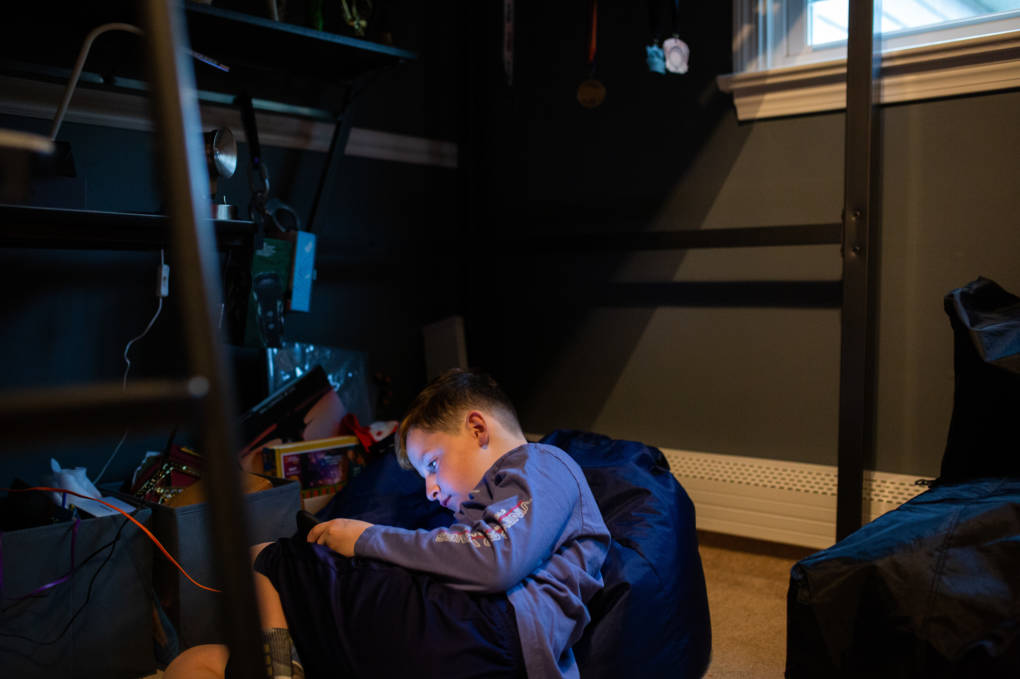
"caption": "Joseph Calise, 9, plays on his iPad in his bedroom. Joseph used to get anxious whenever he was alone, even when taking a shower or at bedtime, so his parents, Jessica and Chris Calise, learned new parenting skills from the Yale Child Study Center.\n",
"description": "Joseph Calise, 9, plays on his iPad in his bedroom. Joseph used to get anxious whenever he was alone, even when taking a shower or at bedtime, so his parents, Jessica and Chris Calise, learned new parenting skills from the Yale Child Study Center.",
"title": "Joseph Calise, 9, plays on his iPad in his bedroom. Joseph used to get anxious whenever he was alone, even when taking a shower or at bedtime, so his parents, Jessica and Chris Calise, learned new parenting skills from the Yale Child Study Center.",
"credit": "Christopher Capozziello for NPR",
"status": "inherit",
"isLoading": false,
"fetchFailed": false
},
"mindshift_52997": {
"type": "attachments",
"id": "mindshift_52997",
"meta": {
"index": "attachments_1716263798",
"site": "mindshift",
"id": "52997",
"found": true
},
"parent": 52994,
"imgSizes": {
"twentyfourteen-full-width": {
"file": "https://ww2.kqed.org/app/uploads/sites/23/2019/02/iStock-941758360-1038x576.jpg",
"width": 1038,
"mimeType": "image/jpeg",
"height": 576
},
"thumbnail": {
"file": "https://ww2.kqed.org/app/uploads/sites/23/2019/02/iStock-941758360-160x106.jpg",
"width": 160,
"mimeType": "image/jpeg",
"height": 106
},
"post-thumbnail": {
"file": "https://ww2.kqed.org/app/uploads/sites/23/2019/02/iStock-941758360-672x372.jpg",
"width": 672,
"mimeType": "image/jpeg",
"height": 372
},
"kqedFullSize": {
"file": "https://ww2.kqed.org/app/uploads/sites/23/2019/02/iStock-941758360-e1549658835521.jpg",
"width": 1920,
"height": 1278
},
"large": {
"file": "https://ww2.kqed.org/app/uploads/sites/23/2019/02/iStock-941758360-1020x679.jpg",
"width": 1020,
"mimeType": "image/jpeg",
"height": 679
},
"complete_open_graph": {
"file": "https://ww2.kqed.org/app/uploads/sites/23/2019/02/iStock-941758360-1200x799.jpg",
"width": 1200,
"mimeType": "image/jpeg",
"height": 799
},
"guest-author-50": {
"file": "https://ww2.kqed.org/app/uploads/sites/23/2019/02/iStock-941758360-50x50.jpg",
"width": 50,
"mimeType": "image/jpeg",
"height": 50
},
"guest-author-96": {
"file": "https://ww2.kqed.org/app/uploads/sites/23/2019/02/iStock-941758360-96x96.jpg",
"width": 96,
"mimeType": "image/jpeg",
"height": 96
},
"medium": {
"file": "https://ww2.kqed.org/app/uploads/sites/23/2019/02/iStock-941758360-800x532.jpg",
"width": 800,
"mimeType": "image/jpeg",
"height": 532
},
"guest-author-64": {
"file": "https://ww2.kqed.org/app/uploads/sites/23/2019/02/iStock-941758360-64x64.jpg",
"width": 64,
"mimeType": "image/jpeg",
"height": 64
},
"guest-author-32": {
"file": "https://ww2.kqed.org/app/uploads/sites/23/2019/02/iStock-941758360-32x32.jpg",
"width": 32,
"mimeType": "image/jpeg",
"height": 32
},
"full-width": {
"file": "https://ww2.kqed.org/app/uploads/sites/23/2019/02/iStock-941758360-1920x1278.jpg",
"width": 1920,
"mimeType": "image/jpeg",
"height": 1278
},
"detail": {
"file": "https://ww2.kqed.org/app/uploads/sites/23/2019/02/iStock-941758360-150x150.jpg",
"width": 150,
"mimeType": "image/jpeg",
"height": 150
},
"medium_large": {
"file": "https://ww2.kqed.org/app/uploads/sites/23/2019/02/iStock-941758360-768x511.jpg",
"width": 768,
"mimeType": "image/jpeg",
"height": 511
},
"guest-author-128": {
"file": "https://ww2.kqed.org/app/uploads/sites/23/2019/02/iStock-941758360-128x128.jpg",
"width": 128,
"mimeType": "image/jpeg",
"height": 128
}
},
"publishDate": 1549658821,
"modified": 1549658850,
"caption": null,
"description": null,
"title": "iStock-941758360",
"credit": "iStock/AndreaObzerova",
"status": "inherit",
"isLoading": false,
"fetchFailed": false
},
"mindshift_52988": {
"type": "attachments",
"id": "mindshift_52988",
"meta": {
"index": "attachments_1716263798",
"site": "mindshift",
"id": "52988",
"found": true
},
"parent": 52987,
"imgSizes": {
"twentyfourteen-full-width": {
"file": "https://ww2.kqed.org/app/uploads/sites/23/2019/02/anger_3_final2_wide-eb9cd2dd357c04758f28980b7ff7fc4b0e17f79e-1038x576.jpe",
"width": 1038,
"mimeType": "image/jpeg",
"height": 576
},
"thumbnail": {
"file": "https://ww2.kqed.org/app/uploads/sites/23/2019/02/anger_3_final2_wide-eb9cd2dd357c04758f28980b7ff7fc4b0e17f79e-160x90.jpe",
"width": 160,
"mimeType": "image/jpeg",
"height": 90
},
"post-thumbnail": {
"file": "https://ww2.kqed.org/app/uploads/sites/23/2019/02/anger_3_final2_wide-eb9cd2dd357c04758f28980b7ff7fc4b0e17f79e-672x372.jpe",
"width": 672,
"mimeType": "image/jpeg",
"height": 372
},
"kqedFullSize": {
"file": "https://ww2.kqed.org/app/uploads/sites/23/2019/02/anger_3_final2_wide-eb9cd2dd357c04758f28980b7ff7fc4b0e17f79e-e1549437151126.jpe",
"width": 1920,
"height": 1080
},
"large": {
"file": "https://ww2.kqed.org/app/uploads/sites/23/2019/02/anger_3_final2_wide-eb9cd2dd357c04758f28980b7ff7fc4b0e17f79e-1020x574.jpe",
"width": 1020,
"mimeType": "image/jpeg",
"height": 574
},
"complete_open_graph": {
"file": "https://ww2.kqed.org/app/uploads/sites/23/2019/02/anger_3_final2_wide-eb9cd2dd357c04758f28980b7ff7fc4b0e17f79e-1200x675.jpe",
"width": 1200,
"mimeType": "image/jpeg",
"height": 675
},
"guest-author-50": {
"file": "https://ww2.kqed.org/app/uploads/sites/23/2019/02/anger_3_final2_wide-eb9cd2dd357c04758f28980b7ff7fc4b0e17f79e-50x50.jpe",
"width": 50,
"mimeType": "image/jpeg",
"height": 50
},
"guest-author-96": {
"file": "https://ww2.kqed.org/app/uploads/sites/23/2019/02/anger_3_final2_wide-eb9cd2dd357c04758f28980b7ff7fc4b0e17f79e-96x96.jpe",
"width": 96,
"mimeType": "image/jpeg",
"height": 96
},
"medium": {
"file": "https://ww2.kqed.org/app/uploads/sites/23/2019/02/anger_3_final2_wide-eb9cd2dd357c04758f28980b7ff7fc4b0e17f79e-800x450.jpe",
"width": 800,
"mimeType": "image/jpeg",
"height": 450
},
"guest-author-64": {
"file": "https://ww2.kqed.org/app/uploads/sites/23/2019/02/anger_3_final2_wide-eb9cd2dd357c04758f28980b7ff7fc4b0e17f79e-64x64.jpe",
"width": 64,
"mimeType": "image/jpeg",
"height": 64
},
"guest-author-32": {
"file": "https://ww2.kqed.org/app/uploads/sites/23/2019/02/anger_3_final2_wide-eb9cd2dd357c04758f28980b7ff7fc4b0e17f79e-32x32.jpe",
"width": 32,
"mimeType": "image/jpeg",
"height": 32
},
"full-width": {
"file": "https://ww2.kqed.org/app/uploads/sites/23/2019/02/anger_3_final2_wide-eb9cd2dd357c04758f28980b7ff7fc4b0e17f79e-1920x1080.jpe",
"width": 1920,
"mimeType": "image/jpeg",
"height": 1080
},
"detail": {
"file": "https://ww2.kqed.org/app/uploads/sites/23/2019/02/anger_3_final2_wide-eb9cd2dd357c04758f28980b7ff7fc4b0e17f79e-150x150.jpe",
"width": 150,
"mimeType": "image/jpeg",
"height": 150
},
"medium_large": {
"file": "https://ww2.kqed.org/app/uploads/sites/23/2019/02/anger_3_final2_wide-eb9cd2dd357c04758f28980b7ff7fc4b0e17f79e-768x432.jpe",
"width": 768,
"mimeType": "image/jpeg",
"height": 432
},
"guest-author-128": {
"file": "https://ww2.kqed.org/app/uploads/sites/23/2019/02/anger_3_final2_wide-eb9cd2dd357c04758f28980b7ff7fc4b0e17f79e-128x128.jpe",
"width": 128,
"mimeType": "image/jpeg",
"height": 128
}
},
"publishDate": 1549437120,
"modified": 1549437175,
"caption": "Physicians have been taught to look for signs of hopelessness, sadness and lack of motivation to help them diagnose depression. But anger as a depression symptom is less noticed or addressed.",
"description": "Physicians have been taught to look for signs of hopelessness, sadness and lack of motivation to help them diagnose depression. But anger as a depression symptom is less noticed or addressed.",
"title": "Physicians have been taught to look for signs of hopelessness, sadness and lack of motivation to help them diagnose depression. But anger as a depression symptom is less noticed or addressed.",
"credit": "NPR/Ariel Davis",
"status": "inherit",
"isLoading": false,
"fetchFailed": false
},
"mindshift_52915": {
"type": "attachments",
"id": "mindshift_52915",
"meta": {
"index": "attachments_1716263798",
"site": "mindshift",
"id": "52915",
"found": true
},
"parent": 52852,
"imgSizes": {
"small": {
"file": "https://ww2.kqed.org/app/uploads/sites/23/2019/01/iStock-935265512-520x347.jpg",
"width": 520,
"mimeType": "image/jpeg",
"height": 347
},
"twentyfourteen-full-width": {
"file": "https://ww2.kqed.org/app/uploads/sites/23/2019/01/iStock-935265512-1038x576.jpg",
"width": 1038,
"mimeType": "image/jpeg",
"height": 576
},
"thumbnail": {
"file": "https://ww2.kqed.org/app/uploads/sites/23/2019/01/iStock-935265512-160x107.jpg",
"width": 160,
"mimeType": "image/jpeg",
"height": 107
},
"fd-sm": {
"file": "https://ww2.kqed.org/app/uploads/sites/23/2019/01/iStock-935265512-960x640.jpg",
"width": 960,
"mimeType": "image/jpeg",
"height": 640
},
"post-thumbnail": {
"file": "https://ww2.kqed.org/app/uploads/sites/23/2019/01/iStock-935265512-672x372.jpg",
"width": 672,
"mimeType": "image/jpeg",
"height": 372
},
"xsmall": {
"file": "https://ww2.kqed.org/app/uploads/sites/23/2019/01/iStock-935265512-375x250.jpg",
"width": 375,
"mimeType": "image/jpeg",
"height": 250
},
"kqedFullSize": {
"file": "https://ww2.kqed.org/app/uploads/sites/23/2019/01/iStock-935265512-e1548142476616.jpg",
"width": 1920,
"height": 1280
},
"large": {
"file": "https://ww2.kqed.org/app/uploads/sites/23/2019/01/iStock-935265512-1020x680.jpg",
"width": 1020,
"mimeType": "image/jpeg",
"height": 680
},
"xlarge": {
"file": "https://ww2.kqed.org/app/uploads/sites/23/2019/01/iStock-935265512-1180x787.jpg",
"width": 1180,
"mimeType": "image/jpeg",
"height": 787
},
"complete_open_graph": {
"file": "https://ww2.kqed.org/app/uploads/sites/23/2019/01/iStock-935265512-1200x800.jpg",
"width": 1200,
"mimeType": "image/jpeg",
"height": 800
},
"guest-author-50": {
"file": "https://ww2.kqed.org/app/uploads/sites/23/2019/01/iStock-935265512-50x50.jpg",
"width": 50,
"mimeType": "image/jpeg",
"height": 50
},
"guest-author-96": {
"file": "https://ww2.kqed.org/app/uploads/sites/23/2019/01/iStock-935265512-96x96.jpg",
"width": 96,
"mimeType": "image/jpeg",
"height": 96
},
"medium": {
"file": "https://ww2.kqed.org/app/uploads/sites/23/2019/01/iStock-935265512-800x533.jpg",
"width": 800,
"mimeType": "image/jpeg",
"height": 533
},
"guest-author-64": {
"file": "https://ww2.kqed.org/app/uploads/sites/23/2019/01/iStock-935265512-64x64.jpg",
"width": 64,
"mimeType": "image/jpeg",
"height": 64
},
"guest-author-32": {
"file": "https://ww2.kqed.org/app/uploads/sites/23/2019/01/iStock-935265512-32x32.jpg",
"width": 32,
"mimeType": "image/jpeg",
"height": 32
},
"fd-lrg": {
"file": "https://ww2.kqed.org/app/uploads/sites/23/2019/01/iStock-935265512-1920x1280.jpg",
"width": 1920,
"mimeType": "image/jpeg",
"height": 1280
},
"fd-med": {
"file": "https://ww2.kqed.org/app/uploads/sites/23/2019/01/iStock-935265512-1180x787.jpg",
"width": 1180,
"mimeType": "image/jpeg",
"height": 787
},
"full-width": {
"file": "https://ww2.kqed.org/app/uploads/sites/23/2019/01/iStock-935265512-1920x1280.jpg",
"width": 1920,
"mimeType": "image/jpeg",
"height": 1280
},
"detail": {
"file": "https://ww2.kqed.org/app/uploads/sites/23/2019/01/iStock-935265512-150x150.jpg",
"width": 150,
"mimeType": "image/jpeg",
"height": 150
},
"medium_large": {
"file": "https://ww2.kqed.org/app/uploads/sites/23/2019/01/iStock-935265512-768x512.jpg",
"width": 768,
"mimeType": "image/jpeg",
"height": 512
},
"guest-author-128": {
"file": "https://ww2.kqed.org/app/uploads/sites/23/2019/01/iStock-935265512-128x128.jpg",
"width": 128,
"mimeType": "image/jpeg",
"height": 128
},
"xxsmall": {
"file": "https://ww2.kqed.org/app/uploads/sites/23/2019/01/iStock-935265512-240x160.jpg",
"width": 240,
"mimeType": "image/jpeg",
"height": 160
}
},
"publishDate": 1548142432,
"modified": 1548142481,
"caption": null,
"description": null,
"title": "Boy writing in notebook",
"credit": "iStock/Zolga_F",
"status": "inherit",
"isLoading": false,
"fetchFailed": false
},
"mindshift_52159": {
"type": "attachments",
"id": "mindshift_52159",
"meta": {
"index": "attachments_1716263798",
"site": "mindshift",
"id": "52159",
"found": true
},
"parent": 52158,
"imgSizes": {
"small": {
"file": "https://ww2.kqed.org/app/uploads/sites/23/2018/09/memory-making-520x285.png",
"width": 520,
"mimeType": "image/png",
"height": 285
},
"thumbnail": {
"file": "https://ww2.kqed.org/app/uploads/sites/23/2018/09/memory-making-160x88.png",
"width": 160,
"mimeType": "image/png",
"height": 88
},
"post-thumbnail": {
"file": "https://ww2.kqed.org/app/uploads/sites/23/2018/09/memory-making-672x372.png",
"width": 672,
"mimeType": "image/png",
"height": 372
},
"xsmall": {
"file": "https://ww2.kqed.org/app/uploads/sites/23/2018/09/memory-making-375x206.png",
"width": 375,
"mimeType": "image/png",
"height": 206
},
"kqedFullSize": {
"file": "https://ww2.kqed.org/app/uploads/sites/23/2018/09/memory-making.png",
"width": 892,
"height": 489
},
"guest-author-50": {
"file": "https://ww2.kqed.org/app/uploads/sites/23/2018/09/memory-making-50x50.png",
"width": 50,
"mimeType": "image/png",
"height": 50
},
"guest-author-96": {
"file": "https://ww2.kqed.org/app/uploads/sites/23/2018/09/memory-making-96x96.png",
"width": 96,
"mimeType": "image/png",
"height": 96
},
"medium": {
"file": "https://ww2.kqed.org/app/uploads/sites/23/2018/09/memory-making-800x439.png",
"width": 800,
"mimeType": "image/png",
"height": 439
},
"guest-author-64": {
"file": "https://ww2.kqed.org/app/uploads/sites/23/2018/09/memory-making-64x64.png",
"width": 64,
"mimeType": "image/png",
"height": 64
},
"guest-author-32": {
"file": "https://ww2.kqed.org/app/uploads/sites/23/2018/09/memory-making-32x32.png",
"width": 32,
"mimeType": "image/png",
"height": 32
},
"detail": {
"file": "https://ww2.kqed.org/app/uploads/sites/23/2018/09/memory-making-150x150.png",
"width": 150,
"mimeType": "image/png",
"height": 150
},
"medium_large": {
"file": "https://ww2.kqed.org/app/uploads/sites/23/2018/09/memory-making-768x421.png",
"width": 768,
"mimeType": "image/png",
"height": 421
},
"guest-author-128": {
"file": "https://ww2.kqed.org/app/uploads/sites/23/2018/09/memory-making-128x128.png",
"width": 128,
"mimeType": "image/png",
"height": 128
},
"xxsmall": {
"file": "https://ww2.kqed.org/app/uploads/sites/23/2018/09/memory-making-240x132.png",
"width": 240,
"mimeType": "image/png",
"height": 132
}
},
"publishDate": 1536709311,
"modified": 1536709449,
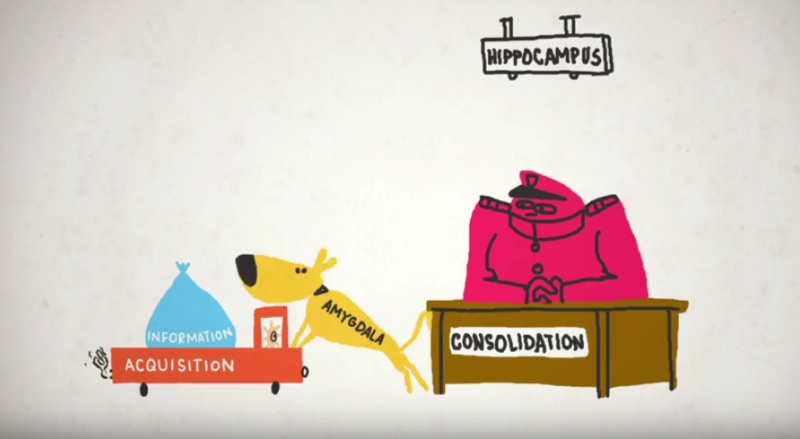
"caption": "Remembering a piece of information relies on three steps: acquisition of information, encoding it, and then retrieving it, which all require different parts of the brain.",
"description": null,
"title": "memory making",
"credit": "Artrake Studio/\u003ca href=\"https://www.ted.com/talks/elizabeth_cox_the_surprising_link_between_stress_and_memory?language=en\">TED-ED\u003c/a>",
"status": "inherit",
"isLoading": false,
"fetchFailed": false
}
},
"audioPlayerReducer": {
"postId": "stream_live",
"isPaused": true,
"isPlaying": false,
"pfsActive": false,
"pledgeModalIsOpen": true,
"playerDrawerIsOpen": false,
"liveAudioPlayStartedAt": 0,
"liveAudioPlayContext": ""
},
"authorsReducer": {
"byline_mindshift_53999": {
"type": "authors",
"id": "byline_mindshift_53999",
"meta": {
"override": true
},
"slug": "byline_mindshift_53999",
"name": "Dani Matias",
"isLoading": false
},
"byline_mindshift_53780": {
"type": "authors",
"id": "byline_mindshift_53780",
"meta": {
"override": true
},
"slug": "byline_mindshift_53780",
"name": "\u003ca href=\"https://chalkbeat.org/author/ann-schimke/\">Ann Schimke, Chalkbeat\u003c/a>",
"isLoading": false
},
"byline_mindshift_53762": {
"type": "authors",
"id": "byline_mindshift_53762",
"meta": {
"override": true
},
"slug": "byline_mindshift_53762",
"name": "Terry Gross",
"isLoading": false
},
"byline_mindshift_53468": {
"type": "authors",
"id": "byline_mindshift_53468",
"meta": {
"override": true
},
"slug": "byline_mindshift_53468",
"name": "Angus Chen",
"isLoading": false
},
"byline_mindshift_52987": {
"type": "authors",
"id": "byline_mindshift_52987",
"meta": {
"override": true
},
"slug": "byline_mindshift_52987",
"name": "Nell Greenfieldboyce",
"isLoading": false
},
"katrinaschwartz": {
"type": "authors",
"id": "234",
"meta": {
"index": "authors_1716337520",
"id": "234",
"found": true
},
"name": "Katrina Schwartz",
"firstName": "Katrina",
"lastName": "Schwartz",
"slug": "katrinaschwartz",
"email": "kschwartz@kqed.org",
"display_author_email": false,
"staff_mastheads": [
"news"
],
"title": "Producer",
"bio": "Katrina Schwartz is a journalist based in San Francisco. She's worked at KPCC public radio in LA and has reported on air and online for KQED since 2010. She covered how teaching and learning is changing for MindShift between 2012 and 2020. She is the co-host of the MindShift podcast and now produces KQED's Bay Curious podcast.",
"avatar": "https://secure.gravatar.com/avatar/edb4ee79070447a018538c9aae6eeecf28786515b8a0c30e43b6b7dce5aa44c8?s=600&d=blank&r=g",
"twitter": "kschwart",
"bluesky": null,
"facebook": null,
"instagram": null,
"linkedin": null,
"sites": [
{
"site": "",
"roles": [
"editor"
]
},
{
"site": "news",
"roles": [
"editor"
]
},
{
"site": "mindshift",
"roles": [
"administrator"
]
},
{
"site": "stateofhealth",
"roles": [
"author"
]
},
{
"site": "science",
"roles": [
"editor"
]
}
],
"headData": {
"title": "Katrina Schwartz | KQED",
"description": "Producer",
"ogImgSrc": "https://secure.gravatar.com/avatar/edb4ee79070447a018538c9aae6eeecf28786515b8a0c30e43b6b7dce5aa44c8?s=600&d=blank&r=g",
"twImgSrc": "https://secure.gravatar.com/avatar/edb4ee79070447a018538c9aae6eeecf28786515b8a0c30e43b6b7dce5aa44c8?s=600&d=blank&r=g"
},
"isLoading": false,
"link": "/author/katrinaschwartz"
},
"ksung": {
"type": "authors",
"id": "4596",
"meta": {
"index": "authors_1716337520",
"id": "4596",
"found": true
},
"name": "Ki Sung",
"firstName": "Ki",
"lastName": "Sung",
"slug": "ksung",
"email": "ksung@kqed.org",
"display_author_email": false,
"staff_mastheads": [
"news"
],
"title": "KQED Contributor",
"bio": "Ki Sung is Managing Editor of Digital News at KQED. She is former Senior Editor of MindShift and worked at NPR before joining KQED in 2014.",
"avatar": "https://secure.gravatar.com/avatar/64271e01dc95486c133be56937739045b7c00c990525bf9add12d3dd4f0433c9?s=600&d=blank&r=g",
"twitter": null,
"bluesky": null,
"facebook": null,
"instagram": null,
"linkedin": null,
"sites": [
{
"site": "arts",
"roles": [
"administrator"
]
},
{
"site": "news",
"roles": [
"administrator"
]
},
{
"site": "mindshift",
"roles": [
"administrator"
]
},
{
"site": "science",
"roles": [
"administrator"
]
},
{
"site": "forum",
"roles": [
"administrator"
]
},
{
"site": "perspectives",
"roles": [
"administrator"
]
},
{
"site": "elections",
"roles": [
"administrator"
]
}
],
"headData": {
"title": "Ki Sung | KQED",
"description": "KQED Contributor",
"ogImgSrc": "https://secure.gravatar.com/avatar/64271e01dc95486c133be56937739045b7c00c990525bf9add12d3dd4f0433c9?s=600&d=blank&r=g",
"twImgSrc": "https://secure.gravatar.com/avatar/64271e01dc95486c133be56937739045b7c00c990525bf9add12d3dd4f0433c9?s=600&d=blank&r=g"
},
"isLoading": false,
"link": "/author/ksung"
},
"dfkris": {
"type": "authors",
"id": "11087",
"meta": {
"index": "authors_1716337520",
"id": "11087",
"found": true
},
"name": "Deborah Farmer Kris",
"firstName": "Deborah Farmer",
"lastName": "Kris",
"slug": "dfkris",
"email": "dfkris@gmail.com",
"display_author_email": false,
"staff_mastheads": [],
"title": null,
"bio": "\u003cem>\u003ca href=\"https://twitter.com/@dfkris\">Deborah Farmer Kris\u003c/a> has taught elementary, middle and high school and served as a charter school administrator. She spent a decade as an associate at Boston University’s \u003c/em>\u003cem>\u003ca href=\"http://www.bu.edu/ccsr/about-us/\">Center for Character and Social Responsibility\u003c/a>, \u003c/em>\u003cem>researching, writing, and consulting with schools. She is the mother of two young children. You can follower her on Twitter \u003ca href=\"https://twitter.com/@dfkris\">@dfkris\u003c/a>.\u003c/em>",
"avatar": "https://secure.gravatar.com/avatar/48efe6f17031ed31222b74af9605fe5a?s=600&d=blank&r=g",
"twitter": "dfkris",
"facebook": null,
"instagram": null,
"linkedin": null,
"sites": [
{
"site": "mindshift",
"roles": [
"author"
]
}
],
"headData": {
"title": "Deborah Farmer Kris | KQED",
"description": null,
"ogImgSrc": "https://secure.gravatar.com/avatar/48efe6f17031ed31222b74af9605fe5a?s=600&d=blank&r=g",
"twImgSrc": "https://secure.gravatar.com/avatar/48efe6f17031ed31222b74af9605fe5a?s=600&d=blank&r=g"
},
"isLoading": false,
"link": "/author/dfkris"
}
},
"pagesReducer": {
"mindshift_tag_anxiety": {
"type": "terms",
"id": "mindshift_20589",
"meta": {
"index": "terms_1716263798",
"site": "mindshift",
"id": "20589",
"score": 8.670227
},
"featImg": null,
"name": "anxiety",
"description": null,
"taxonomy": "tag",
"headData": {
"twImgId": null,
"twTitle": null,
"ogTitle": null,
"ogImgId": null,
"twDescription": null,
"description": null,
"title": "anxiety Archives | KQED Mindshift",
"ogDescription": null
},
"ttid": 19866,
"slug": "anxiety",
"isLoading": false,
"title": "anxiety",
"pageMeta": {
"site": "mindshift",
"WpPageTemplate": "page-topic-editorial",
"currentPage": 5
},
"blocks": [
{
"blockName": "kqed/post-list",
"attrs": {
"layout": "cardArticle2",
"query": "posts/mindshift?tag=anxiety",
"seeMore": false,
"paginated": true,
"page": 5
}
},
{
"blockName": "kqed/ad"
}
]
}
},
"pfsSessionReducer": {},
"postsReducer": {
"stream_live": {
"type": "live",
"id": "stream_live",
"audioUrl": "https://streams.kqed.org/kqedradio",
"title": "Live Stream",
"excerpt": "Live Stream information currently unavailable.",
"link": "/radio",
"featImg": "",
"label": {
"name": "KQED Live",
"link": "/"
}
},
"stream_kqedNewscast": {
"type": "posts",
"id": "stream_kqedNewscast",
"audioUrl": "https://www.kqed.org/.stream/anon/radio/RDnews/newscast.mp3?_=1",
"title": "KQED Newscast",
"featImg": "",
"label": {
"name": "88.5 FM",
"link": "/"
}
},
"mindshift_54326": {
"type": "posts",
"id": "mindshift_54326",
"meta": {
"index": "posts_1716263798",
"site": "mindshift",
"id": "54326",
"score": null,
"sort": [
1567499132000
]
},
"guestAuthors": [],
"slug": "childhood-as-resume-building-why-play-needs-a-comeback",
"title": "Childhood As ‘Resume Building’: Why Play Needs A Comeback",
"publishDate": 1567499132,
"format": "audio",
"headTitle": "Childhood As ‘Resume Building’: Why Play Needs A Comeback | KQED",
"labelTerm": {
"term": 21942,
"site": "mindshift"
},
"content": "\u003ch4>Listen and subscribe to our podcast from your mobile device:\u003cbr>\n\u003ca href=\"https://podcasts.apple.com/us/podcast/childhood-as-resume-building-why-play-needs-a-comeback/id1078765985?i=1000448438239\">via Apple Podcasts \u003c/a> | \u003ca href=\"https://www.stitcher.com/s?eid=63638822&autoplay=1\">via Stitcher\u003c/a> | \u003ca href=\"https://one.npr.org/i/756991954:756991956\">via NPROne\u003c/a> | \u003ca href=\"https://open.spotify.com/episode/2ggG8WekzKlvcxrqbI4MlR\"> via Spotify\u003c/a> | \u003ca href=\"https://www.kqed.org/mindshift/transcript-childhood-as-resume-building-why-play-needs-a-comeback\">Transcript\u003c/a>\u003c/h4>\n\u003cp> \u003c/p>\n\u003cp>\u003cspan style=\"font-weight: 400\">“Why is it that we don’t go outside as much as my parents did as children?”\u003c/span> \u003cspan style=\"font-weight: 400\">This sixth-grader’s question caught teacher Kath Irving off-guard. Inherent in the query is a recognition that times are different now and children notice it. \u003c/span>\u003c/p>\n\u003cp>\u003cspan style=\"font-weight: 400\">Boston College psychology professor \u003ca href=\"https://www.kqed.org/mindshift/32254/harnessing-childrens-natural-ways-of-learning\">Peter Gray\u003c/a> marks the 1950s as the heyday of play in the United States. Back then, children played in the streets with other neighborhood kids, learning how to navigate the world by interacting with one another. This kind of play was unstructured and unsupervised by adults. Kids independently generated the activities and the rules. If someone broke the rules, kids determined the consequences. And without knowing it, they developed resilience, self-determination and problem-solving. Researchers have since connected skills gained in unsupervised play to positive mental health, social and emotional skills, agency, intrinsic motivation and creativity. \u003c/span>\u003c/p>\n\u003cp>\u003cspan style=\"font-weight: 400\">But this kind of free play may be a relic of the past. A confluence of family dynamics, economic and academic anxiety, fear of strangers, and vehicular traffic have put play at risk. \u003c/span>\u003cspan style=\"font-weight: 400\">University of Michigan researchers surveyed how families spent their time in 1981 and again in 1997. They observed a \u003ca href=\"https://www.nytimes.com/1998/11/11/us/children-study-longer-and-play-less-a-report-says.html\">drop\u003c/a> in the amount of free time kids have for play from 40 percent of a child’s day to 25 percent. By 2003, that amount of time dropped by another \u003ca href=\"https://www.ncbi.nlm.nih.gov/pmc/articles/PMC2939468/\">4 percent\u003c/a>. At the same time, the amount of time kids spend on \u003ca href=\"https://www.ncbi.nlm.nih.gov/pmc/articles/PMC2939468/\">academics\u003c/a> has increased. This period is also marked by rising competition for college admissions, and the decline of middle-class opportunities in the United States.\u003c/span>\u003c/p>\n\u003cp>\u003cspan style=\"font-weight: 400\">“So childhood is turned from a time of freedom to a time of \u003c/span>\u003cspan style=\"font-weight: 400\">resume-\u003c/span>\u003cspan style=\"font-weight: 400\">building,” said Gray in his popular TEDx Talk. \u003c/span>\u003c/p>\n\u003cp>[ad fullwidth]\u003c/p>\n\u003cp>https://www.youtube.com/watch?v=Bg-GEzM7iTk\u003c/p>\n\u003cp>\u003cspan style=\"font-weight: 400\">Still, children need to play. \u003c/span>\u003cspan style=\"font-weight: 400\">Peter Gray connects the \u003ca href=\"https://www.kqed.org/mindshift/36366/can-free-play-prevent-depression-and-anxiety-in-kids\">decline of free play to the rise in mental health issues\u003c/a>. And \u003c/span>\u003cspan style=\"font-weight: 400\">the \u003c/span>\u003ca href=\"https://pediatrics.aappublications.org/content/142/3/e20182058\">\u003cspan style=\"font-weight: 400\">American Academy of Pediatrics\u003c/span>\u003c/a>\u003cspan style=\"font-weight: 400\"> has gone so far as to recommended that pediatricians “a\u003c/span>\u003cspan style=\"font-weight: 400\">dvocate for the protection of children’s unstructured playtime because of its numerous benefits, including the development of foundational motor skills that may have lifelong benefits for the prevention of obesity, hypertension, and type 2 diabetes.” \u003c/span>\u003c/p>\n\u003cp>\u003cspan style=\"font-weight: 400\">Gray’s message resonates with Scott Bedley, 2014 Orange County Teacher of the Year, who teaches fourth grade. \u003c/span>\u003c/p>\n\u003cp>\u003cspan style=\"font-weight: 400\">“We’re just seeing an out-of-balance life for kids,” he said of students he sees who are pressured to succeed academically. “There is a learning value behind play if you just allow it to happen.”\u003c/span>\u003c/p>\n\u003cp>\u003cspan style=\"font-weight: 400\">Bedley has seen the consequences of stressed-out kids who aren’t getting enough free time, and he’s not alone. Those experiences prompted him and several teachers in his professional network to start \u003ca href=\"http://globalschoolplayday.com\">Global School Play Day\u003c/a> in 2015. They figured if kids didn’t have enough time to play after school, they’d elevate its importance by devoting an entire school day to it. They hoped it would jump-start a broader conversation among parents and teachers about what kids are missing when there’s too much focus on achievement.\u003c/span>\u003c/p>\n\u003cp>[gallery type=\"square\" size=\"large\" ids=\"54315,54318,54317,54316,54314\"]\u003c/p>\n\u003cp>\u003cspan style=\"font-weight: 400\">Global School Play Day is about kids directing their own experience, so students can choose to use the time to play outside, play board games, draw, paint, do puzzles or just goof off. Some are so unused to playing they don’t even know how to start. But the Global School Play Day movement is growing. In 2019, organizers estimate \u003c/span>\u003ca href=\"https://www.globalschoolplayday.com/\">\u003cspan style=\"font-weight: 400\">535,690 students\u003c/span>\u003c/a>\u003cspan style=\"font-weight: 400\"> participated.\u003c/span>\u003c/p>\n\u003cp>\u003cspan style=\"font-weight: 400\">Listen to this episode of the MindShift Podcast to learn how students experience this unusual day of play at school. You’ll hear from students who are getting reacquainted with the idea of unstructured play. You’ll also hear from educators like Eric Saibel and Nathan Beach as they host Global School Play Day at Hall Middle School. They hope exposing kids and parents to play at school will start a conversation about how they use their time at home, while helping kids to have a better-balanced life.\u003c/span>\u003c/p>\n\u003ch4>Listen and subscribe to our podcast from your mobile device:\u003cbr>\n\u003ca href=\"https://podcasts.apple.com/us/podcast/childhood-as-resume-building-why-play-needs-a-comeback/id1078765985?i=1000448438239\">via Apple Podcasts \u003c/a> | \u003ca href=\"https://www.stitcher.com/s?eid=63638822&autoplay=1\">via Stitcher\u003c/a> | \u003ca href=\"https://one.npr.org/i/756991954:756991956\">via NPROne\u003c/a> | \u003ca href=\"https://open.spotify.com/episode/2ggG8WekzKlvcxrqbI4MlR\"> via Spotify\u003c/a>\u003c/h4>\n\u003cp>\u003c/p>\n\u003cp> \u003c/p>\n\n",
"blocks": [],
"excerpt": "The kind of free play grown-ups had in previous generations is looked at with nostalgia in today’s era of adult-supervised activities. Children are missing out on the benefits of unstructured play, but a group of dedicated educators are trying to give kids back their play time through the Global School Play Day movement. ",
"status": "publish",
"parent": 0,
"modified": 1726872615,
"stats": {
"hasAudio": false,
"hasVideo": true,
"hasChartOrMap": false,
"iframeSrcs": [],
"hasGoogleForm": false,
"hasGallery": true,
"hasHearkenModule": false,
"hasPolis": false,
"paragraphCount": 13,
"wordCount": 753
},
"headData": {
"title": "Childhood As ‘Resume Building’: Why Play Needs A Comeback | KQED",
"description": "The kind of free play grown-ups had in previous generations is looked at with nostalgia in today’s era of adult-supervised activities. Children are missing out on the benefits of unstructured play, but a group of dedicated educators are trying to give kids back their play time through the Global School Play Day movement. ",
"ogTitle": "",
"ogDescription": "",
"ogImgId": "",
"twTitle": "",
"twDescription": "",
"twImgId": "",
"schema": {
"@context": "https://schema.org",
"@type": "Article",
"headline": "Childhood As ‘Resume Building’: Why Play Needs A Comeback",
"datePublished": "2019-09-03T01:25:32-07:00",
"dateModified": "2024-09-20T15:50:15-07:00",
"image": "https://cdn.kqed.org/wp-content/uploads/2020/02/KQED-OG-Image@1x.png"
}
},
"sticky": false,
"audioTrackLength": 1331,
"excludeFromSiteSearch": "Include",
"articleAge": "0",
"path": "/mindshift/54326/childhood-as-resume-building-why-play-needs-a-comeback",
"parsedContent": [
{
"type": "contentString",
"content": "\u003cdiv class=\"post-body\">\u003cp>\u003ch4>Listen and subscribe to our podcast from your mobile device:\u003cbr>\n\u003ca href=\"https://podcasts.apple.com/us/podcast/childhood-as-resume-building-why-play-needs-a-comeback/id1078765985?i=1000448438239\">via Apple Podcasts \u003c/a> | \u003ca href=\"https://www.stitcher.com/s?eid=63638822&autoplay=1\">via Stitcher\u003c/a> | \u003ca href=\"https://one.npr.org/i/756991954:756991956\">via NPROne\u003c/a> | \u003ca href=\"https://open.spotify.com/episode/2ggG8WekzKlvcxrqbI4MlR\"> via Spotify\u003c/a> | \u003ca href=\"https://www.kqed.org/mindshift/transcript-childhood-as-resume-building-why-play-needs-a-comeback\">Transcript\u003c/a>\u003c/h4>\n\u003cp> \u003c/p>\n\u003cp>\u003cspan style=\"font-weight: 400\">“Why is it that we don’t go outside as much as my parents did as children?”\u003c/span> \u003cspan style=\"font-weight: 400\">This sixth-grader’s question caught teacher Kath Irving off-guard. Inherent in the query is a recognition that times are different now and children notice it. \u003c/span>\u003c/p>\n\u003cp>\u003cspan style=\"font-weight: 400\">Boston College psychology professor \u003ca href=\"https://www.kqed.org/mindshift/32254/harnessing-childrens-natural-ways-of-learning\">Peter Gray\u003c/a> marks the 1950s as the heyday of play in the United States. Back then, children played in the streets with other neighborhood kids, learning how to navigate the world by interacting with one another. This kind of play was unstructured and unsupervised by adults. Kids independently generated the activities and the rules. If someone broke the rules, kids determined the consequences. And without knowing it, they developed resilience, self-determination and problem-solving. Researchers have since connected skills gained in unsupervised play to positive mental health, social and emotional skills, agency, intrinsic motivation and creativity. \u003c/span>\u003c/p>\n\u003cp>\u003cspan style=\"font-weight: 400\">But this kind of free play may be a relic of the past. A confluence of family dynamics, economic and academic anxiety, fear of strangers, and vehicular traffic have put play at risk. \u003c/span>\u003cspan style=\"font-weight: 400\">University of Michigan researchers surveyed how families spent their time in 1981 and again in 1997. They observed a \u003ca href=\"https://www.nytimes.com/1998/11/11/us/children-study-longer-and-play-less-a-report-says.html\">drop\u003c/a> in the amount of free time kids have for play from 40 percent of a child’s day to 25 percent. By 2003, that amount of time dropped by another \u003ca href=\"https://www.ncbi.nlm.nih.gov/pmc/articles/PMC2939468/\">4 percent\u003c/a>. At the same time, the amount of time kids spend on \u003ca href=\"https://www.ncbi.nlm.nih.gov/pmc/articles/PMC2939468/\">academics\u003c/a> has increased. This period is also marked by rising competition for college admissions, and the decline of middle-class opportunities in the United States.\u003c/span>\u003c/p>\n\u003cp>\u003cspan style=\"font-weight: 400\">“So childhood is turned from a time of freedom to a time of \u003c/span>\u003cspan style=\"font-weight: 400\">resume-\u003c/span>\u003cspan style=\"font-weight: 400\">building,” said Gray in his popular TEDx Talk. \u003c/span>\u003c/p>\n\u003cp>\u003c/p>\u003c/div>",
"attributes": {
"named": {},
"numeric": []
}
},
{
"type": "component",
"content": "",
"name": "ad",
"attributes": {
"named": {
"label": "fullwidth"
},
"numeric": [
"fullwidth"
]
}
},
{
"type": "contentString",
"content": "\u003cdiv class=\"post-body\">\u003cp>\u003c/p>\u003c/p>\u003cp>\u003cspan class='utils-parseShortcode-shortcodes-__youtubeShortcode__embedYoutube'>\n \u003cspan class='utils-parseShortcode-shortcodes-__youtubeShortcode__embedYoutubeInside'>\n \u003ciframe\n loading='lazy'\n class='utils-parseShortcode-shortcodes-__youtubeShortcode__youtubePlayer'\n type='text/html'\n src='//www.youtube.com/embed/Bg-GEzM7iTk'\n title='//www.youtube.com/embed/Bg-GEzM7iTk'\n allowfullscreen='true'\n style='border:0;'>\u003c/iframe>\n \u003c/span>\n \u003c/span>\u003c/p>\u003cp>\u003cp>\u003cspan style=\"font-weight: 400\">Still, children need to play. \u003c/span>\u003cspan style=\"font-weight: 400\">Peter Gray connects the \u003ca href=\"https://www.kqed.org/mindshift/36366/can-free-play-prevent-depression-and-anxiety-in-kids\">decline of free play to the rise in mental health issues\u003c/a>. And \u003c/span>\u003cspan style=\"font-weight: 400\">the \u003c/span>\u003ca href=\"https://pediatrics.aappublications.org/content/142/3/e20182058\">\u003cspan style=\"font-weight: 400\">American Academy of Pediatrics\u003c/span>\u003c/a>\u003cspan style=\"font-weight: 400\"> has gone so far as to recommended that pediatricians “a\u003c/span>\u003cspan style=\"font-weight: 400\">dvocate for the protection of children’s unstructured playtime because of its numerous benefits, including the development of foundational motor skills that may have lifelong benefits for the prevention of obesity, hypertension, and type 2 diabetes.” \u003c/span>\u003c/p>\n\u003cp>\u003cspan style=\"font-weight: 400\">Gray’s message resonates with Scott Bedley, 2014 Orange County Teacher of the Year, who teaches fourth grade. \u003c/span>\u003c/p>\n\u003cp>\u003cspan style=\"font-weight: 400\">“We’re just seeing an out-of-balance life for kids,” he said of students he sees who are pressured to succeed academically. “There is a learning value behind play if you just allow it to happen.”\u003c/span>\u003c/p>\n\u003cp>\u003cspan style=\"font-weight: 400\">Bedley has seen the consequences of stressed-out kids who aren’t getting enough free time, and he’s not alone. Those experiences prompted him and several teachers in his professional network to start \u003ca href=\"http://globalschoolplayday.com\">Global School Play Day\u003c/a> in 2015. They figured if kids didn’t have enough time to play after school, they’d elevate its importance by devoting an entire school day to it. They hoped it would jump-start a broader conversation among parents and teachers about what kids are missing when there’s too much focus on achievement.\u003c/span>\u003c/p>\n\u003cp>\u003c/p>\u003c/div>",
"attributes": {
"named": {},
"numeric": []
}
},
{
"type": "component",
"content": "",
"name": "gallery",
"attributes": {
"named": {
"type": "square",
"size": "large",
"ids": "54315,54318,54317,54316,54314",
"label": ""
},
"numeric": []
}
},
{
"type": "contentString",
"content": "\u003cdiv class=\"post-body\">\u003cp>\u003c/p>\n\u003cp>\u003cspan style=\"font-weight: 400\">Global School Play Day is about kids directing their own experience, so students can choose to use the time to play outside, play board games, draw, paint, do puzzles or just goof off. Some are so unused to playing they don’t even know how to start. But the Global School Play Day movement is growing. In 2019, organizers estimate \u003c/span>\u003ca href=\"https://www.globalschoolplayday.com/\">\u003cspan style=\"font-weight: 400\">535,690 students\u003c/span>\u003c/a>\u003cspan style=\"font-weight: 400\"> participated.\u003c/span>\u003c/p>\n\u003cp>\u003cspan style=\"font-weight: 400\">Listen to this episode of the MindShift Podcast to learn how students experience this unusual day of play at school. You’ll hear from students who are getting reacquainted with the idea of unstructured play. You’ll also hear from educators like Eric Saibel and Nathan Beach as they host Global School Play Day at Hall Middle School. They hope exposing kids and parents to play at school will start a conversation about how they use their time at home, while helping kids to have a better-balanced life.\u003c/span>\u003c/p>\n\u003ch4>Listen and subscribe to our podcast from your mobile device:\u003cbr>\n\u003ca href=\"https://podcasts.apple.com/us/podcast/childhood-as-resume-building-why-play-needs-a-comeback/id1078765985?i=1000448438239\">via Apple Podcasts \u003c/a> | \u003ca href=\"https://www.stitcher.com/s?eid=63638822&autoplay=1\">via Stitcher\u003c/a> | \u003ca href=\"https://one.npr.org/i/756991954:756991956\">via NPROne\u003c/a> | \u003ca href=\"https://open.spotify.com/episode/2ggG8WekzKlvcxrqbI4MlR\"> via Spotify\u003c/a>\u003c/h4>\n\u003cp>\u003c/p>\n\u003cp> \u003c/p>\n\n\u003c/div>\u003c/p>",
"attributes": {
"named": {},
"numeric": []
}
}
],
"link": "/mindshift/54326/childhood-as-resume-building-why-play-needs-a-comeback",
"authors": [
"4596"
],
"programs": [
"mindshift_21847",
"mindshift_21942"
],
"categories": [
"mindshift_21130",
"mindshift_21848"
],
"tags": [
"mindshift_20589",
"mindshift_20784",
"mindshift_21214",
"mindshift_1040",
"mindshift_20865",
"mindshift_21132",
"mindshift_20870",
"mindshift_498",
"mindshift_21286"
],
"featImg": "mindshift_54311",
"label": "mindshift_21942"
},
"mindshift_54238": {
"type": "posts",
"id": "mindshift_54238",
"meta": {
"index": "posts_1716263798",
"site": "mindshift",
"id": "54238",
"score": null,
"sort": [
1566886539000
]
},
"parent": 0,
"labelTerm": {
"site": "mindshift"
},
"blocks": [],
"publishDate": 1566886539,
"format": "standard",
"disqusTitle": "Your Strategies For Supporting Anxious Kids At Home And At School",
"title": "Your Strategies For Supporting Anxious Kids At Home And At School",
"headTitle": "MindShift | KQED News",
"content": "\u003cp>Teachers and parents all over the country are noticing an increase in mental health issues, including anxiety, among students. The National Institute of Mental Health \u003ca href=\"https://www.nimh.nih.gov/health/statistics/any-anxiety-disorder.shtml#part_155096\">estimates a third of adolescents\u003c/a> have been or will be seriously affected by anxiety in their lifetimes. And \u003ca href=\"https://www.kqed.org/mindshift/54144/how-can-schools-help-kids-with-anxiety\">anxiety can have serious effects\u003c/a> on academic achievement, class participation, and teens' social lives. It’s also hard on parents who are trying to help their children deal with anxiety.\u003c/p>\n\u003cp>We asked teachers and parents on \u003ca href=\"https://www.facebook.com/MindShift.KQED/photos/a.285520908150502/2324385907597315/?type=3&theater\">Facebook\u003c/a> and \u003ca href=\"https://twitter.com/MindShiftKQED/status/1164136341292113921\">Twitter\u003c/a> to share the strategies they use to effectively deal with anxiety at home and at school. And, as always, there is a lot of wisdom in the MindShift community.\u003c/p>\n\u003cp>\u003cstrong>Julie Latimore\u003c/strong>, a parent, wrote:\u003c/p>\n\u003cp>\u003cem>\"For my kiddo, helping him to know exactly what is going to happen next - giving him space to ease into an environment (i.e. sitting on a chair until he is ready to join the rug) and following through on what I say I'm going to do.\"\u003c/em>\u003c/p>\n\u003cp>\u003cstrong>Jennifer Meyer\u003c/strong> wrote:\u003c/p>\n\u003cp>[ad fullwidth]\u003c/p>\n\u003cp>\u003cem>\"Reminding them of times that they pushed through their anxiety and had a positive experience by naming specific qualities that allowed them to do so. And meeting them where they are at by really listening to how they are feeling. Asking them 'what is the worst that could happen?' and then brainstorm possible responses in order to show them that they have many tools in their belt to deal with things that make them anxious. Follow up and celebrate successes to build confidence. Challenge them to face fears by giving them specific ways to react and practice this through role playing with the child. Make the role play child friendly by turning it silly from time to time. Most of all love them as loudly as you can so it is clear that you are always their safe space.\"\u003c/em>\u003c/p>\n\u003cblockquote class=\"twitter-tweet\">\n\u003cp dir=\"ltr\" lang=\"en\">Prepare ahead of time—lay out clothes and practice gear night before instead of in the morning/study for a few days instead of night before.\u003c/p>\n\u003cp>Discuss the worst case scenario...what are the possible outcomes/how will it affect your plans? Now make a plan for the goal and work it.\u003c/p>\n\u003cp>— tiffany (@willetthelp) \u003ca href=\"https://twitter.com/willetthelp/status/1164155666140938240?ref_src=twsrc%5Etfw\">August 21, 2019\u003c/a>\u003c/p>\u003c/blockquote>\n\u003cp>Another parent, \u003cstrong>Becs D-bar\u003c/strong>, shared a resource that helped her family.\u003c/p>\n\u003cp>\u003cem>\"A really good book is \"\u003ca href=\"https://www.goodreads.com/book/show/17574740-anxious-kids-anxious-parents\">Anxious Kids, Anxious Parents\u003c/a>\" by Lynn Lyons. There is a companion workbook for kids if you want it for them, as well as some online support through YouTube videos. It helps you, as a parent, to reframe anxiety for your child and allow them to take control of their own feelings. It gently urges you to look at the well-intentioned ways that we, as parents, often support and may contribute to our child's anxiety. This book has helped my family out tremendously and I have even used some of the techniques with my students.\"\u003c/em>\u003c/p>\n\u003cblockquote class=\"twitter-tweet\">\n\u003cp dir=\"ltr\" lang=\"en\">Taking deep breaths and finding 5 things you can see, 4 things you can touch, 3 things you can hear, 2 things you can smell, and 1 thing you can taste. Then, talking it out.\u003c/p>\n\u003cp>— Felicia (@mamamessa) \u003ca href=\"https://twitter.com/mamamessa/status/1164140599089467392?ref_src=twsrc%5Etfw\">August 21, 2019\u003c/a>\u003c/p>\u003c/blockquote>\n\u003cp>\u003cstrong>Christine Brady\u003c/strong> reminded the community that in addition to calming strategies and helping kids reframe their thoughts, parents sometimes have the tricky job of pushing kids to face their anxieties.\u003c/p>\n\u003cp>\u003cem>\"Educating them on anxiety so they can recognize it for what it is. Teaching deep breathing and helping them practice it. Helping them reframe their thoughts. Teaching them to pre-plan for things that may come up that cause them anxiety. And sometimes tough love, our son got anxious and wouldn't order his food at a fast food place. We told him when he got hungry enough and decided what he wanted, he could go order. He did it eventually.\"\u003c/em>\u003c/p>\n\u003cp>Teachers also had specific strategies and practices they use with students, some of which overlap with the calming and grounding strategies that parents find helpful.\u003c/p>\n\u003cp>\u003cstrong>Kari Groeneveld\u003c/strong> wrote:\u003c/p>\n\u003cp>\u003cem>\"I love talking about 'Circle of Control' with students who are anxious. Things they can control go on the inside and things out of their control go on the outside. Then, we talking about different strategies to use when the student would get anxious about things out of their control. I had students who would come to me and say choosing 5 things they could control and focusing on those helped a lot. One student's first answer was always that he could control his breathing, another said she would look for 5 different colors in the room because she loved art. All depends on the kid.\"\u003c/em>\u003c/p>\n\u003cblockquote class=\"twitter-tweet\">\n\u003cp dir=\"ltr\" lang=\"en\">Writing positive affirmations on an index card to keep in a central location (I.e. middle school planner, binder, etc). These include:”you’ve got this,” “I am creative, capable and just as good as anyone else to succeed,” and “if I fall, I will get back up again.”\u003c/p>\n\u003cp>— Jenn Pollack (@jenn_pollack) \u003ca href=\"https://twitter.com/jenn_pollack/status/1164299968703868928?ref_src=twsrc%5Etfw\">August 21, 2019\u003c/a>\u003c/p>\u003c/blockquote>\n\u003cp>\u003cstrong>Angela Stephens\u003c/strong> shared this specific strategy, and encouraged teachers to share their own experiences:\u003c/p>\n\u003cp>\u003cem>\"If it is paperwork, I cover 2/3 of the page so that they can only see some. As they work through that part, they can uncover more. I provide a half sheet of colored or plain paper that they can use and doodle on, if needed. I have also offered to sit near by, if they choose for me to. Rarely, I’ve had students go take a walk to the restroom, to get a drink, to take something to the office- just to break up the tension they are feeling. This is as a teacher- I’ve also shared with a few students that I too suffer anxiety and have for a very long time.\"\u003c/em>\u003c/p>\n\u003cblockquote class=\"twitter-tweet\">\n\u003cp dir=\"ltr\" lang=\"en\">Clearly posted schedule, agenda, and expectations, time signals/cues, brain breaks - both physical and mental, and ‘Turn and Talks.’\u003c/p>\n\u003cp>— Sally Ann (@sak_sam7) \u003ca href=\"https://twitter.com/sak_sam7/status/1164159326304505858?ref_src=twsrc%5Etfw\">August 21, 2019\u003c/a>\u003c/p>\u003c/blockquote>\n\u003cp>\u003cstrong>Shivie Cohen\u003c/strong> said:\u003c/p>\n\u003cp>\"As a teacher: picture schedules. Lots or warnings about the next steps in our day. Lots of hugs and hand holding. Making sure a teacher was nearby for any new experience. Lots of taking walks when things are overwhelming.\"\u003c/p>\n\u003ch4>Listen and subscribe to the MindShift podcast on anxiety from your mobile device:\u003cbr>\n\u003ca href=\"https://podcasts.apple.com/us/podcast/mindshift-podcast/id1078765985?mt=2\">via Apple Podcasts \u003c/a> | \u003ca href=\"https://www.stitcher.com/podcast/kqed/stories-teachers-share\">via Stitcher\u003c/a> | \u003ca href=\"https://one.npr.org/?sharedMediaId=752668336:752668338\">via NPROne\u003c/a> | \u003ca href=\"https://open.spotify.com/show/0MxSpNYZKNprFLCl7eEtyx\"> via Spotify\u003c/a>\u003c/h4>\n\u003cp>[ad floatright]\u003c/p>\n\u003cp> \u003c/p>\n\n",
"disqusIdentifier": "54238 https://ww2.kqed.org/mindshift/?p=54238",
"disqusUrl": "https://ww2.kqed.org/mindshift/2019/08/26/your-strategies-for-supporting-anxious-kids-at-home-and-at-school/",
"stats": {
"hasVideo": false,
"hasChartOrMap": false,
"hasAudio": false,
"hasPolis": false,
"wordCount": 1059,
"hasGoogleForm": false,
"hasGallery": false,
"hasHearkenModule": false,
"iframeSrcs": [],
"paragraphCount": 24
},
"modified": 1566886539,
"excerpt": "Parents and teachers in the MindShift community share their tips and strategies for helping anxious kids succeed at school and in life.",
"headData": {
"twImgId": "",
"twTitle": "",
"ogTitle": "",
"ogImgId": "",
"twDescription": "",
"description": "Parents and teachers in the MindShift community share their tips and strategies for helping anxious kids succeed at school and in life.",
"title": "Your Strategies For Supporting Anxious Kids At Home And At School | KQED",
"ogDescription": "",
"schema": {
"@context": "https://schema.org",
"@type": "Article",
"headline": "Your Strategies For Supporting Anxious Kids At Home And At School",
"datePublished": "2019-08-26T23:15:39-07:00",
"dateModified": "2019-08-26T23:15:39-07:00",
"image": "https://cdn.kqed.org/wp-content/uploads/2020/02/KQED-OG-Image@1x.png"
}
},
"guestAuthors": [],
"slug": "your-strategies-for-supporting-anxious-kids-at-home-and-at-school",
"status": "publish",
"path": "/mindshift/54238/your-strategies-for-supporting-anxious-kids-at-home-and-at-school",
"audioTrackLength": null,
"parsedContent": [
{
"type": "contentString",
"content": "\u003cdiv class=\"post-body\">\u003cp>\u003cp>Teachers and parents all over the country are noticing an increase in mental health issues, including anxiety, among students. The National Institute of Mental Health \u003ca href=\"https://www.nimh.nih.gov/health/statistics/any-anxiety-disorder.shtml#part_155096\">estimates a third of adolescents\u003c/a> have been or will be seriously affected by anxiety in their lifetimes. And \u003ca href=\"https://www.kqed.org/mindshift/54144/how-can-schools-help-kids-with-anxiety\">anxiety can have serious effects\u003c/a> on academic achievement, class participation, and teens' social lives. It’s also hard on parents who are trying to help their children deal with anxiety.\u003c/p>\n\u003cp>We asked teachers and parents on \u003ca href=\"https://www.facebook.com/MindShift.KQED/photos/a.285520908150502/2324385907597315/?type=3&theater\">Facebook\u003c/a> and \u003ca href=\"https://twitter.com/MindShiftKQED/status/1164136341292113921\">Twitter\u003c/a> to share the strategies they use to effectively deal with anxiety at home and at school. And, as always, there is a lot of wisdom in the MindShift community.\u003c/p>\n\u003cp>\u003cstrong>Julie Latimore\u003c/strong>, a parent, wrote:\u003c/p>\n\u003cp>\u003cem>\"For my kiddo, helping him to know exactly what is going to happen next - giving him space to ease into an environment (i.e. sitting on a chair until he is ready to join the rug) and following through on what I say I'm going to do.\"\u003c/em>\u003c/p>\n\u003cp>\u003cstrong>Jennifer Meyer\u003c/strong> wrote:\u003c/p>\n\u003cp>\u003c/p>\u003c/div>",
"attributes": {
"named": {},
"numeric": []
}
},
{
"type": "component",
"content": "",
"name": "ad",
"attributes": {
"named": {
"label": "fullwidth"
},
"numeric": [
"fullwidth"
]
}
},
{
"type": "contentString",
"content": "\u003cdiv class=\"post-body\">\u003cp>\u003c/p>\n\u003cp>\u003cem>\"Reminding them of times that they pushed through their anxiety and had a positive experience by naming specific qualities that allowed them to do so. And meeting them where they are at by really listening to how they are feeling. Asking them 'what is the worst that could happen?' and then brainstorm possible responses in order to show them that they have many tools in their belt to deal with things that make them anxious. Follow up and celebrate successes to build confidence. Challenge them to face fears by giving them specific ways to react and practice this through role playing with the child. Make the role play child friendly by turning it silly from time to time. Most of all love them as loudly as you can so it is clear that you are always their safe space.\"\u003c/em>\u003c/p>\n\u003cblockquote class=\"twitter-tweet\">\n\u003cp dir=\"ltr\" lang=\"en\">Prepare ahead of time—lay out clothes and practice gear night before instead of in the morning/study for a few days instead of night before.\u003c/p>\n\u003cp>Discuss the worst case scenario...what are the possible outcomes/how will it affect your plans? Now make a plan for the goal and work it.\u003c/p>\n\u003cp>— tiffany (@willetthelp) \u003ca href=\"https://twitter.com/willetthelp/status/1164155666140938240?ref_src=twsrc%5Etfw\">August 21, 2019\u003c/a>\u003c/p>\u003c/blockquote>\n\u003cp>Another parent, \u003cstrong>Becs D-bar\u003c/strong>, shared a resource that helped her family.\u003c/p>\n\u003cp>\u003cem>\"A really good book is \"\u003ca href=\"https://www.goodreads.com/book/show/17574740-anxious-kids-anxious-parents\">Anxious Kids, Anxious Parents\u003c/a>\" by Lynn Lyons. There is a companion workbook for kids if you want it for them, as well as some online support through YouTube videos. It helps you, as a parent, to reframe anxiety for your child and allow them to take control of their own feelings. It gently urges you to look at the well-intentioned ways that we, as parents, often support and may contribute to our child's anxiety. This book has helped my family out tremendously and I have even used some of the techniques with my students.\"\u003c/em>\u003c/p>\n\u003cblockquote class=\"twitter-tweet\">\n\u003cp dir=\"ltr\" lang=\"en\">Taking deep breaths and finding 5 things you can see, 4 things you can touch, 3 things you can hear, 2 things you can smell, and 1 thing you can taste. Then, talking it out.\u003c/p>\n\u003cp>— Felicia (@mamamessa) \u003ca href=\"https://twitter.com/mamamessa/status/1164140599089467392?ref_src=twsrc%5Etfw\">August 21, 2019\u003c/a>\u003c/p>\u003c/blockquote>\n\u003cp>\u003cstrong>Christine Brady\u003c/strong> reminded the community that in addition to calming strategies and helping kids reframe their thoughts, parents sometimes have the tricky job of pushing kids to face their anxieties.\u003c/p>\n\u003cp>\u003cem>\"Educating them on anxiety so they can recognize it for what it is. Teaching deep breathing and helping them practice it. Helping them reframe their thoughts. Teaching them to pre-plan for things that may come up that cause them anxiety. And sometimes tough love, our son got anxious and wouldn't order his food at a fast food place. We told him when he got hungry enough and decided what he wanted, he could go order. He did it eventually.\"\u003c/em>\u003c/p>\n\u003cp>Teachers also had specific strategies and practices they use with students, some of which overlap with the calming and grounding strategies that parents find helpful.\u003c/p>\n\u003cp>\u003cstrong>Kari Groeneveld\u003c/strong> wrote:\u003c/p>\n\u003cp>\u003cem>\"I love talking about 'Circle of Control' with students who are anxious. Things they can control go on the inside and things out of their control go on the outside. Then, we talking about different strategies to use when the student would get anxious about things out of their control. I had students who would come to me and say choosing 5 things they could control and focusing on those helped a lot. One student's first answer was always that he could control his breathing, another said she would look for 5 different colors in the room because she loved art. All depends on the kid.\"\u003c/em>\u003c/p>\n\u003cblockquote class=\"twitter-tweet\">\n\u003cp dir=\"ltr\" lang=\"en\">Writing positive affirmations on an index card to keep in a central location (I.e. middle school planner, binder, etc). These include:”you’ve got this,” “I am creative, capable and just as good as anyone else to succeed,” and “if I fall, I will get back up again.”\u003c/p>\n\u003cp>— Jenn Pollack (@jenn_pollack) \u003ca href=\"https://twitter.com/jenn_pollack/status/1164299968703868928?ref_src=twsrc%5Etfw\">August 21, 2019\u003c/a>\u003c/p>\u003c/blockquote>\n\u003cp>\u003cstrong>Angela Stephens\u003c/strong> shared this specific strategy, and encouraged teachers to share their own experiences:\u003c/p>\n\u003cp>\u003cem>\"If it is paperwork, I cover 2/3 of the page so that they can only see some. As they work through that part, they can uncover more. I provide a half sheet of colored or plain paper that they can use and doodle on, if needed. I have also offered to sit near by, if they choose for me to. Rarely, I’ve had students go take a walk to the restroom, to get a drink, to take something to the office- just to break up the tension they are feeling. This is as a teacher- I’ve also shared with a few students that I too suffer anxiety and have for a very long time.\"\u003c/em>\u003c/p>\n\u003cblockquote class=\"twitter-tweet\">\n\u003cp dir=\"ltr\" lang=\"en\">Clearly posted schedule, agenda, and expectations, time signals/cues, brain breaks - both physical and mental, and ‘Turn and Talks.’\u003c/p>\n\u003cp>— Sally Ann (@sak_sam7) \u003ca href=\"https://twitter.com/sak_sam7/status/1164159326304505858?ref_src=twsrc%5Etfw\">August 21, 2019\u003c/a>\u003c/p>\u003c/blockquote>\n\u003cp>\u003cstrong>Shivie Cohen\u003c/strong> said:\u003c/p>\n\u003cp>\"As a teacher: picture schedules. Lots or warnings about the next steps in our day. Lots of hugs and hand holding. Making sure a teacher was nearby for any new experience. Lots of taking walks when things are overwhelming.\"\u003c/p>\n\u003ch4>Listen and subscribe to the MindShift podcast on anxiety from your mobile device:\u003cbr>\n\u003ca href=\"https://podcasts.apple.com/us/podcast/mindshift-podcast/id1078765985?mt=2\">via Apple Podcasts \u003c/a> | \u003ca href=\"https://www.stitcher.com/podcast/kqed/stories-teachers-share\">via Stitcher\u003c/a> | \u003ca href=\"https://one.npr.org/?sharedMediaId=752668336:752668338\">via NPROne\u003c/a> | \u003ca href=\"https://open.spotify.com/show/0MxSpNYZKNprFLCl7eEtyx\"> via Spotify\u003c/a>\u003c/h4>\n\u003cp>\u003c/p>\u003c/div>",
"attributes": {
"named": {},
"numeric": []
}
},
{
"type": "component",
"content": "",
"name": "ad",
"attributes": {
"named": {
"label": "floatright"
},
"numeric": [
"floatright"
]
}
},
{
"type": "contentString",
"content": "\u003cdiv class=\"post-body\">\u003cp>\u003c/p>\n\u003cp> \u003c/p>\n\n\u003c/div>\u003c/p>",
"attributes": {
"named": {},
"numeric": []
}
}
],
"link": "/mindshift/54238/your-strategies-for-supporting-anxious-kids-at-home-and-at-school",
"authors": [
"234"
],
"categories": [
"mindshift_193"
],
"tags": [
"mindshift_20589",
"mindshift_20784",
"mindshift_1040",
"mindshift_20568"
],
"featImg": "mindshift_54241",
"label": "mindshift"
},
"mindshift_54248": {
"type": "posts",
"id": "mindshift_54248",
"meta": {
"index": "posts_1716263798",
"site": "mindshift",
"id": "54248",
"score": null,
"sort": [
1566804443000
]
},
"parent": 0,
"labelTerm": {
"site": "mindshift"
},
"blocks": [],
"publishDate": 1566804443,
"format": "standard",
"disqusTitle": "Three Things Overscheduled Kids Need More of in Their Lives",
"title": "Three Things Overscheduled Kids Need More of in Their Lives",
"headTitle": "MindShift | KQED News",
"content": "\u003cp>\u003cspan style=\"font-weight: 400\">Playtime. Downtime. Family time. \u003c/span>\u003c/p>\n\u003cp>\u003cspan style=\"font-weight: 400\">According to Denise Pope, a senior lecturer at the Stanford Graduate School of Education, these three factors — or PDF as she calls them — protect kids against a host of negative outcomes, strengthen resilience, and bolster students’ mental wellness and academic engagement. \u003c/span>\u003c/p>\n\u003cp>\u003cspan style=\"font-weight: 400\">Pope is co-founder of \u003c/span>\u003ca href=\"http://www.challengesuccess.org\">\u003cspan style=\"font-weight: 400\">Challenge Success\u003c/span>\u003c/a>\u003cspan style=\"font-weight: 400\">, a Stanford-based organization that works with families and schools to redefine and embrace a broader definition of success and promote student well-being. \u003c/span>\u003cspan style=\"font-weight: 400\">In a recent interview with \u003c/span>\u003ca href=\"https://www.kqed.org/forum/2010101872852/back-to-school-2%3Chttps://www.kqed.org/forum/2010101872852/back-to-school-2%3E\">\u003cspan style=\"font-weight: 400\">KQED’s Forum\u003c/span>\u003c/a>\u003cspan style=\"font-weight: 400\">, Pope shared her suggestions for raising resilient, ethical and motivated learners. \u003c/span>\u003c/p>\n\u003cp>\u003cb>Make Time for Downtime\u003c/b>\u003c/p>\n\u003cp>\u003cspan style=\"font-weight: 400\">Pope says the research is clear, “Every kid needs PDF every day.” It is critical for the mental health of children, but it often gets lost in all the pressures and hustle and bustle of schools. Even extracurriculars such as sports, which adults perceive as downtime, can generate a lot of pressure.\u003c/span>\u003c/p>\n\u003cp>[ad fullwidth]\u003c/p>\n\u003cp>\u003cspan style=\"font-weight: 400\">Pope understands the trend toward overscheduling children as a way to keep kids supervised while families are juggling work schedules. However, she says, keeping kids busy with supervised activities is \"to the detriment of what we know kids need for healthy development, which is free, unstructured playtime.”\u003c/span>\u003c/p>\n\u003cp>\u003cspan style=\"font-weight: 400\">“Years and years ago people used to say, go outside and don’t come home until it’s dark,” says Pope, and while that’s not feasible for most families, she encourages parents to explore activities that maximize playtime and downtime, such as sending kids to a park with one adult to keep an eye on things, utilizing free open gym times at recreation centers, or choosing after-school care that allows for kid-directed play. \u003c/span>\u003c/p>\n\u003cp>\u003cspan style=\"font-weight: 400\">According to research, extracurricular activities that “used to be a stress-buster” have now become key sources of stress, particularly if a child is engaged in an extracurricular activity because parents \"are making them or because they want to please you.” For some teenagers, extracurricular obligations almost become a full-time job on top of school and homework and she says that’s just not healthy. \u003c/span>\u003c/p>\n\u003cp>\u003cspan style=\"font-weight: 400\">One way to give children more agency over their lives is by asking them what they want to explore before signing them up for classes and activities, says Pope. If you allow them to pursue their interests, it will increase their motivation. Remember, 10-year-olds “don’t need to specialize.“\u003c/span>\u003c/p>\n\u003cp>\u003cspan style=\"font-weight: 400\">Each fall Pope teams up with the Stanford Dean of Students to share this message with parents of incoming freshman: “Let your child major in what they want to major in. It’s much more important for them to be excited and interested in what they are going to be studying — they are going to do better and learn more — than to slog through a major that \u003c/span>\u003ci>\u003cspan style=\"font-weight: 400\">you\u003c/span>\u003c/i>\u003cspan style=\"font-weight: 400\"> think is going to lead them to a better job. It turns out that interest and motivation, what we call engagement with learning, is going to lead them to do much better in that field and prepare them for a wide variety of professions.”\u003c/span>\u003c/p>\n\u003cp>\u003cb>Prioritize Family Time\u003c/b>\u003c/p>\n\u003cp>\u003cspan style=\"font-weight: 400\">Pope encourages daily check-in conversations with kids of every age. “We need to look them in the eye and ask about their day. It’s much harder to fall through the cracks when you are getting that face-to-face attention multiple times a week, and that’s why family time is considered a protective factor.” \u003c/span>\u003c/p>\n\u003cp>\u003cspan style=\"font-weight: 400\">Start by making mealtime a tech-free environment for kids and adults, says Pope. “We are all glued to our phones way too much, and what we are finding is there is not enough face-to-face conversation happening, particularly at home.” \u003c/span>\u003c/p>\n\u003cp>\u003cspan style=\"font-weight: 400\">When parents prioritize family time, it’s easier to listen for the meaning behind the words.\u003c/span>\u003c/p>\n\u003cp>\u003cspan style=\"font-weight: 400\">For example, says Pope, “We often hear ‘I hate school,’ and you think, ‘Oh, they are just lazy, they’re tired, they don’t want to go.’ But you want to make sure that there is not more to that. Really dig in and listen.” Do you know who their friends are, who they sit with at lunch, and which classes and activities excite their imagination? “It’s amazing how infrequent it is that we really have those conversations with kids because we are on to the next activity.” \u003c/span>\u003c/p>\n\u003cp>\u003cb>Communicate Your Values\u003c/b>\u003c/p>\n\u003cp>\u003cspan style=\"font-weight: 400\">Pope and her team surveyed over 200,000 middle and upper school kids across the United States in high-performing schools. When they ask parents what matters most, “the parents basically say, ‘We just want our kids to be happy and healthy.’” \u003c/span>\u003c/p>\n\u003cp>\u003cspan style=\"font-weight: 400\">But the kids are hearing very different messages, says Pope. Students report that what parents \u003c/span>\u003ci>\u003cspan style=\"font-weight: 400\">really \u003c/span>\u003c/i>\u003cspan style=\"font-weight: 400\">care about is grades and test scores. Why the disconnect? \u003c/span>\u003c/p>\n\u003cp>\u003cspan style=\"font-weight: 400\">“The first thing a parent says when a kid walks in the door is ‘How did you do on the math test?’ or ‘Have you finished your homework?’ They are forgetting to talk about things that really promote health and happiness. So the kids are getting the message that the most important thing that can happen to them during the day is what they do in school, the grades they get, where they are going to go to college, or how they did on the SAT.” This pressure to achieve and “do everything right” is unhealthy. It can increase anxiety and erode integrity, says Pope. “Eighty percent of students that we survey admit to cheating in the last year.”\u003c/span>\u003c/p>\n\u003cp>\u003cspan style=\"font-weight: 400\">What you praise reveals what you value, says Pope, and a strong G.P.A. is not necessarily a sign of ethics, curiosity, or tenacity. “If you want to encourage persistence and effort, that’s what you want to praise.” \u003c/span>\u003c/p>\n\u003cp>\u003cspan style=\"font-weight: 400\">Pope says parents’ obsession with grades is misdirected. “We are fretting and worrying way too much over academic perfection. We should be focused much more on: Are they resilient? Do they know how to cope with stress? Do they know how to get along with others? Do they know how to think outside the box and be creative?” \u003c/span>\u003c/p>\n\u003cp>\u003cspan style=\"font-weight: 400\">These traits do not necessarily go hand-in-hand with top grades, says Pope. But they will give students something more important than a perfect report card: the strengths and habits they need to find success in college and beyond. After all, “we know that what you do at college matters much more than where you go.” \u003c/span>\u003c/p>\n\u003cp>\u003cb>Focus on What Matters Most\u003c/b>\u003c/p>\n\u003cp>\u003cspan style=\"font-weight: 400\">Schools need to be mindful of PDF as well, says Pope, and that means offering “more recess, longer recess, less homework, fewer tests, and more emphasis on social-emotional development.” \u003c/span>\u003c/p>\n\u003cp>\u003cspan style=\"font-weight: 400\">Even if schools are slow to change, parents can take a stand for their children’s well being. For example, Pope points to the research on sleep and its relationship to emotional regulation and healthy brain development. In their families, parents can overtly prioritize “sleep and health” as core family values. Together parents and children can examine their schedules, course loads and extracurricular activities with this vision in mind. \u003c/span>\u003c/p>\n\u003cp>[ad floatright]\u003c/p>\n\u003cp>\u003cspan style=\"font-weight: 400\">No matter what community children live in, their developmental needs are “fairly consistent,” says Pope. “Every kid needs to feel like they belong. Every kid needs to have social and emotional learning skills. Every kid should have the opportunity to be motivated and engaged in school.” \u003c/span>\u003c/p>\n\n",
"disqusIdentifier": "54248 https://ww2.kqed.org/mindshift/?p=54248",
"disqusUrl": "https://ww2.kqed.org/mindshift/2019/08/26/three-things-overscheduled-kids-need-more-of-in-their-lives/",
"stats": {
"hasVideo": false,
"hasChartOrMap": false,
"hasAudio": false,
"hasPolis": false,
"wordCount": 1303,
"hasGoogleForm": false,
"hasGallery": false,
"hasHearkenModule": false,
"iframeSrcs": [],
"paragraphCount": 28
},
"modified": 1566804632,
"excerpt": "Playtime, downtime and family time are so essential to a child's healthy development. But with competing demands from school, extracurricular activities and anxiety, getting downtime might be hard to come by. ",
"headData": {
"twImgId": "",
"twTitle": "",
"ogTitle": "",
"ogImgId": "",
"twDescription": "",
"description": "Playtime, downtime and family time are so essential to a child's healthy development. But with competing demands from school, extracurricular activities and anxiety, getting downtime might be hard to come by. ",
"title": "Three Things Overscheduled Kids Need More of in Their Lives | KQED",
"ogDescription": "",
"schema": {
"@context": "https://schema.org",
"@type": "Article",
"headline": "Three Things Overscheduled Kids Need More of in Their Lives",
"datePublished": "2019-08-26T00:27:23-07:00",
"dateModified": "2019-08-26T00:30:32-07:00",
"image": "https://cdn.kqed.org/wp-content/uploads/2020/02/KQED-OG-Image@1x.png"
}
},
"guestAuthors": [],
"slug": "three-things-overscheduled-kids-need-more-of-in-their-lives",
"status": "publish",
"path": "/mindshift/54248/three-things-overscheduled-kids-need-more-of-in-their-lives",
"audioTrackLength": null,
"parsedContent": [
{
"type": "contentString",
"content": "\u003cdiv class=\"post-body\">\u003cp>\u003cp>\u003cspan style=\"font-weight: 400\">Playtime. Downtime. Family time. \u003c/span>\u003c/p>\n\u003cp>\u003cspan style=\"font-weight: 400\">According to Denise Pope, a senior lecturer at the Stanford Graduate School of Education, these three factors — or PDF as she calls them — protect kids against a host of negative outcomes, strengthen resilience, and bolster students’ mental wellness and academic engagement. \u003c/span>\u003c/p>\n\u003cp>\u003cspan style=\"font-weight: 400\">Pope is co-founder of \u003c/span>\u003ca href=\"http://www.challengesuccess.org\">\u003cspan style=\"font-weight: 400\">Challenge Success\u003c/span>\u003c/a>\u003cspan style=\"font-weight: 400\">, a Stanford-based organization that works with families and schools to redefine and embrace a broader definition of success and promote student well-being. \u003c/span>\u003cspan style=\"font-weight: 400\">In a recent interview with \u003c/span>\u003ca href=\"https://www.kqed.org/forum/2010101872852/back-to-school-2%3Chttps://www.kqed.org/forum/2010101872852/back-to-school-2%3E\">\u003cspan style=\"font-weight: 400\">KQED’s Forum\u003c/span>\u003c/a>\u003cspan style=\"font-weight: 400\">, Pope shared her suggestions for raising resilient, ethical and motivated learners. \u003c/span>\u003c/p>\n\u003cp>\u003cb>Make Time for Downtime\u003c/b>\u003c/p>\n\u003cp>\u003cspan style=\"font-weight: 400\">Pope says the research is clear, “Every kid needs PDF every day.” It is critical for the mental health of children, but it often gets lost in all the pressures and hustle and bustle of schools. Even extracurriculars such as sports, which adults perceive as downtime, can generate a lot of pressure.\u003c/span>\u003c/p>\n\u003cp>\u003c/p>\u003c/div>",
"attributes": {
"named": {},
"numeric": []
}
},
{
"type": "component",
"content": "",
"name": "ad",
"attributes": {
"named": {
"label": "fullwidth"
},
"numeric": [
"fullwidth"
]
}
},
{
"type": "contentString",
"content": "\u003cdiv class=\"post-body\">\u003cp>\u003c/p>\n\u003cp>\u003cspan style=\"font-weight: 400\">Pope understands the trend toward overscheduling children as a way to keep kids supervised while families are juggling work schedules. However, she says, keeping kids busy with supervised activities is \"to the detriment of what we know kids need for healthy development, which is free, unstructured playtime.”\u003c/span>\u003c/p>\n\u003cp>\u003cspan style=\"font-weight: 400\">“Years and years ago people used to say, go outside and don’t come home until it’s dark,” says Pope, and while that’s not feasible for most families, she encourages parents to explore activities that maximize playtime and downtime, such as sending kids to a park with one adult to keep an eye on things, utilizing free open gym times at recreation centers, or choosing after-school care that allows for kid-directed play. \u003c/span>\u003c/p>\n\u003cp>\u003cspan style=\"font-weight: 400\">According to research, extracurricular activities that “used to be a stress-buster” have now become key sources of stress, particularly if a child is engaged in an extracurricular activity because parents \"are making them or because they want to please you.” For some teenagers, extracurricular obligations almost become a full-time job on top of school and homework and she says that’s just not healthy. \u003c/span>\u003c/p>\n\u003cp>\u003cspan style=\"font-weight: 400\">One way to give children more agency over their lives is by asking them what they want to explore before signing them up for classes and activities, says Pope. If you allow them to pursue their interests, it will increase their motivation. Remember, 10-year-olds “don’t need to specialize.“\u003c/span>\u003c/p>\n\u003cp>\u003cspan style=\"font-weight: 400\">Each fall Pope teams up with the Stanford Dean of Students to share this message with parents of incoming freshman: “Let your child major in what they want to major in. It’s much more important for them to be excited and interested in what they are going to be studying — they are going to do better and learn more — than to slog through a major that \u003c/span>\u003ci>\u003cspan style=\"font-weight: 400\">you\u003c/span>\u003c/i>\u003cspan style=\"font-weight: 400\"> think is going to lead them to a better job. It turns out that interest and motivation, what we call engagement with learning, is going to lead them to do much better in that field and prepare them for a wide variety of professions.”\u003c/span>\u003c/p>\n\u003cp>\u003cb>Prioritize Family Time\u003c/b>\u003c/p>\n\u003cp>\u003cspan style=\"font-weight: 400\">Pope encourages daily check-in conversations with kids of every age. “We need to look them in the eye and ask about their day. It’s much harder to fall through the cracks when you are getting that face-to-face attention multiple times a week, and that’s why family time is considered a protective factor.” \u003c/span>\u003c/p>\n\u003cp>\u003cspan style=\"font-weight: 400\">Start by making mealtime a tech-free environment for kids and adults, says Pope. “We are all glued to our phones way too much, and what we are finding is there is not enough face-to-face conversation happening, particularly at home.” \u003c/span>\u003c/p>\n\u003cp>\u003cspan style=\"font-weight: 400\">When parents prioritize family time, it’s easier to listen for the meaning behind the words.\u003c/span>\u003c/p>\n\u003cp>\u003cspan style=\"font-weight: 400\">For example, says Pope, “We often hear ‘I hate school,’ and you think, ‘Oh, they are just lazy, they’re tired, they don’t want to go.’ But you want to make sure that there is not more to that. Really dig in and listen.” Do you know who their friends are, who they sit with at lunch, and which classes and activities excite their imagination? “It’s amazing how infrequent it is that we really have those conversations with kids because we are on to the next activity.” \u003c/span>\u003c/p>\n\u003cp>\u003cb>Communicate Your Values\u003c/b>\u003c/p>\n\u003cp>\u003cspan style=\"font-weight: 400\">Pope and her team surveyed over 200,000 middle and upper school kids across the United States in high-performing schools. When they ask parents what matters most, “the parents basically say, ‘We just want our kids to be happy and healthy.’” \u003c/span>\u003c/p>\n\u003cp>\u003cspan style=\"font-weight: 400\">But the kids are hearing very different messages, says Pope. Students report that what parents \u003c/span>\u003ci>\u003cspan style=\"font-weight: 400\">really \u003c/span>\u003c/i>\u003cspan style=\"font-weight: 400\">care about is grades and test scores. Why the disconnect? \u003c/span>\u003c/p>\n\u003cp>\u003cspan style=\"font-weight: 400\">“The first thing a parent says when a kid walks in the door is ‘How did you do on the math test?’ or ‘Have you finished your homework?’ They are forgetting to talk about things that really promote health and happiness. So the kids are getting the message that the most important thing that can happen to them during the day is what they do in school, the grades they get, where they are going to go to college, or how they did on the SAT.” This pressure to achieve and “do everything right” is unhealthy. It can increase anxiety and erode integrity, says Pope. “Eighty percent of students that we survey admit to cheating in the last year.”\u003c/span>\u003c/p>\n\u003cp>\u003cspan style=\"font-weight: 400\">What you praise reveals what you value, says Pope, and a strong G.P.A. is not necessarily a sign of ethics, curiosity, or tenacity. “If you want to encourage persistence and effort, that’s what you want to praise.” \u003c/span>\u003c/p>\n\u003cp>\u003cspan style=\"font-weight: 400\">Pope says parents’ obsession with grades is misdirected. “We are fretting and worrying way too much over academic perfection. We should be focused much more on: Are they resilient? Do they know how to cope with stress? Do they know how to get along with others? Do they know how to think outside the box and be creative?” \u003c/span>\u003c/p>\n\u003cp>\u003cspan style=\"font-weight: 400\">These traits do not necessarily go hand-in-hand with top grades, says Pope. But they will give students something more important than a perfect report card: the strengths and habits they need to find success in college and beyond. After all, “we know that what you do at college matters much more than where you go.” \u003c/span>\u003c/p>\n\u003cp>\u003cb>Focus on What Matters Most\u003c/b>\u003c/p>\n\u003cp>\u003cspan style=\"font-weight: 400\">Schools need to be mindful of PDF as well, says Pope, and that means offering “more recess, longer recess, less homework, fewer tests, and more emphasis on social-emotional development.” \u003c/span>\u003c/p>\n\u003cp>\u003cspan style=\"font-weight: 400\">Even if schools are slow to change, parents can take a stand for their children’s well being. For example, Pope points to the research on sleep and its relationship to emotional regulation and healthy brain development. In their families, parents can overtly prioritize “sleep and health” as core family values. Together parents and children can examine their schedules, course loads and extracurricular activities with this vision in mind. \u003c/span>\u003c/p>\n\u003cp>\u003c/p>\u003c/div>",
"attributes": {
"named": {},
"numeric": []
}
},
{
"type": "component",
"content": "",
"name": "ad",
"attributes": {
"named": {
"label": "floatright"
},
"numeric": [
"floatright"
]
}
},
{
"type": "contentString",
"content": "\u003cdiv class=\"post-body\">\u003cp>\u003c/p>\n\u003cp>\u003cspan style=\"font-weight: 400\">No matter what community children live in, their developmental needs are “fairly consistent,” says Pope. “Every kid needs to feel like they belong. Every kid needs to have social and emotional learning skills. Every kid should have the opportunity to be motivated and engaged in school.” \u003c/span>\u003c/p>\n\n\u003c/div>\u003c/p>",
"attributes": {
"named": {},
"numeric": []
}
}
],
"link": "/mindshift/54248/three-things-overscheduled-kids-need-more-of-in-their-lives",
"authors": [
"11087"
],
"categories": [
"mindshift_192"
],
"tags": [
"mindshift_20589",
"mindshift_21285",
"mindshift_21230",
"mindshift_20784",
"mindshift_1040",
"mindshift_20865",
"mindshift_20870",
"mindshift_21038",
"mindshift_21286"
],
"featImg": "mindshift_54253",
"label": "mindshift"
},
"mindshift_54144": {
"type": "posts",
"id": "mindshift_54144",
"meta": {
"index": "posts_1716263798",
"site": "mindshift",
"id": "54144",
"score": null,
"sort": [
1566284515000
]
},
"guestAuthors": [],
"slug": "how-can-schools-help-kids-with-anxiety",
"title": "How Can Schools Help Kids With Anxiety?",
"publishDate": 1566284515,
"format": "audio",
"headTitle": "How Can Schools Help Kids With Anxiety? | KQED",
"labelTerm": {
"term": 21942,
"site": "mindshift"
},
"content": "\u003ch4>Listen and subscribe to our podcast from your mobile device:\u003cbr>\n\u003ca href=\"https://podcasts.apple.com/us/podcast/how-can-schools-help-kids-with-anxiety/id1078765985?i=1000447318381\">via Apple Podcasts \u003c/a> | \u003ca href=\"https://www.stitcher.com/s?eid=63336182&autoplay=1\">via Stitcher\u003c/a> | \u003ca href=\"https://one.npr.org/i/752668336:752668338\">via NPROne\u003c/a> | \u003ca href=\"https://open.spotify.com/episode/6Ije5j538NaX2QY185gkOV\"> via Spotify\u003c/a> | \u003ca href=\"https://www.kqed.org/mindshift/transcript-how-can-schools-help-kids-with-anxiety\">Transcript\u003c/a>\u003c/h4>\n\u003cp> \u003c/p>\n\u003cp>I met Brianna Sedillo when she pitched my radio station a personal perspective on anxiety, a topic that comes up over and over as teachers and parents \u003ca href=\"https://www.kqed.org/mindshift/49829/how-schools-can-help-students-manage-and-mitigate-anxiety\">try to support young people\u003c/a>.\u003c/p>\n\u003cp>“Everything kind of started with the anxiety and depression after the passing of my grandfather,” Brianna said. “He was kinda my safe space. And losing that was really big.”\u003c/p>\n\u003cp>Brianna missed her grandfather’s supportive presence acutely during her middle school years, which were difficult. Middle school can be a difficult time for anyone, but for Brianna it was particularly hard socially because her family moved several times. She had trouble making new friends and felt each change of school acutely. Despite all that, she was a good student; she made the honor roll all three years in middle school.\u003c/p>\n\u003cp>But everything got worse when she started at El Cerrito High School, just outside San Francisco. Brianna’s feelings of isolation intensified, and her depression and anxiety kicked into high gear. She knew that she should be doing her homework, participating in class, and trying to be more social, but she couldn’t bring herself to do any of it. By sophomore year, Brianna was barely passing.\u003c/p>\n\u003cp>[ad fullwidth]\u003c/p>\n\u003cp>“It was just really rough for me,” Brianna said. She couldn’t stop worrying about what people thought of her, which made her so self-conscious she could barely function. “With my anxiety I tend to overthink everything. And I’m always aware of who’s looking at me and who’s talking about me, who’s judging me.”\u003c/p>\n\u003cp>Brianna remembers an endless cycle of waking up, going to school, taking work she couldn’t bring herself to do, and coming home to hide in her room and sleep. She lost a lot of weight and didn’t even enjoy playing soccer anymore, her favorite activity. She scrutinized her appearance every few minutes, and became so self-conscious she avoided answering questions she knew in class because she didn’t want people to look at her. When she got home, where she felt safe, all the anxiety she’d been bottling up all day came spilling out.\u003c/p>\n\u003cp>“It’s like something goes off and the anxiety kind of kicks in,” Brianna said. She would go over every tiny detail of the day. “Everything that I did that day. The way I pronounce something, the way I did something, The way I walked.” Then she would start thinking about her mom and how she should be working harder to make her mom proud, and that only made her feel worse.\u003c/p>\n\u003cp>“And then I start to panic and then it’s like, what am I going to do? Like, I’m going to disappoint my mom. And then I can’t breathe and then I get shaky, and I end up in a ball on the floor just trying to get my breathing back on track,” she said.\u003c/p>\n\u003cp>[aside tag=’anxiety’ label=’More On Dealing With Anxiety’]\u003c/p>\n\u003cp>Brianna is just one of many young people \u003ca href=\"https://www.nytimes.com/2017/10/11/magazine/why-are-more-american-teenagers-than-ever-suffering-from-severe-anxiety.html\">around the country experiencing anxiety\u003c/a>, and often the depression that comes with it. Teachers and parents all over the country are noticing\u003ca href=\"https://www.washingtonpost.com/news/to-your-health/wp/2018/05/10/why-kids-and-teens-may-face-far-more-anxiety-these-days/\"> an increase in mental health issues\u003c/a>, including anxiety, among students.\u003c/p>\n\u003cp>There isn’t much research directly surveying adolescents on their anxiety. In 2004, the \u003ca href=\"https://www.nimh.nih.gov/health/statistics/any-anxiety-disorder.shtml#part_155096\">National Institute of Mental Health estimated\u003c/a> that about a third of adolescents (ages 13-18) have been or will be seriously affected by anxiety in their lifetimes. More recently, a study published in the \u003ca href=\"https://journals.lww.com/jrnldbp/Citation/2018/06000/Epidemiology_and_Impact_of_Health_Care.6.aspx\">Journal of Developmental and Behavioral Pediatrics\u003c/a>, based on parent surveys for the National Survey of Children’s Health, concluded that more than one in twenty U.S. children (ages 6-17) had anxiety or depression in 2011-2012. And a \u003ca href=\"https://www.heri.ucla.edu/monographs/TheAmericanFreshman2017.pdf\">UCLA survey of college freshman\u003c/a> conducted each year, found in 2017 that close to 39 percent frequently felt “overwhelmed by all I had to do.” Parents and educators are scrambling to understand why kids seem to be more anxious and how to help them.\u003cbr>\n\u003cstrong>\u003cbr>\nOne School’s Attempt to Dispel the Isolation That Accompanies Anxiety\u003c/strong>\u003c/p>\n\u003cp>Brianna is far from the only student at El Cerrito High suffering from anxiety. In fact, counselors at the James Morehouse Project, the school’s wellness center, began noticing a few years ago that more and more students named anxiety as a chief concern. Most felt completely alone.\u003c/p>\n\u003cp>“A lot of students [were] coming in saying, ‘people don’t get this. Other students don’t experience this. People don’t know what it’s like,’” said Rachel Krow-Boniske, a social work intern at the \u003ca href=\"http://www.jamesmorehouseproject.org/\">James Morehouse Project\u003c/a>. “And seeing that from so many different students made me want to be like, ‘Actually, this is really common! And if you all got to talk with each other and connect with each other over the experience, it might feel less alienating.’”\u003c/p>\n\u003cp>So Krow-Boniske and another intern, Forest Novak, started an anxiety group in the 2018-19 school year. They recommended some students they were seeing individually, and spread the word among teachers, who also recommended students who might benefit from participating.\u003c/p>\n\u003ch4>Listen and subscribe to our podcast from your mobile device:\u003cbr>\n\u003ca href=\"https://podcasts.apple.com/us/podcast/how-can-schools-help-kids-with-anxiety/id1078765985?i=1000447318381\">via Apple Podcasts \u003c/a> | \u003ca href=\"https://www.stitcher.com/s?eid=63336182&autoplay=1\">via Stitcher\u003c/a> | \u003ca href=\"https://one.npr.org/i/752668336:752668338\">via NPROne\u003c/a> | \u003ca href=\"https://open.spotify.com/episode/6Ije5j538NaX2QY185gkOV\"> via Spotify\u003c/a>\u003c/h4>\n\u003cp>The group includes students from all grades and fluctuates in size from eight to ten. It meets once a week so students can discuss their anxiety, gain confidence that they aren’t the only ones struggling, and learn coping strategies. Krow-Boniske and Novak want students to become more aware of the signs of their anxiety, what triggers it, and how they can tell themselves a different story about what’s happening.\u003c/p>\n\u003cp>The course is broken down into sections. The first several weeks the two counselors facilitate a process of self-discovery for students. They do writing exercises with students to help them think carefully about how their bodies feel when they’re getting anxious, what’s happening around them, and what messages their anxiety tells them about themselves. After they validate that a lot of people are having similar feelings, the curriculum moves on to dig into seven types of coping strategies: grounding, distraction, emotional release, thought challenging, self-love, and accessing the truest parts of oneself to help hold all the other coping mechanisms.\u003c/p>\n\u003cp>“I’ve been amazed by how much they know about their own anxiety,” Krow-Boniske said. “They seem so aware of what’s happening for them and just haven’t quite had the words or the space to talk about it.”\u003c/p>\n\u003cp>\u003cstrong>Part Of a Broad Strategy to Support Students Where They’re At\u003c/strong>\u003c/p>\n\u003cp>The anxiety group is just one of many student wellness services offered at the James Morehouse Project, or the JMP as everyone at El Cerrito High calls it. The center is named for a \u003ca href=\"http://www.jamesmorehouseproject.org/about-us-2/mr-morehouse\">former staff member\u003c/a> who had a gift for connecting with students. Jenn Rader, a former history teacher, started the JMP when she realized that her students were struggling with far more than academics in her classroom.\u003c/p>\n\u003cp>“Those things were taking up so much space that there was really nothing left over to receive what was being offered in the building,” Rader said.\u003c/p>\n\u003cp>When it opened more than 20 years ago, the James Morehouse Project focused on providing health services and a little bit of counseling to students. Now, it offers an impressive array of services. It has a free, full-service medical clinic where students can get physical exams and an array of reproductive health services. It also has a dental clinic for students with MediCal, California’s Medicaid program.\u003c/p>\n\u003cp>It offers a youth development program aimed at cultivating students’ leadership and activism. Its staff provide one-on-one counseling services, as well as groups dedicated to almost everything a struggling student would need: support for queer-identified young people of color, an Arabic-speaking girls group, a support group for Muslim students, another support group for students who’ve suffered a catastrophic loss, and social skills groups for students who have a difficult time connecting with other young people.\u003c/p>\n\u003cp>“I think there’s been kind of a culture shift, a growing awareness and a growing commitment to ensure that children and young people arrive in a building with what they need in order to enter a classroom ready to learn,” Rader said.\u003c/p>\n\u003cp>More than 1,500 students attend El Cerrito High. Rader says almost a third of them have a meaningful interaction with the JMP each year either through groups or counseling. That’s only possible because the JMP runs a robust clinical social work internship program.\u003c/p>\n\u003cp>All those extra adults make a big difference in the lives of kids. When Brianna first came to the JMP, she saw an intern counselor who she says changed her life.\u003c/p>\n\u003cp>“She didn’t tell me what I was supposed to be, who I was supposed to be,” Brianna said. “She sat there and she listened, and she helped me just discover who I was. She helped me get deeper with myself and realizing things I hadn’t realized before. By the end of that, I was a much happier person. It was like a weight was on my shoulders, and piece by piece, she helped me take it off.”\u003c/p>\n\u003cp>\u003cstrong>How Parents Can Help Their Kids With Anxiety\u003c/strong>\u003c/p>\n\u003cp>Many students I spoke with for this story feel misunderstood by the adults around them. Their anxiety makes it difficult for them to complete assignments or be proactive, and that can look like procrastination. Brianna, for example, felt she was letting her mother down when she couldn’t bring herself to do her homework. Feeling inadequate made the anxiety and depression worse.\u003c/p>\n\u003ch4>Listen and subscribe to our podcast from your mobile device:\u003cbr>\n\u003ca href=\"https://podcasts.apple.com/us/podcast/how-can-schools-help-kids-with-anxiety/id1078765985?i=1000447318381\">via Apple Podcasts \u003c/a> | \u003ca href=\"https://www.stitcher.com/s?eid=63336182&autoplay=1\">via Stitcher\u003c/a> | \u003ca href=\"https://one.npr.org/i/752668336:752668338\">via NPROne\u003c/a> | \u003ca href=\"https://open.spotify.com/episode/6Ije5j538NaX2QY185gkOV\"> via Spotify\u003c/a>\u003c/h4>\n\u003cp>\u003ca href=\"http://practicesanfrancisco.com/\">Nina Kaiser\u003c/a> is a child psychologist based in San Francisco who has been working with anxious kids for over 15 years. She says the feelings Brianna describes, as well as the misunderstandings that can arise with parents, are common. If parents want to get to the bottom of the problem, the first step is to understand how anxiety works.\u003c/p>\n\u003cp>“Your brain is constantly scanning your environment, looking for danger,” Kaiser explained. “It’s true for all of us, every single one of us, but when you are experiencing anxiety, it’s like a smoke detector or alarm that goes off more frequently.”\u003c/p>\n\u003cp>Kaiser likes working with anxious kids because there are effective treatments. One of the most effective ways to treat anxiety is with \u003ca href=\"https://www.kqed.org/mindshift/53544/how-schools-can-bridge-mental-health-care-gaps-with-cognitive-behavioral-therapy-tools\">cognitive behavioral therapy\u003c/a>. She helps her patients address both their physical responses to anxiety, as well as their \u003ca href=\"https://www.kqed.org/mindshift/49763/exaggerated-thoughts-that-can-cause-adolescents-to-misperceive-reality\">distorted thoughts\u003c/a> or “cognitions.” These thoughts often tend towards \u003ca href=\"https://www.kqed.org/mindshift/49190/for-teens-knee-deep-in-negativity-reframing-thoughts-can-help\">catastrophizing\u003c/a> or ruminating on something that happened in the past, or could happen in the future.\u003c/p>\n\u003cp>“You’re teaching kids strategies around noticing those thoughts and being able to push back against them, or to shift gears instead of getting stuck in that pattern,” Kaiser said.\u003c/p>\n\u003cp>But it takes a lot of practice to step back from the panicked feelings and to look at them with a little more objective distance. She describes anxious thoughts to her clients as junk mail or spam. She directs them to look for evidence that supports the negative thoughts, or disproves them. So, if a student is anxious about failing a test, Kaiser will coach them to think about their past performance on tests, their grades overall, and whether this one test even matters that much.\u003c/p>\n\u003cp>But, she adds, “Those [anxious] thoughts tend to be really powerful and really automatic. They’re coming into your mind really quickly, really loudly, and it’s challenging to step back and notice that there are other ways to think about the situation.”\u003c/p>\n\u003cp>Kaiser says anxiety can be \u003ca href=\"http://practicesanfrancisco.com/parenting-your-anxious-child/\">tricky for parents to handle\u003c/a> because they may see it as laziness on the part of their child. But rather than judging them for not doing their homework or not wanting to go out with friends, she recommends they try to approach the situation with curiosity. When parents don’t assume they know what’s happening with their child, they can open up more space for the child to confide what’s really going on.\u003c/p>\n\u003cp>Kaiser also says that one of the hardest parts about treating anxiety is \u003ca href=\"https://www.kqed.org/mindshift/53468/for-kids-with-anxiety-parents-learn-to-let-them-face-their-fears\">confronting the things that make a person anxious\u003c/a>. Kids aren’t going to want to do that, and a parent’s first instinct is often to protect their child from things that cause them distress. Kaiser reminds her clients and their parents that anxiety is trying to control them and the best way to get out from under that is to push back.\u003c/p>\n\u003cp>“So if a kid is really spiraling about something, if parents are overly reassuring, they’re also sending a message that there’s something valid about that anxiety,” Kaiser said.\u003c/p>\n\u003cp>She recommends parents and their kids read reputable sources about anxiety ahead of time, when tensions aren’t high. Then, when a panic attack hits or a student is particularly anxious, it’s easier for parents to gently push them without making their child feel they aren’t emotionally supported. Kaiser knows this is hard for parents to do, but she says having a collaborative relationship established ahead of time will make it easier.\u003c/p>\n\u003cp>\u003cstrong>It’s All About Resilience\u003c/strong>\u003c/p>\n\u003cp>After Brianna got help with her depression at the James Morehouse Project, she also developed coping strategies for her anxiety. She still gets panic attacks sometimes, but now she knows how to handle them. And she’s headed to community college in the fall, a new phase of life that excites her.\u003c/p>\n\u003cp>James Morehouse Project director Jenn Rader says it’s no surprise students are anxious in today’s world. Her students are dealing with a lot of trauma from the world around them. Their families are struggling to make ends meet in an economy that is increasingly unequal. They are worried about their futures in an insecure world. Many feel that if they aren’t perfect, they’ve failed. And they’re constantly comparing themselves to others on social media. They are terrified of school shootings, immigration raids, violence in their neighborhoods, and even not getting into a good college.\u003c/p>\n\u003cp>Nina Kaiser says she’s seeing patients with serious anxiety at younger and younger ages. She’s even started an anxiety group, called \u003ca href=\"http://practicesanfrancisco.com/mighty-minds/\">Mighty Minds\u003c/a>, with elementary school-aged children to help kids build up the resilience they’ll need to face middle and high school stress before they get there.\u003c/p>\n\u003cp>“Why are we waiting until kids are already struggling? These are really life skills. The ability to calm yourself down, to notice when you’re feeling stressed. I’m practically 40 years old. These are still skills that I’m practicing day by day.”\u003c/p>\n\u003cp>[ad floatright]\u003c/p>\n\u003cp>She hopes with these tools available to them, kids will have skills to fall back on when they run up against adversity.\u003c/p>\n\u003ch4>Listen and subscribe to our podcast from your mobile device:\u003cbr>\n\u003ca href=\"https://podcasts.apple.com/us/podcast/how-can-schools-help-kids-with-anxiety/id1078765985?i=1000447318381\">via Apple Podcasts \u003c/a> | \u003ca href=\"https://www.stitcher.com/s?eid=63336182&autoplay=1\">via Stitcher\u003c/a> | \u003ca href=\"https://one.npr.org/i/752668336:752668338\">via NPROne\u003c/a> | \u003ca href=\"https://open.spotify.com/episode/6Ije5j538NaX2QY185gkOV\"> via Spotify\u003c/a>\u003c/h4>\n\n",
"blocks": [],
"excerpt": "Anxiety is running rampant in high schools around the country, both rich and poor. It makes it hard for students to learn and to deal with life. Hear from two teens’ and learn strategies educators and parents can use to help them cope.",
"status": "publish",
"parent": 0,
"modified": 1726872622,
"stats": {
"hasAudio": false,
"hasVideo": false,
"hasChartOrMap": false,
"iframeSrcs": [],
"hasGoogleForm": false,
"hasGallery": false,
"hasHearkenModule": false,
"hasPolis": false,
"paragraphCount": 46,
"wordCount": 2653
},
"headData": {
"title": "How Can Schools Help Kids With Anxiety? | KQED",
"description": "Anxiety is running rampant in high schools around the country, both rich and poor. It makes it hard for students to learn and to deal with life. Hear from two teens’ and learn strategies educators and parents can use to help them cope.",
"ogTitle": "",
"ogDescription": "",
"ogImgId": "",
"twTitle": "",
"twDescription": "",
"twImgId": "",
"schema": {
"@context": "https://schema.org",
"@type": "Article",
"headline": "How Can Schools Help Kids With Anxiety?",
"datePublished": "2019-08-20T00:01:55-07:00",
"dateModified": "2024-09-20T15:50:22-07:00",
"image": "https://cdn.kqed.org/wp-content/uploads/2020/02/KQED-OG-Image@1x.png"
}
},
"sticky": false,
"audioTrackLength": 1457,
"path": "/mindshift/54144/how-can-schools-help-kids-with-anxiety",
"audioUrl": "https://www.kqed.org/.stream/anon/radio/storiesteachersshare/2019/08/HowCanSchoolsSupportKidsWithAnxiety.mp3",
"audioDuration": 1456000,
"parsedContent": [
{
"type": "contentString",
"content": "\u003cdiv class=\"post-body\">\u003cp>\u003ch4>Listen and subscribe to our podcast from your mobile device:\u003cbr>\n\u003ca href=\"https://podcasts.apple.com/us/podcast/how-can-schools-help-kids-with-anxiety/id1078765985?i=1000447318381\">via Apple Podcasts \u003c/a> | \u003ca href=\"https://www.stitcher.com/s?eid=63336182&autoplay=1\">via Stitcher\u003c/a> | \u003ca href=\"https://one.npr.org/i/752668336:752668338\">via NPROne\u003c/a> | \u003ca href=\"https://open.spotify.com/episode/6Ije5j538NaX2QY185gkOV\"> via Spotify\u003c/a> | \u003ca href=\"https://www.kqed.org/mindshift/transcript-how-can-schools-help-kids-with-anxiety\">Transcript\u003c/a>\u003c/h4>\n\u003cp> \u003c/p>\n\u003cp>I met Brianna Sedillo when she pitched my radio station a personal perspective on anxiety, a topic that comes up over and over as teachers and parents \u003ca href=\"https://www.kqed.org/mindshift/49829/how-schools-can-help-students-manage-and-mitigate-anxiety\">try to support young people\u003c/a>.\u003c/p>\n\u003cp>“Everything kind of started with the anxiety and depression after the passing of my grandfather,” Brianna said. “He was kinda my safe space. And losing that was really big.”\u003c/p>\n\u003cp>Brianna missed her grandfather’s supportive presence acutely during her middle school years, which were difficult. Middle school can be a difficult time for anyone, but for Brianna it was particularly hard socially because her family moved several times. She had trouble making new friends and felt each change of school acutely. Despite all that, she was a good student; she made the honor roll all three years in middle school.\u003c/p>\n\u003cp>But everything got worse when she started at El Cerrito High School, just outside San Francisco. Brianna’s feelings of isolation intensified, and her depression and anxiety kicked into high gear. She knew that she should be doing her homework, participating in class, and trying to be more social, but she couldn’t bring herself to do any of it. By sophomore year, Brianna was barely passing.\u003c/p>\n\u003cp>\u003c/p>\u003c/div>",
"attributes": {
"named": {},
"numeric": []
}
},
{
"type": "component",
"content": "",
"name": "ad",
"attributes": {
"named": {
"label": "fullwidth"
},
"numeric": [
"fullwidth"
]
}
},
{
"type": "contentString",
"content": "\u003cdiv class=\"post-body\">\u003cp>\u003c/p>\n\u003cp>“It was just really rough for me,” Brianna said. She couldn’t stop worrying about what people thought of her, which made her so self-conscious she could barely function. “With my anxiety I tend to overthink everything. And I’m always aware of who’s looking at me and who’s talking about me, who’s judging me.”\u003c/p>\n\u003cp>Brianna remembers an endless cycle of waking up, going to school, taking work she couldn’t bring herself to do, and coming home to hide in her room and sleep. She lost a lot of weight and didn’t even enjoy playing soccer anymore, her favorite activity. She scrutinized her appearance every few minutes, and became so self-conscious she avoided answering questions she knew in class because she didn’t want people to look at her. When she got home, where she felt safe, all the anxiety she’d been bottling up all day came spilling out.\u003c/p>\n\u003cp>“It’s like something goes off and the anxiety kind of kicks in,” Brianna said. She would go over every tiny detail of the day. “Everything that I did that day. The way I pronounce something, the way I did something, The way I walked.” Then she would start thinking about her mom and how she should be working harder to make her mom proud, and that only made her feel worse.\u003c/p>\n\u003cp>“And then I start to panic and then it’s like, what am I going to do? Like, I’m going to disappoint my mom. And then I can’t breathe and then I get shaky, and I end up in a ball on the floor just trying to get my breathing back on track,” she said.\u003c/p>\n\u003cp>\u003c/p>\u003c/div>",
"attributes": {
"named": {},
"numeric": []
}
},
{
"type": "component",
"content": "",
"name": "aside",
"attributes": {
"named": {
"tag": "’anxiety’",
"label": "More On Dealing With Anxiety"
},
"numeric": [
"On",
"Dealing",
"With",
"Anxiety’"
]
}
},
{
"type": "contentString",
"content": "\u003cdiv class=\"post-body\">\u003cp>\u003c/p>\n\u003cp>Brianna is just one of many young people \u003ca href=\"https://www.nytimes.com/2017/10/11/magazine/why-are-more-american-teenagers-than-ever-suffering-from-severe-anxiety.html\">around the country experiencing anxiety\u003c/a>, and often the depression that comes with it. Teachers and parents all over the country are noticing\u003ca href=\"https://www.washingtonpost.com/news/to-your-health/wp/2018/05/10/why-kids-and-teens-may-face-far-more-anxiety-these-days/\"> an increase in mental health issues\u003c/a>, including anxiety, among students.\u003c/p>\n\u003cp>There isn’t much research directly surveying adolescents on their anxiety. In 2004, the \u003ca href=\"https://www.nimh.nih.gov/health/statistics/any-anxiety-disorder.shtml#part_155096\">National Institute of Mental Health estimated\u003c/a> that about a third of adolescents (ages 13-18) have been or will be seriously affected by anxiety in their lifetimes. More recently, a study published in the \u003ca href=\"https://journals.lww.com/jrnldbp/Citation/2018/06000/Epidemiology_and_Impact_of_Health_Care.6.aspx\">Journal of Developmental and Behavioral Pediatrics\u003c/a>, based on parent surveys for the National Survey of Children’s Health, concluded that more than one in twenty U.S. children (ages 6-17) had anxiety or depression in 2011-2012. And a \u003ca href=\"https://www.heri.ucla.edu/monographs/TheAmericanFreshman2017.pdf\">UCLA survey of college freshman\u003c/a> conducted each year, found in 2017 that close to 39 percent frequently felt “overwhelmed by all I had to do.” Parents and educators are scrambling to understand why kids seem to be more anxious and how to help them.\u003cbr>\n\u003cstrong>\u003cbr>\nOne School’s Attempt to Dispel the Isolation That Accompanies Anxiety\u003c/strong>\u003c/p>\n\u003cp>Brianna is far from the only student at El Cerrito High suffering from anxiety. In fact, counselors at the James Morehouse Project, the school’s wellness center, began noticing a few years ago that more and more students named anxiety as a chief concern. Most felt completely alone.\u003c/p>\n\u003cp>“A lot of students [were] coming in saying, ‘people don’t get this. Other students don’t experience this. People don’t know what it’s like,’” said Rachel Krow-Boniske, a social work intern at the \u003ca href=\"http://www.jamesmorehouseproject.org/\">James Morehouse Project\u003c/a>. “And seeing that from so many different students made me want to be like, ‘Actually, this is really common! And if you all got to talk with each other and connect with each other over the experience, it might feel less alienating.’”\u003c/p>\n\u003cp>So Krow-Boniske and another intern, Forest Novak, started an anxiety group in the 2018-19 school year. They recommended some students they were seeing individually, and spread the word among teachers, who also recommended students who might benefit from participating.\u003c/p>\n\u003ch4>Listen and subscribe to our podcast from your mobile device:\u003cbr>\n\u003ca href=\"https://podcasts.apple.com/us/podcast/how-can-schools-help-kids-with-anxiety/id1078765985?i=1000447318381\">via Apple Podcasts \u003c/a> | \u003ca href=\"https://www.stitcher.com/s?eid=63336182&autoplay=1\">via Stitcher\u003c/a> | \u003ca href=\"https://one.npr.org/i/752668336:752668338\">via NPROne\u003c/a> | \u003ca href=\"https://open.spotify.com/episode/6Ije5j538NaX2QY185gkOV\"> via Spotify\u003c/a>\u003c/h4>\n\u003cp>The group includes students from all grades and fluctuates in size from eight to ten. It meets once a week so students can discuss their anxiety, gain confidence that they aren’t the only ones struggling, and learn coping strategies. Krow-Boniske and Novak want students to become more aware of the signs of their anxiety, what triggers it, and how they can tell themselves a different story about what’s happening.\u003c/p>\n\u003cp>The course is broken down into sections. The first several weeks the two counselors facilitate a process of self-discovery for students. They do writing exercises with students to help them think carefully about how their bodies feel when they’re getting anxious, what’s happening around them, and what messages their anxiety tells them about themselves. After they validate that a lot of people are having similar feelings, the curriculum moves on to dig into seven types of coping strategies: grounding, distraction, emotional release, thought challenging, self-love, and accessing the truest parts of oneself to help hold all the other coping mechanisms.\u003c/p>\n\u003cp>“I’ve been amazed by how much they know about their own anxiety,” Krow-Boniske said. “They seem so aware of what’s happening for them and just haven’t quite had the words or the space to talk about it.”\u003c/p>\n\u003cp>\u003cstrong>Part Of a Broad Strategy to Support Students Where They’re At\u003c/strong>\u003c/p>\n\u003cp>The anxiety group is just one of many student wellness services offered at the James Morehouse Project, or the JMP as everyone at El Cerrito High calls it. The center is named for a \u003ca href=\"http://www.jamesmorehouseproject.org/about-us-2/mr-morehouse\">former staff member\u003c/a> who had a gift for connecting with students. Jenn Rader, a former history teacher, started the JMP when she realized that her students were struggling with far more than academics in her classroom.\u003c/p>\n\u003cp>“Those things were taking up so much space that there was really nothing left over to receive what was being offered in the building,” Rader said.\u003c/p>\n\u003cp>When it opened more than 20 years ago, the James Morehouse Project focused on providing health services and a little bit of counseling to students. Now, it offers an impressive array of services. It has a free, full-service medical clinic where students can get physical exams and an array of reproductive health services. It also has a dental clinic for students with MediCal, California’s Medicaid program.\u003c/p>\n\u003cp>It offers a youth development program aimed at cultivating students’ leadership and activism. Its staff provide one-on-one counseling services, as well as groups dedicated to almost everything a struggling student would need: support for queer-identified young people of color, an Arabic-speaking girls group, a support group for Muslim students, another support group for students who’ve suffered a catastrophic loss, and social skills groups for students who have a difficult time connecting with other young people.\u003c/p>\n\u003cp>“I think there’s been kind of a culture shift, a growing awareness and a growing commitment to ensure that children and young people arrive in a building with what they need in order to enter a classroom ready to learn,” Rader said.\u003c/p>\n\u003cp>More than 1,500 students attend El Cerrito High. Rader says almost a third of them have a meaningful interaction with the JMP each year either through groups or counseling. That’s only possible because the JMP runs a robust clinical social work internship program.\u003c/p>\n\u003cp>All those extra adults make a big difference in the lives of kids. When Brianna first came to the JMP, she saw an intern counselor who she says changed her life.\u003c/p>\n\u003cp>“She didn’t tell me what I was supposed to be, who I was supposed to be,” Brianna said. “She sat there and she listened, and she helped me just discover who I was. She helped me get deeper with myself and realizing things I hadn’t realized before. By the end of that, I was a much happier person. It was like a weight was on my shoulders, and piece by piece, she helped me take it off.”\u003c/p>\n\u003cp>\u003cstrong>How Parents Can Help Their Kids With Anxiety\u003c/strong>\u003c/p>\n\u003cp>Many students I spoke with for this story feel misunderstood by the adults around them. Their anxiety makes it difficult for them to complete assignments or be proactive, and that can look like procrastination. Brianna, for example, felt she was letting her mother down when she couldn’t bring herself to do her homework. Feeling inadequate made the anxiety and depression worse.\u003c/p>\n\u003ch4>Listen and subscribe to our podcast from your mobile device:\u003cbr>\n\u003ca href=\"https://podcasts.apple.com/us/podcast/how-can-schools-help-kids-with-anxiety/id1078765985?i=1000447318381\">via Apple Podcasts \u003c/a> | \u003ca href=\"https://www.stitcher.com/s?eid=63336182&autoplay=1\">via Stitcher\u003c/a> | \u003ca href=\"https://one.npr.org/i/752668336:752668338\">via NPROne\u003c/a> | \u003ca href=\"https://open.spotify.com/episode/6Ije5j538NaX2QY185gkOV\"> via Spotify\u003c/a>\u003c/h4>\n\u003cp>\u003ca href=\"http://practicesanfrancisco.com/\">Nina Kaiser\u003c/a> is a child psychologist based in San Francisco who has been working with anxious kids for over 15 years. She says the feelings Brianna describes, as well as the misunderstandings that can arise with parents, are common. If parents want to get to the bottom of the problem, the first step is to understand how anxiety works.\u003c/p>\n\u003cp>“Your brain is constantly scanning your environment, looking for danger,” Kaiser explained. “It’s true for all of us, every single one of us, but when you are experiencing anxiety, it’s like a smoke detector or alarm that goes off more frequently.”\u003c/p>\n\u003cp>Kaiser likes working with anxious kids because there are effective treatments. One of the most effective ways to treat anxiety is with \u003ca href=\"https://www.kqed.org/mindshift/53544/how-schools-can-bridge-mental-health-care-gaps-with-cognitive-behavioral-therapy-tools\">cognitive behavioral therapy\u003c/a>. She helps her patients address both their physical responses to anxiety, as well as their \u003ca href=\"https://www.kqed.org/mindshift/49763/exaggerated-thoughts-that-can-cause-adolescents-to-misperceive-reality\">distorted thoughts\u003c/a> or “cognitions.” These thoughts often tend towards \u003ca href=\"https://www.kqed.org/mindshift/49190/for-teens-knee-deep-in-negativity-reframing-thoughts-can-help\">catastrophizing\u003c/a> or ruminating on something that happened in the past, or could happen in the future.\u003c/p>\n\u003cp>“You’re teaching kids strategies around noticing those thoughts and being able to push back against them, or to shift gears instead of getting stuck in that pattern,” Kaiser said.\u003c/p>\n\u003cp>But it takes a lot of practice to step back from the panicked feelings and to look at them with a little more objective distance. She describes anxious thoughts to her clients as junk mail or spam. She directs them to look for evidence that supports the negative thoughts, or disproves them. So, if a student is anxious about failing a test, Kaiser will coach them to think about their past performance on tests, their grades overall, and whether this one test even matters that much.\u003c/p>\n\u003cp>But, she adds, “Those [anxious] thoughts tend to be really powerful and really automatic. They’re coming into your mind really quickly, really loudly, and it’s challenging to step back and notice that there are other ways to think about the situation.”\u003c/p>\n\u003cp>Kaiser says anxiety can be \u003ca href=\"http://practicesanfrancisco.com/parenting-your-anxious-child/\">tricky for parents to handle\u003c/a> because they may see it as laziness on the part of their child. But rather than judging them for not doing their homework or not wanting to go out with friends, she recommends they try to approach the situation with curiosity. When parents don’t assume they know what’s happening with their child, they can open up more space for the child to confide what’s really going on.\u003c/p>\n\u003cp>Kaiser also says that one of the hardest parts about treating anxiety is \u003ca href=\"https://www.kqed.org/mindshift/53468/for-kids-with-anxiety-parents-learn-to-let-them-face-their-fears\">confronting the things that make a person anxious\u003c/a>. Kids aren’t going to want to do that, and a parent’s first instinct is often to protect their child from things that cause them distress. Kaiser reminds her clients and their parents that anxiety is trying to control them and the best way to get out from under that is to push back.\u003c/p>\n\u003cp>“So if a kid is really spiraling about something, if parents are overly reassuring, they’re also sending a message that there’s something valid about that anxiety,” Kaiser said.\u003c/p>\n\u003cp>She recommends parents and their kids read reputable sources about anxiety ahead of time, when tensions aren’t high. Then, when a panic attack hits or a student is particularly anxious, it’s easier for parents to gently push them without making their child feel they aren’t emotionally supported. Kaiser knows this is hard for parents to do, but she says having a collaborative relationship established ahead of time will make it easier.\u003c/p>\n\u003cp>\u003cstrong>It’s All About Resilience\u003c/strong>\u003c/p>\n\u003cp>After Brianna got help with her depression at the James Morehouse Project, she also developed coping strategies for her anxiety. She still gets panic attacks sometimes, but now she knows how to handle them. And she’s headed to community college in the fall, a new phase of life that excites her.\u003c/p>\n\u003cp>James Morehouse Project director Jenn Rader says it’s no surprise students are anxious in today’s world. Her students are dealing with a lot of trauma from the world around them. Their families are struggling to make ends meet in an economy that is increasingly unequal. They are worried about their futures in an insecure world. Many feel that if they aren’t perfect, they’ve failed. And they’re constantly comparing themselves to others on social media. They are terrified of school shootings, immigration raids, violence in their neighborhoods, and even not getting into a good college.\u003c/p>\n\u003cp>Nina Kaiser says she’s seeing patients with serious anxiety at younger and younger ages. She’s even started an anxiety group, called \u003ca href=\"http://practicesanfrancisco.com/mighty-minds/\">Mighty Minds\u003c/a>, with elementary school-aged children to help kids build up the resilience they’ll need to face middle and high school stress before they get there.\u003c/p>\n\u003cp>“Why are we waiting until kids are already struggling? These are really life skills. The ability to calm yourself down, to notice when you’re feeling stressed. I’m practically 40 years old. These are still skills that I’m practicing day by day.”\u003c/p>\n\u003cp>\u003c/p>\u003c/div>",
"attributes": {
"named": {},
"numeric": []
}
},
{
"type": "component",
"content": "",
"name": "ad",
"attributes": {
"named": {
"label": "floatright"
},
"numeric": [
"floatright"
]
}
},
{
"type": "contentString",
"content": "\u003cdiv class=\"post-body\">\u003cp>\u003c/p>\n\u003cp>She hopes with these tools available to them, kids will have skills to fall back on when they run up against adversity.\u003c/p>\n\u003ch4>Listen and subscribe to our podcast from your mobile device:\u003cbr>\n\u003ca href=\"https://podcasts.apple.com/us/podcast/how-can-schools-help-kids-with-anxiety/id1078765985?i=1000447318381\">via Apple Podcasts \u003c/a> | \u003ca href=\"https://www.stitcher.com/s?eid=63336182&autoplay=1\">via Stitcher\u003c/a> | \u003ca href=\"https://one.npr.org/i/752668336:752668338\">via NPROne\u003c/a> | \u003ca href=\"https://open.spotify.com/episode/6Ije5j538NaX2QY185gkOV\"> via Spotify\u003c/a>\u003c/h4>\n\n\u003c/div>\u003c/p>",
"attributes": {
"named": {},
"numeric": []
}
}
],
"link": "/mindshift/54144/how-can-schools-help-kids-with-anxiety",
"authors": [
"234"
],
"programs": [
"mindshift_21847",
"mindshift_21942"
],
"categories": [
"mindshift_21130",
"mindshift_21848"
],
"tags": [
"mindshift_20589",
"mindshift_21137",
"mindshift_20784",
"mindshift_1040",
"mindshift_20865",
"mindshift_21132",
"mindshift_20568"
],
"featImg": "mindshift_54184",
"label": "mindshift_21942"
},
"mindshift_53999": {
"type": "posts",
"id": "mindshift_53999",
"meta": {
"index": "posts_1716263798",
"site": "mindshift",
"id": "53999",
"score": null,
"sort": [
1563862570000
]
},
"parent": 0,
"labelTerm": {
"site": "mindshift"
},
"blocks": [],
"publishDate": 1563862570,
"format": "standard",
"disqusTitle": "Oregon Students Allowed To Take 'Mental Health Days' as Excused Absences",
"title": "Oregon Students Allowed To Take 'Mental Health Days' as Excused Absences",
"headTitle": "MindShift | KQED News",
"content": "\u003cp>Oregon's suicide rate has \u003ca href=\"http://geo.maps.arcgis.com/apps/MapSeries/index.html?appid=9c59be59ef7142dfad40d95e3b36f588\">outpaced \u003c/a>the national average for the past three decades. In an effort to combat stigma around mental illness, four local teen activists took matters into their own hands and championed a proposed state law.\u003c/p>\n\u003cp>Oregon schools will now excuse student absences for mental or behavioral health reasons, as with regular sick days. In other words, if a student is feeling down, they can stay home from school without getting docked for missing classes.\u003c/p>\n\u003cp>\u003ca href=\"https://shs.4j.lane.edu/wp-content/uploads/2018/10/4J-Attendance-Handbook-Doc-6-18-18.pdf\">Previously\u003c/a>, students were only allowed to miss school due to physical illness, a family member's physical illness, doctor or dentist appointments or an emergency. According to state law, students are allowed up to five excused absences within a three-month period, the Associated Press reported. Further excused absences require a handwritten note to the principal.\u003c/p>\n\u003cp>The law, signed by Gov. Kate Brown last month, will take effect this coming school year and is \u003ca href=\"https://www.apnews.com/b2ce8f6a019846f7844f59af449ad567\">widely believed\u003c/a> to be one of the first of its kind in the country to treat physical and mental health equally.\u003c/p>\n\u003cp>The mental health of teens and young adults in the country has \u003ca href=\"https://www.apa.org/pubs/journals/releases/abn-abn0000410.pdf\">dropped dramatically\u003c/a> since the mid-2000s.\u003c/p>\n\u003cp>[ad fullwidth]\u003c/p>\n\u003cp>\"We're not talking about 'I just don't feel like going to school.,' We're talking about real disorders, real things that have real impacts,\" Chris Bouneff, the executive director for the National Alliance on Mental Illness in Oregon, told NPR. \"It's hard to address them systematically if they have to stay hidden because of stigma and prejudice and shame.\"\u003c/p>\n\u003cp>Critics have argued that students can technically already take mental health days by lying or pretending to be sick. Taking a mental health day often carries a negative connotation, therefore some claim this new law will prompt students to find more excuses to miss school. Oregon has one of the worst absenteeism rates in the nation — during the 2015-16 school year, \u003ca href=\"https://www.oregon.gov/ode/students-and-family/healthsafety/Pages/Chronic-Absenteeism.aspx\">more than 1 in 6 children\u003c/a> were chronically absent from school.\u003c/p>\n\u003cp>Bouneff said the new law not only creates equity for health care conditions that are commonly hidden away. It also allows students to be honest about their reason for not going to school. It may lead to greater acceptance and encourage individuals to seek help and get on track to recovery.\u003c/p>\n\u003cp>\"You would have circumstances where students have a mental health disorder that impacts their ability to attend school at a given day but they would have to hide the reasons that generated their absences and you don't do that for any other health care condition,\" Bouneff said.\u003c/p>\n\u003cp>The national suicide rate increased 33 percent from 1999 to 2017, according to the \u003ca href=\"https://www.cdc.gov/nchs/products/databriefs/db330.htm\">Centers for Disease Control and Prevention\u003c/a>.\u003c/p>\n\u003cp>Suicide is the second-leading cause of death among Oregon residents aged 15 to 34, and the eighth-leading cause among all ages in the state, the \u003ca href=\"http://geo.maps.arcgis.com/apps/MapSeries/index.html?appid=9c59be59ef7142dfad40d95e3b36f588\">Oregon Health Authority\u003c/a> said.\u003c/p>\n\u003cp>Taking this statistic into account, 18-year-old Hailey Hardcastle, along with three other students, started lobbying for the mental health bill.\u003c/p>\n\u003cp>Exactly a year ago, Hardcastle was at summer camp for the Oregon Association of Student Councils where she assisted in holding workshops for students across the state regarding mental health issues. There, students brainstormed the importance of taking \"Mental Health Days\" from school.\u003c/p>\n\u003cp>\"A big issue for students with mental health is when you have to miss a day because you're going through depression or you have a therapy appointment,\" Hardcastle told NPR. \"It's really hard to make up tests and homework because teachers or the administration might not take it as seriously as a physical illness.\"\u003c/p>\n\u003cp>She realized nearly all of her peers had a story about someone they knew who had tried to commit suicide or was dealing with a mental health problem.\u003c/p>\n\u003cp>Hardcastle said she herself struggled with handling anxiety in high school where she was \"always pressured to do as much as I can all the time so that way you could be competitive in college and jobs.\" Along with witnessing her closest friends struggle with depression, she knew it was time to help fix the problem rather than just hear about it.\u003c/p>\n\u003cp>Hardcastle will attend the University of Oregon where she plans to study political science. Despite feeling nervous talking to government officials for the first time, this entire process made her aware of how receptive the political system is.\u003c/p>\n\u003cp>\"When I went down [to the Capitol] I saw people who looked just like me walking around and trying to make a difference so it really made me realize that if you believe in something, you can do something about it, no matter how old you are or where you come from or what you already know about politics,\" she said.\u003c/p>\n\u003cp>Inspired by the change she helped influence, Hardcastle said she hopes to become a lobbyist one day. For her, the new law is definitely not the end.\u003c/p>\n\u003cp>\"I have three younger sisters who are in middle school right now...and part of the reason I do this is so high school and beyond will be even easier for them than it was for me,\" she said.\u003c/p>\n\u003cp>\u003c/p>\n\u003cp>\u003cem>If you or someone you know may be considering suicide, contact the National Suicide Prevention Lifeline at 1-800-273-8255 (En Español: 1-888-628-9454; Deaf and Hard of Hearing: 1-800-799-4889) or the Crisis Text Line by texting HOME to 741741.\u003c/em>\u003c/p>\n\u003cdiv class=\"fullattribution\">Copyright 2019 NPR. To see more, visit https://www.npr.org.\u003cimg src=\"https://www.google-analytics.com/__utm.gif?utmac=UA-5828686-4&utmdt=Feeling+Blue%3F+Oregon+Students+Allowed+To+Take+%27Mental+Health+Days%27+&utme=8(APIKey)9(MDAxOTAwOTE4MDEyMTkxMDAzNjczZDljZA004)\">\u003c/div>\n\n",
"disqusIdentifier": "53999 https://ww2.kqed.org/mindshift/?p=53999",
"disqusUrl": "https://ww2.kqed.org/mindshift/2019/07/22/oregon-students-allowed-to-take-mental-health-days-as-excused-absences/",
"stats": {
"hasVideo": false,
"hasChartOrMap": false,
"hasAudio": false,
"hasPolis": false,
"wordCount": 914,
"hasGoogleForm": false,
"hasGallery": false,
"hasHearkenModule": false,
"iframeSrcs": [],
"paragraphCount": 23
},
"modified": 1563949295,
"excerpt": "The state, which has one of the higher suicide rates in the U.S., hopes the law will combat stigma around mental illness. Four teen activists encourage others to \"admit when they're struggling.\"",
"headData": {
"twImgId": "",
"twTitle": "",
"ogTitle": "",
"ogImgId": "",
"twDescription": "",
"description": "The state, which has one of the higher suicide rates in the U.S., hopes the law will combat stigma around mental illness. Four teen activists encourage others to "admit when they're struggling."",
"title": "Oregon Students Allowed To Take 'Mental Health Days' as Excused Absences | KQED",
"ogDescription": "",
"schema": {
"@context": "https://schema.org",
"@type": "Article",
"headline": "Oregon Students Allowed To Take 'Mental Health Days' as Excused Absences",
"datePublished": "2019-07-22T23:16:10-07:00",
"dateModified": "2019-07-23T23:21:35-07:00",
"image": "https://cdn.kqed.org/wp-content/uploads/2020/02/KQED-OG-Image@1x.png"
}
},
"guestAuthors": [],
"slug": "oregon-students-allowed-to-take-mental-health-days-as-excused-absences",
"status": "publish",
"nprApiLink": "http://api.npr.org/query?id=744074390&apiKey=MDAxOTAwOTE4MDEyMTkxMDAzNjczZDljZA004",
"nprByline": "Dani Matias",
"nprStoryDate": "Mon, 22 Jul 2019 18:28:35 -0400",
"nprLastModifiedDate": "Mon, 22 Jul 2019 18:30:31 -0400",
"nprHtmlLink": "https://www.npr.org/2019/07/22/744074390/feeling-blue-oregon-students-allowed-to-take-mental-health-days?ft=nprml&f=744074390",
"nprImageAgency": "AP",
"nprImageCredit": "Jessica Adamson",
"nprStoryId": "744074390",
"nprRetrievedStory": "1",
"nprPubDate": "Mon, 22 Jul 2019 18:28:00 -0400",
"path": "/mindshift/53999/oregon-students-allowed-to-take-mental-health-days-as-excused-absences",
"audioTrackLength": null,
"parsedContent": [
{
"type": "contentString",
"content": "\u003cdiv class=\"post-body\">\u003cp>\u003cp>Oregon's suicide rate has \u003ca href=\"http://geo.maps.arcgis.com/apps/MapSeries/index.html?appid=9c59be59ef7142dfad40d95e3b36f588\">outpaced \u003c/a>the national average for the past three decades. In an effort to combat stigma around mental illness, four local teen activists took matters into their own hands and championed a proposed state law.\u003c/p>\n\u003cp>Oregon schools will now excuse student absences for mental or behavioral health reasons, as with regular sick days. In other words, if a student is feeling down, they can stay home from school without getting docked for missing classes.\u003c/p>\n\u003cp>\u003ca href=\"https://shs.4j.lane.edu/wp-content/uploads/2018/10/4J-Attendance-Handbook-Doc-6-18-18.pdf\">Previously\u003c/a>, students were only allowed to miss school due to physical illness, a family member's physical illness, doctor or dentist appointments or an emergency. According to state law, students are allowed up to five excused absences within a three-month period, the Associated Press reported. Further excused absences require a handwritten note to the principal.\u003c/p>\n\u003cp>The law, signed by Gov. Kate Brown last month, will take effect this coming school year and is \u003ca href=\"https://www.apnews.com/b2ce8f6a019846f7844f59af449ad567\">widely believed\u003c/a> to be one of the first of its kind in the country to treat physical and mental health equally.\u003c/p>\n\u003cp>The mental health of teens and young adults in the country has \u003ca href=\"https://www.apa.org/pubs/journals/releases/abn-abn0000410.pdf\">dropped dramatically\u003c/a> since the mid-2000s.\u003c/p>\n\u003cp>\u003c/p>\u003c/div>",
"attributes": {
"named": {},
"numeric": []
}
},
{
"type": "component",
"content": "",
"name": "ad",
"attributes": {
"named": {
"label": "fullwidth"
},
"numeric": [
"fullwidth"
]
}
},
{
"type": "contentString",
"content": "\u003cdiv class=\"post-body\">\u003cp>\u003c/p>\n\u003cp>\"We're not talking about 'I just don't feel like going to school.,' We're talking about real disorders, real things that have real impacts,\" Chris Bouneff, the executive director for the National Alliance on Mental Illness in Oregon, told NPR. \"It's hard to address them systematically if they have to stay hidden because of stigma and prejudice and shame.\"\u003c/p>\n\u003cp>Critics have argued that students can technically already take mental health days by lying or pretending to be sick. Taking a mental health day often carries a negative connotation, therefore some claim this new law will prompt students to find more excuses to miss school. Oregon has one of the worst absenteeism rates in the nation — during the 2015-16 school year, \u003ca href=\"https://www.oregon.gov/ode/students-and-family/healthsafety/Pages/Chronic-Absenteeism.aspx\">more than 1 in 6 children\u003c/a> were chronically absent from school.\u003c/p>\n\u003cp>Bouneff said the new law not only creates equity for health care conditions that are commonly hidden away. It also allows students to be honest about their reason for not going to school. It may lead to greater acceptance and encourage individuals to seek help and get on track to recovery.\u003c/p>\n\u003cp>\"You would have circumstances where students have a mental health disorder that impacts their ability to attend school at a given day but they would have to hide the reasons that generated their absences and you don't do that for any other health care condition,\" Bouneff said.\u003c/p>\n\u003cp>The national suicide rate increased 33 percent from 1999 to 2017, according to the \u003ca href=\"https://www.cdc.gov/nchs/products/databriefs/db330.htm\">Centers for Disease Control and Prevention\u003c/a>.\u003c/p>\n\u003cp>Suicide is the second-leading cause of death among Oregon residents aged 15 to 34, and the eighth-leading cause among all ages in the state, the \u003ca href=\"http://geo.maps.arcgis.com/apps/MapSeries/index.html?appid=9c59be59ef7142dfad40d95e3b36f588\">Oregon Health Authority\u003c/a> said.\u003c/p>\n\u003cp>Taking this statistic into account, 18-year-old Hailey Hardcastle, along with three other students, started lobbying for the mental health bill.\u003c/p>\n\u003cp>Exactly a year ago, Hardcastle was at summer camp for the Oregon Association of Student Councils where she assisted in holding workshops for students across the state regarding mental health issues. There, students brainstormed the importance of taking \"Mental Health Days\" from school.\u003c/p>\n\u003cp>\"A big issue for students with mental health is when you have to miss a day because you're going through depression or you have a therapy appointment,\" Hardcastle told NPR. \"It's really hard to make up tests and homework because teachers or the administration might not take it as seriously as a physical illness.\"\u003c/p>\n\u003cp>She realized nearly all of her peers had a story about someone they knew who had tried to commit suicide or was dealing with a mental health problem.\u003c/p>\n\u003cp>Hardcastle said she herself struggled with handling anxiety in high school where she was \"always pressured to do as much as I can all the time so that way you could be competitive in college and jobs.\" Along with witnessing her closest friends struggle with depression, she knew it was time to help fix the problem rather than just hear about it.\u003c/p>\n\u003cp>Hardcastle will attend the University of Oregon where she plans to study political science. Despite feeling nervous talking to government officials for the first time, this entire process made her aware of how receptive the political system is.\u003c/p>\n\u003cp>\"When I went down [to the Capitol] I saw people who looked just like me walking around and trying to make a difference so it really made me realize that if you believe in something, you can do something about it, no matter how old you are or where you come from or what you already know about politics,\" she said.\u003c/p>\n\u003cp>Inspired by the change she helped influence, Hardcastle said she hopes to become a lobbyist one day. For her, the new law is definitely not the end.\u003c/p>\n\u003cp>\"I have three younger sisters who are in middle school right now...and part of the reason I do this is so high school and beyond will be even easier for them than it was for me,\" she said.\u003c/p>\n\u003cp>\u003c/p>\n\u003cp>\u003cem>If you or someone you know may be considering suicide, contact the National Suicide Prevention Lifeline at 1-800-273-8255 (En Español: 1-888-628-9454; Deaf and Hard of Hearing: 1-800-799-4889) or the Crisis Text Line by texting HOME to 741741.\u003c/em>\u003c/p>\n\u003cdiv class=\"fullattribution\">Copyright 2019 NPR. To see more, visit https://www.npr.org.\u003cimg src=\"https://www.google-analytics.com/__utm.gif?utmac=UA-5828686-4&utmdt=Feeling+Blue%3F+Oregon+Students+Allowed+To+Take+%27Mental+Health+Days%27+&utme=8(APIKey)9(MDAxOTAwOTE4MDEyMTkxMDAzNjczZDljZA004)\">\u003c/div>\n\n\u003c/div>\u003c/p>",
"attributes": {
"named": {},
"numeric": []
}
}
],
"link": "/mindshift/53999/oregon-students-allowed-to-take-mental-health-days-as-excused-absences",
"authors": [
"byline_mindshift_53999"
],
"categories": [
"mindshift_192"
],
"tags": [
"mindshift_20589",
"mindshift_20784",
"mindshift_1040",
"mindshift_20865"
],
"featImg": "mindshift_54000",
"label": "mindshift"
},
"mindshift_53780": {
"type": "posts",
"id": "mindshift_53780",
"meta": {
"index": "posts_1716263798",
"site": "mindshift",
"id": "53780",
"score": null,
"sort": [
1559802698000
]
},
"parent": 0,
"labelTerm": {
"site": "mindshift"
},
"blocks": [],
"publishDate": 1559802698,
"format": "standard",
"disqusTitle": "‘It’s OK to not be OK:’ How One High School Saved Lives with a 34-Question Survey",
"title": "‘It’s OK to not be OK:’ How One High School Saved Lives with a 34-Question Survey",
"headTitle": "MindShift | KQED News",
"content": "\u003cp>It was 10:30 a.m. on a Monday in April. Nine counselors, psychologists, and therapists sat around a table in a conference room at Cañon City High School in southern Colorado.\u003c/p>\n\u003cp>In classrooms around the building, the school’s ninth-graders whizzed through an online mental health survey that would soon deliver real-time data to the group in the conference room. They were a triage team of sorts — particularly interested in the answers to question 24, which asked how often students had had thoughts of hurting themselves within the past week.\u003c/p>\n\u003cp>By 10:35 a.m., most of the results were in. Over the next few hours, team members pulled students who had responded “very often” or “often” out of class for private one-on-one conversations.\u003c/p>\n\u003cp>The overarching message to students, said Jamie Murray, a district psychologist who helped coordinate the effort, was “It’s OK to not be OK.”\u003c/p>\n\u003cp>While many Colorado school districts have beefed up mental health supports in recent years, Cañon City’s decision to administer a mental health screening to high school students is rare. Many district leaders are wary of soliciting such sensitive information, fearing they won’t have the tools to help students in crisis or that they’ll be liable if tragedy strikes and they weren’t able to intervene.\u003c/p>\n\u003cp>[ad fullwidth]\u003c/p>\n\u003cp>“When they let me know they had been working on rolling out this universal screener in the high school, that was amazing to me,” said Brian Turner, CEO of Solvista Health, a community mental health center that embeds some staff members in Cañon City schools.\u003c/p>\n\u003cp>“We were hearing that no district would touch it because it felt so risky,” he said. “To hear that they weren’t fazed by that … was really refreshing.”\u003c/p>\n\u003cp>Colorado has one of the highest suicide rates in the country for both youth and adults. In \u003ca href=\"https://www.coloradohealthinstitute.org/research/suicides-colorado-reach-all-time-high\" target=\"_blank\" rel=\"noopener noreferrer\">Fremont County\u003c/a>, which houses 13 prisons and where Cañon City is the county seat, suicide rates are well above the state average.\u003c/p>\n\u003cp>Leaders in the Cañon City district say instead of getting caught up in liability worries over the mental health screening, they focus on their responsibility to students.\u003c/p>\n\u003cp>“We were totally well aware when we started the [screening] process that we would open a can of worms,” said Brian VanIwarden, the district’s wellness coordinator. “Our job is to help these kids.”\u003c/p>\n\u003cp>A statewide student health survey given every two years reveals just how prevalent thoughts of suicide are among Colorado youth. The 2017 version found that 17% of Colorado middle and high school students reported considering suicide and 7% reported making one or more attempts.\u003c/p>\n\u003cp>In the 3,500-student Cañon City district, the new mental health screening is part of a broader effort to better address students’ social-emotional and mental health needs. Over the last two years, the district has also adopted new curriculum, partnered more closely with local mental health centers, and conducted teacher training on mental health topics.\u003c/p>\n\u003cp>Soon after VanIwarden took the wellness coordinator job in the fall of 2017, Murray proposed the idea of a universal mental health screening. He and other district officials learned more at a school mental health conference that October and spent subsequent months planning for a local roll-out.\u003c/p>\n\u003cp>The district chose a 34-question screening survey called the \u003ca href=\"http://www.edumetrisis.com/products/282-bimas-2\" target=\"_blank\" rel=\"noopener noreferrer\">BIMAS-2\u003c/a>. It was co-created by a \u003ca href=\"https://www.unco.edu/news-archive/releases.aspx?id=10425\" target=\"_blank\" rel=\"noopener noreferrer\">University of Northern Colorado psychology professor\u003c/a> and has been used in Boston Public Schools since 2012-13.\u003c/p>\n\u003cp>Cañon City high-schoolers took the survey for the first time last October. In April, it was administered again — in one grade each day for four consecutive days. Both times, more than 800 of the school’s 1,000 students opted to take the voluntary survey.\u003c/p>\n\u003cp>The two BIMAS screenings last year cost the district about $2,000. Next year, district leaders plan to use the tool with seventh- and eighth-graders as well.\u003c/p>\n\u003cp>The screening survey asks students a range of questions about their thoughts and behavior during the previous week — for instance, whether they felt angry, maintained friendships, had trouble paying attention, or missed school.\u003c/p>\n\u003cp>And, of course, whether they had thoughts of hurting themselves.\u003c/p>\n\u003cp>“Research indicates that self-injury is often viewed as a coping mechanism and can be an indicator of depression and anxiety,” Murray said.\u003c/p>\n\u003cp>Self-harm can take many forms, including cutting skin with a blade, intentionally causing bruises, or not eating. Thinking about self-harm doesn’t always mean teens will act on it or that they’re considering suicide.\u003c/p>\n\u003cp>“We don’t want to just immediately leap to a place of, ‘Oh my gosh you’re self-injuring or you’re having suicidal ideation,’” she said.\u003c/p>\n\u003cp>That’s where the triage team comes in. Their job is to probe more deeply after kids report thoughts of self-harm on the survey — reaching out the same day in the most urgent cases.\u003c/p>\n\u003cp>At Cañon City High School last year, the team learned that some students had misunderstood the directions and weren’t in dire need of help. Staff members talked to others about counseling services and helped them make phone calls to their parents.\u003c/p>\n\u003cp>In about a dozen cases — over the course of the fall and spring screenings — district staff identified students as high-risk and immediately referred them to community-based mental health crisis teams for formal evaluations. Some of those students, Murray said, had concrete plans to kill themselves.\u003c/p>\n\u003cp>“Without a doubt,” she said, the screener saved lives.\u003c/p>\n\u003cp>Although being pulled out of class in the middle of a school day might make some students uncomfortable or defensive, Murray said the teens were more often relieved.\u003c/p>\n\u003cp>Some of the students said, “I was waiting for this. I was waiting for someone to know,” she recalled.\u003c/p>\n\u003cp>Murray said when the district launched the screening, there were 29 secondary students receiving counseling in their schools through providers like Solvista. Now, because of the BIMAS screening and the district’s growing partnership with community mental health organizations, there are 150 elementary and secondary students getting school-based counseling from those providers.\u003c/p>\n\u003cp>In addition, other Colorado districts have begun introducing the BIMAS after hearing about the work in Cañon City schools. The 2,400-student Woodland Park district administered the screening to middle school students earlier this spring and the 700-student Park County RE-2 district will begin using it in grades seven through 12 next school year.\u003c/p>\n\u003cp>VanIwarden said while the BIMAS screener helps identify students with urgent problems, it also serves as a barometer for overall student well-being and helps break down the stigma associated with mental health problems.\u003c/p>\n\u003cp>One of the biggest takeaways from the screening data was that many teens need more help coping with school and life. And not just kids who have obvious problems with grades, attendance, or behavior. The survey turned up plenty of high-achieving students with solid friendships and a raft of extracurricular activities who reported being unhappy.\u003c/p>\n\u003cp>“We weren’t really 100% aware of the internal stress and anxiety they were feeling,” Murray said.\u003c/p>\n\u003cp>Such findings point to the need to help students across all grade levels develop healthy ways to work through stress. And if the district can do that, its leaders hope they’ll see the pay-off not just in future BIMAS data, but in student achievement results, too.\u003c/p>\n\u003cp>“We‘ve got BIMAS giving us a moment-in-time study and we also have curriculum in place to address these issues,” said VanIwarden, who has three school-age children.\u003c/p>\n\u003cp>“I’m very grateful that stuff like this exists,” he said. “It’s as important as learning how to read.”\u003c/p>\n\u003chr>\n\u003ch2>\u003cspan style=\"font-weight: 400\">RESOURCES\u003c/span>\u003c/h2>\n\u003cp>\u003cstrong>Colorado Crisis Line\u003c/strong>: 1-844-493-8255, \u003ca href=\"https://coloradocrisisservices.org/\" target=\"_blank\" rel=\"noopener noreferrer\">coloradocrisisservices.org\u003c/a>. You can chat online or text TALK to 38255.\u003c/p>\n\u003cp>\u003cstrong>Crisis Text Line\u003c/strong>: \u003ca href=\"https://www.crisistextline.org/\" target=\"_blank\" rel=\"noopener noreferrer\">crisistextline.org.\u003c/a> Text 741741 from anywhere in the nation to reach a counselor.\u003c/p>\n\u003cp>\u003cstrong>Mental health \u003ca href=\"https://www.colorado.gov/pacific/cdhs/find-behavioral-health-help\" target=\"_blank\" rel=\"noopener noreferrer\">resources:\u003c/a>\u003c/strong> From the Colorado Department of Human Services, including a list of community mental health centers and a searchable directory of mental health providers statewide.\u003c/p>\n\u003cp>\u003cstrong>Mental Health First Aid Colorado\u003c/strong>: \u003ca href=\"http://www.mhfaco.org/\" target=\"_blank\" rel=\"noopener noreferrer\">http://www.mhfaco.org/\u003c/a>. Classes teach participants the signs and symptoms of mental health challenges or crisis, what to do in an emergency, and where to turn for help.\u003c/p>\n\u003cp>\u003cstrong>Mental Health Colorado\u003c/strong>: \u003ca href=\"https://www.mentalhealthcolorado.org/\" target=\"_blank\" rel=\"noopener noreferrer\">https://www.mentalhealthcolorado.org/\u003c/a> This statewide advocacy organization offers a free mental health toolkit for schools.\u003c/p>\n\u003cp>\u003cstrong>Suicide Prevention Coalition of Colorado\u003c/strong>: \u003ca href=\"https://www.suicidepreventioncolorado.org/\">www.suicidepreventioncolorado.org\u003c/a>. The coalition works to reduce suicide through education and advocacy.\u003c/p>\n\u003cp>\u003ca href=\"https://chalkbeat.org\">Chalkbeat\u003c/a> is a nonprofit news site covering educational change in public schools.\u003c/p>\n\u003cp>[ad floatright]\u003c/p>\n\u003cp> \u003c/p>\n\n",
"disqusIdentifier": "53780 https://ww2.kqed.org/mindshift/?p=53780",
"disqusUrl": "https://ww2.kqed.org/mindshift/2019/06/05/its-ok-to-not-be-ok-how-one-high-school-saved-lives-with-a-34-question-survey/",
"stats": {
"hasVideo": false,
"hasChartOrMap": false,
"hasAudio": false,
"hasPolis": false,
"wordCount": 1511,
"hasGoogleForm": false,
"hasGallery": false,
"hasHearkenModule": false,
"iframeSrcs": [],
"paragraphCount": 44
},
"modified": 1559802698,
"excerpt": "Schools can be hesitant to screen students for mental health issues if school resources aren't available for follow-up care. But one district found ways to work with community organizations and mental health providers to identify and help those in need. ",
"headData": {
"twImgId": "",
"twTitle": "",
"ogTitle": "",
"ogImgId": "",
"twDescription": "",
"description": "Schools can be hesitant to screen students for mental health issues if school resources aren't available for follow-up care. But one district found ways to work with community organizations and mental health providers to identify and help those in need. ",
"title": "‘It’s OK to not be OK:’ How One High School Saved Lives with a 34-Question Survey | KQED",
"ogDescription": "",
"schema": {
"@context": "https://schema.org",
"@type": "Article",
"headline": "‘It’s OK to not be OK:’ How One High School Saved Lives with a 34-Question Survey",
"datePublished": "2019-06-05T23:31:38-07:00",
"dateModified": "2019-06-05T23:31:38-07:00",
"image": "https://cdn.kqed.org/wp-content/uploads/2020/02/KQED-OG-Image@1x.png"
}
},
"guestAuthors": [],
"slug": "its-ok-to-not-be-ok-how-one-high-school-saved-lives-with-a-34-question-survey",
"status": "publish",
"nprByline": "\u003ca href=\"https://chalkbeat.org/author/ann-schimke/\">Ann Schimke, Chalkbeat\u003c/a>",
"path": "/mindshift/53780/its-ok-to-not-be-ok-how-one-high-school-saved-lives-with-a-34-question-survey",
"audioTrackLength": null,
"parsedContent": [
{
"type": "contentString",
"content": "\u003cdiv class=\"post-body\">\u003cp>\u003cp>It was 10:30 a.m. on a Monday in April. Nine counselors, psychologists, and therapists sat around a table in a conference room at Cañon City High School in southern Colorado.\u003c/p>\n\u003cp>In classrooms around the building, the school’s ninth-graders whizzed through an online mental health survey that would soon deliver real-time data to the group in the conference room. They were a triage team of sorts — particularly interested in the answers to question 24, which asked how often students had had thoughts of hurting themselves within the past week.\u003c/p>\n\u003cp>By 10:35 a.m., most of the results were in. Over the next few hours, team members pulled students who had responded “very often” or “often” out of class for private one-on-one conversations.\u003c/p>\n\u003cp>The overarching message to students, said Jamie Murray, a district psychologist who helped coordinate the effort, was “It’s OK to not be OK.”\u003c/p>\n\u003cp>While many Colorado school districts have beefed up mental health supports in recent years, Cañon City’s decision to administer a mental health screening to high school students is rare. Many district leaders are wary of soliciting such sensitive information, fearing they won’t have the tools to help students in crisis or that they’ll be liable if tragedy strikes and they weren’t able to intervene.\u003c/p>\n\u003cp>\u003c/p>\u003c/div>",
"attributes": {
"named": {},
"numeric": []
}
},
{
"type": "component",
"content": "",
"name": "ad",
"attributes": {
"named": {
"label": "fullwidth"
},
"numeric": [
"fullwidth"
]
}
},
{
"type": "contentString",
"content": "\u003cdiv class=\"post-body\">\u003cp>\u003c/p>\n\u003cp>“When they let me know they had been working on rolling out this universal screener in the high school, that was amazing to me,” said Brian Turner, CEO of Solvista Health, a community mental health center that embeds some staff members in Cañon City schools.\u003c/p>\n\u003cp>“We were hearing that no district would touch it because it felt so risky,” he said. “To hear that they weren’t fazed by that … was really refreshing.”\u003c/p>\n\u003cp>Colorado has one of the highest suicide rates in the country for both youth and adults. In \u003ca href=\"https://www.coloradohealthinstitute.org/research/suicides-colorado-reach-all-time-high\" target=\"_blank\" rel=\"noopener noreferrer\">Fremont County\u003c/a>, which houses 13 prisons and where Cañon City is the county seat, suicide rates are well above the state average.\u003c/p>\n\u003cp>Leaders in the Cañon City district say instead of getting caught up in liability worries over the mental health screening, they focus on their responsibility to students.\u003c/p>\n\u003cp>“We were totally well aware when we started the [screening] process that we would open a can of worms,” said Brian VanIwarden, the district’s wellness coordinator. “Our job is to help these kids.”\u003c/p>\n\u003cp>A statewide student health survey given every two years reveals just how prevalent thoughts of suicide are among Colorado youth. The 2017 version found that 17% of Colorado middle and high school students reported considering suicide and 7% reported making one or more attempts.\u003c/p>\n\u003cp>In the 3,500-student Cañon City district, the new mental health screening is part of a broader effort to better address students’ social-emotional and mental health needs. Over the last two years, the district has also adopted new curriculum, partnered more closely with local mental health centers, and conducted teacher training on mental health topics.\u003c/p>\n\u003cp>Soon after VanIwarden took the wellness coordinator job in the fall of 2017, Murray proposed the idea of a universal mental health screening. He and other district officials learned more at a school mental health conference that October and spent subsequent months planning for a local roll-out.\u003c/p>\n\u003cp>The district chose a 34-question screening survey called the \u003ca href=\"http://www.edumetrisis.com/products/282-bimas-2\" target=\"_blank\" rel=\"noopener noreferrer\">BIMAS-2\u003c/a>. It was co-created by a \u003ca href=\"https://www.unco.edu/news-archive/releases.aspx?id=10425\" target=\"_blank\" rel=\"noopener noreferrer\">University of Northern Colorado psychology professor\u003c/a> and has been used in Boston Public Schools since 2012-13.\u003c/p>\n\u003cp>Cañon City high-schoolers took the survey for the first time last October. In April, it was administered again — in one grade each day for four consecutive days. Both times, more than 800 of the school’s 1,000 students opted to take the voluntary survey.\u003c/p>\n\u003cp>The two BIMAS screenings last year cost the district about $2,000. Next year, district leaders plan to use the tool with seventh- and eighth-graders as well.\u003c/p>\n\u003cp>The screening survey asks students a range of questions about their thoughts and behavior during the previous week — for instance, whether they felt angry, maintained friendships, had trouble paying attention, or missed school.\u003c/p>\n\u003cp>And, of course, whether they had thoughts of hurting themselves.\u003c/p>\n\u003cp>“Research indicates that self-injury is often viewed as a coping mechanism and can be an indicator of depression and anxiety,” Murray said.\u003c/p>\n\u003cp>Self-harm can take many forms, including cutting skin with a blade, intentionally causing bruises, or not eating. Thinking about self-harm doesn’t always mean teens will act on it or that they’re considering suicide.\u003c/p>\n\u003cp>“We don’t want to just immediately leap to a place of, ‘Oh my gosh you’re self-injuring or you’re having suicidal ideation,’” she said.\u003c/p>\n\u003cp>That’s where the triage team comes in. Their job is to probe more deeply after kids report thoughts of self-harm on the survey — reaching out the same day in the most urgent cases.\u003c/p>\n\u003cp>At Cañon City High School last year, the team learned that some students had misunderstood the directions and weren’t in dire need of help. Staff members talked to others about counseling services and helped them make phone calls to their parents.\u003c/p>\n\u003cp>In about a dozen cases — over the course of the fall and spring screenings — district staff identified students as high-risk and immediately referred them to community-based mental health crisis teams for formal evaluations. Some of those students, Murray said, had concrete plans to kill themselves.\u003c/p>\n\u003cp>“Without a doubt,” she said, the screener saved lives.\u003c/p>\n\u003cp>Although being pulled out of class in the middle of a school day might make some students uncomfortable or defensive, Murray said the teens were more often relieved.\u003c/p>\n\u003cp>Some of the students said, “I was waiting for this. I was waiting for someone to know,” she recalled.\u003c/p>\n\u003cp>Murray said when the district launched the screening, there were 29 secondary students receiving counseling in their schools through providers like Solvista. Now, because of the BIMAS screening and the district’s growing partnership with community mental health organizations, there are 150 elementary and secondary students getting school-based counseling from those providers.\u003c/p>\n\u003cp>In addition, other Colorado districts have begun introducing the BIMAS after hearing about the work in Cañon City schools. The 2,400-student Woodland Park district administered the screening to middle school students earlier this spring and the 700-student Park County RE-2 district will begin using it in grades seven through 12 next school year.\u003c/p>\n\u003cp>VanIwarden said while the BIMAS screener helps identify students with urgent problems, it also serves as a barometer for overall student well-being and helps break down the stigma associated with mental health problems.\u003c/p>\n\u003cp>One of the biggest takeaways from the screening data was that many teens need more help coping with school and life. And not just kids who have obvious problems with grades, attendance, or behavior. The survey turned up plenty of high-achieving students with solid friendships and a raft of extracurricular activities who reported being unhappy.\u003c/p>\n\u003cp>“We weren’t really 100% aware of the internal stress and anxiety they were feeling,” Murray said.\u003c/p>\n\u003cp>Such findings point to the need to help students across all grade levels develop healthy ways to work through stress. And if the district can do that, its leaders hope they’ll see the pay-off not just in future BIMAS data, but in student achievement results, too.\u003c/p>\n\u003cp>“We‘ve got BIMAS giving us a moment-in-time study and we also have curriculum in place to address these issues,” said VanIwarden, who has three school-age children.\u003c/p>\n\u003cp>“I’m very grateful that stuff like this exists,” he said. “It’s as important as learning how to read.”\u003c/p>\n\u003chr>\n\u003ch2>\u003cspan style=\"font-weight: 400\">RESOURCES\u003c/span>\u003c/h2>\n\u003cp>\u003cstrong>Colorado Crisis Line\u003c/strong>: 1-844-493-8255, \u003ca href=\"https://coloradocrisisservices.org/\" target=\"_blank\" rel=\"noopener noreferrer\">coloradocrisisservices.org\u003c/a>. You can chat online or text TALK to 38255.\u003c/p>\n\u003cp>\u003cstrong>Crisis Text Line\u003c/strong>: \u003ca href=\"https://www.crisistextline.org/\" target=\"_blank\" rel=\"noopener noreferrer\">crisistextline.org.\u003c/a> Text 741741 from anywhere in the nation to reach a counselor.\u003c/p>\n\u003cp>\u003cstrong>Mental health \u003ca href=\"https://www.colorado.gov/pacific/cdhs/find-behavioral-health-help\" target=\"_blank\" rel=\"noopener noreferrer\">resources:\u003c/a>\u003c/strong> From the Colorado Department of Human Services, including a list of community mental health centers and a searchable directory of mental health providers statewide.\u003c/p>\n\u003cp>\u003cstrong>Mental Health First Aid Colorado\u003c/strong>: \u003ca href=\"http://www.mhfaco.org/\" target=\"_blank\" rel=\"noopener noreferrer\">http://www.mhfaco.org/\u003c/a>. Classes teach participants the signs and symptoms of mental health challenges or crisis, what to do in an emergency, and where to turn for help.\u003c/p>\n\u003cp>\u003cstrong>Mental Health Colorado\u003c/strong>: \u003ca href=\"https://www.mentalhealthcolorado.org/\" target=\"_blank\" rel=\"noopener noreferrer\">https://www.mentalhealthcolorado.org/\u003c/a> This statewide advocacy organization offers a free mental health toolkit for schools.\u003c/p>\n\u003cp>\u003cstrong>Suicide Prevention Coalition of Colorado\u003c/strong>: \u003ca href=\"https://www.suicidepreventioncolorado.org/\">www.suicidepreventioncolorado.org\u003c/a>. The coalition works to reduce suicide through education and advocacy.\u003c/p>\n\u003cp>\u003ca href=\"https://chalkbeat.org\">Chalkbeat\u003c/a> is a nonprofit news site covering educational change in public schools.\u003c/p>\n\u003cp>\u003c/p>\u003c/div>",
"attributes": {
"named": {},
"numeric": []
}
},
{
"type": "component",
"content": "",
"name": "ad",
"attributes": {
"named": {
"label": "floatright"
},
"numeric": [
"floatright"
]
}
},
{
"type": "contentString",
"content": "\u003cdiv class=\"post-body\">\u003cp>\u003c/p>\n\u003cp> \u003c/p>\n\n\u003c/div>\u003c/p>",
"attributes": {
"named": {},
"numeric": []
}
}
],
"link": "/mindshift/53780/its-ok-to-not-be-ok-how-one-high-school-saved-lives-with-a-34-question-survey",
"authors": [
"byline_mindshift_53780"
],
"categories": [
"mindshift_192"
],
"tags": [
"mindshift_20589",
"mindshift_20784",
"mindshift_1040",
"mindshift_20865"
],
"featImg": "mindshift_53784",
"label": "mindshift"
},
"mindshift_53762": {
"type": "posts",
"id": "mindshift_53762",
"meta": {
"index": "posts_1716263798",
"site": "mindshift",
"id": "53762",
"score": null,
"sort": [
1559109423000
]
},
"parent": 0,
"labelTerm": {
"site": "mindshift"
},
"blocks": [],
"publishDate": 1559109423,
"format": "standard",
"disqusTitle": "College Students (And Their Parents) Face A Campus Mental Health 'Epidemic'",
"title": "College Students (And Their Parents) Face A Campus Mental Health 'Epidemic'",
"headTitle": "MindShift | KQED News",
"content": "\u003cp>As colleges and universities across the country report \u003ca href=\"https://www.higheredtoday.org/2018/12/17/rise-mental-health-college-campuses-protecting-emotional-health-nations-college-students/\">an explosion of mental health problems,\u003c/a> a new book argues that college life may be more stressful than ever. Dr. Anthony Rostain, co-author of \u003cem>The Stressed Years of Their Lives, \u003c/em>notes that today's college students are experiencing an \"inordinate amount of anxiety\" — much of it centered on \"surviving college and doing well.\"\u003c/p>\n\u003cp>\"What we're seeing now are growing numbers of students coming [onto] campus who are already being treated for mental illness, or who are on various medications and who really have learned to manage their illnesses at home,\" he says, \"but suddenly they're on their own and sometimes they're not following through [with] their own recommended treatments.\"\u003c/p>\n\u003cp>Rostain is a professor of psychiatry and pediatrics at the Perelman School of Medicine at the University of Pennsylvania, and the former chair of the school's Task Force on Student Psychological Health and Welfare. His co-author, B. Janet Hibbs, is a family and couples psychotherapist whose son took a medical leave of absence during his first college spring break to deal with anxiety and depression. Hibbs faced a difficult set of choices: she wanted to best parent her son as he struggled, but she also wanted his life to stay on track.\u003c/p>\n\u003cp>\"One of the reasons we wrote this book is not to scare parents, but to help them know what they can do to help,\" she says. \"When a child, for whatever reason, is hopeless or verging on that, families are incredibly, vitally important in maintaining hope. ... Having the emotional expression of the family convey warmth, support, unconditional support, not judgment, that ... is one of the best medicines.\"\u003c/p>\n\u003chr>\n\u003ch3>\u003ca href=\"https://www.npr.org/books/titles/727521972/the-stressed-years-of-their-lives-helping-your-kid-survive-and-thrive-during-the\">\u003cimg class=\"alignright wp-image-53765\" src=\"https://ww2.kqed.org/mindshift/wp-content/uploads/sites/23/2019/05/9781250113139_custom-0de20609e8e4537613dbb226c0f6fff5750e112a-s300-c85.jpg\" alt=\"\" width=\"250\" height=\"379\" srcset=\"https://ww2.kqed.org/app/uploads/sites/23/2019/05/9781250113139_custom-0de20609e8e4537613dbb226c0f6fff5750e112a-s300-c85.jpg 300w, https://ww2.kqed.org/app/uploads/sites/23/2019/05/9781250113139_custom-0de20609e8e4537613dbb226c0f6fff5750e112a-s300-c85-160x243.jpg 160w\" sizes=\"(max-width: 250px) 100vw, 250px\">\u003c/a>Interview highlights\u003c/h3>\n\u003cp>\u003cstrong>On why current college students are more stressed than previous generations \u003c/strong>\u003c/p>\n\u003cp>[ad fullwidth]\u003c/p>\n\u003cp>\u003cstrong>Rostain\u003c/strong>: We think that the culture has changed in the last 30, 40 years, and that these students are growing up in the post-9/11 era, that they've been exposed to a lot of trauma, both in the media and also in their lives. ... School shootings, the rise in the uncertainty from globalization and the economic uncertainties, and of course the economic recession of 2008. Our students today were young then, and the anxiety, we think, really had an impact on their families, as well as on what they could glean from the news. And, of course, being in this 24/7 news cycle as well as the Internet itself, has really created a different childhood.\u003c/p>\n\u003cp>\u003cstrong>Hibbs:\u003c/strong> Parents are scared that there's only one path, a linear path, to the good life, and so for some parents who are affluent enough, that means the brand-name college, or the top prep that you can get. For other parents, it's just a lot of pressure on the kids, \"You have to do well. You can't make a mistake or your chances will be ruined.\" So we see especially very smart kids, which some researchers call brainiacs, they have what we call \"destructive perfectionism\"; they cannot tolerate \u003cem>not \u003c/em>excelling at everything. And no one typically excels at everything. We all have, you know, times when we both make mistakes or fail. And kids don't have as much practice at that today, because they're protected from having those experiences, and also it freaks their parents out, which makes then the kids feel more responsible.\u003c/p>\n\u003cp>\u003cstrong>On how high tuition is contributing to stress \u003c/strong>\u003c/p>\n\u003cp>\u003cstrong>Rostain:\u003c/strong> Students come to school nowadays very conscious of that ... and that adds to their burden of worry about doing well and especially about anything going wrong. I mean, we can also talk, I think, about the preparation for school — that many of them have been over-parented and also over-prepared, in terms of taking tons of AP classes and really packing their CVs with all kinds of activities. And we worry that there is not enough downtime ... [to do things that are] not going to necessarily always result in a grade or in someone noticing them.\u003c/p>\n\u003cp>\u003cstrong>On why some students have trouble adjusting to college\u003c/strong>\u003c/p>\n\u003cp>\u003cstrong>Hibbs: \u003c/strong>I think most kids are still really happy to leave home. They want to be in the life of the pseudo-adult. But what they're unprepared for are what I would call ... the \"expectable challenges\" that college poses — in terms of the requirement for more independence, more ownership of your hours, whether it's sleep, saying no to partying, managing yourself, basically.\u003c/p>\n\u003cp>\u003cstrong>Rostain:\u003c/strong> There's a certain amount of inevitable anxiety about the transition. ... But it's the response that they're having to that uncertainty that we've noticed students have a lot less resilience or preparation [for]. So that's part of what we're trying to do in this book is really talk about readiness — social-emotional readiness.\u003c/p>\n\u003cp>There's no question people are academically prepared. They're learning an incredible amount nowadays in school. They're learning amazing kinds of things, and the Internet has opened up knowledge that was never as available. But it's also created distractions and a lot of pressure socially and, more importantly, I think, when people get to college, maybe not enough time has been spent in high school — both in the curricular side and with the family — in what we call social-emotional readiness, or maturity.\u003c/p>\n\u003cp>\u003cstrong>On the cost of pushing kids too hard \u003c/strong>\u003c/p>\n\u003cp>\u003cstrong>Rostain\u003c/strong>: We're giving our kids everything we have and we care about them, but at the same time, what's the message? It's, \"Oh you need to succeed or else we're going to really get upset,\" as opposed to, \"Life is curvy, and there are moments of ups and downs.\" I think if the message from a parent to a kid is, \"You may not know, but we expect that you'll be able to figure it out. Let's see what happens,\" [that] is different than saying, \"You better do this. You better know that. You better not mess up.\" ... We want parents to deal with their own anxiety and then [be] able to let go in a way [that] more feels more natural. It's OK to not know.\u003c/p>\n\u003cp>\u003cstrong>On why most students don't use counseling services \u003c/strong>\u003c/p>\n\u003cp>\u003cstrong>Rostain:\u003c/strong> There are some startling surveys that show that among students who endorse suicidal ideation, suicidal thoughts on a regular basis, only about one in four go for help. The other three out of four say things like, \"Well, I can handle this myself,\" or \"It's not probably not that bad,\" or, \"I don't have time.\" And wishing that eventually it'll just go away on its own like a bad cold.\u003c/p>\n\u003cp>Now, it may be true that for some students, they're able to plow through and avoid disaster. But what ... I have seen too often is [students] waiting too long to acknowledge and in a way staying in that state of denial. Not because you're deliberately doing so, but because you really don't want to have to face maybe having to take care of this. Or even worse, maybe having to leave school because you just can't function. You're so much a part of a community when you're in college. ... The thought that, \"Gee, I can't function anymore and I may need to take a break\" — that's a hard pill to swallow, so to speak.\u003c/p>\n\u003cp>\u003cstrong>On how parents can help their college-age children deal with anxiety\u003c/strong>\u003c/p>\n\u003cp>\u003cstrong>Rostain:\u003c/strong> I think growing up is a complicated process, and we all have to recognize that we're all still going through changes. So parents have to adapt to the idea of their child growing up and of letting go. And if they're anxious about it, [parents should] try to figure out why and to be more mindful about their reactions, and to try to be less reactive and more responsive when things are not going as hoped for.\u003c/p>\n\u003cp>It's fine [if] your kid goes off to school and they're successful. Everybody feels good. But what if there's a setback? What if things don't go as planned? How do you prepare yourself for that? By simply reminding yourself that there is no straight line through life. ... Time off may help. Sometimes it's better to just take a step back. Get your game back to where you want it to be. ... Don't be afraid of getting help from mental health professionals. We're here to work with you and with your kids and we're not here to blame you or to condemn you. So many parents face this fear of the shame or the embarrassment or the stigma, and what we think is the most deadly thing of all is not the mental illness, but the stigma around it that leads people to avoid getting the help in time.\u003c/p>\n\u003cp>[ad floatright]\u003c/p>\n\u003cp>\u003cem>Sam Briger and Thea Chaloner produced and edited the audio of this interview. Bridget Bentz, Molly Seavy-Nesper and Clare Lombardo adapted it for the Web.\u003c/em>\u003c/p>\n\u003cdiv class=\"fullattribution\">Copyright 2019 Fresh Air. To see more, visit \u003ca href=\"http://www.npr.org/programs/fresh-air/\">Fresh Air\u003c/a>.\u003cimg src=\"https://www.google-analytics.com/__utm.gif?utmac=UA-5828686-4&utmdt=College+Students+%28And+Their+Parents%29+Face+A+Campus+Mental+Health+%27Epidemic%27+&utme=8(APIKey)9(MDAxOTAwOTE4MDEyMTkxMDAzNjczZDljZA004)\">\u003c/div>\n\n",
"disqusIdentifier": "53762 https://ww2.kqed.org/mindshift/?p=53762",
"disqusUrl": "https://ww2.kqed.org/mindshift/2019/05/28/college-students-and-their-parents-face-a-campus-mental-health-epidemic/",
"stats": {
"hasVideo": false,
"hasChartOrMap": false,
"hasAudio": false,
"hasPolis": false,
"wordCount": 1529,
"hasGoogleForm": false,
"hasGallery": false,
"hasHearkenModule": false,
"iframeSrcs": [],
"paragraphCount": 24
},
"modified": 1559627953,
"excerpt": "Anthony Rostain and B. Janet Hibbs say college students today face an \"inordinate amount of anxiety\" — but parents can help their kids cope. Their book is \u003cem>The Stressed Years of Their Lives.\u003c/em>",
"headData": {
"twImgId": "",
"twTitle": "",
"ogTitle": "",
"ogImgId": "",
"twDescription": "",
"description": "Anthony Rostain and B. Janet Hibbs say college students today face an "inordinate amount of anxiety" — but parents can help their kids cope. Their book is The Stressed Years of Their Lives.",
"title": "College Students (And Their Parents) Face A Campus Mental Health 'Epidemic' | KQED",
"ogDescription": "",
"schema": {
"@context": "https://schema.org",
"@type": "Article",
"headline": "College Students (And Their Parents) Face A Campus Mental Health 'Epidemic'",
"datePublished": "2019-05-28T22:57:03-07:00",
"dateModified": "2019-06-03T22:59:13-07:00",
"image": "https://cdn.kqed.org/wp-content/uploads/2020/02/KQED-OG-Image@1x.png"
}
},
"guestAuthors": [],
"slug": "college-students-and-their-parents-face-a-campus-mental-health-epidemic",
"status": "publish",
"nprApiLink": "http://api.npr.org/query?id=727509438&apiKey=MDAxOTAwOTE4MDEyMTkxMDAzNjczZDljZA004",
"nprStoryDate": "Tue, 28 May 2019 14:44:00 -0400",
"nprLastModifiedDate": "Thu, 30 May 2019 11:35:43 -0400",
"nprHtmlLink": "https://www.npr.org/sections/health-shots/2019/05/28/727509438/college-students-and-their-parents-face-a-campus-mental-health-epidemic?ft=nprml&f=727509438",
"nprAudio": "https://ondemand.npr.org/anon.npr-mp3/npr/fa/2019/05/20190528_fa_01.mp3?orgId=427869011&topicId=1013&d=2071&p=13&story=727509438&ft=nprml&f=727509438",
"nprImageAgency": "AP",
"nprAudioM3u": "http://api.npr.org/m3u/1727628325-c16f2d.m3u?orgId=427869011&topicId=1013&d=2071&p=13&story=727509438&ft=nprml&f=727509438",
"nprStoryId": "727509438",
"nprByline": "Terry Gross",
"audioTrackLength": 2072,
"nprImageCredit": "Lisa Poole",
"nprRetrievedStory": "1",
"nprPubDate": "Thu, 30 May 2019 12:07:00 -0400",
"path": "/mindshift/53762/college-students-and-their-parents-face-a-campus-mental-health-epidemic",
"audioUrl": "https://ondemand.npr.org/anon.npr-mp3/npr/fa/2019/05/20190528_fa_01.mp3?orgId=427869011&topicId=1013&d=2071&p=13&story=727509438&ft=nprml&f=727509438",
"parsedContent": [
{
"type": "contentString",
"content": "\u003cdiv class=\"post-body\">\u003cp>\u003cp>As colleges and universities across the country report \u003ca href=\"https://www.higheredtoday.org/2018/12/17/rise-mental-health-college-campuses-protecting-emotional-health-nations-college-students/\">an explosion of mental health problems,\u003c/a> a new book argues that college life may be more stressful than ever. Dr. Anthony Rostain, co-author of \u003cem>The Stressed Years of Their Lives, \u003c/em>notes that today's college students are experiencing an \"inordinate amount of anxiety\" — much of it centered on \"surviving college and doing well.\"\u003c/p>\n\u003cp>\"What we're seeing now are growing numbers of students coming [onto] campus who are already being treated for mental illness, or who are on various medications and who really have learned to manage their illnesses at home,\" he says, \"but suddenly they're on their own and sometimes they're not following through [with] their own recommended treatments.\"\u003c/p>\n\u003cp>Rostain is a professor of psychiatry and pediatrics at the Perelman School of Medicine at the University of Pennsylvania, and the former chair of the school's Task Force on Student Psychological Health and Welfare. His co-author, B. Janet Hibbs, is a family and couples psychotherapist whose son took a medical leave of absence during his first college spring break to deal with anxiety and depression. Hibbs faced a difficult set of choices: she wanted to best parent her son as he struggled, but she also wanted his life to stay on track.\u003c/p>\n\u003cp>\"One of the reasons we wrote this book is not to scare parents, but to help them know what they can do to help,\" she says. \"When a child, for whatever reason, is hopeless or verging on that, families are incredibly, vitally important in maintaining hope. ... Having the emotional expression of the family convey warmth, support, unconditional support, not judgment, that ... is one of the best medicines.\"\u003c/p>\n\u003chr>\n\u003ch3>\u003ca href=\"https://www.npr.org/books/titles/727521972/the-stressed-years-of-their-lives-helping-your-kid-survive-and-thrive-during-the\">\u003cimg class=\"alignright wp-image-53765\" src=\"https://ww2.kqed.org/mindshift/wp-content/uploads/sites/23/2019/05/9781250113139_custom-0de20609e8e4537613dbb226c0f6fff5750e112a-s300-c85.jpg\" alt=\"\" width=\"250\" height=\"379\" srcset=\"https://ww2.kqed.org/app/uploads/sites/23/2019/05/9781250113139_custom-0de20609e8e4537613dbb226c0f6fff5750e112a-s300-c85.jpg 300w, https://ww2.kqed.org/app/uploads/sites/23/2019/05/9781250113139_custom-0de20609e8e4537613dbb226c0f6fff5750e112a-s300-c85-160x243.jpg 160w\" sizes=\"(max-width: 250px) 100vw, 250px\">\u003c/a>Interview highlights\u003c/h3>\n\u003cp>\u003cstrong>On why current college students are more stressed than previous generations \u003c/strong>\u003c/p>\n\u003cp>\u003c/p>\u003c/div>",
"attributes": {
"named": {},
"numeric": []
}
},
{
"type": "component",
"content": "",
"name": "ad",
"attributes": {
"named": {
"label": "fullwidth"
},
"numeric": [
"fullwidth"
]
}
},
{
"type": "contentString",
"content": "\u003cdiv class=\"post-body\">\u003cp>\u003c/p>\n\u003cp>\u003cstrong>Rostain\u003c/strong>: We think that the culture has changed in the last 30, 40 years, and that these students are growing up in the post-9/11 era, that they've been exposed to a lot of trauma, both in the media and also in their lives. ... School shootings, the rise in the uncertainty from globalization and the economic uncertainties, and of course the economic recession of 2008. Our students today were young then, and the anxiety, we think, really had an impact on their families, as well as on what they could glean from the news. And, of course, being in this 24/7 news cycle as well as the Internet itself, has really created a different childhood.\u003c/p>\n\u003cp>\u003cstrong>Hibbs:\u003c/strong> Parents are scared that there's only one path, a linear path, to the good life, and so for some parents who are affluent enough, that means the brand-name college, or the top prep that you can get. For other parents, it's just a lot of pressure on the kids, \"You have to do well. You can't make a mistake or your chances will be ruined.\" So we see especially very smart kids, which some researchers call brainiacs, they have what we call \"destructive perfectionism\"; they cannot tolerate \u003cem>not \u003c/em>excelling at everything. And no one typically excels at everything. We all have, you know, times when we both make mistakes or fail. And kids don't have as much practice at that today, because they're protected from having those experiences, and also it freaks their parents out, which makes then the kids feel more responsible.\u003c/p>\n\u003cp>\u003cstrong>On how high tuition is contributing to stress \u003c/strong>\u003c/p>\n\u003cp>\u003cstrong>Rostain:\u003c/strong> Students come to school nowadays very conscious of that ... and that adds to their burden of worry about doing well and especially about anything going wrong. I mean, we can also talk, I think, about the preparation for school — that many of them have been over-parented and also over-prepared, in terms of taking tons of AP classes and really packing their CVs with all kinds of activities. And we worry that there is not enough downtime ... [to do things that are] not going to necessarily always result in a grade or in someone noticing them.\u003c/p>\n\u003cp>\u003cstrong>On why some students have trouble adjusting to college\u003c/strong>\u003c/p>\n\u003cp>\u003cstrong>Hibbs: \u003c/strong>I think most kids are still really happy to leave home. They want to be in the life of the pseudo-adult. But what they're unprepared for are what I would call ... the \"expectable challenges\" that college poses — in terms of the requirement for more independence, more ownership of your hours, whether it's sleep, saying no to partying, managing yourself, basically.\u003c/p>\n\u003cp>\u003cstrong>Rostain:\u003c/strong> There's a certain amount of inevitable anxiety about the transition. ... But it's the response that they're having to that uncertainty that we've noticed students have a lot less resilience or preparation [for]. So that's part of what we're trying to do in this book is really talk about readiness — social-emotional readiness.\u003c/p>\n\u003cp>There's no question people are academically prepared. They're learning an incredible amount nowadays in school. They're learning amazing kinds of things, and the Internet has opened up knowledge that was never as available. But it's also created distractions and a lot of pressure socially and, more importantly, I think, when people get to college, maybe not enough time has been spent in high school — both in the curricular side and with the family — in what we call social-emotional readiness, or maturity.\u003c/p>\n\u003cp>\u003cstrong>On the cost of pushing kids too hard \u003c/strong>\u003c/p>\n\u003cp>\u003cstrong>Rostain\u003c/strong>: We're giving our kids everything we have and we care about them, but at the same time, what's the message? It's, \"Oh you need to succeed or else we're going to really get upset,\" as opposed to, \"Life is curvy, and there are moments of ups and downs.\" I think if the message from a parent to a kid is, \"You may not know, but we expect that you'll be able to figure it out. Let's see what happens,\" [that] is different than saying, \"You better do this. You better know that. You better not mess up.\" ... We want parents to deal with their own anxiety and then [be] able to let go in a way [that] more feels more natural. It's OK to not know.\u003c/p>\n\u003cp>\u003cstrong>On why most students don't use counseling services \u003c/strong>\u003c/p>\n\u003cp>\u003cstrong>Rostain:\u003c/strong> There are some startling surveys that show that among students who endorse suicidal ideation, suicidal thoughts on a regular basis, only about one in four go for help. The other three out of four say things like, \"Well, I can handle this myself,\" or \"It's not probably not that bad,\" or, \"I don't have time.\" And wishing that eventually it'll just go away on its own like a bad cold.\u003c/p>\n\u003cp>Now, it may be true that for some students, they're able to plow through and avoid disaster. But what ... I have seen too often is [students] waiting too long to acknowledge and in a way staying in that state of denial. Not because you're deliberately doing so, but because you really don't want to have to face maybe having to take care of this. Or even worse, maybe having to leave school because you just can't function. You're so much a part of a community when you're in college. ... The thought that, \"Gee, I can't function anymore and I may need to take a break\" — that's a hard pill to swallow, so to speak.\u003c/p>\n\u003cp>\u003cstrong>On how parents can help their college-age children deal with anxiety\u003c/strong>\u003c/p>\n\u003cp>\u003cstrong>Rostain:\u003c/strong> I think growing up is a complicated process, and we all have to recognize that we're all still going through changes. So parents have to adapt to the idea of their child growing up and of letting go. And if they're anxious about it, [parents should] try to figure out why and to be more mindful about their reactions, and to try to be less reactive and more responsive when things are not going as hoped for.\u003c/p>\n\u003cp>It's fine [if] your kid goes off to school and they're successful. Everybody feels good. But what if there's a setback? What if things don't go as planned? How do you prepare yourself for that? By simply reminding yourself that there is no straight line through life. ... Time off may help. Sometimes it's better to just take a step back. Get your game back to where you want it to be. ... Don't be afraid of getting help from mental health professionals. We're here to work with you and with your kids and we're not here to blame you or to condemn you. So many parents face this fear of the shame or the embarrassment or the stigma, and what we think is the most deadly thing of all is not the mental illness, but the stigma around it that leads people to avoid getting the help in time.\u003c/p>\n\u003cp>\u003c/p>\u003c/div>",
"attributes": {
"named": {},
"numeric": []
}
},
{
"type": "component",
"content": "",
"name": "ad",
"attributes": {
"named": {
"label": "floatright"
},
"numeric": [
"floatright"
]
}
},
{
"type": "contentString",
"content": "\u003cdiv class=\"post-body\">\u003cp>\u003c/p>\n\u003cp>\u003cem>Sam Briger and Thea Chaloner produced and edited the audio of this interview. Bridget Bentz, Molly Seavy-Nesper and Clare Lombardo adapted it for the Web.\u003c/em>\u003c/p>\n\u003cdiv class=\"fullattribution\">Copyright 2019 Fresh Air. To see more, visit \u003ca href=\"http://www.npr.org/programs/fresh-air/\">Fresh Air\u003c/a>.\u003cimg src=\"https://www.google-analytics.com/__utm.gif?utmac=UA-5828686-4&utmdt=College+Students+%28And+Their+Parents%29+Face+A+Campus+Mental+Health+%27Epidemic%27+&utme=8(APIKey)9(MDAxOTAwOTE4MDEyMTkxMDAzNjczZDljZA004)\">\u003c/div>\n\n\u003c/div>\u003c/p>",
"attributes": {
"named": {},
"numeric": []
}
}
],
"link": "/mindshift/53762/college-students-and-their-parents-face-a-campus-mental-health-epidemic",
"authors": [
"byline_mindshift_53762"
],
"categories": [
"mindshift_192"
],
"tags": [
"mindshift_20589",
"mindshift_21261",
"mindshift_20865",
"mindshift_20870"
],
"featImg": "mindshift_53763",
"label": "mindshift"
},
"mindshift_53468": {
"type": "posts",
"id": "mindshift_53468",
"meta": {
"index": "posts_1716263798",
"site": "mindshift",
"id": "53468",
"score": null,
"sort": [
1555395086000
]
},
"parent": 0,
"labelTerm": {
"site": "mindshift"
},
"blocks": [],
"publishDate": 1555395086,
"format": "standard",
"disqusTitle": "For Kids With Anxiety, Parents Learn To Let Them Face Their Fears",
"title": "For Kids With Anxiety, Parents Learn To Let Them Face Their Fears",
"headTitle": "MindShift | KQED News",
"content": "\u003cp>The first time Jessica Calise can remember her 9-year-old son Joseph's anxiety spiking was about a year ago, when he had to perform at a school concert. He said his stomach hurt and he might throw up. \"We spent the whole performance in the bathroom,\" she recalls.\u003c/p>\n\u003cp>After that, Joseph struggled whenever he had to do something alone, like showering or sleeping in his bedroom. He would beg his parents to sit outside the bathroom door or let him sleep in their bed. \"It's heartbreaking to see your child so upset and feel like he's going to throw up because he's nervous about something that, in my mind, is no big deal,\" Jessica says.\u003c/p>\n\u003cp>Jessica decided to enroll in an experimental program, one that was very different from other therapy for childhood anxiety that she knew about. It wasn't Joseph who would be seeing a therapist every week — it would be her.\u003c/p>\n\u003cp>The program was part of a Yale University study that treated children's anxiety by teaching their parents new ways of responding to it.\u003c/p>\n\u003cp>\"The parent's own responses are a core and integral part of childhood anxiety,\" says \u003ca href=\"https://medicine.yale.edu/childstudy/faculty/eli_lebowitz.profile\">Eli Lebowitz\u003c/a>, a psychologist at the Yale School of Medicine who developed the training.\u003c/p>\n\u003cp>[ad fullwidth]\u003c/p>\n\u003cp>For instance, when Joseph would get scared about sleeping alone, Jessica and her husband, Chris Calise, did what he asked and comforted him. \"In my mind, I was doing the right thing,\" she says. \"I would say, 'I'm right outside the door' or 'Come sleep in my bed.' I'd do whatever I could to make him feel not anxious or worried.\"\u003c/p>\n\u003cp>But this comforting — something psychologists call accommodation — can actually be counterproductive for children with anxiety disorders, Lebowitz says.\u003c/p>\n\u003cp>\"These accommodations lead to worse anxiety in their child, rather than less anxiety,\" he says. That's because the child is always relying on the parents, he explains, so kids never learn to deal with stressful situations on their own and never learn they have the ability to cope with these moments.\u003c/p>\n\u003cp>\"When you provide a lot of accommodation, the unspoken message is, 'You can't do this, so I'm going to help you,' \" he says.\u003c/p>\n\u003cp>Lebowitz wondered if it would help to train parents to change that message and to encourage their children to face anxieties rather than flee from them.\u003c/p>\n\u003cp>Currently the established treatment for childhood anxiety is cognitive behavioral therapy delivered directly to the child.\u003c/p>\n\u003cp>When researchers have tried to involve parents in their child's therapy in the past, the \u003ca href=\"https://www.ncbi.nlm.nih.gov/pubmed/16026220\">outcomes from studies\u003c/a> suggested that training parents in cognitive behavioral therapy didn't make much of a difference for the child's recovery. Lebowitz says that this might be because cognitive behavioral therapy asks the child to change their behavior. \"When you ask the parents to change their child's behavior, you are setting them up for a very difficult interaction,\" he says.\u003c/p>\n\u003cp>Instead, Lebowitz's research explores whether training only the parents without including direct child therapy can help. He is running experiments to compare cognitive behavioral therapy for the child with parent-only training. A study of the approach appeared in the \u003ca href=\"https://www.ncbi.nlm.nih.gov/pubmed/30851397\">Journal of the American Academy of Child & Adolescent Psychiatry\u003c/a> last month.\u003c/p>\n\u003cp>Jessica Calise received 12 weeks of Lebowitz's parent training as part of a follow-up study, the results of which are not yet published.\u003c/p>\n\u003cfigure id=\"attachment_53471\" class=\"wp-caption alignnone\" style=\"max-width: 1920px\">\u003cimg class=\"size-full wp-image-53471\" src=\"https://ww2.kqed.org/mindshift/wp-content/uploads/sites/23/2019/04/cappy_20190409_3475_custom-4817cb8ede5c9cd1957aa233efeb7df6f9d2b27e-e1555391661321.jpg\" alt=\"\" width=\"1920\" height=\"1279\">\u003cfigcaption class=\"wp-caption-text\">Jessica and Chris Calise sit in their living room with their son, Joseph Calise. \u003ccite>(Christopher Capozziello for NPR)\u003c/cite>\u003c/figcaption>\u003c/figure>\n\u003cp>Once a week, she drove from Norwalk, Conn., to Yale University for an hourlong session with a therapist. Like all the parents who went through Lebowitz's training program, Jessica began forming a plan with the therapist on how she and her husband would stop swooping in when Joseph became anxious.\u003c/p>\n\u003cp>The key to doing that, Lebowitz says, is to make children feel heard and loved, while using supportive statements to build their confidence. Parents need to \"show their child that they understand how terrible it is to feel anxious,\" he says. They need to accept that their child is \"genuinely anxious and not just being attention seeking,\" he adds.\u003c/p>\n\u003cp>The next step is to tell children that \"they can tolerate that anxiety and they don't need to be rescued from it.\" This helps give them the strength to face their fears, Lebowitz says.\u003c/p>\n\u003cp>This approach was hard at first, says Joseph's father, Chris Calise. He's a construction equipment operator, roughly 6 feet tall, with a frame as solid as brick. \"The hardest hump for me was the way I was brought up,\" he says, rapping his fingers against the kitchen table. \"I always thought the way you do things [is to say], 'Get over it. You're fine. Suck it up.' But it was obvious what we were doing wasn't working.\"\u003c/p>\n\u003cp>So, the parents committed themselves to a plan to get Joseph to feel comfortable sleeping and showering alone.\u003c/p>\n\u003cp>\"It was baby steps first. I'd say, 'I'm not going to stay [outside the bathroom], but I'll come back and check on you in five minutes,' \" Jessica says. \"Then I would say, 'I know it's scary for you, but I know that you can do it. You're going to do great.' Just acknowledging the anxiety and providing the reinforcing statement.\"\u003c/p>\n\u003cp>It was slow at first, Jessica says. But each time, as she'd been trained, Jessica would praise Joseph when he managed to pass the time on his own. \"[We'd] say like, 'Wow, you're a rock star! You were nervous and scared, but you did it, and you can do it,' \" she says.\u003c/p>\n\u003cp>And, slowly, Joseph started to spend longer amounts of time by himself, eventually sleeping on his own all night. \"It was about halfway through when you really started noticing big differences,\" Chris recalls. \"He was becoming more confident. He just did things on his own without us having to ask or tell him.\"\u003c/p>\n\u003cp>Many parents in Lebowitz's recently published study had a similar experience. Nearly 70 percent of the 64 children who were assigned to the parent-training arm of the experiment had no anxiety by the end of the study.\u003c/p>\n\u003cp>\"It is amazing. It is really exciting. These children had never met a therapist and were as likely to be cured of their anxiety disorder as the children who had 12 sessions of the best therapy available,\" Lebowitz says of the results of his recently published study.\u003c/p>\n\u003cp>The parent training seems to work because it lets children confront their anxieties while parents provide love and support from afar, says \u003ca href=\"https://www.columbiapsychiatry.org/profile/anne-marie-albano-phd\">Anne Marie Albano\u003c/a>, a psychologist at Columbia University who did not work on the study.\u003c/p>\n\u003cp>\"You coach the child a bit but don't take over. It's helping the child stumble into their own way of coping and ride whatever wave of anxiety they're having,\" she says. \"That ultimately builds their confidence.\"\u003c/p>\n\u003cfigure id=\"attachment_53472\" class=\"wp-caption alignnone\" style=\"max-width: 1920px\">\u003cimg class=\"size-full wp-image-53472\" src=\"https://ww2.kqed.org/mindshift/wp-content/uploads/sites/23/2019/04/cappy_20190409_3560_custom-35ac6e82095ebd3b95230de89bd4e847a9abde1d-e1555391685823.jpg\" alt=\"\" width=\"1920\" height=\"1279\">\u003cfigcaption class=\"wp-caption-text\">Joseph brushes his teeth before bedtime. \u003ccite>(Christopher Capozziello for NPR)\u003c/cite>\u003c/figcaption>\u003c/figure>\n\u003cp>That suggests this parent training has a lot of potential to advance childhood anxiety treatment, Albano says. \"It is preliminary, but this paper is very exciting to me as someone who worked for 30 years in this field,\" she says. \"This treatment brings in the parents, finally, and focuses on the ways parents need [to stop] taking over, to break the cycle of anxiety in kids.\"\u003c/p>\n\u003cp>Lebowitz's parent training is theoretically similar to traditional therapy, says \u003ca href=\"http://www.muniyakhannaphd.com/drkhanna.html\">Muniya Khanna\u003c/a>, a psychologist at Children's Hospital of Philadelphia and director of the OCD & Anxiety Institute in Philadelphia, who was not involved with the work. \"But, this gets at it from a different angle,\" she says. \"It targets lifestyle change and says, yes, if you change lifestyle and family life, it can have almost the same effect as changing the child's theoretical understanding about [anxiety].\"\u003c/p>\n\u003cp>Khanna thinks that combining this parent program with traditional therapy might yield even better results, particularly for children who haven't responded to behavioral therapy alone. \"It's encouraging for families where kids may not be developmentally or emotionally ready to take on cognitive behavioral therapy,\" she says.\u003c/p>\n\u003cp>The study leaves many unanswered questions, Albano adds. \"This is only a short-term outcome. We need to follow up [with] the kids at six months, 12 months, even several years,\" she says. Not only does it remain to be seen if the benefits from the parent training persist as the child gets older, but more research will also need to be done to see if the same techniques will continue to work as children age into teenagers.\u003c/p>\n\u003cfigure id=\"attachment_53469\" class=\"wp-caption alignnone\" style=\"max-width: 1920px\">\u003cimg class=\"size-full wp-image-53469\" src=\"https://ww2.kqed.org/mindshift/wp-content/uploads/sites/23/2019/04/cappy_20190409_3651_custom-de8f80dd4db7ebe18e989259b1332be0616f3f61-e1555391488821.jpg\" alt=\"\" width=\"1920\" height=\"1279\">\u003cfigcaption class=\"wp-caption-text\">Jessica Calise checks on Joseph as he gets ready for bed. Joseph used to be afraid to sleep alone, but he has learned to be OK with it since his mother learned new parenting approaches. \u003ccite>(Christopher Capozziello for NPR)\u003c/cite>\u003c/figcaption>\u003c/figure>\n\u003cp>Jessica and Chris Calise say that they even use the techniques they learned through the parent-training program with Joseph's twin sister and older brother, Isabella and Nicholas. \"It's important to validate your kids' feelings and show them that we care,\" Jessica says. \"I think this taught us to communicate better. I think it made us better parents, quite honestly.\"\u003c/p>\n\u003cp>Joseph says he no longer feels anxiety about being alone. He doesn't enjoy it, \"but I'm OK with it,\" he says. He has learned to banish the frightening thoughts that would come when he was by himself and that kept him up at night. \"If I get a nightmare, I just change the subject to something happy,\" he says. \"Then I'm fine.\"\u003c/p>\n\u003cp>New fears come up from time to time — like a recently discovered fear of heights. But with his parents' support, Joseph says, he's learning to face these too. \"I think I'll be OK,\" he says. \"I'll just try to do it.\"\u003c/p>\n\u003cp>[ad floatright]\u003c/p>\n\u003cp>\u003cem>Angus Chen is a reporter based in New York City. Follow him on Twitter: \u003c/em>\u003ca href=\"https://twitter.com/angRchen\">@angRchen\u003c/a>\u003cem>.\u003c/em>\u003c/p>\n\u003chr>\n\u003cdiv class=\"fullattribution\">Copyright 2019 NPR. To see more, visit https://www.npr.org.\u003cimg src=\"https://www.google-analytics.com/__utm.gif?utmac=UA-5828686-4&utmdt=For+Kids+With+Anxiety%2C+Parents+Learn+To+Let+Them+Face+Their+Fears&utme=8(APIKey)9(MDAxOTAwOTE4MDEyMTkxMDAzNjczZDljZA004)\">\u003c/div>\n\n",
"disqusIdentifier": "53468 https://ww2.kqed.org/mindshift/?p=53468",
"disqusUrl": "https://ww2.kqed.org/mindshift/2019/04/15/for-kids-with-anxiety-parents-learn-to-let-them-face-their-fears/",
"stats": {
"hasVideo": false,
"hasChartOrMap": false,
"hasAudio": false,
"hasPolis": false,
"wordCount": 1691,
"hasGoogleForm": false,
"hasGallery": false,
"hasHearkenModule": false,
"iframeSrcs": [],
"paragraphCount": 36
},
"modified": 1596148995,
"excerpt": "For some kids with anxiety disorders, a new study suggests the best treatment might be teaching their parents new parenting skills.",
"headData": {
"twImgId": "",
"twTitle": "",
"ogTitle": "",
"ogImgId": "",
"twDescription": "",
"description": "For some kids with anxiety disorders, a new study suggests the best treatment might be teaching their parents new parenting skills.",
"title": "For Kids With Anxiety, Parents Learn To Let Them Face Their Fears - MindShift",
"ogDescription": "",
"schema": {
"@context": "https://schema.org",
"@type": "Article",
"headline": "For Kids With Anxiety, Parents Learn To Let Them Face Their Fears",
"datePublished": "2019-04-15T23:11:26-07:00",
"dateModified": "2020-07-30T15:43:15-07:00",
"image": "https://cdn.kqed.org/wp-content/uploads/2020/02/KQED-OG-Image@1x.png"
}
},
"guestAuthors": [],
"slug": "for-kids-with-anxiety-parents-learn-to-let-them-face-their-fears",
"status": "publish",
"nprApiLink": "http://api.npr.org/query?id=711213752&apiKey=MDAxOTAwOTE4MDEyMTkxMDAzNjczZDljZA004",
"nprByline": "Angus Chen",
"nprStoryDate": "Mon, 15 Apr 2019 05:00:00 -0400",
"nprLastModifiedDate": "Mon, 15 Apr 2019 13:36:42 -0400",
"nprHtmlLink": "https://www.npr.org/sections/health-shots/2019/04/15/711213752/for-kids-with-anxiety-parents-learn-to-let-them-face-their-fears?ft=nprml&f=711213752",
"nprAudio": "https://ondemand.npr.org/anon.npr-mp3/npr/me/2019/04/20190415_me_for_kids_with_anxiety_parents_learn_to_let_them_face_their_fears.mp3?orgId=1&topicId=1128&d=247&p=3&story=711213752&ft=nprml&f=711213752",
"audioTrackLength": 247,
"nprImageAgency": "Christopher Capozziello for NPR",
"nprAudioM3u": "http://api.npr.org/m3u/1713388021-b6805b.m3u?orgId=1&topicId=1128&d=247&p=3&story=711213752&ft=nprml&f=711213752",
"nprStoryId": "711213752",
"nprRetrievedStory": "1",
"nprPubDate": "Mon, 15 Apr 2019 10:38:00 -0400",
"path": "/mindshift/53468/for-kids-with-anxiety-parents-learn-to-let-them-face-their-fears",
"audioUrl": "https://ondemand.npr.org/anon.npr-mp3/npr/me/2019/04/20190415_me_for_kids_with_anxiety_parents_learn_to_let_them_face_their_fears.mp3?orgId=1&topicId=1128&d=247&p=3&story=711213752&ft=nprml&f=711213752",
"parsedContent": [
{
"type": "contentString",
"content": "\u003cdiv class=\"post-body\">\u003cp>\u003cp>The first time Jessica Calise can remember her 9-year-old son Joseph's anxiety spiking was about a year ago, when he had to perform at a school concert. He said his stomach hurt and he might throw up. \"We spent the whole performance in the bathroom,\" she recalls.\u003c/p>\n\u003cp>After that, Joseph struggled whenever he had to do something alone, like showering or sleeping in his bedroom. He would beg his parents to sit outside the bathroom door or let him sleep in their bed. \"It's heartbreaking to see your child so upset and feel like he's going to throw up because he's nervous about something that, in my mind, is no big deal,\" Jessica says.\u003c/p>\n\u003cp>Jessica decided to enroll in an experimental program, one that was very different from other therapy for childhood anxiety that she knew about. It wasn't Joseph who would be seeing a therapist every week — it would be her.\u003c/p>\n\u003cp>The program was part of a Yale University study that treated children's anxiety by teaching their parents new ways of responding to it.\u003c/p>\n\u003cp>\"The parent's own responses are a core and integral part of childhood anxiety,\" says \u003ca href=\"https://medicine.yale.edu/childstudy/faculty/eli_lebowitz.profile\">Eli Lebowitz\u003c/a>, a psychologist at the Yale School of Medicine who developed the training.\u003c/p>\n\u003cp>\u003c/p>\u003c/div>",
"attributes": {
"named": {},
"numeric": []
}
},
{
"type": "component",
"content": "",
"name": "ad",
"attributes": {
"named": {
"label": "fullwidth"
},
"numeric": [
"fullwidth"
]
}
},
{
"type": "contentString",
"content": "\u003cdiv class=\"post-body\">\u003cp>\u003c/p>\n\u003cp>For instance, when Joseph would get scared about sleeping alone, Jessica and her husband, Chris Calise, did what he asked and comforted him. \"In my mind, I was doing the right thing,\" she says. \"I would say, 'I'm right outside the door' or 'Come sleep in my bed.' I'd do whatever I could to make him feel not anxious or worried.\"\u003c/p>\n\u003cp>But this comforting — something psychologists call accommodation — can actually be counterproductive for children with anxiety disorders, Lebowitz says.\u003c/p>\n\u003cp>\"These accommodations lead to worse anxiety in their child, rather than less anxiety,\" he says. That's because the child is always relying on the parents, he explains, so kids never learn to deal with stressful situations on their own and never learn they have the ability to cope with these moments.\u003c/p>\n\u003cp>\"When you provide a lot of accommodation, the unspoken message is, 'You can't do this, so I'm going to help you,' \" he says.\u003c/p>\n\u003cp>Lebowitz wondered if it would help to train parents to change that message and to encourage their children to face anxieties rather than flee from them.\u003c/p>\n\u003cp>Currently the established treatment for childhood anxiety is cognitive behavioral therapy delivered directly to the child.\u003c/p>\n\u003cp>When researchers have tried to involve parents in their child's therapy in the past, the \u003ca href=\"https://www.ncbi.nlm.nih.gov/pubmed/16026220\">outcomes from studies\u003c/a> suggested that training parents in cognitive behavioral therapy didn't make much of a difference for the child's recovery. Lebowitz says that this might be because cognitive behavioral therapy asks the child to change their behavior. \"When you ask the parents to change their child's behavior, you are setting them up for a very difficult interaction,\" he says.\u003c/p>\n\u003cp>Instead, Lebowitz's research explores whether training only the parents without including direct child therapy can help. He is running experiments to compare cognitive behavioral therapy for the child with parent-only training. A study of the approach appeared in the \u003ca href=\"https://www.ncbi.nlm.nih.gov/pubmed/30851397\">Journal of the American Academy of Child & Adolescent Psychiatry\u003c/a> last month.\u003c/p>\n\u003cp>Jessica Calise received 12 weeks of Lebowitz's parent training as part of a follow-up study, the results of which are not yet published.\u003c/p>\n\u003cfigure id=\"attachment_53471\" class=\"wp-caption alignnone\" style=\"max-width: 1920px\">\u003cimg class=\"size-full wp-image-53471\" src=\"https://ww2.kqed.org/mindshift/wp-content/uploads/sites/23/2019/04/cappy_20190409_3475_custom-4817cb8ede5c9cd1957aa233efeb7df6f9d2b27e-e1555391661321.jpg\" alt=\"\" width=\"1920\" height=\"1279\">\u003cfigcaption class=\"wp-caption-text\">Jessica and Chris Calise sit in their living room with their son, Joseph Calise. \u003ccite>(Christopher Capozziello for NPR)\u003c/cite>\u003c/figcaption>\u003c/figure>\n\u003cp>Once a week, she drove from Norwalk, Conn., to Yale University for an hourlong session with a therapist. Like all the parents who went through Lebowitz's training program, Jessica began forming a plan with the therapist on how she and her husband would stop swooping in when Joseph became anxious.\u003c/p>\n\u003cp>The key to doing that, Lebowitz says, is to make children feel heard and loved, while using supportive statements to build their confidence. Parents need to \"show their child that they understand how terrible it is to feel anxious,\" he says. They need to accept that their child is \"genuinely anxious and not just being attention seeking,\" he adds.\u003c/p>\n\u003cp>The next step is to tell children that \"they can tolerate that anxiety and they don't need to be rescued from it.\" This helps give them the strength to face their fears, Lebowitz says.\u003c/p>\n\u003cp>This approach was hard at first, says Joseph's father, Chris Calise. He's a construction equipment operator, roughly 6 feet tall, with a frame as solid as brick. \"The hardest hump for me was the way I was brought up,\" he says, rapping his fingers against the kitchen table. \"I always thought the way you do things [is to say], 'Get over it. You're fine. Suck it up.' But it was obvious what we were doing wasn't working.\"\u003c/p>\n\u003cp>So, the parents committed themselves to a plan to get Joseph to feel comfortable sleeping and showering alone.\u003c/p>\n\u003cp>\"It was baby steps first. I'd say, 'I'm not going to stay [outside the bathroom], but I'll come back and check on you in five minutes,' \" Jessica says. \"Then I would say, 'I know it's scary for you, but I know that you can do it. You're going to do great.' Just acknowledging the anxiety and providing the reinforcing statement.\"\u003c/p>\n\u003cp>It was slow at first, Jessica says. But each time, as she'd been trained, Jessica would praise Joseph when he managed to pass the time on his own. \"[We'd] say like, 'Wow, you're a rock star! You were nervous and scared, but you did it, and you can do it,' \" she says.\u003c/p>\n\u003cp>And, slowly, Joseph started to spend longer amounts of time by himself, eventually sleeping on his own all night. \"It was about halfway through when you really started noticing big differences,\" Chris recalls. \"He was becoming more confident. He just did things on his own without us having to ask or tell him.\"\u003c/p>\n\u003cp>Many parents in Lebowitz's recently published study had a similar experience. Nearly 70 percent of the 64 children who were assigned to the parent-training arm of the experiment had no anxiety by the end of the study.\u003c/p>\n\u003cp>\"It is amazing. It is really exciting. These children had never met a therapist and were as likely to be cured of their anxiety disorder as the children who had 12 sessions of the best therapy available,\" Lebowitz says of the results of his recently published study.\u003c/p>\n\u003cp>The parent training seems to work because it lets children confront their anxieties while parents provide love and support from afar, says \u003ca href=\"https://www.columbiapsychiatry.org/profile/anne-marie-albano-phd\">Anne Marie Albano\u003c/a>, a psychologist at Columbia University who did not work on the study.\u003c/p>\n\u003cp>\"You coach the child a bit but don't take over. It's helping the child stumble into their own way of coping and ride whatever wave of anxiety they're having,\" she says. \"That ultimately builds their confidence.\"\u003c/p>\n\u003cfigure id=\"attachment_53472\" class=\"wp-caption alignnone\" style=\"max-width: 1920px\">\u003cimg class=\"size-full wp-image-53472\" src=\"https://ww2.kqed.org/mindshift/wp-content/uploads/sites/23/2019/04/cappy_20190409_3560_custom-35ac6e82095ebd3b95230de89bd4e847a9abde1d-e1555391685823.jpg\" alt=\"\" width=\"1920\" height=\"1279\">\u003cfigcaption class=\"wp-caption-text\">Joseph brushes his teeth before bedtime. \u003ccite>(Christopher Capozziello for NPR)\u003c/cite>\u003c/figcaption>\u003c/figure>\n\u003cp>That suggests this parent training has a lot of potential to advance childhood anxiety treatment, Albano says. \"It is preliminary, but this paper is very exciting to me as someone who worked for 30 years in this field,\" she says. \"This treatment brings in the parents, finally, and focuses on the ways parents need [to stop] taking over, to break the cycle of anxiety in kids.\"\u003c/p>\n\u003cp>Lebowitz's parent training is theoretically similar to traditional therapy, says \u003ca href=\"http://www.muniyakhannaphd.com/drkhanna.html\">Muniya Khanna\u003c/a>, a psychologist at Children's Hospital of Philadelphia and director of the OCD & Anxiety Institute in Philadelphia, who was not involved with the work. \"But, this gets at it from a different angle,\" she says. \"It targets lifestyle change and says, yes, if you change lifestyle and family life, it can have almost the same effect as changing the child's theoretical understanding about [anxiety].\"\u003c/p>\n\u003cp>Khanna thinks that combining this parent program with traditional therapy might yield even better results, particularly for children who haven't responded to behavioral therapy alone. \"It's encouraging for families where kids may not be developmentally or emotionally ready to take on cognitive behavioral therapy,\" she says.\u003c/p>\n\u003cp>The study leaves many unanswered questions, Albano adds. \"This is only a short-term outcome. We need to follow up [with] the kids at six months, 12 months, even several years,\" she says. Not only does it remain to be seen if the benefits from the parent training persist as the child gets older, but more research will also need to be done to see if the same techniques will continue to work as children age into teenagers.\u003c/p>\n\u003cfigure id=\"attachment_53469\" class=\"wp-caption alignnone\" style=\"max-width: 1920px\">\u003cimg class=\"size-full wp-image-53469\" src=\"https://ww2.kqed.org/mindshift/wp-content/uploads/sites/23/2019/04/cappy_20190409_3651_custom-de8f80dd4db7ebe18e989259b1332be0616f3f61-e1555391488821.jpg\" alt=\"\" width=\"1920\" height=\"1279\">\u003cfigcaption class=\"wp-caption-text\">Jessica Calise checks on Joseph as he gets ready for bed. Joseph used to be afraid to sleep alone, but he has learned to be OK with it since his mother learned new parenting approaches. \u003ccite>(Christopher Capozziello for NPR)\u003c/cite>\u003c/figcaption>\u003c/figure>\n\u003cp>Jessica and Chris Calise say that they even use the techniques they learned through the parent-training program with Joseph's twin sister and older brother, Isabella and Nicholas. \"It's important to validate your kids' feelings and show them that we care,\" Jessica says. \"I think this taught us to communicate better. I think it made us better parents, quite honestly.\"\u003c/p>\n\u003cp>Joseph says he no longer feels anxiety about being alone. He doesn't enjoy it, \"but I'm OK with it,\" he says. He has learned to banish the frightening thoughts that would come when he was by himself and that kept him up at night. \"If I get a nightmare, I just change the subject to something happy,\" he says. \"Then I'm fine.\"\u003c/p>\n\u003cp>New fears come up from time to time — like a recently discovered fear of heights. But with his parents' support, Joseph says, he's learning to face these too. \"I think I'll be OK,\" he says. \"I'll just try to do it.\"\u003c/p>\n\u003cp>\u003c/p>\u003c/div>",
"attributes": {
"named": {},
"numeric": []
}
},
{
"type": "component",
"content": "",
"name": "ad",
"attributes": {
"named": {
"label": "floatright"
},
"numeric": [
"floatright"
]
}
},
{
"type": "contentString",
"content": "\u003cdiv class=\"post-body\">\u003cp>\u003c/p>\n\u003cp>\u003cem>Angus Chen is a reporter based in New York City. Follow him on Twitter: \u003c/em>\u003ca href=\"https://twitter.com/angRchen\">@angRchen\u003c/a>\u003cem>.\u003c/em>\u003c/p>\n\u003chr>\n\u003cdiv class=\"fullattribution\">Copyright 2019 NPR. To see more, visit https://www.npr.org.\u003cimg src=\"https://www.google-analytics.com/__utm.gif?utmac=UA-5828686-4&utmdt=For+Kids+With+Anxiety%2C+Parents+Learn+To+Let+Them+Face+Their+Fears&utme=8(APIKey)9(MDAxOTAwOTE4MDEyMTkxMDAzNjczZDljZA004)\">\u003c/div>\n\n\u003c/div>\u003c/p>",
"attributes": {
"named": {},
"numeric": []
}
}
],
"link": "/mindshift/53468/for-kids-with-anxiety-parents-learn-to-let-them-face-their-fears",
"authors": [
"byline_mindshift_53468"
],
"categories": [
"mindshift_192"
],
"tags": [
"mindshift_20589",
"mindshift_21137",
"mindshift_20784",
"mindshift_1040",
"mindshift_20865",
"mindshift_20568"
],
"featImg": "mindshift_53470",
"label": "mindshift"
},
"mindshift_52994": {
"type": "posts",
"id": "mindshift_52994",
"meta": {
"index": "posts_1716263798",
"site": "mindshift",
"id": "52994",
"score": null,
"sort": [
1549958658000
]
},
"parent": 0,
"labelTerm": {
"site": "mindshift"
},
"blocks": [],
"publishDate": 1549958658,
"format": "standard",
"disqusTitle": "How to Help Teenage Girls Reframe Anxiety and Strengthen Resilience",
"title": "How to Help Teenage Girls Reframe Anxiety and Strengthen Resilience",
"headTitle": "MindShift | KQED News",
"content": "\u003cp>\u003cspan style=\"font-weight: 400\">In the last decade, rates of anxiety-related disorders in teenagers have \u003c/span>\u003ca href=\"https://www.johnshopkinshealthreview.com/issues/fall-winter-2017/articles/the-rise-of-teen-depression\">\u003cspan style=\"font-weight: 400\">steadily\u003c/span>\u003c/a>\u003cspan style=\"font-weight: 400\"> risen, particularly in \u003c/span>\u003ca href=\"http://pediatrics.aappublications.org/content/138/6/e20161878\">\u003cspan style=\"font-weight: 400\">girls\u003c/span>\u003c/a>\u003cspan style=\"font-weight: 400\">. Researchers and psychologists posit \u003c/span>\u003ca href=\"https://www.johnshopkinshealthreview.com/issues/fall-winter-2017/articles/the-rise-of-teen-depression\">\u003cspan style=\"font-weight: 400\">several\u003c/span>\u003c/a> \u003ca href=\"https://www.psychologytoday.com/us/blog/our-changing-culture/201708/why-so-many-teens-today-have-become-depressed\">\u003cspan style=\"font-weight: 400\">hypotheses\u003c/span>\u003c/a>\u003cspan style=\"font-weight: 400\"> about why these rates are on the rise -- from digital hyperconnectivity to heightened external pressures to simply a greater awareness, and therefore diagnosis, of mental health concerns. \u003c/span>\u003c/p>\n\u003cp>\u003cspan style=\"font-weight: 400\">Whatever the causes, Dr. Lisa Damour has hopeful news for parents and teens: first, some degree of stress and anxiety is not only normal but essential for human growth. And if those levels become untenable, there are tested strategies for reining anxiety back in. \u003c/span>\u003c/p>\n\u003cp>\u003cb>Reframing Anxiety\u003c/b>\u003c/p>\n\u003cp>\u003cspan style=\"font-weight: 400\">Damour, a psychologist and author of the new book \u003c/span>\u003ca href=\"http://www.randomhousebooks.com/books/561788/\">\u003cspan style=\"font-weight: 400\">\"Under Pressure: Confronting the Epidemic of Stress and Anxiety in Girls,\" \u003c/span>\u003c/a>\u003cspan style=\"font-weight: 400\">has spent decades working with adolescent girls and their families. In recent years, she has noticed a change in how society views stress. “Somehow a misunderstanding has grown up about stress and anxiety where our culture now sees both as pathological,” said Damour. “The upshot of that is that we have adults and young people who are stressed about being stressed and anxious about being anxious.” \u003c/span>\u003c/p>\n\u003cp>\u003cspan style=\"font-weight: 400\">Anxiety is a normal and healthy function, according to Damour, and much of the anxiety that teenagers express is a sign that they are aware of their surroundings, mindful of their growing responsibilities, and frightened of things that are, in fact, scary. Adults can \u003c/span>\u003cspan style=\"font-weight: 400\">make a difference simply by “reassuring them that, a great deal of time, stress is just operating as a friend and ally to them.”\u003c/span>\u003c/p>\n\u003cp>[ad fullwidth]\u003c/p>\n\u003cp>\u003cspan style=\"font-weight: 400\">Change and stress go hand in hand -- even if a change is positive. Teenagers' lives are filled with change: Their bodies and brains are transforming, they usually switch schools at least once between grades 5 and 12, their academic workload is increasing, and social relationships are constantly evolving. The anxiety that comes with stretching to face these and other challenges is part of how humans develop strength, said Damour. \u003c/span>\u003c/p>\n\u003cp>\u003cspan style=\"font-weight: 400\">When she talks with teenage girls, she uses the metaphor of exercise: To develop physical strength, you have to slowly push your levels of physical endurance, building up strength through resistance training. Similarly, said Damour, “you should see [a challenge] as an extraordinary weight training program for your mind. You are going to walk out of it tougher and stronger than you have ever been.” \u003c/span>\u003c/p>\n\u003cp>\u003cb>Stress, Emotion and the Teenage Brain\u003c/b>\u003c/p>\n\u003cp>\u003cspan style=\"font-weight: 400\">Sometimes anxiety and stress reach levels that impede a girl’s ability to navigate life effectively. That said, Damour cautions that an emotional outburst -- in and of itself -- is not a reliable indicator of mental health. “If you are raising a normally developing teenage daughter, she will have meltdowns. And there’s nothing you can do to prevent that,” said Damour.\u003c/span>\u003c/p>\n\u003cp>\u003cspan style=\"font-weight: 400\">Of course, when it’s your daughter who is sobbing on the bathroom floor, it’s hard to keep this in perspective. “When it’s your kid, it’s terrifying,” Damour said. “A lot of parents are frightened and paralyzed in that moment. They wonder: Is this a sign that something is really wrong or that my kid is really out of control?” \u003c/span>\u003c/p>\n\u003cp>\u003cspan style=\"font-weight: 400\">This is where a little neuroscience might be helpful, said Damour. “The adolescent brain is very gawky and vulnerable to emotion.” That gawkiness stems from the extraordinary brain development that happens in adolescence. “The brain is upgrading, but in the same order as it initially developed,” said Damour, from the more primitive regions that house emotions to the more sophisticated regions that regulate perspective and problem-solving.\u003c/span>\u003c/p>\n\u003cp>[mindshift-podcast]\u003c/p>\n\u003cp>\u003cspan style=\"font-weight: 400\">The result? “When she’s calm, a teenage girl can outreason any adult. When she’s upset, her primitive regions can hijack the whole system and take it down.” \u003c/span>\u003c/p>\n\u003cp>\u003cspan style=\"font-weight: 400\">When your daughter is emotionally overwhelmed, give her a little time. Damour said it’s easy to see a meltdown as a fire that’s about to turn into a conflagration. But a storm is a more accurate metaphor. “You can’t stop a storm,” she said. “You have to wait it out. But these storms do pass. The brain will reset itself. Don’t try to stop the storm or fix it in the moment.” \u003c/span>\u003c/p>\n\u003cp>\u003cspan style=\"font-weight: 400\">Instead, sit with her, go on a walk together, watch a funny show, or offer her a cup of tea, advised Damour. After weathering a few storms successfully, “parents and teenagers get to discover that -- all by itself -- the storm will pass. At that point, either the problem completely evaporates and she moves on, or the girl can now look at the problem with clear eyes, assess it with her prefrontal lobe back online, and figure out what she wants to do.” \u003c/span>\u003c/p>\n\u003cp>\u003cb>Responding Instead of Reacting\u003c/b>\u003c/p>\n\u003cp>\u003cspan style=\"font-weight: 400\">Teenage girls are particularly sensitive to the cues they receive from parents and teachers – from words to facial expressions. How adults respond to teens’ emotional reactions matters a lot, said Damour. When adults become anxious in response to a teen’s anxiety, it exacerbates the situation. \u003c/span>\u003c/p>\n\u003cp>\u003cspan style=\"font-weight: 400\">Helping girls weather stress storms can be “excruciating for parents,” and Damour said she understands the almost primal desire to alleviate the pain, solve the problem for them or remove the stressor -- such as letting them stay home from school if they are anxious about a test. But avoidance feeds anxiety. Girls often feel stressed because they overestimate the difficulty of a situation and \u003c/span>\u003ci>\u003cspan style=\"font-weight: 400\">underestimate\u003c/span>\u003c/i>\u003cspan style=\"font-weight: 400\"> their ability to deal with it, said Damour. When they avoid a situation, they miss the opportunity to correct that perception and recognize their own strength. \u003c/span>\u003c/p>\n\u003cp>\u003cspan style=\"font-weight: 400\">Damour has found two words helpful in helping keep teens in the driver’s seat: “stinks” and “handle.”\u003c/span>\u003c/p>\n\u003cp>\u003cspan style=\"font-weight: 400\">“ ‘That really stinks’ is a very simple phrase that cuts right through it. It says, ‘I hear you and I’m just going to sit here for a moment and acknowledge that what you are up against isn’t that great,’ ” said Damour, “Empathy goes very, very far in helping them contain what is upsetting them.” \u003c/span>\u003c/p>\n\u003cp>\u003cspan style=\"font-weight: 400\">Often, there is no simple solution to a stressor, so “the next step may simply be acceptance – acceptance of the situation and of their strength to persist through it. It’s the ability to say to yourself, ‘This stinks, but this is something I can handle.’ ” \u003c/span>\u003c/p>\n\u003cp>\u003cspan style=\"font-weight: 400\">Damour said the word “handle” is empowering. Girls learn that “by enduring this, I’ll be able to endure more down the line. I’ll build up my capacity to handle unpleasant situations.” \u003c/span>\u003c/p>\n\u003cp>\u003cb>Build in Recovery Time\u003c/b>\u003c/p>\n\u003cp>\u003cspan style=\"font-weight: 400\">In strength training, “you can’t just lift weights day after day after day,” said Damour. “In order to get the full benefits from the workout, your muscles need a chance to recover and repair.” The same holds true for the brain. \u003c/span>\u003c/p>\n\u003cp>\u003cspan style=\"font-weight: 400\">If teens accept that some level of stress is inevitable, they can spend less time worrying about stress and more time focusing on how they can build in recovery time.\u003c/span>\u003c/p>\n\u003cp>“The good news is your mind recovers a lot faster than your muscles do. But you need to restore yourself so you can go right back in for another workout. Your job is to figure out how you like to recover. What’s the system that really works for you?” For some teens, playing sports gives them the reboot they need to focus on academics. Another student might benefit from a watching a 22-minute episode of a sitcom\u003ci>, \u003c/i>playing with a dog, going on a walk or listening to a favorite music playlist.\u003c/p>\n\u003cp>\u003cspan style=\"font-weight: 400\">Having conversations with stressed-out teens about this type of downtime redirects the attention away from the stress and toward the recovery. Students can’t always control the stressors in their life, said Damour, but they can have a say over how they choose to restore themselves.\u003c/span>\u003c/p>\n\u003cp>\u003cb>The Restorative Power of Sleep\u003c/b>\u003c/p>\n\u003cp>\u003cspan style=\"font-weight: 400\">Sleep deprivation is one of the simplest explanations for the rise in anxiety-related concerns, Damour said. “Sleep is the glue that holds human beings together.” \u003c/span>\u003c/p>\n\u003cp>\u003cspan style=\"font-weight: 400\">The \u003c/span>\u003ca href=\"https://www.washingtonpost.com/lifestyle/2018/11/29/our-brains-benefit-sleep-heres-why-how-parents-can-help-teens-get-plenty-it/?utm_term=.730e8bbb00f6\">\u003cspan style=\"font-weight: 400\">research\u003c/span>\u003c/a>\u003cspan style=\"font-weight: 400\"> is unambiguous: When we are sleep-deprived, we are less emotionally resilient. According to Damour, the first question many clinicians ask teens who come in for anxiety is, “How much sleep are you getting?” \u003c/span>\u003c/p>\n\u003cp>\u003cspan style=\"font-weight: 400\">If they are consistently getting less than seven or eight hours, that’s the first line of intervention. “Teenagers need nine hours a night, middle-schoolers need 10, and elementary students need 11. Caffeine doesn’t make up for that.” \u003c/span>\u003c/p>\n\u003cp>\u003cspan style=\"font-weight: 400\">When it comes to sleep, she says, small changes can make a big difference, including completing as much homework as they can during the schoolday, making judicious choices about how much time they spend on any given assignment, and monitoring social media use in the evening. \u003c/span>\u003c/p>\n\u003cp>\u003cspan style=\"font-weight: 400\">“Technology is very hard on sleep,” said Damour. “I’m not anti-social media, but it makes a tremendous difference for teens to not have a phone and computer in the bedroom at night. Teenagers have texts waking them up.”\u003c/span>\u003c/p>\n\u003cp>\u003cspan style=\"font-weight: 400\">Because of the melatonin-suppressing effects of blue light emitted from smartphone screens and other devices, Damour encourages teens to turn off social media notifications well before going to sleep. But it’s not just the blue light. “Girls will often see something on social media that will keep them up at night -- and if you ask them, they’ll usually admit this.” \u003c/span>\u003c/p>\n\u003cp>\u003cb>Growing Up Brave\u003c/b>\u003c/p>\n\u003cp>\u003cspan style=\"font-weight: 400\">According to Damour, the most powerful force for good in a teenager’s life is a “caring, working relationship with at least one loving adult.” Within that context, adults can offer teenagers empathy, grounded perspective and a vote of confidence as they work through challenges -- helping them aim for courage, not avoidance.\u003c/span>\u003c/p>\n\u003cp>[ad floatright]\u003c/p>\n\u003cp>\u003cspan style=\"font-weight: 400\">“Brave is a positive word -- it’s something we aspire to be,” said Damour. “Built into the word is the understanding that the person is scared and yet they are doing something anyway. Scared is here to stay. Anxiety is part of life. It’s not our job to vanquish these feelings. It’s our job to develop the resources we need to march forward anyway.” \u003c/span>\u003c/p>\n\n",
"disqusIdentifier": "52994 https://ww2.kqed.org/mindshift/?p=52994",
"disqusUrl": "https://ww2.kqed.org/mindshift/2019/02/12/how-to-help-teenage-girls-reframe-anxiety-and-strengthen-resilience/",
"stats": {
"hasVideo": false,
"hasChartOrMap": false,
"hasAudio": false,
"hasPolis": false,
"wordCount": 1781,
"hasGoogleForm": false,
"hasGallery": false,
"hasHearkenModule": false,
"iframeSrcs": [],
"paragraphCount": 39
},
"modified": 1579650662,
"excerpt": "Sometimes anxiety and stress reach levels that impede a girl’s ability to navigate life effectively. Dr. Lisa Damour has tips for parents and teens to help manage these situations. ",
"headData": {
"twImgId": "",
"twTitle": "",
"ogTitle": "",
"ogImgId": "",
"twDescription": "",
"description": "Sometimes anxiety and stress reach levels that impede a girl’s ability to navigate life effectively. Dr. Lisa Damour has tips for parents and teens to help manage these situations. ",
"title": "How to Help Teenage Girls Reframe Anxiety and Strengthen Resilience | KQED",
"ogDescription": "",
"schema": {
"@context": "https://schema.org",
"@type": "Article",
"headline": "How to Help Teenage Girls Reframe Anxiety and Strengthen Resilience",
"datePublished": "2019-02-12T00:04:18-08:00",
"dateModified": "2020-01-21T15:51:02-08:00",
"image": "https://cdn.kqed.org/wp-content/uploads/2020/02/KQED-OG-Image@1x.png"
}
},
"guestAuthors": [],
"slug": "how-to-help-teenage-girls-reframe-anxiety-and-strengthen-resilience",
"status": "publish",
"path": "/mindshift/52994/how-to-help-teenage-girls-reframe-anxiety-and-strengthen-resilience",
"audioTrackLength": null,
"parsedContent": [
{
"type": "contentString",
"content": "\u003cdiv class=\"post-body\">\u003cp>\u003cp>\u003cspan style=\"font-weight: 400\">In the last decade, rates of anxiety-related disorders in teenagers have \u003c/span>\u003ca href=\"https://www.johnshopkinshealthreview.com/issues/fall-winter-2017/articles/the-rise-of-teen-depression\">\u003cspan style=\"font-weight: 400\">steadily\u003c/span>\u003c/a>\u003cspan style=\"font-weight: 400\"> risen, particularly in \u003c/span>\u003ca href=\"http://pediatrics.aappublications.org/content/138/6/e20161878\">\u003cspan style=\"font-weight: 400\">girls\u003c/span>\u003c/a>\u003cspan style=\"font-weight: 400\">. Researchers and psychologists posit \u003c/span>\u003ca href=\"https://www.johnshopkinshealthreview.com/issues/fall-winter-2017/articles/the-rise-of-teen-depression\">\u003cspan style=\"font-weight: 400\">several\u003c/span>\u003c/a> \u003ca href=\"https://www.psychologytoday.com/us/blog/our-changing-culture/201708/why-so-many-teens-today-have-become-depressed\">\u003cspan style=\"font-weight: 400\">hypotheses\u003c/span>\u003c/a>\u003cspan style=\"font-weight: 400\"> about why these rates are on the rise -- from digital hyperconnectivity to heightened external pressures to simply a greater awareness, and therefore diagnosis, of mental health concerns. \u003c/span>\u003c/p>\n\u003cp>\u003cspan style=\"font-weight: 400\">Whatever the causes, Dr. Lisa Damour has hopeful news for parents and teens: first, some degree of stress and anxiety is not only normal but essential for human growth. And if those levels become untenable, there are tested strategies for reining anxiety back in. \u003c/span>\u003c/p>\n\u003cp>\u003cb>Reframing Anxiety\u003c/b>\u003c/p>\n\u003cp>\u003cspan style=\"font-weight: 400\">Damour, a psychologist and author of the new book \u003c/span>\u003ca href=\"http://www.randomhousebooks.com/books/561788/\">\u003cspan style=\"font-weight: 400\">\"Under Pressure: Confronting the Epidemic of Stress and Anxiety in Girls,\" \u003c/span>\u003c/a>\u003cspan style=\"font-weight: 400\">has spent decades working with adolescent girls and their families. In recent years, she has noticed a change in how society views stress. “Somehow a misunderstanding has grown up about stress and anxiety where our culture now sees both as pathological,” said Damour. “The upshot of that is that we have adults and young people who are stressed about being stressed and anxious about being anxious.” \u003c/span>\u003c/p>\n\u003cp>\u003cspan style=\"font-weight: 400\">Anxiety is a normal and healthy function, according to Damour, and much of the anxiety that teenagers express is a sign that they are aware of their surroundings, mindful of their growing responsibilities, and frightened of things that are, in fact, scary. Adults can \u003c/span>\u003cspan style=\"font-weight: 400\">make a difference simply by “reassuring them that, a great deal of time, stress is just operating as a friend and ally to them.”\u003c/span>\u003c/p>\n\u003cp>\u003c/p>\u003c/div>",
"attributes": {
"named": {},
"numeric": []
}
},
{
"type": "component",
"content": "",
"name": "ad",
"attributes": {
"named": {
"label": "fullwidth"
},
"numeric": [
"fullwidth"
]
}
},
{
"type": "contentString",
"content": "\u003cdiv class=\"post-body\">\u003cp>\u003c/p>\n\u003cp>\u003cspan style=\"font-weight: 400\">Change and stress go hand in hand -- even if a change is positive. Teenagers' lives are filled with change: Their bodies and brains are transforming, they usually switch schools at least once between grades 5 and 12, their academic workload is increasing, and social relationships are constantly evolving. The anxiety that comes with stretching to face these and other challenges is part of how humans develop strength, said Damour. \u003c/span>\u003c/p>\n\u003cp>\u003cspan style=\"font-weight: 400\">When she talks with teenage girls, she uses the metaphor of exercise: To develop physical strength, you have to slowly push your levels of physical endurance, building up strength through resistance training. Similarly, said Damour, “you should see [a challenge] as an extraordinary weight training program for your mind. You are going to walk out of it tougher and stronger than you have ever been.” \u003c/span>\u003c/p>\n\u003cp>\u003cb>Stress, Emotion and the Teenage Brain\u003c/b>\u003c/p>\n\u003cp>\u003cspan style=\"font-weight: 400\">Sometimes anxiety and stress reach levels that impede a girl’s ability to navigate life effectively. That said, Damour cautions that an emotional outburst -- in and of itself -- is not a reliable indicator of mental health. “If you are raising a normally developing teenage daughter, she will have meltdowns. And there’s nothing you can do to prevent that,” said Damour.\u003c/span>\u003c/p>\n\u003cp>\u003cspan style=\"font-weight: 400\">Of course, when it’s your daughter who is sobbing on the bathroom floor, it’s hard to keep this in perspective. “When it’s your kid, it’s terrifying,” Damour said. “A lot of parents are frightened and paralyzed in that moment. They wonder: Is this a sign that something is really wrong or that my kid is really out of control?” \u003c/span>\u003c/p>\n\u003cp>\u003cspan style=\"font-weight: 400\">This is where a little neuroscience might be helpful, said Damour. “The adolescent brain is very gawky and vulnerable to emotion.” That gawkiness stems from the extraordinary brain development that happens in adolescence. “The brain is upgrading, but in the same order as it initially developed,” said Damour, from the more primitive regions that house emotions to the more sophisticated regions that regulate perspective and problem-solving.\u003c/span>\u003c/p>\n\u003cp>\u003c/p>\u003cp>\u003caside class=\"alignleft utils-parseShortcode-shortcodes-__mindshiftPodcastShortcode__mindshift\">\u003cimg src=https://cdn.kqed.org/wp-content/uploads/2023/02/mindshiftLogo.png alt=\"Bay Curious Podcast\" loading=\"lazy\" />\n \u003ca href=\"/mindshift/category/mindshiftpodcast\">MindShift\u003c/a> has a podcast! Listen on Apple Podcasts, Google Podcasts, NPR One or your favorite podcast app.\n Subscribe on \u003ca href=\"https://podcasts.apple.com/us/podcast/stories-teachers-share-mindshift/id1078765985\" target=\"_blank\" rel=\"noopener noreferrer\">Apple Podcasts\u003c/a>,\n \u003ca href=\"https://play.google.com/music/listen?u=0#/ps/I4hhfs3azg3avjzbuowzeal5sze\" target=\"_blank\" rel=\"noopener noreferrer\">Google Podcasts\u003c/a>,\n \u003ca href=\"https://one.npr.org/?sharedMediaId=669511148:669511150\" target=\"_blank\" rel=\"noopener noreferrer\">NPR One\u003c/a>,\n \u003ca href=\"https://www.stitcher.com/podcast/kqed/stories-teachers-share\" target=\"_blank\" rel=\"noopener noreferrer\">Stitcher\u003c/a>,\n \u003ca href=\"https://open.spotify.com/show/0MxSpNYZKNprFLCl7eEtyx\" target=\"_blank\" rel=\"noopener noreferrer\">Spotify\u003c/a> or your favorite podcast platform.\u003c/aside>\u003c/p>\u003cp>\u003c/p>\n\u003cp>\u003cspan style=\"font-weight: 400\">The result? “When she’s calm, a teenage girl can outreason any adult. When she’s upset, her primitive regions can hijack the whole system and take it down.” \u003c/span>\u003c/p>\n\u003cp>\u003cspan style=\"font-weight: 400\">When your daughter is emotionally overwhelmed, give her a little time. Damour said it’s easy to see a meltdown as a fire that’s about to turn into a conflagration. But a storm is a more accurate metaphor. “You can’t stop a storm,” she said. “You have to wait it out. But these storms do pass. The brain will reset itself. Don’t try to stop the storm or fix it in the moment.” \u003c/span>\u003c/p>\n\u003cp>\u003cspan style=\"font-weight: 400\">Instead, sit with her, go on a walk together, watch a funny show, or offer her a cup of tea, advised Damour. After weathering a few storms successfully, “parents and teenagers get to discover that -- all by itself -- the storm will pass. At that point, either the problem completely evaporates and she moves on, or the girl can now look at the problem with clear eyes, assess it with her prefrontal lobe back online, and figure out what she wants to do.” \u003c/span>\u003c/p>\n\u003cp>\u003cb>Responding Instead of Reacting\u003c/b>\u003c/p>\n\u003cp>\u003cspan style=\"font-weight: 400\">Teenage girls are particularly sensitive to the cues they receive from parents and teachers – from words to facial expressions. How adults respond to teens’ emotional reactions matters a lot, said Damour. When adults become anxious in response to a teen’s anxiety, it exacerbates the situation. \u003c/span>\u003c/p>\n\u003cp>\u003cspan style=\"font-weight: 400\">Helping girls weather stress storms can be “excruciating for parents,” and Damour said she understands the almost primal desire to alleviate the pain, solve the problem for them or remove the stressor -- such as letting them stay home from school if they are anxious about a test. But avoidance feeds anxiety. Girls often feel stressed because they overestimate the difficulty of a situation and \u003c/span>\u003ci>\u003cspan style=\"font-weight: 400\">underestimate\u003c/span>\u003c/i>\u003cspan style=\"font-weight: 400\"> their ability to deal with it, said Damour. When they avoid a situation, they miss the opportunity to correct that perception and recognize their own strength. \u003c/span>\u003c/p>\n\u003cp>\u003cspan style=\"font-weight: 400\">Damour has found two words helpful in helping keep teens in the driver’s seat: “stinks” and “handle.”\u003c/span>\u003c/p>\n\u003cp>\u003cspan style=\"font-weight: 400\">“ ‘That really stinks’ is a very simple phrase that cuts right through it. It says, ‘I hear you and I’m just going to sit here for a moment and acknowledge that what you are up against isn’t that great,’ ” said Damour, “Empathy goes very, very far in helping them contain what is upsetting them.” \u003c/span>\u003c/p>\n\u003cp>\u003cspan style=\"font-weight: 400\">Often, there is no simple solution to a stressor, so “the next step may simply be acceptance – acceptance of the situation and of their strength to persist through it. It’s the ability to say to yourself, ‘This stinks, but this is something I can handle.’ ” \u003c/span>\u003c/p>\n\u003cp>\u003cspan style=\"font-weight: 400\">Damour said the word “handle” is empowering. Girls learn that “by enduring this, I’ll be able to endure more down the line. I’ll build up my capacity to handle unpleasant situations.” \u003c/span>\u003c/p>\n\u003cp>\u003cb>Build in Recovery Time\u003c/b>\u003c/p>\n\u003cp>\u003cspan style=\"font-weight: 400\">In strength training, “you can’t just lift weights day after day after day,” said Damour. “In order to get the full benefits from the workout, your muscles need a chance to recover and repair.” The same holds true for the brain. \u003c/span>\u003c/p>\n\u003cp>\u003cspan style=\"font-weight: 400\">If teens accept that some level of stress is inevitable, they can spend less time worrying about stress and more time focusing on how they can build in recovery time.\u003c/span>\u003c/p>\n\u003cp>“The good news is your mind recovers a lot faster than your muscles do. But you need to restore yourself so you can go right back in for another workout. Your job is to figure out how you like to recover. What’s the system that really works for you?” For some teens, playing sports gives them the reboot they need to focus on academics. Another student might benefit from a watching a 22-minute episode of a sitcom\u003ci>, \u003c/i>playing with a dog, going on a walk or listening to a favorite music playlist.\u003c/p>\n\u003cp>\u003cspan style=\"font-weight: 400\">Having conversations with stressed-out teens about this type of downtime redirects the attention away from the stress and toward the recovery. Students can’t always control the stressors in their life, said Damour, but they can have a say over how they choose to restore themselves.\u003c/span>\u003c/p>\n\u003cp>\u003cb>The Restorative Power of Sleep\u003c/b>\u003c/p>\n\u003cp>\u003cspan style=\"font-weight: 400\">Sleep deprivation is one of the simplest explanations for the rise in anxiety-related concerns, Damour said. “Sleep is the glue that holds human beings together.” \u003c/span>\u003c/p>\n\u003cp>\u003cspan style=\"font-weight: 400\">The \u003c/span>\u003ca href=\"https://www.washingtonpost.com/lifestyle/2018/11/29/our-brains-benefit-sleep-heres-why-how-parents-can-help-teens-get-plenty-it/?utm_term=.730e8bbb00f6\">\u003cspan style=\"font-weight: 400\">research\u003c/span>\u003c/a>\u003cspan style=\"font-weight: 400\"> is unambiguous: When we are sleep-deprived, we are less emotionally resilient. According to Damour, the first question many clinicians ask teens who come in for anxiety is, “How much sleep are you getting?” \u003c/span>\u003c/p>\n\u003cp>\u003cspan style=\"font-weight: 400\">If they are consistently getting less than seven or eight hours, that’s the first line of intervention. “Teenagers need nine hours a night, middle-schoolers need 10, and elementary students need 11. Caffeine doesn’t make up for that.” \u003c/span>\u003c/p>\n\u003cp>\u003cspan style=\"font-weight: 400\">When it comes to sleep, she says, small changes can make a big difference, including completing as much homework as they can during the schoolday, making judicious choices about how much time they spend on any given assignment, and monitoring social media use in the evening. \u003c/span>\u003c/p>\n\u003cp>\u003cspan style=\"font-weight: 400\">“Technology is very hard on sleep,” said Damour. “I’m not anti-social media, but it makes a tremendous difference for teens to not have a phone and computer in the bedroom at night. Teenagers have texts waking them up.”\u003c/span>\u003c/p>\n\u003cp>\u003cspan style=\"font-weight: 400\">Because of the melatonin-suppressing effects of blue light emitted from smartphone screens and other devices, Damour encourages teens to turn off social media notifications well before going to sleep. But it’s not just the blue light. “Girls will often see something on social media that will keep them up at night -- and if you ask them, they’ll usually admit this.” \u003c/span>\u003c/p>\n\u003cp>\u003cb>Growing Up Brave\u003c/b>\u003c/p>\n\u003cp>\u003cspan style=\"font-weight: 400\">According to Damour, the most powerful force for good in a teenager’s life is a “caring, working relationship with at least one loving adult.” Within that context, adults can offer teenagers empathy, grounded perspective and a vote of confidence as they work through challenges -- helping them aim for courage, not avoidance.\u003c/span>\u003c/p>\n\u003cp>\u003c/p>\u003c/div>",
"attributes": {
"named": {},
"numeric": []
}
},
{
"type": "component",
"content": "",
"name": "ad",
"attributes": {
"named": {
"label": "floatright"
},
"numeric": [
"floatright"
]
}
},
{
"type": "contentString",
"content": "\u003cdiv class=\"post-body\">\u003cp>\u003c/p>\n\u003cp>\u003cspan style=\"font-weight: 400\">“Brave is a positive word -- it’s something we aspire to be,” said Damour. “Built into the word is the understanding that the person is scared and yet they are doing something anyway. Scared is here to stay. Anxiety is part of life. It’s not our job to vanquish these feelings. It’s our job to develop the resources we need to march forward anyway.” \u003c/span>\u003c/p>\n\n\u003c/div>\u003c/p>",
"attributes": {
"named": {},
"numeric": []
}
}
],
"link": "/mindshift/52994/how-to-help-teenage-girls-reframe-anxiety-and-strengthen-resilience",
"authors": [
"11087"
],
"categories": [
"mindshift_192",
"mindshift_20874"
],
"tags": [
"mindshift_20589",
"mindshift_20784",
"mindshift_1040",
"mindshift_20512",
"mindshift_20865",
"mindshift_21038",
"mindshift_990",
"mindshift_21159",
"mindshift_1038"
],
"featImg": "mindshift_52997",
"label": "mindshift"
},
"mindshift_52987": {
"type": "posts",
"id": "mindshift_52987",
"meta": {
"index": "posts_1716263798",
"site": "mindshift",
"id": "52987",
"score": null,
"sort": [
1549437314000
]
},
"parent": 0,
"labelTerm": {
"site": "mindshift"
},
"blocks": [],
"publishDate": 1549437314,
"format": "standard",
"disqusTitle": "If You're Often Angry Or Irritable, You May Be Depressed",
"title": "If You're Often Angry Or Irritable, You May Be Depressed",
"headTitle": "MindShift | KQED News",
"content": "\u003cp>Registered nurse Ebony Monroe of Houston recently went through a period of being quick to anger about every little thing. She didn't realize then what it might mean for her health.\u003c/p>\n\u003cp>\"If you had told me in the beginning that my irritability was related to depression, I would probably be livid,\" Monroe says with a laugh. \"I did not think irritability aligned with depression.\"\u003c/p>\n\u003cp>She's not alone. Many people — including physicians — associate depression with feelings of hopelessness, sadness and a lack of motivation or concentration, but not anger. Some researchers say that's a problem, given that there appears to be a strong link between irritability and depression.\u003c/p>\n\u003cp>If you pick up what is often called the \"bible of psychiatry,\" the \u003ca href=\"https://www.psychiatry.org/psychiatrists/practice/dsm\">Diagnostic and Statistical Manual of Mental Disorders\u003c/a>, you'll find that the list of core symptoms for major depression doesn't include anger.\u003c/p>\n\u003cp>\"It's not included at all in the adult classification of depression,\" says \u003ca href=\"https://www.massgeneral.org/doctors/doctor.aspx?id=16784\">Dr. Maurizio Fava\u003c/a>, a psychiatrist at Massachusetts General Hospital and a professor at Harvard Medical School.\u003c/p>\n\u003cp>[ad fullwidth]\u003c/p>\n\u003cp>But he points out that irritability — a reduced control over one's temper that results in angry outbursts — \u003cem>is\u003c/em> listed as a core symptom of depression for children and adolescents. It has never made sense to him that it's not included for adults. \"Why would someone who happens to be irritable and angry when depressed as an adolescent suddenly stop being angry at age 18?\" he asks.\u003c/p>\n\u003cp>Anger is an emotional and physical feeling that makes people want to warn, intimidate or attack a person who is perceived as threatening. Fava says a depressed adult with lots of anger is often assumed to have bipolar disorder or a personality disorder.\u003c/p>\n\u003cp>\"We see in our clinics patients who are labeled as having other diagnoses because people think, 'Well, you shouldn't be so angry if you are depressed,' \" says Fava. The diagnosis matters because it affects the kind of treatment people get.\u003c/p>\n\u003cp>Back when he was trained decades ago, Fava says, he was taught that in depression, anger is projected inward — that depressed people would be angry at themselves but not at others. That didn't match what he was seeing in a lot of his patients with depression.\u003c/p>\n\u003cp>\"I would say 1 in 3 patients would report to me that they would lose their temper, they would get angry, they would throw things or yell and scream or slam the door,\" says Fava. Afterward, these people would be filled with remorse.\u003c/p>\n\u003cp>Fava thinks these \"\u003ca href=\"https://www.ncbi.nlm.nih.gov/pubmed/10418810\">anger attacks\u003c/a>\" may be a phenomenon that is similar to panic attacks. His \u003ca href=\"https://www.ncbi.nlm.nih.gov/pubmed/9840194\">research\u003c/a> found that this kind of anger subsided in the majority of patients treated with antidepressants.\u003c/p>\n\u003cp>Psychiatry has carefully studied how anxiety and depressed mood are experienced by patients, notes Fava, but anger has been relatively neglected. \"I don't think that we have really examined all the variables and all the levels of anger dysregulation that people experience,\" he says.\u003c/p>\n\u003cp>That view is shared by \u003ca href=\"https://vivo.brown.edu/display/mzimmerm\">Dr. Mark Zimmerman\u003c/a>, a professor of psychiatry at Brown University. \"The field has not sufficiently attended to problems with anger,\" says Zimmerman.\u003c/p>\n\u003cp>\"The most frequently used scales to evaluate whether or not medications work for treating depression don't have any anger-specific items,\" he notes.\u003c/p>\n\u003cp>Yet Zimmerman says clinicians frequently see increased anger in people who come to doctors seeking help. \"Irritability is not that much less frequent than sadness and anxiety in patients who are presenting for psychiatric treatment,\" he says.\u003c/p>\n\u003cp>Zimmerman and some colleagues recently \u003ca href=\"https://psycnet.apa.org/record/2017-06653-007\">surveyed\u003c/a> thousands of patients who were making their first visit to the Rhode Island Hospital's outpatient psychiatric practice. All were asked about the level of anger they had felt or expressed in the preceding week.\u003c/p>\n\u003cp>\"Two-thirds of individuals reported notable irritability and anger,\" he says, \"and approximately half reported it at a moderate or severe level.\"\u003c/p>\n\u003cp>Another large \u003ca href=\"https://jamanetwork.com/journals/jamapsychiatry/fullarticle/1737169\">study\u003c/a> by a different research group looked at more than 500 people who had been diagnosed with major depression. It found that more than half showed \"overt irritability/anger,\" and that this anger and irritability appeared to be associated with more severe, chronic depression.\u003c/p>\n\u003cp>Monroe, the nurse, was lucky enough to have a concerned friend who gently suggested that maybe she should talk to someone. \"The way that she approached me decreased that wall of anger and anxiety,\" says Monroe, \"and that's when I decided to seek the help.\"\u003c/p>\n\u003cp>Monroe came to realize that traumatic events from her childhood had left her depressed and full of unresolved anger. With nowhere for that anger to go, she was lashing out at loved ones like her sister and husband. \"So they caught the back end of my irritability when, in fact, they had nothing to do with the source of it,\" she says.\u003c/p>\n\u003cp>After about a year of counseling, her life has improved a lot, Monroe says. She now works with a group called \u003ca href=\"https://www.familyaware.org/\">Families for Depression Awareness\u003c/a> to help others recognize the signs of depression. Its list of symptoms that families should watch for includes \"picking fights, being irritable, critical, or mean.\"\u003c/p>\n\u003cp>Still, people with depression can have a hard time recognizing this in their own lives.\u003c/p>\n\u003cp>When I called up the \u003ca href=\"https://secure2.convio.net/dabsa/site/SPageServer/?pagename=home\">Depression and Bipolar Support Alliance\u003c/a> to ask about anger, I reached its communications person, Kevin Einbinder. He initially thought to himself, \"I'm sure somebody else certainly deals with anger, but I don't have anger issues associated with depression.\"\u003c/p>\n\u003cp>Then he started reflecting on his life with depression over the past three decades. \"I thought of all the people in my life who have interacted with me — my family, the counselors, psychiatrists, even employers, significant others,\" he says, \"and I realized that anger was an underlying factor in all those relationships.\"\u003c/p>\n\u003cp>For example, he used to use caustic, sarcastic humor to put people down. \"This really drove people away,\" says Einbinder. He also recalls sending angry emails late at night after lying awake and ruminating about things that had happened during the day. A counselor helped him see why this wasn't such a good way to handle problems.\u003c/p>\n\u003cp>Overall, though, he and his caregivers never focused on anger.\u003c/p>\n\u003cp>In hindsight, he says, he really wishes they had.\u003c/p>\n\u003cp>\"I think that would have provided a tremendous amount of context for what's adding to my depression and in helping me, early on in my life, with more effective coping mechanisms,\" Einbinder says.\u003c/p>\n\u003cp>[ad floatright]\u003c/p>\n\u003cp>With medication and therapy, he is doing much better now. Einbinder hopes that sharing his experiences will help people understand that if they're dealing with depression and anger, \"they're not alone and there's loads of resources out there.\"\u003c/p>\n\u003cdiv class=\"fullattribution\">Copyright 2019 NPR. To see more, visit https://www.npr.org.\u003cimg src=\"https://www.google-analytics.com/__utm.gif?utmac=UA-5828686-4&utmdt=If+You%27re+Often+Angry+Or+Irritable%2C+You+May+Be+Depressed&utme=8(APIKey)9(MDAxOTAwOTE4MDEyMTkxMDAzNjczZDljZA004)\">\u003c/div>\n\n",
"disqusIdentifier": "52987 https://ww2.kqed.org/mindshift/?p=52987",
"disqusUrl": "https://ww2.kqed.org/mindshift/2019/02/05/if-youre-often-angry-or-irritable-you-may-be-depressed/",
"stats": {
"hasVideo": false,
"hasChartOrMap": false,
"hasAudio": false,
"hasPolis": false,
"wordCount": 1134,
"hasGoogleForm": false,
"hasGallery": false,
"hasHearkenModule": false,
"iframeSrcs": [],
"paragraphCount": 31
},
"modified": 1599842457,
"excerpt": "Physicians have been taught to look for signs of hopelessness, sadness and lack of motivation to help them diagnose depression. But anger as a depression symptom is less often noticed or addressed.",
"headData": {
"twImgId": "",
"twTitle": "",
"ogTitle": "",
"ogImgId": "",
"twDescription": "",
"description": "Physicians have been taught to look for signs of hopelessness, sadness and lack of motivation to help them diagnose depression. But anger as a depression symptom is less often noticed or addressed.",
"title": "If You're Often Angry Or Irritable, You May Be Depressed - MindShift",
"ogDescription": "",
"schema": {
"@context": "https://schema.org",
"@type": "Article",
"headline": "If You're Often Angry Or Irritable, You May Be Depressed",
"datePublished": "2019-02-05T23:15:14-08:00",
"dateModified": "2020-09-11T09:40:57-07:00",
"image": "https://cdn.kqed.org/wp-content/uploads/2020/02/KQED-OG-Image@1x.png"
}
},
"guestAuthors": [],
"slug": "if-youre-often-angry-or-irritable-you-may-be-depressed",
"status": "publish",
"nprApiLink": "http://api.npr.org/query?id=689747637&apiKey=MDAxOTAwOTE4MDEyMTkxMDAzNjczZDljZA004",
"nprByline": "Nell Greenfieldboyce",
"nprStoryDate": "Mon, 04 Feb 2019 05:03:00 -0500",
"nprLastModifiedDate": "Tue, 05 Feb 2019 12:43:50 -0500",
"nprHtmlLink": "https://www.npr.org/sections/health-shots/2019/02/04/689747637/if-youre-often-angry-or-irritable-you-may-be-depressed?ft=nprml&f=689747637",
"nprAudio": "https://ondemand.npr.org/anon.npr-mp3/npr/me/2019/02/20190204_me_if_youre_often_angry_or_irritable_you_may_be_depressed.mp3?orgId=1&topicId=1128&aggIds=688838187&d=397&p=3&story=689747637&ft=nprml&f=689747637",
"audioTrackLength": 397,
"nprImageAgency": "Ariel Davis for NPR",
"nprAudioM3u": "http://api.npr.org/m3u/1691221630-06d422.m3u?orgId=1&topicId=1128&aggIds=688838187&d=397&p=3&story=689747637&ft=nprml&f=689747637",
"nprStoryId": "689747637",
"nprRetrievedStory": "1",
"nprPubDate": "Tue, 05 Feb 2019 12:43:00 -0500",
"path": "/mindshift/52987/if-youre-often-angry-or-irritable-you-may-be-depressed",
"audioUrl": "https://ondemand.npr.org/anon.npr-mp3/npr/me/2019/02/20190204_me_if_youre_often_angry_or_irritable_you_may_be_depressed.mp3?orgId=1&topicId=1128&aggIds=688838187&d=397&p=3&story=689747637&ft=nprml&f=689747637",
"parsedContent": [
{
"type": "contentString",
"content": "\u003cdiv class=\"post-body\">\u003cp>\u003cp>Registered nurse Ebony Monroe of Houston recently went through a period of being quick to anger about every little thing. She didn't realize then what it might mean for her health.\u003c/p>\n\u003cp>\"If you had told me in the beginning that my irritability was related to depression, I would probably be livid,\" Monroe says with a laugh. \"I did not think irritability aligned with depression.\"\u003c/p>\n\u003cp>She's not alone. Many people — including physicians — associate depression with feelings of hopelessness, sadness and a lack of motivation or concentration, but not anger. Some researchers say that's a problem, given that there appears to be a strong link between irritability and depression.\u003c/p>\n\u003cp>If you pick up what is often called the \"bible of psychiatry,\" the \u003ca href=\"https://www.psychiatry.org/psychiatrists/practice/dsm\">Diagnostic and Statistical Manual of Mental Disorders\u003c/a>, you'll find that the list of core symptoms for major depression doesn't include anger.\u003c/p>\n\u003cp>\"It's not included at all in the adult classification of depression,\" says \u003ca href=\"https://www.massgeneral.org/doctors/doctor.aspx?id=16784\">Dr. Maurizio Fava\u003c/a>, a psychiatrist at Massachusetts General Hospital and a professor at Harvard Medical School.\u003c/p>\n\u003cp>\u003c/p>\u003c/div>",
"attributes": {
"named": {},
"numeric": []
}
},
{
"type": "component",
"content": "",
"name": "ad",
"attributes": {
"named": {
"label": "fullwidth"
},
"numeric": [
"fullwidth"
]
}
},
{
"type": "contentString",
"content": "\u003cdiv class=\"post-body\">\u003cp>\u003c/p>\n\u003cp>But he points out that irritability — a reduced control over one's temper that results in angry outbursts — \u003cem>is\u003c/em> listed as a core symptom of depression for children and adolescents. It has never made sense to him that it's not included for adults. \"Why would someone who happens to be irritable and angry when depressed as an adolescent suddenly stop being angry at age 18?\" he asks.\u003c/p>\n\u003cp>Anger is an emotional and physical feeling that makes people want to warn, intimidate or attack a person who is perceived as threatening. Fava says a depressed adult with lots of anger is often assumed to have bipolar disorder or a personality disorder.\u003c/p>\n\u003cp>\"We see in our clinics patients who are labeled as having other diagnoses because people think, 'Well, you shouldn't be so angry if you are depressed,' \" says Fava. The diagnosis matters because it affects the kind of treatment people get.\u003c/p>\n\u003cp>Back when he was trained decades ago, Fava says, he was taught that in depression, anger is projected inward — that depressed people would be angry at themselves but not at others. That didn't match what he was seeing in a lot of his patients with depression.\u003c/p>\n\u003cp>\"I would say 1 in 3 patients would report to me that they would lose their temper, they would get angry, they would throw things or yell and scream or slam the door,\" says Fava. Afterward, these people would be filled with remorse.\u003c/p>\n\u003cp>Fava thinks these \"\u003ca href=\"https://www.ncbi.nlm.nih.gov/pubmed/10418810\">anger attacks\u003c/a>\" may be a phenomenon that is similar to panic attacks. His \u003ca href=\"https://www.ncbi.nlm.nih.gov/pubmed/9840194\">research\u003c/a> found that this kind of anger subsided in the majority of patients treated with antidepressants.\u003c/p>\n\u003cp>Psychiatry has carefully studied how anxiety and depressed mood are experienced by patients, notes Fava, but anger has been relatively neglected. \"I don't think that we have really examined all the variables and all the levels of anger dysregulation that people experience,\" he says.\u003c/p>\n\u003cp>That view is shared by \u003ca href=\"https://vivo.brown.edu/display/mzimmerm\">Dr. Mark Zimmerman\u003c/a>, a professor of psychiatry at Brown University. \"The field has not sufficiently attended to problems with anger,\" says Zimmerman.\u003c/p>\n\u003cp>\"The most frequently used scales to evaluate whether or not medications work for treating depression don't have any anger-specific items,\" he notes.\u003c/p>\n\u003cp>Yet Zimmerman says clinicians frequently see increased anger in people who come to doctors seeking help. \"Irritability is not that much less frequent than sadness and anxiety in patients who are presenting for psychiatric treatment,\" he says.\u003c/p>\n\u003cp>Zimmerman and some colleagues recently \u003ca href=\"https://psycnet.apa.org/record/2017-06653-007\">surveyed\u003c/a> thousands of patients who were making their first visit to the Rhode Island Hospital's outpatient psychiatric practice. All were asked about the level of anger they had felt or expressed in the preceding week.\u003c/p>\n\u003cp>\"Two-thirds of individuals reported notable irritability and anger,\" he says, \"and approximately half reported it at a moderate or severe level.\"\u003c/p>\n\u003cp>Another large \u003ca href=\"https://jamanetwork.com/journals/jamapsychiatry/fullarticle/1737169\">study\u003c/a> by a different research group looked at more than 500 people who had been diagnosed with major depression. It found that more than half showed \"overt irritability/anger,\" and that this anger and irritability appeared to be associated with more severe, chronic depression.\u003c/p>\n\u003cp>Monroe, the nurse, was lucky enough to have a concerned friend who gently suggested that maybe she should talk to someone. \"The way that she approached me decreased that wall of anger and anxiety,\" says Monroe, \"and that's when I decided to seek the help.\"\u003c/p>\n\u003cp>Monroe came to realize that traumatic events from her childhood had left her depressed and full of unresolved anger. With nowhere for that anger to go, she was lashing out at loved ones like her sister and husband. \"So they caught the back end of my irritability when, in fact, they had nothing to do with the source of it,\" she says.\u003c/p>\n\u003cp>After about a year of counseling, her life has improved a lot, Monroe says. She now works with a group called \u003ca href=\"https://www.familyaware.org/\">Families for Depression Awareness\u003c/a> to help others recognize the signs of depression. Its list of symptoms that families should watch for includes \"picking fights, being irritable, critical, or mean.\"\u003c/p>\n\u003cp>Still, people with depression can have a hard time recognizing this in their own lives.\u003c/p>\n\u003cp>When I called up the \u003ca href=\"https://secure2.convio.net/dabsa/site/SPageServer/?pagename=home\">Depression and Bipolar Support Alliance\u003c/a> to ask about anger, I reached its communications person, Kevin Einbinder. He initially thought to himself, \"I'm sure somebody else certainly deals with anger, but I don't have anger issues associated with depression.\"\u003c/p>\n\u003cp>Then he started reflecting on his life with depression over the past three decades. \"I thought of all the people in my life who have interacted with me — my family, the counselors, psychiatrists, even employers, significant others,\" he says, \"and I realized that anger was an underlying factor in all those relationships.\"\u003c/p>\n\u003cp>For example, he used to use caustic, sarcastic humor to put people down. \"This really drove people away,\" says Einbinder. He also recalls sending angry emails late at night after lying awake and ruminating about things that had happened during the day. A counselor helped him see why this wasn't such a good way to handle problems.\u003c/p>\n\u003cp>Overall, though, he and his caregivers never focused on anger.\u003c/p>\n\u003cp>In hindsight, he says, he really wishes they had.\u003c/p>\n\u003cp>\"I think that would have provided a tremendous amount of context for what's adding to my depression and in helping me, early on in my life, with more effective coping mechanisms,\" Einbinder says.\u003c/p>\n\u003cp>\u003c/p>\u003c/div>",
"attributes": {
"named": {},
"numeric": []
}
},
{
"type": "component",
"content": "",
"name": "ad",
"attributes": {
"named": {
"label": "floatright"
},
"numeric": [
"floatright"
]
}
},
{
"type": "contentString",
"content": "\u003cdiv class=\"post-body\">\u003cp>\u003c/p>\n\u003cp>With medication and therapy, he is doing much better now. Einbinder hopes that sharing his experiences will help people understand that if they're dealing with depression and anger, \"they're not alone and there's loads of resources out there.\"\u003c/p>\n\u003cdiv class=\"fullattribution\">Copyright 2019 NPR. To see more, visit https://www.npr.org.\u003cimg src=\"https://www.google-analytics.com/__utm.gif?utmac=UA-5828686-4&utmdt=If+You%27re+Often+Angry+Or+Irritable%2C+You+May+Be+Depressed&utme=8(APIKey)9(MDAxOTAwOTE4MDEyMTkxMDAzNjczZDljZA004)\">\u003c/div>\n\n\u003c/div>\u003c/p>",
"attributes": {
"named": {},
"numeric": []
}
}
],
"link": "/mindshift/52987/if-youre-often-angry-or-irritable-you-may-be-depressed",
"authors": [
"byline_mindshift_52987"
],
"categories": [
"mindshift_194"
],
"tags": [
"mindshift_20589",
"mindshift_21070",
"mindshift_20784",
"mindshift_1040",
"mindshift_20865"
],
"featImg": "mindshift_52988",
"label": "mindshift"
},
"mindshift_52852": {
"type": "posts",
"id": "mindshift_52852",
"meta": {
"index": "posts_1716263798",
"site": "mindshift",
"id": "52852",
"score": null,
"sort": [
1548142749000
]
},
"parent": 0,
"labelTerm": {
"site": "mindshift"
},
"blocks": [],
"publishDate": 1548142749,
"format": "standard",
"disqusTitle": "Five Ways to Help Children with ADHD Develop Their Strengths",
"title": "Five Ways to Help Children with ADHD Develop Their Strengths",
"headTitle": "MindShift | KQED News",
"content": "\u003cp>\u003cspan style=\"font-weight: 400\">What is it like to be a kid with Attention Deficit Hyperactivity Disorder? Children with \u003c/span>\u003ca href=\"https://www.cdc.gov/ncbddd/adhd/research.html\">\u003cspan style=\"font-weight: 400\">ADHD\u003c/span>\u003c/a>\u003cspan style=\"font-weight: 400\"> often struggle academically, socially and emotionally. They may be disorganized, forgetful, easily distracted and impulsive. \u003c/span>\u003c/p>\n\u003cp>\u003cspan style=\"font-weight: 400\">And like all kids, they want to feel normal, says \u003c/span>\u003ca href=\"http://drsharonsaline.com/\">\u003cspan style=\"font-weight: 400\">Dr. Sharon Saline\u003c/span>\u003c/a>\u003cspan style=\"font-weight: 400\">, author of \u003c/span>\u003ca href=\"https://www.amazon.com/What-Your-ADHD-Child-Wishes/dp/0143132393\">\u003ci>\u003cspan style=\"font-weight: 400\">What Your ADHD Child Wishes You Knew\u003c/span>\u003c/i>\u003c/a>\u003cspan style=\"font-weight: 400\">. Saline, a psychotherapist who works with ADHD children and their families, argues that an informed empathy for ADHD children -- for what they experience on a daily basis -- can inspire parents and teachers to work with these children in ways that will help them grow into responsible and happy adults.\u003c/span>\u003c/p>\n\u003cp>\u003cspan style=\"font-weight: 400\">She advocates the Five C’s method -- self-Control, Compassion, Collaboration, Consistency and Celebration -- as a roadmap for reducing family stress and equipping children with the skills they need to thrive.\u003c/span>\u003c/p>\n\u003cp>\u003cb>Self-Control\u003c/b>\u003c/p>\n\u003cp>\u003cspan style=\"font-weight: 400\">Self-control isn’t just a skill for children, says Saline. Raising a child with ADHD can test parents’ patience, so she advocates “learning to manage your own feelings first so you can teach your child to do the same.”\u003c/span>\u003c/p>\n\u003cp>[ad fullwidth]\u003c/p>\n\u003cp>\u003cspan style=\"font-weight: 400\">Saline says that it’s distressing for kids when parents absorb and reflect their distress. Children in her practice want their parents to know, “If I’m upset and then you get upset, there’s nobody to help me rein it in and get back to center. If you lose it in response to my losing it, it’s kindling on the fire.” Kids with ADHD need adults to model how to manage emotions in the face distress. Remember that self-regulation is a skill -- something that children and adults can strengthen with strategic practices such as \u003c/span>\u003ca href=\"https://www.kqed.org/mindshift/31291/why-teaching-mindfulness-benefits-students-learning\">\u003cspan style=\"font-weight: 400\">mindfulness\u003c/span>\u003c/a> \u003ca href=\"https://www.kqed.org/mindshift/46150/why-teachers-say-practicing-mindfulness-is-transforming-the-work\">\u003cspan style=\"font-weight: 400\">training\u003c/span>\u003c/a>\u003cspan style=\"font-weight: 400\">. \u003c/span>\u003c/p>\n\u003cp>\u003cb>Compassion\u003c/b>\u003c/p>\n\u003cp>\u003cspan style=\"font-weight: 400\">Saline likens ADHD to a constant barrage of “small ‘t’ traumas.” These children experience “the accumulation of a thousand paper cuts that wear down their positive self-concept.” If we want children with ADHD to develop self-compassion, they have to first experience it from others. When parents and adults constantly point out deficits, children run the risk of viewing themselves as inherently deficient. Saline says kids want to tell adults, “I need to you understand and accept me even if I don’t understand and accept myself.”\u003c/span>\u003c/p>\n\u003cp>\u003cspan style=\"font-weight: 400\">Saline describes compassion as “meeting your child where they are, not where you expect them to be. When you accept the brain that your child has and who your child is, it makes all the difference for them.” \u003c/span>\u003c/p>\n\u003cp>\u003cb>Collaboration\u003c/b>\u003c/p>\n\u003cp>\u003cspan style=\"font-weight: 400\">If parents and teachers can project self-control and compassion, it becomes easier to collaborate with children on practical strategies that will help them grow. Saline advocates working together with children to find solutions rather than imposing top-down rules. “What kids tell me is that they want to have a say in the plans that are made that are supposed to help them,” says Saline. “They get feedback from people all the time on what they could be doing differently. When there’s buy-in from the child, there’s more participation, more collaboration and more value.”\u003c/span>\u003c/p>\n\u003cp>\u003cspan style=\"font-weight: 400\">Here’s a strategy Saline recommends to families and educators: sit down and jointly identify a list of things you want to work on -- things that will make daily life at home or school a little easier. “You may have 15 items on your list, and your child may have two. But those two things will also be on your list, so go with those two.” \u003c/span>\u003c/p>\n\u003cp>\u003cspan style=\"font-weight: 400\">For example, if you are constantly fighting because your child’s room is a mess, you will probably both identify that issue. So how do you teach organization? As the adult, you have to participate in this, at least initially, says Saline. “It’s not going to work to say, ‘Go clean your room.’ They will find one item and say, ‘Wow, where has this been?’ – and then they are gone.” Adults can be the child’s “double” and help scaffold their success until they have mastered the skill on their own. This might include talking through the plan and creating a checklist that you tackle together. Try turning needed tasks into a game, says Saline. “Turn on tunes that they like and say, ‘We are going to take 15 minutes and put your room in order together.'” \u003c/span>\u003c/p>\n\u003cp>\u003cspan style=\"font-weight: 400\">Saline describes a grandfather who sat in his grandson’s room and called out one item at a time (“Shirts!” “Socks!”) until the room was cleaned. “He was helping build the executive functioning skills of sorting, sequencing and prioritizing all at the same time.” When you model how to attack an overwhelming task, “you are helping your child build fundamental skills.” \u003c/span>\u003c/p>\n\u003cp>\u003cb>Consistency\u003c/b>\u003c/p>\n\u003cp>\u003cspan style=\"font-weight: 400\">Children with ADHD respond well to predictable routines that help them organize their day. This includes consistent rules and consequences. When possible, says Saline, “do what you say you will do” while recognizing that you are aiming for steady, not perfection. \u003c/span>\u003c/p>\n\u003cp>\u003cspan style=\"font-weight: 400\">Saline says that the kids she works with “can’t stand it when parents say they are going to do something and then they don’t do it.” For example, a parent might say, “I’m not going to pick up your stuff anymore,” and then clean up their child’s piles when they are at school. \u003c/span>\u003c/p>\n\u003cp>\u003cspan style=\"font-weight: 400\">“For concrete thinkers, this is very confusing,” says Saline. “They will continue to push you because they don’t know where the limit is. The limit keeps changing.”\u003c/span>\u003c/p>\n\u003cp>\u003cb>Celebration \u003c/b>\u003c/p>\n\u003cp>\u003cspan style=\"font-weight: 400\">Saline estimates that the ratio of positive to negative feedback ADHD children receive is 1:15. Kids often feel like adults only notice when they “mess up,” not when they try. Saline says that children and teens with ADHD can grow wary of feedback because it so rarely focuses on their strengths. \u003c/span>\u003c/p>\n\u003cp>\u003cspan style=\"font-weight: 400\">“We have to pay attention to kids trying, even if they are not succeeding,” says Saline. “Practice makes progress; we are looking for progress, not perfection. We have to focus on the process more than the product. It’s the \u003c/span>\u003ci>\u003cspan style=\"font-weight: 400\">process\u003c/span>\u003c/i>\u003cspan style=\"font-weight: 400\"> that will help the kids build the executive functioning skills they need for productive adulthood. When we notice that they are actually turning in homework four-fifths of the time when it used to be two-fifths? Well, that’s progress.”\u003c/span>\u003c/p>\n\u003cp>\u003cspan style=\"font-weight: 400\">Look for ways to celebrate your child’s strengths, says Saline. “They get up in the morning, they go to school, and they do it over and over and over again. That is a strength. Build on that desire to try. We often look at what the shortfall is. We have to tap into these strengths.” Pay attention to children’s interests and skills -- from technology to doodling to drama -- and explore ways children can use these interests to strengthen other areas of their life. \u003c/span>\u003c/p>\n\u003cp>\u003cspan style=\"font-weight: 400\">Saline describes one little boy she worked with who had big feelings to manage. She asked him if he would like to take an improv class. Four years later, he is a fixture in drama performances, an activity that builds executive functioning skills such as memory, planning, and focus.\u003c/span>\u003c/p>\n\u003cp>\u003cspan style=\"font-weight: 400\">Reversing the positive to negative feedback ratio isn’t always easy, says Sailne. “If you have a day where your teen is driving you crazy, and all that you can find to celebrate is the fact that they are showering and brushing their teeth, that’s what you are talking about: ‘You smell good. Nice T-Shirt.’” \u003c/span>\u003c/p>\n\u003cp>\u003cb>Helping ADHD Kids Understand Their Brain\u003c/b>\u003c/p>\n\u003cp>\u003cspan style=\"font-weight: 400\">Saline says that medication can help some kids with ADHD but “but pills don’t teach skills.” Children need consistent support in developing their executive functioning skills. “You have to separate your brain with your sense of self. It’s easy for these kids to ask, ‘What’s wrong with ME? Why am I less than? Why am I failing?’” Instead, she talks to kids about how their brain works, how it grows, and what they can do to strengthen their executive functioning skills. \u003c/span>\u003c/p>\n\u003cp>\u003cspan style=\"font-weight: 400\">This type of language helps kids “create space between ‘what my brain is’ and ‘what I am,’” separating the experience from the person. For example, instead of “I am a distracted person,” kids learn to say, “I am training my brain to focus better. Here’s how I’m doing it.” \u003c/span>\u003c/p>\n\u003cp>\u003cspan style=\"font-weight: 400\">Teachers can help children with ADHD by overtly teaching executive functioning skills and integrating this language into their lessons. For example, when introducing a task such as writing a story, ask students what executive functioning skills they will need to use -- e.g. shifting from listening to thinking, planning and organizing -- and offer help if they find themselves struggling with one of these steps in the process. “Remember,” says Saline, “you are talking about the skills, not the child.”\u003c/span>\u003c/p>\n\u003cp>\u003cb>The Good News for Parents\u003c/b>\u003c/p>\n\u003cp>\u003cspan style=\"font-weight: 400\">If your child has just been diagnosed with ADHD or if you are struggling to help your child manage their life, Saline offers these words of support.\u003c/span>\u003c/p>\n\u003cp>\u003cspan style=\"font-weight: 400\">First, development is in your child’s favor. “The brain is developing and will continue to develop. Where your child is now is not where they will be in a year. Focus on the now, not on your worries about the five years from now.”\u003c/span>\u003c/p>\n\u003cp>\u003cspan style=\"font-weight: 400\">Second, your efforts matter. “What kids tell me over and over again is that they wouldn’t get through without their parents. You matter more than you think you do.” \u003c/span>\u003c/p>\n\u003cp>[ad floatright]\u003c/p>\n\u003cp>\u003cspan style=\"font-weight: 400\">Finally, she has seen countless children with ADHD develop into flourishing adults. “When kids are treated properly and given opportunities to learn the skills they need, their life with ADHD can be wonderful.”\u003c/span>\u003c/p>\n\n",
"disqusIdentifier": "52852 https://ww2.kqed.org/mindshift/?p=52852",
"disqusUrl": "https://ww2.kqed.org/mindshift/2019/01/21/five-ways-to-help-children-with-adhd-develop-their-strengths/",
"stats": {
"hasVideo": false,
"hasChartOrMap": false,
"hasAudio": false,
"hasPolis": false,
"wordCount": 1716,
"hasGoogleForm": false,
"hasGallery": false,
"hasHearkenModule": false,
"iframeSrcs": [],
"paragraphCount": 35
},
"modified": 1548697035,
"excerpt": "Dr. Sharon Saline focuses on self-Control, Compassion, Collaboration, Consistency and Celebration as a roadmap for reducing family stress and equipping children with ADHD with the skills they need to thrive.",
"headData": {
"twImgId": "",
"twTitle": "",
"ogTitle": "",
"ogImgId": "",
"twDescription": "",
"description": "Dr. Sharon Saline focuses on self-Control, Compassion, Collaboration, Consistency and Celebration as a roadmap for reducing family stress and equipping children with ADHD with the skills they need to thrive.",
"title": "Five Ways to Help Children with ADHD Develop Their Strengths | KQED",
"ogDescription": "",
"schema": {
"@context": "https://schema.org",
"@type": "Article",
"headline": "Five Ways to Help Children with ADHD Develop Their Strengths",
"datePublished": "2019-01-21T23:39:09-08:00",
"dateModified": "2019-01-28T09:37:15-08:00",
"image": "https://cdn.kqed.org/wp-content/uploads/2020/02/KQED-OG-Image@1x.png"
}
},
"guestAuthors": [],
"slug": "five-ways-to-help-children-with-adhd-develop-their-strengths",
"status": "publish",
"path": "/mindshift/52852/five-ways-to-help-children-with-adhd-develop-their-strengths",
"audioTrackLength": null,
"parsedContent": [
{
"type": "contentString",
"content": "\u003cdiv class=\"post-body\">\u003cp>\u003cp>\u003cspan style=\"font-weight: 400\">What is it like to be a kid with Attention Deficit Hyperactivity Disorder? Children with \u003c/span>\u003ca href=\"https://www.cdc.gov/ncbddd/adhd/research.html\">\u003cspan style=\"font-weight: 400\">ADHD\u003c/span>\u003c/a>\u003cspan style=\"font-weight: 400\"> often struggle academically, socially and emotionally. They may be disorganized, forgetful, easily distracted and impulsive. \u003c/span>\u003c/p>\n\u003cp>\u003cspan style=\"font-weight: 400\">And like all kids, they want to feel normal, says \u003c/span>\u003ca href=\"http://drsharonsaline.com/\">\u003cspan style=\"font-weight: 400\">Dr. Sharon Saline\u003c/span>\u003c/a>\u003cspan style=\"font-weight: 400\">, author of \u003c/span>\u003ca href=\"https://www.amazon.com/What-Your-ADHD-Child-Wishes/dp/0143132393\">\u003ci>\u003cspan style=\"font-weight: 400\">What Your ADHD Child Wishes You Knew\u003c/span>\u003c/i>\u003c/a>\u003cspan style=\"font-weight: 400\">. Saline, a psychotherapist who works with ADHD children and their families, argues that an informed empathy for ADHD children -- for what they experience on a daily basis -- can inspire parents and teachers to work with these children in ways that will help them grow into responsible and happy adults.\u003c/span>\u003c/p>\n\u003cp>\u003cspan style=\"font-weight: 400\">She advocates the Five C’s method -- self-Control, Compassion, Collaboration, Consistency and Celebration -- as a roadmap for reducing family stress and equipping children with the skills they need to thrive.\u003c/span>\u003c/p>\n\u003cp>\u003cb>Self-Control\u003c/b>\u003c/p>\n\u003cp>\u003cspan style=\"font-weight: 400\">Self-control isn’t just a skill for children, says Saline. Raising a child with ADHD can test parents’ patience, so she advocates “learning to manage your own feelings first so you can teach your child to do the same.”\u003c/span>\u003c/p>\n\u003cp>\u003c/p>\u003c/div>",
"attributes": {
"named": {},
"numeric": []
}
},
{
"type": "component",
"content": "",
"name": "ad",
"attributes": {
"named": {
"label": "fullwidth"
},
"numeric": [
"fullwidth"
]
}
},
{
"type": "contentString",
"content": "\u003cdiv class=\"post-body\">\u003cp>\u003c/p>\n\u003cp>\u003cspan style=\"font-weight: 400\">Saline says that it’s distressing for kids when parents absorb and reflect their distress. Children in her practice want their parents to know, “If I’m upset and then you get upset, there’s nobody to help me rein it in and get back to center. If you lose it in response to my losing it, it’s kindling on the fire.” Kids with ADHD need adults to model how to manage emotions in the face distress. Remember that self-regulation is a skill -- something that children and adults can strengthen with strategic practices such as \u003c/span>\u003ca href=\"https://www.kqed.org/mindshift/31291/why-teaching-mindfulness-benefits-students-learning\">\u003cspan style=\"font-weight: 400\">mindfulness\u003c/span>\u003c/a> \u003ca href=\"https://www.kqed.org/mindshift/46150/why-teachers-say-practicing-mindfulness-is-transforming-the-work\">\u003cspan style=\"font-weight: 400\">training\u003c/span>\u003c/a>\u003cspan style=\"font-weight: 400\">. \u003c/span>\u003c/p>\n\u003cp>\u003cb>Compassion\u003c/b>\u003c/p>\n\u003cp>\u003cspan style=\"font-weight: 400\">Saline likens ADHD to a constant barrage of “small ‘t’ traumas.” These children experience “the accumulation of a thousand paper cuts that wear down their positive self-concept.” If we want children with ADHD to develop self-compassion, they have to first experience it from others. When parents and adults constantly point out deficits, children run the risk of viewing themselves as inherently deficient. Saline says kids want to tell adults, “I need to you understand and accept me even if I don’t understand and accept myself.”\u003c/span>\u003c/p>\n\u003cp>\u003cspan style=\"font-weight: 400\">Saline describes compassion as “meeting your child where they are, not where you expect them to be. When you accept the brain that your child has and who your child is, it makes all the difference for them.” \u003c/span>\u003c/p>\n\u003cp>\u003cb>Collaboration\u003c/b>\u003c/p>\n\u003cp>\u003cspan style=\"font-weight: 400\">If parents and teachers can project self-control and compassion, it becomes easier to collaborate with children on practical strategies that will help them grow. Saline advocates working together with children to find solutions rather than imposing top-down rules. “What kids tell me is that they want to have a say in the plans that are made that are supposed to help them,” says Saline. “They get feedback from people all the time on what they could be doing differently. When there’s buy-in from the child, there’s more participation, more collaboration and more value.”\u003c/span>\u003c/p>\n\u003cp>\u003cspan style=\"font-weight: 400\">Here’s a strategy Saline recommends to families and educators: sit down and jointly identify a list of things you want to work on -- things that will make daily life at home or school a little easier. “You may have 15 items on your list, and your child may have two. But those two things will also be on your list, so go with those two.” \u003c/span>\u003c/p>\n\u003cp>\u003cspan style=\"font-weight: 400\">For example, if you are constantly fighting because your child’s room is a mess, you will probably both identify that issue. So how do you teach organization? As the adult, you have to participate in this, at least initially, says Saline. “It’s not going to work to say, ‘Go clean your room.’ They will find one item and say, ‘Wow, where has this been?’ – and then they are gone.” Adults can be the child’s “double” and help scaffold their success until they have mastered the skill on their own. This might include talking through the plan and creating a checklist that you tackle together. Try turning needed tasks into a game, says Saline. “Turn on tunes that they like and say, ‘We are going to take 15 minutes and put your room in order together.'” \u003c/span>\u003c/p>\n\u003cp>\u003cspan style=\"font-weight: 400\">Saline describes a grandfather who sat in his grandson’s room and called out one item at a time (“Shirts!” “Socks!”) until the room was cleaned. “He was helping build the executive functioning skills of sorting, sequencing and prioritizing all at the same time.” When you model how to attack an overwhelming task, “you are helping your child build fundamental skills.” \u003c/span>\u003c/p>\n\u003cp>\u003cb>Consistency\u003c/b>\u003c/p>\n\u003cp>\u003cspan style=\"font-weight: 400\">Children with ADHD respond well to predictable routines that help them organize their day. This includes consistent rules and consequences. When possible, says Saline, “do what you say you will do” while recognizing that you are aiming for steady, not perfection. \u003c/span>\u003c/p>\n\u003cp>\u003cspan style=\"font-weight: 400\">Saline says that the kids she works with “can’t stand it when parents say they are going to do something and then they don’t do it.” For example, a parent might say, “I’m not going to pick up your stuff anymore,” and then clean up their child’s piles when they are at school. \u003c/span>\u003c/p>\n\u003cp>\u003cspan style=\"font-weight: 400\">“For concrete thinkers, this is very confusing,” says Saline. “They will continue to push you because they don’t know where the limit is. The limit keeps changing.”\u003c/span>\u003c/p>\n\u003cp>\u003cb>Celebration \u003c/b>\u003c/p>\n\u003cp>\u003cspan style=\"font-weight: 400\">Saline estimates that the ratio of positive to negative feedback ADHD children receive is 1:15. Kids often feel like adults only notice when they “mess up,” not when they try. Saline says that children and teens with ADHD can grow wary of feedback because it so rarely focuses on their strengths. \u003c/span>\u003c/p>\n\u003cp>\u003cspan style=\"font-weight: 400\">“We have to pay attention to kids trying, even if they are not succeeding,” says Saline. “Practice makes progress; we are looking for progress, not perfection. We have to focus on the process more than the product. It’s the \u003c/span>\u003ci>\u003cspan style=\"font-weight: 400\">process\u003c/span>\u003c/i>\u003cspan style=\"font-weight: 400\"> that will help the kids build the executive functioning skills they need for productive adulthood. When we notice that they are actually turning in homework four-fifths of the time when it used to be two-fifths? Well, that’s progress.”\u003c/span>\u003c/p>\n\u003cp>\u003cspan style=\"font-weight: 400\">Look for ways to celebrate your child’s strengths, says Saline. “They get up in the morning, they go to school, and they do it over and over and over again. That is a strength. Build on that desire to try. We often look at what the shortfall is. We have to tap into these strengths.” Pay attention to children’s interests and skills -- from technology to doodling to drama -- and explore ways children can use these interests to strengthen other areas of their life. \u003c/span>\u003c/p>\n\u003cp>\u003cspan style=\"font-weight: 400\">Saline describes one little boy she worked with who had big feelings to manage. She asked him if he would like to take an improv class. Four years later, he is a fixture in drama performances, an activity that builds executive functioning skills such as memory, planning, and focus.\u003c/span>\u003c/p>\n\u003cp>\u003cspan style=\"font-weight: 400\">Reversing the positive to negative feedback ratio isn’t always easy, says Sailne. “If you have a day where your teen is driving you crazy, and all that you can find to celebrate is the fact that they are showering and brushing their teeth, that’s what you are talking about: ‘You smell good. Nice T-Shirt.’” \u003c/span>\u003c/p>\n\u003cp>\u003cb>Helping ADHD Kids Understand Their Brain\u003c/b>\u003c/p>\n\u003cp>\u003cspan style=\"font-weight: 400\">Saline says that medication can help some kids with ADHD but “but pills don’t teach skills.” Children need consistent support in developing their executive functioning skills. “You have to separate your brain with your sense of self. It’s easy for these kids to ask, ‘What’s wrong with ME? Why am I less than? Why am I failing?’” Instead, she talks to kids about how their brain works, how it grows, and what they can do to strengthen their executive functioning skills. \u003c/span>\u003c/p>\n\u003cp>\u003cspan style=\"font-weight: 400\">This type of language helps kids “create space between ‘what my brain is’ and ‘what I am,’” separating the experience from the person. For example, instead of “I am a distracted person,” kids learn to say, “I am training my brain to focus better. Here’s how I’m doing it.” \u003c/span>\u003c/p>\n\u003cp>\u003cspan style=\"font-weight: 400\">Teachers can help children with ADHD by overtly teaching executive functioning skills and integrating this language into their lessons. For example, when introducing a task such as writing a story, ask students what executive functioning skills they will need to use -- e.g. shifting from listening to thinking, planning and organizing -- and offer help if they find themselves struggling with one of these steps in the process. “Remember,” says Saline, “you are talking about the skills, not the child.”\u003c/span>\u003c/p>\n\u003cp>\u003cb>The Good News for Parents\u003c/b>\u003c/p>\n\u003cp>\u003cspan style=\"font-weight: 400\">If your child has just been diagnosed with ADHD or if you are struggling to help your child manage their life, Saline offers these words of support.\u003c/span>\u003c/p>\n\u003cp>\u003cspan style=\"font-weight: 400\">First, development is in your child’s favor. “The brain is developing and will continue to develop. Where your child is now is not where they will be in a year. Focus on the now, not on your worries about the five years from now.”\u003c/span>\u003c/p>\n\u003cp>\u003cspan style=\"font-weight: 400\">Second, your efforts matter. “What kids tell me over and over again is that they wouldn’t get through without their parents. You matter more than you think you do.” \u003c/span>\u003c/p>\n\u003cp>\u003c/p>\u003c/div>",
"attributes": {
"named": {},
"numeric": []
}
},
{
"type": "component",
"content": "",
"name": "ad",
"attributes": {
"named": {
"label": "floatright"
},
"numeric": [
"floatright"
]
}
},
{
"type": "contentString",
"content": "\u003cdiv class=\"post-body\">\u003cp>\u003c/p>\n\u003cp>\u003cspan style=\"font-weight: 400\">Finally, she has seen countless children with ADHD develop into flourishing adults. “When kids are treated properly and given opportunities to learn the skills they need, their life with ADHD can be wonderful.”\u003c/span>\u003c/p>\n\n\u003c/div>\u003c/p>",
"attributes": {
"named": {},
"numeric": []
}
}
],
"link": "/mindshift/52852/five-ways-to-help-children-with-adhd-develop-their-strengths",
"authors": [
"11087"
],
"categories": [
"mindshift_192"
],
"tags": [
"mindshift_20862",
"mindshift_20589",
"mindshift_20955",
"mindshift_20784",
"mindshift_1040"
],
"featImg": "mindshift_52915",
"label": "mindshift"
},
"mindshift_52158": {
"type": "posts",
"id": "mindshift_52158",
"meta": {
"index": "posts_1716263798",
"site": "mindshift",
"id": "52158",
"score": null,
"sort": [
1539262423000
]
},
"parent": 0,
"labelTerm": {
"site": "mindshift"
},
"blocks": [],
"publishDate": 1539262423,
"format": "standard",
"disqusTitle": "How Stress Affects Your Memory",
"title": "How Stress Affects Your Memory",
"headTitle": "MindShift | KQED News",
"content": "\u003cp>We've all had the experience of studying hard for a test, believing we know the information, and then sitting down in the testing room only to draw a blank. Why does that happen?\u003c/p>\n\u003cp>In this \u003ca href=\"https://www.ted.com/talks/elizabeth_cox_the_surprising_link_between_stress_and_memory?language=en\" target=\"_blank\" rel=\"noopener\">TED-Ed video, \u003c/a>Elizabeth Cox explains there are many kinds of stress and many kinds of memory, but short term stress can affect a person's ability to recall facts. There are three basic steps to learning new information: acquisition, consolidation and retrieval. Moderate stress related to the memory task itself can \u003ca href=\"https://www.kqed.org/mindshift/43831/what-harnessing-the-positive-side-of-stress-can-do-for-students\" target=\"_blank\" rel=\"noopener\">actually have a positive affect\u003c/a> on the acquisition and consolidation phases. The brain releases corticosteriods when stressed, which prompt the amygdala to tell the hippocampus to consolidate a memory. The stress signals to the brain that the information is worth remembering, but \u003ca href=\"https://www.kqed.org/mindshift/45201/why-emotions-are-integral-to-learning\" target=\"_blank\" rel=\"noopener\">other emotions can be equally helpful to encode memories\u003c/a>.\u003c/p>\n\u003cp>Problems arise when a person experiences \u003ca href=\"https://www.kqed.org/mindshift/45096/when-schools-help-students-transcend-chronic-stress-to-tap-motivation\" target=\"_blank\" rel=\"noopener\">chronic stress\u003c/a>. When the brain is consistently bathed in corticosteroids it damages the hippocampus, inhibiting its ability to form memories. And, when a person experiences stress the brain inhibits the prefrontal cortex in order to allow its fight, flight or freeze response to kick in. The prefrontal cortex is responsible for retrieving memories, which is why we draw a blank during a stressful test.\u003c/p>\n\u003cp>https://www.youtube.com/watch?v=hyg7lcU4g8E\u003c/p>\n\u003cp>However, there are ways to mitigate stressful situations. When studying, emulate the conditions of the test by doing practice problems on a timer, or sitting at a desk. That way those conditions won't be so stressful during the test. Exercise also helps reduce anxiety and increase well-being. Lastly, take a few deep breathes before beginning to calm the fight, flight or freeze response.\u003c/p>\n\u003cp>[ad fullwidth]\u003c/p>\u003cp>\u003c/p>\n",
"disqusIdentifier": "52158 https://ww2.kqed.org/mindshift/?p=52158",
"disqusUrl": "https://ww2.kqed.org/mindshift/2018/10/11/how-stress-affects-your-memory/",
"stats": {
"hasVideo": true,
"hasChartOrMap": false,
"hasAudio": false,
"hasPolis": false,
"wordCount": 283,
"hasGoogleForm": false,
"hasGallery": false,
"hasHearkenModule": false,
"iframeSrcs": [],
"paragraphCount": 6
},
"modified": 1539262423,
"excerpt": "Have you ever wondered what's going on in the brain when you blank on information you're sure you know during a stressful test? TED-Ed explains why.",
"headData": {
"twImgId": "",
"twTitle": "",
"ogTitle": "",
"ogImgId": "",
"twDescription": "",
"description": "Have you ever wondered what's going on in the brain when you blank on information you're sure you know during a stressful test? TED-Ed explains why.",
"title": "How Stress Affects Your Memory | KQED",
"ogDescription": "",
"schema": {
"@context": "https://schema.org",
"@type": "Article",
"headline": "How Stress Affects Your Memory",
"datePublished": "2018-10-11T05:53:43-07:00",
"dateModified": "2018-10-11T05:53:43-07:00",
"image": "https://cdn.kqed.org/wp-content/uploads/2020/02/KQED-OG-Image@1x.png"
}
},
"guestAuthors": [],
"slug": "how-stress-affects-your-memory",
"status": "publish",
"path": "/mindshift/52158/how-stress-affects-your-memory",
"audioTrackLength": null,
"parsedContent": [
{
"type": "contentString",
"content": "\u003cdiv class=\"post-body\">\u003cp>\u003cp>We've all had the experience of studying hard for a test, believing we know the information, and then sitting down in the testing room only to draw a blank. Why does that happen?\u003c/p>\n\u003cp>In this \u003ca href=\"https://www.ted.com/talks/elizabeth_cox_the_surprising_link_between_stress_and_memory?language=en\" target=\"_blank\" rel=\"noopener\">TED-Ed video, \u003c/a>Elizabeth Cox explains there are many kinds of stress and many kinds of memory, but short term stress can affect a person's ability to recall facts. There are three basic steps to learning new information: acquisition, consolidation and retrieval. Moderate stress related to the memory task itself can \u003ca href=\"https://www.kqed.org/mindshift/43831/what-harnessing-the-positive-side-of-stress-can-do-for-students\" target=\"_blank\" rel=\"noopener\">actually have a positive affect\u003c/a> on the acquisition and consolidation phases. The brain releases corticosteriods when stressed, which prompt the amygdala to tell the hippocampus to consolidate a memory. The stress signals to the brain that the information is worth remembering, but \u003ca href=\"https://www.kqed.org/mindshift/45201/why-emotions-are-integral-to-learning\" target=\"_blank\" rel=\"noopener\">other emotions can be equally helpful to encode memories\u003c/a>.\u003c/p>\n\u003cp>Problems arise when a person experiences \u003ca href=\"https://www.kqed.org/mindshift/45096/when-schools-help-students-transcend-chronic-stress-to-tap-motivation\" target=\"_blank\" rel=\"noopener\">chronic stress\u003c/a>. When the brain is consistently bathed in corticosteroids it damages the hippocampus, inhibiting its ability to form memories. And, when a person experiences stress the brain inhibits the prefrontal cortex in order to allow its fight, flight or freeze response to kick in. The prefrontal cortex is responsible for retrieving memories, which is why we draw a blank during a stressful test.\u003c/p>\u003c/p>\u003cp>\u003cspan class='utils-parseShortcode-shortcodes-__youtubeShortcode__embedYoutube'>\n \u003cspan class='utils-parseShortcode-shortcodes-__youtubeShortcode__embedYoutubeInside'>\n \u003ciframe\n loading='lazy'\n class='utils-parseShortcode-shortcodes-__youtubeShortcode__youtubePlayer'\n type='text/html'\n src='//www.youtube.com/embed/hyg7lcU4g8E'\n title='//www.youtube.com/embed/hyg7lcU4g8E'\n allowfullscreen='true'\n style='border:0;'>\u003c/iframe>\n \u003c/span>\n \u003c/span>\u003c/p>\u003cp>\u003cp>However, there are ways to mitigate stressful situations. When studying, emulate the conditions of the test by doing practice problems on a timer, or sitting at a desk. That way those conditions won't be so stressful during the test. Exercise also helps reduce anxiety and increase well-being. Lastly, take a few deep breathes before beginning to calm the fight, flight or freeze response.\u003c/p>\n\u003cp>\u003c/p>\u003c/div>",
"attributes": {
"named": {},
"numeric": []
}
},
{
"type": "component",
"content": "",
"name": "ad",
"attributes": {
"named": {
"label": "fullwidth"
},
"numeric": [
"fullwidth"
]
}
},
{
"type": "contentString",
"content": "\u003cdiv class=\"post-body\">\u003cp>\u003c/p>\u003cp>\u003c/p>\n\u003c/div>\u003c/p>",
"attributes": {
"named": {},
"numeric": []
}
}
],
"link": "/mindshift/52158/how-stress-affects-your-memory",
"authors": [
"234"
],
"categories": [
"mindshift_192"
],
"tags": [
"mindshift_20589",
"mindshift_20784",
"mindshift_1040",
"mindshift_20556",
"mindshift_46",
"mindshift_20925"
],
"featImg": "mindshift_52159",
"label": "mindshift"
}
},
"podcastsReducer": {
"isFetching": false,
"fetchFailed": false,
"hasFetched": false,
"podcasts": {}
},
"radioProgramsReducer": {
"isFetching": false,
"fetchFailed": false,
"hasFetched": false,
"radioPrograms": {}
},
"radioSearchSegmentsReducer": {},
"programsReducer": {
"all-things-considered": {
"id": "all-things-considered",
"title": "All Things Considered",
"info": "Every weekday, \u003cem>All Things Considered\u003c/em> hosts Robert Siegel, Audie Cornish, Ari Shapiro, and Kelly McEvers present the program's trademark mix of news, interviews, commentaries, reviews, and offbeat features. Michel Martin hosts on the weekends.",
"airtime": "MON-FRI 1pm-2pm, 4:30pm-6:30pm\u003cbr />SAT-SUN 5pm-6pm",
"imageSrc": "https://cdn.kqed.org/wp-content/uploads/2024/04/All-Things-Considered-Podcast-Tile-360x360-1.jpg",
"officialWebsiteLink": "https://www.npr.org/programs/all-things-considered/",
"meta": {
"site": "news",
"source": "npr"
},
"link": "/radio/program/all-things-considered"
},
"american-suburb-podcast": {
"id": "american-suburb-podcast",
"title": "American Suburb: The Podcast",
"tagline": "The flip side of gentrification, told through one town",
"info": "Gentrification is changing cities across America, forcing people from neighborhoods they have long called home. Call them the displaced. Now those priced out of the Bay Area are looking for a better life in an unlikely place. American Suburb follows this migration to one California town along the Delta, 45 miles from San Francisco. But is this once sleepy suburb ready for them?",
"imageSrc": "https://cdn.kqed.org/wp-content/uploads/2024/04/American-Suburb-Podcast-Tile-703x703-1.jpg",
"officialWebsiteLink": "/news/series/american-suburb-podcast",
"meta": {
"site": "news",
"source": "kqed",
"order": 19
},
"link": "/news/series/american-suburb-podcast/",
"subscribe": {
"npr": "https://rpb3r.app.goo.gl/RBrW",
"apple": "https://itunes.apple.com/WebObjects/MZStore.woa/wa/viewPodcast?mt=2&id=1287748328",
"tuneIn": "https://tunein.com/radio/American-Suburb-p1086805/",
"rss": "https://ww2.kqed.org/news/series/american-suburb-podcast/feed/podcast",
"google": "https://podcasts.google.com/feed/aHR0cHM6Ly9mZWVkcy5tZWdhcGhvbmUuZm0vS1FJTkMzMDExODgxNjA5"
}
},
"baycurious": {
"id": "baycurious",
"title": "Bay Curious",
"tagline": "Exploring the Bay Area, one question at a time",
"info": "KQED’s new podcast, Bay Curious, gets to the bottom of the mysteries — both profound and peculiar — that give the Bay Area its unique identity. And we’ll do it with your help! You ask the questions. You decide what Bay Curious investigates. And you join us on the journey to find the answers.",
"imageSrc": "https://cdn.kqed.org/wp-content/uploads/2024/04/Bay-Curious-Podcast-Tile-703x703-1.jpg",
"imageAlt": "KQED Bay Curious",
"officialWebsiteLink": "/news/series/baycurious",
"meta": {
"site": "news",
"source": "kqed",
"order": 3
},
"link": "/podcasts/baycurious",
"subscribe": {
"apple": "https://podcasts.apple.com/us/podcast/bay-curious/id1172473406",
"npr": "https://www.npr.org/podcasts/500557090/bay-curious",
"rss": "https://ww2.kqed.org/news/category/bay-curious-podcast/feed/podcast",
"amazon": "https://music.amazon.com/podcasts/9a90d476-aa04-455d-9a4c-0871ed6216d4/bay-curious",
"stitcher": "https://www.stitcher.com/podcast/kqed/bay-curious",
"spotify": "https://open.spotify.com/show/6O76IdmhixfijmhTZLIJ8k"
}
},
"bbc-world-service": {
"id": "bbc-world-service",
"title": "BBC World Service",
"info": "The day's top stories from BBC News compiled twice daily in the week, once at weekends.",
"airtime": "MON-FRI 9pm-10pm, TUE-FRI 1am-2am",
"imageSrc": "https://cdn.kqed.org/wp-content/uploads/2024/04/BBC-World-Service-Podcast-Tile-360x360-1.jpg",
"officialWebsiteLink": "https://www.bbc.co.uk/sounds/play/live:bbc_world_service",
"meta": {
"site": "news",
"source": "BBC World Service"
},
"link": "/radio/program/bbc-world-service",
"subscribe": {
"apple": "https://itunes.apple.com/us/podcast/global-news-podcast/id135067274?mt=2",
"tuneIn": "https://tunein.com/radio/BBC-World-Service-p455581/",
"rss": "https://podcasts.files.bbci.co.uk/p02nq0gn.rss"
}
},
"californiareport": {
"id": "californiareport",
"title": "The California Report",
"tagline": "California, day by day",
"info": "KQED’s statewide radio news program providing daily coverage of issues, trends and public policy decisions.",
"imageSrc": "https://cdn.kqed.org/wp-content/uploads/2024/04/The-California-Report-Podcast-Tile-703x703-1.jpg",
"imageAlt": "KQED The California Report",
"officialWebsiteLink": "/californiareport",
"meta": {
"site": "news",
"source": "kqed",
"order": 8
},
"link": "/californiareport",
"subscribe": {
"apple": "https://podcasts.apple.com/us/podcast/kqeds-the-california-report/id79681292",
"amazon": "https://music.amazon.com/podcasts/26099305-72af-4542-9dde-ac1807fe36d5/kqed-s-the-california-report",
"npr": "https://www.npr.org/podcasts/432285393/the-california-report",
"stitcher": "https://www.stitcher.com/podcast/kqedfm-kqeds-the-california-report-podcast-8838",
"rss": "https://ww2.kqed.org/news/tag/tcram/feed/podcast"
}
},
"californiareportmagazine": {
"id": "californiareportmagazine",
"title": "The California Report Magazine",
"tagline": "Your state, your stories",
"info": "Every week, The California Report Magazine takes you on a road trip for the ears: to visit the places and meet the people who make California unique. The in-depth storytelling podcast from the California Report.",
"airtime": "FRI 4:30pm-5pm, 6:30pm-7pm, 11pm-11:30pm",
"imageSrc": "https://cdn.kqed.org/wp-content/uploads/2024/04/The-California-Report-Magazine-Podcast-Tile-703x703-1.jpg",
"imageAlt": "KQED The California Report Magazine",
"officialWebsiteLink": "/californiareportmagazine",
"meta": {
"site": "news",
"source": "kqed",
"order": 10
},
"link": "/californiareportmagazine",
"subscribe": {
"apple": "https://podcasts.apple.com/us/podcast/the-california-report-magazine/id1314750545",
"google": "https://podcasts.google.com/feed/aHR0cHM6Ly9mZWVkcy5tZWdhcGhvbmUuZm0vS1FJTkM3NjkwNjk1OTAz",
"npr": "https://www.npr.org/podcasts/564733126/the-california-report-magazine",
"stitcher": "https://www.stitcher.com/podcast/kqed/the-california-report-magazine",
"rss": "https://ww2.kqed.org/news/tag/tcrmag/feed/podcast"
}
},
"city-arts": {
"id": "city-arts",
"title": "City Arts & Lectures",
"info": "A one-hour radio program to hear celebrated writers, artists and thinkers address contemporary ideas and values, often discussing the creative process. Please note: tapes or transcripts are not available",
"imageSrc": "https://ww2.kqed.org/radio/wp-content/uploads/sites/50/2018/05/cityartsandlecture-300x300.jpg",
"officialWebsiteLink": "https://www.cityarts.net/",
"airtime": "SUN 1pm-2pm, TUE 10pm, WED 1am",
"meta": {
"site": "news",
"source": "City Arts & Lectures"
},
"link": "https://www.cityarts.net",
"subscribe": {
"tuneIn": "https://tunein.com/radio/City-Arts-and-Lectures-p692/",
"rss": "https://www.cityarts.net/feed/"
}
},
"closealltabs": {
"id": "closealltabs",
"title": "Close All Tabs",
"tagline": "Your irreverent guide to the trends redefining our world",
"info": "Close All Tabs breaks down how digital culture shapes our world through thoughtful insights and irreverent humor.",
"imageSrc": "https://cdn.kqed.org/wp-content/uploads/2025/02/CAT_2_Tile-scaled.jpg",
"imageAlt": "KQED Close All Tabs",
"officialWebsiteLink": "/podcasts/closealltabs",
"meta": {
"site": "news",
"source": "kqed",
"order": 1
},
"link": "/podcasts/closealltabs",
"subscribe": {
"apple": "https://podcasts.apple.com/us/podcast/close-all-tabs/id214663465",
"rss": "https://feeds.megaphone.fm/KQINC6993880386",
"amazon": "https://music.amazon.com/podcasts/92d9d4ac-67a3-4eed-b10a-fb45d45b1ef2/close-all-tabs",
"spotify": "https://open.spotify.com/show/6LAJFHnGK1pYXYzv6SIol6?si=deb0cae19813417c"
}
},
"code-switch-life-kit": {
"id": "code-switch-life-kit",
"title": "Code Switch / Life Kit",
"info": "\u003cem>Code Switch\u003c/em>, which listeners will hear in the first part of the hour, has fearless and much-needed conversations about race. Hosted by journalists of color, the show tackles the subject of race head-on, exploring how it impacts every part of society — from politics and pop culture to history, sports and more.\u003cbr />\u003cbr />\u003cem>Life Kit\u003c/em>, which will be in the second part of the hour, guides you through spaces and feelings no one prepares you for — from finances to mental health, from workplace microaggressions to imposter syndrome, from relationships to parenting. The show features experts with real world experience and shares their knowledge. Because everyone needs a little help being human.\u003cbr />\u003cbr />\u003ca href=\"https://www.npr.org/podcasts/510312/codeswitch\">\u003cem>Code Switch\u003c/em> offical site and podcast\u003c/a>\u003cbr />\u003ca href=\"https://www.npr.org/lifekit\">\u003cem>Life Kit\u003c/em> offical site and podcast\u003c/a>\u003cbr />",
"airtime": "SUN 9pm-10pm",
"imageSrc": "https://cdn.kqed.org/wp-content/uploads/2024/04/Code-Switch-Life-Kit-Podcast-Tile-360x360-1.jpg",
"meta": {
"site": "radio",
"source": "npr"
},
"link": "/radio/program/code-switch-life-kit",
"subscribe": {
"apple": "https://podcasts.apple.com/podcast/1112190608?mt=2&at=11l79Y&ct=nprdirectory",
"google": "https://podcasts.google.com/feed/aHR0cHM6Ly93d3cubnByLm9yZy9yc3MvcG9kY2FzdC5waHA_aWQ9NTEwMzEy",
"spotify": "https://open.spotify.com/show/3bExJ9JQpkwNhoHvaIIuyV",
"rss": "https://feeds.npr.org/510312/podcast.xml"
}
},
"commonwealth-club": {
"id": "commonwealth-club",
"title": "Commonwealth Club of California Podcast",
"info": "The Commonwealth Club of California is the nation's oldest and largest public affairs forum. As a non-partisan forum, The Club brings to the public airwaves diverse viewpoints on important topics. The Club's weekly radio broadcast - the oldest in the U.S., dating back to 1924 - is carried across the nation on public radio stations and is now podcasting. Our website archive features audio of our recent programs, as well as selected speeches from our long and distinguished history. This podcast feed is usually updated twice a week and is always un-edited.",
"airtime": "THU 10pm, FRI 1am",
"imageSrc": "https://cdn.kqed.org/wp-content/uploads/2024/04/Commonwealth-Club-Podcast-Tile-360x360-1.jpg",
"officialWebsiteLink": "https://www.commonwealthclub.org/podcasts",
"meta": {
"site": "news",
"source": "Commonwealth Club of California"
},
"link": "/radio/program/commonwealth-club",
"subscribe": {
"apple": "https://itunes.apple.com/us/podcast/commonwealth-club-of-california-podcast/id976334034?mt=2",
"google": "https://podcasts.google.com/feed/aHR0cDovL3d3dy5jb21tb253ZWFsdGhjbHViLm9yZy9hdWRpby9wb2RjYXN0L3dlZWtseS54bWw",
"tuneIn": "https://tunein.com/radio/Commonwealth-Club-of-California-p1060/"
}
},
"forum": {
"id": "forum",
"title": "Forum",
"tagline": "The conversation starts here",
"info": "KQED’s live call-in program discussing local, state, national and international issues, as well as in-depth interviews.",
"airtime": "MON-FRI 9am-11am, 10pm-11pm",
"imageSrc": "https://cdn.kqed.org/wp-content/uploads/2024/04/Forum-Podcast-Tile-703x703-1.jpg",
"imageAlt": "KQED Forum with Mina Kim and Alexis Madrigal",
"officialWebsiteLink": "/forum",
"meta": {
"site": "news",
"source": "kqed",
"order": 9
},
"link": "/forum",
"subscribe": {
"apple": "https://podcasts.apple.com/us/podcast/kqeds-forum/id73329719",
"google": "https://podcasts.google.com/feed/aHR0cHM6Ly9mZWVkcy5tZWdhcGhvbmUuZm0vS1FJTkM5NTU3MzgxNjMz",
"npr": "https://www.npr.org/podcasts/432307980/forum",
"stitcher": "https://www.stitcher.com/podcast/kqedfm-kqeds-forum-podcast",
"rss": "https://feeds.megaphone.fm/KQINC9557381633"
}
},
"freakonomics-radio": {
"id": "freakonomics-radio",
"title": "Freakonomics Radio",
"info": "Freakonomics Radio is a one-hour award-winning podcast and public-radio project hosted by Stephen Dubner, with co-author Steve Levitt as a regular guest. It is produced in partnership with WNYC.",
"imageSrc": "https://ww2.kqed.org/news/wp-content/uploads/sites/10/2018/05/freakonomicsRadio.png",
"officialWebsiteLink": "http://freakonomics.com/",
"airtime": "SUN 1am-2am, SAT 3pm-4pm",
"meta": {
"site": "radio",
"source": "WNYC"
},
"link": "/radio/program/freakonomics-radio",
"subscribe": {
"npr": "https://rpb3r.app.goo.gl/4s8b",
"apple": "https://itunes.apple.com/us/podcast/freakonomics-radio/id354668519",
"tuneIn": "https://tunein.com/podcasts/WNYC-Podcasts/Freakonomics-Radio-p272293/",
"rss": "https://feeds.feedburner.com/freakonomicsradio"
}
},
"fresh-air": {
"id": "fresh-air",
"title": "Fresh Air",
"info": "Hosted by Terry Gross, \u003cem>Fresh Air from WHYY\u003c/em> is the Peabody Award-winning weekday magazine of contemporary arts and issues. One of public radio's most popular programs, Fresh Air features intimate conversations with today's biggest luminaries.",
"airtime": "MON-FRI 7pm-8pm",
"imageSrc": "https://cdn.kqed.org/wp-content/uploads/2024/04/Fresh-Air-Podcast-Tile-360x360-1.jpg",
"officialWebsiteLink": "https://www.npr.org/programs/fresh-air/",
"meta": {
"site": "radio",
"source": "npr"
},
"link": "/radio/program/fresh-air",
"subscribe": {
"npr": "https://rpb3r.app.goo.gl/4s8b",
"apple": "https://itunes.apple.com/WebObjects/MZStore.woa/wa/viewPodcast?s=143441&mt=2&id=214089682&at=11l79Y&ct=nprdirectory",
"tuneIn": "https://tunein.com/radio/Fresh-Air-p17/",
"rss": "https://feeds.npr.org/381444908/podcast.xml"
}
},
"here-and-now": {
"id": "here-and-now",
"title": "Here & Now",
"info": "A live production of NPR and WBUR Boston, in collaboration with stations across the country, Here & Now reflects the fluid world of news as it's happening in the middle of the day, with timely, in-depth news, interviews and conversation. Hosted by Robin Young, Jeremy Hobson and Tonya Mosley.",
"airtime": "MON-THU 11am-12pm",
"imageSrc": "https://cdn.kqed.org/wp-content/uploads/2024/04/Here-And-Now-Podcast-Tile-360x360-1.jpg",
"officialWebsiteLink": "http://www.wbur.org/hereandnow",
"meta": {
"site": "news",
"source": "npr"
},
"link": "/radio/program/here-and-now",
"subsdcribe": {
"apple": "https://itunes.apple.com/WebObjects/MZStore.woa/wa/viewPodcast?mt=2&id=426698661",
"tuneIn": "https://tunein.com/radio/Here--Now-p211/",
"rss": "https://feeds.npr.org/510051/podcast.xml"
}
},
"hidden-brain": {
"id": "hidden-brain",
"title": "Hidden Brain",
"info": "Shankar Vedantam uses science and storytelling to reveal the unconscious patterns that drive human behavior, shape our choices and direct our relationships.",
"imageSrc": "https://ww2.kqed.org/radio/wp-content/uploads/sites/50/2018/05/hiddenbrain.jpg",
"officialWebsiteLink": "https://www.npr.org/series/423302056/hidden-brain",
"airtime": "SUN 7pm-8pm",
"meta": {
"site": "news",
"source": "NPR"
},
"link": "/radio/program/hidden-brain",
"subscribe": {
"apple": "https://itunes.apple.com/us/podcast/hidden-brain/id1028908750?mt=2",
"tuneIn": "https://tunein.com/podcasts/Science-Podcasts/Hidden-Brain-p787503/",
"rss": "https://feeds.npr.org/510308/podcast.xml"
}
},
"how-i-built-this": {
"id": "how-i-built-this",
"title": "How I Built This with Guy Raz",
"info": "Guy Raz dives into the stories behind some of the world's best known companies. How I Built This weaves a narrative journey about innovators, entrepreneurs and idealists—and the movements they built.",
"imageSrc": "https://ww2.kqed.org/news/wp-content/uploads/sites/10/2018/05/howIBuiltThis.png",
"officialWebsiteLink": "https://www.npr.org/podcasts/510313/how-i-built-this",
"airtime": "SUN 7:30pm-8pm",
"meta": {
"site": "news",
"source": "npr"
},
"link": "/radio/program/how-i-built-this",
"subscribe": {
"npr": "https://rpb3r.app.goo.gl/3zxy",
"apple": "https://itunes.apple.com/us/podcast/how-i-built-this-with-guy-raz/id1150510297?mt=2",
"tuneIn": "https://tunein.com/podcasts/Arts--Culture-Podcasts/How-I-Built-This-p910896/",
"rss": "https://feeds.npr.org/510313/podcast.xml"
}
},
"hyphenacion": {
"id": "hyphenacion",
"title": "Hyphenación",
"tagline": "Where conversation and cultura meet",
"info": "What kind of no sabo word is Hyphenación? For us, it’s about living within a hyphenation. Like being a third-gen Mexican-American from the Texas border now living that Bay Area Chicano life. Like Xorje! Each week we bring together a couple of hyphenated Latinos to talk all about personal life choices: family, careers, relationships, belonging … everything is on the table. ",
"imageSrc": "https://cdn.kqed.org/wp-content/uploads/2025/03/Hyphenacion_FinalAssets_PodcastTile.png",
"imageAlt": "KQED Hyphenación",
"officialWebsiteLink": "/podcasts/hyphenacion",
"meta": {
"site": "news",
"source": "kqed",
"order": 15
},
"link": "/podcasts/hyphenacion",
"subscribe": {
"apple": "https://podcasts.apple.com/us/podcast/hyphenaci%C3%B3n/id1191591838",
"spotify": "https://open.spotify.com/show/2p3Fifq96nw9BPcmFdIq0o?si=39209f7b25774f38",
"youtube": "https://www.youtube.com/c/kqedarts",
"amazon": "https://music.amazon.com/podcasts/6c3dd23c-93fb-4aab-97ba-1725fa6315f1/hyphenaci%C3%B3n",
"rss": "https://feeds.megaphone.fm/KQINC2275451163"
}
},
"jerrybrown": {
"id": "jerrybrown",
"title": "The Political Mind of Jerry Brown",
"tagline": "Lessons from a lifetime in politics",
"info": "The Political Mind of Jerry Brown brings listeners the wisdom of the former Governor, Mayor, and presidential candidate. Scott Shafer interviewed Brown for more than 40 hours, covering the former governor's life and half-century in the political game – and Brown has some lessons he'd like to share. ",
"imageSrc": "https://cdn.kqed.org/wp-content/uploads/2024/04/The-Political-Mind-of-Jerry-Brown-Podcast-Tile-703x703-1.jpg",
"imageAlt": "KQED The Political Mind of Jerry Brown",
"officialWebsiteLink": "/podcasts/jerrybrown",
"meta": {
"site": "news",
"source": "kqed",
"order": 18
},
"link": "/podcasts/jerrybrown",
"subscribe": {
"npr": "https://www.npr.org/podcasts/790253322/the-political-mind-of-jerry-brown",
"apple": "https://itunes.apple.com/us/podcast/id1492194549",
"rss": "https://ww2.kqed.org/news/series/jerrybrown/feed/podcast/",
"tuneIn": "http://tun.in/pjGcK",
"stitcher": "https://www.stitcher.com/podcast/kqed/the-political-mind-of-jerry-brown",
"spotify": "https://open.spotify.com/show/54C1dmuyFyKMFttY6X2j6r?si=K8SgRCoISNK6ZbjpXrX5-w",
"amazon": "https://music.amazon.com/podcasts/44420f75-3b0e-4301-ab3b-16da6b09e543/the-political-mind-of-jerry-brown"
}
},
"latino-usa": {
"id": "latino-usa",
"title": "Latino USA",
"airtime": "MON 1am-2am, SUN 6pm-7pm",
"info": "Latino USA, the radio journal of news and culture, is the only national, English-language radio program produced from a Latino perspective.",
"imageSrc": "https://ww2.kqed.org/radio/wp-content/uploads/sites/50/2018/04/latinoUsa.jpg",
"officialWebsiteLink": "http://latinousa.org/",
"meta": {
"site": "news",
"source": "npr"
},
"link": "/radio/program/latino-usa",
"subscribe": {
"npr": "https://rpb3r.app.goo.gl/xtTd",
"apple": "https://itunes.apple.com/WebObjects/MZStore.woa/wa/viewPodcast?s=143441&mt=2&id=79681317&at=11l79Y&ct=nprdirectory",
"tuneIn": "https://tunein.com/radio/Latino-USA-p621/",
"rss": "https://feeds.npr.org/510016/podcast.xml"
}
},
"marketplace": {
"id": "marketplace",
"title": "Marketplace",
"info": "Our flagship program, helmed by Kai Ryssdal, examines what the day in money delivered, through stories, conversations, newsworthy numbers and more. Updated Monday through Friday at about 3:30 p.m. PT.",
"airtime": "MON-FRI 4pm-4:30pm, MON-WED 6:30pm-7pm",
"imageSrc": "https://cdn.kqed.org/wp-content/uploads/2024/04/Marketplace-Podcast-Tile-360x360-1.jpg",
"officialWebsiteLink": "https://www.marketplace.org/",
"meta": {
"site": "news",
"source": "American Public Media"
},
"link": "/radio/program/marketplace",
"subscribe": {
"apple": "https://itunes.apple.com/WebObjects/MZStore.woa/wa/viewPodcast?s=143441&mt=2&id=201853034&at=11l79Y&ct=nprdirectory",
"tuneIn": "https://tunein.com/radio/APM-Marketplace-p88/",
"rss": "https://feeds.publicradio.org/public_feeds/marketplace-pm/rss/rss"
}
},
"masters-of-scale": {
"id": "masters-of-scale",
"title": "Masters of Scale",
"info": "Masters of Scale is an original podcast in which LinkedIn co-founder and Greylock Partner Reid Hoffman sets out to describe and prove theories that explain how great entrepreneurs take their companies from zero to a gazillion in ingenious fashion.",
"airtime": "Every other Wednesday June 12 through October 16 at 8pm (repeats Thursdays at 2am)",
"imageSrc": "https://cdn.kqed.org/wp-content/uploads/2024/04/Masters-of-Scale-Podcast-Tile-360x360-1.jpg",
"officialWebsiteLink": "https://mastersofscale.com/",
"meta": {
"site": "radio",
"source": "WaitWhat"
},
"link": "/radio/program/masters-of-scale",
"subscribe": {
"apple": "http://mastersofscale.app.link/",
"rss": "https://rss.art19.com/masters-of-scale"
}
},
"mindshift": {
"id": "mindshift",
"title": "MindShift",
"tagline": "A podcast about the future of learning and how we raise our kids",
"info": "The MindShift podcast explores the innovations in education that are shaping how kids learn. Hosts Ki Sung and Katrina Schwartz introduce listeners to educators, researchers, parents and students who are developing effective ways to improve how kids learn. We cover topics like how fed-up administrators are developing surprising tactics to deal with classroom disruptions; how listening to podcasts are helping kids develop reading skills; the consequences of overparenting; and why interdisciplinary learning can engage students on all ends of the traditional achievement spectrum. This podcast is part of the MindShift education site, a division of KQED News. KQED is an NPR/PBS member station based in San Francisco. You can also visit the MindShift website for episodes and supplemental blog posts or tweet us \u003ca href=\"https://twitter.com/MindShiftKQED\">@MindShiftKQED\u003c/a> or visit us at \u003ca href=\"/mindshift\">MindShift.KQED.org\u003c/a>",
"imageSrc": "https://cdn.kqed.org/wp-content/uploads/2024/04/Mindshift-Podcast-Tile-703x703-1.jpg",
"imageAlt": "KQED MindShift: How We Will Learn",
"officialWebsiteLink": "/mindshift/",
"meta": {
"site": "news",
"source": "kqed",
"order": 12
},
"link": "/podcasts/mindshift",
"subscribe": {
"apple": "https://podcasts.apple.com/us/podcast/mindshift-podcast/id1078765985",
"google": "https://podcasts.google.com/feed/aHR0cHM6Ly9mZWVkcy5tZWdhcGhvbmUuZm0vS1FJTkM1NzY0NjAwNDI5",
"npr": "https://www.npr.org/podcasts/464615685/mind-shift-podcast",
"stitcher": "https://www.stitcher.com/podcast/kqed/stories-teachers-share",
"spotify": "https://open.spotify.com/show/0MxSpNYZKNprFLCl7eEtyx"
}
},
"morning-edition": {
"id": "morning-edition",
"title": "Morning Edition",
"info": "\u003cem>Morning Edition\u003c/em> takes listeners around the country and the world with multi-faceted stories and commentaries every weekday. Hosts Steve Inskeep, David Greene and Rachel Martin bring you the latest breaking news and features to prepare you for the day.",
"airtime": "MON-FRI 3am-9am",
"imageSrc": "https://cdn.kqed.org/wp-content/uploads/2024/04/Morning-Edition-Podcast-Tile-360x360-1.jpg",
"officialWebsiteLink": "https://www.npr.org/programs/morning-edition/",
"meta": {
"site": "news",
"source": "npr"
},
"link": "/radio/program/morning-edition"
},
"onourwatch": {
"id": "onourwatch",
"title": "On Our Watch",
"tagline": "Deeply-reported investigative journalism",
"info": "For decades, the process for how police police themselves has been inconsistent – if not opaque. In some states, like California, these proceedings were completely hidden. After a new police transparency law unsealed scores of internal affairs files, our reporters set out to examine these cases and the shadow world of police discipline. On Our Watch brings listeners into the rooms where officers are questioned and witnesses are interrogated to find out who this system is really protecting. Is it the officers, or the public they've sworn to serve?",
"imageSrc": "https://cdn.kqed.org/wp-content/uploads/2024/04/On-Our-Watch-Podcast-Tile-703x703-1.jpg",
"imageAlt": "On Our Watch from NPR and KQED",
"officialWebsiteLink": "/podcasts/onourwatch",
"meta": {
"site": "news",
"source": "kqed",
"order": 11
},
"link": "/podcasts/onourwatch",
"subscribe": {
"apple": "https://podcasts.apple.com/podcast/id1567098962",
"google": "https://podcasts.google.com/feed/aHR0cHM6Ly9mZWVkcy5ucHIub3JnLzUxMDM2MC9wb2RjYXN0LnhtbD9zYz1nb29nbGVwb2RjYXN0cw",
"npr": "https://rpb3r.app.goo.gl/onourwatch",
"spotify": "https://open.spotify.com/show/0OLWoyizopu6tY1XiuX70x",
"tuneIn": "https://tunein.com/radio/On-Our-Watch-p1436229/",
"stitcher": "https://www.stitcher.com/show/on-our-watch",
"rss": "https://feeds.npr.org/510360/podcast.xml"
}
},
"on-the-media": {
"id": "on-the-media",
"title": "On The Media",
"info": "Our weekly podcast explores how the media 'sausage' is made, casts an incisive eye on fluctuations in the marketplace of ideas, and examines threats to the freedom of information and expression in America and abroad. For one hour a week, the show tries to lift the veil from the process of \"making media,\" especially news media, because it's through that lens that we see the world and the world sees us",
"airtime": "SUN 2pm-3pm, MON 12am-1am",
"imageSrc": "https://ww2.kqed.org/radio/wp-content/uploads/sites/50/2018/04/onTheMedia.png",
"officialWebsiteLink": "https://www.wnycstudios.org/shows/otm",
"meta": {
"site": "news",
"source": "wnyc"
},
"link": "/radio/program/on-the-media",
"subscribe": {
"apple": "https://itunes.apple.com/us/podcast/on-the-media/id73330715?mt=2",
"tuneIn": "https://tunein.com/radio/On-the-Media-p69/",
"rss": "http://feeds.wnyc.org/onthemedia"
}
},
"pbs-newshour": {
"id": "pbs-newshour",
"title": "PBS NewsHour",
"info": "Analysis, background reports and updates from the PBS NewsHour putting today's news in context.",
"airtime": "MON-FRI 3pm-4pm",
"imageSrc": "https://cdn.kqed.org/wp-content/uploads/2024/04/PBS-News-Hour-Podcast-Tile-360x360-1.jpg",
"officialWebsiteLink": "https://www.pbs.org/newshour/",
"meta": {
"site": "news",
"source": "pbs"
},
"link": "/radio/program/pbs-newshour",
"subscribe": {
"apple": "https://itunes.apple.com/us/podcast/pbs-newshour-full-show/id394432287?mt=2",
"tuneIn": "https://tunein.com/radio/PBS-NewsHour---Full-Show-p425698/",
"rss": "https://www.pbs.org/newshour/feeds/rss/podcasts/show"
}
},
"perspectives": {
"id": "perspectives",
"title": "Perspectives",
"tagline": "KQED's series of daily listener commentaries since 1991",
"info": "KQED's series of daily listener commentaries since 1991.",
"imageSrc": "https://cdn.kqed.org/wp-content/uploads/2025/01/Perspectives_Tile_Final.jpg",
"imageAlt": "KQED Perspectives",
"officialWebsiteLink": "/perspectives/",
"meta": {
"site": "radio",
"source": "kqed",
"order": 14
},
"link": "/perspectives",
"subscribe": {
"apple": "https://podcasts.apple.com/us/podcast/id73801135",
"npr": "https://www.npr.org/podcasts/432309616/perspectives",
"rss": "https://ww2.kqed.org/perspectives/category/perspectives/feed/",
"google": "https://podcasts.google.com/feed/aHR0cHM6Ly93dzIua3FlZC5vcmcvcGVyc3BlY3RpdmVzL2NhdGVnb3J5L3BlcnNwZWN0aXZlcy9mZWVkLw"
}
},
"planet-money": {
"id": "planet-money",
"title": "Planet Money",
"info": "The economy explained. Imagine you could call up a friend and say, Meet me at the bar and tell me what's going on with the economy. Now imagine that's actually a fun evening.",
"airtime": "SUN 3pm-4pm",
"imageSrc": "https://ww2.kqed.org/radio/wp-content/uploads/sites/50/2018/04/planetmoney.jpg",
"officialWebsiteLink": "https://www.npr.org/sections/money/",
"meta": {
"site": "news",
"source": "npr"
},
"link": "/radio/program/planet-money",
"subscribe": {
"npr": "https://rpb3r.app.goo.gl/M4f5",
"apple": "https://itunes.apple.com/us/podcast/planet-money/id290783428?mt=2",
"tuneIn": "https://tunein.com/podcasts/Business--Economics-Podcasts/Planet-Money-p164680/",
"rss": "https://feeds.npr.org/510289/podcast.xml"
}
},
"politicalbreakdown": {
"id": "politicalbreakdown",
"title": "Political Breakdown",
"tagline": "Politics from a personal perspective",
"info": "Political Breakdown is a new series that explores the political intersection of California and the nation. Each week hosts Scott Shafer and Marisa Lagos are joined with a new special guest to unpack politics -- with personality — and offer an insider’s glimpse at how politics happens.",
"airtime": "THU 6:30pm-7pm",
"imageSrc": "https://cdn.kqed.org/wp-content/uploads/2024/04/Political-Breakdown-2024-Podcast-Tile-703x703-1.jpg",
"imageAlt": "KQED Political Breakdown",
"officialWebsiteLink": "/podcasts/politicalbreakdown",
"meta": {
"site": "radio",
"source": "kqed",
"order": 5
},
"link": "/podcasts/politicalbreakdown",
"subscribe": {
"apple": "https://podcasts.apple.com/us/podcast/political-breakdown/id1327641087",
"amazon": "https://music.amazon.com/podcasts/e0c2d153-ad36-4c8d-901d-f1da6a724824/political-breakdown",
"npr": "https://www.npr.org/podcasts/572155894/political-breakdown",
"stitcher": "https://www.stitcher.com/podcast/kqed/political-breakdown",
"spotify": "https://open.spotify.com/show/07RVyIjIdk2WDuVehvBMoN",
"rss": "https://ww2.kqed.org/news/tag/political-breakdown/feed/podcast"
}
},
"possible": {
"id": "possible",
"title": "Possible",
"info": "Possible is hosted by entrepreneur Reid Hoffman and writer Aria Finger. Together in Possible, Hoffman and Finger lead enlightening discussions about building a brighter collective future. The show features interviews with visionary guests like Trevor Noah, Sam Altman and Janette Sadik-Khan. Possible paints an optimistic portrait of the world we can create through science, policy, business, art and our shared humanity. It asks: What if everything goes right for once? How can we get there? Each episode also includes a short fiction story generated by advanced AI GPT-4, serving as a thought-provoking springboard to speculate how humanity could leverage technology for good.",
"airtime": "SUN 2pm",
"imageSrc": "https://cdn.kqed.org/wp-content/uploads/2024/04/Possible-Podcast-Tile-360x360-1.jpg",
"officialWebsiteLink": "https://www.possible.fm/",
"meta": {
"site": "news",
"source": "Possible"
},
"link": "/radio/program/possible",
"subscribe": {
"apple": "https://podcasts.apple.com/us/podcast/possible/id1677184070",
"spotify": "https://open.spotify.com/show/730YpdUSNlMyPQwNnyjp4k"
}
},
"pri-the-world": {
"id": "pri-the-world",
"title": "PRI's The World: Latest Edition",
"info": "Each weekday, host Marco Werman and his team of producers bring you the world's most interesting stories in an hour of radio that reminds us just how small our planet really is.",
"airtime": "MON-FRI 2pm-3pm",
"imageSrc": "https://cdn.kqed.org/wp-content/uploads/2024/04/The-World-Podcast-Tile-360x360-1.jpg",
"officialWebsiteLink": "https://www.pri.org/programs/the-world",
"meta": {
"site": "news",
"source": "PRI"
},
"link": "/radio/program/pri-the-world",
"subscribe": {
"apple": "https://itunes.apple.com/us/podcast/pris-the-world-latest-edition/id278196007?mt=2",
"tuneIn": "https://tunein.com/podcasts/News--Politics-Podcasts/PRIs-The-World-p24/",
"rss": "http://feeds.feedburner.com/pri/theworld"
}
},
"radiolab": {
"id": "radiolab",
"title": "Radiolab",
"info": "A two-time Peabody Award-winner, Radiolab is an investigation told through sounds and stories, and centered around one big idea. In the Radiolab world, information sounds like music and science and culture collide. Hosted by Jad Abumrad and Robert Krulwich, the show is designed for listeners who demand skepticism, but appreciate wonder. WNYC Studios is the producer of other leading podcasts including Freakonomics Radio, Death, Sex & Money, On the Media and many more.",
"airtime": "SUN 12am-1am, SAT 2pm-3pm",
"imageSrc": "https://ww2.kqed.org/radio/wp-content/uploads/sites/50/2018/04/radiolab1400.png",
"officialWebsiteLink": "https://www.wnycstudios.org/shows/radiolab/",
"meta": {
"site": "science",
"source": "WNYC"
},
"link": "/radio/program/radiolab",
"subscribe": {
"apple": "https://itunes.apple.com/us/podcast/radiolab/id152249110?mt=2",
"tuneIn": "https://tunein.com/radio/RadioLab-p68032/",
"rss": "https://feeds.wnyc.org/radiolab"
}
},
"reveal": {
"id": "reveal",
"title": "Reveal",
"info": "Created by The Center for Investigative Reporting and PRX, Reveal is public radios first one-hour weekly radio show and podcast dedicated to investigative reporting. Credible, fact based and without a partisan agenda, Reveal combines the power and artistry of driveway moment storytelling with data-rich reporting on critically important issues. The result is stories that inform and inspire, arming our listeners with information to right injustices, hold the powerful accountable and improve lives.Reveal is hosted by Al Letson and showcases the award-winning work of CIR and newsrooms large and small across the nation. In a radio and podcast market crowded with choices, Reveal focuses on important and often surprising stories that illuminate the world for our listeners.",
"airtime": "SAT 4pm-5pm",
"imageSrc": "https://ww2.kqed.org/radio/wp-content/uploads/sites/50/2018/04/reveal300px.png",
"officialWebsiteLink": "https://www.revealnews.org/episodes/",
"meta": {
"site": "news",
"source": "npr"
},
"link": "/radio/program/reveal",
"subscribe": {
"apple": "https://itunes.apple.com/us/podcast/reveal/id886009669",
"tuneIn": "https://tunein.com/radio/Reveal-p679597/",
"rss": "http://feeds.revealradio.org/revealpodcast"
}
},
"rightnowish": {
"id": "rightnowish",
"title": "Rightnowish",
"tagline": "Art is where you find it",
"info": "Rightnowish digs into life in the Bay Area right now… ish. Journalist Pendarvis Harshaw takes us to galleries painted on the sides of liquor stores in West Oakland. We'll dance in warehouses in the Bayview, make smoothies with kids in South Berkeley, and listen to classical music in a 1984 Cutlass Supreme in Richmond. Every week, Pen talks to movers and shakers about how the Bay Area shapes what they create, and how they shape the place we call home.",
"imageSrc": "https://cdn.kqed.org/wp-content/uploads/2024/04/Rightnowish-Podcast-Tile-500x500-1.jpg",
"imageAlt": "KQED Rightnowish with Pendarvis Harshaw",
"officialWebsiteLink": "/podcasts/rightnowish",
"meta": {
"site": "arts",
"source": "kqed",
"order": 16
},
"link": "/podcasts/rightnowish",
"subscribe": {
"npr": "https://www.npr.org/podcasts/721590300/rightnowish",
"rss": "https://ww2.kqed.org/arts/programs/rightnowish/feed/podcast",
"apple": "https://podcasts.apple.com/us/podcast/rightnowish/id1482187648",
"stitcher": "https://www.stitcher.com/podcast/kqed/rightnowish",
"google": "https://podcasts.google.com/feed/aHR0cHM6Ly9mZWVkcy5tZWdhcGhvbmUuZm0vS1FJTkMxMjU5MTY3NDc4",
"spotify": "https://open.spotify.com/show/7kEJuafTzTVan7B78ttz1I"
}
},
"science-friday": {
"id": "science-friday",
"title": "Science Friday",
"info": "Science Friday is a weekly science talk show, broadcast live over public radio stations nationwide. Each week, the show focuses on science topics that are in the news and tries to bring an educated, balanced discussion to bear on the scientific issues at hand. Panels of expert guests join host Ira Flatow, a veteran science journalist, to discuss science and to take questions from listeners during the call-in portion of the program.",
"airtime": "FRI 11am-1pm",
"imageSrc": "https://cdn.kqed.org/wp-content/uploads/2024/04/Science-Friday-Podcast-Tile-360x360-1.jpg",
"officialWebsiteLink": "https://www.wnycstudios.org/shows/science-friday",
"meta": {
"site": "news",
"source": "npr"
},
"link": "/radio/program/science-friday",
"subscribe": {
"apple": "https://itunes.apple.com/WebObjects/MZStore.woa/wa/viewPodcast?s=143441&mt=2&id=73329284&at=11l79Y&ct=nprdirectory",
"tuneIn": "https://tunein.com/radio/Science-Friday-p394/",
"rss": "http://feeds.wnyc.org/science-friday"
}
},
"snap-judgment": {
"id": "snap-judgment",
"title": "Snap Judgment",
"tagline": "Real stories with killer beats",
"info": "The Snap Judgment radio show and podcast mixes real stories with killer beats to produce cinematic, dramatic radio. Snap's musical brand of storytelling dares listeners to see the world through the eyes of another. This is storytelling... with a BEAT!! Snap first aired on public radio stations nationwide in July 2010. Today, Snap Judgment airs on over 450 public radio stations and is brought to the airwaves by KQED & PRX.",
"airtime": "SAT 1pm-2pm, 9pm-10pm",
"imageSrc": "https://cdn.kqed.org/wp-content/uploads/2024/05/Snap-Judgment-Podcast-Tile-703x703-1.jpg",
"imageAlt": "KQED Snap Judgment",
"officialWebsiteLink": "https://snapjudgment.org",
"meta": {
"site": "arts",
"source": "kqed",
"order": 4
},
"link": "https://snapjudgment.org",
"subscribe": {
"apple": "https://podcasts.apple.com/us/podcast/snap-judgment/id283657561",
"npr": "https://www.npr.org/podcasts/449018144/snap-judgment",
"stitcher": "https://www.pandora.com/podcast/snap-judgment/PC:241?source=stitcher-sunset",
"spotify": "https://open.spotify.com/show/3Cct7ZWmxHNAtLgBTqjC5v",
"rss": "https://snap.feed.snapjudgment.org/"
}
},
"soldout": {
"id": "soldout",
"title": "SOLD OUT: Rethinking Housing in America",
"tagline": "A new future for housing",
"info": "Sold Out: Rethinking Housing in America",
"imageSrc": "https://cdn.kqed.org/wp-content/uploads/2024/04/Sold-Out-Podcast-Tile-703x703-1.jpg",
"imageAlt": "KQED Sold Out: Rethinking Housing in America",
"officialWebsiteLink": "/podcasts/soldout",
"meta": {
"site": "news",
"source": "kqed",
"order": 13
},
"link": "/podcasts/soldout",
"subscribe": {
"npr": "https://www.npr.org/podcasts/911586047/s-o-l-d-o-u-t-a-new-future-for-housing",
"apple": "https://podcasts.apple.com/us/podcast/introducing-sold-out-rethinking-housing-in-america/id1531354937",
"rss": "https://feeds.megaphone.fm/soldout",
"spotify": "https://open.spotify.com/show/38dTBSk2ISFoPiyYNoKn1X",
"stitcher": "https://www.stitcher.com/podcast/kqed/sold-out-rethinking-housing-in-america",
"tunein": "https://tunein.com/radio/SOLD-OUT-Rethinking-Housing-in-America-p1365871/"
}
},
"spooked": {
"id": "spooked",
"title": "Spooked",
"tagline": "True-life supernatural stories",
"info": "",
"imageSrc": "https://cdn.kqed.org/wp-content/uploads/2024/10/Spooked-Podcast-Tile-703x703-1.jpg",
"imageAlt": "KQED Spooked",
"officialWebsiteLink": "https://spookedpodcast.org/",
"meta": {
"site": "news",
"source": "kqed",
"order": 7
},
"link": "https://spookedpodcast.org/",
"subscribe": {
"apple": "https://podcasts.apple.com/us/podcast/spooked/id1279361017",
"npr": "https://www.npr.org/podcasts/549547848/snap-judgment-presents-spooked",
"spotify": "https://open.spotify.com/show/76571Rfl3m7PLJQZKQIGCT",
"rss": "https://feeds.simplecast.com/TBotaapn"
}
},
"tech-nation": {
"id": "tech-nation",
"title": "Tech Nation Radio Podcast",
"info": "Tech Nation is a weekly public radio program, hosted by Dr. Moira Gunn. Founded in 1993, it has grown from a simple interview show to a multi-faceted production, featuring conversations with noted technology and science leaders, and a weekly science and technology-related commentary.",
"airtime": "FRI 10pm",
"imageSrc": "https://cdn.kqed.org/wp-content/uploads/2024/04/Tech-Nation-Radio-Podcast-Tile-360x360-1.jpg",
"officialWebsiteLink": "http://technation.podomatic.com/",
"meta": {
"site": "science",
"source": "Tech Nation Media"
},
"link": "/radio/program/tech-nation",
"subscribe": {
"rss": "https://technation.podomatic.com/rss2.xml"
}
},
"ted-radio-hour": {
"id": "ted-radio-hour",
"title": "TED Radio Hour",
"info": "The TED Radio Hour is a journey through fascinating ideas, astonishing inventions, fresh approaches to old problems, and new ways to think and create.",
"airtime": "SUN 3pm-4pm, SAT 10pm-11pm",
"imageSrc": "https://ww2.kqed.org/radio/wp-content/uploads/sites/50/2018/04/tedRadioHour.jpg",
"officialWebsiteLink": "https://www.npr.org/programs/ted-radio-hour/?showDate=2018-06-22",
"meta": {
"site": "news",
"source": "npr"
},
"link": "/radio/program/ted-radio-hour",
"subscribe": {
"npr": "https://rpb3r.app.goo.gl/8vsS",
"apple": "https://itunes.apple.com/WebObjects/MZStore.woa/wa/viewPodcast?s=143441&mt=2&id=523121474&at=11l79Y&ct=nprdirectory",
"tuneIn": "https://tunein.com/radio/TED-Radio-Hour-p418021/",
"rss": "https://feeds.npr.org/510298/podcast.xml"
}
},
"thebay": {
"id": "thebay",
"title": "The Bay",
"tagline": "Local news to keep you rooted",
"info": "Host Devin Katayama walks you through the biggest story of the day with reporters and newsmakers.",
"imageSrc": "https://cdn.kqed.org/wp-content/uploads/2024/04/The-Bay-Podcast-Tile-703x703-1.jpg",
"imageAlt": "KQED The Bay",
"officialWebsiteLink": "/podcasts/thebay",
"meta": {
"site": "radio",
"source": "kqed",
"order": 2
},
"link": "/podcasts/thebay",
"subscribe": {
"apple": "https://podcasts.apple.com/us/podcast/the-bay/id1350043452",
"amazon": "https://music.amazon.com/podcasts/d800ea4c-7a2c-42f2-b861-edaf78a5db0b/the-bay",
"npr": "https://www.npr.org/podcasts/586725995/the-bay",
"stitcher": "https://www.stitcher.com/podcast/kqed/the-bay",
"spotify": "https://open.spotify.com/show/4BIKBKIujizLHlIlBNaAqQ",
"rss": "https://feeds.megaphone.fm/KQINC8259786327"
}
},
"thelatest": {
"id": "thelatest",
"title": "The Latest",
"tagline": "Trusted local news in real time",
"info": "",
"imageSrc": "https://cdn.kqed.org/wp-content/uploads/2025/05/The-Latest-2025-Podcast-Tile-703x703-1.jpg",
"imageAlt": "KQED The Latest",
"officialWebsiteLink": "/thelatest",
"meta": {
"site": "news",
"source": "kqed",
"order": 6
},
"link": "/thelatest",
"subscribe": {
"apple": "https://podcasts.apple.com/us/podcast/the-latest-from-kqed/id1197721799",
"npr": "https://www.npr.org/podcasts/1257949365/the-latest-from-k-q-e-d",
"spotify": "https://open.spotify.com/show/5KIIXMgM9GTi5AepwOYvIZ?si=bd3053fec7244dba",
"rss": "https://feeds.megaphone.fm/KQINC9137121918"
}
},
"theleap": {
"id": "theleap",
"title": "The Leap",
"tagline": "What if you closed your eyes, and jumped?",
"info": "Stories about people making dramatic, risky changes, told by award-winning public radio reporter Judy Campbell.",
"imageSrc": "https://cdn.kqed.org/wp-content/uploads/2024/04/The-Leap-Podcast-Tile-703x703-1.jpg",
"imageAlt": "KQED The Leap",
"officialWebsiteLink": "/podcasts/theleap",
"meta": {
"site": "news",
"source": "kqed",
"order": 17
},
"link": "/podcasts/theleap",
"subscribe": {
"apple": "https://podcasts.apple.com/us/podcast/the-leap/id1046668171",
"npr": "https://www.npr.org/podcasts/447248267/the-leap",
"stitcher": "https://www.stitcher.com/podcast/kqed/the-leap",
"spotify": "https://open.spotify.com/show/3sSlVHHzU0ytLwuGs1SD1U",
"rss": "https://ww2.kqed.org/news/programs/the-leap/feed/podcast"
}
},
"the-moth-radio-hour": {
"id": "the-moth-radio-hour",
"title": "The Moth Radio Hour",
"info": "Since its launch in 1997, The Moth has presented thousands of true stories, told live and without notes, to standing-room-only crowds worldwide. Moth storytellers stand alone, under a spotlight, with only a microphone and a roomful of strangers. The storyteller and the audience embark on a high-wire act of shared experience which is both terrifying and exhilarating. Since 2008, The Moth podcast has featured many of our favorite stories told live on Moth stages around the country. For information on all of our programs and live events, visit themoth.org.",
"airtime": "SAT 8pm-9pm and SUN 11am-12pm",
"imageSrc": "https://ww2.kqed.org/radio/wp-content/uploads/sites/50/2018/04/theMoth.jpg",
"officialWebsiteLink": "https://themoth.org/",
"meta": {
"site": "arts",
"source": "prx"
},
"link": "/radio/program/the-moth-radio-hour",
"subscribe": {
"apple": "https://itunes.apple.com/us/podcast/the-moth-podcast/id275699983?mt=2",
"tuneIn": "https://tunein.com/radio/The-Moth-p273888/",
"rss": "http://feeds.themoth.org/themothpodcast"
}
},
"the-new-yorker-radio-hour": {
"id": "the-new-yorker-radio-hour",
"title": "The New Yorker Radio Hour",
"info": "The New Yorker Radio Hour is a weekly program presented by the magazine's editor, David Remnick, and produced by WNYC Studios and The New Yorker. Each episode features a diverse mix of interviews, profiles, storytelling, and an occasional burst of humor inspired by the magazine, and shaped by its writers, artists, and editors. This isn't a radio version of a magazine, but something all its own, reflecting the rich possibilities of audio storytelling and conversation. Theme music for the show was composed and performed by Merrill Garbus of tUnE-YArDs.",
"airtime": "SAT 10am-11am",
"imageSrc": "https://cdn.kqed.org/wp-content/uploads/2024/04/The-New-Yorker-Podcast-Tile-360x360-1.jpg",
"officialWebsiteLink": "https://www.wnycstudios.org/shows/tnyradiohour",
"meta": {
"site": "arts",
"source": "WNYC"
},
"link": "/radio/program/the-new-yorker-radio-hour",
"subscribe": {
"apple": "https://itunes.apple.com/us/podcast/id1050430296",
"tuneIn": "https://tunein.com/podcasts/WNYC-Podcasts/New-Yorker-Radio-Hour-p803804/",
"rss": "https://feeds.feedburner.com/newyorkerradiohour"
}
},
"the-sam-sanders-show": {
"id": "the-sam-sanders-show",
"title": "The Sam Sanders Show",
"info": "One of public radio's most dynamic voices, Sam Sanders helped launch The NPR Politics Podcast and hosted NPR's hit show It's Been A Minute. Now, the award-winning host returns with something brand new, The Sam Sanders Show. Every week, Sam Sanders and friends dig into the culture that shapes our lives: what's driving the biggest trends, how artists really think, and even the memes you can't stop scrolling past. Sam is beloved for his way of unpacking the world and bringing you up close to fresh currents and engaging conversations. The Sam Sanders Show is smart, funny and always a good time.",
"airtime": "FRI 12-1pm AND SAT 11am-12pm",
"imageSrc": "https://cdn.kqed.org/wp-content/uploads/2025/11/The-Sam-Sanders-Show-Podcast-Tile-400x400-1.jpg",
"officialWebsiteLink": "https://www.kcrw.com/shows/the-sam-sanders-show/latest",
"meta": {
"site": "arts",
"source": "KCRW"
},
"link": "https://www.kcrw.com/shows/the-sam-sanders-show/latest",
"subscribe": {
"rss": "https://feed.cdnstream1.com/zjb/feed/download/ac/28/59/ac28594c-e1d0-4231-8728-61865cdc80e8.xml"
}
},
"the-splendid-table": {
"id": "the-splendid-table",
"title": "The Splendid Table",
"info": "\u003cem>The Splendid Table\u003c/em> hosts our nation's conversations about cooking, sustainability and food culture.",
"imageSrc": "https://cdn.kqed.org/wp-content/uploads/2024/04/The-Splendid-Table-Podcast-Tile-360x360-1.jpg",
"officialWebsiteLink": "https://www.splendidtable.org/",
"airtime": "SUN 10-11 pm",
"meta": {
"site": "radio",
"source": "npr"
},
"link": "/radio/program/the-splendid-table"
},
"this-american-life": {
"id": "this-american-life",
"title": "This American Life",
"info": "This American Life is a weekly public radio show, heard by 2.2 million people on more than 500 stations. Another 2.5 million people download the weekly podcast. It is hosted by Ira Glass, produced in collaboration with Chicago Public Media, delivered to stations by PRX The Public Radio Exchange, and has won all of the major broadcasting awards.",
"airtime": "SAT 12pm-1pm, 7pm-8pm",
"imageSrc": "https://ww2.kqed.org/radio/wp-content/uploads/sites/50/2018/04/thisAmericanLife.png",
"officialWebsiteLink": "https://www.thisamericanlife.org/",
"meta": {
"site": "news",
"source": "wbez"
},
"link": "/radio/program/this-american-life",
"subscribe": {
"apple": "https://itunes.apple.com/WebObjects/MZStore.woa/wa/viewPodcast?s=143441&mt=2&id=201671138&at=11l79Y&ct=nprdirectory",
"rss": "https://www.thisamericanlife.org/podcast/rss.xml"
}
},
"tinydeskradio": {
"id": "tinydeskradio",
"title": "Tiny Desk Radio",
"info": "We're bringing the best of Tiny Desk to the airwaves, only on public radio.",
"airtime": "SUN 8pm and SAT 9pm",
"imageSrc": "https://cdn.kqed.org/wp-content/uploads/2025/04/300x300-For-Member-Station-Logo-Tiny-Desk-Radio-@2x.png",
"officialWebsiteLink": "https://www.npr.org/series/g-s1-52030/tiny-desk-radio",
"meta": {
"site": "news",
"source": "npr"
},
"link": "/radio/program/tinydeskradio",
"subscribe": {
"rss": "https://feeds.npr.org/g-s1-52030/rss.xml"
}
},
"wait-wait-dont-tell-me": {
"id": "wait-wait-dont-tell-me",
"title": "Wait Wait... Don't Tell Me!",
"info": "Peter Sagal and Bill Kurtis host the weekly NPR News quiz show alongside some of the best and brightest news and entertainment personalities.",
"airtime": "SUN 10am-11am, SAT 11am-12pm, SAT 6pm-7pm",
"imageSrc": "https://cdn.kqed.org/wp-content/uploads/2024/04/Wait-Wait-Podcast-Tile-300x300-1.jpg",
"officialWebsiteLink": "https://www.npr.org/programs/wait-wait-dont-tell-me/",
"meta": {
"site": "news",
"source": "npr"
},
"link": "/radio/program/wait-wait-dont-tell-me",
"subscribe": {
"npr": "https://rpb3r.app.goo.gl/Xogv",
"apple": "https://itunes.apple.com/WebObjects/MZStore.woa/wa/viewPodcast?s=143441&mt=2&id=121493804&at=11l79Y&ct=nprdirectory",
"tuneIn": "https://tunein.com/radio/Wait-Wait-Dont-Tell-Me-p46/",
"rss": "https://feeds.npr.org/344098539/podcast.xml"
}
},
"weekend-edition-saturday": {
"id": "weekend-edition-saturday",
"title": "Weekend Edition Saturday",
"info": "Weekend Edition Saturday wraps up the week's news and offers a mix of analysis and features on a wide range of topics, including arts, sports, entertainment, and human interest stories. The two-hour program is hosted by NPR's Peabody Award-winning Scott Simon.",
"airtime": "SAT 5am-10am",
"imageSrc": "https://cdn.kqed.org/wp-content/uploads/2024/04/Weekend-Edition-Podcast-Tile-360x360-1.jpg",
"officialWebsiteLink": "https://www.npr.org/programs/weekend-edition-saturday/",
"meta": {
"site": "news",
"source": "npr"
},
"link": "/radio/program/weekend-edition-saturday"
},
"weekend-edition-sunday": {
"id": "weekend-edition-sunday",
"title": "Weekend Edition Sunday",
"info": "Weekend Edition Sunday features interviews with newsmakers, artists, scientists, politicians, musicians, writers, theologians and historians. The program has covered news events from Nelson Mandela's 1990 release from a South African prison to the capture of Saddam Hussein.",
"airtime": "SUN 5am-10am",
"imageSrc": "https://cdn.kqed.org/wp-content/uploads/2024/04/Weekend-Edition-Podcast-Tile-360x360-1.jpg",
"officialWebsiteLink": "https://www.npr.org/programs/weekend-edition-sunday/",
"meta": {
"site": "news",
"source": "npr"
},
"link": "/radio/program/weekend-edition-sunday"
}
},
"racesReducer": {},
"racesGenElectionReducer": {},
"racesGenElection2026Reducer": {},
"racesGenElection2026PresidentialReducer": {},
"radioSchedulesReducer": {},
"listsReducer": {
"posts/mindshift?tag=anxiety": {
"isFetching": false,
"latestQuery": {
"from": 48,
"size": 12
},
"vitalsOnly": false,
"totalRequested": 12,
"isLoading": false,
"isLoadingMore": true,
"total": {
"value": 75,
"relation": "eq"
},
"items": [
"mindshift_54326",
"mindshift_54238",
"mindshift_54248",
"mindshift_54144",
"mindshift_53999",
"mindshift_53780",
"mindshift_53762",
"mindshift_53468",
"mindshift_52994",
"mindshift_52987",
"mindshift_52852",
"mindshift_52158"
],
"complete": true
}
},
"recallGuideReducer": {
"intros": {},
"policy": {},
"candidates": {}
},
"savedArticleReducer": {
"articles": [],
"status": {}
},
"newslettersReducer": {
"isFetching": false,
"fetchFailed": false,
"hasFetched": false,
"newsletters": {},
"isSubscribing": false,
"isUnsubscribing": false,
"subscribedNewsletters": {}
},
"termsReducer": {
"about": {
"name": "About",
"type": "terms",
"id": "about",
"slug": "about",
"link": "/about",
"taxonomy": "site"
},
"arts": {
"name": "Arts & Culture",
"grouping": [
"arts",
"pop",
"trulyca"
],
"description": "KQED Arts provides daily in-depth coverage of the Bay Area's music, art, film, performing arts, literature and arts news, as well as cultural commentary and criticism.",
"type": "terms",
"id": "arts",
"slug": "arts",
"link": "/arts",
"taxonomy": "site"
},
"artschool": {
"name": "Art School",
"parent": "arts",
"type": "terms",
"id": "artschool",
"slug": "artschool",
"link": "/artschool",
"taxonomy": "site"
},
"bayareabites": {
"name": "KQED food",
"grouping": [
"food",
"bayareabites",
"checkplease"
],
"parent": "food",
"type": "terms",
"id": "bayareabites",
"slug": "bayareabites",
"link": "/food",
"taxonomy": "site"
},
"bayareahiphop": {
"name": "Bay Area Hiphop",
"type": "terms",
"id": "bayareahiphop",
"slug": "bayareahiphop",
"link": "/bayareahiphop",
"taxonomy": "site"
},
"campaign21": {
"name": "Campaign 21",
"type": "terms",
"id": "campaign21",
"slug": "campaign21",
"link": "/campaign21",
"taxonomy": "site"
},
"careers": {
"name": "Careers",
"type": "terms",
"id": "careers",
"slug": "careers",
"link": "/careers",
"taxonomy": "site"
},
"checkplease": {
"name": "KQED food",
"grouping": [
"food",
"bayareabites",
"checkplease"
],
"parent": "food",
"type": "terms",
"id": "checkplease",
"slug": "checkplease",
"link": "/food",
"taxonomy": "site"
},
"education": {
"name": "Education",
"grouping": [
"education"
],
"type": "terms",
"id": "education",
"slug": "education",
"link": "/education",
"taxonomy": "site"
},
"elections": {
"name": "Elections",
"type": "terms",
"id": "elections",
"slug": "elections",
"link": "/elections",
"taxonomy": "site"
},
"events": {
"name": "Events",
"type": "terms",
"id": "events",
"slug": "events",
"link": "/events",
"taxonomy": "site"
},
"event": {
"name": "Event",
"alias": "events",
"type": "terms",
"id": "event",
"slug": "event",
"link": "/event",
"taxonomy": "site"
},
"filmschoolshorts": {
"name": "Film School Shorts",
"type": "terms",
"id": "filmschoolshorts",
"slug": "filmschoolshorts",
"link": "/filmschoolshorts",
"taxonomy": "site"
},
"food": {
"name": "KQED food",
"grouping": [
"food",
"bayareabites",
"checkplease"
],
"type": "terms",
"id": "food",
"slug": "food",
"link": "/food",
"taxonomy": "site"
},
"forum": {
"name": "Forum",
"relatedContentQuery": "posts/forum?",
"parent": "news",
"type": "terms",
"id": "forum",
"slug": "forum",
"link": "/forum",
"taxonomy": "site"
},
"futureofyou": {
"name": "Future of You",
"grouping": [
"science",
"futureofyou"
],
"parent": "science",
"type": "terms",
"id": "futureofyou",
"slug": "futureofyou",
"link": "/futureofyou",
"taxonomy": "site"
},
"jpepinheart": {
"name": "KQED food",
"relatedContentQuery": "posts/food,bayareabites,checkplease",
"parent": "food",
"type": "terms",
"id": "jpepinheart",
"slug": "jpepinheart",
"link": "/food",
"taxonomy": "site"
},
"liveblog": {
"name": "Live Blog",
"type": "terms",
"id": "liveblog",
"slug": "liveblog",
"link": "/liveblog",
"taxonomy": "site"
},
"livetv": {
"name": "Live TV",
"parent": "tv",
"type": "terms",
"id": "livetv",
"slug": "livetv",
"link": "/livetv",
"taxonomy": "site"
},
"lowdown": {
"name": "The Lowdown",
"relatedContentQuery": "posts/lowdown?",
"parent": "news",
"type": "terms",
"id": "lowdown",
"slug": "lowdown",
"link": "/lowdown",
"taxonomy": "site"
},
"mindshift": {
"name": "Mindshift",
"parent": "news",
"description": "MindShift explores the future of education by highlighting the innovative – and sometimes counterintuitive – ways educators and parents are helping all children succeed.",
"type": "terms",
"id": "mindshift",
"slug": "mindshift",
"link": "/mindshift",
"taxonomy": "site"
},
"news": {
"name": "News",
"grouping": [
"news",
"forum"
],
"type": "terms",
"id": "news",
"slug": "news",
"link": "/news",
"taxonomy": "site"
},
"newsletters": {
"name": "newsletters",
"type": "terms",
"id": "newsletters",
"slug": "newsletters",
"link": "/newsletters",
"taxonomy": "site"
},
"perspectives": {
"name": "Perspectives",
"parent": "radio",
"type": "terms",
"id": "perspectives",
"slug": "perspectives",
"link": "/perspectives",
"taxonomy": "site"
},
"podcasts": {
"name": "Podcasts",
"type": "terms",
"id": "podcasts",
"slug": "podcasts",
"link": "/podcasts",
"taxonomy": "site"
},
"pop": {
"name": "Pop",
"parent": "arts",
"type": "terms",
"id": "pop",
"slug": "pop",
"link": "/pop",
"taxonomy": "site"
},
"pressroom": {
"name": "Pressroom",
"type": "terms",
"id": "pressroom",
"slug": "pressroom",
"link": "/pressroom",
"taxonomy": "site"
},
"quest": {
"name": "Quest",
"parent": "science",
"type": "terms",
"id": "quest",
"slug": "quest",
"link": "/quest",
"taxonomy": "site"
},
"radio": {
"name": "Radio",
"grouping": [
"forum",
"perspectives"
],
"description": "Listen to KQED Public Radio – home of Forum and The California Report – on 88.5 FM in San Francisco, 89.3 FM in Sacramento, 88.3 FM in Santa Rosa and 88.1 FM in Martinez.",
"type": "terms",
"id": "radio",
"slug": "radio",
"link": "/radio",
"taxonomy": "site"
},
"root": {
"name": "KQED",
"image": "https://ww2.kqed.org/app/uploads/2020/02/KQED-OG-Image@1x.png",
"imageWidth": 1200,
"imageHeight": 630,
"headData": {
"title": "KQED | News, Radio, Podcasts, TV | Public Media for Northern California",
"description": "KQED provides public radio, television, and independent reporting on issues that matter to the Bay Area. We’re the NPR and PBS member station for Northern California."
},
"type": "terms",
"id": "root",
"slug": "root",
"link": "/root",
"taxonomy": "site"
},
"science": {
"name": "Science",
"grouping": [
"science",
"futureofyou"
],
"description": "KQED Science brings you award-winning science and environment coverage from the Bay Area and beyond.",
"type": "terms",
"id": "science",
"slug": "science",
"link": "/science",
"taxonomy": "site"
},
"stateofhealth": {
"name": "State of Health",
"parent": "science",
"type": "terms",
"id": "stateofhealth",
"slug": "stateofhealth",
"link": "/stateofhealth",
"taxonomy": "site"
},
"support": {
"name": "Support",
"type": "terms",
"id": "support",
"slug": "support",
"link": "/support",
"taxonomy": "site"
},
"thedolist": {
"name": "The Do List",
"parent": "arts",
"type": "terms",
"id": "thedolist",
"slug": "thedolist",
"link": "/thedolist",
"taxonomy": "site"
},
"trulyca": {
"name": "Truly CA",
"grouping": [
"arts",
"pop",
"trulyca"
],
"parent": "arts",
"type": "terms",
"id": "trulyca",
"slug": "trulyca",
"link": "/trulyca",
"taxonomy": "site"
},
"tv": {
"name": "TV",
"type": "terms",
"id": "tv",
"slug": "tv",
"link": "/tv",
"taxonomy": "site"
},
"voterguide": {
"name": "Voter Guide",
"parent": "elections",
"alias": "elections",
"type": "terms",
"id": "voterguide",
"slug": "voterguide",
"link": "/voterguide",
"taxonomy": "site"
},
"guiaelectoral": {
"name": "Guia Electoral",
"parent": "elections",
"alias": "elections",
"type": "terms",
"id": "guiaelectoral",
"slug": "guiaelectoral",
"link": "/guiaelectoral",
"taxonomy": "site"
},
"mindshift_tag_anxiety": {
"isLoading": true
},
"mindshift_20589": {
"type": "terms",
"id": "mindshift_20589",
"meta": {
"index": "terms_1716263798",
"site": "mindshift",
"id": "20589",
"found": true
},
"relationships": {},
"featImg": null,
"name": "anxiety",
"description": null,
"taxonomy": "tag",
"headData": {
"twImgId": null,
"twTitle": null,
"ogTitle": null,
"ogImgId": null,
"twDescription": null,
"description": null,
"title": "anxiety Archives | KQED Mindshift",
"ogDescription": null
},
"ttid": 19866,
"slug": "anxiety",
"isLoading": false,
"link": "/mindshift/tag/anxiety"
},
"mindshift_21847": {
"type": "terms",
"id": "mindshift_21847",
"meta": {
"index": "terms_1716263798",
"site": "mindshift",
"id": "21847",
"found": true
},
"relationships": {},
"featImg": null,
"name": "MindShift",
"description": null,
"taxonomy": "program",
"headData": {
"twImgId": null,
"twTitle": null,
"ogTitle": null,
"ogImgId": null,
"twDescription": null,
"description": null,
"title": "MindShift Archives - KQED Mindshift",
"ogDescription": null
},
"ttid": 21119,
"slug": "mindshift",
"isLoading": false,
"link": "/mindshift/program/mindshift"
},
"mindshift_21942": {
"type": "terms",
"id": "mindshift_21942",
"meta": {
"index": "terms_1716263798",
"site": "mindshift",
"id": "21942",
"found": true
},
"relationships": {},
"name": "Mindshift Podcast",
"slug": "mindshiftpodcast",
"taxonomy": "program",
"description": null,
"featImg": null,
"headData": {
"title": "Mindshift Podcast - KQED Mindshift",
"description": null,
"ogTitle": null,
"ogDescription": null,
"ogImgId": null,
"twTitle": null,
"twDescription": null,
"twImgId": null
},
"ttid": 21214,
"isLoading": false,
"link": "/mindshift/program/mindshiftpodcast"
},
"mindshift_21130": {
"type": "terms",
"id": "mindshift_21130",
"meta": {
"index": "terms_1716263798",
"site": "mindshift",
"id": "21130",
"found": true
},
"relationships": {},
"featImg": "https://ww2.kqed.org/app/uploads/sites/23/2017/08/Mindshift_KQEDorg_1440x1103_02-1.jpg",
"name": "MindShift Podcast",
"description": "It’s easy to see a child’s education as a path determined by grades, test scores and extra curricular activities. But genuine learning is about so much more than the points schools tally. MindShift explores the future of education by investigating innovations and issues that are shaping how kids learn.\r\nEmotional safety, trust, and relationships: this season, we investigate the intangible, and often overlooked, elements of academic success. You’ll hear how teacher home visits can help parents see themselves as a valued a partner in their child’s education; how far a public high school goes to develop an inclusive experience for the crucial transition to ninth grade; how parents and schools can address childhood trauma so it doesn’t become an obstacle to learning, and what parents and communities can do to help kids grow.\r\nThis podcast is part of the MindShift education site, a division of KQED News. KQED is an NPR/PBS member station based in San Francisco. You can also visit the MindShift website for episodes and supplemental blog posts or tweet us @MindShiftKQED or visit us at MindShift.KQED.org.",
"taxonomy": "category",
"headData": {
"twImgId": null,
"twTitle": null,
"ogTitle": null,
"ogImgId": null,
"twDescription": null,
"description": "It’s easy to see a child’s education as a path determined by grades, test scores and extra curricular activities. But genuine learning is about so much more than the points schools tally. MindShift explores the future of education by investigating innovations and issues that are shaping how kids learn. Emotional safety, trust, and relationships: this season, we investigate the intangible, and often overlooked, elements of academic success. You’ll hear how teacher home visits can help parents see themselves as a valued a partner in their child’s education; how far a public high school goes to develop an inclusive experience for the crucial transition to ninth grade; how parents and schools can address childhood trauma so it doesn’t become an obstacle to learning, and what parents and communities can do to help kids grow. This podcast is part of the MindShift education site, a division of KQED News. KQED is an NPR/PBS member station based in San Francisco. You can also visit the MindShift website for episodes and supplemental blog posts or tweet us @MindShiftKQED or visit us at MindShift.KQED.org.",
"title": "MindShift Podcast Archives | KQED Mindshift",
"ogDescription": null
},
"ttid": 20402,
"slug": "mindshiftpodcast",
"isLoading": false,
"link": "/mindshift/category/mindshiftpodcast"
},
"mindshift_21848": {
"type": "terms",
"id": "mindshift_21848",
"meta": {
"index": "terms_1716263798",
"site": "mindshift",
"id": "21848",
"found": true
},
"relationships": {},
"featImg": null,
"name": "Podcast",
"description": null,
"taxonomy": "category",
"headData": {
"twImgId": null,
"twTitle": null,
"ogTitle": null,
"ogImgId": null,
"twDescription": null,
"description": null,
"title": "Podcast Archives - KQED Mindshift",
"ogDescription": null
},
"ttid": 21120,
"slug": "podcast",
"isLoading": false,
"link": "/mindshift/category/podcast"
},
"mindshift_20784": {
"type": "terms",
"id": "mindshift_20784",
"meta": {
"index": "terms_1716263798",
"site": "mindshift",
"id": "20784",
"found": true
},
"relationships": {},
"featImg": null,
"name": "featured",
"description": null,
"taxonomy": "tag",
"headData": {
"twImgId": null,
"twTitle": null,
"ogTitle": null,
"ogImgId": null,
"twDescription": null,
"description": null,
"title": "featured Archives | KQED Mindshift",
"ogDescription": null
},
"ttid": 20061,
"slug": "featured",
"isLoading": false,
"link": "/mindshift/tag/featured"
},
"mindshift_21214": {
"type": "terms",
"id": "mindshift_21214",
"meta": {
"index": "terms_1716263798",
"site": "mindshift",
"id": "21214",
"found": true
},
"relationships": {},
"featImg": null,
"name": "free play",
"description": null,
"taxonomy": "tag",
"headData": {
"twImgId": null,
"twTitle": null,
"ogTitle": null,
"ogImgId": null,
"twDescription": null,
"description": null,
"title": "free play Archives | KQED Mindshift",
"ogDescription": null
},
"ttid": 20486,
"slug": "free-play",
"isLoading": false,
"link": "/mindshift/tag/free-play"
},
"mindshift_1040": {
"type": "terms",
"id": "mindshift_1040",
"meta": {
"index": "terms_1716263798",
"site": "mindshift",
"id": "1040",
"found": true
},
"relationships": {},
"featImg": null,
"name": "full-image",
"description": null,
"taxonomy": "tag",
"headData": {
"twImgId": null,
"twTitle": null,
"ogTitle": null,
"ogImgId": null,
"twDescription": null,
"description": null,
"title": "full-image Archives | KQED Mindshift",
"ogDescription": null
},
"ttid": 1045,
"slug": "full-image",
"isLoading": false,
"link": "/mindshift/tag/full-image"
},
"mindshift_20865": {
"type": "terms",
"id": "mindshift_20865",
"meta": {
"index": "terms_1716263798",
"site": "mindshift",
"id": "20865",
"found": true
},
"relationships": {},
"featImg": null,
"name": "mental health",
"description": null,
"taxonomy": "tag",
"headData": {
"twImgId": null,
"twTitle": null,
"ogTitle": null,
"ogImgId": null,
"twDescription": null,
"description": null,
"title": "mental health Archives - KQED Mindshift",
"ogDescription": null
},
"ttid": 20143,
"slug": "mental-health",
"isLoading": false,
"link": "/mindshift/tag/mental-health"
},
"mindshift_21132": {
"type": "terms",
"id": "mindshift_21132",
"meta": {
"index": "terms_1716263798",
"site": "mindshift",
"id": "21132",
"found": true
},
"relationships": {},
"featImg": null,
"name": "MindShift Podcast",
"description": null,
"taxonomy": "tag",
"headData": {
"twImgId": null,
"twTitle": null,
"ogTitle": null,
"ogImgId": null,
"twDescription": null,
"description": null,
"title": "MindShift Podcast Archives | KQED Mindshift",
"ogDescription": null
},
"ttid": 20404,
"slug": "mindshift-podcast",
"isLoading": false,
"link": "/mindshift/tag/mindshift-podcast"
},
"mindshift_20870": {
"type": "terms",
"id": "mindshift_20870",
"meta": {
"index": "terms_1716263798",
"site": "mindshift",
"id": "20870",
"found": true
},
"relationships": {},
"featImg": null,
"name": "overparenting",
"description": null,
"taxonomy": "tag",
"headData": {
"twImgId": null,
"twTitle": null,
"ogTitle": null,
"ogImgId": null,
"twDescription": null,
"description": null,
"title": "overparenting Archives | KQED Mindshift",
"ogDescription": null
},
"ttid": 20148,
"slug": "overparenting",
"isLoading": false,
"link": "/mindshift/tag/overparenting"
},
"mindshift_498": {
"type": "terms",
"id": "mindshift_498",
"meta": {
"index": "terms_1716263798",
"site": "mindshift",
"id": "498",
"found": true
},
"relationships": {},
"featImg": null,
"name": "play",
"description": null,
"taxonomy": "tag",
"headData": {
"twImgId": null,
"twTitle": null,
"ogTitle": null,
"ogImgId": null,
"twDescription": null,
"description": null,
"title": "play Archives | KQED Mindshift",
"ogDescription": null
},
"ttid": 501,
"slug": "play",
"isLoading": false,
"link": "/mindshift/tag/play"
},
"mindshift_21286": {
"type": "terms",
"id": "mindshift_21286",
"meta": {
"index": "terms_1716263798",
"site": "mindshift",
"id": "21286",
"found": true
},
"relationships": {},
"featImg": null,
"name": "unstructured play",
"description": null,
"taxonomy": "tag",
"headData": {
"twImgId": null,
"twTitle": null,
"ogTitle": null,
"ogImgId": null,
"twDescription": null,
"description": null,
"title": "unstructured play Archives | KQED Mindshift",
"ogDescription": null
},
"ttid": 20558,
"slug": "unstructured-play",
"isLoading": false,
"link": "/mindshift/tag/unstructured-play"
},
"mindshift_193": {
"type": "terms",
"id": "mindshift_193",
"meta": {
"index": "terms_1716263798",
"site": "mindshift",
"id": "193",
"found": true
},
"relationships": {},
"featImg": null,
"name": "Teaching Strategies",
"description": "Innovative ideas - projects, processes, curricula, and more - that are transforming how we teach and learn.",
"taxonomy": "category",
"headData": {
"twImgId": null,
"twTitle": null,
"ogTitle": null,
"ogImgId": null,
"twDescription": null,
"description": "Innovative ideas - projects, processes, curricula, and more - that are transforming how we teach and learn.",
"title": "Teaching Strategies Archives | KQED Mindshift",
"ogDescription": null
},
"ttid": 193,
"slug": "teaching-strategies",
"isLoading": false,
"link": "/mindshift/category/teaching-strategies"
},
"mindshift_20568": {
"type": "terms",
"id": "mindshift_20568",
"meta": {
"index": "terms_1716263798",
"site": "mindshift",
"id": "20568",
"found": true
},
"relationships": {},
"featImg": null,
"name": "parenting",
"description": null,
"taxonomy": "tag",
"headData": {
"twImgId": null,
"twTitle": null,
"ogTitle": null,
"ogImgId": null,
"twDescription": null,
"description": null,
"title": "parenting Archives - KQED Mindshift",
"ogDescription": null
},
"ttid": 19845,
"slug": "parenting",
"isLoading": false,
"link": "/mindshift/tag/parenting"
},
"mindshift_192": {
"type": "terms",
"id": "mindshift_192",
"meta": {
"index": "terms_1716263798",
"site": "mindshift",
"id": "192",
"found": true
},
"relationships": {},
"featImg": null,
"name": "Big Ideas",
"description": "The latest findings from experts in the field related to the future of learning.",
"taxonomy": "category",
"headData": {
"twImgId": null,
"twTitle": null,
"ogTitle": null,
"ogImgId": null,
"twDescription": null,
"description": "The latest findings from experts in the field related to the future of learning.",
"title": "Big Ideas Archives | KQED Mindshift",
"ogDescription": null
},
"ttid": 192,
"slug": "big-ideas",
"isLoading": false,
"link": "/mindshift/category/big-ideas"
},
"mindshift_21285": {
"type": "terms",
"id": "mindshift_21285",
"meta": {
"index": "terms_1716263798",
"site": "mindshift",
"id": "21285",
"found": true
},
"relationships": {},
"featImg": null,
"name": "Challenge Success",
"description": null,
"taxonomy": "tag",
"headData": {
"twImgId": null,
"twTitle": null,
"ogTitle": null,
"ogImgId": null,
"twDescription": null,
"description": null,
"title": "Challenge Success Archives | KQED Mindshift",
"ogDescription": null
},
"ttid": 20557,
"slug": "challenge-success",
"isLoading": false,
"link": "/mindshift/tag/challenge-success"
},
"mindshift_21230": {
"type": "terms",
"id": "mindshift_21230",
"meta": {
"index": "terms_1716263798",
"site": "mindshift",
"id": "21230",
"found": true
},
"relationships": {},
"featImg": null,
"name": "family engagement",
"description": null,
"taxonomy": "tag",
"headData": {
"twImgId": null,
"twTitle": null,
"ogTitle": null,
"ogImgId": null,
"twDescription": null,
"description": null,
"title": "family engagement Archives | KQED Mindshift",
"ogDescription": null
},
"ttid": 20502,
"slug": "family-engagement",
"isLoading": false,
"link": "/mindshift/tag/family-engagement"
},
"mindshift_21038": {
"type": "terms",
"id": "mindshift_21038",
"meta": {
"index": "terms_1716263798",
"site": "mindshift",
"id": "21038",
"found": true
},
"relationships": {},
"featImg": null,
"name": "resilience",
"description": null,
"taxonomy": "tag",
"headData": {
"twImgId": null,
"twTitle": null,
"ogTitle": null,
"ogImgId": null,
"twDescription": null,
"description": null,
"title": "resilience Archives | KQED Mindshift",
"ogDescription": null
},
"ttid": 20310,
"slug": "resilience",
"isLoading": false,
"link": "/mindshift/tag/resilience"
},
"mindshift_21137": {
"type": "terms",
"id": "mindshift_21137",
"meta": {
"index": "terms_1716263798",
"site": "mindshift",
"id": "21137",
"found": true
},
"relationships": {},
"featImg": null,
"name": "cognitive behavioral therapy",
"description": null,
"taxonomy": "tag",
"headData": {
"twImgId": null,
"twTitle": null,
"ogTitle": null,
"ogImgId": null,
"twDescription": null,
"description": null,
"title": "cognitive behavioral therapy Archives | KQED Mindshift",
"ogDescription": null
},
"ttid": 20409,
"slug": "cognitive-behavioral-therapy",
"isLoading": false,
"link": "/mindshift/tag/cognitive-behavioral-therapy"
},
"mindshift_21261": {
"type": "terms",
"id": "mindshift_21261",
"meta": {
"index": "terms_1716263798",
"site": "mindshift",
"id": "21261",
"found": true
},
"relationships": {},
"featImg": null,
"name": "college",
"description": null,
"taxonomy": "tag",
"headData": {
"twImgId": null,
"twTitle": null,
"ogTitle": null,
"ogImgId": null,
"twDescription": null,
"description": null,
"title": "college Archives | KQED Mindshift",
"ogDescription": null
},
"ttid": 20533,
"slug": "college",
"isLoading": false,
"link": "/mindshift/tag/college"
},
"mindshift_20874": {
"type": "terms",
"id": "mindshift_20874",
"meta": {
"index": "terms_1716263798",
"site": "mindshift",
"id": "20874",
"found": true
},
"relationships": {},
"featImg": null,
"name": "Teenage Years",
"description": null,
"taxonomy": "category",
"headData": {
"twImgId": null,
"twTitle": null,
"ogTitle": null,
"ogImgId": null,
"twDescription": null,
"description": null,
"title": "Teenage Years Archives | KQED Mindshift",
"ogDescription": null
},
"ttid": 20152,
"slug": "teenage-years",
"isLoading": false,
"link": "/mindshift/category/teenage-years"
},
"mindshift_20512": {
"type": "terms",
"id": "mindshift_20512",
"meta": {
"index": "terms_1716263798",
"site": "mindshift",
"id": "20512",
"found": true
},
"relationships": {},
"featImg": null,
"name": "growth mindset",
"description": null,
"taxonomy": "tag",
"headData": {
"twImgId": null,
"twTitle": null,
"ogTitle": null,
"ogImgId": null,
"twDescription": null,
"description": null,
"title": "growth mindset Archives - KQED Mindshift",
"ogDescription": null
},
"ttid": 19789,
"slug": "growth-mindset",
"isLoading": false,
"link": "/mindshift/tag/growth-mindset"
},
"mindshift_990": {
"type": "terms",
"id": "mindshift_990",
"meta": {
"index": "terms_1716263798",
"site": "mindshift",
"id": "990",
"found": true
},
"relationships": {},
"featImg": null,
"name": "sleep and learning",
"description": null,
"taxonomy": "tag",
"headData": {
"twImgId": null,
"twTitle": null,
"ogTitle": null,
"ogImgId": null,
"twDescription": null,
"description": null,
"title": "sleep and learning Archives | KQED Mindshift",
"ogDescription": null
},
"ttid": 995,
"slug": "sleep-and-learning",
"isLoading": false,
"link": "/mindshift/tag/sleep-and-learning"
},
"mindshift_21159": {
"type": "terms",
"id": "mindshift_21159",
"meta": {
"index": "terms_1716263798",
"site": "mindshift",
"id": "21159",
"found": true
},
"relationships": {},
"featImg": null,
"name": "teenage brain",
"description": null,
"taxonomy": "tag",
"headData": {
"twImgId": null,
"twTitle": null,
"ogTitle": null,
"ogImgId": null,
"twDescription": null,
"description": null,
"title": "teenage brain Archives | KQED Mindshift",
"ogDescription": null
},
"ttid": 20431,
"slug": "teenage-brain",
"isLoading": false,
"link": "/mindshift/tag/teenage-brain"
},
"mindshift_1038": {
"type": "terms",
"id": "mindshift_1038",
"meta": {
"index": "terms_1716263798",
"site": "mindshift",
"id": "1038",
"found": true
},
"relationships": {},
"featImg": null,
"name": "teens",
"description": null,
"taxonomy": "tag",
"headData": {
"twImgId": null,
"twTitle": null,
"ogTitle": null,
"ogImgId": null,
"twDescription": null,
"description": null,
"title": "teens Archives | KQED Mindshift",
"ogDescription": null
},
"ttid": 1043,
"slug": "teens",
"isLoading": false,
"link": "/mindshift/tag/teens"
},
"mindshift_194": {
"type": "terms",
"id": "mindshift_194",
"meta": {
"index": "terms_1716263798",
"site": "mindshift",
"id": "194",
"found": true
},
"relationships": {},
"featImg": null,
"name": "Culture",
"description": "How trends in technology – social networks, Internet privacy, cyberbullying – influence education.",
"taxonomy": "category",
"headData": {
"twImgId": null,
"twTitle": null,
"ogTitle": null,
"ogImgId": null,
"twDescription": null,
"description": "How trends in technology – social networks, Internet privacy, cyberbullying – influence education.",
"title": "Culture Archives | KQED Mindshift",
"ogDescription": null
},
"ttid": 194,
"slug": "culture",
"isLoading": false,
"link": "/mindshift/category/culture"
},
"mindshift_21070": {
"type": "terms",
"id": "mindshift_21070",
"meta": {
"index": "terms_1716263798",
"site": "mindshift",
"id": "21070",
"found": true
},
"relationships": {},
"featImg": null,
"name": "depression",
"description": null,
"taxonomy": "tag",
"headData": {
"twImgId": null,
"twTitle": null,
"ogTitle": null,
"ogImgId": null,
"twDescription": null,
"description": null,
"title": "depression Archives | KQED Mindshift",
"ogDescription": null
},
"ttid": 20342,
"slug": "depression",
"isLoading": false,
"link": "/mindshift/tag/depression"
},
"mindshift_20862": {
"type": "terms",
"id": "mindshift_20862",
"meta": {
"index": "terms_1716263798",
"site": "mindshift",
"id": "20862",
"found": true
},
"relationships": {},
"featImg": null,
"name": "ADHD",
"description": null,
"taxonomy": "tag",
"headData": {
"twImgId": null,
"twTitle": null,
"ogTitle": null,
"ogImgId": null,
"twDescription": null,
"description": null,
"title": "ADHD Archives | KQED Mindshift",
"ogDescription": null
},
"ttid": 20140,
"slug": "adhd",
"isLoading": false,
"link": "/mindshift/tag/adhd"
},
"mindshift_20955": {
"type": "terms",
"id": "mindshift_20955",
"meta": {
"index": "terms_1716263798",
"site": "mindshift",
"id": "20955",
"found": true
},
"relationships": {},
"featImg": null,
"name": "executive function",
"description": null,
"taxonomy": "tag",
"headData": {
"twImgId": null,
"twTitle": null,
"ogTitle": null,
"ogImgId": null,
"twDescription": null,
"description": null,
"title": "executive function Archives | KQED Mindshift",
"ogDescription": null
},
"ttid": 20227,
"slug": "executive-function",
"isLoading": false,
"link": "/mindshift/tag/executive-function"
},
"mindshift_20556": {
"type": "terms",
"id": "mindshift_20556",
"meta": {
"index": "terms_1716263798",
"site": "mindshift",
"id": "20556",
"found": true
},
"relationships": {},
"featImg": null,
"name": "memory",
"description": null,
"taxonomy": "tag",
"headData": {
"twImgId": null,
"twTitle": null,
"ogTitle": null,
"ogImgId": null,
"twDescription": null,
"description": null,
"title": "memory Archives | KQED Mindshift",
"ogDescription": null
},
"ttid": 19833,
"slug": "memory",
"isLoading": false,
"link": "/mindshift/tag/memory"
},
"mindshift_46": {
"type": "terms",
"id": "mindshift_46",
"meta": {
"index": "terms_1716263798",
"site": "mindshift",
"id": "46",
"found": true
},
"relationships": {},
"featImg": null,
"name": "Neuroscience",
"description": null,
"taxonomy": "tag",
"headData": {
"twImgId": null,
"twTitle": null,
"ogTitle": null,
"ogImgId": null,
"twDescription": null,
"description": null,
"title": "Neuroscience Archives | KQED Mindshift",
"ogDescription": null
},
"ttid": 46,
"slug": "neuroscience",
"isLoading": false,
"link": "/mindshift/tag/neuroscience"
},
"mindshift_20925": {
"type": "terms",
"id": "mindshift_20925",
"meta": {
"index": "terms_1716263798",
"site": "mindshift",
"id": "20925",
"found": true
},
"relationships": {},
"featImg": null,
"name": "stress",
"description": null,
"taxonomy": "tag",
"headData": {
"twImgId": null,
"twTitle": null,
"ogTitle": null,
"ogImgId": null,
"twDescription": null,
"description": null,
"title": "stress Archives | KQED Mindshift",
"ogDescription": null
},
"ttid": 20197,
"slug": "stress",
"isLoading": false,
"link": "/mindshift/tag/stress"
}
},
"userPermissionsReducer": {
"wpLoggedIn": false
},
"eventsReducer": {},
"fssReducer": {},
"tvDailyScheduleReducer": {},
"tvWeeklyScheduleReducer": {},
"tvPrimetimeScheduleReducer": {},
"tvMonthlyScheduleReducer": {},
"userAccountReducer": {
"user": {
"email": null,
"emailStatus": "EMAIL_UNVALIDATED",
"loggedStatus": "LOGGED_OUT",
"loggingChecked": false,
"articles": [],
"firstName": null,
"lastName": null,
"phoneNumber": null,
"fetchingMembership": false,
"membershipError": false,
"memberships": [
{
"id": null,
"startDate": null,
"firstName": null,
"lastName": null,
"familyNumber": null,
"memberNumber": null,
"memberSince": null,
"expirationDate": null,
"pfsEligible": false,
"isSustaining": false,
"membershipLevel": "Prospect",
"membershipStatus": "Non Member",
"lastGiftDate": null,
"renewalDate": null,
"lastDonationAmount": null
}
]
},
"authModal": {
"isOpen": false,
"view": "LANDING_VIEW"
},
"error": null
},
"youthMediaReducer": {},
"checkPleaseReducer": {
"filterData": {
"region": {
"key": "Restaurant Region",
"filters": [
"Any Region"
]
},
"cuisine": {
"key": "Restaurant Cuisine",
"filters": [
"Any Cuisine"
]
}
},
"restaurantDataById": {},
"restaurantIdsSorted": [],
"error": null
},
"userAgentReducer": {
"userAgent": "Mozilla/5.0 AppleWebKit/537.36 (KHTML, like Gecko; compatible; ClaudeBot/1.0; +claudebot@anthropic.com)",
"isBot": true
},
"requestOutcomesReducer": {
"notFound": []
}
}