window.__IS_SSR__=true
window.__INITIAL_STATE__={
"attachmentsReducer": {
"audio_0": {
"type": "attachments",
"id": "audio_0",
"imgSizes": {
"kqedFullSize": {
"file": "https://ww2.kqed.org/news/wp-content/themes/KQED-unified/img/audio_bgs/background0.jpg"
}
}
},
"audio_1": {
"type": "attachments",
"id": "audio_1",
"imgSizes": {
"kqedFullSize": {
"file": "https://ww2.kqed.org/news/wp-content/themes/KQED-unified/img/audio_bgs/background1.jpg"
}
}
},
"audio_2": {
"type": "attachments",
"id": "audio_2",
"imgSizes": {
"kqedFullSize": {
"file": "https://ww2.kqed.org/news/wp-content/themes/KQED-unified/img/audio_bgs/background2.jpg"
}
}
},
"audio_3": {
"type": "attachments",
"id": "audio_3",
"imgSizes": {
"kqedFullSize": {
"file": "https://ww2.kqed.org/news/wp-content/themes/KQED-unified/img/audio_bgs/background3.jpg"
}
}
},
"audio_4": {
"type": "attachments",
"id": "audio_4",
"imgSizes": {
"kqedFullSize": {
"file": "https://ww2.kqed.org/news/wp-content/themes/KQED-unified/img/audio_bgs/background4.jpg"
}
}
},
"placeholder": {
"type": "attachments",
"id": "placeholder",
"imgSizes": {
"thumbnail": {
"file": "https://cdn.kqed.org/wp-content/uploads/2024/12/KQED-Default-Image-816638274-2000x1333-1-160x107.jpg",
"width": 160,
"height": 107,
"mimeType": "image/jpeg"
},
"medium": {
"file": "https://cdn.kqed.org/wp-content/uploads/2024/12/KQED-Default-Image-816638274-2000x1333-1-800x533.jpg",
"width": 800,
"height": 533,
"mimeType": "image/jpeg"
},
"medium_large": {
"file": "https://cdn.kqed.org/wp-content/uploads/2024/12/KQED-Default-Image-816638274-2000x1333-1-768x512.jpg",
"width": 768,
"height": 512,
"mimeType": "image/jpeg"
},
"large": {
"file": "https://cdn.kqed.org/wp-content/uploads/2024/12/KQED-Default-Image-816638274-2000x1333-1-1020x680.jpg",
"width": 1020,
"height": 680,
"mimeType": "image/jpeg"
},
"1536x1536": {
"file": "https://cdn.kqed.org/wp-content/uploads/2024/12/KQED-Default-Image-816638274-2000x1333-1-1536x1024.jpg",
"width": 1536,
"height": 1024,
"mimeType": "image/jpeg"
},
"fd-lrg": {
"file": "https://cdn.kqed.org/wp-content/uploads/2024/12/KQED-Default-Image-816638274-2000x1333-1-1536x1024.jpg",
"width": 1536,
"height": 1024,
"mimeType": "image/jpeg"
},
"fd-med": {
"file": "https://cdn.kqed.org/wp-content/uploads/2024/12/KQED-Default-Image-816638274-2000x1333-1-1020x680.jpg",
"width": 1020,
"height": 680,
"mimeType": "image/jpeg"
},
"fd-sm": {
"file": "https://cdn.kqed.org/wp-content/uploads/2024/12/KQED-Default-Image-816638274-2000x1333-1-800x533.jpg",
"width": 800,
"height": 533,
"mimeType": "image/jpeg"
},
"post-thumbnail": {
"file": "https://cdn.kqed.org/wp-content/uploads/2024/12/KQED-Default-Image-816638274-2000x1333-1-672x372.jpg",
"width": 672,
"height": 372,
"mimeType": "image/jpeg"
},
"twentyfourteen-full-width": {
"file": "https://cdn.kqed.org/wp-content/uploads/2024/12/KQED-Default-Image-816638274-2000x1333-1-1038x576.jpg",
"width": 1038,
"height": 576,
"mimeType": "image/jpeg"
},
"xxsmall": {
"file": "https://cdn.kqed.org/wp-content/uploads/2024/12/KQED-Default-Image-816638274-2000x1333-1-160x107.jpg",
"width": 160,
"height": 107,
"mimeType": "image/jpeg"
},
"xsmall": {
"file": "https://cdn.kqed.org/wp-content/uploads/2024/12/KQED-Default-Image-816638274-2000x1333-1-672x372.jpg",
"width": 672,
"height": 372,
"mimeType": "image/jpeg"
},
"small": {
"file": "https://cdn.kqed.org/wp-content/uploads/2024/12/KQED-Default-Image-816638274-2000x1333-1-672x372.jpg",
"width": 672,
"height": 372,
"mimeType": "image/jpeg"
},
"xlarge": {
"file": "https://cdn.kqed.org/wp-content/uploads/2024/12/KQED-Default-Image-816638274-2000x1333-1-1020x680.jpg",
"width": 1020,
"height": 680,
"mimeType": "image/jpeg"
},
"full-width": {
"file": "https://cdn.kqed.org/wp-content/uploads/2024/12/KQED-Default-Image-816638274-2000x1333-1-1920x1280.jpg",
"width": 1920,
"height": 1280,
"mimeType": "image/jpeg"
},
"guest-author-32": {
"file": "https://cdn.kqed.org/wp-content/uploads/2025/01/KQED-Default-Image-816638274-1333x1333-1-160x160.jpg",
"width": 32,
"height": 32,
"mimeType": "image/jpeg"
},
"guest-author-50": {
"file": "https://cdn.kqed.org/wp-content/uploads/2025/01/KQED-Default-Image-816638274-1333x1333-1-160x160.jpg",
"width": 50,
"height": 50,
"mimeType": "image/jpeg"
},
"guest-author-64": {
"file": "https://cdn.kqed.org/wp-content/uploads/2025/01/KQED-Default-Image-816638274-1333x1333-1-160x160.jpg",
"width": 64,
"height": 64,
"mimeType": "image/jpeg"
},
"guest-author-96": {
"file": "https://cdn.kqed.org/wp-content/uploads/2025/01/KQED-Default-Image-816638274-1333x1333-1-160x160.jpg",
"width": 96,
"height": 96,
"mimeType": "image/jpeg"
},
"guest-author-128": {
"file": "https://cdn.kqed.org/wp-content/uploads/2025/01/KQED-Default-Image-816638274-1333x1333-1-160x160.jpg",
"width": 128,
"height": 128,
"mimeType": "image/jpeg"
},
"detail": {
"file": "https://cdn.kqed.org/wp-content/uploads/2025/01/KQED-Default-Image-816638274-1333x1333-1-160x160.jpg",
"width": 160,
"height": 160,
"mimeType": "image/jpeg"
},
"kqedFullSize": {
"file": "https://cdn.kqed.org/wp-content/uploads/2024/12/KQED-Default-Image-816638274-2000x1333-1.jpg",
"width": 2000,
"height": 1333
}
}
},
"mindshift_10517": {
"type": "attachments",
"id": "mindshift_10517",
"meta": {
"index": "attachments_1716263798",
"site": "mindshift",
"id": "10517",
"found": true
},
"parent": 10515,
"imgSizes": {
"thumbnail": {
"file": "https://ww2.kqed.org/app/uploads/sites/23/2011/04/kidperez-400x283.jpg",
"width": 400,
"mimeType": "image/jpeg",
"height": 283
},
"fd-sm": {
"file": "https://ww2.kqed.org/app/uploads/sites/23/2011/04/kidperez-320x227.jpg",
"width": 320,
"mimeType": "image/jpeg",
"height": 227
},
"kqedFullSize": {
"file": "https://ww2.kqed.org/app/uploads/sites/23/2011/04/kidperez.jpg",
"width": 500,
"height": 354
},
"guest-author-96": {
"file": "https://ww2.kqed.org/app/uploads/sites/23/2011/04/kidperez-96x96.jpg",
"width": 96,
"mimeType": "image/jpeg",
"height": 96
},
"guest-author-64": {
"file": "https://ww2.kqed.org/app/uploads/sites/23/2011/04/kidperez-64x64.jpg",
"width": 64,
"mimeType": "image/jpeg",
"height": 64
},
"detail": {
"file": "https://ww2.kqed.org/app/uploads/sites/23/2011/04/kidperez-75x75.jpg",
"width": 75,
"mimeType": "image/jpeg",
"height": 75
},
"guest-author-32": {
"file": "https://ww2.kqed.org/app/uploads/sites/23/2011/04/kidperez-32x32.jpg",
"width": 32,
"mimeType": "image/jpeg",
"height": 32
},
"guest-author-128": {
"file": "https://ww2.kqed.org/app/uploads/sites/23/2011/04/kidperez-128x128.jpg",
"width": 128,
"mimeType": "image/jpeg",
"height": 128
}
},
"publishDate": 1302730085,
"modified": 1302730085,
"caption": null,
"description": null,
"title": "kidperez",
"credit": null,
"status": "inherit",
"isLoading": false,
"fetchFailed": false
},
"mindshift_10505": {
"type": "attachments",
"id": "mindshift_10505",
"meta": {
"index": "attachments_1716263798",
"site": "mindshift",
"id": "10505",
"found": true
},
"parent": 10498,
"imgSizes": {
"thumbnail": {
"file": "https://ww2.kqed.org/app/uploads/sites/23/2011/04/Screen-shot-2011-04-13-at-10.57.15-AM-400x229.png",
"width": 400,
"mimeType": "image/png",
"height": 229
},
"fd-sm": {
"file": "https://ww2.kqed.org/app/uploads/sites/23/2011/04/Screen-shot-2011-04-13-at-10.57.15-AM-320x183.png",
"width": 320,
"mimeType": "image/png",
"height": 183
},
"kqedFullSize": {
"file": "https://ww2.kqed.org/app/uploads/sites/23/2011/04/Screen-shot-2011-04-13-at-10.57.15-AM.png",
"width": 525,
"height": 301
},
"guest-author-96": {
"file": "https://ww2.kqed.org/app/uploads/sites/23/2011/04/Screen-shot-2011-04-13-at-10.57.15-AM-96x96.png",
"width": 96,
"mimeType": "image/png",
"height": 96
},
"guest-author-64": {
"file": "https://ww2.kqed.org/app/uploads/sites/23/2011/04/Screen-shot-2011-04-13-at-10.57.15-AM-64x64.png",
"width": 64,
"mimeType": "image/png",
"height": 64
},
"detail": {
"file": "https://ww2.kqed.org/app/uploads/sites/23/2011/04/Screen-shot-2011-04-13-at-10.57.15-AM-75x75.png",
"width": 75,
"mimeType": "image/png",
"height": 75
},
"guest-author-32": {
"file": "https://ww2.kqed.org/app/uploads/sites/23/2011/04/Screen-shot-2011-04-13-at-10.57.15-AM-32x32.png",
"width": 32,
"mimeType": "image/png",
"height": 32
},
"guest-author-128": {
"file": "https://ww2.kqed.org/app/uploads/sites/23/2011/04/Screen-shot-2011-04-13-at-10.57.15-AM-128x128.png",
"width": 128,
"mimeType": "image/png",
"height": 128
}
},
"publishDate": 1302717653,
"modified": 1302717653,
"caption": null,
"description": null,
"title": "Screen shot 2011-04-13 at 10.57.15 AM",
"credit": null,
"status": "inherit",
"isLoading": false,
"fetchFailed": false
},
"mindshift_10491": {
"type": "attachments",
"id": "mindshift_10491",
"meta": {
"index": "attachments_1716263798",
"site": "mindshift",
"id": "10491",
"found": true
},
"parent": 10451,
"imgSizes": {
"thumbnail": {
"file": "https://ww2.kqed.org/app/uploads/sites/23/2011/04/Screen-shot-2011-04-13-at-10.28.30-AM-400x238.png",
"width": 400,
"mimeType": "image/png",
"height": 238
},
"fd-sm": {
"file": "https://ww2.kqed.org/app/uploads/sites/23/2011/04/Screen-shot-2011-04-13-at-10.28.30-AM-320x190.png",
"width": 320,
"mimeType": "image/png",
"height": 190
},
"kqedFullSize": {
"file": "https://ww2.kqed.org/app/uploads/sites/23/2011/04/Screen-shot-2011-04-13-at-10.28.30-AM.png",
"width": 512,
"height": 304
},
"guest-author-96": {
"file": "https://ww2.kqed.org/app/uploads/sites/23/2011/04/Screen-shot-2011-04-13-at-10.28.30-AM-96x96.png",
"width": 96,
"mimeType": "image/png",
"height": 96
},
"guest-author-64": {
"file": "https://ww2.kqed.org/app/uploads/sites/23/2011/04/Screen-shot-2011-04-13-at-10.28.30-AM-64x64.png",
"width": 64,
"mimeType": "image/png",
"height": 64
},
"detail": {
"file": "https://ww2.kqed.org/app/uploads/sites/23/2011/04/Screen-shot-2011-04-13-at-10.28.30-AM-75x75.png",
"width": 75,
"mimeType": "image/png",
"height": 75
},
"guest-author-32": {
"file": "https://ww2.kqed.org/app/uploads/sites/23/2011/04/Screen-shot-2011-04-13-at-10.28.30-AM-32x32.png",
"width": 32,
"mimeType": "image/png",
"height": 32
},
"guest-author-128": {
"file": "https://ww2.kqed.org/app/uploads/sites/23/2011/04/Screen-shot-2011-04-13-at-10.28.30-AM-128x128.png",
"width": 128,
"mimeType": "image/png",
"height": 128
}
},
"publishDate": 1302715734,
"modified": 1302715734,
"caption": null,
"description": null,
"title": "Screen shot 2011-04-13 at 10.28.30 AM",
"credit": null,
"status": "inherit",
"isLoading": false,
"fetchFailed": false
},
"mindshift_10436": {
"type": "attachments",
"id": "mindshift_10436",
"meta": {
"index": "attachments_1716263798",
"site": "mindshift",
"id": "10436",
"found": true
},
"parent": 10431,
"imgSizes": {
"thumbnail": {
"file": "https://ww2.kqed.org/app/uploads/sites/23/2011/04/tag-400x225.jpg",
"width": 400,
"mimeType": "image/jpeg",
"height": 225
},
"fd-sm": {
"file": "https://ww2.kqed.org/app/uploads/sites/23/2011/04/tag-320x180.jpg",
"width": 320,
"mimeType": "image/jpeg",
"height": 180
},
"kqedFullSize": {
"file": "https://ww2.kqed.org/app/uploads/sites/23/2011/04/tag.jpg",
"width": 500,
"height": 281
},
"guest-author-96": {
"file": "https://ww2.kqed.org/app/uploads/sites/23/2011/04/tag-96x96.jpg",
"width": 96,
"mimeType": "image/jpeg",
"height": 96
},
"guest-author-64": {
"file": "https://ww2.kqed.org/app/uploads/sites/23/2011/04/tag-64x64.jpg",
"width": 64,
"mimeType": "image/jpeg",
"height": 64
},
"detail": {
"file": "https://ww2.kqed.org/app/uploads/sites/23/2011/04/tag-75x75.jpg",
"width": 75,
"mimeType": "image/jpeg",
"height": 75
},
"guest-author-32": {
"file": "https://ww2.kqed.org/app/uploads/sites/23/2011/04/tag-32x32.jpg",
"width": 32,
"mimeType": "image/jpeg",
"height": 32
},
"guest-author-128": {
"file": "https://ww2.kqed.org/app/uploads/sites/23/2011/04/tag-128x128.jpg",
"width": 128,
"mimeType": "image/jpeg",
"height": 128
}
},
"publishDate": 1302627108,
"modified": 1302627108,
"caption": null,
"description": null,
"title": "tag",
"credit": null,
"status": "inherit",
"isLoading": false,
"fetchFailed": false
},
"mindshift_10402": {
"type": "attachments",
"id": "mindshift_10402",
"meta": {
"index": "attachments_1716263798",
"site": "mindshift",
"id": "10402",
"found": true
},
"parent": 10394,
"imgSizes": {
"thumbnail": {
"file": "https://ww2.kqed.org/app/uploads/sites/23/2011/04/Screen-shot-2011-04-11-at-4.19.18-PM-400x256.png",
"width": 400,
"mimeType": "image/png",
"height": 256
},
"fd-sm": {
"file": "https://ww2.kqed.org/app/uploads/sites/23/2011/04/Screen-shot-2011-04-11-at-4.19.18-PM-320x205.png",
"width": 320,
"mimeType": "image/png",
"height": 205
},
"post-thumbnail": {
"file": "https://ww2.kqed.org/app/uploads/sites/23/2011/04/Screen-shot-2011-04-11-at-4.19.18-PM-672x372.png",
"width": 672,
"mimeType": "image/png",
"height": 372
},
"kqedFullSize": {
"file": "https://ww2.kqed.org/app/uploads/sites/23/2011/04/Screen-shot-2011-04-11-at-4.19.18-PM.png",
"width": 783,
"height": 501
},
"fd-med": {
"file": "https://ww2.kqed.org/app/uploads/sites/23/2011/04/Screen-shot-2011-04-11-at-4.19.18-PM-768x491.png",
"width": 768,
"mimeType": "image/png",
"height": 491
},
"guest-author-96": {
"file": "https://ww2.kqed.org/app/uploads/sites/23/2011/04/Screen-shot-2011-04-11-at-4.19.18-PM-96x96.png",
"width": 96,
"mimeType": "image/png",
"height": 96
},
"guest-author-64": {
"file": "https://ww2.kqed.org/app/uploads/sites/23/2011/04/Screen-shot-2011-04-11-at-4.19.18-PM-64x64.png",
"width": 64,
"mimeType": "image/png",
"height": 64
},
"detail": {
"file": "https://ww2.kqed.org/app/uploads/sites/23/2011/04/Screen-shot-2011-04-11-at-4.19.18-PM-75x75.png",
"width": 75,
"mimeType": "image/png",
"height": 75
},
"guest-author-32": {
"file": "https://ww2.kqed.org/app/uploads/sites/23/2011/04/Screen-shot-2011-04-11-at-4.19.18-PM-32x32.png",
"width": 32,
"mimeType": "image/png",
"height": 32
},
"guest-author-128": {
"file": "https://ww2.kqed.org/app/uploads/sites/23/2011/04/Screen-shot-2011-04-11-at-4.19.18-PM-128x128.png",
"width": 128,
"mimeType": "image/png",
"height": 128
}
},
"publishDate": 1302564099,
"modified": 1302564099,
"caption": null,
"description": null,
"title": "Screen-shot-2011-04-11-at-4.19.18-PM",
"credit": null,
"status": "inherit",
"isLoading": false,
"fetchFailed": false
},
"mindshift_9494": {
"type": "attachments",
"id": "mindshift_9494",
"meta": {
"index": "attachments_1716263798",
"site": "mindshift",
"id": "9494",
"found": true
},
"parent": 9391,
"imgSizes": {
"thumbnail": {
"file": "https://ww2.kqed.org/app/uploads/sites/23/2011/03/1442244452_3ef578b633_z-400x302.jpg",
"width": 400,
"mimeType": "image/jpeg",
"height": 302
},
"fd-sm": {
"file": "https://ww2.kqed.org/app/uploads/sites/23/2011/03/1442244452_3ef578b633_z-320x242.jpg",
"width": 320,
"mimeType": "image/jpeg",
"height": 242
},
"post-thumbnail": {
"file": "https://ww2.kqed.org/app/uploads/sites/23/2011/03/1442244452_3ef578b633_z-640x372.jpg",
"width": 640,
"mimeType": "image/jpeg",
"height": 372
},
"kqedFullSize": {
"file": "https://ww2.kqed.org/app/uploads/sites/23/2011/03/1442244452_3ef578b633_z.jpg",
"width": 640,
"height": 483
},
"guest-author-96": {
"file": "https://ww2.kqed.org/app/uploads/sites/23/2011/03/1442244452_3ef578b633_z-96x96.jpg",
"width": 96,
"mimeType": "image/jpeg",
"height": 96
},
"guest-author-64": {
"file": "https://ww2.kqed.org/app/uploads/sites/23/2011/03/1442244452_3ef578b633_z-64x64.jpg",
"width": 64,
"mimeType": "image/jpeg",
"height": 64
},
"detail": {
"file": "https://ww2.kqed.org/app/uploads/sites/23/2011/03/1442244452_3ef578b633_z-75x75.jpg",
"width": 75,
"mimeType": "image/jpeg",
"height": 75
},
"guest-author-32": {
"file": "https://ww2.kqed.org/app/uploads/sites/23/2011/03/1442244452_3ef578b633_z-32x32.jpg",
"width": 32,
"mimeType": "image/jpeg",
"height": 32
},
"guest-author-128": {
"file": "https://ww2.kqed.org/app/uploads/sites/23/2011/03/1442244452_3ef578b633_z-128x128.jpg",
"width": 128,
"mimeType": "image/jpeg",
"height": 128
}
},
"publishDate": 1300740363,
"modified": 1300740363,
"caption": null,
"description": null,
"title": "smart phone",
"credit": null,
"status": "inherit",
"isLoading": false,
"fetchFailed": false
},
"mindshift_9582": {
"type": "attachments",
"id": "mindshift_9582",
"meta": {
"index": "attachments_1716263798",
"site": "mindshift",
"id": "9582",
"found": true
},
"parent": 9577,
"imgSizes": {
"thumbnail": {
"file": "https://ww2.kqed.org/app/uploads/sites/23/2011/03/250121658_24dc898062_z-400x299.jpg",
"width": 400,
"mimeType": "image/jpeg",
"height": 299
},
"fd-sm": {
"file": "https://ww2.kqed.org/app/uploads/sites/23/2011/03/250121658_24dc898062_z-320x240.jpg",
"width": 320,
"mimeType": "image/jpeg",
"height": 240
},
"post-thumbnail": {
"file": "https://ww2.kqed.org/app/uploads/sites/23/2011/03/250121658_24dc898062_z-640x372.jpg",
"width": 640,
"mimeType": "image/jpeg",
"height": 372
},
"kqedFullSize": {
"file": "https://ww2.kqed.org/app/uploads/sites/23/2011/03/250121658_24dc898062_z.jpg",
"width": 640,
"height": 479
},
"guest-author-96": {
"file": "https://ww2.kqed.org/app/uploads/sites/23/2011/03/250121658_24dc898062_z-96x96.jpg",
"width": 96,
"mimeType": "image/jpeg",
"height": 96
},
"guest-author-64": {
"file": "https://ww2.kqed.org/app/uploads/sites/23/2011/03/250121658_24dc898062_z-64x64.jpg",
"width": 64,
"mimeType": "image/jpeg",
"height": 64
},
"detail": {
"file": "https://ww2.kqed.org/app/uploads/sites/23/2011/03/250121658_24dc898062_z-75x75.jpg",
"width": 75,
"mimeType": "image/jpeg",
"height": 75
},
"guest-author-32": {
"file": "https://ww2.kqed.org/app/uploads/sites/23/2011/03/250121658_24dc898062_z-32x32.jpg",
"width": 32,
"mimeType": "image/jpeg",
"height": 32
},
"guest-author-128": {
"file": "https://ww2.kqed.org/app/uploads/sites/23/2011/03/250121658_24dc898062_z-128x128.jpg",
"width": 128,
"mimeType": "image/jpeg",
"height": 128
}
},
"publishDate": 1300844550,
"modified": 1300844550,
"caption": null,
"description": null,
"title": "teaching english",
"credit": null,
"status": "inherit",
"isLoading": false,
"fetchFailed": false
},
"mindshift_9586": {
"type": "attachments",
"id": "mindshift_9586",
"meta": {
"index": "attachments_1716263798",
"site": "mindshift",
"id": "9586",
"found": true
},
"parent": 9579,
"imgSizes": {
"thumbnail": {
"file": "https://ww2.kqed.org/app/uploads/sites/23/2011/03/2255816387_7b040e39ec-400x286.jpg",
"width": 400,
"mimeType": "image/jpeg",
"height": 286
},
"fd-sm": {
"file": "https://ww2.kqed.org/app/uploads/sites/23/2011/03/2255816387_7b040e39ec-320x229.jpg",
"width": 320,
"mimeType": "image/jpeg",
"height": 229
},
"kqedFullSize": {
"file": "https://ww2.kqed.org/app/uploads/sites/23/2011/03/2255816387_7b040e39ec.jpg",
"width": 500,
"height": 358
},
"guest-author-96": {
"file": "https://ww2.kqed.org/app/uploads/sites/23/2011/03/2255816387_7b040e39ec-96x96.jpg",
"width": 96,
"mimeType": "image/jpeg",
"height": 96
},
"guest-author-64": {
"file": "https://ww2.kqed.org/app/uploads/sites/23/2011/03/2255816387_7b040e39ec-64x64.jpg",
"width": 64,
"mimeType": "image/jpeg",
"height": 64
},
"detail": {
"file": "https://ww2.kqed.org/app/uploads/sites/23/2011/03/2255816387_7b040e39ec-75x75.jpg",
"width": 75,
"mimeType": "image/jpeg",
"height": 75
},
"guest-author-32": {
"file": "https://ww2.kqed.org/app/uploads/sites/23/2011/03/2255816387_7b040e39ec-32x32.jpg",
"width": 32,
"mimeType": "image/jpeg",
"height": 32
},
"guest-author-128": {
"file": "https://ww2.kqed.org/app/uploads/sites/23/2011/03/2255816387_7b040e39ec-128x128.jpg",
"width": 128,
"mimeType": "image/jpeg",
"height": 128
}
},
"publishDate": 1300845275,
"modified": 1300845275,
"caption": null,
"description": null,
"title": "girl globe",
"credit": null,
"status": "inherit",
"isLoading": false,
"fetchFailed": false
},
"mindshift_10044": {
"type": "attachments",
"id": "mindshift_10044",
"meta": {
"index": "attachments_1716263798",
"site": "mindshift",
"id": "10044",
"found": true
},
"parent": 10039,
"imgSizes": {
"thumbnail": {
"file": "https://ww2.kqed.org/app/uploads/sites/23/2011/03/bdbne-400x201.jpg",
"width": 400,
"mimeType": "image/jpeg",
"height": 201
},
"fd-sm": {
"file": "https://ww2.kqed.org/app/uploads/sites/23/2011/03/bdbne-320x161.jpg",
"width": 320,
"mimeType": "image/jpeg",
"height": 161
},
"kqedFullSize": {
"file": "https://ww2.kqed.org/app/uploads/sites/23/2011/03/bdbne.jpg",
"width": 500,
"height": 251
},
"guest-author-96": {
"file": "https://ww2.kqed.org/app/uploads/sites/23/2011/03/bdbne-96x96.jpg",
"width": 96,
"mimeType": "image/jpeg",
"height": 96
},
"guest-author-64": {
"file": "https://ww2.kqed.org/app/uploads/sites/23/2011/03/bdbne-64x64.jpg",
"width": 64,
"mimeType": "image/jpeg",
"height": 64
},
"detail": {
"file": "https://ww2.kqed.org/app/uploads/sites/23/2011/03/bdbne-75x75.jpg",
"width": 75,
"mimeType": "image/jpeg",
"height": 75
},
"guest-author-32": {
"file": "https://ww2.kqed.org/app/uploads/sites/23/2011/03/bdbne-32x32.jpg",
"width": 32,
"mimeType": "image/jpeg",
"height": 32
},
"guest-author-128": {
"file": "https://ww2.kqed.org/app/uploads/sites/23/2011/03/bdbne-128x128.jpg",
"width": 128,
"mimeType": "image/jpeg",
"height": 128
}
},
"publishDate": 1301514643,
"modified": 1301514643,
"caption": null,
"description": null,
"title": "bdbne",
"credit": null,
"status": "inherit",
"isLoading": false,
"fetchFailed": false
},
"mindshift_10031": {
"type": "attachments",
"id": "mindshift_10031",
"meta": {
"index": "attachments_1716263798",
"site": "mindshift",
"id": "10031",
"found": true
},
"parent": 10005,
"imgSizes": {
"thumbnail": {
"file": "https://ww2.kqed.org/app/uploads/sites/23/2011/03/QA-400x400.jpg",
"width": 400,
"mimeType": "image/jpeg",
"height": 400
},
"fd-sm": {
"file": "https://ww2.kqed.org/app/uploads/sites/23/2011/03/QA-320x320.jpg",
"width": 320,
"mimeType": "image/jpeg",
"height": 320
},
"post-thumbnail": {
"file": "https://ww2.kqed.org/app/uploads/sites/23/2011/03/QA-415x372.jpg",
"width": 415,
"mimeType": "image/jpeg",
"height": 372
},
"kqedFullSize": {
"file": "https://ww2.kqed.org/app/uploads/sites/23/2011/03/QA.jpg",
"width": 415,
"height": 415
},
"guest-author-96": {
"file": "https://ww2.kqed.org/app/uploads/sites/23/2011/03/QA-96x96.jpg",
"width": 96,
"mimeType": "image/jpeg",
"height": 96
},
"guest-author-64": {
"file": "https://ww2.kqed.org/app/uploads/sites/23/2011/03/QA-64x64.jpg",
"width": 64,
"mimeType": "image/jpeg",
"height": 64
},
"detail": {
"file": "https://ww2.kqed.org/app/uploads/sites/23/2011/03/QA-75x75.jpg",
"width": 75,
"mimeType": "image/jpeg",
"height": 75
},
"guest-author-32": {
"file": "https://ww2.kqed.org/app/uploads/sites/23/2011/03/QA-32x32.jpg",
"width": 32,
"mimeType": "image/jpeg",
"height": 32
},
"guest-author-128": {
"file": "https://ww2.kqed.org/app/uploads/sites/23/2011/03/QA-128x128.jpg",
"width": 128,
"mimeType": "image/jpeg",
"height": 128
}
},
"publishDate": 1301509161,
"modified": 1301509161,
"caption": null,
"description": null,
"title": "QA",
"credit": null,
"status": "inherit",
"isLoading": false,
"fetchFailed": false
}
},
"audioPlayerReducer": {
"postId": "stream_live",
"isPaused": true,
"isPlaying": false,
"pfsActive": false,
"pledgeModalIsOpen": true,
"playerDrawerIsOpen": false,
"liveAudioPlayStartedAt": 0,
"liveAudioPlayContext": ""
},
"authorsReducer": {
"tbarseghian": {
"type": "authors",
"id": "180",
"meta": {
"index": "authors_1716337520",
"id": "180",
"found": true
},
"name": "Tina Barseghian",
"firstName": "Tina",
"lastName": "Barseghian",
"slug": "tbarseghian",
"email": "tbarseghian@kqed.org",
"display_author_email": false,
"staff_mastheads": [],
"title": null,
"bio": null,
"avatar": "https://secure.gravatar.com/avatar/de7e6ced1239b7018fe4d2b61f723c90?s=600&d=blank&r=g",
"twitter": null,
"facebook": null,
"instagram": null,
"linkedin": null,
"sites": [
{
"site": "styleguide",
"roles": [
"contributor"
]
},
{
"site": "news",
"roles": [
"subscriber"
]
},
{
"site": "mindshift",
"roles": [
"subscriber"
]
},
{
"site": "bayareabites",
"roles": [
"subscriber"
]
}
],
"headData": {
"title": "Tina Barseghian | KQED",
"description": null,
"ogImgSrc": "https://secure.gravatar.com/avatar/de7e6ced1239b7018fe4d2b61f723c90?s=600&d=blank&r=g",
"twImgSrc": "https://secure.gravatar.com/avatar/de7e6ced1239b7018fe4d2b61f723c90?s=600&d=blank&r=g"
},
"isLoading": false,
"link": "/author/tbarseghian"
},
"sbernard": {
"type": "authors",
"id": "4351",
"meta": {
"index": "authors_1716337520",
"id": "4351",
"found": true
},
"name": "Sara Bernard",
"firstName": "Sara",
"lastName": "Bernard",
"slug": "sbernard",
"email": "saralacy@gmail.com",
"display_author_email": false,
"staff_mastheads": [],
"title": null,
"bio": null,
"avatar": "https://secure.gravatar.com/avatar/69bae8afcc64ab67f6e3709cfb4bef26?s=600&d=blank&r=g",
"twitter": null,
"facebook": null,
"instagram": null,
"linkedin": null,
"sites": [
{
"site": "mindshift",
"roles": [
"subscriber"
]
}
],
"headData": {
"title": "Sara Bernard | KQED",
"description": null,
"ogImgSrc": "https://secure.gravatar.com/avatar/69bae8afcc64ab67f6e3709cfb4bef26?s=600&d=blank&r=g",
"twImgSrc": "https://secure.gravatar.com/avatar/69bae8afcc64ab67f6e3709cfb4bef26?s=600&d=blank&r=g"
},
"isLoading": false,
"link": "/author/sbernard"
},
"awatters": {
"type": "authors",
"id": "4352",
"meta": {
"index": "authors_1716337520",
"id": "4352",
"found": true
},
"name": "Audrey Watters",
"firstName": "Audrey",
"lastName": "Watters",
"slug": "awatters",
"email": "awatters@kqed.org",
"display_author_email": false,
"staff_mastheads": [],
"title": null,
"bio": null,
"avatar": "https://secure.gravatar.com/avatar/fb6ac91bb93632725bfa683c1de71bee?s=600&d=blank&r=g",
"twitter": null,
"facebook": null,
"instagram": null,
"linkedin": null,
"sites": [
{
"site": "mindshift",
"roles": [
"subscriber"
]
}
],
"headData": {
"title": "Audrey Watters | KQED",
"description": null,
"ogImgSrc": "https://secure.gravatar.com/avatar/fb6ac91bb93632725bfa683c1de71bee?s=600&d=blank&r=g",
"twImgSrc": "https://secure.gravatar.com/avatar/fb6ac91bb93632725bfa683c1de71bee?s=600&d=blank&r=g"
},
"isLoading": false,
"link": "/author/awatters"
}
},
"pagesReducer": {
"mindshift_category_teaching-strategies": {
"type": "terms",
"id": "mindshift_193",
"meta": {
"index": "terms_1716263798",
"site": "mindshift",
"id": "193",
"score": 14.406914
},
"featImg": null,
"name": "Teaching Strategies",
"description": "Innovative ideas - projects, processes, curricula, and more - that are transforming how we teach and learn.",
"taxonomy": "category",
"headData": {
"twImgId": null,
"twTitle": null,
"ogTitle": null,
"ogImgId": null,
"twDescription": null,
"description": "Innovative ideas - projects, processes, curricula, and more - that are transforming how we teach and learn.",
"title": "Teaching Strategies Archives | KQED Mindshift",
"ogDescription": null
},
"ttid": 193,
"slug": "teaching-strategies",
"isLoading": false,
"title": "Teaching Strategies",
"pageMeta": {
"site": "mindshift",
"WpPageTemplate": "page-topic-editorial",
"currentPage": 91
},
"blocks": [
{
"blockName": "kqed/company-paragraph",
"content": "Innovative ideas - projects, processes, curricula, and more - that are transforming how we teach and learn."
},
{
"blockName": "kqed/post-list",
"attrs": {
"layout": "cardArticle2",
"query": "posts/mindshift?category=teaching-strategies",
"seeMore": false,
"paginated": true,
"page": 91
}
},
{
"blockName": "kqed/ad"
}
]
}
},
"pfsSessionReducer": {},
"postsReducer": {
"stream_live": {
"type": "live",
"id": "stream_live",
"audioUrl": "https://streams.kqed.org/kqedradio",
"title": "Live Stream",
"excerpt": "Live Stream information currently unavailable.",
"link": "/radio",
"featImg": "",
"label": {
"name": "KQED Live",
"link": "/"
}
},
"stream_kqedNewscast": {
"type": "posts",
"id": "stream_kqedNewscast",
"audioUrl": "https://www.kqed.org/.stream/anon/radio/RDnews/newscast.mp3?_=1",
"title": "KQED Newscast",
"featImg": "",
"label": {
"name": "88.5 FM",
"link": "/"
}
},
"mindshift_10515": {
"type": "posts",
"id": "mindshift_10515",
"meta": {
"index": "posts_1716263798",
"site": "mindshift",
"id": "10515",
"score": null,
"sort": [
1302735652000
]
},
"parent": 0,
"labelTerm": {
"site": "mindshift"
},
"blocks": [],
"publishDate": 1302735652,
"format": "aside",
"disqusTitle": "Can Tech Help Preschoolers Catch Up to Their Peers?",
"title": "Can Tech Help Preschoolers Catch Up to Their Peers?",
"headTitle": "MindShift | KQED News",
"content": "\u003cdiv id=\"attachment_10517\" class=\"module image aligncenter mceTemp mceIEcenter\" style=\"width: 300px;\">\u003ca href=\"http://www.flickr.com/photos/kidperez/3407180684/sizes/m/in/photostream/\">\u003cimg class=\"size-medium wp-image-10517\" title=\"kidperez\" src=\"http://ww2.kqed.org/mindshift/wp-content/uploads/sites/23/2011/04/kidperez-300x212.jpg\" alt=\"\" width=\"300\" height=\"212\">\u003c/a>\n\u003cp class=\"credit\">Flickr:KidPerez\u003c/p>\n\u003c/div>\n\u003cp>\u003cem>We hear a lot about the promise of technology closing the achievement gap, but few studies have definitively shown this to be true. In this article in \u003ca href=\"http://spotlight.macfound.org/featured-stories/entry/can-digital-technologies-help-low-income-preschoolers-catch-up-to-their-pee/\">Spotlight on Digital Media & Learning\u003c/a> by Sara Jackon, a recent study by the \u003ca href=\"http://cct.edc.org/\">Center for Children and Technology\u003c/a> delves into how digital media can make an impact on the preschool set.\u003c/em>\u003c/p>\n\u003ch5>By Sara Jackson\u003c/h5>\n\u003cp style=\"padding-left: 30px;\">“We have some children who can operate a computer, enjoy reading books and have an extensive vocabulary,” said Rosalie Moran, curriculum director for two Head Start centers based in Harlem and the Bronx. “And we have others who have never been around other children before and need a lot of help with the social emotional skills.”\u003c/p>\n\u003cp style=\"padding-left: 30px;\">Complicating classroom education further, some of the children speak limited or no English; some have special needs, including language or learning delays.\u003c/p>\n\u003cp style=\"padding-left: 30px;\">\n\u003caside class=\"pullquote alignleft\">“Those kids in the bottom fifth who knew the fewest numbers of letters, ended up learning the most letters.”\u003c/aside>\n\u003c/p>\n\u003cp style=\"padding-left: 30px;\">As a group, preschoolers from low-income families are often behind on fundamental literacy skills. Studies show these children arrive for their first day of kindergarten with less emergent literacy skills than children from higher-income families.\u003c/p>\n\u003cp>[ad fullwidth]\u003c/p>\n\u003cp style=\"padding-left: 30px;\">Several years ago, four of Moran’s classrooms participated in an \u003ca title=\"evaluation\" href=\"http://cct.edc.org/rtl/\">evaluation\u003c/a> of how well video and interactive games produced as part of PBS’s Ready to Learn initiative could teach early literacy skills to children from low-income families.\u003c/p>\n\u003cp style=\"padding-left: 30px;\">The \u003ca title=\"randomized control study\" href=\"http://cct.edc.org/rtl/pdf/RTLEvalReport.pdf\">randomized control study\u003c/a> of 398 children from 80 preschool classrooms, found that when coupled with professional development, a media-rich curriculum could improve early literacy skills. The 4- and 5-year-olds from low-income families who had been taught with the media curriculum showed increases in letter recognition, sounds associated with letters, and understanding basic concepts about stories and print.\u003c/p>\n\u003cp style=\"padding-left: 30px;\">“The reason it worked is that we had at our disposal high-quality media content,” said \u003ca title=\"Shelley Pasnik\" href=\"http://cct.edc.org/person.asp?id=46\">Shelley Pasnik\u003c/a>, director of the \u003ca title=\"Center for Children and Technology\" href=\"http://cct.edc.org/\">Center for Children and Technology\u003c/a> at the Education Development Center in New York City and an author of the study. “We placed an emphasis on high quality media and professional development for educators.”\u003c/p>\n\u003cp style=\"padding-left: 30px;\">The curriculum included intensive professional development and teacher-led activities with video and interactive games from the PBS television shows “\u003ca title=\"Super Why!\" href=\"http://pbskids.org/superwhy/\">Super Why!\u003c/a>,” “\u003ca title=\"Between the Lions\" href=\"http://pbskids.org/lions/\">Between the Lions\u003c/a>” and “\u003ca title=\"Sesame Street\" href=\"http://pbskids.org/sesame/\">Sesame Street\u003c/a>.”\u003c/p>\n\u003cp style=\"padding-left: 30px;\">Through training and coaching visits to the classroom, the teachers were given instruction on how and when to stop the videos and guide children’s learning.\u003c/p>\n\u003cp style=\"padding-left: 30px;\">“What was different with this study,” Moran told Spotlight, “was that the teacher was actually viewing the episode with the children and interacting with the children, stopping to ask questions, pausing in certain places.”\u003c/p>\n\u003cp style=\"padding-left: 30px;\">Moran said teachers were very enthusiastic about the curriculum and the support they received. Several of the participants have continued to use it in their classrooms after the study’s conclusion.\u003c/p>\n\u003cp style=\"padding-left: 30px;\">Pasnik said that the kids who had the most to learn made the greatest gains: “Those kids in the bottom fifth who knew the fewest numbers of letters, ended up learning the most letters.”\u003c/p>\n\u003cp style=\"padding-left: 30px;\">She points out that these results are particularly significant because literacy curricula doesn’t have a great success rate. A recent U.S. Department of Education \u003ca title=\"review\" href=\"http://ies.ed.gov/ncer/pubs/20082009/index.asp\">review\u003c/a> of experimental studies of literacy curricula found only two that had significant positive effects.\u003c/p>\n\u003cp style=\"padding-left: 30px;\">The latest round in PBS’s \u003ca title=\"Ready to Learn Television grant competition\" href=\"http://www2.ed.gov/programs/rtltv/index.html\">Ready to Learn Television grant competition\u003c/a> awarded funding to support “transmedia storytelling” for children age 2 to 8, with the goal of producing stories that children can watch and interact with across multiple forms of media – including TV, websites, online games and mobile apps.\u003c!--more-->\u003c/p>\n\u003cp style=\"padding-left: 30px;\">Pasnik says she sees a lot of learning potential in these newer technologies. Tablet computers for example, offer repetition, portability and the possibility of learning with gestural movements, all of which hold promise for preschool students.\u003c/p>\n\u003cp style=\"padding-left: 30px;\">She cautions that many of the apps being developed today place too much emphasis on academic skills and not enough emphasis on making things, discovering, sharing and turn taking.\u003c/p>\n\u003cp style=\"padding-left: 30px;\">“We do a disservice to young children in attending to a very rigid and narrow sense of math and literacy and not really paying attention to the developmental needs of this age group,” said Pasnik.\u003c/p>\n\u003cp>\u003c/p>\n\u003cp style=\"padding-left: 30px;\">“The uptake of adoption here is far in advance of the research. But that’s not to say that we can’t be really thoughtful about what we do know about children’s development.”\u003c/p>\n\n",
"disqusIdentifier": "10515 http://blogs.kqed.org/mindshift/?p=10515",
"disqusUrl": "https://ww2.kqed.org/mindshift/2011/04/13/can-tech-help-preschoolers-catch-up-to-their-peers/",
"stats": {
"hasVideo": false,
"hasChartOrMap": false,
"hasAudio": false,
"hasPolis": false,
"wordCount": 772,
"hasGoogleForm": false,
"hasGallery": false,
"hasHearkenModule": false,
"iframeSrcs": [],
"paragraphCount": 3
},
"modified": 1302730255,
"excerpt": null,
"headData": {
"twImgId": "",
"twTitle": "",
"ogTitle": "",
"ogImgId": "",
"twDescription": "",
"description": "Flickr:KidPerez We hear a lot about the promise of technology closing the achievement gap, but few studies have definitively shown this to be true. In this article in Spotlight on Digital Media & Learning by Sara Jackon, a recent study by the Center for Children and Technology delves into how digital media can make an",
"title": "Can Tech Help Preschoolers Catch Up to Their Peers? | KQED",
"ogDescription": "",
"schema": {
"@context": "https://schema.org",
"@type": "Article",
"headline": "Can Tech Help Preschoolers Catch Up to Their Peers?",
"datePublished": "2011-04-13T16:00:52-07:00",
"dateModified": "2011-04-13T14:30:55-07:00",
"image": "https://cdn.kqed.org/wp-content/uploads/2020/02/KQED-OG-Image@1x.png"
}
},
"guestAuthors": [],
"slug": "can-tech-help-preschoolers-catch-up-to-their-peers",
"status": "publish",
"path": "/mindshift/10515/can-tech-help-preschoolers-catch-up-to-their-peers",
"audioTrackLength": null,
"parsedContent": [
{
"type": "contentString",
"content": "\u003cdiv class=\"post-body\">\u003cp>\u003cdiv id=\"attachment_10517\" class=\"module image aligncenter mceTemp mceIEcenter\" style=\"width: 300px;\">\u003ca href=\"http://www.flickr.com/photos/kidperez/3407180684/sizes/m/in/photostream/\">\u003cimg class=\"size-medium wp-image-10517\" title=\"kidperez\" src=\"http://ww2.kqed.org/mindshift/wp-content/uploads/sites/23/2011/04/kidperez-300x212.jpg\" alt=\"\" width=\"300\" height=\"212\">\u003c/a>\n\u003cp class=\"credit\">Flickr:KidPerez\u003c/p>\n\u003c/div>\n\u003cp>\u003cem>We hear a lot about the promise of technology closing the achievement gap, but few studies have definitively shown this to be true. In this article in \u003ca href=\"http://spotlight.macfound.org/featured-stories/entry/can-digital-technologies-help-low-income-preschoolers-catch-up-to-their-pee/\">Spotlight on Digital Media & Learning\u003c/a> by Sara Jackon, a recent study by the \u003ca href=\"http://cct.edc.org/\">Center for Children and Technology\u003c/a> delves into how digital media can make an impact on the preschool set.\u003c/em>\u003c/p>\n\u003ch5>By Sara Jackson\u003c/h5>\n\u003cp style=\"padding-left: 30px;\">“We have some children who can operate a computer, enjoy reading books and have an extensive vocabulary,” said Rosalie Moran, curriculum director for two Head Start centers based in Harlem and the Bronx. “And we have others who have never been around other children before and need a lot of help with the social emotional skills.”\u003c/p>\n\u003cp style=\"padding-left: 30px;\">Complicating classroom education further, some of the children speak limited or no English; some have special needs, including language or learning delays.\u003c/p>\n\u003cp style=\"padding-left: 30px;\">\n\u003caside class=\"pullquote alignleft\">“Those kids in the bottom fifth who knew the fewest numbers of letters, ended up learning the most letters.”\u003c/aside>\n\u003c/p>\n\u003cp style=\"padding-left: 30px;\">As a group, preschoolers from low-income families are often behind on fundamental literacy skills. Studies show these children arrive for their first day of kindergarten with less emergent literacy skills than children from higher-income families.\u003c/p>\n\u003cp>\u003c/p>\u003c/div>",
"attributes": {
"named": {},
"numeric": []
}
},
{
"type": "component",
"content": "",
"name": "ad",
"attributes": {
"named": {
"label": "fullwidth"
},
"numeric": [
"fullwidth"
]
}
},
{
"type": "contentString",
"content": "\u003cdiv class=\"post-body\">\u003cp>\u003c/p>\n\u003cp style=\"padding-left: 30px;\">Several years ago, four of Moran’s classrooms participated in an \u003ca title=\"evaluation\" href=\"http://cct.edc.org/rtl/\">evaluation\u003c/a> of how well video and interactive games produced as part of PBS’s Ready to Learn initiative could teach early literacy skills to children from low-income families.\u003c/p>\n\u003cp style=\"padding-left: 30px;\">The \u003ca title=\"randomized control study\" href=\"http://cct.edc.org/rtl/pdf/RTLEvalReport.pdf\">randomized control study\u003c/a> of 398 children from 80 preschool classrooms, found that when coupled with professional development, a media-rich curriculum could improve early literacy skills. The 4- and 5-year-olds from low-income families who had been taught with the media curriculum showed increases in letter recognition, sounds associated with letters, and understanding basic concepts about stories and print.\u003c/p>\n\u003cp style=\"padding-left: 30px;\">“The reason it worked is that we had at our disposal high-quality media content,” said \u003ca title=\"Shelley Pasnik\" href=\"http://cct.edc.org/person.asp?id=46\">Shelley Pasnik\u003c/a>, director of the \u003ca title=\"Center for Children and Technology\" href=\"http://cct.edc.org/\">Center for Children and Technology\u003c/a> at the Education Development Center in New York City and an author of the study. “We placed an emphasis on high quality media and professional development for educators.”\u003c/p>\n\u003cp style=\"padding-left: 30px;\">The curriculum included intensive professional development and teacher-led activities with video and interactive games from the PBS television shows “\u003ca title=\"Super Why!\" href=\"http://pbskids.org/superwhy/\">Super Why!\u003c/a>,” “\u003ca title=\"Between the Lions\" href=\"http://pbskids.org/lions/\">Between the Lions\u003c/a>” and “\u003ca title=\"Sesame Street\" href=\"http://pbskids.org/sesame/\">Sesame Street\u003c/a>.”\u003c/p>\n\u003cp style=\"padding-left: 30px;\">Through training and coaching visits to the classroom, the teachers were given instruction on how and when to stop the videos and guide children’s learning.\u003c/p>\n\u003cp style=\"padding-left: 30px;\">“What was different with this study,” Moran told Spotlight, “was that the teacher was actually viewing the episode with the children and interacting with the children, stopping to ask questions, pausing in certain places.”\u003c/p>\n\u003cp style=\"padding-left: 30px;\">Moran said teachers were very enthusiastic about the curriculum and the support they received. Several of the participants have continued to use it in their classrooms after the study’s conclusion.\u003c/p>\n\u003cp style=\"padding-left: 30px;\">Pasnik said that the kids who had the most to learn made the greatest gains: “Those kids in the bottom fifth who knew the fewest numbers of letters, ended up learning the most letters.”\u003c/p>\n\u003cp style=\"padding-left: 30px;\">She points out that these results are particularly significant because literacy curricula doesn’t have a great success rate. A recent U.S. Department of Education \u003ca title=\"review\" href=\"http://ies.ed.gov/ncer/pubs/20082009/index.asp\">review\u003c/a> of experimental studies of literacy curricula found only two that had significant positive effects.\u003c/p>\n\u003cp style=\"padding-left: 30px;\">The latest round in PBS’s \u003ca title=\"Ready to Learn Television grant competition\" href=\"http://www2.ed.gov/programs/rtltv/index.html\">Ready to Learn Television grant competition\u003c/a> awarded funding to support “transmedia storytelling” for children age 2 to 8, with the goal of producing stories that children can watch and interact with across multiple forms of media – including TV, websites, online games and mobile apps.\u003c!--more-->\u003c/p>\n\u003cp style=\"padding-left: 30px;\">Pasnik says she sees a lot of learning potential in these newer technologies. Tablet computers for example, offer repetition, portability and the possibility of learning with gestural movements, all of which hold promise for preschool students.\u003c/p>\n\u003cp style=\"padding-left: 30px;\">She cautions that many of the apps being developed today place too much emphasis on academic skills and not enough emphasis on making things, discovering, sharing and turn taking.\u003c/p>\n\u003cp style=\"padding-left: 30px;\">“We do a disservice to young children in attending to a very rigid and narrow sense of math and literacy and not really paying attention to the developmental needs of this age group,” said Pasnik.\u003c/p>\n\u003cp>\u003c/p>\n\u003cp style=\"padding-left: 30px;\">“The uptake of adoption here is far in advance of the research. But that’s not to say that we can’t be really thoughtful about what we do know about children’s development.”\u003c/p>\n\n\u003c/div>\u003c/p>",
"attributes": {
"named": {},
"numeric": []
}
}
],
"link": "/mindshift/10515/can-tech-help-preschoolers-catch-up-to-their-peers",
"authors": [
"180"
],
"categories": [
"mindshift_193"
],
"tags": [
"mindshift_179",
"mindshift_273",
"mindshift_444",
"mindshift_152"
],
"featImg": "mindshift_10517",
"label": "mindshift"
},
"mindshift_10498": {
"type": "posts",
"id": "mindshift_10498",
"meta": {
"index": "posts_1716263798",
"site": "mindshift",
"id": "10498",
"score": null,
"sort": [
1302724803000
]
},
"parent": 0,
"labelTerm": {
"site": "mindshift"
},
"blocks": [],
"publishDate": 1302724803,
"format": "aside",
"disqusTitle": "Beyond Formulas: Making Math Relevant for Students",
"title": "Beyond Formulas: Making Math Relevant for Students",
"headTitle": "MindShift | KQED News",
"content": "\u003cp>\u003ca rel=\"attachment wp-att-10505\" href=\"http://ww2.kqed.org/mindshift/2011/04/beyond-formulas-making-math-relevant-for-students/screen-shot-2011-04-13-at-10-57-15-am/\">\u003cimg class=\"alignleft size-thumbnail wp-image-10505\" title=\"Screen shot 2011-04-13 at 10.57.15 AM\" src=\"http://ww2.kqed.org/mindshift/wp-content/uploads/sites/23/2011/04/Screen-shot-2011-04-13-at-10.57.15-AM-140x140.png\" alt=\"\" width=\"140\" height=\"140\">\u003c/a>Learning from current math textbooks is the equivalent of watching hours of \"Two and a Half Men\": \u003cstrong>meaningless\u003c/strong>, says math teacher Dan Meyer at last year's TED Talk in New York. Students are taught to solve formulaic solutions to formulaic problems without any real-world context. Check out Meyers' vision of what learning math should be.\u003cbr>\n\u003c!--copy and paste-->\u003cobject classid=\"clsid:d27cdb6e-ae6d-11cf-96b8-444553540000\" width=\"446\" height=\"326\" codebase=\"http://download.macromedia.com/pub/shockwave/cabs/flash/swflash.cab#version=6,0,40,0\">\u003cparam name=\"allowFullScreen\" value=\"true\">\u003cparam name=\"allowScriptAccess\" value=\"always\">\u003cparam name=\"wmode\" value=\"transparent\">\u003cparam name=\"bgColor\" value=\"#ffffff\">\u003cparam name=\"flashvars\" value=\"vu=http://video.ted.com/talks/dynamic/DanMeyer_2010X-medium.flv&su=http://images.ted.com/images/ted/tedindex/embed-posters/DanMeyer-2010X.embed_thumbnail.jpg&vw=432&vh=240&ap=0&ti=855&lang=eng&introDuration=15330&adDuration=4000&postAdDuration=830&adKeys=talk=dan_meyer_math_curriculum_makeover;year=2010;theme=unconventional_explanations;theme=media_that_matters;theme=how_we_learn;theme=new_on_ted_com;theme=a_taste_of_tedx;theme=design_like_you_give_a_damn;event=Design+Like+You+Give+a+Damn;tag=children;tag=education;tag=math;tag=student;&preAdTag=tconf.ted/embed;tile=1;sz=512x288;\">\u003cparam name=\"src\" value=\"http://video.ted.com/assets/player/swf/EmbedPlayer.swf\">\u003cparam name=\"bgcolor\" value=\"#ffffff\">\u003cparam name=\"allowfullscreen\" value=\"true\">\u003cembed type=\"application/x-shockwave-flash\" width=\"446\" height=\"326\" src=\"http://video.ted.com/assets/player/swf/EmbedPlayer.swf\" flashvars=\"vu=http://video.ted.com/talks/dynamic/DanMeyer_2010X-medium.flv&su=http://images.ted.com/images/ted/tedindex/embed-posters/DanMeyer-2010X.embed_thumbnail.jpg&vw=432&vh=240&ap=0&ti=855&lang=eng&introDuration=15330&adDuration=4000&postAdDuration=830&adKeys=talk=dan_meyer_math_curriculum_makeover;year=2010;theme=unconventional_explanations;theme=media_that_matters;theme=how_we_learn;theme=new_on_ted_com;theme=a_taste_of_tedx;theme=design_like_you_give_a_damn;event=Design+Like+You+Give+a+Damn;tag=children;tag=education;tag=math;tag=student;&preAdTag=tconf.ted/embed;tile=1;sz=512x288;\" bgcolor=\"#ffffff\" wmode=\"transparent\" allowscriptaccess=\"always\" allowfullscreen=\"true\">\u003c/embed>\u003c/object>\u003c/p>\n\u003cp>[ad fullwidth]\u003c/p>\u003cp>\u003c/p>\n",
"disqusIdentifier": "10498 http://blogs.kqed.org/mindshift/?p=10498",
"disqusUrl": "https://ww2.kqed.org/mindshift/2011/04/13/beyond-formulas-making-math-relevant-for-students/",
"stats": {
"hasVideo": false,
"hasChartOrMap": false,
"hasAudio": false,
"hasPolis": false,
"wordCount": 59,
"hasGoogleForm": false,
"hasGallery": false,
"hasHearkenModule": false,
"iframeSrcs": [],
"paragraphCount": 3
},
"modified": 1302717842,
"excerpt": null,
"headData": {
"twImgId": "",
"twTitle": "",
"ogTitle": "",
"ogImgId": "",
"twDescription": "",
"description": "Learning from current math textbooks is the equivalent of watching hours of "Two and a Half Men": meaningless, says math teacher Dan Meyer at last year's TED Talk in New York. Students are taught to solve formulaic solutions to formulaic problems without any real-world context. Check out Meyers' vision of what learning math should be.",
"title": "Beyond Formulas: Making Math Relevant for Students | KQED",
"ogDescription": "",
"schema": {
"@context": "https://schema.org",
"@type": "Article",
"headline": "Beyond Formulas: Making Math Relevant for Students",
"datePublished": "2011-04-13T13:00:03-07:00",
"dateModified": "2011-04-13T11:04:02-07:00",
"image": "https://cdn.kqed.org/wp-content/uploads/2020/02/KQED-OG-Image@1x.png"
}
},
"guestAuthors": [],
"slug": "beyond-formulas-making-math-relevant-for-students",
"status": "publish",
"path": "/mindshift/10498/beyond-formulas-making-math-relevant-for-students",
"audioTrackLength": null,
"parsedContent": [
{
"type": "contentString",
"content": "\u003cdiv class=\"post-body\">\u003cp>\u003cp>\u003ca rel=\"attachment wp-att-10505\" href=\"http://ww2.kqed.org/mindshift/2011/04/beyond-formulas-making-math-relevant-for-students/screen-shot-2011-04-13-at-10-57-15-am/\">\u003cimg class=\"alignleft size-thumbnail wp-image-10505\" title=\"Screen shot 2011-04-13 at 10.57.15 AM\" src=\"http://ww2.kqed.org/mindshift/wp-content/uploads/sites/23/2011/04/Screen-shot-2011-04-13-at-10.57.15-AM-140x140.png\" alt=\"\" width=\"140\" height=\"140\">\u003c/a>Learning from current math textbooks is the equivalent of watching hours of \"Two and a Half Men\": \u003cstrong>meaningless\u003c/strong>, says math teacher Dan Meyer at last year's TED Talk in New York. Students are taught to solve formulaic solutions to formulaic problems without any real-world context. Check out Meyers' vision of what learning math should be.\u003cbr>\n\u003c!--copy and paste-->\u003cobject classid=\"clsid:d27cdb6e-ae6d-11cf-96b8-444553540000\" width=\"446\" height=\"326\" codebase=\"http://download.macromedia.com/pub/shockwave/cabs/flash/swflash.cab#version=6,0,40,0\">\u003cparam name=\"allowFullScreen\" value=\"true\">\u003cparam name=\"allowScriptAccess\" value=\"always\">\u003cparam name=\"wmode\" value=\"transparent\">\u003cparam name=\"bgColor\" value=\"#ffffff\">\u003cparam name=\"flashvars\" value=\"vu=http://video.ted.com/talks/dynamic/DanMeyer_2010X-medium.flv&su=http://images.ted.com/images/ted/tedindex/embed-posters/DanMeyer-2010X.embed_thumbnail.jpg&vw=432&vh=240&ap=0&ti=855&lang=eng&introDuration=15330&adDuration=4000&postAdDuration=830&adKeys=talk=dan_meyer_math_curriculum_makeover;year=2010;theme=unconventional_explanations;theme=media_that_matters;theme=how_we_learn;theme=new_on_ted_com;theme=a_taste_of_tedx;theme=design_like_you_give_a_damn;event=Design+Like+You+Give+a+Damn;tag=children;tag=education;tag=math;tag=student;&preAdTag=tconf.ted/embed;tile=1;sz=512x288;\">\u003cparam name=\"src\" value=\"http://video.ted.com/assets/player/swf/EmbedPlayer.swf\">\u003cparam name=\"bgcolor\" value=\"#ffffff\">\u003cparam name=\"allowfullscreen\" value=\"true\">\u003cembed type=\"application/x-shockwave-flash\" width=\"446\" height=\"326\" src=\"http://video.ted.com/assets/player/swf/EmbedPlayer.swf\" flashvars=\"vu=http://video.ted.com/talks/dynamic/DanMeyer_2010X-medium.flv&su=http://images.ted.com/images/ted/tedindex/embed-posters/DanMeyer-2010X.embed_thumbnail.jpg&vw=432&vh=240&ap=0&ti=855&lang=eng&introDuration=15330&adDuration=4000&postAdDuration=830&adKeys=talk=dan_meyer_math_curriculum_makeover;year=2010;theme=unconventional_explanations;theme=media_that_matters;theme=how_we_learn;theme=new_on_ted_com;theme=a_taste_of_tedx;theme=design_like_you_give_a_damn;event=Design+Like+You+Give+a+Damn;tag=children;tag=education;tag=math;tag=student;&preAdTag=tconf.ted/embed;tile=1;sz=512x288;\" bgcolor=\"#ffffff\" wmode=\"transparent\" allowscriptaccess=\"always\" allowfullscreen=\"true\">\u003c/embed>\u003c/object>\u003c/p>\n\u003cp>\u003c/p>\u003c/div>",
"attributes": {
"named": {},
"numeric": []
}
},
{
"type": "component",
"content": "",
"name": "ad",
"attributes": {
"named": {
"label": "fullwidth"
},
"numeric": [
"fullwidth"
]
}
},
{
"type": "contentString",
"content": "\u003cdiv class=\"post-body\">\u003cp>\u003c/p>\u003cp>\u003c/p>\n\u003c/div>\u003c/p>",
"attributes": {
"named": {},
"numeric": []
}
}
],
"link": "/mindshift/10498/beyond-formulas-making-math-relevant-for-students",
"authors": [
"180"
],
"categories": [
"mindshift_193"
],
"tags": [
"mindshift_392",
"mindshift_135"
],
"featImg": "mindshift_10505",
"label": "mindshift"
},
"mindshift_10451": {
"type": "posts",
"id": "mindshift_10451",
"meta": {
"index": "posts_1716263798",
"site": "mindshift",
"id": "10451",
"score": null,
"sort": [
1302716108000
]
},
"parent": 0,
"labelTerm": {
"site": "mindshift"
},
"blocks": [],
"publishDate": 1302716108,
"format": "aside",
"disqusTitle": "Don't Forget the Fun Factor in Educational Games",
"title": "Don't Forget the Fun Factor in Educational Games",
"headTitle": "MindShift | KQED News",
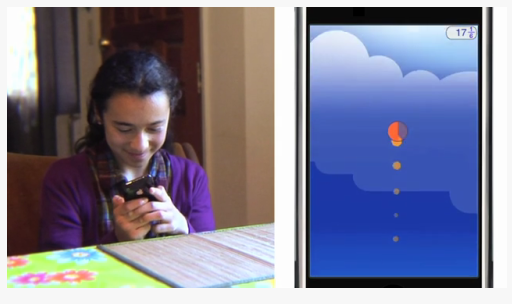
"content": "\u003cp>\u003cimg class=\"size-full wp-image-10491\" title=\"Screen shot 2011-04-13 at 10.28.30 AM\" src=\"http://ww2.kqed.org/mindshift/wp-content/uploads/sites/23/2011/04/Screen-shot-2011-04-13-at-10.28.30-AM.png\" alt=\"\" width=\"512\" height=\"304\" srcset=\"https://ww2.kqed.org/app/uploads/sites/23/2011/04/Screen-shot-2011-04-13-at-10.28.30-AM.png 512w, https://ww2.kqed.org/app/uploads/sites/23/2011/04/Screen-shot-2011-04-13-at-10.28.30-AM-400x238.png 400w, https://ww2.kqed.org/app/uploads/sites/23/2011/04/Screen-shot-2011-04-13-at-10.28.30-AM-320x190.png 320w\" sizes=\"(max-width: 512px) 100vw, 512px\">\u003c/p>\n\u003cp>Too often, educational games are neither fun nor educational, and there are plenty of educational games that fail on both those counts. Without an exhaustive study of games and game designers, it's hard to pinpoint why. Do those making educational games have little experience in game design? Or do those making educational games have little experience in instructional technology? Or has the bar just been set incredibly low?\u003c/p>\n\u003cp>Perhaps it's that educational game designers have been targeting school districts or teachers as their audience, and as long as they're more exciting than classroom worksheets, kids really haven't complained.\u003c/p>\n\u003caside class=\"pullquote alignleft\">Those who grew up playing video games are now becoming the game designers and developers.\u003c/aside>\n\u003cp>But the audience is changing for educational games, in part because of the explosion of mobile and Web technologies. Parents are buying more educational games, and kids now have a larger say in what they want. And as a result, games are becoming more engaging, more whimsical -- more fun.\u003c/p>\n\u003cp>What's more, those who grew up playing video games are now becoming the game designers and developers -- and their bar for fun factor is high.\u003c/p>\n\u003cp>[ad fullwidth]\u003c/p>\n\u003cp>Take, for example, the creators of \u003ca href=\"http://motionmathgames.com/\">Motion Math\u003c/a>, available on the iPhone and iPad. The founders, Jacob Klein and Gabriel Adauto, graduate students in the Learning, Design, and Technology program at Stanford, are both 32 years old. They're bringing their background in education and cognitive science to the design of the game.\u003c/p>\n\u003cp>Certainly having a deeper understanding of cognition helps. But Klein and Adauto are also gamers -- \"hardcore,\" says Klein. And it's clear they've built games based on \"things we'd like.\" It's scaled down, so that the game is playable by elementary school-age children. But it's not dumbed down -- in content or in gameplay.\u003c/p>\n\u003cp>Klein says the inspiration in part came from the iconic Mario Brothers: simple yet fun. I'd add that it's a game for any age -- a third grader struggling with fractions could enjoy the game, as much as a seventh grader, or an adult. Klein also points to the design and the flow of sports-related video games. These \"flow experiences,\" says Klein, mean that the entire game keeps you continually engaged. And in the case of Motion Math, that engagement is with on-task learning.\u003c/p>\n\u003cp>At the moment, the games mostly focus on fractions, a notoriously difficult concept for children to grasp. Fractions are often taught with the pie metaphor -- how many slices are half, for example. But that graphical representation actually does little to help students understand how fractions work and how they're related to percentages and to the number line.\u003c/p>\n\u003cp>The game aims to helps students develop this number sense and estimate fractions -- and estimate quickly. It's a game, after all! This is how it works: Players control a bouncing star, and the goal is to make that star land on the right part of the number line, matching a particular fraction. To do this, the app uses the gyroscope that's built into the Apple mobile devices, so you have to tilt your device.\u003c/p>\n\u003cp>\u003c/p>\n\u003cp>Motion Math has won \u003ca href=\"http://motionmathgames.com/reviews/\">rave reviews\u003c/a> from those who are watching the industry closely.\u003ca href=\"http://childrenstech.com/blog/archives/2791\"> The Children's Technology Review\u003c/a>, for instance, gave the app 4.5 stars for being able to \"bridge the concrete and the abstract.\" The creators plan to expand to other platforms, including Android soon. Klein says they'll also add new subject areas beyond fractions and even beyond math.\u003c/p>\n\n",
"disqusIdentifier": "10451 http://blogs.kqed.org/mindshift/?p=10451",
"disqusUrl": "https://ww2.kqed.org/mindshift/2011/04/13/dont-forget-the-fun-factor-in-educational-games/",
"stats": {
"hasVideo": false,
"hasChartOrMap": false,
"hasAudio": false,
"hasPolis": false,
"wordCount": 589,
"hasGoogleForm": false,
"hasGallery": false,
"hasHearkenModule": false,
"iframeSrcs": [],
"paragraphCount": 13
},
"modified": 1302716108,
"excerpt": null,
"headData": {
"twImgId": "",
"twTitle": "",
"ogTitle": "",
"ogImgId": "",
"twDescription": "",
"description": "Too often, educational games are neither fun nor educational, and there are plenty of educational games that fail on both those counts. Without an exhaustive study of games and game designers, it's hard to pinpoint why. Do those making educational games have little experience in game design? Or do those making educational games have little",
"title": "Don't Forget the Fun Factor in Educational Games | KQED",
"ogDescription": "",
"schema": {
"@context": "https://schema.org",
"@type": "Article",
"headline": "Don't Forget the Fun Factor in Educational Games",
"datePublished": "2011-04-13T10:35:08-07:00",
"dateModified": "2011-04-13T10:35:08-07:00",
"image": "https://cdn.kqed.org/wp-content/uploads/2020/02/KQED-OG-Image@1x.png"
}
},
"guestAuthors": [],
"slug": "dont-forget-the-fun-factor-in-educational-games",
"status": "publish",
"path": "/mindshift/10451/dont-forget-the-fun-factor-in-educational-games",
"audioTrackLength": null,
"parsedContent": [
{
"type": "contentString",
"content": "\u003cdiv class=\"post-body\">\u003cp>\u003cp>\u003cimg class=\"size-full wp-image-10491\" title=\"Screen shot 2011-04-13 at 10.28.30 AM\" src=\"http://ww2.kqed.org/mindshift/wp-content/uploads/sites/23/2011/04/Screen-shot-2011-04-13-at-10.28.30-AM.png\" alt=\"\" width=\"512\" height=\"304\" srcset=\"https://ww2.kqed.org/app/uploads/sites/23/2011/04/Screen-shot-2011-04-13-at-10.28.30-AM.png 512w, https://ww2.kqed.org/app/uploads/sites/23/2011/04/Screen-shot-2011-04-13-at-10.28.30-AM-400x238.png 400w, https://ww2.kqed.org/app/uploads/sites/23/2011/04/Screen-shot-2011-04-13-at-10.28.30-AM-320x190.png 320w\" sizes=\"(max-width: 512px) 100vw, 512px\">\u003c/p>\n\u003cp>Too often, educational games are neither fun nor educational, and there are plenty of educational games that fail on both those counts. Without an exhaustive study of games and game designers, it's hard to pinpoint why. Do those making educational games have little experience in game design? Or do those making educational games have little experience in instructional technology? Or has the bar just been set incredibly low?\u003c/p>\n\u003cp>Perhaps it's that educational game designers have been targeting school districts or teachers as their audience, and as long as they're more exciting than classroom worksheets, kids really haven't complained.\u003c/p>\n\u003caside class=\"pullquote alignleft\">Those who grew up playing video games are now becoming the game designers and developers.\u003c/aside>\n\u003cp>But the audience is changing for educational games, in part because of the explosion of mobile and Web technologies. Parents are buying more educational games, and kids now have a larger say in what they want. And as a result, games are becoming more engaging, more whimsical -- more fun.\u003c/p>\n\u003cp>What's more, those who grew up playing video games are now becoming the game designers and developers -- and their bar for fun factor is high.\u003c/p>\n\u003cp>\u003c/p>\u003c/div>",
"attributes": {
"named": {},
"numeric": []
}
},
{
"type": "component",
"content": "",
"name": "ad",
"attributes": {
"named": {
"label": "fullwidth"
},
"numeric": [
"fullwidth"
]
}
},
{
"type": "contentString",
"content": "\u003cdiv class=\"post-body\">\u003cp>\u003c/p>\n\u003cp>Take, for example, the creators of \u003ca href=\"http://motionmathgames.com/\">Motion Math\u003c/a>, available on the iPhone and iPad. The founders, Jacob Klein and Gabriel Adauto, graduate students in the Learning, Design, and Technology program at Stanford, are both 32 years old. They're bringing their background in education and cognitive science to the design of the game.\u003c/p>\n\u003cp>Certainly having a deeper understanding of cognition helps. But Klein and Adauto are also gamers -- \"hardcore,\" says Klein. And it's clear they've built games based on \"things we'd like.\" It's scaled down, so that the game is playable by elementary school-age children. But it's not dumbed down -- in content or in gameplay.\u003c/p>\n\u003cp>Klein says the inspiration in part came from the iconic Mario Brothers: simple yet fun. I'd add that it's a game for any age -- a third grader struggling with fractions could enjoy the game, as much as a seventh grader, or an adult. Klein also points to the design and the flow of sports-related video games. These \"flow experiences,\" says Klein, mean that the entire game keeps you continually engaged. And in the case of Motion Math, that engagement is with on-task learning.\u003c/p>\n\u003cp>At the moment, the games mostly focus on fractions, a notoriously difficult concept for children to grasp. Fractions are often taught with the pie metaphor -- how many slices are half, for example. But that graphical representation actually does little to help students understand how fractions work and how they're related to percentages and to the number line.\u003c/p>\n\u003cp>The game aims to helps students develop this number sense and estimate fractions -- and estimate quickly. It's a game, after all! This is how it works: Players control a bouncing star, and the goal is to make that star land on the right part of the number line, matching a particular fraction. To do this, the app uses the gyroscope that's built into the Apple mobile devices, so you have to tilt your device.\u003c/p>\n\u003cp>\u003c/p>\n\u003cp>Motion Math has won \u003ca href=\"http://motionmathgames.com/reviews/\">rave reviews\u003c/a> from those who are watching the industry closely.\u003ca href=\"http://childrenstech.com/blog/archives/2791\"> The Children's Technology Review\u003c/a>, for instance, gave the app 4.5 stars for being able to \"bridge the concrete and the abstract.\" The creators plan to expand to other platforms, including Android soon. Klein says they'll also add new subject areas beyond fractions and even beyond math.\u003c/p>\n\n\u003c/div>\u003c/p>",
"attributes": {
"named": {},
"numeric": []
}
}
],
"link": "/mindshift/10451/dont-forget-the-fun-factor-in-educational-games",
"authors": [
"4352"
],
"categories": [
"mindshift_195",
"mindshift_193"
],
"tags": [
"mindshift_134",
"mindshift_20902",
"mindshift_81",
"mindshift_213",
"mindshift_443",
"mindshift_114"
],
"featImg": "mindshift_10491",
"label": "mindshift"
},
"mindshift_10431": {
"type": "posts",
"id": "mindshift_10431",
"meta": {
"index": "posts_1716263798",
"site": "mindshift",
"id": "10431",
"score": null,
"sort": [
1302627399000
]
},
"parent": 0,
"labelTerm": {
"site": "mindshift"
},
"blocks": [],
"publishDate": 1302627399,
"format": "aside",
"disqusTitle": "Playing Tag or Digital Games? Why Not Both?",
"title": "Playing Tag or Digital Games? Why Not Both?",
"headTitle": "MindShift | KQED News",
"content": "\u003ch4>\n\u003c/h4>\u003cp>\u003ca href=\"http://www.flickr.com/photos/andrewlaparra/4145235150/sizes/m/in/photostream/\">\u003cimg class=\"size-full wp-image-10436\" title=\"tag\" src=\"http://ww2.kqed.org/mindshift/wp-content/uploads/sites/23/2011/04/tag.jpg\" alt=\"\" width=\"500\" height=\"281\" srcset=\"https://ww2.kqed.org/app/uploads/sites/23/2011/04/tag.jpg 500w, https://ww2.kqed.org/app/uploads/sites/23/2011/04/tag-400x225.jpg 400w, https://ww2.kqed.org/app/uploads/sites/23/2011/04/tag-320x180.jpg 320w\" sizes=\"(max-width: 500px) 100vw, 500px\">\u003c/a>\u003c/p>\n\n\u003ch4>Where the Educational Game Industry Went Wrong\u003c/h4>\n\u003cp>\u003cem>The spotlight has been shining on media and gaming in the education innovation scene in recent years. And while many tout the virtues of what games and media can teach kids, we know it's just as important to give kids enough time to play outside.\u003c/em>\u003c/p>\n\u003cp>\u003cem>In this essay, Andy Russell, co-founder of\u003ca href=\"http://launchpadtoys.com/\"> Launchpad Toys\u003c/a>, which created \u003ca href=\"http://ww2.kqed.org/mindshift/tag/toontastic/\">Toontastic\u003c/a> (I reviewed the digital storytelling app recently) talks about how the two worlds don't have to be mutually exclusive. Ideally, inside and outside play build on each other.\u003cbr>\n\u003c/em>\u003c/p>\n\u003ch5>By Andy Russell\u003c/h5>\n\u003cp>This past weekend I had the pleasure of helping to organize \u003ca href=\"http://tedxsfed.org/\">TEDxSFED\u003c/a> and participating in a number of post-conference roundtables about “Re-Imagining Education.” One session on Educational Gaming posed the question: “How would you create a game to teach Natural Selection?” The group tossed out several ideas and seemed quite happy until one insightful teacher dropped the \u003ca href=\"http://www.youtube.com/watch?v=QNMjx1o_Uyo\">Josh Baskin question of the day\u003c/a>: “But why do I need a computer for that? Why not just go outside and play tag?” Eyes averted, crickets chirped… it was beautiful.\u003c/p>\n\u003caside class=\"pullquote alignleft\">Like many adults, kids are less interested in facts and figures and more intrigued by opportunities to investigate, create, and share their voice with the world.\u003c/aside>\n\u003cp>For years, educational software developers have digitized and embedded worksheets and problem sets into interactive games. The practice has known many names -- Edutainment, Serious Gaming, and most recently “Gamification” – but all share the common premise (misconception) that learning by itself isn’t fun, that kids need a spoonful of sugar (game mechanics, rewards, etc.) to make the medicine (curriculum) go down.\u003c/p>\n\u003cp>[ad fullwidth]\u003c/p>\n\u003cp>As several of the roundtable participants struggled to answer this million-dollar question, I found myself thinking about the many kindergartners I’ve had the chance to play with over the years – and the endless barrage of questions that I’ve had to field on topics ranging from weather to ticklishness to the flavor of boogers. Looking back, I don’t think I’ve ever met a 4- or 5-year-old who isn’t naturally curious, who isn’t excited to learn. So why is it that so many 10-year-olds cringe at the sight or sound of the word “education”?\u003c/p>\n\u003cp>I found myself comparing the questions that kindergarteners ask to the questions/answers often seen in traditional educational media. I noticed a theme: most educational games deal a lot in the “Who?, What?, When?, and Where?” while the questions I hear from young kids are more of the “How?” and “Why?” variety. Not once has a child ever asked me to fill in a blank or select from multiple choices. Like many adults, they’re less interested in facts and figures and more intrigued by opportunities to investigate, create, and share their voice with the world.\u003c/p>\n\u003caside class=\"pullquote alignleft\">The problem is that we’re trying to replace teachers and parents with software rather than giving them complementary tools to help them become facilitators and coaches instead of test administrators.\u003c/aside>\n\u003cp>What’s the difference between a computer simulation and a backyard game of tag? Quite honestly, not much – which is exactly why we, as educational media designers, have failed three decades of curious kids (with some notable exceptions). Interactive quizzes and digital flash cards may make content more exciting than their analog counterparts, but that’s a short-sighted approach that fails to get at the root problem, an extrinsic motivation when kids are already intrinsically motivated to learn. The fundamental problem is not that learning isn’t fun, it’s that we’re answering questions that kids aren’t asking (Who?, What?, When?, Where?) instead of giving them tools to experiment, build on, and share their own ideas. The problem is that we’re trying to replace teachers and parents with software rather than giving them complementary tools to help them become facilitators and coaches instead of test administrators.\u003c/p>\n\u003cp>A backyard game of tag is an excellent way to demonstrate natural selection. Sure, one might replicate that with a computer game, but why? As educational media designers, our role shouldn’t be to demonstrate these phenomena in action (there are plenty of tools for that), but instead to leverage the incredible power of modern technology to help kids answer the bigger questions: HOW and WHY are these phenomena happening? Our role should be to guide them up \u003ca href=\"http://en.wikipedia.org/wiki/Bloom%27s_taxonomy\">Bloom’s Taxonomy\u003c/a> to not just memorize and regurgitate, but to synthesize, analyze, and create. To do this, we need to dive deeper – to help kids learn not just by “doing,” but by designing (please see: \u003ca href=\"http://www.forbes.com/2010/04/08/john-maeda-design-technology-data-companies-10-keynote.html\">John Maeda\u003c/a>, \u003ca href=\"http://www.theatlantic.com/life/archive/2011/03/the-creativity-crisis-why-american-schools-need-design/73038/\">Laura Seargent Richardson\u003c/a>). We need to stop thinking of educational media as fancy content delivery mechanisms (interactive videos and electronic books) and start building tools that help kids design and develop their own understandings of the world through iterative content creation.\u003c/p>\n\u003cp>Constructionist learning tools like \u003ca href=\"http://scratch.mit.edu/\">Scratch\u003c/a>, \u003ca href=\"http://ccl.northwestern.edu/netlogo/\">NetLogo\u003c/a>, and \u003ca href=\"http://mindstorms.lego.com/en-us/Default.aspx\">LEGO Mindstorms\u003c/a>, empower kids as self-motivated learners to program, build, animate, and \u003cem>design\u003c/em> their own creations. NetLogo, for example, would be a perfect tool for the natural selection question. With NetLogo, kids can easily program their own natural selection simulation with millions of independent characters operating in a virtual biosphere under the rules and guidelines they assign – almost like a digital petri dish, but with the ability to scale and fast-forward in real-time and iteratively test many different variables and hypotheses. These tools are the modern equivalent of the five-paragraph-essay: templates for inventing, testing, and sharing new ideas while developing higher-level critical thinking and analytical skills.\u003c/p>\n\u003cp>[ad floatright]\u003c/p>\n\u003cp>So my answer to the teacher is: We SHOULD go outside and play tag! Then let’s go back into the house or classroom and talk about what just happened and see if we can break those big ideas apart while building, testing, and iterating on our model. Then let’s upload our model to the Web, compare it to others’ ideas, and maybe even collaborate with other kids/students around the world. As educational media designers, let’s re-imagine edutainment as empowerment. Let’s empower children as designers by making concepts and tools accessible to learners and then, above all, let’s give kids megaphones to share their ideas with friends, family, and peers around the world.\u003c/p>\n\n",
"disqusIdentifier": "10431 http://blogs.kqed.org/mindshift/?p=10431",
"disqusUrl": "https://ww2.kqed.org/mindshift/2011/04/12/how-playing-tag-and-digital-games-can-build-on-each-other/",
"stats": {
"hasVideo": false,
"hasChartOrMap": false,
"hasAudio": false,
"hasPolis": false,
"wordCount": 1102,
"hasGoogleForm": false,
"hasGallery": false,
"hasHearkenModule": false,
"iframeSrcs": [],
"paragraphCount": 13
},
"modified": 1302627512,
"excerpt": null,
"headData": {
"twImgId": "",
"twTitle": "",
"ogTitle": "",
"ogImgId": "",
"twDescription": "",
"description": "Where the Educational Game Industry Went Wrong The spotlight has been shining on media and gaming in the education innovation scene in recent years. And while many tout the virtues of what games and media can teach kids, we know it's just as important to give kids enough time to play outside. In this essay,",
"title": "Playing Tag or Digital Games? Why Not Both? | KQED",
"ogDescription": "",
"schema": {
"@context": "https://schema.org",
"@type": "Article",
"headline": "Playing Tag or Digital Games? Why Not Both?",
"datePublished": "2011-04-12T09:56:39-07:00",
"dateModified": "2011-04-12T09:58:32-07:00",
"image": "https://cdn.kqed.org/wp-content/uploads/2020/02/KQED-OG-Image@1x.png"
}
},
"guestAuthors": [],
"slug": "how-playing-tag-and-digital-games-can-build-on-each-other",
"status": "publish",
"path": "/mindshift/10431/how-playing-tag-and-digital-games-can-build-on-each-other",
"audioTrackLength": null,
"parsedContent": [
{
"type": "contentString",
"content": "\u003cdiv class=\"post-body\">\u003cp>\u003ch4>\n\u003c/h4>\u003cp>\u003ca href=\"http://www.flickr.com/photos/andrewlaparra/4145235150/sizes/m/in/photostream/\">\u003cimg class=\"size-full wp-image-10436\" title=\"tag\" src=\"http://ww2.kqed.org/mindshift/wp-content/uploads/sites/23/2011/04/tag.jpg\" alt=\"\" width=\"500\" height=\"281\" srcset=\"https://ww2.kqed.org/app/uploads/sites/23/2011/04/tag.jpg 500w, https://ww2.kqed.org/app/uploads/sites/23/2011/04/tag-400x225.jpg 400w, https://ww2.kqed.org/app/uploads/sites/23/2011/04/tag-320x180.jpg 320w\" sizes=\"(max-width: 500px) 100vw, 500px\">\u003c/a>\u003c/p>\n\n\u003ch4>Where the Educational Game Industry Went Wrong\u003c/h4>\n\u003cp>\u003cem>The spotlight has been shining on media and gaming in the education innovation scene in recent years. And while many tout the virtues of what games and media can teach kids, we know it's just as important to give kids enough time to play outside.\u003c/em>\u003c/p>\n\u003cp>\u003cem>In this essay, Andy Russell, co-founder of\u003ca href=\"http://launchpadtoys.com/\"> Launchpad Toys\u003c/a>, which created \u003ca href=\"http://ww2.kqed.org/mindshift/tag/toontastic/\">Toontastic\u003c/a> (I reviewed the digital storytelling app recently) talks about how the two worlds don't have to be mutually exclusive. Ideally, inside and outside play build on each other.\u003cbr>\n\u003c/em>\u003c/p>\n\u003ch5>By Andy Russell\u003c/h5>\n\u003cp>This past weekend I had the pleasure of helping to organize \u003ca href=\"http://tedxsfed.org/\">TEDxSFED\u003c/a> and participating in a number of post-conference roundtables about “Re-Imagining Education.” One session on Educational Gaming posed the question: “How would you create a game to teach Natural Selection?” The group tossed out several ideas and seemed quite happy until one insightful teacher dropped the \u003ca href=\"http://www.youtube.com/watch?v=QNMjx1o_Uyo\">Josh Baskin question of the day\u003c/a>: “But why do I need a computer for that? Why not just go outside and play tag?” Eyes averted, crickets chirped… it was beautiful.\u003c/p>\n\u003caside class=\"pullquote alignleft\">Like many adults, kids are less interested in facts and figures and more intrigued by opportunities to investigate, create, and share their voice with the world.\u003c/aside>\n\u003cp>For years, educational software developers have digitized and embedded worksheets and problem sets into interactive games. The practice has known many names -- Edutainment, Serious Gaming, and most recently “Gamification” – but all share the common premise (misconception) that learning by itself isn’t fun, that kids need a spoonful of sugar (game mechanics, rewards, etc.) to make the medicine (curriculum) go down.\u003c/p>\n\u003cp>\u003c/p>\u003c/div>",
"attributes": {
"named": {},
"numeric": []
}
},
{
"type": "component",
"content": "",
"name": "ad",
"attributes": {
"named": {
"label": "fullwidth"
},
"numeric": [
"fullwidth"
]
}
},
{
"type": "contentString",
"content": "\u003cdiv class=\"post-body\">\u003cp>\u003c/p>\n\u003cp>As several of the roundtable participants struggled to answer this million-dollar question, I found myself thinking about the many kindergartners I’ve had the chance to play with over the years – and the endless barrage of questions that I’ve had to field on topics ranging from weather to ticklishness to the flavor of boogers. Looking back, I don’t think I’ve ever met a 4- or 5-year-old who isn’t naturally curious, who isn’t excited to learn. So why is it that so many 10-year-olds cringe at the sight or sound of the word “education”?\u003c/p>\n\u003cp>I found myself comparing the questions that kindergarteners ask to the questions/answers often seen in traditional educational media. I noticed a theme: most educational games deal a lot in the “Who?, What?, When?, and Where?” while the questions I hear from young kids are more of the “How?” and “Why?” variety. Not once has a child ever asked me to fill in a blank or select from multiple choices. Like many adults, they’re less interested in facts and figures and more intrigued by opportunities to investigate, create, and share their voice with the world.\u003c/p>\n\u003caside class=\"pullquote alignleft\">The problem is that we’re trying to replace teachers and parents with software rather than giving them complementary tools to help them become facilitators and coaches instead of test administrators.\u003c/aside>\n\u003cp>What’s the difference between a computer simulation and a backyard game of tag? Quite honestly, not much – which is exactly why we, as educational media designers, have failed three decades of curious kids (with some notable exceptions). Interactive quizzes and digital flash cards may make content more exciting than their analog counterparts, but that’s a short-sighted approach that fails to get at the root problem, an extrinsic motivation when kids are already intrinsically motivated to learn. The fundamental problem is not that learning isn’t fun, it’s that we’re answering questions that kids aren’t asking (Who?, What?, When?, Where?) instead of giving them tools to experiment, build on, and share their own ideas. The problem is that we’re trying to replace teachers and parents with software rather than giving them complementary tools to help them become facilitators and coaches instead of test administrators.\u003c/p>\n\u003cp>A backyard game of tag is an excellent way to demonstrate natural selection. Sure, one might replicate that with a computer game, but why? As educational media designers, our role shouldn’t be to demonstrate these phenomena in action (there are plenty of tools for that), but instead to leverage the incredible power of modern technology to help kids answer the bigger questions: HOW and WHY are these phenomena happening? Our role should be to guide them up \u003ca href=\"http://en.wikipedia.org/wiki/Bloom%27s_taxonomy\">Bloom’s Taxonomy\u003c/a> to not just memorize and regurgitate, but to synthesize, analyze, and create. To do this, we need to dive deeper – to help kids learn not just by “doing,” but by designing (please see: \u003ca href=\"http://www.forbes.com/2010/04/08/john-maeda-design-technology-data-companies-10-keynote.html\">John Maeda\u003c/a>, \u003ca href=\"http://www.theatlantic.com/life/archive/2011/03/the-creativity-crisis-why-american-schools-need-design/73038/\">Laura Seargent Richardson\u003c/a>). We need to stop thinking of educational media as fancy content delivery mechanisms (interactive videos and electronic books) and start building tools that help kids design and develop their own understandings of the world through iterative content creation.\u003c/p>\n\u003cp>Constructionist learning tools like \u003ca href=\"http://scratch.mit.edu/\">Scratch\u003c/a>, \u003ca href=\"http://ccl.northwestern.edu/netlogo/\">NetLogo\u003c/a>, and \u003ca href=\"http://mindstorms.lego.com/en-us/Default.aspx\">LEGO Mindstorms\u003c/a>, empower kids as self-motivated learners to program, build, animate, and \u003cem>design\u003c/em> their own creations. NetLogo, for example, would be a perfect tool for the natural selection question. With NetLogo, kids can easily program their own natural selection simulation with millions of independent characters operating in a virtual biosphere under the rules and guidelines they assign – almost like a digital petri dish, but with the ability to scale and fast-forward in real-time and iteratively test many different variables and hypotheses. These tools are the modern equivalent of the five-paragraph-essay: templates for inventing, testing, and sharing new ideas while developing higher-level critical thinking and analytical skills.\u003c/p>\n\u003cp>\u003c/p>\u003c/div>",
"attributes": {
"named": {},
"numeric": []
}
},
{
"type": "component",
"content": "",
"name": "ad",
"attributes": {
"named": {
"label": "floatright"
},
"numeric": [
"floatright"
]
}
},
{
"type": "contentString",
"content": "\u003cdiv class=\"post-body\">\u003cp>\u003c/p>\n\u003cp>So my answer to the teacher is: We SHOULD go outside and play tag! Then let’s go back into the house or classroom and talk about what just happened and see if we can break those big ideas apart while building, testing, and iterating on our model. Then let’s upload our model to the Web, compare it to others’ ideas, and maybe even collaborate with other kids/students around the world. As educational media designers, let’s re-imagine edutainment as empowerment. Let’s empower children as designers by making concepts and tools accessible to learners and then, above all, let’s give kids megaphones to share their ideas with friends, family, and peers around the world.\u003c/p>\n\n\u003c/div>\u003c/p>",
"attributes": {
"named": {},
"numeric": []
}
}
],
"link": "/mindshift/10431/how-playing-tag-and-digital-games-can-build-on-each-other",
"authors": [
"180"
],
"categories": [
"mindshift_193"
],
"tags": [
"mindshift_273",
"mindshift_186",
"mindshift_20902",
"mindshift_114"
],
"featImg": "mindshift_10436",
"label": "mindshift"
},
"mindshift_10394": {
"type": "posts",
"id": "mindshift_10394",
"meta": {
"index": "posts_1716263798",
"site": "mindshift",
"id": "10394",
"score": null,
"sort": [
1302564499000
]
},
"parent": 0,
"labelTerm": {
"site": "mindshift"
},
"blocks": [],
"publishDate": 1302564499,
"format": "aside",
"disqusTitle": "What the Heck is a 'Teacherpreneur'?",
"title": "What the Heck is a 'Teacherpreneur'?",
"headTitle": "MindShift | KQED News",
"content": "\u003cfigure id=\"attachment_10402\" class=\"wp-caption alignnone\" style=\"max-width: 620px\">\u003ca href=\"http://ww2.kqed.org/mindshift/2011/04/what-the-heck-is-a-teacherpreneur/screen-shot-2011-04-11-at-4-19-18-pm/\" rel=\"attachment wp-att-10402\">\u003cimg class=\"size-large wp-image-10402\" title=\"Screen-shot-2011-04-11-at-4.19.18-PM\" src=\"http://ww2.kqed.org/mindshift/wp-content/uploads/sites/23/2011/04/Screen-shot-2011-04-11-at-4.19.18-PM-620x396.png\" alt=\"\" width=\"620\" height=\"396\">\u003c/a>\u003cfigcaption class=\"wp-caption-text\">\" credit=\"Dave Orpha prezi\u003c/figcaption>\u003c/figure>\n\u003cp>Re-imagining the institution of education will have to be done from different levels. At \u003ca href=\"http://tedxsfed.org/\">TEDxSFED\u003c/a> on Saturday, we heard from inspirational speakers who spoke to these various perspectives: a principal who literally handed the keys to his school to a student; a \u003ca href=\"http://www.ideo.com/people/sandy-speicher\">design thinker \u003c/a>who \u003ca href=\"http://ww2.kqed.org/mindshift/2011/02/the-school-day-of-the-future-is-designed/\">recreated the school day \u003c/a>based on a student's interests and passions; a teacher who uses the kitchen as the backdrop to educate students about everything from botany to day-to-day experiences outside school; a \u003ca href=\"http://www.youngmakers.org/\">program that teaches kids to innovate and build \u003c/a>with their own hands.\u003c/p>\n\u003cp>Consider how the profession of teaching can be re-imagined. \u003ca href=\"http://learning2030-orphal.blogspot.com/2011/04/what-heck-is-teacherpreneur_3867.html\">David Orphal\u003c/a>, one of the speakers at the event, took us through the scenario, scene by scene, and explained the theory behind a \"\u003cstrong>teacherpreneur\u003c/strong>.\"\u003c/p>\n\u003caside class=\"pullquote alignleft\">What would educational reform look like if Secretary Arne Duncan took five weeks to teach summer school?\u003c/aside>\n\u003cp>Based on the work of the \u003ca href=\"http://www.teachingquality.org/\">Center for Teaching Quality\u003c/a> and \u003ca href=\"http://www.teachingquality.org/about-barnett-berry\">Barnett Berry\u003c/a>'s new book \"\u003ca href=\"http://www.teaching2030.org/\">Teaching 2030\u003c/a>,\" the concept of \"teacherpreneur\" involves giving classroom teachers more of a voice in educational leadership, while allowing current educational leaders and policymakers opportunities to spend a part of each year working in a classroom with students.\u003c/p>\n\u003cp>In this ideal world, teachers spend part of their time in the class as co-teachers, part of their time researching and writing curriculum and assessments for schools, part of the time mentoring new teachers (who have a reduced work load while they're being trained), part of their time innovating ideas for teacher development, and part of their time drafting educational policy.\u003c/p>\n\u003cp>In other words, as Orphal said at TEDxSFED: \"What would educational reform look like, if Secretary Arne Duncan took five weeks to teach summer school?\"\u003c/p>\n\u003cp>[ad fullwidth]\u003c/p>\n\u003cp>Take a look at Orphal's \"\u003ca href=\"http://learning2030-orphal.blogspot.com/2011/04/what-heck-is-teacherpreneur_3867.html\">Prezi\" \u003c/a>presentation, which includes an interview with \u003ca href=\"http://future.teacherleaders.org/2011/03/ariel-sacks-at-big-ideas-fest-teacherpreneur/\">Ariel Sacks\u003c/a> who spoke to MindShift at \u003ca href=\"http://www.bigideasfest.org/\">Big Ideas Fest\u003c/a> about the concept of \"teacherpreneurship.\"\u003c/p>\n\u003cp>\u003c/p>\n\u003cp>And check out more video interviews, photos, blogs, and Tweets on the \u003ca href=\"http://tedxsfed.org/?page_id=7\">TEDxSFED site\u003c/a>. It was a truly inspiring day.\u003c/p>\n\n",
"disqusIdentifier": "10394 http://blogs.kqed.org/mindshift/?p=10394",
"disqusUrl": "https://ww2.kqed.org/mindshift/2011/04/11/what-the-heck-is-a-teacherpreneur/",
"stats": {
"hasVideo": false,
"hasChartOrMap": false,
"hasAudio": false,
"hasPolis": false,
"wordCount": 341,
"hasGoogleForm": false,
"hasGallery": false,
"hasHearkenModule": false,
"iframeSrcs": [],
"paragraphCount": 9
},
"modified": 1424205875,
"excerpt": null,
"headData": {
"twImgId": "",
"twTitle": "",
"ogTitle": "",
"ogImgId": "",
"twDescription": "",
"description": "Re-imagining the institution of education will have to be done from different levels. At TEDxSFED on Saturday, we heard from inspirational speakers who spoke to these various perspectives: a principal who literally handed the keys to his school to a student; a design thinker who recreated the school day based on a student's interests and",
"title": "What the Heck is a 'Teacherpreneur'? | KQED",
"ogDescription": "",
"schema": {
"@context": "https://schema.org",
"@type": "Article",
"headline": "What the Heck is a 'Teacherpreneur'?",
"datePublished": "2011-04-11T16:28:19-07:00",
"dateModified": "2015-02-17T12:44:35-08:00",
"image": "https://cdn.kqed.org/wp-content/uploads/2020/02/KQED-OG-Image@1x.png"
}
},
"guestAuthors": [],
"slug": "what-the-heck-is-a-teacherpreneur",
"status": "publish",
"path": "/mindshift/10394/what-the-heck-is-a-teacherpreneur",
"audioTrackLength": null,
"parsedContent": [
{
"type": "contentString",
"content": "\u003cdiv class=\"post-body\">\u003cp>\u003cfigure id=\"attachment_10402\" class=\"wp-caption alignnone\" style=\"max-width: 620px\">\u003ca href=\"http://ww2.kqed.org/mindshift/2011/04/what-the-heck-is-a-teacherpreneur/screen-shot-2011-04-11-at-4-19-18-pm/\" rel=\"attachment wp-att-10402\">\u003cimg class=\"size-large wp-image-10402\" title=\"Screen-shot-2011-04-11-at-4.19.18-PM\" src=\"http://ww2.kqed.org/mindshift/wp-content/uploads/sites/23/2011/04/Screen-shot-2011-04-11-at-4.19.18-PM-620x396.png\" alt=\"\" width=\"620\" height=\"396\">\u003c/a>\u003cfigcaption class=\"wp-caption-text\">\" credit=\"Dave Orpha prezi\u003c/figcaption>\u003c/figure>\n\u003cp>Re-imagining the institution of education will have to be done from different levels. At \u003ca href=\"http://tedxsfed.org/\">TEDxSFED\u003c/a> on Saturday, we heard from inspirational speakers who spoke to these various perspectives: a principal who literally handed the keys to his school to a student; a \u003ca href=\"http://www.ideo.com/people/sandy-speicher\">design thinker \u003c/a>who \u003ca href=\"http://ww2.kqed.org/mindshift/2011/02/the-school-day-of-the-future-is-designed/\">recreated the school day \u003c/a>based on a student's interests and passions; a teacher who uses the kitchen as the backdrop to educate students about everything from botany to day-to-day experiences outside school; a \u003ca href=\"http://www.youngmakers.org/\">program that teaches kids to innovate and build \u003c/a>with their own hands.\u003c/p>\n\u003cp>Consider how the profession of teaching can be re-imagined. \u003ca href=\"http://learning2030-orphal.blogspot.com/2011/04/what-heck-is-teacherpreneur_3867.html\">David Orphal\u003c/a>, one of the speakers at the event, took us through the scenario, scene by scene, and explained the theory behind a \"\u003cstrong>teacherpreneur\u003c/strong>.\"\u003c/p>\n\u003caside class=\"pullquote alignleft\">What would educational reform look like if Secretary Arne Duncan took five weeks to teach summer school?\u003c/aside>\n\u003cp>Based on the work of the \u003ca href=\"http://www.teachingquality.org/\">Center for Teaching Quality\u003c/a> and \u003ca href=\"http://www.teachingquality.org/about-barnett-berry\">Barnett Berry\u003c/a>'s new book \"\u003ca href=\"http://www.teaching2030.org/\">Teaching 2030\u003c/a>,\" the concept of \"teacherpreneur\" involves giving classroom teachers more of a voice in educational leadership, while allowing current educational leaders and policymakers opportunities to spend a part of each year working in a classroom with students.\u003c/p>\n\u003cp>In this ideal world, teachers spend part of their time in the class as co-teachers, part of their time researching and writing curriculum and assessments for schools, part of the time mentoring new teachers (who have a reduced work load while they're being trained), part of their time innovating ideas for teacher development, and part of their time drafting educational policy.\u003c/p>\n\u003cp>In other words, as Orphal said at TEDxSFED: \"What would educational reform look like, if Secretary Arne Duncan took five weeks to teach summer school?\"\u003c/p>\n\u003cp>\u003c/p>\u003c/div>",
"attributes": {
"named": {},
"numeric": []
}
},
{
"type": "component",
"content": "",
"name": "ad",
"attributes": {
"named": {
"label": "fullwidth"
},
"numeric": [
"fullwidth"
]
}
},
{
"type": "contentString",
"content": "\u003cdiv class=\"post-body\">\u003cp>\u003c/p>\n\u003cp>Take a look at Orphal's \"\u003ca href=\"http://learning2030-orphal.blogspot.com/2011/04/what-heck-is-teacherpreneur_3867.html\">Prezi\" \u003c/a>presentation, which includes an interview with \u003ca href=\"http://future.teacherleaders.org/2011/03/ariel-sacks-at-big-ideas-fest-teacherpreneur/\">Ariel Sacks\u003c/a> who spoke to MindShift at \u003ca href=\"http://www.bigideasfest.org/\">Big Ideas Fest\u003c/a> about the concept of \"teacherpreneurship.\"\u003c/p>\n\u003cp>\u003c/p>\n\u003cp>And check out more video interviews, photos, blogs, and Tweets on the \u003ca href=\"http://tedxsfed.org/?page_id=7\">TEDxSFED site\u003c/a>. It was a truly inspiring day.\u003c/p>\n\n\u003c/div>\u003c/p>",
"attributes": {
"named": {},
"numeric": []
}
}
],
"link": "/mindshift/10394/what-the-heck-is-a-teacherpreneur",
"authors": [
"180"
],
"categories": [
"mindshift_193"
],
"tags": [
"mindshift_439",
"mindshift_440",
"mindshift_271"
],
"featImg": "mindshift_10402",
"label": "mindshift"
},
"mindshift_10300": {
"type": "posts",
"id": "mindshift_10300",
"meta": {
"index": "posts_1716263798",
"site": "mindshift",
"id": "10300",
"score": null,
"sort": [
1302300694000
]
},
"parent": 0,
"labelTerm": {
"site": "mindshift"
},
"blocks": [],
"publishDate": 1302300694,
"format": "aside",
"disqusTitle": "Criticism of Online Learning Misses Important Questions",
"title": "Criticism of Online Learning Misses Important Questions",
"headTitle": "MindShift | KQED News",
"content": "\u003cp>\u003ca rel=\"attachment wp-att-10306\" href=\"http://ww2.kqed.org/mindshift/2011/04/criticism-of-online-learning-misses-important-questions/4682768709_2771dbdac6/\">\u003cimg class=\"size-full wp-image-10306\" src=\"http://ww2.kqed.org/mindshift/wp-content/uploads/sites/23/2011/04/4682768709_2771dbdac6.jpg\" alt=\"\" width=\"500\" height=\"281\" srcset=\"https://ww2.kqed.org/app/uploads/sites/23/2011/04/4682768709_2771dbdac6.jpg 500w, https://ww2.kqed.org/app/uploads/sites/23/2011/04/4682768709_2771dbdac6-400x225.jpg 400w, https://ww2.kqed.org/app/uploads/sites/23/2011/04/4682768709_2771dbdac6-320x180.jpg 320w\" sizes=\"(max-width: 500px) 100vw, 500px\">\u003c/a>\u003c/p>\n\u003cp>The number of students at the K-12 level who are taking an online course has increased dramatically over the past few years. The most recent figures from the \u003ca href=\"http://sloanconsortium.org/\">Sloan Consortium\u003c/a>, an advocacy group for online education, put the number at over 1 million in 2007, up over 47% from two years earlier. About 200,000 students attend online schools full time.\u003c/p>\n\u003caside class=\"pullquote alignleft\"> If students are not excelling in face-to-face settings, can online learning provide them with a better -- or different, or another -- opportunity? \u003c/aside>\n\u003cp>A story in this week's \u003ca href=\"http://www.nytimes.com/2011/04/06/education/06online.html\">New York Times\u003c/a> takes a closer look at this trend, suggesting that the explosion in online learning may be motivated more by opportunities to save districts money and less by the chance to provide quality education.\u003c/p>\n\u003cp>One of the most rapidly expanding areas for online learning, the story points out, is in credit recovery courses - a chance for those who failed a class to still get credit. These classes are used by high schools, particularly in high-poverty districts, to help increase graduation rates and avoid federal sanctions.\u003c/p>\n\u003cp>Trip Gabriel's article opens with an anecdote from one such class, where a student never had to actually \"wade through a tattered copy\" of a Jack London story, but copy-and-pasted paragraphs and a bio from Wikipedia and sent it off as part of the homework assignment. It encapsulates some of the worst fears of online education: there'll just be more cheating and less learning than in brick-and-mortar classroom settings.\u003c/p>\n\u003cp>[ad fullwidth]\u003c/p>\n\u003cp>That anecdote sets the tone for much of the article, which states that online learning opens opportunities for some students to take classes they wouldn't otherwise be able to, then immediately detracts its value.\u003c/p>\n\u003cblockquote>\u003cp>\"But critics say online education is really driven by a desire to spend less on teachers and buildings, especially as state and local budget crises force deep cuts to education. They note that there is no sound research showing that online courses at the K-12 level are comparable to face-to-face learning.\"\u003c/p>\u003c/blockquote>\n\u003cp>But there are some important questions unanswered -- and worse, they're not even asked. If students are not excelling in face-to-face settings, can online learning provide them with a better -- or different, or another -- opportunity? And can online learning open new doors that just aren't possible in a classroom, with access to different types of creative and collaborative possibilities with students and teachers worldwide? What about reports that show the value of blended learning?\u003c/p>\n\u003cp>The article also suggests that arguments for and against online education break down into what looks like questions of labor rather than questions of learning.\u003c/p>\n\u003cblockquote>\u003cp>\"Like other education debates, this one divides along ideological lines. K-12 online learning is championed by conservative-leaning policy groups that favor broadening school choice, including Jeb Bush’s Foundation for Excellence in Education, which has called on states to provide all students with 'Internet access devices' and remove bans on for-profit virtual schools. Teachers’ unions and others say much of the push for online courses, like vouchers and charter schools, is intended to channel taxpayers’ money into the private sector.\"\u003c/p>\u003c/blockquote>\n\u003cp>The political backdrop with budget issues and teacher layoffs does make this a complicated issue, but it isn't one that falls so neatly into two ideological camps. The question of the quality of online learning took center-stage in the \u003ca href=\"http://www.nytimes.com/roomfordebate/2011/04/05/can-young-students-learn-from-online-classes\">Room for Debate\u003c/a> section, where five educators responded about the potential and the quality of online learning at the K-12 level. Those responses show that it isn't an either-or matter here. Online isn't de facto better or worse. It isn't a matter of either public schools or private companies leading the charge.\u003c/p>\n\u003cp>This isn't to say, of course, we shouldn't ask tough questions about the quality of education. We need to do that for online and offline instruction. As Gary Stager writes in his \u003ca href=\"http://www.nytimes.com/roomfordebate/2011/04/05/can-young-students-learn-from-online-classes/the-possibilities-of-online-learning\">Room for Debate\u003c/a> response:\u003c/p>\n\u003cblockquote>\u003cp>\u003cem>\"Online environments focused on collaboration and action, rather than reading and test-taking, can be more social, creative, substantial and personally meaningful than traditional classes. Learning is no longer bound by artificial schedules, random teacher assignments or age segregation. Students feel more connected than in “school” where talking is the No. 1 infraction and teacher access is severely curtailed. When work is public, peers learn from it and support reciprocal growth. Everyone is a teacher and learner all of the time. The quality of work benefits from the extra time, collaboration and expertise.\u003c/em>\u003c/p>\n\u003cp>\u003cem>The computer’s real power lies in how it allows kids to learn and do new things in new ways unimaginable just a few years ago. Done well, online learning could supplement classroom instruction, offer experiences otherwise impossible, support 24/7 learning and break down barriers of geography, wealth or culture.\u003c/em>\u003c/p>\u003c/blockquote>\n\u003cp>Yes, in some cases, online learning may turn into copying from Wikipedia. But the same tactic -- plagiarism -- has been used by cheaters long before Wikipedia ever entered the scene.\u003c/p>\n\u003cp>\u003c/p>\n\u003cp>Online learning does not just offer courses to K-12 students; it opens up learning options -- and that's the promise of technology.\u003c/p>\n\n",
"disqusIdentifier": "10300 http://blogs.kqed.org/mindshift/?p=10300",
"disqusUrl": "https://ww2.kqed.org/mindshift/2011/04/08/criticism-of-online-learning-misses-important-questions/",
"stats": {
"hasVideo": false,
"hasChartOrMap": false,
"hasAudio": false,
"hasPolis": false,
"wordCount": 868,
"hasGoogleForm": false,
"hasGallery": false,
"hasHearkenModule": false,
"iframeSrcs": [],
"paragraphCount": 18
},
"modified": 1302300702,
"excerpt": null,
"headData": {
"twImgId": "",
"twTitle": "",
"ogTitle": "",
"ogImgId": "",
"twDescription": "",
"description": "The number of students at the K-12 level who are taking an online course has increased dramatically over the past few years. The most recent figures from the Sloan Consortium, an advocacy group for online education, put the number at over 1 million in 2007, up over 47% from two years earlier. About 200,000 students",
"title": "Criticism of Online Learning Misses Important Questions | KQED",
"ogDescription": "",
"schema": {
"@context": "https://schema.org",
"@type": "Article",
"headline": "Criticism of Online Learning Misses Important Questions",
"datePublished": "2011-04-08T15:11:34-07:00",
"dateModified": "2011-04-08T15:11:42-07:00",
"image": "https://cdn.kqed.org/wp-content/uploads/2020/02/KQED-OG-Image@1x.png"
}
},
"guestAuthors": [],
"slug": "criticism-of-online-learning-misses-important-questions",
"status": "publish",
"path": "/mindshift/10300/criticism-of-online-learning-misses-important-questions",
"audioTrackLength": null,
"parsedContent": [
{
"type": "contentString",
"content": "\u003cdiv class=\"post-body\">\u003cp>\u003cp>\u003ca rel=\"attachment wp-att-10306\" href=\"http://ww2.kqed.org/mindshift/2011/04/criticism-of-online-learning-misses-important-questions/4682768709_2771dbdac6/\">\u003cimg class=\"size-full wp-image-10306\" src=\"http://ww2.kqed.org/mindshift/wp-content/uploads/sites/23/2011/04/4682768709_2771dbdac6.jpg\" alt=\"\" width=\"500\" height=\"281\" srcset=\"https://ww2.kqed.org/app/uploads/sites/23/2011/04/4682768709_2771dbdac6.jpg 500w, https://ww2.kqed.org/app/uploads/sites/23/2011/04/4682768709_2771dbdac6-400x225.jpg 400w, https://ww2.kqed.org/app/uploads/sites/23/2011/04/4682768709_2771dbdac6-320x180.jpg 320w\" sizes=\"(max-width: 500px) 100vw, 500px\">\u003c/a>\u003c/p>\n\u003cp>The number of students at the K-12 level who are taking an online course has increased dramatically over the past few years. The most recent figures from the \u003ca href=\"http://sloanconsortium.org/\">Sloan Consortium\u003c/a>, an advocacy group for online education, put the number at over 1 million in 2007, up over 47% from two years earlier. About 200,000 students attend online schools full time.\u003c/p>\n\u003caside class=\"pullquote alignleft\"> If students are not excelling in face-to-face settings, can online learning provide them with a better -- or different, or another -- opportunity? \u003c/aside>\n\u003cp>A story in this week's \u003ca href=\"http://www.nytimes.com/2011/04/06/education/06online.html\">New York Times\u003c/a> takes a closer look at this trend, suggesting that the explosion in online learning may be motivated more by opportunities to save districts money and less by the chance to provide quality education.\u003c/p>\n\u003cp>One of the most rapidly expanding areas for online learning, the story points out, is in credit recovery courses - a chance for those who failed a class to still get credit. These classes are used by high schools, particularly in high-poverty districts, to help increase graduation rates and avoid federal sanctions.\u003c/p>\n\u003cp>Trip Gabriel's article opens with an anecdote from one such class, where a student never had to actually \"wade through a tattered copy\" of a Jack London story, but copy-and-pasted paragraphs and a bio from Wikipedia and sent it off as part of the homework assignment. It encapsulates some of the worst fears of online education: there'll just be more cheating and less learning than in brick-and-mortar classroom settings.\u003c/p>\n\u003cp>\u003c/p>\u003c/div>",
"attributes": {
"named": {},
"numeric": []
}
},
{
"type": "component",
"content": "",
"name": "ad",
"attributes": {
"named": {
"label": "fullwidth"
},
"numeric": [
"fullwidth"
]
}
},
{
"type": "contentString",
"content": "\u003cdiv class=\"post-body\">\u003cp>\u003c/p>\n\u003cp>That anecdote sets the tone for much of the article, which states that online learning opens opportunities for some students to take classes they wouldn't otherwise be able to, then immediately detracts its value.\u003c/p>\n\u003cblockquote>\u003cp>\"But critics say online education is really driven by a desire to spend less on teachers and buildings, especially as state and local budget crises force deep cuts to education. They note that there is no sound research showing that online courses at the K-12 level are comparable to face-to-face learning.\"\u003c/p>\u003c/blockquote>\n\u003cp>But there are some important questions unanswered -- and worse, they're not even asked. If students are not excelling in face-to-face settings, can online learning provide them with a better -- or different, or another -- opportunity? And can online learning open new doors that just aren't possible in a classroom, with access to different types of creative and collaborative possibilities with students and teachers worldwide? What about reports that show the value of blended learning?\u003c/p>\n\u003cp>The article also suggests that arguments for and against online education break down into what looks like questions of labor rather than questions of learning.\u003c/p>\n\u003cblockquote>\u003cp>\"Like other education debates, this one divides along ideological lines. K-12 online learning is championed by conservative-leaning policy groups that favor broadening school choice, including Jeb Bush’s Foundation for Excellence in Education, which has called on states to provide all students with 'Internet access devices' and remove bans on for-profit virtual schools. Teachers’ unions and others say much of the push for online courses, like vouchers and charter schools, is intended to channel taxpayers’ money into the private sector.\"\u003c/p>\u003c/blockquote>\n\u003cp>The political backdrop with budget issues and teacher layoffs does make this a complicated issue, but it isn't one that falls so neatly into two ideological camps. The question of the quality of online learning took center-stage in the \u003ca href=\"http://www.nytimes.com/roomfordebate/2011/04/05/can-young-students-learn-from-online-classes\">Room for Debate\u003c/a> section, where five educators responded about the potential and the quality of online learning at the K-12 level. Those responses show that it isn't an either-or matter here. Online isn't de facto better or worse. It isn't a matter of either public schools or private companies leading the charge.\u003c/p>\n\u003cp>This isn't to say, of course, we shouldn't ask tough questions about the quality of education. We need to do that for online and offline instruction. As Gary Stager writes in his \u003ca href=\"http://www.nytimes.com/roomfordebate/2011/04/05/can-young-students-learn-from-online-classes/the-possibilities-of-online-learning\">Room for Debate\u003c/a> response:\u003c/p>\n\u003cblockquote>\u003cp>\u003cem>\"Online environments focused on collaboration and action, rather than reading and test-taking, can be more social, creative, substantial and personally meaningful than traditional classes. Learning is no longer bound by artificial schedules, random teacher assignments or age segregation. Students feel more connected than in “school” where talking is the No. 1 infraction and teacher access is severely curtailed. When work is public, peers learn from it and support reciprocal growth. Everyone is a teacher and learner all of the time. The quality of work benefits from the extra time, collaboration and expertise.\u003c/em>\u003c/p>\n\u003cp>\u003cem>The computer’s real power lies in how it allows kids to learn and do new things in new ways unimaginable just a few years ago. Done well, online learning could supplement classroom instruction, offer experiences otherwise impossible, support 24/7 learning and break down barriers of geography, wealth or culture.\u003c/em>\u003c/p>\u003c/blockquote>\n\u003cp>Yes, in some cases, online learning may turn into copying from Wikipedia. But the same tactic -- plagiarism -- has been used by cheaters long before Wikipedia ever entered the scene.\u003c/p>\n\u003cp>\u003c/p>\n\u003cp>Online learning does not just offer courses to K-12 students; it opens up learning options -- and that's the promise of technology.\u003c/p>\n\n\u003c/div>\u003c/p>",
"attributes": {
"named": {},
"numeric": []
}
}
],
"link": "/mindshift/10300/criticism-of-online-learning-misses-important-questions",
"authors": [
"4352"
],
"categories": [
"mindshift_193"
],
"label": "mindshift"
},
"mindshift_10170": {
"type": "posts",
"id": "mindshift_10170",
"meta": {
"index": "posts_1716263798",
"site": "mindshift",
"id": "10170",
"score": null,
"sort": [
1302042925000
]
},
"parent": 0,
"labelTerm": {
"site": "mindshift"
},
"blocks": [],
"publishDate": 1302042925,
"format": "aside",
"disqusTitle": "Should Schools Subsidize Mobile Phones for Kids?",
"title": "Should Schools Subsidize Mobile Phones for Kids?",
"headTitle": "MindShift | KQED News",
"content": "\u003cp>\u003ca rel=\"attachment wp-att-9494\" href=\"http://ww2.kqed.org/mindshift/2011/03/can-a-smart-phone-program-really-close-the-achievement-gap/1442244452_3ef578b633_z/\">\u003cimg class=\"size-medium wp-image-9494\" title=\"smart phone\" src=\"http://ww2.kqed.org/mindshift/wp-content/uploads/sites/23/2011/03/1442244452_3ef578b633_z-300x226.jpg\" alt=\"\" width=\"300\" height=\"226\">\u003c/a>\u003c/p>\n\u003cp>If \u003ca href=\"http://ww2.kqed.org/mindshift/2011/03/can-a-smart-phone-program-really-close-the-achievement-gap/\">Project K-Nect\u003c/a> is proof that at-risk kids benefit from access to smart phones (many of them, the founder Shawn Gross says, have gone on to take Advanced Placement math classes), what happens to those who don't have smart phones?\u003c/p>\n\u003cp>A reader asks:\u003c/p>\n\u003cblockquote>\n\u003cp style=\"padding-left: 30px;\">My question for the group discussion is that because many of my socio-economically challenged students don't have the capability to engage in education via smart phone technology, how do I get them to ride the wave too? I am still challenged to get many of them to do any last century style pen and paper academics.\u003c/p>\n\u003c/blockquote>\n\u003cp>I asked K-Nect's Gross to elaborate, and here's his response:\u003c/p>\n\u003cp style=\"padding-left: 30px;\">\"Statistically, teenagers rank as the fast growing segment for smart phones. As a result, we will see the disparity between the haves and have-nots begin to erode. Nevertheless, a digital divide at some level will always exist. In such cases whereby a student is not able to afford access to these types of devices, \u003cstrong>school systems need to help subsidize access\u003c/strong>.\u003c/p>\n\u003cp>[ad fullwidth]\u003c/p>\n\u003cp style=\"padding-left: 30px;\">The FCC has taken the first step towards examining providing funding to school systems for use of mobile devices by students off campus. If the program is successful, schools will be able to tap into a very large funding pool to help eliminate some of the inequities.\u003c/p>\n\u003cp style=\"padding-left: 30px;\">Finally, regarding the concerning engagement, our research indicates that students feel largely disconnected in math and science when utilizing a 20th century model that encompasses paper and pencil. This is a population that seeks manipulative and multimedia and wants to use social networking as a means from which to solve instructional problems. After all, this is how they solve all of their social problems.\"\u003c/p>\n\u003cp>The FCC reference Gross is eluding to is the \u003ca href=\"http://www.readwriteweb.com/archives/9_million_program_gives_students_wireless_internet.php\">$9 million program \u003c/a>called \"\u003cstrong>Learning On-the-Go\u003c/strong>\" that will be \"piloted in 14 states and will fund wireless broadband for 10 laptop programs, two virtual schools, three handheld device programs,\" as well as one program in New Orleans that will \"give third through sixth graders access to wireless data cards,\" according to \u003ca href=\"http://www.readwriteweb.com/archives/9_million_program_gives_students_wireless_internet.php\">ReadWriteWeb\u003c/a>.\u003c/p>\n\u003cp>That's in near future. Read how teacher Bill Ferriter \u003ca href=\"../2011/04/how-do-we-address-the-needs-of-kids-without-mobile-access/\">finds ways to include \u003c/a>those who don't have the phones in his classrooms today.\u003c/p>\n\u003cp>\u003c/p>\n\u003cp>Another interesting point to add to the dialogue: From the \u003ca href=\"http://ww2.kqed.org/mindshift/2011/04/students-complain-about-archaic-internet-blocking-rules/\">Speak Up 2010 survey,\u003c/a> parents are willing to \u003ca href=\"http://www.youthradio.org/ymi#news-8168\">buy their kids mobile phones\u003c/a> -- if the school allowed it.\u003c/p>\n\n",
"disqusIdentifier": "10170 http://blogs.kqed.org/mindshift/?p=10170",
"disqusUrl": "https://ww2.kqed.org/mindshift/2011/04/05/should-schools-subsidize-mobile-phones-for-kids/",
"stats": {
"hasVideo": false,
"hasChartOrMap": false,
"hasAudio": false,
"hasPolis": false,
"wordCount": 408,
"hasGoogleForm": false,
"hasGallery": false,
"hasHearkenModule": false,
"iframeSrcs": [],
"paragraphCount": 9
},
"modified": 1302047714,
"excerpt": null,
"headData": {
"twImgId": "",
"twTitle": "",
"ogTitle": "",
"ogImgId": "",
"twDescription": "",
"description": "If Project K-Nect is proof that at-risk kids benefit from access to smart phones (many of them, the founder Shawn Gross says, have gone on to take Advanced Placement math classes), what happens to those who don't have smart phones? A reader asks: My question for the group discussion is that because many of my",
"title": "Should Schools Subsidize Mobile Phones for Kids? | KQED",
"ogDescription": "",
"schema": {
"@context": "https://schema.org",
"@type": "Article",
"headline": "Should Schools Subsidize Mobile Phones for Kids?",
"datePublished": "2011-04-05T15:35:25-07:00",
"dateModified": "2011-04-05T16:55:14-07:00",
"image": "https://cdn.kqed.org/wp-content/uploads/2020/02/KQED-OG-Image@1x.png"
}
},
"guestAuthors": [],
"slug": "should-schools-subsidize-mobile-phones-for-kids",
"status": "publish",
"path": "/mindshift/10170/should-schools-subsidize-mobile-phones-for-kids",
"audioTrackLength": null,
"parsedContent": [
{
"type": "contentString",
"content": "\u003cdiv class=\"post-body\">\u003cp>\u003cp>\u003ca rel=\"attachment wp-att-9494\" href=\"http://ww2.kqed.org/mindshift/2011/03/can-a-smart-phone-program-really-close-the-achievement-gap/1442244452_3ef578b633_z/\">\u003cimg class=\"size-medium wp-image-9494\" title=\"smart phone\" src=\"http://ww2.kqed.org/mindshift/wp-content/uploads/sites/23/2011/03/1442244452_3ef578b633_z-300x226.jpg\" alt=\"\" width=\"300\" height=\"226\">\u003c/a>\u003c/p>\n\u003cp>If \u003ca href=\"http://ww2.kqed.org/mindshift/2011/03/can-a-smart-phone-program-really-close-the-achievement-gap/\">Project K-Nect\u003c/a> is proof that at-risk kids benefit from access to smart phones (many of them, the founder Shawn Gross says, have gone on to take Advanced Placement math classes), what happens to those who don't have smart phones?\u003c/p>\n\u003cp>A reader asks:\u003c/p>\n\u003cblockquote>\n\u003cp style=\"padding-left: 30px;\">My question for the group discussion is that because many of my socio-economically challenged students don't have the capability to engage in education via smart phone technology, how do I get them to ride the wave too? I am still challenged to get many of them to do any last century style pen and paper academics.\u003c/p>\n\u003c/blockquote>\n\u003cp>I asked K-Nect's Gross to elaborate, and here's his response:\u003c/p>\n\u003cp style=\"padding-left: 30px;\">\"Statistically, teenagers rank as the fast growing segment for smart phones. As a result, we will see the disparity between the haves and have-nots begin to erode. Nevertheless, a digital divide at some level will always exist. In such cases whereby a student is not able to afford access to these types of devices, \u003cstrong>school systems need to help subsidize access\u003c/strong>.\u003c/p>\n\u003cp>\u003c/p>\u003c/div>",
"attributes": {
"named": {},
"numeric": []
}
},
{
"type": "component",
"content": "",
"name": "ad",
"attributes": {
"named": {
"label": "fullwidth"
},
"numeric": [
"fullwidth"
]
}
},
{
"type": "contentString",
"content": "\u003cdiv class=\"post-body\">\u003cp>\u003c/p>\n\u003cp style=\"padding-left: 30px;\">The FCC has taken the first step towards examining providing funding to school systems for use of mobile devices by students off campus. If the program is successful, schools will be able to tap into a very large funding pool to help eliminate some of the inequities.\u003c/p>\n\u003cp style=\"padding-left: 30px;\">Finally, regarding the concerning engagement, our research indicates that students feel largely disconnected in math and science when utilizing a 20th century model that encompasses paper and pencil. This is a population that seeks manipulative and multimedia and wants to use social networking as a means from which to solve instructional problems. After all, this is how they solve all of their social problems.\"\u003c/p>\n\u003cp>The FCC reference Gross is eluding to is the \u003ca href=\"http://www.readwriteweb.com/archives/9_million_program_gives_students_wireless_internet.php\">$9 million program \u003c/a>called \"\u003cstrong>Learning On-the-Go\u003c/strong>\" that will be \"piloted in 14 states and will fund wireless broadband for 10 laptop programs, two virtual schools, three handheld device programs,\" as well as one program in New Orleans that will \"give third through sixth graders access to wireless data cards,\" according to \u003ca href=\"http://www.readwriteweb.com/archives/9_million_program_gives_students_wireless_internet.php\">ReadWriteWeb\u003c/a>.\u003c/p>\n\u003cp>That's in near future. Read how teacher Bill Ferriter \u003ca href=\"../2011/04/how-do-we-address-the-needs-of-kids-without-mobile-access/\">finds ways to include \u003c/a>those who don't have the phones in his classrooms today.\u003c/p>\n\u003cp>\u003c/p>\n\u003cp>Another interesting point to add to the dialogue: From the \u003ca href=\"http://ww2.kqed.org/mindshift/2011/04/students-complain-about-archaic-internet-blocking-rules/\">Speak Up 2010 survey,\u003c/a> parents are willing to \u003ca href=\"http://www.youthradio.org/ymi#news-8168\">buy their kids mobile phones\u003c/a> -- if the school allowed it.\u003c/p>\n\n\u003c/div>\u003c/p>",
"attributes": {
"named": {},
"numeric": []
}
}
],
"link": "/mindshift/10170/should-schools-subsidize-mobile-phones-for-kids",
"authors": [
"180"
],
"categories": [
"mindshift_195",
"mindshift_193"
],
"tags": [
"mindshift_375",
"mindshift_89",
"mindshift_187"
],
"featImg": "mindshift_9494",
"label": "mindshift"
},
"mindshift_9577": {
"type": "posts",
"id": "mindshift_9577",
"meta": {
"index": "posts_1716263798",
"site": "mindshift",
"id": "9577",
"score": null,
"sort": [
1301935652000
]
},
"parent": 0,
"labelTerm": {
"site": "mindshift"
},
"blocks": [],
"publishDate": 1301935652,
"format": "aside",
"disqusTitle": "Open Source: A New Paradigm for Language Learning ",
"title": "Open Source: A New Paradigm for Language Learning ",
"headTitle": "MindShift | KQED News",
"content": "\u003cfigure id=\"attachment_9582\" class=\"wp-caption left\" style=\"max-width: 300px\">\u003ca href=\"http://www.flickr.com/photos/goldendragon613/250121658/\">\u003cimg class=\"size-medium wp-image-9582\" src=\"http://ww2.kqed.org/mindshift/wp-content/uploads/sites/23/2011/03/250121658_24dc898062_z-300x224.jpg\" alt=\"\" width=\"300\" height=\"224\">\u003c/a>\u003cfigcaption class=\"wp-caption-text\"> \u003c/figcaption>\u003c/figure>\n\u003cp>\"Humans tend to use new technology in the same way they used the old technology,\" says Cleve Miller, founder and managing director of \u003ca href=\"http://english360.com/\" target=\"_blank\">English360\u003c/a>, an online learning and open source model for English language teachers.\u003c/p>\n\u003cp>\"The first television broadcasts were of a man in an armchair with a microphone -- exactly like the radio! It takes a while for things to sink in, for us to realize what the possibilities are.\"\u003c/p>\n\u003caside class=\"pullquote alignleft\"> \"It's open and allows people to contribute, collaborate, and participate, the Web now represents one of the leading education theories out there.\"\u003c/aside>\n\u003cp>In partnership with \u003ca href=\"http://www.cambridge.org/\" target=\"_blank\">Cambridge University Press\u003c/a>, English360 gathers expert-created content and pairs it with authoring and communication tools to allow English teachers to grab what they want, piece it together as they need, and share what they make with others in their field -- all free of charge. If they enroll students for a per-student fee (who are, so far, mostly professionals learning English for business and other specific purposes), the interface helps extend the classroom beyond the school building and the school day with forums, blogs, calendars, assessments, and other tools.\u003c/p>\n\u003cp>\"When it was a Web 1.0 world, English language teaching, especially with education publishers, still followed a top-down instructional model where all the content was created somewhere by a bunch of experts,\" says Miller, who's taught English to professionals in 11 countries around the world. \"The early model was that the Web was just a delivery system. But I was running a language school in Buenos Aires and I thought, now that this stuff is digital, why does it still have to be so rigid? I should be able to repurpose, resequence, an edit it to a certain degree.\"\u003c/p>\n\u003cp>Inevitably, Miller says, \"The economy of the old model -- mass consumption course books designed for a global audience -- led to a generic content approach.\" But now, mashups are the norm, or should be, in education.\u003c/p>\n\u003cp>[ad fullwidth]\u003c/p>\n\u003cp>Why? Because teachers in the classroom have an understanding of a key element in education that no publisher can ever have: their students. \"They know what their students needs, strengths, and weaknesses are\" and content publishers do not,\" he says.\u003c/p>\n\u003cp>Thus, a paradigm shift: When teachers use the resources that work well for them and mix it with their own self-authored content, they can create a truly customized -- and therefore effective -- curriculum. (This is the basic premise behind the \u003ca href=\"http://ww2.kqed.org/mindshift/2010/10/teachers-customize-textbooks-online/\" target=\"_blank\">open textbook movement\u003c/a>).\u003c/p>\n\u003cp>A \u003ca href=\"../2011/03/new-york-city-schools-blended-learning-experiment/\" target=\"_blank\">blended learning\u003c/a> model is useful for language teaching, too, Miller says, because there is a rote element in learning a language and \"that's something we can do online, out of the classroom. But those repetitive, fill-in-the-gap grammar exercises are not a good use of classroom time. We need to make sure that precious face-to-face time is used for what it is best for: true communication.\"\u003c/p>\n\u003cp>And the customizable curriculum model works for teaching English to professionals, in particular, because English for medicine, law, marketing, and other fields can get incredibly specific (called ESP, or English for Special Purposes).\u003c/p>\n\u003cp>One English360 client from an amusement park in Paris, for instance, is actually teaching \"English for roller coaster maintenance\" and \"English for dolphin training,\" Miller says. No traditional textbook will ever be published on that, but this teacher can create mashups of English360 content, author her own content, and, theoretically, connect with other dolphin-trainer-English-teachers in the world (the handful that exist, anyway) and share content.\u003c/p>\n\u003cp>\u003c/p>\n\u003cp>\u003c!-- @font-face { font-family: \"Times New Roman\"; }p.MsoNormal, li.MsoNormal, div.MsoNormal { margin: 0in 0in 0.0001pt; font-size: 12pt; font-family: \"Times New Roman\"; }table.MsoNormalTable { font-size: 10pt; font-family: \"Times New Roman\"; }div.Section1 { page: Section1; } -->\"The great thing about humans is everyone’s passionate about something,\" says Miller. \"That’s the beauty of 'bottom-up,'\" -- the Wikipedia phenomenon that's springing up all over the Web. \"If it's open and allows people to contribute, collaborate, and participate,\" ultimately -- for both teachers and students -- \"the Web now represents one of the leading education theories out there.\"\u003c/p>\n\n",
"disqusIdentifier": "9577 http://blogs.kqed.org/mindshift/?p=9577",
"disqusUrl": "https://ww2.kqed.org/mindshift/2011/04/04/open-source-a-new-paradigm-for-language-learning/",
"stats": {
"hasVideo": false,
"hasChartOrMap": false,
"hasAudio": false,
"hasPolis": false,
"wordCount": 643,
"hasGoogleForm": false,
"hasGallery": false,
"hasHearkenModule": false,
"iframeSrcs": [],
"paragraphCount": 13
},
"modified": 1346966347,
"excerpt": null,
"headData": {
"twImgId": "",
"twTitle": "",
"ogTitle": "",
"ogImgId": "",
"twDescription": "",
"description": ""Humans tend to use new technology in the same way they used the old technology," says Cleve Miller, founder and managing director of English360, an online learning and open source model for English language teachers. "The first television broadcasts were of a man in an armchair with a microphone -- exactly like the radio! It",
"title": "Open Source: A New Paradigm for Language Learning | KQED",
"ogDescription": "",
"schema": {
"@context": "https://schema.org",
"@type": "Article",
"headline": "Open Source: A New Paradigm for Language Learning ",
"datePublished": "2011-04-04T09:47:32-07:00",
"dateModified": "2012-09-06T14:19:07-07:00",
"image": "https://cdn.kqed.org/wp-content/uploads/2020/02/KQED-OG-Image@1x.png"
}
},
"guestAuthors": [],
"slug": "open-source-a-new-paradigm-for-language-learning",
"status": "publish",
"path": "/mindshift/9577/open-source-a-new-paradigm-for-language-learning",
"audioTrackLength": null,
"parsedContent": [
{
"type": "contentString",
"content": "\u003cdiv class=\"post-body\">\u003cp>\u003cfigure id=\"attachment_9582\" class=\"wp-caption left\" style=\"max-width: 300px\">\u003ca href=\"http://www.flickr.com/photos/goldendragon613/250121658/\">\u003cimg class=\"size-medium wp-image-9582\" src=\"http://ww2.kqed.org/mindshift/wp-content/uploads/sites/23/2011/03/250121658_24dc898062_z-300x224.jpg\" alt=\"\" width=\"300\" height=\"224\">\u003c/a>\u003cfigcaption class=\"wp-caption-text\"> \u003c/figcaption>\u003c/figure>\n\u003cp>\"Humans tend to use new technology in the same way they used the old technology,\" says Cleve Miller, founder and managing director of \u003ca href=\"http://english360.com/\" target=\"_blank\">English360\u003c/a>, an online learning and open source model for English language teachers.\u003c/p>\n\u003cp>\"The first television broadcasts were of a man in an armchair with a microphone -- exactly like the radio! It takes a while for things to sink in, for us to realize what the possibilities are.\"\u003c/p>\n\u003caside class=\"pullquote alignleft\"> \"It's open and allows people to contribute, collaborate, and participate, the Web now represents one of the leading education theories out there.\"\u003c/aside>\n\u003cp>In partnership with \u003ca href=\"http://www.cambridge.org/\" target=\"_blank\">Cambridge University Press\u003c/a>, English360 gathers expert-created content and pairs it with authoring and communication tools to allow English teachers to grab what they want, piece it together as they need, and share what they make with others in their field -- all free of charge. If they enroll students for a per-student fee (who are, so far, mostly professionals learning English for business and other specific purposes), the interface helps extend the classroom beyond the school building and the school day with forums, blogs, calendars, assessments, and other tools.\u003c/p>\n\u003cp>\"When it was a Web 1.0 world, English language teaching, especially with education publishers, still followed a top-down instructional model where all the content was created somewhere by a bunch of experts,\" says Miller, who's taught English to professionals in 11 countries around the world. \"The early model was that the Web was just a delivery system. But I was running a language school in Buenos Aires and I thought, now that this stuff is digital, why does it still have to be so rigid? I should be able to repurpose, resequence, an edit it to a certain degree.\"\u003c/p>\n\u003cp>Inevitably, Miller says, \"The economy of the old model -- mass consumption course books designed for a global audience -- led to a generic content approach.\" But now, mashups are the norm, or should be, in education.\u003c/p>\n\u003cp>\u003c/p>\u003c/div>",
"attributes": {
"named": {},
"numeric": []
}
},
{
"type": "component",
"content": "",
"name": "ad",
"attributes": {
"named": {
"label": "fullwidth"
},
"numeric": [
"fullwidth"
]
}
},
{
"type": "contentString",
"content": "\u003cdiv class=\"post-body\">\u003cp>\u003c/p>\n\u003cp>Why? Because teachers in the classroom have an understanding of a key element in education that no publisher can ever have: their students. \"They know what their students needs, strengths, and weaknesses are\" and content publishers do not,\" he says.\u003c/p>\n\u003cp>Thus, a paradigm shift: When teachers use the resources that work well for them and mix it with their own self-authored content, they can create a truly customized -- and therefore effective -- curriculum. (This is the basic premise behind the \u003ca href=\"http://ww2.kqed.org/mindshift/2010/10/teachers-customize-textbooks-online/\" target=\"_blank\">open textbook movement\u003c/a>).\u003c/p>\n\u003cp>A \u003ca href=\"../2011/03/new-york-city-schools-blended-learning-experiment/\" target=\"_blank\">blended learning\u003c/a> model is useful for language teaching, too, Miller says, because there is a rote element in learning a language and \"that's something we can do online, out of the classroom. But those repetitive, fill-in-the-gap grammar exercises are not a good use of classroom time. We need to make sure that precious face-to-face time is used for what it is best for: true communication.\"\u003c/p>\n\u003cp>And the customizable curriculum model works for teaching English to professionals, in particular, because English for medicine, law, marketing, and other fields can get incredibly specific (called ESP, or English for Special Purposes).\u003c/p>\n\u003cp>One English360 client from an amusement park in Paris, for instance, is actually teaching \"English for roller coaster maintenance\" and \"English for dolphin training,\" Miller says. No traditional textbook will ever be published on that, but this teacher can create mashups of English360 content, author her own content, and, theoretically, connect with other dolphin-trainer-English-teachers in the world (the handful that exist, anyway) and share content.\u003c/p>\n\u003cp>\u003c/p>\n\u003cp>\u003c!-- @font-face { font-family: \"Times New Roman\"; }p.MsoNormal, li.MsoNormal, div.MsoNormal { margin: 0in 0in 0.0001pt; font-size: 12pt; font-family: \"Times New Roman\"; }table.MsoNormalTable { font-size: 10pt; font-family: \"Times New Roman\"; }div.Section1 { page: Section1; } -->\"The great thing about humans is everyone’s passionate about something,\" says Miller. \"That’s the beauty of 'bottom-up,'\" -- the Wikipedia phenomenon that's springing up all over the Web. \"If it's open and allows people to contribute, collaborate, and participate,\" ultimately -- for both teachers and students -- \"the Web now represents one of the leading education theories out there.\"\u003c/p>\n\n\u003c/div>\u003c/p>",
"attributes": {
"named": {},
"numeric": []
}
}
],
"link": "/mindshift/9577/open-source-a-new-paradigm-for-language-learning",
"authors": [
"4351"
],
"categories": [
"mindshift_195",
"mindshift_193"
],
"tags": [
"mindshift_399",
"mindshift_398",
"mindshift_76",
"mindshift_417"
],
"featImg": "mindshift_9582",
"label": "mindshift"
},
"mindshift_9579": {
"type": "posts",
"id": "mindshift_9579",
"meta": {
"index": "posts_1716263798",
"site": "mindshift",
"id": "9579",
"score": null,
"sort": [
1301688047000
]
},
"parent": 0,
"labelTerm": {
"site": "mindshift"
},
"blocks": [],
"publishDate": 1301688047,
"format": "aside",
"disqusTitle": "In 5 Years, U.S. Schools Will Be Connected to Others Worldwide",
"title": "In 5 Years, U.S. Schools Will Be Connected to Others Worldwide",
"headTitle": "MindShift | KQED News",
"content": "\u003cp>\u003ca href=\"http://www.flickr.com/photos/angelgb81/2255816387/\">\u003cimg class=\"size-medium wp-image-9586\" src=\"http://ww2.kqed.org/mindshift/wp-content/uploads/sites/23/2011/03/2255816387_7b040e39ec-300x214.jpg\" alt=\"\" width=\"300\" height=\"214\">\u003c/a>\u003c/p>\n\u003cp>If everything goes as hoped by supporters of the \u003ca href=\"http://www.connectallschools.org\" target=\"_blank\">Connect All Schools Initiative\u003c/a>, every school in the U.S. will be connected to schools abroad by 2016.\u003c/p>\n\u003cp>Whether that's through physical or virtual exchanges, and whether it's in order learn foreign languages, solve global issues, collaborate on new media projects, or extend professional development opportunities to teachers (to name just a few), the goal is the same: Get U.S. schools linked with the world so that kids can foster global understanding, communicate with different cultures and countries, and learn in a way that's exciting and meaningful.\u003c/p>\n\u003cp>Officially \u003ca href=\"http://www.us.iearn.org/announcement/connect-all-schools-initiative\" target=\"_blank\">launched\u003c/a> on March 19, 2011 at the \u003ca href=\"http://thirteencelebration.org/\" target=\"_blank\">Celebration of Teaching and Learning\u003c/a>, the campaign is led by the \u003ca href=\"http://www.us.iearn.org/\" target=\"_blank\">International Education and Resource Network (iEARN-USA)\u003c/a> and managed in partnership with 84 other organizations (and counting).\u003c/p>\n\u003caside class=\"pullquote alignleft\">\"If teachers could tell their stories -- what they're doing, what impact it had on their students, how it changed their classroom, other teachers would be able to say, 'I can do that,'\"\u003c/aside>\n\u003cp>How do those organizations intend to reach their goal? Through stories. The Connect All Schools \u003ca href=\"http://www.connectallschools.org\" target=\"_blank\">website\u003c/a> is essentially a clearinghouse where teachers and students can \u003ca href=\"http://www.connectallschools.org/about/participate\" target=\"_blank\">share\u003c/a> how they've connected with the world and inspire others to do the same (or something quite different).\u003c/p>\n\u003cp>[ad fullwidth]\u003c/p>\n\u003cp>\"If teachers could tell their stories -- what they're doing, what impact it had on their students, how it changed their classroom, how it prepared their students for the 21st Century, and what organizations they worked with to make it happen, other teachers would be able to say, 'I can do that,'\" says iEARN-USA Executive Director Ed Gragert.\u003c/p>\n\u003cp>And, via this interface, they'd be able to actually do it. If a school worked with the \u003ca href=\"http://asiasociety.org/\" target=\"_blank\">Asia Society\u003c/a> on a project, for instance, an interested teacher could click through to the Asia Society's Web site and contact them for more information.\u003c/p>\n\u003cp>While there are some sites that collect international education projects and link students and teachers (see a \u003ca href=\"http://ww2.kqed.org/mindshift/2010/10/5-ways-to-link-up-with-kids-and-educators-across-the-globe/\" target=\"_blank\">previous MindShift post\u003c/a> for examples), there isn't a lot of comprehensive, aggregated information out there about what's already happening in U.S. schools, says Gragert.\u003c/p>\n\u003cp>And it's important. Thanks in part to \"the \u003ca href=\"http://www.p21.org/\" target=\"_blank\">Partnership for 21st Century Skills\u003c/a> movement,\" he says, \"there's been the recognition that it's not just about science and math; students also need reading and writing skills, they need global awareness, they need to know how to work in teams, they need to know how to use technology.\" And years of iEARN project evaluation shows that \"having an authentic audience of their peers gets kids motivated.\" Gragert and initiative partners call this \"learning \u003cem>with\u003c/em> the world, not just about it.\"\u003c/p>\n\u003cp>For example, a Skype conference between students in Redwood City, California, and Karachi and Rawalpindi/Islamabad, Pakistan, to discuss youth-produced journalism, will soon be written up on the Connect All Schools site. The students in Karachi are involved in an \u003ca href=\"http://youthvoices.adobe.com/\" target=\"_blank\">Adobe Youth Voices (AYV)\u003c/a> filmmaking project (check out this \u003ca href=\"//blogs.kqed.org/mindshift/2011/01/creating-media-connects-kids-to-global-events/\" target=\"_blank\">MindShift post\u003c/a> about AYV) and the Rawalpindi/Islamabad students produce content for \u003ca href=\"http://www.worldyouthnews.org/\" target=\"_blank\">World Youth News\u003c/a>. The Redwood City students work on both projects. Under Secretary of State Judith McHale attended the call, sharing with the students how important these kind of virtual exchanges are becoming for diplomacy.\u003c/p>\n\u003cp>Other Connect All Schools stories so far include: Online collaboration between U.S. students and students in eight different countries to address \u003ca href=\"http://www.connectallschools.org/node/132215\" target=\"_blank\">local and global environmental issues\u003c/a>, online debates between \u003ca href=\"http://www.connectallschools.org/node/132185\" target=\"_blank\">Washingon, D.C. and Qatari students\u003c/a>, and teacher and student exchanges between \u003ca href=\"http://www.connectallschools.org/node/132218\" target=\"_blank\">Iowa and the Ukraine\u003c/a>.\u003c/p>\n\u003cp>\u003c/p>\n\u003cp>\"The response from education organizations on this has been dramatic,\" says Gragert. \"We're getting requests for new partnerships every day. We want this to go a bit viral. But it's only going to happen if we all work together, and if we don't see it as, 'Everybody must do it my way.'\" Despite the hefty aims of a five-year plan, \"I think we can do it, absolutely,\" he says. \"It's just not going to look the same in every school.\"\u003c/p>\n\n",
"disqusIdentifier": "9579 http://blogs.kqed.org/mindshift/?p=9579",
"disqusUrl": "https://ww2.kqed.org/mindshift/2011/04/01/in-5-years-all-u-s-schools-will-be-connected-to-others-worldwide/",
"stats": {
"hasVideo": false,
"hasChartOrMap": false,
"hasAudio": false,
"hasPolis": false,
"wordCount": 681,
"hasGoogleForm": false,
"hasGallery": false,
"hasHearkenModule": false,
"iframeSrcs": [],
"paragraphCount": 14
},
"modified": 1302020912,
"excerpt": null,
"headData": {
"twImgId": "",
"twTitle": "",
"ogTitle": "",
"ogImgId": "",
"twDescription": "",
"description": "If everything goes as hoped by supporters of the Connect All Schools Initiative, every school in the U.S. will be connected to schools abroad by 2016. Whether that's through physical or virtual exchanges, and whether it's in order learn foreign languages, solve global issues, collaborate on new media projects, or extend professional development opportunities to",
"title": "In 5 Years, U.S. Schools Will Be Connected to Others Worldwide | KQED",
"ogDescription": "",
"schema": {
"@context": "https://schema.org",
"@type": "Article",
"headline": "In 5 Years, U.S. Schools Will Be Connected to Others Worldwide",
"datePublished": "2011-04-01T13:00:47-07:00",
"dateModified": "2011-04-05T09:28:32-07:00",
"image": "https://cdn.kqed.org/wp-content/uploads/2020/02/KQED-OG-Image@1x.png"
}
},
"guestAuthors": [],
"slug": "in-5-years-all-u-s-schools-will-be-connected-to-others-worldwide",
"status": "publish",
"path": "/mindshift/9579/in-5-years-all-u-s-schools-will-be-connected-to-others-worldwide",
"audioTrackLength": null,
"parsedContent": [
{
"type": "contentString",
"content": "\u003cdiv class=\"post-body\">\u003cp>\u003cp>\u003ca href=\"http://www.flickr.com/photos/angelgb81/2255816387/\">\u003cimg class=\"size-medium wp-image-9586\" src=\"http://ww2.kqed.org/mindshift/wp-content/uploads/sites/23/2011/03/2255816387_7b040e39ec-300x214.jpg\" alt=\"\" width=\"300\" height=\"214\">\u003c/a>\u003c/p>\n\u003cp>If everything goes as hoped by supporters of the \u003ca href=\"http://www.connectallschools.org\" target=\"_blank\">Connect All Schools Initiative\u003c/a>, every school in the U.S. will be connected to schools abroad by 2016.\u003c/p>\n\u003cp>Whether that's through physical or virtual exchanges, and whether it's in order learn foreign languages, solve global issues, collaborate on new media projects, or extend professional development opportunities to teachers (to name just a few), the goal is the same: Get U.S. schools linked with the world so that kids can foster global understanding, communicate with different cultures and countries, and learn in a way that's exciting and meaningful.\u003c/p>\n\u003cp>Officially \u003ca href=\"http://www.us.iearn.org/announcement/connect-all-schools-initiative\" target=\"_blank\">launched\u003c/a> on March 19, 2011 at the \u003ca href=\"http://thirteencelebration.org/\" target=\"_blank\">Celebration of Teaching and Learning\u003c/a>, the campaign is led by the \u003ca href=\"http://www.us.iearn.org/\" target=\"_blank\">International Education and Resource Network (iEARN-USA)\u003c/a> and managed in partnership with 84 other organizations (and counting).\u003c/p>\n\u003caside class=\"pullquote alignleft\">\"If teachers could tell their stories -- what they're doing, what impact it had on their students, how it changed their classroom, other teachers would be able to say, 'I can do that,'\"\u003c/aside>\n\u003cp>How do those organizations intend to reach their goal? Through stories. The Connect All Schools \u003ca href=\"http://www.connectallschools.org\" target=\"_blank\">website\u003c/a> is essentially a clearinghouse where teachers and students can \u003ca href=\"http://www.connectallschools.org/about/participate\" target=\"_blank\">share\u003c/a> how they've connected with the world and inspire others to do the same (or something quite different).\u003c/p>\n\u003cp>\u003c/p>\u003c/div>",
"attributes": {
"named": {},
"numeric": []
}
},
{
"type": "component",
"content": "",
"name": "ad",
"attributes": {
"named": {
"label": "fullwidth"
},
"numeric": [
"fullwidth"
]
}
},
{
"type": "contentString",
"content": "\u003cdiv class=\"post-body\">\u003cp>\u003c/p>\n\u003cp>\"If teachers could tell their stories -- what they're doing, what impact it had on their students, how it changed their classroom, how it prepared their students for the 21st Century, and what organizations they worked with to make it happen, other teachers would be able to say, 'I can do that,'\" says iEARN-USA Executive Director Ed Gragert.\u003c/p>\n\u003cp>And, via this interface, they'd be able to actually do it. If a school worked with the \u003ca href=\"http://asiasociety.org/\" target=\"_blank\">Asia Society\u003c/a> on a project, for instance, an interested teacher could click through to the Asia Society's Web site and contact them for more information.\u003c/p>\n\u003cp>While there are some sites that collect international education projects and link students and teachers (see a \u003ca href=\"http://ww2.kqed.org/mindshift/2010/10/5-ways-to-link-up-with-kids-and-educators-across-the-globe/\" target=\"_blank\">previous MindShift post\u003c/a> for examples), there isn't a lot of comprehensive, aggregated information out there about what's already happening in U.S. schools, says Gragert.\u003c/p>\n\u003cp>And it's important. Thanks in part to \"the \u003ca href=\"http://www.p21.org/\" target=\"_blank\">Partnership for 21st Century Skills\u003c/a> movement,\" he says, \"there's been the recognition that it's not just about science and math; students also need reading and writing skills, they need global awareness, they need to know how to work in teams, they need to know how to use technology.\" And years of iEARN project evaluation shows that \"having an authentic audience of their peers gets kids motivated.\" Gragert and initiative partners call this \"learning \u003cem>with\u003c/em> the world, not just about it.\"\u003c/p>\n\u003cp>For example, a Skype conference between students in Redwood City, California, and Karachi and Rawalpindi/Islamabad, Pakistan, to discuss youth-produced journalism, will soon be written up on the Connect All Schools site. The students in Karachi are involved in an \u003ca href=\"http://youthvoices.adobe.com/\" target=\"_blank\">Adobe Youth Voices (AYV)\u003c/a> filmmaking project (check out this \u003ca href=\"//blogs.kqed.org/mindshift/2011/01/creating-media-connects-kids-to-global-events/\" target=\"_blank\">MindShift post\u003c/a> about AYV) and the Rawalpindi/Islamabad students produce content for \u003ca href=\"http://www.worldyouthnews.org/\" target=\"_blank\">World Youth News\u003c/a>. The Redwood City students work on both projects. Under Secretary of State Judith McHale attended the call, sharing with the students how important these kind of virtual exchanges are becoming for diplomacy.\u003c/p>\n\u003cp>Other Connect All Schools stories so far include: Online collaboration between U.S. students and students in eight different countries to address \u003ca href=\"http://www.connectallschools.org/node/132215\" target=\"_blank\">local and global environmental issues\u003c/a>, online debates between \u003ca href=\"http://www.connectallschools.org/node/132185\" target=\"_blank\">Washingon, D.C. and Qatari students\u003c/a>, and teacher and student exchanges between \u003ca href=\"http://www.connectallschools.org/node/132218\" target=\"_blank\">Iowa and the Ukraine\u003c/a>.\u003c/p>\n\u003cp>\u003c/p>\n\u003cp>\"The response from education organizations on this has been dramatic,\" says Gragert. \"We're getting requests for new partnerships every day. We want this to go a bit viral. But it's only going to happen if we all work together, and if we don't see it as, 'Everybody must do it my way.'\" Despite the hefty aims of a five-year plan, \"I think we can do it, absolutely,\" he says. \"It's just not going to look the same in every school.\"\u003c/p>\n\n\u003c/div>\u003c/p>",
"attributes": {
"named": {},
"numeric": []
}
}
],
"link": "/mindshift/9579/in-5-years-all-u-s-schools-will-be-connected-to-others-worldwide",
"authors": [
"4351"
],
"categories": [
"mindshift_194",
"mindshift_193"
],
"tags": [
"mindshift_239",
"mindshift_413",
"mindshift_245",
"mindshift_414",
"mindshift_415",
"mindshift_416"
],
"featImg": "mindshift_9586",
"label": "mindshift"
},
"mindshift_10039": {
"type": "posts",
"id": "mindshift_10039",
"meta": {
"index": "posts_1716263798",
"site": "mindshift",
"id": "10039",
"score": null,
"sort": [
1301590010000
]
},
"parent": 0,
"labelTerm": {
"site": "mindshift"
},
"blocks": [],
"publishDate": 1301590010,
"format": "aside",
"disqusTitle": "Legos for the Digital Age: Students Build Imaginary Worlds",
"title": "Legos for the Digital Age: Students Build Imaginary Worlds",
"headTitle": "MindShift | KQED News",
"content": "\u003cp>\u003ca rel=\"attachment wp-att-10044\" href=\"http://ww2.kqed.org/mindshift/2011/03/legos-for-the-digital-age-students-build-imaginary-worlds/bdbne/\">\u003cimg class=\"aligncenter size-full wp-image-10044\" title=\"bdbne\" src=\"http://ww2.kqed.org/mindshift/wp-content/uploads/sites/23/2011/03/bdbne.jpg\" alt=\"\" width=\"500\" height=\"251\" srcset=\"https://ww2.kqed.org/app/uploads/sites/23/2011/03/bdbne.jpg 500w, https://ww2.kqed.org/app/uploads/sites/23/2011/03/bdbne-400x201.jpg 400w, https://ww2.kqed.org/app/uploads/sites/23/2011/03/bdbne-320x161.jpg 320w\" sizes=\"(max-width: 500px) 100vw, 500px\">\u003c/a>A confession: I am a long-time fan of video games, and as such, I'd say I have pretty high expectations when it comes to gameplay, mechanics, and animation. The latter is particularly made me pretty skeptical that I'd enjoy \u003ca href=\"http://www.minecraft.net/\">Minecraft\u003c/a>, a game that lets you build worlds out of blocks. A world built out of 3D blocks is, well, blocky, and I couldn't imagine that I'd find much pleasure -- aesthetically or otherwise.\u003c/p>\n\u003caside class=\"pullquote alignleft\">\"Teachers who grew up playing games are only now hitting a stride in their careers. Many will naturally look to games as a way to engage their students.\"\u003c/aside>\n\u003cp>But I was wrong. Minecraft's visual simplicity belies what is a completely open-ended and therefore terrifically complex world. And the best of that world: it's up to the player to design. Minecraft is what's known as a \"sandbox\" game, giving players almost complete freedom to build within it.\u003c/p>\n\u003cp>And that's what makes it great for the classroom.\u003c/p>\n\u003cp>Joel Levin, a computer teacher at \u003ca href=\"http://www.cgps.org/\">Columbia Grammar and Preparatory School\u003c/a> uses Minecraft with second-grade students.\u003c/p>\n\u003cp>Minecraft can be played in single-person or in multiplayer mode, and players can join public servers, or in the case of Levin's class, the game can be run on a private server. By doing the latter, Levin is able to install certain \u003ca href=\"http://minecraftteacher.tumblr.com/post/4039013893/answers-to-your-questions\">add-ons and mods\u003c/a> suited for his students (giving him the power, for example, to place and delete blocks from a distance). But the students do play the multiplayer version, entering Minecraft's brick-building world together and, together, working through various projects that Levin assigns.\u003c/p>\n\u003cp>[ad fullwidth]\u003c/p>\n\u003cp>This combination of control through a private Minecraft server and the open-endedness of the game is, in Levin's words, \"exactly what is so appealing to me about Minecraft as a teaching tool. It's so open ended and extensible. I really think of it more as a canvas than a game. I'm able to construct these elaborate experiences, settings, and stories for the kids to move through. Rather than having to shoehorn a lesson around a game, I'm able to think about what I'm trying to teach and then design an entire world around that.\"\u003c/p>\n\u003cp>\u003ca rel=\"attachment wp-att-10041\" href=\"http://ww2.kqed.org/mindshift/2011/03/legos-for-the-digital-age-students-build-imaginary-worlds/kroih/\">\u003cimg class=\"aligncenter size-full wp-image-10041\" src=\"http://ww2.kqed.org/mindshift/wp-content/uploads/sites/23/2011/03/krOIh.jpg\" alt=\"\" width=\"500\" height=\"251\" srcset=\"https://ww2.kqed.org/app/uploads/sites/23/2011/03/krOIh.jpg 500w, https://ww2.kqed.org/app/uploads/sites/23/2011/03/krOIh-400x201.jpg 400w, https://ww2.kqed.org/app/uploads/sites/23/2011/03/krOIh-320x161.jpg 320w\" sizes=\"(max-width: 500px) 100vw, 500px\">\u003c/a>\u003c/p>\n\u003cp>While many video games are focused on certain goals -- level up, save the princess, destroy the aliens, for example -- Minecraft has no clear-cut missions, at least not in that way. Players in Minecraft must scavenge for resources in order to build things -- mining for stone to build buildings, mining for coal to build fire. One of the only limitations in-game is time -- the sun sets each evening and when it's dark, spiders and skeletons come out and can attack the characters. (Levin \u003ca href=\"http://minecraftteacher.tumblr.com/post/4189589042/classroom-wishlist\">admits\u003c/a> the students don't like the dark and ask him to reset the clock so that it stays light.)\u003c/p>\n\u003cp>In some ways, much like Minecraft, Levin's experiment using the game in the classroom was initially just as open-ended. He says he had no clearly defined goals, although he knew that there would be lessons -- both technical and social -- that he could impart. After running the game with his students for a while, \"I'm now trying to define real goals. I want the kids to learn to be responsible, self-reliant, innovative thinkers who are comfortable using technology to interact and create. I want them to realize that how they treat others in a game, online, or in the physical world is all really the same thing.\"\u003c/p>\n\u003cp>As a computer teacher at a school with a lot of technical resources, Levin admits that it's \"pretty easy\" for him to integrate games into his curriculum. Not every classroom or every teacher is in the same position. But Levin believes that \"as time goes by, games will creep into the classroom in more and more ways. Teachers who grew up playing games are only now hitting a stride in their careers. Many will naturally look to games as a way to engage their students.\"\u003c/p>\n\u003cp>\u003c/p>\n\u003cp>You can read Levin's blog \u003ca href=\"http://minecraftteacher.tumblr.com/\">The Minecraft Teacher\u003c/a> and follow him on \u003ca href=\"http://http://www.twitter.com/minecraftteachr\">Twitter\u003c/a>.\u003c/p>\n\n",
"disqusIdentifier": "10039 http://blogs.kqed.org/mindshift/?p=10039",
"disqusUrl": "https://ww2.kqed.org/mindshift/2011/03/31/legos-for-the-digital-age-students-build-imaginary-worlds/",
"stats": {
"hasVideo": false,
"hasChartOrMap": false,
"hasAudio": false,
"hasPolis": false,
"wordCount": 691,
"hasGoogleForm": false,
"hasGallery": false,
"hasHearkenModule": false,
"iframeSrcs": [],
"paragraphCount": 13
},
"modified": 1301590017,
"excerpt": null,
"headData": {
"twImgId": "",
"twTitle": "",
"ogTitle": "",
"ogImgId": "",
"twDescription": "",
"description": "A confession: I am a long-time fan of video games, and as such, I'd say I have pretty high expectations when it comes to gameplay, mechanics, and animation. The latter is particularly made me pretty skeptical that I'd enjoy Minecraft, a game that lets you build worlds out of blocks. A world built out of",
"title": "Legos for the Digital Age: Students Build Imaginary Worlds | KQED",
"ogDescription": "",
"schema": {
"@context": "https://schema.org",
"@type": "Article",
"headline": "Legos for the Digital Age: Students Build Imaginary Worlds",
"datePublished": "2011-03-31T09:46:50-07:00",
"dateModified": "2011-03-31T09:46:57-07:00",
"image": "https://cdn.kqed.org/wp-content/uploads/2020/02/KQED-OG-Image@1x.png"
}
},
"guestAuthors": [],
"slug": "legos-for-the-digital-age-students-build-imaginary-worlds",
"status": "publish",
"path": "/mindshift/10039/legos-for-the-digital-age-students-build-imaginary-worlds",
"audioTrackLength": null,
"parsedContent": [
{
"type": "contentString",
"content": "\u003cdiv class=\"post-body\">\u003cp>\u003cp>\u003ca rel=\"attachment wp-att-10044\" href=\"http://ww2.kqed.org/mindshift/2011/03/legos-for-the-digital-age-students-build-imaginary-worlds/bdbne/\">\u003cimg class=\"aligncenter size-full wp-image-10044\" title=\"bdbne\" src=\"http://ww2.kqed.org/mindshift/wp-content/uploads/sites/23/2011/03/bdbne.jpg\" alt=\"\" width=\"500\" height=\"251\" srcset=\"https://ww2.kqed.org/app/uploads/sites/23/2011/03/bdbne.jpg 500w, https://ww2.kqed.org/app/uploads/sites/23/2011/03/bdbne-400x201.jpg 400w, https://ww2.kqed.org/app/uploads/sites/23/2011/03/bdbne-320x161.jpg 320w\" sizes=\"(max-width: 500px) 100vw, 500px\">\u003c/a>A confession: I am a long-time fan of video games, and as such, I'd say I have pretty high expectations when it comes to gameplay, mechanics, and animation. The latter is particularly made me pretty skeptical that I'd enjoy \u003ca href=\"http://www.minecraft.net/\">Minecraft\u003c/a>, a game that lets you build worlds out of blocks. A world built out of 3D blocks is, well, blocky, and I couldn't imagine that I'd find much pleasure -- aesthetically or otherwise.\u003c/p>\n\u003caside class=\"pullquote alignleft\">\"Teachers who grew up playing games are only now hitting a stride in their careers. Many will naturally look to games as a way to engage their students.\"\u003c/aside>\n\u003cp>But I was wrong. Minecraft's visual simplicity belies what is a completely open-ended and therefore terrifically complex world. And the best of that world: it's up to the player to design. Minecraft is what's known as a \"sandbox\" game, giving players almost complete freedom to build within it.\u003c/p>\n\u003cp>And that's what makes it great for the classroom.\u003c/p>\n\u003cp>Joel Levin, a computer teacher at \u003ca href=\"http://www.cgps.org/\">Columbia Grammar and Preparatory School\u003c/a> uses Minecraft with second-grade students.\u003c/p>\n\u003cp>Minecraft can be played in single-person or in multiplayer mode, and players can join public servers, or in the case of Levin's class, the game can be run on a private server. By doing the latter, Levin is able to install certain \u003ca href=\"http://minecraftteacher.tumblr.com/post/4039013893/answers-to-your-questions\">add-ons and mods\u003c/a> suited for his students (giving him the power, for example, to place and delete blocks from a distance). But the students do play the multiplayer version, entering Minecraft's brick-building world together and, together, working through various projects that Levin assigns.\u003c/p>\n\u003cp>\u003c/p>\u003c/div>",
"attributes": {
"named": {},
"numeric": []
}
},
{
"type": "component",
"content": "",
"name": "ad",
"attributes": {
"named": {
"label": "fullwidth"
},
"numeric": [
"fullwidth"
]
}
},
{
"type": "contentString",
"content": "\u003cdiv class=\"post-body\">\u003cp>\u003c/p>\n\u003cp>This combination of control through a private Minecraft server and the open-endedness of the game is, in Levin's words, \"exactly what is so appealing to me about Minecraft as a teaching tool. It's so open ended and extensible. I really think of it more as a canvas than a game. I'm able to construct these elaborate experiences, settings, and stories for the kids to move through. Rather than having to shoehorn a lesson around a game, I'm able to think about what I'm trying to teach and then design an entire world around that.\"\u003c/p>\n\u003cp>\u003ca rel=\"attachment wp-att-10041\" href=\"http://ww2.kqed.org/mindshift/2011/03/legos-for-the-digital-age-students-build-imaginary-worlds/kroih/\">\u003cimg class=\"aligncenter size-full wp-image-10041\" src=\"http://ww2.kqed.org/mindshift/wp-content/uploads/sites/23/2011/03/krOIh.jpg\" alt=\"\" width=\"500\" height=\"251\" srcset=\"https://ww2.kqed.org/app/uploads/sites/23/2011/03/krOIh.jpg 500w, https://ww2.kqed.org/app/uploads/sites/23/2011/03/krOIh-400x201.jpg 400w, https://ww2.kqed.org/app/uploads/sites/23/2011/03/krOIh-320x161.jpg 320w\" sizes=\"(max-width: 500px) 100vw, 500px\">\u003c/a>\u003c/p>\n\u003cp>While many video games are focused on certain goals -- level up, save the princess, destroy the aliens, for example -- Minecraft has no clear-cut missions, at least not in that way. Players in Minecraft must scavenge for resources in order to build things -- mining for stone to build buildings, mining for coal to build fire. One of the only limitations in-game is time -- the sun sets each evening and when it's dark, spiders and skeletons come out and can attack the characters. (Levin \u003ca href=\"http://minecraftteacher.tumblr.com/post/4189589042/classroom-wishlist\">admits\u003c/a> the students don't like the dark and ask him to reset the clock so that it stays light.)\u003c/p>\n\u003cp>In some ways, much like Minecraft, Levin's experiment using the game in the classroom was initially just as open-ended. He says he had no clearly defined goals, although he knew that there would be lessons -- both technical and social -- that he could impart. After running the game with his students for a while, \"I'm now trying to define real goals. I want the kids to learn to be responsible, self-reliant, innovative thinkers who are comfortable using technology to interact and create. I want them to realize that how they treat others in a game, online, or in the physical world is all really the same thing.\"\u003c/p>\n\u003cp>As a computer teacher at a school with a lot of technical resources, Levin admits that it's \"pretty easy\" for him to integrate games into his curriculum. Not every classroom or every teacher is in the same position. But Levin believes that \"as time goes by, games will creep into the classroom in more and more ways. Teachers who grew up playing games are only now hitting a stride in their careers. Many will naturally look to games as a way to engage their students.\"\u003c/p>\n\u003cp>\u003c/p>\n\u003cp>You can read Levin's blog \u003ca href=\"http://minecraftteacher.tumblr.com/\">The Minecraft Teacher\u003c/a> and follow him on \u003ca href=\"http://http://www.twitter.com/minecraftteachr\">Twitter\u003c/a>.\u003c/p>\n\n\u003c/div>\u003c/p>",
"attributes": {
"named": {},
"numeric": []
}
}
],
"link": "/mindshift/10039/legos-for-the-digital-age-students-build-imaginary-worlds",
"authors": [
"4352"
],
"categories": [
"mindshift_195",
"mindshift_193"
],
"tags": [
"mindshift_20902",
"mindshift_114"
],
"featImg": "mindshift_10044",
"label": "mindshift"
},
"mindshift_10005": {
"type": "posts",
"id": "mindshift_10005",
"meta": {
"index": "posts_1716263798",
"site": "mindshift",
"id": "10005",
"score": null,
"sort": [
1301506533000
]
},
"parent": 0,
"labelTerm": {
"site": "mindshift"
},
"blocks": [],
"publishDate": 1301506533,
"format": "aside",
"disqusTitle": "Five Amazing Games That Add a Third Dimension to Learning",
"title": "Five Amazing Games That Add a Third Dimension to Learning",
"headTitle": "MindShift | KQED News",
"content": "\u003cfigure id=\"attachment_10031\" class=\"wp-caption left\" style=\"max-width: 300px\">\u003ca rel=\"attachment wp-att-10031\" href=\"http://ww2.kqed.org/mindshift/2011/03/five-amazing-games-that-add-a-third-dimension-to-learning/qa/\">\u003cimg class=\"size-medium wp-image-10031\" title=\"QA\" src=\"http://ww2.kqed.org/mindshift/wp-content/uploads/sites/23/2011/03/QA-300x300.jpg\" alt=\"\" width=\"300\" height=\"300\">\u003c/a>\u003cfigcaption class=\"wp-caption-text\"> \u003c/figcaption>\u003c/figure>\n\u003cp>\u003cem>We received lots of comments on \u003ca href=\"http://ww2.kqed.org/mindshift/2011/03/21-things-that-will-be-obsolete-by-2020/\">21 Things That Will Be Obsolete in 2020\u003c/a>. To those who expressed doubt that any of those predictions will come to fruition, the writer Shelly Blake-Plock wrote \u003ca href=\"http://ww2.kqed.org/mindshift/2011/03/a-challenge-to-doubters-do-something-impossible/\">an elegant response\u003c/a>. But many more were intrigued by one commenter's assertion that many of those items on the list are already happening.\u003c/em>\u003c/p>\n\u003cp>\u003cem>So I asked the commenter, educator Gord Holden from Vancouver, B.C., to elaborate on those details.\u003c/em>\u003c/p>\n\u003ch5>By Gord Holden\u003c/h5>\n\u003cp>Four years ago I went from being a school teacher, to a position in distributed learning. The environment was \"cutting edge\" but many courses were still in paper format, and the online ones were largely electronic text. The cost of materials and course development translated into huge classes, and marking loads.\u003c/p>\n\u003caside class=\"pullquote alignleft\">\"Each day is filled with new achievements and a growing following of engaged 'co-workers.'\"\u003c/aside>\n\u003cp>Student feedback was both inadequate and not at all timely. Worst of all, my students were not engaged and had little meaningful contact with their teacher.\u003c/p>\n\u003cp>After a year of feeling like a total failure I told the principal that I was dissatisfied with my teaching practice and needed to find a better way to engage the students in their learning. With her blessing, I began my search.\u003c/p>\n\u003cp>[ad fullwidth]\u003c/p>\n\u003cp>\u003cspan style=\"color: #cc3300;\">\u003cstrong>1. \u003c/strong>\u003cstrong>BUILD A CIVILIZATION: \u003c/strong>\u003cstrong>CAESAR III\u003c/strong>\u003c/span>\u003c/p>\n\u003cp style=\"padding-left: 30px;\">It began by resurrecting some game programs that had met with great success in my classroom practice. Although I am not a \"gamer\" I knew it was important to steer clear of the \"eye candy,\" and the \"drill and kill\" activities that call themselves games. I will recommend one here called\u003ca href=\"http://caesar3.heavengames.com/strategy/\"> Caesar III\u003c/a>. In this simulation, students begin as a lowly citizen trying to eke out an existence in a virgin landscape. The student begins by learning about the\u003cstrong> basic needs for survival and graduates to increasingly demanding scenarios.\u003c/strong>\u003c/p>\n\u003cp style=\"padding-left: 30px;\">By the end, students will have gained a very sophisticated understanding of the influence played by the environment on the development of a civilization. They will also have experienced the dynamics of government including infrastructure, \u003cstrong>civil service, taxation, education, healthcare, religion, trade, security,\u003c/strong> etc. Still, while games like this may have improved both the level of student engagement and learning, there was little opportunity for collaboration between students, and relationship with the teacher.\u003c/p>\n\u003cp>\u003cstrong>\u003cspan style=\"color: #cc3300;\">2. MEET MEDIEVAL CITIZENS, EXPLORE HISTORIC CITIES: CASPIAN LEARNING\u003c/span>\u003cbr>\n\u003c/strong>\u003c/p>\n\u003cp style=\"padding-left: 30px;\">It seemed likely that the next step would involve virtual worlds, where students and teachers could interact. The best resource I could find was put out by \u003ca href=\"http://www.thinkingworlds.com/\">\u003cstrong>Caspian Learning, called Thinking Worlds\u003c/strong>\u003c/a>. In it, a student enters into a virtual world that resides on their personal computer. Their avatar can be somewhat modified, and engage in a wide variety of explorations. In the unit dealing with volcanoes and earthquakes, they not only learn about the details, they visit places such as \u003cstrong>Herculaneum, subterraneous faults, and the ruins of Kobe in Japan.\u003c/strong>\u003c/p>\n\u003cp style=\"padding-left: 30px;\">There, they gather information from the people and learn about what it's like to be in an earthquake and how one should prepare for it. In other units they interact with \u003cstrong>blood cells, astronauts, computer chips, medieval citizens dealing with the Domesday Book, Dracula, Louis the XVI, Hitler,\u003c/strong> and the list goes on.\u003c/p>\n\u003cp style=\"padding-left: 30px;\">Students are able to redo these quests as many times as they need to in order to gain mastery. The feedback and marking is instantaneous, so they are able to know when they've met my minimum requirement of 90%. I hardly ever get a score of 90% though, students will invariably repeat their quests until they get 100%.\u003c/p>\n\u003cp>\u003cspan style=\"color: #cc3300;\">\u003cstrong>3. LIVE WITH INDIGENOUS CULTURES: QUEST ATLANTIS\u003c/strong>\u003c/span>\u003c/p>\n\u003cp style=\"padding-left: 30px;\">And still, my quest for creating a community of learners was unmet. Until one day, when I'd all but given up, I saw a reference to a program called \u003cstrong>\u003ca href=\"http://atlantis.crlt.indiana.edu/\">Quest Atlantis\u003c/a>.\u003c/strong> In less than 15 minutes of researching this resource it was clear to me that I had found what I was looking for. In Quest Atlantis (QA), my students are engaged in a narrative as compelling as The Chronicles of Narnia, except not as passive spectators, but as active participants in the story.\u003c/p>\n\u003cp style=\"padding-left: 30px;\">Their age and school appropriate avatars are able to explore and learn in an environment that is secure, monitored, and dynamically expansive. Through QA my students have gone to\u003cstrong> live with the First Nations people of Mesa Verde, negotiated plans to save the Black Rhino with the various stakeholders in Tanzania, taken rockets to space stations\u003c/strong> to learn about the technology they will need to deploy and use in order to deflect Near Earth Objects.\u003c/p>\n\u003cp style=\"padding-left: 30px;\">In the meantime, they \u003cstrong>learn about Internet safety and protocols, how to build virtual buildings, and most importantly how to become a better global citizen.\u003c/strong> I cannot say enough about how QA has transformed both my teaching practice, and my students. While the founders, the Faculty of Education Learning Sciences division at the University of Indiana call it transformational play, the parents call it \"Miraculous Play.\" The scope and depth of opportunities offered by QA is far too great to even attempt to do justice to it as part of an article.\u003c/p>\n\u003cp>\u003cspan style=\"color: #cc3300;\">\u003cstrong>4. SURVIVE IN THE WILD\u003c/strong>\u003cstrong>: WOLFQUEST\u003c/strong>\u003c/span>\u003c/p>\n\u003cp style=\"padding-left: 30px;\">The learning I was bringing to my students was still very guided and curriculum based. Now, I was looking for even more, programs that would allow the students to be creative. With their Internet safety training, I could now put them on \u003ca href=\"http://www.wolfquest.org/\">\u003cstrong>Wolfquest\u003c/strong>\u003c/a>. In Wolfquest each student becomes a solitary wolf, struggling to find their place in the wilds of Yellowstone National Park. They learn about the challenges of life in the wild, and the need for \"others.\" In time, they can mate, and form a pack of their own.\u003c/p>\n\u003cp style=\"padding-left: 30px;\">What fun to watch the alpha males try to take down a bull elk. They cannot. They need the pack. What fun to watch as the \"quiet ones\" assume leadership of the pack, and the subsequent high fives when they successfully organize and conclude a hunt. What fun to watch my teaching colleagues attempt to do the same. We cannot.\u003c/p>\n\u003cp>\u003cspan style=\"color: #cc3300;\">\u003cstrong>5. REDESIGN LEARNING: CYBERNETWORLDS\u003c/strong>\u003c/span>\u003c/p>\n\u003cp style=\"padding-left: 30px;\">Where to now? Well, we've obtained virtual space on \u003ca href=\"http://www.cybernetworlds.com/\">\u003cstrong>Cybernetworlds\u003c/strong>\u003c/a>, a family-run virtual universe that I cannot say enough about. There, in Viamus, my students have been rebuilding the ancient civilizations that ring the Mediterranean. My students have also rebuilt our school virtually, as a place where they can come to pick up assignments, hang out, collaborate, even meet for classes. We have a number of other projects under development, but now, it is my students who are in charge. While they may have to run things by me, they are responsible to research what they are responsible to know, and find ways to use their newfound skills to build an environment where they can pass their knowledge on to others. Where is this going?\u003c/p>\n\u003cp>[ad floatright]\u003c/p>\n\u003cp>The total cost of everything I've mentioned is under $700. Is the journey complete? Not a chance. I've gone from feeling completely defeated as a teacher, with students who were angry and resistant to schooling, to having each day filled with new achievements and a growing following of engaged \"co-workers.\" I'm mourning the coming of summer, as each of my students has become invaluable as a colleague and an asset to our school. Has this miracle fallen from the sky? Well, I will admit to some serendipity, but will tell you that there has been no small amount of blood, sweat, and tears that has gone into bringing this about. I truly hope that there are some schools and/or school districts out there that would like to see similar results. It can be done if the passion, dedication, and careful planning is in place. I would love to be a part of that. How about you?\u003c/p>\n\n",
"disqusIdentifier": "10005 http://blogs.kqed.org/mindshift/?p=10005",
"disqusUrl": "https://ww2.kqed.org/mindshift/2011/03/30/five-amazing-games-that-add-a-third-dimension-to-learning/",
"stats": {
"hasVideo": false,
"hasChartOrMap": false,
"hasAudio": false,
"hasPolis": false,
"wordCount": 1304,
"hasGoogleForm": false,
"hasGallery": false,
"hasHearkenModule": false,
"iframeSrcs": [],
"paragraphCount": 13
},
"modified": 1301509255,
"excerpt": null,
"headData": {
"twImgId": "",
"twTitle": "",
"ogTitle": "",
"ogImgId": "",
"twDescription": "",
"description": "We received lots of comments on 21 Things That Will Be Obsolete in 2020. To those who expressed doubt that any of those predictions will come to fruition, the writer Shelly Blake-Plock wrote an elegant response. But many more were intrigued by one commenter's assertion that many of those items on the list are already",
"title": "Five Amazing Games That Add a Third Dimension to Learning | KQED",
"ogDescription": "",
"schema": {
"@context": "https://schema.org",
"@type": "Article",
"headline": "Five Amazing Games That Add a Third Dimension to Learning",
"datePublished": "2011-03-30T10:35:33-07:00",
"dateModified": "2011-03-30T11:20:55-07:00",
"image": "https://cdn.kqed.org/wp-content/uploads/2020/02/KQED-OG-Image@1x.png"
}
},
"guestAuthors": [],
"slug": "five-amazing-games-that-add-a-third-dimension-to-learning",
"status": "publish",
"path": "/mindshift/10005/five-amazing-games-that-add-a-third-dimension-to-learning",
"audioTrackLength": null,
"parsedContent": [
{
"type": "contentString",
"content": "\u003cdiv class=\"post-body\">\u003cp>\u003cfigure id=\"attachment_10031\" class=\"wp-caption left\" style=\"max-width: 300px\">\u003ca rel=\"attachment wp-att-10031\" href=\"http://ww2.kqed.org/mindshift/2011/03/five-amazing-games-that-add-a-third-dimension-to-learning/qa/\">\u003cimg class=\"size-medium wp-image-10031\" title=\"QA\" src=\"http://ww2.kqed.org/mindshift/wp-content/uploads/sites/23/2011/03/QA-300x300.jpg\" alt=\"\" width=\"300\" height=\"300\">\u003c/a>\u003cfigcaption class=\"wp-caption-text\"> \u003c/figcaption>\u003c/figure>\n\u003cp>\u003cem>We received lots of comments on \u003ca href=\"http://ww2.kqed.org/mindshift/2011/03/21-things-that-will-be-obsolete-by-2020/\">21 Things That Will Be Obsolete in 2020\u003c/a>. To those who expressed doubt that any of those predictions will come to fruition, the writer Shelly Blake-Plock wrote \u003ca href=\"http://ww2.kqed.org/mindshift/2011/03/a-challenge-to-doubters-do-something-impossible/\">an elegant response\u003c/a>. But many more were intrigued by one commenter's assertion that many of those items on the list are already happening.\u003c/em>\u003c/p>\n\u003cp>\u003cem>So I asked the commenter, educator Gord Holden from Vancouver, B.C., to elaborate on those details.\u003c/em>\u003c/p>\n\u003ch5>By Gord Holden\u003c/h5>\n\u003cp>Four years ago I went from being a school teacher, to a position in distributed learning. The environment was \"cutting edge\" but many courses were still in paper format, and the online ones were largely electronic text. The cost of materials and course development translated into huge classes, and marking loads.\u003c/p>\n\u003caside class=\"pullquote alignleft\">\"Each day is filled with new achievements and a growing following of engaged 'co-workers.'\"\u003c/aside>\n\u003cp>Student feedback was both inadequate and not at all timely. Worst of all, my students were not engaged and had little meaningful contact with their teacher.\u003c/p>\n\u003cp>After a year of feeling like a total failure I told the principal that I was dissatisfied with my teaching practice and needed to find a better way to engage the students in their learning. With her blessing, I began my search.\u003c/p>\n\u003cp>\u003c/p>\u003c/div>",
"attributes": {
"named": {},
"numeric": []
}
},
{
"type": "component",
"content": "",
"name": "ad",
"attributes": {
"named": {
"label": "fullwidth"
},
"numeric": [
"fullwidth"
]
}
},
{
"type": "contentString",
"content": "\u003cdiv class=\"post-body\">\u003cp>\u003c/p>\n\u003cp>\u003cspan style=\"color: #cc3300;\">\u003cstrong>1. \u003c/strong>\u003cstrong>BUILD A CIVILIZATION: \u003c/strong>\u003cstrong>CAESAR III\u003c/strong>\u003c/span>\u003c/p>\n\u003cp style=\"padding-left: 30px;\">It began by resurrecting some game programs that had met with great success in my classroom practice. Although I am not a \"gamer\" I knew it was important to steer clear of the \"eye candy,\" and the \"drill and kill\" activities that call themselves games. I will recommend one here called\u003ca href=\"http://caesar3.heavengames.com/strategy/\"> Caesar III\u003c/a>. In this simulation, students begin as a lowly citizen trying to eke out an existence in a virgin landscape. The student begins by learning about the\u003cstrong> basic needs for survival and graduates to increasingly demanding scenarios.\u003c/strong>\u003c/p>\n\u003cp style=\"padding-left: 30px;\">By the end, students will have gained a very sophisticated understanding of the influence played by the environment on the development of a civilization. They will also have experienced the dynamics of government including infrastructure, \u003cstrong>civil service, taxation, education, healthcare, religion, trade, security,\u003c/strong> etc. Still, while games like this may have improved both the level of student engagement and learning, there was little opportunity for collaboration between students, and relationship with the teacher.\u003c/p>\n\u003cp>\u003cstrong>\u003cspan style=\"color: #cc3300;\">2. MEET MEDIEVAL CITIZENS, EXPLORE HISTORIC CITIES: CASPIAN LEARNING\u003c/span>\u003cbr>\n\u003c/strong>\u003c/p>\n\u003cp style=\"padding-left: 30px;\">It seemed likely that the next step would involve virtual worlds, where students and teachers could interact. The best resource I could find was put out by \u003ca href=\"http://www.thinkingworlds.com/\">\u003cstrong>Caspian Learning, called Thinking Worlds\u003c/strong>\u003c/a>. In it, a student enters into a virtual world that resides on their personal computer. Their avatar can be somewhat modified, and engage in a wide variety of explorations. In the unit dealing with volcanoes and earthquakes, they not only learn about the details, they visit places such as \u003cstrong>Herculaneum, subterraneous faults, and the ruins of Kobe in Japan.\u003c/strong>\u003c/p>\n\u003cp style=\"padding-left: 30px;\">There, they gather information from the people and learn about what it's like to be in an earthquake and how one should prepare for it. In other units they interact with \u003cstrong>blood cells, astronauts, computer chips, medieval citizens dealing with the Domesday Book, Dracula, Louis the XVI, Hitler,\u003c/strong> and the list goes on.\u003c/p>\n\u003cp style=\"padding-left: 30px;\">Students are able to redo these quests as many times as they need to in order to gain mastery. The feedback and marking is instantaneous, so they are able to know when they've met my minimum requirement of 90%. I hardly ever get a score of 90% though, students will invariably repeat their quests until they get 100%.\u003c/p>\n\u003cp>\u003cspan style=\"color: #cc3300;\">\u003cstrong>3. LIVE WITH INDIGENOUS CULTURES: QUEST ATLANTIS\u003c/strong>\u003c/span>\u003c/p>\n\u003cp style=\"padding-left: 30px;\">And still, my quest for creating a community of learners was unmet. Until one day, when I'd all but given up, I saw a reference to a program called \u003cstrong>\u003ca href=\"http://atlantis.crlt.indiana.edu/\">Quest Atlantis\u003c/a>.\u003c/strong> In less than 15 minutes of researching this resource it was clear to me that I had found what I was looking for. In Quest Atlantis (QA), my students are engaged in a narrative as compelling as The Chronicles of Narnia, except not as passive spectators, but as active participants in the story.\u003c/p>\n\u003cp style=\"padding-left: 30px;\">Their age and school appropriate avatars are able to explore and learn in an environment that is secure, monitored, and dynamically expansive. Through QA my students have gone to\u003cstrong> live with the First Nations people of Mesa Verde, negotiated plans to save the Black Rhino with the various stakeholders in Tanzania, taken rockets to space stations\u003c/strong> to learn about the technology they will need to deploy and use in order to deflect Near Earth Objects.\u003c/p>\n\u003cp style=\"padding-left: 30px;\">In the meantime, they \u003cstrong>learn about Internet safety and protocols, how to build virtual buildings, and most importantly how to become a better global citizen.\u003c/strong> I cannot say enough about how QA has transformed both my teaching practice, and my students. While the founders, the Faculty of Education Learning Sciences division at the University of Indiana call it transformational play, the parents call it \"Miraculous Play.\" The scope and depth of opportunities offered by QA is far too great to even attempt to do justice to it as part of an article.\u003c/p>\n\u003cp>\u003cspan style=\"color: #cc3300;\">\u003cstrong>4. SURVIVE IN THE WILD\u003c/strong>\u003cstrong>: WOLFQUEST\u003c/strong>\u003c/span>\u003c/p>\n\u003cp style=\"padding-left: 30px;\">The learning I was bringing to my students was still very guided and curriculum based. Now, I was looking for even more, programs that would allow the students to be creative. With their Internet safety training, I could now put them on \u003ca href=\"http://www.wolfquest.org/\">\u003cstrong>Wolfquest\u003c/strong>\u003c/a>. In Wolfquest each student becomes a solitary wolf, struggling to find their place in the wilds of Yellowstone National Park. They learn about the challenges of life in the wild, and the need for \"others.\" In time, they can mate, and form a pack of their own.\u003c/p>\n\u003cp style=\"padding-left: 30px;\">What fun to watch the alpha males try to take down a bull elk. They cannot. They need the pack. What fun to watch as the \"quiet ones\" assume leadership of the pack, and the subsequent high fives when they successfully organize and conclude a hunt. What fun to watch my teaching colleagues attempt to do the same. We cannot.\u003c/p>\n\u003cp>\u003cspan style=\"color: #cc3300;\">\u003cstrong>5. REDESIGN LEARNING: CYBERNETWORLDS\u003c/strong>\u003c/span>\u003c/p>\n\u003cp style=\"padding-left: 30px;\">Where to now? Well, we've obtained virtual space on \u003ca href=\"http://www.cybernetworlds.com/\">\u003cstrong>Cybernetworlds\u003c/strong>\u003c/a>, a family-run virtual universe that I cannot say enough about. There, in Viamus, my students have been rebuilding the ancient civilizations that ring the Mediterranean. My students have also rebuilt our school virtually, as a place where they can come to pick up assignments, hang out, collaborate, even meet for classes. We have a number of other projects under development, but now, it is my students who are in charge. While they may have to run things by me, they are responsible to research what they are responsible to know, and find ways to use their newfound skills to build an environment where they can pass their knowledge on to others. Where is this going?\u003c/p>\n\u003cp>\u003c/p>\u003c/div>",
"attributes": {
"named": {},
"numeric": []
}
},
{
"type": "component",
"content": "",
"name": "ad",
"attributes": {
"named": {
"label": "floatright"
},
"numeric": [
"floatright"
]
}
},
{
"type": "contentString",
"content": "\u003cdiv class=\"post-body\">\u003cp>\u003c/p>\n\u003cp>The total cost of everything I've mentioned is under $700. Is the journey complete? Not a chance. I've gone from feeling completely defeated as a teacher, with students who were angry and resistant to schooling, to having each day filled with new achievements and a growing following of engaged \"co-workers.\" I'm mourning the coming of summer, as each of my students has become invaluable as a colleague and an asset to our school. Has this miracle fallen from the sky? Well, I will admit to some serendipity, but will tell you that there has been no small amount of blood, sweat, and tears that has gone into bringing this about. I truly hope that there are some schools and/or school districts out there that would like to see similar results. It can be done if the passion, dedication, and careful planning is in place. I would love to be a part of that. How about you?\u003c/p>\n\n\u003c/div>\u003c/p>",
"attributes": {
"named": {},
"numeric": []
}
}
],
"link": "/mindshift/10005/five-amazing-games-that-add-a-third-dimension-to-learning",
"authors": [
"180"
],
"categories": [
"mindshift_195",
"mindshift_193"
],
"tags": [
"mindshift_20902",
"mindshift_114"
],
"featImg": "mindshift_10031",
"label": "mindshift"
},
"mindshift_9391": {
"type": "posts",
"id": "mindshift_9391",
"meta": {
"index": "posts_1716263798",
"site": "mindshift",
"id": "9391",
"score": null,
"sort": [
1301421655000
]
},
"parent": 0,
"labelTerm": {
"site": "mindshift"
},
"blocks": [],
"publishDate": 1301421655,
"format": "aside",
"disqusTitle": "Can a Smart Phone Program Really Close the Achievement Gap?",
"title": "Can a Smart Phone Program Really Close the Achievement Gap?",
"headTitle": "MindShift | KQED News",
"content": "\u003ch5>\u003cem>\u003cstrong>Students from different geographic regions communicate socially, but also to help each other achieve the common goal of succeeding at Algebra 1.\u003c/strong>\u003c/em>\u003c/h5>\n\u003cp>\u003ca href=\"http://www.flickr.com/photos/from_ko/1442244452/\">\u003cimg class=\"size-medium wp-image-9494\" src=\"http://ww2.kqed.org/mindshift/wp-content/uploads/sites/23/2011/03/1442244452_3ef578b633_z-300x226.jpg\" alt=\"\" width=\"300\" height=\"226\">\u003c/a>\u003c/p>\n\u003cp>When asked what tech tools students would like to use in learning science and math, their reply was no surprise: \"They said they wanted something that would utilize social networking technology -- something portable. Overwhelmingly, they wanted to use a smart phone,\" said \u003ca href=\"http://www.projectknect.org\" target=\"_blank\">Project K-Nect\u003c/a> founder and director Shawn Gross about his interview with Washington, D.C. area- kids five years ago.\u003c/p>\n\u003cp>\"Students told us that the subject matter was too abstract, there wasn't enough [real-world] application, that they were having difficulty with the instructional methods. They thought technology might be a way to change that,\" says Gross.\u003c/p>\n\u003cp>With that directive in mind, Project K-Nect's social-media-based curriculum combines project and collaborative learning with new media learning for the 3,000 high schoolers in three states who currently participate.\u003c/p>\n\u003cp>The initial goal of the nonprofit -- launched in North Carolina in 2007 with the support of \u003ca href=\"http://www.projectknect.org/Project%20K-Nect/Sponsor.html\" target=\"_blank\">Qualcomm's Wireless Reach Initiative\u003c/a> and \u003ca href=\"http://www.projectknect.org/Project%20K-Nect/Team.html\" target=\"_blank\">other organizations\u003c/a> and now also in place in Ohio and Virginia -- was to increase student performance in STEM subjects, particularly in low-income areas. The requirement, therefore, for Project K-Nect's participating schools, is that at least 50 percent of the student body qualify for free or reduced lunch.\u003c/p>\n\u003caside class=\"pullquote alignleft\">\"\u003cstrong>The majority of the students we started with in 2007-2008 school year\u003c/strong> \u003cstrong>went on to take an AP Calculus course or are currently enrolled in AP Statistics\u003c/strong>.\"\u003c/aside>\n\u003cp>Do smart phones help low-income, at-risk student populations learn math? Yes, most definitely, says Gross. The majority of participating students scored 20 percent higher on standardized tests than their peers in the same school and 30 to 40 percent higher than students in the district and state after a single year. (Click \u003ca href=\"http://projectknect.blogspot.com/2010/10/k-nect-research-report.html\" target=\"_blank\">here\u003c/a> to see a full research report on the program in Onslow County, North Carolina).\u003c/p>\n\u003cp>[ad fullwidth]\u003c/p>\n\u003cp>But for very high-risk students -- such as those who are homeless or are attending school primarily for a free lunch -- the technology-integrated math class is not as likely beneficial, Gross says. There is a lot more going on in that student's life than academia, and curriculum alone won't change that.\u003c/p>\n\u003cp>\"It's hard to just say 'at-risk students,' -- there are different categories of at-risk students,\" he says. \"The bottom line is we see increased student achievement and engagement because this is a media that students feel comfortable utilizing. It's an outlet to be able to express themselves in a totally different fashion.\"\u003c/p>\n\u003cp>\u003cstrong>ON HOW IT WORKS:\u003c/strong>\u003c/p>\n\u003cp style=\"padding-left: 30px;\">\"Initially, we partnered with Drexel University and Florida State University to create the curriculum. We built a comprehensive set of Algebra 1 resources: all the components related to instant messaging and blogging, assessment tools for teachers, supplemental activities, project-based learning components, problem sets, and cartoon animation. There are basically mini apps for every unit of instruction that get pushed out to a student's device.\u003c/p>\n\u003cp style=\"padding-left: 30px;\">Teachers speak for 10 or 15 minutes about the fundamentals of the unit and give some instruction, then pass it to students who work in teams to create videos that describe the steps students need to take to arrive at proficiency [in Algebra 1]. Then, teachers ask the kids to apply the math to something. They post the videos up into the blogs [that all Project K-Nect's participating students share]. When they run into stumbling blocks they create a video and tag it with 'SOS.' One of the schools will pick up an SOS tag within a matter of minutes and will respond back, either using instant messaging or a video response.\u003c/p>\n\u003cp>[Visit \u003ca href=\"http://projectknect.blogspot.com/\" target=\"_blank\">Project K-Nect's blog\u003c/a> to see example videos of what students are doing.]\u003c/p>\n\u003cp>\u003cstrong>WHY IT WORKS:\u003c/strong>\u003c/p>\n\u003cp style=\"padding-left: 30px;\">\"Social networking is heavily questioned by adults, so at first, no one thought students were going to be using blogs to actually do math. It turned out that those adults were dead wrong. \u003cstrong>Students from different geographic regions were communicating socially, sure, but they were also communicating to help each other to achieve this common goal of succeeding at Algebra 1.\u003c/strong> They were taking control of the learning process and creating personalized learning communities.\u003c/p>\n\u003cp style=\"padding-left: 30px;\">And what has been really dramatic are the changes in instructional strategies in the classroom. Teachers have gone from lecture-style textbooks to a completely different approach: It's project-based learning design that they're doing, now.\u003c/p>\n\u003cp>\u003c/p>\n\u003cp style=\"padding-left: 30px;\">What's surprising -- in a good way -- is that the majority of the students we started with in 2007-2008 school year went on to take an AP Calculus course or are currently enrolled in AP Statistics. In this district [Jacksonville, North Carolina], typically only about 2 percent of Algebra 1 students will go on to take AP math course. Now, those students are sitting in an AP class in their senior year.\"\u003c/p>\n\n",
"disqusIdentifier": "9391 http://blogs.kqed.org/mindshift/?p=9391",
"disqusUrl": "https://ww2.kqed.org/mindshift/2011/03/29/can-a-smart-phone-program-really-close-the-achievement-gap/",
"stats": {
"hasVideo": false,
"hasChartOrMap": false,
"hasAudio": false,
"hasPolis": false,
"wordCount": 824,
"hasGoogleForm": false,
"hasGallery": false,
"hasHearkenModule": false,
"iframeSrcs": [],
"paragraphCount": 13
},
"modified": 1301424466,
"excerpt": null,
"headData": {
"twImgId": "",
"twTitle": "",
"ogTitle": "",
"ogImgId": "",
"twDescription": "",
"description": "Students from different geographic regions communicate socially, but also to help each other achieve the common goal of succeeding at Algebra 1. When asked what tech tools students would like to use in learning science and math, their reply was no surprise: "They said they wanted something that would utilize social networking technology -- something",
"title": "Can a Smart Phone Program Really Close the Achievement Gap? | KQED",
"ogDescription": "",
"schema": {
"@context": "https://schema.org",
"@type": "Article",
"headline": "Can a Smart Phone Program Really Close the Achievement Gap?",
"datePublished": "2011-03-29T11:00:55-07:00",
"dateModified": "2011-03-29T11:47:46-07:00",
"image": "https://cdn.kqed.org/wp-content/uploads/2020/02/KQED-OG-Image@1x.png"
}
},
"guestAuthors": [],
"slug": "can-a-smart-phone-program-really-close-the-achievement-gap",
"status": "publish",
"path": "/mindshift/9391/can-a-smart-phone-program-really-close-the-achievement-gap",
"audioTrackLength": null,
"parsedContent": [
{
"type": "contentString",
"content": "\u003cdiv class=\"post-body\">\u003cp>\u003ch5>\u003cem>\u003cstrong>Students from different geographic regions communicate socially, but also to help each other achieve the common goal of succeeding at Algebra 1.\u003c/strong>\u003c/em>\u003c/h5>\n\u003cp>\u003ca href=\"http://www.flickr.com/photos/from_ko/1442244452/\">\u003cimg class=\"size-medium wp-image-9494\" src=\"http://ww2.kqed.org/mindshift/wp-content/uploads/sites/23/2011/03/1442244452_3ef578b633_z-300x226.jpg\" alt=\"\" width=\"300\" height=\"226\">\u003c/a>\u003c/p>\n\u003cp>When asked what tech tools students would like to use in learning science and math, their reply was no surprise: \"They said they wanted something that would utilize social networking technology -- something portable. Overwhelmingly, they wanted to use a smart phone,\" said \u003ca href=\"http://www.projectknect.org\" target=\"_blank\">Project K-Nect\u003c/a> founder and director Shawn Gross about his interview with Washington, D.C. area- kids five years ago.\u003c/p>\n\u003cp>\"Students told us that the subject matter was too abstract, there wasn't enough [real-world] application, that they were having difficulty with the instructional methods. They thought technology might be a way to change that,\" says Gross.\u003c/p>\n\u003cp>With that directive in mind, Project K-Nect's social-media-based curriculum combines project and collaborative learning with new media learning for the 3,000 high schoolers in three states who currently participate.\u003c/p>\n\u003cp>The initial goal of the nonprofit -- launched in North Carolina in 2007 with the support of \u003ca href=\"http://www.projectknect.org/Project%20K-Nect/Sponsor.html\" target=\"_blank\">Qualcomm's Wireless Reach Initiative\u003c/a> and \u003ca href=\"http://www.projectknect.org/Project%20K-Nect/Team.html\" target=\"_blank\">other organizations\u003c/a> and now also in place in Ohio and Virginia -- was to increase student performance in STEM subjects, particularly in low-income areas. The requirement, therefore, for Project K-Nect's participating schools, is that at least 50 percent of the student body qualify for free or reduced lunch.\u003c/p>\n\u003caside class=\"pullquote alignleft\">\"\u003cstrong>The majority of the students we started with in 2007-2008 school year\u003c/strong> \u003cstrong>went on to take an AP Calculus course or are currently enrolled in AP Statistics\u003c/strong>.\"\u003c/aside>\n\u003cp>Do smart phones help low-income, at-risk student populations learn math? Yes, most definitely, says Gross. The majority of participating students scored 20 percent higher on standardized tests than their peers in the same school and 30 to 40 percent higher than students in the district and state after a single year. (Click \u003ca href=\"http://projectknect.blogspot.com/2010/10/k-nect-research-report.html\" target=\"_blank\">here\u003c/a> to see a full research report on the program in Onslow County, North Carolina).\u003c/p>\n\u003cp>\u003c/p>\u003c/div>",
"attributes": {
"named": {},
"numeric": []
}
},
{
"type": "component",
"content": "",
"name": "ad",
"attributes": {
"named": {
"label": "fullwidth"
},
"numeric": [
"fullwidth"
]
}
},
{
"type": "contentString",
"content": "\u003cdiv class=\"post-body\">\u003cp>\u003c/p>\n\u003cp>But for very high-risk students -- such as those who are homeless or are attending school primarily for a free lunch -- the technology-integrated math class is not as likely beneficial, Gross says. There is a lot more going on in that student's life than academia, and curriculum alone won't change that.\u003c/p>\n\u003cp>\"It's hard to just say 'at-risk students,' -- there are different categories of at-risk students,\" he says. \"The bottom line is we see increased student achievement and engagement because this is a media that students feel comfortable utilizing. It's an outlet to be able to express themselves in a totally different fashion.\"\u003c/p>\n\u003cp>\u003cstrong>ON HOW IT WORKS:\u003c/strong>\u003c/p>\n\u003cp style=\"padding-left: 30px;\">\"Initially, we partnered with Drexel University and Florida State University to create the curriculum. We built a comprehensive set of Algebra 1 resources: all the components related to instant messaging and blogging, assessment tools for teachers, supplemental activities, project-based learning components, problem sets, and cartoon animation. There are basically mini apps for every unit of instruction that get pushed out to a student's device.\u003c/p>\n\u003cp style=\"padding-left: 30px;\">Teachers speak for 10 or 15 minutes about the fundamentals of the unit and give some instruction, then pass it to students who work in teams to create videos that describe the steps students need to take to arrive at proficiency [in Algebra 1]. Then, teachers ask the kids to apply the math to something. They post the videos up into the blogs [that all Project K-Nect's participating students share]. When they run into stumbling blocks they create a video and tag it with 'SOS.' One of the schools will pick up an SOS tag within a matter of minutes and will respond back, either using instant messaging or a video response.\u003c/p>\n\u003cp>[Visit \u003ca href=\"http://projectknect.blogspot.com/\" target=\"_blank\">Project K-Nect's blog\u003c/a> to see example videos of what students are doing.]\u003c/p>\n\u003cp>\u003cstrong>WHY IT WORKS:\u003c/strong>\u003c/p>\n\u003cp style=\"padding-left: 30px;\">\"Social networking is heavily questioned by adults, so at first, no one thought students were going to be using blogs to actually do math. It turned out that those adults were dead wrong. \u003cstrong>Students from different geographic regions were communicating socially, sure, but they were also communicating to help each other to achieve this common goal of succeeding at Algebra 1.\u003c/strong> They were taking control of the learning process and creating personalized learning communities.\u003c/p>\n\u003cp style=\"padding-left: 30px;\">And what has been really dramatic are the changes in instructional strategies in the classroom. Teachers have gone from lecture-style textbooks to a completely different approach: It's project-based learning design that they're doing, now.\u003c/p>\n\u003cp>\u003c/p>\n\u003cp style=\"padding-left: 30px;\">What's surprising -- in a good way -- is that the majority of the students we started with in 2007-2008 school year went on to take an AP Calculus course or are currently enrolled in AP Statistics. In this district [Jacksonville, North Carolina], typically only about 2 percent of Algebra 1 students will go on to take AP math course. Now, those students are sitting in an AP class in their senior year.\"\u003c/p>\n\n\u003c/div>\u003c/p>",
"attributes": {
"named": {},
"numeric": []
}
}
],
"link": "/mindshift/9391/can-a-smart-phone-program-really-close-the-achievement-gap",
"authors": [
"4351"
],
"categories": [
"mindshift_195",
"mindshift_193"
],
"tags": [
"mindshift_179",
"mindshift_252",
"mindshift_187",
"mindshift_421",
"mindshift_389",
"mindshift_47"
],
"featImg": "mindshift_9494",
"label": "mindshift"
}
},
"podcastsReducer": {
"isFetching": false,
"fetchFailed": false,
"hasFetched": false,
"podcasts": {}
},
"radioProgramsReducer": {
"isFetching": false,
"fetchFailed": false,
"hasFetched": false,
"radioPrograms": {}
},
"radioSearchSegmentsReducer": {},
"programsReducer": {
"all-things-considered": {
"id": "all-things-considered",
"title": "All Things Considered",
"info": "Every weekday, \u003cem>All Things Considered\u003c/em> hosts Robert Siegel, Audie Cornish, Ari Shapiro, and Kelly McEvers present the program's trademark mix of news, interviews, commentaries, reviews, and offbeat features. Michel Martin hosts on the weekends.",
"airtime": "MON-FRI 1pm-2pm, 4:30pm-6:30pm\u003cbr />SAT-SUN 5pm-6pm",
"imageSrc": "https://cdn.kqed.org/wp-content/uploads/2024/04/All-Things-Considered-Podcast-Tile-360x360-1.jpg",
"officialWebsiteLink": "https://www.npr.org/programs/all-things-considered/",
"meta": {
"site": "news",
"source": "npr"
},
"link": "/radio/program/all-things-considered"
},
"american-suburb-podcast": {
"id": "american-suburb-podcast",
"title": "American Suburb: The Podcast",
"tagline": "The flip side of gentrification, told through one town",
"info": "Gentrification is changing cities across America, forcing people from neighborhoods they have long called home. Call them the displaced. Now those priced out of the Bay Area are looking for a better life in an unlikely place. American Suburb follows this migration to one California town along the Delta, 45 miles from San Francisco. But is this once sleepy suburb ready for them?",
"imageSrc": "https://cdn.kqed.org/wp-content/uploads/2024/04/American-Suburb-Podcast-Tile-703x703-1.jpg",
"officialWebsiteLink": "/news/series/american-suburb-podcast",
"meta": {
"site": "news",
"source": "kqed",
"order": 19
},
"link": "/news/series/american-suburb-podcast/",
"subscribe": {
"npr": "https://rpb3r.app.goo.gl/RBrW",
"apple": "https://itunes.apple.com/WebObjects/MZStore.woa/wa/viewPodcast?mt=2&id=1287748328",
"tuneIn": "https://tunein.com/radio/American-Suburb-p1086805/",
"rss": "https://ww2.kqed.org/news/series/american-suburb-podcast/feed/podcast",
"google": "https://podcasts.google.com/feed/aHR0cHM6Ly9mZWVkcy5tZWdhcGhvbmUuZm0vS1FJTkMzMDExODgxNjA5"
}
},
"baycurious": {
"id": "baycurious",
"title": "Bay Curious",
"tagline": "Exploring the Bay Area, one question at a time",
"info": "KQED’s new podcast, Bay Curious, gets to the bottom of the mysteries — both profound and peculiar — that give the Bay Area its unique identity. And we’ll do it with your help! You ask the questions. You decide what Bay Curious investigates. And you join us on the journey to find the answers.",
"imageSrc": "https://cdn.kqed.org/wp-content/uploads/2024/04/Bay-Curious-Podcast-Tile-703x703-1.jpg",
"imageAlt": "KQED Bay Curious",
"officialWebsiteLink": "/news/series/baycurious",
"meta": {
"site": "news",
"source": "kqed",
"order": 3
},
"link": "/podcasts/baycurious",
"subscribe": {
"apple": "https://podcasts.apple.com/us/podcast/bay-curious/id1172473406",
"npr": "https://www.npr.org/podcasts/500557090/bay-curious",
"rss": "https://ww2.kqed.org/news/category/bay-curious-podcast/feed/podcast",
"amazon": "https://music.amazon.com/podcasts/9a90d476-aa04-455d-9a4c-0871ed6216d4/bay-curious",
"stitcher": "https://www.stitcher.com/podcast/kqed/bay-curious",
"spotify": "https://open.spotify.com/show/6O76IdmhixfijmhTZLIJ8k"
}
},
"bbc-world-service": {
"id": "bbc-world-service",
"title": "BBC World Service",
"info": "The day's top stories from BBC News compiled twice daily in the week, once at weekends.",
"airtime": "MON-FRI 9pm-10pm, TUE-FRI 1am-2am",
"imageSrc": "https://cdn.kqed.org/wp-content/uploads/2024/04/BBC-World-Service-Podcast-Tile-360x360-1.jpg",
"officialWebsiteLink": "https://www.bbc.co.uk/sounds/play/live:bbc_world_service",
"meta": {
"site": "news",
"source": "BBC World Service"
},
"link": "/radio/program/bbc-world-service",
"subscribe": {
"apple": "https://itunes.apple.com/us/podcast/global-news-podcast/id135067274?mt=2",
"tuneIn": "https://tunein.com/radio/BBC-World-Service-p455581/",
"rss": "https://podcasts.files.bbci.co.uk/p02nq0gn.rss"
}
},
"californiareport": {
"id": "californiareport",
"title": "The California Report",
"tagline": "California, day by day",
"info": "KQED’s statewide radio news program providing daily coverage of issues, trends and public policy decisions.",
"imageSrc": "https://cdn.kqed.org/wp-content/uploads/2024/04/The-California-Report-Podcast-Tile-703x703-1.jpg",
"imageAlt": "KQED The California Report",
"officialWebsiteLink": "/californiareport",
"meta": {
"site": "news",
"source": "kqed",
"order": 8
},
"link": "/californiareport",
"subscribe": {
"apple": "https://podcasts.apple.com/us/podcast/kqeds-the-california-report/id79681292",
"amazon": "https://music.amazon.com/podcasts/26099305-72af-4542-9dde-ac1807fe36d5/kqed-s-the-california-report",
"npr": "https://www.npr.org/podcasts/432285393/the-california-report",
"stitcher": "https://www.stitcher.com/podcast/kqedfm-kqeds-the-california-report-podcast-8838",
"rss": "https://ww2.kqed.org/news/tag/tcram/feed/podcast"
}
},
"californiareportmagazine": {
"id": "californiareportmagazine",
"title": "The California Report Magazine",
"tagline": "Your state, your stories",
"info": "Every week, The California Report Magazine takes you on a road trip for the ears: to visit the places and meet the people who make California unique. The in-depth storytelling podcast from the California Report.",
"airtime": "FRI 4:30pm-5pm, 6:30pm-7pm, 11pm-11:30pm",
"imageSrc": "https://cdn.kqed.org/wp-content/uploads/2024/04/The-California-Report-Magazine-Podcast-Tile-703x703-1.jpg",
"imageAlt": "KQED The California Report Magazine",
"officialWebsiteLink": "/californiareportmagazine",
"meta": {
"site": "news",
"source": "kqed",
"order": 10
},
"link": "/californiareportmagazine",
"subscribe": {
"apple": "https://podcasts.apple.com/us/podcast/the-california-report-magazine/id1314750545",
"google": "https://podcasts.google.com/feed/aHR0cHM6Ly9mZWVkcy5tZWdhcGhvbmUuZm0vS1FJTkM3NjkwNjk1OTAz",
"npr": "https://www.npr.org/podcasts/564733126/the-california-report-magazine",
"stitcher": "https://www.stitcher.com/podcast/kqed/the-california-report-magazine",
"rss": "https://ww2.kqed.org/news/tag/tcrmag/feed/podcast"
}
},
"city-arts": {
"id": "city-arts",
"title": "City Arts & Lectures",
"info": "A one-hour radio program to hear celebrated writers, artists and thinkers address contemporary ideas and values, often discussing the creative process. Please note: tapes or transcripts are not available",
"imageSrc": "https://ww2.kqed.org/radio/wp-content/uploads/sites/50/2018/05/cityartsandlecture-300x300.jpg",
"officialWebsiteLink": "https://www.cityarts.net/",
"airtime": "SUN 1pm-2pm, TUE 10pm, WED 1am",
"meta": {
"site": "news",
"source": "City Arts & Lectures"
},
"link": "https://www.cityarts.net",
"subscribe": {
"tuneIn": "https://tunein.com/radio/City-Arts-and-Lectures-p692/",
"rss": "https://www.cityarts.net/feed/"
}
},
"closealltabs": {
"id": "closealltabs",
"title": "Close All Tabs",
"tagline": "Your irreverent guide to the trends redefining our world",
"info": "Close All Tabs breaks down how digital culture shapes our world through thoughtful insights and irreverent humor.",
"imageSrc": "https://cdn.kqed.org/wp-content/uploads/2025/02/CAT_2_Tile-scaled.jpg",
"imageAlt": "KQED Close All Tabs",
"officialWebsiteLink": "/podcasts/closealltabs",
"meta": {
"site": "news",
"source": "kqed",
"order": 1
},
"link": "/podcasts/closealltabs",
"subscribe": {
"apple": "https://podcasts.apple.com/us/podcast/close-all-tabs/id214663465",
"rss": "https://feeds.megaphone.fm/KQINC6993880386",
"amazon": "https://music.amazon.com/podcasts/92d9d4ac-67a3-4eed-b10a-fb45d45b1ef2/close-all-tabs",
"spotify": "https://open.spotify.com/show/6LAJFHnGK1pYXYzv6SIol6?si=deb0cae19813417c"
}
},
"code-switch-life-kit": {
"id": "code-switch-life-kit",
"title": "Code Switch / Life Kit",
"info": "\u003cem>Code Switch\u003c/em>, which listeners will hear in the first part of the hour, has fearless and much-needed conversations about race. Hosted by journalists of color, the show tackles the subject of race head-on, exploring how it impacts every part of society — from politics and pop culture to history, sports and more.\u003cbr />\u003cbr />\u003cem>Life Kit\u003c/em>, which will be in the second part of the hour, guides you through spaces and feelings no one prepares you for — from finances to mental health, from workplace microaggressions to imposter syndrome, from relationships to parenting. The show features experts with real world experience and shares their knowledge. Because everyone needs a little help being human.\u003cbr />\u003cbr />\u003ca href=\"https://www.npr.org/podcasts/510312/codeswitch\">\u003cem>Code Switch\u003c/em> offical site and podcast\u003c/a>\u003cbr />\u003ca href=\"https://www.npr.org/lifekit\">\u003cem>Life Kit\u003c/em> offical site and podcast\u003c/a>\u003cbr />",
"airtime": "SUN 9pm-10pm",
"imageSrc": "https://cdn.kqed.org/wp-content/uploads/2024/04/Code-Switch-Life-Kit-Podcast-Tile-360x360-1.jpg",
"meta": {
"site": "radio",
"source": "npr"
},
"link": "/radio/program/code-switch-life-kit",
"subscribe": {
"apple": "https://podcasts.apple.com/podcast/1112190608?mt=2&at=11l79Y&ct=nprdirectory",
"google": "https://podcasts.google.com/feed/aHR0cHM6Ly93d3cubnByLm9yZy9yc3MvcG9kY2FzdC5waHA_aWQ9NTEwMzEy",
"spotify": "https://open.spotify.com/show/3bExJ9JQpkwNhoHvaIIuyV",
"rss": "https://feeds.npr.org/510312/podcast.xml"
}
},
"commonwealth-club": {
"id": "commonwealth-club",
"title": "Commonwealth Club of California Podcast",
"info": "The Commonwealth Club of California is the nation's oldest and largest public affairs forum. As a non-partisan forum, The Club brings to the public airwaves diverse viewpoints on important topics. The Club's weekly radio broadcast - the oldest in the U.S., dating back to 1924 - is carried across the nation on public radio stations and is now podcasting. Our website archive features audio of our recent programs, as well as selected speeches from our long and distinguished history. This podcast feed is usually updated twice a week and is always un-edited.",
"airtime": "THU 10pm, FRI 1am",
"imageSrc": "https://cdn.kqed.org/wp-content/uploads/2024/04/Commonwealth-Club-Podcast-Tile-360x360-1.jpg",
"officialWebsiteLink": "https://www.commonwealthclub.org/podcasts",
"meta": {
"site": "news",
"source": "Commonwealth Club of California"
},
"link": "/radio/program/commonwealth-club",
"subscribe": {
"apple": "https://itunes.apple.com/us/podcast/commonwealth-club-of-california-podcast/id976334034?mt=2",
"google": "https://podcasts.google.com/feed/aHR0cDovL3d3dy5jb21tb253ZWFsdGhjbHViLm9yZy9hdWRpby9wb2RjYXN0L3dlZWtseS54bWw",
"tuneIn": "https://tunein.com/radio/Commonwealth-Club-of-California-p1060/"
}
},
"forum": {
"id": "forum",
"title": "Forum",
"tagline": "The conversation starts here",
"info": "KQED’s live call-in program discussing local, state, national and international issues, as well as in-depth interviews.",
"airtime": "MON-FRI 9am-11am, 10pm-11pm",
"imageSrc": "https://cdn.kqed.org/wp-content/uploads/2024/04/Forum-Podcast-Tile-703x703-1.jpg",
"imageAlt": "KQED Forum with Mina Kim and Alexis Madrigal",
"officialWebsiteLink": "/forum",
"meta": {
"site": "news",
"source": "kqed",
"order": 9
},
"link": "/forum",
"subscribe": {
"apple": "https://podcasts.apple.com/us/podcast/kqeds-forum/id73329719",
"google": "https://podcasts.google.com/feed/aHR0cHM6Ly9mZWVkcy5tZWdhcGhvbmUuZm0vS1FJTkM5NTU3MzgxNjMz",
"npr": "https://www.npr.org/podcasts/432307980/forum",
"stitcher": "https://www.stitcher.com/podcast/kqedfm-kqeds-forum-podcast",
"rss": "https://feeds.megaphone.fm/KQINC9557381633"
}
},
"freakonomics-radio": {
"id": "freakonomics-radio",
"title": "Freakonomics Radio",
"info": "Freakonomics Radio is a one-hour award-winning podcast and public-radio project hosted by Stephen Dubner, with co-author Steve Levitt as a regular guest. It is produced in partnership with WNYC.",
"imageSrc": "https://ww2.kqed.org/news/wp-content/uploads/sites/10/2018/05/freakonomicsRadio.png",
"officialWebsiteLink": "http://freakonomics.com/",
"airtime": "SUN 1am-2am, SAT 3pm-4pm",
"meta": {
"site": "radio",
"source": "WNYC"
},
"link": "/radio/program/freakonomics-radio",
"subscribe": {
"npr": "https://rpb3r.app.goo.gl/4s8b",
"apple": "https://itunes.apple.com/us/podcast/freakonomics-radio/id354668519",
"tuneIn": "https://tunein.com/podcasts/WNYC-Podcasts/Freakonomics-Radio-p272293/",
"rss": "https://feeds.feedburner.com/freakonomicsradio"
}
},
"fresh-air": {
"id": "fresh-air",
"title": "Fresh Air",
"info": "Hosted by Terry Gross, \u003cem>Fresh Air from WHYY\u003c/em> is the Peabody Award-winning weekday magazine of contemporary arts and issues. One of public radio's most popular programs, Fresh Air features intimate conversations with today's biggest luminaries.",
"airtime": "MON-FRI 7pm-8pm",
"imageSrc": "https://cdn.kqed.org/wp-content/uploads/2024/04/Fresh-Air-Podcast-Tile-360x360-1.jpg",
"officialWebsiteLink": "https://www.npr.org/programs/fresh-air/",
"meta": {
"site": "radio",
"source": "npr"
},
"link": "/radio/program/fresh-air",
"subscribe": {
"npr": "https://rpb3r.app.goo.gl/4s8b",
"apple": "https://itunes.apple.com/WebObjects/MZStore.woa/wa/viewPodcast?s=143441&mt=2&id=214089682&at=11l79Y&ct=nprdirectory",
"tuneIn": "https://tunein.com/radio/Fresh-Air-p17/",
"rss": "https://feeds.npr.org/381444908/podcast.xml"
}
},
"here-and-now": {
"id": "here-and-now",
"title": "Here & Now",
"info": "A live production of NPR and WBUR Boston, in collaboration with stations across the country, Here & Now reflects the fluid world of news as it's happening in the middle of the day, with timely, in-depth news, interviews and conversation. Hosted by Robin Young, Jeremy Hobson and Tonya Mosley.",
"airtime": "MON-THU 11am-12pm",
"imageSrc": "https://cdn.kqed.org/wp-content/uploads/2024/04/Here-And-Now-Podcast-Tile-360x360-1.jpg",
"officialWebsiteLink": "http://www.wbur.org/hereandnow",
"meta": {
"site": "news",
"source": "npr"
},
"link": "/radio/program/here-and-now",
"subsdcribe": {
"apple": "https://itunes.apple.com/WebObjects/MZStore.woa/wa/viewPodcast?mt=2&id=426698661",
"tuneIn": "https://tunein.com/radio/Here--Now-p211/",
"rss": "https://feeds.npr.org/510051/podcast.xml"
}
},
"hidden-brain": {
"id": "hidden-brain",
"title": "Hidden Brain",
"info": "Shankar Vedantam uses science and storytelling to reveal the unconscious patterns that drive human behavior, shape our choices and direct our relationships.",
"imageSrc": "https://ww2.kqed.org/radio/wp-content/uploads/sites/50/2018/05/hiddenbrain.jpg",
"officialWebsiteLink": "https://www.npr.org/series/423302056/hidden-brain",
"airtime": "SUN 7pm-8pm",
"meta": {
"site": "news",
"source": "NPR"
},
"link": "/radio/program/hidden-brain",
"subscribe": {
"apple": "https://itunes.apple.com/us/podcast/hidden-brain/id1028908750?mt=2",
"tuneIn": "https://tunein.com/podcasts/Science-Podcasts/Hidden-Brain-p787503/",
"rss": "https://feeds.npr.org/510308/podcast.xml"
}
},
"how-i-built-this": {
"id": "how-i-built-this",
"title": "How I Built This with Guy Raz",
"info": "Guy Raz dives into the stories behind some of the world's best known companies. How I Built This weaves a narrative journey about innovators, entrepreneurs and idealists—and the movements they built.",
"imageSrc": "https://ww2.kqed.org/news/wp-content/uploads/sites/10/2018/05/howIBuiltThis.png",
"officialWebsiteLink": "https://www.npr.org/podcasts/510313/how-i-built-this",
"airtime": "SUN 7:30pm-8pm",
"meta": {
"site": "news",
"source": "npr"
},
"link": "/radio/program/how-i-built-this",
"subscribe": {
"npr": "https://rpb3r.app.goo.gl/3zxy",
"apple": "https://itunes.apple.com/us/podcast/how-i-built-this-with-guy-raz/id1150510297?mt=2",
"tuneIn": "https://tunein.com/podcasts/Arts--Culture-Podcasts/How-I-Built-This-p910896/",
"rss": "https://feeds.npr.org/510313/podcast.xml"
}
},
"hyphenacion": {
"id": "hyphenacion",
"title": "Hyphenación",
"tagline": "Where conversation and cultura meet",
"info": "What kind of no sabo word is Hyphenación? For us, it’s about living within a hyphenation. Like being a third-gen Mexican-American from the Texas border now living that Bay Area Chicano life. Like Xorje! Each week we bring together a couple of hyphenated Latinos to talk all about personal life choices: family, careers, relationships, belonging … everything is on the table. ",
"imageSrc": "https://cdn.kqed.org/wp-content/uploads/2025/03/Hyphenacion_FinalAssets_PodcastTile.png",
"imageAlt": "KQED Hyphenación",
"officialWebsiteLink": "/podcasts/hyphenacion",
"meta": {
"site": "news",
"source": "kqed",
"order": 15
},
"link": "/podcasts/hyphenacion",
"subscribe": {
"apple": "https://podcasts.apple.com/us/podcast/hyphenaci%C3%B3n/id1191591838",
"spotify": "https://open.spotify.com/show/2p3Fifq96nw9BPcmFdIq0o?si=39209f7b25774f38",
"youtube": "https://www.youtube.com/c/kqedarts",
"amazon": "https://music.amazon.com/podcasts/6c3dd23c-93fb-4aab-97ba-1725fa6315f1/hyphenaci%C3%B3n",
"rss": "https://feeds.megaphone.fm/KQINC2275451163"
}
},
"jerrybrown": {
"id": "jerrybrown",
"title": "The Political Mind of Jerry Brown",
"tagline": "Lessons from a lifetime in politics",
"info": "The Political Mind of Jerry Brown brings listeners the wisdom of the former Governor, Mayor, and presidential candidate. Scott Shafer interviewed Brown for more than 40 hours, covering the former governor's life and half-century in the political game – and Brown has some lessons he'd like to share. ",
"imageSrc": "https://cdn.kqed.org/wp-content/uploads/2024/04/The-Political-Mind-of-Jerry-Brown-Podcast-Tile-703x703-1.jpg",
"imageAlt": "KQED The Political Mind of Jerry Brown",
"officialWebsiteLink": "/podcasts/jerrybrown",
"meta": {
"site": "news",
"source": "kqed",
"order": 18
},
"link": "/podcasts/jerrybrown",
"subscribe": {
"npr": "https://www.npr.org/podcasts/790253322/the-political-mind-of-jerry-brown",
"apple": "https://itunes.apple.com/us/podcast/id1492194549",
"rss": "https://ww2.kqed.org/news/series/jerrybrown/feed/podcast/",
"tuneIn": "http://tun.in/pjGcK",
"stitcher": "https://www.stitcher.com/podcast/kqed/the-political-mind-of-jerry-brown",
"spotify": "https://open.spotify.com/show/54C1dmuyFyKMFttY6X2j6r?si=K8SgRCoISNK6ZbjpXrX5-w",
"amazon": "https://music.amazon.com/podcasts/44420f75-3b0e-4301-ab3b-16da6b09e543/the-political-mind-of-jerry-brown"
}
},
"latino-usa": {
"id": "latino-usa",
"title": "Latino USA",
"airtime": "MON 1am-2am, SUN 6pm-7pm",
"info": "Latino USA, the radio journal of news and culture, is the only national, English-language radio program produced from a Latino perspective.",
"imageSrc": "https://ww2.kqed.org/radio/wp-content/uploads/sites/50/2018/04/latinoUsa.jpg",
"officialWebsiteLink": "http://latinousa.org/",
"meta": {
"site": "news",
"source": "npr"
},
"link": "/radio/program/latino-usa",
"subscribe": {
"npr": "https://rpb3r.app.goo.gl/xtTd",
"apple": "https://itunes.apple.com/WebObjects/MZStore.woa/wa/viewPodcast?s=143441&mt=2&id=79681317&at=11l79Y&ct=nprdirectory",
"tuneIn": "https://tunein.com/radio/Latino-USA-p621/",
"rss": "https://feeds.npr.org/510016/podcast.xml"
}
},
"marketplace": {
"id": "marketplace",
"title": "Marketplace",
"info": "Our flagship program, helmed by Kai Ryssdal, examines what the day in money delivered, through stories, conversations, newsworthy numbers and more. Updated Monday through Friday at about 3:30 p.m. PT.",
"airtime": "MON-FRI 4pm-4:30pm, MON-WED 6:30pm-7pm",
"imageSrc": "https://cdn.kqed.org/wp-content/uploads/2024/04/Marketplace-Podcast-Tile-360x360-1.jpg",
"officialWebsiteLink": "https://www.marketplace.org/",
"meta": {
"site": "news",
"source": "American Public Media"
},
"link": "/radio/program/marketplace",
"subscribe": {
"apple": "https://itunes.apple.com/WebObjects/MZStore.woa/wa/viewPodcast?s=143441&mt=2&id=201853034&at=11l79Y&ct=nprdirectory",
"tuneIn": "https://tunein.com/radio/APM-Marketplace-p88/",
"rss": "https://feeds.publicradio.org/public_feeds/marketplace-pm/rss/rss"
}
},
"masters-of-scale": {
"id": "masters-of-scale",
"title": "Masters of Scale",
"info": "Masters of Scale is an original podcast in which LinkedIn co-founder and Greylock Partner Reid Hoffman sets out to describe and prove theories that explain how great entrepreneurs take their companies from zero to a gazillion in ingenious fashion.",
"airtime": "Every other Wednesday June 12 through October 16 at 8pm (repeats Thursdays at 2am)",
"imageSrc": "https://cdn.kqed.org/wp-content/uploads/2024/04/Masters-of-Scale-Podcast-Tile-360x360-1.jpg",
"officialWebsiteLink": "https://mastersofscale.com/",
"meta": {
"site": "radio",
"source": "WaitWhat"
},
"link": "/radio/program/masters-of-scale",
"subscribe": {
"apple": "http://mastersofscale.app.link/",
"rss": "https://rss.art19.com/masters-of-scale"
}
},
"mindshift": {
"id": "mindshift",
"title": "MindShift",
"tagline": "A podcast about the future of learning and how we raise our kids",
"info": "The MindShift podcast explores the innovations in education that are shaping how kids learn. Hosts Ki Sung and Katrina Schwartz introduce listeners to educators, researchers, parents and students who are developing effective ways to improve how kids learn. We cover topics like how fed-up administrators are developing surprising tactics to deal with classroom disruptions; how listening to podcasts are helping kids develop reading skills; the consequences of overparenting; and why interdisciplinary learning can engage students on all ends of the traditional achievement spectrum. This podcast is part of the MindShift education site, a division of KQED News. KQED is an NPR/PBS member station based in San Francisco. You can also visit the MindShift website for episodes and supplemental blog posts or tweet us \u003ca href=\"https://twitter.com/MindShiftKQED\">@MindShiftKQED\u003c/a> or visit us at \u003ca href=\"/mindshift\">MindShift.KQED.org\u003c/a>",
"imageSrc": "https://cdn.kqed.org/wp-content/uploads/2024/04/Mindshift-Podcast-Tile-703x703-1.jpg",
"imageAlt": "KQED MindShift: How We Will Learn",
"officialWebsiteLink": "/mindshift/",
"meta": {
"site": "news",
"source": "kqed",
"order": 12
},
"link": "/podcasts/mindshift",
"subscribe": {
"apple": "https://podcasts.apple.com/us/podcast/mindshift-podcast/id1078765985",
"google": "https://podcasts.google.com/feed/aHR0cHM6Ly9mZWVkcy5tZWdhcGhvbmUuZm0vS1FJTkM1NzY0NjAwNDI5",
"npr": "https://www.npr.org/podcasts/464615685/mind-shift-podcast",
"stitcher": "https://www.stitcher.com/podcast/kqed/stories-teachers-share",
"spotify": "https://open.spotify.com/show/0MxSpNYZKNprFLCl7eEtyx"
}
},
"morning-edition": {
"id": "morning-edition",
"title": "Morning Edition",
"info": "\u003cem>Morning Edition\u003c/em> takes listeners around the country and the world with multi-faceted stories and commentaries every weekday. Hosts Steve Inskeep, David Greene and Rachel Martin bring you the latest breaking news and features to prepare you for the day.",
"airtime": "MON-FRI 3am-9am",
"imageSrc": "https://cdn.kqed.org/wp-content/uploads/2024/04/Morning-Edition-Podcast-Tile-360x360-1.jpg",
"officialWebsiteLink": "https://www.npr.org/programs/morning-edition/",
"meta": {
"site": "news",
"source": "npr"
},
"link": "/radio/program/morning-edition"
},
"onourwatch": {
"id": "onourwatch",
"title": "On Our Watch",
"tagline": "Deeply-reported investigative journalism",
"info": "For decades, the process for how police police themselves has been inconsistent – if not opaque. In some states, like California, these proceedings were completely hidden. After a new police transparency law unsealed scores of internal affairs files, our reporters set out to examine these cases and the shadow world of police discipline. On Our Watch brings listeners into the rooms where officers are questioned and witnesses are interrogated to find out who this system is really protecting. Is it the officers, or the public they've sworn to serve?",
"imageSrc": "https://cdn.kqed.org/wp-content/uploads/2024/04/On-Our-Watch-Podcast-Tile-703x703-1.jpg",
"imageAlt": "On Our Watch from NPR and KQED",
"officialWebsiteLink": "/podcasts/onourwatch",
"meta": {
"site": "news",
"source": "kqed",
"order": 11
},
"link": "/podcasts/onourwatch",
"subscribe": {
"apple": "https://podcasts.apple.com/podcast/id1567098962",
"google": "https://podcasts.google.com/feed/aHR0cHM6Ly9mZWVkcy5ucHIub3JnLzUxMDM2MC9wb2RjYXN0LnhtbD9zYz1nb29nbGVwb2RjYXN0cw",
"npr": "https://rpb3r.app.goo.gl/onourwatch",
"spotify": "https://open.spotify.com/show/0OLWoyizopu6tY1XiuX70x",
"tuneIn": "https://tunein.com/radio/On-Our-Watch-p1436229/",
"stitcher": "https://www.stitcher.com/show/on-our-watch",
"rss": "https://feeds.npr.org/510360/podcast.xml"
}
},
"on-the-media": {
"id": "on-the-media",
"title": "On The Media",
"info": "Our weekly podcast explores how the media 'sausage' is made, casts an incisive eye on fluctuations in the marketplace of ideas, and examines threats to the freedom of information and expression in America and abroad. For one hour a week, the show tries to lift the veil from the process of \"making media,\" especially news media, because it's through that lens that we see the world and the world sees us",
"airtime": "SUN 2pm-3pm, MON 12am-1am",
"imageSrc": "https://ww2.kqed.org/radio/wp-content/uploads/sites/50/2018/04/onTheMedia.png",
"officialWebsiteLink": "https://www.wnycstudios.org/shows/otm",
"meta": {
"site": "news",
"source": "wnyc"
},
"link": "/radio/program/on-the-media",
"subscribe": {
"apple": "https://itunes.apple.com/us/podcast/on-the-media/id73330715?mt=2",
"tuneIn": "https://tunein.com/radio/On-the-Media-p69/",
"rss": "http://feeds.wnyc.org/onthemedia"
}
},
"pbs-newshour": {
"id": "pbs-newshour",
"title": "PBS NewsHour",
"info": "Analysis, background reports and updates from the PBS NewsHour putting today's news in context.",
"airtime": "MON-FRI 3pm-4pm",
"imageSrc": "https://cdn.kqed.org/wp-content/uploads/2024/04/PBS-News-Hour-Podcast-Tile-360x360-1.jpg",
"officialWebsiteLink": "https://www.pbs.org/newshour/",
"meta": {
"site": "news",
"source": "pbs"
},
"link": "/radio/program/pbs-newshour",
"subscribe": {
"apple": "https://itunes.apple.com/us/podcast/pbs-newshour-full-show/id394432287?mt=2",
"tuneIn": "https://tunein.com/radio/PBS-NewsHour---Full-Show-p425698/",
"rss": "https://www.pbs.org/newshour/feeds/rss/podcasts/show"
}
},
"perspectives": {
"id": "perspectives",
"title": "Perspectives",
"tagline": "KQED's series of daily listener commentaries since 1991",
"info": "KQED's series of daily listener commentaries since 1991.",
"imageSrc": "https://cdn.kqed.org/wp-content/uploads/2025/01/Perspectives_Tile_Final.jpg",
"imageAlt": "KQED Perspectives",
"officialWebsiteLink": "/perspectives/",
"meta": {
"site": "radio",
"source": "kqed",
"order": 14
},
"link": "/perspectives",
"subscribe": {
"apple": "https://podcasts.apple.com/us/podcast/id73801135",
"npr": "https://www.npr.org/podcasts/432309616/perspectives",
"rss": "https://ww2.kqed.org/perspectives/category/perspectives/feed/",
"google": "https://podcasts.google.com/feed/aHR0cHM6Ly93dzIua3FlZC5vcmcvcGVyc3BlY3RpdmVzL2NhdGVnb3J5L3BlcnNwZWN0aXZlcy9mZWVkLw"
}
},
"planet-money": {
"id": "planet-money",
"title": "Planet Money",
"info": "The economy explained. Imagine you could call up a friend and say, Meet me at the bar and tell me what's going on with the economy. Now imagine that's actually a fun evening.",
"airtime": "SUN 3pm-4pm",
"imageSrc": "https://ww2.kqed.org/radio/wp-content/uploads/sites/50/2018/04/planetmoney.jpg",
"officialWebsiteLink": "https://www.npr.org/sections/money/",
"meta": {
"site": "news",
"source": "npr"
},
"link": "/radio/program/planet-money",
"subscribe": {
"npr": "https://rpb3r.app.goo.gl/M4f5",
"apple": "https://itunes.apple.com/us/podcast/planet-money/id290783428?mt=2",
"tuneIn": "https://tunein.com/podcasts/Business--Economics-Podcasts/Planet-Money-p164680/",
"rss": "https://feeds.npr.org/510289/podcast.xml"
}
},
"politicalbreakdown": {
"id": "politicalbreakdown",
"title": "Political Breakdown",
"tagline": "Politics from a personal perspective",
"info": "Political Breakdown is a new series that explores the political intersection of California and the nation. Each week hosts Scott Shafer and Marisa Lagos are joined with a new special guest to unpack politics -- with personality — and offer an insider’s glimpse at how politics happens.",
"airtime": "THU 6:30pm-7pm",
"imageSrc": "https://cdn.kqed.org/wp-content/uploads/2024/04/Political-Breakdown-2024-Podcast-Tile-703x703-1.jpg",
"imageAlt": "KQED Political Breakdown",
"officialWebsiteLink": "/podcasts/politicalbreakdown",
"meta": {
"site": "radio",
"source": "kqed",
"order": 5
},
"link": "/podcasts/politicalbreakdown",
"subscribe": {
"apple": "https://podcasts.apple.com/us/podcast/political-breakdown/id1327641087",
"amazon": "https://music.amazon.com/podcasts/e0c2d153-ad36-4c8d-901d-f1da6a724824/political-breakdown",
"npr": "https://www.npr.org/podcasts/572155894/political-breakdown",
"stitcher": "https://www.stitcher.com/podcast/kqed/political-breakdown",
"spotify": "https://open.spotify.com/show/07RVyIjIdk2WDuVehvBMoN",
"rss": "https://ww2.kqed.org/news/tag/political-breakdown/feed/podcast"
}
},
"possible": {
"id": "possible",
"title": "Possible",
"info": "Possible is hosted by entrepreneur Reid Hoffman and writer Aria Finger. Together in Possible, Hoffman and Finger lead enlightening discussions about building a brighter collective future. The show features interviews with visionary guests like Trevor Noah, Sam Altman and Janette Sadik-Khan. Possible paints an optimistic portrait of the world we can create through science, policy, business, art and our shared humanity. It asks: What if everything goes right for once? How can we get there? Each episode also includes a short fiction story generated by advanced AI GPT-4, serving as a thought-provoking springboard to speculate how humanity could leverage technology for good.",
"airtime": "SUN 2pm",
"imageSrc": "https://cdn.kqed.org/wp-content/uploads/2024/04/Possible-Podcast-Tile-360x360-1.jpg",
"officialWebsiteLink": "https://www.possible.fm/",
"meta": {
"site": "news",
"source": "Possible"
},
"link": "/radio/program/possible",
"subscribe": {
"apple": "https://podcasts.apple.com/us/podcast/possible/id1677184070",
"spotify": "https://open.spotify.com/show/730YpdUSNlMyPQwNnyjp4k"
}
},
"pri-the-world": {
"id": "pri-the-world",
"title": "PRI's The World: Latest Edition",
"info": "Each weekday, host Marco Werman and his team of producers bring you the world's most interesting stories in an hour of radio that reminds us just how small our planet really is.",
"airtime": "MON-FRI 2pm-3pm",
"imageSrc": "https://cdn.kqed.org/wp-content/uploads/2024/04/The-World-Podcast-Tile-360x360-1.jpg",
"officialWebsiteLink": "https://www.pri.org/programs/the-world",
"meta": {
"site": "news",
"source": "PRI"
},
"link": "/radio/program/pri-the-world",
"subscribe": {
"apple": "https://itunes.apple.com/us/podcast/pris-the-world-latest-edition/id278196007?mt=2",
"tuneIn": "https://tunein.com/podcasts/News--Politics-Podcasts/PRIs-The-World-p24/",
"rss": "http://feeds.feedburner.com/pri/theworld"
}
},
"radiolab": {
"id": "radiolab",
"title": "Radiolab",
"info": "A two-time Peabody Award-winner, Radiolab is an investigation told through sounds and stories, and centered around one big idea. In the Radiolab world, information sounds like music and science and culture collide. Hosted by Jad Abumrad and Robert Krulwich, the show is designed for listeners who demand skepticism, but appreciate wonder. WNYC Studios is the producer of other leading podcasts including Freakonomics Radio, Death, Sex & Money, On the Media and many more.",
"airtime": "SUN 12am-1am, SAT 2pm-3pm",
"imageSrc": "https://ww2.kqed.org/radio/wp-content/uploads/sites/50/2018/04/radiolab1400.png",
"officialWebsiteLink": "https://www.wnycstudios.org/shows/radiolab/",
"meta": {
"site": "science",
"source": "WNYC"
},
"link": "/radio/program/radiolab",
"subscribe": {
"apple": "https://itunes.apple.com/us/podcast/radiolab/id152249110?mt=2",
"tuneIn": "https://tunein.com/radio/RadioLab-p68032/",
"rss": "https://feeds.wnyc.org/radiolab"
}
},
"reveal": {
"id": "reveal",
"title": "Reveal",
"info": "Created by The Center for Investigative Reporting and PRX, Reveal is public radios first one-hour weekly radio show and podcast dedicated to investigative reporting. Credible, fact based and without a partisan agenda, Reveal combines the power and artistry of driveway moment storytelling with data-rich reporting on critically important issues. The result is stories that inform and inspire, arming our listeners with information to right injustices, hold the powerful accountable and improve lives.Reveal is hosted by Al Letson and showcases the award-winning work of CIR and newsrooms large and small across the nation. In a radio and podcast market crowded with choices, Reveal focuses on important and often surprising stories that illuminate the world for our listeners.",
"airtime": "SAT 4pm-5pm",
"imageSrc": "https://ww2.kqed.org/radio/wp-content/uploads/sites/50/2018/04/reveal300px.png",
"officialWebsiteLink": "https://www.revealnews.org/episodes/",
"meta": {
"site": "news",
"source": "npr"
},
"link": "/radio/program/reveal",
"subscribe": {
"apple": "https://itunes.apple.com/us/podcast/reveal/id886009669",
"tuneIn": "https://tunein.com/radio/Reveal-p679597/",
"rss": "http://feeds.revealradio.org/revealpodcast"
}
},
"rightnowish": {
"id": "rightnowish",
"title": "Rightnowish",
"tagline": "Art is where you find it",
"info": "Rightnowish digs into life in the Bay Area right now… ish. Journalist Pendarvis Harshaw takes us to galleries painted on the sides of liquor stores in West Oakland. We'll dance in warehouses in the Bayview, make smoothies with kids in South Berkeley, and listen to classical music in a 1984 Cutlass Supreme in Richmond. Every week, Pen talks to movers and shakers about how the Bay Area shapes what they create, and how they shape the place we call home.",
"imageSrc": "https://cdn.kqed.org/wp-content/uploads/2024/04/Rightnowish-Podcast-Tile-500x500-1.jpg",
"imageAlt": "KQED Rightnowish with Pendarvis Harshaw",
"officialWebsiteLink": "/podcasts/rightnowish",
"meta": {
"site": "arts",
"source": "kqed",
"order": 16
},
"link": "/podcasts/rightnowish",
"subscribe": {
"npr": "https://www.npr.org/podcasts/721590300/rightnowish",
"rss": "https://ww2.kqed.org/arts/programs/rightnowish/feed/podcast",
"apple": "https://podcasts.apple.com/us/podcast/rightnowish/id1482187648",
"stitcher": "https://www.stitcher.com/podcast/kqed/rightnowish",
"google": "https://podcasts.google.com/feed/aHR0cHM6Ly9mZWVkcy5tZWdhcGhvbmUuZm0vS1FJTkMxMjU5MTY3NDc4",
"spotify": "https://open.spotify.com/show/7kEJuafTzTVan7B78ttz1I"
}
},
"science-friday": {
"id": "science-friday",
"title": "Science Friday",
"info": "Science Friday is a weekly science talk show, broadcast live over public radio stations nationwide. Each week, the show focuses on science topics that are in the news and tries to bring an educated, balanced discussion to bear on the scientific issues at hand. Panels of expert guests join host Ira Flatow, a veteran science journalist, to discuss science and to take questions from listeners during the call-in portion of the program.",
"airtime": "FRI 11am-1pm",
"imageSrc": "https://cdn.kqed.org/wp-content/uploads/2024/04/Science-Friday-Podcast-Tile-360x360-1.jpg",
"officialWebsiteLink": "https://www.wnycstudios.org/shows/science-friday",
"meta": {
"site": "news",
"source": "npr"
},
"link": "/radio/program/science-friday",
"subscribe": {
"apple": "https://itunes.apple.com/WebObjects/MZStore.woa/wa/viewPodcast?s=143441&mt=2&id=73329284&at=11l79Y&ct=nprdirectory",
"tuneIn": "https://tunein.com/radio/Science-Friday-p394/",
"rss": "http://feeds.wnyc.org/science-friday"
}
},
"snap-judgment": {
"id": "snap-judgment",
"title": "Snap Judgment",
"tagline": "Real stories with killer beats",
"info": "The Snap Judgment radio show and podcast mixes real stories with killer beats to produce cinematic, dramatic radio. Snap's musical brand of storytelling dares listeners to see the world through the eyes of another. This is storytelling... with a BEAT!! Snap first aired on public radio stations nationwide in July 2010. Today, Snap Judgment airs on over 450 public radio stations and is brought to the airwaves by KQED & PRX.",
"airtime": "SAT 1pm-2pm, 9pm-10pm",
"imageSrc": "https://cdn.kqed.org/wp-content/uploads/2024/05/Snap-Judgment-Podcast-Tile-703x703-1.jpg",
"imageAlt": "KQED Snap Judgment",
"officialWebsiteLink": "https://snapjudgment.org",
"meta": {
"site": "arts",
"source": "kqed",
"order": 4
},
"link": "https://snapjudgment.org",
"subscribe": {
"apple": "https://podcasts.apple.com/us/podcast/snap-judgment/id283657561",
"npr": "https://www.npr.org/podcasts/449018144/snap-judgment",
"stitcher": "https://www.pandora.com/podcast/snap-judgment/PC:241?source=stitcher-sunset",
"spotify": "https://open.spotify.com/show/3Cct7ZWmxHNAtLgBTqjC5v",
"rss": "https://snap.feed.snapjudgment.org/"
}
},
"soldout": {
"id": "soldout",
"title": "SOLD OUT: Rethinking Housing in America",
"tagline": "A new future for housing",
"info": "Sold Out: Rethinking Housing in America",
"imageSrc": "https://cdn.kqed.org/wp-content/uploads/2024/04/Sold-Out-Podcast-Tile-703x703-1.jpg",
"imageAlt": "KQED Sold Out: Rethinking Housing in America",
"officialWebsiteLink": "/podcasts/soldout",
"meta": {
"site": "news",
"source": "kqed",
"order": 13
},
"link": "/podcasts/soldout",
"subscribe": {
"npr": "https://www.npr.org/podcasts/911586047/s-o-l-d-o-u-t-a-new-future-for-housing",
"apple": "https://podcasts.apple.com/us/podcast/introducing-sold-out-rethinking-housing-in-america/id1531354937",
"rss": "https://feeds.megaphone.fm/soldout",
"spotify": "https://open.spotify.com/show/38dTBSk2ISFoPiyYNoKn1X",
"stitcher": "https://www.stitcher.com/podcast/kqed/sold-out-rethinking-housing-in-america",
"tunein": "https://tunein.com/radio/SOLD-OUT-Rethinking-Housing-in-America-p1365871/"
}
},
"spooked": {
"id": "spooked",
"title": "Spooked",
"tagline": "True-life supernatural stories",
"info": "",
"imageSrc": "https://cdn.kqed.org/wp-content/uploads/2024/10/Spooked-Podcast-Tile-703x703-1.jpg",
"imageAlt": "KQED Spooked",
"officialWebsiteLink": "https://spookedpodcast.org/",
"meta": {
"site": "news",
"source": "kqed",
"order": 7
},
"link": "https://spookedpodcast.org/",
"subscribe": {
"apple": "https://podcasts.apple.com/us/podcast/spooked/id1279361017",
"npr": "https://www.npr.org/podcasts/549547848/snap-judgment-presents-spooked",
"spotify": "https://open.spotify.com/show/76571Rfl3m7PLJQZKQIGCT",
"rss": "https://feeds.simplecast.com/TBotaapn"
}
},
"tech-nation": {
"id": "tech-nation",
"title": "Tech Nation Radio Podcast",
"info": "Tech Nation is a weekly public radio program, hosted by Dr. Moira Gunn. Founded in 1993, it has grown from a simple interview show to a multi-faceted production, featuring conversations with noted technology and science leaders, and a weekly science and technology-related commentary.",
"airtime": "FRI 10pm",
"imageSrc": "https://cdn.kqed.org/wp-content/uploads/2024/04/Tech-Nation-Radio-Podcast-Tile-360x360-1.jpg",
"officialWebsiteLink": "http://technation.podomatic.com/",
"meta": {
"site": "science",
"source": "Tech Nation Media"
},
"link": "/radio/program/tech-nation",
"subscribe": {
"rss": "https://technation.podomatic.com/rss2.xml"
}
},
"ted-radio-hour": {
"id": "ted-radio-hour",
"title": "TED Radio Hour",
"info": "The TED Radio Hour is a journey through fascinating ideas, astonishing inventions, fresh approaches to old problems, and new ways to think and create.",
"airtime": "SUN 3pm-4pm, SAT 10pm-11pm",
"imageSrc": "https://ww2.kqed.org/radio/wp-content/uploads/sites/50/2018/04/tedRadioHour.jpg",
"officialWebsiteLink": "https://www.npr.org/programs/ted-radio-hour/?showDate=2018-06-22",
"meta": {
"site": "news",
"source": "npr"
},
"link": "/radio/program/ted-radio-hour",
"subscribe": {
"npr": "https://rpb3r.app.goo.gl/8vsS",
"apple": "https://itunes.apple.com/WebObjects/MZStore.woa/wa/viewPodcast?s=143441&mt=2&id=523121474&at=11l79Y&ct=nprdirectory",
"tuneIn": "https://tunein.com/radio/TED-Radio-Hour-p418021/",
"rss": "https://feeds.npr.org/510298/podcast.xml"
}
},
"thebay": {
"id": "thebay",
"title": "The Bay",
"tagline": "Local news to keep you rooted",
"info": "Host Devin Katayama walks you through the biggest story of the day with reporters and newsmakers.",
"imageSrc": "https://cdn.kqed.org/wp-content/uploads/2024/04/The-Bay-Podcast-Tile-703x703-1.jpg",
"imageAlt": "KQED The Bay",
"officialWebsiteLink": "/podcasts/thebay",
"meta": {
"site": "radio",
"source": "kqed",
"order": 2
},
"link": "/podcasts/thebay",
"subscribe": {
"apple": "https://podcasts.apple.com/us/podcast/the-bay/id1350043452",
"amazon": "https://music.amazon.com/podcasts/d800ea4c-7a2c-42f2-b861-edaf78a5db0b/the-bay",
"npr": "https://www.npr.org/podcasts/586725995/the-bay",
"stitcher": "https://www.stitcher.com/podcast/kqed/the-bay",
"spotify": "https://open.spotify.com/show/4BIKBKIujizLHlIlBNaAqQ",
"rss": "https://feeds.megaphone.fm/KQINC8259786327"
}
},
"thelatest": {
"id": "thelatest",
"title": "The Latest",
"tagline": "Trusted local news in real time",
"info": "",
"imageSrc": "https://cdn.kqed.org/wp-content/uploads/2025/05/The-Latest-2025-Podcast-Tile-703x703-1.jpg",
"imageAlt": "KQED The Latest",
"officialWebsiteLink": "/thelatest",
"meta": {
"site": "news",
"source": "kqed",
"order": 6
},
"link": "/thelatest",
"subscribe": {
"apple": "https://podcasts.apple.com/us/podcast/the-latest-from-kqed/id1197721799",
"npr": "https://www.npr.org/podcasts/1257949365/the-latest-from-k-q-e-d",
"spotify": "https://open.spotify.com/show/5KIIXMgM9GTi5AepwOYvIZ?si=bd3053fec7244dba",
"rss": "https://feeds.megaphone.fm/KQINC9137121918"
}
},
"theleap": {
"id": "theleap",
"title": "The Leap",
"tagline": "What if you closed your eyes, and jumped?",
"info": "Stories about people making dramatic, risky changes, told by award-winning public radio reporter Judy Campbell.",
"imageSrc": "https://cdn.kqed.org/wp-content/uploads/2024/04/The-Leap-Podcast-Tile-703x703-1.jpg",
"imageAlt": "KQED The Leap",
"officialWebsiteLink": "/podcasts/theleap",
"meta": {
"site": "news",
"source": "kqed",
"order": 17
},
"link": "/podcasts/theleap",
"subscribe": {
"apple": "https://podcasts.apple.com/us/podcast/the-leap/id1046668171",
"npr": "https://www.npr.org/podcasts/447248267/the-leap",
"stitcher": "https://www.stitcher.com/podcast/kqed/the-leap",
"spotify": "https://open.spotify.com/show/3sSlVHHzU0ytLwuGs1SD1U",
"rss": "https://ww2.kqed.org/news/programs/the-leap/feed/podcast"
}
},
"the-moth-radio-hour": {
"id": "the-moth-radio-hour",
"title": "The Moth Radio Hour",
"info": "Since its launch in 1997, The Moth has presented thousands of true stories, told live and without notes, to standing-room-only crowds worldwide. Moth storytellers stand alone, under a spotlight, with only a microphone and a roomful of strangers. The storyteller and the audience embark on a high-wire act of shared experience which is both terrifying and exhilarating. Since 2008, The Moth podcast has featured many of our favorite stories told live on Moth stages around the country. For information on all of our programs and live events, visit themoth.org.",
"airtime": "SAT 8pm-9pm and SUN 11am-12pm",
"imageSrc": "https://ww2.kqed.org/radio/wp-content/uploads/sites/50/2018/04/theMoth.jpg",
"officialWebsiteLink": "https://themoth.org/",
"meta": {
"site": "arts",
"source": "prx"
},
"link": "/radio/program/the-moth-radio-hour",
"subscribe": {
"apple": "https://itunes.apple.com/us/podcast/the-moth-podcast/id275699983?mt=2",
"tuneIn": "https://tunein.com/radio/The-Moth-p273888/",
"rss": "http://feeds.themoth.org/themothpodcast"
}
},
"the-new-yorker-radio-hour": {
"id": "the-new-yorker-radio-hour",
"title": "The New Yorker Radio Hour",
"info": "The New Yorker Radio Hour is a weekly program presented by the magazine's editor, David Remnick, and produced by WNYC Studios and The New Yorker. Each episode features a diverse mix of interviews, profiles, storytelling, and an occasional burst of humor inspired by the magazine, and shaped by its writers, artists, and editors. This isn't a radio version of a magazine, but something all its own, reflecting the rich possibilities of audio storytelling and conversation. Theme music for the show was composed and performed by Merrill Garbus of tUnE-YArDs.",
"airtime": "SAT 10am-11am",
"imageSrc": "https://cdn.kqed.org/wp-content/uploads/2024/04/The-New-Yorker-Podcast-Tile-360x360-1.jpg",
"officialWebsiteLink": "https://www.wnycstudios.org/shows/tnyradiohour",
"meta": {
"site": "arts",
"source": "WNYC"
},
"link": "/radio/program/the-new-yorker-radio-hour",
"subscribe": {
"apple": "https://itunes.apple.com/us/podcast/id1050430296",
"tuneIn": "https://tunein.com/podcasts/WNYC-Podcasts/New-Yorker-Radio-Hour-p803804/",
"rss": "https://feeds.feedburner.com/newyorkerradiohour"
}
},
"the-sam-sanders-show": {
"id": "the-sam-sanders-show",
"title": "The Sam Sanders Show",
"info": "One of public radio's most dynamic voices, Sam Sanders helped launch The NPR Politics Podcast and hosted NPR's hit show It's Been A Minute. Now, the award-winning host returns with something brand new, The Sam Sanders Show. Every week, Sam Sanders and friends dig into the culture that shapes our lives: what's driving the biggest trends, how artists really think, and even the memes you can't stop scrolling past. Sam is beloved for his way of unpacking the world and bringing you up close to fresh currents and engaging conversations. The Sam Sanders Show is smart, funny and always a good time.",
"airtime": "FRI 12-1pm AND SAT 11am-12pm",
"imageSrc": "https://cdn.kqed.org/wp-content/uploads/2025/11/The-Sam-Sanders-Show-Podcast-Tile-400x400-1.jpg",
"officialWebsiteLink": "https://www.kcrw.com/shows/the-sam-sanders-show/latest",
"meta": {
"site": "arts",
"source": "KCRW"
},
"link": "https://www.kcrw.com/shows/the-sam-sanders-show/latest",
"subscribe": {
"rss": "https://feed.cdnstream1.com/zjb/feed/download/ac/28/59/ac28594c-e1d0-4231-8728-61865cdc80e8.xml"
}
},
"the-splendid-table": {
"id": "the-splendid-table",
"title": "The Splendid Table",
"info": "\u003cem>The Splendid Table\u003c/em> hosts our nation's conversations about cooking, sustainability and food culture.",
"imageSrc": "https://cdn.kqed.org/wp-content/uploads/2024/04/The-Splendid-Table-Podcast-Tile-360x360-1.jpg",
"officialWebsiteLink": "https://www.splendidtable.org/",
"airtime": "SUN 10-11 pm",
"meta": {
"site": "radio",
"source": "npr"
},
"link": "/radio/program/the-splendid-table"
},
"this-american-life": {
"id": "this-american-life",
"title": "This American Life",
"info": "This American Life is a weekly public radio show, heard by 2.2 million people on more than 500 stations. Another 2.5 million people download the weekly podcast. It is hosted by Ira Glass, produced in collaboration with Chicago Public Media, delivered to stations by PRX The Public Radio Exchange, and has won all of the major broadcasting awards.",
"airtime": "SAT 12pm-1pm, 7pm-8pm",
"imageSrc": "https://ww2.kqed.org/radio/wp-content/uploads/sites/50/2018/04/thisAmericanLife.png",
"officialWebsiteLink": "https://www.thisamericanlife.org/",
"meta": {
"site": "news",
"source": "wbez"
},
"link": "/radio/program/this-american-life",
"subscribe": {
"apple": "https://itunes.apple.com/WebObjects/MZStore.woa/wa/viewPodcast?s=143441&mt=2&id=201671138&at=11l79Y&ct=nprdirectory",
"rss": "https://www.thisamericanlife.org/podcast/rss.xml"
}
},
"tinydeskradio": {
"id": "tinydeskradio",
"title": "Tiny Desk Radio",
"info": "We're bringing the best of Tiny Desk to the airwaves, only on public radio.",
"airtime": "SUN 8pm and SAT 9pm",
"imageSrc": "https://cdn.kqed.org/wp-content/uploads/2025/04/300x300-For-Member-Station-Logo-Tiny-Desk-Radio-@2x.png",
"officialWebsiteLink": "https://www.npr.org/series/g-s1-52030/tiny-desk-radio",
"meta": {
"site": "news",
"source": "npr"
},
"link": "/radio/program/tinydeskradio",
"subscribe": {
"rss": "https://feeds.npr.org/g-s1-52030/rss.xml"
}
},
"wait-wait-dont-tell-me": {
"id": "wait-wait-dont-tell-me",
"title": "Wait Wait... Don't Tell Me!",
"info": "Peter Sagal and Bill Kurtis host the weekly NPR News quiz show alongside some of the best and brightest news and entertainment personalities.",
"airtime": "SUN 10am-11am, SAT 11am-12pm, SAT 6pm-7pm",
"imageSrc": "https://cdn.kqed.org/wp-content/uploads/2024/04/Wait-Wait-Podcast-Tile-300x300-1.jpg",
"officialWebsiteLink": "https://www.npr.org/programs/wait-wait-dont-tell-me/",
"meta": {
"site": "news",
"source": "npr"
},
"link": "/radio/program/wait-wait-dont-tell-me",
"subscribe": {
"npr": "https://rpb3r.app.goo.gl/Xogv",
"apple": "https://itunes.apple.com/WebObjects/MZStore.woa/wa/viewPodcast?s=143441&mt=2&id=121493804&at=11l79Y&ct=nprdirectory",
"tuneIn": "https://tunein.com/radio/Wait-Wait-Dont-Tell-Me-p46/",
"rss": "https://feeds.npr.org/344098539/podcast.xml"
}
},
"weekend-edition-saturday": {
"id": "weekend-edition-saturday",
"title": "Weekend Edition Saturday",
"info": "Weekend Edition Saturday wraps up the week's news and offers a mix of analysis and features on a wide range of topics, including arts, sports, entertainment, and human interest stories. The two-hour program is hosted by NPR's Peabody Award-winning Scott Simon.",
"airtime": "SAT 5am-10am",
"imageSrc": "https://cdn.kqed.org/wp-content/uploads/2024/04/Weekend-Edition-Podcast-Tile-360x360-1.jpg",
"officialWebsiteLink": "https://www.npr.org/programs/weekend-edition-saturday/",
"meta": {
"site": "news",
"source": "npr"
},
"link": "/radio/program/weekend-edition-saturday"
},
"weekend-edition-sunday": {
"id": "weekend-edition-sunday",
"title": "Weekend Edition Sunday",
"info": "Weekend Edition Sunday features interviews with newsmakers, artists, scientists, politicians, musicians, writers, theologians and historians. The program has covered news events from Nelson Mandela's 1990 release from a South African prison to the capture of Saddam Hussein.",
"airtime": "SUN 5am-10am",
"imageSrc": "https://cdn.kqed.org/wp-content/uploads/2024/04/Weekend-Edition-Podcast-Tile-360x360-1.jpg",
"officialWebsiteLink": "https://www.npr.org/programs/weekend-edition-sunday/",
"meta": {
"site": "news",
"source": "npr"
},
"link": "/radio/program/weekend-edition-sunday"
}
},
"racesReducer": {},
"racesGenElectionReducer": {},
"racesGenElection2026Reducer": {},
"racesGenElection2026PresidentialReducer": {},
"radioSchedulesReducer": {},
"listsReducer": {
"posts/mindshift?category=teaching-strategies": {
"isFetching": false,
"latestQuery": {
"from": 1080,
"size": 12
},
"vitalsOnly": false,
"totalRequested": 12,
"isLoading": false,
"isLoadingMore": true,
"total": {
"value": 1188,
"relation": "eq"
},
"items": [
"mindshift_10515",
"mindshift_10498",
"mindshift_10451",
"mindshift_10431",
"mindshift_10394",
"mindshift_10300",
"mindshift_10170",
"mindshift_9577",
"mindshift_9579",
"mindshift_10039",
"mindshift_10005",
"mindshift_9391"
],
"complete": true
}
},
"recallGuideReducer": {
"intros": {},
"policy": {},
"candidates": {}
},
"savedArticleReducer": {
"articles": [],
"status": {}
},
"newslettersReducer": {
"isFetching": false,
"fetchFailed": false,
"hasFetched": false,
"newsletters": {},
"isSubscribing": false,
"isUnsubscribing": false,
"subscribedNewsletters": {}
},
"termsReducer": {
"about": {
"name": "About",
"type": "terms",
"id": "about",
"slug": "about",
"link": "/about",
"taxonomy": "site"
},
"arts": {
"name": "Arts & Culture",
"grouping": [
"arts",
"pop",
"trulyca"
],
"description": "KQED Arts provides daily in-depth coverage of the Bay Area's music, art, film, performing arts, literature and arts news, as well as cultural commentary and criticism.",
"type": "terms",
"id": "arts",
"slug": "arts",
"link": "/arts",
"taxonomy": "site"
},
"artschool": {
"name": "Art School",
"parent": "arts",
"type": "terms",
"id": "artschool",
"slug": "artschool",
"link": "/artschool",
"taxonomy": "site"
},
"bayareabites": {
"name": "KQED food",
"grouping": [
"food",
"bayareabites",
"checkplease"
],
"parent": "food",
"type": "terms",
"id": "bayareabites",
"slug": "bayareabites",
"link": "/food",
"taxonomy": "site"
},
"bayareahiphop": {
"name": "Bay Area Hiphop",
"type": "terms",
"id": "bayareahiphop",
"slug": "bayareahiphop",
"link": "/bayareahiphop",
"taxonomy": "site"
},
"campaign21": {
"name": "Campaign 21",
"type": "terms",
"id": "campaign21",
"slug": "campaign21",
"link": "/campaign21",
"taxonomy": "site"
},
"careers": {
"name": "Careers",
"type": "terms",
"id": "careers",
"slug": "careers",
"link": "/careers",
"taxonomy": "site"
},
"checkplease": {
"name": "KQED food",
"grouping": [
"food",
"bayareabites",
"checkplease"
],
"parent": "food",
"type": "terms",
"id": "checkplease",
"slug": "checkplease",
"link": "/food",
"taxonomy": "site"
},
"education": {
"name": "Education",
"grouping": [
"education"
],
"type": "terms",
"id": "education",
"slug": "education",
"link": "/education",
"taxonomy": "site"
},
"elections": {
"name": "Elections",
"type": "terms",
"id": "elections",
"slug": "elections",
"link": "/elections",
"taxonomy": "site"
},
"events": {
"name": "Events",
"type": "terms",
"id": "events",
"slug": "events",
"link": "/events",
"taxonomy": "site"
},
"event": {
"name": "Event",
"alias": "events",
"type": "terms",
"id": "event",
"slug": "event",
"link": "/event",
"taxonomy": "site"
},
"filmschoolshorts": {
"name": "Film School Shorts",
"type": "terms",
"id": "filmschoolshorts",
"slug": "filmschoolshorts",
"link": "/filmschoolshorts",
"taxonomy": "site"
},
"food": {
"name": "KQED food",
"grouping": [
"food",
"bayareabites",
"checkplease"
],
"type": "terms",
"id": "food",
"slug": "food",
"link": "/food",
"taxonomy": "site"
},
"forum": {
"name": "Forum",
"relatedContentQuery": "posts/forum?",
"parent": "news",
"type": "terms",
"id": "forum",
"slug": "forum",
"link": "/forum",
"taxonomy": "site"
},
"futureofyou": {
"name": "Future of You",
"grouping": [
"science",
"futureofyou"
],
"parent": "science",
"type": "terms",
"id": "futureofyou",
"slug": "futureofyou",
"link": "/futureofyou",
"taxonomy": "site"
},
"jpepinheart": {
"name": "KQED food",
"relatedContentQuery": "posts/food,bayareabites,checkplease",
"parent": "food",
"type": "terms",
"id": "jpepinheart",
"slug": "jpepinheart",
"link": "/food",
"taxonomy": "site"
},
"liveblog": {
"name": "Live Blog",
"type": "terms",
"id": "liveblog",
"slug": "liveblog",
"link": "/liveblog",
"taxonomy": "site"
},
"livetv": {
"name": "Live TV",
"parent": "tv",
"type": "terms",
"id": "livetv",
"slug": "livetv",
"link": "/livetv",
"taxonomy": "site"
},
"lowdown": {
"name": "The Lowdown",
"relatedContentQuery": "posts/lowdown?",
"parent": "news",
"type": "terms",
"id": "lowdown",
"slug": "lowdown",
"link": "/lowdown",
"taxonomy": "site"
},
"mindshift": {
"name": "Mindshift",
"parent": "news",
"description": "MindShift explores the future of education by highlighting the innovative – and sometimes counterintuitive – ways educators and parents are helping all children succeed.",
"type": "terms",
"id": "mindshift",
"slug": "mindshift",
"link": "/mindshift",
"taxonomy": "site"
},
"news": {
"name": "News",
"grouping": [
"news",
"forum"
],
"type": "terms",
"id": "news",
"slug": "news",
"link": "/news",
"taxonomy": "site"
},
"newsletters": {
"name": "newsletters",
"type": "terms",
"id": "newsletters",
"slug": "newsletters",
"link": "/newsletters",
"taxonomy": "site"
},
"perspectives": {
"name": "Perspectives",
"parent": "radio",
"type": "terms",
"id": "perspectives",
"slug": "perspectives",
"link": "/perspectives",
"taxonomy": "site"
},
"podcasts": {
"name": "Podcasts",
"type": "terms",
"id": "podcasts",
"slug": "podcasts",
"link": "/podcasts",
"taxonomy": "site"
},
"pop": {
"name": "Pop",
"parent": "arts",
"type": "terms",
"id": "pop",
"slug": "pop",
"link": "/pop",
"taxonomy": "site"
},
"pressroom": {
"name": "Pressroom",
"type": "terms",
"id": "pressroom",
"slug": "pressroom",
"link": "/pressroom",
"taxonomy": "site"
},
"quest": {
"name": "Quest",
"parent": "science",
"type": "terms",
"id": "quest",
"slug": "quest",
"link": "/quest",
"taxonomy": "site"
},
"radio": {
"name": "Radio",
"grouping": [
"forum",
"perspectives"
],
"description": "Listen to KQED Public Radio – home of Forum and The California Report – on 88.5 FM in San Francisco, 89.3 FM in Sacramento, 88.3 FM in Santa Rosa and 88.1 FM in Martinez.",
"type": "terms",
"id": "radio",
"slug": "radio",
"link": "/radio",
"taxonomy": "site"
},
"root": {
"name": "KQED",
"image": "https://ww2.kqed.org/app/uploads/2020/02/KQED-OG-Image@1x.png",
"imageWidth": 1200,
"imageHeight": 630,
"headData": {
"title": "KQED | News, Radio, Podcasts, TV | Public Media for Northern California",
"description": "KQED provides public radio, television, and independent reporting on issues that matter to the Bay Area. We’re the NPR and PBS member station for Northern California."
},
"type": "terms",
"id": "root",
"slug": "root",
"link": "/root",
"taxonomy": "site"
},
"science": {
"name": "Science",
"grouping": [
"science",
"futureofyou"
],
"description": "KQED Science brings you award-winning science and environment coverage from the Bay Area and beyond.",
"type": "terms",
"id": "science",
"slug": "science",
"link": "/science",
"taxonomy": "site"
},
"stateofhealth": {
"name": "State of Health",
"parent": "science",
"type": "terms",
"id": "stateofhealth",
"slug": "stateofhealth",
"link": "/stateofhealth",
"taxonomy": "site"
},
"support": {
"name": "Support",
"type": "terms",
"id": "support",
"slug": "support",
"link": "/support",
"taxonomy": "site"
},
"thedolist": {
"name": "The Do List",
"parent": "arts",
"type": "terms",
"id": "thedolist",
"slug": "thedolist",
"link": "/thedolist",
"taxonomy": "site"
},
"trulyca": {
"name": "Truly CA",
"grouping": [
"arts",
"pop",
"trulyca"
],
"parent": "arts",
"type": "terms",
"id": "trulyca",
"slug": "trulyca",
"link": "/trulyca",
"taxonomy": "site"
},
"tv": {
"name": "TV",
"type": "terms",
"id": "tv",
"slug": "tv",
"link": "/tv",
"taxonomy": "site"
},
"voterguide": {
"name": "Voter Guide",
"parent": "elections",
"alias": "elections",
"type": "terms",
"id": "voterguide",
"slug": "voterguide",
"link": "/voterguide",
"taxonomy": "site"
},
"guiaelectoral": {
"name": "Guia Electoral",
"parent": "elections",
"alias": "elections",
"type": "terms",
"id": "guiaelectoral",
"slug": "guiaelectoral",
"link": "/guiaelectoral",
"taxonomy": "site"
},
"mindshift_category_teaching-strategies": {
"isLoading": true
},
"mindshift_193": {
"type": "terms",
"id": "mindshift_193",
"meta": {
"index": "terms_1716263798",
"site": "mindshift",
"id": "193",
"found": true
},
"relationships": {},
"featImg": null,
"name": "Teaching Strategies",
"description": "Innovative ideas - projects, processes, curricula, and more - that are transforming how we teach and learn.",
"taxonomy": "category",
"headData": {
"twImgId": null,
"twTitle": null,
"ogTitle": null,
"ogImgId": null,
"twDescription": null,
"description": "Innovative ideas - projects, processes, curricula, and more - that are transforming how we teach and learn.",
"title": "Teaching Strategies Archives | KQED Mindshift",
"ogDescription": null
},
"ttid": 193,
"slug": "teaching-strategies",
"isLoading": false,
"link": "/mindshift/category/teaching-strategies"
},
"mindshift_179": {
"type": "terms",
"id": "mindshift_179",
"meta": {
"index": "terms_1716263798",
"site": "mindshift",
"id": "179",
"found": true
},
"relationships": {},
"featImg": null,
"name": "achievement gap",
"description": null,
"taxonomy": "tag",
"headData": {
"twImgId": null,
"twTitle": null,
"ogTitle": null,
"ogImgId": null,
"twDescription": null,
"description": null,
"title": "achievement gap Archives | KQED Mindshift",
"ogDescription": null
},
"ttid": 179,
"slug": "achievement-gap",
"isLoading": false,
"link": "/mindshift/tag/achievement-gap"
},
"mindshift_273": {
"type": "terms",
"id": "mindshift_273",
"meta": {
"index": "terms_1716263798",
"site": "mindshift",
"id": "273",
"found": true
},
"relationships": {},
"featImg": null,
"name": "digital media",
"description": null,
"taxonomy": "tag",
"headData": {
"twImgId": null,
"twTitle": null,
"ogTitle": null,
"ogImgId": null,
"twDescription": null,
"description": null,
"title": "digital media Archives | KQED Mindshift",
"ogDescription": null
},
"ttid": 274,
"slug": "digital-media",
"isLoading": false,
"link": "/mindshift/tag/digital-media"
},
"mindshift_444": {
"type": "terms",
"id": "mindshift_444",
"meta": {
"index": "terms_1716263798",
"site": "mindshift",
"id": "444",
"found": true
},
"relationships": {},
"featImg": null,
"name": "literacy",
"description": null,
"taxonomy": "tag",
"headData": {
"twImgId": null,
"twTitle": null,
"ogTitle": null,
"ogImgId": null,
"twDescription": null,
"description": null,
"title": "literacy Archives | KQED Mindshift",
"ogDescription": null
},
"ttid": 446,
"slug": "literacy",
"isLoading": false,
"link": "/mindshift/tag/literacy"
},
"mindshift_152": {
"type": "terms",
"id": "mindshift_152",
"meta": {
"index": "terms_1716263798",
"site": "mindshift",
"id": "152",
"found": true
},
"relationships": {},
"featImg": null,
"name": "preschool",
"description": null,
"taxonomy": "tag",
"headData": {
"twImgId": null,
"twTitle": null,
"ogTitle": null,
"ogImgId": null,
"twDescription": null,
"description": null,
"title": "preschool Archives | KQED Mindshift",
"ogDescription": null
},
"ttid": 152,
"slug": "preschool",
"isLoading": false,
"link": "/mindshift/tag/preschool"
},
"mindshift_392": {
"type": "terms",
"id": "mindshift_392",
"meta": {
"index": "terms_1716263798",
"site": "mindshift",
"id": "392",
"found": true
},
"relationships": {},
"featImg": null,
"name": "math",
"description": null,
"taxonomy": "tag",
"headData": {
"twImgId": null,
"twTitle": null,
"ogTitle": null,
"ogImgId": null,
"twDescription": null,
"description": null,
"title": "math Archives - KQED Mindshift",
"ogDescription": null
},
"ttid": 393,
"slug": "math",
"isLoading": false,
"link": "/mindshift/tag/math"
},
"mindshift_135": {
"type": "terms",
"id": "mindshift_135",
"meta": {
"index": "terms_1716263798",
"site": "mindshift",
"id": "135",
"found": true
},
"relationships": {},
"featImg": null,
"name": "TED talk",
"description": null,
"taxonomy": "tag",
"headData": {
"twImgId": null,
"twTitle": null,
"ogTitle": null,
"ogImgId": null,
"twDescription": null,
"description": null,
"title": "TED talk Archives | KQED Mindshift",
"ogDescription": null
},
"ttid": 135,
"slug": "ted-talk",
"isLoading": false,
"link": "/mindshift/tag/ted-talk"
},
"mindshift_195": {
"type": "terms",
"id": "mindshift_195",
"meta": {
"index": "terms_1716263798",
"site": "mindshift",
"id": "195",
"found": true
},
"relationships": {},
"featImg": null,
"name": "Digital Tools",
"description": "How devices, software, and the Internet are changing the classroom dynamic.",
"taxonomy": "category",
"headData": {
"twImgId": null,
"twTitle": null,
"ogTitle": null,
"ogImgId": null,
"twDescription": null,
"description": "How devices, software, and the Internet are changing the classroom dynamic.",
"title": "Digital Tools Archives | KQED Mindshift",
"ogDescription": null
},
"ttid": 195,
"slug": "digital-tools",
"isLoading": false,
"link": "/mindshift/category/digital-tools"
},
"mindshift_134": {
"type": "terms",
"id": "mindshift_134",
"meta": {
"index": "terms_1716263798",
"site": "mindshift",
"id": "134",
"found": true
},
"relationships": {},
"featImg": null,
"name": "apps",
"description": null,
"taxonomy": "tag",
"headData": {
"twImgId": null,
"twTitle": null,
"ogTitle": null,
"ogImgId": null,
"twDescription": null,
"description": null,
"title": "apps Archives | KQED Mindshift",
"ogDescription": null
},
"ttid": 134,
"slug": "apps",
"isLoading": false,
"link": "/mindshift/tag/apps"
},
"mindshift_20902": {
"type": "terms",
"id": "mindshift_20902",
"meta": {
"index": "terms_1716263798",
"site": "mindshift",
"id": "20902",
"found": true
},
"relationships": {},
"featImg": null,
"name": "Games",
"description": null,
"taxonomy": "tag",
"headData": {
"twImgId": null,
"twTitle": null,
"ogTitle": null,
"ogImgId": null,
"twDescription": null,
"description": null,
"title": "Games Archives - KQED Mindshift",
"ogDescription": null
},
"ttid": 67,
"slug": "games",
"isLoading": false,
"link": "/mindshift/tag/games"
},
"mindshift_81": {
"type": "terms",
"id": "mindshift_81",
"meta": {
"index": "terms_1716263798",
"site": "mindshift",
"id": "81",
"found": true
},
"relationships": {},
"featImg": null,
"name": "iPad",
"description": null,
"taxonomy": "tag",
"headData": {
"twImgId": null,
"twTitle": null,
"ogTitle": null,
"ogImgId": null,
"twDescription": null,
"description": null,
"title": "iPad Archives | KQED Mindshift",
"ogDescription": null
},
"ttid": 81,
"slug": "ipad",
"isLoading": false,
"link": "/mindshift/tag/ipad"
},
"mindshift_213": {
"type": "terms",
"id": "mindshift_213",
"meta": {
"index": "terms_1716263798",
"site": "mindshift",
"id": "213",
"found": true
},
"relationships": {},
"featImg": null,
"name": "iphone",
"description": null,
"taxonomy": "tag",
"headData": {
"twImgId": null,
"twTitle": null,
"ogTitle": null,
"ogImgId": null,
"twDescription": null,
"description": null,
"title": "iphone Archives | KQED Mindshift",
"ogDescription": null
},
"ttid": 213,
"slug": "iphone",
"isLoading": false,
"link": "/mindshift/tag/iphone"
},
"mindshift_443": {
"type": "terms",
"id": "mindshift_443",
"meta": {
"index": "terms_1716263798",
"site": "mindshift",
"id": "443",
"found": true
},
"relationships": {},
"featImg": null,
"name": "motion math",
"description": null,
"taxonomy": "tag",
"headData": {
"twImgId": null,
"twTitle": null,
"ogTitle": null,
"ogImgId": null,
"twDescription": null,
"description": null,
"title": "motion math Archives | KQED Mindshift",
"ogDescription": null
},
"ttid": 444,
"slug": "motion-math",
"isLoading": false,
"link": "/mindshift/tag/motion-math"
},
"mindshift_114": {
"type": "terms",
"id": "mindshift_114",
"meta": {
"index": "terms_1716263798",
"site": "mindshift",
"id": "114",
"found": true
},
"relationships": {},
"featImg": null,
"name": "video games",
"description": null,
"taxonomy": "tag",
"headData": {
"twImgId": null,
"twTitle": null,
"ogTitle": null,
"ogImgId": null,
"twDescription": null,
"description": null,
"title": "video games Archives | KQED Mindshift",
"ogDescription": null
},
"ttid": 114,
"slug": "video-games",
"isLoading": false,
"link": "/mindshift/tag/video-games"
},
"mindshift_186": {
"type": "terms",
"id": "mindshift_186",
"meta": {
"index": "terms_1716263798",
"site": "mindshift",
"id": "186",
"found": true
},
"relationships": {},
"featImg": null,
"name": "digital storytelling",
"description": null,
"taxonomy": "tag",
"headData": {
"twImgId": null,
"twTitle": null,
"ogTitle": null,
"ogImgId": null,
"twDescription": null,
"description": null,
"title": "digital storytelling Archives | KQED Mindshift",
"ogDescription": null
},
"ttid": 186,
"slug": "digital-storytelling",
"isLoading": false,
"link": "/mindshift/tag/digital-storytelling"
},
"mindshift_439": {
"type": "terms",
"id": "mindshift_439",
"meta": {
"index": "terms_1716263798",
"site": "mindshift",
"id": "439",
"found": true
},
"relationships": {},
"featImg": null,
"name": "teacherpreneurship",
"description": null,
"taxonomy": "tag",
"headData": {
"twImgId": null,
"twTitle": null,
"ogTitle": null,
"ogImgId": null,
"twDescription": null,
"description": null,
"title": "teacherpreneurship Archives | KQED Mindshift",
"ogDescription": null
},
"ttid": 440,
"slug": "teacherpreneurship",
"isLoading": false,
"link": "/mindshift/tag/teacherpreneurship"
},
"mindshift_440": {
"type": "terms",
"id": "mindshift_440",
"meta": {
"index": "terms_1716263798",
"site": "mindshift",
"id": "440",
"found": true
},
"relationships": {},
"featImg": null,
"name": "Teaching 2030",
"description": null,
"taxonomy": "tag",
"headData": {
"twImgId": null,
"twTitle": null,
"ogTitle": null,
"ogImgId": null,
"twDescription": null,
"description": null,
"title": "Teaching 2030 Archives | KQED Mindshift",
"ogDescription": null
},
"ttid": 441,
"slug": "teaching-2030",
"isLoading": false,
"link": "/mindshift/tag/teaching-2030"
},
"mindshift_271": {
"type": "terms",
"id": "mindshift_271",
"meta": {
"index": "terms_1716263798",
"site": "mindshift",
"id": "271",
"found": true
},
"relationships": {},
"featImg": null,
"name": "TEDxSFED",
"description": null,
"taxonomy": "tag",
"headData": {
"twImgId": null,
"twTitle": null,
"ogTitle": null,
"ogImgId": null,
"twDescription": null,
"description": null,
"title": "TEDxSFED Archives | KQED Mindshift",
"ogDescription": null
},
"ttid": 272,
"slug": "tedxsfed",
"isLoading": false,
"link": "/mindshift/tag/tedxsfed"
},
"mindshift_375": {
"type": "terms",
"id": "mindshift_375",
"meta": {
"index": "terms_1716263798",
"site": "mindshift",
"id": "375",
"found": true
},
"relationships": {},
"featImg": null,
"name": "fcc",
"description": null,
"taxonomy": "tag",
"headData": {
"twImgId": null,
"twTitle": null,
"ogTitle": null,
"ogImgId": null,
"twDescription": null,
"description": null,
"title": "fcc Archives | KQED Mindshift",
"ogDescription": null
},
"ttid": 376,
"slug": "fcc",
"isLoading": false,
"link": "/mindshift/tag/fcc"
},
"mindshift_89": {
"type": "terms",
"id": "mindshift_89",
"meta": {
"index": "terms_1716263798",
"site": "mindshift",
"id": "89",
"found": true
},
"relationships": {},
"featImg": null,
"name": "FCC E-Rate",
"description": null,
"taxonomy": "tag",
"headData": {
"twImgId": null,
"twTitle": null,
"ogTitle": null,
"ogImgId": null,
"twDescription": null,
"description": null,
"title": "FCC E-Rate Archives | KQED Mindshift",
"ogDescription": null
},
"ttid": 89,
"slug": "fcc-e-rate",
"isLoading": false,
"link": "/mindshift/tag/fcc-e-rate"
},
"mindshift_187": {
"type": "terms",
"id": "mindshift_187",
"meta": {
"index": "terms_1716263798",
"site": "mindshift",
"id": "187",
"found": true
},
"relationships": {},
"featImg": null,
"name": "Mobile Learning",
"description": null,
"taxonomy": "tag",
"headData": {
"twImgId": null,
"twTitle": null,
"ogTitle": null,
"ogImgId": null,
"twDescription": null,
"description": null,
"title": "Mobile Learning Archives | KQED Mindshift",
"ogDescription": null
},
"ttid": 187,
"slug": "mobile-learning",
"isLoading": false,
"link": "/mindshift/tag/mobile-learning"
},
"mindshift_399": {
"type": "terms",
"id": "mindshift_399",
"meta": {
"index": "terms_1716263798",
"site": "mindshift",
"id": "399",
"found": true
},
"relationships": {},
"featImg": null,
"name": "blended learning",
"description": null,
"taxonomy": "tag",
"headData": {
"twImgId": null,
"twTitle": null,
"ogTitle": null,
"ogImgId": null,
"twDescription": null,
"description": null,
"title": "blended learning Archives | KQED Mindshift",
"ogDescription": null
},
"ttid": 400,
"slug": "blended-learning",
"isLoading": false,
"link": "/mindshift/tag/blended-learning"
},
"mindshift_398": {
"type": "terms",
"id": "mindshift_398",
"meta": {
"index": "terms_1716263798",
"site": "mindshift",
"id": "398",
"found": true
},
"relationships": {},
"featImg": null,
"name": "ELL",
"description": null,
"taxonomy": "tag",
"headData": {
"twImgId": null,
"twTitle": null,
"ogTitle": null,
"ogImgId": null,
"twDescription": null,
"description": null,
"title": "ELL Archives | KQED Mindshift",
"ogDescription": null
},
"ttid": 399,
"slug": "ell",
"isLoading": false,
"link": "/mindshift/tag/ell"
},
"mindshift_76": {
"type": "terms",
"id": "mindshift_76",
"meta": {
"index": "terms_1716263798",
"site": "mindshift",
"id": "76",
"found": true
},
"relationships": {},
"featImg": null,
"name": "Open Source",
"description": null,
"taxonomy": "tag",
"headData": {
"twImgId": null,
"twTitle": null,
"ogTitle": null,
"ogImgId": null,
"twDescription": null,
"description": null,
"title": "Open Source Archives | KQED Mindshift",
"ogDescription": null
},
"ttid": 76,
"slug": "open-source",
"isLoading": false,
"link": "/mindshift/tag/open-source"
},
"mindshift_417": {
"type": "terms",
"id": "mindshift_417",
"meta": {
"index": "terms_1716263798",
"site": "mindshift",
"id": "417",
"found": true
},
"relationships": {},
"featImg": null,
"name": "Web 2.0",
"description": null,
"taxonomy": "tag",
"headData": {
"twImgId": null,
"twTitle": null,
"ogTitle": null,
"ogImgId": null,
"twDescription": null,
"description": null,
"title": "Web 2.0 Archives | KQED Mindshift",
"ogDescription": null
},
"ttid": 418,
"slug": "web-2-0",
"isLoading": false,
"link": "/mindshift/tag/web-2-0"
},
"mindshift_194": {
"type": "terms",
"id": "mindshift_194",
"meta": {
"index": "terms_1716263798",
"site": "mindshift",
"id": "194",
"found": true
},
"relationships": {},
"featImg": null,
"name": "Culture",
"description": "How trends in technology – social networks, Internet privacy, cyberbullying – influence education.",
"taxonomy": "category",
"headData": {
"twImgId": null,
"twTitle": null,
"ogTitle": null,
"ogImgId": null,
"twDescription": null,
"description": "How trends in technology – social networks, Internet privacy, cyberbullying – influence education.",
"title": "Culture Archives | KQED Mindshift",
"ogDescription": null
},
"ttid": 194,
"slug": "culture",
"isLoading": false,
"link": "/mindshift/category/culture"
},
"mindshift_239": {
"type": "terms",
"id": "mindshift_239",
"meta": {
"index": "terms_1716263798",
"site": "mindshift",
"id": "239",
"found": true
},
"relationships": {},
"featImg": null,
"name": "Adobe Youth Voices",
"description": null,
"taxonomy": "tag",
"headData": {
"twImgId": null,
"twTitle": null,
"ogTitle": null,
"ogImgId": null,
"twDescription": null,
"description": null,
"title": "Adobe Youth Voices Archives | KQED Mindshift",
"ogDescription": null
},
"ttid": 239,
"slug": "adobe-youth-voices",
"isLoading": false,
"link": "/mindshift/tag/adobe-youth-voices"
},
"mindshift_413": {
"type": "terms",
"id": "mindshift_413",
"meta": {
"index": "terms_1716263798",
"site": "mindshift",
"id": "413",
"found": true
},
"relationships": {},
"featImg": null,
"name": "Connect All Schools initiative",
"description": null,
"taxonomy": "tag",
"headData": {
"twImgId": null,
"twTitle": null,
"ogTitle": null,
"ogImgId": null,
"twDescription": null,
"description": null,
"title": "Connect All Schools initiative Archives | KQED Mindshift",
"ogDescription": null
},
"ttid": 414,
"slug": "connect-all-schools-initiative",
"isLoading": false,
"link": "/mindshift/tag/connect-all-schools-initiative"
},
"mindshift_245": {
"type": "terms",
"id": "mindshift_245",
"meta": {
"index": "terms_1716263798",
"site": "mindshift",
"id": "245",
"found": true
},
"relationships": {},
"featImg": null,
"name": "iEARN",
"description": null,
"taxonomy": "tag",
"headData": {
"twImgId": null,
"twTitle": null,
"ogTitle": null,
"ogImgId": null,
"twDescription": null,
"description": null,
"title": "iEARN Archives | KQED Mindshift",
"ogDescription": null
},
"ttid": 245,
"slug": "iearn",
"isLoading": false,
"link": "/mindshift/tag/iearn"
},
"mindshift_414": {
"type": "terms",
"id": "mindshift_414",
"meta": {
"index": "terms_1716263798",
"site": "mindshift",
"id": "414",
"found": true
},
"relationships": {},
"featImg": null,
"name": "international education",
"description": null,
"taxonomy": "tag",
"headData": {
"twImgId": null,
"twTitle": null,
"ogTitle": null,
"ogImgId": null,
"twDescription": null,
"description": null,
"title": "international education Archives | KQED Mindshift",
"ogDescription": null
},
"ttid": 415,
"slug": "international-education",
"isLoading": false,
"link": "/mindshift/tag/international-education"
},
"mindshift_415": {
"type": "terms",
"id": "mindshift_415",
"meta": {
"index": "terms_1716263798",
"site": "mindshift",
"id": "415",
"found": true
},
"relationships": {},
"featImg": null,
"name": "Partnership for 21st Century Skills",
"description": null,
"taxonomy": "tag",
"headData": {
"twImgId": null,
"twTitle": null,
"ogTitle": null,
"ogImgId": null,
"twDescription": null,
"description": null,
"title": "Partnership for 21st Century Skills Archives | KQED Mindshift",
"ogDescription": null
},
"ttid": 416,
"slug": "partnership-for-21st-century-skills",
"isLoading": false,
"link": "/mindshift/tag/partnership-for-21st-century-skills"
},
"mindshift_416": {
"type": "terms",
"id": "mindshift_416",
"meta": {
"index": "terms_1716263798",
"site": "mindshift",
"id": "416",
"found": true
},
"relationships": {},
"featImg": null,
"name": "World Youth News",
"description": null,
"taxonomy": "tag",
"headData": {
"twImgId": null,
"twTitle": null,
"ogTitle": null,
"ogImgId": null,
"twDescription": null,
"description": null,
"title": "World Youth News Archives | KQED Mindshift",
"ogDescription": null
},
"ttid": 417,
"slug": "world-youth-news",
"isLoading": false,
"link": "/mindshift/tag/world-youth-news"
},
"mindshift_252": {
"type": "terms",
"id": "mindshift_252",
"meta": {
"index": "terms_1716263798",
"site": "mindshift",
"id": "252",
"found": true
},
"relationships": {},
"featImg": null,
"name": "digital-divide",
"description": null,
"taxonomy": "tag",
"headData": {
"twImgId": null,
"twTitle": null,
"ogTitle": null,
"ogImgId": null,
"twDescription": null,
"description": null,
"title": "digital-divide Archives | KQED Mindshift",
"ogDescription": null
},
"ttid": 252,
"slug": "digital-divide",
"isLoading": false,
"link": "/mindshift/tag/digital-divide"
},
"mindshift_421": {
"type": "terms",
"id": "mindshift_421",
"meta": {
"index": "terms_1716263798",
"site": "mindshift",
"id": "421",
"found": true
},
"relationships": {},
"featImg": null,
"name": "personalized learning",
"description": null,
"taxonomy": "tag",
"headData": {
"twImgId": null,
"twTitle": null,
"ogTitle": null,
"ogImgId": null,
"twDescription": null,
"description": null,
"title": "personalized learning Archives | KQED Mindshift",
"ogDescription": null
},
"ttid": 422,
"slug": "personalized-learning",
"isLoading": false,
"link": "/mindshift/tag/personalized-learning"
},
"mindshift_389": {
"type": "terms",
"id": "mindshift_389",
"meta": {
"index": "terms_1716263798",
"site": "mindshift",
"id": "389",
"found": true
},
"relationships": {},
"featImg": null,
"name": "Project K-Nect",
"description": null,
"taxonomy": "tag",
"headData": {
"twImgId": null,
"twTitle": null,
"ogTitle": null,
"ogImgId": null,
"twDescription": null,
"description": null,
"title": "Project K-Nect Archives | KQED Mindshift",
"ogDescription": null
},
"ttid": 390,
"slug": "project-k-nect",
"isLoading": false,
"link": "/mindshift/tag/project-k-nect"
},
"mindshift_47": {
"type": "terms",
"id": "mindshift_47",
"meta": {
"index": "terms_1716263798",
"site": "mindshift",
"id": "47",
"found": true
},
"relationships": {},
"featImg": null,
"name": "STEM",
"description": null,
"taxonomy": "tag",
"headData": {
"twImgId": null,
"twTitle": null,
"ogTitle": null,
"ogImgId": null,
"twDescription": null,
"description": null,
"title": "STEM Archives - KQED Mindshift",
"ogDescription": null
},
"ttid": 47,
"slug": "stem",
"isLoading": false,
"link": "/mindshift/tag/stem"
}
},
"userPermissionsReducer": {
"wpLoggedIn": false
},
"eventsReducer": {},
"fssReducer": {},
"tvDailyScheduleReducer": {},
"tvWeeklyScheduleReducer": {},
"tvPrimetimeScheduleReducer": {},
"tvMonthlyScheduleReducer": {},
"userAccountReducer": {
"user": {
"email": null,
"emailStatus": "EMAIL_UNVALIDATED",
"loggedStatus": "LOGGED_OUT",
"loggingChecked": false,
"articles": [],
"firstName": null,
"lastName": null,
"phoneNumber": null,
"fetchingMembership": false,
"membershipError": false,
"memberships": [
{
"id": null,
"startDate": null,
"firstName": null,
"lastName": null,
"familyNumber": null,
"memberNumber": null,
"memberSince": null,
"expirationDate": null,
"pfsEligible": false,
"isSustaining": false,
"membershipLevel": "Prospect",
"membershipStatus": "Non Member",
"lastGiftDate": null,
"renewalDate": null,
"lastDonationAmount": null
}
]
},
"authModal": {
"isOpen": false,
"view": "LANDING_VIEW"
},
"error": null
},
"youthMediaReducer": {},
"checkPleaseReducer": {
"filterData": {
"region": {
"key": "Restaurant Region",
"filters": [
"Any Region"
]
},
"cuisine": {
"key": "Restaurant Cuisine",
"filters": [
"Any Cuisine"
]
}
},
"restaurantDataById": {},
"restaurantIdsSorted": [],
"error": null
},
"userAgentReducer": {
"userAgent": "Mozilla/5.0 AppleWebKit/537.36 (KHTML, like Gecko; compatible; ClaudeBot/1.0; +claudebot@anthropic.com)",
"isBot": true
},
"requestOutcomesReducer": {
"notFound": []
}
}