window.__IS_SSR__=true
window.__INITIAL_STATE__={
"attachmentsReducer": {
"audio_0": {
"type": "attachments",
"id": "audio_0",
"imgSizes": {
"kqedFullSize": {
"file": "https://ww2.kqed.org/news/wp-content/themes/KQED-unified/img/audio_bgs/background0.jpg"
}
}
},
"audio_1": {
"type": "attachments",
"id": "audio_1",
"imgSizes": {
"kqedFullSize": {
"file": "https://ww2.kqed.org/news/wp-content/themes/KQED-unified/img/audio_bgs/background1.jpg"
}
}
},
"audio_2": {
"type": "attachments",
"id": "audio_2",
"imgSizes": {
"kqedFullSize": {
"file": "https://ww2.kqed.org/news/wp-content/themes/KQED-unified/img/audio_bgs/background2.jpg"
}
}
},
"audio_3": {
"type": "attachments",
"id": "audio_3",
"imgSizes": {
"kqedFullSize": {
"file": "https://ww2.kqed.org/news/wp-content/themes/KQED-unified/img/audio_bgs/background3.jpg"
}
}
},
"audio_4": {
"type": "attachments",
"id": "audio_4",
"imgSizes": {
"kqedFullSize": {
"file": "https://ww2.kqed.org/news/wp-content/themes/KQED-unified/img/audio_bgs/background4.jpg"
}
}
},
"placeholder": {
"type": "attachments",
"id": "placeholder",
"imgSizes": {
"thumbnail": {
"file": "https://cdn.kqed.org/wp-content/uploads/2024/12/KQED-Default-Image-816638274-2000x1333-1-160x107.jpg",
"width": 160,
"height": 107,
"mimeType": "image/jpeg"
},
"medium": {
"file": "https://cdn.kqed.org/wp-content/uploads/2024/12/KQED-Default-Image-816638274-2000x1333-1-800x533.jpg",
"width": 800,
"height": 533,
"mimeType": "image/jpeg"
},
"medium_large": {
"file": "https://cdn.kqed.org/wp-content/uploads/2024/12/KQED-Default-Image-816638274-2000x1333-1-768x512.jpg",
"width": 768,
"height": 512,
"mimeType": "image/jpeg"
},
"large": {
"file": "https://cdn.kqed.org/wp-content/uploads/2024/12/KQED-Default-Image-816638274-2000x1333-1-1020x680.jpg",
"width": 1020,
"height": 680,
"mimeType": "image/jpeg"
},
"1536x1536": {
"file": "https://cdn.kqed.org/wp-content/uploads/2024/12/KQED-Default-Image-816638274-2000x1333-1-1536x1024.jpg",
"width": 1536,
"height": 1024,
"mimeType": "image/jpeg"
},
"fd-lrg": {
"file": "https://cdn.kqed.org/wp-content/uploads/2024/12/KQED-Default-Image-816638274-2000x1333-1-1536x1024.jpg",
"width": 1536,
"height": 1024,
"mimeType": "image/jpeg"
},
"fd-med": {
"file": "https://cdn.kqed.org/wp-content/uploads/2024/12/KQED-Default-Image-816638274-2000x1333-1-1020x680.jpg",
"width": 1020,
"height": 680,
"mimeType": "image/jpeg"
},
"fd-sm": {
"file": "https://cdn.kqed.org/wp-content/uploads/2024/12/KQED-Default-Image-816638274-2000x1333-1-800x533.jpg",
"width": 800,
"height": 533,
"mimeType": "image/jpeg"
},
"post-thumbnail": {
"file": "https://cdn.kqed.org/wp-content/uploads/2024/12/KQED-Default-Image-816638274-2000x1333-1-672x372.jpg",
"width": 672,
"height": 372,
"mimeType": "image/jpeg"
},
"twentyfourteen-full-width": {
"file": "https://cdn.kqed.org/wp-content/uploads/2024/12/KQED-Default-Image-816638274-2000x1333-1-1038x576.jpg",
"width": 1038,
"height": 576,
"mimeType": "image/jpeg"
},
"xxsmall": {
"file": "https://cdn.kqed.org/wp-content/uploads/2024/12/KQED-Default-Image-816638274-2000x1333-1-160x107.jpg",
"width": 160,
"height": 107,
"mimeType": "image/jpeg"
},
"xsmall": {
"file": "https://cdn.kqed.org/wp-content/uploads/2024/12/KQED-Default-Image-816638274-2000x1333-1-672x372.jpg",
"width": 672,
"height": 372,
"mimeType": "image/jpeg"
},
"small": {
"file": "https://cdn.kqed.org/wp-content/uploads/2024/12/KQED-Default-Image-816638274-2000x1333-1-672x372.jpg",
"width": 672,
"height": 372,
"mimeType": "image/jpeg"
},
"xlarge": {
"file": "https://cdn.kqed.org/wp-content/uploads/2024/12/KQED-Default-Image-816638274-2000x1333-1-1020x680.jpg",
"width": 1020,
"height": 680,
"mimeType": "image/jpeg"
},
"full-width": {
"file": "https://cdn.kqed.org/wp-content/uploads/2024/12/KQED-Default-Image-816638274-2000x1333-1-1920x1280.jpg",
"width": 1920,
"height": 1280,
"mimeType": "image/jpeg"
},
"guest-author-32": {
"file": "https://cdn.kqed.org/wp-content/uploads/2025/01/KQED-Default-Image-816638274-1333x1333-1-160x160.jpg",
"width": 32,
"height": 32,
"mimeType": "image/jpeg"
},
"guest-author-50": {
"file": "https://cdn.kqed.org/wp-content/uploads/2025/01/KQED-Default-Image-816638274-1333x1333-1-160x160.jpg",
"width": 50,
"height": 50,
"mimeType": "image/jpeg"
},
"guest-author-64": {
"file": "https://cdn.kqed.org/wp-content/uploads/2025/01/KQED-Default-Image-816638274-1333x1333-1-160x160.jpg",
"width": 64,
"height": 64,
"mimeType": "image/jpeg"
},
"guest-author-96": {
"file": "https://cdn.kqed.org/wp-content/uploads/2025/01/KQED-Default-Image-816638274-1333x1333-1-160x160.jpg",
"width": 96,
"height": 96,
"mimeType": "image/jpeg"
},
"guest-author-128": {
"file": "https://cdn.kqed.org/wp-content/uploads/2025/01/KQED-Default-Image-816638274-1333x1333-1-160x160.jpg",
"width": 128,
"height": 128,
"mimeType": "image/jpeg"
},
"detail": {
"file": "https://cdn.kqed.org/wp-content/uploads/2025/01/KQED-Default-Image-816638274-1333x1333-1-160x160.jpg",
"width": 160,
"height": 160,
"mimeType": "image/jpeg"
},
"kqedFullSize": {
"file": "https://cdn.kqed.org/wp-content/uploads/2024/12/KQED-Default-Image-816638274-2000x1333-1.jpg",
"width": 2000,
"height": 1333
}
}
},
"mindshift_11541": {
"type": "attachments",
"id": "mindshift_11541",
"meta": {
"index": "attachments_1716263798",
"site": "mindshift",
"id": "11541",
"found": true
},
"parent": 11440,
"imgSizes": {
"fd-sm": {
"file": "https://ww2.kqed.org/app/uploads/sites/23/2011/05/EthanHickerson_1-320x320.jpg",
"width": 320,
"mimeType": "image/jpeg",
"height": 320
},
"kqedFullSize": {
"file": "https://ww2.kqed.org/app/uploads/sites/23/2011/05/EthanHickerson_1.jpg",
"width": 366,
"height": 366
},
"guest-author-96": {
"file": "https://ww2.kqed.org/app/uploads/sites/23/2011/05/EthanHickerson_1-96x96.jpg",
"width": 96,
"mimeType": "image/jpeg",
"height": 96
},
"guest-author-64": {
"file": "https://ww2.kqed.org/app/uploads/sites/23/2011/05/EthanHickerson_1-64x64.jpg",
"width": 64,
"mimeType": "image/jpeg",
"height": 64
},
"detail": {
"file": "https://ww2.kqed.org/app/uploads/sites/23/2011/05/EthanHickerson_1-75x75.jpg",
"width": 75,
"mimeType": "image/jpeg",
"height": 75
},
"guest-author-32": {
"file": "https://ww2.kqed.org/app/uploads/sites/23/2011/05/EthanHickerson_1-32x32.jpg",
"width": 32,
"mimeType": "image/jpeg",
"height": 32
},
"guest-author-128": {
"file": "https://ww2.kqed.org/app/uploads/sites/23/2011/05/EthanHickerson_1-128x128.jpg",
"width": 128,
"mimeType": "image/jpeg",
"height": 128
}
},
"publishDate": 1305222888,
"modified": 1305222888,
"caption": null,
"description": null,
"title": "EthanHickerson_1",
"credit": null,
"status": "inherit",
"isLoading": false,
"fetchFailed": false
},
"mindshift_11474": {
"type": "attachments",
"id": "mindshift_11474",
"meta": {
"index": "attachments_1716263798",
"site": "mindshift",
"id": "11474",
"found": true
},
"parent": 11473,
"imgSizes": {
"thumbnail": {
"file": "https://ww2.kqed.org/app/uploads/sites/23/2011/05/Frog_diss-400x250.jpg",
"width": 400,
"mimeType": "image/jpeg",
"height": 250
},
"fd-sm": {
"file": "https://ww2.kqed.org/app/uploads/sites/23/2011/05/Frog_diss-320x200.jpg",
"width": 320,
"mimeType": "image/jpeg",
"height": 200
},
"kqedFullSize": {
"file": "https://ww2.kqed.org/app/uploads/sites/23/2011/05/Frog_diss.jpg",
"width": 500,
"height": 313
},
"guest-author-96": {
"file": "https://ww2.kqed.org/app/uploads/sites/23/2011/05/Frog_diss-96x96.jpg",
"width": 96,
"mimeType": "image/jpeg",
"height": 96
},
"guest-author-64": {
"file": "https://ww2.kqed.org/app/uploads/sites/23/2011/05/Frog_diss-64x64.jpg",
"width": 64,
"mimeType": "image/jpeg",
"height": 64
},
"detail": {
"file": "https://ww2.kqed.org/app/uploads/sites/23/2011/05/Frog_diss-75x75.jpg",
"width": 75,
"mimeType": "image/jpeg",
"height": 75
},
"guest-author-32": {
"file": "https://ww2.kqed.org/app/uploads/sites/23/2011/05/Frog_diss-32x32.jpg",
"width": 32,
"mimeType": "image/jpeg",
"height": 32
},
"guest-author-128": {
"file": "https://ww2.kqed.org/app/uploads/sites/23/2011/05/Frog_diss-128x128.jpg",
"width": 128,
"mimeType": "image/jpeg",
"height": 128
}
},
"publishDate": 1305060672,
"modified": 1305060672,
"caption": null,
"description": null,
"title": "Frog_diss",
"credit": null,
"status": "inherit",
"isLoading": false,
"fetchFailed": false
},
"mindshift_11486": {
"type": "attachments",
"id": "mindshift_11486",
"meta": {
"index": "attachments_1716263798",
"site": "mindshift",
"id": "11486",
"found": true
},
"parent": 11481,
"imgSizes": {
"twentyfourteen-full-width": {
"file": "https://ww2.kqed.org/app/uploads/sites/23/2011/05/Screen-shot-2011-05-10-at-4.31.58-PM-1038x576.png",
"width": 1038,
"mimeType": "image/png",
"height": 576
},
"thumbnail": {
"file": "https://ww2.kqed.org/app/uploads/sites/23/2011/05/Screen-shot-2011-05-10-at-4.31.58-PM-400x268.png",
"width": 400,
"mimeType": "image/png",
"height": 268
},
"fd-sm": {
"file": "https://ww2.kqed.org/app/uploads/sites/23/2011/05/Screen-shot-2011-05-10-at-4.31.58-PM-320x214.png",
"width": 320,
"mimeType": "image/png",
"height": 214
},
"post-thumbnail": {
"file": "https://ww2.kqed.org/app/uploads/sites/23/2011/05/Screen-shot-2011-05-10-at-4.31.58-PM-672x372.png",
"width": 672,
"mimeType": "image/png",
"height": 372
},
"kqedFullSize": {
"file": "https://ww2.kqed.org/app/uploads/sites/23/2011/05/Screen-shot-2011-05-10-at-4.31.58-PM.png",
"width": 1115,
"height": 747
},
"fd-med": {
"file": "https://ww2.kqed.org/app/uploads/sites/23/2011/05/Screen-shot-2011-05-10-at-4.31.58-PM-768x515.png",
"width": 768,
"mimeType": "image/png",
"height": 515
},
"guest-author-96": {
"file": "https://ww2.kqed.org/app/uploads/sites/23/2011/05/Screen-shot-2011-05-10-at-4.31.58-PM-96x96.png",
"width": 96,
"mimeType": "image/png",
"height": 96
},
"medium": {
"file": "https://ww2.kqed.org/app/uploads/sites/23/2011/05/Screen-shot-2011-05-10-at-4.31.58-PM-800x536.png",
"width": 800,
"mimeType": "image/png",
"height": 536
},
"guest-author-64": {
"file": "https://ww2.kqed.org/app/uploads/sites/23/2011/05/Screen-shot-2011-05-10-at-4.31.58-PM-64x64.png",
"width": 64,
"mimeType": "image/png",
"height": 64
},
"detail": {
"file": "https://ww2.kqed.org/app/uploads/sites/23/2011/05/Screen-shot-2011-05-10-at-4.31.58-PM-75x75.png",
"width": 75,
"mimeType": "image/png",
"height": 75
},
"guest-author-32": {
"file": "https://ww2.kqed.org/app/uploads/sites/23/2011/05/Screen-shot-2011-05-10-at-4.31.58-PM-32x32.png",
"width": 32,
"mimeType": "image/png",
"height": 32
},
"guest-author-128": {
"file": "https://ww2.kqed.org/app/uploads/sites/23/2011/05/Screen-shot-2011-05-10-at-4.31.58-PM-128x128.png",
"width": 128,
"mimeType": "image/png",
"height": 128
}
},
"publishDate": 1305070352,
"modified": 1305070352,
"caption": null,
"description": null,
"title": "Screen shot 2011-05-10 at 4.31.58 PM",
"credit": null,
"status": "inherit",
"isLoading": false,
"fetchFailed": false
},
"mindshift_11449": {
"type": "attachments",
"id": "mindshift_11449",
"meta": {
"index": "attachments_1716263798",
"site": "mindshift",
"id": "11449",
"found": true
},
"parent": 11432,
"imgSizes": {
"thumbnail": {
"file": "https://ww2.kqed.org/app/uploads/sites/23/2011/05/87549956-400x258.jpg",
"width": 400,
"mimeType": "image/jpeg",
"height": 258
},
"fd-sm": {
"file": "https://ww2.kqed.org/app/uploads/sites/23/2011/05/87549956-320x207.jpg",
"width": 320,
"mimeType": "image/jpeg",
"height": 207
},
"kqedFullSize": {
"file": "https://ww2.kqed.org/app/uploads/sites/23/2011/05/87549956.jpg",
"width": 514,
"height": 332
},
"guest-author-96": {
"file": "https://ww2.kqed.org/app/uploads/sites/23/2011/05/87549956-96x96.jpg",
"width": 96,
"mimeType": "image/jpeg",
"height": 96
},
"guest-author-64": {
"file": "https://ww2.kqed.org/app/uploads/sites/23/2011/05/87549956-64x64.jpg",
"width": 64,
"mimeType": "image/jpeg",
"height": 64
},
"detail": {
"file": "https://ww2.kqed.org/app/uploads/sites/23/2011/05/87549956-75x75.jpg",
"width": 75,
"mimeType": "image/jpeg",
"height": 75
},
"guest-author-32": {
"file": "https://ww2.kqed.org/app/uploads/sites/23/2011/05/87549956-32x32.jpg",
"width": 32,
"mimeType": "image/jpeg",
"height": 32
},
"guest-author-128": {
"file": "https://ww2.kqed.org/app/uploads/sites/23/2011/05/87549956-128x128.jpg",
"width": 128,
"mimeType": "image/jpeg",
"height": 128
}
},
"publishDate": 1305045842,
"modified": 1305045842,
"caption": null,
"description": "Students text messaging in classroom",
"title": "87549956",
"credit": null,
"status": "inherit",
"isLoading": false,
"fetchFailed": false
},
"mindshift_11424": {
"type": "attachments",
"id": "mindshift_11424",
"meta": {
"index": "attachments_1716263798",
"site": "mindshift",
"id": "11424",
"found": true
},
"parent": 11414,
"imgSizes": {
"twentyfourteen-full-width": {
"file": "https://ww2.kqed.org/app/uploads/sites/23/2011/05/Screen-shot-2011-05-09-at-9.59.34-AM-1038x576.png",
"width": 1038,
"mimeType": "image/png",
"height": 576
},
"thumbnail": {
"file": "https://ww2.kqed.org/app/uploads/sites/23/2011/05/Screen-shot-2011-05-09-at-9.59.34-AM-400x236.png",
"width": 400,
"mimeType": "image/png",
"height": 236
},
"fd-sm": {
"file": "https://ww2.kqed.org/app/uploads/sites/23/2011/05/Screen-shot-2011-05-09-at-9.59.34-AM-320x189.png",
"width": 320,
"mimeType": "image/png",
"height": 189
},
"post-thumbnail": {
"file": "https://ww2.kqed.org/app/uploads/sites/23/2011/05/Screen-shot-2011-05-09-at-9.59.34-AM-672x372.png",
"width": 672,
"mimeType": "image/png",
"height": 372
},
"kqedFullSize": {
"file": "https://ww2.kqed.org/app/uploads/sites/23/2011/05/Screen-shot-2011-05-09-at-9.59.34-AM.png",
"width": 1280,
"height": 755
},
"guest-author-96": {
"file": "https://ww2.kqed.org/app/uploads/sites/23/2011/05/Screen-shot-2011-05-09-at-9.59.34-AM-96x96.png",
"width": 96,
"mimeType": "image/png",
"height": 96
},
"medium": {
"file": "https://ww2.kqed.org/app/uploads/sites/23/2011/05/Screen-shot-2011-05-09-at-9.59.34-AM-800x472.png",
"width": 800,
"mimeType": "image/png",
"height": 472
},
"guest-author-64": {
"file": "https://ww2.kqed.org/app/uploads/sites/23/2011/05/Screen-shot-2011-05-09-at-9.59.34-AM-64x64.png",
"width": 64,
"mimeType": "image/png",
"height": 64
},
"guest-author-32": {
"file": "https://ww2.kqed.org/app/uploads/sites/23/2011/05/Screen-shot-2011-05-09-at-9.59.34-AM-32x32.png",
"width": 32,
"mimeType": "image/png",
"height": 32
},
"fd-lrg": {
"file": "https://ww2.kqed.org/app/uploads/sites/23/2011/05/Screen-shot-2011-05-09-at-9.59.34-AM-1180x696.png",
"width": 1180,
"mimeType": "image/png",
"height": 696
},
"fd-med": {
"file": "https://ww2.kqed.org/app/uploads/sites/23/2011/05/Screen-shot-2011-05-09-at-9.59.34-AM-768x453.png",
"width": 768,
"mimeType": "image/png",
"height": 453
},
"detail": {
"file": "https://ww2.kqed.org/app/uploads/sites/23/2011/05/Screen-shot-2011-05-09-at-9.59.34-AM-75x75.png",
"width": 75,
"mimeType": "image/png",
"height": 75
},
"guest-author-128": {
"file": "https://ww2.kqed.org/app/uploads/sites/23/2011/05/Screen-shot-2011-05-09-at-9.59.34-AM-128x128.png",
"width": 128,
"mimeType": "image/png",
"height": 128
}
},
"publishDate": 1304963853,
"modified": 1304963853,
"caption": null,
"description": null,
"title": "Screen shot 2011-05-09 at 9.59.34 AM",
"credit": null,
"status": "inherit",
"isLoading": false,
"fetchFailed": false
},
"mindshift_11357": {
"type": "attachments",
"id": "mindshift_11357",
"meta": {
"index": "attachments_1716263798",
"site": "mindshift",
"id": "11357",
"found": true
},
"parent": 11300,
"imgSizes": {
"twentyfourteen-full-width": {
"file": "https://ww2.kqed.org/app/uploads/sites/23/2011/05/playground-1038x576.jpg",
"width": 1038,
"mimeType": "image/jpeg",
"height": 576
},
"thumbnail": {
"file": "https://ww2.kqed.org/app/uploads/sites/23/2011/05/playground-400x299.jpg",
"width": 400,
"mimeType": "image/jpeg",
"height": 299
},
"fd-sm": {
"file": "https://ww2.kqed.org/app/uploads/sites/23/2011/05/playground-320x239.jpg",
"width": 320,
"mimeType": "image/jpeg",
"height": 239
},
"post-thumbnail": {
"file": "https://ww2.kqed.org/app/uploads/sites/23/2011/05/playground-672x372.jpg",
"width": 672,
"mimeType": "image/jpeg",
"height": 372
},
"kqedFullSize": {
"file": "https://ww2.kqed.org/app/uploads/sites/23/2011/05/playground.jpg",
"width": 1296,
"height": 968
},
"guest-author-96": {
"file": "https://ww2.kqed.org/app/uploads/sites/23/2011/05/playground-96x96.jpg",
"width": 96,
"mimeType": "image/jpeg",
"height": 96
},
"medium": {
"file": "https://ww2.kqed.org/app/uploads/sites/23/2011/05/playground-800x598.jpg",
"width": 800,
"mimeType": "image/jpeg",
"height": 598
},
"guest-author-64": {
"file": "https://ww2.kqed.org/app/uploads/sites/23/2011/05/playground-64x64.jpg",
"width": 64,
"mimeType": "image/jpeg",
"height": 64
},
"guest-author-32": {
"file": "https://ww2.kqed.org/app/uploads/sites/23/2011/05/playground-32x32.jpg",
"width": 32,
"mimeType": "image/jpeg",
"height": 32
},
"fd-lrg": {
"file": "https://ww2.kqed.org/app/uploads/sites/23/2011/05/playground-1180x881.jpg",
"width": 1180,
"mimeType": "image/jpeg",
"height": 881
},
"fd-med": {
"file": "https://ww2.kqed.org/app/uploads/sites/23/2011/05/playground-768x574.jpg",
"width": 768,
"mimeType": "image/jpeg",
"height": 574
},
"detail": {
"file": "https://ww2.kqed.org/app/uploads/sites/23/2011/05/playground-75x75.jpg",
"width": 75,
"mimeType": "image/jpeg",
"height": 75
},
"guest-author-128": {
"file": "https://ww2.kqed.org/app/uploads/sites/23/2011/05/playground-128x128.jpg",
"width": 128,
"mimeType": "image/jpeg",
"height": 128
}
},
"publishDate": 1304703719,
"modified": 1304703719,
"caption": "Astroturf on the playground provides a spot for kids to play and congregate.",
"description": null,
"title": "Recess",
"credit": null,
"status": "inherit",
"isLoading": false,
"fetchFailed": false
},
"mindshift_11318": {
"type": "attachments",
"id": "mindshift_11318",
"meta": {
"index": "attachments_1716263798",
"site": "mindshift",
"id": "11318",
"found": true
},
"parent": 11312,
"imgSizes": {
"twentyfourteen-full-width": {
"file": "https://ww2.kqed.org/app/uploads/sites/23/2011/05/beatthetest3-1038x576.jpg",
"width": 1038,
"mimeType": "image/jpeg",
"height": 576
},
"thumbnail": {
"file": "https://ww2.kqed.org/app/uploads/sites/23/2011/05/beatthetest3-400x299.jpg",
"width": 400,
"mimeType": "image/jpeg",
"height": 299
},
"fd-sm": {
"file": "https://ww2.kqed.org/app/uploads/sites/23/2011/05/beatthetest3-320x239.jpg",
"width": 320,
"mimeType": "image/jpeg",
"height": 239
},
"post-thumbnail": {
"file": "https://ww2.kqed.org/app/uploads/sites/23/2011/05/beatthetest3-672x372.jpg",
"width": 672,
"mimeType": "image/jpeg",
"height": 372
},
"kqedFullSize": {
"file": "https://ww2.kqed.org/app/uploads/sites/23/2011/05/beatthetest3.jpg",
"width": 1296,
"height": 968
},
"guest-author-96": {
"file": "https://ww2.kqed.org/app/uploads/sites/23/2011/05/beatthetest3-96x96.jpg",
"width": 96,
"mimeType": "image/jpeg",
"height": 96
},
"medium": {
"file": "https://ww2.kqed.org/app/uploads/sites/23/2011/05/beatthetest3-800x598.jpg",
"width": 800,
"mimeType": "image/jpeg",
"height": 598
},
"guest-author-64": {
"file": "https://ww2.kqed.org/app/uploads/sites/23/2011/05/beatthetest3-64x64.jpg",
"width": 64,
"mimeType": "image/jpeg",
"height": 64
},
"guest-author-32": {
"file": "https://ww2.kqed.org/app/uploads/sites/23/2011/05/beatthetest3-32x32.jpg",
"width": 32,
"mimeType": "image/jpeg",
"height": 32
},
"fd-lrg": {
"file": "https://ww2.kqed.org/app/uploads/sites/23/2011/05/beatthetest3-1180x881.jpg",
"width": 1180,
"mimeType": "image/jpeg",
"height": 881
},
"fd-med": {
"file": "https://ww2.kqed.org/app/uploads/sites/23/2011/05/beatthetest3-768x574.jpg",
"width": 768,
"mimeType": "image/jpeg",
"height": 574
},
"detail": {
"file": "https://ww2.kqed.org/app/uploads/sites/23/2011/05/beatthetest3-75x75.jpg",
"width": 75,
"mimeType": "image/jpeg",
"height": 75
},
"guest-author-128": {
"file": "https://ww2.kqed.org/app/uploads/sites/23/2011/05/beatthetest3-128x128.jpg",
"width": 128,
"mimeType": "image/jpeg",
"height": 128
}
},
"publishDate": 1304633118,
"modified": 1304633118,
"caption": null,
"description": null,
"title": "beatthetest",
"credit": null,
"status": "inherit",
"isLoading": false,
"fetchFailed": false
},
"mindshift_11284": {
"type": "attachments",
"id": "mindshift_11284",
"meta": {
"index": "attachments_1716263798",
"site": "mindshift",
"id": "11284",
"found": true
},
"parent": 11269,
"imgSizes": {
"twentyfourteen-full-width": {
"file": "https://ww2.kqed.org/app/uploads/sites/23/2011/05/StudentAndTeacher-1038x576.jpg",
"width": 1038,
"mimeType": "image/jpeg",
"height": 576
},
"thumbnail": {
"file": "https://ww2.kqed.org/app/uploads/sites/23/2011/05/StudentAndTeacher-400x267.jpg",
"width": 400,
"mimeType": "image/jpeg",
"height": 267
},
"fd-sm": {
"file": "https://ww2.kqed.org/app/uploads/sites/23/2011/05/StudentAndTeacher-320x213.jpg",
"width": 320,
"mimeType": "image/jpeg",
"height": 213
},
"post-thumbnail": {
"file": "https://ww2.kqed.org/app/uploads/sites/23/2011/05/StudentAndTeacher-672x372.jpg",
"width": 672,
"mimeType": "image/jpeg",
"height": 372
},
"kqedFullSize": {
"file": "https://ww2.kqed.org/app/uploads/sites/23/2011/05/StudentAndTeacher.jpg",
"width": 1100,
"height": 733
},
"fd-med": {
"file": "https://ww2.kqed.org/app/uploads/sites/23/2011/05/StudentAndTeacher-768x512.jpg",
"width": 768,
"mimeType": "image/jpeg",
"height": 512
},
"guest-author-96": {
"file": "https://ww2.kqed.org/app/uploads/sites/23/2011/05/StudentAndTeacher-96x96.jpg",
"width": 96,
"mimeType": "image/jpeg",
"height": 96
},
"medium": {
"file": "https://ww2.kqed.org/app/uploads/sites/23/2011/05/StudentAndTeacher-800x533.jpg",
"width": 800,
"mimeType": "image/jpeg",
"height": 533
},
"guest-author-64": {
"file": "https://ww2.kqed.org/app/uploads/sites/23/2011/05/StudentAndTeacher-64x64.jpg",
"width": 64,
"mimeType": "image/jpeg",
"height": 64
},
"detail": {
"file": "https://ww2.kqed.org/app/uploads/sites/23/2011/05/StudentAndTeacher-75x75.jpg",
"width": 75,
"mimeType": "image/jpeg",
"height": 75
},
"guest-author-32": {
"file": "https://ww2.kqed.org/app/uploads/sites/23/2011/05/StudentAndTeacher-32x32.jpg",
"width": 32,
"mimeType": "image/jpeg",
"height": 32
},
"guest-author-128": {
"file": "https://ww2.kqed.org/app/uploads/sites/23/2011/05/StudentAndTeacher-128x128.jpg",
"width": 128,
"mimeType": "image/jpeg",
"height": 128
}
},
"publishDate": 1304618043,
"modified": 1304618043,
"caption": null,
"description": null,
"title": "StudentAndTeacher",
"credit": null,
"status": "inherit",
"isLoading": false,
"fetchFailed": false
},
"mindshift_11185": {
"type": "attachments",
"id": "mindshift_11185",
"meta": {
"index": "attachments_1716263798",
"site": "mindshift",
"id": "11185",
"found": true
},
"parent": 11171,
"imgSizes": {
"twentyfourteen-full-width": {
"file": "https://ww2.kqed.org/app/uploads/sites/23/2011/05/readinglab-1038x576.jpg",
"width": 1038,
"mimeType": "image/jpeg",
"height": 576
},
"thumbnail": {
"file": "https://ww2.kqed.org/app/uploads/sites/23/2011/05/readinglab-400x299.jpg",
"width": 400,
"mimeType": "image/jpeg",
"height": 299
},
"fd-sm": {
"file": "https://ww2.kqed.org/app/uploads/sites/23/2011/05/readinglab-320x239.jpg",
"width": 320,
"mimeType": "image/jpeg",
"height": 239
},
"post-thumbnail": {
"file": "https://ww2.kqed.org/app/uploads/sites/23/2011/05/readinglab-672x372.jpg",
"width": 672,
"mimeType": "image/jpeg",
"height": 372
},
"kqedFullSize": {
"file": "https://ww2.kqed.org/app/uploads/sites/23/2011/05/readinglab.jpg",
"width": 1296,
"height": 968
},
"guest-author-96": {
"file": "https://ww2.kqed.org/app/uploads/sites/23/2011/05/readinglab-96x96.jpg",
"width": 96,
"mimeType": "image/jpeg",
"height": 96
},
"medium": {
"file": "https://ww2.kqed.org/app/uploads/sites/23/2011/05/readinglab-800x598.jpg",
"width": 800,
"mimeType": "image/jpeg",
"height": 598
},
"guest-author-64": {
"file": "https://ww2.kqed.org/app/uploads/sites/23/2011/05/readinglab-64x64.jpg",
"width": 64,
"mimeType": "image/jpeg",
"height": 64
},
"guest-author-32": {
"file": "https://ww2.kqed.org/app/uploads/sites/23/2011/05/readinglab-32x32.jpg",
"width": 32,
"mimeType": "image/jpeg",
"height": 32
},
"fd-lrg": {
"file": "https://ww2.kqed.org/app/uploads/sites/23/2011/05/readinglab-1180x881.jpg",
"width": 1180,
"mimeType": "image/jpeg",
"height": 881
},
"fd-med": {
"file": "https://ww2.kqed.org/app/uploads/sites/23/2011/05/readinglab-768x574.jpg",
"width": 768,
"mimeType": "image/jpeg",
"height": 574
},
"detail": {
"file": "https://ww2.kqed.org/app/uploads/sites/23/2011/05/readinglab-75x75.jpg",
"width": 75,
"mimeType": "image/jpeg",
"height": 75
},
"guest-author-128": {
"file": "https://ww2.kqed.org/app/uploads/sites/23/2011/05/readinglab-128x128.jpg",
"width": 128,
"mimeType": "image/jpeg",
"height": 128
}
},
"publishDate": 1304449823,
"modified": 1304449823,
"caption": "Students spend 30 to 45 minutes reading at their own level in the Reading Center.",
"description": null,
"title": "readinglab",
"credit": null,
"status": "inherit",
"isLoading": false,
"fetchFailed": false
},
"mindshift_11070": {
"type": "attachments",
"id": "mindshift_11070",
"meta": {
"index": "attachments_1716263798",
"site": "mindshift",
"id": "11070",
"found": true
},
"parent": 11067,
"imgSizes": {
"thumbnail": {
"file": "https://ww2.kqed.org/app/uploads/sites/23/2011/04/Screen-shot-2011-04-29-at-10.40.57-AM-400x250.png",
"width": 400,
"mimeType": "image/png",
"height": 250
},
"fd-sm": {
"file": "https://ww2.kqed.org/app/uploads/sites/23/2011/04/Screen-shot-2011-04-29-at-10.40.57-AM-320x200.png",
"width": 320,
"mimeType": "image/png",
"height": 200
},
"post-thumbnail": {
"file": "https://ww2.kqed.org/app/uploads/sites/23/2011/04/Screen-shot-2011-04-29-at-10.40.57-AM-601x372.png",
"width": 601,
"mimeType": "image/png",
"height": 372
},
"kqedFullSize": {
"file": "https://ww2.kqed.org/app/uploads/sites/23/2011/04/Screen-shot-2011-04-29-at-10.40.57-AM.png",
"width": 601,
"height": 376
},
"guest-author-96": {
"file": "https://ww2.kqed.org/app/uploads/sites/23/2011/04/Screen-shot-2011-04-29-at-10.40.57-AM-96x96.png",
"width": 96,
"mimeType": "image/png",
"height": 96
},
"guest-author-64": {
"file": "https://ww2.kqed.org/app/uploads/sites/23/2011/04/Screen-shot-2011-04-29-at-10.40.57-AM-64x64.png",
"width": 64,
"mimeType": "image/png",
"height": 64
},
"detail": {
"file": "https://ww2.kqed.org/app/uploads/sites/23/2011/04/Screen-shot-2011-04-29-at-10.40.57-AM-75x75.png",
"width": 75,
"mimeType": "image/png",
"height": 75
},
"guest-author-32": {
"file": "https://ww2.kqed.org/app/uploads/sites/23/2011/04/Screen-shot-2011-04-29-at-10.40.57-AM-32x32.png",
"width": 32,
"mimeType": "image/png",
"height": 32
},
"guest-author-128": {
"file": "https://ww2.kqed.org/app/uploads/sites/23/2011/04/Screen-shot-2011-04-29-at-10.40.57-AM-128x128.png",
"width": 128,
"mimeType": "image/png",
"height": 128
}
},
"publishDate": 1304098914,
"modified": 1304098914,
"caption": null,
"description": null,
"title": "Screen-shot-2011-04-29-at-10.40.57-AM",
"credit": null,
"status": "inherit",
"isLoading": false,
"fetchFailed": false
}
},
"audioPlayerReducer": {
"postId": "stream_live",
"isPaused": true,
"isPlaying": false,
"pfsActive": false,
"pledgeModalIsOpen": true,
"playerDrawerIsOpen": false,
"liveAudioPlayStartedAt": 0,
"liveAudioPlayContext": ""
},
"authorsReducer": {
"tbarseghian": {
"type": "authors",
"id": "180",
"meta": {
"index": "authors_1716337520",
"id": "180",
"found": true
},
"name": "Tina Barseghian",
"firstName": "Tina",
"lastName": "Barseghian",
"slug": "tbarseghian",
"email": "tbarseghian@kqed.org",
"display_author_email": false,
"staff_mastheads": [],
"title": null,
"bio": null,
"avatar": "https://secure.gravatar.com/avatar/de7e6ced1239b7018fe4d2b61f723c90?s=600&d=blank&r=g",
"twitter": null,
"facebook": null,
"instagram": null,
"linkedin": null,
"sites": [
{
"site": "styleguide",
"roles": [
"contributor"
]
},
{
"site": "news",
"roles": [
"subscriber"
]
},
{
"site": "mindshift",
"roles": [
"subscriber"
]
},
{
"site": "bayareabites",
"roles": [
"subscriber"
]
}
],
"headData": {
"title": "Tina Barseghian | KQED",
"description": null,
"ogImgSrc": "https://secure.gravatar.com/avatar/de7e6ced1239b7018fe4d2b61f723c90?s=600&d=blank&r=g",
"twImgSrc": "https://secure.gravatar.com/avatar/de7e6ced1239b7018fe4d2b61f723c90?s=600&d=blank&r=g"
},
"isLoading": false,
"link": "/author/tbarseghian"
},
"sbernard": {
"type": "authors",
"id": "4351",
"meta": {
"index": "authors_1716337520",
"id": "4351",
"found": true
},
"name": "Sara Bernard",
"firstName": "Sara",
"lastName": "Bernard",
"slug": "sbernard",
"email": "saralacy@gmail.com",
"display_author_email": false,
"staff_mastheads": [],
"title": null,
"bio": null,
"avatar": "https://secure.gravatar.com/avatar/69bae8afcc64ab67f6e3709cfb4bef26?s=600&d=blank&r=g",
"twitter": null,
"facebook": null,
"instagram": null,
"linkedin": null,
"sites": [
{
"site": "mindshift",
"roles": [
"subscriber"
]
}
],
"headData": {
"title": "Sara Bernard | KQED",
"description": null,
"ogImgSrc": "https://secure.gravatar.com/avatar/69bae8afcc64ab67f6e3709cfb4bef26?s=600&d=blank&r=g",
"twImgSrc": "https://secure.gravatar.com/avatar/69bae8afcc64ab67f6e3709cfb4bef26?s=600&d=blank&r=g"
},
"isLoading": false,
"link": "/author/sbernard"
},
"awatters": {
"type": "authors",
"id": "4352",
"meta": {
"index": "authors_1716337520",
"id": "4352",
"found": true
},
"name": "Audrey Watters",
"firstName": "Audrey",
"lastName": "Watters",
"slug": "awatters",
"email": "awatters@kqed.org",
"display_author_email": false,
"staff_mastheads": [],
"title": null,
"bio": null,
"avatar": "https://secure.gravatar.com/avatar/fb6ac91bb93632725bfa683c1de71bee?s=600&d=blank&r=g",
"twitter": null,
"facebook": null,
"instagram": null,
"linkedin": null,
"sites": [
{
"site": "mindshift",
"roles": [
"subscriber"
]
}
],
"headData": {
"title": "Audrey Watters | KQED",
"description": null,
"ogImgSrc": "https://secure.gravatar.com/avatar/fb6ac91bb93632725bfa683c1de71bee?s=600&d=blank&r=g",
"twImgSrc": "https://secure.gravatar.com/avatar/fb6ac91bb93632725bfa683c1de71bee?s=600&d=blank&r=g"
},
"isLoading": false,
"link": "/author/awatters"
}
},
"pagesReducer": {
"mindshift_category_teaching-strategies": {
"type": "terms",
"id": "mindshift_193",
"meta": {
"index": "terms_1716263798",
"site": "mindshift",
"id": "193",
"score": 14.406956
},
"featImg": null,
"name": "Teaching Strategies",
"description": "Innovative ideas - projects, processes, curricula, and more - that are transforming how we teach and learn.",
"taxonomy": "category",
"headData": {
"twImgId": null,
"twTitle": null,
"ogTitle": null,
"ogImgId": null,
"twDescription": null,
"description": "Innovative ideas - projects, processes, curricula, and more - that are transforming how we teach and learn.",
"title": "Teaching Strategies Archives | KQED Mindshift",
"ogDescription": null
},
"ttid": 193,
"slug": "teaching-strategies",
"isLoading": false,
"title": "Teaching Strategies",
"pageMeta": {
"site": "mindshift",
"WpPageTemplate": "page-topic-editorial",
"currentPage": 89
},
"blocks": [
{
"blockName": "kqed/company-paragraph",
"content": "Innovative ideas - projects, processes, curricula, and more - that are transforming how we teach and learn."
},
{
"blockName": "kqed/post-list",
"attrs": {
"layout": "cardArticle2",
"query": "posts/mindshift?category=teaching-strategies",
"seeMore": false,
"paginated": true,
"page": 89
}
},
{
"blockName": "kqed/ad"
}
]
}
},
"pfsSessionReducer": {},
"postsReducer": {
"stream_live": {
"type": "live",
"id": "stream_live",
"audioUrl": "https://streams.kqed.org/kqedradio",
"title": "Live Stream",
"excerpt": "Live Stream information currently unavailable.",
"link": "/radio",
"featImg": "",
"label": {
"name": "KQED Live",
"link": "/"
}
},
"stream_kqedNewscast": {
"type": "posts",
"id": "stream_kqedNewscast",
"audioUrl": "https://www.kqed.org/.stream/anon/radio/RDnews/newscast.mp3?_=1",
"title": "KQED Newscast",
"featImg": "",
"label": {
"name": "88.5 FM",
"link": "/"
}
},
"mindshift_11620": {
"type": "posts",
"id": "mindshift_11620",
"meta": {
"index": "posts_1716263798",
"site": "mindshift",
"id": "11620",
"score": null,
"sort": [
1305406837000
]
},
"parent": 0,
"labelTerm": {
"site": "mindshift"
},
"blocks": [],
"publishDate": 1305406837,
"format": "aside",
"disqusTitle": "Salman Khan's Goals for the Khan Academy",
"title": "Salman Khan's Goals for the Khan Academy",
"headTitle": "MindShift | KQED News",
"content": "\u003cp>http://youtu.be/fJFKE8kyz7w\u003c/p>\n\u003cp>\u003ca href=\"http://ww2.kqed.org/mindshift/2010/12/salman-khan-teaches-the-world-one-youtube-video-at-a-time/\">Salman Khan,\u003c/a> interviewed by Charlie Rose, talks about his Khan Academy, a series of thousands of informational YouTube videos about a world of subjects. Khan talks about his goals for wanting to be taken as seriously as other revered institutions; about the systemic problem of students being forced to move on to the next level in schools despite having huge gaps in knowledge; about how he researches all the subjects he teaches in his videos (step 1: Wikipedia), and the freedom of making entertaining videos without high production costs (people like the fact that it's \"some dude is making this for his cousins. There's a human element to it,\" he says.)\u003c/p>\n\u003cp>I \u003ca href=\"http://ww2.kqed.org/mindshift/tag/salman-khan/\">spoke to Khan\u003c/a> last December about his vision of the future school day, and am looking forward to interviewing him next week at the \u003ca href=\"http://www.newschools.org/event/summit-2011\">NewSchool Summit\u003c/a>.\u003c/p>\n\u003cp>[ad fullwidth]\u003c/p>\u003cp>\u003c/p>\n",
"disqusIdentifier": "11620 http://blogs.kqed.org/mindshift/?p=11620",
"disqusUrl": "https://ww2.kqed.org/mindshift/2011/05/14/salman-khans-goals-for-the-khan-academy/",
"stats": {
"hasVideo": false,
"hasChartOrMap": false,
"hasAudio": false,
"hasPolis": false,
"wordCount": 146,
"hasGoogleForm": false,
"hasGallery": false,
"hasHearkenModule": false,
"iframeSrcs": [],
"paragraphCount": 4
},
"modified": 1305331786,
"excerpt": null,
"headData": {
"twImgId": "",
"twTitle": "",
"ogTitle": "",
"ogImgId": "",
"twDescription": "",
"description": "http://youtu.be/fJFKE8kyz7w Salman Khan, interviewed by Charlie Rose, talks about his Khan Academy, a series of thousands of informational YouTube videos about a world of subjects. Khan talks about his goals for wanting to be taken as seriously as other revered institutions; about the systemic problem of students being forced to move on to the next",
"title": "Salman Khan's Goals for the Khan Academy | KQED",
"ogDescription": "",
"schema": {
"@context": "https://schema.org",
"@type": "Article",
"headline": "Salman Khan's Goals for the Khan Academy",
"datePublished": "2011-05-14T14:00:37-07:00",
"dateModified": "2011-05-13T17:09:46-07:00",
"image": "https://cdn.kqed.org/wp-content/uploads/2020/02/KQED-OG-Image@1x.png"
}
},
"guestAuthors": [],
"slug": "salman-khans-goals-for-the-khan-academy",
"status": "publish",
"path": "/mindshift/11620/salman-khans-goals-for-the-khan-academy",
"audioTrackLength": null,
"parsedContent": [
{
"type": "contentString",
"content": "\u003cdiv class=\"post-body\">\u003cp>\u003c/p>\u003cp>\u003cspan class='utils-parseShortcode-shortcodes-__youtubeShortcode__embedYoutube'>\n \u003cspan class='utils-parseShortcode-shortcodes-__youtubeShortcode__embedYoutubeInside'>\n \u003ciframe\n loading='lazy'\n class='utils-parseShortcode-shortcodes-__youtubeShortcode__youtubePlayer'\n type='text/html'\n src='//www.youtube.com/embed/fJFKE8kyz7w'\n title='//www.youtube.com/embed/fJFKE8kyz7w'\n allowfullscreen='true'\n style='border:0;'>\u003c/iframe>\n \u003c/span>\n \u003c/span>\u003c/p>\u003cp>\u003cp>\u003ca href=\"http://ww2.kqed.org/mindshift/2010/12/salman-khan-teaches-the-world-one-youtube-video-at-a-time/\">Salman Khan,\u003c/a> interviewed by Charlie Rose, talks about his Khan Academy, a series of thousands of informational YouTube videos about a world of subjects. Khan talks about his goals for wanting to be taken as seriously as other revered institutions; about the systemic problem of students being forced to move on to the next level in schools despite having huge gaps in knowledge; about how he researches all the subjects he teaches in his videos (step 1: Wikipedia), and the freedom of making entertaining videos without high production costs (people like the fact that it's \"some dude is making this for his cousins. There's a human element to it,\" he says.)\u003c/p>\n\u003cp>I \u003ca href=\"http://ww2.kqed.org/mindshift/tag/salman-khan/\">spoke to Khan\u003c/a> last December about his vision of the future school day, and am looking forward to interviewing him next week at the \u003ca href=\"http://www.newschools.org/event/summit-2011\">NewSchool Summit\u003c/a>.\u003c/p>\n\u003cp>\u003c/p>\u003c/div>",
"attributes": {
"named": {},
"numeric": []
}
},
{
"type": "component",
"content": "",
"name": "ad",
"attributes": {
"named": {
"label": "fullwidth"
},
"numeric": [
"fullwidth"
]
}
},
{
"type": "contentString",
"content": "\u003cdiv class=\"post-body\">\u003cp>\u003c/p>\u003cp>\u003c/p>\n\u003c/div>\u003c/p>",
"attributes": {
"named": {},
"numeric": []
}
}
],
"link": "/mindshift/11620/salman-khans-goals-for-the-khan-academy",
"authors": [
"180"
],
"categories": [
"mindshift_193"
],
"tags": [
"mindshift_295",
"mindshift_294"
],
"label": "mindshift"
},
"mindshift_11440": {
"type": "posts",
"id": "mindshift_11440",
"meta": {
"index": "posts_1716263798",
"site": "mindshift",
"id": "11440",
"score": null,
"sort": [
1305222952000
]
},
"parent": 0,
"labelTerm": {
"site": "mindshift"
},
"blocks": [],
"publishDate": 1305222952,
"format": "aside",
"disqusTitle": "The Highs and Lows of Virtual School: One Teacher's View",
"title": "The Highs and Lows of Virtual School: One Teacher's View",
"headTitle": "MindShift | KQED News",
"content": "\u003cfigure id=\"attachment_11541\" class=\"wp-caption left\" style=\"max-width: 300px\">\u003cimg class=\"size-medium wp-image-11541\" title=\"EthanHickerson_1\" src=\"http://ww2.kqed.org/mindshift/wp-content/uploads/sites/23/2011/05/EthanHickerson_1-300x300.jpg\" alt=\"\" width=\"300\" height=\"300\">\u003cfigcaption class=\"wp-caption-text\"> \u003c/figcaption>\u003c/figure>\n\u003cp>For Rian Meadows, an economics instructor at \u003ca href=\"http://www.flvs.net\" target=\"_blank\">Florida Virtual School (FLVS)\u003c/a> -- the nation's first-ever statewide virtual public high school -- the newly passed legislation \u003ca href=\"http://www.miamiherald.com/2011/05/02/2197398/florida-house-passes-virtual-learning.html\" target=\"_blank\">requiring every K-12 student to take an online course\u003c/a> prior to graduation makes sense.\u003c/p>\n\u003cp>\"I think it'll bring students into the 21st century,\" she says.\u003c/p>\n\u003cp>Requiring a virtual course will give students additional skills and a taste of what's to come: \u003ca href=\"http://learningforlife.fsu.edu/online/\" target=\"_blank\">Florida State University\u003c/a>, \u003ca href=\"http://m.famu.edu/index.cfm?it&StudentOnlineProcedures\" target=\"_blank\">Florida Agricultural and Mechanical University\u003c/a>, and the \u003ca href=\"http://online.ucf.edu/\" target=\"_blank\">University of Central Florida\u003c/a> all offer many of their undergraduate and graduate courses online. \"It gives our students a leg up to require them to see what it's like,\" says Meadows. \"Plus, giving students the choice of which course they take online empowers them.\"\u003c/p>\n\u003cp>It might sound counter-intuitive, but Meadows, who spent eight years in a traditional classroom and at the \u003ca href=\"http://www.fldoe.org/\" target=\"_blank\">Florida Department of Education\u003c/a> before coming to FLVS, loves her job largely because of the school's culture. She appreciates the one-on-one connection with students and administrators and the team-oriented, non-hierarchical approach. \"This is a philosophy that I agree with and a culture that I feel passionately about,\" she says.\u003c/p>\n\u003caside class=\"pullquote alignleft\">\"There needs to be some change and growth in the traditional model, it's not just one or the other.\" \u003c/aside>\n\u003cp>In a traditional classroom, she believes, it's hard for teachers to help every student. \"Sure, it's not like I can help every single student in a virtual classroom, either -- I don't have a Pollyanna view of that -- but I can help way\u003cem> \u003c/em>more\u003cem> \u003c/em>at a virtual school,\" she says. \"Some students learn well with me just being their cheerleader; some need me to hold their hand through every lesson. It's great -- I can do that.\"\u003c/p>\n\u003cp>[ad fullwidth]\u003c/p>\n\u003cp>Here's more from our conversation.\u003c/p>\n\u003cp>\u003cem>\u003cstrong>Q: Why did you opt to teach at a virtual school?\u003c/strong>\u003c/em>\u003c/p>\n\u003cp>\u003cstrong>A:\u003c/strong> I was at a crossroads in terms of my professional life as an educator. My contract at the school district where I worked was ending and they had to close my school because of budget cuts. I wanted to make sure I had a job. I'd gotten in touch with the Florida Virtual School when I worked for the Florida Department of Education; I started researching and thought, wow, this is at the cutting edge of everything that's out there! \u003c!--more-->\u003c/p>\n\u003cp>\u003cem>\u003cstrong>Q: What do you see as the main advantages of virtual education for students?\u003c/strong>\u003c/em>\u003c/p>\n\u003cp>\u003cstrong>A:\u003c/strong> The one-on-one interaction with students is key. My students, who are mostly seniors desperately trying to get everything done on time, will say, 'You're there to help me when I need it!' It takes down a lot of barriers that kids have to asking questions in class. We have great phone conversations and discussion-based assessments. The students connect with one another, too. We have discussion groups where students post something and other students will post back; plus, they do a lot of collaborative projects and group work. We use\u003ca href=\"http://www.elluminate.com/\" target=\"_blank\"> Elluminate\u003c/a>, a kind of chat room where students can present PowerPoints and go into breakout rooms and discuss in smaller groups. What I love about FLVS is that students are always creating things: blogs, videos, podcasts, PowerPoints, advertisements.\u003c/p>\n\u003caside class=\"pullquote alignleft\">\"When a student doesn't have the tool to do the course, that can be very difficult.\"\u003c/aside>\n\u003cp>And it's accessible for a lot of kids. I hear that constantly. Parents of children with learning disabilities will say, 'How will my child be able to fit in?' But often, if a child has an \u003ca href=\"http://kidshealth.org/parent/growth/learning/iep.html\" target=\"_blank\">Individualized Education Program (IEP)\u003c/a>, most of what it might say we already do here, such as allowing unlimited time on tests or letting kids redo assignments. If they want to retake a test, they get to! I love that.\u003c/p>\n\u003cp>\u003cem>\u003cstrong>Q: When does virtual education not work as well?\u003c/strong>\u003c/em>\u003c/p>\n\u003cp>\u003cstrong>A:\u003c/strong> I do think it works for any type of kid. People always say, 'It has to be for the highly motivated.' No. That is our job as teachers. I don't care if you're a virtual or a brick-and-mortar teacher. We all have to help motivate our students across the board to be an effective instructor. The hardest thing is when a student doesn't have access to a working computer at all times. We do have a \u003ca href=\"http://flvsfoundation.com/about\" target=\"_blank\">loaner laptop program\u003c/a>, but unfortunately we can't reach every kid. When a student doesn't have the tool to do the course, that can be very difficult; I personally think this is one of our biggest hurdles.\u003c/p>\n\u003cp>Then, of course, we do have some students who we work with and they just decide they don't want to do it. Most of my students are 17 or 18; they can make those decisions, but it's heartbreaking. I do feel like we retain a lot more kids virtually, though, because they can work \u003cem>when\u003c/em> they want. In the summer, I have a lot of kids who get their high school diplomas because of FLVS.\u003c/p>\n\u003cp>\u003cem>\u003cstrong>Q: Do you think virtual education will continue to grow?\u003c/strong>\u003c/em>\u003c/p>\n\u003cp>\u003c/p>\n\u003cp>\u003cstrong>A: \u003c/strong>Absolutely, yes. I like what they're calling 'blended' education -- a combination of virtual and traditional. For instance, I'm such a softy when it comes to prom. I always planned prom when I was in a brick-and-mortar world. It's such an important rite of passage for students. So yes, there's room for both of them. Though I think there needs to be some change and growth in the traditional model, it's not just one or the other. You have to have both.\u003c/p>\n\n",
"disqusIdentifier": "11440 http://blogs.kqed.org/mindshift/?p=11440",
"disqusUrl": "https://ww2.kqed.org/mindshift/2011/05/12/the-highs-and-lows-of-virtual-school-one-teachers-view/",
"stats": {
"hasVideo": false,
"hasChartOrMap": false,
"hasAudio": false,
"hasPolis": false,
"wordCount": 942,
"hasGoogleForm": false,
"hasGallery": false,
"hasHearkenModule": false,
"iframeSrcs": [],
"paragraphCount": 18
},
"modified": 1305222952,
"excerpt": null,
"headData": {
"twImgId": "",
"twTitle": "",
"ogTitle": "",
"ogImgId": "",
"twDescription": "",
"description": "For Rian Meadows, an economics instructor at Florida Virtual School (FLVS) -- the nation's first-ever statewide virtual public high school -- the newly passed legislation requiring every K-12 student to take an online course prior to graduation makes sense. "I think it'll bring students into the 21st century," she says. Requiring a virtual course will",
"title": "The Highs and Lows of Virtual School: One Teacher's View | KQED",
"ogDescription": "",
"schema": {
"@context": "https://schema.org",
"@type": "Article",
"headline": "The Highs and Lows of Virtual School: One Teacher's View",
"datePublished": "2011-05-12T10:55:52-07:00",
"dateModified": "2011-05-12T10:55:52-07:00",
"image": "https://cdn.kqed.org/wp-content/uploads/2020/02/KQED-OG-Image@1x.png"
}
},
"guestAuthors": [],
"slug": "the-highs-and-lows-of-virtual-school-one-teachers-view",
"status": "publish",
"path": "/mindshift/11440/the-highs-and-lows-of-virtual-school-one-teachers-view",
"audioTrackLength": null,
"parsedContent": [
{
"type": "contentString",
"content": "\u003cdiv class=\"post-body\">\u003cp>\u003cfigure id=\"attachment_11541\" class=\"wp-caption left\" style=\"max-width: 300px\">\u003cimg class=\"size-medium wp-image-11541\" title=\"EthanHickerson_1\" src=\"http://ww2.kqed.org/mindshift/wp-content/uploads/sites/23/2011/05/EthanHickerson_1-300x300.jpg\" alt=\"\" width=\"300\" height=\"300\">\u003cfigcaption class=\"wp-caption-text\"> \u003c/figcaption>\u003c/figure>\n\u003cp>For Rian Meadows, an economics instructor at \u003ca href=\"http://www.flvs.net\" target=\"_blank\">Florida Virtual School (FLVS)\u003c/a> -- the nation's first-ever statewide virtual public high school -- the newly passed legislation \u003ca href=\"http://www.miamiherald.com/2011/05/02/2197398/florida-house-passes-virtual-learning.html\" target=\"_blank\">requiring every K-12 student to take an online course\u003c/a> prior to graduation makes sense.\u003c/p>\n\u003cp>\"I think it'll bring students into the 21st century,\" she says.\u003c/p>\n\u003cp>Requiring a virtual course will give students additional skills and a taste of what's to come: \u003ca href=\"http://learningforlife.fsu.edu/online/\" target=\"_blank\">Florida State University\u003c/a>, \u003ca href=\"http://m.famu.edu/index.cfm?it&StudentOnlineProcedures\" target=\"_blank\">Florida Agricultural and Mechanical University\u003c/a>, and the \u003ca href=\"http://online.ucf.edu/\" target=\"_blank\">University of Central Florida\u003c/a> all offer many of their undergraduate and graduate courses online. \"It gives our students a leg up to require them to see what it's like,\" says Meadows. \"Plus, giving students the choice of which course they take online empowers them.\"\u003c/p>\n\u003cp>It might sound counter-intuitive, but Meadows, who spent eight years in a traditional classroom and at the \u003ca href=\"http://www.fldoe.org/\" target=\"_blank\">Florida Department of Education\u003c/a> before coming to FLVS, loves her job largely because of the school's culture. She appreciates the one-on-one connection with students and administrators and the team-oriented, non-hierarchical approach. \"This is a philosophy that I agree with and a culture that I feel passionately about,\" she says.\u003c/p>\n\u003caside class=\"pullquote alignleft\">\"There needs to be some change and growth in the traditional model, it's not just one or the other.\" \u003c/aside>\n\u003cp>In a traditional classroom, she believes, it's hard for teachers to help every student. \"Sure, it's not like I can help every single student in a virtual classroom, either -- I don't have a Pollyanna view of that -- but I can help way\u003cem> \u003c/em>more\u003cem> \u003c/em>at a virtual school,\" she says. \"Some students learn well with me just being their cheerleader; some need me to hold their hand through every lesson. It's great -- I can do that.\"\u003c/p>\n\u003cp>\u003c/p>\u003c/div>",
"attributes": {
"named": {},
"numeric": []
}
},
{
"type": "component",
"content": "",
"name": "ad",
"attributes": {
"named": {
"label": "fullwidth"
},
"numeric": [
"fullwidth"
]
}
},
{
"type": "contentString",
"content": "\u003cdiv class=\"post-body\">\u003cp>\u003c/p>\n\u003cp>Here's more from our conversation.\u003c/p>\n\u003cp>\u003cem>\u003cstrong>Q: Why did you opt to teach at a virtual school?\u003c/strong>\u003c/em>\u003c/p>\n\u003cp>\u003cstrong>A:\u003c/strong> I was at a crossroads in terms of my professional life as an educator. My contract at the school district where I worked was ending and they had to close my school because of budget cuts. I wanted to make sure I had a job. I'd gotten in touch with the Florida Virtual School when I worked for the Florida Department of Education; I started researching and thought, wow, this is at the cutting edge of everything that's out there! \u003c!--more-->\u003c/p>\n\u003cp>\u003cem>\u003cstrong>Q: What do you see as the main advantages of virtual education for students?\u003c/strong>\u003c/em>\u003c/p>\n\u003cp>\u003cstrong>A:\u003c/strong> The one-on-one interaction with students is key. My students, who are mostly seniors desperately trying to get everything done on time, will say, 'You're there to help me when I need it!' It takes down a lot of barriers that kids have to asking questions in class. We have great phone conversations and discussion-based assessments. The students connect with one another, too. We have discussion groups where students post something and other students will post back; plus, they do a lot of collaborative projects and group work. We use\u003ca href=\"http://www.elluminate.com/\" target=\"_blank\"> Elluminate\u003c/a>, a kind of chat room where students can present PowerPoints and go into breakout rooms and discuss in smaller groups. What I love about FLVS is that students are always creating things: blogs, videos, podcasts, PowerPoints, advertisements.\u003c/p>\n\u003caside class=\"pullquote alignleft\">\"When a student doesn't have the tool to do the course, that can be very difficult.\"\u003c/aside>\n\u003cp>And it's accessible for a lot of kids. I hear that constantly. Parents of children with learning disabilities will say, 'How will my child be able to fit in?' But often, if a child has an \u003ca href=\"http://kidshealth.org/parent/growth/learning/iep.html\" target=\"_blank\">Individualized Education Program (IEP)\u003c/a>, most of what it might say we already do here, such as allowing unlimited time on tests or letting kids redo assignments. If they want to retake a test, they get to! I love that.\u003c/p>\n\u003cp>\u003cem>\u003cstrong>Q: When does virtual education not work as well?\u003c/strong>\u003c/em>\u003c/p>\n\u003cp>\u003cstrong>A:\u003c/strong> I do think it works for any type of kid. People always say, 'It has to be for the highly motivated.' No. That is our job as teachers. I don't care if you're a virtual or a brick-and-mortar teacher. We all have to help motivate our students across the board to be an effective instructor. The hardest thing is when a student doesn't have access to a working computer at all times. We do have a \u003ca href=\"http://flvsfoundation.com/about\" target=\"_blank\">loaner laptop program\u003c/a>, but unfortunately we can't reach every kid. When a student doesn't have the tool to do the course, that can be very difficult; I personally think this is one of our biggest hurdles.\u003c/p>\n\u003cp>Then, of course, we do have some students who we work with and they just decide they don't want to do it. Most of my students are 17 or 18; they can make those decisions, but it's heartbreaking. I do feel like we retain a lot more kids virtually, though, because they can work \u003cem>when\u003c/em> they want. In the summer, I have a lot of kids who get their high school diplomas because of FLVS.\u003c/p>\n\u003cp>\u003cem>\u003cstrong>Q: Do you think virtual education will continue to grow?\u003c/strong>\u003c/em>\u003c/p>\n\u003cp>\u003c/p>\n\u003cp>\u003cstrong>A: \u003c/strong>Absolutely, yes. I like what they're calling 'blended' education -- a combination of virtual and traditional. For instance, I'm such a softy when it comes to prom. I always planned prom when I was in a brick-and-mortar world. It's such an important rite of passage for students. So yes, there's room for both of them. Though I think there needs to be some change and growth in the traditional model, it's not just one or the other. You have to have both.\u003c/p>\n\n\u003c/div>\u003c/p>",
"attributes": {
"named": {},
"numeric": []
}
}
],
"link": "/mindshift/11440/the-highs-and-lows-of-virtual-school-one-teachers-view",
"authors": [
"4351"
],
"categories": [
"mindshift_193"
],
"tags": [
"mindshift_313",
"mindshift_122",
"mindshift_491",
"mindshift_78"
],
"featImg": "mindshift_11541",
"label": "mindshift"
},
"mindshift_11473": {
"type": "posts",
"id": "mindshift_11473",
"meta": {
"index": "posts_1716263798",
"site": "mindshift",
"id": "11473",
"score": null,
"sort": [
1305130546000
]
},
"parent": 0,
"labelTerm": {
"site": "mindshift"
},
"blocks": [],
"publishDate": 1305130546,
"format": "aside",
"disqusTitle": "Animal Dissection? There's an App for That",
"title": "Animal Dissection? There's an App for That",
"headTitle": "MindShift | KQED News",
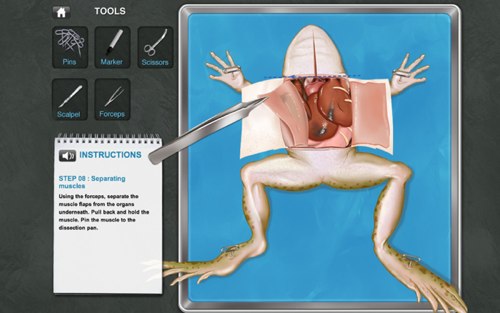
"content": "\u003cp>\u003ca rel=\"attachment wp-att-11474\" href=\"http://ww2.kqed.org/mindshift/2011/05/animal-dissection-theres-an-app-for-that/frog_diss/\">\u003c/a>\u003ca rel=\"attachment wp-att-11474\" href=\"http://ww2.kqed.org/mindshift/2011/05/animal-dissection-theres-an-app-for-that/frog_diss/\">\u003cimg class=\"alignleft size-medium wp-image-11474\" title=\"Frog_diss\" src=\"http://ww2.kqed.org/mindshift/wp-content/uploads/sites/23/2011/05/Frog_diss-300x187.jpg\" alt=\"\" width=\"300\" height=\"187\">\u003c/a>Animal dissection is one of the most controversial topics in science education. Scientists, teachers, animal rights activists, and parents and students all have a opinion about whether animal dissection is necessary or even educational. But despite strong arguments on both sides, it remains a core part of many schools' biology curriculum.\u003c/p>\n\u003cp>In addition to controversies about the ethics and utility of live animal dissection, many schools now also face financial pressures that make the cost of equipping classrooms and science labs with dissection kits and frog specimens prohibitive.\u003c/p>\n\u003cp>And that's where the ubiquitous phrase \"There's an app for that\" comes in. The educational software maker \u003ca href=\"http://www.punflay.com\">Punflay\u003c/a> provides one alternative to live animal dissections. Punflay has built dissection apps, available on \u003ca href=\"http://itunes.apple.com/us/app/frog-dissection/id422580192?mt=12\">iPad and desktop\u003c/a>, which simulate the dissection process. Currently Punflay has two versions: frog and rat dissection.\u003c/p>\n\u003cp>Punflay's apps provide step-by-step instructions that move a student through the actual dissection process. The app simulates that process and uses virtualized dissection instruments -- pins, scalpels, markers, and forceps -- just as students would in real life.\u003c/p>\n\u003cp>As students work through the various anatomical systems, they can view 3D images of the internal organs. They can also learn information about different types of frogs, frogs' life cycle, comparisons of frogs' and humans' anatomy, as well as annotated descriptions of the various frog organs.\u003c!--more-->\u003c/p>\n\u003cp>[ad fullwidth]\u003c/p>\n\u003cp>Punflay's apps have been nominated for several \u003ca href=\"http://www.pr.com/press-release/318566\">educational awards\u003c/a> (and was awarded PETA's Mark Twain Ethical Science Award too). But while it has provided a cheaper and more ethical alternative to live animal dissection, does a virtual dissection process really give students the same experience as hands-on learning? While these apps may give students an accurate depiction of what a frog or rat's anatomy looks like, can the experience of cutting into an animal offer the same learning experience?\u003c/p>\n\u003cp>\u003c/p>\n\u003cp>These questions aren't new as there have been virtual dissection apps for over a decade. As the technology improves to make these educational experiences better, will hands-on practice be necessary?\u003c/p>\n\n",
"disqusIdentifier": "11473 http://blogs.kqed.org/mindshift/?p=11473",
"disqusUrl": "https://ww2.kqed.org/mindshift/2011/05/11/animal-dissection-theres-an-app-for-that/",
"stats": {
"hasVideo": false,
"hasChartOrMap": false,
"hasAudio": false,
"hasPolis": false,
"wordCount": 341,
"hasGoogleForm": false,
"hasGallery": false,
"hasHearkenModule": false,
"iframeSrcs": [],
"paragraphCount": 9
},
"modified": 1305130553,
"excerpt": null,
"headData": {
"twImgId": "",
"twTitle": "",
"ogTitle": "",
"ogImgId": "",
"twDescription": "",
"description": "Animal dissection is one of the most controversial topics in science education. Scientists, teachers, animal rights activists, and parents and students all have a opinion about whether animal dissection is necessary or even educational. But despite strong arguments on both sides, it remains a core part of many schools' biology curriculum. In addition to controversies",
"title": "Animal Dissection? There's an App for That | KQED",
"ogDescription": "",
"schema": {
"@context": "https://schema.org",
"@type": "Article",
"headline": "Animal Dissection? There's an App for That",
"datePublished": "2011-05-11T09:15:46-07:00",
"dateModified": "2011-05-11T09:15:53-07:00",
"image": "https://cdn.kqed.org/wp-content/uploads/2020/02/KQED-OG-Image@1x.png"
}
},
"guestAuthors": [],
"slug": "animal-dissection-theres-an-app-for-that",
"status": "publish",
"path": "/mindshift/11473/animal-dissection-theres-an-app-for-that",
"audioTrackLength": null,
"parsedContent": [
{
"type": "contentString",
"content": "\u003cdiv class=\"post-body\">\u003cp>\u003cp>\u003ca rel=\"attachment wp-att-11474\" href=\"http://ww2.kqed.org/mindshift/2011/05/animal-dissection-theres-an-app-for-that/frog_diss/\">\u003c/a>\u003ca rel=\"attachment wp-att-11474\" href=\"http://ww2.kqed.org/mindshift/2011/05/animal-dissection-theres-an-app-for-that/frog_diss/\">\u003cimg class=\"alignleft size-medium wp-image-11474\" title=\"Frog_diss\" src=\"http://ww2.kqed.org/mindshift/wp-content/uploads/sites/23/2011/05/Frog_diss-300x187.jpg\" alt=\"\" width=\"300\" height=\"187\">\u003c/a>Animal dissection is one of the most controversial topics in science education. Scientists, teachers, animal rights activists, and parents and students all have a opinion about whether animal dissection is necessary or even educational. But despite strong arguments on both sides, it remains a core part of many schools' biology curriculum.\u003c/p>\n\u003cp>In addition to controversies about the ethics and utility of live animal dissection, many schools now also face financial pressures that make the cost of equipping classrooms and science labs with dissection kits and frog specimens prohibitive.\u003c/p>\n\u003cp>And that's where the ubiquitous phrase \"There's an app for that\" comes in. The educational software maker \u003ca href=\"http://www.punflay.com\">Punflay\u003c/a> provides one alternative to live animal dissections. Punflay has built dissection apps, available on \u003ca href=\"http://itunes.apple.com/us/app/frog-dissection/id422580192?mt=12\">iPad and desktop\u003c/a>, which simulate the dissection process. Currently Punflay has two versions: frog and rat dissection.\u003c/p>\n\u003cp>Punflay's apps provide step-by-step instructions that move a student through the actual dissection process. The app simulates that process and uses virtualized dissection instruments -- pins, scalpels, markers, and forceps -- just as students would in real life.\u003c/p>\n\u003cp>As students work through the various anatomical systems, they can view 3D images of the internal organs. They can also learn information about different types of frogs, frogs' life cycle, comparisons of frogs' and humans' anatomy, as well as annotated descriptions of the various frog organs.\u003c!--more-->\u003c/p>\n\u003cp>\u003c/p>\u003c/div>",
"attributes": {
"named": {},
"numeric": []
}
},
{
"type": "component",
"content": "",
"name": "ad",
"attributes": {
"named": {
"label": "fullwidth"
},
"numeric": [
"fullwidth"
]
}
},
{
"type": "contentString",
"content": "\u003cdiv class=\"post-body\">\u003cp>\u003c/p>\n\u003cp>Punflay's apps have been nominated for several \u003ca href=\"http://www.pr.com/press-release/318566\">educational awards\u003c/a> (and was awarded PETA's Mark Twain Ethical Science Award too). But while it has provided a cheaper and more ethical alternative to live animal dissection, does a virtual dissection process really give students the same experience as hands-on learning? While these apps may give students an accurate depiction of what a frog or rat's anatomy looks like, can the experience of cutting into an animal offer the same learning experience?\u003c/p>\n\u003cp>\u003c/p>\n\u003cp>These questions aren't new as there have been virtual dissection apps for over a decade. As the technology improves to make these educational experiences better, will hands-on practice be necessary?\u003c/p>\n\n\u003c/div>\u003c/p>",
"attributes": {
"named": {},
"numeric": []
}
}
],
"link": "/mindshift/11473/animal-dissection-theres-an-app-for-that",
"authors": [
"4352"
],
"categories": [
"mindshift_193"
],
"tags": [
"mindshift_134",
"mindshift_492",
"mindshift_47"
],
"featImg": "mindshift_11474",
"label": "mindshift"
},
"mindshift_11481": {
"type": "posts",
"id": "mindshift_11481",
"meta": {
"index": "posts_1716263798",
"site": "mindshift",
"id": "11481",
"score": null,
"sort": [
1305071163000
]
},
"parent": 0,
"labelTerm": {
"site": "mindshift"
},
"blocks": [],
"publishDate": 1305071163,
"format": "aside",
"disqusTitle": "Plagiarism or Paraphrasing: Does it Matter Anymore?",
"title": "Plagiarism or Paraphrasing: Does it Matter Anymore?",
"headTitle": "MindShift | KQED News",
"content": "\u003cp>Last week's post about how the \u003ca href=\"http://ww2.kqed.org/mindshift/2011/05/how-the-internet-affects-plagiarism/\">Internet affects plagiarism \u003c/a>brought up some interesting points of discussion.\u003c/p>\n\u003cp>Readers are parsing the difference between copying information verbatim without citing the source, and paraphrasing information gleaned from sources like Wikipedia.\u003c/p>\n\u003cp>One reader writes:\u003c/p>\n\u003cblockquote>\u003cp>As a graduate student and researcher, \u003cstrong>80% of what I do is not expressing original thoughts, but accurately understanding, coherently organizing, and properly attributing other people's thoughts. \u003c/strong>I realize TurnItIn focuses on essays and term papers, not research, but perhaps what we really need is better education on how to attribute and use sources.\u003c/p>\u003c/blockquote>\n\u003cp>Another reader takes a step back and frames the conversation in terms of information ownership:\u003c/p>\n\u003cblockquote>\u003cp>We are entering an age where ownership of information is becoming increasingly shared or indeterminate. Therefore, it's time to re-think the concept of plagiarism.\u003c/p>\n\u003cp>This young generation of thinkers sees intellectual property very differently than my older generation does. I believe we are not far from an era where most information is considered public property and \u003cstrong>one's intellectual value is measured by what one can do with information rather than by how much one knows. In this new world, plagiarism will become irrelevant.\u003c/strong> \u003c!--more-->Of course, those who reject my hypothesis can always use technological solutions to address this fundamentally technological problem. Personally, I'd rather cultivate a paradigm shift in my own thinking about what I truly value in student writing. Changing my old attitudes is preferable to wrestling with out-dated notions of plagiarism that are doomed to become irrelevant by the middle of the 21st century. Like it or not, this new generation is going to re-define much of what us old timers take for granted.\u003c/p>\u003c/blockquote>\n\u003cp>A reference librarian says she believes Wikipedia is a legitimate resource to begin research, and paraphrasing is not plagiarism.\u003c/p>\n\u003cblockquote>\u003cp>I explain that it is perfectly okay to use Wikipedia to start your research, because it can guide you to more specific sources.\u003cstrong> It is also okay to copy ideas from other sources, as long as you understand those ideas and can put them in your own words. After all, it is not reasonable to ask a sixteen year old to come up with an original insight into Shakespeare, the Civil Rights movement or the use of antibiotics.\u003c/strong> But we can certainly do a better job in helping those students understand what might constitute legitimate information sharing from legitimate sources as opposed to short-cuts that amount to cheating.\u003c/p>\u003c/blockquote>\n\u003cp>Another reader believes that using another source's idea without reference is also plagiarism, whether or not the same words are used.\u003c/p>\n\u003cblockquote>\u003cp>The whole point of plagiarism (which many confuse with copyright which punishes copying exact words) is that you're copying someone else's *idea* without attribution, not just their exact words.\u003c/p>\u003c/blockquote>\n\u003cp>This brings me back to the idea, written by Esther Wojcicki, about \u003ca href=\"http://ww2.kqed.org/mindshift/2011/01/why-every-student-should-learn-the-skills-of-a-journalist/\">the importance of students learning the skills of a journalist\u003c/a>: Collect and confirm information.\u003c/p>\n\u003cp>[ad fullwidth]\u003c/p>\u003cp>\u003c/p>\n",
"disqusIdentifier": "11481 http://blogs.kqed.org/mindshift/?p=11481",
"disqusUrl": "https://ww2.kqed.org/mindshift/2011/05/10/plagiarism-or-paraphrasing-does-it-matter-anymore/",
"stats": {
"hasVideo": false,
"hasChartOrMap": false,
"hasAudio": false,
"hasPolis": false,
"wordCount": 492,
"hasGoogleForm": false,
"hasGallery": false,
"hasHearkenModule": false,
"iframeSrcs": [],
"paragraphCount": 14
},
"modified": 1305071163,
"excerpt": null,
"headData": {
"twImgId": "",
"twTitle": "",
"ogTitle": "",
"ogImgId": "",
"twDescription": "",
"description": "Last week's post about how the Internet affects plagiarism brought up some interesting points of discussion. Readers are parsing the difference between copying information verbatim without citing the source, and paraphrasing information gleaned from sources like Wikipedia. One reader writes: As a graduate student and researcher, 80% of what I do is not expressing original",
"title": "Plagiarism or Paraphrasing: Does it Matter Anymore? | KQED",
"ogDescription": "",
"schema": {
"@context": "https://schema.org",
"@type": "Article",
"headline": "Plagiarism or Paraphrasing: Does it Matter Anymore?",
"datePublished": "2011-05-10T16:46:03-07:00",
"dateModified": "2011-05-10T16:46:03-07:00",
"image": "https://cdn.kqed.org/wp-content/uploads/2020/02/KQED-OG-Image@1x.png"
}
},
"guestAuthors": [],
"slug": "plagiarism-or-paraphrasing-does-it-matter-anymore",
"status": "publish",
"path": "/mindshift/11481/plagiarism-or-paraphrasing-does-it-matter-anymore",
"audioTrackLength": null,
"parsedContent": [
{
"type": "contentString",
"content": "\u003cdiv class=\"post-body\">\u003cp>\u003cp>Last week's post about how the \u003ca href=\"http://ww2.kqed.org/mindshift/2011/05/how-the-internet-affects-plagiarism/\">Internet affects plagiarism \u003c/a>brought up some interesting points of discussion.\u003c/p>\n\u003cp>Readers are parsing the difference between copying information verbatim without citing the source, and paraphrasing information gleaned from sources like Wikipedia.\u003c/p>\n\u003cp>One reader writes:\u003c/p>\n\u003cblockquote>\u003cp>As a graduate student and researcher, \u003cstrong>80% of what I do is not expressing original thoughts, but accurately understanding, coherently organizing, and properly attributing other people's thoughts. \u003c/strong>I realize TurnItIn focuses on essays and term papers, not research, but perhaps what we really need is better education on how to attribute and use sources.\u003c/p>\u003c/blockquote>\n\u003cp>Another reader takes a step back and frames the conversation in terms of information ownership:\u003c/p>\n\u003cblockquote>\u003cp>We are entering an age where ownership of information is becoming increasingly shared or indeterminate. Therefore, it's time to re-think the concept of plagiarism.\u003c/p>\n\u003cp>This young generation of thinkers sees intellectual property very differently than my older generation does. I believe we are not far from an era where most information is considered public property and \u003cstrong>one's intellectual value is measured by what one can do with information rather than by how much one knows. In this new world, plagiarism will become irrelevant.\u003c/strong> \u003c!--more-->Of course, those who reject my hypothesis can always use technological solutions to address this fundamentally technological problem. Personally, I'd rather cultivate a paradigm shift in my own thinking about what I truly value in student writing. Changing my old attitudes is preferable to wrestling with out-dated notions of plagiarism that are doomed to become irrelevant by the middle of the 21st century. Like it or not, this new generation is going to re-define much of what us old timers take for granted.\u003c/p>\u003c/blockquote>\n\u003cp>A reference librarian says she believes Wikipedia is a legitimate resource to begin research, and paraphrasing is not plagiarism.\u003c/p>\n\u003cblockquote>\u003cp>I explain that it is perfectly okay to use Wikipedia to start your research, because it can guide you to more specific sources.\u003cstrong> It is also okay to copy ideas from other sources, as long as you understand those ideas and can put them in your own words. After all, it is not reasonable to ask a sixteen year old to come up with an original insight into Shakespeare, the Civil Rights movement or the use of antibiotics.\u003c/strong> But we can certainly do a better job in helping those students understand what might constitute legitimate information sharing from legitimate sources as opposed to short-cuts that amount to cheating.\u003c/p>\u003c/blockquote>\n\u003cp>Another reader believes that using another source's idea without reference is also plagiarism, whether or not the same words are used.\u003c/p>\n\u003cblockquote>\u003cp>The whole point of plagiarism (which many confuse with copyright which punishes copying exact words) is that you're copying someone else's *idea* without attribution, not just their exact words.\u003c/p>\u003c/blockquote>\n\u003cp>This brings me back to the idea, written by Esther Wojcicki, about \u003ca href=\"http://ww2.kqed.org/mindshift/2011/01/why-every-student-should-learn-the-skills-of-a-journalist/\">the importance of students learning the skills of a journalist\u003c/a>: Collect and confirm information.\u003c/p>\n\u003cp>\u003c/p>\u003c/div>",
"attributes": {
"named": {},
"numeric": []
}
},
{
"type": "component",
"content": "",
"name": "ad",
"attributes": {
"named": {
"label": "fullwidth"
},
"numeric": [
"fullwidth"
]
}
},
{
"type": "contentString",
"content": "\u003cdiv class=\"post-body\">\u003cp>\u003c/p>\u003cp>\u003c/p>\n\u003c/div>\u003c/p>",
"attributes": {
"named": {},
"numeric": []
}
}
],
"link": "/mindshift/11481/plagiarism-or-paraphrasing-does-it-matter-anymore",
"authors": [
"180"
],
"categories": [
"mindshift_193"
],
"tags": [
"mindshift_482",
"mindshift_455"
],
"featImg": "mindshift_11486",
"label": "mindshift"
},
"mindshift_11432": {
"type": "posts",
"id": "mindshift_11432",
"meta": {
"index": "posts_1716263798",
"site": "mindshift",
"id": "11432",
"score": null,
"sort": [
1305047020000
]
},
"parent": 0,
"labelTerm": {
"site": "mindshift"
},
"blocks": [],
"publishDate": 1305047020,
"format": "aside",
"disqusTitle": "Seven Questions to Ask About Texting in Class",
"title": "Seven Questions to Ask About Texting in Class",
"headTitle": "MindShift | KQED News",
"content": "\u003cp>\u003ca rel=\"attachment wp-att-11449\" href=\"http://ww2.kqed.org/mindshift/2011/05/seven-questions-to-ask-about-texting-in-class/attachment/87549956/\">\u003cimg class=\"size-medium wp-image-11449\" title=\"87549956\" src=\"http://ww2.kqed.org/mindshift/wp-content/uploads/sites/23/2011/05/87549956-300x193.jpg\" alt=\"\" width=\"300\" height=\"193\">\u003c/a>\u003c/p>\n\u003cp>Despite their \u003ca href=\"http://pewresearch.org/pubs/1572/teens-cell-phones-text-messages\">ubiquity\u003c/a> among students, mobile phones are still viewed as contraband in most classrooms. Students are told to turn their phones off, leave them in their lockers, or leave them at home. This response to what is arguably the most ubiquitous 1-to-1 computing device available in our schools today undoubtedly led many students to list bans on mobile phones as one of the biggest \u003ca href=\"http://ww2.kqed.org/mindshift/2011/04/students-complain-about-archaic-internet-blocking-rules/\">obstacles to technology use \u003c/a>in the recent \u003ca href=\"http://www.tomorrow.org/speakup/speakup_congress.html\">Speak Up 2010 report\u003c/a>.\u003c/p>\n\u003cp>That same report \u003ca href=\"http://ww2.kqed.org/mindshift/2011/04/parents-weigh-in-on-paying-for-mobile-access-in-schools/\">also indicated\u003c/a> that parents and students were paying for these devices themselves -- and were more than willing to purchase data plans if mobile phones would be accepted in the classroom. This willingness on the part of\u003ca href=\"http://ww2.kqed.org/mindshift/2011/04/parents-weigh-in-on-paying-for-mobile-access-in-schools/\"> parents to subsidize technology in the classroom\u003c/a> could free up valuable school funds for purposes other than buying hardware. If for no other reason, this may be cause to think twice about blanket bans on mobile phones in the classroom.\u003c/p>\n\u003cp>Meanwhile, a number of projects underway are moving forward in exploring how these devices can be used for educational purposes in countries outside the U.S. where there are far fewer computers per household.\u003c/p>\n\u003cp>The \u003ca href=\"http://blogs.worldbank.org/edutech/sms-education-pakistan\">World Bank\u003c/a>'s ICT and education specialist Michael Trucano recently highlighted a number of interesting pilot projects in Pakistan that are demonstrating how those with even very low-end mobile phones can leverage these devices to open up new learning opportunities.\u003c/p>\n\u003cp>[ad fullwidth]\u003c/p>\n\u003cp>Trucano describes a project at Asghar Mall College in Rawalapindi where students receive a daily vocabulary quiz via SMS (mobile phone text). The multiple choice quiz is addressed to each student individually. The students reply to the quiz via SMS, then receive an automated response based on their answer. This response notes whether or not the student was correct, and uses the correct answer in a sample sentence.\u003c/p>\n\u003cblockquote>\u003cp>\"This sort of thing is no substitute for school, of course,\" writes Trucano. \"But, given current test messaging rates in Pakistan -- a country with some of the fastest growth in recent years in text messaging in the Asia-Pacific region, as well as some of the lowest tarif rates -- it is quite cheap. It is 'on-the-go.' It is supplemental to what is being taught in the classroom, and increasingly easy to do, given the technology tools and code base out there. While Pakistan may not see high household penetration rates of desktop computers connected to the Internet for many, many years to come, most every household already has access to a small connected 'computer' of a different sort -- the mobile phone -- and this project is seeking to capitalize on this reality.\"\u003c/p>\u003c/blockquote>\n\u003cp>Trucano also notes that some of these students may have been educated in very large, lecture-based classrooms up until now, and the feedback via SMS may be their first experience with this sort of \"personalized\" response.\u003c/p>\n\u003cp>In that vein, some questions to consider:\u003c!--more-->\u003c/p>\n\u003cul>\n\u003cli>What's the impact of messages related to classwork when they're part of a large stream of messages students receive from friends, family, horoscope advice, sports scores and so on?\u003c/li>\n\u003cli>What sort of learning happens best (or is reinforced best, perhaps) via SMS?\u003c/li>\n\u003cli>How can these sorts of messages be adapted to students' progress and how can they be sequenced and scaffolded over time?\u003c/li>\n\u003cli>How many students are able and willing to participate in these sorts of educational activities via their mobile phone? Can students afford the texting fees? Do they want to use their text-messaging allocations for this purpose?\u003c/li>\n\u003cli>Can we subsidize this sort of SMS traffic for student populations?\u003c/li>\n\u003cli>If these sorts of messages between home and school become more common, will there be a way to include parents and parents' phones in the loop?\u003c/li>\n\u003cli>Can these quizzes be sent to parents' phones so that they can have the opportunity to pose a question to their children? \"This would, in a very small, modest way, alert parents to what students are supposed to be learning,\" suggests Trucano. \"If students don't know the answer, this may trigger parents to push their kids more, and/or to question whether the school is doing a good job in this area (including whether or not the official curriculum is being followed at all!).\"\u003c/li>\n\u003c/ul>\n\u003cp>Although the World Bank blog post focuses primarily on the pilot project in Pakistan, there are a number of other text-messaging apps and programs out there, including \u003ca href=\"http://www.studyboost.com\">StudyBoost\u003c/a> and \u003ca href=\"http://remind101.com\">Remind101\u003c/a>, that let teachers send quizzes and assignments \"home\" via SMS and that let students run through flashcards and study guides.\u003c/p>\n\u003cp>\u003c/p>\n\u003cp>SMS educational apps may seem incredibly simple, but they may well be aimed at just the communication medium that students are most likely to use -- text-messaging on their mobile phones. How can schools and parents take better advantage of students' phone usage and ownership -- even if it isn't something that necessarily happens \u003cem>in\u003c/em> the classroom?\u003c/p>\n\n",
"disqusIdentifier": "11432 http://blogs.kqed.org/mindshift/?p=11432",
"disqusUrl": "https://ww2.kqed.org/mindshift/2011/05/10/seven-questions-to-ask-about-texting-in-class/",
"stats": {
"hasVideo": false,
"hasChartOrMap": false,
"hasAudio": false,
"hasPolis": false,
"wordCount": 812,
"hasGoogleForm": false,
"hasGallery": false,
"hasHearkenModule": false,
"iframeSrcs": [],
"paragraphCount": 13
},
"modified": 1305064639,
"excerpt": null,
"headData": {
"twImgId": "",
"twTitle": "",
"ogTitle": "",
"ogImgId": "",
"twDescription": "",
"description": "Despite their ubiquity among students, mobile phones are still viewed as contraband in most classrooms. Students are told to turn their phones off, leave them in their lockers, or leave them at home. This response to what is arguably the most ubiquitous 1-to-1 computing device available in our schools today undoubtedly led many students to",
"title": "Seven Questions to Ask About Texting in Class | KQED",
"ogDescription": "",
"schema": {
"@context": "https://schema.org",
"@type": "Article",
"headline": "Seven Questions to Ask About Texting in Class",
"datePublished": "2011-05-10T10:03:40-07:00",
"dateModified": "2011-05-10T14:57:19-07:00",
"image": "https://cdn.kqed.org/wp-content/uploads/2020/02/KQED-OG-Image@1x.png"
}
},
"guestAuthors": [],
"slug": "seven-questions-to-ask-about-texting-in-class",
"status": "publish",
"path": "/mindshift/11432/seven-questions-to-ask-about-texting-in-class",
"audioTrackLength": null,
"parsedContent": [
{
"type": "contentString",
"content": "\u003cdiv class=\"post-body\">\u003cp>\u003cp>\u003ca rel=\"attachment wp-att-11449\" href=\"http://ww2.kqed.org/mindshift/2011/05/seven-questions-to-ask-about-texting-in-class/attachment/87549956/\">\u003cimg class=\"size-medium wp-image-11449\" title=\"87549956\" src=\"http://ww2.kqed.org/mindshift/wp-content/uploads/sites/23/2011/05/87549956-300x193.jpg\" alt=\"\" width=\"300\" height=\"193\">\u003c/a>\u003c/p>\n\u003cp>Despite their \u003ca href=\"http://pewresearch.org/pubs/1572/teens-cell-phones-text-messages\">ubiquity\u003c/a> among students, mobile phones are still viewed as contraband in most classrooms. Students are told to turn their phones off, leave them in their lockers, or leave them at home. This response to what is arguably the most ubiquitous 1-to-1 computing device available in our schools today undoubtedly led many students to list bans on mobile phones as one of the biggest \u003ca href=\"http://ww2.kqed.org/mindshift/2011/04/students-complain-about-archaic-internet-blocking-rules/\">obstacles to technology use \u003c/a>in the recent \u003ca href=\"http://www.tomorrow.org/speakup/speakup_congress.html\">Speak Up 2010 report\u003c/a>.\u003c/p>\n\u003cp>That same report \u003ca href=\"http://ww2.kqed.org/mindshift/2011/04/parents-weigh-in-on-paying-for-mobile-access-in-schools/\">also indicated\u003c/a> that parents and students were paying for these devices themselves -- and were more than willing to purchase data plans if mobile phones would be accepted in the classroom. This willingness on the part of\u003ca href=\"http://ww2.kqed.org/mindshift/2011/04/parents-weigh-in-on-paying-for-mobile-access-in-schools/\"> parents to subsidize technology in the classroom\u003c/a> could free up valuable school funds for purposes other than buying hardware. If for no other reason, this may be cause to think twice about blanket bans on mobile phones in the classroom.\u003c/p>\n\u003cp>Meanwhile, a number of projects underway are moving forward in exploring how these devices can be used for educational purposes in countries outside the U.S. where there are far fewer computers per household.\u003c/p>\n\u003cp>The \u003ca href=\"http://blogs.worldbank.org/edutech/sms-education-pakistan\">World Bank\u003c/a>'s ICT and education specialist Michael Trucano recently highlighted a number of interesting pilot projects in Pakistan that are demonstrating how those with even very low-end mobile phones can leverage these devices to open up new learning opportunities.\u003c/p>\n\u003cp>\u003c/p>\u003c/div>",
"attributes": {
"named": {},
"numeric": []
}
},
{
"type": "component",
"content": "",
"name": "ad",
"attributes": {
"named": {
"label": "fullwidth"
},
"numeric": [
"fullwidth"
]
}
},
{
"type": "contentString",
"content": "\u003cdiv class=\"post-body\">\u003cp>\u003c/p>\n\u003cp>Trucano describes a project at Asghar Mall College in Rawalapindi where students receive a daily vocabulary quiz via SMS (mobile phone text). The multiple choice quiz is addressed to each student individually. The students reply to the quiz via SMS, then receive an automated response based on their answer. This response notes whether or not the student was correct, and uses the correct answer in a sample sentence.\u003c/p>\n\u003cblockquote>\u003cp>\"This sort of thing is no substitute for school, of course,\" writes Trucano. \"But, given current test messaging rates in Pakistan -- a country with some of the fastest growth in recent years in text messaging in the Asia-Pacific region, as well as some of the lowest tarif rates -- it is quite cheap. It is 'on-the-go.' It is supplemental to what is being taught in the classroom, and increasingly easy to do, given the technology tools and code base out there. While Pakistan may not see high household penetration rates of desktop computers connected to the Internet for many, many years to come, most every household already has access to a small connected 'computer' of a different sort -- the mobile phone -- and this project is seeking to capitalize on this reality.\"\u003c/p>\u003c/blockquote>\n\u003cp>Trucano also notes that some of these students may have been educated in very large, lecture-based classrooms up until now, and the feedback via SMS may be their first experience with this sort of \"personalized\" response.\u003c/p>\n\u003cp>In that vein, some questions to consider:\u003c!--more-->\u003c/p>\n\u003cul>\n\u003cli>What's the impact of messages related to classwork when they're part of a large stream of messages students receive from friends, family, horoscope advice, sports scores and so on?\u003c/li>\n\u003cli>What sort of learning happens best (or is reinforced best, perhaps) via SMS?\u003c/li>\n\u003cli>How can these sorts of messages be adapted to students' progress and how can they be sequenced and scaffolded over time?\u003c/li>\n\u003cli>How many students are able and willing to participate in these sorts of educational activities via their mobile phone? Can students afford the texting fees? Do they want to use their text-messaging allocations for this purpose?\u003c/li>\n\u003cli>Can we subsidize this sort of SMS traffic for student populations?\u003c/li>\n\u003cli>If these sorts of messages between home and school become more common, will there be a way to include parents and parents' phones in the loop?\u003c/li>\n\u003cli>Can these quizzes be sent to parents' phones so that they can have the opportunity to pose a question to their children? \"This would, in a very small, modest way, alert parents to what students are supposed to be learning,\" suggests Trucano. \"If students don't know the answer, this may trigger parents to push their kids more, and/or to question whether the school is doing a good job in this area (including whether or not the official curriculum is being followed at all!).\"\u003c/li>\n\u003c/ul>\n\u003cp>Although the World Bank blog post focuses primarily on the pilot project in Pakistan, there are a number of other text-messaging apps and programs out there, including \u003ca href=\"http://www.studyboost.com\">StudyBoost\u003c/a> and \u003ca href=\"http://remind101.com\">Remind101\u003c/a>, that let teachers send quizzes and assignments \"home\" via SMS and that let students run through flashcards and study guides.\u003c/p>\n\u003cp>\u003c/p>\n\u003cp>SMS educational apps may seem incredibly simple, but they may well be aimed at just the communication medium that students are most likely to use -- text-messaging on their mobile phones. How can schools and parents take better advantage of students' phone usage and ownership -- even if it isn't something that necessarily happens \u003cem>in\u003c/em> the classroom?\u003c/p>\n\n\u003c/div>\u003c/p>",
"attributes": {
"named": {},
"numeric": []
}
}
],
"link": "/mindshift/11432/seven-questions-to-ask-about-texting-in-class",
"authors": [
"4352"
],
"categories": [
"mindshift_195",
"mindshift_193"
],
"tags": [
"mindshift_187",
"mindshift_490"
],
"featImg": "mindshift_11449",
"label": "mindshift"
},
"mindshift_11414": {
"type": "posts",
"id": "mindshift_11414",
"meta": {
"index": "posts_1716263798",
"site": "mindshift",
"id": "11414",
"score": null,
"sort": [
1304963953000
]
},
"parent": 0,
"labelTerm": {
"site": "mindshift"
},
"blocks": [],
"publishDate": 1304963953,
"format": "aside",
"disqusTitle": "Can Learning Really Be Fun and Games?",
"title": "Can Learning Really Be Fun and Games?",
"headTitle": "MindShift | KQED News",
"content": "\u003cp>[youtube http://www.youtube.com/watch?v=OSJ5LwAXxLk]\u003c/p>\n\u003cp>For those wondering what a game-based classroom looks like in a traditional school, take a peek into Ananth Pai's third-grade class in Parkview/Center Point Elementary school in Maplewood, Minnesota.\u003c/p>\n\u003cp>Using his own money and grants that he applied for, Pai has managed to round up seven laptops, two desktops 11 Nintendo DS's, 18 games for math, reading, vocabulary, geography, and 21 digital voice recorders.\u003c/p>\n\u003caside class=\"pullquote alignleft\">The class's reading math scores went from below average for third grade to mid-fourth-grade level.\u003c/aside>\n\u003cp>Students compete in games with other kids across the world, learn about fractions and decimals by \u003ca href=\"http://ma-gb-en-pr.whizz.com.s3.amazonaws.com/flash/ex/MA_GBR_0925CAx0100.swf\">riding a virtual ghost train\u003c/a>, for instance, work on their reading skills on sites like \u003ca href=\"http://www.raz-kids.com/main/Login\">Razkids\u003c/a>, figure out whether they can \u003ca href=\"http://www.mangahigh.com/en_us/games/flowerpowerlite\">make a living by growing flowers\u003c/a>, learn about their constitutional rights with the \u003ca href=\"http://www.icivics.org/\">Go to Court Game\u003c/a>, and so on.\u003c/p>\n\u003cp>If parents are wondering what their kids do with the Nintendo DS in the classroom, Pai's students will tell them about Brain Age 2, the word scramble game, or Math Blaster, which helps students practice their multiplication.\u003cspan style=\"font-size: x-small\">\u003c!--more-->\u003cbr>\n\u003c/span>\u003c/p>\n\u003cp>[ad fullwidth]\u003c/p>\n\u003cp> \u003c/p>\n\u003cp>In the video interview above, Pai talks about how he realized that with a 20-1 ratio in a third grade class (a luxury at this point in many American public schools), it would be difficult to help each student progress at his or her own level.\u003c/p>\n\u003cp>So he found websites he thought would work best for his class, and connected them \u003ca href=\"http://sites.google.com/site/teamdrillhead/home\">all to his own site\u003c/a>. Take a look at how he's organized the curriculum: Simple and intuitive.\u003c/p>\n\u003cp>He's divided Literacy into \u003cspan style=\"font-size: small\">\u003ca href=\"http://sites.google.com/site/teamdrillhead/home/literacy/decoding\">Decoding\u003c/a>\u003c/span>\u003ca href=\"http://sites.google.com/site/teamdrillhead/home/literacy/reading\">\u003cspan style=\"font-size: small\">, Reading\u003c/span>\u003c/a>\u003cspan style=\"font-size: small\">\u003ca href=\"http://sites.google.com/site/teamdrillhead/home/literacy/syllabication\">, Syllabication\u003c/a>\u003c/span>\u003ca href=\"http://sites.google.com/site/teamdrillhead/home/literacy/writing\">, Writing\u003c/a> \u003cspan style=\"font-size: small\">\u003ca href=\"http://sites.google.com/site/teamdrillhead/home/literacy/vocabulary\">, Vocabulary & Spelling\u003c/a>\u003c/span>\u003cspan style=\"font-size: small\">\u003ca href=\"http://sites.google.com/site/teamdrillhead/home/literacy/grammar\">, Grammar\u003c/a>\u003c/span>\u003cspan style=\"font-size: small\">\u003ca href=\"http://sites.google.com/site/teamdrillhead/home/literacy/things-that-make-reading-and-writing-interesting\">, Literary Devices, \u003c/a>\u003c/span>\u003ca href=\"http://sites.google.com/site/teamdrillhead/home/literacy/genre\">and Genre.\u003c/a>\u003c/p>\n\u003cp>Similarly, Math is divided into \u003ca href=\"http://sites.google.com/site/teamdrillhead/home/math/geometry\">Geometry\u003c/a>, \u003ca href=\"http://sites.google.com/site/teamdrillhead/home/math/number-sense--computation\">Number Sense & Computation\u003c/a>, \u003ca href=\"http://sites.google.com/site/teamdrillhead/home/math/algebra\">Algebra\u003c/a>, \u003ca href=\"http://www.learnalberta.ca/content/mejhm/index.html\" rel=\"nofollow\">Data Analysis, Math Challenge,\u003c/a> \u003ca href=\"http://www.amathsdictionaryforkids.com/dictionary.html\" rel=\"nofollow\">Math Dictionary,\u003c/a> \u003ca href=\"http://www.learnalberta.ca/content/me3usa/flash/index.html?goLesson=14\" rel=\"nofollow\">Easier Math Dictionary\u003c/a>, and other general games.\u003c/p>\n\u003cp>He's also got sites and games for categories like\u003ca href=\"http://sites.google.com/site/teamdrillhead/home/we-can-work-things-out\"> Inquiry, Skills for Life\u003c/a>, \u003ca href=\"http://sites.google.com/site/teamdrillhead/home/health\">Health & Well Being\u003c/a>, and \u003ca href=\"http://sites.google.com/site/teamdrillhead/home/general\">Would You Like Hot Chocolate With That\u003c/a>?\u003c/p>\n\u003cp>Pai says that in a matter of four months, the class's reading and math scores went from below average for third grade to mid-fourth-grade level.\u003c/p>\n\u003cp>\u003ca href=\"http://ww2.kqed.org/mindshift/2011/05/can-learning-really-be-fun-and-games/screen-shot-2011-05-09-at-9-59-34-am/\" rel=\"attachment wp-att-11424\">\u003cimg class=\"alignright size-medium wp-image-11424\" title=\"Screen shot 2011-05-09 at 9.59.34 AM\" src=\"http://ww2.kqed.org/mindshift/wp-content/uploads/sites/23/2011/05/Screen-shot-2011-05-09-at-9.59.34-AM-300x176.png\" alt=\"\" width=\"300\" height=\"176\">\u003c/a>When \u003ca href=\"http://rstephens.blogspot.com/\">Robert Stephens\u003c/a>, founder of Geek Squad and CTO of Best Buy visited Pai's class recently, he was struck by not just the fact that technology was being used, but \u003cem>how\u003c/em> Pai organized the class.\u003c/p>\n\u003cp>\"He groups the kids on how their brains learn,\" Stephens said.\u003c/p>\n\u003cp>\u003c/p>\n\u003cp>From what I can tell, this is what learning should look like.\u003c/p>\n\n",
"disqusIdentifier": "11414 http://blogs.kqed.org/mindshift/?p=11414",
"disqusUrl": "https://ww2.kqed.org/mindshift/2011/05/09/can-learning-really-be-fun-and-games/",
"stats": {
"hasVideo": true,
"hasChartOrMap": false,
"hasAudio": false,
"hasPolis": false,
"wordCount": 427,
"hasGoogleForm": false,
"hasGallery": false,
"hasHearkenModule": false,
"iframeSrcs": [],
"paragraphCount": 16
},
"modified": 1363811752,
"excerpt": null,
"headData": {
"twImgId": "",
"twTitle": "",
"ogTitle": "",
"ogImgId": "",
"twDescription": "",
"description": " For those wondering what a game-based classroom looks like in a traditional school, take a peek into Ananth Pai's third-grade class in Parkview/Center Point Elementary school in Maplewood, Minnesota. Using his own money and grants that he applied for, Pai has managed to round up seven laptops, two desktops 11 Nintendo DS's, 18",
"title": "Can Learning Really Be Fun and Games? | KQED",
"ogDescription": "",
"schema": {
"@context": "https://schema.org",
"@type": "Article",
"headline": "Can Learning Really Be Fun and Games?",
"datePublished": "2011-05-09T10:59:13-07:00",
"dateModified": "2013-03-20T13:35:52-07:00",
"image": "https://cdn.kqed.org/wp-content/uploads/2020/02/KQED-OG-Image@1x.png"
}
},
"guestAuthors": [],
"slug": "can-learning-really-be-fun-and-games",
"status": "publish",
"path": "/mindshift/11414/can-learning-really-be-fun-and-games",
"audioTrackLength": null,
"parsedContent": [
{
"type": "contentString",
"content": "\u003cdiv class=\"post-body\">\u003cp>\u003cp>\u003c/p>\u003cp>\u003cspan class='utils-parseShortcode-shortcodes-__youtubeShortcode__embedYoutube'>\n \u003cspan class='utils-parseShortcode-shortcodes-__youtubeShortcode__embedYoutubeInside'>\n \u003ciframe\n loading='lazy'\n class='utils-parseShortcode-shortcodes-__youtubeShortcode__youtubePlayer'\n type='text/html'\n src='//www.youtube.com/embed/OSJ5LwAXxLk'\n title='//www.youtube.com/embed/OSJ5LwAXxLk'\n allowfullscreen='true'\n style='border:0;'>\u003c/iframe>\n \u003c/span>\n \u003c/span>\u003c/p>\u003cp>\u003c/p>\n\u003cp>For those wondering what a game-based classroom looks like in a traditional school, take a peek into Ananth Pai's third-grade class in Parkview/Center Point Elementary school in Maplewood, Minnesota.\u003c/p>\n\u003cp>Using his own money and grants that he applied for, Pai has managed to round up seven laptops, two desktops 11 Nintendo DS's, 18 games for math, reading, vocabulary, geography, and 21 digital voice recorders.\u003c/p>\n\u003caside class=\"pullquote alignleft\">The class's reading math scores went from below average for third grade to mid-fourth-grade level.\u003c/aside>\n\u003cp>Students compete in games with other kids across the world, learn about fractions and decimals by \u003ca href=\"http://ma-gb-en-pr.whizz.com.s3.amazonaws.com/flash/ex/MA_GBR_0925CAx0100.swf\">riding a virtual ghost train\u003c/a>, for instance, work on their reading skills on sites like \u003ca href=\"http://www.raz-kids.com/main/Login\">Razkids\u003c/a>, figure out whether they can \u003ca href=\"http://www.mangahigh.com/en_us/games/flowerpowerlite\">make a living by growing flowers\u003c/a>, learn about their constitutional rights with the \u003ca href=\"http://www.icivics.org/\">Go to Court Game\u003c/a>, and so on.\u003c/p>\n\u003cp>If parents are wondering what their kids do with the Nintendo DS in the classroom, Pai's students will tell them about Brain Age 2, the word scramble game, or Math Blaster, which helps students practice their multiplication.\u003cspan style=\"font-size: x-small\">\u003c!--more-->\u003cbr>\n\u003c/span>\u003c/p>\n\u003cp>\u003c/p>\u003c/div>",
"attributes": {
"named": {},
"numeric": []
}
},
{
"type": "component",
"content": "",
"name": "ad",
"attributes": {
"named": {
"label": "fullwidth"
},
"numeric": [
"fullwidth"
]
}
},
{
"type": "contentString",
"content": "\u003cdiv class=\"post-body\">\u003cp>\u003c/p>\n\u003cp> \u003c/p>\n\u003cp>In the video interview above, Pai talks about how he realized that with a 20-1 ratio in a third grade class (a luxury at this point in many American public schools), it would be difficult to help each student progress at his or her own level.\u003c/p>\n\u003cp>So he found websites he thought would work best for his class, and connected them \u003ca href=\"http://sites.google.com/site/teamdrillhead/home\">all to his own site\u003c/a>. Take a look at how he's organized the curriculum: Simple and intuitive.\u003c/p>\n\u003cp>He's divided Literacy into \u003cspan style=\"font-size: small\">\u003ca href=\"http://sites.google.com/site/teamdrillhead/home/literacy/decoding\">Decoding\u003c/a>\u003c/span>\u003ca href=\"http://sites.google.com/site/teamdrillhead/home/literacy/reading\">\u003cspan style=\"font-size: small\">, Reading\u003c/span>\u003c/a>\u003cspan style=\"font-size: small\">\u003ca href=\"http://sites.google.com/site/teamdrillhead/home/literacy/syllabication\">, Syllabication\u003c/a>\u003c/span>\u003ca href=\"http://sites.google.com/site/teamdrillhead/home/literacy/writing\">, Writing\u003c/a> \u003cspan style=\"font-size: small\">\u003ca href=\"http://sites.google.com/site/teamdrillhead/home/literacy/vocabulary\">, Vocabulary & Spelling\u003c/a>\u003c/span>\u003cspan style=\"font-size: small\">\u003ca href=\"http://sites.google.com/site/teamdrillhead/home/literacy/grammar\">, Grammar\u003c/a>\u003c/span>\u003cspan style=\"font-size: small\">\u003ca href=\"http://sites.google.com/site/teamdrillhead/home/literacy/things-that-make-reading-and-writing-interesting\">, Literary Devices, \u003c/a>\u003c/span>\u003ca href=\"http://sites.google.com/site/teamdrillhead/home/literacy/genre\">and Genre.\u003c/a>\u003c/p>\n\u003cp>Similarly, Math is divided into \u003ca href=\"http://sites.google.com/site/teamdrillhead/home/math/geometry\">Geometry\u003c/a>, \u003ca href=\"http://sites.google.com/site/teamdrillhead/home/math/number-sense--computation\">Number Sense & Computation\u003c/a>, \u003ca href=\"http://sites.google.com/site/teamdrillhead/home/math/algebra\">Algebra\u003c/a>, \u003ca href=\"http://www.learnalberta.ca/content/mejhm/index.html\" rel=\"nofollow\">Data Analysis, Math Challenge,\u003c/a> \u003ca href=\"http://www.amathsdictionaryforkids.com/dictionary.html\" rel=\"nofollow\">Math Dictionary,\u003c/a> \u003ca href=\"http://www.learnalberta.ca/content/me3usa/flash/index.html?goLesson=14\" rel=\"nofollow\">Easier Math Dictionary\u003c/a>, and other general games.\u003c/p>\n\u003cp>He's also got sites and games for categories like\u003ca href=\"http://sites.google.com/site/teamdrillhead/home/we-can-work-things-out\"> Inquiry, Skills for Life\u003c/a>, \u003ca href=\"http://sites.google.com/site/teamdrillhead/home/health\">Health & Well Being\u003c/a>, and \u003ca href=\"http://sites.google.com/site/teamdrillhead/home/general\">Would You Like Hot Chocolate With That\u003c/a>?\u003c/p>\n\u003cp>Pai says that in a matter of four months, the class's reading and math scores went from below average for third grade to mid-fourth-grade level.\u003c/p>\n\u003cp>\u003ca href=\"http://ww2.kqed.org/mindshift/2011/05/can-learning-really-be-fun-and-games/screen-shot-2011-05-09-at-9-59-34-am/\" rel=\"attachment wp-att-11424\">\u003cimg class=\"alignright size-medium wp-image-11424\" title=\"Screen shot 2011-05-09 at 9.59.34 AM\" src=\"http://ww2.kqed.org/mindshift/wp-content/uploads/sites/23/2011/05/Screen-shot-2011-05-09-at-9.59.34-AM-300x176.png\" alt=\"\" width=\"300\" height=\"176\">\u003c/a>When \u003ca href=\"http://rstephens.blogspot.com/\">Robert Stephens\u003c/a>, founder of Geek Squad and CTO of Best Buy visited Pai's class recently, he was struck by not just the fact that technology was being used, but \u003cem>how\u003c/em> Pai organized the class.\u003c/p>\n\u003cp>\"He groups the kids on how their brains learn,\" Stephens said.\u003c/p>\n\u003cp>\u003c/p>\n\u003cp>From what I can tell, this is what learning should look like.\u003c/p>\n\n\u003c/div>\u003c/p>",
"attributes": {
"named": {},
"numeric": []
}
}
],
"link": "/mindshift/11414/can-learning-really-be-fun-and-games",
"authors": [
"180"
],
"categories": [
"mindshift_195",
"mindshift_193"
],
"tags": [
"mindshift_399",
"mindshift_124",
"mindshift_489"
],
"featImg": "mindshift_11424",
"label": "mindshift"
},
"mindshift_11377": {
"type": "posts",
"id": "mindshift_11377",
"meta": {
"index": "posts_1716263798",
"site": "mindshift",
"id": "11377",
"score": null,
"sort": [
1304724527000
]
},
"parent": 0,
"labelTerm": {
"site": "mindshift"
},
"blocks": [],
"publishDate": 1304724527,
"format": "aside",
"disqusTitle": "Five Lessons Learned from a New Charter School ",
"title": "Five Lessons Learned from a New Charter School ",
"headTitle": "MindShift | KQED News",
"content": "\u003cdiv id=\"attachment_11357\" class=\"module image left mceTemp\" style=\"width: 300px;\">\n\u003cp>\u003ca rel=\"attachment wp-att-11357\" href=\"http://ww2.kqed.org/mindshift/2011/05/a-look-inside-rocketship/playground/\">\u003cimg class=\"size-medium wp-image-11357\" title=\"Recess\" src=\"http://ww2.kqed.org/mindshift/wp-content/uploads/sites/23/2011/05/playground-300x224.jpg\" alt=\"Tina Barseghian\" width=\"300\" height=\"224\">\u003c/a>\u003c/p>\n\u003cp class=\"credit\"> \u003c/p>\n\u003c/div>\n\u003cp>The \u003ca href=\"http://rsed.org\">Rocketship\u003c/a> network of charter Schools in San Jose is fairly new -- the first school just opened in 2007. But from an observer's perspective, a few lessons can be pulled from the way the young network has engineered the design of the school system. Can these ideas be applied to any school, whether they're charter, private, or traditional public school?\u003c/p>\n\u003col>\n\u003cli>\u003cstrong>THE CAMPUS IS ONLY THE SETTING\u003c/strong>. When it comes to school, innovation in the way a student learns lives in the circuitry of the way the day is designed. For a school that’s known as one of the pioneers of hybrid learning, the campus of Rocketship Mateo Sheedy is decidedly traditional. \u003ca href=\"http://ww2.kqed.org/mindshift/2011/05/a-look-inside-rocketship/\">Classrooms, playgrounds,\u003c/a> and the school’s office look like any other. In fact, I’d argue the campus is more modest than many I’ve seen. Students sit on the floor of the Reading Center for their individual reading times. The computers are sectioned off from the cafeteria with dividers. Students are squeezed next to each other on the only available seating in the lunch room. What makes it different is the inventive schedule that guides how and what students learn, making most of the educators’ time and effort. With all the discussions about the \u003ca href=\"http://ww2.kqed.org/mindshift/tag/school-day-of-the-future/?order=asc\">future school day\u003c/a>, it turns out that it might actually not look so different than today. \u003cstrong> \u003c/strong>\u003c/li>\n\u003cli>\u003cstrong>SMART, ADAPTIVE TECHNOLOGY IS KEY. \u003c/strong> Finding the “Holy Grail” of individualized learning when it comes to technology depends on how well the computer programs work with students’ learning levels. Rocketship administrators believe \u003ca href=\"http://ww2.kqed.org/mindshift/2011/05/hybrid-learning-comes-to-life-at-rocketship/\">the ones they’ve chosen\u003c/a> do the job. As spokesperson Judith McGarry described it, remediation happens seamlessly until each student is ready to move to the next level. Granted, these are fairly simple subjects in K-5 grades. The true test will come when or if it moves into middle school curriculum and beyond.\u003cstrong> \u003c/strong>\u003c/li>\n\u003cli>\u003cstrong>SCHOOLS CAN DO MORE WITH LESS.\u003c/strong> Because a portion of students’ day is spent in the computer Learning Lab using the adaptive technology, hiring an extra teacher for that period is not necessary. The labs are monitored by teacher aides, who mostly answer questions and try to keep students focusing on their work. \u003c!--more-->\u003cstrong> \u003c/strong>\u003c/li>\n\u003cli>\u003cstrong>TEACHERS NEED TO BE VALUED. \u003c/strong>Offer professional development ideas, time and ways for them to collaborate, training in technology tools, and most importantly, value their ideas for what they want to bring to their own classes.\u003cstrong> \u003c/strong>\u003cstrong> \u003c/strong>\u003c/li>\n\u003cli>\u003cstrong>KEEP TINKERING. \u003c/strong>Rocketship was co-founded by John Danner, a former software engineer who created the design of the school day. The team continues to iterate on the network’s system. They’re in the midst of creating a teacher’s dashboard that tracks students’ progress on the computer programs for teachers. They continue to adjust the schedule with each new idea and change and find new ways to improve depending on what works and the community’s feedback.\u003c/li>\n\u003c/ol>\n\u003cp>\u003cstrong>\u003cbr>\n\u003c/strong>\u003c/p>\n\u003cp>[module align=\"center\" width=\"half\" type=\"aside\"]\u003c/p>\n\u003ch3>Read more from the \u003ca href=\"http://ww2.kqed.org/mindshift/feature/my-education/\">MY EDUCATION series\u003c/a>:\u003c/h3>\n\u003cul>\n\u003cli>\u003cstrong>PART I:\u003c/strong> \u003ca href=\"http://ww2.kqed.org/mindshift/2011/04/how-can-an-advanced-student-move-ahead-in-public-school/\">How Can An Advanced Student Move Ahead in Public School?\u003c/a>\u003c/li>\n\u003cli>\u003cstrong>PART II: \u003c/strong>\u003ca href=\"http://ww2.kqed.org/mindshift/2011/05/hybrid-learning-comes-to-life-at-rocketship/\">Hybrid Learning Comes to Life at Rocketship\u003c/a>\u003c/li>\n\u003cli>\u003cstrong>PART III:\u003c/strong> \u003ca href=\"http://ww2.kqed.org/mindshift/2011/05/rocketships-culture-respectful-empathetic-and-college-bound/\">Rocketship's Culture - Respectful, Empathetic and College-Bound\u003c/a>\u003c/li>\n\u003cli>\u003cstrong>PART IV:\u003c/strong> \u003ca href=\"http://ww2.kqed.org/mindshift/2011/05/how-to-keep-good-teachers-in-the-game/\">How to Keep Good Teachers in the Game\u003c/a>\u003c/li>\n\u003cli>\u003cstrong>PART V:\u003c/strong> \u003ca href=\"http://ww2.kqed.org/mindshift/2011/05/focus-on-assessments-fuels-rocketships-goals/\">Focus on Assessments Fuels Rocketship's Goals\u003c/a>\u003c/li>\n\u003cli>\u003cstrong>PART VI:\u003c/strong> \u003ca href=\"http://ww2.kqed.org/mindshift/2011/05/a-look-inside-rocketship/\">A Look Inside Rocketship\u003c/a>\u003c/li>\n\u003cli>\u003cstrong>PART VII:\u003c/strong> \u003ca href=\"http://ww2.kqed.org/mindshift/2011/05/five-lessons-learned-from-a-new-charter-school/\">Five Lessons Learned from a New Charter School\u003c/a>\u003c/li>\n\u003c/ul>\n\u003cp>[/module]\u003c/p>\n\u003cp>[ad fullwidth]\u003c/p>\u003cp>\u003c/p>\n",
"disqusIdentifier": "11377 http://blogs.kqed.org/mindshift/?p=11377",
"disqusUrl": "https://ww2.kqed.org/mindshift/2011/05/06/five-lessons-learned-from-a-new-charter-school/",
"stats": {
"hasVideo": false,
"hasChartOrMap": false,
"hasAudio": false,
"hasPolis": false,
"wordCount": 579,
"hasGoogleForm": false,
"hasGallery": false,
"hasHearkenModule": false,
"iframeSrcs": [],
"paragraphCount": 7
},
"modified": 1311800217,
"excerpt": null,
"headData": {
"twImgId": "",
"twTitle": "",
"ogTitle": "",
"ogImgId": "",
"twDescription": "",
"description": " The Rocketship network of charter Schools in San Jose is fairly new -- the first school just opened in 2007. But from an observer's perspective, a few lessons can be pulled from the way the young network has engineered the design of the school system. Can these ideas be applied to any school, whether",
"title": "Five Lessons Learned from a New Charter School | KQED",
"ogDescription": "",
"schema": {
"@context": "https://schema.org",
"@type": "Article",
"headline": "Five Lessons Learned from a New Charter School ",
"datePublished": "2011-05-06T16:28:47-07:00",
"dateModified": "2011-07-27T13:56:57-07:00",
"image": "https://cdn.kqed.org/wp-content/uploads/2020/02/KQED-OG-Image@1x.png"
}
},
"guestAuthors": [],
"slug": "five-lessons-learned-from-a-new-charter-school",
"status": "publish",
"path": "/mindshift/11377/five-lessons-learned-from-a-new-charter-school",
"audioTrackLength": null,
"parsedContent": [
{
"type": "contentString",
"content": "\u003cdiv class=\"post-body\">\u003cp>\u003cdiv id=\"attachment_11357\" class=\"module image left mceTemp\" style=\"width: 300px;\">\n\u003cp>\u003ca rel=\"attachment wp-att-11357\" href=\"http://ww2.kqed.org/mindshift/2011/05/a-look-inside-rocketship/playground/\">\u003cimg class=\"size-medium wp-image-11357\" title=\"Recess\" src=\"http://ww2.kqed.org/mindshift/wp-content/uploads/sites/23/2011/05/playground-300x224.jpg\" alt=\"Tina Barseghian\" width=\"300\" height=\"224\">\u003c/a>\u003c/p>\n\u003cp class=\"credit\"> \u003c/p>\n\u003c/div>\n\u003cp>The \u003ca href=\"http://rsed.org\">Rocketship\u003c/a> network of charter Schools in San Jose is fairly new -- the first school just opened in 2007. But from an observer's perspective, a few lessons can be pulled from the way the young network has engineered the design of the school system. Can these ideas be applied to any school, whether they're charter, private, or traditional public school?\u003c/p>\n\u003col>\n\u003cli>\u003cstrong>THE CAMPUS IS ONLY THE SETTING\u003c/strong>. When it comes to school, innovation in the way a student learns lives in the circuitry of the way the day is designed. For a school that’s known as one of the pioneers of hybrid learning, the campus of Rocketship Mateo Sheedy is decidedly traditional. \u003ca href=\"http://ww2.kqed.org/mindshift/2011/05/a-look-inside-rocketship/\">Classrooms, playgrounds,\u003c/a> and the school’s office look like any other. In fact, I’d argue the campus is more modest than many I’ve seen. Students sit on the floor of the Reading Center for their individual reading times. The computers are sectioned off from the cafeteria with dividers. Students are squeezed next to each other on the only available seating in the lunch room. What makes it different is the inventive schedule that guides how and what students learn, making most of the educators’ time and effort. With all the discussions about the \u003ca href=\"http://ww2.kqed.org/mindshift/tag/school-day-of-the-future/?order=asc\">future school day\u003c/a>, it turns out that it might actually not look so different than today. \u003cstrong> \u003c/strong>\u003c/li>\n\u003cli>\u003cstrong>SMART, ADAPTIVE TECHNOLOGY IS KEY. \u003c/strong> Finding the “Holy Grail” of individualized learning when it comes to technology depends on how well the computer programs work with students’ learning levels. Rocketship administrators believe \u003ca href=\"http://ww2.kqed.org/mindshift/2011/05/hybrid-learning-comes-to-life-at-rocketship/\">the ones they’ve chosen\u003c/a> do the job. As spokesperson Judith McGarry described it, remediation happens seamlessly until each student is ready to move to the next level. Granted, these are fairly simple subjects in K-5 grades. The true test will come when or if it moves into middle school curriculum and beyond.\u003cstrong> \u003c/strong>\u003c/li>\n\u003cli>\u003cstrong>SCHOOLS CAN DO MORE WITH LESS.\u003c/strong> Because a portion of students’ day is spent in the computer Learning Lab using the adaptive technology, hiring an extra teacher for that period is not necessary. The labs are monitored by teacher aides, who mostly answer questions and try to keep students focusing on their work. \u003c!--more-->\u003cstrong> \u003c/strong>\u003c/li>\n\u003cli>\u003cstrong>TEACHERS NEED TO BE VALUED. \u003c/strong>Offer professional development ideas, time and ways for them to collaborate, training in technology tools, and most importantly, value their ideas for what they want to bring to their own classes.\u003cstrong> \u003c/strong>\u003cstrong> \u003c/strong>\u003c/li>\n\u003cli>\u003cstrong>KEEP TINKERING. \u003c/strong>Rocketship was co-founded by John Danner, a former software engineer who created the design of the school day. The team continues to iterate on the network’s system. They’re in the midst of creating a teacher’s dashboard that tracks students’ progress on the computer programs for teachers. They continue to adjust the schedule with each new idea and change and find new ways to improve depending on what works and the community’s feedback.\u003c/li>\n\u003c/ol>\n\u003cp>\u003cstrong>\u003cbr>\n\u003c/strong>\u003c/p>\n\u003cp>[module align=\"center\" width=\"half\" type=\"aside\"]\u003c/p>\n\u003ch3>Read more from the \u003ca href=\"http://ww2.kqed.org/mindshift/feature/my-education/\">MY EDUCATION series\u003c/a>:\u003c/h3>\n\u003cul>\n\u003cli>\u003cstrong>PART I:\u003c/strong> \u003ca href=\"http://ww2.kqed.org/mindshift/2011/04/how-can-an-advanced-student-move-ahead-in-public-school/\">How Can An Advanced Student Move Ahead in Public School?\u003c/a>\u003c/li>\n\u003cli>\u003cstrong>PART II: \u003c/strong>\u003ca href=\"http://ww2.kqed.org/mindshift/2011/05/hybrid-learning-comes-to-life-at-rocketship/\">Hybrid Learning Comes to Life at Rocketship\u003c/a>\u003c/li>\n\u003cli>\u003cstrong>PART III:\u003c/strong> \u003ca href=\"http://ww2.kqed.org/mindshift/2011/05/rocketships-culture-respectful-empathetic-and-college-bound/\">Rocketship's Culture - Respectful, Empathetic and College-Bound\u003c/a>\u003c/li>\n\u003cli>\u003cstrong>PART IV:\u003c/strong> \u003ca href=\"http://ww2.kqed.org/mindshift/2011/05/how-to-keep-good-teachers-in-the-game/\">How to Keep Good Teachers in the Game\u003c/a>\u003c/li>\n\u003cli>\u003cstrong>PART V:\u003c/strong> \u003ca href=\"http://ww2.kqed.org/mindshift/2011/05/focus-on-assessments-fuels-rocketships-goals/\">Focus on Assessments Fuels Rocketship's Goals\u003c/a>\u003c/li>\n\u003cli>\u003cstrong>PART VI:\u003c/strong> \u003ca href=\"http://ww2.kqed.org/mindshift/2011/05/a-look-inside-rocketship/\">A Look Inside Rocketship\u003c/a>\u003c/li>\n\u003cli>\u003cstrong>PART VII:\u003c/strong> \u003ca href=\"http://ww2.kqed.org/mindshift/2011/05/five-lessons-learned-from-a-new-charter-school/\">Five Lessons Learned from a New Charter School\u003c/a>\u003c/li>\n\u003c/ul>\n\u003cp>[/module]\u003c/p>\n\u003cp>\u003c/p>\u003c/div>",
"attributes": {
"named": {},
"numeric": []
}
},
{
"type": "component",
"content": "",
"name": "ad",
"attributes": {
"named": {
"label": "fullwidth"
},
"numeric": [
"fullwidth"
]
}
},
{
"type": "contentString",
"content": "\u003cdiv class=\"post-body\">\u003cp>\u003c/p>\u003cp>\u003c/p>\n\u003c/div>\u003c/p>",
"attributes": {
"named": {},
"numeric": []
}
}
],
"link": "/mindshift/11377/five-lessons-learned-from-a-new-charter-school",
"authors": [
"180"
],
"categories": [
"mindshift_192",
"mindshift_194",
"mindshift_195",
"mindshift_193"
],
"tags": [
"mindshift_108",
"mindshift_480",
"mindshift_96",
"mindshift_481"
],
"featImg": "mindshift_11357",
"label": "mindshift"
},
"mindshift_11312": {
"type": "posts",
"id": "mindshift_11312",
"meta": {
"index": "posts_1716263798",
"site": "mindshift",
"id": "11312",
"score": null,
"sort": [
1304637173000
]
},
"parent": 0,
"labelTerm": {
"site": "mindshift"
},
"blocks": [],
"publishDate": 1304637173,
"format": "aside",
"disqusTitle": "Focus on Assessments Fuels Rocketship's Goals",
"title": "Focus on Assessments Fuels Rocketship's Goals",
"headTitle": "MindShift | KQED News",
"content": "\u003cp>\u003ca rel=\"attachment wp-att-11318\" href=\"http://ww2.kqed.org/mindshift/2011/05/focus-on-assessments-fuels-rocketships-goals/beatthetest-4/\">\u003cimg class=\"aligncenter size-large wp-image-11318\" title=\"beatthetest\" src=\"http://ww2.kqed.org/mindshift/wp-content/uploads/sites/23/2011/05/beatthetest3-620x463.jpg\" alt=\"\" width=\"620\" height=\"463\">\u003c/a> Test scores are very important to \u003ca href=\"http://rsed.org/index.php\">Rocketship Education\u003c/a>, a cluster of three charter schools in San Jose, California.\u003c/p>\n\u003cp>One of Rocketship's biggest \u003ca href=\"http://ww2.kqed.org/mindshift/2011/04/how-can-an-advanced-student-move-ahead-in-public-school/\">points of pride\u003c/a> is the high API score at its flagship school, Rocketship Mateo Sheedy Elementary in San Jose, where 91% of students qualify for free or reduced lunch. Rocketship scored 925, the same as the average of Palo Alto School District, a much more affluent community nearby.\u003c/p>\n\u003cp>But that’s not the only score the network focuses on. Rocketship assesses students every eight weeks to make sure they’re on track. “Because we test them so frequently, we have information gradually, so we can put interventions in place to make sure they get to their big goal at the end of the year,” says Jaclyn Vargas, a literacy teacher at Rocketship. “It’s not like we only test them in September and in June, and say, ‘Why didn’t they meet that goal?’”\u003c/p>\n\u003cp>For Vargas, this kind of data-driven instruction balances long-term vision with shorter, day-to-day planning, objective-driven goals.\u003c/p>\n\u003caside class=\"pullquote alignleft\">“It’s a lot more goal oriented here. The expectations are high for our students.”\u003c/aside>\n\u003cp>“This is how will we truly know if we’re meeting standards and serving our students to the best of our ability,” she says. “It allows me to plan more strategically, we’re more invested as teachers and we invest students at a higher level because they know what they’re reaching for by end of year.”\u003c/p>\n\u003cp>[ad fullwidth]\u003c/p>\n\u003cp>The school is now in the throes of piloting a teacher’s dashboard of sorts, using software that helps teachers keep track of students’ progress in the Learning Lab, where they use adaptive computer programs to practice what they’ve learned in class.\u003c/p>\n\u003cp>Getting this information to teachers is crucial, says Judith McGarry, Rocketship’s spokesperson, because it helps them tailor each student’s individual learning plan. It might, for example, shift a student’s focus one week from spelling to multiplication, depending on where the student was stuck at any given moment.\u003c/p>\n\u003cp>Here’s what that looks like:\u003c!--more-->\u003c/p>\n\u003cdiv id=\"attachment_11313\" class=\"module image aligncenter mceTemp mceIEcenter\" style=\"width: 620px;\">\n\u003cp>\u003cimg class=\"size-large wp-image-11313\" src=\"http://ww2.kqed.org/mindshift/wp-content/uploads/sites/23/2011/05/Screen-shot-2011-05-05-at-1.21.43-PM-620x436.png\" alt=\"\" width=\"620\" height=\"436\">\u003c/p>\n\u003cp class=\"credit\">Rocketship\u003c/p>\n\u003c/div>\n\u003cp>Each student’s scores on the computer programs – whether it’s math or literacy -- is calculated across a continuum so teachers can track progress. What’s more, the software also indicates to the teacher which level to place the student for each Learning Lab program.\u003c/p>\n\u003cp>The exact impact the Learning Lab has on student achievement has not yet been measured scientifically. So Rocketship hired\u003ca href=\"http://www.sri.com\"> S.R.I. International\u003c/a> to conduct a quantitative study that demonstrates the effect of the Learning Lab on students’ mastery of basic skills.\u003c/p>\n\u003cp>“We think that the Learning Lab has a huge impact on their ability to master basic skills,” McGarry said. “But it’s not good enough for us to just say we know anecdotally it’s working.”\u003c/p>\n\u003cp>In addition to working on adaptive computer programs, it must be noted that the school also emphasizes \u003ca href=\"http://ww2.kqed.org/mindshift/2011/05/rocketships-culture-respectful-empathetic-and-college-bound/\">critical thinking skills\u003c/a>. In each class, a series of signs hangs from the ceilings and walls, asking questions like: “Why do we need to know this?” and “How can we prove it?” and “How might things have been different, if …”\u003c/p>\n\u003cp>\u003cstrong>SIGNS OF ENCOURAGEMENT\u003c/strong>\u003c/p>\n\u003cp>\u003cstrong> \u003c/strong>\u003c/p>\n\u003cp>Motivating Rocketeers to do well on tests is a priority at the Rocketship Mateo Sheedy campus, as evidenced by the signs that hang from classrooms and across the school. Hand-written and printed signs read “90% of students will score 90% (or higher)”; “Shoot for 950” in reference to current the 925 API score; and “Beat the Test.”\u003c/p>\n\u003cp>[module align=\"center\" width=\"half\" type=\"aside\"]\u003c/p>\n\u003ch3>Read more about Rocketship\u003ca href=\"http://ww2.kqed.org/mindshift/feature/my-education/\">\u003c/a>:\u003c/h3>\n\u003cul>\n\u003cli>\u003cstrong>PART I:\u003c/strong> \u003ca href=\"http://ww2.kqed.org/mindshift/2011/04/how-can-an-advanced-student-move-ahead-in-public-school/\">How Can An Advanced Student Move Ahead in Public School?\u003c/a>\u003c/li>\n\u003cli>\u003cstrong>PART II: \u003c/strong>\u003ca href=\"http://ww2.kqed.org/mindshift/2011/05/hybrid-learning-comes-to-life-at-rocketship/\">Hybrid Learning Comes to Life at Rocketship\u003c/a>\u003c/li>\n\u003cli>\u003cstrong>PART III:\u003c/strong> \u003ca href=\"http://ww2.kqed.org/mindshift/2011/05/rocketships-culture-respectful-empathetic-and-college-bound/\">Rocketship's Culture - Respectful, Empathetic and College-Bound\u003c/a>\u003c/li>\n\u003cli>\u003cstrong>PART IV:\u003c/strong> \u003ca href=\"http://ww2.kqed.org/mindshift/2011/05/how-to-keep-good-teachers-in-the-game/\">How to Keep Good Teachers in the Game\u003c/a>\u003c/li>\n\u003cli>\u003cstrong>PART V:\u003c/strong> \u003ca href=\"http://ww2.kqed.org/mindshift/2011/05/focus-on-assessments-fuels-rocketships-goals/\">Focus on Assessments Fuels Rocketship's Goals\u003c/a>\u003c/li>\n\u003cli>\u003cstrong>PART VI:\u003c/strong> \u003ca href=\"http://ww2.kqed.org/mindshift/2011/05/a-look-inside-rocketship/\">A Look Inside Rocketship\u003c/a>\u003c/li>\n\u003cli>\u003cstrong>PART VII:\u003c/strong> \u003ca href=\"http://ww2.kqed.org/mindshift/2011/05/five-lessons-learned-from-a-new-charter-school/\">Five Lessons Learned from a New Charter School\u003c/a>\u003c/li>\n\u003c/ul>\n\u003cp>[/module]\u003c/p>\n\u003cp>It’s all part of what McGarry and teachers say the school setting high expectations for students.\u003c/p>\n\u003cp>Tiffany Gee, a math teacher at Rocketship, says that’s what makes the school different from the other schools she taught.\u003c/p>\n\u003cp>\u003c/p>\n\u003cp>“It’s a lot more goal oriented here,” she says. “The expectations are high for our students.”\u003c/p>\n\n",
"disqusIdentifier": "11312 http://blogs.kqed.org/mindshift/?p=11312",
"disqusUrl": "https://ww2.kqed.org/mindshift/2011/05/05/focus-on-assessments-fuels-rocketships-goals/",
"stats": {
"hasVideo": false,
"hasChartOrMap": false,
"hasAudio": false,
"hasPolis": false,
"wordCount": 785,
"hasGoogleForm": false,
"hasGallery": false,
"hasHearkenModule": false,
"iframeSrcs": [],
"paragraphCount": 23
},
"modified": 1311800351,
"excerpt": null,
"headData": {
"twImgId": "",
"twTitle": "",
"ogTitle": "",
"ogImgId": "",
"twDescription": "",
"description": "Test scores are very important to Rocketship Education, a cluster of three charter schools in San Jose, California. One of Rocketship's biggest points of pride is the high API score at its flagship school, Rocketship Mateo Sheedy Elementary in San Jose, where 91% of students qualify for free or reduced lunch. Rocketship scored 925, the",
"title": "Focus on Assessments Fuels Rocketship's Goals | KQED",
"ogDescription": "",
"schema": {
"@context": "https://schema.org",
"@type": "Article",
"headline": "Focus on Assessments Fuels Rocketship's Goals",
"datePublished": "2011-05-05T16:12:53-07:00",
"dateModified": "2011-07-27T13:59:11-07:00",
"image": "https://cdn.kqed.org/wp-content/uploads/2020/02/KQED-OG-Image@1x.png"
}
},
"guestAuthors": [],
"slug": "focus-on-assessments-fuels-rocketships-goals",
"status": "publish",
"path": "/mindshift/11312/focus-on-assessments-fuels-rocketships-goals",
"audioTrackLength": null,
"parsedContent": [
{
"type": "contentString",
"content": "\u003cdiv class=\"post-body\">\u003cp>\u003cp>\u003ca rel=\"attachment wp-att-11318\" href=\"http://ww2.kqed.org/mindshift/2011/05/focus-on-assessments-fuels-rocketships-goals/beatthetest-4/\">\u003cimg class=\"aligncenter size-large wp-image-11318\" title=\"beatthetest\" src=\"http://ww2.kqed.org/mindshift/wp-content/uploads/sites/23/2011/05/beatthetest3-620x463.jpg\" alt=\"\" width=\"620\" height=\"463\">\u003c/a> Test scores are very important to \u003ca href=\"http://rsed.org/index.php\">Rocketship Education\u003c/a>, a cluster of three charter schools in San Jose, California.\u003c/p>\n\u003cp>One of Rocketship's biggest \u003ca href=\"http://ww2.kqed.org/mindshift/2011/04/how-can-an-advanced-student-move-ahead-in-public-school/\">points of pride\u003c/a> is the high API score at its flagship school, Rocketship Mateo Sheedy Elementary in San Jose, where 91% of students qualify for free or reduced lunch. Rocketship scored 925, the same as the average of Palo Alto School District, a much more affluent community nearby.\u003c/p>\n\u003cp>But that’s not the only score the network focuses on. Rocketship assesses students every eight weeks to make sure they’re on track. “Because we test them so frequently, we have information gradually, so we can put interventions in place to make sure they get to their big goal at the end of the year,” says Jaclyn Vargas, a literacy teacher at Rocketship. “It’s not like we only test them in September and in June, and say, ‘Why didn’t they meet that goal?’”\u003c/p>\n\u003cp>For Vargas, this kind of data-driven instruction balances long-term vision with shorter, day-to-day planning, objective-driven goals.\u003c/p>\n\u003caside class=\"pullquote alignleft\">“It’s a lot more goal oriented here. The expectations are high for our students.”\u003c/aside>\n\u003cp>“This is how will we truly know if we’re meeting standards and serving our students to the best of our ability,” she says. “It allows me to plan more strategically, we’re more invested as teachers and we invest students at a higher level because they know what they’re reaching for by end of year.”\u003c/p>\n\u003cp>\u003c/p>\u003c/div>",
"attributes": {
"named": {},
"numeric": []
}
},
{
"type": "component",
"content": "",
"name": "ad",
"attributes": {
"named": {
"label": "fullwidth"
},
"numeric": [
"fullwidth"
]
}
},
{
"type": "contentString",
"content": "\u003cdiv class=\"post-body\">\u003cp>\u003c/p>\n\u003cp>The school is now in the throes of piloting a teacher’s dashboard of sorts, using software that helps teachers keep track of students’ progress in the Learning Lab, where they use adaptive computer programs to practice what they’ve learned in class.\u003c/p>\n\u003cp>Getting this information to teachers is crucial, says Judith McGarry, Rocketship’s spokesperson, because it helps them tailor each student’s individual learning plan. It might, for example, shift a student’s focus one week from spelling to multiplication, depending on where the student was stuck at any given moment.\u003c/p>\n\u003cp>Here’s what that looks like:\u003c!--more-->\u003c/p>\n\u003cdiv id=\"attachment_11313\" class=\"module image aligncenter mceTemp mceIEcenter\" style=\"width: 620px;\">\n\u003cp>\u003cimg class=\"size-large wp-image-11313\" src=\"http://ww2.kqed.org/mindshift/wp-content/uploads/sites/23/2011/05/Screen-shot-2011-05-05-at-1.21.43-PM-620x436.png\" alt=\"\" width=\"620\" height=\"436\">\u003c/p>\n\u003cp class=\"credit\">Rocketship\u003c/p>\n\u003c/div>\n\u003cp>Each student’s scores on the computer programs – whether it’s math or literacy -- is calculated across a continuum so teachers can track progress. What’s more, the software also indicates to the teacher which level to place the student for each Learning Lab program.\u003c/p>\n\u003cp>The exact impact the Learning Lab has on student achievement has not yet been measured scientifically. So Rocketship hired\u003ca href=\"http://www.sri.com\"> S.R.I. International\u003c/a> to conduct a quantitative study that demonstrates the effect of the Learning Lab on students’ mastery of basic skills.\u003c/p>\n\u003cp>“We think that the Learning Lab has a huge impact on their ability to master basic skills,” McGarry said. “But it’s not good enough for us to just say we know anecdotally it’s working.”\u003c/p>\n\u003cp>In addition to working on adaptive computer programs, it must be noted that the school also emphasizes \u003ca href=\"http://ww2.kqed.org/mindshift/2011/05/rocketships-culture-respectful-empathetic-and-college-bound/\">critical thinking skills\u003c/a>. In each class, a series of signs hangs from the ceilings and walls, asking questions like: “Why do we need to know this?” and “How can we prove it?” and “How might things have been different, if …”\u003c/p>\n\u003cp>\u003cstrong>SIGNS OF ENCOURAGEMENT\u003c/strong>\u003c/p>\n\u003cp>\u003cstrong> \u003c/strong>\u003c/p>\n\u003cp>Motivating Rocketeers to do well on tests is a priority at the Rocketship Mateo Sheedy campus, as evidenced by the signs that hang from classrooms and across the school. Hand-written and printed signs read “90% of students will score 90% (or higher)”; “Shoot for 950” in reference to current the 925 API score; and “Beat the Test.”\u003c/p>\n\u003cp>[module align=\"center\" width=\"half\" type=\"aside\"]\u003c/p>\n\u003ch3>Read more about Rocketship\u003ca href=\"http://ww2.kqed.org/mindshift/feature/my-education/\">\u003c/a>:\u003c/h3>\n\u003cul>\n\u003cli>\u003cstrong>PART I:\u003c/strong> \u003ca href=\"http://ww2.kqed.org/mindshift/2011/04/how-can-an-advanced-student-move-ahead-in-public-school/\">How Can An Advanced Student Move Ahead in Public School?\u003c/a>\u003c/li>\n\u003cli>\u003cstrong>PART II: \u003c/strong>\u003ca href=\"http://ww2.kqed.org/mindshift/2011/05/hybrid-learning-comes-to-life-at-rocketship/\">Hybrid Learning Comes to Life at Rocketship\u003c/a>\u003c/li>\n\u003cli>\u003cstrong>PART III:\u003c/strong> \u003ca href=\"http://ww2.kqed.org/mindshift/2011/05/rocketships-culture-respectful-empathetic-and-college-bound/\">Rocketship's Culture - Respectful, Empathetic and College-Bound\u003c/a>\u003c/li>\n\u003cli>\u003cstrong>PART IV:\u003c/strong> \u003ca href=\"http://ww2.kqed.org/mindshift/2011/05/how-to-keep-good-teachers-in-the-game/\">How to Keep Good Teachers in the Game\u003c/a>\u003c/li>\n\u003cli>\u003cstrong>PART V:\u003c/strong> \u003ca href=\"http://ww2.kqed.org/mindshift/2011/05/focus-on-assessments-fuels-rocketships-goals/\">Focus on Assessments Fuels Rocketship's Goals\u003c/a>\u003c/li>\n\u003cli>\u003cstrong>PART VI:\u003c/strong> \u003ca href=\"http://ww2.kqed.org/mindshift/2011/05/a-look-inside-rocketship/\">A Look Inside Rocketship\u003c/a>\u003c/li>\n\u003cli>\u003cstrong>PART VII:\u003c/strong> \u003ca href=\"http://ww2.kqed.org/mindshift/2011/05/five-lessons-learned-from-a-new-charter-school/\">Five Lessons Learned from a New Charter School\u003c/a>\u003c/li>\n\u003c/ul>\n\u003cp>[/module]\u003c/p>\n\u003cp>It’s all part of what McGarry and teachers say the school setting high expectations for students.\u003c/p>\n\u003cp>Tiffany Gee, a math teacher at Rocketship, says that’s what makes the school different from the other schools she taught.\u003c/p>\n\u003cp>\u003c/p>\n\u003cp>“It’s a lot more goal oriented here,” she says. “The expectations are high for our students.”\u003c/p>\n\n\u003c/div>\u003c/p>",
"attributes": {
"named": {},
"numeric": []
}
}
],
"link": "/mindshift/11312/focus-on-assessments-fuels-rocketships-goals",
"authors": [
"180"
],
"categories": [
"mindshift_195",
"mindshift_193"
],
"featImg": "mindshift_11318",
"label": "mindshift"
},
"mindshift_11269": {
"type": "posts",
"id": "mindshift_11269",
"meta": {
"index": "posts_1716263798",
"site": "mindshift",
"id": "11269",
"score": null,
"sort": [
1304617830000
]
},
"parent": 0,
"labelTerm": {
"site": "mindshift"
},
"blocks": [],
"publishDate": 1304617830,
"format": "aside",
"disqusTitle": "How to Keep Good Teachers in the Game",
"title": "How to Keep Good Teachers in the Game",
"headTitle": "MindShift | KQED News",
"content": "\u003cp>\u003cimg class=\"size-medium wp-image-11284\" title=\"StudentAndTeacher\" src=\"http://ww2.kqed.org/mindshift/wp-content/uploads/sites/23/2011/05/StudentAndTeacher-300x199.jpg\" alt=\"\" width=\"300\" height=\"199\">\u003c/p>\n\u003cp>Engaging, motivated teachers are at the heart of every successful school. For schools like Rocketship, where 75% of teachers come from \u003ca href=\"http://www.teachforamerica.org\">Teach for America\u003c/a>, which recruits mostly recent college grads to commit to two years, finding ways to train and keep them becomes that much more of a priority.\u003c/p>\n\u003cp>What's their strategy? First, they pay more than typical public schools – on average between 10 and 20 percent more, according to Judith McGarry, Rocketship’s spokesperson.\u003c/p>\n\u003cp>And since most of these teachers are “very young” -- for many of them, it’s the first time teaching in a classroom – McGarry said teachers' progress is tracked closely. Every eight-week assessment of students' progress is compared to the teachers' own eight-week assessments.\u003c/p>\n\u003caside class=\"pullquote alignleft\">\"We reward talent, provide an upwardly mobile career path, and give them a reason to believe that this could be a sustainable work-life balance.\"\u003c/aside>\n\u003cp>\"We think that this constant feedback helps them ramp up really quickly,\" McGarry said of new teachers. \"So we do actually use student achievement and student testing as one measure of how we evaluate teachers' effectiveness. But we don’t really have the problem that the Los Angeles School District did, because, first of all teachers walk in knowing this is how they're going to get evaluated, and second, it’s one of multiple measures that we use for their effectiveness.\"\u003c/p>\n\u003cp>[ad fullwidth]\u003c/p>\n\u003cp>Other measures include meeting regularly with the principal to work on their professional growth plans, collaborating closely with other teachers, and working with academic coaches. Sometimes classes are videotaped, so teachers and coaches can evaluate the way the class is run play-by-play, and sometimes educators wear microphones and earbuds to get live coaching while they teach.\u003cbr>\n\u003c!--more-->\u003c/p>\n\u003cp>It's all part of the teachers' \"professional growth plan,\" which defines their trajectory at Rocketship. First-year teachers are called “Emerging Fellows” and attend leadership workshops and have the chance to think about whether they want to move ahead in the Rocketship school system.\u003c/p>\n\u003cp>In their second year, teachers are called “Rising Fellows” and, along with their teaching duties, must manage Learning Lab staff, who are typically teachers’ aides. They’re also given the chance to take over managing the school during the fall and the spring for certain increments of time.\u003c/p>\n\u003cp>Third-year educators are called “Principal Fellows” and become more involved in managing the school while going through coaching and professional development.\u003c/p>\n\u003cp>It's an intense program that requires a great deal of motivation to carry through, but that applies to any motivated teacher, not just TFA recruits. McGarry said.\u003c/p>\n\u003cp>\"The TFA burnout problem is frankly the problem that any teacher faces who has promise and drive and motivation, and it’s been going on for years,\" she said. \"It’s because teaching has been a profession that has not rewarded or encouraged innovation or hard work or talent. So we actually have a lot of structural differences in our network that do all those things: reward talent, provide an upwardly mobile career path for teachers, and give them a reason to believe that this could be a sustainable work-life balance.\"\u003c/p>\n\u003cfigure id=\"attachment_11279\" class=\"wp-caption alignright\" style=\"max-width: 300px\">\u003cimg class=\"size-medium wp-image-11279\" title=\"Tiffany Gee\" src=\"http://ww2.kqed.org/mindshift/wp-content/uploads/sites/23/2011/05/Tiffany-Gee-300x241.jpg\" alt=\"\" width=\"300\" height=\"241\">\u003cfigcaption class=\"wp-caption-text\">Tiffany Gee teaches math at Rocketship.\u003c/figcaption>\u003c/figure>\n\u003cp>Teachers give out their phone numbers to students, and students call them. Tiffany Gee, who teaches math at Rocketship Mateo Sheedy, says some students call on a regular basis, but she doesn't necessarily mind because \"it helps them know they have a regular resource they can count on.\"\u003c/p>\n\u003cp>\"A lot of parents don't remember how to do something. It's been a long time since they've done fifth-grade math! So I'm there to help at night,\" she said.\u003c/p>\n\u003cp>Does she wish she had a break in the evenings after intense days of teaching? \"Once in a while I wish I had a break, but for the most part, students are short on the phone,\" she said. \"They’re not calling because they want to bother me. Plus, they have no excuses for not having homework done.\"\u003c/p>\n\u003cp>McGarry says none of this is lost on Rocketship.\u003c/p>\n\u003cp>[module align=\"center\" width=\"half\" type=\"aside\"]\u003c/p>\n\u003ch3>Read more from about Rocketship\u003ca href=\"http://ww2.kqed.org/mindshift/feature/my-education/\">\u003c/a>:\u003c/h3>\n\u003cul>\n\u003cli>\u003cstrong>PART I:\u003c/strong> \u003ca href=\"http://ww2.kqed.org/mindshift/2011/04/how-can-an-advanced-student-move-ahead-in-public-school/\">How Can An Advanced Student Move Ahead in Public School?\u003c/a>\u003c/li>\n\u003cli>\u003cstrong>PART II: \u003c/strong>\u003ca href=\"http://ww2.kqed.org/mindshift/2011/05/hybrid-learning-comes-to-life-at-rocketship/\">Hybrid Learning Comes to Life at Rocketship\u003c/a>\u003c/li>\n\u003cli>\u003cstrong>PART III:\u003c/strong> \u003ca href=\"http://ww2.kqed.org/mindshift/2011/05/rocketships-culture-respectful-empathetic-and-college-bound/\">Rocketship's Culture - Respectful, Empathetic and College-Bound\u003c/a>\u003c/li>\n\u003cli>\u003cstrong>PART IV:\u003c/strong> \u003ca href=\"http://ww2.kqed.org/mindshift/2011/05/how-to-keep-good-teachers-in-the-game/\">How to Keep Good Teachers in the Game\u003c/a>\u003c/li>\n\u003cli>\u003cstrong>PART V:\u003c/strong> \u003ca href=\"http://ww2.kqed.org/mindshift/2011/05/focus-on-assessments-fuels-rocketships-goals/\">Focus on Assessments Fuels Rocketship's Goals\u003c/a>\u003c/li>\n\u003cli>\u003cstrong>PART VI:\u003c/strong> \u003ca href=\"http://ww2.kqed.org/mindshift/2011/05/a-look-inside-rocketship/\">A Look Inside Rocketship\u003c/a>\u003c/li>\n\u003cli>\u003cstrong>PART VII:\u003c/strong> \u003ca href=\"http://ww2.kqed.org/mindshift/2011/05/five-lessons-learned-from-a-new-charter-school/\">Five Lessons Learned from a New Charter School\u003c/a>\u003c/li>\n\u003c/ul>\n\u003cp>[/module]\u003c/p>\n\u003cp>\"If we pop into any classroom right now and you ask a teacher how hard they’re working, they’re going to tell you they’re working really hard, so we make no mistake about it,\" she says. \"But, at the network level, we’re absolutely obsessed with figuring out how to make the workload reasonable for teachers, because we want these people in our network for a very long time.\"\u003c/p>\n\u003cp>By offering them a detailed trajectory, avenues to progress within the network even if they're not interested in teaching per se, Rocketship hopes to provide enough incentive to keep them interested in staying.\u003c/p>\n\u003cp>For Gee, who has taught public schools in Gilroy, Calif., and in China, teaching is fulfilling -- at least for now.\u003c/p>\n\u003cp>\u003c/p>\n\u003cp>\"I’m not sure how long I want to be a teacher,\" she says. \"I'm taking it one year at a time. I’ll see where it takes me and where I go from here. I’m not really sure.\"\u003c/p>\n\n",
"disqusIdentifier": "11269 http://blogs.kqed.org/mindshift/?p=11269",
"disqusUrl": "https://ww2.kqed.org/mindshift/2011/05/05/how-to-keep-good-teachers-in-the-game/",
"stats": {
"hasVideo": false,
"hasChartOrMap": false,
"hasAudio": false,
"hasPolis": false,
"wordCount": 950,
"hasGoogleForm": false,
"hasGallery": false,
"hasHearkenModule": false,
"iframeSrcs": [],
"paragraphCount": 23
},
"modified": 1311800403,
"excerpt": null,
"headData": {
"twImgId": "",
"twTitle": "",
"ogTitle": "",
"ogImgId": "",
"twDescription": "",
"description": "Engaging, motivated teachers are at the heart of every successful school. For schools like Rocketship, where 75% of teachers come from Teach for America, which recruits mostly recent college grads to commit to two years, finding ways to train and keep them becomes that much more of a priority. What's their strategy? First, they pay",
"title": "How to Keep Good Teachers in the Game | KQED",
"ogDescription": "",
"schema": {
"@context": "https://schema.org",
"@type": "Article",
"headline": "How to Keep Good Teachers in the Game",
"datePublished": "2011-05-05T10:50:30-07:00",
"dateModified": "2011-07-27T14:00:03-07:00",
"image": "https://cdn.kqed.org/wp-content/uploads/2020/02/KQED-OG-Image@1x.png"
}
},
"guestAuthors": [],
"slug": "how-to-keep-good-teachers-in-the-game",
"status": "publish",
"path": "/mindshift/11269/how-to-keep-good-teachers-in-the-game",
"audioTrackLength": null,
"parsedContent": [
{
"type": "contentString",
"content": "\u003cdiv class=\"post-body\">\u003cp>\u003cp>\u003cimg class=\"size-medium wp-image-11284\" title=\"StudentAndTeacher\" src=\"http://ww2.kqed.org/mindshift/wp-content/uploads/sites/23/2011/05/StudentAndTeacher-300x199.jpg\" alt=\"\" width=\"300\" height=\"199\">\u003c/p>\n\u003cp>Engaging, motivated teachers are at the heart of every successful school. For schools like Rocketship, where 75% of teachers come from \u003ca href=\"http://www.teachforamerica.org\">Teach for America\u003c/a>, which recruits mostly recent college grads to commit to two years, finding ways to train and keep them becomes that much more of a priority.\u003c/p>\n\u003cp>What's their strategy? First, they pay more than typical public schools – on average between 10 and 20 percent more, according to Judith McGarry, Rocketship’s spokesperson.\u003c/p>\n\u003cp>And since most of these teachers are “very young” -- for many of them, it’s the first time teaching in a classroom – McGarry said teachers' progress is tracked closely. Every eight-week assessment of students' progress is compared to the teachers' own eight-week assessments.\u003c/p>\n\u003caside class=\"pullquote alignleft\">\"We reward talent, provide an upwardly mobile career path, and give them a reason to believe that this could be a sustainable work-life balance.\"\u003c/aside>\n\u003cp>\"We think that this constant feedback helps them ramp up really quickly,\" McGarry said of new teachers. \"So we do actually use student achievement and student testing as one measure of how we evaluate teachers' effectiveness. But we don’t really have the problem that the Los Angeles School District did, because, first of all teachers walk in knowing this is how they're going to get evaluated, and second, it’s one of multiple measures that we use for their effectiveness.\"\u003c/p>\n\u003cp>\u003c/p>\u003c/div>",
"attributes": {
"named": {},
"numeric": []
}
},
{
"type": "component",
"content": "",
"name": "ad",
"attributes": {
"named": {
"label": "fullwidth"
},
"numeric": [
"fullwidth"
]
}
},
{
"type": "contentString",
"content": "\u003cdiv class=\"post-body\">\u003cp>\u003c/p>\n\u003cp>Other measures include meeting regularly with the principal to work on their professional growth plans, collaborating closely with other teachers, and working with academic coaches. Sometimes classes are videotaped, so teachers and coaches can evaluate the way the class is run play-by-play, and sometimes educators wear microphones and earbuds to get live coaching while they teach.\u003cbr>\n\u003c!--more-->\u003c/p>\n\u003cp>It's all part of the teachers' \"professional growth plan,\" which defines their trajectory at Rocketship. First-year teachers are called “Emerging Fellows” and attend leadership workshops and have the chance to think about whether they want to move ahead in the Rocketship school system.\u003c/p>\n\u003cp>In their second year, teachers are called “Rising Fellows” and, along with their teaching duties, must manage Learning Lab staff, who are typically teachers’ aides. They’re also given the chance to take over managing the school during the fall and the spring for certain increments of time.\u003c/p>\n\u003cp>Third-year educators are called “Principal Fellows” and become more involved in managing the school while going through coaching and professional development.\u003c/p>\n\u003cp>It's an intense program that requires a great deal of motivation to carry through, but that applies to any motivated teacher, not just TFA recruits. McGarry said.\u003c/p>\n\u003cp>\"The TFA burnout problem is frankly the problem that any teacher faces who has promise and drive and motivation, and it’s been going on for years,\" she said. \"It’s because teaching has been a profession that has not rewarded or encouraged innovation or hard work or talent. So we actually have a lot of structural differences in our network that do all those things: reward talent, provide an upwardly mobile career path for teachers, and give them a reason to believe that this could be a sustainable work-life balance.\"\u003c/p>\n\u003cfigure id=\"attachment_11279\" class=\"wp-caption alignright\" style=\"max-width: 300px\">\u003cimg class=\"size-medium wp-image-11279\" title=\"Tiffany Gee\" src=\"http://ww2.kqed.org/mindshift/wp-content/uploads/sites/23/2011/05/Tiffany-Gee-300x241.jpg\" alt=\"\" width=\"300\" height=\"241\">\u003cfigcaption class=\"wp-caption-text\">Tiffany Gee teaches math at Rocketship.\u003c/figcaption>\u003c/figure>\n\u003cp>Teachers give out their phone numbers to students, and students call them. Tiffany Gee, who teaches math at Rocketship Mateo Sheedy, says some students call on a regular basis, but she doesn't necessarily mind because \"it helps them know they have a regular resource they can count on.\"\u003c/p>\n\u003cp>\"A lot of parents don't remember how to do something. It's been a long time since they've done fifth-grade math! So I'm there to help at night,\" she said.\u003c/p>\n\u003cp>Does she wish she had a break in the evenings after intense days of teaching? \"Once in a while I wish I had a break, but for the most part, students are short on the phone,\" she said. \"They’re not calling because they want to bother me. Plus, they have no excuses for not having homework done.\"\u003c/p>\n\u003cp>McGarry says none of this is lost on Rocketship.\u003c/p>\n\u003cp>[module align=\"center\" width=\"half\" type=\"aside\"]\u003c/p>\n\u003ch3>Read more from about Rocketship\u003ca href=\"http://ww2.kqed.org/mindshift/feature/my-education/\">\u003c/a>:\u003c/h3>\n\u003cul>\n\u003cli>\u003cstrong>PART I:\u003c/strong> \u003ca href=\"http://ww2.kqed.org/mindshift/2011/04/how-can-an-advanced-student-move-ahead-in-public-school/\">How Can An Advanced Student Move Ahead in Public School?\u003c/a>\u003c/li>\n\u003cli>\u003cstrong>PART II: \u003c/strong>\u003ca href=\"http://ww2.kqed.org/mindshift/2011/05/hybrid-learning-comes-to-life-at-rocketship/\">Hybrid Learning Comes to Life at Rocketship\u003c/a>\u003c/li>\n\u003cli>\u003cstrong>PART III:\u003c/strong> \u003ca href=\"http://ww2.kqed.org/mindshift/2011/05/rocketships-culture-respectful-empathetic-and-college-bound/\">Rocketship's Culture - Respectful, Empathetic and College-Bound\u003c/a>\u003c/li>\n\u003cli>\u003cstrong>PART IV:\u003c/strong> \u003ca href=\"http://ww2.kqed.org/mindshift/2011/05/how-to-keep-good-teachers-in-the-game/\">How to Keep Good Teachers in the Game\u003c/a>\u003c/li>\n\u003cli>\u003cstrong>PART V:\u003c/strong> \u003ca href=\"http://ww2.kqed.org/mindshift/2011/05/focus-on-assessments-fuels-rocketships-goals/\">Focus on Assessments Fuels Rocketship's Goals\u003c/a>\u003c/li>\n\u003cli>\u003cstrong>PART VI:\u003c/strong> \u003ca href=\"http://ww2.kqed.org/mindshift/2011/05/a-look-inside-rocketship/\">A Look Inside Rocketship\u003c/a>\u003c/li>\n\u003cli>\u003cstrong>PART VII:\u003c/strong> \u003ca href=\"http://ww2.kqed.org/mindshift/2011/05/five-lessons-learned-from-a-new-charter-school/\">Five Lessons Learned from a New Charter School\u003c/a>\u003c/li>\n\u003c/ul>\n\u003cp>[/module]\u003c/p>\n\u003cp>\"If we pop into any classroom right now and you ask a teacher how hard they’re working, they’re going to tell you they’re working really hard, so we make no mistake about it,\" she says. \"But, at the network level, we’re absolutely obsessed with figuring out how to make the workload reasonable for teachers, because we want these people in our network for a very long time.\"\u003c/p>\n\u003cp>By offering them a detailed trajectory, avenues to progress within the network even if they're not interested in teaching per se, Rocketship hopes to provide enough incentive to keep them interested in staying.\u003c/p>\n\u003cp>For Gee, who has taught public schools in Gilroy, Calif., and in China, teaching is fulfilling -- at least for now.\u003c/p>\n\u003cp>\u003c/p>\n\u003cp>\"I’m not sure how long I want to be a teacher,\" she says. \"I'm taking it one year at a time. I’ll see where it takes me and where I go from here. I’m not really sure.\"\u003c/p>\n\n\u003c/div>\u003c/p>",
"attributes": {
"named": {},
"numeric": []
}
}
],
"link": "/mindshift/11269/how-to-keep-good-teachers-in-the-game",
"authors": [
"180"
],
"categories": [
"mindshift_193"
],
"tags": [
"mindshift_96",
"mindshift_481",
"mindshift_487",
"mindshift_237"
],
"featImg": "mindshift_11284",
"label": "mindshift"
},
"mindshift_11171": {
"type": "posts",
"id": "mindshift_11171",
"meta": {
"index": "posts_1716263798",
"site": "mindshift",
"id": "11171",
"score": null,
"sort": [
1304450348000
]
},
"parent": 0,
"labelTerm": {
"site": "mindshift"
},
"blocks": [],
"publishDate": 1304450348,
"format": "aside",
"disqusTitle": "Hybrid Learning Comes to Life at Rocketship",
"title": "Hybrid Learning Comes to Life at Rocketship",
"headTitle": "MindShift | KQED News",
"content": "\u003cdiv id=\"attachment_11180\" class=\"module image left mceTemp\" style=\"width: 300px;\">\n\u003cp>\u003cimg class=\"size-medium wp-image-11180\" title=\"Sintia\" src=\"http://ww2.kqed.org/mindshift/wp-content/uploads/sites/23/2011/05/Sintia-300x300.jpg\" alt=\"\" width=\"300\" height=\"300\">\u003c/p>\n\u003cp class=\"caption\">Sintia Marquez in Rocketship's Learning Lab, where she uses adapative technology that moves at her level.\u003c/p>\n\u003c/div>\n\u003cp>When it comes to a student's education, expectation is everything. What parents and educators expect from each student, and what she expects from herself, has a tremendous effect on how a student fares in school.\u003c/p>\n\u003cp>For Sintia Marquez, a fifth-grader at \u003ca href=\"http://www.rsed.org/\">Rocketship Mateo Sheedy Elementary\u003c/a>, expectations are high, both on the part of her parents and her teachers.\u003c/p>\n\u003cp>Though she’s naturally a high achiever – well above grade level in both literacy and math – that foundation of support and encouragement from her parents and teachers is helping her forge ahead, even in a public charter school where more than 90% of students qualify for free or reduced lunch and 70% for whom English is a second language.\u003c/p>\n\u003cp>Sintia’s mother was allowed to progress only to middle school in Mexico. She’s a housekeeper now, and her father finds work as a contractor and a restaurant worker. “Sintia can’t say that I have a career that she can be proud of,” said Livier Maria Marquez in the one-bedroom guesthouse she shares with her husband and two daughters. “One of my hopes is for her to go to college. She really wants to go to Stanford or Santa Clara.”\u003c/p>\n\u003caside class=\"pullquote alignleft\">\"Remediation occurres in this sort of seamless, automated way.”\u003c/aside>\n\u003cp>If the present is any indication of the future, Sintia is well on her way there. In June, she’ll graduate from Rocketship, one of three branded charter schools in the area that has plans to expand across the state and across the country. The school offers open enrollment and receives funding from local, state, and federal taxes, as well as from venture capital.\u003c/p>\n\u003cp>[ad fullwidth]\u003c/p>\n\u003cp>Since she transferred from a nearby public school in fourth grade, Sintia has been able to progress at her own advanced level with the help of the charter school’s hybrid learning system. With this system, teachers teach high-level concepts in class, and students practice those theories in a computer lab.\u003c/p>\n\u003cp>It’s all part of a highly engineered, tightly structured block schedule that moves students through classrooms and computer labs, with time for recess, lunch, and outdoor activities throughout the day.\u003c!--more-->\u003c/p>\n\u003cp>“They’re transitioning from class to class the way high school kids do,” said Judith McGarry, spokesperson for Rocketship (who has since left the organization). “You’ll see how a topic is being introduced in social studies and it gets carried through into math, etcetera.”\u003c/p>\n\u003cp>\u003ca rel=\"attachment wp-att-11175\" href=\"http://ww2.kqed.org/mindshift/2011/05/hybrid-learning-comes-to-life-at-rocketship/screen-shot-2011-05-03-at-11-50-05-am/\">\u003cimg class=\"size-large wp-image-11175\" title=\"Screen shot 2011-05-03 at 11.50.05 AM\" src=\"http://ww2.kqed.org/mindshift/wp-content/uploads/sites/23/2011/05/Screen-shot-2011-05-03-at-11.50.05-AM-620x460.png\" alt=\"\" width=\"620\" height=\"460\">\u003c/a>\u003c/p>\n\u003cp>Here’s how it works: A student starts her day with a literacy teacher, for example, for a three-and-a-half hour block of time during which the class practices basic grammar skills, works with guided reading programs, rotates through science or social studies lessons, and works on writing skills. After lunch, the student goes to a different teacher’s class, where she works on math for the next one hour and 45 minutes.\u003c/p>\n\u003cp>Then it’s time to go to Learning Lab, a computer area cordoned off by dividers that shares space with the school’s modest cafeteria. In the Learning Lab’s Reading Center, students read independently at their own level for 30 to 45 minutes everyday (Sintia is reading \u003cem>Twilight\u003c/em> and loving it), then take a break with P.E. outside. They then return to the computer rotation, where they spend 30 to 45 minutes on adaptable learning programs.\u003c/p>\n\u003cp>\u003cem>EducationNext\u003c/em> described the specifics in \u003ca href=\"http://educationnext.org/future-schools/\">a recent article\u003c/a>:\u003c/p>\n\u003cblockquote>\u003cp>In the lab, the 1st graders log in by selecting from a group of images that acts as a personal password, and then race through a short assessment that covers math and reading problems. Faced with the prompt “Put all the striped balls in one basket and all the polka-dotted balls in the other basket,” a student named Jazmine uses her mouse to move the objects to their places. Then it’s on to the core activity of her 90 minutes in the lab: a lesson on counting and grouping using software from DreamBox. The scenarios are slightly surreal—more objects to move, in this case mostly fruit, and the reward for getting it right involves an animated monkey bringing yet more fruit to a stash on her island—but she and most other students take on the task assiduously. It may be a lesson, but that’s not how Jazmine sees it. “This game is really easy,” she says. A bit later, she’ll read a book from a box targeted at her exact reading level, and make a return visit to the computer to take a short quiz about what she read.\u003c/p>\u003c/blockquote>\n\u003cp>Rocketship uses educational programs that are \u003cem>adaptive\u003c/em> -- they help students progress at their own level and really achieve individualized learning, the Holy Grail of education.\u003c/p>\n\u003cfigure id=\"attachment_11185\" class=\"wp-caption left\" style=\"max-width: 300px\">\u003cimg class=\"size-medium wp-image-11185\" title=\"readinglab\" src=\"http://ww2.kqed.org/mindshift/wp-content/uploads/sites/23/2011/05/readinglab-300x224.jpg\" alt=\"\" width=\"300\" height=\"224\">\u003cfigcaption class=\"wp-caption-text\">Students spend 30 to 45 minutes reading at their own level in the Reading Center.\u003c/figcaption>\u003c/figure>\n\u003cp>McGarry describes it this way, using an example of a student learning two-digit addition: “If she’s really struggling, the program sees that in terms of the way she’s playing the game. So the program will just unobtrusively and automatically back her up into the building block skills that go into two-digit addition. Once the program sees that she’s doing just fine there, then she’ll try once again to move into that two-digit scenario. That’s how remediation is occurring in this sort of seamless, automated way.”\u003c/p>\n\u003cp>And since most kids don’t have computers at home, McGarry said, “they love going into Learning Lab, because it’s really fun for them and they get to play.”\u003c/p>\n\u003cp>The programs they use are:\u003c/p>\n\u003cul>\n\u003cli>DreamBox Learning (Math)\u003c/li>\n\u003cli>Reasoning Mind (Math)\u003c/li>\n\u003cli>ALEKS Quicktables (Math)\u003c/li>\n\u003cli>Headsprout (Literacy)\u003c/li>\n\u003cli>Rosetta Stone (English Language Development)\u003c/li>\n\u003c/ul>\n\u003cp>The day is long – from 8 a.m. to 4 p.m., but for someone like Sintia, that’s not so bad.\u003c/p>\n\u003cp>“Sometimes I’m tired because I have a bad day, but everyone has a bad day,” she says. “But I like it because you can spend more time with friends, and you can better understand what your teachers are talking about.”\u003c/p>\n\u003cp>[module align=\"center\" width=\"half\" type=\"aside\"]\u003c/p>\n\u003ch3>Read more about Rocketship\u003ca href=\"http://ww2.kqed.org/mindshift/feature/my-education/\">\u003c/a>:\u003c/h3>\n\u003cul>\n\u003cli>\u003cstrong>PART I:\u003c/strong> \u003ca href=\"http://ww2.kqed.org/mindshift/2011/04/how-can-an-advanced-student-move-ahead-in-public-school/\">How Can An Advanced Student Move Ahead in Public School?\u003c/a>\u003c/li>\n\u003cli>\u003cstrong>PART II: \u003c/strong>\u003ca href=\"http://ww2.kqed.org/mindshift/2011/05/hybrid-learning-comes-to-life-at-rocketship/\">Hybrid Learning Comes to Life at Rocketship\u003c/a>\u003c/li>\n\u003cli>\u003cstrong>PART III:\u003c/strong> \u003ca href=\"http://ww2.kqed.org/mindshift/2011/05/rocketships-culture-respectful-empathetic-and-college-bound/\">Rocketship's Culture - Respectful, Empathetic and College-Bound\u003c/a>\u003c/li>\n\u003cli>\u003cstrong>PART IV:\u003c/strong> \u003ca href=\"http://ww2.kqed.org/mindshift/2011/05/how-to-keep-good-teachers-in-the-game/\">How to Keep Good Teachers in the Game\u003c/a>\u003c/li>\n\u003cli>\u003cstrong>PART V:\u003c/strong> \u003ca href=\"http://ww2.kqed.org/mindshift/2011/05/focus-on-assessments-fuels-rocketships-goals/\">Focus on Assessments Fuels Rocketship's Goals\u003c/a>\u003c/li>\n\u003cli>\u003cstrong>PART VI:\u003c/strong> \u003ca href=\"http://ww2.kqed.org/mindshift/2011/05/a-look-inside-rocketship/\">A Look Inside Rocketship\u003c/a>\u003c/li>\n\u003cli>\u003cstrong>PART VII:\u003c/strong> \u003ca href=\"http://ww2.kqed.org/mindshift/2011/05/five-lessons-learned-from-a-new-charter-school/\">Five Lessons Learned from a New Charter School\u003c/a>\u003c/li>\n\u003c/ul>\n\u003cp>[/module]\u003c/p>\n\u003cp>For kids who are struggling – including those with learning disabilities or in special education programs – the school provides a Response to Intervention program, where they learn with tutors in small groups. In a large classroom furnished with big, round tables, students rotate in throughout the day for 30-minute intervals for more focused, individual help.\u003c/p>\n\u003cp>[ad floatright]\u003c/p>\n\u003cp>The heart of Rocketship is not just use of computers and a grid schedule, though. Hybrid learning (they don’t call it “blended learning” because the computers aren’t blended into the class per se) is a huge component of the school’s secret sauce. But other important factors contribute to the package: a powerful school culture, strong emphasis on assessments (for better or for worse), and a focus on teacher retention and professional development. More to come on those topics.\u003c/p>\n\n",
"disqusIdentifier": "11171 http://blogs.kqed.org/mindshift/?p=11171",
"disqusUrl": "https://ww2.kqed.org/mindshift/2011/05/03/hybrid-learning-comes-to-life-at-rocketship/",
"stats": {
"hasVideo": false,
"hasChartOrMap": false,
"hasAudio": false,
"hasPolis": false,
"wordCount": 1300,
"hasGoogleForm": false,
"hasGallery": false,
"hasHearkenModule": false,
"iframeSrcs": [],
"paragraphCount": 26
},
"modified": 1311802566,
"excerpt": null,
"headData": {
"twImgId": "",
"twTitle": "",
"ogTitle": "",
"ogImgId": "",
"twDescription": "",
"description": "Sintia Marquez in Rocketship's Learning Lab, where she uses adapative technology that moves at her level. When it comes to a student's education, expectation is everything. What parents and educators expect from each student, and what she expects from herself, has a tremendous effect on how a student fares in school. For Sintia Marquez, a",
"title": "Hybrid Learning Comes to Life at Rocketship | KQED",
"ogDescription": "",
"schema": {
"@context": "https://schema.org",
"@type": "Article",
"headline": "Hybrid Learning Comes to Life at Rocketship",
"datePublished": "2011-05-03T12:19:08-07:00",
"dateModified": "2011-07-27T14:36:06-07:00",
"image": "https://cdn.kqed.org/wp-content/uploads/2020/02/KQED-OG-Image@1x.png"
}
},
"guestAuthors": [],
"slug": "hybrid-learning-comes-to-life-at-rocketship",
"status": "publish",
"path": "/mindshift/11171/hybrid-learning-comes-to-life-at-rocketship",
"audioTrackLength": null,
"parsedContent": [
{
"type": "contentString",
"content": "\u003cdiv class=\"post-body\">\u003cp>\u003cdiv id=\"attachment_11180\" class=\"module image left mceTemp\" style=\"width: 300px;\">\n\u003cp>\u003cimg class=\"size-medium wp-image-11180\" title=\"Sintia\" src=\"http://ww2.kqed.org/mindshift/wp-content/uploads/sites/23/2011/05/Sintia-300x300.jpg\" alt=\"\" width=\"300\" height=\"300\">\u003c/p>\n\u003cp class=\"caption\">Sintia Marquez in Rocketship's Learning Lab, where she uses adapative technology that moves at her level.\u003c/p>\n\u003c/div>\n\u003cp>When it comes to a student's education, expectation is everything. What parents and educators expect from each student, and what she expects from herself, has a tremendous effect on how a student fares in school.\u003c/p>\n\u003cp>For Sintia Marquez, a fifth-grader at \u003ca href=\"http://www.rsed.org/\">Rocketship Mateo Sheedy Elementary\u003c/a>, expectations are high, both on the part of her parents and her teachers.\u003c/p>\n\u003cp>Though she’s naturally a high achiever – well above grade level in both literacy and math – that foundation of support and encouragement from her parents and teachers is helping her forge ahead, even in a public charter school where more than 90% of students qualify for free or reduced lunch and 70% for whom English is a second language.\u003c/p>\n\u003cp>Sintia’s mother was allowed to progress only to middle school in Mexico. She’s a housekeeper now, and her father finds work as a contractor and a restaurant worker. “Sintia can’t say that I have a career that she can be proud of,” said Livier Maria Marquez in the one-bedroom guesthouse she shares with her husband and two daughters. “One of my hopes is for her to go to college. She really wants to go to Stanford or Santa Clara.”\u003c/p>\n\u003caside class=\"pullquote alignleft\">\"Remediation occurres in this sort of seamless, automated way.”\u003c/aside>\n\u003cp>If the present is any indication of the future, Sintia is well on her way there. In June, she’ll graduate from Rocketship, one of three branded charter schools in the area that has plans to expand across the state and across the country. The school offers open enrollment and receives funding from local, state, and federal taxes, as well as from venture capital.\u003c/p>\n\u003cp>\u003c/p>\u003c/div>",
"attributes": {
"named": {},
"numeric": []
}
},
{
"type": "component",
"content": "",
"name": "ad",
"attributes": {
"named": {
"label": "fullwidth"
},
"numeric": [
"fullwidth"
]
}
},
{
"type": "contentString",
"content": "\u003cdiv class=\"post-body\">\u003cp>\u003c/p>\n\u003cp>Since she transferred from a nearby public school in fourth grade, Sintia has been able to progress at her own advanced level with the help of the charter school’s hybrid learning system. With this system, teachers teach high-level concepts in class, and students practice those theories in a computer lab.\u003c/p>\n\u003cp>It’s all part of a highly engineered, tightly structured block schedule that moves students through classrooms and computer labs, with time for recess, lunch, and outdoor activities throughout the day.\u003c!--more-->\u003c/p>\n\u003cp>“They’re transitioning from class to class the way high school kids do,” said Judith McGarry, spokesperson for Rocketship (who has since left the organization). “You’ll see how a topic is being introduced in social studies and it gets carried through into math, etcetera.”\u003c/p>\n\u003cp>\u003ca rel=\"attachment wp-att-11175\" href=\"http://ww2.kqed.org/mindshift/2011/05/hybrid-learning-comes-to-life-at-rocketship/screen-shot-2011-05-03-at-11-50-05-am/\">\u003cimg class=\"size-large wp-image-11175\" title=\"Screen shot 2011-05-03 at 11.50.05 AM\" src=\"http://ww2.kqed.org/mindshift/wp-content/uploads/sites/23/2011/05/Screen-shot-2011-05-03-at-11.50.05-AM-620x460.png\" alt=\"\" width=\"620\" height=\"460\">\u003c/a>\u003c/p>\n\u003cp>Here’s how it works: A student starts her day with a literacy teacher, for example, for a three-and-a-half hour block of time during which the class practices basic grammar skills, works with guided reading programs, rotates through science or social studies lessons, and works on writing skills. After lunch, the student goes to a different teacher’s class, where she works on math for the next one hour and 45 minutes.\u003c/p>\n\u003cp>Then it’s time to go to Learning Lab, a computer area cordoned off by dividers that shares space with the school’s modest cafeteria. In the Learning Lab’s Reading Center, students read independently at their own level for 30 to 45 minutes everyday (Sintia is reading \u003cem>Twilight\u003c/em> and loving it), then take a break with P.E. outside. They then return to the computer rotation, where they spend 30 to 45 minutes on adaptable learning programs.\u003c/p>\n\u003cp>\u003cem>EducationNext\u003c/em> described the specifics in \u003ca href=\"http://educationnext.org/future-schools/\">a recent article\u003c/a>:\u003c/p>\n\u003cblockquote>\u003cp>In the lab, the 1st graders log in by selecting from a group of images that acts as a personal password, and then race through a short assessment that covers math and reading problems. Faced with the prompt “Put all the striped balls in one basket and all the polka-dotted balls in the other basket,” a student named Jazmine uses her mouse to move the objects to their places. Then it’s on to the core activity of her 90 minutes in the lab: a lesson on counting and grouping using software from DreamBox. The scenarios are slightly surreal—more objects to move, in this case mostly fruit, and the reward for getting it right involves an animated monkey bringing yet more fruit to a stash on her island—but she and most other students take on the task assiduously. It may be a lesson, but that’s not how Jazmine sees it. “This game is really easy,” she says. A bit later, she’ll read a book from a box targeted at her exact reading level, and make a return visit to the computer to take a short quiz about what she read.\u003c/p>\u003c/blockquote>\n\u003cp>Rocketship uses educational programs that are \u003cem>adaptive\u003c/em> -- they help students progress at their own level and really achieve individualized learning, the Holy Grail of education.\u003c/p>\n\u003cfigure id=\"attachment_11185\" class=\"wp-caption left\" style=\"max-width: 300px\">\u003cimg class=\"size-medium wp-image-11185\" title=\"readinglab\" src=\"http://ww2.kqed.org/mindshift/wp-content/uploads/sites/23/2011/05/readinglab-300x224.jpg\" alt=\"\" width=\"300\" height=\"224\">\u003cfigcaption class=\"wp-caption-text\">Students spend 30 to 45 minutes reading at their own level in the Reading Center.\u003c/figcaption>\u003c/figure>\n\u003cp>McGarry describes it this way, using an example of a student learning two-digit addition: “If she’s really struggling, the program sees that in terms of the way she’s playing the game. So the program will just unobtrusively and automatically back her up into the building block skills that go into two-digit addition. Once the program sees that she’s doing just fine there, then she’ll try once again to move into that two-digit scenario. That’s how remediation is occurring in this sort of seamless, automated way.”\u003c/p>\n\u003cp>And since most kids don’t have computers at home, McGarry said, “they love going into Learning Lab, because it’s really fun for them and they get to play.”\u003c/p>\n\u003cp>The programs they use are:\u003c/p>\n\u003cul>\n\u003cli>DreamBox Learning (Math)\u003c/li>\n\u003cli>Reasoning Mind (Math)\u003c/li>\n\u003cli>ALEKS Quicktables (Math)\u003c/li>\n\u003cli>Headsprout (Literacy)\u003c/li>\n\u003cli>Rosetta Stone (English Language Development)\u003c/li>\n\u003c/ul>\n\u003cp>The day is long – from 8 a.m. to 4 p.m., but for someone like Sintia, that’s not so bad.\u003c/p>\n\u003cp>“Sometimes I’m tired because I have a bad day, but everyone has a bad day,” she says. “But I like it because you can spend more time with friends, and you can better understand what your teachers are talking about.”\u003c/p>\n\u003cp>[module align=\"center\" width=\"half\" type=\"aside\"]\u003c/p>\n\u003ch3>Read more about Rocketship\u003ca href=\"http://ww2.kqed.org/mindshift/feature/my-education/\">\u003c/a>:\u003c/h3>\n\u003cul>\n\u003cli>\u003cstrong>PART I:\u003c/strong> \u003ca href=\"http://ww2.kqed.org/mindshift/2011/04/how-can-an-advanced-student-move-ahead-in-public-school/\">How Can An Advanced Student Move Ahead in Public School?\u003c/a>\u003c/li>\n\u003cli>\u003cstrong>PART II: \u003c/strong>\u003ca href=\"http://ww2.kqed.org/mindshift/2011/05/hybrid-learning-comes-to-life-at-rocketship/\">Hybrid Learning Comes to Life at Rocketship\u003c/a>\u003c/li>\n\u003cli>\u003cstrong>PART III:\u003c/strong> \u003ca href=\"http://ww2.kqed.org/mindshift/2011/05/rocketships-culture-respectful-empathetic-and-college-bound/\">Rocketship's Culture - Respectful, Empathetic and College-Bound\u003c/a>\u003c/li>\n\u003cli>\u003cstrong>PART IV:\u003c/strong> \u003ca href=\"http://ww2.kqed.org/mindshift/2011/05/how-to-keep-good-teachers-in-the-game/\">How to Keep Good Teachers in the Game\u003c/a>\u003c/li>\n\u003cli>\u003cstrong>PART V:\u003c/strong> \u003ca href=\"http://ww2.kqed.org/mindshift/2011/05/focus-on-assessments-fuels-rocketships-goals/\">Focus on Assessments Fuels Rocketship's Goals\u003c/a>\u003c/li>\n\u003cli>\u003cstrong>PART VI:\u003c/strong> \u003ca href=\"http://ww2.kqed.org/mindshift/2011/05/a-look-inside-rocketship/\">A Look Inside Rocketship\u003c/a>\u003c/li>\n\u003cli>\u003cstrong>PART VII:\u003c/strong> \u003ca href=\"http://ww2.kqed.org/mindshift/2011/05/five-lessons-learned-from-a-new-charter-school/\">Five Lessons Learned from a New Charter School\u003c/a>\u003c/li>\n\u003c/ul>\n\u003cp>[/module]\u003c/p>\n\u003cp>For kids who are struggling – including those with learning disabilities or in special education programs – the school provides a Response to Intervention program, where they learn with tutors in small groups. In a large classroom furnished with big, round tables, students rotate in throughout the day for 30-minute intervals for more focused, individual help.\u003c/p>\n\u003cp>\u003c/p>\u003c/div>",
"attributes": {
"named": {},
"numeric": []
}
},
{
"type": "component",
"content": "",
"name": "ad",
"attributes": {
"named": {
"label": "floatright"
},
"numeric": [
"floatright"
]
}
},
{
"type": "contentString",
"content": "\u003cdiv class=\"post-body\">\u003cp>\u003c/p>\n\u003cp>The heart of Rocketship is not just use of computers and a grid schedule, though. Hybrid learning (they don’t call it “blended learning” because the computers aren’t blended into the class per se) is a huge component of the school’s secret sauce. But other important factors contribute to the package: a powerful school culture, strong emphasis on assessments (for better or for worse), and a focus on teacher retention and professional development. More to come on those topics.\u003c/p>\n\n\u003c/div>\u003c/p>",
"attributes": {
"named": {},
"numeric": []
}
}
],
"link": "/mindshift/11171/hybrid-learning-comes-to-life-at-rocketship",
"authors": [
"180"
],
"categories": [
"mindshift_194",
"mindshift_193"
],
"tags": [
"mindshift_485",
"mindshift_399",
"mindshift_480",
"mindshift_481"
],
"featImg": "mindshift_11185",
"label": "mindshift"
},
"mindshift_11151": {
"type": "posts",
"id": "mindshift_11151",
"meta": {
"index": "posts_1716263798",
"site": "mindshift",
"id": "11151",
"score": null,
"sort": [
1304366442000
]
},
"parent": 0,
"labelTerm": {
"site": "mindshift"
},
"blocks": [],
"publishDate": 1304366442,
"format": "aside",
"disqusTitle": "How Can Students Use Their Own Devices in School? Ask Them!",
"title": "How Can Students Use Their Own Devices in School? Ask Them!",
"headTitle": "MindShift | KQED News",
"content": "\u003cblockquote>\u003cp>\u003cstrong>\"Instead of wondering what students can do with their devices ... district educators ask students to create or brainstorm ways they might use their devices for learning purposes.\"\u003c/strong>\u003c/p>\u003c/blockquote>\n\u003cp>What a concept!\u003c/p>\n\u003cp>The quote comes from Jill Hobson, Forsyth County School District’s instructional technology director talking about the district's \"Bring Your Own Technology\" initiative in this great piece by \u003ca href=\"http://www.eschoolnews.com/2011/04/29/bring-your-own-device-catching-on-in-schools/3/?\">E-school News's Laura Devaney.\u003cbr>\n\u003c/a>\u003c/p>\n\u003cp>It shows that the district has gone beyond wondering whether tech devices are helpful in school. That's a moot point. The district is not only training teachers how to incorporate students' own valuable tech devices into the learning process, but it's actually reaching out to students to include them in figuring out how they might use it as a learning device.\u003c/p>\n\u003cp>Are other districts trying out this tactic? I'd love to know how students respond to the challenge.\u003c/p>\n\u003cp>[ad fullwidth]\u003c/p>\u003cp>\u003c/p>\n",
"disqusIdentifier": "11151 http://blogs.kqed.org/mindshift/?p=11151",
"disqusUrl": "https://ww2.kqed.org/mindshift/2011/05/02/how-can-students-use-their-own-devices-in-school-ask-them/",
"stats": {
"hasVideo": false,
"hasChartOrMap": false,
"hasAudio": false,
"hasPolis": false,
"wordCount": 149,
"hasGoogleForm": false,
"hasGallery": false,
"hasHearkenModule": false,
"iframeSrcs": [],
"paragraphCount": 7
},
"modified": 1304371858,
"excerpt": null,
"headData": {
"twImgId": "",
"twTitle": "",
"ogTitle": "",
"ogImgId": "",
"twDescription": "",
"description": ""Instead of wondering what students can do with their devices ... district educators ask students to create or brainstorm ways they might use their devices for learning purposes." What a concept! The quote comes from Jill Hobson, Forsyth County School District’s instructional technology director talking about the district's "Bring Your Own Technology" initiative in this",
"title": "How Can Students Use Their Own Devices in School? Ask Them! | KQED",
"ogDescription": "",
"schema": {
"@context": "https://schema.org",
"@type": "Article",
"headline": "How Can Students Use Their Own Devices in School? Ask Them!",
"datePublished": "2011-05-02T13:00:42-07:00",
"dateModified": "2011-05-02T14:30:58-07:00",
"image": "https://cdn.kqed.org/wp-content/uploads/2020/02/KQED-OG-Image@1x.png"
}
},
"guestAuthors": [],
"slug": "how-can-students-use-their-own-devices-in-school-ask-them",
"status": "publish",
"path": "/mindshift/11151/how-can-students-use-their-own-devices-in-school-ask-them",
"audioTrackLength": null,
"parsedContent": [
{
"type": "contentString",
"content": "\u003cdiv class=\"post-body\">\u003cp>\u003cblockquote>\u003cp>\u003cstrong>\"Instead of wondering what students can do with their devices ... district educators ask students to create or brainstorm ways they might use their devices for learning purposes.\"\u003c/strong>\u003c/p>\u003c/blockquote>\n\u003cp>What a concept!\u003c/p>\n\u003cp>The quote comes from Jill Hobson, Forsyth County School District’s instructional technology director talking about the district's \"Bring Your Own Technology\" initiative in this great piece by \u003ca href=\"http://www.eschoolnews.com/2011/04/29/bring-your-own-device-catching-on-in-schools/3/?\">E-school News's Laura Devaney.\u003cbr>\n\u003c/a>\u003c/p>\n\u003cp>It shows that the district has gone beyond wondering whether tech devices are helpful in school. That's a moot point. The district is not only training teachers how to incorporate students' own valuable tech devices into the learning process, but it's actually reaching out to students to include them in figuring out how they might use it as a learning device.\u003c/p>\n\u003cp>Are other districts trying out this tactic? I'd love to know how students respond to the challenge.\u003c/p>\n\u003cp>\u003c/p>\u003c/div>",
"attributes": {
"named": {},
"numeric": []
}
},
{
"type": "component",
"content": "",
"name": "ad",
"attributes": {
"named": {
"label": "fullwidth"
},
"numeric": [
"fullwidth"
]
}
},
{
"type": "contentString",
"content": "\u003cdiv class=\"post-body\">\u003cp>\u003c/p>\u003cp>\u003c/p>\n\u003c/div>\u003c/p>",
"attributes": {
"named": {},
"numeric": []
}
}
],
"link": "/mindshift/11151/how-can-students-use-their-own-devices-in-school-ask-them",
"authors": [
"180"
],
"categories": [
"mindshift_193"
],
"tags": [
"mindshift_484",
"mindshift_251"
],
"label": "mindshift"
},
"mindshift_11067": {
"type": "posts",
"id": "mindshift_11067",
"meta": {
"index": "posts_1716263798",
"site": "mindshift",
"id": "11067",
"score": null,
"sort": [
1304179221000
]
},
"parent": 0,
"labelTerm": {
"site": "mindshift"
},
"blocks": [],
"publishDate": 1304179221,
"format": "aside",
"disqusTitle": "Hip Hop Genius: Remixing High School Education",
"title": "Hip Hop Genius: Remixing High School Education",
"headTitle": "MindShift | KQED News",
"content": "\u003cp>http://www.vimeo.com/22591307\u003c/p>\n\u003cp>An excellent video by \u003ca href=\"http://hiphopgenius.org/\">Hip Hop Genius\u003c/a> illustrating (literally) how hip hop can teach language arts, innovation and value of community.\u003c!--more-->\u003c/p>\n\u003cp>Credits:\u003c/p>\n\u003cp>Text by Sam Seidel (@husslington), an educator, hip-hop artist and author, and Tim Natividad (@timnatividad), and beat by DJ Tek.\u003c/p>\n\u003cp>The drawings were done by Mike McCarthy, a student at College Unbound (\u003ca rel=\"nofollow\" href=\"http://www.collegeunbound.org/\" target=\"_blank\">collegeunbound.org\u003c/a>), a school that exemplifies many of the values espoused in the film. the entire video was shot in College Unbound's seminar space, where Mike has built a studio for his company Drawn Along (\u003ca rel=\"nofollow\" href=\"http://www.drawnalong.com/\" target=\"_blank\">drawnalong.com\u003c/a>).\u003c/p>\n\u003cp>[ad fullwidth]\u003c/p>\n\u003cp>\u003c/p>\n\u003cp>The end sequence was shot by Graham Wheeler, a recent graduate of the East Bay Met (\u003ca rel=\"nofollow\" href=\"http://www.eastbaymet.org/\" target=\"_blank\">eastbaymet.org\u003c/a>), a high school that also embodies many of the principles of Hip Hop Genius. Graham and Mike edited the whole video as well.\u003c/p>\n\n",
"disqusIdentifier": "11067 http://blogs.kqed.org/mindshift/?p=11067",
"disqusUrl": "https://ww2.kqed.org/mindshift/2011/04/30/hip-hop-genius-remixing-high-school-education/",
"stats": {
"hasVideo": false,
"hasChartOrMap": false,
"hasAudio": false,
"hasPolis": false,
"wordCount": 141,
"hasGoogleForm": false,
"hasGallery": false,
"hasHearkenModule": false,
"iframeSrcs": [],
"paragraphCount": 7
},
"modified": 1304464088,
"excerpt": null,
"headData": {
"twImgId": "",
"twTitle": "",
"ogTitle": "",
"ogImgId": "",
"twDescription": "",
"description": "http://www.vimeo.com/22591307 An excellent video by Hip Hop Genius illustrating (literally) how hip hop can teach language arts, innovation and value of community.",
"title": "Hip Hop Genius: Remixing High School Education | KQED",
"ogDescription": "",
"schema": {
"@context": "https://schema.org",
"@type": "Article",
"headline": "Hip Hop Genius: Remixing High School Education",
"datePublished": "2011-04-30T09:00:21-07:00",
"dateModified": "2011-05-03T16:08:08-07:00",
"image": "https://cdn.kqed.org/wp-content/uploads/2020/02/KQED-OG-Image@1x.png"
}
},
"guestAuthors": [],
"slug": "hip-hop-genius-remixing-high-school-education",
"status": "publish",
"path": "/mindshift/11067/hip-hop-genius-remixing-high-school-education",
"audioTrackLength": null,
"parsedContent": [
{
"type": "contentString",
"content": "\u003cdiv class=\"post-body\">\u003cp>\u003cp>http://www.vimeo.com/22591307\u003c/p>\n\u003cp>An excellent video by \u003ca href=\"http://hiphopgenius.org/\">Hip Hop Genius\u003c/a> illustrating (literally) how hip hop can teach language arts, innovation and value of community.\u003c!--more-->\u003c/p>\n\u003cp>Credits:\u003c/p>\n\u003cp>Text by Sam Seidel (@husslington), an educator, hip-hop artist and author, and Tim Natividad (@timnatividad), and beat by DJ Tek.\u003c/p>\n\u003cp>The drawings were done by Mike McCarthy, a student at College Unbound (\u003ca rel=\"nofollow\" href=\"http://www.collegeunbound.org/\" target=\"_blank\">collegeunbound.org\u003c/a>), a school that exemplifies many of the values espoused in the film. the entire video was shot in College Unbound's seminar space, where Mike has built a studio for his company Drawn Along (\u003ca rel=\"nofollow\" href=\"http://www.drawnalong.com/\" target=\"_blank\">drawnalong.com\u003c/a>).\u003c/p>\n\u003cp>\u003c/p>\u003c/div>",
"attributes": {
"named": {},
"numeric": []
}
},
{
"type": "component",
"content": "",
"name": "ad",
"attributes": {
"named": {
"label": "fullwidth"
},
"numeric": [
"fullwidth"
]
}
},
{
"type": "contentString",
"content": "\u003cdiv class=\"post-body\">\u003cp>\u003c/p>\n\u003cp>\u003c/p>\n\u003cp>The end sequence was shot by Graham Wheeler, a recent graduate of the East Bay Met (\u003ca rel=\"nofollow\" href=\"http://www.eastbaymet.org/\" target=\"_blank\">eastbaymet.org\u003c/a>), a high school that also embodies many of the principles of Hip Hop Genius. Graham and Mike edited the whole video as well.\u003c/p>\n\n\u003c/div>\u003c/p>",
"attributes": {
"named": {},
"numeric": []
}
}
],
"link": "/mindshift/11067/hip-hop-genius-remixing-high-school-education",
"authors": [
"180"
],
"categories": [
"mindshift_193"
],
"featImg": "mindshift_11070",
"label": "mindshift"
}
},
"podcastsReducer": {
"isFetching": false,
"fetchFailed": false,
"hasFetched": false,
"podcasts": {}
},
"radioProgramsReducer": {
"isFetching": false,
"fetchFailed": false,
"hasFetched": false,
"radioPrograms": {}
},
"radioSearchSegmentsReducer": {},
"programsReducer": {
"all-things-considered": {
"id": "all-things-considered",
"title": "All Things Considered",
"info": "Every weekday, \u003cem>All Things Considered\u003c/em> hosts Robert Siegel, Audie Cornish, Ari Shapiro, and Kelly McEvers present the program's trademark mix of news, interviews, commentaries, reviews, and offbeat features. Michel Martin hosts on the weekends.",
"airtime": "MON-FRI 1pm-2pm, 4:30pm-6:30pm\u003cbr />SAT-SUN 5pm-6pm",
"imageSrc": "https://cdn.kqed.org/wp-content/uploads/2024/04/All-Things-Considered-Podcast-Tile-360x360-1.jpg",
"officialWebsiteLink": "https://www.npr.org/programs/all-things-considered/",
"meta": {
"site": "news",
"source": "npr"
},
"link": "/radio/program/all-things-considered"
},
"american-suburb-podcast": {
"id": "american-suburb-podcast",
"title": "American Suburb: The Podcast",
"tagline": "The flip side of gentrification, told through one town",
"info": "Gentrification is changing cities across America, forcing people from neighborhoods they have long called home. Call them the displaced. Now those priced out of the Bay Area are looking for a better life in an unlikely place. American Suburb follows this migration to one California town along the Delta, 45 miles from San Francisco. But is this once sleepy suburb ready for them?",
"imageSrc": "https://cdn.kqed.org/wp-content/uploads/2024/04/American-Suburb-Podcast-Tile-703x703-1.jpg",
"officialWebsiteLink": "/news/series/american-suburb-podcast",
"meta": {
"site": "news",
"source": "kqed",
"order": 19
},
"link": "/news/series/american-suburb-podcast/",
"subscribe": {
"npr": "https://rpb3r.app.goo.gl/RBrW",
"apple": "https://itunes.apple.com/WebObjects/MZStore.woa/wa/viewPodcast?mt=2&id=1287748328",
"tuneIn": "https://tunein.com/radio/American-Suburb-p1086805/",
"rss": "https://ww2.kqed.org/news/series/american-suburb-podcast/feed/podcast",
"google": "https://podcasts.google.com/feed/aHR0cHM6Ly9mZWVkcy5tZWdhcGhvbmUuZm0vS1FJTkMzMDExODgxNjA5"
}
},
"baycurious": {
"id": "baycurious",
"title": "Bay Curious",
"tagline": "Exploring the Bay Area, one question at a time",
"info": "KQED’s new podcast, Bay Curious, gets to the bottom of the mysteries — both profound and peculiar — that give the Bay Area its unique identity. And we’ll do it with your help! You ask the questions. You decide what Bay Curious investigates. And you join us on the journey to find the answers.",
"imageSrc": "https://cdn.kqed.org/wp-content/uploads/2024/04/Bay-Curious-Podcast-Tile-703x703-1.jpg",
"imageAlt": "KQED Bay Curious",
"officialWebsiteLink": "/news/series/baycurious",
"meta": {
"site": "news",
"source": "kqed",
"order": 3
},
"link": "/podcasts/baycurious",
"subscribe": {
"apple": "https://podcasts.apple.com/us/podcast/bay-curious/id1172473406",
"npr": "https://www.npr.org/podcasts/500557090/bay-curious",
"rss": "https://ww2.kqed.org/news/category/bay-curious-podcast/feed/podcast",
"amazon": "https://music.amazon.com/podcasts/9a90d476-aa04-455d-9a4c-0871ed6216d4/bay-curious",
"stitcher": "https://www.stitcher.com/podcast/kqed/bay-curious",
"spotify": "https://open.spotify.com/show/6O76IdmhixfijmhTZLIJ8k"
}
},
"bbc-world-service": {
"id": "bbc-world-service",
"title": "BBC World Service",
"info": "The day's top stories from BBC News compiled twice daily in the week, once at weekends.",
"airtime": "MON-FRI 9pm-10pm, TUE-FRI 1am-2am",
"imageSrc": "https://cdn.kqed.org/wp-content/uploads/2024/04/BBC-World-Service-Podcast-Tile-360x360-1.jpg",
"officialWebsiteLink": "https://www.bbc.co.uk/sounds/play/live:bbc_world_service",
"meta": {
"site": "news",
"source": "BBC World Service"
},
"link": "/radio/program/bbc-world-service",
"subscribe": {
"apple": "https://itunes.apple.com/us/podcast/global-news-podcast/id135067274?mt=2",
"tuneIn": "https://tunein.com/radio/BBC-World-Service-p455581/",
"rss": "https://podcasts.files.bbci.co.uk/p02nq0gn.rss"
}
},
"californiareport": {
"id": "californiareport",
"title": "The California Report",
"tagline": "California, day by day",
"info": "KQED’s statewide radio news program providing daily coverage of issues, trends and public policy decisions.",
"imageSrc": "https://cdn.kqed.org/wp-content/uploads/2024/04/The-California-Report-Podcast-Tile-703x703-1.jpg",
"imageAlt": "KQED The California Report",
"officialWebsiteLink": "/californiareport",
"meta": {
"site": "news",
"source": "kqed",
"order": 8
},
"link": "/californiareport",
"subscribe": {
"apple": "https://podcasts.apple.com/us/podcast/kqeds-the-california-report/id79681292",
"amazon": "https://music.amazon.com/podcasts/26099305-72af-4542-9dde-ac1807fe36d5/kqed-s-the-california-report",
"npr": "https://www.npr.org/podcasts/432285393/the-california-report",
"stitcher": "https://www.stitcher.com/podcast/kqedfm-kqeds-the-california-report-podcast-8838",
"rss": "https://ww2.kqed.org/news/tag/tcram/feed/podcast"
}
},
"californiareportmagazine": {
"id": "californiareportmagazine",
"title": "The California Report Magazine",
"tagline": "Your state, your stories",
"info": "Every week, The California Report Magazine takes you on a road trip for the ears: to visit the places and meet the people who make California unique. The in-depth storytelling podcast from the California Report.",
"airtime": "FRI 4:30pm-5pm, 6:30pm-7pm, 11pm-11:30pm",
"imageSrc": "https://cdn.kqed.org/wp-content/uploads/2024/04/The-California-Report-Magazine-Podcast-Tile-703x703-1.jpg",
"imageAlt": "KQED The California Report Magazine",
"officialWebsiteLink": "/californiareportmagazine",
"meta": {
"site": "news",
"source": "kqed",
"order": 10
},
"link": "/californiareportmagazine",
"subscribe": {
"apple": "https://podcasts.apple.com/us/podcast/the-california-report-magazine/id1314750545",
"google": "https://podcasts.google.com/feed/aHR0cHM6Ly9mZWVkcy5tZWdhcGhvbmUuZm0vS1FJTkM3NjkwNjk1OTAz",
"npr": "https://www.npr.org/podcasts/564733126/the-california-report-magazine",
"stitcher": "https://www.stitcher.com/podcast/kqed/the-california-report-magazine",
"rss": "https://ww2.kqed.org/news/tag/tcrmag/feed/podcast"
}
},
"city-arts": {
"id": "city-arts",
"title": "City Arts & Lectures",
"info": "A one-hour radio program to hear celebrated writers, artists and thinkers address contemporary ideas and values, often discussing the creative process. Please note: tapes or transcripts are not available",
"imageSrc": "https://ww2.kqed.org/radio/wp-content/uploads/sites/50/2018/05/cityartsandlecture-300x300.jpg",
"officialWebsiteLink": "https://www.cityarts.net/",
"airtime": "SUN 1pm-2pm, TUE 10pm, WED 1am",
"meta": {
"site": "news",
"source": "City Arts & Lectures"
},
"link": "https://www.cityarts.net",
"subscribe": {
"tuneIn": "https://tunein.com/radio/City-Arts-and-Lectures-p692/",
"rss": "https://www.cityarts.net/feed/"
}
},
"closealltabs": {
"id": "closealltabs",
"title": "Close All Tabs",
"tagline": "Your irreverent guide to the trends redefining our world",
"info": "Close All Tabs breaks down how digital culture shapes our world through thoughtful insights and irreverent humor.",
"imageSrc": "https://cdn.kqed.org/wp-content/uploads/2025/02/CAT_2_Tile-scaled.jpg",
"imageAlt": "KQED Close All Tabs",
"officialWebsiteLink": "/podcasts/closealltabs",
"meta": {
"site": "news",
"source": "kqed",
"order": 1
},
"link": "/podcasts/closealltabs",
"subscribe": {
"apple": "https://podcasts.apple.com/us/podcast/close-all-tabs/id214663465",
"rss": "https://feeds.megaphone.fm/KQINC6993880386",
"amazon": "https://music.amazon.com/podcasts/92d9d4ac-67a3-4eed-b10a-fb45d45b1ef2/close-all-tabs",
"spotify": "https://open.spotify.com/show/6LAJFHnGK1pYXYzv6SIol6?si=deb0cae19813417c"
}
},
"code-switch-life-kit": {
"id": "code-switch-life-kit",
"title": "Code Switch / Life Kit",
"info": "\u003cem>Code Switch\u003c/em>, which listeners will hear in the first part of the hour, has fearless and much-needed conversations about race. Hosted by journalists of color, the show tackles the subject of race head-on, exploring how it impacts every part of society — from politics and pop culture to history, sports and more.\u003cbr />\u003cbr />\u003cem>Life Kit\u003c/em>, which will be in the second part of the hour, guides you through spaces and feelings no one prepares you for — from finances to mental health, from workplace microaggressions to imposter syndrome, from relationships to parenting. The show features experts with real world experience and shares their knowledge. Because everyone needs a little help being human.\u003cbr />\u003cbr />\u003ca href=\"https://www.npr.org/podcasts/510312/codeswitch\">\u003cem>Code Switch\u003c/em> offical site and podcast\u003c/a>\u003cbr />\u003ca href=\"https://www.npr.org/lifekit\">\u003cem>Life Kit\u003c/em> offical site and podcast\u003c/a>\u003cbr />",
"airtime": "SUN 9pm-10pm",
"imageSrc": "https://cdn.kqed.org/wp-content/uploads/2024/04/Code-Switch-Life-Kit-Podcast-Tile-360x360-1.jpg",
"meta": {
"site": "radio",
"source": "npr"
},
"link": "/radio/program/code-switch-life-kit",
"subscribe": {
"apple": "https://podcasts.apple.com/podcast/1112190608?mt=2&at=11l79Y&ct=nprdirectory",
"google": "https://podcasts.google.com/feed/aHR0cHM6Ly93d3cubnByLm9yZy9yc3MvcG9kY2FzdC5waHA_aWQ9NTEwMzEy",
"spotify": "https://open.spotify.com/show/3bExJ9JQpkwNhoHvaIIuyV",
"rss": "https://feeds.npr.org/510312/podcast.xml"
}
},
"commonwealth-club": {
"id": "commonwealth-club",
"title": "Commonwealth Club of California Podcast",
"info": "The Commonwealth Club of California is the nation's oldest and largest public affairs forum. As a non-partisan forum, The Club brings to the public airwaves diverse viewpoints on important topics. The Club's weekly radio broadcast - the oldest in the U.S., dating back to 1924 - is carried across the nation on public radio stations and is now podcasting. Our website archive features audio of our recent programs, as well as selected speeches from our long and distinguished history. This podcast feed is usually updated twice a week and is always un-edited.",
"airtime": "THU 10pm, FRI 1am",
"imageSrc": "https://cdn.kqed.org/wp-content/uploads/2024/04/Commonwealth-Club-Podcast-Tile-360x360-1.jpg",
"officialWebsiteLink": "https://www.commonwealthclub.org/podcasts",
"meta": {
"site": "news",
"source": "Commonwealth Club of California"
},
"link": "/radio/program/commonwealth-club",
"subscribe": {
"apple": "https://itunes.apple.com/us/podcast/commonwealth-club-of-california-podcast/id976334034?mt=2",
"google": "https://podcasts.google.com/feed/aHR0cDovL3d3dy5jb21tb253ZWFsdGhjbHViLm9yZy9hdWRpby9wb2RjYXN0L3dlZWtseS54bWw",
"tuneIn": "https://tunein.com/radio/Commonwealth-Club-of-California-p1060/"
}
},
"forum": {
"id": "forum",
"title": "Forum",
"tagline": "The conversation starts here",
"info": "KQED’s live call-in program discussing local, state, national and international issues, as well as in-depth interviews.",
"airtime": "MON-FRI 9am-11am, 10pm-11pm",
"imageSrc": "https://cdn.kqed.org/wp-content/uploads/2024/04/Forum-Podcast-Tile-703x703-1.jpg",
"imageAlt": "KQED Forum with Mina Kim and Alexis Madrigal",
"officialWebsiteLink": "/forum",
"meta": {
"site": "news",
"source": "kqed",
"order": 9
},
"link": "/forum",
"subscribe": {
"apple": "https://podcasts.apple.com/us/podcast/kqeds-forum/id73329719",
"google": "https://podcasts.google.com/feed/aHR0cHM6Ly9mZWVkcy5tZWdhcGhvbmUuZm0vS1FJTkM5NTU3MzgxNjMz",
"npr": "https://www.npr.org/podcasts/432307980/forum",
"stitcher": "https://www.stitcher.com/podcast/kqedfm-kqeds-forum-podcast",
"rss": "https://feeds.megaphone.fm/KQINC9557381633"
}
},
"freakonomics-radio": {
"id": "freakonomics-radio",
"title": "Freakonomics Radio",
"info": "Freakonomics Radio is a one-hour award-winning podcast and public-radio project hosted by Stephen Dubner, with co-author Steve Levitt as a regular guest. It is produced in partnership with WNYC.",
"imageSrc": "https://ww2.kqed.org/news/wp-content/uploads/sites/10/2018/05/freakonomicsRadio.png",
"officialWebsiteLink": "http://freakonomics.com/",
"airtime": "SUN 1am-2am, SAT 3pm-4pm",
"meta": {
"site": "radio",
"source": "WNYC"
},
"link": "/radio/program/freakonomics-radio",
"subscribe": {
"npr": "https://rpb3r.app.goo.gl/4s8b",
"apple": "https://itunes.apple.com/us/podcast/freakonomics-radio/id354668519",
"tuneIn": "https://tunein.com/podcasts/WNYC-Podcasts/Freakonomics-Radio-p272293/",
"rss": "https://feeds.feedburner.com/freakonomicsradio"
}
},
"fresh-air": {
"id": "fresh-air",
"title": "Fresh Air",
"info": "Hosted by Terry Gross, \u003cem>Fresh Air from WHYY\u003c/em> is the Peabody Award-winning weekday magazine of contemporary arts and issues. One of public radio's most popular programs, Fresh Air features intimate conversations with today's biggest luminaries.",
"airtime": "MON-FRI 7pm-8pm",
"imageSrc": "https://cdn.kqed.org/wp-content/uploads/2024/04/Fresh-Air-Podcast-Tile-360x360-1.jpg",
"officialWebsiteLink": "https://www.npr.org/programs/fresh-air/",
"meta": {
"site": "radio",
"source": "npr"
},
"link": "/radio/program/fresh-air",
"subscribe": {
"npr": "https://rpb3r.app.goo.gl/4s8b",
"apple": "https://itunes.apple.com/WebObjects/MZStore.woa/wa/viewPodcast?s=143441&mt=2&id=214089682&at=11l79Y&ct=nprdirectory",
"tuneIn": "https://tunein.com/radio/Fresh-Air-p17/",
"rss": "https://feeds.npr.org/381444908/podcast.xml"
}
},
"here-and-now": {
"id": "here-and-now",
"title": "Here & Now",
"info": "A live production of NPR and WBUR Boston, in collaboration with stations across the country, Here & Now reflects the fluid world of news as it's happening in the middle of the day, with timely, in-depth news, interviews and conversation. Hosted by Robin Young, Jeremy Hobson and Tonya Mosley.",
"airtime": "MON-THU 11am-12pm",
"imageSrc": "https://cdn.kqed.org/wp-content/uploads/2024/04/Here-And-Now-Podcast-Tile-360x360-1.jpg",
"officialWebsiteLink": "http://www.wbur.org/hereandnow",
"meta": {
"site": "news",
"source": "npr"
},
"link": "/radio/program/here-and-now",
"subsdcribe": {
"apple": "https://itunes.apple.com/WebObjects/MZStore.woa/wa/viewPodcast?mt=2&id=426698661",
"tuneIn": "https://tunein.com/radio/Here--Now-p211/",
"rss": "https://feeds.npr.org/510051/podcast.xml"
}
},
"hidden-brain": {
"id": "hidden-brain",
"title": "Hidden Brain",
"info": "Shankar Vedantam uses science and storytelling to reveal the unconscious patterns that drive human behavior, shape our choices and direct our relationships.",
"imageSrc": "https://ww2.kqed.org/radio/wp-content/uploads/sites/50/2018/05/hiddenbrain.jpg",
"officialWebsiteLink": "https://www.npr.org/series/423302056/hidden-brain",
"airtime": "SUN 7pm-8pm",
"meta": {
"site": "news",
"source": "NPR"
},
"link": "/radio/program/hidden-brain",
"subscribe": {
"apple": "https://itunes.apple.com/us/podcast/hidden-brain/id1028908750?mt=2",
"tuneIn": "https://tunein.com/podcasts/Science-Podcasts/Hidden-Brain-p787503/",
"rss": "https://feeds.npr.org/510308/podcast.xml"
}
},
"how-i-built-this": {
"id": "how-i-built-this",
"title": "How I Built This with Guy Raz",
"info": "Guy Raz dives into the stories behind some of the world's best known companies. How I Built This weaves a narrative journey about innovators, entrepreneurs and idealists—and the movements they built.",
"imageSrc": "https://ww2.kqed.org/news/wp-content/uploads/sites/10/2018/05/howIBuiltThis.png",
"officialWebsiteLink": "https://www.npr.org/podcasts/510313/how-i-built-this",
"airtime": "SUN 7:30pm-8pm",
"meta": {
"site": "news",
"source": "npr"
},
"link": "/radio/program/how-i-built-this",
"subscribe": {
"npr": "https://rpb3r.app.goo.gl/3zxy",
"apple": "https://itunes.apple.com/us/podcast/how-i-built-this-with-guy-raz/id1150510297?mt=2",
"tuneIn": "https://tunein.com/podcasts/Arts--Culture-Podcasts/How-I-Built-This-p910896/",
"rss": "https://feeds.npr.org/510313/podcast.xml"
}
},
"hyphenacion": {
"id": "hyphenacion",
"title": "Hyphenación",
"tagline": "Where conversation and cultura meet",
"info": "What kind of no sabo word is Hyphenación? For us, it’s about living within a hyphenation. Like being a third-gen Mexican-American from the Texas border now living that Bay Area Chicano life. Like Xorje! Each week we bring together a couple of hyphenated Latinos to talk all about personal life choices: family, careers, relationships, belonging … everything is on the table. ",
"imageSrc": "https://cdn.kqed.org/wp-content/uploads/2025/03/Hyphenacion_FinalAssets_PodcastTile.png",
"imageAlt": "KQED Hyphenación",
"officialWebsiteLink": "/podcasts/hyphenacion",
"meta": {
"site": "news",
"source": "kqed",
"order": 15
},
"link": "/podcasts/hyphenacion",
"subscribe": {
"apple": "https://podcasts.apple.com/us/podcast/hyphenaci%C3%B3n/id1191591838",
"spotify": "https://open.spotify.com/show/2p3Fifq96nw9BPcmFdIq0o?si=39209f7b25774f38",
"youtube": "https://www.youtube.com/c/kqedarts",
"amazon": "https://music.amazon.com/podcasts/6c3dd23c-93fb-4aab-97ba-1725fa6315f1/hyphenaci%C3%B3n",
"rss": "https://feeds.megaphone.fm/KQINC2275451163"
}
},
"jerrybrown": {
"id": "jerrybrown",
"title": "The Political Mind of Jerry Brown",
"tagline": "Lessons from a lifetime in politics",
"info": "The Political Mind of Jerry Brown brings listeners the wisdom of the former Governor, Mayor, and presidential candidate. Scott Shafer interviewed Brown for more than 40 hours, covering the former governor's life and half-century in the political game – and Brown has some lessons he'd like to share. ",
"imageSrc": "https://cdn.kqed.org/wp-content/uploads/2024/04/The-Political-Mind-of-Jerry-Brown-Podcast-Tile-703x703-1.jpg",
"imageAlt": "KQED The Political Mind of Jerry Brown",
"officialWebsiteLink": "/podcasts/jerrybrown",
"meta": {
"site": "news",
"source": "kqed",
"order": 18
},
"link": "/podcasts/jerrybrown",
"subscribe": {
"npr": "https://www.npr.org/podcasts/790253322/the-political-mind-of-jerry-brown",
"apple": "https://itunes.apple.com/us/podcast/id1492194549",
"rss": "https://ww2.kqed.org/news/series/jerrybrown/feed/podcast/",
"tuneIn": "http://tun.in/pjGcK",
"stitcher": "https://www.stitcher.com/podcast/kqed/the-political-mind-of-jerry-brown",
"spotify": "https://open.spotify.com/show/54C1dmuyFyKMFttY6X2j6r?si=K8SgRCoISNK6ZbjpXrX5-w",
"amazon": "https://music.amazon.com/podcasts/44420f75-3b0e-4301-ab3b-16da6b09e543/the-political-mind-of-jerry-brown"
}
},
"latino-usa": {
"id": "latino-usa",
"title": "Latino USA",
"airtime": "MON 1am-2am, SUN 6pm-7pm",
"info": "Latino USA, the radio journal of news and culture, is the only national, English-language radio program produced from a Latino perspective.",
"imageSrc": "https://ww2.kqed.org/radio/wp-content/uploads/sites/50/2018/04/latinoUsa.jpg",
"officialWebsiteLink": "http://latinousa.org/",
"meta": {
"site": "news",
"source": "npr"
},
"link": "/radio/program/latino-usa",
"subscribe": {
"npr": "https://rpb3r.app.goo.gl/xtTd",
"apple": "https://itunes.apple.com/WebObjects/MZStore.woa/wa/viewPodcast?s=143441&mt=2&id=79681317&at=11l79Y&ct=nprdirectory",
"tuneIn": "https://tunein.com/radio/Latino-USA-p621/",
"rss": "https://feeds.npr.org/510016/podcast.xml"
}
},
"marketplace": {
"id": "marketplace",
"title": "Marketplace",
"info": "Our flagship program, helmed by Kai Ryssdal, examines what the day in money delivered, through stories, conversations, newsworthy numbers and more. Updated Monday through Friday at about 3:30 p.m. PT.",
"airtime": "MON-FRI 4pm-4:30pm, MON-WED 6:30pm-7pm",
"imageSrc": "https://cdn.kqed.org/wp-content/uploads/2024/04/Marketplace-Podcast-Tile-360x360-1.jpg",
"officialWebsiteLink": "https://www.marketplace.org/",
"meta": {
"site": "news",
"source": "American Public Media"
},
"link": "/radio/program/marketplace",
"subscribe": {
"apple": "https://itunes.apple.com/WebObjects/MZStore.woa/wa/viewPodcast?s=143441&mt=2&id=201853034&at=11l79Y&ct=nprdirectory",
"tuneIn": "https://tunein.com/radio/APM-Marketplace-p88/",
"rss": "https://feeds.publicradio.org/public_feeds/marketplace-pm/rss/rss"
}
},
"masters-of-scale": {
"id": "masters-of-scale",
"title": "Masters of Scale",
"info": "Masters of Scale is an original podcast in which LinkedIn co-founder and Greylock Partner Reid Hoffman sets out to describe and prove theories that explain how great entrepreneurs take their companies from zero to a gazillion in ingenious fashion.",
"airtime": "Every other Wednesday June 12 through October 16 at 8pm (repeats Thursdays at 2am)",
"imageSrc": "https://cdn.kqed.org/wp-content/uploads/2024/04/Masters-of-Scale-Podcast-Tile-360x360-1.jpg",
"officialWebsiteLink": "https://mastersofscale.com/",
"meta": {
"site": "radio",
"source": "WaitWhat"
},
"link": "/radio/program/masters-of-scale",
"subscribe": {
"apple": "http://mastersofscale.app.link/",
"rss": "https://rss.art19.com/masters-of-scale"
}
},
"mindshift": {
"id": "mindshift",
"title": "MindShift",
"tagline": "A podcast about the future of learning and how we raise our kids",
"info": "The MindShift podcast explores the innovations in education that are shaping how kids learn. Hosts Ki Sung and Katrina Schwartz introduce listeners to educators, researchers, parents and students who are developing effective ways to improve how kids learn. We cover topics like how fed-up administrators are developing surprising tactics to deal with classroom disruptions; how listening to podcasts are helping kids develop reading skills; the consequences of overparenting; and why interdisciplinary learning can engage students on all ends of the traditional achievement spectrum. This podcast is part of the MindShift education site, a division of KQED News. KQED is an NPR/PBS member station based in San Francisco. You can also visit the MindShift website for episodes and supplemental blog posts or tweet us \u003ca href=\"https://twitter.com/MindShiftKQED\">@MindShiftKQED\u003c/a> or visit us at \u003ca href=\"/mindshift\">MindShift.KQED.org\u003c/a>",
"imageSrc": "https://cdn.kqed.org/wp-content/uploads/2024/04/Mindshift-Podcast-Tile-703x703-1.jpg",
"imageAlt": "KQED MindShift: How We Will Learn",
"officialWebsiteLink": "/mindshift/",
"meta": {
"site": "news",
"source": "kqed",
"order": 12
},
"link": "/podcasts/mindshift",
"subscribe": {
"apple": "https://podcasts.apple.com/us/podcast/mindshift-podcast/id1078765985",
"google": "https://podcasts.google.com/feed/aHR0cHM6Ly9mZWVkcy5tZWdhcGhvbmUuZm0vS1FJTkM1NzY0NjAwNDI5",
"npr": "https://www.npr.org/podcasts/464615685/mind-shift-podcast",
"stitcher": "https://www.stitcher.com/podcast/kqed/stories-teachers-share",
"spotify": "https://open.spotify.com/show/0MxSpNYZKNprFLCl7eEtyx"
}
},
"morning-edition": {
"id": "morning-edition",
"title": "Morning Edition",
"info": "\u003cem>Morning Edition\u003c/em> takes listeners around the country and the world with multi-faceted stories and commentaries every weekday. Hosts Steve Inskeep, David Greene and Rachel Martin bring you the latest breaking news and features to prepare you for the day.",
"airtime": "MON-FRI 3am-9am",
"imageSrc": "https://cdn.kqed.org/wp-content/uploads/2024/04/Morning-Edition-Podcast-Tile-360x360-1.jpg",
"officialWebsiteLink": "https://www.npr.org/programs/morning-edition/",
"meta": {
"site": "news",
"source": "npr"
},
"link": "/radio/program/morning-edition"
},
"onourwatch": {
"id": "onourwatch",
"title": "On Our Watch",
"tagline": "Deeply-reported investigative journalism",
"info": "For decades, the process for how police police themselves has been inconsistent – if not opaque. In some states, like California, these proceedings were completely hidden. After a new police transparency law unsealed scores of internal affairs files, our reporters set out to examine these cases and the shadow world of police discipline. On Our Watch brings listeners into the rooms where officers are questioned and witnesses are interrogated to find out who this system is really protecting. Is it the officers, or the public they've sworn to serve?",
"imageSrc": "https://cdn.kqed.org/wp-content/uploads/2024/04/On-Our-Watch-Podcast-Tile-703x703-1.jpg",
"imageAlt": "On Our Watch from NPR and KQED",
"officialWebsiteLink": "/podcasts/onourwatch",
"meta": {
"site": "news",
"source": "kqed",
"order": 11
},
"link": "/podcasts/onourwatch",
"subscribe": {
"apple": "https://podcasts.apple.com/podcast/id1567098962",
"google": "https://podcasts.google.com/feed/aHR0cHM6Ly9mZWVkcy5ucHIub3JnLzUxMDM2MC9wb2RjYXN0LnhtbD9zYz1nb29nbGVwb2RjYXN0cw",
"npr": "https://rpb3r.app.goo.gl/onourwatch",
"spotify": "https://open.spotify.com/show/0OLWoyizopu6tY1XiuX70x",
"tuneIn": "https://tunein.com/radio/On-Our-Watch-p1436229/",
"stitcher": "https://www.stitcher.com/show/on-our-watch",
"rss": "https://feeds.npr.org/510360/podcast.xml"
}
},
"on-the-media": {
"id": "on-the-media",
"title": "On The Media",
"info": "Our weekly podcast explores how the media 'sausage' is made, casts an incisive eye on fluctuations in the marketplace of ideas, and examines threats to the freedom of information and expression in America and abroad. For one hour a week, the show tries to lift the veil from the process of \"making media,\" especially news media, because it's through that lens that we see the world and the world sees us",
"airtime": "SUN 2pm-3pm, MON 12am-1am",
"imageSrc": "https://ww2.kqed.org/radio/wp-content/uploads/sites/50/2018/04/onTheMedia.png",
"officialWebsiteLink": "https://www.wnycstudios.org/shows/otm",
"meta": {
"site": "news",
"source": "wnyc"
},
"link": "/radio/program/on-the-media",
"subscribe": {
"apple": "https://itunes.apple.com/us/podcast/on-the-media/id73330715?mt=2",
"tuneIn": "https://tunein.com/radio/On-the-Media-p69/",
"rss": "http://feeds.wnyc.org/onthemedia"
}
},
"pbs-newshour": {
"id": "pbs-newshour",
"title": "PBS NewsHour",
"info": "Analysis, background reports and updates from the PBS NewsHour putting today's news in context.",
"airtime": "MON-FRI 3pm-4pm",
"imageSrc": "https://cdn.kqed.org/wp-content/uploads/2024/04/PBS-News-Hour-Podcast-Tile-360x360-1.jpg",
"officialWebsiteLink": "https://www.pbs.org/newshour/",
"meta": {
"site": "news",
"source": "pbs"
},
"link": "/radio/program/pbs-newshour",
"subscribe": {
"apple": "https://itunes.apple.com/us/podcast/pbs-newshour-full-show/id394432287?mt=2",
"tuneIn": "https://tunein.com/radio/PBS-NewsHour---Full-Show-p425698/",
"rss": "https://www.pbs.org/newshour/feeds/rss/podcasts/show"
}
},
"perspectives": {
"id": "perspectives",
"title": "Perspectives",
"tagline": "KQED's series of daily listener commentaries since 1991",
"info": "KQED's series of daily listener commentaries since 1991.",
"imageSrc": "https://cdn.kqed.org/wp-content/uploads/2025/01/Perspectives_Tile_Final.jpg",
"imageAlt": "KQED Perspectives",
"officialWebsiteLink": "/perspectives/",
"meta": {
"site": "radio",
"source": "kqed",
"order": 14
},
"link": "/perspectives",
"subscribe": {
"apple": "https://podcasts.apple.com/us/podcast/id73801135",
"npr": "https://www.npr.org/podcasts/432309616/perspectives",
"rss": "https://ww2.kqed.org/perspectives/category/perspectives/feed/",
"google": "https://podcasts.google.com/feed/aHR0cHM6Ly93dzIua3FlZC5vcmcvcGVyc3BlY3RpdmVzL2NhdGVnb3J5L3BlcnNwZWN0aXZlcy9mZWVkLw"
}
},
"planet-money": {
"id": "planet-money",
"title": "Planet Money",
"info": "The economy explained. Imagine you could call up a friend and say, Meet me at the bar and tell me what's going on with the economy. Now imagine that's actually a fun evening.",
"airtime": "SUN 3pm-4pm",
"imageSrc": "https://ww2.kqed.org/radio/wp-content/uploads/sites/50/2018/04/planetmoney.jpg",
"officialWebsiteLink": "https://www.npr.org/sections/money/",
"meta": {
"site": "news",
"source": "npr"
},
"link": "/radio/program/planet-money",
"subscribe": {
"npr": "https://rpb3r.app.goo.gl/M4f5",
"apple": "https://itunes.apple.com/us/podcast/planet-money/id290783428?mt=2",
"tuneIn": "https://tunein.com/podcasts/Business--Economics-Podcasts/Planet-Money-p164680/",
"rss": "https://feeds.npr.org/510289/podcast.xml"
}
},
"politicalbreakdown": {
"id": "politicalbreakdown",
"title": "Political Breakdown",
"tagline": "Politics from a personal perspective",
"info": "Political Breakdown is a new series that explores the political intersection of California and the nation. Each week hosts Scott Shafer and Marisa Lagos are joined with a new special guest to unpack politics -- with personality — and offer an insider’s glimpse at how politics happens.",
"airtime": "THU 6:30pm-7pm",
"imageSrc": "https://cdn.kqed.org/wp-content/uploads/2024/04/Political-Breakdown-2024-Podcast-Tile-703x703-1.jpg",
"imageAlt": "KQED Political Breakdown",
"officialWebsiteLink": "/podcasts/politicalbreakdown",
"meta": {
"site": "radio",
"source": "kqed",
"order": 5
},
"link": "/podcasts/politicalbreakdown",
"subscribe": {
"apple": "https://podcasts.apple.com/us/podcast/political-breakdown/id1327641087",
"amazon": "https://music.amazon.com/podcasts/e0c2d153-ad36-4c8d-901d-f1da6a724824/political-breakdown",
"npr": "https://www.npr.org/podcasts/572155894/political-breakdown",
"stitcher": "https://www.stitcher.com/podcast/kqed/political-breakdown",
"spotify": "https://open.spotify.com/show/07RVyIjIdk2WDuVehvBMoN",
"rss": "https://ww2.kqed.org/news/tag/political-breakdown/feed/podcast"
}
},
"possible": {
"id": "possible",
"title": "Possible",
"info": "Possible is hosted by entrepreneur Reid Hoffman and writer Aria Finger. Together in Possible, Hoffman and Finger lead enlightening discussions about building a brighter collective future. The show features interviews with visionary guests like Trevor Noah, Sam Altman and Janette Sadik-Khan. Possible paints an optimistic portrait of the world we can create through science, policy, business, art and our shared humanity. It asks: What if everything goes right for once? How can we get there? Each episode also includes a short fiction story generated by advanced AI GPT-4, serving as a thought-provoking springboard to speculate how humanity could leverage technology for good.",
"airtime": "SUN 2pm",
"imageSrc": "https://cdn.kqed.org/wp-content/uploads/2024/04/Possible-Podcast-Tile-360x360-1.jpg",
"officialWebsiteLink": "https://www.possible.fm/",
"meta": {
"site": "news",
"source": "Possible"
},
"link": "/radio/program/possible",
"subscribe": {
"apple": "https://podcasts.apple.com/us/podcast/possible/id1677184070",
"spotify": "https://open.spotify.com/show/730YpdUSNlMyPQwNnyjp4k"
}
},
"pri-the-world": {
"id": "pri-the-world",
"title": "PRI's The World: Latest Edition",
"info": "Each weekday, host Marco Werman and his team of producers bring you the world's most interesting stories in an hour of radio that reminds us just how small our planet really is.",
"airtime": "MON-FRI 2pm-3pm",
"imageSrc": "https://cdn.kqed.org/wp-content/uploads/2024/04/The-World-Podcast-Tile-360x360-1.jpg",
"officialWebsiteLink": "https://www.pri.org/programs/the-world",
"meta": {
"site": "news",
"source": "PRI"
},
"link": "/radio/program/pri-the-world",
"subscribe": {
"apple": "https://itunes.apple.com/us/podcast/pris-the-world-latest-edition/id278196007?mt=2",
"tuneIn": "https://tunein.com/podcasts/News--Politics-Podcasts/PRIs-The-World-p24/",
"rss": "http://feeds.feedburner.com/pri/theworld"
}
},
"radiolab": {
"id": "radiolab",
"title": "Radiolab",
"info": "A two-time Peabody Award-winner, Radiolab is an investigation told through sounds and stories, and centered around one big idea. In the Radiolab world, information sounds like music and science and culture collide. Hosted by Jad Abumrad and Robert Krulwich, the show is designed for listeners who demand skepticism, but appreciate wonder. WNYC Studios is the producer of other leading podcasts including Freakonomics Radio, Death, Sex & Money, On the Media and many more.",
"airtime": "SUN 12am-1am, SAT 2pm-3pm",
"imageSrc": "https://ww2.kqed.org/radio/wp-content/uploads/sites/50/2018/04/radiolab1400.png",
"officialWebsiteLink": "https://www.wnycstudios.org/shows/radiolab/",
"meta": {
"site": "science",
"source": "WNYC"
},
"link": "/radio/program/radiolab",
"subscribe": {
"apple": "https://itunes.apple.com/us/podcast/radiolab/id152249110?mt=2",
"tuneIn": "https://tunein.com/radio/RadioLab-p68032/",
"rss": "https://feeds.wnyc.org/radiolab"
}
},
"reveal": {
"id": "reveal",
"title": "Reveal",
"info": "Created by The Center for Investigative Reporting and PRX, Reveal is public radios first one-hour weekly radio show and podcast dedicated to investigative reporting. Credible, fact based and without a partisan agenda, Reveal combines the power and artistry of driveway moment storytelling with data-rich reporting on critically important issues. The result is stories that inform and inspire, arming our listeners with information to right injustices, hold the powerful accountable and improve lives.Reveal is hosted by Al Letson and showcases the award-winning work of CIR and newsrooms large and small across the nation. In a radio and podcast market crowded with choices, Reveal focuses on important and often surprising stories that illuminate the world for our listeners.",
"airtime": "SAT 4pm-5pm",
"imageSrc": "https://ww2.kqed.org/radio/wp-content/uploads/sites/50/2018/04/reveal300px.png",
"officialWebsiteLink": "https://www.revealnews.org/episodes/",
"meta": {
"site": "news",
"source": "npr"
},
"link": "/radio/program/reveal",
"subscribe": {
"apple": "https://itunes.apple.com/us/podcast/reveal/id886009669",
"tuneIn": "https://tunein.com/radio/Reveal-p679597/",
"rss": "http://feeds.revealradio.org/revealpodcast"
}
},
"rightnowish": {
"id": "rightnowish",
"title": "Rightnowish",
"tagline": "Art is where you find it",
"info": "Rightnowish digs into life in the Bay Area right now… ish. Journalist Pendarvis Harshaw takes us to galleries painted on the sides of liquor stores in West Oakland. We'll dance in warehouses in the Bayview, make smoothies with kids in South Berkeley, and listen to classical music in a 1984 Cutlass Supreme in Richmond. Every week, Pen talks to movers and shakers about how the Bay Area shapes what they create, and how they shape the place we call home.",
"imageSrc": "https://cdn.kqed.org/wp-content/uploads/2024/04/Rightnowish-Podcast-Tile-500x500-1.jpg",
"imageAlt": "KQED Rightnowish with Pendarvis Harshaw",
"officialWebsiteLink": "/podcasts/rightnowish",
"meta": {
"site": "arts",
"source": "kqed",
"order": 16
},
"link": "/podcasts/rightnowish",
"subscribe": {
"npr": "https://www.npr.org/podcasts/721590300/rightnowish",
"rss": "https://ww2.kqed.org/arts/programs/rightnowish/feed/podcast",
"apple": "https://podcasts.apple.com/us/podcast/rightnowish/id1482187648",
"stitcher": "https://www.stitcher.com/podcast/kqed/rightnowish",
"google": "https://podcasts.google.com/feed/aHR0cHM6Ly9mZWVkcy5tZWdhcGhvbmUuZm0vS1FJTkMxMjU5MTY3NDc4",
"spotify": "https://open.spotify.com/show/7kEJuafTzTVan7B78ttz1I"
}
},
"science-friday": {
"id": "science-friday",
"title": "Science Friday",
"info": "Science Friday is a weekly science talk show, broadcast live over public radio stations nationwide. Each week, the show focuses on science topics that are in the news and tries to bring an educated, balanced discussion to bear on the scientific issues at hand. Panels of expert guests join host Ira Flatow, a veteran science journalist, to discuss science and to take questions from listeners during the call-in portion of the program.",
"airtime": "FRI 11am-1pm",
"imageSrc": "https://cdn.kqed.org/wp-content/uploads/2024/04/Science-Friday-Podcast-Tile-360x360-1.jpg",
"officialWebsiteLink": "https://www.wnycstudios.org/shows/science-friday",
"meta": {
"site": "news",
"source": "npr"
},
"link": "/radio/program/science-friday",
"subscribe": {
"apple": "https://itunes.apple.com/WebObjects/MZStore.woa/wa/viewPodcast?s=143441&mt=2&id=73329284&at=11l79Y&ct=nprdirectory",
"tuneIn": "https://tunein.com/radio/Science-Friday-p394/",
"rss": "http://feeds.wnyc.org/science-friday"
}
},
"snap-judgment": {
"id": "snap-judgment",
"title": "Snap Judgment",
"tagline": "Real stories with killer beats",
"info": "The Snap Judgment radio show and podcast mixes real stories with killer beats to produce cinematic, dramatic radio. Snap's musical brand of storytelling dares listeners to see the world through the eyes of another. This is storytelling... with a BEAT!! Snap first aired on public radio stations nationwide in July 2010. Today, Snap Judgment airs on over 450 public radio stations and is brought to the airwaves by KQED & PRX.",
"airtime": "SAT 1pm-2pm, 9pm-10pm",
"imageSrc": "https://cdn.kqed.org/wp-content/uploads/2024/05/Snap-Judgment-Podcast-Tile-703x703-1.jpg",
"imageAlt": "KQED Snap Judgment",
"officialWebsiteLink": "https://snapjudgment.org",
"meta": {
"site": "arts",
"source": "kqed",
"order": 4
},
"link": "https://snapjudgment.org",
"subscribe": {
"apple": "https://podcasts.apple.com/us/podcast/snap-judgment/id283657561",
"npr": "https://www.npr.org/podcasts/449018144/snap-judgment",
"stitcher": "https://www.pandora.com/podcast/snap-judgment/PC:241?source=stitcher-sunset",
"spotify": "https://open.spotify.com/show/3Cct7ZWmxHNAtLgBTqjC5v",
"rss": "https://snap.feed.snapjudgment.org/"
}
},
"soldout": {
"id": "soldout",
"title": "SOLD OUT: Rethinking Housing in America",
"tagline": "A new future for housing",
"info": "Sold Out: Rethinking Housing in America",
"imageSrc": "https://cdn.kqed.org/wp-content/uploads/2024/04/Sold-Out-Podcast-Tile-703x703-1.jpg",
"imageAlt": "KQED Sold Out: Rethinking Housing in America",
"officialWebsiteLink": "/podcasts/soldout",
"meta": {
"site": "news",
"source": "kqed",
"order": 13
},
"link": "/podcasts/soldout",
"subscribe": {
"npr": "https://www.npr.org/podcasts/911586047/s-o-l-d-o-u-t-a-new-future-for-housing",
"apple": "https://podcasts.apple.com/us/podcast/introducing-sold-out-rethinking-housing-in-america/id1531354937",
"rss": "https://feeds.megaphone.fm/soldout",
"spotify": "https://open.spotify.com/show/38dTBSk2ISFoPiyYNoKn1X",
"stitcher": "https://www.stitcher.com/podcast/kqed/sold-out-rethinking-housing-in-america",
"tunein": "https://tunein.com/radio/SOLD-OUT-Rethinking-Housing-in-America-p1365871/"
}
},
"spooked": {
"id": "spooked",
"title": "Spooked",
"tagline": "True-life supernatural stories",
"info": "",
"imageSrc": "https://cdn.kqed.org/wp-content/uploads/2024/10/Spooked-Podcast-Tile-703x703-1.jpg",
"imageAlt": "KQED Spooked",
"officialWebsiteLink": "https://spookedpodcast.org/",
"meta": {
"site": "news",
"source": "kqed",
"order": 7
},
"link": "https://spookedpodcast.org/",
"subscribe": {
"apple": "https://podcasts.apple.com/us/podcast/spooked/id1279361017",
"npr": "https://www.npr.org/podcasts/549547848/snap-judgment-presents-spooked",
"spotify": "https://open.spotify.com/show/76571Rfl3m7PLJQZKQIGCT",
"rss": "https://feeds.simplecast.com/TBotaapn"
}
},
"tech-nation": {
"id": "tech-nation",
"title": "Tech Nation Radio Podcast",
"info": "Tech Nation is a weekly public radio program, hosted by Dr. Moira Gunn. Founded in 1993, it has grown from a simple interview show to a multi-faceted production, featuring conversations with noted technology and science leaders, and a weekly science and technology-related commentary.",
"airtime": "FRI 10pm",
"imageSrc": "https://cdn.kqed.org/wp-content/uploads/2024/04/Tech-Nation-Radio-Podcast-Tile-360x360-1.jpg",
"officialWebsiteLink": "http://technation.podomatic.com/",
"meta": {
"site": "science",
"source": "Tech Nation Media"
},
"link": "/radio/program/tech-nation",
"subscribe": {
"rss": "https://technation.podomatic.com/rss2.xml"
}
},
"ted-radio-hour": {
"id": "ted-radio-hour",
"title": "TED Radio Hour",
"info": "The TED Radio Hour is a journey through fascinating ideas, astonishing inventions, fresh approaches to old problems, and new ways to think and create.",
"airtime": "SUN 3pm-4pm, SAT 10pm-11pm",
"imageSrc": "https://ww2.kqed.org/radio/wp-content/uploads/sites/50/2018/04/tedRadioHour.jpg",
"officialWebsiteLink": "https://www.npr.org/programs/ted-radio-hour/?showDate=2018-06-22",
"meta": {
"site": "news",
"source": "npr"
},
"link": "/radio/program/ted-radio-hour",
"subscribe": {
"npr": "https://rpb3r.app.goo.gl/8vsS",
"apple": "https://itunes.apple.com/WebObjects/MZStore.woa/wa/viewPodcast?s=143441&mt=2&id=523121474&at=11l79Y&ct=nprdirectory",
"tuneIn": "https://tunein.com/radio/TED-Radio-Hour-p418021/",
"rss": "https://feeds.npr.org/510298/podcast.xml"
}
},
"thebay": {
"id": "thebay",
"title": "The Bay",
"tagline": "Local news to keep you rooted",
"info": "Host Devin Katayama walks you through the biggest story of the day with reporters and newsmakers.",
"imageSrc": "https://cdn.kqed.org/wp-content/uploads/2024/04/The-Bay-Podcast-Tile-703x703-1.jpg",
"imageAlt": "KQED The Bay",
"officialWebsiteLink": "/podcasts/thebay",
"meta": {
"site": "radio",
"source": "kqed",
"order": 2
},
"link": "/podcasts/thebay",
"subscribe": {
"apple": "https://podcasts.apple.com/us/podcast/the-bay/id1350043452",
"amazon": "https://music.amazon.com/podcasts/d800ea4c-7a2c-42f2-b861-edaf78a5db0b/the-bay",
"npr": "https://www.npr.org/podcasts/586725995/the-bay",
"stitcher": "https://www.stitcher.com/podcast/kqed/the-bay",
"spotify": "https://open.spotify.com/show/4BIKBKIujizLHlIlBNaAqQ",
"rss": "https://feeds.megaphone.fm/KQINC8259786327"
}
},
"thelatest": {
"id": "thelatest",
"title": "The Latest",
"tagline": "Trusted local news in real time",
"info": "",
"imageSrc": "https://cdn.kqed.org/wp-content/uploads/2025/05/The-Latest-2025-Podcast-Tile-703x703-1.jpg",
"imageAlt": "KQED The Latest",
"officialWebsiteLink": "/thelatest",
"meta": {
"site": "news",
"source": "kqed",
"order": 6
},
"link": "/thelatest",
"subscribe": {
"apple": "https://podcasts.apple.com/us/podcast/the-latest-from-kqed/id1197721799",
"npr": "https://www.npr.org/podcasts/1257949365/the-latest-from-k-q-e-d",
"spotify": "https://open.spotify.com/show/5KIIXMgM9GTi5AepwOYvIZ?si=bd3053fec7244dba",
"rss": "https://feeds.megaphone.fm/KQINC9137121918"
}
},
"theleap": {
"id": "theleap",
"title": "The Leap",
"tagline": "What if you closed your eyes, and jumped?",
"info": "Stories about people making dramatic, risky changes, told by award-winning public radio reporter Judy Campbell.",
"imageSrc": "https://cdn.kqed.org/wp-content/uploads/2024/04/The-Leap-Podcast-Tile-703x703-1.jpg",
"imageAlt": "KQED The Leap",
"officialWebsiteLink": "/podcasts/theleap",
"meta": {
"site": "news",
"source": "kqed",
"order": 17
},
"link": "/podcasts/theleap",
"subscribe": {
"apple": "https://podcasts.apple.com/us/podcast/the-leap/id1046668171",
"npr": "https://www.npr.org/podcasts/447248267/the-leap",
"stitcher": "https://www.stitcher.com/podcast/kqed/the-leap",
"spotify": "https://open.spotify.com/show/3sSlVHHzU0ytLwuGs1SD1U",
"rss": "https://ww2.kqed.org/news/programs/the-leap/feed/podcast"
}
},
"the-moth-radio-hour": {
"id": "the-moth-radio-hour",
"title": "The Moth Radio Hour",
"info": "Since its launch in 1997, The Moth has presented thousands of true stories, told live and without notes, to standing-room-only crowds worldwide. Moth storytellers stand alone, under a spotlight, with only a microphone and a roomful of strangers. The storyteller and the audience embark on a high-wire act of shared experience which is both terrifying and exhilarating. Since 2008, The Moth podcast has featured many of our favorite stories told live on Moth stages around the country. For information on all of our programs and live events, visit themoth.org.",
"airtime": "SAT 8pm-9pm and SUN 11am-12pm",
"imageSrc": "https://ww2.kqed.org/radio/wp-content/uploads/sites/50/2018/04/theMoth.jpg",
"officialWebsiteLink": "https://themoth.org/",
"meta": {
"site": "arts",
"source": "prx"
},
"link": "/radio/program/the-moth-radio-hour",
"subscribe": {
"apple": "https://itunes.apple.com/us/podcast/the-moth-podcast/id275699983?mt=2",
"tuneIn": "https://tunein.com/radio/The-Moth-p273888/",
"rss": "http://feeds.themoth.org/themothpodcast"
}
},
"the-new-yorker-radio-hour": {
"id": "the-new-yorker-radio-hour",
"title": "The New Yorker Radio Hour",
"info": "The New Yorker Radio Hour is a weekly program presented by the magazine's editor, David Remnick, and produced by WNYC Studios and The New Yorker. Each episode features a diverse mix of interviews, profiles, storytelling, and an occasional burst of humor inspired by the magazine, and shaped by its writers, artists, and editors. This isn't a radio version of a magazine, but something all its own, reflecting the rich possibilities of audio storytelling and conversation. Theme music for the show was composed and performed by Merrill Garbus of tUnE-YArDs.",
"airtime": "SAT 10am-11am",
"imageSrc": "https://cdn.kqed.org/wp-content/uploads/2024/04/The-New-Yorker-Podcast-Tile-360x360-1.jpg",
"officialWebsiteLink": "https://www.wnycstudios.org/shows/tnyradiohour",
"meta": {
"site": "arts",
"source": "WNYC"
},
"link": "/radio/program/the-new-yorker-radio-hour",
"subscribe": {
"apple": "https://itunes.apple.com/us/podcast/id1050430296",
"tuneIn": "https://tunein.com/podcasts/WNYC-Podcasts/New-Yorker-Radio-Hour-p803804/",
"rss": "https://feeds.feedburner.com/newyorkerradiohour"
}
},
"the-sam-sanders-show": {
"id": "the-sam-sanders-show",
"title": "The Sam Sanders Show",
"info": "One of public radio's most dynamic voices, Sam Sanders helped launch The NPR Politics Podcast and hosted NPR's hit show It's Been A Minute. Now, the award-winning host returns with something brand new, The Sam Sanders Show. Every week, Sam Sanders and friends dig into the culture that shapes our lives: what's driving the biggest trends, how artists really think, and even the memes you can't stop scrolling past. Sam is beloved for his way of unpacking the world and bringing you up close to fresh currents and engaging conversations. The Sam Sanders Show is smart, funny and always a good time.",
"airtime": "FRI 12-1pm AND SAT 11am-12pm",
"imageSrc": "https://cdn.kqed.org/wp-content/uploads/2025/11/The-Sam-Sanders-Show-Podcast-Tile-400x400-1.jpg",
"officialWebsiteLink": "https://www.kcrw.com/shows/the-sam-sanders-show/latest",
"meta": {
"site": "arts",
"source": "KCRW"
},
"link": "https://www.kcrw.com/shows/the-sam-sanders-show/latest",
"subscribe": {
"rss": "https://feed.cdnstream1.com/zjb/feed/download/ac/28/59/ac28594c-e1d0-4231-8728-61865cdc80e8.xml"
}
},
"the-splendid-table": {
"id": "the-splendid-table",
"title": "The Splendid Table",
"info": "\u003cem>The Splendid Table\u003c/em> hosts our nation's conversations about cooking, sustainability and food culture.",
"imageSrc": "https://cdn.kqed.org/wp-content/uploads/2024/04/The-Splendid-Table-Podcast-Tile-360x360-1.jpg",
"officialWebsiteLink": "https://www.splendidtable.org/",
"airtime": "SUN 10-11 pm",
"meta": {
"site": "radio",
"source": "npr"
},
"link": "/radio/program/the-splendid-table"
},
"this-american-life": {
"id": "this-american-life",
"title": "This American Life",
"info": "This American Life is a weekly public radio show, heard by 2.2 million people on more than 500 stations. Another 2.5 million people download the weekly podcast. It is hosted by Ira Glass, produced in collaboration with Chicago Public Media, delivered to stations by PRX The Public Radio Exchange, and has won all of the major broadcasting awards.",
"airtime": "SAT 12pm-1pm, 7pm-8pm",
"imageSrc": "https://ww2.kqed.org/radio/wp-content/uploads/sites/50/2018/04/thisAmericanLife.png",
"officialWebsiteLink": "https://www.thisamericanlife.org/",
"meta": {
"site": "news",
"source": "wbez"
},
"link": "/radio/program/this-american-life",
"subscribe": {
"apple": "https://itunes.apple.com/WebObjects/MZStore.woa/wa/viewPodcast?s=143441&mt=2&id=201671138&at=11l79Y&ct=nprdirectory",
"rss": "https://www.thisamericanlife.org/podcast/rss.xml"
}
},
"tinydeskradio": {
"id": "tinydeskradio",
"title": "Tiny Desk Radio",
"info": "We're bringing the best of Tiny Desk to the airwaves, only on public radio.",
"airtime": "SUN 8pm and SAT 9pm",
"imageSrc": "https://cdn.kqed.org/wp-content/uploads/2025/04/300x300-For-Member-Station-Logo-Tiny-Desk-Radio-@2x.png",
"officialWebsiteLink": "https://www.npr.org/series/g-s1-52030/tiny-desk-radio",
"meta": {
"site": "news",
"source": "npr"
},
"link": "/radio/program/tinydeskradio",
"subscribe": {
"rss": "https://feeds.npr.org/g-s1-52030/rss.xml"
}
},
"wait-wait-dont-tell-me": {
"id": "wait-wait-dont-tell-me",
"title": "Wait Wait... Don't Tell Me!",
"info": "Peter Sagal and Bill Kurtis host the weekly NPR News quiz show alongside some of the best and brightest news and entertainment personalities.",
"airtime": "SUN 10am-11am, SAT 11am-12pm, SAT 6pm-7pm",
"imageSrc": "https://cdn.kqed.org/wp-content/uploads/2024/04/Wait-Wait-Podcast-Tile-300x300-1.jpg",
"officialWebsiteLink": "https://www.npr.org/programs/wait-wait-dont-tell-me/",
"meta": {
"site": "news",
"source": "npr"
},
"link": "/radio/program/wait-wait-dont-tell-me",
"subscribe": {
"npr": "https://rpb3r.app.goo.gl/Xogv",
"apple": "https://itunes.apple.com/WebObjects/MZStore.woa/wa/viewPodcast?s=143441&mt=2&id=121493804&at=11l79Y&ct=nprdirectory",
"tuneIn": "https://tunein.com/radio/Wait-Wait-Dont-Tell-Me-p46/",
"rss": "https://feeds.npr.org/344098539/podcast.xml"
}
},
"weekend-edition-saturday": {
"id": "weekend-edition-saturday",
"title": "Weekend Edition Saturday",
"info": "Weekend Edition Saturday wraps up the week's news and offers a mix of analysis and features on a wide range of topics, including arts, sports, entertainment, and human interest stories. The two-hour program is hosted by NPR's Peabody Award-winning Scott Simon.",
"airtime": "SAT 5am-10am",
"imageSrc": "https://cdn.kqed.org/wp-content/uploads/2024/04/Weekend-Edition-Podcast-Tile-360x360-1.jpg",
"officialWebsiteLink": "https://www.npr.org/programs/weekend-edition-saturday/",
"meta": {
"site": "news",
"source": "npr"
},
"link": "/radio/program/weekend-edition-saturday"
},
"weekend-edition-sunday": {
"id": "weekend-edition-sunday",
"title": "Weekend Edition Sunday",
"info": "Weekend Edition Sunday features interviews with newsmakers, artists, scientists, politicians, musicians, writers, theologians and historians. The program has covered news events from Nelson Mandela's 1990 release from a South African prison to the capture of Saddam Hussein.",
"airtime": "SUN 5am-10am",
"imageSrc": "https://cdn.kqed.org/wp-content/uploads/2024/04/Weekend-Edition-Podcast-Tile-360x360-1.jpg",
"officialWebsiteLink": "https://www.npr.org/programs/weekend-edition-sunday/",
"meta": {
"site": "news",
"source": "npr"
},
"link": "/radio/program/weekend-edition-sunday"
}
},
"racesReducer": {},
"racesGenElectionReducer": {},
"racesGenElection2026Reducer": {},
"racesGenElection2026PresidentialReducer": {},
"radioSchedulesReducer": {},
"listsReducer": {
"posts/mindshift?category=teaching-strategies": {
"isFetching": false,
"latestQuery": {
"from": 1056,
"size": 12
},
"vitalsOnly": false,
"totalRequested": 12,
"isLoading": false,
"isLoadingMore": true,
"total": {
"value": 1188,
"relation": "eq"
},
"items": [
"mindshift_11620",
"mindshift_11440",
"mindshift_11473",
"mindshift_11481",
"mindshift_11432",
"mindshift_11414",
"mindshift_11377",
"mindshift_11312",
"mindshift_11269",
"mindshift_11171",
"mindshift_11151",
"mindshift_11067"
],
"complete": true
}
},
"recallGuideReducer": {
"intros": {},
"policy": {},
"candidates": {}
},
"savedArticleReducer": {
"articles": [],
"status": {}
},
"newslettersReducer": {
"isFetching": false,
"fetchFailed": false,
"hasFetched": false,
"newsletters": {},
"isSubscribing": false,
"isUnsubscribing": false,
"subscribedNewsletters": {}
},
"termsReducer": {
"about": {
"name": "About",
"type": "terms",
"id": "about",
"slug": "about",
"link": "/about",
"taxonomy": "site"
},
"arts": {
"name": "Arts & Culture",
"grouping": [
"arts",
"pop",
"trulyca"
],
"description": "KQED Arts provides daily in-depth coverage of the Bay Area's music, art, film, performing arts, literature and arts news, as well as cultural commentary and criticism.",
"type": "terms",
"id": "arts",
"slug": "arts",
"link": "/arts",
"taxonomy": "site"
},
"artschool": {
"name": "Art School",
"parent": "arts",
"type": "terms",
"id": "artschool",
"slug": "artschool",
"link": "/artschool",
"taxonomy": "site"
},
"bayareabites": {
"name": "KQED food",
"grouping": [
"food",
"bayareabites",
"checkplease"
],
"parent": "food",
"type": "terms",
"id": "bayareabites",
"slug": "bayareabites",
"link": "/food",
"taxonomy": "site"
},
"bayareahiphop": {
"name": "Bay Area Hiphop",
"type": "terms",
"id": "bayareahiphop",
"slug": "bayareahiphop",
"link": "/bayareahiphop",
"taxonomy": "site"
},
"campaign21": {
"name": "Campaign 21",
"type": "terms",
"id": "campaign21",
"slug": "campaign21",
"link": "/campaign21",
"taxonomy": "site"
},
"careers": {
"name": "Careers",
"type": "terms",
"id": "careers",
"slug": "careers",
"link": "/careers",
"taxonomy": "site"
},
"checkplease": {
"name": "KQED food",
"grouping": [
"food",
"bayareabites",
"checkplease"
],
"parent": "food",
"type": "terms",
"id": "checkplease",
"slug": "checkplease",
"link": "/food",
"taxonomy": "site"
},
"education": {
"name": "Education",
"grouping": [
"education"
],
"type": "terms",
"id": "education",
"slug": "education",
"link": "/education",
"taxonomy": "site"
},
"elections": {
"name": "Elections",
"type": "terms",
"id": "elections",
"slug": "elections",
"link": "/elections",
"taxonomy": "site"
},
"events": {
"name": "Events",
"type": "terms",
"id": "events",
"slug": "events",
"link": "/events",
"taxonomy": "site"
},
"event": {
"name": "Event",
"alias": "events",
"type": "terms",
"id": "event",
"slug": "event",
"link": "/event",
"taxonomy": "site"
},
"filmschoolshorts": {
"name": "Film School Shorts",
"type": "terms",
"id": "filmschoolshorts",
"slug": "filmschoolshorts",
"link": "/filmschoolshorts",
"taxonomy": "site"
},
"food": {
"name": "KQED food",
"grouping": [
"food",
"bayareabites",
"checkplease"
],
"type": "terms",
"id": "food",
"slug": "food",
"link": "/food",
"taxonomy": "site"
},
"forum": {
"name": "Forum",
"relatedContentQuery": "posts/forum?",
"parent": "news",
"type": "terms",
"id": "forum",
"slug": "forum",
"link": "/forum",
"taxonomy": "site"
},
"futureofyou": {
"name": "Future of You",
"grouping": [
"science",
"futureofyou"
],
"parent": "science",
"type": "terms",
"id": "futureofyou",
"slug": "futureofyou",
"link": "/futureofyou",
"taxonomy": "site"
},
"jpepinheart": {
"name": "KQED food",
"relatedContentQuery": "posts/food,bayareabites,checkplease",
"parent": "food",
"type": "terms",
"id": "jpepinheart",
"slug": "jpepinheart",
"link": "/food",
"taxonomy": "site"
},
"liveblog": {
"name": "Live Blog",
"type": "terms",
"id": "liveblog",
"slug": "liveblog",
"link": "/liveblog",
"taxonomy": "site"
},
"livetv": {
"name": "Live TV",
"parent": "tv",
"type": "terms",
"id": "livetv",
"slug": "livetv",
"link": "/livetv",
"taxonomy": "site"
},
"lowdown": {
"name": "The Lowdown",
"relatedContentQuery": "posts/lowdown?",
"parent": "news",
"type": "terms",
"id": "lowdown",
"slug": "lowdown",
"link": "/lowdown",
"taxonomy": "site"
},
"mindshift": {
"name": "Mindshift",
"parent": "news",
"description": "MindShift explores the future of education by highlighting the innovative – and sometimes counterintuitive – ways educators and parents are helping all children succeed.",
"type": "terms",
"id": "mindshift",
"slug": "mindshift",
"link": "/mindshift",
"taxonomy": "site"
},
"news": {
"name": "News",
"grouping": [
"news",
"forum"
],
"type": "terms",
"id": "news",
"slug": "news",
"link": "/news",
"taxonomy": "site"
},
"newsletters": {
"name": "newsletters",
"type": "terms",
"id": "newsletters",
"slug": "newsletters",
"link": "/newsletters",
"taxonomy": "site"
},
"perspectives": {
"name": "Perspectives",
"parent": "radio",
"type": "terms",
"id": "perspectives",
"slug": "perspectives",
"link": "/perspectives",
"taxonomy": "site"
},
"podcasts": {
"name": "Podcasts",
"type": "terms",
"id": "podcasts",
"slug": "podcasts",
"link": "/podcasts",
"taxonomy": "site"
},
"pop": {
"name": "Pop",
"parent": "arts",
"type": "terms",
"id": "pop",
"slug": "pop",
"link": "/pop",
"taxonomy": "site"
},
"pressroom": {
"name": "Pressroom",
"type": "terms",
"id": "pressroom",
"slug": "pressroom",
"link": "/pressroom",
"taxonomy": "site"
},
"quest": {
"name": "Quest",
"parent": "science",
"type": "terms",
"id": "quest",
"slug": "quest",
"link": "/quest",
"taxonomy": "site"
},
"radio": {
"name": "Radio",
"grouping": [
"forum",
"perspectives"
],
"description": "Listen to KQED Public Radio – home of Forum and The California Report – on 88.5 FM in San Francisco, 89.3 FM in Sacramento, 88.3 FM in Santa Rosa and 88.1 FM in Martinez.",
"type": "terms",
"id": "radio",
"slug": "radio",
"link": "/radio",
"taxonomy": "site"
},
"root": {
"name": "KQED",
"image": "https://ww2.kqed.org/app/uploads/2020/02/KQED-OG-Image@1x.png",
"imageWidth": 1200,
"imageHeight": 630,
"headData": {
"title": "KQED | News, Radio, Podcasts, TV | Public Media for Northern California",
"description": "KQED provides public radio, television, and independent reporting on issues that matter to the Bay Area. We’re the NPR and PBS member station for Northern California."
},
"type": "terms",
"id": "root",
"slug": "root",
"link": "/root",
"taxonomy": "site"
},
"science": {
"name": "Science",
"grouping": [
"science",
"futureofyou"
],
"description": "KQED Science brings you award-winning science and environment coverage from the Bay Area and beyond.",
"type": "terms",
"id": "science",
"slug": "science",
"link": "/science",
"taxonomy": "site"
},
"stateofhealth": {
"name": "State of Health",
"parent": "science",
"type": "terms",
"id": "stateofhealth",
"slug": "stateofhealth",
"link": "/stateofhealth",
"taxonomy": "site"
},
"support": {
"name": "Support",
"type": "terms",
"id": "support",
"slug": "support",
"link": "/support",
"taxonomy": "site"
},
"thedolist": {
"name": "The Do List",
"parent": "arts",
"type": "terms",
"id": "thedolist",
"slug": "thedolist",
"link": "/thedolist",
"taxonomy": "site"
},
"trulyca": {
"name": "Truly CA",
"grouping": [
"arts",
"pop",
"trulyca"
],
"parent": "arts",
"type": "terms",
"id": "trulyca",
"slug": "trulyca",
"link": "/trulyca",
"taxonomy": "site"
},
"tv": {
"name": "TV",
"type": "terms",
"id": "tv",
"slug": "tv",
"link": "/tv",
"taxonomy": "site"
},
"voterguide": {
"name": "Voter Guide",
"parent": "elections",
"alias": "elections",
"type": "terms",
"id": "voterguide",
"slug": "voterguide",
"link": "/voterguide",
"taxonomy": "site"
},
"guiaelectoral": {
"name": "Guia Electoral",
"parent": "elections",
"alias": "elections",
"type": "terms",
"id": "guiaelectoral",
"slug": "guiaelectoral",
"link": "/guiaelectoral",
"taxonomy": "site"
},
"mindshift_category_teaching-strategies": {
"isLoading": true
},
"mindshift_193": {
"type": "terms",
"id": "mindshift_193",
"meta": {
"index": "terms_1716263798",
"site": "mindshift",
"id": "193",
"found": true
},
"relationships": {},
"featImg": null,
"name": "Teaching Strategies",
"description": "Innovative ideas - projects, processes, curricula, and more - that are transforming how we teach and learn.",
"taxonomy": "category",
"headData": {
"twImgId": null,
"twTitle": null,
"ogTitle": null,
"ogImgId": null,
"twDescription": null,
"description": "Innovative ideas - projects, processes, curricula, and more - that are transforming how we teach and learn.",
"title": "Teaching Strategies Archives | KQED Mindshift",
"ogDescription": null
},
"ttid": 193,
"slug": "teaching-strategies",
"isLoading": false,
"link": "/mindshift/category/teaching-strategies"
},
"mindshift_295": {
"type": "terms",
"id": "mindshift_295",
"meta": {
"index": "terms_1716263798",
"site": "mindshift",
"id": "295",
"found": true
},
"relationships": {},
"featImg": null,
"name": "Khan Academy",
"description": null,
"taxonomy": "tag",
"headData": {
"twImgId": null,
"twTitle": null,
"ogTitle": null,
"ogImgId": null,
"twDescription": null,
"description": null,
"title": "Khan Academy Archives | KQED Mindshift",
"ogDescription": null
},
"ttid": 296,
"slug": "khan-academy",
"isLoading": false,
"link": "/mindshift/tag/khan-academy"
},
"mindshift_294": {
"type": "terms",
"id": "mindshift_294",
"meta": {
"index": "terms_1716263798",
"site": "mindshift",
"id": "294",
"found": true
},
"relationships": {},
"featImg": null,
"name": "salman Khan",
"description": null,
"taxonomy": "tag",
"headData": {
"twImgId": null,
"twTitle": null,
"ogTitle": null,
"ogImgId": null,
"twDescription": null,
"description": null,
"title": "salman Khan Archives | KQED Mindshift",
"ogDescription": null
},
"ttid": 295,
"slug": "salman-khan",
"isLoading": false,
"link": "/mindshift/tag/salman-khan"
},
"mindshift_313": {
"type": "terms",
"id": "mindshift_313",
"meta": {
"index": "terms_1716263798",
"site": "mindshift",
"id": "313",
"found": true
},
"relationships": {},
"featImg": null,
"name": "Florida Virtual School",
"description": null,
"taxonomy": "tag",
"headData": {
"twImgId": null,
"twTitle": null,
"ogTitle": null,
"ogImgId": null,
"twDescription": null,
"description": null,
"title": "Florida Virtual School Archives | KQED Mindshift",
"ogDescription": null
},
"ttid": 314,
"slug": "florida-virtual-school",
"isLoading": false,
"link": "/mindshift/tag/florida-virtual-school"
},
"mindshift_122": {
"type": "terms",
"id": "mindshift_122",
"meta": {
"index": "terms_1716263798",
"site": "mindshift",
"id": "122",
"found": true
},
"relationships": {},
"featImg": null,
"name": "online learning",
"description": null,
"taxonomy": "tag",
"headData": {
"twImgId": null,
"twTitle": null,
"ogTitle": null,
"ogImgId": null,
"twDescription": null,
"description": null,
"title": "online learning Archives | KQED Mindshift",
"ogDescription": null
},
"ttid": 122,
"slug": "online-learning",
"isLoading": false,
"link": "/mindshift/tag/online-learning"
},
"mindshift_491": {
"type": "terms",
"id": "mindshift_491",
"meta": {
"index": "terms_1716263798",
"site": "mindshift",
"id": "491",
"found": true
},
"relationships": {},
"featImg": null,
"name": "Rian Meadows",
"description": null,
"taxonomy": "tag",
"headData": {
"twImgId": null,
"twTitle": null,
"ogTitle": null,
"ogImgId": null,
"twDescription": null,
"description": null,
"title": "Rian Meadows Archives | KQED Mindshift",
"ogDescription": null
},
"ttid": 494,
"slug": "rian-meadows",
"isLoading": false,
"link": "/mindshift/tag/rian-meadows"
},
"mindshift_78": {
"type": "terms",
"id": "mindshift_78",
"meta": {
"index": "terms_1716263798",
"site": "mindshift",
"id": "78",
"found": true
},
"relationships": {},
"featImg": null,
"name": "virtual schools",
"description": null,
"taxonomy": "tag",
"headData": {
"twImgId": null,
"twTitle": null,
"ogTitle": null,
"ogImgId": null,
"twDescription": null,
"description": null,
"title": "virtual schools Archives | KQED Mindshift",
"ogDescription": null
},
"ttid": 78,
"slug": "virtual-schools",
"isLoading": false,
"link": "/mindshift/tag/virtual-schools"
},
"mindshift_134": {
"type": "terms",
"id": "mindshift_134",
"meta": {
"index": "terms_1716263798",
"site": "mindshift",
"id": "134",
"found": true
},
"relationships": {},
"featImg": null,
"name": "apps",
"description": null,
"taxonomy": "tag",
"headData": {
"twImgId": null,
"twTitle": null,
"ogTitle": null,
"ogImgId": null,
"twDescription": null,
"description": null,
"title": "apps Archives | KQED Mindshift",
"ogDescription": null
},
"ttid": 134,
"slug": "apps",
"isLoading": false,
"link": "/mindshift/tag/apps"
},
"mindshift_492": {
"type": "terms",
"id": "mindshift_492",
"meta": {
"index": "terms_1716263798",
"site": "mindshift",
"id": "492",
"found": true
},
"relationships": {},
"featImg": null,
"name": "Punflay",
"description": null,
"taxonomy": "tag",
"headData": {
"twImgId": null,
"twTitle": null,
"ogTitle": null,
"ogImgId": null,
"twDescription": null,
"description": null,
"title": "Punflay Archives | KQED Mindshift",
"ogDescription": null
},
"ttid": 495,
"slug": "punflay",
"isLoading": false,
"link": "/mindshift/tag/punflay"
},
"mindshift_47": {
"type": "terms",
"id": "mindshift_47",
"meta": {
"index": "terms_1716263798",
"site": "mindshift",
"id": "47",
"found": true
},
"relationships": {},
"featImg": null,
"name": "STEM",
"description": null,
"taxonomy": "tag",
"headData": {
"twImgId": null,
"twTitle": null,
"ogTitle": null,
"ogImgId": null,
"twDescription": null,
"description": null,
"title": "STEM Archives - KQED Mindshift",
"ogDescription": null
},
"ttid": 47,
"slug": "stem",
"isLoading": false,
"link": "/mindshift/tag/stem"
},
"mindshift_482": {
"type": "terms",
"id": "mindshift_482",
"meta": {
"index": "terms_1716263798",
"site": "mindshift",
"id": "482",
"found": true
},
"relationships": {},
"featImg": null,
"name": "plagiarism",
"description": null,
"taxonomy": "tag",
"headData": {
"twImgId": null,
"twTitle": null,
"ogTitle": null,
"ogImgId": null,
"twDescription": null,
"description": null,
"title": "plagiarism Archives | KQED Mindshift",
"ogDescription": null
},
"ttid": 484,
"slug": "plagiarism",
"isLoading": false,
"link": "/mindshift/tag/plagiarism"
},
"mindshift_455": {
"type": "terms",
"id": "mindshift_455",
"meta": {
"index": "terms_1716263798",
"site": "mindshift",
"id": "455",
"found": true
},
"relationships": {},
"featImg": null,
"name": "Wikipedia",
"description": null,
"taxonomy": "tag",
"headData": {
"twImgId": null,
"twTitle": null,
"ogTitle": null,
"ogImgId": null,
"twDescription": null,
"description": null,
"title": "Wikipedia Archives | KQED Mindshift",
"ogDescription": null
},
"ttid": 457,
"slug": "wikipedia",
"isLoading": false,
"link": "/mindshift/tag/wikipedia"
},
"mindshift_195": {
"type": "terms",
"id": "mindshift_195",
"meta": {
"index": "terms_1716263798",
"site": "mindshift",
"id": "195",
"found": true
},
"relationships": {},
"featImg": null,
"name": "Digital Tools",
"description": "How devices, software, and the Internet are changing the classroom dynamic.",
"taxonomy": "category",
"headData": {
"twImgId": null,
"twTitle": null,
"ogTitle": null,
"ogImgId": null,
"twDescription": null,
"description": "How devices, software, and the Internet are changing the classroom dynamic.",
"title": "Digital Tools Archives | KQED Mindshift",
"ogDescription": null
},
"ttid": 195,
"slug": "digital-tools",
"isLoading": false,
"link": "/mindshift/category/digital-tools"
},
"mindshift_187": {
"type": "terms",
"id": "mindshift_187",
"meta": {
"index": "terms_1716263798",
"site": "mindshift",
"id": "187",
"found": true
},
"relationships": {},
"featImg": null,
"name": "Mobile Learning",
"description": null,
"taxonomy": "tag",
"headData": {
"twImgId": null,
"twTitle": null,
"ogTitle": null,
"ogImgId": null,
"twDescription": null,
"description": null,
"title": "Mobile Learning Archives | KQED Mindshift",
"ogDescription": null
},
"ttid": 187,
"slug": "mobile-learning",
"isLoading": false,
"link": "/mindshift/tag/mobile-learning"
},
"mindshift_490": {
"type": "terms",
"id": "mindshift_490",
"meta": {
"index": "terms_1716263798",
"site": "mindshift",
"id": "490",
"found": true
},
"relationships": {},
"featImg": null,
"name": "texting in class",
"description": null,
"taxonomy": "tag",
"headData": {
"twImgId": null,
"twTitle": null,
"ogTitle": null,
"ogImgId": null,
"twDescription": null,
"description": null,
"title": "texting in class Archives | KQED Mindshift",
"ogDescription": null
},
"ttid": 493,
"slug": "texting-in-class",
"isLoading": false,
"link": "/mindshift/tag/texting-in-class"
},
"mindshift_399": {
"type": "terms",
"id": "mindshift_399",
"meta": {
"index": "terms_1716263798",
"site": "mindshift",
"id": "399",
"found": true
},
"relationships": {},
"featImg": null,
"name": "blended learning",
"description": null,
"taxonomy": "tag",
"headData": {
"twImgId": null,
"twTitle": null,
"ogTitle": null,
"ogImgId": null,
"twDescription": null,
"description": null,
"title": "blended learning Archives | KQED Mindshift",
"ogDescription": null
},
"ttid": 400,
"slug": "blended-learning",
"isLoading": false,
"link": "/mindshift/tag/blended-learning"
},
"mindshift_124": {
"type": "terms",
"id": "mindshift_124",
"meta": {
"index": "terms_1716263798",
"site": "mindshift",
"id": "124",
"found": true
},
"relationships": {},
"featImg": null,
"name": "individualized learning",
"description": null,
"taxonomy": "tag",
"headData": {
"twImgId": null,
"twTitle": null,
"ogTitle": null,
"ogImgId": null,
"twDescription": null,
"description": null,
"title": "individualized learning Archives | KQED Mindshift",
"ogDescription": null
},
"ttid": 124,
"slug": "individualized-learning",
"isLoading": false,
"link": "/mindshift/tag/individualized-learning"
},
"mindshift_489": {
"type": "terms",
"id": "mindshift_489",
"meta": {
"index": "terms_1716263798",
"site": "mindshift",
"id": "489",
"found": true
},
"relationships": {},
"featImg": null,
"name": "Nintendo DS",
"description": null,
"taxonomy": "tag",
"headData": {
"twImgId": null,
"twTitle": null,
"ogTitle": null,
"ogImgId": null,
"twDescription": null,
"description": null,
"title": "Nintendo DS Archives | KQED Mindshift",
"ogDescription": null
},
"ttid": 492,
"slug": "nintendo-ds",
"isLoading": false,
"link": "/mindshift/tag/nintendo-ds"
},
"mindshift_192": {
"type": "terms",
"id": "mindshift_192",
"meta": {
"index": "terms_1716263798",
"site": "mindshift",
"id": "192",
"found": true
},
"relationships": {},
"featImg": null,
"name": "Big Ideas",
"description": "The latest findings from experts in the field related to the future of learning.",
"taxonomy": "category",
"headData": {
"twImgId": null,
"twTitle": null,
"ogTitle": null,
"ogImgId": null,
"twDescription": null,
"description": "The latest findings from experts in the field related to the future of learning.",
"title": "Big Ideas Archives | KQED Mindshift",
"ogDescription": null
},
"ttid": 192,
"slug": "big-ideas",
"isLoading": false,
"link": "/mindshift/category/big-ideas"
},
"mindshift_194": {
"type": "terms",
"id": "mindshift_194",
"meta": {
"index": "terms_1716263798",
"site": "mindshift",
"id": "194",
"found": true
},
"relationships": {},
"featImg": null,
"name": "Culture",
"description": "How trends in technology – social networks, Internet privacy, cyberbullying – influence education.",
"taxonomy": "category",
"headData": {
"twImgId": null,
"twTitle": null,
"ogTitle": null,
"ogImgId": null,
"twDescription": null,
"description": "How trends in technology – social networks, Internet privacy, cyberbullying – influence education.",
"title": "Culture Archives | KQED Mindshift",
"ogDescription": null
},
"ttid": 194,
"slug": "culture",
"isLoading": false,
"link": "/mindshift/category/culture"
},
"mindshift_108": {
"type": "terms",
"id": "mindshift_108",
"meta": {
"index": "terms_1716263798",
"site": "mindshift",
"id": "108",
"found": true
},
"relationships": {},
"featImg": null,
"name": "assessment",
"description": null,
"taxonomy": "tag",
"headData": {
"twImgId": null,
"twTitle": null,
"ogTitle": null,
"ogImgId": null,
"twDescription": null,
"description": null,
"title": "assessment Archives | KQED Mindshift",
"ogDescription": null
},
"ttid": 108,
"slug": "assessments",
"isLoading": false,
"link": "/mindshift/tag/assessments"
},
"mindshift_480": {
"type": "terms",
"id": "mindshift_480",
"meta": {
"index": "terms_1716263798",
"site": "mindshift",
"id": "480",
"found": true
},
"relationships": {},
"featImg": null,
"name": "hybrid learning",
"description": null,
"taxonomy": "tag",
"headData": {
"twImgId": null,
"twTitle": null,
"ogTitle": null,
"ogImgId": null,
"twDescription": null,
"description": null,
"title": "hybrid learning Archives | KQED Mindshift",
"ogDescription": null
},
"ttid": 482,
"slug": "hybrid-learning",
"isLoading": false,
"link": "/mindshift/tag/hybrid-learning"
},
"mindshift_96": {
"type": "terms",
"id": "mindshift_96",
"meta": {
"index": "terms_1716263798",
"site": "mindshift",
"id": "96",
"found": true
},
"relationships": {},
"featImg": null,
"name": "professional development",
"description": null,
"taxonomy": "tag",
"headData": {
"twImgId": null,
"twTitle": null,
"ogTitle": null,
"ogImgId": null,
"twDescription": null,
"description": null,
"title": "professional development Archives | KQED Mindshift",
"ogDescription": null
},
"ttid": 96,
"slug": "professional-development",
"isLoading": false,
"link": "/mindshift/tag/professional-development"
},
"mindshift_481": {
"type": "terms",
"id": "mindshift_481",
"meta": {
"index": "terms_1716263798",
"site": "mindshift",
"id": "481",
"found": true
},
"relationships": {},
"featImg": null,
"name": "Rocketship",
"description": null,
"taxonomy": "tag",
"headData": {
"twImgId": null,
"twTitle": null,
"ogTitle": null,
"ogImgId": null,
"twDescription": null,
"description": null,
"title": "Rocketship Archives | KQED Mindshift",
"ogDescription": null
},
"ttid": 483,
"slug": "rocketship",
"isLoading": false,
"link": "/mindshift/tag/rocketship"
},
"mindshift_487": {
"type": "terms",
"id": "mindshift_487",
"meta": {
"index": "terms_1716263798",
"site": "mindshift",
"id": "487",
"found": true
},
"relationships": {},
"featImg": null,
"name": "Teach for America",
"description": null,
"taxonomy": "tag",
"headData": {
"twImgId": null,
"twTitle": null,
"ogTitle": null,
"ogImgId": null,
"twDescription": null,
"description": null,
"title": "Teach for America Archives | KQED Mindshift",
"ogDescription": null
},
"ttid": 490,
"slug": "teach-for-america",
"isLoading": false,
"link": "/mindshift/tag/teach-for-america"
},
"mindshift_237": {
"type": "terms",
"id": "mindshift_237",
"meta": {
"index": "terms_1716263798",
"site": "mindshift",
"id": "237",
"found": true
},
"relationships": {},
"featImg": null,
"name": "teacher evaluation",
"description": null,
"taxonomy": "tag",
"headData": {
"twImgId": null,
"twTitle": null,
"ogTitle": null,
"ogImgId": null,
"twDescription": null,
"description": null,
"title": "teacher evaluation Archives | KQED Mindshift",
"ogDescription": null
},
"ttid": 237,
"slug": "teacher-evaluation",
"isLoading": false,
"link": "/mindshift/tag/teacher-evaluation"
},
"mindshift_485": {
"type": "terms",
"id": "mindshift_485",
"meta": {
"index": "terms_1716263798",
"site": "mindshift",
"id": "485",
"found": true
},
"relationships": {},
"featImg": null,
"name": "adaptive",
"description": null,
"taxonomy": "tag",
"headData": {
"twImgId": null,
"twTitle": null,
"ogTitle": null,
"ogImgId": null,
"twDescription": null,
"description": null,
"title": "adaptive Archives | KQED Mindshift",
"ogDescription": null
},
"ttid": 487,
"slug": "adaptive",
"isLoading": false,
"link": "/mindshift/tag/adaptive"
},
"mindshift_484": {
"type": "terms",
"id": "mindshift_484",
"meta": {
"index": "terms_1716263798",
"site": "mindshift",
"id": "484",
"found": true
},
"relationships": {},
"featImg": null,
"name": "bring your own device",
"description": null,
"taxonomy": "tag",
"headData": {
"twImgId": null,
"twTitle": null,
"ogTitle": null,
"ogImgId": null,
"twDescription": null,
"description": null,
"title": "bring your own device Archives | KQED Mindshift",
"ogDescription": null
},
"ttid": 486,
"slug": "bring-your-own-device",
"isLoading": false,
"link": "/mindshift/tag/bring-your-own-device"
},
"mindshift_251": {
"type": "terms",
"id": "mindshift_251",
"meta": {
"index": "terms_1716263798",
"site": "mindshift",
"id": "251",
"found": true
},
"relationships": {},
"featImg": null,
"name": "mobile",
"description": null,
"taxonomy": "tag",
"headData": {
"twImgId": null,
"twTitle": null,
"ogTitle": null,
"ogImgId": null,
"twDescription": null,
"description": null,
"title": "mobile Archives | KQED Mindshift",
"ogDescription": null
},
"ttid": 251,
"slug": "mobile",
"isLoading": false,
"link": "/mindshift/tag/mobile"
}
},
"userPermissionsReducer": {
"wpLoggedIn": false
},
"eventsReducer": {},
"fssReducer": {},
"tvDailyScheduleReducer": {},
"tvWeeklyScheduleReducer": {},
"tvPrimetimeScheduleReducer": {},
"tvMonthlyScheduleReducer": {},
"userAccountReducer": {
"user": {
"email": null,
"emailStatus": "EMAIL_UNVALIDATED",
"loggedStatus": "LOGGED_OUT",
"loggingChecked": false,
"articles": [],
"firstName": null,
"lastName": null,
"phoneNumber": null,
"fetchingMembership": false,
"membershipError": false,
"memberships": [
{
"id": null,
"startDate": null,
"firstName": null,
"lastName": null,
"familyNumber": null,
"memberNumber": null,
"memberSince": null,
"expirationDate": null,
"pfsEligible": false,
"isSustaining": false,
"membershipLevel": "Prospect",
"membershipStatus": "Non Member",
"lastGiftDate": null,
"renewalDate": null,
"lastDonationAmount": null
}
]
},
"authModal": {
"isOpen": false,
"view": "LANDING_VIEW"
},
"error": null
},
"youthMediaReducer": {},
"checkPleaseReducer": {
"filterData": {
"region": {
"key": "Restaurant Region",
"filters": [
"Any Region"
]
},
"cuisine": {
"key": "Restaurant Cuisine",
"filters": [
"Any Cuisine"
]
}
},
"restaurantDataById": {},
"restaurantIdsSorted": [],
"error": null
},
"userAgentReducer": {
"userAgent": "Mozilla/5.0 AppleWebKit/537.36 (KHTML, like Gecko; compatible; ClaudeBot/1.0; +claudebot@anthropic.com)",
"isBot": true
},
"requestOutcomesReducer": {
"notFound": []
}
}