window.__IS_SSR__=true
window.__INITIAL_STATE__={
"attachmentsReducer": {
"audio_0": {
"type": "attachments",
"id": "audio_0",
"imgSizes": {
"kqedFullSize": {
"file": "https://ww2.kqed.org/news/wp-content/themes/KQED-unified/img/audio_bgs/background0.jpg"
}
}
},
"audio_1": {
"type": "attachments",
"id": "audio_1",
"imgSizes": {
"kqedFullSize": {
"file": "https://ww2.kqed.org/news/wp-content/themes/KQED-unified/img/audio_bgs/background1.jpg"
}
}
},
"audio_2": {
"type": "attachments",
"id": "audio_2",
"imgSizes": {
"kqedFullSize": {
"file": "https://ww2.kqed.org/news/wp-content/themes/KQED-unified/img/audio_bgs/background2.jpg"
}
}
},
"audio_3": {
"type": "attachments",
"id": "audio_3",
"imgSizes": {
"kqedFullSize": {
"file": "https://ww2.kqed.org/news/wp-content/themes/KQED-unified/img/audio_bgs/background3.jpg"
}
}
},
"audio_4": {
"type": "attachments",
"id": "audio_4",
"imgSizes": {
"kqedFullSize": {
"file": "https://ww2.kqed.org/news/wp-content/themes/KQED-unified/img/audio_bgs/background4.jpg"
}
}
},
"placeholder": {
"type": "attachments",
"id": "placeholder",
"imgSizes": {
"thumbnail": {
"file": "https://cdn.kqed.org/wp-content/uploads/2024/12/KQED-Default-Image-816638274-2000x1333-1-160x107.jpg",
"width": 160,
"height": 107,
"mimeType": "image/jpeg"
},
"medium": {
"file": "https://cdn.kqed.org/wp-content/uploads/2024/12/KQED-Default-Image-816638274-2000x1333-1-800x533.jpg",
"width": 800,
"height": 533,
"mimeType": "image/jpeg"
},
"medium_large": {
"file": "https://cdn.kqed.org/wp-content/uploads/2024/12/KQED-Default-Image-816638274-2000x1333-1-768x512.jpg",
"width": 768,
"height": 512,
"mimeType": "image/jpeg"
},
"large": {
"file": "https://cdn.kqed.org/wp-content/uploads/2024/12/KQED-Default-Image-816638274-2000x1333-1-1020x680.jpg",
"width": 1020,
"height": 680,
"mimeType": "image/jpeg"
},
"1536x1536": {
"file": "https://cdn.kqed.org/wp-content/uploads/2024/12/KQED-Default-Image-816638274-2000x1333-1-1536x1024.jpg",
"width": 1536,
"height": 1024,
"mimeType": "image/jpeg"
},
"fd-lrg": {
"file": "https://cdn.kqed.org/wp-content/uploads/2024/12/KQED-Default-Image-816638274-2000x1333-1-1536x1024.jpg",
"width": 1536,
"height": 1024,
"mimeType": "image/jpeg"
},
"fd-med": {
"file": "https://cdn.kqed.org/wp-content/uploads/2024/12/KQED-Default-Image-816638274-2000x1333-1-1020x680.jpg",
"width": 1020,
"height": 680,
"mimeType": "image/jpeg"
},
"fd-sm": {
"file": "https://cdn.kqed.org/wp-content/uploads/2024/12/KQED-Default-Image-816638274-2000x1333-1-800x533.jpg",
"width": 800,
"height": 533,
"mimeType": "image/jpeg"
},
"post-thumbnail": {
"file": "https://cdn.kqed.org/wp-content/uploads/2024/12/KQED-Default-Image-816638274-2000x1333-1-672x372.jpg",
"width": 672,
"height": 372,
"mimeType": "image/jpeg"
},
"twentyfourteen-full-width": {
"file": "https://cdn.kqed.org/wp-content/uploads/2024/12/KQED-Default-Image-816638274-2000x1333-1-1038x576.jpg",
"width": 1038,
"height": 576,
"mimeType": "image/jpeg"
},
"xxsmall": {
"file": "https://cdn.kqed.org/wp-content/uploads/2024/12/KQED-Default-Image-816638274-2000x1333-1-160x107.jpg",
"width": 160,
"height": 107,
"mimeType": "image/jpeg"
},
"xsmall": {
"file": "https://cdn.kqed.org/wp-content/uploads/2024/12/KQED-Default-Image-816638274-2000x1333-1-672x372.jpg",
"width": 672,
"height": 372,
"mimeType": "image/jpeg"
},
"small": {
"file": "https://cdn.kqed.org/wp-content/uploads/2024/12/KQED-Default-Image-816638274-2000x1333-1-672x372.jpg",
"width": 672,
"height": 372,
"mimeType": "image/jpeg"
},
"xlarge": {
"file": "https://cdn.kqed.org/wp-content/uploads/2024/12/KQED-Default-Image-816638274-2000x1333-1-1020x680.jpg",
"width": 1020,
"height": 680,
"mimeType": "image/jpeg"
},
"full-width": {
"file": "https://cdn.kqed.org/wp-content/uploads/2024/12/KQED-Default-Image-816638274-2000x1333-1-1920x1280.jpg",
"width": 1920,
"height": 1280,
"mimeType": "image/jpeg"
},
"guest-author-32": {
"file": "https://cdn.kqed.org/wp-content/uploads/2025/01/KQED-Default-Image-816638274-1333x1333-1-160x160.jpg",
"width": 32,
"height": 32,
"mimeType": "image/jpeg"
},
"guest-author-50": {
"file": "https://cdn.kqed.org/wp-content/uploads/2025/01/KQED-Default-Image-816638274-1333x1333-1-160x160.jpg",
"width": 50,
"height": 50,
"mimeType": "image/jpeg"
},
"guest-author-64": {
"file": "https://cdn.kqed.org/wp-content/uploads/2025/01/KQED-Default-Image-816638274-1333x1333-1-160x160.jpg",
"width": 64,
"height": 64,
"mimeType": "image/jpeg"
},
"guest-author-96": {
"file": "https://cdn.kqed.org/wp-content/uploads/2025/01/KQED-Default-Image-816638274-1333x1333-1-160x160.jpg",
"width": 96,
"height": 96,
"mimeType": "image/jpeg"
},
"guest-author-128": {
"file": "https://cdn.kqed.org/wp-content/uploads/2025/01/KQED-Default-Image-816638274-1333x1333-1-160x160.jpg",
"width": 128,
"height": 128,
"mimeType": "image/jpeg"
},
"detail": {
"file": "https://cdn.kqed.org/wp-content/uploads/2025/01/KQED-Default-Image-816638274-1333x1333-1-160x160.jpg",
"width": 160,
"height": 160,
"mimeType": "image/jpeg"
},
"kqedFullSize": {
"file": "https://cdn.kqed.org/wp-content/uploads/2024/12/KQED-Default-Image-816638274-2000x1333-1.jpg",
"width": 2000,
"height": 1333
}
}
},
"mindshift_16234": {
"type": "attachments",
"id": "mindshift_16234",
"meta": {
"index": "attachments_1716263798",
"site": "mindshift",
"id": "16234",
"found": true
},
"parent": 16188,
"imgSizes": {
"thumbnail": {
"file": "https://ww2.kqed.org/app/uploads/sites/23/2011/10/Screen-shot-2011-10-18-at-4.15.48-PM-400x236.png",
"width": 400,
"mimeType": "image/png",
"height": 236
},
"fd-sm": {
"file": "https://ww2.kqed.org/app/uploads/sites/23/2011/10/Screen-shot-2011-10-18-at-4.15.48-PM-320x189.png",
"width": 320,
"mimeType": "image/png",
"height": 189
},
"kqedFullSize": {
"file": "https://ww2.kqed.org/app/uploads/sites/23/2011/10/Screen-shot-2011-10-18-at-4.15.48-PM.png",
"width": 506,
"height": 299
},
"guest-author-96": {
"file": "https://ww2.kqed.org/app/uploads/sites/23/2011/10/Screen-shot-2011-10-18-at-4.15.48-PM-96x96.png",
"width": 96,
"mimeType": "image/png",
"height": 96
},
"guest-author-64": {
"file": "https://ww2.kqed.org/app/uploads/sites/23/2011/10/Screen-shot-2011-10-18-at-4.15.48-PM-64x64.png",
"width": 64,
"mimeType": "image/png",
"height": 64
},
"detail": {
"file": "https://ww2.kqed.org/app/uploads/sites/23/2011/10/Screen-shot-2011-10-18-at-4.15.48-PM-75x75.png",
"width": 75,
"mimeType": "image/png",
"height": 75
},
"guest-author-32": {
"file": "https://ww2.kqed.org/app/uploads/sites/23/2011/10/Screen-shot-2011-10-18-at-4.15.48-PM-32x32.png",
"width": 32,
"mimeType": "image/png",
"height": 32
},
"guest-author-128": {
"file": "https://ww2.kqed.org/app/uploads/sites/23/2011/10/Screen-shot-2011-10-18-at-4.15.48-PM-128x128.png",
"width": 128,
"mimeType": "image/png",
"height": 128
}
},
"publishDate": 1319064809,
"modified": 1319064809,
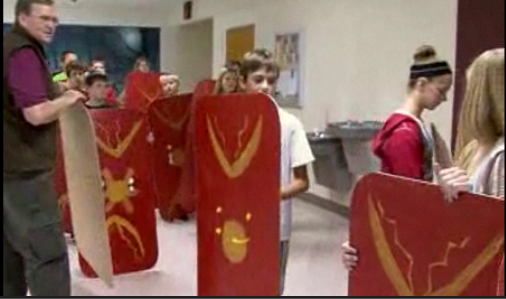
"caption": "Hands-on learning in a sixth-grade museum class was showcased during Education Nation.",
"description": null,
"title": "Screen-shot-2011-10-18-at-4.15.48-PM",
"credit": null,
"status": "inherit",
"isLoading": false,
"fetchFailed": false
},
"mindshift_16130": {
"type": "attachments",
"id": "mindshift_16130",
"meta": {
"index": "attachments_1716263798",
"site": "mindshift",
"id": "16130",
"found": true
},
"parent": 16126,
"imgSizes": {
"twentyfourteen-full-width": {
"file": "https://ww2.kqed.org/app/uploads/sites/23/2011/10/ipad-1038x576.jpg",
"width": 1038,
"mimeType": "image/jpeg",
"height": 576
},
"thumbnail": {
"file": "https://ww2.kqed.org/app/uploads/sites/23/2011/10/ipad-400x299.jpg",
"width": 400,
"mimeType": "image/jpeg",
"height": 299
},
"fd-sm": {
"file": "https://ww2.kqed.org/app/uploads/sites/23/2011/10/ipad-320x239.jpg",
"width": 320,
"mimeType": "image/jpeg",
"height": 239
},
"post-thumbnail": {
"file": "https://ww2.kqed.org/app/uploads/sites/23/2011/10/ipad-672x372.jpg",
"width": 672,
"mimeType": "image/jpeg",
"height": 372
},
"kqedFullSize": {
"file": "https://ww2.kqed.org/app/uploads/sites/23/2011/10/ipad.jpg",
"width": 1296,
"height": 968
},
"guest-author-96": {
"file": "https://ww2.kqed.org/app/uploads/sites/23/2011/10/ipad-96x96.jpg",
"width": 96,
"mimeType": "image/jpeg",
"height": 96
},
"medium": {
"file": "https://ww2.kqed.org/app/uploads/sites/23/2011/10/ipad-800x598.jpg",
"width": 800,
"mimeType": "image/jpeg",
"height": 598
},
"guest-author-64": {
"file": "https://ww2.kqed.org/app/uploads/sites/23/2011/10/ipad-64x64.jpg",
"width": 64,
"mimeType": "image/jpeg",
"height": 64
},
"guest-author-32": {
"file": "https://ww2.kqed.org/app/uploads/sites/23/2011/10/ipad-32x32.jpg",
"width": 32,
"mimeType": "image/jpeg",
"height": 32
},
"fd-lrg": {
"file": "https://ww2.kqed.org/app/uploads/sites/23/2011/10/ipad-1180x881.jpg",
"width": 1180,
"mimeType": "image/jpeg",
"height": 881
},
"fd-med": {
"file": "https://ww2.kqed.org/app/uploads/sites/23/2011/10/ipad-768x574.jpg",
"width": 768,
"mimeType": "image/jpeg",
"height": 574
},
"detail": {
"file": "https://ww2.kqed.org/app/uploads/sites/23/2011/10/ipad-75x75.jpg",
"width": 75,
"mimeType": "image/jpeg",
"height": 75
},
"guest-author-128": {
"file": "https://ww2.kqed.org/app/uploads/sites/23/2011/10/ipad-128x128.jpg",
"width": 128,
"mimeType": "image/jpeg",
"height": 128
}
},
"publishDate": 1318870284,
"modified": 1318870284,
"caption": null,
"description": null,
"title": "ipad",
"credit": null,
"status": "inherit",
"isLoading": false,
"fetchFailed": false
},
"mindshift_16110": {
"type": "attachments",
"id": "mindshift_16110",
"meta": {
"index": "attachments_1716263798",
"site": "mindshift",
"id": "16110",
"found": true
},
"parent": 16098,
"imgSizes": {
"twentyfourteen-full-width": {
"file": "https://ww2.kqed.org/app/uploads/sites/23/2011/10/isis_start-2-1000x576.jpg",
"width": 1000,
"mimeType": "image/jpeg",
"height": 576
},
"thumbnail": {
"file": "https://ww2.kqed.org/app/uploads/sites/23/2011/10/isis_start-2-400x266.jpg",
"width": 400,
"mimeType": "image/jpeg",
"height": 266
},
"fd-sm": {
"file": "https://ww2.kqed.org/app/uploads/sites/23/2011/10/isis_start-2-320x213.jpg",
"width": 320,
"mimeType": "image/jpeg",
"height": 213
},
"post-thumbnail": {
"file": "https://ww2.kqed.org/app/uploads/sites/23/2011/10/isis_start-2-672x372.jpg",
"width": 672,
"mimeType": "image/jpeg",
"height": 372
},
"kqedFullSize": {
"file": "https://ww2.kqed.org/app/uploads/sites/23/2011/10/isis_start-2.jpg",
"width": 1000,
"height": 666
},
"fd-med": {
"file": "https://ww2.kqed.org/app/uploads/sites/23/2011/10/isis_start-2-768x511.jpg",
"width": 768,
"mimeType": "image/jpeg",
"height": 511
},
"guest-author-96": {
"file": "https://ww2.kqed.org/app/uploads/sites/23/2011/10/isis_start-2-96x96.jpg",
"width": 96,
"mimeType": "image/jpeg",
"height": 96
},
"medium": {
"file": "https://ww2.kqed.org/app/uploads/sites/23/2011/10/isis_start-2-800x533.jpg",
"width": 800,
"mimeType": "image/jpeg",
"height": 533
},
"guest-author-64": {
"file": "https://ww2.kqed.org/app/uploads/sites/23/2011/10/isis_start-2-64x64.jpg",
"width": 64,
"mimeType": "image/jpeg",
"height": 64
},
"detail": {
"file": "https://ww2.kqed.org/app/uploads/sites/23/2011/10/isis_start-2-75x75.jpg",
"width": 75,
"mimeType": "image/jpeg",
"height": 75
},
"guest-author-32": {
"file": "https://ww2.kqed.org/app/uploads/sites/23/2011/10/isis_start-2-32x32.jpg",
"width": 32,
"mimeType": "image/jpeg",
"height": 32
},
"guest-author-128": {
"file": "https://ww2.kqed.org/app/uploads/sites/23/2011/10/isis_start-2-128x128.jpg",
"width": 128,
"mimeType": "image/jpeg",
"height": 128
}
},
"publishDate": 1318622122,
"modified": 1318622122,
"caption": "Students at Question to Learn school in New York use game techniques to learn about every subject.",
"description": null,
"title": "isis_start-2",
"credit": null,
"status": "inherit",
"isLoading": false,
"fetchFailed": false
},
"mindshift_16057": {
"type": "attachments",
"id": "mindshift_16057",
"meta": {
"index": "attachments_1716263798",
"site": "mindshift",
"id": "16057",
"found": true
},
"parent": 16046,
"imgSizes": {
"twentyfourteen-full-width": {
"file": "https://ww2.kqed.org/app/uploads/sites/23/2011/10/Screen-shot-2011-10-12-at-5.37.23-PM-715x576.png",
"width": 715,
"mimeType": "image/png",
"height": 576
},
"thumbnail": {
"file": "https://ww2.kqed.org/app/uploads/sites/23/2011/10/Screen-shot-2011-10-12-at-5.37.23-PM-400x374.png",
"width": 400,
"mimeType": "image/png",
"height": 374
},
"fd-sm": {
"file": "https://ww2.kqed.org/app/uploads/sites/23/2011/10/Screen-shot-2011-10-12-at-5.37.23-PM-320x299.png",
"width": 320,
"mimeType": "image/png",
"height": 299
},
"post-thumbnail": {
"file": "https://ww2.kqed.org/app/uploads/sites/23/2011/10/Screen-shot-2011-10-12-at-5.37.23-PM-672x372.png",
"width": 672,
"mimeType": "image/png",
"height": 372
},
"kqedFullSize": {
"file": "https://ww2.kqed.org/app/uploads/sites/23/2011/10/Screen-shot-2011-10-12-at-5.37.23-PM.png",
"width": 715,
"height": 668
},
"guest-author-96": {
"file": "https://ww2.kqed.org/app/uploads/sites/23/2011/10/Screen-shot-2011-10-12-at-5.37.23-PM-96x96.png",
"width": 96,
"mimeType": "image/png",
"height": 96
},
"guest-author-64": {
"file": "https://ww2.kqed.org/app/uploads/sites/23/2011/10/Screen-shot-2011-10-12-at-5.37.23-PM-64x64.png",
"width": 64,
"mimeType": "image/png",
"height": 64
},
"detail": {
"file": "https://ww2.kqed.org/app/uploads/sites/23/2011/10/Screen-shot-2011-10-12-at-5.37.23-PM-75x75.png",
"width": 75,
"mimeType": "image/png",
"height": 75
},
"guest-author-32": {
"file": "https://ww2.kqed.org/app/uploads/sites/23/2011/10/Screen-shot-2011-10-12-at-5.37.23-PM-32x32.png",
"width": 32,
"mimeType": "image/png",
"height": 32
},
"guest-author-128": {
"file": "https://ww2.kqed.org/app/uploads/sites/23/2011/10/Screen-shot-2011-10-12-at-5.37.23-PM-128x128.png",
"width": 128,
"mimeType": "image/png",
"height": 128
}
},
"publishDate": 1318466276,
"modified": 1318466276,
"caption": null,
"description": null,
"title": "Screen shot 2011-10-12 at 5.37.23 PM",
"credit": null,
"status": "inherit",
"isLoading": false,
"fetchFailed": false
},
"mindshift_15750": {
"type": "attachments",
"id": "mindshift_15750",
"meta": {
"index": "attachments_1716263798",
"site": "mindshift",
"id": "15750",
"found": true
},
"parent": 15746,
"imgSizes": {
"thumbnail": {
"file": "https://ww2.kqed.org/app/uploads/sites/23/2011/10/Kids-computers-400x266.jpg",
"width": 400,
"mimeType": "image/jpeg",
"height": 266
},
"fd-sm": {
"file": "https://ww2.kqed.org/app/uploads/sites/23/2011/10/Kids-computers-320x213.jpg",
"width": 320,
"mimeType": "image/jpeg",
"height": 213
},
"post-thumbnail": {
"file": "https://ww2.kqed.org/app/uploads/sites/23/2011/10/Kids-computers-672x372.jpg",
"width": 672,
"mimeType": "image/jpeg",
"height": 372
},
"kqedFullSize": {
"file": "https://ww2.kqed.org/app/uploads/sites/23/2011/10/Kids-computers.jpg",
"width": 842,
"height": 560
},
"fd-med": {
"file": "https://ww2.kqed.org/app/uploads/sites/23/2011/10/Kids-computers-768x511.jpg",
"width": 768,
"mimeType": "image/jpeg",
"height": 511
},
"guest-author-96": {
"file": "https://ww2.kqed.org/app/uploads/sites/23/2011/10/Kids-computers-96x96.jpg",
"width": 96,
"mimeType": "image/jpeg",
"height": 96
},
"medium": {
"file": "https://ww2.kqed.org/app/uploads/sites/23/2011/10/Kids-computers-800x532.jpg",
"width": 800,
"mimeType": "image/jpeg",
"height": 532
},
"guest-author-64": {
"file": "https://ww2.kqed.org/app/uploads/sites/23/2011/10/Kids-computers-64x64.jpg",
"width": 64,
"mimeType": "image/jpeg",
"height": 64
},
"detail": {
"file": "https://ww2.kqed.org/app/uploads/sites/23/2011/10/Kids-computers-75x75.jpg",
"width": 75,
"mimeType": "image/jpeg",
"height": 75
},
"guest-author-32": {
"file": "https://ww2.kqed.org/app/uploads/sites/23/2011/10/Kids-computers-32x32.jpg",
"width": 32,
"mimeType": "image/jpeg",
"height": 32
},
"guest-author-128": {
"file": "https://ww2.kqed.org/app/uploads/sites/23/2011/10/Kids-computers-128x128.jpg",
"width": 128,
"mimeType": "image/jpeg",
"height": 128
}
},
"publishDate": 1317749099,
"modified": 1317749099,
"caption": null,
"description": null,
"title": "Kids computers",
"credit": null,
"status": "inherit",
"isLoading": false,
"fetchFailed": false
},
"mindshift_15935": {
"type": "attachments",
"id": "mindshift_15935",
"meta": {
"index": "attachments_1716263798",
"site": "mindshift",
"id": "15935",
"found": true
},
"parent": 15925,
"imgSizes": {
"twentyfourteen-full-width": {
"file": "https://ww2.kqed.org/app/uploads/sites/23/2011/10/Screen-shot-2011-10-08-at-10.43.44-AM-663x576.png",
"width": 663,
"mimeType": "image/png",
"height": 576
},
"thumbnail": {
"file": "https://ww2.kqed.org/app/uploads/sites/23/2011/10/Screen-shot-2011-10-08-at-10.43.44-AM-400x352.png",
"width": 400,
"mimeType": "image/png",
"height": 352
},
"fd-sm": {
"file": "https://ww2.kqed.org/app/uploads/sites/23/2011/10/Screen-shot-2011-10-08-at-10.43.44-AM-320x281.png",
"width": 320,
"mimeType": "image/png",
"height": 281
},
"post-thumbnail": {
"file": "https://ww2.kqed.org/app/uploads/sites/23/2011/10/Screen-shot-2011-10-08-at-10.43.44-AM-663x372.png",
"width": 663,
"mimeType": "image/png",
"height": 372
},
"kqedFullSize": {
"file": "https://ww2.kqed.org/app/uploads/sites/23/2011/10/Screen-shot-2011-10-08-at-10.43.44-AM.png",
"width": 663,
"height": 583
},
"guest-author-96": {
"file": "https://ww2.kqed.org/app/uploads/sites/23/2011/10/Screen-shot-2011-10-08-at-10.43.44-AM-96x96.png",
"width": 96,
"mimeType": "image/png",
"height": 96
},
"guest-author-64": {
"file": "https://ww2.kqed.org/app/uploads/sites/23/2011/10/Screen-shot-2011-10-08-at-10.43.44-AM-64x64.png",
"width": 64,
"mimeType": "image/png",
"height": 64
},
"detail": {
"file": "https://ww2.kqed.org/app/uploads/sites/23/2011/10/Screen-shot-2011-10-08-at-10.43.44-AM-75x75.png",
"width": 75,
"mimeType": "image/png",
"height": 75
},
"guest-author-32": {
"file": "https://ww2.kqed.org/app/uploads/sites/23/2011/10/Screen-shot-2011-10-08-at-10.43.44-AM-32x32.png",
"width": 32,
"mimeType": "image/png",
"height": 32
},
"guest-author-128": {
"file": "https://ww2.kqed.org/app/uploads/sites/23/2011/10/Screen-shot-2011-10-08-at-10.43.44-AM-128x128.png",
"width": 128,
"mimeType": "image/png",
"height": 128
}
},
"publishDate": 1318096098,
"modified": 1318096098,
"caption": null,
"description": null,
"title": "Screen shot 2011-10-08 at 10.43.44 AM",
"credit": null,
"status": "inherit",
"isLoading": false,
"fetchFailed": false
},
"mindshift_15920": {
"type": "attachments",
"id": "mindshift_15920",
"meta": {
"index": "attachments_1716263798",
"site": "mindshift",
"id": "15920",
"found": true
},
"parent": 15902,
"imgSizes": {
"thumbnail": {
"file": "https://ww2.kqed.org/app/uploads/sites/23/2011/10/6197755378_c4b9fa845e_z-400x283.jpg",
"width": 400,
"mimeType": "image/jpeg",
"height": 283
},
"fd-sm": {
"file": "https://ww2.kqed.org/app/uploads/sites/23/2011/10/6197755378_c4b9fa845e_z-320x227.jpg",
"width": 320,
"mimeType": "image/jpeg",
"height": 227
},
"post-thumbnail": {
"file": "https://ww2.kqed.org/app/uploads/sites/23/2011/10/6197755378_c4b9fa845e_z-640x372.jpg",
"width": 640,
"mimeType": "image/jpeg",
"height": 372
},
"kqedFullSize": {
"file": "https://ww2.kqed.org/app/uploads/sites/23/2011/10/6197755378_c4b9fa845e_z.jpg",
"width": 640,
"height": 453
},
"guest-author-96": {
"file": "https://ww2.kqed.org/app/uploads/sites/23/2011/10/6197755378_c4b9fa845e_z-96x96.jpg",
"width": 96,
"mimeType": "image/jpeg",
"height": 96
},
"guest-author-64": {
"file": "https://ww2.kqed.org/app/uploads/sites/23/2011/10/6197755378_c4b9fa845e_z-64x64.jpg",
"width": 64,
"mimeType": "image/jpeg",
"height": 64
},
"detail": {
"file": "https://ww2.kqed.org/app/uploads/sites/23/2011/10/6197755378_c4b9fa845e_z-75x75.jpg",
"width": 75,
"mimeType": "image/jpeg",
"height": 75
},
"guest-author-32": {
"file": "https://ww2.kqed.org/app/uploads/sites/23/2011/10/6197755378_c4b9fa845e_z-32x32.jpg",
"width": 32,
"mimeType": "image/jpeg",
"height": 32
},
"guest-author-128": {
"file": "https://ww2.kqed.org/app/uploads/sites/23/2011/10/6197755378_c4b9fa845e_z-128x128.jpg",
"width": 128,
"mimeType": "image/jpeg",
"height": 128
}
},
"publishDate": 1318027025,
"modified": 1318027025,
"caption": null,
"description": null,
"title": "6197755378_c4b9fa845e_z",
"credit": null,
"status": "inherit",
"isLoading": false,
"fetchFailed": false
},
"mindshift_15779": {
"type": "attachments",
"id": "mindshift_15779",
"meta": {
"index": "attachments_1716263798",
"site": "mindshift",
"id": "15779",
"found": true
},
"parent": 15777,
"imgSizes": {
"fd-sm": {
"file": "https://ww2.kqed.org/app/uploads/sites/23/2011/10/tutorcloud-classroom-320x228.png",
"width": 320,
"mimeType": "image/png",
"height": 228
},
"kqedFullSize": {
"file": "https://ww2.kqed.org/app/uploads/sites/23/2011/10/tutorcloud-classroom.png",
"width": 350,
"height": 249
},
"guest-author-96": {
"file": "https://ww2.kqed.org/app/uploads/sites/23/2011/10/tutorcloud-classroom-96x96.png",
"width": 96,
"mimeType": "image/png",
"height": 96
},
"guest-author-64": {
"file": "https://ww2.kqed.org/app/uploads/sites/23/2011/10/tutorcloud-classroom-64x64.png",
"width": 64,
"mimeType": "image/png",
"height": 64
},
"detail": {
"file": "https://ww2.kqed.org/app/uploads/sites/23/2011/10/tutorcloud-classroom-75x75.png",
"width": 75,
"mimeType": "image/png",
"height": 75
},
"guest-author-32": {
"file": "https://ww2.kqed.org/app/uploads/sites/23/2011/10/tutorcloud-classroom-32x32.png",
"width": 32,
"mimeType": "image/png",
"height": 32
},
"guest-author-128": {
"file": "https://ww2.kqed.org/app/uploads/sites/23/2011/10/tutorcloud-classroom-128x128.png",
"width": 128,
"mimeType": "image/png",
"height": 128
}
},
"publishDate": 1317831175,
"modified": 1317831175,
"caption": null,
"description": null,
"title": "tutorcloud-classroom",
"credit": null,
"status": "inherit",
"isLoading": false,
"fetchFailed": false
},
"mindshift_15792": {
"type": "attachments",
"id": "mindshift_15792",
"meta": {
"index": "attachments_1716263798",
"site": "mindshift",
"id": "15792",
"found": true
},
"parent": 15776,
"imgSizes": {
"thumbnail": {
"file": "https://ww2.kqed.org/app/uploads/sites/23/2011/10/6043012600_0e3d783af5-400x300.jpg",
"width": 400,
"mimeType": "image/jpeg",
"height": 300
},
"fd-sm": {
"file": "https://ww2.kqed.org/app/uploads/sites/23/2011/10/6043012600_0e3d783af5-320x240.jpg",
"width": 320,
"mimeType": "image/jpeg",
"height": 240
},
"post-thumbnail": {
"file": "https://ww2.kqed.org/app/uploads/sites/23/2011/10/6043012600_0e3d783af5-500x372.jpg",
"width": 500,
"mimeType": "image/jpeg",
"height": 372
},
"kqedFullSize": {
"file": "https://ww2.kqed.org/app/uploads/sites/23/2011/10/6043012600_0e3d783af5.jpg",
"width": 500,
"height": 375
},
"guest-author-96": {
"file": "https://ww2.kqed.org/app/uploads/sites/23/2011/10/6043012600_0e3d783af5-96x96.jpg",
"width": 96,
"mimeType": "image/jpeg",
"height": 96
},
"guest-author-64": {
"file": "https://ww2.kqed.org/app/uploads/sites/23/2011/10/6043012600_0e3d783af5-64x64.jpg",
"width": 64,
"mimeType": "image/jpeg",
"height": 64
},
"detail": {
"file": "https://ww2.kqed.org/app/uploads/sites/23/2011/10/6043012600_0e3d783af5-75x75.jpg",
"width": 75,
"mimeType": "image/jpeg",
"height": 75
},
"guest-author-32": {
"file": "https://ww2.kqed.org/app/uploads/sites/23/2011/10/6043012600_0e3d783af5-32x32.jpg",
"width": 32,
"mimeType": "image/jpeg",
"height": 32
},
"guest-author-128": {
"file": "https://ww2.kqed.org/app/uploads/sites/23/2011/10/6043012600_0e3d783af5-128x128.jpg",
"width": 128,
"mimeType": "image/jpeg",
"height": 128
}
},
"publishDate": 1317831702,
"modified": 1317831702,
"caption": null,
"description": null,
"title": "6043012600_0e3d783af5",
"credit": null,
"status": "inherit",
"isLoading": false,
"fetchFailed": false
},
"mindshift_15736": {
"type": "attachments",
"id": "mindshift_15736",
"meta": {
"index": "attachments_1716263798",
"site": "mindshift",
"id": "15736",
"found": true
},
"parent": 15722,
"imgSizes": {
"thumbnail": {
"file": "https://ww2.kqed.org/app/uploads/sites/23/2011/10/3384616685_e6b7911514-400x300.jpg",
"width": 400,
"mimeType": "image/jpeg",
"height": 300
},
"fd-sm": {
"file": "https://ww2.kqed.org/app/uploads/sites/23/2011/10/3384616685_e6b7911514-320x240.jpg",
"width": 320,
"mimeType": "image/jpeg",
"height": 240
},
"post-thumbnail": {
"file": "https://ww2.kqed.org/app/uploads/sites/23/2011/10/3384616685_e6b7911514-500x372.jpg",
"width": 500,
"mimeType": "image/jpeg",
"height": 372
},
"kqedFullSize": {
"file": "https://ww2.kqed.org/app/uploads/sites/23/2011/10/3384616685_e6b7911514.jpg",
"width": 500,
"height": 375
},
"guest-author-96": {
"file": "https://ww2.kqed.org/app/uploads/sites/23/2011/10/3384616685_e6b7911514-96x96.jpg",
"width": 96,
"mimeType": "image/jpeg",
"height": 96
},
"guest-author-64": {
"file": "https://ww2.kqed.org/app/uploads/sites/23/2011/10/3384616685_e6b7911514-64x64.jpg",
"width": 64,
"mimeType": "image/jpeg",
"height": 64
},
"detail": {
"file": "https://ww2.kqed.org/app/uploads/sites/23/2011/10/3384616685_e6b7911514-75x75.jpg",
"width": 75,
"mimeType": "image/jpeg",
"height": 75
},
"guest-author-32": {
"file": "https://ww2.kqed.org/app/uploads/sites/23/2011/10/3384616685_e6b7911514-32x32.jpg",
"width": 32,
"mimeType": "image/jpeg",
"height": 32
},
"guest-author-128": {
"file": "https://ww2.kqed.org/app/uploads/sites/23/2011/10/3384616685_e6b7911514-128x128.jpg",
"width": 128,
"mimeType": "image/jpeg",
"height": 128
}
},
"publishDate": 1317666820,
"modified": 1317666820,
"caption": null,
"description": null,
"title": "3384616685_e6b7911514",
"credit": null,
"status": "inherit",
"isLoading": false,
"fetchFailed": false
}
},
"audioPlayerReducer": {
"postId": "stream_live",
"isPaused": true,
"isPlaying": false,
"pfsActive": false,
"pledgeModalIsOpen": true,
"playerDrawerIsOpen": false,
"liveAudioPlayStartedAt": 0,
"liveAudioPlayContext": ""
},
"authorsReducer": {
"tbarseghian": {
"type": "authors",
"id": "180",
"meta": {
"index": "authors_1716337520",
"id": "180",
"found": true
},
"name": "Tina Barseghian",
"firstName": "Tina",
"lastName": "Barseghian",
"slug": "tbarseghian",
"email": "tbarseghian@kqed.org",
"display_author_email": false,
"staff_mastheads": [],
"title": null,
"bio": null,
"avatar": "https://secure.gravatar.com/avatar/de7e6ced1239b7018fe4d2b61f723c90?s=600&d=blank&r=g",
"twitter": null,
"facebook": null,
"instagram": null,
"linkedin": null,
"sites": [
{
"site": "styleguide",
"roles": [
"contributor"
]
},
{
"site": "news",
"roles": [
"subscriber"
]
},
{
"site": "mindshift",
"roles": [
"subscriber"
]
},
{
"site": "bayareabites",
"roles": [
"subscriber"
]
}
],
"headData": {
"title": "Tina Barseghian | KQED",
"description": null,
"ogImgSrc": "https://secure.gravatar.com/avatar/de7e6ced1239b7018fe4d2b61f723c90?s=600&d=blank&r=g",
"twImgSrc": "https://secure.gravatar.com/avatar/de7e6ced1239b7018fe4d2b61f723c90?s=600&d=blank&r=g"
},
"isLoading": false,
"link": "/author/tbarseghian"
},
"awatters": {
"type": "authors",
"id": "4352",
"meta": {
"index": "authors_1716337520",
"id": "4352",
"found": true
},
"name": "Audrey Watters",
"firstName": "Audrey",
"lastName": "Watters",
"slug": "awatters",
"email": "awatters@kqed.org",
"display_author_email": false,
"staff_mastheads": [],
"title": null,
"bio": null,
"avatar": "https://secure.gravatar.com/avatar/fb6ac91bb93632725bfa683c1de71bee?s=600&d=blank&r=g",
"twitter": null,
"facebook": null,
"instagram": null,
"linkedin": null,
"sites": [
{
"site": "mindshift",
"roles": [
"subscriber"
]
}
],
"headData": {
"title": "Audrey Watters | KQED",
"description": null,
"ogImgSrc": "https://secure.gravatar.com/avatar/fb6ac91bb93632725bfa683c1de71bee?s=600&d=blank&r=g",
"twImgSrc": "https://secure.gravatar.com/avatar/fb6ac91bb93632725bfa683c1de71bee?s=600&d=blank&r=g"
},
"isLoading": false,
"link": "/author/awatters"
}
},
"pagesReducer": {
"mindshift_category_teaching-strategies": {
"type": "terms",
"id": "mindshift_193",
"meta": {
"index": "terms_1716263798",
"site": "mindshift",
"id": "193",
"score": 14.406956
},
"featImg": null,
"name": "Teaching Strategies",
"description": "Innovative ideas - projects, processes, curricula, and more - that are transforming how we teach and learn.",
"taxonomy": "category",
"headData": {
"twImgId": null,
"twTitle": null,
"ogTitle": null,
"ogImgId": null,
"twDescription": null,
"description": "Innovative ideas - projects, processes, curricula, and more - that are transforming how we teach and learn.",
"title": "Teaching Strategies Archives | KQED Mindshift",
"ogDescription": null
},
"ttid": 193,
"slug": "teaching-strategies",
"isLoading": false,
"title": "Teaching Strategies",
"pageMeta": {
"site": "mindshift",
"WpPageTemplate": "page-topic-editorial",
"currentPage": 82
},
"blocks": [
{
"blockName": "kqed/company-paragraph",
"content": "Innovative ideas - projects, processes, curricula, and more - that are transforming how we teach and learn."
},
{
"blockName": "kqed/post-list",
"attrs": {
"layout": "cardArticle2",
"query": "posts/mindshift?category=teaching-strategies",
"seeMore": false,
"paginated": true,
"page": 82
}
},
{
"blockName": "kqed/ad"
}
]
}
},
"pfsSessionReducer": {},
"postsReducer": {
"stream_live": {
"type": "live",
"id": "stream_live",
"audioUrl": "https://streams.kqed.org/kqedradio",
"title": "Live Stream",
"excerpt": "Live Stream information currently unavailable.",
"link": "/radio",
"featImg": "",
"label": {
"name": "KQED Live",
"link": "/"
}
},
"stream_kqedNewscast": {
"type": "posts",
"id": "stream_kqedNewscast",
"audioUrl": "https://www.kqed.org/.stream/anon/radio/RDnews/newscast.mp3?_=1",
"title": "KQED Newscast",
"featImg": "",
"label": {
"name": "88.5 FM",
"link": "/"
}
},
"mindshift_16188": {
"type": "posts",
"id": "mindshift_16188",
"meta": {
"index": "posts_1716263798",
"site": "mindshift",
"id": "16188",
"score": null,
"sort": [
1319065021000
]
},
"parent": 0,
"labelTerm": {
"site": "mindshift"
},
"blocks": [],
"publishDate": 1319065021,
"format": "aside",
"disqusTitle": "Shifting the Dialogue for the Public at Large",
"title": "Shifting the Dialogue for the Public at Large",
"headTitle": "MindShift | KQED News",
"content": "\u003cdiv class=\"module image alignleft mceTemp\" style=\"width: 300px\">\u003ca href=\"http://ww2.kqed.org/mindshift/2011/10/shifting-the-dialogue-for-the-public-at-large/screen-shot-2011-10-18-at-4-15-48-pm/\" rel=\"attachment wp-att-16234\">\u003cimg class=\"size-medium wp-image-16234\" src=\"http://ww2.kqed.org/mindshift/wp-content/uploads/sites/23/2011/10/Screen-shot-2011-10-18-at-4.15.48-PM-300x177.png\" alt=\"\" width=\"300\" height=\"177\">\u003c/a>\n\u003cp class=\"wp-caption-text\">Hands-on learning in a sixth-grade museum class was showcased during Education Nation.\u003c/p>\n\u003c/div>\n\u003cp>In Keil Hileman's sixth-grade class last month, students were digging into their individual dirt piles searching for archeological artifacts, and trying to identify what they found. Did it come from land or sea? What does the shape of the artifact indicate about its origin?\u003c/p>\n\u003cp>Hileman's class was on display in front of millions of online viewers at the \u003ca href=\"http://www.educationnation.com/index.cfm?objectid=BBCEDAC1-D338-11E0-810D000C296BA163\">Education Nation summit\u003c/a> last month. Hileman has been teaching for 19 years, but his classroom is far from traditional. He teaches museum studies at Monticello Trails Middle School in Shawnee, Kansas, and thinks the key to getting his students hooked on arcane historical facts is not the text book -- \"that's just the diving off point\" -- but by connecting them to the artifacts associated with those events.\u003c/p>\n\u003caside class=\"pullquote alignleft\">\"My students need to see how things work in the real world.\"\u003c/aside>\n\u003cp>When they studied slavery, for example, he brought in metal shackles for students to see and hold. \"Holding those shackles gives them an understanding immediately,\" he said. \"To hold\u003c!--more--> that piece of metal that restrained another human being -- that makes it real. A 12-year old or 14-year old doesn’t have that perspective.\"\u003c/p>\n\u003cp>Hileman's teaching practice exemplifies what Arne Duncan described to the 52 million people watching \u003ca href=\"http://www.educationnation.com/index.cfm?objectid=BBCEDAC1-D338-11E0-810D000C296BA163\">Education Nation\u003c/a> coverage \"magic.\"\u003c/p>\n\u003cp>\"Great teachers are always learning, never getting complacent, always challenging themselves,\" Duncan said. \"When you watch great teaching at work, it’s absolutely magic.\"\u003c/p>\n\u003cp>[ad fullwidth]\u003c/p>\n\u003cp>For Hileman, the idea of creating an atmosphere of collaboration in the classroom is key. He uses textbooks only as a diving board to explore subjects in depth, and he's always looking for a new angle to a story -- something his students -- or even he -- didn't necessarily know about. \"We’re [all] on the trail of learning together,\" he said. \"I’m going a little farther ahead so I can facilitate... but we’re all learning.\"\u003c/p>\n\u003cp>In Clearwater, Florida, fifth-grade teacher Tracy Daly demonstrated the difference between kinetic and potential energy by using a small\u003ca href=\"http://ballpointpenss.com/2011/05/24/ball-pendulum/\"> ball pendulum\u003c/a>. The audience watched her students design and build miniature roller coasters with classroom supplies.\u003c/p>\n\u003cp>\"My students need to see how things work in the real world,\" she said. \"They’re curious and I take advantage of that. And they have a blast while doing it.\"\u003c/p>\n\u003cp>In response to a question about her class's test score, she said she can see when her students are learning by watching them create these projects. \"Just because my test scores haven’t been to the expectation, doesn’t mean my students haven’t shown growth,\" she said.\u003c/p>\n\u003cp>Fourth-grade teacher Kristin Casareto from Oakland, Calif., gave her students the opportunity to take on the teacher's role in order to boost leadership skills.\u003c/p>\n\u003cp>\"They know that their voice is just as respected as any teacher in this school,\" she said.\u003c/p>\n\u003cp>These exhibitions of innovative teaching practices are a far cry from how most classrooms have been portrayed by major media. But these teachers were hailed as heroes to the audience, and they were featured alongside \u003ca href=\"http://ww2.kqed.org/mindshift/2011/05/meet-sal-khan-the-jerry-seinfeld-of-the-education-revolution/\">Salman Khan\u003c/a> and the \u003ca href=\"http://ww2.kqed.org/mindshift/2011/09/class-dojo-wins-innovation-challenge-at-education-nation/\">start-up entrepreneurs of the Innovation Challenge\u003c/a> who launched Class Dojo and Kickboard -- names we're more likely to see at \u003ca href=\"http://ww2.kqed.org/mindshift/tag/iste/\">ISTE\u003c/a> than through mass media outlets with such a far reach. Online, the coverage tallied more than 1.6 million page views, according to NBC.\u003c/p>\n\u003cp>The topic of technology and learning was also a big highlight.\u003c/p>\n\u003cp>\"We’re at a crossroads on figuring out how to leverage technology to change instruction -- are we using it just as a device in the classroom?\" asked John King from New York Department of Education during one of the panels. \"I see kids actually learning differently because of the computer. But in other classes, I see kids doing worksheets on the screen, which is not really that different from what they've been doing.\"\u003c/p>\n\u003cp>Mobile phones and mobile devices will likely become more prevalent, he said, as schools start experimenting with different learning environments. And computer labs may soon be a thing of the past.\u003c/p>\n\u003cp>Pat Yongpradit, a computer science teacher at Springbrook High School in Silver Spring, Maryland, said he sees mobile technology changing the learning landscape, where smart phones can be used to access any information and learning can happen anywhere at anytime, not just in schools.\u003c/p>\n\u003cp>\"We’re a couple of years away to get to point at which point most people will have mobile devices that can bring up a Web site,\" he said. \"But when that happens, innovative educators will use that to its full extent.\"\u003c/p>\n\u003cp>Yongpradit brought up the \u003ca href=\"http://www.flatclassroomproject.org/\">Flat Classroom Project\u003c/a>, where students from collaborate globally on solving problems together. \"Educators all over the nation are using different sites and apps to connect students across the country and outside this country,\" he said. \"It can only lead to good things. At the very least, it will help kids be more selfless and aware. It's students solving real-world problems using technology for the good of humanity.\"\u003c/p>\n\u003cp>Yongpradit proposed an idea: use the premise of the Innovation Challenge -- asking young entrepreneurs to find viable ways of solving problems -- and apply it to all high school students around the country.\u003c/p>\n\u003cp>\"It' not just using technology, but become creators of technology,\" he said. \"Even at a young age, they can do something with technology to help the world.\"\u003c/p>\n\u003cp> \u003c/p>\n\u003cp>\u003c/p>\n\u003cp> \u003c/p>\n\n",
"disqusIdentifier": "16188 http://blogs.kqed.org/mindshift/?p=16188",
"disqusUrl": "https://ww2.kqed.org/mindshift/2011/10/19/shifting-the-dialogue-for-the-public-at-large/",
"stats": {
"hasVideo": false,
"hasChartOrMap": false,
"hasAudio": false,
"hasPolis": false,
"wordCount": 923,
"hasGoogleForm": false,
"hasGallery": false,
"hasHearkenModule": false,
"iframeSrcs": [],
"paragraphCount": 22
},
"modified": 1319128365,
"excerpt": null,
"headData": {
"twImgId": "",
"twTitle": "",
"ogTitle": "",
"ogImgId": "",
"twDescription": "",
"description": "Hands-on learning in a sixth-grade museum class was showcased during Education Nation. In Keil Hileman's sixth-grade class last month, students were digging into their individual dirt piles searching for archeological artifacts, and trying to identify what they found. Did it come from land or sea? What does the shape of the artifact indicate about its",
"title": "Shifting the Dialogue for the Public at Large | KQED",
"ogDescription": "",
"schema": {
"@context": "https://schema.org",
"@type": "Article",
"headline": "Shifting the Dialogue for the Public at Large",
"datePublished": "2011-10-19T15:57:01-07:00",
"dateModified": "2011-10-20T09:32:45-07:00",
"image": "https://cdn.kqed.org/wp-content/uploads/2020/02/KQED-OG-Image@1x.png"
}
},
"guestAuthors": [],
"slug": "shifting-the-dialogue-for-the-public-at-large",
"status": "publish",
"path": "/mindshift/16188/shifting-the-dialogue-for-the-public-at-large",
"audioTrackLength": null,
"parsedContent": [
{
"type": "contentString",
"content": "\u003cdiv class=\"post-body\">\u003cp>\u003cdiv class=\"module image alignleft mceTemp\" style=\"width: 300px\">\u003ca href=\"http://ww2.kqed.org/mindshift/2011/10/shifting-the-dialogue-for-the-public-at-large/screen-shot-2011-10-18-at-4-15-48-pm/\" rel=\"attachment wp-att-16234\">\u003cimg class=\"size-medium wp-image-16234\" src=\"http://ww2.kqed.org/mindshift/wp-content/uploads/sites/23/2011/10/Screen-shot-2011-10-18-at-4.15.48-PM-300x177.png\" alt=\"\" width=\"300\" height=\"177\">\u003c/a>\n\u003cp class=\"wp-caption-text\">Hands-on learning in a sixth-grade museum class was showcased during Education Nation.\u003c/p>\n\u003c/div>\n\u003cp>In Keil Hileman's sixth-grade class last month, students were digging into their individual dirt piles searching for archeological artifacts, and trying to identify what they found. Did it come from land or sea? What does the shape of the artifact indicate about its origin?\u003c/p>\n\u003cp>Hileman's class was on display in front of millions of online viewers at the \u003ca href=\"http://www.educationnation.com/index.cfm?objectid=BBCEDAC1-D338-11E0-810D000C296BA163\">Education Nation summit\u003c/a> last month. Hileman has been teaching for 19 years, but his classroom is far from traditional. He teaches museum studies at Monticello Trails Middle School in Shawnee, Kansas, and thinks the key to getting his students hooked on arcane historical facts is not the text book -- \"that's just the diving off point\" -- but by connecting them to the artifacts associated with those events.\u003c/p>\n\u003caside class=\"pullquote alignleft\">\"My students need to see how things work in the real world.\"\u003c/aside>\n\u003cp>When they studied slavery, for example, he brought in metal shackles for students to see and hold. \"Holding those shackles gives them an understanding immediately,\" he said. \"To hold\u003c!--more--> that piece of metal that restrained another human being -- that makes it real. A 12-year old or 14-year old doesn’t have that perspective.\"\u003c/p>\n\u003cp>Hileman's teaching practice exemplifies what Arne Duncan described to the 52 million people watching \u003ca href=\"http://www.educationnation.com/index.cfm?objectid=BBCEDAC1-D338-11E0-810D000C296BA163\">Education Nation\u003c/a> coverage \"magic.\"\u003c/p>\n\u003cp>\"Great teachers are always learning, never getting complacent, always challenging themselves,\" Duncan said. \"When you watch great teaching at work, it’s absolutely magic.\"\u003c/p>\n\u003cp>\u003c/p>\u003c/div>",
"attributes": {
"named": {},
"numeric": []
}
},
{
"type": "component",
"content": "",
"name": "ad",
"attributes": {
"named": {
"label": "fullwidth"
},
"numeric": [
"fullwidth"
]
}
},
{
"type": "contentString",
"content": "\u003cdiv class=\"post-body\">\u003cp>\u003c/p>\n\u003cp>For Hileman, the idea of creating an atmosphere of collaboration in the classroom is key. He uses textbooks only as a diving board to explore subjects in depth, and he's always looking for a new angle to a story -- something his students -- or even he -- didn't necessarily know about. \"We’re [all] on the trail of learning together,\" he said. \"I’m going a little farther ahead so I can facilitate... but we’re all learning.\"\u003c/p>\n\u003cp>In Clearwater, Florida, fifth-grade teacher Tracy Daly demonstrated the difference between kinetic and potential energy by using a small\u003ca href=\"http://ballpointpenss.com/2011/05/24/ball-pendulum/\"> ball pendulum\u003c/a>. The audience watched her students design and build miniature roller coasters with classroom supplies.\u003c/p>\n\u003cp>\"My students need to see how things work in the real world,\" she said. \"They’re curious and I take advantage of that. And they have a blast while doing it.\"\u003c/p>\n\u003cp>In response to a question about her class's test score, she said she can see when her students are learning by watching them create these projects. \"Just because my test scores haven’t been to the expectation, doesn’t mean my students haven’t shown growth,\" she said.\u003c/p>\n\u003cp>Fourth-grade teacher Kristin Casareto from Oakland, Calif., gave her students the opportunity to take on the teacher's role in order to boost leadership skills.\u003c/p>\n\u003cp>\"They know that their voice is just as respected as any teacher in this school,\" she said.\u003c/p>\n\u003cp>These exhibitions of innovative teaching practices are a far cry from how most classrooms have been portrayed by major media. But these teachers were hailed as heroes to the audience, and they were featured alongside \u003ca href=\"http://ww2.kqed.org/mindshift/2011/05/meet-sal-khan-the-jerry-seinfeld-of-the-education-revolution/\">Salman Khan\u003c/a> and the \u003ca href=\"http://ww2.kqed.org/mindshift/2011/09/class-dojo-wins-innovation-challenge-at-education-nation/\">start-up entrepreneurs of the Innovation Challenge\u003c/a> who launched Class Dojo and Kickboard -- names we're more likely to see at \u003ca href=\"http://ww2.kqed.org/mindshift/tag/iste/\">ISTE\u003c/a> than through mass media outlets with such a far reach. Online, the coverage tallied more than 1.6 million page views, according to NBC.\u003c/p>\n\u003cp>The topic of technology and learning was also a big highlight.\u003c/p>\n\u003cp>\"We’re at a crossroads on figuring out how to leverage technology to change instruction -- are we using it just as a device in the classroom?\" asked John King from New York Department of Education during one of the panels. \"I see kids actually learning differently because of the computer. But in other classes, I see kids doing worksheets on the screen, which is not really that different from what they've been doing.\"\u003c/p>\n\u003cp>Mobile phones and mobile devices will likely become more prevalent, he said, as schools start experimenting with different learning environments. And computer labs may soon be a thing of the past.\u003c/p>\n\u003cp>Pat Yongpradit, a computer science teacher at Springbrook High School in Silver Spring, Maryland, said he sees mobile technology changing the learning landscape, where smart phones can be used to access any information and learning can happen anywhere at anytime, not just in schools.\u003c/p>\n\u003cp>\"We’re a couple of years away to get to point at which point most people will have mobile devices that can bring up a Web site,\" he said. \"But when that happens, innovative educators will use that to its full extent.\"\u003c/p>\n\u003cp>Yongpradit brought up the \u003ca href=\"http://www.flatclassroomproject.org/\">Flat Classroom Project\u003c/a>, where students from collaborate globally on solving problems together. \"Educators all over the nation are using different sites and apps to connect students across the country and outside this country,\" he said. \"It can only lead to good things. At the very least, it will help kids be more selfless and aware. It's students solving real-world problems using technology for the good of humanity.\"\u003c/p>\n\u003cp>Yongpradit proposed an idea: use the premise of the Innovation Challenge -- asking young entrepreneurs to find viable ways of solving problems -- and apply it to all high school students around the country.\u003c/p>\n\u003cp>\"It' not just using technology, but become creators of technology,\" he said. \"Even at a young age, they can do something with technology to help the world.\"\u003c/p>\n\u003cp> \u003c/p>\n\u003cp>\u003c/p>\n\u003cp> \u003c/p>\n\n\u003c/div>\u003c/p>",
"attributes": {
"named": {},
"numeric": []
}
}
],
"link": "/mindshift/16188/shifting-the-dialogue-for-the-public-at-large",
"authors": [
"180"
],
"categories": [
"mindshift_193"
],
"tags": [
"mindshift_98"
],
"featImg": "mindshift_16234",
"label": "mindshift"
},
"mindshift_16126": {
"type": "posts",
"id": "mindshift_16126",
"meta": {
"index": "posts_1716263798",
"site": "mindshift",
"id": "16126",
"score": null,
"sort": [
1318876247000
]
},
"parent": 0,
"labelTerm": {
"site": "mindshift"
},
"blocks": [],
"publishDate": 1318876247,
"format": "aside",
"disqusTitle": "Is Gaming the New Essential Literacy? ",
"title": "Is Gaming the New Essential Literacy? ",
"headTitle": "MindShift | KQED News",
"content": "\u003cdiv class=\"module image alignleft mceTemp\" style=\"width: 300px\">\u003cimg class=\"size-medium wp-image-16130\" src=\"http://ww2.kqed.org/mindshift/wp-content/uploads/sites/23/2011/10/ipad-300x224.jpg\" alt=\"\" width=\"300\" height=\"224\">\n\u003cp class=\"wp-media-credit\">TB\u003c/p>\n\u003c/div>\n\u003ch5>By Aran Levassur\u003c/h5>\n\u003cp>\"When people learn to play video games,\" said James Paul Gee, \"they are learning a new \u003cem>literacy\u003c/em>.\"\u003c/p>\n\u003cp>This is one of the reason kids love playing them: They are learning a new interactive language that grants them access to virtual worlds that are filled with intrigue, engagement and meaningful challenges. And one that feels more congruent with the nature and trajectory of today's world.\u003c/p>\n\u003cp>As our commerce and culture migrates further into this emerging digital ecosystem it becomes more critical that we develop digital literacy, of which video games inhabit a large portion.\u003c/p>\n\u003cp>Gee, a linguist and professor of literacy studies at Arizona State University, thinks we should expand the traditional definition of literacy beyond reading and writing because language isn't the only communication system available in today's world. And there is no better example of a new form of media that communicates distinctive types of meaning than video games.\u003c/p>\n\u003cp>\u003cstrong>THE LITERACY OF PROBLEM-SOLVING\u003cbr>\n\u003c/strong>\u003c/p>\n\u003cp>[ad fullwidth]\u003c/p>\n\u003cp>Although games can be immensely entertaining, it would be a mistake to consider them as only a form of entertainment. Games are fun, but their real value lies in leveraging play and exploration as a mode of learning the literacy of problem-solving, which lowers the emotional stakes of failing.\u003c/p>\n\u003caside class=\"pullquote alignleft\">A critical part of being literate in the digital age means being able to solve problems through simulations and collaboration.\u003c/aside>\n\u003cp>In Sir Ken Robinson's TED talk, \u003ca href=\"http://www.ted.com/talks/ken_robinson_says_schools_kill_creativity.html\">Do Schools Kill Creativity?\u003c/a>, he reminds us that our educational system has stigmatized mistakes. As a result, kids are frightened of being wrong. Yet if we are not prepared to be wrong than we won't be able to come up with anything creative or solve complex problems. Videogames, on the other hand, embed trial and error into the foundation of gameplay.\u003c/p>\n\u003cp>Kids aren't naturally great at gaming the first time. They develop mastery through disciplined practice -- a path marked by dead-ends, wrong turns and blunders. Yet gamers aren't angst-ridden \u003c!--more-->about making wrong decisions because games encourage a growth mindset. Mistakes are how one figures out what doesn't work and provides the impetus to zero in on what might.\u003c/p>\n\u003cp>Conversely, the game of modern education revolves around right and wrong answers. Now this kind of learning may be appropriate in some instances, say, when you want a student to remember the capitals of countries. That method is important, but it can only take you so far. It certainly can't penetrate more sophisticated, and I would argue, more important questions, such as: How does geography shape culture?\u003c/p>\n\u003cp>Games on the other hand, cultivate problem-solving, that, with that right kind of scaffolding, could begin to gain traction with these more exploratory questions and knowledge.\u003c/p>\n\u003cp>\u003cstrong>FOCUSING ON THE PROCESS, NOT THE CONTENT\u003c/strong>\u003c/p>\n\u003cp>Much of the critique leveled at videogames is oriented around their content. In \u003ca href=\"http://www.amazon.com/Everything-Bad-Good-You-Actually/dp/1573223077\">Everything Bad Is Good For You\u003c/a>, Steven Johnson writes of a hypothetical high school English teacher admonishing videogames' lack of content: \"There's no psychological depth here, no moral quandaries, no poetry. And he'd be right! But comparing these games to 'The Iliad' or 'The Great Gatsby' or 'Hamlet' relies on a false premise: that the intelligence of these games lies in their content, in the themes and characters they represent.\"\u003c/p>\n\u003cp>Games are based on problems to solve, not content. This doesn't mean that game-based problem-solving should eclipse learning content, but I think we are increasingly seeing that a critical part of being literate in the digital age means being able to solve problems through simulations and collaboration.\u003c/p>\n\u003cp>Videogames, and the type of learning and thinking they generate, may serve as a cornerstone for education and economies of the future.\u003c/p>\n\u003cp>In their book, \u003ca href=\"http://www.amazon.com/Rethinking-Education-Technology-Education-Connections-Education-Connections/dp/0807750026\">Rethinking Education in the Age of Technology\u003c/a>, Allan Collins and Richard Halverson state that \"policymakers interested in preparing students for success in the 21st-century economy would do well ... to appreciate how skills developed through navigating virtual environments might pay off in the workplace ... [and how] the new skills and dispositions of the gamer generation will transform the workplace. The gamer generation will push for work environments to incorporate more virtual aspects in fields, such as market analysis, and social and economic modeling. Gamers, for example, have abundant experience making big decisions, coordinating resources, and experimenting with complex strategies in game-based simulations.\"\u003c/p>\n\u003cp>\u003cstrong>MAKING THE MOST OF GAMING FOR YOUR KIDS\u003c/strong>\u003c/p>\n\u003cp>Although video games have great potential to be powerful vehicles for learning, there is no guarantee this will happen. Just as there is no guarantee that someone will understand the themes and symbols of \u003cem>The Lord of the Flies\u003c/em> by simply reading it. As a result, kids need parents, teachers and their peers to engage their gaming in thoughtful ways. While there could be a long list of recommended practice, for simplicity sake I've reduced the list to three preliminary suggestions.\u003c/p>\n\u003col start=\"1\">\n\u003cli>Play games. Otherwise how can you have meaningful conversations about them? Not learning how to play games would be akin to talking about \"The Lord of the Flies\" without having learned to read.\u003c/li>\n\u003cli>Connect games to books, movies, TV and the world around them. By thinking about games beyond their boundaries we can cultivate pattern recognition across media platforms and parlay the problem-solving of gaming into the real world.\u003c/li>\n\u003cli>Have your students or kids collaborate with other peers to analyze and interpret games, as well share strategies. There has been a raft of research in recent years that extols the wisdom of the crowd and the logic of the swarm. Through collaboration and networking kids can learn to enhance their own perspectives, ideas and, perhaps, contribute to a whole that is greater than the sum of its parts.\u003c/li>\n\u003c/ol>\n\u003cp>\u003cem>\u003ca href=\"http://ww2.kqed.org/mindshift/2011/10/can-playing-games-teach-literacy/pbs-mediashift-logo-final-6/\" rel=\"attachment wp-att-16140\">\u003cimg class=\"alignleft size-full wp-image-16140\" src=\"http://ww2.kqed.org/mindshift/wp-content/uploads/sites/23/2011/10/pbs-mediashift-logo-final.jpg\" alt=\"\" width=\"54\" height=\"54\" srcset=\"https://ww2.kqed.org/app/uploads/sites/23/2011/10/pbs-mediashift-logo-final.jpg 300w, https://ww2.kqed.org/app/uploads/sites/23/2011/10/pbs-mediashift-logo-final-32x32.jpg 32w, https://ww2.kqed.org/app/uploads/sites/23/2011/10/pbs-mediashift-logo-final-64x64.jpg 64w, https://ww2.kqed.org/app/uploads/sites/23/2011/10/pbs-mediashift-logo-final-96x96.jpg 96w, https://ww2.kqed.org/app/uploads/sites/23/2011/10/pbs-mediashift-logo-final-128x128.jpg 128w, https://ww2.kqed.org/app/uploads/sites/23/2011/10/pbs-mediashift-logo-final-75x75.jpg 75w\" sizes=\"(max-width: 54px) 100vw, 54px\">\u003c/a>This story was originally published by\u003ca href=\"http://www.pbs.org/mediashift/2011/05/childrens-magazines-cater-to-true-early-adopters-with-mobile-apps137.html\"> PBS MediaShift\u003c/a>, covering the intersection of \u003c/em>\u003cem> \u003c/em>\u003cem>media and technology. Follow \u003ca href=\"http://twitter.com/#%21/pbsmediashift\">@PBSMediaShift\u003c/a> for Twitter updates, or join us on \u003ca href=\"https://www.facebook.com/mediashift\">Facebook\u003c/a>.\u003c/em>\u003cem> Read more in the \u003ca href=\"http://www.pbs.org/mediashift/2011/08/special-series-kids-media214.html\">Kids & Media series\u003c/a> on MediaShift.\u003c/em>\u003c/p>\n\u003cp>\u003cem>Aran Levasseur has an eclectic background that ranges from outdoor education to life coaching, and from habitat restoration to video production. For the last five years he's taught middle school history and science. From the beginning he's been integrating technology into his classes to enhance his teaching and student learning. He recently gave \u003ca href=\"http://vimeo.com/22398353\">a talk at TEDxSFED on videogames and learning\u003c/a>. Currently he's the Academic Technology Coordinator at San Francisco University High School.\u003c/em>\u003c/p>\n\u003cp> \u003c/p>\n\u003cp> \u003c/p>\n\u003cp> \u003c/p>\n\u003cp>[ad floatright]\u003c/p>\n\u003cp> \u003c/p>\n\n",
"disqusIdentifier": "16126 http://blogs.kqed.org/mindshift/?p=16126",
"disqusUrl": "https://ww2.kqed.org/mindshift/2011/10/17/can-playing-games-teach-literacy/",
"stats": {
"hasVideo": false,
"hasChartOrMap": false,
"hasAudio": false,
"hasPolis": false,
"wordCount": 1076,
"hasGoogleForm": false,
"hasGallery": false,
"hasHearkenModule": false,
"iframeSrcs": [],
"paragraphCount": 21
},
"modified": 1318878139,
"excerpt": null,
"headData": {
"twImgId": "",
"twTitle": "",
"ogTitle": "",
"ogImgId": "",
"twDescription": "",
"description": "TB By Aran Levassur "When people learn to play video games," said James Paul Gee, "they are learning a new literacy." This is one of the reason kids love playing them: They are learning a new interactive language that grants them access to virtual worlds that are filled with intrigue, engagement and meaningful challenges. And",
"title": "Is Gaming the New Essential Literacy? | KQED",
"ogDescription": "",
"schema": {
"@context": "https://schema.org",
"@type": "Article",
"headline": "Is Gaming the New Essential Literacy? ",
"datePublished": "2011-10-17T11:30:47-07:00",
"dateModified": "2011-10-17T12:02:19-07:00",
"image": "https://cdn.kqed.org/wp-content/uploads/2020/02/KQED-OG-Image@1x.png"
}
},
"guestAuthors": [],
"slug": "can-playing-games-teach-literacy",
"status": "publish",
"path": "/mindshift/16126/can-playing-games-teach-literacy",
"audioTrackLength": null,
"parsedContent": [
{
"type": "contentString",
"content": "\u003cdiv class=\"post-body\">\u003cp>\u003cdiv class=\"module image alignleft mceTemp\" style=\"width: 300px\">\u003cimg class=\"size-medium wp-image-16130\" src=\"http://ww2.kqed.org/mindshift/wp-content/uploads/sites/23/2011/10/ipad-300x224.jpg\" alt=\"\" width=\"300\" height=\"224\">\n\u003cp class=\"wp-media-credit\">TB\u003c/p>\n\u003c/div>\n\u003ch5>By Aran Levassur\u003c/h5>\n\u003cp>\"When people learn to play video games,\" said James Paul Gee, \"they are learning a new \u003cem>literacy\u003c/em>.\"\u003c/p>\n\u003cp>This is one of the reason kids love playing them: They are learning a new interactive language that grants them access to virtual worlds that are filled with intrigue, engagement and meaningful challenges. And one that feels more congruent with the nature and trajectory of today's world.\u003c/p>\n\u003cp>As our commerce and culture migrates further into this emerging digital ecosystem it becomes more critical that we develop digital literacy, of which video games inhabit a large portion.\u003c/p>\n\u003cp>Gee, a linguist and professor of literacy studies at Arizona State University, thinks we should expand the traditional definition of literacy beyond reading and writing because language isn't the only communication system available in today's world. And there is no better example of a new form of media that communicates distinctive types of meaning than video games.\u003c/p>\n\u003cp>\u003cstrong>THE LITERACY OF PROBLEM-SOLVING\u003cbr>\n\u003c/strong>\u003c/p>\n\u003cp>\u003c/p>\u003c/div>",
"attributes": {
"named": {},
"numeric": []
}
},
{
"type": "component",
"content": "",
"name": "ad",
"attributes": {
"named": {
"label": "fullwidth"
},
"numeric": [
"fullwidth"
]
}
},
{
"type": "contentString",
"content": "\u003cdiv class=\"post-body\">\u003cp>\u003c/p>\n\u003cp>Although games can be immensely entertaining, it would be a mistake to consider them as only a form of entertainment. Games are fun, but their real value lies in leveraging play and exploration as a mode of learning the literacy of problem-solving, which lowers the emotional stakes of failing.\u003c/p>\n\u003caside class=\"pullquote alignleft\">A critical part of being literate in the digital age means being able to solve problems through simulations and collaboration.\u003c/aside>\n\u003cp>In Sir Ken Robinson's TED talk, \u003ca href=\"http://www.ted.com/talks/ken_robinson_says_schools_kill_creativity.html\">Do Schools Kill Creativity?\u003c/a>, he reminds us that our educational system has stigmatized mistakes. As a result, kids are frightened of being wrong. Yet if we are not prepared to be wrong than we won't be able to come up with anything creative or solve complex problems. Videogames, on the other hand, embed trial and error into the foundation of gameplay.\u003c/p>\n\u003cp>Kids aren't naturally great at gaming the first time. They develop mastery through disciplined practice -- a path marked by dead-ends, wrong turns and blunders. Yet gamers aren't angst-ridden \u003c!--more-->about making wrong decisions because games encourage a growth mindset. Mistakes are how one figures out what doesn't work and provides the impetus to zero in on what might.\u003c/p>\n\u003cp>Conversely, the game of modern education revolves around right and wrong answers. Now this kind of learning may be appropriate in some instances, say, when you want a student to remember the capitals of countries. That method is important, but it can only take you so far. It certainly can't penetrate more sophisticated, and I would argue, more important questions, such as: How does geography shape culture?\u003c/p>\n\u003cp>Games on the other hand, cultivate problem-solving, that, with that right kind of scaffolding, could begin to gain traction with these more exploratory questions and knowledge.\u003c/p>\n\u003cp>\u003cstrong>FOCUSING ON THE PROCESS, NOT THE CONTENT\u003c/strong>\u003c/p>\n\u003cp>Much of the critique leveled at videogames is oriented around their content. In \u003ca href=\"http://www.amazon.com/Everything-Bad-Good-You-Actually/dp/1573223077\">Everything Bad Is Good For You\u003c/a>, Steven Johnson writes of a hypothetical high school English teacher admonishing videogames' lack of content: \"There's no psychological depth here, no moral quandaries, no poetry. And he'd be right! But comparing these games to 'The Iliad' or 'The Great Gatsby' or 'Hamlet' relies on a false premise: that the intelligence of these games lies in their content, in the themes and characters they represent.\"\u003c/p>\n\u003cp>Games are based on problems to solve, not content. This doesn't mean that game-based problem-solving should eclipse learning content, but I think we are increasingly seeing that a critical part of being literate in the digital age means being able to solve problems through simulations and collaboration.\u003c/p>\n\u003cp>Videogames, and the type of learning and thinking they generate, may serve as a cornerstone for education and economies of the future.\u003c/p>\n\u003cp>In their book, \u003ca href=\"http://www.amazon.com/Rethinking-Education-Technology-Education-Connections-Education-Connections/dp/0807750026\">Rethinking Education in the Age of Technology\u003c/a>, Allan Collins and Richard Halverson state that \"policymakers interested in preparing students for success in the 21st-century economy would do well ... to appreciate how skills developed through navigating virtual environments might pay off in the workplace ... [and how] the new skills and dispositions of the gamer generation will transform the workplace. The gamer generation will push for work environments to incorporate more virtual aspects in fields, such as market analysis, and social and economic modeling. Gamers, for example, have abundant experience making big decisions, coordinating resources, and experimenting with complex strategies in game-based simulations.\"\u003c/p>\n\u003cp>\u003cstrong>MAKING THE MOST OF GAMING FOR YOUR KIDS\u003c/strong>\u003c/p>\n\u003cp>Although video games have great potential to be powerful vehicles for learning, there is no guarantee this will happen. Just as there is no guarantee that someone will understand the themes and symbols of \u003cem>The Lord of the Flies\u003c/em> by simply reading it. As a result, kids need parents, teachers and their peers to engage their gaming in thoughtful ways. While there could be a long list of recommended practice, for simplicity sake I've reduced the list to three preliminary suggestions.\u003c/p>\n\u003col start=\"1\">\n\u003cli>Play games. Otherwise how can you have meaningful conversations about them? Not learning how to play games would be akin to talking about \"The Lord of the Flies\" without having learned to read.\u003c/li>\n\u003cli>Connect games to books, movies, TV and the world around them. By thinking about games beyond their boundaries we can cultivate pattern recognition across media platforms and parlay the problem-solving of gaming into the real world.\u003c/li>\n\u003cli>Have your students or kids collaborate with other peers to analyze and interpret games, as well share strategies. There has been a raft of research in recent years that extols the wisdom of the crowd and the logic of the swarm. Through collaboration and networking kids can learn to enhance their own perspectives, ideas and, perhaps, contribute to a whole that is greater than the sum of its parts.\u003c/li>\n\u003c/ol>\n\u003cp>\u003cem>\u003ca href=\"http://ww2.kqed.org/mindshift/2011/10/can-playing-games-teach-literacy/pbs-mediashift-logo-final-6/\" rel=\"attachment wp-att-16140\">\u003cimg class=\"alignleft size-full wp-image-16140\" src=\"http://ww2.kqed.org/mindshift/wp-content/uploads/sites/23/2011/10/pbs-mediashift-logo-final.jpg\" alt=\"\" width=\"54\" height=\"54\" srcset=\"https://ww2.kqed.org/app/uploads/sites/23/2011/10/pbs-mediashift-logo-final.jpg 300w, https://ww2.kqed.org/app/uploads/sites/23/2011/10/pbs-mediashift-logo-final-32x32.jpg 32w, https://ww2.kqed.org/app/uploads/sites/23/2011/10/pbs-mediashift-logo-final-64x64.jpg 64w, https://ww2.kqed.org/app/uploads/sites/23/2011/10/pbs-mediashift-logo-final-96x96.jpg 96w, https://ww2.kqed.org/app/uploads/sites/23/2011/10/pbs-mediashift-logo-final-128x128.jpg 128w, https://ww2.kqed.org/app/uploads/sites/23/2011/10/pbs-mediashift-logo-final-75x75.jpg 75w\" sizes=\"(max-width: 54px) 100vw, 54px\">\u003c/a>This story was originally published by\u003ca href=\"http://www.pbs.org/mediashift/2011/05/childrens-magazines-cater-to-true-early-adopters-with-mobile-apps137.html\"> PBS MediaShift\u003c/a>, covering the intersection of \u003c/em>\u003cem> \u003c/em>\u003cem>media and technology. Follow \u003ca href=\"http://twitter.com/#%21/pbsmediashift\">@PBSMediaShift\u003c/a> for Twitter updates, or join us on \u003ca href=\"https://www.facebook.com/mediashift\">Facebook\u003c/a>.\u003c/em>\u003cem> Read more in the \u003ca href=\"http://www.pbs.org/mediashift/2011/08/special-series-kids-media214.html\">Kids & Media series\u003c/a> on MediaShift.\u003c/em>\u003c/p>\n\u003cp>\u003cem>Aran Levasseur has an eclectic background that ranges from outdoor education to life coaching, and from habitat restoration to video production. For the last five years he's taught middle school history and science. From the beginning he's been integrating technology into his classes to enhance his teaching and student learning. He recently gave \u003ca href=\"http://vimeo.com/22398353\">a talk at TEDxSFED on videogames and learning\u003c/a>. Currently he's the Academic Technology Coordinator at San Francisco University High School.\u003c/em>\u003c/p>\n\u003cp> \u003c/p>\n\u003cp> \u003c/p>\n\u003cp> \u003c/p>\n\u003cp>\u003c/p>\u003c/div>",
"attributes": {
"named": {},
"numeric": []
}
},
{
"type": "component",
"content": "",
"name": "ad",
"attributes": {
"named": {
"label": "floatright"
},
"numeric": [
"floatright"
]
}
},
{
"type": "contentString",
"content": "\u003cdiv class=\"post-body\">\u003cp>\u003c/p>\n\u003cp> \u003c/p>\n\n\u003c/div>\u003c/p>",
"attributes": {
"named": {},
"numeric": []
}
}
],
"link": "/mindshift/16126/can-playing-games-teach-literacy",
"authors": [
"180"
],
"categories": [
"mindshift_195",
"mindshift_193"
],
"tags": [
"mindshift_548",
"mindshift_20902",
"mindshift_331",
"mindshift_114"
],
"featImg": "mindshift_16130",
"label": "mindshift"
},
"mindshift_16098": {
"type": "posts",
"id": "mindshift_16098",
"meta": {
"index": "posts_1716263798",
"site": "mindshift",
"id": "16098",
"score": null,
"sort": [
1318622275000
]
},
"parent": 0,
"labelTerm": {
"site": "mindshift"
},
"blocks": [],
"publishDate": 1318622275,
"format": "aside",
"disqusTitle": "How Games Can Influence Learning",
"title": "How Games Can Influence Learning",
"headTitle": "MindShift | KQED News",
"content": "\u003cfigure id=\"attachment_16110\" class=\"wp-caption center\" style=\"max-width: 620px\">\u003ca href=\"http://ww2.kqed.org/mindshift/wp-content/uploads/sites/23/2011/10/isis_start-2.jpg\">\u003cimg class=\"size-large wp-image-16110\" title=\"isis_start-2\" src=\"http://ww2.kqed.org/mindshift/wp-content/uploads/sites/23/2011/10/isis_start-2-620x412.jpg\" alt=\"\" width=\"620\" height=\"412\">\u003c/a>\u003cfigcaption class=\"wp-caption-text\">Students at Question to Learn school in New York use game techniques to learn about every subject.\u003c/figcaption>\u003c/figure>\n\u003ch5>\u003cstrong>By Nathan Maton\u003cbr>\n\u003c/strong>\u003cstrong>\u003c/strong>\u003c/h5>\n\u003cp>What do games have anything to do with learning? We spoke to nationally recognized researchers, teachers, game-based schools and companies that develop educational games and asked how they see games fitting into the education landscape.\u003c/p>\n\u003cp>\u003cstrong>IT'S ABOUT INTERACTION, NOT ISOLATION\u003c/strong>. “At the end of the day, a game is successful only if each individual gamer has an interaction with it that makes him or her want to come back for more,” says Nt Etuk, CEO of Dimension U, an educational games company. “Even the massively multi-player games [such as World of Warcaft] are successful only because they have tapped into a million individual need to interact, or to compete, or to form groups.”\u003c/p>\n\u003cp>\u003cstrong>GAMES CAN HELP STRUGGLING STUDENTS. \u003c/strong>“[Games] don't cause behavior problems but eliminate them,” Ananth Pai says. Pai teaches students from second to fifth grade in Parkview/Center Point Elementary school in Maplewood, Minnesota. Pai took the time to develop a game-based curricula, and says he's seen the rewards of his efforts.\u003c/p>\n\u003cp>In his gamified classroom, students who performed below proficiency contributed the most to the double-digit growth in achievement. \"These are the students that make up the whole education reform debate. Gamification helps them from falling through the ever widening achievement gap as they move forward from third grade,” he said.\u003c/p>\n\u003cp>\u003cstrong>IT'S HIGHLY PERSONALIZED. \u003c/strong>With the best games, the player is challenged at exactly the right level and in the right way to keep the player playing. “Maybe the question we need to ask is what about games causes youth to engage that our traditional approach to education lacks,” says Brian Alspach, Executive Vice President of E-Line Media, an educational games publisher well known for their game \u003ca href=\"http://gamestarmechanic.com/\">Gamestar Mechanic\u003c/a>. “Perhaps applying games to classes is hard because they work on \u003c!--more-->a different educational philosophy than our current education system. Classes are designed to get the lowest common denominator engaged, while games are an interactive, 'lean-forward' medium in which players can progress at their own pace while trying and failing in a safe environment. A well-designed game offers an intricate balance of challenges and rewards that continually pushes players to, and then beyond, the limits of their knowledge and skill.”\u003c/p>\n\u003cp>[ad fullwidth]\u003c/p>\n\u003cp>\u003cstrong>GAMES ARE NOT ALWAYS THE MAIN POINT\u003c/strong>. \u003ca href=\"http://q2l.org/\">Quest To Learn\u003c/a>, a school led by renowned game designer Katie Salen that integrates games across all classes and subjects, is one of the leading examples of how games fit into schools. Yet even there, according to Rebecca Rufo-Tepper, Director of Integrated Learning, none of their teachers teach exclusively through games. Even when they do use games, they’re frequently not what you’d imagine.\u003c/p>\n\u003cp>\"Games are very flexible and can be used in different ways,” Rufo-Tepper says. \"It's not like they're in the classroom playing a video game or playing cards everyday but there is this larger contextual experience that is game like. We use the word 'game-like' a lot instead of 'game.'\"\u003c/p>\n\u003cp>She gives an example of how the school's seventh-grade literacy class, in which they read a book called \u003cem>Chains\u003c/em> by Laurie Halse Anderson, about New York City during the American Revolution. Students are asked to write about the different types of power represented in the book, to give literary examples, and to write a literary essay with multiple drafts. Sounds like a typical English class, except the small twist here is that Oprah Winfrey has \"visited\" them in a video created by game designers and the teacher, and asked them to join her book club. \"There's a fictionalized game-like experience and the kids know that it isn't really Oprah but it is all couched in this game like experience,\" she said.\u003c/p>\n\u003cp>\u003cstrong>GOOD EDUCATIONAL GAMES ARE DIFFICULT TO DEVELOP. \u003c/strong>\"The fact is, many of the games out there suck,\" said Ralph Vacca, a doctoral student at New York University’s Educational Communications and Technology Program. \"They don’t tackle genuine learning needs as teachers see them, they don’t address practical limitations, as teachers see them, and they don’t live up to the hype around them, as teachers see them.\" Those who design games need to recognize the \"logistical, organizational, and cultural obstacles teachers have to deal with that underlie lots of perceived 'resistance' to innovations in the classroom.\" For busy teachers, spending days or weeks prepping to use a game in just one or two classes is not the best use of time, he said.\u003c/p>\n\u003cp>Even Quest To Learn, which hopes to be a leading example in implementing games in schools in game design, admits to the challenge of developing useful games. They’ve pulled together the best and brightest of both the teaching and game-design worlds and carefully thought through their plan. Even so, some of their games, particularly in their first year, were frequently over-designed and over-complicated.\u003c/p>\n\u003cp>“We'll have designed a board game where we realize that it has taken 45 minutes of class for the kids just to understand how to play it,” Rebecca says. “And we'll have said we'll take 15 minutes to explain it and then they'll play around and then we're in a classroom. Forty-five minutes have gone by and the kids are still trying to figure out how to play it.\" Add to that the fact that it was a Friday, by the time student return on Monday, \"they've forgotten everything that you've talked about.”\u003c/p>\n\u003cp>\u003cem>Read more about games in education:\u003c/em>\u003c/p>\n\u003cul>\n\u003cli>\u003ca href=\"http://ww2.kqed.org/mindshift/2011/04/can-gamification-boost-independent-learning/\">Can Gamification Boost Independent Learning?\u003c/a>\u003c/li>\n\u003cli>\u003ca href=\"http://ww2.kqed.org/mindshift/2011/02/ten-surprising-truths-about-video-games-and-learning/\">Ten Surprising Truths About Video Games\u003c/a>\u003c/li>\n\u003cli>\u003ca href=\"http://ww2.kqed.org/mindshift/2011/06/five-reasons-why-video-games-power-up-learning/\">Why Video Games Power Up Learning\u003c/a>\u003c/li>\n\u003cli>\u003ca href=\"http://ww2.kqed.org/mindshift/tag/video-games/\">MindShift series on Games\u003c/a>\u003c/li>\n\u003c/ul>\n\u003cp>\u003c/p>\n\u003cp>\u003cem>Nathan Maton is an educational games designer and the community manager on Jane McGonigal's website \u003ca href=\"http://www.gameful.org\">Gameful.org\u003c/a>. \u003c/em>\u003c/p>\n\n",
"disqusIdentifier": "16098 http://blogs.kqed.org/mindshift/?p=16098",
"disqusUrl": "https://ww2.kqed.org/mindshift/2011/10/14/how-games-can-influence-learning/",
"stats": {
"hasVideo": false,
"hasChartOrMap": false,
"hasAudio": false,
"hasPolis": false,
"wordCount": 1013,
"hasGoogleForm": false,
"hasGallery": false,
"hasHearkenModule": false,
"iframeSrcs": [],
"paragraphCount": 15
},
"modified": 1336508624,
"excerpt": null,
"headData": {
"twImgId": "",
"twTitle": "",
"ogTitle": "",
"ogImgId": "",
"twDescription": "",
"description": "By Nathan Maton What do games have anything to do with learning? We spoke to nationally recognized researchers, teachers, game-based schools and companies that develop educational games and asked how they see games fitting into the education landscape. IT'S ABOUT INTERACTION, NOT ISOLATION. “At the end of the day, a game is successful only if",
"title": "How Games Can Influence Learning | KQED",
"ogDescription": "",
"schema": {
"@context": "https://schema.org",
"@type": "Article",
"headline": "How Games Can Influence Learning",
"datePublished": "2011-10-14T12:57:55-07:00",
"dateModified": "2012-05-08T13:23:44-07:00",
"image": "https://cdn.kqed.org/wp-content/uploads/2020/02/KQED-OG-Image@1x.png"
}
},
"guestAuthors": [],
"slug": "how-games-can-influence-learning",
"status": "publish",
"path": "/mindshift/16098/how-games-can-influence-learning",
"audioTrackLength": null,
"parsedContent": [
{
"type": "contentString",
"content": "\u003cdiv class=\"post-body\">\u003cp>\u003cfigure id=\"attachment_16110\" class=\"wp-caption center\" style=\"max-width: 620px\">\u003ca href=\"http://ww2.kqed.org/mindshift/wp-content/uploads/sites/23/2011/10/isis_start-2.jpg\">\u003cimg class=\"size-large wp-image-16110\" title=\"isis_start-2\" src=\"http://ww2.kqed.org/mindshift/wp-content/uploads/sites/23/2011/10/isis_start-2-620x412.jpg\" alt=\"\" width=\"620\" height=\"412\">\u003c/a>\u003cfigcaption class=\"wp-caption-text\">Students at Question to Learn school in New York use game techniques to learn about every subject.\u003c/figcaption>\u003c/figure>\n\u003ch5>\u003cstrong>By Nathan Maton\u003cbr>\n\u003c/strong>\u003cstrong>\u003c/strong>\u003c/h5>\n\u003cp>What do games have anything to do with learning? We spoke to nationally recognized researchers, teachers, game-based schools and companies that develop educational games and asked how they see games fitting into the education landscape.\u003c/p>\n\u003cp>\u003cstrong>IT'S ABOUT INTERACTION, NOT ISOLATION\u003c/strong>. “At the end of the day, a game is successful only if each individual gamer has an interaction with it that makes him or her want to come back for more,” says Nt Etuk, CEO of Dimension U, an educational games company. “Even the massively multi-player games [such as World of Warcaft] are successful only because they have tapped into a million individual need to interact, or to compete, or to form groups.”\u003c/p>\n\u003cp>\u003cstrong>GAMES CAN HELP STRUGGLING STUDENTS. \u003c/strong>“[Games] don't cause behavior problems but eliminate them,” Ananth Pai says. Pai teaches students from second to fifth grade in Parkview/Center Point Elementary school in Maplewood, Minnesota. Pai took the time to develop a game-based curricula, and says he's seen the rewards of his efforts.\u003c/p>\n\u003cp>In his gamified classroom, students who performed below proficiency contributed the most to the double-digit growth in achievement. \"These are the students that make up the whole education reform debate. Gamification helps them from falling through the ever widening achievement gap as they move forward from third grade,” he said.\u003c/p>\n\u003cp>\u003cstrong>IT'S HIGHLY PERSONALIZED. \u003c/strong>With the best games, the player is challenged at exactly the right level and in the right way to keep the player playing. “Maybe the question we need to ask is what about games causes youth to engage that our traditional approach to education lacks,” says Brian Alspach, Executive Vice President of E-Line Media, an educational games publisher well known for their game \u003ca href=\"http://gamestarmechanic.com/\">Gamestar Mechanic\u003c/a>. “Perhaps applying games to classes is hard because they work on \u003c!--more-->a different educational philosophy than our current education system. Classes are designed to get the lowest common denominator engaged, while games are an interactive, 'lean-forward' medium in which players can progress at their own pace while trying and failing in a safe environment. A well-designed game offers an intricate balance of challenges and rewards that continually pushes players to, and then beyond, the limits of their knowledge and skill.”\u003c/p>\n\u003cp>\u003c/p>\u003c/div>",
"attributes": {
"named": {},
"numeric": []
}
},
{
"type": "component",
"content": "",
"name": "ad",
"attributes": {
"named": {
"label": "fullwidth"
},
"numeric": [
"fullwidth"
]
}
},
{
"type": "contentString",
"content": "\u003cdiv class=\"post-body\">\u003cp>\u003c/p>\n\u003cp>\u003cstrong>GAMES ARE NOT ALWAYS THE MAIN POINT\u003c/strong>. \u003ca href=\"http://q2l.org/\">Quest To Learn\u003c/a>, a school led by renowned game designer Katie Salen that integrates games across all classes and subjects, is one of the leading examples of how games fit into schools. Yet even there, according to Rebecca Rufo-Tepper, Director of Integrated Learning, none of their teachers teach exclusively through games. Even when they do use games, they’re frequently not what you’d imagine.\u003c/p>\n\u003cp>\"Games are very flexible and can be used in different ways,” Rufo-Tepper says. \"It's not like they're in the classroom playing a video game or playing cards everyday but there is this larger contextual experience that is game like. We use the word 'game-like' a lot instead of 'game.'\"\u003c/p>\n\u003cp>She gives an example of how the school's seventh-grade literacy class, in which they read a book called \u003cem>Chains\u003c/em> by Laurie Halse Anderson, about New York City during the American Revolution. Students are asked to write about the different types of power represented in the book, to give literary examples, and to write a literary essay with multiple drafts. Sounds like a typical English class, except the small twist here is that Oprah Winfrey has \"visited\" them in a video created by game designers and the teacher, and asked them to join her book club. \"There's a fictionalized game-like experience and the kids know that it isn't really Oprah but it is all couched in this game like experience,\" she said.\u003c/p>\n\u003cp>\u003cstrong>GOOD EDUCATIONAL GAMES ARE DIFFICULT TO DEVELOP. \u003c/strong>\"The fact is, many of the games out there suck,\" said Ralph Vacca, a doctoral student at New York University’s Educational Communications and Technology Program. \"They don’t tackle genuine learning needs as teachers see them, they don’t address practical limitations, as teachers see them, and they don’t live up to the hype around them, as teachers see them.\" Those who design games need to recognize the \"logistical, organizational, and cultural obstacles teachers have to deal with that underlie lots of perceived 'resistance' to innovations in the classroom.\" For busy teachers, spending days or weeks prepping to use a game in just one or two classes is not the best use of time, he said.\u003c/p>\n\u003cp>Even Quest To Learn, which hopes to be a leading example in implementing games in schools in game design, admits to the challenge of developing useful games. They’ve pulled together the best and brightest of both the teaching and game-design worlds and carefully thought through their plan. Even so, some of their games, particularly in their first year, were frequently over-designed and over-complicated.\u003c/p>\n\u003cp>“We'll have designed a board game where we realize that it has taken 45 minutes of class for the kids just to understand how to play it,” Rebecca says. “And we'll have said we'll take 15 minutes to explain it and then they'll play around and then we're in a classroom. Forty-five minutes have gone by and the kids are still trying to figure out how to play it.\" Add to that the fact that it was a Friday, by the time student return on Monday, \"they've forgotten everything that you've talked about.”\u003c/p>\n\u003cp>\u003cem>Read more about games in education:\u003c/em>\u003c/p>\n\u003cul>\n\u003cli>\u003ca href=\"http://ww2.kqed.org/mindshift/2011/04/can-gamification-boost-independent-learning/\">Can Gamification Boost Independent Learning?\u003c/a>\u003c/li>\n\u003cli>\u003ca href=\"http://ww2.kqed.org/mindshift/2011/02/ten-surprising-truths-about-video-games-and-learning/\">Ten Surprising Truths About Video Games\u003c/a>\u003c/li>\n\u003cli>\u003ca href=\"http://ww2.kqed.org/mindshift/2011/06/five-reasons-why-video-games-power-up-learning/\">Why Video Games Power Up Learning\u003c/a>\u003c/li>\n\u003cli>\u003ca href=\"http://ww2.kqed.org/mindshift/tag/video-games/\">MindShift series on Games\u003c/a>\u003c/li>\n\u003c/ul>\n\u003cp>\u003c/p>\n\u003cp>\u003cem>Nathan Maton is an educational games designer and the community manager on Jane McGonigal's website \u003ca href=\"http://www.gameful.org\">Gameful.org\u003c/a>. \u003c/em>\u003c/p>\n\n\u003c/div>\u003c/p>",
"attributes": {
"named": {},
"numeric": []
}
}
],
"link": "/mindshift/16098/how-games-can-influence-learning",
"authors": [
"180"
],
"categories": [
"mindshift_195",
"mindshift_193"
],
"tags": [
"mindshift_20902",
"mindshift_114"
],
"featImg": "mindshift_16110",
"label": "mindshift"
},
"mindshift_16046": {
"type": "posts",
"id": "mindshift_16046",
"meta": {
"index": "posts_1716263798",
"site": "mindshift",
"id": "16046",
"score": null,
"sort": [
1318521653000
]
},
"parent": 0,
"labelTerm": {
"site": "mindshift"
},
"blocks": [],
"publishDate": 1318521653,
"format": "aside",
"disqusTitle": "PBS Launches New Apps and Games for Home and School",
"title": "PBS Launches New Apps and Games for Home and School",
"headTitle": "MindShift | KQED News",
"content": "\u003cdiv class=\"module image alignleft mceTemp\" style=\"width: 300px\">\u003cimg class=\"size-medium wp-image-16057\" src=\"http://ww2.kqed.org/mindshift/wp-content/uploads/sites/23/2011/10/Screen-shot-2011-10-12-at-5.37.23-PM-300x280.png\" alt=\"\" width=\"300\" height=\"280\">\n\u003cp class=\"wp-media-credit\">PBS Kids\u003c/p>\n\u003c/div>\n\u003cp>PBS KIDS is launching a slew of new apps for kids age two to eight with hopes of building math skills.\u003c/p>\n\u003cp>The games revolve around well-known characters and stories, including Curious George, The Cat in the Hat, and the Electric Company, and each \"suite\" of games can be played both at home and at school -- on the \u003ca href=\"http://pbskids.org/lab\">PBS Kids Lab Web site\u003c/a>, on mobile devices and via Interactive whiteboards.\u003c/p>\n\u003cp>The games -- which will add up to more than 40 when they're all launched -- can be sorted by property (such as Curious George) or by age, skill, and device. For parents, the \u003ca href=\"http://pbskids.org/lab/home/\">Home Activities\u003c/a> link offers suggestions for learning about shapes, counting or spatial sense, for instance, and the \u003ca href=\"http://pbskids.org/lab/activity/buildhouse/\">Classroom Activities\u003c/a> link suggests related games, books, and projects.\u003c/p>\n\u003caside class=\"pullquote alignleft\">\"We want to take what children are excited about, like Curious George and add on a layer of education.”\u003c/aside>\n\u003cp>The four suites launched today include The Cat in the Hat Knows a Lot About That!, Curious George, Sid the Science Kid, and Fizzy's Lunch Lab. In the coming weeks and months, more games, including literacy games related to Super Why and math-related games like Dinosaur Train and Fetch! with Ruff Ruffman will be rolled out.\u003c/p>\n\u003cp>PBS officials say the interactive games have been tested in classrooms and are meant to teach math and literacy concepts in different ways.\u003c/p>\n\u003cp>[ad fullwidth]\u003c/p>\n\u003cp>“Every child absorbs information a different way, so these games target different learning styles,” said Sara Dewitt, vice president of PBS KIDS Interactive. “We want to give kids multiple\u003c!--more--> entryways into interactions with their favorite characters in a way that’s consistent. Take what children are excited about, like Curious George and add on a layer of education.”\u003c/p>\n\u003cp>She added that understanding a concept is strengthened when a child interacts with two or more media, whether it’s playing an online game, watching a video clip, playing a mobile game, or seeing it on an interactive whiteboard.\u003c/p>\n\u003cp>For learning concepts at younger ages, the introduction of the touch screen has been tremendous, Dewitt said. “It’s a revolution,” she says. “Kids motor skills aren’t refined enough to play with a clunky remote and mouse, so with this, they have immediate power to jump right in. The technology is transparent.\"\u003c/p>\n\u003cp>PBS is also interested in experimenting with augmented reality games. “We want to know if we take this very new, cutting edge piece of technology and apply it to games, does manipulating three-dimensional objects and using real space, will that help?”\u003c/p>\n\u003cp>PBS is not just working on games. According to PBS's David Lowenstein, the next phase of this initiative next year will be to create a progress tracker that will allow parents to see what skills in which games their kids have mastered. \"The hope is that the back-end system can also be prescriptive,\" he said. \"If it’s clear to us that a kid is struggling, then we can suggest a next game or other kinds of skills.\"\u003c/p>\n\u003cp>\"This is a game changer for the field,\" he said. \"Kids are playing with all this stuff everywhere but at school, so if we can use these tools in innovative ways, every new technology is an opportunity for learning.\"\u003c/p>\n\u003cp>They're also aiming to create \"open-ended play\" that's more creating than consuming. \"What kinds of things can we give kids to create a story or a version of a game that could be a skill we build on when they get older, and more cognitively advanced, in order to do some media creation on their own,\" he said.\u003c/p>\n\u003cp>But PBS is not abandoning its legendary television programming. “Just staying on top of kids media diet right now is difficult. We recognize that we can’t abandon TV, that’s still a really critical way of delivering educational content,” she said. “We know kids are still watching a lot of videos, but also picking up on the new technology so quickly, so we want to see what we can do with all of them.”\u003c/p>\n\u003cp>The PBS Kids site gets 12 million unique visitors per months, Dewitt said, and the mobile page traffic is getting “huge numbers,” too.\u003c/p>\n\u003cp>\u003c/p>\n\u003cp> \u003c/p>\n\n",
"disqusIdentifier": "16046 http://blogs.kqed.org/mindshift/?p=16046",
"disqusUrl": "https://ww2.kqed.org/mindshift/2011/10/13/pbs-launches-new-apps-and-games-for-home-and-school/",
"stats": {
"hasVideo": false,
"hasChartOrMap": false,
"hasAudio": false,
"hasPolis": false,
"wordCount": 727,
"hasGoogleForm": false,
"hasGallery": false,
"hasHearkenModule": false,
"iframeSrcs": [],
"paragraphCount": 16
},
"modified": 1318622569,
"excerpt": null,
"headData": {
"twImgId": "",
"twTitle": "",
"ogTitle": "",
"ogImgId": "",
"twDescription": "",
"description": "PBS Kids PBS KIDS is launching a slew of new apps for kids age two to eight with hopes of building math skills. The games revolve around well-known characters and stories, including Curious George, The Cat in the Hat, and the Electric Company, and each "suite" of games can be played both at home and",
"title": "PBS Launches New Apps and Games for Home and School | KQED",
"ogDescription": "",
"schema": {
"@context": "https://schema.org",
"@type": "Article",
"headline": "PBS Launches New Apps and Games for Home and School",
"datePublished": "2011-10-13T09:00:53-07:00",
"dateModified": "2011-10-14T13:02:49-07:00",
"image": "https://cdn.kqed.org/wp-content/uploads/2020/02/KQED-OG-Image@1x.png"
}
},
"guestAuthors": [],
"slug": "pbs-launches-new-apps-and-games-for-home-and-school",
"status": "publish",
"path": "/mindshift/16046/pbs-launches-new-apps-and-games-for-home-and-school",
"audioTrackLength": null,
"parsedContent": [
{
"type": "contentString",
"content": "\u003cdiv class=\"post-body\">\u003cp>\u003cdiv class=\"module image alignleft mceTemp\" style=\"width: 300px\">\u003cimg class=\"size-medium wp-image-16057\" src=\"http://ww2.kqed.org/mindshift/wp-content/uploads/sites/23/2011/10/Screen-shot-2011-10-12-at-5.37.23-PM-300x280.png\" alt=\"\" width=\"300\" height=\"280\">\n\u003cp class=\"wp-media-credit\">PBS Kids\u003c/p>\n\u003c/div>\n\u003cp>PBS KIDS is launching a slew of new apps for kids age two to eight with hopes of building math skills.\u003c/p>\n\u003cp>The games revolve around well-known characters and stories, including Curious George, The Cat in the Hat, and the Electric Company, and each \"suite\" of games can be played both at home and at school -- on the \u003ca href=\"http://pbskids.org/lab\">PBS Kids Lab Web site\u003c/a>, on mobile devices and via Interactive whiteboards.\u003c/p>\n\u003cp>The games -- which will add up to more than 40 when they're all launched -- can be sorted by property (such as Curious George) or by age, skill, and device. For parents, the \u003ca href=\"http://pbskids.org/lab/home/\">Home Activities\u003c/a> link offers suggestions for learning about shapes, counting or spatial sense, for instance, and the \u003ca href=\"http://pbskids.org/lab/activity/buildhouse/\">Classroom Activities\u003c/a> link suggests related games, books, and projects.\u003c/p>\n\u003caside class=\"pullquote alignleft\">\"We want to take what children are excited about, like Curious George and add on a layer of education.”\u003c/aside>\n\u003cp>The four suites launched today include The Cat in the Hat Knows a Lot About That!, Curious George, Sid the Science Kid, and Fizzy's Lunch Lab. In the coming weeks and months, more games, including literacy games related to Super Why and math-related games like Dinosaur Train and Fetch! with Ruff Ruffman will be rolled out.\u003c/p>\n\u003cp>PBS officials say the interactive games have been tested in classrooms and are meant to teach math and literacy concepts in different ways.\u003c/p>\n\u003cp>\u003c/p>\u003c/div>",
"attributes": {
"named": {},
"numeric": []
}
},
{
"type": "component",
"content": "",
"name": "ad",
"attributes": {
"named": {
"label": "fullwidth"
},
"numeric": [
"fullwidth"
]
}
},
{
"type": "contentString",
"content": "\u003cdiv class=\"post-body\">\u003cp>\u003c/p>\n\u003cp>“Every child absorbs information a different way, so these games target different learning styles,” said Sara Dewitt, vice president of PBS KIDS Interactive. “We want to give kids multiple\u003c!--more--> entryways into interactions with their favorite characters in a way that’s consistent. Take what children are excited about, like Curious George and add on a layer of education.”\u003c/p>\n\u003cp>She added that understanding a concept is strengthened when a child interacts with two or more media, whether it’s playing an online game, watching a video clip, playing a mobile game, or seeing it on an interactive whiteboard.\u003c/p>\n\u003cp>For learning concepts at younger ages, the introduction of the touch screen has been tremendous, Dewitt said. “It’s a revolution,” she says. “Kids motor skills aren’t refined enough to play with a clunky remote and mouse, so with this, they have immediate power to jump right in. The technology is transparent.\"\u003c/p>\n\u003cp>PBS is also interested in experimenting with augmented reality games. “We want to know if we take this very new, cutting edge piece of technology and apply it to games, does manipulating three-dimensional objects and using real space, will that help?”\u003c/p>\n\u003cp>PBS is not just working on games. According to PBS's David Lowenstein, the next phase of this initiative next year will be to create a progress tracker that will allow parents to see what skills in which games their kids have mastered. \"The hope is that the back-end system can also be prescriptive,\" he said. \"If it’s clear to us that a kid is struggling, then we can suggest a next game or other kinds of skills.\"\u003c/p>\n\u003cp>\"This is a game changer for the field,\" he said. \"Kids are playing with all this stuff everywhere but at school, so if we can use these tools in innovative ways, every new technology is an opportunity for learning.\"\u003c/p>\n\u003cp>They're also aiming to create \"open-ended play\" that's more creating than consuming. \"What kinds of things can we give kids to create a story or a version of a game that could be a skill we build on when they get older, and more cognitively advanced, in order to do some media creation on their own,\" he said.\u003c/p>\n\u003cp>But PBS is not abandoning its legendary television programming. “Just staying on top of kids media diet right now is difficult. We recognize that we can’t abandon TV, that’s still a really critical way of delivering educational content,” she said. “We know kids are still watching a lot of videos, but also picking up on the new technology so quickly, so we want to see what we can do with all of them.”\u003c/p>\n\u003cp>The PBS Kids site gets 12 million unique visitors per months, Dewitt said, and the mobile page traffic is getting “huge numbers,” too.\u003c/p>\n\u003cp>\u003c/p>\n\u003cp> \u003c/p>\n\n\u003c/div>\u003c/p>",
"attributes": {
"named": {},
"numeric": []
}
}
],
"link": "/mindshift/16046/pbs-launches-new-apps-and-games-for-home-and-school",
"authors": [
"180"
],
"categories": [
"mindshift_195",
"mindshift_193"
],
"tags": [
"mindshift_740",
"mindshift_741"
],
"featImg": "mindshift_16057",
"label": "mindshift"
},
"mindshift_16031": {
"type": "posts",
"id": "mindshift_16031",
"meta": {
"index": "posts_1716263798",
"site": "mindshift",
"id": "16031",
"score": null,
"sort": [
1318458508000
]
},
"parent": 0,
"labelTerm": {
"site": "mindshift"
},
"blocks": [],
"publishDate": 1318458508,
"format": "aside",
"disqusTitle": "Deconstructing \"What Works\" in Education Technology",
"title": "Deconstructing \"What Works\" in Education Technology",
"headTitle": "MindShift | KQED News",
"content": "\u003cdiv class=\"module image alignleft mceTemp\" style=\"width: 300px\">\u003ca href=\"http://ww2.kqed.org/mindshift/2011/10/applying-the-7-golden-rules-one-teachers-take-of-technology/kids-computers/\" rel=\"attachment wp-att-15750\">\u003cimg class=\"size-medium wp-image-15750\" src=\"http://ww2.kqed.org/mindshift/wp-content/uploads/sites/23/2011/10/Kids-computers-300x199.jpg\" alt=\"\" width=\"300\" height=\"199\">\u003c/a>\n\u003cp class=\"wp-media-credit\">TB\u003c/p>\n\u003c/div>\n\u003cp>Over the weekend, \u003cem>The New York Times\u003c/em> published the \u003ca href=\"http://www.nytimes.com/2011/10/09/technology/a-classroom-software-boom-but-mixed-results-despite-the-hype.html\">second story\u003c/a> in its series on \"Grading the Digital School.\" The \u003ca href=\"http://www.nytimes.com/2011/09/04/technology/technology-in-schools-faces-questions-on-value.html?ref=technology\">first story\u003c/a> in the series questioned the massive expenditures schools make on education technology, pointing to stagnant test scores as an indication that these investments might not be worth it. Last weekend's story extends that skeptical eye to the outcomes from educational software, again questioning whether using these tools in the classroom makes much of a difference in terms of student achievement.\u003c/p>\n\u003cp>The story focuses on the claims made by \u003ca href=\"http://www.carnegielearning.com/\">Carnegie Learning\u003c/a> that its math software provides \"revolutionary results.\" But Carnegie Learning is hardly alone in the claims it makes about the effectiveness of its products. Adjectives like \"revolutionary,\" \"innovative,\" \"feature-rich,\" \"content-rich,\" \"engaging,\" \"standards-based\" pepper the landscape. And much like the well-known advertising claim that \"4 out of 5 dentists surveyed recommend Trident gum to their patients who chew sugarless gum,\" educational software frequently touts claims about the satisfaction and success of the teachers, students or administrators that use the products.\u003c/p>\n\u003caside class=\"pullquote alignleft\">How can educators and parents identify educational software that's worth using?\u003c/aside>\n\u003cp>The\u003cem> New York Times\u003c/em> article interrogates these claims, noting that \"amid a classroom-based software boom estimated at $2.2 billion a year, debate continues to rage over the effectiveness of technology on learning and how best to measure it.\"\u003c/p>\n\u003cp>The article points to the Department of Education's \u003ca href=\"http://ies.ed.gov/ncee/wwc/\">What Works Clearinghouse\u003c/a> (WWC) as a resource for school districts to use to help make better procurement decisions. As the name \u003c!--more-->suggests, the What Works Clearinghouse is meant to be a \"central and trusted source of scientific evidence about 'what works' in education.\"\u003c/p>\n\u003cp>The WWC covers a range of educational topics -- math, literacy, science, special education, drop-out prevention, for example -- as well as for multiple age groups and different populations, such as English-language learners. The Web site contains an interface that lets schools search for the \"interventions\" it wants (that is, for the educational programs, practices, or policies) -- with options to search for specific topic areas, age groups, populations, delivery method and program types. It also lets users return search results by the \"effectiveness\" of the programs -- in other words, positive effects, potentially positive effects, mixed results, negative effects or potentially negative effects.\u003c/p>\n\u003cp>[ad fullwidth]\u003c/p>\n\u003cp>The WWC does not conduct research itself but rather reviews the research of others. That's a key piece here, as the WWC wants to ensure that what \"counts\" as effective educational software is really supported by rigorous research. According to its procedures and standards (\u003ca href=\"http://ies.ed.gov/ncee/wwc/pdf/reference_resources/wwc_procedures_v2_1_standards_handbook.pdf\">PDF\u003c/a>), \"the WWC only reports impacts for studies for which it has high or moderate confidence that the effect can be attributed solely to the intervention rather than to the many other factors that are at play in schools and in the lives of students.\" In other words, the WWC is supposed to offer a \"Good Housekeeping Seal of Approval,\" of sorts, for educational research as well as for the educational software and practices it examines.\u003c/p>\n\u003cp>But there are problems with this approach.\u003c/p>\n\u003cp>Even the \u003cem>Times\u003c/em> piece points out that many schools do not know about and thus do not use the research there. According to a study last year by the \u003ca href=\"http://www.gao.gov/products/GAO-10-644\">General Accounting Office\u003c/a> study, just 42% of school districts even know about the Web site; and of those that do, they say they only use it for a \"small or moderate extent\" in decision-making. That may be in part because the Web site doesn't say anything about the costs of these programs, so schools might not feel they have all the information they need in order to make a purchasing decision (the software with \"the best results\" might not be within everyone's budgets). And the research on the site often isn't quite up-to-date (the \"relevant time frame\" for research covered by the WWC includes anything from \u003cem>the past 20 years\u003c/em>).\u003c/p>\n\u003cp>Furthermore, the research actually only covers a limited number of software products. In part, of course, that's because of the site's stringent policies on \"what counts\" as research. But it's also a reflection of the types of products that get scientific research done about them -- that's often the software created by the major companies. With that limited scope, the site doesn't really help schools that want to use products from smaller companies or from app developers.\u003c/p>\n\u003cp>An article by University of California, Berkeley professor Alan Schoenfeld, a former \"senior content adviser\" for the WWC points out some of the other problems with the organization (\u003ca href=\"http://gse.berkeley.edu/faculty/ahschoenfeld/Schoenfeld_WhatDoesntWork1.pdf\">PDF\u003c/a>). Schoenfeld notes some of the very real complexities and challenges of conducting educational research and evaluating curricula. He also suggests that, despite its claims of scientific rigor, the WWC is often mired in the politics of education policy and ideology.\u003c/p>\n\u003cp>That brings us full circle, in some ways, to the \u003cem>Times\u003c/em> series on \"Grading the Digital School.\" In both stories, it's standardized test scores that are used as the measurement for what's working and what's not working in education technology. That is, after all, what the Department of Education counts as well.\u003c/p>\n\u003cp>But is that really the only or the best measure for the success of any educational effort, whether it's digital or not? And if it's not, how then can educators and parents identify educational software that's worth using? How will we measure \"what works\" in ed-tech?\u003c/p>\n\u003cp>\u003c/p>\n\u003cp>\u003cem>- To learn more, read:\u003c/em>\u003c/p>\n\u003cul>\n\u003cli>\u003cem>\u003ca href=\"http://ww2.kqed.org/mindshift/2011/10/why-should-schools-invest-in-software/\">Why Should Schools Invest in Software?\u003c/a>\u003c/em>\u003c/li>\n\u003cli>\u003ca href=\"http://ww2.kqed.org/mindshift/2011/10/investing-in-technology-the-public-relations-problem/\">Investing in Technology: The Public Relations Problem\u003c/a>\u003c/li>\n\u003cli>\u003ca href=\"http://ww2.kqed.org/mindshift/2011/09/school-will-change-with-or-without-following-rules/\">Schools Will Change, With or Without Following Rules\u003c/a>\u003c/li>\n\u003c/ul>\n\n",
"disqusIdentifier": "16031 http://blogs.kqed.org/mindshift/?p=16031",
"disqusUrl": "https://ww2.kqed.org/mindshift/2011/10/12/deconstructing-what-works-in-education-technology/",
"stats": {
"hasVideo": false,
"hasChartOrMap": false,
"hasAudio": false,
"hasPolis": false,
"wordCount": 938,
"hasGoogleForm": false,
"hasGallery": false,
"hasHearkenModule": false,
"iframeSrcs": [],
"paragraphCount": 15
},
"modified": 1318458511,
"excerpt": null,
"headData": {
"twImgId": "",
"twTitle": "",
"ogTitle": "",
"ogImgId": "",
"twDescription": "",
"description": "TB Over the weekend, The New York Times published the second story in its series on "Grading the Digital School." The first story in the series questioned the massive expenditures schools make on education technology, pointing to stagnant test scores as an indication that these investments might not be worth it. Last weekend's story extends",
"title": "Deconstructing \"What Works\" in Education Technology | KQED",
"ogDescription": "",
"schema": {
"@context": "https://schema.org",
"@type": "Article",
"headline": "Deconstructing \"What Works\" in Education Technology",
"datePublished": "2011-10-12T15:28:28-07:00",
"dateModified": "2011-10-12T15:28:31-07:00",
"image": "https://cdn.kqed.org/wp-content/uploads/2020/02/KQED-OG-Image@1x.png"
}
},
"guestAuthors": [],
"slug": "deconstructing-what-works-in-education-technology",
"status": "publish",
"path": "/mindshift/16031/deconstructing-what-works-in-education-technology",
"audioTrackLength": null,
"parsedContent": [
{
"type": "contentString",
"content": "\u003cdiv class=\"post-body\">\u003cp>\u003cdiv class=\"module image alignleft mceTemp\" style=\"width: 300px\">\u003ca href=\"http://ww2.kqed.org/mindshift/2011/10/applying-the-7-golden-rules-one-teachers-take-of-technology/kids-computers/\" rel=\"attachment wp-att-15750\">\u003cimg class=\"size-medium wp-image-15750\" src=\"http://ww2.kqed.org/mindshift/wp-content/uploads/sites/23/2011/10/Kids-computers-300x199.jpg\" alt=\"\" width=\"300\" height=\"199\">\u003c/a>\n\u003cp class=\"wp-media-credit\">TB\u003c/p>\n\u003c/div>\n\u003cp>Over the weekend, \u003cem>The New York Times\u003c/em> published the \u003ca href=\"http://www.nytimes.com/2011/10/09/technology/a-classroom-software-boom-but-mixed-results-despite-the-hype.html\">second story\u003c/a> in its series on \"Grading the Digital School.\" The \u003ca href=\"http://www.nytimes.com/2011/09/04/technology/technology-in-schools-faces-questions-on-value.html?ref=technology\">first story\u003c/a> in the series questioned the massive expenditures schools make on education technology, pointing to stagnant test scores as an indication that these investments might not be worth it. Last weekend's story extends that skeptical eye to the outcomes from educational software, again questioning whether using these tools in the classroom makes much of a difference in terms of student achievement.\u003c/p>\n\u003cp>The story focuses on the claims made by \u003ca href=\"http://www.carnegielearning.com/\">Carnegie Learning\u003c/a> that its math software provides \"revolutionary results.\" But Carnegie Learning is hardly alone in the claims it makes about the effectiveness of its products. Adjectives like \"revolutionary,\" \"innovative,\" \"feature-rich,\" \"content-rich,\" \"engaging,\" \"standards-based\" pepper the landscape. And much like the well-known advertising claim that \"4 out of 5 dentists surveyed recommend Trident gum to their patients who chew sugarless gum,\" educational software frequently touts claims about the satisfaction and success of the teachers, students or administrators that use the products.\u003c/p>\n\u003caside class=\"pullquote alignleft\">How can educators and parents identify educational software that's worth using?\u003c/aside>\n\u003cp>The\u003cem> New York Times\u003c/em> article interrogates these claims, noting that \"amid a classroom-based software boom estimated at $2.2 billion a year, debate continues to rage over the effectiveness of technology on learning and how best to measure it.\"\u003c/p>\n\u003cp>The article points to the Department of Education's \u003ca href=\"http://ies.ed.gov/ncee/wwc/\">What Works Clearinghouse\u003c/a> (WWC) as a resource for school districts to use to help make better procurement decisions. As the name \u003c!--more-->suggests, the What Works Clearinghouse is meant to be a \"central and trusted source of scientific evidence about 'what works' in education.\"\u003c/p>\n\u003cp>The WWC covers a range of educational topics -- math, literacy, science, special education, drop-out prevention, for example -- as well as for multiple age groups and different populations, such as English-language learners. The Web site contains an interface that lets schools search for the \"interventions\" it wants (that is, for the educational programs, practices, or policies) -- with options to search for specific topic areas, age groups, populations, delivery method and program types. It also lets users return search results by the \"effectiveness\" of the programs -- in other words, positive effects, potentially positive effects, mixed results, negative effects or potentially negative effects.\u003c/p>\n\u003cp>\u003c/p>\u003c/div>",
"attributes": {
"named": {},
"numeric": []
}
},
{
"type": "component",
"content": "",
"name": "ad",
"attributes": {
"named": {
"label": "fullwidth"
},
"numeric": [
"fullwidth"
]
}
},
{
"type": "contentString",
"content": "\u003cdiv class=\"post-body\">\u003cp>\u003c/p>\n\u003cp>The WWC does not conduct research itself but rather reviews the research of others. That's a key piece here, as the WWC wants to ensure that what \"counts\" as effective educational software is really supported by rigorous research. According to its procedures and standards (\u003ca href=\"http://ies.ed.gov/ncee/wwc/pdf/reference_resources/wwc_procedures_v2_1_standards_handbook.pdf\">PDF\u003c/a>), \"the WWC only reports impacts for studies for which it has high or moderate confidence that the effect can be attributed solely to the intervention rather than to the many other factors that are at play in schools and in the lives of students.\" In other words, the WWC is supposed to offer a \"Good Housekeeping Seal of Approval,\" of sorts, for educational research as well as for the educational software and practices it examines.\u003c/p>\n\u003cp>But there are problems with this approach.\u003c/p>\n\u003cp>Even the \u003cem>Times\u003c/em> piece points out that many schools do not know about and thus do not use the research there. According to a study last year by the \u003ca href=\"http://www.gao.gov/products/GAO-10-644\">General Accounting Office\u003c/a> study, just 42% of school districts even know about the Web site; and of those that do, they say they only use it for a \"small or moderate extent\" in decision-making. That may be in part because the Web site doesn't say anything about the costs of these programs, so schools might not feel they have all the information they need in order to make a purchasing decision (the software with \"the best results\" might not be within everyone's budgets). And the research on the site often isn't quite up-to-date (the \"relevant time frame\" for research covered by the WWC includes anything from \u003cem>the past 20 years\u003c/em>).\u003c/p>\n\u003cp>Furthermore, the research actually only covers a limited number of software products. In part, of course, that's because of the site's stringent policies on \"what counts\" as research. But it's also a reflection of the types of products that get scientific research done about them -- that's often the software created by the major companies. With that limited scope, the site doesn't really help schools that want to use products from smaller companies or from app developers.\u003c/p>\n\u003cp>An article by University of California, Berkeley professor Alan Schoenfeld, a former \"senior content adviser\" for the WWC points out some of the other problems with the organization (\u003ca href=\"http://gse.berkeley.edu/faculty/ahschoenfeld/Schoenfeld_WhatDoesntWork1.pdf\">PDF\u003c/a>). Schoenfeld notes some of the very real complexities and challenges of conducting educational research and evaluating curricula. He also suggests that, despite its claims of scientific rigor, the WWC is often mired in the politics of education policy and ideology.\u003c/p>\n\u003cp>That brings us full circle, in some ways, to the \u003cem>Times\u003c/em> series on \"Grading the Digital School.\" In both stories, it's standardized test scores that are used as the measurement for what's working and what's not working in education technology. That is, after all, what the Department of Education counts as well.\u003c/p>\n\u003cp>But is that really the only or the best measure for the success of any educational effort, whether it's digital or not? And if it's not, how then can educators and parents identify educational software that's worth using? How will we measure \"what works\" in ed-tech?\u003c/p>\n\u003cp>\u003c/p>\n\u003cp>\u003cem>- To learn more, read:\u003c/em>\u003c/p>\n\u003cul>\n\u003cli>\u003cem>\u003ca href=\"http://ww2.kqed.org/mindshift/2011/10/why-should-schools-invest-in-software/\">Why Should Schools Invest in Software?\u003c/a>\u003c/em>\u003c/li>\n\u003cli>\u003ca href=\"http://ww2.kqed.org/mindshift/2011/10/investing-in-technology-the-public-relations-problem/\">Investing in Technology: The Public Relations Problem\u003c/a>\u003c/li>\n\u003cli>\u003ca href=\"http://ww2.kqed.org/mindshift/2011/09/school-will-change-with-or-without-following-rules/\">Schools Will Change, With or Without Following Rules\u003c/a>\u003c/li>\n\u003c/ul>\n\n\u003c/div>\u003c/p>",
"attributes": {
"named": {},
"numeric": []
}
}
],
"link": "/mindshift/16031/deconstructing-what-works-in-education-technology",
"authors": [
"4352"
],
"categories": [
"mindshift_195",
"mindshift_193"
],
"tags": [
"mindshift_108",
"mindshift_65"
],
"featImg": "mindshift_15750",
"label": "mindshift"
},
"mindshift_15925": {
"type": "posts",
"id": "mindshift_15925",
"meta": {
"index": "posts_1716263798",
"site": "mindshift",
"id": "15925",
"score": null,
"sort": [
1318266221000
]
},
"parent": 0,
"labelTerm": {
"site": "mindshift"
},
"blocks": [],
"publishDate": 1318266221,
"format": "aside",
"disqusTitle": "YouTube SpaceLab Launches Student Experiments Into Space",
"title": "YouTube SpaceLab Launches Student Experiments Into Space",
"headTitle": "MindShift | KQED News",
"content": "\u003cdiv class=\"module image alignleft mceTemp\" style=\"width: 300px\">\u003ca href=\"http://ww2.kqed.org/mindshift/2011/10/15925/screen-shot-2011-10-08-at-10-43-44-am/\" rel=\"attachment wp-att-15935\">\u003cimg class=\"size-medium wp-image-15935\" src=\"http://ww2.kqed.org/mindshift/wp-content/uploads/sites/23/2011/10/Screen-shot-2011-10-08-at-10.43.44-AM-300x263.png\" alt=\"\" width=\"300\" height=\"263\">\u003c/a>\n\u003cp class=\"wp-media-credit\">SpaceLab\u003c/p>\n\u003c/div>\n\u003cp>YouTube and NASA are challenging students to design a science experiment that can be performed in space. Students from 14 to 18 years old can upload videos of their experiments onto \u003ca href=\"http://www.youtube.com/SpaceLab\">YouTube’s Space Lab\u003c/a> website.\u003c/p>\n\u003cp>A panel of scientists, astronauts, and educators, including Stephen Hawking, will judge the entries, and the two winning experiments will be conducted on the International Space Station 250 miles above Earth and live streamed on YouTube.\u003c/p>\n\u003cp>\"The idea of seeing something you conceive and build in your ordinary classroom being actually flown on a rocket, being actually sent to the International Space Station, being actually carried out by a national, is the stuff of fiction. We think that is going to be the thing that gets kids excited,\" said YouTube’s Zahaan Bharmal, who conceived of the challenge.\u003c/p>\n\u003caside class=\"pullquote alignleft\">\"The idea of seeing something you conceive and build in your ordinary classroom sent to the International Space Station is the stuff of fiction.\"\u003c/aside>\n\u003cp>NASA's counterparts in Europe and Japan are also participating in the worldwide initiative, as are Lenovo and Space Adventures.\u003c/p>\n\u003cp>More details: Students in two age categories, 14-16 years old and 17-18 years old, either alone or in groups of up to three, may submit a YouTube video describing their experiment to SpaceLab. From the entries, six regional finalists will be brought to Washington, D.C. in March 2012 to experience a ZERO-G flight and receive other prizes. And from that group, two global winners, one from each age group, will be announced and later have their experiments performed on the ISS.\u003c/p>\n\u003cp>[ad fullwidth]\u003c/p>\n\u003cp>The two global winners will get to choose either a trip to Tanegashima Island, Japan, to watch their experiment blast off in a rocket bound for the ISS, or once they’re 18, a one-of-a-kind astronaut \u003c!--more-->training experience in Star City, Russia, the training center for Russian cosmonauts.\u003c/p>\n\u003cp>Space Lab is one component of YouTube's broader educational offering, including YouTube.com/EDU, home to a wealth of high-quality educational videos from educators of all subjects and levels; YouTube.com/Teachers, a resource providing teachers with guidance on how to effectively incorporate video into their classrooms; and YouTube for Schools, a new pilot program aimed at making YouTube accessible in more schools.\u003c/p>\n\u003cp>\"We’re at a very interesting time in the history of space evolution, obviously with the final Shuttle launch, but also with the dawn of a new era of spacecraft and space industry. It’s a tremendously exciting time to be part of space and to be thinking about space,\" Bharmal said. \"The world is always going to need more scientists, more engineers, more creative people to be the future of space exploration and science, and programs like this that will help inspire the future astronauts.\"\u003c/p>\n\u003cp>Students can submit a two-minute video starting now through December 7. The video can be as simple as an explanation on a blackboard or the demonstration of a mock-up in the classroom. Every video must explain the following:\u003c/p>\n\u003cul>\n\u003cli>Experiment Question: The scientific question the entrant wants to test.\u003c/li>\n\u003cli>Hypothesis: An educated guess at answering the experiment question.\u003c/li>\n\u003cli>Method: A simple explanation of the methods used to conduct the experiment testing the hypothesis in microgravity.\u003c/li>\n\u003cli>Results: The expected results of the experiment.\u003c/li>\n\u003c/ul>\n\u003cp>Students can submit up to three experiments in one of two scientific disciplines - either biological or physical sciences. The top 60 finalists will be announced on January 3, at which time judging and public voting will begin. Global winners (two individuals/teams chosen from the regional winners, one in each age category) will be announced in March 2012.\u003c/p>\n\u003cp>\u003c/p>\n\u003cp>The announcement of SpaceLab comes at the same time as YouTube's \u003ca href=\"http://ww2.kqed.org/mindshift/?p=15902\">relaunch of YouTube.com/Education\u003c/a>, and its YouTube for Schools pilot program, which gives schools a chance to allow the education-only site to be accessed through its domain.\u003c/p>\n\n",
"disqusIdentifier": "15925 http://blogs.kqed.org/mindshift/?p=15925",
"disqusUrl": "https://ww2.kqed.org/mindshift/2011/10/10/15925/",
"stats": {
"hasVideo": false,
"hasChartOrMap": false,
"hasAudio": false,
"hasPolis": false,
"wordCount": 656,
"hasGoogleForm": false,
"hasGallery": false,
"hasHearkenModule": false,
"iframeSrcs": [],
"paragraphCount": 13
},
"modified": 1318097246,
"excerpt": null,
"headData": {
"twImgId": "",
"twTitle": "",
"ogTitle": "",
"ogImgId": "",
"twDescription": "",
"description": "SpaceLab YouTube and NASA are challenging students to design a science experiment that can be performed in space. Students from 14 to 18 years old can upload videos of their experiments onto YouTube’s Space Lab website. A panel of scientists, astronauts, and educators, including Stephen Hawking, will judge the entries, and the two winning experiments",
"title": "YouTube SpaceLab Launches Student Experiments Into Space | KQED",
"ogDescription": "",
"schema": {
"@context": "https://schema.org",
"@type": "Article",
"headline": "YouTube SpaceLab Launches Student Experiments Into Space",
"datePublished": "2011-10-10T10:03:41-07:00",
"dateModified": "2011-10-08T11:07:26-07:00",
"image": "https://cdn.kqed.org/wp-content/uploads/2020/02/KQED-OG-Image@1x.png"
}
},
"guestAuthors": [],
"slug": "15925",
"status": "publish",
"path": "/mindshift/15925/15925",
"audioTrackLength": null,
"parsedContent": [
{
"type": "contentString",
"content": "\u003cdiv class=\"post-body\">\u003cp>\u003cdiv class=\"module image alignleft mceTemp\" style=\"width: 300px\">\u003ca href=\"http://ww2.kqed.org/mindshift/2011/10/15925/screen-shot-2011-10-08-at-10-43-44-am/\" rel=\"attachment wp-att-15935\">\u003cimg class=\"size-medium wp-image-15935\" src=\"http://ww2.kqed.org/mindshift/wp-content/uploads/sites/23/2011/10/Screen-shot-2011-10-08-at-10.43.44-AM-300x263.png\" alt=\"\" width=\"300\" height=\"263\">\u003c/a>\n\u003cp class=\"wp-media-credit\">SpaceLab\u003c/p>\n\u003c/div>\n\u003cp>YouTube and NASA are challenging students to design a science experiment that can be performed in space. Students from 14 to 18 years old can upload videos of their experiments onto \u003ca href=\"http://www.youtube.com/SpaceLab\">YouTube’s Space Lab\u003c/a> website.\u003c/p>\n\u003cp>A panel of scientists, astronauts, and educators, including Stephen Hawking, will judge the entries, and the two winning experiments will be conducted on the International Space Station 250 miles above Earth and live streamed on YouTube.\u003c/p>\n\u003cp>\"The idea of seeing something you conceive and build in your ordinary classroom being actually flown on a rocket, being actually sent to the International Space Station, being actually carried out by a national, is the stuff of fiction. We think that is going to be the thing that gets kids excited,\" said YouTube’s Zahaan Bharmal, who conceived of the challenge.\u003c/p>\n\u003caside class=\"pullquote alignleft\">\"The idea of seeing something you conceive and build in your ordinary classroom sent to the International Space Station is the stuff of fiction.\"\u003c/aside>\n\u003cp>NASA's counterparts in Europe and Japan are also participating in the worldwide initiative, as are Lenovo and Space Adventures.\u003c/p>\n\u003cp>More details: Students in two age categories, 14-16 years old and 17-18 years old, either alone or in groups of up to three, may submit a YouTube video describing their experiment to SpaceLab. From the entries, six regional finalists will be brought to Washington, D.C. in March 2012 to experience a ZERO-G flight and receive other prizes. And from that group, two global winners, one from each age group, will be announced and later have their experiments performed on the ISS.\u003c/p>\n\u003cp>\u003c/p>\u003c/div>",
"attributes": {
"named": {},
"numeric": []
}
},
{
"type": "component",
"content": "",
"name": "ad",
"attributes": {
"named": {
"label": "fullwidth"
},
"numeric": [
"fullwidth"
]
}
},
{
"type": "contentString",
"content": "\u003cdiv class=\"post-body\">\u003cp>\u003c/p>\n\u003cp>The two global winners will get to choose either a trip to Tanegashima Island, Japan, to watch their experiment blast off in a rocket bound for the ISS, or once they’re 18, a one-of-a-kind astronaut \u003c!--more-->training experience in Star City, Russia, the training center for Russian cosmonauts.\u003c/p>\n\u003cp>Space Lab is one component of YouTube's broader educational offering, including YouTube.com/EDU, home to a wealth of high-quality educational videos from educators of all subjects and levels; YouTube.com/Teachers, a resource providing teachers with guidance on how to effectively incorporate video into their classrooms; and YouTube for Schools, a new pilot program aimed at making YouTube accessible in more schools.\u003c/p>\n\u003cp>\"We’re at a very interesting time in the history of space evolution, obviously with the final Shuttle launch, but also with the dawn of a new era of spacecraft and space industry. It’s a tremendously exciting time to be part of space and to be thinking about space,\" Bharmal said. \"The world is always going to need more scientists, more engineers, more creative people to be the future of space exploration and science, and programs like this that will help inspire the future astronauts.\"\u003c/p>\n\u003cp>Students can submit a two-minute video starting now through December 7. The video can be as simple as an explanation on a blackboard or the demonstration of a mock-up in the classroom. Every video must explain the following:\u003c/p>\n\u003cul>\n\u003cli>Experiment Question: The scientific question the entrant wants to test.\u003c/li>\n\u003cli>Hypothesis: An educated guess at answering the experiment question.\u003c/li>\n\u003cli>Method: A simple explanation of the methods used to conduct the experiment testing the hypothesis in microgravity.\u003c/li>\n\u003cli>Results: The expected results of the experiment.\u003c/li>\n\u003c/ul>\n\u003cp>Students can submit up to three experiments in one of two scientific disciplines - either biological or physical sciences. The top 60 finalists will be announced on January 3, at which time judging and public voting will begin. Global winners (two individuals/teams chosen from the regional winners, one in each age category) will be announced in March 2012.\u003c/p>\n\u003cp>\u003c/p>\n\u003cp>The announcement of SpaceLab comes at the same time as YouTube's \u003ca href=\"http://ww2.kqed.org/mindshift/?p=15902\">relaunch of YouTube.com/Education\u003c/a>, and its YouTube for Schools pilot program, which gives schools a chance to allow the education-only site to be accessed through its domain.\u003c/p>\n\n\u003c/div>\u003c/p>",
"attributes": {
"named": {},
"numeric": []
}
}
],
"link": "/mindshift/15925/15925",
"authors": [
"180"
],
"categories": [
"mindshift_193"
],
"tags": [
"mindshift_350",
"mindshift_735",
"mindshift_47",
"mindshift_56",
"mindshift_736"
],
"featImg": "mindshift_15935",
"label": "mindshift"
},
"mindshift_15902": {
"type": "posts",
"id": "mindshift_15902",
"meta": {
"index": "posts_1716263798",
"site": "mindshift",
"id": "15902",
"score": null,
"sort": [
1318265999000
]
},
"parent": 0,
"labelTerm": {
"site": "mindshift"
},
"blocks": [],
"publishDate": 1318265999,
"format": "aside",
"disqusTitle": "YouTube Lets Schools Opt for Educational Videos",
"title": "YouTube Lets Schools Opt for Educational Videos",
"headTitle": "MindShift | KQED News",
"content": "\u003cdiv class=\"module image alignright mceTemp\" style=\"width: 300px\">\u003ca href=\"http://www.flickr.com/photos/www_ukberri_net/6197755378/sizes/z/in/photostream/\">\u003cimg class=\"size-medium wp-image-15920\" src=\"http://ww2.kqed.org/mindshift/wp-content/uploads/sites/23/2011/10/6197755378_c4b9fa845e_z-300x212.jpg\" alt=\"\" width=\"300\" height=\"212\">\u003c/a>\n\u003cp class=\"wp-media-credit\">Flickr:www_ukberri_net\u003c/p>\n\u003c/div>\n\u003cp>Teachers who have been frustrated over blocked access to YouTube educational videos in school can take heart. YouTube is rolling out a pilot a program with schools that will redirect all YouTube links to educational content on \u003ca href=\"http://www.youtube.com/education\">YouTube.com/education\u003c/a>. In addition, comments will be disabled and related videos will only be educational, both of which are a source of anxiety around exposing kids to inappropriate content.\u003c/p>\n\u003cp>Each school and district has a different kind of filtering system, but this workaround allows schools that block YouTube at the domain level to access it through YouTube.com/education, according to Angela Lin, head of YouTube Edu. Schools interested in participating in the pilot program can sign up at \u003ca href=\"http://www.youtube.com/t/education\">YouTube.com/t/education\u003c/a>.\u003c/p>\n\u003caside class=\"pullquote alignleft\">\"We need to give educators and administrators the tools and resources they need and have them decide what’s best for their students.\"\u003c/aside>\n\u003cp>YouTube plans to add hundreds of thousands of more educational videos onto the /edu site (which was launched two years ago), including videos from the \u003ca href=\"http://www.youtube.com/MoMAvideos\">Museum of Modern Art\u003c/a>, \u003ca href=\"http://www.youtube.com/BBCEarth\">BBC Earth\u003c/a>, \u003ca>the Smithsonian\u003c/a>, \u003ca href=\"http://www.youtube.com/bigthink\">Big Think,\u003c/a> and many more. Until now, most of the content on /edu has revolved around higher education, with \u003ca href=\"http://www.youtube.com/education?category=University/Science\">lectures from MIT,\u003c/a> UCLA, U.C. Berkeley and other universities (with the very notable exception of the \u003ca href=\"http://ww2.kqed.org/mindshift/2011/05/meet-sal-khan-the-jerry-seinfeld-of-the-education-revolution/\">Khan Academy videos, \u003c/a>which are aimed at K-12). Newly added content will be focused more on K-12 curriculum, as well as post-college content -- what's referred to as \"lifelong learning.\"\u003c/p>\n\u003cp>\"We recognize there is demand for educational video, and we’re trying to provide access to it, as well as catalyze content creation,\" Lin said.\"Ultimately we need to give educators and \u003c!--more-->administrators the tools and resources they need and have them decide what’s best for their students.\"\u003c/p>\n\u003cp>Solving the access issue, adding more educational content, and launching the \u003ca href=\"http://ww2.kqed.org/mindshift/2011/09/youtube-launches-site-specifically-for-teachers/\">YouTube Teachers\u003c/a> site a few weeks ago are all part of the world's largest video site's foray into the education space.\u003c/p>\n\u003cp>[ad fullwidth]\u003c/p>\n\u003cp>A \"handful of school\" across the country have signed up for the pilot program, Lin said. \"As with anything at Google, this is iterative. We want to get the product right, the experience right. Any change can be onerous at schools that are already tight for time and resources,\" she said. \"We’re trying to enable more content creators and users to think about us as an educational platform.\"\u003c/p>\n\u003cp>\u003c/p>\n\u003cp>\u003cem>Read more about \u003ca href=\"http://ww2.kqed.org/mindshift/2011/04/straight-from-the-doe-facts-about-blocking-sites-in-schools/\">blocked Web sites\u003c/a> and \u003ca href=\"http://ww2.kqed.org/mindshift/2011/04/eight-surprising-webites-schools-cant-access/\">facts about what filtering policies\u003c/a>.\u003c/em>\u003c/p>\n\n",
"disqusIdentifier": "15902 http://blogs.kqed.org/mindshift/?p=15902",
"disqusUrl": "https://ww2.kqed.org/mindshift/2011/10/10/youtube-launches-new-education-site-with-school-access/",
"stats": {
"hasVideo": false,
"hasChartOrMap": false,
"hasAudio": false,
"hasPolis": false,
"wordCount": 418,
"hasGoogleForm": false,
"hasGallery": false,
"hasHearkenModule": false,
"iframeSrcs": [],
"paragraphCount": 9
},
"modified": 1318267499,
"excerpt": null,
"headData": {
"twImgId": "",
"twTitle": "",
"ogTitle": "",
"ogImgId": "",
"twDescription": "",
"description": "Flickr:www_ukberri_net Teachers who have been frustrated over blocked access to YouTube educational videos in school can take heart. YouTube is rolling out a pilot a program with schools that will redirect all YouTube links to educational content on YouTube.com/education. In addition, comments will be disabled and related videos will only be educational, both of which",
"title": "YouTube Lets Schools Opt for Educational Videos | KQED",
"ogDescription": "",
"schema": {
"@context": "https://schema.org",
"@type": "Article",
"headline": "YouTube Lets Schools Opt for Educational Videos",
"datePublished": "2011-10-10T09:59:59-07:00",
"dateModified": "2011-10-10T10:24:59-07:00",
"image": "https://cdn.kqed.org/wp-content/uploads/2020/02/KQED-OG-Image@1x.png"
}
},
"guestAuthors": [],
"slug": "youtube-launches-new-education-site-with-school-access",
"status": "publish",
"path": "/mindshift/15902/youtube-launches-new-education-site-with-school-access",
"audioTrackLength": null,
"parsedContent": [
{
"type": "contentString",
"content": "\u003cdiv class=\"post-body\">\u003cp>\u003cdiv class=\"module image alignright mceTemp\" style=\"width: 300px\">\u003ca href=\"http://www.flickr.com/photos/www_ukberri_net/6197755378/sizes/z/in/photostream/\">\u003cimg class=\"size-medium wp-image-15920\" src=\"http://ww2.kqed.org/mindshift/wp-content/uploads/sites/23/2011/10/6197755378_c4b9fa845e_z-300x212.jpg\" alt=\"\" width=\"300\" height=\"212\">\u003c/a>\n\u003cp class=\"wp-media-credit\">Flickr:www_ukberri_net\u003c/p>\n\u003c/div>\n\u003cp>Teachers who have been frustrated over blocked access to YouTube educational videos in school can take heart. YouTube is rolling out a pilot a program with schools that will redirect all YouTube links to educational content on \u003ca href=\"http://www.youtube.com/education\">YouTube.com/education\u003c/a>. In addition, comments will be disabled and related videos will only be educational, both of which are a source of anxiety around exposing kids to inappropriate content.\u003c/p>\n\u003cp>Each school and district has a different kind of filtering system, but this workaround allows schools that block YouTube at the domain level to access it through YouTube.com/education, according to Angela Lin, head of YouTube Edu. Schools interested in participating in the pilot program can sign up at \u003ca href=\"http://www.youtube.com/t/education\">YouTube.com/t/education\u003c/a>.\u003c/p>\n\u003caside class=\"pullquote alignleft\">\"We need to give educators and administrators the tools and resources they need and have them decide what’s best for their students.\"\u003c/aside>\n\u003cp>YouTube plans to add hundreds of thousands of more educational videos onto the /edu site (which was launched two years ago), including videos from the \u003ca href=\"http://www.youtube.com/MoMAvideos\">Museum of Modern Art\u003c/a>, \u003ca href=\"http://www.youtube.com/BBCEarth\">BBC Earth\u003c/a>, \u003ca>the Smithsonian\u003c/a>, \u003ca href=\"http://www.youtube.com/bigthink\">Big Think,\u003c/a> and many more. Until now, most of the content on /edu has revolved around higher education, with \u003ca href=\"http://www.youtube.com/education?category=University/Science\">lectures from MIT,\u003c/a> UCLA, U.C. Berkeley and other universities (with the very notable exception of the \u003ca href=\"http://ww2.kqed.org/mindshift/2011/05/meet-sal-khan-the-jerry-seinfeld-of-the-education-revolution/\">Khan Academy videos, \u003c/a>which are aimed at K-12). Newly added content will be focused more on K-12 curriculum, as well as post-college content -- what's referred to as \"lifelong learning.\"\u003c/p>\n\u003cp>\"We recognize there is demand for educational video, and we’re trying to provide access to it, as well as catalyze content creation,\" Lin said.\"Ultimately we need to give educators and \u003c!--more-->administrators the tools and resources they need and have them decide what’s best for their students.\"\u003c/p>\n\u003cp>Solving the access issue, adding more educational content, and launching the \u003ca href=\"http://ww2.kqed.org/mindshift/2011/09/youtube-launches-site-specifically-for-teachers/\">YouTube Teachers\u003c/a> site a few weeks ago are all part of the world's largest video site's foray into the education space.\u003c/p>\n\u003cp>\u003c/p>\u003c/div>",
"attributes": {
"named": {},
"numeric": []
}
},
{
"type": "component",
"content": "",
"name": "ad",
"attributes": {
"named": {
"label": "fullwidth"
},
"numeric": [
"fullwidth"
]
}
},
{
"type": "contentString",
"content": "\u003cdiv class=\"post-body\">\u003cp>\u003c/p>\n\u003cp>A \"handful of school\" across the country have signed up for the pilot program, Lin said. \"As with anything at Google, this is iterative. We want to get the product right, the experience right. Any change can be onerous at schools that are already tight for time and resources,\" she said. \"We’re trying to enable more content creators and users to think about us as an educational platform.\"\u003c/p>\n\u003cp>\u003c/p>\n\u003cp>\u003cem>Read more about \u003ca href=\"http://ww2.kqed.org/mindshift/2011/04/straight-from-the-doe-facts-about-blocking-sites-in-schools/\">blocked Web sites\u003c/a> and \u003ca href=\"http://ww2.kqed.org/mindshift/2011/04/eight-surprising-webites-schools-cant-access/\">facts about what filtering policies\u003c/a>.\u003c/em>\u003c/p>\n\n\u003c/div>\u003c/p>",
"attributes": {
"named": {},
"numeric": []
}
}
],
"link": "/mindshift/15902/youtube-launches-new-education-site-with-school-access",
"authors": [
"180"
],
"categories": [
"mindshift_195",
"mindshift_193"
],
"tags": [
"mindshift_734",
"mindshift_227",
"mindshift_56"
],
"featImg": "mindshift_15920",
"label": "mindshift"
},
"mindshift_15777": {
"type": "posts",
"id": "mindshift_15777",
"meta": {
"index": "posts_1716263798",
"site": "mindshift",
"id": "15777",
"score": null,
"sort": [
1317924485000
]
},
"parent": 0,
"labelTerm": {
"site": "mindshift"
},
"blocks": [],
"publishDate": 1317924485,
"format": "aside",
"disqusTitle": "Can Online Tutoring Work as Well as Face-to-Face?",
"title": "Can Online Tutoring Work as Well as Face-to-Face?",
"headTitle": "MindShift | KQED News",
"content": "\u003cp>\u003ca href=\"http://ww2.kqed.org/mindshift/2011/10/can-online-tutoring-work-as-well-as-face-to-face/tutorcloud-classroom/\" rel=\"attachment wp-att-15779\">\u003cimg class=\"alignleft size-medium wp-image-15779\" src=\"http://ww2.kqed.org/mindshift/wp-content/uploads/sites/23/2011/10/tutorcloud-classroom-300x213.png\" alt=\"\" width=\"300\" height=\"213\">\u003c/a>There are some 40,000 tutoring companies in the U.S. While most of these are face-to-face operations, many offer online tutoring. The problem is that most of the online services don't have a particularly good reputation -- not among students, not among parents, and most damningly perhaps, not with the \u003ca href=\"http://www.bbb.org/us/article/better-business-bureau-offers-advice-on-finding-a-tutor-to-match-your-childs-needs-25687\">Better Business Bureau\u003c/a>.\u003c/p>\n\u003cp>The $8 billion-a-year industry presents a big opportunity for a smart company. Plenty of online tutoring companies are trying to find the secret sauce that creates a quality experience. First, it must provide an easy experience technologically. In other words, it can't be difficult or cumbersome to locate or request a tutor or to engage in a tutoring session, nor can the tools tutors need be antiquated. Second, and most importantly, it must offer quality tutors -- those with knowledge in the subject matter and experience teaching and tutoring.\u003c/p>\n\u003caside class=\"pullquote alignleft\">Tutoring should be akin to mentoring, and as such, it's a relationship that benefits from more than just subject matter expertise.\u003c/aside>\n\u003cp>One young startup, \u003ca href=\"http://tutorcloud.com\">TutorCloud\u003c/a>, which just graduated from the \u003ca href=\"http://imaginek12.com\">Imagine K12\u003c/a> education start-up incubator this summer, is trying to do just that.\u003c/p>\n\u003cp>First, the technical piece: TutorCloud offers an online classroom with both video chat and a whiteboard. While some people may balk at the idea of online tutoring sessions, co-founder Blair Silverberg argues that many students are already using video chat to talk to their peers as they \u003c!--more-->study. Facetime, Skype, Google + Hangouts, and Facebook video chat are already becoming the go-to tools when students are looking for help.\u003c/p>\n\u003cp>TutorCloud also offers an intuitive interface to search for the appropriate tutors. The tutors all have profiles and reviews for parents to get further insight into who will be working with their child. The tutor's availability is also listed so that it's easy to see if it'll be possible to schedule tutoring sessions. Once a parent requests a tutor, TutorCloud sends a text message to the tutor, notifying them of the request, and TutorCloud sets up a conference call so that the tutor and the parent can talk. All this is designed to happen within 15 minutes because, as Silverberg points out, when a student needs help, she or he often needs help \u003cem>now\u003c/em>.\u003c/p>\n\u003cp>[ad fullwidth]\u003c/p>\n\u003cp>While TutorCloud does offer a technical solution to the problem of online tutoring, the second piece -- and the bigger challenge perhaps -- is maintaining a selection of high-quality tutors. According to TutorCloud, 90% of the tutors listed on the service are students in Ivy League schools, and they have experience tutoring offline.\u003c/p>\n\u003cp>But it isn't simply a matter of finding the smartest Stanford college student to tutor your kid in calculus. As Silverberg argues, tutoring should be akin to mentoring, and as such, it's a relationship that benefits from more than just subject matter expertise. He says students are far more determined to learn when they share an interest with their teacher or tutor, so the profile information about the tutors isn't just about their college majors but also their background and their hobbies. TutorCloud also works directly with some schools, matching alumni tutors to current students. Not only do they then have this commonality, but it's possible for a struggling student to see that someone else from that high school is successfully tackling college.\u003c/p>\n\u003cp>That points to what may be the bigger mission of TutorCloud. Because tutoring can be done online and at a rate far cheaper than some of the offline options, it may open up opportunities for kids and parents to seek help who otherwise wouldn't. There's no visiting learning centers that identify you as a struggling student. Parents can feel comfortable monitoring the tutoring sessions. And the college students who tutor can set their own rates and hours.\u003c/p>\n\u003cp>\u003c/p>\n\u003cp>The challenges ahead for TutorCloud are to help these college students become excellent tutors and teachers, and to help convince the public that an online tutoring experience may actually be better than one that's face-to-face.\u003c/p>\n\n",
"disqusIdentifier": "15777 http://blogs.kqed.org/mindshift/?p=15777",
"disqusUrl": "https://ww2.kqed.org/mindshift/2011/10/06/can-online-tutoring-work-as-well-as-face-to-face/",
"stats": {
"hasVideo": false,
"hasChartOrMap": false,
"hasAudio": false,
"hasPolis": false,
"wordCount": 677,
"hasGoogleForm": false,
"hasGallery": false,
"hasHearkenModule": false,
"iframeSrcs": [],
"paragraphCount": 11
},
"modified": 1317924490,
"excerpt": null,
"headData": {
"twImgId": "",
"twTitle": "",
"ogTitle": "",
"ogImgId": "",
"twDescription": "",
"description": "There are some 40,000 tutoring companies in the U.S. While most of these are face-to-face operations, many offer online tutoring. The problem is that most of the online services don't have a particularly good reputation -- not among students, not among parents, and most damningly perhaps, not with the Better Business Bureau. The $8 billion-a-year",
"title": "Can Online Tutoring Work as Well as Face-to-Face? | KQED",
"ogDescription": "",
"schema": {
"@context": "https://schema.org",
"@type": "Article",
"headline": "Can Online Tutoring Work as Well as Face-to-Face?",
"datePublished": "2011-10-06T11:08:05-07:00",
"dateModified": "2011-10-06T11:08:10-07:00",
"image": "https://cdn.kqed.org/wp-content/uploads/2020/02/KQED-OG-Image@1x.png"
}
},
"guestAuthors": [],
"slug": "can-online-tutoring-work-as-well-as-face-to-face",
"status": "publish",
"path": "/mindshift/15777/can-online-tutoring-work-as-well-as-face-to-face",
"audioTrackLength": null,
"parsedContent": [
{
"type": "contentString",
"content": "\u003cdiv class=\"post-body\">\u003cp>\u003cp>\u003ca href=\"http://ww2.kqed.org/mindshift/2011/10/can-online-tutoring-work-as-well-as-face-to-face/tutorcloud-classroom/\" rel=\"attachment wp-att-15779\">\u003cimg class=\"alignleft size-medium wp-image-15779\" src=\"http://ww2.kqed.org/mindshift/wp-content/uploads/sites/23/2011/10/tutorcloud-classroom-300x213.png\" alt=\"\" width=\"300\" height=\"213\">\u003c/a>There are some 40,000 tutoring companies in the U.S. While most of these are face-to-face operations, many offer online tutoring. The problem is that most of the online services don't have a particularly good reputation -- not among students, not among parents, and most damningly perhaps, not with the \u003ca href=\"http://www.bbb.org/us/article/better-business-bureau-offers-advice-on-finding-a-tutor-to-match-your-childs-needs-25687\">Better Business Bureau\u003c/a>.\u003c/p>\n\u003cp>The $8 billion-a-year industry presents a big opportunity for a smart company. Plenty of online tutoring companies are trying to find the secret sauce that creates a quality experience. First, it must provide an easy experience technologically. In other words, it can't be difficult or cumbersome to locate or request a tutor or to engage in a tutoring session, nor can the tools tutors need be antiquated. Second, and most importantly, it must offer quality tutors -- those with knowledge in the subject matter and experience teaching and tutoring.\u003c/p>\n\u003caside class=\"pullquote alignleft\">Tutoring should be akin to mentoring, and as such, it's a relationship that benefits from more than just subject matter expertise.\u003c/aside>\n\u003cp>One young startup, \u003ca href=\"http://tutorcloud.com\">TutorCloud\u003c/a>, which just graduated from the \u003ca href=\"http://imaginek12.com\">Imagine K12\u003c/a> education start-up incubator this summer, is trying to do just that.\u003c/p>\n\u003cp>First, the technical piece: TutorCloud offers an online classroom with both video chat and a whiteboard. While some people may balk at the idea of online tutoring sessions, co-founder Blair Silverberg argues that many students are already using video chat to talk to their peers as they \u003c!--more-->study. Facetime, Skype, Google + Hangouts, and Facebook video chat are already becoming the go-to tools when students are looking for help.\u003c/p>\n\u003cp>TutorCloud also offers an intuitive interface to search for the appropriate tutors. The tutors all have profiles and reviews for parents to get further insight into who will be working with their child. The tutor's availability is also listed so that it's easy to see if it'll be possible to schedule tutoring sessions. Once a parent requests a tutor, TutorCloud sends a text message to the tutor, notifying them of the request, and TutorCloud sets up a conference call so that the tutor and the parent can talk. All this is designed to happen within 15 minutes because, as Silverberg points out, when a student needs help, she or he often needs help \u003cem>now\u003c/em>.\u003c/p>\n\u003cp>\u003c/p>\u003c/div>",
"attributes": {
"named": {},
"numeric": []
}
},
{
"type": "component",
"content": "",
"name": "ad",
"attributes": {
"named": {
"label": "fullwidth"
},
"numeric": [
"fullwidth"
]
}
},
{
"type": "contentString",
"content": "\u003cdiv class=\"post-body\">\u003cp>\u003c/p>\n\u003cp>While TutorCloud does offer a technical solution to the problem of online tutoring, the second piece -- and the bigger challenge perhaps -- is maintaining a selection of high-quality tutors. According to TutorCloud, 90% of the tutors listed on the service are students in Ivy League schools, and they have experience tutoring offline.\u003c/p>\n\u003cp>But it isn't simply a matter of finding the smartest Stanford college student to tutor your kid in calculus. As Silverberg argues, tutoring should be akin to mentoring, and as such, it's a relationship that benefits from more than just subject matter expertise. He says students are far more determined to learn when they share an interest with their teacher or tutor, so the profile information about the tutors isn't just about their college majors but also their background and their hobbies. TutorCloud also works directly with some schools, matching alumni tutors to current students. Not only do they then have this commonality, but it's possible for a struggling student to see that someone else from that high school is successfully tackling college.\u003c/p>\n\u003cp>That points to what may be the bigger mission of TutorCloud. Because tutoring can be done online and at a rate far cheaper than some of the offline options, it may open up opportunities for kids and parents to seek help who otherwise wouldn't. There's no visiting learning centers that identify you as a struggling student. Parents can feel comfortable monitoring the tutoring sessions. And the college students who tutor can set their own rates and hours.\u003c/p>\n\u003cp>\u003c/p>\n\u003cp>The challenges ahead for TutorCloud are to help these college students become excellent tutors and teachers, and to help convince the public that an online tutoring experience may actually be better than one that's face-to-face.\u003c/p>\n\n\u003c/div>\u003c/p>",
"attributes": {
"named": {},
"numeric": []
}
}
],
"link": "/mindshift/15777/can-online-tutoring-work-as-well-as-face-to-face",
"authors": [
"4352"
],
"categories": [
"mindshift_195",
"mindshift_193"
],
"tags": [
"mindshift_122",
"mindshift_731",
"mindshift_730"
],
"featImg": "mindshift_15779",
"label": "mindshift"
},
"mindshift_15776": {
"type": "posts",
"id": "mindshift_15776",
"meta": {
"index": "posts_1716263798",
"site": "mindshift",
"id": "15776",
"score": null,
"sort": [
1317831860000
]
},
"parent": 0,
"labelTerm": {
"site": "mindshift"
},
"blocks": [],
"publishDate": 1317831860,
"format": "aside",
"disqusTitle": "Drowning in Student Data? Two Companies Offer Solutions",
"title": "Drowning in Student Data? Two Companies Offer Solutions",
"headTitle": "MindShift | KQED News",
"content": "\u003ch5>\u003c/h5>\n\u003cfigure id=\"attachment_15792\" class=\"wp-caption alignright\" style=\"max-width: 300px\">\u003ca href=\"http://www.flickr.com/photos/dno1967b/6043012600/sizes/m/in/photostream/\">\u003cimg class=\"size-medium wp-image-15792\" src=\"http://ww2.kqed.org/mindshift/wp-content/uploads/sites/23/2011/10/6043012600_0e3d783af5-300x225.jpg\" alt=\"\" width=\"300\" height=\"225\">\u003c/a>\u003cfigcaption class=\"wp-caption-text\"> \u003c/figcaption>\u003c/figure>\n\u003ch5>By Betsy Corcoran, \u003ca href=\"http://www.edsurge.com/\">EdSurge\u003c/a>\u003c/h5>\n\u003cp>Teachers who want to use technology in the classroom to its best potential typically face a problem dealing with computers that's weirdly reminiscent of dealing with a roomful of bright but disruptive students: It can be too much of a good thing.\u003c/p>\n\u003cp>With sophisticated high-tech tools comes a deluge of data, and for a lot of teachers, finding the right resources at the right moment can be maddeningly difficult. What's more, the most sophisticated programs, which deliver detailed reports about student progress, don't share data--which means that teachers can wind up with multiple \"data dashboards.\"\u003c/p>\n\u003cp>So educational technology entrepreneurs are starting to offer up a bit of help for both of these programs, according to two reports in today's \u003ca href=\"http://www.edsurge.com/\">EdSurge newsletter\u003c/a>.\u003c/p>\n\u003caside class=\"pullquote alignleft\">Combining data from different programs to help teachers avoid an air-traffic-control problem as they try to mix and match the tools they use.\u003c/aside>\n\u003cp>In Mountain View, a startup nonprofit organization, \u003ca href=\"http://www.ednovo.org/\">EdNovo\u003c/a>, is doing early \"alpha\" tests of a Google-like search program for helping teachers find exactly the right digital content at the right time. And in San Francisco, a firm called \u003ca href=\"edelements.com\">EdElements\u003c/a> just got a huge boost of financing to support \u003c!--more-->its work in building a unified \"data dashboard\" that can combine data from different programs to help teachers avoid an air-traffic-control like problem as they try to mix and match the tools they use.\u003c/p>\n\u003cp>First EdNovo: with a team of almost a dozen educators and engineers, former Google executive Prasad Ram is building a free search engine he calls \"Gooru\" to retrieve digital content starting with math and science. So far, the team has tagged and organized 20,000 free resources on the web, along with 1,200 class plans and \"classbooks,\" which are effectively playlists for learning. The effort is still very much under construction. Some 300 educators, including teachers at Oakland International High School, Milpitas Unified School District and FlipSchool are providing the first feedback. But Gooru promises to deliver what educators have long dreamed of: an education-specific search engine that pulls up timely and usable material for teachers. Educators can \u003ca href=\"http://www.goorulearning.org/gooru/index.g#/classplan/search/library\">request a chance to try out the program here.\u003c/a> [Update: \u003ca href=\"http://www.goorulearning.org\">Gooru\u003c/a> is now open to any user.]\u003c/p>\n\u003cp>[ad fullwidth]\u003c/p>\n\u003cp>There are also a wide range of more comprehensive teaching programs that many schools are using to create so called \"blended learning\" models: fusions of teacher-led and computer assisted instruction. (Heather Staker of the Innosight Institute \u003ca href=\"http://www.innosightinstitute.org/media-room/publications/education-publications/the-rise-of-k-12-blended-learning/\">offers more detailed definitions of blended learning here\u003c/a>.)\u003c/p>\n\u003cp>A bevy of ed-tech programs are emerging to serve as this kind of teacher's right-hand aide: for instance, \u003ca href=\"http://www.dreambox.com/\">Dreambox Learning\u003c/a> helps K-3 students develop their math skills; \u003ca href=\"http://www.compasslearning.com/\">Compass Learning\u003c/a> offers a broad suite of K-12 programs.\u003c/p>\n\u003cp>In most cases, teachers trying these programs out want to mix and match their options like picking out a box of mixed chocolates. Why not some Dreambox for math and then a little \u003ca href=\"http://www.renlearn.com/ar/\">Accelerated Reader\u003c/a> for language arts?\u003c/p>\n\u003cp>But the nail-biting truth about mixing up these sophisticated learning programs is that each one has its own, carefully designed \"data dashboard.\" Use three programs and you'll wind up staring at three data dashboards. What's needed is a way to get the programs to talk and share data--or a way to build a single \"data dashboard,\" that can channel the reports from individual programs and portray a single, coherent report.\u003c/p>\n\u003cp>There are a handful of efforts to build such uber-dashboards. Charter school program \u003ca href=\"rocketshipeducation.org\">Rocketship Education\u003c/a> has been growing its own, supported by the Bill and Melinda Gates Foundation. The Gates Foundation is also fostering the development of common standards that could be used more broadly by any program. New York City's school district has worked with a program called \u003ca href=\"http://www.desire2learn.com/\">Desire2Learn\u003c/a> to craft a dashboard.\u003c/p>\n\u003cp>And then there's San Francisco \u003ca href=\"http://www.edelements.com/\">EdElements\u003c/a>, run by Anthony Kim. Kim is one of the country's leading blended learning consultants. He's worked with KIPP and IDEA schools to create blended learning programs in those schools. Along the way, his team has begun partnering with different ed-tech companies to wire up their programs to return data to a single dashboard--something Kim calls a \"Hybrid Learning Management System.\" So far, Kim's team works with 15 different vendors.\u003c/p>\n\u003cp>Kim's efforts got a boost this week by a $2.1 million equity investment by investors that include the \u003ca href=\"http://www.newschools.org/\">NewSchools Venture Fund\u003c/a>, \u003ca href=\"http://www.tugboatventures.com/\">Tugboat Ventures\u003c/a>, venture capitalist, Wally Hawley, and the three founders of edtech incubator, \u003ca href=\"http://www.imaginek12.com/\">ImagineK12.\u003c/a>\u003c/p>\n\u003cp>\u003c/p>\n\u003cp>It'll be interesting to watch how these two intriguing ways could help teachers be more incommand of the explosion of emerging digital tools.\u003c/p>\n\n",
"disqusIdentifier": "15776 http://blogs.kqed.org/mindshift/?p=15776",
"disqusUrl": "https://ww2.kqed.org/mindshift/2011/10/05/drowning-in-student-data-two-companies-offer-solutions/",
"stats": {
"hasVideo": false,
"hasChartOrMap": false,
"hasAudio": false,
"hasPolis": false,
"wordCount": 787,
"hasGoogleForm": false,
"hasGallery": false,
"hasHearkenModule": false,
"iframeSrcs": [],
"paragraphCount": 15
},
"modified": 1354061639,
"excerpt": null,
"headData": {
"twImgId": "",
"twTitle": "",
"ogTitle": "",
"ogImgId": "",
"twDescription": "",
"description": "By Betsy Corcoran, EdSurge Teachers who want to use technology in the classroom to its best potential typically face a problem dealing with computers that's weirdly reminiscent of dealing with a roomful of bright but disruptive students: It can be too much of a good thing. With sophisticated high-tech tools comes a deluge of data,",
"title": "Drowning in Student Data? Two Companies Offer Solutions | KQED",
"ogDescription": "",
"schema": {
"@context": "https://schema.org",
"@type": "Article",
"headline": "Drowning in Student Data? Two Companies Offer Solutions",
"datePublished": "2011-10-05T09:24:20-07:00",
"dateModified": "2012-11-27T16:13:59-08:00",
"image": "https://cdn.kqed.org/wp-content/uploads/2020/02/KQED-OG-Image@1x.png"
}
},
"guestAuthors": [],
"slug": "drowning-in-student-data-two-companies-offer-solutions",
"status": "publish",
"path": "/mindshift/15776/drowning-in-student-data-two-companies-offer-solutions",
"audioTrackLength": null,
"parsedContent": [
{
"type": "contentString",
"content": "\u003cdiv class=\"post-body\">\u003cp>\u003ch5>\u003c/h5>\n\u003cfigure id=\"attachment_15792\" class=\"wp-caption alignright\" style=\"max-width: 300px\">\u003ca href=\"http://www.flickr.com/photos/dno1967b/6043012600/sizes/m/in/photostream/\">\u003cimg class=\"size-medium wp-image-15792\" src=\"http://ww2.kqed.org/mindshift/wp-content/uploads/sites/23/2011/10/6043012600_0e3d783af5-300x225.jpg\" alt=\"\" width=\"300\" height=\"225\">\u003c/a>\u003cfigcaption class=\"wp-caption-text\"> \u003c/figcaption>\u003c/figure>\n\u003ch5>By Betsy Corcoran, \u003ca href=\"http://www.edsurge.com/\">EdSurge\u003c/a>\u003c/h5>\n\u003cp>Teachers who want to use technology in the classroom to its best potential typically face a problem dealing with computers that's weirdly reminiscent of dealing with a roomful of bright but disruptive students: It can be too much of a good thing.\u003c/p>\n\u003cp>With sophisticated high-tech tools comes a deluge of data, and for a lot of teachers, finding the right resources at the right moment can be maddeningly difficult. What's more, the most sophisticated programs, which deliver detailed reports about student progress, don't share data--which means that teachers can wind up with multiple \"data dashboards.\"\u003c/p>\n\u003cp>So educational technology entrepreneurs are starting to offer up a bit of help for both of these programs, according to two reports in today's \u003ca href=\"http://www.edsurge.com/\">EdSurge newsletter\u003c/a>.\u003c/p>\n\u003caside class=\"pullquote alignleft\">Combining data from different programs to help teachers avoid an air-traffic-control problem as they try to mix and match the tools they use.\u003c/aside>\n\u003cp>In Mountain View, a startup nonprofit organization, \u003ca href=\"http://www.ednovo.org/\">EdNovo\u003c/a>, is doing early \"alpha\" tests of a Google-like search program for helping teachers find exactly the right digital content at the right time. And in San Francisco, a firm called \u003ca href=\"edelements.com\">EdElements\u003c/a> just got a huge boost of financing to support \u003c!--more-->its work in building a unified \"data dashboard\" that can combine data from different programs to help teachers avoid an air-traffic-control like problem as they try to mix and match the tools they use.\u003c/p>\n\u003cp>First EdNovo: with a team of almost a dozen educators and engineers, former Google executive Prasad Ram is building a free search engine he calls \"Gooru\" to retrieve digital content starting with math and science. So far, the team has tagged and organized 20,000 free resources on the web, along with 1,200 class plans and \"classbooks,\" which are effectively playlists for learning. The effort is still very much under construction. Some 300 educators, including teachers at Oakland International High School, Milpitas Unified School District and FlipSchool are providing the first feedback. But Gooru promises to deliver what educators have long dreamed of: an education-specific search engine that pulls up timely and usable material for teachers. Educators can \u003ca href=\"http://www.goorulearning.org/gooru/index.g#/classplan/search/library\">request a chance to try out the program here.\u003c/a> [Update: \u003ca href=\"http://www.goorulearning.org\">Gooru\u003c/a> is now open to any user.]\u003c/p>\n\u003cp>\u003c/p>\u003c/div>",
"attributes": {
"named": {},
"numeric": []
}
},
{
"type": "component",
"content": "",
"name": "ad",
"attributes": {
"named": {
"label": "fullwidth"
},
"numeric": [
"fullwidth"
]
}
},
{
"type": "contentString",
"content": "\u003cdiv class=\"post-body\">\u003cp>\u003c/p>\n\u003cp>There are also a wide range of more comprehensive teaching programs that many schools are using to create so called \"blended learning\" models: fusions of teacher-led and computer assisted instruction. (Heather Staker of the Innosight Institute \u003ca href=\"http://www.innosightinstitute.org/media-room/publications/education-publications/the-rise-of-k-12-blended-learning/\">offers more detailed definitions of blended learning here\u003c/a>.)\u003c/p>\n\u003cp>A bevy of ed-tech programs are emerging to serve as this kind of teacher's right-hand aide: for instance, \u003ca href=\"http://www.dreambox.com/\">Dreambox Learning\u003c/a> helps K-3 students develop their math skills; \u003ca href=\"http://www.compasslearning.com/\">Compass Learning\u003c/a> offers a broad suite of K-12 programs.\u003c/p>\n\u003cp>In most cases, teachers trying these programs out want to mix and match their options like picking out a box of mixed chocolates. Why not some Dreambox for math and then a little \u003ca href=\"http://www.renlearn.com/ar/\">Accelerated Reader\u003c/a> for language arts?\u003c/p>\n\u003cp>But the nail-biting truth about mixing up these sophisticated learning programs is that each one has its own, carefully designed \"data dashboard.\" Use three programs and you'll wind up staring at three data dashboards. What's needed is a way to get the programs to talk and share data--or a way to build a single \"data dashboard,\" that can channel the reports from individual programs and portray a single, coherent report.\u003c/p>\n\u003cp>There are a handful of efforts to build such uber-dashboards. Charter school program \u003ca href=\"rocketshipeducation.org\">Rocketship Education\u003c/a> has been growing its own, supported by the Bill and Melinda Gates Foundation. The Gates Foundation is also fostering the development of common standards that could be used more broadly by any program. New York City's school district has worked with a program called \u003ca href=\"http://www.desire2learn.com/\">Desire2Learn\u003c/a> to craft a dashboard.\u003c/p>\n\u003cp>And then there's San Francisco \u003ca href=\"http://www.edelements.com/\">EdElements\u003c/a>, run by Anthony Kim. Kim is one of the country's leading blended learning consultants. He's worked with KIPP and IDEA schools to create blended learning programs in those schools. Along the way, his team has begun partnering with different ed-tech companies to wire up their programs to return data to a single dashboard--something Kim calls a \"Hybrid Learning Management System.\" So far, Kim's team works with 15 different vendors.\u003c/p>\n\u003cp>Kim's efforts got a boost this week by a $2.1 million equity investment by investors that include the \u003ca href=\"http://www.newschools.org/\">NewSchools Venture Fund\u003c/a>, \u003ca href=\"http://www.tugboatventures.com/\">Tugboat Ventures\u003c/a>, venture capitalist, Wally Hawley, and the three founders of edtech incubator, \u003ca href=\"http://www.imaginek12.com/\">ImagineK12.\u003c/a>\u003c/p>\n\u003cp>\u003c/p>\n\u003cp>It'll be interesting to watch how these two intriguing ways could help teachers be more incommand of the explosion of emerging digital tools.\u003c/p>\n\n\u003c/div>\u003c/p>",
"attributes": {
"named": {},
"numeric": []
}
}
],
"link": "/mindshift/15776/drowning-in-student-data-two-companies-offer-solutions",
"authors": [
"4354"
],
"categories": [
"mindshift_195",
"mindshift_193"
],
"tags": [
"mindshift_25",
"mindshift_726",
"mindshift_724",
"mindshift_723",
"mindshift_725",
"mindshift_481"
],
"featImg": "mindshift_15792",
"label": "mindshift"
},
"mindshift_15754": {
"type": "posts",
"id": "mindshift_15754",
"meta": {
"index": "posts_1716263798",
"site": "mindshift",
"id": "15754",
"score": null,
"sort": [
1317763148000
]
},
"parent": 0,
"labelTerm": {
"site": "mindshift"
},
"blocks": [],
"publishDate": 1317763148,
"format": "aside",
"disqusTitle": "Can Apple Products Pave the Way to Personalized Learning?",
"title": "Can Apple Products Pave the Way to Personalized Learning?",
"headTitle": "MindShift | KQED News",
"content": "\u003cfigure id=\"attachment_15310\" class=\"wp-caption left\" style=\"max-width: 300px\">\u003ca href=\"http://ww2.kqed.org/mindshift/2011/09/how-technology-fuels-learning/11_1-21_ipad_algebra_0238-3/\" rel=\"attachment wp-att-15310\">\u003cimg class=\"size-medium wp-image-15310\" src=\"http://ww2.kqed.org/mindshift/wp-content/uploads/sites/23/2011/09/11_1.21_Ipad_Algebra_0238-300x199.jpg\" alt=\"\" width=\"300\" height=\"199\">\u003c/a>\u003cfigcaption class=\"wp-caption-text\">San Francisco middle school students watch instructional videos on their school-issued iPads.\u003c/figcaption>\u003c/figure>\n\u003cp>\u003ca href=\"http://apple.com\">Apple\u003c/a> held a press event today at its Cupertino headquarters, unveiling a variety of improvements to its line of iPods and iPhones, including an update to its mobile operating system and a brand new version of its wildly popular iPhone. As always happens around these Apple announcements, there's a flurry of excitement -- before, during, and after -- about what the company will reveal. Other tech companies hold similar press events, sure, but few seem to garner as much buzz as Apple's.\u003c/p>\n\u003cp>Some of that allure came from its former CEO. When Steve Jobs announced in August that he was \u003ca href=\"http://www.apple.com/pr/library/2011/08/24Steve-Jobs-Resigns-as-CEO-of-Apple.html\">stepping down\u003c/a> from his position as CEO, there was a \u003ca href=\"http://www.google.com/#q=steve+jobs+resigns\">massive outpouring of reflections and analyses\u003c/a> by the technology press about the impact that he and his company have had on technology -- on both hardware and software. Indeed, it's hard to understate that impact when you look at the role that Apple played in the development and adoption of personal computers, portable music devices, mobile phones, and tablets. By extension, Apple's influence has helped usher in new opportunities for digital content in the entertainment and publishing industries.\u003c/p>\n\u003cp>And, of course, the company has had a huge impact on education. Apple has had a long history of pushing its computers into the classrooms. For many years, a child's first exposure to a computer had been at school, and often that computer was an Apple. The company made a push back in the \u003c!--more-->1980s to get its PCs into the classroom, and even with the ascendancy of Microsoft and Windows in the personal computing market, schools have remained a stronghold for Apple.\u003c/p>\n\u003cp>The shift to mobile devices -- first the iPods, then the iPhones, and now the iPads -- has once again put Apple in the lead in the consumer market, and it's interesting to think about how the company continues to be embraced by schools and to influence education. Indeed, Steve Jobs often said that the company exists at the \"\u003ca href=\"http://www.wired.com/epicenter/2011/08/apple-liberal-arts/all/1\">intersection of technology and the liberal arts\u003c/a>,\" and as such arguably has had a very different approach to the devices it's produced -- their design and their capabilities -- as well as to these devices' applications and the types of software that runs on them.\u003c/p>\n\u003cp>The buzz around Apple products often seems to prompt both the company and its users to make sweeping predictions about their \"magic\" and about their \"\u003ca href=\"http://www.apple.com/education/ipad/\">revolutionary\u003c/a>\" impact on the world. That's particularly true for education. On stage today in Cupertino, Apple's new CEO Tim Cook told the audience that iPads are \"showing up everywhere\" and that in schools they are \"changing the way teachers teach and kids learn, and many educators agree with us.\" He added that there is an iPad deployment program in every state.\u003c/p>\n\u003cp>[ad fullwidth]\u003c/p>\n\u003cp>But as ZDNet's Christopher Dawson recently noted, \"\u003ca href=\"http://www.zdnet.com/blog/education/the-jury-is-still-out-on-school-ipad-deployments/4703?tag=mantle_skin;content\">the jury's still out\u003c/a>\" on the success of these deployments. Despite the move towards a more paper-free classroom and despite all the new apps and e-books available, it's hard to know if the adoption of the Apple devices -- the tablets as well as iPod Touches -- is necessarily changing things. Without adjusting classroom instruction to take full advantage of a one-to-one classroom, many of these schools are just doing the \"same old thing\" but using more expensive tools to do so. And the operative word here may be \"expensive\" too.\u003c/p>\n\u003cp>The idea of a one-to-one classroom does mean that students have their own computing devices, ones they carry with them at all times, at school and at home. That helps support mobile learning opportunities, as students have access to the Internet, to their digital textbooks, to their assignments and so on, no matter where they are. The desirability for Apple devices seems to have pushed forward the one-to-one \"buzz\" at a level that laptops and netbooks, the devices typically associated with one-to-one, never has.\u003c/p>\n\u003cp>But Apple's mobile devices are at their core consumer products. It's important to remember that its mobile operating system is thoroughly integrated with its App Store, which raises questions about the control of content there. (There is, obviously, still access to the Web on these devices, giving users and developers some opportunity to skirt iTunes.) Despite the rush to adopt Apple devices, it's still not easy to sync them simultaneously to one administrative account, nor is it possible to blend a school's iTunes account with a student's school account with her or his personal account. That may be a great stumbling block for the promise of having a truly personalized computing device with all its associated software and applications.\u003c/p>\n\u003cp>The promise of a personalized device was the \"big reveal\" at the end of today's Apple event, when the company unveiled its plans to integrate the Siri personal assistant technology into its iPhones. Siri allows users to now control many aspects of their iPhones with their voices, including asking research questions (among its resources are \u003ca href=\"http://wikipedia.org\">Wikipedia\u003c/a> and \u003ca href=\"wolframalpha.com\">WolframAlpha\u003c/a>) and listening to, dictating and transcribing messages.\u003c/p>\n\u003cp>\u003c/p>\n\u003cp>Of course, personalization in education (and education technology) means a lot more than just having a device that recognizes your voice. It could mean a technology that knows what you \"like\" (arguably, of course, that's Facebook). It could mean one that knows your academic strengths and weaknesses -- what you could or should be studying. It could mean recommending courses, books, and apps. I'm not sure that the artificial intelligence that underlies the new iPhone personal assistant is a first step towards any of this (not to mention if it's something that's possible or something we'd want), but considering the continued love of Apple products by teachers and students, I'm curious to see how the next generation of Apple devices will impact education.\u003c/p>\n\n",
"disqusIdentifier": "15754 http://blogs.kqed.org/mindshift/?p=15754",
"disqusUrl": "https://ww2.kqed.org/mindshift/2011/10/04/can-apple-products-pave-the-way-to-personalized-learning/",
"stats": {
"hasVideo": false,
"hasChartOrMap": false,
"hasAudio": false,
"hasPolis": false,
"wordCount": 989,
"hasGoogleForm": false,
"hasGallery": false,
"hasHearkenModule": false,
"iframeSrcs": [],
"paragraphCount": 12
},
"modified": 1317763159,
"excerpt": null,
"headData": {
"twImgId": "",
"twTitle": "",
"ogTitle": "",
"ogImgId": "",
"twDescription": "",
"description": "Apple held a press event today at its Cupertino headquarters, unveiling a variety of improvements to its line of iPods and iPhones, including an update to its mobile operating system and a brand new version of its wildly popular iPhone. As always happens around these Apple announcements, there's a flurry of excitement -- before, during,",
"title": "Can Apple Products Pave the Way to Personalized Learning? | KQED",
"ogDescription": "",
"schema": {
"@context": "https://schema.org",
"@type": "Article",
"headline": "Can Apple Products Pave the Way to Personalized Learning?",
"datePublished": "2011-10-04T14:19:08-07:00",
"dateModified": "2011-10-04T14:19:19-07:00",
"image": "https://cdn.kqed.org/wp-content/uploads/2020/02/KQED-OG-Image@1x.png"
}
},
"guestAuthors": [],
"slug": "can-apple-products-pave-the-way-to-personalized-learning",
"status": "publish",
"path": "/mindshift/15754/can-apple-products-pave-the-way-to-personalized-learning",
"audioTrackLength": null,
"parsedContent": [
{
"type": "contentString",
"content": "\u003cdiv class=\"post-body\">\u003cp>\u003cfigure id=\"attachment_15310\" class=\"wp-caption left\" style=\"max-width: 300px\">\u003ca href=\"http://ww2.kqed.org/mindshift/2011/09/how-technology-fuels-learning/11_1-21_ipad_algebra_0238-3/\" rel=\"attachment wp-att-15310\">\u003cimg class=\"size-medium wp-image-15310\" src=\"http://ww2.kqed.org/mindshift/wp-content/uploads/sites/23/2011/09/11_1.21_Ipad_Algebra_0238-300x199.jpg\" alt=\"\" width=\"300\" height=\"199\">\u003c/a>\u003cfigcaption class=\"wp-caption-text\">San Francisco middle school students watch instructional videos on their school-issued iPads.\u003c/figcaption>\u003c/figure>\n\u003cp>\u003ca href=\"http://apple.com\">Apple\u003c/a> held a press event today at its Cupertino headquarters, unveiling a variety of improvements to its line of iPods and iPhones, including an update to its mobile operating system and a brand new version of its wildly popular iPhone. As always happens around these Apple announcements, there's a flurry of excitement -- before, during, and after -- about what the company will reveal. Other tech companies hold similar press events, sure, but few seem to garner as much buzz as Apple's.\u003c/p>\n\u003cp>Some of that allure came from its former CEO. When Steve Jobs announced in August that he was \u003ca href=\"http://www.apple.com/pr/library/2011/08/24Steve-Jobs-Resigns-as-CEO-of-Apple.html\">stepping down\u003c/a> from his position as CEO, there was a \u003ca href=\"http://www.google.com/#q=steve+jobs+resigns\">massive outpouring of reflections and analyses\u003c/a> by the technology press about the impact that he and his company have had on technology -- on both hardware and software. Indeed, it's hard to understate that impact when you look at the role that Apple played in the development and adoption of personal computers, portable music devices, mobile phones, and tablets. By extension, Apple's influence has helped usher in new opportunities for digital content in the entertainment and publishing industries.\u003c/p>\n\u003cp>And, of course, the company has had a huge impact on education. Apple has had a long history of pushing its computers into the classrooms. For many years, a child's first exposure to a computer had been at school, and often that computer was an Apple. The company made a push back in the \u003c!--more-->1980s to get its PCs into the classroom, and even with the ascendancy of Microsoft and Windows in the personal computing market, schools have remained a stronghold for Apple.\u003c/p>\n\u003cp>The shift to mobile devices -- first the iPods, then the iPhones, and now the iPads -- has once again put Apple in the lead in the consumer market, and it's interesting to think about how the company continues to be embraced by schools and to influence education. Indeed, Steve Jobs often said that the company exists at the \"\u003ca href=\"http://www.wired.com/epicenter/2011/08/apple-liberal-arts/all/1\">intersection of technology and the liberal arts\u003c/a>,\" and as such arguably has had a very different approach to the devices it's produced -- their design and their capabilities -- as well as to these devices' applications and the types of software that runs on them.\u003c/p>\n\u003cp>The buzz around Apple products often seems to prompt both the company and its users to make sweeping predictions about their \"magic\" and about their \"\u003ca href=\"http://www.apple.com/education/ipad/\">revolutionary\u003c/a>\" impact on the world. That's particularly true for education. On stage today in Cupertino, Apple's new CEO Tim Cook told the audience that iPads are \"showing up everywhere\" and that in schools they are \"changing the way teachers teach and kids learn, and many educators agree with us.\" He added that there is an iPad deployment program in every state.\u003c/p>\n\u003cp>\u003c/p>\u003c/div>",
"attributes": {
"named": {},
"numeric": []
}
},
{
"type": "component",
"content": "",
"name": "ad",
"attributes": {
"named": {
"label": "fullwidth"
},
"numeric": [
"fullwidth"
]
}
},
{
"type": "contentString",
"content": "\u003cdiv class=\"post-body\">\u003cp>\u003c/p>\n\u003cp>But as ZDNet's Christopher Dawson recently noted, \"\u003ca href=\"http://www.zdnet.com/blog/education/the-jury-is-still-out-on-school-ipad-deployments/4703?tag=mantle_skin;content\">the jury's still out\u003c/a>\" on the success of these deployments. Despite the move towards a more paper-free classroom and despite all the new apps and e-books available, it's hard to know if the adoption of the Apple devices -- the tablets as well as iPod Touches -- is necessarily changing things. Without adjusting classroom instruction to take full advantage of a one-to-one classroom, many of these schools are just doing the \"same old thing\" but using more expensive tools to do so. And the operative word here may be \"expensive\" too.\u003c/p>\n\u003cp>The idea of a one-to-one classroom does mean that students have their own computing devices, ones they carry with them at all times, at school and at home. That helps support mobile learning opportunities, as students have access to the Internet, to their digital textbooks, to their assignments and so on, no matter where they are. The desirability for Apple devices seems to have pushed forward the one-to-one \"buzz\" at a level that laptops and netbooks, the devices typically associated with one-to-one, never has.\u003c/p>\n\u003cp>But Apple's mobile devices are at their core consumer products. It's important to remember that its mobile operating system is thoroughly integrated with its App Store, which raises questions about the control of content there. (There is, obviously, still access to the Web on these devices, giving users and developers some opportunity to skirt iTunes.) Despite the rush to adopt Apple devices, it's still not easy to sync them simultaneously to one administrative account, nor is it possible to blend a school's iTunes account with a student's school account with her or his personal account. That may be a great stumbling block for the promise of having a truly personalized computing device with all its associated software and applications.\u003c/p>\n\u003cp>The promise of a personalized device was the \"big reveal\" at the end of today's Apple event, when the company unveiled its plans to integrate the Siri personal assistant technology into its iPhones. Siri allows users to now control many aspects of their iPhones with their voices, including asking research questions (among its resources are \u003ca href=\"http://wikipedia.org\">Wikipedia\u003c/a> and \u003ca href=\"wolframalpha.com\">WolframAlpha\u003c/a>) and listening to, dictating and transcribing messages.\u003c/p>\n\u003cp>\u003c/p>\n\u003cp>Of course, personalization in education (and education technology) means a lot more than just having a device that recognizes your voice. It could mean a technology that knows what you \"like\" (arguably, of course, that's Facebook). It could mean one that knows your academic strengths and weaknesses -- what you could or should be studying. It could mean recommending courses, books, and apps. I'm not sure that the artificial intelligence that underlies the new iPhone personal assistant is a first step towards any of this (not to mention if it's something that's possible or something we'd want), but considering the continued love of Apple products by teachers and students, I'm curious to see how the next generation of Apple devices will impact education.\u003c/p>\n\n\u003c/div>\u003c/p>",
"attributes": {
"named": {},
"numeric": []
}
}
],
"link": "/mindshift/15754/can-apple-products-pave-the-way-to-personalized-learning",
"authors": [
"4352"
],
"categories": [
"mindshift_194",
"mindshift_193"
],
"tags": [
"mindshift_23",
"mindshift_722",
"mindshift_81",
"mindshift_213",
"mindshift_421"
],
"label": "mindshift"
},
"mindshift_15746": {
"type": "posts",
"id": "mindshift_15746",
"meta": {
"index": "posts_1716263798",
"site": "mindshift",
"id": "15746",
"score": null,
"sort": [
1317749482000
]
},
"parent": 0,
"labelTerm": {
"site": "mindshift"
},
"blocks": [],
"publishDate": 1317749482,
"format": "aside",
"disqusTitle": "Applying the 7 Golden Rules: One Teacher's Take of Technology",
"title": "Applying the 7 Golden Rules: One Teacher's Take of Technology",
"headTitle": "MindShift | KQED News",
"content": "\u003cdiv class=\"module image alignleft mceTemp\" style=\"width: 300px\">\u003cimg class=\"size-medium wp-image-15750\" src=\"http://ww2.kqed.org/mindshift/wp-content/uploads/sites/23/2011/10/Kids-computers-300x199.jpg\" alt=\"\" width=\"300\" height=\"199\">\n\u003cp class=\"wp-media-credit\">TB\u003c/p>\n\u003c/div>\n\u003cp>In response to the article \u003cem>\u003ca href=\"../2011/07/the-seven-golden-rules-of-using-technology-in-schools/\">The 7 Golden Rules of Using Technology in Schools\u003c/a>\u003c/em>, teacher Patti Grayson wrote a point-by-point summary of exactly how it plays out in her class. Here's her take.\u003c/p>\n\u003ch5>By Patti Grayson\u003c/h5>\n\u003cp>Along with some colleagues in our lower school division, I lobbied to use money normally spent on workbooks and paper instructional materials to buy a classroom set of netbooks for our students. We’re only a month into the school year, and already, Bellow's golden rules have served me well. Here’s how they apply to my fourth grade classroom:\u003c/p>\n\u003col start=\"1\">\n\u003cli>\u003cstrong>DON’T TRAP TECHNOLOGY IN A ROOM\u003c/strong>. Best. Advice. Ever. If technology is used properly, it is a natural extension of learning – as useful as a textbook (and often more so). These days I say “Grab your netbook and…” more frequently than I ever thought I would. For students, this new way of instruction is seamless. When we are creating our own questions about a topic or digging deeper for information, they’ll ask, “Mrs. Grayson, can I get a netbook and look it up?” The netbooks have also provided the opportunity for daily keyboarding, blogging, math practice, web tool exploration anytime we have 15 minutes to fill.\u003c/li>\n\u003cli> \u003cstrong>TECHNOLOGY IS WORTHLESS WITHOUT PROFESSIONAL DEVELOPMENT\u003c/strong>. Can I hear an amen? Bellow points out the wellspring of teaching knowledge accessible through YouTube and Twitter, and yet many of our teachers need help learning to wield these social \u003c!--more-->media tools effectively. At our school, we've added a half-day of \"connected learning\" professional development each month. In addition, our 6-member digital learning leadership team is available after school to organize sessions in the computer lab or work one-on-one with teachers.\u003c/li>\n\u003cli>\u003cstrong>MOBILE TECHNOLOGY STRETCHES A LONG WAY\u003c/strong>. As an elementary teacher, I don’t see much of this in my classroom, but we have worked to revise our middle and upper school policies to take advantage of opportunities presented by the wide availability of mobile devices. Many of our teachers are now allowing students to utilize these tools for recording lectures and presentations, as e-readers, for research, etc. Our journalism students are even tweeting school news on their cell phones.\u003c/li>\n\u003cli>\u003cstrong>THE NEW ‘F WORD’ IS FEAR\u003c/strong>. It's so true -- many schools are in a \"fear\" mindset. We're fortunate to have an IT department that does not block YouTube, Twitter, and other great learning sites. Our filters are strong, but if something is blocked that can be useful in the classroom, it usually just takes a quick email to get the site approved and unblocked. Am I fearful of being replaced by cheaper delivery systems? Not at all. I know that developing children into knowledgeable and successful adults is not about content. My role is to teach students \u003cem>how to learn\u003c/em>. Do I worry about them knowing more than I do? Nope. The amount of stuff to know about today is mind-boggling. We learn together and from each other. Want to get a kid excited? Let them teach \u003cem>you\u003c/em>something.We’re also working hard to get parents on board. We had a technology night where we spoke to parents about Internet safety and digital citizenship. Our students are learning about these things in their computer resource class, and daily in our classrooms as they use technology. There simply must be time in the curriculum to teach students how to validate sources, represent themselves online, and create a positive digital footprint.\u003c/li>\n\u003cli>\u003cstrong>TECH TOOLS ARE NOT JUST A PASSING FAD\u003c/strong>. Technology is ever-changing, but that doesn’t mean we can refuse to invest in it. Knowing this, our school has opted to lease our netbooks. If they become obsolete or something better comes along, we can adjust. If they have the opportunity for constant exposure and practice, students become proficient at applying their general knowledge of technology to new tools. Our role is to teach them the proper way to carry out the learning that the tools help enable. They will naturally adapt as new technologies emerge. Adam Bellow is right in saying that we are all natural lifelong learners.\u003c/li>\n\u003cli>\u003cstrong>MONEY IS NOT THE PROBLEM\u003c/strong>. This may be the one place where Bellows and I disagree a bit. The money to provide sufficient digital devices to access the Internet makes an enormous difference in the seamless integration of technology. Just this week, my class \u003ca href=\"http://education.skype.com/\">Skyped\u003c/a> with students in a less well-supported school as part of the \u003ca href=\"http://globalreadaloud.blogspot.com/\">Global Read Aloud Project\u003c/a>. The class did not have a webcam mounted over a Promethean board as I do. Instead, the students gathered around the teacher’s laptop, using a $10 microphone. They had to move about more and share the mic. The teacher made it happen -- she took advantage of the free technology to involve her students in a literature experience with others across the country. We all gained some great insights by sharing our interpretation and predictions about the book. But those kids in that school were clearly on the wrong side of a digital divide. Money \u003cem>is\u003c/em> a problem in their classrooms.\u003c/li>\n\u003cli>\u003cstrong>INVITE EVERY STAKEHOLDER TO THE CONVERSATION\u003c/strong>. This is critical. Every stakeholder deserves a voice. At our tech night, parents voiced concerns and suggestions that helped us improve our teaching and our support for their children. Students are stakeholders too. In the classroom, the kids (who are frequently more tech savvy than we are) come up with great ideas and ways to use technology and share learning. Students should always feel encouraged to say, “What if we….”\u003c/li>\n\u003c/ol>\n\u003cp>We’re off to a great year!\u003c/p>\n\u003cp>\u003cstrong>\u003cem>Patti Grayson\u003c/em>\u003c/strong>\u003cem> is an elementary teacher at Virginia's Hampton Roads Academy and a member of her school's digital learning leadership team. This year she's looping with rising fourth graders. She blogs at \u003c/em>\u003ca href=\"http://pgrays.edublogs.org/\">\u003cem>Patti's Ponderings\u003c/em>\u003c/a>\u003cem> and contributes to the group blog \u003c/em>\u003ca href=\"http://plpnetwork.com/voices/\">\u003cem>Voices from the Learning Revolution\u003c/em>\u003c/a>\u003cem>. Follow her on Twitter @pattigrayson.\u003c/em>\u003c/p>\n\u003cp> \u003c/p>\n\u003cp>[ad fullwidth]\u003c/p>\u003cp>\u003c/p>\n",
"disqusIdentifier": "15746 http://blogs.kqed.org/mindshift/?p=15746",
"disqusUrl": "https://ww2.kqed.org/mindshift/2011/10/04/applying-the-7-golden-rules-one-teachers-take-of-technology/",
"stats": {
"hasVideo": false,
"hasChartOrMap": false,
"hasAudio": false,
"hasPolis": false,
"wordCount": 1017,
"hasGoogleForm": false,
"hasGallery": false,
"hasHearkenModule": false,
"iframeSrcs": [],
"paragraphCount": 6
},
"modified": 1317749482,
"excerpt": null,
"headData": {
"twImgId": "",
"twTitle": "",
"ogTitle": "",
"ogImgId": "",
"twDescription": "",
"description": "TB In response to the article The 7 Golden Rules of Using Technology in Schools, teacher Patti Grayson wrote a point-by-point summary of exactly how it plays out in her class. Here's her take. By Patti Grayson Along with some colleagues in our lower school division, I lobbied to use money normally spent on workbooks",
"title": "Applying the 7 Golden Rules: One Teacher's Take of Technology | KQED",
"ogDescription": "",
"schema": {
"@context": "https://schema.org",
"@type": "Article",
"headline": "Applying the 7 Golden Rules: One Teacher's Take of Technology",
"datePublished": "2011-10-04T10:31:22-07:00",
"dateModified": "2011-10-04T10:31:22-07:00",
"image": "https://cdn.kqed.org/wp-content/uploads/2020/02/KQED-OG-Image@1x.png"
}
},
"guestAuthors": [],
"slug": "applying-the-7-golden-rules-one-teachers-take-of-technology",
"status": "publish",
"path": "/mindshift/15746/applying-the-7-golden-rules-one-teachers-take-of-technology",
"audioTrackLength": null,
"parsedContent": [
{
"type": "contentString",
"content": "\u003cdiv class=\"post-body\">\u003cp>\u003cdiv class=\"module image alignleft mceTemp\" style=\"width: 300px\">\u003cimg class=\"size-medium wp-image-15750\" src=\"http://ww2.kqed.org/mindshift/wp-content/uploads/sites/23/2011/10/Kids-computers-300x199.jpg\" alt=\"\" width=\"300\" height=\"199\">\n\u003cp class=\"wp-media-credit\">TB\u003c/p>\n\u003c/div>\n\u003cp>In response to the article \u003cem>\u003ca href=\"../2011/07/the-seven-golden-rules-of-using-technology-in-schools/\">The 7 Golden Rules of Using Technology in Schools\u003c/a>\u003c/em>, teacher Patti Grayson wrote a point-by-point summary of exactly how it plays out in her class. Here's her take.\u003c/p>\n\u003ch5>By Patti Grayson\u003c/h5>\n\u003cp>Along with some colleagues in our lower school division, I lobbied to use money normally spent on workbooks and paper instructional materials to buy a classroom set of netbooks for our students. We’re only a month into the school year, and already, Bellow's golden rules have served me well. Here’s how they apply to my fourth grade classroom:\u003c/p>\n\u003col start=\"1\">\n\u003cli>\u003cstrong>DON’T TRAP TECHNOLOGY IN A ROOM\u003c/strong>. Best. Advice. Ever. If technology is used properly, it is a natural extension of learning – as useful as a textbook (and often more so). These days I say “Grab your netbook and…” more frequently than I ever thought I would. For students, this new way of instruction is seamless. When we are creating our own questions about a topic or digging deeper for information, they’ll ask, “Mrs. Grayson, can I get a netbook and look it up?” The netbooks have also provided the opportunity for daily keyboarding, blogging, math practice, web tool exploration anytime we have 15 minutes to fill.\u003c/li>\n\u003cli> \u003cstrong>TECHNOLOGY IS WORTHLESS WITHOUT PROFESSIONAL DEVELOPMENT\u003c/strong>. Can I hear an amen? Bellow points out the wellspring of teaching knowledge accessible through YouTube and Twitter, and yet many of our teachers need help learning to wield these social \u003c!--more-->media tools effectively. At our school, we've added a half-day of \"connected learning\" professional development each month. In addition, our 6-member digital learning leadership team is available after school to organize sessions in the computer lab or work one-on-one with teachers.\u003c/li>\n\u003cli>\u003cstrong>MOBILE TECHNOLOGY STRETCHES A LONG WAY\u003c/strong>. As an elementary teacher, I don’t see much of this in my classroom, but we have worked to revise our middle and upper school policies to take advantage of opportunities presented by the wide availability of mobile devices. Many of our teachers are now allowing students to utilize these tools for recording lectures and presentations, as e-readers, for research, etc. Our journalism students are even tweeting school news on their cell phones.\u003c/li>\n\u003cli>\u003cstrong>THE NEW ‘F WORD’ IS FEAR\u003c/strong>. It's so true -- many schools are in a \"fear\" mindset. We're fortunate to have an IT department that does not block YouTube, Twitter, and other great learning sites. Our filters are strong, but if something is blocked that can be useful in the classroom, it usually just takes a quick email to get the site approved and unblocked. Am I fearful of being replaced by cheaper delivery systems? Not at all. I know that developing children into knowledgeable and successful adults is not about content. My role is to teach students \u003cem>how to learn\u003c/em>. Do I worry about them knowing more than I do? Nope. The amount of stuff to know about today is mind-boggling. We learn together and from each other. Want to get a kid excited? Let them teach \u003cem>you\u003c/em>something.We’re also working hard to get parents on board. We had a technology night where we spoke to parents about Internet safety and digital citizenship. Our students are learning about these things in their computer resource class, and daily in our classrooms as they use technology. There simply must be time in the curriculum to teach students how to validate sources, represent themselves online, and create a positive digital footprint.\u003c/li>\n\u003cli>\u003cstrong>TECH TOOLS ARE NOT JUST A PASSING FAD\u003c/strong>. Technology is ever-changing, but that doesn’t mean we can refuse to invest in it. Knowing this, our school has opted to lease our netbooks. If they become obsolete or something better comes along, we can adjust. If they have the opportunity for constant exposure and practice, students become proficient at applying their general knowledge of technology to new tools. Our role is to teach them the proper way to carry out the learning that the tools help enable. They will naturally adapt as new technologies emerge. Adam Bellow is right in saying that we are all natural lifelong learners.\u003c/li>\n\u003cli>\u003cstrong>MONEY IS NOT THE PROBLEM\u003c/strong>. This may be the one place where Bellows and I disagree a bit. The money to provide sufficient digital devices to access the Internet makes an enormous difference in the seamless integration of technology. Just this week, my class \u003ca href=\"http://education.skype.com/\">Skyped\u003c/a> with students in a less well-supported school as part of the \u003ca href=\"http://globalreadaloud.blogspot.com/\">Global Read Aloud Project\u003c/a>. The class did not have a webcam mounted over a Promethean board as I do. Instead, the students gathered around the teacher’s laptop, using a $10 microphone. They had to move about more and share the mic. The teacher made it happen -- she took advantage of the free technology to involve her students in a literature experience with others across the country. We all gained some great insights by sharing our interpretation and predictions about the book. But those kids in that school were clearly on the wrong side of a digital divide. Money \u003cem>is\u003c/em> a problem in their classrooms.\u003c/li>\n\u003cli>\u003cstrong>INVITE EVERY STAKEHOLDER TO THE CONVERSATION\u003c/strong>. This is critical. Every stakeholder deserves a voice. At our tech night, parents voiced concerns and suggestions that helped us improve our teaching and our support for their children. Students are stakeholders too. In the classroom, the kids (who are frequently more tech savvy than we are) come up with great ideas and ways to use technology and share learning. Students should always feel encouraged to say, “What if we….”\u003c/li>\n\u003c/ol>\n\u003cp>We’re off to a great year!\u003c/p>\n\u003cp>\u003cstrong>\u003cem>Patti Grayson\u003c/em>\u003c/strong>\u003cem> is an elementary teacher at Virginia's Hampton Roads Academy and a member of her school's digital learning leadership team. This year she's looping with rising fourth graders. She blogs at \u003c/em>\u003ca href=\"http://pgrays.edublogs.org/\">\u003cem>Patti's Ponderings\u003c/em>\u003c/a>\u003cem> and contributes to the group blog \u003c/em>\u003ca href=\"http://plpnetwork.com/voices/\">\u003cem>Voices from the Learning Revolution\u003c/em>\u003c/a>\u003cem>. Follow her on Twitter @pattigrayson.\u003c/em>\u003c/p>\n\u003cp> \u003c/p>\n\u003cp>\u003c/p>\u003c/div>",
"attributes": {
"named": {},
"numeric": []
}
},
{
"type": "component",
"content": "",
"name": "ad",
"attributes": {
"named": {
"label": "fullwidth"
},
"numeric": [
"fullwidth"
]
}
},
{
"type": "contentString",
"content": "\u003cdiv class=\"post-body\">\u003cp>\u003c/p>\u003cp>\u003c/p>\n\u003c/div>\u003c/p>",
"attributes": {
"named": {},
"numeric": []
}
}
],
"link": "/mindshift/15746/applying-the-7-golden-rules-one-teachers-take-of-technology",
"authors": [
"180"
],
"categories": [
"mindshift_194",
"mindshift_193"
],
"tags": [
"mindshift_357",
"mindshift_65",
"mindshift_56"
],
"featImg": "mindshift_15750",
"label": "mindshift"
},
"mindshift_15722": {
"type": "posts",
"id": "mindshift_15722",
"meta": {
"index": "posts_1716263798",
"site": "mindshift",
"id": "15722",
"score": null,
"sort": [
1317666849000
]
},
"parent": 0,
"labelTerm": {
"site": "mindshift"
},
"blocks": [],
"publishDate": 1317666849,
"format": "aside",
"disqusTitle": "Investing in Technology: The Public Relations Problem",
"title": "Investing in Technology: The Public Relations Problem",
"headTitle": "MindShift | KQED News",
"content": "\u003cdiv class=\"module image alignleft mceTemp\" style=\"width: 300px\">\u003ca href=\"http://www.flickr.com/photos/tsakshaug/3384616685/sizes/m/in/photostream/\">\u003cimg class=\"size-medium wp-image-15736\" src=\"http://ww2.kqed.org/mindshift/wp-content/uploads/sites/23/2011/10/3384616685_e6b7911514-300x225.jpg\" alt=\"\" width=\"300\" height=\"225\">\u003c/a>\n\u003cp class=\"wp-media-credit\">Flickr:Tsakshaug\u003c/p>\n\u003c/div>\n\u003ch5>By Sara Nolan\u003c/h5>\n\u003cp>A few weeks ago, the Department of Education introduced its \u003ca href=\"http://www.digitalpromise.org/\">Digital Promise\u003c/a>, an initiative to invest in “breakthrough technologies\" aimed at transforming the way teachers teach and students learn. Though the message from the top about the importance of leveraging technology seems to be clear, it's a different story on a local level.\u003c/p>\n\u003cp>A \u003ca href=\"http://www.siia.net/visionK20/pages/progress.html\">recent SIIA study\u003c/a> indicates a decline in what had been steady progress toward schools and universities building technology and e-learning into their frameworks. Karen Billings, vice president for Education for the Software & Information Industry Association (SIIA), links this change in part to the economic climate. She notes that it's not just budget cuts, but also the emotional impact of those cuts -- and of prolonged economic hardship in general -- that's affecting how schools buy and integrate technology.\u003c/p>\n\u003caside class=\"pullquote alignleft\">\"Once it hits the papers, it’s ‘They’re closing schools and adding computers.’”\u003c/aside>\n\u003cp>“I liken it to the situation that many companies are finding themselves in,” she says. “Even if they find themselves with some money in the bank, they're waiting longer before making any decisions about what to do with it. They are too nervous about the future.” Particularly when it comes to \u003c!--more-->bringing in new technology, she says, schools are taking a longer time to evaluate the products and their potential impact and long-term viability because they think “they can’t afford to make the wrong decision.”\u003c/p>\n\u003cp>In this \u003ca href=\"http://www.nytimes.com/2011/09/04/technology/technology-in-schools-faces-questions-on-value.html?_r=2&pagewanted=all\">highly charged context,\u003c/a> however, sometimes even the right decision can seem like the wrong one. “There is definitely a problem in communication of those programs,” Billings says. She's referring to the flack that schools face when community concerns – and media headlines – focus on issues like budget cuts, layoffs, and overcrowding. “Computers in the classroom might be right for one school in a district while at the same time they’re needing to close another school because it’s under-performing or under-enrolled. But once it hits the papers, it’s ‘They’re closing schools and adding computers.’”\u003c/p>\n\u003cp>As the PTO co-president from \u003ca href=\"http://www.nytimes.com/2011/09/04/technology/technology-in-schools-faces-questions-on-value.html?pagewanted=all\">tech-rich, budget-embattled Kyrene\u003c/a> recently put it in the New York Times article, “You don’t go buy a new outfit when you don’t have enough dinner to eat.” This is recession psychology, and it has a powerful hold on the way we will fund technology in education going forward.\u003c/p>\n\u003cp>[ad fullwidth]\u003c/p>\n\u003cp>These aspects of recession psychology at work speak to the current state of our “animal spirits” – the human emotions and outlooks that drive economic action. In the book \u003ca href=\"http://press.princeton.edu/titles/8967.html\">\u003cem>Animal Spirits:\u003c/em>\u003cbr>\n\u003cem>How Human Psychology Drives the Economy, and Why It Matters for Global Capitalism\u003c/em>\u003c/a>, authors George Akerlof and Robert J. Shiller address “the sense of trust we have in each other, our sense of fairness in economic dealings, and our sense of the extent of corruption and bad faith.” What those animal spirits seem to need now -- if they are to be boosted in this or any other area of the economy -- are equal parts hope and hard facts.\u003c/p>\n\u003cp>In Billings’ analysis, this means that educational technology companies need to be prepared to speak to current and potential users in terms of long-term value for their investment – especially in terms of instructional and administrative efficiencies. “Some schools might choose to switch to a virtual field trip, for example” she says. “They save money on gas, buses. But that needs a lot of bandwidth, so that’s where the investment is.”\u003c/p>\n\u003cp>Take, for example, the cost of iPads. Last year, Presidio Middle School in San Francisco \u003ca href=\"http://ww2.kqed.org/mindshift/2011/01/teaching-with-a-tablet-one-educators-experience/\">piloted an algebra class using the iPad\u003c/a>, funded by the publisher of the algebra curriculum, Houghton Mifflin Harcourt. Pam Clisham, the principal, knows well that the devices are costly.\u003cstrong>\u003c/strong>\u003c/p>\n\u003cp>\"They’re expensive, but so are textbooks,\" she says. \"If you had one iPad and all of your textbooks were on your iPad, it would be the same cost. Right now textbooks are running $50 or $60 dollars a piece, plus supplementary materials.\" Once you add the cost of each textbook per student per year, the investment in the devices are more than justified.\u003c/p>\n\u003cp>\u003c/p>\n\u003cp>But it's more than just about buying the devices. It's about the mindset around change. When it comes to deciding on priorities, former Governor \u003ca href=\"http://www.all4ed.org/about_the_alliance/bob-wise\">Bob Wise\u003c/a>, president of the Alliance of Excellent Education, said recently: “By the time you get to a consensus, that technology has leapfrogged over you. What you have to do is to provide flexibility that allows systems to move. It’s recognizing that technology is like water, it finds its levels, it moves.”\u003c/p>\n\n",
"disqusIdentifier": "15722 http://blogs.kqed.org/mindshift/?p=15722",
"disqusUrl": "https://ww2.kqed.org/mindshift/2011/10/03/investing-in-technology-the-public-relations-problem/",
"stats": {
"hasVideo": false,
"hasChartOrMap": false,
"hasAudio": false,
"hasPolis": false,
"wordCount": 815,
"hasGoogleForm": false,
"hasGallery": false,
"hasHearkenModule": false,
"iframeSrcs": [],
"paragraphCount": 12
},
"modified": 1317686193,
"excerpt": null,
"headData": {
"twImgId": "",
"twTitle": "",
"ogTitle": "",
"ogImgId": "",
"twDescription": "",
"description": "Flickr:Tsakshaug By Sara Nolan A few weeks ago, the Department of Education introduced its Digital Promise, an initiative to invest in “breakthrough technologies" aimed at transforming the way teachers teach and students learn. Though the message from the top about the importance of leveraging technology seems to be clear, it's a different story on a",
"title": "Investing in Technology: The Public Relations Problem | KQED",
"ogDescription": "",
"schema": {
"@context": "https://schema.org",
"@type": "Article",
"headline": "Investing in Technology: The Public Relations Problem",
"datePublished": "2011-10-03T11:34:09-07:00",
"dateModified": "2011-10-03T16:56:33-07:00",
"image": "https://cdn.kqed.org/wp-content/uploads/2020/02/KQED-OG-Image@1x.png"
}
},
"guestAuthors": [],
"slug": "investing-in-technology-the-public-relations-problem",
"status": "publish",
"path": "/mindshift/15722/investing-in-technology-the-public-relations-problem",
"audioTrackLength": null,
"parsedContent": [
{
"type": "contentString",
"content": "\u003cdiv class=\"post-body\">\u003cp>\u003cdiv class=\"module image alignleft mceTemp\" style=\"width: 300px\">\u003ca href=\"http://www.flickr.com/photos/tsakshaug/3384616685/sizes/m/in/photostream/\">\u003cimg class=\"size-medium wp-image-15736\" src=\"http://ww2.kqed.org/mindshift/wp-content/uploads/sites/23/2011/10/3384616685_e6b7911514-300x225.jpg\" alt=\"\" width=\"300\" height=\"225\">\u003c/a>\n\u003cp class=\"wp-media-credit\">Flickr:Tsakshaug\u003c/p>\n\u003c/div>\n\u003ch5>By Sara Nolan\u003c/h5>\n\u003cp>A few weeks ago, the Department of Education introduced its \u003ca href=\"http://www.digitalpromise.org/\">Digital Promise\u003c/a>, an initiative to invest in “breakthrough technologies\" aimed at transforming the way teachers teach and students learn. Though the message from the top about the importance of leveraging technology seems to be clear, it's a different story on a local level.\u003c/p>\n\u003cp>A \u003ca href=\"http://www.siia.net/visionK20/pages/progress.html\">recent SIIA study\u003c/a> indicates a decline in what had been steady progress toward schools and universities building technology and e-learning into their frameworks. Karen Billings, vice president for Education for the Software & Information Industry Association (SIIA), links this change in part to the economic climate. She notes that it's not just budget cuts, but also the emotional impact of those cuts -- and of prolonged economic hardship in general -- that's affecting how schools buy and integrate technology.\u003c/p>\n\u003caside class=\"pullquote alignleft\">\"Once it hits the papers, it’s ‘They’re closing schools and adding computers.’”\u003c/aside>\n\u003cp>“I liken it to the situation that many companies are finding themselves in,” she says. “Even if they find themselves with some money in the bank, they're waiting longer before making any decisions about what to do with it. They are too nervous about the future.” Particularly when it comes to \u003c!--more-->bringing in new technology, she says, schools are taking a longer time to evaluate the products and their potential impact and long-term viability because they think “they can’t afford to make the wrong decision.”\u003c/p>\n\u003cp>In this \u003ca href=\"http://www.nytimes.com/2011/09/04/technology/technology-in-schools-faces-questions-on-value.html?_r=2&pagewanted=all\">highly charged context,\u003c/a> however, sometimes even the right decision can seem like the wrong one. “There is definitely a problem in communication of those programs,” Billings says. She's referring to the flack that schools face when community concerns – and media headlines – focus on issues like budget cuts, layoffs, and overcrowding. “Computers in the classroom might be right for one school in a district while at the same time they’re needing to close another school because it’s under-performing or under-enrolled. But once it hits the papers, it’s ‘They’re closing schools and adding computers.’”\u003c/p>\n\u003cp>As the PTO co-president from \u003ca href=\"http://www.nytimes.com/2011/09/04/technology/technology-in-schools-faces-questions-on-value.html?pagewanted=all\">tech-rich, budget-embattled Kyrene\u003c/a> recently put it in the New York Times article, “You don’t go buy a new outfit when you don’t have enough dinner to eat.” This is recession psychology, and it has a powerful hold on the way we will fund technology in education going forward.\u003c/p>\n\u003cp>\u003c/p>\u003c/div>",
"attributes": {
"named": {},
"numeric": []
}
},
{
"type": "component",
"content": "",
"name": "ad",
"attributes": {
"named": {
"label": "fullwidth"
},
"numeric": [
"fullwidth"
]
}
},
{
"type": "contentString",
"content": "\u003cdiv class=\"post-body\">\u003cp>\u003c/p>\n\u003cp>These aspects of recession psychology at work speak to the current state of our “animal spirits” – the human emotions and outlooks that drive economic action. In the book \u003ca href=\"http://press.princeton.edu/titles/8967.html\">\u003cem>Animal Spirits:\u003c/em>\u003cbr>\n\u003cem>How Human Psychology Drives the Economy, and Why It Matters for Global Capitalism\u003c/em>\u003c/a>, authors George Akerlof and Robert J. Shiller address “the sense of trust we have in each other, our sense of fairness in economic dealings, and our sense of the extent of corruption and bad faith.” What those animal spirits seem to need now -- if they are to be boosted in this or any other area of the economy -- are equal parts hope and hard facts.\u003c/p>\n\u003cp>In Billings’ analysis, this means that educational technology companies need to be prepared to speak to current and potential users in terms of long-term value for their investment – especially in terms of instructional and administrative efficiencies. “Some schools might choose to switch to a virtual field trip, for example” she says. “They save money on gas, buses. But that needs a lot of bandwidth, so that’s where the investment is.”\u003c/p>\n\u003cp>Take, for example, the cost of iPads. Last year, Presidio Middle School in San Francisco \u003ca href=\"http://ww2.kqed.org/mindshift/2011/01/teaching-with-a-tablet-one-educators-experience/\">piloted an algebra class using the iPad\u003c/a>, funded by the publisher of the algebra curriculum, Houghton Mifflin Harcourt. Pam Clisham, the principal, knows well that the devices are costly.\u003cstrong>\u003c/strong>\u003c/p>\n\u003cp>\"They’re expensive, but so are textbooks,\" she says. \"If you had one iPad and all of your textbooks were on your iPad, it would be the same cost. Right now textbooks are running $50 or $60 dollars a piece, plus supplementary materials.\" Once you add the cost of each textbook per student per year, the investment in the devices are more than justified.\u003c/p>\n\u003cp>\u003c/p>\n\u003cp>But it's more than just about buying the devices. It's about the mindset around change. When it comes to deciding on priorities, former Governor \u003ca href=\"http://www.all4ed.org/about_the_alliance/bob-wise\">Bob Wise\u003c/a>, president of the Alliance of Excellent Education, said recently: “By the time you get to a consensus, that technology has leapfrogged over you. What you have to do is to provide flexibility that allows systems to move. It’s recognizing that technology is like water, it finds its levels, it moves.”\u003c/p>\n\n\u003c/div>\u003c/p>",
"attributes": {
"named": {},
"numeric": []
}
}
],
"link": "/mindshift/15722/investing-in-technology-the-public-relations-problem",
"authors": [
"180"
],
"categories": [
"mindshift_195",
"mindshift_193"
],
"tags": [
"mindshift_721",
"mindshift_81",
"mindshift_720"
],
"featImg": "mindshift_15736",
"label": "mindshift"
}
},
"podcastsReducer": {
"isFetching": false,
"fetchFailed": false,
"hasFetched": false,
"podcasts": {}
},
"radioProgramsReducer": {
"isFetching": false,
"fetchFailed": false,
"hasFetched": false,
"radioPrograms": {}
},
"radioSearchSegmentsReducer": {},
"programsReducer": {
"all-things-considered": {
"id": "all-things-considered",
"title": "All Things Considered",
"info": "Every weekday, \u003cem>All Things Considered\u003c/em> hosts Robert Siegel, Audie Cornish, Ari Shapiro, and Kelly McEvers present the program's trademark mix of news, interviews, commentaries, reviews, and offbeat features. Michel Martin hosts on the weekends.",
"airtime": "MON-FRI 1pm-2pm, 4:30pm-6:30pm\u003cbr />SAT-SUN 5pm-6pm",
"imageSrc": "https://cdn.kqed.org/wp-content/uploads/2024/04/All-Things-Considered-Podcast-Tile-360x360-1.jpg",
"officialWebsiteLink": "https://www.npr.org/programs/all-things-considered/",
"meta": {
"site": "news",
"source": "npr"
},
"link": "/radio/program/all-things-considered"
},
"american-suburb-podcast": {
"id": "american-suburb-podcast",
"title": "American Suburb: The Podcast",
"tagline": "The flip side of gentrification, told through one town",
"info": "Gentrification is changing cities across America, forcing people from neighborhoods they have long called home. Call them the displaced. Now those priced out of the Bay Area are looking for a better life in an unlikely place. American Suburb follows this migration to one California town along the Delta, 45 miles from San Francisco. But is this once sleepy suburb ready for them?",
"imageSrc": "https://cdn.kqed.org/wp-content/uploads/2024/04/American-Suburb-Podcast-Tile-703x703-1.jpg",
"officialWebsiteLink": "/news/series/american-suburb-podcast",
"meta": {
"site": "news",
"source": "kqed",
"order": 19
},
"link": "/news/series/american-suburb-podcast/",
"subscribe": {
"npr": "https://rpb3r.app.goo.gl/RBrW",
"apple": "https://itunes.apple.com/WebObjects/MZStore.woa/wa/viewPodcast?mt=2&id=1287748328",
"tuneIn": "https://tunein.com/radio/American-Suburb-p1086805/",
"rss": "https://ww2.kqed.org/news/series/american-suburb-podcast/feed/podcast",
"google": "https://podcasts.google.com/feed/aHR0cHM6Ly9mZWVkcy5tZWdhcGhvbmUuZm0vS1FJTkMzMDExODgxNjA5"
}
},
"baycurious": {
"id": "baycurious",
"title": "Bay Curious",
"tagline": "Exploring the Bay Area, one question at a time",
"info": "KQED’s new podcast, Bay Curious, gets to the bottom of the mysteries — both profound and peculiar — that give the Bay Area its unique identity. And we’ll do it with your help! You ask the questions. You decide what Bay Curious investigates. And you join us on the journey to find the answers.",
"imageSrc": "https://cdn.kqed.org/wp-content/uploads/2024/04/Bay-Curious-Podcast-Tile-703x703-1.jpg",
"imageAlt": "KQED Bay Curious",
"officialWebsiteLink": "/news/series/baycurious",
"meta": {
"site": "news",
"source": "kqed",
"order": 3
},
"link": "/podcasts/baycurious",
"subscribe": {
"apple": "https://podcasts.apple.com/us/podcast/bay-curious/id1172473406",
"npr": "https://www.npr.org/podcasts/500557090/bay-curious",
"rss": "https://ww2.kqed.org/news/category/bay-curious-podcast/feed/podcast",
"amazon": "https://music.amazon.com/podcasts/9a90d476-aa04-455d-9a4c-0871ed6216d4/bay-curious",
"stitcher": "https://www.stitcher.com/podcast/kqed/bay-curious",
"spotify": "https://open.spotify.com/show/6O76IdmhixfijmhTZLIJ8k"
}
},
"bbc-world-service": {
"id": "bbc-world-service",
"title": "BBC World Service",
"info": "The day's top stories from BBC News compiled twice daily in the week, once at weekends.",
"airtime": "MON-FRI 9pm-10pm, TUE-FRI 1am-2am",
"imageSrc": "https://cdn.kqed.org/wp-content/uploads/2024/04/BBC-World-Service-Podcast-Tile-360x360-1.jpg",
"officialWebsiteLink": "https://www.bbc.co.uk/sounds/play/live:bbc_world_service",
"meta": {
"site": "news",
"source": "BBC World Service"
},
"link": "/radio/program/bbc-world-service",
"subscribe": {
"apple": "https://itunes.apple.com/us/podcast/global-news-podcast/id135067274?mt=2",
"tuneIn": "https://tunein.com/radio/BBC-World-Service-p455581/",
"rss": "https://podcasts.files.bbci.co.uk/p02nq0gn.rss"
}
},
"californiareport": {
"id": "californiareport",
"title": "The California Report",
"tagline": "California, day by day",
"info": "KQED’s statewide radio news program providing daily coverage of issues, trends and public policy decisions.",
"imageSrc": "https://cdn.kqed.org/wp-content/uploads/2024/04/The-California-Report-Podcast-Tile-703x703-1.jpg",
"imageAlt": "KQED The California Report",
"officialWebsiteLink": "/californiareport",
"meta": {
"site": "news",
"source": "kqed",
"order": 8
},
"link": "/californiareport",
"subscribe": {
"apple": "https://podcasts.apple.com/us/podcast/kqeds-the-california-report/id79681292",
"amazon": "https://music.amazon.com/podcasts/26099305-72af-4542-9dde-ac1807fe36d5/kqed-s-the-california-report",
"npr": "https://www.npr.org/podcasts/432285393/the-california-report",
"stitcher": "https://www.stitcher.com/podcast/kqedfm-kqeds-the-california-report-podcast-8838",
"rss": "https://ww2.kqed.org/news/tag/tcram/feed/podcast"
}
},
"californiareportmagazine": {
"id": "californiareportmagazine",
"title": "The California Report Magazine",
"tagline": "Your state, your stories",
"info": "Every week, The California Report Magazine takes you on a road trip for the ears: to visit the places and meet the people who make California unique. The in-depth storytelling podcast from the California Report.",
"airtime": "FRI 4:30pm-5pm, 6:30pm-7pm, 11pm-11:30pm",
"imageSrc": "https://cdn.kqed.org/wp-content/uploads/2024/04/The-California-Report-Magazine-Podcast-Tile-703x703-1.jpg",
"imageAlt": "KQED The California Report Magazine",
"officialWebsiteLink": "/californiareportmagazine",
"meta": {
"site": "news",
"source": "kqed",
"order": 10
},
"link": "/californiareportmagazine",
"subscribe": {
"apple": "https://podcasts.apple.com/us/podcast/the-california-report-magazine/id1314750545",
"google": "https://podcasts.google.com/feed/aHR0cHM6Ly9mZWVkcy5tZWdhcGhvbmUuZm0vS1FJTkM3NjkwNjk1OTAz",
"npr": "https://www.npr.org/podcasts/564733126/the-california-report-magazine",
"stitcher": "https://www.stitcher.com/podcast/kqed/the-california-report-magazine",
"rss": "https://ww2.kqed.org/news/tag/tcrmag/feed/podcast"
}
},
"city-arts": {
"id": "city-arts",
"title": "City Arts & Lectures",
"info": "A one-hour radio program to hear celebrated writers, artists and thinkers address contemporary ideas and values, often discussing the creative process. Please note: tapes or transcripts are not available",
"imageSrc": "https://ww2.kqed.org/radio/wp-content/uploads/sites/50/2018/05/cityartsandlecture-300x300.jpg",
"officialWebsiteLink": "https://www.cityarts.net/",
"airtime": "SUN 1pm-2pm, TUE 10pm, WED 1am",
"meta": {
"site": "news",
"source": "City Arts & Lectures"
},
"link": "https://www.cityarts.net",
"subscribe": {
"tuneIn": "https://tunein.com/radio/City-Arts-and-Lectures-p692/",
"rss": "https://www.cityarts.net/feed/"
}
},
"closealltabs": {
"id": "closealltabs",
"title": "Close All Tabs",
"tagline": "Your irreverent guide to the trends redefining our world",
"info": "Close All Tabs breaks down how digital culture shapes our world through thoughtful insights and irreverent humor.",
"imageSrc": "https://cdn.kqed.org/wp-content/uploads/2025/02/CAT_2_Tile-scaled.jpg",
"imageAlt": "KQED Close All Tabs",
"officialWebsiteLink": "/podcasts/closealltabs",
"meta": {
"site": "news",
"source": "kqed",
"order": 1
},
"link": "/podcasts/closealltabs",
"subscribe": {
"apple": "https://podcasts.apple.com/us/podcast/close-all-tabs/id214663465",
"rss": "https://feeds.megaphone.fm/KQINC6993880386",
"amazon": "https://music.amazon.com/podcasts/92d9d4ac-67a3-4eed-b10a-fb45d45b1ef2/close-all-tabs",
"spotify": "https://open.spotify.com/show/6LAJFHnGK1pYXYzv6SIol6?si=deb0cae19813417c"
}
},
"code-switch-life-kit": {
"id": "code-switch-life-kit",
"title": "Code Switch / Life Kit",
"info": "\u003cem>Code Switch\u003c/em>, which listeners will hear in the first part of the hour, has fearless and much-needed conversations about race. Hosted by journalists of color, the show tackles the subject of race head-on, exploring how it impacts every part of society — from politics and pop culture to history, sports and more.\u003cbr />\u003cbr />\u003cem>Life Kit\u003c/em>, which will be in the second part of the hour, guides you through spaces and feelings no one prepares you for — from finances to mental health, from workplace microaggressions to imposter syndrome, from relationships to parenting. The show features experts with real world experience and shares their knowledge. Because everyone needs a little help being human.\u003cbr />\u003cbr />\u003ca href=\"https://www.npr.org/podcasts/510312/codeswitch\">\u003cem>Code Switch\u003c/em> offical site and podcast\u003c/a>\u003cbr />\u003ca href=\"https://www.npr.org/lifekit\">\u003cem>Life Kit\u003c/em> offical site and podcast\u003c/a>\u003cbr />",
"airtime": "SUN 9pm-10pm",
"imageSrc": "https://cdn.kqed.org/wp-content/uploads/2024/04/Code-Switch-Life-Kit-Podcast-Tile-360x360-1.jpg",
"meta": {
"site": "radio",
"source": "npr"
},
"link": "/radio/program/code-switch-life-kit",
"subscribe": {
"apple": "https://podcasts.apple.com/podcast/1112190608?mt=2&at=11l79Y&ct=nprdirectory",
"google": "https://podcasts.google.com/feed/aHR0cHM6Ly93d3cubnByLm9yZy9yc3MvcG9kY2FzdC5waHA_aWQ9NTEwMzEy",
"spotify": "https://open.spotify.com/show/3bExJ9JQpkwNhoHvaIIuyV",
"rss": "https://feeds.npr.org/510312/podcast.xml"
}
},
"commonwealth-club": {
"id": "commonwealth-club",
"title": "Commonwealth Club of California Podcast",
"info": "The Commonwealth Club of California is the nation's oldest and largest public affairs forum. As a non-partisan forum, The Club brings to the public airwaves diverse viewpoints on important topics. The Club's weekly radio broadcast - the oldest in the U.S., dating back to 1924 - is carried across the nation on public radio stations and is now podcasting. Our website archive features audio of our recent programs, as well as selected speeches from our long and distinguished history. This podcast feed is usually updated twice a week and is always un-edited.",
"airtime": "THU 10pm, FRI 1am",
"imageSrc": "https://cdn.kqed.org/wp-content/uploads/2024/04/Commonwealth-Club-Podcast-Tile-360x360-1.jpg",
"officialWebsiteLink": "https://www.commonwealthclub.org/podcasts",
"meta": {
"site": "news",
"source": "Commonwealth Club of California"
},
"link": "/radio/program/commonwealth-club",
"subscribe": {
"apple": "https://itunes.apple.com/us/podcast/commonwealth-club-of-california-podcast/id976334034?mt=2",
"google": "https://podcasts.google.com/feed/aHR0cDovL3d3dy5jb21tb253ZWFsdGhjbHViLm9yZy9hdWRpby9wb2RjYXN0L3dlZWtseS54bWw",
"tuneIn": "https://tunein.com/radio/Commonwealth-Club-of-California-p1060/"
}
},
"forum": {
"id": "forum",
"title": "Forum",
"tagline": "The conversation starts here",
"info": "KQED’s live call-in program discussing local, state, national and international issues, as well as in-depth interviews.",
"airtime": "MON-FRI 9am-11am, 10pm-11pm",
"imageSrc": "https://cdn.kqed.org/wp-content/uploads/2024/04/Forum-Podcast-Tile-703x703-1.jpg",
"imageAlt": "KQED Forum with Mina Kim and Alexis Madrigal",
"officialWebsiteLink": "/forum",
"meta": {
"site": "news",
"source": "kqed",
"order": 9
},
"link": "/forum",
"subscribe": {
"apple": "https://podcasts.apple.com/us/podcast/kqeds-forum/id73329719",
"google": "https://podcasts.google.com/feed/aHR0cHM6Ly9mZWVkcy5tZWdhcGhvbmUuZm0vS1FJTkM5NTU3MzgxNjMz",
"npr": "https://www.npr.org/podcasts/432307980/forum",
"stitcher": "https://www.stitcher.com/podcast/kqedfm-kqeds-forum-podcast",
"rss": "https://feeds.megaphone.fm/KQINC9557381633"
}
},
"freakonomics-radio": {
"id": "freakonomics-radio",
"title": "Freakonomics Radio",
"info": "Freakonomics Radio is a one-hour award-winning podcast and public-radio project hosted by Stephen Dubner, with co-author Steve Levitt as a regular guest. It is produced in partnership with WNYC.",
"imageSrc": "https://ww2.kqed.org/news/wp-content/uploads/sites/10/2018/05/freakonomicsRadio.png",
"officialWebsiteLink": "http://freakonomics.com/",
"airtime": "SUN 1am-2am, SAT 3pm-4pm",
"meta": {
"site": "radio",
"source": "WNYC"
},
"link": "/radio/program/freakonomics-radio",
"subscribe": {
"npr": "https://rpb3r.app.goo.gl/4s8b",
"apple": "https://itunes.apple.com/us/podcast/freakonomics-radio/id354668519",
"tuneIn": "https://tunein.com/podcasts/WNYC-Podcasts/Freakonomics-Radio-p272293/",
"rss": "https://feeds.feedburner.com/freakonomicsradio"
}
},
"fresh-air": {
"id": "fresh-air",
"title": "Fresh Air",
"info": "Hosted by Terry Gross, \u003cem>Fresh Air from WHYY\u003c/em> is the Peabody Award-winning weekday magazine of contemporary arts and issues. One of public radio's most popular programs, Fresh Air features intimate conversations with today's biggest luminaries.",
"airtime": "MON-FRI 7pm-8pm",
"imageSrc": "https://cdn.kqed.org/wp-content/uploads/2024/04/Fresh-Air-Podcast-Tile-360x360-1.jpg",
"officialWebsiteLink": "https://www.npr.org/programs/fresh-air/",
"meta": {
"site": "radio",
"source": "npr"
},
"link": "/radio/program/fresh-air",
"subscribe": {
"npr": "https://rpb3r.app.goo.gl/4s8b",
"apple": "https://itunes.apple.com/WebObjects/MZStore.woa/wa/viewPodcast?s=143441&mt=2&id=214089682&at=11l79Y&ct=nprdirectory",
"tuneIn": "https://tunein.com/radio/Fresh-Air-p17/",
"rss": "https://feeds.npr.org/381444908/podcast.xml"
}
},
"here-and-now": {
"id": "here-and-now",
"title": "Here & Now",
"info": "A live production of NPR and WBUR Boston, in collaboration with stations across the country, Here & Now reflects the fluid world of news as it's happening in the middle of the day, with timely, in-depth news, interviews and conversation. Hosted by Robin Young, Jeremy Hobson and Tonya Mosley.",
"airtime": "MON-THU 11am-12pm",
"imageSrc": "https://cdn.kqed.org/wp-content/uploads/2024/04/Here-And-Now-Podcast-Tile-360x360-1.jpg",
"officialWebsiteLink": "http://www.wbur.org/hereandnow",
"meta": {
"site": "news",
"source": "npr"
},
"link": "/radio/program/here-and-now",
"subsdcribe": {
"apple": "https://itunes.apple.com/WebObjects/MZStore.woa/wa/viewPodcast?mt=2&id=426698661",
"tuneIn": "https://tunein.com/radio/Here--Now-p211/",
"rss": "https://feeds.npr.org/510051/podcast.xml"
}
},
"hidden-brain": {
"id": "hidden-brain",
"title": "Hidden Brain",
"info": "Shankar Vedantam uses science and storytelling to reveal the unconscious patterns that drive human behavior, shape our choices and direct our relationships.",
"imageSrc": "https://ww2.kqed.org/radio/wp-content/uploads/sites/50/2018/05/hiddenbrain.jpg",
"officialWebsiteLink": "https://www.npr.org/series/423302056/hidden-brain",
"airtime": "SUN 7pm-8pm",
"meta": {
"site": "news",
"source": "NPR"
},
"link": "/radio/program/hidden-brain",
"subscribe": {
"apple": "https://itunes.apple.com/us/podcast/hidden-brain/id1028908750?mt=2",
"tuneIn": "https://tunein.com/podcasts/Science-Podcasts/Hidden-Brain-p787503/",
"rss": "https://feeds.npr.org/510308/podcast.xml"
}
},
"how-i-built-this": {
"id": "how-i-built-this",
"title": "How I Built This with Guy Raz",
"info": "Guy Raz dives into the stories behind some of the world's best known companies. How I Built This weaves a narrative journey about innovators, entrepreneurs and idealists—and the movements they built.",
"imageSrc": "https://ww2.kqed.org/news/wp-content/uploads/sites/10/2018/05/howIBuiltThis.png",
"officialWebsiteLink": "https://www.npr.org/podcasts/510313/how-i-built-this",
"airtime": "SUN 7:30pm-8pm",
"meta": {
"site": "news",
"source": "npr"
},
"link": "/radio/program/how-i-built-this",
"subscribe": {
"npr": "https://rpb3r.app.goo.gl/3zxy",
"apple": "https://itunes.apple.com/us/podcast/how-i-built-this-with-guy-raz/id1150510297?mt=2",
"tuneIn": "https://tunein.com/podcasts/Arts--Culture-Podcasts/How-I-Built-This-p910896/",
"rss": "https://feeds.npr.org/510313/podcast.xml"
}
},
"hyphenacion": {
"id": "hyphenacion",
"title": "Hyphenación",
"tagline": "Where conversation and cultura meet",
"info": "What kind of no sabo word is Hyphenación? For us, it’s about living within a hyphenation. Like being a third-gen Mexican-American from the Texas border now living that Bay Area Chicano life. Like Xorje! Each week we bring together a couple of hyphenated Latinos to talk all about personal life choices: family, careers, relationships, belonging … everything is on the table. ",
"imageSrc": "https://cdn.kqed.org/wp-content/uploads/2025/03/Hyphenacion_FinalAssets_PodcastTile.png",
"imageAlt": "KQED Hyphenación",
"officialWebsiteLink": "/podcasts/hyphenacion",
"meta": {
"site": "news",
"source": "kqed",
"order": 15
},
"link": "/podcasts/hyphenacion",
"subscribe": {
"apple": "https://podcasts.apple.com/us/podcast/hyphenaci%C3%B3n/id1191591838",
"spotify": "https://open.spotify.com/show/2p3Fifq96nw9BPcmFdIq0o?si=39209f7b25774f38",
"youtube": "https://www.youtube.com/c/kqedarts",
"amazon": "https://music.amazon.com/podcasts/6c3dd23c-93fb-4aab-97ba-1725fa6315f1/hyphenaci%C3%B3n",
"rss": "https://feeds.megaphone.fm/KQINC2275451163"
}
},
"jerrybrown": {
"id": "jerrybrown",
"title": "The Political Mind of Jerry Brown",
"tagline": "Lessons from a lifetime in politics",
"info": "The Political Mind of Jerry Brown brings listeners the wisdom of the former Governor, Mayor, and presidential candidate. Scott Shafer interviewed Brown for more than 40 hours, covering the former governor's life and half-century in the political game – and Brown has some lessons he'd like to share. ",
"imageSrc": "https://cdn.kqed.org/wp-content/uploads/2024/04/The-Political-Mind-of-Jerry-Brown-Podcast-Tile-703x703-1.jpg",
"imageAlt": "KQED The Political Mind of Jerry Brown",
"officialWebsiteLink": "/podcasts/jerrybrown",
"meta": {
"site": "news",
"source": "kqed",
"order": 18
},
"link": "/podcasts/jerrybrown",
"subscribe": {
"npr": "https://www.npr.org/podcasts/790253322/the-political-mind-of-jerry-brown",
"apple": "https://itunes.apple.com/us/podcast/id1492194549",
"rss": "https://ww2.kqed.org/news/series/jerrybrown/feed/podcast/",
"tuneIn": "http://tun.in/pjGcK",
"stitcher": "https://www.stitcher.com/podcast/kqed/the-political-mind-of-jerry-brown",
"spotify": "https://open.spotify.com/show/54C1dmuyFyKMFttY6X2j6r?si=K8SgRCoISNK6ZbjpXrX5-w",
"amazon": "https://music.amazon.com/podcasts/44420f75-3b0e-4301-ab3b-16da6b09e543/the-political-mind-of-jerry-brown"
}
},
"latino-usa": {
"id": "latino-usa",
"title": "Latino USA",
"airtime": "MON 1am-2am, SUN 6pm-7pm",
"info": "Latino USA, the radio journal of news and culture, is the only national, English-language radio program produced from a Latino perspective.",
"imageSrc": "https://ww2.kqed.org/radio/wp-content/uploads/sites/50/2018/04/latinoUsa.jpg",
"officialWebsiteLink": "http://latinousa.org/",
"meta": {
"site": "news",
"source": "npr"
},
"link": "/radio/program/latino-usa",
"subscribe": {
"npr": "https://rpb3r.app.goo.gl/xtTd",
"apple": "https://itunes.apple.com/WebObjects/MZStore.woa/wa/viewPodcast?s=143441&mt=2&id=79681317&at=11l79Y&ct=nprdirectory",
"tuneIn": "https://tunein.com/radio/Latino-USA-p621/",
"rss": "https://feeds.npr.org/510016/podcast.xml"
}
},
"marketplace": {
"id": "marketplace",
"title": "Marketplace",
"info": "Our flagship program, helmed by Kai Ryssdal, examines what the day in money delivered, through stories, conversations, newsworthy numbers and more. Updated Monday through Friday at about 3:30 p.m. PT.",
"airtime": "MON-FRI 4pm-4:30pm, MON-WED 6:30pm-7pm",
"imageSrc": "https://cdn.kqed.org/wp-content/uploads/2024/04/Marketplace-Podcast-Tile-360x360-1.jpg",
"officialWebsiteLink": "https://www.marketplace.org/",
"meta": {
"site": "news",
"source": "American Public Media"
},
"link": "/radio/program/marketplace",
"subscribe": {
"apple": "https://itunes.apple.com/WebObjects/MZStore.woa/wa/viewPodcast?s=143441&mt=2&id=201853034&at=11l79Y&ct=nprdirectory",
"tuneIn": "https://tunein.com/radio/APM-Marketplace-p88/",
"rss": "https://feeds.publicradio.org/public_feeds/marketplace-pm/rss/rss"
}
},
"masters-of-scale": {
"id": "masters-of-scale",
"title": "Masters of Scale",
"info": "Masters of Scale is an original podcast in which LinkedIn co-founder and Greylock Partner Reid Hoffman sets out to describe and prove theories that explain how great entrepreneurs take their companies from zero to a gazillion in ingenious fashion.",
"airtime": "Every other Wednesday June 12 through October 16 at 8pm (repeats Thursdays at 2am)",
"imageSrc": "https://cdn.kqed.org/wp-content/uploads/2024/04/Masters-of-Scale-Podcast-Tile-360x360-1.jpg",
"officialWebsiteLink": "https://mastersofscale.com/",
"meta": {
"site": "radio",
"source": "WaitWhat"
},
"link": "/radio/program/masters-of-scale",
"subscribe": {
"apple": "http://mastersofscale.app.link/",
"rss": "https://rss.art19.com/masters-of-scale"
}
},
"mindshift": {
"id": "mindshift",
"title": "MindShift",
"tagline": "A podcast about the future of learning and how we raise our kids",
"info": "The MindShift podcast explores the innovations in education that are shaping how kids learn. Hosts Ki Sung and Katrina Schwartz introduce listeners to educators, researchers, parents and students who are developing effective ways to improve how kids learn. We cover topics like how fed-up administrators are developing surprising tactics to deal with classroom disruptions; how listening to podcasts are helping kids develop reading skills; the consequences of overparenting; and why interdisciplinary learning can engage students on all ends of the traditional achievement spectrum. This podcast is part of the MindShift education site, a division of KQED News. KQED is an NPR/PBS member station based in San Francisco. You can also visit the MindShift website for episodes and supplemental blog posts or tweet us \u003ca href=\"https://twitter.com/MindShiftKQED\">@MindShiftKQED\u003c/a> or visit us at \u003ca href=\"/mindshift\">MindShift.KQED.org\u003c/a>",
"imageSrc": "https://cdn.kqed.org/wp-content/uploads/2024/04/Mindshift-Podcast-Tile-703x703-1.jpg",
"imageAlt": "KQED MindShift: How We Will Learn",
"officialWebsiteLink": "/mindshift/",
"meta": {
"site": "news",
"source": "kqed",
"order": 12
},
"link": "/podcasts/mindshift",
"subscribe": {
"apple": "https://podcasts.apple.com/us/podcast/mindshift-podcast/id1078765985",
"google": "https://podcasts.google.com/feed/aHR0cHM6Ly9mZWVkcy5tZWdhcGhvbmUuZm0vS1FJTkM1NzY0NjAwNDI5",
"npr": "https://www.npr.org/podcasts/464615685/mind-shift-podcast",
"stitcher": "https://www.stitcher.com/podcast/kqed/stories-teachers-share",
"spotify": "https://open.spotify.com/show/0MxSpNYZKNprFLCl7eEtyx"
}
},
"morning-edition": {
"id": "morning-edition",
"title": "Morning Edition",
"info": "\u003cem>Morning Edition\u003c/em> takes listeners around the country and the world with multi-faceted stories and commentaries every weekday. Hosts Steve Inskeep, David Greene and Rachel Martin bring you the latest breaking news and features to prepare you for the day.",
"airtime": "MON-FRI 3am-9am",
"imageSrc": "https://cdn.kqed.org/wp-content/uploads/2024/04/Morning-Edition-Podcast-Tile-360x360-1.jpg",
"officialWebsiteLink": "https://www.npr.org/programs/morning-edition/",
"meta": {
"site": "news",
"source": "npr"
},
"link": "/radio/program/morning-edition"
},
"onourwatch": {
"id": "onourwatch",
"title": "On Our Watch",
"tagline": "Deeply-reported investigative journalism",
"info": "For decades, the process for how police police themselves has been inconsistent – if not opaque. In some states, like California, these proceedings were completely hidden. After a new police transparency law unsealed scores of internal affairs files, our reporters set out to examine these cases and the shadow world of police discipline. On Our Watch brings listeners into the rooms where officers are questioned and witnesses are interrogated to find out who this system is really protecting. Is it the officers, or the public they've sworn to serve?",
"imageSrc": "https://cdn.kqed.org/wp-content/uploads/2024/04/On-Our-Watch-Podcast-Tile-703x703-1.jpg",
"imageAlt": "On Our Watch from NPR and KQED",
"officialWebsiteLink": "/podcasts/onourwatch",
"meta": {
"site": "news",
"source": "kqed",
"order": 11
},
"link": "/podcasts/onourwatch",
"subscribe": {
"apple": "https://podcasts.apple.com/podcast/id1567098962",
"google": "https://podcasts.google.com/feed/aHR0cHM6Ly9mZWVkcy5ucHIub3JnLzUxMDM2MC9wb2RjYXN0LnhtbD9zYz1nb29nbGVwb2RjYXN0cw",
"npr": "https://rpb3r.app.goo.gl/onourwatch",
"spotify": "https://open.spotify.com/show/0OLWoyizopu6tY1XiuX70x",
"tuneIn": "https://tunein.com/radio/On-Our-Watch-p1436229/",
"stitcher": "https://www.stitcher.com/show/on-our-watch",
"rss": "https://feeds.npr.org/510360/podcast.xml"
}
},
"on-the-media": {
"id": "on-the-media",
"title": "On The Media",
"info": "Our weekly podcast explores how the media 'sausage' is made, casts an incisive eye on fluctuations in the marketplace of ideas, and examines threats to the freedom of information and expression in America and abroad. For one hour a week, the show tries to lift the veil from the process of \"making media,\" especially news media, because it's through that lens that we see the world and the world sees us",
"airtime": "SUN 2pm-3pm, MON 12am-1am",
"imageSrc": "https://ww2.kqed.org/radio/wp-content/uploads/sites/50/2018/04/onTheMedia.png",
"officialWebsiteLink": "https://www.wnycstudios.org/shows/otm",
"meta": {
"site": "news",
"source": "wnyc"
},
"link": "/radio/program/on-the-media",
"subscribe": {
"apple": "https://itunes.apple.com/us/podcast/on-the-media/id73330715?mt=2",
"tuneIn": "https://tunein.com/radio/On-the-Media-p69/",
"rss": "http://feeds.wnyc.org/onthemedia"
}
},
"pbs-newshour": {
"id": "pbs-newshour",
"title": "PBS NewsHour",
"info": "Analysis, background reports and updates from the PBS NewsHour putting today's news in context.",
"airtime": "MON-FRI 3pm-4pm",
"imageSrc": "https://cdn.kqed.org/wp-content/uploads/2024/04/PBS-News-Hour-Podcast-Tile-360x360-1.jpg",
"officialWebsiteLink": "https://www.pbs.org/newshour/",
"meta": {
"site": "news",
"source": "pbs"
},
"link": "/radio/program/pbs-newshour",
"subscribe": {
"apple": "https://itunes.apple.com/us/podcast/pbs-newshour-full-show/id394432287?mt=2",
"tuneIn": "https://tunein.com/radio/PBS-NewsHour---Full-Show-p425698/",
"rss": "https://www.pbs.org/newshour/feeds/rss/podcasts/show"
}
},
"perspectives": {
"id": "perspectives",
"title": "Perspectives",
"tagline": "KQED's series of daily listener commentaries since 1991",
"info": "KQED's series of daily listener commentaries since 1991.",
"imageSrc": "https://cdn.kqed.org/wp-content/uploads/2025/01/Perspectives_Tile_Final.jpg",
"imageAlt": "KQED Perspectives",
"officialWebsiteLink": "/perspectives/",
"meta": {
"site": "radio",
"source": "kqed",
"order": 14
},
"link": "/perspectives",
"subscribe": {
"apple": "https://podcasts.apple.com/us/podcast/id73801135",
"npr": "https://www.npr.org/podcasts/432309616/perspectives",
"rss": "https://ww2.kqed.org/perspectives/category/perspectives/feed/",
"google": "https://podcasts.google.com/feed/aHR0cHM6Ly93dzIua3FlZC5vcmcvcGVyc3BlY3RpdmVzL2NhdGVnb3J5L3BlcnNwZWN0aXZlcy9mZWVkLw"
}
},
"planet-money": {
"id": "planet-money",
"title": "Planet Money",
"info": "The economy explained. Imagine you could call up a friend and say, Meet me at the bar and tell me what's going on with the economy. Now imagine that's actually a fun evening.",
"airtime": "SUN 3pm-4pm",
"imageSrc": "https://ww2.kqed.org/radio/wp-content/uploads/sites/50/2018/04/planetmoney.jpg",
"officialWebsiteLink": "https://www.npr.org/sections/money/",
"meta": {
"site": "news",
"source": "npr"
},
"link": "/radio/program/planet-money",
"subscribe": {
"npr": "https://rpb3r.app.goo.gl/M4f5",
"apple": "https://itunes.apple.com/us/podcast/planet-money/id290783428?mt=2",
"tuneIn": "https://tunein.com/podcasts/Business--Economics-Podcasts/Planet-Money-p164680/",
"rss": "https://feeds.npr.org/510289/podcast.xml"
}
},
"politicalbreakdown": {
"id": "politicalbreakdown",
"title": "Political Breakdown",
"tagline": "Politics from a personal perspective",
"info": "Political Breakdown is a new series that explores the political intersection of California and the nation. Each week hosts Scott Shafer and Marisa Lagos are joined with a new special guest to unpack politics -- with personality — and offer an insider’s glimpse at how politics happens.",
"airtime": "THU 6:30pm-7pm",
"imageSrc": "https://cdn.kqed.org/wp-content/uploads/2024/04/Political-Breakdown-2024-Podcast-Tile-703x703-1.jpg",
"imageAlt": "KQED Political Breakdown",
"officialWebsiteLink": "/podcasts/politicalbreakdown",
"meta": {
"site": "radio",
"source": "kqed",
"order": 5
},
"link": "/podcasts/politicalbreakdown",
"subscribe": {
"apple": "https://podcasts.apple.com/us/podcast/political-breakdown/id1327641087",
"amazon": "https://music.amazon.com/podcasts/e0c2d153-ad36-4c8d-901d-f1da6a724824/political-breakdown",
"npr": "https://www.npr.org/podcasts/572155894/political-breakdown",
"stitcher": "https://www.stitcher.com/podcast/kqed/political-breakdown",
"spotify": "https://open.spotify.com/show/07RVyIjIdk2WDuVehvBMoN",
"rss": "https://ww2.kqed.org/news/tag/political-breakdown/feed/podcast"
}
},
"possible": {
"id": "possible",
"title": "Possible",
"info": "Possible is hosted by entrepreneur Reid Hoffman and writer Aria Finger. Together in Possible, Hoffman and Finger lead enlightening discussions about building a brighter collective future. The show features interviews with visionary guests like Trevor Noah, Sam Altman and Janette Sadik-Khan. Possible paints an optimistic portrait of the world we can create through science, policy, business, art and our shared humanity. It asks: What if everything goes right for once? How can we get there? Each episode also includes a short fiction story generated by advanced AI GPT-4, serving as a thought-provoking springboard to speculate how humanity could leverage technology for good.",
"airtime": "SUN 2pm",
"imageSrc": "https://cdn.kqed.org/wp-content/uploads/2024/04/Possible-Podcast-Tile-360x360-1.jpg",
"officialWebsiteLink": "https://www.possible.fm/",
"meta": {
"site": "news",
"source": "Possible"
},
"link": "/radio/program/possible",
"subscribe": {
"apple": "https://podcasts.apple.com/us/podcast/possible/id1677184070",
"spotify": "https://open.spotify.com/show/730YpdUSNlMyPQwNnyjp4k"
}
},
"pri-the-world": {
"id": "pri-the-world",
"title": "PRI's The World: Latest Edition",
"info": "Each weekday, host Marco Werman and his team of producers bring you the world's most interesting stories in an hour of radio that reminds us just how small our planet really is.",
"airtime": "MON-FRI 2pm-3pm",
"imageSrc": "https://cdn.kqed.org/wp-content/uploads/2024/04/The-World-Podcast-Tile-360x360-1.jpg",
"officialWebsiteLink": "https://www.pri.org/programs/the-world",
"meta": {
"site": "news",
"source": "PRI"
},
"link": "/radio/program/pri-the-world",
"subscribe": {
"apple": "https://itunes.apple.com/us/podcast/pris-the-world-latest-edition/id278196007?mt=2",
"tuneIn": "https://tunein.com/podcasts/News--Politics-Podcasts/PRIs-The-World-p24/",
"rss": "http://feeds.feedburner.com/pri/theworld"
}
},
"radiolab": {
"id": "radiolab",
"title": "Radiolab",
"info": "A two-time Peabody Award-winner, Radiolab is an investigation told through sounds and stories, and centered around one big idea. In the Radiolab world, information sounds like music and science and culture collide. Hosted by Jad Abumrad and Robert Krulwich, the show is designed for listeners who demand skepticism, but appreciate wonder. WNYC Studios is the producer of other leading podcasts including Freakonomics Radio, Death, Sex & Money, On the Media and many more.",
"airtime": "SUN 12am-1am, SAT 2pm-3pm",
"imageSrc": "https://ww2.kqed.org/radio/wp-content/uploads/sites/50/2018/04/radiolab1400.png",
"officialWebsiteLink": "https://www.wnycstudios.org/shows/radiolab/",
"meta": {
"site": "science",
"source": "WNYC"
},
"link": "/radio/program/radiolab",
"subscribe": {
"apple": "https://itunes.apple.com/us/podcast/radiolab/id152249110?mt=2",
"tuneIn": "https://tunein.com/radio/RadioLab-p68032/",
"rss": "https://feeds.wnyc.org/radiolab"
}
},
"reveal": {
"id": "reveal",
"title": "Reveal",
"info": "Created by The Center for Investigative Reporting and PRX, Reveal is public radios first one-hour weekly radio show and podcast dedicated to investigative reporting. Credible, fact based and without a partisan agenda, Reveal combines the power and artistry of driveway moment storytelling with data-rich reporting on critically important issues. The result is stories that inform and inspire, arming our listeners with information to right injustices, hold the powerful accountable and improve lives.Reveal is hosted by Al Letson and showcases the award-winning work of CIR and newsrooms large and small across the nation. In a radio and podcast market crowded with choices, Reveal focuses on important and often surprising stories that illuminate the world for our listeners.",
"airtime": "SAT 4pm-5pm",
"imageSrc": "https://ww2.kqed.org/radio/wp-content/uploads/sites/50/2018/04/reveal300px.png",
"officialWebsiteLink": "https://www.revealnews.org/episodes/",
"meta": {
"site": "news",
"source": "npr"
},
"link": "/radio/program/reveal",
"subscribe": {
"apple": "https://itunes.apple.com/us/podcast/reveal/id886009669",
"tuneIn": "https://tunein.com/radio/Reveal-p679597/",
"rss": "http://feeds.revealradio.org/revealpodcast"
}
},
"rightnowish": {
"id": "rightnowish",
"title": "Rightnowish",
"tagline": "Art is where you find it",
"info": "Rightnowish digs into life in the Bay Area right now… ish. Journalist Pendarvis Harshaw takes us to galleries painted on the sides of liquor stores in West Oakland. We'll dance in warehouses in the Bayview, make smoothies with kids in South Berkeley, and listen to classical music in a 1984 Cutlass Supreme in Richmond. Every week, Pen talks to movers and shakers about how the Bay Area shapes what they create, and how they shape the place we call home.",
"imageSrc": "https://cdn.kqed.org/wp-content/uploads/2024/04/Rightnowish-Podcast-Tile-500x500-1.jpg",
"imageAlt": "KQED Rightnowish with Pendarvis Harshaw",
"officialWebsiteLink": "/podcasts/rightnowish",
"meta": {
"site": "arts",
"source": "kqed",
"order": 16
},
"link": "/podcasts/rightnowish",
"subscribe": {
"npr": "https://www.npr.org/podcasts/721590300/rightnowish",
"rss": "https://ww2.kqed.org/arts/programs/rightnowish/feed/podcast",
"apple": "https://podcasts.apple.com/us/podcast/rightnowish/id1482187648",
"stitcher": "https://www.stitcher.com/podcast/kqed/rightnowish",
"google": "https://podcasts.google.com/feed/aHR0cHM6Ly9mZWVkcy5tZWdhcGhvbmUuZm0vS1FJTkMxMjU5MTY3NDc4",
"spotify": "https://open.spotify.com/show/7kEJuafTzTVan7B78ttz1I"
}
},
"science-friday": {
"id": "science-friday",
"title": "Science Friday",
"info": "Science Friday is a weekly science talk show, broadcast live over public radio stations nationwide. Each week, the show focuses on science topics that are in the news and tries to bring an educated, balanced discussion to bear on the scientific issues at hand. Panels of expert guests join host Ira Flatow, a veteran science journalist, to discuss science and to take questions from listeners during the call-in portion of the program.",
"airtime": "FRI 11am-1pm",
"imageSrc": "https://cdn.kqed.org/wp-content/uploads/2024/04/Science-Friday-Podcast-Tile-360x360-1.jpg",
"officialWebsiteLink": "https://www.wnycstudios.org/shows/science-friday",
"meta": {
"site": "news",
"source": "npr"
},
"link": "/radio/program/science-friday",
"subscribe": {
"apple": "https://itunes.apple.com/WebObjects/MZStore.woa/wa/viewPodcast?s=143441&mt=2&id=73329284&at=11l79Y&ct=nprdirectory",
"tuneIn": "https://tunein.com/radio/Science-Friday-p394/",
"rss": "http://feeds.wnyc.org/science-friday"
}
},
"snap-judgment": {
"id": "snap-judgment",
"title": "Snap Judgment",
"tagline": "Real stories with killer beats",
"info": "The Snap Judgment radio show and podcast mixes real stories with killer beats to produce cinematic, dramatic radio. Snap's musical brand of storytelling dares listeners to see the world through the eyes of another. This is storytelling... with a BEAT!! Snap first aired on public radio stations nationwide in July 2010. Today, Snap Judgment airs on over 450 public radio stations and is brought to the airwaves by KQED & PRX.",
"airtime": "SAT 1pm-2pm, 9pm-10pm",
"imageSrc": "https://cdn.kqed.org/wp-content/uploads/2024/05/Snap-Judgment-Podcast-Tile-703x703-1.jpg",
"imageAlt": "KQED Snap Judgment",
"officialWebsiteLink": "https://snapjudgment.org",
"meta": {
"site": "arts",
"source": "kqed",
"order": 4
},
"link": "https://snapjudgment.org",
"subscribe": {
"apple": "https://podcasts.apple.com/us/podcast/snap-judgment/id283657561",
"npr": "https://www.npr.org/podcasts/449018144/snap-judgment",
"stitcher": "https://www.pandora.com/podcast/snap-judgment/PC:241?source=stitcher-sunset",
"spotify": "https://open.spotify.com/show/3Cct7ZWmxHNAtLgBTqjC5v",
"rss": "https://snap.feed.snapjudgment.org/"
}
},
"soldout": {
"id": "soldout",
"title": "SOLD OUT: Rethinking Housing in America",
"tagline": "A new future for housing",
"info": "Sold Out: Rethinking Housing in America",
"imageSrc": "https://cdn.kqed.org/wp-content/uploads/2024/04/Sold-Out-Podcast-Tile-703x703-1.jpg",
"imageAlt": "KQED Sold Out: Rethinking Housing in America",
"officialWebsiteLink": "/podcasts/soldout",
"meta": {
"site": "news",
"source": "kqed",
"order": 13
},
"link": "/podcasts/soldout",
"subscribe": {
"npr": "https://www.npr.org/podcasts/911586047/s-o-l-d-o-u-t-a-new-future-for-housing",
"apple": "https://podcasts.apple.com/us/podcast/introducing-sold-out-rethinking-housing-in-america/id1531354937",
"rss": "https://feeds.megaphone.fm/soldout",
"spotify": "https://open.spotify.com/show/38dTBSk2ISFoPiyYNoKn1X",
"stitcher": "https://www.stitcher.com/podcast/kqed/sold-out-rethinking-housing-in-america",
"tunein": "https://tunein.com/radio/SOLD-OUT-Rethinking-Housing-in-America-p1365871/"
}
},
"spooked": {
"id": "spooked",
"title": "Spooked",
"tagline": "True-life supernatural stories",
"info": "",
"imageSrc": "https://cdn.kqed.org/wp-content/uploads/2024/10/Spooked-Podcast-Tile-703x703-1.jpg",
"imageAlt": "KQED Spooked",
"officialWebsiteLink": "https://spookedpodcast.org/",
"meta": {
"site": "news",
"source": "kqed",
"order": 7
},
"link": "https://spookedpodcast.org/",
"subscribe": {
"apple": "https://podcasts.apple.com/us/podcast/spooked/id1279361017",
"npr": "https://www.npr.org/podcasts/549547848/snap-judgment-presents-spooked",
"spotify": "https://open.spotify.com/show/76571Rfl3m7PLJQZKQIGCT",
"rss": "https://feeds.simplecast.com/TBotaapn"
}
},
"tech-nation": {
"id": "tech-nation",
"title": "Tech Nation Radio Podcast",
"info": "Tech Nation is a weekly public radio program, hosted by Dr. Moira Gunn. Founded in 1993, it has grown from a simple interview show to a multi-faceted production, featuring conversations with noted technology and science leaders, and a weekly science and technology-related commentary.",
"airtime": "FRI 10pm",
"imageSrc": "https://cdn.kqed.org/wp-content/uploads/2024/04/Tech-Nation-Radio-Podcast-Tile-360x360-1.jpg",
"officialWebsiteLink": "http://technation.podomatic.com/",
"meta": {
"site": "science",
"source": "Tech Nation Media"
},
"link": "/radio/program/tech-nation",
"subscribe": {
"rss": "https://technation.podomatic.com/rss2.xml"
}
},
"ted-radio-hour": {
"id": "ted-radio-hour",
"title": "TED Radio Hour",
"info": "The TED Radio Hour is a journey through fascinating ideas, astonishing inventions, fresh approaches to old problems, and new ways to think and create.",
"airtime": "SUN 3pm-4pm, SAT 10pm-11pm",
"imageSrc": "https://ww2.kqed.org/radio/wp-content/uploads/sites/50/2018/04/tedRadioHour.jpg",
"officialWebsiteLink": "https://www.npr.org/programs/ted-radio-hour/?showDate=2018-06-22",
"meta": {
"site": "news",
"source": "npr"
},
"link": "/radio/program/ted-radio-hour",
"subscribe": {
"npr": "https://rpb3r.app.goo.gl/8vsS",
"apple": "https://itunes.apple.com/WebObjects/MZStore.woa/wa/viewPodcast?s=143441&mt=2&id=523121474&at=11l79Y&ct=nprdirectory",
"tuneIn": "https://tunein.com/radio/TED-Radio-Hour-p418021/",
"rss": "https://feeds.npr.org/510298/podcast.xml"
}
},
"thebay": {
"id": "thebay",
"title": "The Bay",
"tagline": "Local news to keep you rooted",
"info": "Host Devin Katayama walks you through the biggest story of the day with reporters and newsmakers.",
"imageSrc": "https://cdn.kqed.org/wp-content/uploads/2024/04/The-Bay-Podcast-Tile-703x703-1.jpg",
"imageAlt": "KQED The Bay",
"officialWebsiteLink": "/podcasts/thebay",
"meta": {
"site": "radio",
"source": "kqed",
"order": 2
},
"link": "/podcasts/thebay",
"subscribe": {
"apple": "https://podcasts.apple.com/us/podcast/the-bay/id1350043452",
"amazon": "https://music.amazon.com/podcasts/d800ea4c-7a2c-42f2-b861-edaf78a5db0b/the-bay",
"npr": "https://www.npr.org/podcasts/586725995/the-bay",
"stitcher": "https://www.stitcher.com/podcast/kqed/the-bay",
"spotify": "https://open.spotify.com/show/4BIKBKIujizLHlIlBNaAqQ",
"rss": "https://feeds.megaphone.fm/KQINC8259786327"
}
},
"thelatest": {
"id": "thelatest",
"title": "The Latest",
"tagline": "Trusted local news in real time",
"info": "",
"imageSrc": "https://cdn.kqed.org/wp-content/uploads/2025/05/The-Latest-2025-Podcast-Tile-703x703-1.jpg",
"imageAlt": "KQED The Latest",
"officialWebsiteLink": "/thelatest",
"meta": {
"site": "news",
"source": "kqed",
"order": 6
},
"link": "/thelatest",
"subscribe": {
"apple": "https://podcasts.apple.com/us/podcast/the-latest-from-kqed/id1197721799",
"npr": "https://www.npr.org/podcasts/1257949365/the-latest-from-k-q-e-d",
"spotify": "https://open.spotify.com/show/5KIIXMgM9GTi5AepwOYvIZ?si=bd3053fec7244dba",
"rss": "https://feeds.megaphone.fm/KQINC9137121918"
}
},
"theleap": {
"id": "theleap",
"title": "The Leap",
"tagline": "What if you closed your eyes, and jumped?",
"info": "Stories about people making dramatic, risky changes, told by award-winning public radio reporter Judy Campbell.",
"imageSrc": "https://cdn.kqed.org/wp-content/uploads/2024/04/The-Leap-Podcast-Tile-703x703-1.jpg",
"imageAlt": "KQED The Leap",
"officialWebsiteLink": "/podcasts/theleap",
"meta": {
"site": "news",
"source": "kqed",
"order": 17
},
"link": "/podcasts/theleap",
"subscribe": {
"apple": "https://podcasts.apple.com/us/podcast/the-leap/id1046668171",
"npr": "https://www.npr.org/podcasts/447248267/the-leap",
"stitcher": "https://www.stitcher.com/podcast/kqed/the-leap",
"spotify": "https://open.spotify.com/show/3sSlVHHzU0ytLwuGs1SD1U",
"rss": "https://ww2.kqed.org/news/programs/the-leap/feed/podcast"
}
},
"the-moth-radio-hour": {
"id": "the-moth-radio-hour",
"title": "The Moth Radio Hour",
"info": "Since its launch in 1997, The Moth has presented thousands of true stories, told live and without notes, to standing-room-only crowds worldwide. Moth storytellers stand alone, under a spotlight, with only a microphone and a roomful of strangers. The storyteller and the audience embark on a high-wire act of shared experience which is both terrifying and exhilarating. Since 2008, The Moth podcast has featured many of our favorite stories told live on Moth stages around the country. For information on all of our programs and live events, visit themoth.org.",
"airtime": "SAT 8pm-9pm and SUN 11am-12pm",
"imageSrc": "https://ww2.kqed.org/radio/wp-content/uploads/sites/50/2018/04/theMoth.jpg",
"officialWebsiteLink": "https://themoth.org/",
"meta": {
"site": "arts",
"source": "prx"
},
"link": "/radio/program/the-moth-radio-hour",
"subscribe": {
"apple": "https://itunes.apple.com/us/podcast/the-moth-podcast/id275699983?mt=2",
"tuneIn": "https://tunein.com/radio/The-Moth-p273888/",
"rss": "http://feeds.themoth.org/themothpodcast"
}
},
"the-new-yorker-radio-hour": {
"id": "the-new-yorker-radio-hour",
"title": "The New Yorker Radio Hour",
"info": "The New Yorker Radio Hour is a weekly program presented by the magazine's editor, David Remnick, and produced by WNYC Studios and The New Yorker. Each episode features a diverse mix of interviews, profiles, storytelling, and an occasional burst of humor inspired by the magazine, and shaped by its writers, artists, and editors. This isn't a radio version of a magazine, but something all its own, reflecting the rich possibilities of audio storytelling and conversation. Theme music for the show was composed and performed by Merrill Garbus of tUnE-YArDs.",
"airtime": "SAT 10am-11am",
"imageSrc": "https://cdn.kqed.org/wp-content/uploads/2024/04/The-New-Yorker-Podcast-Tile-360x360-1.jpg",
"officialWebsiteLink": "https://www.wnycstudios.org/shows/tnyradiohour",
"meta": {
"site": "arts",
"source": "WNYC"
},
"link": "/radio/program/the-new-yorker-radio-hour",
"subscribe": {
"apple": "https://itunes.apple.com/us/podcast/id1050430296",
"tuneIn": "https://tunein.com/podcasts/WNYC-Podcasts/New-Yorker-Radio-Hour-p803804/",
"rss": "https://feeds.feedburner.com/newyorkerradiohour"
}
},
"the-sam-sanders-show": {
"id": "the-sam-sanders-show",
"title": "The Sam Sanders Show",
"info": "One of public radio's most dynamic voices, Sam Sanders helped launch The NPR Politics Podcast and hosted NPR's hit show It's Been A Minute. Now, the award-winning host returns with something brand new, The Sam Sanders Show. Every week, Sam Sanders and friends dig into the culture that shapes our lives: what's driving the biggest trends, how artists really think, and even the memes you can't stop scrolling past. Sam is beloved for his way of unpacking the world and bringing you up close to fresh currents and engaging conversations. The Sam Sanders Show is smart, funny and always a good time.",
"airtime": "FRI 12-1pm AND SAT 11am-12pm",
"imageSrc": "https://cdn.kqed.org/wp-content/uploads/2025/11/The-Sam-Sanders-Show-Podcast-Tile-400x400-1.jpg",
"officialWebsiteLink": "https://www.kcrw.com/shows/the-sam-sanders-show/latest",
"meta": {
"site": "arts",
"source": "KCRW"
},
"link": "https://www.kcrw.com/shows/the-sam-sanders-show/latest",
"subscribe": {
"rss": "https://feed.cdnstream1.com/zjb/feed/download/ac/28/59/ac28594c-e1d0-4231-8728-61865cdc80e8.xml"
}
},
"the-splendid-table": {
"id": "the-splendid-table",
"title": "The Splendid Table",
"info": "\u003cem>The Splendid Table\u003c/em> hosts our nation's conversations about cooking, sustainability and food culture.",
"imageSrc": "https://cdn.kqed.org/wp-content/uploads/2024/04/The-Splendid-Table-Podcast-Tile-360x360-1.jpg",
"officialWebsiteLink": "https://www.splendidtable.org/",
"airtime": "SUN 10-11 pm",
"meta": {
"site": "radio",
"source": "npr"
},
"link": "/radio/program/the-splendid-table"
},
"this-american-life": {
"id": "this-american-life",
"title": "This American Life",
"info": "This American Life is a weekly public radio show, heard by 2.2 million people on more than 500 stations. Another 2.5 million people download the weekly podcast. It is hosted by Ira Glass, produced in collaboration with Chicago Public Media, delivered to stations by PRX The Public Radio Exchange, and has won all of the major broadcasting awards.",
"airtime": "SAT 12pm-1pm, 7pm-8pm",
"imageSrc": "https://ww2.kqed.org/radio/wp-content/uploads/sites/50/2018/04/thisAmericanLife.png",
"officialWebsiteLink": "https://www.thisamericanlife.org/",
"meta": {
"site": "news",
"source": "wbez"
},
"link": "/radio/program/this-american-life",
"subscribe": {
"apple": "https://itunes.apple.com/WebObjects/MZStore.woa/wa/viewPodcast?s=143441&mt=2&id=201671138&at=11l79Y&ct=nprdirectory",
"rss": "https://www.thisamericanlife.org/podcast/rss.xml"
}
},
"tinydeskradio": {
"id": "tinydeskradio",
"title": "Tiny Desk Radio",
"info": "We're bringing the best of Tiny Desk to the airwaves, only on public radio.",
"airtime": "SUN 8pm and SAT 9pm",
"imageSrc": "https://cdn.kqed.org/wp-content/uploads/2025/04/300x300-For-Member-Station-Logo-Tiny-Desk-Radio-@2x.png",
"officialWebsiteLink": "https://www.npr.org/series/g-s1-52030/tiny-desk-radio",
"meta": {
"site": "news",
"source": "npr"
},
"link": "/radio/program/tinydeskradio",
"subscribe": {
"rss": "https://feeds.npr.org/g-s1-52030/rss.xml"
}
},
"wait-wait-dont-tell-me": {
"id": "wait-wait-dont-tell-me",
"title": "Wait Wait... Don't Tell Me!",
"info": "Peter Sagal and Bill Kurtis host the weekly NPR News quiz show alongside some of the best and brightest news and entertainment personalities.",
"airtime": "SUN 10am-11am, SAT 11am-12pm, SAT 6pm-7pm",
"imageSrc": "https://cdn.kqed.org/wp-content/uploads/2024/04/Wait-Wait-Podcast-Tile-300x300-1.jpg",
"officialWebsiteLink": "https://www.npr.org/programs/wait-wait-dont-tell-me/",
"meta": {
"site": "news",
"source": "npr"
},
"link": "/radio/program/wait-wait-dont-tell-me",
"subscribe": {
"npr": "https://rpb3r.app.goo.gl/Xogv",
"apple": "https://itunes.apple.com/WebObjects/MZStore.woa/wa/viewPodcast?s=143441&mt=2&id=121493804&at=11l79Y&ct=nprdirectory",
"tuneIn": "https://tunein.com/radio/Wait-Wait-Dont-Tell-Me-p46/",
"rss": "https://feeds.npr.org/344098539/podcast.xml"
}
},
"weekend-edition-saturday": {
"id": "weekend-edition-saturday",
"title": "Weekend Edition Saturday",
"info": "Weekend Edition Saturday wraps up the week's news and offers a mix of analysis and features on a wide range of topics, including arts, sports, entertainment, and human interest stories. The two-hour program is hosted by NPR's Peabody Award-winning Scott Simon.",
"airtime": "SAT 5am-10am",
"imageSrc": "https://cdn.kqed.org/wp-content/uploads/2024/04/Weekend-Edition-Podcast-Tile-360x360-1.jpg",
"officialWebsiteLink": "https://www.npr.org/programs/weekend-edition-saturday/",
"meta": {
"site": "news",
"source": "npr"
},
"link": "/radio/program/weekend-edition-saturday"
},
"weekend-edition-sunday": {
"id": "weekend-edition-sunday",
"title": "Weekend Edition Sunday",
"info": "Weekend Edition Sunday features interviews with newsmakers, artists, scientists, politicians, musicians, writers, theologians and historians. The program has covered news events from Nelson Mandela's 1990 release from a South African prison to the capture of Saddam Hussein.",
"airtime": "SUN 5am-10am",
"imageSrc": "https://cdn.kqed.org/wp-content/uploads/2024/04/Weekend-Edition-Podcast-Tile-360x360-1.jpg",
"officialWebsiteLink": "https://www.npr.org/programs/weekend-edition-sunday/",
"meta": {
"site": "news",
"source": "npr"
},
"link": "/radio/program/weekend-edition-sunday"
}
},
"racesReducer": {},
"racesGenElectionReducer": {},
"racesGenElection2026Reducer": {},
"racesGenElection2026PresidentialReducer": {},
"radioSchedulesReducer": {},
"listsReducer": {
"posts/mindshift?category=teaching-strategies": {
"isFetching": false,
"latestQuery": {
"from": 972,
"size": 12
},
"vitalsOnly": false,
"totalRequested": 12,
"isLoading": false,
"isLoadingMore": true,
"total": {
"value": 1188,
"relation": "eq"
},
"items": [
"mindshift_16188",
"mindshift_16126",
"mindshift_16098",
"mindshift_16046",
"mindshift_16031",
"mindshift_15925",
"mindshift_15902",
"mindshift_15777",
"mindshift_15776",
"mindshift_15754",
"mindshift_15746",
"mindshift_15722"
],
"complete": true
}
},
"recallGuideReducer": {
"intros": {},
"policy": {},
"candidates": {}
},
"savedArticleReducer": {
"articles": [],
"status": {}
},
"newslettersReducer": {
"isFetching": false,
"fetchFailed": false,
"hasFetched": false,
"newsletters": {},
"isSubscribing": false,
"isUnsubscribing": false,
"subscribedNewsletters": {}
},
"termsReducer": {
"about": {
"name": "About",
"type": "terms",
"id": "about",
"slug": "about",
"link": "/about",
"taxonomy": "site"
},
"arts": {
"name": "Arts & Culture",
"grouping": [
"arts",
"pop",
"trulyca"
],
"description": "KQED Arts provides daily in-depth coverage of the Bay Area's music, art, film, performing arts, literature and arts news, as well as cultural commentary and criticism.",
"type": "terms",
"id": "arts",
"slug": "arts",
"link": "/arts",
"taxonomy": "site"
},
"artschool": {
"name": "Art School",
"parent": "arts",
"type": "terms",
"id": "artschool",
"slug": "artschool",
"link": "/artschool",
"taxonomy": "site"
},
"bayareabites": {
"name": "KQED food",
"grouping": [
"food",
"bayareabites",
"checkplease"
],
"parent": "food",
"type": "terms",
"id": "bayareabites",
"slug": "bayareabites",
"link": "/food",
"taxonomy": "site"
},
"bayareahiphop": {
"name": "Bay Area Hiphop",
"type": "terms",
"id": "bayareahiphop",
"slug": "bayareahiphop",
"link": "/bayareahiphop",
"taxonomy": "site"
},
"campaign21": {
"name": "Campaign 21",
"type": "terms",
"id": "campaign21",
"slug": "campaign21",
"link": "/campaign21",
"taxonomy": "site"
},
"careers": {
"name": "Careers",
"type": "terms",
"id": "careers",
"slug": "careers",
"link": "/careers",
"taxonomy": "site"
},
"checkplease": {
"name": "KQED food",
"grouping": [
"food",
"bayareabites",
"checkplease"
],
"parent": "food",
"type": "terms",
"id": "checkplease",
"slug": "checkplease",
"link": "/food",
"taxonomy": "site"
},
"education": {
"name": "Education",
"grouping": [
"education"
],
"type": "terms",
"id": "education",
"slug": "education",
"link": "/education",
"taxonomy": "site"
},
"elections": {
"name": "Elections",
"type": "terms",
"id": "elections",
"slug": "elections",
"link": "/elections",
"taxonomy": "site"
},
"events": {
"name": "Events",
"type": "terms",
"id": "events",
"slug": "events",
"link": "/events",
"taxonomy": "site"
},
"event": {
"name": "Event",
"alias": "events",
"type": "terms",
"id": "event",
"slug": "event",
"link": "/event",
"taxonomy": "site"
},
"filmschoolshorts": {
"name": "Film School Shorts",
"type": "terms",
"id": "filmschoolshorts",
"slug": "filmschoolshorts",
"link": "/filmschoolshorts",
"taxonomy": "site"
},
"food": {
"name": "KQED food",
"grouping": [
"food",
"bayareabites",
"checkplease"
],
"type": "terms",
"id": "food",
"slug": "food",
"link": "/food",
"taxonomy": "site"
},
"forum": {
"name": "Forum",
"relatedContentQuery": "posts/forum?",
"parent": "news",
"type": "terms",
"id": "forum",
"slug": "forum",
"link": "/forum",
"taxonomy": "site"
},
"futureofyou": {
"name": "Future of You",
"grouping": [
"science",
"futureofyou"
],
"parent": "science",
"type": "terms",
"id": "futureofyou",
"slug": "futureofyou",
"link": "/futureofyou",
"taxonomy": "site"
},
"jpepinheart": {
"name": "KQED food",
"relatedContentQuery": "posts/food,bayareabites,checkplease",
"parent": "food",
"type": "terms",
"id": "jpepinheart",
"slug": "jpepinheart",
"link": "/food",
"taxonomy": "site"
},
"liveblog": {
"name": "Live Blog",
"type": "terms",
"id": "liveblog",
"slug": "liveblog",
"link": "/liveblog",
"taxonomy": "site"
},
"livetv": {
"name": "Live TV",
"parent": "tv",
"type": "terms",
"id": "livetv",
"slug": "livetv",
"link": "/livetv",
"taxonomy": "site"
},
"lowdown": {
"name": "The Lowdown",
"relatedContentQuery": "posts/lowdown?",
"parent": "news",
"type": "terms",
"id": "lowdown",
"slug": "lowdown",
"link": "/lowdown",
"taxonomy": "site"
},
"mindshift": {
"name": "Mindshift",
"parent": "news",
"description": "MindShift explores the future of education by highlighting the innovative – and sometimes counterintuitive – ways educators and parents are helping all children succeed.",
"type": "terms",
"id": "mindshift",
"slug": "mindshift",
"link": "/mindshift",
"taxonomy": "site"
},
"news": {
"name": "News",
"grouping": [
"news",
"forum"
],
"type": "terms",
"id": "news",
"slug": "news",
"link": "/news",
"taxonomy": "site"
},
"newsletters": {
"name": "newsletters",
"type": "terms",
"id": "newsletters",
"slug": "newsletters",
"link": "/newsletters",
"taxonomy": "site"
},
"perspectives": {
"name": "Perspectives",
"parent": "radio",
"type": "terms",
"id": "perspectives",
"slug": "perspectives",
"link": "/perspectives",
"taxonomy": "site"
},
"podcasts": {
"name": "Podcasts",
"type": "terms",
"id": "podcasts",
"slug": "podcasts",
"link": "/podcasts",
"taxonomy": "site"
},
"pop": {
"name": "Pop",
"parent": "arts",
"type": "terms",
"id": "pop",
"slug": "pop",
"link": "/pop",
"taxonomy": "site"
},
"pressroom": {
"name": "Pressroom",
"type": "terms",
"id": "pressroom",
"slug": "pressroom",
"link": "/pressroom",
"taxonomy": "site"
},
"quest": {
"name": "Quest",
"parent": "science",
"type": "terms",
"id": "quest",
"slug": "quest",
"link": "/quest",
"taxonomy": "site"
},
"radio": {
"name": "Radio",
"grouping": [
"forum",
"perspectives"
],
"description": "Listen to KQED Public Radio – home of Forum and The California Report – on 88.5 FM in San Francisco, 89.3 FM in Sacramento, 88.3 FM in Santa Rosa and 88.1 FM in Martinez.",
"type": "terms",
"id": "radio",
"slug": "radio",
"link": "/radio",
"taxonomy": "site"
},
"root": {
"name": "KQED",
"image": "https://ww2.kqed.org/app/uploads/2020/02/KQED-OG-Image@1x.png",
"imageWidth": 1200,
"imageHeight": 630,
"headData": {
"title": "KQED | News, Radio, Podcasts, TV | Public Media for Northern California",
"description": "KQED provides public radio, television, and independent reporting on issues that matter to the Bay Area. We’re the NPR and PBS member station for Northern California."
},
"type": "terms",
"id": "root",
"slug": "root",
"link": "/root",
"taxonomy": "site"
},
"science": {
"name": "Science",
"grouping": [
"science",
"futureofyou"
],
"description": "KQED Science brings you award-winning science and environment coverage from the Bay Area and beyond.",
"type": "terms",
"id": "science",
"slug": "science",
"link": "/science",
"taxonomy": "site"
},
"stateofhealth": {
"name": "State of Health",
"parent": "science",
"type": "terms",
"id": "stateofhealth",
"slug": "stateofhealth",
"link": "/stateofhealth",
"taxonomy": "site"
},
"support": {
"name": "Support",
"type": "terms",
"id": "support",
"slug": "support",
"link": "/support",
"taxonomy": "site"
},
"thedolist": {
"name": "The Do List",
"parent": "arts",
"type": "terms",
"id": "thedolist",
"slug": "thedolist",
"link": "/thedolist",
"taxonomy": "site"
},
"trulyca": {
"name": "Truly CA",
"grouping": [
"arts",
"pop",
"trulyca"
],
"parent": "arts",
"type": "terms",
"id": "trulyca",
"slug": "trulyca",
"link": "/trulyca",
"taxonomy": "site"
},
"tv": {
"name": "TV",
"type": "terms",
"id": "tv",
"slug": "tv",
"link": "/tv",
"taxonomy": "site"
},
"voterguide": {
"name": "Voter Guide",
"parent": "elections",
"alias": "elections",
"type": "terms",
"id": "voterguide",
"slug": "voterguide",
"link": "/voterguide",
"taxonomy": "site"
},
"guiaelectoral": {
"name": "Guia Electoral",
"parent": "elections",
"alias": "elections",
"type": "terms",
"id": "guiaelectoral",
"slug": "guiaelectoral",
"link": "/guiaelectoral",
"taxonomy": "site"
},
"mindshift_category_teaching-strategies": {
"isLoading": true
},
"mindshift_193": {
"type": "terms",
"id": "mindshift_193",
"meta": {
"index": "terms_1716263798",
"site": "mindshift",
"id": "193",
"found": true
},
"relationships": {},
"featImg": null,
"name": "Teaching Strategies",
"description": "Innovative ideas - projects, processes, curricula, and more - that are transforming how we teach and learn.",
"taxonomy": "category",
"headData": {
"twImgId": null,
"twTitle": null,
"ogTitle": null,
"ogImgId": null,
"twDescription": null,
"description": "Innovative ideas - projects, processes, curricula, and more - that are transforming how we teach and learn.",
"title": "Teaching Strategies Archives | KQED Mindshift",
"ogDescription": null
},
"ttid": 193,
"slug": "teaching-strategies",
"isLoading": false,
"link": "/mindshift/category/teaching-strategies"
},
"mindshift_98": {
"type": "terms",
"id": "mindshift_98",
"meta": {
"index": "terms_1716263798",
"site": "mindshift",
"id": "98",
"found": true
},
"relationships": {},
"featImg": null,
"name": "Education Nation",
"description": null,
"taxonomy": "tag",
"headData": {
"twImgId": null,
"twTitle": null,
"ogTitle": null,
"ogImgId": null,
"twDescription": null,
"description": null,
"title": "Education Nation Archives | KQED Mindshift",
"ogDescription": null
},
"ttid": 98,
"slug": "education-nation",
"isLoading": false,
"link": "/mindshift/tag/education-nation"
},
"mindshift_195": {
"type": "terms",
"id": "mindshift_195",
"meta": {
"index": "terms_1716263798",
"site": "mindshift",
"id": "195",
"found": true
},
"relationships": {},
"featImg": null,
"name": "Digital Tools",
"description": "How devices, software, and the Internet are changing the classroom dynamic.",
"taxonomy": "category",
"headData": {
"twImgId": null,
"twTitle": null,
"ogTitle": null,
"ogImgId": null,
"twDescription": null,
"description": "How devices, software, and the Internet are changing the classroom dynamic.",
"title": "Digital Tools Archives | KQED Mindshift",
"ogDescription": null
},
"ttid": 195,
"slug": "digital-tools",
"isLoading": false,
"link": "/mindshift/category/digital-tools"
},
"mindshift_548": {
"type": "terms",
"id": "mindshift_548",
"meta": {
"index": "terms_1716263798",
"site": "mindshift",
"id": "548",
"found": true
},
"relationships": {},
"featImg": null,
"name": "game-based learning",
"description": null,
"taxonomy": "tag",
"headData": {
"twImgId": null,
"twTitle": null,
"ogTitle": null,
"ogImgId": null,
"twDescription": null,
"description": null,
"title": "game-based learning Archives | KQED Mindshift",
"ogDescription": null
},
"ttid": 551,
"slug": "game-based-learning",
"isLoading": false,
"link": "/mindshift/tag/game-based-learning"
},
"mindshift_20902": {
"type": "terms",
"id": "mindshift_20902",
"meta": {
"index": "terms_1716263798",
"site": "mindshift",
"id": "20902",
"found": true
},
"relationships": {},
"featImg": null,
"name": "Games",
"description": null,
"taxonomy": "tag",
"headData": {
"twImgId": null,
"twTitle": null,
"ogTitle": null,
"ogImgId": null,
"twDescription": null,
"description": null,
"title": "Games Archives - KQED Mindshift",
"ogDescription": null
},
"ttid": 67,
"slug": "games",
"isLoading": false,
"link": "/mindshift/tag/games"
},
"mindshift_331": {
"type": "terms",
"id": "mindshift_331",
"meta": {
"index": "terms_1716263798",
"site": "mindshift",
"id": "331",
"found": true
},
"relationships": {},
"featImg": null,
"name": "James Gee",
"description": null,
"taxonomy": "tag",
"headData": {
"twImgId": null,
"twTitle": null,
"ogTitle": null,
"ogImgId": null,
"twDescription": null,
"description": null,
"title": "James Gee Archives | KQED Mindshift",
"ogDescription": null
},
"ttid": 332,
"slug": "james-gee",
"isLoading": false,
"link": "/mindshift/tag/james-gee"
},
"mindshift_114": {
"type": "terms",
"id": "mindshift_114",
"meta": {
"index": "terms_1716263798",
"site": "mindshift",
"id": "114",
"found": true
},
"relationships": {},
"featImg": null,
"name": "video games",
"description": null,
"taxonomy": "tag",
"headData": {
"twImgId": null,
"twTitle": null,
"ogTitle": null,
"ogImgId": null,
"twDescription": null,
"description": null,
"title": "video games Archives | KQED Mindshift",
"ogDescription": null
},
"ttid": 114,
"slug": "video-games",
"isLoading": false,
"link": "/mindshift/tag/video-games"
},
"mindshift_740": {
"type": "terms",
"id": "mindshift_740",
"meta": {
"index": "terms_1716263798",
"site": "mindshift",
"id": "740",
"found": true
},
"relationships": {},
"featImg": null,
"name": "PBS Kids",
"description": null,
"taxonomy": "tag",
"headData": {
"twImgId": null,
"twTitle": null,
"ogTitle": null,
"ogImgId": null,
"twDescription": null,
"description": null,
"title": "PBS Kids Archives | KQED Mindshift",
"ogDescription": null
},
"ttid": 743,
"slug": "pbs-kids",
"isLoading": false,
"link": "/mindshift/tag/pbs-kids"
},
"mindshift_741": {
"type": "terms",
"id": "mindshift_741",
"meta": {
"index": "terms_1716263798",
"site": "mindshift",
"id": "741",
"found": true
},
"relationships": {},
"featImg": null,
"name": "Ready to Learn",
"description": null,
"taxonomy": "tag",
"headData": {
"twImgId": null,
"twTitle": null,
"ogTitle": null,
"ogImgId": null,
"twDescription": null,
"description": null,
"title": "Ready to Learn Archives | KQED Mindshift",
"ogDescription": null
},
"ttid": 744,
"slug": "ready-to-learn",
"isLoading": false,
"link": "/mindshift/tag/ready-to-learn"
},
"mindshift_108": {
"type": "terms",
"id": "mindshift_108",
"meta": {
"index": "terms_1716263798",
"site": "mindshift",
"id": "108",
"found": true
},
"relationships": {},
"featImg": null,
"name": "assessment",
"description": null,
"taxonomy": "tag",
"headData": {
"twImgId": null,
"twTitle": null,
"ogTitle": null,
"ogImgId": null,
"twDescription": null,
"description": null,
"title": "assessment Archives | KQED Mindshift",
"ogDescription": null
},
"ttid": 108,
"slug": "assessments",
"isLoading": false,
"link": "/mindshift/tag/assessments"
},
"mindshift_65": {
"type": "terms",
"id": "mindshift_65",
"meta": {
"index": "terms_1716263798",
"site": "mindshift",
"id": "65",
"found": true
},
"relationships": {},
"featImg": null,
"name": "Technology in Schools",
"description": null,
"taxonomy": "tag",
"headData": {
"twImgId": null,
"twTitle": null,
"ogTitle": null,
"ogImgId": null,
"twDescription": null,
"description": null,
"title": "Technology in Schools Archives - KQED Mindshift",
"ogDescription": null
},
"ttid": 65,
"slug": "technology-in-schools",
"isLoading": false,
"link": "/mindshift/tag/technology-in-schools"
},
"mindshift_350": {
"type": "terms",
"id": "mindshift_350",
"meta": {
"index": "terms_1716263798",
"site": "mindshift",
"id": "350",
"found": true
},
"relationships": {},
"featImg": null,
"name": "NASA",
"description": null,
"taxonomy": "tag",
"headData": {
"twImgId": null,
"twTitle": null,
"ogTitle": null,
"ogImgId": null,
"twDescription": null,
"description": null,
"title": "NASA Archives | KQED Mindshift",
"ogDescription": null
},
"ttid": 351,
"slug": "nasa",
"isLoading": false,
"link": "/mindshift/tag/nasa"
},
"mindshift_735": {
"type": "terms",
"id": "mindshift_735",
"meta": {
"index": "terms_1716263798",
"site": "mindshift",
"id": "735",
"found": true
},
"relationships": {},
"featImg": null,
"name": "SpaceLab",
"description": null,
"taxonomy": "tag",
"headData": {
"twImgId": null,
"twTitle": null,
"ogTitle": null,
"ogImgId": null,
"twDescription": null,
"description": null,
"title": "SpaceLab Archives | KQED Mindshift",
"ogDescription": null
},
"ttid": 738,
"slug": "spacelab",
"isLoading": false,
"link": "/mindshift/tag/spacelab"
},
"mindshift_47": {
"type": "terms",
"id": "mindshift_47",
"meta": {
"index": "terms_1716263798",
"site": "mindshift",
"id": "47",
"found": true
},
"relationships": {},
"featImg": null,
"name": "STEM",
"description": null,
"taxonomy": "tag",
"headData": {
"twImgId": null,
"twTitle": null,
"ogTitle": null,
"ogImgId": null,
"twDescription": null,
"description": null,
"title": "STEM Archives - KQED Mindshift",
"ogDescription": null
},
"ttid": 47,
"slug": "stem",
"isLoading": false,
"link": "/mindshift/tag/stem"
},
"mindshift_56": {
"type": "terms",
"id": "mindshift_56",
"meta": {
"index": "terms_1716263798",
"site": "mindshift",
"id": "56",
"found": true
},
"relationships": {},
"featImg": null,
"name": "YouTube",
"description": null,
"taxonomy": "tag",
"headData": {
"twImgId": null,
"twTitle": null,
"ogTitle": null,
"ogImgId": null,
"twDescription": null,
"description": null,
"title": "YouTube Archives | KQED Mindshift",
"ogDescription": null
},
"ttid": 56,
"slug": "youtube",
"isLoading": false,
"link": "/mindshift/tag/youtube"
},
"mindshift_736": {
"type": "terms",
"id": "mindshift_736",
"meta": {
"index": "terms_1716263798",
"site": "mindshift",
"id": "736",
"found": true
},
"relationships": {},
"featImg": null,
"name": "YouTube.com/Education",
"description": null,
"taxonomy": "tag",
"headData": {
"twImgId": null,
"twTitle": null,
"ogTitle": null,
"ogImgId": null,
"twDescription": null,
"description": null,
"title": "YouTube.com/Education Archives | KQED Mindshift",
"ogDescription": null
},
"ttid": 739,
"slug": "youtube-comeducation",
"isLoading": false,
"link": "/mindshift/tag/youtube-comeducation"
},
"mindshift_734": {
"type": "terms",
"id": "mindshift_734",
"meta": {
"index": "terms_1716263798",
"site": "mindshift",
"id": "734",
"found": true
},
"relationships": {},
"featImg": null,
"name": "blocked sites",
"description": null,
"taxonomy": "tag",
"headData": {
"twImgId": null,
"twTitle": null,
"ogTitle": null,
"ogImgId": null,
"twDescription": null,
"description": null,
"title": "blocked sites Archives | KQED Mindshift",
"ogDescription": null
},
"ttid": 737,
"slug": "blocked-sites",
"isLoading": false,
"link": "/mindshift/tag/blocked-sites"
},
"mindshift_227": {
"type": "terms",
"id": "mindshift_227",
"meta": {
"index": "terms_1716263798",
"site": "mindshift",
"id": "227",
"found": true
},
"relationships": {},
"featImg": null,
"name": "Internet filtering",
"description": null,
"taxonomy": "tag",
"headData": {
"twImgId": null,
"twTitle": null,
"ogTitle": null,
"ogImgId": null,
"twDescription": null,
"description": null,
"title": "Internet filtering Archives | KQED Mindshift",
"ogDescription": null
},
"ttid": 227,
"slug": "internet-filtering",
"isLoading": false,
"link": "/mindshift/tag/internet-filtering"
},
"mindshift_122": {
"type": "terms",
"id": "mindshift_122",
"meta": {
"index": "terms_1716263798",
"site": "mindshift",
"id": "122",
"found": true
},
"relationships": {},
"featImg": null,
"name": "online learning",
"description": null,
"taxonomy": "tag",
"headData": {
"twImgId": null,
"twTitle": null,
"ogTitle": null,
"ogImgId": null,
"twDescription": null,
"description": null,
"title": "online learning Archives | KQED Mindshift",
"ogDescription": null
},
"ttid": 122,
"slug": "online-learning",
"isLoading": false,
"link": "/mindshift/tag/online-learning"
},
"mindshift_731": {
"type": "terms",
"id": "mindshift_731",
"meta": {
"index": "terms_1716263798",
"site": "mindshift",
"id": "731",
"found": true
},
"relationships": {},
"featImg": null,
"name": "online tutoring",
"description": null,
"taxonomy": "tag",
"headData": {
"twImgId": null,
"twTitle": null,
"ogTitle": null,
"ogImgId": null,
"twDescription": null,
"description": null,
"title": "online tutoring Archives | KQED Mindshift",
"ogDescription": null
},
"ttid": 734,
"slug": "online-tutoring",
"isLoading": false,
"link": "/mindshift/tag/online-tutoring"
},
"mindshift_730": {
"type": "terms",
"id": "mindshift_730",
"meta": {
"index": "terms_1716263798",
"site": "mindshift",
"id": "730",
"found": true
},
"relationships": {},
"featImg": null,
"name": "TutorCloud",
"description": null,
"taxonomy": "tag",
"headData": {
"twImgId": null,
"twTitle": null,
"ogTitle": null,
"ogImgId": null,
"twDescription": null,
"description": null,
"title": "TutorCloud Archives | KQED Mindshift",
"ogDescription": null
},
"ttid": 733,
"slug": "tutorcloud",
"isLoading": false,
"link": "/mindshift/tag/tutorcloud"
},
"mindshift_25": {
"type": "terms",
"id": "mindshift_25",
"meta": {
"index": "terms_1716263798",
"site": "mindshift",
"id": "25",
"found": true
},
"relationships": {},
"featImg": null,
"name": "Bill and Melinda Gates Foundation",
"description": null,
"taxonomy": "tag",
"headData": {
"twImgId": null,
"twTitle": null,
"ogTitle": null,
"ogImgId": null,
"twDescription": null,
"description": null,
"title": "Bill and Melinda Gates Foundation Archives | KQED Mindshift",
"ogDescription": null
},
"ttid": 25,
"slug": "bill-melinda-gates-foundation",
"isLoading": false,
"link": "/mindshift/tag/bill-melinda-gates-foundation"
},
"mindshift_726": {
"type": "terms",
"id": "mindshift_726",
"meta": {
"index": "terms_1716263798",
"site": "mindshift",
"id": "726",
"found": true
},
"relationships": {},
"featImg": null,
"name": "Dreambox",
"description": null,
"taxonomy": "tag",
"headData": {
"twImgId": null,
"twTitle": null,
"ogTitle": null,
"ogImgId": null,
"twDescription": null,
"description": null,
"title": "Dreambox Archives | KQED Mindshift",
"ogDescription": null
},
"ttid": 729,
"slug": "dreambox",
"isLoading": false,
"link": "/mindshift/tag/dreambox"
},
"mindshift_724": {
"type": "terms",
"id": "mindshift_724",
"meta": {
"index": "terms_1716263798",
"site": "mindshift",
"id": "724",
"found": true
},
"relationships": {},
"featImg": null,
"name": "EdElements",
"description": null,
"taxonomy": "tag",
"headData": {
"twImgId": null,
"twTitle": null,
"ogTitle": null,
"ogImgId": null,
"twDescription": null,
"description": null,
"title": "EdElements Archives | KQED Mindshift",
"ogDescription": null
},
"ttid": 727,
"slug": "edelements",
"isLoading": false,
"link": "/mindshift/tag/edelements"
},
"mindshift_723": {
"type": "terms",
"id": "mindshift_723",
"meta": {
"index": "terms_1716263798",
"site": "mindshift",
"id": "723",
"found": true
},
"relationships": {},
"featImg": null,
"name": "EdNovo",
"description": null,
"taxonomy": "tag",
"headData": {
"twImgId": null,
"twTitle": null,
"ogTitle": null,
"ogImgId": null,
"twDescription": null,
"description": null,
"title": "EdNovo Archives | KQED Mindshift",
"ogDescription": null
},
"ttid": 726,
"slug": "ednovo",
"isLoading": false,
"link": "/mindshift/tag/ednovo"
},
"mindshift_725": {
"type": "terms",
"id": "mindshift_725",
"meta": {
"index": "terms_1716263798",
"site": "mindshift",
"id": "725",
"found": true
},
"relationships": {},
"featImg": null,
"name": "ImagineK2",
"description": null,
"taxonomy": "tag",
"headData": {
"twImgId": null,
"twTitle": null,
"ogTitle": null,
"ogImgId": null,
"twDescription": null,
"description": null,
"title": "ImagineK2 Archives | KQED Mindshift",
"ogDescription": null
},
"ttid": 728,
"slug": "imaginek2",
"isLoading": false,
"link": "/mindshift/tag/imaginek2"
},
"mindshift_481": {
"type": "terms",
"id": "mindshift_481",
"meta": {
"index": "terms_1716263798",
"site": "mindshift",
"id": "481",
"found": true
},
"relationships": {},
"featImg": null,
"name": "Rocketship",
"description": null,
"taxonomy": "tag",
"headData": {
"twImgId": null,
"twTitle": null,
"ogTitle": null,
"ogImgId": null,
"twDescription": null,
"description": null,
"title": "Rocketship Archives | KQED Mindshift",
"ogDescription": null
},
"ttid": 483,
"slug": "rocketship",
"isLoading": false,
"link": "/mindshift/tag/rocketship"
},
"mindshift_194": {
"type": "terms",
"id": "mindshift_194",
"meta": {
"index": "terms_1716263798",
"site": "mindshift",
"id": "194",
"found": true
},
"relationships": {},
"featImg": null,
"name": "Culture",
"description": "How trends in technology – social networks, Internet privacy, cyberbullying – influence education.",
"taxonomy": "category",
"headData": {
"twImgId": null,
"twTitle": null,
"ogTitle": null,
"ogImgId": null,
"twDescription": null,
"description": "How trends in technology – social networks, Internet privacy, cyberbullying – influence education.",
"title": "Culture Archives | KQED Mindshift",
"ogDescription": null
},
"ttid": 194,
"slug": "culture",
"isLoading": false,
"link": "/mindshift/category/culture"
},
"mindshift_23": {
"type": "terms",
"id": "mindshift_23",
"meta": {
"index": "terms_1716263798",
"site": "mindshift",
"id": "23",
"found": true
},
"relationships": {},
"featImg": null,
"name": "Apple",
"description": null,
"taxonomy": "tag",
"headData": {
"twImgId": null,
"twTitle": null,
"ogTitle": null,
"ogImgId": null,
"twDescription": null,
"description": null,
"title": "Apple Archives | KQED Mindshift",
"ogDescription": null
},
"ttid": 23,
"slug": "apple",
"isLoading": false,
"link": "/mindshift/tag/apple"
},
"mindshift_722": {
"type": "terms",
"id": "mindshift_722",
"meta": {
"index": "terms_1716263798",
"site": "mindshift",
"id": "722",
"found": true
},
"relationships": {},
"featImg": null,
"name": "differentiated instruction",
"description": null,
"taxonomy": "tag",
"headData": {
"twImgId": null,
"twTitle": null,
"ogTitle": null,
"ogImgId": null,
"twDescription": null,
"description": null,
"title": "differentiated instruction Archives | KQED Mindshift",
"ogDescription": null
},
"ttid": 725,
"slug": "differentiated-instruction",
"isLoading": false,
"link": "/mindshift/tag/differentiated-instruction"
},
"mindshift_81": {
"type": "terms",
"id": "mindshift_81",
"meta": {
"index": "terms_1716263798",
"site": "mindshift",
"id": "81",
"found": true
},
"relationships": {},
"featImg": null,
"name": "iPad",
"description": null,
"taxonomy": "tag",
"headData": {
"twImgId": null,
"twTitle": null,
"ogTitle": null,
"ogImgId": null,
"twDescription": null,
"description": null,
"title": "iPad Archives | KQED Mindshift",
"ogDescription": null
},
"ttid": 81,
"slug": "ipad",
"isLoading": false,
"link": "/mindshift/tag/ipad"
},
"mindshift_213": {
"type": "terms",
"id": "mindshift_213",
"meta": {
"index": "terms_1716263798",
"site": "mindshift",
"id": "213",
"found": true
},
"relationships": {},
"featImg": null,
"name": "iphone",
"description": null,
"taxonomy": "tag",
"headData": {
"twImgId": null,
"twTitle": null,
"ogTitle": null,
"ogImgId": null,
"twDescription": null,
"description": null,
"title": "iphone Archives | KQED Mindshift",
"ogDescription": null
},
"ttid": 213,
"slug": "iphone",
"isLoading": false,
"link": "/mindshift/tag/iphone"
},
"mindshift_421": {
"type": "terms",
"id": "mindshift_421",
"meta": {
"index": "terms_1716263798",
"site": "mindshift",
"id": "421",
"found": true
},
"relationships": {},
"featImg": null,
"name": "personalized learning",
"description": null,
"taxonomy": "tag",
"headData": {
"twImgId": null,
"twTitle": null,
"ogTitle": null,
"ogImgId": null,
"twDescription": null,
"description": null,
"title": "personalized learning Archives | KQED Mindshift",
"ogDescription": null
},
"ttid": 422,
"slug": "personalized-learning",
"isLoading": false,
"link": "/mindshift/tag/personalized-learning"
},
"mindshift_357": {
"type": "terms",
"id": "mindshift_357",
"meta": {
"index": "terms_1716263798",
"site": "mindshift",
"id": "357",
"found": true
},
"relationships": {},
"featImg": null,
"name": "Skype",
"description": null,
"taxonomy": "tag",
"headData": {
"twImgId": null,
"twTitle": null,
"ogTitle": null,
"ogImgId": null,
"twDescription": null,
"description": null,
"title": "Skype Archives | KQED Mindshift",
"ogDescription": null
},
"ttid": 358,
"slug": "skype",
"isLoading": false,
"link": "/mindshift/tag/skype"
},
"mindshift_721": {
"type": "terms",
"id": "mindshift_721",
"meta": {
"index": "terms_1716263798",
"site": "mindshift",
"id": "721",
"found": true
},
"relationships": {},
"featImg": null,
"name": "Digital Promise",
"description": null,
"taxonomy": "tag",
"headData": {
"twImgId": null,
"twTitle": null,
"ogTitle": null,
"ogImgId": null,
"twDescription": null,
"description": null,
"title": "Digital Promise Archives | KQED Mindshift",
"ogDescription": null
},
"ttid": 724,
"slug": "digital-promise",
"isLoading": false,
"link": "/mindshift/tag/digital-promise"
},
"mindshift_720": {
"type": "terms",
"id": "mindshift_720",
"meta": {
"index": "terms_1716263798",
"site": "mindshift",
"id": "720",
"found": true
},
"relationships": {},
"featImg": null,
"name": "SIIA",
"description": null,
"taxonomy": "tag",
"headData": {
"twImgId": null,
"twTitle": null,
"ogTitle": null,
"ogImgId": null,
"twDescription": null,
"description": null,
"title": "SIIA Archives | KQED Mindshift",
"ogDescription": null
},
"ttid": 723,
"slug": "siia",
"isLoading": false,
"link": "/mindshift/tag/siia"
}
},
"userPermissionsReducer": {
"wpLoggedIn": false
},
"eventsReducer": {},
"fssReducer": {},
"tvDailyScheduleReducer": {},
"tvWeeklyScheduleReducer": {},
"tvPrimetimeScheduleReducer": {},
"tvMonthlyScheduleReducer": {},
"userAccountReducer": {
"user": {
"email": null,
"emailStatus": "EMAIL_UNVALIDATED",
"loggedStatus": "LOGGED_OUT",
"loggingChecked": false,
"articles": [],
"firstName": null,
"lastName": null,
"phoneNumber": null,
"fetchingMembership": false,
"membershipError": false,
"memberships": [
{
"id": null,
"startDate": null,
"firstName": null,
"lastName": null,
"familyNumber": null,
"memberNumber": null,
"memberSince": null,
"expirationDate": null,
"pfsEligible": false,
"isSustaining": false,
"membershipLevel": "Prospect",
"membershipStatus": "Non Member",
"lastGiftDate": null,
"renewalDate": null,
"lastDonationAmount": null
}
]
},
"authModal": {
"isOpen": false,
"view": "LANDING_VIEW"
},
"error": null
},
"youthMediaReducer": {},
"checkPleaseReducer": {
"filterData": {
"region": {
"key": "Restaurant Region",
"filters": [
"Any Region"
]
},
"cuisine": {
"key": "Restaurant Cuisine",
"filters": [
"Any Cuisine"
]
}
},
"restaurantDataById": {},
"restaurantIdsSorted": [],
"error": null
},
"userAgentReducer": {
"userAgent": "Mozilla/5.0 AppleWebKit/537.36 (KHTML, like Gecko; compatible; ClaudeBot/1.0; +claudebot@anthropic.com)",
"isBot": true
},
"requestOutcomesReducer": {
"notFound": []
}
}