window.__IS_SSR__=true
window.__INITIAL_STATE__={
"attachmentsReducer": {
"audio_0": {
"type": "attachments",
"id": "audio_0",
"imgSizes": {
"kqedFullSize": {
"file": "https://ww2.kqed.org/news/wp-content/themes/KQED-unified/img/audio_bgs/background0.jpg"
}
}
},
"audio_1": {
"type": "attachments",
"id": "audio_1",
"imgSizes": {
"kqedFullSize": {
"file": "https://ww2.kqed.org/news/wp-content/themes/KQED-unified/img/audio_bgs/background1.jpg"
}
}
},
"audio_2": {
"type": "attachments",
"id": "audio_2",
"imgSizes": {
"kqedFullSize": {
"file": "https://ww2.kqed.org/news/wp-content/themes/KQED-unified/img/audio_bgs/background2.jpg"
}
}
},
"audio_3": {
"type": "attachments",
"id": "audio_3",
"imgSizes": {
"kqedFullSize": {
"file": "https://ww2.kqed.org/news/wp-content/themes/KQED-unified/img/audio_bgs/background3.jpg"
}
}
},
"audio_4": {
"type": "attachments",
"id": "audio_4",
"imgSizes": {
"kqedFullSize": {
"file": "https://ww2.kqed.org/news/wp-content/themes/KQED-unified/img/audio_bgs/background4.jpg"
}
}
},
"placeholder": {
"type": "attachments",
"id": "placeholder",
"imgSizes": {
"thumbnail": {
"file": "https://cdn.kqed.org/wp-content/uploads/2024/12/KQED-Default-Image-816638274-2000x1333-1-160x107.jpg",
"width": 160,
"height": 107,
"mimeType": "image/jpeg"
},
"medium": {
"file": "https://cdn.kqed.org/wp-content/uploads/2024/12/KQED-Default-Image-816638274-2000x1333-1-800x533.jpg",
"width": 800,
"height": 533,
"mimeType": "image/jpeg"
},
"medium_large": {
"file": "https://cdn.kqed.org/wp-content/uploads/2024/12/KQED-Default-Image-816638274-2000x1333-1-768x512.jpg",
"width": 768,
"height": 512,
"mimeType": "image/jpeg"
},
"large": {
"file": "https://cdn.kqed.org/wp-content/uploads/2024/12/KQED-Default-Image-816638274-2000x1333-1-1020x680.jpg",
"width": 1020,
"height": 680,
"mimeType": "image/jpeg"
},
"1536x1536": {
"file": "https://cdn.kqed.org/wp-content/uploads/2024/12/KQED-Default-Image-816638274-2000x1333-1-1536x1024.jpg",
"width": 1536,
"height": 1024,
"mimeType": "image/jpeg"
},
"fd-lrg": {
"file": "https://cdn.kqed.org/wp-content/uploads/2024/12/KQED-Default-Image-816638274-2000x1333-1-1536x1024.jpg",
"width": 1536,
"height": 1024,
"mimeType": "image/jpeg"
},
"fd-med": {
"file": "https://cdn.kqed.org/wp-content/uploads/2024/12/KQED-Default-Image-816638274-2000x1333-1-1020x680.jpg",
"width": 1020,
"height": 680,
"mimeType": "image/jpeg"
},
"fd-sm": {
"file": "https://cdn.kqed.org/wp-content/uploads/2024/12/KQED-Default-Image-816638274-2000x1333-1-800x533.jpg",
"width": 800,
"height": 533,
"mimeType": "image/jpeg"
},
"post-thumbnail": {
"file": "https://cdn.kqed.org/wp-content/uploads/2024/12/KQED-Default-Image-816638274-2000x1333-1-672x372.jpg",
"width": 672,
"height": 372,
"mimeType": "image/jpeg"
},
"twentyfourteen-full-width": {
"file": "https://cdn.kqed.org/wp-content/uploads/2024/12/KQED-Default-Image-816638274-2000x1333-1-1038x576.jpg",
"width": 1038,
"height": 576,
"mimeType": "image/jpeg"
},
"xxsmall": {
"file": "https://cdn.kqed.org/wp-content/uploads/2024/12/KQED-Default-Image-816638274-2000x1333-1-160x107.jpg",
"width": 160,
"height": 107,
"mimeType": "image/jpeg"
},
"xsmall": {
"file": "https://cdn.kqed.org/wp-content/uploads/2024/12/KQED-Default-Image-816638274-2000x1333-1-672x372.jpg",
"width": 672,
"height": 372,
"mimeType": "image/jpeg"
},
"small": {
"file": "https://cdn.kqed.org/wp-content/uploads/2024/12/KQED-Default-Image-816638274-2000x1333-1-672x372.jpg",
"width": 672,
"height": 372,
"mimeType": "image/jpeg"
},
"xlarge": {
"file": "https://cdn.kqed.org/wp-content/uploads/2024/12/KQED-Default-Image-816638274-2000x1333-1-1020x680.jpg",
"width": 1020,
"height": 680,
"mimeType": "image/jpeg"
},
"full-width": {
"file": "https://cdn.kqed.org/wp-content/uploads/2024/12/KQED-Default-Image-816638274-2000x1333-1-1920x1280.jpg",
"width": 1920,
"height": 1280,
"mimeType": "image/jpeg"
},
"guest-author-32": {
"file": "https://cdn.kqed.org/wp-content/uploads/2025/01/KQED-Default-Image-816638274-1333x1333-1-160x160.jpg",
"width": 32,
"height": 32,
"mimeType": "image/jpeg"
},
"guest-author-50": {
"file": "https://cdn.kqed.org/wp-content/uploads/2025/01/KQED-Default-Image-816638274-1333x1333-1-160x160.jpg",
"width": 50,
"height": 50,
"mimeType": "image/jpeg"
},
"guest-author-64": {
"file": "https://cdn.kqed.org/wp-content/uploads/2025/01/KQED-Default-Image-816638274-1333x1333-1-160x160.jpg",
"width": 64,
"height": 64,
"mimeType": "image/jpeg"
},
"guest-author-96": {
"file": "https://cdn.kqed.org/wp-content/uploads/2025/01/KQED-Default-Image-816638274-1333x1333-1-160x160.jpg",
"width": 96,
"height": 96,
"mimeType": "image/jpeg"
},
"guest-author-128": {
"file": "https://cdn.kqed.org/wp-content/uploads/2025/01/KQED-Default-Image-816638274-1333x1333-1-160x160.jpg",
"width": 128,
"height": 128,
"mimeType": "image/jpeg"
},
"detail": {
"file": "https://cdn.kqed.org/wp-content/uploads/2025/01/KQED-Default-Image-816638274-1333x1333-1-160x160.jpg",
"width": 160,
"height": 160,
"mimeType": "image/jpeg"
},
"kqedFullSize": {
"file": "https://cdn.kqed.org/wp-content/uploads/2024/12/KQED-Default-Image-816638274-2000x1333-1.jpg",
"width": 2000,
"height": 1333
}
}
},
"mindshift_17361": {
"type": "attachments",
"id": "mindshift_17361",
"meta": {
"index": "attachments_1716263798",
"site": "mindshift",
"id": "17361",
"found": true
},
"parent": 17350,
"imgSizes": {
"twentyfourteen-full-width": {
"file": "https://ww2.kqed.org/app/uploads/sites/23/2011/12/ChristianSmiling-876x576.png",
"width": 876,
"mimeType": "image/png",
"height": 576
},
"thumbnail": {
"file": "https://ww2.kqed.org/app/uploads/sites/23/2011/12/ChristianSmiling-400x266.png",
"width": 400,
"mimeType": "image/png",
"height": 266
},
"fd-sm": {
"file": "https://ww2.kqed.org/app/uploads/sites/23/2011/12/ChristianSmiling-320x213.png",
"width": 320,
"mimeType": "image/png",
"height": 213
},
"post-thumbnail": {
"file": "https://ww2.kqed.org/app/uploads/sites/23/2011/12/ChristianSmiling-672x372.png",
"width": 672,
"mimeType": "image/png",
"height": 372
},
"kqedFullSize": {
"file": "https://ww2.kqed.org/app/uploads/sites/23/2011/12/ChristianSmiling.png",
"width": 876,
"height": 583
},
"fd-med": {
"file": "https://ww2.kqed.org/app/uploads/sites/23/2011/12/ChristianSmiling-768x511.png",
"width": 768,
"mimeType": "image/png",
"height": 511
},
"guest-author-96": {
"file": "https://ww2.kqed.org/app/uploads/sites/23/2011/12/ChristianSmiling-96x96.png",
"width": 96,
"mimeType": "image/png",
"height": 96
},
"medium": {
"file": "https://ww2.kqed.org/app/uploads/sites/23/2011/12/ChristianSmiling-800x532.png",
"width": 800,
"mimeType": "image/png",
"height": 532
},
"guest-author-64": {
"file": "https://ww2.kqed.org/app/uploads/sites/23/2011/12/ChristianSmiling-64x64.png",
"width": 64,
"mimeType": "image/png",
"height": 64
},
"detail": {
"file": "https://ww2.kqed.org/app/uploads/sites/23/2011/12/ChristianSmiling-75x75.png",
"width": 75,
"mimeType": "image/png",
"height": 75
},
"guest-author-32": {
"file": "https://ww2.kqed.org/app/uploads/sites/23/2011/12/ChristianSmiling-32x32.png",
"width": 32,
"mimeType": "image/png",
"height": 32
},
"guest-author-128": {
"file": "https://ww2.kqed.org/app/uploads/sites/23/2011/12/ChristianSmiling-128x128.png",
"width": 128,
"mimeType": "image/png",
"height": 128
}
},
"publishDate": 1323284565,
"modified": 1323284565,
"caption": null,
"description": null,
"title": "ChristianSmiling",
"credit": null,
"status": "inherit",
"isLoading": false,
"fetchFailed": false
},
"mindshift_13451": {
"type": "attachments",
"id": "mindshift_13451",
"meta": {
"index": "attachments_1716263798",
"site": "mindshift",
"id": "13451",
"found": true
},
"parent": 13445,
"imgSizes": {
"kqedFullSize": {
"file": "https://ww2.kqed.org/app/uploads/sites/23/2011/07/kinecthack.jpg",
"width": 300,
"height": 168
},
"guest-author-96": {
"file": "https://ww2.kqed.org/app/uploads/sites/23/2011/07/kinecthack-96x96.jpg",
"width": 96,
"mimeType": "image/jpeg",
"height": 96
},
"guest-author-64": {
"file": "https://ww2.kqed.org/app/uploads/sites/23/2011/07/kinecthack-64x64.jpg",
"width": 64,
"mimeType": "image/jpeg",
"height": 64
},
"detail": {
"file": "https://ww2.kqed.org/app/uploads/sites/23/2011/07/kinecthack-75x75.jpg",
"width": 75,
"mimeType": "image/jpeg",
"height": 75
},
"guest-author-32": {
"file": "https://ww2.kqed.org/app/uploads/sites/23/2011/07/kinecthack-32x32.jpg",
"width": 32,
"mimeType": "image/jpeg",
"height": 32
},
"guest-author-128": {
"file": "https://ww2.kqed.org/app/uploads/sites/23/2011/07/kinecthack-128x128.jpg",
"width": 128,
"mimeType": "image/jpeg",
"height": 128
}
},
"publishDate": 1309916306,
"modified": 1309916306,
"caption": null,
"description": null,
"title": "kinecthack",
"credit": null,
"status": "inherit",
"isLoading": false,
"fetchFailed": false
},
"mindshift_17310": {
"type": "attachments",
"id": "mindshift_17310",
"meta": {
"index": "attachments_1716263798",
"site": "mindshift",
"id": "17310",
"found": true
},
"parent": 17301,
"imgSizes": {
"kqedFullSize": {
"file": "https://ww2.kqed.org/app/uploads/sites/23/2011/12/GoldStarSticker.jpg",
"width": 225,
"height": 230
},
"guest-author-96": {
"file": "https://ww2.kqed.org/app/uploads/sites/23/2011/12/GoldStarSticker-96x96.jpg",
"width": 96,
"mimeType": "image/jpeg",
"height": 96
},
"guest-author-64": {
"file": "https://ww2.kqed.org/app/uploads/sites/23/2011/12/GoldStarSticker-64x64.jpg",
"width": 64,
"mimeType": "image/jpeg",
"height": 64
},
"detail": {
"file": "https://ww2.kqed.org/app/uploads/sites/23/2011/12/GoldStarSticker-75x75.jpg",
"width": 75,
"mimeType": "image/jpeg",
"height": 75
},
"guest-author-32": {
"file": "https://ww2.kqed.org/app/uploads/sites/23/2011/12/GoldStarSticker-32x32.jpg",
"width": 32,
"mimeType": "image/jpeg",
"height": 32
},
"guest-author-128": {
"file": "https://ww2.kqed.org/app/uploads/sites/23/2011/12/GoldStarSticker-128x128.jpg",
"width": 128,
"mimeType": "image/jpeg",
"height": 128
}
},
"publishDate": 1323153291,
"modified": 1323153291,
"caption": null,
"description": null,
"title": "GoldStarSticker",
"credit": null,
"status": "inherit",
"isLoading": false,
"fetchFailed": false
},
"mindshift_17286": {
"type": "attachments",
"id": "mindshift_17286",
"meta": {
"index": "attachments_1716263798",
"site": "mindshift",
"id": "17286",
"found": true
},
"parent": 17283,
"imgSizes": {
"twentyfourteen-full-width": {
"file": "https://ww2.kqed.org/app/uploads/sites/23/2011/12/10_11.15_newtech_0157-1038x576.jpg",
"width": 1038,
"mimeType": "image/jpeg",
"height": 576
},
"thumbnail": {
"file": "https://ww2.kqed.org/app/uploads/sites/23/2011/12/10_11.15_newtech_0157-400x266.jpg",
"width": 400,
"mimeType": "image/jpeg",
"height": 266
},
"fd-sm": {
"file": "https://ww2.kqed.org/app/uploads/sites/23/2011/12/10_11.15_newtech_0157-320x213.jpg",
"width": 320,
"mimeType": "image/jpeg",
"height": 213
},
"post-thumbnail": {
"file": "https://ww2.kqed.org/app/uploads/sites/23/2011/12/10_11.15_newtech_0157-672x372.jpg",
"width": 672,
"mimeType": "image/jpeg",
"height": 372
},
"kqedFullSize": {
"file": "https://ww2.kqed.org/app/uploads/sites/23/2011/12/10_11.15_newtech_0157.jpg",
"width": 1440,
"height": 958
},
"large": {
"file": "https://ww2.kqed.org/app/uploads/sites/23/2011/12/10_11.15_newtech_0157-1440x958.jpg",
"width": 1440,
"mimeType": "image/jpeg",
"height": 958
},
"guest-author-96": {
"file": "https://ww2.kqed.org/app/uploads/sites/23/2011/12/10_11.15_newtech_0157-96x96.jpg",
"width": 96,
"mimeType": "image/jpeg",
"height": 96
},
"medium": {
"file": "https://ww2.kqed.org/app/uploads/sites/23/2011/12/10_11.15_newtech_0157-800x532.jpg",
"width": 800,
"mimeType": "image/jpeg",
"height": 532
},
"guest-author-64": {
"file": "https://ww2.kqed.org/app/uploads/sites/23/2011/12/10_11.15_newtech_0157-64x64.jpg",
"width": 64,
"mimeType": "image/jpeg",
"height": 64
},
"guest-author-32": {
"file": "https://ww2.kqed.org/app/uploads/sites/23/2011/12/10_11.15_newtech_0157-32x32.jpg",
"width": 32,
"mimeType": "image/jpeg",
"height": 32
},
"fd-lrg": {
"file": "https://ww2.kqed.org/app/uploads/sites/23/2011/12/10_11.15_newtech_0157-1180x785.jpg",
"width": 1180,
"mimeType": "image/jpeg",
"height": 785
},
"fd-med": {
"file": "https://ww2.kqed.org/app/uploads/sites/23/2011/12/10_11.15_newtech_0157-768x511.jpg",
"width": 768,
"mimeType": "image/jpeg",
"height": 511
},
"detail": {
"file": "https://ww2.kqed.org/app/uploads/sites/23/2011/12/10_11.15_newtech_0157-75x75.jpg",
"width": 75,
"mimeType": "image/jpeg",
"height": 75
},
"guest-author-128": {
"file": "https://ww2.kqed.org/app/uploads/sites/23/2011/12/10_11.15_newtech_0157-128x128.jpg",
"width": 128,
"mimeType": "image/jpeg",
"height": 128
}
},
"publishDate": 1323061916,
"modified": 1323061916,
"caption": null,
"description": null,
"title": "10_11.15_newtech_0157",
"credit": null,
"status": "inherit",
"isLoading": false,
"fetchFailed": false
},
"mindshift_17269": {
"type": "attachments",
"id": "mindshift_17269",
"meta": {
"index": "attachments_1716263798",
"site": "mindshift",
"id": "17269",
"found": true
},
"parent": 17235,
"imgSizes": {
"fd-sm": {
"file": "https://ww2.kqed.org/app/uploads/sites/23/2011/12/Screen-shot-2011-12-02-at-12.45.33-PM-320x398.png",
"width": 320,
"mimeType": "image/png",
"height": 398
},
"post-thumbnail": {
"file": "https://ww2.kqed.org/app/uploads/sites/23/2011/12/Screen-shot-2011-12-02-at-12.45.33-PM-364x372.png",
"width": 364,
"mimeType": "image/png",
"height": 372
},
"kqedFullSize": {
"file": "https://ww2.kqed.org/app/uploads/sites/23/2011/12/Screen-shot-2011-12-02-at-12.45.33-PM.png",
"width": 364,
"height": 453
},
"guest-author-96": {
"file": "https://ww2.kqed.org/app/uploads/sites/23/2011/12/Screen-shot-2011-12-02-at-12.45.33-PM-96x96.png",
"width": 96,
"mimeType": "image/png",
"height": 96
},
"guest-author-64": {
"file": "https://ww2.kqed.org/app/uploads/sites/23/2011/12/Screen-shot-2011-12-02-at-12.45.33-PM-64x64.png",
"width": 64,
"mimeType": "image/png",
"height": 64
},
"detail": {
"file": "https://ww2.kqed.org/app/uploads/sites/23/2011/12/Screen-shot-2011-12-02-at-12.45.33-PM-75x75.png",
"width": 75,
"mimeType": "image/png",
"height": 75
},
"guest-author-32": {
"file": "https://ww2.kqed.org/app/uploads/sites/23/2011/12/Screen-shot-2011-12-02-at-12.45.33-PM-32x32.png",
"width": 32,
"mimeType": "image/png",
"height": 32
},
"guest-author-128": {
"file": "https://ww2.kqed.org/app/uploads/sites/23/2011/12/Screen-shot-2011-12-02-at-12.45.33-PM-128x128.png",
"width": 128,
"mimeType": "image/png",
"height": 128
}
},
"publishDate": 1322858934,
"modified": 1322858934,
"caption": null,
"description": null,
"title": "Screen shot 2011-12-02 at 12.45.33 PM",
"credit": null,
"status": "inherit",
"isLoading": false,
"fetchFailed": false
},
"mindshift_17227": {
"type": "attachments",
"id": "mindshift_17227",
"meta": {
"index": "attachments_1716263798",
"site": "mindshift",
"id": "17227",
"found": true
},
"parent": 17137,
"imgSizes": {
"twentyfourteen-full-width": {
"file": "https://ww2.kqed.org/app/uploads/sites/23/2011/12/10_11.15_newtech_0471-1038x576.jpg",
"width": 1038,
"mimeType": "image/jpeg",
"height": 576
},
"thumbnail": {
"file": "https://ww2.kqed.org/app/uploads/sites/23/2011/12/10_11.15_newtech_0471-400x266.jpg",
"width": 400,
"mimeType": "image/jpeg",
"height": 266
},
"fd-sm": {
"file": "https://ww2.kqed.org/app/uploads/sites/23/2011/12/10_11.15_newtech_0471-320x213.jpg",
"width": 320,
"mimeType": "image/jpeg",
"height": 213
},
"post-thumbnail": {
"file": "https://ww2.kqed.org/app/uploads/sites/23/2011/12/10_11.15_newtech_0471-672x372.jpg",
"width": 672,
"mimeType": "image/jpeg",
"height": 372
},
"kqedFullSize": {
"file": "https://ww2.kqed.org/app/uploads/sites/23/2011/12/10_11.15_newtech_0471.jpg",
"width": 1440,
"height": 958
},
"large": {
"file": "https://ww2.kqed.org/app/uploads/sites/23/2011/12/10_11.15_newtech_0471-1440x958.jpg",
"width": 1440,
"mimeType": "image/jpeg",
"height": 958
},
"guest-author-96": {
"file": "https://ww2.kqed.org/app/uploads/sites/23/2011/12/10_11.15_newtech_0471-96x96.jpg",
"width": 96,
"mimeType": "image/jpeg",
"height": 96
},
"medium": {
"file": "https://ww2.kqed.org/app/uploads/sites/23/2011/12/10_11.15_newtech_0471-800x532.jpg",
"width": 800,
"mimeType": "image/jpeg",
"height": 532
},
"guest-author-64": {
"file": "https://ww2.kqed.org/app/uploads/sites/23/2011/12/10_11.15_newtech_0471-64x64.jpg",
"width": 64,
"mimeType": "image/jpeg",
"height": 64
},
"guest-author-32": {
"file": "https://ww2.kqed.org/app/uploads/sites/23/2011/12/10_11.15_newtech_0471-32x32.jpg",
"width": 32,
"mimeType": "image/jpeg",
"height": 32
},
"fd-lrg": {
"file": "https://ww2.kqed.org/app/uploads/sites/23/2011/12/10_11.15_newtech_0471-1180x785.jpg",
"width": 1180,
"mimeType": "image/jpeg",
"height": 785
},
"fd-med": {
"file": "https://ww2.kqed.org/app/uploads/sites/23/2011/12/10_11.15_newtech_0471-768x511.jpg",
"width": 768,
"mimeType": "image/jpeg",
"height": 511
},
"detail": {
"file": "https://ww2.kqed.org/app/uploads/sites/23/2011/12/10_11.15_newtech_0471-75x75.jpg",
"width": 75,
"mimeType": "image/jpeg",
"height": 75
},
"guest-author-128": {
"file": "https://ww2.kqed.org/app/uploads/sites/23/2011/12/10_11.15_newtech_0471-128x128.jpg",
"width": 128,
"mimeType": "image/jpeg",
"height": 128
}
},
"publishDate": 1322759099,
"modified": 1322759099,
"caption": null,
"description": null,
"title": "10_11.15_newtech_0471",
"credit": null,
"status": "inherit",
"isLoading": false,
"fetchFailed": false
},
"mindshift_17131": {
"type": "attachments",
"id": "mindshift_17131",
"meta": {
"index": "attachments_1716263798",
"site": "mindshift",
"id": "17131",
"found": true
},
"parent": 17121,
"imgSizes": {
"thumbnail": {
"file": "https://ww2.kqed.org/app/uploads/sites/23/2011/11/2526773442_5939e2155f_z-400x278.jpg",
"width": 400,
"mimeType": "image/jpeg",
"height": 278
},
"fd-sm": {
"file": "https://ww2.kqed.org/app/uploads/sites/23/2011/11/2526773442_5939e2155f_z-320x222.jpg",
"width": 320,
"mimeType": "image/jpeg",
"height": 222
},
"post-thumbnail": {
"file": "https://ww2.kqed.org/app/uploads/sites/23/2011/11/2526773442_5939e2155f_z-573x372.jpg",
"width": 573,
"mimeType": "image/jpeg",
"height": 372
},
"kqedFullSize": {
"file": "https://ww2.kqed.org/app/uploads/sites/23/2011/11/2526773442_5939e2155f_z.jpg",
"width": 573,
"height": 398
},
"guest-author-96": {
"file": "https://ww2.kqed.org/app/uploads/sites/23/2011/11/2526773442_5939e2155f_z-96x96.jpg",
"width": 96,
"mimeType": "image/jpeg",
"height": 96
},
"guest-author-64": {
"file": "https://ww2.kqed.org/app/uploads/sites/23/2011/11/2526773442_5939e2155f_z-64x64.jpg",
"width": 64,
"mimeType": "image/jpeg",
"height": 64
},
"detail": {
"file": "https://ww2.kqed.org/app/uploads/sites/23/2011/11/2526773442_5939e2155f_z-75x75.jpg",
"width": 75,
"mimeType": "image/jpeg",
"height": 75
},
"guest-author-32": {
"file": "https://ww2.kqed.org/app/uploads/sites/23/2011/11/2526773442_5939e2155f_z-32x32.jpg",
"width": 32,
"mimeType": "image/jpeg",
"height": 32
},
"guest-author-128": {
"file": "https://ww2.kqed.org/app/uploads/sites/23/2011/11/2526773442_5939e2155f_z-128x128.jpg",
"width": 128,
"mimeType": "image/jpeg",
"height": 128
}
},
"publishDate": 1322503840,
"modified": 1322503840,
"caption": null,
"description": null,
"title": "2526773442_5939e2155f_z",
"credit": null,
"status": "inherit",
"isLoading": false,
"fetchFailed": false
},
"mindshift_17110": {
"type": "attachments",
"id": "mindshift_17110",
"meta": {
"index": "attachments_1716263798",
"site": "mindshift",
"id": "17110",
"found": true
},
"parent": 17102,
"imgSizes": {
"thumbnail": {
"file": "https://ww2.kqed.org/app/uploads/sites/23/2011/11/Screen-shot-2011-11-25-at-10.51.36-AM-400x223.png",
"width": 400,
"mimeType": "image/png",
"height": 223
},
"fd-sm": {
"file": "https://ww2.kqed.org/app/uploads/sites/23/2011/11/Screen-shot-2011-11-25-at-10.51.36-AM-320x179.png",
"width": 320,
"mimeType": "image/png",
"height": 179
},
"kqedFullSize": {
"file": "https://ww2.kqed.org/app/uploads/sites/23/2011/11/Screen-shot-2011-11-25-at-10.51.36-AM.png",
"width": 634,
"height": 354
},
"guest-author-96": {
"file": "https://ww2.kqed.org/app/uploads/sites/23/2011/11/Screen-shot-2011-11-25-at-10.51.36-AM-96x96.png",
"width": 96,
"mimeType": "image/png",
"height": 96
},
"guest-author-64": {
"file": "https://ww2.kqed.org/app/uploads/sites/23/2011/11/Screen-shot-2011-11-25-at-10.51.36-AM-64x64.png",
"width": 64,
"mimeType": "image/png",
"height": 64
},
"detail": {
"file": "https://ww2.kqed.org/app/uploads/sites/23/2011/11/Screen-shot-2011-11-25-at-10.51.36-AM-75x75.png",
"width": 75,
"mimeType": "image/png",
"height": 75
},
"guest-author-32": {
"file": "https://ww2.kqed.org/app/uploads/sites/23/2011/11/Screen-shot-2011-11-25-at-10.51.36-AM-32x32.png",
"width": 32,
"mimeType": "image/png",
"height": 32
},
"guest-author-128": {
"file": "https://ww2.kqed.org/app/uploads/sites/23/2011/11/Screen-shot-2011-11-25-at-10.51.36-AM-128x128.png",
"width": 128,
"mimeType": "image/png",
"height": 128
}
},
"publishDate": 1322247208,
"modified": 1322247208,
"caption": "A screenshot of a time-lapse montage of the San Francisco sky.",
"description": null,
"title": "Screen-shot-2011-11-25-at-10.51.36-AM",
"credit": null,
"status": "inherit",
"isLoading": false,
"fetchFailed": false
},
"mindshift_25067": {
"type": "attachments",
"id": "mindshift_25067",
"meta": {
"index": "attachments_1716263798",
"site": "mindshift",
"id": "25067",
"found": true
},
"parent": 17063,
"imgSizes": {
"thumbnail": {
"file": "https://ww2.kqed.org/app/uploads/sites/23/2011/11/ipad1-e1410223296938-400x299.jpg",
"width": 400,
"mimeType": "image/jpeg",
"height": 299
},
"fd-sm": {
"file": "https://ww2.kqed.org/app/uploads/sites/23/2011/11/ipad1-e1410223296938-320x239.jpg",
"width": 320,
"mimeType": "image/jpeg",
"height": 239
},
"kqedFullSize": {
"file": "https://ww2.kqed.org/app/uploads/sites/23/2011/11/ipad1-e1410223296938.jpg",
"width": 482,
"height": 360
},
"guest-author-96": {
"file": "https://ww2.kqed.org/app/uploads/sites/23/2011/11/ipad1-e1410223296938-96x96.jpg",
"width": 96,
"mimeType": "image/jpeg",
"height": 96
},
"guest-author-64": {
"file": "https://ww2.kqed.org/app/uploads/sites/23/2011/11/ipad1-e1410223296938-64x64.jpg",
"width": 64,
"mimeType": "image/jpeg",
"height": 64
},
"detail": {
"file": "https://ww2.kqed.org/app/uploads/sites/23/2011/11/ipad1-e1410223296938-75x75.jpg",
"width": 75,
"mimeType": "image/jpeg",
"height": 75
},
"guest-author-32": {
"file": "https://ww2.kqed.org/app/uploads/sites/23/2011/11/ipad1-e1410223296938-32x32.jpg",
"width": 32,
"mimeType": "image/jpeg",
"height": 32
},
"guest-author-128": {
"file": "https://ww2.kqed.org/app/uploads/sites/23/2011/11/ipad1-e1410223296938-128x128.jpg",
"width": 128,
"mimeType": "image/jpeg",
"height": 128
}
},
"publishDate": 1353522894,
"modified": 1353522894,
"caption": null,
"description": null,
"title": "ipad",
"credit": null,
"status": "inherit",
"isLoading": false,
"fetchFailed": false
},
"mindshift_17080": {
"type": "attachments",
"id": "mindshift_17080",
"meta": {
"index": "attachments_1716263798",
"site": "mindshift",
"id": "17080",
"found": true
},
"parent": 17078,
"imgSizes": {
"thumbnail": {
"file": "https://ww2.kqed.org/app/uploads/sites/23/2011/11/4267785099_16db5227271-400x300.jpg",
"width": 400,
"mimeType": "image/jpeg",
"height": 300
},
"fd-sm": {
"file": "https://ww2.kqed.org/app/uploads/sites/23/2011/11/4267785099_16db5227271-320x240.jpg",
"width": 320,
"mimeType": "image/jpeg",
"height": 240
},
"post-thumbnail": {
"file": "https://ww2.kqed.org/app/uploads/sites/23/2011/11/4267785099_16db5227271-500x372.jpg",
"width": 500,
"mimeType": "image/jpeg",
"height": 372
},
"kqedFullSize": {
"file": "https://ww2.kqed.org/app/uploads/sites/23/2011/11/4267785099_16db5227271.jpg",
"width": 500,
"height": 375
},
"guest-author-96": {
"file": "https://ww2.kqed.org/app/uploads/sites/23/2011/11/4267785099_16db5227271-96x96.jpg",
"width": 96,
"mimeType": "image/jpeg",
"height": 96
},
"guest-author-64": {
"file": "https://ww2.kqed.org/app/uploads/sites/23/2011/11/4267785099_16db5227271-64x64.jpg",
"width": 64,
"mimeType": "image/jpeg",
"height": 64
},
"detail": {
"file": "https://ww2.kqed.org/app/uploads/sites/23/2011/11/4267785099_16db5227271-75x75.jpg",
"width": 75,
"mimeType": "image/jpeg",
"height": 75
},
"guest-author-32": {
"file": "https://ww2.kqed.org/app/uploads/sites/23/2011/11/4267785099_16db5227271-32x32.jpg",
"width": 32,
"mimeType": "image/jpeg",
"height": 32
},
"guest-author-128": {
"file": "https://ww2.kqed.org/app/uploads/sites/23/2011/11/4267785099_16db5227271-128x128.jpg",
"width": 128,
"mimeType": "image/jpeg",
"height": 128
}
},
"publishDate": 1322002611,
"modified": 1322002611,
"caption": null,
"description": null,
"title": "4267785099_16db522727",
"credit": null,
"status": "inherit",
"isLoading": false,
"fetchFailed": false
},
"mindshift_17050": {
"type": "attachments",
"id": "mindshift_17050",
"meta": {
"index": "attachments_1716263798",
"site": "mindshift",
"id": "17050",
"found": true
},
"parent": 17037,
"imgSizes": {
"thumbnail": {
"file": "https://ww2.kqed.org/app/uploads/sites/23/2011/11/4712819922_19f9095b1f_z-400x268.jpg",
"width": 400,
"mimeType": "image/jpeg",
"height": 268
},
"fd-sm": {
"file": "https://ww2.kqed.org/app/uploads/sites/23/2011/11/4712819922_19f9095b1f_z-320x214.jpg",
"width": 320,
"mimeType": "image/jpeg",
"height": 214
},
"post-thumbnail": {
"file": "https://ww2.kqed.org/app/uploads/sites/23/2011/11/4712819922_19f9095b1f_z-640x372.jpg",
"width": 640,
"mimeType": "image/jpeg",
"height": 372
},
"kqedFullSize": {
"file": "https://ww2.kqed.org/app/uploads/sites/23/2011/11/4712819922_19f9095b1f_z.jpg",
"width": 640,
"height": 428
},
"guest-author-96": {
"file": "https://ww2.kqed.org/app/uploads/sites/23/2011/11/4712819922_19f9095b1f_z-96x96.jpg",
"width": 96,
"mimeType": "image/jpeg",
"height": 96
},
"guest-author-64": {
"file": "https://ww2.kqed.org/app/uploads/sites/23/2011/11/4712819922_19f9095b1f_z-64x64.jpg",
"width": 64,
"mimeType": "image/jpeg",
"height": 64
},
"detail": {
"file": "https://ww2.kqed.org/app/uploads/sites/23/2011/11/4712819922_19f9095b1f_z-75x75.jpg",
"width": 75,
"mimeType": "image/jpeg",
"height": 75
},
"guest-author-32": {
"file": "https://ww2.kqed.org/app/uploads/sites/23/2011/11/4712819922_19f9095b1f_z-32x32.jpg",
"width": 32,
"mimeType": "image/jpeg",
"height": 32
},
"guest-author-128": {
"file": "https://ww2.kqed.org/app/uploads/sites/23/2011/11/4712819922_19f9095b1f_z-128x128.jpg",
"width": 128,
"mimeType": "image/jpeg",
"height": 128
}
},
"publishDate": 1321919385,
"modified": 1321919385,
"caption": null,
"description": null,
"title": "4712819922_19f9095b1f_z",
"credit": null,
"status": "inherit",
"isLoading": false,
"fetchFailed": false
},
"mindshift_16974": {
"type": "attachments",
"id": "mindshift_16974",
"meta": {
"index": "attachments_1716263798",
"site": "mindshift",
"id": "16974",
"found": true
},
"parent": 16966,
"imgSizes": {
"thumbnail": {
"file": "https://ww2.kqed.org/app/uploads/sites/23/2011/11/map-small-400x396.png",
"width": 400,
"mimeType": "image/png",
"height": 396
},
"fd-sm": {
"file": "https://ww2.kqed.org/app/uploads/sites/23/2011/11/map-small-320x317.png",
"width": 320,
"mimeType": "image/png",
"height": 317
},
"post-thumbnail": {
"file": "https://ww2.kqed.org/app/uploads/sites/23/2011/11/map-small-400x372.png",
"width": 400,
"mimeType": "image/png",
"height": 372
},
"kqedFullSize": {
"file": "https://ww2.kqed.org/app/uploads/sites/23/2011/11/map-small.png",
"width": 400,
"height": 396
},
"guest-author-96": {
"file": "https://ww2.kqed.org/app/uploads/sites/23/2011/11/map-small-96x96.png",
"width": 96,
"mimeType": "image/png",
"height": 96
},
"guest-author-64": {
"file": "https://ww2.kqed.org/app/uploads/sites/23/2011/11/map-small-64x64.png",
"width": 64,
"mimeType": "image/png",
"height": 64
},
"detail": {
"file": "https://ww2.kqed.org/app/uploads/sites/23/2011/11/map-small-75x75.png",
"width": 75,
"mimeType": "image/png",
"height": 75
},
"guest-author-32": {
"file": "https://ww2.kqed.org/app/uploads/sites/23/2011/11/map-small-32x32.png",
"width": 32,
"mimeType": "image/png",
"height": 32
},
"guest-author-128": {
"file": "https://ww2.kqed.org/app/uploads/sites/23/2011/11/map-small-128x128.png",
"width": 128,
"mimeType": "image/png",
"height": 128
}
},
"publishDate": 1321578549,
"modified": 1321578549,
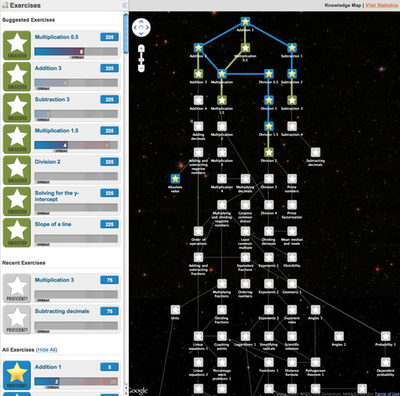
"caption": "The Khan Academy \"Knowledge Map,\" which suggests working exercises, will be made available to crowd-sourced videos chosen by the Khan Academy.",
"description": null,
"title": "map-small",
"credit": null,
"status": "inherit",
"isLoading": false,
"fetchFailed": false
}
},
"audioPlayerReducer": {
"postId": "stream_live",
"isPaused": true,
"isPlaying": false,
"pfsActive": false,
"pledgeModalIsOpen": true,
"playerDrawerIsOpen": false,
"liveAudioPlayStartedAt": 0,
"liveAudioPlayContext": ""
},
"authorsReducer": {
"tbarseghian": {
"type": "authors",
"id": "180",
"meta": {
"index": "authors_1716337520",
"id": "180",
"found": true
},
"name": "Tina Barseghian",
"firstName": "Tina",
"lastName": "Barseghian",
"slug": "tbarseghian",
"email": "tbarseghian@kqed.org",
"display_author_email": false,
"staff_mastheads": [],
"title": null,
"bio": null,
"avatar": "https://secure.gravatar.com/avatar/de7e6ced1239b7018fe4d2b61f723c90?s=600&d=blank&r=g",
"twitter": null,
"facebook": null,
"instagram": null,
"linkedin": null,
"sites": [
{
"site": "styleguide",
"roles": [
"contributor"
]
},
{
"site": "news",
"roles": [
"subscriber"
]
},
{
"site": "mindshift",
"roles": [
"subscriber"
]
},
{
"site": "bayareabites",
"roles": [
"subscriber"
]
}
],
"headData": {
"title": "Tina Barseghian | KQED",
"description": null,
"ogImgSrc": "https://secure.gravatar.com/avatar/de7e6ced1239b7018fe4d2b61f723c90?s=600&d=blank&r=g",
"twImgSrc": "https://secure.gravatar.com/avatar/de7e6ced1239b7018fe4d2b61f723c90?s=600&d=blank&r=g"
},
"isLoading": false,
"link": "/author/tbarseghian"
},
"awatters": {
"type": "authors",
"id": "4352",
"meta": {
"index": "authors_1716337520",
"id": "4352",
"found": true
},
"name": "Audrey Watters",
"firstName": "Audrey",
"lastName": "Watters",
"slug": "awatters",
"email": "awatters@kqed.org",
"display_author_email": false,
"staff_mastheads": [],
"title": null,
"bio": null,
"avatar": "https://secure.gravatar.com/avatar/fb6ac91bb93632725bfa683c1de71bee?s=600&d=blank&r=g",
"twitter": null,
"facebook": null,
"instagram": null,
"linkedin": null,
"sites": [
{
"site": "mindshift",
"roles": [
"subscriber"
]
}
],
"headData": {
"title": "Audrey Watters | KQED",
"description": null,
"ogImgSrc": "https://secure.gravatar.com/avatar/fb6ac91bb93632725bfa683c1de71bee?s=600&d=blank&r=g",
"twImgSrc": "https://secure.gravatar.com/avatar/fb6ac91bb93632725bfa683c1de71bee?s=600&d=blank&r=g"
},
"isLoading": false,
"link": "/author/awatters"
}
},
"pagesReducer": {
"mindshift_category_teaching-strategies": {
"type": "terms",
"id": "mindshift_193",
"meta": {
"index": "terms_1716263798",
"site": "mindshift",
"id": "193",
"score": 14.406914
},
"featImg": null,
"name": "Teaching Strategies",
"description": "Innovative ideas - projects, processes, curricula, and more - that are transforming how we teach and learn.",
"taxonomy": "category",
"headData": {
"twImgId": null,
"twTitle": null,
"ogTitle": null,
"ogImgId": null,
"twDescription": null,
"description": "Innovative ideas - projects, processes, curricula, and more - that are transforming how we teach and learn.",
"title": "Teaching Strategies Archives | KQED Mindshift",
"ogDescription": null
},
"ttid": 193,
"slug": "teaching-strategies",
"isLoading": false,
"title": "Teaching Strategies",
"pageMeta": {
"site": "mindshift",
"WpPageTemplate": "page-topic-editorial",
"currentPage": 79
},
"blocks": [
{
"blockName": "kqed/company-paragraph",
"content": "Innovative ideas - projects, processes, curricula, and more - that are transforming how we teach and learn."
},
{
"blockName": "kqed/post-list",
"attrs": {
"layout": "cardArticle2",
"query": "posts/mindshift?category=teaching-strategies",
"seeMore": false,
"paginated": true,
"page": 79
}
},
{
"blockName": "kqed/ad"
}
]
}
},
"pfsSessionReducer": {},
"postsReducer": {
"stream_live": {
"type": "live",
"id": "stream_live",
"audioUrl": "https://streams.kqed.org/kqedradio",
"title": "Live Stream",
"excerpt": "Live Stream information currently unavailable.",
"link": "/radio",
"featImg": "",
"label": {
"name": "KQED Live",
"link": "/"
}
},
"stream_kqedNewscast": {
"type": "posts",
"id": "stream_kqedNewscast",
"audioUrl": "https://www.kqed.org/.stream/anon/radio/RDnews/newscast.mp3?_=1",
"title": "KQED Newscast",
"featImg": "",
"label": {
"name": "88.5 FM",
"link": "/"
}
},
"mindshift_17350": {
"type": "posts",
"id": "mindshift_17350",
"meta": {
"index": "posts_1716263798",
"site": "mindshift",
"id": "17350",
"score": null,
"sort": [
1323291636000
]
},
"parent": 0,
"labelTerm": {
"site": "mindshift"
},
"blocks": [],
"publishDate": 1323291636,
"format": "aside",
"disqusTitle": "Proof in Study: Math App Improves Test Scores (And Engagement)",
"title": "Proof in Study: Math App Improves Test Scores (And Engagement)",
"headTitle": "MindShift | KQED News",
"content": "\u003cdiv class=\"module image alignright mceTemp\" style=\"width: 300px\">\u003cimg class=\"size-medium wp-image-17361\" src=\"http://ww2.kqed.org/mindshift/wp-content/uploads/sites/23/2011/12/ChristianSmiling-300x199.png\" alt=\"\" width=\"300\" height=\"199\">\n\u003cp class=\"wp-media-credit\">Motion Math\u003c/p>\n\u003c/div>\n\u003cp>The first iPad was released in April 2010, and since then, its potential as a learning device has been explored by educators, app developers, and the \u003ca href=\"http://siia.net/index.php?option=com_content&view=article&id=893:siia-estimates-75-billion-us-market-for-educational-software-and-digital-content&catid=27:education-overview&Itemid=936\">exploding ed-tech industry\u003c/a>. These days, \u003ca href=\"http://www.nytimes.com/2011/01/05/education/05tablets.html?_r=1\">it's not uncommon\u003c/a> to read about school districts handing out iPads \u003ca href=\"http://ww2.kqed.org/mindshift/tag/hmh-fuse-pilot-study/?order=asc\">as textbook replacements\u003c/a>.\u003c/p>\n\u003cp>Skeptics, though, don't believe the hype. From \u003ca href=\"http://www.nytimes.com/2011/01/05/education/05tablets.html?_r=1\">a New York Times article\u003c/a> in January: “There is very little evidence that kids learn more, faster or better by using these machines,” said Larry Cuban, a professor emeritus of education at \u003ca title=\"More articles about Stanford University\" href=\"http://topics.nytimes.com/top/reference/timestopics/organizations/s/stanford_university/index.html?inline=nyt-org\">Stanford University\u003c/a>, who believes that the money would be better spent to recruit, train and retain teachers. “IPads are marvelous tools to engage kids, but then the novelty wears off and you get into hard-core issues of teaching and learning.”\u003c/p>\n\u003cp>Last year, Houghton Mifflin Harcourt \u003ca href=\"http://ww2.kqed.org/mindshift/2011/01/algebra-meet-the-ipad-a-year-long-study-explores-learning/\">released an iPad app\u003c/a> for eighth-grade algebra, and conducted \u003c!--more-->a study with 1,000 California students examining how those using the app perform compared to those who don't. That study should be released next month, but early signs are pointing to favorable results.\u003c/p>\n\u003cp>Until that bigger study is released, another smaller one released today might provide some fodder for iPad enthusiasts. The app \u003ca href=\"http://motionmathgames.com/\">Motion Math\u003c/a>, which \u003ca href=\"http://ww2.kqed.org/mindshift/2011/04/dont-forget-the-fun-factor-in-educational-games/\">teaches players about fractions\u003c/a>, commissioned an independent study with 122 fifth-graders and came up with some encouraging results. According to the report, \u003ca href=\"http://www.gamedesk.org/projects/motion-math-in-class\">released by GameDesk\u003c/a>, showed that fifth graders’ fractions test scores improved an average of over 15% after playing Motion Math for 20 minutes daily over a five-day period, a significant increase compared to a control group.\u003c/p>\n\u003cp>In addition, \"students’ self-efficacy for fractions, as well as their liking of fractions, each improved an average of 10%, a statistically significant increase, and almost all students rated Motion Math as fun and that the game helped them learn,\" the study reports.\u003c/p>\n\u003cp>[ad fullwidth]\u003c/p>\n\u003cp>All this gets back to Cuban's criticism about \"hard-core issues of teaching and learning.\" Do improved test scores, even if within just a small group of fifth-graders, address that concern?\u003c/p>\n\u003ch5>CLARIFICATION: The post was updated to reflect that the study was commissioned by Motion Math but conducted by an independent researcher.\u003c/h5>\n\u003cp> \u003c/p>\n\u003cp> \u003c/p>\n\u003cp>\u003c/p>\n\u003cp> \u003c/p>\n\n",
"disqusIdentifier": "17350 http://blogs.kqed.org/mindshift/?p=17350",
"disqusUrl": "https://ww2.kqed.org/mindshift/2011/12/07/proof-in-study-math-app-improves-test-scores-and-engagement/",
"stats": {
"hasVideo": false,
"hasChartOrMap": false,
"hasAudio": false,
"hasPolis": false,
"wordCount": 371,
"hasGoogleForm": false,
"hasGallery": false,
"hasHearkenModule": false,
"iframeSrcs": [],
"paragraphCount": 8
},
"modified": 1323326242,
"excerpt": null,
"headData": {
"twImgId": "",
"twTitle": "",
"ogTitle": "",
"ogImgId": "",
"twDescription": "",
"description": "Motion Math The first iPad was released in April 2010, and since then, its potential as a learning device has been explored by educators, app developers, and the exploding ed-tech industry. These days, it's not uncommon to read about school districts handing out iPads as textbook replacements. Skeptics, though, don't believe the hype. From a",
"title": "Proof in Study: Math App Improves Test Scores (And Engagement) | KQED",
"ogDescription": "",
"schema": {
"@context": "https://schema.org",
"@type": "Article",
"headline": "Proof in Study: Math App Improves Test Scores (And Engagement)",
"datePublished": "2011-12-07T13:00:36-08:00",
"dateModified": "2011-12-07T22:37:22-08:00",
"image": "https://cdn.kqed.org/wp-content/uploads/2020/02/KQED-OG-Image@1x.png"
}
},
"guestAuthors": [],
"slug": "proof-in-study-math-app-improves-test-scores-and-engagement",
"status": "publish",
"path": "/mindshift/17350/proof-in-study-math-app-improves-test-scores-and-engagement",
"audioTrackLength": null,
"parsedContent": [
{
"type": "contentString",
"content": "\u003cdiv class=\"post-body\">\u003cp>\u003cdiv class=\"module image alignright mceTemp\" style=\"width: 300px\">\u003cimg class=\"size-medium wp-image-17361\" src=\"http://ww2.kqed.org/mindshift/wp-content/uploads/sites/23/2011/12/ChristianSmiling-300x199.png\" alt=\"\" width=\"300\" height=\"199\">\n\u003cp class=\"wp-media-credit\">Motion Math\u003c/p>\n\u003c/div>\n\u003cp>The first iPad was released in April 2010, and since then, its potential as a learning device has been explored by educators, app developers, and the \u003ca href=\"http://siia.net/index.php?option=com_content&view=article&id=893:siia-estimates-75-billion-us-market-for-educational-software-and-digital-content&catid=27:education-overview&Itemid=936\">exploding ed-tech industry\u003c/a>. These days, \u003ca href=\"http://www.nytimes.com/2011/01/05/education/05tablets.html?_r=1\">it's not uncommon\u003c/a> to read about school districts handing out iPads \u003ca href=\"http://ww2.kqed.org/mindshift/tag/hmh-fuse-pilot-study/?order=asc\">as textbook replacements\u003c/a>.\u003c/p>\n\u003cp>Skeptics, though, don't believe the hype. From \u003ca href=\"http://www.nytimes.com/2011/01/05/education/05tablets.html?_r=1\">a New York Times article\u003c/a> in January: “There is very little evidence that kids learn more, faster or better by using these machines,” said Larry Cuban, a professor emeritus of education at \u003ca title=\"More articles about Stanford University\" href=\"http://topics.nytimes.com/top/reference/timestopics/organizations/s/stanford_university/index.html?inline=nyt-org\">Stanford University\u003c/a>, who believes that the money would be better spent to recruit, train and retain teachers. “IPads are marvelous tools to engage kids, but then the novelty wears off and you get into hard-core issues of teaching and learning.”\u003c/p>\n\u003cp>Last year, Houghton Mifflin Harcourt \u003ca href=\"http://ww2.kqed.org/mindshift/2011/01/algebra-meet-the-ipad-a-year-long-study-explores-learning/\">released an iPad app\u003c/a> for eighth-grade algebra, and conducted \u003c!--more-->a study with 1,000 California students examining how those using the app perform compared to those who don't. That study should be released next month, but early signs are pointing to favorable results.\u003c/p>\n\u003cp>Until that bigger study is released, another smaller one released today might provide some fodder for iPad enthusiasts. The app \u003ca href=\"http://motionmathgames.com/\">Motion Math\u003c/a>, which \u003ca href=\"http://ww2.kqed.org/mindshift/2011/04/dont-forget-the-fun-factor-in-educational-games/\">teaches players about fractions\u003c/a>, commissioned an independent study with 122 fifth-graders and came up with some encouraging results. According to the report, \u003ca href=\"http://www.gamedesk.org/projects/motion-math-in-class\">released by GameDesk\u003c/a>, showed that fifth graders’ fractions test scores improved an average of over 15% after playing Motion Math for 20 minutes daily over a five-day period, a significant increase compared to a control group.\u003c/p>\n\u003cp>In addition, \"students’ self-efficacy for fractions, as well as their liking of fractions, each improved an average of 10%, a statistically significant increase, and almost all students rated Motion Math as fun and that the game helped them learn,\" the study reports.\u003c/p>\n\u003cp>\u003c/p>\u003c/div>",
"attributes": {
"named": {},
"numeric": []
}
},
{
"type": "component",
"content": "",
"name": "ad",
"attributes": {
"named": {
"label": "fullwidth"
},
"numeric": [
"fullwidth"
]
}
},
{
"type": "contentString",
"content": "\u003cdiv class=\"post-body\">\u003cp>\u003c/p>\n\u003cp>All this gets back to Cuban's criticism about \"hard-core issues of teaching and learning.\" Do improved test scores, even if within just a small group of fifth-graders, address that concern?\u003c/p>\n\u003ch5>CLARIFICATION: The post was updated to reflect that the study was commissioned by Motion Math but conducted by an independent researcher.\u003c/h5>\n\u003cp> \u003c/p>\n\u003cp> \u003c/p>\n\u003cp>\u003c/p>\n\u003cp> \u003c/p>\n\n\u003c/div>\u003c/p>",
"attributes": {
"named": {},
"numeric": []
}
}
],
"link": "/mindshift/17350/proof-in-study-math-app-improves-test-scores-and-engagement",
"authors": [
"180"
],
"categories": [
"mindshift_195",
"mindshift_193"
],
"tags": [
"mindshift_443"
],
"featImg": "mindshift_17361",
"label": "mindshift"
},
"mindshift_17318": {
"type": "posts",
"id": "mindshift_17318",
"meta": {
"index": "posts_1716263798",
"site": "mindshift",
"id": "17318",
"score": null,
"sort": [
1323277583000
]
},
"parent": 0,
"labelTerm": {
"site": "mindshift"
},
"blocks": [],
"publishDate": 1323277583,
"format": "aside",
"disqusTitle": "Is It Possible to Combine TV and Active Play?",
"title": "Is It Possible to Combine TV and Active Play?",
"headTitle": "MindShift | KQED News",
"content": "\u003cdiv class=\"module image alignleft mceTemp\" style=\"width: 300px\">\u003ca href=\"http://ww2.kqed.org/mindshift/2011/07/with-microsoft-kinect-students-can-learn-how-to-hack/kinecthack/\" rel=\"attachment wp-att-13451\">\u003cimg class=\"size-full wp-image-13451\" src=\"http://ww2.kqed.org/mindshift/wp-content/uploads/sites/23/2011/07/kinecthack.jpg\" alt=\"\" width=\"300\" height=\"168\">\u003c/a>\n\u003cp class=\"wp-media-credit\">Daniel Choo\u003c/p>\n\u003c/div>\n\u003cp>Earlier this fall, Microsoft announced that its \u003ca href=\"http://www.xbox.com/\">Xbox 360\u003c/a> would soon offer special games and TV shows associated with several well-known children's programs, including Sesame Street and Nat Geo Wild. The plan, says Microsoft, is to create shows that would foster a new kind of \"playful learning,\" tying them to the capabilities of the Microsoft Kinect device.\u003c/p>\n\u003cp>The timing of the news wasn't great: the same day Microsoft unveiled its new toddler-friendly Kinect games, the American Academy of Pediatrics issued a report urging no or limited screen time for children under age 2.\u003c/p>\n\u003caside class=\"pullquote alignleft\">Kids will be able to help Cookie Monster with specific tasks, and he’ll respond to their gestures and to their voices.\u003c/aside>\n\u003cp>But bringing the Kinect to children's television is an intriguing proposition. Microsoft say that it’s filming new TV shows and building new games that “seek to inspire kids and their parents to get off the couch and into the action, working cooperatively with their favorite characters to have fun and learn at the same time.” Fun, learning and even physical activity are often invoked when it comes to children's programming -- and it's something that the American Academy of Pediatrics \u003c!--more-->challenges us to think about: while the shows might tout educational content, \u003ca href=\"http://www.nytimes.com/2011/10/19/health/19babies.html\">research\u003c/a> actually suggests there are some negative consequences of TV on toddlers' development.\u003c/p>\n\u003cp>Of course, Sesame Street, while geared at young children (those in preschool and early elementary levels), is aimed at those older than age two. But the cautionary note the American Academy of Pediatrics makes is still worth considering.\u003c/p>\n\u003cp>Yet the Kinect does add a new twist to children's television viewing. The Kinect is a motion-sensing input device for the Xbox 360 game console. That means that with it, users can control their video games -- and now their television shows -- without having to use a game controller. Instead, the Kinect senses bodies, gestures and voice, and by using the “controller-free magic of Kinect,” says Alex Games, educational design director for Microsoft, “we can encourage kids to use their motor skills and to learn using their body in immersive experiences.”\u003c/p>\n\u003cp>[ad fullwidth]\u003c/p>\n\u003cp>With the new programs, television and play will be combined in order to promote a different level of engagement, according to Microsoft. With “Kinect Sesame Street TV,” kids will be able to help Cookie Monster with specific tasks, and he’ll respond to their gestures and to their voices. Of course, Sesame Street characters have always addressed viewers directly, speaking though the screen to those watching at home. The show has long asked children to sing or count along with them. But with the Kinect, the characters will now actually be able to interact more, gauging for example if a child gets the wrong answer to a question that it has posed.\u003c/p>\n\u003cp>This more embodied type of learning, mediated through computing devices, is something that the \u003ca href=\"http://wp.nmc.org/horizon2011/sections/gesture-based-computing/\">2011 Horizon Report\u003c/a> pegged as one of the key trends to watch in education technology. Although the Horizon Report said that “gesture-based computing” was still four or five years away from mainstream classroom adoption, we’re certainly seeing strong indications of what this will look like via new consumer electronics devices. It’s evident in the \u003ca href=\"http://www.wired.com/geekdad/2011/10/why-the-a-magazine-is-an-ipad-that-does-not-work-video-is-ridiculous/\">multitouch\u003c/a> interface of an iPad, for example, or with the voice-input of Siri and the new iPhone 4S, or with the body-control of the Kinect. It's clear from these examples that the future of our computing devices likely won't demand input from a keyboard and mouse.\u003c/p>\n\u003cp>\u003c/p>\n\u003cp>And if the new children's programming with the Microsoft Kinect and Sesame Street are any indication, the future of television will likely look quite different too.\u003c/p>\n\n",
"disqusIdentifier": "17318 http://blogs.kqed.org/mindshift/?p=17318",
"disqusUrl": "https://ww2.kqed.org/mindshift/2011/12/07/combining-tv-and-active-play-microsoft-dives-in/",
"stats": {
"hasVideo": false,
"hasChartOrMap": false,
"hasAudio": false,
"hasPolis": false,
"wordCount": 637,
"hasGoogleForm": false,
"hasGallery": false,
"hasHearkenModule": false,
"iframeSrcs": [],
"paragraphCount": 10
},
"modified": 1323278216,
"excerpt": null,
"headData": {
"twImgId": "",
"twTitle": "",
"ogTitle": "",
"ogImgId": "",
"twDescription": "",
"description": "Daniel Choo Earlier this fall, Microsoft announced that its Xbox 360 would soon offer special games and TV shows associated with several well-known children's programs, including Sesame Street and Nat Geo Wild. The plan, says Microsoft, is to create shows that would foster a new kind of "playful learning," tying them to the capabilities of",
"title": "Is It Possible to Combine TV and Active Play? | KQED",
"ogDescription": "",
"schema": {
"@context": "https://schema.org",
"@type": "Article",
"headline": "Is It Possible to Combine TV and Active Play?",
"datePublished": "2011-12-07T09:06:23-08:00",
"dateModified": "2011-12-07T09:16:56-08:00",
"image": "https://cdn.kqed.org/wp-content/uploads/2020/02/KQED-OG-Image@1x.png"
}
},
"guestAuthors": [],
"slug": "combining-tv-and-active-play-microsoft-dives-in",
"status": "publish",
"path": "/mindshift/17318/combining-tv-and-active-play-microsoft-dives-in",
"audioTrackLength": null,
"parsedContent": [
{
"type": "contentString",
"content": "\u003cdiv class=\"post-body\">\u003cp>\u003cdiv class=\"module image alignleft mceTemp\" style=\"width: 300px\">\u003ca href=\"http://ww2.kqed.org/mindshift/2011/07/with-microsoft-kinect-students-can-learn-how-to-hack/kinecthack/\" rel=\"attachment wp-att-13451\">\u003cimg class=\"size-full wp-image-13451\" src=\"http://ww2.kqed.org/mindshift/wp-content/uploads/sites/23/2011/07/kinecthack.jpg\" alt=\"\" width=\"300\" height=\"168\">\u003c/a>\n\u003cp class=\"wp-media-credit\">Daniel Choo\u003c/p>\n\u003c/div>\n\u003cp>Earlier this fall, Microsoft announced that its \u003ca href=\"http://www.xbox.com/\">Xbox 360\u003c/a> would soon offer special games and TV shows associated with several well-known children's programs, including Sesame Street and Nat Geo Wild. The plan, says Microsoft, is to create shows that would foster a new kind of \"playful learning,\" tying them to the capabilities of the Microsoft Kinect device.\u003c/p>\n\u003cp>The timing of the news wasn't great: the same day Microsoft unveiled its new toddler-friendly Kinect games, the American Academy of Pediatrics issued a report urging no or limited screen time for children under age 2.\u003c/p>\n\u003caside class=\"pullquote alignleft\">Kids will be able to help Cookie Monster with specific tasks, and he’ll respond to their gestures and to their voices.\u003c/aside>\n\u003cp>But bringing the Kinect to children's television is an intriguing proposition. Microsoft say that it’s filming new TV shows and building new games that “seek to inspire kids and their parents to get off the couch and into the action, working cooperatively with their favorite characters to have fun and learn at the same time.” Fun, learning and even physical activity are often invoked when it comes to children's programming -- and it's something that the American Academy of Pediatrics \u003c!--more-->challenges us to think about: while the shows might tout educational content, \u003ca href=\"http://www.nytimes.com/2011/10/19/health/19babies.html\">research\u003c/a> actually suggests there are some negative consequences of TV on toddlers' development.\u003c/p>\n\u003cp>Of course, Sesame Street, while geared at young children (those in preschool and early elementary levels), is aimed at those older than age two. But the cautionary note the American Academy of Pediatrics makes is still worth considering.\u003c/p>\n\u003cp>Yet the Kinect does add a new twist to children's television viewing. The Kinect is a motion-sensing input device for the Xbox 360 game console. That means that with it, users can control their video games -- and now their television shows -- without having to use a game controller. Instead, the Kinect senses bodies, gestures and voice, and by using the “controller-free magic of Kinect,” says Alex Games, educational design director for Microsoft, “we can encourage kids to use their motor skills and to learn using their body in immersive experiences.”\u003c/p>\n\u003cp>\u003c/p>\u003c/div>",
"attributes": {
"named": {},
"numeric": []
}
},
{
"type": "component",
"content": "",
"name": "ad",
"attributes": {
"named": {
"label": "fullwidth"
},
"numeric": [
"fullwidth"
]
}
},
{
"type": "contentString",
"content": "\u003cdiv class=\"post-body\">\u003cp>\u003c/p>\n\u003cp>With the new programs, television and play will be combined in order to promote a different level of engagement, according to Microsoft. With “Kinect Sesame Street TV,” kids will be able to help Cookie Monster with specific tasks, and he’ll respond to their gestures and to their voices. Of course, Sesame Street characters have always addressed viewers directly, speaking though the screen to those watching at home. The show has long asked children to sing or count along with them. But with the Kinect, the characters will now actually be able to interact more, gauging for example if a child gets the wrong answer to a question that it has posed.\u003c/p>\n\u003cp>This more embodied type of learning, mediated through computing devices, is something that the \u003ca href=\"http://wp.nmc.org/horizon2011/sections/gesture-based-computing/\">2011 Horizon Report\u003c/a> pegged as one of the key trends to watch in education technology. Although the Horizon Report said that “gesture-based computing” was still four or five years away from mainstream classroom adoption, we’re certainly seeing strong indications of what this will look like via new consumer electronics devices. It’s evident in the \u003ca href=\"http://www.wired.com/geekdad/2011/10/why-the-a-magazine-is-an-ipad-that-does-not-work-video-is-ridiculous/\">multitouch\u003c/a> interface of an iPad, for example, or with the voice-input of Siri and the new iPhone 4S, or with the body-control of the Kinect. It's clear from these examples that the future of our computing devices likely won't demand input from a keyboard and mouse.\u003c/p>\n\u003cp>\u003c/p>\n\u003cp>And if the new children's programming with the Microsoft Kinect and Sesame Street are any indication, the future of television will likely look quite different too.\u003c/p>\n\n\u003c/div>\u003c/p>",
"attributes": {
"named": {},
"numeric": []
}
}
],
"link": "/mindshift/17318/combining-tv-and-active-play-microsoft-dives-in",
"authors": [
"4352"
],
"categories": [
"mindshift_195",
"mindshift_193"
],
"tags": [
"mindshift_616",
"mindshift_149",
"mindshift_422",
"mindshift_778"
],
"featImg": "mindshift_13451",
"label": "mindshift"
},
"mindshift_17301": {
"type": "posts",
"id": "mindshift_17301",
"meta": {
"index": "posts_1716263798",
"site": "mindshift",
"id": "17301",
"score": null,
"sort": [
1323187236000
]
},
"parent": 0,
"labelTerm": {
"site": "mindshift"
},
"blocks": [],
"publishDate": 1323187236,
"format": "aside",
"disqusTitle": "Educators: Define Achievement!",
"title": "Educators: Define Achievement!",
"headTitle": "MindShift | KQED News",
"content": "\u003cdiv class=\"module image alignleft mceTemp\" style=\"width: 225px\">\n\u003cp>\u003ca href=\"http://www.audiophilage.org/wp-content/uploads/2010/02/GoldStarSticker.jpg\">\u003cimg class=\"size-full wp-image-17310\" src=\"http://ww2.kqed.org/mindshift/wp-content/uploads/sites/23/2011/12/GoldStarSticker.jpg\" alt=\"\" width=\"225\" height=\"230\" srcset=\"https://ww2.kqed.org/app/uploads/sites/23/2011/12/GoldStarSticker.jpg 225w, https://ww2.kqed.org/app/uploads/sites/23/2011/12/GoldStarSticker-32x32.jpg 32w, https://ww2.kqed.org/app/uploads/sites/23/2011/12/GoldStarSticker-64x64.jpg 64w\" sizes=\"(max-width: 225px) 100vw, 225px\">\u003c/a>\u003c/p>\n\u003cp class=\"wp-media-credit\">Audiophilage\u003c/p>\n\u003c/div>\n\u003cp>In the discussion over \u003ca href=\"http://ww2.kqed.org/mindshift/2011/11/can-everyone-be-smart-at-everything/\">learning styles and measuring achievements\u003c/a>, it's important to take into account what educators see first-hand in class. To get a sense of their perspective on the subjects, I asked educators who are part of the \u003ca href=\"http://plpnetwork.com/category/voices/\">Powerful Learning Practice\u003c/a> to weigh in on what they've observed in their classrooms. Here's what they say.\u003c/p>\n\u003cp>\u003cem>\u003cstrong>\u003ca href=\"http://pgrays.edublogs.org/\">PATTI GRAYSON\u003c/a>: Elementary teacher at Virginia's Hampton Roads Academy. \u003c/strong>\u003c/em>\u003c/p>\n\u003cp style=\"text-align: left;padding-left: 30px\">Educators should take note. Making some simple changes in the way we talk to students can have a significant impact. We should never underestimate the potential of a child based on test scores, and should be wary of how grading can impact a child’s image of themselves. We owe it to our students to give every child the encouragement and opportunity to learn.\u003c/p>\n\u003cp style=\"text-align: left;padding-left: 30px\">\n\u003caside class=\"pullquote alignleft\">The word \u003cem>achievement\u003c/em> is often thrown around as the ultimate, if undefined, goal. \u003c/aside>\n\u003c/p>\n\u003cp style=\"text-align: left;padding-left: 30px\">As a 4th grade teacher, I see students making judgments about what they are and aren’t “good at” every day. At 9 and 10 years old, students are very sensitive to this, and one poor grade can convince them that they are not good at a particular skill or subject. This mindset is\u003c!--more--> very difficult to reverse.\u003c/p>\n\u003cp>[ad fullwidth]\u003c/p>\n\u003cp style=\"text-align: left;padding-left: 30px\">Grading has a very strong impact on these perceptions. If they receive A's in Reading, Math, Science, and Social Studies and a B in English, suddenly English becomes that subject they know they are not good at. With this determination comes damaged self-confidence, increased anxiety over assignments and tests, and a lifelong self-fulfilling prophecy.\u003c/p>\n\u003cp style=\"text-align: left;padding-left: 30px\">Bolstering a child’s confidence is key. They need to believe that with hard work and perseverance they CAN learn – and not just in certain ways or in certain areas. Teachers often see students with lower IQs performing above their potential, and even above students with higher aptitude.\u003c/p>\n\u003cp style=\"text-align: left;padding-left: 30px\">The \u003cem>New York Magazine\u003c/em> article \u003ca href=\"http://nymag.com/news/features/27840/\">How Not to Talk to Your Kids: The Inverse Power of Praise\u003c/a> by Po Bronson includes some discussion of the study by psychologist Carol Dweck, where she studied the effect of praise on students in a dozen New York schools. The results of her series of experiments on 400 fifth-graders is astounding. Random groups of children were either praised for their intelligence (“You must be smart at this”) or for their effort (“You must have worked really hard”). The children who believed it was effort, not innate gifts, that made the positive difference in their learning success achieved more and were more willing to take on difficult challenges.\u003c/p>\n\u003cp>\u003cstrong>\u003ca href=\"http://teachnlife.blogspot.com/\">BECKY BAIR\u003c/a>: intermediate grades in Pennsylvania’s Elizabethtown Area School District.\u003cbr>\n\u003c/strong>\u003c/p>\n\u003cp style=\"padding-left: 30px\">The debate surrounding recognition for achievement, identification of learning styles, effort, and multiple intelligences certainly sparks a great deal of interest and discussion. Just like any other topic in education these days you can probably find research that refutes or supports the side that you would like to take.\u003c/p>\n\u003cp style=\"padding-left: 30px\">What worries me is that within all of this conversation, we’re still not talking about the ridiculous amount of time schools spend focusing on student weaknesses. Do we gain anything when we make students feel that they are less smart if they don’t make a certain grade? Or when we set them up for failure in certain classes because we've decided in advance that this child or that child \"doesn't do well\" in math or science or language? Or when we constantly force kids into learning situations that emphasize only what they have done wrong?\u003c/p>\n\u003cp style=\"padding-left: 30px\">Here are some messages I see students getting all the time:\u003c/p>\n\u003cp style=\"padding-left: 30px\">• Didn’t pass the test? Let’s have you do more test prep instead of learning skills that you can actually apply as you get older.\u003c/p>\n\u003cp style=\"padding-left: 30px\">• Can’t read enough words per minute? We’ll pull you out of a less important subject like history or science and give you an additional reading class.\u003c/p>\n\u003cp style=\"padding-left: 30px\">• Not grasping a particular skill in a core subject? Let’s prohibit you from taking electives that might spark your interest. We'll put you in remediation classes instead.\u003c/p>\n\u003cp style=\"padding-left: 30px\">• Not sure how to decode longer words? Let’s put you with a different teacher and you can practice this skill in isolation. We won't worry about connecting it to real content where you might see its value.\u003c/p>\n\u003cp style=\"padding-left: 30px\">Perhaps this discussion needs to be about more than whether we’re doing our students a disservice by patting them on the back or identifying their preferred learning style. Maybe we should really be thinking about how our students’ educational experiences prepare them for real life after school. In real life there are days when we adults feel really great and smart, and there are those days where we feel like we don’t have a clue. What differentiates kids from adults, hopefully, is that adults understand those blue days are not lasting and we have the power to change them.\u003c/p>\n\u003cp style=\"padding-left: 30px\">Maybe this discussion should be more about exposure. Let’s give our kids the chance to try lots of things so they'll discover what they're great at and can start thinking about a career path and how to be a successful adult. And let’s not be afraid to put our kids in situations where they fail and try and maybe fail again, so they can see that failure is not the end of the world but an inevitable and valuable experience -- another opportunity to learn and grow.\u003c/p>\n\u003cp>\u003cstrong>\u003ca href=\"http://imagineteach.org/\">ED ALLEN\u003c/a>: administrator and drama teacher at Cardinal O'Hara High School in Philadelphia.\u003cbr>\n\u003c/strong>\u003c/p>\n\u003cp style=\"padding-left: 30px\">I have had the good fortune during years of teaching the performing arts to watch students learn by experiencing the struggles of putting together a show -- the failures and uncertainties and ultimately the triumphs of a successful performance. There is no tracking, no extrinsic rewards, no talk of learning styles. Just the work and the learning.\u003c/p>\n\u003cp style=\"padding-left: 30px\">In the current educational climate, the word \u003cem>achievement\u003c/em> is often thrown around as the ultimate if undefined goal. We understand, of course, that for those who've positioned themselves to hold educators \"accountable,\" it means success on tests. It is rare that learning is discussed.\u003c/p>\n\u003cp style=\"padding-left: 30px\">When we measure everyone's achievement by high-stakes tests, we are strengthening the fixed mindsets of not just our students, but of everyone who works in education and everyone who discusses or wants to fix education. Society loves small digestible bits of data with which they can pass judgments on students, teachers, parents, and schools.\u003c/p>\n\u003cp style=\"padding-left: 30px\">It is far more challenging to really find ways to assess the journey of learning rather than relying on a summary \"outcome\" or grade. But isn’t it worth it? If we want our students to truly learn, shouldn’t we lead by our willingness to truly learn as well?\u003c/p>\n\u003cp style=\"padding-left: 30px\">As I direct our high school musical show, I'm watching Carol Dweck's concept of \"growth mindset\" in action. Kids were singing and dancing, working on the process. They knew it wouldn’t be easy, and they know they are not receiving a grade. They know that mistakes are welcome and expected.\u003c/p>\n\u003cp>[ad floatright]\u003c/p>\n\u003cp style=\"padding-left: 30px\">Next time you can, stop in to watch a show practice, a choir practice, a band rehearsal, or an art class. Watch what happens. Watch the kids. Then think about how the pedagogy that you witness in these settings might work very well in any discipline. And feel free to sing, dance, play, or paint along!\u003c/p>\n\n",
"disqusIdentifier": "17301 http://blogs.kqed.org/mindshift/?p=17301",
"disqusUrl": "https://ww2.kqed.org/mindshift/2011/12/06/educators-define-achievement/",
"stats": {
"hasVideo": false,
"hasChartOrMap": false,
"hasAudio": false,
"hasPolis": false,
"wordCount": 1275,
"hasGoogleForm": false,
"hasGallery": false,
"hasHearkenModule": false,
"iframeSrcs": [],
"paragraphCount": 7
},
"modified": 1323153785,
"excerpt": null,
"headData": {
"twImgId": "",
"twTitle": "",
"ogTitle": "",
"ogImgId": "",
"twDescription": "",
"description": "Audiophilage In the discussion over learning styles and measuring achievements, it's important to take into account what educators see first-hand in class. To get a sense of their perspective on the subjects, I asked educators who are part of the Powerful Learning Practice to weigh in on what they've observed in their classrooms. Here's what",
"title": "Educators: Define Achievement! | KQED",
"ogDescription": "",
"schema": {
"@context": "https://schema.org",
"@type": "Article",
"headline": "Educators: Define Achievement!",
"datePublished": "2011-12-06T08:00:36-08:00",
"dateModified": "2011-12-05T22:43:05-08:00",
"image": "https://cdn.kqed.org/wp-content/uploads/2020/02/KQED-OG-Image@1x.png"
}
},
"guestAuthors": [],
"slug": "educators-define-achievement",
"status": "publish",
"path": "/mindshift/17301/educators-define-achievement",
"audioTrackLength": null,
"parsedContent": [
{
"type": "contentString",
"content": "\u003cdiv class=\"post-body\">\u003cp>\u003cdiv class=\"module image alignleft mceTemp\" style=\"width: 225px\">\n\u003cp>\u003ca href=\"http://www.audiophilage.org/wp-content/uploads/2010/02/GoldStarSticker.jpg\">\u003cimg class=\"size-full wp-image-17310\" src=\"http://ww2.kqed.org/mindshift/wp-content/uploads/sites/23/2011/12/GoldStarSticker.jpg\" alt=\"\" width=\"225\" height=\"230\" srcset=\"https://ww2.kqed.org/app/uploads/sites/23/2011/12/GoldStarSticker.jpg 225w, https://ww2.kqed.org/app/uploads/sites/23/2011/12/GoldStarSticker-32x32.jpg 32w, https://ww2.kqed.org/app/uploads/sites/23/2011/12/GoldStarSticker-64x64.jpg 64w\" sizes=\"(max-width: 225px) 100vw, 225px\">\u003c/a>\u003c/p>\n\u003cp class=\"wp-media-credit\">Audiophilage\u003c/p>\n\u003c/div>\n\u003cp>In the discussion over \u003ca href=\"http://ww2.kqed.org/mindshift/2011/11/can-everyone-be-smart-at-everything/\">learning styles and measuring achievements\u003c/a>, it's important to take into account what educators see first-hand in class. To get a sense of their perspective on the subjects, I asked educators who are part of the \u003ca href=\"http://plpnetwork.com/category/voices/\">Powerful Learning Practice\u003c/a> to weigh in on what they've observed in their classrooms. Here's what they say.\u003c/p>\n\u003cp>\u003cem>\u003cstrong>\u003ca href=\"http://pgrays.edublogs.org/\">PATTI GRAYSON\u003c/a>: Elementary teacher at Virginia's Hampton Roads Academy. \u003c/strong>\u003c/em>\u003c/p>\n\u003cp style=\"text-align: left;padding-left: 30px\">Educators should take note. Making some simple changes in the way we talk to students can have a significant impact. We should never underestimate the potential of a child based on test scores, and should be wary of how grading can impact a child’s image of themselves. We owe it to our students to give every child the encouragement and opportunity to learn.\u003c/p>\n\u003cp style=\"text-align: left;padding-left: 30px\">\n\u003caside class=\"pullquote alignleft\">The word \u003cem>achievement\u003c/em> is often thrown around as the ultimate, if undefined, goal. \u003c/aside>\n\u003c/p>\n\u003cp style=\"text-align: left;padding-left: 30px\">As a 4th grade teacher, I see students making judgments about what they are and aren’t “good at” every day. At 9 and 10 years old, students are very sensitive to this, and one poor grade can convince them that they are not good at a particular skill or subject. This mindset is\u003c!--more--> very difficult to reverse.\u003c/p>\n\u003cp>\u003c/p>\u003c/div>",
"attributes": {
"named": {},
"numeric": []
}
},
{
"type": "component",
"content": "",
"name": "ad",
"attributes": {
"named": {
"label": "fullwidth"
},
"numeric": [
"fullwidth"
]
}
},
{
"type": "contentString",
"content": "\u003cdiv class=\"post-body\">\u003cp>\u003c/p>\n\u003cp style=\"text-align: left;padding-left: 30px\">Grading has a very strong impact on these perceptions. If they receive A's in Reading, Math, Science, and Social Studies and a B in English, suddenly English becomes that subject they know they are not good at. With this determination comes damaged self-confidence, increased anxiety over assignments and tests, and a lifelong self-fulfilling prophecy.\u003c/p>\n\u003cp style=\"text-align: left;padding-left: 30px\">Bolstering a child’s confidence is key. They need to believe that with hard work and perseverance they CAN learn – and not just in certain ways or in certain areas. Teachers often see students with lower IQs performing above their potential, and even above students with higher aptitude.\u003c/p>\n\u003cp style=\"text-align: left;padding-left: 30px\">The \u003cem>New York Magazine\u003c/em> article \u003ca href=\"http://nymag.com/news/features/27840/\">How Not to Talk to Your Kids: The Inverse Power of Praise\u003c/a> by Po Bronson includes some discussion of the study by psychologist Carol Dweck, where she studied the effect of praise on students in a dozen New York schools. The results of her series of experiments on 400 fifth-graders is astounding. Random groups of children were either praised for their intelligence (“You must be smart at this”) or for their effort (“You must have worked really hard”). The children who believed it was effort, not innate gifts, that made the positive difference in their learning success achieved more and were more willing to take on difficult challenges.\u003c/p>\n\u003cp>\u003cstrong>\u003ca href=\"http://teachnlife.blogspot.com/\">BECKY BAIR\u003c/a>: intermediate grades in Pennsylvania’s Elizabethtown Area School District.\u003cbr>\n\u003c/strong>\u003c/p>\n\u003cp style=\"padding-left: 30px\">The debate surrounding recognition for achievement, identification of learning styles, effort, and multiple intelligences certainly sparks a great deal of interest and discussion. Just like any other topic in education these days you can probably find research that refutes or supports the side that you would like to take.\u003c/p>\n\u003cp style=\"padding-left: 30px\">What worries me is that within all of this conversation, we’re still not talking about the ridiculous amount of time schools spend focusing on student weaknesses. Do we gain anything when we make students feel that they are less smart if they don’t make a certain grade? Or when we set them up for failure in certain classes because we've decided in advance that this child or that child \"doesn't do well\" in math or science or language? Or when we constantly force kids into learning situations that emphasize only what they have done wrong?\u003c/p>\n\u003cp style=\"padding-left: 30px\">Here are some messages I see students getting all the time:\u003c/p>\n\u003cp style=\"padding-left: 30px\">• Didn’t pass the test? Let’s have you do more test prep instead of learning skills that you can actually apply as you get older.\u003c/p>\n\u003cp style=\"padding-left: 30px\">• Can’t read enough words per minute? We’ll pull you out of a less important subject like history or science and give you an additional reading class.\u003c/p>\n\u003cp style=\"padding-left: 30px\">• Not grasping a particular skill in a core subject? Let’s prohibit you from taking electives that might spark your interest. We'll put you in remediation classes instead.\u003c/p>\n\u003cp style=\"padding-left: 30px\">• Not sure how to decode longer words? Let’s put you with a different teacher and you can practice this skill in isolation. We won't worry about connecting it to real content where you might see its value.\u003c/p>\n\u003cp style=\"padding-left: 30px\">Perhaps this discussion needs to be about more than whether we’re doing our students a disservice by patting them on the back or identifying their preferred learning style. Maybe we should really be thinking about how our students’ educational experiences prepare them for real life after school. In real life there are days when we adults feel really great and smart, and there are those days where we feel like we don’t have a clue. What differentiates kids from adults, hopefully, is that adults understand those blue days are not lasting and we have the power to change them.\u003c/p>\n\u003cp style=\"padding-left: 30px\">Maybe this discussion should be more about exposure. Let’s give our kids the chance to try lots of things so they'll discover what they're great at and can start thinking about a career path and how to be a successful adult. And let’s not be afraid to put our kids in situations where they fail and try and maybe fail again, so they can see that failure is not the end of the world but an inevitable and valuable experience -- another opportunity to learn and grow.\u003c/p>\n\u003cp>\u003cstrong>\u003ca href=\"http://imagineteach.org/\">ED ALLEN\u003c/a>: administrator and drama teacher at Cardinal O'Hara High School in Philadelphia.\u003cbr>\n\u003c/strong>\u003c/p>\n\u003cp style=\"padding-left: 30px\">I have had the good fortune during years of teaching the performing arts to watch students learn by experiencing the struggles of putting together a show -- the failures and uncertainties and ultimately the triumphs of a successful performance. There is no tracking, no extrinsic rewards, no talk of learning styles. Just the work and the learning.\u003c/p>\n\u003cp style=\"padding-left: 30px\">In the current educational climate, the word \u003cem>achievement\u003c/em> is often thrown around as the ultimate if undefined goal. We understand, of course, that for those who've positioned themselves to hold educators \"accountable,\" it means success on tests. It is rare that learning is discussed.\u003c/p>\n\u003cp style=\"padding-left: 30px\">When we measure everyone's achievement by high-stakes tests, we are strengthening the fixed mindsets of not just our students, but of everyone who works in education and everyone who discusses or wants to fix education. Society loves small digestible bits of data with which they can pass judgments on students, teachers, parents, and schools.\u003c/p>\n\u003cp style=\"padding-left: 30px\">It is far more challenging to really find ways to assess the journey of learning rather than relying on a summary \"outcome\" or grade. But isn’t it worth it? If we want our students to truly learn, shouldn’t we lead by our willingness to truly learn as well?\u003c/p>\n\u003cp style=\"padding-left: 30px\">As I direct our high school musical show, I'm watching Carol Dweck's concept of \"growth mindset\" in action. Kids were singing and dancing, working on the process. They knew it wouldn’t be easy, and they know they are not receiving a grade. They know that mistakes are welcome and expected.\u003c/p>\n\u003cp>\u003c/p>\u003c/div>",
"attributes": {
"named": {},
"numeric": []
}
},
{
"type": "component",
"content": "",
"name": "ad",
"attributes": {
"named": {
"label": "floatright"
},
"numeric": [
"floatright"
]
}
},
{
"type": "contentString",
"content": "\u003cdiv class=\"post-body\">\u003cp>\u003c/p>\n\u003cp style=\"padding-left: 30px\">Next time you can, stop in to watch a show practice, a choir practice, a band rehearsal, or an art class. Watch what happens. Watch the kids. Then think about how the pedagogy that you witness in these settings might work very well in any discipline. And feel free to sing, dance, play, or paint along!\u003c/p>\n\n\u003c/div>\u003c/p>",
"attributes": {
"named": {},
"numeric": []
}
}
],
"link": "/mindshift/17301/educators-define-achievement",
"authors": [
"180"
],
"categories": [
"mindshift_192",
"mindshift_193"
],
"featImg": "mindshift_17310",
"label": "mindshift"
},
"mindshift_17283": {
"type": "posts",
"id": "mindshift_17283",
"meta": {
"index": "posts_1716263798",
"site": "mindshift",
"id": "17283",
"score": null,
"sort": [
1323115225000
]
},
"parent": 0,
"labelTerm": {
"site": "mindshift"
},
"blocks": [],
"publishDate": 1323115225,
"format": "aside",
"disqusTitle": "Will Online Education Expand in California?",
"title": "Will Online Education Expand in California?",
"headTitle": "MindShift | KQED News",
"content": "\u003ch5>\u003c/h5>\n\u003cdiv class=\"module image alignleft mceTemp\" style=\"width: 300px\">\u003ca href=\"http://ww2.kqed.org/mindshift/2011/12/will-online-education-expand-in-california/10_11-15_newtech_0157-2/\" rel=\"attachment wp-att-17286\">\u003cimg class=\"size-medium wp-image-17286\" src=\"http://ww2.kqed.org/mindshift/wp-content/uploads/sites/23/2011/12/10_11.15_newtech_0157-300x199.jpg\" alt=\"\" width=\"300\" height=\"199\">\u003c/a>\n\u003cp class=\"wp-media-credit\">Lenny Gonzales\u003c/p>\n\u003c/div>\n\u003ch5>\u003ca title=\"View user profile.\" href=\"http://californiawatch.org/user/joanna-lin\">By Joanna Lin\u003c/a>\u003c/h5>\n\u003cp>For public school students in California, where you live usually determines where you can learn. To David Haglund, that's not right.\u003c/p>\n\u003cp>Last month, Haglund, principal of the Riverside Virtual School, an online independent study program run by the Riverside Unified School District, introduced a statewide \u003ca href=\"http://ag.ca.gov/cms_attachments/initiatives/pdfs/i1005_11-0062_%28student_rights%29.pdf\" target=\"_blank\">ballot initiative [PDF]\u003c/a> that would give students unrestricted access to publicly funded courses – wherever they are.\u003c/p>\n\u003cp>The \u003ca href=\"http://cadiploma.com/index.html\" target=\"_blank\">California Student Bill of Rights Initiative\u003c/a> is \"designed to eliminate control by ZIP code,\" Haglund said.\u003c/p>\n\u003cp>Under the proposal, schools, districts and county education offices would be required to make available to all students the courses needed for admission to the state's universities. Those courses, known as \u003ca href=\"http://www.cde.ca.gov/ci/gs/hs/hsgrtable.asp\" target=\"_blank\">A-G requirements\u003c/a> at the University of California and California State University, could be offered at a student's school or district of residence or any other publicly funded school, and they could be classroom-based, online or a blended model of the two.\u003c/p>\n\u003cp>Nearly 27 percent of California public high schools in 2007-08 offered too few A-G courses for all students to take them, according to an \u003ca href=\"http://idea.gseis.ucla.edu/publications/eor-10/files-and-documents/Conditions-Opportunities-Addendum.pdf\" target=\"_blank\">analysis [PDF]\u003c/a> by UCLA's Institute for Democracy, Education and Access.\u003c/p>\n\u003cp>[ad fullwidth]\u003c/p>\n\u003cp>\"We in our public school system in California say, 'If you don't live within so many square miles of a building, you can't play,' and that's not fair,\" Haglund said. \"And it's particularly unfair when the \u003c!--more-->infrastructure and technology exists to resolve those issues.\"\u003c/p>\n\u003cp>Skeptics of the initiative say that while the proposal attempts to address real problems in education access and equity, it's not the right mechanism to do so. If passed, the initiative could send more public money to private companies, they say.\u003c/p>\n\u003cp>The initiative calls on the state to modify its school financing system so that average daily attendance is apportioned to the courses students complete, allowing multiple institutions to split funding for the same student. Currently, online education in California operates as independent study programs, or charter or private schools – models that initiative supporters say limit access to virtual learning.\u003c/p>\n\u003cp>\"The idea is if the funding is attached to courses, the schools might be more willing to investigate how to make those courses available,\" Haglund said.\u003c/p>\n\u003cp>John Rogers, director of UCLA IDEA, sees a different outcome: \"Splitting up a student's ADA (average daily attendance) potentially can weaken the home institutions,\" he said. \"When there are efforts to supplant aspects of the existing public education system with a cheaper online alternative, you're going to diminish the overall quality of public education, and you're going to exacerbate, not remedy, inequalities.\"\u003c/p>\n\u003cp>The initiative \"could wreak havoc on the delivery of public education in the state,\" said John Affeldt, managing attorney for Public Advocates, which is representing organizations and families \u003ca href=\"http://www.publicadvocates.org/campaign-for-quality-education-v-california\" target=\"_blank\">challenging the constitutionality\u003c/a> of California's school funding system.\u003c/p>\n\u003cp>\"It seems at first blush to be more about an online provider's bill of rights to get public money to provide online courses than an initiative to make sure we have equitable access to education for all kids,\" he said.\u003c/p>\n\u003cp>Haglund said, \"The initiative is not designed to destroy public education.\"\u003c/p>\n\u003cp>\"California as a state has pushed educational innovation into the private and charter school space. If that's where we want to go, then keep it up,\" he said. \"But if we want our kids in public schools to have access to the same type of high-quality education they can have elsewhere, we need to switch it up.\"\u003c/p>\n\u003cp>\u003cstrong>'The Old West'\u003c/strong>\u003c/p>\n\u003cp>Haglund's proposal comes at a time when \u003ca href=\"http://online.wsj.com/article/SB10001424052970204358004577030600066250144.html?\" target=\"_blank\">more students\u003c/a> are going to school by logging on to their computers. At least 15,000 students in California are enrolled in full-time online charter schools, and more than 3,600 were enrolled at Riverside Virtual School, the largest district-run program in the state in 2009-10, according to a \u003ca href=\"http://kpk12.com/states/california/\" target=\"_blank\">review\u003c/a> by the Evergreen Education Group.\u003c/p>\n\u003cp>But unlike many states that have embraced – or at least accepted – online education, California has stayed on the sidelines.\u003c/p>\n\u003cp>\"There is no statewide provision for online learning in California. It's all facilitated through individual districts who make up their own thing as they go along; consequently, it's like the Old West,\" Haglund said. \"You've got everybody and their grandmother out there doing something, but nobody knows what that something is.\"\u003c/p>\n\u003cp>Lawmakers – including state Superintendent of Public Instruction Tom Torlakson when he was a state assemblyman – have tried repeatedly to expand access to online education through changes to ADA guidelines.\u003c/p>\n\u003cp>Torlakson is currently assembling an advisory board to rethink technology in the classroom and is looking to raise $250,000 to fund its work. His long-term goal is to provide every student with a digital learning device, said Jason Spencer, a legislative representative for the superintendent. Although funding online education is a piece of the puzzle, it's an issue for the Legislature to decide, he said.\u003c/p>\n\u003cp>Haglund and his colleagues at Education Forward, a nonprofit formed to sponsor the initiative, said they are tired of waiting.\u003c/p>\n\u003cp>\"Is it possible for the Legislature in Sacramento to deal with this much more quickly and efficiently than this process? Yeah, absolutely,\" said Rick Miller, superintendent of Riverside Unified and a director at Education Forward. \"But they haven't done it. It doesn't mean they can't and they won't – they just haven't. How long should we wait?\"\u003c/p>\n\u003cp>Miller and Haglund said they are sponsoring the initiative as individuals, not on behalf of their district. But their experience in Riverside has helped them craft some guidelines for online education.\u003c/p>\n\u003cp>Under the initiative, only online courses approved by UC and schools accredited by the Western Association of Schools and Colleges would be eligible for public funds. Student participation in virtual learning would be voluntary.\u003c/p>\n\u003cp>After it's cleared by the state for circulation – a target date is set for next month – the initiative will need 504,760 signatures to qualify for the November 2012 ballot. More than likely, it won't be the only online education proposal Californians see next year.\u003c/p>\n\u003cp>Language in the initiative could end up in legislation next year, said Jeff Frost, a lobbyist for several education organizations and school districts, including Riverside Unified. Along with other school district lobbyists, Frost has developed \u003ca href=\"https://www.documentcloud.org/documents/268526-education-management-groups-statement-of.html\" target=\"_blank\">seven principles\u003c/a> for online learning that he hopes will lay a foundation for state policy.\u003c/p>\n\u003cp>\"The Department of Education, Department of Finance and key legislative staffers are skeptical that if the kid's not in a room with a teacher, they're not sure what level of learning is actually going on,\" Frost said. \"We're working on language … to reach some kind of harmony in the issue.\"\u003c/p>\n\u003cp>That language, Frost said, will support the notion that ADA can be calculated based on student work.\u003c/p>\n\u003cp>\"Whether they're in the virtual school's learning center or whether they're at home with their mom looking over their shoulder or whether they're in the public library – if they're there working, that's the same as a kid who showed up in school,\" Frost said.\u003c/p>\n\u003cp>Assemblyman Bob Blumenfield, D-Van Nuys, said technology provides tools to verify that students are learning outside the classroom.\u003c/p>\n\u003cp>\"In the traditional classroom, you can't verify if that student is looking out the window and daydreaming about something else, whereas an online class, you can. You can make sure that person's butt is in the seat when they say it's supposed to be. … The technology is out there and improving every day as we speak.\"\u003c/p>\n\u003cp>Blumenfield wrote bills \u003ca href=\"http://leginfo.ca.gov/cgi-bin/postquery?bill_number=ab_802&sess=CUR&house=B&author=blumenfield\" target=\"_blank\">this year\u003c/a> and \u003ca href=\"http://leginfo.ca.gov/pub/09-10/bill/asm/ab_2001-2050/ab_2027_bill_20100715_amended_sen_v96.html\" target=\"_blank\">last\u003c/a> to expand online education. Those efforts will be reincarnated in January as a state Senate bill, he said. Like previous legislation, it will call for proctored, in-person exams.\u003c/p>\n\u003cp>As for how online education should be funded, Blumenfield said he's \"somewhat agnostic.\"\u003c/p>\n\u003cp>[ad floatright]\u003c/p>\n\u003cp>\"My goal is I want to get it done,\" he said.\u003c/p>\n\u003ch5>\u003cem>California Watch, the state’s largest investigative reporting team and part of the Center for Investigative Reporting. Learn more at \u003ca href=\"http://www.californiawatch.org\">www.californiawatch.org\u003c/a>\u003c/em>\u003c/h5>\n\n",
"disqusIdentifier": "17283 http://blogs.kqed.org/mindshift/?p=17283",
"disqusUrl": "https://ww2.kqed.org/mindshift/2011/12/05/will-online-education-expand-in-california/",
"stats": {
"hasVideo": false,
"hasChartOrMap": false,
"hasAudio": false,
"hasPolis": false,
"wordCount": 1375,
"hasGoogleForm": false,
"hasGallery": false,
"hasHearkenModule": false,
"iframeSrcs": [],
"paragraphCount": 36
},
"modified": 1323095765,
"excerpt": null,
"headData": {
"twImgId": "",
"twTitle": "",
"ogTitle": "",
"ogImgId": "",
"twDescription": "",
"description": "Lenny Gonzales By Joanna Lin For public school students in California, where you live usually determines where you can learn. To David Haglund, that's not right. Last month, Haglund, principal of the Riverside Virtual School, an online independent study program run by the Riverside Unified School District, introduced a statewide ballot initiative that would",
"title": "Will Online Education Expand in California? | KQED",
"ogDescription": "",
"schema": {
"@context": "https://schema.org",
"@type": "Article",
"headline": "Will Online Education Expand in California?",
"datePublished": "2011-12-05T12:00:25-08:00",
"dateModified": "2011-12-05T06:36:05-08:00",
"image": "https://cdn.kqed.org/wp-content/uploads/2020/02/KQED-OG-Image@1x.png"
}
},
"guestAuthors": [],
"slug": "will-online-education-expand-in-california",
"status": "publish",
"path": "/mindshift/17283/will-online-education-expand-in-california",
"audioTrackLength": null,
"parsedContent": [
{
"type": "contentString",
"content": "\u003cdiv class=\"post-body\">\u003cp>\u003ch5>\u003c/h5>\n\u003cdiv class=\"module image alignleft mceTemp\" style=\"width: 300px\">\u003ca href=\"http://ww2.kqed.org/mindshift/2011/12/will-online-education-expand-in-california/10_11-15_newtech_0157-2/\" rel=\"attachment wp-att-17286\">\u003cimg class=\"size-medium wp-image-17286\" src=\"http://ww2.kqed.org/mindshift/wp-content/uploads/sites/23/2011/12/10_11.15_newtech_0157-300x199.jpg\" alt=\"\" width=\"300\" height=\"199\">\u003c/a>\n\u003cp class=\"wp-media-credit\">Lenny Gonzales\u003c/p>\n\u003c/div>\n\u003ch5>\u003ca title=\"View user profile.\" href=\"http://californiawatch.org/user/joanna-lin\">By Joanna Lin\u003c/a>\u003c/h5>\n\u003cp>For public school students in California, where you live usually determines where you can learn. To David Haglund, that's not right.\u003c/p>\n\u003cp>Last month, Haglund, principal of the Riverside Virtual School, an online independent study program run by the Riverside Unified School District, introduced a statewide \u003ca href=\"http://ag.ca.gov/cms_attachments/initiatives/pdfs/i1005_11-0062_%28student_rights%29.pdf\" target=\"_blank\">ballot initiative [PDF]\u003c/a> that would give students unrestricted access to publicly funded courses – wherever they are.\u003c/p>\n\u003cp>The \u003ca href=\"http://cadiploma.com/index.html\" target=\"_blank\">California Student Bill of Rights Initiative\u003c/a> is \"designed to eliminate control by ZIP code,\" Haglund said.\u003c/p>\n\u003cp>Under the proposal, schools, districts and county education offices would be required to make available to all students the courses needed for admission to the state's universities. Those courses, known as \u003ca href=\"http://www.cde.ca.gov/ci/gs/hs/hsgrtable.asp\" target=\"_blank\">A-G requirements\u003c/a> at the University of California and California State University, could be offered at a student's school or district of residence or any other publicly funded school, and they could be classroom-based, online or a blended model of the two.\u003c/p>\n\u003cp>Nearly 27 percent of California public high schools in 2007-08 offered too few A-G courses for all students to take them, according to an \u003ca href=\"http://idea.gseis.ucla.edu/publications/eor-10/files-and-documents/Conditions-Opportunities-Addendum.pdf\" target=\"_blank\">analysis [PDF]\u003c/a> by UCLA's Institute for Democracy, Education and Access.\u003c/p>\n\u003cp>\u003c/p>\u003c/div>",
"attributes": {
"named": {},
"numeric": []
}
},
{
"type": "component",
"content": "",
"name": "ad",
"attributes": {
"named": {
"label": "fullwidth"
},
"numeric": [
"fullwidth"
]
}
},
{
"type": "contentString",
"content": "\u003cdiv class=\"post-body\">\u003cp>\u003c/p>\n\u003cp>\"We in our public school system in California say, 'If you don't live within so many square miles of a building, you can't play,' and that's not fair,\" Haglund said. \"And it's particularly unfair when the \u003c!--more-->infrastructure and technology exists to resolve those issues.\"\u003c/p>\n\u003cp>Skeptics of the initiative say that while the proposal attempts to address real problems in education access and equity, it's not the right mechanism to do so. If passed, the initiative could send more public money to private companies, they say.\u003c/p>\n\u003cp>The initiative calls on the state to modify its school financing system so that average daily attendance is apportioned to the courses students complete, allowing multiple institutions to split funding for the same student. Currently, online education in California operates as independent study programs, or charter or private schools – models that initiative supporters say limit access to virtual learning.\u003c/p>\n\u003cp>\"The idea is if the funding is attached to courses, the schools might be more willing to investigate how to make those courses available,\" Haglund said.\u003c/p>\n\u003cp>John Rogers, director of UCLA IDEA, sees a different outcome: \"Splitting up a student's ADA (average daily attendance) potentially can weaken the home institutions,\" he said. \"When there are efforts to supplant aspects of the existing public education system with a cheaper online alternative, you're going to diminish the overall quality of public education, and you're going to exacerbate, not remedy, inequalities.\"\u003c/p>\n\u003cp>The initiative \"could wreak havoc on the delivery of public education in the state,\" said John Affeldt, managing attorney for Public Advocates, which is representing organizations and families \u003ca href=\"http://www.publicadvocates.org/campaign-for-quality-education-v-california\" target=\"_blank\">challenging the constitutionality\u003c/a> of California's school funding system.\u003c/p>\n\u003cp>\"It seems at first blush to be more about an online provider's bill of rights to get public money to provide online courses than an initiative to make sure we have equitable access to education for all kids,\" he said.\u003c/p>\n\u003cp>Haglund said, \"The initiative is not designed to destroy public education.\"\u003c/p>\n\u003cp>\"California as a state has pushed educational innovation into the private and charter school space. If that's where we want to go, then keep it up,\" he said. \"But if we want our kids in public schools to have access to the same type of high-quality education they can have elsewhere, we need to switch it up.\"\u003c/p>\n\u003cp>\u003cstrong>'The Old West'\u003c/strong>\u003c/p>\n\u003cp>Haglund's proposal comes at a time when \u003ca href=\"http://online.wsj.com/article/SB10001424052970204358004577030600066250144.html?\" target=\"_blank\">more students\u003c/a> are going to school by logging on to their computers. At least 15,000 students in California are enrolled in full-time online charter schools, and more than 3,600 were enrolled at Riverside Virtual School, the largest district-run program in the state in 2009-10, according to a \u003ca href=\"http://kpk12.com/states/california/\" target=\"_blank\">review\u003c/a> by the Evergreen Education Group.\u003c/p>\n\u003cp>But unlike many states that have embraced – or at least accepted – online education, California has stayed on the sidelines.\u003c/p>\n\u003cp>\"There is no statewide provision for online learning in California. It's all facilitated through individual districts who make up their own thing as they go along; consequently, it's like the Old West,\" Haglund said. \"You've got everybody and their grandmother out there doing something, but nobody knows what that something is.\"\u003c/p>\n\u003cp>Lawmakers – including state Superintendent of Public Instruction Tom Torlakson when he was a state assemblyman – have tried repeatedly to expand access to online education through changes to ADA guidelines.\u003c/p>\n\u003cp>Torlakson is currently assembling an advisory board to rethink technology in the classroom and is looking to raise $250,000 to fund its work. His long-term goal is to provide every student with a digital learning device, said Jason Spencer, a legislative representative for the superintendent. Although funding online education is a piece of the puzzle, it's an issue for the Legislature to decide, he said.\u003c/p>\n\u003cp>Haglund and his colleagues at Education Forward, a nonprofit formed to sponsor the initiative, said they are tired of waiting.\u003c/p>\n\u003cp>\"Is it possible for the Legislature in Sacramento to deal with this much more quickly and efficiently than this process? Yeah, absolutely,\" said Rick Miller, superintendent of Riverside Unified and a director at Education Forward. \"But they haven't done it. It doesn't mean they can't and they won't – they just haven't. How long should we wait?\"\u003c/p>\n\u003cp>Miller and Haglund said they are sponsoring the initiative as individuals, not on behalf of their district. But their experience in Riverside has helped them craft some guidelines for online education.\u003c/p>\n\u003cp>Under the initiative, only online courses approved by UC and schools accredited by the Western Association of Schools and Colleges would be eligible for public funds. Student participation in virtual learning would be voluntary.\u003c/p>\n\u003cp>After it's cleared by the state for circulation – a target date is set for next month – the initiative will need 504,760 signatures to qualify for the November 2012 ballot. More than likely, it won't be the only online education proposal Californians see next year.\u003c/p>\n\u003cp>Language in the initiative could end up in legislation next year, said Jeff Frost, a lobbyist for several education organizations and school districts, including Riverside Unified. Along with other school district lobbyists, Frost has developed \u003ca href=\"https://www.documentcloud.org/documents/268526-education-management-groups-statement-of.html\" target=\"_blank\">seven principles\u003c/a> for online learning that he hopes will lay a foundation for state policy.\u003c/p>\n\u003cp>\"The Department of Education, Department of Finance and key legislative staffers are skeptical that if the kid's not in a room with a teacher, they're not sure what level of learning is actually going on,\" Frost said. \"We're working on language … to reach some kind of harmony in the issue.\"\u003c/p>\n\u003cp>That language, Frost said, will support the notion that ADA can be calculated based on student work.\u003c/p>\n\u003cp>\"Whether they're in the virtual school's learning center or whether they're at home with their mom looking over their shoulder or whether they're in the public library – if they're there working, that's the same as a kid who showed up in school,\" Frost said.\u003c/p>\n\u003cp>Assemblyman Bob Blumenfield, D-Van Nuys, said technology provides tools to verify that students are learning outside the classroom.\u003c/p>\n\u003cp>\"In the traditional classroom, you can't verify if that student is looking out the window and daydreaming about something else, whereas an online class, you can. You can make sure that person's butt is in the seat when they say it's supposed to be. … The technology is out there and improving every day as we speak.\"\u003c/p>\n\u003cp>Blumenfield wrote bills \u003ca href=\"http://leginfo.ca.gov/cgi-bin/postquery?bill_number=ab_802&sess=CUR&house=B&author=blumenfield\" target=\"_blank\">this year\u003c/a> and \u003ca href=\"http://leginfo.ca.gov/pub/09-10/bill/asm/ab_2001-2050/ab_2027_bill_20100715_amended_sen_v96.html\" target=\"_blank\">last\u003c/a> to expand online education. Those efforts will be reincarnated in January as a state Senate bill, he said. Like previous legislation, it will call for proctored, in-person exams.\u003c/p>\n\u003cp>As for how online education should be funded, Blumenfield said he's \"somewhat agnostic.\"\u003c/p>\n\u003cp>\u003c/p>\u003c/div>",
"attributes": {
"named": {},
"numeric": []
}
},
{
"type": "component",
"content": "",
"name": "ad",
"attributes": {
"named": {
"label": "floatright"
},
"numeric": [
"floatright"
]
}
},
{
"type": "contentString",
"content": "\u003cdiv class=\"post-body\">\u003cp>\u003c/p>\n\u003cp>\"My goal is I want to get it done,\" he said.\u003c/p>\n\u003ch5>\u003cem>California Watch, the state’s largest investigative reporting team and part of the Center for Investigative Reporting. Learn more at \u003ca href=\"http://www.californiawatch.org\">www.californiawatch.org\u003c/a>\u003c/em>\u003c/h5>\n\n\u003c/div>\u003c/p>",
"attributes": {
"named": {},
"numeric": []
}
}
],
"link": "/mindshift/17283/will-online-education-expand-in-california",
"authors": [
"180"
],
"categories": [
"mindshift_193"
],
"tags": [
"mindshift_207",
"mindshift_122",
"mindshift_777"
],
"featImg": "mindshift_17286",
"label": "mindshift"
},
"mindshift_17235": {
"type": "posts",
"id": "mindshift_17235",
"meta": {
"index": "posts_1716263798",
"site": "mindshift",
"id": "17235",
"score": null,
"sort": [
1322859688000
]
},
"parent": 0,
"labelTerm": {
"site": "mindshift"
},
"blocks": [],
"publishDate": 1322859688,
"format": "aside",
"disqusTitle": "Blowing Out the Digital Book as We Know It",
"title": "Blowing Out the Digital Book as We Know It",
"headTitle": "MindShift | KQED News",
"content": "\u003cfigure id=\"attachment_17269\" class=\"wp-caption left\" style=\"max-width: 300px\">\u003cimg class=\"size-medium wp-image-17269\" src=\"http://ww2.kqed.org/mindshift/wp-content/uploads/sites/23/2011/12/Screen-shot-2011-12-02-at-12.45.33-PM-300x373.png\" alt=\"\" width=\"300\" height=\"373\">\u003cfigcaption class=\"wp-caption-text\"> \u003c/figcaption>\u003c/figure>\n\u003cp>\"There is no future of the digital book -- not the way we envision it today,\" said Matt MacInnis, the founder and CEO of \u003ca href=\"http://www.inkling.com\">Inkling\u003c/a>\u003ca href=\"http://www.inkling.com\">, \u003cem>\u003c/em>\u003c/a>the San Francisco startup that's re-conceptualizing books for the digital realm.\u003c/p>\n\u003cp>He's right. Tablets and e-readers are unraveling the publishing industry as it's existed until now. More than 12 percent of American adults \u003ca href=\"http://articles.cnn.com/2011-06-27/tech/tablets.vs.ereaders_1_e-reader-barnes-noble-s-nook-tablet-computer?_s=PM:TECH\">owned an e-reader as of May\u003c/a>, according to a Pew study, and 8 percent owned tablets.\u003c/p>\n\u003cp>But the books being read on those devices were conceived originally for print. Words and ideas have been designed to fit on the physical page. Even for those books that do include videos or audio recordings, they've typically been added as afterthoughts, or as ancillary pieces to the primary content.\u003c/p>\n\u003cp>\"It's not even close to maximizing the potential of the tablet,\" said MacInnis said.\u003c/p>\n\u003cp>While tablets and e-readers duke it out for the market share, Inkling is working on blowing out the digital book as we know it. Though the company started by digitally rendering existing print textbooks only for the iPad -- currently, there are about 100 book titles -- it's poised to become a major player in the publishing industry. But rather than creating content, the tech company will provide the platform that can transcend any device, whether that's an iPad, a Kindle -- or even a laptop.\u003c/p>\n\u003cp>[ad fullwidth]\u003c/p>\n\u003cp>\u003cstrong>BEYOND EDUCATIONAL BOOKS\u003c/strong>\u003c/p>\n\u003cp>Currently, all of Inkling's titles are in education, but it's starting to dabble beyond that market.\u003c/p>\n\u003caside class=\"pullquote alignleft\">\"It's not even close to maximizing the potential of the tablet.\"\u003c/aside>\n\u003cp>Inkling engineering is being used to create digital books out of blogs. With licensing from Inkling, \u003ca href=\"http://openairpub.com\">Open Air Publishing\u003c/a> just released a new cookbook, \u003ca href=\"http://techcrunch.com/2011/11/17/hesser-food52-cookbook-ipad/\">\u003cstrong>Food52 Holiday Recipe & Survival Guide\u003c/strong>\u003c/a>, derived from \u003ca href=\"http://food52.com/\">a blog\u003c/a> written by former \u003cem>New York Times\u003c/em> writers Amanda Hesser and Merrill Stubbs, \u003c!--more-->and another called \u003cem>\u003ca href=\"http://openairpub.com/speakeasy-cocktails/\">\u003cstrong>Speakeasy Cocktails\u003c/strong>\u003c/a>\u003c/em>. Both titles have received \u003ca href=\"http://openairpub.com/press\">rave reviews\u003c/a> for their luscious images, explanatory videos, and ease of use. \"The multimedia features elevate it from a how-to guide to something rivaling a small group class,\" \u003ca href=\"http://mashable.com/2011/08/25/open-air-publishing/\">writes Mashable\u003c/a>.\u003c/p>\n\u003cp>Inkling also produced the epic \u003ca href=\"https://www.inkling.com/store/professional-chef-cia-9th/\">\u003cem>The Professional Chef\u003c/em>\u003c/a> by the Culinary Institute of America. The book in its entirety costs $50, but you can also purchase individual chapters for $3 a piece. The new model makes book buying much like buying music -- choose only the pieces you like best. MacInnis fluidly demonstrates how to float from one chapter to the next, launch videos, close in on images, tap on sidebars and recipe instructions. It's like watching a magician performing sleight-of-hand tricks.\u003c/p>\n\u003cp>But the books Inkling has created thus far are what MacInnis calls a \"means to an end.\"\u003c/p>\n\u003cp>\"It’s all a way for us to illustrate for the world what’s possible. Simple things like rendering images into 3D, we can scale pretty well. But when you get to thinking about the hierarchy of knowledge you have to traverse in order to be an expert in a specific topic, you start to build the book very differently than you would have done in print,\" he said. \"We can take a textbook to an Inkling title in six weeks, but we can't create a pure Inkling experience in six weeks, because there’s no shortcut.\"\u003c/p>\n\u003cdiv class=\"module image alignright mceTemp\" style=\"width: 300px\">\u003cimg class=\"size-medium wp-image-17279\" src=\"http://ww2.kqed.org/mindshift/wp-content/uploads/sites/23/2011/12/Screen-shot-2011-12-02-at-12.48.03-PM-300x290.png\" alt=\"\" width=\"300\" height=\"290\">\n\u003cp class=\"wp-media-credit\">Inkling\u003c/p>\n\u003c/div>\n\u003cp>Inkling is in the midst of producing multiple projects that will take years to create because they're building native digital content. \"You'll see stuff that will be much more beautiful and much more interesting in structure,\" he said, though he would not elaborate further.\u003c/p>\n\u003cp>\u003cstrong>TABLET OR E-READER?\u003c/strong>\u003c/p>\n\u003cp>\"Everything we’ve done is platform agnostic,\" MacInnis said. The underlying information allowing the iPad to render, for example, the 3D molecule in its science books is not specific to the iPad. \"It’s a piece of software for the iPad, but there’s another piece of software that will be able to render that in a Web browser or in a different device.\"\u003c/p>\n\u003cp>MacInnis is keeping a close eye on the tablet and e-reader market, but he points out one very obvious extension: \"We’re constantly looking at the world of digital readers, the Nook color, Kindle Fire, some of the Google devices. It’s all super interesting to us,\" he said. \"But there’s one device that everyone has, which is a laptop.\"\u003c/p>\n\u003cp>That means when Inkling launches books for other platforms (though the timing has yet to be determined), all the content it's produced until now -- everything from Erik Foner's history book \u003cem>Give Me Liberty!\u003c/em> to the just released \u003ca href=\"https://www.inkling.com/store/living-with-art-mark-getlein-9th/\">\u003cem>Living With Art\u003c/em>\u003c/a> -- will instantly be available in these other platforms, too.\u003c/p>\n\u003cp>\u003cstrong>COMING TO K-12, TOO?\u003cbr>\n\u003c/strong>\u003c/p>\n\u003cp>Though most of the titles under Inkling's belt are geared for higher education, MacInnis sees the K-12 market as ripe for the medium. \"We fully expect that Inkling will be in the K-12 world,\" he said. \"It’s already in use in that space, and we plan to make ourselves known to that audience more aggressively.\"\u003c/p>\n\u003cp>Inkling currently works with Pearson, McGraw Hill, and WW Norton, all of which have titles in K-12 space. And private prep schools use Inkling titles for their advanced placement courses. \"They’re deploying the technology already, making substantial investments in devices, so we’re being very opportunistic about it,\" he said.\u003c/p>\n\u003cp>But what happens in the K-12 realm depends on what publishers decide to do. \"What features the Inkling platform supports -- monitoring and reporting, the sorts of things you need in a controlled K-12 environment -- we may or may not choose to do depending on where the market pulls us,\" he said.\u003c/p>\n\u003cp>\u003cstrong>THE VALUE OF DIGITAL IN LEARNING\u003c/strong>\u003c/p>\n\u003cp>As lovely as they are to behold and consume, the million-dollar question is whether Inkling books provide more value to the learning process than print books. The company addresses this in different ways, allowing for easy searching, for social-networked note-taking and highlighting to allow for robust group discussions online, and quizzes and self-assessment tools so learners know when they're ready to move on to the next chapter.\u003c/p>\n\u003cp>But is there any evidence showing students actually perform better using Inkling books? \"We want to get better at understanding the real measurable educational outcomes that occurs as a result of using inkling,\" MacInnis said. To that end, the Virginia Department of Education recently conducted a program that showed students using Inkling books improved their A.P. scores over the course of an entire year faster than those that didn't, according to MacInnis. \"Anecdotally, it shows that there’s some positive correlation,\" he said. \"But that's \u003cem>if\u003c/em> higher SAT outcomes is what you’re going after.\"\u003c/p>\n\u003cp>What's the secret sauce? Any number of factors: It could be because it's easier to carry around one device rather than a stack of books, easier to access lessons on-the-go, and of course, what MacInnis refers to as \"just straight-up engagement.\"\u003c/p>\n\u003cp>\"We're using media that's more familiar to this generation,\" he said.\u003c/p>\n\u003cp>[ad floatright]\u003c/p>\n\u003cp> \u003c/p>\n\n",
"disqusIdentifier": "17235 http://blogs.kqed.org/mindshift/?p=17235",
"disqusUrl": "https://ww2.kqed.org/mindshift/2011/12/02/blowing-out-the-digital-book-as-we-know-it/",
"stats": {
"hasVideo": false,
"hasChartOrMap": false,
"hasAudio": false,
"hasPolis": false,
"wordCount": 1205,
"hasGoogleForm": false,
"hasGallery": false,
"hasHearkenModule": false,
"iframeSrcs": [],
"paragraphCount": 27
},
"modified": 1323128297,
"excerpt": "Inkling's plan to bring books to life on every platform.",
"headData": {
"twImgId": "",
"twTitle": "",
"ogTitle": "",
"ogImgId": "",
"twDescription": "",
"description": "Inkling's plan to bring books to life on every platform.",
"title": "Blowing Out the Digital Book as We Know It | KQED",
"ogDescription": "",
"schema": {
"@context": "https://schema.org",
"@type": "Article",
"headline": "Blowing Out the Digital Book as We Know It",
"datePublished": "2011-12-02T13:01:28-08:00",
"dateModified": "2011-12-05T15:38:17-08:00",
"image": "https://cdn.kqed.org/wp-content/uploads/2020/02/KQED-OG-Image@1x.png"
}
},
"guestAuthors": [],
"slug": "blowing-out-the-digital-book-as-we-know-it",
"status": "publish",
"path": "/mindshift/17235/blowing-out-the-digital-book-as-we-know-it",
"audioTrackLength": null,
"parsedContent": [
{
"type": "contentString",
"content": "\u003cdiv class=\"post-body\">\u003cp>\u003cfigure id=\"attachment_17269\" class=\"wp-caption left\" style=\"max-width: 300px\">\u003cimg class=\"size-medium wp-image-17269\" src=\"http://ww2.kqed.org/mindshift/wp-content/uploads/sites/23/2011/12/Screen-shot-2011-12-02-at-12.45.33-PM-300x373.png\" alt=\"\" width=\"300\" height=\"373\">\u003cfigcaption class=\"wp-caption-text\"> \u003c/figcaption>\u003c/figure>\n\u003cp>\"There is no future of the digital book -- not the way we envision it today,\" said Matt MacInnis, the founder and CEO of \u003ca href=\"http://www.inkling.com\">Inkling\u003c/a>\u003ca href=\"http://www.inkling.com\">, \u003cem>\u003c/em>\u003c/a>the San Francisco startup that's re-conceptualizing books for the digital realm.\u003c/p>\n\u003cp>He's right. Tablets and e-readers are unraveling the publishing industry as it's existed until now. More than 12 percent of American adults \u003ca href=\"http://articles.cnn.com/2011-06-27/tech/tablets.vs.ereaders_1_e-reader-barnes-noble-s-nook-tablet-computer?_s=PM:TECH\">owned an e-reader as of May\u003c/a>, according to a Pew study, and 8 percent owned tablets.\u003c/p>\n\u003cp>But the books being read on those devices were conceived originally for print. Words and ideas have been designed to fit on the physical page. Even for those books that do include videos or audio recordings, they've typically been added as afterthoughts, or as ancillary pieces to the primary content.\u003c/p>\n\u003cp>\"It's not even close to maximizing the potential of the tablet,\" said MacInnis said.\u003c/p>\n\u003cp>While tablets and e-readers duke it out for the market share, Inkling is working on blowing out the digital book as we know it. Though the company started by digitally rendering existing print textbooks only for the iPad -- currently, there are about 100 book titles -- it's poised to become a major player in the publishing industry. But rather than creating content, the tech company will provide the platform that can transcend any device, whether that's an iPad, a Kindle -- or even a laptop.\u003c/p>\n\u003cp>\u003c/p>\u003c/div>",
"attributes": {
"named": {},
"numeric": []
}
},
{
"type": "component",
"content": "",
"name": "ad",
"attributes": {
"named": {
"label": "fullwidth"
},
"numeric": [
"fullwidth"
]
}
},
{
"type": "contentString",
"content": "\u003cdiv class=\"post-body\">\u003cp>\u003c/p>\n\u003cp>\u003cstrong>BEYOND EDUCATIONAL BOOKS\u003c/strong>\u003c/p>\n\u003cp>Currently, all of Inkling's titles are in education, but it's starting to dabble beyond that market.\u003c/p>\n\u003caside class=\"pullquote alignleft\">\"It's not even close to maximizing the potential of the tablet.\"\u003c/aside>\n\u003cp>Inkling engineering is being used to create digital books out of blogs. With licensing from Inkling, \u003ca href=\"http://openairpub.com\">Open Air Publishing\u003c/a> just released a new cookbook, \u003ca href=\"http://techcrunch.com/2011/11/17/hesser-food52-cookbook-ipad/\">\u003cstrong>Food52 Holiday Recipe & Survival Guide\u003c/strong>\u003c/a>, derived from \u003ca href=\"http://food52.com/\">a blog\u003c/a> written by former \u003cem>New York Times\u003c/em> writers Amanda Hesser and Merrill Stubbs, \u003c!--more-->and another called \u003cem>\u003ca href=\"http://openairpub.com/speakeasy-cocktails/\">\u003cstrong>Speakeasy Cocktails\u003c/strong>\u003c/a>\u003c/em>. Both titles have received \u003ca href=\"http://openairpub.com/press\">rave reviews\u003c/a> for their luscious images, explanatory videos, and ease of use. \"The multimedia features elevate it from a how-to guide to something rivaling a small group class,\" \u003ca href=\"http://mashable.com/2011/08/25/open-air-publishing/\">writes Mashable\u003c/a>.\u003c/p>\n\u003cp>Inkling also produced the epic \u003ca href=\"https://www.inkling.com/store/professional-chef-cia-9th/\">\u003cem>The Professional Chef\u003c/em>\u003c/a> by the Culinary Institute of America. The book in its entirety costs $50, but you can also purchase individual chapters for $3 a piece. The new model makes book buying much like buying music -- choose only the pieces you like best. MacInnis fluidly demonstrates how to float from one chapter to the next, launch videos, close in on images, tap on sidebars and recipe instructions. It's like watching a magician performing sleight-of-hand tricks.\u003c/p>\n\u003cp>But the books Inkling has created thus far are what MacInnis calls a \"means to an end.\"\u003c/p>\n\u003cp>\"It’s all a way for us to illustrate for the world what’s possible. Simple things like rendering images into 3D, we can scale pretty well. But when you get to thinking about the hierarchy of knowledge you have to traverse in order to be an expert in a specific topic, you start to build the book very differently than you would have done in print,\" he said. \"We can take a textbook to an Inkling title in six weeks, but we can't create a pure Inkling experience in six weeks, because there’s no shortcut.\"\u003c/p>\n\u003cdiv class=\"module image alignright mceTemp\" style=\"width: 300px\">\u003cimg class=\"size-medium wp-image-17279\" src=\"http://ww2.kqed.org/mindshift/wp-content/uploads/sites/23/2011/12/Screen-shot-2011-12-02-at-12.48.03-PM-300x290.png\" alt=\"\" width=\"300\" height=\"290\">\n\u003cp class=\"wp-media-credit\">Inkling\u003c/p>\n\u003c/div>\n\u003cp>Inkling is in the midst of producing multiple projects that will take years to create because they're building native digital content. \"You'll see stuff that will be much more beautiful and much more interesting in structure,\" he said, though he would not elaborate further.\u003c/p>\n\u003cp>\u003cstrong>TABLET OR E-READER?\u003c/strong>\u003c/p>\n\u003cp>\"Everything we’ve done is platform agnostic,\" MacInnis said. The underlying information allowing the iPad to render, for example, the 3D molecule in its science books is not specific to the iPad. \"It’s a piece of software for the iPad, but there’s another piece of software that will be able to render that in a Web browser or in a different device.\"\u003c/p>\n\u003cp>MacInnis is keeping a close eye on the tablet and e-reader market, but he points out one very obvious extension: \"We’re constantly looking at the world of digital readers, the Nook color, Kindle Fire, some of the Google devices. It’s all super interesting to us,\" he said. \"But there’s one device that everyone has, which is a laptop.\"\u003c/p>\n\u003cp>That means when Inkling launches books for other platforms (though the timing has yet to be determined), all the content it's produced until now -- everything from Erik Foner's history book \u003cem>Give Me Liberty!\u003c/em> to the just released \u003ca href=\"https://www.inkling.com/store/living-with-art-mark-getlein-9th/\">\u003cem>Living With Art\u003c/em>\u003c/a> -- will instantly be available in these other platforms, too.\u003c/p>\n\u003cp>\u003cstrong>COMING TO K-12, TOO?\u003cbr>\n\u003c/strong>\u003c/p>\n\u003cp>Though most of the titles under Inkling's belt are geared for higher education, MacInnis sees the K-12 market as ripe for the medium. \"We fully expect that Inkling will be in the K-12 world,\" he said. \"It’s already in use in that space, and we plan to make ourselves known to that audience more aggressively.\"\u003c/p>\n\u003cp>Inkling currently works with Pearson, McGraw Hill, and WW Norton, all of which have titles in K-12 space. And private prep schools use Inkling titles for their advanced placement courses. \"They’re deploying the technology already, making substantial investments in devices, so we’re being very opportunistic about it,\" he said.\u003c/p>\n\u003cp>But what happens in the K-12 realm depends on what publishers decide to do. \"What features the Inkling platform supports -- monitoring and reporting, the sorts of things you need in a controlled K-12 environment -- we may or may not choose to do depending on where the market pulls us,\" he said.\u003c/p>\n\u003cp>\u003cstrong>THE VALUE OF DIGITAL IN LEARNING\u003c/strong>\u003c/p>\n\u003cp>As lovely as they are to behold and consume, the million-dollar question is whether Inkling books provide more value to the learning process than print books. The company addresses this in different ways, allowing for easy searching, for social-networked note-taking and highlighting to allow for robust group discussions online, and quizzes and self-assessment tools so learners know when they're ready to move on to the next chapter.\u003c/p>\n\u003cp>But is there any evidence showing students actually perform better using Inkling books? \"We want to get better at understanding the real measurable educational outcomes that occurs as a result of using inkling,\" MacInnis said. To that end, the Virginia Department of Education recently conducted a program that showed students using Inkling books improved their A.P. scores over the course of an entire year faster than those that didn't, according to MacInnis. \"Anecdotally, it shows that there’s some positive correlation,\" he said. \"But that's \u003cem>if\u003c/em> higher SAT outcomes is what you’re going after.\"\u003c/p>\n\u003cp>What's the secret sauce? Any number of factors: It could be because it's easier to carry around one device rather than a stack of books, easier to access lessons on-the-go, and of course, what MacInnis refers to as \"just straight-up engagement.\"\u003c/p>\n\u003cp>\"We're using media that's more familiar to this generation,\" he said.\u003c/p>\n\u003cp>\u003c/p>\u003c/div>",
"attributes": {
"named": {},
"numeric": []
}
},
{
"type": "component",
"content": "",
"name": "ad",
"attributes": {
"named": {
"label": "floatright"
},
"numeric": [
"floatright"
]
}
},
{
"type": "contentString",
"content": "\u003cdiv class=\"post-body\">\u003cp>\u003c/p>\n\u003cp> \u003c/p>\n\n\u003c/div>\u003c/p>",
"attributes": {
"named": {},
"numeric": []
}
}
],
"link": "/mindshift/17235/blowing-out-the-digital-book-as-we-know-it",
"authors": [
"180"
],
"categories": [
"mindshift_194",
"mindshift_195",
"mindshift_193"
],
"tags": [
"mindshift_33",
"mindshift_198",
"mindshift_406"
],
"featImg": "mindshift_17269",
"label": "mindshift"
},
"mindshift_17137": {
"type": "posts",
"id": "mindshift_17137",
"meta": {
"index": "posts_1716263798",
"site": "mindshift",
"id": "17137",
"score": null,
"sort": [
1322759177000
]
},
"parent": 0,
"labelTerm": {
"site": "mindshift"
},
"blocks": [],
"publishDate": 1322759177,
"format": "aside",
"disqusTitle": "Rewards of Role Reversal: Teachers Learn, Students Teach",
"title": "Rewards of Role Reversal: Teachers Learn, Students Teach",
"headTitle": "MindShift | KQED News",
"content": "\u003cdiv class=\"module image alignleft mceTemp\" style=\"width: 300px\">\u003cimg class=\"size-medium wp-image-17227\" src=\"http://ww2.kqed.org/mindshift/wp-content/uploads/sites/23/2011/12/10_11.15_newtech_0471-300x199.jpg\" alt=\"\" width=\"300\" height=\"199\">\n\u003cp class=\"wp-media-credit\">Lenny Gonzales\u003c/p>\n\u003c/div>\n\u003cp>All too often, schools find that they've invested heavily in education technology only to see these tools unused or classroom instruction unchanged.\u003c/p>\n\u003cp>That was one of the realizations of the Oak Hills Local School District (OHLSD), a tech-friendly district in Cincinnati, Ohio. Even though the district had adopted an \"anywhere, anytime, any device\" policy, school officials found that technology simply wasn't being used all that frequently in the classroom. It was clear that a different level of support was necessary, beyond typical professional development.\u003c/p>\n\u003cp>So the district devised a program to help teachers and students take full advantage of the tech resources by turning to an under-utilized but incredibly valuable resource: its students.\u003c/p>\n\u003caside class=\"pullquote alignleft\">\"The kids push the envelope.\" \u003c/aside>\n\u003cp>Tracy Pirkle, OHLSD's director of curriculum and e-learning, created a pilot program last year called \u003ca href=\"http://ohlsd.us/\">eKIDS\u003c/a> (eLearning Kids in Demand) that turned a handful of seventh-graders at each of the district's middle schools into \"e-learning consultants.\"\u003c/p>\n\u003cp>Now, these consultant/students are equipped with computers and software that they use both at school and at home. Students choose the technology they want to learn about or specialize in. \"The kids push the envelope,\" Pirkle said, pointing to student projects that include learning about things like the programming language \u003ca href=\"http://scratch.mit.edu\">Scratch\u003c/a> and taking on responsibility for assembling new tech equipment and prepping its Bluetooth connectivity.\u003c/p>\n\u003cp>[ad fullwidth]\u003c/p>\n\u003cp>In turn, the students offer professional development to the school staff at large or to individual teachers whenever they're needed. Student consultants also offer tech support in the classroom \u003c!--more-->while a teacher focuses on, for example, a particular lesson. The students at the elementary school level, for example, have all become Google Apps for Education experts, which is particularly important as the district has transitioned from Microsoft to Google products.\u003c/p>\n\u003cp>The program has given a totally different meaning to the phrase \"flipped classroom.\" Pirkle said she was initially unsure how the students would be received by teachers. One of the biggest changes wrought by technology is the blurring of roles between student and teacher -- \u003ca href=\"http://ww2.kqed.org/mindshift/2011/02/revolution-2-0-the-control-shift/\">the control shift\u003c/a>.\u003c/p>\n\u003cp>But the pilot program has been very successful, in no small part because it's a \"low stress\" way to incorporate technology. In other words, the teachers don't need to fret that the students are more technologically advanced, and the students enjoy teaching and learning with their peers.\u003c/p>\n\u003cp>The positive response to the pilot program has prompted the district to expand it this year to both the elementary and high school level. There are now 10 eKIDS at every grade level from 4 through 12 at every one of the district's schools -- 90 in total.\u003c/p>\n\u003cp>Pirkle notes that having the eKIDS available at the elementary school level is particularly useful: Imagine trying to get a classroom full of elementary school kids to log into their Google accounts, for example, that the eKIDS offer young students helpful suggestions on how best to remember their passwords.\u003c/p>\n\u003cp>The students who participate in the eKIDS program are self-selected. They've indicated that, given free time to work on various projects or programs, that they're keen to do more with technology. Participating students also earn high school credit. In addition to offering tech support to teachers and fellow students, the eKIDS work on their own curriculum as part of the program, one that is project-based and aimed at mastery of a particular skill. Students who learned about Scratch, for example, made their own animations that they shared in turn with the Art teacher and offered their assistance to other Art class students.\u003c/p>\n\u003cp>The program has taken on other projects too, including organizing a recent \u003ca href=\"http://www.ted.com/tedx/events/3838\">TEDxYouthDay\u003c/a> earlier this month. Speakers included the students themselves, and the eKIDS ran the audio/video equipment during the live-blogging of the event.\u003c/p>\n\u003cp>\u003c/p>\n\u003cp>Tech skills aren't the only thing the eKIDS program fosters. It also allows them to practice important leadership, public speaking, and collaboration skills. And events like the TEDx point to future opportunities for these kids: outreach to the community and an offer of tech support and tech instruction to another potential group of learners: parents.\u003c/p>\n\n",
"disqusIdentifier": "17137 http://blogs.kqed.org/mindshift/?p=17137",
"disqusUrl": "https://ww2.kqed.org/mindshift/2011/12/01/rewards-of-role-reversal-teachers-learn-students-teach/",
"stats": {
"hasVideo": false,
"hasChartOrMap": false,
"hasAudio": false,
"hasPolis": false,
"wordCount": 695,
"hasGoogleForm": false,
"hasGallery": false,
"hasHearkenModule": false,
"iframeSrcs": [],
"paragraphCount": 15
},
"modified": 1322759177,
"excerpt": null,
"headData": {
"twImgId": "",
"twTitle": "",
"ogTitle": "",
"ogImgId": "",
"twDescription": "",
"description": "Lenny Gonzales All too often, schools find that they've invested heavily in education technology only to see these tools unused or classroom instruction unchanged. That was one of the realizations of the Oak Hills Local School District (OHLSD), a tech-friendly district in Cincinnati, Ohio. Even though the district had adopted an "anywhere, anytime, any device"",
"title": "Rewards of Role Reversal: Teachers Learn, Students Teach | KQED",
"ogDescription": "",
"schema": {
"@context": "https://schema.org",
"@type": "Article",
"headline": "Rewards of Role Reversal: Teachers Learn, Students Teach",
"datePublished": "2011-12-01T09:06:17-08:00",
"dateModified": "2011-12-01T09:06:17-08:00",
"image": "https://cdn.kqed.org/wp-content/uploads/2020/02/KQED-OG-Image@1x.png"
}
},
"guestAuthors": [],
"slug": "rewards-of-role-reversal-teachers-learn-students-teach",
"status": "publish",
"path": "/mindshift/17137/rewards-of-role-reversal-teachers-learn-students-teach",
"audioTrackLength": null,
"parsedContent": [
{
"type": "contentString",
"content": "\u003cdiv class=\"post-body\">\u003cp>\u003cdiv class=\"module image alignleft mceTemp\" style=\"width: 300px\">\u003cimg class=\"size-medium wp-image-17227\" src=\"http://ww2.kqed.org/mindshift/wp-content/uploads/sites/23/2011/12/10_11.15_newtech_0471-300x199.jpg\" alt=\"\" width=\"300\" height=\"199\">\n\u003cp class=\"wp-media-credit\">Lenny Gonzales\u003c/p>\n\u003c/div>\n\u003cp>All too often, schools find that they've invested heavily in education technology only to see these tools unused or classroom instruction unchanged.\u003c/p>\n\u003cp>That was one of the realizations of the Oak Hills Local School District (OHLSD), a tech-friendly district in Cincinnati, Ohio. Even though the district had adopted an \"anywhere, anytime, any device\" policy, school officials found that technology simply wasn't being used all that frequently in the classroom. It was clear that a different level of support was necessary, beyond typical professional development.\u003c/p>\n\u003cp>So the district devised a program to help teachers and students take full advantage of the tech resources by turning to an under-utilized but incredibly valuable resource: its students.\u003c/p>\n\u003caside class=\"pullquote alignleft\">\"The kids push the envelope.\" \u003c/aside>\n\u003cp>Tracy Pirkle, OHLSD's director of curriculum and e-learning, created a pilot program last year called \u003ca href=\"http://ohlsd.us/\">eKIDS\u003c/a> (eLearning Kids in Demand) that turned a handful of seventh-graders at each of the district's middle schools into \"e-learning consultants.\"\u003c/p>\n\u003cp>Now, these consultant/students are equipped with computers and software that they use both at school and at home. Students choose the technology they want to learn about or specialize in. \"The kids push the envelope,\" Pirkle said, pointing to student projects that include learning about things like the programming language \u003ca href=\"http://scratch.mit.edu\">Scratch\u003c/a> and taking on responsibility for assembling new tech equipment and prepping its Bluetooth connectivity.\u003c/p>\n\u003cp>\u003c/p>\u003c/div>",
"attributes": {
"named": {},
"numeric": []
}
},
{
"type": "component",
"content": "",
"name": "ad",
"attributes": {
"named": {
"label": "fullwidth"
},
"numeric": [
"fullwidth"
]
}
},
{
"type": "contentString",
"content": "\u003cdiv class=\"post-body\">\u003cp>\u003c/p>\n\u003cp>In turn, the students offer professional development to the school staff at large or to individual teachers whenever they're needed. Student consultants also offer tech support in the classroom \u003c!--more-->while a teacher focuses on, for example, a particular lesson. The students at the elementary school level, for example, have all become Google Apps for Education experts, which is particularly important as the district has transitioned from Microsoft to Google products.\u003c/p>\n\u003cp>The program has given a totally different meaning to the phrase \"flipped classroom.\" Pirkle said she was initially unsure how the students would be received by teachers. One of the biggest changes wrought by technology is the blurring of roles between student and teacher -- \u003ca href=\"http://ww2.kqed.org/mindshift/2011/02/revolution-2-0-the-control-shift/\">the control shift\u003c/a>.\u003c/p>\n\u003cp>But the pilot program has been very successful, in no small part because it's a \"low stress\" way to incorporate technology. In other words, the teachers don't need to fret that the students are more technologically advanced, and the students enjoy teaching and learning with their peers.\u003c/p>\n\u003cp>The positive response to the pilot program has prompted the district to expand it this year to both the elementary and high school level. There are now 10 eKIDS at every grade level from 4 through 12 at every one of the district's schools -- 90 in total.\u003c/p>\n\u003cp>Pirkle notes that having the eKIDS available at the elementary school level is particularly useful: Imagine trying to get a classroom full of elementary school kids to log into their Google accounts, for example, that the eKIDS offer young students helpful suggestions on how best to remember their passwords.\u003c/p>\n\u003cp>The students who participate in the eKIDS program are self-selected. They've indicated that, given free time to work on various projects or programs, that they're keen to do more with technology. Participating students also earn high school credit. In addition to offering tech support to teachers and fellow students, the eKIDS work on their own curriculum as part of the program, one that is project-based and aimed at mastery of a particular skill. Students who learned about Scratch, for example, made their own animations that they shared in turn with the Art teacher and offered their assistance to other Art class students.\u003c/p>\n\u003cp>The program has taken on other projects too, including organizing a recent \u003ca href=\"http://www.ted.com/tedx/events/3838\">TEDxYouthDay\u003c/a> earlier this month. Speakers included the students themselves, and the eKIDS ran the audio/video equipment during the live-blogging of the event.\u003c/p>\n\u003cp>\u003c/p>\n\u003cp>Tech skills aren't the only thing the eKIDS program fosters. It also allows them to practice important leadership, public speaking, and collaboration skills. And events like the TEDx point to future opportunities for these kids: outreach to the community and an offer of tech support and tech instruction to another potential group of learners: parents.\u003c/p>\n\n\u003c/div>\u003c/p>",
"attributes": {
"named": {},
"numeric": []
}
}
],
"link": "/mindshift/17137/rewards-of-role-reversal-teachers-learn-students-teach",
"authors": [
"4352"
],
"categories": [
"mindshift_193"
],
"tags": [
"mindshift_776"
],
"featImg": "mindshift_17227",
"label": "mindshift"
},
"mindshift_17121": {
"type": "posts",
"id": "mindshift_17121",
"meta": {
"index": "posts_1716263798",
"site": "mindshift",
"id": "17121",
"score": null,
"sort": [
1322503964000
]
},
"parent": 0,
"labelTerm": {
"site": "mindshift"
},
"blocks": [],
"publishDate": 1322503964,
"format": "aside",
"disqusTitle": "What Colleges Must Do to Stay Relevant",
"title": "What Colleges Must Do to Stay Relevant",
"headTitle": "MindShift | KQED News",
"content": "\u003cfigure id=\"attachment_17131\" class=\"wp-caption center\" style=\"max-width: 573px\">\u003ca href=\"http://www.flickr.com/photos/j_gresham/2526773442/sizes/z/in/photostream/\">\u003cimg class=\"size-full wp-image-17131\" src=\"http://ww2.kqed.org/mindshift/wp-content/uploads/sites/23/2011/11/2526773442_5939e2155f_z.jpg\" alt=\"\" width=\"573\" height=\"398\" srcset=\"https://ww2.kqed.org/app/uploads/sites/23/2011/11/2526773442_5939e2155f_z.jpg 573w, https://ww2.kqed.org/app/uploads/sites/23/2011/11/2526773442_5939e2155f_z-400x278.jpg 400w, https://ww2.kqed.org/app/uploads/sites/23/2011/11/2526773442_5939e2155f_z-320x222.jpg 320w\" sizes=\"(max-width: 573px) 100vw, 573px\">\u003c/a>\u003cfigcaption class=\"wp-caption-text\"> \u003c/figcaption>\u003c/figure>\n\u003cp>For many Americans, going to college has been the next natural step after graduating from high school. A college degree has served not just as a status symbol, but also proof that graduates have mastered a subject and can put the knowledge they've acquired in school to practice.\u003c/p>\n\u003cp>But the value of a college degree is being questioned by those who wonder if there's a better alternative. With free, high-quality education available online, and a growing new movement around \u003ca href=\"http://www.usnews.com/education/blogs/the-college-solution/2011/10/04/digital-badges-could-significantly-impact-higher-education\">nontraditional ways of earning credit for expertise\u003c/a> through digital badges (a digital portfolio of sorts that includes credit for online courses, traditional college courses, and workplace achievements), colleges must find new ways of staying relevant.\u003c/p>\n\u003cp>Distilling a recent \u003ca href=\"http://www.nytimes.com/2011/11/06/education/edlife/the-evolution-of-higher-education.html?ref=edlife#\">New York Times interview\u003c/a> with Richard DeMillo, director of the Center for 21st Century Universities at \u003ca href=\"http://topics.nytimes.com/top/reference/timestopics/organizations/g/georgia_institute_of_technology/index.html?inline=nyt-org\">Georgia Institute of Technology\u003c/a> and author of \u003cem>Abelard to Apple: The Fate of American Colleges and Universities\u003c/em>, a few imperatives are becoming clear.\u003c/p>\n\u003cul>\n\u003cli>\u003cstrong>INFORMATION IS PRICELESS\u003c/strong>. With MIT’s \u003ca href=\"http://ocw.mit.edu/index.htm\">OpenCourseWare\u003c/a> – the university’s classes offered online for free – as well as a long list of other \u003ca href=\"http://ww2.kqed.org/mindshift/2011/10/open-education-sites-offer-free-content-for-all/\">quality free educational resources\u003c/a>, the public perception of what holds value in education has changed. Facts and how-to’s are freely available to anyone with Internet access. So why pay upwards of $40,000 a year in tuition? “OpenCourseWare was an important signpost that hammered home the point that the content \u003c!--more-->of a university course was being rapidly commoditized by technology,” DeMillo said \u003ca href=\"http://www.nytimes.com/2011/11/06/education/edlife/the-evolution-of-higher-education.html?ref=edlife#\">in the interview\u003c/a> with \u003cem>New York Times\u003c/em> reporter Tamar Lewin. “If you [college professor] think your value is in 13 weeks of lectures, then exams, it’s true that that’s probably not going to be as valuable in the future.”\u003c/li>\n\u003c/ul>\n\u003cul>\n\u003cli>\u003cstrong>GO STRAIGHT TO THE SOURCE. \u003c/strong>When faced with a huge drop in enrollment in the computer science program at Georgia Tech after the dot-com bust, DeMillo had to find a way to lure students back at a time when everyone believed tech jobs would be outsourced to other countries. Rather than confer with the insular academic community, DeMillo looked out to the real world for advice. He spoke to dozens of video game companies about what they were looking for in computer science grads. “They said they needed people who not only know the technology but were skilled in the art of storytelling, the narrative arc,” he \u003ca href=\"http://www.nytimes.com/2011/11/06/education/edlife/the-evolution-of-higher-education.html?_r=1&adxnnl=1&ref=edlife&adxnnlx=1322501316-er4lPqd7blWTfdYZ7NLwSQ#\">told the \u003cem>Times\u003c/em>\u003c/a>. Armed with this knowledge, he reconfigured the computer science department to allow students to choose two \"interdisciplinary threads,” like computing and media. The lesson? “What engineers are good at is out-of-the-box solutions, prototyping, and not waiting for a big system change to make an improvement.”\u003c/li>\n\u003c/ul>\n\u003cul>\n\u003cli>\u003cstrong>THE FUTURE IS WIDE OPEN. \u003c/strong>With more than 120,000 students signed up for Stanford’s online course, more open education sources being added to the list, a new way of building a portfolio through badges, and a growing movement to \u003ca href=\"http://www.uncollege.org/\">deconstruct higher education\u003c/a>, the fate of the university as we know it is unknown. “The only thing we can be sure of, here in 2011, is that there’s going to be a wave of innovation over the next century, and 100 years from now, higher education won’t look the same,” DeMillo said.\u003c/li>\n\u003cli>\u003cstrong>LOOK FORWARD. \u003c/strong>Rather than insisting on adhering to age-old traditions, college presidents must find ways to set these institutions on the road to innovation. “Sometimes you have to be a chief executive officer, make priorities and set a direction that’s different from where you were going before,” DeMillo said. Especially now with the crippled U.S. economy, universities must find ways to add value to students' prospects apart from what they could find on their own.\u003c/li>\n\u003c/ul>\n\u003cp> \u003c/p>\n\u003cp> \u003c/p>\n\u003cp>[ad fullwidth]\u003c/p>\u003cp>\u003c/p>\n",
"disqusIdentifier": "17121 http://blogs.kqed.org/mindshift/?p=17121",
"disqusUrl": "https://ww2.kqed.org/mindshift/2011/11/28/what-colleges-must-do-to-stay-relevant/",
"stats": {
"hasVideo": false,
"hasChartOrMap": false,
"hasAudio": false,
"hasPolis": false,
"wordCount": 648,
"hasGoogleForm": false,
"hasGallery": false,
"hasHearkenModule": false,
"iframeSrcs": [],
"paragraphCount": 5
},
"modified": 1346965962,
"excerpt": null,
"headData": {
"twImgId": "",
"twTitle": "",
"ogTitle": "",
"ogImgId": "",
"twDescription": "",
"description": "For many Americans, going to college has been the next natural step after graduating from high school. A college degree has served not just as a status symbol, but also proof that graduates have mastered a subject and can put the knowledge they've acquired in school to practice. But the value of a college degree",
"title": "What Colleges Must Do to Stay Relevant | KQED",
"ogDescription": "",
"schema": {
"@context": "https://schema.org",
"@type": "Article",
"headline": "What Colleges Must Do to Stay Relevant",
"datePublished": "2011-11-28T10:12:44-08:00",
"dateModified": "2012-09-06T14:12:42-07:00",
"image": "https://cdn.kqed.org/wp-content/uploads/2020/02/KQED-OG-Image@1x.png"
}
},
"guestAuthors": [],
"slug": "what-colleges-must-do-to-stay-relevant",
"status": "publish",
"path": "/mindshift/17121/what-colleges-must-do-to-stay-relevant",
"audioTrackLength": null,
"parsedContent": [
{
"type": "contentString",
"content": "\u003cdiv class=\"post-body\">\u003cp>\u003cfigure id=\"attachment_17131\" class=\"wp-caption center\" style=\"max-width: 573px\">\u003ca href=\"http://www.flickr.com/photos/j_gresham/2526773442/sizes/z/in/photostream/\">\u003cimg class=\"size-full wp-image-17131\" src=\"http://ww2.kqed.org/mindshift/wp-content/uploads/sites/23/2011/11/2526773442_5939e2155f_z.jpg\" alt=\"\" width=\"573\" height=\"398\" srcset=\"https://ww2.kqed.org/app/uploads/sites/23/2011/11/2526773442_5939e2155f_z.jpg 573w, https://ww2.kqed.org/app/uploads/sites/23/2011/11/2526773442_5939e2155f_z-400x278.jpg 400w, https://ww2.kqed.org/app/uploads/sites/23/2011/11/2526773442_5939e2155f_z-320x222.jpg 320w\" sizes=\"(max-width: 573px) 100vw, 573px\">\u003c/a>\u003cfigcaption class=\"wp-caption-text\"> \u003c/figcaption>\u003c/figure>\n\u003cp>For many Americans, going to college has been the next natural step after graduating from high school. A college degree has served not just as a status symbol, but also proof that graduates have mastered a subject and can put the knowledge they've acquired in school to practice.\u003c/p>\n\u003cp>But the value of a college degree is being questioned by those who wonder if there's a better alternative. With free, high-quality education available online, and a growing new movement around \u003ca href=\"http://www.usnews.com/education/blogs/the-college-solution/2011/10/04/digital-badges-could-significantly-impact-higher-education\">nontraditional ways of earning credit for expertise\u003c/a> through digital badges (a digital portfolio of sorts that includes credit for online courses, traditional college courses, and workplace achievements), colleges must find new ways of staying relevant.\u003c/p>\n\u003cp>Distilling a recent \u003ca href=\"http://www.nytimes.com/2011/11/06/education/edlife/the-evolution-of-higher-education.html?ref=edlife#\">New York Times interview\u003c/a> with Richard DeMillo, director of the Center for 21st Century Universities at \u003ca href=\"http://topics.nytimes.com/top/reference/timestopics/organizations/g/georgia_institute_of_technology/index.html?inline=nyt-org\">Georgia Institute of Technology\u003c/a> and author of \u003cem>Abelard to Apple: The Fate of American Colleges and Universities\u003c/em>, a few imperatives are becoming clear.\u003c/p>\n\u003cul>\n\u003cli>\u003cstrong>INFORMATION IS PRICELESS\u003c/strong>. With MIT’s \u003ca href=\"http://ocw.mit.edu/index.htm\">OpenCourseWare\u003c/a> – the university’s classes offered online for free – as well as a long list of other \u003ca href=\"http://ww2.kqed.org/mindshift/2011/10/open-education-sites-offer-free-content-for-all/\">quality free educational resources\u003c/a>, the public perception of what holds value in education has changed. Facts and how-to’s are freely available to anyone with Internet access. So why pay upwards of $40,000 a year in tuition? “OpenCourseWare was an important signpost that hammered home the point that the content \u003c!--more-->of a university course was being rapidly commoditized by technology,” DeMillo said \u003ca href=\"http://www.nytimes.com/2011/11/06/education/edlife/the-evolution-of-higher-education.html?ref=edlife#\">in the interview\u003c/a> with \u003cem>New York Times\u003c/em> reporter Tamar Lewin. “If you [college professor] think your value is in 13 weeks of lectures, then exams, it’s true that that’s probably not going to be as valuable in the future.”\u003c/li>\n\u003c/ul>\n\u003cul>\n\u003cli>\u003cstrong>GO STRAIGHT TO THE SOURCE. \u003c/strong>When faced with a huge drop in enrollment in the computer science program at Georgia Tech after the dot-com bust, DeMillo had to find a way to lure students back at a time when everyone believed tech jobs would be outsourced to other countries. Rather than confer with the insular academic community, DeMillo looked out to the real world for advice. He spoke to dozens of video game companies about what they were looking for in computer science grads. “They said they needed people who not only know the technology but were skilled in the art of storytelling, the narrative arc,” he \u003ca href=\"http://www.nytimes.com/2011/11/06/education/edlife/the-evolution-of-higher-education.html?_r=1&adxnnl=1&ref=edlife&adxnnlx=1322501316-er4lPqd7blWTfdYZ7NLwSQ#\">told the \u003cem>Times\u003c/em>\u003c/a>. Armed with this knowledge, he reconfigured the computer science department to allow students to choose two \"interdisciplinary threads,” like computing and media. The lesson? “What engineers are good at is out-of-the-box solutions, prototyping, and not waiting for a big system change to make an improvement.”\u003c/li>\n\u003c/ul>\n\u003cul>\n\u003cli>\u003cstrong>THE FUTURE IS WIDE OPEN. \u003c/strong>With more than 120,000 students signed up for Stanford’s online course, more open education sources being added to the list, a new way of building a portfolio through badges, and a growing movement to \u003ca href=\"http://www.uncollege.org/\">deconstruct higher education\u003c/a>, the fate of the university as we know it is unknown. “The only thing we can be sure of, here in 2011, is that there’s going to be a wave of innovation over the next century, and 100 years from now, higher education won’t look the same,” DeMillo said.\u003c/li>\n\u003cli>\u003cstrong>LOOK FORWARD. \u003c/strong>Rather than insisting on adhering to age-old traditions, college presidents must find ways to set these institutions on the road to innovation. “Sometimes you have to be a chief executive officer, make priorities and set a direction that’s different from where you were going before,” DeMillo said. Especially now with the crippled U.S. economy, universities must find ways to add value to students' prospects apart from what they could find on their own.\u003c/li>\n\u003c/ul>\n\u003cp> \u003c/p>\n\u003cp> \u003c/p>\n\u003cp>\u003c/p>\u003c/div>",
"attributes": {
"named": {},
"numeric": []
}
},
{
"type": "component",
"content": "",
"name": "ad",
"attributes": {
"named": {
"label": "fullwidth"
},
"numeric": [
"fullwidth"
]
}
},
{
"type": "contentString",
"content": "\u003cdiv class=\"post-body\">\u003cp>\u003c/p>\u003cp>\u003c/p>\n\u003c/div>\u003c/p>",
"attributes": {
"named": {},
"numeric": []
}
}
],
"link": "/mindshift/17121/what-colleges-must-do-to-stay-relevant",
"authors": [
"180"
],
"categories": [
"mindshift_194",
"mindshift_193"
],
"tags": [
"mindshift_775",
"mindshift_68",
"mindshift_346",
"mindshift_159",
"mindshift_521"
],
"featImg": "mindshift_17131",
"label": "mindshift"
},
"mindshift_17102": {
"type": "posts",
"id": "mindshift_17102",
"meta": {
"index": "posts_1716263798",
"site": "mindshift",
"id": "17102",
"score": null,
"sort": [
1322247561000
]
},
"parent": 0,
"labelTerm": {
"site": "mindshift"
},
"blocks": [],
"publishDate": 1322247561,
"format": "aside",
"disqusTitle": "Slowing Down Time With Time-Lapse Photography",
"title": "Slowing Down Time With Time-Lapse Photography",
"headTitle": "MindShift | KQED News",
"content": "\u003cfigure id=\"attachment_17110\" class=\"wp-caption left\" style=\"max-width: 300px\">\u003cimg class=\"size-medium wp-image-17110\" src=\"http://ww2.kqed.org/mindshift/wp-content/uploads/sites/23/2011/11/Screen-shot-2011-11-25-at-10.51.36-AM-300x167.png\" alt=\"\" width=\"300\" height=\"167\">\u003cfigcaption class=\"wp-caption-text\">A screenshot of a time-lapse montage of the San Francisco sky.\u003c/figcaption>\u003c/figure>\n\u003ch5>By Ken Murphy\u003c/h5>\n\u003cp>Watching how the passage of time changing the landscape around us offers a fascinating glimpse into all kinds of natural phenomenon: the change in weather, time, and nature.\u003c/p>\n\u003cp>Time-lapse is a photographic technique that allows us to tune into events that normally unfold at a pace too slowly to observe directly: the movement of clouds, the rising and setting of the sun, or the incremental growth of plant life.\u003c/p>\n\u003cp>Whether you're a science teacher, a parent or kid interested in photography, or someone who just wants to learn something new, time lapse is a great way to observe the world from a different vantage point.\u003c/p>\n\u003cp>The technique entails shooting images at regular intervals, then playing them back to create a moving image. In this sense it’s like shooting a film or video. The difference is that with traditional film and video, images are captured at the same rate they're played back (e.g., at 24 frames per \u003c!--more-->second), whereas with time-lapse, the images are captured at a much slower rate–in other words, at a much longer interval between shots. When these images are played back at typical video frame rates, it looks like fast-forwarded reality.\u003c/p>\n\u003cp>The shooting interval can vary greatly, and depends on the subject and the desired effect. An interval of a few seconds is ideal for the movement of people or traffic on a city street. A slightly longer interval of five to 10 seconds works well for patterns of weather such as clouds or fog. At longer intervals, the sun and the shadows it casts move quickly across the frame. Much longer shooting intervals might work well for events that unfold at a much slower pace: the construction of a building or the changing of seasons.\u003c/p>\n\u003cp>[ad fullwidth]\u003c/p>\n\u003cp>\u003cstrong>SHOOTING TIME-LAPSE\u003c/strong>\u003c/p>\n\u003cp>Time-lapse photography doesn't require expensive products or lots of expertise. You can get started easily, and get cool results with inexpensive, off-the-shelf gear. Here’s what you need:\u003c/p>\n\u003cp>A camera: Compact digital cameras can easily get you started. Don’t worry too much about megapixels: a single frame of HD video (1080p) is just over 2 megapixels; any recent compact digital camera far exceeds that. Of course, digital single-lens reflex (DSLR) cameras work great as well.\u003c/p>\n\u003cp>Next, you’ll need some way to trigger your camera to take pictures at regular intervals. Some cameras have a timer (the technical term is “intervalometer”) built in. If not, they’re often sold as accessories by the camera manufacturer, particularly for DSLRs (one can usually find less expensive off-brand timers that work fine). Another approach is to use desktop software that controls your camera remotely via a USB cable, such as \u003ca href=\"http://boinx.com/istopmotion/\">iStopMotion\u003c/a> for Mac, and \u003ca href=\"http://www.granitebaysoftware.com/Products/ProductGBT.aspx\">GBTimeLapse\u003c/a> for PC (the latter only works only with Canon Cameras).\u003c/p>\n\u003cp>For those on the geekier side of the spectrum, there is the Canon Hacker’s Development Kit, or \u003ca href=\"http://chdk.wikia.com/wiki/CHDK\">CHDK\u003c/a>, which is an open-source firmware replacement for Canon PowerShot cameras. The CHDK temporarily replaces your camera’s operating system, adding a huge number of features, including intervalometer functionality. There is also \u003ca href=\"http://www.gphoto.org/\">gPhoto\u003c/a>, an open-source program for remote-controlling a variety of cameras from the command line of your Mac or Linux computer (if you don’t know what a command line is, this might not be your best option).\u003c/p>\n\u003cp>Once you have your camera set up with a timer, mount it on a tripod and go shoot something! Point it out the window at the clouds, or at your sleeping cat. One rule of thumb is to shoot in fully manual mode: set aperture, shutter speed, and white balance to something that works for the scene. Leaving the camera in auto can result in sudden changes in exposure that create a distracting flicker in your final movie.\u003c/p>\n\u003cp>\u003cstrong>CREATING YOUR MOVIE\u003c/strong>\u003c/p>\n\u003cp>After shooting and downloading the images to your computer, they must be assembled into a movie. \u003ca href=\"http://www.apple.com/quicktime/extending/\">Quicktime Pro\u003c/a> (for Mac or PC) will do this for you, as will iStopMotion. And for the geeks, there are open source tools such as \u003ca href=\"http://ffmpeg.org/\">ffmpeg\u003c/a>.\u003c/p>\n\u003cp>If you want to keep it really simple, you can forget all of the above and just shoot with a regular video camera, and speed up the footage with video editing software. There are also apps for iOS and Android that will do everything for you: Shoot at set intervals using the built-in camera, and create the movie. With these approaches, you probably won’t match the quality of a decent still camera.\u003c/p>\n\u003cp>\u003cstrong>LEARN MORE\u003cbr>\n\u003c/strong>\u003c/p>\n\u003cp>If you find yourself getting the time-lapse bug, there are some great online resources. \u003ca href=\"http://www.youtube.com/user/milapse\">MiLapse\u003c/a> is a time-lapse guru with a YouTube channel and some great \u003ca href=\"http://www.youtube.com/user/milapse#p/u/42/1QfcFmdy1AY\">tutorials\u003c/a>. There’s also an active and helpful online community at \u003ca href=\"http://forum.timescapes.org/phpBB3/index.php\">Timescapes\u003c/a> with a very useful \u003ca href=\"http://forum.timescapes.org/phpBB3/viewtopic.php?f=40&t=1871\">FAQ\u003c/a>. This \u003ca href=\"http://timothyallen.blogs.bbcearth.com/2009/02/24/time-lapse-photography/\">time-lapse primer\u003c/a> on the BBCEarth site is worth checking out as well.\u003c/p>\n\u003cp>Here are some time-lapse movies to offer a little inspiration:\u003c/p>\n\u003cp>San Francisco to Paris in 2 Minutes (shot out the window of an airplane):\u003c/p>\n\u003cp>http://www.youtube.com/watch?v=8j36Erxd5rc\u003c/p>\n\u003cp>Some great night-time time-lapse of the Milky Way:\u003c/p>\n\u003cp>http://www.youtube.com/watch?v=wFpeM3fxJoQ\u003c/p>\n\u003cp>Earth from the ISS (do not try at home):\u003c/p>\n\u003cp>http://vimeo.com/32001208\u003c/p>\n\u003cp>And finally, here are a couple of my own projects:\u003c/p>\n\u003cp>San Francisco MUNI demolition and construction time-lapse (I was lucky enough to have a front-row seat from my living room to a three-day round-the-clock construction project):\u003c/p>\n\u003cp>http://vimeo.com/15780202\u003c/p>\n\u003cp>Panoramic-time lapse movie shot from Pier 14 in San Francisco, using a camera mounted on a motorized tripod:\u003c/p>\n\u003cp>http://www.youtube.com/watch?v=gqeNoXauK7w\u003c/p>\n\u003cp>“A History of the Sky.” This is a time-lapse visualization of the sky for an entire year; each little window represents a single day:\u003c/p>\n\u003cp>http://www.youtube.com/watch?v=PNln_me-XjI\u003c/p>\n\u003cp>\u003cem>Ken Murphy is an programmer, artist, musician and all-around tinkerer who enjoys making time-lapse movies. You can see more of his work at \u003ca href=\"http://www.murphlab.com.\">Murphlab\u003c/a>.\u003c/em>\u003c/p>\n\u003cp>\u003c/p>\n\u003cp> \u003c/p>\n\n",
"disqusIdentifier": "17102 http://blogs.kqed.org/mindshift/?p=17102",
"disqusUrl": "https://ww2.kqed.org/mindshift/2011/11/25/slowing-down-time-with-time-lapse-photography/",
"stats": {
"hasVideo": false,
"hasChartOrMap": false,
"hasAudio": false,
"hasPolis": false,
"wordCount": 1045,
"hasGoogleForm": false,
"hasGallery": false,
"hasHearkenModule": false,
"iframeSrcs": [],
"paragraphCount": 27
},
"modified": 1322588720,
"excerpt": null,
"headData": {
"twImgId": "",
"twTitle": "",
"ogTitle": "",
"ogImgId": "",
"twDescription": "",
"description": "By Ken Murphy Watching how the passage of time changing the landscape around us offers a fascinating glimpse into all kinds of natural phenomenon: the change in weather, time, and nature. Time-lapse is a photographic technique that allows us to tune into events that normally unfold at a pace too slowly to observe directly: the",
"title": "Slowing Down Time With Time-Lapse Photography | KQED",
"ogDescription": "",
"schema": {
"@context": "https://schema.org",
"@type": "Article",
"headline": "Slowing Down Time With Time-Lapse Photography",
"datePublished": "2011-11-25T10:59:21-08:00",
"dateModified": "2011-11-29T09:45:20-08:00",
"image": "https://cdn.kqed.org/wp-content/uploads/2020/02/KQED-OG-Image@1x.png"
}
},
"guestAuthors": [],
"slug": "slowing-down-time-with-time-lapse-photography",
"status": "publish",
"path": "/mindshift/17102/slowing-down-time-with-time-lapse-photography",
"audioTrackLength": null,
"parsedContent": [
{
"type": "contentString",
"content": "\u003cdiv class=\"post-body\">\u003cp>\u003cfigure id=\"attachment_17110\" class=\"wp-caption left\" style=\"max-width: 300px\">\u003cimg class=\"size-medium wp-image-17110\" src=\"http://ww2.kqed.org/mindshift/wp-content/uploads/sites/23/2011/11/Screen-shot-2011-11-25-at-10.51.36-AM-300x167.png\" alt=\"\" width=\"300\" height=\"167\">\u003cfigcaption class=\"wp-caption-text\">A screenshot of a time-lapse montage of the San Francisco sky.\u003c/figcaption>\u003c/figure>\n\u003ch5>By Ken Murphy\u003c/h5>\n\u003cp>Watching how the passage of time changing the landscape around us offers a fascinating glimpse into all kinds of natural phenomenon: the change in weather, time, and nature.\u003c/p>\n\u003cp>Time-lapse is a photographic technique that allows us to tune into events that normally unfold at a pace too slowly to observe directly: the movement of clouds, the rising and setting of the sun, or the incremental growth of plant life.\u003c/p>\n\u003cp>Whether you're a science teacher, a parent or kid interested in photography, or someone who just wants to learn something new, time lapse is a great way to observe the world from a different vantage point.\u003c/p>\n\u003cp>The technique entails shooting images at regular intervals, then playing them back to create a moving image. In this sense it’s like shooting a film or video. The difference is that with traditional film and video, images are captured at the same rate they're played back (e.g., at 24 frames per \u003c!--more-->second), whereas with time-lapse, the images are captured at a much slower rate–in other words, at a much longer interval between shots. When these images are played back at typical video frame rates, it looks like fast-forwarded reality.\u003c/p>\n\u003cp>The shooting interval can vary greatly, and depends on the subject and the desired effect. An interval of a few seconds is ideal for the movement of people or traffic on a city street. A slightly longer interval of five to 10 seconds works well for patterns of weather such as clouds or fog. At longer intervals, the sun and the shadows it casts move quickly across the frame. Much longer shooting intervals might work well for events that unfold at a much slower pace: the construction of a building or the changing of seasons.\u003c/p>\n\u003cp>\u003c/p>\u003c/div>",
"attributes": {
"named": {},
"numeric": []
}
},
{
"type": "component",
"content": "",
"name": "ad",
"attributes": {
"named": {
"label": "fullwidth"
},
"numeric": [
"fullwidth"
]
}
},
{
"type": "contentString",
"content": "\u003cdiv class=\"post-body\">\u003cp>\u003c/p>\n\u003cp>\u003cstrong>SHOOTING TIME-LAPSE\u003c/strong>\u003c/p>\n\u003cp>Time-lapse photography doesn't require expensive products or lots of expertise. You can get started easily, and get cool results with inexpensive, off-the-shelf gear. Here’s what you need:\u003c/p>\n\u003cp>A camera: Compact digital cameras can easily get you started. Don’t worry too much about megapixels: a single frame of HD video (1080p) is just over 2 megapixels; any recent compact digital camera far exceeds that. Of course, digital single-lens reflex (DSLR) cameras work great as well.\u003c/p>\n\u003cp>Next, you’ll need some way to trigger your camera to take pictures at regular intervals. Some cameras have a timer (the technical term is “intervalometer”) built in. If not, they’re often sold as accessories by the camera manufacturer, particularly for DSLRs (one can usually find less expensive off-brand timers that work fine). Another approach is to use desktop software that controls your camera remotely via a USB cable, such as \u003ca href=\"http://boinx.com/istopmotion/\">iStopMotion\u003c/a> for Mac, and \u003ca href=\"http://www.granitebaysoftware.com/Products/ProductGBT.aspx\">GBTimeLapse\u003c/a> for PC (the latter only works only with Canon Cameras).\u003c/p>\n\u003cp>For those on the geekier side of the spectrum, there is the Canon Hacker’s Development Kit, or \u003ca href=\"http://chdk.wikia.com/wiki/CHDK\">CHDK\u003c/a>, which is an open-source firmware replacement for Canon PowerShot cameras. The CHDK temporarily replaces your camera’s operating system, adding a huge number of features, including intervalometer functionality. There is also \u003ca href=\"http://www.gphoto.org/\">gPhoto\u003c/a>, an open-source program for remote-controlling a variety of cameras from the command line of your Mac or Linux computer (if you don’t know what a command line is, this might not be your best option).\u003c/p>\n\u003cp>Once you have your camera set up with a timer, mount it on a tripod and go shoot something! Point it out the window at the clouds, or at your sleeping cat. One rule of thumb is to shoot in fully manual mode: set aperture, shutter speed, and white balance to something that works for the scene. Leaving the camera in auto can result in sudden changes in exposure that create a distracting flicker in your final movie.\u003c/p>\n\u003cp>\u003cstrong>CREATING YOUR MOVIE\u003c/strong>\u003c/p>\n\u003cp>After shooting and downloading the images to your computer, they must be assembled into a movie. \u003ca href=\"http://www.apple.com/quicktime/extending/\">Quicktime Pro\u003c/a> (for Mac or PC) will do this for you, as will iStopMotion. And for the geeks, there are open source tools such as \u003ca href=\"http://ffmpeg.org/\">ffmpeg\u003c/a>.\u003c/p>\n\u003cp>If you want to keep it really simple, you can forget all of the above and just shoot with a regular video camera, and speed up the footage with video editing software. There are also apps for iOS and Android that will do everything for you: Shoot at set intervals using the built-in camera, and create the movie. With these approaches, you probably won’t match the quality of a decent still camera.\u003c/p>\n\u003cp>\u003cstrong>LEARN MORE\u003cbr>\n\u003c/strong>\u003c/p>\n\u003cp>If you find yourself getting the time-lapse bug, there are some great online resources. \u003ca href=\"http://www.youtube.com/user/milapse\">MiLapse\u003c/a> is a time-lapse guru with a YouTube channel and some great \u003ca href=\"http://www.youtube.com/user/milapse#p/u/42/1QfcFmdy1AY\">tutorials\u003c/a>. There’s also an active and helpful online community at \u003ca href=\"http://forum.timescapes.org/phpBB3/index.php\">Timescapes\u003c/a> with a very useful \u003ca href=\"http://forum.timescapes.org/phpBB3/viewtopic.php?f=40&t=1871\">FAQ\u003c/a>. This \u003ca href=\"http://timothyallen.blogs.bbcearth.com/2009/02/24/time-lapse-photography/\">time-lapse primer\u003c/a> on the BBCEarth site is worth checking out as well.\u003c/p>\n\u003cp>Here are some time-lapse movies to offer a little inspiration:\u003c/p>\n\u003cp>San Francisco to Paris in 2 Minutes (shot out the window of an airplane):\u003c/p>\u003c/p>\u003cp>\u003cspan class='utils-parseShortcode-shortcodes-__youtubeShortcode__embedYoutube'>\n \u003cspan class='utils-parseShortcode-shortcodes-__youtubeShortcode__embedYoutubeInside'>\n \u003ciframe\n loading='lazy'\n class='utils-parseShortcode-shortcodes-__youtubeShortcode__youtubePlayer'\n type='text/html'\n src='//www.youtube.com/embed/8j36Erxd5rc'\n title='//www.youtube.com/embed/8j36Erxd5rc'\n allowfullscreen='true'\n style='border:0;'>\u003c/iframe>\n \u003c/span>\n \u003c/span>\u003c/p>\u003cp>\u003cp>Some great night-time time-lapse of the Milky Way:\u003c/p>\u003c/p>\u003cp>\u003cspan class='utils-parseShortcode-shortcodes-__youtubeShortcode__embedYoutube'>\n \u003cspan class='utils-parseShortcode-shortcodes-__youtubeShortcode__embedYoutubeInside'>\n \u003ciframe\n loading='lazy'\n class='utils-parseShortcode-shortcodes-__youtubeShortcode__youtubePlayer'\n type='text/html'\n src='//www.youtube.com/embed/wFpeM3fxJoQ'\n title='//www.youtube.com/embed/wFpeM3fxJoQ'\n allowfullscreen='true'\n style='border:0;'>\u003c/iframe>\n \u003c/span>\n \u003c/span>\u003c/p>\u003cp>\u003cp>Earth from the ISS (do not try at home):\u003c/p>\u003c/p>\u003c/div>",
"attributes": {
"named": {},
"numeric": []
}
},
{
"type": "component",
"content": "",
"name": "vimeoLink",
"attributes": {
"named": {
"vimeoId": "32001208"
},
"numeric": []
}
},
{
"type": "contentString",
"content": "\u003cdiv class=\"post-body\">\u003cp>\u003cp>And finally, here are a couple of my own projects:\u003c/p>\n\u003cp>San Francisco MUNI demolition and construction time-lapse (I was lucky enough to have a front-row seat from my living room to a three-day round-the-clock construction project):\u003c/p>\u003c/p>\u003c/div>",
"attributes": {
"named": {},
"numeric": []
}
},
{
"type": "component",
"content": "",
"name": "vimeoLink",
"attributes": {
"named": {
"vimeoId": "15780202"
},
"numeric": []
}
},
{
"type": "contentString",
"content": "\u003cdiv class=\"post-body\">\u003cp>\u003cp>Panoramic-time lapse movie shot from Pier 14 in San Francisco, using a camera mounted on a motorized tripod:\u003c/p>\u003c/p>\u003cp>\u003cspan class='utils-parseShortcode-shortcodes-__youtubeShortcode__embedYoutube'>\n \u003cspan class='utils-parseShortcode-shortcodes-__youtubeShortcode__embedYoutubeInside'>\n \u003ciframe\n loading='lazy'\n class='utils-parseShortcode-shortcodes-__youtubeShortcode__youtubePlayer'\n type='text/html'\n src='//www.youtube.com/embed/gqeNoXauK7w'\n title='//www.youtube.com/embed/gqeNoXauK7w'\n allowfullscreen='true'\n style='border:0;'>\u003c/iframe>\n \u003c/span>\n \u003c/span>\u003c/p>\u003cp>\u003cp>“A History of the Sky.” This is a time-lapse visualization of the sky for an entire year; each little window represents a single day:\u003c/p>\u003c/p>\u003cp>\u003cspan class='utils-parseShortcode-shortcodes-__youtubeShortcode__embedYoutube'>\n \u003cspan class='utils-parseShortcode-shortcodes-__youtubeShortcode__embedYoutubeInside'>\n \u003ciframe\n loading='lazy'\n class='utils-parseShortcode-shortcodes-__youtubeShortcode__youtubePlayer'\n type='text/html'\n src='//www.youtube.com/embed/PNln_me-XjI'\n title='//www.youtube.com/embed/PNln_me-XjI'\n allowfullscreen='true'\n style='border:0;'>\u003c/iframe>\n \u003c/span>\n \u003c/span>\u003c/p>\u003cp>\u003cp>\u003cem>Ken Murphy is an programmer, artist, musician and all-around tinkerer who enjoys making time-lapse movies. You can see more of his work at \u003ca href=\"http://www.murphlab.com.\">Murphlab\u003c/a>.\u003c/em>\u003c/p>\n\u003cp>\u003c/p>\n\u003cp> \u003c/p>\n\n\u003c/div>\u003c/p>",
"attributes": {
"named": {},
"numeric": []
}
}
],
"link": "/mindshift/17102/slowing-down-time-with-time-lapse-photography",
"authors": [
"180"
],
"categories": [
"mindshift_195",
"mindshift_193"
],
"tags": [
"mindshift_774"
],
"featImg": "mindshift_17110",
"label": "mindshift"
},
"mindshift_17063": {
"type": "posts",
"id": "mindshift_17063",
"meta": {
"index": "posts_1716263798",
"site": "mindshift",
"id": "17063",
"score": null,
"sort": [
1322078412000
]
},
"parent": 0,
"labelTerm": {
"site": "mindshift"
},
"blocks": [],
"publishDate": 1322078412,
"format": "aside",
"disqusTitle": "Read, Hear, or Create a Story: Apps for Traveling With Kids",
"title": "Read, Hear, or Create a Story: Apps for Traveling With Kids",
"headTitle": "MindShift | KQED News",
"content": "\u003cdiv id=\"attachment_25067\" class=\"module image aligncenter mceTemp mceIEcenter\" style=\"width: 620px\">\u003ca href=\"http://ww2.kqed.org/mindshift/2011/11/read-create-or-hear-a-story-apps-for-traveling-with-kids/ipad-7/\" rel=\"attachment wp-att-25067\">\u003cimg class=\"size-large wp-image-25067\" title=\"ipad\" src=\"http://ww2.kqed.org/mindshift/wp-content/uploads/sites/23/2011/11/ipad1-620x463.jpg\" alt=\"\" width=\"620\" height=\"463\">\u003c/a>\n\u003cp class=\"wp-media-credit\">TB\u003c/p>\n\u003c/div>\n\u003cp class=\"dropcap-serif\">It might be true that some parents \u003ca href=\"http://www.nytimes.com/2011/11/21/business/for-their-children-many-e-book-readers-insist-on-paper.html\">prefer to give their kids print books \u003c/a>-- even if they choose e-books for themselves -- but when it's holiday travel time, it might be nice to keep stories on a single device. Apart from traveling lighter, these apps and games can keep kids engaged by allowing them to create stories, too.\u003c/p>\n\u003cul>\n\u003cli>\u003cstrong>STORYLINES\u003c/strong>: \u003ca href=\"http://play.storylinesapp.com/\">StoryLines\u003c/a> (\u003ca href=\"http://itunes.apple.com/us/app/storylines/id464977336?mt=8\">iTunes\u003c/a>) is a bit like the game of “Telephone.” Players are given a sentence or phrase to illustrate using the touchscreen on the iPad. That illustration is given to the next person, who writes a sentence, captioning the drawing. You can determine how many “links” in the story you’d like to see, and when you’re done, Storyline replays the illustration and writing process. The tool could be an interesting way to get students thinking about the meanings of words and phrases and about illustration and interpretation, as well as a good launching point for creative writing exercises. (Free, iPad/Web)\u003cstrong>\u003c/strong>\u003c/li>\n\u003cli>\u003cstrong>SUMMER OF SECRETS:\u003c/strong> School 26's Summer of Secrets (\u003ca href=\"http://itunes.apple.com/us/app/school-26-summer-of-secrets/id448500154?mt=8\">iTunes\u003c/a>) is one app in a series with a “social mastery” them, as the main character Kate and her friends navigate the social pitfalls of tween and teen life.\u003c/li>\n\u003cli>\u003ca href=\"http://itunes.apple.com/us/app/alice-for-the-ipad/id354537426?mt=8\">\u003cstrong>ALICE IN WONDERLAND.\u003c/strong>\u003c/a> Bringing the story to life, this app lets you tilt your iPad to make Alice grow or shrink, throw tarts at the Queen of Hearts and help the caterpillar smoke his hookah pipe.\u003c/li>\n\u003cli>\u003ca href=\"http://itunes.apple.com/us/app/toy-story-read-along/id364376920?mt=8\">\u003cstrong>TOY STORY.\u003c/strong>\u003c/a> The movies are great, but the app is arguably more interesting. Using the same story line, there are games, movie clips, coloring pages, and sing-along songs. Kids can hear \u003c!--more-->the story read aloud, or they can record their own narration, and explore at their own pace.\u003cstrong>\u003c/strong>\u003c/li>\n\u003cli>\u003cstrong>ANSEL & CLAIR'S ADVENTURES.\u003c/strong> (\u003ca href=\"http://itunes.apple.com/us/app/ansel-clairs-adventures-in/id433593765?mt=8\">iTunes\u003c/a>) in Africa is one of those rare joys that combines beautiful graphics and engaging gameplay with educational content. Ansel and Clair are aliens who must recover their lost spaceship parts, and as they travel the continent (the Serengheti, the Nile River Valley, and the Sahara Desert) they not only work on that mission but learn about the geography and history of the area as well. The app takes full advantage of iPad technology — audio, video, the touchscreen, “tilt the iPad” games, and so on.You can have separate accounts, so different users can move through the the story at their own pace and it’s suitable for a wide age range (the iTunes lists the app as 4 and up).\u003cstrong>\u003c/strong>\u003c/li>\n\u003cli>\u003cstrong>HAROLD AND THE PURPLE CRAYON\u003c/strong>. Available for iOS (\u003ca href=\"http://itunes.apple.com/us/app/harold-and-the-purple-crayon/id450829541?mt=8\">iTunes\u003c/a>), the Harold and the Purple Crayon app lets readers control that magical purple crayon. The app allows readers to simply read the book, have it read aloud to them, or interactive with a variety of animations.\u003c/li>\n\u003c/ul>\n\u003cp>\u003cstrong>OTHER IDEAS\u003c/strong>\u003c/p>\n\u003cp>- \u003cstrong>Audiobooks\u003c/strong>. Download free audiobooks from sites like \u003ca href=\"http://www.booksshouldbefree.com/Top_100\">Books Should Be Free\u003c/a>, and choose from your own childhood favorites like Anne of Green Gables, Pollyanna, Grimm's Fairy Tales, or Gulliver's Travels.\u003c/p>\n\u003cp>- \u003cstrong>Podcasts\u003c/strong>. iTunes lists a slew of storytelling podcasts. Check out \u003ca href=\"http://storynory.com/\">Storynory\u003c/a>. The lead storyteller is Natasha, who herself sounds like a fairytale princess with her lilting British accent narrates stories like \u003ca href=\"http://storynory.com/2010/11/15/the-old-man-and-the-figs/\">The Old Man and the Figs\u003c/a> and \u003ca href=\"http://storynory.com/2010/10/30/katies-black-friday/\">Katie's Black Friday.\u003c/a>\u003c/p>\n\u003cp> \u003c/p>\n\u003cp>[ad fullwidth]\u003c/p>\u003cp>\u003c/p>\n",
"disqusIdentifier": "17063 http://blogs.kqed.org/mindshift/?p=17063",
"disqusUrl": "https://ww2.kqed.org/mindshift/2011/11/23/read-create-or-hear-a-story-apps-for-traveling-with-kids/",
"stats": {
"hasVideo": false,
"hasChartOrMap": false,
"hasAudio": false,
"hasPolis": false,
"wordCount": 551,
"hasGoogleForm": false,
"hasGallery": false,
"hasHearkenModule": false,
"iframeSrcs": [],
"paragraphCount": 5
},
"modified": 1353524798,
"excerpt": "Traveling for the holidays? Here are some ideas to keep kids busy and productive enroute. ",
"headData": {
"twImgId": "",
"twTitle": "",
"ogTitle": "",
"ogImgId": "",
"twDescription": "",
"description": "Traveling for the holidays? Here are some ideas to keep kids busy and productive enroute. ",
"title": "Read, Hear, or Create a Story: Apps for Traveling With Kids | KQED",
"ogDescription": "",
"schema": {
"@context": "https://schema.org",
"@type": "Article",
"headline": "Read, Hear, or Create a Story: Apps for Traveling With Kids",
"datePublished": "2011-11-23T12:00:12-08:00",
"dateModified": "2012-11-21T11:06:38-08:00",
"image": "https://cdn.kqed.org/wp-content/uploads/2020/02/KQED-OG-Image@1x.png"
}
},
"guestAuthors": [],
"slug": "read-create-or-hear-a-story-apps-for-traveling-with-kids",
"status": "publish",
"path": "/mindshift/17063/read-create-or-hear-a-story-apps-for-traveling-with-kids",
"audioTrackLength": null,
"parsedContent": [
{
"type": "contentString",
"content": "\u003cdiv class=\"post-body\">\u003cp>\u003cdiv id=\"attachment_25067\" class=\"module image aligncenter mceTemp mceIEcenter\" style=\"width: 620px\">\u003ca href=\"http://ww2.kqed.org/mindshift/2011/11/read-create-or-hear-a-story-apps-for-traveling-with-kids/ipad-7/\" rel=\"attachment wp-att-25067\">\u003cimg class=\"size-large wp-image-25067\" title=\"ipad\" src=\"http://ww2.kqed.org/mindshift/wp-content/uploads/sites/23/2011/11/ipad1-620x463.jpg\" alt=\"\" width=\"620\" height=\"463\">\u003c/a>\n\u003cp class=\"wp-media-credit\">TB\u003c/p>\n\u003c/div>\n\u003cp class=\"dropcap-serif\">It might be true that some parents \u003ca href=\"http://www.nytimes.com/2011/11/21/business/for-their-children-many-e-book-readers-insist-on-paper.html\">prefer to give their kids print books \u003c/a>-- even if they choose e-books for themselves -- but when it's holiday travel time, it might be nice to keep stories on a single device. Apart from traveling lighter, these apps and games can keep kids engaged by allowing them to create stories, too.\u003c/p>\n\u003cul>\n\u003cli>\u003cstrong>STORYLINES\u003c/strong>: \u003ca href=\"http://play.storylinesapp.com/\">StoryLines\u003c/a> (\u003ca href=\"http://itunes.apple.com/us/app/storylines/id464977336?mt=8\">iTunes\u003c/a>) is a bit like the game of “Telephone.” Players are given a sentence or phrase to illustrate using the touchscreen on the iPad. That illustration is given to the next person, who writes a sentence, captioning the drawing. You can determine how many “links” in the story you’d like to see, and when you’re done, Storyline replays the illustration and writing process. The tool could be an interesting way to get students thinking about the meanings of words and phrases and about illustration and interpretation, as well as a good launching point for creative writing exercises. (Free, iPad/Web)\u003cstrong>\u003c/strong>\u003c/li>\n\u003cli>\u003cstrong>SUMMER OF SECRETS:\u003c/strong> School 26's Summer of Secrets (\u003ca href=\"http://itunes.apple.com/us/app/school-26-summer-of-secrets/id448500154?mt=8\">iTunes\u003c/a>) is one app in a series with a “social mastery” them, as the main character Kate and her friends navigate the social pitfalls of tween and teen life.\u003c/li>\n\u003cli>\u003ca href=\"http://itunes.apple.com/us/app/alice-for-the-ipad/id354537426?mt=8\">\u003cstrong>ALICE IN WONDERLAND.\u003c/strong>\u003c/a> Bringing the story to life, this app lets you tilt your iPad to make Alice grow or shrink, throw tarts at the Queen of Hearts and help the caterpillar smoke his hookah pipe.\u003c/li>\n\u003cli>\u003ca href=\"http://itunes.apple.com/us/app/toy-story-read-along/id364376920?mt=8\">\u003cstrong>TOY STORY.\u003c/strong>\u003c/a> The movies are great, but the app is arguably more interesting. Using the same story line, there are games, movie clips, coloring pages, and sing-along songs. Kids can hear \u003c!--more-->the story read aloud, or they can record their own narration, and explore at their own pace.\u003cstrong>\u003c/strong>\u003c/li>\n\u003cli>\u003cstrong>ANSEL & CLAIR'S ADVENTURES.\u003c/strong> (\u003ca href=\"http://itunes.apple.com/us/app/ansel-clairs-adventures-in/id433593765?mt=8\">iTunes\u003c/a>) in Africa is one of those rare joys that combines beautiful graphics and engaging gameplay with educational content. Ansel and Clair are aliens who must recover their lost spaceship parts, and as they travel the continent (the Serengheti, the Nile River Valley, and the Sahara Desert) they not only work on that mission but learn about the geography and history of the area as well. The app takes full advantage of iPad technology — audio, video, the touchscreen, “tilt the iPad” games, and so on.You can have separate accounts, so different users can move through the the story at their own pace and it’s suitable for a wide age range (the iTunes lists the app as 4 and up).\u003cstrong>\u003c/strong>\u003c/li>\n\u003cli>\u003cstrong>HAROLD AND THE PURPLE CRAYON\u003c/strong>. Available for iOS (\u003ca href=\"http://itunes.apple.com/us/app/harold-and-the-purple-crayon/id450829541?mt=8\">iTunes\u003c/a>), the Harold and the Purple Crayon app lets readers control that magical purple crayon. The app allows readers to simply read the book, have it read aloud to them, or interactive with a variety of animations.\u003c/li>\n\u003c/ul>\n\u003cp>\u003cstrong>OTHER IDEAS\u003c/strong>\u003c/p>\n\u003cp>- \u003cstrong>Audiobooks\u003c/strong>. Download free audiobooks from sites like \u003ca href=\"http://www.booksshouldbefree.com/Top_100\">Books Should Be Free\u003c/a>, and choose from your own childhood favorites like Anne of Green Gables, Pollyanna, Grimm's Fairy Tales, or Gulliver's Travels.\u003c/p>\n\u003cp>- \u003cstrong>Podcasts\u003c/strong>. iTunes lists a slew of storytelling podcasts. Check out \u003ca href=\"http://storynory.com/\">Storynory\u003c/a>. The lead storyteller is Natasha, who herself sounds like a fairytale princess with her lilting British accent narrates stories like \u003ca href=\"http://storynory.com/2010/11/15/the-old-man-and-the-figs/\">The Old Man and the Figs\u003c/a> and \u003ca href=\"http://storynory.com/2010/10/30/katies-black-friday/\">Katie's Black Friday.\u003c/a>\u003c/p>\n\u003cp> \u003c/p>\n\u003cp>\u003c/p>\u003c/div>",
"attributes": {
"named": {},
"numeric": []
}
},
{
"type": "component",
"content": "",
"name": "ad",
"attributes": {
"named": {
"label": "fullwidth"
},
"numeric": [
"fullwidth"
]
}
},
{
"type": "contentString",
"content": "\u003cdiv class=\"post-body\">\u003cp>\u003c/p>\u003cp>\u003c/p>\n\u003c/div>\u003c/p>",
"attributes": {
"named": {},
"numeric": []
}
}
],
"link": "/mindshift/17063/read-create-or-hear-a-story-apps-for-traveling-with-kids",
"authors": [
"180"
],
"categories": [
"mindshift_194",
"mindshift_193"
],
"tags": [
"mindshift_134"
],
"featImg": "mindshift_25067",
"label": "mindshift"
},
"mindshift_17078": {
"type": "posts",
"id": "mindshift_17078",
"meta": {
"index": "posts_1716263798",
"site": "mindshift",
"id": "17078",
"score": null,
"sort": [
1322060450000
]
},
"parent": 0,
"labelTerm": {
"site": "mindshift"
},
"blocks": [],
"publishDate": 1322060450,
"format": "aside",
"disqusTitle": "Libraries and Museums Become Hands-On Learning Labs",
"title": "Libraries and Museums Become Hands-On Learning Labs",
"headTitle": "MindShift | KQED News",
"content": "\u003cdiv class=\"module image alignleft mceTemp\" style=\"width: 300px\">\u003ca href=\"http://youmediachicago.org/\">\u003cimg class=\"size-medium wp-image-17080\" src=\"http://ww2.kqed.org/mindshift/wp-content/uploads/sites/23/2011/11/4267785099_16db5227271-300x225.jpg\" alt=\"\" width=\"300\" height=\"225\">\u003c/a>\n\u003cp class=\"wp-media-credit\">YOUmedia\u003c/p>\n\u003c/div>\n\u003cp>Earlier this month, we \u003ca href=\"http://ww2.kqed.org/mindshift/2011/11/the-public-library-completely-reimagined/\">covered\u003c/a> the \u003ca href=\"http://www.fayettevillefreelibrary.org/\">Fayetteville Free Library\u003c/a>'s new \u003ca href=\"http://www.fayettevillefreelibrary.org/about-us/services/fablab.html\">Fab Lab\u003c/a>, the public library's plans to build a \"makerspace\" where library patrons could gain hands-on experience using 3D printers and other tools and could take programming and \"shop\" classes.\u003c/p>\n\u003cp>It's part of a larger movement to rethink and re-imagine what a public library will look like and what functions it will serve. While many people do see libraries solely as book repositories, it's clear that the library is much more than that. For many, it's an important community center and a place that offers access to digital tools and media.\u003c/p>\n\u003cp>A new competition sponsored by the \u003ca href=\"http://www.imls.gov/\">Institute for Museum and Library Services\u003c/a> (IMLS) and the \u003ca href=\"http://www.macfound.org/\">John D. and Catherine T. MacArthur Foundation\u003c/a> has just announced 12 winning libraries and museums that will receive $1.2 million in grant money help push the boundaries of what these \u003c!--more-->institutions look like, specifically helping to create facilities that are better \"learning labs\" for teens.\u003c/p>\n\u003cp>The idea was inspired by \u003ca href=\"http://youmediachicago.org/2-about-us/pages/2-about-us\">YOUmedia\u003c/a>, a teen learning space at the Chicago Public Library's downtown center. YOUmedia provides teens with access to thousands of books. But it also contains over 100 laptop and desktop computers -- machines that are equipped with various media creation software -- as well as an in-house recording studio with keyboards, turntables and a mixing board. YOUmedia also provides classes and connections to mentors so that teens can learn how to use the equipment.\u003c/p>\n\u003cp>Recognizing the importance of museums and libraries as sites for hands-on learning, the MacArthur Foundation and IMLS-sponsored competition plans to take the YOUmedia model and spread it nationally. The hope is for the new learning labs to serve as places where teens can explore science, technology, art, and literature -- not just to not just to read about it -- through building and making.\u003c/p>\n\u003cp>[ad fullwidth]\u003c/p>\n\u003cp>New teen learning labs will be built in San Francisco, CA; Thornton, CO; Columbia, MD; St. Paul, MN; Kansas City, MO; New York, NY; Columbus, OH; Portland, OR; Allentown, PA; Philadelphia, PA; Nashville, TN; and Houston, TX.\u003c/p>\n\u003cp>In Portland, for example, the Multnomah County Library will team up with the \u003ca href=\"http://www.omsi.edu/\">Oregon Museum of Science and Industry\u003c/a> (OMSI) to build a Community Maker Center. The city's Teen Advisory Council is helping plan the design and operation of the Maker Center with other local partners that include the mentor-based workshop \u003ca href=\"http://techshop.ws/\">TechShop\u003c/a> and the robotics program \u003ca href=\"http://www.usfirst.org/\">FIRST\u003c/a>.\u003c/p>\n\u003cp>The St. Paul Learning Labs Project will bring together the city's public library with its partners at the St. Paul Parks and Recreation Department to create a new facility, as well as a mobile lab and an online portal. Twenty-five percent of St. Paul's population is under age 18; 72% of its student population qualifies for free or reduced lunch; and 36% are English language learners. The new teen learning spaces will provide a safe and resource-rich environment for at-risk youth to \"hang out, mess around, and geek out.\"\u003c/p>\n\u003cp>The \u003ca href=\"http://www.nysci.org/\">New York Hall of Science\u003c/a> in Queens plans to create a Digital Making program within its new Cognizant Maker Space. The program aims to boost teens' interest in STEM topics through programs that will encourage them to work with music, video, and games. The New York Hall of Science has been the site of the New York Maker Faire, and as such, the new learning lab will tap into a larger community of makers and builders to help act as mentors and resources for the teens.\u003c/p>\n\u003cp>While the grant recipients all plan on building different sorts of programs that meet community needs and match community resources, in general the emphasis is on providing a free and open community space for teens to explore digital media and technology -- and to do so on their own terms. This sort of informal learning can hopefully foster creativity and experimentation and offer both STEM learning and play that doesn't always happen in schools. \u003c/p>\n\u003cp>\u003c/p>\n\u003cp>It's that element -- \"as informal learning institutions\" -- that OMSI's David Perry, Director of Museum Education points to with the Portland project, one that combines the library and museum's respective strengths in engaging teens and creating hands-on experiences. \"Digital media and production tools are changing the way people, especially teens, interact with each other and the world around them,\" says Perry, and it's now more libraries and museums are thinking how to foster learning experiences for their teenage visitors. \u003c/p>\n\n",
"disqusIdentifier": "17078 http://blogs.kqed.org/mindshift/?p=17078",
"disqusUrl": "https://ww2.kqed.org/mindshift/2011/11/23/libraries-and-museums-set-to-become-hands-on-learning-labs/",
"stats": {
"hasVideo": false,
"hasChartOrMap": false,
"hasAudio": false,
"hasPolis": false,
"wordCount": 749,
"hasGoogleForm": false,
"hasGallery": false,
"hasHearkenModule": false,
"iframeSrcs": [],
"paragraphCount": 13
},
"modified": 1322026744,
"excerpt": null,
"headData": {
"twImgId": "",
"twTitle": "",
"ogTitle": "",
"ogImgId": "",
"twDescription": "",
"description": "YOUmedia Earlier this month, we covered the Fayetteville Free Library's new Fab Lab, the public library's plans to build a "makerspace" where library patrons could gain hands-on experience using 3D printers and other tools and could take programming and "shop" classes. It's part of a larger movement to rethink and re-imagine what a public library",
"title": "Libraries and Museums Become Hands-On Learning Labs | KQED",
"ogDescription": "",
"schema": {
"@context": "https://schema.org",
"@type": "Article",
"headline": "Libraries and Museums Become Hands-On Learning Labs",
"datePublished": "2011-11-23T07:00:50-08:00",
"dateModified": "2011-11-22T21:39:04-08:00",
"image": "https://cdn.kqed.org/wp-content/uploads/2020/02/KQED-OG-Image@1x.png"
}
},
"guestAuthors": [],
"slug": "libraries-and-museums-set-to-become-hands-on-learning-labs",
"status": "publish",
"path": "/mindshift/17078/libraries-and-museums-set-to-become-hands-on-learning-labs",
"audioTrackLength": null,
"parsedContent": [
{
"type": "contentString",
"content": "\u003cdiv class=\"post-body\">\u003cp>\u003cdiv class=\"module image alignleft mceTemp\" style=\"width: 300px\">\u003ca href=\"http://youmediachicago.org/\">\u003cimg class=\"size-medium wp-image-17080\" src=\"http://ww2.kqed.org/mindshift/wp-content/uploads/sites/23/2011/11/4267785099_16db5227271-300x225.jpg\" alt=\"\" width=\"300\" height=\"225\">\u003c/a>\n\u003cp class=\"wp-media-credit\">YOUmedia\u003c/p>\n\u003c/div>\n\u003cp>Earlier this month, we \u003ca href=\"http://ww2.kqed.org/mindshift/2011/11/the-public-library-completely-reimagined/\">covered\u003c/a> the \u003ca href=\"http://www.fayettevillefreelibrary.org/\">Fayetteville Free Library\u003c/a>'s new \u003ca href=\"http://www.fayettevillefreelibrary.org/about-us/services/fablab.html\">Fab Lab\u003c/a>, the public library's plans to build a \"makerspace\" where library patrons could gain hands-on experience using 3D printers and other tools and could take programming and \"shop\" classes.\u003c/p>\n\u003cp>It's part of a larger movement to rethink and re-imagine what a public library will look like and what functions it will serve. While many people do see libraries solely as book repositories, it's clear that the library is much more than that. For many, it's an important community center and a place that offers access to digital tools and media.\u003c/p>\n\u003cp>A new competition sponsored by the \u003ca href=\"http://www.imls.gov/\">Institute for Museum and Library Services\u003c/a> (IMLS) and the \u003ca href=\"http://www.macfound.org/\">John D. and Catherine T. MacArthur Foundation\u003c/a> has just announced 12 winning libraries and museums that will receive $1.2 million in grant money help push the boundaries of what these \u003c!--more-->institutions look like, specifically helping to create facilities that are better \"learning labs\" for teens.\u003c/p>\n\u003cp>The idea was inspired by \u003ca href=\"http://youmediachicago.org/2-about-us/pages/2-about-us\">YOUmedia\u003c/a>, a teen learning space at the Chicago Public Library's downtown center. YOUmedia provides teens with access to thousands of books. But it also contains over 100 laptop and desktop computers -- machines that are equipped with various media creation software -- as well as an in-house recording studio with keyboards, turntables and a mixing board. YOUmedia also provides classes and connections to mentors so that teens can learn how to use the equipment.\u003c/p>\n\u003cp>Recognizing the importance of museums and libraries as sites for hands-on learning, the MacArthur Foundation and IMLS-sponsored competition plans to take the YOUmedia model and spread it nationally. The hope is for the new learning labs to serve as places where teens can explore science, technology, art, and literature -- not just to not just to read about it -- through building and making.\u003c/p>\n\u003cp>\u003c/p>\u003c/div>",
"attributes": {
"named": {},
"numeric": []
}
},
{
"type": "component",
"content": "",
"name": "ad",
"attributes": {
"named": {
"label": "fullwidth"
},
"numeric": [
"fullwidth"
]
}
},
{
"type": "contentString",
"content": "\u003cdiv class=\"post-body\">\u003cp>\u003c/p>\n\u003cp>New teen learning labs will be built in San Francisco, CA; Thornton, CO; Columbia, MD; St. Paul, MN; Kansas City, MO; New York, NY; Columbus, OH; Portland, OR; Allentown, PA; Philadelphia, PA; Nashville, TN; and Houston, TX.\u003c/p>\n\u003cp>In Portland, for example, the Multnomah County Library will team up with the \u003ca href=\"http://www.omsi.edu/\">Oregon Museum of Science and Industry\u003c/a> (OMSI) to build a Community Maker Center. The city's Teen Advisory Council is helping plan the design and operation of the Maker Center with other local partners that include the mentor-based workshop \u003ca href=\"http://techshop.ws/\">TechShop\u003c/a> and the robotics program \u003ca href=\"http://www.usfirst.org/\">FIRST\u003c/a>.\u003c/p>\n\u003cp>The St. Paul Learning Labs Project will bring together the city's public library with its partners at the St. Paul Parks and Recreation Department to create a new facility, as well as a mobile lab and an online portal. Twenty-five percent of St. Paul's population is under age 18; 72% of its student population qualifies for free or reduced lunch; and 36% are English language learners. The new teen learning spaces will provide a safe and resource-rich environment for at-risk youth to \"hang out, mess around, and geek out.\"\u003c/p>\n\u003cp>The \u003ca href=\"http://www.nysci.org/\">New York Hall of Science\u003c/a> in Queens plans to create a Digital Making program within its new Cognizant Maker Space. The program aims to boost teens' interest in STEM topics through programs that will encourage them to work with music, video, and games. The New York Hall of Science has been the site of the New York Maker Faire, and as such, the new learning lab will tap into a larger community of makers and builders to help act as mentors and resources for the teens.\u003c/p>\n\u003cp>While the grant recipients all plan on building different sorts of programs that meet community needs and match community resources, in general the emphasis is on providing a free and open community space for teens to explore digital media and technology -- and to do so on their own terms. This sort of informal learning can hopefully foster creativity and experimentation and offer both STEM learning and play that doesn't always happen in schools. \u003c/p>\n\u003cp>\u003c/p>\n\u003cp>It's that element -- \"as informal learning institutions\" -- that OMSI's David Perry, Director of Museum Education points to with the Portland project, one that combines the library and museum's respective strengths in engaging teens and creating hands-on experiences. \"Digital media and production tools are changing the way people, especially teens, interact with each other and the world around them,\" says Perry, and it's now more libraries and museums are thinking how to foster learning experiences for their teenage visitors. \u003c/p>\n\n\u003c/div>\u003c/p>",
"attributes": {
"named": {},
"numeric": []
}
}
],
"link": "/mindshift/17078/libraries-and-museums-set-to-become-hands-on-learning-labs",
"authors": [
"4352"
],
"categories": [
"mindshift_194",
"mindshift_193"
],
"tags": [
"mindshift_773",
"mindshift_771",
"mindshift_772"
],
"featImg": "mindshift_17080",
"label": "mindshift"
},
"mindshift_17037": {
"type": "posts",
"id": "mindshift_17037",
"meta": {
"index": "posts_1716263798",
"site": "mindshift",
"id": "17037",
"score": null,
"sort": [
1321919755000
]
},
"parent": 0,
"labelTerm": {
"site": "mindshift"
},
"blocks": [],
"publishDate": 1321919755,
"format": "aside",
"disqusTitle": "Considering College During a Recession? Think Again.",
"title": "Considering College During a Recession? Think Again.",
"headTitle": "MindShift | KQED News",
"content": "\u003cdiv class=\"module image alignleft mceTemp\" style=\"width: 300px\">\u003ca href=\"http://www.flickr.com/photos/icanchangethisright/4712819922/sizes/z/in/photostream/\">\u003cimg class=\"size-medium wp-image-17050\" src=\"http://ww2.kqed.org/mindshift/wp-content/uploads/sites/23/2011/11/4712819922_19f9095b1f_z-300x200.jpg\" alt=\"\" width=\"300\" height=\"200\">\u003c/a>\n\u003cp class=\"wp-media-credit\">Flickr:BradleyGee\u003c/p>\n\u003c/div>\n\u003cp>\"I'm going back to school.\" It's a common decision when someone wants a job promotion or a career change. And that's especially the case during an economic downturn. Can't find a job? Go back to school. More education can mean job re-training, or it can simply mean a time-out from the work world altogether -- a time to live on grants, scholarships, and student loans.\u003c/p>\n\u003cp>But as the cost of college tuition skyrockets and the burden of student loans outpace other forms of consumer debt, going back to school might not be such a great plan. Add to that the wealth of educational resources now available online, the possibility for people to learn new skills and to gain new knowledge outside of the traditional college classroom seems to be a compelling argument not to head right back to school.\u003c/p>\n\u003cp>And that's the case author Kio Stark is arguing. Stark is in the middle of a \u003ca href=\"http://www.kickstarter.com/projects/1528125592/dont-go-back-to-school-a-handbook-for-learning-any\">Kickstarter campaign\u003c/a>, crowd-funding what she hopes will be her next book -- a guide to help independent learners figure things out on their own.\u003c/p>\n\u003caside class=\"pullquote alignleft\">Helping independent learners build networks so they can access a professional or learning community. \u003c/aside>\n\u003cp>Stark's book will join a number of others, including \u003ca href=\"http://uncollege.org\">Uncollege\u003c/a>'s Dale Stephens' Hacking Your Education (due out from Penguin in 2013) and Anna Kamenetz's \u003ca href=\"http://edupunksguide.org/\">Edupunk Guide\u003c/a>, which are making \u003c!--more-->a similar argument: college may no longer be necessary.\u003c/p>\n\u003cp>Stark's own background makes this project particularly compelling. She's a grad school dropout \u003cem>and\u003c/em> currently a grad school instructor (she teaches at NYU's \u003ca href=\"http://itp.nyu.edu/itp/\">Interactive Telecommunications Program\u003c/a>). As such, she's familiar with the inner workings of the university system -- how it serves and fails to serve the needs of students.\u003c/p>\n\u003cp>[ad fullwidth]\u003c/p>\n\u003cp>\"College didn't used to be about getting a job,\" she said. And if anything, the traditional liberal arts degree was simply \"vocational training for being an academic.\" For those of us on a career path might be well-served by that system. But for others, college might not fit the bill.\u003c/p>\n\u003cp>\"If you're interested in a 'protected title profession\" -- a doctor or a dentist, for example -- \"then yep, go to school. But if what you want is to be a learner,\" then college might not be necessary.\u003c/p>\n\u003cp>What is necessary, Stark argues, is to help remake some of that college infrastructure outside of school, namely helping independent learners build or locate their own networks so they can access other folks who are in that professional or learning community. How can students find resources, build their own \"curriculum,\" get their hands on the right tools, and locate the right mentors?\u003c/p>\n\u003cp>As for Stark's book project, she plans to interview people who are self-taught, including Cory Doctorow on how he learned to be a working writer, and Quinn Norton on how she learned about neurology and psychology as a science writer.\u003c/p>\n\u003cp>\"The idea of learning independently can be daunting, so I started writing down my own strategies and interviewing friends who learn on their own, asking them how they do it,\" Stark writes in the description of the Kickstarter campaign. \" In my research, I've found that people who learn stuff independently develop strategies and infrastructure to give them some of the necessary things that they’d get from a school setting. I want to be able to share that learning framework so that more people can figure out how to do it on their own.\"\u003c/p>\n\u003cp>In some ways, that's easier said than done. While it's possible to learn any number of subjects online, just having access to information is far from the end of the story. Despite the financial burden and the time commitment, college does offer an infrastructure -- ideally at least -- to make this learning happen. There's the faculty, the library, the course catalog, the syllabi, and the student population, for example.\u003c/p>\n\u003cp>\u003c/p>\n\u003cp>But there's a growing argument made by Stark and those like her that that \u003ca href=\"http://ww2.kqed.org/mindshift/2011/05/how-valuable-is-a-college-degree/\">infrastructure is not worth the cost\u003c/a>.\u003c/p>\n\n",
"disqusIdentifier": "17037 http://blogs.kqed.org/mindshift/?p=17037",
"disqusUrl": "https://ww2.kqed.org/mindshift/2011/11/21/considering-college-during-a-recession-think-again/",
"stats": {
"hasVideo": false,
"hasChartOrMap": false,
"hasAudio": false,
"hasPolis": false,
"wordCount": 678,
"hasGoogleForm": false,
"hasGallery": false,
"hasHearkenModule": false,
"iframeSrcs": [],
"paragraphCount": 14
},
"modified": 1321919755,
"excerpt": null,
"headData": {
"twImgId": "",
"twTitle": "",
"ogTitle": "",
"ogImgId": "",
"twDescription": "",
"description": "Flickr:BradleyGee "I'm going back to school." It's a common decision when someone wants a job promotion or a career change. And that's especially the case during an economic downturn. Can't find a job? Go back to school. More education can mean job re-training, or it can simply mean a time-out from the work world altogether",
"title": "Considering College During a Recession? Think Again. | KQED",
"ogDescription": "",
"schema": {
"@context": "https://schema.org",
"@type": "Article",
"headline": "Considering College During a Recession? Think Again.",
"datePublished": "2011-11-21T15:55:55-08:00",
"dateModified": "2011-11-21T15:55:55-08:00",
"image": "https://cdn.kqed.org/wp-content/uploads/2020/02/KQED-OG-Image@1x.png"
}
},
"guestAuthors": [],
"slug": "considering-college-during-a-recession-think-again",
"status": "publish",
"path": "/mindshift/17037/considering-college-during-a-recession-think-again",
"audioTrackLength": null,
"parsedContent": [
{
"type": "contentString",
"content": "\u003cdiv class=\"post-body\">\u003cp>\u003cdiv class=\"module image alignleft mceTemp\" style=\"width: 300px\">\u003ca href=\"http://www.flickr.com/photos/icanchangethisright/4712819922/sizes/z/in/photostream/\">\u003cimg class=\"size-medium wp-image-17050\" src=\"http://ww2.kqed.org/mindshift/wp-content/uploads/sites/23/2011/11/4712819922_19f9095b1f_z-300x200.jpg\" alt=\"\" width=\"300\" height=\"200\">\u003c/a>\n\u003cp class=\"wp-media-credit\">Flickr:BradleyGee\u003c/p>\n\u003c/div>\n\u003cp>\"I'm going back to school.\" It's a common decision when someone wants a job promotion or a career change. And that's especially the case during an economic downturn. Can't find a job? Go back to school. More education can mean job re-training, or it can simply mean a time-out from the work world altogether -- a time to live on grants, scholarships, and student loans.\u003c/p>\n\u003cp>But as the cost of college tuition skyrockets and the burden of student loans outpace other forms of consumer debt, going back to school might not be such a great plan. Add to that the wealth of educational resources now available online, the possibility for people to learn new skills and to gain new knowledge outside of the traditional college classroom seems to be a compelling argument not to head right back to school.\u003c/p>\n\u003cp>And that's the case author Kio Stark is arguing. Stark is in the middle of a \u003ca href=\"http://www.kickstarter.com/projects/1528125592/dont-go-back-to-school-a-handbook-for-learning-any\">Kickstarter campaign\u003c/a>, crowd-funding what she hopes will be her next book -- a guide to help independent learners figure things out on their own.\u003c/p>\n\u003caside class=\"pullquote alignleft\">Helping independent learners build networks so they can access a professional or learning community. \u003c/aside>\n\u003cp>Stark's book will join a number of others, including \u003ca href=\"http://uncollege.org\">Uncollege\u003c/a>'s Dale Stephens' Hacking Your Education (due out from Penguin in 2013) and Anna Kamenetz's \u003ca href=\"http://edupunksguide.org/\">Edupunk Guide\u003c/a>, which are making \u003c!--more-->a similar argument: college may no longer be necessary.\u003c/p>\n\u003cp>Stark's own background makes this project particularly compelling. She's a grad school dropout \u003cem>and\u003c/em> currently a grad school instructor (she teaches at NYU's \u003ca href=\"http://itp.nyu.edu/itp/\">Interactive Telecommunications Program\u003c/a>). As such, she's familiar with the inner workings of the university system -- how it serves and fails to serve the needs of students.\u003c/p>\n\u003cp>\u003c/p>\u003c/div>",
"attributes": {
"named": {},
"numeric": []
}
},
{
"type": "component",
"content": "",
"name": "ad",
"attributes": {
"named": {
"label": "fullwidth"
},
"numeric": [
"fullwidth"
]
}
},
{
"type": "contentString",
"content": "\u003cdiv class=\"post-body\">\u003cp>\u003c/p>\n\u003cp>\"College didn't used to be about getting a job,\" she said. And if anything, the traditional liberal arts degree was simply \"vocational training for being an academic.\" For those of us on a career path might be well-served by that system. But for others, college might not fit the bill.\u003c/p>\n\u003cp>\"If you're interested in a 'protected title profession\" -- a doctor or a dentist, for example -- \"then yep, go to school. But if what you want is to be a learner,\" then college might not be necessary.\u003c/p>\n\u003cp>What is necessary, Stark argues, is to help remake some of that college infrastructure outside of school, namely helping independent learners build or locate their own networks so they can access other folks who are in that professional or learning community. How can students find resources, build their own \"curriculum,\" get their hands on the right tools, and locate the right mentors?\u003c/p>\n\u003cp>As for Stark's book project, she plans to interview people who are self-taught, including Cory Doctorow on how he learned to be a working writer, and Quinn Norton on how she learned about neurology and psychology as a science writer.\u003c/p>\n\u003cp>\"The idea of learning independently can be daunting, so I started writing down my own strategies and interviewing friends who learn on their own, asking them how they do it,\" Stark writes in the description of the Kickstarter campaign. \" In my research, I've found that people who learn stuff independently develop strategies and infrastructure to give them some of the necessary things that they’d get from a school setting. I want to be able to share that learning framework so that more people can figure out how to do it on their own.\"\u003c/p>\n\u003cp>In some ways, that's easier said than done. While it's possible to learn any number of subjects online, just having access to information is far from the end of the story. Despite the financial burden and the time commitment, college does offer an infrastructure -- ideally at least -- to make this learning happen. There's the faculty, the library, the course catalog, the syllabi, and the student population, for example.\u003c/p>\n\u003cp>\u003c/p>\n\u003cp>But there's a growing argument made by Stark and those like her that that \u003ca href=\"http://ww2.kqed.org/mindshift/2011/05/how-valuable-is-a-college-degree/\">infrastructure is not worth the cost\u003c/a>.\u003c/p>\n\n\u003c/div>\u003c/p>",
"attributes": {
"named": {},
"numeric": []
}
}
],
"link": "/mindshift/17037/considering-college-during-a-recession-think-again",
"authors": [
"4352"
],
"categories": [
"mindshift_194",
"mindshift_193"
],
"tags": [
"mindshift_68"
],
"featImg": "mindshift_17050",
"label": "mindshift"
},
"mindshift_16966": {
"type": "posts",
"id": "mindshift_16966",
"meta": {
"index": "posts_1716263798",
"site": "mindshift",
"id": "16966",
"score": null,
"sort": [
1321632056000
]
},
"parent": 0,
"labelTerm": {
"site": "mindshift"
},
"blocks": [],
"publishDate": 1321632056,
"format": "aside",
"disqusTitle": "The Khan Academy Opens Its Virtual Doors -- Carefully",
"title": "The Khan Academy Opens Its Virtual Doors -- Carefully",
"headTitle": "MindShift | KQED News",
"content": "\u003cfigure id=\"attachment_16974\" class=\"wp-caption alignright\" style=\"max-width: 300px\">\u003cimg class=\"size-medium wp-image-16974\" src=\"http://ww2.kqed.org/mindshift/wp-content/uploads/sites/23/2011/11/map-small-300x297.png\" alt=\"\" width=\"300\" height=\"297\">\u003cfigcaption class=\"wp-caption-text\">The Khan Academy \"Knowledge Map,\" which suggests working exercises, will be made available to crowd-sourced videos chosen by the Khan Academy.\u003c/figcaption>\u003c/figure>\n\u003cp>As of today, there are more than 2,700 videos on the Khan Academy site. All of them have been created by Salman Khan himself, with the exception of those produced by the \u003ca href=\"http://smarthistory.khanacademy.org/\">SmartHistory team\u003c/a> who Khan hired a few months ago.\u003c/p>\n\u003cp>Over the course of a few short years, Khan has accumulated a vast library of education videos that are now used in schools and homes across the country.\u003c/p>\n\u003cp>But no man is an island, as they say, and Khan is opening up his academy – at least in part – to the great Internet expanse.\u003c/p>\n\u003caside class=\"pullquote alignleft\">“We want to expose our tools so that everyone can use them to help kids learn at their own pace.” \u003c/aside>\n\u003cp>In the very foreseeable future, teachers will be able to upload their own videos to the Khan Academy, but also be able to create their own “knowledge maps” or repositories of content for their classes, using videos – within or outside of the Khan Academy – and all of Khan's analytics, and reporting tools, in order to customize their own curricula.\u003c/p>\n\u003cp>Khan describes it this way:\u003c/p>\n\u003cp>[ad fullwidth]\u003c/p>\n\u003cp>“In the first iteration, let’s say you teach gender studies at U.C. Berkeley. You could put up your own videos, exercises, and everything you want for the class. Plus, you could leverage all the tools \u003c!--more-->we have – a dashboard, analytics, reporting tools – and you could create your own island for your own class.\"\u003c/p>\n\u003cp>Eventually, the site will serve as a highly curated repository of educational videos – those considered valuable by Khan and his team.\u003c/p>\n\u003cp>“The deal will be, you can use our tools if we can put your stuff onto our noncommercial public domain,” Khan said. “We don’t know how it’ll turn out, but we suspect there will be some amazing things put up.\"\u003c/p>\n\u003cp>And rather than big buckets of random videos, Khan hopes the site will house, for example, “the definite course on technology,” which might be a combination of a few different people’s content.\u003c/p>\n\u003cp>“We have all these fancy tools and modules we’re building that are just supporting my videos. Why can’t it support someone who’s teaching a different language, or quantum physics, or gender studies,” he said. “We want to expose our tools so that everyone can use them to help kids learn at their own pace,” he said.\u003c/p>\n\u003cp>But the curation part of this effort is key. Though there will be a “Wild West part that someone can dig through if they’re in the mood,” he said the designated subjects will be heavily curated.\u003c/p>\n\u003cp>Khan will also hire a few new teachers and \u003ca href=\"http://techcrunch.com/2011/11/04/the-osullivan-foundation-grants-5m-to-online-learning-platform-khan-academy/\">expand the topics of coverage\u003c/a> to go beyond his specialties in the STEM field and into the arts and humanities. Stay tuned to hear who these personalities might be.\u003c/p>\n\u003cp>The most recent influx of cash came from the $5 million donation from the O'Sullivan Foundation. Khan has also received funding from other sources: Reed Hastings, founder of Netflix donated $3 million; Scott Cook, co-founder of Intuit, and his wife donated $1 million; Google last year donated $2 million; and Bill Gates has donated more than $5 million in total over the last few years, Khan said.\u003c/p>\n\u003cp>And now with this new crowd-sourcing project, the \u003ca href=\"http://techcrunch.com/2011/11/04/the-osullivan-foundation-grants-5m-to-online-learning-platform-khan-academy/\">3.5 million unique visitors\u003c/a> every month is poised to explode.\u003c/p>\n\u003cp>\u003c/p>\n\u003cp>\u003cem>Read more about Khan's plans to launch a \u003ca href=\"http://ww2.kqed.org/mindshift/2011/11/khan-academys-physical-iteration/\">hands-on project-based summer camp\u003c/a>.\u003c/em>\u003c/p>\n\n",
"disqusIdentifier": "16966 http://blogs.kqed.org/mindshift/?p=16966",
"disqusUrl": "https://ww2.kqed.org/mindshift/2011/11/18/the-khan-academy-opens-its-virtual-doors-carefully/",
"stats": {
"hasVideo": false,
"hasChartOrMap": false,
"hasAudio": false,
"hasPolis": false,
"wordCount": 624,
"hasGoogleForm": false,
"hasGallery": false,
"hasHearkenModule": false,
"iframeSrcs": [],
"paragraphCount": 17
},
"modified": 1346966002,
"excerpt": null,
"headData": {
"twImgId": "",
"twTitle": "",
"ogTitle": "",
"ogImgId": "",
"twDescription": "",
"description": "As of today, there are more than 2,700 videos on the Khan Academy site. All of them have been created by Salman Khan himself, with the exception of those produced by the SmartHistory team who Khan hired a few months ago. Over the course of a few short years, Khan has accumulated a vast library",
"title": "The Khan Academy Opens Its Virtual Doors -- Carefully | KQED",
"ogDescription": "",
"schema": {
"@context": "https://schema.org",
"@type": "Article",
"headline": "The Khan Academy Opens Its Virtual Doors -- Carefully",
"datePublished": "2011-11-18T08:00:56-08:00",
"dateModified": "2012-09-06T14:13:22-07:00",
"image": "https://cdn.kqed.org/wp-content/uploads/2020/02/KQED-OG-Image@1x.png"
}
},
"guestAuthors": [],
"slug": "the-khan-academy-opens-its-virtual-doors-carefully",
"status": "publish",
"path": "/mindshift/16966/the-khan-academy-opens-its-virtual-doors-carefully",
"audioTrackLength": null,
"parsedContent": [
{
"type": "contentString",
"content": "\u003cdiv class=\"post-body\">\u003cp>\u003cfigure id=\"attachment_16974\" class=\"wp-caption alignright\" style=\"max-width: 300px\">\u003cimg class=\"size-medium wp-image-16974\" src=\"http://ww2.kqed.org/mindshift/wp-content/uploads/sites/23/2011/11/map-small-300x297.png\" alt=\"\" width=\"300\" height=\"297\">\u003cfigcaption class=\"wp-caption-text\">The Khan Academy \"Knowledge Map,\" which suggests working exercises, will be made available to crowd-sourced videos chosen by the Khan Academy.\u003c/figcaption>\u003c/figure>\n\u003cp>As of today, there are more than 2,700 videos on the Khan Academy site. All of them have been created by Salman Khan himself, with the exception of those produced by the \u003ca href=\"http://smarthistory.khanacademy.org/\">SmartHistory team\u003c/a> who Khan hired a few months ago.\u003c/p>\n\u003cp>Over the course of a few short years, Khan has accumulated a vast library of education videos that are now used in schools and homes across the country.\u003c/p>\n\u003cp>But no man is an island, as they say, and Khan is opening up his academy – at least in part – to the great Internet expanse.\u003c/p>\n\u003caside class=\"pullquote alignleft\">“We want to expose our tools so that everyone can use them to help kids learn at their own pace.” \u003c/aside>\n\u003cp>In the very foreseeable future, teachers will be able to upload their own videos to the Khan Academy, but also be able to create their own “knowledge maps” or repositories of content for their classes, using videos – within or outside of the Khan Academy – and all of Khan's analytics, and reporting tools, in order to customize their own curricula.\u003c/p>\n\u003cp>Khan describes it this way:\u003c/p>\n\u003cp>\u003c/p>\u003c/div>",
"attributes": {
"named": {},
"numeric": []
}
},
{
"type": "component",
"content": "",
"name": "ad",
"attributes": {
"named": {
"label": "fullwidth"
},
"numeric": [
"fullwidth"
]
}
},
{
"type": "contentString",
"content": "\u003cdiv class=\"post-body\">\u003cp>\u003c/p>\n\u003cp>“In the first iteration, let’s say you teach gender studies at U.C. Berkeley. You could put up your own videos, exercises, and everything you want for the class. Plus, you could leverage all the tools \u003c!--more-->we have – a dashboard, analytics, reporting tools – and you could create your own island for your own class.\"\u003c/p>\n\u003cp>Eventually, the site will serve as a highly curated repository of educational videos – those considered valuable by Khan and his team.\u003c/p>\n\u003cp>“The deal will be, you can use our tools if we can put your stuff onto our noncommercial public domain,” Khan said. “We don’t know how it’ll turn out, but we suspect there will be some amazing things put up.\"\u003c/p>\n\u003cp>And rather than big buckets of random videos, Khan hopes the site will house, for example, “the definite course on technology,” which might be a combination of a few different people’s content.\u003c/p>\n\u003cp>“We have all these fancy tools and modules we’re building that are just supporting my videos. Why can’t it support someone who’s teaching a different language, or quantum physics, or gender studies,” he said. “We want to expose our tools so that everyone can use them to help kids learn at their own pace,” he said.\u003c/p>\n\u003cp>But the curation part of this effort is key. Though there will be a “Wild West part that someone can dig through if they’re in the mood,” he said the designated subjects will be heavily curated.\u003c/p>\n\u003cp>Khan will also hire a few new teachers and \u003ca href=\"http://techcrunch.com/2011/11/04/the-osullivan-foundation-grants-5m-to-online-learning-platform-khan-academy/\">expand the topics of coverage\u003c/a> to go beyond his specialties in the STEM field and into the arts and humanities. Stay tuned to hear who these personalities might be.\u003c/p>\n\u003cp>The most recent influx of cash came from the $5 million donation from the O'Sullivan Foundation. Khan has also received funding from other sources: Reed Hastings, founder of Netflix donated $3 million; Scott Cook, co-founder of Intuit, and his wife donated $1 million; Google last year donated $2 million; and Bill Gates has donated more than $5 million in total over the last few years, Khan said.\u003c/p>\n\u003cp>And now with this new crowd-sourcing project, the \u003ca href=\"http://techcrunch.com/2011/11/04/the-osullivan-foundation-grants-5m-to-online-learning-platform-khan-academy/\">3.5 million unique visitors\u003c/a> every month is poised to explode.\u003c/p>\n\u003cp>\u003c/p>\n\u003cp>\u003cem>Read more about Khan's plans to launch a \u003ca href=\"http://ww2.kqed.org/mindshift/2011/11/khan-academys-physical-iteration/\">hands-on project-based summer camp\u003c/a>.\u003c/em>\u003c/p>\n\n\u003c/div>\u003c/p>",
"attributes": {
"named": {},
"numeric": []
}
}
],
"link": "/mindshift/16966/the-khan-academy-opens-its-virtual-doors-carefully",
"authors": [
"180"
],
"categories": [
"mindshift_195",
"mindshift_193"
],
"tags": [
"mindshift_295",
"mindshift_159"
],
"featImg": "mindshift_16974",
"label": "mindshift"
}
},
"podcastsReducer": {
"isFetching": false,
"fetchFailed": false,
"hasFetched": false,
"podcasts": {}
},
"radioProgramsReducer": {
"isFetching": false,
"fetchFailed": false,
"hasFetched": false,
"radioPrograms": {}
},
"radioSearchSegmentsReducer": {},
"programsReducer": {
"all-things-considered": {
"id": "all-things-considered",
"title": "All Things Considered",
"info": "Every weekday, \u003cem>All Things Considered\u003c/em> hosts Robert Siegel, Audie Cornish, Ari Shapiro, and Kelly McEvers present the program's trademark mix of news, interviews, commentaries, reviews, and offbeat features. Michel Martin hosts on the weekends.",
"airtime": "MON-FRI 1pm-2pm, 4:30pm-6:30pm\u003cbr />SAT-SUN 5pm-6pm",
"imageSrc": "https://cdn.kqed.org/wp-content/uploads/2024/04/All-Things-Considered-Podcast-Tile-360x360-1.jpg",
"officialWebsiteLink": "https://www.npr.org/programs/all-things-considered/",
"meta": {
"site": "news",
"source": "npr"
},
"link": "/radio/program/all-things-considered"
},
"american-suburb-podcast": {
"id": "american-suburb-podcast",
"title": "American Suburb: The Podcast",
"tagline": "The flip side of gentrification, told through one town",
"info": "Gentrification is changing cities across America, forcing people from neighborhoods they have long called home. Call them the displaced. Now those priced out of the Bay Area are looking for a better life in an unlikely place. American Suburb follows this migration to one California town along the Delta, 45 miles from San Francisco. But is this once sleepy suburb ready for them?",
"imageSrc": "https://cdn.kqed.org/wp-content/uploads/2024/04/American-Suburb-Podcast-Tile-703x703-1.jpg",
"officialWebsiteLink": "/news/series/american-suburb-podcast",
"meta": {
"site": "news",
"source": "kqed",
"order": 19
},
"link": "/news/series/american-suburb-podcast/",
"subscribe": {
"npr": "https://rpb3r.app.goo.gl/RBrW",
"apple": "https://itunes.apple.com/WebObjects/MZStore.woa/wa/viewPodcast?mt=2&id=1287748328",
"tuneIn": "https://tunein.com/radio/American-Suburb-p1086805/",
"rss": "https://ww2.kqed.org/news/series/american-suburb-podcast/feed/podcast",
"google": "https://podcasts.google.com/feed/aHR0cHM6Ly9mZWVkcy5tZWdhcGhvbmUuZm0vS1FJTkMzMDExODgxNjA5"
}
},
"baycurious": {
"id": "baycurious",
"title": "Bay Curious",
"tagline": "Exploring the Bay Area, one question at a time",
"info": "KQED’s new podcast, Bay Curious, gets to the bottom of the mysteries — both profound and peculiar — that give the Bay Area its unique identity. And we’ll do it with your help! You ask the questions. You decide what Bay Curious investigates. And you join us on the journey to find the answers.",
"imageSrc": "https://cdn.kqed.org/wp-content/uploads/2024/04/Bay-Curious-Podcast-Tile-703x703-1.jpg",
"imageAlt": "KQED Bay Curious",
"officialWebsiteLink": "/news/series/baycurious",
"meta": {
"site": "news",
"source": "kqed",
"order": 3
},
"link": "/podcasts/baycurious",
"subscribe": {
"apple": "https://podcasts.apple.com/us/podcast/bay-curious/id1172473406",
"npr": "https://www.npr.org/podcasts/500557090/bay-curious",
"rss": "https://ww2.kqed.org/news/category/bay-curious-podcast/feed/podcast",
"amazon": "https://music.amazon.com/podcasts/9a90d476-aa04-455d-9a4c-0871ed6216d4/bay-curious",
"stitcher": "https://www.stitcher.com/podcast/kqed/bay-curious",
"spotify": "https://open.spotify.com/show/6O76IdmhixfijmhTZLIJ8k"
}
},
"bbc-world-service": {
"id": "bbc-world-service",
"title": "BBC World Service",
"info": "The day's top stories from BBC News compiled twice daily in the week, once at weekends.",
"airtime": "MON-FRI 9pm-10pm, TUE-FRI 1am-2am",
"imageSrc": "https://cdn.kqed.org/wp-content/uploads/2024/04/BBC-World-Service-Podcast-Tile-360x360-1.jpg",
"officialWebsiteLink": "https://www.bbc.co.uk/sounds/play/live:bbc_world_service",
"meta": {
"site": "news",
"source": "BBC World Service"
},
"link": "/radio/program/bbc-world-service",
"subscribe": {
"apple": "https://itunes.apple.com/us/podcast/global-news-podcast/id135067274?mt=2",
"tuneIn": "https://tunein.com/radio/BBC-World-Service-p455581/",
"rss": "https://podcasts.files.bbci.co.uk/p02nq0gn.rss"
}
},
"californiareport": {
"id": "californiareport",
"title": "The California Report",
"tagline": "California, day by day",
"info": "KQED’s statewide radio news program providing daily coverage of issues, trends and public policy decisions.",
"imageSrc": "https://cdn.kqed.org/wp-content/uploads/2024/04/The-California-Report-Podcast-Tile-703x703-1.jpg",
"imageAlt": "KQED The California Report",
"officialWebsiteLink": "/californiareport",
"meta": {
"site": "news",
"source": "kqed",
"order": 8
},
"link": "/californiareport",
"subscribe": {
"apple": "https://podcasts.apple.com/us/podcast/kqeds-the-california-report/id79681292",
"amazon": "https://music.amazon.com/podcasts/26099305-72af-4542-9dde-ac1807fe36d5/kqed-s-the-california-report",
"npr": "https://www.npr.org/podcasts/432285393/the-california-report",
"stitcher": "https://www.stitcher.com/podcast/kqedfm-kqeds-the-california-report-podcast-8838",
"rss": "https://ww2.kqed.org/news/tag/tcram/feed/podcast"
}
},
"californiareportmagazine": {
"id": "californiareportmagazine",
"title": "The California Report Magazine",
"tagline": "Your state, your stories",
"info": "Every week, The California Report Magazine takes you on a road trip for the ears: to visit the places and meet the people who make California unique. The in-depth storytelling podcast from the California Report.",
"airtime": "FRI 4:30pm-5pm, 6:30pm-7pm, 11pm-11:30pm",
"imageSrc": "https://cdn.kqed.org/wp-content/uploads/2024/04/The-California-Report-Magazine-Podcast-Tile-703x703-1.jpg",
"imageAlt": "KQED The California Report Magazine",
"officialWebsiteLink": "/californiareportmagazine",
"meta": {
"site": "news",
"source": "kqed",
"order": 10
},
"link": "/californiareportmagazine",
"subscribe": {
"apple": "https://podcasts.apple.com/us/podcast/the-california-report-magazine/id1314750545",
"google": "https://podcasts.google.com/feed/aHR0cHM6Ly9mZWVkcy5tZWdhcGhvbmUuZm0vS1FJTkM3NjkwNjk1OTAz",
"npr": "https://www.npr.org/podcasts/564733126/the-california-report-magazine",
"stitcher": "https://www.stitcher.com/podcast/kqed/the-california-report-magazine",
"rss": "https://ww2.kqed.org/news/tag/tcrmag/feed/podcast"
}
},
"city-arts": {
"id": "city-arts",
"title": "City Arts & Lectures",
"info": "A one-hour radio program to hear celebrated writers, artists and thinkers address contemporary ideas and values, often discussing the creative process. Please note: tapes or transcripts are not available",
"imageSrc": "https://ww2.kqed.org/radio/wp-content/uploads/sites/50/2018/05/cityartsandlecture-300x300.jpg",
"officialWebsiteLink": "https://www.cityarts.net/",
"airtime": "SUN 1pm-2pm, TUE 10pm, WED 1am",
"meta": {
"site": "news",
"source": "City Arts & Lectures"
},
"link": "https://www.cityarts.net",
"subscribe": {
"tuneIn": "https://tunein.com/radio/City-Arts-and-Lectures-p692/",
"rss": "https://www.cityarts.net/feed/"
}
},
"closealltabs": {
"id": "closealltabs",
"title": "Close All Tabs",
"tagline": "Your irreverent guide to the trends redefining our world",
"info": "Close All Tabs breaks down how digital culture shapes our world through thoughtful insights and irreverent humor.",
"imageSrc": "https://cdn.kqed.org/wp-content/uploads/2025/02/CAT_2_Tile-scaled.jpg",
"imageAlt": "KQED Close All Tabs",
"officialWebsiteLink": "/podcasts/closealltabs",
"meta": {
"site": "news",
"source": "kqed",
"order": 1
},
"link": "/podcasts/closealltabs",
"subscribe": {
"apple": "https://podcasts.apple.com/us/podcast/close-all-tabs/id214663465",
"rss": "https://feeds.megaphone.fm/KQINC6993880386",
"amazon": "https://music.amazon.com/podcasts/92d9d4ac-67a3-4eed-b10a-fb45d45b1ef2/close-all-tabs",
"spotify": "https://open.spotify.com/show/6LAJFHnGK1pYXYzv6SIol6?si=deb0cae19813417c"
}
},
"code-switch-life-kit": {
"id": "code-switch-life-kit",
"title": "Code Switch / Life Kit",
"info": "\u003cem>Code Switch\u003c/em>, which listeners will hear in the first part of the hour, has fearless and much-needed conversations about race. Hosted by journalists of color, the show tackles the subject of race head-on, exploring how it impacts every part of society — from politics and pop culture to history, sports and more.\u003cbr />\u003cbr />\u003cem>Life Kit\u003c/em>, which will be in the second part of the hour, guides you through spaces and feelings no one prepares you for — from finances to mental health, from workplace microaggressions to imposter syndrome, from relationships to parenting. The show features experts with real world experience and shares their knowledge. Because everyone needs a little help being human.\u003cbr />\u003cbr />\u003ca href=\"https://www.npr.org/podcasts/510312/codeswitch\">\u003cem>Code Switch\u003c/em> offical site and podcast\u003c/a>\u003cbr />\u003ca href=\"https://www.npr.org/lifekit\">\u003cem>Life Kit\u003c/em> offical site and podcast\u003c/a>\u003cbr />",
"airtime": "SUN 9pm-10pm",
"imageSrc": "https://cdn.kqed.org/wp-content/uploads/2024/04/Code-Switch-Life-Kit-Podcast-Tile-360x360-1.jpg",
"meta": {
"site": "radio",
"source": "npr"
},
"link": "/radio/program/code-switch-life-kit",
"subscribe": {
"apple": "https://podcasts.apple.com/podcast/1112190608?mt=2&at=11l79Y&ct=nprdirectory",
"google": "https://podcasts.google.com/feed/aHR0cHM6Ly93d3cubnByLm9yZy9yc3MvcG9kY2FzdC5waHA_aWQ9NTEwMzEy",
"spotify": "https://open.spotify.com/show/3bExJ9JQpkwNhoHvaIIuyV",
"rss": "https://feeds.npr.org/510312/podcast.xml"
}
},
"commonwealth-club": {
"id": "commonwealth-club",
"title": "Commonwealth Club of California Podcast",
"info": "The Commonwealth Club of California is the nation's oldest and largest public affairs forum. As a non-partisan forum, The Club brings to the public airwaves diverse viewpoints on important topics. The Club's weekly radio broadcast - the oldest in the U.S., dating back to 1924 - is carried across the nation on public radio stations and is now podcasting. Our website archive features audio of our recent programs, as well as selected speeches from our long and distinguished history. This podcast feed is usually updated twice a week and is always un-edited.",
"airtime": "THU 10pm, FRI 1am",
"imageSrc": "https://cdn.kqed.org/wp-content/uploads/2024/04/Commonwealth-Club-Podcast-Tile-360x360-1.jpg",
"officialWebsiteLink": "https://www.commonwealthclub.org/podcasts",
"meta": {
"site": "news",
"source": "Commonwealth Club of California"
},
"link": "/radio/program/commonwealth-club",
"subscribe": {
"apple": "https://itunes.apple.com/us/podcast/commonwealth-club-of-california-podcast/id976334034?mt=2",
"google": "https://podcasts.google.com/feed/aHR0cDovL3d3dy5jb21tb253ZWFsdGhjbHViLm9yZy9hdWRpby9wb2RjYXN0L3dlZWtseS54bWw",
"tuneIn": "https://tunein.com/radio/Commonwealth-Club-of-California-p1060/"
}
},
"forum": {
"id": "forum",
"title": "Forum",
"tagline": "The conversation starts here",
"info": "KQED’s live call-in program discussing local, state, national and international issues, as well as in-depth interviews.",
"airtime": "MON-FRI 9am-11am, 10pm-11pm",
"imageSrc": "https://cdn.kqed.org/wp-content/uploads/2024/04/Forum-Podcast-Tile-703x703-1.jpg",
"imageAlt": "KQED Forum with Mina Kim and Alexis Madrigal",
"officialWebsiteLink": "/forum",
"meta": {
"site": "news",
"source": "kqed",
"order": 9
},
"link": "/forum",
"subscribe": {
"apple": "https://podcasts.apple.com/us/podcast/kqeds-forum/id73329719",
"google": "https://podcasts.google.com/feed/aHR0cHM6Ly9mZWVkcy5tZWdhcGhvbmUuZm0vS1FJTkM5NTU3MzgxNjMz",
"npr": "https://www.npr.org/podcasts/432307980/forum",
"stitcher": "https://www.stitcher.com/podcast/kqedfm-kqeds-forum-podcast",
"rss": "https://feeds.megaphone.fm/KQINC9557381633"
}
},
"freakonomics-radio": {
"id": "freakonomics-radio",
"title": "Freakonomics Radio",
"info": "Freakonomics Radio is a one-hour award-winning podcast and public-radio project hosted by Stephen Dubner, with co-author Steve Levitt as a regular guest. It is produced in partnership with WNYC.",
"imageSrc": "https://ww2.kqed.org/news/wp-content/uploads/sites/10/2018/05/freakonomicsRadio.png",
"officialWebsiteLink": "http://freakonomics.com/",
"airtime": "SUN 1am-2am, SAT 3pm-4pm",
"meta": {
"site": "radio",
"source": "WNYC"
},
"link": "/radio/program/freakonomics-radio",
"subscribe": {
"npr": "https://rpb3r.app.goo.gl/4s8b",
"apple": "https://itunes.apple.com/us/podcast/freakonomics-radio/id354668519",
"tuneIn": "https://tunein.com/podcasts/WNYC-Podcasts/Freakonomics-Radio-p272293/",
"rss": "https://feeds.feedburner.com/freakonomicsradio"
}
},
"fresh-air": {
"id": "fresh-air",
"title": "Fresh Air",
"info": "Hosted by Terry Gross, \u003cem>Fresh Air from WHYY\u003c/em> is the Peabody Award-winning weekday magazine of contemporary arts and issues. One of public radio's most popular programs, Fresh Air features intimate conversations with today's biggest luminaries.",
"airtime": "MON-FRI 7pm-8pm",
"imageSrc": "https://cdn.kqed.org/wp-content/uploads/2024/04/Fresh-Air-Podcast-Tile-360x360-1.jpg",
"officialWebsiteLink": "https://www.npr.org/programs/fresh-air/",
"meta": {
"site": "radio",
"source": "npr"
},
"link": "/radio/program/fresh-air",
"subscribe": {
"npr": "https://rpb3r.app.goo.gl/4s8b",
"apple": "https://itunes.apple.com/WebObjects/MZStore.woa/wa/viewPodcast?s=143441&mt=2&id=214089682&at=11l79Y&ct=nprdirectory",
"tuneIn": "https://tunein.com/radio/Fresh-Air-p17/",
"rss": "https://feeds.npr.org/381444908/podcast.xml"
}
},
"here-and-now": {
"id": "here-and-now",
"title": "Here & Now",
"info": "A live production of NPR and WBUR Boston, in collaboration with stations across the country, Here & Now reflects the fluid world of news as it's happening in the middle of the day, with timely, in-depth news, interviews and conversation. Hosted by Robin Young, Jeremy Hobson and Tonya Mosley.",
"airtime": "MON-THU 11am-12pm",
"imageSrc": "https://cdn.kqed.org/wp-content/uploads/2024/04/Here-And-Now-Podcast-Tile-360x360-1.jpg",
"officialWebsiteLink": "http://www.wbur.org/hereandnow",
"meta": {
"site": "news",
"source": "npr"
},
"link": "/radio/program/here-and-now",
"subsdcribe": {
"apple": "https://itunes.apple.com/WebObjects/MZStore.woa/wa/viewPodcast?mt=2&id=426698661",
"tuneIn": "https://tunein.com/radio/Here--Now-p211/",
"rss": "https://feeds.npr.org/510051/podcast.xml"
}
},
"hidden-brain": {
"id": "hidden-brain",
"title": "Hidden Brain",
"info": "Shankar Vedantam uses science and storytelling to reveal the unconscious patterns that drive human behavior, shape our choices and direct our relationships.",
"imageSrc": "https://ww2.kqed.org/radio/wp-content/uploads/sites/50/2018/05/hiddenbrain.jpg",
"officialWebsiteLink": "https://www.npr.org/series/423302056/hidden-brain",
"airtime": "SUN 7pm-8pm",
"meta": {
"site": "news",
"source": "NPR"
},
"link": "/radio/program/hidden-brain",
"subscribe": {
"apple": "https://itunes.apple.com/us/podcast/hidden-brain/id1028908750?mt=2",
"tuneIn": "https://tunein.com/podcasts/Science-Podcasts/Hidden-Brain-p787503/",
"rss": "https://feeds.npr.org/510308/podcast.xml"
}
},
"how-i-built-this": {
"id": "how-i-built-this",
"title": "How I Built This with Guy Raz",
"info": "Guy Raz dives into the stories behind some of the world's best known companies. How I Built This weaves a narrative journey about innovators, entrepreneurs and idealists—and the movements they built.",
"imageSrc": "https://ww2.kqed.org/news/wp-content/uploads/sites/10/2018/05/howIBuiltThis.png",
"officialWebsiteLink": "https://www.npr.org/podcasts/510313/how-i-built-this",
"airtime": "SUN 7:30pm-8pm",
"meta": {
"site": "news",
"source": "npr"
},
"link": "/radio/program/how-i-built-this",
"subscribe": {
"npr": "https://rpb3r.app.goo.gl/3zxy",
"apple": "https://itunes.apple.com/us/podcast/how-i-built-this-with-guy-raz/id1150510297?mt=2",
"tuneIn": "https://tunein.com/podcasts/Arts--Culture-Podcasts/How-I-Built-This-p910896/",
"rss": "https://feeds.npr.org/510313/podcast.xml"
}
},
"hyphenacion": {
"id": "hyphenacion",
"title": "Hyphenación",
"tagline": "Where conversation and cultura meet",
"info": "What kind of no sabo word is Hyphenación? For us, it’s about living within a hyphenation. Like being a third-gen Mexican-American from the Texas border now living that Bay Area Chicano life. Like Xorje! Each week we bring together a couple of hyphenated Latinos to talk all about personal life choices: family, careers, relationships, belonging … everything is on the table. ",
"imageSrc": "https://cdn.kqed.org/wp-content/uploads/2025/03/Hyphenacion_FinalAssets_PodcastTile.png",
"imageAlt": "KQED Hyphenación",
"officialWebsiteLink": "/podcasts/hyphenacion",
"meta": {
"site": "news",
"source": "kqed",
"order": 15
},
"link": "/podcasts/hyphenacion",
"subscribe": {
"apple": "https://podcasts.apple.com/us/podcast/hyphenaci%C3%B3n/id1191591838",
"spotify": "https://open.spotify.com/show/2p3Fifq96nw9BPcmFdIq0o?si=39209f7b25774f38",
"youtube": "https://www.youtube.com/c/kqedarts",
"amazon": "https://music.amazon.com/podcasts/6c3dd23c-93fb-4aab-97ba-1725fa6315f1/hyphenaci%C3%B3n",
"rss": "https://feeds.megaphone.fm/KQINC2275451163"
}
},
"jerrybrown": {
"id": "jerrybrown",
"title": "The Political Mind of Jerry Brown",
"tagline": "Lessons from a lifetime in politics",
"info": "The Political Mind of Jerry Brown brings listeners the wisdom of the former Governor, Mayor, and presidential candidate. Scott Shafer interviewed Brown for more than 40 hours, covering the former governor's life and half-century in the political game – and Brown has some lessons he'd like to share. ",
"imageSrc": "https://cdn.kqed.org/wp-content/uploads/2024/04/The-Political-Mind-of-Jerry-Brown-Podcast-Tile-703x703-1.jpg",
"imageAlt": "KQED The Political Mind of Jerry Brown",
"officialWebsiteLink": "/podcasts/jerrybrown",
"meta": {
"site": "news",
"source": "kqed",
"order": 18
},
"link": "/podcasts/jerrybrown",
"subscribe": {
"npr": "https://www.npr.org/podcasts/790253322/the-political-mind-of-jerry-brown",
"apple": "https://itunes.apple.com/us/podcast/id1492194549",
"rss": "https://ww2.kqed.org/news/series/jerrybrown/feed/podcast/",
"tuneIn": "http://tun.in/pjGcK",
"stitcher": "https://www.stitcher.com/podcast/kqed/the-political-mind-of-jerry-brown",
"spotify": "https://open.spotify.com/show/54C1dmuyFyKMFttY6X2j6r?si=K8SgRCoISNK6ZbjpXrX5-w",
"amazon": "https://music.amazon.com/podcasts/44420f75-3b0e-4301-ab3b-16da6b09e543/the-political-mind-of-jerry-brown"
}
},
"latino-usa": {
"id": "latino-usa",
"title": "Latino USA",
"airtime": "MON 1am-2am, SUN 6pm-7pm",
"info": "Latino USA, the radio journal of news and culture, is the only national, English-language radio program produced from a Latino perspective.",
"imageSrc": "https://ww2.kqed.org/radio/wp-content/uploads/sites/50/2018/04/latinoUsa.jpg",
"officialWebsiteLink": "http://latinousa.org/",
"meta": {
"site": "news",
"source": "npr"
},
"link": "/radio/program/latino-usa",
"subscribe": {
"npr": "https://rpb3r.app.goo.gl/xtTd",
"apple": "https://itunes.apple.com/WebObjects/MZStore.woa/wa/viewPodcast?s=143441&mt=2&id=79681317&at=11l79Y&ct=nprdirectory",
"tuneIn": "https://tunein.com/radio/Latino-USA-p621/",
"rss": "https://feeds.npr.org/510016/podcast.xml"
}
},
"marketplace": {
"id": "marketplace",
"title": "Marketplace",
"info": "Our flagship program, helmed by Kai Ryssdal, examines what the day in money delivered, through stories, conversations, newsworthy numbers and more. Updated Monday through Friday at about 3:30 p.m. PT.",
"airtime": "MON-FRI 4pm-4:30pm, MON-WED 6:30pm-7pm",
"imageSrc": "https://cdn.kqed.org/wp-content/uploads/2024/04/Marketplace-Podcast-Tile-360x360-1.jpg",
"officialWebsiteLink": "https://www.marketplace.org/",
"meta": {
"site": "news",
"source": "American Public Media"
},
"link": "/radio/program/marketplace",
"subscribe": {
"apple": "https://itunes.apple.com/WebObjects/MZStore.woa/wa/viewPodcast?s=143441&mt=2&id=201853034&at=11l79Y&ct=nprdirectory",
"tuneIn": "https://tunein.com/radio/APM-Marketplace-p88/",
"rss": "https://feeds.publicradio.org/public_feeds/marketplace-pm/rss/rss"
}
},
"masters-of-scale": {
"id": "masters-of-scale",
"title": "Masters of Scale",
"info": "Masters of Scale is an original podcast in which LinkedIn co-founder and Greylock Partner Reid Hoffman sets out to describe and prove theories that explain how great entrepreneurs take their companies from zero to a gazillion in ingenious fashion.",
"airtime": "Every other Wednesday June 12 through October 16 at 8pm (repeats Thursdays at 2am)",
"imageSrc": "https://cdn.kqed.org/wp-content/uploads/2024/04/Masters-of-Scale-Podcast-Tile-360x360-1.jpg",
"officialWebsiteLink": "https://mastersofscale.com/",
"meta": {
"site": "radio",
"source": "WaitWhat"
},
"link": "/radio/program/masters-of-scale",
"subscribe": {
"apple": "http://mastersofscale.app.link/",
"rss": "https://rss.art19.com/masters-of-scale"
}
},
"mindshift": {
"id": "mindshift",
"title": "MindShift",
"tagline": "A podcast about the future of learning and how we raise our kids",
"info": "The MindShift podcast explores the innovations in education that are shaping how kids learn. Hosts Ki Sung and Katrina Schwartz introduce listeners to educators, researchers, parents and students who are developing effective ways to improve how kids learn. We cover topics like how fed-up administrators are developing surprising tactics to deal with classroom disruptions; how listening to podcasts are helping kids develop reading skills; the consequences of overparenting; and why interdisciplinary learning can engage students on all ends of the traditional achievement spectrum. This podcast is part of the MindShift education site, a division of KQED News. KQED is an NPR/PBS member station based in San Francisco. You can also visit the MindShift website for episodes and supplemental blog posts or tweet us \u003ca href=\"https://twitter.com/MindShiftKQED\">@MindShiftKQED\u003c/a> or visit us at \u003ca href=\"/mindshift\">MindShift.KQED.org\u003c/a>",
"imageSrc": "https://cdn.kqed.org/wp-content/uploads/2024/04/Mindshift-Podcast-Tile-703x703-1.jpg",
"imageAlt": "KQED MindShift: How We Will Learn",
"officialWebsiteLink": "/mindshift/",
"meta": {
"site": "news",
"source": "kqed",
"order": 12
},
"link": "/podcasts/mindshift",
"subscribe": {
"apple": "https://podcasts.apple.com/us/podcast/mindshift-podcast/id1078765985",
"google": "https://podcasts.google.com/feed/aHR0cHM6Ly9mZWVkcy5tZWdhcGhvbmUuZm0vS1FJTkM1NzY0NjAwNDI5",
"npr": "https://www.npr.org/podcasts/464615685/mind-shift-podcast",
"stitcher": "https://www.stitcher.com/podcast/kqed/stories-teachers-share",
"spotify": "https://open.spotify.com/show/0MxSpNYZKNprFLCl7eEtyx"
}
},
"morning-edition": {
"id": "morning-edition",
"title": "Morning Edition",
"info": "\u003cem>Morning Edition\u003c/em> takes listeners around the country and the world with multi-faceted stories and commentaries every weekday. Hosts Steve Inskeep, David Greene and Rachel Martin bring you the latest breaking news and features to prepare you for the day.",
"airtime": "MON-FRI 3am-9am",
"imageSrc": "https://cdn.kqed.org/wp-content/uploads/2024/04/Morning-Edition-Podcast-Tile-360x360-1.jpg",
"officialWebsiteLink": "https://www.npr.org/programs/morning-edition/",
"meta": {
"site": "news",
"source": "npr"
},
"link": "/radio/program/morning-edition"
},
"onourwatch": {
"id": "onourwatch",
"title": "On Our Watch",
"tagline": "Deeply-reported investigative journalism",
"info": "For decades, the process for how police police themselves has been inconsistent – if not opaque. In some states, like California, these proceedings were completely hidden. After a new police transparency law unsealed scores of internal affairs files, our reporters set out to examine these cases and the shadow world of police discipline. On Our Watch brings listeners into the rooms where officers are questioned and witnesses are interrogated to find out who this system is really protecting. Is it the officers, or the public they've sworn to serve?",
"imageSrc": "https://cdn.kqed.org/wp-content/uploads/2024/04/On-Our-Watch-Podcast-Tile-703x703-1.jpg",
"imageAlt": "On Our Watch from NPR and KQED",
"officialWebsiteLink": "/podcasts/onourwatch",
"meta": {
"site": "news",
"source": "kqed",
"order": 11
},
"link": "/podcasts/onourwatch",
"subscribe": {
"apple": "https://podcasts.apple.com/podcast/id1567098962",
"google": "https://podcasts.google.com/feed/aHR0cHM6Ly9mZWVkcy5ucHIub3JnLzUxMDM2MC9wb2RjYXN0LnhtbD9zYz1nb29nbGVwb2RjYXN0cw",
"npr": "https://rpb3r.app.goo.gl/onourwatch",
"spotify": "https://open.spotify.com/show/0OLWoyizopu6tY1XiuX70x",
"tuneIn": "https://tunein.com/radio/On-Our-Watch-p1436229/",
"stitcher": "https://www.stitcher.com/show/on-our-watch",
"rss": "https://feeds.npr.org/510360/podcast.xml"
}
},
"on-the-media": {
"id": "on-the-media",
"title": "On The Media",
"info": "Our weekly podcast explores how the media 'sausage' is made, casts an incisive eye on fluctuations in the marketplace of ideas, and examines threats to the freedom of information and expression in America and abroad. For one hour a week, the show tries to lift the veil from the process of \"making media,\" especially news media, because it's through that lens that we see the world and the world sees us",
"airtime": "SUN 2pm-3pm, MON 12am-1am",
"imageSrc": "https://ww2.kqed.org/radio/wp-content/uploads/sites/50/2018/04/onTheMedia.png",
"officialWebsiteLink": "https://www.wnycstudios.org/shows/otm",
"meta": {
"site": "news",
"source": "wnyc"
},
"link": "/radio/program/on-the-media",
"subscribe": {
"apple": "https://itunes.apple.com/us/podcast/on-the-media/id73330715?mt=2",
"tuneIn": "https://tunein.com/radio/On-the-Media-p69/",
"rss": "http://feeds.wnyc.org/onthemedia"
}
},
"pbs-newshour": {
"id": "pbs-newshour",
"title": "PBS NewsHour",
"info": "Analysis, background reports and updates from the PBS NewsHour putting today's news in context.",
"airtime": "MON-FRI 3pm-4pm",
"imageSrc": "https://cdn.kqed.org/wp-content/uploads/2024/04/PBS-News-Hour-Podcast-Tile-360x360-1.jpg",
"officialWebsiteLink": "https://www.pbs.org/newshour/",
"meta": {
"site": "news",
"source": "pbs"
},
"link": "/radio/program/pbs-newshour",
"subscribe": {
"apple": "https://itunes.apple.com/us/podcast/pbs-newshour-full-show/id394432287?mt=2",
"tuneIn": "https://tunein.com/radio/PBS-NewsHour---Full-Show-p425698/",
"rss": "https://www.pbs.org/newshour/feeds/rss/podcasts/show"
}
},
"perspectives": {
"id": "perspectives",
"title": "Perspectives",
"tagline": "KQED's series of daily listener commentaries since 1991",
"info": "KQED's series of daily listener commentaries since 1991.",
"imageSrc": "https://cdn.kqed.org/wp-content/uploads/2025/01/Perspectives_Tile_Final.jpg",
"imageAlt": "KQED Perspectives",
"officialWebsiteLink": "/perspectives/",
"meta": {
"site": "radio",
"source": "kqed",
"order": 14
},
"link": "/perspectives",
"subscribe": {
"apple": "https://podcasts.apple.com/us/podcast/id73801135",
"npr": "https://www.npr.org/podcasts/432309616/perspectives",
"rss": "https://ww2.kqed.org/perspectives/category/perspectives/feed/",
"google": "https://podcasts.google.com/feed/aHR0cHM6Ly93dzIua3FlZC5vcmcvcGVyc3BlY3RpdmVzL2NhdGVnb3J5L3BlcnNwZWN0aXZlcy9mZWVkLw"
}
},
"planet-money": {
"id": "planet-money",
"title": "Planet Money",
"info": "The economy explained. Imagine you could call up a friend and say, Meet me at the bar and tell me what's going on with the economy. Now imagine that's actually a fun evening.",
"airtime": "SUN 3pm-4pm",
"imageSrc": "https://ww2.kqed.org/radio/wp-content/uploads/sites/50/2018/04/planetmoney.jpg",
"officialWebsiteLink": "https://www.npr.org/sections/money/",
"meta": {
"site": "news",
"source": "npr"
},
"link": "/radio/program/planet-money",
"subscribe": {
"npr": "https://rpb3r.app.goo.gl/M4f5",
"apple": "https://itunes.apple.com/us/podcast/planet-money/id290783428?mt=2",
"tuneIn": "https://tunein.com/podcasts/Business--Economics-Podcasts/Planet-Money-p164680/",
"rss": "https://feeds.npr.org/510289/podcast.xml"
}
},
"politicalbreakdown": {
"id": "politicalbreakdown",
"title": "Political Breakdown",
"tagline": "Politics from a personal perspective",
"info": "Political Breakdown is a new series that explores the political intersection of California and the nation. Each week hosts Scott Shafer and Marisa Lagos are joined with a new special guest to unpack politics -- with personality — and offer an insider’s glimpse at how politics happens.",
"airtime": "THU 6:30pm-7pm",
"imageSrc": "https://cdn.kqed.org/wp-content/uploads/2024/04/Political-Breakdown-2024-Podcast-Tile-703x703-1.jpg",
"imageAlt": "KQED Political Breakdown",
"officialWebsiteLink": "/podcasts/politicalbreakdown",
"meta": {
"site": "radio",
"source": "kqed",
"order": 5
},
"link": "/podcasts/politicalbreakdown",
"subscribe": {
"apple": "https://podcasts.apple.com/us/podcast/political-breakdown/id1327641087",
"amazon": "https://music.amazon.com/podcasts/e0c2d153-ad36-4c8d-901d-f1da6a724824/political-breakdown",
"npr": "https://www.npr.org/podcasts/572155894/political-breakdown",
"stitcher": "https://www.stitcher.com/podcast/kqed/political-breakdown",
"spotify": "https://open.spotify.com/show/07RVyIjIdk2WDuVehvBMoN",
"rss": "https://ww2.kqed.org/news/tag/political-breakdown/feed/podcast"
}
},
"possible": {
"id": "possible",
"title": "Possible",
"info": "Possible is hosted by entrepreneur Reid Hoffman and writer Aria Finger. Together in Possible, Hoffman and Finger lead enlightening discussions about building a brighter collective future. The show features interviews with visionary guests like Trevor Noah, Sam Altman and Janette Sadik-Khan. Possible paints an optimistic portrait of the world we can create through science, policy, business, art and our shared humanity. It asks: What if everything goes right for once? How can we get there? Each episode also includes a short fiction story generated by advanced AI GPT-4, serving as a thought-provoking springboard to speculate how humanity could leverage technology for good.",
"airtime": "SUN 2pm",
"imageSrc": "https://cdn.kqed.org/wp-content/uploads/2024/04/Possible-Podcast-Tile-360x360-1.jpg",
"officialWebsiteLink": "https://www.possible.fm/",
"meta": {
"site": "news",
"source": "Possible"
},
"link": "/radio/program/possible",
"subscribe": {
"apple": "https://podcasts.apple.com/us/podcast/possible/id1677184070",
"spotify": "https://open.spotify.com/show/730YpdUSNlMyPQwNnyjp4k"
}
},
"pri-the-world": {
"id": "pri-the-world",
"title": "PRI's The World: Latest Edition",
"info": "Each weekday, host Marco Werman and his team of producers bring you the world's most interesting stories in an hour of radio that reminds us just how small our planet really is.",
"airtime": "MON-FRI 2pm-3pm",
"imageSrc": "https://cdn.kqed.org/wp-content/uploads/2024/04/The-World-Podcast-Tile-360x360-1.jpg",
"officialWebsiteLink": "https://www.pri.org/programs/the-world",
"meta": {
"site": "news",
"source": "PRI"
},
"link": "/radio/program/pri-the-world",
"subscribe": {
"apple": "https://itunes.apple.com/us/podcast/pris-the-world-latest-edition/id278196007?mt=2",
"tuneIn": "https://tunein.com/podcasts/News--Politics-Podcasts/PRIs-The-World-p24/",
"rss": "http://feeds.feedburner.com/pri/theworld"
}
},
"radiolab": {
"id": "radiolab",
"title": "Radiolab",
"info": "A two-time Peabody Award-winner, Radiolab is an investigation told through sounds and stories, and centered around one big idea. In the Radiolab world, information sounds like music and science and culture collide. Hosted by Jad Abumrad and Robert Krulwich, the show is designed for listeners who demand skepticism, but appreciate wonder. WNYC Studios is the producer of other leading podcasts including Freakonomics Radio, Death, Sex & Money, On the Media and many more.",
"airtime": "SUN 12am-1am, SAT 2pm-3pm",
"imageSrc": "https://ww2.kqed.org/radio/wp-content/uploads/sites/50/2018/04/radiolab1400.png",
"officialWebsiteLink": "https://www.wnycstudios.org/shows/radiolab/",
"meta": {
"site": "science",
"source": "WNYC"
},
"link": "/radio/program/radiolab",
"subscribe": {
"apple": "https://itunes.apple.com/us/podcast/radiolab/id152249110?mt=2",
"tuneIn": "https://tunein.com/radio/RadioLab-p68032/",
"rss": "https://feeds.wnyc.org/radiolab"
}
},
"reveal": {
"id": "reveal",
"title": "Reveal",
"info": "Created by The Center for Investigative Reporting and PRX, Reveal is public radios first one-hour weekly radio show and podcast dedicated to investigative reporting. Credible, fact based and without a partisan agenda, Reveal combines the power and artistry of driveway moment storytelling with data-rich reporting on critically important issues. The result is stories that inform and inspire, arming our listeners with information to right injustices, hold the powerful accountable and improve lives.Reveal is hosted by Al Letson and showcases the award-winning work of CIR and newsrooms large and small across the nation. In a radio and podcast market crowded with choices, Reveal focuses on important and often surprising stories that illuminate the world for our listeners.",
"airtime": "SAT 4pm-5pm",
"imageSrc": "https://ww2.kqed.org/radio/wp-content/uploads/sites/50/2018/04/reveal300px.png",
"officialWebsiteLink": "https://www.revealnews.org/episodes/",
"meta": {
"site": "news",
"source": "npr"
},
"link": "/radio/program/reveal",
"subscribe": {
"apple": "https://itunes.apple.com/us/podcast/reveal/id886009669",
"tuneIn": "https://tunein.com/radio/Reveal-p679597/",
"rss": "http://feeds.revealradio.org/revealpodcast"
}
},
"rightnowish": {
"id": "rightnowish",
"title": "Rightnowish",
"tagline": "Art is where you find it",
"info": "Rightnowish digs into life in the Bay Area right now… ish. Journalist Pendarvis Harshaw takes us to galleries painted on the sides of liquor stores in West Oakland. We'll dance in warehouses in the Bayview, make smoothies with kids in South Berkeley, and listen to classical music in a 1984 Cutlass Supreme in Richmond. Every week, Pen talks to movers and shakers about how the Bay Area shapes what they create, and how they shape the place we call home.",
"imageSrc": "https://cdn.kqed.org/wp-content/uploads/2024/04/Rightnowish-Podcast-Tile-500x500-1.jpg",
"imageAlt": "KQED Rightnowish with Pendarvis Harshaw",
"officialWebsiteLink": "/podcasts/rightnowish",
"meta": {
"site": "arts",
"source": "kqed",
"order": 16
},
"link": "/podcasts/rightnowish",
"subscribe": {
"npr": "https://www.npr.org/podcasts/721590300/rightnowish",
"rss": "https://ww2.kqed.org/arts/programs/rightnowish/feed/podcast",
"apple": "https://podcasts.apple.com/us/podcast/rightnowish/id1482187648",
"stitcher": "https://www.stitcher.com/podcast/kqed/rightnowish",
"google": "https://podcasts.google.com/feed/aHR0cHM6Ly9mZWVkcy5tZWdhcGhvbmUuZm0vS1FJTkMxMjU5MTY3NDc4",
"spotify": "https://open.spotify.com/show/7kEJuafTzTVan7B78ttz1I"
}
},
"science-friday": {
"id": "science-friday",
"title": "Science Friday",
"info": "Science Friday is a weekly science talk show, broadcast live over public radio stations nationwide. Each week, the show focuses on science topics that are in the news and tries to bring an educated, balanced discussion to bear on the scientific issues at hand. Panels of expert guests join host Ira Flatow, a veteran science journalist, to discuss science and to take questions from listeners during the call-in portion of the program.",
"airtime": "FRI 11am-1pm",
"imageSrc": "https://cdn.kqed.org/wp-content/uploads/2024/04/Science-Friday-Podcast-Tile-360x360-1.jpg",
"officialWebsiteLink": "https://www.wnycstudios.org/shows/science-friday",
"meta": {
"site": "news",
"source": "npr"
},
"link": "/radio/program/science-friday",
"subscribe": {
"apple": "https://itunes.apple.com/WebObjects/MZStore.woa/wa/viewPodcast?s=143441&mt=2&id=73329284&at=11l79Y&ct=nprdirectory",
"tuneIn": "https://tunein.com/radio/Science-Friday-p394/",
"rss": "http://feeds.wnyc.org/science-friday"
}
},
"snap-judgment": {
"id": "snap-judgment",
"title": "Snap Judgment",
"tagline": "Real stories with killer beats",
"info": "The Snap Judgment radio show and podcast mixes real stories with killer beats to produce cinematic, dramatic radio. Snap's musical brand of storytelling dares listeners to see the world through the eyes of another. This is storytelling... with a BEAT!! Snap first aired on public radio stations nationwide in July 2010. Today, Snap Judgment airs on over 450 public radio stations and is brought to the airwaves by KQED & PRX.",
"airtime": "SAT 1pm-2pm, 9pm-10pm",
"imageSrc": "https://cdn.kqed.org/wp-content/uploads/2024/05/Snap-Judgment-Podcast-Tile-703x703-1.jpg",
"imageAlt": "KQED Snap Judgment",
"officialWebsiteLink": "https://snapjudgment.org",
"meta": {
"site": "arts",
"source": "kqed",
"order": 4
},
"link": "https://snapjudgment.org",
"subscribe": {
"apple": "https://podcasts.apple.com/us/podcast/snap-judgment/id283657561",
"npr": "https://www.npr.org/podcasts/449018144/snap-judgment",
"stitcher": "https://www.pandora.com/podcast/snap-judgment/PC:241?source=stitcher-sunset",
"spotify": "https://open.spotify.com/show/3Cct7ZWmxHNAtLgBTqjC5v",
"rss": "https://snap.feed.snapjudgment.org/"
}
},
"soldout": {
"id": "soldout",
"title": "SOLD OUT: Rethinking Housing in America",
"tagline": "A new future for housing",
"info": "Sold Out: Rethinking Housing in America",
"imageSrc": "https://cdn.kqed.org/wp-content/uploads/2024/04/Sold-Out-Podcast-Tile-703x703-1.jpg",
"imageAlt": "KQED Sold Out: Rethinking Housing in America",
"officialWebsiteLink": "/podcasts/soldout",
"meta": {
"site": "news",
"source": "kqed",
"order": 13
},
"link": "/podcasts/soldout",
"subscribe": {
"npr": "https://www.npr.org/podcasts/911586047/s-o-l-d-o-u-t-a-new-future-for-housing",
"apple": "https://podcasts.apple.com/us/podcast/introducing-sold-out-rethinking-housing-in-america/id1531354937",
"rss": "https://feeds.megaphone.fm/soldout",
"spotify": "https://open.spotify.com/show/38dTBSk2ISFoPiyYNoKn1X",
"stitcher": "https://www.stitcher.com/podcast/kqed/sold-out-rethinking-housing-in-america",
"tunein": "https://tunein.com/radio/SOLD-OUT-Rethinking-Housing-in-America-p1365871/"
}
},
"spooked": {
"id": "spooked",
"title": "Spooked",
"tagline": "True-life supernatural stories",
"info": "",
"imageSrc": "https://cdn.kqed.org/wp-content/uploads/2024/10/Spooked-Podcast-Tile-703x703-1.jpg",
"imageAlt": "KQED Spooked",
"officialWebsiteLink": "https://spookedpodcast.org/",
"meta": {
"site": "news",
"source": "kqed",
"order": 7
},
"link": "https://spookedpodcast.org/",
"subscribe": {
"apple": "https://podcasts.apple.com/us/podcast/spooked/id1279361017",
"npr": "https://www.npr.org/podcasts/549547848/snap-judgment-presents-spooked",
"spotify": "https://open.spotify.com/show/76571Rfl3m7PLJQZKQIGCT",
"rss": "https://feeds.simplecast.com/TBotaapn"
}
},
"tech-nation": {
"id": "tech-nation",
"title": "Tech Nation Radio Podcast",
"info": "Tech Nation is a weekly public radio program, hosted by Dr. Moira Gunn. Founded in 1993, it has grown from a simple interview show to a multi-faceted production, featuring conversations with noted technology and science leaders, and a weekly science and technology-related commentary.",
"airtime": "FRI 10pm",
"imageSrc": "https://cdn.kqed.org/wp-content/uploads/2024/04/Tech-Nation-Radio-Podcast-Tile-360x360-1.jpg",
"officialWebsiteLink": "http://technation.podomatic.com/",
"meta": {
"site": "science",
"source": "Tech Nation Media"
},
"link": "/radio/program/tech-nation",
"subscribe": {
"rss": "https://technation.podomatic.com/rss2.xml"
}
},
"ted-radio-hour": {
"id": "ted-radio-hour",
"title": "TED Radio Hour",
"info": "The TED Radio Hour is a journey through fascinating ideas, astonishing inventions, fresh approaches to old problems, and new ways to think and create.",
"airtime": "SUN 3pm-4pm, SAT 10pm-11pm",
"imageSrc": "https://ww2.kqed.org/radio/wp-content/uploads/sites/50/2018/04/tedRadioHour.jpg",
"officialWebsiteLink": "https://www.npr.org/programs/ted-radio-hour/?showDate=2018-06-22",
"meta": {
"site": "news",
"source": "npr"
},
"link": "/radio/program/ted-radio-hour",
"subscribe": {
"npr": "https://rpb3r.app.goo.gl/8vsS",
"apple": "https://itunes.apple.com/WebObjects/MZStore.woa/wa/viewPodcast?s=143441&mt=2&id=523121474&at=11l79Y&ct=nprdirectory",
"tuneIn": "https://tunein.com/radio/TED-Radio-Hour-p418021/",
"rss": "https://feeds.npr.org/510298/podcast.xml"
}
},
"thebay": {
"id": "thebay",
"title": "The Bay",
"tagline": "Local news to keep you rooted",
"info": "Host Devin Katayama walks you through the biggest story of the day with reporters and newsmakers.",
"imageSrc": "https://cdn.kqed.org/wp-content/uploads/2024/04/The-Bay-Podcast-Tile-703x703-1.jpg",
"imageAlt": "KQED The Bay",
"officialWebsiteLink": "/podcasts/thebay",
"meta": {
"site": "radio",
"source": "kqed",
"order": 2
},
"link": "/podcasts/thebay",
"subscribe": {
"apple": "https://podcasts.apple.com/us/podcast/the-bay/id1350043452",
"amazon": "https://music.amazon.com/podcasts/d800ea4c-7a2c-42f2-b861-edaf78a5db0b/the-bay",
"npr": "https://www.npr.org/podcasts/586725995/the-bay",
"stitcher": "https://www.stitcher.com/podcast/kqed/the-bay",
"spotify": "https://open.spotify.com/show/4BIKBKIujizLHlIlBNaAqQ",
"rss": "https://feeds.megaphone.fm/KQINC8259786327"
}
},
"thelatest": {
"id": "thelatest",
"title": "The Latest",
"tagline": "Trusted local news in real time",
"info": "",
"imageSrc": "https://cdn.kqed.org/wp-content/uploads/2025/05/The-Latest-2025-Podcast-Tile-703x703-1.jpg",
"imageAlt": "KQED The Latest",
"officialWebsiteLink": "/thelatest",
"meta": {
"site": "news",
"source": "kqed",
"order": 6
},
"link": "/thelatest",
"subscribe": {
"apple": "https://podcasts.apple.com/us/podcast/the-latest-from-kqed/id1197721799",
"npr": "https://www.npr.org/podcasts/1257949365/the-latest-from-k-q-e-d",
"spotify": "https://open.spotify.com/show/5KIIXMgM9GTi5AepwOYvIZ?si=bd3053fec7244dba",
"rss": "https://feeds.megaphone.fm/KQINC9137121918"
}
},
"theleap": {
"id": "theleap",
"title": "The Leap",
"tagline": "What if you closed your eyes, and jumped?",
"info": "Stories about people making dramatic, risky changes, told by award-winning public radio reporter Judy Campbell.",
"imageSrc": "https://cdn.kqed.org/wp-content/uploads/2024/04/The-Leap-Podcast-Tile-703x703-1.jpg",
"imageAlt": "KQED The Leap",
"officialWebsiteLink": "/podcasts/theleap",
"meta": {
"site": "news",
"source": "kqed",
"order": 17
},
"link": "/podcasts/theleap",
"subscribe": {
"apple": "https://podcasts.apple.com/us/podcast/the-leap/id1046668171",
"npr": "https://www.npr.org/podcasts/447248267/the-leap",
"stitcher": "https://www.stitcher.com/podcast/kqed/the-leap",
"spotify": "https://open.spotify.com/show/3sSlVHHzU0ytLwuGs1SD1U",
"rss": "https://ww2.kqed.org/news/programs/the-leap/feed/podcast"
}
},
"the-moth-radio-hour": {
"id": "the-moth-radio-hour",
"title": "The Moth Radio Hour",
"info": "Since its launch in 1997, The Moth has presented thousands of true stories, told live and without notes, to standing-room-only crowds worldwide. Moth storytellers stand alone, under a spotlight, with only a microphone and a roomful of strangers. The storyteller and the audience embark on a high-wire act of shared experience which is both terrifying and exhilarating. Since 2008, The Moth podcast has featured many of our favorite stories told live on Moth stages around the country. For information on all of our programs and live events, visit themoth.org.",
"airtime": "SAT 8pm-9pm and SUN 11am-12pm",
"imageSrc": "https://ww2.kqed.org/radio/wp-content/uploads/sites/50/2018/04/theMoth.jpg",
"officialWebsiteLink": "https://themoth.org/",
"meta": {
"site": "arts",
"source": "prx"
},
"link": "/radio/program/the-moth-radio-hour",
"subscribe": {
"apple": "https://itunes.apple.com/us/podcast/the-moth-podcast/id275699983?mt=2",
"tuneIn": "https://tunein.com/radio/The-Moth-p273888/",
"rss": "http://feeds.themoth.org/themothpodcast"
}
},
"the-new-yorker-radio-hour": {
"id": "the-new-yorker-radio-hour",
"title": "The New Yorker Radio Hour",
"info": "The New Yorker Radio Hour is a weekly program presented by the magazine's editor, David Remnick, and produced by WNYC Studios and The New Yorker. Each episode features a diverse mix of interviews, profiles, storytelling, and an occasional burst of humor inspired by the magazine, and shaped by its writers, artists, and editors. This isn't a radio version of a magazine, but something all its own, reflecting the rich possibilities of audio storytelling and conversation. Theme music for the show was composed and performed by Merrill Garbus of tUnE-YArDs.",
"airtime": "SAT 10am-11am",
"imageSrc": "https://cdn.kqed.org/wp-content/uploads/2024/04/The-New-Yorker-Podcast-Tile-360x360-1.jpg",
"officialWebsiteLink": "https://www.wnycstudios.org/shows/tnyradiohour",
"meta": {
"site": "arts",
"source": "WNYC"
},
"link": "/radio/program/the-new-yorker-radio-hour",
"subscribe": {
"apple": "https://itunes.apple.com/us/podcast/id1050430296",
"tuneIn": "https://tunein.com/podcasts/WNYC-Podcasts/New-Yorker-Radio-Hour-p803804/",
"rss": "https://feeds.feedburner.com/newyorkerradiohour"
}
},
"the-sam-sanders-show": {
"id": "the-sam-sanders-show",
"title": "The Sam Sanders Show",
"info": "One of public radio's most dynamic voices, Sam Sanders helped launch The NPR Politics Podcast and hosted NPR's hit show It's Been A Minute. Now, the award-winning host returns with something brand new, The Sam Sanders Show. Every week, Sam Sanders and friends dig into the culture that shapes our lives: what's driving the biggest trends, how artists really think, and even the memes you can't stop scrolling past. Sam is beloved for his way of unpacking the world and bringing you up close to fresh currents and engaging conversations. The Sam Sanders Show is smart, funny and always a good time.",
"airtime": "FRI 12-1pm AND SAT 11am-12pm",
"imageSrc": "https://cdn.kqed.org/wp-content/uploads/2025/11/The-Sam-Sanders-Show-Podcast-Tile-400x400-1.jpg",
"officialWebsiteLink": "https://www.kcrw.com/shows/the-sam-sanders-show/latest",
"meta": {
"site": "arts",
"source": "KCRW"
},
"link": "https://www.kcrw.com/shows/the-sam-sanders-show/latest",
"subscribe": {
"rss": "https://feed.cdnstream1.com/zjb/feed/download/ac/28/59/ac28594c-e1d0-4231-8728-61865cdc80e8.xml"
}
},
"the-splendid-table": {
"id": "the-splendid-table",
"title": "The Splendid Table",
"info": "\u003cem>The Splendid Table\u003c/em> hosts our nation's conversations about cooking, sustainability and food culture.",
"imageSrc": "https://cdn.kqed.org/wp-content/uploads/2024/04/The-Splendid-Table-Podcast-Tile-360x360-1.jpg",
"officialWebsiteLink": "https://www.splendidtable.org/",
"airtime": "SUN 10-11 pm",
"meta": {
"site": "radio",
"source": "npr"
},
"link": "/radio/program/the-splendid-table"
},
"this-american-life": {
"id": "this-american-life",
"title": "This American Life",
"info": "This American Life is a weekly public radio show, heard by 2.2 million people on more than 500 stations. Another 2.5 million people download the weekly podcast. It is hosted by Ira Glass, produced in collaboration with Chicago Public Media, delivered to stations by PRX The Public Radio Exchange, and has won all of the major broadcasting awards.",
"airtime": "SAT 12pm-1pm, 7pm-8pm",
"imageSrc": "https://ww2.kqed.org/radio/wp-content/uploads/sites/50/2018/04/thisAmericanLife.png",
"officialWebsiteLink": "https://www.thisamericanlife.org/",
"meta": {
"site": "news",
"source": "wbez"
},
"link": "/radio/program/this-american-life",
"subscribe": {
"apple": "https://itunes.apple.com/WebObjects/MZStore.woa/wa/viewPodcast?s=143441&mt=2&id=201671138&at=11l79Y&ct=nprdirectory",
"rss": "https://www.thisamericanlife.org/podcast/rss.xml"
}
},
"tinydeskradio": {
"id": "tinydeskradio",
"title": "Tiny Desk Radio",
"info": "We're bringing the best of Tiny Desk to the airwaves, only on public radio.",
"airtime": "SUN 8pm and SAT 9pm",
"imageSrc": "https://cdn.kqed.org/wp-content/uploads/2025/04/300x300-For-Member-Station-Logo-Tiny-Desk-Radio-@2x.png",
"officialWebsiteLink": "https://www.npr.org/series/g-s1-52030/tiny-desk-radio",
"meta": {
"site": "news",
"source": "npr"
},
"link": "/radio/program/tinydeskradio",
"subscribe": {
"rss": "https://feeds.npr.org/g-s1-52030/rss.xml"
}
},
"wait-wait-dont-tell-me": {
"id": "wait-wait-dont-tell-me",
"title": "Wait Wait... Don't Tell Me!",
"info": "Peter Sagal and Bill Kurtis host the weekly NPR News quiz show alongside some of the best and brightest news and entertainment personalities.",
"airtime": "SUN 10am-11am, SAT 11am-12pm, SAT 6pm-7pm",
"imageSrc": "https://cdn.kqed.org/wp-content/uploads/2024/04/Wait-Wait-Podcast-Tile-300x300-1.jpg",
"officialWebsiteLink": "https://www.npr.org/programs/wait-wait-dont-tell-me/",
"meta": {
"site": "news",
"source": "npr"
},
"link": "/radio/program/wait-wait-dont-tell-me",
"subscribe": {
"npr": "https://rpb3r.app.goo.gl/Xogv",
"apple": "https://itunes.apple.com/WebObjects/MZStore.woa/wa/viewPodcast?s=143441&mt=2&id=121493804&at=11l79Y&ct=nprdirectory",
"tuneIn": "https://tunein.com/radio/Wait-Wait-Dont-Tell-Me-p46/",
"rss": "https://feeds.npr.org/344098539/podcast.xml"
}
},
"weekend-edition-saturday": {
"id": "weekend-edition-saturday",
"title": "Weekend Edition Saturday",
"info": "Weekend Edition Saturday wraps up the week's news and offers a mix of analysis and features on a wide range of topics, including arts, sports, entertainment, and human interest stories. The two-hour program is hosted by NPR's Peabody Award-winning Scott Simon.",
"airtime": "SAT 5am-10am",
"imageSrc": "https://cdn.kqed.org/wp-content/uploads/2024/04/Weekend-Edition-Podcast-Tile-360x360-1.jpg",
"officialWebsiteLink": "https://www.npr.org/programs/weekend-edition-saturday/",
"meta": {
"site": "news",
"source": "npr"
},
"link": "/radio/program/weekend-edition-saturday"
},
"weekend-edition-sunday": {
"id": "weekend-edition-sunday",
"title": "Weekend Edition Sunday",
"info": "Weekend Edition Sunday features interviews with newsmakers, artists, scientists, politicians, musicians, writers, theologians and historians. The program has covered news events from Nelson Mandela's 1990 release from a South African prison to the capture of Saddam Hussein.",
"airtime": "SUN 5am-10am",
"imageSrc": "https://cdn.kqed.org/wp-content/uploads/2024/04/Weekend-Edition-Podcast-Tile-360x360-1.jpg",
"officialWebsiteLink": "https://www.npr.org/programs/weekend-edition-sunday/",
"meta": {
"site": "news",
"source": "npr"
},
"link": "/radio/program/weekend-edition-sunday"
}
},
"racesReducer": {},
"racesGenElectionReducer": {},
"racesGenElection2026Reducer": {},
"racesGenElection2026PresidentialReducer": {},
"radioSchedulesReducer": {},
"listsReducer": {
"posts/mindshift?category=teaching-strategies": {
"isFetching": false,
"latestQuery": {
"from": 936,
"size": 12
},
"vitalsOnly": false,
"totalRequested": 12,
"isLoading": false,
"isLoadingMore": true,
"total": {
"value": 1188,
"relation": "eq"
},
"items": [
"mindshift_17350",
"mindshift_17318",
"mindshift_17301",
"mindshift_17283",
"mindshift_17235",
"mindshift_17137",
"mindshift_17121",
"mindshift_17102",
"mindshift_17063",
"mindshift_17078",
"mindshift_17037",
"mindshift_16966"
],
"complete": true
}
},
"recallGuideReducer": {
"intros": {},
"policy": {},
"candidates": {}
},
"savedArticleReducer": {
"articles": [],
"status": {}
},
"newslettersReducer": {
"isFetching": false,
"fetchFailed": false,
"hasFetched": false,
"newsletters": {},
"isSubscribing": false,
"isUnsubscribing": false,
"subscribedNewsletters": {}
},
"termsReducer": {
"about": {
"name": "About",
"type": "terms",
"id": "about",
"slug": "about",
"link": "/about",
"taxonomy": "site"
},
"arts": {
"name": "Arts & Culture",
"grouping": [
"arts",
"pop",
"trulyca"
],
"description": "KQED Arts provides daily in-depth coverage of the Bay Area's music, art, film, performing arts, literature and arts news, as well as cultural commentary and criticism.",
"type": "terms",
"id": "arts",
"slug": "arts",
"link": "/arts",
"taxonomy": "site"
},
"artschool": {
"name": "Art School",
"parent": "arts",
"type": "terms",
"id": "artschool",
"slug": "artschool",
"link": "/artschool",
"taxonomy": "site"
},
"bayareabites": {
"name": "KQED food",
"grouping": [
"food",
"bayareabites",
"checkplease"
],
"parent": "food",
"type": "terms",
"id": "bayareabites",
"slug": "bayareabites",
"link": "/food",
"taxonomy": "site"
},
"bayareahiphop": {
"name": "Bay Area Hiphop",
"type": "terms",
"id": "bayareahiphop",
"slug": "bayareahiphop",
"link": "/bayareahiphop",
"taxonomy": "site"
},
"campaign21": {
"name": "Campaign 21",
"type": "terms",
"id": "campaign21",
"slug": "campaign21",
"link": "/campaign21",
"taxonomy": "site"
},
"careers": {
"name": "Careers",
"type": "terms",
"id": "careers",
"slug": "careers",
"link": "/careers",
"taxonomy": "site"
},
"checkplease": {
"name": "KQED food",
"grouping": [
"food",
"bayareabites",
"checkplease"
],
"parent": "food",
"type": "terms",
"id": "checkplease",
"slug": "checkplease",
"link": "/food",
"taxonomy": "site"
},
"education": {
"name": "Education",
"grouping": [
"education"
],
"type": "terms",
"id": "education",
"slug": "education",
"link": "/education",
"taxonomy": "site"
},
"elections": {
"name": "Elections",
"type": "terms",
"id": "elections",
"slug": "elections",
"link": "/elections",
"taxonomy": "site"
},
"events": {
"name": "Events",
"type": "terms",
"id": "events",
"slug": "events",
"link": "/events",
"taxonomy": "site"
},
"event": {
"name": "Event",
"alias": "events",
"type": "terms",
"id": "event",
"slug": "event",
"link": "/event",
"taxonomy": "site"
},
"filmschoolshorts": {
"name": "Film School Shorts",
"type": "terms",
"id": "filmschoolshorts",
"slug": "filmschoolshorts",
"link": "/filmschoolshorts",
"taxonomy": "site"
},
"food": {
"name": "KQED food",
"grouping": [
"food",
"bayareabites",
"checkplease"
],
"type": "terms",
"id": "food",
"slug": "food",
"link": "/food",
"taxonomy": "site"
},
"forum": {
"name": "Forum",
"relatedContentQuery": "posts/forum?",
"parent": "news",
"type": "terms",
"id": "forum",
"slug": "forum",
"link": "/forum",
"taxonomy": "site"
},
"futureofyou": {
"name": "Future of You",
"grouping": [
"science",
"futureofyou"
],
"parent": "science",
"type": "terms",
"id": "futureofyou",
"slug": "futureofyou",
"link": "/futureofyou",
"taxonomy": "site"
},
"jpepinheart": {
"name": "KQED food",
"relatedContentQuery": "posts/food,bayareabites,checkplease",
"parent": "food",
"type": "terms",
"id": "jpepinheart",
"slug": "jpepinheart",
"link": "/food",
"taxonomy": "site"
},
"liveblog": {
"name": "Live Blog",
"type": "terms",
"id": "liveblog",
"slug": "liveblog",
"link": "/liveblog",
"taxonomy": "site"
},
"livetv": {
"name": "Live TV",
"parent": "tv",
"type": "terms",
"id": "livetv",
"slug": "livetv",
"link": "/livetv",
"taxonomy": "site"
},
"lowdown": {
"name": "The Lowdown",
"relatedContentQuery": "posts/lowdown?",
"parent": "news",
"type": "terms",
"id": "lowdown",
"slug": "lowdown",
"link": "/lowdown",
"taxonomy": "site"
},
"mindshift": {
"name": "Mindshift",
"parent": "news",
"description": "MindShift explores the future of education by highlighting the innovative – and sometimes counterintuitive – ways educators and parents are helping all children succeed.",
"type": "terms",
"id": "mindshift",
"slug": "mindshift",
"link": "/mindshift",
"taxonomy": "site"
},
"news": {
"name": "News",
"grouping": [
"news",
"forum"
],
"type": "terms",
"id": "news",
"slug": "news",
"link": "/news",
"taxonomy": "site"
},
"newsletters": {
"name": "newsletters",
"type": "terms",
"id": "newsletters",
"slug": "newsletters",
"link": "/newsletters",
"taxonomy": "site"
},
"perspectives": {
"name": "Perspectives",
"parent": "radio",
"type": "terms",
"id": "perspectives",
"slug": "perspectives",
"link": "/perspectives",
"taxonomy": "site"
},
"podcasts": {
"name": "Podcasts",
"type": "terms",
"id": "podcasts",
"slug": "podcasts",
"link": "/podcasts",
"taxonomy": "site"
},
"pop": {
"name": "Pop",
"parent": "arts",
"type": "terms",
"id": "pop",
"slug": "pop",
"link": "/pop",
"taxonomy": "site"
},
"pressroom": {
"name": "Pressroom",
"type": "terms",
"id": "pressroom",
"slug": "pressroom",
"link": "/pressroom",
"taxonomy": "site"
},
"quest": {
"name": "Quest",
"parent": "science",
"type": "terms",
"id": "quest",
"slug": "quest",
"link": "/quest",
"taxonomy": "site"
},
"radio": {
"name": "Radio",
"grouping": [
"forum",
"perspectives"
],
"description": "Listen to KQED Public Radio – home of Forum and The California Report – on 88.5 FM in San Francisco, 89.3 FM in Sacramento, 88.3 FM in Santa Rosa and 88.1 FM in Martinez.",
"type": "terms",
"id": "radio",
"slug": "radio",
"link": "/radio",
"taxonomy": "site"
},
"root": {
"name": "KQED",
"image": "https://ww2.kqed.org/app/uploads/2020/02/KQED-OG-Image@1x.png",
"imageWidth": 1200,
"imageHeight": 630,
"headData": {
"title": "KQED | News, Radio, Podcasts, TV | Public Media for Northern California",
"description": "KQED provides public radio, television, and independent reporting on issues that matter to the Bay Area. We’re the NPR and PBS member station for Northern California."
},
"type": "terms",
"id": "root",
"slug": "root",
"link": "/root",
"taxonomy": "site"
},
"science": {
"name": "Science",
"grouping": [
"science",
"futureofyou"
],
"description": "KQED Science brings you award-winning science and environment coverage from the Bay Area and beyond.",
"type": "terms",
"id": "science",
"slug": "science",
"link": "/science",
"taxonomy": "site"
},
"stateofhealth": {
"name": "State of Health",
"parent": "science",
"type": "terms",
"id": "stateofhealth",
"slug": "stateofhealth",
"link": "/stateofhealth",
"taxonomy": "site"
},
"support": {
"name": "Support",
"type": "terms",
"id": "support",
"slug": "support",
"link": "/support",
"taxonomy": "site"
},
"thedolist": {
"name": "The Do List",
"parent": "arts",
"type": "terms",
"id": "thedolist",
"slug": "thedolist",
"link": "/thedolist",
"taxonomy": "site"
},
"trulyca": {
"name": "Truly CA",
"grouping": [
"arts",
"pop",
"trulyca"
],
"parent": "arts",
"type": "terms",
"id": "trulyca",
"slug": "trulyca",
"link": "/trulyca",
"taxonomy": "site"
},
"tv": {
"name": "TV",
"type": "terms",
"id": "tv",
"slug": "tv",
"link": "/tv",
"taxonomy": "site"
},
"voterguide": {
"name": "Voter Guide",
"parent": "elections",
"alias": "elections",
"type": "terms",
"id": "voterguide",
"slug": "voterguide",
"link": "/voterguide",
"taxonomy": "site"
},
"guiaelectoral": {
"name": "Guia Electoral",
"parent": "elections",
"alias": "elections",
"type": "terms",
"id": "guiaelectoral",
"slug": "guiaelectoral",
"link": "/guiaelectoral",
"taxonomy": "site"
},
"mindshift_category_teaching-strategies": {
"isLoading": true
},
"mindshift_193": {
"type": "terms",
"id": "mindshift_193",
"meta": {
"index": "terms_1716263798",
"site": "mindshift",
"id": "193",
"found": true
},
"relationships": {},
"featImg": null,
"name": "Teaching Strategies",
"description": "Innovative ideas - projects, processes, curricula, and more - that are transforming how we teach and learn.",
"taxonomy": "category",
"headData": {
"twImgId": null,
"twTitle": null,
"ogTitle": null,
"ogImgId": null,
"twDescription": null,
"description": "Innovative ideas - projects, processes, curricula, and more - that are transforming how we teach and learn.",
"title": "Teaching Strategies Archives | KQED Mindshift",
"ogDescription": null
},
"ttid": 193,
"slug": "teaching-strategies",
"isLoading": false,
"link": "/mindshift/category/teaching-strategies"
},
"mindshift_195": {
"type": "terms",
"id": "mindshift_195",
"meta": {
"index": "terms_1716263798",
"site": "mindshift",
"id": "195",
"found": true
},
"relationships": {},
"featImg": null,
"name": "Digital Tools",
"description": "How devices, software, and the Internet are changing the classroom dynamic.",
"taxonomy": "category",
"headData": {
"twImgId": null,
"twTitle": null,
"ogTitle": null,
"ogImgId": null,
"twDescription": null,
"description": "How devices, software, and the Internet are changing the classroom dynamic.",
"title": "Digital Tools Archives | KQED Mindshift",
"ogDescription": null
},
"ttid": 195,
"slug": "digital-tools",
"isLoading": false,
"link": "/mindshift/category/digital-tools"
},
"mindshift_443": {
"type": "terms",
"id": "mindshift_443",
"meta": {
"index": "terms_1716263798",
"site": "mindshift",
"id": "443",
"found": true
},
"relationships": {},
"featImg": null,
"name": "motion math",
"description": null,
"taxonomy": "tag",
"headData": {
"twImgId": null,
"twTitle": null,
"ogTitle": null,
"ogImgId": null,
"twDescription": null,
"description": null,
"title": "motion math Archives | KQED Mindshift",
"ogDescription": null
},
"ttid": 444,
"slug": "motion-math",
"isLoading": false,
"link": "/mindshift/tag/motion-math"
},
"mindshift_616": {
"type": "terms",
"id": "mindshift_616",
"meta": {
"index": "terms_1716263798",
"site": "mindshift",
"id": "616",
"found": true
},
"relationships": {},
"featImg": null,
"name": "Kinect",
"description": null,
"taxonomy": "tag",
"headData": {
"twImgId": null,
"twTitle": null,
"ogTitle": null,
"ogImgId": null,
"twDescription": null,
"description": null,
"title": "Kinect Archives | KQED Mindshift",
"ogDescription": null
},
"ttid": 619,
"slug": "kinect",
"isLoading": false,
"link": "/mindshift/tag/kinect"
},
"mindshift_149": {
"type": "terms",
"id": "mindshift_149",
"meta": {
"index": "terms_1716263798",
"site": "mindshift",
"id": "149",
"found": true
},
"relationships": {},
"featImg": null,
"name": "Microsoft",
"description": null,
"taxonomy": "tag",
"headData": {
"twImgId": null,
"twTitle": null,
"ogTitle": null,
"ogImgId": null,
"twDescription": null,
"description": null,
"title": "Microsoft Archives | KQED Mindshift",
"ogDescription": null
},
"ttid": 149,
"slug": "microsoft",
"isLoading": false,
"link": "/mindshift/tag/microsoft"
},
"mindshift_422": {
"type": "terms",
"id": "mindshift_422",
"meta": {
"index": "terms_1716263798",
"site": "mindshift",
"id": "422",
"found": true
},
"relationships": {},
"featImg": null,
"name": "sesame street",
"description": null,
"taxonomy": "tag",
"headData": {
"twImgId": null,
"twTitle": null,
"ogTitle": null,
"ogImgId": null,
"twDescription": null,
"description": null,
"title": "sesame street Archives | KQED Mindshift",
"ogDescription": null
},
"ttid": 423,
"slug": "sesame-street",
"isLoading": false,
"link": "/mindshift/tag/sesame-street"
},
"mindshift_778": {
"type": "terms",
"id": "mindshift_778",
"meta": {
"index": "terms_1716263798",
"site": "mindshift",
"id": "778",
"found": true
},
"relationships": {},
"featImg": null,
"name": "XBox",
"description": null,
"taxonomy": "tag",
"headData": {
"twImgId": null,
"twTitle": null,
"ogTitle": null,
"ogImgId": null,
"twDescription": null,
"description": null,
"title": "XBox Archives | KQED Mindshift",
"ogDescription": null
},
"ttid": 781,
"slug": "xbox",
"isLoading": false,
"link": "/mindshift/tag/xbox"
},
"mindshift_192": {
"type": "terms",
"id": "mindshift_192",
"meta": {
"index": "terms_1716263798",
"site": "mindshift",
"id": "192",
"found": true
},
"relationships": {},
"featImg": null,
"name": "Big Ideas",
"description": "The latest findings from experts in the field related to the future of learning.",
"taxonomy": "category",
"headData": {
"twImgId": null,
"twTitle": null,
"ogTitle": null,
"ogImgId": null,
"twDescription": null,
"description": "The latest findings from experts in the field related to the future of learning.",
"title": "Big Ideas Archives | KQED Mindshift",
"ogDescription": null
},
"ttid": 192,
"slug": "big-ideas",
"isLoading": false,
"link": "/mindshift/category/big-ideas"
},
"mindshift_207": {
"type": "terms",
"id": "mindshift_207",
"meta": {
"index": "terms_1716263798",
"site": "mindshift",
"id": "207",
"found": true
},
"relationships": {},
"featImg": null,
"name": "california",
"description": null,
"taxonomy": "tag",
"headData": {
"twImgId": null,
"twTitle": null,
"ogTitle": null,
"ogImgId": null,
"twDescription": null,
"description": null,
"title": "california Archives | KQED Mindshift",
"ogDescription": null
},
"ttid": 207,
"slug": "california",
"isLoading": false,
"link": "/mindshift/tag/california"
},
"mindshift_122": {
"type": "terms",
"id": "mindshift_122",
"meta": {
"index": "terms_1716263798",
"site": "mindshift",
"id": "122",
"found": true
},
"relationships": {},
"featImg": null,
"name": "online learning",
"description": null,
"taxonomy": "tag",
"headData": {
"twImgId": null,
"twTitle": null,
"ogTitle": null,
"ogImgId": null,
"twDescription": null,
"description": null,
"title": "online learning Archives | KQED Mindshift",
"ogDescription": null
},
"ttid": 122,
"slug": "online-learning",
"isLoading": false,
"link": "/mindshift/tag/online-learning"
},
"mindshift_777": {
"type": "terms",
"id": "mindshift_777",
"meta": {
"index": "terms_1716263798",
"site": "mindshift",
"id": "777",
"found": true
},
"relationships": {},
"featImg": null,
"name": "Riverside",
"description": null,
"taxonomy": "tag",
"headData": {
"twImgId": null,
"twTitle": null,
"ogTitle": null,
"ogImgId": null,
"twDescription": null,
"description": null,
"title": "Riverside Archives | KQED Mindshift",
"ogDescription": null
},
"ttid": 780,
"slug": "riverside",
"isLoading": false,
"link": "/mindshift/tag/riverside"
},
"mindshift_194": {
"type": "terms",
"id": "mindshift_194",
"meta": {
"index": "terms_1716263798",
"site": "mindshift",
"id": "194",
"found": true
},
"relationships": {},
"featImg": null,
"name": "Culture",
"description": "How trends in technology – social networks, Internet privacy, cyberbullying – influence education.",
"taxonomy": "category",
"headData": {
"twImgId": null,
"twTitle": null,
"ogTitle": null,
"ogImgId": null,
"twDescription": null,
"description": "How trends in technology – social networks, Internet privacy, cyberbullying – influence education.",
"title": "Culture Archives | KQED Mindshift",
"ogDescription": null
},
"ttid": 194,
"slug": "culture",
"isLoading": false,
"link": "/mindshift/category/culture"
},
"mindshift_33": {
"type": "terms",
"id": "mindshift_33",
"meta": {
"index": "terms_1716263798",
"site": "mindshift",
"id": "33",
"found": true
},
"relationships": {},
"featImg": null,
"name": "digital textbooks",
"description": null,
"taxonomy": "tag",
"headData": {
"twImgId": null,
"twTitle": null,
"ogTitle": null,
"ogImgId": null,
"twDescription": null,
"description": null,
"title": "digital textbooks Archives | KQED Mindshift",
"ogDescription": null
},
"ttid": 33,
"slug": "digital-textbooks",
"isLoading": false,
"link": "/mindshift/tag/digital-textbooks"
},
"mindshift_198": {
"type": "terms",
"id": "mindshift_198",
"meta": {
"index": "terms_1716263798",
"site": "mindshift",
"id": "198",
"found": true
},
"relationships": {},
"featImg": null,
"name": "e-readers",
"description": null,
"taxonomy": "tag",
"headData": {
"twImgId": null,
"twTitle": null,
"ogTitle": null,
"ogImgId": null,
"twDescription": null,
"description": null,
"title": "e-readers Archives | KQED Mindshift",
"ogDescription": null
},
"ttid": 198,
"slug": "e-readers",
"isLoading": false,
"link": "/mindshift/tag/e-readers"
},
"mindshift_406": {
"type": "terms",
"id": "mindshift_406",
"meta": {
"index": "terms_1716263798",
"site": "mindshift",
"id": "406",
"found": true
},
"relationships": {},
"featImg": null,
"name": "inkling",
"description": null,
"taxonomy": "tag",
"headData": {
"twImgId": null,
"twTitle": null,
"ogTitle": null,
"ogImgId": null,
"twDescription": null,
"description": null,
"title": "inkling Archives | KQED Mindshift",
"ogDescription": null
},
"ttid": 407,
"slug": "inkling",
"isLoading": false,
"link": "/mindshift/tag/inkling"
},
"mindshift_776": {
"type": "terms",
"id": "mindshift_776",
"meta": {
"index": "terms_1716263798",
"site": "mindshift",
"id": "776",
"found": true
},
"relationships": {},
"featImg": null,
"name": "eKids",
"description": null,
"taxonomy": "tag",
"headData": {
"twImgId": null,
"twTitle": null,
"ogTitle": null,
"ogImgId": null,
"twDescription": null,
"description": null,
"title": "eKids Archives | KQED Mindshift",
"ogDescription": null
},
"ttid": 779,
"slug": "ekids",
"isLoading": false,
"link": "/mindshift/tag/ekids"
},
"mindshift_775": {
"type": "terms",
"id": "mindshift_775",
"meta": {
"index": "terms_1716263798",
"site": "mindshift",
"id": "775",
"found": true
},
"relationships": {},
"featImg": null,
"name": "badges",
"description": null,
"taxonomy": "tag",
"headData": {
"twImgId": null,
"twTitle": null,
"ogTitle": null,
"ogImgId": null,
"twDescription": null,
"description": null,
"title": "badges Archives | KQED Mindshift",
"ogDescription": null
},
"ttid": 778,
"slug": "badges",
"isLoading": false,
"link": "/mindshift/tag/badges"
},
"mindshift_68": {
"type": "terms",
"id": "mindshift_68",
"meta": {
"index": "terms_1716263798",
"site": "mindshift",
"id": "68",
"found": true
},
"relationships": {},
"featImg": null,
"name": "Higher Education",
"description": null,
"taxonomy": "tag",
"headData": {
"twImgId": null,
"twTitle": null,
"ogTitle": null,
"ogImgId": null,
"twDescription": null,
"description": null,
"title": "Higher Education Archives - KQED Mindshift",
"ogDescription": null
},
"ttid": 68,
"slug": "higher-education",
"isLoading": false,
"link": "/mindshift/tag/higher-education"
},
"mindshift_346": {
"type": "terms",
"id": "mindshift_346",
"meta": {
"index": "terms_1716263798",
"site": "mindshift",
"id": "346",
"found": true
},
"relationships": {},
"featImg": null,
"name": "MIT OpenCourseWare",
"description": null,
"taxonomy": "tag",
"headData": {
"twImgId": null,
"twTitle": null,
"ogTitle": null,
"ogImgId": null,
"twDescription": null,
"description": null,
"title": "MIT OpenCourseWare Archives | KQED Mindshift",
"ogDescription": null
},
"ttid": 347,
"slug": "mit-opencourseware",
"isLoading": false,
"link": "/mindshift/tag/mit-opencourseware"
},
"mindshift_159": {
"type": "terms",
"id": "mindshift_159",
"meta": {
"index": "terms_1716263798",
"site": "mindshift",
"id": "159",
"found": true
},
"relationships": {},
"featImg": null,
"name": "open education resources",
"description": null,
"taxonomy": "tag",
"headData": {
"twImgId": null,
"twTitle": null,
"ogTitle": null,
"ogImgId": null,
"twDescription": null,
"description": null,
"title": "open education resources Archives | KQED Mindshift",
"ogDescription": null
},
"ttid": 159,
"slug": "open-education-resources",
"isLoading": false,
"link": "/mindshift/tag/open-education-resources"
},
"mindshift_521": {
"type": "terms",
"id": "mindshift_521",
"meta": {
"index": "terms_1716263798",
"site": "mindshift",
"id": "521",
"found": true
},
"relationships": {},
"featImg": null,
"name": "Uncollege",
"description": null,
"taxonomy": "tag",
"headData": {
"twImgId": null,
"twTitle": null,
"ogTitle": null,
"ogImgId": null,
"twDescription": null,
"description": null,
"title": "Uncollege Archives | KQED Mindshift",
"ogDescription": null
},
"ttid": 524,
"slug": "uncollege",
"isLoading": false,
"link": "/mindshift/tag/uncollege"
},
"mindshift_774": {
"type": "terms",
"id": "mindshift_774",
"meta": {
"index": "terms_1716263798",
"site": "mindshift",
"id": "774",
"found": true
},
"relationships": {},
"featImg": null,
"name": "time-lapse photography",
"description": null,
"taxonomy": "tag",
"headData": {
"twImgId": null,
"twTitle": null,
"ogTitle": null,
"ogImgId": null,
"twDescription": null,
"description": null,
"title": "time-lapse photography Archives | KQED Mindshift",
"ogDescription": null
},
"ttid": 777,
"slug": "time-lapse-photography",
"isLoading": false,
"link": "/mindshift/tag/time-lapse-photography"
},
"mindshift_134": {
"type": "terms",
"id": "mindshift_134",
"meta": {
"index": "terms_1716263798",
"site": "mindshift",
"id": "134",
"found": true
},
"relationships": {},
"featImg": null,
"name": "apps",
"description": null,
"taxonomy": "tag",
"headData": {
"twImgId": null,
"twTitle": null,
"ogTitle": null,
"ogImgId": null,
"twDescription": null,
"description": null,
"title": "apps Archives | KQED Mindshift",
"ogDescription": null
},
"ttid": 134,
"slug": "apps",
"isLoading": false,
"link": "/mindshift/tag/apps"
},
"mindshift_773": {
"type": "terms",
"id": "mindshift_773",
"meta": {
"index": "terms_1716263798",
"site": "mindshift",
"id": "773",
"found": true
},
"relationships": {},
"featImg": null,
"name": "Institute for Museum and Library Services",
"description": null,
"taxonomy": "tag",
"headData": {
"twImgId": null,
"twTitle": null,
"ogTitle": null,
"ogImgId": null,
"twDescription": null,
"description": null,
"title": "Institute for Museum and Library Services Archives | KQED Mindshift",
"ogDescription": null
},
"ttid": 776,
"slug": "institute-for-museum-and-library-services",
"isLoading": false,
"link": "/mindshift/tag/institute-for-museum-and-library-services"
},
"mindshift_771": {
"type": "terms",
"id": "mindshift_771",
"meta": {
"index": "terms_1716263798",
"site": "mindshift",
"id": "771",
"found": true
},
"relationships": {},
"featImg": null,
"name": "Macarthur Foundation",
"description": null,
"taxonomy": "tag",
"headData": {
"twImgId": null,
"twTitle": null,
"ogTitle": null,
"ogImgId": null,
"twDescription": null,
"description": null,
"title": "Macarthur Foundation Archives | KQED Mindshift",
"ogDescription": null
},
"ttid": 774,
"slug": "macarthur-foundation",
"isLoading": false,
"link": "/mindshift/tag/macarthur-foundation"
},
"mindshift_772": {
"type": "terms",
"id": "mindshift_772",
"meta": {
"index": "terms_1716263798",
"site": "mindshift",
"id": "772",
"found": true
},
"relationships": {},
"featImg": null,
"name": "YOUmedia",
"description": null,
"taxonomy": "tag",
"headData": {
"twImgId": null,
"twTitle": null,
"ogTitle": null,
"ogImgId": null,
"twDescription": null,
"description": null,
"title": "YOUmedia Archives | KQED Mindshift",
"ogDescription": null
},
"ttid": 775,
"slug": "youmedia",
"isLoading": false,
"link": "/mindshift/tag/youmedia"
},
"mindshift_295": {
"type": "terms",
"id": "mindshift_295",
"meta": {
"index": "terms_1716263798",
"site": "mindshift",
"id": "295",
"found": true
},
"relationships": {},
"featImg": null,
"name": "Khan Academy",
"description": null,
"taxonomy": "tag",
"headData": {
"twImgId": null,
"twTitle": null,
"ogTitle": null,
"ogImgId": null,
"twDescription": null,
"description": null,
"title": "Khan Academy Archives | KQED Mindshift",
"ogDescription": null
},
"ttid": 296,
"slug": "khan-academy",
"isLoading": false,
"link": "/mindshift/tag/khan-academy"
}
},
"userPermissionsReducer": {
"wpLoggedIn": false
},
"eventsReducer": {},
"fssReducer": {},
"tvDailyScheduleReducer": {},
"tvWeeklyScheduleReducer": {},
"tvPrimetimeScheduleReducer": {},
"tvMonthlyScheduleReducer": {},
"userAccountReducer": {
"user": {
"email": null,
"emailStatus": "EMAIL_UNVALIDATED",
"loggedStatus": "LOGGED_OUT",
"loggingChecked": false,
"articles": [],
"firstName": null,
"lastName": null,
"phoneNumber": null,
"fetchingMembership": false,
"membershipError": false,
"memberships": [
{
"id": null,
"startDate": null,
"firstName": null,
"lastName": null,
"familyNumber": null,
"memberNumber": null,
"memberSince": null,
"expirationDate": null,
"pfsEligible": false,
"isSustaining": false,
"membershipLevel": "Prospect",
"membershipStatus": "Non Member",
"lastGiftDate": null,
"renewalDate": null,
"lastDonationAmount": null
}
]
},
"authModal": {
"isOpen": false,
"view": "LANDING_VIEW"
},
"error": null
},
"youthMediaReducer": {},
"checkPleaseReducer": {
"filterData": {
"region": {
"key": "Restaurant Region",
"filters": [
"Any Region"
]
},
"cuisine": {
"key": "Restaurant Cuisine",
"filters": [
"Any Cuisine"
]
}
},
"restaurantDataById": {},
"restaurantIdsSorted": [],
"error": null
},
"userAgentReducer": {
"userAgent": "Mozilla/5.0 AppleWebKit/537.36 (KHTML, like Gecko; compatible; ClaudeBot/1.0; +claudebot@anthropic.com)",
"isBot": true
},
"requestOutcomesReducer": {
"notFound": []
}
}