window.__IS_SSR__=true
window.__INITIAL_STATE__={
"attachmentsReducer": {
"audio_0": {
"type": "attachments",
"id": "audio_0",
"imgSizes": {
"kqedFullSize": {
"file": "https://ww2.kqed.org/news/wp-content/themes/KQED-unified/img/audio_bgs/background0.jpg"
}
}
},
"audio_1": {
"type": "attachments",
"id": "audio_1",
"imgSizes": {
"kqedFullSize": {
"file": "https://ww2.kqed.org/news/wp-content/themes/KQED-unified/img/audio_bgs/background1.jpg"
}
}
},
"audio_2": {
"type": "attachments",
"id": "audio_2",
"imgSizes": {
"kqedFullSize": {
"file": "https://ww2.kqed.org/news/wp-content/themes/KQED-unified/img/audio_bgs/background2.jpg"
}
}
},
"audio_3": {
"type": "attachments",
"id": "audio_3",
"imgSizes": {
"kqedFullSize": {
"file": "https://ww2.kqed.org/news/wp-content/themes/KQED-unified/img/audio_bgs/background3.jpg"
}
}
},
"audio_4": {
"type": "attachments",
"id": "audio_4",
"imgSizes": {
"kqedFullSize": {
"file": "https://ww2.kqed.org/news/wp-content/themes/KQED-unified/img/audio_bgs/background4.jpg"
}
}
},
"placeholder": {
"type": "attachments",
"id": "placeholder",
"imgSizes": {
"thumbnail": {
"file": "https://cdn.kqed.org/wp-content/uploads/2024/12/KQED-Default-Image-816638274-2000x1333-1-160x107.jpg",
"width": 160,
"height": 107,
"mimeType": "image/jpeg"
},
"medium": {
"file": "https://cdn.kqed.org/wp-content/uploads/2024/12/KQED-Default-Image-816638274-2000x1333-1-800x533.jpg",
"width": 800,
"height": 533,
"mimeType": "image/jpeg"
},
"medium_large": {
"file": "https://cdn.kqed.org/wp-content/uploads/2024/12/KQED-Default-Image-816638274-2000x1333-1-768x512.jpg",
"width": 768,
"height": 512,
"mimeType": "image/jpeg"
},
"large": {
"file": "https://cdn.kqed.org/wp-content/uploads/2024/12/KQED-Default-Image-816638274-2000x1333-1-1020x680.jpg",
"width": 1020,
"height": 680,
"mimeType": "image/jpeg"
},
"1536x1536": {
"file": "https://cdn.kqed.org/wp-content/uploads/2024/12/KQED-Default-Image-816638274-2000x1333-1-1536x1024.jpg",
"width": 1536,
"height": 1024,
"mimeType": "image/jpeg"
},
"fd-lrg": {
"file": "https://cdn.kqed.org/wp-content/uploads/2024/12/KQED-Default-Image-816638274-2000x1333-1-1536x1024.jpg",
"width": 1536,
"height": 1024,
"mimeType": "image/jpeg"
},
"fd-med": {
"file": "https://cdn.kqed.org/wp-content/uploads/2024/12/KQED-Default-Image-816638274-2000x1333-1-1020x680.jpg",
"width": 1020,
"height": 680,
"mimeType": "image/jpeg"
},
"fd-sm": {
"file": "https://cdn.kqed.org/wp-content/uploads/2024/12/KQED-Default-Image-816638274-2000x1333-1-800x533.jpg",
"width": 800,
"height": 533,
"mimeType": "image/jpeg"
},
"post-thumbnail": {
"file": "https://cdn.kqed.org/wp-content/uploads/2024/12/KQED-Default-Image-816638274-2000x1333-1-672x372.jpg",
"width": 672,
"height": 372,
"mimeType": "image/jpeg"
},
"twentyfourteen-full-width": {
"file": "https://cdn.kqed.org/wp-content/uploads/2024/12/KQED-Default-Image-816638274-2000x1333-1-1038x576.jpg",
"width": 1038,
"height": 576,
"mimeType": "image/jpeg"
},
"xxsmall": {
"file": "https://cdn.kqed.org/wp-content/uploads/2024/12/KQED-Default-Image-816638274-2000x1333-1-160x107.jpg",
"width": 160,
"height": 107,
"mimeType": "image/jpeg"
},
"xsmall": {
"file": "https://cdn.kqed.org/wp-content/uploads/2024/12/KQED-Default-Image-816638274-2000x1333-1-672x372.jpg",
"width": 672,
"height": 372,
"mimeType": "image/jpeg"
},
"small": {
"file": "https://cdn.kqed.org/wp-content/uploads/2024/12/KQED-Default-Image-816638274-2000x1333-1-672x372.jpg",
"width": 672,
"height": 372,
"mimeType": "image/jpeg"
},
"xlarge": {
"file": "https://cdn.kqed.org/wp-content/uploads/2024/12/KQED-Default-Image-816638274-2000x1333-1-1020x680.jpg",
"width": 1020,
"height": 680,
"mimeType": "image/jpeg"
},
"full-width": {
"file": "https://cdn.kqed.org/wp-content/uploads/2024/12/KQED-Default-Image-816638274-2000x1333-1-1920x1280.jpg",
"width": 1920,
"height": 1280,
"mimeType": "image/jpeg"
},
"guest-author-32": {
"file": "https://cdn.kqed.org/wp-content/uploads/2025/01/KQED-Default-Image-816638274-1333x1333-1-160x160.jpg",
"width": 32,
"height": 32,
"mimeType": "image/jpeg"
},
"guest-author-50": {
"file": "https://cdn.kqed.org/wp-content/uploads/2025/01/KQED-Default-Image-816638274-1333x1333-1-160x160.jpg",
"width": 50,
"height": 50,
"mimeType": "image/jpeg"
},
"guest-author-64": {
"file": "https://cdn.kqed.org/wp-content/uploads/2025/01/KQED-Default-Image-816638274-1333x1333-1-160x160.jpg",
"width": 64,
"height": 64,
"mimeType": "image/jpeg"
},
"guest-author-96": {
"file": "https://cdn.kqed.org/wp-content/uploads/2025/01/KQED-Default-Image-816638274-1333x1333-1-160x160.jpg",
"width": 96,
"height": 96,
"mimeType": "image/jpeg"
},
"guest-author-128": {
"file": "https://cdn.kqed.org/wp-content/uploads/2025/01/KQED-Default-Image-816638274-1333x1333-1-160x160.jpg",
"width": 128,
"height": 128,
"mimeType": "image/jpeg"
},
"detail": {
"file": "https://cdn.kqed.org/wp-content/uploads/2025/01/KQED-Default-Image-816638274-1333x1333-1-160x160.jpg",
"width": 160,
"height": 160,
"mimeType": "image/jpeg"
},
"kqedFullSize": {
"file": "https://cdn.kqed.org/wp-content/uploads/2024/12/KQED-Default-Image-816638274-2000x1333-1.jpg",
"width": 2000,
"height": 1333
}
}
},
"mindshift_20746": {
"type": "attachments",
"id": "mindshift_20746",
"meta": {
"index": "attachments_1716263798",
"site": "mindshift",
"id": "20746",
"found": true
},
"parent": 20740,
"imgSizes": {
"thumbnail": {
"file": "https://ww2.kqed.org/app/uploads/sites/23/2012/04/2366471876_0733316fc9-400x266.jpg",
"width": 400,
"mimeType": "image/jpeg",
"height": 266
},
"fd-sm": {
"file": "https://ww2.kqed.org/app/uploads/sites/23/2012/04/2366471876_0733316fc9-320x213.jpg",
"width": 320,
"mimeType": "image/jpeg",
"height": 213
},
"kqedFullSize": {
"file": "https://ww2.kqed.org/app/uploads/sites/23/2012/04/2366471876_0733316fc9.jpg",
"width": 500,
"height": 333
},
"guest-author-96": {
"file": "https://ww2.kqed.org/app/uploads/sites/23/2012/04/2366471876_0733316fc9-96x96.jpg",
"width": 96,
"mimeType": "image/jpeg",
"height": 96
},
"guest-author-64": {
"file": "https://ww2.kqed.org/app/uploads/sites/23/2012/04/2366471876_0733316fc9-64x64.jpg",
"width": 64,
"mimeType": "image/jpeg",
"height": 64
},
"detail": {
"file": "https://ww2.kqed.org/app/uploads/sites/23/2012/04/2366471876_0733316fc9-75x75.jpg",
"width": 75,
"mimeType": "image/jpeg",
"height": 75
},
"guest-author-32": {
"file": "https://ww2.kqed.org/app/uploads/sites/23/2012/04/2366471876_0733316fc9-32x32.jpg",
"width": 32,
"mimeType": "image/jpeg",
"height": 32
},
"guest-author-128": {
"file": "https://ww2.kqed.org/app/uploads/sites/23/2012/04/2366471876_0733316fc9-128x128.jpg",
"width": 128,
"mimeType": "image/jpeg",
"height": 128
}
},
"publishDate": 1334681848,
"modified": 1334681848,
"caption": null,
"description": null,
"title": "2366471876_0733316fc9",
"credit": null,
"status": "inherit",
"isLoading": false,
"fetchFailed": false
},
"mindshift_20684": {
"type": "attachments",
"id": "mindshift_20684",
"meta": {
"index": "attachments_1716263798",
"site": "mindshift",
"id": "20684",
"found": true
},
"parent": 20491,
"imgSizes": {
"twentyfourteen-full-width": {
"file": "https://ww2.kqed.org/app/uploads/sites/23/2012/04/10_11.15_newtech_0174-1038x576.jpg",
"width": 1038,
"mimeType": "image/jpeg",
"height": 576
},
"thumbnail": {
"file": "https://ww2.kqed.org/app/uploads/sites/23/2012/04/10_11.15_newtech_0174-400x289.jpg",
"width": 400,
"mimeType": "image/jpeg",
"height": 289
},
"fd-sm": {
"file": "https://ww2.kqed.org/app/uploads/sites/23/2012/04/10_11.15_newtech_0174-320x231.jpg",
"width": 320,
"mimeType": "image/jpeg",
"height": 231
},
"post-thumbnail": {
"file": "https://ww2.kqed.org/app/uploads/sites/23/2012/04/10_11.15_newtech_0174-672x372.jpg",
"width": 672,
"mimeType": "image/jpeg",
"height": 372
},
"kqedFullSize": {
"file": "https://ww2.kqed.org/app/uploads/sites/23/2012/04/10_11.15_newtech_0174.jpg",
"width": 1177,
"height": 851
},
"fd-med": {
"file": "https://ww2.kqed.org/app/uploads/sites/23/2012/04/10_11.15_newtech_0174-768x555.jpg",
"width": 768,
"mimeType": "image/jpeg",
"height": 555
},
"guest-author-96": {
"file": "https://ww2.kqed.org/app/uploads/sites/23/2012/04/10_11.15_newtech_0174-96x96.jpg",
"width": 96,
"mimeType": "image/jpeg",
"height": 96
},
"medium": {
"file": "https://ww2.kqed.org/app/uploads/sites/23/2012/04/10_11.15_newtech_0174-800x578.jpg",
"width": 800,
"mimeType": "image/jpeg",
"height": 578
},
"guest-author-64": {
"file": "https://ww2.kqed.org/app/uploads/sites/23/2012/04/10_11.15_newtech_0174-64x64.jpg",
"width": 64,
"mimeType": "image/jpeg",
"height": 64
},
"detail": {
"file": "https://ww2.kqed.org/app/uploads/sites/23/2012/04/10_11.15_newtech_0174-75x75.jpg",
"width": 75,
"mimeType": "image/jpeg",
"height": 75
},
"guest-author-32": {
"file": "https://ww2.kqed.org/app/uploads/sites/23/2012/04/10_11.15_newtech_0174-32x32.jpg",
"width": 32,
"mimeType": "image/jpeg",
"height": 32
},
"guest-author-128": {
"file": "https://ww2.kqed.org/app/uploads/sites/23/2012/04/10_11.15_newtech_0174-128x128.jpg",
"width": 128,
"mimeType": "image/jpeg",
"height": 128
}
},
"publishDate": 1334263042,
"modified": 1334263042,
"caption": null,
"description": null,
"title": "10_11.15_newtech_0174",
"credit": null,
"status": "inherit",
"isLoading": false,
"fetchFailed": false
},
"mindshift_20690": {
"type": "attachments",
"id": "mindshift_20690",
"meta": {
"index": "attachments_1716263798",
"site": "mindshift",
"id": "20690",
"found": true
},
"parent": 20688,
"imgSizes": {
"thumbnail": {
"file": "https://ww2.kqed.org/app/uploads/sites/23/2012/04/Screen-shot-2012-04-12-at-2.13.32-PM-400x250.png",
"width": 400,
"mimeType": "image/png",
"height": 250
},
"fd-sm": {
"file": "https://ww2.kqed.org/app/uploads/sites/23/2012/04/Screen-shot-2012-04-12-at-2.13.32-PM-320x200.png",
"width": 320,
"mimeType": "image/png",
"height": 200
},
"post-thumbnail": {
"file": "https://ww2.kqed.org/app/uploads/sites/23/2012/04/Screen-shot-2012-04-12-at-2.13.32-PM-672x372.png",
"width": 672,
"mimeType": "image/png",
"height": 372
},
"kqedFullSize": {
"file": "https://ww2.kqed.org/app/uploads/sites/23/2012/04/Screen-shot-2012-04-12-at-2.13.32-PM.png",
"width": 801,
"height": 501
},
"fd-med": {
"file": "https://ww2.kqed.org/app/uploads/sites/23/2012/04/Screen-shot-2012-04-12-at-2.13.32-PM-768x480.png",
"width": 768,
"mimeType": "image/png",
"height": 480
},
"guest-author-96": {
"file": "https://ww2.kqed.org/app/uploads/sites/23/2012/04/Screen-shot-2012-04-12-at-2.13.32-PM-96x96.png",
"width": 96,
"mimeType": "image/png",
"height": 96
},
"medium": {
"file": "https://ww2.kqed.org/app/uploads/sites/23/2012/04/Screen-shot-2012-04-12-at-2.13.32-PM-800x500.png",
"width": 800,
"mimeType": "image/png",
"height": 500
},
"guest-author-64": {
"file": "https://ww2.kqed.org/app/uploads/sites/23/2012/04/Screen-shot-2012-04-12-at-2.13.32-PM-64x64.png",
"width": 64,
"mimeType": "image/png",
"height": 64
},
"detail": {
"file": "https://ww2.kqed.org/app/uploads/sites/23/2012/04/Screen-shot-2012-04-12-at-2.13.32-PM-75x75.png",
"width": 75,
"mimeType": "image/png",
"height": 75
},
"guest-author-32": {
"file": "https://ww2.kqed.org/app/uploads/sites/23/2012/04/Screen-shot-2012-04-12-at-2.13.32-PM-32x32.png",
"width": 32,
"mimeType": "image/png",
"height": 32
},
"guest-author-128": {
"file": "https://ww2.kqed.org/app/uploads/sites/23/2012/04/Screen-shot-2012-04-12-at-2.13.32-PM-128x128.png",
"width": 128,
"mimeType": "image/png",
"height": 128
}
},
"publishDate": 1334265258,
"modified": 1334265258,
"caption": "Students in Linda Smolinski's class learn directly from a computer for part of the hour.",
"description": null,
"title": "Screen-shot-2012-04-12-at-2.13.32-PM",
"credit": null,
"status": "inherit",
"isLoading": false,
"fetchFailed": false
},
"mindshift_20645": {
"type": "attachments",
"id": "mindshift_20645",
"meta": {
"index": "attachments_1716263798",
"site": "mindshift",
"id": "20645",
"found": true
},
"parent": 20644,
"imgSizes": {
"thumbnail": {
"file": "https://ww2.kqed.org/app/uploads/sites/23/2012/04/music_fractions2_custom-400x266.jpg",
"width": 400,
"mimeType": "image/jpeg",
"height": 266
},
"fd-sm": {
"file": "https://ww2.kqed.org/app/uploads/sites/23/2012/04/music_fractions2_custom-320x213.jpg",
"width": 320,
"mimeType": "image/jpeg",
"height": 213
},
"post-thumbnail": {
"file": "https://ww2.kqed.org/app/uploads/sites/23/2012/04/music_fractions2_custom-624x372.jpg",
"width": 624,
"mimeType": "image/jpeg",
"height": 372
},
"kqedFullSize": {
"file": "https://ww2.kqed.org/app/uploads/sites/23/2012/04/music_fractions2_custom.jpg",
"width": 624,
"height": 415
},
"guest-author-96": {
"file": "https://ww2.kqed.org/app/uploads/sites/23/2012/04/music_fractions2_custom-96x96.jpg",
"width": 96,
"mimeType": "image/jpeg",
"height": 96
},
"guest-author-64": {
"file": "https://ww2.kqed.org/app/uploads/sites/23/2012/04/music_fractions2_custom-64x64.jpg",
"width": 64,
"mimeType": "image/jpeg",
"height": 64
},
"detail": {
"file": "https://ww2.kqed.org/app/uploads/sites/23/2012/04/music_fractions2_custom-75x75.jpg",
"width": 75,
"mimeType": "image/jpeg",
"height": 75
},
"guest-author-32": {
"file": "https://ww2.kqed.org/app/uploads/sites/23/2012/04/music_fractions2_custom-32x32.jpg",
"width": 32,
"mimeType": "image/jpeg",
"height": 32
},
"guest-author-128": {
"file": "https://ww2.kqed.org/app/uploads/sites/23/2012/04/music_fractions2_custom-128x128.jpg",
"width": 128,
"mimeType": "image/jpeg",
"height": 128
}
},
"publishDate": 1333903200,
"modified": 1333903200,
"caption": null,
"description": null,
"title": "music_fractions2",
"credit": null,
"status": "inherit",
"isLoading": false,
"fetchFailed": false
},
"mindshift_20550": {
"type": "attachments",
"id": "mindshift_20550",
"meta": {
"index": "attachments_1716263798",
"site": "mindshift",
"id": "20550",
"found": true
},
"parent": 20548,
"imgSizes": {
"thumbnail": {
"file": "https://ww2.kqed.org/app/uploads/sites/23/2012/04/MN_blue_688-400x226.jpg",
"width": 400,
"mimeType": "image/jpeg",
"height": 226
},
"fd-sm": {
"file": "https://ww2.kqed.org/app/uploads/sites/23/2012/04/MN_blue_688-320x180.jpg",
"width": 320,
"mimeType": "image/jpeg",
"height": 180
},
"post-thumbnail": {
"file": "https://ww2.kqed.org/app/uploads/sites/23/2012/04/MN_blue_688-672x372.jpg",
"width": 672,
"mimeType": "image/jpeg",
"height": 372
},
"kqedFullSize": {
"file": "https://ww2.kqed.org/app/uploads/sites/23/2012/04/MN_blue_688.jpg",
"width": 688,
"height": 388
},
"guest-author-96": {
"file": "https://ww2.kqed.org/app/uploads/sites/23/2012/04/MN_blue_688-96x96.jpg",
"width": 96,
"mimeType": "image/jpeg",
"height": 96
},
"guest-author-64": {
"file": "https://ww2.kqed.org/app/uploads/sites/23/2012/04/MN_blue_688-64x64.jpg",
"width": 64,
"mimeType": "image/jpeg",
"height": 64
},
"detail": {
"file": "https://ww2.kqed.org/app/uploads/sites/23/2012/04/MN_blue_688-75x75.jpg",
"width": 75,
"mimeType": "image/jpeg",
"height": 75
},
"guest-author-32": {
"file": "https://ww2.kqed.org/app/uploads/sites/23/2012/04/MN_blue_688-32x32.jpg",
"width": 32,
"mimeType": "image/jpeg",
"height": 32
},
"guest-author-128": {
"file": "https://ww2.kqed.org/app/uploads/sites/23/2012/04/MN_blue_688-128x128.jpg",
"width": 128,
"mimeType": "image/jpeg",
"height": 128
}
},
"publishDate": 1333731097,
"modified": 1333731097,
"caption": null,
"description": null,
"title": "ISD",
"credit": null,
"status": "inherit",
"isLoading": false,
"fetchFailed": false
},
"mindshift_20526": {
"type": "attachments",
"id": "mindshift_20526",
"meta": {
"index": "attachments_1716263798",
"site": "mindshift",
"id": "20526",
"found": true
},
"parent": 20489,
"imgSizes": {
"kqedFullSize": {
"file": "https://ww2.kqed.org/app/uploads/sites/23/2012/04/Screen-shot-2012-02-02-at-12.45.51-PM.png",
"width": 295,
"height": 316
},
"guest-author-96": {
"file": "https://ww2.kqed.org/app/uploads/sites/23/2012/04/Screen-shot-2012-02-02-at-12.45.51-PM-96x96.png",
"width": 96,
"mimeType": "image/png",
"height": 96
},
"guest-author-64": {
"file": "https://ww2.kqed.org/app/uploads/sites/23/2012/04/Screen-shot-2012-02-02-at-12.45.51-PM-64x64.png",
"width": 64,
"mimeType": "image/png",
"height": 64
},
"detail": {
"file": "https://ww2.kqed.org/app/uploads/sites/23/2012/04/Screen-shot-2012-02-02-at-12.45.51-PM-75x75.png",
"width": 75,
"mimeType": "image/png",
"height": 75
},
"guest-author-32": {
"file": "https://ww2.kqed.org/app/uploads/sites/23/2012/04/Screen-shot-2012-02-02-at-12.45.51-PM-32x32.png",
"width": 32,
"mimeType": "image/png",
"height": 32
},
"guest-author-128": {
"file": "https://ww2.kqed.org/app/uploads/sites/23/2012/04/Screen-shot-2012-02-02-at-12.45.51-PM-128x128.png",
"width": 128,
"mimeType": "image/png",
"height": 128
}
},
"publishDate": 1333642661,
"modified": 1333642661,
"caption": null,
"description": null,
"title": "Getty",
"credit": null,
"status": "inherit",
"isLoading": false,
"fetchFailed": false
},
"mindshift_20533": {
"type": "attachments",
"id": "mindshift_20533",
"meta": {
"index": "attachments_1716263798",
"site": "mindshift",
"id": "20533",
"found": true
},
"parent": 20529,
"imgSizes": {
"kqedFullSize": {
"file": "https://ww2.kqed.org/app/uploads/sites/23/2012/04/Screen-shot-2012-04-05-at-9.48.19-AM.png",
"width": 312,
"height": 330
},
"guest-author-96": {
"file": "https://ww2.kqed.org/app/uploads/sites/23/2012/04/Screen-shot-2012-04-05-at-9.48.19-AM-96x96.png",
"width": 96,
"mimeType": "image/png",
"height": 96
},
"guest-author-64": {
"file": "https://ww2.kqed.org/app/uploads/sites/23/2012/04/Screen-shot-2012-04-05-at-9.48.19-AM-64x64.png",
"width": 64,
"mimeType": "image/png",
"height": 64
},
"detail": {
"file": "https://ww2.kqed.org/app/uploads/sites/23/2012/04/Screen-shot-2012-04-05-at-9.48.19-AM-75x75.png",
"width": 75,
"mimeType": "image/png",
"height": 75
},
"guest-author-32": {
"file": "https://ww2.kqed.org/app/uploads/sites/23/2012/04/Screen-shot-2012-04-05-at-9.48.19-AM-32x32.png",
"width": 32,
"mimeType": "image/png",
"height": 32
},
"guest-author-128": {
"file": "https://ww2.kqed.org/app/uploads/sites/23/2012/04/Screen-shot-2012-04-05-at-9.48.19-AM-128x128.png",
"width": 128,
"mimeType": "image/png",
"height": 128
}
},
"publishDate": 1333644588,
"modified": 1333644588,
"caption": null,
"description": null,
"title": "Screen shot 2012-04-05 at 9.48.19 AM",
"credit": null,
"status": "inherit",
"isLoading": false,
"fetchFailed": false
},
"mindshift_20478": {
"type": "attachments",
"id": "mindshift_20478",
"meta": {
"index": "attachments_1716263798",
"site": "mindshift",
"id": "20478",
"found": true
},
"parent": 20467,
"imgSizes": {
"thumbnail": {
"file": "https://ww2.kqed.org/app/uploads/sites/23/2012/04/Screen-shot-2012-04-03-at-11.42.32-AM-400x228.png",
"width": 400,
"mimeType": "image/png",
"height": 228
},
"fd-sm": {
"file": "https://ww2.kqed.org/app/uploads/sites/23/2012/04/Screen-shot-2012-04-03-at-11.42.32-AM-320x182.png",
"width": 320,
"mimeType": "image/png",
"height": 182
},
"kqedFullSize": {
"file": "https://ww2.kqed.org/app/uploads/sites/23/2012/04/Screen-shot-2012-04-03-at-11.42.32-AM.png",
"width": 416,
"height": 237
},
"guest-author-96": {
"file": "https://ww2.kqed.org/app/uploads/sites/23/2012/04/Screen-shot-2012-04-03-at-11.42.32-AM-96x96.png",
"width": 96,
"mimeType": "image/png",
"height": 96
},
"guest-author-64": {
"file": "https://ww2.kqed.org/app/uploads/sites/23/2012/04/Screen-shot-2012-04-03-at-11.42.32-AM-64x64.png",
"width": 64,
"mimeType": "image/png",
"height": 64
},
"detail": {
"file": "https://ww2.kqed.org/app/uploads/sites/23/2012/04/Screen-shot-2012-04-03-at-11.42.32-AM-75x75.png",
"width": 75,
"mimeType": "image/png",
"height": 75
},
"guest-author-32": {
"file": "https://ww2.kqed.org/app/uploads/sites/23/2012/04/Screen-shot-2012-04-03-at-11.42.32-AM-32x32.png",
"width": 32,
"mimeType": "image/png",
"height": 32
},
"guest-author-128": {
"file": "https://ww2.kqed.org/app/uploads/sites/23/2012/04/Screen-shot-2012-04-03-at-11.42.32-AM-128x128.png",
"width": 128,
"mimeType": "image/png",
"height": 128
}
},
"publishDate": 1333478662,
"modified": 1333478662,
"caption": null,
"description": null,
"title": "Screen-shot-2012-04-03-at-11.42.32-AM",
"credit": null,
"status": "inherit",
"isLoading": false,
"fetchFailed": false
},
"mindshift_20456": {
"type": "attachments",
"id": "mindshift_20456",
"meta": {
"index": "attachments_1716263798",
"site": "mindshift",
"id": "20456",
"found": true
},
"parent": 20439,
"imgSizes": {
"thumbnail": {
"file": "https://ww2.kqed.org/app/uploads/sites/23/2012/04/Screen-shot-2012-04-02-at-12.26.07-PM-400x298.png",
"width": 400,
"mimeType": "image/png",
"height": 298
},
"fd-sm": {
"file": "https://ww2.kqed.org/app/uploads/sites/23/2012/04/Screen-shot-2012-04-02-at-12.26.07-PM-320x239.png",
"width": 320,
"mimeType": "image/png",
"height": 239
},
"post-thumbnail": {
"file": "https://ww2.kqed.org/app/uploads/sites/23/2012/04/Screen-shot-2012-04-02-at-12.26.07-PM-574x372.png",
"width": 574,
"mimeType": "image/png",
"height": 372
},
"kqedFullSize": {
"file": "https://ww2.kqed.org/app/uploads/sites/23/2012/04/Screen-shot-2012-04-02-at-12.26.07-PM.png",
"width": 574,
"height": 428
},
"guest-author-96": {
"file": "https://ww2.kqed.org/app/uploads/sites/23/2012/04/Screen-shot-2012-04-02-at-12.26.07-PM-96x96.png",
"width": 96,
"mimeType": "image/png",
"height": 96
},
"guest-author-64": {
"file": "https://ww2.kqed.org/app/uploads/sites/23/2012/04/Screen-shot-2012-04-02-at-12.26.07-PM-64x64.png",
"width": 64,
"mimeType": "image/png",
"height": 64
},
"detail": {
"file": "https://ww2.kqed.org/app/uploads/sites/23/2012/04/Screen-shot-2012-04-02-at-12.26.07-PM-75x75.png",
"width": 75,
"mimeType": "image/png",
"height": 75
},
"guest-author-32": {
"file": "https://ww2.kqed.org/app/uploads/sites/23/2012/04/Screen-shot-2012-04-02-at-12.26.07-PM-32x32.png",
"width": 32,
"mimeType": "image/png",
"height": 32
},
"guest-author-128": {
"file": "https://ww2.kqed.org/app/uploads/sites/23/2012/04/Screen-shot-2012-04-02-at-12.26.07-PM-128x128.png",
"width": 128,
"mimeType": "image/png",
"height": 128
}
},
"publishDate": 1333397183,
"modified": 1333397183,
"caption": null,
"description": null,
"title": "Screen shot 2012-04-02 at 12.26.07 PM",
"credit": null,
"status": "inherit",
"isLoading": false,
"fetchFailed": false
},
"mindshift_23797": {
"type": "attachments",
"id": "mindshift_23797",
"meta": {
"index": "attachments_1716263798",
"site": "mindshift",
"id": "23797",
"found": true
},
"parent": 20350,
"imgSizes": {
"thumbnail": {
"file": "https://ww2.kqed.org/app/uploads/sites/23/2012/03/IMG_8481-400x266.jpg",
"width": 400,
"mimeType": "image/jpeg",
"height": 266
},
"fd-sm": {
"file": "https://ww2.kqed.org/app/uploads/sites/23/2012/03/IMG_8481-320x213.jpg",
"width": 320,
"mimeType": "image/jpeg",
"height": 213
},
"post-thumbnail": {
"file": "https://ww2.kqed.org/app/uploads/sites/23/2012/03/IMG_8481-650x372.jpg",
"width": 650,
"mimeType": "image/jpeg",
"height": 372
},
"kqedFullSize": {
"file": "https://ww2.kqed.org/app/uploads/sites/23/2012/03/IMG_8481.jpg",
"width": 650,
"height": 433
},
"guest-author-96": {
"file": "https://ww2.kqed.org/app/uploads/sites/23/2012/03/IMG_8481-96x96.jpg",
"width": 96,
"mimeType": "image/jpeg",
"height": 96
},
"guest-author-64": {
"file": "https://ww2.kqed.org/app/uploads/sites/23/2012/03/IMG_8481-64x64.jpg",
"width": 64,
"mimeType": "image/jpeg",
"height": 64
},
"detail": {
"file": "https://ww2.kqed.org/app/uploads/sites/23/2012/03/IMG_8481-75x75.jpg",
"width": 75,
"mimeType": "image/jpeg",
"height": 75
},
"guest-author-32": {
"file": "https://ww2.kqed.org/app/uploads/sites/23/2012/03/IMG_8481-32x32.jpg",
"width": 32,
"mimeType": "image/jpeg",
"height": 32
},
"guest-author-128": {
"file": "https://ww2.kqed.org/app/uploads/sites/23/2012/03/IMG_8481-128x128.jpg",
"width": 128,
"mimeType": "image/jpeg",
"height": 128
}
},
"publishDate": 1347475983,
"modified": 1347475983,
"caption": null,
"description": null,
"title": "IMG_8481",
"credit": null,
"status": "inherit",
"isLoading": false,
"fetchFailed": false
}
},
"audioPlayerReducer": {
"postId": "stream_live",
"isPaused": true,
"isPlaying": false,
"pfsActive": false,
"pledgeModalIsOpen": true,
"playerDrawerIsOpen": false,
"liveAudioPlayStartedAt": 0,
"liveAudioPlayContext": ""
},
"authorsReducer": {
"tbarseghian": {
"type": "authors",
"id": "180",
"meta": {
"index": "authors_1716337520",
"id": "180",
"found": true
},
"name": "Tina Barseghian",
"firstName": "Tina",
"lastName": "Barseghian",
"slug": "tbarseghian",
"email": "tbarseghian@kqed.org",
"display_author_email": false,
"staff_mastheads": [],
"title": null,
"bio": null,
"avatar": "https://secure.gravatar.com/avatar/de7e6ced1239b7018fe4d2b61f723c90?s=600&d=blank&r=g",
"twitter": null,
"facebook": null,
"instagram": null,
"linkedin": null,
"sites": [
{
"site": "styleguide",
"roles": [
"contributor"
]
},
{
"site": "news",
"roles": [
"subscriber"
]
},
{
"site": "mindshift",
"roles": [
"subscriber"
]
},
{
"site": "bayareabites",
"roles": [
"subscriber"
]
}
],
"headData": {
"title": "Tina Barseghian | KQED",
"description": null,
"ogImgSrc": "https://secure.gravatar.com/avatar/de7e6ced1239b7018fe4d2b61f723c90?s=600&d=blank&r=g",
"twImgSrc": "https://secure.gravatar.com/avatar/de7e6ced1239b7018fe4d2b61f723c90?s=600&d=blank&r=g"
},
"isLoading": false,
"link": "/author/tbarseghian"
},
"anniempaul": {
"type": "authors",
"id": "4355",
"meta": {
"index": "authors_1716337520",
"id": "4355",
"found": true
},
"name": "Annie Murphy Paul",
"firstName": "Annie",
"lastName": "Murphy Paul",
"slug": "anniempaul",
"email": "anniempaul@gmail.com",
"display_author_email": false,
"staff_mastheads": [],
"title": null,
"bio": null,
"avatar": "https://secure.gravatar.com/avatar/060ea758e9b83d478e4e6c8a0466af50?s=600&d=blank&r=g",
"twitter": null,
"facebook": null,
"instagram": null,
"linkedin": null,
"sites": [
{
"site": "mindshift",
"roles": [
"author"
]
}
],
"headData": {
"title": "Annie Murphy Paul | KQED",
"description": null,
"ogImgSrc": "https://secure.gravatar.com/avatar/060ea758e9b83d478e4e6c8a0466af50?s=600&d=blank&r=g",
"twImgSrc": "https://secure.gravatar.com/avatar/060ea758e9b83d478e4e6c8a0466af50?s=600&d=blank&r=g"
},
"isLoading": false,
"link": "/author/anniempaul"
}
},
"pagesReducer": {
"mindshift_category_teaching-strategies": {
"type": "terms",
"id": "mindshift_193",
"meta": {
"index": "terms_1716263798",
"site": "mindshift",
"id": "193",
"score": 14.406914
},
"featImg": null,
"name": "Teaching Strategies",
"description": "Innovative ideas - projects, processes, curricula, and more - that are transforming how we teach and learn.",
"taxonomy": "category",
"headData": {
"twImgId": null,
"twTitle": null,
"ogTitle": null,
"ogImgId": null,
"twDescription": null,
"description": "Innovative ideas - projects, processes, curricula, and more - that are transforming how we teach and learn.",
"title": "Teaching Strategies Archives | KQED Mindshift",
"ogDescription": null
},
"ttid": 193,
"slug": "teaching-strategies",
"isLoading": false,
"title": "Teaching Strategies",
"pageMeta": {
"site": "mindshift",
"WpPageTemplate": "page-topic-editorial",
"currentPage": 72
},
"blocks": [
{
"blockName": "kqed/company-paragraph",
"content": "Innovative ideas - projects, processes, curricula, and more - that are transforming how we teach and learn."
},
{
"blockName": "kqed/post-list",
"attrs": {
"layout": "cardArticle2",
"query": "posts/mindshift?category=teaching-strategies",
"seeMore": false,
"paginated": true,
"page": 72
}
},
{
"blockName": "kqed/ad"
}
]
}
},
"pfsSessionReducer": {},
"postsReducer": {
"stream_live": {
"type": "live",
"id": "stream_live",
"audioUrl": "https://streams.kqed.org/kqedradio",
"title": "Live Stream",
"excerpt": "Live Stream information currently unavailable.",
"link": "/radio",
"featImg": "",
"label": {
"name": "KQED Live",
"link": "/"
}
},
"stream_kqedNewscast": {
"type": "posts",
"id": "stream_kqedNewscast",
"audioUrl": "https://www.kqed.org/.stream/anon/radio/RDnews/newscast.mp3?_=1",
"title": "KQED Newscast",
"featImg": "",
"label": {
"name": "88.5 FM",
"link": "/"
}
},
"mindshift_20755": {
"type": "posts",
"id": "mindshift_20755",
"meta": {
"index": "posts_1716263798",
"site": "mindshift",
"id": "20755",
"score": null,
"sort": [
1334699796000
]
},
"parent": 0,
"labelTerm": {
"site": "mindshift"
},
"blocks": [],
"publishDate": 1334699796,
"format": "aside",
"disqusTitle": "Pictures, Polls and Videos: How to Use Mobile Phones for Learning",
"title": "Pictures, Polls and Videos: How to Use Mobile Phones for Learning",
"headTitle": "MindShift | KQED News",
"content": "\u003cp>\u003cobject width=\"640\" height=\"360\" classid=\"d27cdb6e-ae6d-11cf-96b8-444553540000\" codebase=\"http://download.macromedia.com/pub/shockwave/cabs/flash/swflash.cab#version=6,0,40,0\">\u003cparam name=\"allowFullScreen\" value=\"true\">\u003cparam name=\"allowScriptAccess\" value=\"always\">\u003cparam name=\"src\" value=\"http://www.youtube.com/v/hzRjyi1ZYBk&hl=en_US&feature=player_embedded&version=3\">\u003cparam name=\"allowfullscreen\" value=\"true\">\u003cparam name=\"allowscriptaccess\" value=\"always\">\u003cembed width=\"640\" height=\"360\" type=\"application/x-shockwave-flash\" src=\"http://www.youtube.com/v/hzRjyi1ZYBk&hl=en_US&feature=player_embedded&version=3\" allowfullscreen=\"true\" allowscriptaccess=\"always\">\u003c/embed>\u003c/object>\u003c/p>\n\u003cp>Kids are using Instagram and Twitter in their daily lives outside of school, so why not let them use it for class studies too? This is just one example of many featured in this second episode of\u003ca href=\"http://www.infinitethinking.org/\"> Infinite Thinking Machine\u003c/a>, a Web TV show for teachers produced by Computer Using Educators (CUE), which shows how to use students' mobile devices in school. Examples like quick class polling to gauge student understanding using Poll Everywhere, Text the Mob and Wiffitti; creating instructional videos on sites like \u003ca href=\"http://www.educreations.com\">Educreations\u003c/a>.\u003c/p>\n\u003cp>For this episode, CUE asked yours truly to do a segment on how educators use Google Chats and video conferencing, and you'll see some of those examples, as well. Check it out!\u003c/p>\n\u003cp>\u003cem>[Executive producers are Mike Lawrence (\u003ca href=\"http://www.twitter.com/techmaverick\" target=\"_blank\">@techmaverick\u003c/a>) and Chris Fitzgerald Walsh (\u003ca href=\"http://www.twitter.com/fitzwalsh\" target=\"_blank\">@fitzwlsh\u003c/a>) and Ramsey Musallam (\u003ca href=\"http://www.twitter.com/rmusallam\" target=\"_blank\">@rmusallam\u003c/a>) is your host.]\u003c/em>\u003c/p>\n\u003cp>[ad fullwidth]\u003c/p>\u003cp>\u003c/p>\n",
"disqusIdentifier": "20755 http://blogs.kqed.org/mindshift/?p=20755",
"disqusUrl": "https://ww2.kqed.org/mindshift/2012/04/17/pictures-polls-and-videos-how-to-use-mobile-phones-for-learning/",
"stats": {
"hasVideo": false,
"hasChartOrMap": false,
"hasAudio": false,
"hasPolis": false,
"wordCount": 140,
"hasGoogleForm": false,
"hasGallery": false,
"hasHearkenModule": false,
"iframeSrcs": [],
"paragraphCount": 6
},
"modified": 1334699796,
"excerpt": null,
"headData": {
"twImgId": "",
"twTitle": "",
"ogTitle": "",
"ogImgId": "",
"twDescription": "",
"description": "Kids are using Instagram and Twitter in their daily lives outside of school, so why not let them use it for class studies too? This is just one example of many featured in this second episode of Infinite Thinking Machine, a Web TV show for teachers produced by Computer Using Educators (CUE), which shows how",
"title": "Pictures, Polls and Videos: How to Use Mobile Phones for Learning | KQED",
"ogDescription": "",
"schema": {
"@context": "https://schema.org",
"@type": "Article",
"headline": "Pictures, Polls and Videos: How to Use Mobile Phones for Learning",
"datePublished": "2012-04-17T14:56:36-07:00",
"dateModified": "2012-04-17T14:56:36-07:00",
"image": "https://cdn.kqed.org/wp-content/uploads/2020/02/KQED-OG-Image@1x.png"
}
},
"guestAuthors": [],
"slug": "pictures-polls-and-videos-how-to-use-mobile-phones-for-learning",
"status": "publish",
"path": "/mindshift/20755/pictures-polls-and-videos-how-to-use-mobile-phones-for-learning",
"audioTrackLength": null,
"parsedContent": [
{
"type": "contentString",
"content": "\u003cdiv class=\"post-body\">\u003cp>\u003cp>\u003cobject width=\"640\" height=\"360\" classid=\"d27cdb6e-ae6d-11cf-96b8-444553540000\" codebase=\"http://download.macromedia.com/pub/shockwave/cabs/flash/swflash.cab#version=6,0,40,0\">\u003cparam name=\"allowFullScreen\" value=\"true\">\u003cparam name=\"allowScriptAccess\" value=\"always\">\u003cparam name=\"src\" value=\"http://www.youtube.com/v/hzRjyi1ZYBk&hl=en_US&feature=player_embedded&version=3\">\u003cparam name=\"allowfullscreen\" value=\"true\">\u003cparam name=\"allowscriptaccess\" value=\"always\">\u003cembed width=\"640\" height=\"360\" type=\"application/x-shockwave-flash\" src=\"http://www.youtube.com/v/hzRjyi1ZYBk&hl=en_US&feature=player_embedded&version=3\" allowfullscreen=\"true\" allowscriptaccess=\"always\">\u003c/embed>\u003c/object>\u003c/p>\n\u003cp>Kids are using Instagram and Twitter in their daily lives outside of school, so why not let them use it for class studies too? This is just one example of many featured in this second episode of\u003ca href=\"http://www.infinitethinking.org/\"> Infinite Thinking Machine\u003c/a>, a Web TV show for teachers produced by Computer Using Educators (CUE), which shows how to use students' mobile devices in school. Examples like quick class polling to gauge student understanding using Poll Everywhere, Text the Mob and Wiffitti; creating instructional videos on sites like \u003ca href=\"http://www.educreations.com\">Educreations\u003c/a>.\u003c/p>\n\u003cp>For this episode, CUE asked yours truly to do a segment on how educators use Google Chats and video conferencing, and you'll see some of those examples, as well. Check it out!\u003c/p>\n\u003cp>\u003cem>[Executive producers are Mike Lawrence (\u003ca href=\"http://www.twitter.com/techmaverick\" target=\"_blank\">@techmaverick\u003c/a>) and Chris Fitzgerald Walsh (\u003ca href=\"http://www.twitter.com/fitzwalsh\" target=\"_blank\">@fitzwlsh\u003c/a>) and Ramsey Musallam (\u003ca href=\"http://www.twitter.com/rmusallam\" target=\"_blank\">@rmusallam\u003c/a>) is your host.]\u003c/em>\u003c/p>\n\u003cp>\u003c/p>\u003c/div>",
"attributes": {
"named": {},
"numeric": []
}
},
{
"type": "component",
"content": "",
"name": "ad",
"attributes": {
"named": {
"label": "fullwidth"
},
"numeric": [
"fullwidth"
]
}
},
{
"type": "contentString",
"content": "\u003cdiv class=\"post-body\">\u003cp>\u003c/p>\u003cp>\u003c/p>\n\u003c/div>\u003c/p>",
"attributes": {
"named": {},
"numeric": []
}
}
],
"link": "/mindshift/20755/pictures-polls-and-videos-how-to-use-mobile-phones-for-learning",
"authors": [
"4354"
],
"categories": [
"mindshift_195",
"mindshift_193"
],
"tags": [
"mindshift_187",
"mindshift_847",
"mindshift_32"
],
"label": "mindshift"
},
"mindshift_20740": {
"type": "posts",
"id": "mindshift_20740",
"meta": {
"index": "posts_1716263798",
"site": "mindshift",
"id": "20740",
"score": null,
"sort": [
1334682021000
]
},
"parent": 0,
"labelTerm": {
"site": "mindshift"
},
"blocks": [],
"publishDate": 1334682021,
"format": "aside",
"disqusTitle": "When Technologies Collide: Consumer, K-12 and Higher Ed",
"title": "When Technologies Collide: Consumer, K-12 and Higher Ed",
"headTitle": "MindShift | KQED News",
"content": "\u003cfigure id=\"attachment_20746\" class=\"wp-caption center\" style=\"max-width: 500px\">\u003ca href=\"http://www.flickr.com/photos/75561095@N00/2366471876/sizes/m/in/photostream/\">\u003cimg class=\"size-full wp-image-20746\" title=\"\" src=\"http://ww2.kqed.org/mindshift/wp-content/uploads/sites/23/2012/04/2366471876_0733316fc9.jpg\" alt=\"\" width=\"500\" height=\"333\" srcset=\"https://ww2.kqed.org/app/uploads/sites/23/2012/04/2366471876_0733316fc9.jpg 500w, https://ww2.kqed.org/app/uploads/sites/23/2012/04/2366471876_0733316fc9-400x266.jpg 400w, https://ww2.kqed.org/app/uploads/sites/23/2012/04/2366471876_0733316fc9-320x213.jpg 320w\" sizes=\"(max-width: 500px) 100vw, 500px\">\u003c/a>\u003cfigcaption class=\"wp-caption-text\"> \u003c/figcaption>\u003c/figure>\n\u003ch5>By Frank Catalano\u003c/h5>\n\u003cp class=\"dropcap-serif\">Schools have been adopting iPads with lightning speed -- \u003ca href=\"http://ww2.kqed.org/mindshift/2012/03/amidst-a-mobile-revolution-in-schools-will-old-teaching-tactics-prevail/\">more than 1.5 million\u003c/a> have already been distributed to students, a mere\u003ca href=\"http://en.wikipedia.org/wiki/IPad\"> two years\u003c/a> after the original iPad launch. But beyond Apple's influence in education, the high-profile tablet appears to be the poster child for a different trend.\u003c/p>\n\u003cp>Call it the consumerization of education technology.\u003c/p>\n\u003cp>What the iPad’s rapid incursion into the classroom masks is that the walls that used to slow new instructional technology’s adoption in education are falling. And when walls fall, what’s inside can spill out in any one of several directions.\u003c/p>\n\u003caside class=\"pullquote alignleft\">\n\u003cp>A lot of teachers, administrators and even education policy makers carry the same tech expectations as their students.\u003c/p>\n\u003c/aside>\n\u003cp>A decade ago, the standard education technology adoption cycle was pretty straightforward. Cool tech was traditionally seeded in the consumer market. If the technology could be useful enough for teaching, it might be adopted in higher education where older students and their parents were the consumers. Then, after being thoroughly vetted and validated, it might eventually work its way down into K-12 classrooms where schools and districts bought the technology.\u003c/p>\n\u003cp>It was a long process, one that itself might take a decade -- and for good reasons.\u003c/p>\n\u003cp>[ad fullwidth]\u003c/p>\n\u003cp>First, relative to today, technology was expensive – in 2002, a laptop with 512MB RAM, a 30GB hard drive and 15” screen running Windows XP or Mac OS X, sporting a not-so-fast 802.11b Wi-Fi connection and modem, cost \u003ca href=\"http://www.upenn.edu/computing/arch/standards/supportingdocs/01-02/laptop-01-02.html\">about $3,000\u003c/a>. For the most part, with the exception of these heavy laptops and some not-so-smart phones, mobile technologies were relatively unfamiliar in education.\u003c/p>\n\u003cp>Internet infrastructure was also a challenge. If any Web connections were prevalent in schools, they were rarely wireless. It really hasn’t been so long since NetDay, a grassroots volunteer effort, physically wired 75,000 classrooms for Internet access in 40 states between \u003ca href=\"http://www.netday.org/about_history.htm\">1996 and 2001\u003c/a>.\u003c/p>\n\u003cp>Yet the old evaluation cycle would work, haltingly. Online classes and distance learning began in higher education, as did digital textbooks, before filtering though the adoption strata into K-12 \u003c!--more-->education.\u003c/p>\n\u003cp>Other times a technology might stall or dead-end. While consumers were buying multimedia CD-ROMs for home educational use in the 1990s, for instance, schools were still investing in libraries of LaserDiscs.\u003c/p>\n\u003cp>But in the past handful of years, this traditional adoption cycle has been compressed – if not completely overturned.\u003c/p>\n\u003cp>\u003cstrong>SHRINKING TIME LAG\u003c/strong>\u003c/p>\n\u003cp>The iPad is just one example, as it moves from the consumer market to both higher education and K-12, not trickling through the former to reach the latter. A \u003ca href=\"http://www.pearsonfoundation.org/pr/20120314-new-survey-finds-dramatic-increase-in-tablet-ownership-among-college-students-and-high-school-seniors.html\">survey\u003c/a> released in March by Harris Interactive and the Pearson Foundation found that 25% of college students own tablets (63% of those are iPads), tripling from 7% in a single year. At the same time, 17% of high school seniors own tablets, quadrupling from 4%.\u003c/p>\n\u003cp>Another instance: Online learning is bubbling back into consumer from higher ed. \u003ca href=\"http://mitx.mit.edu/\">MITx\u003c/a>, an online-only initiative of MIT open to learners outside of the physical campus, \u003ca href=\"http://www.insidehighered.com/news/2012/04/06/how-could-mitx-change-mit\">attracted 120,000\u003c/a> students to its first course this spring – and could lead to an optional, official certification of completion for many. Even K-12 participates in this blurring: interactive whiteboards, a staple of many school classrooms, have made inroads into colleges and universities with 38% of college students recently telling a \u003ca href=\"http://www.prweb.com/releases/2012/2/prweb9212511.htm\">Book Industry Study Group survey\u003c/a> that they use them “to a large extent.”\u003c/p>\n\u003cp>On one hand, this decade-long lag allowed for thoughtful analysis, planning and observations of technologies that worked and were not just passing fads. On the other hand, it let educational institutions get horribly out of sync with the rest of students’ lives. But that time lapse has apparently become an adoption lag of two-to-three years. Or less.\u003c/p>\n\u003cp>A good chunk of the reason for the change is rational. Technology, now, is increasingly cheap. That $3,000 laptop is now about $500-700 – plus it’s far more powerful, and could be a netbook or a tablet with an optional keyboard. Upfront purchase instructional software is now supplemented or replaced entirely by individual apps, digital subscriptions or “free” Open Educational Resources.\u003c/p>\n\u003cp>And the required infrastructure has moved from wired and plugged to wireless, cloud-based and battery-operated, leapfrogging the earlier NetDay efforts.\u003c/p>\n\u003cp>But an equally large part of the reason for the acceleration may be both biological and psychological: Technology’s presence is familiar, almost expected, to accomplish a task. It’s not just students who are “digital natives” these days. No one under the age of 30 knew adolescence without a Web browser, let alone a personal computer (introduced, respectively, in 1993 and 1977). That means a lot of teachers, administrators and even education policy makers carry the same tech expectations as their students.\u003c/p>\n\u003cdiv id=\"attachment_20752\" class=\"module image alignright mceTemp\" style=\"width: 300px\">\u003ca href=\"http://www.flickr.com/photos/75561095@N00/2366473192/sizes/m/in/photostream/\">\u003cimg class=\"size-medium wp-image-20752\" title=\"2366473192_d3bf1feffd\" src=\"http://ww2.kqed.org/mindshift/wp-content/uploads/sites/23/2012/04/2366473192_d3bf1feffd-300x199.jpg\" alt=\"\" width=\"300\" height=\"199\">\u003c/a>\n\u003cp class=\"wp-media-credit\">Flickr: OrangeFred\u003c/p>\n\u003c/div>\n\u003cp>Finally, layer on three outside forces that are caffeinating the bees in this consumer/K-12/higher ed cross-pollination. Venture capitalists see K-12’s Common Core State Standards leveling the playing field by potentially lessening the cost for entrants to be “standards aligned,” and able to sell into one nearly 50-state market rather than up to 50 individual state-standard specific markets. Foundations consider tech a lever for education reform.\u003c/p>\n\u003cp>And don't forget there are the non-edu technologists, who see an unmet need and are being propelled into ed-tech through competitions such as \u003ca href=\"http://edu.startupweekend.org/\">Startup Weekend EDU\u003c/a>, SXSWedu’s \u003ca href=\"http://sxswedu.com/launchedu\">LAUNCHedu\u003c/a>, and at three years old, the comparative granddaddy of such events, the Software and Information Industry Association’s \u003ca href=\"http://siia.net/etis/2012/incubator.asp\">Innovation Incubator\u003c/a>.\u003c/p>\n\u003cp>What all these external efforts have in common is that they don’t necessarily respect the traditional separations between types of education markets. So what results is often a Dr. Doolittle pushmi-pullyu-esque mashup of ideas that could play in one or more of K-12, higher education, continuing/professional education, lifelong education and direct-to-parent. All of which will cause the walls to crumble even more.\u003c/p>\n\u003cp>Project Tomorrow, in last year’s \u003ca href=\"http://www.tomorrow.org/speakup/speakup_reports.html\">Speak Up National Research Project\u003c/a> report, summed up a key facet of the change: “Today’s students are functioning as a Digital Advance Team for the rest of us, scouting out these new technologies, adopting them for use in their personal lives and then effectively adapting them for education purpose….”\u003c/p>\n\u003cp>Except now, those digital scouts could be anyone who brings an outside device or app into a school or college.\u003c/p>\n\u003cp>The result? Something different, fluid, with less domain separation and more immediate influence. Altogether, it likely represents an unprecedented convergence of K-12, higher education and consumer technology – or a collision, one in which no tech, person or preconceived notion is just an innocent bystander.\u003c/p>\n\u003cp>[ad floatright]\u003c/p>\n\u003cp>\u003cstrong>\u003cem>Frank Catalano\u003c/em>\u003c/strong>\u003cem> is a consultant, author and veteran analyst of digital education and consumer technologies. He tweets \u003ca href=\"http://twitter.com/frankcatalano\">@FrankCatalano\u003c/a>, consults as \u003ca href=\"http://intrinsicstrategy.com/\">Intrinsic Strategy\u003c/a>\u003c/em>\u003cem>, and writes the regular Practical Nerd column for \u003ca href=\"http://practicalnerd.com/\">GeekWire\u003c/a>. \u003c/em>\u003c/p>\n\n",
"disqusIdentifier": "20740 http://blogs.kqed.org/mindshift/?p=20740",
"disqusUrl": "https://ww2.kqed.org/mindshift/2012/04/17/when-technologies-collide-consumer-k-12-and-higher-ed/",
"stats": {
"hasVideo": false,
"hasChartOrMap": false,
"hasAudio": false,
"hasPolis": false,
"wordCount": 1188,
"hasGoogleForm": false,
"hasGallery": false,
"hasHearkenModule": false,
"iframeSrcs": [],
"paragraphCount": 26
},
"modified": 1334683530,
"excerpt": null,
"headData": {
"twImgId": "",
"twTitle": "",
"ogTitle": "",
"ogImgId": "",
"twDescription": "",
"description": "By Frank Catalano Schools have been adopting iPads with lightning speed -- more than 1.5 million have already been distributed to students, a mere two years after the original iPad launch. But beyond Apple's influence in education, the high-profile tablet appears to be the poster child for a different trend. Call it the consumerization of",
"title": "When Technologies Collide: Consumer, K-12 and Higher Ed | KQED",
"ogDescription": "",
"schema": {
"@context": "https://schema.org",
"@type": "Article",
"headline": "When Technologies Collide: Consumer, K-12 and Higher Ed",
"datePublished": "2012-04-17T10:00:21-07:00",
"dateModified": "2012-04-17T10:25:30-07:00",
"image": "https://cdn.kqed.org/wp-content/uploads/2020/02/KQED-OG-Image@1x.png"
}
},
"guestAuthors": [],
"slug": "when-technologies-collide-consumer-k-12-and-higher-ed",
"status": "publish",
"path": "/mindshift/20740/when-technologies-collide-consumer-k-12-and-higher-ed",
"audioTrackLength": null,
"parsedContent": [
{
"type": "contentString",
"content": "\u003cdiv class=\"post-body\">\u003cp>\u003cfigure id=\"attachment_20746\" class=\"wp-caption center\" style=\"max-width: 500px\">\u003ca href=\"http://www.flickr.com/photos/75561095@N00/2366471876/sizes/m/in/photostream/\">\u003cimg class=\"size-full wp-image-20746\" title=\"\" src=\"http://ww2.kqed.org/mindshift/wp-content/uploads/sites/23/2012/04/2366471876_0733316fc9.jpg\" alt=\"\" width=\"500\" height=\"333\" srcset=\"https://ww2.kqed.org/app/uploads/sites/23/2012/04/2366471876_0733316fc9.jpg 500w, https://ww2.kqed.org/app/uploads/sites/23/2012/04/2366471876_0733316fc9-400x266.jpg 400w, https://ww2.kqed.org/app/uploads/sites/23/2012/04/2366471876_0733316fc9-320x213.jpg 320w\" sizes=\"(max-width: 500px) 100vw, 500px\">\u003c/a>\u003cfigcaption class=\"wp-caption-text\"> \u003c/figcaption>\u003c/figure>\n\u003ch5>By Frank Catalano\u003c/h5>\n\u003cp class=\"dropcap-serif\">Schools have been adopting iPads with lightning speed -- \u003ca href=\"http://ww2.kqed.org/mindshift/2012/03/amidst-a-mobile-revolution-in-schools-will-old-teaching-tactics-prevail/\">more than 1.5 million\u003c/a> have already been distributed to students, a mere\u003ca href=\"http://en.wikipedia.org/wiki/IPad\"> two years\u003c/a> after the original iPad launch. But beyond Apple's influence in education, the high-profile tablet appears to be the poster child for a different trend.\u003c/p>\n\u003cp>Call it the consumerization of education technology.\u003c/p>\n\u003cp>What the iPad’s rapid incursion into the classroom masks is that the walls that used to slow new instructional technology’s adoption in education are falling. And when walls fall, what’s inside can spill out in any one of several directions.\u003c/p>\n\u003caside class=\"pullquote alignleft\">\n\u003cp>A lot of teachers, administrators and even education policy makers carry the same tech expectations as their students.\u003c/p>\n\u003c/aside>\n\u003cp>A decade ago, the standard education technology adoption cycle was pretty straightforward. Cool tech was traditionally seeded in the consumer market. If the technology could be useful enough for teaching, it might be adopted in higher education where older students and their parents were the consumers. Then, after being thoroughly vetted and validated, it might eventually work its way down into K-12 classrooms where schools and districts bought the technology.\u003c/p>\n\u003cp>It was a long process, one that itself might take a decade -- and for good reasons.\u003c/p>\n\u003cp>\u003c/p>\u003c/div>",
"attributes": {
"named": {},
"numeric": []
}
},
{
"type": "component",
"content": "",
"name": "ad",
"attributes": {
"named": {
"label": "fullwidth"
},
"numeric": [
"fullwidth"
]
}
},
{
"type": "contentString",
"content": "\u003cdiv class=\"post-body\">\u003cp>\u003c/p>\n\u003cp>First, relative to today, technology was expensive – in 2002, a laptop with 512MB RAM, a 30GB hard drive and 15” screen running Windows XP or Mac OS X, sporting a not-so-fast 802.11b Wi-Fi connection and modem, cost \u003ca href=\"http://www.upenn.edu/computing/arch/standards/supportingdocs/01-02/laptop-01-02.html\">about $3,000\u003c/a>. For the most part, with the exception of these heavy laptops and some not-so-smart phones, mobile technologies were relatively unfamiliar in education.\u003c/p>\n\u003cp>Internet infrastructure was also a challenge. If any Web connections were prevalent in schools, they were rarely wireless. It really hasn’t been so long since NetDay, a grassroots volunteer effort, physically wired 75,000 classrooms for Internet access in 40 states between \u003ca href=\"http://www.netday.org/about_history.htm\">1996 and 2001\u003c/a>.\u003c/p>\n\u003cp>Yet the old evaluation cycle would work, haltingly. Online classes and distance learning began in higher education, as did digital textbooks, before filtering though the adoption strata into K-12 \u003c!--more-->education.\u003c/p>\n\u003cp>Other times a technology might stall or dead-end. While consumers were buying multimedia CD-ROMs for home educational use in the 1990s, for instance, schools were still investing in libraries of LaserDiscs.\u003c/p>\n\u003cp>But in the past handful of years, this traditional adoption cycle has been compressed – if not completely overturned.\u003c/p>\n\u003cp>\u003cstrong>SHRINKING TIME LAG\u003c/strong>\u003c/p>\n\u003cp>The iPad is just one example, as it moves from the consumer market to both higher education and K-12, not trickling through the former to reach the latter. A \u003ca href=\"http://www.pearsonfoundation.org/pr/20120314-new-survey-finds-dramatic-increase-in-tablet-ownership-among-college-students-and-high-school-seniors.html\">survey\u003c/a> released in March by Harris Interactive and the Pearson Foundation found that 25% of college students own tablets (63% of those are iPads), tripling from 7% in a single year. At the same time, 17% of high school seniors own tablets, quadrupling from 4%.\u003c/p>\n\u003cp>Another instance: Online learning is bubbling back into consumer from higher ed. \u003ca href=\"http://mitx.mit.edu/\">MITx\u003c/a>, an online-only initiative of MIT open to learners outside of the physical campus, \u003ca href=\"http://www.insidehighered.com/news/2012/04/06/how-could-mitx-change-mit\">attracted 120,000\u003c/a> students to its first course this spring – and could lead to an optional, official certification of completion for many. Even K-12 participates in this blurring: interactive whiteboards, a staple of many school classrooms, have made inroads into colleges and universities with 38% of college students recently telling a \u003ca href=\"http://www.prweb.com/releases/2012/2/prweb9212511.htm\">Book Industry Study Group survey\u003c/a> that they use them “to a large extent.”\u003c/p>\n\u003cp>On one hand, this decade-long lag allowed for thoughtful analysis, planning and observations of technologies that worked and were not just passing fads. On the other hand, it let educational institutions get horribly out of sync with the rest of students’ lives. But that time lapse has apparently become an adoption lag of two-to-three years. Or less.\u003c/p>\n\u003cp>A good chunk of the reason for the change is rational. Technology, now, is increasingly cheap. That $3,000 laptop is now about $500-700 – plus it’s far more powerful, and could be a netbook or a tablet with an optional keyboard. Upfront purchase instructional software is now supplemented or replaced entirely by individual apps, digital subscriptions or “free” Open Educational Resources.\u003c/p>\n\u003cp>And the required infrastructure has moved from wired and plugged to wireless, cloud-based and battery-operated, leapfrogging the earlier NetDay efforts.\u003c/p>\n\u003cp>But an equally large part of the reason for the acceleration may be both biological and psychological: Technology’s presence is familiar, almost expected, to accomplish a task. It’s not just students who are “digital natives” these days. No one under the age of 30 knew adolescence without a Web browser, let alone a personal computer (introduced, respectively, in 1993 and 1977). That means a lot of teachers, administrators and even education policy makers carry the same tech expectations as their students.\u003c/p>\n\u003cdiv id=\"attachment_20752\" class=\"module image alignright mceTemp\" style=\"width: 300px\">\u003ca href=\"http://www.flickr.com/photos/75561095@N00/2366473192/sizes/m/in/photostream/\">\u003cimg class=\"size-medium wp-image-20752\" title=\"2366473192_d3bf1feffd\" src=\"http://ww2.kqed.org/mindshift/wp-content/uploads/sites/23/2012/04/2366473192_d3bf1feffd-300x199.jpg\" alt=\"\" width=\"300\" height=\"199\">\u003c/a>\n\u003cp class=\"wp-media-credit\">Flickr: OrangeFred\u003c/p>\n\u003c/div>\n\u003cp>Finally, layer on three outside forces that are caffeinating the bees in this consumer/K-12/higher ed cross-pollination. Venture capitalists see K-12’s Common Core State Standards leveling the playing field by potentially lessening the cost for entrants to be “standards aligned,” and able to sell into one nearly 50-state market rather than up to 50 individual state-standard specific markets. Foundations consider tech a lever for education reform.\u003c/p>\n\u003cp>And don't forget there are the non-edu technologists, who see an unmet need and are being propelled into ed-tech through competitions such as \u003ca href=\"http://edu.startupweekend.org/\">Startup Weekend EDU\u003c/a>, SXSWedu’s \u003ca href=\"http://sxswedu.com/launchedu\">LAUNCHedu\u003c/a>, and at three years old, the comparative granddaddy of such events, the Software and Information Industry Association’s \u003ca href=\"http://siia.net/etis/2012/incubator.asp\">Innovation Incubator\u003c/a>.\u003c/p>\n\u003cp>What all these external efforts have in common is that they don’t necessarily respect the traditional separations between types of education markets. So what results is often a Dr. Doolittle pushmi-pullyu-esque mashup of ideas that could play in one or more of K-12, higher education, continuing/professional education, lifelong education and direct-to-parent. All of which will cause the walls to crumble even more.\u003c/p>\n\u003cp>Project Tomorrow, in last year’s \u003ca href=\"http://www.tomorrow.org/speakup/speakup_reports.html\">Speak Up National Research Project\u003c/a> report, summed up a key facet of the change: “Today’s students are functioning as a Digital Advance Team for the rest of us, scouting out these new technologies, adopting them for use in their personal lives and then effectively adapting them for education purpose….”\u003c/p>\n\u003cp>Except now, those digital scouts could be anyone who brings an outside device or app into a school or college.\u003c/p>\n\u003cp>The result? Something different, fluid, with less domain separation and more immediate influence. Altogether, it likely represents an unprecedented convergence of K-12, higher education and consumer technology – or a collision, one in which no tech, person or preconceived notion is just an innocent bystander.\u003c/p>\n\u003cp>\u003c/p>\u003c/div>",
"attributes": {
"named": {},
"numeric": []
}
},
{
"type": "component",
"content": "",
"name": "ad",
"attributes": {
"named": {
"label": "floatright"
},
"numeric": [
"floatright"
]
}
},
{
"type": "contentString",
"content": "\u003cdiv class=\"post-body\">\u003cp>\u003c/p>\n\u003cp>\u003cstrong>\u003cem>Frank Catalano\u003c/em>\u003c/strong>\u003cem> is a consultant, author and veteran analyst of digital education and consumer technologies. He tweets \u003ca href=\"http://twitter.com/frankcatalano\">@FrankCatalano\u003c/a>, consults as \u003ca href=\"http://intrinsicstrategy.com/\">Intrinsic Strategy\u003c/a>\u003c/em>\u003cem>, and writes the regular Practical Nerd column for \u003ca href=\"http://practicalnerd.com/\">GeekWire\u003c/a>. \u003c/em>\u003c/p>\n\n\u003c/div>\u003c/p>",
"attributes": {
"named": {},
"numeric": []
}
}
],
"link": "/mindshift/20740/when-technologies-collide-consumer-k-12-and-higher-ed",
"authors": [
"4354"
],
"categories": [
"mindshift_192",
"mindshift_194",
"mindshift_195",
"mindshift_193"
],
"tags": [
"mindshift_81",
"mindshift_187",
"mindshift_65"
],
"featImg": "mindshift_20746",
"label": "mindshift"
},
"mindshift_20491": {
"type": "posts",
"id": "mindshift_20491",
"meta": {
"index": "posts_1716263798",
"site": "mindshift",
"id": "20491",
"score": null,
"sort": [
1334330855000
]
},
"parent": 0,
"labelTerm": {
"site": "mindshift"
},
"blocks": [],
"publishDate": 1334330855,
"format": "aside",
"disqusTitle": "Do Students Really Have Different Learning Styles?",
"title": "Do Students Really Have Different Learning Styles?",
"headTitle": "MindShift | KQED News",
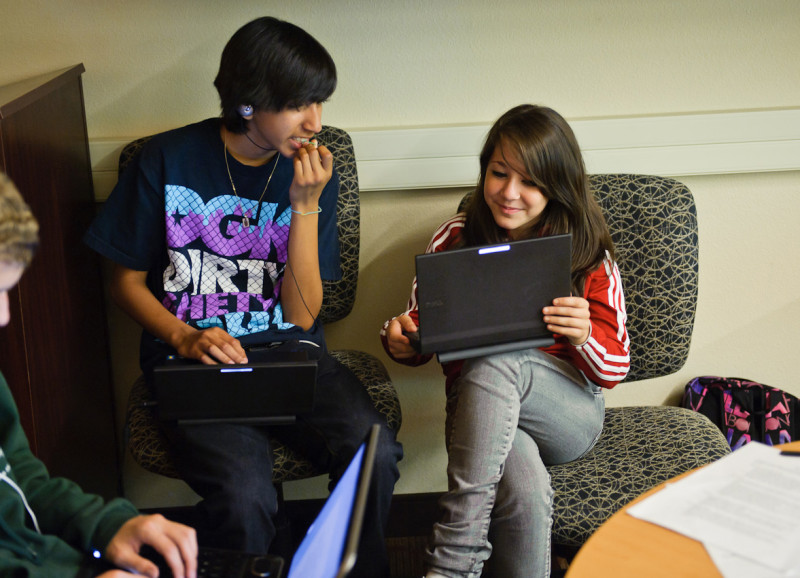
"content": "\u003cdiv id=\"attachment_20684\" class=\"module image aligncenter mceTemp mceIEcenter\" style=\"width: 620px\">\n\u003cp>\u003ca href=\"http://ww2.kqed.org/mindshift/2012/04/do-students-have-different-learning-styles/10_11-15_newtech_0174-2/\" rel=\"attachment wp-att-20684\">\u003cimg class=\"size-large wp-image-20684\" title=\"\" src=\"http://ww2.kqed.org/mindshift/wp-content/uploads/sites/23/2012/04/10_11.15_newtech_0174-620x448.jpg\" alt=\"\" width=\"620\" height=\"448\">\u003c/a>\u003c/p>\n\u003cp class=\"wp-media-credit\">Lenny Gonzales\u003c/p>\n\u003c/div>\n\u003cp class=\"dropcap-serif\">Learning styles—the notion that each student has a particular mode by which he or she learns best, whether it’s visual, auditory or some other sense—is enormously popular. It’s also been thoroughly debunked.\u003c/p>\n\u003cp>The scientific research on learning styles is “so weak and unconvincing,” concluded a group of distinguished psychologists in \u003ca href=\"http://psi.sagepub.com/content/9/3/105.abstract\">a 2008 review\u003c/a>, that it is not possible “to justify incorporating learning-styles assessments into general educational practice.” \u003ca href=\"http://www.changemag.org/Archives/Back%20Issues/September-October%202010/the-myth-of-learning-full.html\">A 2010 article\u003c/a> was even more blunt: “There is no credible evidence that learning styles exist,” wrote University of Virginia cognitive scientist Daniel Willingham and co-author Cedar Riener. While students do have preferences about how they learn, the evidence shows they absorb information just as well whether or not they encounter it in their preferred mode.\u003c/p>\n\u003caside class=\"pullquote alignleft\">\n\u003cp>The “learning style” that teachers and parents should focus on is the universal learning style of the human mind.\u003c/p>\n\u003c/aside>\n\u003cp>This doesn’t mean, however, that teachers and parents should present material to be learned in just one fashion. All learners benefit when information is put forth in diverse ways that engage a multitude of the senses. Take, for example, a program that teaches math using music. At Hoover Elementary School in Northern California, a group of third-graders \u003ca href=\"http://ww2.kqed.org/mindshift/2012/04/using-musical-notes-to-teach-fractions/\">learned to connect\u003c/a> the numerical representation of fractions with the value of musical notes, such as half-notes and eighth notes. Fractions are notoriously difficult for young students to grasp, and a failure to catch on early can hobble their performance in math into middle and high school. Clapping, drumming and chanting gave these pupils another avenue through which to understand the concept.\u003c/p>\n\u003cp>Called “Academic Music,” the program was designed by San Francisco State education professor Susan Courey and three colleagues. Last month, \u003ca href=\"http://www.springerlink.com/content/xh4u54p5341l1551/\">Courey reported \u003c/a>on the results of Academic Music in the journal Educational Studies in Mathematics. After six weeks of music-based teaching, \u003c!--more-->students scored 50 percent higher on a fractions test than students in the same school who attended conventional math classes. Children who started out with less fraction knowledge responded well to the musical instruction, Courey writes, “and produced post-test scores similar to their higher achieving peers.”\u003c/p>\n\u003cp>The lesson here: The “learning style” that teachers and parents should focus on is the universal learning style of the human mind, and two characteristics of it in particular.\u003c/p>\n\u003cp>[ad fullwidth]\u003c/p>\n\u003cp>First, students benefit from encountering information in multiple forms. They \u003ca href=\"http://www.sciencedirect.com/science/article/pii/S0959475207000886\">learn more, for example, from flashcards \u003c/a>that incorporate both text and images—charts, graphs, etc.—than from cards that display text alone.\u003c/p>\n\u003cp>\u003c/p>\n\u003cp>Second, students’ interest is kept alive by novelty and variety, so regularly turning away from textbooks and blackboards is key. As long as the new activity genuinely informs the students about the academic subject at hand, clapping a math lesson—or sketching in science class, or acting during story time—can help every student to learn better.\u003c/p>\n\n",
"disqusIdentifier": "20491 http://blogs.kqed.org/mindshift/?p=20491",
"disqusUrl": "https://ww2.kqed.org/mindshift/2012/04/13/do-students-have-different-learning-styles/",
"stats": {
"hasVideo": false,
"hasChartOrMap": false,
"hasAudio": false,
"hasPolis": false,
"wordCount": 505,
"hasGoogleForm": false,
"hasGallery": false,
"hasHearkenModule": false,
"iframeSrcs": [],
"paragraphCount": 10
},
"modified": 1334614661,
"excerpt": null,
"headData": {
"twImgId": "",
"twTitle": "",
"ogTitle": "",
"ogImgId": "",
"twDescription": "",
"description": "Lenny Gonzales Learning styles—the notion that each student has a particular mode by which he or she learns best, whether it’s visual, auditory or some other sense—is enormously popular. It’s also been thoroughly debunked. The scientific research on learning styles is “so weak and unconvincing,” concluded a group of distinguished psychologists in a 2008 review,",
"title": "Do Students Really Have Different Learning Styles? | KQED",
"ogDescription": "",
"schema": {
"@context": "https://schema.org",
"@type": "Article",
"headline": "Do Students Really Have Different Learning Styles?",
"datePublished": "2012-04-13T08:27:35-07:00",
"dateModified": "2012-04-16T15:17:41-07:00",
"image": "https://cdn.kqed.org/wp-content/uploads/2020/02/KQED-OG-Image@1x.png"
}
},
"guestAuthors": [],
"slug": "do-students-have-different-learning-styles",
"status": "publish",
"path": "/mindshift/20491/do-students-have-different-learning-styles",
"audioTrackLength": null,
"parsedContent": [
{
"type": "contentString",
"content": "\u003cdiv class=\"post-body\">\u003cp>\u003cdiv id=\"attachment_20684\" class=\"module image aligncenter mceTemp mceIEcenter\" style=\"width: 620px\">\n\u003cp>\u003ca href=\"http://ww2.kqed.org/mindshift/2012/04/do-students-have-different-learning-styles/10_11-15_newtech_0174-2/\" rel=\"attachment wp-att-20684\">\u003cimg class=\"size-large wp-image-20684\" title=\"\" src=\"http://ww2.kqed.org/mindshift/wp-content/uploads/sites/23/2012/04/10_11.15_newtech_0174-620x448.jpg\" alt=\"\" width=\"620\" height=\"448\">\u003c/a>\u003c/p>\n\u003cp class=\"wp-media-credit\">Lenny Gonzales\u003c/p>\n\u003c/div>\n\u003cp class=\"dropcap-serif\">Learning styles—the notion that each student has a particular mode by which he or she learns best, whether it’s visual, auditory or some other sense—is enormously popular. It’s also been thoroughly debunked.\u003c/p>\n\u003cp>The scientific research on learning styles is “so weak and unconvincing,” concluded a group of distinguished psychologists in \u003ca href=\"http://psi.sagepub.com/content/9/3/105.abstract\">a 2008 review\u003c/a>, that it is not possible “to justify incorporating learning-styles assessments into general educational practice.” \u003ca href=\"http://www.changemag.org/Archives/Back%20Issues/September-October%202010/the-myth-of-learning-full.html\">A 2010 article\u003c/a> was even more blunt: “There is no credible evidence that learning styles exist,” wrote University of Virginia cognitive scientist Daniel Willingham and co-author Cedar Riener. While students do have preferences about how they learn, the evidence shows they absorb information just as well whether or not they encounter it in their preferred mode.\u003c/p>\n\u003caside class=\"pullquote alignleft\">\n\u003cp>The “learning style” that teachers and parents should focus on is the universal learning style of the human mind.\u003c/p>\n\u003c/aside>\n\u003cp>This doesn’t mean, however, that teachers and parents should present material to be learned in just one fashion. All learners benefit when information is put forth in diverse ways that engage a multitude of the senses. Take, for example, a program that teaches math using music. At Hoover Elementary School in Northern California, a group of third-graders \u003ca href=\"http://ww2.kqed.org/mindshift/2012/04/using-musical-notes-to-teach-fractions/\">learned to connect\u003c/a> the numerical representation of fractions with the value of musical notes, such as half-notes and eighth notes. Fractions are notoriously difficult for young students to grasp, and a failure to catch on early can hobble their performance in math into middle and high school. Clapping, drumming and chanting gave these pupils another avenue through which to understand the concept.\u003c/p>\n\u003cp>Called “Academic Music,” the program was designed by San Francisco State education professor Susan Courey and three colleagues. Last month, \u003ca href=\"http://www.springerlink.com/content/xh4u54p5341l1551/\">Courey reported \u003c/a>on the results of Academic Music in the journal Educational Studies in Mathematics. After six weeks of music-based teaching, \u003c!--more-->students scored 50 percent higher on a fractions test than students in the same school who attended conventional math classes. Children who started out with less fraction knowledge responded well to the musical instruction, Courey writes, “and produced post-test scores similar to their higher achieving peers.”\u003c/p>\n\u003cp>The lesson here: The “learning style” that teachers and parents should focus on is the universal learning style of the human mind, and two characteristics of it in particular.\u003c/p>\n\u003cp>\u003c/p>\u003c/div>",
"attributes": {
"named": {},
"numeric": []
}
},
{
"type": "component",
"content": "",
"name": "ad",
"attributes": {
"named": {
"label": "fullwidth"
},
"numeric": [
"fullwidth"
]
}
},
{
"type": "contentString",
"content": "\u003cdiv class=\"post-body\">\u003cp>\u003c/p>\n\u003cp>First, students benefit from encountering information in multiple forms. They \u003ca href=\"http://www.sciencedirect.com/science/article/pii/S0959475207000886\">learn more, for example, from flashcards \u003c/a>that incorporate both text and images—charts, graphs, etc.—than from cards that display text alone.\u003c/p>\n\u003cp>\u003c/p>\n\u003cp>Second, students’ interest is kept alive by novelty and variety, so regularly turning away from textbooks and blackboards is key. As long as the new activity genuinely informs the students about the academic subject at hand, clapping a math lesson—or sketching in science class, or acting during story time—can help every student to learn better.\u003c/p>\n\n\u003c/div>\u003c/p>",
"attributes": {
"named": {},
"numeric": []
}
}
],
"link": "/mindshift/20491/do-students-have-different-learning-styles",
"authors": [
"4355"
],
"categories": [
"mindshift_193"
],
"tags": [
"mindshift_812"
],
"featImg": "mindshift_20684",
"label": "mindshift"
},
"mindshift_20688": {
"type": "posts",
"id": "mindshift_20688",
"meta": {
"index": "posts_1716263798",
"site": "mindshift",
"id": "20688",
"score": null,
"sort": [
1334265836000
]
},
"parent": 0,
"labelTerm": {
"site": "mindshift"
},
"blocks": [],
"publishDate": 1334265836,
"format": "aside",
"disqusTitle": "Learning to Read Goes High-Tech",
"title": "Learning to Read Goes High-Tech",
"headTitle": "MindShift | KQED News",
"content": "\u003cfigure id=\"attachment_20690\" class=\"wp-caption center\" style=\"max-width: 620px\">\u003ca href=\"http://ww2.kqed.org/mindshift/2012/04/learning-to-read-goes-high-tech/screen-shot-2012-04-12-at-2-13-32-pm/\" rel=\"attachment wp-att-20690\">\u003cimg class=\"size-large wp-image-20690\" title=\"Screen-shot-2012-04-12-at-2.13.32-PM\" src=\"http://ww2.kqed.org/mindshift/wp-content/uploads/sites/23/2012/04/Screen-shot-2012-04-12-at-2.13.32-PM-620x387.png\" alt=\"\" width=\"620\" height=\"387\">\u003c/a>\u003cfigcaption class=\"wp-caption-text\">Students in Linda Smolinski's class learn directly from a computer for part of the hour.\u003c/figcaption>\u003c/figure>\n\u003cp>[youtube http://www.wnyc.org/widgets/ondemand_player/#file=%2Faudio%2Fxspf%2F198465%2F;containerClass=wnyc]\u003c/p>\n\u003cp>A computer voice guides 12-year-old Amir Accoo to spell the words he hears through his headphones: emergency, bulldozer, minutes. Accoo spells “minutes” wrong and is asked to try that one again, several times. Later, he clicks on a proofreading button.\u003c/p>\n\u003cp>“You check what you have wrong out of the spelling words I just did,” Accoo explained as he looked at different spellings of the word until he spotted the correct one and moved the cursor to it, “and you just click on it, like this.”\u003c/p>\n\u003cp>Accoo is in the sixth grade at Asbury Park Middle School, but because he is so far below grade level when it comes to reading, he goes to a new type of reading class each day instead of a traditional one.\u003c/p>\n\u003cp>Computer-driven classes are now spreading fast across the country to help bottom students catch up. Already more than 400 schools in New Jersey are using Scholastic Inc.’s Read 180 program that Accoo is learning from.\u003c/p>\n\u003cp>[ad fullwidth]\u003c/p>\n\u003cp>Other companies are marketing similar software, too. And, increasingly, it’s not just for the weakest readers, but for all kids, in all subjects and in all grades. Schools are deciding how much time kids should spend in front of a computer in the classroom, without a whole lot of evidence about what works.\u003c/p>\n\u003cp>Accoo is so excited, he can tell you how many words he’s read each day. On this particular day, it was 341.\u003c/p>\n\u003cp>\u003cstrong>Going high-tech to teach reading\u003c/strong>\u003c/p>\n\u003cp>Asbury Park Middle School has three of these classrooms with a row of computers along a wall. The students work independently most of the time without a teacher’s help.\u003c/p>\n\u003cp>Linda Smolinski has been teaching for 32 years. This year her students are mainly Mexican immigrants and Haitian earthquake refugees. At first she was skeptical about using technology.\u003c/p>\n\u003cp>“I said ‘No. My kids can’t do that. There’s absolutely no way. My children don’t speak English. How do you expect them to sit at a computer and do something when I’m not even there helping them?’” Smolinski recalled.\u003c/p>\n\u003cp>She was eventually won over when Scholastic, the maker of the software, showed an increase in her students’ reading ability after just three months. The real test, however, will come later this year, \u003c!--more-->when the state’s standardized tests will show whether or not the program is really working.\u003c/p>\n\u003cp>Superintendent Denise Lowe was hired away from Central Islip Long Island to help fix Asbury Park’s school system. The district has been a favorite target of Governor Chris Christie because it has one of the highest per pupil expenditures in the state, but its test scores are abysmal. Some 90 percent of the students at Asbury Park Middle School qualify for free and reduced price lunch. That measure of concentrated poverty qualifies them for extra school funding from the state.\u003c/p>\n\u003cp>Lowe said she’d had previous success with Scholastic’s Read 180 software in Long Island.\u003c/p>\n\u003cp>“This was pretty much the first thing I told my director to do that we need to look into Read 180,” Lowe explained. She spent $600,000, which she admits is a big investment.\u003c/p>\n\u003cp>\u003cstrong>The downside to technology\u003c/strong>\u003c/p>\n\u003cp>Some educators are critical of these fancy high-tech classrooms. Newark wanted to show off its computers, but technical problems caused them to cancel before a reporter’s visit. And there are other problems.\u003c/p>\n\u003cp>“They’re hearing distracted voices, these unnatural voices and not seeing human lips mouthing the words,” said Sandra Priest Rose, the chairman of the Reading Reform Foundation. Her organization trains teachers to teach reading in poor schools in New York City.\u003c/p>\n\u003cp>“It’s terribly important to have that human interaction and that spontaneous interaction that you cannot get on a computer,” Priest Rose said.\u003c/p>\n\u003cp>She added neuroscience research has found that the act of writing helps the brain learn better than tapping on a keyboard. Although, she will concede the software program can offer some useful data.\u003c/p>\n\u003cp>Smolinski said the program provides detailed information about the students’ skill gaps every day.\u003c/p>\n\u003cp>“On one of our first tests, most of them scored high 80s low 90s. Most teachers would say, ‘Fine, I’ll just move on.’ I noticed that every one of them bombed antonyms. That told me that I did not teach antonyms and I didn’t,” Smolinski said.\u003c/p>\n\u003cp>On the second test, her students again scored well. But the data report showed that they bombed capitalization.\u003c/p>\n\u003cp>And then there’s the \u003cem>Groupinator\u003c/em>. It takes that skill gap analysis and places students in a group with kids who have similar needs.\u003c/p>\n\u003cp>“It tells me exactly what they need, when they need it. It does all my work for me,” Smolinski said.\u003c/p>\n\u003cp>\u003cstrong>Using both old and new techniques\u003c/strong>\u003c/p>\n\u003cp>In Asbury Park, part of the $600,000 investment included bright-green bean bag chairs and cushioned rockers, where, after their computer time, kids like Accoo can kick back with an old-fashioned book.\u003c/p>\n\u003cp>“I get to read my favorite books,” Accoo said. “Right now I’m reading \u003cem>Captain Underpants\u003c/em>. The book I just got done reading recently was \u003cem>Frankenstein\u003c/em>. And Frankenstein is mostly about this scientist and he creates life.”\u003c/p>\n\u003cp>Asbury Park’s teachers wish they could doctor more of these classrooms to serve all of their failing students. But right now there’s room for only 120 students a year.\u003c/p>\n\u003cp>\u003c/p>\n\u003cp>\u003cem>\u003ca href=\"http://www.wnyc.org/articles/new-jersey-news/2012/apr/10/new-jerseys-high-tech-classrooms/\">This story\u003c/a> was a collaboration between \u003ca href=\"http://hechingerreport.org/content/teaching-software-flooding-into-new-jersey-classrooms_8294/\">The Hechinger Report\u003c/a> and \u003ca href=\"http://www.wnyc.org/articles/new-jersey-news/2012/apr/10/new-jerseys-high-tech-classrooms/\">New Jersey Public Radio\u003c/a>.\u003c/em>\u003c/p>\n\n",
"disqusIdentifier": "20688 http://blogs.kqed.org/mindshift/?p=20688",
"disqusUrl": "https://ww2.kqed.org/mindshift/2012/04/12/learning-to-read-goes-high-tech/",
"stats": {
"hasVideo": true,
"hasChartOrMap": false,
"hasAudio": false,
"hasPolis": false,
"wordCount": 997,
"hasGoogleForm": false,
"hasGallery": false,
"hasHearkenModule": false,
"iframeSrcs": [],
"paragraphCount": 32
},
"modified": 1334266056,
"excerpt": null,
"headData": {
"twImgId": "",
"twTitle": "",
"ogTitle": "",
"ogImgId": "",
"twDescription": "",
"description": " A computer voice guides 12-year-old Amir Accoo to spell the words he hears through his headphones: emergency, bulldozer, minutes. Accoo spells “minutes” wrong and is asked to try that one again, several times. Later, he clicks on a proofreading button. “You check what you have wrong out of the spelling words I just",
"title": "Learning to Read Goes High-Tech | KQED",
"ogDescription": "",
"schema": {
"@context": "https://schema.org",
"@type": "Article",
"headline": "Learning to Read Goes High-Tech",
"datePublished": "2012-04-12T14:23:56-07:00",
"dateModified": "2012-04-12T14:27:36-07:00",
"image": "https://cdn.kqed.org/wp-content/uploads/2020/02/KQED-OG-Image@1x.png"
}
},
"guestAuthors": [],
"slug": "learning-to-read-goes-high-tech",
"status": "publish",
"path": "/mindshift/20688/learning-to-read-goes-high-tech",
"audioTrackLength": null,
"parsedContent": [
{
"type": "contentString",
"content": "\u003cdiv class=\"post-body\">\u003cp>\u003cfigure id=\"attachment_20690\" class=\"wp-caption center\" style=\"max-width: 620px\">\u003ca href=\"http://ww2.kqed.org/mindshift/2012/04/learning-to-read-goes-high-tech/screen-shot-2012-04-12-at-2-13-32-pm/\" rel=\"attachment wp-att-20690\">\u003cimg class=\"size-large wp-image-20690\" title=\"Screen-shot-2012-04-12-at-2.13.32-PM\" src=\"http://ww2.kqed.org/mindshift/wp-content/uploads/sites/23/2012/04/Screen-shot-2012-04-12-at-2.13.32-PM-620x387.png\" alt=\"\" width=\"620\" height=\"387\">\u003c/a>\u003cfigcaption class=\"wp-caption-text\">Students in Linda Smolinski's class learn directly from a computer for part of the hour.\u003c/figcaption>\u003c/figure>\n\u003cp>\u003c/p>\u003cp>null\u003c/p>\u003cp>\u003c/p>\n\u003cp>A computer voice guides 12-year-old Amir Accoo to spell the words he hears through his headphones: emergency, bulldozer, minutes. Accoo spells “minutes” wrong and is asked to try that one again, several times. Later, he clicks on a proofreading button.\u003c/p>\n\u003cp>“You check what you have wrong out of the spelling words I just did,” Accoo explained as he looked at different spellings of the word until he spotted the correct one and moved the cursor to it, “and you just click on it, like this.”\u003c/p>\n\u003cp>Accoo is in the sixth grade at Asbury Park Middle School, but because he is so far below grade level when it comes to reading, he goes to a new type of reading class each day instead of a traditional one.\u003c/p>\n\u003cp>Computer-driven classes are now spreading fast across the country to help bottom students catch up. Already more than 400 schools in New Jersey are using Scholastic Inc.’s Read 180 program that Accoo is learning from.\u003c/p>\n\u003cp>\u003c/p>\u003c/div>",
"attributes": {
"named": {},
"numeric": []
}
},
{
"type": "component",
"content": "",
"name": "ad",
"attributes": {
"named": {
"label": "fullwidth"
},
"numeric": [
"fullwidth"
]
}
},
{
"type": "contentString",
"content": "\u003cdiv class=\"post-body\">\u003cp>\u003c/p>\n\u003cp>Other companies are marketing similar software, too. And, increasingly, it’s not just for the weakest readers, but for all kids, in all subjects and in all grades. Schools are deciding how much time kids should spend in front of a computer in the classroom, without a whole lot of evidence about what works.\u003c/p>\n\u003cp>Accoo is so excited, he can tell you how many words he’s read each day. On this particular day, it was 341.\u003c/p>\n\u003cp>\u003cstrong>Going high-tech to teach reading\u003c/strong>\u003c/p>\n\u003cp>Asbury Park Middle School has three of these classrooms with a row of computers along a wall. The students work independently most of the time without a teacher’s help.\u003c/p>\n\u003cp>Linda Smolinski has been teaching for 32 years. This year her students are mainly Mexican immigrants and Haitian earthquake refugees. At first she was skeptical about using technology.\u003c/p>\n\u003cp>“I said ‘No. My kids can’t do that. There’s absolutely no way. My children don’t speak English. How do you expect them to sit at a computer and do something when I’m not even there helping them?’” Smolinski recalled.\u003c/p>\n\u003cp>She was eventually won over when Scholastic, the maker of the software, showed an increase in her students’ reading ability after just three months. The real test, however, will come later this year, \u003c!--more-->when the state’s standardized tests will show whether or not the program is really working.\u003c/p>\n\u003cp>Superintendent Denise Lowe was hired away from Central Islip Long Island to help fix Asbury Park’s school system. The district has been a favorite target of Governor Chris Christie because it has one of the highest per pupil expenditures in the state, but its test scores are abysmal. Some 90 percent of the students at Asbury Park Middle School qualify for free and reduced price lunch. That measure of concentrated poverty qualifies them for extra school funding from the state.\u003c/p>\n\u003cp>Lowe said she’d had previous success with Scholastic’s Read 180 software in Long Island.\u003c/p>\n\u003cp>“This was pretty much the first thing I told my director to do that we need to look into Read 180,” Lowe explained. She spent $600,000, which she admits is a big investment.\u003c/p>\n\u003cp>\u003cstrong>The downside to technology\u003c/strong>\u003c/p>\n\u003cp>Some educators are critical of these fancy high-tech classrooms. Newark wanted to show off its computers, but technical problems caused them to cancel before a reporter’s visit. And there are other problems.\u003c/p>\n\u003cp>“They’re hearing distracted voices, these unnatural voices and not seeing human lips mouthing the words,” said Sandra Priest Rose, the chairman of the Reading Reform Foundation. Her organization trains teachers to teach reading in poor schools in New York City.\u003c/p>\n\u003cp>“It’s terribly important to have that human interaction and that spontaneous interaction that you cannot get on a computer,” Priest Rose said.\u003c/p>\n\u003cp>She added neuroscience research has found that the act of writing helps the brain learn better than tapping on a keyboard. Although, she will concede the software program can offer some useful data.\u003c/p>\n\u003cp>Smolinski said the program provides detailed information about the students’ skill gaps every day.\u003c/p>\n\u003cp>“On one of our first tests, most of them scored high 80s low 90s. Most teachers would say, ‘Fine, I’ll just move on.’ I noticed that every one of them bombed antonyms. That told me that I did not teach antonyms and I didn’t,” Smolinski said.\u003c/p>\n\u003cp>On the second test, her students again scored well. But the data report showed that they bombed capitalization.\u003c/p>\n\u003cp>And then there’s the \u003cem>Groupinator\u003c/em>. It takes that skill gap analysis and places students in a group with kids who have similar needs.\u003c/p>\n\u003cp>“It tells me exactly what they need, when they need it. It does all my work for me,” Smolinski said.\u003c/p>\n\u003cp>\u003cstrong>Using both old and new techniques\u003c/strong>\u003c/p>\n\u003cp>In Asbury Park, part of the $600,000 investment included bright-green bean bag chairs and cushioned rockers, where, after their computer time, kids like Accoo can kick back with an old-fashioned book.\u003c/p>\n\u003cp>“I get to read my favorite books,” Accoo said. “Right now I’m reading \u003cem>Captain Underpants\u003c/em>. The book I just got done reading recently was \u003cem>Frankenstein\u003c/em>. And Frankenstein is mostly about this scientist and he creates life.”\u003c/p>\n\u003cp>Asbury Park’s teachers wish they could doctor more of these classrooms to serve all of their failing students. But right now there’s room for only 120 students a year.\u003c/p>\n\u003cp>\u003c/p>\n\u003cp>\u003cem>\u003ca href=\"http://www.wnyc.org/articles/new-jersey-news/2012/apr/10/new-jerseys-high-tech-classrooms/\">This story\u003c/a> was a collaboration between \u003ca href=\"http://hechingerreport.org/content/teaching-software-flooding-into-new-jersey-classrooms_8294/\">The Hechinger Report\u003c/a> and \u003ca href=\"http://www.wnyc.org/articles/new-jersey-news/2012/apr/10/new-jerseys-high-tech-classrooms/\">New Jersey Public Radio\u003c/a>.\u003c/em>\u003c/p>\n\n\u003c/div>\u003c/p>",
"attributes": {
"named": {},
"numeric": []
}
}
],
"link": "/mindshift/20688/learning-to-read-goes-high-tech",
"authors": [
"4354"
],
"categories": [
"mindshift_193"
],
"tags": [
"mindshift_561",
"mindshift_399",
"mindshift_846"
],
"featImg": "mindshift_20690",
"label": "mindshift"
},
"mindshift_20644": {
"type": "posts",
"id": "mindshift_20644",
"meta": {
"index": "posts_1716263798",
"site": "mindshift",
"id": "20644",
"score": null,
"sort": [
1334239202000
]
},
"parent": 0,
"labelTerm": {
"site": "mindshift"
},
"blocks": [],
"publishDate": 1334239202,
"format": "aside",
"disqusTitle": "Using Musical Notes to Teach Fractions",
"title": "Using Musical Notes to Teach Fractions",
"headTitle": "MindShift | KQED News",
"content": "\u003cdiv id=\"attachment_20645\" class=\"module image aligncenter mceTemp mceIEcenter\" style=\"width: 620px\">\n\u003cp>\u003ca href=\"http://ww2.kqed.org/mindshift/2012/04/using-musical-notes-to-teach-fractions/music_fractions2/\" rel=\"attachment wp-att-20645\">\u003cimg class=\"size-large wp-image-20645\" title=\"music_fractions2\" src=\"http://ww2.kqed.org/mindshift/wp-content/uploads/sites/23/2012/04/music_fractions2_custom-620x412.jpg\" alt=\"\" width=\"620\" height=\"412\">\u003c/a>\u003c/p>\n\u003cp class=\"wp-media-credit\">Caitlin Esch/KQED\u003c/p>\n\u003c/div>\n\u003ch5>By Caitlin Esch\u003c/h5>\n\u003cp class=\"dropcap-serif\">Math teachers know that fractions can be hard for the average third-grader. Teachers at a public school in San Bruno, Calif., just south of San Francisco, are trying something new. They're teaching difficult math concepts through music, and they're getting remarkable results.\u003c/p>\n\u003cp>At Allen Elementary School, a roomful of third-graders sits facing music instructor Endre Balogh, their backs straight, eyes ahead, beating a mouse pad with drumsticks. As Balogh taps a rhythm, the students follow.\u003c/p>\n\u003cp>\"What kinds of notes did you play?\" Balogh asks. \"Jasmine, what do you think?\" Jasmine gets it right. \"Eighth notes, very good.\"\u003c/p>\n\u003cp>These students are learning fractions.\u003c/p>\n\u003cp>\"So, like two-eighths plus six-eighths, you have eight-eighths. But, since it's in the music, it equals a whole note,\" explains 9-year-old Donte Arevalo.\u003c/p>\n\u003cp>[ad fullwidth]\u003c/p>\n\u003cp>In the program, called Academic Music, students first learn the basics of reading notes. Then, they learn how to add notes, which is essentially adding fractions. Balogh is drawing the music notes on the board and adding them together.\u003c/p>\n\u003cp>\"How many eighth notes do you see?\" he asks. A student responds correctly. \"Now, I wonder, what should I write here because this is tricky?\" Another student has the right answer.\u003c/p>\n\u003caside class=\"pullquote alignleft\">\n\u003cp>\"It's really easy when it's music, but it's harder to do it when you're doing math.\"\u003c/p>\n\u003c/aside>\n\u003cp>From there, it gets harder. Students learn how to add uncommon denominators and multiply fractions. San Francisco State University researcher Susan Courey designed the curriculum with Balogh in 2007, because as a former third-grade teacher, she knows how tricky fractions can be.\u003c/p>\n\u003cp>\"If you say, what's bigger one-eighth or one-fourth, they'll say one-eighth because eight is bigger than four,\" Courey says. It's all about visualization. But our students — because of the notes — \u003c!--more-->know that all those little tiny eighth notes are a lot smaller than a whole note or a half note,\" Courey says.\u003c/p>\n\u003cp>\u003cem> \u003c/em>In this class, more than half the students are English-language learners. Classroom teacher Gina Grites says Academic Music has especially helped her students, such as a little girl who volunteers to solve a problem, even though she barely speaks English.\u003c/p>\n\u003cp>\"She knew that it was four counts and put it into a fraction,\" Grites says. \"Just to have her get up and present in front of a class is a really big deal, and she raised her hand and wanted to, so I'm seeing a lot of these kids open up and want to try it, instead of hiding behind the desk and saying, 'Please don't call on me.' \"\u003c/p>\n\u003cp>A recent study found that students who went through the program tested better on fractions. The average score of the Academic Music students was nearly double that of students in the regular math class. Courey says even low-performing students did better.\u003c/p>\n\u003cp>\"That's what I, as a classroom teacher, want,\" she says. \"I want to know that those students who typically are the underachievers are benefiting from the instruction that I'm providing.\"\u003c/p>\n\u003cp>In a less formal study, Allen Elementary School teachers compared their kids' math scores with third-graders in other district schools. Again, Allen students performed better.\u003c/p>\n\u003cp>Back in the classroom, 9-year-old Eric Bogren says he'd never played an instrument before Academic Music.\u003c/p>\n\u003cp>\"It's really easy when it's music, but it's harder to do it when you're doing math,\" Eric says. For Eric, thinking of fractions as music notes, helps.\u003c/p>\n\u003cp>\u003c/p>\n\u003cp>The curriculum designers hope to eventually make the program available for any third-grade teacher to use in the classroom.\u003c/p>\n\n",
"disqusIdentifier": "20644 http://blogs.kqed.org/mindshift/?p=20644",
"disqusUrl": "https://ww2.kqed.org/mindshift/2012/04/12/using-musical-notes-to-teach-fractions/",
"stats": {
"hasVideo": false,
"hasChartOrMap": false,
"hasAudio": false,
"hasPolis": false,
"wordCount": 618,
"hasGoogleForm": false,
"hasGallery": false,
"hasHearkenModule": false,
"iframeSrcs": [],
"paragraphCount": 20
},
"modified": 1334253946,
"excerpt": null,
"headData": {
"twImgId": "",
"twTitle": "",
"ogTitle": "",
"ogImgId": "",
"twDescription": "",
"description": "Caitlin Esch/KQED By Caitlin Esch Math teachers know that fractions can be hard for the average third-grader. Teachers at a public school in San Bruno, Calif., just south of San Francisco, are trying something new. They're teaching difficult math concepts through music, and they're getting remarkable results. At Allen Elementary School, a roomful of third-graders",
"title": "Using Musical Notes to Teach Fractions | KQED",
"ogDescription": "",
"schema": {
"@context": "https://schema.org",
"@type": "Article",
"headline": "Using Musical Notes to Teach Fractions",
"datePublished": "2012-04-12T07:00:02-07:00",
"dateModified": "2012-04-12T11:05:46-07:00",
"image": "https://cdn.kqed.org/wp-content/uploads/2020/02/KQED-OG-Image@1x.png"
}
},
"guestAuthors": [],
"slug": "using-musical-notes-to-teach-fractions",
"status": "publish",
"path": "/mindshift/20644/using-musical-notes-to-teach-fractions",
"audioTrackLength": null,
"parsedContent": [
{
"type": "contentString",
"content": "\u003cdiv class=\"post-body\">\u003cp>\u003cdiv id=\"attachment_20645\" class=\"module image aligncenter mceTemp mceIEcenter\" style=\"width: 620px\">\n\u003cp>\u003ca href=\"http://ww2.kqed.org/mindshift/2012/04/using-musical-notes-to-teach-fractions/music_fractions2/\" rel=\"attachment wp-att-20645\">\u003cimg class=\"size-large wp-image-20645\" title=\"music_fractions2\" src=\"http://ww2.kqed.org/mindshift/wp-content/uploads/sites/23/2012/04/music_fractions2_custom-620x412.jpg\" alt=\"\" width=\"620\" height=\"412\">\u003c/a>\u003c/p>\n\u003cp class=\"wp-media-credit\">Caitlin Esch/KQED\u003c/p>\n\u003c/div>\n\u003ch5>By Caitlin Esch\u003c/h5>\n\u003cp class=\"dropcap-serif\">Math teachers know that fractions can be hard for the average third-grader. Teachers at a public school in San Bruno, Calif., just south of San Francisco, are trying something new. They're teaching difficult math concepts through music, and they're getting remarkable results.\u003c/p>\n\u003cp>At Allen Elementary School, a roomful of third-graders sits facing music instructor Endre Balogh, their backs straight, eyes ahead, beating a mouse pad with drumsticks. As Balogh taps a rhythm, the students follow.\u003c/p>\n\u003cp>\"What kinds of notes did you play?\" Balogh asks. \"Jasmine, what do you think?\" Jasmine gets it right. \"Eighth notes, very good.\"\u003c/p>\n\u003cp>These students are learning fractions.\u003c/p>\n\u003cp>\"So, like two-eighths plus six-eighths, you have eight-eighths. But, since it's in the music, it equals a whole note,\" explains 9-year-old Donte Arevalo.\u003c/p>\n\u003cp>\u003c/p>\u003c/div>",
"attributes": {
"named": {},
"numeric": []
}
},
{
"type": "component",
"content": "",
"name": "ad",
"attributes": {
"named": {
"label": "fullwidth"
},
"numeric": [
"fullwidth"
]
}
},
{
"type": "contentString",
"content": "\u003cdiv class=\"post-body\">\u003cp>\u003c/p>\n\u003cp>In the program, called Academic Music, students first learn the basics of reading notes. Then, they learn how to add notes, which is essentially adding fractions. Balogh is drawing the music notes on the board and adding them together.\u003c/p>\n\u003cp>\"How many eighth notes do you see?\" he asks. A student responds correctly. \"Now, I wonder, what should I write here because this is tricky?\" Another student has the right answer.\u003c/p>\n\u003caside class=\"pullquote alignleft\">\n\u003cp>\"It's really easy when it's music, but it's harder to do it when you're doing math.\"\u003c/p>\n\u003c/aside>\n\u003cp>From there, it gets harder. Students learn how to add uncommon denominators and multiply fractions. San Francisco State University researcher Susan Courey designed the curriculum with Balogh in 2007, because as a former third-grade teacher, she knows how tricky fractions can be.\u003c/p>\n\u003cp>\"If you say, what's bigger one-eighth or one-fourth, they'll say one-eighth because eight is bigger than four,\" Courey says. It's all about visualization. But our students — because of the notes — \u003c!--more-->know that all those little tiny eighth notes are a lot smaller than a whole note or a half note,\" Courey says.\u003c/p>\n\u003cp>\u003cem> \u003c/em>In this class, more than half the students are English-language learners. Classroom teacher Gina Grites says Academic Music has especially helped her students, such as a little girl who volunteers to solve a problem, even though she barely speaks English.\u003c/p>\n\u003cp>\"She knew that it was four counts and put it into a fraction,\" Grites says. \"Just to have her get up and present in front of a class is a really big deal, and she raised her hand and wanted to, so I'm seeing a lot of these kids open up and want to try it, instead of hiding behind the desk and saying, 'Please don't call on me.' \"\u003c/p>\n\u003cp>A recent study found that students who went through the program tested better on fractions. The average score of the Academic Music students was nearly double that of students in the regular math class. Courey says even low-performing students did better.\u003c/p>\n\u003cp>\"That's what I, as a classroom teacher, want,\" she says. \"I want to know that those students who typically are the underachievers are benefiting from the instruction that I'm providing.\"\u003c/p>\n\u003cp>In a less formal study, Allen Elementary School teachers compared their kids' math scores with third-graders in other district schools. Again, Allen students performed better.\u003c/p>\n\u003cp>Back in the classroom, 9-year-old Eric Bogren says he'd never played an instrument before Academic Music.\u003c/p>\n\u003cp>\"It's really easy when it's music, but it's harder to do it when you're doing math,\" Eric says. For Eric, thinking of fractions as music notes, helps.\u003c/p>\n\u003cp>\u003c/p>\n\u003cp>The curriculum designers hope to eventually make the program available for any third-grade teacher to use in the classroom.\u003c/p>\n\n\u003c/div>\u003c/p>",
"attributes": {
"named": {},
"numeric": []
}
}
],
"link": "/mindshift/20644/using-musical-notes-to-teach-fractions",
"authors": [
"4354"
],
"categories": [
"mindshift_193"
],
"tags": [
"mindshift_392"
],
"featImg": "mindshift_20645",
"label": "mindshift"
},
"mindshift_20617": {
"type": "posts",
"id": "mindshift_20617",
"meta": {
"index": "posts_1716263798",
"site": "mindshift",
"id": "20617",
"score": null,
"sort": [
1334066442000
]
},
"parent": 0,
"labelTerm": {
"site": "mindshift"
},
"blocks": [],
"publishDate": 1334066442,
"format": "aside",
"disqusTitle": "Is Learning Facts a Trivial Pursuit?",
"title": "Is Learning Facts a Trivial Pursuit?",
"headTitle": "MindShift | KQED News",
"content": "\u003cfigure id=\"attachment_20604\" class=\"wp-caption center\" style=\"max-width: 500px\">\u003ca href=\"http://ww2.kqed.org/mindshift/2012/04/is-learning-facts-a-trivial-pursuit/1363093703_2216d8c0af/\" rel=\"attachment wp-att-20604\">\u003cimg class=\"size-full wp-image-20604\" title=\"1363093703_2216d8c0af\" src=\"http://ww2.kqed.org/mindshift/wp-content/uploads/sites/23/2012/04/1363093703_2216d8c0af.jpg\" alt=\"\" width=\"500\" height=\"398\" srcset=\"https://ww2.kqed.org/app/uploads/sites/23/2012/04/1363093703_2216d8c0af.jpg 500w, https://ww2.kqed.org/app/uploads/sites/23/2012/04/1363093703_2216d8c0af-400x318.jpg 400w, https://ww2.kqed.org/app/uploads/sites/23/2012/04/1363093703_2216d8c0af-320x255.jpg 320w\" sizes=\"(max-width: 500px) 100vw, 500px\">\u003c/a>\u003cfigcaption class=\"wp-caption-text\"> \u003c/figcaption>\u003c/figure>\n\u003ch6 style=\"text-align: right\">By Tasha Bergson-Michelson\n\u003c/h6>\u003cp>\u003cem>Dear Savvy Searcher,\u003c/em>\u003c/p>\n\u003cp>\u003cem>You wrote recently about the importance of teaching search skills. What do you make of the whole idea that kids no longer need to learn facts because they can find answers so easily online? Do you think that is true?\u003c/em>\u003c/p>\n\u003cp>\u003cem>Concerned Teacher\u003c/em>\u003cstrong>\u003cstrong>\u003cbr>\n\u003c/strong>\u003c/strong>\u003c/p>\n\u003cp>When I was growing up, we used to say that you don’t need to know everything, just know how to find it. I firmly believe the same today, but I now appreciate that an integral part of search literacy is knowing enough background information to make informed decisions about what sources to believe. The ability to evaluate sources is one of the linchpin skills students need for navigating research both online and off.\u003c/p>\n\u003cp>As I argued in my \u003ca href=\"http://ww2.kqed.org/mindshift/2012/03/building-good-search-skills-what-students-need-to-know/\">last post\u003c/a>, research skills can't be taught in a single lesson, but must be cultivated slowly, over time. There are many technical skills that students should develop to learn more about a source. But no matter how well we can analyze web addresses, research authors, or uncover who owns a website, the most fundamental skill we have for judging a source is what Ernest Hemingway called our “\u003ca href=\"http://www.theatlantic.com/past/docs/issues/65aug/6508manning.htm\">built-in automatic crap detector\u003c/a>.” What fuels this “crap detector,” if not a collection of learned facts?\u003c/p>\n\u003cp>[ad fullwidth]\u003c/p>\n\u003cp>In the lingering spirit of April Fools’ Day, consider the famous hoax Web site,\u003ca href=\"http://zapatopi.net/treeoctopus/\"> Save the Pacific Northwest Tree Octopus\u003c/a>. Now, I am not particularly enamored of using hoax sites to teach evaluation. Identifying a popular hoax is a whole lot easier than dealing with the more subtle types of misinformation students need to learn to avoid. However, the tree octopus site is well-constructed, and we can use it to practice reflecting on how common sense and background knowledge combine to set off the crap detector. After all, many students have seen or heard about some octopus in the past, and have the ability to surmise that one probably does not live in a tree. My experience is that most students encountering the tree octopus for the first time say, “That’s weird!” giving a great opening for discussion about how when common sense alarms go off, it is good to dig further.\u003c/p>\n\u003cp>Such a lesson can be both fun and empowering. The message is not, “There is so much misinformation out there and you have been wrongly believing it all,” but rather, “You already \u003c!--more-->possess many of the tools you need to tell good information from bad, and by being observant of the world around you, you can develop even more!”\u003c/p>\n\u003cp>It is specifically this empowerment through observation and the curiosity it kindles that I think we need to pass on to our students; it drives both better search skills and the development of background knowledge. To me, these processes are one and the same. As long as we teach students to interact meaningfully with the information they encounter--to really \u003cem>see\u003c/em> their results pages, and really \u003cem>see\u003c/em> their sources--students will continue to build on their foundation of knowledge throughout their lives.\u003c/p>\n\u003cp>If you are an educator, here are some things you can do to help students practice simultaneously enriching their background knowledge and searching effectively for what they need to know:\u003c/p>\n\u003cul>\n\u003cli>\u003cstrong>Consciously drawing on terms from trusted sources to write stronger searches.\u003c/strong> Model using textbooks, selected articles, etc., to identify terms that are unique and relevant to that topic. Then, practice remembering terms used in class reading and try searching for them. See how using “terms of art” makes finding what you want even faster. This experience can draw on scholarly topics, or on everyday popular topics, such as knowing the term\u003cem> cheats\u003c/em> to refer to expert tricks for succeeding at video games.\u003c/li>\n\u003cli>\u003cstrong>Thoughtfully journaling the process of using stepping stone resources.\u003c/strong> Model for students the process of learning from sources you find and folding what you learn back into your search process. This strategy may include both discovering new vocabulary words that make stronger search terms, and encountering new facts or ideas and specifically choosing to explore them further. Ask students to consciously track their research process and record where they make use of background knowledge or stepping stone resources to learn something new or validate a source.\u003c/li>\n\u003cli>\u003cstrong>Collaboratively filling out a graphic organizer to record what's learned during a search process.\u003c/strong> For example, a group of third graders investigated the story of the curse on King Tut’s tomb. They added “facts” they found to a KWL (Know, Want to know, Learn) chart on the class whiteboard. They discovered many facts that appeared consistently across sources, but also exposed points in the story where many different versions circulate. Everyone agreed that Lord Carnarvon died soon after the tomb was discovered, but where was this canary that supposedly died right when the tomb was opened--near the entrance to the tomb? In Howard Carter’s home in England? Under the care of Carter’s assistant? The students concluded independently that it is important to read multiple sources and compare “facts” to decide what should be added to one’s own body of knowledge.\u003c/li>\n\u003c/ul>\n\u003cp>As we help our students engage in a cycle of drawing on what they know and building on that background knowledge as part of the search process, we create people who are much more prepared to make good decisions as they function in the modern world.\u003c/p>\n\u003cp>How do you instill this hunger for broader contextual knowledge and critical thinking in your students?\u003c/p>\n\u003cp>\u003c/p>\n\u003cp>\u003cem>Have a question for The Savvy Searcher? \u003ca href=\"https://plus.google.com/113879286190138108366/posts\">Contact Tasha\u003c/a> and check out the \u003ca href=\"https://sites.google.com/site/gwebsearcheducation/\">Search Education Team’s resources\u003c/a>. Read more from \u003ca href=\"http://mindshift.kqed.org/feature/savvy-searcher/\">The Savvy Searcher\u003c/a>.\u003c/em>\u003c/p>\n\n",
"disqusIdentifier": "20617 http://blogs.kqed.org/mindshift/?p=20617",
"disqusUrl": "https://ww2.kqed.org/mindshift/2012/04/10/is-learning-facts-a-trivial-pursuit-2/",
"stats": {
"hasVideo": false,
"hasChartOrMap": false,
"hasAudio": false,
"hasPolis": false,
"wordCount": 964,
"hasGoogleForm": false,
"hasGallery": false,
"hasHearkenModule": false,
"iframeSrcs": [],
"paragraphCount": 14
},
"modified": 1333752830,
"excerpt": null,
"headData": {
"twImgId": "",
"twTitle": "",
"ogTitle": "",
"ogImgId": "",
"twDescription": "",
"description": "By Tasha Bergson-Michelson Dear Savvy Searcher, You wrote recently about the importance of teaching search skills. What do you make of the whole idea that kids no longer need to learn facts because they can find answers so easily online? Do you think that is true? Concerned Teacher When I was growing up, we used",
"title": "Is Learning Facts a Trivial Pursuit? | KQED",
"ogDescription": "",
"schema": {
"@context": "https://schema.org",
"@type": "Article",
"headline": "Is Learning Facts a Trivial Pursuit?",
"datePublished": "2012-04-10T07:00:42-07:00",
"dateModified": "2012-04-06T15:53:50-07:00",
"image": "https://cdn.kqed.org/wp-content/uploads/2020/02/KQED-OG-Image@1x.png"
}
},
"guestAuthors": [],
"slug": "is-learning-facts-a-trivial-pursuit-2",
"status": "publish",
"path": "/mindshift/20617/is-learning-facts-a-trivial-pursuit-2",
"audioTrackLength": null,
"parsedContent": [
{
"type": "contentString",
"content": "\u003cdiv class=\"post-body\">\u003cp>\u003cfigure id=\"attachment_20604\" class=\"wp-caption center\" style=\"max-width: 500px\">\u003ca href=\"http://ww2.kqed.org/mindshift/2012/04/is-learning-facts-a-trivial-pursuit/1363093703_2216d8c0af/\" rel=\"attachment wp-att-20604\">\u003cimg class=\"size-full wp-image-20604\" title=\"1363093703_2216d8c0af\" src=\"http://ww2.kqed.org/mindshift/wp-content/uploads/sites/23/2012/04/1363093703_2216d8c0af.jpg\" alt=\"\" width=\"500\" height=\"398\" srcset=\"https://ww2.kqed.org/app/uploads/sites/23/2012/04/1363093703_2216d8c0af.jpg 500w, https://ww2.kqed.org/app/uploads/sites/23/2012/04/1363093703_2216d8c0af-400x318.jpg 400w, https://ww2.kqed.org/app/uploads/sites/23/2012/04/1363093703_2216d8c0af-320x255.jpg 320w\" sizes=\"(max-width: 500px) 100vw, 500px\">\u003c/a>\u003cfigcaption class=\"wp-caption-text\"> \u003c/figcaption>\u003c/figure>\n\u003ch6 style=\"text-align: right\">By Tasha Bergson-Michelson\n\u003c/h6>\u003cp>\u003cem>Dear Savvy Searcher,\u003c/em>\u003c/p>\n\u003cp>\u003cem>You wrote recently about the importance of teaching search skills. What do you make of the whole idea that kids no longer need to learn facts because they can find answers so easily online? Do you think that is true?\u003c/em>\u003c/p>\n\u003cp>\u003cem>Concerned Teacher\u003c/em>\u003cstrong>\u003cstrong>\u003cbr>\n\u003c/strong>\u003c/strong>\u003c/p>\n\u003cp>When I was growing up, we used to say that you don’t need to know everything, just know how to find it. I firmly believe the same today, but I now appreciate that an integral part of search literacy is knowing enough background information to make informed decisions about what sources to believe. The ability to evaluate sources is one of the linchpin skills students need for navigating research both online and off.\u003c/p>\n\u003cp>As I argued in my \u003ca href=\"http://ww2.kqed.org/mindshift/2012/03/building-good-search-skills-what-students-need-to-know/\">last post\u003c/a>, research skills can't be taught in a single lesson, but must be cultivated slowly, over time. There are many technical skills that students should develop to learn more about a source. But no matter how well we can analyze web addresses, research authors, or uncover who owns a website, the most fundamental skill we have for judging a source is what Ernest Hemingway called our “\u003ca href=\"http://www.theatlantic.com/past/docs/issues/65aug/6508manning.htm\">built-in automatic crap detector\u003c/a>.” What fuels this “crap detector,” if not a collection of learned facts?\u003c/p>\n\u003cp>\u003c/p>\u003c/div>",
"attributes": {
"named": {},
"numeric": []
}
},
{
"type": "component",
"content": "",
"name": "ad",
"attributes": {
"named": {
"label": "fullwidth"
},
"numeric": [
"fullwidth"
]
}
},
{
"type": "contentString",
"content": "\u003cdiv class=\"post-body\">\u003cp>\u003c/p>\n\u003cp>In the lingering spirit of April Fools’ Day, consider the famous hoax Web site,\u003ca href=\"http://zapatopi.net/treeoctopus/\"> Save the Pacific Northwest Tree Octopus\u003c/a>. Now, I am not particularly enamored of using hoax sites to teach evaluation. Identifying a popular hoax is a whole lot easier than dealing with the more subtle types of misinformation students need to learn to avoid. However, the tree octopus site is well-constructed, and we can use it to practice reflecting on how common sense and background knowledge combine to set off the crap detector. After all, many students have seen or heard about some octopus in the past, and have the ability to surmise that one probably does not live in a tree. My experience is that most students encountering the tree octopus for the first time say, “That’s weird!” giving a great opening for discussion about how when common sense alarms go off, it is good to dig further.\u003c/p>\n\u003cp>Such a lesson can be both fun and empowering. The message is not, “There is so much misinformation out there and you have been wrongly believing it all,” but rather, “You already \u003c!--more-->possess many of the tools you need to tell good information from bad, and by being observant of the world around you, you can develop even more!”\u003c/p>\n\u003cp>It is specifically this empowerment through observation and the curiosity it kindles that I think we need to pass on to our students; it drives both better search skills and the development of background knowledge. To me, these processes are one and the same. As long as we teach students to interact meaningfully with the information they encounter--to really \u003cem>see\u003c/em> their results pages, and really \u003cem>see\u003c/em> their sources--students will continue to build on their foundation of knowledge throughout their lives.\u003c/p>\n\u003cp>If you are an educator, here are some things you can do to help students practice simultaneously enriching their background knowledge and searching effectively for what they need to know:\u003c/p>\n\u003cul>\n\u003cli>\u003cstrong>Consciously drawing on terms from trusted sources to write stronger searches.\u003c/strong> Model using textbooks, selected articles, etc., to identify terms that are unique and relevant to that topic. Then, practice remembering terms used in class reading and try searching for them. See how using “terms of art” makes finding what you want even faster. This experience can draw on scholarly topics, or on everyday popular topics, such as knowing the term\u003cem> cheats\u003c/em> to refer to expert tricks for succeeding at video games.\u003c/li>\n\u003cli>\u003cstrong>Thoughtfully journaling the process of using stepping stone resources.\u003c/strong> Model for students the process of learning from sources you find and folding what you learn back into your search process. This strategy may include both discovering new vocabulary words that make stronger search terms, and encountering new facts or ideas and specifically choosing to explore them further. Ask students to consciously track their research process and record where they make use of background knowledge or stepping stone resources to learn something new or validate a source.\u003c/li>\n\u003cli>\u003cstrong>Collaboratively filling out a graphic organizer to record what's learned during a search process.\u003c/strong> For example, a group of third graders investigated the story of the curse on King Tut’s tomb. They added “facts” they found to a KWL (Know, Want to know, Learn) chart on the class whiteboard. They discovered many facts that appeared consistently across sources, but also exposed points in the story where many different versions circulate. Everyone agreed that Lord Carnarvon died soon after the tomb was discovered, but where was this canary that supposedly died right when the tomb was opened--near the entrance to the tomb? In Howard Carter’s home in England? Under the care of Carter’s assistant? The students concluded independently that it is important to read multiple sources and compare “facts” to decide what should be added to one’s own body of knowledge.\u003c/li>\n\u003c/ul>\n\u003cp>As we help our students engage in a cycle of drawing on what they know and building on that background knowledge as part of the search process, we create people who are much more prepared to make good decisions as they function in the modern world.\u003c/p>\n\u003cp>How do you instill this hunger for broader contextual knowledge and critical thinking in your students?\u003c/p>\n\u003cp>\u003c/p>\n\u003cp>\u003cem>Have a question for The Savvy Searcher? \u003ca href=\"https://plus.google.com/113879286190138108366/posts\">Contact Tasha\u003c/a> and check out the \u003ca href=\"https://sites.google.com/site/gwebsearcheducation/\">Search Education Team’s resources\u003c/a>. Read more from \u003ca href=\"http://mindshift.kqed.org/feature/savvy-searcher/\">The Savvy Searcher\u003c/a>.\u003c/em>\u003c/p>\n\n\u003c/div>\u003c/p>",
"attributes": {
"named": {},
"numeric": []
}
}
],
"link": "/mindshift/20617/is-learning-facts-a-trivial-pursuit-2",
"authors": [
"4354"
],
"categories": [
"mindshift_192",
"mindshift_194",
"mindshift_193"
],
"tags": [
"mindshift_843",
"mindshift_695"
],
"label": "mindshift"
},
"mindshift_20548": {
"type": "posts",
"id": "mindshift_20548",
"meta": {
"index": "posts_1716263798",
"site": "mindshift",
"id": "20548",
"score": null,
"sort": [
1333732270000
]
},
"parent": 0,
"labelTerm": {
"site": "mindshift"
},
"blocks": [],
"publishDate": 1333732270,
"format": "aside",
"disqusTitle": "More School Districts Welcome Cell Phones in the Class",
"title": "More School Districts Welcome Cell Phones in the Class",
"headTitle": "MindShift | KQED News",
"content": "\u003cdiv id=\"attachment_20550\" class=\"module image aligncenter mceTemp mceIEcenter\" style=\"width: 620px\">\n\u003cp>\u003ca href=\"http://www.youtube.com/watch?v=_CastlWoH2c&feature=player_embedded\">\u003cimg class=\"size-large wp-image-20550\" title=\"ISD\" src=\"http://ww2.kqed.org/mindshift/wp-content/uploads/sites/23/2012/04/MN_blue_688-620x349.jpg\" alt=\"\" width=\"620\" height=\"349\">\u003c/a>\u003c/p>\n\u003cp class=\"wp-media-credit\">Innovation in ISD\u003c/p>\n\u003c/div>\n\u003ch5>\u003cem>No longer afraid of giving kids access to the Internet, a growing number of school districts are developing digital media policies that emphasize responsibility over fear.\u003c/em>\u003c/h5>\n\u003ch5>By Heather Chaplin\u003c/h5>\n\u003cp class=\"dropcap-serif\">Since early 2001, every school accepting federal funding for discounted Internet access through the government’s E-rate program had to do two things – block “harmful” sites and create an Acceptable Use Policy.\u003c/p>\n\u003cp>The mantra of schools back then was pretty simple: Keep it out. The standard approach to this government mandate, the Children’s Internet Protection Act (CIPA), was to build the equivalent of walls, fences, and moats to keep kids from the web.\u003c/p>\n\u003cp>“It’s a historical hiccup in the history of learning,” said \u003ca title=\"Rich Halverson\" href=\"http://elpa.education.wisc.edu/elpa/people/faculty-and-staff-directory/richard-halverson\">Rich Halverson\u003c/a>, a learning scientist at the University of Wisconsin-Madison, and the lead researcher on \u003ca title=\"KidGrid\" href=\"http://www.gameslearningsociety.org/research/kidgrid\">KidGrid\u003c/a>, a mobile app that helps teachers study and analyze student data. “Here we had the most sophisticated advances in the history of learning banned from schools out of fear.”\u003c/p>\n\u003caside class=\"pullquote alignleft\">\n\u003cp>\u003cstrong>\u003ca href=\"http://ww2.kqed.org/mindshift/2012/04/in-the-digital-age-welcoming-cell-phones-in-the-class/mobile-mind-shift-icon/\" rel=\"attachment wp-att-20566\">\u003cimg class=\"alignleft size-thumbnail wp-image-20566\" title=\"Mobile Mind Shift Icon\" src=\"http://ww2.kqed.org/mindshift/wp-content/uploads/sites/23/2012/04/Mobile-Mind-Shift-Icon-140x140.png\" alt=\"\" width=\"67\" height=\"67\">\u003c/a>GUIDE TO MOBILE LEARNING:\u003c/strong> Part two of a series exploring mobile learning co-produced by \u003cstrong>MindShift\u003c/strong> and \u003ca href=\"http://spotlight.macfound.org/\">Spotlight on Digital Media & Learning\u003c/a>. The first post in this series: \u003ca href=\"http://ww2.kqed.org/mindshift/2012/03/amidst-a-mobile-revolution-in-schools-will-old-teaching-tactics-prevail/\">Amidst a Mobile Revolution in Schools, Will Old Teaching Tactics Work?\u003c/a>\u003c/p>\n\u003c/aside>\n\u003cp>Fear was definitely the word you heard when talking to school administrators – no doubt partly because in the age of the Internet, 2001 was a long time ago, and the Web was still unknown territory for plenty of people back then. Also, all it takes is one student downloading pornography and sending it around the school, or one case of sexting that makes it in the news, for a school to find itself in serious hot water.\u003c/p>\n\u003cp>But recently – in the last two or three years - something has changed. Schools seem to be getting over their fears and want to bring the Web and social media and all the attendant digital tools into \u003c!--more-->the classroom. You can see this change reflected in a slew of new Acceptable Use Policies (AUPs) across the country that emphasize responsibility over mere acceptance and the implementation of school-wide blogs and even the distribution of smartphones for classroom use.\u003c/p>\n\u003cp>[ad fullwidth]\u003c/p>\n\u003cp>“This isn’t happening in the majority of schools,” said \u003ca title=\"Jim Bosco\" href=\"http://homepages.wmich.edu/%7Ebosco/bio.html\">Jim Bosco\u003c/a>, principal investigator at the Consortium of School Networking’s \u003ca title=\"Participatory Learning in Schools\" href=\"http://www.cosn.org/Initiatives/ParticipatoryLearning/Home/tabid/7112/Default.aspx\">Participatory Learning in Schools\u003c/a> initiative. “But it’s not the rarity anymore, either.”\u003c/p>\n\u003cp>Bosco said that while he had no empirical data to track these changes in schools, he estimated that between 40 and 50 percent of school districts were developing more forward-thinking policies. The Consortium of School Networking (CoSN) is working with school leaders from 13 districts to \u003ca title=\"collaborate on creating models for district-level digital media use policies\" href=\"http://spotlight.macfound.org/blog/entry/school-leaders-collaborate-on-best-practices-for-district-level-digital-med/\">collaborate on creating models for district-level digital media use policies\u003c/a> in K-12 education.\u003c/p>\n\u003cp>COSN released a paper this month called “\u003ca title=\"Making Progress: Rethinking State and School District Policies Concerning Mobile Technologies and Social Media\" href=\"http://www.cosn.org/Initiatives/ParticipatoryLearning/MakingProgress/tabid/12543/Default.aspx\">Making Progress: Rethinking State and School District Policies Concerning Mobile Technologies and Social Media\u003c/a>.”\u003c/p>\n\u003cp>“The advantages of digital media now greatly outweigh the disadvantages and require that schools update their thinking and policies to provide guidance on the use of these tools to improve student learning and achievement,” the paper says.\u003c/p>\n\u003cp>It simply makes no sense, the paper argues, to try and keep students out of a world – a digital world – that is going to be paramount to how they live and work as adults. In fact, says Bosco, it’s not even possible to keep them out.\u003c/p>\n\u003cp>“You can build as big a moat as you want,” he said. “But it’s not going to work if for no other reason than they go home at night. A lot of people say, well, what they do when they get home is not my problem. But I think that seems borderline unethical.”\u003c/p>\n\u003caside class=\"pullquote alignright\">\n\u003cp>“You can build as big a moat as you want, but it’s not going to work if for no other reason than they go home at night.\"\u003c/p>\n\u003c/aside>\n\u003cp>According to Bosco, administrators at schools ought to be providing safe environments for students to learn how to be responsible digital citizens – not just protecting themselves from lawsuits by keeping the Internet out of the classroom and leaving kids to flail about when they go home.\u003c/p>\n\u003cp>“One of the most powerful reasons to permit the use of social media and mobile devices in the classroom is to provide an opportunity for students to learn about their use in a supervised environment that emphasizes the development of attitudes and skills that will help keep them safe outside of school,” the CoSN paper reads.\u003c/p>\n\u003cp>The Children’s Internet Protection Act requires Internet filters, but the changing thinking over the last two or three years is that maybe those “filters” aren’t best enforced by draconian AUPs.\u003c/p>\n\u003cp>“When I talk to colleagues in Finland, they say, how do you filter?” said \u003ca title=\"Jim Klein\" href=\"http://www.classroom20.com/profile/jimklein\">Jim Klein\u003c/a>, director of Information Services and Technology at the \u003ca title=\"Saugus Union School District\" href=\"http://www.saugususd.org/\">Saugus Union School District\u003c/a> in Southern California. “They say, our kids’ filters are in their heads. You do this by giving them a safe environment to educate themselves instead of sticking your head in the sand and pretending these technologies don’t exist.”\u003c/p>\n\u003cp>This doesn’t mean that students in Klein’s district have unfettered access to anything online. But Klein has a different approach to blocking. Instead of buying a commercial filter that blocks URLs, Klein, who uses only open source software, has created filters based on content. This means YouTube, for example, is available as a site, but a particular page – pornographic or hate-based – won’t be.\u003c/p>\n\u003caside class=\"pullquote alignright\">\n\u003cp>\u003cstrong>RELATED READING:\u003c/strong>\u003c/p>\n\u003cul>\n\u003cli>\u003cem>\u003ca href=\"http://ww2.kqed.org/mindshift/2011/09/dispelling-myths-about-blocked-websites-in-schools/\">DISPELLING MYTHS ABOUT BLOCKED WEBSITES\u003cstrong>\u003c/strong>\u003c/a>\u003c/em>\u003c/li>\n\u003cli>\u003cem>\u003ca href=\"http://ww2.kqed.org/mindshift/2012/03/students-demand-the-right-to-use-technology-in-schools/\">STUDENTS DEMAND THE RIGHT TO USE TECHNOLOGY IN SCHOOLS\u003c/a>\u003c/em>\u003c/li>\n\u003cli>\u003cem>\u003ca href=\"http://ww2.kqed.org/mindshift/2011/10/when-school-web-filtering-comes-home/\">WHEN SCHOOL WEB FILTERING COMES HOME\u003c/a>\u003c/em>\u003c/li>\n\u003c/ul>\n\u003c/aside>\n\u003cp>Klein also said that when he’s building filters, he doesn’t work with the mindset of keeping out every kid who desperately wants to get around them – those kids are going to get access anyway, he said, whether by breaking through the filter or waiting until they go home. Rather, he sets out to prevent students from accidentally stumbling on something harmful or upsetting.\u003c/p>\n\u003cp>“You have to understand the purpose of filters,” he said, “and change your assumptions about what you’re doing.”\u003c/p>\n\u003cp>When Klein was loosening the filter system, he spent a lot of time talking to teachers about what he was doing and why. Teachers have to be responsible for what happens in their classroom, Klein said. And the expectation has to be that students are responsible for their own behavior. His message of responsibility is echoed by the new CoSN paper and by other forward-thinking tech administrators at districts around the country.\u003c/p>\n\u003cp>\u003cstrong>DISTRICTS FIGURING IT OUT\u003c/strong>\u003c/p>\n\u003cp>The \u003ca title=\"Katy Independent School District\" href=\"http://www.katyisd.org/Pages/default.aspx\">Katy Independent School District\u003c/a> in Texas recently changed its AUP to focus on “responsible use,” said Darlene Rankin, director of instructional technology. “Digital responsibility is big.” Rankin said. “We’re teaching students how to operate in this new world. We wanted to change the wording in our guidelines because we don’t want students to accept them; we want students to be responsible for them.”\u003c/p>\n\u003cp>Do things ever go wrong? Of course. In the Katy ISD, one fifth grader did a search for and found videos of lap dancers. The parents, Rankin said, were irate.\u003c/p>\n\u003cp>“Things are going to happen,” Rankin said. “We talked to the parents – ultimately it was a great teaching moment.”\u003c/p>\n\u003caside class=\"pullquote alignleft\">\n\u003cp>\"The depth of thought and level of discourse gets much deeper when you add an online environment.\"\u003c/p>\n\u003c/aside>\n\u003cp>Halverson, of the University of Wisconsin-Madison, said one of the problems schools are now facing over responsible internet use is a legacy of the last 20-plus years of what he called an “accountability squeeze” in the school system. There’s been so much focus on “holding schools accountable” that school administrators have been living in a culture of fear – fear of innovating, fear of trying something that might be messy.\u003c/p>\n\u003cp>“Research-driven intervention like changing the curriculum or bringing in new textbooks leaves no room for error,” he said, “which is never going to be the case with digital technology. Of course there’s uncertainty and variation in what they’ve been doing – just look at the state of algebra in inner-city schools. But you can certify a textbook. Everyone wants a magic bullet that will solve all problems, but it doesn’t exist. We need to lay off schools and let them innovate.”\u003c/p>\n\u003cp>Katy ISD has been innovating by distributing Android phones to students. Three years ago, the district gave 150 phones to fifth graders at one elementary school. The next year, it gave out 1,500 phones at 11 schools; and this year, 3,200 students at 18 schools now have Androids.\u003c/p>\n\u003cdiv id=\"attachment_20565\" class=\"module image alignright mceTemp\" style=\"width: 300px\">\n\u003cp>\u003ca href=\"http://www.flickr.com/photos/56155476@N08/6659976191/sizes/m/in/set-72157628777364255/\">\u003cimg class=\"size-medium wp-image-20565\" title=\"6659976191_5a16b0a624\" src=\"http://ww2.kqed.org/mindshift/wp-content/uploads/sites/23/2012/04/6659976191_5a16b0a624-300x400.jpg\" alt=\"\" width=\"300\" height=\"400\">\u003c/a>\u003c/p>\n\u003cp class=\"wp-media-credit\">Flickr: Flickinger\u003c/p>\n\u003c/div>\n\u003cp>In the classroom, students log in and receive assignments, take quizzes and do research on their phones. The school has made certain apps available, including an online catalog for the library and reference books. Teachers also plan specific lessons taking advantage of the phones; for example, when students are studying 3-D objects, they watch a video and then take pictures with their phones. Afterwards, they open a drawing program, where they do work based on the image, and then send the work to their teacher.\u003c/p>\n\u003cp>Katy ISD, like many other districts that embrace mobile technologies and other digital media, uses the social networking platform \u003ca title=\"Edmodo\" href=\"http://www.edmodo.com/\">Edmodo\u003c/a> to facilitate online work. Parents can log on to the site to view student grades.\u003c/p>\n\u003cp>The \u003ca title=\"Inner Grove Heights Community Schools\" href=\"http://www.invergrove.k12.mn.us/\">Inner Grove Heights Community Schools\u003c/a> in Minnesota use Edmodo. Two years ago, the district didn’t even have wireless Internet access. But six months later, administrators made the decision to add wireless to all schools, elementary as well as high school.\u003c/p>\n\u003cp>“Teachers were using digital tools, and we were getting more and more requests to open online sites and make it possible for teachers to, for example, use video from the web in the classroom,” said Lynn Tenney, director of technology for the district.\u003c/p>\n\u003cp>Now, Inner Grove offers hybrid classes. Students meet three times a week in the classroom, and twice a week they work independently online. One year after implementing the program in standardized 12th grade English, the failure rate dropped from 63 percent to 13 percent, said Deirdre Wells, superintendent of the school district.\u003c/p>\n\u003cp>Factors other than technology, including a different set of students, could have contributed to the decline. Wells couldn’t put her finger on one specific reason for the extraordinary drop, but she pointed to factors like increased flexibility and freedom, which students loved. Also, she said, struggling students could stay in class those two days a week and get more one-on-one help from the teacher, while the more confident students were off doing their online projects.\u003c/p>\n\u003cp>“The depth of thought and level of discourse gets much deeper when you add an online environment,” Wells said. The teacher can present information in class, and then the students are free to explore it online – they can look at other students’ work, or check out videos on YouTube. Time constraints are no longer a factor, the process becomes more individualized, and school becomes more relevant, Wells said.\u003c/p>\n\u003cp>\u003cstrong>UNDERSTANDING THE SOCIAL ELEMENT\u003c/strong>\u003c/p>\n\u003cp>The social aspect is certainly a big factor in these new learning environments. A fourth grader in the Saugus Union School District in Southern California, for example, posted a plea for help on a Saturday, saying he was struggling with his math homework. His math teacher saw the post and, using his own Macbook web cam, made a video of himself explaining the subject in more depth. He put the video online, and by the end of the weekend his post was filled with comments from students chiming in about the work.\u003c/p>\n\u003cp>For Jim Bosco of CoSN, these advances are absolutely key to providing real educations, not only to the “haves” but to the “have-nots” as well. Bosco grew up in Pittsburg, the child of Italian immigrants. His father had a fourth-grade education, and the Catholic school Bosco attended was less than ideal, he said. But Bosco happened to live within walking distance of a Carnegie public library branch, where he spent much of his free time. He still remembers being struck by the fact that his cousins, who lived 60 miles away in Newcastle, didn’t have access to all that he did by the simple accident of where they lived.\u003c/p>\n\u003cp>“By being walking distance to that library, I had access to all kinds of information and really to all that human culture had produced,” Bosco said.\u003c/p>\n\u003cp>The library of his childhood is like the internet today – a repository of “human culture and knowledge.”\u003c/p>\n\u003cp>[ad floatright]\u003c/p>\n\u003cp>“What you have access to has traditionally been determined by money and location,” Bosco said. “But the internet has the potential to change that.”\u003c/p>\n\n",
"disqusIdentifier": "20548 http://blogs.kqed.org/mindshift/?p=20548",
"disqusUrl": "https://ww2.kqed.org/mindshift/2012/04/06/in-the-digital-age-welcoming-cell-phones-in-the-class/",
"stats": {
"hasVideo": false,
"hasChartOrMap": false,
"hasAudio": false,
"hasPolis": false,
"wordCount": 2225,
"hasGoogleForm": false,
"hasGallery": false,
"hasHearkenModule": false,
"iframeSrcs": [],
"paragraphCount": 46
},
"modified": 1339190391,
"excerpt": "No longer afraid of giving kids access to the Internet, a growing number of school districts are developing digital media policies that emphasize responsibility over fear.",
"headData": {
"twImgId": "",
"twTitle": "",
"ogTitle": "",
"ogImgId": "",
"twDescription": "",
"description": "No longer afraid of giving kids access to the Internet, a growing number of school districts are developing digital media policies that emphasize responsibility over fear.",
"title": "More School Districts Welcome Cell Phones in the Class | KQED",
"ogDescription": "",
"schema": {
"@context": "https://schema.org",
"@type": "Article",
"headline": "More School Districts Welcome Cell Phones in the Class",
"datePublished": "2012-04-06T10:11:10-07:00",
"dateModified": "2012-06-08T14:19:51-07:00",
"image": "https://cdn.kqed.org/wp-content/uploads/2020/02/KQED-OG-Image@1x.png"
}
},
"guestAuthors": [],
"slug": "in-the-digital-age-welcoming-cell-phones-in-the-class",
"status": "publish",
"path": "/mindshift/20548/in-the-digital-age-welcoming-cell-phones-in-the-class",
"audioTrackLength": null,
"parsedContent": [
{
"type": "contentString",
"content": "\u003cdiv class=\"post-body\">\u003cp>\u003cdiv id=\"attachment_20550\" class=\"module image aligncenter mceTemp mceIEcenter\" style=\"width: 620px\">\n\u003cp>\u003ca href=\"http://www.youtube.com/watch?v=_CastlWoH2c&feature=player_embedded\">\u003cimg class=\"size-large wp-image-20550\" title=\"ISD\" src=\"http://ww2.kqed.org/mindshift/wp-content/uploads/sites/23/2012/04/MN_blue_688-620x349.jpg\" alt=\"\" width=\"620\" height=\"349\">\u003c/a>\u003c/p>\n\u003cp class=\"wp-media-credit\">Innovation in ISD\u003c/p>\n\u003c/div>\n\u003ch5>\u003cem>No longer afraid of giving kids access to the Internet, a growing number of school districts are developing digital media policies that emphasize responsibility over fear.\u003c/em>\u003c/h5>\n\u003ch5>By Heather Chaplin\u003c/h5>\n\u003cp class=\"dropcap-serif\">Since early 2001, every school accepting federal funding for discounted Internet access through the government’s E-rate program had to do two things – block “harmful” sites and create an Acceptable Use Policy.\u003c/p>\n\u003cp>The mantra of schools back then was pretty simple: Keep it out. The standard approach to this government mandate, the Children’s Internet Protection Act (CIPA), was to build the equivalent of walls, fences, and moats to keep kids from the web.\u003c/p>\n\u003cp>“It’s a historical hiccup in the history of learning,” said \u003ca title=\"Rich Halverson\" href=\"http://elpa.education.wisc.edu/elpa/people/faculty-and-staff-directory/richard-halverson\">Rich Halverson\u003c/a>, a learning scientist at the University of Wisconsin-Madison, and the lead researcher on \u003ca title=\"KidGrid\" href=\"http://www.gameslearningsociety.org/research/kidgrid\">KidGrid\u003c/a>, a mobile app that helps teachers study and analyze student data. “Here we had the most sophisticated advances in the history of learning banned from schools out of fear.”\u003c/p>\n\u003caside class=\"pullquote alignleft\">\n\u003cp>\u003cstrong>\u003ca href=\"http://ww2.kqed.org/mindshift/2012/04/in-the-digital-age-welcoming-cell-phones-in-the-class/mobile-mind-shift-icon/\" rel=\"attachment wp-att-20566\">\u003cimg class=\"alignleft size-thumbnail wp-image-20566\" title=\"Mobile Mind Shift Icon\" src=\"http://ww2.kqed.org/mindshift/wp-content/uploads/sites/23/2012/04/Mobile-Mind-Shift-Icon-140x140.png\" alt=\"\" width=\"67\" height=\"67\">\u003c/a>GUIDE TO MOBILE LEARNING:\u003c/strong> Part two of a series exploring mobile learning co-produced by \u003cstrong>MindShift\u003c/strong> and \u003ca href=\"http://spotlight.macfound.org/\">Spotlight on Digital Media & Learning\u003c/a>. The first post in this series: \u003ca href=\"http://ww2.kqed.org/mindshift/2012/03/amidst-a-mobile-revolution-in-schools-will-old-teaching-tactics-prevail/\">Amidst a Mobile Revolution in Schools, Will Old Teaching Tactics Work?\u003c/a>\u003c/p>\n\u003c/aside>\n\u003cp>Fear was definitely the word you heard when talking to school administrators – no doubt partly because in the age of the Internet, 2001 was a long time ago, and the Web was still unknown territory for plenty of people back then. Also, all it takes is one student downloading pornography and sending it around the school, or one case of sexting that makes it in the news, for a school to find itself in serious hot water.\u003c/p>\n\u003cp>But recently – in the last two or three years - something has changed. Schools seem to be getting over their fears and want to bring the Web and social media and all the attendant digital tools into \u003c!--more-->the classroom. You can see this change reflected in a slew of new Acceptable Use Policies (AUPs) across the country that emphasize responsibility over mere acceptance and the implementation of school-wide blogs and even the distribution of smartphones for classroom use.\u003c/p>\n\u003cp>\u003c/p>\u003c/div>",
"attributes": {
"named": {},
"numeric": []
}
},
{
"type": "component",
"content": "",
"name": "ad",
"attributes": {
"named": {
"label": "fullwidth"
},
"numeric": [
"fullwidth"
]
}
},
{
"type": "contentString",
"content": "\u003cdiv class=\"post-body\">\u003cp>\u003c/p>\n\u003cp>“This isn’t happening in the majority of schools,” said \u003ca title=\"Jim Bosco\" href=\"http://homepages.wmich.edu/%7Ebosco/bio.html\">Jim Bosco\u003c/a>, principal investigator at the Consortium of School Networking’s \u003ca title=\"Participatory Learning in Schools\" href=\"http://www.cosn.org/Initiatives/ParticipatoryLearning/Home/tabid/7112/Default.aspx\">Participatory Learning in Schools\u003c/a> initiative. “But it’s not the rarity anymore, either.”\u003c/p>\n\u003cp>Bosco said that while he had no empirical data to track these changes in schools, he estimated that between 40 and 50 percent of school districts were developing more forward-thinking policies. The Consortium of School Networking (CoSN) is working with school leaders from 13 districts to \u003ca title=\"collaborate on creating models for district-level digital media use policies\" href=\"http://spotlight.macfound.org/blog/entry/school-leaders-collaborate-on-best-practices-for-district-level-digital-med/\">collaborate on creating models for district-level digital media use policies\u003c/a> in K-12 education.\u003c/p>\n\u003cp>COSN released a paper this month called “\u003ca title=\"Making Progress: Rethinking State and School District Policies Concerning Mobile Technologies and Social Media\" href=\"http://www.cosn.org/Initiatives/ParticipatoryLearning/MakingProgress/tabid/12543/Default.aspx\">Making Progress: Rethinking State and School District Policies Concerning Mobile Technologies and Social Media\u003c/a>.”\u003c/p>\n\u003cp>“The advantages of digital media now greatly outweigh the disadvantages and require that schools update their thinking and policies to provide guidance on the use of these tools to improve student learning and achievement,” the paper says.\u003c/p>\n\u003cp>It simply makes no sense, the paper argues, to try and keep students out of a world – a digital world – that is going to be paramount to how they live and work as adults. In fact, says Bosco, it’s not even possible to keep them out.\u003c/p>\n\u003cp>“You can build as big a moat as you want,” he said. “But it’s not going to work if for no other reason than they go home at night. A lot of people say, well, what they do when they get home is not my problem. But I think that seems borderline unethical.”\u003c/p>\n\u003caside class=\"pullquote alignright\">\n\u003cp>“You can build as big a moat as you want, but it’s not going to work if for no other reason than they go home at night.\"\u003c/p>\n\u003c/aside>\n\u003cp>According to Bosco, administrators at schools ought to be providing safe environments for students to learn how to be responsible digital citizens – not just protecting themselves from lawsuits by keeping the Internet out of the classroom and leaving kids to flail about when they go home.\u003c/p>\n\u003cp>“One of the most powerful reasons to permit the use of social media and mobile devices in the classroom is to provide an opportunity for students to learn about their use in a supervised environment that emphasizes the development of attitudes and skills that will help keep them safe outside of school,” the CoSN paper reads.\u003c/p>\n\u003cp>The Children’s Internet Protection Act requires Internet filters, but the changing thinking over the last two or three years is that maybe those “filters” aren’t best enforced by draconian AUPs.\u003c/p>\n\u003cp>“When I talk to colleagues in Finland, they say, how do you filter?” said \u003ca title=\"Jim Klein\" href=\"http://www.classroom20.com/profile/jimklein\">Jim Klein\u003c/a>, director of Information Services and Technology at the \u003ca title=\"Saugus Union School District\" href=\"http://www.saugususd.org/\">Saugus Union School District\u003c/a> in Southern California. “They say, our kids’ filters are in their heads. You do this by giving them a safe environment to educate themselves instead of sticking your head in the sand and pretending these technologies don’t exist.”\u003c/p>\n\u003cp>This doesn’t mean that students in Klein’s district have unfettered access to anything online. But Klein has a different approach to blocking. Instead of buying a commercial filter that blocks URLs, Klein, who uses only open source software, has created filters based on content. This means YouTube, for example, is available as a site, but a particular page – pornographic or hate-based – won’t be.\u003c/p>\n\u003caside class=\"pullquote alignright\">\n\u003cp>\u003cstrong>RELATED READING:\u003c/strong>\u003c/p>\n\u003cul>\n\u003cli>\u003cem>\u003ca href=\"http://ww2.kqed.org/mindshift/2011/09/dispelling-myths-about-blocked-websites-in-schools/\">DISPELLING MYTHS ABOUT BLOCKED WEBSITES\u003cstrong>\u003c/strong>\u003c/a>\u003c/em>\u003c/li>\n\u003cli>\u003cem>\u003ca href=\"http://ww2.kqed.org/mindshift/2012/03/students-demand-the-right-to-use-technology-in-schools/\">STUDENTS DEMAND THE RIGHT TO USE TECHNOLOGY IN SCHOOLS\u003c/a>\u003c/em>\u003c/li>\n\u003cli>\u003cem>\u003ca href=\"http://ww2.kqed.org/mindshift/2011/10/when-school-web-filtering-comes-home/\">WHEN SCHOOL WEB FILTERING COMES HOME\u003c/a>\u003c/em>\u003c/li>\n\u003c/ul>\n\u003c/aside>\n\u003cp>Klein also said that when he’s building filters, he doesn’t work with the mindset of keeping out every kid who desperately wants to get around them – those kids are going to get access anyway, he said, whether by breaking through the filter or waiting until they go home. Rather, he sets out to prevent students from accidentally stumbling on something harmful or upsetting.\u003c/p>\n\u003cp>“You have to understand the purpose of filters,” he said, “and change your assumptions about what you’re doing.”\u003c/p>\n\u003cp>When Klein was loosening the filter system, he spent a lot of time talking to teachers about what he was doing and why. Teachers have to be responsible for what happens in their classroom, Klein said. And the expectation has to be that students are responsible for their own behavior. His message of responsibility is echoed by the new CoSN paper and by other forward-thinking tech administrators at districts around the country.\u003c/p>\n\u003cp>\u003cstrong>DISTRICTS FIGURING IT OUT\u003c/strong>\u003c/p>\n\u003cp>The \u003ca title=\"Katy Independent School District\" href=\"http://www.katyisd.org/Pages/default.aspx\">Katy Independent School District\u003c/a> in Texas recently changed its AUP to focus on “responsible use,” said Darlene Rankin, director of instructional technology. “Digital responsibility is big.” Rankin said. “We’re teaching students how to operate in this new world. We wanted to change the wording in our guidelines because we don’t want students to accept them; we want students to be responsible for them.”\u003c/p>\n\u003cp>Do things ever go wrong? Of course. In the Katy ISD, one fifth grader did a search for and found videos of lap dancers. The parents, Rankin said, were irate.\u003c/p>\n\u003cp>“Things are going to happen,” Rankin said. “We talked to the parents – ultimately it was a great teaching moment.”\u003c/p>\n\u003caside class=\"pullquote alignleft\">\n\u003cp>\"The depth of thought and level of discourse gets much deeper when you add an online environment.\"\u003c/p>\n\u003c/aside>\n\u003cp>Halverson, of the University of Wisconsin-Madison, said one of the problems schools are now facing over responsible internet use is a legacy of the last 20-plus years of what he called an “accountability squeeze” in the school system. There’s been so much focus on “holding schools accountable” that school administrators have been living in a culture of fear – fear of innovating, fear of trying something that might be messy.\u003c/p>\n\u003cp>“Research-driven intervention like changing the curriculum or bringing in new textbooks leaves no room for error,” he said, “which is never going to be the case with digital technology. Of course there’s uncertainty and variation in what they’ve been doing – just look at the state of algebra in inner-city schools. But you can certify a textbook. Everyone wants a magic bullet that will solve all problems, but it doesn’t exist. We need to lay off schools and let them innovate.”\u003c/p>\n\u003cp>Katy ISD has been innovating by distributing Android phones to students. Three years ago, the district gave 150 phones to fifth graders at one elementary school. The next year, it gave out 1,500 phones at 11 schools; and this year, 3,200 students at 18 schools now have Androids.\u003c/p>\n\u003cdiv id=\"attachment_20565\" class=\"module image alignright mceTemp\" style=\"width: 300px\">\n\u003cp>\u003ca href=\"http://www.flickr.com/photos/56155476@N08/6659976191/sizes/m/in/set-72157628777364255/\">\u003cimg class=\"size-medium wp-image-20565\" title=\"6659976191_5a16b0a624\" src=\"http://ww2.kqed.org/mindshift/wp-content/uploads/sites/23/2012/04/6659976191_5a16b0a624-300x400.jpg\" alt=\"\" width=\"300\" height=\"400\">\u003c/a>\u003c/p>\n\u003cp class=\"wp-media-credit\">Flickr: Flickinger\u003c/p>\n\u003c/div>\n\u003cp>In the classroom, students log in and receive assignments, take quizzes and do research on their phones. The school has made certain apps available, including an online catalog for the library and reference books. Teachers also plan specific lessons taking advantage of the phones; for example, when students are studying 3-D objects, they watch a video and then take pictures with their phones. Afterwards, they open a drawing program, where they do work based on the image, and then send the work to their teacher.\u003c/p>\n\u003cp>Katy ISD, like many other districts that embrace mobile technologies and other digital media, uses the social networking platform \u003ca title=\"Edmodo\" href=\"http://www.edmodo.com/\">Edmodo\u003c/a> to facilitate online work. Parents can log on to the site to view student grades.\u003c/p>\n\u003cp>The \u003ca title=\"Inner Grove Heights Community Schools\" href=\"http://www.invergrove.k12.mn.us/\">Inner Grove Heights Community Schools\u003c/a> in Minnesota use Edmodo. Two years ago, the district didn’t even have wireless Internet access. But six months later, administrators made the decision to add wireless to all schools, elementary as well as high school.\u003c/p>\n\u003cp>“Teachers were using digital tools, and we were getting more and more requests to open online sites and make it possible for teachers to, for example, use video from the web in the classroom,” said Lynn Tenney, director of technology for the district.\u003c/p>\n\u003cp>Now, Inner Grove offers hybrid classes. Students meet three times a week in the classroom, and twice a week they work independently online. One year after implementing the program in standardized 12th grade English, the failure rate dropped from 63 percent to 13 percent, said Deirdre Wells, superintendent of the school district.\u003c/p>\n\u003cp>Factors other than technology, including a different set of students, could have contributed to the decline. Wells couldn’t put her finger on one specific reason for the extraordinary drop, but she pointed to factors like increased flexibility and freedom, which students loved. Also, she said, struggling students could stay in class those two days a week and get more one-on-one help from the teacher, while the more confident students were off doing their online projects.\u003c/p>\n\u003cp>“The depth of thought and level of discourse gets much deeper when you add an online environment,” Wells said. The teacher can present information in class, and then the students are free to explore it online – they can look at other students’ work, or check out videos on YouTube. Time constraints are no longer a factor, the process becomes more individualized, and school becomes more relevant, Wells said.\u003c/p>\n\u003cp>\u003cstrong>UNDERSTANDING THE SOCIAL ELEMENT\u003c/strong>\u003c/p>\n\u003cp>The social aspect is certainly a big factor in these new learning environments. A fourth grader in the Saugus Union School District in Southern California, for example, posted a plea for help on a Saturday, saying he was struggling with his math homework. His math teacher saw the post and, using his own Macbook web cam, made a video of himself explaining the subject in more depth. He put the video online, and by the end of the weekend his post was filled with comments from students chiming in about the work.\u003c/p>\n\u003cp>For Jim Bosco of CoSN, these advances are absolutely key to providing real educations, not only to the “haves” but to the “have-nots” as well. Bosco grew up in Pittsburg, the child of Italian immigrants. His father had a fourth-grade education, and the Catholic school Bosco attended was less than ideal, he said. But Bosco happened to live within walking distance of a Carnegie public library branch, where he spent much of his free time. He still remembers being struck by the fact that his cousins, who lived 60 miles away in Newcastle, didn’t have access to all that he did by the simple accident of where they lived.\u003c/p>\n\u003cp>“By being walking distance to that library, I had access to all kinds of information and really to all that human culture had produced,” Bosco said.\u003c/p>\n\u003cp>The library of his childhood is like the internet today – a repository of “human culture and knowledge.”\u003c/p>\n\u003cp>\u003c/p>\u003c/div>",
"attributes": {
"named": {},
"numeric": []
}
},
{
"type": "component",
"content": "",
"name": "ad",
"attributes": {
"named": {
"label": "floatright"
},
"numeric": [
"floatright"
]
}
},
{
"type": "contentString",
"content": "\u003cdiv class=\"post-body\">\u003cp>\u003c/p>\n\u003cp>“What you have access to has traditionally been determined by money and location,” Bosco said. “But the internet has the potential to change that.”\u003c/p>\n\n\u003c/div>\u003c/p>",
"attributes": {
"named": {},
"numeric": []
}
}
],
"link": "/mindshift/20548/in-the-digital-age-welcoming-cell-phones-in-the-class",
"authors": [
"4354"
],
"categories": [
"mindshift_194",
"mindshift_195",
"mindshift_193"
],
"tags": [
"mindshift_544",
"mindshift_227",
"mindshift_187"
],
"featImg": "mindshift_20550",
"label": "mindshift"
},
"mindshift_20489": {
"type": "posts",
"id": "mindshift_20489",
"meta": {
"index": "posts_1716263798",
"site": "mindshift",
"id": "20489",
"score": null,
"sort": [
1333653306000
]
},
"parent": 0,
"labelTerm": {
"site": "mindshift"
},
"blocks": [],
"publishDate": 1333653306,
"format": "aside",
"disqusTitle": "What Kids Should Know About Their Own Brains",
"title": "What Kids Should Know About Their Own Brains",
"headTitle": "MindShift | KQED News",
"content": "\u003cdiv id=\"attachment_20526\" class=\"module image right mceTemp\" style=\"width: 295px\">\n\u003cp>\u003cimg class=\"size-full wp-image-20526\" title=\"Getty\" src=\"http://ww2.kqed.org/mindshift/wp-content/uploads/sites/23/2012/04/Screen-shot-2012-02-02-at-12.45.51-PM.png\" alt=\"\" width=\"295\" height=\"316\">\u003c/p>\n\u003cp class=\"wp-media-credit\">Getty\u003c/p>\n\u003c/div>\n\u003cp class=\"dropcap-serif\">Neuroscience may seem like an advanced subject of study, perhaps best reserved for college or even graduate school. Two researchers from Temple University in Philadelphia propose that it be taught earlier, however—much earlier. As in first grade.\u003c/p>\n\u003cp>In a study published in this month’s issue of the journal \u003ca href=\"http://www.tandfonline.com/doi/abs/10.1080/10409289.2011.616134#preview\">Early Education and Development\u003c/a>, psychologists Peter Marshall and Christina Comalli began by surveying children aged four to 13 to discover what they already knew about the brain. Previous research had found that elementary school pupils typically have a limited understanding of the brain and how it functions, believing it to be something like “a container for storing memories and facts.”\u003c/p>\n\u003cp>Marshall and Comalli’s questionnaire turned up the same uncertain grasp of the topic, which the researchers attributed to several factors. First, while parents and teachers talk often with young children about parts of the body and how they work, they rarely mention this most important organ. (A \u003ca href=\"http://www.sciencedirect.com/science/article/pii/S0885201405000213\">2005 study\u003c/a> by another group of scientists found that young children hear very few instances of the word brain in everyday conversation.) Secondly, children can’t observe their own brains, and so are left to guess about what’s going on inside their heads—not unlike the state of ignorance in which adults dwelled for many centuries before the founding of neuroscience as a scientific discipline. And finally, most students aren’t formally taught much about the brain until at least middle school. Marshall and Comalli believe such instruction can and should begin much sooner.\u003c/p>\n\u003caside class=\"pullquote alignleft\">\n\u003cp>A 20-minute lesson about the brain was enough to improve knowledge of brain functioning.\u003c/p>\n\u003c/aside>\n\u003cp>To that end, they designed a 20-minute lesson about the brain and delivered it to a group of first-grade students. Even this brief intervention, the psychologists report, “was enough to improve their knowledge of brain functioning as assessed three weeks later”; a control group of first graders, taught for 20 minutes about honeybees, showed no such improvement. Marshall and Comalli’s neuroscience lesson was especially focused on teaching children about the role of the brain in sensory activities—that the brain is not just “for thinking,” as many kids assume, but also for seeing, hearing, smelling, and feeling.\u003c!--more-->\u003c/p>\n\u003cp>But the success of their effort opens another possibility. In a well-known body of research, Stanford University psychologist Carol Dweck has demonstrated that teaching students about how their brains work—in particular, that the brain is plastic and can develop new capacities with effort and practice—makes a big difference in how constructively kids deal with mistakes and setbacks, and how motivated they are to persist until they achieve mastery.\u003c/p>\n\u003cp>[ad fullwidth]\u003c/p>\n\u003cp>\u003c/p>\n\u003cp>Dweck’s landmark studies were carried out with fifth-graders, and her program Brainology, a \u003ca href=\"http://www.mindsetworks.com/brainology/\">computerized tutorial on brain function\u003c/a>, is designed for students in fifth through ninth grades. But why wait to introduce these crucial concepts? \u003ca href=\"http://onlinelibrary.wiley.com/doi/10.1111/j.1467-8624.1994.tb00845.x/abstract\">Dweck’s own research\u003c/a> has found that children’s attitudes and behaviors regarding achievement and failure are already in place by preschool. Parents’ and educators' messages about the malleability of the brain and the importance of effort must begin even earlier: talk of “head, shoulders, knees and toes” and “this little piggy went to market” should also make room for mentions of growing brains.\u003c/p>\n\n",
"disqusIdentifier": "20489 http://blogs.kqed.org/mindshift/?p=20489",
"disqusUrl": "https://ww2.kqed.org/mindshift/2012/04/05/what-kids-should-know-about-their-own-brains/",
"stats": {
"hasVideo": false,
"hasChartOrMap": false,
"hasAudio": false,
"hasPolis": false,
"wordCount": 568,
"hasGoogleForm": false,
"hasGallery": false,
"hasHearkenModule": false,
"iframeSrcs": [],
"paragraphCount": 9
},
"modified": 1354642108,
"excerpt": null,
"headData": {
"twImgId": "",
"twTitle": "",
"ogTitle": "",
"ogImgId": "",
"twDescription": "",
"description": "Getty Neuroscience may seem like an advanced subject of study, perhaps best reserved for college or even graduate school. Two researchers from Temple University in Philadelphia propose that it be taught earlier, however—much earlier. As in first grade. In a study published in this month’s issue of the journal Early Education and Development, psychologists Peter",
"title": "What Kids Should Know About Their Own Brains | KQED",
"ogDescription": "",
"schema": {
"@context": "https://schema.org",
"@type": "Article",
"headline": "What Kids Should Know About Their Own Brains",
"datePublished": "2012-04-05T12:15:06-07:00",
"dateModified": "2012-12-04T09:28:28-08:00",
"image": "https://cdn.kqed.org/wp-content/uploads/2020/02/KQED-OG-Image@1x.png"
}
},
"guestAuthors": [],
"slug": "what-kids-should-know-about-their-own-brains",
"status": "publish",
"path": "/mindshift/20489/what-kids-should-know-about-their-own-brains",
"audioTrackLength": null,
"parsedContent": [
{
"type": "contentString",
"content": "\u003cdiv class=\"post-body\">\u003cp>\u003cdiv id=\"attachment_20526\" class=\"module image right mceTemp\" style=\"width: 295px\">\n\u003cp>\u003cimg class=\"size-full wp-image-20526\" title=\"Getty\" src=\"http://ww2.kqed.org/mindshift/wp-content/uploads/sites/23/2012/04/Screen-shot-2012-02-02-at-12.45.51-PM.png\" alt=\"\" width=\"295\" height=\"316\">\u003c/p>\n\u003cp class=\"wp-media-credit\">Getty\u003c/p>\n\u003c/div>\n\u003cp class=\"dropcap-serif\">Neuroscience may seem like an advanced subject of study, perhaps best reserved for college or even graduate school. Two researchers from Temple University in Philadelphia propose that it be taught earlier, however—much earlier. As in first grade.\u003c/p>\n\u003cp>In a study published in this month’s issue of the journal \u003ca href=\"http://www.tandfonline.com/doi/abs/10.1080/10409289.2011.616134#preview\">Early Education and Development\u003c/a>, psychologists Peter Marshall and Christina Comalli began by surveying children aged four to 13 to discover what they already knew about the brain. Previous research had found that elementary school pupils typically have a limited understanding of the brain and how it functions, believing it to be something like “a container for storing memories and facts.”\u003c/p>\n\u003cp>Marshall and Comalli’s questionnaire turned up the same uncertain grasp of the topic, which the researchers attributed to several factors. First, while parents and teachers talk often with young children about parts of the body and how they work, they rarely mention this most important organ. (A \u003ca href=\"http://www.sciencedirect.com/science/article/pii/S0885201405000213\">2005 study\u003c/a> by another group of scientists found that young children hear very few instances of the word brain in everyday conversation.) Secondly, children can’t observe their own brains, and so are left to guess about what’s going on inside their heads—not unlike the state of ignorance in which adults dwelled for many centuries before the founding of neuroscience as a scientific discipline. And finally, most students aren’t formally taught much about the brain until at least middle school. Marshall and Comalli believe such instruction can and should begin much sooner.\u003c/p>\n\u003caside class=\"pullquote alignleft\">\n\u003cp>A 20-minute lesson about the brain was enough to improve knowledge of brain functioning.\u003c/p>\n\u003c/aside>\n\u003cp>To that end, they designed a 20-minute lesson about the brain and delivered it to a group of first-grade students. Even this brief intervention, the psychologists report, “was enough to improve their knowledge of brain functioning as assessed three weeks later”; a control group of first graders, taught for 20 minutes about honeybees, showed no such improvement. Marshall and Comalli’s neuroscience lesson was especially focused on teaching children about the role of the brain in sensory activities—that the brain is not just “for thinking,” as many kids assume, but also for seeing, hearing, smelling, and feeling.\u003c!--more-->\u003c/p>\n\u003cp>But the success of their effort opens another possibility. In a well-known body of research, Stanford University psychologist Carol Dweck has demonstrated that teaching students about how their brains work—in particular, that the brain is plastic and can develop new capacities with effort and practice—makes a big difference in how constructively kids deal with mistakes and setbacks, and how motivated they are to persist until they achieve mastery.\u003c/p>\n\u003cp>\u003c/p>\u003c/div>",
"attributes": {
"named": {},
"numeric": []
}
},
{
"type": "component",
"content": "",
"name": "ad",
"attributes": {
"named": {
"label": "fullwidth"
},
"numeric": [
"fullwidth"
]
}
},
{
"type": "contentString",
"content": "\u003cdiv class=\"post-body\">\u003cp>\u003c/p>\n\u003cp>\u003c/p>\n\u003cp>Dweck’s landmark studies were carried out with fifth-graders, and her program Brainology, a \u003ca href=\"http://www.mindsetworks.com/brainology/\">computerized tutorial on brain function\u003c/a>, is designed for students in fifth through ninth grades. But why wait to introduce these crucial concepts? \u003ca href=\"http://onlinelibrary.wiley.com/doi/10.1111/j.1467-8624.1994.tb00845.x/abstract\">Dweck’s own research\u003c/a> has found that children’s attitudes and behaviors regarding achievement and failure are already in place by preschool. Parents’ and educators' messages about the malleability of the brain and the importance of effort must begin even earlier: talk of “head, shoulders, knees and toes” and “this little piggy went to market” should also make room for mentions of growing brains.\u003c/p>\n\n\u003c/div>\u003c/p>",
"attributes": {
"named": {},
"numeric": []
}
}
],
"link": "/mindshift/20489/what-kids-should-know-about-their-own-brains",
"authors": [
"4355"
],
"categories": [
"mindshift_192",
"mindshift_193"
],
"tags": [
"mindshift_812",
"mindshift_46"
],
"featImg": "mindshift_20526",
"label": "mindshift"
},
"mindshift_20529": {
"type": "posts",
"id": "mindshift_20529",
"meta": {
"index": "posts_1716263798",
"site": "mindshift",
"id": "20529",
"score": null,
"sort": [
1333645288000
]
},
"parent": 0,
"labelTerm": {
"site": "mindshift"
},
"blocks": [],
"publishDate": 1333645288,
"format": "aside",
"disqusTitle": "Teachers and Students As Media Producers",
"title": "Teachers and Students As Media Producers",
"headTitle": "MindShift | KQED News",
"content": "\u003cp>http://youtu.be/Q3Jdl1_d7tw\u003c/p>\n\u003cp>Need a quick, fun dose of inspiration? Check out this video, The \u003ca href=\"http://www.youtube.com/watch?v=Q3Jdl1_d7tw&feature=youtu.be\">Infinite Thinking Machine\u003c/a>, a new (well, technically, it's re-launched) \u003ca href=\"http://www.cue.org/itm\">Internet TV show\u003c/a> for educators.\u003c/p>\n\u003cp>This eight-minute episode focuses on teachers and students as media producers, creating photos, videos, animation, and multi-media projects as storytelling devices. Produced by \u003ca href=\"http://www.cue.org\">CUE\u003c/a>, the host is \u003ca href=\"https://twitter.com/#!/ramusallam\">Ramsey Musallam\u003c/a>, and executive producers are\u003ca href=\"https://twitter.com/#!/techmaverick\"> Mike Lawrence\u003c/a> and \u003ca href=\"https://twitter.com/#!/fitzwalsh\">Chris Fitzgerald Walsh\u003c/a>. It's well worth the time.\u003c/p>\n\u003cp>[ad fullwidth]\u003c/p>\u003cp>\u003c/p>\n",
"disqusIdentifier": "20529 http://blogs.kqed.org/mindshift/?p=20529",
"disqusUrl": "https://ww2.kqed.org/mindshift/2012/04/05/teachers-and-students-as-media-producers/",
"stats": {
"hasVideo": false,
"hasChartOrMap": false,
"hasAudio": false,
"hasPolis": false,
"wordCount": 81,
"hasGoogleForm": false,
"hasGallery": false,
"hasHearkenModule": false,
"iframeSrcs": [],
"paragraphCount": 4
},
"modified": 1333645288,
"excerpt": null,
"headData": {
"twImgId": "",
"twTitle": "",
"ogTitle": "",
"ogImgId": "",
"twDescription": "",
"description": "http://youtu.be/Q3Jdl1_d7tw Need a quick, fun dose of inspiration? Check out this video, The Infinite Thinking Machine, a new (well, technically, it's re-launched) Internet TV show for educators. This eight-minute episode focuses on teachers and students as media producers, creating photos, videos, animation, and multi-media projects as storytelling devices. Produced by CUE, the host is Ramsey",
"title": "Teachers and Students As Media Producers | KQED",
"ogDescription": "",
"schema": {
"@context": "https://schema.org",
"@type": "Article",
"headline": "Teachers and Students As Media Producers",
"datePublished": "2012-04-05T10:01:28-07:00",
"dateModified": "2012-04-05T10:01:28-07:00",
"image": "https://cdn.kqed.org/wp-content/uploads/2020/02/KQED-OG-Image@1x.png"
}
},
"guestAuthors": [],
"slug": "teachers-and-students-as-media-producers",
"status": "publish",
"path": "/mindshift/20529/teachers-and-students-as-media-producers",
"audioTrackLength": null,
"parsedContent": [
{
"type": "contentString",
"content": "\u003cdiv class=\"post-body\">\u003cp>\u003c/p>\u003cp>\u003cspan class='utils-parseShortcode-shortcodes-__youtubeShortcode__embedYoutube'>\n \u003cspan class='utils-parseShortcode-shortcodes-__youtubeShortcode__embedYoutubeInside'>\n \u003ciframe\n loading='lazy'\n class='utils-parseShortcode-shortcodes-__youtubeShortcode__youtubePlayer'\n type='text/html'\n src='//www.youtube.com/embed/Q3Jdl1_d7tw'\n title='//www.youtube.com/embed/Q3Jdl1_d7tw'\n allowfullscreen='true'\n style='border:0;'>\u003c/iframe>\n \u003c/span>\n \u003c/span>\u003c/p>\u003cp>\u003cp>Need a quick, fun dose of inspiration? Check out this video, The \u003ca href=\"http://www.youtube.com/watch?v=Q3Jdl1_d7tw&feature=youtu.be\">Infinite Thinking Machine\u003c/a>, a new (well, technically, it's re-launched) \u003ca href=\"http://www.cue.org/itm\">Internet TV show\u003c/a> for educators.\u003c/p>\n\u003cp>This eight-minute episode focuses on teachers and students as media producers, creating photos, videos, animation, and multi-media projects as storytelling devices. Produced by \u003ca href=\"http://www.cue.org\">CUE\u003c/a>, the host is \u003ca href=\"https://twitter.com/#!/ramusallam\">Ramsey Musallam\u003c/a>, and executive producers are\u003ca href=\"https://twitter.com/#!/techmaverick\"> Mike Lawrence\u003c/a> and \u003ca href=\"https://twitter.com/#!/fitzwalsh\">Chris Fitzgerald Walsh\u003c/a>. It's well worth the time.\u003c/p>\n\u003cp>\u003c/p>\u003c/div>",
"attributes": {
"named": {},
"numeric": []
}
},
{
"type": "component",
"content": "",
"name": "ad",
"attributes": {
"named": {
"label": "fullwidth"
},
"numeric": [
"fullwidth"
]
}
},
{
"type": "contentString",
"content": "\u003cdiv class=\"post-body\">\u003cp>\u003c/p>\u003cp>\u003c/p>\n\u003c/div>\u003c/p>",
"attributes": {
"named": {},
"numeric": []
}
}
],
"link": "/mindshift/20529/teachers-and-students-as-media-producers",
"authors": [
"4354"
],
"categories": [
"mindshift_193"
],
"tags": [
"mindshift_840",
"mindshift_839"
],
"featImg": "mindshift_20533",
"label": "mindshift"
},
"mindshift_20467": {
"type": "posts",
"id": "mindshift_20467",
"meta": {
"index": "posts_1716263798",
"site": "mindshift",
"id": "20467",
"score": null,
"sort": [
1333479049000
]
},
"parent": 0,
"labelTerm": {
"site": "mindshift"
},
"blocks": [],
"publishDate": 1333479049,
"format": "aside",
"disqusTitle": "Turning Teacher-Student Roles Upside Down",
"title": "Turning Teacher-Student Roles Upside Down",
"headTitle": "MindShift | KQED News",
"content": "\u003cdiv id=\"attachment_20478\" class=\"module image alignright mceTemp\" style=\"width: 300px\">\u003cimg class=\"size-medium wp-image-20478\" title=\"\" src=\"http://ww2.kqed.org/mindshift/wp-content/uploads/sites/23/2012/04/Screen-shot-2012-04-03-at-11.42.32-AM-300x170.png\" alt=\"\" width=\"300\" height=\"170\">\n\u003cp class=\"wp-media-credit\">Upside Down Academy\u003c/p>\n\u003c/div>\n\u003ch5>By Chris Thompson\u003c/h5>\n\u003cp>It’s a typical school day in Oakland, Calif., and Aaliyah is about to show how to solve two-step equations. Circling the three numbers in the equation 4x + 10 = 30, she says, “So one, two, three? Is a hater. They’re like haters... We trying to get rid of those numbers, ‘cause they hate on x. And we trying to have x protected.”\u003c/p>\n\u003cp>If that's an unusual way to characterize isolating the variable, that's because Aaliyah is an unusual teacher. In fact, she’s not a teacher at all -- she’s a student at the \u003ca href=\"http://www.envisionacademy.org/\">Envision Academy of Arts and Technology\u003c/a>. \u003ca href=\"http://upsidedownacademy.org/lessons/20_math_algebra_solving-2-step-and-3-step-equations\">Her algebra lesson is being filmed \u003c/a>and posted on the Web.\u003c/p>\n\u003cp>Videos like Aaliyah’s are the brainchild of Jared Cosulich, a San Francisco-based tech entrepreneur who specializes in cooking up ideas for Web-based businesses (a Yelp-like site for weddings! A way to donate your birthday to charity!), and seeing if they work. He's deeply interested in education, and he’s creating a nonprofit known as the \u003ca href=\"http://upsidedownacademy.org/\">Upside Down Academy\u003c/a>, hoping it'll catch on.\u003c/p>\n\u003caside class=\"pullquote alignleft\">\n\u003cp>\"Learning is a lot more effective when you’re turning around and producing it as well.”\u003c/p>\n\u003c/aside>\n\u003cp>Cosulich took \u003ca href=\"http://ww2.kqed.org/mindshift/tag/salman-khan/\">Salman Khan’s now-famous approach\u003c/a> to creating short, easily made education videos and turned it on its head. Under Cosulich’s approach, teachers or mentors don’t make these videos. Students do -- as soon as they've mastered the material themselves.\u003c/p>\n\u003cp>“Learning is a lot more effective when you’re not just trying to consume information, but turning around and producing it as well,” Cosulich says. “A lot of this is about motivation, what motivates us to learn. At the end of the day, a lot of education gets divorced from purpose. This kind of gives people a purpose, to help someone else out.”\u003c/p>\n\u003cp>[ad fullwidth]\u003c/p>\n\u003cp>Producing these videos creates distinct benefits, Cosulich says. First, students must understand a subject well enough to communicate it to other students. But there's an upside for teachers too. By watching students characterize math problems in their own vernacular, teachers might better understand how to explain the material using different approaches.\u003c/p>\n\u003cp>The Upside Down Academy is very much in the beta phase. In fact, it’s only been tried out once in a real classroom setting, at the Envision Academy. Just a few weeks ago, students, parents \u003c!--more-->and teachers gathered at the school for what they dubbed “Exhibition Day,” when parents watched the videos, then worked on a few algebra problem. “Parents were getting quite nervous, said Kiera Chase, the blended learning coordinator for Envision, who set up the video production project. “They kept saying, ‘Oh my god, I don’t remember some of this.’”\u003c/p>\n\u003caside class=\"pullquote alignleft\">\n\u003cp>\u003cem>\u003cstrong>RELATED READING:\u003c/strong>\u003c/em>\u003c/p>\n\u003cul>\n\u003cli>\u003cem>\u003ca href=\"http://ww2.kqed.org/mindshift/2011/12/rewards-of-role-reversal-teachers-learn-students-teach/\">\u003cstrong>REWARDS OF ROLE REVERSAL: TEACHERS LEARN, STUDENTS TEACH\u003c/strong>\u003c/a>\u003c/em>\u003c/li>\n\u003cli>\u003cem>\u003ca href=\"http://ww2.kqed.org/mindshift/2012/03/linking-students-teachers-and-technologists/\">\u003cstrong>CLOSING THE LOOP BETWEEN STUDENTS, TEACHERS AND TECHNOLOGISTS\u003c/strong>\u003c/a>\u003c/em>\u003c/li>\n\u003cli>\u003cem>\u003ca href=\"http://ww2.kqed.org/mindshift/2012/04/student-created-video-games-enter-science-class/\">\u003cstrong>STUDENT-CREATED VIDEO GAMES ENTER SCIENCE CLASS\u003c/strong>\u003c/a>\u003c/em>\u003c/li>\n\u003c/ul>\n\u003c/aside>\n\u003cp>“I could tell by the looks on the parents' faces that they couldn’t do the problem,” said Karimah Omar, an Envision student who produced one of the videos. “They were even calling over other students.”\u003c/p>\n\u003cp>One of the most rewarding elements of the video production for Omar was the chance to show that her neighborhood – the rough and tumble flatlands of West Oakland – is more than poverty and crime. “If I go somewhere else, and I say I’m from West Oakland, they think, 'Oh, you from the ghetto. You talk loud.' We wanted to prove that just because we’re in West Oakland, doesn’t mean we don’t have something to say.”\u003c/p>\n\u003cp>Omar’s fellow student, Gibran Huerta continued the thought. “Coming from Oakland, I’m using this opportunity not to just show math, but to show that we’re not just what people think we are,” Huerta said.\u003c/p>\n\u003cp>\u003c/p>\n\u003cp>Envision plans to produce another round of videos, then step back and see modify what needs to be improved. As for the Upside Down Academy, it’s just getting started – and can go wherever teachers and students want to take it.\u003c/p>\n\n",
"disqusIdentifier": "20467 http://blogs.kqed.org/mindshift/?p=20467",
"disqusUrl": "https://ww2.kqed.org/mindshift/2012/04/03/turning-teacher-student-roles-upside-down/",
"stats": {
"hasVideo": false,
"hasChartOrMap": false,
"hasAudio": false,
"hasPolis": false,
"wordCount": 726,
"hasGoogleForm": false,
"hasGallery": false,
"hasHearkenModule": false,
"iframeSrcs": [],
"paragraphCount": 15
},
"modified": 1334188031,
"excerpt": null,
"headData": {
"twImgId": "",
"twTitle": "",
"ogTitle": "",
"ogImgId": "",
"twDescription": "",
"description": "Upside Down Academy By Chris Thompson It’s a typical school day in Oakland, Calif., and Aaliyah is about to show how to solve two-step equations. Circling the three numbers in the equation 4x + 10 = 30, she says, “So one, two, three? Is a hater. They’re like haters... We trying to get rid of",
"title": "Turning Teacher-Student Roles Upside Down | KQED",
"ogDescription": "",
"schema": {
"@context": "https://schema.org",
"@type": "Article",
"headline": "Turning Teacher-Student Roles Upside Down",
"datePublished": "2012-04-03T11:50:49-07:00",
"dateModified": "2012-04-11T16:47:11-07:00",
"image": "https://cdn.kqed.org/wp-content/uploads/2020/02/KQED-OG-Image@1x.png"
}
},
"guestAuthors": [],
"slug": "turning-teacher-student-roles-upside-down",
"status": "publish",
"path": "/mindshift/20467/turning-teacher-student-roles-upside-down",
"audioTrackLength": null,
"parsedContent": [
{
"type": "contentString",
"content": "\u003cdiv class=\"post-body\">\u003cp>\u003cdiv id=\"attachment_20478\" class=\"module image alignright mceTemp\" style=\"width: 300px\">\u003cimg class=\"size-medium wp-image-20478\" title=\"\" src=\"http://ww2.kqed.org/mindshift/wp-content/uploads/sites/23/2012/04/Screen-shot-2012-04-03-at-11.42.32-AM-300x170.png\" alt=\"\" width=\"300\" height=\"170\">\n\u003cp class=\"wp-media-credit\">Upside Down Academy\u003c/p>\n\u003c/div>\n\u003ch5>By Chris Thompson\u003c/h5>\n\u003cp>It’s a typical school day in Oakland, Calif., and Aaliyah is about to show how to solve two-step equations. Circling the three numbers in the equation 4x + 10 = 30, she says, “So one, two, three? Is a hater. They’re like haters... We trying to get rid of those numbers, ‘cause they hate on x. And we trying to have x protected.”\u003c/p>\n\u003cp>If that's an unusual way to characterize isolating the variable, that's because Aaliyah is an unusual teacher. In fact, she’s not a teacher at all -- she’s a student at the \u003ca href=\"http://www.envisionacademy.org/\">Envision Academy of Arts and Technology\u003c/a>. \u003ca href=\"http://upsidedownacademy.org/lessons/20_math_algebra_solving-2-step-and-3-step-equations\">Her algebra lesson is being filmed \u003c/a>and posted on the Web.\u003c/p>\n\u003cp>Videos like Aaliyah’s are the brainchild of Jared Cosulich, a San Francisco-based tech entrepreneur who specializes in cooking up ideas for Web-based businesses (a Yelp-like site for weddings! A way to donate your birthday to charity!), and seeing if they work. He's deeply interested in education, and he’s creating a nonprofit known as the \u003ca href=\"http://upsidedownacademy.org/\">Upside Down Academy\u003c/a>, hoping it'll catch on.\u003c/p>\n\u003caside class=\"pullquote alignleft\">\n\u003cp>\"Learning is a lot more effective when you’re turning around and producing it as well.”\u003c/p>\n\u003c/aside>\n\u003cp>Cosulich took \u003ca href=\"http://ww2.kqed.org/mindshift/tag/salman-khan/\">Salman Khan’s now-famous approach\u003c/a> to creating short, easily made education videos and turned it on its head. Under Cosulich’s approach, teachers or mentors don’t make these videos. Students do -- as soon as they've mastered the material themselves.\u003c/p>\n\u003cp>“Learning is a lot more effective when you’re not just trying to consume information, but turning around and producing it as well,” Cosulich says. “A lot of this is about motivation, what motivates us to learn. At the end of the day, a lot of education gets divorced from purpose. This kind of gives people a purpose, to help someone else out.”\u003c/p>\n\u003cp>\u003c/p>\u003c/div>",
"attributes": {
"named": {},
"numeric": []
}
},
{
"type": "component",
"content": "",
"name": "ad",
"attributes": {
"named": {
"label": "fullwidth"
},
"numeric": [
"fullwidth"
]
}
},
{
"type": "contentString",
"content": "\u003cdiv class=\"post-body\">\u003cp>\u003c/p>\n\u003cp>Producing these videos creates distinct benefits, Cosulich says. First, students must understand a subject well enough to communicate it to other students. But there's an upside for teachers too. By watching students characterize math problems in their own vernacular, teachers might better understand how to explain the material using different approaches.\u003c/p>\n\u003cp>The Upside Down Academy is very much in the beta phase. In fact, it’s only been tried out once in a real classroom setting, at the Envision Academy. Just a few weeks ago, students, parents \u003c!--more-->and teachers gathered at the school for what they dubbed “Exhibition Day,” when parents watched the videos, then worked on a few algebra problem. “Parents were getting quite nervous, said Kiera Chase, the blended learning coordinator for Envision, who set up the video production project. “They kept saying, ‘Oh my god, I don’t remember some of this.’”\u003c/p>\n\u003caside class=\"pullquote alignleft\">\n\u003cp>\u003cem>\u003cstrong>RELATED READING:\u003c/strong>\u003c/em>\u003c/p>\n\u003cul>\n\u003cli>\u003cem>\u003ca href=\"http://ww2.kqed.org/mindshift/2011/12/rewards-of-role-reversal-teachers-learn-students-teach/\">\u003cstrong>REWARDS OF ROLE REVERSAL: TEACHERS LEARN, STUDENTS TEACH\u003c/strong>\u003c/a>\u003c/em>\u003c/li>\n\u003cli>\u003cem>\u003ca href=\"http://ww2.kqed.org/mindshift/2012/03/linking-students-teachers-and-technologists/\">\u003cstrong>CLOSING THE LOOP BETWEEN STUDENTS, TEACHERS AND TECHNOLOGISTS\u003c/strong>\u003c/a>\u003c/em>\u003c/li>\n\u003cli>\u003cem>\u003ca href=\"http://ww2.kqed.org/mindshift/2012/04/student-created-video-games-enter-science-class/\">\u003cstrong>STUDENT-CREATED VIDEO GAMES ENTER SCIENCE CLASS\u003c/strong>\u003c/a>\u003c/em>\u003c/li>\n\u003c/ul>\n\u003c/aside>\n\u003cp>“I could tell by the looks on the parents' faces that they couldn’t do the problem,” said Karimah Omar, an Envision student who produced one of the videos. “They were even calling over other students.”\u003c/p>\n\u003cp>One of the most rewarding elements of the video production for Omar was the chance to show that her neighborhood – the rough and tumble flatlands of West Oakland – is more than poverty and crime. “If I go somewhere else, and I say I’m from West Oakland, they think, 'Oh, you from the ghetto. You talk loud.' We wanted to prove that just because we’re in West Oakland, doesn’t mean we don’t have something to say.”\u003c/p>\n\u003cp>Omar’s fellow student, Gibran Huerta continued the thought. “Coming from Oakland, I’m using this opportunity not to just show math, but to show that we’re not just what people think we are,” Huerta said.\u003c/p>\n\u003cp>\u003c/p>\n\u003cp>Envision plans to produce another round of videos, then step back and see modify what needs to be improved. As for the Upside Down Academy, it’s just getting started – and can go wherever teachers and students want to take it.\u003c/p>\n\n\u003c/div>\u003c/p>",
"attributes": {
"named": {},
"numeric": []
}
}
],
"link": "/mindshift/20467/turning-teacher-student-roles-upside-down",
"authors": [
"4354"
],
"categories": [
"mindshift_195",
"mindshift_193"
],
"tags": [
"mindshift_399",
"mindshift_836"
],
"featImg": "mindshift_20478",
"label": "mindshift"
},
"mindshift_20439": {
"type": "posts",
"id": "mindshift_20439",
"meta": {
"index": "posts_1716263798",
"site": "mindshift",
"id": "20439",
"score": null,
"sort": [
1333397363000
]
},
"parent": 0,
"labelTerm": {
"site": "mindshift"
},
"blocks": [],
"publishDate": 1333397363,
"format": "aside",
"disqusTitle": "Student-Created Video Games Enter Science Class",
"title": "Student-Created Video Games Enter Science Class",
"headTitle": "MindShift | KQED News",
"content": "\u003cdiv id=\"attachment_20456\" class=\"module image alignleft mceTemp\" style=\"width: 300px\">\u003cimg class=\"size-medium wp-image-20456\" title=\"Screen shot 2012-04-02 at 12.26.07 PM\" src=\"http://ww2.kqed.org/mindshift/wp-content/uploads/sites/23/2012/04/Screen-shot-2012-04-02-at-12.26.07-PM-300x223.png\" alt=\"\" width=\"300\" height=\"223\">\n\u003cp class=\"wp-media-credit\">Globaloria\u003c/p>\n\u003c/div>\n\u003ch5>By Jennifer Roland\u003c/h5>\n\u003cp>Identifying bones in a skeleton, learning how chemical elements react, understanding alternative energy uses. These lessons have jumped out of the textbook and into the hands of students who created video games that teach the concepts to their peers.\u003c/p>\n\u003cp>It's part of\u003ca href=\"http://www.globaloria.org\"> Globaloria, \u003c/a>a national program that allows middle school and high school students to design educational video games on topics related to math, science, engineering and social issues. In the process of creating the games, they learn about the topics, as well as how to program a video game.\u003c/p>\n\u003cp>In \u003ca href=\"http://www.globaloria.org/games-front-page/item/mission-impossib-oil\">Mission Impossib-Oil\u003c/a>, for example, players guide a crew tasked with cleaning up an oil spill. They'll have to make decisions about biological resources and human resources based on Environmental Sensitivity Index mapping guidelines, as well as how to spend their budget.\u003c/p>\n\u003cp>William Dorsey, who teaches biology at Capital High School in Kanawha County, \u003ca href=\"http://www.all4ed.org/blog/william_dorsey_leveraging_digital_learning_science\">writes that his students\u003c/a> are not only learning about the topics they create the games around, but also \"soft skills\" like self-directed learning and teamwork. His students “taught themselves the guiding \u003c!--more-->principles of biological classification, a topic that I often had to rush or ignore,” he writes. Though Dorsey has felt crunched for time to cover subjects, he believes adding the game design curriculum is worth it. “My students have more than met the challenge of keeping up with a fast-paced curriculum, and they have often been slightly ahead of other classes covering the same material.”\u003c/p>\n\u003cp>With all the work to be done in labs, Dorsey said creating the games gives his students a creative outlet to look forward to.\u003c/p>\n\u003cp>[ad fullwidth]\u003c/p>\n\u003cp>\u003c/p>\n\u003cp>Globaloria is not exactly a new program. -- it's been around since 2006, but with the \u003ca href=\"http://www.eschoolnews.com/2011/04/21/obama-stem-education-a-must-have/\">recent push to focus on STEM-related education\u003c/a>, it's now being used in schools across California, Florida, West Virginia, Texas and New York. The program was featured widely during \u003ca href=\"http://www.digitallearningday.org/\">Digital Learning Day, \u003c/a>the first annual nationwide event held on Feb. 1.\u003c/p>\n\n",
"disqusIdentifier": "20439 http://blogs.kqed.org/mindshift/?p=20439",
"disqusUrl": "https://ww2.kqed.org/mindshift/2012/04/02/student-created-video-games-enter-science-class/",
"stats": {
"hasVideo": false,
"hasChartOrMap": false,
"hasAudio": false,
"hasPolis": false,
"wordCount": 337,
"hasGoogleForm": false,
"hasGallery": false,
"hasHearkenModule": false,
"iframeSrcs": [],
"paragraphCount": 8
},
"modified": 1333397363,
"excerpt": null,
"headData": {
"twImgId": "",
"twTitle": "",
"ogTitle": "",
"ogImgId": "",
"twDescription": "",
"description": "Globaloria By Jennifer Roland Identifying bones in a skeleton, learning how chemical elements react, understanding alternative energy uses. These lessons have jumped out of the textbook and into the hands of students who created video games that teach the concepts to their peers. It's part of Globaloria, a national program that allows middle school and",
"title": "Student-Created Video Games Enter Science Class | KQED",
"ogDescription": "",
"schema": {
"@context": "https://schema.org",
"@type": "Article",
"headline": "Student-Created Video Games Enter Science Class",
"datePublished": "2012-04-02T13:09:23-07:00",
"dateModified": "2012-04-02T13:09:23-07:00",
"image": "https://cdn.kqed.org/wp-content/uploads/2020/02/KQED-OG-Image@1x.png"
}
},
"guestAuthors": [],
"slug": "student-created-video-games-enter-science-class",
"status": "publish",
"path": "/mindshift/20439/student-created-video-games-enter-science-class",
"audioTrackLength": null,
"parsedContent": [
{
"type": "contentString",
"content": "\u003cdiv class=\"post-body\">\u003cp>\u003cdiv id=\"attachment_20456\" class=\"module image alignleft mceTemp\" style=\"width: 300px\">\u003cimg class=\"size-medium wp-image-20456\" title=\"Screen shot 2012-04-02 at 12.26.07 PM\" src=\"http://ww2.kqed.org/mindshift/wp-content/uploads/sites/23/2012/04/Screen-shot-2012-04-02-at-12.26.07-PM-300x223.png\" alt=\"\" width=\"300\" height=\"223\">\n\u003cp class=\"wp-media-credit\">Globaloria\u003c/p>\n\u003c/div>\n\u003ch5>By Jennifer Roland\u003c/h5>\n\u003cp>Identifying bones in a skeleton, learning how chemical elements react, understanding alternative energy uses. These lessons have jumped out of the textbook and into the hands of students who created video games that teach the concepts to their peers.\u003c/p>\n\u003cp>It's part of\u003ca href=\"http://www.globaloria.org\"> Globaloria, \u003c/a>a national program that allows middle school and high school students to design educational video games on topics related to math, science, engineering and social issues. In the process of creating the games, they learn about the topics, as well as how to program a video game.\u003c/p>\n\u003cp>In \u003ca href=\"http://www.globaloria.org/games-front-page/item/mission-impossib-oil\">Mission Impossib-Oil\u003c/a>, for example, players guide a crew tasked with cleaning up an oil spill. They'll have to make decisions about biological resources and human resources based on Environmental Sensitivity Index mapping guidelines, as well as how to spend their budget.\u003c/p>\n\u003cp>William Dorsey, who teaches biology at Capital High School in Kanawha County, \u003ca href=\"http://www.all4ed.org/blog/william_dorsey_leveraging_digital_learning_science\">writes that his students\u003c/a> are not only learning about the topics they create the games around, but also \"soft skills\" like self-directed learning and teamwork. His students “taught themselves the guiding \u003c!--more-->principles of biological classification, a topic that I often had to rush or ignore,” he writes. Though Dorsey has felt crunched for time to cover subjects, he believes adding the game design curriculum is worth it. “My students have more than met the challenge of keeping up with a fast-paced curriculum, and they have often been slightly ahead of other classes covering the same material.”\u003c/p>\n\u003cp>With all the work to be done in labs, Dorsey said creating the games gives his students a creative outlet to look forward to.\u003c/p>\n\u003cp>\u003c/p>\u003c/div>",
"attributes": {
"named": {},
"numeric": []
}
},
{
"type": "component",
"content": "",
"name": "ad",
"attributes": {
"named": {
"label": "fullwidth"
},
"numeric": [
"fullwidth"
]
}
},
{
"type": "contentString",
"content": "\u003cdiv class=\"post-body\">\u003cp>\u003c/p>\n\u003cp>\u003c/p>\n\u003cp>Globaloria is not exactly a new program. -- it's been around since 2006, but with the \u003ca href=\"http://www.eschoolnews.com/2011/04/21/obama-stem-education-a-must-have/\">recent push to focus on STEM-related education\u003c/a>, it's now being used in schools across California, Florida, West Virginia, Texas and New York. The program was featured widely during \u003ca href=\"http://www.digitallearningday.org/\">Digital Learning Day, \u003c/a>the first annual nationwide event held on Feb. 1.\u003c/p>\n\n\u003c/div>\u003c/p>",
"attributes": {
"named": {},
"numeric": []
}
}
],
"link": "/mindshift/20439/student-created-video-games-enter-science-class",
"authors": [
"4354"
],
"categories": [
"mindshift_193"
],
"tags": [
"mindshift_20902",
"mindshift_835",
"mindshift_114"
],
"featImg": "mindshift_20456",
"label": "mindshift"
},
"mindshift_20350": {
"type": "posts",
"id": "mindshift_20350",
"meta": {
"index": "posts_1716263798",
"site": "mindshift",
"id": "20350",
"score": null,
"sort": [
1333130732000
]
},
"parent": 0,
"labelTerm": {
"site": "mindshift"
},
"blocks": [],
"publishDate": 1333130732,
"format": "aside",
"disqusTitle": "Amidst a Mobile Revolution in Schools, Will Old Teaching Tactics Work?",
"title": "Amidst a Mobile Revolution in Schools, Will Old Teaching Tactics Work?",
"headTitle": "MindShift | KQED News",
"content": "\u003cdiv id=\"attachment_20398\" class=\"module image aligncenter mceTemp mceIEcenter\" style=\"width: 396px\">\u003ca href=\"http://ww2.kqed.org/mindshift/2012/03/amidst-a-mobile-revolution-in-schools-will-old-teaching-tactics-prevail/screen-shot-2012-03-30-at-10-48-31-am/\" rel=\"attachment wp-att-20398\">\u003cimg class=\"size-full wp-image-20398\" title=\"cell phones\" src=\"http://ww2.kqed.org/mindshift/wp-content/uploads/sites/23/2012/03/Screen-shot-2012-03-30-at-10.48.31-AM.png\" alt=\"\" width=\"396\" height=\"255\" srcset=\"https://ww2.kqed.org/app/uploads/sites/23/2012/03/Screen-shot-2012-03-30-at-10.48.31-AM.png 396w, https://ww2.kqed.org/app/uploads/sites/23/2012/03/Screen-shot-2012-03-30-at-10.48.31-AM-320x206.png 320w\" sizes=\"(max-width: 396px) 100vw, 396px\">\u003c/a>\n\u003cp class=\"wp-media-credit\">Getty\u003c/p>\n\u003c/div>\n\u003cp class=\"dropcap-serif\">Just a few years ago, the idea of using a mobile phone as a legitimate learning tool in school seemed far-fetched, if not downright blasphemous. Kids were either prohibited from bringing their phones to school, or at the very least told to shut it off during school hours.\u003c/p>\n\u003cp>But these days, it's not unusual to hear a teacher say, \"\u003ca href=\"http://ww2.kqed.org/mindshift/2011/08/class-turn-on-your-cell-phones-its-time-to-text/\">Class, turn on your cell\u003c/a>. It's time to work.\"\u003c/p>\n\u003cp>Harvard professor \u003ca href=\"http://isites.harvard.edu/icb/icb.do?keyword=chris_dede\">Chris Dede\u003c/a> has been working in the field of education technology for decades, and is astonished at how quickly mobile devices are penetrating in schools. “I’ve never seen technology moving faster than mobile learning,” said Dede, who teaches at the Harvard Graduate School of Education.\u003c/p>\n\u003cp>That's not necessarily surprising, given that a staggering \u003ca href=\"http://www.washingtonpost.com/blogs/post-tech/post/teens-clamor-to-smartphones-texting-and-girls-lead-the-way/2012/03/19/gIQAIxiLNS_blog.html\">80 percent of teens\u003c/a> have cell phones. This penetration of mobile devices in the consumer market has also wrought what Dede describes as a \"sea change\" in the education landscape.\u003c/p>\n\u003cp>\"People are talking about this being an inflection point,\" said \u003ca href=\"http://bangordailynews.com/2012/02/16/education/report-says-giving-ipads-to-auburn-kindergartners-increases-test-scores/\">Elliot Soloway\u003c/a>. Soloway is a professor at the School of Education at the University of Michigan, and a longtime proponent of mobile learning. \"It feels like something major is about to happen. It went from a silly idea, to, 'Of course it’s inevitable.\"\u003c/p>\n\u003caside class=\"pullquote alignleft\">\n\u003cp>“I’m petrified that we’ll apply new technology to old pedagogy.\"\u003c/p>\n\u003c/aside>\n\u003cp>The \u003ca href=\"http://www.pewinternet.org/Reports/2010/Teens-and-Mobile-Phones/Chapter-4/Mobile-phones-and-schools.aspx\">most recent data available\u003c/a> is from 2010, and indicates that 62 percent of schools allow cell phones to be used on school grounds, though not in classrooms. But both Dede and Solloway, who are closely involved in coaching schools on how to use mobile learning techniques, said a lot of progress has been made in just the past couple of years.\u003c/p>\n\u003cp>[ad fullwidth]\u003c/p>\n\u003cp>\"What I'm hearing from schools more is that they've eliminated policies restricting using mobile devices for learning and they're interested in developing mobile learning programs as fast as possible,\" Dede said. \"We're going from districts fearing it and blocking it off to welcoming it and making it a major part of their technology plan. We’ll be surprised if a significant portion of districts aren’t using mobile learning inside and outside of schools soon.\"\u003c/p>\n\u003cp>More than \u003ca href=\"http://thenextweb.com/apple/2012/01/19/apple-1-5-million-ipads-in-use-in-educational-programs-offering-over-20000-education-apps/\">1.5 million iPads have been deployed\u003c/a> in schools. That's not counting school-supplied \u003cem>non-\u003c/em>Apple devices, or the most ubiquitous device of all -- students’ own mobile phones.\u003c/p>\n\u003cp>Classroom uses for iPads and cell phones are vast and varied. Some schools are replacing print books for apps that feature videos and interactive quizzes. Kindergarteners are \u003c!--more-->\u003ca href=\"http://bangordailynews.com/2012/02/16/education/report-says-giving-ipads-to-auburn-kindergartners-increases-test-scores/\">learning to read using an iPad app\u003c/a>. Teachers are using tablets to \u003ca href=\"http://mineola.patch.com/articles/mineola-students-show-off-ipad-classroom-impact\">monitor student progress on “dashboards”\u003c/a> that show moment-by-moment test scores. Others are using cell phones to take \u003ca href=\"http://ww2.kqed.org/mindshift/2011/08/class-turn-on-your-cell-phones-its-time-to-text/\">instant polls in class\u003c/a> to gauge student comprehension. And more students are using smartphones, many of which have stronger processing power than their schools’ desktop computers, for instant fact-finding, calculating, mapping, and note-taking.\u003c/p>\n\u003cp>\u003cstrong>\u003cem>\u003c/em>\u003c/strong>\u003c/p>\n\u003caside class=\"pullquote alignleft\">\n\u003cp>\u003cstrong>GUIDE TO MOBILE LEARNING\u003c/strong>\u003c/p>\n\u003cp>This\u003ca href=\"http://ww2.kqed.org/mindshift/wp-content/uploads/sites/23/2012/03/Mobile-Mind-Shift-Icon.png\">\u003cimg class=\"alignleft size-thumbnail wp-image-21054\" title=\"Mobile Mind Shift Icon\" src=\"http://ww2.kqed.org/mindshift/wp-content/uploads/sites/23/2012/03/Mobile-Mind-Shift-Icon-140x140.png\" alt=\"\" width=\"76\" height=\"76\">\u003c/a> article is part one of a multi-part series exploring mobile learning co-produced by \u003ca href=\"http://mindshift.kqed.org\">MindShift\u003c/a> and \u003ca href=\"http://www.spotlight.macfound.org\">Spotlight on Digital Media & Learning\u003c/a>. In the coming weeks, we'll explore policy issues in schools and districts with integrating mobile learning programs, the latest in augmented reality, and best practices for mobile learning in classrooms.\u003c/p>\n\u003cp>\u003cstrong>\u003cem>\u003c/em>\u003c/strong>\u003c/p>\u003c/aside>\n\u003cp>\u003c/p>\n\u003cp>With all these direct applications for learning, it’s easy to justify using mobile devices in school. But what real and lasting effect will they have on the “formal” learning equation? Will this become just another passing craze in the long line of fads that have swung through schools and classes in past years? What criteria are being used to gauge a successful mobile learning program?\u003c/p>\n\u003cp>For progressives who have been itching to use technology to deconstruct and redesign the current classroom model – one teacher parsing facts to 30 or more students quietly sitting at their desks who will be tested on what they can memorize – the idea of mobile learning holds great promise. Here's an opportunity to reach every student in a meaningful way. But unless traditional teaching practices morph to adapt and fully take advantage of what mobile devices can afford, some fear the promise will go the way of all the technology collecting dust in the corner of the classroom. Worse, it might eventually lead to what everyone unequivocally dreads: the mechanization of teaching.\u003c/p>\n\u003cp>“I’m petrified that we’ll apply new technology to old pedagogy,” Soloway said. “Right now, the iPad craze is using the same content on a different device. Schools must change the pedagogy.”\u003c/p>\n\u003cp> \u003c/p>\n\u003caside class=\"pullquote alignright\">\n\u003ch5>RELATED READING\u003c/h5>\n\u003cul>\n\u003cli>\u003cstrong>\u003ca href=\"http://ww2.kqed.org/mindshift/2011/09/are-we-wired-for-mobile-learning/\">ARE WE WIRED FOR MOBILE LEARNING?\u003c/a>\u003c/strong>\u003c/li>\n\u003cli>\u003cstrong>\u003ca href=\"http://ww2.kqed.org/mindshift/2012/02/in-cash-strapped-schools-kids-bring-their-own-tech-devices/\">IN SOME CASH-STRAPPED SCHOOLS, KIDS BRING THEIR OWN DEVICES\u003c/a>\u003c/strong>\u003c/li>\n\u003cli>\u003cstrong>\u003ca href=\"http://ww2.kqed.org/mindshift/2011/08/to-ban-or-not-to-ban-schools-must-decide-cell-phone-policies/\">TO BAN OR NOT TO BAN, SCHOOLS WEIGH CELL PHONE POLICY\u003c/a>\u003c/strong>\u003c/li>\n\u003c/ul>\n\u003c/aside>\n\u003cp>“It’s the classic cycle of old wine in new bottles that tends to happen when people get excited about the technology itself,” said Michael Levine, executive director of the Joan Ganz Cooney Center, which researches how media affects learning. (The new wine bottles being tablets and cell phones, of course.) “They buy all sorts of new technology, things like interactive whiteboards, and slap on old practices on the new devices.”\u003c/p>\n\u003cp>Even with the latest available technology, schools are still using old delivery tactics -- like technology carts – taking iPads from classroom to classroom in schools that can’t provide a take-home device for every student. But that’s exactly the kind of short-term thinking that drives Soloway mad.\u003c/p>\n\u003cp>“A cart of iPads will have as much impact on student achievement as a cart of laptops had -- which is pretty much zero,” Soloway said. “So lots of schools are going to be disappointed after a year of iPad use when they see no gains.”\u003c/p>\n\u003cp>Actually some schools \u003cem>are\u003c/em> seeing gains. A couple of very early findings show somewhat higher test scores; Houghton Mifflin Harcourt reported that students in one class who \u003ca href=\"http://mindshift.kqed.org/tag/houghton-mifflin-harcourt/\">used its algebra iPad app\u003c/a> showed \u003ca href=\"http://www.hmhco.com/content/student-math-scores-jump-20-percent-hmh-algebra-curriculum-apple-ipad-app-transforms-class\">a 20% increase\u003c/a> compared to those who used its textbooks; and in Maine, kindergarteners who used an iPad app for literacy scored 2 percent better than those who didn’t. “We’re pleased with such a short window of using iPads as instructional tools,” said Auburn Superintendent Katy Grondin in a \u003ca href=\"http://bangordailynews.com/2012/02/16/education/report-says-giving-ipads-to-auburn-kindergartners-increases-test-scores/\">Bangor Daily News article\u003c/a>. “We are seeing it’s making an impact in learning.”\u003c/p>\n\u003cdiv id=\"attachment_20426\" class=\"module image alignleft mceTemp\" style=\"width: 300px\">\u003ca href=\"http://www.flickr.com/photos/56155476@N08/6660084813/sizes/m/in/photostream/\">\u003cimg class=\"size-medium wp-image-20426\" title=\"\" src=\"http://ww2.kqed.org/mindshift/wp-content/uploads/sites/23/2012/03/6660084813_d684b0e298-300x225.jpg\" alt=\"\" width=\"300\" height=\"225\">\u003c/a>\n\u003cp class=\"wp-media-credit\">Flickr:Flickingerbrad\u003c/p>\n\u003c/div>\n\u003cp>But Soloway and others question whether any of the old pedagogy around algebra or literacy have been affected by the use of the devices in these early studies.\u003c/p>\n\u003cp>“Publishers will create apps that support their paper textbooks – or they will port their paper textbooks over to a PDF and say, ‘See, we have an eTextbook.’ Publishers can't admit that their model is broken, that they are in the process of being disrupted,” he said. “All they can do is entrench further and talk even louder that they have the answer; that their apps are really exciting and will engage the kids.”\u003c/p>\n\u003cp>Soloway challenges schools to think about what they’ve gained in student achievement through the use of devices. “We are using new technology to implement old pedagogy,” he said. “We are not exploiting the affordances of the new technology to give kids new kinds of learn-by-doing activities. Flash card programs for the iPad are too numerous to count. What a waste!”\u003c/p>\n\u003cp>But what about student engagement, the buzzword that’s dominated edu-speak especially in reference to technology? Soloway said engagement \u003cem>will\u003c/em> go up when the iPad is used. “But engagement always goes up when technology is used -- laptops, even electronic whiteboards. School is deadly boring to the kids who are accustomed to the fast-paced digital world in which they live the moment the school bell heralds the end of school. So to say that iPads result in increased engagement is to say nothing.”\u003c/p>\n\u003cp>\u003cstrong>POSSIBILITIES AND POTENTIAL\u003c/strong>\u003c/p>\n\u003cp>So what exactly does this idealized view of mobile devices for learning look like? It’s not easy to specify, or even outline. Each educator, each class, each school will have to find the best way to integrate mobile devices based on its student population. The opportunity of using mobile devices and all of its utilities allows educators to reconsider: What do we want students to know, and how do we help them? And what additional benefit does using a mobile device bring to the equation? This gets to the heart of the mobile learning issue: beyond fact-finding and game-playing – even if it's educational -- how can mobile devices add relevance and value to how kids learn?\u003c/p>\n\u003cp>There's not just one explanation. As mobile devices evolve and become ever more powerful and multi-functional, the answers will change. In the meantime, there are some things educators know for certain do make a big impact on learning.\u003c/p>\n\u003cp>“There's something in the design of mobile that lends itself to a different way of learning and interacting,” Michael Levine said. “It’s a way of developing a one-to-one personalized computer\u003cbr>\nin the classroom. There’s a powerful notion that you can walk away with the world at your fingertips.\"\u003c/p>\n\u003cp>In class, the mobile device provides the “one-to-oneness” that Levine said allows for what most educators agree is one of the most important tenets of a well-rounded education: personalized learning – students owning what they learn.\u003c/p>\n\u003cp>A child, for example, who’s learning about plant growth, can take pictures of the roots of a tree on her way home for school, Soloway said as an example. She brings it into class the next day, shares it with the teacher and other students, and they talk about what they’ve discovered.\u003c/p>\n\u003caside class=\"pullquote alignleft\">\n\u003cp>\"To say that iPads result in increased engagement is to say nothing.\"\u003c/p>\n\u003c/aside>\n\u003cp>But can’t a camera do the same thing -- or finding the picture of the root online or in a book? “Taking a picture for themselves is a lot different than getting one from a book,” Soloway answered. “A child owns the picture when the child takes it; it is meaningful to the student. When the child takes a picture with a phone, the child can then integrate the picture into an artifact that also contains a concept map, an animation, etc. In fact, the picture can be imported into a drawing program, then labeled with text. So it is more than a camera.”\u003c/p>\n\u003cp>Shelley Pasnik, director of \u003ca href=\"http://cct.edc.org/person.asp?id=46\">Center for Children & Technology\u003c/a> agrees. “Having a personal device support your learning changes things up,” she said. “It’s different than having a computer lab down the hall.”\u003c/p>\n\u003cp>The closest students came to personalizing their learning before mobile devices was changing fonts on Microsoft Word programs. “Now you have your own collection of apps to choose from,” she said.\u003c/p>\n\u003cdiv id=\"attachment_20423\" class=\"module image alignright mceTemp\" style=\"width: 300px\">\u003ca href=\"http://www.flickr.com/photos/56155476@N08/6659988943/sizes/m/in/photostream/\">\u003cimg class=\"size-medium wp-image-20423\" title=\"6659988943_48abe01d49\" src=\"http://ww2.kqed.org/mindshift/wp-content/uploads/sites/23/2012/03/6659988943_48abe01d49-300x225.jpg\" alt=\"\" width=\"300\" height=\"225\">\u003c/a>\n\u003cp class=\"wp-media-credit\">Flickr:Flickingerbrad\u003c/p>\n\u003c/div>\n\u003cp>But the apps shouldn't be the focus of discussion. “That’s where the pedagogical practice comes to play, a thoughtful use of tool sets. Having the apps sitting on your phone on your desk in and of itself isn’t going to make you smarter, and it won’t make the classroom more anything,\" she said. \"It’s what you do with it, and how it’s supported, how teachers and students know to learn, to use those tools. It’s part of a complex nature of learning.”\u003c/p>\n\u003cp>And for any this to succeed, the devices – whatever they may be – need to be integrated into a broader sequence of activities, not an isolated tool that sits outside of everything that’s going on, Pasnik said. But that’s exactly what first happens when new devices are introduced.\u003c/p>\n\u003cp>“That’s a common first step -- it’s the ‘extra,’ it’s what kids do when they finish their ‘real’ work,” Pasnick said. “But when it’s really integrated into a sequence of activities, kids are moving between screens given what’s developmentally appropriate, they’re playing games. Some experiences use screens, then manipulatives or other materials, they’re engaged in conversations with peers and adults in the room. That’s where it works. There’s not this ‘privileging’ of this device. Instead, all of it is moving toward the learning goal.”\u003c/p>\n\u003cp>Using mobile devices as tools toward a learning goal is exactly what students at Catholic High School in New Iberia, Louisiana, are doing. Seniors at the school are using their phones to \u003ca href=\"http://thejournal.com/articles/2012/03/28/revisiting-cell-phones-bans-in-schools.aspx.\">convert historical information\u003c/a> they researched about their hometowns into QR codes that can be used on a walking tour they designed. Smartphone users can learn about historical sites by scanning the QR codes on their devices.\u003c/p>\n\u003cp>This project exemplifies the kind of learning-by-doing that mobile learning can be used for. Though the device makes it possible to create dynamic, interactive features like QR codes, one could argue that the learning equation of this project is not necessarily creating the QR codes (though there’s also an argument to be made about \u003ca href=\"http://mindshift.kqed.org/2011/06/why-should-fifth-graders-learn-to-program/\">teaching tech\u003c/a>). The point at which kids learn is when they go into their community and research noteworthy historical sites to understand their significance.\u003c/p>\n\u003caside class=\"pullquote alignright\">\n\u003cp>\"Polling devices are based on lecture. I would like to see teachers using different pedagogy.\"\u003c/p>\n\u003c/aside>\n\u003cp>Students could have just as easily created individual print brochures that featured historical sites around town -- and the educational value would have arguably been comparable. What the mobile phone added was an immediacy to the task at hand. Was it imperative to the learning process? Probably not. But did the QR creation make the project more interesting, more relevant to their lives, and thus more personal for students? That’s what educators are betting on.\u003c/p>\n\u003cp>But when it comes to using cell phones for things like taking polls, that may not necessarily change traditional lecture-based teaching tactics. “I personally think there are better things to do in the \u003c!--more-->classroom than lecture,” Chris Dede said. “Polling devices are based on lecture. You’re not having a discussion about it, but getting a quick sense of what students understand and modifying lecture accordingly. I would like to see teachers using different pedagogy.”\u003c/p>\n\u003cp>\u003ca href=\"http://ww2.kqed.org/mindshift/2012/03/amidst-a-mobile-revolution-in-schools-will-old-teaching-tactics-prevail/screen-shot-2012-03-28-at-10-02-19-pm/\" rel=\"attachment wp-att-20405\">\u003cimg class=\"alignleft size-thumbnail wp-image-20405\" title=\"Screen shot 2012-03-28 at 10.02.19 PM\" src=\"http://ww2.kqed.org/mindshift/wp-content/uploads/sites/23/2012/03/Screen-shot-2012-03-28-at-10.02.19-PM-140x140.png\" alt=\"\" width=\"140\" height=\"140\">\u003c/a>As a college professor, Dede thinks students can use their cell phones to have “back-channel” discussions that happen during discussions that happen in class. But even then, Dede doesn’t display the Twitter discussions on the board because he says students find it distracting. And if it’s distracting for college students, it would definitely be distracting for grade-schoolers. “Kids are still learning to type, they’re not as good as multi-processing. It’s all they can do to keep track of one thing that’s going on,” Dede said.\u003c/p>\n\u003cp>These are the kinds of issues that are still being hashed out in schools: What's more distracting than helpful, what's just straight up utilitarian, what's helping students understand concepts better? What's allowing them to make a particular lesson more personal and relevant?\u003c/p>\n\u003cp>\u003cstrong>THE SOCIAL QUOTIENT\u003cbr>\n\u003c/strong>\u003c/p>\n\u003cp>The way most classrooms are designed currently discourages social interaction in class. Desks are lined up facing front. But the social aspect of learning that’s been lost in the past decades, Levine said, can be leveraged with mobile devices. “So much of what research has taught us about child development, and even the most recent research on brain development, is that the social aspect -- relationships in the context of which you're motivated to learn, and the types of people who are encouraging kids to learn, that social aspect is fundamental to who we are,” he said.\u003c/p>\n\u003caside class=\"pullquote alignleft\">\n\u003cp>It's imperative to focus the discussion on how to use devices not to mechanize and standardize, but to bring back the human, personal element to teaching and learning.\u003c/p>\n\u003c/aside>\n\u003cp>Mobile devices seem to be -- at least in theory -- a real enabler of social interaction. \"They’re social learning objects,\" he said. \"Kids plug into their friends and families and important social networks. When you begin to combine features of mobility and socialness and access to every learning object you can imagine, that becomes more seamless and natural and interesting in terms of possibilities.”\u003c/p>\n\u003cp>This social connection is what helped at-risk kids do better and enjoy math more in \u003ca href=\"http://ww2.kqed.org/mindshift/2011/07/mobile-learning-proves-to-benefit-at-risk-students/\">a pilot study called Project K-Nect last year\u003c/a>. Students collaborated with each other through blogs, instant messaging and email on their mobile phones.\u003c/p>\n\u003cp>\u003cstrong>THE MOBILE FUTURE\u003c/strong>\u003c/p>\n\u003cp>From where we stand now, it seems that the mobile revolution in schools is inevitable. But as the hype around the wizardry of the technology escalates, it's imperative to focus the discussion on how to use devices not to mechanize and standardize, but to bring back the human, personal element to teaching and learning. Kids learning from each other, making what they learn personal and relevant, and giving educators more tools to reach students.\u003c/p>\n\u003cp>[ad floatright]\u003c/p>\n\u003cp>\"Because mobile devices are the new piece here, people want to know does it make a difference,\" Pasnik said. \"When we know that learning happens because of relationships, and we want to keep that richness. So the question of the value of a single piece like the mobile phone becomes reductive. You falsely are having to focus in one element, when in fact, learning happens because multiple elements are interacting with one another.\"\u003c/p>\n\n",
"disqusIdentifier": "20350 http://blogs.kqed.org/mindshift/?p=20350",
"disqusUrl": "https://ww2.kqed.org/mindshift/2012/03/30/amidst-a-mobile-revolution-in-schools-will-old-teaching-tactics-prevail/",
"stats": {
"hasVideo": false,
"hasChartOrMap": false,
"hasAudio": false,
"hasPolis": false,
"wordCount": 3002,
"hasGoogleForm": false,
"hasGallery": false,
"hasHearkenModule": false,
"iframeSrcs": [],
"paragraphCount": 55
},
"modified": 1347475937,
"excerpt": "The first of a multi-part series exploring mobile learning, a look at what teaching practices are being used to integrate cell phones and other mobile devices into classrooms.",
"headData": {
"twImgId": "",
"twTitle": "",
"ogTitle": "",
"ogImgId": "",
"twDescription": "",
"description": "The first of a multi-part series exploring mobile learning, a look at what teaching practices are being used to integrate cell phones and other mobile devices into classrooms.",
"title": "Amidst a Mobile Revolution in Schools, Will Old Teaching Tactics Work? | KQED",
"ogDescription": "",
"schema": {
"@context": "https://schema.org",
"@type": "Article",
"headline": "Amidst a Mobile Revolution in Schools, Will Old Teaching Tactics Work?",
"datePublished": "2012-03-30T11:05:32-07:00",
"dateModified": "2012-09-12T11:52:17-07:00",
"image": "https://cdn.kqed.org/wp-content/uploads/2020/02/KQED-OG-Image@1x.png"
}
},
"guestAuthors": [],
"slug": "amidst-a-mobile-revolution-in-schools-will-old-teaching-tactics-prevail",
"status": "publish",
"path": "/mindshift/20350/amidst-a-mobile-revolution-in-schools-will-old-teaching-tactics-prevail",
"audioTrackLength": null,
"parsedContent": [
{
"type": "contentString",
"content": "\u003cdiv class=\"post-body\">\u003cp>\u003cdiv id=\"attachment_20398\" class=\"module image aligncenter mceTemp mceIEcenter\" style=\"width: 396px\">\u003ca href=\"http://ww2.kqed.org/mindshift/2012/03/amidst-a-mobile-revolution-in-schools-will-old-teaching-tactics-prevail/screen-shot-2012-03-30-at-10-48-31-am/\" rel=\"attachment wp-att-20398\">\u003cimg class=\"size-full wp-image-20398\" title=\"cell phones\" src=\"http://ww2.kqed.org/mindshift/wp-content/uploads/sites/23/2012/03/Screen-shot-2012-03-30-at-10.48.31-AM.png\" alt=\"\" width=\"396\" height=\"255\" srcset=\"https://ww2.kqed.org/app/uploads/sites/23/2012/03/Screen-shot-2012-03-30-at-10.48.31-AM.png 396w, https://ww2.kqed.org/app/uploads/sites/23/2012/03/Screen-shot-2012-03-30-at-10.48.31-AM-320x206.png 320w\" sizes=\"(max-width: 396px) 100vw, 396px\">\u003c/a>\n\u003cp class=\"wp-media-credit\">Getty\u003c/p>\n\u003c/div>\n\u003cp class=\"dropcap-serif\">Just a few years ago, the idea of using a mobile phone as a legitimate learning tool in school seemed far-fetched, if not downright blasphemous. Kids were either prohibited from bringing their phones to school, or at the very least told to shut it off during school hours.\u003c/p>\n\u003cp>But these days, it's not unusual to hear a teacher say, \"\u003ca href=\"http://ww2.kqed.org/mindshift/2011/08/class-turn-on-your-cell-phones-its-time-to-text/\">Class, turn on your cell\u003c/a>. It's time to work.\"\u003c/p>\n\u003cp>Harvard professor \u003ca href=\"http://isites.harvard.edu/icb/icb.do?keyword=chris_dede\">Chris Dede\u003c/a> has been working in the field of education technology for decades, and is astonished at how quickly mobile devices are penetrating in schools. “I’ve never seen technology moving faster than mobile learning,” said Dede, who teaches at the Harvard Graduate School of Education.\u003c/p>\n\u003cp>That's not necessarily surprising, given that a staggering \u003ca href=\"http://www.washingtonpost.com/blogs/post-tech/post/teens-clamor-to-smartphones-texting-and-girls-lead-the-way/2012/03/19/gIQAIxiLNS_blog.html\">80 percent of teens\u003c/a> have cell phones. This penetration of mobile devices in the consumer market has also wrought what Dede describes as a \"sea change\" in the education landscape.\u003c/p>\n\u003cp>\"People are talking about this being an inflection point,\" said \u003ca href=\"http://bangordailynews.com/2012/02/16/education/report-says-giving-ipads-to-auburn-kindergartners-increases-test-scores/\">Elliot Soloway\u003c/a>. Soloway is a professor at the School of Education at the University of Michigan, and a longtime proponent of mobile learning. \"It feels like something major is about to happen. It went from a silly idea, to, 'Of course it’s inevitable.\"\u003c/p>\n\u003caside class=\"pullquote alignleft\">\n\u003cp>“I’m petrified that we’ll apply new technology to old pedagogy.\"\u003c/p>\n\u003c/aside>\n\u003cp>The \u003ca href=\"http://www.pewinternet.org/Reports/2010/Teens-and-Mobile-Phones/Chapter-4/Mobile-phones-and-schools.aspx\">most recent data available\u003c/a> is from 2010, and indicates that 62 percent of schools allow cell phones to be used on school grounds, though not in classrooms. But both Dede and Solloway, who are closely involved in coaching schools on how to use mobile learning techniques, said a lot of progress has been made in just the past couple of years.\u003c/p>\n\u003cp>\u003c/p>\u003c/div>",
"attributes": {
"named": {},
"numeric": []
}
},
{
"type": "component",
"content": "",
"name": "ad",
"attributes": {
"named": {
"label": "fullwidth"
},
"numeric": [
"fullwidth"
]
}
},
{
"type": "contentString",
"content": "\u003cdiv class=\"post-body\">\u003cp>\u003c/p>\n\u003cp>\"What I'm hearing from schools more is that they've eliminated policies restricting using mobile devices for learning and they're interested in developing mobile learning programs as fast as possible,\" Dede said. \"We're going from districts fearing it and blocking it off to welcoming it and making it a major part of their technology plan. We’ll be surprised if a significant portion of districts aren’t using mobile learning inside and outside of schools soon.\"\u003c/p>\n\u003cp>More than \u003ca href=\"http://thenextweb.com/apple/2012/01/19/apple-1-5-million-ipads-in-use-in-educational-programs-offering-over-20000-education-apps/\">1.5 million iPads have been deployed\u003c/a> in schools. That's not counting school-supplied \u003cem>non-\u003c/em>Apple devices, or the most ubiquitous device of all -- students’ own mobile phones.\u003c/p>\n\u003cp>Classroom uses for iPads and cell phones are vast and varied. Some schools are replacing print books for apps that feature videos and interactive quizzes. Kindergarteners are \u003c!--more-->\u003ca href=\"http://bangordailynews.com/2012/02/16/education/report-says-giving-ipads-to-auburn-kindergartners-increases-test-scores/\">learning to read using an iPad app\u003c/a>. Teachers are using tablets to \u003ca href=\"http://mineola.patch.com/articles/mineola-students-show-off-ipad-classroom-impact\">monitor student progress on “dashboards”\u003c/a> that show moment-by-moment test scores. Others are using cell phones to take \u003ca href=\"http://ww2.kqed.org/mindshift/2011/08/class-turn-on-your-cell-phones-its-time-to-text/\">instant polls in class\u003c/a> to gauge student comprehension. And more students are using smartphones, many of which have stronger processing power than their schools’ desktop computers, for instant fact-finding, calculating, mapping, and note-taking.\u003c/p>\n\u003cp>\u003cstrong>\u003cem>\u003c/em>\u003c/strong>\u003c/p>\n\u003caside class=\"pullquote alignleft\">\n\u003cp>\u003cstrong>GUIDE TO MOBILE LEARNING\u003c/strong>\u003c/p>\n\u003cp>This\u003ca href=\"http://ww2.kqed.org/mindshift/wp-content/uploads/sites/23/2012/03/Mobile-Mind-Shift-Icon.png\">\u003cimg class=\"alignleft size-thumbnail wp-image-21054\" title=\"Mobile Mind Shift Icon\" src=\"http://ww2.kqed.org/mindshift/wp-content/uploads/sites/23/2012/03/Mobile-Mind-Shift-Icon-140x140.png\" alt=\"\" width=\"76\" height=\"76\">\u003c/a> article is part one of a multi-part series exploring mobile learning co-produced by \u003ca href=\"http://mindshift.kqed.org\">MindShift\u003c/a> and \u003ca href=\"http://www.spotlight.macfound.org\">Spotlight on Digital Media & Learning\u003c/a>. In the coming weeks, we'll explore policy issues in schools and districts with integrating mobile learning programs, the latest in augmented reality, and best practices for mobile learning in classrooms.\u003c/p>\n\u003cp>\u003cstrong>\u003cem>\u003c/em>\u003c/strong>\u003c/p>\u003c/aside>\n\u003cp>\u003c/p>\n\u003cp>With all these direct applications for learning, it’s easy to justify using mobile devices in school. But what real and lasting effect will they have on the “formal” learning equation? Will this become just another passing craze in the long line of fads that have swung through schools and classes in past years? What criteria are being used to gauge a successful mobile learning program?\u003c/p>\n\u003cp>For progressives who have been itching to use technology to deconstruct and redesign the current classroom model – one teacher parsing facts to 30 or more students quietly sitting at their desks who will be tested on what they can memorize – the idea of mobile learning holds great promise. Here's an opportunity to reach every student in a meaningful way. But unless traditional teaching practices morph to adapt and fully take advantage of what mobile devices can afford, some fear the promise will go the way of all the technology collecting dust in the corner of the classroom. Worse, it might eventually lead to what everyone unequivocally dreads: the mechanization of teaching.\u003c/p>\n\u003cp>“I’m petrified that we’ll apply new technology to old pedagogy,” Soloway said. “Right now, the iPad craze is using the same content on a different device. Schools must change the pedagogy.”\u003c/p>\n\u003cp> \u003c/p>\n\u003caside class=\"pullquote alignright\">\n\u003ch5>RELATED READING\u003c/h5>\n\u003cul>\n\u003cli>\u003cstrong>\u003ca href=\"http://ww2.kqed.org/mindshift/2011/09/are-we-wired-for-mobile-learning/\">ARE WE WIRED FOR MOBILE LEARNING?\u003c/a>\u003c/strong>\u003c/li>\n\u003cli>\u003cstrong>\u003ca href=\"http://ww2.kqed.org/mindshift/2012/02/in-cash-strapped-schools-kids-bring-their-own-tech-devices/\">IN SOME CASH-STRAPPED SCHOOLS, KIDS BRING THEIR OWN DEVICES\u003c/a>\u003c/strong>\u003c/li>\n\u003cli>\u003cstrong>\u003ca href=\"http://ww2.kqed.org/mindshift/2011/08/to-ban-or-not-to-ban-schools-must-decide-cell-phone-policies/\">TO BAN OR NOT TO BAN, SCHOOLS WEIGH CELL PHONE POLICY\u003c/a>\u003c/strong>\u003c/li>\n\u003c/ul>\n\u003c/aside>\n\u003cp>“It’s the classic cycle of old wine in new bottles that tends to happen when people get excited about the technology itself,” said Michael Levine, executive director of the Joan Ganz Cooney Center, which researches how media affects learning. (The new wine bottles being tablets and cell phones, of course.) “They buy all sorts of new technology, things like interactive whiteboards, and slap on old practices on the new devices.”\u003c/p>\n\u003cp>Even with the latest available technology, schools are still using old delivery tactics -- like technology carts – taking iPads from classroom to classroom in schools that can’t provide a take-home device for every student. But that’s exactly the kind of short-term thinking that drives Soloway mad.\u003c/p>\n\u003cp>“A cart of iPads will have as much impact on student achievement as a cart of laptops had -- which is pretty much zero,” Soloway said. “So lots of schools are going to be disappointed after a year of iPad use when they see no gains.”\u003c/p>\n\u003cp>Actually some schools \u003cem>are\u003c/em> seeing gains. A couple of very early findings show somewhat higher test scores; Houghton Mifflin Harcourt reported that students in one class who \u003ca href=\"http://mindshift.kqed.org/tag/houghton-mifflin-harcourt/\">used its algebra iPad app\u003c/a> showed \u003ca href=\"http://www.hmhco.com/content/student-math-scores-jump-20-percent-hmh-algebra-curriculum-apple-ipad-app-transforms-class\">a 20% increase\u003c/a> compared to those who used its textbooks; and in Maine, kindergarteners who used an iPad app for literacy scored 2 percent better than those who didn’t. “We’re pleased with such a short window of using iPads as instructional tools,” said Auburn Superintendent Katy Grondin in a \u003ca href=\"http://bangordailynews.com/2012/02/16/education/report-says-giving-ipads-to-auburn-kindergartners-increases-test-scores/\">Bangor Daily News article\u003c/a>. “We are seeing it’s making an impact in learning.”\u003c/p>\n\u003cdiv id=\"attachment_20426\" class=\"module image alignleft mceTemp\" style=\"width: 300px\">\u003ca href=\"http://www.flickr.com/photos/56155476@N08/6660084813/sizes/m/in/photostream/\">\u003cimg class=\"size-medium wp-image-20426\" title=\"\" src=\"http://ww2.kqed.org/mindshift/wp-content/uploads/sites/23/2012/03/6660084813_d684b0e298-300x225.jpg\" alt=\"\" width=\"300\" height=\"225\">\u003c/a>\n\u003cp class=\"wp-media-credit\">Flickr:Flickingerbrad\u003c/p>\n\u003c/div>\n\u003cp>But Soloway and others question whether any of the old pedagogy around algebra or literacy have been affected by the use of the devices in these early studies.\u003c/p>\n\u003cp>“Publishers will create apps that support their paper textbooks – or they will port their paper textbooks over to a PDF and say, ‘See, we have an eTextbook.’ Publishers can't admit that their model is broken, that they are in the process of being disrupted,” he said. “All they can do is entrench further and talk even louder that they have the answer; that their apps are really exciting and will engage the kids.”\u003c/p>\n\u003cp>Soloway challenges schools to think about what they’ve gained in student achievement through the use of devices. “We are using new technology to implement old pedagogy,” he said. “We are not exploiting the affordances of the new technology to give kids new kinds of learn-by-doing activities. Flash card programs for the iPad are too numerous to count. What a waste!”\u003c/p>\n\u003cp>But what about student engagement, the buzzword that’s dominated edu-speak especially in reference to technology? Soloway said engagement \u003cem>will\u003c/em> go up when the iPad is used. “But engagement always goes up when technology is used -- laptops, even electronic whiteboards. School is deadly boring to the kids who are accustomed to the fast-paced digital world in which they live the moment the school bell heralds the end of school. So to say that iPads result in increased engagement is to say nothing.”\u003c/p>\n\u003cp>\u003cstrong>POSSIBILITIES AND POTENTIAL\u003c/strong>\u003c/p>\n\u003cp>So what exactly does this idealized view of mobile devices for learning look like? It’s not easy to specify, or even outline. Each educator, each class, each school will have to find the best way to integrate mobile devices based on its student population. The opportunity of using mobile devices and all of its utilities allows educators to reconsider: What do we want students to know, and how do we help them? And what additional benefit does using a mobile device bring to the equation? This gets to the heart of the mobile learning issue: beyond fact-finding and game-playing – even if it's educational -- how can mobile devices add relevance and value to how kids learn?\u003c/p>\n\u003cp>There's not just one explanation. As mobile devices evolve and become ever more powerful and multi-functional, the answers will change. In the meantime, there are some things educators know for certain do make a big impact on learning.\u003c/p>\n\u003cp>“There's something in the design of mobile that lends itself to a different way of learning and interacting,” Michael Levine said. “It’s a way of developing a one-to-one personalized computer\u003cbr>\nin the classroom. There’s a powerful notion that you can walk away with the world at your fingertips.\"\u003c/p>\n\u003cp>In class, the mobile device provides the “one-to-oneness” that Levine said allows for what most educators agree is one of the most important tenets of a well-rounded education: personalized learning – students owning what they learn.\u003c/p>\n\u003cp>A child, for example, who’s learning about plant growth, can take pictures of the roots of a tree on her way home for school, Soloway said as an example. She brings it into class the next day, shares it with the teacher and other students, and they talk about what they’ve discovered.\u003c/p>\n\u003caside class=\"pullquote alignleft\">\n\u003cp>\"To say that iPads result in increased engagement is to say nothing.\"\u003c/p>\n\u003c/aside>\n\u003cp>But can’t a camera do the same thing -- or finding the picture of the root online or in a book? “Taking a picture for themselves is a lot different than getting one from a book,” Soloway answered. “A child owns the picture when the child takes it; it is meaningful to the student. When the child takes a picture with a phone, the child can then integrate the picture into an artifact that also contains a concept map, an animation, etc. In fact, the picture can be imported into a drawing program, then labeled with text. So it is more than a camera.”\u003c/p>\n\u003cp>Shelley Pasnik, director of \u003ca href=\"http://cct.edc.org/person.asp?id=46\">Center for Children & Technology\u003c/a> agrees. “Having a personal device support your learning changes things up,” she said. “It’s different than having a computer lab down the hall.”\u003c/p>\n\u003cp>The closest students came to personalizing their learning before mobile devices was changing fonts on Microsoft Word programs. “Now you have your own collection of apps to choose from,” she said.\u003c/p>\n\u003cdiv id=\"attachment_20423\" class=\"module image alignright mceTemp\" style=\"width: 300px\">\u003ca href=\"http://www.flickr.com/photos/56155476@N08/6659988943/sizes/m/in/photostream/\">\u003cimg class=\"size-medium wp-image-20423\" title=\"6659988943_48abe01d49\" src=\"http://ww2.kqed.org/mindshift/wp-content/uploads/sites/23/2012/03/6659988943_48abe01d49-300x225.jpg\" alt=\"\" width=\"300\" height=\"225\">\u003c/a>\n\u003cp class=\"wp-media-credit\">Flickr:Flickingerbrad\u003c/p>\n\u003c/div>\n\u003cp>But the apps shouldn't be the focus of discussion. “That’s where the pedagogical practice comes to play, a thoughtful use of tool sets. Having the apps sitting on your phone on your desk in and of itself isn’t going to make you smarter, and it won’t make the classroom more anything,\" she said. \"It’s what you do with it, and how it’s supported, how teachers and students know to learn, to use those tools. It’s part of a complex nature of learning.”\u003c/p>\n\u003cp>And for any this to succeed, the devices – whatever they may be – need to be integrated into a broader sequence of activities, not an isolated tool that sits outside of everything that’s going on, Pasnik said. But that’s exactly what first happens when new devices are introduced.\u003c/p>\n\u003cp>“That’s a common first step -- it’s the ‘extra,’ it’s what kids do when they finish their ‘real’ work,” Pasnick said. “But when it’s really integrated into a sequence of activities, kids are moving between screens given what’s developmentally appropriate, they’re playing games. Some experiences use screens, then manipulatives or other materials, they’re engaged in conversations with peers and adults in the room. That’s where it works. There’s not this ‘privileging’ of this device. Instead, all of it is moving toward the learning goal.”\u003c/p>\n\u003cp>Using mobile devices as tools toward a learning goal is exactly what students at Catholic High School in New Iberia, Louisiana, are doing. Seniors at the school are using their phones to \u003ca href=\"http://thejournal.com/articles/2012/03/28/revisiting-cell-phones-bans-in-schools.aspx.\">convert historical information\u003c/a> they researched about their hometowns into QR codes that can be used on a walking tour they designed. Smartphone users can learn about historical sites by scanning the QR codes on their devices.\u003c/p>\n\u003cp>This project exemplifies the kind of learning-by-doing that mobile learning can be used for. Though the device makes it possible to create dynamic, interactive features like QR codes, one could argue that the learning equation of this project is not necessarily creating the QR codes (though there’s also an argument to be made about \u003ca href=\"http://mindshift.kqed.org/2011/06/why-should-fifth-graders-learn-to-program/\">teaching tech\u003c/a>). The point at which kids learn is when they go into their community and research noteworthy historical sites to understand their significance.\u003c/p>\n\u003caside class=\"pullquote alignright\">\n\u003cp>\"Polling devices are based on lecture. I would like to see teachers using different pedagogy.\"\u003c/p>\n\u003c/aside>\n\u003cp>Students could have just as easily created individual print brochures that featured historical sites around town -- and the educational value would have arguably been comparable. What the mobile phone added was an immediacy to the task at hand. Was it imperative to the learning process? Probably not. But did the QR creation make the project more interesting, more relevant to their lives, and thus more personal for students? That’s what educators are betting on.\u003c/p>\n\u003cp>But when it comes to using cell phones for things like taking polls, that may not necessarily change traditional lecture-based teaching tactics. “I personally think there are better things to do in the \u003c!--more-->classroom than lecture,” Chris Dede said. “Polling devices are based on lecture. You’re not having a discussion about it, but getting a quick sense of what students understand and modifying lecture accordingly. I would like to see teachers using different pedagogy.”\u003c/p>\n\u003cp>\u003ca href=\"http://ww2.kqed.org/mindshift/2012/03/amidst-a-mobile-revolution-in-schools-will-old-teaching-tactics-prevail/screen-shot-2012-03-28-at-10-02-19-pm/\" rel=\"attachment wp-att-20405\">\u003cimg class=\"alignleft size-thumbnail wp-image-20405\" title=\"Screen shot 2012-03-28 at 10.02.19 PM\" src=\"http://ww2.kqed.org/mindshift/wp-content/uploads/sites/23/2012/03/Screen-shot-2012-03-28-at-10.02.19-PM-140x140.png\" alt=\"\" width=\"140\" height=\"140\">\u003c/a>As a college professor, Dede thinks students can use their cell phones to have “back-channel” discussions that happen during discussions that happen in class. But even then, Dede doesn’t display the Twitter discussions on the board because he says students find it distracting. And if it’s distracting for college students, it would definitely be distracting for grade-schoolers. “Kids are still learning to type, they’re not as good as multi-processing. It’s all they can do to keep track of one thing that’s going on,” Dede said.\u003c/p>\n\u003cp>These are the kinds of issues that are still being hashed out in schools: What's more distracting than helpful, what's just straight up utilitarian, what's helping students understand concepts better? What's allowing them to make a particular lesson more personal and relevant?\u003c/p>\n\u003cp>\u003cstrong>THE SOCIAL QUOTIENT\u003cbr>\n\u003c/strong>\u003c/p>\n\u003cp>The way most classrooms are designed currently discourages social interaction in class. Desks are lined up facing front. But the social aspect of learning that’s been lost in the past decades, Levine said, can be leveraged with mobile devices. “So much of what research has taught us about child development, and even the most recent research on brain development, is that the social aspect -- relationships in the context of which you're motivated to learn, and the types of people who are encouraging kids to learn, that social aspect is fundamental to who we are,” he said.\u003c/p>\n\u003caside class=\"pullquote alignleft\">\n\u003cp>It's imperative to focus the discussion on how to use devices not to mechanize and standardize, but to bring back the human, personal element to teaching and learning.\u003c/p>\n\u003c/aside>\n\u003cp>Mobile devices seem to be -- at least in theory -- a real enabler of social interaction. \"They’re social learning objects,\" he said. \"Kids plug into their friends and families and important social networks. When you begin to combine features of mobility and socialness and access to every learning object you can imagine, that becomes more seamless and natural and interesting in terms of possibilities.”\u003c/p>\n\u003cp>This social connection is what helped at-risk kids do better and enjoy math more in \u003ca href=\"http://ww2.kqed.org/mindshift/2011/07/mobile-learning-proves-to-benefit-at-risk-students/\">a pilot study called Project K-Nect last year\u003c/a>. Students collaborated with each other through blogs, instant messaging and email on their mobile phones.\u003c/p>\n\u003cp>\u003cstrong>THE MOBILE FUTURE\u003c/strong>\u003c/p>\n\u003cp>From where we stand now, it seems that the mobile revolution in schools is inevitable. But as the hype around the wizardry of the technology escalates, it's imperative to focus the discussion on how to use devices not to mechanize and standardize, but to bring back the human, personal element to teaching and learning. Kids learning from each other, making what they learn personal and relevant, and giving educators more tools to reach students.\u003c/p>\n\u003cp>\u003c/p>\u003c/div>",
"attributes": {
"named": {},
"numeric": []
}
},
{
"type": "component",
"content": "",
"name": "ad",
"attributes": {
"named": {
"label": "floatright"
},
"numeric": [
"floatright"
]
}
},
{
"type": "contentString",
"content": "\u003cdiv class=\"post-body\">\u003cp>\u003c/p>\n\u003cp>\"Because mobile devices are the new piece here, people want to know does it make a difference,\" Pasnik said. \"When we know that learning happens because of relationships, and we want to keep that richness. So the question of the value of a single piece like the mobile phone becomes reductive. You falsely are having to focus in one element, when in fact, learning happens because multiple elements are interacting with one another.\"\u003c/p>\n\n\u003c/div>\u003c/p>",
"attributes": {
"named": {},
"numeric": []
}
}
],
"link": "/mindshift/20350/amidst-a-mobile-revolution-in-schools-will-old-teaching-tactics-prevail",
"authors": [
"180"
],
"categories": [
"mindshift_192",
"mindshift_194",
"mindshift_195",
"mindshift_193"
],
"tags": [
"mindshift_484",
"mindshift_20906",
"mindshift_187",
"mindshift_421"
],
"featImg": "mindshift_23797",
"label": "mindshift"
}
},
"podcastsReducer": {
"isFetching": false,
"fetchFailed": false,
"hasFetched": false,
"podcasts": {}
},
"radioProgramsReducer": {
"isFetching": false,
"fetchFailed": false,
"hasFetched": false,
"radioPrograms": {}
},
"radioSearchSegmentsReducer": {},
"programsReducer": {
"all-things-considered": {
"id": "all-things-considered",
"title": "All Things Considered",
"info": "Every weekday, \u003cem>All Things Considered\u003c/em> hosts Robert Siegel, Audie Cornish, Ari Shapiro, and Kelly McEvers present the program's trademark mix of news, interviews, commentaries, reviews, and offbeat features. Michel Martin hosts on the weekends.",
"airtime": "MON-FRI 1pm-2pm, 4:30pm-6:30pm\u003cbr />SAT-SUN 5pm-6pm",
"imageSrc": "https://cdn.kqed.org/wp-content/uploads/2024/04/All-Things-Considered-Podcast-Tile-360x360-1.jpg",
"officialWebsiteLink": "https://www.npr.org/programs/all-things-considered/",
"meta": {
"site": "news",
"source": "npr"
},
"link": "/radio/program/all-things-considered"
},
"american-suburb-podcast": {
"id": "american-suburb-podcast",
"title": "American Suburb: The Podcast",
"tagline": "The flip side of gentrification, told through one town",
"info": "Gentrification is changing cities across America, forcing people from neighborhoods they have long called home. Call them the displaced. Now those priced out of the Bay Area are looking for a better life in an unlikely place. American Suburb follows this migration to one California town along the Delta, 45 miles from San Francisco. But is this once sleepy suburb ready for them?",
"imageSrc": "https://cdn.kqed.org/wp-content/uploads/2024/04/American-Suburb-Podcast-Tile-703x703-1.jpg",
"officialWebsiteLink": "/news/series/american-suburb-podcast",
"meta": {
"site": "news",
"source": "kqed",
"order": 19
},
"link": "/news/series/american-suburb-podcast/",
"subscribe": {
"npr": "https://rpb3r.app.goo.gl/RBrW",
"apple": "https://itunes.apple.com/WebObjects/MZStore.woa/wa/viewPodcast?mt=2&id=1287748328",
"tuneIn": "https://tunein.com/radio/American-Suburb-p1086805/",
"rss": "https://ww2.kqed.org/news/series/american-suburb-podcast/feed/podcast",
"google": "https://podcasts.google.com/feed/aHR0cHM6Ly9mZWVkcy5tZWdhcGhvbmUuZm0vS1FJTkMzMDExODgxNjA5"
}
},
"baycurious": {
"id": "baycurious",
"title": "Bay Curious",
"tagline": "Exploring the Bay Area, one question at a time",
"info": "KQED’s new podcast, Bay Curious, gets to the bottom of the mysteries — both profound and peculiar — that give the Bay Area its unique identity. And we’ll do it with your help! You ask the questions. You decide what Bay Curious investigates. And you join us on the journey to find the answers.",
"imageSrc": "https://cdn.kqed.org/wp-content/uploads/2024/04/Bay-Curious-Podcast-Tile-703x703-1.jpg",
"imageAlt": "KQED Bay Curious",
"officialWebsiteLink": "/news/series/baycurious",
"meta": {
"site": "news",
"source": "kqed",
"order": 3
},
"link": "/podcasts/baycurious",
"subscribe": {
"apple": "https://podcasts.apple.com/us/podcast/bay-curious/id1172473406",
"npr": "https://www.npr.org/podcasts/500557090/bay-curious",
"rss": "https://ww2.kqed.org/news/category/bay-curious-podcast/feed/podcast",
"amazon": "https://music.amazon.com/podcasts/9a90d476-aa04-455d-9a4c-0871ed6216d4/bay-curious",
"stitcher": "https://www.stitcher.com/podcast/kqed/bay-curious",
"spotify": "https://open.spotify.com/show/6O76IdmhixfijmhTZLIJ8k"
}
},
"bbc-world-service": {
"id": "bbc-world-service",
"title": "BBC World Service",
"info": "The day's top stories from BBC News compiled twice daily in the week, once at weekends.",
"airtime": "MON-FRI 9pm-10pm, TUE-FRI 1am-2am",
"imageSrc": "https://cdn.kqed.org/wp-content/uploads/2024/04/BBC-World-Service-Podcast-Tile-360x360-1.jpg",
"officialWebsiteLink": "https://www.bbc.co.uk/sounds/play/live:bbc_world_service",
"meta": {
"site": "news",
"source": "BBC World Service"
},
"link": "/radio/program/bbc-world-service",
"subscribe": {
"apple": "https://itunes.apple.com/us/podcast/global-news-podcast/id135067274?mt=2",
"tuneIn": "https://tunein.com/radio/BBC-World-Service-p455581/",
"rss": "https://podcasts.files.bbci.co.uk/p02nq0gn.rss"
}
},
"californiareport": {
"id": "californiareport",
"title": "The California Report",
"tagline": "California, day by day",
"info": "KQED’s statewide radio news program providing daily coverage of issues, trends and public policy decisions.",
"imageSrc": "https://cdn.kqed.org/wp-content/uploads/2024/04/The-California-Report-Podcast-Tile-703x703-1.jpg",
"imageAlt": "KQED The California Report",
"officialWebsiteLink": "/californiareport",
"meta": {
"site": "news",
"source": "kqed",
"order": 8
},
"link": "/californiareport",
"subscribe": {
"apple": "https://podcasts.apple.com/us/podcast/kqeds-the-california-report/id79681292",
"amazon": "https://music.amazon.com/podcasts/26099305-72af-4542-9dde-ac1807fe36d5/kqed-s-the-california-report",
"npr": "https://www.npr.org/podcasts/432285393/the-california-report",
"stitcher": "https://www.stitcher.com/podcast/kqedfm-kqeds-the-california-report-podcast-8838",
"rss": "https://ww2.kqed.org/news/tag/tcram/feed/podcast"
}
},
"californiareportmagazine": {
"id": "californiareportmagazine",
"title": "The California Report Magazine",
"tagline": "Your state, your stories",
"info": "Every week, The California Report Magazine takes you on a road trip for the ears: to visit the places and meet the people who make California unique. The in-depth storytelling podcast from the California Report.",
"airtime": "FRI 4:30pm-5pm, 6:30pm-7pm, 11pm-11:30pm",
"imageSrc": "https://cdn.kqed.org/wp-content/uploads/2024/04/The-California-Report-Magazine-Podcast-Tile-703x703-1.jpg",
"imageAlt": "KQED The California Report Magazine",
"officialWebsiteLink": "/californiareportmagazine",
"meta": {
"site": "news",
"source": "kqed",
"order": 10
},
"link": "/californiareportmagazine",
"subscribe": {
"apple": "https://podcasts.apple.com/us/podcast/the-california-report-magazine/id1314750545",
"google": "https://podcasts.google.com/feed/aHR0cHM6Ly9mZWVkcy5tZWdhcGhvbmUuZm0vS1FJTkM3NjkwNjk1OTAz",
"npr": "https://www.npr.org/podcasts/564733126/the-california-report-magazine",
"stitcher": "https://www.stitcher.com/podcast/kqed/the-california-report-magazine",
"rss": "https://ww2.kqed.org/news/tag/tcrmag/feed/podcast"
}
},
"city-arts": {
"id": "city-arts",
"title": "City Arts & Lectures",
"info": "A one-hour radio program to hear celebrated writers, artists and thinkers address contemporary ideas and values, often discussing the creative process. Please note: tapes or transcripts are not available",
"imageSrc": "https://ww2.kqed.org/radio/wp-content/uploads/sites/50/2018/05/cityartsandlecture-300x300.jpg",
"officialWebsiteLink": "https://www.cityarts.net/",
"airtime": "SUN 1pm-2pm, TUE 10pm, WED 1am",
"meta": {
"site": "news",
"source": "City Arts & Lectures"
},
"link": "https://www.cityarts.net",
"subscribe": {
"tuneIn": "https://tunein.com/radio/City-Arts-and-Lectures-p692/",
"rss": "https://www.cityarts.net/feed/"
}
},
"closealltabs": {
"id": "closealltabs",
"title": "Close All Tabs",
"tagline": "Your irreverent guide to the trends redefining our world",
"info": "Close All Tabs breaks down how digital culture shapes our world through thoughtful insights and irreverent humor.",
"imageSrc": "https://cdn.kqed.org/wp-content/uploads/2025/02/CAT_2_Tile-scaled.jpg",
"imageAlt": "KQED Close All Tabs",
"officialWebsiteLink": "/podcasts/closealltabs",
"meta": {
"site": "news",
"source": "kqed",
"order": 1
},
"link": "/podcasts/closealltabs",
"subscribe": {
"apple": "https://podcasts.apple.com/us/podcast/close-all-tabs/id214663465",
"rss": "https://feeds.megaphone.fm/KQINC6993880386",
"amazon": "https://music.amazon.com/podcasts/92d9d4ac-67a3-4eed-b10a-fb45d45b1ef2/close-all-tabs",
"spotify": "https://open.spotify.com/show/6LAJFHnGK1pYXYzv6SIol6?si=deb0cae19813417c"
}
},
"code-switch-life-kit": {
"id": "code-switch-life-kit",
"title": "Code Switch / Life Kit",
"info": "\u003cem>Code Switch\u003c/em>, which listeners will hear in the first part of the hour, has fearless and much-needed conversations about race. Hosted by journalists of color, the show tackles the subject of race head-on, exploring how it impacts every part of society — from politics and pop culture to history, sports and more.\u003cbr />\u003cbr />\u003cem>Life Kit\u003c/em>, which will be in the second part of the hour, guides you through spaces and feelings no one prepares you for — from finances to mental health, from workplace microaggressions to imposter syndrome, from relationships to parenting. The show features experts with real world experience and shares their knowledge. Because everyone needs a little help being human.\u003cbr />\u003cbr />\u003ca href=\"https://www.npr.org/podcasts/510312/codeswitch\">\u003cem>Code Switch\u003c/em> offical site and podcast\u003c/a>\u003cbr />\u003ca href=\"https://www.npr.org/lifekit\">\u003cem>Life Kit\u003c/em> offical site and podcast\u003c/a>\u003cbr />",
"airtime": "SUN 9pm-10pm",
"imageSrc": "https://cdn.kqed.org/wp-content/uploads/2024/04/Code-Switch-Life-Kit-Podcast-Tile-360x360-1.jpg",
"meta": {
"site": "radio",
"source": "npr"
},
"link": "/radio/program/code-switch-life-kit",
"subscribe": {
"apple": "https://podcasts.apple.com/podcast/1112190608?mt=2&at=11l79Y&ct=nprdirectory",
"google": "https://podcasts.google.com/feed/aHR0cHM6Ly93d3cubnByLm9yZy9yc3MvcG9kY2FzdC5waHA_aWQ9NTEwMzEy",
"spotify": "https://open.spotify.com/show/3bExJ9JQpkwNhoHvaIIuyV",
"rss": "https://feeds.npr.org/510312/podcast.xml"
}
},
"commonwealth-club": {
"id": "commonwealth-club",
"title": "Commonwealth Club of California Podcast",
"info": "The Commonwealth Club of California is the nation's oldest and largest public affairs forum. As a non-partisan forum, The Club brings to the public airwaves diverse viewpoints on important topics. The Club's weekly radio broadcast - the oldest in the U.S., dating back to 1924 - is carried across the nation on public radio stations and is now podcasting. Our website archive features audio of our recent programs, as well as selected speeches from our long and distinguished history. This podcast feed is usually updated twice a week and is always un-edited.",
"airtime": "THU 10pm, FRI 1am",
"imageSrc": "https://cdn.kqed.org/wp-content/uploads/2024/04/Commonwealth-Club-Podcast-Tile-360x360-1.jpg",
"officialWebsiteLink": "https://www.commonwealthclub.org/podcasts",
"meta": {
"site": "news",
"source": "Commonwealth Club of California"
},
"link": "/radio/program/commonwealth-club",
"subscribe": {
"apple": "https://itunes.apple.com/us/podcast/commonwealth-club-of-california-podcast/id976334034?mt=2",
"google": "https://podcasts.google.com/feed/aHR0cDovL3d3dy5jb21tb253ZWFsdGhjbHViLm9yZy9hdWRpby9wb2RjYXN0L3dlZWtseS54bWw",
"tuneIn": "https://tunein.com/radio/Commonwealth-Club-of-California-p1060/"
}
},
"forum": {
"id": "forum",
"title": "Forum",
"tagline": "The conversation starts here",
"info": "KQED’s live call-in program discussing local, state, national and international issues, as well as in-depth interviews.",
"airtime": "MON-FRI 9am-11am, 10pm-11pm",
"imageSrc": "https://cdn.kqed.org/wp-content/uploads/2024/04/Forum-Podcast-Tile-703x703-1.jpg",
"imageAlt": "KQED Forum with Mina Kim and Alexis Madrigal",
"officialWebsiteLink": "/forum",
"meta": {
"site": "news",
"source": "kqed",
"order": 9
},
"link": "/forum",
"subscribe": {
"apple": "https://podcasts.apple.com/us/podcast/kqeds-forum/id73329719",
"google": "https://podcasts.google.com/feed/aHR0cHM6Ly9mZWVkcy5tZWdhcGhvbmUuZm0vS1FJTkM5NTU3MzgxNjMz",
"npr": "https://www.npr.org/podcasts/432307980/forum",
"stitcher": "https://www.stitcher.com/podcast/kqedfm-kqeds-forum-podcast",
"rss": "https://feeds.megaphone.fm/KQINC9557381633"
}
},
"freakonomics-radio": {
"id": "freakonomics-radio",
"title": "Freakonomics Radio",
"info": "Freakonomics Radio is a one-hour award-winning podcast and public-radio project hosted by Stephen Dubner, with co-author Steve Levitt as a regular guest. It is produced in partnership with WNYC.",
"imageSrc": "https://ww2.kqed.org/news/wp-content/uploads/sites/10/2018/05/freakonomicsRadio.png",
"officialWebsiteLink": "http://freakonomics.com/",
"airtime": "SUN 1am-2am, SAT 3pm-4pm",
"meta": {
"site": "radio",
"source": "WNYC"
},
"link": "/radio/program/freakonomics-radio",
"subscribe": {
"npr": "https://rpb3r.app.goo.gl/4s8b",
"apple": "https://itunes.apple.com/us/podcast/freakonomics-radio/id354668519",
"tuneIn": "https://tunein.com/podcasts/WNYC-Podcasts/Freakonomics-Radio-p272293/",
"rss": "https://feeds.feedburner.com/freakonomicsradio"
}
},
"fresh-air": {
"id": "fresh-air",
"title": "Fresh Air",
"info": "Hosted by Terry Gross, \u003cem>Fresh Air from WHYY\u003c/em> is the Peabody Award-winning weekday magazine of contemporary arts and issues. One of public radio's most popular programs, Fresh Air features intimate conversations with today's biggest luminaries.",
"airtime": "MON-FRI 7pm-8pm",
"imageSrc": "https://cdn.kqed.org/wp-content/uploads/2024/04/Fresh-Air-Podcast-Tile-360x360-1.jpg",
"officialWebsiteLink": "https://www.npr.org/programs/fresh-air/",
"meta": {
"site": "radio",
"source": "npr"
},
"link": "/radio/program/fresh-air",
"subscribe": {
"npr": "https://rpb3r.app.goo.gl/4s8b",
"apple": "https://itunes.apple.com/WebObjects/MZStore.woa/wa/viewPodcast?s=143441&mt=2&id=214089682&at=11l79Y&ct=nprdirectory",
"tuneIn": "https://tunein.com/radio/Fresh-Air-p17/",
"rss": "https://feeds.npr.org/381444908/podcast.xml"
}
},
"here-and-now": {
"id": "here-and-now",
"title": "Here & Now",
"info": "A live production of NPR and WBUR Boston, in collaboration with stations across the country, Here & Now reflects the fluid world of news as it's happening in the middle of the day, with timely, in-depth news, interviews and conversation. Hosted by Robin Young, Jeremy Hobson and Tonya Mosley.",
"airtime": "MON-THU 11am-12pm",
"imageSrc": "https://cdn.kqed.org/wp-content/uploads/2024/04/Here-And-Now-Podcast-Tile-360x360-1.jpg",
"officialWebsiteLink": "http://www.wbur.org/hereandnow",
"meta": {
"site": "news",
"source": "npr"
},
"link": "/radio/program/here-and-now",
"subsdcribe": {
"apple": "https://itunes.apple.com/WebObjects/MZStore.woa/wa/viewPodcast?mt=2&id=426698661",
"tuneIn": "https://tunein.com/radio/Here--Now-p211/",
"rss": "https://feeds.npr.org/510051/podcast.xml"
}
},
"hidden-brain": {
"id": "hidden-brain",
"title": "Hidden Brain",
"info": "Shankar Vedantam uses science and storytelling to reveal the unconscious patterns that drive human behavior, shape our choices and direct our relationships.",
"imageSrc": "https://ww2.kqed.org/radio/wp-content/uploads/sites/50/2018/05/hiddenbrain.jpg",
"officialWebsiteLink": "https://www.npr.org/series/423302056/hidden-brain",
"airtime": "SUN 7pm-8pm",
"meta": {
"site": "news",
"source": "NPR"
},
"link": "/radio/program/hidden-brain",
"subscribe": {
"apple": "https://itunes.apple.com/us/podcast/hidden-brain/id1028908750?mt=2",
"tuneIn": "https://tunein.com/podcasts/Science-Podcasts/Hidden-Brain-p787503/",
"rss": "https://feeds.npr.org/510308/podcast.xml"
}
},
"how-i-built-this": {
"id": "how-i-built-this",
"title": "How I Built This with Guy Raz",
"info": "Guy Raz dives into the stories behind some of the world's best known companies. How I Built This weaves a narrative journey about innovators, entrepreneurs and idealists—and the movements they built.",
"imageSrc": "https://ww2.kqed.org/news/wp-content/uploads/sites/10/2018/05/howIBuiltThis.png",
"officialWebsiteLink": "https://www.npr.org/podcasts/510313/how-i-built-this",
"airtime": "SUN 7:30pm-8pm",
"meta": {
"site": "news",
"source": "npr"
},
"link": "/radio/program/how-i-built-this",
"subscribe": {
"npr": "https://rpb3r.app.goo.gl/3zxy",
"apple": "https://itunes.apple.com/us/podcast/how-i-built-this-with-guy-raz/id1150510297?mt=2",
"tuneIn": "https://tunein.com/podcasts/Arts--Culture-Podcasts/How-I-Built-This-p910896/",
"rss": "https://feeds.npr.org/510313/podcast.xml"
}
},
"hyphenacion": {
"id": "hyphenacion",
"title": "Hyphenación",
"tagline": "Where conversation and cultura meet",
"info": "What kind of no sabo word is Hyphenación? For us, it’s about living within a hyphenation. Like being a third-gen Mexican-American from the Texas border now living that Bay Area Chicano life. Like Xorje! Each week we bring together a couple of hyphenated Latinos to talk all about personal life choices: family, careers, relationships, belonging … everything is on the table. ",
"imageSrc": "https://cdn.kqed.org/wp-content/uploads/2025/03/Hyphenacion_FinalAssets_PodcastTile.png",
"imageAlt": "KQED Hyphenación",
"officialWebsiteLink": "/podcasts/hyphenacion",
"meta": {
"site": "news",
"source": "kqed",
"order": 15
},
"link": "/podcasts/hyphenacion",
"subscribe": {
"apple": "https://podcasts.apple.com/us/podcast/hyphenaci%C3%B3n/id1191591838",
"spotify": "https://open.spotify.com/show/2p3Fifq96nw9BPcmFdIq0o?si=39209f7b25774f38",
"youtube": "https://www.youtube.com/c/kqedarts",
"amazon": "https://music.amazon.com/podcasts/6c3dd23c-93fb-4aab-97ba-1725fa6315f1/hyphenaci%C3%B3n",
"rss": "https://feeds.megaphone.fm/KQINC2275451163"
}
},
"jerrybrown": {
"id": "jerrybrown",
"title": "The Political Mind of Jerry Brown",
"tagline": "Lessons from a lifetime in politics",
"info": "The Political Mind of Jerry Brown brings listeners the wisdom of the former Governor, Mayor, and presidential candidate. Scott Shafer interviewed Brown for more than 40 hours, covering the former governor's life and half-century in the political game – and Brown has some lessons he'd like to share. ",
"imageSrc": "https://cdn.kqed.org/wp-content/uploads/2024/04/The-Political-Mind-of-Jerry-Brown-Podcast-Tile-703x703-1.jpg",
"imageAlt": "KQED The Political Mind of Jerry Brown",
"officialWebsiteLink": "/podcasts/jerrybrown",
"meta": {
"site": "news",
"source": "kqed",
"order": 18
},
"link": "/podcasts/jerrybrown",
"subscribe": {
"npr": "https://www.npr.org/podcasts/790253322/the-political-mind-of-jerry-brown",
"apple": "https://itunes.apple.com/us/podcast/id1492194549",
"rss": "https://ww2.kqed.org/news/series/jerrybrown/feed/podcast/",
"tuneIn": "http://tun.in/pjGcK",
"stitcher": "https://www.stitcher.com/podcast/kqed/the-political-mind-of-jerry-brown",
"spotify": "https://open.spotify.com/show/54C1dmuyFyKMFttY6X2j6r?si=K8SgRCoISNK6ZbjpXrX5-w",
"amazon": "https://music.amazon.com/podcasts/44420f75-3b0e-4301-ab3b-16da6b09e543/the-political-mind-of-jerry-brown"
}
},
"latino-usa": {
"id": "latino-usa",
"title": "Latino USA",
"airtime": "MON 1am-2am, SUN 6pm-7pm",
"info": "Latino USA, the radio journal of news and culture, is the only national, English-language radio program produced from a Latino perspective.",
"imageSrc": "https://ww2.kqed.org/radio/wp-content/uploads/sites/50/2018/04/latinoUsa.jpg",
"officialWebsiteLink": "http://latinousa.org/",
"meta": {
"site": "news",
"source": "npr"
},
"link": "/radio/program/latino-usa",
"subscribe": {
"npr": "https://rpb3r.app.goo.gl/xtTd",
"apple": "https://itunes.apple.com/WebObjects/MZStore.woa/wa/viewPodcast?s=143441&mt=2&id=79681317&at=11l79Y&ct=nprdirectory",
"tuneIn": "https://tunein.com/radio/Latino-USA-p621/",
"rss": "https://feeds.npr.org/510016/podcast.xml"
}
},
"marketplace": {
"id": "marketplace",
"title": "Marketplace",
"info": "Our flagship program, helmed by Kai Ryssdal, examines what the day in money delivered, through stories, conversations, newsworthy numbers and more. Updated Monday through Friday at about 3:30 p.m. PT.",
"airtime": "MON-FRI 4pm-4:30pm, MON-WED 6:30pm-7pm",
"imageSrc": "https://cdn.kqed.org/wp-content/uploads/2024/04/Marketplace-Podcast-Tile-360x360-1.jpg",
"officialWebsiteLink": "https://www.marketplace.org/",
"meta": {
"site": "news",
"source": "American Public Media"
},
"link": "/radio/program/marketplace",
"subscribe": {
"apple": "https://itunes.apple.com/WebObjects/MZStore.woa/wa/viewPodcast?s=143441&mt=2&id=201853034&at=11l79Y&ct=nprdirectory",
"tuneIn": "https://tunein.com/radio/APM-Marketplace-p88/",
"rss": "https://feeds.publicradio.org/public_feeds/marketplace-pm/rss/rss"
}
},
"masters-of-scale": {
"id": "masters-of-scale",
"title": "Masters of Scale",
"info": "Masters of Scale is an original podcast in which LinkedIn co-founder and Greylock Partner Reid Hoffman sets out to describe and prove theories that explain how great entrepreneurs take their companies from zero to a gazillion in ingenious fashion.",
"airtime": "Every other Wednesday June 12 through October 16 at 8pm (repeats Thursdays at 2am)",
"imageSrc": "https://cdn.kqed.org/wp-content/uploads/2024/04/Masters-of-Scale-Podcast-Tile-360x360-1.jpg",
"officialWebsiteLink": "https://mastersofscale.com/",
"meta": {
"site": "radio",
"source": "WaitWhat"
},
"link": "/radio/program/masters-of-scale",
"subscribe": {
"apple": "http://mastersofscale.app.link/",
"rss": "https://rss.art19.com/masters-of-scale"
}
},
"mindshift": {
"id": "mindshift",
"title": "MindShift",
"tagline": "A podcast about the future of learning and how we raise our kids",
"info": "The MindShift podcast explores the innovations in education that are shaping how kids learn. Hosts Ki Sung and Katrina Schwartz introduce listeners to educators, researchers, parents and students who are developing effective ways to improve how kids learn. We cover topics like how fed-up administrators are developing surprising tactics to deal with classroom disruptions; how listening to podcasts are helping kids develop reading skills; the consequences of overparenting; and why interdisciplinary learning can engage students on all ends of the traditional achievement spectrum. This podcast is part of the MindShift education site, a division of KQED News. KQED is an NPR/PBS member station based in San Francisco. You can also visit the MindShift website for episodes and supplemental blog posts or tweet us \u003ca href=\"https://twitter.com/MindShiftKQED\">@MindShiftKQED\u003c/a> or visit us at \u003ca href=\"/mindshift\">MindShift.KQED.org\u003c/a>",
"imageSrc": "https://cdn.kqed.org/wp-content/uploads/2024/04/Mindshift-Podcast-Tile-703x703-1.jpg",
"imageAlt": "KQED MindShift: How We Will Learn",
"officialWebsiteLink": "/mindshift/",
"meta": {
"site": "news",
"source": "kqed",
"order": 12
},
"link": "/podcasts/mindshift",
"subscribe": {
"apple": "https://podcasts.apple.com/us/podcast/mindshift-podcast/id1078765985",
"google": "https://podcasts.google.com/feed/aHR0cHM6Ly9mZWVkcy5tZWdhcGhvbmUuZm0vS1FJTkM1NzY0NjAwNDI5",
"npr": "https://www.npr.org/podcasts/464615685/mind-shift-podcast",
"stitcher": "https://www.stitcher.com/podcast/kqed/stories-teachers-share",
"spotify": "https://open.spotify.com/show/0MxSpNYZKNprFLCl7eEtyx"
}
},
"morning-edition": {
"id": "morning-edition",
"title": "Morning Edition",
"info": "\u003cem>Morning Edition\u003c/em> takes listeners around the country and the world with multi-faceted stories and commentaries every weekday. Hosts Steve Inskeep, David Greene and Rachel Martin bring you the latest breaking news and features to prepare you for the day.",
"airtime": "MON-FRI 3am-9am",
"imageSrc": "https://cdn.kqed.org/wp-content/uploads/2024/04/Morning-Edition-Podcast-Tile-360x360-1.jpg",
"officialWebsiteLink": "https://www.npr.org/programs/morning-edition/",
"meta": {
"site": "news",
"source": "npr"
},
"link": "/radio/program/morning-edition"
},
"onourwatch": {
"id": "onourwatch",
"title": "On Our Watch",
"tagline": "Deeply-reported investigative journalism",
"info": "For decades, the process for how police police themselves has been inconsistent – if not opaque. In some states, like California, these proceedings were completely hidden. After a new police transparency law unsealed scores of internal affairs files, our reporters set out to examine these cases and the shadow world of police discipline. On Our Watch brings listeners into the rooms where officers are questioned and witnesses are interrogated to find out who this system is really protecting. Is it the officers, or the public they've sworn to serve?",
"imageSrc": "https://cdn.kqed.org/wp-content/uploads/2024/04/On-Our-Watch-Podcast-Tile-703x703-1.jpg",
"imageAlt": "On Our Watch from NPR and KQED",
"officialWebsiteLink": "/podcasts/onourwatch",
"meta": {
"site": "news",
"source": "kqed",
"order": 11
},
"link": "/podcasts/onourwatch",
"subscribe": {
"apple": "https://podcasts.apple.com/podcast/id1567098962",
"google": "https://podcasts.google.com/feed/aHR0cHM6Ly9mZWVkcy5ucHIub3JnLzUxMDM2MC9wb2RjYXN0LnhtbD9zYz1nb29nbGVwb2RjYXN0cw",
"npr": "https://rpb3r.app.goo.gl/onourwatch",
"spotify": "https://open.spotify.com/show/0OLWoyizopu6tY1XiuX70x",
"tuneIn": "https://tunein.com/radio/On-Our-Watch-p1436229/",
"stitcher": "https://www.stitcher.com/show/on-our-watch",
"rss": "https://feeds.npr.org/510360/podcast.xml"
}
},
"on-the-media": {
"id": "on-the-media",
"title": "On The Media",
"info": "Our weekly podcast explores how the media 'sausage' is made, casts an incisive eye on fluctuations in the marketplace of ideas, and examines threats to the freedom of information and expression in America and abroad. For one hour a week, the show tries to lift the veil from the process of \"making media,\" especially news media, because it's through that lens that we see the world and the world sees us",
"airtime": "SUN 2pm-3pm, MON 12am-1am",
"imageSrc": "https://ww2.kqed.org/radio/wp-content/uploads/sites/50/2018/04/onTheMedia.png",
"officialWebsiteLink": "https://www.wnycstudios.org/shows/otm",
"meta": {
"site": "news",
"source": "wnyc"
},
"link": "/radio/program/on-the-media",
"subscribe": {
"apple": "https://itunes.apple.com/us/podcast/on-the-media/id73330715?mt=2",
"tuneIn": "https://tunein.com/radio/On-the-Media-p69/",
"rss": "http://feeds.wnyc.org/onthemedia"
}
},
"pbs-newshour": {
"id": "pbs-newshour",
"title": "PBS NewsHour",
"info": "Analysis, background reports and updates from the PBS NewsHour putting today's news in context.",
"airtime": "MON-FRI 3pm-4pm",
"imageSrc": "https://cdn.kqed.org/wp-content/uploads/2024/04/PBS-News-Hour-Podcast-Tile-360x360-1.jpg",
"officialWebsiteLink": "https://www.pbs.org/newshour/",
"meta": {
"site": "news",
"source": "pbs"
},
"link": "/radio/program/pbs-newshour",
"subscribe": {
"apple": "https://itunes.apple.com/us/podcast/pbs-newshour-full-show/id394432287?mt=2",
"tuneIn": "https://tunein.com/radio/PBS-NewsHour---Full-Show-p425698/",
"rss": "https://www.pbs.org/newshour/feeds/rss/podcasts/show"
}
},
"perspectives": {
"id": "perspectives",
"title": "Perspectives",
"tagline": "KQED's series of daily listener commentaries since 1991",
"info": "KQED's series of daily listener commentaries since 1991.",
"imageSrc": "https://cdn.kqed.org/wp-content/uploads/2025/01/Perspectives_Tile_Final.jpg",
"imageAlt": "KQED Perspectives",
"officialWebsiteLink": "/perspectives/",
"meta": {
"site": "radio",
"source": "kqed",
"order": 14
},
"link": "/perspectives",
"subscribe": {
"apple": "https://podcasts.apple.com/us/podcast/id73801135",
"npr": "https://www.npr.org/podcasts/432309616/perspectives",
"rss": "https://ww2.kqed.org/perspectives/category/perspectives/feed/",
"google": "https://podcasts.google.com/feed/aHR0cHM6Ly93dzIua3FlZC5vcmcvcGVyc3BlY3RpdmVzL2NhdGVnb3J5L3BlcnNwZWN0aXZlcy9mZWVkLw"
}
},
"planet-money": {
"id": "planet-money",
"title": "Planet Money",
"info": "The economy explained. Imagine you could call up a friend and say, Meet me at the bar and tell me what's going on with the economy. Now imagine that's actually a fun evening.",
"airtime": "SUN 3pm-4pm",
"imageSrc": "https://ww2.kqed.org/radio/wp-content/uploads/sites/50/2018/04/planetmoney.jpg",
"officialWebsiteLink": "https://www.npr.org/sections/money/",
"meta": {
"site": "news",
"source": "npr"
},
"link": "/radio/program/planet-money",
"subscribe": {
"npr": "https://rpb3r.app.goo.gl/M4f5",
"apple": "https://itunes.apple.com/us/podcast/planet-money/id290783428?mt=2",
"tuneIn": "https://tunein.com/podcasts/Business--Economics-Podcasts/Planet-Money-p164680/",
"rss": "https://feeds.npr.org/510289/podcast.xml"
}
},
"politicalbreakdown": {
"id": "politicalbreakdown",
"title": "Political Breakdown",
"tagline": "Politics from a personal perspective",
"info": "Political Breakdown is a new series that explores the political intersection of California and the nation. Each week hosts Scott Shafer and Marisa Lagos are joined with a new special guest to unpack politics -- with personality — and offer an insider’s glimpse at how politics happens.",
"airtime": "THU 6:30pm-7pm",
"imageSrc": "https://cdn.kqed.org/wp-content/uploads/2024/04/Political-Breakdown-2024-Podcast-Tile-703x703-1.jpg",
"imageAlt": "KQED Political Breakdown",
"officialWebsiteLink": "/podcasts/politicalbreakdown",
"meta": {
"site": "radio",
"source": "kqed",
"order": 5
},
"link": "/podcasts/politicalbreakdown",
"subscribe": {
"apple": "https://podcasts.apple.com/us/podcast/political-breakdown/id1327641087",
"amazon": "https://music.amazon.com/podcasts/e0c2d153-ad36-4c8d-901d-f1da6a724824/political-breakdown",
"npr": "https://www.npr.org/podcasts/572155894/political-breakdown",
"stitcher": "https://www.stitcher.com/podcast/kqed/political-breakdown",
"spotify": "https://open.spotify.com/show/07RVyIjIdk2WDuVehvBMoN",
"rss": "https://ww2.kqed.org/news/tag/political-breakdown/feed/podcast"
}
},
"possible": {
"id": "possible",
"title": "Possible",
"info": "Possible is hosted by entrepreneur Reid Hoffman and writer Aria Finger. Together in Possible, Hoffman and Finger lead enlightening discussions about building a brighter collective future. The show features interviews with visionary guests like Trevor Noah, Sam Altman and Janette Sadik-Khan. Possible paints an optimistic portrait of the world we can create through science, policy, business, art and our shared humanity. It asks: What if everything goes right for once? How can we get there? Each episode also includes a short fiction story generated by advanced AI GPT-4, serving as a thought-provoking springboard to speculate how humanity could leverage technology for good.",
"airtime": "SUN 2pm",
"imageSrc": "https://cdn.kqed.org/wp-content/uploads/2024/04/Possible-Podcast-Tile-360x360-1.jpg",
"officialWebsiteLink": "https://www.possible.fm/",
"meta": {
"site": "news",
"source": "Possible"
},
"link": "/radio/program/possible",
"subscribe": {
"apple": "https://podcasts.apple.com/us/podcast/possible/id1677184070",
"spotify": "https://open.spotify.com/show/730YpdUSNlMyPQwNnyjp4k"
}
},
"pri-the-world": {
"id": "pri-the-world",
"title": "PRI's The World: Latest Edition",
"info": "Each weekday, host Marco Werman and his team of producers bring you the world's most interesting stories in an hour of radio that reminds us just how small our planet really is.",
"airtime": "MON-FRI 2pm-3pm",
"imageSrc": "https://cdn.kqed.org/wp-content/uploads/2024/04/The-World-Podcast-Tile-360x360-1.jpg",
"officialWebsiteLink": "https://www.pri.org/programs/the-world",
"meta": {
"site": "news",
"source": "PRI"
},
"link": "/radio/program/pri-the-world",
"subscribe": {
"apple": "https://itunes.apple.com/us/podcast/pris-the-world-latest-edition/id278196007?mt=2",
"tuneIn": "https://tunein.com/podcasts/News--Politics-Podcasts/PRIs-The-World-p24/",
"rss": "http://feeds.feedburner.com/pri/theworld"
}
},
"radiolab": {
"id": "radiolab",
"title": "Radiolab",
"info": "A two-time Peabody Award-winner, Radiolab is an investigation told through sounds and stories, and centered around one big idea. In the Radiolab world, information sounds like music and science and culture collide. Hosted by Jad Abumrad and Robert Krulwich, the show is designed for listeners who demand skepticism, but appreciate wonder. WNYC Studios is the producer of other leading podcasts including Freakonomics Radio, Death, Sex & Money, On the Media and many more.",
"airtime": "SUN 12am-1am, SAT 2pm-3pm",
"imageSrc": "https://ww2.kqed.org/radio/wp-content/uploads/sites/50/2018/04/radiolab1400.png",
"officialWebsiteLink": "https://www.wnycstudios.org/shows/radiolab/",
"meta": {
"site": "science",
"source": "WNYC"
},
"link": "/radio/program/radiolab",
"subscribe": {
"apple": "https://itunes.apple.com/us/podcast/radiolab/id152249110?mt=2",
"tuneIn": "https://tunein.com/radio/RadioLab-p68032/",
"rss": "https://feeds.wnyc.org/radiolab"
}
},
"reveal": {
"id": "reveal",
"title": "Reveal",
"info": "Created by The Center for Investigative Reporting and PRX, Reveal is public radios first one-hour weekly radio show and podcast dedicated to investigative reporting. Credible, fact based and without a partisan agenda, Reveal combines the power and artistry of driveway moment storytelling with data-rich reporting on critically important issues. The result is stories that inform and inspire, arming our listeners with information to right injustices, hold the powerful accountable and improve lives.Reveal is hosted by Al Letson and showcases the award-winning work of CIR and newsrooms large and small across the nation. In a radio and podcast market crowded with choices, Reveal focuses on important and often surprising stories that illuminate the world for our listeners.",
"airtime": "SAT 4pm-5pm",
"imageSrc": "https://ww2.kqed.org/radio/wp-content/uploads/sites/50/2018/04/reveal300px.png",
"officialWebsiteLink": "https://www.revealnews.org/episodes/",
"meta": {
"site": "news",
"source": "npr"
},
"link": "/radio/program/reveal",
"subscribe": {
"apple": "https://itunes.apple.com/us/podcast/reveal/id886009669",
"tuneIn": "https://tunein.com/radio/Reveal-p679597/",
"rss": "http://feeds.revealradio.org/revealpodcast"
}
},
"rightnowish": {
"id": "rightnowish",
"title": "Rightnowish",
"tagline": "Art is where you find it",
"info": "Rightnowish digs into life in the Bay Area right now… ish. Journalist Pendarvis Harshaw takes us to galleries painted on the sides of liquor stores in West Oakland. We'll dance in warehouses in the Bayview, make smoothies with kids in South Berkeley, and listen to classical music in a 1984 Cutlass Supreme in Richmond. Every week, Pen talks to movers and shakers about how the Bay Area shapes what they create, and how they shape the place we call home.",
"imageSrc": "https://cdn.kqed.org/wp-content/uploads/2024/04/Rightnowish-Podcast-Tile-500x500-1.jpg",
"imageAlt": "KQED Rightnowish with Pendarvis Harshaw",
"officialWebsiteLink": "/podcasts/rightnowish",
"meta": {
"site": "arts",
"source": "kqed",
"order": 16
},
"link": "/podcasts/rightnowish",
"subscribe": {
"npr": "https://www.npr.org/podcasts/721590300/rightnowish",
"rss": "https://ww2.kqed.org/arts/programs/rightnowish/feed/podcast",
"apple": "https://podcasts.apple.com/us/podcast/rightnowish/id1482187648",
"stitcher": "https://www.stitcher.com/podcast/kqed/rightnowish",
"google": "https://podcasts.google.com/feed/aHR0cHM6Ly9mZWVkcy5tZWdhcGhvbmUuZm0vS1FJTkMxMjU5MTY3NDc4",
"spotify": "https://open.spotify.com/show/7kEJuafTzTVan7B78ttz1I"
}
},
"science-friday": {
"id": "science-friday",
"title": "Science Friday",
"info": "Science Friday is a weekly science talk show, broadcast live over public radio stations nationwide. Each week, the show focuses on science topics that are in the news and tries to bring an educated, balanced discussion to bear on the scientific issues at hand. Panels of expert guests join host Ira Flatow, a veteran science journalist, to discuss science and to take questions from listeners during the call-in portion of the program.",
"airtime": "FRI 11am-1pm",
"imageSrc": "https://cdn.kqed.org/wp-content/uploads/2024/04/Science-Friday-Podcast-Tile-360x360-1.jpg",
"officialWebsiteLink": "https://www.wnycstudios.org/shows/science-friday",
"meta": {
"site": "news",
"source": "npr"
},
"link": "/radio/program/science-friday",
"subscribe": {
"apple": "https://itunes.apple.com/WebObjects/MZStore.woa/wa/viewPodcast?s=143441&mt=2&id=73329284&at=11l79Y&ct=nprdirectory",
"tuneIn": "https://tunein.com/radio/Science-Friday-p394/",
"rss": "http://feeds.wnyc.org/science-friday"
}
},
"snap-judgment": {
"id": "snap-judgment",
"title": "Snap Judgment",
"tagline": "Real stories with killer beats",
"info": "The Snap Judgment radio show and podcast mixes real stories with killer beats to produce cinematic, dramatic radio. Snap's musical brand of storytelling dares listeners to see the world through the eyes of another. This is storytelling... with a BEAT!! Snap first aired on public radio stations nationwide in July 2010. Today, Snap Judgment airs on over 450 public radio stations and is brought to the airwaves by KQED & PRX.",
"airtime": "SAT 1pm-2pm, 9pm-10pm",
"imageSrc": "https://cdn.kqed.org/wp-content/uploads/2024/05/Snap-Judgment-Podcast-Tile-703x703-1.jpg",
"imageAlt": "KQED Snap Judgment",
"officialWebsiteLink": "https://snapjudgment.org",
"meta": {
"site": "arts",
"source": "kqed",
"order": 4
},
"link": "https://snapjudgment.org",
"subscribe": {
"apple": "https://podcasts.apple.com/us/podcast/snap-judgment/id283657561",
"npr": "https://www.npr.org/podcasts/449018144/snap-judgment",
"stitcher": "https://www.pandora.com/podcast/snap-judgment/PC:241?source=stitcher-sunset",
"spotify": "https://open.spotify.com/show/3Cct7ZWmxHNAtLgBTqjC5v",
"rss": "https://snap.feed.snapjudgment.org/"
}
},
"soldout": {
"id": "soldout",
"title": "SOLD OUT: Rethinking Housing in America",
"tagline": "A new future for housing",
"info": "Sold Out: Rethinking Housing in America",
"imageSrc": "https://cdn.kqed.org/wp-content/uploads/2024/04/Sold-Out-Podcast-Tile-703x703-1.jpg",
"imageAlt": "KQED Sold Out: Rethinking Housing in America",
"officialWebsiteLink": "/podcasts/soldout",
"meta": {
"site": "news",
"source": "kqed",
"order": 13
},
"link": "/podcasts/soldout",
"subscribe": {
"npr": "https://www.npr.org/podcasts/911586047/s-o-l-d-o-u-t-a-new-future-for-housing",
"apple": "https://podcasts.apple.com/us/podcast/introducing-sold-out-rethinking-housing-in-america/id1531354937",
"rss": "https://feeds.megaphone.fm/soldout",
"spotify": "https://open.spotify.com/show/38dTBSk2ISFoPiyYNoKn1X",
"stitcher": "https://www.stitcher.com/podcast/kqed/sold-out-rethinking-housing-in-america",
"tunein": "https://tunein.com/radio/SOLD-OUT-Rethinking-Housing-in-America-p1365871/"
}
},
"spooked": {
"id": "spooked",
"title": "Spooked",
"tagline": "True-life supernatural stories",
"info": "",
"imageSrc": "https://cdn.kqed.org/wp-content/uploads/2024/10/Spooked-Podcast-Tile-703x703-1.jpg",
"imageAlt": "KQED Spooked",
"officialWebsiteLink": "https://spookedpodcast.org/",
"meta": {
"site": "news",
"source": "kqed",
"order": 7
},
"link": "https://spookedpodcast.org/",
"subscribe": {
"apple": "https://podcasts.apple.com/us/podcast/spooked/id1279361017",
"npr": "https://www.npr.org/podcasts/549547848/snap-judgment-presents-spooked",
"spotify": "https://open.spotify.com/show/76571Rfl3m7PLJQZKQIGCT",
"rss": "https://feeds.simplecast.com/TBotaapn"
}
},
"tech-nation": {
"id": "tech-nation",
"title": "Tech Nation Radio Podcast",
"info": "Tech Nation is a weekly public radio program, hosted by Dr. Moira Gunn. Founded in 1993, it has grown from a simple interview show to a multi-faceted production, featuring conversations with noted technology and science leaders, and a weekly science and technology-related commentary.",
"airtime": "FRI 10pm",
"imageSrc": "https://cdn.kqed.org/wp-content/uploads/2024/04/Tech-Nation-Radio-Podcast-Tile-360x360-1.jpg",
"officialWebsiteLink": "http://technation.podomatic.com/",
"meta": {
"site": "science",
"source": "Tech Nation Media"
},
"link": "/radio/program/tech-nation",
"subscribe": {
"rss": "https://technation.podomatic.com/rss2.xml"
}
},
"ted-radio-hour": {
"id": "ted-radio-hour",
"title": "TED Radio Hour",
"info": "The TED Radio Hour is a journey through fascinating ideas, astonishing inventions, fresh approaches to old problems, and new ways to think and create.",
"airtime": "SUN 3pm-4pm, SAT 10pm-11pm",
"imageSrc": "https://ww2.kqed.org/radio/wp-content/uploads/sites/50/2018/04/tedRadioHour.jpg",
"officialWebsiteLink": "https://www.npr.org/programs/ted-radio-hour/?showDate=2018-06-22",
"meta": {
"site": "news",
"source": "npr"
},
"link": "/radio/program/ted-radio-hour",
"subscribe": {
"npr": "https://rpb3r.app.goo.gl/8vsS",
"apple": "https://itunes.apple.com/WebObjects/MZStore.woa/wa/viewPodcast?s=143441&mt=2&id=523121474&at=11l79Y&ct=nprdirectory",
"tuneIn": "https://tunein.com/radio/TED-Radio-Hour-p418021/",
"rss": "https://feeds.npr.org/510298/podcast.xml"
}
},
"thebay": {
"id": "thebay",
"title": "The Bay",
"tagline": "Local news to keep you rooted",
"info": "Host Devin Katayama walks you through the biggest story of the day with reporters and newsmakers.",
"imageSrc": "https://cdn.kqed.org/wp-content/uploads/2024/04/The-Bay-Podcast-Tile-703x703-1.jpg",
"imageAlt": "KQED The Bay",
"officialWebsiteLink": "/podcasts/thebay",
"meta": {
"site": "radio",
"source": "kqed",
"order": 2
},
"link": "/podcasts/thebay",
"subscribe": {
"apple": "https://podcasts.apple.com/us/podcast/the-bay/id1350043452",
"amazon": "https://music.amazon.com/podcasts/d800ea4c-7a2c-42f2-b861-edaf78a5db0b/the-bay",
"npr": "https://www.npr.org/podcasts/586725995/the-bay",
"stitcher": "https://www.stitcher.com/podcast/kqed/the-bay",
"spotify": "https://open.spotify.com/show/4BIKBKIujizLHlIlBNaAqQ",
"rss": "https://feeds.megaphone.fm/KQINC8259786327"
}
},
"thelatest": {
"id": "thelatest",
"title": "The Latest",
"tagline": "Trusted local news in real time",
"info": "",
"imageSrc": "https://cdn.kqed.org/wp-content/uploads/2025/05/The-Latest-2025-Podcast-Tile-703x703-1.jpg",
"imageAlt": "KQED The Latest",
"officialWebsiteLink": "/thelatest",
"meta": {
"site": "news",
"source": "kqed",
"order": 6
},
"link": "/thelatest",
"subscribe": {
"apple": "https://podcasts.apple.com/us/podcast/the-latest-from-kqed/id1197721799",
"npr": "https://www.npr.org/podcasts/1257949365/the-latest-from-k-q-e-d",
"spotify": "https://open.spotify.com/show/5KIIXMgM9GTi5AepwOYvIZ?si=bd3053fec7244dba",
"rss": "https://feeds.megaphone.fm/KQINC9137121918"
}
},
"theleap": {
"id": "theleap",
"title": "The Leap",
"tagline": "What if you closed your eyes, and jumped?",
"info": "Stories about people making dramatic, risky changes, told by award-winning public radio reporter Judy Campbell.",
"imageSrc": "https://cdn.kqed.org/wp-content/uploads/2024/04/The-Leap-Podcast-Tile-703x703-1.jpg",
"imageAlt": "KQED The Leap",
"officialWebsiteLink": "/podcasts/theleap",
"meta": {
"site": "news",
"source": "kqed",
"order": 17
},
"link": "/podcasts/theleap",
"subscribe": {
"apple": "https://podcasts.apple.com/us/podcast/the-leap/id1046668171",
"npr": "https://www.npr.org/podcasts/447248267/the-leap",
"stitcher": "https://www.stitcher.com/podcast/kqed/the-leap",
"spotify": "https://open.spotify.com/show/3sSlVHHzU0ytLwuGs1SD1U",
"rss": "https://ww2.kqed.org/news/programs/the-leap/feed/podcast"
}
},
"the-moth-radio-hour": {
"id": "the-moth-radio-hour",
"title": "The Moth Radio Hour",
"info": "Since its launch in 1997, The Moth has presented thousands of true stories, told live and without notes, to standing-room-only crowds worldwide. Moth storytellers stand alone, under a spotlight, with only a microphone and a roomful of strangers. The storyteller and the audience embark on a high-wire act of shared experience which is both terrifying and exhilarating. Since 2008, The Moth podcast has featured many of our favorite stories told live on Moth stages around the country. For information on all of our programs and live events, visit themoth.org.",
"airtime": "SAT 8pm-9pm and SUN 11am-12pm",
"imageSrc": "https://ww2.kqed.org/radio/wp-content/uploads/sites/50/2018/04/theMoth.jpg",
"officialWebsiteLink": "https://themoth.org/",
"meta": {
"site": "arts",
"source": "prx"
},
"link": "/radio/program/the-moth-radio-hour",
"subscribe": {
"apple": "https://itunes.apple.com/us/podcast/the-moth-podcast/id275699983?mt=2",
"tuneIn": "https://tunein.com/radio/The-Moth-p273888/",
"rss": "http://feeds.themoth.org/themothpodcast"
}
},
"the-new-yorker-radio-hour": {
"id": "the-new-yorker-radio-hour",
"title": "The New Yorker Radio Hour",
"info": "The New Yorker Radio Hour is a weekly program presented by the magazine's editor, David Remnick, and produced by WNYC Studios and The New Yorker. Each episode features a diverse mix of interviews, profiles, storytelling, and an occasional burst of humor inspired by the magazine, and shaped by its writers, artists, and editors. This isn't a radio version of a magazine, but something all its own, reflecting the rich possibilities of audio storytelling and conversation. Theme music for the show was composed and performed by Merrill Garbus of tUnE-YArDs.",
"airtime": "SAT 10am-11am",
"imageSrc": "https://cdn.kqed.org/wp-content/uploads/2024/04/The-New-Yorker-Podcast-Tile-360x360-1.jpg",
"officialWebsiteLink": "https://www.wnycstudios.org/shows/tnyradiohour",
"meta": {
"site": "arts",
"source": "WNYC"
},
"link": "/radio/program/the-new-yorker-radio-hour",
"subscribe": {
"apple": "https://itunes.apple.com/us/podcast/id1050430296",
"tuneIn": "https://tunein.com/podcasts/WNYC-Podcasts/New-Yorker-Radio-Hour-p803804/",
"rss": "https://feeds.feedburner.com/newyorkerradiohour"
}
},
"the-sam-sanders-show": {
"id": "the-sam-sanders-show",
"title": "The Sam Sanders Show",
"info": "One of public radio's most dynamic voices, Sam Sanders helped launch The NPR Politics Podcast and hosted NPR's hit show It's Been A Minute. Now, the award-winning host returns with something brand new, The Sam Sanders Show. Every week, Sam Sanders and friends dig into the culture that shapes our lives: what's driving the biggest trends, how artists really think, and even the memes you can't stop scrolling past. Sam is beloved for his way of unpacking the world and bringing you up close to fresh currents and engaging conversations. The Sam Sanders Show is smart, funny and always a good time.",
"airtime": "FRI 12-1pm AND SAT 11am-12pm",
"imageSrc": "https://cdn.kqed.org/wp-content/uploads/2025/11/The-Sam-Sanders-Show-Podcast-Tile-400x400-1.jpg",
"officialWebsiteLink": "https://www.kcrw.com/shows/the-sam-sanders-show/latest",
"meta": {
"site": "arts",
"source": "KCRW"
},
"link": "https://www.kcrw.com/shows/the-sam-sanders-show/latest",
"subscribe": {
"rss": "https://feed.cdnstream1.com/zjb/feed/download/ac/28/59/ac28594c-e1d0-4231-8728-61865cdc80e8.xml"
}
},
"the-splendid-table": {
"id": "the-splendid-table",
"title": "The Splendid Table",
"info": "\u003cem>The Splendid Table\u003c/em> hosts our nation's conversations about cooking, sustainability and food culture.",
"imageSrc": "https://cdn.kqed.org/wp-content/uploads/2024/04/The-Splendid-Table-Podcast-Tile-360x360-1.jpg",
"officialWebsiteLink": "https://www.splendidtable.org/",
"airtime": "SUN 10-11 pm",
"meta": {
"site": "radio",
"source": "npr"
},
"link": "/radio/program/the-splendid-table"
},
"this-american-life": {
"id": "this-american-life",
"title": "This American Life",
"info": "This American Life is a weekly public radio show, heard by 2.2 million people on more than 500 stations. Another 2.5 million people download the weekly podcast. It is hosted by Ira Glass, produced in collaboration with Chicago Public Media, delivered to stations by PRX The Public Radio Exchange, and has won all of the major broadcasting awards.",
"airtime": "SAT 12pm-1pm, 7pm-8pm",
"imageSrc": "https://ww2.kqed.org/radio/wp-content/uploads/sites/50/2018/04/thisAmericanLife.png",
"officialWebsiteLink": "https://www.thisamericanlife.org/",
"meta": {
"site": "news",
"source": "wbez"
},
"link": "/radio/program/this-american-life",
"subscribe": {
"apple": "https://itunes.apple.com/WebObjects/MZStore.woa/wa/viewPodcast?s=143441&mt=2&id=201671138&at=11l79Y&ct=nprdirectory",
"rss": "https://www.thisamericanlife.org/podcast/rss.xml"
}
},
"tinydeskradio": {
"id": "tinydeskradio",
"title": "Tiny Desk Radio",
"info": "We're bringing the best of Tiny Desk to the airwaves, only on public radio.",
"airtime": "SUN 8pm and SAT 9pm",
"imageSrc": "https://cdn.kqed.org/wp-content/uploads/2025/04/300x300-For-Member-Station-Logo-Tiny-Desk-Radio-@2x.png",
"officialWebsiteLink": "https://www.npr.org/series/g-s1-52030/tiny-desk-radio",
"meta": {
"site": "news",
"source": "npr"
},
"link": "/radio/program/tinydeskradio",
"subscribe": {
"rss": "https://feeds.npr.org/g-s1-52030/rss.xml"
}
},
"wait-wait-dont-tell-me": {
"id": "wait-wait-dont-tell-me",
"title": "Wait Wait... Don't Tell Me!",
"info": "Peter Sagal and Bill Kurtis host the weekly NPR News quiz show alongside some of the best and brightest news and entertainment personalities.",
"airtime": "SUN 10am-11am, SAT 11am-12pm, SAT 6pm-7pm",
"imageSrc": "https://cdn.kqed.org/wp-content/uploads/2024/04/Wait-Wait-Podcast-Tile-300x300-1.jpg",
"officialWebsiteLink": "https://www.npr.org/programs/wait-wait-dont-tell-me/",
"meta": {
"site": "news",
"source": "npr"
},
"link": "/radio/program/wait-wait-dont-tell-me",
"subscribe": {
"npr": "https://rpb3r.app.goo.gl/Xogv",
"apple": "https://itunes.apple.com/WebObjects/MZStore.woa/wa/viewPodcast?s=143441&mt=2&id=121493804&at=11l79Y&ct=nprdirectory",
"tuneIn": "https://tunein.com/radio/Wait-Wait-Dont-Tell-Me-p46/",
"rss": "https://feeds.npr.org/344098539/podcast.xml"
}
},
"weekend-edition-saturday": {
"id": "weekend-edition-saturday",
"title": "Weekend Edition Saturday",
"info": "Weekend Edition Saturday wraps up the week's news and offers a mix of analysis and features on a wide range of topics, including arts, sports, entertainment, and human interest stories. The two-hour program is hosted by NPR's Peabody Award-winning Scott Simon.",
"airtime": "SAT 5am-10am",
"imageSrc": "https://cdn.kqed.org/wp-content/uploads/2024/04/Weekend-Edition-Podcast-Tile-360x360-1.jpg",
"officialWebsiteLink": "https://www.npr.org/programs/weekend-edition-saturday/",
"meta": {
"site": "news",
"source": "npr"
},
"link": "/radio/program/weekend-edition-saturday"
},
"weekend-edition-sunday": {
"id": "weekend-edition-sunday",
"title": "Weekend Edition Sunday",
"info": "Weekend Edition Sunday features interviews with newsmakers, artists, scientists, politicians, musicians, writers, theologians and historians. The program has covered news events from Nelson Mandela's 1990 release from a South African prison to the capture of Saddam Hussein.",
"airtime": "SUN 5am-10am",
"imageSrc": "https://cdn.kqed.org/wp-content/uploads/2024/04/Weekend-Edition-Podcast-Tile-360x360-1.jpg",
"officialWebsiteLink": "https://www.npr.org/programs/weekend-edition-sunday/",
"meta": {
"site": "news",
"source": "npr"
},
"link": "/radio/program/weekend-edition-sunday"
}
},
"racesReducer": {},
"racesGenElectionReducer": {},
"racesGenElection2026Reducer": {},
"racesGenElection2026PresidentialReducer": {},
"radioSchedulesReducer": {},
"listsReducer": {
"posts/mindshift?category=teaching-strategies": {
"isFetching": false,
"latestQuery": {
"from": 852,
"size": 12
},
"vitalsOnly": false,
"totalRequested": 12,
"isLoading": false,
"isLoadingMore": true,
"total": {
"value": 1188,
"relation": "eq"
},
"items": [
"mindshift_20755",
"mindshift_20740",
"mindshift_20491",
"mindshift_20688",
"mindshift_20644",
"mindshift_20617",
"mindshift_20548",
"mindshift_20489",
"mindshift_20529",
"mindshift_20467",
"mindshift_20439",
"mindshift_20350"
],
"complete": true
}
},
"recallGuideReducer": {
"intros": {},
"policy": {},
"candidates": {}
},
"savedArticleReducer": {
"articles": [],
"status": {}
},
"newslettersReducer": {
"isFetching": false,
"fetchFailed": false,
"hasFetched": false,
"newsletters": {},
"isSubscribing": false,
"isUnsubscribing": false,
"subscribedNewsletters": {}
},
"termsReducer": {
"about": {
"name": "About",
"type": "terms",
"id": "about",
"slug": "about",
"link": "/about",
"taxonomy": "site"
},
"arts": {
"name": "Arts & Culture",
"grouping": [
"arts",
"pop",
"trulyca"
],
"description": "KQED Arts provides daily in-depth coverage of the Bay Area's music, art, film, performing arts, literature and arts news, as well as cultural commentary and criticism.",
"type": "terms",
"id": "arts",
"slug": "arts",
"link": "/arts",
"taxonomy": "site"
},
"artschool": {
"name": "Art School",
"parent": "arts",
"type": "terms",
"id": "artschool",
"slug": "artschool",
"link": "/artschool",
"taxonomy": "site"
},
"bayareabites": {
"name": "KQED food",
"grouping": [
"food",
"bayareabites",
"checkplease"
],
"parent": "food",
"type": "terms",
"id": "bayareabites",
"slug": "bayareabites",
"link": "/food",
"taxonomy": "site"
},
"bayareahiphop": {
"name": "Bay Area Hiphop",
"type": "terms",
"id": "bayareahiphop",
"slug": "bayareahiphop",
"link": "/bayareahiphop",
"taxonomy": "site"
},
"campaign21": {
"name": "Campaign 21",
"type": "terms",
"id": "campaign21",
"slug": "campaign21",
"link": "/campaign21",
"taxonomy": "site"
},
"careers": {
"name": "Careers",
"type": "terms",
"id": "careers",
"slug": "careers",
"link": "/careers",
"taxonomy": "site"
},
"checkplease": {
"name": "KQED food",
"grouping": [
"food",
"bayareabites",
"checkplease"
],
"parent": "food",
"type": "terms",
"id": "checkplease",
"slug": "checkplease",
"link": "/food",
"taxonomy": "site"
},
"education": {
"name": "Education",
"grouping": [
"education"
],
"type": "terms",
"id": "education",
"slug": "education",
"link": "/education",
"taxonomy": "site"
},
"elections": {
"name": "Elections",
"type": "terms",
"id": "elections",
"slug": "elections",
"link": "/elections",
"taxonomy": "site"
},
"events": {
"name": "Events",
"type": "terms",
"id": "events",
"slug": "events",
"link": "/events",
"taxonomy": "site"
},
"event": {
"name": "Event",
"alias": "events",
"type": "terms",
"id": "event",
"slug": "event",
"link": "/event",
"taxonomy": "site"
},
"filmschoolshorts": {
"name": "Film School Shorts",
"type": "terms",
"id": "filmschoolshorts",
"slug": "filmschoolshorts",
"link": "/filmschoolshorts",
"taxonomy": "site"
},
"food": {
"name": "KQED food",
"grouping": [
"food",
"bayareabites",
"checkplease"
],
"type": "terms",
"id": "food",
"slug": "food",
"link": "/food",
"taxonomy": "site"
},
"forum": {
"name": "Forum",
"relatedContentQuery": "posts/forum?",
"parent": "news",
"type": "terms",
"id": "forum",
"slug": "forum",
"link": "/forum",
"taxonomy": "site"
},
"futureofyou": {
"name": "Future of You",
"grouping": [
"science",
"futureofyou"
],
"parent": "science",
"type": "terms",
"id": "futureofyou",
"slug": "futureofyou",
"link": "/futureofyou",
"taxonomy": "site"
},
"jpepinheart": {
"name": "KQED food",
"relatedContentQuery": "posts/food,bayareabites,checkplease",
"parent": "food",
"type": "terms",
"id": "jpepinheart",
"slug": "jpepinheart",
"link": "/food",
"taxonomy": "site"
},
"liveblog": {
"name": "Live Blog",
"type": "terms",
"id": "liveblog",
"slug": "liveblog",
"link": "/liveblog",
"taxonomy": "site"
},
"livetv": {
"name": "Live TV",
"parent": "tv",
"type": "terms",
"id": "livetv",
"slug": "livetv",
"link": "/livetv",
"taxonomy": "site"
},
"lowdown": {
"name": "The Lowdown",
"relatedContentQuery": "posts/lowdown?",
"parent": "news",
"type": "terms",
"id": "lowdown",
"slug": "lowdown",
"link": "/lowdown",
"taxonomy": "site"
},
"mindshift": {
"name": "Mindshift",
"parent": "news",
"description": "MindShift explores the future of education by highlighting the innovative – and sometimes counterintuitive – ways educators and parents are helping all children succeed.",
"type": "terms",
"id": "mindshift",
"slug": "mindshift",
"link": "/mindshift",
"taxonomy": "site"
},
"news": {
"name": "News",
"grouping": [
"news",
"forum"
],
"type": "terms",
"id": "news",
"slug": "news",
"link": "/news",
"taxonomy": "site"
},
"newsletters": {
"name": "newsletters",
"type": "terms",
"id": "newsletters",
"slug": "newsletters",
"link": "/newsletters",
"taxonomy": "site"
},
"perspectives": {
"name": "Perspectives",
"parent": "radio",
"type": "terms",
"id": "perspectives",
"slug": "perspectives",
"link": "/perspectives",
"taxonomy": "site"
},
"podcasts": {
"name": "Podcasts",
"type": "terms",
"id": "podcasts",
"slug": "podcasts",
"link": "/podcasts",
"taxonomy": "site"
},
"pop": {
"name": "Pop",
"parent": "arts",
"type": "terms",
"id": "pop",
"slug": "pop",
"link": "/pop",
"taxonomy": "site"
},
"pressroom": {
"name": "Pressroom",
"type": "terms",
"id": "pressroom",
"slug": "pressroom",
"link": "/pressroom",
"taxonomy": "site"
},
"quest": {
"name": "Quest",
"parent": "science",
"type": "terms",
"id": "quest",
"slug": "quest",
"link": "/quest",
"taxonomy": "site"
},
"radio": {
"name": "Radio",
"grouping": [
"forum",
"perspectives"
],
"description": "Listen to KQED Public Radio – home of Forum and The California Report – on 88.5 FM in San Francisco, 89.3 FM in Sacramento, 88.3 FM in Santa Rosa and 88.1 FM in Martinez.",
"type": "terms",
"id": "radio",
"slug": "radio",
"link": "/radio",
"taxonomy": "site"
},
"root": {
"name": "KQED",
"image": "https://ww2.kqed.org/app/uploads/2020/02/KQED-OG-Image@1x.png",
"imageWidth": 1200,
"imageHeight": 630,
"headData": {
"title": "KQED | News, Radio, Podcasts, TV | Public Media for Northern California",
"description": "KQED provides public radio, television, and independent reporting on issues that matter to the Bay Area. We’re the NPR and PBS member station for Northern California."
},
"type": "terms",
"id": "root",
"slug": "root",
"link": "/root",
"taxonomy": "site"
},
"science": {
"name": "Science",
"grouping": [
"science",
"futureofyou"
],
"description": "KQED Science brings you award-winning science and environment coverage from the Bay Area and beyond.",
"type": "terms",
"id": "science",
"slug": "science",
"link": "/science",
"taxonomy": "site"
},
"stateofhealth": {
"name": "State of Health",
"parent": "science",
"type": "terms",
"id": "stateofhealth",
"slug": "stateofhealth",
"link": "/stateofhealth",
"taxonomy": "site"
},
"support": {
"name": "Support",
"type": "terms",
"id": "support",
"slug": "support",
"link": "/support",
"taxonomy": "site"
},
"thedolist": {
"name": "The Do List",
"parent": "arts",
"type": "terms",
"id": "thedolist",
"slug": "thedolist",
"link": "/thedolist",
"taxonomy": "site"
},
"trulyca": {
"name": "Truly CA",
"grouping": [
"arts",
"pop",
"trulyca"
],
"parent": "arts",
"type": "terms",
"id": "trulyca",
"slug": "trulyca",
"link": "/trulyca",
"taxonomy": "site"
},
"tv": {
"name": "TV",
"type": "terms",
"id": "tv",
"slug": "tv",
"link": "/tv",
"taxonomy": "site"
},
"voterguide": {
"name": "Voter Guide",
"parent": "elections",
"alias": "elections",
"type": "terms",
"id": "voterguide",
"slug": "voterguide",
"link": "/voterguide",
"taxonomy": "site"
},
"guiaelectoral": {
"name": "Guia Electoral",
"parent": "elections",
"alias": "elections",
"type": "terms",
"id": "guiaelectoral",
"slug": "guiaelectoral",
"link": "/guiaelectoral",
"taxonomy": "site"
},
"mindshift_category_teaching-strategies": {
"isLoading": true
},
"mindshift_193": {
"type": "terms",
"id": "mindshift_193",
"meta": {
"index": "terms_1716263798",
"site": "mindshift",
"id": "193",
"found": true
},
"relationships": {},
"featImg": null,
"name": "Teaching Strategies",
"description": "Innovative ideas - projects, processes, curricula, and more - that are transforming how we teach and learn.",
"taxonomy": "category",
"headData": {
"twImgId": null,
"twTitle": null,
"ogTitle": null,
"ogImgId": null,
"twDescription": null,
"description": "Innovative ideas - projects, processes, curricula, and more - that are transforming how we teach and learn.",
"title": "Teaching Strategies Archives | KQED Mindshift",
"ogDescription": null
},
"ttid": 193,
"slug": "teaching-strategies",
"isLoading": false,
"link": "/mindshift/category/teaching-strategies"
},
"mindshift_195": {
"type": "terms",
"id": "mindshift_195",
"meta": {
"index": "terms_1716263798",
"site": "mindshift",
"id": "195",
"found": true
},
"relationships": {},
"featImg": null,
"name": "Digital Tools",
"description": "How devices, software, and the Internet are changing the classroom dynamic.",
"taxonomy": "category",
"headData": {
"twImgId": null,
"twTitle": null,
"ogTitle": null,
"ogImgId": null,
"twDescription": null,
"description": "How devices, software, and the Internet are changing the classroom dynamic.",
"title": "Digital Tools Archives | KQED Mindshift",
"ogDescription": null
},
"ttid": 195,
"slug": "digital-tools",
"isLoading": false,
"link": "/mindshift/category/digital-tools"
},
"mindshift_187": {
"type": "terms",
"id": "mindshift_187",
"meta": {
"index": "terms_1716263798",
"site": "mindshift",
"id": "187",
"found": true
},
"relationships": {},
"featImg": null,
"name": "Mobile Learning",
"description": null,
"taxonomy": "tag",
"headData": {
"twImgId": null,
"twTitle": null,
"ogTitle": null,
"ogImgId": null,
"twDescription": null,
"description": null,
"title": "Mobile Learning Archives | KQED Mindshift",
"ogDescription": null
},
"ttid": 187,
"slug": "mobile-learning",
"isLoading": false,
"link": "/mindshift/tag/mobile-learning"
},
"mindshift_847": {
"type": "terms",
"id": "mindshift_847",
"meta": {
"index": "terms_1716263798",
"site": "mindshift",
"id": "847",
"found": true
},
"relationships": {},
"featImg": null,
"name": "Polling",
"description": null,
"taxonomy": "tag",
"headData": {
"twImgId": null,
"twTitle": null,
"ogTitle": null,
"ogImgId": null,
"twDescription": null,
"description": null,
"title": "Polling Archives | KQED Mindshift",
"ogDescription": null
},
"ttid": 850,
"slug": "polling",
"isLoading": false,
"link": "/mindshift/tag/polling"
},
"mindshift_32": {
"type": "terms",
"id": "mindshift_32",
"meta": {
"index": "terms_1716263798",
"site": "mindshift",
"id": "32",
"found": true
},
"relationships": {},
"featImg": null,
"name": "Twitter",
"description": null,
"taxonomy": "tag",
"headData": {
"twImgId": null,
"twTitle": null,
"ogTitle": null,
"ogImgId": null,
"twDescription": null,
"description": null,
"title": "Twitter Archives | KQED Mindshift",
"ogDescription": null
},
"ttid": 32,
"slug": "twitter",
"isLoading": false,
"link": "/mindshift/tag/twitter"
},
"mindshift_192": {
"type": "terms",
"id": "mindshift_192",
"meta": {
"index": "terms_1716263798",
"site": "mindshift",
"id": "192",
"found": true
},
"relationships": {},
"featImg": null,
"name": "Big Ideas",
"description": "The latest findings from experts in the field related to the future of learning.",
"taxonomy": "category",
"headData": {
"twImgId": null,
"twTitle": null,
"ogTitle": null,
"ogImgId": null,
"twDescription": null,
"description": "The latest findings from experts in the field related to the future of learning.",
"title": "Big Ideas Archives | KQED Mindshift",
"ogDescription": null
},
"ttid": 192,
"slug": "big-ideas",
"isLoading": false,
"link": "/mindshift/category/big-ideas"
},
"mindshift_194": {
"type": "terms",
"id": "mindshift_194",
"meta": {
"index": "terms_1716263798",
"site": "mindshift",
"id": "194",
"found": true
},
"relationships": {},
"featImg": null,
"name": "Culture",
"description": "How trends in technology – social networks, Internet privacy, cyberbullying – influence education.",
"taxonomy": "category",
"headData": {
"twImgId": null,
"twTitle": null,
"ogTitle": null,
"ogImgId": null,
"twDescription": null,
"description": "How trends in technology – social networks, Internet privacy, cyberbullying – influence education.",
"title": "Culture Archives | KQED Mindshift",
"ogDescription": null
},
"ttid": 194,
"slug": "culture",
"isLoading": false,
"link": "/mindshift/category/culture"
},
"mindshift_81": {
"type": "terms",
"id": "mindshift_81",
"meta": {
"index": "terms_1716263798",
"site": "mindshift",
"id": "81",
"found": true
},
"relationships": {},
"featImg": null,
"name": "iPad",
"description": null,
"taxonomy": "tag",
"headData": {
"twImgId": null,
"twTitle": null,
"ogTitle": null,
"ogImgId": null,
"twDescription": null,
"description": null,
"title": "iPad Archives | KQED Mindshift",
"ogDescription": null
},
"ttid": 81,
"slug": "ipad",
"isLoading": false,
"link": "/mindshift/tag/ipad"
},
"mindshift_65": {
"type": "terms",
"id": "mindshift_65",
"meta": {
"index": "terms_1716263798",
"site": "mindshift",
"id": "65",
"found": true
},
"relationships": {},
"featImg": null,
"name": "Technology in Schools",
"description": null,
"taxonomy": "tag",
"headData": {
"twImgId": null,
"twTitle": null,
"ogTitle": null,
"ogImgId": null,
"twDescription": null,
"description": null,
"title": "Technology in Schools Archives - KQED Mindshift",
"ogDescription": null
},
"ttid": 65,
"slug": "technology-in-schools",
"isLoading": false,
"link": "/mindshift/tag/technology-in-schools"
},
"mindshift_812": {
"type": "terms",
"id": "mindshift_812",
"meta": {
"index": "terms_1716263798",
"site": "mindshift",
"id": "812",
"found": true
},
"relationships": {},
"featImg": null,
"name": "learning styles",
"description": null,
"taxonomy": "tag",
"headData": {
"twImgId": null,
"twTitle": null,
"ogTitle": null,
"ogImgId": null,
"twDescription": null,
"description": null,
"title": "learning styles Archives | KQED Mindshift",
"ogDescription": null
},
"ttid": 815,
"slug": "learning-styles",
"isLoading": false,
"link": "/mindshift/tag/learning-styles"
},
"mindshift_561": {
"type": "terms",
"id": "mindshift_561",
"meta": {
"index": "terms_1716263798",
"site": "mindshift",
"id": "561",
"found": true
},
"relationships": {},
"featImg": null,
"name": "adaptive technology",
"description": null,
"taxonomy": "tag",
"headData": {
"twImgId": null,
"twTitle": null,
"ogTitle": null,
"ogImgId": null,
"twDescription": null,
"description": null,
"title": "adaptive technology Archives | KQED Mindshift",
"ogDescription": null
},
"ttid": 564,
"slug": "adaptive-technology",
"isLoading": false,
"link": "/mindshift/tag/adaptive-technology"
},
"mindshift_399": {
"type": "terms",
"id": "mindshift_399",
"meta": {
"index": "terms_1716263798",
"site": "mindshift",
"id": "399",
"found": true
},
"relationships": {},
"featImg": null,
"name": "blended learning",
"description": null,
"taxonomy": "tag",
"headData": {
"twImgId": null,
"twTitle": null,
"ogTitle": null,
"ogImgId": null,
"twDescription": null,
"description": null,
"title": "blended learning Archives | KQED Mindshift",
"ogDescription": null
},
"ttid": 400,
"slug": "blended-learning",
"isLoading": false,
"link": "/mindshift/tag/blended-learning"
},
"mindshift_846": {
"type": "terms",
"id": "mindshift_846",
"meta": {
"index": "terms_1716263798",
"site": "mindshift",
"id": "846",
"found": true
},
"relationships": {},
"featImg": null,
"name": "Reading 180",
"description": null,
"taxonomy": "tag",
"headData": {
"twImgId": null,
"twTitle": null,
"ogTitle": null,
"ogImgId": null,
"twDescription": null,
"description": null,
"title": "Reading 180 Archives | KQED Mindshift",
"ogDescription": null
},
"ttid": 849,
"slug": "reading-180",
"isLoading": false,
"link": "/mindshift/tag/reading-180"
},
"mindshift_392": {
"type": "terms",
"id": "mindshift_392",
"meta": {
"index": "terms_1716263798",
"site": "mindshift",
"id": "392",
"found": true
},
"relationships": {},
"featImg": null,
"name": "math",
"description": null,
"taxonomy": "tag",
"headData": {
"twImgId": null,
"twTitle": null,
"ogTitle": null,
"ogImgId": null,
"twDescription": null,
"description": null,
"title": "math Archives - KQED Mindshift",
"ogDescription": null
},
"ttid": 393,
"slug": "math",
"isLoading": false,
"link": "/mindshift/tag/math"
},
"mindshift_843": {
"type": "terms",
"id": "mindshift_843",
"meta": {
"index": "terms_1716263798",
"site": "mindshift",
"id": "843",
"found": true
},
"relationships": {},
"featImg": null,
"name": "critical thinking",
"description": null,
"taxonomy": "tag",
"headData": {
"twImgId": null,
"twTitle": null,
"ogTitle": null,
"ogImgId": null,
"twDescription": null,
"description": null,
"title": "critical thinking Archives | KQED Mindshift",
"ogDescription": null
},
"ttid": 846,
"slug": "critical-thinking",
"isLoading": false,
"link": "/mindshift/tag/critical-thinking"
},
"mindshift_695": {
"type": "terms",
"id": "mindshift_695",
"meta": {
"index": "terms_1716263798",
"site": "mindshift",
"id": "695",
"found": true
},
"relationships": {},
"featImg": null,
"name": "search",
"description": null,
"taxonomy": "tag",
"headData": {
"twImgId": null,
"twTitle": null,
"ogTitle": null,
"ogImgId": null,
"twDescription": null,
"description": null,
"title": "search Archives | KQED Mindshift",
"ogDescription": null
},
"ttid": 698,
"slug": "search",
"isLoading": false,
"link": "/mindshift/tag/search"
},
"mindshift_544": {
"type": "terms",
"id": "mindshift_544",
"meta": {
"index": "terms_1716263798",
"site": "mindshift",
"id": "544",
"found": true
},
"relationships": {},
"featImg": null,
"name": "CoSN",
"description": null,
"taxonomy": "tag",
"headData": {
"twImgId": null,
"twTitle": null,
"ogTitle": null,
"ogImgId": null,
"twDescription": null,
"description": null,
"title": "CoSN Archives | KQED Mindshift",
"ogDescription": null
},
"ttid": 547,
"slug": "cosn",
"isLoading": false,
"link": "/mindshift/tag/cosn"
},
"mindshift_227": {
"type": "terms",
"id": "mindshift_227",
"meta": {
"index": "terms_1716263798",
"site": "mindshift",
"id": "227",
"found": true
},
"relationships": {},
"featImg": null,
"name": "Internet filtering",
"description": null,
"taxonomy": "tag",
"headData": {
"twImgId": null,
"twTitle": null,
"ogTitle": null,
"ogImgId": null,
"twDescription": null,
"description": null,
"title": "Internet filtering Archives | KQED Mindshift",
"ogDescription": null
},
"ttid": 227,
"slug": "internet-filtering",
"isLoading": false,
"link": "/mindshift/tag/internet-filtering"
},
"mindshift_46": {
"type": "terms",
"id": "mindshift_46",
"meta": {
"index": "terms_1716263798",
"site": "mindshift",
"id": "46",
"found": true
},
"relationships": {},
"featImg": null,
"name": "Neuroscience",
"description": null,
"taxonomy": "tag",
"headData": {
"twImgId": null,
"twTitle": null,
"ogTitle": null,
"ogImgId": null,
"twDescription": null,
"description": null,
"title": "Neuroscience Archives | KQED Mindshift",
"ogDescription": null
},
"ttid": 46,
"slug": "neuroscience",
"isLoading": false,
"link": "/mindshift/tag/neuroscience"
},
"mindshift_840": {
"type": "terms",
"id": "mindshift_840",
"meta": {
"index": "terms_1716263798",
"site": "mindshift",
"id": "840",
"found": true
},
"relationships": {},
"featImg": null,
"name": "CUE",
"description": null,
"taxonomy": "tag",
"headData": {
"twImgId": null,
"twTitle": null,
"ogTitle": null,
"ogImgId": null,
"twDescription": null,
"description": null,
"title": "CUE Archives | KQED Mindshift",
"ogDescription": null
},
"ttid": 843,
"slug": "cue",
"isLoading": false,
"link": "/mindshift/tag/cue"
},
"mindshift_839": {
"type": "terms",
"id": "mindshift_839",
"meta": {
"index": "terms_1716263798",
"site": "mindshift",
"id": "839",
"found": true
},
"relationships": {},
"featImg": null,
"name": "Inifnite Thinking Machine",
"description": null,
"taxonomy": "tag",
"headData": {
"twImgId": null,
"twTitle": null,
"ogTitle": null,
"ogImgId": null,
"twDescription": null,
"description": null,
"title": "Inifnite Thinking Machine Archives | KQED Mindshift",
"ogDescription": null
},
"ttid": 842,
"slug": "inifnite-thinking-machine",
"isLoading": false,
"link": "/mindshift/tag/inifnite-thinking-machine"
},
"mindshift_836": {
"type": "terms",
"id": "mindshift_836",
"meta": {
"index": "terms_1716263798",
"site": "mindshift",
"id": "836",
"found": true
},
"relationships": {},
"featImg": null,
"name": "Upside Down Academy",
"description": null,
"taxonomy": "tag",
"headData": {
"twImgId": null,
"twTitle": null,
"ogTitle": null,
"ogImgId": null,
"twDescription": null,
"description": null,
"title": "Upside Down Academy Archives | KQED Mindshift",
"ogDescription": null
},
"ttid": 839,
"slug": "upside-down-academy",
"isLoading": false,
"link": "/mindshift/tag/upside-down-academy"
},
"mindshift_20902": {
"type": "terms",
"id": "mindshift_20902",
"meta": {
"index": "terms_1716263798",
"site": "mindshift",
"id": "20902",
"found": true
},
"relationships": {},
"featImg": null,
"name": "Games",
"description": null,
"taxonomy": "tag",
"headData": {
"twImgId": null,
"twTitle": null,
"ogTitle": null,
"ogImgId": null,
"twDescription": null,
"description": null,
"title": "Games Archives - KQED Mindshift",
"ogDescription": null
},
"ttid": 67,
"slug": "games",
"isLoading": false,
"link": "/mindshift/tag/games"
},
"mindshift_835": {
"type": "terms",
"id": "mindshift_835",
"meta": {
"index": "terms_1716263798",
"site": "mindshift",
"id": "835",
"found": true
},
"relationships": {},
"featImg": null,
"name": "Globaloria",
"description": null,
"taxonomy": "tag",
"headData": {
"twImgId": null,
"twTitle": null,
"ogTitle": null,
"ogImgId": null,
"twDescription": null,
"description": null,
"title": "Globaloria Archives | KQED Mindshift",
"ogDescription": null
},
"ttid": 838,
"slug": "globaloria",
"isLoading": false,
"link": "/mindshift/tag/globaloria"
},
"mindshift_114": {
"type": "terms",
"id": "mindshift_114",
"meta": {
"index": "terms_1716263798",
"site": "mindshift",
"id": "114",
"found": true
},
"relationships": {},
"featImg": null,
"name": "video games",
"description": null,
"taxonomy": "tag",
"headData": {
"twImgId": null,
"twTitle": null,
"ogTitle": null,
"ogImgId": null,
"twDescription": null,
"description": null,
"title": "video games Archives | KQED Mindshift",
"ogDescription": null
},
"ttid": 114,
"slug": "video-games",
"isLoading": false,
"link": "/mindshift/tag/video-games"
},
"mindshift_484": {
"type": "terms",
"id": "mindshift_484",
"meta": {
"index": "terms_1716263798",
"site": "mindshift",
"id": "484",
"found": true
},
"relationships": {},
"featImg": null,
"name": "bring your own device",
"description": null,
"taxonomy": "tag",
"headData": {
"twImgId": null,
"twTitle": null,
"ogTitle": null,
"ogImgId": null,
"twDescription": null,
"description": null,
"title": "bring your own device Archives | KQED Mindshift",
"ogDescription": null
},
"ttid": 486,
"slug": "bring-your-own-device",
"isLoading": false,
"link": "/mindshift/tag/bring-your-own-device"
},
"mindshift_20906": {
"type": "terms",
"id": "mindshift_20906",
"meta": {
"index": "terms_1716263798",
"site": "mindshift",
"id": "20906",
"found": true
},
"relationships": {},
"featImg": null,
"name": "BYOD",
"description": null,
"taxonomy": "tag",
"headData": {
"twImgId": null,
"twTitle": null,
"ogTitle": null,
"ogImgId": null,
"twDescription": null,
"description": null,
"title": "BYOD Archives | KQED Mindshift",
"ogDescription": null
},
"ttid": 935,
"slug": "byod",
"isLoading": false,
"link": "/mindshift/tag/byod"
},
"mindshift_421": {
"type": "terms",
"id": "mindshift_421",
"meta": {
"index": "terms_1716263798",
"site": "mindshift",
"id": "421",
"found": true
},
"relationships": {},
"featImg": null,
"name": "personalized learning",
"description": null,
"taxonomy": "tag",
"headData": {
"twImgId": null,
"twTitle": null,
"ogTitle": null,
"ogImgId": null,
"twDescription": null,
"description": null,
"title": "personalized learning Archives | KQED Mindshift",
"ogDescription": null
},
"ttid": 422,
"slug": "personalized-learning",
"isLoading": false,
"link": "/mindshift/tag/personalized-learning"
}
},
"userPermissionsReducer": {
"wpLoggedIn": false
},
"eventsReducer": {},
"fssReducer": {},
"tvDailyScheduleReducer": {},
"tvWeeklyScheduleReducer": {},
"tvPrimetimeScheduleReducer": {},
"tvMonthlyScheduleReducer": {},
"userAccountReducer": {
"user": {
"email": null,
"emailStatus": "EMAIL_UNVALIDATED",
"loggedStatus": "LOGGED_OUT",
"loggingChecked": false,
"articles": [],
"firstName": null,
"lastName": null,
"phoneNumber": null,
"fetchingMembership": false,
"membershipError": false,
"memberships": [
{
"id": null,
"startDate": null,
"firstName": null,
"lastName": null,
"familyNumber": null,
"memberNumber": null,
"memberSince": null,
"expirationDate": null,
"pfsEligible": false,
"isSustaining": false,
"membershipLevel": "Prospect",
"membershipStatus": "Non Member",
"lastGiftDate": null,
"renewalDate": null,
"lastDonationAmount": null
}
]
},
"authModal": {
"isOpen": false,
"view": "LANDING_VIEW"
},
"error": null
},
"youthMediaReducer": {},
"checkPleaseReducer": {
"filterData": {
"region": {
"key": "Restaurant Region",
"filters": [
"Any Region"
]
},
"cuisine": {
"key": "Restaurant Cuisine",
"filters": [
"Any Cuisine"
]
}
},
"restaurantDataById": {},
"restaurantIdsSorted": [],
"error": null
},
"userAgentReducer": {
"userAgent": "Mozilla/5.0 AppleWebKit/537.36 (KHTML, like Gecko; compatible; ClaudeBot/1.0; +claudebot@anthropic.com)",
"isBot": true
},
"requestOutcomesReducer": {
"notFound": []
}
}