window.__IS_SSR__=true
window.__INITIAL_STATE__={
"attachmentsReducer": {
"audio_0": {
"type": "attachments",
"id": "audio_0",
"imgSizes": {
"kqedFullSize": {
"file": "https://ww2.kqed.org/news/wp-content/themes/KQED-unified/img/audio_bgs/background0.jpg"
}
}
},
"audio_1": {
"type": "attachments",
"id": "audio_1",
"imgSizes": {
"kqedFullSize": {
"file": "https://ww2.kqed.org/news/wp-content/themes/KQED-unified/img/audio_bgs/background1.jpg"
}
}
},
"audio_2": {
"type": "attachments",
"id": "audio_2",
"imgSizes": {
"kqedFullSize": {
"file": "https://ww2.kqed.org/news/wp-content/themes/KQED-unified/img/audio_bgs/background2.jpg"
}
}
},
"audio_3": {
"type": "attachments",
"id": "audio_3",
"imgSizes": {
"kqedFullSize": {
"file": "https://ww2.kqed.org/news/wp-content/themes/KQED-unified/img/audio_bgs/background3.jpg"
}
}
},
"audio_4": {
"type": "attachments",
"id": "audio_4",
"imgSizes": {
"kqedFullSize": {
"file": "https://ww2.kqed.org/news/wp-content/themes/KQED-unified/img/audio_bgs/background4.jpg"
}
}
},
"placeholder": {
"type": "attachments",
"id": "placeholder",
"imgSizes": {
"thumbnail": {
"file": "https://cdn.kqed.org/wp-content/uploads/2024/12/KQED-Default-Image-816638274-2000x1333-1-160x107.jpg",
"width": 160,
"height": 107,
"mimeType": "image/jpeg"
},
"medium": {
"file": "https://cdn.kqed.org/wp-content/uploads/2024/12/KQED-Default-Image-816638274-2000x1333-1-800x533.jpg",
"width": 800,
"height": 533,
"mimeType": "image/jpeg"
},
"medium_large": {
"file": "https://cdn.kqed.org/wp-content/uploads/2024/12/KQED-Default-Image-816638274-2000x1333-1-768x512.jpg",
"width": 768,
"height": 512,
"mimeType": "image/jpeg"
},
"large": {
"file": "https://cdn.kqed.org/wp-content/uploads/2024/12/KQED-Default-Image-816638274-2000x1333-1-1020x680.jpg",
"width": 1020,
"height": 680,
"mimeType": "image/jpeg"
},
"1536x1536": {
"file": "https://cdn.kqed.org/wp-content/uploads/2024/12/KQED-Default-Image-816638274-2000x1333-1-1536x1024.jpg",
"width": 1536,
"height": 1024,
"mimeType": "image/jpeg"
},
"fd-lrg": {
"file": "https://cdn.kqed.org/wp-content/uploads/2024/12/KQED-Default-Image-816638274-2000x1333-1-1536x1024.jpg",
"width": 1536,
"height": 1024,
"mimeType": "image/jpeg"
},
"fd-med": {
"file": "https://cdn.kqed.org/wp-content/uploads/2024/12/KQED-Default-Image-816638274-2000x1333-1-1020x680.jpg",
"width": 1020,
"height": 680,
"mimeType": "image/jpeg"
},
"fd-sm": {
"file": "https://cdn.kqed.org/wp-content/uploads/2024/12/KQED-Default-Image-816638274-2000x1333-1-800x533.jpg",
"width": 800,
"height": 533,
"mimeType": "image/jpeg"
},
"post-thumbnail": {
"file": "https://cdn.kqed.org/wp-content/uploads/2024/12/KQED-Default-Image-816638274-2000x1333-1-672x372.jpg",
"width": 672,
"height": 372,
"mimeType": "image/jpeg"
},
"twentyfourteen-full-width": {
"file": "https://cdn.kqed.org/wp-content/uploads/2024/12/KQED-Default-Image-816638274-2000x1333-1-1038x576.jpg",
"width": 1038,
"height": 576,
"mimeType": "image/jpeg"
},
"xxsmall": {
"file": "https://cdn.kqed.org/wp-content/uploads/2024/12/KQED-Default-Image-816638274-2000x1333-1-160x107.jpg",
"width": 160,
"height": 107,
"mimeType": "image/jpeg"
},
"xsmall": {
"file": "https://cdn.kqed.org/wp-content/uploads/2024/12/KQED-Default-Image-816638274-2000x1333-1-672x372.jpg",
"width": 672,
"height": 372,
"mimeType": "image/jpeg"
},
"small": {
"file": "https://cdn.kqed.org/wp-content/uploads/2024/12/KQED-Default-Image-816638274-2000x1333-1-672x372.jpg",
"width": 672,
"height": 372,
"mimeType": "image/jpeg"
},
"xlarge": {
"file": "https://cdn.kqed.org/wp-content/uploads/2024/12/KQED-Default-Image-816638274-2000x1333-1-1020x680.jpg",
"width": 1020,
"height": 680,
"mimeType": "image/jpeg"
},
"full-width": {
"file": "https://cdn.kqed.org/wp-content/uploads/2024/12/KQED-Default-Image-816638274-2000x1333-1-1920x1280.jpg",
"width": 1920,
"height": 1280,
"mimeType": "image/jpeg"
},
"guest-author-32": {
"file": "https://cdn.kqed.org/wp-content/uploads/2025/01/KQED-Default-Image-816638274-1333x1333-1-160x160.jpg",
"width": 32,
"height": 32,
"mimeType": "image/jpeg"
},
"guest-author-50": {
"file": "https://cdn.kqed.org/wp-content/uploads/2025/01/KQED-Default-Image-816638274-1333x1333-1-160x160.jpg",
"width": 50,
"height": 50,
"mimeType": "image/jpeg"
},
"guest-author-64": {
"file": "https://cdn.kqed.org/wp-content/uploads/2025/01/KQED-Default-Image-816638274-1333x1333-1-160x160.jpg",
"width": 64,
"height": 64,
"mimeType": "image/jpeg"
},
"guest-author-96": {
"file": "https://cdn.kqed.org/wp-content/uploads/2025/01/KQED-Default-Image-816638274-1333x1333-1-160x160.jpg",
"width": 96,
"height": 96,
"mimeType": "image/jpeg"
},
"guest-author-128": {
"file": "https://cdn.kqed.org/wp-content/uploads/2025/01/KQED-Default-Image-816638274-1333x1333-1-160x160.jpg",
"width": 128,
"height": 128,
"mimeType": "image/jpeg"
},
"detail": {
"file": "https://cdn.kqed.org/wp-content/uploads/2025/01/KQED-Default-Image-816638274-1333x1333-1-160x160.jpg",
"width": 160,
"height": 160,
"mimeType": "image/jpeg"
},
"kqedFullSize": {
"file": "https://cdn.kqed.org/wp-content/uploads/2024/12/KQED-Default-Image-816638274-2000x1333-1.jpg",
"width": 2000,
"height": 1333
}
}
},
"mindshift_33742": {
"type": "attachments",
"id": "mindshift_33742",
"meta": {
"index": "attachments_1716263798",
"site": "mindshift",
"id": "33742",
"found": true
},
"parent": 33739,
"imgSizes": {
"thumbnail": {
"file": "https://ww2.kqed.org/app/uploads/sites/23/2014/01/SLA-math-360-400x225.jpg",
"width": 400,
"mimeType": "image/jpeg",
"height": 225
},
"fd-sm": {
"file": "https://ww2.kqed.org/app/uploads/sites/23/2014/01/SLA-math-360-320x180.jpg",
"width": 320,
"mimeType": "image/jpeg",
"height": 180
},
"kqedFullSize": {
"file": "https://ww2.kqed.org/app/uploads/sites/23/2014/01/SLA-math-360.jpg",
"width": 640,
"height": 360
},
"guest-author-96": {
"file": "https://ww2.kqed.org/app/uploads/sites/23/2014/01/SLA-math-360-96x96.jpg",
"width": 96,
"mimeType": "image/jpeg",
"height": 96
},
"guest-author-64": {
"file": "https://ww2.kqed.org/app/uploads/sites/23/2014/01/SLA-math-360-64x64.jpg",
"width": 64,
"mimeType": "image/jpeg",
"height": 64
},
"guest-author-32": {
"file": "https://ww2.kqed.org/app/uploads/sites/23/2014/01/SLA-math-360-32x32.jpg",
"width": 32,
"mimeType": "image/jpeg",
"height": 32
},
"guest-author-128": {
"file": "https://ww2.kqed.org/app/uploads/sites/23/2014/01/SLA-math-360-128x128.jpg",
"width": 128,
"mimeType": "image/jpeg",
"height": 128
}
},
"publishDate": 1391215952,
"modified": 1391215952,
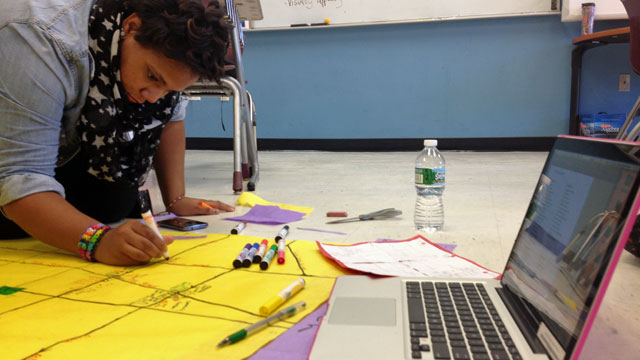
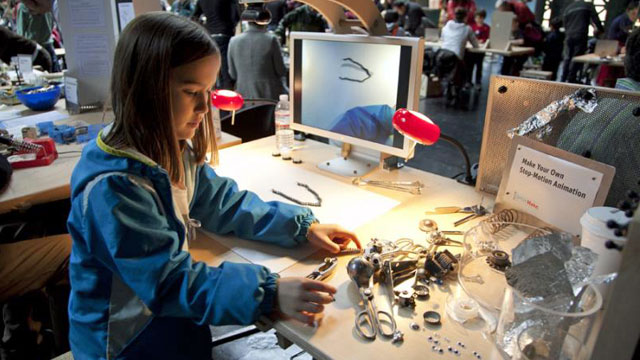
"caption": "A Science Leadership Academy sophomore puts the finishing touches on a geometry project during her lunch period.",
"description": null,
"title": "SLA-math-360",
"credit": null,
"status": "inherit",
"isLoading": false,
"fetchFailed": false
},
"mindshift_37798": {
"type": "attachments",
"id": "mindshift_37798",
"meta": {
"index": "attachments_1716263798",
"site": "mindshift",
"id": "37798",
"found": true
},
"parent": 37612,
"imgSizes": {
"thumbnail": {
"file": "https://ww2.kqed.org/app/uploads/sites/23/2014/09/creative-media-400x225.jpg",
"width": 400,
"mimeType": "image/jpeg",
"height": 225
},
"fd-sm": {
"file": "https://ww2.kqed.org/app/uploads/sites/23/2014/09/creative-media-320x180.jpg",
"width": 320,
"mimeType": "image/jpeg",
"height": 180
},
"kqedFullSize": {
"file": "https://ww2.kqed.org/app/uploads/sites/23/2014/09/creative-media.jpg",
"width": 640,
"height": 360
},
"guest-author-96": {
"file": "https://ww2.kqed.org/app/uploads/sites/23/2014/09/creative-media-96x96.jpg",
"width": 96,
"mimeType": "image/jpeg",
"height": 96
},
"guest-author-64": {
"file": "https://ww2.kqed.org/app/uploads/sites/23/2014/09/creative-media-64x64.jpg",
"width": 64,
"mimeType": "image/jpeg",
"height": 64
},
"guest-author-32": {
"file": "https://ww2.kqed.org/app/uploads/sites/23/2014/09/creative-media-32x32.jpg",
"width": 32,
"mimeType": "image/jpeg",
"height": 32
},
"guest-author-128": {
"file": "https://ww2.kqed.org/app/uploads/sites/23/2014/09/creative-media-128x128.jpg",
"width": 128,
"mimeType": "image/jpeg",
"height": 128
}
},
"publishDate": 1411000311,
"modified": 1411000311,
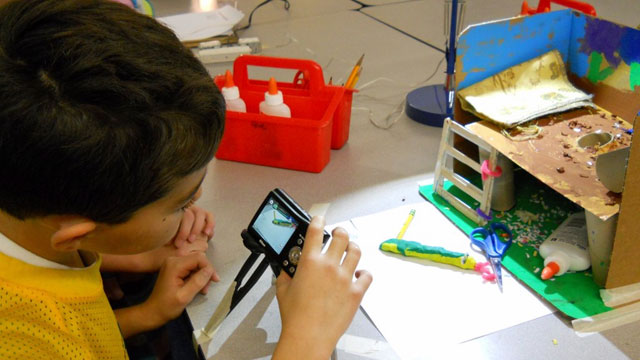
"caption": "Brad Flickinger/Flickr",
"description": null,
"title": "creative-media",
"credit": null,
"status": "inherit",
"isLoading": false,
"fetchFailed": false
},
"mindshift_37734": {
"type": "attachments",
"id": "mindshift_37734",
"meta": {
"index": "attachments_1716263798",
"site": "mindshift",
"id": "37734",
"found": true
},
"parent": 37516,
"imgSizes": {
"thumbnail": {
"file": "https://ww2.kqed.org/app/uploads/sites/23/2014/08/games-obstacles-400x225.jpg",
"width": 400,
"mimeType": "image/jpeg",
"height": 225
},
"fd-sm": {
"file": "https://ww2.kqed.org/app/uploads/sites/23/2014/08/games-obstacles-320x180.jpg",
"width": 320,
"mimeType": "image/jpeg",
"height": 180
},
"kqedFullSize": {
"file": "https://ww2.kqed.org/app/uploads/sites/23/2014/08/games-obstacles.jpg",
"width": 640,
"height": 360
},
"guest-author-96": {
"file": "https://ww2.kqed.org/app/uploads/sites/23/2014/08/games-obstacles-96x96.jpg",
"width": 96,
"mimeType": "image/jpeg",
"height": 96
},
"guest-author-64": {
"file": "https://ww2.kqed.org/app/uploads/sites/23/2014/08/games-obstacles-64x64.jpg",
"width": 64,
"mimeType": "image/jpeg",
"height": 64
},
"guest-author-32": {
"file": "https://ww2.kqed.org/app/uploads/sites/23/2014/08/games-obstacles-32x32.jpg",
"width": 32,
"mimeType": "image/jpeg",
"height": 32
},
"guest-author-128": {
"file": "https://ww2.kqed.org/app/uploads/sites/23/2014/08/games-obstacles-128x128.jpg",
"width": 128,
"mimeType": "image/jpeg",
"height": 128
}
},
"publishDate": 1410481283,
"modified": 1410481283,
"caption": "Brad Flickinger/Flickr",
"description": null,
"title": "games-obstacles",
"credit": null,
"status": "inherit",
"isLoading": false,
"fetchFailed": false
},
"mindshift_37704": {
"type": "attachments",
"id": "mindshift_37704",
"meta": {
"index": "attachments_1716263798",
"site": "mindshift",
"id": "37704",
"found": true
},
"parent": 37330,
"imgSizes": {
"thumbnail": {
"file": "https://ww2.kqed.org/app/uploads/sites/23/2014/09/animation-400x225.jpg",
"width": 400,
"mimeType": "image/jpeg",
"height": 225
},
"fd-sm": {
"file": "https://ww2.kqed.org/app/uploads/sites/23/2014/09/animation-320x180.jpg",
"width": 320,
"mimeType": "image/jpeg",
"height": 180
},
"kqedFullSize": {
"file": "https://ww2.kqed.org/app/uploads/sites/23/2014/09/animation.jpg",
"width": 640,
"height": 360
},
"guest-author-96": {
"file": "https://ww2.kqed.org/app/uploads/sites/23/2014/09/animation-96x96.jpg",
"width": 96,
"mimeType": "image/jpeg",
"height": 96
},
"guest-author-64": {
"file": "https://ww2.kqed.org/app/uploads/sites/23/2014/09/animation-64x64.jpg",
"width": 64,
"mimeType": "image/jpeg",
"height": 64
},
"guest-author-32": {
"file": "https://ww2.kqed.org/app/uploads/sites/23/2014/09/animation-32x32.jpg",
"width": 32,
"mimeType": "image/jpeg",
"height": 32
},
"guest-author-128": {
"file": "https://ww2.kqed.org/app/uploads/sites/23/2014/09/animation-128x128.jpg",
"width": 128,
"mimeType": "image/jpeg",
"height": 128
}
},
"publishDate": 1410306717,
"modified": 1410306717,
"caption": "Kids create stop motion videos in class. (Brad Flickinger/Flickr)",
"description": null,
"title": "animation",
"credit": null,
"status": "inherit",
"isLoading": false,
"fetchFailed": false
},
"mindshift_37606": {
"type": "attachments",
"id": "mindshift_37606",
"meta": {
"index": "attachments_1716263798",
"site": "mindshift",
"id": "37606",
"found": true
},
"parent": 37598,
"imgSizes": {
"thumbnail": {
"file": "https://ww2.kqed.org/app/uploads/sites/23/2014/09/students-control-data-400x225.jpg",
"width": 400,
"mimeType": "image/jpeg",
"height": 225
},
"fd-sm": {
"file": "https://ww2.kqed.org/app/uploads/sites/23/2014/09/students-control-data-320x180.jpg",
"width": 320,
"mimeType": "image/jpeg",
"height": 180
},
"kqedFullSize": {
"file": "https://ww2.kqed.org/app/uploads/sites/23/2014/09/students-control-data.jpg",
"width": 640,
"height": 360
},
"guest-author-96": {
"file": "https://ww2.kqed.org/app/uploads/sites/23/2014/09/students-control-data-96x96.jpg",
"width": 96,
"mimeType": "image/jpeg",
"height": 96
},
"guest-author-64": {
"file": "https://ww2.kqed.org/app/uploads/sites/23/2014/09/students-control-data-64x64.jpg",
"width": 64,
"mimeType": "image/jpeg",
"height": 64
},
"guest-author-32": {
"file": "https://ww2.kqed.org/app/uploads/sites/23/2014/09/students-control-data-32x32.jpg",
"width": 32,
"mimeType": "image/jpeg",
"height": 32
},
"guest-author-128": {
"file": "https://ww2.kqed.org/app/uploads/sites/23/2014/09/students-control-data-128x128.jpg",
"width": 128,
"mimeType": "image/jpeg",
"height": 128
}
},
"publishDate": 1409686872,
"modified": 1409686872,
"caption": "Getty",
"description": null,
"title": "students-control-data",
"credit": null,
"status": "inherit",
"isLoading": false,
"fetchFailed": false
},
"mindshift_37659": {
"type": "attachments",
"id": "mindshift_37659",
"meta": {
"index": "attachments_1716263798",
"site": "mindshift",
"id": "37659",
"found": true
},
"parent": 37518,
"imgSizes": {
"thumbnail": {
"file": "https://ww2.kqed.org/app/uploads/sites/23/2014/08/kids-gaming-400x225.jpg",
"width": 400,
"mimeType": "image/jpeg",
"height": 225
},
"fd-sm": {
"file": "https://ww2.kqed.org/app/uploads/sites/23/2014/08/kids-gaming-320x180.jpg",
"width": 320,
"mimeType": "image/jpeg",
"height": 180
},
"kqedFullSize": {
"file": "https://ww2.kqed.org/app/uploads/sites/23/2014/08/kids-gaming.jpg",
"width": 640,
"height": 360
},
"guest-author-96": {
"file": "https://ww2.kqed.org/app/uploads/sites/23/2014/08/kids-gaming-96x96.jpg",
"width": 96,
"mimeType": "image/jpeg",
"height": 96
},
"guest-author-64": {
"file": "https://ww2.kqed.org/app/uploads/sites/23/2014/08/kids-gaming-64x64.jpg",
"width": 64,
"mimeType": "image/jpeg",
"height": 64
},
"guest-author-32": {
"file": "https://ww2.kqed.org/app/uploads/sites/23/2014/08/kids-gaming-32x32.jpg",
"width": 32,
"mimeType": "image/jpeg",
"height": 32
},
"guest-author-128": {
"file": "https://ww2.kqed.org/app/uploads/sites/23/2014/08/kids-gaming-128x128.jpg",
"width": 128,
"mimeType": "image/jpeg",
"height": 128
}
},
"publishDate": 1409867630,
"modified": 1409867630,
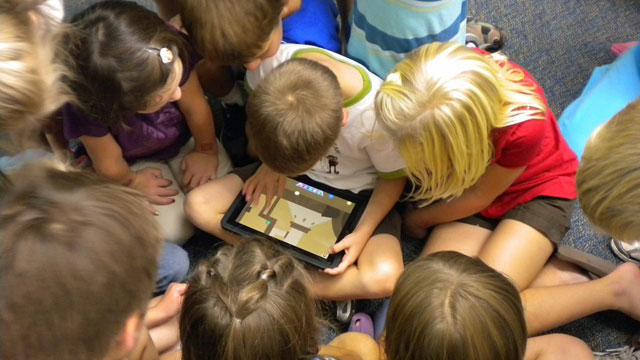
"caption": "Joan Ganz Cooney Center",
"description": null,
"title": "kids-gaming",
"credit": null,
"status": "inherit",
"isLoading": false,
"fetchFailed": false
},
"mindshift_37379": {
"type": "attachments",
"id": "mindshift_37379",
"meta": {
"index": "attachments_1716263798",
"site": "mindshift",
"id": "37379",
"found": true
},
"parent": 37236,
"imgSizes": {
"thumbnail": {
"file": "https://ww2.kqed.org/app/uploads/sites/23/2014/08/young-makers-400x225.jpg",
"width": 400,
"mimeType": "image/jpeg",
"height": 225
},
"fd-sm": {
"file": "https://ww2.kqed.org/app/uploads/sites/23/2014/08/young-makers-320x180.jpg",
"width": 320,
"mimeType": "image/jpeg",
"height": 180
},
"kqedFullSize": {
"file": "https://ww2.kqed.org/app/uploads/sites/23/2014/08/young-makers.jpg",
"width": 640,
"height": 360
},
"guest-author-96": {
"file": "https://ww2.kqed.org/app/uploads/sites/23/2014/08/young-makers-96x96.jpg",
"width": 96,
"mimeType": "image/jpeg",
"height": 96
},
"guest-author-64": {
"file": "https://ww2.kqed.org/app/uploads/sites/23/2014/08/young-makers-64x64.jpg",
"width": 64,
"mimeType": "image/jpeg",
"height": 64
},
"guest-author-32": {
"file": "https://ww2.kqed.org/app/uploads/sites/23/2014/08/young-makers-32x32.jpg",
"width": 32,
"mimeType": "image/jpeg",
"height": 32
},
"guest-author-128": {
"file": "https://ww2.kqed.org/app/uploads/sites/23/2014/08/young-makers-128x128.jpg",
"width": 128,
"mimeType": "image/jpeg",
"height": 128
}
},
"publishDate": 1408386408,
"modified": 1408386408,
"caption": "Exploratorium/Flickr",
"description": null,
"title": "young-makers",
"credit": null,
"status": "inherit",
"isLoading": false,
"fetchFailed": false
},
"mindshift_36450": {
"type": "attachments",
"id": "mindshift_36450",
"meta": {
"index": "attachments_1716263798",
"site": "mindshift",
"id": "36450",
"found": true
},
"parent": 36448,
"imgSizes": {
"thumbnail": {
"file": "https://ww2.kqed.org/app/uploads/sites/23/2014/06/2708811013_284b9f0f5c_z-400x243.jpg",
"width": 400,
"mimeType": "image/jpeg",
"height": 243
},
"fd-sm": {
"file": "https://ww2.kqed.org/app/uploads/sites/23/2014/06/2708811013_284b9f0f5c_z-320x194.jpg",
"width": 320,
"mimeType": "image/jpeg",
"height": 194
},
"post-thumbnail": {
"file": "https://ww2.kqed.org/app/uploads/sites/23/2014/06/2708811013_284b9f0f5c_z-640x372.jpg",
"width": 640,
"mimeType": "image/jpeg",
"height": 372
},
"kqedFullSize": {
"file": "https://ww2.kqed.org/app/uploads/sites/23/2014/06/2708811013_284b9f0f5c_z.jpg",
"width": 640,
"height": 388
},
"guest-author-96": {
"file": "https://ww2.kqed.org/app/uploads/sites/23/2014/06/2708811013_284b9f0f5c_z-96x96.jpg",
"width": 96,
"mimeType": "image/jpeg",
"height": 96
},
"guest-author-64": {
"file": "https://ww2.kqed.org/app/uploads/sites/23/2014/06/2708811013_284b9f0f5c_z-64x64.jpg",
"width": 64,
"mimeType": "image/jpeg",
"height": 64
},
"guest-author-32": {
"file": "https://ww2.kqed.org/app/uploads/sites/23/2014/06/2708811013_284b9f0f5c_z-32x32.jpg",
"width": 32,
"mimeType": "image/jpeg",
"height": 32
},
"guest-author-128": {
"file": "https://ww2.kqed.org/app/uploads/sites/23/2014/06/2708811013_284b9f0f5c_z-128x128.jpg",
"width": 128,
"mimeType": "image/jpeg",
"height": 128
}
},
"publishDate": 1403314630,
"modified": 1403314630,
"caption": "David Robert Bliwas",
"description": null,
"title": "2708811013_284b9f0f5c_z",
"credit": null,
"status": "inherit",
"isLoading": false,
"fetchFailed": false
},
"mindshift_37583": {
"type": "attachments",
"id": "mindshift_37583",
"meta": {
"index": "attachments_1716263798",
"site": "mindshift",
"id": "37583",
"found": true
},
"parent": 37514,
"imgSizes": {
"thumbnail": {
"file": "https://ww2.kqed.org/app/uploads/sites/23/2014/08/games-400x225.jpg",
"width": 400,
"mimeType": "image/jpeg",
"height": 225
},
"fd-sm": {
"file": "https://ww2.kqed.org/app/uploads/sites/23/2014/08/games-320x180.jpg",
"width": 320,
"mimeType": "image/jpeg",
"height": 180
},
"kqedFullSize": {
"file": "https://ww2.kqed.org/app/uploads/sites/23/2014/08/games.jpg",
"width": 640,
"height": 360
},
"guest-author-96": {
"file": "https://ww2.kqed.org/app/uploads/sites/23/2014/08/games-96x96.jpg",
"width": 96,
"mimeType": "image/jpeg",
"height": 96
},
"guest-author-64": {
"file": "https://ww2.kqed.org/app/uploads/sites/23/2014/08/games-64x64.jpg",
"width": 64,
"mimeType": "image/jpeg",
"height": 64
},
"guest-author-32": {
"file": "https://ww2.kqed.org/app/uploads/sites/23/2014/08/games-32x32.jpg",
"width": 32,
"mimeType": "image/jpeg",
"height": 32
},
"guest-author-128": {
"file": "https://ww2.kqed.org/app/uploads/sites/23/2014/08/games-128x128.jpg",
"width": 128,
"mimeType": "image/jpeg",
"height": 128
}
},
"publishDate": 1409279908,
"modified": 1409279908,
"caption": "Getty",
"description": null,
"title": "games",
"credit": null,
"status": "inherit",
"isLoading": false,
"fetchFailed": false
},
"mindshift_37468": {
"type": "attachments",
"id": "mindshift_37468",
"meta": {
"index": "attachments_1716263798",
"site": "mindshift",
"id": "37468",
"found": true
},
"parent": 37289,
"imgSizes": {
"thumbnail": {
"file": "https://ww2.kqed.org/app/uploads/sites/23/2014/08/smart-strategies-400x225.jpg",
"width": 400,
"mimeType": "image/jpeg",
"height": 225
},
"fd-sm": {
"file": "https://ww2.kqed.org/app/uploads/sites/23/2014/08/smart-strategies-320x180.jpg",
"width": 320,
"mimeType": "image/jpeg",
"height": 180
},
"kqedFullSize": {
"file": "https://ww2.kqed.org/app/uploads/sites/23/2014/08/smart-strategies.jpg",
"width": 640,
"height": 360
},
"guest-author-96": {
"file": "https://ww2.kqed.org/app/uploads/sites/23/2014/08/smart-strategies-96x96.jpg",
"width": 96,
"mimeType": "image/jpeg",
"height": 96
},
"guest-author-64": {
"file": "https://ww2.kqed.org/app/uploads/sites/23/2014/08/smart-strategies-64x64.jpg",
"width": 64,
"mimeType": "image/jpeg",
"height": 64
},
"guest-author-32": {
"file": "https://ww2.kqed.org/app/uploads/sites/23/2014/08/smart-strategies-32x32.jpg",
"width": 32,
"mimeType": "image/jpeg",
"height": 32
},
"guest-author-128": {
"file": "https://ww2.kqed.org/app/uploads/sites/23/2014/08/smart-strategies-128x128.jpg",
"width": 128,
"mimeType": "image/jpeg",
"height": 128
}
},
"publishDate": 1408751986,
"modified": 1408751986,
"caption": "Getty",
"description": null,
"title": "smart-strategies",
"credit": null,
"status": "inherit",
"isLoading": false,
"fetchFailed": false
},
"mindshift_37471": {
"type": "attachments",
"id": "mindshift_37471",
"meta": {
"index": "attachments_1716263798",
"site": "mindshift",
"id": "37471",
"found": true
},
"parent": 37304,
"imgSizes": {
"twentyfourteen-full-width": {
"file": "https://ww2.kqed.org/app/uploads/sites/23/2014/08/how-we-learn-1038x576.jpg",
"width": 1038,
"mimeType": "image/jpeg",
"height": 576
},
"thumbnail": {
"file": "https://ww2.kqed.org/app/uploads/sites/23/2014/08/how-we-learn-400x556.jpg",
"width": 400,
"mimeType": "image/jpeg",
"height": 556
},
"fd-sm": {
"file": "https://ww2.kqed.org/app/uploads/sites/23/2014/08/how-we-learn-320x445.jpg",
"width": 320,
"mimeType": "image/jpeg",
"height": 445
},
"post-thumbnail": {
"file": "https://ww2.kqed.org/app/uploads/sites/23/2014/08/how-we-learn-672x372.jpg",
"width": 672,
"mimeType": "image/jpeg",
"height": 372
},
"kqedFullSize": {
"file": "https://ww2.kqed.org/app/uploads/sites/23/2014/08/how-we-learn.jpg",
"width": 1126,
"height": 1565
},
"fd-med": {
"file": "https://ww2.kqed.org/app/uploads/sites/23/2014/08/how-we-learn-768x1067.jpg",
"width": 768,
"mimeType": "image/jpeg",
"height": 1067
},
"guest-author-96": {
"file": "https://ww2.kqed.org/app/uploads/sites/23/2014/08/how-we-learn-96x96.jpg",
"width": 96,
"mimeType": "image/jpeg",
"height": 96
},
"medium": {
"file": "https://ww2.kqed.org/app/uploads/sites/23/2014/08/how-we-learn-800x1112.jpg",
"width": 800,
"mimeType": "image/jpeg",
"height": 1112
},
"guest-author-64": {
"file": "https://ww2.kqed.org/app/uploads/sites/23/2014/08/how-we-learn-64x64.jpg",
"width": 64,
"mimeType": "image/jpeg",
"height": 64
},
"guest-author-32": {
"file": "https://ww2.kqed.org/app/uploads/sites/23/2014/08/how-we-learn-32x32.jpg",
"width": 32,
"mimeType": "image/jpeg",
"height": 32
},
"guest-author-128": {
"file": "https://ww2.kqed.org/app/uploads/sites/23/2014/08/how-we-learn-128x128.jpg",
"width": 128,
"mimeType": "image/jpeg",
"height": 128
}
},
"publishDate": 1408755181,
"modified": 1408755181,
"caption": null,
"description": null,
"title": "how-we-learn",
"credit": null,
"status": "inherit",
"isLoading": false,
"fetchFailed": false
}
},
"audioPlayerReducer": {
"postId": "stream_live",
"isPaused": true,
"isPlaying": false,
"pfsActive": false,
"pledgeModalIsOpen": true,
"playerDrawerIsOpen": false,
"liveAudioPlayStartedAt": 0,
"liveAudioPlayContext": ""
},
"authorsReducer": {
"katrinaschwartz": {
"type": "authors",
"id": "234",
"meta": {
"index": "authors_1716337520",
"id": "234",
"found": true
},
"name": "Katrina Schwartz",
"firstName": "Katrina",
"lastName": "Schwartz",
"slug": "katrinaschwartz",
"email": "kschwartz@kqed.org",
"display_author_email": false,
"staff_mastheads": [
"news"
],
"title": "Producer",
"bio": "Katrina Schwartz is a journalist based in San Francisco. She's worked at KPCC public radio in LA and has reported on air and online for KQED since 2010. She covered how teaching and learning is changing for MindShift between 2012 and 2020. She is the co-host of the MindShift podcast and now produces KQED's Bay Curious podcast.",
"avatar": "https://secure.gravatar.com/avatar/edb4ee79070447a018538c9aae6eeecf28786515b8a0c30e43b6b7dce5aa44c8?s=600&d=blank&r=g",
"twitter": "kschwart",
"bluesky": null,
"facebook": null,
"instagram": null,
"linkedin": null,
"sites": [
{
"site": "",
"roles": [
"editor"
]
},
{
"site": "news",
"roles": [
"editor"
]
},
{
"site": "mindshift",
"roles": [
"administrator"
]
},
{
"site": "stateofhealth",
"roles": [
"author"
]
},
{
"site": "science",
"roles": [
"editor"
]
}
],
"headData": {
"title": "Katrina Schwartz | KQED",
"description": "Producer",
"ogImgSrc": "https://secure.gravatar.com/avatar/edb4ee79070447a018538c9aae6eeecf28786515b8a0c30e43b6b7dce5aa44c8?s=600&d=blank&r=g",
"twImgSrc": "https://secure.gravatar.com/avatar/edb4ee79070447a018538c9aae6eeecf28786515b8a0c30e43b6b7dce5aa44c8?s=600&d=blank&r=g"
},
"isLoading": false,
"link": "/author/katrinaschwartz"
},
"ichen": {
"type": "authors",
"id": "4556",
"meta": {
"index": "authors_1716337520",
"id": "4556",
"found": true
},
"name": "Ingfei Chen",
"firstName": "Ingfei",
"lastName": "Chen",
"slug": "ichen",
"email": "ingfei@sbcglobal.net",
"display_author_email": false,
"staff_mastheads": [],
"title": null,
"bio": "Ingfei Chen is a freelance writer in Northern California whose work has appeared in Scientific American, the New York Times and Smithsonian.",
"avatar": "https://secure.gravatar.com/avatar/10d83690bdf15670800fcf9cbf9d7a63?s=600&d=blank&r=g",
"twitter": null,
"facebook": null,
"instagram": null,
"linkedin": null,
"sites": [
{
"site": "mindshift",
"roles": [
"contributor"
]
}
],
"headData": {
"title": "Ingfei Chen | KQED",
"description": null,
"ogImgSrc": "https://secure.gravatar.com/avatar/10d83690bdf15670800fcf9cbf9d7a63?s=600&d=blank&r=g",
"twImgSrc": "https://secure.gravatar.com/avatar/10d83690bdf15670800fcf9cbf9d7a63?s=600&d=blank&r=g"
},
"isLoading": false,
"link": "/author/ichen"
},
"jordosh": {
"type": "authors",
"id": "4557",
"meta": {
"index": "authors_1716337520",
"id": "4557",
"found": true
},
"name": "Jordan Shapiro",
"firstName": "Jordan",
"lastName": "Shapiro",
"slug": "jordosh",
"email": "jordosh@gmail.com",
"display_author_email": false,
"staff_mastheads": [],
"title": null,
"bio": "Jordan Shapiro’s academic work and publishing blend psychology, philosophy, and business in surprising ways. His internationally celebrated writing on education, parenting, and game-based learning can be found on \u003ca href=\"http://www.forbes.com/sites/jordanshapiro/\">Forbes.com\u003c/a>. He teaches in Temple University's Intellectual Heritage Department where he’s also the Digital Learning Coordinator. He is the parent of two boys (six and eight years old) and the lead administrator at \u003ca href=\"http://www.projectlearnschool.org/\">Project Learn School\u003c/a> (an independent cooperative K-8 school in Philadephia). His most recent book \u003ca href=\"http://www.amazon.com/FREEPLAY-Video-Guide-Maximum-Euphoric/dp/147938643X/ref=sr_1_4?ie=UTF8&qid=1398114780&sr=8-4&keywords=freeplay\">FREEPLAY: A Video Game Guide To Maximum Euphoric Bliss\u003c/a>, considers how the games we play in our youth shape our adult lives.",
"avatar": "https://secure.gravatar.com/avatar/4b111ea254a2d6423af927dd263ccb39?s=600&d=blank&r=g",
"twitter": "jordosh",
"facebook": null,
"instagram": null,
"linkedin": null,
"sites": [
{
"site": "mindshift",
"roles": [
"contributor"
]
}
],
"headData": {
"title": "Jordan Shapiro | KQED",
"description": null,
"ogImgSrc": "https://secure.gravatar.com/avatar/4b111ea254a2d6423af927dd263ccb39?s=600&d=blank&r=g",
"twImgSrc": "https://secure.gravatar.com/avatar/4b111ea254a2d6423af927dd263ccb39?s=600&d=blank&r=g"
},
"isLoading": false,
"link": "/author/jordosh"
}
},
"pagesReducer": {
"mindshift_category_teaching-strategies": {
"type": "terms",
"id": "mindshift_193",
"meta": {
"index": "terms_1716263798",
"site": "mindshift",
"id": "193",
"score": 14.4071665
},
"featImg": null,
"name": "Teaching Strategies",
"description": "Innovative ideas - projects, processes, curricula, and more - that are transforming how we teach and learn.",
"taxonomy": "category",
"headData": {
"twImgId": null,
"twTitle": null,
"ogTitle": null,
"ogImgId": null,
"twDescription": null,
"description": "Innovative ideas - projects, processes, curricula, and more - that are transforming how we teach and learn.",
"title": "Teaching Strategies Archives | KQED Mindshift",
"ogDescription": null
},
"ttid": 193,
"slug": "teaching-strategies",
"isLoading": false,
"title": "Teaching Strategies",
"pageMeta": {
"site": "mindshift",
"WpPageTemplate": "page-topic-editorial",
"currentPage": 44
},
"blocks": [
{
"blockName": "kqed/company-paragraph",
"content": "Innovative ideas - projects, processes, curricula, and more - that are transforming how we teach and learn."
},
{
"blockName": "kqed/post-list",
"attrs": {
"layout": "cardArticle2",
"query": "posts/mindshift?category=teaching-strategies",
"seeMore": false,
"paginated": true,
"page": 44
}
},
{
"blockName": "kqed/ad"
}
]
}
},
"pfsSessionReducer": {},
"postsReducer": {
"stream_live": {
"type": "live",
"id": "stream_live",
"audioUrl": "https://streams.kqed.org/kqedradio",
"title": "Live Stream",
"excerpt": "Live Stream information currently unavailable.",
"link": "/radio",
"featImg": "",
"label": {
"name": "KQED Live",
"link": "/"
}
},
"stream_kqedNewscast": {
"type": "posts",
"id": "stream_kqedNewscast",
"audioUrl": "https://www.kqed.org/.stream/anon/radio/RDnews/newscast.mp3?_=1",
"title": "KQED Newscast",
"featImg": "",
"label": {
"name": "88.5 FM",
"link": "/"
}
},
"mindshift_37610": {
"type": "posts",
"id": "mindshift_37610",
"meta": {
"index": "posts_1716263798",
"site": "mindshift",
"id": "37610",
"score": null,
"sort": [
1411137009000
]
},
"parent": 0,
"labelTerm": {
"site": "mindshift"
},
"blocks": [],
"publishDate": 1411137009,
"format": "aside",
"disqusTitle": "How Looking at Student Work Keeps Teachers and Kids on Track",
"title": "How Looking at Student Work Keeps Teachers and Kids on Track",
"headTitle": "MindShift | KQED News",
"content": "\u003cfigure id=\"attachment_33742\" class=\"wp-caption aligncenter\" style=\"max-width: 640px\">\u003ca href=\"http://ww2.kqed.org/mindshift/wp-content/uploads/sites/23/2014/01/SLA-math-360.jpg\">\u003cimg class=\"size-full wp-image-33742\" src=\"http://ww2.kqed.org/mindshift/wp-content/uploads/sites/23/2014/01/SLA-math-360.jpg\" alt=\"A Science Leadership Academy sophomore puts the finishing touches on a geometry project during her lunch period.\" width=\"640\" height=\"360\" srcset=\"https://ww2.kqed.org/app/uploads/sites/23/2014/01/SLA-math-360.jpg 640w, https://ww2.kqed.org/app/uploads/sites/23/2014/01/SLA-math-360-400x225.jpg 400w, https://ww2.kqed.org/app/uploads/sites/23/2014/01/SLA-math-360-320x180.jpg 320w\" sizes=\"(max-width: 640px) 100vw, 640px\">\u003c/a>\u003cfigcaption class=\"wp-caption-text\">A Science Leadership Academy sophomore puts the finishing touches on a geometry project during her lunch period.\u003c/figcaption>\u003c/figure>\n\u003cp class=\"dropcap-serif\">Much of the work students produce is read only by their teachers. It can feel disconnected from the class as a whole and irrelevant to a broader conversation. That’s why examining and critiquing student work as a regular part of classroom interactions can be a powerful way for both teachers and students to reflect on their work, while building a community culture that focuses on the process of learning.\u003c/p>\n\u003cp>Increasingly, educators are focusing on teaching students about their learning brains, in addition to specific subject content. Research by Stanford psychologist \u003ca href=\"http://ww2.kqed.org/mindshift/tag/carol-dweck/\" target=\"_blank\">Carol Dweck\u003c/a> and others on \u003ca href=\"http://ww2.kqed.org/mindshift/2014/03/whats-your-learning-disposition-how-to-foster-students-mindsets/\" target=\"_blank\">developing academic mindsets\u003c/a> have helped show that students’ perceptions of themselves as learners plays a large role in their academic success. Evaluating student work throughout the creation process is a great way to make sure students are grasping the concepts being taught along the way, and can be a gentle way of focusing evaluation toward improvement.\u003c/p>\n\u003cp>Educators use student work for many reasons: to fine-tune lesson plans, to give students practice offering constructive feedback to peers, even to inspire other students. Whatever reason for using student work, it should be clear to both the student and teacher why the work is being evaluated at that moment.\u003c/p>\n\u003cp>\u003cstrong>A TOOL TO EVALUATE LESSON DESIGN\u003c/strong>\u003c/p>\n\u003cp>“I learn a lot about how well I’m scaffolding a student or where I’m lacking in that,” said Edrick Macalaguim, a seventh-grade teacher at \u003ca href=\"http://www.hightechhigh.org/schools/HTMCV/\" target=\"_blank\">High Tech Middle Chula Vista\u003c/a> during a \u003ca href=\"http://dlmooc.deeper-learning.org/\" target=\"_blank\">Deeper Learning MOOC panel\u003c/a>. He prefers to look at student work several times throughout its creation so he can see how well students are able to execute the task and if they are understanding its goals. If he sees that they aren’t on the right path, he can take steps to modify the assignment. “It helps me understand what they know and what they can articulate, as well as whether or not I’m doing a good job in the project or lesson design,” Macalaguim said.\u003c/p>\n\u003caside class=\"pullquote alignleft\">'I learn a lot about how well I'm scaffolding a student or where I'm lacking in that.'\u003c/aside>\n\u003cp>When discussing projects, educators often jump to examples in English or social studies classes. But this same approach to student work can be taken with math, where it may be even more important that students learn to think divergently.\u003c/p>\n\u003cp>[ad fullwidth]\u003c/p>\n\u003cp>To do this, the math problem has to be open enough that students can approach solving it in various creative ways. This is not “drill and kill” practice, where the only thing being tested is whether the student learned a specific math rule. Looking at students’ math work using this model is instead about identifying their thought processes and following those thought lines to see if there is evidence that the student understands the underlying concepts.\u003c/p>\n\u003cp>“We want to see the approach they took and really get insight into the way they solved the problem,” said Carissa Romero, associate director of the \u003ca href=\"https://p3.perts.net/\" target=\"_blank\">Project for Education Research That Scales\u003c/a> (PERTS) at Stanford. If teachers only assess to see if students got the correct answer, she said, they don’t get quality information about whether students really understood what was being taught.\u003c/p>\n\u003cp>\u003cstrong>STUDENT WORK INSPIRES\u003c/strong>\u003c/p>\n\u003cp>Teachers often assign work to students without giving them a clear sense of what a great project would look like. “As teachers we spend a lot of time hoping that students will create great work,” said Ron Berger, chief academic officer of \u003ca href=\"http://elschools.org/\" target=\"_blank\">Expeditionary Learning\u003c/a> with 25 years of classroom experience. “But if we haven’t sat down with our colleagues and looked and talked about what we hope for, we don’t have a common vision of what we’re expecting.”\u003c/p>\n\u003cp>[contextly_sidebar id=\"gfIsDspvxRkQorSrGWVohOUikrNUJhrR\"]\u003c/p>\n\u003cp>Students might get a rubric describing what’s expected of them in a project, but that doesn't mean they have a clear vision of what success would look like. “The main thing for me about student work is it creates a model and a discussion point of what we’re aiming for,” Berger said. He has created a downloadable “museum of beautiful student work,” hand-picked from the thousands of projects he’s seen over his career, that educators can use to help inspire their students.\u003c/p>\n\u003cp>“It’s important to compliment people on their work sometimes,” said Iza McGawley, a seventh-grader at High Tech Middle Chula Vista. She is inspired when another student’s work is held up as an exemplar. It makes her want to work harder so that her work will be recognized, too.\u003c/p>\n\u003cp>Honoring student work in this way, as well as taking the time to deeply discuss, compliment and critique projects, helps hold them to a higher standard. “It sends the message that the quality of what kids do in school matters,” Berger said. “And that’s a message that’s transformational for kids, to elevate their work as something that’s worth being looked at closely.”\u003c/p>\n\u003cp>It’s important to recognize that all students have something to offer, even the students having difficulty. Macalaguim said he often holds up a part of a struggling student’s work so that he or she can be recognized for the positive aspects before moving on to point out areas of growth more privately. “Using that process with our struggling students helps build their confidence level,” Macalaguim said. It also helps make struggling learners feel supported, like they have a learning community.\u003c/p>\n\u003cp>\u003cstrong>STUDENTS GAIN PERSPECTIVE\u003c/strong>\u003c/p>\n\u003cp>“Every time that I look at someone else’s work, I learn about their way of thinking,” Iza said. She admits that at first she was offended when her peers pointed out flaws in her work, but she has come to see the process as a helpful way to improve. “I think that I also learn a lot about how it’s OK for people to help you out on your work,” Iza said.\u003c/p>\n\u003caside class=\"pullquote alignleft\">'Looking at student work, especially during the process, can help move a classroom culture toward the direction that school is for learning.'\u003c/aside>\n\u003cp>As teachers already know, student work can be an important window into their lives. When students share their work with one another, it can build a stronger classroom community. Iza described a writing assignment one of her classmates shared that was very personal to him. “We understood each other more and it helped us build a stronger relationship with one another,” she said.\u003c/p>\n\u003cp>Regularly reviewing one another's work also builds student capacity to give and receive constructive feedback. Educators who regularly utilize this teaching technique often rely on protocols to help structure feedback, asking students to first describe what they see before making any judgments, and offering both positive and constructive insights into the work. It’s important to tell students what they are doing well so they can build on that success in addition to pointing out areas for improvement.\u003c/p>\n\u003cp>Research has also shown that when teachers clearly communicate to students that they are receiving feedback because the teacher has high expectations for the student and wants to be sure he or she can meet them, students are less defensive and perform better, said Romero. She explained this approach worked particularly well with African-American students in the study who were sensitive to critique because they were aware of societal biases.\u003c/p>\n\u003cp>\u003cstrong>CHANGING PERCEPTIONS ABOUT WHAT SCHOOL IS FOR\u003c/strong>\u003c/p>\n\u003cp>Perhaps one of the most subtle but important benefits of regular showcases of student work is the way it can focus learning on the process, rather than on achieving one outcome. “A lot of students see school as a place you go to be judged, to learn whether you are smart or not,” Romero said. Looking at student work brings the focus back to a baseline understanding that all learning starts from somewhere and that improvement and growth are the real goals of school. “It bring the focus back to learning goals,” Romero said.\u003c/p>\n\u003cp>“I also believe that we should collect the early drafts of work so we can talk about the fact that all great work starts out with struggles and problems,” Berger said. “Students can see that we all make mistakes in process.”\u003c/p>\n\u003cp>That message is coming across clearly to students at High Tech High Chula Vista. Iza said her class motto is “fail to prevail,” and she candidly acknowledged that every student encounters times when she doesn’t understand everything. That’s the point from where she starts learning.\u003c/p>\n\u003cp>[ad floatright]\u003c/p>\n\u003cp>\"Looking at student work, especially during the process, can help move a classroom culture toward the direction that school is for learning,\" Romero said. “We want to be making mistakes and we're working together towards better work all the time.” And when students make mistakes it often illuminates big misperceptions, that when resolved, can help a learner make the huge conceptual leaps that feel like breakthroughs.\u003c/p>\n\n",
"disqusIdentifier": "37610 http://blogs.kqed.org/mindshift/?p=37610",
"disqusUrl": "https://ww2.kqed.org/mindshift/2014/09/19/how-looking-at-student-work-keeps-teachers-and-kids-on-track/",
"stats": {
"hasVideo": false,
"hasChartOrMap": false,
"hasAudio": false,
"hasPolis": false,
"wordCount": 1557,
"hasGoogleForm": false,
"hasGallery": false,
"hasHearkenModule": false,
"iframeSrcs": [],
"paragraphCount": 26
},
"modified": 1411138961,
"excerpt": "Regularly looking at student work throughout the creation process gives teachers insight into how the project is hitting home and gives students important feedback.",
"headData": {
"twImgId": "",
"twTitle": "",
"ogTitle": "",
"ogImgId": "",
"twDescription": "",
"description": "Regularly looking at student work throughout the creation process gives teachers insight into how the project is hitting home and gives students important feedback.",
"title": "How Looking at Student Work Keeps Teachers and Kids on Track | KQED",
"ogDescription": "",
"schema": {
"@context": "https://schema.org",
"@type": "Article",
"headline": "How Looking at Student Work Keeps Teachers and Kids on Track",
"datePublished": "2014-09-19T07:30:09-07:00",
"dateModified": "2014-09-19T08:02:41-07:00",
"image": "https://cdn.kqed.org/wp-content/uploads/2020/02/KQED-OG-Image@1x.png"
}
},
"guestAuthors": [],
"slug": "how-looking-at-student-work-keeps-teachers-and-kids-on-track",
"status": "publish",
"path": "/mindshift/37610/how-looking-at-student-work-keeps-teachers-and-kids-on-track",
"audioTrackLength": null,
"parsedContent": [
{
"type": "contentString",
"content": "\u003cdiv class=\"post-body\">\u003cp>\u003cfigure id=\"attachment_33742\" class=\"wp-caption aligncenter\" style=\"max-width: 640px\">\u003ca href=\"http://ww2.kqed.org/mindshift/wp-content/uploads/sites/23/2014/01/SLA-math-360.jpg\">\u003cimg class=\"size-full wp-image-33742\" src=\"http://ww2.kqed.org/mindshift/wp-content/uploads/sites/23/2014/01/SLA-math-360.jpg\" alt=\"A Science Leadership Academy sophomore puts the finishing touches on a geometry project during her lunch period.\" width=\"640\" height=\"360\" srcset=\"https://ww2.kqed.org/app/uploads/sites/23/2014/01/SLA-math-360.jpg 640w, https://ww2.kqed.org/app/uploads/sites/23/2014/01/SLA-math-360-400x225.jpg 400w, https://ww2.kqed.org/app/uploads/sites/23/2014/01/SLA-math-360-320x180.jpg 320w\" sizes=\"(max-width: 640px) 100vw, 640px\">\u003c/a>\u003cfigcaption class=\"wp-caption-text\">A Science Leadership Academy sophomore puts the finishing touches on a geometry project during her lunch period.\u003c/figcaption>\u003c/figure>\n\u003cp class=\"dropcap-serif\">Much of the work students produce is read only by their teachers. It can feel disconnected from the class as a whole and irrelevant to a broader conversation. That’s why examining and critiquing student work as a regular part of classroom interactions can be a powerful way for both teachers and students to reflect on their work, while building a community culture that focuses on the process of learning.\u003c/p>\n\u003cp>Increasingly, educators are focusing on teaching students about their learning brains, in addition to specific subject content. Research by Stanford psychologist \u003ca href=\"http://ww2.kqed.org/mindshift/tag/carol-dweck/\" target=\"_blank\">Carol Dweck\u003c/a> and others on \u003ca href=\"http://ww2.kqed.org/mindshift/2014/03/whats-your-learning-disposition-how-to-foster-students-mindsets/\" target=\"_blank\">developing academic mindsets\u003c/a> have helped show that students’ perceptions of themselves as learners plays a large role in their academic success. Evaluating student work throughout the creation process is a great way to make sure students are grasping the concepts being taught along the way, and can be a gentle way of focusing evaluation toward improvement.\u003c/p>\n\u003cp>Educators use student work for many reasons: to fine-tune lesson plans, to give students practice offering constructive feedback to peers, even to inspire other students. Whatever reason for using student work, it should be clear to both the student and teacher why the work is being evaluated at that moment.\u003c/p>\n\u003cp>\u003cstrong>A TOOL TO EVALUATE LESSON DESIGN\u003c/strong>\u003c/p>\n\u003cp>“I learn a lot about how well I’m scaffolding a student or where I’m lacking in that,” said Edrick Macalaguim, a seventh-grade teacher at \u003ca href=\"http://www.hightechhigh.org/schools/HTMCV/\" target=\"_blank\">High Tech Middle Chula Vista\u003c/a> during a \u003ca href=\"http://dlmooc.deeper-learning.org/\" target=\"_blank\">Deeper Learning MOOC panel\u003c/a>. He prefers to look at student work several times throughout its creation so he can see how well students are able to execute the task and if they are understanding its goals. If he sees that they aren’t on the right path, he can take steps to modify the assignment. “It helps me understand what they know and what they can articulate, as well as whether or not I’m doing a good job in the project or lesson design,” Macalaguim said.\u003c/p>\n\u003caside class=\"pullquote alignleft\">'I learn a lot about how well I'm scaffolding a student or where I'm lacking in that.'\u003c/aside>\n\u003cp>When discussing projects, educators often jump to examples in English or social studies classes. But this same approach to student work can be taken with math, where it may be even more important that students learn to think divergently.\u003c/p>\n\u003cp>\u003c/p>\u003c/div>",
"attributes": {
"named": {},
"numeric": []
}
},
{
"type": "component",
"content": "",
"name": "ad",
"attributes": {
"named": {
"label": "fullwidth"
},
"numeric": [
"fullwidth"
]
}
},
{
"type": "contentString",
"content": "\u003cdiv class=\"post-body\">\u003cp>\u003c/p>\n\u003cp>To do this, the math problem has to be open enough that students can approach solving it in various creative ways. This is not “drill and kill” practice, where the only thing being tested is whether the student learned a specific math rule. Looking at students’ math work using this model is instead about identifying their thought processes and following those thought lines to see if there is evidence that the student understands the underlying concepts.\u003c/p>\n\u003cp>“We want to see the approach they took and really get insight into the way they solved the problem,” said Carissa Romero, associate director of the \u003ca href=\"https://p3.perts.net/\" target=\"_blank\">Project for Education Research That Scales\u003c/a> (PERTS) at Stanford. If teachers only assess to see if students got the correct answer, she said, they don’t get quality information about whether students really understood what was being taught.\u003c/p>\n\u003cp>\u003cstrong>STUDENT WORK INSPIRES\u003c/strong>\u003c/p>\n\u003cp>Teachers often assign work to students without giving them a clear sense of what a great project would look like. “As teachers we spend a lot of time hoping that students will create great work,” said Ron Berger, chief academic officer of \u003ca href=\"http://elschools.org/\" target=\"_blank\">Expeditionary Learning\u003c/a> with 25 years of classroom experience. “But if we haven’t sat down with our colleagues and looked and talked about what we hope for, we don’t have a common vision of what we’re expecting.”\u003c/p>\n\u003cp>\u003c/p>\u003cp>\u003c/p>\u003cp>\u003c/p>\n\u003cp>Students might get a rubric describing what’s expected of them in a project, but that doesn't mean they have a clear vision of what success would look like. “The main thing for me about student work is it creates a model and a discussion point of what we’re aiming for,” Berger said. He has created a downloadable “museum of beautiful student work,” hand-picked from the thousands of projects he’s seen over his career, that educators can use to help inspire their students.\u003c/p>\n\u003cp>“It’s important to compliment people on their work sometimes,” said Iza McGawley, a seventh-grader at High Tech Middle Chula Vista. She is inspired when another student’s work is held up as an exemplar. It makes her want to work harder so that her work will be recognized, too.\u003c/p>\n\u003cp>Honoring student work in this way, as well as taking the time to deeply discuss, compliment and critique projects, helps hold them to a higher standard. “It sends the message that the quality of what kids do in school matters,” Berger said. “And that’s a message that’s transformational for kids, to elevate their work as something that’s worth being looked at closely.”\u003c/p>\n\u003cp>It’s important to recognize that all students have something to offer, even the students having difficulty. Macalaguim said he often holds up a part of a struggling student’s work so that he or she can be recognized for the positive aspects before moving on to point out areas of growth more privately. “Using that process with our struggling students helps build their confidence level,” Macalaguim said. It also helps make struggling learners feel supported, like they have a learning community.\u003c/p>\n\u003cp>\u003cstrong>STUDENTS GAIN PERSPECTIVE\u003c/strong>\u003c/p>\n\u003cp>“Every time that I look at someone else’s work, I learn about their way of thinking,” Iza said. She admits that at first she was offended when her peers pointed out flaws in her work, but she has come to see the process as a helpful way to improve. “I think that I also learn a lot about how it’s OK for people to help you out on your work,” Iza said.\u003c/p>\n\u003caside class=\"pullquote alignleft\">'Looking at student work, especially during the process, can help move a classroom culture toward the direction that school is for learning.'\u003c/aside>\n\u003cp>As teachers already know, student work can be an important window into their lives. When students share their work with one another, it can build a stronger classroom community. Iza described a writing assignment one of her classmates shared that was very personal to him. “We understood each other more and it helped us build a stronger relationship with one another,” she said.\u003c/p>\n\u003cp>Regularly reviewing one another's work also builds student capacity to give and receive constructive feedback. Educators who regularly utilize this teaching technique often rely on protocols to help structure feedback, asking students to first describe what they see before making any judgments, and offering both positive and constructive insights into the work. It’s important to tell students what they are doing well so they can build on that success in addition to pointing out areas for improvement.\u003c/p>\n\u003cp>Research has also shown that when teachers clearly communicate to students that they are receiving feedback because the teacher has high expectations for the student and wants to be sure he or she can meet them, students are less defensive and perform better, said Romero. She explained this approach worked particularly well with African-American students in the study who were sensitive to critique because they were aware of societal biases.\u003c/p>\n\u003cp>\u003cstrong>CHANGING PERCEPTIONS ABOUT WHAT SCHOOL IS FOR\u003c/strong>\u003c/p>\n\u003cp>Perhaps one of the most subtle but important benefits of regular showcases of student work is the way it can focus learning on the process, rather than on achieving one outcome. “A lot of students see school as a place you go to be judged, to learn whether you are smart or not,” Romero said. Looking at student work brings the focus back to a baseline understanding that all learning starts from somewhere and that improvement and growth are the real goals of school. “It bring the focus back to learning goals,” Romero said.\u003c/p>\n\u003cp>“I also believe that we should collect the early drafts of work so we can talk about the fact that all great work starts out with struggles and problems,” Berger said. “Students can see that we all make mistakes in process.”\u003c/p>\n\u003cp>That message is coming across clearly to students at High Tech High Chula Vista. Iza said her class motto is “fail to prevail,” and she candidly acknowledged that every student encounters times when she doesn’t understand everything. That’s the point from where she starts learning.\u003c/p>\n\u003cp>\u003c/p>\u003c/div>",
"attributes": {
"named": {},
"numeric": []
}
},
{
"type": "component",
"content": "",
"name": "ad",
"attributes": {
"named": {
"label": "floatright"
},
"numeric": [
"floatright"
]
}
},
{
"type": "contentString",
"content": "\u003cdiv class=\"post-body\">\u003cp>\u003c/p>\n\u003cp>\"Looking at student work, especially during the process, can help move a classroom culture toward the direction that school is for learning,\" Romero said. “We want to be making mistakes and we're working together towards better work all the time.” And when students make mistakes it often illuminates big misperceptions, that when resolved, can help a learner make the huge conceptual leaps that feel like breakthroughs.\u003c/p>\n\n\u003c/div>\u003c/p>",
"attributes": {
"named": {},
"numeric": []
}
}
],
"link": "/mindshift/37610/how-looking-at-student-work-keeps-teachers-and-kids-on-track",
"authors": [
"234"
],
"categories": [
"mindshift_193"
],
"tags": [
"mindshift_939",
"mindshift_1040",
"mindshift_20740"
],
"featImg": "mindshift_33742",
"label": "mindshift"
},
"mindshift_37612": {
"type": "posts",
"id": "mindshift_37612",
"meta": {
"index": "posts_1716263798",
"site": "mindshift",
"id": "37612",
"score": null,
"sort": [
1411048808000
]
},
"parent": 0,
"labelTerm": {
"site": "mindshift"
},
"blocks": [],
"publishDate": 1411048808,
"format": "aside",
"disqusTitle": "When Students Get Creative With Tech Tools, Teachers Focus on Skills",
"title": "When Students Get Creative With Tech Tools, Teachers Focus on Skills",
"headTitle": "MindShift | KQED News",
"content": "\u003cfigure id=\"attachment_37798\" class=\"wp-caption aligncenter\" style=\"max-width: 640px\">\u003ca href=\"https://www.flickr.com/photos/56155476@N08/12601600304/in/set-72157641138792993\">\u003cimg class=\"size-full wp-image-37798\" src=\"http://ww2.kqed.org/mindshift/wp-content/uploads/sites/23/2014/09/creative-media.jpg\" alt=\"Brad Flickinger/Flickr\" width=\"640\" height=\"360\" srcset=\"https://ww2.kqed.org/app/uploads/sites/23/2014/09/creative-media.jpg 640w, https://ww2.kqed.org/app/uploads/sites/23/2014/09/creative-media-400x225.jpg 400w, https://ww2.kqed.org/app/uploads/sites/23/2014/09/creative-media-320x180.jpg 320w\" sizes=\"(max-width: 640px) 100vw, 640px\">\u003c/a>\u003cfigcaption class=\"wp-caption-text\">Brad Flickinger/Flickr\u003c/figcaption>\u003c/figure>\n\u003cp>\u003cstrong>By Jennifer Carey\u003c/strong>\u003c/p>\n\u003cp class=\"dropcap-serif\">One of the most intimidating aspects of infusing technology into curriculum is that educators often believe that they will have to master and then teach their students to use new technology tools before assigning a project. These concerns are understandable as our time for professional development is finite and school curricula are already packed. However, consider the impact if, rather than focusing on new tools, we explored the skills students need to learn and then incorporated the most effective digital resources to accomplish those objectives.\u003c/p>\n\u003cp>\u003cstrong>LOOK PAST THE FLASH\u003c/strong>\u003c/p>\n\u003cp>Good teachers know that learning is all about the skills that students develop in the process of a lesson, activity or project. Most teachers are exposed to digitally infused curriculum with flashy projects like documentaries, blogs, Minecraft activities, etc. However, the most important thing is to look past the flash. Before you sit down to design a project, think about what skills you want students to learn in your class.\u003c/p>\n\u003cp>For example, do you want your students to learn how to deeply research and assess sources effectively? Do you want them to demonstrate their understanding of a theoretical physics concept? Start with your traditional lesson objectives and build off those.\u003c/p>\n\u003cp>[ad fullwidth]\u003c/p>\n\u003cp>\u003cstrong>PRESENT AN OBJECTIVE, NOT A RECIPE\u003c/strong>\u003c/p>\n\u003cp>When you give your students a digitally infused project, there are different ways to structure it that will maintain your rigorous expectations but not require a lot of time teaching new software or hardware tools. For example, history students could use digital tools to \u003ca href=\"http://indianajen.com/2013/10/25/student-documentaries-in-history-class/\" target=\"_blank\">make documentaries\u003c/a>. Give students clear parameters (such as time limits) and expectations for the project, but let them choose their own video tools and hardware. The project should be open-ended enough that students can get creative: by using \u003ca href=\"http://indianajen.com/2013/11/08/infographic-on-creative-commons-what-can-you-use-how-do-you-cite/\" target=\"_blank\">appropriately licensed images\u003c/a>, creating a live-action video or even incorporating their own artwork.\u003c/p>\n\u003cp>\u003ca href=\"https://twitter.com/ShawnMcCusker\" target=\"_blank\">Shawn McCusker\u003c/a>, social studies department chair at Libertyville High School in Illinois, teaches his students about world governments by asking them to create visual presentations that demonstrate their topic. Students are permitted to create something as simple as a Venn diagram, but he also maintains a “Best of All Time!” list and encourages his students to blow him away. One year, he got an \u003ca href=\"https://www.youtube.com/watch?v=E4YlOyugato\" target=\"_blank\">amazing stop motion picture comparing Adam Smith with Karl Marx\u003c/a>.\u003c/p>\n\u003cp>Ultimately, when students explore topics independently, solving problems as they arise, they become more invested in their own learning. Allowing them to creatively develop their own finished products gives them some control over learning artifacts they produce to demonstrate their understanding. Keep your parameters broad enough so that students can explore their passions. You will get different results, but don't be surprised if they amaze you.\u003c/p>\n\u003cp>\u003cstrong>LET THEM FIGURE IT OUT\u003c/strong>\u003c/p>\n\u003cp>If you provide students a broad outline and allow them to choose their own tools, they can be more creative in the overall process. And, while it's normal to want to understand the tools students will be using before assigning a project, don't fret too much about teaching them new tools. Most software and hardware today is designed to be intuitive. There are numerous \"how-to\" videos readily available online, and a quick Google search will often return an easy solution. Requiring students to find answers to their own problems, even relying on peers for assistance, helps promote a culture of teamwork. Allowing students to navigate and learn their own tools is a great way to teach them the important skill of creative problem-solving. This is especially beneficial in schools that don't have one-to-one device programs; students have to learn to use whatever tools are available to them (PC, Mac, tablet, smartphone, etc) more effectively.\u003c/p>\n\u003cp>\u003cstrong>ENCOURAGE COLLABORATION\u003c/strong>\u003c/p>\n\u003cp>We live in a world that is collaborative, but classrooms don't always reflect that reality. Instead of creating singular, insulated assignments, encourage students to collaborate\u003cspan style=\"text-decoration: underline\">.\u003c/span> You don't need to be an expert in everything. Instead, allow them to find the classmates, peers or online resources that can assist them. After all, when was the last time you worked in complete isolation on a personal or professional project?\u003c/p>\n\u003cp>\u003c/p>\n\u003cp>Tech projects are a great opportunity to encourage students to learn real-world skills of working with others. At the end of the day, incorporating a digital curriculum is not about teaching students to use a particular device or piece of software. It's about developing the skills necessary for them to be successful.\u003c/p>\n\n",
"disqusIdentifier": "37612 http://blogs.kqed.org/mindshift/?p=37612",
"disqusUrl": "https://ww2.kqed.org/mindshift/2014/09/18/when-students-get-creative-with-tech-tools-teachers-focus-on-skills/",
"stats": {
"hasVideo": false,
"hasChartOrMap": false,
"hasAudio": false,
"hasPolis": false,
"wordCount": 746,
"hasGoogleForm": false,
"hasGallery": false,
"hasHearkenModule": false,
"iframeSrcs": [],
"paragraphCount": 15
},
"modified": 1411513836,
"excerpt": "Teachers find the most success integrating technology into the classroom when they have clear instructional goals.",
"headData": {
"twImgId": "",
"twTitle": "",
"ogTitle": "",
"ogImgId": "",
"twDescription": "",
"description": "Teachers find the most success integrating technology into the classroom when they have clear instructional goals.",
"title": "When Students Get Creative With Tech Tools, Teachers Focus on Skills | KQED",
"ogDescription": "",
"schema": {
"@context": "https://schema.org",
"@type": "Article",
"headline": "When Students Get Creative With Tech Tools, Teachers Focus on Skills",
"datePublished": "2014-09-18T07:00:08-07:00",
"dateModified": "2014-09-23T16:10:36-07:00",
"image": "https://cdn.kqed.org/wp-content/uploads/2020/02/KQED-OG-Image@1x.png"
}
},
"guestAuthors": [],
"slug": "when-students-get-creative-with-tech-tools-teachers-focus-on-skills",
"status": "publish",
"path": "/mindshift/37612/when-students-get-creative-with-tech-tools-teachers-focus-on-skills",
"audioTrackLength": null,
"parsedContent": [
{
"type": "contentString",
"content": "\u003cdiv class=\"post-body\">\u003cp>\u003cfigure id=\"attachment_37798\" class=\"wp-caption aligncenter\" style=\"max-width: 640px\">\u003ca href=\"https://www.flickr.com/photos/56155476@N08/12601600304/in/set-72157641138792993\">\u003cimg class=\"size-full wp-image-37798\" src=\"http://ww2.kqed.org/mindshift/wp-content/uploads/sites/23/2014/09/creative-media.jpg\" alt=\"Brad Flickinger/Flickr\" width=\"640\" height=\"360\" srcset=\"https://ww2.kqed.org/app/uploads/sites/23/2014/09/creative-media.jpg 640w, https://ww2.kqed.org/app/uploads/sites/23/2014/09/creative-media-400x225.jpg 400w, https://ww2.kqed.org/app/uploads/sites/23/2014/09/creative-media-320x180.jpg 320w\" sizes=\"(max-width: 640px) 100vw, 640px\">\u003c/a>\u003cfigcaption class=\"wp-caption-text\">Brad Flickinger/Flickr\u003c/figcaption>\u003c/figure>\n\u003cp>\u003cstrong>By Jennifer Carey\u003c/strong>\u003c/p>\n\u003cp class=\"dropcap-serif\">One of the most intimidating aspects of infusing technology into curriculum is that educators often believe that they will have to master and then teach their students to use new technology tools before assigning a project. These concerns are understandable as our time for professional development is finite and school curricula are already packed. However, consider the impact if, rather than focusing on new tools, we explored the skills students need to learn and then incorporated the most effective digital resources to accomplish those objectives.\u003c/p>\n\u003cp>\u003cstrong>LOOK PAST THE FLASH\u003c/strong>\u003c/p>\n\u003cp>Good teachers know that learning is all about the skills that students develop in the process of a lesson, activity or project. Most teachers are exposed to digitally infused curriculum with flashy projects like documentaries, blogs, Minecraft activities, etc. However, the most important thing is to look past the flash. Before you sit down to design a project, think about what skills you want students to learn in your class.\u003c/p>\n\u003cp>For example, do you want your students to learn how to deeply research and assess sources effectively? Do you want them to demonstrate their understanding of a theoretical physics concept? Start with your traditional lesson objectives and build off those.\u003c/p>\n\u003cp>\u003c/p>\u003c/div>",
"attributes": {
"named": {},
"numeric": []
}
},
{
"type": "component",
"content": "",
"name": "ad",
"attributes": {
"named": {
"label": "fullwidth"
},
"numeric": [
"fullwidth"
]
}
},
{
"type": "contentString",
"content": "\u003cdiv class=\"post-body\">\u003cp>\u003c/p>\n\u003cp>\u003cstrong>PRESENT AN OBJECTIVE, NOT A RECIPE\u003c/strong>\u003c/p>\n\u003cp>When you give your students a digitally infused project, there are different ways to structure it that will maintain your rigorous expectations but not require a lot of time teaching new software or hardware tools. For example, history students could use digital tools to \u003ca href=\"http://indianajen.com/2013/10/25/student-documentaries-in-history-class/\" target=\"_blank\">make documentaries\u003c/a>. Give students clear parameters (such as time limits) and expectations for the project, but let them choose their own video tools and hardware. The project should be open-ended enough that students can get creative: by using \u003ca href=\"http://indianajen.com/2013/11/08/infographic-on-creative-commons-what-can-you-use-how-do-you-cite/\" target=\"_blank\">appropriately licensed images\u003c/a>, creating a live-action video or even incorporating their own artwork.\u003c/p>\n\u003cp>\u003ca href=\"https://twitter.com/ShawnMcCusker\" target=\"_blank\">Shawn McCusker\u003c/a>, social studies department chair at Libertyville High School in Illinois, teaches his students about world governments by asking them to create visual presentations that demonstrate their topic. Students are permitted to create something as simple as a Venn diagram, but he also maintains a “Best of All Time!” list and encourages his students to blow him away. One year, he got an \u003ca href=\"https://www.youtube.com/watch?v=E4YlOyugato\" target=\"_blank\">amazing stop motion picture comparing Adam Smith with Karl Marx\u003c/a>.\u003c/p>\n\u003cp>Ultimately, when students explore topics independently, solving problems as they arise, they become more invested in their own learning. Allowing them to creatively develop their own finished products gives them some control over learning artifacts they produce to demonstrate their understanding. Keep your parameters broad enough so that students can explore their passions. You will get different results, but don't be surprised if they amaze you.\u003c/p>\n\u003cp>\u003cstrong>LET THEM FIGURE IT OUT\u003c/strong>\u003c/p>\n\u003cp>If you provide students a broad outline and allow them to choose their own tools, they can be more creative in the overall process. And, while it's normal to want to understand the tools students will be using before assigning a project, don't fret too much about teaching them new tools. Most software and hardware today is designed to be intuitive. There are numerous \"how-to\" videos readily available online, and a quick Google search will often return an easy solution. Requiring students to find answers to their own problems, even relying on peers for assistance, helps promote a culture of teamwork. Allowing students to navigate and learn their own tools is a great way to teach them the important skill of creative problem-solving. This is especially beneficial in schools that don't have one-to-one device programs; students have to learn to use whatever tools are available to them (PC, Mac, tablet, smartphone, etc) more effectively.\u003c/p>\n\u003cp>\u003cstrong>ENCOURAGE COLLABORATION\u003c/strong>\u003c/p>\n\u003cp>We live in a world that is collaborative, but classrooms don't always reflect that reality. Instead of creating singular, insulated assignments, encourage students to collaborate\u003cspan style=\"text-decoration: underline\">.\u003c/span> You don't need to be an expert in everything. Instead, allow them to find the classmates, peers or online resources that can assist them. After all, when was the last time you worked in complete isolation on a personal or professional project?\u003c/p>\n\u003cp>\u003c/p>\n\u003cp>Tech projects are a great opportunity to encourage students to learn real-world skills of working with others. At the end of the day, incorporating a digital curriculum is not about teaching students to use a particular device or piece of software. It's about developing the skills necessary for them to be successful.\u003c/p>\n\n\u003c/div>\u003c/p>",
"attributes": {
"named": {},
"numeric": []
}
}
],
"link": "/mindshift/37612/when-students-get-creative-with-tech-tools-teachers-focus-on-skills",
"authors": [
"4354"
],
"categories": [
"mindshift_193"
],
"tags": [
"mindshift_20678",
"mindshift_1040",
"mindshift_65"
],
"featImg": "mindshift_37798",
"label": "mindshift"
},
"mindshift_37627": {
"type": "posts",
"id": "mindshift_37627",
"meta": {
"index": "posts_1716263798",
"site": "mindshift",
"id": "37627",
"score": null,
"sort": [
1410876002000
]
},
"parent": 0,
"labelTerm": {
"site": "mindshift"
},
"blocks": [],
"publishDate": 1410876002,
"format": "aside",
"disqusTitle": "Role-Playing Game Upends College Lecture and Ignites Fire in Students",
"title": "Role-Playing Game Upends College Lecture and Ignites Fire in Students",
"headTitle": "MindShift | KQED News",
"content": "\u003cfigure id=\"attachment_37774\" class=\"wp-caption aligncenter\" style=\"max-width: 640px\">\u003ca href=\"https://www.flickr.com/photos/laenulfean/374398044\">\u003cimg class=\"size-full wp-image-37774\" src=\"http://ww2.kqed.org/mindshift/wp-content/uploads/sites/23/2014/09/role-playing.jpg\" alt=\"Carsten Tolkmit/Flickr\" width=\"640\" height=\"360\" srcset=\"https://ww2.kqed.org/app/uploads/sites/23/2014/09/role-playing.jpg 640w, https://ww2.kqed.org/app/uploads/sites/23/2014/09/role-playing-400x225.jpg 400w, https://ww2.kqed.org/app/uploads/sites/23/2014/09/role-playing-320x180.jpg 320w\" sizes=\"(max-width: 640px) 100vw, 640px\">\u003c/a>\u003cfigcaption class=\"wp-caption-text\">Carsten Tolkmit/Flickr\u003c/figcaption>\u003c/figure>\n\u003cp>\u003cem>The excerpt below is from the book \"Minds on Fire: How Role-Immersion Games Transform College,\" by Barnard University professor Mark C. Carnes.\u003c/em>\u003c/p>\n\u003cp class=\"dropcap-serif\">Everyone responds to a role- immersion game in a different way. Some are stimulated by the competition, others by the imaginative reach, and others by the absurdity of it all. Gilberto G. Jimenez is among those who mostly enjoy its competitiveness. Gilberto was born in Monterrey, Mexico. After graduating from the local high school, he spent a few years racing a Formula 3 car. Th en he went to the University of Hartford, where he took a Reacting seminar in 2007. In the first game, set in Athens in 403 b.c.e., he was assigned a role as a radical democrat. It instantly engaged his competitive instincts.\u003c/p>\n\u003cp>From the start he sought an edge over the other students. \"I knew my peers were doing the same thing, looking for an edge over me,\" he revealed, \"so I had to research topics I knew they would bring up so that I could defend my stance.\" His chances of winning improved if he could persuade the Athenian assembly to rebuild its navy. But Sparta had just crushed\u003cbr>\nAthens and Athenian remilitarization might provoke Spartan intervention. Gilberto went to the library to research the subject. He discovered that while the Spartans committed themselves wholly to war, they also indulged in a long period of recuperation afterwards. Athens could \"sneak up\" and rebuild its navy and defensive walls while the Spartans were still recovering, or so he argued.\u003c/p>\n\u003caside class=\"pullquote alignleft\">'The game was fake; we all knew that. But the goal — influencing your peers, making your voice heard, saying something worth hearing— that was very real.'\u003c/aside>\n\u003cp>As he delivered his speech, Gilberto noticed that his heart was pounding. \"It was silly,\" he observed. He had raced cars at speeds in excess of 150 miles an hour; he was not in the least\u003cbr>\nintimidated by public speaking. His excitement was \"something more\": he wanted to win, just \"for the sake of it— to be number 1.\" Perhaps, he suggested, the compulsion to win was rooted in biology— part of our programming as a species to survive in a competitive world. A lust for competition was part of his own makeup: of that he was certain.\u003c/p>\n\u003cp>Other Reacting students care less about competition and instead enjoy imagining what it’s like to be someone else. Eric Welkos, a senior majoring in Asian art history at McDaniel College (Maryland), is an example. When he enrolled in an art course that included a Reacting game set in Paris in 1888, he considered himself a devotee of the avant- garde. Assigned the role of William Bouguereau, a staunch traditionalist and avowed foe of Gauguin and Van Gogh, Eric considered playing the part ironically: perhaps as a stuff y pedant whose retrograde views would send classmates into hysterics. But once immersed in Bouguereau’s writings and paintings, he uncovered more merit than he had thought. Traditional academic painting revealed a disciplined beauty and aesthetic power. Soon he found it easy to denounce Van Gogh and Gauguin “for slopping some paint on a canvas and calling it art.” For their part, the students playing Van Gogh and Gauguin tweaked Eric over Bouguereau's rotund cherubs and bare- breasted angels.\u003c/p>\n\u003cp>[ad fullwidth]\u003c/p>\n\u003cp>\u003cimg class=\"alignleft size-medium wp-image-37775\" src=\"http://ww2.kqed.org/mindshift/wp-content/uploads/sites/23/2014/09/MindsOnFire-300x464.jpg\" alt=\"MindsOnFire\" width=\"300\" height=\"464\">Eric enjoyed the competitive banter and the debates. But what appealed to him most was becoming Bouguereau. \"I really absorbed him,\" Eric admitted. \"To play Bouguereau, you have to be Bouguereau inside and out.” Eric eschewed his customary bohemian garb and came to class in a black pinstripe suit, bow tie, and pink shirt. The other students in the class embraced their roles, too. When Eric met them outside of class, immediately they assumed their game identities: Bougeureau chatted with Monet and Meissonier. The student playing Van Gogh took to wearing a Band- Aid on her ear. Becoming other people was fun — researching their lives, writing papers from their perspective, voicing their ideas in class.\u003c/p>\n\u003cp>Often students find this surprising. Accustomed to hiding behind the glittering facade of their Facebook wall, many are initially unnerved by the idea of becoming someone else. For example, when Ashleigh Schap, a sophomore at the University of Texas at Austin, first heard about Reacting she was appalled by the prospect of \"weird role- playing games.\" An upper- class\u003cbr>\nstudent further warned that the workload in Reacting was \"brutal,\" so Ashleigh resolved to take nearly any other course. But scheduling problems intervened and she had no choice but to enroll in a Reacting class: \"I thought it was going to be a pain in the butt.\"\u003c/p>\n\u003cp>In the first game, she was assigned the role of Thrasybulus, the general who led the radical democrats in Athens in 403 b.c.E. Her initial task was to persuade the Athenian assembly to punish those who had collaborated with the Spartan army of occupation. Lest she make a fool of herself, Ashleigh worked hard on her speech. At the beginning of the first game session, as she\u003cbr>\nwalked to the podium, stomach churning, she worried that the speech would bomb — and that the class would be a dud. But as she spoke, something clicked: her words made sense and she saw several other students — all of them strangers — nodding in agreement. Then, while looking at the impassive faces of the other students, she wanted them to nod, too. She poured emotion into her words, and soon she was hooked. When she returned to her dorm, she started her next paper. She had become Thrasybulus.\u003c/p>\n\u003cblockquote>\u003cp>I really bought into it. I genuinely adopted a set of beliefs, and I very genuinely sought to defend them. The game was fake; we all knew that. But the goal — influencing\u003cbr>\nyour peers, making your voice heard, saying something worth hearing— that was very real. We weren't actually in Athens, but we were actively trying to change each other's minds.\u003c/p>\u003c/blockquote>\n\u003cp>Perhaps the oddest aspect of Reacting is how readily students surrender their skepticism and, like Ashleigh, \"buy into\" Reacting. Partly this is because they take possession of the class. To be sure, students recognize that their sovereignty is illusory. Their thoughts and actions are constrained by the rules of the game, by the requirements of their particular roles, and by the ultimate authority of the instructor-as-gamemaster. Students perceive that the professor who has given them suggestions on how to win or write a persuasive paper has just walked over to their opponents and done the same with them. Students who are on the verge of winning chafe when the gamemaster folds in complications that make their task harder. A major element of all Reacting games is the tension between the students who run the class and the gamemaster who enforces the structure of the game. Th is dynamic invites students to subvert it and often they do: sometimes they undertake additional research to challenge gamemaster rulings and to propose rule modifications.\u003c/p>\n\u003cp>[contextly_sidebar id=\"R5bc0SlzvtSFW8egZLRZebqEmSRDuI3O\"]\u003c/p>\n\u003cp>Sometimes, however, the subversions are more explicit.\u003c/p>\n\u003cp>A vivid illustration occurred in Larry Carver’s Reacting class at the honors college at the University of Texas at Austin in March 2009. His students had finished \"Henry VIII and the Reformation Parliament\" and the class was midway through the set- up phase of \"Defining a Nation: The Indian Subcontinent on the Eve of Independence, 1945.\" The setup included a 100-question quiz on nearly 700 pages of readings: the 200-page game book, large sections of the \"Bhagavad Gita\" and the \"Qur'an,\" and a history of colonial India.\u003c/p>\n\u003cp>On the day of the quiz, Ingrid Norton, a graduating senior, arrived early. Her reading of the materials had been perfunctory. The threat of a quiz had been insufficient to make her study\u003cbr>\nhard, and now it loomed. She grumbled about the quiz with her peers. \"Reacting absorbs students into ideas, gives them motivations for reading that are more organic (and internal) than\u003cbr>\nquizzes,\" she mentioned afterwards. \"We all knew we would eventually do the reading.\" But she was convinced that the forced quiz went against the spirit of Reacting.\u003c/p>\n\u003cp>Then an idea popped into her head. \"What if we hold a nonviolent protest against the quiz today? Like Gandhi?\" she asked her classmates. The idea caught fire, Ingrid recalled, because it \"tapped into the anarchic inclination\" of students.\u003c/p>\n\u003cp>A few minutes later Carver entered the room, joking about the heat in India. The students stared at him with poker faces. \"OK, OK,\" Carver said. \"Must have been something I said, so let's try this again.\" He walked out and closed the door. The students looked at each other. Then Ingrid hurried to the center of the room and sat down, cross- legged. Everyone joined her, some giggling, others nervous and uncomfortable. When Carver re-entered, the protesters said nothing.\u003c/p>\n\u003caside class=\"pullquote alignleft\">\"This was what I felt about the best of my college classes, that I could go out and take on the world.\"\u003c/aside>\n\u003cp>\"Ingrid,\" he asked, \"are you behind this?\" She smiled innocently. Then he walked out.\u003c/p>\n\u003cp>\"The emotional tenor changed instantly,\" Ingrid recalled. \"He had pulled out the rug from us.\" \"Go after him!\" several students pleaded.\u003c/p>\n\u003cp>Ingrid and some others leaped up, ran out the door, and caught up with him down the hall. \"No,\" he replied. \"“I'm not coming back. The offices in India close early. Sorry.\"\u003c/p>\n\u003cp>Ingrid saw the glint in his eyes: \"I felt frozen out, but I knew he was messing with us.\" The delegation returned to the classroom and the students spent the next hour in agitated debate. Had they erred in challenging authority? Carver was not just their instructor; he was also head of the honors college. Would he really punish them?\u003c/p>\n\u003cp>Ingrid, however, put things together. The British, she argued, would have stormed off, too, or thrown the protesters in jail. Gandhi himself had said that those who engaged in civil disobedience should expect to suffer the consequences. The path to justice was never easy. Soon the students were lost in a debate over the tactics and philosophy of civil disobedience.\u003c/p>\n\u003cp>Carver's ingenious response to the students' make - believe civil disobedience — to pretend that it was \u003cem>real\u003c/em> — transformed the class into a subversive play world within a subversive play world. Carver was both taking the protesters seriously — and playing with them. \"It had us a bit on edge,\" Ingrid recalled, \"but it energized us,\" eliciting\u003c/p>\n\u003cblockquote>\u003cp>that lovely feeling of challenging authority, of being encouraged to be anarchic in an educational setting, of taking a class in your reins, and just that cool thing where you're admitted into a realm possessed by authority figures. ... This was what I felt about the best of my college classes, that I could go out and take on the world.\u003c/p>\u003c/blockquote>\n\u003cp>Most subversive play — because it contravenes normal social structures or beliefs — edges toward man-bites-dog absurdity. And the first thing that strikes observers about a Reacting class is its weirdness: callow young men and women acting as if they were Ming emperors, or eminent scientists in the Royal Society, or Founding Fathers of the American nation. Whenever a Reacting course is first offered at a college, word spreads that something “strange” is going on. Soon a reporter shows up. What draws attention and generates headlines are the unusual happenings, such as Nate’s standing on a chair to incite the mob or Ingrid’s impromptu sit- down strike. Usually, toward the end of the article, the reporter quotes students on how hard they have worked, but the main point of the story is that Reacting classes are absurd.\u003c/p>\n\u003cp>As indeed they are. Yet the strangeness of Reacting is not limited to the occasional over- the- top actions of some students. Everything about the experience is weird: coming to class before sunrise; working all night to gain an advantage to win an academic game; identifying with historical figures with unusual beliefs; parading an eager- beaver enthusiasm in a student culture predicated on sophisticated disinterest. The permeating strangeness of Reacting is another reason it’s fun.\u003c/p>\n\u003cp>[ad floatright]\u003c/p>\n\u003cp>\u003cem>Mark C. Carnes is Professor of History at Barnard College, Columbia University. He teaches recent American history along with seminars in the \"Reacting to the Past\" program which he initiated in 1996. \u003c/em>\u003c/p>\n\n",
"disqusIdentifier": "37627 http://blogs.kqed.org/mindshift/?p=37627",
"disqusUrl": "https://ww2.kqed.org/mindshift/2014/09/16/role-playing-game-upends-college-lecture-and-ignites-fire-in-students/",
"stats": {
"hasVideo": false,
"hasChartOrMap": false,
"hasAudio": false,
"hasPolis": false,
"wordCount": 2082,
"hasGoogleForm": false,
"hasGallery": false,
"hasHearkenModule": false,
"iframeSrcs": [],
"paragraphCount": 27
},
"modified": 1410826337,
"excerpt": "A complicated role-immersion game has a few college professors handing over control of the classroom to students who are suddenly showing more passion and interest than ever before.",
"headData": {
"twImgId": "",
"twTitle": "",
"ogTitle": "",
"ogImgId": "",
"twDescription": "",
"description": "A complicated role-immersion game has a few college professors handing over control of the classroom to students who are suddenly showing more passion and interest than ever before.",
"title": "Role-Playing Game Upends College Lecture and Ignites Fire in Students | KQED",
"ogDescription": "",
"schema": {
"@context": "https://schema.org",
"@type": "Article",
"headline": "Role-Playing Game Upends College Lecture and Ignites Fire in Students",
"datePublished": "2014-09-16T07:00:02-07:00",
"dateModified": "2014-09-15T17:12:17-07:00",
"image": "https://cdn.kqed.org/wp-content/uploads/2020/02/KQED-OG-Image@1x.png"
}
},
"guestAuthors": [],
"slug": "role-playing-game-upends-college-lecture-and-ignites-fire-in-students",
"status": "publish",
"path": "/mindshift/37627/role-playing-game-upends-college-lecture-and-ignites-fire-in-students",
"audioTrackLength": null,
"parsedContent": [
{
"type": "contentString",
"content": "\u003cdiv class=\"post-body\">\u003cp>\u003cfigure id=\"attachment_37774\" class=\"wp-caption aligncenter\" style=\"max-width: 640px\">\u003ca href=\"https://www.flickr.com/photos/laenulfean/374398044\">\u003cimg class=\"size-full wp-image-37774\" src=\"http://ww2.kqed.org/mindshift/wp-content/uploads/sites/23/2014/09/role-playing.jpg\" alt=\"Carsten Tolkmit/Flickr\" width=\"640\" height=\"360\" srcset=\"https://ww2.kqed.org/app/uploads/sites/23/2014/09/role-playing.jpg 640w, https://ww2.kqed.org/app/uploads/sites/23/2014/09/role-playing-400x225.jpg 400w, https://ww2.kqed.org/app/uploads/sites/23/2014/09/role-playing-320x180.jpg 320w\" sizes=\"(max-width: 640px) 100vw, 640px\">\u003c/a>\u003cfigcaption class=\"wp-caption-text\">Carsten Tolkmit/Flickr\u003c/figcaption>\u003c/figure>\n\u003cp>\u003cem>The excerpt below is from the book \"Minds on Fire: How Role-Immersion Games Transform College,\" by Barnard University professor Mark C. Carnes.\u003c/em>\u003c/p>\n\u003cp class=\"dropcap-serif\">Everyone responds to a role- immersion game in a different way. Some are stimulated by the competition, others by the imaginative reach, and others by the absurdity of it all. Gilberto G. Jimenez is among those who mostly enjoy its competitiveness. Gilberto was born in Monterrey, Mexico. After graduating from the local high school, he spent a few years racing a Formula 3 car. Th en he went to the University of Hartford, where he took a Reacting seminar in 2007. In the first game, set in Athens in 403 b.c.e., he was assigned a role as a radical democrat. It instantly engaged his competitive instincts.\u003c/p>\n\u003cp>From the start he sought an edge over the other students. \"I knew my peers were doing the same thing, looking for an edge over me,\" he revealed, \"so I had to research topics I knew they would bring up so that I could defend my stance.\" His chances of winning improved if he could persuade the Athenian assembly to rebuild its navy. But Sparta had just crushed\u003cbr>\nAthens and Athenian remilitarization might provoke Spartan intervention. Gilberto went to the library to research the subject. He discovered that while the Spartans committed themselves wholly to war, they also indulged in a long period of recuperation afterwards. Athens could \"sneak up\" and rebuild its navy and defensive walls while the Spartans were still recovering, or so he argued.\u003c/p>\n\u003caside class=\"pullquote alignleft\">'The game was fake; we all knew that. But the goal — influencing your peers, making your voice heard, saying something worth hearing— that was very real.'\u003c/aside>\n\u003cp>As he delivered his speech, Gilberto noticed that his heart was pounding. \"It was silly,\" he observed. He had raced cars at speeds in excess of 150 miles an hour; he was not in the least\u003cbr>\nintimidated by public speaking. His excitement was \"something more\": he wanted to win, just \"for the sake of it— to be number 1.\" Perhaps, he suggested, the compulsion to win was rooted in biology— part of our programming as a species to survive in a competitive world. A lust for competition was part of his own makeup: of that he was certain.\u003c/p>\n\u003cp>Other Reacting students care less about competition and instead enjoy imagining what it’s like to be someone else. Eric Welkos, a senior majoring in Asian art history at McDaniel College (Maryland), is an example. When he enrolled in an art course that included a Reacting game set in Paris in 1888, he considered himself a devotee of the avant- garde. Assigned the role of William Bouguereau, a staunch traditionalist and avowed foe of Gauguin and Van Gogh, Eric considered playing the part ironically: perhaps as a stuff y pedant whose retrograde views would send classmates into hysterics. But once immersed in Bouguereau’s writings and paintings, he uncovered more merit than he had thought. Traditional academic painting revealed a disciplined beauty and aesthetic power. Soon he found it easy to denounce Van Gogh and Gauguin “for slopping some paint on a canvas and calling it art.” For their part, the students playing Van Gogh and Gauguin tweaked Eric over Bouguereau's rotund cherubs and bare- breasted angels.\u003c/p>\n\u003cp>\u003c/p>\u003c/div>",
"attributes": {
"named": {},
"numeric": []
}
},
{
"type": "component",
"content": "",
"name": "ad",
"attributes": {
"named": {
"label": "fullwidth"
},
"numeric": [
"fullwidth"
]
}
},
{
"type": "contentString",
"content": "\u003cdiv class=\"post-body\">\u003cp>\u003c/p>\n\u003cp>\u003cimg class=\"alignleft size-medium wp-image-37775\" src=\"http://ww2.kqed.org/mindshift/wp-content/uploads/sites/23/2014/09/MindsOnFire-300x464.jpg\" alt=\"MindsOnFire\" width=\"300\" height=\"464\">Eric enjoyed the competitive banter and the debates. But what appealed to him most was becoming Bouguereau. \"I really absorbed him,\" Eric admitted. \"To play Bouguereau, you have to be Bouguereau inside and out.” Eric eschewed his customary bohemian garb and came to class in a black pinstripe suit, bow tie, and pink shirt. The other students in the class embraced their roles, too. When Eric met them outside of class, immediately they assumed their game identities: Bougeureau chatted with Monet and Meissonier. The student playing Van Gogh took to wearing a Band- Aid on her ear. Becoming other people was fun — researching their lives, writing papers from their perspective, voicing their ideas in class.\u003c/p>\n\u003cp>Often students find this surprising. Accustomed to hiding behind the glittering facade of their Facebook wall, many are initially unnerved by the idea of becoming someone else. For example, when Ashleigh Schap, a sophomore at the University of Texas at Austin, first heard about Reacting she was appalled by the prospect of \"weird role- playing games.\" An upper- class\u003cbr>\nstudent further warned that the workload in Reacting was \"brutal,\" so Ashleigh resolved to take nearly any other course. But scheduling problems intervened and she had no choice but to enroll in a Reacting class: \"I thought it was going to be a pain in the butt.\"\u003c/p>\n\u003cp>In the first game, she was assigned the role of Thrasybulus, the general who led the radical democrats in Athens in 403 b.c.E. Her initial task was to persuade the Athenian assembly to punish those who had collaborated with the Spartan army of occupation. Lest she make a fool of herself, Ashleigh worked hard on her speech. At the beginning of the first game session, as she\u003cbr>\nwalked to the podium, stomach churning, she worried that the speech would bomb — and that the class would be a dud. But as she spoke, something clicked: her words made sense and she saw several other students — all of them strangers — nodding in agreement. Then, while looking at the impassive faces of the other students, she wanted them to nod, too. She poured emotion into her words, and soon she was hooked. When she returned to her dorm, she started her next paper. She had become Thrasybulus.\u003c/p>\n\u003cblockquote>\u003cp>I really bought into it. I genuinely adopted a set of beliefs, and I very genuinely sought to defend them. The game was fake; we all knew that. But the goal — influencing\u003cbr>\nyour peers, making your voice heard, saying something worth hearing— that was very real. We weren't actually in Athens, but we were actively trying to change each other's minds.\u003c/p>\u003c/blockquote>\n\u003cp>Perhaps the oddest aspect of Reacting is how readily students surrender their skepticism and, like Ashleigh, \"buy into\" Reacting. Partly this is because they take possession of the class. To be sure, students recognize that their sovereignty is illusory. Their thoughts and actions are constrained by the rules of the game, by the requirements of their particular roles, and by the ultimate authority of the instructor-as-gamemaster. Students perceive that the professor who has given them suggestions on how to win or write a persuasive paper has just walked over to their opponents and done the same with them. Students who are on the verge of winning chafe when the gamemaster folds in complications that make their task harder. A major element of all Reacting games is the tension between the students who run the class and the gamemaster who enforces the structure of the game. Th is dynamic invites students to subvert it and often they do: sometimes they undertake additional research to challenge gamemaster rulings and to propose rule modifications.\u003c/p>\n\u003cp>\u003c/p>\u003cp>\u003c/p>\u003cp>\u003c/p>\n\u003cp>Sometimes, however, the subversions are more explicit.\u003c/p>\n\u003cp>A vivid illustration occurred in Larry Carver’s Reacting class at the honors college at the University of Texas at Austin in March 2009. His students had finished \"Henry VIII and the Reformation Parliament\" and the class was midway through the set- up phase of \"Defining a Nation: The Indian Subcontinent on the Eve of Independence, 1945.\" The setup included a 100-question quiz on nearly 700 pages of readings: the 200-page game book, large sections of the \"Bhagavad Gita\" and the \"Qur'an,\" and a history of colonial India.\u003c/p>\n\u003cp>On the day of the quiz, Ingrid Norton, a graduating senior, arrived early. Her reading of the materials had been perfunctory. The threat of a quiz had been insufficient to make her study\u003cbr>\nhard, and now it loomed. She grumbled about the quiz with her peers. \"Reacting absorbs students into ideas, gives them motivations for reading that are more organic (and internal) than\u003cbr>\nquizzes,\" she mentioned afterwards. \"We all knew we would eventually do the reading.\" But she was convinced that the forced quiz went against the spirit of Reacting.\u003c/p>\n\u003cp>Then an idea popped into her head. \"What if we hold a nonviolent protest against the quiz today? Like Gandhi?\" she asked her classmates. The idea caught fire, Ingrid recalled, because it \"tapped into the anarchic inclination\" of students.\u003c/p>\n\u003cp>A few minutes later Carver entered the room, joking about the heat in India. The students stared at him with poker faces. \"OK, OK,\" Carver said. \"Must have been something I said, so let's try this again.\" He walked out and closed the door. The students looked at each other. Then Ingrid hurried to the center of the room and sat down, cross- legged. Everyone joined her, some giggling, others nervous and uncomfortable. When Carver re-entered, the protesters said nothing.\u003c/p>\n\u003caside class=\"pullquote alignleft\">\"This was what I felt about the best of my college classes, that I could go out and take on the world.\"\u003c/aside>\n\u003cp>\"Ingrid,\" he asked, \"are you behind this?\" She smiled innocently. Then he walked out.\u003c/p>\n\u003cp>\"The emotional tenor changed instantly,\" Ingrid recalled. \"He had pulled out the rug from us.\" \"Go after him!\" several students pleaded.\u003c/p>\n\u003cp>Ingrid and some others leaped up, ran out the door, and caught up with him down the hall. \"No,\" he replied. \"“I'm not coming back. The offices in India close early. Sorry.\"\u003c/p>\n\u003cp>Ingrid saw the glint in his eyes: \"I felt frozen out, but I knew he was messing with us.\" The delegation returned to the classroom and the students spent the next hour in agitated debate. Had they erred in challenging authority? Carver was not just their instructor; he was also head of the honors college. Would he really punish them?\u003c/p>\n\u003cp>Ingrid, however, put things together. The British, she argued, would have stormed off, too, or thrown the protesters in jail. Gandhi himself had said that those who engaged in civil disobedience should expect to suffer the consequences. The path to justice was never easy. Soon the students were lost in a debate over the tactics and philosophy of civil disobedience.\u003c/p>\n\u003cp>Carver's ingenious response to the students' make - believe civil disobedience — to pretend that it was \u003cem>real\u003c/em> — transformed the class into a subversive play world within a subversive play world. Carver was both taking the protesters seriously — and playing with them. \"It had us a bit on edge,\" Ingrid recalled, \"but it energized us,\" eliciting\u003c/p>\n\u003cblockquote>\u003cp>that lovely feeling of challenging authority, of being encouraged to be anarchic in an educational setting, of taking a class in your reins, and just that cool thing where you're admitted into a realm possessed by authority figures. ... This was what I felt about the best of my college classes, that I could go out and take on the world.\u003c/p>\u003c/blockquote>\n\u003cp>Most subversive play — because it contravenes normal social structures or beliefs — edges toward man-bites-dog absurdity. And the first thing that strikes observers about a Reacting class is its weirdness: callow young men and women acting as if they were Ming emperors, or eminent scientists in the Royal Society, or Founding Fathers of the American nation. Whenever a Reacting course is first offered at a college, word spreads that something “strange” is going on. Soon a reporter shows up. What draws attention and generates headlines are the unusual happenings, such as Nate’s standing on a chair to incite the mob or Ingrid’s impromptu sit- down strike. Usually, toward the end of the article, the reporter quotes students on how hard they have worked, but the main point of the story is that Reacting classes are absurd.\u003c/p>\n\u003cp>As indeed they are. Yet the strangeness of Reacting is not limited to the occasional over- the- top actions of some students. Everything about the experience is weird: coming to class before sunrise; working all night to gain an advantage to win an academic game; identifying with historical figures with unusual beliefs; parading an eager- beaver enthusiasm in a student culture predicated on sophisticated disinterest. The permeating strangeness of Reacting is another reason it’s fun.\u003c/p>\n\u003cp>\u003c/p>\u003c/div>",
"attributes": {
"named": {},
"numeric": []
}
},
{
"type": "component",
"content": "",
"name": "ad",
"attributes": {
"named": {
"label": "floatright"
},
"numeric": [
"floatright"
]
}
},
{
"type": "contentString",
"content": "\u003cdiv class=\"post-body\">\u003cp>\u003c/p>\n\u003cp>\u003cem>Mark C. Carnes is Professor of History at Barnard College, Columbia University. He teaches recent American history along with seminars in the \"Reacting to the Past\" program which he initiated in 1996. \u003c/em>\u003c/p>\n\n\u003c/div>\u003c/p>",
"attributes": {
"named": {},
"numeric": []
}
}
],
"link": "/mindshift/37627/role-playing-game-upends-college-lecture-and-ignites-fire-in-students",
"authors": [
"4354"
],
"categories": [
"mindshift_193"
],
"tags": [
"mindshift_1040",
"mindshift_548",
"mindshift_68"
],
"label": "mindshift"
},
"mindshift_37516": {
"type": "posts",
"id": "mindshift_37516",
"meta": {
"index": "posts_1716263798",
"site": "mindshift",
"id": "37516",
"score": null,
"sort": [
1410530436000
]
},
"parent": 0,
"labelTerm": {
"site": "mindshift",
"term": 20669
},
"blocks": [],
"publishDate": 1410530436,
"format": "aside",
"disqusTitle": "Games in the Classroom: Overcoming the Obstacles",
"title": "Games in the Classroom: Overcoming the Obstacles",
"headTitle": "The MindShift Guide to Digital Games and Learning | MindShift | KQED News",
"content": "\u003cfigure id=\"attachment_37734\" class=\"wp-caption aligncenter\" style=\"max-width: 640px\">\u003ca href=\"https://www.flickr.com/photos/56155476@N08/5667864872\">\u003cimg class=\"wp-image-37734 size-full\" src=\"http://ww2.kqed.org/mindshift/wp-content/uploads/sites/23/2014/08/games-obstacles.jpg\" alt=\"Brad Flickinger/Flickr\" width=\"640\" height=\"360\" srcset=\"https://ww2.kqed.org/app/uploads/sites/23/2014/08/games-obstacles.jpg 640w, https://ww2.kqed.org/app/uploads/sites/23/2014/08/games-obstacles-400x225.jpg 400w, https://ww2.kqed.org/app/uploads/sites/23/2014/08/games-obstacles-320x180.jpg 320w\" sizes=\"(max-width: 640px) 100vw, 640px\">\u003c/a>\u003cfigcaption class=\"wp-caption-text\">Brad Flickinger/Flickr\u003c/figcaption>\u003c/figure>\n\u003cp>\u003cem>Part #20 of \u003ca href=\"http://ww2.kqed.org/mindshift/series/guide-to-games-and-learning/\" target=\"_blank\">MindShift's Guide to Games and Learning Series\u003c/a>\u003c/em>\u003c/p>\n\u003cp class=\"dropcap-serif\">Even for educators who are excited about using games in the classroom, questions inevitably come up around the very real obstacles to implementation, and strategies for overcoming them.\u003c/p>\n\u003cp>A \u003ca href=\"http://www.gamesandlearning.org/2014/06/09/teachers-on-using-games-in-class/\">recent survey\u003c/a> from the Games and Learning Publishing Council asked 700 teachers to identify and rank the major barriers to using games in the classroom. Here are the top 10 obstacles they list and ideas about how to overcome each one.\u003c/p>\n\u003cp>\u003cb>1. Insufficient Time\u003c/b>\u003c/p>\n\u003cp>Forty-five percent of teachers surveyed reported that insufficient time is a barrier to implementing game-based teaching strategies. But this concern presumes that video games would take time \u003ci>away\u003c/i> from instruction. It’s a matter of changing tactics and presumptions: games can be integrated into everyday curricula because they enable teachers to \u003ca href=\"http://ww2.kqed.org/mindshift/2014/05/how-games-based-learning-teaches-problem-solving-in-context/\">present academic concepts in a contextualized, experiential way\u003c/a>. Imagine games like activities or projects that can either reinforce or introduce new concepts.\u003c/p>\n\u003cp>[ad fullwidth]\u003c/p>\n\u003cp>\u003cb>2. Cost\u003c/b>\u003c/p>\n\u003cp>Forty-four percent of teachers surveyed reported that cost is prohibitive. It’s all too true that teachers lack the financial resources they need and often use their own money to purchase supplies. There's not much that can be done to ameliorate this obstacle, though for motivated teachers, resources like \u003ca href=\"http://www.donorschoose.org/teachers\">Donors Choose\u003c/a> and other crowd-sourced fundraising sites can certainly provide some options. The majority of tablet games are fairly cheap, ranging from $1 to $10. Many are also free, such as \u003ca href=\"http://motionmathgames.com/questimate/\">Questimate!\u003c/a>, a game that introduces students to estimation skills. The cost of using any kind of new tool in school can be prohibitive, but for educators who want to make it happen, trying free games is a great first step.\u003c/p>\n\u003cp>[contextly_sidebar id=\"0XMqDMAOLONQtLvX9u1aYZTcBvbBJ4vd\"]\u003c/p>\n\u003cp>\u003cb>3. Lack of Tech Resources\u003c/b>\u003c/p>\n\u003cp>Thirty-five percent of teachers surveyed reported that they lack the technology resources to introduce game-based teaching strategies. This obstacle might have more to do with perception than reality. Though some tech corporations may push the notion that one-to-one device-to-student ratio is necessary, that's not necessarily the case. Teachers can go a long way with learning games using just a few devices. Students can play the game in groups, collaborating and working together. Follow it up with a group writing project to describe how the game impacted their thinking about the subject matter. Have one group play the game while the others do non-digital activities. Rotate your students from one project to another.\u003c/p>\n\u003cp>\u003cb>4. Hard To Find Games That Fit Curriculum\u003c/b>\u003c/p>\n\u003cp>Thirty-four percent of teachers surveyed reported that it’s hard to find games that fit the current curriculum. Check out \u003ca href=\"http://www.graphite.org/\">Graphite\u003c/a>, \u003ca href=\"http://playfullearning.com/\">Playful Learning\u003c/a>, and \u003ca href=\"http://educade.org/\">Educade\u003c/a> for ideas. All three of these sites allow you to filter information about games by traditional subject areas and by grade level. Remember that the best way to use games is as a supplemental reinforcement for your traditional teaching. Don’t look for games that will teach your curriculum. Instead, look for games that might approach the same subject area from a different perspective.\u003c/p>\n\u003cp>\u003cb>5. Emphasis On Standardized Test Scores\u003c/b>\u003c/p>\n\u003cp>Twenty-nine percent of teachers surveyed reported that an emphasis on standardized tests makes using learning games difficult. Game-design companies have been addressing this by attempting to align games with standards. Filament Games, for example, offers many learning games and each one includes a \"standards map.\" Check out their \u003ca href=\"https://d2kx2fvqbvh3da.cloudfront.net/sites/default/files/product-info-downloads/PLEx%20Life%20Scince%20Standards%20Correlations_3.pdf\">PLEX Life Science suite\u003c/a> of games and how they map to various sets of science standards. These are fun, playful games that don’t \"teach to the test,\" but do align directly with state standards.\u003ca href=\"http://ww2.kqed.org/mindshift/wp-content/uploads/sites/23/2014/04/MindShiftGames-140x1401.png\">\u003cimg class=\"alignright size-full wp-image-35359\" src=\"http://ww2.kqed.org/mindshift/wp-content/uploads/sites/23/2014/04/MindShiftGames-140x1401.png\" alt=\"MindShiftGames\" width=\"140\" height=\"140\" srcset=\"https://ww2.kqed.org/app/uploads/sites/23/2014/04/MindShiftGames-140x1401.png 140w, https://ww2.kqed.org/app/uploads/sites/23/2014/04/MindShiftGames-140x1401-32x32.png 32w, https://ww2.kqed.org/app/uploads/sites/23/2014/04/MindShiftGames-140x1401-64x64.png 64w, https://ww2.kqed.org/app/uploads/sites/23/2014/04/MindShiftGames-140x1401-96x96.png 96w, https://ww2.kqed.org/app/uploads/sites/23/2014/04/MindShiftGames-140x1401-128x128.png 128w\" sizes=\"(max-width: 140px) 100vw, 140px\">\u003c/a>\u003c/p>\n\u003cp>\u003cb>6. Not Sure Where To Find Quality Games\u003c/b>\u003c/p>\n\u003cp>Twenty-seven percent of teachers surveyed reported that they don’t know where to find quality games. The big app stores don’t help much either; they want to sell games and apps more than they want to help students. See the sites listed above (number 4). All three of these sites offer sophisticated ways to filter search results and find specific games. Also, read \u003ca href=\"http://ww2.kqed.org/mindshift/2014/08/how-to-choose-a-learning-game/\">How To Choose A Learning Game\u003c/a> for more ideas.\u003c/p>\n\u003cp>\u003cb>7. Not Sure How To Integrate Games Into Instruction\u003c/b>\u003c/p>\n\u003cp>Twenty-three percent of teachers surveyed reported that they're not sure how to integrate games into instruction -- thus the need for this guide! You'll find ways to implement game-based learning, and understand the theoretical, pedagogical, and practical uses. In this guide, we show how to apply games to \u003ca href=\"http://ww2.kqed.org/mindshift/2014/06/digital-games-and-the-future-of-math-class-a-conversation-with-keith-devlin/\">math\u003c/a> and \u003ca href=\"http://ww2.kqed.org/mindshift/2014/07/how-teachers-can-use-video-games-in-the-humanities-classroom/\">humanities education,\u003c/a> as well as how games can facilitate \u003ca href=\"http://ww2.kqed.org/mindshift/2014/05/math-science-history-games-break-boundaries-between-subjects-interdisciplinary-learning/\">interdisciplinary learning.\u003c/a>\u003c/p>\n\u003cp>\u003cb>8. Unfamiliar With Technology\u003c/b>\u003c/p>\n\u003cp>Seventeen percent of teachers surveyed reported that they’re unfamiliar with technology. That’s okay. Most of the writing about game-based learning focuses on digital media, but the truth is that you don’t necessarily need devices. At the Quest To Learn School in New York City, \u003ca href=\"http://ww2.kqed.org/mindshift/2014/07/what-happens-when-school-design-looks-like-game-design/\">game design is a way of thinking, a paradigm\u003c/a>. A great deal of their curriculum uses paper-based games rather than digital games. Check out their \u003ca href=\"http://www.instituteofplay.org/work/projects/print-play-games-2/\">print and play\u003c/a> games. There's also the great \u003ca href=\"http://www.instituteofplay.org/work/projects/print-play-games-2/socratic-smackdown/\">Socratic Smackdown,\u003c/a> which is makes it easier to add games to your classroom without technology.\u003c/p>\n\u003cp>\u003cb>9. Lack Of Administrative Support\u003c/b>\u003c/p>\n\u003cp>Fourteen percent of teachers surveyed reported that lack of administrative support when it comes to games in the classroom. But with more and more data to support the use of games, teachers can use the new research to convince administrators. For example, an \u003ca href=\"http://www.sri.com/work/projects/glasslab-research\">SRI research\u003c/a> showed that students on the median \u003ca href=\"http://ww2.kqed.org/mindshift/2014/06/games-in-the-classroom-what-the-research-says/\">score 12 percent better on standardized tests\u003c/a>. This kind of research can help you make a strong case for using games for learning with your administrator.\u003c/p>\n\u003cp>\u003cb>10. Lack Of Parental Support\u003c/b>\u003c/p>\n\u003cp>[ad floatright]\u003c/p>\n\u003cp>Nine percent of teachers surveyed reported a lack of parental support for games in the classroom. That's clearly not the majority of parents' perspectives as evidenced by the small percentage; what’s more, a Cooney Center report, \u003ca href=\"http://www.joanganzcooneycenter.org/publication/learning-at-home/\"> Learning at Home: Families’ Educational Media Use in America\u003c/a>, showed that more than half (57 percent) of parents say their children have learned \"a lot\" from educational media. Still, teachers may have to account for their use of games for learning, and in those cases, start slowly. Demonstrate to parents (as you may have done with administrators) why you're using these tactics with evidence to back it up, and you'll prove over time how well it's working.\u003c/p>\n\n",
"disqusIdentifier": "37516 http://blogs.kqed.org/mindshift/?p=37516",
"disqusUrl": "https://ww2.kqed.org/mindshift/2014/09/12/games-in-the-classroom-overcoming-the-obstacles/",
"stats": {
"hasVideo": false,
"hasChartOrMap": false,
"hasAudio": false,
"hasPolis": false,
"wordCount": 1102,
"hasGoogleForm": false,
"hasGallery": false,
"hasHearkenModule": false,
"iframeSrcs": [],
"paragraphCount": 25
},
"modified": 1410481590,
"excerpt": "There are ways around every obstacle.",
"headData": {
"twImgId": "",
"twTitle": "",
"ogTitle": "",
"ogImgId": "",
"twDescription": "",
"description": "There are ways around every obstacle.",
"title": "Games in the Classroom: Overcoming the Obstacles | KQED",
"ogDescription": "",
"schema": {
"@context": "https://schema.org",
"@type": "Article",
"headline": "Games in the Classroom: Overcoming the Obstacles",
"datePublished": "2014-09-12T07:00:36-07:00",
"dateModified": "2014-09-11T17:26:30-07:00",
"image": "https://cdn.kqed.org/wp-content/uploads/2020/02/KQED-OG-Image@1x.png"
}
},
"guestAuthors": [],
"slug": "games-in-the-classroom-overcoming-the-obstacles",
"status": "publish",
"path": "/mindshift/37516/games-in-the-classroom-overcoming-the-obstacles",
"audioTrackLength": null,
"parsedContent": [
{
"type": "contentString",
"content": "\u003cdiv class=\"post-body\">\u003cp>\u003cfigure id=\"attachment_37734\" class=\"wp-caption aligncenter\" style=\"max-width: 640px\">\u003ca href=\"https://www.flickr.com/photos/56155476@N08/5667864872\">\u003cimg class=\"wp-image-37734 size-full\" src=\"http://ww2.kqed.org/mindshift/wp-content/uploads/sites/23/2014/08/games-obstacles.jpg\" alt=\"Brad Flickinger/Flickr\" width=\"640\" height=\"360\" srcset=\"https://ww2.kqed.org/app/uploads/sites/23/2014/08/games-obstacles.jpg 640w, https://ww2.kqed.org/app/uploads/sites/23/2014/08/games-obstacles-400x225.jpg 400w, https://ww2.kqed.org/app/uploads/sites/23/2014/08/games-obstacles-320x180.jpg 320w\" sizes=\"(max-width: 640px) 100vw, 640px\">\u003c/a>\u003cfigcaption class=\"wp-caption-text\">Brad Flickinger/Flickr\u003c/figcaption>\u003c/figure>\n\u003cp>\u003cem>Part #20 of \u003ca href=\"http://ww2.kqed.org/mindshift/series/guide-to-games-and-learning/\" target=\"_blank\">MindShift's Guide to Games and Learning Series\u003c/a>\u003c/em>\u003c/p>\n\u003cp class=\"dropcap-serif\">Even for educators who are excited about using games in the classroom, questions inevitably come up around the very real obstacles to implementation, and strategies for overcoming them.\u003c/p>\n\u003cp>A \u003ca href=\"http://www.gamesandlearning.org/2014/06/09/teachers-on-using-games-in-class/\">recent survey\u003c/a> from the Games and Learning Publishing Council asked 700 teachers to identify and rank the major barriers to using games in the classroom. Here are the top 10 obstacles they list and ideas about how to overcome each one.\u003c/p>\n\u003cp>\u003cb>1. Insufficient Time\u003c/b>\u003c/p>\n\u003cp>Forty-five percent of teachers surveyed reported that insufficient time is a barrier to implementing game-based teaching strategies. But this concern presumes that video games would take time \u003ci>away\u003c/i> from instruction. It’s a matter of changing tactics and presumptions: games can be integrated into everyday curricula because they enable teachers to \u003ca href=\"http://ww2.kqed.org/mindshift/2014/05/how-games-based-learning-teaches-problem-solving-in-context/\">present academic concepts in a contextualized, experiential way\u003c/a>. Imagine games like activities or projects that can either reinforce or introduce new concepts.\u003c/p>\n\u003cp>\u003c/p>\u003c/div>",
"attributes": {
"named": {},
"numeric": []
}
},
{
"type": "component",
"content": "",
"name": "ad",
"attributes": {
"named": {
"label": "fullwidth"
},
"numeric": [
"fullwidth"
]
}
},
{
"type": "contentString",
"content": "\u003cdiv class=\"post-body\">\u003cp>\u003c/p>\n\u003cp>\u003cb>2. Cost\u003c/b>\u003c/p>\n\u003cp>Forty-four percent of teachers surveyed reported that cost is prohibitive. It’s all too true that teachers lack the financial resources they need and often use their own money to purchase supplies. There's not much that can be done to ameliorate this obstacle, though for motivated teachers, resources like \u003ca href=\"http://www.donorschoose.org/teachers\">Donors Choose\u003c/a> and other crowd-sourced fundraising sites can certainly provide some options. The majority of tablet games are fairly cheap, ranging from $1 to $10. Many are also free, such as \u003ca href=\"http://motionmathgames.com/questimate/\">Questimate!\u003c/a>, a game that introduces students to estimation skills. The cost of using any kind of new tool in school can be prohibitive, but for educators who want to make it happen, trying free games is a great first step.\u003c/p>\n\u003cp>\u003c/p>\u003cp>\u003c/p>\u003cp>\u003c/p>\n\u003cp>\u003cb>3. Lack of Tech Resources\u003c/b>\u003c/p>\n\u003cp>Thirty-five percent of teachers surveyed reported that they lack the technology resources to introduce game-based teaching strategies. This obstacle might have more to do with perception than reality. Though some tech corporations may push the notion that one-to-one device-to-student ratio is necessary, that's not necessarily the case. Teachers can go a long way with learning games using just a few devices. Students can play the game in groups, collaborating and working together. Follow it up with a group writing project to describe how the game impacted their thinking about the subject matter. Have one group play the game while the others do non-digital activities. Rotate your students from one project to another.\u003c/p>\n\u003cp>\u003cb>4. Hard To Find Games That Fit Curriculum\u003c/b>\u003c/p>\n\u003cp>Thirty-four percent of teachers surveyed reported that it’s hard to find games that fit the current curriculum. Check out \u003ca href=\"http://www.graphite.org/\">Graphite\u003c/a>, \u003ca href=\"http://playfullearning.com/\">Playful Learning\u003c/a>, and \u003ca href=\"http://educade.org/\">Educade\u003c/a> for ideas. All three of these sites allow you to filter information about games by traditional subject areas and by grade level. Remember that the best way to use games is as a supplemental reinforcement for your traditional teaching. Don’t look for games that will teach your curriculum. Instead, look for games that might approach the same subject area from a different perspective.\u003c/p>\n\u003cp>\u003cb>5. Emphasis On Standardized Test Scores\u003c/b>\u003c/p>\n\u003cp>Twenty-nine percent of teachers surveyed reported that an emphasis on standardized tests makes using learning games difficult. Game-design companies have been addressing this by attempting to align games with standards. Filament Games, for example, offers many learning games and each one includes a \"standards map.\" Check out their \u003ca href=\"https://d2kx2fvqbvh3da.cloudfront.net/sites/default/files/product-info-downloads/PLEx%20Life%20Scince%20Standards%20Correlations_3.pdf\">PLEX Life Science suite\u003c/a> of games and how they map to various sets of science standards. These are fun, playful games that don’t \"teach to the test,\" but do align directly with state standards.\u003ca href=\"http://ww2.kqed.org/mindshift/wp-content/uploads/sites/23/2014/04/MindShiftGames-140x1401.png\">\u003cimg class=\"alignright size-full wp-image-35359\" src=\"http://ww2.kqed.org/mindshift/wp-content/uploads/sites/23/2014/04/MindShiftGames-140x1401.png\" alt=\"MindShiftGames\" width=\"140\" height=\"140\" srcset=\"https://ww2.kqed.org/app/uploads/sites/23/2014/04/MindShiftGames-140x1401.png 140w, https://ww2.kqed.org/app/uploads/sites/23/2014/04/MindShiftGames-140x1401-32x32.png 32w, https://ww2.kqed.org/app/uploads/sites/23/2014/04/MindShiftGames-140x1401-64x64.png 64w, https://ww2.kqed.org/app/uploads/sites/23/2014/04/MindShiftGames-140x1401-96x96.png 96w, https://ww2.kqed.org/app/uploads/sites/23/2014/04/MindShiftGames-140x1401-128x128.png 128w\" sizes=\"(max-width: 140px) 100vw, 140px\">\u003c/a>\u003c/p>\n\u003cp>\u003cb>6. Not Sure Where To Find Quality Games\u003c/b>\u003c/p>\n\u003cp>Twenty-seven percent of teachers surveyed reported that they don’t know where to find quality games. The big app stores don’t help much either; they want to sell games and apps more than they want to help students. See the sites listed above (number 4). All three of these sites offer sophisticated ways to filter search results and find specific games. Also, read \u003ca href=\"http://ww2.kqed.org/mindshift/2014/08/how-to-choose-a-learning-game/\">How To Choose A Learning Game\u003c/a> for more ideas.\u003c/p>\n\u003cp>\u003cb>7. Not Sure How To Integrate Games Into Instruction\u003c/b>\u003c/p>\n\u003cp>Twenty-three percent of teachers surveyed reported that they're not sure how to integrate games into instruction -- thus the need for this guide! You'll find ways to implement game-based learning, and understand the theoretical, pedagogical, and practical uses. In this guide, we show how to apply games to \u003ca href=\"http://ww2.kqed.org/mindshift/2014/06/digital-games-and-the-future-of-math-class-a-conversation-with-keith-devlin/\">math\u003c/a> and \u003ca href=\"http://ww2.kqed.org/mindshift/2014/07/how-teachers-can-use-video-games-in-the-humanities-classroom/\">humanities education,\u003c/a> as well as how games can facilitate \u003ca href=\"http://ww2.kqed.org/mindshift/2014/05/math-science-history-games-break-boundaries-between-subjects-interdisciplinary-learning/\">interdisciplinary learning.\u003c/a>\u003c/p>\n\u003cp>\u003cb>8. Unfamiliar With Technology\u003c/b>\u003c/p>\n\u003cp>Seventeen percent of teachers surveyed reported that they’re unfamiliar with technology. That’s okay. Most of the writing about game-based learning focuses on digital media, but the truth is that you don’t necessarily need devices. At the Quest To Learn School in New York City, \u003ca href=\"http://ww2.kqed.org/mindshift/2014/07/what-happens-when-school-design-looks-like-game-design/\">game design is a way of thinking, a paradigm\u003c/a>. A great deal of their curriculum uses paper-based games rather than digital games. Check out their \u003ca href=\"http://www.instituteofplay.org/work/projects/print-play-games-2/\">print and play\u003c/a> games. There's also the great \u003ca href=\"http://www.instituteofplay.org/work/projects/print-play-games-2/socratic-smackdown/\">Socratic Smackdown,\u003c/a> which is makes it easier to add games to your classroom without technology.\u003c/p>\n\u003cp>\u003cb>9. Lack Of Administrative Support\u003c/b>\u003c/p>\n\u003cp>Fourteen percent of teachers surveyed reported that lack of administrative support when it comes to games in the classroom. But with more and more data to support the use of games, teachers can use the new research to convince administrators. For example, an \u003ca href=\"http://www.sri.com/work/projects/glasslab-research\">SRI research\u003c/a> showed that students on the median \u003ca href=\"http://ww2.kqed.org/mindshift/2014/06/games-in-the-classroom-what-the-research-says/\">score 12 percent better on standardized tests\u003c/a>. This kind of research can help you make a strong case for using games for learning with your administrator.\u003c/p>\n\u003cp>\u003cb>10. Lack Of Parental Support\u003c/b>\u003c/p>\n\u003cp>\u003c/p>\u003c/div>",
"attributes": {
"named": {},
"numeric": []
}
},
{
"type": "component",
"content": "",
"name": "ad",
"attributes": {
"named": {
"label": "floatright"
},
"numeric": [
"floatright"
]
}
},
{
"type": "contentString",
"content": "\u003cdiv class=\"post-body\">\u003cp>\u003c/p>\n\u003cp>Nine percent of teachers surveyed reported a lack of parental support for games in the classroom. That's clearly not the majority of parents' perspectives as evidenced by the small percentage; what’s more, a Cooney Center report, \u003ca href=\"http://www.joanganzcooneycenter.org/publication/learning-at-home/\"> Learning at Home: Families’ Educational Media Use in America\u003c/a>, showed that more than half (57 percent) of parents say their children have learned \"a lot\" from educational media. Still, teachers may have to account for their use of games for learning, and in those cases, start slowly. Demonstrate to parents (as you may have done with administrators) why you're using these tactics with evidence to back it up, and you'll prove over time how well it's working.\u003c/p>\n\n\u003c/div>\u003c/p>",
"attributes": {
"named": {},
"numeric": []
}
}
],
"link": "/mindshift/37516/games-in-the-classroom-overcoming-the-obstacles",
"authors": [
"4557"
],
"series": [
"mindshift_20669"
],
"categories": [
"mindshift_193"
],
"tags": [
"mindshift_1040",
"mindshift_548",
"mindshift_20902"
],
"featImg": "mindshift_37734",
"label": "mindshift_20669"
},
"mindshift_37330": {
"type": "posts",
"id": "mindshift_37330",
"meta": {
"index": "posts_1716263798",
"site": "mindshift",
"id": "37330",
"score": null,
"sort": [
1410357626000
]
},
"parent": 0,
"labelTerm": {
"site": "mindshift"
},
"blocks": [],
"publishDate": 1410357626,
"format": "aside",
"disqusTitle": "Taking Classroom Tech Use to the Next Level: Specific Traits to Look For",
"title": "Taking Classroom Tech Use to the Next Level: Specific Traits to Look For",
"headTitle": "MindShift | KQED News",
"content": "\u003cfigure id=\"attachment_37704\" class=\"wp-caption aligncenter\" style=\"max-width: 640px\">\u003ca href=\"http://ww2.kqed.org/mindshift/wp-content/uploads/sites/23/2014/09/animation.jpg\">\u003cimg class=\"size-full wp-image-37704\" src=\"http://ww2.kqed.org/mindshift/wp-content/uploads/sites/23/2014/09/animation.jpg\" alt=\"Kids create stop motion videos in class. (Brad Flickinger/Flickr)\" width=\"640\" height=\"360\" srcset=\"https://ww2.kqed.org/app/uploads/sites/23/2014/09/animation.jpg 640w, https://ww2.kqed.org/app/uploads/sites/23/2014/09/animation-400x225.jpg 400w, https://ww2.kqed.org/app/uploads/sites/23/2014/09/animation-320x180.jpg 320w\" sizes=\"(max-width: 640px) 100vw, 640px\">\u003c/a>\u003cfigcaption class=\"wp-caption-text\">Kids create stop motion videos in class. (Brad Flickinger/Flickr)\u003c/figcaption>\u003c/figure>\n\u003cp class=\"dropcap-serif\">\"They don't live in Saskatoon!\" a seventh-grade girl says vehemently. She’s working with her class to figure out where another mystery class is located somewhere else in the world. The two classes are competing to figure out the other's location first. Students must work together to develop good yes or no questions to ask the other class, like the age-old car game “20 Questions.”\u003c/p>\n\u003cp>It looks like fun and students are certainly engaged in the project. This is a fairly typical use of technology in the classroom, featuring some of the elements technology evangelists talk about -- like global connection and collaboration with peers. When this video was shown to a group of educators at the \u003ca href=\"https://www.isteconference.org/2014/\" target=\"_blank\">2014 International Society for Technology in Education conference\u003c/a> as part of a session on how to deepen technology use in the classroom, teachers were enthusiastic about the Mystery Skype Project.\u003c/p>\n\u003cp>[youtube http://www.youtube.com/watch?v=NkoRuXm9htg]\u003c/p>\n\u003cp> \u003c/p>\n\u003cp>“They were practicing important skills, asking questions, problem-solving,” said one teacher. “Everyone was engaged; they all had roles to play,” added another. Other educators were excited the activity had authentic, real-world applications and that it could help students build empathy with children in other parts of the world.\u003c/p>\n\u003cp>[ad fullwidth]\u003c/p>\n\u003cp>These are typical reactions to activities that use technology in the classroom, but they aren’t sufficient for Julie Graber, an instructional technology consultant for \u003ca href=\"http://www.plaea.org/\" target=\"_blank\">Prairie Lakes Educational Agency in Iowa\u003c/a>. She and her colleagues are \u003ca href=\"https://docs.google.com/document/d/16siKbWC2BCZ2Zzz8IOjg7cxR9dIuseG6MDlWRP_Fll8/edit\" target=\"_blank\">trying to codify specific traits\u003c/a> that coaches can look for to determine if technology in the classroom is having the transformational impact that many hope it will.\u003c/p>\n\u003caside class=\"pullquote alignleft\">\"I think it's really important to start with a framework of: Does technology add any value?\"\u003c/aside>\n\u003cp>“What we’re finding is that there’s really nothing that’s helpful for moving a system in terms of knowing where am I at and where am I trying to go,” Graber said during the ISTE session.\u003c/p>\n\u003cp>Many schools are using the \u003ca href=\"https://sites.google.com/a/msad60.org/technology-is-learning/samr-model\" target=\"_blank\">SAMR (substitution, augmentation, modification, redefinition) framework\u003c/a> to help guide technology integration. But Graber doesn’t find that model specific enough to guide educators through the process of improving their use of technology. “When we look at SAMR we find that it’s really difficult for leaders to figure out where they’re at and where they need to go,” Graber said.\u003c/p>\n\u003cp>The SAMR\u003ca href=\"https://sites.google.com/a/msad60.org/technology-is-learning/samr-model\" target=\"_blank\"> \u003c/a>model anticipates educators will gradually move through a process of transformation with their classroom technology as they become accustomed to teaching in new ways. It assumes that teachers will begin by substituting technology for other activities in the classroom, then move on to augmenting activities, progress to modifying the assignment to focus around specific functionalities offered by technology, and finally to redefine the tasks possible in school because of the technology available to them.\u003c/p>\n\u003cp>[contextly_sidebar id=\"gWMe0Hg8oioFAnbBPgXsY4bJMKgBSM31\"]\u003c/p>\n\u003cp>Author, speaker and former teacher \u003ca href=\"http://novemberlearning.com/educational-services/educational-consultants/alan-november/\" target=\"_blank\">Alan November\u003c/a> agrees with Graber that SAMR doesn't provide enough concrete guidance. Many of his graduate students present technology projects that they define as a redefinition of learning -- the highest level in the SAMR model -- but November sees them as merely substitution. For example, one of his students presented on \u003ca href=\"http://leafsnap.com/\" target=\"_blank\">Leafsnap\u003c/a>, an electronic field guide app that allows students to take a photo of a plant leaf and quickly learn about its biological traits.\u003c/p>\n\u003cp>“What did they just learn?” November asked a crowd of educators at ISTE 2014 in Atlanta. “How to take a picture. That's what they learned.” While the Leafsnap app is cool, it doesn’t meet November's criteria for using technology. “I think it’s really important to start with a framework of: Does technology add any value?” he said. He uses six questions to determine value, arguing that if the answer is “no” to any of the questions, the use of technology should be considered suspect.\u003c/p>\n\u003col>\n\u003cli>Did the assignment create capacity for critical thinking on the Web?\u003c/li>\n\u003cli>Did the assignment reach new areas of teaching students to develop new lines of inquiry?\u003c/li>\n\u003cli>Are there opportunities to broaden the perspective of the conversation with authentic audiences from around the world?\u003c/li>\n\u003cli>Is there an opportunity for students to publish (across various media) with an opportunity for continuous feedback?\u003c/li>\n\u003cli>Is there an option for students to create a contribution (purposeful work)?\u003c/li>\n\u003cli>Were students introduced to the best example in the world of the content or skill?\u003c/li>\n\u003c/ol>\n\u003cp>“I think these six elements separate what’s transformational from what I would call the $1,000 pencil,” November said. Instead of using Leafsnap, November would like to see teachers challenge students to think critically with a question like, \"Which plants will die first when the effects of climate change begin to be felt?\"\u003c/p>\n\u003cp>That question couldn't have been answered by students before the Internet age, but now a question like that forces students to use the Internet to investigate a globally relevant topic and gives them the opportunity to add value to the conversation about climate change.\u003c/p>\n\u003cp>\u003cstrong>THINKING CRITICALLY ABOUT TECH USE\u003c/strong>\u003c/p>\n\u003cp>Dissatisfaction with the frameworks currently available to evaluate whether technology is transforming learning prompted Graber and her colleagues, including \u003ca href=\"http://dangerouslyirrelevant.org/\" target=\"_blank\">Scott McLeod\u003c/a>, to try and develop a \u003ca href=\"http://dangerouslyirrelevant.org/2014/08/toward-better-technology-integration-introducing-trudacot.html\" target=\"_blank\">new set of questions\u003c/a> to help move past obvious qualities like student engagement to a deeper investigation of the pedagogy behind the activity.\u003c/p>\n\u003cp>Three of the most important traits they look at when evaluating a lesson are whether it is discipline specific, promotes critical thinking and whether technology is used in transformative ways.\u003c/p>\n\u003cul>\n\u003cli>\u003cem>Discipline specific:\u003c/em> Are students learning discipline-specific and appropriate content and knowledge? If so, is student work focused around big important concepts in that discipline? Are students using discipline-specific practices, tools and technologies as part of the activity?\u003c/li>\n\u003c/ul>\n\u003cp>“If you can’t tell which discipline the lesson fits into, that’s a problem,” Graber said. The educators at ISTE returned to the Mystery Skype video example to practice Graber’s suggested evaluation tools. They evaluated only what they could see in the video, treating it like a single classroom visit, when a coach or administrator gets only a tiny snapshot of a classroom.\u003c/p>\n\u003cp>To many teachers in the room, it wasn't clear what discipline the activity focused on -- while geography might be one guess, the skills discussed were not specific to that discipline, nor were the tools and processes focused on geography.\u003c/p>\n\u003cul>\n\u003cli>\u003cem>Critical thinking/Creativity/Initiative/Metacognition:\u003c/em> Does the activity go beyond facts or previously provided ways of thinking? Do the students have the opportunity to design, create or in other ways add unique value? Do students have the opportunity to take initiative to go beyond the parameters of the given assignment? Do students have the opportunity to reflect on their planning, thinking, work and progress?\u003c/li>\n\u003c/ul>\n\u003cp>In the Mystery Skype example, many of these qualities don’t seem to exist. The video states students each had a task, but some tasks required more critical thinking or reflection than others. A few kids were getting good practice designing smart questions, but they weren’t going beyond the parameters of the project, creating anything unique, or reflecting on their work.\u003c/p>\n\u003cul>\n\u003cli>\u003cem>Use of technology:\u003c/em> Is the technology a means, not the end? Does the technology add value so that students can do their work in better or different ways from what was possible before technology? Are digital technologies used meaningfully for learning tasks?\u003c/li>\n\u003c/ul>\n\u003cp>The group of ISTE educators came up with mixed answers on this item when evaluating the Mystery Skype activity. The activity wouldn’t have been possible without technology, but learning goals like effective questioning, collaboration and reflection on the process might have been better achieved for every student in the room without it.\u003c/p>\n\u003cp>This sample analysis is merely an example of how this evaluation framework could be used. The ultimate goal is to move from talking about liking or disliking an activity to a deeper evaluation of the lesson, providing useful and actionable feedback to the teacher.\u003c/p>\n\u003cp>Graber is clear that instructional coaches and administrators should not use this process if they aren’t committed to observation and evaluation as a means for improvement. These conversations can happen within the context of a teacher’s personal goals for the year or within the frame of schoolwide goals, but they shouldn’t be used for evaluation.\u003c/p>\n\u003cp>“If we aren't seeing what we want to be seeing, what is the system provided to change that?” Graber asked. “If there isn’t anything, then don’t use this.” She doesn’t think it’s fair to go into a classroom and point out problems with a teacher’s lesson if the district or school doesn't have a plan for providing support to the teacher as she works to change and deepen her practice.\u003c/p>\n\u003cp>“Design professional development so it’s all about growth and descriptive feedback, not about evaluation,” Graber said. She suggests coaches find really good positive examples of lessons that elicit strong affirmatives to the questions above. Teachers need to see what it looks like before they can begin to model it themselves. Graber does not recommend dissecting a lesson like Mystery Skype with a group of teachers if one of them is featured in the video. It’s much better to practice with anonymous educators to begin having the conversations. Graber and McLeod have found this framework especially useful as professional development before a lesson. It can help start powerful conversations about technology use and could begin to move practice, too.\u003c/p>\n\u003cp>[ad floatright]\u003c/p>\n\u003cp>The goal of this framework is to push past the typical response to digital activities in the classroom that focus on student engagement and instead evaluate whether students are truly using higher-order thinking skills, learning core aspects of a specific discipline and using technology in the most powerful and transformative ways.\u003c/p>\n\n",
"disqusIdentifier": "37330 http://blogs.kqed.org/mindshift/?p=37330",
"disqusUrl": "https://ww2.kqed.org/mindshift/2014/09/10/taking-classroom-tech-use-to-the-next-level-specific-traits-to-look-for/",
"stats": {
"hasVideo": true,
"hasChartOrMap": false,
"hasAudio": false,
"hasPolis": false,
"wordCount": 1706,
"hasGoogleForm": false,
"hasGallery": false,
"hasHearkenModule": false,
"iframeSrcs": [],
"paragraphCount": 26
},
"modified": 1410307125,
"excerpt": "Dissatisfied with existing frameworks used to judge the effectiveness of classroom tech a group of instructional coaches are trying to build their own tool with help from other educators.",
"headData": {
"twImgId": "",
"twTitle": "",
"ogTitle": "",
"ogImgId": "",
"twDescription": "",
"description": "Dissatisfied with existing frameworks used to judge the effectiveness of classroom tech a group of instructional coaches are trying to build their own tool with help from other educators.",
"title": "Taking Classroom Tech Use to the Next Level: Specific Traits to Look For | KQED",
"ogDescription": "",
"schema": {
"@context": "https://schema.org",
"@type": "Article",
"headline": "Taking Classroom Tech Use to the Next Level: Specific Traits to Look For",
"datePublished": "2014-09-10T07:00:26-07:00",
"dateModified": "2014-09-09T16:58:45-07:00",
"image": "https://cdn.kqed.org/wp-content/uploads/2020/02/KQED-OG-Image@1x.png"
}
},
"guestAuthors": [],
"slug": "taking-classroom-tech-use-to-the-next-level-specific-traits-to-look-for",
"status": "publish",
"path": "/mindshift/37330/taking-classroom-tech-use-to-the-next-level-specific-traits-to-look-for",
"audioTrackLength": null,
"parsedContent": [
{
"type": "contentString",
"content": "\u003cdiv class=\"post-body\">\u003cp>\u003cfigure id=\"attachment_37704\" class=\"wp-caption aligncenter\" style=\"max-width: 640px\">\u003ca href=\"http://ww2.kqed.org/mindshift/wp-content/uploads/sites/23/2014/09/animation.jpg\">\u003cimg class=\"size-full wp-image-37704\" src=\"http://ww2.kqed.org/mindshift/wp-content/uploads/sites/23/2014/09/animation.jpg\" alt=\"Kids create stop motion videos in class. (Brad Flickinger/Flickr)\" width=\"640\" height=\"360\" srcset=\"https://ww2.kqed.org/app/uploads/sites/23/2014/09/animation.jpg 640w, https://ww2.kqed.org/app/uploads/sites/23/2014/09/animation-400x225.jpg 400w, https://ww2.kqed.org/app/uploads/sites/23/2014/09/animation-320x180.jpg 320w\" sizes=\"(max-width: 640px) 100vw, 640px\">\u003c/a>\u003cfigcaption class=\"wp-caption-text\">Kids create stop motion videos in class. (Brad Flickinger/Flickr)\u003c/figcaption>\u003c/figure>\n\u003cp class=\"dropcap-serif\">\"They don't live in Saskatoon!\" a seventh-grade girl says vehemently. She’s working with her class to figure out where another mystery class is located somewhere else in the world. The two classes are competing to figure out the other's location first. Students must work together to develop good yes or no questions to ask the other class, like the age-old car game “20 Questions.”\u003c/p>\n\u003cp>It looks like fun and students are certainly engaged in the project. This is a fairly typical use of technology in the classroom, featuring some of the elements technology evangelists talk about -- like global connection and collaboration with peers. When this video was shown to a group of educators at the \u003ca href=\"https://www.isteconference.org/2014/\" target=\"_blank\">2014 International Society for Technology in Education conference\u003c/a> as part of a session on how to deepen technology use in the classroom, teachers were enthusiastic about the Mystery Skype Project.\u003c/p>\n\u003cp>\u003c/p>\u003cp>\u003cspan class='utils-parseShortcode-shortcodes-__youtubeShortcode__embedYoutube'>\n \u003cspan class='utils-parseShortcode-shortcodes-__youtubeShortcode__embedYoutubeInside'>\n \u003ciframe\n loading='lazy'\n class='utils-parseShortcode-shortcodes-__youtubeShortcode__youtubePlayer'\n type='text/html'\n src='//www.youtube.com/embed/NkoRuXm9htg'\n title='//www.youtube.com/embed/NkoRuXm9htg'\n allowfullscreen='true'\n style='border:0;'>\u003c/iframe>\n \u003c/span>\n \u003c/span>\u003c/p>\u003cp>\u003c/p>\n\u003cp> \u003c/p>\n\u003cp>“They were practicing important skills, asking questions, problem-solving,” said one teacher. “Everyone was engaged; they all had roles to play,” added another. Other educators were excited the activity had authentic, real-world applications and that it could help students build empathy with children in other parts of the world.\u003c/p>\n\u003cp>\u003c/p>\u003c/div>",
"attributes": {
"named": {},
"numeric": []
}
},
{
"type": "component",
"content": "",
"name": "ad",
"attributes": {
"named": {
"label": "fullwidth"
},
"numeric": [
"fullwidth"
]
}
},
{
"type": "contentString",
"content": "\u003cdiv class=\"post-body\">\u003cp>\u003c/p>\n\u003cp>These are typical reactions to activities that use technology in the classroom, but they aren’t sufficient for Julie Graber, an instructional technology consultant for \u003ca href=\"http://www.plaea.org/\" target=\"_blank\">Prairie Lakes Educational Agency in Iowa\u003c/a>. She and her colleagues are \u003ca href=\"https://docs.google.com/document/d/16siKbWC2BCZ2Zzz8IOjg7cxR9dIuseG6MDlWRP_Fll8/edit\" target=\"_blank\">trying to codify specific traits\u003c/a> that coaches can look for to determine if technology in the classroom is having the transformational impact that many hope it will.\u003c/p>\n\u003caside class=\"pullquote alignleft\">\"I think it's really important to start with a framework of: Does technology add any value?\"\u003c/aside>\n\u003cp>“What we’re finding is that there’s really nothing that’s helpful for moving a system in terms of knowing where am I at and where am I trying to go,” Graber said during the ISTE session.\u003c/p>\n\u003cp>Many schools are using the \u003ca href=\"https://sites.google.com/a/msad60.org/technology-is-learning/samr-model\" target=\"_blank\">SAMR (substitution, augmentation, modification, redefinition) framework\u003c/a> to help guide technology integration. But Graber doesn’t find that model specific enough to guide educators through the process of improving their use of technology. “When we look at SAMR we find that it’s really difficult for leaders to figure out where they’re at and where they need to go,” Graber said.\u003c/p>\n\u003cp>The SAMR\u003ca href=\"https://sites.google.com/a/msad60.org/technology-is-learning/samr-model\" target=\"_blank\"> \u003c/a>model anticipates educators will gradually move through a process of transformation with their classroom technology as they become accustomed to teaching in new ways. It assumes that teachers will begin by substituting technology for other activities in the classroom, then move on to augmenting activities, progress to modifying the assignment to focus around specific functionalities offered by technology, and finally to redefine the tasks possible in school because of the technology available to them.\u003c/p>\n\u003cp>\u003c/p>\u003cp>\u003c/p>\u003cp>\u003c/p>\n\u003cp>Author, speaker and former teacher \u003ca href=\"http://novemberlearning.com/educational-services/educational-consultants/alan-november/\" target=\"_blank\">Alan November\u003c/a> agrees with Graber that SAMR doesn't provide enough concrete guidance. Many of his graduate students present technology projects that they define as a redefinition of learning -- the highest level in the SAMR model -- but November sees them as merely substitution. For example, one of his students presented on \u003ca href=\"http://leafsnap.com/\" target=\"_blank\">Leafsnap\u003c/a>, an electronic field guide app that allows students to take a photo of a plant leaf and quickly learn about its biological traits.\u003c/p>\n\u003cp>“What did they just learn?” November asked a crowd of educators at ISTE 2014 in Atlanta. “How to take a picture. That's what they learned.” While the Leafsnap app is cool, it doesn’t meet November's criteria for using technology. “I think it’s really important to start with a framework of: Does technology add any value?” he said. He uses six questions to determine value, arguing that if the answer is “no” to any of the questions, the use of technology should be considered suspect.\u003c/p>\n\u003col>\n\u003cli>Did the assignment create capacity for critical thinking on the Web?\u003c/li>\n\u003cli>Did the assignment reach new areas of teaching students to develop new lines of inquiry?\u003c/li>\n\u003cli>Are there opportunities to broaden the perspective of the conversation with authentic audiences from around the world?\u003c/li>\n\u003cli>Is there an opportunity for students to publish (across various media) with an opportunity for continuous feedback?\u003c/li>\n\u003cli>Is there an option for students to create a contribution (purposeful work)?\u003c/li>\n\u003cli>Were students introduced to the best example in the world of the content or skill?\u003c/li>\n\u003c/ol>\n\u003cp>“I think these six elements separate what’s transformational from what I would call the $1,000 pencil,” November said. Instead of using Leafsnap, November would like to see teachers challenge students to think critically with a question like, \"Which plants will die first when the effects of climate change begin to be felt?\"\u003c/p>\n\u003cp>That question couldn't have been answered by students before the Internet age, but now a question like that forces students to use the Internet to investigate a globally relevant topic and gives them the opportunity to add value to the conversation about climate change.\u003c/p>\n\u003cp>\u003cstrong>THINKING CRITICALLY ABOUT TECH USE\u003c/strong>\u003c/p>\n\u003cp>Dissatisfaction with the frameworks currently available to evaluate whether technology is transforming learning prompted Graber and her colleagues, including \u003ca href=\"http://dangerouslyirrelevant.org/\" target=\"_blank\">Scott McLeod\u003c/a>, to try and develop a \u003ca href=\"http://dangerouslyirrelevant.org/2014/08/toward-better-technology-integration-introducing-trudacot.html\" target=\"_blank\">new set of questions\u003c/a> to help move past obvious qualities like student engagement to a deeper investigation of the pedagogy behind the activity.\u003c/p>\n\u003cp>Three of the most important traits they look at when evaluating a lesson are whether it is discipline specific, promotes critical thinking and whether technology is used in transformative ways.\u003c/p>\n\u003cul>\n\u003cli>\u003cem>Discipline specific:\u003c/em> Are students learning discipline-specific and appropriate content and knowledge? If so, is student work focused around big important concepts in that discipline? Are students using discipline-specific practices, tools and technologies as part of the activity?\u003c/li>\n\u003c/ul>\n\u003cp>“If you can’t tell which discipline the lesson fits into, that’s a problem,” Graber said. The educators at ISTE returned to the Mystery Skype video example to practice Graber’s suggested evaluation tools. They evaluated only what they could see in the video, treating it like a single classroom visit, when a coach or administrator gets only a tiny snapshot of a classroom.\u003c/p>\n\u003cp>To many teachers in the room, it wasn't clear what discipline the activity focused on -- while geography might be one guess, the skills discussed were not specific to that discipline, nor were the tools and processes focused on geography.\u003c/p>\n\u003cul>\n\u003cli>\u003cem>Critical thinking/Creativity/Initiative/Metacognition:\u003c/em> Does the activity go beyond facts or previously provided ways of thinking? Do the students have the opportunity to design, create or in other ways add unique value? Do students have the opportunity to take initiative to go beyond the parameters of the given assignment? Do students have the opportunity to reflect on their planning, thinking, work and progress?\u003c/li>\n\u003c/ul>\n\u003cp>In the Mystery Skype example, many of these qualities don’t seem to exist. The video states students each had a task, but some tasks required more critical thinking or reflection than others. A few kids were getting good practice designing smart questions, but they weren’t going beyond the parameters of the project, creating anything unique, or reflecting on their work.\u003c/p>\n\u003cul>\n\u003cli>\u003cem>Use of technology:\u003c/em> Is the technology a means, not the end? Does the technology add value so that students can do their work in better or different ways from what was possible before technology? Are digital technologies used meaningfully for learning tasks?\u003c/li>\n\u003c/ul>\n\u003cp>The group of ISTE educators came up with mixed answers on this item when evaluating the Mystery Skype activity. The activity wouldn’t have been possible without technology, but learning goals like effective questioning, collaboration and reflection on the process might have been better achieved for every student in the room without it.\u003c/p>\n\u003cp>This sample analysis is merely an example of how this evaluation framework could be used. The ultimate goal is to move from talking about liking or disliking an activity to a deeper evaluation of the lesson, providing useful and actionable feedback to the teacher.\u003c/p>\n\u003cp>Graber is clear that instructional coaches and administrators should not use this process if they aren’t committed to observation and evaluation as a means for improvement. These conversations can happen within the context of a teacher’s personal goals for the year or within the frame of schoolwide goals, but they shouldn’t be used for evaluation.\u003c/p>\n\u003cp>“If we aren't seeing what we want to be seeing, what is the system provided to change that?” Graber asked. “If there isn’t anything, then don’t use this.” She doesn’t think it’s fair to go into a classroom and point out problems with a teacher’s lesson if the district or school doesn't have a plan for providing support to the teacher as she works to change and deepen her practice.\u003c/p>\n\u003cp>“Design professional development so it’s all about growth and descriptive feedback, not about evaluation,” Graber said. She suggests coaches find really good positive examples of lessons that elicit strong affirmatives to the questions above. Teachers need to see what it looks like before they can begin to model it themselves. Graber does not recommend dissecting a lesson like Mystery Skype with a group of teachers if one of them is featured in the video. It’s much better to practice with anonymous educators to begin having the conversations. Graber and McLeod have found this framework especially useful as professional development before a lesson. It can help start powerful conversations about technology use and could begin to move practice, too.\u003c/p>\n\u003cp>\u003c/p>\u003c/div>",
"attributes": {
"named": {},
"numeric": []
}
},
{
"type": "component",
"content": "",
"name": "ad",
"attributes": {
"named": {
"label": "floatright"
},
"numeric": [
"floatright"
]
}
},
{
"type": "contentString",
"content": "\u003cdiv class=\"post-body\">\u003cp>\u003c/p>\n\u003cp>The goal of this framework is to push past the typical response to digital activities in the classroom that focus on student engagement and instead evaluate whether students are truly using higher-order thinking skills, learning core aspects of a specific discipline and using technology in the most powerful and transformative ways.\u003c/p>\n\n\u003c/div>\u003c/p>",
"attributes": {
"named": {},
"numeric": []
}
}
],
"link": "/mindshift/37330/taking-classroom-tech-use-to-the-next-level-specific-traits-to-look-for",
"authors": [
"234"
],
"categories": [
"mindshift_193"
],
"tags": [
"mindshift_1040",
"mindshift_187",
"mindshift_237",
"mindshift_963"
],
"featImg": "mindshift_37704",
"label": "mindshift"
},
"mindshift_37598": {
"type": "posts",
"id": "mindshift_37598",
"meta": {
"index": "posts_1716263798",
"site": "mindshift",
"id": "37598",
"score": null,
"sort": [
1410184815000
]
},
"parent": 0,
"labelTerm": {
"site": "mindshift"
},
"blocks": [],
"publishDate": 1410184815,
"format": "aside",
"disqusTitle": "Making Students Partners in Data-Driven Approaches to Learning",
"title": "Making Students Partners in Data-Driven Approaches to Learning",
"headTitle": "MindShift | KQED News",
"content": "\u003cfigure id=\"attachment_37606\" class=\"wp-caption aligncenter\" style=\"max-width: 640px\">\u003ca href=\"http://ww2.kqed.org/mindshift/wp-content/uploads/sites/23/2014/09/students-control-data.jpg\">\u003cimg class=\"size-full wp-image-37606\" src=\"http://ww2.kqed.org/mindshift/wp-content/uploads/sites/23/2014/09/students-control-data.jpg\" alt=\"Getty\" width=\"640\" height=\"360\" srcset=\"https://ww2.kqed.org/app/uploads/sites/23/2014/09/students-control-data.jpg 640w, https://ww2.kqed.org/app/uploads/sites/23/2014/09/students-control-data-400x225.jpg 400w, https://ww2.kqed.org/app/uploads/sites/23/2014/09/students-control-data-320x180.jpg 320w\" sizes=\"(max-width: 640px) 100vw, 640px\">\u003c/a>\u003cfigcaption class=\"wp-caption-text\">Getty\u003c/figcaption>\u003c/figure>\n\u003cp>\u003cem>The following excerpt is from \"\u003ca href=\"http://www.wiley.com/WileyCDA/WileyTitle/productCd-1118655443.html\" target=\"_blank\">Leaders of Their Own Learning: Transforming Schools Through Student-Engaged Assessment\u003c/a>,\" by Ron Berger, Leah Rugen, and Libby Woodfin. This excerpt is from the chapter entitled \"Using Data With Students.\"\u003c/em>\u003c/p>\n\u003cp class=\"dropcap-serif\">At Genesee Community Charter School in Rochester, New York, third-grade teacher Jean Hurst leans in and listens intently as her student, Jacelyn, reads aloud. Hurst is listening for greater fluency in Jacelyn's oral reading, a skill they have been working on for several weeks. As she listens, she hears greater cadence and confidence in Jacelyn's voice. Hurst is careful to note miscues and the length of time it takes Jacelyn to read the passage. They start their follow-up discussion by reviewing Jacelyn's previous goals and successes and reviewing a chart that shows the growth in her reading level. They focus in on fluency and the word substitutions Hurst heard as Jacelyn read aloud. \"Let's take a look at this word,\" says Hurst. \"Read it back to me.\" Jacelyn struggles at first, but calls out the word \u003cem>proclaims\u003c/em>. Hurst shares that when she read it aloud, she read it as\u003cem> announces\u003c/em>. \"We call that a substitution. Do you think you know what happened as you were reading?\" Hurst asks. Jacelyn thinks a little more and shares, \"Well, I wasn't sure what the word was but I knew it had to mean something like \u003cem>says\u003c/em> or\u003cem> announces\u003c/em> because of where it was in the sentence.\"\u003c/p>\n\u003cp class=\"dropcap-serif\">[contextly_sidebar id=\"Ik9hIQiLGSoQHnArPULmxwFngJE8SMKP\"]\u003c/p>\n\u003cp>Hurst and Jacelyn discuss how her substitution enabled her to make sense of what she was reading without slowing down her overall rate. Hurst shares with Jacelyn her Developmental Reading Assessment (DRA) fluency score, and they compare it to older data. It is apparent that her fluency score is improving. Jacelyn is reflective about her growth as a struggling reader: \"It's kind of how there are all kinds of runners. Some are fast and some are slow, but we all need to cross the finish line. Well, I just need to move faster than everyone else to get where I need to be.\" The use of data has helped her (with the guidance of her teacher) to set goals that have moved her from a late kindergarten level in September to an early third-grade level by the end of the year. As Hurst points out, \"Although she's still not at grade level, she's made two years of progress and making that progress visible through the use of data has helped Jacelyn to become a more motivated and informed reader.\"\u003c/p>\n\u003cp>Using data with students encompasses classroom practices that build students’ capacity to access, analyze, and use data effectively to reflect, set goals, and document growth. Using data with students encompasses the following activities:\u003c/p>\n\u003cul>\n\u003cli>Students use their classwork as a source for data, analyzing strengths, weaknesses, and patterns to improve their work.\u003c/li>\n\u003cli>Students regularly analyze evidence of their own progress. They track their progress on assessments and assignments, analyze their errors for patterns, and describe what they see in the data about their current level of performance.\u003c/li>\n\u003cli>Students use data to set goals and reflect on their progress over time and incorporate data analysis into student-led conferences.\u003c/li>\n\u003c/ul>\n\u003cp>Teachers and school leaders everywhere collect and analyze data to make informed decisions about instruction that will support all students in meeting state and Common Core standards. However, in many schools, the power of data to improve student achievement is not fully leveraged because students are left out of the process. The most powerful determinants of student growth are the mindsets and learning strategies that students themselves bring to their work—how much they care about working hard and learning, how convinced they are that hard work leads to growth, and how capably they have built strategies to focus, organize, remember, and navigate challenges.\u003c/p>\n\u003cfigure id=\"attachment_37601\" class=\"wp-caption alignright\" style=\"max-width: 298px\">\u003ca href=\"http://ww2.kqed.org/mindshift/wp-content/uploads/sites/23/2014/09/Leaders-of-Learning.jpg\">\u003cimg class=\"size-full wp-image-37601\" src=\"http://ww2.kqed.org/mindshift/wp-content/uploads/sites/23/2014/09/Leaders-of-Learning.jpg\" alt=\"Wiley Press\" width=\"298\" height=\"395\">\u003c/a>\u003cfigcaption class=\"wp-caption-text\">Wiley Press\u003c/figcaption>\u003c/figure>\n\u003cp>When students themselves identify, analyze, and use data from their learning, they become active agents in their own growth. They set personal goals informed by data they understand, and they own those goals. The framework of student-engaged assessment provides a range of opportunities to involve students in using data to improve their learning. As the story about Jacelyn illustrates, using data with students has the potential to build reflective and confident learners with key dispositions of college and career readiness.\u003c/p>\n\u003cp>[ad fullwidth]\u003c/p>\n\u003cp>\u003cstrong>Why This Practice Matters\u003c/strong>\u003c/p>\n\u003cp>Using data with students means much more than sharing test results with students a few times a year. The practice is most effective as an ongoing part of a classroom culture in which students are always collecting and analyzing information in order to improve. \u003cem>Data driven\u003c/em> has become a ubiquitous phrase in schools today. Typically it refers to using the results of standardized tests—yearly state assessments and interim district assessments—to inform the focus and pacing of classroom instruction. If we limit our use of data to this purpose, however, we are missing the great potential of gathering data related to a wider range of evidence of learning (e.g., individual patterns in writing and math assignments, homework habits, reading stamina). Data of this kind can be collected and analyzed with students and by students and can be used to help them set and achieve goals for improved learning. The following purposes for using data with students point to the power of the practice to engage and support all students.\u003c/p>\n\u003cp>\u003cstrong>Empowering Students to Accurately Assess Their Current Level of Proficiency in Order to Set Challenging and Effective Goals\u003c/strong>\u003c/p>\n\u003cp>In order to establish and reach aspirational goals, students must first be aware of their starting point. Too often, in the name of protecting children’s self-esteem, we avoid explicit discussions of standards and where students stand in relation to them. Rather than boosting confidence, such “protection” actually prevents students from advancing and blocks their understanding of what it takes to succeed. Providing students with the opportunity to identify their own strengths and weaknesses through data analysis gives them a powerful tool for learning. It moves conversations about progress from abstract, generic goals (e.g., try harder, study more) to student-determined, targeted goals (e.g., increase my reading level by 1.5 years, master 80 percent or more of my learning targets, ensure that 100 percent of my homework is fully completed and submitted) and provides them with skills to track those goals. Of course, making data transparent requires a safe classroom culture, a topic that will be explored further later in this chapter.\u003c/p>\n\u003cp>\u003cstrong>Transforming Student Mindsets from a Belief That Intelligence Is Fixed to a Belief in the Power of Their Own Potential to Grow through Effort\u003c/strong>\u003c/p>\n\u003cp>In order to meet challenging goals, students must believe that the goals are within their capacity to achieve (Dweck, 2006). Many students who have previously been unsuccessful in school acquire a fixed mindset, rather than a \u003ca href=\"http://ww2.kqed.org/mindshift/2014/07/new-research-students-benefit-from-learning-that-intelligence-is-not-fixed/\" target=\"_blank\">growth mindset\u003c/a> (i.e., some kids are good at math, others in art or reading). They see intelligence as something you are born with rather than something that can be developed through hard work. Strategic use of data in the classroom provides an opportunity to overcome this mindset of limitation. It gives students the chance to document\u003cbr>\ntheir learning over time and have concrete evidence that they know more and can do more than they could previously. And, it develops the connection between hard work and achievement, replacing the idea that \"some kids are smart\"with \"if I work hard, I'll get better.\"\u003c/p>\n\u003cp>\u003cstrong>Making Progress toward Standards and Making Grading Transparent\u003c/strong>\u003c/p>\n\u003cp>Too often what it means to achieve or reach a standard stays shrouded in mystery. Students and their families may have no idea why they receive a certain grade or why they continue to struggle with learning a particular content area. Using data with students is one way to shine a light on learning. It helps students see actual evidence of what they know and can do. It also helps shift their thinking from all or nothing—I met my goal or I did not meet my goal—to a more complex understanding focused on growth over time (e.g., I've successfully mastered 75 percent of this content since my initial assessment; to reach my goal of 90 percent or more I need to work on . . .).\u003c/p>\n\u003cp>\u003cstrong>Making Students More Responsible for Their Own Learning\u003c/strong>\u003c/p>\n\u003cp>Data inquiry and analysis is a fitting and rich component to many schools' professional development cycles. Yet, it is often removed from the classroom and something that happens about rather than with students. Bringing data analysis into the classroom is one more example of transforming what is traditionally reserved for adults into an opportunity for student leadership. Although investigating data takes different forms at different developmental stages, even the youngest students can and should be given opportunities to explore data related to their academic and character growth.\u003c/p>\n\u003cp>\u003cstrong>COMMON MISCONCEPTIONS ABOUT DATA\u003c/strong>\u003c/p>\n\u003cp>Many of us have preconceived ideas about data. For that reason, it's important that we clear up a few misconceptions.\u003c/p>\n\u003cp>\u003cstrong>Misconception 1: Using Data Is Only about Basic Skills and Information\u003c/strong>\u003c/p>\n\u003cp>Although an appropriate starting point for many teachers may be to record and share data about basic skills and knowledge (e.g., identify the seven continents, 100 Leaders of Their Own Learning distinguish between parts of speech, name the parts of a cell), students can and should use data to uncover and understand many kinds of student achievement. These include critical thinking, clear communication, content knowledge, increased engagement, character, and the production of high-quality work. For example, when students have opportunities to track their own patterns of work and behavior (e.g., when they are focused and engaged, when they get confused, or when they have behavior challenges), they gain the power to improve their own learning strategies.\u003c/p>\n\u003cp>\u003cstrong>Misconception 2: Use of Data Is Only about Test Preparation\u003c/strong>\u003c/p>\n\u003cp>Higher scores on state, national, and school-created assessments can be one goal of data use, but shouldn't be the sole focus. Rather, the goal should be to embed data into classroom routines and a wide range of student centered instructional practices to improve student achievement and engagement. Learning to analyze and track data about individual and class performance helps students take responsibility for their learning.\u003c/p>\n\u003cp>\u003cstrong>Misconception 3: Data Collection Is Limited to Quantitative Data\u003c/strong>\u003c/p>\n\u003cp>Although it is wise to begin student-engaged data practices with things that are easy to count (e.g., mistakes in math assignments, minutes spent on independent reading), there is also a great deal of qualitative data that can help student growth. Rubrics, which are composed of qualitative descriptions of student work, are filled with this kind of data. Many recording forms, such as journals, note catchers, and entrance and exit tickets can be powerful data sources to track the why and how of student thinking. These kinds of forms are opportunities for students to back up their ideas with evidence, an essential skill for meeting Common Core standards.\u003c/p>\n\u003cp>[ad floatright]\u003c/p>\n\u003cp>\u003cstrong>COMMON CORE CONNECTIONS\u003c/strong>\u003c/p>\n\u003cul>\n\u003cli>Engaging students with data analysis enhances their ability to make evidence-based claims, a skill that permeates the standards.\u003c/li>\n\u003cli>Using data reflectively (e.g., engaging in error or success analyses) helps student meet the Common Core's more rigorous (and often complex) standards. Noting trends focuses students' attention on how to improve.\u003c/li>\n\u003cli>Understanding data about one's own progress toward meeting standards is a key to developing the independence and self-direction emphasized by the Common Core. If data tracking about progress remains solely in the possession of the teacher, students are deprived of the opportunity to actively work toward standards. Their partnership in the process increases their engagement and motivation along with the likelihood they will meet with success.\u003c/li>\n\u003c/ul>\n\n",
"disqusIdentifier": "37598 http://blogs.kqed.org/mindshift/?p=37598",
"disqusUrl": "https://ww2.kqed.org/mindshift/2014/09/08/how-students-can-be-partners-in-data-driven-approaches-to-learning/",
"stats": {
"hasVideo": false,
"hasChartOrMap": false,
"hasAudio": false,
"hasPolis": false,
"wordCount": 1970,
"hasGoogleForm": false,
"hasGallery": false,
"hasHearkenModule": false,
"iframeSrcs": [],
"paragraphCount": 26
},
"modified": 1409960629,
"excerpt": "Increasingly educators are relying on student data to make instructional decisions, but how much more useful could that information be in the hands of students themselves?",
"headData": {
"twImgId": "",
"twTitle": "",
"ogTitle": "",
"ogImgId": "",
"twDescription": "",
"description": "Increasingly educators are relying on student data to make instructional decisions, but how much more useful could that information be in the hands of students themselves?",
"title": "Making Students Partners in Data-Driven Approaches to Learning | KQED",
"ogDescription": "",
"schema": {
"@context": "https://schema.org",
"@type": "Article",
"headline": "Making Students Partners in Data-Driven Approaches to Learning",
"datePublished": "2014-09-08T07:00:15-07:00",
"dateModified": "2014-09-05T16:43:49-07:00",
"image": "https://cdn.kqed.org/wp-content/uploads/2020/02/KQED-OG-Image@1x.png"
}
},
"guestAuthors": [],
"slug": "how-students-can-be-partners-in-data-driven-approaches-to-learning",
"status": "publish",
"path": "/mindshift/37598/how-students-can-be-partners-in-data-driven-approaches-to-learning",
"audioTrackLength": null,
"parsedContent": [
{
"type": "contentString",
"content": "\u003cdiv class=\"post-body\">\u003cp>\u003cfigure id=\"attachment_37606\" class=\"wp-caption aligncenter\" style=\"max-width: 640px\">\u003ca href=\"http://ww2.kqed.org/mindshift/wp-content/uploads/sites/23/2014/09/students-control-data.jpg\">\u003cimg class=\"size-full wp-image-37606\" src=\"http://ww2.kqed.org/mindshift/wp-content/uploads/sites/23/2014/09/students-control-data.jpg\" alt=\"Getty\" width=\"640\" height=\"360\" srcset=\"https://ww2.kqed.org/app/uploads/sites/23/2014/09/students-control-data.jpg 640w, https://ww2.kqed.org/app/uploads/sites/23/2014/09/students-control-data-400x225.jpg 400w, https://ww2.kqed.org/app/uploads/sites/23/2014/09/students-control-data-320x180.jpg 320w\" sizes=\"(max-width: 640px) 100vw, 640px\">\u003c/a>\u003cfigcaption class=\"wp-caption-text\">Getty\u003c/figcaption>\u003c/figure>\n\u003cp>\u003cem>The following excerpt is from \"\u003ca href=\"http://www.wiley.com/WileyCDA/WileyTitle/productCd-1118655443.html\" target=\"_blank\">Leaders of Their Own Learning: Transforming Schools Through Student-Engaged Assessment\u003c/a>,\" by Ron Berger, Leah Rugen, and Libby Woodfin. This excerpt is from the chapter entitled \"Using Data With Students.\"\u003c/em>\u003c/p>\n\u003cp class=\"dropcap-serif\">At Genesee Community Charter School in Rochester, New York, third-grade teacher Jean Hurst leans in and listens intently as her student, Jacelyn, reads aloud. Hurst is listening for greater fluency in Jacelyn's oral reading, a skill they have been working on for several weeks. As she listens, she hears greater cadence and confidence in Jacelyn's voice. Hurst is careful to note miscues and the length of time it takes Jacelyn to read the passage. They start their follow-up discussion by reviewing Jacelyn's previous goals and successes and reviewing a chart that shows the growth in her reading level. They focus in on fluency and the word substitutions Hurst heard as Jacelyn read aloud. \"Let's take a look at this word,\" says Hurst. \"Read it back to me.\" Jacelyn struggles at first, but calls out the word \u003cem>proclaims\u003c/em>. Hurst shares that when she read it aloud, she read it as\u003cem> announces\u003c/em>. \"We call that a substitution. Do you think you know what happened as you were reading?\" Hurst asks. Jacelyn thinks a little more and shares, \"Well, I wasn't sure what the word was but I knew it had to mean something like \u003cem>says\u003c/em> or\u003cem> announces\u003c/em> because of where it was in the sentence.\"\u003c/p>\n\u003cp class=\"dropcap-serif\">\u003c/p>\u003cp>\u003c/p>\u003cp>\u003c/p>\n\u003cp>Hurst and Jacelyn discuss how her substitution enabled her to make sense of what she was reading without slowing down her overall rate. Hurst shares with Jacelyn her Developmental Reading Assessment (DRA) fluency score, and they compare it to older data. It is apparent that her fluency score is improving. Jacelyn is reflective about her growth as a struggling reader: \"It's kind of how there are all kinds of runners. Some are fast and some are slow, but we all need to cross the finish line. Well, I just need to move faster than everyone else to get where I need to be.\" The use of data has helped her (with the guidance of her teacher) to set goals that have moved her from a late kindergarten level in September to an early third-grade level by the end of the year. As Hurst points out, \"Although she's still not at grade level, she's made two years of progress and making that progress visible through the use of data has helped Jacelyn to become a more motivated and informed reader.\"\u003c/p>\n\u003cp>Using data with students encompasses classroom practices that build students’ capacity to access, analyze, and use data effectively to reflect, set goals, and document growth. Using data with students encompasses the following activities:\u003c/p>\n\u003cul>\n\u003cli>Students use their classwork as a source for data, analyzing strengths, weaknesses, and patterns to improve their work.\u003c/li>\n\u003cli>Students regularly analyze evidence of their own progress. They track their progress on assessments and assignments, analyze their errors for patterns, and describe what they see in the data about their current level of performance.\u003c/li>\n\u003cli>Students use data to set goals and reflect on their progress over time and incorporate data analysis into student-led conferences.\u003c/li>\n\u003c/ul>\n\u003cp>Teachers and school leaders everywhere collect and analyze data to make informed decisions about instruction that will support all students in meeting state and Common Core standards. However, in many schools, the power of data to improve student achievement is not fully leveraged because students are left out of the process. The most powerful determinants of student growth are the mindsets and learning strategies that students themselves bring to their work—how much they care about working hard and learning, how convinced they are that hard work leads to growth, and how capably they have built strategies to focus, organize, remember, and navigate challenges.\u003c/p>\n\u003cfigure id=\"attachment_37601\" class=\"wp-caption alignright\" style=\"max-width: 298px\">\u003ca href=\"http://ww2.kqed.org/mindshift/wp-content/uploads/sites/23/2014/09/Leaders-of-Learning.jpg\">\u003cimg class=\"size-full wp-image-37601\" src=\"http://ww2.kqed.org/mindshift/wp-content/uploads/sites/23/2014/09/Leaders-of-Learning.jpg\" alt=\"Wiley Press\" width=\"298\" height=\"395\">\u003c/a>\u003cfigcaption class=\"wp-caption-text\">Wiley Press\u003c/figcaption>\u003c/figure>\n\u003cp>When students themselves identify, analyze, and use data from their learning, they become active agents in their own growth. They set personal goals informed by data they understand, and they own those goals. The framework of student-engaged assessment provides a range of opportunities to involve students in using data to improve their learning. As the story about Jacelyn illustrates, using data with students has the potential to build reflective and confident learners with key dispositions of college and career readiness.\u003c/p>\n\u003cp>\u003c/p>\u003c/div>",
"attributes": {
"named": {},
"numeric": []
}
},
{
"type": "component",
"content": "",
"name": "ad",
"attributes": {
"named": {
"label": "fullwidth"
},
"numeric": [
"fullwidth"
]
}
},
{
"type": "contentString",
"content": "\u003cdiv class=\"post-body\">\u003cp>\u003c/p>\n\u003cp>\u003cstrong>Why This Practice Matters\u003c/strong>\u003c/p>\n\u003cp>Using data with students means much more than sharing test results with students a few times a year. The practice is most effective as an ongoing part of a classroom culture in which students are always collecting and analyzing information in order to improve. \u003cem>Data driven\u003c/em> has become a ubiquitous phrase in schools today. Typically it refers to using the results of standardized tests—yearly state assessments and interim district assessments—to inform the focus and pacing of classroom instruction. If we limit our use of data to this purpose, however, we are missing the great potential of gathering data related to a wider range of evidence of learning (e.g., individual patterns in writing and math assignments, homework habits, reading stamina). Data of this kind can be collected and analyzed with students and by students and can be used to help them set and achieve goals for improved learning. The following purposes for using data with students point to the power of the practice to engage and support all students.\u003c/p>\n\u003cp>\u003cstrong>Empowering Students to Accurately Assess Their Current Level of Proficiency in Order to Set Challenging and Effective Goals\u003c/strong>\u003c/p>\n\u003cp>In order to establish and reach aspirational goals, students must first be aware of their starting point. Too often, in the name of protecting children’s self-esteem, we avoid explicit discussions of standards and where students stand in relation to them. Rather than boosting confidence, such “protection” actually prevents students from advancing and blocks their understanding of what it takes to succeed. Providing students with the opportunity to identify their own strengths and weaknesses through data analysis gives them a powerful tool for learning. It moves conversations about progress from abstract, generic goals (e.g., try harder, study more) to student-determined, targeted goals (e.g., increase my reading level by 1.5 years, master 80 percent or more of my learning targets, ensure that 100 percent of my homework is fully completed and submitted) and provides them with skills to track those goals. Of course, making data transparent requires a safe classroom culture, a topic that will be explored further later in this chapter.\u003c/p>\n\u003cp>\u003cstrong>Transforming Student Mindsets from a Belief That Intelligence Is Fixed to a Belief in the Power of Their Own Potential to Grow through Effort\u003c/strong>\u003c/p>\n\u003cp>In order to meet challenging goals, students must believe that the goals are within their capacity to achieve (Dweck, 2006). Many students who have previously been unsuccessful in school acquire a fixed mindset, rather than a \u003ca href=\"http://ww2.kqed.org/mindshift/2014/07/new-research-students-benefit-from-learning-that-intelligence-is-not-fixed/\" target=\"_blank\">growth mindset\u003c/a> (i.e., some kids are good at math, others in art or reading). They see intelligence as something you are born with rather than something that can be developed through hard work. Strategic use of data in the classroom provides an opportunity to overcome this mindset of limitation. It gives students the chance to document\u003cbr>\ntheir learning over time and have concrete evidence that they know more and can do more than they could previously. And, it develops the connection between hard work and achievement, replacing the idea that \"some kids are smart\"with \"if I work hard, I'll get better.\"\u003c/p>\n\u003cp>\u003cstrong>Making Progress toward Standards and Making Grading Transparent\u003c/strong>\u003c/p>\n\u003cp>Too often what it means to achieve or reach a standard stays shrouded in mystery. Students and their families may have no idea why they receive a certain grade or why they continue to struggle with learning a particular content area. Using data with students is one way to shine a light on learning. It helps students see actual evidence of what they know and can do. It also helps shift their thinking from all or nothing—I met my goal or I did not meet my goal—to a more complex understanding focused on growth over time (e.g., I've successfully mastered 75 percent of this content since my initial assessment; to reach my goal of 90 percent or more I need to work on . . .).\u003c/p>\n\u003cp>\u003cstrong>Making Students More Responsible for Their Own Learning\u003c/strong>\u003c/p>\n\u003cp>Data inquiry and analysis is a fitting and rich component to many schools' professional development cycles. Yet, it is often removed from the classroom and something that happens about rather than with students. Bringing data analysis into the classroom is one more example of transforming what is traditionally reserved for adults into an opportunity for student leadership. Although investigating data takes different forms at different developmental stages, even the youngest students can and should be given opportunities to explore data related to their academic and character growth.\u003c/p>\n\u003cp>\u003cstrong>COMMON MISCONCEPTIONS ABOUT DATA\u003c/strong>\u003c/p>\n\u003cp>Many of us have preconceived ideas about data. For that reason, it's important that we clear up a few misconceptions.\u003c/p>\n\u003cp>\u003cstrong>Misconception 1: Using Data Is Only about Basic Skills and Information\u003c/strong>\u003c/p>\n\u003cp>Although an appropriate starting point for many teachers may be to record and share data about basic skills and knowledge (e.g., identify the seven continents, 100 Leaders of Their Own Learning distinguish between parts of speech, name the parts of a cell), students can and should use data to uncover and understand many kinds of student achievement. These include critical thinking, clear communication, content knowledge, increased engagement, character, and the production of high-quality work. For example, when students have opportunities to track their own patterns of work and behavior (e.g., when they are focused and engaged, when they get confused, or when they have behavior challenges), they gain the power to improve their own learning strategies.\u003c/p>\n\u003cp>\u003cstrong>Misconception 2: Use of Data Is Only about Test Preparation\u003c/strong>\u003c/p>\n\u003cp>Higher scores on state, national, and school-created assessments can be one goal of data use, but shouldn't be the sole focus. Rather, the goal should be to embed data into classroom routines and a wide range of student centered instructional practices to improve student achievement and engagement. Learning to analyze and track data about individual and class performance helps students take responsibility for their learning.\u003c/p>\n\u003cp>\u003cstrong>Misconception 3: Data Collection Is Limited to Quantitative Data\u003c/strong>\u003c/p>\n\u003cp>Although it is wise to begin student-engaged data practices with things that are easy to count (e.g., mistakes in math assignments, minutes spent on independent reading), there is also a great deal of qualitative data that can help student growth. Rubrics, which are composed of qualitative descriptions of student work, are filled with this kind of data. Many recording forms, such as journals, note catchers, and entrance and exit tickets can be powerful data sources to track the why and how of student thinking. These kinds of forms are opportunities for students to back up their ideas with evidence, an essential skill for meeting Common Core standards.\u003c/p>\n\u003cp>\u003c/p>\u003c/div>",
"attributes": {
"named": {},
"numeric": []
}
},
{
"type": "component",
"content": "",
"name": "ad",
"attributes": {
"named": {
"label": "floatright"
},
"numeric": [
"floatright"
]
}
},
{
"type": "contentString",
"content": "\u003cdiv class=\"post-body\">\u003cp>\u003c/p>\n\u003cp>\u003cstrong>COMMON CORE CONNECTIONS\u003c/strong>\u003c/p>\n\u003cul>\n\u003cli>Engaging students with data analysis enhances their ability to make evidence-based claims, a skill that permeates the standards.\u003c/li>\n\u003cli>Using data reflectively (e.g., engaging in error or success analyses) helps student meet the Common Core's more rigorous (and often complex) standards. Noting trends focuses students' attention on how to improve.\u003c/li>\n\u003cli>Understanding data about one's own progress toward meeting standards is a key to developing the independence and self-direction emphasized by the Common Core. If data tracking about progress remains solely in the possession of the teacher, students are deprived of the opportunity to actively work toward standards. Their partnership in the process increases their engagement and motivation along with the likelihood they will meet with success.\u003c/li>\n\u003c/ul>\n\n\u003c/div>\u003c/p>",
"attributes": {
"named": {},
"numeric": []
}
}
],
"link": "/mindshift/37598/how-students-can-be-partners-in-data-driven-approaches-to-learning",
"authors": [
"4354"
],
"categories": [
"mindshift_193"
],
"tags": [
"mindshift_108",
"mindshift_631",
"mindshift_939",
"mindshift_20653",
"mindshift_1040"
],
"featImg": "mindshift_37606",
"label": "mindshift"
},
"mindshift_37518": {
"type": "posts",
"id": "mindshift_37518",
"meta": {
"index": "posts_1716263798",
"site": "mindshift",
"id": "37518",
"score": null,
"sort": [
1409925621000
]
},
"parent": 0,
"labelTerm": {
"site": "mindshift",
"term": 20669
},
"blocks": [],
"publishDate": 1409925621,
"format": "aside",
"disqusTitle": "Using Games for Learning: Practical Steps to Get Started",
"title": "Using Games for Learning: Practical Steps to Get Started",
"headTitle": "The MindShift Guide to Digital Games and Learning | MindShift | KQED News",
"content": "\u003cfigure id=\"attachment_37659\" class=\"wp-caption aligncenter\" style=\"max-width: 640px\">\u003cimg class=\"size-full wp-image-37659\" src=\"http://ww2.kqed.org/mindshift/wp-content/uploads/sites/23/2014/08/kids-gaming.jpg\" alt=\"Joan Ganz Cooney Center\" width=\"640\" height=\"360\" srcset=\"https://ww2.kqed.org/app/uploads/sites/23/2014/08/kids-gaming.jpg 640w, https://ww2.kqed.org/app/uploads/sites/23/2014/08/kids-gaming-400x225.jpg 400w, https://ww2.kqed.org/app/uploads/sites/23/2014/08/kids-gaming-320x180.jpg 320w\" sizes=\"(max-width: 640px) 100vw, 640px\">\u003cfigcaption class=\"wp-caption-text\">Joan Ganz Cooney Center\u003c/figcaption>\u003c/figure>\n\u003cp>\u003cem>Part 19 of \u003ca href=\"http://ww2.kqed.org/mindshift/series/guide-to-games-and-learning/\" target=\"_blank\">MindShift's Guide to Games and Learning\u003c/a>\u003c/em>\u003c/p>\n\u003cp class=\"dropcap-serif\">By now, you've probably read enough to be convinced that it's worth trying games in your classroom. You understand that games are not meant to be robot teachers, replacing the human-to-human relationship. Games are a tool that teachers can use to do their jobs more effectively and more efficiently. Games provide a different approach to developing metacognitive skills through persistent self-reflection and iteration of particular skill sets. Games offer experiential contextualized learning through virtual simulation. Games can also offer an especially engaging interdisciplinary learning space.\u003c/p>\n\u003cp>There are so many great reasons to include digital games among classroom activities. But the landscape of learning games is very confusing and many teachers understandably have no idea how or where to begin.\u003c/p>\n\u003cp>Though every educator can find her own way, here are ideas for the first four steps to getting started with digital games in the classroom.\u003c/p>\n\u003ch3>Step 1: Assess Your Resources\u003c/h3>\n\u003cp>What platforms do you have available in your class? Is yours a BYOD (bring your own device) classroom, or do you have school-owned hardware to work with? Will games be a full class activity or just one station in a room full of learning activities?\u003c/p>\n\u003cp>[ad fullwidth]\u003c/p>\n\u003cp>Hardware is one of the biggest determining factors, and it will have a significant impact on the way you use games in the classroom. Each different platform has its pros and cons, and few teachers are actually in control of the purchasing decisions. If you’re fortunate enough to make decisions about which hardware to use, a variety is nice -- students shouldn't be siloed into one platform or another. Provide them with exposure to a variety of computing devices.\u003c/p>\n\u003cp>[contextly_sidebar id=\"6G8FaaqJcAofwK0ptGxuUijI0DnbFrHw\"]\u003c/p>\n\u003cp>Tablets work great for lots of different reasons. Whether it's an iPad or an Android, tablets offer a touchscreen interface and are still mostly used for entertainment, which makes them a good choice for gaming, but not necessarily for word processing. The old paradigm of one desktop PC for everything is quickly being replaced by single-use devices. Tablets have the largest selection of educational games, and at this point, the majority of developers seem to be focusing their attention there. \u003ca href=\"http://motionmathgames.com/motion-math-pizza/\">Motion Math: Pizza!\u003c/a>, for example, is a great tablet drill and practice app that contextualizes basic arithmetic. And \u003ca href=\"http://www.launchpadtoys.com/toontastic/\">Toontastic\u003c/a> is a simple drag and drop animation and storytelling app that will get even very young kids thinking about writing their own stories.\u003c/p>\n\u003cp>Laptops also have their virtues. There’s no denying the convenience of a portable multi-use device with lots of processing power. There are different operating systems: Windows, Mac, Chromebook. The Windows/Mac debate has been going on for decades. It's like arguing between a Honda and a Mercedes: both can reliably get you from point A to point B, but the Mercedes has a lot of luxury additions that make the ride smoother. If you’re willing to pay a premium for a more deluxe experience, go with a Mac. If not, the Windows laptop is sometimes a much more powerful option albeit with a bumpier ride. Chromebooks are basically web browsers; they can run any web-based software, but little else. The advantage is less technical problems and a lower price point. The sacrifice is that you can’t run a lot of popular software options. However, in the world of learning games, web-based options are more common than Windows or Mac specific options. The Chromebook, therefore, is adequate for many of the best learning games.\u003c/p>\n\u003cp>If you’re using Mac or Windows, \u003ca href=\"http://www.spore.com/\">Spore\u003c/a> is a popular game that introduces students to the basics of biological adaptation. \u003ca href=\"https://www.duolingo.com/\">Duolingo\u003c/a>, maker of the popular smartphone language learning app, also makes a web-based version that will work on any laptop (including Chromebooks). And \u003ca href=\"http://www.lightsailed.com/\">Lightsail\u003c/a> is web-based responsive literacy platform that many teachers rave about.\u003c/p>\n\u003cp>There are hybrid devices, too, of which the Microsoft Surface is the best example. It can function as a tablet or (with the keyboard attachment) as a full Windows laptop. Right now, most tablet game developers are not yet making Windows Tablet versions, but this will likely change in the near future. Microsoft is very dedicated to serving the education market (check out \u003ca href=\"http://www.bing.com/classroom\">Bing for Education\u003c/a>, a truly ad-free, completely private search engine for students).\u003c/p>\n\u003cp>The key point here is that before you can even begin your search, you'll need to know how the hardware impacts your options.\u003c/p>\n\u003ch3>Step 2: Find Games\u003c/h3>\n\u003cp>Once you know what kind of hardware you have at your disposal, you can begin to search for games. But you probably already know from trying to find apps for your smartphone that searching the Google Play Store or the iOS App store can be overwhelming. Likewise, the Windows and Mac app stores can also be frustrating.\u003c/p>\n\u003cp>All of these companies have added education specific stores and/or categories, but it still feels like shopping in a department store: The big players can pay for featured placement and some of the best independent options remain buried at the bottom of pages and pages of search results. How can you get better, more even recommendations, or information about the lesser known games that are available?\u003c/p>\n\u003cp>\u003ca href=\"http://ww2.kqed.org/mindshift/wp-content/uploads/sites/23/2014/04/MindShiftGames-140x1401.png\">\u003cimg class=\"alignright size-full wp-image-35359\" src=\"http://ww2.kqed.org/mindshift/wp-content/uploads/sites/23/2014/04/MindShiftGames-140x1401.png\" alt=\"MindShiftGames\" width=\"140\" height=\"140\" srcset=\"https://ww2.kqed.org/app/uploads/sites/23/2014/04/MindShiftGames-140x1401.png 140w, https://ww2.kqed.org/app/uploads/sites/23/2014/04/MindShiftGames-140x1401-32x32.png 32w, https://ww2.kqed.org/app/uploads/sites/23/2014/04/MindShiftGames-140x1401-64x64.png 64w, https://ww2.kqed.org/app/uploads/sites/23/2014/04/MindShiftGames-140x1401-96x96.png 96w, https://ww2.kqed.org/app/uploads/sites/23/2014/04/MindShiftGames-140x1401-128x128.png 128w\" sizes=\"(max-width: 140px) 100vw, 140px\">\u003c/a>One option is to read blogs that regularly review learning games. MindShift has\u003ca href=\"http://ww2.kqed.org/mindshift/feature/educational-apps/\"> a long list of game reviews and descriptions\u003c/a>. You can also read my \u003ca href=\"http://www.forbes.com/sites/jordanshapiro/\">Forbes blog\u003c/a>, as well as columns in Edutopia, EdSurge, Edudemic, TeachThought, and Gamesandlearning.org. Still, no matter how hard bloggers try to cover everything, the game developers that can afford expensive professional public relations firms are always going to get the most coverage. Where is a teacher to go for reliable information that puts students, rather than profit, first? My first choice is \u003ca href=\"http://www.graphite.org/\">Graphite, \u003c/a>a rating site developed by \u003ca href=\"https://www.commonsensemedia.org/\" target=\"_blank\">Common Sense Media\u003c/a>\u003ca href=\"http://www.graphite.org/\">.\u003c/a> (Disclosure: Graphite has a monthly app review column on MindShift that's not related to this series, and no paid advertising.)\u003c/p>\n\u003cp>Graphite is a bit like Yelp -- a crowd-sourced, (actually, teacher-sourced) site full of listings and ratings of educational apps and games. The site's objective, according to Seeta Pai*, Common Sense Media's vice president of research and digital content, is to reveal the vast amounts of games out there to educators and to \"raise the bar of quality in the marketplace.\" Teachers can filter Graphite ratings by platform, subject matter, and age level, looking for the right app. One of the most useful features are the editorial reviews and comments from other teachers, who comment on the practicality and effectiveness of the games and apps.\u003c/p>\n\u003cp>Take, for example, \u003ci>Slice Fractions\u003c/i>, a short-form game that aims to teach fractions to students grades 2-5. Graphite rates it highly in all three categories: engagement, pedagogy, and support. It lists pros and cons. The review categories -- What’s it like? Is it good for learning? How can teachers use it? -- provide usable information written specifically for teachers. A sample teacher review includes: \"v\u003ca href=\"http://www.graphite.org/app/slice-fractions-teacher-review/3998031\">isually based math app is like 'angry birds' for fractions\u003c/a>,\" writes one teacher from Virginia.\u003c/p>\n\u003cp>After you determine what kind of hardware you’ll be using, Graphite is the easiest way to search for games. The only limitation is that the site breaks down games and apps into traditional education categories. This is great, but if it's your only source, you might miss useful but obscure ways of thinking outside the common learning paradigm. So it's also important to keep reading the blogs for outside-the-norm ideas. Because they're beholden to \"newsworthiness,\" blogs tend to cover the more innovative, or seemingly revolutionary, ed-tech.\u003c/p>\n\u003ch3>Step 3: Play Games\u003c/h3>\n\u003cp>After choosing a game, you have to play it. Really play it. Play it all the way through and make sure you know it intimately.\u003c/p>\n\u003cp>Games are not the same as textbooks or handouts. You don't prepare in the same way. This is not about just making sure you're familiar enough with the material that you can facilitate a discussion. Nor is it about just understanding the mechanics well enough that you can provide technical support, helping your students understand how to operate the game. Instead, preparing to assign a game is about play.\u003c/p>\n\u003cp>Play is exploration. It involves imagination. It means investigating the world of the game and feeling the frustration, flow, and \u003ca href=\"http://ww2.kqed.org/mindshift/2014/04/tapping-into-the-potential-of-video-games-and-uninhibited-play-for-learning-education/\" target=\"_blank\">fiero\u003c/a> that goes along with playing it. When you engage with the game, you not only try to see the game from the perspective of your students, you also understand how the game presents the material. Before students play, teachers can introduce concepts in ways that resonate with the game. After students play, teachers can refer back to the game's particular way of conceptualizing an idea.\u003c/p>\n\u003cp>The goal is not just to add games; it is to integrate learning games into existing curricula. If games are used as babysitters, simply to keep the students occupied, or superficially \"engaged,\" or to fill the time, the criticisms will be true: games are problematic. Nobody needs robot teachers. But when great teachers use the games to introduce and/or reinforce material, they become another extremely effective classroom project or activity. In order to do this, teachers need to play the games themselves. Or even better, when time permits, play alongside students.\u003c/p>\n\u003ch3>Step 4: See How Others Do It\u003c/h3>\n\u003cp>The Joan Ganz Cooney Center has a great video series about how teachers are using games in the classroom.\u003c/p>\n\u003cp>In this video, Joel Levin talks about the \u003ca href=\"http://ww2.kqed.org/mindshift/2012/05/teachers-transform-commercial-video-game-for-class-use/\" target=\"_blank\">way he uses MinecraftEDU\u003c/a> in his second grade classroom. He's clear that it involves creating a structure with boundaries, designing activities, that provide meaningful learning experiences for the students.\u003c/p>\n\u003cp> \u003c/p>\n\u003cp>[youtube http://www.youtube.com/watch?v=-mTf3j2koJA]\u003c/p>\n\u003cp> \u003c/p>\n\u003cp>See how Ginger Stevens uses games for sixth grade special education at Quest to Learn School. The immersive environment that she spotlights in this video is especially interesting, it's a reminder that game-based learning doesn't always mean kids glued to a computer screen.\u003c/p>\n\u003cp> \u003c/p>\n\u003cp>[youtube http://www.youtube.com/watch?v=YRxLMcjbpig]\u003c/p>\n\u003cp> \u003c/p>\n\u003cp>Lisa Parisi describes how she uses games freely available from BrainPop in her fourth grade classroom. Note how she ties it together with project-based learning. Plus, she describes the transitions from board games to digital games.\u003c/p>\n\u003cp>[youtube http://www.youtube.com/watch?v=e54Vq3W8kNM]\u003c/p>\n\u003cp> \u003c/p>\n\u003cp>Seventh and eighth graders learn computer science and coding in Steve Isaacs' classroom. He uses Gamestar mechanic to teach game design. But it goes beyond the computer, his students write up game plans first and workshop the games together after they're built.\u003c/p>\n\u003cp> \u003c/p>\n\u003cp>[youtube http://www.youtube.com/watch?v=PN8o7Mv6Tlc]\u003c/p>\n\u003cp> \u003c/p>\n\u003cp>Check out the entire series, \u003ca href=\"https://www.youtube.com/playlist?list=PLA3C69D48D4FFE87E\">Teaching With Games: Video Case Studies\u003c/a> to get an idea of what other teachers are doing with games in the classroom.\u003c/p>\n\u003ch3>Step 5: Find Support\u003c/h3>\n\u003cp>Game-based learning is getting very popular, but finding support remains difficult. Most education conferences are adding games and learning tracks, or at least adding games to their ed-tech tracks. In addition, most game developers recognize that professional development is one of the biggest obstacles to adoption, and often provide video tutorials and other materials for teachers on their websites.\u003c/p>\n\u003cp>For more general support and resources, there are a number of websites cropping up specifically for the purpose of providing teachers with resources around ed-tech. Two sites that are specifically focused on games in the classroom are \u003ca href=\"http://playfullearning.com/\">Playful Learning\u003c/a> and \u003ca href=\"http://educade.org/\">Educade\u003c/a>. Both are full of articles, videos, and other resources that can help you think of creative ways to integrate games into your teaching. For example, learn how to use the game \u003ca href=\"http://educade.org/teaching_tools/quandary\">Quandary\u003c/a> to teach ethics. Find lesson plans for \u003ca href=\"http://educade.org/teaching_tools/angry-birds\">using Angry Birds as an intro to Physics.\u003c/a> (They also have reviews that can help you choose a game).\u003c/p>\n\u003cp>The \u003ca href=\"http://www.joanganzcooneycenter.org/\">Joan Ganz Cooney Center at the Sesame Workshop\u003c/a> and the \u003ca href=\"http://www.instituteofplay.org/\">Institute of Play\u003c/a> are also good places to look for information and support. The Joan Ganz Cooney Center focuses on research and evidence around digital media and learning. The Institute of Play is focused on helping to bring a game-based mindset into our common education practices. Check out \u003ca href=\"http://www.instituteofplay.org/work/projects/teacherquest-2/\">TeacherQuest\u003c/a> for game design inspired professional development, or the \u003ca href=\"http://www.instituteofplay.org/work/projects/mobilequest-colab/\">MobileQuest CoLab\u003c/a> for a two week summer camp like introduction to game-based curriculum design and ed-tech integration.\u003c/p>\n\u003cp>It can feel overwhelming to consider adding learning games to the classroom. But once you get started you’ll be amazed at the results. But don’t be afraid to jump right in -- it's worth the effort!\u003c/p>\n\u003cp>[ad floatright]\u003c/p>\n\u003cp>\u003cem>*The original version of this story incorrectly identified Seeta Pai as a vice president of Graphite. We regret the error.\u003c/em>\u003c/p>\n\n",
"disqusIdentifier": "37518 http://blogs.kqed.org/mindshift/?p=37518",
"disqusUrl": "https://ww2.kqed.org/mindshift/2014/09/05/using-games-for-learning-practical-steps-to-get-started/",
"stats": {
"hasVideo": true,
"hasChartOrMap": false,
"hasAudio": false,
"hasPolis": false,
"wordCount": 2155,
"hasGoogleForm": false,
"hasGallery": false,
"hasHearkenModule": false,
"iframeSrcs": [],
"paragraphCount": 38
},
"modified": 1409959799,
"excerpt": "Check your hardware, find suitable games, play and learn from colleagues - tips for getting started with game-based learning.",
"headData": {
"twImgId": "",
"twTitle": "",
"ogTitle": "",
"ogImgId": "",
"twDescription": "",
"description": "Check your hardware, find suitable games, play and learn from colleagues - tips for getting started with game-based learning.",
"title": "Using Games for Learning: Practical Steps to Get Started | KQED",
"ogDescription": "",
"schema": {
"@context": "https://schema.org",
"@type": "Article",
"headline": "Using Games for Learning: Practical Steps to Get Started",
"datePublished": "2014-09-05T07:00:21-07:00",
"dateModified": "2014-09-05T16:29:59-07:00",
"image": "https://cdn.kqed.org/wp-content/uploads/2020/02/KQED-OG-Image@1x.png"
}
},
"guestAuthors": [],
"slug": "using-games-for-learning-practical-steps-to-get-started",
"status": "publish",
"path": "/mindshift/37518/using-games-for-learning-practical-steps-to-get-started",
"audioTrackLength": null,
"parsedContent": [
{
"type": "contentString",
"content": "\u003cdiv class=\"post-body\">\u003cp>\u003cfigure id=\"attachment_37659\" class=\"wp-caption aligncenter\" style=\"max-width: 640px\">\u003cimg class=\"size-full wp-image-37659\" src=\"http://ww2.kqed.org/mindshift/wp-content/uploads/sites/23/2014/08/kids-gaming.jpg\" alt=\"Joan Ganz Cooney Center\" width=\"640\" height=\"360\" srcset=\"https://ww2.kqed.org/app/uploads/sites/23/2014/08/kids-gaming.jpg 640w, https://ww2.kqed.org/app/uploads/sites/23/2014/08/kids-gaming-400x225.jpg 400w, https://ww2.kqed.org/app/uploads/sites/23/2014/08/kids-gaming-320x180.jpg 320w\" sizes=\"(max-width: 640px) 100vw, 640px\">\u003cfigcaption class=\"wp-caption-text\">Joan Ganz Cooney Center\u003c/figcaption>\u003c/figure>\n\u003cp>\u003cem>Part 19 of \u003ca href=\"http://ww2.kqed.org/mindshift/series/guide-to-games-and-learning/\" target=\"_blank\">MindShift's Guide to Games and Learning\u003c/a>\u003c/em>\u003c/p>\n\u003cp class=\"dropcap-serif\">By now, you've probably read enough to be convinced that it's worth trying games in your classroom. You understand that games are not meant to be robot teachers, replacing the human-to-human relationship. Games are a tool that teachers can use to do their jobs more effectively and more efficiently. Games provide a different approach to developing metacognitive skills through persistent self-reflection and iteration of particular skill sets. Games offer experiential contextualized learning through virtual simulation. Games can also offer an especially engaging interdisciplinary learning space.\u003c/p>\n\u003cp>There are so many great reasons to include digital games among classroom activities. But the landscape of learning games is very confusing and many teachers understandably have no idea how or where to begin.\u003c/p>\n\u003cp>Though every educator can find her own way, here are ideas for the first four steps to getting started with digital games in the classroom.\u003c/p>\n\u003ch3>Step 1: Assess Your Resources\u003c/h3>\n\u003cp>What platforms do you have available in your class? Is yours a BYOD (bring your own device) classroom, or do you have school-owned hardware to work with? Will games be a full class activity or just one station in a room full of learning activities?\u003c/p>\n\u003cp>\u003c/p>\u003c/div>",
"attributes": {
"named": {},
"numeric": []
}
},
{
"type": "component",
"content": "",
"name": "ad",
"attributes": {
"named": {
"label": "fullwidth"
},
"numeric": [
"fullwidth"
]
}
},
{
"type": "contentString",
"content": "\u003cdiv class=\"post-body\">\u003cp>\u003c/p>\n\u003cp>Hardware is one of the biggest determining factors, and it will have a significant impact on the way you use games in the classroom. Each different platform has its pros and cons, and few teachers are actually in control of the purchasing decisions. If you’re fortunate enough to make decisions about which hardware to use, a variety is nice -- students shouldn't be siloed into one platform or another. Provide them with exposure to a variety of computing devices.\u003c/p>\n\u003cp>\u003c/p>\u003cp>\u003c/p>\u003cp>\u003c/p>\n\u003cp>Tablets work great for lots of different reasons. Whether it's an iPad or an Android, tablets offer a touchscreen interface and are still mostly used for entertainment, which makes them a good choice for gaming, but not necessarily for word processing. The old paradigm of one desktop PC for everything is quickly being replaced by single-use devices. Tablets have the largest selection of educational games, and at this point, the majority of developers seem to be focusing their attention there. \u003ca href=\"http://motionmathgames.com/motion-math-pizza/\">Motion Math: Pizza!\u003c/a>, for example, is a great tablet drill and practice app that contextualizes basic arithmetic. And \u003ca href=\"http://www.launchpadtoys.com/toontastic/\">Toontastic\u003c/a> is a simple drag and drop animation and storytelling app that will get even very young kids thinking about writing their own stories.\u003c/p>\n\u003cp>Laptops also have their virtues. There’s no denying the convenience of a portable multi-use device with lots of processing power. There are different operating systems: Windows, Mac, Chromebook. The Windows/Mac debate has been going on for decades. It's like arguing between a Honda and a Mercedes: both can reliably get you from point A to point B, but the Mercedes has a lot of luxury additions that make the ride smoother. If you’re willing to pay a premium for a more deluxe experience, go with a Mac. If not, the Windows laptop is sometimes a much more powerful option albeit with a bumpier ride. Chromebooks are basically web browsers; they can run any web-based software, but little else. The advantage is less technical problems and a lower price point. The sacrifice is that you can’t run a lot of popular software options. However, in the world of learning games, web-based options are more common than Windows or Mac specific options. The Chromebook, therefore, is adequate for many of the best learning games.\u003c/p>\n\u003cp>If you’re using Mac or Windows, \u003ca href=\"http://www.spore.com/\">Spore\u003c/a> is a popular game that introduces students to the basics of biological adaptation. \u003ca href=\"https://www.duolingo.com/\">Duolingo\u003c/a>, maker of the popular smartphone language learning app, also makes a web-based version that will work on any laptop (including Chromebooks). And \u003ca href=\"http://www.lightsailed.com/\">Lightsail\u003c/a> is web-based responsive literacy platform that many teachers rave about.\u003c/p>\n\u003cp>There are hybrid devices, too, of which the Microsoft Surface is the best example. It can function as a tablet or (with the keyboard attachment) as a full Windows laptop. Right now, most tablet game developers are not yet making Windows Tablet versions, but this will likely change in the near future. Microsoft is very dedicated to serving the education market (check out \u003ca href=\"http://www.bing.com/classroom\">Bing for Education\u003c/a>, a truly ad-free, completely private search engine for students).\u003c/p>\n\u003cp>The key point here is that before you can even begin your search, you'll need to know how the hardware impacts your options.\u003c/p>\n\u003ch3>Step 2: Find Games\u003c/h3>\n\u003cp>Once you know what kind of hardware you have at your disposal, you can begin to search for games. But you probably already know from trying to find apps for your smartphone that searching the Google Play Store or the iOS App store can be overwhelming. Likewise, the Windows and Mac app stores can also be frustrating.\u003c/p>\n\u003cp>All of these companies have added education specific stores and/or categories, but it still feels like shopping in a department store: The big players can pay for featured placement and some of the best independent options remain buried at the bottom of pages and pages of search results. How can you get better, more even recommendations, or information about the lesser known games that are available?\u003c/p>\n\u003cp>\u003ca href=\"http://ww2.kqed.org/mindshift/wp-content/uploads/sites/23/2014/04/MindShiftGames-140x1401.png\">\u003cimg class=\"alignright size-full wp-image-35359\" src=\"http://ww2.kqed.org/mindshift/wp-content/uploads/sites/23/2014/04/MindShiftGames-140x1401.png\" alt=\"MindShiftGames\" width=\"140\" height=\"140\" srcset=\"https://ww2.kqed.org/app/uploads/sites/23/2014/04/MindShiftGames-140x1401.png 140w, https://ww2.kqed.org/app/uploads/sites/23/2014/04/MindShiftGames-140x1401-32x32.png 32w, https://ww2.kqed.org/app/uploads/sites/23/2014/04/MindShiftGames-140x1401-64x64.png 64w, https://ww2.kqed.org/app/uploads/sites/23/2014/04/MindShiftGames-140x1401-96x96.png 96w, https://ww2.kqed.org/app/uploads/sites/23/2014/04/MindShiftGames-140x1401-128x128.png 128w\" sizes=\"(max-width: 140px) 100vw, 140px\">\u003c/a>One option is to read blogs that regularly review learning games. MindShift has\u003ca href=\"http://ww2.kqed.org/mindshift/feature/educational-apps/\"> a long list of game reviews and descriptions\u003c/a>. You can also read my \u003ca href=\"http://www.forbes.com/sites/jordanshapiro/\">Forbes blog\u003c/a>, as well as columns in Edutopia, EdSurge, Edudemic, TeachThought, and Gamesandlearning.org. Still, no matter how hard bloggers try to cover everything, the game developers that can afford expensive professional public relations firms are always going to get the most coverage. Where is a teacher to go for reliable information that puts students, rather than profit, first? My first choice is \u003ca href=\"http://www.graphite.org/\">Graphite, \u003c/a>a rating site developed by \u003ca href=\"https://www.commonsensemedia.org/\" target=\"_blank\">Common Sense Media\u003c/a>\u003ca href=\"http://www.graphite.org/\">.\u003c/a> (Disclosure: Graphite has a monthly app review column on MindShift that's not related to this series, and no paid advertising.)\u003c/p>\n\u003cp>Graphite is a bit like Yelp -- a crowd-sourced, (actually, teacher-sourced) site full of listings and ratings of educational apps and games. The site's objective, according to Seeta Pai*, Common Sense Media's vice president of research and digital content, is to reveal the vast amounts of games out there to educators and to \"raise the bar of quality in the marketplace.\" Teachers can filter Graphite ratings by platform, subject matter, and age level, looking for the right app. One of the most useful features are the editorial reviews and comments from other teachers, who comment on the practicality and effectiveness of the games and apps.\u003c/p>\n\u003cp>Take, for example, \u003ci>Slice Fractions\u003c/i>, a short-form game that aims to teach fractions to students grades 2-5. Graphite rates it highly in all three categories: engagement, pedagogy, and support. It lists pros and cons. The review categories -- What’s it like? Is it good for learning? How can teachers use it? -- provide usable information written specifically for teachers. A sample teacher review includes: \"v\u003ca href=\"http://www.graphite.org/app/slice-fractions-teacher-review/3998031\">isually based math app is like 'angry birds' for fractions\u003c/a>,\" writes one teacher from Virginia.\u003c/p>\n\u003cp>After you determine what kind of hardware you’ll be using, Graphite is the easiest way to search for games. The only limitation is that the site breaks down games and apps into traditional education categories. This is great, but if it's your only source, you might miss useful but obscure ways of thinking outside the common learning paradigm. So it's also important to keep reading the blogs for outside-the-norm ideas. Because they're beholden to \"newsworthiness,\" blogs tend to cover the more innovative, or seemingly revolutionary, ed-tech.\u003c/p>\n\u003ch3>Step 3: Play Games\u003c/h3>\n\u003cp>After choosing a game, you have to play it. Really play it. Play it all the way through and make sure you know it intimately.\u003c/p>\n\u003cp>Games are not the same as textbooks or handouts. You don't prepare in the same way. This is not about just making sure you're familiar enough with the material that you can facilitate a discussion. Nor is it about just understanding the mechanics well enough that you can provide technical support, helping your students understand how to operate the game. Instead, preparing to assign a game is about play.\u003c/p>\n\u003cp>Play is exploration. It involves imagination. It means investigating the world of the game and feeling the frustration, flow, and \u003ca href=\"http://ww2.kqed.org/mindshift/2014/04/tapping-into-the-potential-of-video-games-and-uninhibited-play-for-learning-education/\" target=\"_blank\">fiero\u003c/a> that goes along with playing it. When you engage with the game, you not only try to see the game from the perspective of your students, you also understand how the game presents the material. Before students play, teachers can introduce concepts in ways that resonate with the game. After students play, teachers can refer back to the game's particular way of conceptualizing an idea.\u003c/p>\n\u003cp>The goal is not just to add games; it is to integrate learning games into existing curricula. If games are used as babysitters, simply to keep the students occupied, or superficially \"engaged,\" or to fill the time, the criticisms will be true: games are problematic. Nobody needs robot teachers. But when great teachers use the games to introduce and/or reinforce material, they become another extremely effective classroom project or activity. In order to do this, teachers need to play the games themselves. Or even better, when time permits, play alongside students.\u003c/p>\n\u003ch3>Step 4: See How Others Do It\u003c/h3>\n\u003cp>The Joan Ganz Cooney Center has a great video series about how teachers are using games in the classroom.\u003c/p>\n\u003cp>In this video, Joel Levin talks about the \u003ca href=\"http://ww2.kqed.org/mindshift/2012/05/teachers-transform-commercial-video-game-for-class-use/\" target=\"_blank\">way he uses MinecraftEDU\u003c/a> in his second grade classroom. He's clear that it involves creating a structure with boundaries, designing activities, that provide meaningful learning experiences for the students.\u003c/p>\n\u003cp> \u003c/p>\n\u003cp>\u003c/p>\u003cp>\u003cspan class='utils-parseShortcode-shortcodes-__youtubeShortcode__embedYoutube'>\n \u003cspan class='utils-parseShortcode-shortcodes-__youtubeShortcode__embedYoutubeInside'>\n \u003ciframe\n loading='lazy'\n class='utils-parseShortcode-shortcodes-__youtubeShortcode__youtubePlayer'\n type='text/html'\n src='//www.youtube.com/embed/-mTf3j2koJA'\n title='//www.youtube.com/embed/-mTf3j2koJA'\n allowfullscreen='true'\n style='border:0;'>\u003c/iframe>\n \u003c/span>\n \u003c/span>\u003c/p>\u003cp>\u003c/p>\n\u003cp> \u003c/p>\n\u003cp>See how Ginger Stevens uses games for sixth grade special education at Quest to Learn School. The immersive environment that she spotlights in this video is especially interesting, it's a reminder that game-based learning doesn't always mean kids glued to a computer screen.\u003c/p>\n\u003cp> \u003c/p>\n\u003cp>\u003c/p>\u003cp>\u003cspan class='utils-parseShortcode-shortcodes-__youtubeShortcode__embedYoutube'>\n \u003cspan class='utils-parseShortcode-shortcodes-__youtubeShortcode__embedYoutubeInside'>\n \u003ciframe\n loading='lazy'\n class='utils-parseShortcode-shortcodes-__youtubeShortcode__youtubePlayer'\n type='text/html'\n src='//www.youtube.com/embed/YRxLMcjbpig'\n title='//www.youtube.com/embed/YRxLMcjbpig'\n allowfullscreen='true'\n style='border:0;'>\u003c/iframe>\n \u003c/span>\n \u003c/span>\u003c/p>\u003cp>\u003c/p>\n\u003cp> \u003c/p>\n\u003cp>Lisa Parisi describes how she uses games freely available from BrainPop in her fourth grade classroom. Note how she ties it together with project-based learning. Plus, she describes the transitions from board games to digital games.\u003c/p>\n\u003cp>\u003c/p>\u003cp>\u003cspan class='utils-parseShortcode-shortcodes-__youtubeShortcode__embedYoutube'>\n \u003cspan class='utils-parseShortcode-shortcodes-__youtubeShortcode__embedYoutubeInside'>\n \u003ciframe\n loading='lazy'\n class='utils-parseShortcode-shortcodes-__youtubeShortcode__youtubePlayer'\n type='text/html'\n src='//www.youtube.com/embed/e54Vq3W8kNM'\n title='//www.youtube.com/embed/e54Vq3W8kNM'\n allowfullscreen='true'\n style='border:0;'>\u003c/iframe>\n \u003c/span>\n \u003c/span>\u003c/p>\u003cp>\u003c/p>\n\u003cp> \u003c/p>\n\u003cp>Seventh and eighth graders learn computer science and coding in Steve Isaacs' classroom. He uses Gamestar mechanic to teach game design. But it goes beyond the computer, his students write up game plans first and workshop the games together after they're built.\u003c/p>\n\u003cp> \u003c/p>\n\u003cp>\u003c/p>\u003cp>\u003cspan class='utils-parseShortcode-shortcodes-__youtubeShortcode__embedYoutube'>\n \u003cspan class='utils-parseShortcode-shortcodes-__youtubeShortcode__embedYoutubeInside'>\n \u003ciframe\n loading='lazy'\n class='utils-parseShortcode-shortcodes-__youtubeShortcode__youtubePlayer'\n type='text/html'\n src='//www.youtube.com/embed/PN8o7Mv6Tlc'\n title='//www.youtube.com/embed/PN8o7Mv6Tlc'\n allowfullscreen='true'\n style='border:0;'>\u003c/iframe>\n \u003c/span>\n \u003c/span>\u003c/p>\u003cp>\u003c/p>\n\u003cp> \u003c/p>\n\u003cp>Check out the entire series, \u003ca href=\"https://www.youtube.com/playlist?list=PLA3C69D48D4FFE87E\">Teaching With Games: Video Case Studies\u003c/a> to get an idea of what other teachers are doing with games in the classroom.\u003c/p>\n\u003ch3>Step 5: Find Support\u003c/h3>\n\u003cp>Game-based learning is getting very popular, but finding support remains difficult. Most education conferences are adding games and learning tracks, or at least adding games to their ed-tech tracks. In addition, most game developers recognize that professional development is one of the biggest obstacles to adoption, and often provide video tutorials and other materials for teachers on their websites.\u003c/p>\n\u003cp>For more general support and resources, there are a number of websites cropping up specifically for the purpose of providing teachers with resources around ed-tech. Two sites that are specifically focused on games in the classroom are \u003ca href=\"http://playfullearning.com/\">Playful Learning\u003c/a> and \u003ca href=\"http://educade.org/\">Educade\u003c/a>. Both are full of articles, videos, and other resources that can help you think of creative ways to integrate games into your teaching. For example, learn how to use the game \u003ca href=\"http://educade.org/teaching_tools/quandary\">Quandary\u003c/a> to teach ethics. Find lesson plans for \u003ca href=\"http://educade.org/teaching_tools/angry-birds\">using Angry Birds as an intro to Physics.\u003c/a> (They also have reviews that can help you choose a game).\u003c/p>\n\u003cp>The \u003ca href=\"http://www.joanganzcooneycenter.org/\">Joan Ganz Cooney Center at the Sesame Workshop\u003c/a> and the \u003ca href=\"http://www.instituteofplay.org/\">Institute of Play\u003c/a> are also good places to look for information and support. The Joan Ganz Cooney Center focuses on research and evidence around digital media and learning. The Institute of Play is focused on helping to bring a game-based mindset into our common education practices. Check out \u003ca href=\"http://www.instituteofplay.org/work/projects/teacherquest-2/\">TeacherQuest\u003c/a> for game design inspired professional development, or the \u003ca href=\"http://www.instituteofplay.org/work/projects/mobilequest-colab/\">MobileQuest CoLab\u003c/a> for a two week summer camp like introduction to game-based curriculum design and ed-tech integration.\u003c/p>\n\u003cp>It can feel overwhelming to consider adding learning games to the classroom. But once you get started you’ll be amazed at the results. But don’t be afraid to jump right in -- it's worth the effort!\u003c/p>\n\u003cp>\u003c/p>\u003c/div>",
"attributes": {
"named": {},
"numeric": []
}
},
{
"type": "component",
"content": "",
"name": "ad",
"attributes": {
"named": {
"label": "floatright"
},
"numeric": [
"floatright"
]
}
},
{
"type": "contentString",
"content": "\u003cdiv class=\"post-body\">\u003cp>\u003c/p>\n\u003cp>\u003cem>*The original version of this story incorrectly identified Seeta Pai as a vice president of Graphite. We regret the error.\u003c/em>\u003c/p>\n\n\u003c/div>\u003c/p>",
"attributes": {
"named": {},
"numeric": []
}
}
],
"link": "/mindshift/37518/using-games-for-learning-practical-steps-to-get-started",
"authors": [
"4557"
],
"series": [
"mindshift_20669"
],
"categories": [
"mindshift_193"
],
"tags": [
"mindshift_1040",
"mindshift_548",
"mindshift_114"
],
"featImg": "mindshift_37659",
"label": "mindshift_20669"
},
"mindshift_37236": {
"type": "posts",
"id": "mindshift_37236",
"meta": {
"index": "posts_1716263798",
"site": "mindshift",
"id": "37236",
"score": null,
"sort": [
1409839250000
]
},
"parent": 0,
"labelTerm": {
"site": "mindshift"
},
"blocks": [],
"publishDate": 1409839250,
"format": "aside",
"disqusTitle": "How to Turn Your School Into a Maker Haven",
"title": "How to Turn Your School Into a Maker Haven",
"headTitle": "MindShift | KQED News",
"content": "\u003cfigure id=\"attachment_37379\" class=\"wp-caption aligncenter\" style=\"max-width: 640px\">\u003ca href=\"http://ww2.kqed.org/mindshift/wp-content/uploads/sites/23/2014/08/young-makers.jpg\">\u003cimg class=\"size-full wp-image-37379\" src=\"http://ww2.kqed.org/mindshift/wp-content/uploads/sites/23/2014/08/young-makers.jpg\" alt=\"Exploratorium/Flickr\" width=\"640\" height=\"360\" srcset=\"https://ww2.kqed.org/app/uploads/sites/23/2014/08/young-makers.jpg 640w, https://ww2.kqed.org/app/uploads/sites/23/2014/08/young-makers-400x225.jpg 400w, https://ww2.kqed.org/app/uploads/sites/23/2014/08/young-makers-320x180.jpg 320w\" sizes=\"(max-width: 640px) 100vw, 640px\">\u003c/a>\u003cfigcaption class=\"wp-caption-text\">Exploratorium/Flickr\u003c/figcaption>\u003c/figure>\n\u003cp class=\"dropcap-serif\">One of the best ways for frustrated parents, students and teachers to convince school leaders that it's time for a reboot is with amazing student work. An unconventional learning community of \"makers\" -- people who like to figure out and fix problems with their hands -- stands ready to demonstrate a hands-on learning style in which students engage problems that matter to them, taking agency and displaying creativity along the way. The \u003ca href=\"http://ww2.kqed.org/mindshift/tag/maker-movement/\" target=\"_blank\">Maker Movement\u003c/a> is slowly infiltrating schools across the country with the help of dedicated educators and inspirational students proving with their creations that they can do incredible things when given a chance.\u003c/p>\n\u003cp>“People are seeing through the eyes and the hands and the screens of children what's possible, and it's re-energizing progressive views of education,\" said Gary Stager, co-author with Sylvia Libow Martinez of \"\u003ca href=\"http://www.inventtolearn.com/\" target=\"_blank\">Invent to Learn\u003c/a>,\" a book about the Maker Movement.\u003c/p>\n\u003caside class=\"pullquote alignleft\">\"The only way to change big systems is one step at a time, and the first step is any first step.\"\u003c/aside>\n\u003cp>Martinez and Stager believe that schools could learn a thing or two from the Maker Movement, a community of learners using their free time to design and build solutions to problems they see around them. Martinez made a compelling argument to educators gathered in Atlanta for the\u003ca href=\"https://www.isteconference.org/2014/\" target=\"_blank\"> International Society of Technology in Education\u003c/a> that there's no better time to launch maker spaces in schools than now. The movement has taken off worldwide, and there are lots of free or inexpensive tools available, making it easier for schools to begin experimenting.\u003c/p>\n\u003cp>\u003cstrong>SCHOOL PUSHES BACK\u003c/strong>\u003c/p>\n\u003cp>\"School is a big system,\" Martinez said. \"When you push it one way, it pushes back.\" That's one reason it can feel so hard to incorporate an alternative idea like maker spaces into traditional schools. It's not easy to give kids freedom to produce creative solutions to complex problems in just 40 minutes. But teachers who believe in it have to start somewhere if they want to make change.\u003c/p>\n\u003cp>[ad fullwidth]\u003c/p>\n\u003cp>\"The only way to change big systems is one step at a time,\" she continued. \"And the first step is any first step. You just have to try these things and do them.\"\u003c/p>\n\u003cp>Martinez suggests picking one thing that could work in an individual school's specific environment and to move on from there, rather than trying to do it all at once and ending up delaying the project because it's the wrong time, there's no money or support from leadership -- or one of the many other common obstacles preventing changes in education.\u003c/p>\n\u003cp>\"I think kids are more in tune with this outside world that cares about what they think and what their passions and talents are, and they know school doesn't have it,\" Martinez said. That's why a child programming a robot one minute is crying and fighting over having to do worksheets later the same night. So far, education has treated the kind of tinkering valued in maker communities as a goofy activity before the serious learning, not as the core lesson itself.\u003c/p>\n\u003cp>\u003cstrong>MEETING THE STANDARDS\u003c/strong>\u003c/p>\n\u003cp>\"Making is a stance about learning,\" Martinez said. \"It's the landscape you create in a classroom or any kind of learning space where kids have agency over what they do and a large choice of materials that are rich, deep and complex.\" Creating a space where kids identify and solve problems is also one goal of the Common Core standards taking hold in many states.\u003c/p>\n\u003cp>\"You guys can figure this out,\" Martinez told ISTE educators. \"You can change your curriculum to fit these ideas. You don't need to wait for a professional development session. The whole world is out there to help you out.\"\u003c/p>\n\u003cp>Martinez says it's as simple as giving students a real-world problem and then inviting flexibility and student agency into the classroom.\u003c/p>\n\u003cp>[contextly_sidebar id=\"wtDszPLZK6xvOc65IsYhIfcQZuyfQKVy\"]\u003c/p>\n\u003cp>\"The student shouldn't have to report which step they are on or always make a brain map,\" Martinez said. But they should be given lots of room to try and fail. The iterative process is part of what gives students ownership over the problem and its solution. It's also what makes figuring it out so sweet.\u003c/p>\n\u003cp>\"As a teacher it's your job to think about what standard that ticks off,\" Martinez said. \"It's a different way of looking at standards.\" It's about allowing students' passions to run away with them and then recognizing that in the process the student was learning core skills required by the standards. \"The standards are calling for more authentic connections, for deeper learning,\" Martinez said. \"There are connections in every subject area.\"\u003c/p>\n\u003cp>Perhaps one of the most inspiring results of the Maker Movement is the \u003ca href=\"http://ww2.kqed.org/mindshift/2013/12/how-to-tap-into-kids-creative-confidence/\" target=\"_blank\">creative confidence\u003c/a> young people are developing. \"The best thing that happens is a student completely exceeds your expectations,\" Martinez said. And when students do things they didn't realize they could do, they feel empowered.\u003c/p>\n\u003cp>\"We want kids to approach any challenge in the world and say, 'Cool, I can figure it out,' \" Martinez said.\u003c/p>\n\u003cp>\u003cstrong>MAKER TOOLS FOR THE CLASSROOM\u003c/strong>\u003c/p>\n\u003cp>The Maker Movement's power comes not from a specific set of tools but from embracing an approach to learning that has fallen out of favor over the past several decades. \"We are at the peak of inflated expectations,\" Martinez said. \"A 3-D printer will not change your school. Going shopping will not change school; it never has, it never will.\"\u003c/p>\n\u003cp>Yet the tools available now are much less expensive than they used to be. 3-D printers are no longer out of reach for some school budgets, even though they are\u003ca href=\"https://www.flickr.com/groups/3d-print-failures/\" target=\"_blank\"> infamous for misprints\u003c/a> and other funny failures. There are many \u003ca href=\"http://ww2.kqed.org/mindshift/2013/07/time-to-start-making-free-design-programs-for-3d-printers/\" target=\"_blank\">free design programs online\u003c/a> like SketchUp and Tinkercad, not to mention online repositories for design templates. These are great bases for students to modify.\u003c/p>\n\u003cp>If there is one tool Martinez recommends for a teacher starting down the maker path, it's the \u003ca href=\"http://www.makeymakey.com/\" target=\"_blank\">MaKey MaKey\u003c/a>. It's a very simple small board that allows a user to connect the computer to any object that can conduct even a little electricity. It uses alligator clips and a USB plug-in and has no other software needs. The starter kit costs $50.\u003c/p>\n\u003cp>One high school engineering design class interviewed students at a special needs school about their favorite games. Then they used MaKey MaKeys to design a special interface for each child to more easily interact with the game.\u003c/p>\n\u003cp>Incredible maker projects have come out of the cheapest disposable supplies, too. Cardboard is a favorite, but conductive materials like \u003ca href=\"http://www.amazon.com/gp/product/B0041HE3ME/ref=cfb_at_prodpg\" target=\"_blank\">El wire\u003c/a>, copper tape, foil, conductive ink, fabric and graphite pencils are also crowd pleasers. The \u003ca href=\"http://www.inventtolearn.com/resources/\" target=\"_blank\">website for Invent to Learn\u003c/a> is a great resource for materials and ideas.\u003c/p>\n\u003cp>\"You have to believe strongly in how you think learning happens and then you can evaluate the tools,\" Martinez said. \"If the tool is a toy and it's not going to help students have agency in the long run, then it might not be the tool you want.\" She cautioned educators against packaged products that make the process sound simple. \"Easy sounds good, but complexity is good as well,\" Martinez said. \"You want kids to grapple with complex things.\"\u003c/p>\n\u003cp>Kids want to make an impact on the world and very often they are more motivated by contributing to the common good than to anything else. Many kids will design and build incredible things, but then put their templates online so someone else can improve on it. Those are the qualities educators should try to nurture in students. \"All we have to do is open up the classroom doors a little bit and let them change the world,\" Martinez said. \"Because they want to.\"\u003c/p>\n\u003cp>\u003cstrong>HELPING TEACHERS GET THERE\u003c/strong>\u003c/p>\n\u003cfigure id=\"attachment_37237\" class=\"wp-caption alignright\" style=\"max-width: 300px\">\u003ca href=\"http://ww2.kqed.org/mindshift/wp-content/uploads/sites/23/2014/08/automatic-plant-waterer.jpg\">\u003cimg class=\"size-medium wp-image-37237\" src=\"http://ww2.kqed.org/mindshift/wp-content/uploads/sites/23/2014/08/automatic-plant-waterer-300x168.jpg\" alt=\"Educators at Constructing Modern Knowledge built an automatic plant watering device with no previous experience of engineering, programming or design. (CMK 2014)\" width=\"300\" height=\"168\">\u003c/a>\u003cfigcaption class=\"wp-caption-text\">Educators at Constructing Modern Knowledge built an automatic plant-watering device with no previous experience in engineering, programming or design. (CMK 2014)\u003c/figcaption>\u003c/figure>\n\u003cp>One way Stager and Martinez have been helping teachers become more comfortable with the Maker Movement and its potential in the classroom is to give them space to invent and create themselves. Every summer they run a \u003ca href=\"http://constructingmodernknowledge.com/cmk08/\" target=\"_blank\">Constructing Modern Knowledge Workshop\u003c/a>, in which educators come together and remember what it's like to be a learner, trying new things for the first time.\u003c/p>\n\u003cp>\"The teachers learn through their own experiment that things don't have to be as they seem, that their classrooms could be freer,\" Stager said.\u003c/p>\n\u003cp>This year the four-day workshop had 200 participants, most of whom had no experience with the tools or concepts of making. One group wanted to make a self-watering plant. They figured out how to measure soil moisture with an electric charge, and created a probe out of a nail and a connector that they designed on CAD and 3-D printed. They even made a robot out of Legos to pour water on the plants when the soil conditions indicated the time was right.\u003c/p>\n\u003cp>Teachers were amazed at their own ingenuity and the power of working in groups. They wanted to bring that same wonder back to their students. One teacher became very frustrated with the process and intended to leave. She took a walk to cool down and decided she wanted to try again. At that moment she realized her students never have the opportunity to walk away from a problem or get the space to reflect. Instead, she constantly drives them to stay on task.\u003c/p>\n\u003cp>\"Part of the problem is we have a generation of teachers who have never been taught anything other than curriculum delivery,\" Stager said.\u003c/p>\n\u003cp>[ad floatright]\u003c/p>\n\u003cp>That dynamic may be changing slowly as teachers get excited about hands-on learning and students demonstrate the incredible things they invent, build and share.\u003c/p>\n\n",
"disqusIdentifier": "37236 http://blogs.kqed.org/mindshift/?p=37236",
"disqusUrl": "https://ww2.kqed.org/mindshift/2014/09/04/how-to-turn-your-school-into-a-maker-haven/",
"stats": {
"hasVideo": false,
"hasChartOrMap": false,
"hasAudio": false,
"hasPolis": false,
"wordCount": 1649,
"hasGoogleForm": false,
"hasGallery": false,
"hasHearkenModule": false,
"iframeSrcs": [],
"paragraphCount": 33
},
"modified": 1409792380,
"excerpt": "Bringing making into school classrooms is as simple as taking the first step, no matter how small.",
"headData": {
"twImgId": "",
"twTitle": "",
"ogTitle": "",
"ogImgId": "",
"twDescription": "",
"description": "Bringing making into school classrooms is as simple as taking the first step, no matter how small.",
"title": "How to Turn Your School Into a Maker Haven | KQED",
"ogDescription": "",
"schema": {
"@context": "https://schema.org",
"@type": "Article",
"headline": "How to Turn Your School Into a Maker Haven",
"datePublished": "2014-09-04T07:00:50-07:00",
"dateModified": "2014-09-03T17:59:40-07:00",
"image": "https://cdn.kqed.org/wp-content/uploads/2020/02/KQED-OG-Image@1x.png"
}
},
"guestAuthors": [],
"slug": "how-to-turn-your-school-into-a-maker-haven",
"status": "publish",
"path": "/mindshift/37236/how-to-turn-your-school-into-a-maker-haven",
"audioTrackLength": null,
"parsedContent": [
{
"type": "contentString",
"content": "\u003cdiv class=\"post-body\">\u003cp>\u003cfigure id=\"attachment_37379\" class=\"wp-caption aligncenter\" style=\"max-width: 640px\">\u003ca href=\"http://ww2.kqed.org/mindshift/wp-content/uploads/sites/23/2014/08/young-makers.jpg\">\u003cimg class=\"size-full wp-image-37379\" src=\"http://ww2.kqed.org/mindshift/wp-content/uploads/sites/23/2014/08/young-makers.jpg\" alt=\"Exploratorium/Flickr\" width=\"640\" height=\"360\" srcset=\"https://ww2.kqed.org/app/uploads/sites/23/2014/08/young-makers.jpg 640w, https://ww2.kqed.org/app/uploads/sites/23/2014/08/young-makers-400x225.jpg 400w, https://ww2.kqed.org/app/uploads/sites/23/2014/08/young-makers-320x180.jpg 320w\" sizes=\"(max-width: 640px) 100vw, 640px\">\u003c/a>\u003cfigcaption class=\"wp-caption-text\">Exploratorium/Flickr\u003c/figcaption>\u003c/figure>\n\u003cp class=\"dropcap-serif\">One of the best ways for frustrated parents, students and teachers to convince school leaders that it's time for a reboot is with amazing student work. An unconventional learning community of \"makers\" -- people who like to figure out and fix problems with their hands -- stands ready to demonstrate a hands-on learning style in which students engage problems that matter to them, taking agency and displaying creativity along the way. The \u003ca href=\"http://ww2.kqed.org/mindshift/tag/maker-movement/\" target=\"_blank\">Maker Movement\u003c/a> is slowly infiltrating schools across the country with the help of dedicated educators and inspirational students proving with their creations that they can do incredible things when given a chance.\u003c/p>\n\u003cp>“People are seeing through the eyes and the hands and the screens of children what's possible, and it's re-energizing progressive views of education,\" said Gary Stager, co-author with Sylvia Libow Martinez of \"\u003ca href=\"http://www.inventtolearn.com/\" target=\"_blank\">Invent to Learn\u003c/a>,\" a book about the Maker Movement.\u003c/p>\n\u003caside class=\"pullquote alignleft\">\"The only way to change big systems is one step at a time, and the first step is any first step.\"\u003c/aside>\n\u003cp>Martinez and Stager believe that schools could learn a thing or two from the Maker Movement, a community of learners using their free time to design and build solutions to problems they see around them. Martinez made a compelling argument to educators gathered in Atlanta for the\u003ca href=\"https://www.isteconference.org/2014/\" target=\"_blank\"> International Society of Technology in Education\u003c/a> that there's no better time to launch maker spaces in schools than now. The movement has taken off worldwide, and there are lots of free or inexpensive tools available, making it easier for schools to begin experimenting.\u003c/p>\n\u003cp>\u003cstrong>SCHOOL PUSHES BACK\u003c/strong>\u003c/p>\n\u003cp>\"School is a big system,\" Martinez said. \"When you push it one way, it pushes back.\" That's one reason it can feel so hard to incorporate an alternative idea like maker spaces into traditional schools. It's not easy to give kids freedom to produce creative solutions to complex problems in just 40 minutes. But teachers who believe in it have to start somewhere if they want to make change.\u003c/p>\n\u003cp>\u003c/p>\u003c/div>",
"attributes": {
"named": {},
"numeric": []
}
},
{
"type": "component",
"content": "",
"name": "ad",
"attributes": {
"named": {
"label": "fullwidth"
},
"numeric": [
"fullwidth"
]
}
},
{
"type": "contentString",
"content": "\u003cdiv class=\"post-body\">\u003cp>\u003c/p>\n\u003cp>\"The only way to change big systems is one step at a time,\" she continued. \"And the first step is any first step. You just have to try these things and do them.\"\u003c/p>\n\u003cp>Martinez suggests picking one thing that could work in an individual school's specific environment and to move on from there, rather than trying to do it all at once and ending up delaying the project because it's the wrong time, there's no money or support from leadership -- or one of the many other common obstacles preventing changes in education.\u003c/p>\n\u003cp>\"I think kids are more in tune with this outside world that cares about what they think and what their passions and talents are, and they know school doesn't have it,\" Martinez said. That's why a child programming a robot one minute is crying and fighting over having to do worksheets later the same night. So far, education has treated the kind of tinkering valued in maker communities as a goofy activity before the serious learning, not as the core lesson itself.\u003c/p>\n\u003cp>\u003cstrong>MEETING THE STANDARDS\u003c/strong>\u003c/p>\n\u003cp>\"Making is a stance about learning,\" Martinez said. \"It's the landscape you create in a classroom or any kind of learning space where kids have agency over what they do and a large choice of materials that are rich, deep and complex.\" Creating a space where kids identify and solve problems is also one goal of the Common Core standards taking hold in many states.\u003c/p>\n\u003cp>\"You guys can figure this out,\" Martinez told ISTE educators. \"You can change your curriculum to fit these ideas. You don't need to wait for a professional development session. The whole world is out there to help you out.\"\u003c/p>\n\u003cp>Martinez says it's as simple as giving students a real-world problem and then inviting flexibility and student agency into the classroom.\u003c/p>\n\u003cp>\u003c/p>\u003cp>\u003c/p>\u003cp>\u003c/p>\n\u003cp>\"The student shouldn't have to report which step they are on or always make a brain map,\" Martinez said. But they should be given lots of room to try and fail. The iterative process is part of what gives students ownership over the problem and its solution. It's also what makes figuring it out so sweet.\u003c/p>\n\u003cp>\"As a teacher it's your job to think about what standard that ticks off,\" Martinez said. \"It's a different way of looking at standards.\" It's about allowing students' passions to run away with them and then recognizing that in the process the student was learning core skills required by the standards. \"The standards are calling for more authentic connections, for deeper learning,\" Martinez said. \"There are connections in every subject area.\"\u003c/p>\n\u003cp>Perhaps one of the most inspiring results of the Maker Movement is the \u003ca href=\"http://ww2.kqed.org/mindshift/2013/12/how-to-tap-into-kids-creative-confidence/\" target=\"_blank\">creative confidence\u003c/a> young people are developing. \"The best thing that happens is a student completely exceeds your expectations,\" Martinez said. And when students do things they didn't realize they could do, they feel empowered.\u003c/p>\n\u003cp>\"We want kids to approach any challenge in the world and say, 'Cool, I can figure it out,' \" Martinez said.\u003c/p>\n\u003cp>\u003cstrong>MAKER TOOLS FOR THE CLASSROOM\u003c/strong>\u003c/p>\n\u003cp>The Maker Movement's power comes not from a specific set of tools but from embracing an approach to learning that has fallen out of favor over the past several decades. \"We are at the peak of inflated expectations,\" Martinez said. \"A 3-D printer will not change your school. Going shopping will not change school; it never has, it never will.\"\u003c/p>\n\u003cp>Yet the tools available now are much less expensive than they used to be. 3-D printers are no longer out of reach for some school budgets, even though they are\u003ca href=\"https://www.flickr.com/groups/3d-print-failures/\" target=\"_blank\"> infamous for misprints\u003c/a> and other funny failures. There are many \u003ca href=\"http://ww2.kqed.org/mindshift/2013/07/time-to-start-making-free-design-programs-for-3d-printers/\" target=\"_blank\">free design programs online\u003c/a> like SketchUp and Tinkercad, not to mention online repositories for design templates. These are great bases for students to modify.\u003c/p>\n\u003cp>If there is one tool Martinez recommends for a teacher starting down the maker path, it's the \u003ca href=\"http://www.makeymakey.com/\" target=\"_blank\">MaKey MaKey\u003c/a>. It's a very simple small board that allows a user to connect the computer to any object that can conduct even a little electricity. It uses alligator clips and a USB plug-in and has no other software needs. The starter kit costs $50.\u003c/p>\n\u003cp>One high school engineering design class interviewed students at a special needs school about their favorite games. Then they used MaKey MaKeys to design a special interface for each child to more easily interact with the game.\u003c/p>\n\u003cp>Incredible maker projects have come out of the cheapest disposable supplies, too. Cardboard is a favorite, but conductive materials like \u003ca href=\"http://www.amazon.com/gp/product/B0041HE3ME/ref=cfb_at_prodpg\" target=\"_blank\">El wire\u003c/a>, copper tape, foil, conductive ink, fabric and graphite pencils are also crowd pleasers. The \u003ca href=\"http://www.inventtolearn.com/resources/\" target=\"_blank\">website for Invent to Learn\u003c/a> is a great resource for materials and ideas.\u003c/p>\n\u003cp>\"You have to believe strongly in how you think learning happens and then you can evaluate the tools,\" Martinez said. \"If the tool is a toy and it's not going to help students have agency in the long run, then it might not be the tool you want.\" She cautioned educators against packaged products that make the process sound simple. \"Easy sounds good, but complexity is good as well,\" Martinez said. \"You want kids to grapple with complex things.\"\u003c/p>\n\u003cp>Kids want to make an impact on the world and very often they are more motivated by contributing to the common good than to anything else. Many kids will design and build incredible things, but then put their templates online so someone else can improve on it. Those are the qualities educators should try to nurture in students. \"All we have to do is open up the classroom doors a little bit and let them change the world,\" Martinez said. \"Because they want to.\"\u003c/p>\n\u003cp>\u003cstrong>HELPING TEACHERS GET THERE\u003c/strong>\u003c/p>\n\u003cfigure id=\"attachment_37237\" class=\"wp-caption alignright\" style=\"max-width: 300px\">\u003ca href=\"http://ww2.kqed.org/mindshift/wp-content/uploads/sites/23/2014/08/automatic-plant-waterer.jpg\">\u003cimg class=\"size-medium wp-image-37237\" src=\"http://ww2.kqed.org/mindshift/wp-content/uploads/sites/23/2014/08/automatic-plant-waterer-300x168.jpg\" alt=\"Educators at Constructing Modern Knowledge built an automatic plant watering device with no previous experience of engineering, programming or design. (CMK 2014)\" width=\"300\" height=\"168\">\u003c/a>\u003cfigcaption class=\"wp-caption-text\">Educators at Constructing Modern Knowledge built an automatic plant-watering device with no previous experience in engineering, programming or design. (CMK 2014)\u003c/figcaption>\u003c/figure>\n\u003cp>One way Stager and Martinez have been helping teachers become more comfortable with the Maker Movement and its potential in the classroom is to give them space to invent and create themselves. Every summer they run a \u003ca href=\"http://constructingmodernknowledge.com/cmk08/\" target=\"_blank\">Constructing Modern Knowledge Workshop\u003c/a>, in which educators come together and remember what it's like to be a learner, trying new things for the first time.\u003c/p>\n\u003cp>\"The teachers learn through their own experiment that things don't have to be as they seem, that their classrooms could be freer,\" Stager said.\u003c/p>\n\u003cp>This year the four-day workshop had 200 participants, most of whom had no experience with the tools or concepts of making. One group wanted to make a self-watering plant. They figured out how to measure soil moisture with an electric charge, and created a probe out of a nail and a connector that they designed on CAD and 3-D printed. They even made a robot out of Legos to pour water on the plants when the soil conditions indicated the time was right.\u003c/p>\n\u003cp>Teachers were amazed at their own ingenuity and the power of working in groups. They wanted to bring that same wonder back to their students. One teacher became very frustrated with the process and intended to leave. She took a walk to cool down and decided she wanted to try again. At that moment she realized her students never have the opportunity to walk away from a problem or get the space to reflect. Instead, she constantly drives them to stay on task.\u003c/p>\n\u003cp>\"Part of the problem is we have a generation of teachers who have never been taught anything other than curriculum delivery,\" Stager said.\u003c/p>\n\u003cp>\u003c/p>\u003c/div>",
"attributes": {
"named": {},
"numeric": []
}
},
{
"type": "component",
"content": "",
"name": "ad",
"attributes": {
"named": {
"label": "floatright"
},
"numeric": [
"floatright"
]
}
},
{
"type": "contentString",
"content": "\u003cdiv class=\"post-body\">\u003cp>\u003c/p>\n\u003cp>That dynamic may be changing slowly as teachers get excited about hands-on learning and students demonstrate the incredible things they invent, build and share.\u003c/p>\n\n\u003c/div>\u003c/p>",
"attributes": {
"named": {},
"numeric": []
}
}
],
"link": "/mindshift/37236/how-to-turn-your-school-into-a-maker-haven",
"authors": [
"234"
],
"categories": [
"mindshift_193"
],
"tags": [
"mindshift_1040",
"mindshift_980",
"mindshift_975"
],
"featImg": "mindshift_37379",
"label": "mindshift"
},
"mindshift_37585": {
"type": "posts",
"id": "mindshift_37585",
"meta": {
"index": "posts_1716263798",
"site": "mindshift",
"id": "37585",
"score": null,
"sort": [
1409342445000
]
},
"parent": 0,
"labelTerm": {
"site": "mindshift"
},
"blocks": [],
"publishDate": 1409342445,
"format": "aside",
"disqusTitle": "Unplugging Computer Science to Spark Curiosity For Root Concepts",
"title": "Unplugging Computer Science to Spark Curiosity For Root Concepts",
"headTitle": "MindShift | KQED News",
"content": "\u003cp>Arguments for computer science education in public schools focus on the importance of learning computational thinking and its increasing importance in a world dominated by computers. Proponents make the case that even students who don't end up choosing computer science as a career benefit from learning to break down problems into smaller, more manageable pieces. And as computers become ubiquitous, they argue, all students should have a basic knowledge of why and how they work. In her \u003ca href=\"http://hechingerreport.org/content/teaching-computer-science-without-touching-computer_17198/\" target=\"_blank\">Hechinger Report article\u003c/a>, Annie Murphy Paul writes about a \u003ca href=\"http://csunplugged.org/\" target=\"_blank\">free program\u003c/a> developed in New Zealand that teaches the underlying concepts of computer science without any computers at all. Paul writes:\u003c/p>\n\u003cp>\"Whatever students’ ages or prior knowledge, Computer Science Unplugged makes the most of its liberation from the screen and the keyboard. It incorporates physical activity, asking students to move and gesture, run and hunt, in an effort to embody a computer’s operation. It employs real-life objects — crayons, string, and chalk, among other common items — to convey abstract entities like data and memory. And it nurtures social interaction, among students and between students and their teachers. Teachers are encouraged to allow children to discover answers for themselves while still offering plenty of guidance and feedback.\"\u003c/p>\n\u003cdiv>\u003ca class=\"embedly-card\" href=\"http://hechingerreport.org/content/teaching-computer-science-without-touching-computer_17198/\">Teaching computer science - without touching a computer - The Hechinger Report\u003c/a>\u003c/div>\n\u003cp>[ad fullwidth]\u003c/p>\u003cp>\u003c/p>\n",
"disqusIdentifier": "37585 http://blogs.kqed.org/mindshift/?p=37585",
"disqusUrl": "https://ww2.kqed.org/mindshift/2014/08/29/unplugging-computer-science-to-spark-curiosity-for-root-concepts/",
"stats": {
"hasVideo": false,
"hasChartOrMap": false,
"hasAudio": false,
"hasPolis": false,
"wordCount": 223,
"hasGoogleForm": false,
"hasGallery": false,
"hasHearkenModule": false,
"iframeSrcs": [],
"paragraphCount": 4
},
"modified": 1409340893,
"excerpt": "Students tackle tough computer science concepts by embodying the computational thinking behind them, all without ever touching a computer.",
"headData": {
"twImgId": "",
"twTitle": "",
"ogTitle": "",
"ogImgId": "",
"twDescription": "",
"description": "Students tackle tough computer science concepts by embodying the computational thinking behind them, all without ever touching a computer.",
"title": "Unplugging Computer Science to Spark Curiosity For Root Concepts | KQED",
"ogDescription": "",
"schema": {
"@context": "https://schema.org",
"@type": "Article",
"headline": "Unplugging Computer Science to Spark Curiosity For Root Concepts",
"datePublished": "2014-08-29T13:00:45-07:00",
"dateModified": "2014-08-29T12:34:53-07:00",
"image": "https://cdn.kqed.org/wp-content/uploads/2020/02/KQED-OG-Image@1x.png"
}
},
"guestAuthors": [],
"slug": "unplugging-computer-science-to-spark-curiosity-for-root-concepts",
"status": "publish",
"path": "/mindshift/37585/unplugging-computer-science-to-spark-curiosity-for-root-concepts",
"audioTrackLength": null,
"parsedContent": [
{
"type": "contentString",
"content": "\u003cdiv class=\"post-body\">\u003cp>\u003cp>Arguments for computer science education in public schools focus on the importance of learning computational thinking and its increasing importance in a world dominated by computers. Proponents make the case that even students who don't end up choosing computer science as a career benefit from learning to break down problems into smaller, more manageable pieces. And as computers become ubiquitous, they argue, all students should have a basic knowledge of why and how they work. In her \u003ca href=\"http://hechingerreport.org/content/teaching-computer-science-without-touching-computer_17198/\" target=\"_blank\">Hechinger Report article\u003c/a>, Annie Murphy Paul writes about a \u003ca href=\"http://csunplugged.org/\" target=\"_blank\">free program\u003c/a> developed in New Zealand that teaches the underlying concepts of computer science without any computers at all. Paul writes:\u003c/p>\n\u003cp>\"Whatever students’ ages or prior knowledge, Computer Science Unplugged makes the most of its liberation from the screen and the keyboard. It incorporates physical activity, asking students to move and gesture, run and hunt, in an effort to embody a computer’s operation. It employs real-life objects — crayons, string, and chalk, among other common items — to convey abstract entities like data and memory. And it nurtures social interaction, among students and between students and their teachers. Teachers are encouraged to allow children to discover answers for themselves while still offering plenty of guidance and feedback.\"\u003c/p>\n\u003cdiv>\u003ca class=\"embedly-card\" href=\"http://hechingerreport.org/content/teaching-computer-science-without-touching-computer_17198/\">Teaching computer science - without touching a computer - The Hechinger Report\u003c/a>\u003c/div>\n\u003cp>\u003c/p>\u003c/div>",
"attributes": {
"named": {},
"numeric": []
}
},
{
"type": "component",
"content": "",
"name": "ad",
"attributes": {
"named": {
"label": "fullwidth"
},
"numeric": [
"fullwidth"
]
}
},
{
"type": "contentString",
"content": "\u003cdiv class=\"post-body\">\u003cp>\u003c/p>\u003cp>\u003c/p>\n\u003c/div>\u003c/p>",
"attributes": {
"named": {},
"numeric": []
}
}
],
"link": "/mindshift/37585/unplugging-computer-science-to-spark-curiosity-for-root-concepts",
"authors": [
"4354"
],
"categories": [
"mindshift_193"
],
"tags": [
"mindshift_20730",
"mindshift_557"
],
"featImg": "mindshift_36450",
"label": "mindshift"
},
"mindshift_37514": {
"type": "posts",
"id": "mindshift_37514",
"meta": {
"index": "posts_1716263798",
"site": "mindshift",
"id": "37514",
"score": null,
"sort": [
1409320852000
]
},
"parent": 0,
"labelTerm": {
"site": "mindshift",
"term": 20669
},
"blocks": [],
"publishDate": 1409320852,
"format": "aside",
"disqusTitle": "Need Help Picking the Right Learning Game? Some Things to Consider",
"title": "Need Help Picking the Right Learning Game? Some Things to Consider",
"headTitle": "The MindShift Guide to Digital Games and Learning | MindShift | KQED News",
"content": "\u003cfigure id=\"attachment_37583\" class=\"wp-caption aligncenter\" style=\"max-width: 640px\">\u003ca href=\"http://ww2.kqed.org/mindshift/wp-content/uploads/sites/23/2014/08/games.jpg\">\u003cimg class=\"size-full wp-image-37583\" src=\"http://ww2.kqed.org/mindshift/wp-content/uploads/sites/23/2014/08/games.jpg\" alt=\"Getty\" width=\"640\" height=\"360\" srcset=\"https://ww2.kqed.org/app/uploads/sites/23/2014/08/games.jpg 640w, https://ww2.kqed.org/app/uploads/sites/23/2014/08/games-400x225.jpg 400w, https://ww2.kqed.org/app/uploads/sites/23/2014/08/games-320x180.jpg 320w\" sizes=\"(max-width: 640px) 100vw, 640px\">\u003c/a>\u003cfigcaption class=\"wp-caption-text\">Getty\u003c/figcaption>\u003c/figure>\n\u003cp>\u003cem>Part 18 of \u003ca href=\"http://ww2.kqed.org/mindshift/series/guide-to-games-and-learning/\" target=\"_blank\">MindShift's Guide to Games and Learning\u003c/a>\u003c/em>\u003c/p>\n\u003cp class=\"dropcap-serif\">To make sense of the broad and complex world of games and learning, we’re inclined to create neatly organized lists and categories. The truth is that there are so many different kinds of learning games, it's difficult to break them down into clear-cut categories. Especially in an atmosphere of ed-tech entrepreneurship that aims to disrupt our habitual way of thinking about education, familiar classification structures can sometimes hold us back more than they move us forward.\u003c/p>\n\u003cp>It feels contradictory to divide up the learning games landscape after arguing, earlier in this series, that games can help address the educational need to \u003ca href=\"http://ww2.kqed.org/mindshift/2014/05/math-science-history-games-break-boundaries-between-subjects-interdisciplinary-learning/\">break down the boundaries\u003c/a> between traditional academic content areas. Taxonomy is always tricky and useful only to the degree in which it simultaneously acknowledges ambiguity and fuzziness. But to make it easier to digest, let’s explore some classifications.\u003c/p>\n\u003cp>What criteria matter when considering learning games? First, ask the broad questions: How and when a game can be used? Then, be more specific: What kind of game is best suited to particular learning objectives?\u003c/p>\n\u003cp>\u003cb>Short-form, Long-form and Crossover Games\u003c/b>\u003c/p>\n\u003cp>[ad fullwidth]\u003c/p>\n\u003cp>When teachers plan activities for the classroom, we're usually constrained by the school schedule. Time is set aside for class and we need to work within this framework. Teachers, therefore, think in blocks of time; video game developers don’t. Most video games are played over a longer period of time, often broken down into smaller individual sessions.\u003c/p>\n\u003cp>[contextly_sidebar id=\"6co4wDTE1G50fXB2gNUASQm9L52u2Tfh\"]\u003c/p>\n\u003cp>Think about the earliest iterations of \"Super Mario Brothers.\" Although you may play only for 30-40 minutes at a time, the game remembers your progress and you can come back to start again from just where you left off last time. Gamers remain on a long continuum toward mastery. How does such a journey translate into the classroom?\u003c/p>\n\u003cp>In their report, \u003ca href=\"http://www.joanganzcooneycenter.org/publication/games-for-a-digital-age/\">Games for a Digital Age: K-12 Market Map and Investment Analysis\u003c/a>, the \u003ca href=\"http://www.joanganzcooneycenter.org/\">Joan Ganz Cooney Center\u003c/a> makes the distinction between short-form and long-form games. They point out that in a day that’s divided into 40-minute class periods, “transition time and time for instruction or discussion connected to curricular material frequently leaves only 20 to 30 minutes for actually using a learning game.” Short-form games can easily fit within that time frame, but long-form games require a multi-period commitment.\u003c/p>\n\u003cp>\u003cb>Short-form games\u003c/b> tend to resemble the kinds of casual smartphone games that even adults tend to fiddle with during idle time. The majority of games recommended in this series have been short form. \"\u003ca href=\"http://ww2.kqed.org/mindshift/2014/05/how-games-based-learning-teaches-problem-solving-in-context/\">Wuzzit Trouble\u003c/a>,\" for example, the game \u003ca href=\"http://ww2.kqed.org/mindshift/2014/06/digital-games-and-the-future-of-math-class-a-conversation-with-keith-devlin/\">Keith Devlin\u003c/a> created in order to allow students to actively experience number partitions, can occupy a player for hours, or it can be played for 10-15 minutes.\u003c/p>\n\u003cp>Played in small doses, short-form games can serve as great interactive examples, reinforcing and supplementing a teacher-driven curriculum. Short-form games tend to work best for learning when they're focused on a specific skill set or concept. Think of them like brief simulations. For argumentation and rhetoric, check out GlassLab’s \"\u003ca href=\"http://ww2.kqed.org/mindshift/2014/07/from-minecraft-to-mars-teachers-bring-the-arcade-to-the-games-learning-classroom/\">Mars Generation One: Argubot Academy\u003c/a>.\" For environmental science, try Filament Games’ \"\u003ca href=\"http://ww2.kqed.org/mindshift/2014/05/social-and-emotional-benefits-of-video-games-metacognition-and-relationships/\">Reach For The Sun\u003c/a>.\"\u003c/p>\n\u003cp>\u003cb>Long-form games \u003c/b>tend to be more open-ended and intricate. These games often start simply and expand over time, so they can easily form the backbone of an entire curriculum. Games like Muzzy Lane’s \"Government In Action\"\u003ci> \u003c/i>\u003ca href=\"http://ww2.kqed.org/mindshift/2014/08/video-games-and-the-future-of-the-textbook/\">can replace a textbook.\u003c/a>\u003c/p>\n\u003cp>The Cooney Center reports that recent research “points to the significant engagement factor produced by long-form learning games.” The coherent unification around both short-term and long-term goals leads increased motivation and ongoing commitment to class projects. In addition, long-form games tend to foster skills like “critical thinking, problem solving, collaboration, creativity, and communication.”\u003c/p>\n\u003cp>Long-form games, such as \u003ca href=\"http://ww2.kqed.org/mindshift/2014/08/video-games-and-the-future-of-the-textbook/\">Amplify Learning’s \"Lexica\u003c/a>,\" are great for teachers who are really comfortable with video games and have dependable access to newer hardware. Or, try a game-based curriculum, like \u003ca href=\"http://ww2.kqed.org/mindshift/2014/08/in-the-bustling-interactive-classroom-a-place-for-digital-games/\">the Mind Research Institute’s \"ST Math.\u003c/a>\"\u003c/p>\n\u003cp>\u003cb>Crossover Creative Game-based Platforms \u003c/b>can fit into either one of these categories. They are flexible in the way they can be implemented. \"\u003ca href=\"http://ww2.kqed.org/mindshift/2014/07/from-minecraft-to-mars-teachers-bring-the-arcade-to-the-games-learning-classroom/\">Minecraft\u003c/a>\" is a great example of a game that can be used as either short form or long form. Teachers can create short one-time simulation-based assignments, or longer multi-period projects. Game design and coding platforms, such as \u003ca href=\"http://ww2.kqed.org/mindshift/2014/06/making-games-the-ultimate-project-based-learning/\">Gamestar Mechanic\u003c/a>, \u003ca href=\"http://ww2.kqed.org/mindshift/2014/08/screen-time-games-learning-thats-valuable-for-young-kids/\">Scratch, or ScratchJr\u003c/a>, also cross over and can be used in either short-form or long-form applications. Teachers could introduce these platforms early in the year so that kids become familiar with the interfaces; then they can be used throughout the year for a variety of projects that don’t even have to be related to one another.\u003c/p>\n\u003cp>\u003cstrong>GAME GENRES\u003c/strong>\u003c/p>\n\u003cp>There are also different genres of games. \u003cb>Puzzlers \u003c/b>are probably the most familiar kind of game. They involve identifying a pattern or system and arranging objects according to a certain set of rules. \"Tetris\" is not only the best-selling video game of all time, but also a fairly simple puzzle game. Many games that began in non-digital versions -- solitaire, mahjong, Sudoku -- are also puzzlers. In fact, almost all games have an underlying puzzle structure. Otherwise, they’d be completely random, with no patterns whatsoever, and not much fun.\u003ca href=\"http://ww2.kqed.org/mindshift/wp-content/uploads/sites/23/2014/04/MindShiftGames-140x1401.png\">\u003cimg class=\"alignright size-full wp-image-35359\" src=\"http://ww2.kqed.org/mindshift/wp-content/uploads/sites/23/2014/04/MindShiftGames-140x1401.png\" alt=\"MindShiftGames\" width=\"140\" height=\"140\" srcset=\"https://ww2.kqed.org/app/uploads/sites/23/2014/04/MindShiftGames-140x1401.png 140w, https://ww2.kqed.org/app/uploads/sites/23/2014/04/MindShiftGames-140x1401-32x32.png 32w, https://ww2.kqed.org/app/uploads/sites/23/2014/04/MindShiftGames-140x1401-64x64.png 64w, https://ww2.kqed.org/app/uploads/sites/23/2014/04/MindShiftGames-140x1401-96x96.png 96w, https://ww2.kqed.org/app/uploads/sites/23/2014/04/MindShiftGames-140x1401-128x128.png 128w\" sizes=\"(max-width: 140px) 100vw, 140px\">\u003c/a>\u003c/p>\n\u003cp>All video games, like puzzlers, are about pattern recognition. And once the player understands the pattern, the challenge comes from either more intricate puzzles (more complicated levels), or from changing the speed or circumstances in which the player needs to solve the puzzle.\u003c/p>\n\u003cp>When this happens, the game becomes a \u003cb>Drill and Practice \u003c/b>game. Great games like \"DragonBox Algebra\" and \"DragonBox Elements\" combine drill and practice with increasingly difficult puzzles. Both of these types of games are especially well suited to mathematics. Traditional manipulatives and non-digital games are plentiful in math because those skills are easily translated into simple patterns. Video game technologies allow developers to design interactive versions of classic math problems.\u003c/p>\n\u003cp>When developers add compounding puzzles to be solved through a series of moves, it becomes a \u003cb>Strategy Game. \u003c/b>Strategy games are also often multiplayer. And when it comes to learning games, it's common for them to be focused on history. Games like \"Historia\" or \"Making History\" can offer experiential simulations of historical events. When students control the armies, key moments in geopolitics suddenly feel substantially more dynamic than just a chronological account of battles. Games like these work well when implemented alongside traditional lecture and research strategies. The long-form strategy games offer an engaging motivation for students to understand and internalize the material.\u003c/p>\n\u003cp>Some strategy games ask players to embody individual characters. These become \u003cb>Role-Playing Games. \u003c/b>Think of \"Dungeons and Dragons.\" Digital role-playing games are very similar to dice-based role-playing games. Digital platforms, however, make the logistics easy and efficient. No need for tons of cards, binders of scenarios, and little pieces; these things can be employed virtually.\u003c/p>\n\u003cp>\"\u003ca href=\"http://www.mission-us.org/pages/landing-mission-3\">Mission US: Cheyenne Odyssey\u003c/a>\" is a great example of an educational role-playing game. As the game is described, players become Little Fox, a Northern Cheyenne boy whose life is changed by the encroachment of white settlers, railroads, and U.S. military expeditions. Think of it like a historically accurate digital choose-your-own-adventure book that takes place between 1866 and 1876. Students imagine themselves in the role of a Cheyenne youth. It makes something that seems initially foreign immediately relatable. All of the \"Mission US\" games are free and come with exhaustive teacher guides.\u003c/p>\n\u003cp>Some games offer a world of experience without clear objectives. These are called \u003cb>Sandbox Games. \u003c/b>Minecraft is the most well-known example of a sandbox game. Just like its life-world namesake, Minecraft is an open-ended creative space but with virtual shovels. Certainly the block world has unique properties (physics engine), but players can do whatever they want within those parameters. MinecraftEdu is a version of the game modified for education that allows teachers to create even more specific parameters that correlate to lesson plans. You can read a lot more about how teachers use \u003ca href=\"http://ww2.kqed.org/mindshift/2012/05/teachers-transform-commercial-video-game-for-class-use/\">Minecraft here\u003c/a>.\u003c/p>\n\u003cp>This list is certainly not exhaustive. There are other kinds of game genres and even subcategories within each genre. But the learning game space is still in its infancy. So many possibilities have not yet been explored. Platformers, fighters and first-person shooters, for example, are among the most popular commercial genres, though I’ve yet to see a good educational implementation of these genres’ conventions. One thing is for sure: creative educators will continue surprising us with ingenious game-based tools that can help teachers and students achieve success together.\u003c/p>\n\u003cp>[ad floatright]\u003c/p>\n\u003cp>Let this list be a starting point to help you to choose appropriate games for your classroom.\u003c/p>\n\n",
"disqusIdentifier": "37514 http://blogs.kqed.org/mindshift/?p=37514",
"disqusUrl": "https://ww2.kqed.org/mindshift/2014/08/29/need-help-picking-the-right-learning-game-some-things-to-consider/",
"stats": {
"hasVideo": false,
"hasChartOrMap": false,
"hasAudio": false,
"hasPolis": false,
"wordCount": 1515,
"hasGoogleForm": false,
"hasGallery": false,
"hasHearkenModule": false,
"iframeSrcs": [],
"paragraphCount": 26
},
"modified": 1409863546,
"excerpt": "Understanding gaming genres can help teachers pick the right one for specific learning goals.",
"headData": {
"twImgId": "",
"twTitle": "",
"ogTitle": "",
"ogImgId": "",
"twDescription": "",
"description": "Understanding gaming genres can help teachers pick the right one for specific learning goals.",
"title": "Need Help Picking the Right Learning Game? Some Things to Consider | KQED",
"ogDescription": "",
"schema": {
"@context": "https://schema.org",
"@type": "Article",
"headline": "Need Help Picking the Right Learning Game? Some Things to Consider",
"datePublished": "2014-08-29T07:00:52-07:00",
"dateModified": "2014-09-04T13:45:46-07:00",
"image": "https://cdn.kqed.org/wp-content/uploads/2020/02/KQED-OG-Image@1x.png"
}
},
"guestAuthors": [],
"slug": "need-help-picking-the-right-learning-game-some-things-to-consider",
"status": "publish",
"path": "/mindshift/37514/need-help-picking-the-right-learning-game-some-things-to-consider",
"audioTrackLength": null,
"parsedContent": [
{
"type": "contentString",
"content": "\u003cdiv class=\"post-body\">\u003cp>\u003cfigure id=\"attachment_37583\" class=\"wp-caption aligncenter\" style=\"max-width: 640px\">\u003ca href=\"http://ww2.kqed.org/mindshift/wp-content/uploads/sites/23/2014/08/games.jpg\">\u003cimg class=\"size-full wp-image-37583\" src=\"http://ww2.kqed.org/mindshift/wp-content/uploads/sites/23/2014/08/games.jpg\" alt=\"Getty\" width=\"640\" height=\"360\" srcset=\"https://ww2.kqed.org/app/uploads/sites/23/2014/08/games.jpg 640w, https://ww2.kqed.org/app/uploads/sites/23/2014/08/games-400x225.jpg 400w, https://ww2.kqed.org/app/uploads/sites/23/2014/08/games-320x180.jpg 320w\" sizes=\"(max-width: 640px) 100vw, 640px\">\u003c/a>\u003cfigcaption class=\"wp-caption-text\">Getty\u003c/figcaption>\u003c/figure>\n\u003cp>\u003cem>Part 18 of \u003ca href=\"http://ww2.kqed.org/mindshift/series/guide-to-games-and-learning/\" target=\"_blank\">MindShift's Guide to Games and Learning\u003c/a>\u003c/em>\u003c/p>\n\u003cp class=\"dropcap-serif\">To make sense of the broad and complex world of games and learning, we’re inclined to create neatly organized lists and categories. The truth is that there are so many different kinds of learning games, it's difficult to break them down into clear-cut categories. Especially in an atmosphere of ed-tech entrepreneurship that aims to disrupt our habitual way of thinking about education, familiar classification structures can sometimes hold us back more than they move us forward.\u003c/p>\n\u003cp>It feels contradictory to divide up the learning games landscape after arguing, earlier in this series, that games can help address the educational need to \u003ca href=\"http://ww2.kqed.org/mindshift/2014/05/math-science-history-games-break-boundaries-between-subjects-interdisciplinary-learning/\">break down the boundaries\u003c/a> between traditional academic content areas. Taxonomy is always tricky and useful only to the degree in which it simultaneously acknowledges ambiguity and fuzziness. But to make it easier to digest, let’s explore some classifications.\u003c/p>\n\u003cp>What criteria matter when considering learning games? First, ask the broad questions: How and when a game can be used? Then, be more specific: What kind of game is best suited to particular learning objectives?\u003c/p>\n\u003cp>\u003cb>Short-form, Long-form and Crossover Games\u003c/b>\u003c/p>\n\u003cp>\u003c/p>\u003c/div>",
"attributes": {
"named": {},
"numeric": []
}
},
{
"type": "component",
"content": "",
"name": "ad",
"attributes": {
"named": {
"label": "fullwidth"
},
"numeric": [
"fullwidth"
]
}
},
{
"type": "contentString",
"content": "\u003cdiv class=\"post-body\">\u003cp>\u003c/p>\n\u003cp>When teachers plan activities for the classroom, we're usually constrained by the school schedule. Time is set aside for class and we need to work within this framework. Teachers, therefore, think in blocks of time; video game developers don’t. Most video games are played over a longer period of time, often broken down into smaller individual sessions.\u003c/p>\n\u003cp>\u003c/p>\u003cp>\u003c/p>\u003cp>\u003c/p>\n\u003cp>Think about the earliest iterations of \"Super Mario Brothers.\" Although you may play only for 30-40 minutes at a time, the game remembers your progress and you can come back to start again from just where you left off last time. Gamers remain on a long continuum toward mastery. How does such a journey translate into the classroom?\u003c/p>\n\u003cp>In their report, \u003ca href=\"http://www.joanganzcooneycenter.org/publication/games-for-a-digital-age/\">Games for a Digital Age: K-12 Market Map and Investment Analysis\u003c/a>, the \u003ca href=\"http://www.joanganzcooneycenter.org/\">Joan Ganz Cooney Center\u003c/a> makes the distinction between short-form and long-form games. They point out that in a day that’s divided into 40-minute class periods, “transition time and time for instruction or discussion connected to curricular material frequently leaves only 20 to 30 minutes for actually using a learning game.” Short-form games can easily fit within that time frame, but long-form games require a multi-period commitment.\u003c/p>\n\u003cp>\u003cb>Short-form games\u003c/b> tend to resemble the kinds of casual smartphone games that even adults tend to fiddle with during idle time. The majority of games recommended in this series have been short form. \"\u003ca href=\"http://ww2.kqed.org/mindshift/2014/05/how-games-based-learning-teaches-problem-solving-in-context/\">Wuzzit Trouble\u003c/a>,\" for example, the game \u003ca href=\"http://ww2.kqed.org/mindshift/2014/06/digital-games-and-the-future-of-math-class-a-conversation-with-keith-devlin/\">Keith Devlin\u003c/a> created in order to allow students to actively experience number partitions, can occupy a player for hours, or it can be played for 10-15 minutes.\u003c/p>\n\u003cp>Played in small doses, short-form games can serve as great interactive examples, reinforcing and supplementing a teacher-driven curriculum. Short-form games tend to work best for learning when they're focused on a specific skill set or concept. Think of them like brief simulations. For argumentation and rhetoric, check out GlassLab’s \"\u003ca href=\"http://ww2.kqed.org/mindshift/2014/07/from-minecraft-to-mars-teachers-bring-the-arcade-to-the-games-learning-classroom/\">Mars Generation One: Argubot Academy\u003c/a>.\" For environmental science, try Filament Games’ \"\u003ca href=\"http://ww2.kqed.org/mindshift/2014/05/social-and-emotional-benefits-of-video-games-metacognition-and-relationships/\">Reach For The Sun\u003c/a>.\"\u003c/p>\n\u003cp>\u003cb>Long-form games \u003c/b>tend to be more open-ended and intricate. These games often start simply and expand over time, so they can easily form the backbone of an entire curriculum. Games like Muzzy Lane’s \"Government In Action\"\u003ci> \u003c/i>\u003ca href=\"http://ww2.kqed.org/mindshift/2014/08/video-games-and-the-future-of-the-textbook/\">can replace a textbook.\u003c/a>\u003c/p>\n\u003cp>The Cooney Center reports that recent research “points to the significant engagement factor produced by long-form learning games.” The coherent unification around both short-term and long-term goals leads increased motivation and ongoing commitment to class projects. In addition, long-form games tend to foster skills like “critical thinking, problem solving, collaboration, creativity, and communication.”\u003c/p>\n\u003cp>Long-form games, such as \u003ca href=\"http://ww2.kqed.org/mindshift/2014/08/video-games-and-the-future-of-the-textbook/\">Amplify Learning’s \"Lexica\u003c/a>,\" are great for teachers who are really comfortable with video games and have dependable access to newer hardware. Or, try a game-based curriculum, like \u003ca href=\"http://ww2.kqed.org/mindshift/2014/08/in-the-bustling-interactive-classroom-a-place-for-digital-games/\">the Mind Research Institute’s \"ST Math.\u003c/a>\"\u003c/p>\n\u003cp>\u003cb>Crossover Creative Game-based Platforms \u003c/b>can fit into either one of these categories. They are flexible in the way they can be implemented. \"\u003ca href=\"http://ww2.kqed.org/mindshift/2014/07/from-minecraft-to-mars-teachers-bring-the-arcade-to-the-games-learning-classroom/\">Minecraft\u003c/a>\" is a great example of a game that can be used as either short form or long form. Teachers can create short one-time simulation-based assignments, or longer multi-period projects. Game design and coding platforms, such as \u003ca href=\"http://ww2.kqed.org/mindshift/2014/06/making-games-the-ultimate-project-based-learning/\">Gamestar Mechanic\u003c/a>, \u003ca href=\"http://ww2.kqed.org/mindshift/2014/08/screen-time-games-learning-thats-valuable-for-young-kids/\">Scratch, or ScratchJr\u003c/a>, also cross over and can be used in either short-form or long-form applications. Teachers could introduce these platforms early in the year so that kids become familiar with the interfaces; then they can be used throughout the year for a variety of projects that don’t even have to be related to one another.\u003c/p>\n\u003cp>\u003cstrong>GAME GENRES\u003c/strong>\u003c/p>\n\u003cp>There are also different genres of games. \u003cb>Puzzlers \u003c/b>are probably the most familiar kind of game. They involve identifying a pattern or system and arranging objects according to a certain set of rules. \"Tetris\" is not only the best-selling video game of all time, but also a fairly simple puzzle game. Many games that began in non-digital versions -- solitaire, mahjong, Sudoku -- are also puzzlers. In fact, almost all games have an underlying puzzle structure. Otherwise, they’d be completely random, with no patterns whatsoever, and not much fun.\u003ca href=\"http://ww2.kqed.org/mindshift/wp-content/uploads/sites/23/2014/04/MindShiftGames-140x1401.png\">\u003cimg class=\"alignright size-full wp-image-35359\" src=\"http://ww2.kqed.org/mindshift/wp-content/uploads/sites/23/2014/04/MindShiftGames-140x1401.png\" alt=\"MindShiftGames\" width=\"140\" height=\"140\" srcset=\"https://ww2.kqed.org/app/uploads/sites/23/2014/04/MindShiftGames-140x1401.png 140w, https://ww2.kqed.org/app/uploads/sites/23/2014/04/MindShiftGames-140x1401-32x32.png 32w, https://ww2.kqed.org/app/uploads/sites/23/2014/04/MindShiftGames-140x1401-64x64.png 64w, https://ww2.kqed.org/app/uploads/sites/23/2014/04/MindShiftGames-140x1401-96x96.png 96w, https://ww2.kqed.org/app/uploads/sites/23/2014/04/MindShiftGames-140x1401-128x128.png 128w\" sizes=\"(max-width: 140px) 100vw, 140px\">\u003c/a>\u003c/p>\n\u003cp>All video games, like puzzlers, are about pattern recognition. And once the player understands the pattern, the challenge comes from either more intricate puzzles (more complicated levels), or from changing the speed or circumstances in which the player needs to solve the puzzle.\u003c/p>\n\u003cp>When this happens, the game becomes a \u003cb>Drill and Practice \u003c/b>game. Great games like \"DragonBox Algebra\" and \"DragonBox Elements\" combine drill and practice with increasingly difficult puzzles. Both of these types of games are especially well suited to mathematics. Traditional manipulatives and non-digital games are plentiful in math because those skills are easily translated into simple patterns. Video game technologies allow developers to design interactive versions of classic math problems.\u003c/p>\n\u003cp>When developers add compounding puzzles to be solved through a series of moves, it becomes a \u003cb>Strategy Game. \u003c/b>Strategy games are also often multiplayer. And when it comes to learning games, it's common for them to be focused on history. Games like \"Historia\" or \"Making History\" can offer experiential simulations of historical events. When students control the armies, key moments in geopolitics suddenly feel substantially more dynamic than just a chronological account of battles. Games like these work well when implemented alongside traditional lecture and research strategies. The long-form strategy games offer an engaging motivation for students to understand and internalize the material.\u003c/p>\n\u003cp>Some strategy games ask players to embody individual characters. These become \u003cb>Role-Playing Games. \u003c/b>Think of \"Dungeons and Dragons.\" Digital role-playing games are very similar to dice-based role-playing games. Digital platforms, however, make the logistics easy and efficient. No need for tons of cards, binders of scenarios, and little pieces; these things can be employed virtually.\u003c/p>\n\u003cp>\"\u003ca href=\"http://www.mission-us.org/pages/landing-mission-3\">Mission US: Cheyenne Odyssey\u003c/a>\" is a great example of an educational role-playing game. As the game is described, players become Little Fox, a Northern Cheyenne boy whose life is changed by the encroachment of white settlers, railroads, and U.S. military expeditions. Think of it like a historically accurate digital choose-your-own-adventure book that takes place between 1866 and 1876. Students imagine themselves in the role of a Cheyenne youth. It makes something that seems initially foreign immediately relatable. All of the \"Mission US\" games are free and come with exhaustive teacher guides.\u003c/p>\n\u003cp>Some games offer a world of experience without clear objectives. These are called \u003cb>Sandbox Games. \u003c/b>Minecraft is the most well-known example of a sandbox game. Just like its life-world namesake, Minecraft is an open-ended creative space but with virtual shovels. Certainly the block world has unique properties (physics engine), but players can do whatever they want within those parameters. MinecraftEdu is a version of the game modified for education that allows teachers to create even more specific parameters that correlate to lesson plans. You can read a lot more about how teachers use \u003ca href=\"http://ww2.kqed.org/mindshift/2012/05/teachers-transform-commercial-video-game-for-class-use/\">Minecraft here\u003c/a>.\u003c/p>\n\u003cp>This list is certainly not exhaustive. There are other kinds of game genres and even subcategories within each genre. But the learning game space is still in its infancy. So many possibilities have not yet been explored. Platformers, fighters and first-person shooters, for example, are among the most popular commercial genres, though I’ve yet to see a good educational implementation of these genres’ conventions. One thing is for sure: creative educators will continue surprising us with ingenious game-based tools that can help teachers and students achieve success together.\u003c/p>\n\u003cp>\u003c/p>\u003c/div>",
"attributes": {
"named": {},
"numeric": []
}
},
{
"type": "component",
"content": "",
"name": "ad",
"attributes": {
"named": {
"label": "floatright"
},
"numeric": [
"floatright"
]
}
},
{
"type": "contentString",
"content": "\u003cdiv class=\"post-body\">\u003cp>\u003c/p>\n\u003cp>Let this list be a starting point to help you to choose appropriate games for your classroom.\u003c/p>\n\n\u003c/div>\u003c/p>",
"attributes": {
"named": {},
"numeric": []
}
}
],
"link": "/mindshift/37514/need-help-picking-the-right-learning-game-some-things-to-consider",
"authors": [
"4557"
],
"series": [
"mindshift_20669"
],
"categories": [
"mindshift_193"
],
"tags": [
"mindshift_1040",
"mindshift_548"
],
"featImg": "mindshift_37583",
"label": "mindshift_20669"
},
"mindshift_37289": {
"type": "posts",
"id": "mindshift_37289",
"meta": {
"index": "posts_1716263798",
"site": "mindshift",
"id": "37289",
"score": null,
"sort": [
1408975253000
]
},
"parent": 0,
"labelTerm": {
"site": "mindshift"
},
"blocks": [],
"publishDate": 1408975253,
"format": "aside",
"disqusTitle": "How Does the Brain Learn Best? Smart Studying Strategies",
"title": "How Does the Brain Learn Best? Smart Studying Strategies",
"headTitle": "MindShift | KQED News",
"content": "\u003cfigure id=\"attachment_37468\" class=\"wp-caption aligncenter\" style=\"max-width: 640px\">\u003ca href=\"http://ww2.kqed.org/mindshift/wp-content/uploads/sites/23/2014/08/smart-strategies.jpg\">\u003cimg class=\"size-full wp-image-37468\" src=\"http://ww2.kqed.org/mindshift/wp-content/uploads/sites/23/2014/08/smart-strategies.jpg\" alt=\"Getty\" width=\"640\" height=\"360\" srcset=\"https://ww2.kqed.org/app/uploads/sites/23/2014/08/smart-strategies.jpg 640w, https://ww2.kqed.org/app/uploads/sites/23/2014/08/smart-strategies-400x225.jpg 400w, https://ww2.kqed.org/app/uploads/sites/23/2014/08/smart-strategies-320x180.jpg 320w\" sizes=\"(max-width: 640px) 100vw, 640px\">\u003c/a>\u003cfigcaption class=\"wp-caption-text\">Getty\u003c/figcaption>\u003c/figure>\n\u003cp class=\"dropcap-serif\">In his new book, \"\u003ca href=\"http://www.npr.org/books/titles/342219114/how-we-learn-the-surprising-truth-about-when-where-and-why-it-happens?tab=excerpt#excerpt\">How We Learn: The Surprising Truth about When, Where, and Why It Happens\u003c/a>,\" author Benedict Carey informs us that “most of our instincts about learning are misplaced, incomplete, or flat wrong” and “rooted more in superstition than in science.”\u003c/p>\n\u003cp>That's a disconcerting message, and hard to believe at first. But it's also unexpectedly liberating, because Carey further explains that many things we think of as detractors from learning -- like forgetting, distractions, interruptions or sleeping rather than hitting the books -- aren’t necessarily bad after all. They can actually work in your favor, according to a body of research that offers surprising insights and simple, doable strategies for learning more effectively.\u003c/p>\n\u003cp>Society has ingrained in us “a monkish conception of what learning is, of you sitting with your books in your cell,” Carey told MindShift. It’s a ritual of self-discipline, isolation and blocks of repetitive practice, whether in math, vocabulary, piano or tennis. But that traditional ideal has psychological downsides. Often, “you feel like you haven't done it right or you haven't done enough of it,” he said. “It causes a lot of anxiety because of what we think we should be doing.” For many students, learning has become a high-stress burden.\u003c/p>\n\u003caside class=\"pullquote alignleft\">\"Being self-aware about what's effective learning and how it happens, I think, gives you a real edge in making those choices.\"\u003c/aside>\n\u003cp>\"How We Learn\" presents a new view that takes some of the pressure off. As a veteran science reporter for the New York Times and previously the Los Angeles Times, Carey has covered cognitive science, psychology and psychiatry for 20 years. (Disclosure: I’ve known Carey since we both worked at Time Inc. Health in the '90s.) Combing through decades of cognitive science investigations of memory and learning, he has pulled together its best lessons into a practical and engaging guide.\u003c/p>\n\u003cp>He lays out a variety of counterintuitive techniques that can aid and deepen learning, sprinkles in some illustrative memory exercises and puzzles, and weaves in his own painful experiences as a restless and anxious -- yet dutiful and hardworking -- student who initially failed to get into college. All in all, Carey vividly shows readers how learning can be less of a chore and more a way of living that lets new information and skills “seep under our skin.”\u003c/p>\n\u003cp>[ad fullwidth]\u003c/p>\n\u003cp>\u003cstrong>Getting to Know Your Brain's Memory Processes\u003c/strong>\u003c/p>\n\u003cp>[contextly_sidebar id=\"LG2IUqQuWWO02sSA2LQB2niLoph4grUp\"]\u003c/p>\n\u003cp>In an interview, he highlighted three take-home messages from his book:\u003c/p>\n\u003cp>\u003cem>\u003cstrong>Forgetting isn't always bad\u003c/strong>.\u003c/em> Most of the time, it’s natural and essential to remembering and learning. According to \u003ca href=\"http://bjorklab.psych.ucla.edu/research.html#ntd\">a theory\u003c/a> championed by Robert Bjork and Elizabeth Ligon Bjork at UCLA, forgetting serves as a powerful spam filter: Whenever you're trying to recall a word or fact, your brain has to actively suppress, or forget, competing information. What’s more, the way memories tend to fade over time actually aids subsequent learning. Under a principle the Bjorks call \u003ca href=\"http://bjorklab.psych.ucla.edu/pubs/RBjork_inpress.pdf\">desirable difficulty\u003c/a>, when the brain has to work hard to retrieve a half-forgotten memory (such as when reviewing new vocabulary words you learned the day before), it re-doubles the strength of that memory.\u003c/p>\n\u003cp>If you sit down to study a load of material, “of course you're not going to remember most of it the next day,” Carey said. You do have to go back and build your knowledge. “But it's not that you don't remember well, or you're not a good learner. It's that forgetting is a critical part of learning.”\u003c/p>\n\u003cp>\u003cem>\u003cstrong>The brain is a foraging learner\u003c/strong>.\u003c/em> For our ancient hominid ancestors, remembering how and where to hunt prey or find shelter was crucial to survival. The human brain evolved to pick up valuable pieces of information here and there, on the fly, all the time, and put it all together, he said. It still does that -- absorbing cues from daily life, overheard conversations, its own internal musings. It keeps things in mind that are important to you (an unfinished project, for instance) and adds to your thoughts about them by subconsciously tuning in to any relevant information you see or hear around you. By foraging in this way, the brain is “building knowledge continually, and it's not only during study or practice,” Carey said. And we’re not even completely aware of that.\u003c/p>\n\u003cp>\u003cem>\u003cstrong>We can be tactical in our schooling\u003c/strong>.\u003c/em> The traditional advice on learning has been to “study hard,” in a quiet place and with the same routine, yet that doesn’t say much about what to specifically \u003cem>do\u003c/em>. But pupils today can change the way they study to exploit the brain’s quirky learning processes, using the strategies revealed by memory and learning research. While that science is still maturing, “it's at a place now where it can give you a specific tactical plan,” Carey said. Students can tailor their preparation with techniques targeting different kinds of content or skills, and manage their schedule to optimize their time. “That's a powerful thing, because we go through our whole lives never knowing that,” he said.\u003c/p>\n\u003cp>\u003ca href=\"http://ww2.kqed.org/mindshift/wp-content/uploads/sites/23/2014/08/how-we-learn.jpg\">\u003cimg class=\"alignright size-medium wp-image-37471\" src=\"http://ww2.kqed.org/mindshift/wp-content/uploads/sites/23/2014/08/how-we-learn-300x416.jpg\" alt=\"how-we-learn\" width=\"300\" height=\"416\">\u003c/a>For example:\u003c/p>\n\u003cp>-- Breaking up and \u003ca href=\"http://www.pashler.com/Articles/Cepeda%20et%20al%202008_psychsci.pdf\">spacing out study time\u003c/a> over days or weeks can substantially boost how much of the material students retain, and for longer, compared to lumping everything into a single, nose-to-the-grindstone session.\u003c/p>\n\u003cp>-- Varying the studying environment -- by hitting the books in, say, a cafe or garden rather than only hunkering down in the library, or even by listening to different background music -- can help reinforce and sharpen the memory of what you learn.\u003c/p>\n\u003cp>-- A 15-minute break to go for a walk or trawl on social media isn’t necessarily wasteful procrastination. Distractions and interruptions can allow for mental “incubation” and flashes of insight -- but only if you’ve been working at a problem for a while and get stuck, according to a 2009 research \u003ca href=\"http://www.psy.cmu.edu/~unsio/Sio_Ormerod_meta_analysis_incubation_PB.pdf\">meta-analysis\u003c/a>.\u003c/p>\n\u003cp>-- Quizzing oneself on new material, such as by reciting it aloud from memory or trying to tell a friend about it, is a far more powerful way to master information than just re-reading it, according to work by researchers including Henry Roediger III and Jeffrey Karpicke. (Roediger has co-authored his own book, \"\u003ca href=\"http://www.hup.harvard.edu/catalog.php?isbn=9780674729018\">Make It Stick: The Science of Successful Learning\u003c/a>.\")\u003c/p>\n\u003cp>\u003cstrong>Experimenting With Learning Tactics\u003c/strong>\u003c/p>\n\u003cp>Anybody can try these methods to see what works best, Carey said. For instance, to prepare for a Spanish test that’s one week away, students could plan to study an hour today, an hour tomorrow -- and then self-test themselves next week right before the exam, he said. The book also explores the benefits of sleep (which \u003ca href=\"http://ww2.kqed.org/mindshift/2013/01/why-sleeping-may-be-more-important-than-studying/\">improves retention and comprehension\u003c/a> of what you learn), \u003ca href=\"http://www.nytimes.com/2011/06/07/health/07learn.html\">perceptual learning modules\u003c/a> and \u003ca href=\"http://uweb.cas.usf.edu/~drohrer/pdfs/Rohrer2012EPR.pdf\">mixing up different kinds of related problems\u003c/a> or skills in practice sessions instead of repetitively rehearsing just one skill at a time.\u003c/p>\n\u003cp>[contextly_sidebar id=\"gJ1Dn1ghHCh76qqgOqzmqX15nPVUFgqF\"]\u003c/p>\n\u003cp>Carey thinks the science-based learning strategies should explicitly be taught to all students early on, as part of the school curriculum. But kids shouldn't use them “as an excuse to do nothing,” he added. The message isn’t that they can spend every second glued to their cellphones and still be learning. “You have to be motivated and pay attention and so on.”\u003c/p>\n\u003cp>Unfortunately, most people, educators included, are unaware of the lessons from the science of learning, Carey said. Education and cognitive science are largely separate worlds that have begun communicating only in the last decade, partly because “teachers see all sorts of reforms come and go, and they’re skeptical -- and rightly so -- of anyone who comes in and says, \"Well, I'm going to tell you how to make the kids learn better,” he said. But some individual teachers who have followed the research may be applying certain strategies in the classroom, he said, such as assigning \u003ca href=\"http://www.nytimes.com/2013/09/03/science/cognitive-science-meets-pre-algebra.html\">mixed-up math problem sets\u003c/a>.\u003c/p>\n\u003cp>Knowing the basics of how the brain actually learns can offer breathing room from societal expectations about “good” academic habits. A fidgety teenager who has trouble concentrating and forgets her physics formulas might think, “I’m no good at this” or “I’m not so smart, and maybe it’s not worthwhile for me to pursue this,” Carey said. But that’s not necessarily true, according to the cognitive research. Students need to understand that learning happens not only during reading and studying, but in all sorts of ways, so that they can examine their own habits to know which ones may be helping or not, and make adjustments, he said. Only then can they evaluate whether they’re good at something.\u003c/p>\n\u003cp>\u003cstrong>Surviving the Modern Jungle\u003c/strong>\u003c/p>\n\u003cp>Ultimately, the value of these learning strategies isn’t just about earning better grades, Carey said. In the modern jungle of society, learning is still about surviving: For young people, it’s about sussing out what they’re good at, what rings their bell, and what they want to do with their lives. “It's informing you of: Who am I? Where do I place my bets? Do I major in physics or do I major in architecture or design, or do I major in English? Do I belong here at all?” Carey said. Those are important decisions. “Being self-aware about what’s effective learning and how it happens, I think, gives you a real edge in making those choices.”\u003c/p>\n\u003cp>Carey has fully incorporated the learning techniques into his own life -- whether in practicing guitar or getting up to speed on the latest neuroscience research to write a newspaper story. For example, when reading a difficult scientific journal article, “I realize I'm not going to understand a bunch of the stuff right away, no matter how hard I try or concentrate. I don't let that slow me down.” He runs through it a few times, puts it aside and, spacing out his learning, tries again later, when the material almost always begins to gel.\u003c/p>\n\u003cp>Deadline pressure often forces him to start writing his article before he even has all the pieces, which is an “extremely valuable way to efficiently pick up the knowledge,” he said. “In effect, you’re testing yourself on how much you know... \u003cem>and\u003c/em> you're trying to write it clearly so you're sort of teaching it, too. Those are two very effective study techniques.”\u003c/p>\n\u003cp>[ad floatright]\u003c/p>\n\u003cp>He wishes he’d known these learning secrets years ago, when he was in school. “I know for sure it would've taken so much of the anxiety and dread out of preparation and study and learning,” Carey said.\u003c/p>\n\n",
"disqusIdentifier": "37289 http://blogs.kqed.org/mindshift/?p=37289",
"disqusUrl": "https://ww2.kqed.org/mindshift/2014/08/25/how-does-the-brain-learn-best-smart-studying-strategies/",
"stats": {
"hasVideo": false,
"hasChartOrMap": false,
"hasAudio": false,
"hasPolis": false,
"wordCount": 1842,
"hasGoogleForm": false,
"hasGallery": false,
"hasHearkenModule": false,
"iframeSrcs": [],
"paragraphCount": 29
},
"modified": 1408976600,
"excerpt": "A practical and engaging guide to smart studying tips.",
"headData": {
"twImgId": "",
"twTitle": "",
"ogTitle": "",
"ogImgId": "",
"twDescription": "",
"description": "A practical and engaging guide to smart studying tips.",
"title": "How Does the Brain Learn Best? Smart Studying Strategies | KQED",
"ogDescription": "",
"schema": {
"@context": "https://schema.org",
"@type": "Article",
"headline": "How Does the Brain Learn Best? Smart Studying Strategies",
"datePublished": "2014-08-25T07:00:53-07:00",
"dateModified": "2014-08-25T07:23:20-07:00",
"image": "https://cdn.kqed.org/wp-content/uploads/2020/02/KQED-OG-Image@1x.png"
}
},
"guestAuthors": [],
"slug": "how-does-the-brain-learn-best-smart-studying-strategies",
"status": "publish",
"path": "/mindshift/37289/how-does-the-brain-learn-best-smart-studying-strategies",
"audioTrackLength": null,
"parsedContent": [
{
"type": "contentString",
"content": "\u003cdiv class=\"post-body\">\u003cp>\u003cfigure id=\"attachment_37468\" class=\"wp-caption aligncenter\" style=\"max-width: 640px\">\u003ca href=\"http://ww2.kqed.org/mindshift/wp-content/uploads/sites/23/2014/08/smart-strategies.jpg\">\u003cimg class=\"size-full wp-image-37468\" src=\"http://ww2.kqed.org/mindshift/wp-content/uploads/sites/23/2014/08/smart-strategies.jpg\" alt=\"Getty\" width=\"640\" height=\"360\" srcset=\"https://ww2.kqed.org/app/uploads/sites/23/2014/08/smart-strategies.jpg 640w, https://ww2.kqed.org/app/uploads/sites/23/2014/08/smart-strategies-400x225.jpg 400w, https://ww2.kqed.org/app/uploads/sites/23/2014/08/smart-strategies-320x180.jpg 320w\" sizes=\"(max-width: 640px) 100vw, 640px\">\u003c/a>\u003cfigcaption class=\"wp-caption-text\">Getty\u003c/figcaption>\u003c/figure>\n\u003cp class=\"dropcap-serif\">In his new book, \"\u003ca href=\"http://www.npr.org/books/titles/342219114/how-we-learn-the-surprising-truth-about-when-where-and-why-it-happens?tab=excerpt#excerpt\">How We Learn: The Surprising Truth about When, Where, and Why It Happens\u003c/a>,\" author Benedict Carey informs us that “most of our instincts about learning are misplaced, incomplete, or flat wrong” and “rooted more in superstition than in science.”\u003c/p>\n\u003cp>That's a disconcerting message, and hard to believe at first. But it's also unexpectedly liberating, because Carey further explains that many things we think of as detractors from learning -- like forgetting, distractions, interruptions or sleeping rather than hitting the books -- aren’t necessarily bad after all. They can actually work in your favor, according to a body of research that offers surprising insights and simple, doable strategies for learning more effectively.\u003c/p>\n\u003cp>Society has ingrained in us “a monkish conception of what learning is, of you sitting with your books in your cell,” Carey told MindShift. It’s a ritual of self-discipline, isolation and blocks of repetitive practice, whether in math, vocabulary, piano or tennis. But that traditional ideal has psychological downsides. Often, “you feel like you haven't done it right or you haven't done enough of it,” he said. “It causes a lot of anxiety because of what we think we should be doing.” For many students, learning has become a high-stress burden.\u003c/p>\n\u003caside class=\"pullquote alignleft\">\"Being self-aware about what's effective learning and how it happens, I think, gives you a real edge in making those choices.\"\u003c/aside>\n\u003cp>\"How We Learn\" presents a new view that takes some of the pressure off. As a veteran science reporter for the New York Times and previously the Los Angeles Times, Carey has covered cognitive science, psychology and psychiatry for 20 years. (Disclosure: I’ve known Carey since we both worked at Time Inc. Health in the '90s.) Combing through decades of cognitive science investigations of memory and learning, he has pulled together its best lessons into a practical and engaging guide.\u003c/p>\n\u003cp>He lays out a variety of counterintuitive techniques that can aid and deepen learning, sprinkles in some illustrative memory exercises and puzzles, and weaves in his own painful experiences as a restless and anxious -- yet dutiful and hardworking -- student who initially failed to get into college. All in all, Carey vividly shows readers how learning can be less of a chore and more a way of living that lets new information and skills “seep under our skin.”\u003c/p>\n\u003cp>\u003c/p>\u003c/div>",
"attributes": {
"named": {},
"numeric": []
}
},
{
"type": "component",
"content": "",
"name": "ad",
"attributes": {
"named": {
"label": "fullwidth"
},
"numeric": [
"fullwidth"
]
}
},
{
"type": "contentString",
"content": "\u003cdiv class=\"post-body\">\u003cp>\u003c/p>\n\u003cp>\u003cstrong>Getting to Know Your Brain's Memory Processes\u003c/strong>\u003c/p>\n\u003cp>\u003c/p>\u003cp>\u003c/p>\u003cp>\u003c/p>\n\u003cp>In an interview, he highlighted three take-home messages from his book:\u003c/p>\n\u003cp>\u003cem>\u003cstrong>Forgetting isn't always bad\u003c/strong>.\u003c/em> Most of the time, it’s natural and essential to remembering and learning. According to \u003ca href=\"http://bjorklab.psych.ucla.edu/research.html#ntd\">a theory\u003c/a> championed by Robert Bjork and Elizabeth Ligon Bjork at UCLA, forgetting serves as a powerful spam filter: Whenever you're trying to recall a word or fact, your brain has to actively suppress, or forget, competing information. What’s more, the way memories tend to fade over time actually aids subsequent learning. Under a principle the Bjorks call \u003ca href=\"http://bjorklab.psych.ucla.edu/pubs/RBjork_inpress.pdf\">desirable difficulty\u003c/a>, when the brain has to work hard to retrieve a half-forgotten memory (such as when reviewing new vocabulary words you learned the day before), it re-doubles the strength of that memory.\u003c/p>\n\u003cp>If you sit down to study a load of material, “of course you're not going to remember most of it the next day,” Carey said. You do have to go back and build your knowledge. “But it's not that you don't remember well, or you're not a good learner. It's that forgetting is a critical part of learning.”\u003c/p>\n\u003cp>\u003cem>\u003cstrong>The brain is a foraging learner\u003c/strong>.\u003c/em> For our ancient hominid ancestors, remembering how and where to hunt prey or find shelter was crucial to survival. The human brain evolved to pick up valuable pieces of information here and there, on the fly, all the time, and put it all together, he said. It still does that -- absorbing cues from daily life, overheard conversations, its own internal musings. It keeps things in mind that are important to you (an unfinished project, for instance) and adds to your thoughts about them by subconsciously tuning in to any relevant information you see or hear around you. By foraging in this way, the brain is “building knowledge continually, and it's not only during study or practice,” Carey said. And we’re not even completely aware of that.\u003c/p>\n\u003cp>\u003cem>\u003cstrong>We can be tactical in our schooling\u003c/strong>.\u003c/em> The traditional advice on learning has been to “study hard,” in a quiet place and with the same routine, yet that doesn’t say much about what to specifically \u003cem>do\u003c/em>. But pupils today can change the way they study to exploit the brain’s quirky learning processes, using the strategies revealed by memory and learning research. While that science is still maturing, “it's at a place now where it can give you a specific tactical plan,” Carey said. Students can tailor their preparation with techniques targeting different kinds of content or skills, and manage their schedule to optimize their time. “That's a powerful thing, because we go through our whole lives never knowing that,” he said.\u003c/p>\n\u003cp>\u003ca href=\"http://ww2.kqed.org/mindshift/wp-content/uploads/sites/23/2014/08/how-we-learn.jpg\">\u003cimg class=\"alignright size-medium wp-image-37471\" src=\"http://ww2.kqed.org/mindshift/wp-content/uploads/sites/23/2014/08/how-we-learn-300x416.jpg\" alt=\"how-we-learn\" width=\"300\" height=\"416\">\u003c/a>For example:\u003c/p>\n\u003cp>-- Breaking up and \u003ca href=\"http://www.pashler.com/Articles/Cepeda%20et%20al%202008_psychsci.pdf\">spacing out study time\u003c/a> over days or weeks can substantially boost how much of the material students retain, and for longer, compared to lumping everything into a single, nose-to-the-grindstone session.\u003c/p>\n\u003cp>-- Varying the studying environment -- by hitting the books in, say, a cafe or garden rather than only hunkering down in the library, or even by listening to different background music -- can help reinforce and sharpen the memory of what you learn.\u003c/p>\n\u003cp>-- A 15-minute break to go for a walk or trawl on social media isn’t necessarily wasteful procrastination. Distractions and interruptions can allow for mental “incubation” and flashes of insight -- but only if you’ve been working at a problem for a while and get stuck, according to a 2009 research \u003ca href=\"http://www.psy.cmu.edu/~unsio/Sio_Ormerod_meta_analysis_incubation_PB.pdf\">meta-analysis\u003c/a>.\u003c/p>\n\u003cp>-- Quizzing oneself on new material, such as by reciting it aloud from memory or trying to tell a friend about it, is a far more powerful way to master information than just re-reading it, according to work by researchers including Henry Roediger III and Jeffrey Karpicke. (Roediger has co-authored his own book, \"\u003ca href=\"http://www.hup.harvard.edu/catalog.php?isbn=9780674729018\">Make It Stick: The Science of Successful Learning\u003c/a>.\")\u003c/p>\n\u003cp>\u003cstrong>Experimenting With Learning Tactics\u003c/strong>\u003c/p>\n\u003cp>Anybody can try these methods to see what works best, Carey said. For instance, to prepare for a Spanish test that’s one week away, students could plan to study an hour today, an hour tomorrow -- and then self-test themselves next week right before the exam, he said. The book also explores the benefits of sleep (which \u003ca href=\"http://ww2.kqed.org/mindshift/2013/01/why-sleeping-may-be-more-important-than-studying/\">improves retention and comprehension\u003c/a> of what you learn), \u003ca href=\"http://www.nytimes.com/2011/06/07/health/07learn.html\">perceptual learning modules\u003c/a> and \u003ca href=\"http://uweb.cas.usf.edu/~drohrer/pdfs/Rohrer2012EPR.pdf\">mixing up different kinds of related problems\u003c/a> or skills in practice sessions instead of repetitively rehearsing just one skill at a time.\u003c/p>\n\u003cp>\u003c/p>\u003cp>\u003c/p>\u003cp>\u003c/p>\n\u003cp>Carey thinks the science-based learning strategies should explicitly be taught to all students early on, as part of the school curriculum. But kids shouldn't use them “as an excuse to do nothing,” he added. The message isn’t that they can spend every second glued to their cellphones and still be learning. “You have to be motivated and pay attention and so on.”\u003c/p>\n\u003cp>Unfortunately, most people, educators included, are unaware of the lessons from the science of learning, Carey said. Education and cognitive science are largely separate worlds that have begun communicating only in the last decade, partly because “teachers see all sorts of reforms come and go, and they’re skeptical -- and rightly so -- of anyone who comes in and says, \"Well, I'm going to tell you how to make the kids learn better,” he said. But some individual teachers who have followed the research may be applying certain strategies in the classroom, he said, such as assigning \u003ca href=\"http://www.nytimes.com/2013/09/03/science/cognitive-science-meets-pre-algebra.html\">mixed-up math problem sets\u003c/a>.\u003c/p>\n\u003cp>Knowing the basics of how the brain actually learns can offer breathing room from societal expectations about “good” academic habits. A fidgety teenager who has trouble concentrating and forgets her physics formulas might think, “I’m no good at this” or “I’m not so smart, and maybe it’s not worthwhile for me to pursue this,” Carey said. But that’s not necessarily true, according to the cognitive research. Students need to understand that learning happens not only during reading and studying, but in all sorts of ways, so that they can examine their own habits to know which ones may be helping or not, and make adjustments, he said. Only then can they evaluate whether they’re good at something.\u003c/p>\n\u003cp>\u003cstrong>Surviving the Modern Jungle\u003c/strong>\u003c/p>\n\u003cp>Ultimately, the value of these learning strategies isn’t just about earning better grades, Carey said. In the modern jungle of society, learning is still about surviving: For young people, it’s about sussing out what they’re good at, what rings their bell, and what they want to do with their lives. “It's informing you of: Who am I? Where do I place my bets? Do I major in physics or do I major in architecture or design, or do I major in English? Do I belong here at all?” Carey said. Those are important decisions. “Being self-aware about what’s effective learning and how it happens, I think, gives you a real edge in making those choices.”\u003c/p>\n\u003cp>Carey has fully incorporated the learning techniques into his own life -- whether in practicing guitar or getting up to speed on the latest neuroscience research to write a newspaper story. For example, when reading a difficult scientific journal article, “I realize I'm not going to understand a bunch of the stuff right away, no matter how hard I try or concentrate. I don't let that slow me down.” He runs through it a few times, puts it aside and, spacing out his learning, tries again later, when the material almost always begins to gel.\u003c/p>\n\u003cp>Deadline pressure often forces him to start writing his article before he even has all the pieces, which is an “extremely valuable way to efficiently pick up the knowledge,” he said. “In effect, you’re testing yourself on how much you know... \u003cem>and\u003c/em> you're trying to write it clearly so you're sort of teaching it, too. Those are two very effective study techniques.”\u003c/p>\n\u003cp>\u003c/p>\u003c/div>",
"attributes": {
"named": {},
"numeric": []
}
},
{
"type": "component",
"content": "",
"name": "ad",
"attributes": {
"named": {
"label": "floatright"
},
"numeric": [
"floatright"
]
}
},
{
"type": "contentString",
"content": "\u003cdiv class=\"post-body\">\u003cp>\u003c/p>\n\u003cp>He wishes he’d known these learning secrets years ago, when he was in school. “I know for sure it would've taken so much of the anxiety and dread out of preparation and study and learning,” Carey said.\u003c/p>\n\n\u003c/div>\u003c/p>",
"attributes": {
"named": {},
"numeric": []
}
}
],
"link": "/mindshift/37289/how-does-the-brain-learn-best-smart-studying-strategies",
"authors": [
"4556"
],
"categories": [
"mindshift_193"
],
"tags": [
"mindshift_767",
"mindshift_1040",
"mindshift_20725"
],
"featImg": "mindshift_37468",
"label": "mindshift"
},
"mindshift_37304": {
"type": "posts",
"id": "mindshift_37304",
"meta": {
"index": "posts_1716263798",
"site": "mindshift",
"id": "37304",
"score": null,
"sort": [
1408975205000
]
},
"parent": 0,
"labelTerm": {
"site": "mindshift"
},
"blocks": [],
"publishDate": 1408975205,
"format": "aside",
"disqusTitle": "Quiz Yourself: How Good Are You at Teaching the Art of Learning?",
"title": "Quiz Yourself: How Good Are You at Teaching the Art of Learning?",
"headTitle": "MindShift | KQED News",
"content": "\u003cp>By Benedict Carey, author of \"\u003ca href=\"http://benedictjcarey.com/?page_id=8\">How We Learn\u003c/a>: The Surprising Truth about When, Where, and Why It Happens.\"\u003c/p>\n\u003cp>Check out \u003ca href=\"http://ww2.kqed.org/mindshift/2014/08/how-does-the-brain-learn-best-smart-studying-strategies/\" target=\"_blank\">MindShift's article\u003c/a> about the book.\u003c/p>\n\u003cp>\u003cstrong>1) You have assigned students to write an essay on \"How Neurons Communicate,\" based on reading a book chapter, but you know many of them will squirm. They may try to focus, but find the material will not yield. What to advise them, if they get stuck?\u003c/strong>\u003c/p>\n\u003cp>A. Tough it out, nobody said this was easy.\u003cbr>\nB. Get out of the house, and take the book with you: to the coffee shop, the park, the library. Put on some music. Have at it.\u003cbr>\nC. Eliminate all distractions from your work space. Concentrate.\u003cbr>\nD. Quit for now, and come back to it later.\u003c/p>\n\u003cp>\u003cem>ANSWER: B. There’s a large body of research showing that changing \"context\" while you’re learning -- and this includes location, time of day, mood, environment, even background music -- deepens learning. It also allows you to put your restlessness to good use.\u003c/em>\u003c/p>\n\u003cp>[ad fullwidth]\u003c/p>\n\u003cp>\u003cstrong>2) You have scheduled a Spanish test one week from today, and you’ve advised students to allot four hours to study. How best can they use that time?\u003c/strong>\u003c/p>\n\u003cp>A. Put in one concentrated, four-hour study session three days before the test.\u003cbr>\nB. Stay up late, cramming, the night before the exam so the material is fresh.\u003cbr>\nC. Study one hour a night for four consecutive nights in the coming week.\u003cbr>\nD. Do two hours tonight and two tomorrow night.\u003c/p>\n\u003cp>\u003cem>ANSWER: D. Distributing or \"spacing\" study time can double the amount of material we retain. For a test in a week, the ideal schedule is: tonight and tomorrow, or tonight and the day after tomorrow. The optimal interval depends on when the test is.\u003c/em>\u003c/p>\n\u003cp>\u003cstrong>3) Your (mostly) diligent 16-year-old daughter is stuck on a problem set. She asks you if she can take a break and jump on her computer. You respond by:\u003c/strong>\u003c/p>\n\u003cp>A. Making her push on, until a breakthrough occurs.\u003cbr>\nB. Suggesting she call a friend for help.\u003cbr>\nC. Letting her do what she wants.\u003cbr>\nD. Rolling your eyes, complaining about her generation’s addiction to technology and wondering aloud what will become of the world when the devices take over.\u003c/p>\n\u003cp>\u003cem>ANSWER: C. A little dose of distraction -- 15 to 20 minutes, scrolling through Facebook or going for a run -- actually helps us re-engage problems in a new way. It also increases the likelihood, by about 20 percent, that your daughter will find a solution to the problem she’s stuck on.\u003c/em>\u003c/p>\n\u003cp>\u003cstrong>4) Your students each have an important class presentation to make in the coming days, and they need to memorize some material by heart. How much time should they spend studying and how much time practicing from memory?\u003c/strong>\u003c/p>\n\u003cp>A. A third of the time reading, two-thirds practicing from memory.\u003cbr>\nB. 90 percent studying the text -- and 10 percent practicing from memory at the end.\u003cbr>\nC. 50 percent reading, 50 percent practicing.\u003cbr>\nD. Just read it a few times and sleep on it.\u003c/p>\n\u003cp>\u003cem>ANSWER: A. Research shows that \"self-testing\" -- i.e., performing as practice -- is much more effective than re-reading the text, by a ratio of about 2 to 1.\u003c/em>\u003c/p>\n\u003cp>\u003cstrong>5) Quizzing overworked and sleep-deprived teachers on a book by Benedict Carey that they haven't even had the chance to read yet is:\u003c/strong>\u003c/p>\n\u003cp>\u003cstrong>A. A waste of time.\u003c/strong>\u003cbr>\n\u003cstrong> B. A cruel, dirty trick.\u003c/strong>\u003cbr>\n\u003cstrong> C. A pandering gimmick.\u003c/strong>\u003cbr>\n\u003cstrong> D. By far the best way to become familiar with the project.\u003c/strong>\u003cbr>\n\u003cem>ANSWER: D. New research suggests that “pre-testing” -- testing yourself on material before you’ve even studied it -- tunes the brain for subsequent learning. The process of guessing at answers forces you to mentally bookmark material and concepts in a way that increases the likelihood you'll recognize -- and remember -- them later.\u003c/em>\u003c/p>\n\u003cp>\u003c/p>\n\u003cp> \u003c/p>\n\n",
"disqusIdentifier": "37304 http://blogs.kqed.org/mindshift/?p=37304",
"disqusUrl": "https://ww2.kqed.org/mindshift/2014/08/25/quiz-yourself-how-good-are-you-at-teaching-the-art-of-learning/",
"stats": {
"hasVideo": false,
"hasChartOrMap": false,
"hasAudio": false,
"hasPolis": false,
"wordCount": 657,
"hasGoogleForm": false,
"hasGallery": false,
"hasHearkenModule": false,
"iframeSrcs": [],
"paragraphCount": 18
},
"modified": 1409005383,
"excerpt": "Test how well you know some of these counterintuitive study tips.",
"headData": {
"twImgId": "",
"twTitle": "",
"ogTitle": "",
"ogImgId": "",
"twDescription": "",
"description": "Test how well you know some of these counterintuitive study tips.",
"title": "Quiz Yourself: How Good Are You at Teaching the Art of Learning? | KQED",
"ogDescription": "",
"schema": {
"@context": "https://schema.org",
"@type": "Article",
"headline": "Quiz Yourself: How Good Are You at Teaching the Art of Learning?",
"datePublished": "2014-08-25T07:00:05-07:00",
"dateModified": "2014-08-25T15:23:03-07:00",
"image": "https://cdn.kqed.org/wp-content/uploads/2020/02/KQED-OG-Image@1x.png"
}
},
"guestAuthors": [],
"slug": "quiz-yourself-how-good-are-you-at-teaching-the-art-of-learning",
"status": "publish",
"path": "/mindshift/37304/quiz-yourself-how-good-are-you-at-teaching-the-art-of-learning",
"audioTrackLength": null,
"parsedContent": [
{
"type": "contentString",
"content": "\u003cdiv class=\"post-body\">\u003cp>\u003cp>By Benedict Carey, author of \"\u003ca href=\"http://benedictjcarey.com/?page_id=8\">How We Learn\u003c/a>: The Surprising Truth about When, Where, and Why It Happens.\"\u003c/p>\n\u003cp>Check out \u003ca href=\"http://ww2.kqed.org/mindshift/2014/08/how-does-the-brain-learn-best-smart-studying-strategies/\" target=\"_blank\">MindShift's article\u003c/a> about the book.\u003c/p>\n\u003cp>\u003cstrong>1) You have assigned students to write an essay on \"How Neurons Communicate,\" based on reading a book chapter, but you know many of them will squirm. They may try to focus, but find the material will not yield. What to advise them, if they get stuck?\u003c/strong>\u003c/p>\n\u003cp>A. Tough it out, nobody said this was easy.\u003cbr>\nB. Get out of the house, and take the book with you: to the coffee shop, the park, the library. Put on some music. Have at it.\u003cbr>\nC. Eliminate all distractions from your work space. Concentrate.\u003cbr>\nD. Quit for now, and come back to it later.\u003c/p>\n\u003cp>\u003cem>ANSWER: B. There’s a large body of research showing that changing \"context\" while you’re learning -- and this includes location, time of day, mood, environment, even background music -- deepens learning. It also allows you to put your restlessness to good use.\u003c/em>\u003c/p>\n\u003cp>\u003c/p>\u003c/div>",
"attributes": {
"named": {},
"numeric": []
}
},
{
"type": "component",
"content": "",
"name": "ad",
"attributes": {
"named": {
"label": "fullwidth"
},
"numeric": [
"fullwidth"
]
}
},
{
"type": "contentString",
"content": "\u003cdiv class=\"post-body\">\u003cp>\u003c/p>\n\u003cp>\u003cstrong>2) You have scheduled a Spanish test one week from today, and you’ve advised students to allot four hours to study. How best can they use that time?\u003c/strong>\u003c/p>\n\u003cp>A. Put in one concentrated, four-hour study session three days before the test.\u003cbr>\nB. Stay up late, cramming, the night before the exam so the material is fresh.\u003cbr>\nC. Study one hour a night for four consecutive nights in the coming week.\u003cbr>\nD. Do two hours tonight and two tomorrow night.\u003c/p>\n\u003cp>\u003cem>ANSWER: D. Distributing or \"spacing\" study time can double the amount of material we retain. For a test in a week, the ideal schedule is: tonight and tomorrow, or tonight and the day after tomorrow. The optimal interval depends on when the test is.\u003c/em>\u003c/p>\n\u003cp>\u003cstrong>3) Your (mostly) diligent 16-year-old daughter is stuck on a problem set. She asks you if she can take a break and jump on her computer. You respond by:\u003c/strong>\u003c/p>\n\u003cp>A. Making her push on, until a breakthrough occurs.\u003cbr>\nB. Suggesting she call a friend for help.\u003cbr>\nC. Letting her do what she wants.\u003cbr>\nD. Rolling your eyes, complaining about her generation’s addiction to technology and wondering aloud what will become of the world when the devices take over.\u003c/p>\n\u003cp>\u003cem>ANSWER: C. A little dose of distraction -- 15 to 20 minutes, scrolling through Facebook or going for a run -- actually helps us re-engage problems in a new way. It also increases the likelihood, by about 20 percent, that your daughter will find a solution to the problem she’s stuck on.\u003c/em>\u003c/p>\n\u003cp>\u003cstrong>4) Your students each have an important class presentation to make in the coming days, and they need to memorize some material by heart. How much time should they spend studying and how much time practicing from memory?\u003c/strong>\u003c/p>\n\u003cp>A. A third of the time reading, two-thirds practicing from memory.\u003cbr>\nB. 90 percent studying the text -- and 10 percent practicing from memory at the end.\u003cbr>\nC. 50 percent reading, 50 percent practicing.\u003cbr>\nD. Just read it a few times and sleep on it.\u003c/p>\n\u003cp>\u003cem>ANSWER: A. Research shows that \"self-testing\" -- i.e., performing as practice -- is much more effective than re-reading the text, by a ratio of about 2 to 1.\u003c/em>\u003c/p>\n\u003cp>\u003cstrong>5) Quizzing overworked and sleep-deprived teachers on a book by Benedict Carey that they haven't even had the chance to read yet is:\u003c/strong>\u003c/p>\n\u003cp>\u003cstrong>A. A waste of time.\u003c/strong>\u003cbr>\n\u003cstrong> B. A cruel, dirty trick.\u003c/strong>\u003cbr>\n\u003cstrong> C. A pandering gimmick.\u003c/strong>\u003cbr>\n\u003cstrong> D. By far the best way to become familiar with the project.\u003c/strong>\u003cbr>\n\u003cem>ANSWER: D. New research suggests that “pre-testing” -- testing yourself on material before you’ve even studied it -- tunes the brain for subsequent learning. The process of guessing at answers forces you to mentally bookmark material and concepts in a way that increases the likelihood you'll recognize -- and remember -- them later.\u003c/em>\u003c/p>\n\u003cp>\u003c/p>\n\u003cp> \u003c/p>\n\n\u003c/div>\u003c/p>",
"attributes": {
"named": {},
"numeric": []
}
}
],
"link": "/mindshift/37304/quiz-yourself-how-good-are-you-at-teaching-the-art-of-learning",
"authors": [
"4354"
],
"categories": [
"mindshift_193"
],
"tags": [
"mindshift_767",
"mindshift_20726"
],
"featImg": "mindshift_37471",
"label": "mindshift"
}
},
"podcastsReducer": {
"isFetching": false,
"fetchFailed": false,
"hasFetched": false,
"podcasts": {}
},
"radioProgramsReducer": {
"isFetching": false,
"fetchFailed": false,
"hasFetched": false,
"radioPrograms": {}
},
"radioSearchSegmentsReducer": {},
"programsReducer": {
"all-things-considered": {
"id": "all-things-considered",
"title": "All Things Considered",
"info": "Every weekday, \u003cem>All Things Considered\u003c/em> hosts Robert Siegel, Audie Cornish, Ari Shapiro, and Kelly McEvers present the program's trademark mix of news, interviews, commentaries, reviews, and offbeat features. Michel Martin hosts on the weekends.",
"airtime": "MON-FRI 1pm-2pm, 4:30pm-6:30pm\u003cbr />SAT-SUN 5pm-6pm",
"imageSrc": "https://cdn.kqed.org/wp-content/uploads/2024/04/All-Things-Considered-Podcast-Tile-360x360-1.jpg",
"officialWebsiteLink": "https://www.npr.org/programs/all-things-considered/",
"meta": {
"site": "news",
"source": "npr"
},
"link": "/radio/program/all-things-considered"
},
"american-suburb-podcast": {
"id": "american-suburb-podcast",
"title": "American Suburb: The Podcast",
"tagline": "The flip side of gentrification, told through one town",
"info": "Gentrification is changing cities across America, forcing people from neighborhoods they have long called home. Call them the displaced. Now those priced out of the Bay Area are looking for a better life in an unlikely place. American Suburb follows this migration to one California town along the Delta, 45 miles from San Francisco. But is this once sleepy suburb ready for them?",
"imageSrc": "https://cdn.kqed.org/wp-content/uploads/2024/04/American-Suburb-Podcast-Tile-703x703-1.jpg",
"officialWebsiteLink": "/news/series/american-suburb-podcast",
"meta": {
"site": "news",
"source": "kqed",
"order": 19
},
"link": "/news/series/american-suburb-podcast/",
"subscribe": {
"npr": "https://rpb3r.app.goo.gl/RBrW",
"apple": "https://itunes.apple.com/WebObjects/MZStore.woa/wa/viewPodcast?mt=2&id=1287748328",
"tuneIn": "https://tunein.com/radio/American-Suburb-p1086805/",
"rss": "https://ww2.kqed.org/news/series/american-suburb-podcast/feed/podcast",
"google": "https://podcasts.google.com/feed/aHR0cHM6Ly9mZWVkcy5tZWdhcGhvbmUuZm0vS1FJTkMzMDExODgxNjA5"
}
},
"baycurious": {
"id": "baycurious",
"title": "Bay Curious",
"tagline": "Exploring the Bay Area, one question at a time",
"info": "KQED’s new podcast, Bay Curious, gets to the bottom of the mysteries — both profound and peculiar — that give the Bay Area its unique identity. And we’ll do it with your help! You ask the questions. You decide what Bay Curious investigates. And you join us on the journey to find the answers.",
"imageSrc": "https://cdn.kqed.org/wp-content/uploads/2024/04/Bay-Curious-Podcast-Tile-703x703-1.jpg",
"imageAlt": "KQED Bay Curious",
"officialWebsiteLink": "/news/series/baycurious",
"meta": {
"site": "news",
"source": "kqed",
"order": 3
},
"link": "/podcasts/baycurious",
"subscribe": {
"apple": "https://podcasts.apple.com/us/podcast/bay-curious/id1172473406",
"npr": "https://www.npr.org/podcasts/500557090/bay-curious",
"rss": "https://ww2.kqed.org/news/category/bay-curious-podcast/feed/podcast",
"amazon": "https://music.amazon.com/podcasts/9a90d476-aa04-455d-9a4c-0871ed6216d4/bay-curious",
"stitcher": "https://www.stitcher.com/podcast/kqed/bay-curious",
"spotify": "https://open.spotify.com/show/6O76IdmhixfijmhTZLIJ8k"
}
},
"bbc-world-service": {
"id": "bbc-world-service",
"title": "BBC World Service",
"info": "The day's top stories from BBC News compiled twice daily in the week, once at weekends.",
"airtime": "MON-FRI 9pm-10pm, TUE-FRI 1am-2am",
"imageSrc": "https://cdn.kqed.org/wp-content/uploads/2024/04/BBC-World-Service-Podcast-Tile-360x360-1.jpg",
"officialWebsiteLink": "https://www.bbc.co.uk/sounds/play/live:bbc_world_service",
"meta": {
"site": "news",
"source": "BBC World Service"
},
"link": "/radio/program/bbc-world-service",
"subscribe": {
"apple": "https://itunes.apple.com/us/podcast/global-news-podcast/id135067274?mt=2",
"tuneIn": "https://tunein.com/radio/BBC-World-Service-p455581/",
"rss": "https://podcasts.files.bbci.co.uk/p02nq0gn.rss"
}
},
"californiareport": {
"id": "californiareport",
"title": "The California Report",
"tagline": "California, day by day",
"info": "KQED’s statewide radio news program providing daily coverage of issues, trends and public policy decisions.",
"imageSrc": "https://cdn.kqed.org/wp-content/uploads/2024/04/The-California-Report-Podcast-Tile-703x703-1.jpg",
"imageAlt": "KQED The California Report",
"officialWebsiteLink": "/californiareport",
"meta": {
"site": "news",
"source": "kqed",
"order": 8
},
"link": "/californiareport",
"subscribe": {
"apple": "https://podcasts.apple.com/us/podcast/kqeds-the-california-report/id79681292",
"amazon": "https://music.amazon.com/podcasts/26099305-72af-4542-9dde-ac1807fe36d5/kqed-s-the-california-report",
"npr": "https://www.npr.org/podcasts/432285393/the-california-report",
"stitcher": "https://www.stitcher.com/podcast/kqedfm-kqeds-the-california-report-podcast-8838",
"rss": "https://ww2.kqed.org/news/tag/tcram/feed/podcast"
}
},
"californiareportmagazine": {
"id": "californiareportmagazine",
"title": "The California Report Magazine",
"tagline": "Your state, your stories",
"info": "Every week, The California Report Magazine takes you on a road trip for the ears: to visit the places and meet the people who make California unique. The in-depth storytelling podcast from the California Report.",
"airtime": "FRI 4:30pm-5pm, 6:30pm-7pm, 11pm-11:30pm",
"imageSrc": "https://cdn.kqed.org/wp-content/uploads/2024/04/The-California-Report-Magazine-Podcast-Tile-703x703-1.jpg",
"imageAlt": "KQED The California Report Magazine",
"officialWebsiteLink": "/californiareportmagazine",
"meta": {
"site": "news",
"source": "kqed",
"order": 10
},
"link": "/californiareportmagazine",
"subscribe": {
"apple": "https://podcasts.apple.com/us/podcast/the-california-report-magazine/id1314750545",
"google": "https://podcasts.google.com/feed/aHR0cHM6Ly9mZWVkcy5tZWdhcGhvbmUuZm0vS1FJTkM3NjkwNjk1OTAz",
"npr": "https://www.npr.org/podcasts/564733126/the-california-report-magazine",
"stitcher": "https://www.stitcher.com/podcast/kqed/the-california-report-magazine",
"rss": "https://ww2.kqed.org/news/tag/tcrmag/feed/podcast"
}
},
"city-arts": {
"id": "city-arts",
"title": "City Arts & Lectures",
"info": "A one-hour radio program to hear celebrated writers, artists and thinkers address contemporary ideas and values, often discussing the creative process. Please note: tapes or transcripts are not available",
"imageSrc": "https://ww2.kqed.org/radio/wp-content/uploads/sites/50/2018/05/cityartsandlecture-300x300.jpg",
"officialWebsiteLink": "https://www.cityarts.net/",
"airtime": "SUN 1pm-2pm, TUE 10pm, WED 1am",
"meta": {
"site": "news",
"source": "City Arts & Lectures"
},
"link": "https://www.cityarts.net",
"subscribe": {
"tuneIn": "https://tunein.com/radio/City-Arts-and-Lectures-p692/",
"rss": "https://www.cityarts.net/feed/"
}
},
"closealltabs": {
"id": "closealltabs",
"title": "Close All Tabs",
"tagline": "Your irreverent guide to the trends redefining our world",
"info": "Close All Tabs breaks down how digital culture shapes our world through thoughtful insights and irreverent humor.",
"imageSrc": "https://cdn.kqed.org/wp-content/uploads/2025/02/CAT_2_Tile-scaled.jpg",
"imageAlt": "KQED Close All Tabs",
"officialWebsiteLink": "/podcasts/closealltabs",
"meta": {
"site": "news",
"source": "kqed",
"order": 1
},
"link": "/podcasts/closealltabs",
"subscribe": {
"apple": "https://podcasts.apple.com/us/podcast/close-all-tabs/id214663465",
"rss": "https://feeds.megaphone.fm/KQINC6993880386",
"amazon": "https://music.amazon.com/podcasts/92d9d4ac-67a3-4eed-b10a-fb45d45b1ef2/close-all-tabs",
"spotify": "https://open.spotify.com/show/6LAJFHnGK1pYXYzv6SIol6?si=deb0cae19813417c"
}
},
"code-switch-life-kit": {
"id": "code-switch-life-kit",
"title": "Code Switch / Life Kit",
"info": "\u003cem>Code Switch\u003c/em>, which listeners will hear in the first part of the hour, has fearless and much-needed conversations about race. Hosted by journalists of color, the show tackles the subject of race head-on, exploring how it impacts every part of society — from politics and pop culture to history, sports and more.\u003cbr />\u003cbr />\u003cem>Life Kit\u003c/em>, which will be in the second part of the hour, guides you through spaces and feelings no one prepares you for — from finances to mental health, from workplace microaggressions to imposter syndrome, from relationships to parenting. The show features experts with real world experience and shares their knowledge. Because everyone needs a little help being human.\u003cbr />\u003cbr />\u003ca href=\"https://www.npr.org/podcasts/510312/codeswitch\">\u003cem>Code Switch\u003c/em> offical site and podcast\u003c/a>\u003cbr />\u003ca href=\"https://www.npr.org/lifekit\">\u003cem>Life Kit\u003c/em> offical site and podcast\u003c/a>\u003cbr />",
"airtime": "SUN 9pm-10pm",
"imageSrc": "https://cdn.kqed.org/wp-content/uploads/2024/04/Code-Switch-Life-Kit-Podcast-Tile-360x360-1.jpg",
"meta": {
"site": "radio",
"source": "npr"
},
"link": "/radio/program/code-switch-life-kit",
"subscribe": {
"apple": "https://podcasts.apple.com/podcast/1112190608?mt=2&at=11l79Y&ct=nprdirectory",
"google": "https://podcasts.google.com/feed/aHR0cHM6Ly93d3cubnByLm9yZy9yc3MvcG9kY2FzdC5waHA_aWQ9NTEwMzEy",
"spotify": "https://open.spotify.com/show/3bExJ9JQpkwNhoHvaIIuyV",
"rss": "https://feeds.npr.org/510312/podcast.xml"
}
},
"commonwealth-club": {
"id": "commonwealth-club",
"title": "Commonwealth Club of California Podcast",
"info": "The Commonwealth Club of California is the nation's oldest and largest public affairs forum. As a non-partisan forum, The Club brings to the public airwaves diverse viewpoints on important topics. The Club's weekly radio broadcast - the oldest in the U.S., dating back to 1924 - is carried across the nation on public radio stations and is now podcasting. Our website archive features audio of our recent programs, as well as selected speeches from our long and distinguished history. This podcast feed is usually updated twice a week and is always un-edited.",
"airtime": "THU 10pm, FRI 1am",
"imageSrc": "https://cdn.kqed.org/wp-content/uploads/2024/04/Commonwealth-Club-Podcast-Tile-360x360-1.jpg",
"officialWebsiteLink": "https://www.commonwealthclub.org/podcasts",
"meta": {
"site": "news",
"source": "Commonwealth Club of California"
},
"link": "/radio/program/commonwealth-club",
"subscribe": {
"apple": "https://itunes.apple.com/us/podcast/commonwealth-club-of-california-podcast/id976334034?mt=2",
"google": "https://podcasts.google.com/feed/aHR0cDovL3d3dy5jb21tb253ZWFsdGhjbHViLm9yZy9hdWRpby9wb2RjYXN0L3dlZWtseS54bWw",
"tuneIn": "https://tunein.com/radio/Commonwealth-Club-of-California-p1060/"
}
},
"forum": {
"id": "forum",
"title": "Forum",
"tagline": "The conversation starts here",
"info": "KQED’s live call-in program discussing local, state, national and international issues, as well as in-depth interviews.",
"airtime": "MON-FRI 9am-11am, 10pm-11pm",
"imageSrc": "https://cdn.kqed.org/wp-content/uploads/2024/04/Forum-Podcast-Tile-703x703-1.jpg",
"imageAlt": "KQED Forum with Mina Kim and Alexis Madrigal",
"officialWebsiteLink": "/forum",
"meta": {
"site": "news",
"source": "kqed",
"order": 9
},
"link": "/forum",
"subscribe": {
"apple": "https://podcasts.apple.com/us/podcast/kqeds-forum/id73329719",
"google": "https://podcasts.google.com/feed/aHR0cHM6Ly9mZWVkcy5tZWdhcGhvbmUuZm0vS1FJTkM5NTU3MzgxNjMz",
"npr": "https://www.npr.org/podcasts/432307980/forum",
"stitcher": "https://www.stitcher.com/podcast/kqedfm-kqeds-forum-podcast",
"rss": "https://feeds.megaphone.fm/KQINC9557381633"
}
},
"freakonomics-radio": {
"id": "freakonomics-radio",
"title": "Freakonomics Radio",
"info": "Freakonomics Radio is a one-hour award-winning podcast and public-radio project hosted by Stephen Dubner, with co-author Steve Levitt as a regular guest. It is produced in partnership with WNYC.",
"imageSrc": "https://ww2.kqed.org/news/wp-content/uploads/sites/10/2018/05/freakonomicsRadio.png",
"officialWebsiteLink": "http://freakonomics.com/",
"airtime": "SUN 1am-2am, SAT 3pm-4pm",
"meta": {
"site": "radio",
"source": "WNYC"
},
"link": "/radio/program/freakonomics-radio",
"subscribe": {
"npr": "https://rpb3r.app.goo.gl/4s8b",
"apple": "https://itunes.apple.com/us/podcast/freakonomics-radio/id354668519",
"tuneIn": "https://tunein.com/podcasts/WNYC-Podcasts/Freakonomics-Radio-p272293/",
"rss": "https://feeds.feedburner.com/freakonomicsradio"
}
},
"fresh-air": {
"id": "fresh-air",
"title": "Fresh Air",
"info": "Hosted by Terry Gross, \u003cem>Fresh Air from WHYY\u003c/em> is the Peabody Award-winning weekday magazine of contemporary arts and issues. One of public radio's most popular programs, Fresh Air features intimate conversations with today's biggest luminaries.",
"airtime": "MON-FRI 7pm-8pm",
"imageSrc": "https://cdn.kqed.org/wp-content/uploads/2024/04/Fresh-Air-Podcast-Tile-360x360-1.jpg",
"officialWebsiteLink": "https://www.npr.org/programs/fresh-air/",
"meta": {
"site": "radio",
"source": "npr"
},
"link": "/radio/program/fresh-air",
"subscribe": {
"npr": "https://rpb3r.app.goo.gl/4s8b",
"apple": "https://itunes.apple.com/WebObjects/MZStore.woa/wa/viewPodcast?s=143441&mt=2&id=214089682&at=11l79Y&ct=nprdirectory",
"tuneIn": "https://tunein.com/radio/Fresh-Air-p17/",
"rss": "https://feeds.npr.org/381444908/podcast.xml"
}
},
"here-and-now": {
"id": "here-and-now",
"title": "Here & Now",
"info": "A live production of NPR and WBUR Boston, in collaboration with stations across the country, Here & Now reflects the fluid world of news as it's happening in the middle of the day, with timely, in-depth news, interviews and conversation. Hosted by Robin Young, Jeremy Hobson and Tonya Mosley.",
"airtime": "MON-THU 11am-12pm",
"imageSrc": "https://cdn.kqed.org/wp-content/uploads/2024/04/Here-And-Now-Podcast-Tile-360x360-1.jpg",
"officialWebsiteLink": "http://www.wbur.org/hereandnow",
"meta": {
"site": "news",
"source": "npr"
},
"link": "/radio/program/here-and-now",
"subsdcribe": {
"apple": "https://itunes.apple.com/WebObjects/MZStore.woa/wa/viewPodcast?mt=2&id=426698661",
"tuneIn": "https://tunein.com/radio/Here--Now-p211/",
"rss": "https://feeds.npr.org/510051/podcast.xml"
}
},
"hidden-brain": {
"id": "hidden-brain",
"title": "Hidden Brain",
"info": "Shankar Vedantam uses science and storytelling to reveal the unconscious patterns that drive human behavior, shape our choices and direct our relationships.",
"imageSrc": "https://ww2.kqed.org/radio/wp-content/uploads/sites/50/2018/05/hiddenbrain.jpg",
"officialWebsiteLink": "https://www.npr.org/series/423302056/hidden-brain",
"airtime": "SUN 7pm-8pm",
"meta": {
"site": "news",
"source": "NPR"
},
"link": "/radio/program/hidden-brain",
"subscribe": {
"apple": "https://itunes.apple.com/us/podcast/hidden-brain/id1028908750?mt=2",
"tuneIn": "https://tunein.com/podcasts/Science-Podcasts/Hidden-Brain-p787503/",
"rss": "https://feeds.npr.org/510308/podcast.xml"
}
},
"how-i-built-this": {
"id": "how-i-built-this",
"title": "How I Built This with Guy Raz",
"info": "Guy Raz dives into the stories behind some of the world's best known companies. How I Built This weaves a narrative journey about innovators, entrepreneurs and idealists—and the movements they built.",
"imageSrc": "https://ww2.kqed.org/news/wp-content/uploads/sites/10/2018/05/howIBuiltThis.png",
"officialWebsiteLink": "https://www.npr.org/podcasts/510313/how-i-built-this",
"airtime": "SUN 7:30pm-8pm",
"meta": {
"site": "news",
"source": "npr"
},
"link": "/radio/program/how-i-built-this",
"subscribe": {
"npr": "https://rpb3r.app.goo.gl/3zxy",
"apple": "https://itunes.apple.com/us/podcast/how-i-built-this-with-guy-raz/id1150510297?mt=2",
"tuneIn": "https://tunein.com/podcasts/Arts--Culture-Podcasts/How-I-Built-This-p910896/",
"rss": "https://feeds.npr.org/510313/podcast.xml"
}
},
"hyphenacion": {
"id": "hyphenacion",
"title": "Hyphenación",
"tagline": "Where conversation and cultura meet",
"info": "What kind of no sabo word is Hyphenación? For us, it’s about living within a hyphenation. Like being a third-gen Mexican-American from the Texas border now living that Bay Area Chicano life. Like Xorje! Each week we bring together a couple of hyphenated Latinos to talk all about personal life choices: family, careers, relationships, belonging … everything is on the table. ",
"imageSrc": "https://cdn.kqed.org/wp-content/uploads/2025/03/Hyphenacion_FinalAssets_PodcastTile.png",
"imageAlt": "KQED Hyphenación",
"officialWebsiteLink": "/podcasts/hyphenacion",
"meta": {
"site": "news",
"source": "kqed",
"order": 15
},
"link": "/podcasts/hyphenacion",
"subscribe": {
"apple": "https://podcasts.apple.com/us/podcast/hyphenaci%C3%B3n/id1191591838",
"spotify": "https://open.spotify.com/show/2p3Fifq96nw9BPcmFdIq0o?si=39209f7b25774f38",
"youtube": "https://www.youtube.com/c/kqedarts",
"amazon": "https://music.amazon.com/podcasts/6c3dd23c-93fb-4aab-97ba-1725fa6315f1/hyphenaci%C3%B3n",
"rss": "https://feeds.megaphone.fm/KQINC2275451163"
}
},
"jerrybrown": {
"id": "jerrybrown",
"title": "The Political Mind of Jerry Brown",
"tagline": "Lessons from a lifetime in politics",
"info": "The Political Mind of Jerry Brown brings listeners the wisdom of the former Governor, Mayor, and presidential candidate. Scott Shafer interviewed Brown for more than 40 hours, covering the former governor's life and half-century in the political game – and Brown has some lessons he'd like to share. ",
"imageSrc": "https://cdn.kqed.org/wp-content/uploads/2024/04/The-Political-Mind-of-Jerry-Brown-Podcast-Tile-703x703-1.jpg",
"imageAlt": "KQED The Political Mind of Jerry Brown",
"officialWebsiteLink": "/podcasts/jerrybrown",
"meta": {
"site": "news",
"source": "kqed",
"order": 18
},
"link": "/podcasts/jerrybrown",
"subscribe": {
"npr": "https://www.npr.org/podcasts/790253322/the-political-mind-of-jerry-brown",
"apple": "https://itunes.apple.com/us/podcast/id1492194549",
"rss": "https://ww2.kqed.org/news/series/jerrybrown/feed/podcast/",
"tuneIn": "http://tun.in/pjGcK",
"stitcher": "https://www.stitcher.com/podcast/kqed/the-political-mind-of-jerry-brown",
"spotify": "https://open.spotify.com/show/54C1dmuyFyKMFttY6X2j6r?si=K8SgRCoISNK6ZbjpXrX5-w",
"amazon": "https://music.amazon.com/podcasts/44420f75-3b0e-4301-ab3b-16da6b09e543/the-political-mind-of-jerry-brown"
}
},
"latino-usa": {
"id": "latino-usa",
"title": "Latino USA",
"airtime": "MON 1am-2am, SUN 6pm-7pm",
"info": "Latino USA, the radio journal of news and culture, is the only national, English-language radio program produced from a Latino perspective.",
"imageSrc": "https://ww2.kqed.org/radio/wp-content/uploads/sites/50/2018/04/latinoUsa.jpg",
"officialWebsiteLink": "http://latinousa.org/",
"meta": {
"site": "news",
"source": "npr"
},
"link": "/radio/program/latino-usa",
"subscribe": {
"npr": "https://rpb3r.app.goo.gl/xtTd",
"apple": "https://itunes.apple.com/WebObjects/MZStore.woa/wa/viewPodcast?s=143441&mt=2&id=79681317&at=11l79Y&ct=nprdirectory",
"tuneIn": "https://tunein.com/radio/Latino-USA-p621/",
"rss": "https://feeds.npr.org/510016/podcast.xml"
}
},
"marketplace": {
"id": "marketplace",
"title": "Marketplace",
"info": "Our flagship program, helmed by Kai Ryssdal, examines what the day in money delivered, through stories, conversations, newsworthy numbers and more. Updated Monday through Friday at about 3:30 p.m. PT.",
"airtime": "MON-FRI 4pm-4:30pm, MON-WED 6:30pm-7pm",
"imageSrc": "https://cdn.kqed.org/wp-content/uploads/2024/04/Marketplace-Podcast-Tile-360x360-1.jpg",
"officialWebsiteLink": "https://www.marketplace.org/",
"meta": {
"site": "news",
"source": "American Public Media"
},
"link": "/radio/program/marketplace",
"subscribe": {
"apple": "https://itunes.apple.com/WebObjects/MZStore.woa/wa/viewPodcast?s=143441&mt=2&id=201853034&at=11l79Y&ct=nprdirectory",
"tuneIn": "https://tunein.com/radio/APM-Marketplace-p88/",
"rss": "https://feeds.publicradio.org/public_feeds/marketplace-pm/rss/rss"
}
},
"masters-of-scale": {
"id": "masters-of-scale",
"title": "Masters of Scale",
"info": "Masters of Scale is an original podcast in which LinkedIn co-founder and Greylock Partner Reid Hoffman sets out to describe and prove theories that explain how great entrepreneurs take their companies from zero to a gazillion in ingenious fashion.",
"airtime": "Every other Wednesday June 12 through October 16 at 8pm (repeats Thursdays at 2am)",
"imageSrc": "https://cdn.kqed.org/wp-content/uploads/2024/04/Masters-of-Scale-Podcast-Tile-360x360-1.jpg",
"officialWebsiteLink": "https://mastersofscale.com/",
"meta": {
"site": "radio",
"source": "WaitWhat"
},
"link": "/radio/program/masters-of-scale",
"subscribe": {
"apple": "http://mastersofscale.app.link/",
"rss": "https://rss.art19.com/masters-of-scale"
}
},
"mindshift": {
"id": "mindshift",
"title": "MindShift",
"tagline": "A podcast about the future of learning and how we raise our kids",
"info": "The MindShift podcast explores the innovations in education that are shaping how kids learn. Hosts Ki Sung and Katrina Schwartz introduce listeners to educators, researchers, parents and students who are developing effective ways to improve how kids learn. We cover topics like how fed-up administrators are developing surprising tactics to deal with classroom disruptions; how listening to podcasts are helping kids develop reading skills; the consequences of overparenting; and why interdisciplinary learning can engage students on all ends of the traditional achievement spectrum. This podcast is part of the MindShift education site, a division of KQED News. KQED is an NPR/PBS member station based in San Francisco. You can also visit the MindShift website for episodes and supplemental blog posts or tweet us \u003ca href=\"https://twitter.com/MindShiftKQED\">@MindShiftKQED\u003c/a> or visit us at \u003ca href=\"/mindshift\">MindShift.KQED.org\u003c/a>",
"imageSrc": "https://cdn.kqed.org/wp-content/uploads/2024/04/Mindshift-Podcast-Tile-703x703-1.jpg",
"imageAlt": "KQED MindShift: How We Will Learn",
"officialWebsiteLink": "/mindshift/",
"meta": {
"site": "news",
"source": "kqed",
"order": 12
},
"link": "/podcasts/mindshift",
"subscribe": {
"apple": "https://podcasts.apple.com/us/podcast/mindshift-podcast/id1078765985",
"google": "https://podcasts.google.com/feed/aHR0cHM6Ly9mZWVkcy5tZWdhcGhvbmUuZm0vS1FJTkM1NzY0NjAwNDI5",
"npr": "https://www.npr.org/podcasts/464615685/mind-shift-podcast",
"stitcher": "https://www.stitcher.com/podcast/kqed/stories-teachers-share",
"spotify": "https://open.spotify.com/show/0MxSpNYZKNprFLCl7eEtyx"
}
},
"morning-edition": {
"id": "morning-edition",
"title": "Morning Edition",
"info": "\u003cem>Morning Edition\u003c/em> takes listeners around the country and the world with multi-faceted stories and commentaries every weekday. Hosts Steve Inskeep, David Greene and Rachel Martin bring you the latest breaking news and features to prepare you for the day.",
"airtime": "MON-FRI 3am-9am",
"imageSrc": "https://cdn.kqed.org/wp-content/uploads/2024/04/Morning-Edition-Podcast-Tile-360x360-1.jpg",
"officialWebsiteLink": "https://www.npr.org/programs/morning-edition/",
"meta": {
"site": "news",
"source": "npr"
},
"link": "/radio/program/morning-edition"
},
"onourwatch": {
"id": "onourwatch",
"title": "On Our Watch",
"tagline": "Deeply-reported investigative journalism",
"info": "For decades, the process for how police police themselves has been inconsistent – if not opaque. In some states, like California, these proceedings were completely hidden. After a new police transparency law unsealed scores of internal affairs files, our reporters set out to examine these cases and the shadow world of police discipline. On Our Watch brings listeners into the rooms where officers are questioned and witnesses are interrogated to find out who this system is really protecting. Is it the officers, or the public they've sworn to serve?",
"imageSrc": "https://cdn.kqed.org/wp-content/uploads/2024/04/On-Our-Watch-Podcast-Tile-703x703-1.jpg",
"imageAlt": "On Our Watch from NPR and KQED",
"officialWebsiteLink": "/podcasts/onourwatch",
"meta": {
"site": "news",
"source": "kqed",
"order": 11
},
"link": "/podcasts/onourwatch",
"subscribe": {
"apple": "https://podcasts.apple.com/podcast/id1567098962",
"google": "https://podcasts.google.com/feed/aHR0cHM6Ly9mZWVkcy5ucHIub3JnLzUxMDM2MC9wb2RjYXN0LnhtbD9zYz1nb29nbGVwb2RjYXN0cw",
"npr": "https://rpb3r.app.goo.gl/onourwatch",
"spotify": "https://open.spotify.com/show/0OLWoyizopu6tY1XiuX70x",
"tuneIn": "https://tunein.com/radio/On-Our-Watch-p1436229/",
"stitcher": "https://www.stitcher.com/show/on-our-watch",
"rss": "https://feeds.npr.org/510360/podcast.xml"
}
},
"on-the-media": {
"id": "on-the-media",
"title": "On The Media",
"info": "Our weekly podcast explores how the media 'sausage' is made, casts an incisive eye on fluctuations in the marketplace of ideas, and examines threats to the freedom of information and expression in America and abroad. For one hour a week, the show tries to lift the veil from the process of \"making media,\" especially news media, because it's through that lens that we see the world and the world sees us",
"airtime": "SUN 2pm-3pm, MON 12am-1am",
"imageSrc": "https://ww2.kqed.org/radio/wp-content/uploads/sites/50/2018/04/onTheMedia.png",
"officialWebsiteLink": "https://www.wnycstudios.org/shows/otm",
"meta": {
"site": "news",
"source": "wnyc"
},
"link": "/radio/program/on-the-media",
"subscribe": {
"apple": "https://itunes.apple.com/us/podcast/on-the-media/id73330715?mt=2",
"tuneIn": "https://tunein.com/radio/On-the-Media-p69/",
"rss": "http://feeds.wnyc.org/onthemedia"
}
},
"pbs-newshour": {
"id": "pbs-newshour",
"title": "PBS NewsHour",
"info": "Analysis, background reports and updates from the PBS NewsHour putting today's news in context.",
"airtime": "MON-FRI 3pm-4pm",
"imageSrc": "https://cdn.kqed.org/wp-content/uploads/2024/04/PBS-News-Hour-Podcast-Tile-360x360-1.jpg",
"officialWebsiteLink": "https://www.pbs.org/newshour/",
"meta": {
"site": "news",
"source": "pbs"
},
"link": "/radio/program/pbs-newshour",
"subscribe": {
"apple": "https://itunes.apple.com/us/podcast/pbs-newshour-full-show/id394432287?mt=2",
"tuneIn": "https://tunein.com/radio/PBS-NewsHour---Full-Show-p425698/",
"rss": "https://www.pbs.org/newshour/feeds/rss/podcasts/show"
}
},
"perspectives": {
"id": "perspectives",
"title": "Perspectives",
"tagline": "KQED's series of daily listener commentaries since 1991",
"info": "KQED's series of daily listener commentaries since 1991.",
"imageSrc": "https://cdn.kqed.org/wp-content/uploads/2025/01/Perspectives_Tile_Final.jpg",
"imageAlt": "KQED Perspectives",
"officialWebsiteLink": "/perspectives/",
"meta": {
"site": "radio",
"source": "kqed",
"order": 14
},
"link": "/perspectives",
"subscribe": {
"apple": "https://podcasts.apple.com/us/podcast/id73801135",
"npr": "https://www.npr.org/podcasts/432309616/perspectives",
"rss": "https://ww2.kqed.org/perspectives/category/perspectives/feed/",
"google": "https://podcasts.google.com/feed/aHR0cHM6Ly93dzIua3FlZC5vcmcvcGVyc3BlY3RpdmVzL2NhdGVnb3J5L3BlcnNwZWN0aXZlcy9mZWVkLw"
}
},
"planet-money": {
"id": "planet-money",
"title": "Planet Money",
"info": "The economy explained. Imagine you could call up a friend and say, Meet me at the bar and tell me what's going on with the economy. Now imagine that's actually a fun evening.",
"airtime": "SUN 3pm-4pm",
"imageSrc": "https://ww2.kqed.org/radio/wp-content/uploads/sites/50/2018/04/planetmoney.jpg",
"officialWebsiteLink": "https://www.npr.org/sections/money/",
"meta": {
"site": "news",
"source": "npr"
},
"link": "/radio/program/planet-money",
"subscribe": {
"npr": "https://rpb3r.app.goo.gl/M4f5",
"apple": "https://itunes.apple.com/us/podcast/planet-money/id290783428?mt=2",
"tuneIn": "https://tunein.com/podcasts/Business--Economics-Podcasts/Planet-Money-p164680/",
"rss": "https://feeds.npr.org/510289/podcast.xml"
}
},
"politicalbreakdown": {
"id": "politicalbreakdown",
"title": "Political Breakdown",
"tagline": "Politics from a personal perspective",
"info": "Political Breakdown is a new series that explores the political intersection of California and the nation. Each week hosts Scott Shafer and Marisa Lagos are joined with a new special guest to unpack politics -- with personality — and offer an insider’s glimpse at how politics happens.",
"airtime": "THU 6:30pm-7pm",
"imageSrc": "https://cdn.kqed.org/wp-content/uploads/2024/04/Political-Breakdown-2024-Podcast-Tile-703x703-1.jpg",
"imageAlt": "KQED Political Breakdown",
"officialWebsiteLink": "/podcasts/politicalbreakdown",
"meta": {
"site": "radio",
"source": "kqed",
"order": 5
},
"link": "/podcasts/politicalbreakdown",
"subscribe": {
"apple": "https://podcasts.apple.com/us/podcast/political-breakdown/id1327641087",
"amazon": "https://music.amazon.com/podcasts/e0c2d153-ad36-4c8d-901d-f1da6a724824/political-breakdown",
"npr": "https://www.npr.org/podcasts/572155894/political-breakdown",
"stitcher": "https://www.stitcher.com/podcast/kqed/political-breakdown",
"spotify": "https://open.spotify.com/show/07RVyIjIdk2WDuVehvBMoN",
"rss": "https://ww2.kqed.org/news/tag/political-breakdown/feed/podcast"
}
},
"possible": {
"id": "possible",
"title": "Possible",
"info": "Possible is hosted by entrepreneur Reid Hoffman and writer Aria Finger. Together in Possible, Hoffman and Finger lead enlightening discussions about building a brighter collective future. The show features interviews with visionary guests like Trevor Noah, Sam Altman and Janette Sadik-Khan. Possible paints an optimistic portrait of the world we can create through science, policy, business, art and our shared humanity. It asks: What if everything goes right for once? How can we get there? Each episode also includes a short fiction story generated by advanced AI GPT-4, serving as a thought-provoking springboard to speculate how humanity could leverage technology for good.",
"airtime": "SUN 2pm",
"imageSrc": "https://cdn.kqed.org/wp-content/uploads/2024/04/Possible-Podcast-Tile-360x360-1.jpg",
"officialWebsiteLink": "https://www.possible.fm/",
"meta": {
"site": "news",
"source": "Possible"
},
"link": "/radio/program/possible",
"subscribe": {
"apple": "https://podcasts.apple.com/us/podcast/possible/id1677184070",
"spotify": "https://open.spotify.com/show/730YpdUSNlMyPQwNnyjp4k"
}
},
"pri-the-world": {
"id": "pri-the-world",
"title": "PRI's The World: Latest Edition",
"info": "Each weekday, host Marco Werman and his team of producers bring you the world's most interesting stories in an hour of radio that reminds us just how small our planet really is.",
"airtime": "MON-FRI 2pm-3pm",
"imageSrc": "https://cdn.kqed.org/wp-content/uploads/2024/04/The-World-Podcast-Tile-360x360-1.jpg",
"officialWebsiteLink": "https://www.pri.org/programs/the-world",
"meta": {
"site": "news",
"source": "PRI"
},
"link": "/radio/program/pri-the-world",
"subscribe": {
"apple": "https://itunes.apple.com/us/podcast/pris-the-world-latest-edition/id278196007?mt=2",
"tuneIn": "https://tunein.com/podcasts/News--Politics-Podcasts/PRIs-The-World-p24/",
"rss": "http://feeds.feedburner.com/pri/theworld"
}
},
"radiolab": {
"id": "radiolab",
"title": "Radiolab",
"info": "A two-time Peabody Award-winner, Radiolab is an investigation told through sounds and stories, and centered around one big idea. In the Radiolab world, information sounds like music and science and culture collide. Hosted by Jad Abumrad and Robert Krulwich, the show is designed for listeners who demand skepticism, but appreciate wonder. WNYC Studios is the producer of other leading podcasts including Freakonomics Radio, Death, Sex & Money, On the Media and many more.",
"airtime": "SUN 12am-1am, SAT 2pm-3pm",
"imageSrc": "https://ww2.kqed.org/radio/wp-content/uploads/sites/50/2018/04/radiolab1400.png",
"officialWebsiteLink": "https://www.wnycstudios.org/shows/radiolab/",
"meta": {
"site": "science",
"source": "WNYC"
},
"link": "/radio/program/radiolab",
"subscribe": {
"apple": "https://itunes.apple.com/us/podcast/radiolab/id152249110?mt=2",
"tuneIn": "https://tunein.com/radio/RadioLab-p68032/",
"rss": "https://feeds.wnyc.org/radiolab"
}
},
"reveal": {
"id": "reveal",
"title": "Reveal",
"info": "Created by The Center for Investigative Reporting and PRX, Reveal is public radios first one-hour weekly radio show and podcast dedicated to investigative reporting. Credible, fact based and without a partisan agenda, Reveal combines the power and artistry of driveway moment storytelling with data-rich reporting on critically important issues. The result is stories that inform and inspire, arming our listeners with information to right injustices, hold the powerful accountable and improve lives.Reveal is hosted by Al Letson and showcases the award-winning work of CIR and newsrooms large and small across the nation. In a radio and podcast market crowded with choices, Reveal focuses on important and often surprising stories that illuminate the world for our listeners.",
"airtime": "SAT 4pm-5pm",
"imageSrc": "https://ww2.kqed.org/radio/wp-content/uploads/sites/50/2018/04/reveal300px.png",
"officialWebsiteLink": "https://www.revealnews.org/episodes/",
"meta": {
"site": "news",
"source": "npr"
},
"link": "/radio/program/reveal",
"subscribe": {
"apple": "https://itunes.apple.com/us/podcast/reveal/id886009669",
"tuneIn": "https://tunein.com/radio/Reveal-p679597/",
"rss": "http://feeds.revealradio.org/revealpodcast"
}
},
"rightnowish": {
"id": "rightnowish",
"title": "Rightnowish",
"tagline": "Art is where you find it",
"info": "Rightnowish digs into life in the Bay Area right now… ish. Journalist Pendarvis Harshaw takes us to galleries painted on the sides of liquor stores in West Oakland. We'll dance in warehouses in the Bayview, make smoothies with kids in South Berkeley, and listen to classical music in a 1984 Cutlass Supreme in Richmond. Every week, Pen talks to movers and shakers about how the Bay Area shapes what they create, and how they shape the place we call home.",
"imageSrc": "https://cdn.kqed.org/wp-content/uploads/2024/04/Rightnowish-Podcast-Tile-500x500-1.jpg",
"imageAlt": "KQED Rightnowish with Pendarvis Harshaw",
"officialWebsiteLink": "/podcasts/rightnowish",
"meta": {
"site": "arts",
"source": "kqed",
"order": 16
},
"link": "/podcasts/rightnowish",
"subscribe": {
"npr": "https://www.npr.org/podcasts/721590300/rightnowish",
"rss": "https://ww2.kqed.org/arts/programs/rightnowish/feed/podcast",
"apple": "https://podcasts.apple.com/us/podcast/rightnowish/id1482187648",
"stitcher": "https://www.stitcher.com/podcast/kqed/rightnowish",
"google": "https://podcasts.google.com/feed/aHR0cHM6Ly9mZWVkcy5tZWdhcGhvbmUuZm0vS1FJTkMxMjU5MTY3NDc4",
"spotify": "https://open.spotify.com/show/7kEJuafTzTVan7B78ttz1I"
}
},
"science-friday": {
"id": "science-friday",
"title": "Science Friday",
"info": "Science Friday is a weekly science talk show, broadcast live over public radio stations nationwide. Each week, the show focuses on science topics that are in the news and tries to bring an educated, balanced discussion to bear on the scientific issues at hand. Panels of expert guests join host Ira Flatow, a veteran science journalist, to discuss science and to take questions from listeners during the call-in portion of the program.",
"airtime": "FRI 11am-1pm",
"imageSrc": "https://cdn.kqed.org/wp-content/uploads/2024/04/Science-Friday-Podcast-Tile-360x360-1.jpg",
"officialWebsiteLink": "https://www.wnycstudios.org/shows/science-friday",
"meta": {
"site": "news",
"source": "npr"
},
"link": "/radio/program/science-friday",
"subscribe": {
"apple": "https://itunes.apple.com/WebObjects/MZStore.woa/wa/viewPodcast?s=143441&mt=2&id=73329284&at=11l79Y&ct=nprdirectory",
"tuneIn": "https://tunein.com/radio/Science-Friday-p394/",
"rss": "http://feeds.wnyc.org/science-friday"
}
},
"snap-judgment": {
"id": "snap-judgment",
"title": "Snap Judgment",
"tagline": "Real stories with killer beats",
"info": "The Snap Judgment radio show and podcast mixes real stories with killer beats to produce cinematic, dramatic radio. Snap's musical brand of storytelling dares listeners to see the world through the eyes of another. This is storytelling... with a BEAT!! Snap first aired on public radio stations nationwide in July 2010. Today, Snap Judgment airs on over 450 public radio stations and is brought to the airwaves by KQED & PRX.",
"airtime": "SAT 1pm-2pm, 9pm-10pm",
"imageSrc": "https://cdn.kqed.org/wp-content/uploads/2024/05/Snap-Judgment-Podcast-Tile-703x703-1.jpg",
"imageAlt": "KQED Snap Judgment",
"officialWebsiteLink": "https://snapjudgment.org",
"meta": {
"site": "arts",
"source": "kqed",
"order": 4
},
"link": "https://snapjudgment.org",
"subscribe": {
"apple": "https://podcasts.apple.com/us/podcast/snap-judgment/id283657561",
"npr": "https://www.npr.org/podcasts/449018144/snap-judgment",
"stitcher": "https://www.pandora.com/podcast/snap-judgment/PC:241?source=stitcher-sunset",
"spotify": "https://open.spotify.com/show/3Cct7ZWmxHNAtLgBTqjC5v",
"rss": "https://snap.feed.snapjudgment.org/"
}
},
"soldout": {
"id": "soldout",
"title": "SOLD OUT: Rethinking Housing in America",
"tagline": "A new future for housing",
"info": "Sold Out: Rethinking Housing in America",
"imageSrc": "https://cdn.kqed.org/wp-content/uploads/2024/04/Sold-Out-Podcast-Tile-703x703-1.jpg",
"imageAlt": "KQED Sold Out: Rethinking Housing in America",
"officialWebsiteLink": "/podcasts/soldout",
"meta": {
"site": "news",
"source": "kqed",
"order": 13
},
"link": "/podcasts/soldout",
"subscribe": {
"npr": "https://www.npr.org/podcasts/911586047/s-o-l-d-o-u-t-a-new-future-for-housing",
"apple": "https://podcasts.apple.com/us/podcast/introducing-sold-out-rethinking-housing-in-america/id1531354937",
"rss": "https://feeds.megaphone.fm/soldout",
"spotify": "https://open.spotify.com/show/38dTBSk2ISFoPiyYNoKn1X",
"stitcher": "https://www.stitcher.com/podcast/kqed/sold-out-rethinking-housing-in-america",
"tunein": "https://tunein.com/radio/SOLD-OUT-Rethinking-Housing-in-America-p1365871/"
}
},
"spooked": {
"id": "spooked",
"title": "Spooked",
"tagline": "True-life supernatural stories",
"info": "",
"imageSrc": "https://cdn.kqed.org/wp-content/uploads/2024/10/Spooked-Podcast-Tile-703x703-1.jpg",
"imageAlt": "KQED Spooked",
"officialWebsiteLink": "https://spookedpodcast.org/",
"meta": {
"site": "news",
"source": "kqed",
"order": 7
},
"link": "https://spookedpodcast.org/",
"subscribe": {
"apple": "https://podcasts.apple.com/us/podcast/spooked/id1279361017",
"npr": "https://www.npr.org/podcasts/549547848/snap-judgment-presents-spooked",
"spotify": "https://open.spotify.com/show/76571Rfl3m7PLJQZKQIGCT",
"rss": "https://feeds.simplecast.com/TBotaapn"
}
},
"tech-nation": {
"id": "tech-nation",
"title": "Tech Nation Radio Podcast",
"info": "Tech Nation is a weekly public radio program, hosted by Dr. Moira Gunn. Founded in 1993, it has grown from a simple interview show to a multi-faceted production, featuring conversations with noted technology and science leaders, and a weekly science and technology-related commentary.",
"airtime": "FRI 10pm",
"imageSrc": "https://cdn.kqed.org/wp-content/uploads/2024/04/Tech-Nation-Radio-Podcast-Tile-360x360-1.jpg",
"officialWebsiteLink": "http://technation.podomatic.com/",
"meta": {
"site": "science",
"source": "Tech Nation Media"
},
"link": "/radio/program/tech-nation",
"subscribe": {
"rss": "https://technation.podomatic.com/rss2.xml"
}
},
"ted-radio-hour": {
"id": "ted-radio-hour",
"title": "TED Radio Hour",
"info": "The TED Radio Hour is a journey through fascinating ideas, astonishing inventions, fresh approaches to old problems, and new ways to think and create.",
"airtime": "SUN 3pm-4pm, SAT 10pm-11pm",
"imageSrc": "https://ww2.kqed.org/radio/wp-content/uploads/sites/50/2018/04/tedRadioHour.jpg",
"officialWebsiteLink": "https://www.npr.org/programs/ted-radio-hour/?showDate=2018-06-22",
"meta": {
"site": "news",
"source": "npr"
},
"link": "/radio/program/ted-radio-hour",
"subscribe": {
"npr": "https://rpb3r.app.goo.gl/8vsS",
"apple": "https://itunes.apple.com/WebObjects/MZStore.woa/wa/viewPodcast?s=143441&mt=2&id=523121474&at=11l79Y&ct=nprdirectory",
"tuneIn": "https://tunein.com/radio/TED-Radio-Hour-p418021/",
"rss": "https://feeds.npr.org/510298/podcast.xml"
}
},
"thebay": {
"id": "thebay",
"title": "The Bay",
"tagline": "Local news to keep you rooted",
"info": "Host Devin Katayama walks you through the biggest story of the day with reporters and newsmakers.",
"imageSrc": "https://cdn.kqed.org/wp-content/uploads/2024/04/The-Bay-Podcast-Tile-703x703-1.jpg",
"imageAlt": "KQED The Bay",
"officialWebsiteLink": "/podcasts/thebay",
"meta": {
"site": "radio",
"source": "kqed",
"order": 2
},
"link": "/podcasts/thebay",
"subscribe": {
"apple": "https://podcasts.apple.com/us/podcast/the-bay/id1350043452",
"amazon": "https://music.amazon.com/podcasts/d800ea4c-7a2c-42f2-b861-edaf78a5db0b/the-bay",
"npr": "https://www.npr.org/podcasts/586725995/the-bay",
"stitcher": "https://www.stitcher.com/podcast/kqed/the-bay",
"spotify": "https://open.spotify.com/show/4BIKBKIujizLHlIlBNaAqQ",
"rss": "https://feeds.megaphone.fm/KQINC8259786327"
}
},
"thelatest": {
"id": "thelatest",
"title": "The Latest",
"tagline": "Trusted local news in real time",
"info": "",
"imageSrc": "https://cdn.kqed.org/wp-content/uploads/2025/05/The-Latest-2025-Podcast-Tile-703x703-1.jpg",
"imageAlt": "KQED The Latest",
"officialWebsiteLink": "/thelatest",
"meta": {
"site": "news",
"source": "kqed",
"order": 6
},
"link": "/thelatest",
"subscribe": {
"apple": "https://podcasts.apple.com/us/podcast/the-latest-from-kqed/id1197721799",
"npr": "https://www.npr.org/podcasts/1257949365/the-latest-from-k-q-e-d",
"spotify": "https://open.spotify.com/show/5KIIXMgM9GTi5AepwOYvIZ?si=bd3053fec7244dba",
"rss": "https://feeds.megaphone.fm/KQINC9137121918"
}
},
"theleap": {
"id": "theleap",
"title": "The Leap",
"tagline": "What if you closed your eyes, and jumped?",
"info": "Stories about people making dramatic, risky changes, told by award-winning public radio reporter Judy Campbell.",
"imageSrc": "https://cdn.kqed.org/wp-content/uploads/2024/04/The-Leap-Podcast-Tile-703x703-1.jpg",
"imageAlt": "KQED The Leap",
"officialWebsiteLink": "/podcasts/theleap",
"meta": {
"site": "news",
"source": "kqed",
"order": 17
},
"link": "/podcasts/theleap",
"subscribe": {
"apple": "https://podcasts.apple.com/us/podcast/the-leap/id1046668171",
"npr": "https://www.npr.org/podcasts/447248267/the-leap",
"stitcher": "https://www.stitcher.com/podcast/kqed/the-leap",
"spotify": "https://open.spotify.com/show/3sSlVHHzU0ytLwuGs1SD1U",
"rss": "https://ww2.kqed.org/news/programs/the-leap/feed/podcast"
}
},
"the-moth-radio-hour": {
"id": "the-moth-radio-hour",
"title": "The Moth Radio Hour",
"info": "Since its launch in 1997, The Moth has presented thousands of true stories, told live and without notes, to standing-room-only crowds worldwide. Moth storytellers stand alone, under a spotlight, with only a microphone and a roomful of strangers. The storyteller and the audience embark on a high-wire act of shared experience which is both terrifying and exhilarating. Since 2008, The Moth podcast has featured many of our favorite stories told live on Moth stages around the country. For information on all of our programs and live events, visit themoth.org.",
"airtime": "SAT 8pm-9pm and SUN 11am-12pm",
"imageSrc": "https://ww2.kqed.org/radio/wp-content/uploads/sites/50/2018/04/theMoth.jpg",
"officialWebsiteLink": "https://themoth.org/",
"meta": {
"site": "arts",
"source": "prx"
},
"link": "/radio/program/the-moth-radio-hour",
"subscribe": {
"apple": "https://itunes.apple.com/us/podcast/the-moth-podcast/id275699983?mt=2",
"tuneIn": "https://tunein.com/radio/The-Moth-p273888/",
"rss": "http://feeds.themoth.org/themothpodcast"
}
},
"the-new-yorker-radio-hour": {
"id": "the-new-yorker-radio-hour",
"title": "The New Yorker Radio Hour",
"info": "The New Yorker Radio Hour is a weekly program presented by the magazine's editor, David Remnick, and produced by WNYC Studios and The New Yorker. Each episode features a diverse mix of interviews, profiles, storytelling, and an occasional burst of humor inspired by the magazine, and shaped by its writers, artists, and editors. This isn't a radio version of a magazine, but something all its own, reflecting the rich possibilities of audio storytelling and conversation. Theme music for the show was composed and performed by Merrill Garbus of tUnE-YArDs.",
"airtime": "SAT 10am-11am",
"imageSrc": "https://cdn.kqed.org/wp-content/uploads/2024/04/The-New-Yorker-Podcast-Tile-360x360-1.jpg",
"officialWebsiteLink": "https://www.wnycstudios.org/shows/tnyradiohour",
"meta": {
"site": "arts",
"source": "WNYC"
},
"link": "/radio/program/the-new-yorker-radio-hour",
"subscribe": {
"apple": "https://itunes.apple.com/us/podcast/id1050430296",
"tuneIn": "https://tunein.com/podcasts/WNYC-Podcasts/New-Yorker-Radio-Hour-p803804/",
"rss": "https://feeds.feedburner.com/newyorkerradiohour"
}
},
"the-sam-sanders-show": {
"id": "the-sam-sanders-show",
"title": "The Sam Sanders Show",
"info": "One of public radio's most dynamic voices, Sam Sanders helped launch The NPR Politics Podcast and hosted NPR's hit show It's Been A Minute. Now, the award-winning host returns with something brand new, The Sam Sanders Show. Every week, Sam Sanders and friends dig into the culture that shapes our lives: what's driving the biggest trends, how artists really think, and even the memes you can't stop scrolling past. Sam is beloved for his way of unpacking the world and bringing you up close to fresh currents and engaging conversations. The Sam Sanders Show is smart, funny and always a good time.",
"airtime": "FRI 12-1pm AND SAT 11am-12pm",
"imageSrc": "https://cdn.kqed.org/wp-content/uploads/2025/11/The-Sam-Sanders-Show-Podcast-Tile-400x400-1.jpg",
"officialWebsiteLink": "https://www.kcrw.com/shows/the-sam-sanders-show/latest",
"meta": {
"site": "arts",
"source": "KCRW"
},
"link": "https://www.kcrw.com/shows/the-sam-sanders-show/latest",
"subscribe": {
"rss": "https://feed.cdnstream1.com/zjb/feed/download/ac/28/59/ac28594c-e1d0-4231-8728-61865cdc80e8.xml"
}
},
"the-splendid-table": {
"id": "the-splendid-table",
"title": "The Splendid Table",
"info": "\u003cem>The Splendid Table\u003c/em> hosts our nation's conversations about cooking, sustainability and food culture.",
"imageSrc": "https://cdn.kqed.org/wp-content/uploads/2024/04/The-Splendid-Table-Podcast-Tile-360x360-1.jpg",
"officialWebsiteLink": "https://www.splendidtable.org/",
"airtime": "SUN 10-11 pm",
"meta": {
"site": "radio",
"source": "npr"
},
"link": "/radio/program/the-splendid-table"
},
"this-american-life": {
"id": "this-american-life",
"title": "This American Life",
"info": "This American Life is a weekly public radio show, heard by 2.2 million people on more than 500 stations. Another 2.5 million people download the weekly podcast. It is hosted by Ira Glass, produced in collaboration with Chicago Public Media, delivered to stations by PRX The Public Radio Exchange, and has won all of the major broadcasting awards.",
"airtime": "SAT 12pm-1pm, 7pm-8pm",
"imageSrc": "https://ww2.kqed.org/radio/wp-content/uploads/sites/50/2018/04/thisAmericanLife.png",
"officialWebsiteLink": "https://www.thisamericanlife.org/",
"meta": {
"site": "news",
"source": "wbez"
},
"link": "/radio/program/this-american-life",
"subscribe": {
"apple": "https://itunes.apple.com/WebObjects/MZStore.woa/wa/viewPodcast?s=143441&mt=2&id=201671138&at=11l79Y&ct=nprdirectory",
"rss": "https://www.thisamericanlife.org/podcast/rss.xml"
}
},
"tinydeskradio": {
"id": "tinydeskradio",
"title": "Tiny Desk Radio",
"info": "We're bringing the best of Tiny Desk to the airwaves, only on public radio.",
"airtime": "SUN 8pm and SAT 9pm",
"imageSrc": "https://cdn.kqed.org/wp-content/uploads/2025/04/300x300-For-Member-Station-Logo-Tiny-Desk-Radio-@2x.png",
"officialWebsiteLink": "https://www.npr.org/series/g-s1-52030/tiny-desk-radio",
"meta": {
"site": "news",
"source": "npr"
},
"link": "/radio/program/tinydeskradio",
"subscribe": {
"rss": "https://feeds.npr.org/g-s1-52030/rss.xml"
}
},
"wait-wait-dont-tell-me": {
"id": "wait-wait-dont-tell-me",
"title": "Wait Wait... Don't Tell Me!",
"info": "Peter Sagal and Bill Kurtis host the weekly NPR News quiz show alongside some of the best and brightest news and entertainment personalities.",
"airtime": "SUN 10am-11am, SAT 11am-12pm, SAT 6pm-7pm",
"imageSrc": "https://cdn.kqed.org/wp-content/uploads/2024/04/Wait-Wait-Podcast-Tile-300x300-1.jpg",
"officialWebsiteLink": "https://www.npr.org/programs/wait-wait-dont-tell-me/",
"meta": {
"site": "news",
"source": "npr"
},
"link": "/radio/program/wait-wait-dont-tell-me",
"subscribe": {
"npr": "https://rpb3r.app.goo.gl/Xogv",
"apple": "https://itunes.apple.com/WebObjects/MZStore.woa/wa/viewPodcast?s=143441&mt=2&id=121493804&at=11l79Y&ct=nprdirectory",
"tuneIn": "https://tunein.com/radio/Wait-Wait-Dont-Tell-Me-p46/",
"rss": "https://feeds.npr.org/344098539/podcast.xml"
}
},
"weekend-edition-saturday": {
"id": "weekend-edition-saturday",
"title": "Weekend Edition Saturday",
"info": "Weekend Edition Saturday wraps up the week's news and offers a mix of analysis and features on a wide range of topics, including arts, sports, entertainment, and human interest stories. The two-hour program is hosted by NPR's Peabody Award-winning Scott Simon.",
"airtime": "SAT 5am-10am",
"imageSrc": "https://cdn.kqed.org/wp-content/uploads/2024/04/Weekend-Edition-Podcast-Tile-360x360-1.jpg",
"officialWebsiteLink": "https://www.npr.org/programs/weekend-edition-saturday/",
"meta": {
"site": "news",
"source": "npr"
},
"link": "/radio/program/weekend-edition-saturday"
},
"weekend-edition-sunday": {
"id": "weekend-edition-sunday",
"title": "Weekend Edition Sunday",
"info": "Weekend Edition Sunday features interviews with newsmakers, artists, scientists, politicians, musicians, writers, theologians and historians. The program has covered news events from Nelson Mandela's 1990 release from a South African prison to the capture of Saddam Hussein.",
"airtime": "SUN 5am-10am",
"imageSrc": "https://cdn.kqed.org/wp-content/uploads/2024/04/Weekend-Edition-Podcast-Tile-360x360-1.jpg",
"officialWebsiteLink": "https://www.npr.org/programs/weekend-edition-sunday/",
"meta": {
"site": "news",
"source": "npr"
},
"link": "/radio/program/weekend-edition-sunday"
}
},
"racesReducer": {},
"racesGenElectionReducer": {},
"racesGenElection2026Reducer": {},
"racesGenElection2026PresidentialReducer": {},
"radioSchedulesReducer": {},
"listsReducer": {
"posts/mindshift?category=teaching-strategies": {
"isFetching": false,
"latestQuery": {
"from": 516,
"size": 12
},
"vitalsOnly": false,
"totalRequested": 12,
"isLoading": false,
"isLoadingMore": true,
"total": {
"value": 1188,
"relation": "eq"
},
"items": [
"mindshift_37610",
"mindshift_37612",
"mindshift_37627",
"mindshift_37516",
"mindshift_37330",
"mindshift_37598",
"mindshift_37518",
"mindshift_37236",
"mindshift_37585",
"mindshift_37514",
"mindshift_37289",
"mindshift_37304"
],
"complete": true
}
},
"recallGuideReducer": {
"intros": {},
"policy": {},
"candidates": {}
},
"savedArticleReducer": {
"articles": [],
"status": {}
},
"newslettersReducer": {
"isFetching": false,
"fetchFailed": false,
"hasFetched": false,
"newsletters": {},
"isSubscribing": false,
"isUnsubscribing": false,
"subscribedNewsletters": {}
},
"termsReducer": {
"about": {
"name": "About",
"type": "terms",
"id": "about",
"slug": "about",
"link": "/about",
"taxonomy": "site"
},
"arts": {
"name": "Arts & Culture",
"grouping": [
"arts",
"pop",
"trulyca"
],
"description": "KQED Arts provides daily in-depth coverage of the Bay Area's music, art, film, performing arts, literature and arts news, as well as cultural commentary and criticism.",
"type": "terms",
"id": "arts",
"slug": "arts",
"link": "/arts",
"taxonomy": "site"
},
"artschool": {
"name": "Art School",
"parent": "arts",
"type": "terms",
"id": "artschool",
"slug": "artschool",
"link": "/artschool",
"taxonomy": "site"
},
"bayareabites": {
"name": "KQED food",
"grouping": [
"food",
"bayareabites",
"checkplease"
],
"parent": "food",
"type": "terms",
"id": "bayareabites",
"slug": "bayareabites",
"link": "/food",
"taxonomy": "site"
},
"bayareahiphop": {
"name": "Bay Area Hiphop",
"type": "terms",
"id": "bayareahiphop",
"slug": "bayareahiphop",
"link": "/bayareahiphop",
"taxonomy": "site"
},
"campaign21": {
"name": "Campaign 21",
"type": "terms",
"id": "campaign21",
"slug": "campaign21",
"link": "/campaign21",
"taxonomy": "site"
},
"careers": {
"name": "Careers",
"type": "terms",
"id": "careers",
"slug": "careers",
"link": "/careers",
"taxonomy": "site"
},
"checkplease": {
"name": "KQED food",
"grouping": [
"food",
"bayareabites",
"checkplease"
],
"parent": "food",
"type": "terms",
"id": "checkplease",
"slug": "checkplease",
"link": "/food",
"taxonomy": "site"
},
"education": {
"name": "Education",
"grouping": [
"education"
],
"type": "terms",
"id": "education",
"slug": "education",
"link": "/education",
"taxonomy": "site"
},
"elections": {
"name": "Elections",
"type": "terms",
"id": "elections",
"slug": "elections",
"link": "/elections",
"taxonomy": "site"
},
"events": {
"name": "Events",
"type": "terms",
"id": "events",
"slug": "events",
"link": "/events",
"taxonomy": "site"
},
"event": {
"name": "Event",
"alias": "events",
"type": "terms",
"id": "event",
"slug": "event",
"link": "/event",
"taxonomy": "site"
},
"filmschoolshorts": {
"name": "Film School Shorts",
"type": "terms",
"id": "filmschoolshorts",
"slug": "filmschoolshorts",
"link": "/filmschoolshorts",
"taxonomy": "site"
},
"food": {
"name": "KQED food",
"grouping": [
"food",
"bayareabites",
"checkplease"
],
"type": "terms",
"id": "food",
"slug": "food",
"link": "/food",
"taxonomy": "site"
},
"forum": {
"name": "Forum",
"relatedContentQuery": "posts/forum?",
"parent": "news",
"type": "terms",
"id": "forum",
"slug": "forum",
"link": "/forum",
"taxonomy": "site"
},
"futureofyou": {
"name": "Future of You",
"grouping": [
"science",
"futureofyou"
],
"parent": "science",
"type": "terms",
"id": "futureofyou",
"slug": "futureofyou",
"link": "/futureofyou",
"taxonomy": "site"
},
"jpepinheart": {
"name": "KQED food",
"relatedContentQuery": "posts/food,bayareabites,checkplease",
"parent": "food",
"type": "terms",
"id": "jpepinheart",
"slug": "jpepinheart",
"link": "/food",
"taxonomy": "site"
},
"liveblog": {
"name": "Live Blog",
"type": "terms",
"id": "liveblog",
"slug": "liveblog",
"link": "/liveblog",
"taxonomy": "site"
},
"livetv": {
"name": "Live TV",
"parent": "tv",
"type": "terms",
"id": "livetv",
"slug": "livetv",
"link": "/livetv",
"taxonomy": "site"
},
"lowdown": {
"name": "The Lowdown",
"relatedContentQuery": "posts/lowdown?",
"parent": "news",
"type": "terms",
"id": "lowdown",
"slug": "lowdown",
"link": "/lowdown",
"taxonomy": "site"
},
"mindshift": {
"name": "Mindshift",
"parent": "news",
"description": "MindShift explores the future of education by highlighting the innovative – and sometimes counterintuitive – ways educators and parents are helping all children succeed.",
"type": "terms",
"id": "mindshift",
"slug": "mindshift",
"link": "/mindshift",
"taxonomy": "site"
},
"news": {
"name": "News",
"grouping": [
"news",
"forum"
],
"type": "terms",
"id": "news",
"slug": "news",
"link": "/news",
"taxonomy": "site"
},
"newsletters": {
"name": "newsletters",
"type": "terms",
"id": "newsletters",
"slug": "newsletters",
"link": "/newsletters",
"taxonomy": "site"
},
"perspectives": {
"name": "Perspectives",
"parent": "radio",
"type": "terms",
"id": "perspectives",
"slug": "perspectives",
"link": "/perspectives",
"taxonomy": "site"
},
"podcasts": {
"name": "Podcasts",
"type": "terms",
"id": "podcasts",
"slug": "podcasts",
"link": "/podcasts",
"taxonomy": "site"
},
"pop": {
"name": "Pop",
"parent": "arts",
"type": "terms",
"id": "pop",
"slug": "pop",
"link": "/pop",
"taxonomy": "site"
},
"pressroom": {
"name": "Pressroom",
"type": "terms",
"id": "pressroom",
"slug": "pressroom",
"link": "/pressroom",
"taxonomy": "site"
},
"quest": {
"name": "Quest",
"parent": "science",
"type": "terms",
"id": "quest",
"slug": "quest",
"link": "/quest",
"taxonomy": "site"
},
"radio": {
"name": "Radio",
"grouping": [
"forum",
"perspectives"
],
"description": "Listen to KQED Public Radio – home of Forum and The California Report – on 88.5 FM in San Francisco, 89.3 FM in Sacramento, 88.3 FM in Santa Rosa and 88.1 FM in Martinez.",
"type": "terms",
"id": "radio",
"slug": "radio",
"link": "/radio",
"taxonomy": "site"
},
"root": {
"name": "KQED",
"image": "https://ww2.kqed.org/app/uploads/2020/02/KQED-OG-Image@1x.png",
"imageWidth": 1200,
"imageHeight": 630,
"headData": {
"title": "KQED | News, Radio, Podcasts, TV | Public Media for Northern California",
"description": "KQED provides public radio, television, and independent reporting on issues that matter to the Bay Area. We’re the NPR and PBS member station for Northern California."
},
"type": "terms",
"id": "root",
"slug": "root",
"link": "/root",
"taxonomy": "site"
},
"science": {
"name": "Science",
"grouping": [
"science",
"futureofyou"
],
"description": "KQED Science brings you award-winning science and environment coverage from the Bay Area and beyond.",
"type": "terms",
"id": "science",
"slug": "science",
"link": "/science",
"taxonomy": "site"
},
"stateofhealth": {
"name": "State of Health",
"parent": "science",
"type": "terms",
"id": "stateofhealth",
"slug": "stateofhealth",
"link": "/stateofhealth",
"taxonomy": "site"
},
"support": {
"name": "Support",
"type": "terms",
"id": "support",
"slug": "support",
"link": "/support",
"taxonomy": "site"
},
"thedolist": {
"name": "The Do List",
"parent": "arts",
"type": "terms",
"id": "thedolist",
"slug": "thedolist",
"link": "/thedolist",
"taxonomy": "site"
},
"trulyca": {
"name": "Truly CA",
"grouping": [
"arts",
"pop",
"trulyca"
],
"parent": "arts",
"type": "terms",
"id": "trulyca",
"slug": "trulyca",
"link": "/trulyca",
"taxonomy": "site"
},
"tv": {
"name": "TV",
"type": "terms",
"id": "tv",
"slug": "tv",
"link": "/tv",
"taxonomy": "site"
},
"voterguide": {
"name": "Voter Guide",
"parent": "elections",
"alias": "elections",
"type": "terms",
"id": "voterguide",
"slug": "voterguide",
"link": "/voterguide",
"taxonomy": "site"
},
"guiaelectoral": {
"name": "Guia Electoral",
"parent": "elections",
"alias": "elections",
"type": "terms",
"id": "guiaelectoral",
"slug": "guiaelectoral",
"link": "/guiaelectoral",
"taxonomy": "site"
},
"mindshift_category_teaching-strategies": {
"isLoading": true
},
"mindshift_193": {
"type": "terms",
"id": "mindshift_193",
"meta": {
"index": "terms_1716263798",
"site": "mindshift",
"id": "193",
"found": true
},
"relationships": {},
"featImg": null,
"name": "Teaching Strategies",
"description": "Innovative ideas - projects, processes, curricula, and more - that are transforming how we teach and learn.",
"taxonomy": "category",
"headData": {
"twImgId": null,
"twTitle": null,
"ogTitle": null,
"ogImgId": null,
"twDescription": null,
"description": "Innovative ideas - projects, processes, curricula, and more - that are transforming how we teach and learn.",
"title": "Teaching Strategies Archives | KQED Mindshift",
"ogDescription": null
},
"ttid": 193,
"slug": "teaching-strategies",
"isLoading": false,
"link": "/mindshift/category/teaching-strategies"
},
"mindshift_939": {
"type": "terms",
"id": "mindshift_939",
"meta": {
"index": "terms_1716263798",
"site": "mindshift",
"id": "939",
"found": true
},
"relationships": {},
"featImg": null,
"name": "deeper learning",
"description": null,
"taxonomy": "tag",
"headData": {
"twImgId": null,
"twTitle": null,
"ogTitle": null,
"ogImgId": null,
"twDescription": null,
"description": null,
"title": "deeper learning Archives | KQED Mindshift",
"ogDescription": null
},
"ttid": 944,
"slug": "deeper-learning",
"isLoading": false,
"link": "/mindshift/tag/deeper-learning"
},
"mindshift_1040": {
"type": "terms",
"id": "mindshift_1040",
"meta": {
"index": "terms_1716263798",
"site": "mindshift",
"id": "1040",
"found": true
},
"relationships": {},
"featImg": null,
"name": "full-image",
"description": null,
"taxonomy": "tag",
"headData": {
"twImgId": null,
"twTitle": null,
"ogTitle": null,
"ogImgId": null,
"twDescription": null,
"description": null,
"title": "full-image Archives | KQED Mindshift",
"ogDescription": null
},
"ttid": 1045,
"slug": "full-image",
"isLoading": false,
"link": "/mindshift/tag/full-image"
},
"mindshift_20740": {
"type": "terms",
"id": "mindshift_20740",
"meta": {
"index": "terms_1716263798",
"site": "mindshift",
"id": "20740",
"found": true
},
"relationships": {},
"featImg": null,
"name": "student work",
"description": null,
"taxonomy": "tag",
"headData": {
"twImgId": null,
"twTitle": null,
"ogTitle": null,
"ogImgId": null,
"twDescription": null,
"description": null,
"title": "student work Archives | KQED Mindshift",
"ogDescription": null
},
"ttid": 20017,
"slug": "student-work",
"isLoading": false,
"link": "/mindshift/tag/student-work"
},
"mindshift_20678": {
"type": "terms",
"id": "mindshift_20678",
"meta": {
"index": "terms_1716263798",
"site": "mindshift",
"id": "20678",
"found": true
},
"relationships": {},
"featImg": null,
"name": "education technology",
"description": null,
"taxonomy": "tag",
"headData": {
"twImgId": null,
"twTitle": null,
"ogTitle": null,
"ogImgId": null,
"twDescription": null,
"description": null,
"title": "education technology Archives | KQED Mindshift",
"ogDescription": null
},
"ttid": 19955,
"slug": "education-technology",
"isLoading": false,
"link": "/mindshift/tag/education-technology"
},
"mindshift_65": {
"type": "terms",
"id": "mindshift_65",
"meta": {
"index": "terms_1716263798",
"site": "mindshift",
"id": "65",
"found": true
},
"relationships": {},
"featImg": null,
"name": "Technology in Schools",
"description": null,
"taxonomy": "tag",
"headData": {
"twImgId": null,
"twTitle": null,
"ogTitle": null,
"ogImgId": null,
"twDescription": null,
"description": null,
"title": "Technology in Schools Archives - KQED Mindshift",
"ogDescription": null
},
"ttid": 65,
"slug": "technology-in-schools",
"isLoading": false,
"link": "/mindshift/tag/technology-in-schools"
},
"mindshift_548": {
"type": "terms",
"id": "mindshift_548",
"meta": {
"index": "terms_1716263798",
"site": "mindshift",
"id": "548",
"found": true
},
"relationships": {},
"featImg": null,
"name": "game-based learning",
"description": null,
"taxonomy": "tag",
"headData": {
"twImgId": null,
"twTitle": null,
"ogTitle": null,
"ogImgId": null,
"twDescription": null,
"description": null,
"title": "game-based learning Archives | KQED Mindshift",
"ogDescription": null
},
"ttid": 551,
"slug": "game-based-learning",
"isLoading": false,
"link": "/mindshift/tag/game-based-learning"
},
"mindshift_68": {
"type": "terms",
"id": "mindshift_68",
"meta": {
"index": "terms_1716263798",
"site": "mindshift",
"id": "68",
"found": true
},
"relationships": {},
"featImg": null,
"name": "Higher Education",
"description": null,
"taxonomy": "tag",
"headData": {
"twImgId": null,
"twTitle": null,
"ogTitle": null,
"ogImgId": null,
"twDescription": null,
"description": null,
"title": "Higher Education Archives - KQED Mindshift",
"ogDescription": null
},
"ttid": 68,
"slug": "higher-education",
"isLoading": false,
"link": "/mindshift/tag/higher-education"
},
"mindshift_20669": {
"type": "terms",
"id": "mindshift_20669",
"meta": {
"index": "terms_1716263798",
"site": "mindshift",
"id": "20669",
"found": true
},
"relationships": {},
"featImg": null,
"name": "The MindShift Guide to Digital Games and Learning",
"description": "\u003cimg class=\"alignleft size-full wp-image-35359\" src=\"http://blogs.kqed.org/mindshift/files/2014/04/MindShiftGames-140x1401.png\" alt=\"MindShiftGames-140x140\" width=\"140\" height=\"140\" />\u003cstrong>MindShift Guide to Digital Games and Learning \u003c/strong>\r\n\r\nHow can games unlock a rich world of learning? This is the big question at the heart of the growing games and learning movement that’s gaining momentum in education. \u003ca href=\"http://www.kqed.org/assets/pdf/news/MindShift-GuidetoDigitalGamesandLearning.pdf\">\u003cstrong>The MindShift Guide to Digital Games and Learning [PDF]\u003c/strong>\u003c/a> explains key ideas in game-based learning, pedagogy, implementation, and assessment. This guide makes sense of the available research and provides suggestions for practical use.\r\n\r\nThe MindShift Guide to Digital Games and Learning started as a series of blog posts written by Jordan Shapiro with support from the \u003ca href=\"http://www.joanganzcooneycenter.org/\">Joan Ganz Cooney Center\u003c/a> at Sesame Workshop and the \u003ca href=\"http://www.gamesandlearning.org/\">Games and Learning Publishing Council\u003c/a>. We’ve brought together what we felt would be the most relevant highlights of Jordan’s reporting to create a dynamic, in-depth guide that answers many of the most pressing questions that educators, parents, and life-long learners have raised around using digital games for learning. While we had educators in mind when developing this guide, any lifelong learner can use it to develop a sense of how to navigate the games space in an informed and meaningful way.\r\n\r\n\u003ca href=\"http://www.kqed.org/assets/pdf/news/MindShift-GuidetoDigitalGamesandLearning.pdf\">\u003cimg class=\"alignleft size-medium wp-image-38461\" src=\"http://blogs.kqed.org/mindshift/files/2014/11/MindShift-Guide-to-Digital-Games-and-Learning-Cover-300x388.gif\" alt=\"MindShift-Guide-to-Digital-Games-and-Learning-Cover\" width=\"300\" height=\"388\" />\u003c/a>\r\n\r\nHere's a preview of the table of contents:\r\n\r\nIntroduction: Getting in the Game (Page 4)\r\nAn overview of games in the classroom from Katie Salen Tekinbaş, executive director of the Institute of Play.\r\n\r\nWhat the Research Says About Gaming and Screen Time (Page 6)\r\nMuch of the research around digital games and screen time is evolving. Pediatricians, academics, educators, and researchers are working to find answers to how games and technology affect learners of all ages.\r\n\r\nHow to Start Using Digital Games for Learning (Page 14)\r\nSince each learning environment is unique, here are some steps to assessing your resources before committing to a particular game or platform. See how some educators are using digital games in the classroom and how they find support.\r\n\r\nHow to Choose a Digital Learning Game (Page 19)\r\nThe sheer volume of games classified as educational can be overwhelming. This section gives you a starting point for game selection by providing an understanding of the types of games available in the marketplace and how to go about selecting them.\r\n\r\nOvercoming Obstacles for Using Digital Games in the Classroom (Page 27)\r\nAs game use in the classroom continues to grow, barriers to deployment also need to be addressed. A recent survey of teachers outlines exactly which obstacles get in the way of successful implementation; solutions to those concerns are outlined in this section.\r\n\r\nHow Teachers Are Using Games in the Classroom (Page 30)\r\nExamples of how teachers use games are embedded throughout the guide (including video examples), but this section takes an in-depth look at how some teachers are using games in the classroom and their real-life struggles and victories.\r\n\r\nBelow, you'll find the blog posts that kicked off the \u003ca href=\"http://www.kqed.org/assets/pdf/news/MindShift-GuidetoDigitalGamesandLearning.pdf\">MindShift Guide to Digital Games and Learning\u003c/a>.",
"taxonomy": "series",
"headData": {
"twImgId": null,
"twTitle": null,
"ogTitle": null,
"ogImgId": null,
"twDescription": null,
"description": "MindShift Guide to Digital Games and Learning How can games unlock a rich world of learning? This is the big question at the heart of the growing games and learning movement that’s gaining momentum in education. The MindShift Guide to Digital Games and Learning [PDF] explains key ideas in game-based learning, pedagogy, implementation, and assessment. This guide makes sense of the available research and provides suggestions for practical use. The MindShift Guide to Digital Games and Learning started as a series of blog posts written by Jordan Shapiro with support from the Joan Ganz Cooney Center at Sesame Workshop and the Games and Learning Publishing Council. We’ve brought together what we felt would be the most relevant highlights of Jordan’s reporting to create a dynamic, in-depth guide that answers many of the most pressing questions that educators, parents, and life-long learners have raised around using digital games for learning. While we had educators in mind when developing this guide, any lifelong learner can use it to develop a sense of how to navigate the games space in an informed and meaningful way. Here's a preview of the table of contents: Introduction: Getting in the Game (Page 4) An overview of games in the classroom from Katie Salen Tekinbaş, executive director of the Institute of Play. What the Research Says About Gaming and Screen Time (Page 6) Much of the research around digital games and screen time is evolving. Pediatricians, academics, educators, and researchers are working to find answers to how games and technology affect learners of all ages. How to Start Using Digital Games for Learning (Page 14) Since each learning environment is unique, here are some steps to assessing your resources before committing to a particular game or platform. See how some educators are using digital games in the classroom and how they find support. How to Choose a Digital Learning Game (Page 19) The sheer volume of games classified as educational can be overwhelming. This section gives you a starting point for game selection by providing an understanding of the types of games available in the marketplace and how to go about selecting them. Overcoming Obstacles for Using Digital Games in the Classroom (Page 27) As game use in the classroom continues to grow, barriers to deployment also need to be addressed. A recent survey of teachers outlines exactly which obstacles get in the way of successful implementation; solutions to those concerns are outlined in this section. How Teachers Are Using Games in the Classroom (Page 30) Examples of how teachers use games are embedded throughout the guide (including video examples), but this section takes an in-depth look at how some teachers are using games in the classroom and their real-life struggles and victories. Below, you'll find the blog posts that kicked off the MindShift Guide to Digital Games and Learning.",
"title": "The MindShift Guide to Digital Games and Learning Archives | KQED Mindshift",
"ogDescription": null
},
"ttid": 19946,
"slug": "guide-to-games-and-learning",
"isLoading": false,
"link": "/mindshift/series/guide-to-games-and-learning"
},
"mindshift_20902": {
"type": "terms",
"id": "mindshift_20902",
"meta": {
"index": "terms_1716263798",
"site": "mindshift",
"id": "20902",
"found": true
},
"relationships": {},
"featImg": null,
"name": "Games",
"description": null,
"taxonomy": "tag",
"headData": {
"twImgId": null,
"twTitle": null,
"ogTitle": null,
"ogImgId": null,
"twDescription": null,
"description": null,
"title": "Games Archives - KQED Mindshift",
"ogDescription": null
},
"ttid": 67,
"slug": "games",
"isLoading": false,
"link": "/mindshift/tag/games"
},
"mindshift_187": {
"type": "terms",
"id": "mindshift_187",
"meta": {
"index": "terms_1716263798",
"site": "mindshift",
"id": "187",
"found": true
},
"relationships": {},
"featImg": null,
"name": "Mobile Learning",
"description": null,
"taxonomy": "tag",
"headData": {
"twImgId": null,
"twTitle": null,
"ogTitle": null,
"ogImgId": null,
"twDescription": null,
"description": null,
"title": "Mobile Learning Archives | KQED Mindshift",
"ogDescription": null
},
"ttid": 187,
"slug": "mobile-learning",
"isLoading": false,
"link": "/mindshift/tag/mobile-learning"
},
"mindshift_237": {
"type": "terms",
"id": "mindshift_237",
"meta": {
"index": "terms_1716263798",
"site": "mindshift",
"id": "237",
"found": true
},
"relationships": {},
"featImg": null,
"name": "teacher evaluation",
"description": null,
"taxonomy": "tag",
"headData": {
"twImgId": null,
"twTitle": null,
"ogTitle": null,
"ogImgId": null,
"twDescription": null,
"description": null,
"title": "teacher evaluation Archives | KQED Mindshift",
"ogDescription": null
},
"ttid": 237,
"slug": "teacher-evaluation",
"isLoading": false,
"link": "/mindshift/tag/teacher-evaluation"
},
"mindshift_963": {
"type": "terms",
"id": "mindshift_963",
"meta": {
"index": "terms_1716263798",
"site": "mindshift",
"id": "963",
"found": true
},
"relationships": {},
"featImg": null,
"name": "teaching with tech",
"description": null,
"taxonomy": "tag",
"headData": {
"twImgId": null,
"twTitle": null,
"ogTitle": null,
"ogImgId": null,
"twDescription": null,
"description": null,
"title": "teaching with tech Archives | KQED Mindshift",
"ogDescription": null
},
"ttid": 968,
"slug": "teaching-with-tech",
"isLoading": false,
"link": "/mindshift/tag/teaching-with-tech"
},
"mindshift_108": {
"type": "terms",
"id": "mindshift_108",
"meta": {
"index": "terms_1716263798",
"site": "mindshift",
"id": "108",
"found": true
},
"relationships": {},
"featImg": null,
"name": "assessment",
"description": null,
"taxonomy": "tag",
"headData": {
"twImgId": null,
"twTitle": null,
"ogTitle": null,
"ogImgId": null,
"twDescription": null,
"description": null,
"title": "assessment Archives | KQED Mindshift",
"ogDescription": null
},
"ttid": 108,
"slug": "assessments",
"isLoading": false,
"link": "/mindshift/tag/assessments"
},
"mindshift_631": {
"type": "terms",
"id": "mindshift_631",
"meta": {
"index": "terms_1716263798",
"site": "mindshift",
"id": "631",
"found": true
},
"relationships": {},
"featImg": null,
"name": "data",
"description": null,
"taxonomy": "tag",
"headData": {
"twImgId": null,
"twTitle": null,
"ogTitle": null,
"ogImgId": null,
"twDescription": null,
"description": null,
"title": "data Archives | KQED Mindshift",
"ogDescription": null
},
"ttid": 634,
"slug": "data",
"isLoading": false,
"link": "/mindshift/tag/data"
},
"mindshift_20653": {
"type": "terms",
"id": "mindshift_20653",
"meta": {
"index": "terms_1716263798",
"site": "mindshift",
"id": "20653",
"found": true
},
"relationships": {},
"featImg": null,
"name": "Expeditionary Learning",
"description": null,
"taxonomy": "tag",
"headData": {
"twImgId": null,
"twTitle": null,
"ogTitle": null,
"ogImgId": null,
"twDescription": null,
"description": null,
"title": "Expeditionary Learning Archives | KQED Mindshift",
"ogDescription": null
},
"ttid": 19930,
"slug": "expeditionary-learning",
"isLoading": false,
"link": "/mindshift/tag/expeditionary-learning"
},
"mindshift_114": {
"type": "terms",
"id": "mindshift_114",
"meta": {
"index": "terms_1716263798",
"site": "mindshift",
"id": "114",
"found": true
},
"relationships": {},
"featImg": null,
"name": "video games",
"description": null,
"taxonomy": "tag",
"headData": {
"twImgId": null,
"twTitle": null,
"ogTitle": null,
"ogImgId": null,
"twDescription": null,
"description": null,
"title": "video games Archives | KQED Mindshift",
"ogDescription": null
},
"ttid": 114,
"slug": "video-games",
"isLoading": false,
"link": "/mindshift/tag/video-games"
},
"mindshift_980": {
"type": "terms",
"id": "mindshift_980",
"meta": {
"index": "terms_1716263798",
"site": "mindshift",
"id": "980",
"found": true
},
"relationships": {},
"featImg": null,
"name": "maker movement",
"description": null,
"taxonomy": "tag",
"headData": {
"twImgId": null,
"twTitle": null,
"ogTitle": null,
"ogImgId": null,
"twDescription": null,
"description": null,
"title": "maker movement Archives | KQED Mindshift",
"ogDescription": null
},
"ttid": 985,
"slug": "maker-movement",
"isLoading": false,
"link": "/mindshift/tag/maker-movement"
},
"mindshift_975": {
"type": "terms",
"id": "mindshift_975",
"meta": {
"index": "terms_1716263798",
"site": "mindshift",
"id": "975",
"found": true
},
"relationships": {},
"featImg": null,
"name": "tinkering",
"description": null,
"taxonomy": "tag",
"headData": {
"twImgId": null,
"twTitle": null,
"ogTitle": null,
"ogImgId": null,
"twDescription": null,
"description": null,
"title": "tinkering Archives | KQED Mindshift",
"ogDescription": null
},
"ttid": 980,
"slug": "tinkering",
"isLoading": false,
"link": "/mindshift/tag/tinkering"
},
"mindshift_20730": {
"type": "terms",
"id": "mindshift_20730",
"meta": {
"index": "terms_1716263798",
"site": "mindshift",
"id": "20730",
"found": true
},
"relationships": {},
"featImg": null,
"name": "computational thinking",
"description": null,
"taxonomy": "tag",
"headData": {
"twImgId": null,
"twTitle": null,
"ogTitle": null,
"ogImgId": null,
"twDescription": null,
"description": null,
"title": "computational thinking Archives | KQED Mindshift",
"ogDescription": null
},
"ttid": 20007,
"slug": "computational-thinking",
"isLoading": false,
"link": "/mindshift/tag/computational-thinking"
},
"mindshift_557": {
"type": "terms",
"id": "mindshift_557",
"meta": {
"index": "terms_1716263798",
"site": "mindshift",
"id": "557",
"found": true
},
"relationships": {},
"featImg": null,
"name": "computer science",
"description": null,
"taxonomy": "tag",
"headData": {
"twImgId": null,
"twTitle": null,
"ogTitle": null,
"ogImgId": null,
"twDescription": null,
"description": null,
"title": "computer science Archives | KQED Mindshift",
"ogDescription": null
},
"ttid": 560,
"slug": "computer-science",
"isLoading": false,
"link": "/mindshift/tag/computer-science"
},
"mindshift_767": {
"type": "terms",
"id": "mindshift_767",
"meta": {
"index": "terms_1716263798",
"site": "mindshift",
"id": "767",
"found": true
},
"relationships": {},
"featImg": null,
"name": "brain research",
"description": null,
"taxonomy": "tag",
"headData": {
"twImgId": null,
"twTitle": null,
"ogTitle": null,
"ogImgId": null,
"twDescription": null,
"description": null,
"title": "brain research Archives | KQED Mindshift",
"ogDescription": null
},
"ttid": 770,
"slug": "brain-research",
"isLoading": false,
"link": "/mindshift/tag/brain-research"
},
"mindshift_20725": {
"type": "terms",
"id": "mindshift_20725",
"meta": {
"index": "terms_1716263798",
"site": "mindshift",
"id": "20725",
"found": true
},
"relationships": {},
"featImg": null,
"name": "study habits",
"description": null,
"taxonomy": "tag",
"headData": {
"twImgId": null,
"twTitle": null,
"ogTitle": null,
"ogImgId": null,
"twDescription": null,
"description": null,
"title": "study habits Archives | KQED Mindshift",
"ogDescription": null
},
"ttid": 20002,
"slug": "study-habits",
"isLoading": false,
"link": "/mindshift/tag/study-habits"
},
"mindshift_20726": {
"type": "terms",
"id": "mindshift_20726",
"meta": {
"index": "terms_1716263798",
"site": "mindshift",
"id": "20726",
"found": true
},
"relationships": {},
"featImg": null,
"name": "quiz",
"description": null,
"taxonomy": "tag",
"headData": {
"twImgId": null,
"twTitle": null,
"ogTitle": null,
"ogImgId": null,
"twDescription": null,
"description": null,
"title": "quiz Archives | KQED Mindshift",
"ogDescription": null
},
"ttid": 20003,
"slug": "quiz",
"isLoading": false,
"link": "/mindshift/tag/quiz"
}
},
"userPermissionsReducer": {
"wpLoggedIn": false
},
"eventsReducer": {},
"fssReducer": {},
"tvDailyScheduleReducer": {},
"tvWeeklyScheduleReducer": {},
"tvPrimetimeScheduleReducer": {},
"tvMonthlyScheduleReducer": {},
"userAccountReducer": {
"user": {
"email": null,
"emailStatus": "EMAIL_UNVALIDATED",
"loggedStatus": "LOGGED_OUT",
"loggingChecked": false,
"articles": [],
"firstName": null,
"lastName": null,
"phoneNumber": null,
"fetchingMembership": false,
"membershipError": false,
"memberships": [
{
"id": null,
"startDate": null,
"firstName": null,
"lastName": null,
"familyNumber": null,
"memberNumber": null,
"memberSince": null,
"expirationDate": null,
"pfsEligible": false,
"isSustaining": false,
"membershipLevel": "Prospect",
"membershipStatus": "Non Member",
"lastGiftDate": null,
"renewalDate": null,
"lastDonationAmount": null
}
]
},
"authModal": {
"isOpen": false,
"view": "LANDING_VIEW"
},
"error": null
},
"youthMediaReducer": {},
"checkPleaseReducer": {
"filterData": {
"region": {
"key": "Restaurant Region",
"filters": [
"Any Region"
]
},
"cuisine": {
"key": "Restaurant Cuisine",
"filters": [
"Any Cuisine"
]
}
},
"restaurantDataById": {},
"restaurantIdsSorted": [],
"error": null
},
"userAgentReducer": {
"userAgent": "Mozilla/5.0 AppleWebKit/537.36 (KHTML, like Gecko; compatible; ClaudeBot/1.0; +claudebot@anthropic.com)",
"isBot": true
},
"requestOutcomesReducer": {
"notFound": []
}
}