window.__IS_SSR__=true
window.__INITIAL_STATE__={
"attachmentsReducer": {
"audio_0": {
"type": "attachments",
"id": "audio_0",
"imgSizes": {
"kqedFullSize": {
"file": "https://ww2.kqed.org/news/wp-content/themes/KQED-unified/img/audio_bgs/background0.jpg"
}
}
},
"audio_1": {
"type": "attachments",
"id": "audio_1",
"imgSizes": {
"kqedFullSize": {
"file": "https://ww2.kqed.org/news/wp-content/themes/KQED-unified/img/audio_bgs/background1.jpg"
}
}
},
"audio_2": {
"type": "attachments",
"id": "audio_2",
"imgSizes": {
"kqedFullSize": {
"file": "https://ww2.kqed.org/news/wp-content/themes/KQED-unified/img/audio_bgs/background2.jpg"
}
}
},
"audio_3": {
"type": "attachments",
"id": "audio_3",
"imgSizes": {
"kqedFullSize": {
"file": "https://ww2.kqed.org/news/wp-content/themes/KQED-unified/img/audio_bgs/background3.jpg"
}
}
},
"audio_4": {
"type": "attachments",
"id": "audio_4",
"imgSizes": {
"kqedFullSize": {
"file": "https://ww2.kqed.org/news/wp-content/themes/KQED-unified/img/audio_bgs/background4.jpg"
}
}
},
"placeholder": {
"type": "attachments",
"id": "placeholder",
"imgSizes": {
"thumbnail": {
"file": "https://cdn.kqed.org/wp-content/uploads/2024/12/KQED-Default-Image-816638274-2000x1333-1-160x107.jpg",
"width": 160,
"height": 107,
"mimeType": "image/jpeg"
},
"medium": {
"file": "https://cdn.kqed.org/wp-content/uploads/2024/12/KQED-Default-Image-816638274-2000x1333-1-800x533.jpg",
"width": 800,
"height": 533,
"mimeType": "image/jpeg"
},
"medium_large": {
"file": "https://cdn.kqed.org/wp-content/uploads/2024/12/KQED-Default-Image-816638274-2000x1333-1-768x512.jpg",
"width": 768,
"height": 512,
"mimeType": "image/jpeg"
},
"large": {
"file": "https://cdn.kqed.org/wp-content/uploads/2024/12/KQED-Default-Image-816638274-2000x1333-1-1020x680.jpg",
"width": 1020,
"height": 680,
"mimeType": "image/jpeg"
},
"1536x1536": {
"file": "https://cdn.kqed.org/wp-content/uploads/2024/12/KQED-Default-Image-816638274-2000x1333-1-1536x1024.jpg",
"width": 1536,
"height": 1024,
"mimeType": "image/jpeg"
},
"fd-lrg": {
"file": "https://cdn.kqed.org/wp-content/uploads/2024/12/KQED-Default-Image-816638274-2000x1333-1-1536x1024.jpg",
"width": 1536,
"height": 1024,
"mimeType": "image/jpeg"
},
"fd-med": {
"file": "https://cdn.kqed.org/wp-content/uploads/2024/12/KQED-Default-Image-816638274-2000x1333-1-1020x680.jpg",
"width": 1020,
"height": 680,
"mimeType": "image/jpeg"
},
"fd-sm": {
"file": "https://cdn.kqed.org/wp-content/uploads/2024/12/KQED-Default-Image-816638274-2000x1333-1-800x533.jpg",
"width": 800,
"height": 533,
"mimeType": "image/jpeg"
},
"post-thumbnail": {
"file": "https://cdn.kqed.org/wp-content/uploads/2024/12/KQED-Default-Image-816638274-2000x1333-1-672x372.jpg",
"width": 672,
"height": 372,
"mimeType": "image/jpeg"
},
"twentyfourteen-full-width": {
"file": "https://cdn.kqed.org/wp-content/uploads/2024/12/KQED-Default-Image-816638274-2000x1333-1-1038x576.jpg",
"width": 1038,
"height": 576,
"mimeType": "image/jpeg"
},
"xxsmall": {
"file": "https://cdn.kqed.org/wp-content/uploads/2024/12/KQED-Default-Image-816638274-2000x1333-1-160x107.jpg",
"width": 160,
"height": 107,
"mimeType": "image/jpeg"
},
"xsmall": {
"file": "https://cdn.kqed.org/wp-content/uploads/2024/12/KQED-Default-Image-816638274-2000x1333-1-672x372.jpg",
"width": 672,
"height": 372,
"mimeType": "image/jpeg"
},
"small": {
"file": "https://cdn.kqed.org/wp-content/uploads/2024/12/KQED-Default-Image-816638274-2000x1333-1-672x372.jpg",
"width": 672,
"height": 372,
"mimeType": "image/jpeg"
},
"xlarge": {
"file": "https://cdn.kqed.org/wp-content/uploads/2024/12/KQED-Default-Image-816638274-2000x1333-1-1020x680.jpg",
"width": 1020,
"height": 680,
"mimeType": "image/jpeg"
},
"full-width": {
"file": "https://cdn.kqed.org/wp-content/uploads/2024/12/KQED-Default-Image-816638274-2000x1333-1-1920x1280.jpg",
"width": 1920,
"height": 1280,
"mimeType": "image/jpeg"
},
"guest-author-32": {
"file": "https://cdn.kqed.org/wp-content/uploads/2025/01/KQED-Default-Image-816638274-1333x1333-1-160x160.jpg",
"width": 32,
"height": 32,
"mimeType": "image/jpeg"
},
"guest-author-50": {
"file": "https://cdn.kqed.org/wp-content/uploads/2025/01/KQED-Default-Image-816638274-1333x1333-1-160x160.jpg",
"width": 50,
"height": 50,
"mimeType": "image/jpeg"
},
"guest-author-64": {
"file": "https://cdn.kqed.org/wp-content/uploads/2025/01/KQED-Default-Image-816638274-1333x1333-1-160x160.jpg",
"width": 64,
"height": 64,
"mimeType": "image/jpeg"
},
"guest-author-96": {
"file": "https://cdn.kqed.org/wp-content/uploads/2025/01/KQED-Default-Image-816638274-1333x1333-1-160x160.jpg",
"width": 96,
"height": 96,
"mimeType": "image/jpeg"
},
"guest-author-128": {
"file": "https://cdn.kqed.org/wp-content/uploads/2025/01/KQED-Default-Image-816638274-1333x1333-1-160x160.jpg",
"width": 128,
"height": 128,
"mimeType": "image/jpeg"
},
"detail": {
"file": "https://cdn.kqed.org/wp-content/uploads/2025/01/KQED-Default-Image-816638274-1333x1333-1-160x160.jpg",
"width": 160,
"height": 160,
"mimeType": "image/jpeg"
},
"kqedFullSize": {
"file": "https://cdn.kqed.org/wp-content/uploads/2024/12/KQED-Default-Image-816638274-2000x1333-1.jpg",
"width": 2000,
"height": 1333
}
}
},
"mindshift_49350": {
"type": "attachments",
"id": "mindshift_49350",
"meta": {
"index": "attachments_1716263798",
"site": "mindshift",
"id": "49350",
"found": true
},
"parent": 49341,
"imgSizes": {
"small": {
"file": "https://ww2.kqed.org/app/uploads/sites/23/2017/09/St.MarysIB14-crop-520x295.jpg",
"width": 520,
"mimeType": "image/jpeg",
"height": 295
},
"twentyfourteen-full-width": {
"file": "https://ww2.kqed.org/app/uploads/sites/23/2017/09/St.MarysIB14-crop-1038x576.jpg",
"width": 1038,
"mimeType": "image/jpeg",
"height": 576
},
"thumbnail": {
"file": "https://ww2.kqed.org/app/uploads/sites/23/2017/09/St.MarysIB14-crop-160x91.jpg",
"width": 160,
"mimeType": "image/jpeg",
"height": 91
},
"fd-sm": {
"file": "https://ww2.kqed.org/app/uploads/sites/23/2017/09/St.MarysIB14-crop-960x544.jpg",
"width": 960,
"mimeType": "image/jpeg",
"height": 544
},
"post-thumbnail": {
"file": "https://ww2.kqed.org/app/uploads/sites/23/2017/09/St.MarysIB14-crop-672x372.jpg",
"width": 672,
"mimeType": "image/jpeg",
"height": 372
},
"xsmall": {
"file": "https://ww2.kqed.org/app/uploads/sites/23/2017/09/St.MarysIB14-crop-375x213.jpg",
"width": 375,
"mimeType": "image/jpeg",
"height": 213
},
"kqedFullSize": {
"file": "https://ww2.kqed.org/app/uploads/sites/23/2017/09/St.MarysIB14-crop.jpg",
"width": 1920,
"height": 1088
},
"large": {
"file": "https://ww2.kqed.org/app/uploads/sites/23/2017/09/St.MarysIB14-crop-1020x578.jpg",
"width": 1020,
"mimeType": "image/jpeg",
"height": 578
},
"xlarge": {
"file": "https://ww2.kqed.org/app/uploads/sites/23/2017/09/St.MarysIB14-crop-1180x669.jpg",
"width": 1180,
"mimeType": "image/jpeg",
"height": 669
},
"guest-author-50": {
"file": "https://ww2.kqed.org/app/uploads/sites/23/2017/09/St.MarysIB14-crop-50x50.jpg",
"width": 50,
"mimeType": "image/jpeg",
"height": 50
},
"guest-author-96": {
"file": "https://ww2.kqed.org/app/uploads/sites/23/2017/09/St.MarysIB14-crop-96x96.jpg",
"width": 96,
"mimeType": "image/jpeg",
"height": 96
},
"medium": {
"file": "https://ww2.kqed.org/app/uploads/sites/23/2017/09/St.MarysIB14-crop-800x453.jpg",
"width": 800,
"mimeType": "image/jpeg",
"height": 453
},
"guest-author-64": {
"file": "https://ww2.kqed.org/app/uploads/sites/23/2017/09/St.MarysIB14-crop-64x64.jpg",
"width": 64,
"mimeType": "image/jpeg",
"height": 64
},
"guest-author-32": {
"file": "https://ww2.kqed.org/app/uploads/sites/23/2017/09/St.MarysIB14-crop-32x32.jpg",
"width": 32,
"mimeType": "image/jpeg",
"height": 32
},
"fd-lrg": {
"file": "https://ww2.kqed.org/app/uploads/sites/23/2017/09/St.MarysIB14-crop-1920x1088.jpg",
"width": 1920,
"mimeType": "image/jpeg",
"height": 1088
},
"fd-med": {
"file": "https://ww2.kqed.org/app/uploads/sites/23/2017/09/St.MarysIB14-crop-1180x669.jpg",
"width": 1180,
"mimeType": "image/jpeg",
"height": 669
},
"full-width": {
"file": "https://ww2.kqed.org/app/uploads/sites/23/2017/09/St.MarysIB14-crop-1920x1088.jpg",
"width": 1920,
"mimeType": "image/jpeg",
"height": 1088
},
"detail": {
"file": "https://ww2.kqed.org/app/uploads/sites/23/2017/09/St.MarysIB14-crop-150x150.jpg",
"width": 150,
"mimeType": "image/jpeg",
"height": 150
},
"medium_large": {
"file": "https://ww2.kqed.org/app/uploads/sites/23/2017/09/St.MarysIB14-crop-768x435.jpg",
"width": 768,
"mimeType": "image/jpeg",
"height": 435
},
"guest-author-128": {
"file": "https://ww2.kqed.org/app/uploads/sites/23/2017/09/St.MarysIB14-crop-128x128.jpg",
"width": 128,
"mimeType": "image/jpeg",
"height": 128
},
"xxsmall": {
"file": "https://ww2.kqed.org/app/uploads/sites/23/2017/09/St.MarysIB14-crop-240x136.jpg",
"width": 240,
"mimeType": "image/jpeg",
"height": 136
}
},
"publishDate": 1506646283,
"modified": 1507073583,
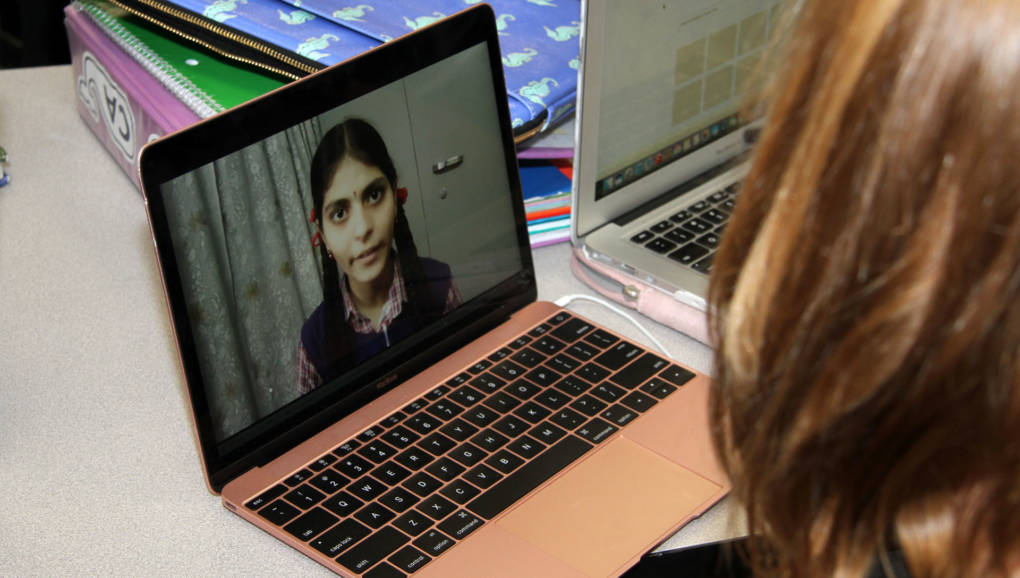
"caption": "A student at St. Mary's IB school in Aliso Viejo, California, watches the video from her international partner.",
"description": null,
"title": "St.Mary'sIB14-crop",
"credit": "Courtesy Level Up Village",
"status": "inherit",
"isLoading": false,
"fetchFailed": false
},
"mindshift_49351": {
"type": "attachments",
"id": "mindshift_49351",
"meta": {
"index": "attachments_1716263798",
"site": "mindshift",
"id": "49351",
"found": true
},
"parent": 49275,
"imgSizes": {
"small": {
"file": "https://ww2.kqed.org/app/uploads/sites/23/2017/09/Jigsaw-520x293.png",
"width": 520,
"mimeType": "image/png",
"height": 293
},
"twentyfourteen-full-width": {
"file": "https://ww2.kqed.org/app/uploads/sites/23/2017/09/Jigsaw-1038x576.png",
"width": 1038,
"mimeType": "image/png",
"height": 576
},
"thumbnail": {
"file": "https://ww2.kqed.org/app/uploads/sites/23/2017/09/Jigsaw-160x90.png",
"width": 160,
"mimeType": "image/png",
"height": 90
},
"fd-sm": {
"file": "https://ww2.kqed.org/app/uploads/sites/23/2017/09/Jigsaw-960x541.png",
"width": 960,
"mimeType": "image/png",
"height": 541
},
"post-thumbnail": {
"file": "https://ww2.kqed.org/app/uploads/sites/23/2017/09/Jigsaw-672x372.png",
"width": 672,
"mimeType": "image/png",
"height": 372
},
"xsmall": {
"file": "https://ww2.kqed.org/app/uploads/sites/23/2017/09/Jigsaw-375x211.png",
"width": 375,
"mimeType": "image/png",
"height": 211
},
"kqedFullSize": {
"file": "https://ww2.kqed.org/app/uploads/sites/23/2017/09/Jigsaw.png",
"width": 1356,
"height": 764
},
"large": {
"file": "https://ww2.kqed.org/app/uploads/sites/23/2017/09/Jigsaw-1020x575.png",
"width": 1020,
"mimeType": "image/png",
"height": 575
},
"xlarge": {
"file": "https://ww2.kqed.org/app/uploads/sites/23/2017/09/Jigsaw-1180x665.png",
"width": 1180,
"mimeType": "image/png",
"height": 665
},
"guest-author-50": {
"file": "https://ww2.kqed.org/app/uploads/sites/23/2017/09/Jigsaw-50x50.png",
"width": 50,
"mimeType": "image/png",
"height": 50
},
"guest-author-96": {
"file": "https://ww2.kqed.org/app/uploads/sites/23/2017/09/Jigsaw-96x96.png",
"width": 96,
"mimeType": "image/png",
"height": 96
},
"medium": {
"file": "https://ww2.kqed.org/app/uploads/sites/23/2017/09/Jigsaw-800x451.png",
"width": 800,
"mimeType": "image/png",
"height": 451
},
"guest-author-64": {
"file": "https://ww2.kqed.org/app/uploads/sites/23/2017/09/Jigsaw-64x64.png",
"width": 64,
"mimeType": "image/png",
"height": 64
},
"guest-author-32": {
"file": "https://ww2.kqed.org/app/uploads/sites/23/2017/09/Jigsaw-32x32.png",
"width": 32,
"mimeType": "image/png",
"height": 32
},
"fd-med": {
"file": "https://ww2.kqed.org/app/uploads/sites/23/2017/09/Jigsaw-1180x665.png",
"width": 1180,
"mimeType": "image/png",
"height": 665
},
"detail": {
"file": "https://ww2.kqed.org/app/uploads/sites/23/2017/09/Jigsaw-150x150.png",
"width": 150,
"mimeType": "image/png",
"height": 150
},
"medium_large": {
"file": "https://ww2.kqed.org/app/uploads/sites/23/2017/09/Jigsaw-768x433.png",
"width": 768,
"mimeType": "image/png",
"height": 433
},
"guest-author-128": {
"file": "https://ww2.kqed.org/app/uploads/sites/23/2017/09/Jigsaw-128x128.png",
"width": 128,
"mimeType": "image/png",
"height": 128
},
"xxsmall": {
"file": "https://ww2.kqed.org/app/uploads/sites/23/2017/09/Jigsaw-240x135.png",
"width": 240,
"mimeType": "image/png",
"height": 135
}
},
"publishDate": 1506666660,
"modified": 1506667348,
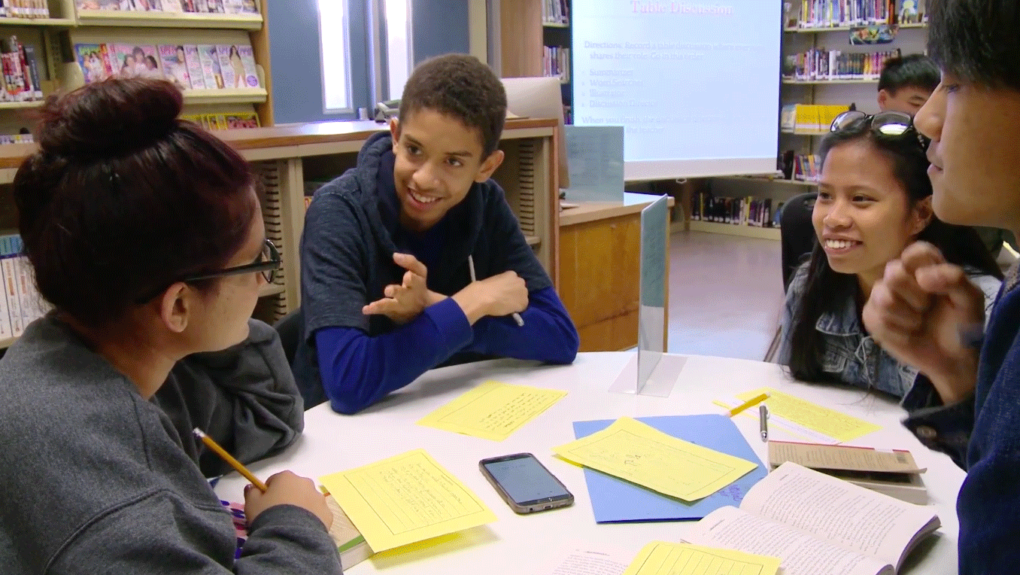
"caption": "Students at San Francisco International High School discuss literature. ",
"description": null,
"title": "Jigsaw",
"credit": "Teaching Channel",
"status": "inherit",
"isLoading": false,
"fetchFailed": false
},
"mindshift_48046": {
"type": "attachments",
"id": "mindshift_48046",
"meta": {
"index": "attachments_1716263798",
"site": "mindshift",
"id": "48046",
"found": true
},
"parent": 48044,
"imgSizes": {
"small": {
"file": "https://ww2.kqed.org/app/uploads/sites/23/2017/04/NEW-school-space-520x390.jpg",
"width": 520,
"mimeType": "image/jpeg",
"height": 390
},
"twentyfourteen-full-width": {
"file": "https://ww2.kqed.org/app/uploads/sites/23/2017/04/NEW-school-space-1038x576.jpg",
"width": 1038,
"mimeType": "image/jpeg",
"height": 576
},
"thumbnail": {
"file": "https://ww2.kqed.org/app/uploads/sites/23/2017/04/NEW-school-space-160x120.jpg",
"width": 160,
"mimeType": "image/jpeg",
"height": 120
},
"fd-sm": {
"file": "https://ww2.kqed.org/app/uploads/sites/23/2017/04/NEW-school-space-960x720.jpg",
"width": 960,
"mimeType": "image/jpeg",
"height": 720
},
"post-thumbnail": {
"file": "https://ww2.kqed.org/app/uploads/sites/23/2017/04/NEW-school-space-672x372.jpg",
"width": 672,
"mimeType": "image/jpeg",
"height": 372
},
"xsmall": {
"file": "https://ww2.kqed.org/app/uploads/sites/23/2017/04/NEW-school-space-375x281.jpg",
"width": 375,
"mimeType": "image/jpeg",
"height": 281
},
"kqedFullSize": {
"file": "https://ww2.kqed.org/app/uploads/sites/23/2017/04/NEW-school-space.jpg",
"width": 4032,
"height": 3024
},
"large": {
"file": "https://ww2.kqed.org/app/uploads/sites/23/2017/04/NEW-school-space-1020x765.jpg",
"width": 1020,
"mimeType": "image/jpeg",
"height": 765
},
"xlarge": {
"file": "https://ww2.kqed.org/app/uploads/sites/23/2017/04/NEW-school-space-1180x885.jpg",
"width": 1180,
"mimeType": "image/jpeg",
"height": 885
},
"guest-author-50": {
"file": "https://ww2.kqed.org/app/uploads/sites/23/2017/04/NEW-school-space-50x50.jpg",
"width": 50,
"mimeType": "image/jpeg",
"height": 50
},
"guest-author-96": {
"file": "https://ww2.kqed.org/app/uploads/sites/23/2017/04/NEW-school-space-96x96.jpg",
"width": 96,
"mimeType": "image/jpeg",
"height": 96
},
"medium": {
"file": "https://ww2.kqed.org/app/uploads/sites/23/2017/04/NEW-school-space-800x600.jpg",
"width": 800,
"mimeType": "image/jpeg",
"height": 600
},
"guest-author-64": {
"file": "https://ww2.kqed.org/app/uploads/sites/23/2017/04/NEW-school-space-64x64.jpg",
"width": 64,
"mimeType": "image/jpeg",
"height": 64
},
"guest-author-32": {
"file": "https://ww2.kqed.org/app/uploads/sites/23/2017/04/NEW-school-space-32x32.jpg",
"width": 32,
"mimeType": "image/jpeg",
"height": 32
},
"fd-lrg": {
"file": "https://ww2.kqed.org/app/uploads/sites/23/2017/04/NEW-school-space-1920x1440.jpg",
"width": 1920,
"mimeType": "image/jpeg",
"height": 1440
},
"fd-med": {
"file": "https://ww2.kqed.org/app/uploads/sites/23/2017/04/NEW-school-space-1180x885.jpg",
"width": 1180,
"mimeType": "image/jpeg",
"height": 885
},
"full-width": {
"file": "https://ww2.kqed.org/app/uploads/sites/23/2017/04/NEW-school-space-1920x1440.jpg",
"width": 1920,
"mimeType": "image/jpeg",
"height": 1440
},
"detail": {
"file": "https://ww2.kqed.org/app/uploads/sites/23/2017/04/NEW-school-space-150x150.jpg",
"width": 150,
"mimeType": "image/jpeg",
"height": 150
},
"medium_large": {
"file": "https://ww2.kqed.org/app/uploads/sites/23/2017/04/NEW-school-space-768x576.jpg",
"width": 768,
"mimeType": "image/jpeg",
"height": 576
},
"guest-author-128": {
"file": "https://ww2.kqed.org/app/uploads/sites/23/2017/04/NEW-school-space-128x128.jpg",
"width": 128,
"mimeType": "image/jpeg",
"height": 128
},
"xxsmall": {
"file": "https://ww2.kqed.org/app/uploads/sites/23/2017/04/NEW-school-space-240x180.jpg",
"width": 240,
"mimeType": "image/jpeg",
"height": 180
}
},
"publishDate": 1492476029,
"modified": 1492476080,
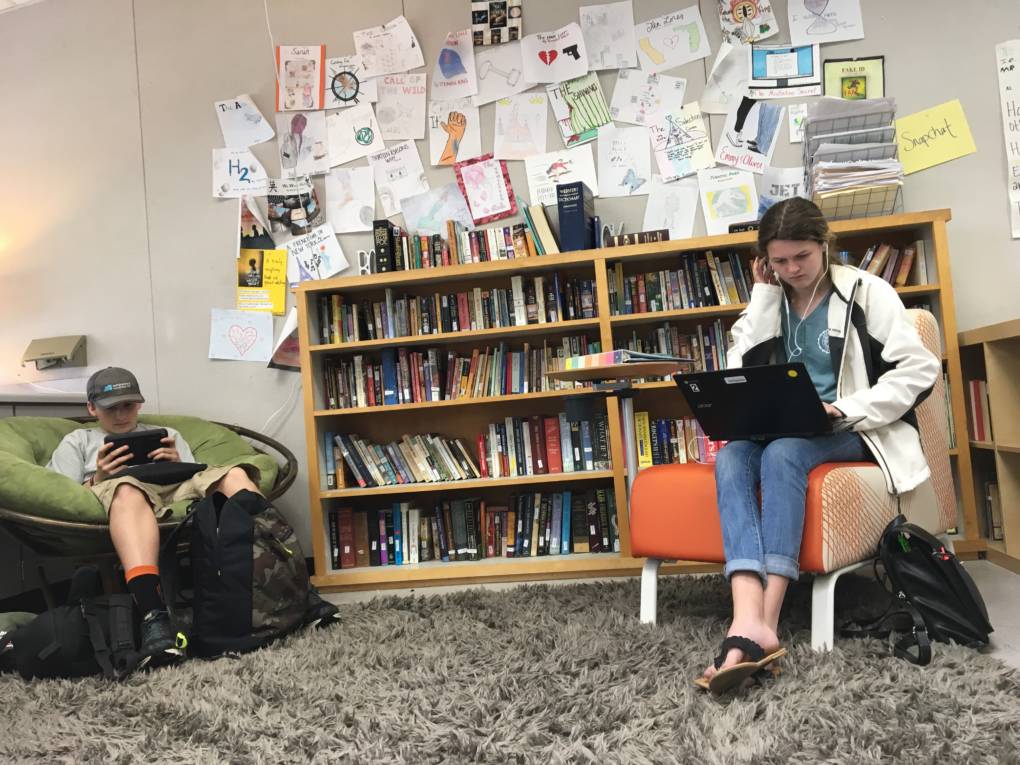
"caption": "Catlin Tucker and Marika Neto have tried to create different types of space within their traditional classroom so students feel at home.",
"description": null,
"title": "NEW school space",
"credit": "Katrina Schwartz",
"status": "inherit",
"isLoading": false,
"fetchFailed": false
},
"mindshift_49281": {
"type": "attachments",
"id": "mindshift_49281",
"meta": {
"index": "attachments_1716263798",
"site": "mindshift",
"id": "49281",
"found": true
},
"parent": 49280,
"imgSizes": {
"small": {
"file": "https://ww2.kqed.org/app/uploads/sites/23/2017/09/kinder-discussion-520x268.png",
"width": 520,
"mimeType": "image/png",
"height": 268
},
"thumbnail": {
"file": "https://ww2.kqed.org/app/uploads/sites/23/2017/09/kinder-discussion-160x82.png",
"width": 160,
"mimeType": "image/png",
"height": 82
},
"post-thumbnail": {
"file": "https://ww2.kqed.org/app/uploads/sites/23/2017/09/kinder-discussion-672x372.png",
"width": 672,
"mimeType": "image/png",
"height": 372
},
"xsmall": {
"file": "https://ww2.kqed.org/app/uploads/sites/23/2017/09/kinder-discussion-375x193.png",
"width": 375,
"mimeType": "image/png",
"height": 193
},
"kqedFullSize": {
"file": "https://ww2.kqed.org/app/uploads/sites/23/2017/09/kinder-discussion.png",
"width": 894,
"height": 460
},
"guest-author-50": {
"file": "https://ww2.kqed.org/app/uploads/sites/23/2017/09/kinder-discussion-50x50.png",
"width": 50,
"mimeType": "image/png",
"height": 50
},
"guest-author-96": {
"file": "https://ww2.kqed.org/app/uploads/sites/23/2017/09/kinder-discussion-96x96.png",
"width": 96,
"mimeType": "image/png",
"height": 96
},
"medium": {
"file": "https://ww2.kqed.org/app/uploads/sites/23/2017/09/kinder-discussion-800x412.png",
"width": 800,
"mimeType": "image/png",
"height": 412
},
"guest-author-64": {
"file": "https://ww2.kqed.org/app/uploads/sites/23/2017/09/kinder-discussion-64x64.png",
"width": 64,
"mimeType": "image/png",
"height": 64
},
"guest-author-32": {
"file": "https://ww2.kqed.org/app/uploads/sites/23/2017/09/kinder-discussion-32x32.png",
"width": 32,
"mimeType": "image/png",
"height": 32
},
"detail": {
"file": "https://ww2.kqed.org/app/uploads/sites/23/2017/09/kinder-discussion-150x150.png",
"width": 150,
"mimeType": "image/png",
"height": 150
},
"medium_large": {
"file": "https://ww2.kqed.org/app/uploads/sites/23/2017/09/kinder-discussion-768x395.png",
"width": 768,
"mimeType": "image/png",
"height": 395
},
"guest-author-128": {
"file": "https://ww2.kqed.org/app/uploads/sites/23/2017/09/kinder-discussion-128x128.png",
"width": 128,
"mimeType": "image/png",
"height": 128
},
"xxsmall": {
"file": "https://ww2.kqed.org/app/uploads/sites/23/2017/09/kinder-discussion-240x123.png",
"width": 240,
"mimeType": "image/png",
"height": 123
}
},
"publishDate": 1505860941,
"modified": 1505861038,
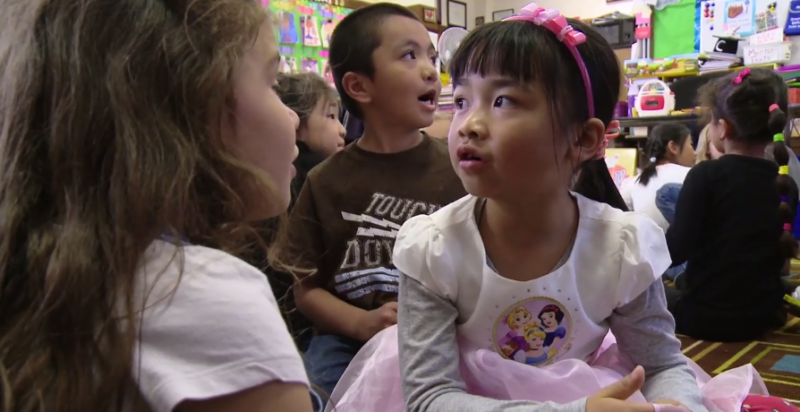
"caption": "Kindergarten students share with one another different facts about American symbols.",
"description": null,
"title": "kinder discussion",
"credit": "\u003ca href=\"https://www.teachingchannel.org/videos/teaching-facts-sfusd\">Teaching Channel\u003c/a>",
"status": "inherit",
"isLoading": false,
"fetchFailed": false
},
"mindshift_49163": {
"type": "attachments",
"id": "mindshift_49163",
"meta": {
"index": "attachments_1716263798",
"site": "mindshift",
"id": "49163",
"found": true
},
"parent": 49042,
"imgSizes": {
"small": {
"file": "https://ww2.kqed.org/app/uploads/sites/23/2017/09/iStock-178405016-520x347.jpg",
"width": 520,
"mimeType": "image/jpeg",
"height": 347
},
"twentyfourteen-full-width": {
"file": "https://ww2.kqed.org/app/uploads/sites/23/2017/09/iStock-178405016-1038x576.jpg",
"width": 1038,
"mimeType": "image/jpeg",
"height": 576
},
"thumbnail": {
"file": "https://ww2.kqed.org/app/uploads/sites/23/2017/09/iStock-178405016-160x107.jpg",
"width": 160,
"mimeType": "image/jpeg",
"height": 107
},
"fd-sm": {
"file": "https://ww2.kqed.org/app/uploads/sites/23/2017/09/iStock-178405016-960x640.jpg",
"width": 960,
"mimeType": "image/jpeg",
"height": 640
},
"post-thumbnail": {
"file": "https://ww2.kqed.org/app/uploads/sites/23/2017/09/iStock-178405016-672x372.jpg",
"width": 672,
"mimeType": "image/jpeg",
"height": 372
},
"xsmall": {
"file": "https://ww2.kqed.org/app/uploads/sites/23/2017/09/iStock-178405016-375x250.jpg",
"width": 375,
"mimeType": "image/jpeg",
"height": 250
},
"kqedFullSize": {
"file": "https://ww2.kqed.org/app/uploads/sites/23/2017/09/iStock-178405016-e1504632843643.jpg",
"width": 1920,
"height": 1281
},
"large": {
"file": "https://ww2.kqed.org/app/uploads/sites/23/2017/09/iStock-178405016-1020x680.jpg",
"width": 1020,
"mimeType": "image/jpeg",
"height": 680
},
"xlarge": {
"file": "https://ww2.kqed.org/app/uploads/sites/23/2017/09/iStock-178405016-1180x787.jpg",
"width": 1180,
"mimeType": "image/jpeg",
"height": 787
},
"guest-author-50": {
"file": "https://ww2.kqed.org/app/uploads/sites/23/2017/09/iStock-178405016-50x50.jpg",
"width": 50,
"mimeType": "image/jpeg",
"height": 50
},
"guest-author-96": {
"file": "https://ww2.kqed.org/app/uploads/sites/23/2017/09/iStock-178405016-96x96.jpg",
"width": 96,
"mimeType": "image/jpeg",
"height": 96
},
"medium": {
"file": "https://ww2.kqed.org/app/uploads/sites/23/2017/09/iStock-178405016-800x534.jpg",
"width": 800,
"mimeType": "image/jpeg",
"height": 534
},
"guest-author-64": {
"file": "https://ww2.kqed.org/app/uploads/sites/23/2017/09/iStock-178405016-64x64.jpg",
"width": 64,
"mimeType": "image/jpeg",
"height": 64
},
"guest-author-32": {
"file": "https://ww2.kqed.org/app/uploads/sites/23/2017/09/iStock-178405016-32x32.jpg",
"width": 32,
"mimeType": "image/jpeg",
"height": 32
},
"fd-lrg": {
"file": "https://ww2.kqed.org/app/uploads/sites/23/2017/09/iStock-178405016-1920x1281.jpg",
"width": 1920,
"mimeType": "image/jpeg",
"height": 1281
},
"fd-med": {
"file": "https://ww2.kqed.org/app/uploads/sites/23/2017/09/iStock-178405016-1180x787.jpg",
"width": 1180,
"mimeType": "image/jpeg",
"height": 787
},
"full-width": {
"file": "https://ww2.kqed.org/app/uploads/sites/23/2017/09/iStock-178405016-1920x1281.jpg",
"width": 1920,
"mimeType": "image/jpeg",
"height": 1281
},
"detail": {
"file": "https://ww2.kqed.org/app/uploads/sites/23/2017/09/iStock-178405016-150x150.jpg",
"width": 150,
"mimeType": "image/jpeg",
"height": 150
},
"medium_large": {
"file": "https://ww2.kqed.org/app/uploads/sites/23/2017/09/iStock-178405016-768x512.jpg",
"width": 768,
"mimeType": "image/jpeg",
"height": 512
},
"guest-author-128": {
"file": "https://ww2.kqed.org/app/uploads/sites/23/2017/09/iStock-178405016-128x128.jpg",
"width": 128,
"mimeType": "image/jpeg",
"height": 128
},
"xxsmall": {
"file": "https://ww2.kqed.org/app/uploads/sites/23/2017/09/iStock-178405016-240x160.jpg",
"width": 240,
"mimeType": "image/jpeg",
"height": 160
}
},
"publishDate": 1504632679,
"modified": 1504632769,
"caption": null,
"description": null,
"title": "Computer knowledge",
"credit": "iStock/shironosov",
"status": "inherit",
"isLoading": false,
"fetchFailed": false
},
"mindshift_49037": {
"type": "attachments",
"id": "mindshift_49037",
"meta": {
"index": "attachments_1716263798",
"site": "mindshift",
"id": "49037",
"found": true
},
"parent": 48289,
"imgSizes": {
"small": {
"file": "https://ww2.kqed.org/app/uploads/sites/23/2017/08/KQED-literacy_1920x1420-520x385.jpg",
"width": 520,
"mimeType": "image/jpeg",
"height": 385
},
"twentyfourteen-full-width": {
"file": "https://ww2.kqed.org/app/uploads/sites/23/2017/08/KQED-literacy_1920x1420-1038x576.jpg",
"width": 1038,
"mimeType": "image/jpeg",
"height": 576
},
"thumbnail": {
"file": "https://ww2.kqed.org/app/uploads/sites/23/2017/08/KQED-literacy_1920x1420-160x118.jpg",
"width": 160,
"mimeType": "image/jpeg",
"height": 118
},
"fd-sm": {
"file": "https://ww2.kqed.org/app/uploads/sites/23/2017/08/KQED-literacy_1920x1420-960x710.jpg",
"width": 960,
"mimeType": "image/jpeg",
"height": 710
},
"post-thumbnail": {
"file": "https://ww2.kqed.org/app/uploads/sites/23/2017/08/KQED-literacy_1920x1420-672x372.jpg",
"width": 672,
"mimeType": "image/jpeg",
"height": 372
},
"xsmall": {
"file": "https://ww2.kqed.org/app/uploads/sites/23/2017/08/KQED-literacy_1920x1420-375x277.jpg",
"width": 375,
"mimeType": "image/jpeg",
"height": 277
},
"kqedFullSize": {
"file": "https://ww2.kqed.org/app/uploads/sites/23/2017/08/KQED-literacy_1920x1420.jpg",
"width": 1920,
"height": 1420
},
"large": {
"file": "https://ww2.kqed.org/app/uploads/sites/23/2017/08/KQED-literacy_1920x1420-1020x754.jpg",
"width": 1020,
"mimeType": "image/jpeg",
"height": 754
},
"xlarge": {
"file": "https://ww2.kqed.org/app/uploads/sites/23/2017/08/KQED-literacy_1920x1420-1180x873.jpg",
"width": 1180,
"mimeType": "image/jpeg",
"height": 873
},
"guest-author-50": {
"file": "https://ww2.kqed.org/app/uploads/sites/23/2017/08/KQED-literacy_1920x1420-50x50.jpg",
"width": 50,
"mimeType": "image/jpeg",
"height": 50
},
"guest-author-96": {
"file": "https://ww2.kqed.org/app/uploads/sites/23/2017/08/KQED-literacy_1920x1420-96x96.jpg",
"width": 96,
"mimeType": "image/jpeg",
"height": 96
},
"medium": {
"file": "https://ww2.kqed.org/app/uploads/sites/23/2017/08/KQED-literacy_1920x1420-800x592.jpg",
"width": 800,
"mimeType": "image/jpeg",
"height": 592
},
"guest-author-64": {
"file": "https://ww2.kqed.org/app/uploads/sites/23/2017/08/KQED-literacy_1920x1420-64x64.jpg",
"width": 64,
"mimeType": "image/jpeg",
"height": 64
},
"guest-author-32": {
"file": "https://ww2.kqed.org/app/uploads/sites/23/2017/08/KQED-literacy_1920x1420-32x32.jpg",
"width": 32,
"mimeType": "image/jpeg",
"height": 32
},
"fd-lrg": {
"file": "https://ww2.kqed.org/app/uploads/sites/23/2017/08/KQED-literacy_1920x1420-1920x1420.jpg",
"width": 1920,
"mimeType": "image/jpeg",
"height": 1420
},
"fd-med": {
"file": "https://ww2.kqed.org/app/uploads/sites/23/2017/08/KQED-literacy_1920x1420-1180x873.jpg",
"width": 1180,
"mimeType": "image/jpeg",
"height": 873
},
"full-width": {
"file": "https://ww2.kqed.org/app/uploads/sites/23/2017/08/KQED-literacy_1920x1420-1920x1420.jpg",
"width": 1920,
"mimeType": "image/jpeg",
"height": 1420
},
"detail": {
"file": "https://ww2.kqed.org/app/uploads/sites/23/2017/08/KQED-literacy_1920x1420-150x150.jpg",
"width": 150,
"mimeType": "image/jpeg",
"height": 150
},
"medium_large": {
"file": "https://ww2.kqed.org/app/uploads/sites/23/2017/08/KQED-literacy_1920x1420-768x568.jpg",
"width": 768,
"mimeType": "image/jpeg",
"height": 568
},
"guest-author-128": {
"file": "https://ww2.kqed.org/app/uploads/sites/23/2017/08/KQED-literacy_1920x1420-128x128.jpg",
"width": 128,
"mimeType": "image/jpeg",
"height": 128
},
"xxsmall": {
"file": "https://ww2.kqed.org/app/uploads/sites/23/2017/08/KQED-literacy_1920x1420-240x178.jpg",
"width": 240,
"mimeType": "image/jpeg",
"height": 178
}
},
"publishDate": 1502905665,
"modified": 1503437780,
"caption": null,
"description": null,
"title": "KQED-literacy_1920x1420",
"credit": "\u003ca href=\"http://russgossett.com/\">Russ Gossett\u003c/a> for MindShift",
"status": "inherit",
"isLoading": false,
"fetchFailed": false
},
"mindshift_49029": {
"type": "attachments",
"id": "mindshift_49029",
"meta": {
"index": "attachments_1716263798",
"site": "mindshift",
"id": "49029",
"found": true
},
"parent": 49028,
"imgSizes": {
"small": {
"file": "https://ww2.kqed.org/app/uploads/sites/23/2017/08/adam-grant-atlantic-520x321.png",
"width": 520,
"mimeType": "image/png",
"height": 321
},
"thumbnail": {
"file": "https://ww2.kqed.org/app/uploads/sites/23/2017/08/adam-grant-atlantic-160x99.png",
"width": 160,
"mimeType": "image/png",
"height": 99
},
"post-thumbnail": {
"file": "https://ww2.kqed.org/app/uploads/sites/23/2017/08/adam-grant-atlantic-672x372.png",
"width": 672,
"mimeType": "image/png",
"height": 372
},
"xsmall": {
"file": "https://ww2.kqed.org/app/uploads/sites/23/2017/08/adam-grant-atlantic-375x231.png",
"width": 375,
"mimeType": "image/png",
"height": 231
},
"kqedFullSize": {
"file": "https://ww2.kqed.org/app/uploads/sites/23/2017/08/adam-grant-atlantic.png",
"width": 700,
"height": 432
},
"guest-author-50": {
"file": "https://ww2.kqed.org/app/uploads/sites/23/2017/08/adam-grant-atlantic-50x50.png",
"width": 50,
"mimeType": "image/png",
"height": 50
},
"guest-author-96": {
"file": "https://ww2.kqed.org/app/uploads/sites/23/2017/08/adam-grant-atlantic-96x96.png",
"width": 96,
"mimeType": "image/png",
"height": 96
},
"guest-author-64": {
"file": "https://ww2.kqed.org/app/uploads/sites/23/2017/08/adam-grant-atlantic-64x64.png",
"width": 64,
"mimeType": "image/png",
"height": 64
},
"detail": {
"file": "https://ww2.kqed.org/app/uploads/sites/23/2017/08/adam-grant-atlantic-150x150.png",
"width": 150,
"mimeType": "image/png",
"height": 150
},
"guest-author-32": {
"file": "https://ww2.kqed.org/app/uploads/sites/23/2017/08/adam-grant-atlantic-32x32.png",
"width": 32,
"mimeType": "image/png",
"height": 32
},
"guest-author-128": {
"file": "https://ww2.kqed.org/app/uploads/sites/23/2017/08/adam-grant-atlantic-128x128.png",
"width": 128,
"mimeType": "image/png",
"height": 128
},
"xxsmall": {
"file": "https://ww2.kqed.org/app/uploads/sites/23/2017/08/adam-grant-atlantic-240x148.png",
"width": 240,
"mimeType": "image/png",
"height": 148
}
},
"publishDate": 1502835212,
"modified": 1502835298,
"caption": "Screenshot from The Atlantic video, \"Adam Grant's Advice For Raising Resilient Kids.\"",
"description": null,
"title": "adam grant atlantic",
"credit": "\u003ca href=\"https://www.theatlantic.com/video/index/536442/raising-children-in-the-participation-trophy-era/\">The Atlantic\u003c/a>",
"status": "inherit",
"isLoading": false,
"fetchFailed": false
},
"mindshift_48915": {
"type": "attachments",
"id": "mindshift_48915",
"meta": {
"index": "attachments_1716263798",
"site": "mindshift",
"id": "48915",
"found": true
},
"parent": 48902,
"imgSizes": {
"small": {
"file": "https://ww2.kqed.org/app/uploads/sites/23/2017/08/digital-connection-520x293.jpg",
"width": 520,
"mimeType": "image/jpeg",
"height": 293
},
"twentyfourteen-full-width": {
"file": "https://ww2.kqed.org/app/uploads/sites/23/2017/08/digital-connection-1038x576.jpg",
"width": 1038,
"mimeType": "image/jpeg",
"height": 576
},
"thumbnail": {
"file": "https://ww2.kqed.org/app/uploads/sites/23/2017/08/digital-connection-160x90.jpg",
"width": 160,
"mimeType": "image/jpeg",
"height": 90
},
"fd-sm": {
"file": "https://ww2.kqed.org/app/uploads/sites/23/2017/08/digital-connection-960x540.jpg",
"width": 960,
"mimeType": "image/jpeg",
"height": 540
},
"post-thumbnail": {
"file": "https://ww2.kqed.org/app/uploads/sites/23/2017/08/digital-connection-672x372.jpg",
"width": 672,
"mimeType": "image/jpeg",
"height": 372
},
"xsmall": {
"file": "https://ww2.kqed.org/app/uploads/sites/23/2017/08/digital-connection-375x211.jpg",
"width": 375,
"mimeType": "image/jpeg",
"height": 211
},
"kqedFullSize": {
"file": "https://ww2.kqed.org/app/uploads/sites/23/2017/08/digital-connection.jpg",
"width": 1920,
"height": 1080
},
"large": {
"file": "https://ww2.kqed.org/app/uploads/sites/23/2017/08/digital-connection-1020x574.jpg",
"width": 1020,
"mimeType": "image/jpeg",
"height": 574
},
"xlarge": {
"file": "https://ww2.kqed.org/app/uploads/sites/23/2017/08/digital-connection-1180x664.jpg",
"width": 1180,
"mimeType": "image/jpeg",
"height": 664
},
"guest-author-50": {
"file": "https://ww2.kqed.org/app/uploads/sites/23/2017/08/digital-connection-50x50.jpg",
"width": 50,
"mimeType": "image/jpeg",
"height": 50
},
"guest-author-96": {
"file": "https://ww2.kqed.org/app/uploads/sites/23/2017/08/digital-connection-96x96.jpg",
"width": 96,
"mimeType": "image/jpeg",
"height": 96
},
"medium": {
"file": "https://ww2.kqed.org/app/uploads/sites/23/2017/08/digital-connection-800x450.jpg",
"width": 800,
"mimeType": "image/jpeg",
"height": 450
},
"guest-author-64": {
"file": "https://ww2.kqed.org/app/uploads/sites/23/2017/08/digital-connection-64x64.jpg",
"width": 64,
"mimeType": "image/jpeg",
"height": 64
},
"guest-author-32": {
"file": "https://ww2.kqed.org/app/uploads/sites/23/2017/08/digital-connection-32x32.jpg",
"width": 32,
"mimeType": "image/jpeg",
"height": 32
},
"fd-lrg": {
"file": "https://ww2.kqed.org/app/uploads/sites/23/2017/08/digital-connection-1920x1080.jpg",
"width": 1920,
"mimeType": "image/jpeg",
"height": 1080
},
"fd-med": {
"file": "https://ww2.kqed.org/app/uploads/sites/23/2017/08/digital-connection-1180x664.jpg",
"width": 1180,
"mimeType": "image/jpeg",
"height": 664
},
"full-width": {
"file": "https://ww2.kqed.org/app/uploads/sites/23/2017/08/digital-connection-1920x1080.jpg",
"width": 1920,
"mimeType": "image/jpeg",
"height": 1080
},
"detail": {
"file": "https://ww2.kqed.org/app/uploads/sites/23/2017/08/digital-connection-150x150.jpg",
"width": 150,
"mimeType": "image/jpeg",
"height": 150
},
"medium_large": {
"file": "https://ww2.kqed.org/app/uploads/sites/23/2017/08/digital-connection-768x432.jpg",
"width": 768,
"mimeType": "image/jpeg",
"height": 432
},
"guest-author-128": {
"file": "https://ww2.kqed.org/app/uploads/sites/23/2017/08/digital-connection-128x128.jpg",
"width": 128,
"mimeType": "image/jpeg",
"height": 128
},
"xxsmall": {
"file": "https://ww2.kqed.org/app/uploads/sites/23/2017/08/digital-connection-240x135.jpg",
"width": 240,
"mimeType": "image/jpeg",
"height": 135
}
},
"publishDate": 1501707778,
"modified": 1501707803,
"caption": null,
"description": null,
"title": "digital-connection",
"credit": "iStock",
"status": "inherit",
"isLoading": false,
"fetchFailed": false
},
"mindshift_48867": {
"type": "attachments",
"id": "mindshift_48867",
"meta": {
"index": "attachments_1716263798",
"site": "mindshift",
"id": "48867",
"found": true
},
"parent": 48764,
"imgSizes": {
"small": {
"file": "https://ww2.kqed.org/app/uploads/sites/23/2017/07/Peters-2-520x355.jpg",
"width": 520,
"mimeType": "image/jpeg",
"height": 355
},
"twentyfourteen-full-width": {
"file": "https://ww2.kqed.org/app/uploads/sites/23/2017/07/Peters-2-1038x576.jpg",
"width": 1038,
"mimeType": "image/jpeg",
"height": 576
},
"thumbnail": {
"file": "https://ww2.kqed.org/app/uploads/sites/23/2017/07/Peters-2-160x109.jpg",
"width": 160,
"mimeType": "image/jpeg",
"height": 109
},
"fd-sm": {
"file": "https://ww2.kqed.org/app/uploads/sites/23/2017/07/Peters-2-960x655.jpg",
"width": 960,
"mimeType": "image/jpeg",
"height": 655
},
"post-thumbnail": {
"file": "https://ww2.kqed.org/app/uploads/sites/23/2017/07/Peters-2-672x372.jpg",
"width": 672,
"mimeType": "image/jpeg",
"height": 372
},
"xsmall": {
"file": "https://ww2.kqed.org/app/uploads/sites/23/2017/07/Peters-2-375x256.jpg",
"width": 375,
"mimeType": "image/jpeg",
"height": 256
},
"kqedFullSize": {
"file": "https://ww2.kqed.org/app/uploads/sites/23/2017/07/Peters-2.jpg",
"width": 1920,
"height": 1309
},
"large": {
"file": "https://ww2.kqed.org/app/uploads/sites/23/2017/07/Peters-2-1020x695.jpg",
"width": 1020,
"mimeType": "image/jpeg",
"height": 695
},
"xlarge": {
"file": "https://ww2.kqed.org/app/uploads/sites/23/2017/07/Peters-2-1180x804.jpg",
"width": 1180,
"mimeType": "image/jpeg",
"height": 804
},
"guest-author-50": {
"file": "https://ww2.kqed.org/app/uploads/sites/23/2017/07/Peters-2-50x50.jpg",
"width": 50,
"mimeType": "image/jpeg",
"height": 50
},
"guest-author-96": {
"file": "https://ww2.kqed.org/app/uploads/sites/23/2017/07/Peters-2-96x96.jpg",
"width": 96,
"mimeType": "image/jpeg",
"height": 96
},
"medium": {
"file": "https://ww2.kqed.org/app/uploads/sites/23/2017/07/Peters-2-800x545.jpg",
"width": 800,
"mimeType": "image/jpeg",
"height": 545
},
"guest-author-64": {
"file": "https://ww2.kqed.org/app/uploads/sites/23/2017/07/Peters-2-64x64.jpg",
"width": 64,
"mimeType": "image/jpeg",
"height": 64
},
"guest-author-32": {
"file": "https://ww2.kqed.org/app/uploads/sites/23/2017/07/Peters-2-32x32.jpg",
"width": 32,
"mimeType": "image/jpeg",
"height": 32
},
"fd-lrg": {
"file": "https://ww2.kqed.org/app/uploads/sites/23/2017/07/Peters-2-1920x1309.jpg",
"width": 1920,
"mimeType": "image/jpeg",
"height": 1309
},
"fd-med": {
"file": "https://ww2.kqed.org/app/uploads/sites/23/2017/07/Peters-2-1180x804.jpg",
"width": 1180,
"mimeType": "image/jpeg",
"height": 804
},
"full-width": {
"file": "https://ww2.kqed.org/app/uploads/sites/23/2017/07/Peters-2-1920x1309.jpg",
"width": 1920,
"mimeType": "image/jpeg",
"height": 1309
},
"detail": {
"file": "https://ww2.kqed.org/app/uploads/sites/23/2017/07/Peters-2-150x150.jpg",
"width": 150,
"mimeType": "image/jpeg",
"height": 150
},
"medium_large": {
"file": "https://ww2.kqed.org/app/uploads/sites/23/2017/07/Peters-2-768x524.jpg",
"width": 768,
"mimeType": "image/jpeg",
"height": 524
},
"guest-author-128": {
"file": "https://ww2.kqed.org/app/uploads/sites/23/2017/07/Peters-2-128x128.jpg",
"width": 128,
"mimeType": "image/jpeg",
"height": 128
},
"xxsmall": {
"file": "https://ww2.kqed.org/app/uploads/sites/23/2017/07/Peters-2-240x164.jpg",
"width": 240,
"mimeType": "image/jpeg",
"height": 164
}
},
"publishDate": 1501691483,
"modified": 1501693277,
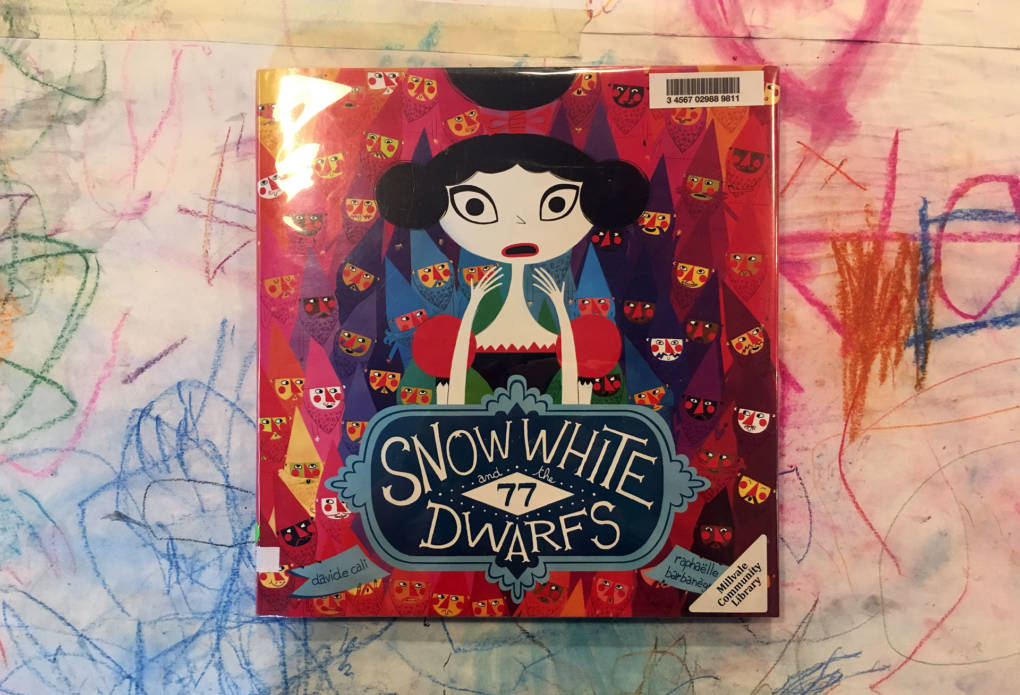
"caption": "\"Snow White and the 77 Dwarfs\" is one of several books at Millvale Community Library that come with maker project instructions. ",
"description": null,
"title": "Peters-2",
"credit": "Courtesy of Nora Peters",
"status": "inherit",
"isLoading": false,
"fetchFailed": false
},
"mindshift_49002": {
"type": "attachments",
"id": "mindshift_49002",
"meta": {
"index": "attachments_1716263798",
"site": "mindshift",
"id": "49002",
"found": true
},
"parent": 49001,
"imgSizes": {
"small": {
"file": "https://ww2.kqed.org/app/uploads/sites/23/2017/08/ethnic-studies-class_slide-cefd3419fc7a89c9976623268a741d537a8de909-520x347.jpg",
"width": 520,
"mimeType": "image/jpeg",
"height": 347
},
"twentyfourteen-full-width": {
"file": "https://ww2.kqed.org/app/uploads/sites/23/2017/08/ethnic-studies-class_slide-cefd3419fc7a89c9976623268a741d537a8de909-1038x576.jpg",
"width": 1038,
"mimeType": "image/jpeg",
"height": 576
},
"thumbnail": {
"file": "https://ww2.kqed.org/app/uploads/sites/23/2017/08/ethnic-studies-class_slide-cefd3419fc7a89c9976623268a741d537a8de909-160x107.jpg",
"width": 160,
"mimeType": "image/jpeg",
"height": 107
},
"fd-sm": {
"file": "https://ww2.kqed.org/app/uploads/sites/23/2017/08/ethnic-studies-class_slide-cefd3419fc7a89c9976623268a741d537a8de909-960x640.jpg",
"width": 960,
"mimeType": "image/jpeg",
"height": 640
},
"post-thumbnail": {
"file": "https://ww2.kqed.org/app/uploads/sites/23/2017/08/ethnic-studies-class_slide-cefd3419fc7a89c9976623268a741d537a8de909-672x372.jpg",
"width": 672,
"mimeType": "image/jpeg",
"height": 372
},
"xsmall": {
"file": "https://ww2.kqed.org/app/uploads/sites/23/2017/08/ethnic-studies-class_slide-cefd3419fc7a89c9976623268a741d537a8de909-375x250.jpg",
"width": 375,
"mimeType": "image/jpeg",
"height": 250
},
"kqedFullSize": {
"file": "https://ww2.kqed.org/app/uploads/sites/23/2017/08/ethnic-studies-class_slide-cefd3419fc7a89c9976623268a741d537a8de909.jpg",
"width": 3147,
"height": 2098
},
"large": {
"file": "https://ww2.kqed.org/app/uploads/sites/23/2017/08/ethnic-studies-class_slide-cefd3419fc7a89c9976623268a741d537a8de909-1020x680.jpg",
"width": 1020,
"mimeType": "image/jpeg",
"height": 680
},
"xlarge": {
"file": "https://ww2.kqed.org/app/uploads/sites/23/2017/08/ethnic-studies-class_slide-cefd3419fc7a89c9976623268a741d537a8de909-1180x787.jpg",
"width": 1180,
"mimeType": "image/jpeg",
"height": 787
},
"guest-author-50": {
"file": "https://ww2.kqed.org/app/uploads/sites/23/2017/08/ethnic-studies-class_slide-cefd3419fc7a89c9976623268a741d537a8de909-50x50.jpg",
"width": 50,
"mimeType": "image/jpeg",
"height": 50
},
"guest-author-96": {
"file": "https://ww2.kqed.org/app/uploads/sites/23/2017/08/ethnic-studies-class_slide-cefd3419fc7a89c9976623268a741d537a8de909-96x96.jpg",
"width": 96,
"mimeType": "image/jpeg",
"height": 96
},
"medium": {
"file": "https://ww2.kqed.org/app/uploads/sites/23/2017/08/ethnic-studies-class_slide-cefd3419fc7a89c9976623268a741d537a8de909-800x533.jpg",
"width": 800,
"mimeType": "image/jpeg",
"height": 533
},
"guest-author-64": {
"file": "https://ww2.kqed.org/app/uploads/sites/23/2017/08/ethnic-studies-class_slide-cefd3419fc7a89c9976623268a741d537a8de909-64x64.jpg",
"width": 64,
"mimeType": "image/jpeg",
"height": 64
},
"guest-author-32": {
"file": "https://ww2.kqed.org/app/uploads/sites/23/2017/08/ethnic-studies-class_slide-cefd3419fc7a89c9976623268a741d537a8de909-32x32.jpg",
"width": 32,
"mimeType": "image/jpeg",
"height": 32
},
"fd-lrg": {
"file": "https://ww2.kqed.org/app/uploads/sites/23/2017/08/ethnic-studies-class_slide-cefd3419fc7a89c9976623268a741d537a8de909-1920x1280.jpg",
"width": 1920,
"mimeType": "image/jpeg",
"height": 1280
},
"fd-med": {
"file": "https://ww2.kqed.org/app/uploads/sites/23/2017/08/ethnic-studies-class_slide-cefd3419fc7a89c9976623268a741d537a8de909-1180x787.jpg",
"width": 1180,
"mimeType": "image/jpeg",
"height": 787
},
"full-width": {
"file": "https://ww2.kqed.org/app/uploads/sites/23/2017/08/ethnic-studies-class_slide-cefd3419fc7a89c9976623268a741d537a8de909-1920x1280.jpg",
"width": 1920,
"mimeType": "image/jpeg",
"height": 1280
},
"detail": {
"file": "https://ww2.kqed.org/app/uploads/sites/23/2017/08/ethnic-studies-class_slide-cefd3419fc7a89c9976623268a741d537a8de909-150x150.jpg",
"width": 150,
"mimeType": "image/jpeg",
"height": 150
},
"medium_large": {
"file": "https://ww2.kqed.org/app/uploads/sites/23/2017/08/ethnic-studies-class_slide-cefd3419fc7a89c9976623268a741d537a8de909-768x512.jpg",
"width": 768,
"mimeType": "image/jpeg",
"height": 512
},
"guest-author-128": {
"file": "https://ww2.kqed.org/app/uploads/sites/23/2017/08/ethnic-studies-class_slide-cefd3419fc7a89c9976623268a741d537a8de909-128x128.jpg",
"width": 128,
"mimeType": "image/jpeg",
"height": 128
},
"xxsmall": {
"file": "https://ww2.kqed.org/app/uploads/sites/23/2017/08/ethnic-studies-class_slide-cefd3419fc7a89c9976623268a741d537a8de909-240x160.jpg",
"width": 240,
"mimeType": "image/jpeg",
"height": 160
}
},
"publishDate": 1502745495,
"modified": 1502776631,
"caption": null,
"description": "student girl looking at book and seeing reflection of herself",
"title": "student girl looking at book and seeing reflection of herself",
"credit": "LA Johnson/NPR",
"status": "inherit",
"isLoading": false,
"fetchFailed": false
},
"mindshift_48650": {
"type": "attachments",
"id": "mindshift_48650",
"meta": {
"index": "attachments_1716263798",
"site": "mindshift",
"id": "48650",
"found": true
},
"parent": 48493,
"imgSizes": {
"small": {
"file": "https://ww2.kqed.org/app/uploads/sites/23/2017/07/iStock-177340273-e1499468046307-520x352.jpg",
"width": 520,
"mimeType": "image/jpeg",
"height": 352
},
"twentyfourteen-full-width": {
"file": "https://ww2.kqed.org/app/uploads/sites/23/2017/07/iStock-177340273-e1499468046307-1038x576.jpg",
"width": 1038,
"mimeType": "image/jpeg",
"height": 576
},
"thumbnail": {
"file": "https://ww2.kqed.org/app/uploads/sites/23/2017/07/iStock-177340273-e1499468046307-160x108.jpg",
"width": 160,
"mimeType": "image/jpeg",
"height": 108
},
"fd-sm": {
"file": "https://ww2.kqed.org/app/uploads/sites/23/2017/07/iStock-177340273-e1499468046307-960x650.jpg",
"width": 960,
"mimeType": "image/jpeg",
"height": 650
},
"post-thumbnail": {
"file": "https://ww2.kqed.org/app/uploads/sites/23/2017/07/iStock-177340273-e1499468046307-672x372.jpg",
"width": 672,
"mimeType": "image/jpeg",
"height": 372
},
"xsmall": {
"file": "https://ww2.kqed.org/app/uploads/sites/23/2017/07/iStock-177340273-e1499468046307-375x254.jpg",
"width": 375,
"mimeType": "image/jpeg",
"height": 254
},
"kqedFullSize": {
"file": "https://ww2.kqed.org/app/uploads/sites/23/2017/07/iStock-177340273-e1499468046307.jpg",
"width": 2007,
"height": 1359
},
"large": {
"file": "https://ww2.kqed.org/app/uploads/sites/23/2017/07/iStock-177340273-e1499468046307-1020x691.jpg",
"width": 1020,
"mimeType": "image/jpeg",
"height": 691
},
"xlarge": {
"file": "https://ww2.kqed.org/app/uploads/sites/23/2017/07/iStock-177340273-e1499468046307-1180x799.jpg",
"width": 1180,
"mimeType": "image/jpeg",
"height": 799
},
"guest-author-50": {
"file": "https://ww2.kqed.org/app/uploads/sites/23/2017/07/iStock-177340273-e1499468046307-50x50.jpg",
"width": 50,
"mimeType": "image/jpeg",
"height": 50
},
"guest-author-96": {
"file": "https://ww2.kqed.org/app/uploads/sites/23/2017/07/iStock-177340273-e1499468046307-96x96.jpg",
"width": 96,
"mimeType": "image/jpeg",
"height": 96
},
"medium": {
"file": "https://ww2.kqed.org/app/uploads/sites/23/2017/07/iStock-177340273-e1499468046307-800x542.jpg",
"width": 800,
"mimeType": "image/jpeg",
"height": 542
},
"guest-author-64": {
"file": "https://ww2.kqed.org/app/uploads/sites/23/2017/07/iStock-177340273-e1499468046307-64x64.jpg",
"width": 64,
"mimeType": "image/jpeg",
"height": 64
},
"guest-author-32": {
"file": "https://ww2.kqed.org/app/uploads/sites/23/2017/07/iStock-177340273-e1499468046307-32x32.jpg",
"width": 32,
"mimeType": "image/jpeg",
"height": 32
},
"fd-lrg": {
"file": "https://ww2.kqed.org/app/uploads/sites/23/2017/07/iStock-177340273-e1499468046307-1920x1300.jpg",
"width": 1920,
"mimeType": "image/jpeg",
"height": 1300
},
"fd-med": {
"file": "https://ww2.kqed.org/app/uploads/sites/23/2017/07/iStock-177340273-e1499468046307-1180x799.jpg",
"width": 1180,
"mimeType": "image/jpeg",
"height": 799
},
"full-width": {
"file": "https://ww2.kqed.org/app/uploads/sites/23/2017/07/iStock-177340273-e1499468046307-1920x1300.jpg",
"width": 1920,
"mimeType": "image/jpeg",
"height": 1300
},
"detail": {
"file": "https://ww2.kqed.org/app/uploads/sites/23/2017/07/iStock-177340273-e1499468046307-150x150.jpg",
"width": 150,
"mimeType": "image/jpeg",
"height": 150
},
"medium_large": {
"file": "https://ww2.kqed.org/app/uploads/sites/23/2017/07/iStock-177340273-e1499468046307-768x520.jpg",
"width": 768,
"mimeType": "image/jpeg",
"height": 520
},
"guest-author-128": {
"file": "https://ww2.kqed.org/app/uploads/sites/23/2017/07/iStock-177340273-e1499468046307-128x128.jpg",
"width": 128,
"mimeType": "image/jpeg",
"height": 128
},
"xxsmall": {
"file": "https://ww2.kqed.org/app/uploads/sites/23/2017/07/iStock-177340273-e1499468046307-240x163.jpg",
"width": 240,
"mimeType": "image/jpeg",
"height": 163
}
},
"publishDate": 1499467948,
"modified": 1499468077,
"caption": null,
"description": null,
"title": "Freedom concept",
"credit": "iStock",
"status": "inherit",
"isLoading": false,
"fetchFailed": false
},
"mindshift_48847": {
"type": "attachments",
"id": "mindshift_48847",
"meta": {
"index": "attachments_1716263798",
"site": "mindshift",
"id": "48847",
"found": true
},
"parent": 48842,
"imgSizes": {
"small": {
"file": "https://ww2.kqed.org/app/uploads/sites/23/2017/07/iStock-681124010-520x347.jpg",
"width": 520,
"mimeType": "image/jpeg",
"height": 347
},
"twentyfourteen-full-width": {
"file": "https://ww2.kqed.org/app/uploads/sites/23/2017/07/iStock-681124010-1038x576.jpg",
"width": 1038,
"mimeType": "image/jpeg",
"height": 576
},
"thumbnail": {
"file": "https://ww2.kqed.org/app/uploads/sites/23/2017/07/iStock-681124010-160x107.jpg",
"width": 160,
"mimeType": "image/jpeg",
"height": 107
},
"fd-sm": {
"file": "https://ww2.kqed.org/app/uploads/sites/23/2017/07/iStock-681124010-960x640.jpg",
"width": 960,
"mimeType": "image/jpeg",
"height": 640
},
"post-thumbnail": {
"file": "https://ww2.kqed.org/app/uploads/sites/23/2017/07/iStock-681124010-672x372.jpg",
"width": 672,
"mimeType": "image/jpeg",
"height": 372
},
"xsmall": {
"file": "https://ww2.kqed.org/app/uploads/sites/23/2017/07/iStock-681124010-375x250.jpg",
"width": 375,
"mimeType": "image/jpeg",
"height": 250
},
"kqedFullSize": {
"file": "https://ww2.kqed.org/app/uploads/sites/23/2017/07/iStock-681124010-e1501562440854.jpg",
"width": 1920,
"height": 1280
},
"large": {
"file": "https://ww2.kqed.org/app/uploads/sites/23/2017/07/iStock-681124010-1020x680.jpg",
"width": 1020,
"mimeType": "image/jpeg",
"height": 680
},
"xlarge": {
"file": "https://ww2.kqed.org/app/uploads/sites/23/2017/07/iStock-681124010-1180x787.jpg",
"width": 1180,
"mimeType": "image/jpeg",
"height": 787
},
"guest-author-50": {
"file": "https://ww2.kqed.org/app/uploads/sites/23/2017/07/iStock-681124010-50x50.jpg",
"width": 50,
"mimeType": "image/jpeg",
"height": 50
},
"guest-author-96": {
"file": "https://ww2.kqed.org/app/uploads/sites/23/2017/07/iStock-681124010-96x96.jpg",
"width": 96,
"mimeType": "image/jpeg",
"height": 96
},
"medium": {
"file": "https://ww2.kqed.org/app/uploads/sites/23/2017/07/iStock-681124010-800x533.jpg",
"width": 800,
"mimeType": "image/jpeg",
"height": 533
},
"guest-author-64": {
"file": "https://ww2.kqed.org/app/uploads/sites/23/2017/07/iStock-681124010-64x64.jpg",
"width": 64,
"mimeType": "image/jpeg",
"height": 64
},
"guest-author-32": {
"file": "https://ww2.kqed.org/app/uploads/sites/23/2017/07/iStock-681124010-32x32.jpg",
"width": 32,
"mimeType": "image/jpeg",
"height": 32
},
"fd-lrg": {
"file": "https://ww2.kqed.org/app/uploads/sites/23/2017/07/iStock-681124010-1920x1280.jpg",
"width": 1920,
"mimeType": "image/jpeg",
"height": 1280
},
"fd-med": {
"file": "https://ww2.kqed.org/app/uploads/sites/23/2017/07/iStock-681124010-1180x787.jpg",
"width": 1180,
"mimeType": "image/jpeg",
"height": 787
},
"full-width": {
"file": "https://ww2.kqed.org/app/uploads/sites/23/2017/07/iStock-681124010-1920x1280.jpg",
"width": 1920,
"mimeType": "image/jpeg",
"height": 1280
},
"detail": {
"file": "https://ww2.kqed.org/app/uploads/sites/23/2017/07/iStock-681124010-150x150.jpg",
"width": 150,
"mimeType": "image/jpeg",
"height": 150
},
"medium_large": {
"file": "https://ww2.kqed.org/app/uploads/sites/23/2017/07/iStock-681124010-768x512.jpg",
"width": 768,
"mimeType": "image/jpeg",
"height": 512
},
"guest-author-128": {
"file": "https://ww2.kqed.org/app/uploads/sites/23/2017/07/iStock-681124010-128x128.jpg",
"width": 128,
"mimeType": "image/jpeg",
"height": 128
},
"xxsmall": {
"file": "https://ww2.kqed.org/app/uploads/sites/23/2017/07/iStock-681124010-240x160.jpg",
"width": 240,
"mimeType": "image/jpeg",
"height": 160
}
},
"publishDate": 1501562410,
"modified": 1501562435,
"caption": null,
"description": null,
"title": "iStock-681124010",
"credit": "iStock/Sasiistock",
"status": "inherit",
"isLoading": false,
"fetchFailed": false
}
},
"audioPlayerReducer": {
"postId": "stream_live",
"isPaused": true,
"isPlaying": false,
"pfsActive": false,
"pledgeModalIsOpen": true,
"playerDrawerIsOpen": false,
"liveAudioPlayStartedAt": 0,
"liveAudioPlayContext": ""
},
"authorsReducer": {
"byline_mindshift_49001": {
"type": "authors",
"id": "byline_mindshift_49001",
"meta": {
"override": true
},
"slug": "byline_mindshift_49001",
"name": "Julie Depenbrock",
"isLoading": false
},
"byline_mindshift_48842": {
"type": "authors",
"id": "byline_mindshift_48842",
"meta": {
"override": true
},
"slug": "byline_mindshift_48842",
"name": "\u003ca href=\"http://hechingerreport.org/\">Devin Walsh, The Hechinger Report\u003c/a>",
"isLoading": false
},
"katrinaschwartz": {
"type": "authors",
"id": "234",
"meta": {
"index": "authors_1716337520",
"id": "234",
"found": true
},
"name": "Katrina Schwartz",
"firstName": "Katrina",
"lastName": "Schwartz",
"slug": "katrinaschwartz",
"email": "kschwartz@kqed.org",
"display_author_email": false,
"staff_mastheads": [
"news"
],
"title": "Producer",
"bio": "Katrina Schwartz is a journalist based in San Francisco. She's worked at KPCC public radio in LA and has reported on air and online for KQED since 2010. She covered how teaching and learning is changing for MindShift between 2012 and 2020. She is the co-host of the MindShift podcast and now produces KQED's Bay Curious podcast.",
"avatar": "https://secure.gravatar.com/avatar/edb4ee79070447a018538c9aae6eeecf28786515b8a0c30e43b6b7dce5aa44c8?s=600&d=blank&r=g",
"twitter": "kschwart",
"bluesky": null,
"facebook": null,
"instagram": null,
"linkedin": null,
"sites": [
{
"site": "",
"roles": [
"editor"
]
},
{
"site": "news",
"roles": [
"editor"
]
},
{
"site": "mindshift",
"roles": [
"administrator"
]
},
{
"site": "stateofhealth",
"roles": [
"author"
]
},
{
"site": "science",
"roles": [
"editor"
]
}
],
"headData": {
"title": "Katrina Schwartz | KQED",
"description": "Producer",
"ogImgSrc": "https://secure.gravatar.com/avatar/edb4ee79070447a018538c9aae6eeecf28786515b8a0c30e43b6b7dce5aa44c8?s=600&d=blank&r=g",
"twImgSrc": "https://secure.gravatar.com/avatar/edb4ee79070447a018538c9aae6eeecf28786515b8a0c30e43b6b7dce5aa44c8?s=600&d=blank&r=g"
},
"isLoading": false,
"link": "/author/katrinaschwartz"
},
"lshaffer": {
"type": "authors",
"id": "11330",
"meta": {
"index": "authors_1716337520",
"id": "11330",
"found": true
},
"name": "Leah Shaffer",
"firstName": "Leah",
"lastName": "Shaffer",
"slug": "lshaffer",
"email": "leahabshaffer@gmail.com",
"display_author_email": false,
"staff_mastheads": [],
"title": null,
"bio": null,
"avatar": "https://secure.gravatar.com/avatar/ee7b4bb631d0c035e426aba5e260f9ce?s=600&d=blank&r=g",
"twitter": null,
"facebook": null,
"instagram": null,
"linkedin": null,
"sites": [
{
"site": "mindshift",
"roles": [
"author"
]
}
],
"headData": {
"title": "Leah Shaffer | KQED",
"description": null,
"ogImgSrc": "https://secure.gravatar.com/avatar/ee7b4bb631d0c035e426aba5e260f9ce?s=600&d=blank&r=g",
"twImgSrc": "https://secure.gravatar.com/avatar/ee7b4bb631d0c035e426aba5e260f9ce?s=600&d=blank&r=g"
},
"isLoading": false,
"link": "/author/lshaffer"
}
},
"pagesReducer": {
"mindshift_category_teaching-strategies": {
"type": "terms",
"id": "mindshift_193",
"meta": {
"index": "terms_1716263798",
"site": "mindshift",
"id": "193",
"score": 14.406956
},
"featImg": null,
"name": "Teaching Strategies",
"description": "Innovative ideas - projects, processes, curricula, and more - that are transforming how we teach and learn.",
"taxonomy": "category",
"headData": {
"twImgId": null,
"twTitle": null,
"ogTitle": null,
"ogImgId": null,
"twDescription": null,
"description": "Innovative ideas - projects, processes, curricula, and more - that are transforming how we teach and learn.",
"title": "Teaching Strategies Archives | KQED Mindshift",
"ogDescription": null
},
"ttid": 193,
"slug": "teaching-strategies",
"isLoading": false,
"title": "Teaching Strategies",
"pageMeta": {
"site": "mindshift",
"WpPageTemplate": "page-topic-editorial",
"currentPage": 27
},
"blocks": [
{
"blockName": "kqed/company-paragraph",
"content": "Innovative ideas - projects, processes, curricula, and more - that are transforming how we teach and learn."
},
{
"blockName": "kqed/post-list",
"attrs": {
"layout": "cardArticle2",
"query": "posts/mindshift?category=teaching-strategies",
"seeMore": false,
"paginated": true,
"page": 27
}
},
{
"blockName": "kqed/ad"
}
]
}
},
"pfsSessionReducer": {},
"postsReducer": {
"stream_live": {
"type": "live",
"id": "stream_live",
"audioUrl": "https://streams.kqed.org/kqedradio",
"title": "Live Stream",
"excerpt": "Live Stream information currently unavailable.",
"link": "/radio",
"featImg": "",
"label": {
"name": "KQED Live",
"link": "/"
}
},
"stream_kqedNewscast": {
"type": "posts",
"id": "stream_kqedNewscast",
"audioUrl": "https://www.kqed.org/.stream/anon/radio/RDnews/newscast.mp3?_=1",
"title": "KQED Newscast",
"featImg": "",
"label": {
"name": "88.5 FM",
"link": "/"
}
},
"mindshift_49341": {
"type": "posts",
"id": "mindshift_49341",
"meta": {
"index": "posts_1716263798",
"site": "mindshift",
"id": "49341",
"score": null,
"sort": [
1507530344000
]
},
"parent": 0,
"labelTerm": {
"site": "mindshift"
},
"blocks": [],
"publishDate": 1507530344,
"format": "standard",
"disqusTitle": "How Making an Impact on the World Motivates Students",
"title": "How Making an Impact on the World Motivates Students",
"headTitle": "MindShift | KQED News",
"content": "\u003cp>Many schools are moving to project-based learning as a way to help students make meaning about content in deeper and more lasting ways than a lecture can provide. While those goals are clear to educators, and inspiring examples of schools successfully implementing the pedagogy exist, it can still be a challenging shift for many teachers. It is difficult to design projects that both help students learn required content and that genuinely interest them. Some educators are finding that connecting projects to a global community is a powerful way to make a project feel meaningful to students.\u003c/p>\n\u003cp>“I’m very much interested in how we can encourage young people to be active, engaged members of community,” said \u003ca href=\"http://mikegwaltney.net/blog/\" target=\"_blank\" rel=\"noopener\">Mike Gwaltney\u003c/a> during a presentation on project-based learning and global citizenship at the \u003ca href=\"https://www.iste.org/\" target=\"_blank\" rel=\"noopener\">International Society for Technology in Education (ISTE)\u003c/a>. Gwaltney is now the principal of Rocky Hill School in Rhode Island and has been teaching for 25 years. His specialty is history, but he doesn’t think that should mean teaching the Gadsden Purchase anymore.\u003c/p>\n\u003cp>“We ought to be teaching stuff that has real meaning for people,” Gwaltney said. He believes students are more keyed into global issues and current events than many adults know. The young people he has worked with care about what’s happening in the world around them. When teachers tap into that passion, students are capable of producing work that impacts the world beyond school. In 2014, Gwaltney was teaching at the Oregon Episcopal School in Portland when a shooting took place near the school. He knew that one way to handle the issue would have been to facilitate a discussion about the shooting with his class. But he wanted to localize the bigger issue of gun violence for his students.\u003c/p>\n\u003cp>“Project-based learning is about doing something; it’s about active learning,” Gwaltney said. “It’s about getting involved in the subject. It’s not learning about math or about government, but how can I be someone in those fields.” After the shooting it became clear his students didn’t just want to talk about the pros and cons of gun control -- they wanted to do something to make their local community safer. So they \u003ca href=\"http://portlandtribune.com/pt/9-news/249911-118804-students-ask-council-to-ban-assault-weapons-ammo-clips\" target=\"_blank\" rel=\"noopener\">wrote legislation and introduced it \u003c/a>to the Portland City Council. When it failed, and various adults patted them on the back before sending them on their way, the students were indignant.\u003c/p>\n\u003cp>Instead of giving up the idea, they partnered with other interest groups to sponsor and testify in support of a bill in the state legislature that would require background checks on private gun sales and close a loophole in Oregon state law. The bill passed; the governor signed it into law, and those students learned an \u003ca href=\"https://www.edutopia.org/blog/how-pbl-creates-engaged-citizens-suzie-boss\" target=\"_blank\" rel=\"noopener\">indelible lesson about how government works\u003c/a>. Their work had an impact; and along the way they came to understand it takes persistence to see results. They practiced less tangible skills like effective communication and collaboration with outside groups. And, perhaps most importantly, they also began to empathize with responsible gun owners through conversations with citizens and lobbyists testifying on the other side of the issue.\u003c/p>\n\u003cp>[ad fullwidth]\u003c/p>\n\u003cp>“Wherever I go, I see the desire for opportunities to build citizenship,” said \u003ca href=\"http://reinventingpbl.blogspot.com/\" target=\"_blank\" rel=\"noopener\">Suzie Boss\u003c/a>, a journalist and project-based learning advocate who has worked with educators around the world on globally connected projects. “That’s one of the universals. How can we change the world together?” She sees many opportunities for this type of important work because there are so many thorny problems affecting every person on the globe.\u003c/p>\n\u003cblockquote class=\"twitter-tweet\">\n\u003cp dir=\"ltr\" lang=\"en\">So incredibly proud of my team \u003ca href=\"https://twitter.com/MYWorldMexico?ref_src=twsrc%5Etfw\">@MYWorldMexico\u003c/a>! +5000 actions in almost 2 years of hard work! \u003ca href=\"https://twitter.com/hashtag/Act4SDGs?src=hash&ref_src=twsrc%5Etfw\">#Act4SDGs\u003c/a> 🇲🇽❤️ \u003ca href=\"https://twitter.com/mtoomeyUN?ref_src=twsrc%5Etfw\">@mtoomeyUN\u003c/a> \u003ca href=\"https://twitter.com/SDGaction?ref_src=twsrc%5Etfw\">@SDGaction\u003c/a> \u003ca href=\"https://twitter.com/UN?ref_src=twsrc%5Etfw\">@UN\u003c/a> \u003ca href=\"https://t.co/qcll14JN3H\">pic.twitter.com/qcll14JN3H\u003c/a>\u003c/p>\n\u003cp>— Karol Arámbula (@KarolArambula) \u003ca href=\"https://twitter.com/KarolArambula/status/912301366705623040?ref_src=twsrc%5Etfw\">September 25, 2017\u003c/a>\u003c/p>\u003c/blockquote>\n\u003cp>“My bottom line when you think about designing PBL, with global competency as one of the goals you want to get to, there needs to be passion,” Boss said. “You need to activate that passion in them by opening their eyes to issues they may not be aware of, or by listening to them about what they care about.” She said good projects usually start with an entry event that helps activate that passion and curiosity in students. After that, the second most important element is that the problem be actionable.\u003c/p>\n\u003cp>“If we teach kids about the problems of the world without giving them a recipe for doing something, that’s just a recipe for depression,” Boss said. The problems need to be big enough to matter, but actionable enough that students feel they can make a difference. One of her favorite examples of this type of teaching has developed around the \u003ca href=\"http://www.un.org/sustainabledevelopment/sustainable-development-goals/\" target=\"_blank\" rel=\"noopener\">United Nations Sustainable Development Goals\u003c/a>. These are big, lofty goals, like eliminating poverty, that will affect the future of the world. Crucially, they are works in progress -- the global community has not yet been able to solve these problems, which means there’s an \u003ca href=\"http://www.teachsdgs.org/\" target=\"_blank\" rel=\"noopener\">opportunity for students’ work to make a difference\u003c/a>.\u003c/p>\n\u003cp>“These are [opportunities for] project-based learning for the world,” Boss said. She’s found that working with the Sustainable Development Goals has helped even the most content-first teachers she knows to embrace project-based learning. Boss worked with \u003ca href=\"http://econclassroom.com/?author=1\" target=\"_blank\" rel=\"noopener\">Jason Welker\u003c/a>, an economics teacher who at the time worked for a rigorous private school. He didn’t want to do project-based learning because he didn’t think he could fit all the content he needed to cover into the short school year. Finally, he decided to give PBL a try in his environmental economics class.\u003c/p>\n\u003cp>“He challenged his students in an economics class to pick one of those [U.N. Sustainable Development] goals that they care about and propose an action project using economic theory,” Boss said. One group got interested in climate action, researching carbon offsets as an economic mechanism to help solve the problem of climate change. Their theory of action was so well researched that their school ended up investing in their proposal.\u003c/p>\n\u003cp>\u003cstrong>MONUMENTS PROJECT\u003c/strong>\u003c/p>\n\u003cp>Tom Neville had a hunch that taking his eighth-graders to the cemetery would spark some powerful history learning, but he had no idea that what started as an effort to offer his students at the \u003ca href=\"https://www.asparis.org/\" target=\"_blank\" rel=\"noopener\">American School of Paris (ASP)\u003c/a> an authentic project-based learning experience on World War I would take off the way it did.\u003c/p>\n\u003cp>“The introduction to the project was folks from the \u003ca href=\"https://www.abmc.gov/about-us\" target=\"_blank\" rel=\"noopener\">American Battle Monuments Commission\u003c/a> saying, ‘Look, we have all these folks buried here and we don’t know anything about them and we think you can help us with that,” Neville said. Students broke into groups, each taking the names of several American soldiers who fought in Europe, died and were buried in Suresnes American Cemetery. They began trying to figure out the back stories of the soldiers, intending to build an app for the cemetery so visitors could learn about who was buried there.\u003c/p>\n\u003cp>\u003c!-- iframe plugin v.4.3 wordpress.org/plugins/iframe/ -->\u003cbr>\n\u003ciframe width=\"640\" height=\"360\" src=\"https://www.youtube.com/embed/zMFP39KluY8\" frameborder=\"0\" scrolling=\"yes\" class=\"iframe-class\">\u003c/iframe>\u003c/p>\n\u003cp>Neville was lucky to have the support of administrators at ASP who were looking to push the school’s pedagogy toward these types of projects. Soon the \u003ca href=\"http://www.monumentsproject.org/about.html\" target=\"_blank\" rel=\"noopener\">Monuments Project\u003c/a> was much more than history. Theater students were writing and directing plays based on the research; French students were helping translate documents students found in local archives; and students wrote about their research in English class.*\u003c/p>\n\u003cp>As the project was getting off the ground, Neville read \u003ca href=\"https://www.geekwire.com/2016/project-wa-state-history-app/\" target=\"_blank\" rel=\"noopener\">an article\u003c/a> about two teachers on Lopez Island whose students had developed a gamified history app about sites around Washington state. Neville recognized a kindred spirit and reached out to Anthony Rovente and Tim Fry to see if they’d like to partner on the Monuments Project. Soon, Neville’s students in Paris were working with the Lopez Island students in the U.S. to find out what had happened to the 23 Washingtonians buried at Suresnes.\u003c/p>\n\u003cp>“There is an excitement in the sense of scale,” Neville said. “Anytime we are engaged in something bigger than ourselves we feel that sense of camaraderie.” The U.S. students were emailing and calling local archives in Washington state while students in Paris were plumbing the French archives. Both classes shared their research and contributed to the app. In some cases, the students’ efforts prompted local archives to digitize their content for the first time. In others, family members of soldiers buried far away shared their personal memories, records and mementos with the students. And students \u003ca href=\"http://www.monumentsproject.org/blog/week-5-to-celebrate-the-need-of-comrades-whitman\" target=\"_blank\" rel=\"noopener\">collaborated with historians and archivists\u003c/a> in many parts of the world to learn research tips and how to navigate archives.\u003c/p>\n\u003cp>“The level of energy and investment I saw was really powerful,” Neville said. “You just want to bottle it.” He was impressed that his students persisted in their search, even when they made no progress for several weeks. But, Neville’s careful to point out that he had prepared his students for this type of uncertainty, a lesson he learned early in his efforts to do big real-world history projects.\u003c/p>\n\u003cp>“It’s really more about developing a mindset and a culture within that learning space,” Neville said. He always starts the year using Eleanor Duckworth’s concept of \u003ca href=\"https://www.gse.harvard.edu/news/uk/08/05/critical-exploration-classroom\" target=\"_blank\" rel=\"noopener\">Critical Exploration\u003c/a>. The exercise forces them to accept uncertainty and to back up what they think they know with evidence, and gets them thinking like real historians. “Without that mindset you’ll have different reactions from kids who are hitting walls,” Neville said. He uses Critical Exploration as a touchstone for students when they get frustrated, reminding them that valuable learning is happening even if they’re stuck.\u003c/p>\n\u003cp>\u003c!-- iframe plugin v.4.3 wordpress.org/plugins/iframe/ -->\u003cbr>\n\u003ciframe width=\"640\" height=\"360\" src=\"https://www.youtube.com/embed/1sfgenKusQk?rel=0\" frameborder=\"0\" scrolling=\"yes\" class=\"iframe-class\">\u003c/iframe>\u003c/p>\n\u003cp>Despite the success of the Monuments Project, it was messy and logistically challenging. The nine-hour time difference between Paris and Lopez Island made global collaboration difficult. Partway through the project a teacher at Stuyvesant High School in New York City wanted to join, further complicating matters. But as interest about the program grew among educators in the U.S., Neville decided to try to scale the project. He’s now working with an old co-worker, Patrick Cronin, to create a \u003ca href=\"http://www.thatclass.org/about.html\" target=\"_blank\" rel=\"noopener\">nonprofit\u003c/a> that can \u003ca href=\"http://www.monumentsproject.org/briefcase.html\" target=\"_blank\" rel=\"noopener\">support social studies teachers\u003c/a> to do similar projects based on the soldiers in their local cemeteries.\u003c/p>\n\u003cp>“The goal of finding out how to scale this effectively is not just to expand the Monument Project, but to expand the pedagogy,” Neville said. He knows not all teachers work in environments as supportive of global projects as APS -- he’s even worked in some -- but he’s convinced when teachers experience the level of engagement and quality of work he saw in his students, they’ll be excited to jump on board. And, he can’t think of a better way to instill the importance of history in students than by introducing them to the tools real historians rely on to discover untold stories that resonate beyond the classroom.\u003c/p>\n\u003cp>Student reflections on the process and the power of adding to the world's knowledge are a bit motivator for Neville. In a \u003ca href=\"http://www.monumentsproject.org/blog/from-footnotes-to-forefront\" target=\"_blank\" rel=\"noopener\">blog post\u003c/a> for the Monuments Project a Stuyvesant student, Dawei Huang, writes: \"Simply said, the experiences of individual soldiers are often overlooked by historians, and Stuyvesant students were now helping do the work. For myself, I feel like there is great significance and satisfaction lifting the lives of soldiers reserved for the footnotes of history to the forefront of our attention and appreciation.\"\u003c/p>\n\u003cp>\u003cstrong>LESS CONSUMING GLOBAL PROJECTS\u003c/strong>\u003c/p>\n\u003cp>\u003ca href=\"https://teachergeekischic.com/\" target=\"_blank\" rel=\"noopener\">Tammy Dunbar\u003c/a> has been connecting her fifth-grade students at Lincoln School, a public K-8 in Manteca, California, with international classrooms for years now. It’s become a standard part of her teaching. She got interested in collaborating across continents through her own global community of peers and brought that enthusiasm to her class.\u003c/p>\n\u003cp>For example, an educator friend in Belgium told her about his plan to do a big project on gender equality. Around that time, Dunbar was hearing a lot of anxiety from her students about President Trump’s campaign promise to build a wall between Mexico and the U.S. Dunbar’s students, about 70 percent of whom are Latino, were worried about what would happen to their families. The two teachers joined their themes in the \u003ca href=\"http://www.humandifferences.com/\" target=\"_blank\" rel=\"noopener\">Human Differences project\u003c/a> where they explored the visible and invisible walls that humans put up. Eventually, classrooms all around the world joined the project, sharing the walls that characterize their countries and cultures.\u003c/p>\n\u003cblockquote class=\"twitter-tweet\">\n\u003cp dir=\"ltr\" lang=\"en\">Impressed! Nigerian students developed a small biogas plant in the school chemistry lab to fight carbon monoxide! \u003ca href=\"https://t.co/KmUrV5pgzO\">https://t.co/KmUrV5pgzO\u003c/a> \u003ca href=\"https://t.co/joPdtioF1v\">pic.twitter.com/joPdtioF1v\u003c/a>\u003c/p>\n\u003cp>— Koen Timmers (@zelfstudie) \u003ca href=\"https://twitter.com/zelfstudie/status/912736399887077376?ref_src=twsrc%5Etfw\">September 26, 2017\u003c/a>\u003c/p>\u003c/blockquote>\n\u003cp>In week one of the project, students explored the various kinds of walls they notice in their communities, both physical and invisible. They researched and discussed with their classes, but then made videos to share on the Human Differences site that other classes could watch. The second week focused on gender equality, a topic Dunbar’s students didn’t think was a problem at first. Then they watched the videos uploaded by partner classes in China and India.\u003c/p>\n\u003cp>“It kind of opened their eyes to what’s going on in the world,” Dunbar said. Those videos prompted students to think more critically about gender equity in their own homes and communities, leading to a good discussion. In the third week, classes discussed real walls. They studied the Berlin Wall and the Great Wall of China. Dunbar’s fifth-graders talked about what makes a wall good or bad, and they talked about the wall President Trump wants to build, as well as what their class might do about it.\u003c/p>\n\u003cp>When they shared their reflections on physical walls with other classrooms around the world, they learned that the leaders of countries in Latin America live in houses walled off from the people. Dunbar’s students were sympathetic to their faraway peers, and felt validated in their own concerns about a wall along the border.\u003c/p>\n\u003cp>In week four, classes explored the idea of bridges and how people can build bridges instead of walls. Dunbar’s class Skyped with students in Canada and Nigeria to learn about their lives.\u003c/p>\n\u003cp>“The teachers really took the questions and ran with them because every country has their issue and things that are happening,” Dunbar said. “This gives them a platform to talk about it with their kids.” The project was flexible, but still provided contact with students in other parts of the world with different worldviews and realities. Along the way, Dunbar knows her students were honing skills like respectful listening, questioning, communication, presenting, research, writing and critical thinking.\u003c/p>\n\u003cp>“If we want kids to be 21st century learners, then they have to think globally; everything is connected,” Dunbar said. “I like to think that by doing this we’re building the bridges that make people more tolerant, more willing to accept more people.”\u003c/p>\n\u003cp>This year, Dunbar is kicking off the school year by reading Lois Lowry’s book “Number the Stars” with her class and her friend Emma Naas’ class in Sweden. The two classes have different perspectives on the story based on their geography and history, but are \u003ca href=\"https://sway.com/wpf7KQrUtn6w4yRf\" target=\"_blank\" rel=\"noopener\">learning a lot from one another by reading together\u003c/a>.\u003c/p>\n\u003cp>\u003cstrong>LEVEL UP VILLAGE\u003c/strong>\u003c/p>\n\u003cp>Many of the teachers doing the most elaborate globally connected projects are anomalies in their schools. They are individually invested in helping students develop global competencies and have taken on the extra work of connecting with international educators interested in Skyping or finding education-based programs that include a global dimension. Not all teachers have the inclination or time to do that legwork.\u003c/p>\n\u003cp>There are several organizations working to smooth the way for schools that value global projects. One such company, \u003ca href=\"http://www.levelupvillage.com/\" target=\"_blank\" rel=\"noopener\">Level Up Village\u003c/a>, focuses on providing science, technology, engineering and math (STEM) content through an online platform that also connects U.S. classrooms to those abroad. The founder and CEO, Amy McCooe, realized that kids in Kenya were learning about electricity at the same time as kids in the U.S. She saw the curricular connection as an opportunity to create connections between U.S. students and international students.\u003c/p>\n\u003cp>Kids are partnered up and each week they upload videos talking about the issues in their own communities. They start off by sharing personal details, but eventually end up communicating about what they’re learning and how it is connected to issues in their local communities. In the model, the U.S. schools pay $55 per student for the service, and part of that fee goes to the partner school to pay for the technology and curriculum there.\u003c/p>\n\u003cp>The Level Up Village program intentionally includes introductory online courses for teachers to help them increase their own global competency before being asked to teach it to students. The course talks about equity and empathy, emphasizing that respect is conveyed differently in different cultures. They talk about how important it is for students to learn to say their partners’ names correctly and how different body language cues might be misunderstood.\u003c/p>\n\u003cp>Carrie Brown teaches English and History to sixth-graders at Girls Academic Leadership Academy (GALA), an all-girls STEM school in Los Angeles Unified School District. When her principal said they would be using Level Up Village, she was initially skeptical. As a 27-year veteran teacher she doesn’t like being told how to run her class, but she checked it out with an open mind and decided it was worth a try.\u003c/p>\n\u003cp>“I did not expect to love it as much as I did,” Brown said. She doesn’t feel particularly tech-savvy, but found the three hours of introductory work provided by the program sufficiently prepared her. She can’t imagine doing all the work to find a partner class in Kenya, ensure the quality of the videos, enlist translation services and make sure the experience drives toward academic goals.\u003c/p>\n\u003cp>“I liked that [my students] were very independent,” Brown said. “I loved the interactions. I liked the self-directed projects.” She liked that the curriculum was flexible enough that she could spend a lot or a little time on it each week. Like many teachers, she’s careful what she spends class time on, but found the conversations, revelations and enthusiasm of this international partnership to be well worth the time investment.\u003c/p>\n\u003cp>While many Level Up Village courses focus on STEM, they also have a course on leadership taught through \u003ca href=\"https://www.malala.org/malalas-story\" target=\"_blank\" rel=\"noopener\">Malala Yousafzai’s\u003c/a> autobiography “I Am Malala: The Girl Who Stood Up for Education and Was Shot by the Taliban.” Reading the book and talking about it with girls in Kenya upended some of the preconceived notions students held -- like the assumption that everyone gets to go to school for free.\u003c/p>\n\u003cp>One student’s partner didn’t upload a video by the deadline. When Brown inquired, she found out that the girl was no longer in school because her parents couldn’t pay the school fees. That prompted an important discussion in Brown’s class. And students took the experience home to their families as well. Brown says it’s the first time in her career that she got emails from parents about the engaging, lively discussions they were having over dinner about school.\u003c/p>\n\u003cp>While teachers continue to discern the most impactful ways to use technology in classrooms, one fact is inarguable: Technology makes the world smaller. Teachers can find inspiration in the work of colleagues across the world and students can learn together. That powerful capacity can bring new dimensions to classroom learning when leveraged by a skillful teacher.\u003c/p>\n\u003cp>\u003c!-- iframe plugin v.4.3 wordpress.org/plugins/iframe/ -->\u003cbr>\n\u003ciframe src=\"https://player.vimeo.com/video/227787626\" width=\"640\" height=\"360\" frameborder=\"0\" scrolling=\"yes\" class=\"iframe-class\">\u003c/iframe>\u003c/p>\n\u003cp>[ad floatright]\u003c/p>\n\u003cp>\u003cem>*A previous version of this article stated that students at American School of Paris built the Monuments Project app. In fact, they used \u003c/em>\u003cem>the same platform Lopez Island students used the year before.\u003c/em>\u003c/p>\n\n",
"disqusIdentifier": "49341 https://ww2.kqed.org/mindshift/?p=49341",
"disqusUrl": "https://ww2.kqed.org/mindshift/2017/10/08/how-making-an-impact-on-the-world-motivates-students/",
"stats": {
"hasVideo": true,
"hasChartOrMap": true,
"hasAudio": false,
"hasPolis": false,
"wordCount": 3393,
"hasGoogleForm": false,
"hasGallery": false,
"hasHearkenModule": false,
"iframeSrcs": [
"https://www.youtube.com/embed/zMFP39KluY8",
"https://www.youtube.com/embed/1sfgenKusQk",
"https://player.vimeo.com/video/227787626"
],
"paragraphCount": 50
},
"modified": 1507569270,
"excerpt": "Connecting projects that students can do locally to a global community both builds global competency and helps students to see how their work impacts the world.",
"headData": {
"twImgId": "",
"twTitle": "",
"ogTitle": "",
"ogImgId": "",
"twDescription": "",
"description": "Connecting projects that students can do locally to a global community both builds global competency and helps students to see how their work impacts the world.",
"title": "How Making an Impact on the World Motivates Students | KQED",
"ogDescription": "",
"schema": {
"@context": "https://schema.org",
"@type": "Article",
"headline": "How Making an Impact on the World Motivates Students",
"datePublished": "2017-10-08T23:25:44-07:00",
"dateModified": "2017-10-09T10:14:30-07:00",
"image": "https://cdn.kqed.org/wp-content/uploads/2020/02/KQED-OG-Image@1x.png"
}
},
"guestAuthors": [],
"slug": "how-making-an-impact-on-the-world-motivates-students",
"status": "publish",
"path": "/mindshift/49341/how-making-an-impact-on-the-world-motivates-students",
"audioTrackLength": null,
"parsedContent": [
{
"type": "contentString",
"content": "\u003cdiv class=\"post-body\">\u003cp>\u003cp>Many schools are moving to project-based learning as a way to help students make meaning about content in deeper and more lasting ways than a lecture can provide. While those goals are clear to educators, and inspiring examples of schools successfully implementing the pedagogy exist, it can still be a challenging shift for many teachers. It is difficult to design projects that both help students learn required content and that genuinely interest them. Some educators are finding that connecting projects to a global community is a powerful way to make a project feel meaningful to students.\u003c/p>\n\u003cp>“I’m very much interested in how we can encourage young people to be active, engaged members of community,” said \u003ca href=\"http://mikegwaltney.net/blog/\" target=\"_blank\" rel=\"noopener\">Mike Gwaltney\u003c/a> during a presentation on project-based learning and global citizenship at the \u003ca href=\"https://www.iste.org/\" target=\"_blank\" rel=\"noopener\">International Society for Technology in Education (ISTE)\u003c/a>. Gwaltney is now the principal of Rocky Hill School in Rhode Island and has been teaching for 25 years. His specialty is history, but he doesn’t think that should mean teaching the Gadsden Purchase anymore.\u003c/p>\n\u003cp>“We ought to be teaching stuff that has real meaning for people,” Gwaltney said. He believes students are more keyed into global issues and current events than many adults know. The young people he has worked with care about what’s happening in the world around them. When teachers tap into that passion, students are capable of producing work that impacts the world beyond school. In 2014, Gwaltney was teaching at the Oregon Episcopal School in Portland when a shooting took place near the school. He knew that one way to handle the issue would have been to facilitate a discussion about the shooting with his class. But he wanted to localize the bigger issue of gun violence for his students.\u003c/p>\n\u003cp>“Project-based learning is about doing something; it’s about active learning,” Gwaltney said. “It’s about getting involved in the subject. It’s not learning about math or about government, but how can I be someone in those fields.” After the shooting it became clear his students didn’t just want to talk about the pros and cons of gun control -- they wanted to do something to make their local community safer. So they \u003ca href=\"http://portlandtribune.com/pt/9-news/249911-118804-students-ask-council-to-ban-assault-weapons-ammo-clips\" target=\"_blank\" rel=\"noopener\">wrote legislation and introduced it \u003c/a>to the Portland City Council. When it failed, and various adults patted them on the back before sending them on their way, the students were indignant.\u003c/p>\n\u003cp>Instead of giving up the idea, they partnered with other interest groups to sponsor and testify in support of a bill in the state legislature that would require background checks on private gun sales and close a loophole in Oregon state law. The bill passed; the governor signed it into law, and those students learned an \u003ca href=\"https://www.edutopia.org/blog/how-pbl-creates-engaged-citizens-suzie-boss\" target=\"_blank\" rel=\"noopener\">indelible lesson about how government works\u003c/a>. Their work had an impact; and along the way they came to understand it takes persistence to see results. They practiced less tangible skills like effective communication and collaboration with outside groups. And, perhaps most importantly, they also began to empathize with responsible gun owners through conversations with citizens and lobbyists testifying on the other side of the issue.\u003c/p>\n\u003cp>\u003c/p>\u003c/div>",
"attributes": {
"named": {},
"numeric": []
}
},
{
"type": "component",
"content": "",
"name": "ad",
"attributes": {
"named": {
"label": "fullwidth"
},
"numeric": [
"fullwidth"
]
}
},
{
"type": "contentString",
"content": "\u003cdiv class=\"post-body\">\u003cp>\u003c/p>\n\u003cp>“Wherever I go, I see the desire for opportunities to build citizenship,” said \u003ca href=\"http://reinventingpbl.blogspot.com/\" target=\"_blank\" rel=\"noopener\">Suzie Boss\u003c/a>, a journalist and project-based learning advocate who has worked with educators around the world on globally connected projects. “That’s one of the universals. How can we change the world together?” She sees many opportunities for this type of important work because there are so many thorny problems affecting every person on the globe.\u003c/p>\n\u003cblockquote class=\"twitter-tweet\">\n\u003cp dir=\"ltr\" lang=\"en\">So incredibly proud of my team \u003ca href=\"https://twitter.com/MYWorldMexico?ref_src=twsrc%5Etfw\">@MYWorldMexico\u003c/a>! +5000 actions in almost 2 years of hard work! \u003ca href=\"https://twitter.com/hashtag/Act4SDGs?src=hash&ref_src=twsrc%5Etfw\">#Act4SDGs\u003c/a> 🇲🇽❤️ \u003ca href=\"https://twitter.com/mtoomeyUN?ref_src=twsrc%5Etfw\">@mtoomeyUN\u003c/a> \u003ca href=\"https://twitter.com/SDGaction?ref_src=twsrc%5Etfw\">@SDGaction\u003c/a> \u003ca href=\"https://twitter.com/UN?ref_src=twsrc%5Etfw\">@UN\u003c/a> \u003ca href=\"https://t.co/qcll14JN3H\">pic.twitter.com/qcll14JN3H\u003c/a>\u003c/p>\n\u003cp>— Karol Arámbula (@KarolArambula) \u003ca href=\"https://twitter.com/KarolArambula/status/912301366705623040?ref_src=twsrc%5Etfw\">September 25, 2017\u003c/a>\u003c/p>\u003c/blockquote>\n\u003cp>“My bottom line when you think about designing PBL, with global competency as one of the goals you want to get to, there needs to be passion,” Boss said. “You need to activate that passion in them by opening their eyes to issues they may not be aware of, or by listening to them about what they care about.” She said good projects usually start with an entry event that helps activate that passion and curiosity in students. After that, the second most important element is that the problem be actionable.\u003c/p>\n\u003cp>“If we teach kids about the problems of the world without giving them a recipe for doing something, that’s just a recipe for depression,” Boss said. The problems need to be big enough to matter, but actionable enough that students feel they can make a difference. One of her favorite examples of this type of teaching has developed around the \u003ca href=\"http://www.un.org/sustainabledevelopment/sustainable-development-goals/\" target=\"_blank\" rel=\"noopener\">United Nations Sustainable Development Goals\u003c/a>. These are big, lofty goals, like eliminating poverty, that will affect the future of the world. Crucially, they are works in progress -- the global community has not yet been able to solve these problems, which means there’s an \u003ca href=\"http://www.teachsdgs.org/\" target=\"_blank\" rel=\"noopener\">opportunity for students’ work to make a difference\u003c/a>.\u003c/p>\n\u003cp>“These are [opportunities for] project-based learning for the world,” Boss said. She’s found that working with the Sustainable Development Goals has helped even the most content-first teachers she knows to embrace project-based learning. Boss worked with \u003ca href=\"http://econclassroom.com/?author=1\" target=\"_blank\" rel=\"noopener\">Jason Welker\u003c/a>, an economics teacher who at the time worked for a rigorous private school. He didn’t want to do project-based learning because he didn’t think he could fit all the content he needed to cover into the short school year. Finally, he decided to give PBL a try in his environmental economics class.\u003c/p>\n\u003cp>“He challenged his students in an economics class to pick one of those [U.N. Sustainable Development] goals that they care about and propose an action project using economic theory,” Boss said. One group got interested in climate action, researching carbon offsets as an economic mechanism to help solve the problem of climate change. Their theory of action was so well researched that their school ended up investing in their proposal.\u003c/p>\n\u003cp>\u003cstrong>MONUMENTS PROJECT\u003c/strong>\u003c/p>\n\u003cp>Tom Neville had a hunch that taking his eighth-graders to the cemetery would spark some powerful history learning, but he had no idea that what started as an effort to offer his students at the \u003ca href=\"https://www.asparis.org/\" target=\"_blank\" rel=\"noopener\">American School of Paris (ASP)\u003c/a> an authentic project-based learning experience on World War I would take off the way it did.\u003c/p>\n\u003cp>“The introduction to the project was folks from the \u003ca href=\"https://www.abmc.gov/about-us\" target=\"_blank\" rel=\"noopener\">American Battle Monuments Commission\u003c/a> saying, ‘Look, we have all these folks buried here and we don’t know anything about them and we think you can help us with that,” Neville said. Students broke into groups, each taking the names of several American soldiers who fought in Europe, died and were buried in Suresnes American Cemetery. They began trying to figure out the back stories of the soldiers, intending to build an app for the cemetery so visitors could learn about who was buried there.\u003c/p>\n\u003cp>\u003c!-- iframe plugin v.4.3 wordpress.org/plugins/iframe/ -->\u003cbr>\n\u003ciframe width=\"640\" height=\"360\" src=\"https://www.youtube.com/embed/zMFP39KluY8\" frameborder=\"0\" scrolling=\"yes\" class=\"iframe-class\">\u003c/iframe>\u003c/p>\n\u003cp>Neville was lucky to have the support of administrators at ASP who were looking to push the school’s pedagogy toward these types of projects. Soon the \u003ca href=\"http://www.monumentsproject.org/about.html\" target=\"_blank\" rel=\"noopener\">Monuments Project\u003c/a> was much more than history. Theater students were writing and directing plays based on the research; French students were helping translate documents students found in local archives; and students wrote about their research in English class.*\u003c/p>\n\u003cp>As the project was getting off the ground, Neville read \u003ca href=\"https://www.geekwire.com/2016/project-wa-state-history-app/\" target=\"_blank\" rel=\"noopener\">an article\u003c/a> about two teachers on Lopez Island whose students had developed a gamified history app about sites around Washington state. Neville recognized a kindred spirit and reached out to Anthony Rovente and Tim Fry to see if they’d like to partner on the Monuments Project. Soon, Neville’s students in Paris were working with the Lopez Island students in the U.S. to find out what had happened to the 23 Washingtonians buried at Suresnes.\u003c/p>\n\u003cp>“There is an excitement in the sense of scale,” Neville said. “Anytime we are engaged in something bigger than ourselves we feel that sense of camaraderie.” The U.S. students were emailing and calling local archives in Washington state while students in Paris were plumbing the French archives. Both classes shared their research and contributed to the app. In some cases, the students’ efforts prompted local archives to digitize their content for the first time. In others, family members of soldiers buried far away shared their personal memories, records and mementos with the students. And students \u003ca href=\"http://www.monumentsproject.org/blog/week-5-to-celebrate-the-need-of-comrades-whitman\" target=\"_blank\" rel=\"noopener\">collaborated with historians and archivists\u003c/a> in many parts of the world to learn research tips and how to navigate archives.\u003c/p>\n\u003cp>“The level of energy and investment I saw was really powerful,” Neville said. “You just want to bottle it.” He was impressed that his students persisted in their search, even when they made no progress for several weeks. But, Neville’s careful to point out that he had prepared his students for this type of uncertainty, a lesson he learned early in his efforts to do big real-world history projects.\u003c/p>\n\u003cp>“It’s really more about developing a mindset and a culture within that learning space,” Neville said. He always starts the year using Eleanor Duckworth’s concept of \u003ca href=\"https://www.gse.harvard.edu/news/uk/08/05/critical-exploration-classroom\" target=\"_blank\" rel=\"noopener\">Critical Exploration\u003c/a>. The exercise forces them to accept uncertainty and to back up what they think they know with evidence, and gets them thinking like real historians. “Without that mindset you’ll have different reactions from kids who are hitting walls,” Neville said. He uses Critical Exploration as a touchstone for students when they get frustrated, reminding them that valuable learning is happening even if they’re stuck.\u003c/p>\n\u003cp>\u003c!-- iframe plugin v.4.3 wordpress.org/plugins/iframe/ -->\u003cbr>\n\u003ciframe width=\"640\" height=\"360\" src=\"https://www.youtube.com/embed/1sfgenKusQk?rel=0\" frameborder=\"0\" scrolling=\"yes\" class=\"iframe-class\">\u003c/iframe>\u003c/p>\n\u003cp>Despite the success of the Monuments Project, it was messy and logistically challenging. The nine-hour time difference between Paris and Lopez Island made global collaboration difficult. Partway through the project a teacher at Stuyvesant High School in New York City wanted to join, further complicating matters. But as interest about the program grew among educators in the U.S., Neville decided to try to scale the project. He’s now working with an old co-worker, Patrick Cronin, to create a \u003ca href=\"http://www.thatclass.org/about.html\" target=\"_blank\" rel=\"noopener\">nonprofit\u003c/a> that can \u003ca href=\"http://www.monumentsproject.org/briefcase.html\" target=\"_blank\" rel=\"noopener\">support social studies teachers\u003c/a> to do similar projects based on the soldiers in their local cemeteries.\u003c/p>\n\u003cp>“The goal of finding out how to scale this effectively is not just to expand the Monument Project, but to expand the pedagogy,” Neville said. He knows not all teachers work in environments as supportive of global projects as APS -- he’s even worked in some -- but he’s convinced when teachers experience the level of engagement and quality of work he saw in his students, they’ll be excited to jump on board. And, he can’t think of a better way to instill the importance of history in students than by introducing them to the tools real historians rely on to discover untold stories that resonate beyond the classroom.\u003c/p>\n\u003cp>Student reflections on the process and the power of adding to the world's knowledge are a bit motivator for Neville. In a \u003ca href=\"http://www.monumentsproject.org/blog/from-footnotes-to-forefront\" target=\"_blank\" rel=\"noopener\">blog post\u003c/a> for the Monuments Project a Stuyvesant student, Dawei Huang, writes: \"Simply said, the experiences of individual soldiers are often overlooked by historians, and Stuyvesant students were now helping do the work. For myself, I feel like there is great significance and satisfaction lifting the lives of soldiers reserved for the footnotes of history to the forefront of our attention and appreciation.\"\u003c/p>\n\u003cp>\u003cstrong>LESS CONSUMING GLOBAL PROJECTS\u003c/strong>\u003c/p>\n\u003cp>\u003ca href=\"https://teachergeekischic.com/\" target=\"_blank\" rel=\"noopener\">Tammy Dunbar\u003c/a> has been connecting her fifth-grade students at Lincoln School, a public K-8 in Manteca, California, with international classrooms for years now. It’s become a standard part of her teaching. She got interested in collaborating across continents through her own global community of peers and brought that enthusiasm to her class.\u003c/p>\n\u003cp>For example, an educator friend in Belgium told her about his plan to do a big project on gender equality. Around that time, Dunbar was hearing a lot of anxiety from her students about President Trump’s campaign promise to build a wall between Mexico and the U.S. Dunbar’s students, about 70 percent of whom are Latino, were worried about what would happen to their families. The two teachers joined their themes in the \u003ca href=\"http://www.humandifferences.com/\" target=\"_blank\" rel=\"noopener\">Human Differences project\u003c/a> where they explored the visible and invisible walls that humans put up. Eventually, classrooms all around the world joined the project, sharing the walls that characterize their countries and cultures.\u003c/p>\n\u003cblockquote class=\"twitter-tweet\">\n\u003cp dir=\"ltr\" lang=\"en\">Impressed! Nigerian students developed a small biogas plant in the school chemistry lab to fight carbon monoxide! \u003ca href=\"https://t.co/KmUrV5pgzO\">https://t.co/KmUrV5pgzO\u003c/a> \u003ca href=\"https://t.co/joPdtioF1v\">pic.twitter.com/joPdtioF1v\u003c/a>\u003c/p>\n\u003cp>— Koen Timmers (@zelfstudie) \u003ca href=\"https://twitter.com/zelfstudie/status/912736399887077376?ref_src=twsrc%5Etfw\">September 26, 2017\u003c/a>\u003c/p>\u003c/blockquote>\n\u003cp>In week one of the project, students explored the various kinds of walls they notice in their communities, both physical and invisible. They researched and discussed with their classes, but then made videos to share on the Human Differences site that other classes could watch. The second week focused on gender equality, a topic Dunbar’s students didn’t think was a problem at first. Then they watched the videos uploaded by partner classes in China and India.\u003c/p>\n\u003cp>“It kind of opened their eyes to what’s going on in the world,” Dunbar said. Those videos prompted students to think more critically about gender equity in their own homes and communities, leading to a good discussion. In the third week, classes discussed real walls. They studied the Berlin Wall and the Great Wall of China. Dunbar’s fifth-graders talked about what makes a wall good or bad, and they talked about the wall President Trump wants to build, as well as what their class might do about it.\u003c/p>\n\u003cp>When they shared their reflections on physical walls with other classrooms around the world, they learned that the leaders of countries in Latin America live in houses walled off from the people. Dunbar’s students were sympathetic to their faraway peers, and felt validated in their own concerns about a wall along the border.\u003c/p>\n\u003cp>In week four, classes explored the idea of bridges and how people can build bridges instead of walls. Dunbar’s class Skyped with students in Canada and Nigeria to learn about their lives.\u003c/p>\n\u003cp>“The teachers really took the questions and ran with them because every country has their issue and things that are happening,” Dunbar said. “This gives them a platform to talk about it with their kids.” The project was flexible, but still provided contact with students in other parts of the world with different worldviews and realities. Along the way, Dunbar knows her students were honing skills like respectful listening, questioning, communication, presenting, research, writing and critical thinking.\u003c/p>\n\u003cp>“If we want kids to be 21st century learners, then they have to think globally; everything is connected,” Dunbar said. “I like to think that by doing this we’re building the bridges that make people more tolerant, more willing to accept more people.”\u003c/p>\n\u003cp>This year, Dunbar is kicking off the school year by reading Lois Lowry’s book “Number the Stars” with her class and her friend Emma Naas’ class in Sweden. The two classes have different perspectives on the story based on their geography and history, but are \u003ca href=\"https://sway.com/wpf7KQrUtn6w4yRf\" target=\"_blank\" rel=\"noopener\">learning a lot from one another by reading together\u003c/a>.\u003c/p>\n\u003cp>\u003cstrong>LEVEL UP VILLAGE\u003c/strong>\u003c/p>\n\u003cp>Many of the teachers doing the most elaborate globally connected projects are anomalies in their schools. They are individually invested in helping students develop global competencies and have taken on the extra work of connecting with international educators interested in Skyping or finding education-based programs that include a global dimension. Not all teachers have the inclination or time to do that legwork.\u003c/p>\n\u003cp>There are several organizations working to smooth the way for schools that value global projects. One such company, \u003ca href=\"http://www.levelupvillage.com/\" target=\"_blank\" rel=\"noopener\">Level Up Village\u003c/a>, focuses on providing science, technology, engineering and math (STEM) content through an online platform that also connects U.S. classrooms to those abroad. The founder and CEO, Amy McCooe, realized that kids in Kenya were learning about electricity at the same time as kids in the U.S. She saw the curricular connection as an opportunity to create connections between U.S. students and international students.\u003c/p>\n\u003cp>Kids are partnered up and each week they upload videos talking about the issues in their own communities. They start off by sharing personal details, but eventually end up communicating about what they’re learning and how it is connected to issues in their local communities. In the model, the U.S. schools pay $55 per student for the service, and part of that fee goes to the partner school to pay for the technology and curriculum there.\u003c/p>\n\u003cp>The Level Up Village program intentionally includes introductory online courses for teachers to help them increase their own global competency before being asked to teach it to students. The course talks about equity and empathy, emphasizing that respect is conveyed differently in different cultures. They talk about how important it is for students to learn to say their partners’ names correctly and how different body language cues might be misunderstood.\u003c/p>\n\u003cp>Carrie Brown teaches English and History to sixth-graders at Girls Academic Leadership Academy (GALA), an all-girls STEM school in Los Angeles Unified School District. When her principal said they would be using Level Up Village, she was initially skeptical. As a 27-year veteran teacher she doesn’t like being told how to run her class, but she checked it out with an open mind and decided it was worth a try.\u003c/p>\n\u003cp>“I did not expect to love it as much as I did,” Brown said. She doesn’t feel particularly tech-savvy, but found the three hours of introductory work provided by the program sufficiently prepared her. She can’t imagine doing all the work to find a partner class in Kenya, ensure the quality of the videos, enlist translation services and make sure the experience drives toward academic goals.\u003c/p>\n\u003cp>“I liked that [my students] were very independent,” Brown said. “I loved the interactions. I liked the self-directed projects.” She liked that the curriculum was flexible enough that she could spend a lot or a little time on it each week. Like many teachers, she’s careful what she spends class time on, but found the conversations, revelations and enthusiasm of this international partnership to be well worth the time investment.\u003c/p>\n\u003cp>While many Level Up Village courses focus on STEM, they also have a course on leadership taught through \u003ca href=\"https://www.malala.org/malalas-story\" target=\"_blank\" rel=\"noopener\">Malala Yousafzai’s\u003c/a> autobiography “I Am Malala: The Girl Who Stood Up for Education and Was Shot by the Taliban.” Reading the book and talking about it with girls in Kenya upended some of the preconceived notions students held -- like the assumption that everyone gets to go to school for free.\u003c/p>\n\u003cp>One student’s partner didn’t upload a video by the deadline. When Brown inquired, she found out that the girl was no longer in school because her parents couldn’t pay the school fees. That prompted an important discussion in Brown’s class. And students took the experience home to their families as well. Brown says it’s the first time in her career that she got emails from parents about the engaging, lively discussions they were having over dinner about school.\u003c/p>\n\u003cp>While teachers continue to discern the most impactful ways to use technology in classrooms, one fact is inarguable: Technology makes the world smaller. Teachers can find inspiration in the work of colleagues across the world and students can learn together. That powerful capacity can bring new dimensions to classroom learning when leveraged by a skillful teacher.\u003c/p>\n\u003cp>\u003c!-- iframe plugin v.4.3 wordpress.org/plugins/iframe/ -->\u003cbr>\n\u003ciframe src=\"https://player.vimeo.com/video/227787626\" width=\"640\" height=\"360\" frameborder=\"0\" scrolling=\"yes\" class=\"iframe-class\">\u003c/iframe>\u003c/p>\n\u003cp>\u003c/p>\u003c/div>",
"attributes": {
"named": {},
"numeric": []
}
},
{
"type": "component",
"content": "",
"name": "ad",
"attributes": {
"named": {
"label": "floatright"
},
"numeric": [
"floatright"
]
}
},
{
"type": "contentString",
"content": "\u003cdiv class=\"post-body\">\u003cp>\u003c/p>\n\u003cp>\u003cem>*A previous version of this article stated that students at American School of Paris built the Monuments Project app. In fact, they used \u003c/em>\u003cem>the same platform Lopez Island students used the year before.\u003c/em>\u003c/p>\n\n\u003c/div>\u003c/p>",
"attributes": {
"named": {},
"numeric": []
}
}
],
"link": "/mindshift/49341/how-making-an-impact-on-the-world-motivates-students",
"authors": [
"234"
],
"categories": [
"mindshift_193"
],
"tags": [
"mindshift_20650",
"mindshift_20784",
"mindshift_1040",
"mindshift_85",
"mindshift_20867",
"mindshift_256"
],
"featImg": "mindshift_49350",
"label": "mindshift"
},
"mindshift_49275": {
"type": "posts",
"id": "mindshift_49275",
"meta": {
"index": "posts_1716263798",
"site": "mindshift",
"id": "49275",
"score": null,
"sort": [
1506667244000
]
},
"parent": 0,
"labelTerm": {
"site": "mindshift"
},
"blocks": [],
"publishDate": 1506667244,
"format": "standard",
"disqusTitle": "Using A Jigsaw Activity To Help Every Student Engage With Literature",
"title": "Using A Jigsaw Activity To Help Every Student Engage With Literature",
"headTitle": "MindShift | KQED News",
"content": "\u003cp>Jigsaw activities are not a new innovation in education. Teachers have been using the strategy for years because it blends independent work with the power of group work to extend learning. John Hattie even found that it was one of the only activities in his model that helped students \u003ca href=\"https://ww2.kqed.org/mindshift/2017/06/14/how-do-you-know-when-a-teaching-strategy-is-most-effective-john-hattie-has-an-idea/\" target=\"_blank\" rel=\"noopener noreferrer\">acquire and consolidate both surface and deep knowledge\u003c/a>.\u003c/p>\n\u003cp>Kyle Halle-Erby, a 12th grade English teacher at \u003ca href=\"https://ww2.kqed.org/mindshift/2017/02/23/why-group-work-could-be-the-key-to-english-learner-success/\" target=\"_blank\" rel=\"noopener noreferrer\">San Francisco International High School\u003c/a> likes the jigsaw activity because it helps his English language learning students feel comfortable participating in literature discussions. He'll often do a jigsaw activity before a literature discussion to help students playing different facilitating roles prepare together before joining a group where they will be the only person with that role.\u003c/p>\n\u003cp>\"Our classrooms are always heterogeneous and we foster as much collaboration as possible,\" Halle-Erby said in a \u003ca href=\"https://www.teachingchannel.org/videos/fostering-heterogeneous-collaboration-sfusd\" target=\"_blank\" rel=\"noopener noreferrer\">Teaching Channel video \u003c/a>about his strategies. \"The idea is that students will develop their English skills most effectively if they're participating in complex tasks as a group where the common language is English.\" His class is focused on developing specific skills around textual analysis and discussion that students will need in college.\u003c/p>\n\u003cp>\"I think that discussion makes reading and reading comprehension visible in a way that otherwise it can feel very invisible. And so asking students to produce language about what they've read is a really important evaluation and assessment tool that I use,\" Halle-Erby said. He has students record their conversations on their phones so he can listen later for the type of language he's been encouraging all year.\u003c/p>\n\u003cp>[vimeo 205967855 w=640 h=360]\u003c/p>\n\u003cp>\u003ca href=\"https://vimeo.com/205967855\">Literature Circles: Fostering Heterogenous Collaboration\u003c/a> from \u003ca href=\"https://vimeo.com/user11426713\">Teaching Channel\u003c/a> on \u003ca href=\"https://vimeo.com\">Vimeo\u003c/a>.\u003c/p>\n\u003cp>[ad fullwidth]\u003c/p>\u003cp>\u003c/p>\n",
"disqusIdentifier": "49275 https://ww2.kqed.org/mindshift/?p=49275",
"disqusUrl": "https://ww2.kqed.org/mindshift/2017/09/28/using-a-jigsaw-activity-to-help-every-student-engage-with-literature/",
"stats": {
"hasVideo": true,
"hasChartOrMap": false,
"hasAudio": false,
"hasPolis": false,
"wordCount": 284,
"hasGoogleForm": false,
"hasGallery": false,
"hasHearkenModule": false,
"iframeSrcs": [],
"paragraphCount": 8
},
"modified": 1506667353,
"excerpt": "Watch how senior English teacher Kyle Halle-Erby supports his English language learning students to analyze literature.",
"headData": {
"twImgId": "",
"twTitle": "",
"ogTitle": "",
"ogImgId": "",
"twDescription": "",
"description": "Watch how senior English teacher Kyle Halle-Erby supports his English language learning students to analyze literature.",
"title": "Using A Jigsaw Activity To Help Every Student Engage With Literature | KQED",
"ogDescription": "",
"schema": {
"@context": "https://schema.org",
"@type": "Article",
"headline": "Using A Jigsaw Activity To Help Every Student Engage With Literature",
"datePublished": "2017-09-28T23:40:44-07:00",
"dateModified": "2017-09-28T23:42:33-07:00",
"image": "https://cdn.kqed.org/wp-content/uploads/2020/02/KQED-OG-Image@1x.png"
}
},
"guestAuthors": [],
"slug": "using-a-jigsaw-activity-to-help-every-student-engage-with-literature",
"status": "publish",
"path": "/mindshift/49275/using-a-jigsaw-activity-to-help-every-student-engage-with-literature",
"audioTrackLength": null,
"parsedContent": [
{
"type": "contentString",
"content": "\u003cdiv class=\"post-body\">\u003cp>\u003cp>Jigsaw activities are not a new innovation in education. Teachers have been using the strategy for years because it blends independent work with the power of group work to extend learning. John Hattie even found that it was one of the only activities in his model that helped students \u003ca href=\"https://ww2.kqed.org/mindshift/2017/06/14/how-do-you-know-when-a-teaching-strategy-is-most-effective-john-hattie-has-an-idea/\" target=\"_blank\" rel=\"noopener noreferrer\">acquire and consolidate both surface and deep knowledge\u003c/a>.\u003c/p>\n\u003cp>Kyle Halle-Erby, a 12th grade English teacher at \u003ca href=\"https://ww2.kqed.org/mindshift/2017/02/23/why-group-work-could-be-the-key-to-english-learner-success/\" target=\"_blank\" rel=\"noopener noreferrer\">San Francisco International High School\u003c/a> likes the jigsaw activity because it helps his English language learning students feel comfortable participating in literature discussions. He'll often do a jigsaw activity before a literature discussion to help students playing different facilitating roles prepare together before joining a group where they will be the only person with that role.\u003c/p>\n\u003cp>\"Our classrooms are always heterogeneous and we foster as much collaboration as possible,\" Halle-Erby said in a \u003ca href=\"https://www.teachingchannel.org/videos/fostering-heterogeneous-collaboration-sfusd\" target=\"_blank\" rel=\"noopener noreferrer\">Teaching Channel video \u003c/a>about his strategies. \"The idea is that students will develop their English skills most effectively if they're participating in complex tasks as a group where the common language is English.\" His class is focused on developing specific skills around textual analysis and discussion that students will need in college.\u003c/p>\n\u003cp>\"I think that discussion makes reading and reading comprehension visible in a way that otherwise it can feel very invisible. And so asking students to produce language about what they've read is a really important evaluation and assessment tool that I use,\" Halle-Erby said. He has students record their conversations on their phones so he can listen later for the type of language he's been encouraging all year.\u003c/p>\n\u003cp>\u003c/p>\u003c/div>",
"attributes": {
"named": {},
"numeric": []
}
},
{
"type": "component",
"content": "",
"name": "vimeo",
"attributes": {
"named": {
"w": "640",
"h": "360",
"label": "205967855"
},
"numeric": [
"205967855"
]
}
},
{
"type": "contentString",
"content": "\u003cdiv class=\"post-body\">\u003cp>\u003c/p>\n\u003cp>\u003ca href=\"https://vimeo.com/205967855\">Literature Circles: Fostering Heterogenous Collaboration\u003c/a> from \u003ca href=\"https://vimeo.com/user11426713\">Teaching Channel\u003c/a> on \u003ca href=\"https://vimeo.com\">Vimeo\u003c/a>.\u003c/p>\n\u003cp>\u003c/p>\u003c/div>",
"attributes": {
"named": {},
"numeric": []
}
},
{
"type": "component",
"content": "",
"name": "ad",
"attributes": {
"named": {
"label": "fullwidth"
},
"numeric": [
"fullwidth"
]
}
},
{
"type": "contentString",
"content": "\u003cdiv class=\"post-body\">\u003cp>\u003c/p>\u003cp>\u003c/p>\n\u003c/div>\u003c/p>",
"attributes": {
"named": {},
"numeric": []
}
}
],
"link": "/mindshift/49275/using-a-jigsaw-activity-to-help-every-student-engage-with-literature",
"authors": [
"234"
],
"categories": [
"mindshift_193"
],
"tags": [
"mindshift_20851",
"mindshift_20784",
"mindshift_1040",
"mindshift_21140",
"mindshift_20652"
],
"featImg": "mindshift_49351",
"label": "mindshift"
},
"mindshift_49315": {
"type": "posts",
"id": "mindshift_49315",
"meta": {
"index": "posts_1716263798",
"site": "mindshift",
"id": "49315",
"score": null,
"sort": [
1506428375000
]
},
"guestAuthors": [],
"slug": "be-the-change-you-want-to-see",
"title": "Be The Change You Want To See",
"publishDate": 1506428375,
"format": "audio",
"headTitle": "Be The Change You Want To See | KQED",
"labelTerm": {
"term": 21942,
"site": "mindshift"
},
"content": "\u003cp>\u003cstrong>\u003ca href=\"https://www.kqed.org/mindshift/transcript-be-the-change-you-want-to-see\">Transcript\u003c/a>\u003c/strong>\u003c/p>\n\u003cp>When \u003ca href=\"https://twitter.com/Catlin_Tucker?ref_src=twsrc%5Egoogle%7Ctwcamp%5Eserp%7Ctwgr%5Eauthor\" target=\"_blank\" rel=\"noopener noreferrer\">Catlin Tucker\u003c/a> pulled into the Windsor High parking lot for a staff professional development day at the end of Christmas break she was feeling less than inspired. She’d started to think that no matter what she tried in her traditional high school English classroom she wasn’t really preparing kids for the world they’d find in college and beyond. And she wasn’t optimistic that the jam-packed schedule of workshops would make her feel any better. But to her surprise, the talk delivered by the keynote speaker, \u003ca href=\"https://ww2.kqed.org/mindshift/2016/07/18/how-can-schools-prioritize-for-the-best-ways-kids-learn/\" target=\"_blank\" rel=\"noopener noreferrer\">Will Richardson\u003c/a>, spoke to everything she’d been feeling.\u003c/p>\n\u003cp>“He just spoke to me, to everything that concerns me about education and the way we’re shuttling kids through classes and losing so many of them, and how we have to reimagine learning for kids of this generation,” Tucker said. It was the validation she needed to top wishing things could be different, and \u003ca href=\"https://ww2.kqed.org/mindshift/2017/04/19/be-the-change-you-want-to-see-by-shifting-traditional-high-school/\" target=\"_blank\" rel=\"noopener noreferrer\">start making big changes in her own teaching\u003c/a>.\u003c/p>\n\u003cp>“I walked out of that keynote and right into my principal’s office and I was like, ‘I want to do something different,'” Tucker said. The principal, Marc Elin, didn’t shut her down; instead he let her explore the idea. When Tucker approached \u003ca href=\"https://twitter.com/MarikaNeto\" target=\"_blank\" rel=\"noopener noreferrer\">Marika Neto\u003c/a>, a rookie teacher who was already proving herself to be restless with the traditional model, a partnership was born.\u003c/p>\n\u003cfigure id=\"attachment_49320\" class=\"wp-caption alignright\" style=\"max-width: 640px\">\u003cimg loading=\"lazy\" decoding=\"async\" class=\"wp-image-49320 size-large\" src=\"https://ww2.kqed.org/mindshift/wp-content/uploads/sites/23/2017/09/Catlin-and-Marika-1020x1020.jpg\" alt=\"\" width=\"640\" height=\"640\" srcset=\"https://cdn.kqed.org/wp-content/uploads/sites/23/2017/09/Catlin-and-Marika-1020x1020.jpg 1020w, https://cdn.kqed.org/wp-content/uploads/sites/23/2017/09/Catlin-and-Marika-160x160.jpg 160w, https://cdn.kqed.org/wp-content/uploads/sites/23/2017/09/Catlin-and-Marika-800x800.jpg 800w, https://cdn.kqed.org/wp-content/uploads/sites/23/2017/09/Catlin-and-Marika-768x768.jpg 768w, https://cdn.kqed.org/wp-content/uploads/sites/23/2017/09/Catlin-and-Marika-1180x1180.jpg 1180w, https://cdn.kqed.org/wp-content/uploads/sites/23/2017/09/Catlin-and-Marika-960x960.jpg 960w, https://cdn.kqed.org/wp-content/uploads/sites/23/2017/09/Catlin-and-Marika-240x240.jpg 240w, https://cdn.kqed.org/wp-content/uploads/sites/23/2017/09/Catlin-and-Marika-375x375.jpg 375w, https://cdn.kqed.org/wp-content/uploads/sites/23/2017/09/Catlin-and-Marika-520x520.jpg 520w, https://cdn.kqed.org/wp-content/uploads/sites/23/2017/09/Catlin-and-Marika-32x32.jpg 32w, https://cdn.kqed.org/wp-content/uploads/sites/23/2017/09/Catlin-and-Marika-50x50.jpg 50w, https://cdn.kqed.org/wp-content/uploads/sites/23/2017/09/Catlin-and-Marika-64x64.jpg 64w, https://cdn.kqed.org/wp-content/uploads/sites/23/2017/09/Catlin-and-Marika-96x96.jpg 96w, https://cdn.kqed.org/wp-content/uploads/sites/23/2017/09/Catlin-and-Marika-128x128.jpg 128w, https://cdn.kqed.org/wp-content/uploads/sites/23/2017/09/Catlin-and-Marika-150x150.jpg 150w, https://cdn.kqed.org/wp-content/uploads/sites/23/2017/09/Catlin-and-Marika.jpg 1852w\" sizes=\"(max-width: 640px) 100vw, 640px\">\u003cfigcaption class=\"wp-caption-text\">Catlin Tucker (left) and Marika Neto. \u003ccite>(Courtesy Catlin Tucker)\u003c/cite>\u003c/figcaption>\u003c/figure>\n\u003cp>Tucker and Neto created a program in which they share sixty students, a mix of freshman and sophomores, every other day. The interdisciplinary program blends science, English and technology learning standards into projects, and students are given more choice and independence over how and what they learn. Tucker and Neto hoped that by redesigning the classroom experience they could shift what students value about learning. Instead of being focused on grades and points, they’re pushing students to see the value in self-reflection, self-assessment, and creative thinking.\u003c/p>\n\u003cp>[ad fullwidth]\u003c/p>\n\u003cp>Listen to Episode Three of the MindShift Podcast to get a feel for this alternative classroom model, and to hear from the students, teachers, and parents who were willing to give learning this new way a try. Shifting long-held expectations of what school looks like hasn’t been easy, but Tucker and Neto say it’s been incredibly rewarding.\u003c/p>\n\u003cp>\u003c/p>\n\u003cp>Listen on \u003cstrong>\u003ca href=\"https://podcasts.apple.com/us/podcast/be-the-change-you-want-to-see/id1078765985?i=1000392728380\">Apple Podcasts\u003c/a>\u003c/strong>, \u003cstrong>\u003ca href=\"https://play.google.com/music/m/Dmfwavnuxbn5kui2gcskdqkldky?t=Be_The_Change_You_Want_To_See-MindShift_Podcast\">Google Play\u003c/a>\u003c/strong>, \u003ca href=\"https://one.npr.org/i/553695980:553695982\">\u003cstrong>NPR One\u003c/strong>\u003c/a>, \u003cstrong>\u003ca href=\"https://open.spotify.com/episode/1uTvgpLuGRkCgqD6xojicQ\">Spotify\u003c/a>\u003c/strong>, \u003cstrong>\u003ca href=\"https://www.stitcher.com/s?eid=51603295&autoplay=1\">Stitcher\u003c/a>\u003c/strong> or wherever you get your podcasts.\u003c/p>\n\n",
"blocks": [],
"excerpt": "Catlin Tucker and Marika Neto are shaking up the traditional high school experience and learning a lot about what it takes to make change along the way.",
"status": "publish",
"parent": 0,
"modified": 1726872678,
"stats": {
"hasAudio": false,
"hasVideo": false,
"hasChartOrMap": false,
"iframeSrcs": [],
"hasGoogleForm": false,
"hasGallery": false,
"hasHearkenModule": false,
"hasPolis": false,
"paragraphCount": 9,
"wordCount": 422
},
"headData": {
"title": "Be The Change You Want To See | KQED",
"description": "Catlin Tucker and Marika Neto are shaking up the traditional high school experience and learning a lot about what it takes to make change along the way.",
"ogTitle": "",
"ogDescription": "",
"ogImgId": "",
"twTitle": "",
"twDescription": "",
"twImgId": "",
"schema": {
"@context": "https://schema.org",
"@type": "Article",
"headline": "Be The Change You Want To See",
"datePublished": "2017-09-26T05:19:35-07:00",
"dateModified": "2024-09-20T15:51:18-07:00",
"image": "https://cdn.kqed.org/wp-content/uploads/2020/02/KQED-OG-Image@1x.png"
}
},
"audioUrl": "https://www.kqed.org/.stream/mp3splice/radio/storiesteachersshare/2017/09/BetheChangeYouWanttoSee.mp3",
"sticky": false,
"audioTrackLength": 1238,
"path": "/mindshift/49315/be-the-change-you-want-to-see",
"audioDuration": 1255000,
"parsedContent": [
{
"type": "contentString",
"content": "\u003cdiv class=\"post-body\">\u003cp>\u003cp>\u003cstrong>\u003ca href=\"https://www.kqed.org/mindshift/transcript-be-the-change-you-want-to-see\">Transcript\u003c/a>\u003c/strong>\u003c/p>\n\u003cp>When \u003ca href=\"https://twitter.com/Catlin_Tucker?ref_src=twsrc%5Egoogle%7Ctwcamp%5Eserp%7Ctwgr%5Eauthor\" target=\"_blank\" rel=\"noopener noreferrer\">Catlin Tucker\u003c/a> pulled into the Windsor High parking lot for a staff professional development day at the end of Christmas break she was feeling less than inspired. She’d started to think that no matter what she tried in her traditional high school English classroom she wasn’t really preparing kids for the world they’d find in college and beyond. And she wasn’t optimistic that the jam-packed schedule of workshops would make her feel any better. But to her surprise, the talk delivered by the keynote speaker, \u003ca href=\"https://ww2.kqed.org/mindshift/2016/07/18/how-can-schools-prioritize-for-the-best-ways-kids-learn/\" target=\"_blank\" rel=\"noopener noreferrer\">Will Richardson\u003c/a>, spoke to everything she’d been feeling.\u003c/p>\n\u003cp>“He just spoke to me, to everything that concerns me about education and the way we’re shuttling kids through classes and losing so many of them, and how we have to reimagine learning for kids of this generation,” Tucker said. It was the validation she needed to top wishing things could be different, and \u003ca href=\"https://ww2.kqed.org/mindshift/2017/04/19/be-the-change-you-want-to-see-by-shifting-traditional-high-school/\" target=\"_blank\" rel=\"noopener noreferrer\">start making big changes in her own teaching\u003c/a>.\u003c/p>\n\u003cp>“I walked out of that keynote and right into my principal’s office and I was like, ‘I want to do something different,'” Tucker said. The principal, Marc Elin, didn’t shut her down; instead he let her explore the idea. When Tucker approached \u003ca href=\"https://twitter.com/MarikaNeto\" target=\"_blank\" rel=\"noopener noreferrer\">Marika Neto\u003c/a>, a rookie teacher who was already proving herself to be restless with the traditional model, a partnership was born.\u003c/p>\n\u003cfigure id=\"attachment_49320\" class=\"wp-caption alignright\" style=\"max-width: 640px\">\u003cimg loading=\"lazy\" decoding=\"async\" class=\"wp-image-49320 size-large\" src=\"https://ww2.kqed.org/mindshift/wp-content/uploads/sites/23/2017/09/Catlin-and-Marika-1020x1020.jpg\" alt=\"\" width=\"640\" height=\"640\" srcset=\"https://cdn.kqed.org/wp-content/uploads/sites/23/2017/09/Catlin-and-Marika-1020x1020.jpg 1020w, https://cdn.kqed.org/wp-content/uploads/sites/23/2017/09/Catlin-and-Marika-160x160.jpg 160w, https://cdn.kqed.org/wp-content/uploads/sites/23/2017/09/Catlin-and-Marika-800x800.jpg 800w, https://cdn.kqed.org/wp-content/uploads/sites/23/2017/09/Catlin-and-Marika-768x768.jpg 768w, https://cdn.kqed.org/wp-content/uploads/sites/23/2017/09/Catlin-and-Marika-1180x1180.jpg 1180w, https://cdn.kqed.org/wp-content/uploads/sites/23/2017/09/Catlin-and-Marika-960x960.jpg 960w, https://cdn.kqed.org/wp-content/uploads/sites/23/2017/09/Catlin-and-Marika-240x240.jpg 240w, https://cdn.kqed.org/wp-content/uploads/sites/23/2017/09/Catlin-and-Marika-375x375.jpg 375w, https://cdn.kqed.org/wp-content/uploads/sites/23/2017/09/Catlin-and-Marika-520x520.jpg 520w, https://cdn.kqed.org/wp-content/uploads/sites/23/2017/09/Catlin-and-Marika-32x32.jpg 32w, https://cdn.kqed.org/wp-content/uploads/sites/23/2017/09/Catlin-and-Marika-50x50.jpg 50w, https://cdn.kqed.org/wp-content/uploads/sites/23/2017/09/Catlin-and-Marika-64x64.jpg 64w, https://cdn.kqed.org/wp-content/uploads/sites/23/2017/09/Catlin-and-Marika-96x96.jpg 96w, https://cdn.kqed.org/wp-content/uploads/sites/23/2017/09/Catlin-and-Marika-128x128.jpg 128w, https://cdn.kqed.org/wp-content/uploads/sites/23/2017/09/Catlin-and-Marika-150x150.jpg 150w, https://cdn.kqed.org/wp-content/uploads/sites/23/2017/09/Catlin-and-Marika.jpg 1852w\" sizes=\"(max-width: 640px) 100vw, 640px\">\u003cfigcaption class=\"wp-caption-text\">Catlin Tucker (left) and Marika Neto. \u003ccite>(Courtesy Catlin Tucker)\u003c/cite>\u003c/figcaption>\u003c/figure>\n\u003cp>Tucker and Neto created a program in which they share sixty students, a mix of freshman and sophomores, every other day. The interdisciplinary program blends science, English and technology learning standards into projects, and students are given more choice and independence over how and what they learn. Tucker and Neto hoped that by redesigning the classroom experience they could shift what students value about learning. Instead of being focused on grades and points, they’re pushing students to see the value in self-reflection, self-assessment, and creative thinking.\u003c/p>\n\u003cp>\u003c/p>\u003c/div>",
"attributes": {
"named": {},
"numeric": []
}
},
{
"type": "component",
"content": "",
"name": "ad",
"attributes": {
"named": {
"label": "fullwidth"
},
"numeric": [
"fullwidth"
]
}
},
{
"type": "contentString",
"content": "\u003cdiv class=\"post-body\">\u003cp>\u003c/p>\n\u003cp>Listen to Episode Three of the MindShift Podcast to get a feel for this alternative classroom model, and to hear from the students, teachers, and parents who were willing to give learning this new way a try. Shifting long-held expectations of what school looks like hasn’t been easy, but Tucker and Neto say it’s been incredibly rewarding.\u003c/p>\n\u003cp>\u003c/p>\n\u003cp>Listen on \u003cstrong>\u003ca href=\"https://podcasts.apple.com/us/podcast/be-the-change-you-want-to-see/id1078765985?i=1000392728380\">Apple Podcasts\u003c/a>\u003c/strong>, \u003cstrong>\u003ca href=\"https://play.google.com/music/m/Dmfwavnuxbn5kui2gcskdqkldky?t=Be_The_Change_You_Want_To_See-MindShift_Podcast\">Google Play\u003c/a>\u003c/strong>, \u003ca href=\"https://one.npr.org/i/553695980:553695982\">\u003cstrong>NPR One\u003c/strong>\u003c/a>, \u003cstrong>\u003ca href=\"https://open.spotify.com/episode/1uTvgpLuGRkCgqD6xojicQ\">Spotify\u003c/a>\u003c/strong>, \u003cstrong>\u003ca href=\"https://www.stitcher.com/s?eid=51603295&autoplay=1\">Stitcher\u003c/a>\u003c/strong> or wherever you get your podcasts.\u003c/p>\n\n\u003c/div>\u003c/p>",
"attributes": {
"named": {},
"numeric": []
}
}
],
"link": "/mindshift/49315/be-the-change-you-want-to-see",
"authors": [
"234"
],
"programs": [
"mindshift_21847",
"mindshift_21942"
],
"categories": [
"mindshift_21130",
"mindshift_21848",
"mindshift_193"
],
"tags": [
"mindshift_20678",
"mindshift_20784",
"mindshift_1040",
"mindshift_21088",
"mindshift_21132",
"mindshift_256"
],
"featImg": "mindshift_48046",
"label": "mindshift_21942"
},
"mindshift_49280": {
"type": "posts",
"id": "mindshift_49280",
"meta": {
"index": "posts_1716263798",
"site": "mindshift",
"id": "49280",
"score": null,
"sort": [
1506106410000
]
},
"parent": 0,
"labelTerm": {
"site": "mindshift"
},
"blocks": [],
"publishDate": 1506106410,
"format": "standard",
"disqusTitle": "Making Social Studies More Social for All Kindergarteners",
"title": "Making Social Studies More Social for All Kindergarteners",
"headTitle": "MindShift | KQED News",
"content": "\u003cp>This kindergarten classroom at Lafayette Elementary in San Francisco has both native English speakers and students who are still learning English. As teacher Elizabeth Iwaszewicz works to help her students understand the difference between fact and opinion she makes sure that students have multiple opportunities to talk with a \"rug partner\" so they can practice skills like listening and paraphrasing. Iwaszewicz has intentionally paired students so that English learners speak at least once with native English speakers.\u003c/p>\n\u003cp>\"Having an academic conversation in kindergarten is very challenging, but breaking it down, they're able to do it. And that's very rewarding,\" Iwaszewicz said. Watch these little ones explain why they think different statements are fact or opinion in this \u003ca href=\"https://www.teachingchannel.org/videos/teaching-facts-sfusd\" target=\"_blank\" rel=\"noopener noreferrer\">Teaching Channel video\u003c/a> focused on how teachers in San Francisco support English language learners.\u003c/p>\n\u003cp>[vimeo 194076215 w=640 h=360]\u003c/p>\n\u003cp>\u003ca href=\"https://vimeo.com/194076215\">Just the Facts, A Social Studies Lesson\u003c/a> from \u003ca href=\"https://vimeo.com/user11426713\">Teaching Channel\u003c/a> on \u003ca href=\"https://vimeo.com\">Vimeo\u003c/a>.\u003c/p>\n\u003cp>[ad fullwidth]\u003c/p>\u003cp>\u003c/p>\n",
"disqusIdentifier": "49280 https://ww2.kqed.org/mindshift/?p=49280",
"disqusUrl": "https://ww2.kqed.org/mindshift/2017/09/22/making-social-studies-more-social-for-all-kindergarteners/",
"stats": {
"hasVideo": true,
"hasChartOrMap": false,
"hasAudio": false,
"hasPolis": false,
"wordCount": 154,
"hasGoogleForm": false,
"hasGallery": false,
"hasHearkenModule": false,
"iframeSrcs": [],
"paragraphCount": 6
},
"modified": 1506106410,
"excerpt": "These little ones are just beginning their academic journey, but with support they know how to listen, paraphrase and use each other as resources.",
"headData": {
"twImgId": "",
"twTitle": "",
"ogTitle": "",
"ogImgId": "",
"twDescription": "",
"description": "These little ones are just beginning their academic journey, but with support they know how to listen, paraphrase and use each other as resources.",
"title": "Making Social Studies More Social for All Kindergarteners | KQED",
"ogDescription": "",
"schema": {
"@context": "https://schema.org",
"@type": "Article",
"headline": "Making Social Studies More Social for All Kindergarteners",
"datePublished": "2017-09-22T11:53:30-07:00",
"dateModified": "2017-09-22T11:53:30-07:00",
"image": "https://cdn.kqed.org/wp-content/uploads/2020/02/KQED-OG-Image@1x.png"
}
},
"guestAuthors": [],
"slug": "making-social-studies-more-social-for-all-kindergarteners",
"status": "publish",
"path": "/mindshift/49280/making-social-studies-more-social-for-all-kindergarteners",
"audioTrackLength": null,
"parsedContent": [
{
"type": "contentString",
"content": "\u003cdiv class=\"post-body\">\u003cp>\u003cp>This kindergarten classroom at Lafayette Elementary in San Francisco has both native English speakers and students who are still learning English. As teacher Elizabeth Iwaszewicz works to help her students understand the difference between fact and opinion she makes sure that students have multiple opportunities to talk with a \"rug partner\" so they can practice skills like listening and paraphrasing. Iwaszewicz has intentionally paired students so that English learners speak at least once with native English speakers.\u003c/p>\n\u003cp>\"Having an academic conversation in kindergarten is very challenging, but breaking it down, they're able to do it. And that's very rewarding,\" Iwaszewicz said. Watch these little ones explain why they think different statements are fact or opinion in this \u003ca href=\"https://www.teachingchannel.org/videos/teaching-facts-sfusd\" target=\"_blank\" rel=\"noopener noreferrer\">Teaching Channel video\u003c/a> focused on how teachers in San Francisco support English language learners.\u003c/p>\n\u003cp>\u003c/p>\u003c/div>",
"attributes": {
"named": {},
"numeric": []
}
},
{
"type": "component",
"content": "",
"name": "vimeo",
"attributes": {
"named": {
"w": "640",
"h": "360",
"label": "194076215"
},
"numeric": [
"194076215"
]
}
},
{
"type": "contentString",
"content": "\u003cdiv class=\"post-body\">\u003cp>\u003c/p>\n\u003cp>\u003ca href=\"https://vimeo.com/194076215\">Just the Facts, A Social Studies Lesson\u003c/a> from \u003ca href=\"https://vimeo.com/user11426713\">Teaching Channel\u003c/a> on \u003ca href=\"https://vimeo.com\">Vimeo\u003c/a>.\u003c/p>\n\u003cp>\u003c/p>\u003c/div>",
"attributes": {
"named": {},
"numeric": []
}
},
{
"type": "component",
"content": "",
"name": "ad",
"attributes": {
"named": {
"label": "fullwidth"
},
"numeric": [
"fullwidth"
]
}
},
{
"type": "contentString",
"content": "\u003cdiv class=\"post-body\">\u003cp>\u003c/p>\u003cp>\u003c/p>\n\u003c/div>\u003c/p>",
"attributes": {
"named": {},
"numeric": []
}
}
],
"link": "/mindshift/49280/making-social-studies-more-social-for-all-kindergarteners",
"authors": [
"234"
],
"categories": [
"mindshift_193"
],
"tags": [
"mindshift_20851",
"mindshift_20784",
"mindshift_1040",
"mindshift_790",
"mindshift_20652"
],
"featImg": "mindshift_49281",
"label": "mindshift"
},
"mindshift_49042": {
"type": "posts",
"id": "mindshift_49042",
"meta": {
"index": "posts_1716263798",
"site": "mindshift",
"id": "49042",
"score": null,
"sort": [
1504591502000
]
},
"parent": 0,
"labelTerm": {
"site": "mindshift"
},
"blocks": [],
"publishDate": 1504591502,
"format": "standard",
"disqusTitle": "How the Google Suite Can Enhance Open-Ended Math Exploration",
"title": "How the Google Suite Can Enhance Open-Ended Math Exploration",
"headTitle": "MindShift | KQED News",
"content": "\u003cp>Stanford education professor Jo Boaler’s message about teaching math in visual ways that don’t emphasize one right procedure has become a rallying cry for many math educators ready for a seismic shift in how American schools teach mathematics. But \u003ca href=\"https://ww2.kqed.org/mindshift/2015/11/30/not-a-math-person-how-to-remove-obstacles-to-learning-math/\" target=\"_blank\" rel=\"noopener noreferrer\">her ideas\u003c/a> also challenge much of what has been done in classrooms for decades, including the ways that current teachers and parents learned themselves. \u003ca href=\"http://alicekeeler.com/\" target=\"_blank\" rel=\"noopener noreferrer\">Alice Keeler\u003c/a> is one of the converted, despite the fact she taught math traditionally for many years.\u003c/p>\n\u003cp>“I was a math teacher, and I’ll be honest,\" Keeler said, \"I didn’t teach it to be creative.\" She always felt pressure to move more quickly through the curriculum. Every day brought a new topic, whether or not students had deeply understood what came before. When Keeler read Boaler’s book, \u003cem>\u003ca href=\"https://www.goodreads.com/book/show/26067736-mathematical-mindsets\" target=\"_blank\" rel=\"noopener noreferrer\">Mathematical Mindsets\u003c/a>\u003c/em>, she saw herself as a young student in much of what Boaler described. With tears in her eyes, she told a group of educators at the \u003ca href=\"https://www.iste.org/\" target=\"_blank\" rel=\"noopener noreferrer\">International Society for Technology in Education (ISTE)\u003c/a> that since fourth grade she secretly thought she was dumb because she couldn’t pass timed math tests. Boaler’s message that fast is not the same thing as smart was liberating to her as a person and as a math teacher.\u003c/p>\n\u003cp>“When we work on a math problem, any type of problem, there are five different pathways in the brain that light up and are working,” Boaler said by video call at the same presentation. “Two of them are visual.” She argues that much of traditional math teaching focuses on numerical representations, teachers demonstrating procedures, and memorization, when it would be more effective to try to \u003ca href=\"https://ww2.kqed.org/mindshift/2016/11/21/what-neuroscience-can-tell-us-about-making-fractions-stick/\" target=\"_blank\" rel=\"noopener noreferrer\">strengthen connections between the various parts of the brain\u003c/a> needed when working on math.\u003c/p>\n\u003cp>“That comes about by showing information in different ways,” Boaler said. Representations of math problems using words, images and numbers each use different parts of the brain, so the concept gets hardwired in a neural network drawing on multiple brain faculties instead of one numerical pathway.\u003c/p>\n\u003cp>“The least likely way of helping kids have those brain connections is having kids sit and listen to lectures,” Boaler said. That doesn’t mean all math classes need to be project-based or that direct instruction is always bad, but when lecture is the default classroom mode, it doesn’t require students to use their brains to make sense of the new ideas.\u003c/p>\n\u003cp>[ad fullwidth]\u003c/p>\n\u003cp>Boaler’s website \u003ca href=\"https://www.youcubed.org/\" target=\"_blank\" rel=\"noopener noreferrer\">YouCubed\u003c/a> has many \u003ca href=\"https://www.youcubed.org/tasks/\" target=\"_blank\" rel=\"noopener noreferrer\">activities\u003c/a> to help teachers learn to open up the exploration of math from one of closed questions with a right and wrong answer, to one where \u003ca href=\"https://ww2.kqed.org/mindshift/2017/04/05/five-ways-to-shift-teaching-practice-so-students-feel-less-math-anxious/\" target=\"_blank\" rel=\"noopener noreferrer\">different ways of seeing and articulating math \u003c/a>are valued. When teachers ask students to explain why their thinking makes sense, students are forced to articulate their thought process, how it compares and contrasts to ideas peers have shared, and in doing so may help the teacher identify any \u003ca href=\"https://ww2.kqed.org/mindshift/2016/04/18/getting-inside-students-minds-why-misconceptions-are-so-powerful/\" target=\"_blank\" rel=\"noopener noreferrer\">misconceptions\u003c/a>.\u003c/p>\n\u003cp>\u003c!-- iframe plugin v.4.3 wordpress.org/plugins/iframe/ -->\u003cbr>\n\u003ciframe src=\"https://player.vimeo.com/video/129139086?title=0&byline=0&portrait=0\" width=\"640\" height=\"360\" frameborder=\"0\" scrolling=\"yes\" class=\"iframe-class\">\u003c/iframe>\u003c/p>\n\u003cp>A simple example of opening up math in this way starts with a closed question: Divide one by two-thirds. But rather than asking students to apply a rule, ask students to come up with a visual proof. “What happens is the kids have these amazing discussions with different visual proofs, and it’s such a great way of taking a very closed question and opening it up,” Boaler said.\u003c/p>\n\u003cp>As a math teacher Alice Keeler loves the ideas on YouCubed and readily admits most of them can be done without technology. However, Keeler sees many ways that technology could enhance the visual and collaboration elements of the work, so she has adapted several YouCubed activities for the Google Suite. While Keeler spent 14 years in the classroom, she now has her own consulting business and teaches at California State University Fresno. She also co-wrote \u003ca href=\"http://alicekeeler.com/google-classroom/\">two books on using Google Classroom\u003c/a> with Libbi Miller: \u003cem>50 Things You Can Do with Google Classroom\u003c/em> and \u003cem>50 Things To Go Further With Google Classroom.\u003c/em>\u003c/p>\n\u003cp>“It’s not about being digital and it’s not about being paperless,” Keeler said. “That doesn’t make learning better. But collaboration does.” She likes doing open-ended math activities in Google Slides because each student can play with visual representations, give feedback to peers, and receive ongoing feedback from the teacher. She usually makes blank slides and gives editing power to students.\u003c/p>\n\u003cp>“I ask each student to add their own slides explaining how they did it, how they visualized it, and we’re all doing it together in the Google Slides,” Keeler said. She’s found that when students can see how a peer visualized the problem, they then reflect on different approaches. She also values her ability to comment in real time with students because it becomes a conversation, not a static comment on returned work that the student may or may not look at again.\u003c/p>\n\u003cp>“I can have conversations with them around the ideas and help them to develop their thinking rather than just marking things right and wrong,” Keeler said. A math teacher who isn’t using G-Suite in class could also have these kinds of formative conversations by circling the room and talking with students working in groups, but Keeler likes using the technology because she can easily see how each individual is thinking about the problem. And students can interact with one another’s ideas, even when they aren’t physically in her class.\u003c/p>\n\u003cfigure id=\"attachment_49164\" class=\"wp-caption alignnone\" style=\"max-width: 754px\">\u003cimg class=\"wp-image-49164 size-full\" src=\"https://ww2.kqed.org/mindshift/wp-content/uploads/sites/23/2017/09/how-close-to-100.jpg\" alt='An adaptation of the <a href=\"https://www.youcubed.org/tasks/how-close-to-100/\">\"How Close to 100\"</a> YouCubed activity that can be done in Google Sheets. (<a href=\"http://alicekeeler.com/\">Alice Keeler</a>' width=\"754\" height=\"424\" srcset=\"https://ww2.kqed.org/app/uploads/sites/23/2017/09/how-close-to-100.jpg 754w, https://ww2.kqed.org/app/uploads/sites/23/2017/09/how-close-to-100-160x90.jpg 160w, https://ww2.kqed.org/app/uploads/sites/23/2017/09/how-close-to-100-240x135.jpg 240w, https://ww2.kqed.org/app/uploads/sites/23/2017/09/how-close-to-100-375x211.jpg 375w, https://ww2.kqed.org/app/uploads/sites/23/2017/09/how-close-to-100-520x292.jpg 520w\" sizes=\"(max-width: 754px) 100vw, 754px\">\u003cfigcaption class=\"wp-caption-text\">An adaptation of the \u003ca href=\"https://www.youcubed.org/tasks/how-close-to-100/\">\"How Close to 100\"\u003c/a> YouCubed activity that can be done in Google Sheets. (\u003ca href=\"http://alicekeeler.com/\">Alice Keeler)\u003c/a>\u003c/figcaption>\u003c/figure>\n\u003cp>Keeler often tells students not to delete mistakes from the slides, instead telling them to duplicate the slide and keep working. That way she can see the progression of their thinking. This also helps students to see how far they’ve come.\u003c/p>\n\u003cp>A \u003ca href=\"https://www.youcubed.org/tasks/the-four-4s/\" target=\"_blank\" rel=\"noopener noreferrer\">popular YouCubed problem \u003c/a>asks students to take exactly four 4s and use any combination of operations to come up with the numbers 1-20. Keeler often \u003ca href=\"http://www.alicekeeler.com/four4s\" target=\"_blank\" rel=\"noopener noreferrer\">does this in Google Slides\u003c/a>, where each slide is a place for students to show how they combined four 4s to get “1” and then on the next slide the work for “2,” etc.\u003c/p>\n\u003cp>She likes working in Google Slides because students can add media or even do work on paper and upload an image. This gives different types of learners options. Students with disabilities or who benefit from speech-to-text help can also participate using \u003ca href=\"https://chrome.google.com/webstore/detail/equatio-math-made-digital/hjngolefdpdnooamgdldlkjgmdcmcjnc?hl=en-US\" target=\"_blank\" rel=\"noopener noreferrer\">EquatIO\u003c/a>, a Chrome add-on that has voice typing capabilities, as well as handwriting recognition. EquatIO used to be g(Math), and now also makes it possible to use math symbols in slides and other Google apps.\u003c/p>\n\u003cfigure id=\"attachment_49170\" class=\"wp-caption alignnone\" style=\"max-width: 753px\">\u003cimg class=\"size-full wp-image-49170\" src=\"https://ww2.kqed.org/mindshift/wp-content/uploads/sites/23/2017/09/pixelart-math-1.jpg\" alt=\"\" width=\"753\" height=\"421\" srcset=\"https://ww2.kqed.org/app/uploads/sites/23/2017/09/pixelart-math-1.jpg 753w, https://ww2.kqed.org/app/uploads/sites/23/2017/09/pixelart-math-1-160x89.jpg 160w, https://ww2.kqed.org/app/uploads/sites/23/2017/09/pixelart-math-1-240x134.jpg 240w, https://ww2.kqed.org/app/uploads/sites/23/2017/09/pixelart-math-1-375x210.jpg 375w, https://ww2.kqed.org/app/uploads/sites/23/2017/09/pixelart-math-1-520x291.jpg 520w\" sizes=\"(max-width: 753px) 100vw, 753px\">\u003cfigcaption class=\"wp-caption-text\">Alice Keeler adapted a YouCubed activity, asking students to visualize the math using pixel art. \u003ccite>(\u003ca href=\"http://alicekeeler.com/2016/07/17/modeling-division-brownies-joboaler/\">Alice Keeler\u003c/a> )\u003c/cite>\u003c/figcaption>\u003c/figure>\n\u003cp>Another popular YouCubed activity asks students to visualize division by divvying up a pan of brownies equally among friends. Keeler does this activity in \u003ca href=\"http://alicekeeler.com/2016/07/17/modeling-division-brownies-joboaler/\" target=\"_blank\" rel=\"noopener noreferrer\">a spreadsheet\u003c/a>, and often asks students to create their own brownie pans -- their own problems -- in the next tab. “It allows them to experiment and play,” she said.\u003c/p>\n\u003cp>Keeler has become something of an \u003ca href=\"http://alicekeeler.com/2016/02/10/teaching-math-with-google-googlemath/\" target=\"_blank\" rel=\"noopener noreferrer\">evangelist for technology in math classrooms\u003c/a>, learning how to set up conditional statements and even simple code in Google Sheets to aid her purposes (she also shares these ideas regularly on \u003ca href=\"http://@alicekeeler\" target=\"_blank\" rel=\"noopener noreferrer\">Twitter\u003c/a>, including activity templates). Over time her teaching evolved and by the time she left the K-12 classroom she had upended some of the practices she once considered fundamental, like assigning \u003ca href=\"https://ww2.kqed.org/mindshift/2012/11/16/parents-wonder-why-so-much-homework/\" target=\"_blank\" rel=\"noopener noreferrer\">homework\u003c/a>.\u003c/p>\n\u003cp>One of the most controversial ideas in math education revolves around \u003ca href=\"https://ww2.kqed.org/mindshift/2013/02/22/can-repetitive-exercises-actually-feed-the-creative-process/\" target=\"_blank\" rel=\"noopener noreferrer\">how, when and how much students should practice\u003c/a>. Many teachers believe it is important for students to do homework so they can practice new concepts learned in class. Boaler agrees that practice is important, but doesn’t think that requires doing the same type of rote problem over and over. Boaler explained this to her daughter’s teacher and was pleasantly surprised at how she used the feedback. After their discussion, the teacher started giving students four problems to practice the calculations and then asked them to represent the concept some other way. They could write a story, make a drawing or come up with something else. The key was showing their knowledge in different ways.\u003c/p>\n\u003cp>Many elementary school educators are willing to consider that homework is not necessary for the young learners they teach, but far fewer high school teachers agree. Keeler taught Algebra and AP Statistics when she was in the classroom. She found that “the only kids who did the homework were the ones who didn’t need to,” so she stopped assigning homework. “It didn’t make a lick of difference” in terms of achievement, she said, but kids started enjoying class more. When she eliminated homework, Keeler found she had much more positive relationships with students and parents, a benefit that far outweighed what she called the “marginal gains of more rote practice.”\u003c/p>\n\u003cp>[ad floatright]\u003c/p>\n\u003cp>Ultimately both Keeler and Boaler hope that by making math a subject that’s about \u003ca href=\"https://ww2.kqed.org/mindshift/2016/12/18/what-can-we-learn-from-countries-that-effectively-teach-math/\" target=\"_blank\" rel=\"noopener noreferrer\">ideas, discussion, differing viewpoints \u003c/a>and visual representations, students will learn they can not only do math, but excel at it. Too many students don’t feel that way now, which is why teachers are beginning to see the need for a new approach.\u003c/p>\n\n",
"disqusIdentifier": "49042 https://ww2.kqed.org/mindshift/?p=49042",
"disqusUrl": "https://ww2.kqed.org/mindshift/2017/09/04/how-the-google-suite-can-enhance-open-ended-math-exploration/",
"stats": {
"hasVideo": true,
"hasChartOrMap": true,
"hasAudio": false,
"hasPolis": false,
"wordCount": 1597,
"hasGoogleForm": false,
"hasGallery": false,
"hasHearkenModule": false,
"iframeSrcs": [
"https://player.vimeo.com/video/129139086"
],
"paragraphCount": 22
},
"modified": 1504640165,
"excerpt": "Math educator Alice Keeler teams up with Stanford math education professor Jo Boaler to look at how open-ended math tasks can be enhanced with technology.",
"headData": {
"twImgId": "",
"twTitle": "",
"ogTitle": "",
"ogImgId": "",
"twDescription": "",
"description": "Math educator Alice Keeler teams up with Stanford math education professor Jo Boaler to look at how open-ended math tasks can be enhanced with technology.",
"title": "How the Google Suite Can Enhance Open-Ended Math Exploration | KQED",
"ogDescription": "",
"schema": {
"@context": "https://schema.org",
"@type": "Article",
"headline": "How the Google Suite Can Enhance Open-Ended Math Exploration",
"datePublished": "2017-09-04T23:05:02-07:00",
"dateModified": "2017-09-05T12:36:05-07:00",
"image": "https://cdn.kqed.org/wp-content/uploads/2020/02/KQED-OG-Image@1x.png"
}
},
"guestAuthors": [],
"slug": "how-the-google-suite-can-enhance-open-ended-math-exploration",
"status": "publish",
"path": "/mindshift/49042/how-the-google-suite-can-enhance-open-ended-math-exploration",
"audioTrackLength": null,
"parsedContent": [
{
"type": "contentString",
"content": "\u003cdiv class=\"post-body\">\u003cp>\u003cp>Stanford education professor Jo Boaler’s message about teaching math in visual ways that don’t emphasize one right procedure has become a rallying cry for many math educators ready for a seismic shift in how American schools teach mathematics. But \u003ca href=\"https://ww2.kqed.org/mindshift/2015/11/30/not-a-math-person-how-to-remove-obstacles-to-learning-math/\" target=\"_blank\" rel=\"noopener noreferrer\">her ideas\u003c/a> also challenge much of what has been done in classrooms for decades, including the ways that current teachers and parents learned themselves. \u003ca href=\"http://alicekeeler.com/\" target=\"_blank\" rel=\"noopener noreferrer\">Alice Keeler\u003c/a> is one of the converted, despite the fact she taught math traditionally for many years.\u003c/p>\n\u003cp>“I was a math teacher, and I’ll be honest,\" Keeler said, \"I didn’t teach it to be creative.\" She always felt pressure to move more quickly through the curriculum. Every day brought a new topic, whether or not students had deeply understood what came before. When Keeler read Boaler’s book, \u003cem>\u003ca href=\"https://www.goodreads.com/book/show/26067736-mathematical-mindsets\" target=\"_blank\" rel=\"noopener noreferrer\">Mathematical Mindsets\u003c/a>\u003c/em>, she saw herself as a young student in much of what Boaler described. With tears in her eyes, she told a group of educators at the \u003ca href=\"https://www.iste.org/\" target=\"_blank\" rel=\"noopener noreferrer\">International Society for Technology in Education (ISTE)\u003c/a> that since fourth grade she secretly thought she was dumb because she couldn’t pass timed math tests. Boaler’s message that fast is not the same thing as smart was liberating to her as a person and as a math teacher.\u003c/p>\n\u003cp>“When we work on a math problem, any type of problem, there are five different pathways in the brain that light up and are working,” Boaler said by video call at the same presentation. “Two of them are visual.” She argues that much of traditional math teaching focuses on numerical representations, teachers demonstrating procedures, and memorization, when it would be more effective to try to \u003ca href=\"https://ww2.kqed.org/mindshift/2016/11/21/what-neuroscience-can-tell-us-about-making-fractions-stick/\" target=\"_blank\" rel=\"noopener noreferrer\">strengthen connections between the various parts of the brain\u003c/a> needed when working on math.\u003c/p>\n\u003cp>“That comes about by showing information in different ways,” Boaler said. Representations of math problems using words, images and numbers each use different parts of the brain, so the concept gets hardwired in a neural network drawing on multiple brain faculties instead of one numerical pathway.\u003c/p>\n\u003cp>“The least likely way of helping kids have those brain connections is having kids sit and listen to lectures,” Boaler said. That doesn’t mean all math classes need to be project-based or that direct instruction is always bad, but when lecture is the default classroom mode, it doesn’t require students to use their brains to make sense of the new ideas.\u003c/p>\n\u003cp>\u003c/p>\u003c/div>",
"attributes": {
"named": {},
"numeric": []
}
},
{
"type": "component",
"content": "",
"name": "ad",
"attributes": {
"named": {
"label": "fullwidth"
},
"numeric": [
"fullwidth"
]
}
},
{
"type": "contentString",
"content": "\u003cdiv class=\"post-body\">\u003cp>\u003c/p>\n\u003cp>Boaler’s website \u003ca href=\"https://www.youcubed.org/\" target=\"_blank\" rel=\"noopener noreferrer\">YouCubed\u003c/a> has many \u003ca href=\"https://www.youcubed.org/tasks/\" target=\"_blank\" rel=\"noopener noreferrer\">activities\u003c/a> to help teachers learn to open up the exploration of math from one of closed questions with a right and wrong answer, to one where \u003ca href=\"https://ww2.kqed.org/mindshift/2017/04/05/five-ways-to-shift-teaching-practice-so-students-feel-less-math-anxious/\" target=\"_blank\" rel=\"noopener noreferrer\">different ways of seeing and articulating math \u003c/a>are valued. When teachers ask students to explain why their thinking makes sense, students are forced to articulate their thought process, how it compares and contrasts to ideas peers have shared, and in doing so may help the teacher identify any \u003ca href=\"https://ww2.kqed.org/mindshift/2016/04/18/getting-inside-students-minds-why-misconceptions-are-so-powerful/\" target=\"_blank\" rel=\"noopener noreferrer\">misconceptions\u003c/a>.\u003c/p>\n\u003cp>\u003c!-- iframe plugin v.4.3 wordpress.org/plugins/iframe/ -->\u003cbr>\n\u003ciframe src=\"https://player.vimeo.com/video/129139086?title=0&byline=0&portrait=0\" width=\"640\" height=\"360\" frameborder=\"0\" scrolling=\"yes\" class=\"iframe-class\">\u003c/iframe>\u003c/p>\n\u003cp>A simple example of opening up math in this way starts with a closed question: Divide one by two-thirds. But rather than asking students to apply a rule, ask students to come up with a visual proof. “What happens is the kids have these amazing discussions with different visual proofs, and it’s such a great way of taking a very closed question and opening it up,” Boaler said.\u003c/p>\n\u003cp>As a math teacher Alice Keeler loves the ideas on YouCubed and readily admits most of them can be done without technology. However, Keeler sees many ways that technology could enhance the visual and collaboration elements of the work, so she has adapted several YouCubed activities for the Google Suite. While Keeler spent 14 years in the classroom, she now has her own consulting business and teaches at California State University Fresno. She also co-wrote \u003ca href=\"http://alicekeeler.com/google-classroom/\">two books on using Google Classroom\u003c/a> with Libbi Miller: \u003cem>50 Things You Can Do with Google Classroom\u003c/em> and \u003cem>50 Things To Go Further With Google Classroom.\u003c/em>\u003c/p>\n\u003cp>“It’s not about being digital and it’s not about being paperless,” Keeler said. “That doesn’t make learning better. But collaboration does.” She likes doing open-ended math activities in Google Slides because each student can play with visual representations, give feedback to peers, and receive ongoing feedback from the teacher. She usually makes blank slides and gives editing power to students.\u003c/p>\n\u003cp>“I ask each student to add their own slides explaining how they did it, how they visualized it, and we’re all doing it together in the Google Slides,” Keeler said. She’s found that when students can see how a peer visualized the problem, they then reflect on different approaches. She also values her ability to comment in real time with students because it becomes a conversation, not a static comment on returned work that the student may or may not look at again.\u003c/p>\n\u003cp>“I can have conversations with them around the ideas and help them to develop their thinking rather than just marking things right and wrong,” Keeler said. A math teacher who isn’t using G-Suite in class could also have these kinds of formative conversations by circling the room and talking with students working in groups, but Keeler likes using the technology because she can easily see how each individual is thinking about the problem. And students can interact with one another’s ideas, even when they aren’t physically in her class.\u003c/p>\n\u003cfigure id=\"attachment_49164\" class=\"wp-caption alignnone\" style=\"max-width: 754px\">\u003cimg class=\"wp-image-49164 size-full\" src=\"https://ww2.kqed.org/mindshift/wp-content/uploads/sites/23/2017/09/how-close-to-100.jpg\" alt='An adaptation of the <a href=\"https://www.youcubed.org/tasks/how-close-to-100/\">\"How Close to 100\"</a> YouCubed activity that can be done in Google Sheets. (<a href=\"http://alicekeeler.com/\">Alice Keeler</a>' width=\"754\" height=\"424\" srcset=\"https://ww2.kqed.org/app/uploads/sites/23/2017/09/how-close-to-100.jpg 754w, https://ww2.kqed.org/app/uploads/sites/23/2017/09/how-close-to-100-160x90.jpg 160w, https://ww2.kqed.org/app/uploads/sites/23/2017/09/how-close-to-100-240x135.jpg 240w, https://ww2.kqed.org/app/uploads/sites/23/2017/09/how-close-to-100-375x211.jpg 375w, https://ww2.kqed.org/app/uploads/sites/23/2017/09/how-close-to-100-520x292.jpg 520w\" sizes=\"(max-width: 754px) 100vw, 754px\">\u003cfigcaption class=\"wp-caption-text\">An adaptation of the \u003ca href=\"https://www.youcubed.org/tasks/how-close-to-100/\">\"How Close to 100\"\u003c/a> YouCubed activity that can be done in Google Sheets. (\u003ca href=\"http://alicekeeler.com/\">Alice Keeler)\u003c/a>\u003c/figcaption>\u003c/figure>\n\u003cp>Keeler often tells students not to delete mistakes from the slides, instead telling them to duplicate the slide and keep working. That way she can see the progression of their thinking. This also helps students to see how far they’ve come.\u003c/p>\n\u003cp>A \u003ca href=\"https://www.youcubed.org/tasks/the-four-4s/\" target=\"_blank\" rel=\"noopener noreferrer\">popular YouCubed problem \u003c/a>asks students to take exactly four 4s and use any combination of operations to come up with the numbers 1-20. Keeler often \u003ca href=\"http://www.alicekeeler.com/four4s\" target=\"_blank\" rel=\"noopener noreferrer\">does this in Google Slides\u003c/a>, where each slide is a place for students to show how they combined four 4s to get “1” and then on the next slide the work for “2,” etc.\u003c/p>\n\u003cp>She likes working in Google Slides because students can add media or even do work on paper and upload an image. This gives different types of learners options. Students with disabilities or who benefit from speech-to-text help can also participate using \u003ca href=\"https://chrome.google.com/webstore/detail/equatio-math-made-digital/hjngolefdpdnooamgdldlkjgmdcmcjnc?hl=en-US\" target=\"_blank\" rel=\"noopener noreferrer\">EquatIO\u003c/a>, a Chrome add-on that has voice typing capabilities, as well as handwriting recognition. EquatIO used to be g(Math), and now also makes it possible to use math symbols in slides and other Google apps.\u003c/p>\n\u003cfigure id=\"attachment_49170\" class=\"wp-caption alignnone\" style=\"max-width: 753px\">\u003cimg class=\"size-full wp-image-49170\" src=\"https://ww2.kqed.org/mindshift/wp-content/uploads/sites/23/2017/09/pixelart-math-1.jpg\" alt=\"\" width=\"753\" height=\"421\" srcset=\"https://ww2.kqed.org/app/uploads/sites/23/2017/09/pixelart-math-1.jpg 753w, https://ww2.kqed.org/app/uploads/sites/23/2017/09/pixelart-math-1-160x89.jpg 160w, https://ww2.kqed.org/app/uploads/sites/23/2017/09/pixelart-math-1-240x134.jpg 240w, https://ww2.kqed.org/app/uploads/sites/23/2017/09/pixelart-math-1-375x210.jpg 375w, https://ww2.kqed.org/app/uploads/sites/23/2017/09/pixelart-math-1-520x291.jpg 520w\" sizes=\"(max-width: 753px) 100vw, 753px\">\u003cfigcaption class=\"wp-caption-text\">Alice Keeler adapted a YouCubed activity, asking students to visualize the math using pixel art. \u003ccite>(\u003ca href=\"http://alicekeeler.com/2016/07/17/modeling-division-brownies-joboaler/\">Alice Keeler\u003c/a> )\u003c/cite>\u003c/figcaption>\u003c/figure>\n\u003cp>Another popular YouCubed activity asks students to visualize division by divvying up a pan of brownies equally among friends. Keeler does this activity in \u003ca href=\"http://alicekeeler.com/2016/07/17/modeling-division-brownies-joboaler/\" target=\"_blank\" rel=\"noopener noreferrer\">a spreadsheet\u003c/a>, and often asks students to create their own brownie pans -- their own problems -- in the next tab. “It allows them to experiment and play,” she said.\u003c/p>\n\u003cp>Keeler has become something of an \u003ca href=\"http://alicekeeler.com/2016/02/10/teaching-math-with-google-googlemath/\" target=\"_blank\" rel=\"noopener noreferrer\">evangelist for technology in math classrooms\u003c/a>, learning how to set up conditional statements and even simple code in Google Sheets to aid her purposes (she also shares these ideas regularly on \u003ca href=\"http://@alicekeeler\" target=\"_blank\" rel=\"noopener noreferrer\">Twitter\u003c/a>, including activity templates). Over time her teaching evolved and by the time she left the K-12 classroom she had upended some of the practices she once considered fundamental, like assigning \u003ca href=\"https://ww2.kqed.org/mindshift/2012/11/16/parents-wonder-why-so-much-homework/\" target=\"_blank\" rel=\"noopener noreferrer\">homework\u003c/a>.\u003c/p>\n\u003cp>One of the most controversial ideas in math education revolves around \u003ca href=\"https://ww2.kqed.org/mindshift/2013/02/22/can-repetitive-exercises-actually-feed-the-creative-process/\" target=\"_blank\" rel=\"noopener noreferrer\">how, when and how much students should practice\u003c/a>. Many teachers believe it is important for students to do homework so they can practice new concepts learned in class. Boaler agrees that practice is important, but doesn’t think that requires doing the same type of rote problem over and over. Boaler explained this to her daughter’s teacher and was pleasantly surprised at how she used the feedback. After their discussion, the teacher started giving students four problems to practice the calculations and then asked them to represent the concept some other way. They could write a story, make a drawing or come up with something else. The key was showing their knowledge in different ways.\u003c/p>\n\u003cp>Many elementary school educators are willing to consider that homework is not necessary for the young learners they teach, but far fewer high school teachers agree. Keeler taught Algebra and AP Statistics when she was in the classroom. She found that “the only kids who did the homework were the ones who didn’t need to,” so she stopped assigning homework. “It didn’t make a lick of difference” in terms of achievement, she said, but kids started enjoying class more. When she eliminated homework, Keeler found she had much more positive relationships with students and parents, a benefit that far outweighed what she called the “marginal gains of more rote practice.”\u003c/p>\n\u003cp>\u003c/p>\u003c/div>",
"attributes": {
"named": {},
"numeric": []
}
},
{
"type": "component",
"content": "",
"name": "ad",
"attributes": {
"named": {
"label": "floatright"
},
"numeric": [
"floatright"
]
}
},
{
"type": "contentString",
"content": "\u003cdiv class=\"post-body\">\u003cp>\u003c/p>\n\u003cp>Ultimately both Keeler and Boaler hope that by making math a subject that’s about \u003ca href=\"https://ww2.kqed.org/mindshift/2016/12/18/what-can-we-learn-from-countries-that-effectively-teach-math/\" target=\"_blank\" rel=\"noopener noreferrer\">ideas, discussion, differing viewpoints \u003c/a>and visual representations, students will learn they can not only do math, but excel at it. Too many students don’t feel that way now, which is why teachers are beginning to see the need for a new approach.\u003c/p>\n\n\u003c/div>\u003c/p>",
"attributes": {
"named": {},
"numeric": []
}
}
],
"link": "/mindshift/49042/how-the-google-suite-can-enhance-open-ended-math-exploration",
"authors": [
"234"
],
"categories": [
"mindshift_195",
"mindshift_193"
],
"tags": [
"mindshift_20784",
"mindshift_1040",
"mindshift_20728",
"mindshift_20512",
"mindshift_21114",
"mindshift_20943",
"mindshift_392",
"mindshift_125"
],
"featImg": "mindshift_49163",
"label": "mindshift"
},
"mindshift_48289": {
"type": "posts",
"id": "mindshift_48289",
"meta": {
"index": "posts_1716263798",
"site": "mindshift",
"id": "48289",
"score": null,
"sort": [
1503398938000
]
},
"parent": 0,
"labelTerm": {
"site": "mindshift"
},
"blocks": [],
"publishDate": 1503398938,
"format": "standard",
"disqusTitle": "A Literacy-Based Strategy to Help Teachers Integrate Science Skills",
"title": "A Literacy-Based Strategy to Help Teachers Integrate Science Skills",
"headTitle": "MindShift | KQED News",
"content": "\u003cp>Many elementary school teachers love to teach reading and writing, but are less comfortable with science and math. It’s not a hard and fast truth, of course, but learning to read is a big focus of the early school years, so it makes sense that teachers who gravitate toward elementary school like \u003ca href=\"https://ww2.kqed.org/mindshift/2017/04/03/four-strategies-that-promote-a-growth-mindset-in-struggling-readers/\" target=\"_blank\" rel=\"noopener noreferrer\">teaching literacy\u003c/a>. But it’s also important to expose kids to science early and get them excited about the practices that define scientific inquiry. And literature may be the perfect starting point. Stories are full of tension, conflict and dilemmas that make wonderful departure points for engineering projects that weave subjects together.\u003c/p>\n\u003cp>Researchers at \u003ca href=\"http://ceeo.tufts.edu/\" target=\"_blank\" rel=\"noopener noreferrer\">Tufts Center for Engineering Education and Outreach\u003c/a> partnered with teachers to design a program they call \u003ca href=\"http://www.novelengineering.org/\" target=\"_blank\" rel=\"noopener noreferrer\">Novel Engineering\u003c/a>, which plays on the literary strengths of elementary school teachers to help them explore hands-on science-oriented activities in their classrooms. Teachers pick a book with tension in it to read, but stop halfway to ask students to generate a list of problems the character is facing. Then students split off into pairs to design, prototype, test and iterate on solutions to their chosen problem.\u003c/p>\n\u003caside class=\"pullquote alignright\">'They went through three or four different designs to find something that worked well.'\u003ccite>Martin Daignault, Fourth-grade teacher, Massachusetts\u003c/cite>\u003c/aside>\n\u003cp>Martin Daignault’s fourth-grade class at Winthrop School in Massachusetts tried Novel Engineering in one of the first weeks of class with Kate DiCamillo’s book, \u003cem>\u003ca href=\"http://www.katedicamillo.com/books/tiger.html\" target=\"_blank\" rel=\"noopener noreferrer\">The Tiger Rising\u003c/a>\u003c/em>. The story revolves around a boy who finds a caged tiger in the woods near his house. When the class stopped to identify problems, one boy noted that he wanted to give the tiger more freedom, but he also realized that if the tiger were free it would not only endanger the community, but that very freedom would also put the tiger at risk. During the design and engineering time, he built a leash system for the tiger.\u003c/p>\n\u003cfigure id=\"attachment_48512\" class=\"wp-caption alignleft\" style=\"max-width: 320px\">\u003cimg class=\"wp-image-48512\" src=\"https://ww2.kqed.org/mindshift/wp-content/uploads/sites/23/2017/05/Martin-e1498261521571-1020x1360.jpeg\" alt=\"\" width=\"320\" height=\"427\">\u003cfigcaption class=\"wp-caption-text\">Students test mouth parts they designed for creatures adapted to the salt marsh wetland near their town. The activity was based on the book \"What If You Had Animal Teeth?\" \u003ccite>(Courtesy Martin Daignault)\u003c/cite>\u003c/figcaption>\u003c/figure>\n\u003cp>Later, when the class finished the story, it turned out this student had correctly predicted what would happen to the tiger a hundred pages before it did. “I think he felt tremendous pride,” Daignault said of the student, who happened to have difficulty reading. All Daignault knew about the student at this point in the year was that he had an Individual Education Program (IEP) and struggled with reading, but after this activity he saw what a deep thinker the kid was, too. That helped set them on a positive course for the rest of the year.\u003c/p>\n\u003cp>Brainstorming a list of problems in the book helped all students to read the text more deeply and got them excited to try to solve the issues they generated themselves. “Every person in the room had different takes on the big important parts of a story,” Daignault said, and the activity set a tone of exploration, deep reading and hands-on play for the rest of the year.\u003c/p>\n\u003cp>[ad fullwidth]\u003c/p>\n\u003cp>“We all agreed it was time well spent,” Daignault said of the team of fourth-grade teachers who have been working together to use Novel Engineering to deepen and extend their experience with practices in the Next Generation Science Standards (NGSS). There’s no extra time in the school year, so the week that Alicia Thomas, Gretchen Marinopoulos, Katie Norris, Robbyn Wile and Daignault spent with their classes reading, discussing, brainstorming, designing, problem-solving, testing and designing again was precious.\u003c/p>\n\u003cp>Designing a program that wouldn’t be an add-on to what teachers are already doing, but that would offer opportunities for them to experiment with interdisciplinary learning, was a goal for the Tufts staff designing Novel Engineering. Originally intended for third through fifth grade, staff now work with K-8 teachers and don’t see why it can’t work with high school as well.\u003c/p>\n\u003cp>“We really wanted to make sure it was flexible and it was based on books teachers were already using in the classroom,” said Elissa Milto, the program manager and a former classroom teacher. She understands teachers aren’t looking for a whole new curriculum, but that they do appreciate ideas that can be flexibly used within their existing standards.\u003c/p>\n\u003cfigure id=\"attachment_48515\" class=\"wp-caption alignright\" style=\"max-width: 320px\">\u003cimg class=\"wp-image-48515\" src=\"https://ww2.kqed.org/mindshift/wp-content/uploads/sites/23/2017/06/martin2-1020x1360.jpeg\" alt=\"\" width=\"320\" height=\"427\" srcset=\"https://ww2.kqed.org/app/uploads/sites/23/2017/06/martin2-1020x1360.jpeg 1020w, https://ww2.kqed.org/app/uploads/sites/23/2017/06/martin2-160x213.jpeg 160w, https://ww2.kqed.org/app/uploads/sites/23/2017/06/martin2-800x1067.jpeg 800w, https://ww2.kqed.org/app/uploads/sites/23/2017/06/martin2-768x1024.jpeg 768w, https://ww2.kqed.org/app/uploads/sites/23/2017/06/martin2-1180x1573.jpeg 1180w, https://ww2.kqed.org/app/uploads/sites/23/2017/06/martin2-960x1280.jpeg 960w, https://ww2.kqed.org/app/uploads/sites/23/2017/06/martin2-240x320.jpeg 240w, https://ww2.kqed.org/app/uploads/sites/23/2017/06/martin2-375x500.jpeg 375w, https://ww2.kqed.org/app/uploads/sites/23/2017/06/martin2-520x693.jpeg 520w\" sizes=\"(max-width: 320px) 100vw, 320px\">\u003cfigcaption class=\"wp-caption-text\">Students in Daignault's class designed multiple versions of their adapted mouths before testing them out in the wild. \u003ccite>(Courtesy Martin Daignault)\u003c/cite>\u003c/figcaption>\u003c/figure>\n\u003cp>“It’s really focused on the students’ ideas rather than the teacher coming up with the problem they’re going to solve,” Milto said. This part is crucial because it not only requires students to read and understand the book deeply, but it builds their interest and motivation for the project. Teachers also encourage students to look to the text to guide their design choices so that they make something the specific characters would use.\u003c/p>\n\u003cp>In \u003cem>\u003ca href=\"http://www.judyblume.com/books/fudge/tales.php\" target=\"_blank\" rel=\"noopener noreferrer\">Tales of a Fourth Grade Nothing\u003c/a>\u003c/em>, for example, Peter’s younger brother, Fudge, is always annoying him. At one point the 3-year-old messes with Peter’s turtle, but their Mom says Peter can’t lock the door to his room. Students might see keeping the turtle safe from Fudge as the problem, but they have to develop a system to do so without keeping the little boy out. In one class Milto observed, the students designed a pulley system that could raise and lower the turtle out of Fudge’s reach.\u003c/p>\n\u003cp>Novel Engineering is meant to be accessible to any classroom, regardless of materials, so often students are only building prototypes of their solutions, not life-size pulleys. However, Milto stresses that the solutions should be functional, not representational, and there should be a way to test if the prototype works. So, for example, does the cardboard and rope contraption hold the weight of a turtle?\u003c/p>\n\u003cp>“We don’t want it to be a craft project,” Milto said. The goal is to use literature as a way for teachers and students to get their feet wet with engineering cycles and concepts, as well as to offer authentic entry points to discussions of required science content. In one classroom Milto worked in, a group of students realized packing foam floated. That led to a whole class discussion of buoyancy and things that float or sink.\u003c/p>\n\u003cp>“The open-endedness is more scary to teachers than the engineering part,” Milto said.\u003c/p>\n\u003cp>https://www.youtube.com/watch?v=MHXGvv1sXkI\u003c/p>\n\u003cp>She has observed that when teachers are less comfortable with a subject, they naturally tend to try to control the activities around it more. So when students pick the problem they work on and the materials they use -- and not every student is working on the same problem or using the same materials -- it can be a little scary at first.\u003c/p>\n\u003cp>“They really have to let themselves be open to their kids and the kids' ideas,” she said. “They don’t need to be responsible for everything.” Her team tries to help ease teachers into that mindset by having them do their own design challenge in professional development. When they experience the process they are often more open to leading it themselves.\u003c/p>\n\u003cp>\u003cstrong>PITFALLS TO WATCH OUT FOR\u003c/strong>\u003c/p>\n\u003cp>\u003cstrong>1. Kids are used to looking for a right answer\u003c/strong>\u003c/p>\n\u003cp>While kids often love the freedom of Novel Engineering when they get the hang of it, there’s also a learning curve. Milto recommends that teachers start with a picture book so that they can go through the process quickly once as a group. Often student designs aren’t very functional at first, so picking one problem to work on as a group gives the opportunity to model critiquing a first iteration, problem-solving through any issues, and easing students into an activity that may feel strange to them at first. It also gives teachers a chance to practice facilitation before setting students loose on their own projects.\u003c/p>\n\u003cp>\u003cstrong>2. A mid-design share out is very important\u003c/strong>\u003c/p>\n\u003cp>While it’s easy to focus on the final presentation, incorporating a chance for students to get feedback from peers on their designs is often the most important part of the experience. Sometimes kids commit to an idea early and have a hard time changing direction without a moment to hear and reflect on feedback. And often it’s this mid-design check-in that spurs the most authentic and creative problem-solving.\u003c/p>\n\u003cp>\u003cstrong>3. Choose the right book\u003c/strong>\u003c/p>\n\u003cp>Since the goal of the project is to integrate literary and scientific thinking, the books that work best have concrete problems. Science fiction or fantasy doesn’t work well because the solutions shouldn’t involve magic.\u003c/p>\n\u003cp>Daignault’s team used the Novel Engineering approach with an \u003ca href=\"http://www.goodreads.com/book/show/28933778-extreme-weather\" target=\"_blank\" rel=\"noopener noreferrer\">I Survived book on extreme weather\u003c/a> to introduce the topic. One group was trying to find a solution for an uncle in the story who was caught in the storm, cut off from help. The group decided to design a bunker that could be quickly assembled when a storm came on quickly. They decided a tarp rolled over a ditch would do the trick. But when they tested how it would hold up in a tornado by blowing a fan over the top, the students realized the tarp wouldn’t hold its position. That’ when they designed stakes to secure it.\u003c/p>\n\u003cp>“They went through three or four different designs to find something that worked well,” Daignault said. Along the way they took notes on what worked, what needed changing and how they planned to redesign the bunker. They also drew diagrams that they used to guide their work. Daignault was impressed with how students stuck with the project even when they hit difficulties, and while the learning about weather didn’t go very deep in this project, it gave students prior knowledge for later learning.\u003c/p>\n\u003cp>“It really was better than something we might have come up with that would have been more contrived,” Daignault said. He’s already scheming up ways he might use the practice to integrate social studies, but also recognizes that it’s a first step for his team as they try to develop their science teaching.\u003c/p>\n\u003cp>Ultimately he’d like science to be all about kids thinking for themselves, making sense of topics, and he doesn’t think Novel Engineering goes deep enough. But, he said many people on his team weren’t comfortable with design principles or science concepts before starting the project, and afterward they are more prepared to dig deeper. He thinks a workshop model like the one his school uses for reading and writing might work. It’s something he and his team are exploring now.\u003c/p>\n\u003cp>One of the hardest parts for students is often working together. But helping them find ways to be collaborative, to compromise on ideas, and to learn from one another is also a valuable skill set and one that Daignault recognizes. But he and his colleagues are having a harder time documenting what progress looks like on those “process skills.” Milto suggested that one way to emphasize these skills is through reflection at the end. Students could write about the experience of working in a group, what was hard, what worked and what they might do differently next time.\u003c/p>\n\u003cp>One group of fourth-grade girls she worked with spent so much time planning their design that when they went to build it they didn’t have much time or many materials to use. She came back the following year and that same group of girls were able to have a clear conversation about where their process went wrong before. On their second try they set strict time limits on each stage of the project so they’d keep moving along.\u003c/p>\n\u003cp>[ad floatright]\u003c/p>\n\u003cp>“We’re finding that students are able to do a lot more than we give them credit for,” Milto said. She often coaches teachers to step back and let students take charge, only stepping in if they see students are so frustrated that they aren't moving forward. But rather than helping them solve the problem, she suggests questioning students to help get them unstuck. Once they have a new avenue of thought to pursue, they can keep working and continue to build their learning autonomy.\u003c/p>\n\n",
"disqusIdentifier": "48289 https://ww2.kqed.org/mindshift/?p=48289",
"disqusUrl": "https://ww2.kqed.org/mindshift/2017/08/22/a-literacy-based-strategy-to-help-teachers-integrate-science-skills/",
"stats": {
"hasVideo": true,
"hasChartOrMap": false,
"hasAudio": false,
"hasPolis": false,
"wordCount": 2111,
"hasGoogleForm": false,
"hasGallery": false,
"hasHearkenModule": false,
"iframeSrcs": [],
"paragraphCount": 31
},
"modified": 1503437787,
"excerpt": "Teachers using Novel Engineering find that students read more deeply and incorporate engineering concepts more easily when they identify problems in the stories they're reading.",
"headData": {
"twImgId": "",
"twTitle": "",
"ogTitle": "",
"ogImgId": "",
"twDescription": "",
"description": "Teachers using Novel Engineering find that students read more deeply and incorporate engineering concepts more easily when they identify problems in the stories they're reading.",
"title": "A Literacy-Based Strategy to Help Teachers Integrate Science Skills | KQED",
"ogDescription": "",
"schema": {
"@context": "https://schema.org",
"@type": "Article",
"headline": "A Literacy-Based Strategy to Help Teachers Integrate Science Skills",
"datePublished": "2017-08-22T03:48:58-07:00",
"dateModified": "2017-08-22T14:36:27-07:00",
"image": "https://cdn.kqed.org/wp-content/uploads/2020/02/KQED-OG-Image@1x.png"
}
},
"guestAuthors": [],
"slug": "a-literacy-based-strategy-to-help-teachers-integrate-science-skills",
"status": "publish",
"path": "/mindshift/48289/a-literacy-based-strategy-to-help-teachers-integrate-science-skills",
"audioTrackLength": null,
"parsedContent": [
{
"type": "contentString",
"content": "\u003cdiv class=\"post-body\">\u003cp>\u003cp>Many elementary school teachers love to teach reading and writing, but are less comfortable with science and math. It’s not a hard and fast truth, of course, but learning to read is a big focus of the early school years, so it makes sense that teachers who gravitate toward elementary school like \u003ca href=\"https://ww2.kqed.org/mindshift/2017/04/03/four-strategies-that-promote-a-growth-mindset-in-struggling-readers/\" target=\"_blank\" rel=\"noopener noreferrer\">teaching literacy\u003c/a>. But it’s also important to expose kids to science early and get them excited about the practices that define scientific inquiry. And literature may be the perfect starting point. Stories are full of tension, conflict and dilemmas that make wonderful departure points for engineering projects that weave subjects together.\u003c/p>\n\u003cp>Researchers at \u003ca href=\"http://ceeo.tufts.edu/\" target=\"_blank\" rel=\"noopener noreferrer\">Tufts Center for Engineering Education and Outreach\u003c/a> partnered with teachers to design a program they call \u003ca href=\"http://www.novelengineering.org/\" target=\"_blank\" rel=\"noopener noreferrer\">Novel Engineering\u003c/a>, which plays on the literary strengths of elementary school teachers to help them explore hands-on science-oriented activities in their classrooms. Teachers pick a book with tension in it to read, but stop halfway to ask students to generate a list of problems the character is facing. Then students split off into pairs to design, prototype, test and iterate on solutions to their chosen problem.\u003c/p>\n\u003caside class=\"pullquote alignright\">'They went through three or four different designs to find something that worked well.'\u003ccite>Martin Daignault, Fourth-grade teacher, Massachusetts\u003c/cite>\u003c/aside>\n\u003cp>Martin Daignault’s fourth-grade class at Winthrop School in Massachusetts tried Novel Engineering in one of the first weeks of class with Kate DiCamillo’s book, \u003cem>\u003ca href=\"http://www.katedicamillo.com/books/tiger.html\" target=\"_blank\" rel=\"noopener noreferrer\">The Tiger Rising\u003c/a>\u003c/em>. The story revolves around a boy who finds a caged tiger in the woods near his house. When the class stopped to identify problems, one boy noted that he wanted to give the tiger more freedom, but he also realized that if the tiger were free it would not only endanger the community, but that very freedom would also put the tiger at risk. During the design and engineering time, he built a leash system for the tiger.\u003c/p>\n\u003cfigure id=\"attachment_48512\" class=\"wp-caption alignleft\" style=\"max-width: 320px\">\u003cimg class=\"wp-image-48512\" src=\"https://ww2.kqed.org/mindshift/wp-content/uploads/sites/23/2017/05/Martin-e1498261521571-1020x1360.jpeg\" alt=\"\" width=\"320\" height=\"427\">\u003cfigcaption class=\"wp-caption-text\">Students test mouth parts they designed for creatures adapted to the salt marsh wetland near their town. The activity was based on the book \"What If You Had Animal Teeth?\" \u003ccite>(Courtesy Martin Daignault)\u003c/cite>\u003c/figcaption>\u003c/figure>\n\u003cp>Later, when the class finished the story, it turned out this student had correctly predicted what would happen to the tiger a hundred pages before it did. “I think he felt tremendous pride,” Daignault said of the student, who happened to have difficulty reading. All Daignault knew about the student at this point in the year was that he had an Individual Education Program (IEP) and struggled with reading, but after this activity he saw what a deep thinker the kid was, too. That helped set them on a positive course for the rest of the year.\u003c/p>\n\u003cp>Brainstorming a list of problems in the book helped all students to read the text more deeply and got them excited to try to solve the issues they generated themselves. “Every person in the room had different takes on the big important parts of a story,” Daignault said, and the activity set a tone of exploration, deep reading and hands-on play for the rest of the year.\u003c/p>\n\u003cp>\u003c/p>\u003c/div>",
"attributes": {
"named": {},
"numeric": []
}
},
{
"type": "component",
"content": "",
"name": "ad",
"attributes": {
"named": {
"label": "fullwidth"
},
"numeric": [
"fullwidth"
]
}
},
{
"type": "contentString",
"content": "\u003cdiv class=\"post-body\">\u003cp>\u003c/p>\n\u003cp>“We all agreed it was time well spent,” Daignault said of the team of fourth-grade teachers who have been working together to use Novel Engineering to deepen and extend their experience with practices in the Next Generation Science Standards (NGSS). There’s no extra time in the school year, so the week that Alicia Thomas, Gretchen Marinopoulos, Katie Norris, Robbyn Wile and Daignault spent with their classes reading, discussing, brainstorming, designing, problem-solving, testing and designing again was precious.\u003c/p>\n\u003cp>Designing a program that wouldn’t be an add-on to what teachers are already doing, but that would offer opportunities for them to experiment with interdisciplinary learning, was a goal for the Tufts staff designing Novel Engineering. Originally intended for third through fifth grade, staff now work with K-8 teachers and don’t see why it can’t work with high school as well.\u003c/p>\n\u003cp>“We really wanted to make sure it was flexible and it was based on books teachers were already using in the classroom,” said Elissa Milto, the program manager and a former classroom teacher. She understands teachers aren’t looking for a whole new curriculum, but that they do appreciate ideas that can be flexibly used within their existing standards.\u003c/p>\n\u003cfigure id=\"attachment_48515\" class=\"wp-caption alignright\" style=\"max-width: 320px\">\u003cimg class=\"wp-image-48515\" src=\"https://ww2.kqed.org/mindshift/wp-content/uploads/sites/23/2017/06/martin2-1020x1360.jpeg\" alt=\"\" width=\"320\" height=\"427\" srcset=\"https://ww2.kqed.org/app/uploads/sites/23/2017/06/martin2-1020x1360.jpeg 1020w, https://ww2.kqed.org/app/uploads/sites/23/2017/06/martin2-160x213.jpeg 160w, https://ww2.kqed.org/app/uploads/sites/23/2017/06/martin2-800x1067.jpeg 800w, https://ww2.kqed.org/app/uploads/sites/23/2017/06/martin2-768x1024.jpeg 768w, https://ww2.kqed.org/app/uploads/sites/23/2017/06/martin2-1180x1573.jpeg 1180w, https://ww2.kqed.org/app/uploads/sites/23/2017/06/martin2-960x1280.jpeg 960w, https://ww2.kqed.org/app/uploads/sites/23/2017/06/martin2-240x320.jpeg 240w, https://ww2.kqed.org/app/uploads/sites/23/2017/06/martin2-375x500.jpeg 375w, https://ww2.kqed.org/app/uploads/sites/23/2017/06/martin2-520x693.jpeg 520w\" sizes=\"(max-width: 320px) 100vw, 320px\">\u003cfigcaption class=\"wp-caption-text\">Students in Daignault's class designed multiple versions of their adapted mouths before testing them out in the wild. \u003ccite>(Courtesy Martin Daignault)\u003c/cite>\u003c/figcaption>\u003c/figure>\n\u003cp>“It’s really focused on the students’ ideas rather than the teacher coming up with the problem they’re going to solve,” Milto said. This part is crucial because it not only requires students to read and understand the book deeply, but it builds their interest and motivation for the project. Teachers also encourage students to look to the text to guide their design choices so that they make something the specific characters would use.\u003c/p>\n\u003cp>In \u003cem>\u003ca href=\"http://www.judyblume.com/books/fudge/tales.php\" target=\"_blank\" rel=\"noopener noreferrer\">Tales of a Fourth Grade Nothing\u003c/a>\u003c/em>, for example, Peter’s younger brother, Fudge, is always annoying him. At one point the 3-year-old messes with Peter’s turtle, but their Mom says Peter can’t lock the door to his room. Students might see keeping the turtle safe from Fudge as the problem, but they have to develop a system to do so without keeping the little boy out. In one class Milto observed, the students designed a pulley system that could raise and lower the turtle out of Fudge’s reach.\u003c/p>\n\u003cp>Novel Engineering is meant to be accessible to any classroom, regardless of materials, so often students are only building prototypes of their solutions, not life-size pulleys. However, Milto stresses that the solutions should be functional, not representational, and there should be a way to test if the prototype works. So, for example, does the cardboard and rope contraption hold the weight of a turtle?\u003c/p>\n\u003cp>“We don’t want it to be a craft project,” Milto said. The goal is to use literature as a way for teachers and students to get their feet wet with engineering cycles and concepts, as well as to offer authentic entry points to discussions of required science content. In one classroom Milto worked in, a group of students realized packing foam floated. That led to a whole class discussion of buoyancy and things that float or sink.\u003c/p>\n\u003cp>“The open-endedness is more scary to teachers than the engineering part,” Milto said.\u003c/p>\u003c/p>\u003cp>\u003cspan class='utils-parseShortcode-shortcodes-__youtubeShortcode__embedYoutube'>\n \u003cspan class='utils-parseShortcode-shortcodes-__youtubeShortcode__embedYoutubeInside'>\n \u003ciframe\n loading='lazy'\n class='utils-parseShortcode-shortcodes-__youtubeShortcode__youtubePlayer'\n type='text/html'\n src='//www.youtube.com/embed/MHXGvv1sXkI'\n title='//www.youtube.com/embed/MHXGvv1sXkI'\n allowfullscreen='true'\n style='border:0;'>\u003c/iframe>\n \u003c/span>\n \u003c/span>\u003c/p>\u003cp>\u003cp>She has observed that when teachers are less comfortable with a subject, they naturally tend to try to control the activities around it more. So when students pick the problem they work on and the materials they use -- and not every student is working on the same problem or using the same materials -- it can be a little scary at first.\u003c/p>\n\u003cp>“They really have to let themselves be open to their kids and the kids' ideas,” she said. “They don’t need to be responsible for everything.” Her team tries to help ease teachers into that mindset by having them do their own design challenge in professional development. When they experience the process they are often more open to leading it themselves.\u003c/p>\n\u003cp>\u003cstrong>PITFALLS TO WATCH OUT FOR\u003c/strong>\u003c/p>\n\u003cp>\u003cstrong>1. Kids are used to looking for a right answer\u003c/strong>\u003c/p>\n\u003cp>While kids often love the freedom of Novel Engineering when they get the hang of it, there’s also a learning curve. Milto recommends that teachers start with a picture book so that they can go through the process quickly once as a group. Often student designs aren’t very functional at first, so picking one problem to work on as a group gives the opportunity to model critiquing a first iteration, problem-solving through any issues, and easing students into an activity that may feel strange to them at first. It also gives teachers a chance to practice facilitation before setting students loose on their own projects.\u003c/p>\n\u003cp>\u003cstrong>2. A mid-design share out is very important\u003c/strong>\u003c/p>\n\u003cp>While it’s easy to focus on the final presentation, incorporating a chance for students to get feedback from peers on their designs is often the most important part of the experience. Sometimes kids commit to an idea early and have a hard time changing direction without a moment to hear and reflect on feedback. And often it’s this mid-design check-in that spurs the most authentic and creative problem-solving.\u003c/p>\n\u003cp>\u003cstrong>3. Choose the right book\u003c/strong>\u003c/p>\n\u003cp>Since the goal of the project is to integrate literary and scientific thinking, the books that work best have concrete problems. Science fiction or fantasy doesn’t work well because the solutions shouldn’t involve magic.\u003c/p>\n\u003cp>Daignault’s team used the Novel Engineering approach with an \u003ca href=\"http://www.goodreads.com/book/show/28933778-extreme-weather\" target=\"_blank\" rel=\"noopener noreferrer\">I Survived book on extreme weather\u003c/a> to introduce the topic. One group was trying to find a solution for an uncle in the story who was caught in the storm, cut off from help. The group decided to design a bunker that could be quickly assembled when a storm came on quickly. They decided a tarp rolled over a ditch would do the trick. But when they tested how it would hold up in a tornado by blowing a fan over the top, the students realized the tarp wouldn’t hold its position. That’ when they designed stakes to secure it.\u003c/p>\n\u003cp>“They went through three or four different designs to find something that worked well,” Daignault said. Along the way they took notes on what worked, what needed changing and how they planned to redesign the bunker. They also drew diagrams that they used to guide their work. Daignault was impressed with how students stuck with the project even when they hit difficulties, and while the learning about weather didn’t go very deep in this project, it gave students prior knowledge for later learning.\u003c/p>\n\u003cp>“It really was better than something we might have come up with that would have been more contrived,” Daignault said. He’s already scheming up ways he might use the practice to integrate social studies, but also recognizes that it’s a first step for his team as they try to develop their science teaching.\u003c/p>\n\u003cp>Ultimately he’d like science to be all about kids thinking for themselves, making sense of topics, and he doesn’t think Novel Engineering goes deep enough. But, he said many people on his team weren’t comfortable with design principles or science concepts before starting the project, and afterward they are more prepared to dig deeper. He thinks a workshop model like the one his school uses for reading and writing might work. It’s something he and his team are exploring now.\u003c/p>\n\u003cp>One of the hardest parts for students is often working together. But helping them find ways to be collaborative, to compromise on ideas, and to learn from one another is also a valuable skill set and one that Daignault recognizes. But he and his colleagues are having a harder time documenting what progress looks like on those “process skills.” Milto suggested that one way to emphasize these skills is through reflection at the end. Students could write about the experience of working in a group, what was hard, what worked and what they might do differently next time.\u003c/p>\n\u003cp>One group of fourth-grade girls she worked with spent so much time planning their design that when they went to build it they didn’t have much time or many materials to use. She came back the following year and that same group of girls were able to have a clear conversation about where their process went wrong before. On their second try they set strict time limits on each stage of the project so they’d keep moving along.\u003c/p>\n\u003cp>\u003c/p>\u003c/div>",
"attributes": {
"named": {},
"numeric": []
}
},
{
"type": "component",
"content": "",
"name": "ad",
"attributes": {
"named": {
"label": "floatright"
},
"numeric": [
"floatright"
]
}
},
{
"type": "contentString",
"content": "\u003cdiv class=\"post-body\">\u003cp>\u003c/p>\n\u003cp>“We’re finding that students are able to do a lot more than we give them credit for,” Milto said. She often coaches teachers to step back and let students take charge, only stepping in if they see students are so frustrated that they aren't moving forward. But rather than helping them solve the problem, she suggests questioning students to help get them unstuck. Once they have a new avenue of thought to pursue, they can keep working and continue to build their learning autonomy.\u003c/p>\n\n\u003c/div>\u003c/p>",
"attributes": {
"named": {},
"numeric": []
}
}
],
"link": "/mindshift/48289/a-literacy-based-strategy-to-help-teachers-integrate-science-skills",
"authors": [
"234"
],
"categories": [
"mindshift_193"
],
"tags": [
"mindshift_21101",
"mindshift_20967",
"mindshift_20784",
"mindshift_1040",
"mindshift_444",
"mindshift_21127",
"mindshift_550",
"mindshift_551",
"mindshift_20947",
"mindshift_391"
],
"featImg": "mindshift_49037",
"label": "mindshift"
},
"mindshift_49028": {
"type": "posts",
"id": "mindshift_49028",
"meta": {
"index": "posts_1716263798",
"site": "mindshift",
"id": "49028",
"score": null,
"sort": [
1503075161000
]
},
"parent": 0,
"labelTerm": {
"site": "mindshift"
},
"blocks": [],
"publishDate": 1503075161,
"format": "standard",
"disqusTitle": "Normalize Setbacks By Asking Your Kids For Advice When You Struggle",
"title": "Normalize Setbacks By Asking Your Kids For Advice When You Struggle",
"headTitle": "MindShift | KQED News",
"content": "\u003cp>A lot of parents are worried about helping their children get ahead in a world that feels increasingly competitive, demanding, and high-stakes. That anxiety can take many shapes including \u003ca href=\"https://ww2.kqed.org/mindshift/2015/06/09/what-overparenting-looks-like-from-a-stanford-deans-perspective/\" target=\"_blank\" rel=\"noopener noreferrer\">overparenting\u003c/a>, \u003ca href=\"https://ww2.kqed.org/mindshift/2014/06/29/can-free-play-prevent-depression-and-anxiety-in-kids/\" target=\"_blank\" rel=\"noopener noreferrer\">over-scheduling\u003c/a>, and constantly looking for that special opportunity that will give a child the competitive edge. But while parents are fretting about what they can do to help their kids academically and socially, it's easy to forget about the emotional health that is a \u003ca href=\"https://ww2.kqed.org/mindshift/2015/01/02/why-emotional-learning-may-be-as-important-as-the-abcs/\" target=\"_blank\" rel=\"noopener noreferrer\">foundation for success\u003c/a> in life. Discussions of \u003ca href=\"https://ww2.kqed.org/mindshift/2014/12/23/why-talking-about-the-brain-can-empower-learners/\" target=\"_blank\" rel=\"noopener noreferrer\">growth mindset\u003c/a> and \u003ca href=\"https://ww2.kqed.org/mindshift/2016/11/14/how-to-develop-mindsets-for-compassion-and-caring-in-students/\" target=\"_blank\" rel=\"noopener noreferrer\">resiliency\u003c/a> have become more common in recent years, but how can parents foster a \u003ca href=\"https://ww2.kqed.org/mindshift/2016/05/08/talking-about-failure-what-parents-can-do-to-motivate-kids-in-school/\" target=\"_blank\" rel=\"noopener noreferrer\">healthy view of struggle\u003c/a> in their kids?\u003c/p>\n\u003cp>Organizational psychologist \u003ca href=\"https://ww2.kqed.org/mindshift/2016/03/14/what-kind-of-group-work-encourages-the-most-original-thinking/\" target=\"_blank\" rel=\"noopener noreferrer\">Adam Grant\u003c/a> says protecting kids from struggle may be counterproductive. He shared one tactic he uses with his own children with \u003ca href=\"https://www.theatlantic.com/video/index/536442/raising-children-in-the-participation-trophy-era/\" target=\"_blank\" rel=\"noopener noreferrer\">The Atlantic\u003c/a> at the Aspen Ideas Festival. It's not hard to do; he asks his kids for help when he faces a setback. He not only gets good advice from his kids, but he can reflect that wisdom back to them when they struggle. And, by putting his mistakes out in the open, he's \u003ca href=\"https://ww2.kqed.org/mindshift/2015/08/24/growth-mindset-how-to-normalize-mistake-making-and-struggle-in-class/\" target=\"_blank\" rel=\"noopener noreferrer\">normalizing the experience of struggle\u003c/a>.\u003c/p>\n\u003cp>\u003c!-- iframe plugin v.4.3 wordpress.org/plugins/iframe/ -->\u003cbr>\n\u003ciframe width=\"640\" height=\"360\" src=\"https://www.youtube.com/embed/n9slDgJioS0\" frameborder=\"0\" scrolling=\"yes\" class=\"iframe-class\">\u003c/iframe>\u003c/p>\n\u003cp>[ad fullwidth]\u003c/p>\u003cp>\u003c/p>\n",
"disqusIdentifier": "49028 https://ww2.kqed.org/mindshift/?p=49028",
"disqusUrl": "https://ww2.kqed.org/mindshift/2017/08/18/normalize-setbacks-by-asking-your-kids-for-advice-when-you-struggle/",
"stats": {
"hasVideo": true,
"hasChartOrMap": true,
"hasAudio": false,
"hasPolis": false,
"wordCount": 194,
"hasGoogleForm": false,
"hasGallery": false,
"hasHearkenModule": false,
"iframeSrcs": [
"https://www.youtube.com/embed/n9slDgJioS0"
],
"paragraphCount": 5
},
"modified": 1503075161,
"excerpt": "Make your own struggles known to kids so they see it's normal to face setbacks, strategize, and try anew.",
"headData": {
"twImgId": "",
"twTitle": "",
"ogTitle": "",
"ogImgId": "",
"twDescription": "",
"description": "Make your own struggles known to kids so they see it's normal to face setbacks, strategize, and try anew.",
"title": "Normalize Setbacks By Asking Your Kids For Advice When You Struggle | KQED",
"ogDescription": "",
"schema": {
"@context": "https://schema.org",
"@type": "Article",
"headline": "Normalize Setbacks By Asking Your Kids For Advice When You Struggle",
"datePublished": "2017-08-18T09:52:41-07:00",
"dateModified": "2017-08-18T09:52:41-07:00",
"image": "https://cdn.kqed.org/wp-content/uploads/2020/02/KQED-OG-Image@1x.png"
}
},
"guestAuthors": [],
"slug": "normalize-setbacks-by-asking-your-kids-for-advice-when-you-struggle",
"status": "publish",
"path": "/mindshift/49028/normalize-setbacks-by-asking-your-kids-for-advice-when-you-struggle",
"audioTrackLength": null,
"parsedContent": [
{
"type": "contentString",
"content": "\u003cdiv class=\"post-body\">\u003cp>\u003cp>A lot of parents are worried about helping their children get ahead in a world that feels increasingly competitive, demanding, and high-stakes. That anxiety can take many shapes including \u003ca href=\"https://ww2.kqed.org/mindshift/2015/06/09/what-overparenting-looks-like-from-a-stanford-deans-perspective/\" target=\"_blank\" rel=\"noopener noreferrer\">overparenting\u003c/a>, \u003ca href=\"https://ww2.kqed.org/mindshift/2014/06/29/can-free-play-prevent-depression-and-anxiety-in-kids/\" target=\"_blank\" rel=\"noopener noreferrer\">over-scheduling\u003c/a>, and constantly looking for that special opportunity that will give a child the competitive edge. But while parents are fretting about what they can do to help their kids academically and socially, it's easy to forget about the emotional health that is a \u003ca href=\"https://ww2.kqed.org/mindshift/2015/01/02/why-emotional-learning-may-be-as-important-as-the-abcs/\" target=\"_blank\" rel=\"noopener noreferrer\">foundation for success\u003c/a> in life. Discussions of \u003ca href=\"https://ww2.kqed.org/mindshift/2014/12/23/why-talking-about-the-brain-can-empower-learners/\" target=\"_blank\" rel=\"noopener noreferrer\">growth mindset\u003c/a> and \u003ca href=\"https://ww2.kqed.org/mindshift/2016/11/14/how-to-develop-mindsets-for-compassion-and-caring-in-students/\" target=\"_blank\" rel=\"noopener noreferrer\">resiliency\u003c/a> have become more common in recent years, but how can parents foster a \u003ca href=\"https://ww2.kqed.org/mindshift/2016/05/08/talking-about-failure-what-parents-can-do-to-motivate-kids-in-school/\" target=\"_blank\" rel=\"noopener noreferrer\">healthy view of struggle\u003c/a> in their kids?\u003c/p>\n\u003cp>Organizational psychologist \u003ca href=\"https://ww2.kqed.org/mindshift/2016/03/14/what-kind-of-group-work-encourages-the-most-original-thinking/\" target=\"_blank\" rel=\"noopener noreferrer\">Adam Grant\u003c/a> says protecting kids from struggle may be counterproductive. He shared one tactic he uses with his own children with \u003ca href=\"https://www.theatlantic.com/video/index/536442/raising-children-in-the-participation-trophy-era/\" target=\"_blank\" rel=\"noopener noreferrer\">The Atlantic\u003c/a> at the Aspen Ideas Festival. It's not hard to do; he asks his kids for help when he faces a setback. He not only gets good advice from his kids, but he can reflect that wisdom back to them when they struggle. And, by putting his mistakes out in the open, he's \u003ca href=\"https://ww2.kqed.org/mindshift/2015/08/24/growth-mindset-how-to-normalize-mistake-making-and-struggle-in-class/\" target=\"_blank\" rel=\"noopener noreferrer\">normalizing the experience of struggle\u003c/a>.\u003c/p>\n\u003cp>\u003c!-- iframe plugin v.4.3 wordpress.org/plugins/iframe/ -->\u003cbr>\n\u003ciframe width=\"640\" height=\"360\" src=\"https://www.youtube.com/embed/n9slDgJioS0\" frameborder=\"0\" scrolling=\"yes\" class=\"iframe-class\">\u003c/iframe>\u003c/p>\n\u003cp>\u003c/p>\u003c/div>",
"attributes": {
"named": {},
"numeric": []
}
},
{
"type": "component",
"content": "",
"name": "ad",
"attributes": {
"named": {
"label": "fullwidth"
},
"numeric": [
"fullwidth"
]
}
},
{
"type": "contentString",
"content": "\u003cdiv class=\"post-body\">\u003cp>\u003c/p>\u003cp>\u003c/p>\n\u003c/div>\u003c/p>",
"attributes": {
"named": {},
"numeric": []
}
}
],
"link": "/mindshift/49028/normalize-setbacks-by-asking-your-kids-for-advice-when-you-struggle",
"authors": [
"234"
],
"categories": [
"mindshift_194",
"mindshift_193"
],
"tags": [
"mindshift_20784",
"mindshift_1040",
"mindshift_945",
"mindshift_20512",
"mindshift_20870",
"mindshift_20568",
"mindshift_21038"
],
"featImg": "mindshift_49029",
"label": "mindshift"
},
"mindshift_48902": {
"type": "posts",
"id": "mindshift_48902",
"meta": {
"index": "posts_1716263798",
"site": "mindshift",
"id": "48902",
"score": null,
"sort": [
1502953427000
]
},
"parent": 0,
"labelTerm": {
"site": "mindshift"
},
"blocks": [],
"publishDate": 1502953427,
"format": "standard",
"disqusTitle": "Digital Note Taking Strategies That Deepen Student Thinking",
"title": "Digital Note Taking Strategies That Deepen Student Thinking",
"headTitle": "MindShift | KQED News",
"content": "\u003cp>\u003cstrong>By Beth Holland\u003c/strong>\u003c/p>\n\u003cp>As digital devices become more common in classrooms, teachers and students are discovering that what worked in the analog world may not be as effective in the digital one. Nowhere is this more clear than with note taking, a long-standing and important practice in most classrooms. For this reason, few empirical studies may be more detrimental to encouraging the use of technology in education than Mueller and Oppenheimer’s (2014) \u003ca href=\"http://journals.sagepub.com/doi/abs/10.1177/0956797614524581?journalCode=pssa\" target=\"_blank\" rel=\"noopener noreferrer\">\"The Pen is Mightier than the Keyboard\"\u003c/a> as well as Carter, Greenberg and Walker’s (2016) \u003ca href=\"https://aefpweb.org/sites/default/files/webform/41/CarterGreenbergWalker_AEFP.pdf\" target=\"_blank\" rel=\"noopener noreferrer\">\"Effect of Computer Usage on Academic Performance.\" \u003c/a>\u003c/p>\n\u003cp>Both studies claim that students in lecture-style courses perform worse on assessments \u003ca href=\"https://ww2.kqed.org/mindshift/2015/08/18/taking-notes-is-the-pen-still-mightier-than-the-keyboard/\" target=\"_blank\" rel=\"noopener noreferrer\">when allowed to use devices for note taking\u003c/a>. When note taking serves as the primary use of technology in the classroom, these studies become a harbinger for technology opposition. University professors have used these data as a rallying cry to ban laptops in their classes, and K-12 teachers have cited these studies in arguments against 1:1 programs in schools. However, none of these studies question the teaching methods used in the classes themselves or whether teachers are recognizing the power of digital devices for students to create, share, connect and discover information.\u003c/p>\n\u003cp>The researchers behind these studies acknowledge that the act of note taking can be beneficial to student learning when used to summarize, synthesize, or draw conclusions; they also argue that it is not helpful when used to capture content verbatim -- a practice that often happens when typing on a laptop. While both of these studies make wide generalizations about the detrimental impact of technology on education, neither offers any recommendations, such as those presented below, to help students take advantage of all the ways their devices could actually improve their ability to organize, make connections and synthesize information.\u003c/p>\n\u003cp>\u003cstrong>Digital Organization and Content Curation\u003c/strong>\u003c/p>\n\u003cp>[ad fullwidth]\u003c/p>\n\u003cp>Organization is a critical academic skill and one that many students struggle with in both the physical and digital worlds. Parents and teachers already help students get organized and now need to extend that to the digital world. Given the influx of technology in their academic lives, students need to develop an effective organizational system for their digital notes, projects and thinking.\u003c/p>\n\u003cp>Much like students understand the concept of binders, notebooks and notes in the physical world, they need a similar system in the digital one. Whether working with dividers and subjects in a tool like \u003ca href=\"http://gingerlabs.com/\" target=\"_blank\" rel=\"noopener noreferrer\">Notability\u003c/a> or sections and pages in \u003ca href=\"https://www.onenote.com/\" target=\"_blank\" rel=\"noopener noreferrer\">OneNote\u003c/a>, students need to build vocabulary to support how they house their learning. All note taking tools search typed content, and many also search handwriting, so students can not only find information quickly, but they can also focus on making connections to previous ideas instead of wondering where they put their notes. These familiar paradigms allow students to digitize existing organizational processes, but then add powerful capabilities such as searching and tagging.\u003c/p>\n\u003cp>Through thoughtful tagging, students can easily search across their notes, regardless of where they might be digitally organized. Traditionally, students and teachers may think of tags like keywords. Students in a history course might tag content by event (e.g. Civil War or Treaty of Versailles). And yet, content could also be tagged with study strategies, overarching themes or essential questions debated in class. When teachers build this type of critical thinking into note taking instruction, they can help students to engage more deeply with their notes. Tagging this way not only helps students stay organized, but it could also help them to examine trends across courses or even semesters.\u003c/p>\n\u003cp>As a doctoral student, I use OneNote. First, I create a new digital notebook each year. Inside that, I add sections for each term as well as my different courses. Finally, my notes get organized into individual pages within the sections. When I can recall the precise location where I put a particular set of notes, I navigate directly to that page. However, on the numerous occasions when an author, vocabulary term or concept seems familiar but I cannot recall the precise moment when I took notes, then the search function becomes critical.\u003c/p>\n\u003cp>Since I can search across sections and notebooks to quickly access content, I have more time and mental capacity to connect seemingly disparate pieces of content and engage in a deeper synthesis of ideas. This is exactly the type of thinking that Mueller and Oppenheimer advocated for in their paper, \"The Pen is Mightier than the Keyboard.\" However, they argued that this was the main benefit of taking notes by hand instead of recognizing it as a strategy regardless of device.\u003c/p>\n\u003cp>\u003cstrong>\u003cbr>\nMultimodal Notes\u003c/strong>\u003c/p>\n\u003cp>One of the ways digital notes differ dramatically from paper notes lies in the ability to capture information in multiple forms. With most tools (Notability, OneNote, Evernote, etc.), students can not only capture typed and handwritten notes but also incorporate photos, audio and even video. These versatile capabilities allow students to customize their note taking process to meet their learning needs. Consider these possibilities:\u003c/p>\n\u003cul>\n\u003cli>Students may take notes on paper, add photos of those papers into a digital notebook, synthesize their thinking with audio or written notes, and then tag their digital notes for later retrieval.\u003c/li>\n\u003cli>Students might use audio syncing -- a feature that records audio and then digitally syncs it with whatever the student writes or types -- to capture the context of the class discussion or lecture. When reviewing their notes, students could click or tap on their notes and then jump directly to that point in the audio recording.\u003c/li>\n\u003cli>Teachers might provide students with their presentation slides or other note taking guides as PDF files. Now, students can focus on taking notes — using any modality — for synthesis, elaboration, reflection or analysis rather than in an attempt to capture content verbatim.\u003c/li>\n\u003c/ul>\n\u003cp>In 1949, neuropsychologist \u003ca href=\"http://can-acn.org/donald-olding-hebb\" target=\"_blank\" rel=\"noopener noreferrer\">Donald Hebb\u003c/a> famously wrote, “Neurons that fire together wire together.” When scaffolded for students, digital note taking has the power to transcend the traditional definition of what has been typically considered “notes.” By encouraging students to focus their note taking on building deeper connections instead of just capturing content verbatim, then they create a more integrated neural network around the ideas. With the right support from teachers, digital note taking can be so much more than just capturing a lesson. It can encourage students to actively engage in the note taking process and also reflect on their own development as learners. They might even tag their notes as such!\u003c/p>\n\u003cp>\u003cstrong>Concept Mapping\u003c/strong>\u003c/p>\n\u003cp>According to Johns Hopkins professor \u003ca href=\"http://scienceoflearning.jhu.edu/about-us/our-experts/dr-mariale-hardiman\" target=\"_blank\" rel=\"noopener noreferrer\">Mariale Hardiman\u003c/a>, concept mapping helps students to build deeper connections, more easily recognize links between content elements, and increase their conceptual understanding of the topic. She compares providing a concept map to students with using the picture on the box of a jigsaw puzzle -- it’s the “big picture” for how seemingly disconnected pieces of information fit together. Teachers can offer concept maps at the beginning of a unit as a way to frame the learning, but students can also make their own concept maps to visualize connections across content areas through \u003ca href=\"https://ww2.kqed.org/mindshift/2015/07/15/making-learning-visible-doodling-helps-memories-stick/\" target=\"_blank\" rel=\"noopener noreferrer\">diagrams or sketch notes\u003c/a>.\u003c/p>\n\u003cp>One of the powerful components of digital note taking is that the pages never end, and a full page isn’t an artificial barrier to limit thinking. Students can work on an infinitely expanding canvas to include as much information as they need. For example, concept mapping tools such as \u003ca href=\"https://coggle.it/\" target=\"_blank\" rel=\"noopener noreferrer\">Coggle\u003c/a> or \u003ca href=\"https://padlet.com/\" target=\"_blank\" rel=\"noopener noreferrer\">Padlet\u003c/a> allow students to create networks of ideas using text, links, images and even video without ever running out of room.\u003c/p>\n\u003cp>An ever-expanding canvas removes all physical constraints on students’ thinking and connecting ideas. To illustrate this concept, \u003ca href=\"http://www.askmsq.com/\" target=\"_blank\" rel=\"noopener noreferrer\">Sabba Quidwai\u003c/a>, former director of innovative learning for the physician assistant program at USC's medical school and now K-12 development executive at Apple, shared the image below from an anatomy student. The student constructed a concept map in Notability using sketches, screen shots and handwriting to illustrate key points about the circulatory system.\u003c/p>\n\u003cfigure id=\"attachment_48903\" class=\"wp-caption aligncenter\" style=\"max-width: 640px\">\u003cimg class=\"size-large wp-image-48903\" src=\"https://ww2.kqed.org/mindshift/wp-content/uploads/sites/23/2017/08/conceptmap-1020x765.jpg\" alt=\"\" width=\"640\" height=\"480\" srcset=\"https://ww2.kqed.org/app/uploads/sites/23/2017/08/conceptmap-1020x765.jpg 1020w, https://ww2.kqed.org/app/uploads/sites/23/2017/08/conceptmap-160x120.jpg 160w, https://ww2.kqed.org/app/uploads/sites/23/2017/08/conceptmap-800x600.jpg 800w, https://ww2.kqed.org/app/uploads/sites/23/2017/08/conceptmap-768x576.jpg 768w, https://ww2.kqed.org/app/uploads/sites/23/2017/08/conceptmap-1180x885.jpg 1180w, https://ww2.kqed.org/app/uploads/sites/23/2017/08/conceptmap-960x720.jpg 960w, https://ww2.kqed.org/app/uploads/sites/23/2017/08/conceptmap-240x180.jpg 240w, https://ww2.kqed.org/app/uploads/sites/23/2017/08/conceptmap-375x281.jpg 375w, https://ww2.kqed.org/app/uploads/sites/23/2017/08/conceptmap-520x390.jpg 520w\" sizes=\"(max-width: 640px) 100vw, 640px\">\u003cfigcaption class=\"wp-caption-text\">A medical student's digital concept map for anatomy class. \u003ccite>(Courtesy of Sabba Quidwai )\u003c/cite>\u003c/figcaption>\u003c/figure>\n\u003cp>\u003cstrong>Visible Thinking Routines\u003c/strong>\u003c/p>\n\u003cp>Finally, students of all ages struggle to make connections to the content as they read and write, regardless of the note taking medium. Whether asking an elementary school student to pick out the main idea in a passage or a high school student to synthesize across multiple sources, all students need scaffolding for their thinking and reflection. \u003ca href=\"http://www.visiblethinkingpz.org/\" target=\"_blank\" rel=\"noopener noreferrer\">Visible Thinking routines\u003c/a>, sets of questions designed by researchers at Harvard’s Project Zero, \u003ca href=\"https://ww2.kqed.org/mindshift/2016/03/31/when-kids-have-structure-for-thinking-better-learning-emerges/\" target=\"_blank\" rel=\"noopener noreferrer\">encourage thinking\u003c/a> and support student inquiry.\u003c/p>\n\u003cp>Consider the potential of using \u003ca href=\"http://www.visiblethinkingpz.org/VisibleThinking_html_files/03_ThinkingRoutines/03c_Core_routines/SeeThinkWonder/SeeThinkWonder_Routine.html\" target=\"_blank\" rel=\"noopener noreferrer\">See-Think-Wonder\u003c/a>, one of those routines, to focus notes about a reading or a presentation. Instead of directing students to “take notes,” teachers could suggest that they create three columns on a page, or nodes on a concept map, and then take note of what they see, what they think, and what they wonder. Not only does this guide their note taking but it also encourages them to \u003ca href=\"https://ww2.kqed.org/mindshift/2014/12/08/how-dissecting-a-pencil-can-ignite-curiosity-and-wonderment/\" target=\"_blank\" rel=\"noopener noreferrer\">ask questions about the content\u003c/a> as they record it.\u003c/p>\n\u003cp>Similarly, students might use another routine, \u003ca href=\"http://www.visiblethinkingpz.org/VisibleThinking_html_files/03_ThinkingRoutines/03d_UnderstandingRoutines/ConnectExtendChallenge/ConnectExtend_Routine.html\" target=\"_blank\" rel=\"noopener noreferrer\">Connect-Extend-Challenge\u003c/a>, to summarize notes at the end of the day and reflect on their learning. This thinking routine asks students to connect new content to prior knowledge, acknowledge what has extended or pushed their thinking in a new direction, and then address what they still find challenging or confusing. Whether completed on paper and then added to a digital notebook as a photo, or constructed completely digitally, visible thinking routines provide concrete strategies to help students engage with the information they are capturing.\u003c/p>\n\u003cp>Too often, educators project their own note taking habits onto their students, applying paper-based strategies to digital tools. With that mindset, it becomes far too easy for short-sighted studies to confirm previously held biases against technology. However, as students progress in an increasingly digital and connected world, one challenge for educators will be to view digital note taking as a unique, necessary and completely different skill set to be taught.\u003c/p>\n\u003cp>[ad floatright]\u003c/p>\n\u003cp>If teachers recognize the power of digital tools, and their responsibility to help students learn to use them, then digital note taking isn’t just “one more thing to do.” Instead, it becomes an important skill that could help students to engage with ideas, synthesize concepts and build the critical thinking skills that they will need to be successful learners in the future.\u003c/p>\n\n",
"disqusIdentifier": "48902 https://ww2.kqed.org/mindshift/?p=48902",
"disqusUrl": "https://ww2.kqed.org/mindshift/2017/08/17/digital-note-taking-strategies-that-deepen-student-thinking/",
"stats": {
"hasVideo": false,
"hasChartOrMap": false,
"hasAudio": false,
"hasPolis": false,
"wordCount": 1748,
"hasGoogleForm": false,
"hasGallery": false,
"hasHearkenModule": false,
"iframeSrcs": [],
"paragraphCount": 25
},
"modified": 1502953427,
"excerpt": "Debates over note taking tend to focus on whether devices are helpful or harmful, rather than on strategies students can use to make connections between ideas regardless of the format.",
"headData": {
"twImgId": "",
"twTitle": "",
"ogTitle": "",
"ogImgId": "",
"twDescription": "",
"description": "Debates over note taking tend to focus on whether devices are helpful or harmful, rather than on strategies students can use to make connections between ideas regardless of the format.",
"title": "Digital Note Taking Strategies That Deepen Student Thinking | KQED",
"ogDescription": "",
"schema": {
"@context": "https://schema.org",
"@type": "Article",
"headline": "Digital Note Taking Strategies That Deepen Student Thinking",
"datePublished": "2017-08-17T00:03:47-07:00",
"dateModified": "2017-08-17T00:03:47-07:00",
"image": "https://cdn.kqed.org/wp-content/uploads/2020/02/KQED-OG-Image@1x.png"
}
},
"guestAuthors": [],
"slug": "digital-note-taking-strategies-that-deepen-student-thinking",
"status": "publish",
"path": "/mindshift/48902/digital-note-taking-strategies-that-deepen-student-thinking",
"audioTrackLength": null,
"parsedContent": [
{
"type": "contentString",
"content": "\u003cdiv class=\"post-body\">\u003cp>\u003cp>\u003cstrong>By Beth Holland\u003c/strong>\u003c/p>\n\u003cp>As digital devices become more common in classrooms, teachers and students are discovering that what worked in the analog world may not be as effective in the digital one. Nowhere is this more clear than with note taking, a long-standing and important practice in most classrooms. For this reason, few empirical studies may be more detrimental to encouraging the use of technology in education than Mueller and Oppenheimer’s (2014) \u003ca href=\"http://journals.sagepub.com/doi/abs/10.1177/0956797614524581?journalCode=pssa\" target=\"_blank\" rel=\"noopener noreferrer\">\"The Pen is Mightier than the Keyboard\"\u003c/a> as well as Carter, Greenberg and Walker’s (2016) \u003ca href=\"https://aefpweb.org/sites/default/files/webform/41/CarterGreenbergWalker_AEFP.pdf\" target=\"_blank\" rel=\"noopener noreferrer\">\"Effect of Computer Usage on Academic Performance.\" \u003c/a>\u003c/p>\n\u003cp>Both studies claim that students in lecture-style courses perform worse on assessments \u003ca href=\"https://ww2.kqed.org/mindshift/2015/08/18/taking-notes-is-the-pen-still-mightier-than-the-keyboard/\" target=\"_blank\" rel=\"noopener noreferrer\">when allowed to use devices for note taking\u003c/a>. When note taking serves as the primary use of technology in the classroom, these studies become a harbinger for technology opposition. University professors have used these data as a rallying cry to ban laptops in their classes, and K-12 teachers have cited these studies in arguments against 1:1 programs in schools. However, none of these studies question the teaching methods used in the classes themselves or whether teachers are recognizing the power of digital devices for students to create, share, connect and discover information.\u003c/p>\n\u003cp>The researchers behind these studies acknowledge that the act of note taking can be beneficial to student learning when used to summarize, synthesize, or draw conclusions; they also argue that it is not helpful when used to capture content verbatim -- a practice that often happens when typing on a laptop. While both of these studies make wide generalizations about the detrimental impact of technology on education, neither offers any recommendations, such as those presented below, to help students take advantage of all the ways their devices could actually improve their ability to organize, make connections and synthesize information.\u003c/p>\n\u003cp>\u003cstrong>Digital Organization and Content Curation\u003c/strong>\u003c/p>\n\u003cp>\u003c/p>\u003c/div>",
"attributes": {
"named": {},
"numeric": []
}
},
{
"type": "component",
"content": "",
"name": "ad",
"attributes": {
"named": {
"label": "fullwidth"
},
"numeric": [
"fullwidth"
]
}
},
{
"type": "contentString",
"content": "\u003cdiv class=\"post-body\">\u003cp>\u003c/p>\n\u003cp>Organization is a critical academic skill and one that many students struggle with in both the physical and digital worlds. Parents and teachers already help students get organized and now need to extend that to the digital world. Given the influx of technology in their academic lives, students need to develop an effective organizational system for their digital notes, projects and thinking.\u003c/p>\n\u003cp>Much like students understand the concept of binders, notebooks and notes in the physical world, they need a similar system in the digital one. Whether working with dividers and subjects in a tool like \u003ca href=\"http://gingerlabs.com/\" target=\"_blank\" rel=\"noopener noreferrer\">Notability\u003c/a> or sections and pages in \u003ca href=\"https://www.onenote.com/\" target=\"_blank\" rel=\"noopener noreferrer\">OneNote\u003c/a>, students need to build vocabulary to support how they house their learning. All note taking tools search typed content, and many also search handwriting, so students can not only find information quickly, but they can also focus on making connections to previous ideas instead of wondering where they put their notes. These familiar paradigms allow students to digitize existing organizational processes, but then add powerful capabilities such as searching and tagging.\u003c/p>\n\u003cp>Through thoughtful tagging, students can easily search across their notes, regardless of where they might be digitally organized. Traditionally, students and teachers may think of tags like keywords. Students in a history course might tag content by event (e.g. Civil War or Treaty of Versailles). And yet, content could also be tagged with study strategies, overarching themes or essential questions debated in class. When teachers build this type of critical thinking into note taking instruction, they can help students to engage more deeply with their notes. Tagging this way not only helps students stay organized, but it could also help them to examine trends across courses or even semesters.\u003c/p>\n\u003cp>As a doctoral student, I use OneNote. First, I create a new digital notebook each year. Inside that, I add sections for each term as well as my different courses. Finally, my notes get organized into individual pages within the sections. When I can recall the precise location where I put a particular set of notes, I navigate directly to that page. However, on the numerous occasions when an author, vocabulary term or concept seems familiar but I cannot recall the precise moment when I took notes, then the search function becomes critical.\u003c/p>\n\u003cp>Since I can search across sections and notebooks to quickly access content, I have more time and mental capacity to connect seemingly disparate pieces of content and engage in a deeper synthesis of ideas. This is exactly the type of thinking that Mueller and Oppenheimer advocated for in their paper, \"The Pen is Mightier than the Keyboard.\" However, they argued that this was the main benefit of taking notes by hand instead of recognizing it as a strategy regardless of device.\u003c/p>\n\u003cp>\u003cstrong>\u003cbr>\nMultimodal Notes\u003c/strong>\u003c/p>\n\u003cp>One of the ways digital notes differ dramatically from paper notes lies in the ability to capture information in multiple forms. With most tools (Notability, OneNote, Evernote, etc.), students can not only capture typed and handwritten notes but also incorporate photos, audio and even video. These versatile capabilities allow students to customize their note taking process to meet their learning needs. Consider these possibilities:\u003c/p>\n\u003cul>\n\u003cli>Students may take notes on paper, add photos of those papers into a digital notebook, synthesize their thinking with audio or written notes, and then tag their digital notes for later retrieval.\u003c/li>\n\u003cli>Students might use audio syncing -- a feature that records audio and then digitally syncs it with whatever the student writes or types -- to capture the context of the class discussion or lecture. When reviewing their notes, students could click or tap on their notes and then jump directly to that point in the audio recording.\u003c/li>\n\u003cli>Teachers might provide students with their presentation slides or other note taking guides as PDF files. Now, students can focus on taking notes — using any modality — for synthesis, elaboration, reflection or analysis rather than in an attempt to capture content verbatim.\u003c/li>\n\u003c/ul>\n\u003cp>In 1949, neuropsychologist \u003ca href=\"http://can-acn.org/donald-olding-hebb\" target=\"_blank\" rel=\"noopener noreferrer\">Donald Hebb\u003c/a> famously wrote, “Neurons that fire together wire together.” When scaffolded for students, digital note taking has the power to transcend the traditional definition of what has been typically considered “notes.” By encouraging students to focus their note taking on building deeper connections instead of just capturing content verbatim, then they create a more integrated neural network around the ideas. With the right support from teachers, digital note taking can be so much more than just capturing a lesson. It can encourage students to actively engage in the note taking process and also reflect on their own development as learners. They might even tag their notes as such!\u003c/p>\n\u003cp>\u003cstrong>Concept Mapping\u003c/strong>\u003c/p>\n\u003cp>According to Johns Hopkins professor \u003ca href=\"http://scienceoflearning.jhu.edu/about-us/our-experts/dr-mariale-hardiman\" target=\"_blank\" rel=\"noopener noreferrer\">Mariale Hardiman\u003c/a>, concept mapping helps students to build deeper connections, more easily recognize links between content elements, and increase their conceptual understanding of the topic. She compares providing a concept map to students with using the picture on the box of a jigsaw puzzle -- it’s the “big picture” for how seemingly disconnected pieces of information fit together. Teachers can offer concept maps at the beginning of a unit as a way to frame the learning, but students can also make their own concept maps to visualize connections across content areas through \u003ca href=\"https://ww2.kqed.org/mindshift/2015/07/15/making-learning-visible-doodling-helps-memories-stick/\" target=\"_blank\" rel=\"noopener noreferrer\">diagrams or sketch notes\u003c/a>.\u003c/p>\n\u003cp>One of the powerful components of digital note taking is that the pages never end, and a full page isn’t an artificial barrier to limit thinking. Students can work on an infinitely expanding canvas to include as much information as they need. For example, concept mapping tools such as \u003ca href=\"https://coggle.it/\" target=\"_blank\" rel=\"noopener noreferrer\">Coggle\u003c/a> or \u003ca href=\"https://padlet.com/\" target=\"_blank\" rel=\"noopener noreferrer\">Padlet\u003c/a> allow students to create networks of ideas using text, links, images and even video without ever running out of room.\u003c/p>\n\u003cp>An ever-expanding canvas removes all physical constraints on students’ thinking and connecting ideas. To illustrate this concept, \u003ca href=\"http://www.askmsq.com/\" target=\"_blank\" rel=\"noopener noreferrer\">Sabba Quidwai\u003c/a>, former director of innovative learning for the physician assistant program at USC's medical school and now K-12 development executive at Apple, shared the image below from an anatomy student. The student constructed a concept map in Notability using sketches, screen shots and handwriting to illustrate key points about the circulatory system.\u003c/p>\n\u003cfigure id=\"attachment_48903\" class=\"wp-caption aligncenter\" style=\"max-width: 640px\">\u003cimg class=\"size-large wp-image-48903\" src=\"https://ww2.kqed.org/mindshift/wp-content/uploads/sites/23/2017/08/conceptmap-1020x765.jpg\" alt=\"\" width=\"640\" height=\"480\" srcset=\"https://ww2.kqed.org/app/uploads/sites/23/2017/08/conceptmap-1020x765.jpg 1020w, https://ww2.kqed.org/app/uploads/sites/23/2017/08/conceptmap-160x120.jpg 160w, https://ww2.kqed.org/app/uploads/sites/23/2017/08/conceptmap-800x600.jpg 800w, https://ww2.kqed.org/app/uploads/sites/23/2017/08/conceptmap-768x576.jpg 768w, https://ww2.kqed.org/app/uploads/sites/23/2017/08/conceptmap-1180x885.jpg 1180w, https://ww2.kqed.org/app/uploads/sites/23/2017/08/conceptmap-960x720.jpg 960w, https://ww2.kqed.org/app/uploads/sites/23/2017/08/conceptmap-240x180.jpg 240w, https://ww2.kqed.org/app/uploads/sites/23/2017/08/conceptmap-375x281.jpg 375w, https://ww2.kqed.org/app/uploads/sites/23/2017/08/conceptmap-520x390.jpg 520w\" sizes=\"(max-width: 640px) 100vw, 640px\">\u003cfigcaption class=\"wp-caption-text\">A medical student's digital concept map for anatomy class. \u003ccite>(Courtesy of Sabba Quidwai )\u003c/cite>\u003c/figcaption>\u003c/figure>\n\u003cp>\u003cstrong>Visible Thinking Routines\u003c/strong>\u003c/p>\n\u003cp>Finally, students of all ages struggle to make connections to the content as they read and write, regardless of the note taking medium. Whether asking an elementary school student to pick out the main idea in a passage or a high school student to synthesize across multiple sources, all students need scaffolding for their thinking and reflection. \u003ca href=\"http://www.visiblethinkingpz.org/\" target=\"_blank\" rel=\"noopener noreferrer\">Visible Thinking routines\u003c/a>, sets of questions designed by researchers at Harvard’s Project Zero, \u003ca href=\"https://ww2.kqed.org/mindshift/2016/03/31/when-kids-have-structure-for-thinking-better-learning-emerges/\" target=\"_blank\" rel=\"noopener noreferrer\">encourage thinking\u003c/a> and support student inquiry.\u003c/p>\n\u003cp>Consider the potential of using \u003ca href=\"http://www.visiblethinkingpz.org/VisibleThinking_html_files/03_ThinkingRoutines/03c_Core_routines/SeeThinkWonder/SeeThinkWonder_Routine.html\" target=\"_blank\" rel=\"noopener noreferrer\">See-Think-Wonder\u003c/a>, one of those routines, to focus notes about a reading or a presentation. Instead of directing students to “take notes,” teachers could suggest that they create three columns on a page, or nodes on a concept map, and then take note of what they see, what they think, and what they wonder. Not only does this guide their note taking but it also encourages them to \u003ca href=\"https://ww2.kqed.org/mindshift/2014/12/08/how-dissecting-a-pencil-can-ignite-curiosity-and-wonderment/\" target=\"_blank\" rel=\"noopener noreferrer\">ask questions about the content\u003c/a> as they record it.\u003c/p>\n\u003cp>Similarly, students might use another routine, \u003ca href=\"http://www.visiblethinkingpz.org/VisibleThinking_html_files/03_ThinkingRoutines/03d_UnderstandingRoutines/ConnectExtendChallenge/ConnectExtend_Routine.html\" target=\"_blank\" rel=\"noopener noreferrer\">Connect-Extend-Challenge\u003c/a>, to summarize notes at the end of the day and reflect on their learning. This thinking routine asks students to connect new content to prior knowledge, acknowledge what has extended or pushed their thinking in a new direction, and then address what they still find challenging or confusing. Whether completed on paper and then added to a digital notebook as a photo, or constructed completely digitally, visible thinking routines provide concrete strategies to help students engage with the information they are capturing.\u003c/p>\n\u003cp>Too often, educators project their own note taking habits onto their students, applying paper-based strategies to digital tools. With that mindset, it becomes far too easy for short-sighted studies to confirm previously held biases against technology. However, as students progress in an increasingly digital and connected world, one challenge for educators will be to view digital note taking as a unique, necessary and completely different skill set to be taught.\u003c/p>\n\u003cp>\u003c/p>\u003c/div>",
"attributes": {
"named": {},
"numeric": []
}
},
{
"type": "component",
"content": "",
"name": "ad",
"attributes": {
"named": {
"label": "floatright"
},
"numeric": [
"floatright"
]
}
},
{
"type": "contentString",
"content": "\u003cdiv class=\"post-body\">\u003cp>\u003c/p>\n\u003cp>If teachers recognize the power of digital tools, and their responsibility to help students learn to use them, then digital note taking isn’t just “one more thing to do.” Instead, it becomes an important skill that could help students to engage with ideas, synthesize concepts and build the critical thinking skills that they will need to be successful learners in the future.\u003c/p>\n\n\u003c/div>\u003c/p>",
"attributes": {
"named": {},
"numeric": []
}
}
],
"link": "/mindshift/48902/digital-note-taking-strategies-that-deepen-student-thinking",
"authors": [
"4354"
],
"categories": [
"mindshift_195",
"mindshift_193"
],
"tags": [
"mindshift_20678",
"mindshift_20583",
"mindshift_20784",
"mindshift_1040",
"mindshift_21123",
"mindshift_381",
"mindshift_125"
],
"featImg": "mindshift_48915",
"label": "mindshift"
},
"mindshift_48764": {
"type": "posts",
"id": "mindshift_48764",
"meta": {
"index": "posts_1716263798",
"site": "mindshift",
"id": "48764",
"score": null,
"sort": [
1502866430000
]
},
"parent": 0,
"labelTerm": {
"site": "mindshift"
},
"blocks": [],
"publishDate": 1502866430,
"format": "standard",
"disqusTitle": "How Libraries Can Turn Stories Into Maker Projects",
"title": "How Libraries Can Turn Stories Into Maker Projects",
"headTitle": "MindShift | KQED News",
"content": "\u003cp>In recent years, libraries have broadened their scope of offerings to the local community to involve more making activities like\u003ca href=\"https://ww2.kqed.org/mindshift/2014/11/20/how-libraries-are-advancing-and-inspiring-communities/\"> 3-D printing and sewing\u003c/a>. Some libraries even have a facilitator for maker projects.\u003c/p>\n\u003cp>At Millvale Community Library in Pennsylvania, maker program coordinator Nora Peters saw an opportunity to better connect the activities of the maker space with the library's mission to promote literacy. So, she set out to build a bridge between making and reading by creating maker activities for children's books.\u003c/p>\n\u003cp>Peters creates project instructions that tie into the theme of a children’s book. She prints the instructions on a 5 x 7 sticker that affixes to the front of the book. Because Millvale serves a lower-income community, she also keeps materials low-tech.\u003c/p>\n\u003cfigure id=\"attachment_48868\" class=\"wp-caption alignnone\" style=\"max-width: 1248px\">\u003cimg class=\"size-full wp-image-48868\" src=\"https://ww2.kqed.org/mindshift/wp-content/uploads/sites/23/2017/07/Peters-1.jpg\" alt=\"\" width=\"1248\" height=\"2144\" srcset=\"https://ww2.kqed.org/app/uploads/sites/23/2017/07/Peters-1.jpg 1248w, https://ww2.kqed.org/app/uploads/sites/23/2017/07/Peters-1-160x275.jpg 160w, https://ww2.kqed.org/app/uploads/sites/23/2017/07/Peters-1-800x1374.jpg 800w, https://ww2.kqed.org/app/uploads/sites/23/2017/07/Peters-1-768x1319.jpg 768w, https://ww2.kqed.org/app/uploads/sites/23/2017/07/Peters-1-1020x1752.jpg 1020w, https://ww2.kqed.org/app/uploads/sites/23/2017/07/Peters-1-1180x2027.jpg 1180w, https://ww2.kqed.org/app/uploads/sites/23/2017/07/Peters-1-960x1649.jpg 960w, https://ww2.kqed.org/app/uploads/sites/23/2017/07/Peters-1-240x412.jpg 240w, https://ww2.kqed.org/app/uploads/sites/23/2017/07/Peters-1-375x644.jpg 375w, https://ww2.kqed.org/app/uploads/sites/23/2017/07/Peters-1-520x893.jpg 520w\" sizes=\"(max-width: 1248px) 100vw, 1248px\">\u003cfigcaption class=\"wp-caption-text\">Nora Peters developed low-cost maker project instructions based on books (in this example, \"Snow White and the 77 Dwarfs\"). The instructions come with the book and materials are relevant to the needs of the community. \u003ccite>(Courtesy of Nora Peters)\u003c/cite>\u003c/figcaption>\u003c/figure>\n\u003cp>For example, in the book “Wemberly Worried” by Kevin Henkes, Peters developed and attached instructions on how to make a Guatemalan worry doll. The story is about dealing with childhood anxiety, and it is believed that the very act of constructing a worry doll can alleviate anxiety, said Peters.\u003c/p>\n\u003cp>For the book “I’m New Here” by A. S. O'Brien about the immigrant experience, Peters put instructions to create a “comfort object” to make someone feel welcome in a space. But the instructions were flexible enough that kids could use a variety of materials, from fabric to just cardboard and tape.\u003c/p>\n\u003cp>[ad fullwidth]\u003c/p>\n\u003cp>Peters said she always tries to elevate the idea of “book-based craft” by finding a way to make each project less cookie-cutter. Projects are meant to be in the hands of the reader, not a facilitator, so they differ from the typical prompts children might find at the end of books. Her goal is “to make a visible connection between the value of hands-on learning and the value of introducing literacy at a young age and how those two can support each other.”\u003c/p>\n\u003cp>She’s mostly using children’s books, but Peters wants the instructions to work for people of any age. To make sure pre-teens are not put off by using children’s books, Peters was careful with her language. For instance, instead of printing “go ask your parents,” instructions state, “find these materials.”\u003c/p>\n\u003cp>In the past couple of months, Peters has completed 15 of these book-based maker projects and has received positive feedback from parents and patrons. As she has taken the idea around to teacher conferences, including the annual \u003ca href=\"http://makered.org/maker-educator-convening-2017/\">Maker Ed Convening\u003c/a>, she was surprised to find that many teachers had never heard of such a project.\u003c/p>\n\u003cfigure id=\"attachment_48872\" class=\"wp-caption alignnone\" style=\"max-width: 834px\">\u003cimg class=\"wp-image-48872 size-full\" src=\"https://ww2.kqed.org/mindshift/wp-content/uploads/sites/23/2017/08/Peters-4.jpg\" alt=\"\" width=\"834\" height=\"1050\" srcset=\"https://ww2.kqed.org/app/uploads/sites/23/2017/08/Peters-4.jpg 834w, https://ww2.kqed.org/app/uploads/sites/23/2017/08/Peters-4-160x201.jpg 160w, https://ww2.kqed.org/app/uploads/sites/23/2017/08/Peters-4-800x1007.jpg 800w, https://ww2.kqed.org/app/uploads/sites/23/2017/08/Peters-4-768x967.jpg 768w, https://ww2.kqed.org/app/uploads/sites/23/2017/08/Peters-4-240x302.jpg 240w, https://ww2.kqed.org/app/uploads/sites/23/2017/08/Peters-4-375x472.jpg 375w, https://ww2.kqed.org/app/uploads/sites/23/2017/08/Peters-4-520x655.jpg 520w\" sizes=\"(max-width: 834px) 100vw, 834px\">\u003cfigcaption class=\"wp-caption-text\">A maker project pasted inside the book \"Little Roja Riding Hood\" by Susan Middleton Elya. \u003ccite>(Courtesy of Nora Peters)\u003c/cite>\u003c/figcaption>\u003c/figure>\n\u003cp>\u003cstrong>MAKING IT AFFORDABLE\u003c/strong>\u003c/p>\n\u003cp>Libraries with a limited budget can feel left behind because the maker movement usually centers on newer technologies, but librarians have been doing this work all along, said Cindy Wall, a librarian at Southington Library in Connecticut, where maker projects start with reading.\u003c/p>\n\u003cp>For instance, for preschool-age students, a program called “You’ve Got Mail” ties into the book “Please Write Back,” about an alligator who writes to his grandmother. Kids receive postcards to decorate, and mail out. Wall’s husband, a postal worker, visits to answer questions and collect the postcards.\u003c/p>\n\u003cp>In another program, elementary school students make abstract art that they then compare to machine-made art. The students start by reading a book about abstract artist Wassily Kandinsky. The library uses a machine called the “water color bot” to make abstract art, and then the children compare their art to what the machine produces.\u003c/p>\n\u003cfigure id=\"attachment_48874\" class=\"wp-caption alignnone\" style=\"max-width: 820px\">\u003cimg class=\"size-full wp-image-48874\" src=\"https://ww2.kqed.org/mindshift/wp-content/uploads/sites/23/2017/08/Southington.jpg\" alt=\"\" width=\"820\" height=\"695\" srcset=\"https://ww2.kqed.org/app/uploads/sites/23/2017/08/Southington.jpg 820w, https://ww2.kqed.org/app/uploads/sites/23/2017/08/Southington-160x136.jpg 160w, https://ww2.kqed.org/app/uploads/sites/23/2017/08/Southington-800x678.jpg 800w, https://ww2.kqed.org/app/uploads/sites/23/2017/08/Southington-768x651.jpg 768w, https://ww2.kqed.org/app/uploads/sites/23/2017/08/Southington-240x203.jpg 240w, https://ww2.kqed.org/app/uploads/sites/23/2017/08/Southington-375x318.jpg 375w, https://ww2.kqed.org/app/uploads/sites/23/2017/08/Southington-520x441.jpg 520w\" sizes=\"(max-width: 820px) 100vw, 820px\">\u003cfigcaption class=\"wp-caption-text\">A watercolor bot creates abstract art at Southington Library. \u003ccite>(Courtesy of Cindy Wall and Lynn Pawloski)\u003c/cite>\u003c/figcaption>\u003c/figure>\n\u003cp>The common denominator in any of these programs is a book or reading assignment -- the base from which the project builds.\u003c/p>\n\u003cp>Wall and her colleague, Lynn Pawloski, compiled their series of programs into a book called\u003ca href=\"https://www.amazon.com/Maker-Literacy-Approach-Programming-Libraries/dp/1440843805\"> “Maker Literacy: A New Approach to Literacy Programming for Libraries.”\u003c/a>\u003c/p>\n\u003cp>Even if libraries can’t afford high-tech toys, “You can still create maker programming with whatever you have,” said Wall.\u003c/p>\n\u003cp>Echoing what Wall has found, Peters said teachers and librarians do these projects in some form all the time, but they can also use a maker activity as an opportunity to enhance comprehension and build literacy skills. It’s empowering to pull something deeper from a seemingly simple book, she added.\u003c/p>\n\u003cp>\u003c/p>\n\u003cp>By the end of summer, Peters is hoping to expand their collection of maker books to some young adults and to even put some simple instructions in adult nonfiction to show how to use an adult how-to manual with kids.\u003c/p>\n\n",
"disqusIdentifier": "48764 https://ww2.kqed.org/mindshift/?p=48764",
"disqusUrl": "https://ww2.kqed.org/mindshift/2017/08/15/how-libraries-can-turn-stories-into-maker-projects/",
"stats": {
"hasVideo": false,
"hasChartOrMap": false,
"hasAudio": false,
"hasPolis": false,
"wordCount": 856,
"hasGoogleForm": false,
"hasGallery": false,
"hasHearkenModule": false,
"iframeSrcs": [],
"paragraphCount": 19
},
"modified": 1502866430,
"excerpt": "Librarians are developing maker activities for children's books that enhance the reading experience for kids.",
"headData": {
"twImgId": "",
"twTitle": "",
"ogTitle": "",
"ogImgId": "",
"twDescription": "",
"description": "Librarians are developing maker activities for children's books that enhance the reading experience for kids.",
"title": "How Libraries Can Turn Stories Into Maker Projects | KQED",
"ogDescription": "",
"schema": {
"@context": "https://schema.org",
"@type": "Article",
"headline": "How Libraries Can Turn Stories Into Maker Projects",
"datePublished": "2017-08-15T23:53:50-07:00",
"dateModified": "2017-08-15T23:53:50-07:00",
"image": "https://cdn.kqed.org/wp-content/uploads/2020/02/KQED-OG-Image@1x.png"
}
},
"guestAuthors": [],
"slug": "how-libraries-can-turn-stories-into-maker-projects",
"status": "publish",
"path": "/mindshift/48764/how-libraries-can-turn-stories-into-maker-projects",
"audioTrackLength": null,
"parsedContent": [
{
"type": "contentString",
"content": "\u003cdiv class=\"post-body\">\u003cp>\u003cp>In recent years, libraries have broadened their scope of offerings to the local community to involve more making activities like\u003ca href=\"https://ww2.kqed.org/mindshift/2014/11/20/how-libraries-are-advancing-and-inspiring-communities/\"> 3-D printing and sewing\u003c/a>. Some libraries even have a facilitator for maker projects.\u003c/p>\n\u003cp>At Millvale Community Library in Pennsylvania, maker program coordinator Nora Peters saw an opportunity to better connect the activities of the maker space with the library's mission to promote literacy. So, she set out to build a bridge between making and reading by creating maker activities for children's books.\u003c/p>\n\u003cp>Peters creates project instructions that tie into the theme of a children’s book. She prints the instructions on a 5 x 7 sticker that affixes to the front of the book. Because Millvale serves a lower-income community, she also keeps materials low-tech.\u003c/p>\n\u003cfigure id=\"attachment_48868\" class=\"wp-caption alignnone\" style=\"max-width: 1248px\">\u003cimg class=\"size-full wp-image-48868\" src=\"https://ww2.kqed.org/mindshift/wp-content/uploads/sites/23/2017/07/Peters-1.jpg\" alt=\"\" width=\"1248\" height=\"2144\" srcset=\"https://ww2.kqed.org/app/uploads/sites/23/2017/07/Peters-1.jpg 1248w, https://ww2.kqed.org/app/uploads/sites/23/2017/07/Peters-1-160x275.jpg 160w, https://ww2.kqed.org/app/uploads/sites/23/2017/07/Peters-1-800x1374.jpg 800w, https://ww2.kqed.org/app/uploads/sites/23/2017/07/Peters-1-768x1319.jpg 768w, https://ww2.kqed.org/app/uploads/sites/23/2017/07/Peters-1-1020x1752.jpg 1020w, https://ww2.kqed.org/app/uploads/sites/23/2017/07/Peters-1-1180x2027.jpg 1180w, https://ww2.kqed.org/app/uploads/sites/23/2017/07/Peters-1-960x1649.jpg 960w, https://ww2.kqed.org/app/uploads/sites/23/2017/07/Peters-1-240x412.jpg 240w, https://ww2.kqed.org/app/uploads/sites/23/2017/07/Peters-1-375x644.jpg 375w, https://ww2.kqed.org/app/uploads/sites/23/2017/07/Peters-1-520x893.jpg 520w\" sizes=\"(max-width: 1248px) 100vw, 1248px\">\u003cfigcaption class=\"wp-caption-text\">Nora Peters developed low-cost maker project instructions based on books (in this example, \"Snow White and the 77 Dwarfs\"). The instructions come with the book and materials are relevant to the needs of the community. \u003ccite>(Courtesy of Nora Peters)\u003c/cite>\u003c/figcaption>\u003c/figure>\n\u003cp>For example, in the book “Wemberly Worried” by Kevin Henkes, Peters developed and attached instructions on how to make a Guatemalan worry doll. The story is about dealing with childhood anxiety, and it is believed that the very act of constructing a worry doll can alleviate anxiety, said Peters.\u003c/p>\n\u003cp>For the book “I’m New Here” by A. S. O'Brien about the immigrant experience, Peters put instructions to create a “comfort object” to make someone feel welcome in a space. But the instructions were flexible enough that kids could use a variety of materials, from fabric to just cardboard and tape.\u003c/p>\n\u003cp>\u003c/p>\u003c/div>",
"attributes": {
"named": {},
"numeric": []
}
},
{
"type": "component",
"content": "",
"name": "ad",
"attributes": {
"named": {
"label": "fullwidth"
},
"numeric": [
"fullwidth"
]
}
},
{
"type": "contentString",
"content": "\u003cdiv class=\"post-body\">\u003cp>\u003c/p>\n\u003cp>Peters said she always tries to elevate the idea of “book-based craft” by finding a way to make each project less cookie-cutter. Projects are meant to be in the hands of the reader, not a facilitator, so they differ from the typical prompts children might find at the end of books. Her goal is “to make a visible connection between the value of hands-on learning and the value of introducing literacy at a young age and how those two can support each other.”\u003c/p>\n\u003cp>She’s mostly using children’s books, but Peters wants the instructions to work for people of any age. To make sure pre-teens are not put off by using children’s books, Peters was careful with her language. For instance, instead of printing “go ask your parents,” instructions state, “find these materials.”\u003c/p>\n\u003cp>In the past couple of months, Peters has completed 15 of these book-based maker projects and has received positive feedback from parents and patrons. As she has taken the idea around to teacher conferences, including the annual \u003ca href=\"http://makered.org/maker-educator-convening-2017/\">Maker Ed Convening\u003c/a>, she was surprised to find that many teachers had never heard of such a project.\u003c/p>\n\u003cfigure id=\"attachment_48872\" class=\"wp-caption alignnone\" style=\"max-width: 834px\">\u003cimg class=\"wp-image-48872 size-full\" src=\"https://ww2.kqed.org/mindshift/wp-content/uploads/sites/23/2017/08/Peters-4.jpg\" alt=\"\" width=\"834\" height=\"1050\" srcset=\"https://ww2.kqed.org/app/uploads/sites/23/2017/08/Peters-4.jpg 834w, https://ww2.kqed.org/app/uploads/sites/23/2017/08/Peters-4-160x201.jpg 160w, https://ww2.kqed.org/app/uploads/sites/23/2017/08/Peters-4-800x1007.jpg 800w, https://ww2.kqed.org/app/uploads/sites/23/2017/08/Peters-4-768x967.jpg 768w, https://ww2.kqed.org/app/uploads/sites/23/2017/08/Peters-4-240x302.jpg 240w, https://ww2.kqed.org/app/uploads/sites/23/2017/08/Peters-4-375x472.jpg 375w, https://ww2.kqed.org/app/uploads/sites/23/2017/08/Peters-4-520x655.jpg 520w\" sizes=\"(max-width: 834px) 100vw, 834px\">\u003cfigcaption class=\"wp-caption-text\">A maker project pasted inside the book \"Little Roja Riding Hood\" by Susan Middleton Elya. \u003ccite>(Courtesy of Nora Peters)\u003c/cite>\u003c/figcaption>\u003c/figure>\n\u003cp>\u003cstrong>MAKING IT AFFORDABLE\u003c/strong>\u003c/p>\n\u003cp>Libraries with a limited budget can feel left behind because the maker movement usually centers on newer technologies, but librarians have been doing this work all along, said Cindy Wall, a librarian at Southington Library in Connecticut, where maker projects start with reading.\u003c/p>\n\u003cp>For instance, for preschool-age students, a program called “You’ve Got Mail” ties into the book “Please Write Back,” about an alligator who writes to his grandmother. Kids receive postcards to decorate, and mail out. Wall’s husband, a postal worker, visits to answer questions and collect the postcards.\u003c/p>\n\u003cp>In another program, elementary school students make abstract art that they then compare to machine-made art. The students start by reading a book about abstract artist Wassily Kandinsky. The library uses a machine called the “water color bot” to make abstract art, and then the children compare their art to what the machine produces.\u003c/p>\n\u003cfigure id=\"attachment_48874\" class=\"wp-caption alignnone\" style=\"max-width: 820px\">\u003cimg class=\"size-full wp-image-48874\" src=\"https://ww2.kqed.org/mindshift/wp-content/uploads/sites/23/2017/08/Southington.jpg\" alt=\"\" width=\"820\" height=\"695\" srcset=\"https://ww2.kqed.org/app/uploads/sites/23/2017/08/Southington.jpg 820w, https://ww2.kqed.org/app/uploads/sites/23/2017/08/Southington-160x136.jpg 160w, https://ww2.kqed.org/app/uploads/sites/23/2017/08/Southington-800x678.jpg 800w, https://ww2.kqed.org/app/uploads/sites/23/2017/08/Southington-768x651.jpg 768w, https://ww2.kqed.org/app/uploads/sites/23/2017/08/Southington-240x203.jpg 240w, https://ww2.kqed.org/app/uploads/sites/23/2017/08/Southington-375x318.jpg 375w, https://ww2.kqed.org/app/uploads/sites/23/2017/08/Southington-520x441.jpg 520w\" sizes=\"(max-width: 820px) 100vw, 820px\">\u003cfigcaption class=\"wp-caption-text\">A watercolor bot creates abstract art at Southington Library. \u003ccite>(Courtesy of Cindy Wall and Lynn Pawloski)\u003c/cite>\u003c/figcaption>\u003c/figure>\n\u003cp>The common denominator in any of these programs is a book or reading assignment -- the base from which the project builds.\u003c/p>\n\u003cp>Wall and her colleague, Lynn Pawloski, compiled their series of programs into a book called\u003ca href=\"https://www.amazon.com/Maker-Literacy-Approach-Programming-Libraries/dp/1440843805\"> “Maker Literacy: A New Approach to Literacy Programming for Libraries.”\u003c/a>\u003c/p>\n\u003cp>Even if libraries can’t afford high-tech toys, “You can still create maker programming with whatever you have,” said Wall.\u003c/p>\n\u003cp>Echoing what Wall has found, Peters said teachers and librarians do these projects in some form all the time, but they can also use a maker activity as an opportunity to enhance comprehension and build literacy skills. It’s empowering to pull something deeper from a seemingly simple book, she added.\u003c/p>\n\u003cp>\u003c/p>\n\u003cp>By the end of summer, Peters is hoping to expand their collection of maker books to some young adults and to even put some simple instructions in adult nonfiction to show how to use an adult how-to manual with kids.\u003c/p>\n\n\u003c/div>\u003c/p>",
"attributes": {
"named": {},
"numeric": []
}
}
],
"link": "/mindshift/48764/how-libraries-can-turn-stories-into-maker-projects",
"authors": [
"11330"
],
"categories": [
"mindshift_20746",
"mindshift_193"
],
"tags": [
"mindshift_20784",
"mindshift_1040",
"mindshift_20797",
"mindshift_895",
"mindshift_20945",
"mindshift_980",
"mindshift_550"
],
"featImg": "mindshift_48867",
"label": "mindshift"
},
"mindshift_49001": {
"type": "posts",
"id": "mindshift_49001",
"meta": {
"index": "posts_1716263798",
"site": "mindshift",
"id": "49001",
"score": null,
"sort": [
1502776434000
]
},
"parent": 0,
"labelTerm": {
"site": "mindshift"
},
"blocks": [],
"publishDate": 1502776434,
"format": "standard",
"disqusTitle": "How Ethnic Studies Connects Learning With Students' Identities",
"title": "How Ethnic Studies Connects Learning With Students' Identities",
"headTitle": "MindShift | KQED News",
"content": "\u003cp>In Jr Arimboanga's ninth-grade classroom, students learn about critical consciousness: how to read the word, but also the \u003cem>world\u003c/em>. It's a concept popularized by a Brazilian educational theorist named Paulo Freire in his book, \u003cem>Pedagogy of the Oppressed\u003c/em>.\u003c/p>\n\u003cp>The class is ethnic studies. It's part of an effort by San Francisco educators like Arimboanga to teach courses centered on the perspectives of historically marginalized groups. Just last year, California passed a law mandating a model ethnic studies curriculum.\u003c/p>\n\u003caside class=\"pullquote alignright\">'Kids react when the curriculum isn't speaking to their experiences or to the things that really matter to them. They just get bored and they either intellectually drop out or physically drop out.'\u003ccite>Christine Sleeter, California State University professor\u003c/cite>\u003c/aside>\n\u003cp>Sometimes called multicultural education or culturally responsive teaching (though there are subtle differences among the three), ethnic studies has been expanding on the west coast and in pockets across the country. San Francisco's curriculum is \"designed to give high school students an introduction to the experiences of ethnic communities that are rarely represented in textbooks,\" according to \u003ca href=\"http://www.sfusdhumanities.org/ethnic-studies.html\" target=\"_blank\" rel=\"noopener noreferrer\">the school district's website\u003c/a>.\u003c/p>\n\u003cp>Teachers of ethnic studies argue that these courses give students a pathway to break the cycles of poverty, violence, and incarceration that so many communities of color face.\u003c/p>\n\u003cp>\"Ethnic studies works,\" says Artnelson Concordia, a veteran teacher who is helping to develop the San Francisco curriculum. He wants students to see that \"all of their experiences can be connected to larger issues.\"\u003c/p>\n\u003cp>[ad fullwidth]\u003c/p>\n\u003cp>\"So by the end of the school year, they're seeing themselves as makers of history,\" Concordia says.\u003c/p>\n\u003cp>\u003cstrong>Movements and Counter-Movements\u003c/strong>\u003c/p>\n\u003cp>Ethnic studies has \"gained momentum, frankly, with the election of Donald Trump,\" says Ravi Perry, president of the National Association for Ethnic Studies. This summer, Oregon set a timetable for the adoption of K-12 ethnic studies standards. Efforts to introduce statewide legislation \u003ca href=\"http://cjonline.com/news/education/2017-06-13/ethnic-studies-program-introduced-state-education-board\">are also ongoing in Kansas\u003c/a> and starting this year, Indiana high schools will be required to offer ethnic and racial studies as an elective course. States with large indigenous populations — like Montana and Alaska — have already written standards for culturally responsive teaching.\u003c/p>\n\u003cp>\"We have an obligation to ensure their heritage is aptly reflected in how we talk about America,\" Perry says. \"This is not about promoting an individual agenda. It's about understanding the importance of community solidarity.\"\u003c/p>\n\u003cp>Other movements are concentrated at the district level. Seattle has passed a resolution, based on \u003ca href=\"http://www.seattletimes.com/education-lab/seattle-public-schools-responds-to-naacps-ethnic-studies-proposal-with-one-of-its-own/\" target=\"_blank\" rel=\"noopener noreferrer\">recommendations from the NAACP\u003c/a>. Students in Providence, R.I., have successfully lobbied for a pilot of the ethnic studies curriculum. Albuquerque, N.M., has launched ethnic studies courses in all of its high schools.\u003c/p>\n\u003cp>Though the start of the ethnic studies movement can be traced to the early 1900s, it really kicked off in the 1960s at colleges and universities. In the past decade, the growth has accelerated in K-12 schools, partly in response to an Arizona law that banned the curriculum.\u003c/p>\n\u003cp>There, Republican lawmakers were specifically targeting a Mexican-American studies program at Tucson High School — \u003ca href=\"https://www.usnews.com/education/best-high-schools/arizona/districts/tucson-unified-district/tucson-magnet-high-school-1123\" target=\"_blank\" rel=\"noopener noreferrer\">where minority enrollment is 88 percent\u003c/a>. The Republicans who wrote the legislation, Tom Horne and John Huppenthal, claimed the classes were stoking racial tensions and \"radicalizing students.\" They pointed to the course materials — among them, Freire's \u003cem>Pedagogy of the Oppressed \u003c/em>and Rodolfo Acuña's \u003cem>Occupied America \u003c/em>— as well as the class decor, which included a poster of Che Guevara.\u003c/p>\n\u003cp>In 2010, Horne and Huppenthal passed HB 2281, prohibiting classes and materials that \"promote the overthrow of the U.S. government,\" \"resentment toward a race or class or people,\" or \"ethnic solidarity.\" (This happened soon after the passage of SB 1070, which gave local police the authority to question a person's citizenship.)\u003c/p>\n\u003cp>There were other ethnic studies courses in Tucson that were not touched by the bill, Huppenthal says. He mentions African-American studies, for one. But the teachers of Mexican-American studies classes at Tucson High, Huppenthal says, were \"indoctrinating students.\"\u003c/p>\n\u003cp>\"They were doing a very simplistic application of Karl Marx's dictum: All of history is the struggle between the 'oppressor' and the 'oppressed,' \" Huppenthal says. \"And they were going to identify whites as oppressors and Hispanics as the oppressed.\"\u003c/p>\n\u003cp>\u003cstrong>Myths and Truths\u003c/strong>\u003c/p>\n\u003cp>\"One of the things you would hear was that our classes were hateful. That we were teaching resentment,\" says Curtis Acosta, who piloted one of the Mexican-American studies classes that sparked the controversy in Arizona. \"That's exactly the antithesis of what you would see.\"\u003c/p>\n\u003cp>Acosta taught for 18 years in Tucson Unified School District. On a typical day in his Chicano literature class, Acosta says, you'd find students sitting at tables \"doing really controversial things like reading and writing well.\"\u003c/p>\n\u003cp>Each morning, his class would begin with an affirmation, a Mayan precept called In Lak Ech, which translates to \"You are another me.\" Students would recite in Spanish and English part of the poem by Luís Valdez:\u003c/p>\n\u003cp>\u003cem>Tú eres mi otro yo. You are my other me. Si te hago daño a ti, If I do harm to you, Me hago daño a mi mismo. I do harm to myself. Si te amo y respeto, If I love and respect you, Me amo y respeto yo. I love and respect myself.\u003c/em>\u003c/p>\n\u003cp>\"Students were sharing and taking risks and that didn't happen by accident,\" Acosta says. \"It was real intentional.\"\u003c/p>\n\u003cp>Alexei Marquez can attest to that. She was in Acosta's class the first year it was offered. Up until then, she had been a dutiful, if disengaged, student. \"I learned from an early age to play the game as it was,\" Marquez says.\u003c/p>\n\u003cp>When she took Acosta's class, it was the first time she'd connected to literature on a personal level. She fell in love with \u003cem>The Devil's Highway\u003c/em> by Luís Alberto Urrea. \"I can't even tell you what I read in AP English,\" Marquez says.\u003c/p>\n\u003cp>She is starting her PhD in Educational Leadership and Policy at the University of Arizona. And she is not a lone success story. While 48 percent of Latino students were dropping out of high school, \u003ca href=\"http://www.pbs.org/independentlens/films/precious-knowledge/\" target=\"_blank\" rel=\"noopener noreferrer\">100 percent of those students enrolled in Mexican-American studies classes at Tucson High were graduating\u003c/a>, and 85 percent were going on to college.\u003c/p>\n\u003cp>\u003cstrong>Impact\u003c/strong>\u003c/p>\n\u003cp>\"The research says, plainly, that this stuff works,\" explains Christine Sleeter, a California State University professor and ethnic studies expert. In 2010, the National Education Association asked her \u003ca href=\"http://www.nea.org/assets/docs/NBI-2010-3-value-of-ethnic-studies.pdf\" target=\"_blank\" rel=\"noopener noreferrer\">to review the academic and social impact of ethnic studies.\u003c/a>\u003c/p>\n\u003cp>A few things happen when students take courses that connect with their lived experience, Sleeter says. Engagement increases, as do literacy skills, overall achievement and attitudes toward learning.\u003c/p>\n\u003cp>\"As students of color proceed through the school system, research finds that the overwhelming dominance of Euro-American perspectives leads many such students to disengage from academic learning,\" Sleeter writes in the NEA report. \"Ethnic studies curricula exist in part because students of color have demanded an education that is relevant, meaningful, and affirming of their identities.\"\u003c/p>\n\u003cp>Something else happens in these classes: students develop \"a sense of agency,\" Sleeter writes. So they aren't just learning about history, they're engaging with it and shaping it — \u003cem>reading the word and the world\u003c/em>.\u003c/p>\n\u003cp>\u003ca href=\"http://inid.gse.uci.edu/files/2011/03/DeePenner2016AERJThe-causaleffectsofculturalrelevance.pdf\" target=\"_blank\" rel=\"noopener noreferrer\">A Stanford study finds similar outcomes\u003c/a> — particularly for high school students at risk of dropping out. Taking a course which examines \"the roles of race, nationality and culture on identity and experience\" improved not only academic performance, but also attendance.\u003c/p>\n\u003cp>\"Kids react when the curriculum isn't speaking to their experiences or to the things that really matter to them,\" Sleeter says. \"They just get bored and they either intellectually drop out or physically drop out.\"\u003c/p>\n\u003cp>\u003cstrong>Waiting on a Verdict\u003c/strong>\u003c/p>\n\u003cp>A federal judge will rule any day now on whether GOP state officials violated students' constitutional rights \u003ca href=\"http://www.huffingtonpost.com/entry/ruling-arizona-mexican-american-studies_us_5988f877e4b0449ed504e5ff\" target=\"_blank\" rel=\"noopener noreferrer\">when they all but abolished Tucson High's Mexican-American studies program\u003c/a>.\u003c/p>\n\u003cp>For the main players, this trial has stirred up a lot of old emotions.\u003c/p>\n\u003cp>Huppenthal has held steady, maintaining that ethnic studies racializes the classroom. \"To teach kids that they're victims and they can't get ahead in life because somebody's holding them down, I think it's a mistake,\" he says.\u003c/p>\n\u003cp>But that argument — that the world is a meritocracy, free of systemic racism and colonialism — is detrimental to students of color, according to \u003ca href=\"https://www.theatlantic.com/education/archive/2017/07/internalizing-the-myth-of-meritocracy/535035/\" target=\"_blank\" rel=\"noopener noreferrer\">a new study in the \u003cem>Child Development\u003c/em> journal\u003c/a>.\u003c/p>\n\u003cp>Acosta, who lost his class to the ban, has been helping other districts integrate ethnic studies into their schools. No matter what happens, he says, the legacy of Tucson's Mexican-American studies program remains.\u003c/p>\n\u003cp>[ad floatright]\u003c/p>\n\u003cp>\"As emotional as this has been, what's really fascinating and affirming is that ethnic studies is now something seen,\" Acosta says. \"And can be used to resuscitate hope.\"\u003c/p>\n\u003cdiv class=\"fullattribution\">Copyright 2017 NPR. To see more, visit http://www.npr.org/.\u003cimg src=\"https://www.google-analytics.com/__utm.gif?utmac=UA-5828686-4&utmdt=Ethnic+Studies%3A+A+Movement+Born+Of+A+Ban&utme=8(APIKey)9(MDAxOTAwOTE4MDEyMTkxMDAzNjczZDljZA004)\">\u003c/div>\n\n",
"disqusIdentifier": "49001 https://ww2.kqed.org/mindshift/?p=49001",
"disqusUrl": "https://ww2.kqed.org/mindshift/2017/08/14/how-ethnic-studies-connects-learning-with-students-identities/",
"stats": {
"hasVideo": false,
"hasChartOrMap": false,
"hasAudio": false,
"hasPolis": false,
"wordCount": 1495,
"hasGoogleForm": false,
"hasGallery": false,
"hasHearkenModule": false,
"iframeSrcs": [],
"paragraphCount": 40
},
"modified": 1502776637,
"excerpt": "After Arizona banned a Mexican-American studies curriculum in Tucson, Ariz., ethnic studies courses have taken root in districts across the country.",
"headData": {
"twImgId": "",
"twTitle": "",
"ogTitle": "",
"ogImgId": "",
"twDescription": "",
"description": "After Arizona banned a Mexican-American studies curriculum in Tucson, Ariz., ethnic studies courses have taken root in districts across the country.",
"title": "How Ethnic Studies Connects Learning With Students' Identities | KQED",
"ogDescription": "",
"schema": {
"@context": "https://schema.org",
"@type": "Article",
"headline": "How Ethnic Studies Connects Learning With Students' Identities",
"datePublished": "2017-08-14T22:53:54-07:00",
"dateModified": "2017-08-14T22:57:17-07:00",
"image": "https://cdn.kqed.org/wp-content/uploads/2020/02/KQED-OG-Image@1x.png"
}
},
"guestAuthors": [],
"slug": "how-ethnic-studies-connects-learning-with-students-identities",
"status": "publish",
"nprApiLink": "http://api.npr.org/query?id=541814668&apiKey=MDAxOTAwOTE4MDEyMTkxMDAzNjczZDljZA004",
"nprByline": "Julie Depenbrock",
"nprStoryDate": "Sun, 13 Aug 2017 10:30:17 -0400",
"nprLastModifiedDate": "Sun, 13 Aug 2017 10:30:17 -0400",
"nprHtmlLink": "http://www.npr.org/sections/ed/2017/08/13/541814668/ethnic-studies-a-movement-born-of-a-ban?ft=nprml&f=541814668",
"nprImageAgency": "NPR",
"nprImageCredit": "LA Johnson",
"nprStoryId": "541814668",
"nprRetrievedStory": "1",
"nprPubDate": "Sun, 13 Aug 2017 10:30:00 -0400",
"path": "/mindshift/49001/how-ethnic-studies-connects-learning-with-students-identities",
"audioTrackLength": null,
"parsedContent": [
{
"type": "contentString",
"content": "\u003cdiv class=\"post-body\">\u003cp>\u003cp>In Jr Arimboanga's ninth-grade classroom, students learn about critical consciousness: how to read the word, but also the \u003cem>world\u003c/em>. It's a concept popularized by a Brazilian educational theorist named Paulo Freire in his book, \u003cem>Pedagogy of the Oppressed\u003c/em>.\u003c/p>\n\u003cp>The class is ethnic studies. It's part of an effort by San Francisco educators like Arimboanga to teach courses centered on the perspectives of historically marginalized groups. Just last year, California passed a law mandating a model ethnic studies curriculum.\u003c/p>\n\u003caside class=\"pullquote alignright\">'Kids react when the curriculum isn't speaking to their experiences or to the things that really matter to them. They just get bored and they either intellectually drop out or physically drop out.'\u003ccite>Christine Sleeter, California State University professor\u003c/cite>\u003c/aside>\n\u003cp>Sometimes called multicultural education or culturally responsive teaching (though there are subtle differences among the three), ethnic studies has been expanding on the west coast and in pockets across the country. San Francisco's curriculum is \"designed to give high school students an introduction to the experiences of ethnic communities that are rarely represented in textbooks,\" according to \u003ca href=\"http://www.sfusdhumanities.org/ethnic-studies.html\" target=\"_blank\" rel=\"noopener noreferrer\">the school district's website\u003c/a>.\u003c/p>\n\u003cp>Teachers of ethnic studies argue that these courses give students a pathway to break the cycles of poverty, violence, and incarceration that so many communities of color face.\u003c/p>\n\u003cp>\"Ethnic studies works,\" says Artnelson Concordia, a veteran teacher who is helping to develop the San Francisco curriculum. He wants students to see that \"all of their experiences can be connected to larger issues.\"\u003c/p>\n\u003cp>\u003c/p>\u003c/div>",
"attributes": {
"named": {},
"numeric": []
}
},
{
"type": "component",
"content": "",
"name": "ad",
"attributes": {
"named": {
"label": "fullwidth"
},
"numeric": [
"fullwidth"
]
}
},
{
"type": "contentString",
"content": "\u003cdiv class=\"post-body\">\u003cp>\u003c/p>\n\u003cp>\"So by the end of the school year, they're seeing themselves as makers of history,\" Concordia says.\u003c/p>\n\u003cp>\u003cstrong>Movements and Counter-Movements\u003c/strong>\u003c/p>\n\u003cp>Ethnic studies has \"gained momentum, frankly, with the election of Donald Trump,\" says Ravi Perry, president of the National Association for Ethnic Studies. This summer, Oregon set a timetable for the adoption of K-12 ethnic studies standards. Efforts to introduce statewide legislation \u003ca href=\"http://cjonline.com/news/education/2017-06-13/ethnic-studies-program-introduced-state-education-board\">are also ongoing in Kansas\u003c/a> and starting this year, Indiana high schools will be required to offer ethnic and racial studies as an elective course. States with large indigenous populations — like Montana and Alaska — have already written standards for culturally responsive teaching.\u003c/p>\n\u003cp>\"We have an obligation to ensure their heritage is aptly reflected in how we talk about America,\" Perry says. \"This is not about promoting an individual agenda. It's about understanding the importance of community solidarity.\"\u003c/p>\n\u003cp>Other movements are concentrated at the district level. Seattle has passed a resolution, based on \u003ca href=\"http://www.seattletimes.com/education-lab/seattle-public-schools-responds-to-naacps-ethnic-studies-proposal-with-one-of-its-own/\" target=\"_blank\" rel=\"noopener noreferrer\">recommendations from the NAACP\u003c/a>. Students in Providence, R.I., have successfully lobbied for a pilot of the ethnic studies curriculum. Albuquerque, N.M., has launched ethnic studies courses in all of its high schools.\u003c/p>\n\u003cp>Though the start of the ethnic studies movement can be traced to the early 1900s, it really kicked off in the 1960s at colleges and universities. In the past decade, the growth has accelerated in K-12 schools, partly in response to an Arizona law that banned the curriculum.\u003c/p>\n\u003cp>There, Republican lawmakers were specifically targeting a Mexican-American studies program at Tucson High School — \u003ca href=\"https://www.usnews.com/education/best-high-schools/arizona/districts/tucson-unified-district/tucson-magnet-high-school-1123\" target=\"_blank\" rel=\"noopener noreferrer\">where minority enrollment is 88 percent\u003c/a>. The Republicans who wrote the legislation, Tom Horne and John Huppenthal, claimed the classes were stoking racial tensions and \"radicalizing students.\" They pointed to the course materials — among them, Freire's \u003cem>Pedagogy of the Oppressed \u003c/em>and Rodolfo Acuña's \u003cem>Occupied America \u003c/em>— as well as the class decor, which included a poster of Che Guevara.\u003c/p>\n\u003cp>In 2010, Horne and Huppenthal passed HB 2281, prohibiting classes and materials that \"promote the overthrow of the U.S. government,\" \"resentment toward a race or class or people,\" or \"ethnic solidarity.\" (This happened soon after the passage of SB 1070, which gave local police the authority to question a person's citizenship.)\u003c/p>\n\u003cp>There were other ethnic studies courses in Tucson that were not touched by the bill, Huppenthal says. He mentions African-American studies, for one. But the teachers of Mexican-American studies classes at Tucson High, Huppenthal says, were \"indoctrinating students.\"\u003c/p>\n\u003cp>\"They were doing a very simplistic application of Karl Marx's dictum: All of history is the struggle between the 'oppressor' and the 'oppressed,' \" Huppenthal says. \"And they were going to identify whites as oppressors and Hispanics as the oppressed.\"\u003c/p>\n\u003cp>\u003cstrong>Myths and Truths\u003c/strong>\u003c/p>\n\u003cp>\"One of the things you would hear was that our classes were hateful. That we were teaching resentment,\" says Curtis Acosta, who piloted one of the Mexican-American studies classes that sparked the controversy in Arizona. \"That's exactly the antithesis of what you would see.\"\u003c/p>\n\u003cp>Acosta taught for 18 years in Tucson Unified School District. On a typical day in his Chicano literature class, Acosta says, you'd find students sitting at tables \"doing really controversial things like reading and writing well.\"\u003c/p>\n\u003cp>Each morning, his class would begin with an affirmation, a Mayan precept called In Lak Ech, which translates to \"You are another me.\" Students would recite in Spanish and English part of the poem by Luís Valdez:\u003c/p>\n\u003cp>\u003cem>Tú eres mi otro yo. You are my other me. Si te hago daño a ti, If I do harm to you, Me hago daño a mi mismo. I do harm to myself. Si te amo y respeto, If I love and respect you, Me amo y respeto yo. I love and respect myself.\u003c/em>\u003c/p>\n\u003cp>\"Students were sharing and taking risks and that didn't happen by accident,\" Acosta says. \"It was real intentional.\"\u003c/p>\n\u003cp>Alexei Marquez can attest to that. She was in Acosta's class the first year it was offered. Up until then, she had been a dutiful, if disengaged, student. \"I learned from an early age to play the game as it was,\" Marquez says.\u003c/p>\n\u003cp>When she took Acosta's class, it was the first time she'd connected to literature on a personal level. She fell in love with \u003cem>The Devil's Highway\u003c/em> by Luís Alberto Urrea. \"I can't even tell you what I read in AP English,\" Marquez says.\u003c/p>\n\u003cp>She is starting her PhD in Educational Leadership and Policy at the University of Arizona. And she is not a lone success story. While 48 percent of Latino students were dropping out of high school, \u003ca href=\"http://www.pbs.org/independentlens/films/precious-knowledge/\" target=\"_blank\" rel=\"noopener noreferrer\">100 percent of those students enrolled in Mexican-American studies classes at Tucson High were graduating\u003c/a>, and 85 percent were going on to college.\u003c/p>\n\u003cp>\u003cstrong>Impact\u003c/strong>\u003c/p>\n\u003cp>\"The research says, plainly, that this stuff works,\" explains Christine Sleeter, a California State University professor and ethnic studies expert. In 2010, the National Education Association asked her \u003ca href=\"http://www.nea.org/assets/docs/NBI-2010-3-value-of-ethnic-studies.pdf\" target=\"_blank\" rel=\"noopener noreferrer\">to review the academic and social impact of ethnic studies.\u003c/a>\u003c/p>\n\u003cp>A few things happen when students take courses that connect with their lived experience, Sleeter says. Engagement increases, as do literacy skills, overall achievement and attitudes toward learning.\u003c/p>\n\u003cp>\"As students of color proceed through the school system, research finds that the overwhelming dominance of Euro-American perspectives leads many such students to disengage from academic learning,\" Sleeter writes in the NEA report. \"Ethnic studies curricula exist in part because students of color have demanded an education that is relevant, meaningful, and affirming of their identities.\"\u003c/p>\n\u003cp>Something else happens in these classes: students develop \"a sense of agency,\" Sleeter writes. So they aren't just learning about history, they're engaging with it and shaping it — \u003cem>reading the word and the world\u003c/em>.\u003c/p>\n\u003cp>\u003ca href=\"http://inid.gse.uci.edu/files/2011/03/DeePenner2016AERJThe-causaleffectsofculturalrelevance.pdf\" target=\"_blank\" rel=\"noopener noreferrer\">A Stanford study finds similar outcomes\u003c/a> — particularly for high school students at risk of dropping out. Taking a course which examines \"the roles of race, nationality and culture on identity and experience\" improved not only academic performance, but also attendance.\u003c/p>\n\u003cp>\"Kids react when the curriculum isn't speaking to their experiences or to the things that really matter to them,\" Sleeter says. \"They just get bored and they either intellectually drop out or physically drop out.\"\u003c/p>\n\u003cp>\u003cstrong>Waiting on a Verdict\u003c/strong>\u003c/p>\n\u003cp>A federal judge will rule any day now on whether GOP state officials violated students' constitutional rights \u003ca href=\"http://www.huffingtonpost.com/entry/ruling-arizona-mexican-american-studies_us_5988f877e4b0449ed504e5ff\" target=\"_blank\" rel=\"noopener noreferrer\">when they all but abolished Tucson High's Mexican-American studies program\u003c/a>.\u003c/p>\n\u003cp>For the main players, this trial has stirred up a lot of old emotions.\u003c/p>\n\u003cp>Huppenthal has held steady, maintaining that ethnic studies racializes the classroom. \"To teach kids that they're victims and they can't get ahead in life because somebody's holding them down, I think it's a mistake,\" he says.\u003c/p>\n\u003cp>But that argument — that the world is a meritocracy, free of systemic racism and colonialism — is detrimental to students of color, according to \u003ca href=\"https://www.theatlantic.com/education/archive/2017/07/internalizing-the-myth-of-meritocracy/535035/\" target=\"_blank\" rel=\"noopener noreferrer\">a new study in the \u003cem>Child Development\u003c/em> journal\u003c/a>.\u003c/p>\n\u003cp>Acosta, who lost his class to the ban, has been helping other districts integrate ethnic studies into their schools. No matter what happens, he says, the legacy of Tucson's Mexican-American studies program remains.\u003c/p>\n\u003cp>\u003c/p>\u003c/div>",
"attributes": {
"named": {},
"numeric": []
}
},
{
"type": "component",
"content": "",
"name": "ad",
"attributes": {
"named": {
"label": "floatright"
},
"numeric": [
"floatright"
]
}
},
{
"type": "contentString",
"content": "\u003cdiv class=\"post-body\">\u003cp>\u003c/p>\n\u003cp>\"As emotional as this has been, what's really fascinating and affirming is that ethnic studies is now something seen,\" Acosta says. \"And can be used to resuscitate hope.\"\u003c/p>\n\u003cdiv class=\"fullattribution\">Copyright 2017 NPR. To see more, visit http://www.npr.org/.\u003cimg src=\"https://www.google-analytics.com/__utm.gif?utmac=UA-5828686-4&utmdt=Ethnic+Studies%3A+A+Movement+Born+Of+A+Ban&utme=8(APIKey)9(MDAxOTAwOTE4MDEyMTkxMDAzNjczZDljZA004)\">\u003c/div>\n\n\u003c/div>\u003c/p>",
"attributes": {
"named": {},
"numeric": []
}
}
],
"link": "/mindshift/49001/how-ethnic-studies-connects-learning-with-students-identities",
"authors": [
"byline_mindshift_49001"
],
"categories": [
"mindshift_193"
],
"tags": [
"mindshift_20918",
"mindshift_21126",
"mindshift_21125",
"mindshift_20784",
"mindshift_1040"
],
"featImg": "mindshift_49002",
"label": "mindshift"
},
"mindshift_48493": {
"type": "posts",
"id": "mindshift_48493",
"meta": {
"index": "posts_1716263798",
"site": "mindshift",
"id": "48493",
"score": null,
"sort": [
1502673987000
]
},
"parent": 0,
"labelTerm": {
"site": "mindshift"
},
"blocks": [],
"publishDate": 1502673987,
"format": "standard",
"disqusTitle": "When Schools Forgo Grades: An Experiment In Internal Motivation",
"title": "When Schools Forgo Grades: An Experiment In Internal Motivation",
"headTitle": "MindShift | KQED News",
"content": "\u003cp>Lots of factors affect whether and what students learn in school, but most often that conversation gets boiled down into a single letter grade, a symbol of everything a student knows or doesn’t know. Because grades are often required, and easy to understand, they have become the \u003ca href=\"https://ww2.kqed.org/mindshift/2016/10/13/the-emotional-weight-of-being-graded-for-better-or-worse/\" target=\"_blank\" rel=\"noopener noreferrer\">focus for many parents, teachers and students\u003c/a>. The problem is that grades are often \u003ca href=\"https://medium.com/teachers-going-gradeless/the-5-best-reasons-for-going-gradeless-e6577c44d5b1\" target=\"_blank\" rel=\"noopener noreferrer\">subjective, arbitrary and can be demotivating\u003c/a> to students. They are also gatekeepers for advanced classes and college admissions, so grades can’t be ignored. This complicated dynamic means that grading policies are at the center of discussions around how to change teaching and learning.\u003c/p>\n\u003cp>Kirby Engelman was a typical high school student at New Trier High School outside Chicago. Her first two years there she did fine academically, but she was going through the motions, doing what she thought she was so supposed to do. She felt lost among the thousands of students thronging the hallways of New Trier, which has over 4,000 students. When her mother encouraged her to apply to the \u003ca href=\"http://www.newtrier.k12.il.us/igss/\" target=\"_blank\" rel=\"noopener noreferrer\">Integrated Global Studies School (IGSS)\u003c/a>, a smaller program within this public high school, she did so on a whim, drawn more to the smaller learning community than to the alternative teaching style it offered.\u003c/p>\n\u003cp>“It felt totally different,” Engelman said. “It opened my mind to education as something more of, rather than learning content, you were learning how to learn. It opened my mind to my potential as well as the potential of humans and the world.”\u003c/p>\n\u003cblockquote class=\"twitter-tweet\">\n\u003cp dir=\"ltr\" lang=\"en\">Students are presenting their first semester passion projects to each other. \u003ca href=\"https://twitter.com/hashtag/SelfDiectedLearning?src=hash\">#SelfDiectedLearning\u003c/a> \u003ca href=\"https://twitter.com/hashtag/No?src=hash\">#No\u003c/a> MultipleChoiceFinal \u003ca href=\"https://t.co/UDhu6PJJks\">pic.twitter.com/UDhu6PJJks\u003c/a>\u003c/p>\n\u003cp>— IGSS (@IGSSers) \u003ca href=\"https://twitter.com/IGSSers/status/819260024019189760\">January 11, 2017\u003c/a>\u003c/p>\u003c/blockquote>\n\u003cp>The program, which has operated at New Trier since 2009, came about when teachers and parents at this high-achieving school realized that while students were “succeeding” by traditional measures like test scores and college-admission rates, something was missing. Teachers wanted to help students develop intrinsic motivation. And they believed grades were at the root of the problem.\u003c/p>\n\u003cp>“We were going to try to create a school that was driven by student interests, not grades, that was interdisciplinary and was built on experiential learning,” said Colby Vargas, a senior English teacher and one of the founders of IGSS. “Those are all counter to the school culture in many ways.”\u003c/p>\n\u003cp>[ad fullwidth]\u003c/p>\n\u003cp>The school board approved the IGSS program on the condition that students could choose to have the narrative assessments teachers give to students translated into more traditional letter grades at the end of each semester. Students apply to the program during sophomore year for participation junior and senior year. English, history, science and art are taught through interdisciplinary projects three hours a day. While teachers plan broad thematic units, student choice is a hallmark of the program and teachers offer a lot of personalized attention. IGSS is meant to be small, so there are only 40 students at each grade level. A team of three teachers works collaboratively to weave an interdisciplinary experience for each class.\u003c/p>\n\u003cp>“There are lots of kids who just cruise through and never get fired up about anything. That’s who we are really built for,” Vargas said. Rather than covering specific content, teachers develop broad themes and let students dive deeply into aspects of the topic that interest them, guiding them to think deeply, research in directions they haven’t thought about and improve their writing.\u003c/p>\n\u003cblockquote class=\"twitter-tweet\">\n\u003cp dir=\"ltr\" lang=\"en\">Is Otherness a fundamental category of human thought? \u003ca href=\"https://twitter.com/hashtag/essentialquestions?src=hash\">#essentialquestions\u003c/a> \u003ca href=\"https://twitter.com/hashtag/igssOutside?src=hash\">#igssOutside\u003c/a> \u003ca href=\"https://twitter.com/hashtag/deBeauvoir?src=hash\">#deBeauvoir\u003c/a> \u003ca href=\"https://t.co/wUOkRFMcnm\">pic.twitter.com/wUOkRFMcnm\u003c/a>\u003c/p>\n\u003cp>— IGSS (@IGSSers) \u003ca href=\"https://twitter.com/IGSSers/status/823608641966272514\">January 23, 2017\u003c/a>\u003c/p>\u003c/blockquote>\n\u003cp>This style of learning came as a huge relief to Nora Grubb, who graduated from the IGSS program and went on to attend Skidmore College. “I felt really disenchanted in my early years in high school because I was around competitive people but not in the way I would have imagined,” Grubb said. “They weren’t competitive with themselves. They were competitive with other people and they weren’t interested in widening their scope.”\u003c/p>\n\u003cp>She said freshman and sophomore years she did a lot of schoolwork, but never felt intellectually challenged. She loved that the teachers in IGSS were interested in her as a person, not just as a number passing through. “It tapped into the curiosity I had about myself and the world around me, and the teachers were incredibly encouraging of that and wanted to have conversations about that.”\u003c/p>\n\u003cp>Teachers keep detailed notes about how students are progressing, including written feedback given directly to them on their work, but nothing is graded on a 100-point scale and no letter grades are given. The idea is to learn from conversations and feedback to continue \u003ca href=\"https://ww2.kqed.org/mindshift/2017/01/10/how-students-critiquing-one-anothers-work-raises-the-quality-bar/\" target=\"_blank\" rel=\"noopener noreferrer\">making the work better\u003c/a>. Despite the gradeless world IGSS teachers have tried to create, some students do opt for grade translation, often because they worry colleges won’t recognize the work they’ve done without it.\u003c/p>\n\u003cp>“We have a dirty little moment where all the qualitative stuff becomes just a grade,” Vargas said. “And then it becomes just as arbitrary as any other grade in that moment,” added Lindsay Arado, a history teacher in the program.\u003c/p>\n\u003cp>When they started the program, Vargas and Arado wanted IGSS to be about \u003ca href=\"https://ww2.kqed.org/mindshift/2017/04/19/be-the-change-you-want-to-see-by-shifting-traditional-high-school/\" target=\"_blank\" rel=\"noopener noreferrer\">joyful learning without the pressure of grades\u003c/a>. They knew that the thousand little decisions a teacher makes about rewarding or withholding points are arbitrary and that grades most often serve as a compliance tool, a way to force students to do their work. They didn’t see that system as ultimately serving the greater goal of creating passionate learners who know themselves deeply, who can direct themselves, \u003ca href=\"https://ww2.kqed.org/mindshift/2017/04/12/why-giving-effective-feedback-is-trickier-than-it-seems/\" target=\"_blank\" rel=\"noopener noreferrer\">take criticism\u003c/a>, and who are always pushing to improve.\u003c/p>\n\u003cblockquote class=\"twitter-tweet\">\n\u003cp dir=\"ltr\" lang=\"en\">Peer editing, even under a table, is so valuable for our students. \u003ca href=\"https://twitter.com/hashtag/peereditingfort?src=hash\">#peereditingfort\u003c/a> \u003ca href=\"https://t.co/GBXqElng9Y\">pic.twitter.com/GBXqElng9Y\u003c/a>\u003c/p>\n\u003cp>— IGSS (@IGSSers) \u003ca href=\"https://twitter.com/IGSSers/status/816747603459182592\">January 4, 2017\u003c/a>\u003c/p>\u003c/blockquote>\n\u003cp>But the school board and parents were uncomfortable with the idea of a gradeless learning community; they thought it would hurt students’ chances for admission to the top colleges. That’s why grade translation is an option. Still, many students ultimately prefer not to get grades. And, now that the program has a track record of getting students into excellent colleges, parents and school leaders have become more accepting of the structure.\u003c/p>\n\u003cp>“It wasn’t necessarily the teachers who dominated the classroom,” Engelman said. “It was more we are here together; I will learn from you and you can learn from me.” Now an urban studies major at Brown University, Engelman says she sees that type of intellectual exchange in her college classes, but hadn’t experienced it at New Trier until she entered IGSS.\u003c/p>\n\u003caside class=\"pullquote alignright\">'Rather than just learning information and learning specific facts, we were learning how to learn and that felt a lot more meaningful.'\u003ccite>Kirby Engelman, IGSS alumna\u003c/cite>\u003c/aside>\n\u003cp>Engelman admits she was hesitant to give up the traditional model at first. It was all she knew. So her first semester of junior year she opted for grade translation. “Grades or no grades you get a written narrative about every assignment and how you are as a student, which showed me how unnecessary grades were,” she said. She also found the system \u003ca href=\"https://ww2.kqed.org/mindshift/2014/10/22/how-teachers-can-motivate-students-of-any-age/\" target=\"_blank\" rel=\"noopener noreferrer\">more motivating\u003c/a>. “Rather than just learning information and learning specific facts, we were learning how to learn and that felt a lot more meaningful.”\u003c/p>\n\u003cp>All juniors at New Trier, whether participating in IGSS or not, are required to write a massive research paper. In IGSS, students get to choose their topic and the year is largely structured around a deep dive into an area of passion. Engelman chose to research Colony Collapse Disorder, assembling a community of experts from professors to professional beekeepers and USDA officials in a community who shared a passion for honeybees. She knew nothing about honeybees going into the project.\u003c/p>\n\u003cp>“Looking back I don’t know how I had the guts as a 17-year-old to do this, but I just decided I had the authority to email anyone I wanted,” Engelman said. And for the most part, all these experts wrote back to her. She then continued to extend her passion for honeybees by convincing her parents to let her keep bees in the backyard and making a film about the experience for her senior capstone project. She also wrote an elementary school curriculum on Colony Collapse Disorder and the important role honeybees play in ecosystems, which she taught at several nearby schools.\u003c/p>\n\u003cp>Engelman didn’t take a traditional path after high school. She first went to the Savannah College of Art and Design because she liked working with her hands. She enjoyed her time there and did well, but she missed the deep intellectual thought she’d experienced as part of IGSS so she transferred to Brown. Her mom credits the IGSS program for her admittance there.\u003c/p>\n\u003cp>“My transcript, instead of being a single piece of paper, is this honking written explanation of everything I ever did as a student,” Engelman said. “I think that’s a lot more telling to universities than a letter grade.” Despite what might seem like a wandering path, Engelman says she’s never doubted her ability to succeed.\u003c/p>\n\u003cp>“I do think that, I don’t know why or how, but I do think that the IGSS program makes you willing to try new things and makes you see the potential in yourself,” Engelman said. She says friends from the program feel similarly capable and their approach tends to be, “let’s do this thing called life even if it’s not going perfectly.”\u003c/p>\n\u003cp>\u003cstrong>CHALLENGES OF TEACHING IN IGSS\u003c/strong>\u003c/p>\n\u003cp>Teachers in IGSS have the challenging job of keeping student interests at the center of learning while creating loose plans to hit on the skills they want students to learn. They admitted it’s challenging to design learning experiences that are flexible enough for students to find exciting entry points to the work, while offering enough structure to support deep exploration. Most students, no matter how bright, \u003ca href=\"https://ww2.kqed.org/mindshift/2016/03/25/the-benefits-and-challenges-of-student-designed-learning/\" target=\"_blank\" rel=\"noopener noreferrer\">struggle to completely self-direct\u003c/a> without guidance, especially after years of being told exactly how to do well.\u003c/p>\n\u003cp>“We often describe the planning as building the plane as we fly it,” said Mac Guy, a junior English teacher in IGSS. “But there’s something terrifying about that.” It can be stressful and overwhelming to go into a three-hour teaching session without feeling on top of the plan. “At the same time, every year coming into IGSS it’s going to be something new that’s interesting and it’s really going to challenge me to be creative,” he said. In many ways that challenge is also what makes the program such a stimulating teaching experience.\u003c/p>\n\u003cblockquote class=\"twitter-tweet\">\n\u003cp dir=\"ltr\" lang=\"en\">Brainstorming predictions for \u003ca href=\"https://twitter.com/Isabelwilkerson\">@Isabelwilkerson\u003c/a>‘s \u003ca href=\"https://twitter.com/hashtag/thewarmthofothersuns?src=hash\">#thewarmthofothersuns\u003c/a> at \u003ca href=\"https://twitter.com/NewTrier203\">@NewTrier203\u003c/a> \u003ca href=\"https://t.co/OBYHC4tzqt\">pic.twitter.com/OBYHC4tzqt\u003c/a>\u003c/p>\n\u003cp>— IGSS (@IGSSers) \u003ca href=\"https://twitter.com/IGSSers/status/799327819591393280\">November 17, 2016\u003c/a>\u003c/p>\u003c/blockquote>\n\u003cp>These teachers believe deeply that they are creating a valuable educational experience for students, but it was hard for them to let go of their previous mindsets as well. Vargas said at the outset they made a commitment not to assign any busywork. “That’s been really good for me and powerful and impactful,” but it has also challenged him to think about why he felt history should be taught in a certain order or feature certain characters.\u003c/p>\n\u003cp>“I had trouble letting go of that narrative,” Vargas said. “It made me realize that a lot of my teaching throughout my career has been draped around the story of history.” He’s fought to make everything he teaches feel authentic and connected to students, but he still misses the familiar narrative he used to teach.\u003c/p>\n\u003cp>This program has also forced teachers to collaborate and communicate much more than they did when they taught 40-minute class periods on their own. And perhaps one of the hardest things to overcome is students’ learned behaviors around schoolwork. Halfway through the year students are still asking about points and whether they will lose credit if a writing assignment is too short. While that frustrates the teachers, they understand how deeply ingrained the grading system has become for American students. And, “We’re asking some of our kids to not get grades for some of their best work,” Guy acknowledges.\u003c/p>\n\u003cp>[ad floatright]\u003c/p>\n\u003cp>The tyranny of grading is nothing new, but grades are partly why old ways of teaching and learning can feel impossible to ditch. That’s why some \u003ca href=\"https://www.facebook.com/groups/277181926058422/\" target=\"_blank\" rel=\"noopener noreferrer\">teachers are organizing\u003c/a> around \u003ca href=\"https://medium.com/teachers-going-gradeless/teachers-going-gradeless-50d621c14cad\" target=\"_blank\" rel=\"noopener noreferrer\">“going gradeless”\u003c/a> as a way of structurally changing what is valued in classrooms.\u003c/p>\n\n",
"disqusIdentifier": "48493 https://ww2.kqed.org/mindshift/?p=48493",
"disqusUrl": "https://ww2.kqed.org/mindshift/2017/08/13/when-schools-forgo-grades-an-experiment-in-internal-motivation/",
"stats": {
"hasVideo": false,
"hasChartOrMap": false,
"hasAudio": false,
"hasPolis": false,
"wordCount": 2160,
"hasGoogleForm": false,
"hasGallery": false,
"hasHearkenModule": false,
"iframeSrcs": [],
"paragraphCount": 33
},
"modified": 1502673987,
"excerpt": "When teachers don't give grades they find it completely changes the focus of learning in their classrooms.",
"headData": {
"twImgId": "",
"twTitle": "",
"ogTitle": "",
"ogImgId": "",
"twDescription": "",
"description": "When teachers don't give grades they find it completely changes the focus of learning in their classrooms.",
"title": "When Schools Forgo Grades: An Experiment In Internal Motivation | KQED",
"ogDescription": "",
"schema": {
"@context": "https://schema.org",
"@type": "Article",
"headline": "When Schools Forgo Grades: An Experiment In Internal Motivation",
"datePublished": "2017-08-13T18:26:27-07:00",
"dateModified": "2017-08-13T18:26:27-07:00",
"image": "https://cdn.kqed.org/wp-content/uploads/2020/02/KQED-OG-Image@1x.png"
}
},
"guestAuthors": [],
"slug": "when-schools-forgo-grades-an-experiment-in-internal-motivation",
"status": "publish",
"path": "/mindshift/48493/when-schools-forgo-grades-an-experiment-in-internal-motivation",
"audioTrackLength": null,
"parsedContent": [
{
"type": "contentString",
"content": "\u003cdiv class=\"post-body\">\u003cp>\u003cp>Lots of factors affect whether and what students learn in school, but most often that conversation gets boiled down into a single letter grade, a symbol of everything a student knows or doesn’t know. Because grades are often required, and easy to understand, they have become the \u003ca href=\"https://ww2.kqed.org/mindshift/2016/10/13/the-emotional-weight-of-being-graded-for-better-or-worse/\" target=\"_blank\" rel=\"noopener noreferrer\">focus for many parents, teachers and students\u003c/a>. The problem is that grades are often \u003ca href=\"https://medium.com/teachers-going-gradeless/the-5-best-reasons-for-going-gradeless-e6577c44d5b1\" target=\"_blank\" rel=\"noopener noreferrer\">subjective, arbitrary and can be demotivating\u003c/a> to students. They are also gatekeepers for advanced classes and college admissions, so grades can’t be ignored. This complicated dynamic means that grading policies are at the center of discussions around how to change teaching and learning.\u003c/p>\n\u003cp>Kirby Engelman was a typical high school student at New Trier High School outside Chicago. Her first two years there she did fine academically, but she was going through the motions, doing what she thought she was so supposed to do. She felt lost among the thousands of students thronging the hallways of New Trier, which has over 4,000 students. When her mother encouraged her to apply to the \u003ca href=\"http://www.newtrier.k12.il.us/igss/\" target=\"_blank\" rel=\"noopener noreferrer\">Integrated Global Studies School (IGSS)\u003c/a>, a smaller program within this public high school, she did so on a whim, drawn more to the smaller learning community than to the alternative teaching style it offered.\u003c/p>\n\u003cp>“It felt totally different,” Engelman said. “It opened my mind to education as something more of, rather than learning content, you were learning how to learn. It opened my mind to my potential as well as the potential of humans and the world.”\u003c/p>\n\u003cblockquote class=\"twitter-tweet\">\n\u003cp dir=\"ltr\" lang=\"en\">Students are presenting their first semester passion projects to each other. \u003ca href=\"https://twitter.com/hashtag/SelfDiectedLearning?src=hash\">#SelfDiectedLearning\u003c/a> \u003ca href=\"https://twitter.com/hashtag/No?src=hash\">#No\u003c/a> MultipleChoiceFinal \u003ca href=\"https://t.co/UDhu6PJJks\">pic.twitter.com/UDhu6PJJks\u003c/a>\u003c/p>\n\u003cp>— IGSS (@IGSSers) \u003ca href=\"https://twitter.com/IGSSers/status/819260024019189760\">January 11, 2017\u003c/a>\u003c/p>\u003c/blockquote>\n\u003cp>The program, which has operated at New Trier since 2009, came about when teachers and parents at this high-achieving school realized that while students were “succeeding” by traditional measures like test scores and college-admission rates, something was missing. Teachers wanted to help students develop intrinsic motivation. And they believed grades were at the root of the problem.\u003c/p>\n\u003cp>“We were going to try to create a school that was driven by student interests, not grades, that was interdisciplinary and was built on experiential learning,” said Colby Vargas, a senior English teacher and one of the founders of IGSS. “Those are all counter to the school culture in many ways.”\u003c/p>\n\u003cp>\u003c/p>\u003c/div>",
"attributes": {
"named": {},
"numeric": []
}
},
{
"type": "component",
"content": "",
"name": "ad",
"attributes": {
"named": {
"label": "fullwidth"
},
"numeric": [
"fullwidth"
]
}
},
{
"type": "contentString",
"content": "\u003cdiv class=\"post-body\">\u003cp>\u003c/p>\n\u003cp>The school board approved the IGSS program on the condition that students could choose to have the narrative assessments teachers give to students translated into more traditional letter grades at the end of each semester. Students apply to the program during sophomore year for participation junior and senior year. English, history, science and art are taught through interdisciplinary projects three hours a day. While teachers plan broad thematic units, student choice is a hallmark of the program and teachers offer a lot of personalized attention. IGSS is meant to be small, so there are only 40 students at each grade level. A team of three teachers works collaboratively to weave an interdisciplinary experience for each class.\u003c/p>\n\u003cp>“There are lots of kids who just cruise through and never get fired up about anything. That’s who we are really built for,” Vargas said. Rather than covering specific content, teachers develop broad themes and let students dive deeply into aspects of the topic that interest them, guiding them to think deeply, research in directions they haven’t thought about and improve their writing.\u003c/p>\n\u003cblockquote class=\"twitter-tweet\">\n\u003cp dir=\"ltr\" lang=\"en\">Is Otherness a fundamental category of human thought? \u003ca href=\"https://twitter.com/hashtag/essentialquestions?src=hash\">#essentialquestions\u003c/a> \u003ca href=\"https://twitter.com/hashtag/igssOutside?src=hash\">#igssOutside\u003c/a> \u003ca href=\"https://twitter.com/hashtag/deBeauvoir?src=hash\">#deBeauvoir\u003c/a> \u003ca href=\"https://t.co/wUOkRFMcnm\">pic.twitter.com/wUOkRFMcnm\u003c/a>\u003c/p>\n\u003cp>— IGSS (@IGSSers) \u003ca href=\"https://twitter.com/IGSSers/status/823608641966272514\">January 23, 2017\u003c/a>\u003c/p>\u003c/blockquote>\n\u003cp>This style of learning came as a huge relief to Nora Grubb, who graduated from the IGSS program and went on to attend Skidmore College. “I felt really disenchanted in my early years in high school because I was around competitive people but not in the way I would have imagined,” Grubb said. “They weren’t competitive with themselves. They were competitive with other people and they weren’t interested in widening their scope.”\u003c/p>\n\u003cp>She said freshman and sophomore years she did a lot of schoolwork, but never felt intellectually challenged. She loved that the teachers in IGSS were interested in her as a person, not just as a number passing through. “It tapped into the curiosity I had about myself and the world around me, and the teachers were incredibly encouraging of that and wanted to have conversations about that.”\u003c/p>\n\u003cp>Teachers keep detailed notes about how students are progressing, including written feedback given directly to them on their work, but nothing is graded on a 100-point scale and no letter grades are given. The idea is to learn from conversations and feedback to continue \u003ca href=\"https://ww2.kqed.org/mindshift/2017/01/10/how-students-critiquing-one-anothers-work-raises-the-quality-bar/\" target=\"_blank\" rel=\"noopener noreferrer\">making the work better\u003c/a>. Despite the gradeless world IGSS teachers have tried to create, some students do opt for grade translation, often because they worry colleges won’t recognize the work they’ve done without it.\u003c/p>\n\u003cp>“We have a dirty little moment where all the qualitative stuff becomes just a grade,” Vargas said. “And then it becomes just as arbitrary as any other grade in that moment,” added Lindsay Arado, a history teacher in the program.\u003c/p>\n\u003cp>When they started the program, Vargas and Arado wanted IGSS to be about \u003ca href=\"https://ww2.kqed.org/mindshift/2017/04/19/be-the-change-you-want-to-see-by-shifting-traditional-high-school/\" target=\"_blank\" rel=\"noopener noreferrer\">joyful learning without the pressure of grades\u003c/a>. They knew that the thousand little decisions a teacher makes about rewarding or withholding points are arbitrary and that grades most often serve as a compliance tool, a way to force students to do their work. They didn’t see that system as ultimately serving the greater goal of creating passionate learners who know themselves deeply, who can direct themselves, \u003ca href=\"https://ww2.kqed.org/mindshift/2017/04/12/why-giving-effective-feedback-is-trickier-than-it-seems/\" target=\"_blank\" rel=\"noopener noreferrer\">take criticism\u003c/a>, and who are always pushing to improve.\u003c/p>\n\u003cblockquote class=\"twitter-tweet\">\n\u003cp dir=\"ltr\" lang=\"en\">Peer editing, even under a table, is so valuable for our students. \u003ca href=\"https://twitter.com/hashtag/peereditingfort?src=hash\">#peereditingfort\u003c/a> \u003ca href=\"https://t.co/GBXqElng9Y\">pic.twitter.com/GBXqElng9Y\u003c/a>\u003c/p>\n\u003cp>— IGSS (@IGSSers) \u003ca href=\"https://twitter.com/IGSSers/status/816747603459182592\">January 4, 2017\u003c/a>\u003c/p>\u003c/blockquote>\n\u003cp>But the school board and parents were uncomfortable with the idea of a gradeless learning community; they thought it would hurt students’ chances for admission to the top colleges. That’s why grade translation is an option. Still, many students ultimately prefer not to get grades. And, now that the program has a track record of getting students into excellent colleges, parents and school leaders have become more accepting of the structure.\u003c/p>\n\u003cp>“It wasn’t necessarily the teachers who dominated the classroom,” Engelman said. “It was more we are here together; I will learn from you and you can learn from me.” Now an urban studies major at Brown University, Engelman says she sees that type of intellectual exchange in her college classes, but hadn’t experienced it at New Trier until she entered IGSS.\u003c/p>\n\u003caside class=\"pullquote alignright\">'Rather than just learning information and learning specific facts, we were learning how to learn and that felt a lot more meaningful.'\u003ccite>Kirby Engelman, IGSS alumna\u003c/cite>\u003c/aside>\n\u003cp>Engelman admits she was hesitant to give up the traditional model at first. It was all she knew. So her first semester of junior year she opted for grade translation. “Grades or no grades you get a written narrative about every assignment and how you are as a student, which showed me how unnecessary grades were,” she said. She also found the system \u003ca href=\"https://ww2.kqed.org/mindshift/2014/10/22/how-teachers-can-motivate-students-of-any-age/\" target=\"_blank\" rel=\"noopener noreferrer\">more motivating\u003c/a>. “Rather than just learning information and learning specific facts, we were learning how to learn and that felt a lot more meaningful.”\u003c/p>\n\u003cp>All juniors at New Trier, whether participating in IGSS or not, are required to write a massive research paper. In IGSS, students get to choose their topic and the year is largely structured around a deep dive into an area of passion. Engelman chose to research Colony Collapse Disorder, assembling a community of experts from professors to professional beekeepers and USDA officials in a community who shared a passion for honeybees. She knew nothing about honeybees going into the project.\u003c/p>\n\u003cp>“Looking back I don’t know how I had the guts as a 17-year-old to do this, but I just decided I had the authority to email anyone I wanted,” Engelman said. And for the most part, all these experts wrote back to her. She then continued to extend her passion for honeybees by convincing her parents to let her keep bees in the backyard and making a film about the experience for her senior capstone project. She also wrote an elementary school curriculum on Colony Collapse Disorder and the important role honeybees play in ecosystems, which she taught at several nearby schools.\u003c/p>\n\u003cp>Engelman didn’t take a traditional path after high school. She first went to the Savannah College of Art and Design because she liked working with her hands. She enjoyed her time there and did well, but she missed the deep intellectual thought she’d experienced as part of IGSS so she transferred to Brown. Her mom credits the IGSS program for her admittance there.\u003c/p>\n\u003cp>“My transcript, instead of being a single piece of paper, is this honking written explanation of everything I ever did as a student,” Engelman said. “I think that’s a lot more telling to universities than a letter grade.” Despite what might seem like a wandering path, Engelman says she’s never doubted her ability to succeed.\u003c/p>\n\u003cp>“I do think that, I don’t know why or how, but I do think that the IGSS program makes you willing to try new things and makes you see the potential in yourself,” Engelman said. She says friends from the program feel similarly capable and their approach tends to be, “let’s do this thing called life even if it’s not going perfectly.”\u003c/p>\n\u003cp>\u003cstrong>CHALLENGES OF TEACHING IN IGSS\u003c/strong>\u003c/p>\n\u003cp>Teachers in IGSS have the challenging job of keeping student interests at the center of learning while creating loose plans to hit on the skills they want students to learn. They admitted it’s challenging to design learning experiences that are flexible enough for students to find exciting entry points to the work, while offering enough structure to support deep exploration. Most students, no matter how bright, \u003ca href=\"https://ww2.kqed.org/mindshift/2016/03/25/the-benefits-and-challenges-of-student-designed-learning/\" target=\"_blank\" rel=\"noopener noreferrer\">struggle to completely self-direct\u003c/a> without guidance, especially after years of being told exactly how to do well.\u003c/p>\n\u003cp>“We often describe the planning as building the plane as we fly it,” said Mac Guy, a junior English teacher in IGSS. “But there’s something terrifying about that.” It can be stressful and overwhelming to go into a three-hour teaching session without feeling on top of the plan. “At the same time, every year coming into IGSS it’s going to be something new that’s interesting and it’s really going to challenge me to be creative,” he said. In many ways that challenge is also what makes the program such a stimulating teaching experience.\u003c/p>\n\u003cblockquote class=\"twitter-tweet\">\n\u003cp dir=\"ltr\" lang=\"en\">Brainstorming predictions for \u003ca href=\"https://twitter.com/Isabelwilkerson\">@Isabelwilkerson\u003c/a>‘s \u003ca href=\"https://twitter.com/hashtag/thewarmthofothersuns?src=hash\">#thewarmthofothersuns\u003c/a> at \u003ca href=\"https://twitter.com/NewTrier203\">@NewTrier203\u003c/a> \u003ca href=\"https://t.co/OBYHC4tzqt\">pic.twitter.com/OBYHC4tzqt\u003c/a>\u003c/p>\n\u003cp>— IGSS (@IGSSers) \u003ca href=\"https://twitter.com/IGSSers/status/799327819591393280\">November 17, 2016\u003c/a>\u003c/p>\u003c/blockquote>\n\u003cp>These teachers believe deeply that they are creating a valuable educational experience for students, but it was hard for them to let go of their previous mindsets as well. Vargas said at the outset they made a commitment not to assign any busywork. “That’s been really good for me and powerful and impactful,” but it has also challenged him to think about why he felt history should be taught in a certain order or feature certain characters.\u003c/p>\n\u003cp>“I had trouble letting go of that narrative,” Vargas said. “It made me realize that a lot of my teaching throughout my career has been draped around the story of history.” He’s fought to make everything he teaches feel authentic and connected to students, but he still misses the familiar narrative he used to teach.\u003c/p>\n\u003cp>This program has also forced teachers to collaborate and communicate much more than they did when they taught 40-minute class periods on their own. And perhaps one of the hardest things to overcome is students’ learned behaviors around schoolwork. Halfway through the year students are still asking about points and whether they will lose credit if a writing assignment is too short. While that frustrates the teachers, they understand how deeply ingrained the grading system has become for American students. And, “We’re asking some of our kids to not get grades for some of their best work,” Guy acknowledges.\u003c/p>\n\u003cp>\u003c/p>\u003c/div>",
"attributes": {
"named": {},
"numeric": []
}
},
{
"type": "component",
"content": "",
"name": "ad",
"attributes": {
"named": {
"label": "floatright"
},
"numeric": [
"floatright"
]
}
},
{
"type": "contentString",
"content": "\u003cdiv class=\"post-body\">\u003cp>\u003c/p>\n\u003cp>The tyranny of grading is nothing new, but grades are partly why old ways of teaching and learning can feel impossible to ditch. That’s why some \u003ca href=\"https://www.facebook.com/groups/277181926058422/\" target=\"_blank\" rel=\"noopener noreferrer\">teachers are organizing\u003c/a> around \u003ca href=\"https://medium.com/teachers-going-gradeless/teachers-going-gradeless-50d621c14cad\" target=\"_blank\" rel=\"noopener noreferrer\">“going gradeless”\u003c/a> as a way of structurally changing what is valued in classrooms.\u003c/p>\n\n\u003c/div>\u003c/p>",
"attributes": {
"named": {},
"numeric": []
}
}
],
"link": "/mindshift/48493/when-schools-forgo-grades-an-experiment-in-internal-motivation",
"authors": [
"234"
],
"categories": [
"mindshift_193"
],
"tags": [
"mindshift_108",
"mindshift_20784",
"mindshift_1040",
"mindshift_21111",
"mindshift_21110"
],
"featImg": "mindshift_48650",
"label": "mindshift"
},
"mindshift_48842": {
"type": "posts",
"id": "mindshift_48842",
"meta": {
"index": "posts_1716263798",
"site": "mindshift",
"id": "48842",
"score": null,
"sort": [
1502431916000
]
},
"parent": 0,
"labelTerm": {
"site": "mindshift"
},
"blocks": [],
"publishDate": 1502431916,
"format": "standard",
"disqusTitle": "Language and Communication Skills That Make all the Difference for Kindergarten",
"title": "Language and Communication Skills That Make all the Difference for Kindergarten",
"headTitle": "MindShift | KQED News",
"content": "\u003cp>\u003cem>Devin Walsh is a kindergarten to first-grade “looping” teacher at Oak Grove Primary School in Hattiesburg, Mississippi. \u003c/em>\u003c/p>\n\u003cp>Promoting good oral language and communication skills is perhaps the most important thing parents, caregivers and educators can do to prepare children to enter kindergarten.\u003c/p>\n\u003cp>Having just completed my 17th year of teaching at Oak Grove Primary School in Hattiesburg, Mississippi, with over 800 students in kindergarten and first grade, I see children daily who have been exposed to models of good oral language.\u003c/p>\n\u003cp>Sadly, I also see many who have not had these models and enter kindergarten at a disadvantage.\u003c/p>\n\u003cp>Just like any other skill, learning to talk requires frequent practice. That’s why it’s essential that family members and others who interact with a child on a daily basis do all that is possible to encourage oral language. These everyday moments spent with your child are valuable opportunities for increasing these skills.\u003c/p>\n\u003cp>[ad fullwidth]\u003c/p>\n\u003cp>By age 3, a child with typically developing language skills should be comfortable verbally answering common questions and shouldn’t be accustomed to communicating only with a head nod or gesture.\u003c/p>\n\u003cp>Since children learn oral language by following the model of adults they hear speaking around them, they will often repeat incorrect grammar or mispronounced words. That is why it’s important to reinforce good speaking habits by setting an example with the use of expression, vocabulary and correct grammar.\u003c/p>\n\u003cp>In \u003ca href=\"http://www.handyhandouts.com/viewHandout.aspx?hh_number=120\">\u003cem>Promoting Oral Language Development in Young Children\u003c/em>\u003c/a>, Audrey Prince details several strategies.\u003c/p>\n\u003cp>First, she stresses the importance of talking to the child. There are many ways to initiate a conversation. The easiest is to ask questions about the activities of the day.\u003c/p>\n\u003cp>Parents, caregivers and educators need to to ask questions that require more than just a one-word answer, to give children the opportunity to respond with a phrase or group of phrases. They can expand the conversations by asking children to elaborate on answers. Talking to children not only develops conversation skills, it also teaches important vocabulary that can be used in daily life. Second, Prince emphasizes the importance of getting close and showing children that adults are truly listening by responding to what was said.\u003c/p>\n\u003cp>Being in close proximity to the children is beneficial so they can see facial expressions and establish eye contact. If children see adults reacting and showing interest in what was said, they will be more likely to continue communicating in this way.\u003c/p>\n\u003cp>Oral language involves more than just speaking. As a “looping” teacher who stays with the same group of students for two school years, kindergarten and first grade, I have seen firsthand how much children learn and grow in oral language development during the beginning of their educational journey. Listening comprehension, vocabulary and phonological knowledge are essential components in this development.\u003c/p>\n\u003cp>Listening skills can be improved over time by providing children with lots of opportunities to practice. It is important that adults model good listening, ensure they have children’s attention, lower their voices, speak slowly and be very clear in what is being communicated.\u003c/p>\n\u003cp>The more words a child has in his vocabulary, the more he is able to comprehend what he is reading or hearing. Children begin hearing and understanding words long before they actually verbalize them. Exposure to a variety of words and helping children understand what they mean can play a vital role in vocabulary growth.\u003c/p>\n\u003cp>Phonological awareness can be developed by reading books, teaching rhymes, poems and songs, doing activities that help build sound skills, practicing the alphabet by pointing out letters and talking about sounds or using technology that emphasizes the development of phonemic and phonological awareness.\u003c/p>\n\u003cp>Educational apps available for smart phones and tablets such as \u003ca href=\"http://www.readingrockets.org/content/ispy-phonics\">iSpy Phonics\u003c/a> can help children learn about the connection between written and spoken language.*\u003c/p>\n\u003cp>Preschool children who have speech or language disorders may have difficulty learning to read and write when they enter school.\u003c/p>\n\u003cp>Other physical and medical conditions, developmental disorders, poverty, lack of literacy in the home environment and language or literacy disabilities in a child’s family history can also be contributing factors.\u003c/p>\n\u003cp>If a child continues using baby talk past an appropriate age, lacks interest in nursery rhymes or shared book reading, has difficulty understanding simple directions or has difficulty learning or remembering names of letters, he may be at risk.\u003c/p>\n\u003cp>Speech-language pathologists can play an important role in helping to identify these children and provide intervention.\u003c/p>\n\u003cp>Although early intervention is beneficial, it is important to remember that children develop at different rates, and even older children with these and other impairments can gain skills needed to read and write. Parents and other professionals who interact with the child can work to fill in the gaps for those who have missed these earlier opportunities.\u003c/p>\n\u003cp>Laying a firm foundation for literacy through early language skills is a cause that I have become passionate about over the years as I have pursued National Board certification and looked for ways to improve my craft.\u003c/p>\n\u003cp>Parents and educators who help children develop oral language skills can ensure they will achieve success in school and beyond.\u003c/p>\n\u003cp>\u003cem>Devin Walsh is a kindergarten to first-grade “looping” \u003c/em>\u003cem>teacher at Oak Grove Primary School in Hattiesburg, Mississippi. She recently completed a biennial loop with a group of first graders and joins a group of incoming kindergarteners this fall, which also marks her 18th year of teaching.\u003c/em>\u003c/p>\n\u003cp>\u003cem>*Coming soon: More from Walsh about language apps that work.\u003c/em>\u003c/p>\n\u003cp>\u003cem>This story was produced by \u003c/em>\u003ca href=\"http://hechingerreport.org/\">\u003cem>The Hechinger Report\u003c/em>\u003c/a>\u003cem>, a nonprofit, independent news organization focused on inequality and innovation in education. Sign up for \u003ca href=\"http://hechingerreport.us2.list-manage2.com/subscribe?u=66c306eebb323868c3ce353c1&id=a4f3e0748b\">\u003cu>our newsletter\u003c/u>\u003c/a>.\u003c/em>\u003c/p>\n\u003cp>\u003c/p>\n\u003cp> \u003c/p>\n\n",
"disqusIdentifier": "48842 https://ww2.kqed.org/mindshift/?p=48842",
"disqusUrl": "https://ww2.kqed.org/mindshift/2017/08/10/language-and-communication-skills-that-make-all-the-difference-for-kindergarten/",
"stats": {
"hasVideo": false,
"hasChartOrMap": false,
"hasAudio": false,
"hasPolis": false,
"wordCount": 957,
"hasGoogleForm": false,
"hasGallery": false,
"hasHearkenModule": false,
"iframeSrcs": [],
"paragraphCount": 28
},
"modified": 1502431916,
"excerpt": "Kids learn oral communication skills by practicing with one another and adults. Based on the work of Audrey Prince, kindergarten teacher Devin Walsh offers several steps that have worked in her classroom. ",
"headData": {
"twImgId": "",
"twTitle": "",
"ogTitle": "",
"ogImgId": "",
"twDescription": "",
"description": "Kids learn oral communication skills by practicing with one another and adults. Based on the work of Audrey Prince, kindergarten teacher Devin Walsh offers several steps that have worked in her classroom. ",
"title": "Language and Communication Skills That Make all the Difference for Kindergarten | KQED",
"ogDescription": "",
"schema": {
"@context": "https://schema.org",
"@type": "Article",
"headline": "Language and Communication Skills That Make all the Difference for Kindergarten",
"datePublished": "2017-08-10T23:11:56-07:00",
"dateModified": "2017-08-10T23:11:56-07:00",
"image": "https://cdn.kqed.org/wp-content/uploads/2020/02/KQED-OG-Image@1x.png"
}
},
"guestAuthors": [],
"slug": "language-and-communication-skills-that-make-all-the-difference-for-kindergarten",
"status": "publish",
"nprByline": "\u003ca href=\"http://hechingerreport.org/\">Devin Walsh, The Hechinger Report\u003c/a>",
"path": "/mindshift/48842/language-and-communication-skills-that-make-all-the-difference-for-kindergarten",
"audioTrackLength": null,
"parsedContent": [
{
"type": "contentString",
"content": "\u003cdiv class=\"post-body\">\u003cp>\u003cp>\u003cem>Devin Walsh is a kindergarten to first-grade “looping” teacher at Oak Grove Primary School in Hattiesburg, Mississippi. \u003c/em>\u003c/p>\n\u003cp>Promoting good oral language and communication skills is perhaps the most important thing parents, caregivers and educators can do to prepare children to enter kindergarten.\u003c/p>\n\u003cp>Having just completed my 17th year of teaching at Oak Grove Primary School in Hattiesburg, Mississippi, with over 800 students in kindergarten and first grade, I see children daily who have been exposed to models of good oral language.\u003c/p>\n\u003cp>Sadly, I also see many who have not had these models and enter kindergarten at a disadvantage.\u003c/p>\n\u003cp>Just like any other skill, learning to talk requires frequent practice. That’s why it’s essential that family members and others who interact with a child on a daily basis do all that is possible to encourage oral language. These everyday moments spent with your child are valuable opportunities for increasing these skills.\u003c/p>\n\u003cp>\u003c/p>\u003c/div>",
"attributes": {
"named": {},
"numeric": []
}
},
{
"type": "component",
"content": "",
"name": "ad",
"attributes": {
"named": {
"label": "fullwidth"
},
"numeric": [
"fullwidth"
]
}
},
{
"type": "contentString",
"content": "\u003cdiv class=\"post-body\">\u003cp>\u003c/p>\n\u003cp>By age 3, a child with typically developing language skills should be comfortable verbally answering common questions and shouldn’t be accustomed to communicating only with a head nod or gesture.\u003c/p>\n\u003cp>Since children learn oral language by following the model of adults they hear speaking around them, they will often repeat incorrect grammar or mispronounced words. That is why it’s important to reinforce good speaking habits by setting an example with the use of expression, vocabulary and correct grammar.\u003c/p>\n\u003cp>In \u003ca href=\"http://www.handyhandouts.com/viewHandout.aspx?hh_number=120\">\u003cem>Promoting Oral Language Development in Young Children\u003c/em>\u003c/a>, Audrey Prince details several strategies.\u003c/p>\n\u003cp>First, she stresses the importance of talking to the child. There are many ways to initiate a conversation. The easiest is to ask questions about the activities of the day.\u003c/p>\n\u003cp>Parents, caregivers and educators need to to ask questions that require more than just a one-word answer, to give children the opportunity to respond with a phrase or group of phrases. They can expand the conversations by asking children to elaborate on answers. Talking to children not only develops conversation skills, it also teaches important vocabulary that can be used in daily life. Second, Prince emphasizes the importance of getting close and showing children that adults are truly listening by responding to what was said.\u003c/p>\n\u003cp>Being in close proximity to the children is beneficial so they can see facial expressions and establish eye contact. If children see adults reacting and showing interest in what was said, they will be more likely to continue communicating in this way.\u003c/p>\n\u003cp>Oral language involves more than just speaking. As a “looping” teacher who stays with the same group of students for two school years, kindergarten and first grade, I have seen firsthand how much children learn and grow in oral language development during the beginning of their educational journey. Listening comprehension, vocabulary and phonological knowledge are essential components in this development.\u003c/p>\n\u003cp>Listening skills can be improved over time by providing children with lots of opportunities to practice. It is important that adults model good listening, ensure they have children’s attention, lower their voices, speak slowly and be very clear in what is being communicated.\u003c/p>\n\u003cp>The more words a child has in his vocabulary, the more he is able to comprehend what he is reading or hearing. Children begin hearing and understanding words long before they actually verbalize them. Exposure to a variety of words and helping children understand what they mean can play a vital role in vocabulary growth.\u003c/p>\n\u003cp>Phonological awareness can be developed by reading books, teaching rhymes, poems and songs, doing activities that help build sound skills, practicing the alphabet by pointing out letters and talking about sounds or using technology that emphasizes the development of phonemic and phonological awareness.\u003c/p>\n\u003cp>Educational apps available for smart phones and tablets such as \u003ca href=\"http://www.readingrockets.org/content/ispy-phonics\">iSpy Phonics\u003c/a> can help children learn about the connection between written and spoken language.*\u003c/p>\n\u003cp>Preschool children who have speech or language disorders may have difficulty learning to read and write when they enter school.\u003c/p>\n\u003cp>Other physical and medical conditions, developmental disorders, poverty, lack of literacy in the home environment and language or literacy disabilities in a child’s family history can also be contributing factors.\u003c/p>\n\u003cp>If a child continues using baby talk past an appropriate age, lacks interest in nursery rhymes or shared book reading, has difficulty understanding simple directions or has difficulty learning or remembering names of letters, he may be at risk.\u003c/p>\n\u003cp>Speech-language pathologists can play an important role in helping to identify these children and provide intervention.\u003c/p>\n\u003cp>Although early intervention is beneficial, it is important to remember that children develop at different rates, and even older children with these and other impairments can gain skills needed to read and write. Parents and other professionals who interact with the child can work to fill in the gaps for those who have missed these earlier opportunities.\u003c/p>\n\u003cp>Laying a firm foundation for literacy through early language skills is a cause that I have become passionate about over the years as I have pursued National Board certification and looked for ways to improve my craft.\u003c/p>\n\u003cp>Parents and educators who help children develop oral language skills can ensure they will achieve success in school and beyond.\u003c/p>\n\u003cp>\u003cem>Devin Walsh is a kindergarten to first-grade “looping” \u003c/em>\u003cem>teacher at Oak Grove Primary School in Hattiesburg, Mississippi. She recently completed a biennial loop with a group of first graders and joins a group of incoming kindergarteners this fall, which also marks her 18th year of teaching.\u003c/em>\u003c/p>\n\u003cp>\u003cem>*Coming soon: More from Walsh about language apps that work.\u003c/em>\u003c/p>\n\u003cp>\u003cem>This story was produced by \u003c/em>\u003ca href=\"http://hechingerreport.org/\">\u003cem>The Hechinger Report\u003c/em>\u003c/a>\u003cem>, a nonprofit, independent news organization focused on inequality and innovation in education. Sign up for \u003ca href=\"http://hechingerreport.us2.list-manage2.com/subscribe?u=66c306eebb323868c3ce353c1&id=a4f3e0748b\">\u003cu>our newsletter\u003c/u>\u003c/a>.\u003c/em>\u003c/p>\n\u003cp>\u003c/p>\n\u003cp> \u003c/p>\n\n\u003c/div>\u003c/p>",
"attributes": {
"named": {},
"numeric": []
}
}
],
"link": "/mindshift/48842/language-and-communication-skills-that-make-all-the-difference-for-kindergarten",
"authors": [
"byline_mindshift_48842"
],
"categories": [
"mindshift_193"
],
"tags": [
"mindshift_21036",
"mindshift_20720",
"mindshift_20784",
"mindshift_1040",
"mindshift_310",
"mindshift_790",
"mindshift_815",
"mindshift_21120",
"mindshift_21121"
],
"featImg": "mindshift_48847",
"label": "mindshift"
}
},
"podcastsReducer": {
"isFetching": false,
"fetchFailed": false,
"hasFetched": false,
"podcasts": {}
},
"radioProgramsReducer": {
"isFetching": false,
"fetchFailed": false,
"hasFetched": false,
"radioPrograms": {}
},
"radioSearchSegmentsReducer": {},
"programsReducer": {
"all-things-considered": {
"id": "all-things-considered",
"title": "All Things Considered",
"info": "Every weekday, \u003cem>All Things Considered\u003c/em> hosts Robert Siegel, Audie Cornish, Ari Shapiro, and Kelly McEvers present the program's trademark mix of news, interviews, commentaries, reviews, and offbeat features. Michel Martin hosts on the weekends.",
"airtime": "MON-FRI 1pm-2pm, 4:30pm-6:30pm\u003cbr />SAT-SUN 5pm-6pm",
"imageSrc": "https://cdn.kqed.org/wp-content/uploads/2024/04/All-Things-Considered-Podcast-Tile-360x360-1.jpg",
"officialWebsiteLink": "https://www.npr.org/programs/all-things-considered/",
"meta": {
"site": "news",
"source": "npr"
},
"link": "/radio/program/all-things-considered"
},
"american-suburb-podcast": {
"id": "american-suburb-podcast",
"title": "American Suburb: The Podcast",
"tagline": "The flip side of gentrification, told through one town",
"info": "Gentrification is changing cities across America, forcing people from neighborhoods they have long called home. Call them the displaced. Now those priced out of the Bay Area are looking for a better life in an unlikely place. American Suburb follows this migration to one California town along the Delta, 45 miles from San Francisco. But is this once sleepy suburb ready for them?",
"imageSrc": "https://cdn.kqed.org/wp-content/uploads/2024/04/American-Suburb-Podcast-Tile-703x703-1.jpg",
"officialWebsiteLink": "/news/series/american-suburb-podcast",
"meta": {
"site": "news",
"source": "kqed",
"order": 19
},
"link": "/news/series/american-suburb-podcast/",
"subscribe": {
"npr": "https://rpb3r.app.goo.gl/RBrW",
"apple": "https://itunes.apple.com/WebObjects/MZStore.woa/wa/viewPodcast?mt=2&id=1287748328",
"tuneIn": "https://tunein.com/radio/American-Suburb-p1086805/",
"rss": "https://ww2.kqed.org/news/series/american-suburb-podcast/feed/podcast",
"google": "https://podcasts.google.com/feed/aHR0cHM6Ly9mZWVkcy5tZWdhcGhvbmUuZm0vS1FJTkMzMDExODgxNjA5"
}
},
"baycurious": {
"id": "baycurious",
"title": "Bay Curious",
"tagline": "Exploring the Bay Area, one question at a time",
"info": "KQED’s new podcast, Bay Curious, gets to the bottom of the mysteries — both profound and peculiar — that give the Bay Area its unique identity. And we’ll do it with your help! You ask the questions. You decide what Bay Curious investigates. And you join us on the journey to find the answers.",
"imageSrc": "https://cdn.kqed.org/wp-content/uploads/2024/04/Bay-Curious-Podcast-Tile-703x703-1.jpg",
"imageAlt": "KQED Bay Curious",
"officialWebsiteLink": "/news/series/baycurious",
"meta": {
"site": "news",
"source": "kqed",
"order": 3
},
"link": "/podcasts/baycurious",
"subscribe": {
"apple": "https://podcasts.apple.com/us/podcast/bay-curious/id1172473406",
"npr": "https://www.npr.org/podcasts/500557090/bay-curious",
"rss": "https://ww2.kqed.org/news/category/bay-curious-podcast/feed/podcast",
"amazon": "https://music.amazon.com/podcasts/9a90d476-aa04-455d-9a4c-0871ed6216d4/bay-curious",
"stitcher": "https://www.stitcher.com/podcast/kqed/bay-curious",
"spotify": "https://open.spotify.com/show/6O76IdmhixfijmhTZLIJ8k"
}
},
"bbc-world-service": {
"id": "bbc-world-service",
"title": "BBC World Service",
"info": "The day's top stories from BBC News compiled twice daily in the week, once at weekends.",
"airtime": "MON-FRI 9pm-10pm, TUE-FRI 1am-2am",
"imageSrc": "https://cdn.kqed.org/wp-content/uploads/2024/04/BBC-World-Service-Podcast-Tile-360x360-1.jpg",
"officialWebsiteLink": "https://www.bbc.co.uk/sounds/play/live:bbc_world_service",
"meta": {
"site": "news",
"source": "BBC World Service"
},
"link": "/radio/program/bbc-world-service",
"subscribe": {
"apple": "https://itunes.apple.com/us/podcast/global-news-podcast/id135067274?mt=2",
"tuneIn": "https://tunein.com/radio/BBC-World-Service-p455581/",
"rss": "https://podcasts.files.bbci.co.uk/p02nq0gn.rss"
}
},
"californiareport": {
"id": "californiareport",
"title": "The California Report",
"tagline": "California, day by day",
"info": "KQED’s statewide radio news program providing daily coverage of issues, trends and public policy decisions.",
"imageSrc": "https://cdn.kqed.org/wp-content/uploads/2024/04/The-California-Report-Podcast-Tile-703x703-1.jpg",
"imageAlt": "KQED The California Report",
"officialWebsiteLink": "/californiareport",
"meta": {
"site": "news",
"source": "kqed",
"order": 8
},
"link": "/californiareport",
"subscribe": {
"apple": "https://podcasts.apple.com/us/podcast/kqeds-the-california-report/id79681292",
"amazon": "https://music.amazon.com/podcasts/26099305-72af-4542-9dde-ac1807fe36d5/kqed-s-the-california-report",
"npr": "https://www.npr.org/podcasts/432285393/the-california-report",
"stitcher": "https://www.stitcher.com/podcast/kqedfm-kqeds-the-california-report-podcast-8838",
"rss": "https://ww2.kqed.org/news/tag/tcram/feed/podcast"
}
},
"californiareportmagazine": {
"id": "californiareportmagazine",
"title": "The California Report Magazine",
"tagline": "Your state, your stories",
"info": "Every week, The California Report Magazine takes you on a road trip for the ears: to visit the places and meet the people who make California unique. The in-depth storytelling podcast from the California Report.",
"airtime": "FRI 4:30pm-5pm, 6:30pm-7pm, 11pm-11:30pm",
"imageSrc": "https://cdn.kqed.org/wp-content/uploads/2024/04/The-California-Report-Magazine-Podcast-Tile-703x703-1.jpg",
"imageAlt": "KQED The California Report Magazine",
"officialWebsiteLink": "/californiareportmagazine",
"meta": {
"site": "news",
"source": "kqed",
"order": 10
},
"link": "/californiareportmagazine",
"subscribe": {
"apple": "https://podcasts.apple.com/us/podcast/the-california-report-magazine/id1314750545",
"google": "https://podcasts.google.com/feed/aHR0cHM6Ly9mZWVkcy5tZWdhcGhvbmUuZm0vS1FJTkM3NjkwNjk1OTAz",
"npr": "https://www.npr.org/podcasts/564733126/the-california-report-magazine",
"stitcher": "https://www.stitcher.com/podcast/kqed/the-california-report-magazine",
"rss": "https://ww2.kqed.org/news/tag/tcrmag/feed/podcast"
}
},
"city-arts": {
"id": "city-arts",
"title": "City Arts & Lectures",
"info": "A one-hour radio program to hear celebrated writers, artists and thinkers address contemporary ideas and values, often discussing the creative process. Please note: tapes or transcripts are not available",
"imageSrc": "https://ww2.kqed.org/radio/wp-content/uploads/sites/50/2018/05/cityartsandlecture-300x300.jpg",
"officialWebsiteLink": "https://www.cityarts.net/",
"airtime": "SUN 1pm-2pm, TUE 10pm, WED 1am",
"meta": {
"site": "news",
"source": "City Arts & Lectures"
},
"link": "https://www.cityarts.net",
"subscribe": {
"tuneIn": "https://tunein.com/radio/City-Arts-and-Lectures-p692/",
"rss": "https://www.cityarts.net/feed/"
}
},
"closealltabs": {
"id": "closealltabs",
"title": "Close All Tabs",
"tagline": "Your irreverent guide to the trends redefining our world",
"info": "Close All Tabs breaks down how digital culture shapes our world through thoughtful insights and irreverent humor.",
"imageSrc": "https://cdn.kqed.org/wp-content/uploads/2025/02/CAT_2_Tile-scaled.jpg",
"imageAlt": "KQED Close All Tabs",
"officialWebsiteLink": "/podcasts/closealltabs",
"meta": {
"site": "news",
"source": "kqed",
"order": 1
},
"link": "/podcasts/closealltabs",
"subscribe": {
"apple": "https://podcasts.apple.com/us/podcast/close-all-tabs/id214663465",
"rss": "https://feeds.megaphone.fm/KQINC6993880386",
"amazon": "https://music.amazon.com/podcasts/92d9d4ac-67a3-4eed-b10a-fb45d45b1ef2/close-all-tabs",
"spotify": "https://open.spotify.com/show/6LAJFHnGK1pYXYzv6SIol6?si=deb0cae19813417c"
}
},
"code-switch-life-kit": {
"id": "code-switch-life-kit",
"title": "Code Switch / Life Kit",
"info": "\u003cem>Code Switch\u003c/em>, which listeners will hear in the first part of the hour, has fearless and much-needed conversations about race. Hosted by journalists of color, the show tackles the subject of race head-on, exploring how it impacts every part of society — from politics and pop culture to history, sports and more.\u003cbr />\u003cbr />\u003cem>Life Kit\u003c/em>, which will be in the second part of the hour, guides you through spaces and feelings no one prepares you for — from finances to mental health, from workplace microaggressions to imposter syndrome, from relationships to parenting. The show features experts with real world experience and shares their knowledge. Because everyone needs a little help being human.\u003cbr />\u003cbr />\u003ca href=\"https://www.npr.org/podcasts/510312/codeswitch\">\u003cem>Code Switch\u003c/em> offical site and podcast\u003c/a>\u003cbr />\u003ca href=\"https://www.npr.org/lifekit\">\u003cem>Life Kit\u003c/em> offical site and podcast\u003c/a>\u003cbr />",
"airtime": "SUN 9pm-10pm",
"imageSrc": "https://cdn.kqed.org/wp-content/uploads/2024/04/Code-Switch-Life-Kit-Podcast-Tile-360x360-1.jpg",
"meta": {
"site": "radio",
"source": "npr"
},
"link": "/radio/program/code-switch-life-kit",
"subscribe": {
"apple": "https://podcasts.apple.com/podcast/1112190608?mt=2&at=11l79Y&ct=nprdirectory",
"google": "https://podcasts.google.com/feed/aHR0cHM6Ly93d3cubnByLm9yZy9yc3MvcG9kY2FzdC5waHA_aWQ9NTEwMzEy",
"spotify": "https://open.spotify.com/show/3bExJ9JQpkwNhoHvaIIuyV",
"rss": "https://feeds.npr.org/510312/podcast.xml"
}
},
"commonwealth-club": {
"id": "commonwealth-club",
"title": "Commonwealth Club of California Podcast",
"info": "The Commonwealth Club of California is the nation's oldest and largest public affairs forum. As a non-partisan forum, The Club brings to the public airwaves diverse viewpoints on important topics. The Club's weekly radio broadcast - the oldest in the U.S., dating back to 1924 - is carried across the nation on public radio stations and is now podcasting. Our website archive features audio of our recent programs, as well as selected speeches from our long and distinguished history. This podcast feed is usually updated twice a week and is always un-edited.",
"airtime": "THU 10pm, FRI 1am",
"imageSrc": "https://cdn.kqed.org/wp-content/uploads/2024/04/Commonwealth-Club-Podcast-Tile-360x360-1.jpg",
"officialWebsiteLink": "https://www.commonwealthclub.org/podcasts",
"meta": {
"site": "news",
"source": "Commonwealth Club of California"
},
"link": "/radio/program/commonwealth-club",
"subscribe": {
"apple": "https://itunes.apple.com/us/podcast/commonwealth-club-of-california-podcast/id976334034?mt=2",
"google": "https://podcasts.google.com/feed/aHR0cDovL3d3dy5jb21tb253ZWFsdGhjbHViLm9yZy9hdWRpby9wb2RjYXN0L3dlZWtseS54bWw",
"tuneIn": "https://tunein.com/radio/Commonwealth-Club-of-California-p1060/"
}
},
"forum": {
"id": "forum",
"title": "Forum",
"tagline": "The conversation starts here",
"info": "KQED’s live call-in program discussing local, state, national and international issues, as well as in-depth interviews.",
"airtime": "MON-FRI 9am-11am, 10pm-11pm",
"imageSrc": "https://cdn.kqed.org/wp-content/uploads/2024/04/Forum-Podcast-Tile-703x703-1.jpg",
"imageAlt": "KQED Forum with Mina Kim and Alexis Madrigal",
"officialWebsiteLink": "/forum",
"meta": {
"site": "news",
"source": "kqed",
"order": 9
},
"link": "/forum",
"subscribe": {
"apple": "https://podcasts.apple.com/us/podcast/kqeds-forum/id73329719",
"google": "https://podcasts.google.com/feed/aHR0cHM6Ly9mZWVkcy5tZWdhcGhvbmUuZm0vS1FJTkM5NTU3MzgxNjMz",
"npr": "https://www.npr.org/podcasts/432307980/forum",
"stitcher": "https://www.stitcher.com/podcast/kqedfm-kqeds-forum-podcast",
"rss": "https://feeds.megaphone.fm/KQINC9557381633"
}
},
"freakonomics-radio": {
"id": "freakonomics-radio",
"title": "Freakonomics Radio",
"info": "Freakonomics Radio is a one-hour award-winning podcast and public-radio project hosted by Stephen Dubner, with co-author Steve Levitt as a regular guest. It is produced in partnership with WNYC.",
"imageSrc": "https://ww2.kqed.org/news/wp-content/uploads/sites/10/2018/05/freakonomicsRadio.png",
"officialWebsiteLink": "http://freakonomics.com/",
"airtime": "SUN 1am-2am, SAT 3pm-4pm",
"meta": {
"site": "radio",
"source": "WNYC"
},
"link": "/radio/program/freakonomics-radio",
"subscribe": {
"npr": "https://rpb3r.app.goo.gl/4s8b",
"apple": "https://itunes.apple.com/us/podcast/freakonomics-radio/id354668519",
"tuneIn": "https://tunein.com/podcasts/WNYC-Podcasts/Freakonomics-Radio-p272293/",
"rss": "https://feeds.feedburner.com/freakonomicsradio"
}
},
"fresh-air": {
"id": "fresh-air",
"title": "Fresh Air",
"info": "Hosted by Terry Gross, \u003cem>Fresh Air from WHYY\u003c/em> is the Peabody Award-winning weekday magazine of contemporary arts and issues. One of public radio's most popular programs, Fresh Air features intimate conversations with today's biggest luminaries.",
"airtime": "MON-FRI 7pm-8pm",
"imageSrc": "https://cdn.kqed.org/wp-content/uploads/2024/04/Fresh-Air-Podcast-Tile-360x360-1.jpg",
"officialWebsiteLink": "https://www.npr.org/programs/fresh-air/",
"meta": {
"site": "radio",
"source": "npr"
},
"link": "/radio/program/fresh-air",
"subscribe": {
"npr": "https://rpb3r.app.goo.gl/4s8b",
"apple": "https://itunes.apple.com/WebObjects/MZStore.woa/wa/viewPodcast?s=143441&mt=2&id=214089682&at=11l79Y&ct=nprdirectory",
"tuneIn": "https://tunein.com/radio/Fresh-Air-p17/",
"rss": "https://feeds.npr.org/381444908/podcast.xml"
}
},
"here-and-now": {
"id": "here-and-now",
"title": "Here & Now",
"info": "A live production of NPR and WBUR Boston, in collaboration with stations across the country, Here & Now reflects the fluid world of news as it's happening in the middle of the day, with timely, in-depth news, interviews and conversation. Hosted by Robin Young, Jeremy Hobson and Tonya Mosley.",
"airtime": "MON-THU 11am-12pm",
"imageSrc": "https://cdn.kqed.org/wp-content/uploads/2024/04/Here-And-Now-Podcast-Tile-360x360-1.jpg",
"officialWebsiteLink": "http://www.wbur.org/hereandnow",
"meta": {
"site": "news",
"source": "npr"
},
"link": "/radio/program/here-and-now",
"subsdcribe": {
"apple": "https://itunes.apple.com/WebObjects/MZStore.woa/wa/viewPodcast?mt=2&id=426698661",
"tuneIn": "https://tunein.com/radio/Here--Now-p211/",
"rss": "https://feeds.npr.org/510051/podcast.xml"
}
},
"hidden-brain": {
"id": "hidden-brain",
"title": "Hidden Brain",
"info": "Shankar Vedantam uses science and storytelling to reveal the unconscious patterns that drive human behavior, shape our choices and direct our relationships.",
"imageSrc": "https://ww2.kqed.org/radio/wp-content/uploads/sites/50/2018/05/hiddenbrain.jpg",
"officialWebsiteLink": "https://www.npr.org/series/423302056/hidden-brain",
"airtime": "SUN 7pm-8pm",
"meta": {
"site": "news",
"source": "NPR"
},
"link": "/radio/program/hidden-brain",
"subscribe": {
"apple": "https://itunes.apple.com/us/podcast/hidden-brain/id1028908750?mt=2",
"tuneIn": "https://tunein.com/podcasts/Science-Podcasts/Hidden-Brain-p787503/",
"rss": "https://feeds.npr.org/510308/podcast.xml"
}
},
"how-i-built-this": {
"id": "how-i-built-this",
"title": "How I Built This with Guy Raz",
"info": "Guy Raz dives into the stories behind some of the world's best known companies. How I Built This weaves a narrative journey about innovators, entrepreneurs and idealists—and the movements they built.",
"imageSrc": "https://ww2.kqed.org/news/wp-content/uploads/sites/10/2018/05/howIBuiltThis.png",
"officialWebsiteLink": "https://www.npr.org/podcasts/510313/how-i-built-this",
"airtime": "SUN 7:30pm-8pm",
"meta": {
"site": "news",
"source": "npr"
},
"link": "/radio/program/how-i-built-this",
"subscribe": {
"npr": "https://rpb3r.app.goo.gl/3zxy",
"apple": "https://itunes.apple.com/us/podcast/how-i-built-this-with-guy-raz/id1150510297?mt=2",
"tuneIn": "https://tunein.com/podcasts/Arts--Culture-Podcasts/How-I-Built-This-p910896/",
"rss": "https://feeds.npr.org/510313/podcast.xml"
}
},
"hyphenacion": {
"id": "hyphenacion",
"title": "Hyphenación",
"tagline": "Where conversation and cultura meet",
"info": "What kind of no sabo word is Hyphenación? For us, it’s about living within a hyphenation. Like being a third-gen Mexican-American from the Texas border now living that Bay Area Chicano life. Like Xorje! Each week we bring together a couple of hyphenated Latinos to talk all about personal life choices: family, careers, relationships, belonging … everything is on the table. ",
"imageSrc": "https://cdn.kqed.org/wp-content/uploads/2025/03/Hyphenacion_FinalAssets_PodcastTile.png",
"imageAlt": "KQED Hyphenación",
"officialWebsiteLink": "/podcasts/hyphenacion",
"meta": {
"site": "news",
"source": "kqed",
"order": 15
},
"link": "/podcasts/hyphenacion",
"subscribe": {
"apple": "https://podcasts.apple.com/us/podcast/hyphenaci%C3%B3n/id1191591838",
"spotify": "https://open.spotify.com/show/2p3Fifq96nw9BPcmFdIq0o?si=39209f7b25774f38",
"youtube": "https://www.youtube.com/c/kqedarts",
"amazon": "https://music.amazon.com/podcasts/6c3dd23c-93fb-4aab-97ba-1725fa6315f1/hyphenaci%C3%B3n",
"rss": "https://feeds.megaphone.fm/KQINC2275451163"
}
},
"jerrybrown": {
"id": "jerrybrown",
"title": "The Political Mind of Jerry Brown",
"tagline": "Lessons from a lifetime in politics",
"info": "The Political Mind of Jerry Brown brings listeners the wisdom of the former Governor, Mayor, and presidential candidate. Scott Shafer interviewed Brown for more than 40 hours, covering the former governor's life and half-century in the political game – and Brown has some lessons he'd like to share. ",
"imageSrc": "https://cdn.kqed.org/wp-content/uploads/2024/04/The-Political-Mind-of-Jerry-Brown-Podcast-Tile-703x703-1.jpg",
"imageAlt": "KQED The Political Mind of Jerry Brown",
"officialWebsiteLink": "/podcasts/jerrybrown",
"meta": {
"site": "news",
"source": "kqed",
"order": 18
},
"link": "/podcasts/jerrybrown",
"subscribe": {
"npr": "https://www.npr.org/podcasts/790253322/the-political-mind-of-jerry-brown",
"apple": "https://itunes.apple.com/us/podcast/id1492194549",
"rss": "https://ww2.kqed.org/news/series/jerrybrown/feed/podcast/",
"tuneIn": "http://tun.in/pjGcK",
"stitcher": "https://www.stitcher.com/podcast/kqed/the-political-mind-of-jerry-brown",
"spotify": "https://open.spotify.com/show/54C1dmuyFyKMFttY6X2j6r?si=K8SgRCoISNK6ZbjpXrX5-w",
"amazon": "https://music.amazon.com/podcasts/44420f75-3b0e-4301-ab3b-16da6b09e543/the-political-mind-of-jerry-brown"
}
},
"latino-usa": {
"id": "latino-usa",
"title": "Latino USA",
"airtime": "MON 1am-2am, SUN 6pm-7pm",
"info": "Latino USA, the radio journal of news and culture, is the only national, English-language radio program produced from a Latino perspective.",
"imageSrc": "https://ww2.kqed.org/radio/wp-content/uploads/sites/50/2018/04/latinoUsa.jpg",
"officialWebsiteLink": "http://latinousa.org/",
"meta": {
"site": "news",
"source": "npr"
},
"link": "/radio/program/latino-usa",
"subscribe": {
"npr": "https://rpb3r.app.goo.gl/xtTd",
"apple": "https://itunes.apple.com/WebObjects/MZStore.woa/wa/viewPodcast?s=143441&mt=2&id=79681317&at=11l79Y&ct=nprdirectory",
"tuneIn": "https://tunein.com/radio/Latino-USA-p621/",
"rss": "https://feeds.npr.org/510016/podcast.xml"
}
},
"marketplace": {
"id": "marketplace",
"title": "Marketplace",
"info": "Our flagship program, helmed by Kai Ryssdal, examines what the day in money delivered, through stories, conversations, newsworthy numbers and more. Updated Monday through Friday at about 3:30 p.m. PT.",
"airtime": "MON-FRI 4pm-4:30pm, MON-WED 6:30pm-7pm",
"imageSrc": "https://cdn.kqed.org/wp-content/uploads/2024/04/Marketplace-Podcast-Tile-360x360-1.jpg",
"officialWebsiteLink": "https://www.marketplace.org/",
"meta": {
"site": "news",
"source": "American Public Media"
},
"link": "/radio/program/marketplace",
"subscribe": {
"apple": "https://itunes.apple.com/WebObjects/MZStore.woa/wa/viewPodcast?s=143441&mt=2&id=201853034&at=11l79Y&ct=nprdirectory",
"tuneIn": "https://tunein.com/radio/APM-Marketplace-p88/",
"rss": "https://feeds.publicradio.org/public_feeds/marketplace-pm/rss/rss"
}
},
"masters-of-scale": {
"id": "masters-of-scale",
"title": "Masters of Scale",
"info": "Masters of Scale is an original podcast in which LinkedIn co-founder and Greylock Partner Reid Hoffman sets out to describe and prove theories that explain how great entrepreneurs take their companies from zero to a gazillion in ingenious fashion.",
"airtime": "Every other Wednesday June 12 through October 16 at 8pm (repeats Thursdays at 2am)",
"imageSrc": "https://cdn.kqed.org/wp-content/uploads/2024/04/Masters-of-Scale-Podcast-Tile-360x360-1.jpg",
"officialWebsiteLink": "https://mastersofscale.com/",
"meta": {
"site": "radio",
"source": "WaitWhat"
},
"link": "/radio/program/masters-of-scale",
"subscribe": {
"apple": "http://mastersofscale.app.link/",
"rss": "https://rss.art19.com/masters-of-scale"
}
},
"mindshift": {
"id": "mindshift",
"title": "MindShift",
"tagline": "A podcast about the future of learning and how we raise our kids",
"info": "The MindShift podcast explores the innovations in education that are shaping how kids learn. Hosts Ki Sung and Katrina Schwartz introduce listeners to educators, researchers, parents and students who are developing effective ways to improve how kids learn. We cover topics like how fed-up administrators are developing surprising tactics to deal with classroom disruptions; how listening to podcasts are helping kids develop reading skills; the consequences of overparenting; and why interdisciplinary learning can engage students on all ends of the traditional achievement spectrum. This podcast is part of the MindShift education site, a division of KQED News. KQED is an NPR/PBS member station based in San Francisco. You can also visit the MindShift website for episodes and supplemental blog posts or tweet us \u003ca href=\"https://twitter.com/MindShiftKQED\">@MindShiftKQED\u003c/a> or visit us at \u003ca href=\"/mindshift\">MindShift.KQED.org\u003c/a>",
"imageSrc": "https://cdn.kqed.org/wp-content/uploads/2024/04/Mindshift-Podcast-Tile-703x703-1.jpg",
"imageAlt": "KQED MindShift: How We Will Learn",
"officialWebsiteLink": "/mindshift/",
"meta": {
"site": "news",
"source": "kqed",
"order": 12
},
"link": "/podcasts/mindshift",
"subscribe": {
"apple": "https://podcasts.apple.com/us/podcast/mindshift-podcast/id1078765985",
"google": "https://podcasts.google.com/feed/aHR0cHM6Ly9mZWVkcy5tZWdhcGhvbmUuZm0vS1FJTkM1NzY0NjAwNDI5",
"npr": "https://www.npr.org/podcasts/464615685/mind-shift-podcast",
"stitcher": "https://www.stitcher.com/podcast/kqed/stories-teachers-share",
"spotify": "https://open.spotify.com/show/0MxSpNYZKNprFLCl7eEtyx"
}
},
"morning-edition": {
"id": "morning-edition",
"title": "Morning Edition",
"info": "\u003cem>Morning Edition\u003c/em> takes listeners around the country and the world with multi-faceted stories and commentaries every weekday. Hosts Steve Inskeep, David Greene and Rachel Martin bring you the latest breaking news and features to prepare you for the day.",
"airtime": "MON-FRI 3am-9am",
"imageSrc": "https://cdn.kqed.org/wp-content/uploads/2024/04/Morning-Edition-Podcast-Tile-360x360-1.jpg",
"officialWebsiteLink": "https://www.npr.org/programs/morning-edition/",
"meta": {
"site": "news",
"source": "npr"
},
"link": "/radio/program/morning-edition"
},
"onourwatch": {
"id": "onourwatch",
"title": "On Our Watch",
"tagline": "Deeply-reported investigative journalism",
"info": "For decades, the process for how police police themselves has been inconsistent – if not opaque. In some states, like California, these proceedings were completely hidden. After a new police transparency law unsealed scores of internal affairs files, our reporters set out to examine these cases and the shadow world of police discipline. On Our Watch brings listeners into the rooms where officers are questioned and witnesses are interrogated to find out who this system is really protecting. Is it the officers, or the public they've sworn to serve?",
"imageSrc": "https://cdn.kqed.org/wp-content/uploads/2024/04/On-Our-Watch-Podcast-Tile-703x703-1.jpg",
"imageAlt": "On Our Watch from NPR and KQED",
"officialWebsiteLink": "/podcasts/onourwatch",
"meta": {
"site": "news",
"source": "kqed",
"order": 11
},
"link": "/podcasts/onourwatch",
"subscribe": {
"apple": "https://podcasts.apple.com/podcast/id1567098962",
"google": "https://podcasts.google.com/feed/aHR0cHM6Ly9mZWVkcy5ucHIub3JnLzUxMDM2MC9wb2RjYXN0LnhtbD9zYz1nb29nbGVwb2RjYXN0cw",
"npr": "https://rpb3r.app.goo.gl/onourwatch",
"spotify": "https://open.spotify.com/show/0OLWoyizopu6tY1XiuX70x",
"tuneIn": "https://tunein.com/radio/On-Our-Watch-p1436229/",
"stitcher": "https://www.stitcher.com/show/on-our-watch",
"rss": "https://feeds.npr.org/510360/podcast.xml"
}
},
"on-the-media": {
"id": "on-the-media",
"title": "On The Media",
"info": "Our weekly podcast explores how the media 'sausage' is made, casts an incisive eye on fluctuations in the marketplace of ideas, and examines threats to the freedom of information and expression in America and abroad. For one hour a week, the show tries to lift the veil from the process of \"making media,\" especially news media, because it's through that lens that we see the world and the world sees us",
"airtime": "SUN 2pm-3pm, MON 12am-1am",
"imageSrc": "https://ww2.kqed.org/radio/wp-content/uploads/sites/50/2018/04/onTheMedia.png",
"officialWebsiteLink": "https://www.wnycstudios.org/shows/otm",
"meta": {
"site": "news",
"source": "wnyc"
},
"link": "/radio/program/on-the-media",
"subscribe": {
"apple": "https://itunes.apple.com/us/podcast/on-the-media/id73330715?mt=2",
"tuneIn": "https://tunein.com/radio/On-the-Media-p69/",
"rss": "http://feeds.wnyc.org/onthemedia"
}
},
"pbs-newshour": {
"id": "pbs-newshour",
"title": "PBS NewsHour",
"info": "Analysis, background reports and updates from the PBS NewsHour putting today's news in context.",
"airtime": "MON-FRI 3pm-4pm",
"imageSrc": "https://cdn.kqed.org/wp-content/uploads/2024/04/PBS-News-Hour-Podcast-Tile-360x360-1.jpg",
"officialWebsiteLink": "https://www.pbs.org/newshour/",
"meta": {
"site": "news",
"source": "pbs"
},
"link": "/radio/program/pbs-newshour",
"subscribe": {
"apple": "https://itunes.apple.com/us/podcast/pbs-newshour-full-show/id394432287?mt=2",
"tuneIn": "https://tunein.com/radio/PBS-NewsHour---Full-Show-p425698/",
"rss": "https://www.pbs.org/newshour/feeds/rss/podcasts/show"
}
},
"perspectives": {
"id": "perspectives",
"title": "Perspectives",
"tagline": "KQED's series of daily listener commentaries since 1991",
"info": "KQED's series of daily listener commentaries since 1991.",
"imageSrc": "https://cdn.kqed.org/wp-content/uploads/2025/01/Perspectives_Tile_Final.jpg",
"imageAlt": "KQED Perspectives",
"officialWebsiteLink": "/perspectives/",
"meta": {
"site": "radio",
"source": "kqed",
"order": 14
},
"link": "/perspectives",
"subscribe": {
"apple": "https://podcasts.apple.com/us/podcast/id73801135",
"npr": "https://www.npr.org/podcasts/432309616/perspectives",
"rss": "https://ww2.kqed.org/perspectives/category/perspectives/feed/",
"google": "https://podcasts.google.com/feed/aHR0cHM6Ly93dzIua3FlZC5vcmcvcGVyc3BlY3RpdmVzL2NhdGVnb3J5L3BlcnNwZWN0aXZlcy9mZWVkLw"
}
},
"planet-money": {
"id": "planet-money",
"title": "Planet Money",
"info": "The economy explained. Imagine you could call up a friend and say, Meet me at the bar and tell me what's going on with the economy. Now imagine that's actually a fun evening.",
"airtime": "SUN 3pm-4pm",
"imageSrc": "https://ww2.kqed.org/radio/wp-content/uploads/sites/50/2018/04/planetmoney.jpg",
"officialWebsiteLink": "https://www.npr.org/sections/money/",
"meta": {
"site": "news",
"source": "npr"
},
"link": "/radio/program/planet-money",
"subscribe": {
"npr": "https://rpb3r.app.goo.gl/M4f5",
"apple": "https://itunes.apple.com/us/podcast/planet-money/id290783428?mt=2",
"tuneIn": "https://tunein.com/podcasts/Business--Economics-Podcasts/Planet-Money-p164680/",
"rss": "https://feeds.npr.org/510289/podcast.xml"
}
},
"politicalbreakdown": {
"id": "politicalbreakdown",
"title": "Political Breakdown",
"tagline": "Politics from a personal perspective",
"info": "Political Breakdown is a new series that explores the political intersection of California and the nation. Each week hosts Scott Shafer and Marisa Lagos are joined with a new special guest to unpack politics -- with personality — and offer an insider’s glimpse at how politics happens.",
"airtime": "THU 6:30pm-7pm",
"imageSrc": "https://cdn.kqed.org/wp-content/uploads/2024/04/Political-Breakdown-2024-Podcast-Tile-703x703-1.jpg",
"imageAlt": "KQED Political Breakdown",
"officialWebsiteLink": "/podcasts/politicalbreakdown",
"meta": {
"site": "radio",
"source": "kqed",
"order": 5
},
"link": "/podcasts/politicalbreakdown",
"subscribe": {
"apple": "https://podcasts.apple.com/us/podcast/political-breakdown/id1327641087",
"amazon": "https://music.amazon.com/podcasts/e0c2d153-ad36-4c8d-901d-f1da6a724824/political-breakdown",
"npr": "https://www.npr.org/podcasts/572155894/political-breakdown",
"stitcher": "https://www.stitcher.com/podcast/kqed/political-breakdown",
"spotify": "https://open.spotify.com/show/07RVyIjIdk2WDuVehvBMoN",
"rss": "https://ww2.kqed.org/news/tag/political-breakdown/feed/podcast"
}
},
"possible": {
"id": "possible",
"title": "Possible",
"info": "Possible is hosted by entrepreneur Reid Hoffman and writer Aria Finger. Together in Possible, Hoffman and Finger lead enlightening discussions about building a brighter collective future. The show features interviews with visionary guests like Trevor Noah, Sam Altman and Janette Sadik-Khan. Possible paints an optimistic portrait of the world we can create through science, policy, business, art and our shared humanity. It asks: What if everything goes right for once? How can we get there? Each episode also includes a short fiction story generated by advanced AI GPT-4, serving as a thought-provoking springboard to speculate how humanity could leverage technology for good.",
"airtime": "SUN 2pm",
"imageSrc": "https://cdn.kqed.org/wp-content/uploads/2024/04/Possible-Podcast-Tile-360x360-1.jpg",
"officialWebsiteLink": "https://www.possible.fm/",
"meta": {
"site": "news",
"source": "Possible"
},
"link": "/radio/program/possible",
"subscribe": {
"apple": "https://podcasts.apple.com/us/podcast/possible/id1677184070",
"spotify": "https://open.spotify.com/show/730YpdUSNlMyPQwNnyjp4k"
}
},
"pri-the-world": {
"id": "pri-the-world",
"title": "PRI's The World: Latest Edition",
"info": "Each weekday, host Marco Werman and his team of producers bring you the world's most interesting stories in an hour of radio that reminds us just how small our planet really is.",
"airtime": "MON-FRI 2pm-3pm",
"imageSrc": "https://cdn.kqed.org/wp-content/uploads/2024/04/The-World-Podcast-Tile-360x360-1.jpg",
"officialWebsiteLink": "https://www.pri.org/programs/the-world",
"meta": {
"site": "news",
"source": "PRI"
},
"link": "/radio/program/pri-the-world",
"subscribe": {
"apple": "https://itunes.apple.com/us/podcast/pris-the-world-latest-edition/id278196007?mt=2",
"tuneIn": "https://tunein.com/podcasts/News--Politics-Podcasts/PRIs-The-World-p24/",
"rss": "http://feeds.feedburner.com/pri/theworld"
}
},
"radiolab": {
"id": "radiolab",
"title": "Radiolab",
"info": "A two-time Peabody Award-winner, Radiolab is an investigation told through sounds and stories, and centered around one big idea. In the Radiolab world, information sounds like music and science and culture collide. Hosted by Jad Abumrad and Robert Krulwich, the show is designed for listeners who demand skepticism, but appreciate wonder. WNYC Studios is the producer of other leading podcasts including Freakonomics Radio, Death, Sex & Money, On the Media and many more.",
"airtime": "SUN 12am-1am, SAT 2pm-3pm",
"imageSrc": "https://ww2.kqed.org/radio/wp-content/uploads/sites/50/2018/04/radiolab1400.png",
"officialWebsiteLink": "https://www.wnycstudios.org/shows/radiolab/",
"meta": {
"site": "science",
"source": "WNYC"
},
"link": "/radio/program/radiolab",
"subscribe": {
"apple": "https://itunes.apple.com/us/podcast/radiolab/id152249110?mt=2",
"tuneIn": "https://tunein.com/radio/RadioLab-p68032/",
"rss": "https://feeds.wnyc.org/radiolab"
}
},
"reveal": {
"id": "reveal",
"title": "Reveal",
"info": "Created by The Center for Investigative Reporting and PRX, Reveal is public radios first one-hour weekly radio show and podcast dedicated to investigative reporting. Credible, fact based and without a partisan agenda, Reveal combines the power and artistry of driveway moment storytelling with data-rich reporting on critically important issues. The result is stories that inform and inspire, arming our listeners with information to right injustices, hold the powerful accountable and improve lives.Reveal is hosted by Al Letson and showcases the award-winning work of CIR and newsrooms large and small across the nation. In a radio and podcast market crowded with choices, Reveal focuses on important and often surprising stories that illuminate the world for our listeners.",
"airtime": "SAT 4pm-5pm",
"imageSrc": "https://ww2.kqed.org/radio/wp-content/uploads/sites/50/2018/04/reveal300px.png",
"officialWebsiteLink": "https://www.revealnews.org/episodes/",
"meta": {
"site": "news",
"source": "npr"
},
"link": "/radio/program/reveal",
"subscribe": {
"apple": "https://itunes.apple.com/us/podcast/reveal/id886009669",
"tuneIn": "https://tunein.com/radio/Reveal-p679597/",
"rss": "http://feeds.revealradio.org/revealpodcast"
}
},
"rightnowish": {
"id": "rightnowish",
"title": "Rightnowish",
"tagline": "Art is where you find it",
"info": "Rightnowish digs into life in the Bay Area right now… ish. Journalist Pendarvis Harshaw takes us to galleries painted on the sides of liquor stores in West Oakland. We'll dance in warehouses in the Bayview, make smoothies with kids in South Berkeley, and listen to classical music in a 1984 Cutlass Supreme in Richmond. Every week, Pen talks to movers and shakers about how the Bay Area shapes what they create, and how they shape the place we call home.",
"imageSrc": "https://cdn.kqed.org/wp-content/uploads/2024/04/Rightnowish-Podcast-Tile-500x500-1.jpg",
"imageAlt": "KQED Rightnowish with Pendarvis Harshaw",
"officialWebsiteLink": "/podcasts/rightnowish",
"meta": {
"site": "arts",
"source": "kqed",
"order": 16
},
"link": "/podcasts/rightnowish",
"subscribe": {
"npr": "https://www.npr.org/podcasts/721590300/rightnowish",
"rss": "https://ww2.kqed.org/arts/programs/rightnowish/feed/podcast",
"apple": "https://podcasts.apple.com/us/podcast/rightnowish/id1482187648",
"stitcher": "https://www.stitcher.com/podcast/kqed/rightnowish",
"google": "https://podcasts.google.com/feed/aHR0cHM6Ly9mZWVkcy5tZWdhcGhvbmUuZm0vS1FJTkMxMjU5MTY3NDc4",
"spotify": "https://open.spotify.com/show/7kEJuafTzTVan7B78ttz1I"
}
},
"science-friday": {
"id": "science-friday",
"title": "Science Friday",
"info": "Science Friday is a weekly science talk show, broadcast live over public radio stations nationwide. Each week, the show focuses on science topics that are in the news and tries to bring an educated, balanced discussion to bear on the scientific issues at hand. Panels of expert guests join host Ira Flatow, a veteran science journalist, to discuss science and to take questions from listeners during the call-in portion of the program.",
"airtime": "FRI 11am-1pm",
"imageSrc": "https://cdn.kqed.org/wp-content/uploads/2024/04/Science-Friday-Podcast-Tile-360x360-1.jpg",
"officialWebsiteLink": "https://www.wnycstudios.org/shows/science-friday",
"meta": {
"site": "news",
"source": "npr"
},
"link": "/radio/program/science-friday",
"subscribe": {
"apple": "https://itunes.apple.com/WebObjects/MZStore.woa/wa/viewPodcast?s=143441&mt=2&id=73329284&at=11l79Y&ct=nprdirectory",
"tuneIn": "https://tunein.com/radio/Science-Friday-p394/",
"rss": "http://feeds.wnyc.org/science-friday"
}
},
"snap-judgment": {
"id": "snap-judgment",
"title": "Snap Judgment",
"tagline": "Real stories with killer beats",
"info": "The Snap Judgment radio show and podcast mixes real stories with killer beats to produce cinematic, dramatic radio. Snap's musical brand of storytelling dares listeners to see the world through the eyes of another. This is storytelling... with a BEAT!! Snap first aired on public radio stations nationwide in July 2010. Today, Snap Judgment airs on over 450 public radio stations and is brought to the airwaves by KQED & PRX.",
"airtime": "SAT 1pm-2pm, 9pm-10pm",
"imageSrc": "https://cdn.kqed.org/wp-content/uploads/2024/05/Snap-Judgment-Podcast-Tile-703x703-1.jpg",
"imageAlt": "KQED Snap Judgment",
"officialWebsiteLink": "https://snapjudgment.org",
"meta": {
"site": "arts",
"source": "kqed",
"order": 4
},
"link": "https://snapjudgment.org",
"subscribe": {
"apple": "https://podcasts.apple.com/us/podcast/snap-judgment/id283657561",
"npr": "https://www.npr.org/podcasts/449018144/snap-judgment",
"stitcher": "https://www.pandora.com/podcast/snap-judgment/PC:241?source=stitcher-sunset",
"spotify": "https://open.spotify.com/show/3Cct7ZWmxHNAtLgBTqjC5v",
"rss": "https://snap.feed.snapjudgment.org/"
}
},
"soldout": {
"id": "soldout",
"title": "SOLD OUT: Rethinking Housing in America",
"tagline": "A new future for housing",
"info": "Sold Out: Rethinking Housing in America",
"imageSrc": "https://cdn.kqed.org/wp-content/uploads/2024/04/Sold-Out-Podcast-Tile-703x703-1.jpg",
"imageAlt": "KQED Sold Out: Rethinking Housing in America",
"officialWebsiteLink": "/podcasts/soldout",
"meta": {
"site": "news",
"source": "kqed",
"order": 13
},
"link": "/podcasts/soldout",
"subscribe": {
"npr": "https://www.npr.org/podcasts/911586047/s-o-l-d-o-u-t-a-new-future-for-housing",
"apple": "https://podcasts.apple.com/us/podcast/introducing-sold-out-rethinking-housing-in-america/id1531354937",
"rss": "https://feeds.megaphone.fm/soldout",
"spotify": "https://open.spotify.com/show/38dTBSk2ISFoPiyYNoKn1X",
"stitcher": "https://www.stitcher.com/podcast/kqed/sold-out-rethinking-housing-in-america",
"tunein": "https://tunein.com/radio/SOLD-OUT-Rethinking-Housing-in-America-p1365871/"
}
},
"spooked": {
"id": "spooked",
"title": "Spooked",
"tagline": "True-life supernatural stories",
"info": "",
"imageSrc": "https://cdn.kqed.org/wp-content/uploads/2024/10/Spooked-Podcast-Tile-703x703-1.jpg",
"imageAlt": "KQED Spooked",
"officialWebsiteLink": "https://spookedpodcast.org/",
"meta": {
"site": "news",
"source": "kqed",
"order": 7
},
"link": "https://spookedpodcast.org/",
"subscribe": {
"apple": "https://podcasts.apple.com/us/podcast/spooked/id1279361017",
"npr": "https://www.npr.org/podcasts/549547848/snap-judgment-presents-spooked",
"spotify": "https://open.spotify.com/show/76571Rfl3m7PLJQZKQIGCT",
"rss": "https://feeds.simplecast.com/TBotaapn"
}
},
"tech-nation": {
"id": "tech-nation",
"title": "Tech Nation Radio Podcast",
"info": "Tech Nation is a weekly public radio program, hosted by Dr. Moira Gunn. Founded in 1993, it has grown from a simple interview show to a multi-faceted production, featuring conversations with noted technology and science leaders, and a weekly science and technology-related commentary.",
"airtime": "FRI 10pm",
"imageSrc": "https://cdn.kqed.org/wp-content/uploads/2024/04/Tech-Nation-Radio-Podcast-Tile-360x360-1.jpg",
"officialWebsiteLink": "http://technation.podomatic.com/",
"meta": {
"site": "science",
"source": "Tech Nation Media"
},
"link": "/radio/program/tech-nation",
"subscribe": {
"rss": "https://technation.podomatic.com/rss2.xml"
}
},
"ted-radio-hour": {
"id": "ted-radio-hour",
"title": "TED Radio Hour",
"info": "The TED Radio Hour is a journey through fascinating ideas, astonishing inventions, fresh approaches to old problems, and new ways to think and create.",
"airtime": "SUN 3pm-4pm, SAT 10pm-11pm",
"imageSrc": "https://ww2.kqed.org/radio/wp-content/uploads/sites/50/2018/04/tedRadioHour.jpg",
"officialWebsiteLink": "https://www.npr.org/programs/ted-radio-hour/?showDate=2018-06-22",
"meta": {
"site": "news",
"source": "npr"
},
"link": "/radio/program/ted-radio-hour",
"subscribe": {
"npr": "https://rpb3r.app.goo.gl/8vsS",
"apple": "https://itunes.apple.com/WebObjects/MZStore.woa/wa/viewPodcast?s=143441&mt=2&id=523121474&at=11l79Y&ct=nprdirectory",
"tuneIn": "https://tunein.com/radio/TED-Radio-Hour-p418021/",
"rss": "https://feeds.npr.org/510298/podcast.xml"
}
},
"thebay": {
"id": "thebay",
"title": "The Bay",
"tagline": "Local news to keep you rooted",
"info": "Host Devin Katayama walks you through the biggest story of the day with reporters and newsmakers.",
"imageSrc": "https://cdn.kqed.org/wp-content/uploads/2024/04/The-Bay-Podcast-Tile-703x703-1.jpg",
"imageAlt": "KQED The Bay",
"officialWebsiteLink": "/podcasts/thebay",
"meta": {
"site": "radio",
"source": "kqed",
"order": 2
},
"link": "/podcasts/thebay",
"subscribe": {
"apple": "https://podcasts.apple.com/us/podcast/the-bay/id1350043452",
"amazon": "https://music.amazon.com/podcasts/d800ea4c-7a2c-42f2-b861-edaf78a5db0b/the-bay",
"npr": "https://www.npr.org/podcasts/586725995/the-bay",
"stitcher": "https://www.stitcher.com/podcast/kqed/the-bay",
"spotify": "https://open.spotify.com/show/4BIKBKIujizLHlIlBNaAqQ",
"rss": "https://feeds.megaphone.fm/KQINC8259786327"
}
},
"thelatest": {
"id": "thelatest",
"title": "The Latest",
"tagline": "Trusted local news in real time",
"info": "",
"imageSrc": "https://cdn.kqed.org/wp-content/uploads/2025/05/The-Latest-2025-Podcast-Tile-703x703-1.jpg",
"imageAlt": "KQED The Latest",
"officialWebsiteLink": "/thelatest",
"meta": {
"site": "news",
"source": "kqed",
"order": 6
},
"link": "/thelatest",
"subscribe": {
"apple": "https://podcasts.apple.com/us/podcast/the-latest-from-kqed/id1197721799",
"npr": "https://www.npr.org/podcasts/1257949365/the-latest-from-k-q-e-d",
"spotify": "https://open.spotify.com/show/5KIIXMgM9GTi5AepwOYvIZ?si=bd3053fec7244dba",
"rss": "https://feeds.megaphone.fm/KQINC9137121918"
}
},
"theleap": {
"id": "theleap",
"title": "The Leap",
"tagline": "What if you closed your eyes, and jumped?",
"info": "Stories about people making dramatic, risky changes, told by award-winning public radio reporter Judy Campbell.",
"imageSrc": "https://cdn.kqed.org/wp-content/uploads/2024/04/The-Leap-Podcast-Tile-703x703-1.jpg",
"imageAlt": "KQED The Leap",
"officialWebsiteLink": "/podcasts/theleap",
"meta": {
"site": "news",
"source": "kqed",
"order": 17
},
"link": "/podcasts/theleap",
"subscribe": {
"apple": "https://podcasts.apple.com/us/podcast/the-leap/id1046668171",
"npr": "https://www.npr.org/podcasts/447248267/the-leap",
"stitcher": "https://www.stitcher.com/podcast/kqed/the-leap",
"spotify": "https://open.spotify.com/show/3sSlVHHzU0ytLwuGs1SD1U",
"rss": "https://ww2.kqed.org/news/programs/the-leap/feed/podcast"
}
},
"the-moth-radio-hour": {
"id": "the-moth-radio-hour",
"title": "The Moth Radio Hour",
"info": "Since its launch in 1997, The Moth has presented thousands of true stories, told live and without notes, to standing-room-only crowds worldwide. Moth storytellers stand alone, under a spotlight, with only a microphone and a roomful of strangers. The storyteller and the audience embark on a high-wire act of shared experience which is both terrifying and exhilarating. Since 2008, The Moth podcast has featured many of our favorite stories told live on Moth stages around the country. For information on all of our programs and live events, visit themoth.org.",
"airtime": "SAT 8pm-9pm and SUN 11am-12pm",
"imageSrc": "https://ww2.kqed.org/radio/wp-content/uploads/sites/50/2018/04/theMoth.jpg",
"officialWebsiteLink": "https://themoth.org/",
"meta": {
"site": "arts",
"source": "prx"
},
"link": "/radio/program/the-moth-radio-hour",
"subscribe": {
"apple": "https://itunes.apple.com/us/podcast/the-moth-podcast/id275699983?mt=2",
"tuneIn": "https://tunein.com/radio/The-Moth-p273888/",
"rss": "http://feeds.themoth.org/themothpodcast"
}
},
"the-new-yorker-radio-hour": {
"id": "the-new-yorker-radio-hour",
"title": "The New Yorker Radio Hour",
"info": "The New Yorker Radio Hour is a weekly program presented by the magazine's editor, David Remnick, and produced by WNYC Studios and The New Yorker. Each episode features a diverse mix of interviews, profiles, storytelling, and an occasional burst of humor inspired by the magazine, and shaped by its writers, artists, and editors. This isn't a radio version of a magazine, but something all its own, reflecting the rich possibilities of audio storytelling and conversation. Theme music for the show was composed and performed by Merrill Garbus of tUnE-YArDs.",
"airtime": "SAT 10am-11am",
"imageSrc": "https://cdn.kqed.org/wp-content/uploads/2024/04/The-New-Yorker-Podcast-Tile-360x360-1.jpg",
"officialWebsiteLink": "https://www.wnycstudios.org/shows/tnyradiohour",
"meta": {
"site": "arts",
"source": "WNYC"
},
"link": "/radio/program/the-new-yorker-radio-hour",
"subscribe": {
"apple": "https://itunes.apple.com/us/podcast/id1050430296",
"tuneIn": "https://tunein.com/podcasts/WNYC-Podcasts/New-Yorker-Radio-Hour-p803804/",
"rss": "https://feeds.feedburner.com/newyorkerradiohour"
}
},
"the-sam-sanders-show": {
"id": "the-sam-sanders-show",
"title": "The Sam Sanders Show",
"info": "One of public radio's most dynamic voices, Sam Sanders helped launch The NPR Politics Podcast and hosted NPR's hit show It's Been A Minute. Now, the award-winning host returns with something brand new, The Sam Sanders Show. Every week, Sam Sanders and friends dig into the culture that shapes our lives: what's driving the biggest trends, how artists really think, and even the memes you can't stop scrolling past. Sam is beloved for his way of unpacking the world and bringing you up close to fresh currents and engaging conversations. The Sam Sanders Show is smart, funny and always a good time.",
"airtime": "FRI 12-1pm AND SAT 11am-12pm",
"imageSrc": "https://cdn.kqed.org/wp-content/uploads/2025/11/The-Sam-Sanders-Show-Podcast-Tile-400x400-1.jpg",
"officialWebsiteLink": "https://www.kcrw.com/shows/the-sam-sanders-show/latest",
"meta": {
"site": "arts",
"source": "KCRW"
},
"link": "https://www.kcrw.com/shows/the-sam-sanders-show/latest",
"subscribe": {
"rss": "https://feed.cdnstream1.com/zjb/feed/download/ac/28/59/ac28594c-e1d0-4231-8728-61865cdc80e8.xml"
}
},
"the-splendid-table": {
"id": "the-splendid-table",
"title": "The Splendid Table",
"info": "\u003cem>The Splendid Table\u003c/em> hosts our nation's conversations about cooking, sustainability and food culture.",
"imageSrc": "https://cdn.kqed.org/wp-content/uploads/2024/04/The-Splendid-Table-Podcast-Tile-360x360-1.jpg",
"officialWebsiteLink": "https://www.splendidtable.org/",
"airtime": "SUN 10-11 pm",
"meta": {
"site": "radio",
"source": "npr"
},
"link": "/radio/program/the-splendid-table"
},
"this-american-life": {
"id": "this-american-life",
"title": "This American Life",
"info": "This American Life is a weekly public radio show, heard by 2.2 million people on more than 500 stations. Another 2.5 million people download the weekly podcast. It is hosted by Ira Glass, produced in collaboration with Chicago Public Media, delivered to stations by PRX The Public Radio Exchange, and has won all of the major broadcasting awards.",
"airtime": "SAT 12pm-1pm, 7pm-8pm",
"imageSrc": "https://ww2.kqed.org/radio/wp-content/uploads/sites/50/2018/04/thisAmericanLife.png",
"officialWebsiteLink": "https://www.thisamericanlife.org/",
"meta": {
"site": "news",
"source": "wbez"
},
"link": "/radio/program/this-american-life",
"subscribe": {
"apple": "https://itunes.apple.com/WebObjects/MZStore.woa/wa/viewPodcast?s=143441&mt=2&id=201671138&at=11l79Y&ct=nprdirectory",
"rss": "https://www.thisamericanlife.org/podcast/rss.xml"
}
},
"tinydeskradio": {
"id": "tinydeskradio",
"title": "Tiny Desk Radio",
"info": "We're bringing the best of Tiny Desk to the airwaves, only on public radio.",
"airtime": "SUN 8pm and SAT 9pm",
"imageSrc": "https://cdn.kqed.org/wp-content/uploads/2025/04/300x300-For-Member-Station-Logo-Tiny-Desk-Radio-@2x.png",
"officialWebsiteLink": "https://www.npr.org/series/g-s1-52030/tiny-desk-radio",
"meta": {
"site": "news",
"source": "npr"
},
"link": "/radio/program/tinydeskradio",
"subscribe": {
"rss": "https://feeds.npr.org/g-s1-52030/rss.xml"
}
},
"wait-wait-dont-tell-me": {
"id": "wait-wait-dont-tell-me",
"title": "Wait Wait... Don't Tell Me!",
"info": "Peter Sagal and Bill Kurtis host the weekly NPR News quiz show alongside some of the best and brightest news and entertainment personalities.",
"airtime": "SUN 10am-11am, SAT 11am-12pm, SAT 6pm-7pm",
"imageSrc": "https://cdn.kqed.org/wp-content/uploads/2024/04/Wait-Wait-Podcast-Tile-300x300-1.jpg",
"officialWebsiteLink": "https://www.npr.org/programs/wait-wait-dont-tell-me/",
"meta": {
"site": "news",
"source": "npr"
},
"link": "/radio/program/wait-wait-dont-tell-me",
"subscribe": {
"npr": "https://rpb3r.app.goo.gl/Xogv",
"apple": "https://itunes.apple.com/WebObjects/MZStore.woa/wa/viewPodcast?s=143441&mt=2&id=121493804&at=11l79Y&ct=nprdirectory",
"tuneIn": "https://tunein.com/radio/Wait-Wait-Dont-Tell-Me-p46/",
"rss": "https://feeds.npr.org/344098539/podcast.xml"
}
},
"weekend-edition-saturday": {
"id": "weekend-edition-saturday",
"title": "Weekend Edition Saturday",
"info": "Weekend Edition Saturday wraps up the week's news and offers a mix of analysis and features on a wide range of topics, including arts, sports, entertainment, and human interest stories. The two-hour program is hosted by NPR's Peabody Award-winning Scott Simon.",
"airtime": "SAT 5am-10am",
"imageSrc": "https://cdn.kqed.org/wp-content/uploads/2024/04/Weekend-Edition-Podcast-Tile-360x360-1.jpg",
"officialWebsiteLink": "https://www.npr.org/programs/weekend-edition-saturday/",
"meta": {
"site": "news",
"source": "npr"
},
"link": "/radio/program/weekend-edition-saturday"
},
"weekend-edition-sunday": {
"id": "weekend-edition-sunday",
"title": "Weekend Edition Sunday",
"info": "Weekend Edition Sunday features interviews with newsmakers, artists, scientists, politicians, musicians, writers, theologians and historians. The program has covered news events from Nelson Mandela's 1990 release from a South African prison to the capture of Saddam Hussein.",
"airtime": "SUN 5am-10am",
"imageSrc": "https://cdn.kqed.org/wp-content/uploads/2024/04/Weekend-Edition-Podcast-Tile-360x360-1.jpg",
"officialWebsiteLink": "https://www.npr.org/programs/weekend-edition-sunday/",
"meta": {
"site": "news",
"source": "npr"
},
"link": "/radio/program/weekend-edition-sunday"
}
},
"racesReducer": {},
"racesGenElectionReducer": {},
"racesGenElection2026Reducer": {},
"racesGenElection2026PresidentialReducer": {},
"radioSchedulesReducer": {},
"listsReducer": {
"posts/mindshift?category=teaching-strategies": {
"isFetching": false,
"latestQuery": {
"from": 312,
"size": 12
},
"vitalsOnly": false,
"totalRequested": 12,
"isLoading": false,
"isLoadingMore": true,
"total": {
"value": 1188,
"relation": "eq"
},
"items": [
"mindshift_49341",
"mindshift_49275",
"mindshift_49315",
"mindshift_49280",
"mindshift_49042",
"mindshift_48289",
"mindshift_49028",
"mindshift_48902",
"mindshift_48764",
"mindshift_49001",
"mindshift_48493",
"mindshift_48842"
],
"complete": true
}
},
"recallGuideReducer": {
"intros": {},
"policy": {},
"candidates": {}
},
"savedArticleReducer": {
"articles": [],
"status": {}
},
"newslettersReducer": {
"isFetching": false,
"fetchFailed": false,
"hasFetched": false,
"newsletters": {},
"isSubscribing": false,
"isUnsubscribing": false,
"subscribedNewsletters": {}
},
"termsReducer": {
"about": {
"name": "About",
"type": "terms",
"id": "about",
"slug": "about",
"link": "/about",
"taxonomy": "site"
},
"arts": {
"name": "Arts & Culture",
"grouping": [
"arts",
"pop",
"trulyca"
],
"description": "KQED Arts provides daily in-depth coverage of the Bay Area's music, art, film, performing arts, literature and arts news, as well as cultural commentary and criticism.",
"type": "terms",
"id": "arts",
"slug": "arts",
"link": "/arts",
"taxonomy": "site"
},
"artschool": {
"name": "Art School",
"parent": "arts",
"type": "terms",
"id": "artschool",
"slug": "artschool",
"link": "/artschool",
"taxonomy": "site"
},
"bayareabites": {
"name": "KQED food",
"grouping": [
"food",
"bayareabites",
"checkplease"
],
"parent": "food",
"type": "terms",
"id": "bayareabites",
"slug": "bayareabites",
"link": "/food",
"taxonomy": "site"
},
"bayareahiphop": {
"name": "Bay Area Hiphop",
"type": "terms",
"id": "bayareahiphop",
"slug": "bayareahiphop",
"link": "/bayareahiphop",
"taxonomy": "site"
},
"campaign21": {
"name": "Campaign 21",
"type": "terms",
"id": "campaign21",
"slug": "campaign21",
"link": "/campaign21",
"taxonomy": "site"
},
"careers": {
"name": "Careers",
"type": "terms",
"id": "careers",
"slug": "careers",
"link": "/careers",
"taxonomy": "site"
},
"checkplease": {
"name": "KQED food",
"grouping": [
"food",
"bayareabites",
"checkplease"
],
"parent": "food",
"type": "terms",
"id": "checkplease",
"slug": "checkplease",
"link": "/food",
"taxonomy": "site"
},
"education": {
"name": "Education",
"grouping": [
"education"
],
"type": "terms",
"id": "education",
"slug": "education",
"link": "/education",
"taxonomy": "site"
},
"elections": {
"name": "Elections",
"type": "terms",
"id": "elections",
"slug": "elections",
"link": "/elections",
"taxonomy": "site"
},
"events": {
"name": "Events",
"type": "terms",
"id": "events",
"slug": "events",
"link": "/events",
"taxonomy": "site"
},
"event": {
"name": "Event",
"alias": "events",
"type": "terms",
"id": "event",
"slug": "event",
"link": "/event",
"taxonomy": "site"
},
"filmschoolshorts": {
"name": "Film School Shorts",
"type": "terms",
"id": "filmschoolshorts",
"slug": "filmschoolshorts",
"link": "/filmschoolshorts",
"taxonomy": "site"
},
"food": {
"name": "KQED food",
"grouping": [
"food",
"bayareabites",
"checkplease"
],
"type": "terms",
"id": "food",
"slug": "food",
"link": "/food",
"taxonomy": "site"
},
"forum": {
"name": "Forum",
"relatedContentQuery": "posts/forum?",
"parent": "news",
"type": "terms",
"id": "forum",
"slug": "forum",
"link": "/forum",
"taxonomy": "site"
},
"futureofyou": {
"name": "Future of You",
"grouping": [
"science",
"futureofyou"
],
"parent": "science",
"type": "terms",
"id": "futureofyou",
"slug": "futureofyou",
"link": "/futureofyou",
"taxonomy": "site"
},
"jpepinheart": {
"name": "KQED food",
"relatedContentQuery": "posts/food,bayareabites,checkplease",
"parent": "food",
"type": "terms",
"id": "jpepinheart",
"slug": "jpepinheart",
"link": "/food",
"taxonomy": "site"
},
"liveblog": {
"name": "Live Blog",
"type": "terms",
"id": "liveblog",
"slug": "liveblog",
"link": "/liveblog",
"taxonomy": "site"
},
"livetv": {
"name": "Live TV",
"parent": "tv",
"type": "terms",
"id": "livetv",
"slug": "livetv",
"link": "/livetv",
"taxonomy": "site"
},
"lowdown": {
"name": "The Lowdown",
"relatedContentQuery": "posts/lowdown?",
"parent": "news",
"type": "terms",
"id": "lowdown",
"slug": "lowdown",
"link": "/lowdown",
"taxonomy": "site"
},
"mindshift": {
"name": "Mindshift",
"parent": "news",
"description": "MindShift explores the future of education by highlighting the innovative – and sometimes counterintuitive – ways educators and parents are helping all children succeed.",
"type": "terms",
"id": "mindshift",
"slug": "mindshift",
"link": "/mindshift",
"taxonomy": "site"
},
"news": {
"name": "News",
"grouping": [
"news",
"forum"
],
"type": "terms",
"id": "news",
"slug": "news",
"link": "/news",
"taxonomy": "site"
},
"newsletters": {
"name": "newsletters",
"type": "terms",
"id": "newsletters",
"slug": "newsletters",
"link": "/newsletters",
"taxonomy": "site"
},
"perspectives": {
"name": "Perspectives",
"parent": "radio",
"type": "terms",
"id": "perspectives",
"slug": "perspectives",
"link": "/perspectives",
"taxonomy": "site"
},
"podcasts": {
"name": "Podcasts",
"type": "terms",
"id": "podcasts",
"slug": "podcasts",
"link": "/podcasts",
"taxonomy": "site"
},
"pop": {
"name": "Pop",
"parent": "arts",
"type": "terms",
"id": "pop",
"slug": "pop",
"link": "/pop",
"taxonomy": "site"
},
"pressroom": {
"name": "Pressroom",
"type": "terms",
"id": "pressroom",
"slug": "pressroom",
"link": "/pressroom",
"taxonomy": "site"
},
"quest": {
"name": "Quest",
"parent": "science",
"type": "terms",
"id": "quest",
"slug": "quest",
"link": "/quest",
"taxonomy": "site"
},
"radio": {
"name": "Radio",
"grouping": [
"forum",
"perspectives"
],
"description": "Listen to KQED Public Radio – home of Forum and The California Report – on 88.5 FM in San Francisco, 89.3 FM in Sacramento, 88.3 FM in Santa Rosa and 88.1 FM in Martinez.",
"type": "terms",
"id": "radio",
"slug": "radio",
"link": "/radio",
"taxonomy": "site"
},
"root": {
"name": "KQED",
"image": "https://ww2.kqed.org/app/uploads/2020/02/KQED-OG-Image@1x.png",
"imageWidth": 1200,
"imageHeight": 630,
"headData": {
"title": "KQED | News, Radio, Podcasts, TV | Public Media for Northern California",
"description": "KQED provides public radio, television, and independent reporting on issues that matter to the Bay Area. We’re the NPR and PBS member station for Northern California."
},
"type": "terms",
"id": "root",
"slug": "root",
"link": "/root",
"taxonomy": "site"
},
"science": {
"name": "Science",
"grouping": [
"science",
"futureofyou"
],
"description": "KQED Science brings you award-winning science and environment coverage from the Bay Area and beyond.",
"type": "terms",
"id": "science",
"slug": "science",
"link": "/science",
"taxonomy": "site"
},
"stateofhealth": {
"name": "State of Health",
"parent": "science",
"type": "terms",
"id": "stateofhealth",
"slug": "stateofhealth",
"link": "/stateofhealth",
"taxonomy": "site"
},
"support": {
"name": "Support",
"type": "terms",
"id": "support",
"slug": "support",
"link": "/support",
"taxonomy": "site"
},
"thedolist": {
"name": "The Do List",
"parent": "arts",
"type": "terms",
"id": "thedolist",
"slug": "thedolist",
"link": "/thedolist",
"taxonomy": "site"
},
"trulyca": {
"name": "Truly CA",
"grouping": [
"arts",
"pop",
"trulyca"
],
"parent": "arts",
"type": "terms",
"id": "trulyca",
"slug": "trulyca",
"link": "/trulyca",
"taxonomy": "site"
},
"tv": {
"name": "TV",
"type": "terms",
"id": "tv",
"slug": "tv",
"link": "/tv",
"taxonomy": "site"
},
"voterguide": {
"name": "Voter Guide",
"parent": "elections",
"alias": "elections",
"type": "terms",
"id": "voterguide",
"slug": "voterguide",
"link": "/voterguide",
"taxonomy": "site"
},
"guiaelectoral": {
"name": "Guia Electoral",
"parent": "elections",
"alias": "elections",
"type": "terms",
"id": "guiaelectoral",
"slug": "guiaelectoral",
"link": "/guiaelectoral",
"taxonomy": "site"
},
"mindshift_category_teaching-strategies": {
"isLoading": true
},
"mindshift_193": {
"type": "terms",
"id": "mindshift_193",
"meta": {
"index": "terms_1716263798",
"site": "mindshift",
"id": "193",
"found": true
},
"relationships": {},
"featImg": null,
"name": "Teaching Strategies",
"description": "Innovative ideas - projects, processes, curricula, and more - that are transforming how we teach and learn.",
"taxonomy": "category",
"headData": {
"twImgId": null,
"twTitle": null,
"ogTitle": null,
"ogImgId": null,
"twDescription": null,
"description": "Innovative ideas - projects, processes, curricula, and more - that are transforming how we teach and learn.",
"title": "Teaching Strategies Archives | KQED Mindshift",
"ogDescription": null
},
"ttid": 193,
"slug": "teaching-strategies",
"isLoading": false,
"link": "/mindshift/category/teaching-strategies"
},
"mindshift_20650": {
"type": "terms",
"id": "mindshift_20650",
"meta": {
"index": "terms_1716263798",
"site": "mindshift",
"id": "20650",
"found": true
},
"relationships": {},
"featImg": null,
"name": "academic mindsets",
"description": null,
"taxonomy": "tag",
"headData": {
"twImgId": null,
"twTitle": null,
"ogTitle": null,
"ogImgId": null,
"twDescription": null,
"description": null,
"title": "academic mindsets Archives | KQED Mindshift",
"ogDescription": null
},
"ttid": 19927,
"slug": "academic-mindsets",
"isLoading": false,
"link": "/mindshift/tag/academic-mindsets"
},
"mindshift_20784": {
"type": "terms",
"id": "mindshift_20784",
"meta": {
"index": "terms_1716263798",
"site": "mindshift",
"id": "20784",
"found": true
},
"relationships": {},
"featImg": null,
"name": "featured",
"description": null,
"taxonomy": "tag",
"headData": {
"twImgId": null,
"twTitle": null,
"ogTitle": null,
"ogImgId": null,
"twDescription": null,
"description": null,
"title": "featured Archives | KQED Mindshift",
"ogDescription": null
},
"ttid": 20061,
"slug": "featured",
"isLoading": false,
"link": "/mindshift/tag/featured"
},
"mindshift_1040": {
"type": "terms",
"id": "mindshift_1040",
"meta": {
"index": "terms_1716263798",
"site": "mindshift",
"id": "1040",
"found": true
},
"relationships": {},
"featImg": null,
"name": "full-image",
"description": null,
"taxonomy": "tag",
"headData": {
"twImgId": null,
"twTitle": null,
"ogTitle": null,
"ogImgId": null,
"twDescription": null,
"description": null,
"title": "full-image Archives | KQED Mindshift",
"ogDescription": null
},
"ttid": 1045,
"slug": "full-image",
"isLoading": false,
"link": "/mindshift/tag/full-image"
},
"mindshift_85": {
"type": "terms",
"id": "mindshift_85",
"meta": {
"index": "terms_1716263798",
"site": "mindshift",
"id": "85",
"found": true
},
"relationships": {},
"featImg": null,
"name": "global learning",
"description": null,
"taxonomy": "tag",
"headData": {
"twImgId": null,
"twTitle": null,
"ogTitle": null,
"ogImgId": null,
"twDescription": null,
"description": null,
"title": "global learning Archives | KQED Mindshift",
"ogDescription": null
},
"ttid": 85,
"slug": "global-learning",
"isLoading": false,
"link": "/mindshift/tag/global-learning"
},
"mindshift_20867": {
"type": "terms",
"id": "mindshift_20867",
"meta": {
"index": "terms_1716263798",
"site": "mindshift",
"id": "20867",
"found": true
},
"relationships": {},
"featImg": null,
"name": "non-cognitive skills",
"description": null,
"taxonomy": "tag",
"headData": {
"twImgId": null,
"twTitle": null,
"ogTitle": null,
"ogImgId": null,
"twDescription": null,
"description": null,
"title": "non-cognitive skills Archives | KQED Mindshift",
"ogDescription": null
},
"ttid": 20145,
"slug": "non-cognitive-skills",
"isLoading": false,
"link": "/mindshift/tag/non-cognitive-skills"
},
"mindshift_256": {
"type": "terms",
"id": "mindshift_256",
"meta": {
"index": "terms_1716263798",
"site": "mindshift",
"id": "256",
"found": true
},
"relationships": {},
"featImg": null,
"name": "Project Based Learning",
"description": "Educators use Project Based Learning to allow students to make projects as they learn certain subjects.",
"taxonomy": "tag",
"headData": {
"twImgId": null,
"twTitle": null,
"ogTitle": null,
"ogImgId": null,
"twDescription": null,
"description": "Educators use Project Based Learning to allow students to make projects as they learn certain subjects.",
"title": "Project Based Learning Archives - KQED Mindshift",
"ogDescription": null
},
"ttid": 256,
"slug": "project-based-learning",
"isLoading": false,
"link": "/mindshift/tag/project-based-learning"
},
"mindshift_20851": {
"type": "terms",
"id": "mindshift_20851",
"meta": {
"index": "terms_1716263798",
"site": "mindshift",
"id": "20851",
"found": true
},
"relationships": {},
"featImg": null,
"name": "English Language Learners",
"description": null,
"taxonomy": "tag",
"headData": {
"twImgId": null,
"twTitle": null,
"ogTitle": null,
"ogImgId": null,
"twDescription": null,
"description": null,
"title": "English Language Learners Archives | KQED Mindshift",
"ogDescription": null
},
"ttid": 20129,
"slug": "english-language-learners",
"isLoading": false,
"link": "/mindshift/tag/english-language-learners"
},
"mindshift_21140": {
"type": "terms",
"id": "mindshift_21140",
"meta": {
"index": "terms_1716263798",
"site": "mindshift",
"id": "21140",
"found": true
},
"relationships": {},
"featImg": null,
"name": "Internationals Network",
"description": null,
"taxonomy": "tag",
"headData": {
"twImgId": null,
"twTitle": null,
"ogTitle": null,
"ogImgId": null,
"twDescription": null,
"description": null,
"title": "Internationals Network Archives | KQED Mindshift",
"ogDescription": null
},
"ttid": 20412,
"slug": "internationals-network",
"isLoading": false,
"link": "/mindshift/tag/internationals-network"
},
"mindshift_20652": {
"type": "terms",
"id": "mindshift_20652",
"meta": {
"index": "terms_1716263798",
"site": "mindshift",
"id": "20652",
"found": true
},
"relationships": {},
"featImg": null,
"name": "Teaching Channel",
"description": null,
"taxonomy": "tag",
"headData": {
"twImgId": null,
"twTitle": null,
"ogTitle": null,
"ogImgId": null,
"twDescription": null,
"description": null,
"title": "Teaching Channel Archives | KQED Mindshift",
"ogDescription": null
},
"ttid": 19929,
"slug": "teaching-channel",
"isLoading": false,
"link": "/mindshift/tag/teaching-channel"
},
"mindshift_21847": {
"type": "terms",
"id": "mindshift_21847",
"meta": {
"index": "terms_1716263798",
"site": "mindshift",
"id": "21847",
"found": true
},
"relationships": {},
"featImg": null,
"name": "MindShift",
"description": null,
"taxonomy": "program",
"headData": {
"twImgId": null,
"twTitle": null,
"ogTitle": null,
"ogImgId": null,
"twDescription": null,
"description": null,
"title": "MindShift Archives - KQED Mindshift",
"ogDescription": null
},
"ttid": 21119,
"slug": "mindshift",
"isLoading": false,
"link": "/mindshift/program/mindshift"
},
"mindshift_21942": {
"type": "terms",
"id": "mindshift_21942",
"meta": {
"index": "terms_1716263798",
"site": "mindshift",
"id": "21942",
"found": true
},
"relationships": {},
"name": "Mindshift Podcast",
"slug": "mindshiftpodcast",
"taxonomy": "program",
"description": null,
"featImg": null,
"headData": {
"title": "Mindshift Podcast - KQED Mindshift",
"description": null,
"ogTitle": null,
"ogDescription": null,
"ogImgId": null,
"twTitle": null,
"twDescription": null,
"twImgId": null
},
"ttid": 21214,
"isLoading": false,
"link": "/mindshift/program/mindshiftpodcast"
},
"mindshift_21130": {
"type": "terms",
"id": "mindshift_21130",
"meta": {
"index": "terms_1716263798",
"site": "mindshift",
"id": "21130",
"found": true
},
"relationships": {},
"featImg": "https://ww2.kqed.org/app/uploads/sites/23/2017/08/Mindshift_KQEDorg_1440x1103_02-1.jpg",
"name": "MindShift Podcast",
"description": "It’s easy to see a child’s education as a path determined by grades, test scores and extra curricular activities. But genuine learning is about so much more than the points schools tally. MindShift explores the future of education by investigating innovations and issues that are shaping how kids learn.\r\nEmotional safety, trust, and relationships: this season, we investigate the intangible, and often overlooked, elements of academic success. You’ll hear how teacher home visits can help parents see themselves as a valued a partner in their child’s education; how far a public high school goes to develop an inclusive experience for the crucial transition to ninth grade; how parents and schools can address childhood trauma so it doesn’t become an obstacle to learning, and what parents and communities can do to help kids grow.\r\nThis podcast is part of the MindShift education site, a division of KQED News. KQED is an NPR/PBS member station based in San Francisco. You can also visit the MindShift website for episodes and supplemental blog posts or tweet us @MindShiftKQED or visit us at MindShift.KQED.org.",
"taxonomy": "category",
"headData": {
"twImgId": null,
"twTitle": null,
"ogTitle": null,
"ogImgId": null,
"twDescription": null,
"description": "It’s easy to see a child’s education as a path determined by grades, test scores and extra curricular activities. But genuine learning is about so much more than the points schools tally. MindShift explores the future of education by investigating innovations and issues that are shaping how kids learn. Emotional safety, trust, and relationships: this season, we investigate the intangible, and often overlooked, elements of academic success. You’ll hear how teacher home visits can help parents see themselves as a valued a partner in their child’s education; how far a public high school goes to develop an inclusive experience for the crucial transition to ninth grade; how parents and schools can address childhood trauma so it doesn’t become an obstacle to learning, and what parents and communities can do to help kids grow. This podcast is part of the MindShift education site, a division of KQED News. KQED is an NPR/PBS member station based in San Francisco. You can also visit the MindShift website for episodes and supplemental blog posts or tweet us @MindShiftKQED or visit us at MindShift.KQED.org.",
"title": "MindShift Podcast Archives | KQED Mindshift",
"ogDescription": null
},
"ttid": 20402,
"slug": "mindshiftpodcast",
"isLoading": false,
"link": "/mindshift/category/mindshiftpodcast"
},
"mindshift_21848": {
"type": "terms",
"id": "mindshift_21848",
"meta": {
"index": "terms_1716263798",
"site": "mindshift",
"id": "21848",
"found": true
},
"relationships": {},
"featImg": null,
"name": "Podcast",
"description": null,
"taxonomy": "category",
"headData": {
"twImgId": null,
"twTitle": null,
"ogTitle": null,
"ogImgId": null,
"twDescription": null,
"description": null,
"title": "Podcast Archives - KQED Mindshift",
"ogDescription": null
},
"ttid": 21120,
"slug": "podcast",
"isLoading": false,
"link": "/mindshift/category/podcast"
},
"mindshift_20678": {
"type": "terms",
"id": "mindshift_20678",
"meta": {
"index": "terms_1716263798",
"site": "mindshift",
"id": "20678",
"found": true
},
"relationships": {},
"featImg": null,
"name": "education technology",
"description": null,
"taxonomy": "tag",
"headData": {
"twImgId": null,
"twTitle": null,
"ogTitle": null,
"ogImgId": null,
"twDescription": null,
"description": null,
"title": "education technology Archives | KQED Mindshift",
"ogDescription": null
},
"ttid": 19955,
"slug": "education-technology",
"isLoading": false,
"link": "/mindshift/tag/education-technology"
},
"mindshift_21088": {
"type": "terms",
"id": "mindshift_21088",
"meta": {
"index": "terms_1716263798",
"site": "mindshift",
"id": "21088",
"found": true
},
"relationships": {},
"featImg": null,
"name": "interdisciplinary",
"description": null,
"taxonomy": "tag",
"headData": {
"twImgId": null,
"twTitle": null,
"ogTitle": null,
"ogImgId": null,
"twDescription": null,
"description": null,
"title": "interdisciplinary Archives | KQED Mindshift",
"ogDescription": null
},
"ttid": 20360,
"slug": "interdisciplinary",
"isLoading": false,
"link": "/mindshift/tag/interdisciplinary"
},
"mindshift_21132": {
"type": "terms",
"id": "mindshift_21132",
"meta": {
"index": "terms_1716263798",
"site": "mindshift",
"id": "21132",
"found": true
},
"relationships": {},
"featImg": null,
"name": "MindShift Podcast",
"description": null,
"taxonomy": "tag",
"headData": {
"twImgId": null,
"twTitle": null,
"ogTitle": null,
"ogImgId": null,
"twDescription": null,
"description": null,
"title": "MindShift Podcast Archives | KQED Mindshift",
"ogDescription": null
},
"ttid": 20404,
"slug": "mindshift-podcast",
"isLoading": false,
"link": "/mindshift/tag/mindshift-podcast"
},
"mindshift_790": {
"type": "terms",
"id": "mindshift_790",
"meta": {
"index": "terms_1716263798",
"site": "mindshift",
"id": "790",
"found": true
},
"relationships": {},
"featImg": null,
"name": "Kindergarten",
"description": null,
"taxonomy": "tag",
"headData": {
"twImgId": null,
"twTitle": null,
"ogTitle": null,
"ogImgId": null,
"twDescription": null,
"description": null,
"title": "Kindergarten Archives | KQED Mindshift",
"ogDescription": null
},
"ttid": 793,
"slug": "kindergarten",
"isLoading": false,
"link": "/mindshift/tag/kindergarten"
},
"mindshift_195": {
"type": "terms",
"id": "mindshift_195",
"meta": {
"index": "terms_1716263798",
"site": "mindshift",
"id": "195",
"found": true
},
"relationships": {},
"featImg": null,
"name": "Digital Tools",
"description": "How devices, software, and the Internet are changing the classroom dynamic.",
"taxonomy": "category",
"headData": {
"twImgId": null,
"twTitle": null,
"ogTitle": null,
"ogImgId": null,
"twDescription": null,
"description": "How devices, software, and the Internet are changing the classroom dynamic.",
"title": "Digital Tools Archives | KQED Mindshift",
"ogDescription": null
},
"ttid": 195,
"slug": "digital-tools",
"isLoading": false,
"link": "/mindshift/category/digital-tools"
},
"mindshift_20728": {
"type": "terms",
"id": "mindshift_20728",
"meta": {
"index": "terms_1716263798",
"site": "mindshift",
"id": "20728",
"found": true
},
"relationships": {},
"featImg": null,
"name": "google classroom",
"description": null,
"taxonomy": "tag",
"headData": {
"twImgId": null,
"twTitle": null,
"ogTitle": null,
"ogImgId": null,
"twDescription": null,
"description": null,
"title": "google classroom Archives | KQED Mindshift",
"ogDescription": null
},
"ttid": 20005,
"slug": "google-classroom",
"isLoading": false,
"link": "/mindshift/tag/google-classroom"
},
"mindshift_20512": {
"type": "terms",
"id": "mindshift_20512",
"meta": {
"index": "terms_1716263798",
"site": "mindshift",
"id": "20512",
"found": true
},
"relationships": {},
"featImg": null,
"name": "growth mindset",
"description": null,
"taxonomy": "tag",
"headData": {
"twImgId": null,
"twTitle": null,
"ogTitle": null,
"ogImgId": null,
"twDescription": null,
"description": null,
"title": "growth mindset Archives - KQED Mindshift",
"ogDescription": null
},
"ttid": 19789,
"slug": "growth-mindset",
"isLoading": false,
"link": "/mindshift/tag/growth-mindset"
},
"mindshift_21114": {
"type": "terms",
"id": "mindshift_21114",
"meta": {
"index": "terms_1716263798",
"site": "mindshift",
"id": "21114",
"found": true
},
"relationships": {},
"featImg": null,
"name": "ISTE 2017",
"description": null,
"taxonomy": "tag",
"headData": {
"twImgId": null,
"twTitle": null,
"ogTitle": null,
"ogImgId": null,
"twDescription": null,
"description": null,
"title": "ISTE 2017 Archives | KQED Mindshift",
"ogDescription": null
},
"ttid": 20386,
"slug": "iste-2017",
"isLoading": false,
"link": "/mindshift/tag/iste-2017"
},
"mindshift_20943": {
"type": "terms",
"id": "mindshift_20943",
"meta": {
"index": "terms_1716263798",
"site": "mindshift",
"id": "20943",
"found": true
},
"relationships": {},
"featImg": null,
"name": "Jo Boaler",
"description": null,
"taxonomy": "tag",
"headData": {
"twImgId": null,
"twTitle": null,
"ogTitle": null,
"ogImgId": null,
"twDescription": null,
"description": null,
"title": "Jo Boaler Archives | KQED Mindshift",
"ogDescription": null
},
"ttid": 20215,
"slug": "jo-boaler",
"isLoading": false,
"link": "/mindshift/tag/jo-boaler"
},
"mindshift_392": {
"type": "terms",
"id": "mindshift_392",
"meta": {
"index": "terms_1716263798",
"site": "mindshift",
"id": "392",
"found": true
},
"relationships": {},
"featImg": null,
"name": "math",
"description": null,
"taxonomy": "tag",
"headData": {
"twImgId": null,
"twTitle": null,
"ogTitle": null,
"ogImgId": null,
"twDescription": null,
"description": null,
"title": "math Archives - KQED Mindshift",
"ogDescription": null
},
"ttid": 393,
"slug": "math",
"isLoading": false,
"link": "/mindshift/tag/math"
},
"mindshift_125": {
"type": "terms",
"id": "mindshift_125",
"meta": {
"index": "terms_1716263798",
"site": "mindshift",
"id": "125",
"found": true
},
"relationships": {},
"featImg": null,
"name": "tech tools",
"description": null,
"taxonomy": "tag",
"headData": {
"twImgId": null,
"twTitle": null,
"ogTitle": null,
"ogImgId": null,
"twDescription": null,
"description": null,
"title": "tech tools Archives | KQED Mindshift",
"ogDescription": null
},
"ttid": 125,
"slug": "tech-tools",
"isLoading": false,
"link": "/mindshift/tag/tech-tools"
},
"mindshift_21101": {
"type": "terms",
"id": "mindshift_21101",
"meta": {
"index": "terms_1716263798",
"site": "mindshift",
"id": "21101",
"found": true
},
"relationships": {},
"featImg": null,
"name": "elementary",
"description": null,
"taxonomy": "tag",
"headData": {
"twImgId": null,
"twTitle": null,
"ogTitle": null,
"ogImgId": null,
"twDescription": null,
"description": null,
"title": "elementary Archives | KQED Mindshift",
"ogDescription": null
},
"ttid": 20373,
"slug": "elementary",
"isLoading": false,
"link": "/mindshift/tag/elementary"
},
"mindshift_20967": {
"type": "terms",
"id": "mindshift_20967",
"meta": {
"index": "terms_1716263798",
"site": "mindshift",
"id": "20967",
"found": true
},
"relationships": {},
"featImg": null,
"name": "engineering",
"description": null,
"taxonomy": "tag",
"headData": {
"twImgId": null,
"twTitle": null,
"ogTitle": null,
"ogImgId": null,
"twDescription": null,
"description": null,
"title": "engineering Archives | KQED Mindshift",
"ogDescription": null
},
"ttid": 20239,
"slug": "engineering",
"isLoading": false,
"link": "/mindshift/tag/engineering"
},
"mindshift_444": {
"type": "terms",
"id": "mindshift_444",
"meta": {
"index": "terms_1716263798",
"site": "mindshift",
"id": "444",
"found": true
},
"relationships": {},
"featImg": null,
"name": "literacy",
"description": null,
"taxonomy": "tag",
"headData": {
"twImgId": null,
"twTitle": null,
"ogTitle": null,
"ogImgId": null,
"twDescription": null,
"description": null,
"title": "literacy Archives | KQED Mindshift",
"ogDescription": null
},
"ttid": 446,
"slug": "literacy",
"isLoading": false,
"link": "/mindshift/tag/literacy"
},
"mindshift_21127": {
"type": "terms",
"id": "mindshift_21127",
"meta": {
"index": "terms_1716263798",
"site": "mindshift",
"id": "21127",
"found": true
},
"relationships": {},
"featImg": null,
"name": "Novel Engineering",
"description": null,
"taxonomy": "tag",
"headData": {
"twImgId": null,
"twTitle": null,
"ogTitle": null,
"ogImgId": null,
"twDescription": null,
"description": null,
"title": "Novel Engineering Archives | KQED Mindshift",
"ogDescription": null
},
"ttid": 20399,
"slug": "novel-engineering",
"isLoading": false,
"link": "/mindshift/tag/novel-engineering"
},
"mindshift_550": {
"type": "terms",
"id": "mindshift_550",
"meta": {
"index": "terms_1716263798",
"site": "mindshift",
"id": "550",
"found": true
},
"relationships": {},
"featImg": null,
"name": "Reading",
"description": null,
"taxonomy": "tag",
"headData": {
"twImgId": null,
"twTitle": null,
"ogTitle": null,
"ogImgId": null,
"twDescription": null,
"description": null,
"title": "Reading Archives | KQED Mindshift",
"ogDescription": null
},
"ttid": 553,
"slug": "reading",
"isLoading": false,
"link": "/mindshift/tag/reading"
},
"mindshift_551": {
"type": "terms",
"id": "mindshift_551",
"meta": {
"index": "terms_1716263798",
"site": "mindshift",
"id": "551",
"found": true
},
"relationships": {},
"featImg": null,
"name": "science",
"description": null,
"taxonomy": "tag",
"headData": {
"twImgId": null,
"twTitle": null,
"ogTitle": null,
"ogImgId": null,
"twDescription": null,
"description": null,
"title": "science Archives | KQED Mindshift",
"ogDescription": null
},
"ttid": 554,
"slug": "science",
"isLoading": false,
"link": "/mindshift/tag/science"
},
"mindshift_20947": {
"type": "terms",
"id": "mindshift_20947",
"meta": {
"index": "terms_1716263798",
"site": "mindshift",
"id": "20947",
"found": true
},
"relationships": {},
"featImg": null,
"name": "STEAM",
"description": null,
"taxonomy": "tag",
"headData": {
"twImgId": null,
"twTitle": null,
"ogTitle": null,
"ogImgId": null,
"twDescription": null,
"description": null,
"title": "STEAM Archives | KQED Mindshift",
"ogDescription": null
},
"ttid": 20219,
"slug": "steam",
"isLoading": false,
"link": "/mindshift/tag/steam"
},
"mindshift_391": {
"type": "terms",
"id": "mindshift_391",
"meta": {
"index": "terms_1716263798",
"site": "mindshift",
"id": "391",
"found": true
},
"relationships": {},
"featImg": null,
"name": "STEM education",
"description": null,
"taxonomy": "tag",
"headData": {
"twImgId": null,
"twTitle": null,
"ogTitle": null,
"ogImgId": null,
"twDescription": null,
"description": null,
"title": "STEM education Archives | KQED Mindshift",
"ogDescription": null
},
"ttid": 392,
"slug": "stem-education",
"isLoading": false,
"link": "/mindshift/tag/stem-education"
},
"mindshift_194": {
"type": "terms",
"id": "mindshift_194",
"meta": {
"index": "terms_1716263798",
"site": "mindshift",
"id": "194",
"found": true
},
"relationships": {},
"featImg": null,
"name": "Culture",
"description": "How trends in technology – social networks, Internet privacy, cyberbullying – influence education.",
"taxonomy": "category",
"headData": {
"twImgId": null,
"twTitle": null,
"ogTitle": null,
"ogImgId": null,
"twDescription": null,
"description": "How trends in technology – social networks, Internet privacy, cyberbullying – influence education.",
"title": "Culture Archives | KQED Mindshift",
"ogDescription": null
},
"ttid": 194,
"slug": "culture",
"isLoading": false,
"link": "/mindshift/category/culture"
},
"mindshift_945": {
"type": "terms",
"id": "mindshift_945",
"meta": {
"index": "terms_1716263798",
"site": "mindshift",
"id": "945",
"found": true
},
"relationships": {},
"featImg": null,
"name": "grit",
"description": null,
"taxonomy": "tag",
"headData": {
"twImgId": null,
"twTitle": null,
"ogTitle": null,
"ogImgId": null,
"twDescription": null,
"description": null,
"title": "grit Archives | KQED Mindshift",
"ogDescription": null
},
"ttid": 950,
"slug": "grit",
"isLoading": false,
"link": "/mindshift/tag/grit"
},
"mindshift_20870": {
"type": "terms",
"id": "mindshift_20870",
"meta": {
"index": "terms_1716263798",
"site": "mindshift",
"id": "20870",
"found": true
},
"relationships": {},
"featImg": null,
"name": "overparenting",
"description": null,
"taxonomy": "tag",
"headData": {
"twImgId": null,
"twTitle": null,
"ogTitle": null,
"ogImgId": null,
"twDescription": null,
"description": null,
"title": "overparenting Archives | KQED Mindshift",
"ogDescription": null
},
"ttid": 20148,
"slug": "overparenting",
"isLoading": false,
"link": "/mindshift/tag/overparenting"
},
"mindshift_20568": {
"type": "terms",
"id": "mindshift_20568",
"meta": {
"index": "terms_1716263798",
"site": "mindshift",
"id": "20568",
"found": true
},
"relationships": {},
"featImg": null,
"name": "parenting",
"description": null,
"taxonomy": "tag",
"headData": {
"twImgId": null,
"twTitle": null,
"ogTitle": null,
"ogImgId": null,
"twDescription": null,
"description": null,
"title": "parenting Archives - KQED Mindshift",
"ogDescription": null
},
"ttid": 19845,
"slug": "parenting",
"isLoading": false,
"link": "/mindshift/tag/parenting"
},
"mindshift_21038": {
"type": "terms",
"id": "mindshift_21038",
"meta": {
"index": "terms_1716263798",
"site": "mindshift",
"id": "21038",
"found": true
},
"relationships": {},
"featImg": null,
"name": "resilience",
"description": null,
"taxonomy": "tag",
"headData": {
"twImgId": null,
"twTitle": null,
"ogTitle": null,
"ogImgId": null,
"twDescription": null,
"description": null,
"title": "resilience Archives | KQED Mindshift",
"ogDescription": null
},
"ttid": 20310,
"slug": "resilience",
"isLoading": false,
"link": "/mindshift/tag/resilience"
},
"mindshift_20583": {
"type": "terms",
"id": "mindshift_20583",
"meta": {
"index": "terms_1716263798",
"site": "mindshift",
"id": "20583",
"found": true
},
"relationships": {},
"featImg": null,
"name": "educational apps",
"description": null,
"taxonomy": "tag",
"headData": {
"twImgId": null,
"twTitle": null,
"ogTitle": null,
"ogImgId": null,
"twDescription": null,
"description": null,
"title": "educational apps Archives | KQED Mindshift",
"ogDescription": null
},
"ttid": 19860,
"slug": "educational-apps-2",
"isLoading": false,
"link": "/mindshift/tag/educational-apps-2"
},
"mindshift_21123": {
"type": "terms",
"id": "mindshift_21123",
"meta": {
"index": "terms_1716263798",
"site": "mindshift",
"id": "21123",
"found": true
},
"relationships": {},
"featImg": null,
"name": "note taking",
"description": null,
"taxonomy": "tag",
"headData": {
"twImgId": null,
"twTitle": null,
"ogTitle": null,
"ogImgId": null,
"twDescription": null,
"description": null,
"title": "note taking Archives | KQED Mindshift",
"ogDescription": null
},
"ttid": 20395,
"slug": "note-taking",
"isLoading": false,
"link": "/mindshift/tag/note-taking"
},
"mindshift_381": {
"type": "terms",
"id": "mindshift_381",
"meta": {
"index": "terms_1716263798",
"site": "mindshift",
"id": "381",
"found": true
},
"relationships": {},
"featImg": null,
"name": "research",
"description": null,
"taxonomy": "tag",
"headData": {
"twImgId": null,
"twTitle": null,
"ogTitle": null,
"ogImgId": null,
"twDescription": null,
"description": null,
"title": "research Archives | KQED Mindshift",
"ogDescription": null
},
"ttid": 382,
"slug": "research-2",
"isLoading": false,
"link": "/mindshift/tag/research-2"
},
"mindshift_20746": {
"type": "terms",
"id": "mindshift_20746",
"meta": {
"index": "terms_1716263798",
"site": "mindshift",
"id": "20746",
"found": true
},
"relationships": {},
"featImg": null,
"name": "CONNECTED EDUCATORS",
"description": null,
"taxonomy": "category",
"headData": {
"twImgId": null,
"twTitle": null,
"ogTitle": null,
"ogImgId": null,
"twDescription": null,
"description": null,
"title": "CONNECTED EDUCATORS Archives | KQED Mindshift",
"ogDescription": null
},
"ttid": 20023,
"slug": "connected-educators",
"isLoading": false,
"link": "/mindshift/category/connected-educators"
},
"mindshift_20797": {
"type": "terms",
"id": "mindshift_20797",
"meta": {
"index": "terms_1716263798",
"site": "mindshift",
"id": "20797",
"found": true
},
"relationships": {},
"featImg": null,
"name": "hands-on learning",
"description": null,
"taxonomy": "tag",
"headData": {
"twImgId": null,
"twTitle": null,
"ogTitle": null,
"ogImgId": null,
"twDescription": null,
"description": null,
"title": "hands-on learning Archives | KQED Mindshift",
"ogDescription": null
},
"ttid": 20074,
"slug": "hands-on-learning",
"isLoading": false,
"link": "/mindshift/tag/hands-on-learning"
},
"mindshift_895": {
"type": "terms",
"id": "mindshift_895",
"meta": {
"index": "terms_1716263798",
"site": "mindshift",
"id": "895",
"found": true
},
"relationships": {},
"featImg": null,
"name": "libraries",
"description": null,
"taxonomy": "tag",
"headData": {
"twImgId": null,
"twTitle": null,
"ogTitle": null,
"ogImgId": null,
"twDescription": null,
"description": null,
"title": "libraries Archives | KQED Mindshift",
"ogDescription": null
},
"ttid": 899,
"slug": "libraries",
"isLoading": false,
"link": "/mindshift/tag/libraries"
},
"mindshift_20945": {
"type": "terms",
"id": "mindshift_20945",
"meta": {
"index": "terms_1716263798",
"site": "mindshift",
"id": "20945",
"found": true
},
"relationships": {},
"featImg": null,
"name": "maker education",
"description": null,
"taxonomy": "tag",
"headData": {
"twImgId": null,
"twTitle": null,
"ogTitle": null,
"ogImgId": null,
"twDescription": null,
"description": null,
"title": "maker education Archives | KQED Mindshift",
"ogDescription": null
},
"ttid": 20217,
"slug": "maker-education",
"isLoading": false,
"link": "/mindshift/tag/maker-education"
},
"mindshift_980": {
"type": "terms",
"id": "mindshift_980",
"meta": {
"index": "terms_1716263798",
"site": "mindshift",
"id": "980",
"found": true
},
"relationships": {},
"featImg": null,
"name": "maker movement",
"description": null,
"taxonomy": "tag",
"headData": {
"twImgId": null,
"twTitle": null,
"ogTitle": null,
"ogImgId": null,
"twDescription": null,
"description": null,
"title": "maker movement Archives | KQED Mindshift",
"ogDescription": null
},
"ttid": 985,
"slug": "maker-movement",
"isLoading": false,
"link": "/mindshift/tag/maker-movement"
},
"mindshift_20918": {
"type": "terms",
"id": "mindshift_20918",
"meta": {
"index": "terms_1716263798",
"site": "mindshift",
"id": "20918",
"found": true
},
"relationships": {},
"featImg": null,
"name": "cultural roots",
"description": null,
"taxonomy": "tag",
"headData": {
"twImgId": null,
"twTitle": null,
"ogTitle": null,
"ogImgId": null,
"twDescription": null,
"description": null,
"title": "cultural roots Archives | KQED Mindshift",
"ogDescription": null
},
"ttid": 20190,
"slug": "cultural-roots",
"isLoading": false,
"link": "/mindshift/tag/cultural-roots"
},
"mindshift_21126": {
"type": "terms",
"id": "mindshift_21126",
"meta": {
"index": "terms_1716263798",
"site": "mindshift",
"id": "21126",
"found": true
},
"relationships": {},
"featImg": null,
"name": "culturally responsive teaching",
"description": null,
"taxonomy": "tag",
"headData": {
"twImgId": null,
"twTitle": null,
"ogTitle": null,
"ogImgId": null,
"twDescription": null,
"description": null,
"title": "culturally responsive teaching Archives | KQED Mindshift",
"ogDescription": null
},
"ttid": 20398,
"slug": "culturally-responsive-teaching",
"isLoading": false,
"link": "/mindshift/tag/culturally-responsive-teaching"
},
"mindshift_21125": {
"type": "terms",
"id": "mindshift_21125",
"meta": {
"index": "terms_1716263798",
"site": "mindshift",
"id": "21125",
"found": true
},
"relationships": {},
"featImg": null,
"name": "ethnic studies",
"description": null,
"taxonomy": "tag",
"headData": {
"twImgId": null,
"twTitle": null,
"ogTitle": null,
"ogImgId": null,
"twDescription": null,
"description": null,
"title": "ethnic studies Archives | KQED Mindshift",
"ogDescription": null
},
"ttid": 20397,
"slug": "ethnic-studies",
"isLoading": false,
"link": "/mindshift/tag/ethnic-studies"
},
"mindshift_108": {
"type": "terms",
"id": "mindshift_108",
"meta": {
"index": "terms_1716263798",
"site": "mindshift",
"id": "108",
"found": true
},
"relationships": {},
"featImg": null,
"name": "assessment",
"description": null,
"taxonomy": "tag",
"headData": {
"twImgId": null,
"twTitle": null,
"ogTitle": null,
"ogImgId": null,
"twDescription": null,
"description": null,
"title": "assessment Archives | KQED Mindshift",
"ogDescription": null
},
"ttid": 108,
"slug": "assessments",
"isLoading": false,
"link": "/mindshift/tag/assessments"
},
"mindshift_21111": {
"type": "terms",
"id": "mindshift_21111",
"meta": {
"index": "terms_1716263798",
"site": "mindshift",
"id": "21111",
"found": true
},
"relationships": {},
"featImg": null,
"name": "gradeless",
"description": null,
"taxonomy": "tag",
"headData": {
"twImgId": null,
"twTitle": null,
"ogTitle": null,
"ogImgId": null,
"twDescription": null,
"description": null,
"title": "gradeless Archives | KQED Mindshift",
"ogDescription": null
},
"ttid": 20383,
"slug": "gradeless",
"isLoading": false,
"link": "/mindshift/tag/gradeless"
},
"mindshift_21110": {
"type": "terms",
"id": "mindshift_21110",
"meta": {
"index": "terms_1716263798",
"site": "mindshift",
"id": "21110",
"found": true
},
"relationships": {},
"featImg": null,
"name": "grades",
"description": null,
"taxonomy": "tag",
"headData": {
"twImgId": null,
"twTitle": null,
"ogTitle": null,
"ogImgId": null,
"twDescription": null,
"description": null,
"title": "grades Archives | KQED Mindshift",
"ogDescription": null
},
"ttid": 20382,
"slug": "grades",
"isLoading": false,
"link": "/mindshift/tag/grades"
},
"mindshift_21036": {
"type": "terms",
"id": "mindshift_21036",
"meta": {
"index": "terms_1716263798",
"site": "mindshift",
"id": "21036",
"found": true
},
"relationships": {},
"featImg": null,
"name": "communication",
"description": null,
"taxonomy": "tag",
"headData": {
"twImgId": null,
"twTitle": null,
"ogTitle": null,
"ogImgId": null,
"twDescription": null,
"description": null,
"title": "communication Archives | KQED Mindshift",
"ogDescription": null
},
"ttid": 20308,
"slug": "communication",
"isLoading": false,
"link": "/mindshift/tag/communication"
},
"mindshift_20720": {
"type": "terms",
"id": "mindshift_20720",
"meta": {
"index": "terms_1716263798",
"site": "mindshift",
"id": "20720",
"found": true
},
"relationships": {},
"featImg": null,
"name": "early childhood education",
"description": null,
"taxonomy": "tag",
"headData": {
"twImgId": null,
"twTitle": null,
"ogTitle": null,
"ogImgId": null,
"twDescription": null,
"description": null,
"title": "early childhood education Archives | KQED Mindshift",
"ogDescription": null
},
"ttid": 19997,
"slug": "early-childhood-education",
"isLoading": false,
"link": "/mindshift/tag/early-childhood-education"
},
"mindshift_310": {
"type": "terms",
"id": "mindshift_310",
"meta": {
"index": "terms_1716263798",
"site": "mindshift",
"id": "310",
"found": true
},
"relationships": {},
"featImg": null,
"name": "Hechinger",
"description": null,
"taxonomy": "tag",
"headData": {
"twImgId": null,
"twTitle": null,
"ogTitle": null,
"ogImgId": null,
"twDescription": null,
"description": null,
"title": "Hechinger Archives | KQED Mindshift",
"ogDescription": null
},
"ttid": 311,
"slug": "hechinger",
"isLoading": false,
"link": "/mindshift/tag/hechinger"
},
"mindshift_815": {
"type": "terms",
"id": "mindshift_815",
"meta": {
"index": "terms_1716263798",
"site": "mindshift",
"id": "815",
"found": true
},
"relationships": {},
"featImg": null,
"name": "language learning",
"description": null,
"taxonomy": "tag",
"headData": {
"twImgId": null,
"twTitle": null,
"ogTitle": null,
"ogImgId": null,
"twDescription": null,
"description": null,
"title": "language learning Archives | KQED Mindshift",
"ogDescription": null
},
"ttid": 818,
"slug": "language-learning",
"isLoading": false,
"link": "/mindshift/tag/language-learning"
},
"mindshift_21120": {
"type": "terms",
"id": "mindshift_21120",
"meta": {
"index": "terms_1716263798",
"site": "mindshift",
"id": "21120",
"found": true
},
"relationships": {},
"featImg": null,
"name": "oracy",
"description": null,
"taxonomy": "tag",
"headData": {
"twImgId": null,
"twTitle": null,
"ogTitle": null,
"ogImgId": null,
"twDescription": null,
"description": null,
"title": "oracy Archives | KQED Mindshift",
"ogDescription": null
},
"ttid": 20392,
"slug": "oracy",
"isLoading": false,
"link": "/mindshift/tag/oracy"
},
"mindshift_21121": {
"type": "terms",
"id": "mindshift_21121",
"meta": {
"index": "terms_1716263798",
"site": "mindshift",
"id": "21121",
"found": true
},
"relationships": {},
"featImg": null,
"name": "oral language development",
"description": null,
"taxonomy": "tag",
"headData": {
"twImgId": null,
"twTitle": null,
"ogTitle": null,
"ogImgId": null,
"twDescription": null,
"description": null,
"title": "oral language development Archives | KQED Mindshift",
"ogDescription": null
},
"ttid": 20393,
"slug": "oral-language-development",
"isLoading": false,
"link": "/mindshift/tag/oral-language-development"
}
},
"userPermissionsReducer": {
"wpLoggedIn": false
},
"eventsReducer": {},
"fssReducer": {},
"tvDailyScheduleReducer": {},
"tvWeeklyScheduleReducer": {},
"tvPrimetimeScheduleReducer": {},
"tvMonthlyScheduleReducer": {},
"userAccountReducer": {
"user": {
"email": null,
"emailStatus": "EMAIL_UNVALIDATED",
"loggedStatus": "LOGGED_OUT",
"loggingChecked": false,
"articles": [],
"firstName": null,
"lastName": null,
"phoneNumber": null,
"fetchingMembership": false,
"membershipError": false,
"memberships": [
{
"id": null,
"startDate": null,
"firstName": null,
"lastName": null,
"familyNumber": null,
"memberNumber": null,
"memberSince": null,
"expirationDate": null,
"pfsEligible": false,
"isSustaining": false,
"membershipLevel": "Prospect",
"membershipStatus": "Non Member",
"lastGiftDate": null,
"renewalDate": null,
"lastDonationAmount": null
}
]
},
"authModal": {
"isOpen": false,
"view": "LANDING_VIEW"
},
"error": null
},
"youthMediaReducer": {},
"checkPleaseReducer": {
"filterData": {
"region": {
"key": "Restaurant Region",
"filters": [
"Any Region"
]
},
"cuisine": {
"key": "Restaurant Cuisine",
"filters": [
"Any Cuisine"
]
}
},
"restaurantDataById": {},
"restaurantIdsSorted": [],
"error": null
},
"userAgentReducer": {
"userAgent": "Mozilla/5.0 AppleWebKit/537.36 (KHTML, like Gecko; compatible; ClaudeBot/1.0; +claudebot@anthropic.com)",
"isBot": true
},
"requestOutcomesReducer": {
"notFound": []
}
}