window.__IS_SSR__=true
window.__INITIAL_STATE__={
"attachmentsReducer": {
"audio_0": {
"type": "attachments",
"id": "audio_0",
"imgSizes": {
"kqedFullSize": {
"file": "https://ww2.kqed.org/news/wp-content/themes/KQED-unified/img/audio_bgs/background0.jpg"
}
}
},
"audio_1": {
"type": "attachments",
"id": "audio_1",
"imgSizes": {
"kqedFullSize": {
"file": "https://ww2.kqed.org/news/wp-content/themes/KQED-unified/img/audio_bgs/background1.jpg"
}
}
},
"audio_2": {
"type": "attachments",
"id": "audio_2",
"imgSizes": {
"kqedFullSize": {
"file": "https://ww2.kqed.org/news/wp-content/themes/KQED-unified/img/audio_bgs/background2.jpg"
}
}
},
"audio_3": {
"type": "attachments",
"id": "audio_3",
"imgSizes": {
"kqedFullSize": {
"file": "https://ww2.kqed.org/news/wp-content/themes/KQED-unified/img/audio_bgs/background3.jpg"
}
}
},
"audio_4": {
"type": "attachments",
"id": "audio_4",
"imgSizes": {
"kqedFullSize": {
"file": "https://ww2.kqed.org/news/wp-content/themes/KQED-unified/img/audio_bgs/background4.jpg"
}
}
},
"placeholder": {
"type": "attachments",
"id": "placeholder",
"imgSizes": {
"thumbnail": {
"file": "https://cdn.kqed.org/wp-content/uploads/2024/12/KQED-Default-Image-816638274-2000x1333-1-160x107.jpg",
"width": 160,
"height": 107,
"mimeType": "image/jpeg"
},
"medium": {
"file": "https://cdn.kqed.org/wp-content/uploads/2024/12/KQED-Default-Image-816638274-2000x1333-1-800x533.jpg",
"width": 800,
"height": 533,
"mimeType": "image/jpeg"
},
"medium_large": {
"file": "https://cdn.kqed.org/wp-content/uploads/2024/12/KQED-Default-Image-816638274-2000x1333-1-768x512.jpg",
"width": 768,
"height": 512,
"mimeType": "image/jpeg"
},
"large": {
"file": "https://cdn.kqed.org/wp-content/uploads/2024/12/KQED-Default-Image-816638274-2000x1333-1-1020x680.jpg",
"width": 1020,
"height": 680,
"mimeType": "image/jpeg"
},
"1536x1536": {
"file": "https://cdn.kqed.org/wp-content/uploads/2024/12/KQED-Default-Image-816638274-2000x1333-1-1536x1024.jpg",
"width": 1536,
"height": 1024,
"mimeType": "image/jpeg"
},
"fd-lrg": {
"file": "https://cdn.kqed.org/wp-content/uploads/2024/12/KQED-Default-Image-816638274-2000x1333-1-1536x1024.jpg",
"width": 1536,
"height": 1024,
"mimeType": "image/jpeg"
},
"fd-med": {
"file": "https://cdn.kqed.org/wp-content/uploads/2024/12/KQED-Default-Image-816638274-2000x1333-1-1020x680.jpg",
"width": 1020,
"height": 680,
"mimeType": "image/jpeg"
},
"fd-sm": {
"file": "https://cdn.kqed.org/wp-content/uploads/2024/12/KQED-Default-Image-816638274-2000x1333-1-800x533.jpg",
"width": 800,
"height": 533,
"mimeType": "image/jpeg"
},
"post-thumbnail": {
"file": "https://cdn.kqed.org/wp-content/uploads/2024/12/KQED-Default-Image-816638274-2000x1333-1-672x372.jpg",
"width": 672,
"height": 372,
"mimeType": "image/jpeg"
},
"twentyfourteen-full-width": {
"file": "https://cdn.kqed.org/wp-content/uploads/2024/12/KQED-Default-Image-816638274-2000x1333-1-1038x576.jpg",
"width": 1038,
"height": 576,
"mimeType": "image/jpeg"
},
"xxsmall": {
"file": "https://cdn.kqed.org/wp-content/uploads/2024/12/KQED-Default-Image-816638274-2000x1333-1-160x107.jpg",
"width": 160,
"height": 107,
"mimeType": "image/jpeg"
},
"xsmall": {
"file": "https://cdn.kqed.org/wp-content/uploads/2024/12/KQED-Default-Image-816638274-2000x1333-1-672x372.jpg",
"width": 672,
"height": 372,
"mimeType": "image/jpeg"
},
"small": {
"file": "https://cdn.kqed.org/wp-content/uploads/2024/12/KQED-Default-Image-816638274-2000x1333-1-672x372.jpg",
"width": 672,
"height": 372,
"mimeType": "image/jpeg"
},
"xlarge": {
"file": "https://cdn.kqed.org/wp-content/uploads/2024/12/KQED-Default-Image-816638274-2000x1333-1-1020x680.jpg",
"width": 1020,
"height": 680,
"mimeType": "image/jpeg"
},
"full-width": {
"file": "https://cdn.kqed.org/wp-content/uploads/2024/12/KQED-Default-Image-816638274-2000x1333-1-1920x1280.jpg",
"width": 1920,
"height": 1280,
"mimeType": "image/jpeg"
},
"guest-author-32": {
"file": "https://cdn.kqed.org/wp-content/uploads/2025/01/KQED-Default-Image-816638274-1333x1333-1-160x160.jpg",
"width": 32,
"height": 32,
"mimeType": "image/jpeg"
},
"guest-author-50": {
"file": "https://cdn.kqed.org/wp-content/uploads/2025/01/KQED-Default-Image-816638274-1333x1333-1-160x160.jpg",
"width": 50,
"height": 50,
"mimeType": "image/jpeg"
},
"guest-author-64": {
"file": "https://cdn.kqed.org/wp-content/uploads/2025/01/KQED-Default-Image-816638274-1333x1333-1-160x160.jpg",
"width": 64,
"height": 64,
"mimeType": "image/jpeg"
},
"guest-author-96": {
"file": "https://cdn.kqed.org/wp-content/uploads/2025/01/KQED-Default-Image-816638274-1333x1333-1-160x160.jpg",
"width": 96,
"height": 96,
"mimeType": "image/jpeg"
},
"guest-author-128": {
"file": "https://cdn.kqed.org/wp-content/uploads/2025/01/KQED-Default-Image-816638274-1333x1333-1-160x160.jpg",
"width": 128,
"height": 128,
"mimeType": "image/jpeg"
},
"detail": {
"file": "https://cdn.kqed.org/wp-content/uploads/2025/01/KQED-Default-Image-816638274-1333x1333-1-160x160.jpg",
"width": 160,
"height": 160,
"mimeType": "image/jpeg"
},
"kqedFullSize": {
"file": "https://cdn.kqed.org/wp-content/uploads/2024/12/KQED-Default-Image-816638274-2000x1333-1.jpg",
"width": 2000,
"height": 1333
}
}
},
"mindshift_49845": {
"type": "attachments",
"id": "mindshift_49845",
"meta": {
"index": "attachments_1716263798",
"site": "mindshift",
"id": "49845",
"found": true
},
"parent": 49841,
"imgSizes": {
"small": {
"file": "https://ww2.kqed.org/app/uploads/sites/23/2017/12/kids-discuss-520x293.jpg",
"width": 520,
"mimeType": "image/jpeg",
"height": 293
},
"twentyfourteen-full-width": {
"file": "https://ww2.kqed.org/app/uploads/sites/23/2017/12/kids-discuss-1038x576.jpg",
"width": 1038,
"mimeType": "image/jpeg",
"height": 576
},
"thumbnail": {
"file": "https://ww2.kqed.org/app/uploads/sites/23/2017/12/kids-discuss-160x90.jpg",
"width": 160,
"mimeType": "image/jpeg",
"height": 90
},
"fd-sm": {
"file": "https://ww2.kqed.org/app/uploads/sites/23/2017/12/kids-discuss-960x540.jpg",
"width": 960,
"mimeType": "image/jpeg",
"height": 540
},
"post-thumbnail": {
"file": "https://ww2.kqed.org/app/uploads/sites/23/2017/12/kids-discuss-672x372.jpg",
"width": 672,
"mimeType": "image/jpeg",
"height": 372
},
"xsmall": {
"file": "https://ww2.kqed.org/app/uploads/sites/23/2017/12/kids-discuss-375x211.jpg",
"width": 375,
"mimeType": "image/jpeg",
"height": 211
},
"kqedFullSize": {
"file": "https://ww2.kqed.org/app/uploads/sites/23/2017/12/kids-discuss.jpg",
"width": 1920,
"height": 1080
},
"large": {
"file": "https://ww2.kqed.org/app/uploads/sites/23/2017/12/kids-discuss-1020x574.jpg",
"width": 1020,
"mimeType": "image/jpeg",
"height": 574
},
"xlarge": {
"file": "https://ww2.kqed.org/app/uploads/sites/23/2017/12/kids-discuss-1180x664.jpg",
"width": 1180,
"mimeType": "image/jpeg",
"height": 664
},
"guest-author-50": {
"file": "https://ww2.kqed.org/app/uploads/sites/23/2017/12/kids-discuss-50x50.jpg",
"width": 50,
"mimeType": "image/jpeg",
"height": 50
},
"guest-author-96": {
"file": "https://ww2.kqed.org/app/uploads/sites/23/2017/12/kids-discuss-96x96.jpg",
"width": 96,
"mimeType": "image/jpeg",
"height": 96
},
"medium": {
"file": "https://ww2.kqed.org/app/uploads/sites/23/2017/12/kids-discuss-800x450.jpg",
"width": 800,
"mimeType": "image/jpeg",
"height": 450
},
"guest-author-64": {
"file": "https://ww2.kqed.org/app/uploads/sites/23/2017/12/kids-discuss-64x64.jpg",
"width": 64,
"mimeType": "image/jpeg",
"height": 64
},
"guest-author-32": {
"file": "https://ww2.kqed.org/app/uploads/sites/23/2017/12/kids-discuss-32x32.jpg",
"width": 32,
"mimeType": "image/jpeg",
"height": 32
},
"fd-lrg": {
"file": "https://ww2.kqed.org/app/uploads/sites/23/2017/12/kids-discuss-1920x1080.jpg",
"width": 1920,
"mimeType": "image/jpeg",
"height": 1080
},
"fd-med": {
"file": "https://ww2.kqed.org/app/uploads/sites/23/2017/12/kids-discuss-1180x664.jpg",
"width": 1180,
"mimeType": "image/jpeg",
"height": 664
},
"full-width": {
"file": "https://ww2.kqed.org/app/uploads/sites/23/2017/12/kids-discuss-1920x1080.jpg",
"width": 1920,
"mimeType": "image/jpeg",
"height": 1080
},
"detail": {
"file": "https://ww2.kqed.org/app/uploads/sites/23/2017/12/kids-discuss-150x150.jpg",
"width": 150,
"mimeType": "image/jpeg",
"height": 150
},
"medium_large": {
"file": "https://ww2.kqed.org/app/uploads/sites/23/2017/12/kids-discuss-768x432.jpg",
"width": 768,
"mimeType": "image/jpeg",
"height": 432
},
"guest-author-128": {
"file": "https://ww2.kqed.org/app/uploads/sites/23/2017/12/kids-discuss-128x128.jpg",
"width": 128,
"mimeType": "image/jpeg",
"height": 128
},
"xxsmall": {
"file": "https://ww2.kqed.org/app/uploads/sites/23/2017/12/kids-discuss-240x135.jpg",
"width": 240,
"mimeType": "image/jpeg",
"height": 135
}
},
"publishDate": 1512679900,
"modified": 1512679991,
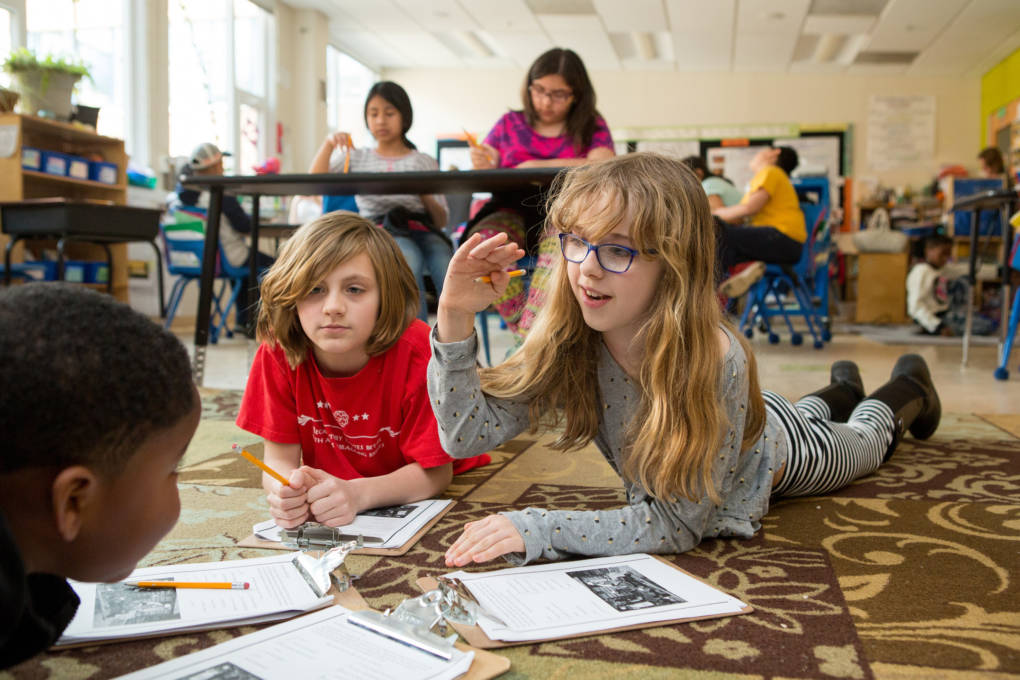
"caption": "Students discuss.",
"description": null,
"title": "kids-discuss",
"credit": "\u003ca href=\" www.deeperlearning4all.org/images\">Courtesy of Allison Shelley/The Verbatim Agency for American Education: Images of Teachers and Students in Action\u003c/a>",
"status": "inherit",
"isLoading": false,
"fetchFailed": false
},
"mindshift_49998": {
"type": "attachments",
"id": "mindshift_49998",
"meta": {
"index": "attachments_1716263798",
"site": "mindshift",
"id": "49998",
"found": true
},
"parent": 49870,
"imgSizes": {
"small": {
"file": "https://ww2.kqed.org/app/uploads/sites/23/2017/12/SEL-520x289.png",
"width": 520,
"mimeType": "image/png",
"height": 289
},
"thumbnail": {
"file": "https://ww2.kqed.org/app/uploads/sites/23/2017/12/SEL-160x89.png",
"width": 160,
"mimeType": "image/png",
"height": 89
},
"fd-sm": {
"file": "https://ww2.kqed.org/app/uploads/sites/23/2017/12/SEL-960x533.png",
"width": 960,
"mimeType": "image/png",
"height": 533
},
"post-thumbnail": {
"file": "https://ww2.kqed.org/app/uploads/sites/23/2017/12/SEL-672x372.png",
"width": 672,
"mimeType": "image/png",
"height": 372
},
"xsmall": {
"file": "https://ww2.kqed.org/app/uploads/sites/23/2017/12/SEL-375x208.png",
"width": 375,
"mimeType": "image/png",
"height": 208
},
"kqedFullSize": {
"file": "https://ww2.kqed.org/app/uploads/sites/23/2017/12/SEL.png",
"width": 1006,
"height": 559
},
"guest-author-50": {
"file": "https://ww2.kqed.org/app/uploads/sites/23/2017/12/SEL-50x50.png",
"width": 50,
"mimeType": "image/png",
"height": 50
},
"guest-author-96": {
"file": "https://ww2.kqed.org/app/uploads/sites/23/2017/12/SEL-96x96.png",
"width": 96,
"mimeType": "image/png",
"height": 96
},
"medium": {
"file": "https://ww2.kqed.org/app/uploads/sites/23/2017/12/SEL-800x445.png",
"width": 800,
"mimeType": "image/png",
"height": 445
},
"guest-author-64": {
"file": "https://ww2.kqed.org/app/uploads/sites/23/2017/12/SEL-64x64.png",
"width": 64,
"mimeType": "image/png",
"height": 64
},
"guest-author-32": {
"file": "https://ww2.kqed.org/app/uploads/sites/23/2017/12/SEL-32x32.png",
"width": 32,
"mimeType": "image/png",
"height": 32
},
"detail": {
"file": "https://ww2.kqed.org/app/uploads/sites/23/2017/12/SEL-150x150.png",
"width": 150,
"mimeType": "image/png",
"height": 150
},
"medium_large": {
"file": "https://ww2.kqed.org/app/uploads/sites/23/2017/12/SEL-768x427.png",
"width": 768,
"mimeType": "image/png",
"height": 427
},
"guest-author-128": {
"file": "https://ww2.kqed.org/app/uploads/sites/23/2017/12/SEL-128x128.png",
"width": 128,
"mimeType": "image/png",
"height": 128
},
"xxsmall": {
"file": "https://ww2.kqed.org/app/uploads/sites/23/2017/12/SEL-240x133.png",
"width": 240,
"mimeType": "image/png",
"height": 133
}
},
"publishDate": 1516171694,
"modified": 1516400138,
"caption": "First graders at Highlander Charter School meet first thing every day to greet each other and build community.",
"description": null,
"title": "SEL",
"credit": "\u003ca href=\"https://www.edutopia.org/article/morning-meetings-building-community-classroom\">Edutopia\u003c/a>",
"status": "inherit",
"isLoading": false,
"fetchFailed": false
},
"mindshift_49898": {
"type": "attachments",
"id": "mindshift_49898",
"meta": {
"index": "attachments_1716263798",
"site": "mindshift",
"id": "49898",
"found": true
},
"parent": 49896,
"imgSizes": {
"small": {
"file": "https://ww2.kqed.org/app/uploads/sites/23/2017/12/12844054164_84845f625c_o-520x347.jpg",
"width": 520,
"mimeType": "image/jpeg",
"height": 347
},
"twentyfourteen-full-width": {
"file": "https://ww2.kqed.org/app/uploads/sites/23/2017/12/12844054164_84845f625c_o-1038x576.jpg",
"width": 1038,
"mimeType": "image/jpeg",
"height": 576
},
"thumbnail": {
"file": "https://ww2.kqed.org/app/uploads/sites/23/2017/12/12844054164_84845f625c_o-160x107.jpg",
"width": 160,
"mimeType": "image/jpeg",
"height": 107
},
"fd-sm": {
"file": "https://ww2.kqed.org/app/uploads/sites/23/2017/12/12844054164_84845f625c_o-960x641.jpg",
"width": 960,
"mimeType": "image/jpeg",
"height": 641
},
"post-thumbnail": {
"file": "https://ww2.kqed.org/app/uploads/sites/23/2017/12/12844054164_84845f625c_o-672x372.jpg",
"width": 672,
"mimeType": "image/jpeg",
"height": 372
},
"xsmall": {
"file": "https://ww2.kqed.org/app/uploads/sites/23/2017/12/12844054164_84845f625c_o-375x250.jpg",
"width": 375,
"mimeType": "image/jpeg",
"height": 250
},
"kqedFullSize": {
"file": "https://ww2.kqed.org/app/uploads/sites/23/2017/12/12844054164_84845f625c_o.jpg",
"width": 1500,
"height": 1001
},
"large": {
"file": "https://ww2.kqed.org/app/uploads/sites/23/2017/12/12844054164_84845f625c_o-1020x681.jpg",
"width": 1020,
"mimeType": "image/jpeg",
"height": 681
},
"xlarge": {
"file": "https://ww2.kqed.org/app/uploads/sites/23/2017/12/12844054164_84845f625c_o-1180x787.jpg",
"width": 1180,
"mimeType": "image/jpeg",
"height": 787
},
"guest-author-50": {
"file": "https://ww2.kqed.org/app/uploads/sites/23/2017/12/12844054164_84845f625c_o-50x50.jpg",
"width": 50,
"mimeType": "image/jpeg",
"height": 50
},
"guest-author-96": {
"file": "https://ww2.kqed.org/app/uploads/sites/23/2017/12/12844054164_84845f625c_o-96x96.jpg",
"width": 96,
"mimeType": "image/jpeg",
"height": 96
},
"medium": {
"file": "https://ww2.kqed.org/app/uploads/sites/23/2017/12/12844054164_84845f625c_o-800x534.jpg",
"width": 800,
"mimeType": "image/jpeg",
"height": 534
},
"guest-author-64": {
"file": "https://ww2.kqed.org/app/uploads/sites/23/2017/12/12844054164_84845f625c_o-64x64.jpg",
"width": 64,
"mimeType": "image/jpeg",
"height": 64
},
"guest-author-32": {
"file": "https://ww2.kqed.org/app/uploads/sites/23/2017/12/12844054164_84845f625c_o-32x32.jpg",
"width": 32,
"mimeType": "image/jpeg",
"height": 32
},
"fd-med": {
"file": "https://ww2.kqed.org/app/uploads/sites/23/2017/12/12844054164_84845f625c_o-1180x787.jpg",
"width": 1180,
"mimeType": "image/jpeg",
"height": 787
},
"detail": {
"file": "https://ww2.kqed.org/app/uploads/sites/23/2017/12/12844054164_84845f625c_o-150x150.jpg",
"width": 150,
"mimeType": "image/jpeg",
"height": 150
},
"medium_large": {
"file": "https://ww2.kqed.org/app/uploads/sites/23/2017/12/12844054164_84845f625c_o-768x513.jpg",
"width": 768,
"mimeType": "image/jpeg",
"height": 513
},
"guest-author-128": {
"file": "https://ww2.kqed.org/app/uploads/sites/23/2017/12/12844054164_84845f625c_o-128x128.jpg",
"width": 128,
"mimeType": "image/jpeg",
"height": 128
},
"xxsmall": {
"file": "https://ww2.kqed.org/app/uploads/sites/23/2017/12/12844054164_84845f625c_o-240x160.jpg",
"width": 240,
"mimeType": "image/jpeg",
"height": 160
}
},
"publishDate": 1513585277,
"modified": 1513585296,
"caption": null,
"description": null,
"title": "12844054164_84845f625c_o",
"credit": " \u003ca href=\"https://www.flickr.com/photos/minette_layne/12844054164/in/photolist-kyZ8PJ-dywki9-5wFSjJ-9yWAzg-daEhBj-2pSvvT-2pWQTN-7UovM4-7A4m2i-7ondDw-2m18dT-jgqWQy-5AzDjy-ev8Sso-azBje6-9zx8oa-kvzE8V-vEVfDW-7R9XQY-3xAeBW-9wUmZa-9yEyfS-6mX4U7-fp4DjD-7dLMwc-74a49W-uFNasb-7PXsbr-HLJh8-gvvxhd-6mB5Q2-6nw2V2-4CHNQ2-6mjsV4-6mjsgZ-6mozWW-6mjrz8-6nw3jF-6mX5nY-6mFf51-6mB4Wi-6nAcJY-6mX6p3-6nAaaY-6mFgvm-6nw4ri-6mSXwT-6mB7da-6nAbv5-6nAdyL\">Flickr/Minette Layne\u003c/a>",
"status": "inherit",
"isLoading": false,
"fetchFailed": false
},
"mindshift_49825": {
"type": "attachments",
"id": "mindshift_49825",
"meta": {
"index": "attachments_1716263798",
"site": "mindshift",
"id": "49825",
"found": true
},
"parent": 49184,
"imgSizes": {
"small": {
"file": "https://ww2.kqed.org/app/uploads/sites/23/2017/12/iStock-490376997-520x332.jpg",
"width": 520,
"mimeType": "image/jpeg",
"height": 332
},
"twentyfourteen-full-width": {
"file": "https://ww2.kqed.org/app/uploads/sites/23/2017/12/iStock-490376997-1038x576.jpg",
"width": 1038,
"mimeType": "image/jpeg",
"height": 576
},
"thumbnail": {
"file": "https://ww2.kqed.org/app/uploads/sites/23/2017/12/iStock-490376997-160x102.jpg",
"width": 160,
"mimeType": "image/jpeg",
"height": 102
},
"fd-sm": {
"file": "https://ww2.kqed.org/app/uploads/sites/23/2017/12/iStock-490376997-960x613.jpg",
"width": 960,
"mimeType": "image/jpeg",
"height": 613
},
"post-thumbnail": {
"file": "https://ww2.kqed.org/app/uploads/sites/23/2017/12/iStock-490376997-672x372.jpg",
"width": 672,
"mimeType": "image/jpeg",
"height": 372
},
"xsmall": {
"file": "https://ww2.kqed.org/app/uploads/sites/23/2017/12/iStock-490376997-375x239.jpg",
"width": 375,
"mimeType": "image/jpeg",
"height": 239
},
"kqedFullSize": {
"file": "https://ww2.kqed.org/app/uploads/sites/23/2017/12/iStock-490376997-e1512374999824.jpg",
"width": 1920,
"height": 1225
},
"large": {
"file": "https://ww2.kqed.org/app/uploads/sites/23/2017/12/iStock-490376997-1020x651.jpg",
"width": 1020,
"mimeType": "image/jpeg",
"height": 651
},
"xlarge": {
"file": "https://ww2.kqed.org/app/uploads/sites/23/2017/12/iStock-490376997-1180x753.jpg",
"width": 1180,
"mimeType": "image/jpeg",
"height": 753
},
"guest-author-50": {
"file": "https://ww2.kqed.org/app/uploads/sites/23/2017/12/iStock-490376997-50x50.jpg",
"width": 50,
"mimeType": "image/jpeg",
"height": 50
},
"guest-author-96": {
"file": "https://ww2.kqed.org/app/uploads/sites/23/2017/12/iStock-490376997-96x96.jpg",
"width": 96,
"mimeType": "image/jpeg",
"height": 96
},
"medium": {
"file": "https://ww2.kqed.org/app/uploads/sites/23/2017/12/iStock-490376997-800x511.jpg",
"width": 800,
"mimeType": "image/jpeg",
"height": 511
},
"guest-author-64": {
"file": "https://ww2.kqed.org/app/uploads/sites/23/2017/12/iStock-490376997-64x64.jpg",
"width": 64,
"mimeType": "image/jpeg",
"height": 64
},
"guest-author-32": {
"file": "https://ww2.kqed.org/app/uploads/sites/23/2017/12/iStock-490376997-32x32.jpg",
"width": 32,
"mimeType": "image/jpeg",
"height": 32
},
"fd-lrg": {
"file": "https://ww2.kqed.org/app/uploads/sites/23/2017/12/iStock-490376997-1920x1225.jpg",
"width": 1920,
"mimeType": "image/jpeg",
"height": 1225
},
"fd-med": {
"file": "https://ww2.kqed.org/app/uploads/sites/23/2017/12/iStock-490376997-1180x753.jpg",
"width": 1180,
"mimeType": "image/jpeg",
"height": 753
},
"full-width": {
"file": "https://ww2.kqed.org/app/uploads/sites/23/2017/12/iStock-490376997-1920x1225.jpg",
"width": 1920,
"mimeType": "image/jpeg",
"height": 1225
},
"detail": {
"file": "https://ww2.kqed.org/app/uploads/sites/23/2017/12/iStock-490376997-150x150.jpg",
"width": 150,
"mimeType": "image/jpeg",
"height": 150
},
"medium_large": {
"file": "https://ww2.kqed.org/app/uploads/sites/23/2017/12/iStock-490376997-768x490.jpg",
"width": 768,
"mimeType": "image/jpeg",
"height": 490
},
"guest-author-128": {
"file": "https://ww2.kqed.org/app/uploads/sites/23/2017/12/iStock-490376997-128x128.jpg",
"width": 128,
"mimeType": "image/jpeg",
"height": 128
},
"xxsmall": {
"file": "https://ww2.kqed.org/app/uploads/sites/23/2017/12/iStock-490376997-240x153.jpg",
"width": 240,
"mimeType": "image/jpeg",
"height": 153
}
},
"publishDate": 1512374966,
"modified": 1512374993,
"caption": null,
"description": null,
"title": null,
"credit": "iStock/NatanaelGinting",
"status": "inherit",
"isLoading": false,
"fetchFailed": false
},
"mindshift_49689": {
"type": "attachments",
"id": "mindshift_49689",
"meta": {
"index": "attachments_1716263798",
"site": "mindshift",
"id": "49689",
"found": true
},
"parent": 49548,
"imgSizes": {
"small": {
"file": "https://ww2.kqed.org/app/uploads/sites/23/2017/11/6664cf-20170911-billy-gibson-in-his-art-class-520x520.jpg",
"width": 520,
"mimeType": "image/jpeg",
"height": 520
},
"twentyfourteen-full-width": {
"file": "https://ww2.kqed.org/app/uploads/sites/23/2017/11/6664cf-20170911-billy-gibson-in-his-art-class-1000x576.jpg",
"width": 1000,
"mimeType": "image/jpeg",
"height": 576
},
"thumbnail": {
"file": "https://ww2.kqed.org/app/uploads/sites/23/2017/11/6664cf-20170911-billy-gibson-in-his-art-class-160x160.jpg",
"width": 160,
"mimeType": "image/jpeg",
"height": 160
},
"fd-sm": {
"file": "https://ww2.kqed.org/app/uploads/sites/23/2017/11/6664cf-20170911-billy-gibson-in-his-art-class-960x960.jpg",
"width": 960,
"mimeType": "image/jpeg",
"height": 960
},
"post-thumbnail": {
"file": "https://ww2.kqed.org/app/uploads/sites/23/2017/11/6664cf-20170911-billy-gibson-in-his-art-class-672x372.jpg",
"width": 672,
"mimeType": "image/jpeg",
"height": 372
},
"xsmall": {
"file": "https://ww2.kqed.org/app/uploads/sites/23/2017/11/6664cf-20170911-billy-gibson-in-his-art-class-375x375.jpg",
"width": 375,
"mimeType": "image/jpeg",
"height": 375
},
"kqedFullSize": {
"file": "https://ww2.kqed.org/app/uploads/sites/23/2017/11/6664cf-20170911-billy-gibson-in-his-art-class.jpg",
"width": 1000,
"height": 1000
},
"guest-author-50": {
"file": "https://ww2.kqed.org/app/uploads/sites/23/2017/11/6664cf-20170911-billy-gibson-in-his-art-class-50x50.jpg",
"width": 50,
"mimeType": "image/jpeg",
"height": 50
},
"guest-author-96": {
"file": "https://ww2.kqed.org/app/uploads/sites/23/2017/11/6664cf-20170911-billy-gibson-in-his-art-class-96x96.jpg",
"width": 96,
"mimeType": "image/jpeg",
"height": 96
},
"medium": {
"file": "https://ww2.kqed.org/app/uploads/sites/23/2017/11/6664cf-20170911-billy-gibson-in-his-art-class-800x800.jpg",
"width": 800,
"mimeType": "image/jpeg",
"height": 800
},
"guest-author-64": {
"file": "https://ww2.kqed.org/app/uploads/sites/23/2017/11/6664cf-20170911-billy-gibson-in-his-art-class-64x64.jpg",
"width": 64,
"mimeType": "image/jpeg",
"height": 64
},
"guest-author-32": {
"file": "https://ww2.kqed.org/app/uploads/sites/23/2017/11/6664cf-20170911-billy-gibson-in-his-art-class-32x32.jpg",
"width": 32,
"mimeType": "image/jpeg",
"height": 32
},
"detail": {
"file": "https://ww2.kqed.org/app/uploads/sites/23/2017/11/6664cf-20170911-billy-gibson-in-his-art-class-150x150.jpg",
"width": 150,
"mimeType": "image/jpeg",
"height": 150
},
"medium_large": {
"file": "https://ww2.kqed.org/app/uploads/sites/23/2017/11/6664cf-20170911-billy-gibson-in-his-art-class-768x768.jpg",
"width": 768,
"mimeType": "image/jpeg",
"height": 768
},
"guest-author-128": {
"file": "https://ww2.kqed.org/app/uploads/sites/23/2017/11/6664cf-20170911-billy-gibson-in-his-art-class-128x128.jpg",
"width": 128,
"mimeType": "image/jpeg",
"height": 128
},
"xxsmall": {
"file": "https://ww2.kqed.org/app/uploads/sites/23/2017/11/6664cf-20170911-billy-gibson-in-his-art-class-240x240.jpg",
"width": 240,
"mimeType": "image/jpeg",
"height": 240
}
},
"publishDate": 1510616892,
"modified": 1510616935,
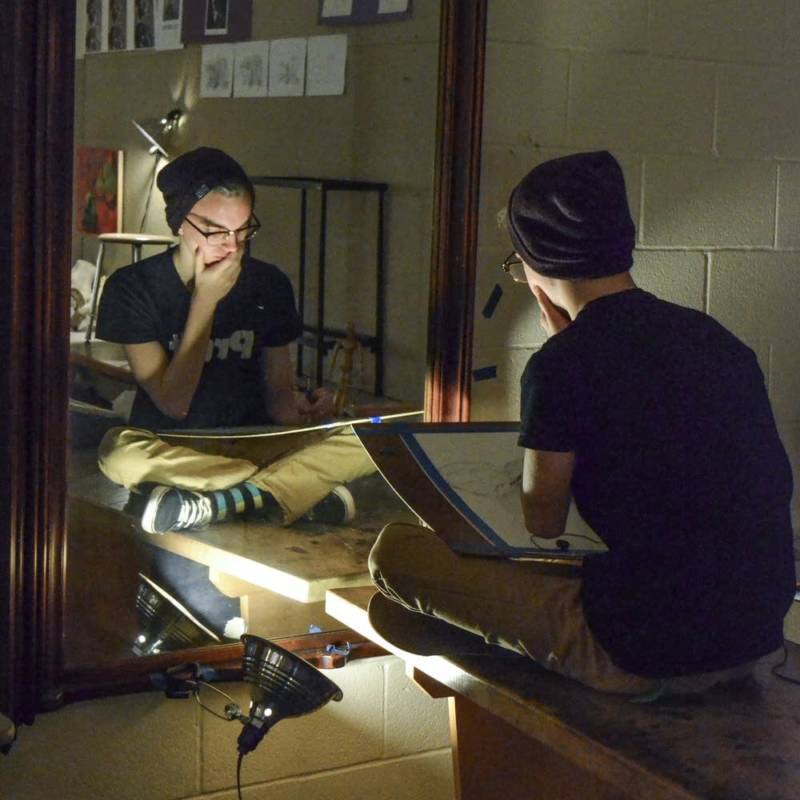
"caption": "Billy Gibson in art class at the Jemicy School in 2017.",
"description": null,
"title": "6664cf-20170911-billy-gibson-in-his-art-class",
"credit": "APM Reports/Emily Hanford",
"status": "inherit",
"isLoading": false,
"fetchFailed": false
},
"mindshift_49775": {
"type": "attachments",
"id": "mindshift_49775",
"meta": {
"index": "attachments_1716263798",
"site": "mindshift",
"id": "49775",
"found": true
},
"parent": 49773,
"imgSizes": {
"small": {
"file": "https://ww2.kqed.org/app/uploads/sites/23/2017/11/iStock-181054680-520x347.jpg",
"width": 520,
"mimeType": "image/jpeg",
"height": 347
},
"twentyfourteen-full-width": {
"file": "https://ww2.kqed.org/app/uploads/sites/23/2017/11/iStock-181054680-1038x576.jpg",
"width": 1038,
"mimeType": "image/jpeg",
"height": 576
},
"thumbnail": {
"file": "https://ww2.kqed.org/app/uploads/sites/23/2017/11/iStock-181054680-160x107.jpg",
"width": 160,
"mimeType": "image/jpeg",
"height": 107
},
"fd-sm": {
"file": "https://ww2.kqed.org/app/uploads/sites/23/2017/11/iStock-181054680-960x640.jpg",
"width": 960,
"mimeType": "image/jpeg",
"height": 640
},
"post-thumbnail": {
"file": "https://ww2.kqed.org/app/uploads/sites/23/2017/11/iStock-181054680-672x372.jpg",
"width": 672,
"mimeType": "image/jpeg",
"height": 372
},
"xsmall": {
"file": "https://ww2.kqed.org/app/uploads/sites/23/2017/11/iStock-181054680-375x250.jpg",
"width": 375,
"mimeType": "image/jpeg",
"height": 250
},
"kqedFullSize": {
"file": "https://ww2.kqed.org/app/uploads/sites/23/2017/11/iStock-181054680.jpg",
"width": 3865,
"height": 2576
},
"large": {
"file": "https://ww2.kqed.org/app/uploads/sites/23/2017/11/iStock-181054680-1020x680.jpg",
"width": 1020,
"mimeType": "image/jpeg",
"height": 680
},
"xlarge": {
"file": "https://ww2.kqed.org/app/uploads/sites/23/2017/11/iStock-181054680-1180x786.jpg",
"width": 1180,
"mimeType": "image/jpeg",
"height": 786
},
"guest-author-50": {
"file": "https://ww2.kqed.org/app/uploads/sites/23/2017/11/iStock-181054680-50x50.jpg",
"width": 50,
"mimeType": "image/jpeg",
"height": 50
},
"guest-author-96": {
"file": "https://ww2.kqed.org/app/uploads/sites/23/2017/11/iStock-181054680-96x96.jpg",
"width": 96,
"mimeType": "image/jpeg",
"height": 96
},
"medium": {
"file": "https://ww2.kqed.org/app/uploads/sites/23/2017/11/iStock-181054680-800x533.jpg",
"width": 800,
"mimeType": "image/jpeg",
"height": 533
},
"guest-author-64": {
"file": "https://ww2.kqed.org/app/uploads/sites/23/2017/11/iStock-181054680-64x64.jpg",
"width": 64,
"mimeType": "image/jpeg",
"height": 64
},
"guest-author-32": {
"file": "https://ww2.kqed.org/app/uploads/sites/23/2017/11/iStock-181054680-32x32.jpg",
"width": 32,
"mimeType": "image/jpeg",
"height": 32
},
"fd-lrg": {
"file": "https://ww2.kqed.org/app/uploads/sites/23/2017/11/iStock-181054680-1920x1280.jpg",
"width": 1920,
"mimeType": "image/jpeg",
"height": 1280
},
"fd-med": {
"file": "https://ww2.kqed.org/app/uploads/sites/23/2017/11/iStock-181054680-1180x786.jpg",
"width": 1180,
"mimeType": "image/jpeg",
"height": 786
},
"full-width": {
"file": "https://ww2.kqed.org/app/uploads/sites/23/2017/11/iStock-181054680-1920x1280.jpg",
"width": 1920,
"mimeType": "image/jpeg",
"height": 1280
},
"detail": {
"file": "https://ww2.kqed.org/app/uploads/sites/23/2017/11/iStock-181054680-150x150.jpg",
"width": 150,
"mimeType": "image/jpeg",
"height": 150
},
"medium_large": {
"file": "https://ww2.kqed.org/app/uploads/sites/23/2017/11/iStock-181054680-768x512.jpg",
"width": 768,
"mimeType": "image/jpeg",
"height": 512
},
"guest-author-128": {
"file": "https://ww2.kqed.org/app/uploads/sites/23/2017/11/iStock-181054680-128x128.jpg",
"width": 128,
"mimeType": "image/jpeg",
"height": 128
},
"xxsmall": {
"file": "https://ww2.kqed.org/app/uploads/sites/23/2017/11/iStock-181054680-240x160.jpg",
"width": 240,
"mimeType": "image/jpeg",
"height": 160
}
},
"publishDate": 1511908124,
"modified": 1511908155,
"caption": null,
"description": null,
"title": "Teacher Helping Male Pupil With Reading At Desk",
"credit": "iStock",
"status": "inherit",
"isLoading": false,
"fetchFailed": false
},
"mindshift_49664": {
"type": "attachments",
"id": "mindshift_49664",
"meta": {
"index": "attachments_1716263798",
"site": "mindshift",
"id": "49664",
"found": true
},
"parent": 49647,
"imgSizes": {
"small": {
"file": "https://ww2.kqed.org/app/uploads/sites/23/2017/11/flexible-seating-520x295.jpg",
"width": 520,
"mimeType": "image/jpeg",
"height": 295
},
"twentyfourteen-full-width": {
"file": "https://ww2.kqed.org/app/uploads/sites/23/2017/11/flexible-seating-1038x576.jpg",
"width": 1038,
"mimeType": "image/jpeg",
"height": 576
},
"thumbnail": {
"file": "https://ww2.kqed.org/app/uploads/sites/23/2017/11/flexible-seating-160x91.jpg",
"width": 160,
"mimeType": "image/jpeg",
"height": 91
},
"fd-sm": {
"file": "https://ww2.kqed.org/app/uploads/sites/23/2017/11/flexible-seating-960x544.jpg",
"width": 960,
"mimeType": "image/jpeg",
"height": 544
},
"post-thumbnail": {
"file": "https://ww2.kqed.org/app/uploads/sites/23/2017/11/flexible-seating-672x372.jpg",
"width": 672,
"mimeType": "image/jpeg",
"height": 372
},
"xsmall": {
"file": "https://ww2.kqed.org/app/uploads/sites/23/2017/11/flexible-seating-375x213.jpg",
"width": 375,
"mimeType": "image/jpeg",
"height": 213
},
"kqedFullSize": {
"file": "https://ww2.kqed.org/app/uploads/sites/23/2017/11/flexible-seating.jpg",
"width": 1920,
"height": 1088
},
"large": {
"file": "https://ww2.kqed.org/app/uploads/sites/23/2017/11/flexible-seating-1020x578.jpg",
"width": 1020,
"mimeType": "image/jpeg",
"height": 578
},
"xlarge": {
"file": "https://ww2.kqed.org/app/uploads/sites/23/2017/11/flexible-seating-1180x669.jpg",
"width": 1180,
"mimeType": "image/jpeg",
"height": 669
},
"guest-author-50": {
"file": "https://ww2.kqed.org/app/uploads/sites/23/2017/11/flexible-seating-50x50.jpg",
"width": 50,
"mimeType": "image/jpeg",
"height": 50
},
"guest-author-96": {
"file": "https://ww2.kqed.org/app/uploads/sites/23/2017/11/flexible-seating-96x96.jpg",
"width": 96,
"mimeType": "image/jpeg",
"height": 96
},
"medium": {
"file": "https://ww2.kqed.org/app/uploads/sites/23/2017/11/flexible-seating-800x453.jpg",
"width": 800,
"mimeType": "image/jpeg",
"height": 453
},
"guest-author-64": {
"file": "https://ww2.kqed.org/app/uploads/sites/23/2017/11/flexible-seating-64x64.jpg",
"width": 64,
"mimeType": "image/jpeg",
"height": 64
},
"guest-author-32": {
"file": "https://ww2.kqed.org/app/uploads/sites/23/2017/11/flexible-seating-32x32.jpg",
"width": 32,
"mimeType": "image/jpeg",
"height": 32
},
"fd-lrg": {
"file": "https://ww2.kqed.org/app/uploads/sites/23/2017/11/flexible-seating-1920x1088.jpg",
"width": 1920,
"mimeType": "image/jpeg",
"height": 1088
},
"fd-med": {
"file": "https://ww2.kqed.org/app/uploads/sites/23/2017/11/flexible-seating-1180x669.jpg",
"width": 1180,
"mimeType": "image/jpeg",
"height": 669
},
"full-width": {
"file": "https://ww2.kqed.org/app/uploads/sites/23/2017/11/flexible-seating-1920x1088.jpg",
"width": 1920,
"mimeType": "image/jpeg",
"height": 1088
},
"detail": {
"file": "https://ww2.kqed.org/app/uploads/sites/23/2017/11/flexible-seating-150x150.jpg",
"width": 150,
"mimeType": "image/jpeg",
"height": 150
},
"medium_large": {
"file": "https://ww2.kqed.org/app/uploads/sites/23/2017/11/flexible-seating-768x435.jpg",
"width": 768,
"mimeType": "image/jpeg",
"height": 435
},
"guest-author-128": {
"file": "https://ww2.kqed.org/app/uploads/sites/23/2017/11/flexible-seating-128x128.jpg",
"width": 128,
"mimeType": "image/jpeg",
"height": 128
},
"xxsmall": {
"file": "https://ww2.kqed.org/app/uploads/sites/23/2017/11/flexible-seating-240x136.jpg",
"width": 240,
"mimeType": "image/jpeg",
"height": 136
}
},
"publishDate": 1510166391,
"modified": 1511224521,
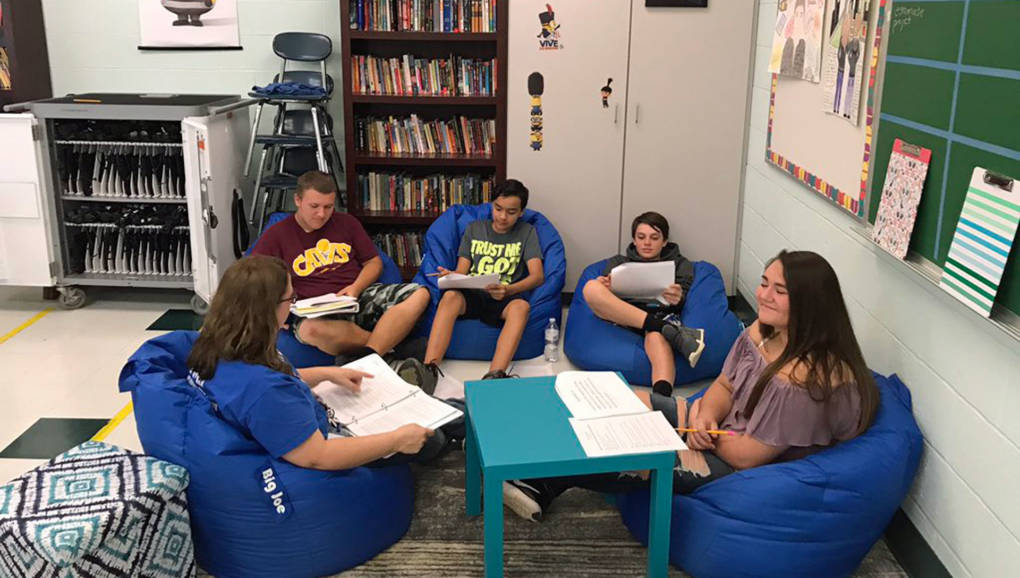
"caption": "Eighth-graders in Amber Chandler's English class rotate through various flexible seating options depending on the activity.",
"description": null,
"title": "flexible-seating",
"credit": "Courtesy \u003ca href=\"https://twitter.com/MsAmberChandler\">Amber Chandler\u003c/a>",
"status": "inherit",
"isLoading": false,
"fetchFailed": false
},
"mindshift_49641": {
"type": "attachments",
"id": "mindshift_49641",
"meta": {
"index": "attachments_1716263798",
"site": "mindshift",
"id": "49641",
"found": true
},
"parent": 49222,
"imgSizes": {
"small": {
"file": "https://ww2.kqed.org/app/uploads/sites/23/2017/11/6745856509_ab796acc4f_b-520x347.jpg",
"width": 520,
"mimeType": "image/jpeg",
"height": 347
},
"twentyfourteen-full-width": {
"file": "https://ww2.kqed.org/app/uploads/sites/23/2017/11/6745856509_ab796acc4f_b-1024x576.jpg",
"width": 1024,
"mimeType": "image/jpeg",
"height": 576
},
"thumbnail": {
"file": "https://ww2.kqed.org/app/uploads/sites/23/2017/11/6745856509_ab796acc4f_b-160x107.jpg",
"width": 160,
"mimeType": "image/jpeg",
"height": 107
},
"fd-sm": {
"file": "https://ww2.kqed.org/app/uploads/sites/23/2017/11/6745856509_ab796acc4f_b-960x640.jpg",
"width": 960,
"mimeType": "image/jpeg",
"height": 640
},
"post-thumbnail": {
"file": "https://ww2.kqed.org/app/uploads/sites/23/2017/11/6745856509_ab796acc4f_b-672x372.jpg",
"width": 672,
"mimeType": "image/jpeg",
"height": 372
},
"xsmall": {
"file": "https://ww2.kqed.org/app/uploads/sites/23/2017/11/6745856509_ab796acc4f_b-375x250.jpg",
"width": 375,
"mimeType": "image/jpeg",
"height": 250
},
"kqedFullSize": {
"file": "https://ww2.kqed.org/app/uploads/sites/23/2017/11/6745856509_ab796acc4f_b.jpg",
"width": 1024,
"height": 683
},
"large": {
"file": "https://ww2.kqed.org/app/uploads/sites/23/2017/11/6745856509_ab796acc4f_b-1020x680.jpg",
"width": 1020,
"mimeType": "image/jpeg",
"height": 680
},
"guest-author-50": {
"file": "https://ww2.kqed.org/app/uploads/sites/23/2017/11/6745856509_ab796acc4f_b-50x50.jpg",
"width": 50,
"mimeType": "image/jpeg",
"height": 50
},
"guest-author-96": {
"file": "https://ww2.kqed.org/app/uploads/sites/23/2017/11/6745856509_ab796acc4f_b-96x96.jpg",
"width": 96,
"mimeType": "image/jpeg",
"height": 96
},
"medium": {
"file": "https://ww2.kqed.org/app/uploads/sites/23/2017/11/6745856509_ab796acc4f_b-800x534.jpg",
"width": 800,
"mimeType": "image/jpeg",
"height": 534
},
"guest-author-64": {
"file": "https://ww2.kqed.org/app/uploads/sites/23/2017/11/6745856509_ab796acc4f_b-64x64.jpg",
"width": 64,
"mimeType": "image/jpeg",
"height": 64
},
"guest-author-32": {
"file": "https://ww2.kqed.org/app/uploads/sites/23/2017/11/6745856509_ab796acc4f_b-32x32.jpg",
"width": 32,
"mimeType": "image/jpeg",
"height": 32
},
"detail": {
"file": "https://ww2.kqed.org/app/uploads/sites/23/2017/11/6745856509_ab796acc4f_b-150x150.jpg",
"width": 150,
"mimeType": "image/jpeg",
"height": 150
},
"medium_large": {
"file": "https://ww2.kqed.org/app/uploads/sites/23/2017/11/6745856509_ab796acc4f_b-768x512.jpg",
"width": 768,
"mimeType": "image/jpeg",
"height": 512
},
"guest-author-128": {
"file": "https://ww2.kqed.org/app/uploads/sites/23/2017/11/6745856509_ab796acc4f_b-128x128.jpg",
"width": 128,
"mimeType": "image/jpeg",
"height": 128
},
"xxsmall": {
"file": "https://ww2.kqed.org/app/uploads/sites/23/2017/11/6745856509_ab796acc4f_b-240x160.jpg",
"width": 240,
"mimeType": "image/jpeg",
"height": 160
}
},
"publishDate": 1510062434,
"modified": 1510062536,
"caption": null,
"description": null,
"title": "6745856509_ab796acc4f_b",
"credit": "\u003ca href=\"https://www.flickr.com/photos/crdot/6745856509/in/photolist-bh7h7R-Fk8My-2rFnKH-g1WDT-7cmNQA-qHd9Do-uSPQR-3VPk8-rYW3Uk-6frL5d-7S31R-eazpdR-8TN9KS-2QAmG7-yGfFE-5F3Qwm-pgcoF8-6Qzaap-8BYue8-fTvigP-pquk87-8u9ZLo-aekZUo-pCh2d8-ZmNtia-6mTqXW-aobUQ-RVCNSS-q1Mk1J-9F1WMk-4ExZmc-puz8zq-ESHXmh-WNL2zy-4ts2HG-cZSu2u-ayaXL7-7WJDR-3dcbTu-eWpxhk-yaawu-7naqaG-9dGCwZ-4zfikA-h8aEci-dVXmCG-dsQNhY-pouKvG-ekKh5X-4KsamJ\">Flickr/Caleb Roenigk\u003c/a>",
"status": "inherit",
"isLoading": false,
"fetchFailed": false
},
"mindshift_49626": {
"type": "attachments",
"id": "mindshift_49626",
"meta": {
"index": "attachments_1716263798",
"site": "mindshift",
"id": "49626",
"found": true
},
"parent": 49617,
"imgSizes": {
"small": {
"file": "https://ww2.kqed.org/app/uploads/sites/23/2017/11/35693584643_d59f932a3e_k-520x347.jpg",
"width": 520,
"mimeType": "image/jpeg",
"height": 347
},
"twentyfourteen-full-width": {
"file": "https://ww2.kqed.org/app/uploads/sites/23/2017/11/35693584643_d59f932a3e_k-1038x576.jpg",
"width": 1038,
"mimeType": "image/jpeg",
"height": 576
},
"thumbnail": {
"file": "https://ww2.kqed.org/app/uploads/sites/23/2017/11/35693584643_d59f932a3e_k-160x107.jpg",
"width": 160,
"mimeType": "image/jpeg",
"height": 107
},
"fd-sm": {
"file": "https://ww2.kqed.org/app/uploads/sites/23/2017/11/35693584643_d59f932a3e_k-960x640.jpg",
"width": 960,
"mimeType": "image/jpeg",
"height": 640
},
"post-thumbnail": {
"file": "https://ww2.kqed.org/app/uploads/sites/23/2017/11/35693584643_d59f932a3e_k-672x372.jpg",
"width": 672,
"mimeType": "image/jpeg",
"height": 372
},
"xsmall": {
"file": "https://ww2.kqed.org/app/uploads/sites/23/2017/11/35693584643_d59f932a3e_k-375x250.jpg",
"width": 375,
"mimeType": "image/jpeg",
"height": 250
},
"kqedFullSize": {
"file": "https://ww2.kqed.org/app/uploads/sites/23/2017/11/35693584643_d59f932a3e_k.jpg",
"width": 2048,
"height": 1365
},
"large": {
"file": "https://ww2.kqed.org/app/uploads/sites/23/2017/11/35693584643_d59f932a3e_k-1020x680.jpg",
"width": 1020,
"mimeType": "image/jpeg",
"height": 680
},
"xlarge": {
"file": "https://ww2.kqed.org/app/uploads/sites/23/2017/11/35693584643_d59f932a3e_k-1180x786.jpg",
"width": 1180,
"mimeType": "image/jpeg",
"height": 786
},
"guest-author-50": {
"file": "https://ww2.kqed.org/app/uploads/sites/23/2017/11/35693584643_d59f932a3e_k-50x50.jpg",
"width": 50,
"mimeType": "image/jpeg",
"height": 50
},
"guest-author-96": {
"file": "https://ww2.kqed.org/app/uploads/sites/23/2017/11/35693584643_d59f932a3e_k-96x96.jpg",
"width": 96,
"mimeType": "image/jpeg",
"height": 96
},
"medium": {
"file": "https://ww2.kqed.org/app/uploads/sites/23/2017/11/35693584643_d59f932a3e_k-800x533.jpg",
"width": 800,
"mimeType": "image/jpeg",
"height": 533
},
"guest-author-64": {
"file": "https://ww2.kqed.org/app/uploads/sites/23/2017/11/35693584643_d59f932a3e_k-64x64.jpg",
"width": 64,
"mimeType": "image/jpeg",
"height": 64
},
"guest-author-32": {
"file": "https://ww2.kqed.org/app/uploads/sites/23/2017/11/35693584643_d59f932a3e_k-32x32.jpg",
"width": 32,
"mimeType": "image/jpeg",
"height": 32
},
"fd-lrg": {
"file": "https://ww2.kqed.org/app/uploads/sites/23/2017/11/35693584643_d59f932a3e_k-1920x1280.jpg",
"width": 1920,
"mimeType": "image/jpeg",
"height": 1280
},
"fd-med": {
"file": "https://ww2.kqed.org/app/uploads/sites/23/2017/11/35693584643_d59f932a3e_k-1180x786.jpg",
"width": 1180,
"mimeType": "image/jpeg",
"height": 786
},
"full-width": {
"file": "https://ww2.kqed.org/app/uploads/sites/23/2017/11/35693584643_d59f932a3e_k-1920x1280.jpg",
"width": 1920,
"mimeType": "image/jpeg",
"height": 1280
},
"detail": {
"file": "https://ww2.kqed.org/app/uploads/sites/23/2017/11/35693584643_d59f932a3e_k-150x150.jpg",
"width": 150,
"mimeType": "image/jpeg",
"height": 150
},
"medium_large": {
"file": "https://ww2.kqed.org/app/uploads/sites/23/2017/11/35693584643_d59f932a3e_k-768x512.jpg",
"width": 768,
"mimeType": "image/jpeg",
"height": 512
},
"guest-author-128": {
"file": "https://ww2.kqed.org/app/uploads/sites/23/2017/11/35693584643_d59f932a3e_k-128x128.jpg",
"width": 128,
"mimeType": "image/jpeg",
"height": 128
},
"xxsmall": {
"file": "https://ww2.kqed.org/app/uploads/sites/23/2017/11/35693584643_d59f932a3e_k-240x160.jpg",
"width": 240,
"mimeType": "image/jpeg",
"height": 160
}
},
"publishDate": 1509738318,
"modified": 1509738413,
"caption": "High school students add backgrounds and visual effects to a video recorded in front of a green screen. ",
"description": null,
"title": "35693584643_d59f932a3e_k",
"credit": "\u003ca href=\"https://www.flickr.com/photos/all4ed/35693584643/\">Courtesy of Allison Shelley/The Verbatim Agency for American Education: Images of Teachers and Students in Action\u003c/a>",
"status": "inherit",
"isLoading": false,
"fetchFailed": false
},
"mindshift_49477": {
"type": "attachments",
"id": "mindshift_49477",
"meta": {
"index": "attachments_1716263798",
"site": "mindshift",
"id": "49477",
"found": true
},
"parent": 49476,
"imgSizes": {
"small": {
"file": "https://ww2.kqed.org/app/uploads/sites/23/2017/10/istock-654206392_slide-2072bc5ba06f311a31ce7d9adaef27bbaa4f2290-520x347.jpg",
"width": 520,
"mimeType": "image/jpeg",
"height": 347
},
"twentyfourteen-full-width": {
"file": "https://ww2.kqed.org/app/uploads/sites/23/2017/10/istock-654206392_slide-2072bc5ba06f311a31ce7d9adaef27bbaa4f2290-1038x576.jpg",
"width": 1038,
"mimeType": "image/jpeg",
"height": 576
},
"thumbnail": {
"file": "https://ww2.kqed.org/app/uploads/sites/23/2017/10/istock-654206392_slide-2072bc5ba06f311a31ce7d9adaef27bbaa4f2290-160x107.jpg",
"width": 160,
"mimeType": "image/jpeg",
"height": 107
},
"fd-sm": {
"file": "https://ww2.kqed.org/app/uploads/sites/23/2017/10/istock-654206392_slide-2072bc5ba06f311a31ce7d9adaef27bbaa4f2290-960x640.jpg",
"width": 960,
"mimeType": "image/jpeg",
"height": 640
},
"post-thumbnail": {
"file": "https://ww2.kqed.org/app/uploads/sites/23/2017/10/istock-654206392_slide-2072bc5ba06f311a31ce7d9adaef27bbaa4f2290-672x372.jpg",
"width": 672,
"mimeType": "image/jpeg",
"height": 372
},
"xsmall": {
"file": "https://ww2.kqed.org/app/uploads/sites/23/2017/10/istock-654206392_slide-2072bc5ba06f311a31ce7d9adaef27bbaa4f2290-375x250.jpg",
"width": 375,
"mimeType": "image/jpeg",
"height": 250
},
"kqedFullSize": {
"file": "https://ww2.kqed.org/app/uploads/sites/23/2017/10/istock-654206392_slide-2072bc5ba06f311a31ce7d9adaef27bbaa4f2290.jpg",
"width": 2405,
"height": 1603
},
"large": {
"file": "https://ww2.kqed.org/app/uploads/sites/23/2017/10/istock-654206392_slide-2072bc5ba06f311a31ce7d9adaef27bbaa4f2290-1020x680.jpg",
"width": 1020,
"mimeType": "image/jpeg",
"height": 680
},
"xlarge": {
"file": "https://ww2.kqed.org/app/uploads/sites/23/2017/10/istock-654206392_slide-2072bc5ba06f311a31ce7d9adaef27bbaa4f2290-1180x787.jpg",
"width": 1180,
"mimeType": "image/jpeg",
"height": 787
},
"guest-author-50": {
"file": "https://ww2.kqed.org/app/uploads/sites/23/2017/10/istock-654206392_slide-2072bc5ba06f311a31ce7d9adaef27bbaa4f2290-50x50.jpg",
"width": 50,
"mimeType": "image/jpeg",
"height": 50
},
"guest-author-96": {
"file": "https://ww2.kqed.org/app/uploads/sites/23/2017/10/istock-654206392_slide-2072bc5ba06f311a31ce7d9adaef27bbaa4f2290-96x96.jpg",
"width": 96,
"mimeType": "image/jpeg",
"height": 96
},
"medium": {
"file": "https://ww2.kqed.org/app/uploads/sites/23/2017/10/istock-654206392_slide-2072bc5ba06f311a31ce7d9adaef27bbaa4f2290-800x533.jpg",
"width": 800,
"mimeType": "image/jpeg",
"height": 533
},
"guest-author-64": {
"file": "https://ww2.kqed.org/app/uploads/sites/23/2017/10/istock-654206392_slide-2072bc5ba06f311a31ce7d9adaef27bbaa4f2290-64x64.jpg",
"width": 64,
"mimeType": "image/jpeg",
"height": 64
},
"guest-author-32": {
"file": "https://ww2.kqed.org/app/uploads/sites/23/2017/10/istock-654206392_slide-2072bc5ba06f311a31ce7d9adaef27bbaa4f2290-32x32.jpg",
"width": 32,
"mimeType": "image/jpeg",
"height": 32
},
"fd-lrg": {
"file": "https://ww2.kqed.org/app/uploads/sites/23/2017/10/istock-654206392_slide-2072bc5ba06f311a31ce7d9adaef27bbaa4f2290-1920x1280.jpg",
"width": 1920,
"mimeType": "image/jpeg",
"height": 1280
},
"fd-med": {
"file": "https://ww2.kqed.org/app/uploads/sites/23/2017/10/istock-654206392_slide-2072bc5ba06f311a31ce7d9adaef27bbaa4f2290-1180x787.jpg",
"width": 1180,
"mimeType": "image/jpeg",
"height": 787
},
"full-width": {
"file": "https://ww2.kqed.org/app/uploads/sites/23/2017/10/istock-654206392_slide-2072bc5ba06f311a31ce7d9adaef27bbaa4f2290-1920x1280.jpg",
"width": 1920,
"mimeType": "image/jpeg",
"height": 1280
},
"detail": {
"file": "https://ww2.kqed.org/app/uploads/sites/23/2017/10/istock-654206392_slide-2072bc5ba06f311a31ce7d9adaef27bbaa4f2290-150x150.jpg",
"width": 150,
"mimeType": "image/jpeg",
"height": 150
},
"medium_large": {
"file": "https://ww2.kqed.org/app/uploads/sites/23/2017/10/istock-654206392_slide-2072bc5ba06f311a31ce7d9adaef27bbaa4f2290-768x512.jpg",
"width": 768,
"mimeType": "image/jpeg",
"height": 512
},
"guest-author-128": {
"file": "https://ww2.kqed.org/app/uploads/sites/23/2017/10/istock-654206392_slide-2072bc5ba06f311a31ce7d9adaef27bbaa4f2290-128x128.jpg",
"width": 128,
"mimeType": "image/jpeg",
"height": 128
},
"xxsmall": {
"file": "https://ww2.kqed.org/app/uploads/sites/23/2017/10/istock-654206392_slide-2072bc5ba06f311a31ce7d9adaef27bbaa4f2290-240x160.jpg",
"width": 240,
"mimeType": "image/jpeg",
"height": 160
}
},
"publishDate": 1508262002,
"modified": 1508262153,
"caption": "Anxiety-based school refusal affects 2 to 5 percent of school-age children. Some schools are employing new strategies to help these students overcome their symptoms.",
"description": "Anxiety-based school refusal affects 2 to 5 percent of school-age children. Some schools are employing new strategies to help these students overcome their sympto",
"title": "Anxiety-based school refusal affects 2 to 5 percent of school-age children. Some schools are employing new strategies to help these students overcome their symptoms.",
"credit": "Anna_Isaeva/Getty Images/iStockphoto ",
"status": "inherit",
"isLoading": false,
"fetchFailed": false
},
"mindshift_49267": {
"type": "attachments",
"id": "mindshift_49267",
"meta": {
"index": "attachments_1716263798",
"site": "mindshift",
"id": "49267",
"found": true
},
"parent": 49243,
"imgSizes": {
"small": {
"file": "https://ww2.kqed.org/app/uploads/sites/23/2017/09/35694467263_532f4fb809_k-520x347.jpg",
"width": 520,
"mimeType": "image/jpeg",
"height": 347
},
"twentyfourteen-full-width": {
"file": "https://ww2.kqed.org/app/uploads/sites/23/2017/09/35694467263_532f4fb809_k-1038x576.jpg",
"width": 1038,
"mimeType": "image/jpeg",
"height": 576
},
"thumbnail": {
"file": "https://ww2.kqed.org/app/uploads/sites/23/2017/09/35694467263_532f4fb809_k-160x107.jpg",
"width": 160,
"mimeType": "image/jpeg",
"height": 107
},
"fd-sm": {
"file": "https://ww2.kqed.org/app/uploads/sites/23/2017/09/35694467263_532f4fb809_k-960x640.jpg",
"width": 960,
"mimeType": "image/jpeg",
"height": 640
},
"post-thumbnail": {
"file": "https://ww2.kqed.org/app/uploads/sites/23/2017/09/35694467263_532f4fb809_k-672x372.jpg",
"width": 672,
"mimeType": "image/jpeg",
"height": 372
},
"xsmall": {
"file": "https://ww2.kqed.org/app/uploads/sites/23/2017/09/35694467263_532f4fb809_k-375x250.jpg",
"width": 375,
"mimeType": "image/jpeg",
"height": 250
},
"kqedFullSize": {
"file": "https://ww2.kqed.org/app/uploads/sites/23/2017/09/35694467263_532f4fb809_k.jpg",
"width": 2048,
"height": 1365
},
"large": {
"file": "https://ww2.kqed.org/app/uploads/sites/23/2017/09/35694467263_532f4fb809_k-1020x680.jpg",
"width": 1020,
"mimeType": "image/jpeg",
"height": 680
},
"xlarge": {
"file": "https://ww2.kqed.org/app/uploads/sites/23/2017/09/35694467263_532f4fb809_k-1180x786.jpg",
"width": 1180,
"mimeType": "image/jpeg",
"height": 786
},
"guest-author-50": {
"file": "https://ww2.kqed.org/app/uploads/sites/23/2017/09/35694467263_532f4fb809_k-50x50.jpg",
"width": 50,
"mimeType": "image/jpeg",
"height": 50
},
"guest-author-96": {
"file": "https://ww2.kqed.org/app/uploads/sites/23/2017/09/35694467263_532f4fb809_k-96x96.jpg",
"width": 96,
"mimeType": "image/jpeg",
"height": 96
},
"medium": {
"file": "https://ww2.kqed.org/app/uploads/sites/23/2017/09/35694467263_532f4fb809_k-800x533.jpg",
"width": 800,
"mimeType": "image/jpeg",
"height": 533
},
"guest-author-64": {
"file": "https://ww2.kqed.org/app/uploads/sites/23/2017/09/35694467263_532f4fb809_k-64x64.jpg",
"width": 64,
"mimeType": "image/jpeg",
"height": 64
},
"guest-author-32": {
"file": "https://ww2.kqed.org/app/uploads/sites/23/2017/09/35694467263_532f4fb809_k-32x32.jpg",
"width": 32,
"mimeType": "image/jpeg",
"height": 32
},
"fd-lrg": {
"file": "https://ww2.kqed.org/app/uploads/sites/23/2017/09/35694467263_532f4fb809_k-1920x1280.jpg",
"width": 1920,
"mimeType": "image/jpeg",
"height": 1280
},
"fd-med": {
"file": "https://ww2.kqed.org/app/uploads/sites/23/2017/09/35694467263_532f4fb809_k-1180x786.jpg",
"width": 1180,
"mimeType": "image/jpeg",
"height": 786
},
"full-width": {
"file": "https://ww2.kqed.org/app/uploads/sites/23/2017/09/35694467263_532f4fb809_k-1920x1280.jpg",
"width": 1920,
"mimeType": "image/jpeg",
"height": 1280
},
"detail": {
"file": "https://ww2.kqed.org/app/uploads/sites/23/2017/09/35694467263_532f4fb809_k-150x150.jpg",
"width": 150,
"mimeType": "image/jpeg",
"height": 150
},
"medium_large": {
"file": "https://ww2.kqed.org/app/uploads/sites/23/2017/09/35694467263_532f4fb809_k-768x512.jpg",
"width": 768,
"mimeType": "image/jpeg",
"height": 512
},
"guest-author-128": {
"file": "https://ww2.kqed.org/app/uploads/sites/23/2017/09/35694467263_532f4fb809_k-128x128.jpg",
"width": 128,
"mimeType": "image/jpeg",
"height": 128
},
"xxsmall": {
"file": "https://ww2.kqed.org/app/uploads/sites/23/2017/09/35694467263_532f4fb809_k-240x160.jpg",
"width": 240,
"mimeType": "image/jpeg",
"height": 160
}
},
"publishDate": 1505846979,
"modified": 1505955565,
"caption": "Fourth-graders work together to plan life for their “colony” during a class activity focused on colonial America.",
"description": null,
"title": "35694467263_532f4fb809_k",
"credit": "\u003ca href=\"https://www.flickr.com/photos/all4ed/35694467263/in/photostream/\">Courtesy of Allison Shelley/The Verbatim Agency for American Education: Images of Teachers and Students in Action\u003c/a>",
"status": "inherit",
"isLoading": false,
"fetchFailed": false
},
"mindshift_49270": {
"type": "attachments",
"id": "mindshift_49270",
"meta": {
"index": "attachments_1716263798",
"site": "mindshift",
"id": "49270",
"found": true
},
"parent": 49269,
"imgSizes": {
"small": {
"file": "https://ww2.kqed.org/app/uploads/sites/23/2017/09/dictation-520x266.png",
"width": 520,
"mimeType": "image/png",
"height": 266
},
"thumbnail": {
"file": "https://ww2.kqed.org/app/uploads/sites/23/2017/09/dictation-160x82.png",
"width": 160,
"mimeType": "image/png",
"height": 82
},
"post-thumbnail": {
"file": "https://ww2.kqed.org/app/uploads/sites/23/2017/09/dictation-672x372.png",
"width": 672,
"mimeType": "image/png",
"height": 372
},
"xsmall": {
"file": "https://ww2.kqed.org/app/uploads/sites/23/2017/09/dictation-375x191.png",
"width": 375,
"mimeType": "image/png",
"height": 191
},
"kqedFullSize": {
"file": "https://ww2.kqed.org/app/uploads/sites/23/2017/09/dictation.png",
"width": 897,
"height": 458
},
"guest-author-50": {
"file": "https://ww2.kqed.org/app/uploads/sites/23/2017/09/dictation-50x50.png",
"width": 50,
"mimeType": "image/png",
"height": 50
},
"guest-author-96": {
"file": "https://ww2.kqed.org/app/uploads/sites/23/2017/09/dictation-96x96.png",
"width": 96,
"mimeType": "image/png",
"height": 96
},
"medium": {
"file": "https://ww2.kqed.org/app/uploads/sites/23/2017/09/dictation-800x408.png",
"width": 800,
"mimeType": "image/png",
"height": 408
},
"guest-author-64": {
"file": "https://ww2.kqed.org/app/uploads/sites/23/2017/09/dictation-64x64.png",
"width": 64,
"mimeType": "image/png",
"height": 64
},
"guest-author-32": {
"file": "https://ww2.kqed.org/app/uploads/sites/23/2017/09/dictation-32x32.png",
"width": 32,
"mimeType": "image/png",
"height": 32
},
"detail": {
"file": "https://ww2.kqed.org/app/uploads/sites/23/2017/09/dictation-150x150.png",
"width": 150,
"mimeType": "image/png",
"height": 150
},
"medium_large": {
"file": "https://ww2.kqed.org/app/uploads/sites/23/2017/09/dictation-768x392.png",
"width": 768,
"mimeType": "image/png",
"height": 392
},
"guest-author-128": {
"file": "https://ww2.kqed.org/app/uploads/sites/23/2017/09/dictation-128x128.png",
"width": 128,
"mimeType": "image/png",
"height": 128
},
"xxsmall": {
"file": "https://ww2.kqed.org/app/uploads/sites/23/2017/09/dictation-240x123.png",
"width": 240,
"mimeType": "image/png",
"height": 123
}
},
"publishDate": 1505853696,
"modified": 1505853816,
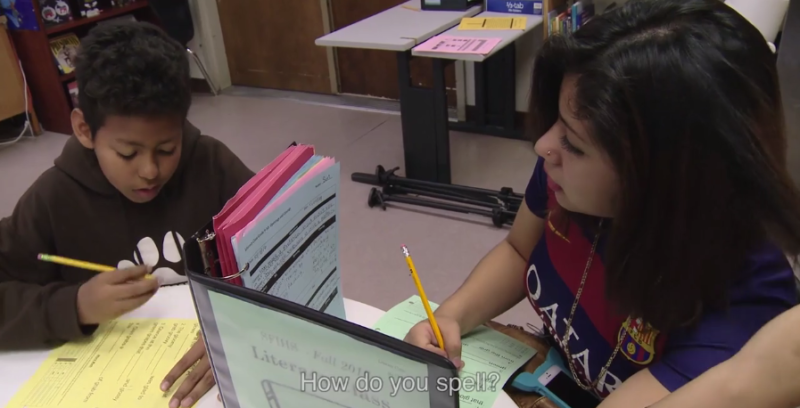
"caption": "Students at San Francisco International High School work on a split dictation activity to practice tricky consonant groups.",
"description": null,
"title": "dictation",
"credit": "\u003ca href=\"https://www.teachingchannel.org/videos/building-foundational-literacy-sfusd\">Teaching Channel\u003c/a>",
"status": "inherit",
"isLoading": false,
"fetchFailed": false
}
},
"audioPlayerReducer": {
"postId": "stream_live",
"isPaused": true,
"isPlaying": false,
"pfsActive": false,
"pledgeModalIsOpen": true,
"playerDrawerIsOpen": false,
"liveAudioPlayStartedAt": 0,
"liveAudioPlayContext": ""
},
"authorsReducer": {
"byline_mindshift_49548": {
"type": "authors",
"id": "byline_mindshift_49548",
"meta": {
"override": true
},
"slug": "byline_mindshift_49548",
"name": "\u003ca href “https://www.apmreports.org/story/2017/09/11/hard-to-read>Emily Hanford, APM Reports\u003c/a>",
"isLoading": false
},
"byline_mindshift_49476": {
"type": "authors",
"id": "byline_mindshift_49476",
"meta": {
"override": true
},
"slug": "byline_mindshift_49476",
"name": "Samantha Raphelson",
"isLoading": false
},
"katrinaschwartz": {
"type": "authors",
"id": "234",
"meta": {
"index": "authors_1716337520",
"id": "234",
"found": true
},
"name": "Katrina Schwartz",
"firstName": "Katrina",
"lastName": "Schwartz",
"slug": "katrinaschwartz",
"email": "kschwartz@kqed.org",
"display_author_email": false,
"staff_mastheads": [
"news"
],
"title": "Producer",
"bio": "Katrina Schwartz is a journalist based in San Francisco. She's worked at KPCC public radio in LA and has reported on air and online for KQED since 2010. She covered how teaching and learning is changing for MindShift between 2012 and 2020. She is the co-host of the MindShift podcast and now produces KQED's Bay Curious podcast.",
"avatar": "https://secure.gravatar.com/avatar/edb4ee79070447a018538c9aae6eeecf28786515b8a0c30e43b6b7dce5aa44c8?s=600&d=blank&r=g",
"twitter": "kschwart",
"bluesky": null,
"facebook": null,
"instagram": null,
"linkedin": null,
"sites": [
{
"site": "",
"roles": [
"editor"
]
},
{
"site": "news",
"roles": [
"editor"
]
},
{
"site": "mindshift",
"roles": [
"administrator"
]
},
{
"site": "stateofhealth",
"roles": [
"author"
]
},
{
"site": "science",
"roles": [
"editor"
]
}
],
"headData": {
"title": "Katrina Schwartz | KQED",
"description": "Producer",
"ogImgSrc": "https://secure.gravatar.com/avatar/edb4ee79070447a018538c9aae6eeecf28786515b8a0c30e43b6b7dce5aa44c8?s=600&d=blank&r=g",
"twImgSrc": "https://secure.gravatar.com/avatar/edb4ee79070447a018538c9aae6eeecf28786515b8a0c30e43b6b7dce5aa44c8?s=600&d=blank&r=g"
},
"isLoading": false,
"link": "/author/katrinaschwartz"
}
},
"pagesReducer": {
"mindshift_category_teaching-strategies": {
"type": "terms",
"id": "mindshift_193",
"meta": {
"index": "terms_1716263798",
"site": "mindshift",
"id": "193",
"score": 14.406914
},
"featImg": null,
"name": "Teaching Strategies",
"description": "Innovative ideas - projects, processes, curricula, and more - that are transforming how we teach and learn.",
"taxonomy": "category",
"headData": {
"twImgId": null,
"twTitle": null,
"ogTitle": null,
"ogImgId": null,
"twDescription": null,
"description": "Innovative ideas - projects, processes, curricula, and more - that are transforming how we teach and learn.",
"title": "Teaching Strategies Archives | KQED Mindshift",
"ogDescription": null
},
"ttid": 193,
"slug": "teaching-strategies",
"isLoading": false,
"title": "Teaching Strategies",
"pageMeta": {
"site": "mindshift",
"WpPageTemplate": "page-topic-editorial",
"currentPage": 26
},
"blocks": [
{
"blockName": "kqed/company-paragraph",
"content": "Innovative ideas - projects, processes, curricula, and more - that are transforming how we teach and learn."
},
{
"blockName": "kqed/post-list",
"attrs": {
"layout": "cardArticle2",
"query": "posts/mindshift?category=teaching-strategies",
"seeMore": false,
"paginated": true,
"page": 26
}
},
{
"blockName": "kqed/ad"
}
]
}
},
"pfsSessionReducer": {},
"postsReducer": {
"stream_live": {
"type": "live",
"id": "stream_live",
"audioUrl": "https://streams.kqed.org/kqedradio",
"title": "Live Stream",
"excerpt": "Live Stream information currently unavailable.",
"link": "/radio",
"featImg": "",
"label": {
"name": "KQED Live",
"link": "/"
}
},
"stream_kqedNewscast": {
"type": "posts",
"id": "stream_kqedNewscast",
"audioUrl": "https://www.kqed.org/.stream/anon/radio/RDnews/newscast.mp3?_=1",
"title": "KQED Newscast",
"featImg": "",
"label": {
"name": "88.5 FM",
"link": "/"
}
},
"mindshift_49841": {
"type": "posts",
"id": "mindshift_49841",
"meta": {
"index": "posts_1716263798",
"site": "mindshift",
"id": "49841",
"score": null,
"sort": [
1517233894000
]
},
"parent": 0,
"labelTerm": {
"site": "mindshift"
},
"blocks": [],
"publishDate": 1517233894,
"format": "standard",
"disqusTitle": "A Tech Tool Designed For Collaboration Online And Offline",
"title": "A Tech Tool Designed For Collaboration Online And Offline",
"headTitle": "MindShift | KQED News",
"content": "\u003cp>The \u003ca href=\"https://ww2.kqed.org/mindshift/2016/08/11/the-connections-between-computer-use-and-learning-outcomes-in-students/\" target=\"_blank\" rel=\"noopener\">lack of clear evidence\u003c/a> that adding technology to classrooms makes them more effective has dimmed some of the excitement around its potential to radically transform learning. Advocates for technology are quick to point out that \u003ca href=\"https://www.rand.org/pubs/research_reports/RR2042.html\" target=\"_blank\" rel=\"noopener\">implementation matters\u003c/a>, and getting the most out of technology that allows students to create, collaborate and connect across space and time will require \u003ca href=\"https://ww2.kqed.org/mindshift/2014/08/06/what-are-the-most-powerful-uses-of-tech-for-learning/\" target=\"_blank\" rel=\"noopener\">fundamental shifts in teaching\u003c/a>. Skeptics, meanwhile, worry that precious education dollars are spent on expensive technology that strips the learning environment of important social dimensions, instead \u003ca href=\"https://ww2.kqed.org/mindshift/2013/01/22/shifting-tactics-rocketship-changes-computer-lab-model/\" target=\"_blank\" rel=\"noopener\">isolating students on screens\u003c/a>.\u003c/p>\n\u003cp>There is truth in both sides of the argument. And \u003ca href=\"https://ww2.kqed.org/mindshift/2017/11/06/its-time-for-a-deeper-conversation-about-how-schools-use-technology/\" target=\"_blank\" rel=\"noopener\">lack of clarity \u003c/a>about how to ensure technology lives up to its potential has led harried teachers to question whether it’s worth their time to change everything they do in the classroom.\u003c/p>\n\u003cp>Educators in Horry County, South Carolina have gone through this cycle of excitement about technology followed by a period of rethinking their strategy over the past few years. “We expected to see things dramatically move towards the use of technology in a very productive, constructive, critical way,” said Jeanie Dailey, a social studies learning specialist for the district. “And I don’t think that happened.”\u003c/p>\n\u003cp>Teachers found, as many others have, that at points devices were distractions to students, they had a tendency to make learning more individualistic, and that adults can’t assume because students have grown up with technology they automatically know how to \u003ca href=\"https://ww2.kqed.org/mindshift/2013/05/24/teaching-respect-and-responsibility-even-to-digital-natives/\" target=\"_blank\" rel=\"noopener\">use devices productively\u003c/a>. “The piece that was making me so sad was that the kids weren’t being challenged to think collaboratively using these tools,” Dailey said.\u003c/p>\n\u003caside class=\"pullquote alignright\">'One of the things that has been a guiding principle of my career is we don't know the talents and strengths of the students in our room.'\u003ccite>Jeanie Dailey, social studies specialist\u003c/cite>\u003c/aside>\n\u003cp>But Dailey and a team of social studies teachers think they may have found a tool that gives them the flexibility to hold onto best practices they’ve long used, while leveraging computing power. \u003ca href=\"https://versolearning.com/\" target=\"_blank\" rel=\"noopener\">Verso Learning\u003c/a> is an Australian company that describes itself as a tool to help teachers take learning from the \u003ca href=\"https://ww2.kqed.org/mindshift/2017/06/14/how-do-you-know-when-a-teaching-strategy-is-most-effective-john-hattie-has-an-idea/\" target=\"_blank\" rel=\"noopener\">surface level to deep thinking\u003c/a> quickly. It’s basically an online communication platform, but Dailey and her team have found it has elevated the quality of thinking and discussion happening in middle school classrooms.\u003c/p>\n\u003cp>[ad fullwidth]\u003c/p>\n\u003cp>“I’ve never lost sight of the fact that true literacy is listening, speaking, reading and writing,” said Dailey, who has taught for 40 years. “It’s real simple, but we don’t do it. So I see this as an extension of the work I’ve done in my career. Verso excites me, quite frankly. It gets back to some of the basics, but it has a 21st century feel.”\u003c/p>\n\u003cp>Dailey has plenty of experience teaching these basic tenets of literacy without technology, but she has found elements of the virtual environment on Verso to be particularly powerful for highlighting unexpected pockets of brilliance in the room.\u003c/p>\n\u003cp>\u003c!-- iframe plugin v.4.3 wordpress.org/plugins/iframe/ -->\u003cbr>\n\u003ciframe width=\"640\" height=\"360\" src=\"https://www.youtube.com/embed/CMLab3sUN2w\" frameborder=\"0\" gesture=\"media\" allow=\"encrypted-media\" scrolling=\"yes\" class=\"iframe-class\">\u003c/iframe>\u003c/p>\n\u003cp>“One of the things that has been a guiding principle of my career is we don’t know the talents and strengths of the students in our room,” Dailey said. “We know the high flyers and we know the ones who don’t perform well.” Because students can interact anonymously on Verso’s platform, and they can’t see other students’ responses until they’ve shared one of their own, Dailey sees more participation and more interaction between students who may never work together otherwise.\u003c/p>\n\u003cp>Unlike many tools that intend to keep students within the program as much as possible, Verso is designed to meld face-to-face interaction with online collaboration. Verso CEO Phil Stubbs says often when teachers first experiment with Verso they make the mistake of using it as an online question asking tool. Stubbs likes to say, “We want to see kids not at their first thinking, but at their best thinking,” something he believes only happens when they’ve been exposed to the ideas of others.\u003c/p>\n\u003cp>For example, a typical activity middle school social studies teachers use starts with a provocative, open-ended question that drives at a hard-to-grasp or core concept in the curriculum. For seventh graders in Horry County studying global history, that prompt might be: What was the biggest cause of the French Revolution?\u003c/p>\n\u003cp>Students are given time to jot down their initial thoughts on paper and then they share their thinking in a small group. Only after they’ve had this initial opportunity to activate their thinking and interact with peers do students begin typing an answer into Verso – getting at what Stubbs would call their best thinking in that moment. Student responses to the question show up anonymously; after sharing their own response students are usually required to read and respond to several of their peers, also anonymously.\u003c/p>\n\u003cp>Then, teachers can easily group students based on their responses to the question. For example, they may put students who agree into a group and then ask them to discuss their thinking in face-to-face groups before collaboratively writing a statement that synthesizes the arguments each member made.\u003c/p>\n\u003caside class=\"pullquote alignleft\">'Some of the things they said were very deep thinking -- it was pretty awesome.'\u003ccite>Jennifer Wilson, seventh grade social studies teacher\u003c/cite>\u003c/aside>\n\u003cp>“If you can take kids to a synthesis level in one class, you’ve done a great job,” said Dailey, who is constantly pushing the teachers she coaches to remember that despite the massive amount of content social studies teachers have to cover in a year, none of it will make a lasting impact without deeper thinking.\u003c/p>\n\u003cp>“We run the danger of making it very low level questioning, very right/wrong answer questioning, multiple choice type responses and assessments,” Dailey said. “We run the risk in that kind of environment of forgetting what the big picture is -- that we want to make all kids college and career ready.”\u003c/p>\n\u003cp>For Samantha House, a seventh grade social studies teacher at St. James Middle School (a public school in Horry County), structuring the lesson so there are multiple points of collaboration helps all learners feel comfortable participating. “By the time it’s no longer anonymous they’ve had a lot of opportunities to see correct answers,” House said. “So they’ve learned from their peers.” And, just as importantly in her mind, many of her shy students, as well as those who struggle, have seen their ideas validated by anonymous peer responses. That makes them feel more confident to speak up during small group or whole-class discussions.\u003c/p>\n\u003cp>[contextly_sidebar id=\"Jwv2BpisDcuHIdM3Qd7iJV7KSKN2X5VT\"]\u003c/p>\n\u003cp>Early on House and other teachers realized that \u003ca href=\"https://ww2.kqed.org/mindshift/2017/10/15/developing-students-ability-to-give-and-take-effective-feedback/\" target=\"_blank\" rel=\"noopener\">students didn’t know how to give one another substantive feedback\u003c/a>. When asked to comment on one another’s contributions in Verso students would write unhelpful things like, “I agree.” In response, teachers started giving them sentence starters to agree, disagree or extend another person’s idea. House says she’s seen an improvement in the academic vocabulary students use when responding to each other. And she's beginning to see that online practice spill over into the conversations students have in-person too.\u003c/p>\n\u003cp>At first House worried that an anonymous online discussion forum like Verso would lead to inappropriate or bullying comments, but she’s been surprised that the only comments her students flag are ones that don’t appropriately use the sentence starters for good feedback.\u003c/p>\n\u003cp>When Jennifer Wilson first tried Verso with her seventh graders at Aynor Middle she hadn’t had any professional development. She used the tool as a space for students to make a claim about the book they were reading and back it up with evidence. That worked well, but she’s even more excited about the collaborative structures she has since learned through professional development. She says the Verso activities work best when she asks a meaty, open-ended question and pairs work in Verso with the Kagan cooperative structures teachers in this district have been using for some time.\u003c/p>\n\u003cp>For example Wilson asked students which founding document was most important to the country: the Declaration of Independence, the Constitution, or the Bill of Rights (students understood the Bill of Rights is part of the Constitution, but thought it should be considered on its own). To formulate answers students had to understand the differences in the documents and make evidence-based arguments. “Some of the things they said were very deep thinking -- it was pretty awesome,” Wilson said.\u003c/p>\n\u003cp>Wilson said preparing Verso lessons takes time because she has to plan a pre-Verso activity to get students thinking on their own, come up with a rich provocation or question for the Verso, and then make sure students debrief afterwards. She uses Verso once every two weeks, but she thinks the practice there is spilling over into students’ writing and academic discourse.\u003c/p>\n\u003cp>Using Verso can be a bit more challenging when there’s a broad array of abilities in the classroom. “With high level honors students that works beautifully,” said Annette Nerone, a seventh grade social studies teacher at Myrtle Beach Middle School. “It’s not as simple with lower-level kids because now you're introducing a lot of different processes in one lesson.” Nerone has more English language learners and kids with special needs in her classes and she finds they need more support with Verso activities because they require so much reading and writing.\u003c/p>\n\u003cp>“The higher level students can jump right in and they’ll basically do it on their own and the conversations are amazing. But with my lower level students, they need more support along the way,” Nerone said. She helps them by simplifying the instructions, offering sentence frames, and giving them lists of helpful vocabulary to include in their answers.\u003c/p>\n\u003cp>She also likes to start activities by having students work together so that the kids who understand more English can help their peers understand the question and documents. Despite the inherent challenges of working with students who are struggling with the language, Nerone says students are proud when they write a response in Verso and see it pop up in the class dialogue.\u003c/p>\n\u003cp>Nerone particularly likes using Verso in conjunction with the Kagan structures. She finds students enjoy the face-to-face interactions. “They’ll write interesting things to one another, but I think it’s kind of like human beings emailing back and forth. When you take the human side out of it you lose so much,” she said.\u003c/p>\n\u003cp>Verso CEO Phil Stubbs agrees that the collaboration piece is key to making Verso a deep learning experience. His team has baked collaborative structures into the \u003ca href=\"https://versolearning.com/campus-features/\" target=\"_blank\" rel=\"noopener\">premium version\u003c/a> of the technology with features like lesson builders, recipe cards, the ability to connect with other teachers, and other \u003ca href=\"https://versolearning.com/teaching-resources/sample-activities/\" target=\"_blank\" rel=\"noopener\">professional development\u003c/a>. “You can only move from best to better if you have collaborative structures,” Stubbs said.\u003c/p>\n\u003cp>Jeanie Dailey has appreciated Stubbs’ commitment to collaboration and the student experience. She knows his job is to sell a product, but she’s found him to be a helpful thought partner as she’s worked with classroom teachers on how to get the most out of the tool in Horry County.\u003c/p>\n\u003cp>“To me the exciting piece is if you can create a model that teachers can follow, step by step by step, you can change how they think about the construction of knowledge,” Dailey said. She believes the model they are following gets students to go from a surface knowledge of a subject to a deeper level of synthesis and reflection in one 60-minute class period. And some teachers even take it a step further, asking kids to think metacognitively about how the comments and suggestions of peers changed their thinking on a topic.\u003c/p>\n\u003cp>[ad floatright]\u003c/p>\n\u003cp>Dailey won’t have data until students take the standardized social studies exam in the spring, but she’s hoping all the writing they’ve done in Verso will boost their performance on the document-based questions. She says seeing improvement on test scores would be nice, but her real goals are bigger than that: “What I want to do as a social studies leader is help provide students with experiences that are enriching to them, that makes them better thinkers, deeper thinkers, more curious thinkers.”\u003c/p>\n\n",
"disqusIdentifier": "49841 https://ww2.kqed.org/mindshift/?p=49841",
"disqusUrl": "https://ww2.kqed.org/mindshift/2018/01/29/a-tech-tool-designed-for-collaboration-online-and-offline/",
"stats": {
"hasVideo": true,
"hasChartOrMap": true,
"hasAudio": false,
"hasPolis": false,
"wordCount": 2129,
"hasGoogleForm": false,
"hasGallery": false,
"hasHearkenModule": false,
"iframeSrcs": [
"https://www.youtube.com/embed/CMLab3sUN2w"
],
"paragraphCount": 32
},
"modified": 1517233894,
"excerpt": "These teachers say they've found a digital tool that melds tried-and-true teacher practices with effective online collaboration.",
"headData": {
"twImgId": "",
"twTitle": "",
"ogTitle": "",
"ogImgId": "",
"twDescription": "",
"description": "These teachers say they've found a digital tool that melds tried-and-true teacher practices with effective online collaboration.",
"title": "A Tech Tool Designed For Collaboration Online And Offline | KQED",
"ogDescription": "",
"schema": {
"@context": "https://schema.org",
"@type": "Article",
"headline": "A Tech Tool Designed For Collaboration Online And Offline",
"datePublished": "2018-01-29T05:51:34-08:00",
"dateModified": "2018-01-29T05:51:34-08:00",
"image": "https://cdn.kqed.org/wp-content/uploads/2020/02/KQED-OG-Image@1x.png"
}
},
"guestAuthors": [],
"slug": "a-tech-tool-designed-for-collaboration-online-and-offline",
"status": "publish",
"path": "/mindshift/49841/a-tech-tool-designed-for-collaboration-online-and-offline",
"audioTrackLength": null,
"parsedContent": [
{
"type": "contentString",
"content": "\u003cdiv class=\"post-body\">\u003cp>\u003cp>The \u003ca href=\"https://ww2.kqed.org/mindshift/2016/08/11/the-connections-between-computer-use-and-learning-outcomes-in-students/\" target=\"_blank\" rel=\"noopener\">lack of clear evidence\u003c/a> that adding technology to classrooms makes them more effective has dimmed some of the excitement around its potential to radically transform learning. Advocates for technology are quick to point out that \u003ca href=\"https://www.rand.org/pubs/research_reports/RR2042.html\" target=\"_blank\" rel=\"noopener\">implementation matters\u003c/a>, and getting the most out of technology that allows students to create, collaborate and connect across space and time will require \u003ca href=\"https://ww2.kqed.org/mindshift/2014/08/06/what-are-the-most-powerful-uses-of-tech-for-learning/\" target=\"_blank\" rel=\"noopener\">fundamental shifts in teaching\u003c/a>. Skeptics, meanwhile, worry that precious education dollars are spent on expensive technology that strips the learning environment of important social dimensions, instead \u003ca href=\"https://ww2.kqed.org/mindshift/2013/01/22/shifting-tactics-rocketship-changes-computer-lab-model/\" target=\"_blank\" rel=\"noopener\">isolating students on screens\u003c/a>.\u003c/p>\n\u003cp>There is truth in both sides of the argument. And \u003ca href=\"https://ww2.kqed.org/mindshift/2017/11/06/its-time-for-a-deeper-conversation-about-how-schools-use-technology/\" target=\"_blank\" rel=\"noopener\">lack of clarity \u003c/a>about how to ensure technology lives up to its potential has led harried teachers to question whether it’s worth their time to change everything they do in the classroom.\u003c/p>\n\u003cp>Educators in Horry County, South Carolina have gone through this cycle of excitement about technology followed by a period of rethinking their strategy over the past few years. “We expected to see things dramatically move towards the use of technology in a very productive, constructive, critical way,” said Jeanie Dailey, a social studies learning specialist for the district. “And I don’t think that happened.”\u003c/p>\n\u003cp>Teachers found, as many others have, that at points devices were distractions to students, they had a tendency to make learning more individualistic, and that adults can’t assume because students have grown up with technology they automatically know how to \u003ca href=\"https://ww2.kqed.org/mindshift/2013/05/24/teaching-respect-and-responsibility-even-to-digital-natives/\" target=\"_blank\" rel=\"noopener\">use devices productively\u003c/a>. “The piece that was making me so sad was that the kids weren’t being challenged to think collaboratively using these tools,” Dailey said.\u003c/p>\n\u003caside class=\"pullquote alignright\">'One of the things that has been a guiding principle of my career is we don't know the talents and strengths of the students in our room.'\u003ccite>Jeanie Dailey, social studies specialist\u003c/cite>\u003c/aside>\n\u003cp>But Dailey and a team of social studies teachers think they may have found a tool that gives them the flexibility to hold onto best practices they’ve long used, while leveraging computing power. \u003ca href=\"https://versolearning.com/\" target=\"_blank\" rel=\"noopener\">Verso Learning\u003c/a> is an Australian company that describes itself as a tool to help teachers take learning from the \u003ca href=\"https://ww2.kqed.org/mindshift/2017/06/14/how-do-you-know-when-a-teaching-strategy-is-most-effective-john-hattie-has-an-idea/\" target=\"_blank\" rel=\"noopener\">surface level to deep thinking\u003c/a> quickly. It’s basically an online communication platform, but Dailey and her team have found it has elevated the quality of thinking and discussion happening in middle school classrooms.\u003c/p>\n\u003cp>\u003c/p>\u003c/div>",
"attributes": {
"named": {},
"numeric": []
}
},
{
"type": "component",
"content": "",
"name": "ad",
"attributes": {
"named": {
"label": "fullwidth"
},
"numeric": [
"fullwidth"
]
}
},
{
"type": "contentString",
"content": "\u003cdiv class=\"post-body\">\u003cp>\u003c/p>\n\u003cp>“I’ve never lost sight of the fact that true literacy is listening, speaking, reading and writing,” said Dailey, who has taught for 40 years. “It’s real simple, but we don’t do it. So I see this as an extension of the work I’ve done in my career. Verso excites me, quite frankly. It gets back to some of the basics, but it has a 21st century feel.”\u003c/p>\n\u003cp>Dailey has plenty of experience teaching these basic tenets of literacy without technology, but she has found elements of the virtual environment on Verso to be particularly powerful for highlighting unexpected pockets of brilliance in the room.\u003c/p>\n\u003cp>\u003c!-- iframe plugin v.4.3 wordpress.org/plugins/iframe/ -->\u003cbr>\n\u003ciframe width=\"640\" height=\"360\" src=\"https://www.youtube.com/embed/CMLab3sUN2w\" frameborder=\"0\" gesture=\"media\" allow=\"encrypted-media\" scrolling=\"yes\" class=\"iframe-class\">\u003c/iframe>\u003c/p>\n\u003cp>“One of the things that has been a guiding principle of my career is we don’t know the talents and strengths of the students in our room,” Dailey said. “We know the high flyers and we know the ones who don’t perform well.” Because students can interact anonymously on Verso’s platform, and they can’t see other students’ responses until they’ve shared one of their own, Dailey sees more participation and more interaction between students who may never work together otherwise.\u003c/p>\n\u003cp>Unlike many tools that intend to keep students within the program as much as possible, Verso is designed to meld face-to-face interaction with online collaboration. Verso CEO Phil Stubbs says often when teachers first experiment with Verso they make the mistake of using it as an online question asking tool. Stubbs likes to say, “We want to see kids not at their first thinking, but at their best thinking,” something he believes only happens when they’ve been exposed to the ideas of others.\u003c/p>\n\u003cp>For example, a typical activity middle school social studies teachers use starts with a provocative, open-ended question that drives at a hard-to-grasp or core concept in the curriculum. For seventh graders in Horry County studying global history, that prompt might be: What was the biggest cause of the French Revolution?\u003c/p>\n\u003cp>Students are given time to jot down their initial thoughts on paper and then they share their thinking in a small group. Only after they’ve had this initial opportunity to activate their thinking and interact with peers do students begin typing an answer into Verso – getting at what Stubbs would call their best thinking in that moment. Student responses to the question show up anonymously; after sharing their own response students are usually required to read and respond to several of their peers, also anonymously.\u003c/p>\n\u003cp>Then, teachers can easily group students based on their responses to the question. For example, they may put students who agree into a group and then ask them to discuss their thinking in face-to-face groups before collaboratively writing a statement that synthesizes the arguments each member made.\u003c/p>\n\u003caside class=\"pullquote alignleft\">'Some of the things they said were very deep thinking -- it was pretty awesome.'\u003ccite>Jennifer Wilson, seventh grade social studies teacher\u003c/cite>\u003c/aside>\n\u003cp>“If you can take kids to a synthesis level in one class, you’ve done a great job,” said Dailey, who is constantly pushing the teachers she coaches to remember that despite the massive amount of content social studies teachers have to cover in a year, none of it will make a lasting impact without deeper thinking.\u003c/p>\n\u003cp>“We run the danger of making it very low level questioning, very right/wrong answer questioning, multiple choice type responses and assessments,” Dailey said. “We run the risk in that kind of environment of forgetting what the big picture is -- that we want to make all kids college and career ready.”\u003c/p>\n\u003cp>For Samantha House, a seventh grade social studies teacher at St. James Middle School (a public school in Horry County), structuring the lesson so there are multiple points of collaboration helps all learners feel comfortable participating. “By the time it’s no longer anonymous they’ve had a lot of opportunities to see correct answers,” House said. “So they’ve learned from their peers.” And, just as importantly in her mind, many of her shy students, as well as those who struggle, have seen their ideas validated by anonymous peer responses. That makes them feel more confident to speak up during small group or whole-class discussions.\u003c/p>\n\u003cp>\u003c/p>\u003cp>\u003c/p>\u003cp>\u003c/p>\n\u003cp>Early on House and other teachers realized that \u003ca href=\"https://ww2.kqed.org/mindshift/2017/10/15/developing-students-ability-to-give-and-take-effective-feedback/\" target=\"_blank\" rel=\"noopener\">students didn’t know how to give one another substantive feedback\u003c/a>. When asked to comment on one another’s contributions in Verso students would write unhelpful things like, “I agree.” In response, teachers started giving them sentence starters to agree, disagree or extend another person’s idea. House says she’s seen an improvement in the academic vocabulary students use when responding to each other. And she's beginning to see that online practice spill over into the conversations students have in-person too.\u003c/p>\n\u003cp>At first House worried that an anonymous online discussion forum like Verso would lead to inappropriate or bullying comments, but she’s been surprised that the only comments her students flag are ones that don’t appropriately use the sentence starters for good feedback.\u003c/p>\n\u003cp>When Jennifer Wilson first tried Verso with her seventh graders at Aynor Middle she hadn’t had any professional development. She used the tool as a space for students to make a claim about the book they were reading and back it up with evidence. That worked well, but she’s even more excited about the collaborative structures she has since learned through professional development. She says the Verso activities work best when she asks a meaty, open-ended question and pairs work in Verso with the Kagan cooperative structures teachers in this district have been using for some time.\u003c/p>\n\u003cp>For example Wilson asked students which founding document was most important to the country: the Declaration of Independence, the Constitution, or the Bill of Rights (students understood the Bill of Rights is part of the Constitution, but thought it should be considered on its own). To formulate answers students had to understand the differences in the documents and make evidence-based arguments. “Some of the things they said were very deep thinking -- it was pretty awesome,” Wilson said.\u003c/p>\n\u003cp>Wilson said preparing Verso lessons takes time because she has to plan a pre-Verso activity to get students thinking on their own, come up with a rich provocation or question for the Verso, and then make sure students debrief afterwards. She uses Verso once every two weeks, but she thinks the practice there is spilling over into students’ writing and academic discourse.\u003c/p>\n\u003cp>Using Verso can be a bit more challenging when there’s a broad array of abilities in the classroom. “With high level honors students that works beautifully,” said Annette Nerone, a seventh grade social studies teacher at Myrtle Beach Middle School. “It’s not as simple with lower-level kids because now you're introducing a lot of different processes in one lesson.” Nerone has more English language learners and kids with special needs in her classes and she finds they need more support with Verso activities because they require so much reading and writing.\u003c/p>\n\u003cp>“The higher level students can jump right in and they’ll basically do it on their own and the conversations are amazing. But with my lower level students, they need more support along the way,” Nerone said. She helps them by simplifying the instructions, offering sentence frames, and giving them lists of helpful vocabulary to include in their answers.\u003c/p>\n\u003cp>She also likes to start activities by having students work together so that the kids who understand more English can help their peers understand the question and documents. Despite the inherent challenges of working with students who are struggling with the language, Nerone says students are proud when they write a response in Verso and see it pop up in the class dialogue.\u003c/p>\n\u003cp>Nerone particularly likes using Verso in conjunction with the Kagan structures. She finds students enjoy the face-to-face interactions. “They’ll write interesting things to one another, but I think it’s kind of like human beings emailing back and forth. When you take the human side out of it you lose so much,” she said.\u003c/p>\n\u003cp>Verso CEO Phil Stubbs agrees that the collaboration piece is key to making Verso a deep learning experience. His team has baked collaborative structures into the \u003ca href=\"https://versolearning.com/campus-features/\" target=\"_blank\" rel=\"noopener\">premium version\u003c/a> of the technology with features like lesson builders, recipe cards, the ability to connect with other teachers, and other \u003ca href=\"https://versolearning.com/teaching-resources/sample-activities/\" target=\"_blank\" rel=\"noopener\">professional development\u003c/a>. “You can only move from best to better if you have collaborative structures,” Stubbs said.\u003c/p>\n\u003cp>Jeanie Dailey has appreciated Stubbs’ commitment to collaboration and the student experience. She knows his job is to sell a product, but she’s found him to be a helpful thought partner as she’s worked with classroom teachers on how to get the most out of the tool in Horry County.\u003c/p>\n\u003cp>“To me the exciting piece is if you can create a model that teachers can follow, step by step by step, you can change how they think about the construction of knowledge,” Dailey said. She believes the model they are following gets students to go from a surface knowledge of a subject to a deeper level of synthesis and reflection in one 60-minute class period. And some teachers even take it a step further, asking kids to think metacognitively about how the comments and suggestions of peers changed their thinking on a topic.\u003c/p>\n\u003cp>\u003c/p>\u003c/div>",
"attributes": {
"named": {},
"numeric": []
}
},
{
"type": "component",
"content": "",
"name": "ad",
"attributes": {
"named": {
"label": "floatright"
},
"numeric": [
"floatright"
]
}
},
{
"type": "contentString",
"content": "\u003cdiv class=\"post-body\">\u003cp>\u003c/p>\n\u003cp>Dailey won’t have data until students take the standardized social studies exam in the spring, but she’s hoping all the writing they’ve done in Verso will boost their performance on the document-based questions. She says seeing improvement on test scores would be nice, but her real goals are bigger than that: “What I want to do as a social studies leader is help provide students with experiences that are enriching to them, that makes them better thinkers, deeper thinkers, more curious thinkers.”\u003c/p>\n\n\u003c/div>\u003c/p>",
"attributes": {
"named": {},
"numeric": []
}
}
],
"link": "/mindshift/49841/a-tech-tool-designed-for-collaboration-online-and-offline",
"authors": [
"234"
],
"categories": [
"mindshift_195",
"mindshift_193"
],
"tags": [
"mindshift_1028",
"mindshift_20784",
"mindshift_21074",
"mindshift_1040",
"mindshift_20601",
"mindshift_125"
],
"featImg": "mindshift_49845",
"label": "mindshift"
},
"mindshift_49870": {
"type": "posts",
"id": "mindshift_49870",
"meta": {
"index": "posts_1716263798",
"site": "mindshift",
"id": "49870",
"score": null,
"sort": [
1516173968000
]
},
"parent": 0,
"labelTerm": {
"site": "mindshift"
},
"blocks": [],
"publishDate": 1516173968,
"format": "standard",
"disqusTitle": "Setting School Culture With Social And Emotional Learning Routines",
"title": "Setting School Culture With Social And Emotional Learning Routines",
"headTitle": "MindShift | KQED News",
"content": "\u003cp>Over the past several decades public education has shifted to focus on literacy and math learning, largely due to high stakes tests measuring those two elements of school. But educators have long known that while reading, writing and math are important to academic success, they are far from the only qualities students need to go forth and lead productive lives.\u003c/p>\n\u003cp>In recent years, the pendulum of education trends have swung back to emphasize the importance of relationships to learning. Schools are using social and emotional learning curricula to help students develop interpersonal skills and learn ways to \u003ca href=\"https://ww2.kqed.org/mindshift/2017/10/23/courage-to-change-what-it-takes-to-shift-to-restorative-discipline/\" target=\"_blank\" rel=\"noopener\">solve problems peacefully\u003c/a>. But there's \u003ca href=\"https://ww2.kqed.org/mindshift/2017/08/14/what-do-we-mean-when-we-say-social-and-emotional-skills/\" target=\"_blank\" rel=\"noopener\">still debate \u003c/a>around which social and emotional skills are the most important to teach -- such as \u003ca href=\"https://ww2.kqed.org/mindshift/2017/02/08/empathy-is-tough-to-teach-but-is-one-of-the-most-important-life-lessons/\" target=\"_blank\" rel=\"noopener\">empathy, e\u003c/a>\u003ca href=\"https://ww2.kqed.org/mindshift/2016/12/13/why-executive-function-is-a-vital-stepping-stone-for-kids-ability-to-learn/\" target=\"_blank\" rel=\"noopener\">xecutive functioning \u003c/a>or \u003ca href=\"https://ww2.kqed.org/mindshift/2012/07/27/can-kids-be-taught-persistence/\" target=\"_blank\" rel=\"noopener\">persistence \u003c/a>-- and some educators feel unprepared to take on a role that seems more like parenting.\u003c/p>\n\u003cp>In a \u003ca href=\"https://www.edutopia.org/videos\" target=\"_blank\" rel=\"noopener\">video series\u003c/a> called \"Schools That Work,\" \u003ca href=\"https://www.edutopia.org/\" target=\"_blank\" rel=\"noopener\">Edutopia \u003c/a>offers some examples of social and emotional learning routines that successful schools use. At Highlander Charter School in Rhode Island, elementary school students talk about the \u003ca href=\"https://www.edutopia.org/article/morning-meetings-building-community-classroom\" target=\"_blank\" rel=\"noopener\">importance of morning meeting\u003c/a> to their day.\u003c/p>\n\u003cp>\"It puts me in a focused and good mood,\" said Monica, a third grader at the school. Every morning during the 15-minute meeting, students greet each other, have sharing time, do a quick movement activity and review the schedule for the day. Educators say this routine is an invaluable way to help students transition from home to school; it helps build a community where students feel cared for, known and ready to learn.\u003c/p>\n\u003cp>\"I like it when people share because we get to know them a little better,\" said first grader Dianelys. Educators at this school said carving out this time every day creates a culture in which students respect each other and their teacher.\u003c/p>\n\u003cp>[ad fullwidth]\u003c/p>\n\u003cp>\u003c!-- iframe plugin v.4.3 wordpress.org/plugins/iframe/ -->\u003cbr>\n\u003ciframe width=\"640\" height=\"360\" src=\"https://www.youtube.com/embed/U6_pLkwaCeY?rel=0\" frameborder=\"0\" gesture=\"media\" allow=\"encrypted-media\" scrolling=\"yes\" class=\"iframe-class\">\u003c/iframe>\u003c/p>\n\u003cp>\u003cstrong>SEL in High School\u003c/strong>\u003c/p>\n\u003cp>While elementary school may seem like the perfect place to learn social and emotional skills, often by high school the focus of educators and parents has turned to academics. But adolescence is a crucial time for young people to \u003ca href=\"https://www.edutopia.org/article/push-right-direction\" target=\"_blank\" rel=\"noopener\">know an adult cares\u003c/a> about them and can serve as a mentor. At Summit Preparatory Charter High School in Redwood City, California, students take a \"Habits, Community, and Culture\" class devoted to improving their \u003ca href=\"https://ww2.kqed.org/mindshift/2017/02/28/emotional-agility-as-a-tool-to-help-teens-manage-their-feelings/\" target=\"_blank\" rel=\"noopener\">emotional intelligence \u003c/a>and the skills that will help them cope with \u003ca href=\"https://ww2.kqed.org/mindshift/2016/02/24/what-harnessing-the-positive-side-of-stress-can-do-for-students/\" target=\"_blank\" rel=\"noopener\">stress\u003c/a>, setbacks and crises of confidence that are typical in high school. Their teacher, Aukeem Ballard, wants each teen to feel \u003ca href=\"https://ww2.kqed.org/mindshift/2013/09/11/why-every-student-needs-a-teacher-champion/\" target=\"_blank\" rel=\"noopener\">seen, heard and known\u003c/a>.\u003c/p>\n\u003cp>\u003c/p>\n\u003cp>\u003c!-- iframe plugin v.4.3 wordpress.org/plugins/iframe/ -->\u003cbr>\n\u003ciframe width=\"640\" height=\"360\" src=\"https://www.youtube.com/embed/1ZLNY83Bs58?rel=0\" frameborder=\"0\" gesture=\"media\" allow=\"encrypted-media\" scrolling=\"yes\" class=\"iframe-class\">\u003c/iframe>\u003c/p>\n\n",
"disqusIdentifier": "49870 https://ww2.kqed.org/mindshift/?p=49870",
"disqusUrl": "https://ww2.kqed.org/mindshift/2018/01/16/setting-school-culture-with-social-and-emotional-learning-routines/",
"stats": {
"hasVideo": true,
"hasChartOrMap": true,
"hasAudio": false,
"hasPolis": false,
"wordCount": 416,
"hasGoogleForm": false,
"hasGallery": false,
"hasHearkenModule": false,
"iframeSrcs": [
"https://www.youtube.com/embed/U6_pLkwaCeY",
"https://www.youtube.com/embed/1ZLNY83Bs58"
],
"paragraphCount": 11
},
"modified": 1516400143,
"excerpt": "Building students' social and emotional skills with daily routines or regular classes is an important part of setting school culture.",
"headData": {
"twImgId": "",
"twTitle": "",
"ogTitle": "",
"ogImgId": "",
"twDescription": "",
"description": "Building students' social and emotional skills with daily routines or regular classes is an important part of setting school culture.",
"title": "Setting School Culture With Social And Emotional Learning Routines | KQED",
"ogDescription": "",
"schema": {
"@context": "https://schema.org",
"@type": "Article",
"headline": "Setting School Culture With Social And Emotional Learning Routines",
"datePublished": "2018-01-16T23:26:08-08:00",
"dateModified": "2018-01-19T14:15:43-08:00",
"image": "https://cdn.kqed.org/wp-content/uploads/2020/02/KQED-OG-Image@1x.png"
}
},
"guestAuthors": [],
"slug": "setting-school-culture-with-social-and-emotional-learning-routines",
"status": "publish",
"path": "/mindshift/49870/setting-school-culture-with-social-and-emotional-learning-routines",
"audioTrackLength": null,
"parsedContent": [
{
"type": "contentString",
"content": "\u003cdiv class=\"post-body\">\u003cp>\u003cp>Over the past several decades public education has shifted to focus on literacy and math learning, largely due to high stakes tests measuring those two elements of school. But educators have long known that while reading, writing and math are important to academic success, they are far from the only qualities students need to go forth and lead productive lives.\u003c/p>\n\u003cp>In recent years, the pendulum of education trends have swung back to emphasize the importance of relationships to learning. Schools are using social and emotional learning curricula to help students develop interpersonal skills and learn ways to \u003ca href=\"https://ww2.kqed.org/mindshift/2017/10/23/courage-to-change-what-it-takes-to-shift-to-restorative-discipline/\" target=\"_blank\" rel=\"noopener\">solve problems peacefully\u003c/a>. But there's \u003ca href=\"https://ww2.kqed.org/mindshift/2017/08/14/what-do-we-mean-when-we-say-social-and-emotional-skills/\" target=\"_blank\" rel=\"noopener\">still debate \u003c/a>around which social and emotional skills are the most important to teach -- such as \u003ca href=\"https://ww2.kqed.org/mindshift/2017/02/08/empathy-is-tough-to-teach-but-is-one-of-the-most-important-life-lessons/\" target=\"_blank\" rel=\"noopener\">empathy, e\u003c/a>\u003ca href=\"https://ww2.kqed.org/mindshift/2016/12/13/why-executive-function-is-a-vital-stepping-stone-for-kids-ability-to-learn/\" target=\"_blank\" rel=\"noopener\">xecutive functioning \u003c/a>or \u003ca href=\"https://ww2.kqed.org/mindshift/2012/07/27/can-kids-be-taught-persistence/\" target=\"_blank\" rel=\"noopener\">persistence \u003c/a>-- and some educators feel unprepared to take on a role that seems more like parenting.\u003c/p>\n\u003cp>In a \u003ca href=\"https://www.edutopia.org/videos\" target=\"_blank\" rel=\"noopener\">video series\u003c/a> called \"Schools That Work,\" \u003ca href=\"https://www.edutopia.org/\" target=\"_blank\" rel=\"noopener\">Edutopia \u003c/a>offers some examples of social and emotional learning routines that successful schools use. At Highlander Charter School in Rhode Island, elementary school students talk about the \u003ca href=\"https://www.edutopia.org/article/morning-meetings-building-community-classroom\" target=\"_blank\" rel=\"noopener\">importance of morning meeting\u003c/a> to their day.\u003c/p>\n\u003cp>\"It puts me in a focused and good mood,\" said Monica, a third grader at the school. Every morning during the 15-minute meeting, students greet each other, have sharing time, do a quick movement activity and review the schedule for the day. Educators say this routine is an invaluable way to help students transition from home to school; it helps build a community where students feel cared for, known and ready to learn.\u003c/p>\n\u003cp>\"I like it when people share because we get to know them a little better,\" said first grader Dianelys. Educators at this school said carving out this time every day creates a culture in which students respect each other and their teacher.\u003c/p>\n\u003cp>\u003c/p>\u003c/div>",
"attributes": {
"named": {},
"numeric": []
}
},
{
"type": "component",
"content": "",
"name": "ad",
"attributes": {
"named": {
"label": "fullwidth"
},
"numeric": [
"fullwidth"
]
}
},
{
"type": "contentString",
"content": "\u003cdiv class=\"post-body\">\u003cp>\u003c/p>\n\u003cp>\u003c!-- iframe plugin v.4.3 wordpress.org/plugins/iframe/ -->\u003cbr>\n\u003ciframe width=\"640\" height=\"360\" src=\"https://www.youtube.com/embed/U6_pLkwaCeY?rel=0\" frameborder=\"0\" gesture=\"media\" allow=\"encrypted-media\" scrolling=\"yes\" class=\"iframe-class\">\u003c/iframe>\u003c/p>\n\u003cp>\u003cstrong>SEL in High School\u003c/strong>\u003c/p>\n\u003cp>While elementary school may seem like the perfect place to learn social and emotional skills, often by high school the focus of educators and parents has turned to academics. But adolescence is a crucial time for young people to \u003ca href=\"https://www.edutopia.org/article/push-right-direction\" target=\"_blank\" rel=\"noopener\">know an adult cares\u003c/a> about them and can serve as a mentor. At Summit Preparatory Charter High School in Redwood City, California, students take a \"Habits, Community, and Culture\" class devoted to improving their \u003ca href=\"https://ww2.kqed.org/mindshift/2017/02/28/emotional-agility-as-a-tool-to-help-teens-manage-their-feelings/\" target=\"_blank\" rel=\"noopener\">emotional intelligence \u003c/a>and the skills that will help them cope with \u003ca href=\"https://ww2.kqed.org/mindshift/2016/02/24/what-harnessing-the-positive-side-of-stress-can-do-for-students/\" target=\"_blank\" rel=\"noopener\">stress\u003c/a>, setbacks and crises of confidence that are typical in high school. Their teacher, Aukeem Ballard, wants each teen to feel \u003ca href=\"https://ww2.kqed.org/mindshift/2013/09/11/why-every-student-needs-a-teacher-champion/\" target=\"_blank\" rel=\"noopener\">seen, heard and known\u003c/a>.\u003c/p>\n\u003cp>\u003c/p>\n\u003cp>\u003c!-- iframe plugin v.4.3 wordpress.org/plugins/iframe/ -->\u003cbr>\n\u003ciframe width=\"640\" height=\"360\" src=\"https://www.youtube.com/embed/1ZLNY83Bs58?rel=0\" frameborder=\"0\" gesture=\"media\" allow=\"encrypted-media\" scrolling=\"yes\" class=\"iframe-class\">\u003c/iframe>\u003c/p>\n\n\u003c/div>\u003c/p>",
"attributes": {
"named": {},
"numeric": []
}
}
],
"link": "/mindshift/49870/setting-school-culture-with-social-and-emotional-learning-routines",
"authors": [
"234"
],
"categories": [
"mindshift_193"
],
"tags": [
"mindshift_20784",
"mindshift_1040",
"mindshift_486",
"mindshift_943"
],
"featImg": "mindshift_49998",
"label": "mindshift"
},
"mindshift_49896": {
"type": "posts",
"id": "mindshift_49896",
"meta": {
"index": "posts_1716263798",
"site": "mindshift",
"id": "49896",
"score": null,
"sort": [
1513585439000
]
},
"parent": 0,
"labelTerm": {
"site": "mindshift"
},
"blocks": [],
"publishDate": 1513585439,
"format": "standard",
"disqusTitle": "Dalai Lama Inspires Emphasis on Kindness in Schools",
"title": "Dalai Lama Inspires Emphasis on Kindness in Schools",
"headTitle": "MindShift | KQED News",
"content": "\u003cp>Some educators would like to believe that their job is to be content specialists, but increasingly they are realizing that without the social and emotional skills to navigate setbacks and difficult relationships kids won't learn much. Some schools weave social and emotional learning throughout the day, integrating it with content, while others use \u003ca href=\"https://ww2.kqed.org/mindshift/2016/01/12/how-schools-build-a-positive-culture-through-advisory/\" target=\"_blank\" rel=\"noopener\">advisory\u003c/a> as a place students can talk about their problems. \u003ca href=\"https://ww2.kqed.org/mindshift/2014/01/17/low-income-schools-see-big-benefits-in-teaching-mindfulness/\" target=\"_blank\" rel=\"noopener\">Mindfulness \u003c/a>has gained traction in classrooms. And, increasingly schools are explicitly focusing on \u003ca href=\"https://ww2.kqed.org/mindshift/2017/06/06/how-making-kindness-a-priority-benefits-students/\" target=\"_blank\" rel=\"noopener\">the value of kindness\u003c/a>.\u003c/p>\n\u003cp>In his New York Times \u003ca href=\"https://www.nytimes.com/2017/12/14/well/family/kindness-curriculum-preschool.html?_r=0\" target=\"_blank\" rel=\"noopener\">article\u003c/a> Richard Schiffman discusses one kindness program inspired by the Dalai Lama's call to take contemplative practice out of a religious context and make it useful to people's lives. A big chunk of the program aims to help young kids name their emotions and talk through them. Schiffman writes there's some research backing up the approach too.\u003c/p>\n\u003cblockquote>\u003cp>They may also fare better later in life. One 2015 study that tracked kindergartners to young adulthood found that individuals with good prosocial skills — behavior that is positive, helpful and friendly — tended to be more successful as adults than those who did well in subjects like reading and math but lacked the ability to get along with others.\u003c/p>\n\u003cp>The Kindness Curriculum is part of a growing global movement to teach emotional intelligence in schools. Advocates of this approach say it’s shortsighted for teachers to focus narrowly on intellectual learning and ignore the cooperative emotional skills that enable learning — and learners — to flourish.\u003c/p>\n\u003cp>Still, some question whether personality traits like kindness can be taught.\u003c/p>\u003c/blockquote>\n\u003cp>https://www.nytimes.com/2017/12/14/well/family/kindness-curriculum-preschool.html?_r=0\u003c/p>\n\u003cp>[ad fullwidth]\u003c/p>\u003cp>\u003c/p>\n",
"disqusIdentifier": "49896 https://ww2.kqed.org/mindshift/?p=49896",
"disqusUrl": "https://ww2.kqed.org/mindshift/2017/12/18/dalai-lama-inspires-emphasis-on-kindness-in-schools/",
"stats": {
"hasVideo": false,
"hasChartOrMap": false,
"hasAudio": false,
"hasPolis": false,
"wordCount": 281,
"hasGoogleForm": false,
"hasGallery": false,
"hasHearkenModule": false,
"iframeSrcs": [],
"paragraphCount": 7
},
"modified": 1513585439,
"excerpt": "Focusing on kindness is an approachable way to get kids in touch with their feelings and growing social intelligence.",
"headData": {
"twImgId": "",
"twTitle": "",
"ogTitle": "",
"ogImgId": "",
"twDescription": "",
"description": "Focusing on kindness is an approachable way to get kids in touch with their feelings and growing social intelligence.",
"title": "Dalai Lama Inspires Emphasis on Kindness in Schools | KQED",
"ogDescription": "",
"schema": {
"@context": "https://schema.org",
"@type": "Article",
"headline": "Dalai Lama Inspires Emphasis on Kindness in Schools",
"datePublished": "2017-12-18T00:23:59-08:00",
"dateModified": "2017-12-18T00:23:59-08:00",
"image": "https://cdn.kqed.org/wp-content/uploads/2020/02/KQED-OG-Image@1x.png"
}
},
"guestAuthors": [],
"slug": "dalai-lama-inspires-emphasis-on-kindness-in-schools",
"status": "publish",
"path": "/mindshift/49896/dalai-lama-inspires-emphasis-on-kindness-in-schools",
"audioTrackLength": null,
"parsedContent": [
{
"type": "contentString",
"content": "\u003cdiv class=\"post-body\">\u003cp>\u003cp>Some educators would like to believe that their job is to be content specialists, but increasingly they are realizing that without the social and emotional skills to navigate setbacks and difficult relationships kids won't learn much. Some schools weave social and emotional learning throughout the day, integrating it with content, while others use \u003ca href=\"https://ww2.kqed.org/mindshift/2016/01/12/how-schools-build-a-positive-culture-through-advisory/\" target=\"_blank\" rel=\"noopener\">advisory\u003c/a> as a place students can talk about their problems. \u003ca href=\"https://ww2.kqed.org/mindshift/2014/01/17/low-income-schools-see-big-benefits-in-teaching-mindfulness/\" target=\"_blank\" rel=\"noopener\">Mindfulness \u003c/a>has gained traction in classrooms. And, increasingly schools are explicitly focusing on \u003ca href=\"https://ww2.kqed.org/mindshift/2017/06/06/how-making-kindness-a-priority-benefits-students/\" target=\"_blank\" rel=\"noopener\">the value of kindness\u003c/a>.\u003c/p>\n\u003cp>In his New York Times \u003ca href=\"https://www.nytimes.com/2017/12/14/well/family/kindness-curriculum-preschool.html?_r=0\" target=\"_blank\" rel=\"noopener\">article\u003c/a> Richard Schiffman discusses one kindness program inspired by the Dalai Lama's call to take contemplative practice out of a religious context and make it useful to people's lives. A big chunk of the program aims to help young kids name their emotions and talk through them. Schiffman writes there's some research backing up the approach too.\u003c/p>\n\u003cblockquote>\u003cp>They may also fare better later in life. One 2015 study that tracked kindergartners to young adulthood found that individuals with good prosocial skills — behavior that is positive, helpful and friendly — tended to be more successful as adults than those who did well in subjects like reading and math but lacked the ability to get along with others.\u003c/p>\n\u003cp>The Kindness Curriculum is part of a growing global movement to teach emotional intelligence in schools. Advocates of this approach say it’s shortsighted for teachers to focus narrowly on intellectual learning and ignore the cooperative emotional skills that enable learning — and learners — to flourish.\u003c/p>\n\u003cp>Still, some question whether personality traits like kindness can be taught.\u003c/p>\u003c/blockquote>\n\u003cp>https://www.nytimes.com/2017/12/14/well/family/kindness-curriculum-preschool.html?_r=0\u003c/p>\n\u003cp>\u003c/p>\u003c/div>",
"attributes": {
"named": {},
"numeric": []
}
},
{
"type": "component",
"content": "",
"name": "ad",
"attributes": {
"named": {
"label": "fullwidth"
},
"numeric": [
"fullwidth"
]
}
},
{
"type": "contentString",
"content": "\u003cdiv class=\"post-body\">\u003cp>\u003c/p>\u003cp>\u003c/p>\n\u003c/div>\u003c/p>",
"attributes": {
"named": {},
"numeric": []
}
}
],
"link": "/mindshift/49896/dalai-lama-inspires-emphasis-on-kindness-in-schools",
"authors": [
"234"
],
"categories": [
"mindshift_193"
],
"tags": [
"mindshift_21157",
"mindshift_20784",
"mindshift_1040",
"mindshift_21106",
"mindshift_943"
],
"featImg": "mindshift_49898",
"label": "mindshift"
},
"mindshift_49184": {
"type": "posts",
"id": "mindshift_49184",
"meta": {
"index": "posts_1716263798",
"site": "mindshift",
"id": "49184",
"score": null,
"sort": [
1512375331000
]
},
"parent": 0,
"labelTerm": {
"site": "mindshift"
},
"blocks": [],
"publishDate": 1512375331,
"format": "standard",
"disqusTitle": "Tips And Tricks To Keep Kids On Track During Genius Hour Projects",
"title": "Tips And Tricks To Keep Kids On Track During Genius Hour Projects",
"headTitle": "MindShift | KQED News",
"content": "\u003cp>When \u003ca href=\"https://twitter.com/BusEdCrev?ref_src=twsrc%5Egoogle%7Ctwcamp%5Eserp%7Ctwgr%5Eauthor\" target=\"_blank\" rel=\"noopener\">Sean Crevier\u003c/a> accidentally wandered into the room where educators at a Milwaukee Edcamp were discussing 20 percent time projects, also known as \u003ca href=\"https://ww2.kqed.org/mindshift/tag/genius-hour/\" target=\"_blank\" rel=\"noopener\">Genius Hour\u003c/a>, he stayed only out of politeness. He had no idea the stories colleagues shared there would change how he teaches. For the past six years, Crevier has been letting his students choose and drive the learning involved in these projects. And he has honed some systems and tools to help kids find success with a style of learning that is often quite different from their previous experiences of school.\u003c/p>\n\u003cp>\"You are going to have to sell it to your kids because for a lot of kids coming in, sitting down, taking notes and regurgitating is a lot easier,” Crevier told educators at the \u003ca href=\"http://www.iste.org/\" target=\"_blank\" rel=\"noopener\">International Society for Technology in Education conference\u003c/a>. And, he points out, this attitude from students is understandable; it’s the path of least resistance. But he still thinks it’s worth carving out the time in a busy school year to do \u003ca href=\"http://www.20timeineducation.com/\" target=\"_blank\" rel=\"noopener\">20 percent time projects\u003c/a> because of the life skills he has watched students develop along the way.\u003c/p>\n\u003cp>\"I'm a fixer,” Crevier admitted. He often finds himself helping too much, too eager to share all the resources and knowledge he’s already acquired. “And I think as teachers we are naturally fixers. But I think we don't always have to give them the answers for them to have those amazing experiences.\" He’s trying to remember to take a step back, to let kids try some solutions on their own first, and to step in only at the last possible moment. He’s all to aware how easy it is to let kids slide back into dependency on the teacher.\u003c/p>\n\u003cp>\u003cstrong>DEFINING THE PROBLEM\u003c/strong>\u003c/p>\n\u003cp>Crevier breaks this project into three parts: the problem, the solution, and the product. By far the most important step to ensure these projects go smoothly, in his experience, is the problem definition phase. He doesn’t allow students to do the project in groups, although he knows of other teachers that do, because he wants them to dig into something for which they truly have a passion. He worries that in a group students will compromise, lowering investment in the project.\u003c/p>\n\u003cp>[ad fullwidth]\u003c/p>\n\u003cp>As students work to define the problem they want to investigate, Crevier’s only requirement is that it connect to accounting and that it be something the student could feasibly accomplish within the 10-week time frame he has allotted. He usually gives them this project several weeks into the second semester, and he allocates a 50-minute period every Wednesday to in-class work.\u003c/p>\n\u003cfigure id=\"attachment_49186\" class=\"wp-caption aligncenter\" style=\"max-width: 640px\">\u003cimg class=\"size-large wp-image-49186\" src=\"https://ww2.kqed.org/mindshift/wp-content/uploads/sites/23/2017/09/Student-Brainstorming-1020x765.jpg\" alt=\"Crevier's students brainstorm ideas for their projects.\" width=\"640\" height=\"480\" srcset=\"https://ww2.kqed.org/app/uploads/sites/23/2017/09/Student-Brainstorming-1020x765.jpg 1020w, https://ww2.kqed.org/app/uploads/sites/23/2017/09/Student-Brainstorming-160x120.jpg 160w, https://ww2.kqed.org/app/uploads/sites/23/2017/09/Student-Brainstorming-800x600.jpg 800w, https://ww2.kqed.org/app/uploads/sites/23/2017/09/Student-Brainstorming-768x576.jpg 768w, https://ww2.kqed.org/app/uploads/sites/23/2017/09/Student-Brainstorming-1180x885.jpg 1180w, https://ww2.kqed.org/app/uploads/sites/23/2017/09/Student-Brainstorming-960x720.jpg 960w, https://ww2.kqed.org/app/uploads/sites/23/2017/09/Student-Brainstorming-240x180.jpg 240w, https://ww2.kqed.org/app/uploads/sites/23/2017/09/Student-Brainstorming-375x281.jpg 375w, https://ww2.kqed.org/app/uploads/sites/23/2017/09/Student-Brainstorming-520x390.jpg 520w\" sizes=\"(max-width: 640px) 100vw, 640px\">\u003cfigcaption class=\"wp-caption-text\">Crevier's students brainstorm ideas for their projects. \u003ccite>(Courtesy Sean Crevier)\u003c/cite>\u003c/figcaption>\u003c/figure>\n\u003cp>Crevier has designed some \u003ca href=\"https://docs.google.com/document/d/1XRlKaUXYnQ5jCvg2aneAAzSFT6SbFec9kT1g1pBqRPM/edit\" target=\"_blank\" rel=\"noopener\">tools to help students brainstorm ideas\u003c/a> and to help them realistically scope a project that will fit into the 10-week schedule. He mostly does this by holding individual conversations with students about the problem they want to tackle, helping them to shape it, make it more specific, and at times narrow the scope. Before they begin researching, he also makes them backwards-plan the 10-week cycle starting from a clearly defined end product. They have to map out what must happen each class period before that end goal, with deliverables for each day of work. If they reach the first class period and there’s clearly too much work left over, they have to rethink their project.\u003c/p>\n\u003cp>\"That's my favorite skill that they learn because I know they walk out of here with the ability to create, schedule and manage their own projects,” Crevier said. And, often students haven’t had many opportunities to practice this type of intentional planning because the teacher has done this work ahead of time, defining deadlines, deliverables and rubrics. One of Crevier’s favorite things about 20 percent time is that students do that work.\u003c/p>\n\u003cp>\u003c!-- iframe plugin v.4.3 wordpress.org/plugins/iframe/ -->\u003cbr>\n\u003ciframe width=\"640\" height=\"360\" src=\"https://www.youtube.com/embed/xupHuEk8p7g\" frameborder=\"0\" scrolling=\"yes\" class=\"iframe-class\">\u003c/iframe>\u003c/p>\n\u003cp>\u003cstrong>STAYING ORGANIZED\u003c/strong>\u003c/p>\n\u003cp>Crevier quickly learned that even when students have clearly defined problems and end products in mind, it’s easy to get off track when searching for digital resources. He helps students stay on task with a \u003ca href=\"https://docs.google.com/spreadsheets/d/1RedaUvSwV07FFxyj-7l8R6y2hjtwswSXbeufmP83yZ4/edit\" target=\"_blank\" rel=\"noopener\">project tracker\u003c/a>, a simple Google spreadsheet he developed.\u003c/p>\n\u003cp>Students write the objective for the day in the first box, and then at three times during the class period a timer goes off, telling students to fill in the next box with what they accomplished during that third of the period. Crevier likes to link this system to the business world through the idea of “billable hours.” At the end of class, there’s a box for “pre-work” needed to successfully stay on schedule for the next class period. That “pre-work” is homework before the next Wednesday in-class work period.\u003c/p>\n\u003cp>He has also built in reflection after each 20 percent work period with a Google Form he calls the “\u003ca href=\"https://docs.google.com/forms/d/1GhBuGByN-t00uFrTwzYbSPQFs5di04SnNEB6xZi-brk/viewform?edit_requested=true\" target=\"_blank\" rel=\"noopener\">3 N’s\u003c/a>.” Students have to answer three simple questions:\u003c/p>\n\u003cul>\n\u003cli>What do you need from me (the teacher)?\u003c/li>\n\u003cli>What’s your newest knowledge?\u003c/li>\n\u003cli>What would you never do again?\u003c/li>\n\u003c/ul>\n\u003cp>Crevier has found that requiring regular reflection as part of the process helps students recognize the process skills they are learning. Crevier values the process as much as the product, but wants students to see their growth along the way as well.\u003c/p>\n\u003cp>Crevier has also found that while students research things online all the time, they don’t always have good systems to stay organized for a long project that may morph along the way. To help scaffold the process, he gives students a \u003ca href=\"https://docs.google.com/document/d/1RZ3wzsXB3ZDiYWDCe7Vsw0H4AarIXBjbNoh4e2Neag4/edit\" target=\"_blank\" rel=\"noopener\">Google Doc for research\u003c/a>, shows them how to use the “Explore” function, and demonstrates how Google will automatically generate footnotes for them. This saves kids a lot of time going back to find resources when compiling their bibliographies.\u003c/p>\n\u003cp>\u003cstrong>ASSESSMENT\u003c/strong>\u003c/p>\n\u003cp>One of the goals of “Genius Hour” projects is to give students more independence in their learning. Crevier believes that should extend to assessment or else the whole endeavor rings false. So, he works with students to co-generate the grading rubric depending on the essential deliverables of their project. Crevier uses \u003ca href=\"http://rubistar.4teachers.org/index.php\" target=\"_blank\" rel=\"noopener\">RubiStar\u003c/a> to create these rubrics, although there are other digital rubric generators that work as well.\u003c/p>\n\u003cp>\"My main focus through all of it is that it's about the journey,” Crevier said. “They may end in a totally different place than they said they would.” That’s why half of students’ final grades on the project comes from the process -- the reflections, problem-solving and revelations that come up along the way. Crevier has found that if the process isn’t the number one target, then the content never gets as deep as he’d like.\u003c/p>\n\u003cp>Although students push back against this assignment at first, finding it confusing and challenging compared to the direct instruction they’re used to receiving in Crevier’s class, he has found that with scaffolding they do get better at managing their time, staying on task, and ultimately creating \u003ca href=\"https://docs.google.com/document/d/e/2PACX-1vQcLMymgwdNwOHYUop1UDpaXF2f11vWSgfuFZhvXVEy70xOLubgZZiQ7msEqLz5khMBkhjaJ-2E7moB/pub\" target=\"_blank\" rel=\"noopener\">interesting solutions and products to real problems\u003c/a>.\u003c/p>\n\u003cp>One of his students was undocumented and found the college application and scholarship process daunting because of her legal status. Her passion project was to create a web resource for other students in a similar situation, complete with scholarship resources, calculations for the cost of private school loans, and breakdowns on the benefits of spending the first few years of college at a less expensive community college.\u003c/p>\n\u003cp>Crevier has no doubt that the class time he has carved out for these projects is well spent and he encourages hesitant educators to dive in, even if letting go of control is scary at first.\u003c/p>\n\u003cp>[ad floatright]\u003c/p>\n\u003cp>\"If you are going to ask your kids to stumble through a learning process and fail, then you have to be willing to do it, too,” Crevier said. As so often happens, asking students to take initiative, to learn from missteps, and to become more independent starts with modeling from the teacher. Crevier readily admits he has spent the last six years learning what not to do, but along the way he has connected with students, watched them thrive, and has gotten re-energized about what’s possible in his classroom.\u003c/p>\n\n",
"disqusIdentifier": "49184 https://ww2.kqed.org/mindshift/?p=49184",
"disqusUrl": "https://ww2.kqed.org/mindshift/2017/12/04/tips-and-tricks-to-keep-kids-on-track-during-genius-hour-projects/",
"stats": {
"hasVideo": true,
"hasChartOrMap": true,
"hasAudio": false,
"hasPolis": false,
"wordCount": 1404,
"hasGoogleForm": false,
"hasGallery": false,
"hasHearkenModule": false,
"iframeSrcs": [
"https://www.youtube.com/embed/xupHuEk8p7g"
],
"paragraphCount": 24
},
"modified": 1512413811,
"excerpt": "By giving students a chance to come up with their own passion projects, Genius Hour can help them develop skills they might not otherwise have an opportunity for in the classroom. ",
"headData": {
"twImgId": "",
"twTitle": "",
"ogTitle": "",
"ogImgId": "",
"twDescription": "",
"description": "By giving students a chance to come up with their own passion projects, Genius Hour can help them develop skills they might not otherwise have an opportunity for in the classroom. ",
"title": "Tips And Tricks To Keep Kids On Track During Genius Hour Projects | KQED",
"ogDescription": "",
"schema": {
"@context": "https://schema.org",
"@type": "Article",
"headline": "Tips And Tricks To Keep Kids On Track During Genius Hour Projects",
"datePublished": "2017-12-04T00:15:31-08:00",
"dateModified": "2017-12-04T10:56:51-08:00",
"image": "https://cdn.kqed.org/wp-content/uploads/2020/02/KQED-OG-Image@1x.png"
}
},
"guestAuthors": [],
"slug": "tips-and-tricks-to-keep-kids-on-track-during-genius-hour-projects",
"status": "publish",
"path": "/mindshift/49184/tips-and-tricks-to-keep-kids-on-track-during-genius-hour-projects",
"audioTrackLength": null,
"parsedContent": [
{
"type": "contentString",
"content": "\u003cdiv class=\"post-body\">\u003cp>\u003cp>When \u003ca href=\"https://twitter.com/BusEdCrev?ref_src=twsrc%5Egoogle%7Ctwcamp%5Eserp%7Ctwgr%5Eauthor\" target=\"_blank\" rel=\"noopener\">Sean Crevier\u003c/a> accidentally wandered into the room where educators at a Milwaukee Edcamp were discussing 20 percent time projects, also known as \u003ca href=\"https://ww2.kqed.org/mindshift/tag/genius-hour/\" target=\"_blank\" rel=\"noopener\">Genius Hour\u003c/a>, he stayed only out of politeness. He had no idea the stories colleagues shared there would change how he teaches. For the past six years, Crevier has been letting his students choose and drive the learning involved in these projects. And he has honed some systems and tools to help kids find success with a style of learning that is often quite different from their previous experiences of school.\u003c/p>\n\u003cp>\"You are going to have to sell it to your kids because for a lot of kids coming in, sitting down, taking notes and regurgitating is a lot easier,” Crevier told educators at the \u003ca href=\"http://www.iste.org/\" target=\"_blank\" rel=\"noopener\">International Society for Technology in Education conference\u003c/a>. And, he points out, this attitude from students is understandable; it’s the path of least resistance. But he still thinks it’s worth carving out the time in a busy school year to do \u003ca href=\"http://www.20timeineducation.com/\" target=\"_blank\" rel=\"noopener\">20 percent time projects\u003c/a> because of the life skills he has watched students develop along the way.\u003c/p>\n\u003cp>\"I'm a fixer,” Crevier admitted. He often finds himself helping too much, too eager to share all the resources and knowledge he’s already acquired. “And I think as teachers we are naturally fixers. But I think we don't always have to give them the answers for them to have those amazing experiences.\" He’s trying to remember to take a step back, to let kids try some solutions on their own first, and to step in only at the last possible moment. He’s all to aware how easy it is to let kids slide back into dependency on the teacher.\u003c/p>\n\u003cp>\u003cstrong>DEFINING THE PROBLEM\u003c/strong>\u003c/p>\n\u003cp>Crevier breaks this project into three parts: the problem, the solution, and the product. By far the most important step to ensure these projects go smoothly, in his experience, is the problem definition phase. He doesn’t allow students to do the project in groups, although he knows of other teachers that do, because he wants them to dig into something for which they truly have a passion. He worries that in a group students will compromise, lowering investment in the project.\u003c/p>\n\u003cp>\u003c/p>\u003c/div>",
"attributes": {
"named": {},
"numeric": []
}
},
{
"type": "component",
"content": "",
"name": "ad",
"attributes": {
"named": {
"label": "fullwidth"
},
"numeric": [
"fullwidth"
]
}
},
{
"type": "contentString",
"content": "\u003cdiv class=\"post-body\">\u003cp>\u003c/p>\n\u003cp>As students work to define the problem they want to investigate, Crevier’s only requirement is that it connect to accounting and that it be something the student could feasibly accomplish within the 10-week time frame he has allotted. He usually gives them this project several weeks into the second semester, and he allocates a 50-minute period every Wednesday to in-class work.\u003c/p>\n\u003cfigure id=\"attachment_49186\" class=\"wp-caption aligncenter\" style=\"max-width: 640px\">\u003cimg class=\"size-large wp-image-49186\" src=\"https://ww2.kqed.org/mindshift/wp-content/uploads/sites/23/2017/09/Student-Brainstorming-1020x765.jpg\" alt=\"Crevier's students brainstorm ideas for their projects.\" width=\"640\" height=\"480\" srcset=\"https://ww2.kqed.org/app/uploads/sites/23/2017/09/Student-Brainstorming-1020x765.jpg 1020w, https://ww2.kqed.org/app/uploads/sites/23/2017/09/Student-Brainstorming-160x120.jpg 160w, https://ww2.kqed.org/app/uploads/sites/23/2017/09/Student-Brainstorming-800x600.jpg 800w, https://ww2.kqed.org/app/uploads/sites/23/2017/09/Student-Brainstorming-768x576.jpg 768w, https://ww2.kqed.org/app/uploads/sites/23/2017/09/Student-Brainstorming-1180x885.jpg 1180w, https://ww2.kqed.org/app/uploads/sites/23/2017/09/Student-Brainstorming-960x720.jpg 960w, https://ww2.kqed.org/app/uploads/sites/23/2017/09/Student-Brainstorming-240x180.jpg 240w, https://ww2.kqed.org/app/uploads/sites/23/2017/09/Student-Brainstorming-375x281.jpg 375w, https://ww2.kqed.org/app/uploads/sites/23/2017/09/Student-Brainstorming-520x390.jpg 520w\" sizes=\"(max-width: 640px) 100vw, 640px\">\u003cfigcaption class=\"wp-caption-text\">Crevier's students brainstorm ideas for their projects. \u003ccite>(Courtesy Sean Crevier)\u003c/cite>\u003c/figcaption>\u003c/figure>\n\u003cp>Crevier has designed some \u003ca href=\"https://docs.google.com/document/d/1XRlKaUXYnQ5jCvg2aneAAzSFT6SbFec9kT1g1pBqRPM/edit\" target=\"_blank\" rel=\"noopener\">tools to help students brainstorm ideas\u003c/a> and to help them realistically scope a project that will fit into the 10-week schedule. He mostly does this by holding individual conversations with students about the problem they want to tackle, helping them to shape it, make it more specific, and at times narrow the scope. Before they begin researching, he also makes them backwards-plan the 10-week cycle starting from a clearly defined end product. They have to map out what must happen each class period before that end goal, with deliverables for each day of work. If they reach the first class period and there’s clearly too much work left over, they have to rethink their project.\u003c/p>\n\u003cp>\"That's my favorite skill that they learn because I know they walk out of here with the ability to create, schedule and manage their own projects,” Crevier said. And, often students haven’t had many opportunities to practice this type of intentional planning because the teacher has done this work ahead of time, defining deadlines, deliverables and rubrics. One of Crevier’s favorite things about 20 percent time is that students do that work.\u003c/p>\n\u003cp>\u003c!-- iframe plugin v.4.3 wordpress.org/plugins/iframe/ -->\u003cbr>\n\u003ciframe width=\"640\" height=\"360\" src=\"https://www.youtube.com/embed/xupHuEk8p7g\" frameborder=\"0\" scrolling=\"yes\" class=\"iframe-class\">\u003c/iframe>\u003c/p>\n\u003cp>\u003cstrong>STAYING ORGANIZED\u003c/strong>\u003c/p>\n\u003cp>Crevier quickly learned that even when students have clearly defined problems and end products in mind, it’s easy to get off track when searching for digital resources. He helps students stay on task with a \u003ca href=\"https://docs.google.com/spreadsheets/d/1RedaUvSwV07FFxyj-7l8R6y2hjtwswSXbeufmP83yZ4/edit\" target=\"_blank\" rel=\"noopener\">project tracker\u003c/a>, a simple Google spreadsheet he developed.\u003c/p>\n\u003cp>Students write the objective for the day in the first box, and then at three times during the class period a timer goes off, telling students to fill in the next box with what they accomplished during that third of the period. Crevier likes to link this system to the business world through the idea of “billable hours.” At the end of class, there’s a box for “pre-work” needed to successfully stay on schedule for the next class period. That “pre-work” is homework before the next Wednesday in-class work period.\u003c/p>\n\u003cp>He has also built in reflection after each 20 percent work period with a Google Form he calls the “\u003ca href=\"https://docs.google.com/forms/d/1GhBuGByN-t00uFrTwzYbSPQFs5di04SnNEB6xZi-brk/viewform?edit_requested=true\" target=\"_blank\" rel=\"noopener\">3 N’s\u003c/a>.” Students have to answer three simple questions:\u003c/p>\n\u003cul>\n\u003cli>What do you need from me (the teacher)?\u003c/li>\n\u003cli>What’s your newest knowledge?\u003c/li>\n\u003cli>What would you never do again?\u003c/li>\n\u003c/ul>\n\u003cp>Crevier has found that requiring regular reflection as part of the process helps students recognize the process skills they are learning. Crevier values the process as much as the product, but wants students to see their growth along the way as well.\u003c/p>\n\u003cp>Crevier has also found that while students research things online all the time, they don’t always have good systems to stay organized for a long project that may morph along the way. To help scaffold the process, he gives students a \u003ca href=\"https://docs.google.com/document/d/1RZ3wzsXB3ZDiYWDCe7Vsw0H4AarIXBjbNoh4e2Neag4/edit\" target=\"_blank\" rel=\"noopener\">Google Doc for research\u003c/a>, shows them how to use the “Explore” function, and demonstrates how Google will automatically generate footnotes for them. This saves kids a lot of time going back to find resources when compiling their bibliographies.\u003c/p>\n\u003cp>\u003cstrong>ASSESSMENT\u003c/strong>\u003c/p>\n\u003cp>One of the goals of “Genius Hour” projects is to give students more independence in their learning. Crevier believes that should extend to assessment or else the whole endeavor rings false. So, he works with students to co-generate the grading rubric depending on the essential deliverables of their project. Crevier uses \u003ca href=\"http://rubistar.4teachers.org/index.php\" target=\"_blank\" rel=\"noopener\">RubiStar\u003c/a> to create these rubrics, although there are other digital rubric generators that work as well.\u003c/p>\n\u003cp>\"My main focus through all of it is that it's about the journey,” Crevier said. “They may end in a totally different place than they said they would.” That’s why half of students’ final grades on the project comes from the process -- the reflections, problem-solving and revelations that come up along the way. Crevier has found that if the process isn’t the number one target, then the content never gets as deep as he’d like.\u003c/p>\n\u003cp>Although students push back against this assignment at first, finding it confusing and challenging compared to the direct instruction they’re used to receiving in Crevier’s class, he has found that with scaffolding they do get better at managing their time, staying on task, and ultimately creating \u003ca href=\"https://docs.google.com/document/d/e/2PACX-1vQcLMymgwdNwOHYUop1UDpaXF2f11vWSgfuFZhvXVEy70xOLubgZZiQ7msEqLz5khMBkhjaJ-2E7moB/pub\" target=\"_blank\" rel=\"noopener\">interesting solutions and products to real problems\u003c/a>.\u003c/p>\n\u003cp>One of his students was undocumented and found the college application and scholarship process daunting because of her legal status. Her passion project was to create a web resource for other students in a similar situation, complete with scholarship resources, calculations for the cost of private school loans, and breakdowns on the benefits of spending the first few years of college at a less expensive community college.\u003c/p>\n\u003cp>Crevier has no doubt that the class time he has carved out for these projects is well spent and he encourages hesitant educators to dive in, even if letting go of control is scary at first.\u003c/p>\n\u003cp>\u003c/p>\u003c/div>",
"attributes": {
"named": {},
"numeric": []
}
},
{
"type": "component",
"content": "",
"name": "ad",
"attributes": {
"named": {
"label": "floatright"
},
"numeric": [
"floatright"
]
}
},
{
"type": "contentString",
"content": "\u003cdiv class=\"post-body\">\u003cp>\u003c/p>\n\u003cp>\"If you are going to ask your kids to stumble through a learning process and fail, then you have to be willing to do it, too,” Crevier said. As so often happens, asking students to take initiative, to learn from missteps, and to become more independent starts with modeling from the teacher. Crevier readily admits he has spent the last six years learning what not to do, but along the way he has connected with students, watched them thrive, and has gotten re-energized about what’s possible in his classroom.\u003c/p>\n\n\u003c/div>\u003c/p>",
"attributes": {
"named": {},
"numeric": []
}
}
],
"link": "/mindshift/49184/tips-and-tricks-to-keep-kids-on-track-during-genius-hour-projects",
"authors": [
"234"
],
"categories": [
"mindshift_193"
],
"tags": [
"mindshift_20784",
"mindshift_1040",
"mindshift_20861",
"mindshift_623",
"mindshift_256",
"mindshift_20852"
],
"featImg": "mindshift_49825",
"label": "mindshift"
},
"mindshift_49548": {
"type": "posts",
"id": "mindshift_49548",
"meta": {
"index": "posts_1716263798",
"site": "mindshift",
"id": "49548",
"score": null,
"sort": [
1512051265000
]
},
"parent": 0,
"labelTerm": {
"site": "mindshift"
},
"blocks": [],
"publishDate": 1512051265,
"format": "standard",
"disqusTitle": "Why Getting Help for Kids with Dyslexia is Difficult",
"title": "Why Getting Help for Kids with Dyslexia is Difficult",
"headTitle": "MindShift | KQED News",
"content": "\u003cp>Dayne Guest graduated from high school in 2016. He had been working construction but quit, knowing that wasn't what he wanted do with his life. Today Guest's options are limited because he struggles to read. When he opens a book, he sees \"just a whole bunch of words, a whole bunch of letters lined up.\"\u003c/p>\n\u003cp>His mom, Pam Guest, knew something wasn't right when Dayne was in kindergarten. \"In the mornings when students came into the classroom, they would write that they'd brought their lunch or that they were going to purchase lunch in the cafeteria,\" she said. \"And Dayne always walked right past that board and sat down.\"\u003c/p>\n\u003cp>Teachers said Dayne would catch up, but by the end of first grade, he still wasn't reading.\u003c/p>\n\u003cp>Pam thought her son might have \u003ca href=\"https://www.apmreports.org/story/2017/09/11/what-is-dyslexia-guinevere-eden\">dyslexia\u003c/a>. But the teachers said no. It went on like this for years: Pam suspecting Dayne was dyslexic, the schools saying no, and Pam believing them because they were the education experts.\u003c/p>\n\u003caside class=\"pullquote alignright\">Listen to families talk about their struggles to get reading helping for their dyslexic kids in the podcast version of this story available on\u003ca href=\"https://itunes.apple.com/us/podcast/id81914987\"> Apple Podcasts\u003c/a> or \u003ca href=\"https://play.radiopublic.com/educate-6Nk1y8\">RadioPublic\u003c/a>.\u003c/aside>\n\u003cp>At the end of Dayne's senior year in high school, Pam learned she had a legal right to an evaluation. The school tested him, and the report said Dayne had weaknesses \"often seen in students diagnosed with reading disabilities including dyslexia.\"\u003c/p>\n\u003cp>[ad fullwidth]\u003c/p>\n\u003cp>\"But they would not say that he was dyslexic,\" said Pam. \"And I asked the psychologist why, and she said we would never say that a student is dyslexic. And I said, 'What do you mean?' She said, 'It is not in our realm of professionalism to say that a student is dyslexic.'\"\u003c/p>\n\u003cp>\u003c!-- iframe plugin v.4.3 wordpress.org/plugins/iframe/ -->\u003cbr>\n\u003ciframe src=\"https://embed.radiopublic.com/e?if=educate-6Nk1y8&ge=s1!4dd3fcfa683d6b9ab5d10a4cfdac1e74032d3256\" scrolling=\"no\" width=\"100%\" height=\"185\" frameborder=\"0\" class=\"iframe-class\">\u003c/iframe>\u003c/p>\n\u003cp>The reluctance to confirm that a child is \"dyslexic\" goes beyond avoiding a label that could harm kids. Public schools nationwide have long refused to use the word, allowing many of them to avoid providing special education services as required by federal law. According to dozens of interviews with parents, students, researchers, lawyers and teachers across the country, many public schools are not identifying students with dyslexia and are ignoring their needs.\u003c/p>\n\u003cp>While scientists estimate that \u003ca href=\"https://www.ncbi.nlm.nih.gov/pubmed/11702896\">between 5 and 12 percent\u003c/a> of children in the United States have dyslexia, just 4.5 percent of students in public schools are diagnosed with a \"specific learning disability,\" a category that includes dyslexia and other learning disabilities, according to the National Center for Education Statistics. In addition, while schools routinely screen children for hearing impairment, a problem that occurs much less frequently than dyslexia, screening for dyslexia is rare.\u003c/p>\n\u003cp>Moreover, most students who are diagnosed with dyslexia aren't identified until at least third grade, according to Dr. Sally Shaywitz, co-director of the Yale Center for Dyslexia & Creativity, and author of \u003cem>Overcoming Dyslexia\u003c/em>. She says it is not unusual for dyslexics to go unrecognized until adolescence and beyond, a systemic shortcoming that effectively abandons struggling young readers during the most critical years of learning.\u003c/p>\n\u003cp>When children are identified with dyslexia, public schools often lack staff with the appropriate training to help, according to several studies and reports.\u003c/p>\n\u003cp>And yet, there are proven ways to teach people with dyslexia how to read that are not new or controversial. Research suggests that if all children were taught to read using approaches that work for students with dyslexia, reading achievement would improve overall.\u003c/p>\n\u003cp>According to the most recent federal data, more than 60 percent of fourth-graders in the United States are not proficient readers. Students who struggle to read are more likely to drop out of high school, to end up in the criminal justice system, and to live in poverty.\u003c/p>\n\u003cdiv>\u003cstrong>Students at or above proficient reading level\u003c/strong>\u003c/div>\n\u003cdiv>\u003c/div>\n\u003cdiv>\u003ca href=\"//www.nationsreportcard.gov/reading_math_2015/#reading?grade=4>The%20Nation%E2%80%99s%20Report%20Card</a>\">\u003cimg class=\"alignnone wp-image-49686 size-medium\" src=\"https://ww2.kqed.org/mindshift/wp-content/uploads/sites/23/2017/11/5e420d-20170906-reading-proficiency-800x432.png\" alt=\"\" width=\"800\" height=\"432\" srcset=\"https://ww2.kqed.org/app/uploads/sites/23/2017/11/5e420d-20170906-reading-proficiency-800x432.png 800w, https://ww2.kqed.org/app/uploads/sites/23/2017/11/5e420d-20170906-reading-proficiency-160x86.png 160w, https://ww2.kqed.org/app/uploads/sites/23/2017/11/5e420d-20170906-reading-proficiency-768x415.png 768w, https://ww2.kqed.org/app/uploads/sites/23/2017/11/5e420d-20170906-reading-proficiency-1020x551.png 1020w, https://ww2.kqed.org/app/uploads/sites/23/2017/11/5e420d-20170906-reading-proficiency-1180x638.png 1180w, https://ww2.kqed.org/app/uploads/sites/23/2017/11/5e420d-20170906-reading-proficiency-960x519.png 960w, https://ww2.kqed.org/app/uploads/sites/23/2017/11/5e420d-20170906-reading-proficiency-240x130.png 240w, https://ww2.kqed.org/app/uploads/sites/23/2017/11/5e420d-20170906-reading-proficiency-375x203.png 375w, https://ww2.kqed.org/app/uploads/sites/23/2017/11/5e420d-20170906-reading-proficiency-520x281.png 520w, https://ww2.kqed.org/app/uploads/sites/23/2017/11/5e420d-20170906-reading-proficiency.png 1182w\" sizes=\"(max-width: 800px) 100vw, 800px\">\u003c/a>\u003c/div>\n\u003cp> \u003c/p>\n\u003cp>\u003cstrong>Disagreements Over Reality \u003c/strong>\u003c/p>\n\u003cp>When Billy Gibson, 18, was in elementary school, he couldn't spell his own name. \"I would get all the letters backwards,\" he said. \"The worst thing for me was figuring out between lower case 'b' and 'd.' I would always get those mixed up.\"\u003c/p>\n\u003cp>He bombed all his spelling tests. He says his teacher would respond by sending him to the hall with the kid who did best on the test. \"I remember her saying, like, 'See if you can teach this kid how to spell these words.' The teacher just didn't have the time for me.\"\u003c/p>\n\u003cp>Billy says he came to think of himself as the dumb kid who spent a lot of time in the hall. He didn't know he was dyslexic. Neither did his parents.\u003c/p>\n\u003cp>\"We knew something wasn't right,\" said Billy's mom, Maggie Gibson.\u003c/p>\n\u003cp>\"You can tell things are off, but you don't know specifically what,\" said Rob, Billy's father.\u003c/p>\n\u003cfigure id=\"attachment_49721\" class=\"wp-caption alignnone\" style=\"max-width: 1000px\">\u003cimg class=\"size-full wp-image-49721\" src=\"https://ww2.kqed.org/mindshift/wp-content/uploads/sites/23/2017/11/4b6e95-20170907-upper-arlington-1.jpg\" alt=\"\" width=\"1000\" height=\"662\" srcset=\"https://ww2.kqed.org/app/uploads/sites/23/2017/11/4b6e95-20170907-upper-arlington-1.jpg 1000w, https://ww2.kqed.org/app/uploads/sites/23/2017/11/4b6e95-20170907-upper-arlington-1-160x106.jpg 160w, https://ww2.kqed.org/app/uploads/sites/23/2017/11/4b6e95-20170907-upper-arlington-1-800x530.jpg 800w, https://ww2.kqed.org/app/uploads/sites/23/2017/11/4b6e95-20170907-upper-arlington-1-768x508.jpg 768w, https://ww2.kqed.org/app/uploads/sites/23/2017/11/4b6e95-20170907-upper-arlington-1-960x636.jpg 960w, https://ww2.kqed.org/app/uploads/sites/23/2017/11/4b6e95-20170907-upper-arlington-1-240x159.jpg 240w, https://ww2.kqed.org/app/uploads/sites/23/2017/11/4b6e95-20170907-upper-arlington-1-375x248.jpg 375w, https://ww2.kqed.org/app/uploads/sites/23/2017/11/4b6e95-20170907-upper-arlington-1-520x344.jpg 520w\" sizes=\"(max-width: 1000px) 100vw, 1000px\">\u003cfigcaption class=\"wp-caption-text\">In response to a formal complaint filed by parents, children in Upper Arlington, Ohio are now taught to read using a phonics-based approach. \u003ccite>(APM Reports/Emily Hanford)\u003c/cite>\u003c/figcaption>\u003c/figure>\n\u003cp>The Gibsons, from Baltimore County, Maryland, have five kids. All of them have dyslexia. They know, because they paid thousands of dollars for private testing.\u003c/p>\n\u003cp>But when the Gibsons showed the test results to their children's schools, administrators didn't buy it, says Rob. \"The schools essentially said, 'Yeah, we understand this is a test showing abnormalities from a reputed institution that recommends a child with dyslexia have this, that and the other. And, oh, we don't agree with it.' And when we got to that disagreement it was almost like we were disagreeing over reality.\"\u003c/p>\n\u003cp>The Gibsons gave APM Reports an audio recording of the meeting where they discussed the test results with staff at their son Eddie's school. In the recording, a staff member says, \"We do not suspect a learning disability.\"\u003c/p>\n\u003cp>The Gibsons wanted their children to have Individualized Education Plans, or IEPs. Those are the specialized education plans that students with disabilities who are behind in school are entitled to by federal law.\u003c/p>\n\u003cp>But in the recording, the school staff says Eddie can't have a disability because he has passing grades and average standardized test scores.\u003c/p>\n\u003cp>More than a dozen families across the country interviewed by APM Reports reported getting into similar fights with their child's school. Parents say their children figure out ways to compensate for their dyslexia and get by in school, but they aren't being taught to read. Children with dyslexia need specialized reading instruction.\u003c/p>\n\u003cp>But specialized instruction is expensive. The average cost to educate a student in public school is about $12,500, according to the National Center for Education Statistics. The cost to educate a child receiving special education services can be more than twice that. When the federal special education law first went into effect in 1975, Congress committed to covering 40 percent of the extra cost of educating children with disabilities. But the federal government is only covering slightly more than 15 percent. States and local districts pay for the rest.\u003c/p>\n\u003cp>That's one reason schools have avoided using the word dyslexia, according to Fran Bowman, a former special education teacher who now runs an educational services company that works with school districts to train teachers. \"They would say, 'We don't use the word dyslexia.' Because once you open Pandora's box, you have to serve those children.\"\u003c/p>\n\u003cp>In other words, if schools acknowledge a student has dyslexia, they may be legally obligated to provide special education.\u003c/p>\n\u003cp>Six special education directors from around the country interviewed by APM Reports denied their schools were refusing to use the word dyslexia to keep students out of special ed.\u003c/p>\n\u003cp>Kevin Gorman, director of special education in Upper Arlington, Ohio, and a former school principal in another Ohio district, said schools were avoiding the word because it wasn't a term used by the state on IEP forms. Instead, the state used the umbrella term \"specific learning disability.\" Gorman explained that schools are so concerned about adhering to the letter of the law that they are reluctant to use terms that do not appear on official paperwork.\u003c/p>\n\u003cp>Avoiding the word was such a problem in schools across the country that in 2015 the U.S. Department of Education issued a special letter reminding schools that not only can they use the word dyslexia, they \u003cem>should\u003c/em> use the word if it can help them tailor an appropriate education plan for a student.\u003c/p>\n\u003cp>It's a legal requirement for schools to identify all children who have disabilities and provide them an \"appropriate\" education. But many schools have resisted the approaches to reading instruction that students with dyslexia need — and that would help all children read better — because of a long-running dispute about how to teach children to read.\u003c/p>\n\u003ch3>The reading wars\u003c/h3>\n\u003cp>You can trace the debate in the United States about how to teach kids to read all the way back to Horace Mann, the father of the public schools movement. In the 1800s, Mann railed against the idea of teaching kids that letters represent sounds. He believed children would better understand what they were reading if they first learned to read whole words.\u003c/p>\n\u003cp>This came to be known as the \"whole language\" approach. On the other side of the debate are people who say children must be explicitly taught how sounds correlate with letters. This is commonly referred to as the \"phonics\" approach.\u003c/p>\n\u003cp>The argument over which approach is best has been intense and political, with phonics cast as a traditional, conservative approach. Think of children sitting in front of a blackboard, sounding out words as a teacher points to the letters that represent each sound.\u003c/p>\n\u003cp>Whole language, on the other hand, holds that learning to read is a natural process and that kids don't need explicit instruction. Expose them to lots of good books and they will learn to read. That approach is seen as the more liberal, progressive way.\u003c/p>\n\u003cp>As with many ideas in education, there have been big pendulum shifts over the decades. Whole language was big in the 1920s, for example, as progressive education became influential. The pendulum swung back toward phonics in the 1960s. By the 1980s, whole language was popular again.\u003c/p>\n\u003cp>Bowman, the former special education teacher, got extensive training in phonics in the 1970s and used that approach early in her teaching career. But she says she soon got a supervisor who told her she wasn't allowed to teach phonics. \"You should be teaching by the entire word, instead of these little sounds,\" she recalls the supervisor telling her.\u003c/p>\n\u003cp>Bowman says it's easier to train teachers to use the whole language method than to train them to use phonics. She thinks that's one reason whole language has been so attractive. \"School districts were like 'Wow! We can just give you a bunch of books!'\"\u003c/p>\n\u003cp>Proponents of whole language say the approach is more than that. They promote a set of strategies that emphasize comprehension, engagement, and helping children to develop a love of literature.\u003c/p>\n\u003cp>But by the late 1990s, there was rising panic in the United States that too many kids were not reading well. Scores on the National Assessment for Educational Progress showed most students were not reading proficiently.\u003c/p>\n\u003cp>In 1997, Congress called for a National Reading Panel to determine how best to teach reading. It reviewed more than 100,000 studies and in 2000, the panel published a \u003ca href=\"https://www.nichd.nih.gov/publications/pubs/nrp/Documents/report.pdf\">449-page report\u003c/a> that was a crushing blow to the whole language movement. There was no evidence to show whole language worked and lots of evidence that teaching children the relationship among sounds, letters and spelling patterns improves reading achievement.\u003c/p>\n\u003cp>This is for all kids, not just those with dyslexia.\u003c/p>\n\u003cp>Andrea Rowson was teaching in a public school in Ohio when the report was released, but she says she didn't learn about the findings until years later. \"What happens in public education is a lot of initiatives come through, a lot of information gets thrown at schools. New regulations, new this, new that,\" she said. \"And I think it was just one of those things where (schools) said 'OK' and didn't really realize how huge it was.\"\u003c/p>\n\u003cfigure id=\"attachment_49688\" class=\"wp-caption alignnone\" style=\"max-width: 1000px\">\u003cimg class=\"size-full wp-image-49688\" src=\"https://ww2.kqed.org/mindshift/wp-content/uploads/sites/23/2017/11/aa98c8-20170907-maggie-gibson.jpg\" alt=\"\" width=\"1000\" height=\"662\" srcset=\"https://ww2.kqed.org/app/uploads/sites/23/2017/11/aa98c8-20170907-maggie-gibson.jpg 1000w, https://ww2.kqed.org/app/uploads/sites/23/2017/11/aa98c8-20170907-maggie-gibson-160x106.jpg 160w, https://ww2.kqed.org/app/uploads/sites/23/2017/11/aa98c8-20170907-maggie-gibson-800x530.jpg 800w, https://ww2.kqed.org/app/uploads/sites/23/2017/11/aa98c8-20170907-maggie-gibson-768x508.jpg 768w, https://ww2.kqed.org/app/uploads/sites/23/2017/11/aa98c8-20170907-maggie-gibson-960x636.jpg 960w, https://ww2.kqed.org/app/uploads/sites/23/2017/11/aa98c8-20170907-maggie-gibson-240x159.jpg 240w, https://ww2.kqed.org/app/uploads/sites/23/2017/11/aa98c8-20170907-maggie-gibson-375x248.jpg 375w, https://ww2.kqed.org/app/uploads/sites/23/2017/11/aa98c8-20170907-maggie-gibson-520x344.jpg 520w\" sizes=\"(max-width: 1000px) 100vw, 1000px\">\u003cfigcaption class=\"wp-caption-text\">Maggie Gibson going through paperwork related to her children's education. Getting proper help for a kid with dyslexia takes a lot of time and money, she says. \u003ccite>(Emily Hanford, APM Reports)\u003c/cite>\u003c/figcaption>\u003c/figure>\n\u003cp>In 2012 when the public schools in Baltimore County refused to give the Gibson children IEPs, Rob and Maggie decided to hire a lawyer. \"All we wanted was to secure their right to learn in public school,\" said Maggie.\u003c/p>\n\u003cp>Their son Billy was in middle school and struggling. \"It just got so overwhelming,\" he said. \"I would just constantly have these anxiety attacks and it got to a point where I refused to go to school.\"\u003c/p>\n\u003cp>Trying to get him the help he needed for his dyslexia was turning into a long and contentious process. Maggie and Rob felt that for Billy and his older sister, time was running out. They decided to send them to the Jemicy School, a private school for students with language-based learning differences in Owings Mills, Maryland.\u003c/p>\n\u003cp>Jemicy has about 380 students in grades one through 12. The hallways are covered in student artwork and there's a woodworking shop where students can take geometry. For students who struggle with written language, learning by doing is especially helpful.\u003c/p>\n\u003cp>Class sizes at Jemicy are capped at 12. The school also provides intensive reading remediation in small-group tutoring sessions.\u003c/p>\n\u003cp>In a recent tutoring session, Josie and Christopher — fifth-graders in their first year at Jemicy — were seated at a table with a teacher. They were working on the letter combination double vowel \"oo.\"\u003c/p>\n\u003cp>\"What are the two sounds that 'oo' make?\" the teacher asked.\u003c/p>\n\u003cp>Christopher responded confidently with the long vowel sound that \"oo\" makes in the word \"school.\" But there's another sound \"oo\" makes. Josie and Christopher didn't catch on.\u003c/p>\n\u003cp>\"'Uh' as in 'book,'\" said the teacher.\u003c/p>\n\u003cp>This tutoring is based on an approach known as Orton-Gillingham, named after Samuel Orton and Anna Gillingham, early 20th century pioneers in dyslexia research and remediation. They figured out that children with dyslexia struggle to understand how sounds and letters correspond. To teach them to read, they need to be explicitly taught the rules of the way written language works. Orton and Gillingham developed a systematic approach for doing this. Their ideas form the basis for a number of effective instructional approaches in use today.\u003c/p>\n\u003cp>When Billy Gibson started at Jemicy as a ninth grader, he wasn't sure he would finish high school. His dream was to be an artist, but his middle school art teacher gave him C's because he didn't follow written directions. Billy went into Jemicy thinking, \"I'm not going to be anything. I don't have any dreams.\"\u003c/p>\n\u003cp>But Jemicy's small classes and intensive reading instruction helped him catch up and gave him confidence he'd never felt in school. On his first day, he says an art teacher noticed him doodling and told him she thought he could be a great artist. \"You should take my class,\" Billy remembers her saying to him. \"I won't give up on you.\"\u003c/p>\n\u003cp>Billy graduated from Jemicy in 2017. He's now studying 3D computer animation at the Ringling College of Art and Design in Sarasota, Florida. His goal is to work in the film industry. \"Hopefully someday you'll be in the movie theater and see my name on the credits of the big screen,\" he said.\u003c/p>\n\u003caside class=\"pullquote alignright\">Listen to families talk about their struggles to get reading helping for their dyslexic kids in the podcast version of this story available on\u003ca href=\"https://itunes.apple.com/us/podcast/id81914987\"> Apple Podcasts\u003c/a> or \u003ca href=\"https://play.radiopublic.com/educate-6Nk1y8\">RadioPublic\u003c/a>.\u003c/aside>\n\u003ch3>More than $60,000 a year\u003c/h3>\n\u003cp>Billy's mom Maggie noticed a difference at Jemicy right away. As the parent of kids with dyslexia in public school, she says you get used to being in fight mode. \"You're fighting for it to be recognized that your kid needs X, Y and Z,\" she said. \"And then you go into Jemicy and you have a teacher conference and the teachers sit down and say, 'You know, we think your child would benefit from this, this and this. And we notice that your child needs' — whatever it is. And you're like, 'Oh my gosh! We're speaking the same language. We're all noticing the same thing.'\"\u003c/p>\n\u003cp>But to send two kids to Jemicy cost more than $60,000 a year. Maggie and Rob are fortunate: He's a physician and they got financial help from their children's grandparents. But five private school tuitions weren't in their budget. So, with their lawyer, the Gibsons kept fighting with the Baltimore County Public Schools to try to get their three other kids better help.\u003c/p>\n\u003cp>The Gibsons eventually got the school system to pay for two of their children to go to Baltimore Lab School, a private school for students with learning disabilities. The Gibsons don't think they would have gotten that if they hadn't hired an attorney. Getting what you need for a kid with dyslexia is a rich man's game, says Maggie. The Gibsons estimate their family has spent more than $350,000 — including legal fees, private tutoring and tuition — to get their five dyslexic kids what they needed to be successful in school.\u003c/p>\n\u003cp>Without help from grandparents, Maggie says she and Rob probably couldn't have made private school work. \"What does a person do that doesn't have the luxury of other people to help them?\" she said. \"What do you do?\"\u003c/p>\n\u003cp>Pam Guest, for example, did not have the financial means to send her son Dayne to private school. \"I talk to a lot of upper-class white families who were able to take their kids out and send them to private school. Those kids are doing well now, and they're able to go to college,\" she said. \"And we didn't have that opportunity.\"\u003c/p>\n\u003cfigure id=\"attachment_49690\" class=\"wp-caption alignnone\" style=\"max-width: 1000px\">\u003cimg class=\"size-full wp-image-49690\" src=\"https://ww2.kqed.org/mindshift/wp-content/uploads/sites/23/2017/11/b8e1e5-20170907-dayne-and-pam-guest.jpg\" alt=\"\" width=\"1000\" height=\"662\" srcset=\"https://ww2.kqed.org/app/uploads/sites/23/2017/11/b8e1e5-20170907-dayne-and-pam-guest.jpg 1000w, https://ww2.kqed.org/app/uploads/sites/23/2017/11/b8e1e5-20170907-dayne-and-pam-guest-160x106.jpg 160w, https://ww2.kqed.org/app/uploads/sites/23/2017/11/b8e1e5-20170907-dayne-and-pam-guest-800x530.jpg 800w, https://ww2.kqed.org/app/uploads/sites/23/2017/11/b8e1e5-20170907-dayne-and-pam-guest-768x508.jpg 768w, https://ww2.kqed.org/app/uploads/sites/23/2017/11/b8e1e5-20170907-dayne-and-pam-guest-960x636.jpg 960w, https://ww2.kqed.org/app/uploads/sites/23/2017/11/b8e1e5-20170907-dayne-and-pam-guest-240x159.jpg 240w, https://ww2.kqed.org/app/uploads/sites/23/2017/11/b8e1e5-20170907-dayne-and-pam-guest-375x248.jpg 375w, https://ww2.kqed.org/app/uploads/sites/23/2017/11/b8e1e5-20170907-dayne-and-pam-guest-520x344.jpg 520w\" sizes=\"(max-width: 1000px) 100vw, 1000px\">\u003cfigcaption class=\"wp-caption-text\">Dayne and Pam Guest \u003ccite>(APM Reports/Emily Hanford)\u003c/cite>\u003c/figcaption>\u003c/figure>\n\u003cp>Dayne went to the Baltimore County Public Schools, too. There's no evidence that Baltimore County has more of a problem than other public school systems when it comes to identifying and providing proper instruction to students with dyslexia. But officials with the Baltimore County Schools are now admitting they have a problem. \"We need to do better,\" said Rebecca Rider, who's been director of special education for the Baltimore County Public Schools since 2014. Under her leadership, the school system has begun to train teachers in Orton-Gillingham. Before this effort began in 2016, the county schools did not have anyone trained to provide this instruction.\u003c/p>\n\u003cp>Stephen Cowles, a lawyer for BCPS, said the school system is making more of an effort to identify students with dyslexia. As a result, he says the county is paying for more students to go to private schools. In the 2016 fiscal year, the county paid nearly $40 million dollars for students with disabilities who could not be appropriately served in public schools to go to specialized private schools. BCPS couldn't say how much of that money is being spent on students with dyslexia.\u003c/p>\n\u003cp>But helping students with dyslexia is not just about expanding special education services. Research suggests that if students with dyslexia got effective early reading instruction in their regular classrooms, some of them may not need intensive, specialized instruction. The problem is that many teachers do not know how to teach reading effectively.\u003c/p>\n\u003ch3>Thousands of teacher preparation programs\u003c/h3>\n\u003cp>In 2000, the National Reading Panel identified five key components of effective reading instruction. Ten years later, the U.S. Department of Education decided to find out whether people coming out of teacher preparation programs had learned those five components.\u003c/p>\n\u003cp>New teachers could correctly answer only about half the questions on a multiple-choice test. They rated their own preparation in how to teach reading as below \"moderate.\"\u003c/p>\n\u003cp>In 2016, the National Council on Teacher Quality, a think tank in Washington, D.C., analyzed syllabi from undergraduate elementary teacher preparation programs and found that fewer than 40 percent covered all the components of effective reading instruction. And that was a big improvement from 2014 when NCTQ found just 17 percent of teacher preparation programs taught all five components.\u003c/p>\n\u003cp>What are teachers learning about how to teach children to read?\u003c/p>\n\u003cp>\"We learned a lot about creating a literature-rich environment,\" said Rowson, the Ohio teacher. She got her initial training in the 1980s and says she learned nothing about phonics; in fact, she says her professors were against the idea of explicitly teaching children the relationship between sounds and letters. She learned the whole language approach.\u003c/p>\n\u003cp>Rowson says she didn't learn how to teach children to read until she was trained in Orton-Gillingham. She now trains teachers in Upper Arlington, Ohio, \u003ca href=\"https://www.apmreports.org/story/2017/09/11/ohio-upper-arlington-dyslexic-kids\">a school district that has significantly changed\u003c/a> how it teaches reading in response to a formal complaint filed by a group of parents.\u003c/p>\n\u003cp>Amelia Smith, a teacher in Upper Arlington who got her degree in elementary and special education in 2012, says by then there was recognition that phonics was important. \"We knew what it was but we weren't taught how to teach it,\" she said.\u003c/p>\n\u003cp>One reason teachers are not being better prepared to teach reading is there's still an ideological fight going on about whole language versus phonics, according to Jule McCombes-Tolis, chief academic officer for educator training initiatives at the International Dyslexia Association. She spent more than two decades as a professor in teacher preparation programs. \"The division in higher ed in reading is alive and well,\" she said.\u003c/p>\n\u003cp>McCombes-Tolis says in the wake of the National Reading Panel report, many teacher educators who believed in the whole language approach promoted the idea of \"balanced literacy\" instead.\u003c/p>\n\u003cp>But balanced literacy is basically whole language with some phonics mixed in, says Tim Shanahan, a literacy expert who served on the National Reading Panel. \"Balanced literacy began as the notion of a different attempt to try to settle the reading wars. It's supposed to be the best of both worlds.\"\u003c/p>\n\u003cp>Shanahan says what's wrong with balanced literacy is that it combines a whole bunch of things that don't work with a little bit of what does work, and that's not good reading instruction. He thinks a big problem with teacher preparation programs is that many of the people who are teaching the reading instruction courses don't know the science of reading that well.\u003c/p>\n\u003cp>\"The folks who teach these courses range in their knowledge dramatically,\" he said. Enroll in a teacher preparation program and your instructor might have a Ph.D. and be familiar with the latest research, says Shanahan. But \"you could have somebody who — this person teaches four other things for us and we'll give them an extra course in reading instruction. They have last year's syllabus and they do their best,\" he said.\u003c/p>\n\u003cp>There are thousands of teacher preparation programs in the United States and there's very little oversight of them. In higher education, the faculty typically controls the curriculum. There is no one authority to hold accountable for how teachers in America are trained.\u003c/p>\n\u003cp>States do have some power and many are trying to exert more control over what gets taught in teacher preparation programs as well as what is happening in public schools when it comes to students with dyslexia.\u003c/p>\n\u003cp>As of October, \u003ca href=\"https://www.apmreports.org/story/2017/10/24/dyslexia-laws-by-state\">41 states have some sort of dyslexia law\u003c/a>, regulation or resolution. The laws and regulations vary widely. Some require graduates of teacher preparation programs to pass science of reading tests; others encourage public schools to provide teacher training on how to identify dyslexia.\u003c/p>\n\u003cp>Most of these laws have passed in the past few years partly due to parent advocacy groups pushing for change.\u003c/p>\n\u003cp>Pam Guest is a leader of one of these groups, Decoding Dyslexia-Maryland. Decoding Dyslexia has chapters in all 50 states. In Maryland, the group succeeded in getting a bill through the legislature to establish a \u003ca href=\"http://msa.maryland.gov/megafile/msa/speccol/sc5300/sc5339/000113/021600/021654/20170046e.pdf\">task force that reviewed\u003c/a> how students in the state are identified and treated for dyslexia. Now the group wants funding for a pilot program to demonstrate best practices when it comes to not only helping students with dyslexia, but to teaching all children how to read.\u003c/p>\n\u003cp>Even though it's too late for her son, Guest says she's determined to change things so what happened to Dayne won't happen to other kids.\u003c/p>\n\u003cp>\"It's simple,\" she said. \"Teachers must be able to teach children how to read.\"\u003c/p>\n\u003cp>\u003cem>Emily Hanford is senior education correspondent for APM Reports, the documentary and investigative journalism group at American Public Media. \u003c/em>\u003cem>The fall season of four education documentaries can be heard via the Educate podcast. Subscribe now on \u003ca href=\"https://itunes.apple.com/us/podcast/id81914987\">Apple Podcasts\u003c/a>.\u003c/em>\u003c/p>\n\u003cp>[ad floatright]\u003c/p>\n\u003cp>\u003c!-- iframe plugin v.4.3 wordpress.org/plugins/iframe/ -->\u003cbr>\n\u003ciframe src=\"https://embed.radiopublic.com/e?if=educate-6Nk1y8&ge=s1!4dd3fcfa683d6b9ab5d10a4cfdac1e74032d3256\" scrolling=\"no\" width=\"100%\" height=\"185\" frameborder=\"0\" class=\"iframe-class\">\u003c/iframe>\u003c/p>\n\n",
"disqusIdentifier": "49548 https://ww2.kqed.org/mindshift/?p=49548",
"disqusUrl": "https://ww2.kqed.org/mindshift/2017/11/30/why-getting-help-for-kids-with-dyslexia-is-difficult/",
"stats": {
"hasVideo": false,
"hasChartOrMap": true,
"hasAudio": false,
"hasPolis": false,
"wordCount": 4181,
"hasGoogleForm": false,
"hasGallery": false,
"hasHearkenModule": false,
"iframeSrcs": [
"https://embed.radiopublic.com/e"
],
"paragraphCount": 88
},
"modified": 1512051353,
"excerpt": "There are proven ways to help people with dyslexia learn to read, and a federal law that's supposed to ensure schools provide kids with help. But across the country, public schools are denying children proper treatment and often failing to identify them with dyslexia in the first place.",
"headData": {
"twImgId": "",
"twTitle": "",
"ogTitle": "",
"ogImgId": "",
"twDescription": "",
"description": "There are proven ways to help people with dyslexia learn to read, and a federal law that's supposed to ensure schools provide kids with help. But across the country, public schools are denying children proper treatment and often failing to identify them with dyslexia in the first place.",
"title": "Why Getting Help for Kids with Dyslexia is Difficult | KQED",
"ogDescription": "",
"schema": {
"@context": "https://schema.org",
"@type": "Article",
"headline": "Why Getting Help for Kids with Dyslexia is Difficult",
"datePublished": "2017-11-30T06:14:25-08:00",
"dateModified": "2017-11-30T06:15:53-08:00",
"image": "https://cdn.kqed.org/wp-content/uploads/2020/02/KQED-OG-Image@1x.png"
}
},
"guestAuthors": [],
"slug": "why-getting-help-for-kids-with-dyslexia-is-difficult",
"status": "publish",
"nprByline": "\u003ca href “https://www.apmreports.org/story/2017/09/11/hard-to-read>Emily Hanford, APM Reports\u003c/a>",
"path": "/mindshift/49548/why-getting-help-for-kids-with-dyslexia-is-difficult",
"audioTrackLength": null,
"parsedContent": [
{
"type": "contentString",
"content": "\u003cdiv class=\"post-body\">\u003cp>\u003cp>Dayne Guest graduated from high school in 2016. He had been working construction but quit, knowing that wasn't what he wanted do with his life. Today Guest's options are limited because he struggles to read. When he opens a book, he sees \"just a whole bunch of words, a whole bunch of letters lined up.\"\u003c/p>\n\u003cp>His mom, Pam Guest, knew something wasn't right when Dayne was in kindergarten. \"In the mornings when students came into the classroom, they would write that they'd brought their lunch or that they were going to purchase lunch in the cafeteria,\" she said. \"And Dayne always walked right past that board and sat down.\"\u003c/p>\n\u003cp>Teachers said Dayne would catch up, but by the end of first grade, he still wasn't reading.\u003c/p>\n\u003cp>Pam thought her son might have \u003ca href=\"https://www.apmreports.org/story/2017/09/11/what-is-dyslexia-guinevere-eden\">dyslexia\u003c/a>. But the teachers said no. It went on like this for years: Pam suspecting Dayne was dyslexic, the schools saying no, and Pam believing them because they were the education experts.\u003c/p>\n\u003caside class=\"pullquote alignright\">Listen to families talk about their struggles to get reading helping for their dyslexic kids in the podcast version of this story available on\u003ca href=\"https://itunes.apple.com/us/podcast/id81914987\"> Apple Podcasts\u003c/a> or \u003ca href=\"https://play.radiopublic.com/educate-6Nk1y8\">RadioPublic\u003c/a>.\u003c/aside>\n\u003cp>At the end of Dayne's senior year in high school, Pam learned she had a legal right to an evaluation. The school tested him, and the report said Dayne had weaknesses \"often seen in students diagnosed with reading disabilities including dyslexia.\"\u003c/p>\n\u003cp>\u003c/p>\u003c/div>",
"attributes": {
"named": {},
"numeric": []
}
},
{
"type": "component",
"content": "",
"name": "ad",
"attributes": {
"named": {
"label": "fullwidth"
},
"numeric": [
"fullwidth"
]
}
},
{
"type": "contentString",
"content": "\u003cdiv class=\"post-body\">\u003cp>\u003c/p>\n\u003cp>\"But they would not say that he was dyslexic,\" said Pam. \"And I asked the psychologist why, and she said we would never say that a student is dyslexic. And I said, 'What do you mean?' She said, 'It is not in our realm of professionalism to say that a student is dyslexic.'\"\u003c/p>\n\u003cp>\u003c!-- iframe plugin v.4.3 wordpress.org/plugins/iframe/ -->\u003cbr>\n\u003ciframe src=\"https://embed.radiopublic.com/e?if=educate-6Nk1y8&ge=s1!4dd3fcfa683d6b9ab5d10a4cfdac1e74032d3256\" scrolling=\"no\" width=\"100%\" height=\"185\" frameborder=\"0\" class=\"iframe-class\">\u003c/iframe>\u003c/p>\n\u003cp>The reluctance to confirm that a child is \"dyslexic\" goes beyond avoiding a label that could harm kids. Public schools nationwide have long refused to use the word, allowing many of them to avoid providing special education services as required by federal law. According to dozens of interviews with parents, students, researchers, lawyers and teachers across the country, many public schools are not identifying students with dyslexia and are ignoring their needs.\u003c/p>\n\u003cp>While scientists estimate that \u003ca href=\"https://www.ncbi.nlm.nih.gov/pubmed/11702896\">between 5 and 12 percent\u003c/a> of children in the United States have dyslexia, just 4.5 percent of students in public schools are diagnosed with a \"specific learning disability,\" a category that includes dyslexia and other learning disabilities, according to the National Center for Education Statistics. In addition, while schools routinely screen children for hearing impairment, a problem that occurs much less frequently than dyslexia, screening for dyslexia is rare.\u003c/p>\n\u003cp>Moreover, most students who are diagnosed with dyslexia aren't identified until at least third grade, according to Dr. Sally Shaywitz, co-director of the Yale Center for Dyslexia & Creativity, and author of \u003cem>Overcoming Dyslexia\u003c/em>. She says it is not unusual for dyslexics to go unrecognized until adolescence and beyond, a systemic shortcoming that effectively abandons struggling young readers during the most critical years of learning.\u003c/p>\n\u003cp>When children are identified with dyslexia, public schools often lack staff with the appropriate training to help, according to several studies and reports.\u003c/p>\n\u003cp>And yet, there are proven ways to teach people with dyslexia how to read that are not new or controversial. Research suggests that if all children were taught to read using approaches that work for students with dyslexia, reading achievement would improve overall.\u003c/p>\n\u003cp>According to the most recent federal data, more than 60 percent of fourth-graders in the United States are not proficient readers. Students who struggle to read are more likely to drop out of high school, to end up in the criminal justice system, and to live in poverty.\u003c/p>\n\u003cdiv>\u003cstrong>Students at or above proficient reading level\u003c/strong>\u003c/div>\n\u003cdiv>\u003c/div>\n\u003cdiv>\u003ca href=\"//www.nationsreportcard.gov/reading_math_2015/#reading?grade=4>The%20Nation%E2%80%99s%20Report%20Card</a>\">\u003cimg class=\"alignnone wp-image-49686 size-medium\" src=\"https://ww2.kqed.org/mindshift/wp-content/uploads/sites/23/2017/11/5e420d-20170906-reading-proficiency-800x432.png\" alt=\"\" width=\"800\" height=\"432\" srcset=\"https://ww2.kqed.org/app/uploads/sites/23/2017/11/5e420d-20170906-reading-proficiency-800x432.png 800w, https://ww2.kqed.org/app/uploads/sites/23/2017/11/5e420d-20170906-reading-proficiency-160x86.png 160w, https://ww2.kqed.org/app/uploads/sites/23/2017/11/5e420d-20170906-reading-proficiency-768x415.png 768w, https://ww2.kqed.org/app/uploads/sites/23/2017/11/5e420d-20170906-reading-proficiency-1020x551.png 1020w, https://ww2.kqed.org/app/uploads/sites/23/2017/11/5e420d-20170906-reading-proficiency-1180x638.png 1180w, https://ww2.kqed.org/app/uploads/sites/23/2017/11/5e420d-20170906-reading-proficiency-960x519.png 960w, https://ww2.kqed.org/app/uploads/sites/23/2017/11/5e420d-20170906-reading-proficiency-240x130.png 240w, https://ww2.kqed.org/app/uploads/sites/23/2017/11/5e420d-20170906-reading-proficiency-375x203.png 375w, https://ww2.kqed.org/app/uploads/sites/23/2017/11/5e420d-20170906-reading-proficiency-520x281.png 520w, https://ww2.kqed.org/app/uploads/sites/23/2017/11/5e420d-20170906-reading-proficiency.png 1182w\" sizes=\"(max-width: 800px) 100vw, 800px\">\u003c/a>\u003c/div>\n\u003cp> \u003c/p>\n\u003cp>\u003cstrong>Disagreements Over Reality \u003c/strong>\u003c/p>\n\u003cp>When Billy Gibson, 18, was in elementary school, he couldn't spell his own name. \"I would get all the letters backwards,\" he said. \"The worst thing for me was figuring out between lower case 'b' and 'd.' I would always get those mixed up.\"\u003c/p>\n\u003cp>He bombed all his spelling tests. He says his teacher would respond by sending him to the hall with the kid who did best on the test. \"I remember her saying, like, 'See if you can teach this kid how to spell these words.' The teacher just didn't have the time for me.\"\u003c/p>\n\u003cp>Billy says he came to think of himself as the dumb kid who spent a lot of time in the hall. He didn't know he was dyslexic. Neither did his parents.\u003c/p>\n\u003cp>\"We knew something wasn't right,\" said Billy's mom, Maggie Gibson.\u003c/p>\n\u003cp>\"You can tell things are off, but you don't know specifically what,\" said Rob, Billy's father.\u003c/p>\n\u003cfigure id=\"attachment_49721\" class=\"wp-caption alignnone\" style=\"max-width: 1000px\">\u003cimg class=\"size-full wp-image-49721\" src=\"https://ww2.kqed.org/mindshift/wp-content/uploads/sites/23/2017/11/4b6e95-20170907-upper-arlington-1.jpg\" alt=\"\" width=\"1000\" height=\"662\" srcset=\"https://ww2.kqed.org/app/uploads/sites/23/2017/11/4b6e95-20170907-upper-arlington-1.jpg 1000w, https://ww2.kqed.org/app/uploads/sites/23/2017/11/4b6e95-20170907-upper-arlington-1-160x106.jpg 160w, https://ww2.kqed.org/app/uploads/sites/23/2017/11/4b6e95-20170907-upper-arlington-1-800x530.jpg 800w, https://ww2.kqed.org/app/uploads/sites/23/2017/11/4b6e95-20170907-upper-arlington-1-768x508.jpg 768w, https://ww2.kqed.org/app/uploads/sites/23/2017/11/4b6e95-20170907-upper-arlington-1-960x636.jpg 960w, https://ww2.kqed.org/app/uploads/sites/23/2017/11/4b6e95-20170907-upper-arlington-1-240x159.jpg 240w, https://ww2.kqed.org/app/uploads/sites/23/2017/11/4b6e95-20170907-upper-arlington-1-375x248.jpg 375w, https://ww2.kqed.org/app/uploads/sites/23/2017/11/4b6e95-20170907-upper-arlington-1-520x344.jpg 520w\" sizes=\"(max-width: 1000px) 100vw, 1000px\">\u003cfigcaption class=\"wp-caption-text\">In response to a formal complaint filed by parents, children in Upper Arlington, Ohio are now taught to read using a phonics-based approach. \u003ccite>(APM Reports/Emily Hanford)\u003c/cite>\u003c/figcaption>\u003c/figure>\n\u003cp>The Gibsons, from Baltimore County, Maryland, have five kids. All of them have dyslexia. They know, because they paid thousands of dollars for private testing.\u003c/p>\n\u003cp>But when the Gibsons showed the test results to their children's schools, administrators didn't buy it, says Rob. \"The schools essentially said, 'Yeah, we understand this is a test showing abnormalities from a reputed institution that recommends a child with dyslexia have this, that and the other. And, oh, we don't agree with it.' And when we got to that disagreement it was almost like we were disagreeing over reality.\"\u003c/p>\n\u003cp>The Gibsons gave APM Reports an audio recording of the meeting where they discussed the test results with staff at their son Eddie's school. In the recording, a staff member says, \"We do not suspect a learning disability.\"\u003c/p>\n\u003cp>The Gibsons wanted their children to have Individualized Education Plans, or IEPs. Those are the specialized education plans that students with disabilities who are behind in school are entitled to by federal law.\u003c/p>\n\u003cp>But in the recording, the school staff says Eddie can't have a disability because he has passing grades and average standardized test scores.\u003c/p>\n\u003cp>More than a dozen families across the country interviewed by APM Reports reported getting into similar fights with their child's school. Parents say their children figure out ways to compensate for their dyslexia and get by in school, but they aren't being taught to read. Children with dyslexia need specialized reading instruction.\u003c/p>\n\u003cp>But specialized instruction is expensive. The average cost to educate a student in public school is about $12,500, according to the National Center for Education Statistics. The cost to educate a child receiving special education services can be more than twice that. When the federal special education law first went into effect in 1975, Congress committed to covering 40 percent of the extra cost of educating children with disabilities. But the federal government is only covering slightly more than 15 percent. States and local districts pay for the rest.\u003c/p>\n\u003cp>That's one reason schools have avoided using the word dyslexia, according to Fran Bowman, a former special education teacher who now runs an educational services company that works with school districts to train teachers. \"They would say, 'We don't use the word dyslexia.' Because once you open Pandora's box, you have to serve those children.\"\u003c/p>\n\u003cp>In other words, if schools acknowledge a student has dyslexia, they may be legally obligated to provide special education.\u003c/p>\n\u003cp>Six special education directors from around the country interviewed by APM Reports denied their schools were refusing to use the word dyslexia to keep students out of special ed.\u003c/p>\n\u003cp>Kevin Gorman, director of special education in Upper Arlington, Ohio, and a former school principal in another Ohio district, said schools were avoiding the word because it wasn't a term used by the state on IEP forms. Instead, the state used the umbrella term \"specific learning disability.\" Gorman explained that schools are so concerned about adhering to the letter of the law that they are reluctant to use terms that do not appear on official paperwork.\u003c/p>\n\u003cp>Avoiding the word was such a problem in schools across the country that in 2015 the U.S. Department of Education issued a special letter reminding schools that not only can they use the word dyslexia, they \u003cem>should\u003c/em> use the word if it can help them tailor an appropriate education plan for a student.\u003c/p>\n\u003cp>It's a legal requirement for schools to identify all children who have disabilities and provide them an \"appropriate\" education. But many schools have resisted the approaches to reading instruction that students with dyslexia need — and that would help all children read better — because of a long-running dispute about how to teach children to read.\u003c/p>\n\u003ch3>The reading wars\u003c/h3>\n\u003cp>You can trace the debate in the United States about how to teach kids to read all the way back to Horace Mann, the father of the public schools movement. In the 1800s, Mann railed against the idea of teaching kids that letters represent sounds. He believed children would better understand what they were reading if they first learned to read whole words.\u003c/p>\n\u003cp>This came to be known as the \"whole language\" approach. On the other side of the debate are people who say children must be explicitly taught how sounds correlate with letters. This is commonly referred to as the \"phonics\" approach.\u003c/p>\n\u003cp>The argument over which approach is best has been intense and political, with phonics cast as a traditional, conservative approach. Think of children sitting in front of a blackboard, sounding out words as a teacher points to the letters that represent each sound.\u003c/p>\n\u003cp>Whole language, on the other hand, holds that learning to read is a natural process and that kids don't need explicit instruction. Expose them to lots of good books and they will learn to read. That approach is seen as the more liberal, progressive way.\u003c/p>\n\u003cp>As with many ideas in education, there have been big pendulum shifts over the decades. Whole language was big in the 1920s, for example, as progressive education became influential. The pendulum swung back toward phonics in the 1960s. By the 1980s, whole language was popular again.\u003c/p>\n\u003cp>Bowman, the former special education teacher, got extensive training in phonics in the 1970s and used that approach early in her teaching career. But she says she soon got a supervisor who told her she wasn't allowed to teach phonics. \"You should be teaching by the entire word, instead of these little sounds,\" she recalls the supervisor telling her.\u003c/p>\n\u003cp>Bowman says it's easier to train teachers to use the whole language method than to train them to use phonics. She thinks that's one reason whole language has been so attractive. \"School districts were like 'Wow! We can just give you a bunch of books!'\"\u003c/p>\n\u003cp>Proponents of whole language say the approach is more than that. They promote a set of strategies that emphasize comprehension, engagement, and helping children to develop a love of literature.\u003c/p>\n\u003cp>But by the late 1990s, there was rising panic in the United States that too many kids were not reading well. Scores on the National Assessment for Educational Progress showed most students were not reading proficiently.\u003c/p>\n\u003cp>In 1997, Congress called for a National Reading Panel to determine how best to teach reading. It reviewed more than 100,000 studies and in 2000, the panel published a \u003ca href=\"https://www.nichd.nih.gov/publications/pubs/nrp/Documents/report.pdf\">449-page report\u003c/a> that was a crushing blow to the whole language movement. There was no evidence to show whole language worked and lots of evidence that teaching children the relationship among sounds, letters and spelling patterns improves reading achievement.\u003c/p>\n\u003cp>This is for all kids, not just those with dyslexia.\u003c/p>\n\u003cp>Andrea Rowson was teaching in a public school in Ohio when the report was released, but she says she didn't learn about the findings until years later. \"What happens in public education is a lot of initiatives come through, a lot of information gets thrown at schools. New regulations, new this, new that,\" she said. \"And I think it was just one of those things where (schools) said 'OK' and didn't really realize how huge it was.\"\u003c/p>\n\u003cfigure id=\"attachment_49688\" class=\"wp-caption alignnone\" style=\"max-width: 1000px\">\u003cimg class=\"size-full wp-image-49688\" src=\"https://ww2.kqed.org/mindshift/wp-content/uploads/sites/23/2017/11/aa98c8-20170907-maggie-gibson.jpg\" alt=\"\" width=\"1000\" height=\"662\" srcset=\"https://ww2.kqed.org/app/uploads/sites/23/2017/11/aa98c8-20170907-maggie-gibson.jpg 1000w, https://ww2.kqed.org/app/uploads/sites/23/2017/11/aa98c8-20170907-maggie-gibson-160x106.jpg 160w, https://ww2.kqed.org/app/uploads/sites/23/2017/11/aa98c8-20170907-maggie-gibson-800x530.jpg 800w, https://ww2.kqed.org/app/uploads/sites/23/2017/11/aa98c8-20170907-maggie-gibson-768x508.jpg 768w, https://ww2.kqed.org/app/uploads/sites/23/2017/11/aa98c8-20170907-maggie-gibson-960x636.jpg 960w, https://ww2.kqed.org/app/uploads/sites/23/2017/11/aa98c8-20170907-maggie-gibson-240x159.jpg 240w, https://ww2.kqed.org/app/uploads/sites/23/2017/11/aa98c8-20170907-maggie-gibson-375x248.jpg 375w, https://ww2.kqed.org/app/uploads/sites/23/2017/11/aa98c8-20170907-maggie-gibson-520x344.jpg 520w\" sizes=\"(max-width: 1000px) 100vw, 1000px\">\u003cfigcaption class=\"wp-caption-text\">Maggie Gibson going through paperwork related to her children's education. Getting proper help for a kid with dyslexia takes a lot of time and money, she says. \u003ccite>(Emily Hanford, APM Reports)\u003c/cite>\u003c/figcaption>\u003c/figure>\n\u003cp>In 2012 when the public schools in Baltimore County refused to give the Gibson children IEPs, Rob and Maggie decided to hire a lawyer. \"All we wanted was to secure their right to learn in public school,\" said Maggie.\u003c/p>\n\u003cp>Their son Billy was in middle school and struggling. \"It just got so overwhelming,\" he said. \"I would just constantly have these anxiety attacks and it got to a point where I refused to go to school.\"\u003c/p>\n\u003cp>Trying to get him the help he needed for his dyslexia was turning into a long and contentious process. Maggie and Rob felt that for Billy and his older sister, time was running out. They decided to send them to the Jemicy School, a private school for students with language-based learning differences in Owings Mills, Maryland.\u003c/p>\n\u003cp>Jemicy has about 380 students in grades one through 12. The hallways are covered in student artwork and there's a woodworking shop where students can take geometry. For students who struggle with written language, learning by doing is especially helpful.\u003c/p>\n\u003cp>Class sizes at Jemicy are capped at 12. The school also provides intensive reading remediation in small-group tutoring sessions.\u003c/p>\n\u003cp>In a recent tutoring session, Josie and Christopher — fifth-graders in their first year at Jemicy — were seated at a table with a teacher. They were working on the letter combination double vowel \"oo.\"\u003c/p>\n\u003cp>\"What are the two sounds that 'oo' make?\" the teacher asked.\u003c/p>\n\u003cp>Christopher responded confidently with the long vowel sound that \"oo\" makes in the word \"school.\" But there's another sound \"oo\" makes. Josie and Christopher didn't catch on.\u003c/p>\n\u003cp>\"'Uh' as in 'book,'\" said the teacher.\u003c/p>\n\u003cp>This tutoring is based on an approach known as Orton-Gillingham, named after Samuel Orton and Anna Gillingham, early 20th century pioneers in dyslexia research and remediation. They figured out that children with dyslexia struggle to understand how sounds and letters correspond. To teach them to read, they need to be explicitly taught the rules of the way written language works. Orton and Gillingham developed a systematic approach for doing this. Their ideas form the basis for a number of effective instructional approaches in use today.\u003c/p>\n\u003cp>When Billy Gibson started at Jemicy as a ninth grader, he wasn't sure he would finish high school. His dream was to be an artist, but his middle school art teacher gave him C's because he didn't follow written directions. Billy went into Jemicy thinking, \"I'm not going to be anything. I don't have any dreams.\"\u003c/p>\n\u003cp>But Jemicy's small classes and intensive reading instruction helped him catch up and gave him confidence he'd never felt in school. On his first day, he says an art teacher noticed him doodling and told him she thought he could be a great artist. \"You should take my class,\" Billy remembers her saying to him. \"I won't give up on you.\"\u003c/p>\n\u003cp>Billy graduated from Jemicy in 2017. He's now studying 3D computer animation at the Ringling College of Art and Design in Sarasota, Florida. His goal is to work in the film industry. \"Hopefully someday you'll be in the movie theater and see my name on the credits of the big screen,\" he said.\u003c/p>\n\u003caside class=\"pullquote alignright\">Listen to families talk about their struggles to get reading helping for their dyslexic kids in the podcast version of this story available on\u003ca href=\"https://itunes.apple.com/us/podcast/id81914987\"> Apple Podcasts\u003c/a> or \u003ca href=\"https://play.radiopublic.com/educate-6Nk1y8\">RadioPublic\u003c/a>.\u003c/aside>\n\u003ch3>More than $60,000 a year\u003c/h3>\n\u003cp>Billy's mom Maggie noticed a difference at Jemicy right away. As the parent of kids with dyslexia in public school, she says you get used to being in fight mode. \"You're fighting for it to be recognized that your kid needs X, Y and Z,\" she said. \"And then you go into Jemicy and you have a teacher conference and the teachers sit down and say, 'You know, we think your child would benefit from this, this and this. And we notice that your child needs' — whatever it is. And you're like, 'Oh my gosh! We're speaking the same language. We're all noticing the same thing.'\"\u003c/p>\n\u003cp>But to send two kids to Jemicy cost more than $60,000 a year. Maggie and Rob are fortunate: He's a physician and they got financial help from their children's grandparents. But five private school tuitions weren't in their budget. So, with their lawyer, the Gibsons kept fighting with the Baltimore County Public Schools to try to get their three other kids better help.\u003c/p>\n\u003cp>The Gibsons eventually got the school system to pay for two of their children to go to Baltimore Lab School, a private school for students with learning disabilities. The Gibsons don't think they would have gotten that if they hadn't hired an attorney. Getting what you need for a kid with dyslexia is a rich man's game, says Maggie. The Gibsons estimate their family has spent more than $350,000 — including legal fees, private tutoring and tuition — to get their five dyslexic kids what they needed to be successful in school.\u003c/p>\n\u003cp>Without help from grandparents, Maggie says she and Rob probably couldn't have made private school work. \"What does a person do that doesn't have the luxury of other people to help them?\" she said. \"What do you do?\"\u003c/p>\n\u003cp>Pam Guest, for example, did not have the financial means to send her son Dayne to private school. \"I talk to a lot of upper-class white families who were able to take their kids out and send them to private school. Those kids are doing well now, and they're able to go to college,\" she said. \"And we didn't have that opportunity.\"\u003c/p>\n\u003cfigure id=\"attachment_49690\" class=\"wp-caption alignnone\" style=\"max-width: 1000px\">\u003cimg class=\"size-full wp-image-49690\" src=\"https://ww2.kqed.org/mindshift/wp-content/uploads/sites/23/2017/11/b8e1e5-20170907-dayne-and-pam-guest.jpg\" alt=\"\" width=\"1000\" height=\"662\" srcset=\"https://ww2.kqed.org/app/uploads/sites/23/2017/11/b8e1e5-20170907-dayne-and-pam-guest.jpg 1000w, https://ww2.kqed.org/app/uploads/sites/23/2017/11/b8e1e5-20170907-dayne-and-pam-guest-160x106.jpg 160w, https://ww2.kqed.org/app/uploads/sites/23/2017/11/b8e1e5-20170907-dayne-and-pam-guest-800x530.jpg 800w, https://ww2.kqed.org/app/uploads/sites/23/2017/11/b8e1e5-20170907-dayne-and-pam-guest-768x508.jpg 768w, https://ww2.kqed.org/app/uploads/sites/23/2017/11/b8e1e5-20170907-dayne-and-pam-guest-960x636.jpg 960w, https://ww2.kqed.org/app/uploads/sites/23/2017/11/b8e1e5-20170907-dayne-and-pam-guest-240x159.jpg 240w, https://ww2.kqed.org/app/uploads/sites/23/2017/11/b8e1e5-20170907-dayne-and-pam-guest-375x248.jpg 375w, https://ww2.kqed.org/app/uploads/sites/23/2017/11/b8e1e5-20170907-dayne-and-pam-guest-520x344.jpg 520w\" sizes=\"(max-width: 1000px) 100vw, 1000px\">\u003cfigcaption class=\"wp-caption-text\">Dayne and Pam Guest \u003ccite>(APM Reports/Emily Hanford)\u003c/cite>\u003c/figcaption>\u003c/figure>\n\u003cp>Dayne went to the Baltimore County Public Schools, too. There's no evidence that Baltimore County has more of a problem than other public school systems when it comes to identifying and providing proper instruction to students with dyslexia. But officials with the Baltimore County Schools are now admitting they have a problem. \"We need to do better,\" said Rebecca Rider, who's been director of special education for the Baltimore County Public Schools since 2014. Under her leadership, the school system has begun to train teachers in Orton-Gillingham. Before this effort began in 2016, the county schools did not have anyone trained to provide this instruction.\u003c/p>\n\u003cp>Stephen Cowles, a lawyer for BCPS, said the school system is making more of an effort to identify students with dyslexia. As a result, he says the county is paying for more students to go to private schools. In the 2016 fiscal year, the county paid nearly $40 million dollars for students with disabilities who could not be appropriately served in public schools to go to specialized private schools. BCPS couldn't say how much of that money is being spent on students with dyslexia.\u003c/p>\n\u003cp>But helping students with dyslexia is not just about expanding special education services. Research suggests that if students with dyslexia got effective early reading instruction in their regular classrooms, some of them may not need intensive, specialized instruction. The problem is that many teachers do not know how to teach reading effectively.\u003c/p>\n\u003ch3>Thousands of teacher preparation programs\u003c/h3>\n\u003cp>In 2000, the National Reading Panel identified five key components of effective reading instruction. Ten years later, the U.S. Department of Education decided to find out whether people coming out of teacher preparation programs had learned those five components.\u003c/p>\n\u003cp>New teachers could correctly answer only about half the questions on a multiple-choice test. They rated their own preparation in how to teach reading as below \"moderate.\"\u003c/p>\n\u003cp>In 2016, the National Council on Teacher Quality, a think tank in Washington, D.C., analyzed syllabi from undergraduate elementary teacher preparation programs and found that fewer than 40 percent covered all the components of effective reading instruction. And that was a big improvement from 2014 when NCTQ found just 17 percent of teacher preparation programs taught all five components.\u003c/p>\n\u003cp>What are teachers learning about how to teach children to read?\u003c/p>\n\u003cp>\"We learned a lot about creating a literature-rich environment,\" said Rowson, the Ohio teacher. She got her initial training in the 1980s and says she learned nothing about phonics; in fact, she says her professors were against the idea of explicitly teaching children the relationship between sounds and letters. She learned the whole language approach.\u003c/p>\n\u003cp>Rowson says she didn't learn how to teach children to read until she was trained in Orton-Gillingham. She now trains teachers in Upper Arlington, Ohio, \u003ca href=\"https://www.apmreports.org/story/2017/09/11/ohio-upper-arlington-dyslexic-kids\">a school district that has significantly changed\u003c/a> how it teaches reading in response to a formal complaint filed by a group of parents.\u003c/p>\n\u003cp>Amelia Smith, a teacher in Upper Arlington who got her degree in elementary and special education in 2012, says by then there was recognition that phonics was important. \"We knew what it was but we weren't taught how to teach it,\" she said.\u003c/p>\n\u003cp>One reason teachers are not being better prepared to teach reading is there's still an ideological fight going on about whole language versus phonics, according to Jule McCombes-Tolis, chief academic officer for educator training initiatives at the International Dyslexia Association. She spent more than two decades as a professor in teacher preparation programs. \"The division in higher ed in reading is alive and well,\" she said.\u003c/p>\n\u003cp>McCombes-Tolis says in the wake of the National Reading Panel report, many teacher educators who believed in the whole language approach promoted the idea of \"balanced literacy\" instead.\u003c/p>\n\u003cp>But balanced literacy is basically whole language with some phonics mixed in, says Tim Shanahan, a literacy expert who served on the National Reading Panel. \"Balanced literacy began as the notion of a different attempt to try to settle the reading wars. It's supposed to be the best of both worlds.\"\u003c/p>\n\u003cp>Shanahan says what's wrong with balanced literacy is that it combines a whole bunch of things that don't work with a little bit of what does work, and that's not good reading instruction. He thinks a big problem with teacher preparation programs is that many of the people who are teaching the reading instruction courses don't know the science of reading that well.\u003c/p>\n\u003cp>\"The folks who teach these courses range in their knowledge dramatically,\" he said. Enroll in a teacher preparation program and your instructor might have a Ph.D. and be familiar with the latest research, says Shanahan. But \"you could have somebody who — this person teaches four other things for us and we'll give them an extra course in reading instruction. They have last year's syllabus and they do their best,\" he said.\u003c/p>\n\u003cp>There are thousands of teacher preparation programs in the United States and there's very little oversight of them. In higher education, the faculty typically controls the curriculum. There is no one authority to hold accountable for how teachers in America are trained.\u003c/p>\n\u003cp>States do have some power and many are trying to exert more control over what gets taught in teacher preparation programs as well as what is happening in public schools when it comes to students with dyslexia.\u003c/p>\n\u003cp>As of October, \u003ca href=\"https://www.apmreports.org/story/2017/10/24/dyslexia-laws-by-state\">41 states have some sort of dyslexia law\u003c/a>, regulation or resolution. The laws and regulations vary widely. Some require graduates of teacher preparation programs to pass science of reading tests; others encourage public schools to provide teacher training on how to identify dyslexia.\u003c/p>\n\u003cp>Most of these laws have passed in the past few years partly due to parent advocacy groups pushing for change.\u003c/p>\n\u003cp>Pam Guest is a leader of one of these groups, Decoding Dyslexia-Maryland. Decoding Dyslexia has chapters in all 50 states. In Maryland, the group succeeded in getting a bill through the legislature to establish a \u003ca href=\"http://msa.maryland.gov/megafile/msa/speccol/sc5300/sc5339/000113/021600/021654/20170046e.pdf\">task force that reviewed\u003c/a> how students in the state are identified and treated for dyslexia. Now the group wants funding for a pilot program to demonstrate best practices when it comes to not only helping students with dyslexia, but to teaching all children how to read.\u003c/p>\n\u003cp>Even though it's too late for her son, Guest says she's determined to change things so what happened to Dayne won't happen to other kids.\u003c/p>\n\u003cp>\"It's simple,\" she said. \"Teachers must be able to teach children how to read.\"\u003c/p>\n\u003cp>\u003cem>Emily Hanford is senior education correspondent for APM Reports, the documentary and investigative journalism group at American Public Media. \u003c/em>\u003cem>The fall season of four education documentaries can be heard via the Educate podcast. Subscribe now on \u003ca href=\"https://itunes.apple.com/us/podcast/id81914987\">Apple Podcasts\u003c/a>.\u003c/em>\u003c/p>\n\u003cp>\u003c/p>\u003c/div>",
"attributes": {
"named": {},
"numeric": []
}
},
{
"type": "component",
"content": "",
"name": "ad",
"attributes": {
"named": {
"label": "floatright"
},
"numeric": [
"floatright"
]
}
},
{
"type": "contentString",
"content": "\u003cdiv class=\"post-body\">\u003cp>\u003c/p>\n\u003cp>\u003c!-- iframe plugin v.4.3 wordpress.org/plugins/iframe/ -->\u003cbr>\n\u003ciframe src=\"https://embed.radiopublic.com/e?if=educate-6Nk1y8&ge=s1!4dd3fcfa683d6b9ab5d10a4cfdac1e74032d3256\" scrolling=\"no\" width=\"100%\" height=\"185\" frameborder=\"0\" class=\"iframe-class\">\u003c/iframe>\u003c/p>\n\n\u003c/div>\u003c/p>",
"attributes": {
"named": {},
"numeric": []
}
}
],
"link": "/mindshift/49548/why-getting-help-for-kids-with-dyslexia-is-difficult",
"authors": [
"byline_mindshift_49548"
],
"categories": [
"mindshift_192",
"mindshift_193"
],
"tags": [
"mindshift_21024",
"mindshift_160",
"mindshift_20784",
"mindshift_1040",
"mindshift_550"
],
"featImg": "mindshift_49689",
"label": "mindshift"
},
"mindshift_49773": {
"type": "posts",
"id": "mindshift_49773",
"meta": {
"index": "posts_1716263798",
"site": "mindshift",
"id": "49773",
"score": null,
"sort": [
1511913522000
]
},
"parent": 0,
"labelTerm": {
"site": "mindshift"
},
"blocks": [],
"publishDate": 1511913522,
"format": "standard",
"disqusTitle": "Are We Thinking About Reading Comprehension All Wrong?",
"title": "Are We Thinking About Reading Comprehension All Wrong?",
"headTitle": "MindShift | KQED News",
"content": "\u003cp>Educators and parents are obsessed with reading; and the emphasis has only grown in recent decades as reading became a defining indicator of academic success on standardized tests. Yet despite the obsession with teaching reading in the early grades, many educators don't fully understand how the brain reads, writes \u003ca href=\"https://ww2.kqed.org/mindshift/2017/07/31/what-works-for-getting-kids-to-enjoy-reading/\" target=\"_blank\" rel=\"noopener\">Daniel Willingham\u003c/a>, a professor of psychology at the University of Virginia, in a \u003ca href=\"https://www.nytimes.com/2017/11/25/opinion/sunday/how-to-get-your-mind-to-read.html\" target=\"_blank\" rel=\"noopener\">New York Times op-ed\u003c/a>.\u003c/p>\n\u003cp>Willingham has long studied the \u003ca href=\"https://ww2.kqed.org/mindshift/2016/10/31/how-to-help-students-develop-a-love-of-reading/\" target=\"_blank\" rel=\"noopener\">best ways to teach reading\u003c/a> and has noticed that factual knowledge often gets left out of the reading comprehension equation. Well-intentioned teachers help kids learn to decode words, but can't understand why so many kids have trouble comprehending what they read. Willingham contends that lack of knowledge about the subject of the reading is a big culprit.\u003c/p>\n\u003cp>Kids are generally tested on reading comprehension as a separate skill, divorced from any subject they've learned about, and that favors kids who come to school with more prior knowledge -- often wealthier kids. Willingham has some concrete ideas about how districts and schools can rethink reading curriculum to solve this problem:\u003c/p>\n\u003cblockquote>\u003cp>Current education practices show that reading comprehension is misunderstood. It’s treated like a general skill that can be applied with equal success to all texts. Rather, comprehension is intimately intertwined with knowledge. That suggests three significant changes in schooling.\u003c/p>\n\u003cp>First, it points to decreasing the time spent on literacy instruction in early grades. Third-graders spend 56 percent of their time on literacy activities but 6 percent each on science and social studies. This disproportionate emphasis on literacy backfires in later grades, when children’s lack of subject matter knowledge impedes comprehension. Another positive step would be to use high-information texts in early elementary grades. Historically, they have been light in content.\u003c/p>\n\u003cp>Second, understanding the importance of knowledge to reading ought to make us think differently about year-end standardized tests. If a child has studied New Zealand, she ought to be good at reading and thinking about passages on New Zealand. Why test her reading with a passage about spiders, or the Titanic? If topics are random, the test weights knowledge learned outside the classroom — knowledge that wealthy children have greater opportunity to pick up.\u003c/p>\u003c/blockquote>\n\u003cp>Read the full New York Times op-ed below for that third suggestion.\u003c/p>\n\u003cp>https://www.nytimes.com/2017/11/25/opinion/sunday/how-to-get-your-mind-to-read.html?utm_source=pocket&utm_medium=email&utm_campaign=pockethits&_r=0\u003c/p>\n\u003cp>[ad fullwidth]\u003c/p>\u003cp>\u003c/p>\n",
"disqusIdentifier": "49773 https://ww2.kqed.org/mindshift/?p=49773",
"disqusUrl": "https://ww2.kqed.org/mindshift/2017/11/28/are-we-thinking-about-reading-comprehension-all-wrong/",
"stats": {
"hasVideo": false,
"hasChartOrMap": false,
"hasAudio": false,
"hasPolis": false,
"wordCount": 417,
"hasGoogleForm": false,
"hasGallery": false,
"hasHearkenModule": false,
"iframeSrcs": [],
"paragraphCount": 9
},
"modified": 1511913522,
"excerpt": "It's tempting to blame digital devices for students' poor reading scores, but there may be a more fundamental problem with how we teach reading.",
"headData": {
"twImgId": "",
"twTitle": "",
"ogTitle": "",
"ogImgId": "",
"twDescription": "",
"description": "It's tempting to blame digital devices for students' poor reading scores, but there may be a more fundamental problem with how we teach reading.",
"title": "Are We Thinking About Reading Comprehension All Wrong? | KQED",
"ogDescription": "",
"schema": {
"@context": "https://schema.org",
"@type": "Article",
"headline": "Are We Thinking About Reading Comprehension All Wrong?",
"datePublished": "2017-11-28T15:58:42-08:00",
"dateModified": "2017-11-28T15:58:42-08:00",
"image": "https://cdn.kqed.org/wp-content/uploads/2020/02/KQED-OG-Image@1x.png"
}
},
"guestAuthors": [],
"slug": "are-we-thinking-about-reading-comprehension-all-wrong",
"status": "publish",
"path": "/mindshift/49773/are-we-thinking-about-reading-comprehension-all-wrong",
"audioTrackLength": null,
"parsedContent": [
{
"type": "contentString",
"content": "\u003cdiv class=\"post-body\">\u003cp>\u003cp>Educators and parents are obsessed with reading; and the emphasis has only grown in recent decades as reading became a defining indicator of academic success on standardized tests. Yet despite the obsession with teaching reading in the early grades, many educators don't fully understand how the brain reads, writes \u003ca href=\"https://ww2.kqed.org/mindshift/2017/07/31/what-works-for-getting-kids-to-enjoy-reading/\" target=\"_blank\" rel=\"noopener\">Daniel Willingham\u003c/a>, a professor of psychology at the University of Virginia, in a \u003ca href=\"https://www.nytimes.com/2017/11/25/opinion/sunday/how-to-get-your-mind-to-read.html\" target=\"_blank\" rel=\"noopener\">New York Times op-ed\u003c/a>.\u003c/p>\n\u003cp>Willingham has long studied the \u003ca href=\"https://ww2.kqed.org/mindshift/2016/10/31/how-to-help-students-develop-a-love-of-reading/\" target=\"_blank\" rel=\"noopener\">best ways to teach reading\u003c/a> and has noticed that factual knowledge often gets left out of the reading comprehension equation. Well-intentioned teachers help kids learn to decode words, but can't understand why so many kids have trouble comprehending what they read. Willingham contends that lack of knowledge about the subject of the reading is a big culprit.\u003c/p>\n\u003cp>Kids are generally tested on reading comprehension as a separate skill, divorced from any subject they've learned about, and that favors kids who come to school with more prior knowledge -- often wealthier kids. Willingham has some concrete ideas about how districts and schools can rethink reading curriculum to solve this problem:\u003c/p>\n\u003cblockquote>\u003cp>Current education practices show that reading comprehension is misunderstood. It’s treated like a general skill that can be applied with equal success to all texts. Rather, comprehension is intimately intertwined with knowledge. That suggests three significant changes in schooling.\u003c/p>\n\u003cp>First, it points to decreasing the time spent on literacy instruction in early grades. Third-graders spend 56 percent of their time on literacy activities but 6 percent each on science and social studies. This disproportionate emphasis on literacy backfires in later grades, when children’s lack of subject matter knowledge impedes comprehension. Another positive step would be to use high-information texts in early elementary grades. Historically, they have been light in content.\u003c/p>\n\u003cp>Second, understanding the importance of knowledge to reading ought to make us think differently about year-end standardized tests. If a child has studied New Zealand, she ought to be good at reading and thinking about passages on New Zealand. Why test her reading with a passage about spiders, or the Titanic? If topics are random, the test weights knowledge learned outside the classroom — knowledge that wealthy children have greater opportunity to pick up.\u003c/p>\u003c/blockquote>\n\u003cp>Read the full New York Times op-ed below for that third suggestion.\u003c/p>\n\u003cp>https://www.nytimes.com/2017/11/25/opinion/sunday/how-to-get-your-mind-to-read.html?utm_source=pocket&utm_medium=email&utm_campaign=pockethits&_r=0\u003c/p>\n\u003cp>\u003c/p>\u003c/div>",
"attributes": {
"named": {},
"numeric": []
}
},
{
"type": "component",
"content": "",
"name": "ad",
"attributes": {
"named": {
"label": "fullwidth"
},
"numeric": [
"fullwidth"
]
}
},
{
"type": "contentString",
"content": "\u003cdiv class=\"post-body\">\u003cp>\u003c/p>\u003cp>\u003c/p>\n\u003c/div>\u003c/p>",
"attributes": {
"named": {},
"numeric": []
}
}
],
"link": "/mindshift/49773/are-we-thinking-about-reading-comprehension-all-wrong",
"authors": [
"234"
],
"categories": [
"mindshift_193"
],
"tags": [
"mindshift_20552",
"mindshift_20784",
"mindshift_1040",
"mindshift_550",
"mindshift_21128"
],
"featImg": "mindshift_49775",
"label": "mindshift"
},
"mindshift_49647": {
"type": "posts",
"id": "mindshift_49647",
"meta": {
"index": "posts_1716263798",
"site": "mindshift",
"id": "49647",
"score": null,
"sort": [
1511787659000
]
},
"parent": 0,
"labelTerm": {
"site": "mindshift"
},
"blocks": [],
"publishDate": 1511787659,
"format": "standard",
"disqusTitle": "What Teachers Must Consider When Moving to Flexible Seating",
"title": "What Teachers Must Consider When Moving to Flexible Seating",
"headTitle": "MindShift | KQED News",
"content": "\u003cp>Flexible seating in classrooms has become popular over the past few years as educators try to make school feel like a welcoming place with different kinds of spaces for different types of learning. Frustrated with static rows of clunky desks, some teachers have taken to rearranging their rooms, bringing in furniture from home, and generally trying to shake up the way classrooms feel by paying attention to lighting, color and clutter. Educators who have followed this path insist there are some serious considerations to keep in mind.\u003c/p>\n\u003cp>“I’m huge into student choice,” said \u003ca href=\"https://twitter.com/mrsfoxs3rdgrade\">Sarah Fox\u003c/a>, a third-grade teacher in rural North Dakota. Fox presented with several other educators at the International Society for Technology in Education on the challenges large and small to changing her classroom design. “I really like the collaborative piece of doing this because I can group my students and they can go find a spot and work.”\u003c/p>\n\u003cfigure id=\"attachment_49669\" class=\"wp-caption aligncenter\" style=\"max-width: 640px\">\u003cimg class=\"size-large wp-image-49669\" src=\"https://ww2.kqed.org/mindshift/wp-content/uploads/sites/23/2017/11/Fox-seating-1020x574.jpg\" alt=\"\" width=\"640\" height=\"360\" srcset=\"https://ww2.kqed.org/app/uploads/sites/23/2017/11/Fox-seating-1020x574.jpg 1020w, https://ww2.kqed.org/app/uploads/sites/23/2017/11/Fox-seating-160x90.jpg 160w, https://ww2.kqed.org/app/uploads/sites/23/2017/11/Fox-seating-800x450.jpg 800w, https://ww2.kqed.org/app/uploads/sites/23/2017/11/Fox-seating-768x432.jpg 768w, https://ww2.kqed.org/app/uploads/sites/23/2017/11/Fox-seating-1180x664.jpg 1180w, https://ww2.kqed.org/app/uploads/sites/23/2017/11/Fox-seating-960x540.jpg 960w, https://ww2.kqed.org/app/uploads/sites/23/2017/11/Fox-seating-240x135.jpg 240w, https://ww2.kqed.org/app/uploads/sites/23/2017/11/Fox-seating-375x211.jpg 375w, https://ww2.kqed.org/app/uploads/sites/23/2017/11/Fox-seating-520x293.jpg 520w\" sizes=\"(max-width: 640px) 100vw, 640px\">\u003cfigcaption class=\"wp-caption-text\">Sarah Fox has many different types of inexpensive seating options in her classroom. \u003ccite>(Photos Courtesy Sarah Fox)\u003c/cite>\u003c/figcaption>\u003c/figure>\n\u003cp>Fox spent last year transitioning into a flexible seating classroom, but this year she got rid of the desks entirely. She likes the way it opens up the space for students to move and makes them feel like every part of the room is theirs for learning. Fox reinforces this feeling by letting students rearrange the tables and chairs every few weeks. Each student gets a chance to set up the room on a rotating schedule (made easier this year because Fox has only eight students).\u003c/p>\n\u003cblockquote class=\"twitter-tweet\">\n\u003cp dir=\"ltr\" lang=\"en\">Because literacy gets better when you’re comfy. \u003ca href=\"https://twitter.com/hashtag/flexibleseating?src=hash&ref_src=twsrc%5Etfw\">#flexibleseating\u003c/a> \u003ca href=\"https://twitter.com/hashtag/successfulseats?src=hash&ref_src=twsrc%5Etfw\">#successfulseats\u003c/a> \u003ca href=\"https://twitter.com/hashtag/nec287?src=hash&ref_src=twsrc%5Etfw\">#nec287\u003c/a> \u003ca href=\"https://twitter.com/hashtag/287edchat?src=hash&ref_src=twsrc%5Etfw\">#287edchat\u003c/a> \u003ca href=\"https://t.co/l1rmrZbC4z\">pic.twitter.com/l1rmrZbC4z\u003c/a>\u003c/p>\n\u003cp>— Ms Melis (@MelisBrand) \u003ca href=\"https://twitter.com/MelisBrand/status/923586034964852742?ref_src=twsrc%5Etfw\">October 26, 2017\u003c/a>\u003c/p>\u003c/blockquote>\n\u003cp>“For the most part my classroom is a lot more positive,” Fox said. “My students are learning to interact with each other by using the flexible seating.” Sometimes two students want the same chair and Fox said they have learned valuable conflict resolution skills in those moments. Students know if they get into an argument about where to sit Fox will choose for them, and students don’t want to lose the privilege of free choice, so they’ve learned to peacefully resolve their problems.\u003c/p>\n\u003cp>\u003cstrong>WHO ELSE IS AFFECTED?\u003c/strong>\u003c/p>\n\u003cp>[ad fullwidth]\u003c/p>\n\u003cp>When thinking about moving to a flexible classroom design, the most important person to consult with may be the custodian. Getting buy-in from administrators is important, but the janitorial staff will be directly impacted by these physical changes, so making sure they are on board is both respectful and crucial to the project’s success. They also might know about unused furniture in storage that could be repurposed inexpensively.\u003c/p>\n\u003cblockquote class=\"twitter-tweet\">\n\u003cp dir=\"ltr\" lang=\"und\">\u003ca href=\"https://t.co/9PgbYyoYkr\">pic.twitter.com/9PgbYyoYkr\u003c/a>\u003c/p>\n\u003cp>— Heather Caldwell (@hnicole12) \u003ca href=\"https://twitter.com/hnicole12/status/923629232676392960?ref_src=twsrc%5Etfw\">October 26, 2017\u003c/a>\u003c/p>\u003c/blockquote>\n\u003cp>Students are also great consultants. “No matter if you have money or you don’t have money, I learned this the hard way, you have to get the kids involved,” said Brian Seymour, the director of instructional technology for Pickerington Local Schools in Ohio. He works in a district lucky enough to have some resources, so they put the question to students in a Shark Tank-like competition on classroom redesign.\u003c/p>\n\u003cp>It all started when the district went one-to-one with devices and no longer needed a computer lab. Administrators wanted to turn that room into a “learning lab,” collaborative space teachers could use when they needed a more flexible space for a project or activity. The experiment was such a success that teachers wanted to implement aspects of the learning lab design in their own classrooms. Seymour and his team turned the momentum into a project-based learning activity for students.\u003c/p>\n\u003cblockquote class=\"twitter-tweet\">\n\u003cp dir=\"ltr\" lang=\"en\">Finally have windows after years of teaching without-kids love them,teacher loves them & the flexible seating is perfect \u003ca href=\"https://twitter.com/hashtag/happyteach?src=hash&ref_src=twsrc%5Etfw\">#happyteach\u003c/a> \u003ca href=\"https://t.co/mxsSFihujS\">pic.twitter.com/mxsSFihujS\u003c/a>\u003c/p>\n\u003cp>— jonann ellner (@jaellner) \u003ca href=\"https://twitter.com/jaellner/status/926409699947401216?ref_src=twsrc%5Etfw\">November 3, 2017\u003c/a>\u003c/p>\u003c/blockquote>\n\u003cp>They researched the active learning movement, priced out different furniture options, crafted budgets and put together plans that they presented to school officials. “Almost every group got rid of the teacher desk,” Seymour said. Students even used 3-D modeling software to make sure their choices would fit in the rooms. The team that won is now helping the district rethink classrooms in several other buildings.\u003c/p>\n\u003cp>“We’re working with that group of four kids to try to redesign one or two classrooms in all of our middle school buildings,” Seymour said. He thinks the biggest mistake a district can make is to hop on the active learning space bandwagon, buy expensive furniture, and then find out the kids don’t like it. “The biggest thing I can say about working with children is: get them involved.”\u003c/p>\n\u003cblockquote class=\"twitter-tweet\">\n\u003cp dir=\"ltr\" lang=\"en\">Challenges: school rules abt classrm design & custodian. Pros: Ss LOVED it! Grt for fidgeters. Ss shcked thy had choice. \u003ca href=\"https://twitter.com/hashtag/flexibleseating?src=hash&ref_src=twsrc%5Etfw\">#flexibleseating\u003c/a>\u003c/p>\n\u003cp>— Dana Conn (@ProseAndConns) \u003ca href=\"https://twitter.com/ProseAndConns/status/923663449703321600?ref_src=twsrc%5Etfw\">October 26, 2017\u003c/a>\u003c/p>\u003c/blockquote>\n\u003cp>Fox also asked her students to give input on her space, but she didn’t have a budget for fancy furniture. Instead, she brings in items from home, looks for cheap furniture in thrift stores, and buys exercise balls and yoga mats at the Five Below. Her advice for teachers on a budget is to start with what they’ve got and ask for donations from friends and local businesses. She has velcro “sit spots” on the floor where her kids sit when she needs to do some direct instruction. Otherwise they work wherever is most comfortable for them around the room.\u003c/p>\n\u003cp>\u003cstrong>OTHER THINGS TO CONSIDER\u003c/strong>\u003c/p>\n\u003cp>Some districts have policies that require desks in the classroom. April DeGennaro teaches advanced kids in a Georgia district with that policy. Her students are all different ages who get pulled out of their general education class for more advanced work, but aren’t all working on the same thing at the same time. The traditional classroom with desks in rows facing forward makes very little sense for DeGennaro’s teaching environment. She has pushed the desks to the perimeter of the room so they form a border facing the wall. Some students sit there when they want to work quietly on something alone.\u003c/p>\n\u003cblockquote class=\"twitter-tweet\">\n\u003cp dir=\"ltr\" lang=\"en\">\u003ca href=\"https://twitter.com/hashtag/iteach9th?src=hash&ref_src=twsrc%5Etfw\">#iteach9th\u003c/a> and they love it. \u003ca href=\"https://t.co/pPpForkc45\">pic.twitter.com/pPpForkc45\u003c/a>\u003c/p>\n\u003cp>— Amy Causey (@causeya) \u003ca href=\"https://twitter.com/causeya/status/923496884408389633?ref_src=twsrc%5Etfw\">October 26, 2017\u003c/a>\u003c/p>\u003c/blockquote>\n\u003cp>Storage is another consideration. In a traditional classroom with desks, especially in elementary school, students store many of their supplies in their desks. When teachers remove the desks they come up with creative ways to deal with storage. Fox uses bookshelves for students’ notebooks and has each student store their markers, scissors and other supplies in bath totes that she repurposed. Storage and organization systems could be another fun challenge to put in the hands of students.\u003c/p>\n\u003cp>Fox also spends time laying out the expectations for how students should behave with the new class setup. Exercise balls may be a great way for fidgety kids to stay focused, but they’re also fun to bounce and throw at one another. Fox finds she has to continually remind her students about appropriate behavior and remain flexible herself.\u003c/p>\n\u003cp>“It doesn’t work if you go in and change your learning space, but you’re super rigid about it,” Fox said.\u003c/p>\n\u003cblockquote class=\"twitter-tweet\">\n\u003cp dir=\"ltr\" lang=\"en\">We have a lot at \u003ca href=\"https://twitter.com/MCCS_Leobreds?ref_src=twsrc%5Etfw\">@MCCS_Leobreds\u003c/a>! Take a look at a few of our classrooms \u003ca href=\"https://t.co/W0z66zILM5\">pic.twitter.com/W0z66zILM5\u003c/a>\u003c/p>\n\u003cp>— Middleburg Charter (@MCCS_Leobreds) \u003ca href=\"https://twitter.com/MCCS_Leobreds/status/923587799600783360?ref_src=twsrc%5Etfw\">October 26, 2017\u003c/a>\u003c/p>\u003c/blockquote>\n\u003cp>[ad floatright]\u003c/p>\n\u003cp>When thinking about different spaces in the classroom, it may be helpful to think about \u003ca href=\"https://www.nsd.org/cms/lib/WA01918953/Centricity/Domain/87/TLC%20Documents/Other%20TLC%20Documents/CampfiresInCyberspace.pdf\" target=\"_blank\" rel=\"noopener\">David Thornberg’s framework\u003c/a> for the learning spaces humans have always used: the campfire, the watering hole and the cave. The campfire is a place for storytelling, the direct flow of information from one person to another. The watering hole is a social place where peers can learn from one another. And the cave is solitary, a space for personal reflection and individual work. Teachers who have successfully moved to flexible learning spaces don’t just ditch desks. They provide all three of these learning spaces to kids.\u003c/p>\n\n",
"disqusIdentifier": "49647 https://ww2.kqed.org/mindshift/?p=49647",
"disqusUrl": "https://ww2.kqed.org/mindshift/2017/11/27/what-teachers-must-consider-when-moving-to-flexible-seating/",
"stats": {
"hasVideo": false,
"hasChartOrMap": false,
"hasAudio": false,
"hasPolis": false,
"wordCount": 1356,
"hasGoogleForm": false,
"hasGallery": false,
"hasHearkenModule": false,
"iframeSrcs": [],
"paragraphCount": 25
},
"modified": 1511787659,
"excerpt": "Many teachers are ditching desks for more flexible working spaces in their classrooms. They share how to get started, who to involve, and how to make this shift on the cheap.",
"headData": {
"twImgId": "",
"twTitle": "",
"ogTitle": "",
"ogImgId": "",
"twDescription": "",
"description": "Many teachers are ditching desks for more flexible working spaces in their classrooms. They share how to get started, who to involve, and how to make this shift on the cheap.",
"title": "What Teachers Must Consider When Moving to Flexible Seating | KQED",
"ogDescription": "",
"schema": {
"@context": "https://schema.org",
"@type": "Article",
"headline": "What Teachers Must Consider When Moving to Flexible Seating",
"datePublished": "2017-11-27T05:00:59-08:00",
"dateModified": "2017-11-27T05:00:59-08:00",
"image": "https://cdn.kqed.org/wp-content/uploads/2020/02/KQED-OG-Image@1x.png"
}
},
"guestAuthors": [],
"slug": "what-teachers-must-consider-when-moving-to-flexible-seating",
"status": "publish",
"path": "/mindshift/49647/what-teachers-must-consider-when-moving-to-flexible-seating",
"audioTrackLength": null,
"parsedContent": [
{
"type": "contentString",
"content": "\u003cdiv class=\"post-body\">\u003cp>\u003cp>Flexible seating in classrooms has become popular over the past few years as educators try to make school feel like a welcoming place with different kinds of spaces for different types of learning. Frustrated with static rows of clunky desks, some teachers have taken to rearranging their rooms, bringing in furniture from home, and generally trying to shake up the way classrooms feel by paying attention to lighting, color and clutter. Educators who have followed this path insist there are some serious considerations to keep in mind.\u003c/p>\n\u003cp>“I’m huge into student choice,” said \u003ca href=\"https://twitter.com/mrsfoxs3rdgrade\">Sarah Fox\u003c/a>, a third-grade teacher in rural North Dakota. Fox presented with several other educators at the International Society for Technology in Education on the challenges large and small to changing her classroom design. “I really like the collaborative piece of doing this because I can group my students and they can go find a spot and work.”\u003c/p>\n\u003cfigure id=\"attachment_49669\" class=\"wp-caption aligncenter\" style=\"max-width: 640px\">\u003cimg class=\"size-large wp-image-49669\" src=\"https://ww2.kqed.org/mindshift/wp-content/uploads/sites/23/2017/11/Fox-seating-1020x574.jpg\" alt=\"\" width=\"640\" height=\"360\" srcset=\"https://ww2.kqed.org/app/uploads/sites/23/2017/11/Fox-seating-1020x574.jpg 1020w, https://ww2.kqed.org/app/uploads/sites/23/2017/11/Fox-seating-160x90.jpg 160w, https://ww2.kqed.org/app/uploads/sites/23/2017/11/Fox-seating-800x450.jpg 800w, https://ww2.kqed.org/app/uploads/sites/23/2017/11/Fox-seating-768x432.jpg 768w, https://ww2.kqed.org/app/uploads/sites/23/2017/11/Fox-seating-1180x664.jpg 1180w, https://ww2.kqed.org/app/uploads/sites/23/2017/11/Fox-seating-960x540.jpg 960w, https://ww2.kqed.org/app/uploads/sites/23/2017/11/Fox-seating-240x135.jpg 240w, https://ww2.kqed.org/app/uploads/sites/23/2017/11/Fox-seating-375x211.jpg 375w, https://ww2.kqed.org/app/uploads/sites/23/2017/11/Fox-seating-520x293.jpg 520w\" sizes=\"(max-width: 640px) 100vw, 640px\">\u003cfigcaption class=\"wp-caption-text\">Sarah Fox has many different types of inexpensive seating options in her classroom. \u003ccite>(Photos Courtesy Sarah Fox)\u003c/cite>\u003c/figcaption>\u003c/figure>\n\u003cp>Fox spent last year transitioning into a flexible seating classroom, but this year she got rid of the desks entirely. She likes the way it opens up the space for students to move and makes them feel like every part of the room is theirs for learning. Fox reinforces this feeling by letting students rearrange the tables and chairs every few weeks. Each student gets a chance to set up the room on a rotating schedule (made easier this year because Fox has only eight students).\u003c/p>\n\u003cblockquote class=\"twitter-tweet\">\n\u003cp dir=\"ltr\" lang=\"en\">Because literacy gets better when you’re comfy. \u003ca href=\"https://twitter.com/hashtag/flexibleseating?src=hash&ref_src=twsrc%5Etfw\">#flexibleseating\u003c/a> \u003ca href=\"https://twitter.com/hashtag/successfulseats?src=hash&ref_src=twsrc%5Etfw\">#successfulseats\u003c/a> \u003ca href=\"https://twitter.com/hashtag/nec287?src=hash&ref_src=twsrc%5Etfw\">#nec287\u003c/a> \u003ca href=\"https://twitter.com/hashtag/287edchat?src=hash&ref_src=twsrc%5Etfw\">#287edchat\u003c/a> \u003ca href=\"https://t.co/l1rmrZbC4z\">pic.twitter.com/l1rmrZbC4z\u003c/a>\u003c/p>\n\u003cp>— Ms Melis (@MelisBrand) \u003ca href=\"https://twitter.com/MelisBrand/status/923586034964852742?ref_src=twsrc%5Etfw\">October 26, 2017\u003c/a>\u003c/p>\u003c/blockquote>\n\u003cp>“For the most part my classroom is a lot more positive,” Fox said. “My students are learning to interact with each other by using the flexible seating.” Sometimes two students want the same chair and Fox said they have learned valuable conflict resolution skills in those moments. Students know if they get into an argument about where to sit Fox will choose for them, and students don’t want to lose the privilege of free choice, so they’ve learned to peacefully resolve their problems.\u003c/p>\n\u003cp>\u003cstrong>WHO ELSE IS AFFECTED?\u003c/strong>\u003c/p>\n\u003cp>\u003c/p>\u003c/div>",
"attributes": {
"named": {},
"numeric": []
}
},
{
"type": "component",
"content": "",
"name": "ad",
"attributes": {
"named": {
"label": "fullwidth"
},
"numeric": [
"fullwidth"
]
}
},
{
"type": "contentString",
"content": "\u003cdiv class=\"post-body\">\u003cp>\u003c/p>\n\u003cp>When thinking about moving to a flexible classroom design, the most important person to consult with may be the custodian. Getting buy-in from administrators is important, but the janitorial staff will be directly impacted by these physical changes, so making sure they are on board is both respectful and crucial to the project’s success. They also might know about unused furniture in storage that could be repurposed inexpensively.\u003c/p>\n\u003cblockquote class=\"twitter-tweet\">\n\u003cp dir=\"ltr\" lang=\"und\">\u003ca href=\"https://t.co/9PgbYyoYkr\">pic.twitter.com/9PgbYyoYkr\u003c/a>\u003c/p>\n\u003cp>— Heather Caldwell (@hnicole12) \u003ca href=\"https://twitter.com/hnicole12/status/923629232676392960?ref_src=twsrc%5Etfw\">October 26, 2017\u003c/a>\u003c/p>\u003c/blockquote>\n\u003cp>Students are also great consultants. “No matter if you have money or you don’t have money, I learned this the hard way, you have to get the kids involved,” said Brian Seymour, the director of instructional technology for Pickerington Local Schools in Ohio. He works in a district lucky enough to have some resources, so they put the question to students in a Shark Tank-like competition on classroom redesign.\u003c/p>\n\u003cp>It all started when the district went one-to-one with devices and no longer needed a computer lab. Administrators wanted to turn that room into a “learning lab,” collaborative space teachers could use when they needed a more flexible space for a project or activity. The experiment was such a success that teachers wanted to implement aspects of the learning lab design in their own classrooms. Seymour and his team turned the momentum into a project-based learning activity for students.\u003c/p>\n\u003cblockquote class=\"twitter-tweet\">\n\u003cp dir=\"ltr\" lang=\"en\">Finally have windows after years of teaching without-kids love them,teacher loves them & the flexible seating is perfect \u003ca href=\"https://twitter.com/hashtag/happyteach?src=hash&ref_src=twsrc%5Etfw\">#happyteach\u003c/a> \u003ca href=\"https://t.co/mxsSFihujS\">pic.twitter.com/mxsSFihujS\u003c/a>\u003c/p>\n\u003cp>— jonann ellner (@jaellner) \u003ca href=\"https://twitter.com/jaellner/status/926409699947401216?ref_src=twsrc%5Etfw\">November 3, 2017\u003c/a>\u003c/p>\u003c/blockquote>\n\u003cp>They researched the active learning movement, priced out different furniture options, crafted budgets and put together plans that they presented to school officials. “Almost every group got rid of the teacher desk,” Seymour said. Students even used 3-D modeling software to make sure their choices would fit in the rooms. The team that won is now helping the district rethink classrooms in several other buildings.\u003c/p>\n\u003cp>“We’re working with that group of four kids to try to redesign one or two classrooms in all of our middle school buildings,” Seymour said. He thinks the biggest mistake a district can make is to hop on the active learning space bandwagon, buy expensive furniture, and then find out the kids don’t like it. “The biggest thing I can say about working with children is: get them involved.”\u003c/p>\n\u003cblockquote class=\"twitter-tweet\">\n\u003cp dir=\"ltr\" lang=\"en\">Challenges: school rules abt classrm design & custodian. Pros: Ss LOVED it! Grt for fidgeters. Ss shcked thy had choice. \u003ca href=\"https://twitter.com/hashtag/flexibleseating?src=hash&ref_src=twsrc%5Etfw\">#flexibleseating\u003c/a>\u003c/p>\n\u003cp>— Dana Conn (@ProseAndConns) \u003ca href=\"https://twitter.com/ProseAndConns/status/923663449703321600?ref_src=twsrc%5Etfw\">October 26, 2017\u003c/a>\u003c/p>\u003c/blockquote>\n\u003cp>Fox also asked her students to give input on her space, but she didn’t have a budget for fancy furniture. Instead, she brings in items from home, looks for cheap furniture in thrift stores, and buys exercise balls and yoga mats at the Five Below. Her advice for teachers on a budget is to start with what they’ve got and ask for donations from friends and local businesses. She has velcro “sit spots” on the floor where her kids sit when she needs to do some direct instruction. Otherwise they work wherever is most comfortable for them around the room.\u003c/p>\n\u003cp>\u003cstrong>OTHER THINGS TO CONSIDER\u003c/strong>\u003c/p>\n\u003cp>Some districts have policies that require desks in the classroom. April DeGennaro teaches advanced kids in a Georgia district with that policy. Her students are all different ages who get pulled out of their general education class for more advanced work, but aren’t all working on the same thing at the same time. The traditional classroom with desks in rows facing forward makes very little sense for DeGennaro’s teaching environment. She has pushed the desks to the perimeter of the room so they form a border facing the wall. Some students sit there when they want to work quietly on something alone.\u003c/p>\n\u003cblockquote class=\"twitter-tweet\">\n\u003cp dir=\"ltr\" lang=\"en\">\u003ca href=\"https://twitter.com/hashtag/iteach9th?src=hash&ref_src=twsrc%5Etfw\">#iteach9th\u003c/a> and they love it. \u003ca href=\"https://t.co/pPpForkc45\">pic.twitter.com/pPpForkc45\u003c/a>\u003c/p>\n\u003cp>— Amy Causey (@causeya) \u003ca href=\"https://twitter.com/causeya/status/923496884408389633?ref_src=twsrc%5Etfw\">October 26, 2017\u003c/a>\u003c/p>\u003c/blockquote>\n\u003cp>Storage is another consideration. In a traditional classroom with desks, especially in elementary school, students store many of their supplies in their desks. When teachers remove the desks they come up with creative ways to deal with storage. Fox uses bookshelves for students’ notebooks and has each student store their markers, scissors and other supplies in bath totes that she repurposed. Storage and organization systems could be another fun challenge to put in the hands of students.\u003c/p>\n\u003cp>Fox also spends time laying out the expectations for how students should behave with the new class setup. Exercise balls may be a great way for fidgety kids to stay focused, but they’re also fun to bounce and throw at one another. Fox finds she has to continually remind her students about appropriate behavior and remain flexible herself.\u003c/p>\n\u003cp>“It doesn’t work if you go in and change your learning space, but you’re super rigid about it,” Fox said.\u003c/p>\n\u003cblockquote class=\"twitter-tweet\">\n\u003cp dir=\"ltr\" lang=\"en\">We have a lot at \u003ca href=\"https://twitter.com/MCCS_Leobreds?ref_src=twsrc%5Etfw\">@MCCS_Leobreds\u003c/a>! Take a look at a few of our classrooms \u003ca href=\"https://t.co/W0z66zILM5\">pic.twitter.com/W0z66zILM5\u003c/a>\u003c/p>\n\u003cp>— Middleburg Charter (@MCCS_Leobreds) \u003ca href=\"https://twitter.com/MCCS_Leobreds/status/923587799600783360?ref_src=twsrc%5Etfw\">October 26, 2017\u003c/a>\u003c/p>\u003c/blockquote>\n\u003cp>\u003c/p>\u003c/div>",
"attributes": {
"named": {},
"numeric": []
}
},
{
"type": "component",
"content": "",
"name": "ad",
"attributes": {
"named": {
"label": "floatright"
},
"numeric": [
"floatright"
]
}
},
{
"type": "contentString",
"content": "\u003cdiv class=\"post-body\">\u003cp>\u003c/p>\n\u003cp>When thinking about different spaces in the classroom, it may be helpful to think about \u003ca href=\"https://www.nsd.org/cms/lib/WA01918953/Centricity/Domain/87/TLC%20Documents/Other%20TLC%20Documents/CampfiresInCyberspace.pdf\" target=\"_blank\" rel=\"noopener\">David Thornberg’s framework\u003c/a> for the learning spaces humans have always used: the campfire, the watering hole and the cave. The campfire is a place for storytelling, the direct flow of information from one person to another. The watering hole is a social place where peers can learn from one another. And the cave is solitary, a space for personal reflection and individual work. Teachers who have successfully moved to flexible learning spaces don’t just ditch desks. They provide all three of these learning spaces to kids.\u003c/p>\n\n\u003c/div>\u003c/p>",
"attributes": {
"named": {},
"numeric": []
}
}
],
"link": "/mindshift/49647/what-teachers-must-consider-when-moving-to-flexible-seating",
"authors": [
"234"
],
"categories": [
"mindshift_194",
"mindshift_193"
],
"tags": [
"mindshift_20786",
"mindshift_1028",
"mindshift_20784",
"mindshift_21150",
"mindshift_1040"
],
"featImg": "mindshift_49664",
"label": "mindshift"
},
"mindshift_49222": {
"type": "posts",
"id": "mindshift_49222",
"meta": {
"index": "posts_1716263798",
"site": "mindshift",
"id": "49222",
"score": null,
"sort": [
1510062576000
]
},
"parent": 0,
"labelTerm": {
"site": "mindshift"
},
"blocks": [],
"publishDate": 1510062576,
"format": "standard",
"disqusTitle": "How to Build Self-Assessment Into Jampacked High School Classes",
"title": "How to Build Self-Assessment Into Jampacked High School Classes",
"headTitle": "MindShift | KQED News",
"content": "\u003cp>Most high school teachers are familiar with students who obsess over every missed point on an assignment. It’s annoying; and many teachers wish students were more focused on the \u003ca href=\"https://ww2.kqed.org/mindshift/2017/07/18/are-grades-diverting-focus-from-real-learning/\" target=\"_blank\" rel=\"noopener noreferrer\">process of learning\u003c/a> and their own growth, instead of the final grade. But putting the process front and center can feel difficult in a results-oriented school. While most teachers can’t entirely \u003ca href=\"https://ww2.kqed.org/mindshift/2017/08/13/when-schools-forgo-grades-an-experiment-in-internal-motivation/\" target=\"_blank\" rel=\"noopener noreferrer\">move away from grades\u003c/a>, they can use simple strategies that require students to reflect on their progress, evaluate their work and set goals for improvement.\u003c/p>\n\u003cp>Helping students learn to evaluate their own work is a crucial skill that taps into their metacognitive abilities. Franklin High School teacher \u003ca href=\"https://blc17.sched.com/speaker/johnleighton?iframe=no&w=100%&sidebar=yes&bg=no\">John Leighton\u003c/a> has come to see self-assessment as a crucial skill for his history students, one that he intentionally cultivates with three simple strategies.\u003c/p>\n\u003cp>“If the kids know what they’re working towards, and they know where they stand on the route to get there, they are more likely to get there,” Leighton said at the \u003ca href=\"http://novemberlearning.com/blc-education-conference-2017/\" target=\"_blank\" rel=\"noopener noreferrer\">Building Learning Communities\u003c/a> conference held in Boston. He has found that the \u003ca href=\"https://ww2.kqed.org/mindshift/2017/06/14/how-do-you-know-when-a-teaching-strategy-is-most-effective-john-hattie-has-an-idea/\" target=\"_blank\" rel=\"noopener noreferrer\">students who are reflective about their work\u003c/a> are generally his best students, so he tries to cultivate that reflex in all students.\u003cbr>\n\u003cstrong>\u003cbr>\nVIRTUAL STUDENT-LED PARENT CONFERENCES\u003c/strong>\u003c/p>\n\u003cp>Parents often make it into school only once or twice a year, if that, but communication about what’s going on in class doesn’t have to stop there. Leighton has his students email their parents monthly, including him on the emails as well. In each missive the student must give an update on how they are doing in the class, review the content and skills they are learning at that time, and set a goal for the next month. They also have to reflect on how well they met last month’s goal.\u003c/p>\n\u003cp>“I want parents to see the class through the kids eyes,” Leighton said. He urges students to use data in their emails home and to think of it as an opportunity to make an argument and support it with evidence. When kids set goals, he guides them by asking that the goals be specific, measurable, achievable, realistic and time-based. “I was very surprised at how detailed the kids were,” Leighton said.\u003c/p>\n\u003cfigure id=\"attachment_49238\" class=\"wp-caption aligncenter\" style=\"max-width: 640px\">\u003cimg class=\"size-large wp-image-49238\" src=\"https://ww2.kqed.org/mindshift/wp-content/uploads/sites/23/2017/09/student-emails-blur-1020x376.jpg\" alt=\"\" width=\"640\" height=\"236\" srcset=\"https://ww2.kqed.org/app/uploads/sites/23/2017/09/student-emails-blur-1020x376.jpg 1020w, https://ww2.kqed.org/app/uploads/sites/23/2017/09/student-emails-blur-160x59.jpg 160w, https://ww2.kqed.org/app/uploads/sites/23/2017/09/student-emails-blur-800x295.jpg 800w, https://ww2.kqed.org/app/uploads/sites/23/2017/09/student-emails-blur-768x283.jpg 768w, https://ww2.kqed.org/app/uploads/sites/23/2017/09/student-emails-blur-1180x435.jpg 1180w, https://ww2.kqed.org/app/uploads/sites/23/2017/09/student-emails-blur-960x354.jpg 960w, https://ww2.kqed.org/app/uploads/sites/23/2017/09/student-emails-blur-240x88.jpg 240w, https://ww2.kqed.org/app/uploads/sites/23/2017/09/student-emails-blur-375x138.jpg 375w, https://ww2.kqed.org/app/uploads/sites/23/2017/09/student-emails-blur-520x192.jpg 520w, https://ww2.kqed.org/app/uploads/sites/23/2017/09/student-emails-blur.jpg 1314w\" sizes=\"(max-width: 640px) 100vw, 640px\">\u003cfigcaption class=\"wp-caption-text\">Example of a student email home and the response from her father. \u003ccite>(Courtesy John Leighton)\u003c/cite>\u003c/figcaption>\u003c/figure>\n\u003cp>These monthly emails not only serve to keep parents apprised of what’s going on in the classroom, but also give parents a chance to write back, acknowledging their child’s hard work and thoughtfulness. Or, if a student isn’t doing well, these emails can open the door to difficult conversations. “It has filtered out a lot of those surprise emails by parents,” Leighton said.\u003c/p>\n\u003cp>[ad fullwidth]\u003c/p>\n\u003cp>If a student’s parents don’t have email, Leighton just asks that the student write a note and get it signed by the parent to indicate they’ve read it. If parents don’t read English, the student often speaks both their home language as well as English, so he has them translate. He grades these “student-led conferences” by whether or not the student completed it; He doesn’t focus on the writing or grammar. “This is meant to encourage communication, not ding kids if they’re not good writers,” Leighton said.\u003c/p>\n\u003cp>He likes this quick self-assessment practice because it keeps students accountable for their work and forces them to reflect on their progress and goals every month.\u003c/p>\n\u003cp>\u003cstrong>WRITING FEEDBACK\u003c/strong>\u003c/p>\n\u003cp>History is a writing-intensive class, especially for Leighton’s AP U.S. History students, so students practice historical writing both in and out of class. Document-based questions (DBQs) are a big portion of the AP test, so Leighton often starts off by giving students the real AP rubric for DBQs and leading a discussion about what makes a good response. Then he gives them an anonymous essay to grade using the rubric, a tactic designed to dig into the writing in a safe way. “We were able to talk about the writing without anyone being offended,” Leighton said.\u003c/p>\n\u003cp>Pretty soon students pair-share practice DBQs they did for homework, and they soon realize there are big holes in their writing skills. “My kids really started looking at their writing differently,” Leighton said. As a class they make lists of the common errors; they peer-edit in teams; and they discuss writing all the time.\u003c/p>\n\u003cp>Leighton does most of this in Google Docs, which he likes because he can see the student’s entire process by looking at “Revision History.” He asks students to include their outline, rough draft and final draft in the same document so he can see how they are incorporating revisions into their writing. And he grades that process as a skill when he assesses their work. “As a teacher it’s a great look behind the curtain,” Leighton said.\u003c/p>\n\u003cp>The other tool Leighton has found invaluable for pushing self-assessment in writing is \u003ca href=\"https://kaizena.com/\" target=\"_blank\" rel=\"noopener noreferrer\">Kaizena\u003c/a>. This product integrates with Google Classroom and allows for text feedback and recorded audio feedback. “It’s the same stuff I used to write in red ink that they never read,” Leighton said. “But they were listening to it at home.” He’s even had parents come in for parent-teacher conferences who recognized him by his voice because they’d heard their kids listening to his feedback.\u003c/p>\n\u003cp>Kaizena also allows teachers to make a “lesson” for a piece of feedback that they are giving all the time. It’s a shortcut that can make a difference to teacher grading 140 essays. The tool comes with premade rubrics, but Leighton doesn't use them as much because his school has common rubrics.\u003c/p>\n\u003cp>One of Leighton’s favorite ways to use Kaizena is after students turn in an essay in Google Classroom. He let’s them go back into what they submitted through Kaizena and make comments on what they would have done differently. Those comments show self-awareness, as kids look at the rubric and evaluate the work they just submitted. “I found this to be a pretty powerful tool for kids to self-advocate,” Leighton said.\u003c/p>\n\u003cfigure id=\"attachment_49239\" class=\"wp-caption aligncenter\" style=\"max-width: 640px\">\u003cimg class=\"size-large wp-image-49239\" src=\"https://ww2.kqed.org/mindshift/wp-content/uploads/sites/23/2017/09/Kaizena-example-1020x470.png\" alt=\"\" width=\"640\" height=\"295\" srcset=\"https://ww2.kqed.org/app/uploads/sites/23/2017/09/Kaizena-example-1020x470.png 1020w, https://ww2.kqed.org/app/uploads/sites/23/2017/09/Kaizena-example-160x74.png 160w, https://ww2.kqed.org/app/uploads/sites/23/2017/09/Kaizena-example-800x369.png 800w, https://ww2.kqed.org/app/uploads/sites/23/2017/09/Kaizena-example-768x354.png 768w, https://ww2.kqed.org/app/uploads/sites/23/2017/09/Kaizena-example-1180x544.png 1180w, https://ww2.kqed.org/app/uploads/sites/23/2017/09/Kaizena-example-960x442.png 960w, https://ww2.kqed.org/app/uploads/sites/23/2017/09/Kaizena-example-240x111.png 240w, https://ww2.kqed.org/app/uploads/sites/23/2017/09/Kaizena-example-375x173.png 375w, https://ww2.kqed.org/app/uploads/sites/23/2017/09/Kaizena-example-520x240.png 520w, https://ww2.kqed.org/app/uploads/sites/23/2017/09/Kaizena-example.png 1315w\" sizes=\"(max-width: 640px) 100vw, 640px\">\u003cfigcaption class=\"wp-caption-text\">This student assessed her own writing after turning it in. \u003ccite>(Courtesy John Leighton)\u003c/cite>\u003c/figcaption>\u003c/figure>\n\u003cp>\u003cstrong>COLLABORATIVE READING\u003c/strong>\u003c/p>\n\u003cp>Many of the primary source texts Leighton uses are complex and he doesn’t always know how well students are understanding what they’ve read. That’s why he uses \u003ca href=\"https://perusall.com/\" target=\"_blank\" rel=\"noopener noreferrer\">Perusall\u003c/a>, a product developed by Harvard professor \u003ca href=\"https://www.physics.harvard.edu/people/facpages/mazur\" target=\"_blank\" rel=\"noopener noreferrer\">Eric Mazur\u003c/a>, to encourage his students to read collaboratively. Rather than assigning textbook reading, Leighton will upload a PDF to Perusall and assign the students to small groups. He directs them to interact with the text at least five times in the form of questions, answering questions posed by peers, or by expanding on thinking.\u003c/p>\n\u003cp>“It lets me see their level of understanding long before class starts,” Leighton said. He loves when students help each other make sense of the text through comments and finds that he gets valuable insight into how they are reading. Forcing kids to reflect on one another’s questions and comments adds a deeper layer of analysis to what might otherwise be a dry reading.\u003c/p>\n\u003cp>“My lower-end kids said they didn’t feel so dumb anymore because ‘I wasn’t the only one who didn’t understand it,’ ” Leighton said. Perusall has a built-in function that evaluates all the questions, comments and interactions from students and gives them a grade on their comprehension. Leighton never uses that as his real grade, but students sometimes find the function motivating, since it adds a gamified aspect to reading.\u003c/p>\n\u003cp>[ad floatright]\u003c/p>\n\u003cp>As Leighton has slowly incorporated these strategies into his otherwise fairly traditional courses, he’s come to see the process of revision and reflection as central to learning. He has also come a long way on allowing students to retake tests to improve their scores. He makes it clear that students have to take the initiative if they want to retake an exam, and he requires them to go over the first test with him and discuss study strategies before they set up a retake date. And he reserves the right not to allow retakes if he feels students are abusing the system, but says out of his 140 students very few take advantage of the offer. The benefit is that kids know that if they put in the work, he’ll support them.\u003c/p>\n\n",
"disqusIdentifier": "49222 https://ww2.kqed.org/mindshift/?p=49222",
"disqusUrl": "https://ww2.kqed.org/mindshift/2017/11/07/how-to-build-self-assessment-into-jampacked-high-school-classes/",
"stats": {
"hasVideo": false,
"hasChartOrMap": false,
"hasAudio": false,
"hasPolis": false,
"wordCount": 1474,
"hasGoogleForm": false,
"hasGallery": false,
"hasHearkenModule": false,
"iframeSrcs": [],
"paragraphCount": 22
},
"modified": 1510063014,
"excerpt": "Three strategies to ensure students are thinking critically about their work and developing metacognitive skills that will serve them in the future.",
"headData": {
"twImgId": "",
"twTitle": "",
"ogTitle": "",
"ogImgId": "",
"twDescription": "",
"description": "Three strategies to ensure students are thinking critically about their work and developing metacognitive skills that will serve them in the future.",
"title": "How to Build Self-Assessment Into Jampacked High School Classes | KQED",
"ogDescription": "",
"schema": {
"@context": "https://schema.org",
"@type": "Article",
"headline": "How to Build Self-Assessment Into Jampacked High School Classes",
"datePublished": "2017-11-07T05:49:36-08:00",
"dateModified": "2017-11-07T05:56:54-08:00",
"image": "https://cdn.kqed.org/wp-content/uploads/2020/02/KQED-OG-Image@1x.png"
}
},
"guestAuthors": [],
"slug": "how-to-build-self-assessment-into-jampacked-high-school-classes",
"status": "publish",
"path": "/mindshift/49222/how-to-build-self-assessment-into-jampacked-high-school-classes",
"audioTrackLength": null,
"parsedContent": [
{
"type": "contentString",
"content": "\u003cdiv class=\"post-body\">\u003cp>\u003cp>Most high school teachers are familiar with students who obsess over every missed point on an assignment. It’s annoying; and many teachers wish students were more focused on the \u003ca href=\"https://ww2.kqed.org/mindshift/2017/07/18/are-grades-diverting-focus-from-real-learning/\" target=\"_blank\" rel=\"noopener noreferrer\">process of learning\u003c/a> and their own growth, instead of the final grade. But putting the process front and center can feel difficult in a results-oriented school. While most teachers can’t entirely \u003ca href=\"https://ww2.kqed.org/mindshift/2017/08/13/when-schools-forgo-grades-an-experiment-in-internal-motivation/\" target=\"_blank\" rel=\"noopener noreferrer\">move away from grades\u003c/a>, they can use simple strategies that require students to reflect on their progress, evaluate their work and set goals for improvement.\u003c/p>\n\u003cp>Helping students learn to evaluate their own work is a crucial skill that taps into their metacognitive abilities. Franklin High School teacher \u003ca href=\"https://blc17.sched.com/speaker/johnleighton?iframe=no&w=100%&sidebar=yes&bg=no\">John Leighton\u003c/a> has come to see self-assessment as a crucial skill for his history students, one that he intentionally cultivates with three simple strategies.\u003c/p>\n\u003cp>“If the kids know what they’re working towards, and they know where they stand on the route to get there, they are more likely to get there,” Leighton said at the \u003ca href=\"http://novemberlearning.com/blc-education-conference-2017/\" target=\"_blank\" rel=\"noopener noreferrer\">Building Learning Communities\u003c/a> conference held in Boston. He has found that the \u003ca href=\"https://ww2.kqed.org/mindshift/2017/06/14/how-do-you-know-when-a-teaching-strategy-is-most-effective-john-hattie-has-an-idea/\" target=\"_blank\" rel=\"noopener noreferrer\">students who are reflective about their work\u003c/a> are generally his best students, so he tries to cultivate that reflex in all students.\u003cbr>\n\u003cstrong>\u003cbr>\nVIRTUAL STUDENT-LED PARENT CONFERENCES\u003c/strong>\u003c/p>\n\u003cp>Parents often make it into school only once or twice a year, if that, but communication about what’s going on in class doesn’t have to stop there. Leighton has his students email their parents monthly, including him on the emails as well. In each missive the student must give an update on how they are doing in the class, review the content and skills they are learning at that time, and set a goal for the next month. They also have to reflect on how well they met last month’s goal.\u003c/p>\n\u003cp>“I want parents to see the class through the kids eyes,” Leighton said. He urges students to use data in their emails home and to think of it as an opportunity to make an argument and support it with evidence. When kids set goals, he guides them by asking that the goals be specific, measurable, achievable, realistic and time-based. “I was very surprised at how detailed the kids were,” Leighton said.\u003c/p>\n\u003cfigure id=\"attachment_49238\" class=\"wp-caption aligncenter\" style=\"max-width: 640px\">\u003cimg class=\"size-large wp-image-49238\" src=\"https://ww2.kqed.org/mindshift/wp-content/uploads/sites/23/2017/09/student-emails-blur-1020x376.jpg\" alt=\"\" width=\"640\" height=\"236\" srcset=\"https://ww2.kqed.org/app/uploads/sites/23/2017/09/student-emails-blur-1020x376.jpg 1020w, https://ww2.kqed.org/app/uploads/sites/23/2017/09/student-emails-blur-160x59.jpg 160w, https://ww2.kqed.org/app/uploads/sites/23/2017/09/student-emails-blur-800x295.jpg 800w, https://ww2.kqed.org/app/uploads/sites/23/2017/09/student-emails-blur-768x283.jpg 768w, https://ww2.kqed.org/app/uploads/sites/23/2017/09/student-emails-blur-1180x435.jpg 1180w, https://ww2.kqed.org/app/uploads/sites/23/2017/09/student-emails-blur-960x354.jpg 960w, https://ww2.kqed.org/app/uploads/sites/23/2017/09/student-emails-blur-240x88.jpg 240w, https://ww2.kqed.org/app/uploads/sites/23/2017/09/student-emails-blur-375x138.jpg 375w, https://ww2.kqed.org/app/uploads/sites/23/2017/09/student-emails-blur-520x192.jpg 520w, https://ww2.kqed.org/app/uploads/sites/23/2017/09/student-emails-blur.jpg 1314w\" sizes=\"(max-width: 640px) 100vw, 640px\">\u003cfigcaption class=\"wp-caption-text\">Example of a student email home and the response from her father. \u003ccite>(Courtesy John Leighton)\u003c/cite>\u003c/figcaption>\u003c/figure>\n\u003cp>These monthly emails not only serve to keep parents apprised of what’s going on in the classroom, but also give parents a chance to write back, acknowledging their child’s hard work and thoughtfulness. Or, if a student isn’t doing well, these emails can open the door to difficult conversations. “It has filtered out a lot of those surprise emails by parents,” Leighton said.\u003c/p>\n\u003cp>\u003c/p>\u003c/div>",
"attributes": {
"named": {},
"numeric": []
}
},
{
"type": "component",
"content": "",
"name": "ad",
"attributes": {
"named": {
"label": "fullwidth"
},
"numeric": [
"fullwidth"
]
}
},
{
"type": "contentString",
"content": "\u003cdiv class=\"post-body\">\u003cp>\u003c/p>\n\u003cp>If a student’s parents don’t have email, Leighton just asks that the student write a note and get it signed by the parent to indicate they’ve read it. If parents don’t read English, the student often speaks both their home language as well as English, so he has them translate. He grades these “student-led conferences” by whether or not the student completed it; He doesn’t focus on the writing or grammar. “This is meant to encourage communication, not ding kids if they’re not good writers,” Leighton said.\u003c/p>\n\u003cp>He likes this quick self-assessment practice because it keeps students accountable for their work and forces them to reflect on their progress and goals every month.\u003c/p>\n\u003cp>\u003cstrong>WRITING FEEDBACK\u003c/strong>\u003c/p>\n\u003cp>History is a writing-intensive class, especially for Leighton’s AP U.S. History students, so students practice historical writing both in and out of class. Document-based questions (DBQs) are a big portion of the AP test, so Leighton often starts off by giving students the real AP rubric for DBQs and leading a discussion about what makes a good response. Then he gives them an anonymous essay to grade using the rubric, a tactic designed to dig into the writing in a safe way. “We were able to talk about the writing without anyone being offended,” Leighton said.\u003c/p>\n\u003cp>Pretty soon students pair-share practice DBQs they did for homework, and they soon realize there are big holes in their writing skills. “My kids really started looking at their writing differently,” Leighton said. As a class they make lists of the common errors; they peer-edit in teams; and they discuss writing all the time.\u003c/p>\n\u003cp>Leighton does most of this in Google Docs, which he likes because he can see the student’s entire process by looking at “Revision History.” He asks students to include their outline, rough draft and final draft in the same document so he can see how they are incorporating revisions into their writing. And he grades that process as a skill when he assesses their work. “As a teacher it’s a great look behind the curtain,” Leighton said.\u003c/p>\n\u003cp>The other tool Leighton has found invaluable for pushing self-assessment in writing is \u003ca href=\"https://kaizena.com/\" target=\"_blank\" rel=\"noopener noreferrer\">Kaizena\u003c/a>. This product integrates with Google Classroom and allows for text feedback and recorded audio feedback. “It’s the same stuff I used to write in red ink that they never read,” Leighton said. “But they were listening to it at home.” He’s even had parents come in for parent-teacher conferences who recognized him by his voice because they’d heard their kids listening to his feedback.\u003c/p>\n\u003cp>Kaizena also allows teachers to make a “lesson” for a piece of feedback that they are giving all the time. It’s a shortcut that can make a difference to teacher grading 140 essays. The tool comes with premade rubrics, but Leighton doesn't use them as much because his school has common rubrics.\u003c/p>\n\u003cp>One of Leighton’s favorite ways to use Kaizena is after students turn in an essay in Google Classroom. He let’s them go back into what they submitted through Kaizena and make comments on what they would have done differently. Those comments show self-awareness, as kids look at the rubric and evaluate the work they just submitted. “I found this to be a pretty powerful tool for kids to self-advocate,” Leighton said.\u003c/p>\n\u003cfigure id=\"attachment_49239\" class=\"wp-caption aligncenter\" style=\"max-width: 640px\">\u003cimg class=\"size-large wp-image-49239\" src=\"https://ww2.kqed.org/mindshift/wp-content/uploads/sites/23/2017/09/Kaizena-example-1020x470.png\" alt=\"\" width=\"640\" height=\"295\" srcset=\"https://ww2.kqed.org/app/uploads/sites/23/2017/09/Kaizena-example-1020x470.png 1020w, https://ww2.kqed.org/app/uploads/sites/23/2017/09/Kaizena-example-160x74.png 160w, https://ww2.kqed.org/app/uploads/sites/23/2017/09/Kaizena-example-800x369.png 800w, https://ww2.kqed.org/app/uploads/sites/23/2017/09/Kaizena-example-768x354.png 768w, https://ww2.kqed.org/app/uploads/sites/23/2017/09/Kaizena-example-1180x544.png 1180w, https://ww2.kqed.org/app/uploads/sites/23/2017/09/Kaizena-example-960x442.png 960w, https://ww2.kqed.org/app/uploads/sites/23/2017/09/Kaizena-example-240x111.png 240w, https://ww2.kqed.org/app/uploads/sites/23/2017/09/Kaizena-example-375x173.png 375w, https://ww2.kqed.org/app/uploads/sites/23/2017/09/Kaizena-example-520x240.png 520w, https://ww2.kqed.org/app/uploads/sites/23/2017/09/Kaizena-example.png 1315w\" sizes=\"(max-width: 640px) 100vw, 640px\">\u003cfigcaption class=\"wp-caption-text\">This student assessed her own writing after turning it in. \u003ccite>(Courtesy John Leighton)\u003c/cite>\u003c/figcaption>\u003c/figure>\n\u003cp>\u003cstrong>COLLABORATIVE READING\u003c/strong>\u003c/p>\n\u003cp>Many of the primary source texts Leighton uses are complex and he doesn’t always know how well students are understanding what they’ve read. That’s why he uses \u003ca href=\"https://perusall.com/\" target=\"_blank\" rel=\"noopener noreferrer\">Perusall\u003c/a>, a product developed by Harvard professor \u003ca href=\"https://www.physics.harvard.edu/people/facpages/mazur\" target=\"_blank\" rel=\"noopener noreferrer\">Eric Mazur\u003c/a>, to encourage his students to read collaboratively. Rather than assigning textbook reading, Leighton will upload a PDF to Perusall and assign the students to small groups. He directs them to interact with the text at least five times in the form of questions, answering questions posed by peers, or by expanding on thinking.\u003c/p>\n\u003cp>“It lets me see their level of understanding long before class starts,” Leighton said. He loves when students help each other make sense of the text through comments and finds that he gets valuable insight into how they are reading. Forcing kids to reflect on one another’s questions and comments adds a deeper layer of analysis to what might otherwise be a dry reading.\u003c/p>\n\u003cp>“My lower-end kids said they didn’t feel so dumb anymore because ‘I wasn’t the only one who didn’t understand it,’ ” Leighton said. Perusall has a built-in function that evaluates all the questions, comments and interactions from students and gives them a grade on their comprehension. Leighton never uses that as his real grade, but students sometimes find the function motivating, since it adds a gamified aspect to reading.\u003c/p>\n\u003cp>\u003c/p>\u003c/div>",
"attributes": {
"named": {},
"numeric": []
}
},
{
"type": "component",
"content": "",
"name": "ad",
"attributes": {
"named": {
"label": "floatright"
},
"numeric": [
"floatright"
]
}
},
{
"type": "contentString",
"content": "\u003cdiv class=\"post-body\">\u003cp>\u003c/p>\n\u003cp>As Leighton has slowly incorporated these strategies into his otherwise fairly traditional courses, he’s come to see the process of revision and reflection as central to learning. He has also come a long way on allowing students to retake tests to improve their scores. He makes it clear that students have to take the initiative if they want to retake an exam, and he requires them to go over the first test with him and discuss study strategies before they set up a retake date. And he reserves the right not to allow retakes if he feels students are abusing the system, but says out of his 140 students very few take advantage of the offer. The benefit is that kids know that if they put in the work, he’ll support them.\u003c/p>\n\n\u003c/div>\u003c/p>",
"attributes": {
"named": {},
"numeric": []
}
}
],
"link": "/mindshift/49222/how-to-build-self-assessment-into-jampacked-high-school-classes",
"authors": [
"234"
],
"categories": [
"mindshift_193"
],
"tags": [
"mindshift_20784",
"mindshift_1040",
"mindshift_386",
"mindshift_1013",
"mindshift_20790",
"mindshift_550",
"mindshift_21033",
"mindshift_851"
],
"featImg": "mindshift_49641",
"label": "mindshift"
},
"mindshift_49617": {
"type": "posts",
"id": "mindshift_49617",
"meta": {
"index": "posts_1716263798",
"site": "mindshift",
"id": "49617",
"score": null,
"sort": [
1509977316000
]
},
"parent": 0,
"labelTerm": {
"site": "mindshift"
},
"blocks": [],
"publishDate": 1509977316,
"format": "standard",
"disqusTitle": "It's Time For A Deeper Conversation About How Schools Use Technology",
"title": "It's Time For A Deeper Conversation About How Schools Use Technology",
"headTitle": "MindShift | KQED News",
"content": "\u003cp>School leaders are \u003ca href=\"https://ww2.kqed.org/mindshift/2017/01/25/the-growing-role-of-technology-in-personalized-learning/\" target=\"_blank\" rel=\"noopener\">bringing technology into classrooms\u003c/a> more than ever before, often concerned that without access to the tools of the modern work world students will be unprepared when they leave school. But recent studies about the effect of technology on achievement have shown \u003ca href=\"http://www.oecd.org/education/new-approach-needed-to-deliver-on-technologys-potential-in-schools.htm\" target=\"_blank\" rel=\"noopener\">uninspiring results\u003c/a>, reinvigorating the conversation about how technology is used in classrooms. Educators who have been active in this space for many years \u003ca href=\"https://ww2.kqed.org/mindshift/2014/08/06/what-are-the-most-powerful-uses-of-tech-for-learning/\" target=\"_blank\" rel=\"noopener\">have long known\u003c/a> that technology can be used to connect students to the broader world, give them tools to create new and interesting learning artifacts, and open up a world of digital resources. But, technology can also be used to replicate the activities and tests that have always been used in the classroom. The tension between what technology could do and what it is often used for in classrooms is at the heart of a debate over whether all the money pumped into technology is worth it.\u003c/p>\n\u003cp>Kristina Rizga dives into this debate in an \u003ca href=\"http://www.motherjones.com/politics/2017/11/inside-silicon-valleys-big-money-push-to-remake-american-education/\" target=\"_blank\" rel=\"noopener\">article for Mother Jones\u003c/a> that looks at Summit Public Schools, a charter network with major Silicon Valley backing. Summit is seen by many in education as carefully walking a middle road between two theories of education reform Stanford education professor emeritus \u003ca href=\"https://larrycuban.wordpress.com/2017/03/22/a-continuum-on-personalized-learning-first-draft/\" target=\"_blank\" rel=\"noopener\">Larry Cuban \u003c/a>calls \"efficiency-driven reform\" and \"student-centered reform\" based on \u003ca href=\"https://ww2.kqed.org/mindshift/2015/02/02/what-do-we-really-mean-when-we-say-personalized-learning/\" target=\"_blank\" rel=\"noopener\">personalized learning\u003c/a>, a term that has become increasingly vague. But not every school interested in \"personalizing learning\" with technology has the resources and vision of Summit Public Schools. Rizga writes:\u003c/p>\n\u003cblockquote>\u003cp>Nationally, a 2017 study from the RAND Corporation funded by the Bill and Melinda Gates Foundation looked at 40 schools implementing tech-infused personalized-learning programs—all also funded by Gates—for at least one year. While researchers found that personalized learning did lead to modest gains in test scores, none of the schools trying out the approach looked that different from traditional ones: \u003ca href=\"https://www.rand.org/pubs/research_reports/RR2042.html\" target=\"_blank\" rel=\"noopener\">Teachers tailored lessons\u003c/a> to individual students to a similar degree, and students had roughly the same amount of choices in the classrooms compared with traditional schools. On top of that, educators complained they didn’t have enough time to plan individualized lessons, and that the constraints of standardized outcomes to measure success made personalization difficult. \u003ca href=\"https://www.rand.org/pubs/research_reports/RR2042.html\" target=\"_blank\" rel=\"noopener\">Researchers concluded\u003c/a> that the latest trend in education “may not work everywhere, and it requires careful thought about the context that enables it to work well.”\u003c/p>\u003c/blockquote>\n\u003cp>The Summit Public Schools approach is still relatively new in the education world, and fairly untested. Some educators and parents see that as a reason to slow tech-driven experiments until they have been better studied and tested. Others see a changing economy that is quickly leaving many behind and believe it's time for dramatic changes, with no time to wait. Many technology-driven initiatives in schools are not doing very much to change what and how kids learn, but some are. And how will teachers know how to integrate technology well, without a little trial and error? The Summit Public Schools model has changed over the past decade as the educators working there recognize their students need different things. How can educators across the country embody this type of iteration without being slammed for \"experimenting on kids\"?\u003c/p>\n\u003cp>http://www.motherjones.com/politics/2017/11/inside-silicon-valleys-big-money-push-to-remake-american-education/\u003c/p>\n\u003cp>[ad fullwidth]\u003c/p>\u003cp>\u003c/p>\n",
"disqusIdentifier": "49617 https://ww2.kqed.org/mindshift/?p=49617",
"disqusUrl": "https://ww2.kqed.org/mindshift/2017/11/06/its-time-for-a-deeper-conversation-about-how-schools-use-technology/",
"stats": {
"hasVideo": false,
"hasChartOrMap": false,
"hasAudio": false,
"hasPolis": false,
"wordCount": 555,
"hasGoogleForm": false,
"hasGallery": false,
"hasHearkenModule": false,
"iframeSrcs": [],
"paragraphCount": 6
},
"modified": 1509977372,
"excerpt": "\"Personalized learning\" with technology has become ubiquitous, but it's time to take a tough look at whether all that money has bought anything very different.",
"headData": {
"twImgId": "",
"twTitle": "",
"ogTitle": "",
"ogImgId": "",
"twDescription": "",
"description": ""Personalized learning" with technology has become ubiquitous, but it's time to take a tough look at whether all that money has bought anything very different.",
"title": "It's Time For A Deeper Conversation About How Schools Use Technology | KQED",
"ogDescription": "",
"schema": {
"@context": "https://schema.org",
"@type": "Article",
"headline": "It's Time For A Deeper Conversation About How Schools Use Technology",
"datePublished": "2017-11-06T06:08:36-08:00",
"dateModified": "2017-11-06T06:09:32-08:00",
"image": "https://cdn.kqed.org/wp-content/uploads/2020/02/KQED-OG-Image@1x.png"
}
},
"guestAuthors": [],
"slug": "its-time-for-a-deeper-conversation-about-how-schools-use-technology",
"status": "publish",
"path": "/mindshift/49617/its-time-for-a-deeper-conversation-about-how-schools-use-technology",
"audioTrackLength": null,
"parsedContent": [
{
"type": "contentString",
"content": "\u003cdiv class=\"post-body\">\u003cp>\u003cp>School leaders are \u003ca href=\"https://ww2.kqed.org/mindshift/2017/01/25/the-growing-role-of-technology-in-personalized-learning/\" target=\"_blank\" rel=\"noopener\">bringing technology into classrooms\u003c/a> more than ever before, often concerned that without access to the tools of the modern work world students will be unprepared when they leave school. But recent studies about the effect of technology on achievement have shown \u003ca href=\"http://www.oecd.org/education/new-approach-needed-to-deliver-on-technologys-potential-in-schools.htm\" target=\"_blank\" rel=\"noopener\">uninspiring results\u003c/a>, reinvigorating the conversation about how technology is used in classrooms. Educators who have been active in this space for many years \u003ca href=\"https://ww2.kqed.org/mindshift/2014/08/06/what-are-the-most-powerful-uses-of-tech-for-learning/\" target=\"_blank\" rel=\"noopener\">have long known\u003c/a> that technology can be used to connect students to the broader world, give them tools to create new and interesting learning artifacts, and open up a world of digital resources. But, technology can also be used to replicate the activities and tests that have always been used in the classroom. The tension between what technology could do and what it is often used for in classrooms is at the heart of a debate over whether all the money pumped into technology is worth it.\u003c/p>\n\u003cp>Kristina Rizga dives into this debate in an \u003ca href=\"http://www.motherjones.com/politics/2017/11/inside-silicon-valleys-big-money-push-to-remake-american-education/\" target=\"_blank\" rel=\"noopener\">article for Mother Jones\u003c/a> that looks at Summit Public Schools, a charter network with major Silicon Valley backing. Summit is seen by many in education as carefully walking a middle road between two theories of education reform Stanford education professor emeritus \u003ca href=\"https://larrycuban.wordpress.com/2017/03/22/a-continuum-on-personalized-learning-first-draft/\" target=\"_blank\" rel=\"noopener\">Larry Cuban \u003c/a>calls \"efficiency-driven reform\" and \"student-centered reform\" based on \u003ca href=\"https://ww2.kqed.org/mindshift/2015/02/02/what-do-we-really-mean-when-we-say-personalized-learning/\" target=\"_blank\" rel=\"noopener\">personalized learning\u003c/a>, a term that has become increasingly vague. But not every school interested in \"personalizing learning\" with technology has the resources and vision of Summit Public Schools. Rizga writes:\u003c/p>\n\u003cblockquote>\u003cp>Nationally, a 2017 study from the RAND Corporation funded by the Bill and Melinda Gates Foundation looked at 40 schools implementing tech-infused personalized-learning programs—all also funded by Gates—for at least one year. While researchers found that personalized learning did lead to modest gains in test scores, none of the schools trying out the approach looked that different from traditional ones: \u003ca href=\"https://www.rand.org/pubs/research_reports/RR2042.html\" target=\"_blank\" rel=\"noopener\">Teachers tailored lessons\u003c/a> to individual students to a similar degree, and students had roughly the same amount of choices in the classrooms compared with traditional schools. On top of that, educators complained they didn’t have enough time to plan individualized lessons, and that the constraints of standardized outcomes to measure success made personalization difficult. \u003ca href=\"https://www.rand.org/pubs/research_reports/RR2042.html\" target=\"_blank\" rel=\"noopener\">Researchers concluded\u003c/a> that the latest trend in education “may not work everywhere, and it requires careful thought about the context that enables it to work well.”\u003c/p>\u003c/blockquote>\n\u003cp>The Summit Public Schools approach is still relatively new in the education world, and fairly untested. Some educators and parents see that as a reason to slow tech-driven experiments until they have been better studied and tested. Others see a changing economy that is quickly leaving many behind and believe it's time for dramatic changes, with no time to wait. Many technology-driven initiatives in schools are not doing very much to change what and how kids learn, but some are. And how will teachers know how to integrate technology well, without a little trial and error? The Summit Public Schools model has changed over the past decade as the educators working there recognize their students need different things. How can educators across the country embody this type of iteration without being slammed for \"experimenting on kids\"?\u003c/p>\n\u003cp>http://www.motherjones.com/politics/2017/11/inside-silicon-valleys-big-money-push-to-remake-american-education/\u003c/p>\n\u003cp>\u003c/p>\u003c/div>",
"attributes": {
"named": {},
"numeric": []
}
},
{
"type": "component",
"content": "",
"name": "ad",
"attributes": {
"named": {
"label": "fullwidth"
},
"numeric": [
"fullwidth"
]
}
},
{
"type": "contentString",
"content": "\u003cdiv class=\"post-body\">\u003cp>\u003c/p>\u003cp>\u003c/p>\n\u003c/div>\u003c/p>",
"attributes": {
"named": {},
"numeric": []
}
}
],
"link": "/mindshift/49617/its-time-for-a-deeper-conversation-about-how-schools-use-technology",
"authors": [
"234"
],
"categories": [
"mindshift_193"
],
"tags": [
"mindshift_20678",
"mindshift_20784",
"mindshift_1040",
"mindshift_421"
],
"featImg": "mindshift_49626",
"label": "mindshift"
},
"mindshift_49476": {
"type": "posts",
"id": "mindshift_49476",
"meta": {
"index": "posts_1716263798",
"site": "mindshift",
"id": "49476",
"score": null,
"sort": [
1508267261000
]
},
"parent": 0,
"labelTerm": {
"site": "mindshift"
},
"blocks": [],
"publishDate": 1508267261,
"format": "standard",
"disqusTitle": "How To Handle Anxiety-Fueled Refusals To Go To School",
"title": "How To Handle Anxiety-Fueled Refusals To Go To School",
"headTitle": "MindShift | KQED News",
"content": "\u003cp>Your child doesn't want to go to school. It's a daily struggle that many parents are familiar with.\u003c/p>\n\u003cp>But what if your child refuses to go to school?\u003c/p>\n\u003cp>Mental health professionals and educators say what used to be considered run-of-the-mill truancy could actually be something else. Some cases of chronic absenteeism are now being called \"school refusal,\" which is triggered by anxiety, depression, family crises and other traumatic events. It can lead to weeks or even months of missed school days.\u003c/p>\n\u003cp>The Anxiety and Depression Association of America estimates anxiety-based school refusal \u003ca href=\"https://adaa.org/living-with-anxiety/children/school-refusal\">affects 2 to 5 percent\u003c/a> of school-age children. It is often triggered when \u003ca href=\"https://www.nytimes.com/2017/10/11/magazine/why-are-more-american-teenagers-than-ever-suffering-from-severe-anxiety.html?rref=collection%2Fsectioncollection%2Fmagazine&action=click&contentCollection=magazine®ion=rank&module=package&version=highlights&contentPlacement=1&pgtype=sectionfront&_r=0\">students are transitioning\u003c/a> into middle or high school. Doctors say it should be treated with flexibility and therapy - not punishment.\u003c/p>\n\u003cp>\"Before you are even in the building, the mind is racing,\" says Matt Doyle, a therapist and clinical social worker in Massachusetts. He \u003ca href=\"http://www.wbur.org/hereandnow/2017/10/09/school-refusal\">tells Here & Now's Robin Young\u003c/a>, it's like \"the domino effect.\"\u003c/p>\n\u003cp>[ad fullwidth]\u003c/p>\n\u003cp>\"So the perceived inability to complete a homework assignment creates this sense of panic and dread: 'What's coming the next day? Am I even going to sleep tonight? What are my parents going to say? What are my friends going to say, because I've come for the fifth day in a row with no homework?' \"\u003c/p>\n\u003cp>As the anxiety snowballs, many children will refuse to even get out of bed in the morning, Doyle says. Some suffer physical symptoms such as panic attacks and stomach aches.\u003c/p>\n\u003cp>The cause of school refusal is different for every child, but Emanuel Pariser, of the Maine Academy of Natural Sciences, says it likely reflects the heightened state of stress and anxiety in today's society. \u003ca href=\"http://www.wbur.org/hereandnow/2017/10/16/school-refusal-maine-school\">He also tells Young\u003c/a> it comes down to trust.\u003c/p>\n\u003cp>\"I do feel like the immediate cause for our kids is some kind of rupture in their relationships with adults, and that school does not feel like a safe place for them to be. And when you look at Maslow's hierarchy of needs, safety is the No. 1. If they don't feel they're safe, they cannot learn,\" says Pariser, referring to the psychological theory of human motivation.\u003c/p>\n\u003cp>Some schools are employing new strategies. The Threshold Program at the Maine Academy of Natural Sciences, which is a public charter high school, sends teachers into the homes of students. The school is four weeks into the program. Twenty-one students are enrolled, 18 of whom are diagnosed or identify as having some type of social anxiety.\u003c/p>\n\u003cp>Teachers develop a curriculum for each student that is tailored to something that interests them, Pariser says.\u003c/p>\n\u003cp>\"We want them engaged in the act of learning,\" he says, which begins with developing trust between the teacher and student.\u003c/p>\n\u003cp>Similar to the Threshold Program, Doyle, the clinical social worker from Massachusetts, calls his work \"home-based intervention,\" in which he and his colleagues observe parents' struggles to get a child to school.\u003c/p>\n\u003cp>\"I typically pull up a chair next to this child's bed, and we talk about what's going on, 'Help me understand a little bit about what is happening this morning,' \" Doyle says. \"And the things I hear about are very diverse,\" ranging anywhere from social bullying to online harassment.\u003c/p>\n\u003cp>Doyle says by reframing chronic absenteeism as a mental health issue — not a behavioral problem — helps children ease back into the classroom.\u003c/p>\n\u003cp>\"For example, having a greeter at the school, making it feel like a welcoming environment for that child to come to, versus, 'Two more times and the truancy officer will be coming to your home,' \" Doyle says.\u003c/p>\n\u003cp>On the other hand, even if kids have to stay at home, they can still make progress, Pariser says. Since the Threshold Program started in September, some students have started to go back to school, while others are still stuck in similar patterns.\u003c/p>\n\u003cp>\"Our overarching goal is to get them to graduate from high school,\" he says, \"and if we can work them back into a more conventional school environment, that is great.\"\u003c/p>\n\u003cp>While some critics dismiss these programs as coddling students, Pariser says most kids are not trying to manipulate their parents when they refuse to go to school.\u003c/p>\n\u003cp>\u003c/p>\n\u003cp>\"It is much more often an act coming out of fear and coming out of a sense of a lack of empowerment as opposed to a sense that you can push back on things and get what you want,\" he says.\u003c/p>\n\u003cdiv class=\"fullattribution\">Copyright 2017 NPR. To see more, visit http://www.npr.org/.\u003cimg src=\"https://www.google-analytics.com/__utm.gif?utmac=UA-5828686-4&utmdt=Educators+Employ+Strategies+To+Help+Kids+With+Anxiety+Return+To+School&utme=8(APIKey)9(MDAxOTAwOTE4MDEyMTkxMDAzNjczZDljZA004)\">\u003c/div>\n\n",
"disqusIdentifier": "49476 https://ww2.kqed.org/mindshift/?p=49476",
"disqusUrl": "https://ww2.kqed.org/mindshift/2017/10/17/how-to-handle-anxiety-fueled-refusals-to-go-to-school/",
"stats": {
"hasVideo": false,
"hasChartOrMap": false,
"hasAudio": false,
"hasPolis": false,
"wordCount": 763,
"hasGoogleForm": false,
"hasGallery": false,
"hasHearkenModule": false,
"iframeSrcs": [],
"paragraphCount": 22
},
"modified": 1508267261,
"excerpt": "The Anxiety and Depression Association of America estimates anxiety-based school refusal affects 2 to 5 percent of school-age children. It is often triggered by an underlying mental health issue.",
"headData": {
"twImgId": "",
"twTitle": "",
"ogTitle": "",
"ogImgId": "",
"twDescription": "",
"description": "The Anxiety and Depression Association of America estimates anxiety-based school refusal affects 2 to 5 percent of school-age children. It is often triggered by an underlying mental health issue.",
"title": "How To Handle Anxiety-Fueled Refusals To Go To School | KQED",
"ogDescription": "",
"schema": {
"@context": "https://schema.org",
"@type": "Article",
"headline": "How To Handle Anxiety-Fueled Refusals To Go To School",
"datePublished": "2017-10-17T12:07:41-07:00",
"dateModified": "2017-10-17T12:07:41-07:00",
"image": "https://cdn.kqed.org/wp-content/uploads/2020/02/KQED-OG-Image@1x.png"
}
},
"guestAuthors": [],
"slug": "how-to-handle-anxiety-fueled-refusals-to-go-to-school",
"status": "publish",
"nprApiLink": "http://api.npr.org/query?id=558097820&apiKey=MDAxOTAwOTE4MDEyMTkxMDAzNjczZDljZA004",
"nprByline": "Samantha Raphelson",
"nprStoryDate": "Mon, 16 Oct 2017 16:31:00 -0400",
"nprLastModifiedDate": "Mon, 16 Oct 2017 16:39:34 -0400",
"nprHtmlLink": "http://www.npr.org/2017/10/16/558097820/educators-employ-strategies-to-help-kids-with-anxiety-return-to-school?ft=nprml&f=558097820",
"nprImageAgency": "Getty Images/iStockphoto",
"nprImageCredit": "Anna_Isaeva",
"nprStoryId": "558097820",
"nprRetrievedStory": "1",
"nprPubDate": "Mon, 16 Oct 2017 16:31:00 -0400",
"path": "/mindshift/49476/how-to-handle-anxiety-fueled-refusals-to-go-to-school",
"audioTrackLength": null,
"parsedContent": [
{
"type": "contentString",
"content": "\u003cdiv class=\"post-body\">\u003cp>\u003cp>Your child doesn't want to go to school. It's a daily struggle that many parents are familiar with.\u003c/p>\n\u003cp>But what if your child refuses to go to school?\u003c/p>\n\u003cp>Mental health professionals and educators say what used to be considered run-of-the-mill truancy could actually be something else. Some cases of chronic absenteeism are now being called \"school refusal,\" which is triggered by anxiety, depression, family crises and other traumatic events. It can lead to weeks or even months of missed school days.\u003c/p>\n\u003cp>The Anxiety and Depression Association of America estimates anxiety-based school refusal \u003ca href=\"https://adaa.org/living-with-anxiety/children/school-refusal\">affects 2 to 5 percent\u003c/a> of school-age children. It is often triggered when \u003ca href=\"https://www.nytimes.com/2017/10/11/magazine/why-are-more-american-teenagers-than-ever-suffering-from-severe-anxiety.html?rref=collection%2Fsectioncollection%2Fmagazine&action=click&contentCollection=magazine®ion=rank&module=package&version=highlights&contentPlacement=1&pgtype=sectionfront&_r=0\">students are transitioning\u003c/a> into middle or high school. Doctors say it should be treated with flexibility and therapy - not punishment.\u003c/p>\n\u003cp>\"Before you are even in the building, the mind is racing,\" says Matt Doyle, a therapist and clinical social worker in Massachusetts. He \u003ca href=\"http://www.wbur.org/hereandnow/2017/10/09/school-refusal\">tells Here & Now's Robin Young\u003c/a>, it's like \"the domino effect.\"\u003c/p>\n\u003cp>\u003c/p>\u003c/div>",
"attributes": {
"named": {},
"numeric": []
}
},
{
"type": "component",
"content": "",
"name": "ad",
"attributes": {
"named": {
"label": "fullwidth"
},
"numeric": [
"fullwidth"
]
}
},
{
"type": "contentString",
"content": "\u003cdiv class=\"post-body\">\u003cp>\u003c/p>\n\u003cp>\"So the perceived inability to complete a homework assignment creates this sense of panic and dread: 'What's coming the next day? Am I even going to sleep tonight? What are my parents going to say? What are my friends going to say, because I've come for the fifth day in a row with no homework?' \"\u003c/p>\n\u003cp>As the anxiety snowballs, many children will refuse to even get out of bed in the morning, Doyle says. Some suffer physical symptoms such as panic attacks and stomach aches.\u003c/p>\n\u003cp>The cause of school refusal is different for every child, but Emanuel Pariser, of the Maine Academy of Natural Sciences, says it likely reflects the heightened state of stress and anxiety in today's society. \u003ca href=\"http://www.wbur.org/hereandnow/2017/10/16/school-refusal-maine-school\">He also tells Young\u003c/a> it comes down to trust.\u003c/p>\n\u003cp>\"I do feel like the immediate cause for our kids is some kind of rupture in their relationships with adults, and that school does not feel like a safe place for them to be. And when you look at Maslow's hierarchy of needs, safety is the No. 1. If they don't feel they're safe, they cannot learn,\" says Pariser, referring to the psychological theory of human motivation.\u003c/p>\n\u003cp>Some schools are employing new strategies. The Threshold Program at the Maine Academy of Natural Sciences, which is a public charter high school, sends teachers into the homes of students. The school is four weeks into the program. Twenty-one students are enrolled, 18 of whom are diagnosed or identify as having some type of social anxiety.\u003c/p>\n\u003cp>Teachers develop a curriculum for each student that is tailored to something that interests them, Pariser says.\u003c/p>\n\u003cp>\"We want them engaged in the act of learning,\" he says, which begins with developing trust between the teacher and student.\u003c/p>\n\u003cp>Similar to the Threshold Program, Doyle, the clinical social worker from Massachusetts, calls his work \"home-based intervention,\" in which he and his colleagues observe parents' struggles to get a child to school.\u003c/p>\n\u003cp>\"I typically pull up a chair next to this child's bed, and we talk about what's going on, 'Help me understand a little bit about what is happening this morning,' \" Doyle says. \"And the things I hear about are very diverse,\" ranging anywhere from social bullying to online harassment.\u003c/p>\n\u003cp>Doyle says by reframing chronic absenteeism as a mental health issue — not a behavioral problem — helps children ease back into the classroom.\u003c/p>\n\u003cp>\"For example, having a greeter at the school, making it feel like a welcoming environment for that child to come to, versus, 'Two more times and the truancy officer will be coming to your home,' \" Doyle says.\u003c/p>\n\u003cp>On the other hand, even if kids have to stay at home, they can still make progress, Pariser says. Since the Threshold Program started in September, some students have started to go back to school, while others are still stuck in similar patterns.\u003c/p>\n\u003cp>\"Our overarching goal is to get them to graduate from high school,\" he says, \"and if we can work them back into a more conventional school environment, that is great.\"\u003c/p>\n\u003cp>While some critics dismiss these programs as coddling students, Pariser says most kids are not trying to manipulate their parents when they refuse to go to school.\u003c/p>\n\u003cp>\u003c/p>\n\u003cp>\"It is much more often an act coming out of fear and coming out of a sense of a lack of empowerment as opposed to a sense that you can push back on things and get what you want,\" he says.\u003c/p>\n\u003cdiv class=\"fullattribution\">Copyright 2017 NPR. To see more, visit http://www.npr.org/.\u003cimg src=\"https://www.google-analytics.com/__utm.gif?utmac=UA-5828686-4&utmdt=Educators+Employ+Strategies+To+Help+Kids+With+Anxiety+Return+To+School&utme=8(APIKey)9(MDAxOTAwOTE4MDEyMTkxMDAzNjczZDljZA004)\">\u003c/div>\n\n\u003c/div>\u003c/p>",
"attributes": {
"named": {},
"numeric": []
}
}
],
"link": "/mindshift/49476/how-to-handle-anxiety-fueled-refusals-to-go-to-school",
"authors": [
"byline_mindshift_49476"
],
"categories": [
"mindshift_194",
"mindshift_193"
],
"tags": [
"mindshift_20589",
"mindshift_21146",
"mindshift_1040",
"mindshift_20865",
"mindshift_20568"
],
"featImg": "mindshift_49477",
"label": "mindshift"
},
"mindshift_49243": {
"type": "posts",
"id": "mindshift_49243",
"meta": {
"index": "posts_1716263798",
"site": "mindshift",
"id": "49243",
"score": null,
"sort": [
1508133359000
]
},
"parent": 0,
"labelTerm": {
"site": "mindshift"
},
"blocks": [],
"publishDate": 1508133359,
"format": "standard",
"disqusTitle": "Developing Students' Ability to Give and Take Effective Feedback",
"title": "Developing Students' Ability to Give and Take Effective Feedback",
"headTitle": "MindShift | KQED News",
"content": "\u003cp>When Emerie Lukas was hired to develop and teach a STEM Foundations course to middle school students at the \u003ca href=\"http://www.daytonstemschool.org/\" target=\"_blank\" rel=\"noopener noreferrer\">Dayton Regional STEM School\u003c/a>, she was starting from scratch. The stated goal of the course was to prepare students for more rigorous work in science, technology, engineering and math (STEM) classes in high school, but Lukas knew that meant far more than academic preparation. She needed to teach her students how to give and take effective feedback, how to solve conflicts, how to \u003ca href=\"https://ww2.kqed.org/mindshift/2016/12/13/why-executive-function-is-a-vital-stepping-stone-for-kids-ability-to-learn/\" target=\"_blank\" rel=\"noopener noreferrer\">organize themselves\u003c/a>, and how to present, discuss and communicate their ideas. She knew without these qualities students wouldn’t be prepared for a rigorous STEM environment.\u003c/p>\n\u003cp>To get at some of these non-academic skills, Lukas thought she might be able to use \u003ca href=\"http://www.debonothinkingsystems.com/tools/6hats.htm\" target=\"_blank\" rel=\"noopener noreferrer\">strategies from “Six Thinking Hats”\u003c/a> by \u003ca href=\"http://www.debonothinkingsystems.com/about/Edward.htm\" target=\"_blank\" rel=\"noopener noreferrer\">Edward de Bono\u003c/a>. “His idea with 'Six Thinking Hats' is that you can train people to approach a problem in a methodical, organized way,” Lukas said. De Bono used his strategy to coach employees at Fortune 500 companies, but Lukas thought she could adapt the strategies to her middle schoolers and in the process help them learn to give and take effective peer feedback.\u003c/p>\n\u003caside class=\"pullquote alignright\">'So even though it was bumpy, and it wasn't always easy, the quality of work improved enough so it seemed like we needed to get better at doing this.'\u003ccite>Elisabeth Simon, high school art teacher\u003c/cite>\u003c/aside>\n\u003cp>The hats and the colors that go along with them can seem a little confusing, but their purpose is to help students think concretely about the kind of feedback they are giving. “Yellow hat” feedback is positive. “Black hat” feedback helps point out specific parts of the work that aren’t meeting the stated goal. This is not the time for suggestions on how to fix it, however, since there may be more than one solution. The “green hat” is when students can suggest ideas for fixing some of the issues raised during black hat feedback. These three hats are used most frequently, and some teachers Lukas has trained use only these ones.\u003c/p>\n\u003cp>The “red hat” is what Lukas calls “a breath of fresh air”; it’s an opportunity for students to share subjective impressions that aren’t necessarily related to the goal. Perhaps it’s something they really like or a general impression they have about the work. The “blue hat” is to step back and look at the big picture. When kids are getting used to critique, the teacher often wears this hat to connect something in the critique to a bigger theme or put it in context. But when kids become skilled in critique they might also “put on the blue hat” for a moment to explain what skill they’re trying to develop, the trajectory of their learning, and where they want peers to focus critique.\u003c/p>\n\u003cp>The white hat almost never comes up, and can be a bit hard to understand, but it’s meant for objective observations. “Its purpose in my classroom was to point out things that you’re not sure if the presenter intended to do them, but you’re noticing and you have no judgment about,” Lukas said. For example, if kids are designing websites and the homepage background is blue, but another page is green, a white hat comment might point that out so the presenter is aware, but it isn’t something that necessarily needs to be changed to improve the work.\u003c/p>\n\u003cp>[ad fullwidth]\u003c/p>\n\u003cp>Training \u003ca href=\"https://ww2.kqed.org/mindshift/2017/01/10/how-students-critiquing-one-anothers-work-raises-the-quality-bar/\" target=\"_blank\" rel=\"noopener noreferrer\">kids to give effective critique\u003c/a> is one of those teaching strategies that takes some time on the front end, but can save a lot of time once students get good at it. It’s common for students to give unhelpful, general or unkind feedback that doesn’t do much to advance a peer’s goals for the work, but Lukas found when she carefully trained students on some conversational “commandments” and attitudes around peer critique, 12-year-olds could give feedback as well as any adult. Even better, when kids got feedback from peers, she found they internalized it more.\u003c/p>\n\u003cp>https://www.youtube.com/watch?v=RyRvQGAfOWo&feature=youtu.be\u003c/p>\n\u003cp>But incorporating peer critique into the classroom does take time, which is most effectively spent on bigger, meatier projects that students are invested in improving. Lukas advises teachers she works with to use the adapted Six Hat feedback strategy only on assignments that require students to do several drafts, so they have time to incorporate the feedback they received.\u003c/p>\n\u003cp>“You can’t just front-load all of it,” Lukas cautioned. She knows it can seem complex at first, but she tells teachers not to teach the six hats as a rigid structure that students have to remember, but rather to introduce new elements as they naturally arise in class. “I don’t think [students] absorb it or see the value of it until they value critique,” Lukas said. “As they buy in more and more to the process, they care more and more about doing it well.”\u003c/p>\n\u003cp>The success of peer critique depends on a lot on some basic ground rules to ensure both the presenter and the person giving feedback are on the same page and getting something out of the experience.\u003c/p>\n\u003cp>\u003cstrong>GROUND RULES\u003c/strong>\u003c/p>\n\u003col>\n\u003cli>\u003cstrong>Pick work that matters\u003c/strong>. Getting peer feedback on worksheets that students aren’t invested in improving is probably not a good use of time. But when teachers buy into using peer feedback as a way to improve the craftsmanship and depth of more complicated projects, they may be surprised at how insightful students can be.\u003c/li>\n\u003cli>\u003cstrong>Be kind.\u003c/strong> Lukas emphasizes that both words and body language matter here, and sometimes the teacher has to help kids fake it until they make it. When students aren’t used to the process, she presents it to them as though she’s offering them a code to effective adult communication. At first, following the rules starts out as a performance, but over time kids internalize it and it becomes part of them. She teaches students to nod as a peer presents, to validate what a peer said with specifics before disagreeing, to make eye contact. The word “should,” is forbidden. Instead phrases like “Did you consider?” “Maybe try” and “What if” can go a long way to promoting kindness, and help prevent the person receiving feedback from getting defensive.\u003c/li>\n\u003cli>\u003cstrong>Be helpful.\u003c/strong> This ground rule requires that the teacher, or students themselves when they are more adept at the process, choose a discrete goal for feedback. Lukas often chooses a skill that “not one everyone has mastered, but also not one that everyone sucks at.” When she trains teachers on the Six Hat strategy she notices that often teachers pick too many goals, focusing on all the elements of their rubric, instead of honing in on the skill they really want students to improve with the specific project being critiqued. Setting a concrete goal helps keep the conversation productive and leads toward next steps for the presenter.\u003c/li>\n\u003cli>\u003cstrong>Be specific\u003c/strong>. When kids don’t know how to give good feedback they may say something like, “Good Job,” which doesn’t help improve the work. The “copy and paste” test is one way to help students understand what it means to be specific. If the feedback could be copied and pasted onto someone else’s project, it’s not specific enough. Good feedback points to concrete evidence in the piece of work.\u003c/li>\n\u003cli>\u003cstrong>Keep it moving\u003c/strong>. The goal is to give objective feedback that doesn’t make the presenter feel defensive. Curbing redundant comments is one big way to keep the process moving. Providing a way for students to validate a former comment on paper or with some sign or quick sound are good ways to do this. “There should be a way in a well-designed activity to validate and reinforce things that are redundant,” Lukas said. It’s helpful for the presenter to know if many people agree on a point, but it can be done quickly.\u003c/li>\n\u003cli>\u003cstrong>Hold everyone accountable\u003c/strong>. This ground rule is meant to ensure that feedback-givers are being kind, helpful and specific, as well as to help the presenter think about how to use the feedback. It could be a reflection on the three pieces of feedback a student plans to incorporate in the next draft, or a conversation with the teacher about next steps. Or it could be a shareout to the class, thanking them for the feedback, reiterating what they heard and committing to actionable next steps. This helps all the kids see that the exercise wasn’t a waste of time. It’s also important to have accountability for those critiquing. Lukas explains critique to the kids as sacred process, something that requires maturity. She tells them that if they aren’t talking they should be writing their feedback, since there’s only a limited number of time for oral feedback. “Everything subliminally or not is about reinforcing the cultural value of what we are doing,” Lukas said.\u003c/li>\n\u003c/ol>\n\u003cp>And, while calling kids out in front of other kids is a controversial teaching move, in this process Lukas believes it’s important to openly address when a student is being snide or mean. She’ll just say something like, “I’m not convinced that’s the level of kindness you would expect in your critique.” She says since one of the goals of this process is interpersonal skill development, the only way to deal with mean feedback is to talk about it openly and in the context of validating the process.\u003c/p>\n\u003cp>\u003cstrong>PUTTING IT INTO PRACTICE\u003c/strong>\u003c/p>\n\u003cp>All these rules and hats can seem a little overwhelming, but teachers who’ve made peer feedback a centerpiece of their classrooms say they take what they want and leave the rest. Lukas helped all the teachers at Dayton Regional STEM School integrate the practice into their content areas and has since moved on to \u003ca href=\"http://emerielukas.com/pd\" target=\"_blank\" rel=\"noopener noreferrer\">consult with other districts too\u003c/a>. The approach is being used in elementary, middle and high schools with good effect.\u003c/p>\n\u003cp>“When we first started it was really bumpy,” said Elisabeth Simon, a visual arts teacher at Yellow Springs High School. Simon began using the Six Hats for peer feedback when her school moved to project-based learning and there was a greater emphasis on deep projects that necessitated craftsmanship, revision, and thus critique. But kids weren’t used to the process and thought the formal structure was silly. Students often took feedback personally and didn’t incorporate it into their work. It felt like a waste of time to Simon. “It’s easy to give up as a teacher,” she said.\u003c/p>\n\u003cp>But as she was incorporating peer critique into her classroom, Simon was also experiencing the process herself in staff meetings. Every other week the faculty at her school engage in a “tuning” process, where a few teachers present a project they plan to use in class and get feedback from the group. “Experiencing it is powerful and it helped us believe that if we stick with it, and believe in it, we find it powerful and our students will as well,” Simon said.\u003c/p>\n\u003cp>She eases new students into the process by starting with a fairly low-stakes assignment. She might do a gallery walk, and have students post “warm and cool” (yellow and black hat) feedback on Post-Its next to the work. “Their heart and soul wasn’t in it in the first place, so it doesn’t feel as scary,” Simon said. Then she gradually adds complexity, until students are expert givers of feedback.\u003c/p>\n\u003cp>“Usually what I have to do is help the people giving the feedback to frame the feedback well so that it’s objective, it’s helpful, so it’s around the student's goals,” Simon said. She grades the feedback itself at first, until students know how to do it well. She says it also helps that the whole district is incorporating project-based learning, so incoming freshmen are already better at giving and receiving feedback than previous classes she’s had.\u003c/p>\n\u003cp>“We saw their work improve, too,” she said. “So even though it was bumpy, and it wasn’t always easy, the quality of work improved enough so it seemed like we needed to get better at doing this and they need to get more effective at it.”\u003c/p>\n\u003cfigure id=\"attachment_49265\" class=\"wp-caption aligncenter\" style=\"max-width: 640px\">\u003ca href=\"https://esimo6.wixsite.com/simonart/ap-portfolios\">\u003cimg class=\"size-large wp-image-49265\" src=\"https://ww2.kqed.org/mindshift/wp-content/uploads/sites/23/2017/09/student-art-portfolios-1020x470.png\" alt=\"AP Studio Art portfolios exhibited on Simon's class website.\" width=\"640\" height=\"295\" srcset=\"https://ww2.kqed.org/app/uploads/sites/23/2017/09/student-art-portfolios-1020x470.png 1020w, https://ww2.kqed.org/app/uploads/sites/23/2017/09/student-art-portfolios-160x74.png 160w, https://ww2.kqed.org/app/uploads/sites/23/2017/09/student-art-portfolios-800x369.png 800w, https://ww2.kqed.org/app/uploads/sites/23/2017/09/student-art-portfolios-768x354.png 768w, https://ww2.kqed.org/app/uploads/sites/23/2017/09/student-art-portfolios-960x443.png 960w, https://ww2.kqed.org/app/uploads/sites/23/2017/09/student-art-portfolios-240x111.png 240w, https://ww2.kqed.org/app/uploads/sites/23/2017/09/student-art-portfolios-375x173.png 375w, https://ww2.kqed.org/app/uploads/sites/23/2017/09/student-art-portfolios-520x240.png 520w, https://ww2.kqed.org/app/uploads/sites/23/2017/09/student-art-portfolios.png 1056w\" sizes=\"(max-width: 640px) 100vw, 640px\">\u003c/a>\u003cfigcaption class=\"wp-caption-text\">AP Studio Art portfolios exhibited on Simon's class website.\u003c/figcaption>\u003c/figure>\n\u003cp>It might seem obvious that critique should be part of \u003ca href=\"https://ww2.kqed.org/mindshift/2016/11/01/how-arts-education-teaches-kids-to-learn-from-failure/\" target=\"_blank\" rel=\"noopener noreferrer\">art class\u003c/a>, but before Simon adopted this strategy she didn’t ask students to give feedback on each other’s work because “I didn’t have a good set of tools to depersonalize it. I didn't have a good set of tools to give feedback that was meaningful. So the feedback was very superficial.” Instead, she’d often ask students to assess their own work. Meanwhile, her assessment focused on the quality of the final product. Now she’s much more focused on the process: “Are they growing? Is the work improving? Are they making the changes that they recognized they need to make after a critique?”\u003c/p>\n\u003cp>The focus on growth has had the added benefit of infusing more equality into her classroom. Now, a very skilled artist can receive helpful feedback on a personal goal from a less technically proficient student, and grow from that process. Similarly, the less skilled student can grow in his goals, which may be different.\u003c/p>\n\u003cp>“In my experience, it’s invaluable. It’s the best thing to improve their work,” Simon said of the critique process. She remembers vividly when her AP studio art students set themselves the goal of producing a professional quality \u003ca href=\"https://esimo6.wixsite.com/flippingstereotypes\" target=\"_blank\" rel=\"noopener noreferrer\">book of art\u003c/a>. They had been through several rounds of peer critique and felt they were close to done when they had a critique from an outside expert that was harsh. The expert said if students wanted the work to be at a professional level it wasn’t enough to tinker around the edges -- they needed to start over.\u003c/p>\n\u003cp>[gallery type=\"rectangular\" size=\"large\" link=\"file\" ids=\"49256,49257,49262,49261\"]\u003c/p>\n\u003cp>“They got deflated,” Simon said. “They got a little prickly, but then a few days later when they came back to class and I put it in their hands, what they decided to do was follow all the suggestions that person had given.” It took time to get over the disappointment, but the students were invested enough in the goal that eventually they took the feedback. “They didn’t think they had it in them, until someone else said it,” Simon said.\u003c/p>\n\u003cp>\u003cstrong>ELEMENTARY STUDENTS AREN'T TOO YOUNG\u003c/strong>\u003c/p>\n\u003cp>“They love it. You have to teach them to love it, but they love it,” said fourth-grade teacher Allie Beers. When she learned about Lukas’ adaption of the Six Hats she thought it was a bit complicated for her students, so she just uses the yellow and black hats, but calls them warm and cool feedback. When she’s teaching students how to give feedback she emphasizes being kind, helpful and specific, hitting home the message by praising the feedback students give, not the work they do.\u003c/p>\n\u003cp>She teaches students who are receiving feedback to say “OK, thanks,” to all feedback, even if they don’t like something someone said or are feeling defensive. Ultimately, the way the work will change is up to its creator, and the feedback is only meant to help each person get to their best work. With that framework as a guiding star, Beers has found her students work harder and with more intention when they know their peers will be giving them feedback.\u003c/p>\n\u003cp>Beers says in the short time she’s been intentionally using peer feedback her biggest challenges have been helping students to take the feedback well -- some are better at this than others -- and getting them to implement what they heard. She’s tried modeling the implementation of feedback with the whole class before setting them off to try on their own, but she thinks she can get to even better quality work with a few tweaks.\u003c/p>\n\u003cp>“Part of the problem I had last year was I didn't say, ‘Hey, someone is going to look at your work again so you need to make sure you’re applying it,’ ” Beers said. She thinks if she plans for an extra revision and work cycle she’ll see better results.\u003c/p>\n\u003cp>[ad floatright]\u003c/p>\n\u003cp>Asking students to critique each other’s work can be an effective way to build their \u003ca href=\"https://ww2.kqed.org/mindshift/2016/08/10/the-role-of-metacognition-in-learning-and-achievement/\" target=\"_blank\" rel=\"noopener noreferrer\">metacognition\u003c/a> about the qualities of good work and whether or not those qualities are on display. All these teachers reflected that the act of giving feedback to a peer helps students to think about their own work more critically. And teachers can see how well students understand the criteria based on the type of feedback they give. But students don’t necessarily come to school equipped with the skills to engage in this process in a mature and helpful way -- they have to be trained.\u003c/p>\n\n",
"disqusIdentifier": "49243 https://ww2.kqed.org/mindshift/?p=49243",
"disqusUrl": "https://ww2.kqed.org/mindshift/2017/10/15/developing-students-ability-to-give-and-take-effective-feedback/",
"stats": {
"hasVideo": true,
"hasChartOrMap": false,
"hasAudio": false,
"hasPolis": false,
"wordCount": 2985,
"hasGoogleForm": false,
"hasGallery": true,
"hasHearkenModule": false,
"iframeSrcs": [],
"paragraphCount": 31
},
"modified": 1508133359,
"excerpt": "Schools are using a modified version of the Six Thinking Hats technique to teach students how to give effective feedback to one another. ",
"headData": {
"twImgId": "",
"twTitle": "",
"ogTitle": "",
"ogImgId": "",
"twDescription": "",
"description": "Schools are using a modified version of the Six Thinking Hats technique to teach students how to give effective feedback to one another. ",
"title": "Developing Students' Ability to Give and Take Effective Feedback | KQED",
"ogDescription": "",
"schema": {
"@context": "https://schema.org",
"@type": "Article",
"headline": "Developing Students' Ability to Give and Take Effective Feedback",
"datePublished": "2017-10-15T22:55:59-07:00",
"dateModified": "2017-10-15T22:55:59-07:00",
"image": "https://cdn.kqed.org/wp-content/uploads/2020/02/KQED-OG-Image@1x.png"
}
},
"guestAuthors": [],
"slug": "developing-students-ability-to-give-and-take-effective-feedback",
"status": "publish",
"path": "/mindshift/49243/developing-students-ability-to-give-and-take-effective-feedback",
"audioTrackLength": null,
"parsedContent": [
{
"type": "contentString",
"content": "\u003cdiv class=\"post-body\">\u003cp>\u003cp>When Emerie Lukas was hired to develop and teach a STEM Foundations course to middle school students at the \u003ca href=\"http://www.daytonstemschool.org/\" target=\"_blank\" rel=\"noopener noreferrer\">Dayton Regional STEM School\u003c/a>, she was starting from scratch. The stated goal of the course was to prepare students for more rigorous work in science, technology, engineering and math (STEM) classes in high school, but Lukas knew that meant far more than academic preparation. She needed to teach her students how to give and take effective feedback, how to solve conflicts, how to \u003ca href=\"https://ww2.kqed.org/mindshift/2016/12/13/why-executive-function-is-a-vital-stepping-stone-for-kids-ability-to-learn/\" target=\"_blank\" rel=\"noopener noreferrer\">organize themselves\u003c/a>, and how to present, discuss and communicate their ideas. She knew without these qualities students wouldn’t be prepared for a rigorous STEM environment.\u003c/p>\n\u003cp>To get at some of these non-academic skills, Lukas thought she might be able to use \u003ca href=\"http://www.debonothinkingsystems.com/tools/6hats.htm\" target=\"_blank\" rel=\"noopener noreferrer\">strategies from “Six Thinking Hats”\u003c/a> by \u003ca href=\"http://www.debonothinkingsystems.com/about/Edward.htm\" target=\"_blank\" rel=\"noopener noreferrer\">Edward de Bono\u003c/a>. “His idea with 'Six Thinking Hats' is that you can train people to approach a problem in a methodical, organized way,” Lukas said. De Bono used his strategy to coach employees at Fortune 500 companies, but Lukas thought she could adapt the strategies to her middle schoolers and in the process help them learn to give and take effective peer feedback.\u003c/p>\n\u003caside class=\"pullquote alignright\">'So even though it was bumpy, and it wasn't always easy, the quality of work improved enough so it seemed like we needed to get better at doing this.'\u003ccite>Elisabeth Simon, high school art teacher\u003c/cite>\u003c/aside>\n\u003cp>The hats and the colors that go along with them can seem a little confusing, but their purpose is to help students think concretely about the kind of feedback they are giving. “Yellow hat” feedback is positive. “Black hat” feedback helps point out specific parts of the work that aren’t meeting the stated goal. This is not the time for suggestions on how to fix it, however, since there may be more than one solution. The “green hat” is when students can suggest ideas for fixing some of the issues raised during black hat feedback. These three hats are used most frequently, and some teachers Lukas has trained use only these ones.\u003c/p>\n\u003cp>The “red hat” is what Lukas calls “a breath of fresh air”; it’s an opportunity for students to share subjective impressions that aren’t necessarily related to the goal. Perhaps it’s something they really like or a general impression they have about the work. The “blue hat” is to step back and look at the big picture. When kids are getting used to critique, the teacher often wears this hat to connect something in the critique to a bigger theme or put it in context. But when kids become skilled in critique they might also “put on the blue hat” for a moment to explain what skill they’re trying to develop, the trajectory of their learning, and where they want peers to focus critique.\u003c/p>\n\u003cp>The white hat almost never comes up, and can be a bit hard to understand, but it’s meant for objective observations. “Its purpose in my classroom was to point out things that you’re not sure if the presenter intended to do them, but you’re noticing and you have no judgment about,” Lukas said. For example, if kids are designing websites and the homepage background is blue, but another page is green, a white hat comment might point that out so the presenter is aware, but it isn’t something that necessarily needs to be changed to improve the work.\u003c/p>\n\u003cp>\u003c/p>\u003c/div>",
"attributes": {
"named": {},
"numeric": []
}
},
{
"type": "component",
"content": "",
"name": "ad",
"attributes": {
"named": {
"label": "fullwidth"
},
"numeric": [
"fullwidth"
]
}
},
{
"type": "contentString",
"content": "\u003cdiv class=\"post-body\">\u003cp>\u003c/p>\n\u003cp>Training \u003ca href=\"https://ww2.kqed.org/mindshift/2017/01/10/how-students-critiquing-one-anothers-work-raises-the-quality-bar/\" target=\"_blank\" rel=\"noopener noreferrer\">kids to give effective critique\u003c/a> is one of those teaching strategies that takes some time on the front end, but can save a lot of time once students get good at it. It’s common for students to give unhelpful, general or unkind feedback that doesn’t do much to advance a peer’s goals for the work, but Lukas found when she carefully trained students on some conversational “commandments” and attitudes around peer critique, 12-year-olds could give feedback as well as any adult. Even better, when kids got feedback from peers, she found they internalized it more.\u003c/p>\u003c/p>\u003cp>\u003cspan class='utils-parseShortcode-shortcodes-__youtubeShortcode__embedYoutube'>\n \u003cspan class='utils-parseShortcode-shortcodes-__youtubeShortcode__embedYoutubeInside'>\n \u003ciframe\n loading='lazy'\n class='utils-parseShortcode-shortcodes-__youtubeShortcode__youtubePlayer'\n type='text/html'\n src='//www.youtube.com/embed/RyRvQGAfOWo'\n title='//www.youtube.com/embed/RyRvQGAfOWo'\n allowfullscreen='true'\n style='border:0;'>\u003c/iframe>\n \u003c/span>\n \u003c/span>\u003c/p>\u003cp>\u003cp>But incorporating peer critique into the classroom does take time, which is most effectively spent on bigger, meatier projects that students are invested in improving. Lukas advises teachers she works with to use the adapted Six Hat feedback strategy only on assignments that require students to do several drafts, so they have time to incorporate the feedback they received.\u003c/p>\n\u003cp>“You can’t just front-load all of it,” Lukas cautioned. She knows it can seem complex at first, but she tells teachers not to teach the six hats as a rigid structure that students have to remember, but rather to introduce new elements as they naturally arise in class. “I don’t think [students] absorb it or see the value of it until they value critique,” Lukas said. “As they buy in more and more to the process, they care more and more about doing it well.”\u003c/p>\n\u003cp>The success of peer critique depends on a lot on some basic ground rules to ensure both the presenter and the person giving feedback are on the same page and getting something out of the experience.\u003c/p>\n\u003cp>\u003cstrong>GROUND RULES\u003c/strong>\u003c/p>\n\u003col>\n\u003cli>\u003cstrong>Pick work that matters\u003c/strong>. Getting peer feedback on worksheets that students aren’t invested in improving is probably not a good use of time. But when teachers buy into using peer feedback as a way to improve the craftsmanship and depth of more complicated projects, they may be surprised at how insightful students can be.\u003c/li>\n\u003cli>\u003cstrong>Be kind.\u003c/strong> Lukas emphasizes that both words and body language matter here, and sometimes the teacher has to help kids fake it until they make it. When students aren’t used to the process, she presents it to them as though she’s offering them a code to effective adult communication. At first, following the rules starts out as a performance, but over time kids internalize it and it becomes part of them. She teaches students to nod as a peer presents, to validate what a peer said with specifics before disagreeing, to make eye contact. The word “should,” is forbidden. Instead phrases like “Did you consider?” “Maybe try” and “What if” can go a long way to promoting kindness, and help prevent the person receiving feedback from getting defensive.\u003c/li>\n\u003cli>\u003cstrong>Be helpful.\u003c/strong> This ground rule requires that the teacher, or students themselves when they are more adept at the process, choose a discrete goal for feedback. Lukas often chooses a skill that “not one everyone has mastered, but also not one that everyone sucks at.” When she trains teachers on the Six Hat strategy she notices that often teachers pick too many goals, focusing on all the elements of their rubric, instead of honing in on the skill they really want students to improve with the specific project being critiqued. Setting a concrete goal helps keep the conversation productive and leads toward next steps for the presenter.\u003c/li>\n\u003cli>\u003cstrong>Be specific\u003c/strong>. When kids don’t know how to give good feedback they may say something like, “Good Job,” which doesn’t help improve the work. The “copy and paste” test is one way to help students understand what it means to be specific. If the feedback could be copied and pasted onto someone else’s project, it’s not specific enough. Good feedback points to concrete evidence in the piece of work.\u003c/li>\n\u003cli>\u003cstrong>Keep it moving\u003c/strong>. The goal is to give objective feedback that doesn’t make the presenter feel defensive. Curbing redundant comments is one big way to keep the process moving. Providing a way for students to validate a former comment on paper or with some sign or quick sound are good ways to do this. “There should be a way in a well-designed activity to validate and reinforce things that are redundant,” Lukas said. It’s helpful for the presenter to know if many people agree on a point, but it can be done quickly.\u003c/li>\n\u003cli>\u003cstrong>Hold everyone accountable\u003c/strong>. This ground rule is meant to ensure that feedback-givers are being kind, helpful and specific, as well as to help the presenter think about how to use the feedback. It could be a reflection on the three pieces of feedback a student plans to incorporate in the next draft, or a conversation with the teacher about next steps. Or it could be a shareout to the class, thanking them for the feedback, reiterating what they heard and committing to actionable next steps. This helps all the kids see that the exercise wasn’t a waste of time. It’s also important to have accountability for those critiquing. Lukas explains critique to the kids as sacred process, something that requires maturity. She tells them that if they aren’t talking they should be writing their feedback, since there’s only a limited number of time for oral feedback. “Everything subliminally or not is about reinforcing the cultural value of what we are doing,” Lukas said.\u003c/li>\n\u003c/ol>\n\u003cp>And, while calling kids out in front of other kids is a controversial teaching move, in this process Lukas believes it’s important to openly address when a student is being snide or mean. She’ll just say something like, “I’m not convinced that’s the level of kindness you would expect in your critique.” She says since one of the goals of this process is interpersonal skill development, the only way to deal with mean feedback is to talk about it openly and in the context of validating the process.\u003c/p>\n\u003cp>\u003cstrong>PUTTING IT INTO PRACTICE\u003c/strong>\u003c/p>\n\u003cp>All these rules and hats can seem a little overwhelming, but teachers who’ve made peer feedback a centerpiece of their classrooms say they take what they want and leave the rest. Lukas helped all the teachers at Dayton Regional STEM School integrate the practice into their content areas and has since moved on to \u003ca href=\"http://emerielukas.com/pd\" target=\"_blank\" rel=\"noopener noreferrer\">consult with other districts too\u003c/a>. The approach is being used in elementary, middle and high schools with good effect.\u003c/p>\n\u003cp>“When we first started it was really bumpy,” said Elisabeth Simon, a visual arts teacher at Yellow Springs High School. Simon began using the Six Hats for peer feedback when her school moved to project-based learning and there was a greater emphasis on deep projects that necessitated craftsmanship, revision, and thus critique. But kids weren’t used to the process and thought the formal structure was silly. Students often took feedback personally and didn’t incorporate it into their work. It felt like a waste of time to Simon. “It’s easy to give up as a teacher,” she said.\u003c/p>\n\u003cp>But as she was incorporating peer critique into her classroom, Simon was also experiencing the process herself in staff meetings. Every other week the faculty at her school engage in a “tuning” process, where a few teachers present a project they plan to use in class and get feedback from the group. “Experiencing it is powerful and it helped us believe that if we stick with it, and believe in it, we find it powerful and our students will as well,” Simon said.\u003c/p>\n\u003cp>She eases new students into the process by starting with a fairly low-stakes assignment. She might do a gallery walk, and have students post “warm and cool” (yellow and black hat) feedback on Post-Its next to the work. “Their heart and soul wasn’t in it in the first place, so it doesn’t feel as scary,” Simon said. Then she gradually adds complexity, until students are expert givers of feedback.\u003c/p>\n\u003cp>“Usually what I have to do is help the people giving the feedback to frame the feedback well so that it’s objective, it’s helpful, so it’s around the student's goals,” Simon said. She grades the feedback itself at first, until students know how to do it well. She says it also helps that the whole district is incorporating project-based learning, so incoming freshmen are already better at giving and receiving feedback than previous classes she’s had.\u003c/p>\n\u003cp>“We saw their work improve, too,” she said. “So even though it was bumpy, and it wasn’t always easy, the quality of work improved enough so it seemed like we needed to get better at doing this and they need to get more effective at it.”\u003c/p>\n\u003cfigure id=\"attachment_49265\" class=\"wp-caption aligncenter\" style=\"max-width: 640px\">\u003ca href=\"https://esimo6.wixsite.com/simonart/ap-portfolios\">\u003cimg class=\"size-large wp-image-49265\" src=\"https://ww2.kqed.org/mindshift/wp-content/uploads/sites/23/2017/09/student-art-portfolios-1020x470.png\" alt=\"AP Studio Art portfolios exhibited on Simon's class website.\" width=\"640\" height=\"295\" srcset=\"https://ww2.kqed.org/app/uploads/sites/23/2017/09/student-art-portfolios-1020x470.png 1020w, https://ww2.kqed.org/app/uploads/sites/23/2017/09/student-art-portfolios-160x74.png 160w, https://ww2.kqed.org/app/uploads/sites/23/2017/09/student-art-portfolios-800x369.png 800w, https://ww2.kqed.org/app/uploads/sites/23/2017/09/student-art-portfolios-768x354.png 768w, https://ww2.kqed.org/app/uploads/sites/23/2017/09/student-art-portfolios-960x443.png 960w, https://ww2.kqed.org/app/uploads/sites/23/2017/09/student-art-portfolios-240x111.png 240w, https://ww2.kqed.org/app/uploads/sites/23/2017/09/student-art-portfolios-375x173.png 375w, https://ww2.kqed.org/app/uploads/sites/23/2017/09/student-art-portfolios-520x240.png 520w, https://ww2.kqed.org/app/uploads/sites/23/2017/09/student-art-portfolios.png 1056w\" sizes=\"(max-width: 640px) 100vw, 640px\">\u003c/a>\u003cfigcaption class=\"wp-caption-text\">AP Studio Art portfolios exhibited on Simon's class website.\u003c/figcaption>\u003c/figure>\n\u003cp>It might seem obvious that critique should be part of \u003ca href=\"https://ww2.kqed.org/mindshift/2016/11/01/how-arts-education-teaches-kids-to-learn-from-failure/\" target=\"_blank\" rel=\"noopener noreferrer\">art class\u003c/a>, but before Simon adopted this strategy she didn’t ask students to give feedback on each other’s work because “I didn’t have a good set of tools to depersonalize it. I didn't have a good set of tools to give feedback that was meaningful. So the feedback was very superficial.” Instead, she’d often ask students to assess their own work. Meanwhile, her assessment focused on the quality of the final product. Now she’s much more focused on the process: “Are they growing? Is the work improving? Are they making the changes that they recognized they need to make after a critique?”\u003c/p>\n\u003cp>The focus on growth has had the added benefit of infusing more equality into her classroom. Now, a very skilled artist can receive helpful feedback on a personal goal from a less technically proficient student, and grow from that process. Similarly, the less skilled student can grow in his goals, which may be different.\u003c/p>\n\u003cp>“In my experience, it’s invaluable. It’s the best thing to improve their work,” Simon said of the critique process. She remembers vividly when her AP studio art students set themselves the goal of producing a professional quality \u003ca href=\"https://esimo6.wixsite.com/flippingstereotypes\" target=\"_blank\" rel=\"noopener noreferrer\">book of art\u003c/a>. They had been through several rounds of peer critique and felt they were close to done when they had a critique from an outside expert that was harsh. The expert said if students wanted the work to be at a professional level it wasn’t enough to tinker around the edges -- they needed to start over.\u003c/p>\n\u003cp>\u003c/p>\u003c/div>",
"attributes": {
"named": {},
"numeric": []
}
},
{
"type": "component",
"content": "",
"name": "gallery",
"attributes": {
"named": {
"type": "rectangular",
"size": "large",
"link": "file",
"ids": "49256,49257,49262,49261",
"label": ""
},
"numeric": []
}
},
{
"type": "contentString",
"content": "\u003cdiv class=\"post-body\">\u003cp>\u003c/p>\n\u003cp>“They got deflated,” Simon said. “They got a little prickly, but then a few days later when they came back to class and I put it in their hands, what they decided to do was follow all the suggestions that person had given.” It took time to get over the disappointment, but the students were invested enough in the goal that eventually they took the feedback. “They didn’t think they had it in them, until someone else said it,” Simon said.\u003c/p>\n\u003cp>\u003cstrong>ELEMENTARY STUDENTS AREN'T TOO YOUNG\u003c/strong>\u003c/p>\n\u003cp>“They love it. You have to teach them to love it, but they love it,” said fourth-grade teacher Allie Beers. When she learned about Lukas’ adaption of the Six Hats she thought it was a bit complicated for her students, so she just uses the yellow and black hats, but calls them warm and cool feedback. When she’s teaching students how to give feedback she emphasizes being kind, helpful and specific, hitting home the message by praising the feedback students give, not the work they do.\u003c/p>\n\u003cp>She teaches students who are receiving feedback to say “OK, thanks,” to all feedback, even if they don’t like something someone said or are feeling defensive. Ultimately, the way the work will change is up to its creator, and the feedback is only meant to help each person get to their best work. With that framework as a guiding star, Beers has found her students work harder and with more intention when they know their peers will be giving them feedback.\u003c/p>\n\u003cp>Beers says in the short time she’s been intentionally using peer feedback her biggest challenges have been helping students to take the feedback well -- some are better at this than others -- and getting them to implement what they heard. She’s tried modeling the implementation of feedback with the whole class before setting them off to try on their own, but she thinks she can get to even better quality work with a few tweaks.\u003c/p>\n\u003cp>“Part of the problem I had last year was I didn't say, ‘Hey, someone is going to look at your work again so you need to make sure you’re applying it,’ ” Beers said. She thinks if she plans for an extra revision and work cycle she’ll see better results.\u003c/p>\n\u003cp>\u003c/p>\u003c/div>",
"attributes": {
"named": {},
"numeric": []
}
},
{
"type": "component",
"content": "",
"name": "ad",
"attributes": {
"named": {
"label": "floatright"
},
"numeric": [
"floatright"
]
}
},
{
"type": "contentString",
"content": "\u003cdiv class=\"post-body\">\u003cp>\u003c/p>\n\u003cp>Asking students to critique each other’s work can be an effective way to build their \u003ca href=\"https://ww2.kqed.org/mindshift/2016/08/10/the-role-of-metacognition-in-learning-and-achievement/\" target=\"_blank\" rel=\"noopener noreferrer\">metacognition\u003c/a> about the qualities of good work and whether or not those qualities are on display. All these teachers reflected that the act of giving feedback to a peer helps students to think about their own work more critically. And teachers can see how well students understand the criteria based on the type of feedback they give. But students don’t necessarily come to school equipped with the skills to engage in this process in a mature and helpful way -- they have to be trained.\u003c/p>\n\n\u003c/div>\u003c/p>",
"attributes": {
"named": {},
"numeric": []
}
}
],
"link": "/mindshift/49243/developing-students-ability-to-give-and-take-effective-feedback",
"authors": [
"234"
],
"categories": [
"mindshift_193"
],
"tags": [
"mindshift_20784",
"mindshift_21074",
"mindshift_1040",
"mindshift_20867",
"mindshift_20783"
],
"featImg": "mindshift_49267",
"label": "mindshift"
},
"mindshift_49269": {
"type": "posts",
"id": "mindshift_49269",
"meta": {
"index": "posts_1716263798",
"site": "mindshift",
"id": "49269",
"score": null,
"sort": [
1507872571000
]
},
"parent": 0,
"labelTerm": {
"site": "mindshift"
},
"blocks": [],
"publishDate": 1507872571,
"format": "standard",
"disqusTitle": "How to Embed Foundational English Skills In Meaningful Work",
"title": "How to Embed Foundational English Skills In Meaningful Work",
"headTitle": "MindShift | KQED News",
"content": "\u003cp>Many teachers are seeking ways to better help their English language learner students, who often have additional challenges to overcome. These students are learning English alongside all the content standards, and some have had their education disrupted by life transitions. The challenges that face them are many, but there are strategies to help them develop language and academic skills.\u003c/p>\n\u003cp>San Francisco International High School, a public district school, caters its instruction to students newly arrived in the United States. Teachers there have developed strategies to focus on literacy development, but within the \u003ca href=\"https://ww2.kqed.org/mindshift/2014/03/19/strategies-to-reach-every-student-regardless-of-language-barrier/\" target=\"_blank\" rel=\"noopener noreferrer\">context of interesting and meaningful work\u003c/a>. Christopher Maldonado teaches ninth and tenth grade literacy, often focusing on fluency and phonemic awareness, but within the context of collaborative reading and discussion. This \u003ca href=\"https://www.teachingchannel.org/videos/building-foundational-literacy-sfusd\" target=\"_blank\" rel=\"noopener noreferrer\">Teaching Channel video\u003c/a> provides a good overview of some of the strategies Maldonado uses to get his students, who speak three different languages, talking to each other in English as they improve their reading comprehension.\u003c/p>\n\u003cp>[vimeo 233997289 w=640 h=360]\u003c/p>\n\u003cp>Maldonado uses a \u003ca href=\"https://www.teachingchannel.org/videos/split-dictation-sfusd\" target=\"_blank\" rel=\"noopener noreferrer\">\"split dictation\" strategy\u003c/a> to help students practice listening comprehension in English. He has intentionally chosen some difficult consonant blends so that students have to practice their pronunciation. Set up like a word game, the activity gets students using various strategies to fill in the missing words on their sheet and interacting with one another as they do so.\u003c/p>\n\u003cp>[vimeo 212999736 w=640 h=360]\u003c/p>\n\u003cp>Maldonado also encourages students to draw their ideas when they are having difficulty making themselves understood. To facilitate this side of their thinking, he has painted all his \u003ca href=\"https://www.teachingchannel.org/videos/whiteboard-tables-sfusd\" target=\"_blank\" rel=\"noopener noreferrer\">classroom tables with whiteboard paint\u003c/a>. When Maldonado sees a student struggling to express himself, he tosses over a whiteboard marker and asks for a visual representation.\u003c/p>\n\u003cp>[ad fullwidth]\u003c/p>\n\u003cp>[vimeo 213000384 w=640 h=360]\u003c/p>\n\u003cp>\u003c/p>\n\u003cp>Teachers at San Francisco International High School have the opportunity to \u003ca href=\"https://ww2.kqed.org/mindshift/2017/02/23/why-group-work-could-be-the-key-to-english-learner-success/\" target=\"_blank\" rel=\"noopener noreferrer\">hone strategies that work with English learners\u003c/a> because their entire student population is learning English. But teachers do everything they can to make even the most basic language acquisition lessons engaging and rooted in bigger ideas, trying not to rely on rote memorization or repetitive exercises. They have found students are more motivated to learn English if they are excited about the ideas they want to express in their new language.\u003c/p>\n\n",
"disqusIdentifier": "49269 https://ww2.kqed.org/mindshift/?p=49269",
"disqusUrl": "https://ww2.kqed.org/mindshift/2017/10/12/how-to-embed-foundational-english-skills-in-meaningful-work/",
"stats": {
"hasVideo": true,
"hasChartOrMap": false,
"hasAudio": false,
"hasPolis": false,
"wordCount": 376,
"hasGoogleForm": false,
"hasGallery": false,
"hasHearkenModule": false,
"iframeSrcs": [],
"paragraphCount": 10
},
"modified": 1507872571,
"excerpt": "Watch how this high school teacher skillfully weaves fluency and phonemic awareness into a broader lesson about Frida Kahlo.",
"headData": {
"twImgId": "",
"twTitle": "",
"ogTitle": "",
"ogImgId": "",
"twDescription": "",
"description": "Watch how this high school teacher skillfully weaves fluency and phonemic awareness into a broader lesson about Frida Kahlo.",
"title": "How to Embed Foundational English Skills In Meaningful Work | KQED",
"ogDescription": "",
"schema": {
"@context": "https://schema.org",
"@type": "Article",
"headline": "How to Embed Foundational English Skills In Meaningful Work",
"datePublished": "2017-10-12T22:29:31-07:00",
"dateModified": "2017-10-12T22:29:31-07:00",
"image": "https://cdn.kqed.org/wp-content/uploads/2020/02/KQED-OG-Image@1x.png"
}
},
"guestAuthors": [],
"slug": "how-to-embed-foundational-english-skills-in-meaningful-work",
"status": "publish",
"path": "/mindshift/49269/how-to-embed-foundational-english-skills-in-meaningful-work",
"audioTrackLength": null,
"parsedContent": [
{
"type": "contentString",
"content": "\u003cdiv class=\"post-body\">\u003cp>\u003cp>Many teachers are seeking ways to better help their English language learner students, who often have additional challenges to overcome. These students are learning English alongside all the content standards, and some have had their education disrupted by life transitions. The challenges that face them are many, but there are strategies to help them develop language and academic skills.\u003c/p>\n\u003cp>San Francisco International High School, a public district school, caters its instruction to students newly arrived in the United States. Teachers there have developed strategies to focus on literacy development, but within the \u003ca href=\"https://ww2.kqed.org/mindshift/2014/03/19/strategies-to-reach-every-student-regardless-of-language-barrier/\" target=\"_blank\" rel=\"noopener noreferrer\">context of interesting and meaningful work\u003c/a>. Christopher Maldonado teaches ninth and tenth grade literacy, often focusing on fluency and phonemic awareness, but within the context of collaborative reading and discussion. This \u003ca href=\"https://www.teachingchannel.org/videos/building-foundational-literacy-sfusd\" target=\"_blank\" rel=\"noopener noreferrer\">Teaching Channel video\u003c/a> provides a good overview of some of the strategies Maldonado uses to get his students, who speak three different languages, talking to each other in English as they improve their reading comprehension.\u003c/p>\n\u003cp>\u003c/p>\u003c/div>",
"attributes": {
"named": {},
"numeric": []
}
},
{
"type": "component",
"content": "",
"name": "vimeo",
"attributes": {
"named": {
"w": "640",
"h": "360",
"label": "233997289"
},
"numeric": [
"233997289"
]
}
},
{
"type": "contentString",
"content": "\u003cdiv class=\"post-body\">\u003cp>\u003c/p>\n\u003cp>Maldonado uses a \u003ca href=\"https://www.teachingchannel.org/videos/split-dictation-sfusd\" target=\"_blank\" rel=\"noopener noreferrer\">\"split dictation\" strategy\u003c/a> to help students practice listening comprehension in English. He has intentionally chosen some difficult consonant blends so that students have to practice their pronunciation. Set up like a word game, the activity gets students using various strategies to fill in the missing words on their sheet and interacting with one another as they do so.\u003c/p>\n\u003cp>\u003c/p>\u003c/div>",
"attributes": {
"named": {},
"numeric": []
}
},
{
"type": "component",
"content": "",
"name": "vimeo",
"attributes": {
"named": {
"w": "640",
"h": "360",
"label": "212999736"
},
"numeric": [
"212999736"
]
}
},
{
"type": "contentString",
"content": "\u003cdiv class=\"post-body\">\u003cp>\u003c/p>\n\u003cp>Maldonado also encourages students to draw their ideas when they are having difficulty making themselves understood. To facilitate this side of their thinking, he has painted all his \u003ca href=\"https://www.teachingchannel.org/videos/whiteboard-tables-sfusd\" target=\"_blank\" rel=\"noopener noreferrer\">classroom tables with whiteboard paint\u003c/a>. When Maldonado sees a student struggling to express himself, he tosses over a whiteboard marker and asks for a visual representation.\u003c/p>\n\u003cp>\u003c/p>\u003c/div>",
"attributes": {
"named": {},
"numeric": []
}
},
{
"type": "component",
"content": "",
"name": "ad",
"attributes": {
"named": {
"label": "fullwidth"
},
"numeric": [
"fullwidth"
]
}
},
{
"type": "contentString",
"content": "\u003cdiv class=\"post-body\">\u003cp>\u003c/p>\n\u003cp>\u003c/p>\u003c/div>",
"attributes": {
"named": {},
"numeric": []
}
},
{
"type": "component",
"content": "",
"name": "vimeo",
"attributes": {
"named": {
"w": "640",
"h": "360",
"label": "213000384"
},
"numeric": [
"213000384"
]
}
},
{
"type": "contentString",
"content": "\u003cdiv class=\"post-body\">\u003cp>\u003c/p>\n\u003cp>\u003c/p>\n\u003cp>Teachers at San Francisco International High School have the opportunity to \u003ca href=\"https://ww2.kqed.org/mindshift/2017/02/23/why-group-work-could-be-the-key-to-english-learner-success/\" target=\"_blank\" rel=\"noopener noreferrer\">hone strategies that work with English learners\u003c/a> because their entire student population is learning English. But teachers do everything they can to make even the most basic language acquisition lessons engaging and rooted in bigger ideas, trying not to rely on rote memorization or repetitive exercises. They have found students are more motivated to learn English if they are excited about the ideas they want to express in their new language.\u003c/p>\n\n\u003c/div>\u003c/p>",
"attributes": {
"named": {},
"numeric": []
}
}
],
"link": "/mindshift/49269/how-to-embed-foundational-english-skills-in-meaningful-work",
"authors": [
"234"
],
"categories": [
"mindshift_193"
],
"tags": [
"mindshift_20851",
"mindshift_20784",
"mindshift_1040",
"mindshift_146",
"mindshift_21140",
"mindshift_20652"
],
"featImg": "mindshift_49270",
"label": "mindshift"
}
},
"podcastsReducer": {
"isFetching": false,
"fetchFailed": false,
"hasFetched": false,
"podcasts": {}
},
"radioProgramsReducer": {
"isFetching": false,
"fetchFailed": false,
"hasFetched": false,
"radioPrograms": {}
},
"radioSearchSegmentsReducer": {},
"programsReducer": {
"all-things-considered": {
"id": "all-things-considered",
"title": "All Things Considered",
"info": "Every weekday, \u003cem>All Things Considered\u003c/em> hosts Robert Siegel, Audie Cornish, Ari Shapiro, and Kelly McEvers present the program's trademark mix of news, interviews, commentaries, reviews, and offbeat features. Michel Martin hosts on the weekends.",
"airtime": "MON-FRI 1pm-2pm, 4:30pm-6:30pm\u003cbr />SAT-SUN 5pm-6pm",
"imageSrc": "https://cdn.kqed.org/wp-content/uploads/2024/04/All-Things-Considered-Podcast-Tile-360x360-1.jpg",
"officialWebsiteLink": "https://www.npr.org/programs/all-things-considered/",
"meta": {
"site": "news",
"source": "npr"
},
"link": "/radio/program/all-things-considered"
},
"american-suburb-podcast": {
"id": "american-suburb-podcast",
"title": "American Suburb: The Podcast",
"tagline": "The flip side of gentrification, told through one town",
"info": "Gentrification is changing cities across America, forcing people from neighborhoods they have long called home. Call them the displaced. Now those priced out of the Bay Area are looking for a better life in an unlikely place. American Suburb follows this migration to one California town along the Delta, 45 miles from San Francisco. But is this once sleepy suburb ready for them?",
"imageSrc": "https://cdn.kqed.org/wp-content/uploads/2024/04/American-Suburb-Podcast-Tile-703x703-1.jpg",
"officialWebsiteLink": "/news/series/american-suburb-podcast",
"meta": {
"site": "news",
"source": "kqed",
"order": 19
},
"link": "/news/series/american-suburb-podcast/",
"subscribe": {
"npr": "https://rpb3r.app.goo.gl/RBrW",
"apple": "https://itunes.apple.com/WebObjects/MZStore.woa/wa/viewPodcast?mt=2&id=1287748328",
"tuneIn": "https://tunein.com/radio/American-Suburb-p1086805/",
"rss": "https://ww2.kqed.org/news/series/american-suburb-podcast/feed/podcast",
"google": "https://podcasts.google.com/feed/aHR0cHM6Ly9mZWVkcy5tZWdhcGhvbmUuZm0vS1FJTkMzMDExODgxNjA5"
}
},
"baycurious": {
"id": "baycurious",
"title": "Bay Curious",
"tagline": "Exploring the Bay Area, one question at a time",
"info": "KQED’s new podcast, Bay Curious, gets to the bottom of the mysteries — both profound and peculiar — that give the Bay Area its unique identity. And we’ll do it with your help! You ask the questions. You decide what Bay Curious investigates. And you join us on the journey to find the answers.",
"imageSrc": "https://cdn.kqed.org/wp-content/uploads/2024/04/Bay-Curious-Podcast-Tile-703x703-1.jpg",
"imageAlt": "KQED Bay Curious",
"officialWebsiteLink": "/news/series/baycurious",
"meta": {
"site": "news",
"source": "kqed",
"order": 3
},
"link": "/podcasts/baycurious",
"subscribe": {
"apple": "https://podcasts.apple.com/us/podcast/bay-curious/id1172473406",
"npr": "https://www.npr.org/podcasts/500557090/bay-curious",
"rss": "https://ww2.kqed.org/news/category/bay-curious-podcast/feed/podcast",
"amazon": "https://music.amazon.com/podcasts/9a90d476-aa04-455d-9a4c-0871ed6216d4/bay-curious",
"stitcher": "https://www.stitcher.com/podcast/kqed/bay-curious",
"spotify": "https://open.spotify.com/show/6O76IdmhixfijmhTZLIJ8k"
}
},
"bbc-world-service": {
"id": "bbc-world-service",
"title": "BBC World Service",
"info": "The day's top stories from BBC News compiled twice daily in the week, once at weekends.",
"airtime": "MON-FRI 9pm-10pm, TUE-FRI 1am-2am",
"imageSrc": "https://cdn.kqed.org/wp-content/uploads/2024/04/BBC-World-Service-Podcast-Tile-360x360-1.jpg",
"officialWebsiteLink": "https://www.bbc.co.uk/sounds/play/live:bbc_world_service",
"meta": {
"site": "news",
"source": "BBC World Service"
},
"link": "/radio/program/bbc-world-service",
"subscribe": {
"apple": "https://itunes.apple.com/us/podcast/global-news-podcast/id135067274?mt=2",
"tuneIn": "https://tunein.com/radio/BBC-World-Service-p455581/",
"rss": "https://podcasts.files.bbci.co.uk/p02nq0gn.rss"
}
},
"californiareport": {
"id": "californiareport",
"title": "The California Report",
"tagline": "California, day by day",
"info": "KQED’s statewide radio news program providing daily coverage of issues, trends and public policy decisions.",
"imageSrc": "https://cdn.kqed.org/wp-content/uploads/2024/04/The-California-Report-Podcast-Tile-703x703-1.jpg",
"imageAlt": "KQED The California Report",
"officialWebsiteLink": "/californiareport",
"meta": {
"site": "news",
"source": "kqed",
"order": 8
},
"link": "/californiareport",
"subscribe": {
"apple": "https://podcasts.apple.com/us/podcast/kqeds-the-california-report/id79681292",
"amazon": "https://music.amazon.com/podcasts/26099305-72af-4542-9dde-ac1807fe36d5/kqed-s-the-california-report",
"npr": "https://www.npr.org/podcasts/432285393/the-california-report",
"stitcher": "https://www.stitcher.com/podcast/kqedfm-kqeds-the-california-report-podcast-8838",
"rss": "https://ww2.kqed.org/news/tag/tcram/feed/podcast"
}
},
"californiareportmagazine": {
"id": "californiareportmagazine",
"title": "The California Report Magazine",
"tagline": "Your state, your stories",
"info": "Every week, The California Report Magazine takes you on a road trip for the ears: to visit the places and meet the people who make California unique. The in-depth storytelling podcast from the California Report.",
"airtime": "FRI 4:30pm-5pm, 6:30pm-7pm, 11pm-11:30pm",
"imageSrc": "https://cdn.kqed.org/wp-content/uploads/2024/04/The-California-Report-Magazine-Podcast-Tile-703x703-1.jpg",
"imageAlt": "KQED The California Report Magazine",
"officialWebsiteLink": "/californiareportmagazine",
"meta": {
"site": "news",
"source": "kqed",
"order": 10
},
"link": "/californiareportmagazine",
"subscribe": {
"apple": "https://podcasts.apple.com/us/podcast/the-california-report-magazine/id1314750545",
"google": "https://podcasts.google.com/feed/aHR0cHM6Ly9mZWVkcy5tZWdhcGhvbmUuZm0vS1FJTkM3NjkwNjk1OTAz",
"npr": "https://www.npr.org/podcasts/564733126/the-california-report-magazine",
"stitcher": "https://www.stitcher.com/podcast/kqed/the-california-report-magazine",
"rss": "https://ww2.kqed.org/news/tag/tcrmag/feed/podcast"
}
},
"city-arts": {
"id": "city-arts",
"title": "City Arts & Lectures",
"info": "A one-hour radio program to hear celebrated writers, artists and thinkers address contemporary ideas and values, often discussing the creative process. Please note: tapes or transcripts are not available",
"imageSrc": "https://ww2.kqed.org/radio/wp-content/uploads/sites/50/2018/05/cityartsandlecture-300x300.jpg",
"officialWebsiteLink": "https://www.cityarts.net/",
"airtime": "SUN 1pm-2pm, TUE 10pm, WED 1am",
"meta": {
"site": "news",
"source": "City Arts & Lectures"
},
"link": "https://www.cityarts.net",
"subscribe": {
"tuneIn": "https://tunein.com/radio/City-Arts-and-Lectures-p692/",
"rss": "https://www.cityarts.net/feed/"
}
},
"closealltabs": {
"id": "closealltabs",
"title": "Close All Tabs",
"tagline": "Your irreverent guide to the trends redefining our world",
"info": "Close All Tabs breaks down how digital culture shapes our world through thoughtful insights and irreverent humor.",
"imageSrc": "https://cdn.kqed.org/wp-content/uploads/2025/02/CAT_2_Tile-scaled.jpg",
"imageAlt": "KQED Close All Tabs",
"officialWebsiteLink": "/podcasts/closealltabs",
"meta": {
"site": "news",
"source": "kqed",
"order": 1
},
"link": "/podcasts/closealltabs",
"subscribe": {
"apple": "https://podcasts.apple.com/us/podcast/close-all-tabs/id214663465",
"rss": "https://feeds.megaphone.fm/KQINC6993880386",
"amazon": "https://music.amazon.com/podcasts/92d9d4ac-67a3-4eed-b10a-fb45d45b1ef2/close-all-tabs",
"spotify": "https://open.spotify.com/show/6LAJFHnGK1pYXYzv6SIol6?si=deb0cae19813417c"
}
},
"code-switch-life-kit": {
"id": "code-switch-life-kit",
"title": "Code Switch / Life Kit",
"info": "\u003cem>Code Switch\u003c/em>, which listeners will hear in the first part of the hour, has fearless and much-needed conversations about race. Hosted by journalists of color, the show tackles the subject of race head-on, exploring how it impacts every part of society — from politics and pop culture to history, sports and more.\u003cbr />\u003cbr />\u003cem>Life Kit\u003c/em>, which will be in the second part of the hour, guides you through spaces and feelings no one prepares you for — from finances to mental health, from workplace microaggressions to imposter syndrome, from relationships to parenting. The show features experts with real world experience and shares their knowledge. Because everyone needs a little help being human.\u003cbr />\u003cbr />\u003ca href=\"https://www.npr.org/podcasts/510312/codeswitch\">\u003cem>Code Switch\u003c/em> offical site and podcast\u003c/a>\u003cbr />\u003ca href=\"https://www.npr.org/lifekit\">\u003cem>Life Kit\u003c/em> offical site and podcast\u003c/a>\u003cbr />",
"airtime": "SUN 9pm-10pm",
"imageSrc": "https://cdn.kqed.org/wp-content/uploads/2024/04/Code-Switch-Life-Kit-Podcast-Tile-360x360-1.jpg",
"meta": {
"site": "radio",
"source": "npr"
},
"link": "/radio/program/code-switch-life-kit",
"subscribe": {
"apple": "https://podcasts.apple.com/podcast/1112190608?mt=2&at=11l79Y&ct=nprdirectory",
"google": "https://podcasts.google.com/feed/aHR0cHM6Ly93d3cubnByLm9yZy9yc3MvcG9kY2FzdC5waHA_aWQ9NTEwMzEy",
"spotify": "https://open.spotify.com/show/3bExJ9JQpkwNhoHvaIIuyV",
"rss": "https://feeds.npr.org/510312/podcast.xml"
}
},
"commonwealth-club": {
"id": "commonwealth-club",
"title": "Commonwealth Club of California Podcast",
"info": "The Commonwealth Club of California is the nation's oldest and largest public affairs forum. As a non-partisan forum, The Club brings to the public airwaves diverse viewpoints on important topics. The Club's weekly radio broadcast - the oldest in the U.S., dating back to 1924 - is carried across the nation on public radio stations and is now podcasting. Our website archive features audio of our recent programs, as well as selected speeches from our long and distinguished history. This podcast feed is usually updated twice a week and is always un-edited.",
"airtime": "THU 10pm, FRI 1am",
"imageSrc": "https://cdn.kqed.org/wp-content/uploads/2024/04/Commonwealth-Club-Podcast-Tile-360x360-1.jpg",
"officialWebsiteLink": "https://www.commonwealthclub.org/podcasts",
"meta": {
"site": "news",
"source": "Commonwealth Club of California"
},
"link": "/radio/program/commonwealth-club",
"subscribe": {
"apple": "https://itunes.apple.com/us/podcast/commonwealth-club-of-california-podcast/id976334034?mt=2",
"google": "https://podcasts.google.com/feed/aHR0cDovL3d3dy5jb21tb253ZWFsdGhjbHViLm9yZy9hdWRpby9wb2RjYXN0L3dlZWtseS54bWw",
"tuneIn": "https://tunein.com/radio/Commonwealth-Club-of-California-p1060/"
}
},
"forum": {
"id": "forum",
"title": "Forum",
"tagline": "The conversation starts here",
"info": "KQED’s live call-in program discussing local, state, national and international issues, as well as in-depth interviews.",
"airtime": "MON-FRI 9am-11am, 10pm-11pm",
"imageSrc": "https://cdn.kqed.org/wp-content/uploads/2024/04/Forum-Podcast-Tile-703x703-1.jpg",
"imageAlt": "KQED Forum with Mina Kim and Alexis Madrigal",
"officialWebsiteLink": "/forum",
"meta": {
"site": "news",
"source": "kqed",
"order": 9
},
"link": "/forum",
"subscribe": {
"apple": "https://podcasts.apple.com/us/podcast/kqeds-forum/id73329719",
"google": "https://podcasts.google.com/feed/aHR0cHM6Ly9mZWVkcy5tZWdhcGhvbmUuZm0vS1FJTkM5NTU3MzgxNjMz",
"npr": "https://www.npr.org/podcasts/432307980/forum",
"stitcher": "https://www.stitcher.com/podcast/kqedfm-kqeds-forum-podcast",
"rss": "https://feeds.megaphone.fm/KQINC9557381633"
}
},
"freakonomics-radio": {
"id": "freakonomics-radio",
"title": "Freakonomics Radio",
"info": "Freakonomics Radio is a one-hour award-winning podcast and public-radio project hosted by Stephen Dubner, with co-author Steve Levitt as a regular guest. It is produced in partnership with WNYC.",
"imageSrc": "https://ww2.kqed.org/news/wp-content/uploads/sites/10/2018/05/freakonomicsRadio.png",
"officialWebsiteLink": "http://freakonomics.com/",
"airtime": "SUN 1am-2am, SAT 3pm-4pm",
"meta": {
"site": "radio",
"source": "WNYC"
},
"link": "/radio/program/freakonomics-radio",
"subscribe": {
"npr": "https://rpb3r.app.goo.gl/4s8b",
"apple": "https://itunes.apple.com/us/podcast/freakonomics-radio/id354668519",
"tuneIn": "https://tunein.com/podcasts/WNYC-Podcasts/Freakonomics-Radio-p272293/",
"rss": "https://feeds.feedburner.com/freakonomicsradio"
}
},
"fresh-air": {
"id": "fresh-air",
"title": "Fresh Air",
"info": "Hosted by Terry Gross, \u003cem>Fresh Air from WHYY\u003c/em> is the Peabody Award-winning weekday magazine of contemporary arts and issues. One of public radio's most popular programs, Fresh Air features intimate conversations with today's biggest luminaries.",
"airtime": "MON-FRI 7pm-8pm",
"imageSrc": "https://cdn.kqed.org/wp-content/uploads/2024/04/Fresh-Air-Podcast-Tile-360x360-1.jpg",
"officialWebsiteLink": "https://www.npr.org/programs/fresh-air/",
"meta": {
"site": "radio",
"source": "npr"
},
"link": "/radio/program/fresh-air",
"subscribe": {
"npr": "https://rpb3r.app.goo.gl/4s8b",
"apple": "https://itunes.apple.com/WebObjects/MZStore.woa/wa/viewPodcast?s=143441&mt=2&id=214089682&at=11l79Y&ct=nprdirectory",
"tuneIn": "https://tunein.com/radio/Fresh-Air-p17/",
"rss": "https://feeds.npr.org/381444908/podcast.xml"
}
},
"here-and-now": {
"id": "here-and-now",
"title": "Here & Now",
"info": "A live production of NPR and WBUR Boston, in collaboration with stations across the country, Here & Now reflects the fluid world of news as it's happening in the middle of the day, with timely, in-depth news, interviews and conversation. Hosted by Robin Young, Jeremy Hobson and Tonya Mosley.",
"airtime": "MON-THU 11am-12pm",
"imageSrc": "https://cdn.kqed.org/wp-content/uploads/2024/04/Here-And-Now-Podcast-Tile-360x360-1.jpg",
"officialWebsiteLink": "http://www.wbur.org/hereandnow",
"meta": {
"site": "news",
"source": "npr"
},
"link": "/radio/program/here-and-now",
"subsdcribe": {
"apple": "https://itunes.apple.com/WebObjects/MZStore.woa/wa/viewPodcast?mt=2&id=426698661",
"tuneIn": "https://tunein.com/radio/Here--Now-p211/",
"rss": "https://feeds.npr.org/510051/podcast.xml"
}
},
"hidden-brain": {
"id": "hidden-brain",
"title": "Hidden Brain",
"info": "Shankar Vedantam uses science and storytelling to reveal the unconscious patterns that drive human behavior, shape our choices and direct our relationships.",
"imageSrc": "https://ww2.kqed.org/radio/wp-content/uploads/sites/50/2018/05/hiddenbrain.jpg",
"officialWebsiteLink": "https://www.npr.org/series/423302056/hidden-brain",
"airtime": "SUN 7pm-8pm",
"meta": {
"site": "news",
"source": "NPR"
},
"link": "/radio/program/hidden-brain",
"subscribe": {
"apple": "https://itunes.apple.com/us/podcast/hidden-brain/id1028908750?mt=2",
"tuneIn": "https://tunein.com/podcasts/Science-Podcasts/Hidden-Brain-p787503/",
"rss": "https://feeds.npr.org/510308/podcast.xml"
}
},
"how-i-built-this": {
"id": "how-i-built-this",
"title": "How I Built This with Guy Raz",
"info": "Guy Raz dives into the stories behind some of the world's best known companies. How I Built This weaves a narrative journey about innovators, entrepreneurs and idealists—and the movements they built.",
"imageSrc": "https://ww2.kqed.org/news/wp-content/uploads/sites/10/2018/05/howIBuiltThis.png",
"officialWebsiteLink": "https://www.npr.org/podcasts/510313/how-i-built-this",
"airtime": "SUN 7:30pm-8pm",
"meta": {
"site": "news",
"source": "npr"
},
"link": "/radio/program/how-i-built-this",
"subscribe": {
"npr": "https://rpb3r.app.goo.gl/3zxy",
"apple": "https://itunes.apple.com/us/podcast/how-i-built-this-with-guy-raz/id1150510297?mt=2",
"tuneIn": "https://tunein.com/podcasts/Arts--Culture-Podcasts/How-I-Built-This-p910896/",
"rss": "https://feeds.npr.org/510313/podcast.xml"
}
},
"hyphenacion": {
"id": "hyphenacion",
"title": "Hyphenación",
"tagline": "Where conversation and cultura meet",
"info": "What kind of no sabo word is Hyphenación? For us, it’s about living within a hyphenation. Like being a third-gen Mexican-American from the Texas border now living that Bay Area Chicano life. Like Xorje! Each week we bring together a couple of hyphenated Latinos to talk all about personal life choices: family, careers, relationships, belonging … everything is on the table. ",
"imageSrc": "https://cdn.kqed.org/wp-content/uploads/2025/03/Hyphenacion_FinalAssets_PodcastTile.png",
"imageAlt": "KQED Hyphenación",
"officialWebsiteLink": "/podcasts/hyphenacion",
"meta": {
"site": "news",
"source": "kqed",
"order": 15
},
"link": "/podcasts/hyphenacion",
"subscribe": {
"apple": "https://podcasts.apple.com/us/podcast/hyphenaci%C3%B3n/id1191591838",
"spotify": "https://open.spotify.com/show/2p3Fifq96nw9BPcmFdIq0o?si=39209f7b25774f38",
"youtube": "https://www.youtube.com/c/kqedarts",
"amazon": "https://music.amazon.com/podcasts/6c3dd23c-93fb-4aab-97ba-1725fa6315f1/hyphenaci%C3%B3n",
"rss": "https://feeds.megaphone.fm/KQINC2275451163"
}
},
"jerrybrown": {
"id": "jerrybrown",
"title": "The Political Mind of Jerry Brown",
"tagline": "Lessons from a lifetime in politics",
"info": "The Political Mind of Jerry Brown brings listeners the wisdom of the former Governor, Mayor, and presidential candidate. Scott Shafer interviewed Brown for more than 40 hours, covering the former governor's life and half-century in the political game – and Brown has some lessons he'd like to share. ",
"imageSrc": "https://cdn.kqed.org/wp-content/uploads/2024/04/The-Political-Mind-of-Jerry-Brown-Podcast-Tile-703x703-1.jpg",
"imageAlt": "KQED The Political Mind of Jerry Brown",
"officialWebsiteLink": "/podcasts/jerrybrown",
"meta": {
"site": "news",
"source": "kqed",
"order": 18
},
"link": "/podcasts/jerrybrown",
"subscribe": {
"npr": "https://www.npr.org/podcasts/790253322/the-political-mind-of-jerry-brown",
"apple": "https://itunes.apple.com/us/podcast/id1492194549",
"rss": "https://ww2.kqed.org/news/series/jerrybrown/feed/podcast/",
"tuneIn": "http://tun.in/pjGcK",
"stitcher": "https://www.stitcher.com/podcast/kqed/the-political-mind-of-jerry-brown",
"spotify": "https://open.spotify.com/show/54C1dmuyFyKMFttY6X2j6r?si=K8SgRCoISNK6ZbjpXrX5-w",
"amazon": "https://music.amazon.com/podcasts/44420f75-3b0e-4301-ab3b-16da6b09e543/the-political-mind-of-jerry-brown"
}
},
"latino-usa": {
"id": "latino-usa",
"title": "Latino USA",
"airtime": "MON 1am-2am, SUN 6pm-7pm",
"info": "Latino USA, the radio journal of news and culture, is the only national, English-language radio program produced from a Latino perspective.",
"imageSrc": "https://ww2.kqed.org/radio/wp-content/uploads/sites/50/2018/04/latinoUsa.jpg",
"officialWebsiteLink": "http://latinousa.org/",
"meta": {
"site": "news",
"source": "npr"
},
"link": "/radio/program/latino-usa",
"subscribe": {
"npr": "https://rpb3r.app.goo.gl/xtTd",
"apple": "https://itunes.apple.com/WebObjects/MZStore.woa/wa/viewPodcast?s=143441&mt=2&id=79681317&at=11l79Y&ct=nprdirectory",
"tuneIn": "https://tunein.com/radio/Latino-USA-p621/",
"rss": "https://feeds.npr.org/510016/podcast.xml"
}
},
"marketplace": {
"id": "marketplace",
"title": "Marketplace",
"info": "Our flagship program, helmed by Kai Ryssdal, examines what the day in money delivered, through stories, conversations, newsworthy numbers and more. Updated Monday through Friday at about 3:30 p.m. PT.",
"airtime": "MON-FRI 4pm-4:30pm, MON-WED 6:30pm-7pm",
"imageSrc": "https://cdn.kqed.org/wp-content/uploads/2024/04/Marketplace-Podcast-Tile-360x360-1.jpg",
"officialWebsiteLink": "https://www.marketplace.org/",
"meta": {
"site": "news",
"source": "American Public Media"
},
"link": "/radio/program/marketplace",
"subscribe": {
"apple": "https://itunes.apple.com/WebObjects/MZStore.woa/wa/viewPodcast?s=143441&mt=2&id=201853034&at=11l79Y&ct=nprdirectory",
"tuneIn": "https://tunein.com/radio/APM-Marketplace-p88/",
"rss": "https://feeds.publicradio.org/public_feeds/marketplace-pm/rss/rss"
}
},
"masters-of-scale": {
"id": "masters-of-scale",
"title": "Masters of Scale",
"info": "Masters of Scale is an original podcast in which LinkedIn co-founder and Greylock Partner Reid Hoffman sets out to describe and prove theories that explain how great entrepreneurs take their companies from zero to a gazillion in ingenious fashion.",
"airtime": "Every other Wednesday June 12 through October 16 at 8pm (repeats Thursdays at 2am)",
"imageSrc": "https://cdn.kqed.org/wp-content/uploads/2024/04/Masters-of-Scale-Podcast-Tile-360x360-1.jpg",
"officialWebsiteLink": "https://mastersofscale.com/",
"meta": {
"site": "radio",
"source": "WaitWhat"
},
"link": "/radio/program/masters-of-scale",
"subscribe": {
"apple": "http://mastersofscale.app.link/",
"rss": "https://rss.art19.com/masters-of-scale"
}
},
"mindshift": {
"id": "mindshift",
"title": "MindShift",
"tagline": "A podcast about the future of learning and how we raise our kids",
"info": "The MindShift podcast explores the innovations in education that are shaping how kids learn. Hosts Ki Sung and Katrina Schwartz introduce listeners to educators, researchers, parents and students who are developing effective ways to improve how kids learn. We cover topics like how fed-up administrators are developing surprising tactics to deal with classroom disruptions; how listening to podcasts are helping kids develop reading skills; the consequences of overparenting; and why interdisciplinary learning can engage students on all ends of the traditional achievement spectrum. This podcast is part of the MindShift education site, a division of KQED News. KQED is an NPR/PBS member station based in San Francisco. You can also visit the MindShift website for episodes and supplemental blog posts or tweet us \u003ca href=\"https://twitter.com/MindShiftKQED\">@MindShiftKQED\u003c/a> or visit us at \u003ca href=\"/mindshift\">MindShift.KQED.org\u003c/a>",
"imageSrc": "https://cdn.kqed.org/wp-content/uploads/2024/04/Mindshift-Podcast-Tile-703x703-1.jpg",
"imageAlt": "KQED MindShift: How We Will Learn",
"officialWebsiteLink": "/mindshift/",
"meta": {
"site": "news",
"source": "kqed",
"order": 12
},
"link": "/podcasts/mindshift",
"subscribe": {
"apple": "https://podcasts.apple.com/us/podcast/mindshift-podcast/id1078765985",
"google": "https://podcasts.google.com/feed/aHR0cHM6Ly9mZWVkcy5tZWdhcGhvbmUuZm0vS1FJTkM1NzY0NjAwNDI5",
"npr": "https://www.npr.org/podcasts/464615685/mind-shift-podcast",
"stitcher": "https://www.stitcher.com/podcast/kqed/stories-teachers-share",
"spotify": "https://open.spotify.com/show/0MxSpNYZKNprFLCl7eEtyx"
}
},
"morning-edition": {
"id": "morning-edition",
"title": "Morning Edition",
"info": "\u003cem>Morning Edition\u003c/em> takes listeners around the country and the world with multi-faceted stories and commentaries every weekday. Hosts Steve Inskeep, David Greene and Rachel Martin bring you the latest breaking news and features to prepare you for the day.",
"airtime": "MON-FRI 3am-9am",
"imageSrc": "https://cdn.kqed.org/wp-content/uploads/2024/04/Morning-Edition-Podcast-Tile-360x360-1.jpg",
"officialWebsiteLink": "https://www.npr.org/programs/morning-edition/",
"meta": {
"site": "news",
"source": "npr"
},
"link": "/radio/program/morning-edition"
},
"onourwatch": {
"id": "onourwatch",
"title": "On Our Watch",
"tagline": "Deeply-reported investigative journalism",
"info": "For decades, the process for how police police themselves has been inconsistent – if not opaque. In some states, like California, these proceedings were completely hidden. After a new police transparency law unsealed scores of internal affairs files, our reporters set out to examine these cases and the shadow world of police discipline. On Our Watch brings listeners into the rooms where officers are questioned and witnesses are interrogated to find out who this system is really protecting. Is it the officers, or the public they've sworn to serve?",
"imageSrc": "https://cdn.kqed.org/wp-content/uploads/2024/04/On-Our-Watch-Podcast-Tile-703x703-1.jpg",
"imageAlt": "On Our Watch from NPR and KQED",
"officialWebsiteLink": "/podcasts/onourwatch",
"meta": {
"site": "news",
"source": "kqed",
"order": 11
},
"link": "/podcasts/onourwatch",
"subscribe": {
"apple": "https://podcasts.apple.com/podcast/id1567098962",
"google": "https://podcasts.google.com/feed/aHR0cHM6Ly9mZWVkcy5ucHIub3JnLzUxMDM2MC9wb2RjYXN0LnhtbD9zYz1nb29nbGVwb2RjYXN0cw",
"npr": "https://rpb3r.app.goo.gl/onourwatch",
"spotify": "https://open.spotify.com/show/0OLWoyizopu6tY1XiuX70x",
"tuneIn": "https://tunein.com/radio/On-Our-Watch-p1436229/",
"stitcher": "https://www.stitcher.com/show/on-our-watch",
"rss": "https://feeds.npr.org/510360/podcast.xml"
}
},
"on-the-media": {
"id": "on-the-media",
"title": "On The Media",
"info": "Our weekly podcast explores how the media 'sausage' is made, casts an incisive eye on fluctuations in the marketplace of ideas, and examines threats to the freedom of information and expression in America and abroad. For one hour a week, the show tries to lift the veil from the process of \"making media,\" especially news media, because it's through that lens that we see the world and the world sees us",
"airtime": "SUN 2pm-3pm, MON 12am-1am",
"imageSrc": "https://ww2.kqed.org/radio/wp-content/uploads/sites/50/2018/04/onTheMedia.png",
"officialWebsiteLink": "https://www.wnycstudios.org/shows/otm",
"meta": {
"site": "news",
"source": "wnyc"
},
"link": "/radio/program/on-the-media",
"subscribe": {
"apple": "https://itunes.apple.com/us/podcast/on-the-media/id73330715?mt=2",
"tuneIn": "https://tunein.com/radio/On-the-Media-p69/",
"rss": "http://feeds.wnyc.org/onthemedia"
}
},
"pbs-newshour": {
"id": "pbs-newshour",
"title": "PBS NewsHour",
"info": "Analysis, background reports and updates from the PBS NewsHour putting today's news in context.",
"airtime": "MON-FRI 3pm-4pm",
"imageSrc": "https://cdn.kqed.org/wp-content/uploads/2024/04/PBS-News-Hour-Podcast-Tile-360x360-1.jpg",
"officialWebsiteLink": "https://www.pbs.org/newshour/",
"meta": {
"site": "news",
"source": "pbs"
},
"link": "/radio/program/pbs-newshour",
"subscribe": {
"apple": "https://itunes.apple.com/us/podcast/pbs-newshour-full-show/id394432287?mt=2",
"tuneIn": "https://tunein.com/radio/PBS-NewsHour---Full-Show-p425698/",
"rss": "https://www.pbs.org/newshour/feeds/rss/podcasts/show"
}
},
"perspectives": {
"id": "perspectives",
"title": "Perspectives",
"tagline": "KQED's series of daily listener commentaries since 1991",
"info": "KQED's series of daily listener commentaries since 1991.",
"imageSrc": "https://cdn.kqed.org/wp-content/uploads/2025/01/Perspectives_Tile_Final.jpg",
"imageAlt": "KQED Perspectives",
"officialWebsiteLink": "/perspectives/",
"meta": {
"site": "radio",
"source": "kqed",
"order": 14
},
"link": "/perspectives",
"subscribe": {
"apple": "https://podcasts.apple.com/us/podcast/id73801135",
"npr": "https://www.npr.org/podcasts/432309616/perspectives",
"rss": "https://ww2.kqed.org/perspectives/category/perspectives/feed/",
"google": "https://podcasts.google.com/feed/aHR0cHM6Ly93dzIua3FlZC5vcmcvcGVyc3BlY3RpdmVzL2NhdGVnb3J5L3BlcnNwZWN0aXZlcy9mZWVkLw"
}
},
"planet-money": {
"id": "planet-money",
"title": "Planet Money",
"info": "The economy explained. Imagine you could call up a friend and say, Meet me at the bar and tell me what's going on with the economy. Now imagine that's actually a fun evening.",
"airtime": "SUN 3pm-4pm",
"imageSrc": "https://ww2.kqed.org/radio/wp-content/uploads/sites/50/2018/04/planetmoney.jpg",
"officialWebsiteLink": "https://www.npr.org/sections/money/",
"meta": {
"site": "news",
"source": "npr"
},
"link": "/radio/program/planet-money",
"subscribe": {
"npr": "https://rpb3r.app.goo.gl/M4f5",
"apple": "https://itunes.apple.com/us/podcast/planet-money/id290783428?mt=2",
"tuneIn": "https://tunein.com/podcasts/Business--Economics-Podcasts/Planet-Money-p164680/",
"rss": "https://feeds.npr.org/510289/podcast.xml"
}
},
"politicalbreakdown": {
"id": "politicalbreakdown",
"title": "Political Breakdown",
"tagline": "Politics from a personal perspective",
"info": "Political Breakdown is a new series that explores the political intersection of California and the nation. Each week hosts Scott Shafer and Marisa Lagos are joined with a new special guest to unpack politics -- with personality — and offer an insider’s glimpse at how politics happens.",
"airtime": "THU 6:30pm-7pm",
"imageSrc": "https://cdn.kqed.org/wp-content/uploads/2024/04/Political-Breakdown-2024-Podcast-Tile-703x703-1.jpg",
"imageAlt": "KQED Political Breakdown",
"officialWebsiteLink": "/podcasts/politicalbreakdown",
"meta": {
"site": "radio",
"source": "kqed",
"order": 5
},
"link": "/podcasts/politicalbreakdown",
"subscribe": {
"apple": "https://podcasts.apple.com/us/podcast/political-breakdown/id1327641087",
"amazon": "https://music.amazon.com/podcasts/e0c2d153-ad36-4c8d-901d-f1da6a724824/political-breakdown",
"npr": "https://www.npr.org/podcasts/572155894/political-breakdown",
"stitcher": "https://www.stitcher.com/podcast/kqed/political-breakdown",
"spotify": "https://open.spotify.com/show/07RVyIjIdk2WDuVehvBMoN",
"rss": "https://ww2.kqed.org/news/tag/political-breakdown/feed/podcast"
}
},
"possible": {
"id": "possible",
"title": "Possible",
"info": "Possible is hosted by entrepreneur Reid Hoffman and writer Aria Finger. Together in Possible, Hoffman and Finger lead enlightening discussions about building a brighter collective future. The show features interviews with visionary guests like Trevor Noah, Sam Altman and Janette Sadik-Khan. Possible paints an optimistic portrait of the world we can create through science, policy, business, art and our shared humanity. It asks: What if everything goes right for once? How can we get there? Each episode also includes a short fiction story generated by advanced AI GPT-4, serving as a thought-provoking springboard to speculate how humanity could leverage technology for good.",
"airtime": "SUN 2pm",
"imageSrc": "https://cdn.kqed.org/wp-content/uploads/2024/04/Possible-Podcast-Tile-360x360-1.jpg",
"officialWebsiteLink": "https://www.possible.fm/",
"meta": {
"site": "news",
"source": "Possible"
},
"link": "/radio/program/possible",
"subscribe": {
"apple": "https://podcasts.apple.com/us/podcast/possible/id1677184070",
"spotify": "https://open.spotify.com/show/730YpdUSNlMyPQwNnyjp4k"
}
},
"pri-the-world": {
"id": "pri-the-world",
"title": "PRI's The World: Latest Edition",
"info": "Each weekday, host Marco Werman and his team of producers bring you the world's most interesting stories in an hour of radio that reminds us just how small our planet really is.",
"airtime": "MON-FRI 2pm-3pm",
"imageSrc": "https://cdn.kqed.org/wp-content/uploads/2024/04/The-World-Podcast-Tile-360x360-1.jpg",
"officialWebsiteLink": "https://www.pri.org/programs/the-world",
"meta": {
"site": "news",
"source": "PRI"
},
"link": "/radio/program/pri-the-world",
"subscribe": {
"apple": "https://itunes.apple.com/us/podcast/pris-the-world-latest-edition/id278196007?mt=2",
"tuneIn": "https://tunein.com/podcasts/News--Politics-Podcasts/PRIs-The-World-p24/",
"rss": "http://feeds.feedburner.com/pri/theworld"
}
},
"radiolab": {
"id": "radiolab",
"title": "Radiolab",
"info": "A two-time Peabody Award-winner, Radiolab is an investigation told through sounds and stories, and centered around one big idea. In the Radiolab world, information sounds like music and science and culture collide. Hosted by Jad Abumrad and Robert Krulwich, the show is designed for listeners who demand skepticism, but appreciate wonder. WNYC Studios is the producer of other leading podcasts including Freakonomics Radio, Death, Sex & Money, On the Media and many more.",
"airtime": "SUN 12am-1am, SAT 2pm-3pm",
"imageSrc": "https://ww2.kqed.org/radio/wp-content/uploads/sites/50/2018/04/radiolab1400.png",
"officialWebsiteLink": "https://www.wnycstudios.org/shows/radiolab/",
"meta": {
"site": "science",
"source": "WNYC"
},
"link": "/radio/program/radiolab",
"subscribe": {
"apple": "https://itunes.apple.com/us/podcast/radiolab/id152249110?mt=2",
"tuneIn": "https://tunein.com/radio/RadioLab-p68032/",
"rss": "https://feeds.wnyc.org/radiolab"
}
},
"reveal": {
"id": "reveal",
"title": "Reveal",
"info": "Created by The Center for Investigative Reporting and PRX, Reveal is public radios first one-hour weekly radio show and podcast dedicated to investigative reporting. Credible, fact based and without a partisan agenda, Reveal combines the power and artistry of driveway moment storytelling with data-rich reporting on critically important issues. The result is stories that inform and inspire, arming our listeners with information to right injustices, hold the powerful accountable and improve lives.Reveal is hosted by Al Letson and showcases the award-winning work of CIR and newsrooms large and small across the nation. In a radio and podcast market crowded with choices, Reveal focuses on important and often surprising stories that illuminate the world for our listeners.",
"airtime": "SAT 4pm-5pm",
"imageSrc": "https://ww2.kqed.org/radio/wp-content/uploads/sites/50/2018/04/reveal300px.png",
"officialWebsiteLink": "https://www.revealnews.org/episodes/",
"meta": {
"site": "news",
"source": "npr"
},
"link": "/radio/program/reveal",
"subscribe": {
"apple": "https://itunes.apple.com/us/podcast/reveal/id886009669",
"tuneIn": "https://tunein.com/radio/Reveal-p679597/",
"rss": "http://feeds.revealradio.org/revealpodcast"
}
},
"rightnowish": {
"id": "rightnowish",
"title": "Rightnowish",
"tagline": "Art is where you find it",
"info": "Rightnowish digs into life in the Bay Area right now… ish. Journalist Pendarvis Harshaw takes us to galleries painted on the sides of liquor stores in West Oakland. We'll dance in warehouses in the Bayview, make smoothies with kids in South Berkeley, and listen to classical music in a 1984 Cutlass Supreme in Richmond. Every week, Pen talks to movers and shakers about how the Bay Area shapes what they create, and how they shape the place we call home.",
"imageSrc": "https://cdn.kqed.org/wp-content/uploads/2024/04/Rightnowish-Podcast-Tile-500x500-1.jpg",
"imageAlt": "KQED Rightnowish with Pendarvis Harshaw",
"officialWebsiteLink": "/podcasts/rightnowish",
"meta": {
"site": "arts",
"source": "kqed",
"order": 16
},
"link": "/podcasts/rightnowish",
"subscribe": {
"npr": "https://www.npr.org/podcasts/721590300/rightnowish",
"rss": "https://ww2.kqed.org/arts/programs/rightnowish/feed/podcast",
"apple": "https://podcasts.apple.com/us/podcast/rightnowish/id1482187648",
"stitcher": "https://www.stitcher.com/podcast/kqed/rightnowish",
"google": "https://podcasts.google.com/feed/aHR0cHM6Ly9mZWVkcy5tZWdhcGhvbmUuZm0vS1FJTkMxMjU5MTY3NDc4",
"spotify": "https://open.spotify.com/show/7kEJuafTzTVan7B78ttz1I"
}
},
"science-friday": {
"id": "science-friday",
"title": "Science Friday",
"info": "Science Friday is a weekly science talk show, broadcast live over public radio stations nationwide. Each week, the show focuses on science topics that are in the news and tries to bring an educated, balanced discussion to bear on the scientific issues at hand. Panels of expert guests join host Ira Flatow, a veteran science journalist, to discuss science and to take questions from listeners during the call-in portion of the program.",
"airtime": "FRI 11am-1pm",
"imageSrc": "https://cdn.kqed.org/wp-content/uploads/2024/04/Science-Friday-Podcast-Tile-360x360-1.jpg",
"officialWebsiteLink": "https://www.wnycstudios.org/shows/science-friday",
"meta": {
"site": "news",
"source": "npr"
},
"link": "/radio/program/science-friday",
"subscribe": {
"apple": "https://itunes.apple.com/WebObjects/MZStore.woa/wa/viewPodcast?s=143441&mt=2&id=73329284&at=11l79Y&ct=nprdirectory",
"tuneIn": "https://tunein.com/radio/Science-Friday-p394/",
"rss": "http://feeds.wnyc.org/science-friday"
}
},
"snap-judgment": {
"id": "snap-judgment",
"title": "Snap Judgment",
"tagline": "Real stories with killer beats",
"info": "The Snap Judgment radio show and podcast mixes real stories with killer beats to produce cinematic, dramatic radio. Snap's musical brand of storytelling dares listeners to see the world through the eyes of another. This is storytelling... with a BEAT!! Snap first aired on public radio stations nationwide in July 2010. Today, Snap Judgment airs on over 450 public radio stations and is brought to the airwaves by KQED & PRX.",
"airtime": "SAT 1pm-2pm, 9pm-10pm",
"imageSrc": "https://cdn.kqed.org/wp-content/uploads/2024/05/Snap-Judgment-Podcast-Tile-703x703-1.jpg",
"imageAlt": "KQED Snap Judgment",
"officialWebsiteLink": "https://snapjudgment.org",
"meta": {
"site": "arts",
"source": "kqed",
"order": 4
},
"link": "https://snapjudgment.org",
"subscribe": {
"apple": "https://podcasts.apple.com/us/podcast/snap-judgment/id283657561",
"npr": "https://www.npr.org/podcasts/449018144/snap-judgment",
"stitcher": "https://www.pandora.com/podcast/snap-judgment/PC:241?source=stitcher-sunset",
"spotify": "https://open.spotify.com/show/3Cct7ZWmxHNAtLgBTqjC5v",
"rss": "https://snap.feed.snapjudgment.org/"
}
},
"soldout": {
"id": "soldout",
"title": "SOLD OUT: Rethinking Housing in America",
"tagline": "A new future for housing",
"info": "Sold Out: Rethinking Housing in America",
"imageSrc": "https://cdn.kqed.org/wp-content/uploads/2024/04/Sold-Out-Podcast-Tile-703x703-1.jpg",
"imageAlt": "KQED Sold Out: Rethinking Housing in America",
"officialWebsiteLink": "/podcasts/soldout",
"meta": {
"site": "news",
"source": "kqed",
"order": 13
},
"link": "/podcasts/soldout",
"subscribe": {
"npr": "https://www.npr.org/podcasts/911586047/s-o-l-d-o-u-t-a-new-future-for-housing",
"apple": "https://podcasts.apple.com/us/podcast/introducing-sold-out-rethinking-housing-in-america/id1531354937",
"rss": "https://feeds.megaphone.fm/soldout",
"spotify": "https://open.spotify.com/show/38dTBSk2ISFoPiyYNoKn1X",
"stitcher": "https://www.stitcher.com/podcast/kqed/sold-out-rethinking-housing-in-america",
"tunein": "https://tunein.com/radio/SOLD-OUT-Rethinking-Housing-in-America-p1365871/"
}
},
"spooked": {
"id": "spooked",
"title": "Spooked",
"tagline": "True-life supernatural stories",
"info": "",
"imageSrc": "https://cdn.kqed.org/wp-content/uploads/2024/10/Spooked-Podcast-Tile-703x703-1.jpg",
"imageAlt": "KQED Spooked",
"officialWebsiteLink": "https://spookedpodcast.org/",
"meta": {
"site": "news",
"source": "kqed",
"order": 7
},
"link": "https://spookedpodcast.org/",
"subscribe": {
"apple": "https://podcasts.apple.com/us/podcast/spooked/id1279361017",
"npr": "https://www.npr.org/podcasts/549547848/snap-judgment-presents-spooked",
"spotify": "https://open.spotify.com/show/76571Rfl3m7PLJQZKQIGCT",
"rss": "https://feeds.simplecast.com/TBotaapn"
}
},
"tech-nation": {
"id": "tech-nation",
"title": "Tech Nation Radio Podcast",
"info": "Tech Nation is a weekly public radio program, hosted by Dr. Moira Gunn. Founded in 1993, it has grown from a simple interview show to a multi-faceted production, featuring conversations with noted technology and science leaders, and a weekly science and technology-related commentary.",
"airtime": "FRI 10pm",
"imageSrc": "https://cdn.kqed.org/wp-content/uploads/2024/04/Tech-Nation-Radio-Podcast-Tile-360x360-1.jpg",
"officialWebsiteLink": "http://technation.podomatic.com/",
"meta": {
"site": "science",
"source": "Tech Nation Media"
},
"link": "/radio/program/tech-nation",
"subscribe": {
"rss": "https://technation.podomatic.com/rss2.xml"
}
},
"ted-radio-hour": {
"id": "ted-radio-hour",
"title": "TED Radio Hour",
"info": "The TED Radio Hour is a journey through fascinating ideas, astonishing inventions, fresh approaches to old problems, and new ways to think and create.",
"airtime": "SUN 3pm-4pm, SAT 10pm-11pm",
"imageSrc": "https://ww2.kqed.org/radio/wp-content/uploads/sites/50/2018/04/tedRadioHour.jpg",
"officialWebsiteLink": "https://www.npr.org/programs/ted-radio-hour/?showDate=2018-06-22",
"meta": {
"site": "news",
"source": "npr"
},
"link": "/radio/program/ted-radio-hour",
"subscribe": {
"npr": "https://rpb3r.app.goo.gl/8vsS",
"apple": "https://itunes.apple.com/WebObjects/MZStore.woa/wa/viewPodcast?s=143441&mt=2&id=523121474&at=11l79Y&ct=nprdirectory",
"tuneIn": "https://tunein.com/radio/TED-Radio-Hour-p418021/",
"rss": "https://feeds.npr.org/510298/podcast.xml"
}
},
"thebay": {
"id": "thebay",
"title": "The Bay",
"tagline": "Local news to keep you rooted",
"info": "Host Devin Katayama walks you through the biggest story of the day with reporters and newsmakers.",
"imageSrc": "https://cdn.kqed.org/wp-content/uploads/2024/04/The-Bay-Podcast-Tile-703x703-1.jpg",
"imageAlt": "KQED The Bay",
"officialWebsiteLink": "/podcasts/thebay",
"meta": {
"site": "radio",
"source": "kqed",
"order": 2
},
"link": "/podcasts/thebay",
"subscribe": {
"apple": "https://podcasts.apple.com/us/podcast/the-bay/id1350043452",
"amazon": "https://music.amazon.com/podcasts/d800ea4c-7a2c-42f2-b861-edaf78a5db0b/the-bay",
"npr": "https://www.npr.org/podcasts/586725995/the-bay",
"stitcher": "https://www.stitcher.com/podcast/kqed/the-bay",
"spotify": "https://open.spotify.com/show/4BIKBKIujizLHlIlBNaAqQ",
"rss": "https://feeds.megaphone.fm/KQINC8259786327"
}
},
"thelatest": {
"id": "thelatest",
"title": "The Latest",
"tagline": "Trusted local news in real time",
"info": "",
"imageSrc": "https://cdn.kqed.org/wp-content/uploads/2025/05/The-Latest-2025-Podcast-Tile-703x703-1.jpg",
"imageAlt": "KQED The Latest",
"officialWebsiteLink": "/thelatest",
"meta": {
"site": "news",
"source": "kqed",
"order": 6
},
"link": "/thelatest",
"subscribe": {
"apple": "https://podcasts.apple.com/us/podcast/the-latest-from-kqed/id1197721799",
"npr": "https://www.npr.org/podcasts/1257949365/the-latest-from-k-q-e-d",
"spotify": "https://open.spotify.com/show/5KIIXMgM9GTi5AepwOYvIZ?si=bd3053fec7244dba",
"rss": "https://feeds.megaphone.fm/KQINC9137121918"
}
},
"theleap": {
"id": "theleap",
"title": "The Leap",
"tagline": "What if you closed your eyes, and jumped?",
"info": "Stories about people making dramatic, risky changes, told by award-winning public radio reporter Judy Campbell.",
"imageSrc": "https://cdn.kqed.org/wp-content/uploads/2024/04/The-Leap-Podcast-Tile-703x703-1.jpg",
"imageAlt": "KQED The Leap",
"officialWebsiteLink": "/podcasts/theleap",
"meta": {
"site": "news",
"source": "kqed",
"order": 17
},
"link": "/podcasts/theleap",
"subscribe": {
"apple": "https://podcasts.apple.com/us/podcast/the-leap/id1046668171",
"npr": "https://www.npr.org/podcasts/447248267/the-leap",
"stitcher": "https://www.stitcher.com/podcast/kqed/the-leap",
"spotify": "https://open.spotify.com/show/3sSlVHHzU0ytLwuGs1SD1U",
"rss": "https://ww2.kqed.org/news/programs/the-leap/feed/podcast"
}
},
"the-moth-radio-hour": {
"id": "the-moth-radio-hour",
"title": "The Moth Radio Hour",
"info": "Since its launch in 1997, The Moth has presented thousands of true stories, told live and without notes, to standing-room-only crowds worldwide. Moth storytellers stand alone, under a spotlight, with only a microphone and a roomful of strangers. The storyteller and the audience embark on a high-wire act of shared experience which is both terrifying and exhilarating. Since 2008, The Moth podcast has featured many of our favorite stories told live on Moth stages around the country. For information on all of our programs and live events, visit themoth.org.",
"airtime": "SAT 8pm-9pm and SUN 11am-12pm",
"imageSrc": "https://ww2.kqed.org/radio/wp-content/uploads/sites/50/2018/04/theMoth.jpg",
"officialWebsiteLink": "https://themoth.org/",
"meta": {
"site": "arts",
"source": "prx"
},
"link": "/radio/program/the-moth-radio-hour",
"subscribe": {
"apple": "https://itunes.apple.com/us/podcast/the-moth-podcast/id275699983?mt=2",
"tuneIn": "https://tunein.com/radio/The-Moth-p273888/",
"rss": "http://feeds.themoth.org/themothpodcast"
}
},
"the-new-yorker-radio-hour": {
"id": "the-new-yorker-radio-hour",
"title": "The New Yorker Radio Hour",
"info": "The New Yorker Radio Hour is a weekly program presented by the magazine's editor, David Remnick, and produced by WNYC Studios and The New Yorker. Each episode features a diverse mix of interviews, profiles, storytelling, and an occasional burst of humor inspired by the magazine, and shaped by its writers, artists, and editors. This isn't a radio version of a magazine, but something all its own, reflecting the rich possibilities of audio storytelling and conversation. Theme music for the show was composed and performed by Merrill Garbus of tUnE-YArDs.",
"airtime": "SAT 10am-11am",
"imageSrc": "https://cdn.kqed.org/wp-content/uploads/2024/04/The-New-Yorker-Podcast-Tile-360x360-1.jpg",
"officialWebsiteLink": "https://www.wnycstudios.org/shows/tnyradiohour",
"meta": {
"site": "arts",
"source": "WNYC"
},
"link": "/radio/program/the-new-yorker-radio-hour",
"subscribe": {
"apple": "https://itunes.apple.com/us/podcast/id1050430296",
"tuneIn": "https://tunein.com/podcasts/WNYC-Podcasts/New-Yorker-Radio-Hour-p803804/",
"rss": "https://feeds.feedburner.com/newyorkerradiohour"
}
},
"the-sam-sanders-show": {
"id": "the-sam-sanders-show",
"title": "The Sam Sanders Show",
"info": "One of public radio's most dynamic voices, Sam Sanders helped launch The NPR Politics Podcast and hosted NPR's hit show It's Been A Minute. Now, the award-winning host returns with something brand new, The Sam Sanders Show. Every week, Sam Sanders and friends dig into the culture that shapes our lives: what's driving the biggest trends, how artists really think, and even the memes you can't stop scrolling past. Sam is beloved for his way of unpacking the world and bringing you up close to fresh currents and engaging conversations. The Sam Sanders Show is smart, funny and always a good time.",
"airtime": "FRI 12-1pm AND SAT 11am-12pm",
"imageSrc": "https://cdn.kqed.org/wp-content/uploads/2025/11/The-Sam-Sanders-Show-Podcast-Tile-400x400-1.jpg",
"officialWebsiteLink": "https://www.kcrw.com/shows/the-sam-sanders-show/latest",
"meta": {
"site": "arts",
"source": "KCRW"
},
"link": "https://www.kcrw.com/shows/the-sam-sanders-show/latest",
"subscribe": {
"rss": "https://feed.cdnstream1.com/zjb/feed/download/ac/28/59/ac28594c-e1d0-4231-8728-61865cdc80e8.xml"
}
},
"the-splendid-table": {
"id": "the-splendid-table",
"title": "The Splendid Table",
"info": "\u003cem>The Splendid Table\u003c/em> hosts our nation's conversations about cooking, sustainability and food culture.",
"imageSrc": "https://cdn.kqed.org/wp-content/uploads/2024/04/The-Splendid-Table-Podcast-Tile-360x360-1.jpg",
"officialWebsiteLink": "https://www.splendidtable.org/",
"airtime": "SUN 10-11 pm",
"meta": {
"site": "radio",
"source": "npr"
},
"link": "/radio/program/the-splendid-table"
},
"this-american-life": {
"id": "this-american-life",
"title": "This American Life",
"info": "This American Life is a weekly public radio show, heard by 2.2 million people on more than 500 stations. Another 2.5 million people download the weekly podcast. It is hosted by Ira Glass, produced in collaboration with Chicago Public Media, delivered to stations by PRX The Public Radio Exchange, and has won all of the major broadcasting awards.",
"airtime": "SAT 12pm-1pm, 7pm-8pm",
"imageSrc": "https://ww2.kqed.org/radio/wp-content/uploads/sites/50/2018/04/thisAmericanLife.png",
"officialWebsiteLink": "https://www.thisamericanlife.org/",
"meta": {
"site": "news",
"source": "wbez"
},
"link": "/radio/program/this-american-life",
"subscribe": {
"apple": "https://itunes.apple.com/WebObjects/MZStore.woa/wa/viewPodcast?s=143441&mt=2&id=201671138&at=11l79Y&ct=nprdirectory",
"rss": "https://www.thisamericanlife.org/podcast/rss.xml"
}
},
"tinydeskradio": {
"id": "tinydeskradio",
"title": "Tiny Desk Radio",
"info": "We're bringing the best of Tiny Desk to the airwaves, only on public radio.",
"airtime": "SUN 8pm and SAT 9pm",
"imageSrc": "https://cdn.kqed.org/wp-content/uploads/2025/04/300x300-For-Member-Station-Logo-Tiny-Desk-Radio-@2x.png",
"officialWebsiteLink": "https://www.npr.org/series/g-s1-52030/tiny-desk-radio",
"meta": {
"site": "news",
"source": "npr"
},
"link": "/radio/program/tinydeskradio",
"subscribe": {
"rss": "https://feeds.npr.org/g-s1-52030/rss.xml"
}
},
"wait-wait-dont-tell-me": {
"id": "wait-wait-dont-tell-me",
"title": "Wait Wait... Don't Tell Me!",
"info": "Peter Sagal and Bill Kurtis host the weekly NPR News quiz show alongside some of the best and brightest news and entertainment personalities.",
"airtime": "SUN 10am-11am, SAT 11am-12pm, SAT 6pm-7pm",
"imageSrc": "https://cdn.kqed.org/wp-content/uploads/2024/04/Wait-Wait-Podcast-Tile-300x300-1.jpg",
"officialWebsiteLink": "https://www.npr.org/programs/wait-wait-dont-tell-me/",
"meta": {
"site": "news",
"source": "npr"
},
"link": "/radio/program/wait-wait-dont-tell-me",
"subscribe": {
"npr": "https://rpb3r.app.goo.gl/Xogv",
"apple": "https://itunes.apple.com/WebObjects/MZStore.woa/wa/viewPodcast?s=143441&mt=2&id=121493804&at=11l79Y&ct=nprdirectory",
"tuneIn": "https://tunein.com/radio/Wait-Wait-Dont-Tell-Me-p46/",
"rss": "https://feeds.npr.org/344098539/podcast.xml"
}
},
"weekend-edition-saturday": {
"id": "weekend-edition-saturday",
"title": "Weekend Edition Saturday",
"info": "Weekend Edition Saturday wraps up the week's news and offers a mix of analysis and features on a wide range of topics, including arts, sports, entertainment, and human interest stories. The two-hour program is hosted by NPR's Peabody Award-winning Scott Simon.",
"airtime": "SAT 5am-10am",
"imageSrc": "https://cdn.kqed.org/wp-content/uploads/2024/04/Weekend-Edition-Podcast-Tile-360x360-1.jpg",
"officialWebsiteLink": "https://www.npr.org/programs/weekend-edition-saturday/",
"meta": {
"site": "news",
"source": "npr"
},
"link": "/radio/program/weekend-edition-saturday"
},
"weekend-edition-sunday": {
"id": "weekend-edition-sunday",
"title": "Weekend Edition Sunday",
"info": "Weekend Edition Sunday features interviews with newsmakers, artists, scientists, politicians, musicians, writers, theologians and historians. The program has covered news events from Nelson Mandela's 1990 release from a South African prison to the capture of Saddam Hussein.",
"airtime": "SUN 5am-10am",
"imageSrc": "https://cdn.kqed.org/wp-content/uploads/2024/04/Weekend-Edition-Podcast-Tile-360x360-1.jpg",
"officialWebsiteLink": "https://www.npr.org/programs/weekend-edition-sunday/",
"meta": {
"site": "news",
"source": "npr"
},
"link": "/radio/program/weekend-edition-sunday"
}
},
"racesReducer": {},
"racesGenElectionReducer": {},
"racesGenElection2026Reducer": {},
"racesGenElection2026PresidentialReducer": {},
"radioSchedulesReducer": {},
"listsReducer": {
"posts/mindshift?category=teaching-strategies": {
"isFetching": false,
"latestQuery": {
"from": 300,
"size": 12
},
"vitalsOnly": false,
"totalRequested": 12,
"isLoading": false,
"isLoadingMore": true,
"total": {
"value": 1188,
"relation": "eq"
},
"items": [
"mindshift_49841",
"mindshift_49870",
"mindshift_49896",
"mindshift_49184",
"mindshift_49548",
"mindshift_49773",
"mindshift_49647",
"mindshift_49222",
"mindshift_49617",
"mindshift_49476",
"mindshift_49243",
"mindshift_49269"
],
"complete": true
}
},
"recallGuideReducer": {
"intros": {},
"policy": {},
"candidates": {}
},
"savedArticleReducer": {
"articles": [],
"status": {}
},
"newslettersReducer": {
"isFetching": false,
"fetchFailed": false,
"hasFetched": false,
"newsletters": {},
"isSubscribing": false,
"isUnsubscribing": false,
"subscribedNewsletters": {}
},
"termsReducer": {
"about": {
"name": "About",
"type": "terms",
"id": "about",
"slug": "about",
"link": "/about",
"taxonomy": "site"
},
"arts": {
"name": "Arts & Culture",
"grouping": [
"arts",
"pop",
"trulyca"
],
"description": "KQED Arts provides daily in-depth coverage of the Bay Area's music, art, film, performing arts, literature and arts news, as well as cultural commentary and criticism.",
"type": "terms",
"id": "arts",
"slug": "arts",
"link": "/arts",
"taxonomy": "site"
},
"artschool": {
"name": "Art School",
"parent": "arts",
"type": "terms",
"id": "artschool",
"slug": "artschool",
"link": "/artschool",
"taxonomy": "site"
},
"bayareabites": {
"name": "KQED food",
"grouping": [
"food",
"bayareabites",
"checkplease"
],
"parent": "food",
"type": "terms",
"id": "bayareabites",
"slug": "bayareabites",
"link": "/food",
"taxonomy": "site"
},
"bayareahiphop": {
"name": "Bay Area Hiphop",
"type": "terms",
"id": "bayareahiphop",
"slug": "bayareahiphop",
"link": "/bayareahiphop",
"taxonomy": "site"
},
"campaign21": {
"name": "Campaign 21",
"type": "terms",
"id": "campaign21",
"slug": "campaign21",
"link": "/campaign21",
"taxonomy": "site"
},
"careers": {
"name": "Careers",
"type": "terms",
"id": "careers",
"slug": "careers",
"link": "/careers",
"taxonomy": "site"
},
"checkplease": {
"name": "KQED food",
"grouping": [
"food",
"bayareabites",
"checkplease"
],
"parent": "food",
"type": "terms",
"id": "checkplease",
"slug": "checkplease",
"link": "/food",
"taxonomy": "site"
},
"education": {
"name": "Education",
"grouping": [
"education"
],
"type": "terms",
"id": "education",
"slug": "education",
"link": "/education",
"taxonomy": "site"
},
"elections": {
"name": "Elections",
"type": "terms",
"id": "elections",
"slug": "elections",
"link": "/elections",
"taxonomy": "site"
},
"events": {
"name": "Events",
"type": "terms",
"id": "events",
"slug": "events",
"link": "/events",
"taxonomy": "site"
},
"event": {
"name": "Event",
"alias": "events",
"type": "terms",
"id": "event",
"slug": "event",
"link": "/event",
"taxonomy": "site"
},
"filmschoolshorts": {
"name": "Film School Shorts",
"type": "terms",
"id": "filmschoolshorts",
"slug": "filmschoolshorts",
"link": "/filmschoolshorts",
"taxonomy": "site"
},
"food": {
"name": "KQED food",
"grouping": [
"food",
"bayareabites",
"checkplease"
],
"type": "terms",
"id": "food",
"slug": "food",
"link": "/food",
"taxonomy": "site"
},
"forum": {
"name": "Forum",
"relatedContentQuery": "posts/forum?",
"parent": "news",
"type": "terms",
"id": "forum",
"slug": "forum",
"link": "/forum",
"taxonomy": "site"
},
"futureofyou": {
"name": "Future of You",
"grouping": [
"science",
"futureofyou"
],
"parent": "science",
"type": "terms",
"id": "futureofyou",
"slug": "futureofyou",
"link": "/futureofyou",
"taxonomy": "site"
},
"jpepinheart": {
"name": "KQED food",
"relatedContentQuery": "posts/food,bayareabites,checkplease",
"parent": "food",
"type": "terms",
"id": "jpepinheart",
"slug": "jpepinheart",
"link": "/food",
"taxonomy": "site"
},
"liveblog": {
"name": "Live Blog",
"type": "terms",
"id": "liveblog",
"slug": "liveblog",
"link": "/liveblog",
"taxonomy": "site"
},
"livetv": {
"name": "Live TV",
"parent": "tv",
"type": "terms",
"id": "livetv",
"slug": "livetv",
"link": "/livetv",
"taxonomy": "site"
},
"lowdown": {
"name": "The Lowdown",
"relatedContentQuery": "posts/lowdown?",
"parent": "news",
"type": "terms",
"id": "lowdown",
"slug": "lowdown",
"link": "/lowdown",
"taxonomy": "site"
},
"mindshift": {
"name": "Mindshift",
"parent": "news",
"description": "MindShift explores the future of education by highlighting the innovative – and sometimes counterintuitive – ways educators and parents are helping all children succeed.",
"type": "terms",
"id": "mindshift",
"slug": "mindshift",
"link": "/mindshift",
"taxonomy": "site"
},
"news": {
"name": "News",
"grouping": [
"news",
"forum"
],
"type": "terms",
"id": "news",
"slug": "news",
"link": "/news",
"taxonomy": "site"
},
"newsletters": {
"name": "newsletters",
"type": "terms",
"id": "newsletters",
"slug": "newsletters",
"link": "/newsletters",
"taxonomy": "site"
},
"perspectives": {
"name": "Perspectives",
"parent": "radio",
"type": "terms",
"id": "perspectives",
"slug": "perspectives",
"link": "/perspectives",
"taxonomy": "site"
},
"podcasts": {
"name": "Podcasts",
"type": "terms",
"id": "podcasts",
"slug": "podcasts",
"link": "/podcasts",
"taxonomy": "site"
},
"pop": {
"name": "Pop",
"parent": "arts",
"type": "terms",
"id": "pop",
"slug": "pop",
"link": "/pop",
"taxonomy": "site"
},
"pressroom": {
"name": "Pressroom",
"type": "terms",
"id": "pressroom",
"slug": "pressroom",
"link": "/pressroom",
"taxonomy": "site"
},
"quest": {
"name": "Quest",
"parent": "science",
"type": "terms",
"id": "quest",
"slug": "quest",
"link": "/quest",
"taxonomy": "site"
},
"radio": {
"name": "Radio",
"grouping": [
"forum",
"perspectives"
],
"description": "Listen to KQED Public Radio – home of Forum and The California Report – on 88.5 FM in San Francisco, 89.3 FM in Sacramento, 88.3 FM in Santa Rosa and 88.1 FM in Martinez.",
"type": "terms",
"id": "radio",
"slug": "radio",
"link": "/radio",
"taxonomy": "site"
},
"root": {
"name": "KQED",
"image": "https://ww2.kqed.org/app/uploads/2020/02/KQED-OG-Image@1x.png",
"imageWidth": 1200,
"imageHeight": 630,
"headData": {
"title": "KQED | News, Radio, Podcasts, TV | Public Media for Northern California",
"description": "KQED provides public radio, television, and independent reporting on issues that matter to the Bay Area. We’re the NPR and PBS member station for Northern California."
},
"type": "terms",
"id": "root",
"slug": "root",
"link": "/root",
"taxonomy": "site"
},
"science": {
"name": "Science",
"grouping": [
"science",
"futureofyou"
],
"description": "KQED Science brings you award-winning science and environment coverage from the Bay Area and beyond.",
"type": "terms",
"id": "science",
"slug": "science",
"link": "/science",
"taxonomy": "site"
},
"stateofhealth": {
"name": "State of Health",
"parent": "science",
"type": "terms",
"id": "stateofhealth",
"slug": "stateofhealth",
"link": "/stateofhealth",
"taxonomy": "site"
},
"support": {
"name": "Support",
"type": "terms",
"id": "support",
"slug": "support",
"link": "/support",
"taxonomy": "site"
},
"thedolist": {
"name": "The Do List",
"parent": "arts",
"type": "terms",
"id": "thedolist",
"slug": "thedolist",
"link": "/thedolist",
"taxonomy": "site"
},
"trulyca": {
"name": "Truly CA",
"grouping": [
"arts",
"pop",
"trulyca"
],
"parent": "arts",
"type": "terms",
"id": "trulyca",
"slug": "trulyca",
"link": "/trulyca",
"taxonomy": "site"
},
"tv": {
"name": "TV",
"type": "terms",
"id": "tv",
"slug": "tv",
"link": "/tv",
"taxonomy": "site"
},
"voterguide": {
"name": "Voter Guide",
"parent": "elections",
"alias": "elections",
"type": "terms",
"id": "voterguide",
"slug": "voterguide",
"link": "/voterguide",
"taxonomy": "site"
},
"guiaelectoral": {
"name": "Guia Electoral",
"parent": "elections",
"alias": "elections",
"type": "terms",
"id": "guiaelectoral",
"slug": "guiaelectoral",
"link": "/guiaelectoral",
"taxonomy": "site"
},
"mindshift_category_teaching-strategies": {
"isLoading": true
},
"mindshift_193": {
"type": "terms",
"id": "mindshift_193",
"meta": {
"index": "terms_1716263798",
"site": "mindshift",
"id": "193",
"found": true
},
"relationships": {},
"featImg": null,
"name": "Teaching Strategies",
"description": "Innovative ideas - projects, processes, curricula, and more - that are transforming how we teach and learn.",
"taxonomy": "category",
"headData": {
"twImgId": null,
"twTitle": null,
"ogTitle": null,
"ogImgId": null,
"twDescription": null,
"description": "Innovative ideas - projects, processes, curricula, and more - that are transforming how we teach and learn.",
"title": "Teaching Strategies Archives | KQED Mindshift",
"ogDescription": null
},
"ttid": 193,
"slug": "teaching-strategies",
"isLoading": false,
"link": "/mindshift/category/teaching-strategies"
},
"mindshift_195": {
"type": "terms",
"id": "mindshift_195",
"meta": {
"index": "terms_1716263798",
"site": "mindshift",
"id": "195",
"found": true
},
"relationships": {},
"featImg": null,
"name": "Digital Tools",
"description": "How devices, software, and the Internet are changing the classroom dynamic.",
"taxonomy": "category",
"headData": {
"twImgId": null,
"twTitle": null,
"ogTitle": null,
"ogImgId": null,
"twDescription": null,
"description": "How devices, software, and the Internet are changing the classroom dynamic.",
"title": "Digital Tools Archives | KQED Mindshift",
"ogDescription": null
},
"ttid": 195,
"slug": "digital-tools",
"isLoading": false,
"link": "/mindshift/category/digital-tools"
},
"mindshift_1028": {
"type": "terms",
"id": "mindshift_1028",
"meta": {
"index": "terms_1716263798",
"site": "mindshift",
"id": "1028",
"found": true
},
"relationships": {},
"featImg": null,
"name": "collaboration",
"description": null,
"taxonomy": "tag",
"headData": {
"twImgId": null,
"twTitle": null,
"ogTitle": null,
"ogImgId": null,
"twDescription": null,
"description": null,
"title": "collaboration Archives | KQED Mindshift",
"ogDescription": null
},
"ttid": 1033,
"slug": "collaboration",
"isLoading": false,
"link": "/mindshift/tag/collaboration"
},
"mindshift_20784": {
"type": "terms",
"id": "mindshift_20784",
"meta": {
"index": "terms_1716263798",
"site": "mindshift",
"id": "20784",
"found": true
},
"relationships": {},
"featImg": null,
"name": "featured",
"description": null,
"taxonomy": "tag",
"headData": {
"twImgId": null,
"twTitle": null,
"ogTitle": null,
"ogImgId": null,
"twDescription": null,
"description": null,
"title": "featured Archives | KQED Mindshift",
"ogDescription": null
},
"ttid": 20061,
"slug": "featured",
"isLoading": false,
"link": "/mindshift/tag/featured"
},
"mindshift_21074": {
"type": "terms",
"id": "mindshift_21074",
"meta": {
"index": "terms_1716263798",
"site": "mindshift",
"id": "21074",
"found": true
},
"relationships": {},
"featImg": null,
"name": "feedback",
"description": null,
"taxonomy": "tag",
"headData": {
"twImgId": null,
"twTitle": null,
"ogTitle": null,
"ogImgId": null,
"twDescription": null,
"description": null,
"title": "feedback Archives | KQED Mindshift",
"ogDescription": null
},
"ttid": 20346,
"slug": "feedback",
"isLoading": false,
"link": "/mindshift/tag/feedback"
},
"mindshift_1040": {
"type": "terms",
"id": "mindshift_1040",
"meta": {
"index": "terms_1716263798",
"site": "mindshift",
"id": "1040",
"found": true
},
"relationships": {},
"featImg": null,
"name": "full-image",
"description": null,
"taxonomy": "tag",
"headData": {
"twImgId": null,
"twTitle": null,
"ogTitle": null,
"ogImgId": null,
"twDescription": null,
"description": null,
"title": "full-image Archives | KQED Mindshift",
"ogDescription": null
},
"ttid": 1045,
"slug": "full-image",
"isLoading": false,
"link": "/mindshift/tag/full-image"
},
"mindshift_20601": {
"type": "terms",
"id": "mindshift_20601",
"meta": {
"index": "terms_1716263798",
"site": "mindshift",
"id": "20601",
"found": true
},
"relationships": {},
"featImg": null,
"name": "questions",
"description": null,
"taxonomy": "tag",
"headData": {
"twImgId": null,
"twTitle": null,
"ogTitle": null,
"ogImgId": null,
"twDescription": null,
"description": null,
"title": "questions Archives | KQED Mindshift",
"ogDescription": null
},
"ttid": 19878,
"slug": "questions",
"isLoading": false,
"link": "/mindshift/tag/questions"
},
"mindshift_125": {
"type": "terms",
"id": "mindshift_125",
"meta": {
"index": "terms_1716263798",
"site": "mindshift",
"id": "125",
"found": true
},
"relationships": {},
"featImg": null,
"name": "tech tools",
"description": null,
"taxonomy": "tag",
"headData": {
"twImgId": null,
"twTitle": null,
"ogTitle": null,
"ogImgId": null,
"twDescription": null,
"description": null,
"title": "tech tools Archives | KQED Mindshift",
"ogDescription": null
},
"ttid": 125,
"slug": "tech-tools",
"isLoading": false,
"link": "/mindshift/tag/tech-tools"
},
"mindshift_486": {
"type": "terms",
"id": "mindshift_486",
"meta": {
"index": "terms_1716263798",
"site": "mindshift",
"id": "486",
"found": true
},
"relationships": {},
"featImg": null,
"name": "school culture",
"description": null,
"taxonomy": "tag",
"headData": {
"twImgId": null,
"twTitle": null,
"ogTitle": null,
"ogImgId": null,
"twDescription": null,
"description": null,
"title": "school culture Archives | KQED Mindshift",
"ogDescription": null
},
"ttid": 489,
"slug": "school-culture",
"isLoading": false,
"link": "/mindshift/tag/school-culture"
},
"mindshift_943": {
"type": "terms",
"id": "mindshift_943",
"meta": {
"index": "terms_1716263798",
"site": "mindshift",
"id": "943",
"found": true
},
"relationships": {},
"featImg": null,
"name": "social emotional learning",
"description": null,
"taxonomy": "tag",
"headData": {
"twImgId": null,
"twTitle": null,
"ogTitle": null,
"ogImgId": null,
"twDescription": null,
"description": null,
"title": "social emotional learning Archives - KQED Mindshift",
"ogDescription": null
},
"ttid": 948,
"slug": "social-emotional-learning",
"isLoading": false,
"link": "/mindshift/tag/social-emotional-learning"
},
"mindshift_21157": {
"type": "terms",
"id": "mindshift_21157",
"meta": {
"index": "terms_1716263798",
"site": "mindshift",
"id": "21157",
"found": true
},
"relationships": {},
"featImg": null,
"name": "emotional intelligence",
"description": null,
"taxonomy": "tag",
"headData": {
"twImgId": null,
"twTitle": null,
"ogTitle": null,
"ogImgId": null,
"twDescription": null,
"description": null,
"title": "emotional intelligence Archives | KQED Mindshift",
"ogDescription": null
},
"ttid": 20429,
"slug": "emotional-intelligence",
"isLoading": false,
"link": "/mindshift/tag/emotional-intelligence"
},
"mindshift_21106": {
"type": "terms",
"id": "mindshift_21106",
"meta": {
"index": "terms_1716263798",
"site": "mindshift",
"id": "21106",
"found": true
},
"relationships": {},
"featImg": null,
"name": "kindness",
"description": null,
"taxonomy": "tag",
"headData": {
"twImgId": null,
"twTitle": null,
"ogTitle": null,
"ogImgId": null,
"twDescription": null,
"description": null,
"title": "kindness Archives | KQED Mindshift",
"ogDescription": null
},
"ttid": 20378,
"slug": "kindness",
"isLoading": false,
"link": "/mindshift/tag/kindness"
},
"mindshift_20861": {
"type": "terms",
"id": "mindshift_20861",
"meta": {
"index": "terms_1716263798",
"site": "mindshift",
"id": "20861",
"found": true
},
"relationships": {},
"featImg": null,
"name": "genius hour",
"description": null,
"taxonomy": "tag",
"headData": {
"twImgId": null,
"twTitle": null,
"ogTitle": null,
"ogImgId": null,
"twDescription": null,
"description": null,
"title": "genius hour Archives | KQED Mindshift",
"ogDescription": null
},
"ttid": 20139,
"slug": "genius-hour",
"isLoading": false,
"link": "/mindshift/tag/genius-hour"
},
"mindshift_623": {
"type": "terms",
"id": "mindshift_623",
"meta": {
"index": "terms_1716263798",
"site": "mindshift",
"id": "623",
"found": true
},
"relationships": {},
"featImg": null,
"name": "passion-based learning",
"description": null,
"taxonomy": "tag",
"headData": {
"twImgId": null,
"twTitle": null,
"ogTitle": null,
"ogImgId": null,
"twDescription": null,
"description": null,
"title": "passion-based learning Archives | KQED Mindshift",
"ogDescription": null
},
"ttid": 626,
"slug": "passion-based-learning",
"isLoading": false,
"link": "/mindshift/tag/passion-based-learning"
},
"mindshift_256": {
"type": "terms",
"id": "mindshift_256",
"meta": {
"index": "terms_1716263798",
"site": "mindshift",
"id": "256",
"found": true
},
"relationships": {},
"featImg": null,
"name": "Project Based Learning",
"description": "Educators use Project Based Learning to allow students to make projects as they learn certain subjects.",
"taxonomy": "tag",
"headData": {
"twImgId": null,
"twTitle": null,
"ogTitle": null,
"ogImgId": null,
"twDescription": null,
"description": "Educators use Project Based Learning to allow students to make projects as they learn certain subjects.",
"title": "Project Based Learning Archives - KQED Mindshift",
"ogDescription": null
},
"ttid": 256,
"slug": "project-based-learning",
"isLoading": false,
"link": "/mindshift/tag/project-based-learning"
},
"mindshift_20852": {
"type": "terms",
"id": "mindshift_20852",
"meta": {
"index": "terms_1716263798",
"site": "mindshift",
"id": "20852",
"found": true
},
"relationships": {},
"featImg": null,
"name": "student-centered learning",
"description": null,
"taxonomy": "tag",
"headData": {
"twImgId": null,
"twTitle": null,
"ogTitle": null,
"ogImgId": null,
"twDescription": null,
"description": null,
"title": "student-centered learning Archives | KQED Mindshift",
"ogDescription": null
},
"ttid": 20130,
"slug": "student-centered-learning",
"isLoading": false,
"link": "/mindshift/tag/student-centered-learning"
},
"mindshift_192": {
"type": "terms",
"id": "mindshift_192",
"meta": {
"index": "terms_1716263798",
"site": "mindshift",
"id": "192",
"found": true
},
"relationships": {},
"featImg": null,
"name": "Big Ideas",
"description": "The latest findings from experts in the field related to the future of learning.",
"taxonomy": "category",
"headData": {
"twImgId": null,
"twTitle": null,
"ogTitle": null,
"ogImgId": null,
"twDescription": null,
"description": "The latest findings from experts in the field related to the future of learning.",
"title": "Big Ideas Archives | KQED Mindshift",
"ogDescription": null
},
"ttid": 192,
"slug": "big-ideas",
"isLoading": false,
"link": "/mindshift/category/big-ideas"
},
"mindshift_21024": {
"type": "terms",
"id": "mindshift_21024",
"meta": {
"index": "terms_1716263798",
"site": "mindshift",
"id": "21024",
"found": true
},
"relationships": {},
"featImg": null,
"name": "decoding",
"description": null,
"taxonomy": "tag",
"headData": {
"twImgId": null,
"twTitle": null,
"ogTitle": null,
"ogImgId": null,
"twDescription": null,
"description": null,
"title": "decoding Archives | KQED Mindshift",
"ogDescription": null
},
"ttid": 20296,
"slug": "decoding",
"isLoading": false,
"link": "/mindshift/tag/decoding"
},
"mindshift_160": {
"type": "terms",
"id": "mindshift_160",
"meta": {
"index": "terms_1716263798",
"site": "mindshift",
"id": "160",
"found": true
},
"relationships": {},
"featImg": null,
"name": "dyslexia",
"description": null,
"taxonomy": "tag",
"headData": {
"twImgId": null,
"twTitle": null,
"ogTitle": null,
"ogImgId": null,
"twDescription": null,
"description": null,
"title": "dyslexia Archives | KQED Mindshift",
"ogDescription": null
},
"ttid": 160,
"slug": "dyslexia",
"isLoading": false,
"link": "/mindshift/tag/dyslexia"
},
"mindshift_550": {
"type": "terms",
"id": "mindshift_550",
"meta": {
"index": "terms_1716263798",
"site": "mindshift",
"id": "550",
"found": true
},
"relationships": {},
"featImg": null,
"name": "Reading",
"description": null,
"taxonomy": "tag",
"headData": {
"twImgId": null,
"twTitle": null,
"ogTitle": null,
"ogImgId": null,
"twDescription": null,
"description": null,
"title": "Reading Archives | KQED Mindshift",
"ogDescription": null
},
"ttid": 553,
"slug": "reading",
"isLoading": false,
"link": "/mindshift/tag/reading"
},
"mindshift_20552": {
"type": "terms",
"id": "mindshift_20552",
"meta": {
"index": "terms_1716263798",
"site": "mindshift",
"id": "20552",
"found": true
},
"relationships": {},
"featImg": null,
"name": "Daniel Willingham",
"description": null,
"taxonomy": "tag",
"headData": {
"twImgId": null,
"twTitle": null,
"ogTitle": null,
"ogImgId": null,
"twDescription": null,
"description": null,
"title": "Daniel Willingham Archives | KQED Mindshift",
"ogDescription": null
},
"ttid": 19829,
"slug": "daniel-willingham",
"isLoading": false,
"link": "/mindshift/tag/daniel-willingham"
},
"mindshift_21128": {
"type": "terms",
"id": "mindshift_21128",
"meta": {
"index": "terms_1716263798",
"site": "mindshift",
"id": "21128",
"found": true
},
"relationships": {},
"featImg": null,
"name": "reading comprehension",
"description": null,
"taxonomy": "tag",
"headData": {
"twImgId": null,
"twTitle": null,
"ogTitle": null,
"ogImgId": null,
"twDescription": null,
"description": null,
"title": "reading comprehension Archives | KQED Mindshift",
"ogDescription": null
},
"ttid": 20400,
"slug": "reading-comprehension",
"isLoading": false,
"link": "/mindshift/tag/reading-comprehension"
},
"mindshift_194": {
"type": "terms",
"id": "mindshift_194",
"meta": {
"index": "terms_1716263798",
"site": "mindshift",
"id": "194",
"found": true
},
"relationships": {},
"featImg": null,
"name": "Culture",
"description": "How trends in technology – social networks, Internet privacy, cyberbullying – influence education.",
"taxonomy": "category",
"headData": {
"twImgId": null,
"twTitle": null,
"ogTitle": null,
"ogImgId": null,
"twDescription": null,
"description": "How trends in technology – social networks, Internet privacy, cyberbullying – influence education.",
"title": "Culture Archives | KQED Mindshift",
"ogDescription": null
},
"ttid": 194,
"slug": "culture",
"isLoading": false,
"link": "/mindshift/category/culture"
},
"mindshift_20786": {
"type": "terms",
"id": "mindshift_20786",
"meta": {
"index": "terms_1716263798",
"site": "mindshift",
"id": "20786",
"found": true
},
"relationships": {},
"featImg": null,
"name": "active learning",
"description": null,
"taxonomy": "tag",
"headData": {
"twImgId": null,
"twTitle": null,
"ogTitle": null,
"ogImgId": null,
"twDescription": null,
"description": null,
"title": "active learning Archives | KQED Mindshift",
"ogDescription": null
},
"ttid": 20063,
"slug": "active-learning",
"isLoading": false,
"link": "/mindshift/tag/active-learning"
},
"mindshift_21150": {
"type": "terms",
"id": "mindshift_21150",
"meta": {
"index": "terms_1716263798",
"site": "mindshift",
"id": "21150",
"found": true
},
"relationships": {},
"featImg": null,
"name": "flexible seating",
"description": null,
"taxonomy": "tag",
"headData": {
"twImgId": null,
"twTitle": null,
"ogTitle": null,
"ogImgId": null,
"twDescription": null,
"description": null,
"title": "flexible seating Archives | KQED Mindshift",
"ogDescription": null
},
"ttid": 20422,
"slug": "flexible-seating",
"isLoading": false,
"link": "/mindshift/tag/flexible-seating"
},
"mindshift_386": {
"type": "terms",
"id": "mindshift_386",
"meta": {
"index": "terms_1716263798",
"site": "mindshift",
"id": "386",
"found": true
},
"relationships": {},
"featImg": null,
"name": "google apps for education",
"description": null,
"taxonomy": "tag",
"headData": {
"twImgId": null,
"twTitle": null,
"ogTitle": null,
"ogImgId": null,
"twDescription": null,
"description": null,
"title": "google apps for education Archives | KQED Mindshift",
"ogDescription": null
},
"ttid": 387,
"slug": "google-apps-for-education",
"isLoading": false,
"link": "/mindshift/tag/google-apps-for-education"
},
"mindshift_1013": {
"type": "terms",
"id": "mindshift_1013",
"meta": {
"index": "terms_1716263798",
"site": "mindshift",
"id": "1013",
"found": true
},
"relationships": {},
"featImg": null,
"name": "history",
"description": null,
"taxonomy": "tag",
"headData": {
"twImgId": null,
"twTitle": null,
"ogTitle": null,
"ogImgId": null,
"twDescription": null,
"description": null,
"title": "history Archives | KQED Mindshift",
"ogDescription": null
},
"ttid": 1018,
"slug": "history",
"isLoading": false,
"link": "/mindshift/tag/history"
},
"mindshift_20790": {
"type": "terms",
"id": "mindshift_20790",
"meta": {
"index": "terms_1716263798",
"site": "mindshift",
"id": "20790",
"found": true
},
"relationships": {},
"featImg": null,
"name": "metacognition",
"description": null,
"taxonomy": "tag",
"headData": {
"twImgId": null,
"twTitle": null,
"ogTitle": null,
"ogImgId": null,
"twDescription": null,
"description": null,
"title": "metacognition Archives | KQED Mindshift",
"ogDescription": null
},
"ttid": 20067,
"slug": "metacognition",
"isLoading": false,
"link": "/mindshift/tag/metacognition"
},
"mindshift_21033": {
"type": "terms",
"id": "mindshift_21033",
"meta": {
"index": "terms_1716263798",
"site": "mindshift",
"id": "21033",
"found": true
},
"relationships": {},
"featImg": null,
"name": "reflection",
"description": null,
"taxonomy": "tag",
"headData": {
"twImgId": null,
"twTitle": null,
"ogTitle": null,
"ogImgId": null,
"twDescription": null,
"description": null,
"title": "reflection Archives | KQED Mindshift",
"ogDescription": null
},
"ttid": 20305,
"slug": "reflection",
"isLoading": false,
"link": "/mindshift/tag/reflection"
},
"mindshift_851": {
"type": "terms",
"id": "mindshift_851",
"meta": {
"index": "terms_1716263798",
"site": "mindshift",
"id": "851",
"found": true
},
"relationships": {},
"featImg": null,
"name": "writing",
"description": null,
"taxonomy": "tag",
"headData": {
"twImgId": null,
"twTitle": null,
"ogTitle": null,
"ogImgId": null,
"twDescription": null,
"description": null,
"title": "writing Archives | KQED Mindshift",
"ogDescription": null
},
"ttid": 854,
"slug": "writing",
"isLoading": false,
"link": "/mindshift/tag/writing"
},
"mindshift_20678": {
"type": "terms",
"id": "mindshift_20678",
"meta": {
"index": "terms_1716263798",
"site": "mindshift",
"id": "20678",
"found": true
},
"relationships": {},
"featImg": null,
"name": "education technology",
"description": null,
"taxonomy": "tag",
"headData": {
"twImgId": null,
"twTitle": null,
"ogTitle": null,
"ogImgId": null,
"twDescription": null,
"description": null,
"title": "education technology Archives | KQED Mindshift",
"ogDescription": null
},
"ttid": 19955,
"slug": "education-technology",
"isLoading": false,
"link": "/mindshift/tag/education-technology"
},
"mindshift_421": {
"type": "terms",
"id": "mindshift_421",
"meta": {
"index": "terms_1716263798",
"site": "mindshift",
"id": "421",
"found": true
},
"relationships": {},
"featImg": null,
"name": "personalized learning",
"description": null,
"taxonomy": "tag",
"headData": {
"twImgId": null,
"twTitle": null,
"ogTitle": null,
"ogImgId": null,
"twDescription": null,
"description": null,
"title": "personalized learning Archives | KQED Mindshift",
"ogDescription": null
},
"ttid": 422,
"slug": "personalized-learning",
"isLoading": false,
"link": "/mindshift/tag/personalized-learning"
},
"mindshift_20589": {
"type": "terms",
"id": "mindshift_20589",
"meta": {
"index": "terms_1716263798",
"site": "mindshift",
"id": "20589",
"found": true
},
"relationships": {},
"featImg": null,
"name": "anxiety",
"description": null,
"taxonomy": "tag",
"headData": {
"twImgId": null,
"twTitle": null,
"ogTitle": null,
"ogImgId": null,
"twDescription": null,
"description": null,
"title": "anxiety Archives | KQED Mindshift",
"ogDescription": null
},
"ttid": 19866,
"slug": "anxiety",
"isLoading": false,
"link": "/mindshift/tag/anxiety"
},
"mindshift_21146": {
"type": "terms",
"id": "mindshift_21146",
"meta": {
"index": "terms_1716263798",
"site": "mindshift",
"id": "21146",
"found": true
},
"relationships": {},
"featImg": null,
"name": "chronic absenteeism",
"description": null,
"taxonomy": "tag",
"headData": {
"twImgId": null,
"twTitle": null,
"ogTitle": null,
"ogImgId": null,
"twDescription": null,
"description": null,
"title": "chronic absenteeism Archives | KQED Mindshift",
"ogDescription": null
},
"ttid": 20418,
"slug": "chronic-absenteeism",
"isLoading": false,
"link": "/mindshift/tag/chronic-absenteeism"
},
"mindshift_20865": {
"type": "terms",
"id": "mindshift_20865",
"meta": {
"index": "terms_1716263798",
"site": "mindshift",
"id": "20865",
"found": true
},
"relationships": {},
"featImg": null,
"name": "mental health",
"description": null,
"taxonomy": "tag",
"headData": {
"twImgId": null,
"twTitle": null,
"ogTitle": null,
"ogImgId": null,
"twDescription": null,
"description": null,
"title": "mental health Archives - KQED Mindshift",
"ogDescription": null
},
"ttid": 20143,
"slug": "mental-health",
"isLoading": false,
"link": "/mindshift/tag/mental-health"
},
"mindshift_20568": {
"type": "terms",
"id": "mindshift_20568",
"meta": {
"index": "terms_1716263798",
"site": "mindshift",
"id": "20568",
"found": true
},
"relationships": {},
"featImg": null,
"name": "parenting",
"description": null,
"taxonomy": "tag",
"headData": {
"twImgId": null,
"twTitle": null,
"ogTitle": null,
"ogImgId": null,
"twDescription": null,
"description": null,
"title": "parenting Archives - KQED Mindshift",
"ogDescription": null
},
"ttid": 19845,
"slug": "parenting",
"isLoading": false,
"link": "/mindshift/tag/parenting"
},
"mindshift_20867": {
"type": "terms",
"id": "mindshift_20867",
"meta": {
"index": "terms_1716263798",
"site": "mindshift",
"id": "20867",
"found": true
},
"relationships": {},
"featImg": null,
"name": "non-cognitive skills",
"description": null,
"taxonomy": "tag",
"headData": {
"twImgId": null,
"twTitle": null,
"ogTitle": null,
"ogImgId": null,
"twDescription": null,
"description": null,
"title": "non-cognitive skills Archives | KQED Mindshift",
"ogDescription": null
},
"ttid": 20145,
"slug": "non-cognitive-skills",
"isLoading": false,
"link": "/mindshift/tag/non-cognitive-skills"
},
"mindshift_20783": {
"type": "terms",
"id": "mindshift_20783",
"meta": {
"index": "terms_1716263798",
"site": "mindshift",
"id": "20783",
"found": true
},
"relationships": {},
"featImg": null,
"name": "peer to peer learning",
"description": null,
"taxonomy": "tag",
"headData": {
"twImgId": null,
"twTitle": null,
"ogTitle": null,
"ogImgId": null,
"twDescription": null,
"description": null,
"title": "peer to peer learning Archives | KQED Mindshift",
"ogDescription": null
},
"ttid": 20060,
"slug": "peer-to-peer-learning",
"isLoading": false,
"link": "/mindshift/tag/peer-to-peer-learning"
},
"mindshift_20851": {
"type": "terms",
"id": "mindshift_20851",
"meta": {
"index": "terms_1716263798",
"site": "mindshift",
"id": "20851",
"found": true
},
"relationships": {},
"featImg": null,
"name": "English Language Learners",
"description": null,
"taxonomy": "tag",
"headData": {
"twImgId": null,
"twTitle": null,
"ogTitle": null,
"ogImgId": null,
"twDescription": null,
"description": null,
"title": "English Language Learners Archives | KQED Mindshift",
"ogDescription": null
},
"ttid": 20129,
"slug": "english-language-learners",
"isLoading": false,
"link": "/mindshift/tag/english-language-learners"
},
"mindshift_146": {
"type": "terms",
"id": "mindshift_146",
"meta": {
"index": "terms_1716263798",
"site": "mindshift",
"id": "146",
"found": true
},
"relationships": {},
"featImg": null,
"name": "High School",
"description": null,
"taxonomy": "tag",
"headData": {
"twImgId": null,
"twTitle": null,
"ogTitle": null,
"ogImgId": null,
"twDescription": null,
"description": null,
"title": "High School Archives | KQED Mindshift",
"ogDescription": null
},
"ttid": 146,
"slug": "high-school",
"isLoading": false,
"link": "/mindshift/tag/high-school"
},
"mindshift_21140": {
"type": "terms",
"id": "mindshift_21140",
"meta": {
"index": "terms_1716263798",
"site": "mindshift",
"id": "21140",
"found": true
},
"relationships": {},
"featImg": null,
"name": "Internationals Network",
"description": null,
"taxonomy": "tag",
"headData": {
"twImgId": null,
"twTitle": null,
"ogTitle": null,
"ogImgId": null,
"twDescription": null,
"description": null,
"title": "Internationals Network Archives | KQED Mindshift",
"ogDescription": null
},
"ttid": 20412,
"slug": "internationals-network",
"isLoading": false,
"link": "/mindshift/tag/internationals-network"
},
"mindshift_20652": {
"type": "terms",
"id": "mindshift_20652",
"meta": {
"index": "terms_1716263798",
"site": "mindshift",
"id": "20652",
"found": true
},
"relationships": {},
"featImg": null,
"name": "Teaching Channel",
"description": null,
"taxonomy": "tag",
"headData": {
"twImgId": null,
"twTitle": null,
"ogTitle": null,
"ogImgId": null,
"twDescription": null,
"description": null,
"title": "Teaching Channel Archives | KQED Mindshift",
"ogDescription": null
},
"ttid": 19929,
"slug": "teaching-channel",
"isLoading": false,
"link": "/mindshift/tag/teaching-channel"
}
},
"userPermissionsReducer": {
"wpLoggedIn": false
},
"eventsReducer": {},
"fssReducer": {},
"tvDailyScheduleReducer": {},
"tvWeeklyScheduleReducer": {},
"tvPrimetimeScheduleReducer": {},
"tvMonthlyScheduleReducer": {},
"userAccountReducer": {
"user": {
"email": null,
"emailStatus": "EMAIL_UNVALIDATED",
"loggedStatus": "LOGGED_OUT",
"loggingChecked": false,
"articles": [],
"firstName": null,
"lastName": null,
"phoneNumber": null,
"fetchingMembership": false,
"membershipError": false,
"memberships": [
{
"id": null,
"startDate": null,
"firstName": null,
"lastName": null,
"familyNumber": null,
"memberNumber": null,
"memberSince": null,
"expirationDate": null,
"pfsEligible": false,
"isSustaining": false,
"membershipLevel": "Prospect",
"membershipStatus": "Non Member",
"lastGiftDate": null,
"renewalDate": null,
"lastDonationAmount": null
}
]
},
"authModal": {
"isOpen": false,
"view": "LANDING_VIEW"
},
"error": null
},
"youthMediaReducer": {},
"checkPleaseReducer": {
"filterData": {
"region": {
"key": "Restaurant Region",
"filters": [
"Any Region"
]
},
"cuisine": {
"key": "Restaurant Cuisine",
"filters": [
"Any Cuisine"
]
}
},
"restaurantDataById": {},
"restaurantIdsSorted": [],
"error": null
},
"userAgentReducer": {
"userAgent": "Mozilla/5.0 AppleWebKit/537.36 (KHTML, like Gecko; compatible; ClaudeBot/1.0; +claudebot@anthropic.com)",
"isBot": true
},
"requestOutcomesReducer": {
"notFound": []
}
}