window.__IS_SSR__=true
window.__INITIAL_STATE__={
"attachmentsReducer": {
"audio_0": {
"type": "attachments",
"id": "audio_0",
"imgSizes": {
"kqedFullSize": {
"file": "https://ww2.kqed.org/news/wp-content/themes/KQED-unified/img/audio_bgs/background0.jpg"
}
}
},
"audio_1": {
"type": "attachments",
"id": "audio_1",
"imgSizes": {
"kqedFullSize": {
"file": "https://ww2.kqed.org/news/wp-content/themes/KQED-unified/img/audio_bgs/background1.jpg"
}
}
},
"audio_2": {
"type": "attachments",
"id": "audio_2",
"imgSizes": {
"kqedFullSize": {
"file": "https://ww2.kqed.org/news/wp-content/themes/KQED-unified/img/audio_bgs/background2.jpg"
}
}
},
"audio_3": {
"type": "attachments",
"id": "audio_3",
"imgSizes": {
"kqedFullSize": {
"file": "https://ww2.kqed.org/news/wp-content/themes/KQED-unified/img/audio_bgs/background3.jpg"
}
}
},
"audio_4": {
"type": "attachments",
"id": "audio_4",
"imgSizes": {
"kqedFullSize": {
"file": "https://ww2.kqed.org/news/wp-content/themes/KQED-unified/img/audio_bgs/background4.jpg"
}
}
},
"placeholder": {
"type": "attachments",
"id": "placeholder",
"imgSizes": {
"thumbnail": {
"file": "https://cdn.kqed.org/wp-content/uploads/2024/12/KQED-Default-Image-816638274-2000x1333-1-160x107.jpg",
"width": 160,
"height": 107,
"mimeType": "image/jpeg"
},
"medium": {
"file": "https://cdn.kqed.org/wp-content/uploads/2024/12/KQED-Default-Image-816638274-2000x1333-1-800x533.jpg",
"width": 800,
"height": 533,
"mimeType": "image/jpeg"
},
"medium_large": {
"file": "https://cdn.kqed.org/wp-content/uploads/2024/12/KQED-Default-Image-816638274-2000x1333-1-768x512.jpg",
"width": 768,
"height": 512,
"mimeType": "image/jpeg"
},
"large": {
"file": "https://cdn.kqed.org/wp-content/uploads/2024/12/KQED-Default-Image-816638274-2000x1333-1-1020x680.jpg",
"width": 1020,
"height": 680,
"mimeType": "image/jpeg"
},
"1536x1536": {
"file": "https://cdn.kqed.org/wp-content/uploads/2024/12/KQED-Default-Image-816638274-2000x1333-1-1536x1024.jpg",
"width": 1536,
"height": 1024,
"mimeType": "image/jpeg"
},
"fd-lrg": {
"file": "https://cdn.kqed.org/wp-content/uploads/2024/12/KQED-Default-Image-816638274-2000x1333-1-1536x1024.jpg",
"width": 1536,
"height": 1024,
"mimeType": "image/jpeg"
},
"fd-med": {
"file": "https://cdn.kqed.org/wp-content/uploads/2024/12/KQED-Default-Image-816638274-2000x1333-1-1020x680.jpg",
"width": 1020,
"height": 680,
"mimeType": "image/jpeg"
},
"fd-sm": {
"file": "https://cdn.kqed.org/wp-content/uploads/2024/12/KQED-Default-Image-816638274-2000x1333-1-800x533.jpg",
"width": 800,
"height": 533,
"mimeType": "image/jpeg"
},
"post-thumbnail": {
"file": "https://cdn.kqed.org/wp-content/uploads/2024/12/KQED-Default-Image-816638274-2000x1333-1-672x372.jpg",
"width": 672,
"height": 372,
"mimeType": "image/jpeg"
},
"twentyfourteen-full-width": {
"file": "https://cdn.kqed.org/wp-content/uploads/2024/12/KQED-Default-Image-816638274-2000x1333-1-1038x576.jpg",
"width": 1038,
"height": 576,
"mimeType": "image/jpeg"
},
"xxsmall": {
"file": "https://cdn.kqed.org/wp-content/uploads/2024/12/KQED-Default-Image-816638274-2000x1333-1-160x107.jpg",
"width": 160,
"height": 107,
"mimeType": "image/jpeg"
},
"xsmall": {
"file": "https://cdn.kqed.org/wp-content/uploads/2024/12/KQED-Default-Image-816638274-2000x1333-1-672x372.jpg",
"width": 672,
"height": 372,
"mimeType": "image/jpeg"
},
"small": {
"file": "https://cdn.kqed.org/wp-content/uploads/2024/12/KQED-Default-Image-816638274-2000x1333-1-672x372.jpg",
"width": 672,
"height": 372,
"mimeType": "image/jpeg"
},
"xlarge": {
"file": "https://cdn.kqed.org/wp-content/uploads/2024/12/KQED-Default-Image-816638274-2000x1333-1-1020x680.jpg",
"width": 1020,
"height": 680,
"mimeType": "image/jpeg"
},
"full-width": {
"file": "https://cdn.kqed.org/wp-content/uploads/2024/12/KQED-Default-Image-816638274-2000x1333-1-1920x1280.jpg",
"width": 1920,
"height": 1280,
"mimeType": "image/jpeg"
},
"guest-author-32": {
"file": "https://cdn.kqed.org/wp-content/uploads/2025/01/KQED-Default-Image-816638274-1333x1333-1-160x160.jpg",
"width": 32,
"height": 32,
"mimeType": "image/jpeg"
},
"guest-author-50": {
"file": "https://cdn.kqed.org/wp-content/uploads/2025/01/KQED-Default-Image-816638274-1333x1333-1-160x160.jpg",
"width": 50,
"height": 50,
"mimeType": "image/jpeg"
},
"guest-author-64": {
"file": "https://cdn.kqed.org/wp-content/uploads/2025/01/KQED-Default-Image-816638274-1333x1333-1-160x160.jpg",
"width": 64,
"height": 64,
"mimeType": "image/jpeg"
},
"guest-author-96": {
"file": "https://cdn.kqed.org/wp-content/uploads/2025/01/KQED-Default-Image-816638274-1333x1333-1-160x160.jpg",
"width": 96,
"height": 96,
"mimeType": "image/jpeg"
},
"guest-author-128": {
"file": "https://cdn.kqed.org/wp-content/uploads/2025/01/KQED-Default-Image-816638274-1333x1333-1-160x160.jpg",
"width": 128,
"height": 128,
"mimeType": "image/jpeg"
},
"detail": {
"file": "https://cdn.kqed.org/wp-content/uploads/2025/01/KQED-Default-Image-816638274-1333x1333-1-160x160.jpg",
"width": 160,
"height": 160,
"mimeType": "image/jpeg"
},
"kqedFullSize": {
"file": "https://cdn.kqed.org/wp-content/uploads/2024/12/KQED-Default-Image-816638274-2000x1333-1.jpg",
"width": 2000,
"height": 1333
}
}
},
"mindshift_52390": {
"type": "attachments",
"id": "mindshift_52390",
"meta": {
"index": "attachments_1716263798",
"site": "mindshift",
"id": "52390",
"found": true
},
"parent": 52336,
"imgSizes": {
"small": {
"file": "https://ww2.kqed.org/app/uploads/sites/23/2018/10/iStock-977293766-520x520.jpg",
"width": 520,
"mimeType": "image/jpeg",
"height": 520
},
"twentyfourteen-full-width": {
"file": "https://ww2.kqed.org/app/uploads/sites/23/2018/10/iStock-977293766-1038x576.jpg",
"width": 1038,
"mimeType": "image/jpeg",
"height": 576
},
"thumbnail": {
"file": "https://ww2.kqed.org/app/uploads/sites/23/2018/10/iStock-977293766-160x160.jpg",
"width": 160,
"mimeType": "image/jpeg",
"height": 160
},
"fd-sm": {
"file": "https://ww2.kqed.org/app/uploads/sites/23/2018/10/iStock-977293766-960x960.jpg",
"width": 960,
"mimeType": "image/jpeg",
"height": 960
},
"post-thumbnail": {
"file": "https://ww2.kqed.org/app/uploads/sites/23/2018/10/iStock-977293766-672x372.jpg",
"width": 672,
"mimeType": "image/jpeg",
"height": 372
},
"xsmall": {
"file": "https://ww2.kqed.org/app/uploads/sites/23/2018/10/iStock-977293766-375x375.jpg",
"width": 375,
"mimeType": "image/jpeg",
"height": 375
},
"kqedFullSize": {
"file": "https://ww2.kqed.org/app/uploads/sites/23/2018/10/iStock-977293766.jpg",
"width": 1732,
"height": 1732
},
"large": {
"file": "https://ww2.kqed.org/app/uploads/sites/23/2018/10/iStock-977293766-1020x1020.jpg",
"width": 1020,
"mimeType": "image/jpeg",
"height": 1020
},
"xlarge": {
"file": "https://ww2.kqed.org/app/uploads/sites/23/2018/10/iStock-977293766-1180x1180.jpg",
"width": 1180,
"mimeType": "image/jpeg",
"height": 1180
},
"complete_open_graph": {
"file": "https://ww2.kqed.org/app/uploads/sites/23/2018/10/iStock-977293766-1200x1200.jpg",
"width": 1200,
"mimeType": "image/jpeg",
"height": 1200
},
"guest-author-50": {
"file": "https://ww2.kqed.org/app/uploads/sites/23/2018/10/iStock-977293766-50x50.jpg",
"width": 50,
"mimeType": "image/jpeg",
"height": 50
},
"guest-author-96": {
"file": "https://ww2.kqed.org/app/uploads/sites/23/2018/10/iStock-977293766-96x96.jpg",
"width": 96,
"mimeType": "image/jpeg",
"height": 96
},
"medium": {
"file": "https://ww2.kqed.org/app/uploads/sites/23/2018/10/iStock-977293766-800x800.jpg",
"width": 800,
"mimeType": "image/jpeg",
"height": 800
},
"guest-author-64": {
"file": "https://ww2.kqed.org/app/uploads/sites/23/2018/10/iStock-977293766-64x64.jpg",
"width": 64,
"mimeType": "image/jpeg",
"height": 64
},
"guest-author-32": {
"file": "https://ww2.kqed.org/app/uploads/sites/23/2018/10/iStock-977293766-32x32.jpg",
"width": 32,
"mimeType": "image/jpeg",
"height": 32
},
"fd-med": {
"file": "https://ww2.kqed.org/app/uploads/sites/23/2018/10/iStock-977293766-1180x1180.jpg",
"width": 1180,
"mimeType": "image/jpeg",
"height": 1180
},
"detail": {
"file": "https://ww2.kqed.org/app/uploads/sites/23/2018/10/iStock-977293766-150x150.jpg",
"width": 150,
"mimeType": "image/jpeg",
"height": 150
},
"medium_large": {
"file": "https://ww2.kqed.org/app/uploads/sites/23/2018/10/iStock-977293766-768x768.jpg",
"width": 768,
"mimeType": "image/jpeg",
"height": 768
},
"guest-author-128": {
"file": "https://ww2.kqed.org/app/uploads/sites/23/2018/10/iStock-977293766-128x128.jpg",
"width": 128,
"mimeType": "image/jpeg",
"height": 128
},
"xxsmall": {
"file": "https://ww2.kqed.org/app/uploads/sites/23/2018/10/iStock-977293766-240x240.jpg",
"width": 240,
"mimeType": "image/jpeg",
"height": 240
}
},
"publishDate": 1540798360,
"modified": 1540798375,
"caption": null,
"description": null,
"title": "Scribble with lightbulb concept",
"credit": "iStock/LvNL",
"status": "inherit",
"isLoading": false,
"fetchFailed": false
},
"mindshift_52306": {
"type": "attachments",
"id": "mindshift_52306",
"meta": {
"index": "attachments_1716263798",
"site": "mindshift",
"id": "52306",
"found": true
},
"parent": 51787,
"imgSizes": {
"small": {
"file": "https://ww2.kqed.org/app/uploads/sites/23/2018/10/39197988211_d105c47ebd_k-520x347.jpg",
"width": 520,
"mimeType": "image/jpeg",
"height": 347
},
"twentyfourteen-full-width": {
"file": "https://ww2.kqed.org/app/uploads/sites/23/2018/10/39197988211_d105c47ebd_k-1038x576.jpg",
"width": 1038,
"mimeType": "image/jpeg",
"height": 576
},
"thumbnail": {
"file": "https://ww2.kqed.org/app/uploads/sites/23/2018/10/39197988211_d105c47ebd_k-160x107.jpg",
"width": 160,
"mimeType": "image/jpeg",
"height": 107
},
"fd-sm": {
"file": "https://ww2.kqed.org/app/uploads/sites/23/2018/10/39197988211_d105c47ebd_k-960x640.jpg",
"width": 960,
"mimeType": "image/jpeg",
"height": 640
},
"post-thumbnail": {
"file": "https://ww2.kqed.org/app/uploads/sites/23/2018/10/39197988211_d105c47ebd_k-672x372.jpg",
"width": 672,
"mimeType": "image/jpeg",
"height": 372
},
"xsmall": {
"file": "https://ww2.kqed.org/app/uploads/sites/23/2018/10/39197988211_d105c47ebd_k-375x250.jpg",
"width": 375,
"mimeType": "image/jpeg",
"height": 250
},
"kqedFullSize": {
"file": "https://ww2.kqed.org/app/uploads/sites/23/2018/10/39197988211_d105c47ebd_k.jpg",
"width": 2048,
"height": 1365
},
"large": {
"file": "https://ww2.kqed.org/app/uploads/sites/23/2018/10/39197988211_d105c47ebd_k-1020x680.jpg",
"width": 1020,
"mimeType": "image/jpeg",
"height": 680
},
"xlarge": {
"file": "https://ww2.kqed.org/app/uploads/sites/23/2018/10/39197988211_d105c47ebd_k-1180x786.jpg",
"width": 1180,
"mimeType": "image/jpeg",
"height": 786
},
"complete_open_graph": {
"file": "https://ww2.kqed.org/app/uploads/sites/23/2018/10/39197988211_d105c47ebd_k-1200x800.jpg",
"width": 1200,
"mimeType": "image/jpeg",
"height": 800
},
"guest-author-50": {
"file": "https://ww2.kqed.org/app/uploads/sites/23/2018/10/39197988211_d105c47ebd_k-50x50.jpg",
"width": 50,
"mimeType": "image/jpeg",
"height": 50
},
"guest-author-96": {
"file": "https://ww2.kqed.org/app/uploads/sites/23/2018/10/39197988211_d105c47ebd_k-96x96.jpg",
"width": 96,
"mimeType": "image/jpeg",
"height": 96
},
"medium": {
"file": "https://ww2.kqed.org/app/uploads/sites/23/2018/10/39197988211_d105c47ebd_k-800x533.jpg",
"width": 800,
"mimeType": "image/jpeg",
"height": 533
},
"guest-author-64": {
"file": "https://ww2.kqed.org/app/uploads/sites/23/2018/10/39197988211_d105c47ebd_k-64x64.jpg",
"width": 64,
"mimeType": "image/jpeg",
"height": 64
},
"guest-author-32": {
"file": "https://ww2.kqed.org/app/uploads/sites/23/2018/10/39197988211_d105c47ebd_k-32x32.jpg",
"width": 32,
"mimeType": "image/jpeg",
"height": 32
},
"fd-lrg": {
"file": "https://ww2.kqed.org/app/uploads/sites/23/2018/10/39197988211_d105c47ebd_k-1920x1280.jpg",
"width": 1920,
"mimeType": "image/jpeg",
"height": 1280
},
"fd-med": {
"file": "https://ww2.kqed.org/app/uploads/sites/23/2018/10/39197988211_d105c47ebd_k-1180x786.jpg",
"width": 1180,
"mimeType": "image/jpeg",
"height": 786
},
"full-width": {
"file": "https://ww2.kqed.org/app/uploads/sites/23/2018/10/39197988211_d105c47ebd_k-1920x1280.jpg",
"width": 1920,
"mimeType": "image/jpeg",
"height": 1280
},
"detail": {
"file": "https://ww2.kqed.org/app/uploads/sites/23/2018/10/39197988211_d105c47ebd_k-150x150.jpg",
"width": 150,
"mimeType": "image/jpeg",
"height": 150
},
"medium_large": {
"file": "https://ww2.kqed.org/app/uploads/sites/23/2018/10/39197988211_d105c47ebd_k-768x512.jpg",
"width": 768,
"mimeType": "image/jpeg",
"height": 512
},
"guest-author-128": {
"file": "https://ww2.kqed.org/app/uploads/sites/23/2018/10/39197988211_d105c47ebd_k-128x128.jpg",
"width": 128,
"mimeType": "image/jpeg",
"height": 128
},
"xxsmall": {
"file": "https://ww2.kqed.org/app/uploads/sites/23/2018/10/39197988211_d105c47ebd_k-240x160.jpg",
"width": 240,
"mimeType": "image/jpeg",
"height": 160
}
},
"publishDate": 1539016968,
"modified": 1539016988,
"caption": null,
"description": null,
"title": "39197988211_d105c47ebd_k",
"credit": "New Jersey Education Association",
"status": "inherit",
"isLoading": false,
"fetchFailed": false
},
"mindshift_52271": {
"type": "attachments",
"id": "mindshift_52271",
"meta": {
"index": "attachments_1716263798",
"site": "mindshift",
"id": "52271",
"found": true
},
"parent": 52267,
"imgSizes": {
"small": {
"file": "https://ww2.kqed.org/app/uploads/sites/23/2018/10/Fall-Hamilton2-520x271.png",
"width": 520,
"mimeType": "image/png",
"height": 271
},
"thumbnail": {
"file": "https://ww2.kqed.org/app/uploads/sites/23/2018/10/Fall-Hamilton2-160x83.png",
"width": 160,
"mimeType": "image/png",
"height": 83
},
"fd-sm": {
"file": "https://ww2.kqed.org/app/uploads/sites/23/2018/10/Fall-Hamilton2-960x501.png",
"width": 960,
"mimeType": "image/png",
"height": 501
},
"post-thumbnail": {
"file": "https://ww2.kqed.org/app/uploads/sites/23/2018/10/Fall-Hamilton2-672x372.png",
"width": 672,
"mimeType": "image/png",
"height": 372
},
"xsmall": {
"file": "https://ww2.kqed.org/app/uploads/sites/23/2018/10/Fall-Hamilton2-375x196.png",
"width": 375,
"mimeType": "image/png",
"height": 196
},
"kqedFullSize": {
"file": "https://ww2.kqed.org/app/uploads/sites/23/2018/10/Fall-Hamilton2.png",
"width": 1033,
"height": 539
},
"large": {
"file": "https://ww2.kqed.org/app/uploads/sites/23/2018/10/Fall-Hamilton2-1020x532.png",
"width": 1020,
"mimeType": "image/png",
"height": 532
},
"guest-author-50": {
"file": "https://ww2.kqed.org/app/uploads/sites/23/2018/10/Fall-Hamilton2-50x50.png",
"width": 50,
"mimeType": "image/png",
"height": 50
},
"guest-author-96": {
"file": "https://ww2.kqed.org/app/uploads/sites/23/2018/10/Fall-Hamilton2-96x96.png",
"width": 96,
"mimeType": "image/png",
"height": 96
},
"medium": {
"file": "https://ww2.kqed.org/app/uploads/sites/23/2018/10/Fall-Hamilton2-800x417.png",
"width": 800,
"mimeType": "image/png",
"height": 417
},
"guest-author-64": {
"file": "https://ww2.kqed.org/app/uploads/sites/23/2018/10/Fall-Hamilton2-64x64.png",
"width": 64,
"mimeType": "image/png",
"height": 64
},
"guest-author-32": {
"file": "https://ww2.kqed.org/app/uploads/sites/23/2018/10/Fall-Hamilton2-32x32.png",
"width": 32,
"mimeType": "image/png",
"height": 32
},
"detail": {
"file": "https://ww2.kqed.org/app/uploads/sites/23/2018/10/Fall-Hamilton2-150x150.png",
"width": 150,
"mimeType": "image/png",
"height": 150
},
"medium_large": {
"file": "https://ww2.kqed.org/app/uploads/sites/23/2018/10/Fall-Hamilton2-768x401.png",
"width": 768,
"mimeType": "image/png",
"height": 401
},
"guest-author-128": {
"file": "https://ww2.kqed.org/app/uploads/sites/23/2018/10/Fall-Hamilton2-128x128.png",
"width": 128,
"mimeType": "image/png",
"height": 128
},
"xxsmall": {
"file": "https://ww2.kqed.org/app/uploads/sites/23/2018/10/Fall-Hamilton2-240x125.png",
"width": 240,
"mimeType": "image/png",
"height": 125
}
},
"publishDate": 1538514377,
"modified": 1538514450,
"caption": "A Fall-Hamilton Elementary teacher builds relationships with his students.",
"description": null,
"title": "Fall-Hamilton2",
"credit": "\u003ca href=\"https://www.edutopia.org/article/inside-look-trauma-informed-practices\">Edutopia\u003c/a>",
"status": "inherit",
"isLoading": false,
"fetchFailed": false
},
"mindshift_52214": {
"type": "attachments",
"id": "mindshift_52214",
"meta": {
"index": "attachments_1716263798",
"site": "mindshift",
"id": "52214",
"found": true
},
"parent": 52183,
"imgSizes": {
"small": {
"file": "https://ww2.kqed.org/app/uploads/sites/23/2018/09/Names-520x334.png",
"width": 520,
"mimeType": "image/png",
"height": 334
},
"twentyfourteen-full-width": {
"file": "https://ww2.kqed.org/app/uploads/sites/23/2018/09/Names-1038x576.png",
"width": 1038,
"mimeType": "image/png",
"height": 576
},
"thumbnail": {
"file": "https://ww2.kqed.org/app/uploads/sites/23/2018/09/Names-160x103.png",
"width": 160,
"mimeType": "image/png",
"height": 103
},
"fd-sm": {
"file": "https://ww2.kqed.org/app/uploads/sites/23/2018/09/Names-960x617.png",
"width": 960,
"mimeType": "image/png",
"height": 617
},
"post-thumbnail": {
"file": "https://ww2.kqed.org/app/uploads/sites/23/2018/09/Names-672x372.png",
"width": 672,
"mimeType": "image/png",
"height": 372
},
"xsmall": {
"file": "https://ww2.kqed.org/app/uploads/sites/23/2018/09/Names-375x241.png",
"width": 375,
"mimeType": "image/png",
"height": 241
},
"kqedFullSize": {
"file": "https://ww2.kqed.org/app/uploads/sites/23/2018/09/Names.png",
"width": 1328,
"height": 854
},
"large": {
"file": "https://ww2.kqed.org/app/uploads/sites/23/2018/09/Names-1020x656.png",
"width": 1020,
"mimeType": "image/png",
"height": 656
},
"xlarge": {
"file": "https://ww2.kqed.org/app/uploads/sites/23/2018/09/Names-1180x759.png",
"width": 1180,
"mimeType": "image/png",
"height": 759
},
"complete_open_graph": {
"file": "https://ww2.kqed.org/app/uploads/sites/23/2018/09/Names-1200x772.png",
"width": 1200,
"mimeType": "image/png",
"height": 772
},
"guest-author-50": {
"file": "https://ww2.kqed.org/app/uploads/sites/23/2018/09/Names-50x50.png",
"width": 50,
"mimeType": "image/png",
"height": 50
},
"guest-author-96": {
"file": "https://ww2.kqed.org/app/uploads/sites/23/2018/09/Names-96x96.png",
"width": 96,
"mimeType": "image/png",
"height": 96
},
"medium": {
"file": "https://ww2.kqed.org/app/uploads/sites/23/2018/09/Names-800x514.png",
"width": 800,
"mimeType": "image/png",
"height": 514
},
"guest-author-64": {
"file": "https://ww2.kqed.org/app/uploads/sites/23/2018/09/Names-64x64.png",
"width": 64,
"mimeType": "image/png",
"height": 64
},
"guest-author-32": {
"file": "https://ww2.kqed.org/app/uploads/sites/23/2018/09/Names-32x32.png",
"width": 32,
"mimeType": "image/png",
"height": 32
},
"fd-med": {
"file": "https://ww2.kqed.org/app/uploads/sites/23/2018/09/Names-1180x759.png",
"width": 1180,
"mimeType": "image/png",
"height": 759
},
"detail": {
"file": "https://ww2.kqed.org/app/uploads/sites/23/2018/09/Names-150x150.png",
"width": 150,
"mimeType": "image/png",
"height": 150
},
"medium_large": {
"file": "https://ww2.kqed.org/app/uploads/sites/23/2018/09/Names-768x494.png",
"width": 768,
"mimeType": "image/png",
"height": 494
},
"guest-author-128": {
"file": "https://ww2.kqed.org/app/uploads/sites/23/2018/09/Names-128x128.png",
"width": 128,
"mimeType": "image/png",
"height": 128
},
"xxsmall": {
"file": "https://ww2.kqed.org/app/uploads/sites/23/2018/09/Names-240x154.png",
"width": 240,
"mimeType": "image/png",
"height": 154
}
},
"publishDate": 1537447006,
"modified": 1537447032,
"caption": null,
"description": null,
"title": "Names",
"credit": "iStock/HansJoachim",
"status": "inherit",
"isLoading": false,
"fetchFailed": false
},
"mindshift_52090": {
"type": "attachments",
"id": "mindshift_52090",
"meta": {
"index": "attachments_1716263798",
"site": "mindshift",
"id": "52090",
"found": true
},
"parent": 51781,
"imgSizes": {
"small": {
"file": "https://ww2.kqed.org/app/uploads/sites/23/2018/09/14791463053_6714f5174c_k-520x347.jpg",
"width": 520,
"mimeType": "image/jpeg",
"height": 347
},
"twentyfourteen-full-width": {
"file": "https://ww2.kqed.org/app/uploads/sites/23/2018/09/14791463053_6714f5174c_k-1038x576.jpg",
"width": 1038,
"mimeType": "image/jpeg",
"height": 576
},
"thumbnail": {
"file": "https://ww2.kqed.org/app/uploads/sites/23/2018/09/14791463053_6714f5174c_k-160x107.jpg",
"width": 160,
"mimeType": "image/jpeg",
"height": 107
},
"fd-sm": {
"file": "https://ww2.kqed.org/app/uploads/sites/23/2018/09/14791463053_6714f5174c_k-960x640.jpg",
"width": 960,
"mimeType": "image/jpeg",
"height": 640
},
"post-thumbnail": {
"file": "https://ww2.kqed.org/app/uploads/sites/23/2018/09/14791463053_6714f5174c_k-672x372.jpg",
"width": 672,
"mimeType": "image/jpeg",
"height": 372
},
"xsmall": {
"file": "https://ww2.kqed.org/app/uploads/sites/23/2018/09/14791463053_6714f5174c_k-375x250.jpg",
"width": 375,
"mimeType": "image/jpeg",
"height": 250
},
"kqedFullSize": {
"file": "https://ww2.kqed.org/app/uploads/sites/23/2018/09/14791463053_6714f5174c_k.jpg",
"width": 2048,
"height": 1365
},
"large": {
"file": "https://ww2.kqed.org/app/uploads/sites/23/2018/09/14791463053_6714f5174c_k-1020x680.jpg",
"width": 1020,
"mimeType": "image/jpeg",
"height": 680
},
"xlarge": {
"file": "https://ww2.kqed.org/app/uploads/sites/23/2018/09/14791463053_6714f5174c_k-1180x786.jpg",
"width": 1180,
"mimeType": "image/jpeg",
"height": 786
},
"complete_open_graph": {
"file": "https://ww2.kqed.org/app/uploads/sites/23/2018/09/14791463053_6714f5174c_k-1200x800.jpg",
"width": 1200,
"mimeType": "image/jpeg",
"height": 800
},
"guest-author-50": {
"file": "https://ww2.kqed.org/app/uploads/sites/23/2018/09/14791463053_6714f5174c_k-50x50.jpg",
"width": 50,
"mimeType": "image/jpeg",
"height": 50
},
"guest-author-96": {
"file": "https://ww2.kqed.org/app/uploads/sites/23/2018/09/14791463053_6714f5174c_k-96x96.jpg",
"width": 96,
"mimeType": "image/jpeg",
"height": 96
},
"medium": {
"file": "https://ww2.kqed.org/app/uploads/sites/23/2018/09/14791463053_6714f5174c_k-800x533.jpg",
"width": 800,
"mimeType": "image/jpeg",
"height": 533
},
"guest-author-64": {
"file": "https://ww2.kqed.org/app/uploads/sites/23/2018/09/14791463053_6714f5174c_k-64x64.jpg",
"width": 64,
"mimeType": "image/jpeg",
"height": 64
},
"guest-author-32": {
"file": "https://ww2.kqed.org/app/uploads/sites/23/2018/09/14791463053_6714f5174c_k-32x32.jpg",
"width": 32,
"mimeType": "image/jpeg",
"height": 32
},
"fd-lrg": {
"file": "https://ww2.kqed.org/app/uploads/sites/23/2018/09/14791463053_6714f5174c_k-1920x1280.jpg",
"width": 1920,
"mimeType": "image/jpeg",
"height": 1280
},
"fd-med": {
"file": "https://ww2.kqed.org/app/uploads/sites/23/2018/09/14791463053_6714f5174c_k-1180x786.jpg",
"width": 1180,
"mimeType": "image/jpeg",
"height": 786
},
"full-width": {
"file": "https://ww2.kqed.org/app/uploads/sites/23/2018/09/14791463053_6714f5174c_k-1920x1280.jpg",
"width": 1920,
"mimeType": "image/jpeg",
"height": 1280
},
"detail": {
"file": "https://ww2.kqed.org/app/uploads/sites/23/2018/09/14791463053_6714f5174c_k-150x150.jpg",
"width": 150,
"mimeType": "image/jpeg",
"height": 150
},
"medium_large": {
"file": "https://ww2.kqed.org/app/uploads/sites/23/2018/09/14791463053_6714f5174c_k-768x512.jpg",
"width": 768,
"mimeType": "image/jpeg",
"height": 512
},
"guest-author-128": {
"file": "https://ww2.kqed.org/app/uploads/sites/23/2018/09/14791463053_6714f5174c_k-128x128.jpg",
"width": 128,
"mimeType": "image/jpeg",
"height": 128
},
"xxsmall": {
"file": "https://ww2.kqed.org/app/uploads/sites/23/2018/09/14791463053_6714f5174c_k-240x160.jpg",
"width": 240,
"mimeType": "image/jpeg",
"height": 160
}
},
"publishDate": 1536124417,
"modified": 1536124433,
"caption": null,
"description": null,
"title": "14791463053_6714f5174c_k",
"credit": "\u003ca href=\"https://www.flickr.com/photos/28277470@N05/14791463053/in/photolist-ox57D4-hMdodw-rhtap8-9pZUP3-hMe2b6-ehc8yL-2SWksV-a7rum-hMdXBc-bnXL2A-apR3rV-amvSHt-WhLL2d-591k2C-6uPMXG-6robm-ahP39z-4vV3pg-8e4Gp3-aV73ik-b32qAV-b32qne-aDb2bZ-b1XXjc-hMdo3G-aDeRZb-b1XXtX-6WcT9e-9UCWmv-aDeRCL-goQirQ-aqvMu2-b1XUsB-aqyte3-4nEBdm-aXuuq2-aDeSB9-5hqGJi-iqWY-5MbtZA-7KFzkU-fsiePk-oaa39i-amvRqD-dWgW1Z-7FDBTJ-2LXKgh-amvLng-dTVzHB-Wu9CyG\">Flickr/William Tung\u003c/a>",
"status": "inherit",
"isLoading": false,
"fetchFailed": false
},
"mindshift_52003": {
"type": "attachments",
"id": "mindshift_52003",
"meta": {
"index": "attachments_1716263798",
"site": "mindshift",
"id": "52003",
"found": true
},
"parent": 52000,
"imgSizes": {
"small": {
"file": "https://ww2.kqed.org/app/uploads/sites/23/2018/08/Tara-Garcia-Mathewson-BARR3-520x780.jpg",
"width": 520,
"mimeType": "image/jpeg",
"height": 780
},
"twentyfourteen-full-width": {
"file": "https://ww2.kqed.org/app/uploads/sites/23/2018/08/Tara-Garcia-Mathewson-BARR3-1038x576.jpg",
"width": 1038,
"mimeType": "image/jpeg",
"height": 576
},
"thumbnail": {
"file": "https://ww2.kqed.org/app/uploads/sites/23/2018/08/Tara-Garcia-Mathewson-BARR3-160x240.jpg",
"width": 160,
"mimeType": "image/jpeg",
"height": 240
},
"fd-sm": {
"file": "https://ww2.kqed.org/app/uploads/sites/23/2018/08/Tara-Garcia-Mathewson-BARR3-960x1440.jpg",
"width": 960,
"mimeType": "image/jpeg",
"height": 1440
},
"post-thumbnail": {
"file": "https://ww2.kqed.org/app/uploads/sites/23/2018/08/Tara-Garcia-Mathewson-BARR3-672x372.jpg",
"width": 672,
"mimeType": "image/jpeg",
"height": 372
},
"xsmall": {
"file": "https://ww2.kqed.org/app/uploads/sites/23/2018/08/Tara-Garcia-Mathewson-BARR3-375x563.jpg",
"width": 375,
"mimeType": "image/jpeg",
"height": 563
},
"kqedFullSize": {
"file": "https://ww2.kqed.org/app/uploads/sites/23/2018/08/Tara-Garcia-Mathewson-BARR3-e1535573538882.jpg",
"width": 1920,
"height": 2880
},
"large": {
"file": "https://ww2.kqed.org/app/uploads/sites/23/2018/08/Tara-Garcia-Mathewson-BARR3-1020x1530.jpg",
"width": 1020,
"mimeType": "image/jpeg",
"height": 1530
},
"xlarge": {
"file": "https://ww2.kqed.org/app/uploads/sites/23/2018/08/Tara-Garcia-Mathewson-BARR3-1180x1770.jpg",
"width": 1180,
"mimeType": "image/jpeg",
"height": 1770
},
"complete_open_graph": {
"file": "https://ww2.kqed.org/app/uploads/sites/23/2018/08/Tara-Garcia-Mathewson-BARR3-800x1200.jpg",
"width": 800,
"mimeType": "image/jpeg",
"height": 1200
},
"guest-author-50": {
"file": "https://ww2.kqed.org/app/uploads/sites/23/2018/08/Tara-Garcia-Mathewson-BARR3-50x50.jpg",
"width": 50,
"mimeType": "image/jpeg",
"height": 50
},
"guest-author-96": {
"file": "https://ww2.kqed.org/app/uploads/sites/23/2018/08/Tara-Garcia-Mathewson-BARR3-96x96.jpg",
"width": 96,
"mimeType": "image/jpeg",
"height": 96
},
"medium": {
"file": "https://ww2.kqed.org/app/uploads/sites/23/2018/08/Tara-Garcia-Mathewson-BARR3-800x1200.jpg",
"width": 800,
"mimeType": "image/jpeg",
"height": 1200
},
"guest-author-64": {
"file": "https://ww2.kqed.org/app/uploads/sites/23/2018/08/Tara-Garcia-Mathewson-BARR3-64x64.jpg",
"width": 64,
"mimeType": "image/jpeg",
"height": 64
},
"guest-author-32": {
"file": "https://ww2.kqed.org/app/uploads/sites/23/2018/08/Tara-Garcia-Mathewson-BARR3-32x32.jpg",
"width": 32,
"mimeType": "image/jpeg",
"height": 32
},
"fd-lrg": {
"file": "https://ww2.kqed.org/app/uploads/sites/23/2018/08/Tara-Garcia-Mathewson-BARR3-1920x2880.jpg",
"width": 1920,
"mimeType": "image/jpeg",
"height": 2880
},
"fd-med": {
"file": "https://ww2.kqed.org/app/uploads/sites/23/2018/08/Tara-Garcia-Mathewson-BARR3-1180x1770.jpg",
"width": 1180,
"mimeType": "image/jpeg",
"height": 1770
},
"full-width": {
"file": "https://ww2.kqed.org/app/uploads/sites/23/2018/08/Tara-Garcia-Mathewson-BARR3-1920x2880.jpg",
"width": 1920,
"mimeType": "image/jpeg",
"height": 2880
},
"detail": {
"file": "https://ww2.kqed.org/app/uploads/sites/23/2018/08/Tara-Garcia-Mathewson-BARR3-150x150.jpg",
"width": 150,
"mimeType": "image/jpeg",
"height": 150
},
"medium_large": {
"file": "https://ww2.kqed.org/app/uploads/sites/23/2018/08/Tara-Garcia-Mathewson-BARR3-768x1152.jpg",
"width": 768,
"mimeType": "image/jpeg",
"height": 1152
},
"guest-author-128": {
"file": "https://ww2.kqed.org/app/uploads/sites/23/2018/08/Tara-Garcia-Mathewson-BARR3-128x128.jpg",
"width": 128,
"mimeType": "image/jpeg",
"height": 128
},
"xxsmall": {
"file": "https://ww2.kqed.org/app/uploads/sites/23/2018/08/Tara-Garcia-Mathewson-BARR3-240x360.jpg",
"width": 240,
"mimeType": "image/jpeg",
"height": 360
}
},
"publishDate": 1535573434,
"modified": 1535573566,
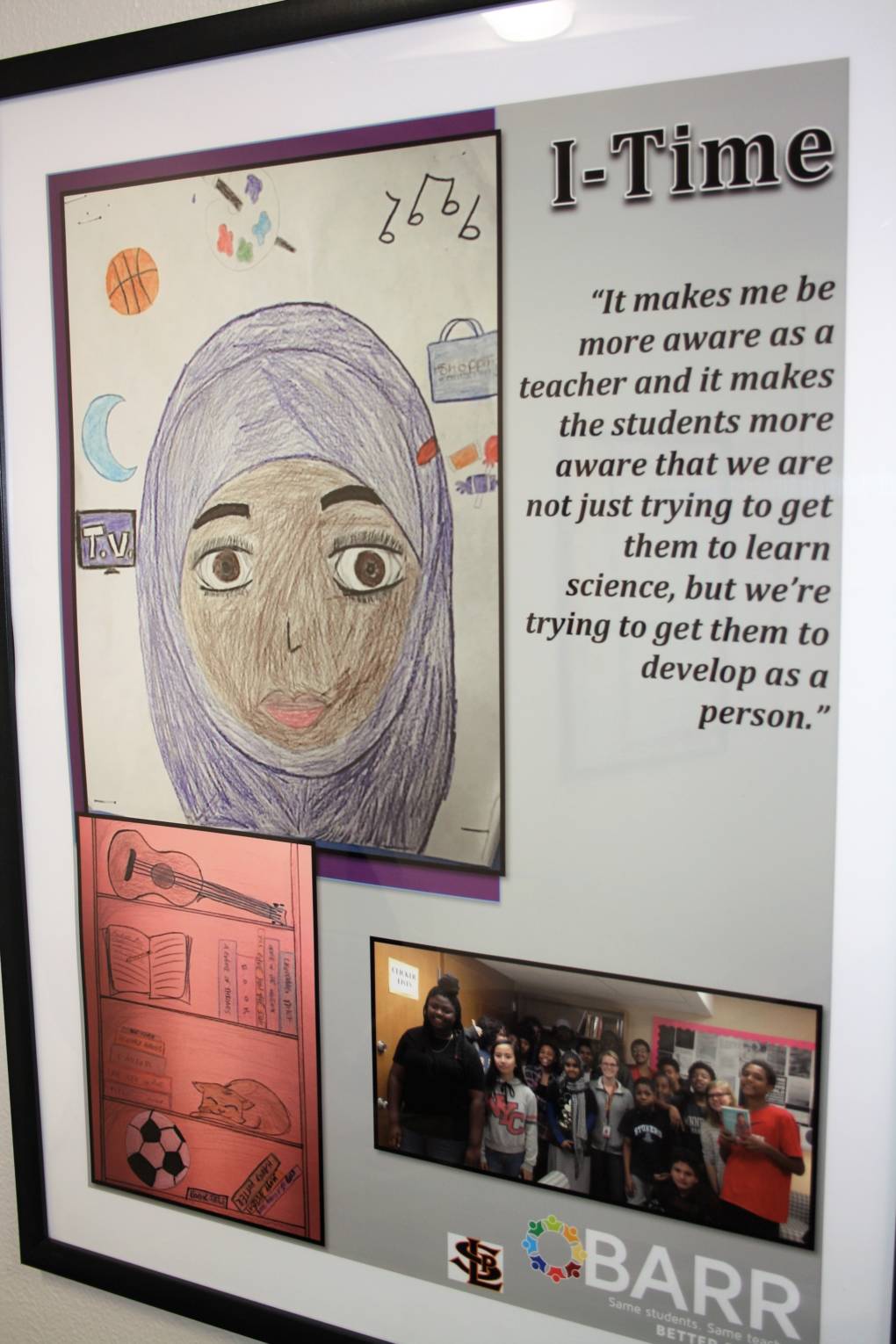
"caption": "Part of the Building Assets, Reducing Risks program is I-Time, which ninth graders have weekly as an opportunity to get to know their peers and teachers and discuss teenage problems. ",
"description": null,
"title": "BARR3",
"credit": "Tara García Mathewson/The Hechinger Report",
"status": "inherit",
"isLoading": false,
"fetchFailed": false
},
"mindshift_51940": {
"type": "attachments",
"id": "mindshift_51940",
"meta": {
"index": "attachments_1716263798",
"site": "mindshift",
"id": "51940",
"found": true
},
"parent": 51937,
"imgSizes": {
"small": {
"file": "https://ww2.kqed.org/app/uploads/sites/23/2018/08/Wessling2-520x291.png",
"width": 520,
"mimeType": "image/png",
"height": 291
},
"thumbnail": {
"file": "https://ww2.kqed.org/app/uploads/sites/23/2018/08/Wessling2-160x90.png",
"width": 160,
"mimeType": "image/png",
"height": 90
},
"post-thumbnail": {
"file": "https://ww2.kqed.org/app/uploads/sites/23/2018/08/Wessling2-672x372.png",
"width": 672,
"mimeType": "image/png",
"height": 372
},
"xsmall": {
"file": "https://ww2.kqed.org/app/uploads/sites/23/2018/08/Wessling2-375x210.png",
"width": 375,
"mimeType": "image/png",
"height": 210
},
"kqedFullSize": {
"file": "https://ww2.kqed.org/app/uploads/sites/23/2018/08/Wessling2.png",
"width": 957,
"height": 536
},
"guest-author-50": {
"file": "https://ww2.kqed.org/app/uploads/sites/23/2018/08/Wessling2-50x50.png",
"width": 50,
"mimeType": "image/png",
"height": 50
},
"guest-author-96": {
"file": "https://ww2.kqed.org/app/uploads/sites/23/2018/08/Wessling2-96x96.png",
"width": 96,
"mimeType": "image/png",
"height": 96
},
"medium": {
"file": "https://ww2.kqed.org/app/uploads/sites/23/2018/08/Wessling2-800x448.png",
"width": 800,
"mimeType": "image/png",
"height": 448
},
"guest-author-64": {
"file": "https://ww2.kqed.org/app/uploads/sites/23/2018/08/Wessling2-64x64.png",
"width": 64,
"mimeType": "image/png",
"height": 64
},
"guest-author-32": {
"file": "https://ww2.kqed.org/app/uploads/sites/23/2018/08/Wessling2-32x32.png",
"width": 32,
"mimeType": "image/png",
"height": 32
},
"detail": {
"file": "https://ww2.kqed.org/app/uploads/sites/23/2018/08/Wessling2-150x150.png",
"width": 150,
"mimeType": "image/png",
"height": 150
},
"medium_large": {
"file": "https://ww2.kqed.org/app/uploads/sites/23/2018/08/Wessling2-768x430.png",
"width": 768,
"mimeType": "image/png",
"height": 430
},
"guest-author-128": {
"file": "https://ww2.kqed.org/app/uploads/sites/23/2018/08/Wessling2-128x128.png",
"width": 128,
"mimeType": "image/png",
"height": 128
},
"xxsmall": {
"file": "https://ww2.kqed.org/app/uploads/sites/23/2018/08/Wessling2-240x134.png",
"width": 240,
"mimeType": "image/png",
"height": 134
}
},
"publishDate": 1534805639,
"modified": 1534805670,
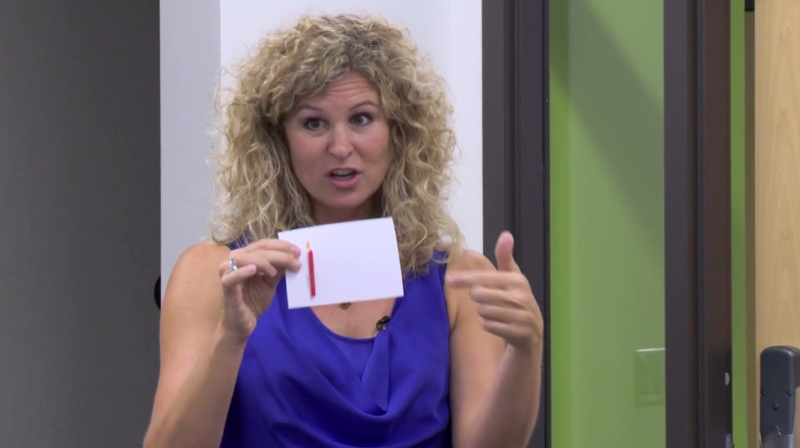
"caption": "English teacher Sarah Brown Wessling likes to start school off by asking students their wish for the year.",
"description": "English teacher Sarah Brown Wessling likes to start school off by asking students their wish for the year.",
"title": "Wessling2",
"credit": "\u003ca href=\"https://www.teachingchannel.org/video/first-day-high-school-goals\">Teaching Channel\u003c/a>",
"status": "inherit",
"isLoading": false,
"fetchFailed": false
},
"mindshift_51945": {
"type": "attachments",
"id": "mindshift_51945",
"meta": {
"index": "attachments_1716263798",
"site": "mindshift",
"id": "51945",
"found": true
},
"parent": 51943,
"imgSizes": {
"small": {
"file": "https://ww2.kqed.org/app/uploads/sites/23/2018/08/students-work-together-520x291.png",
"width": 520,
"mimeType": "image/png",
"height": 291
},
"thumbnail": {
"file": "https://ww2.kqed.org/app/uploads/sites/23/2018/08/students-work-together-160x90.png",
"width": 160,
"mimeType": "image/png",
"height": 90
},
"post-thumbnail": {
"file": "https://ww2.kqed.org/app/uploads/sites/23/2018/08/students-work-together-672x372.png",
"width": 672,
"mimeType": "image/png",
"height": 372
},
"xsmall": {
"file": "https://ww2.kqed.org/app/uploads/sites/23/2018/08/students-work-together-375x210.png",
"width": 375,
"mimeType": "image/png",
"height": 210
},
"kqedFullSize": {
"file": "https://ww2.kqed.org/app/uploads/sites/23/2018/08/students-work-together.png",
"width": 950,
"height": 532
},
"guest-author-50": {
"file": "https://ww2.kqed.org/app/uploads/sites/23/2018/08/students-work-together-50x50.png",
"width": 50,
"mimeType": "image/png",
"height": 50
},
"guest-author-96": {
"file": "https://ww2.kqed.org/app/uploads/sites/23/2018/08/students-work-together-96x96.png",
"width": 96,
"mimeType": "image/png",
"height": 96
},
"medium": {
"file": "https://ww2.kqed.org/app/uploads/sites/23/2018/08/students-work-together-800x448.png",
"width": 800,
"mimeType": "image/png",
"height": 448
},
"guest-author-64": {
"file": "https://ww2.kqed.org/app/uploads/sites/23/2018/08/students-work-together-64x64.png",
"width": 64,
"mimeType": "image/png",
"height": 64
},
"guest-author-32": {
"file": "https://ww2.kqed.org/app/uploads/sites/23/2018/08/students-work-together-32x32.png",
"width": 32,
"mimeType": "image/png",
"height": 32
},
"detail": {
"file": "https://ww2.kqed.org/app/uploads/sites/23/2018/08/students-work-together-150x150.png",
"width": 150,
"mimeType": "image/png",
"height": 150
},
"medium_large": {
"file": "https://ww2.kqed.org/app/uploads/sites/23/2018/08/students-work-together-768x430.png",
"width": 768,
"mimeType": "image/png",
"height": 430
},
"guest-author-128": {
"file": "https://ww2.kqed.org/app/uploads/sites/23/2018/08/students-work-together-128x128.png",
"width": 128,
"mimeType": "image/png",
"height": 128
},
"xxsmall": {
"file": "https://ww2.kqed.org/app/uploads/sites/23/2018/08/students-work-together-240x134.png",
"width": 240,
"mimeType": "image/png",
"height": 134
}
},
"publishDate": 1534808031,
"modified": 1534808110,
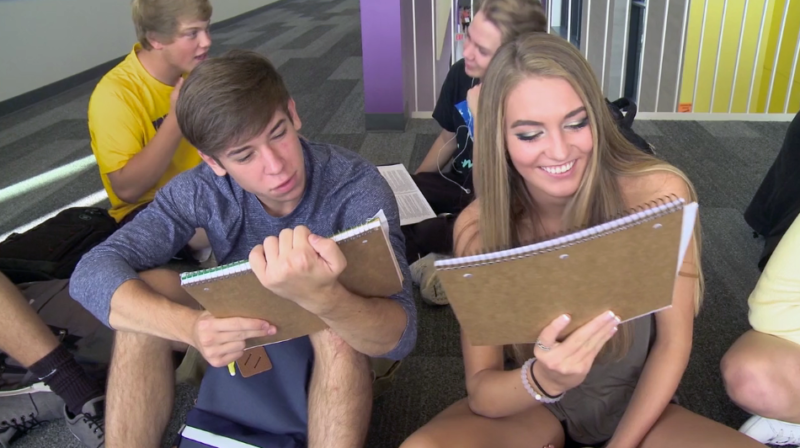
"caption": "Rather than going over the syllabus, rules and expectations for the class on the first day of school, Wessling asks students to engage in a complex learning task.",
"description": "Rather than going over the syllabus, rules and expectations for the class on the first day of school, Wessling asks students to engage in a complex learning task.",
"title": "students work together",
"credit": "\u003ca href=\"https://www.teachingchannel.org/video/first-day-school-high-school-lesson\">Teaching Channel\u003c/a>",
"status": "inherit",
"isLoading": false,
"fetchFailed": false
},
"mindshift_51903": {
"type": "attachments",
"id": "mindshift_51903",
"meta": {
"index": "attachments_1716263798",
"site": "mindshift",
"id": "51903",
"found": true
},
"parent": 51901,
"imgSizes": {
"thumbnail": {
"file": "https://ww2.kqed.org/app/uploads/sites/23/2018/08/Michael-Elsen-Rooney-ElsenRooneyVista1-500x0-c-default-160x120.jpg",
"width": 160,
"mimeType": "image/jpeg",
"height": 120
},
"post-thumbnail": {
"file": "https://ww2.kqed.org/app/uploads/sites/23/2018/08/Michael-Elsen-Rooney-ElsenRooneyVista1-500x0-c-default-500x372.jpg",
"width": 500,
"mimeType": "image/jpeg",
"height": 372
},
"xsmall": {
"file": "https://ww2.kqed.org/app/uploads/sites/23/2018/08/Michael-Elsen-Rooney-ElsenRooneyVista1-500x0-c-default-375x281.jpg",
"width": 375,
"mimeType": "image/jpeg",
"height": 281
},
"kqedFullSize": {
"file": "https://ww2.kqed.org/app/uploads/sites/23/2018/08/Michael-Elsen-Rooney-ElsenRooneyVista1-500x0-c-default.jpg",
"width": 500,
"height": 375
},
"guest-author-50": {
"file": "https://ww2.kqed.org/app/uploads/sites/23/2018/08/Michael-Elsen-Rooney-ElsenRooneyVista1-500x0-c-default-50x50.jpg",
"width": 50,
"mimeType": "image/jpeg",
"height": 50
},
"guest-author-96": {
"file": "https://ww2.kqed.org/app/uploads/sites/23/2018/08/Michael-Elsen-Rooney-ElsenRooneyVista1-500x0-c-default-96x96.jpg",
"width": 96,
"mimeType": "image/jpeg",
"height": 96
},
"guest-author-64": {
"file": "https://ww2.kqed.org/app/uploads/sites/23/2018/08/Michael-Elsen-Rooney-ElsenRooneyVista1-500x0-c-default-64x64.jpg",
"width": 64,
"mimeType": "image/jpeg",
"height": 64
},
"detail": {
"file": "https://ww2.kqed.org/app/uploads/sites/23/2018/08/Michael-Elsen-Rooney-ElsenRooneyVista1-500x0-c-default-150x150.jpg",
"width": 150,
"mimeType": "image/jpeg",
"height": 150
},
"guest-author-32": {
"file": "https://ww2.kqed.org/app/uploads/sites/23/2018/08/Michael-Elsen-Rooney-ElsenRooneyVista1-500x0-c-default-32x32.jpg",
"width": 32,
"mimeType": "image/jpeg",
"height": 32
},
"guest-author-128": {
"file": "https://ww2.kqed.org/app/uploads/sites/23/2018/08/Michael-Elsen-Rooney-ElsenRooneyVista1-500x0-c-default-128x128.jpg",
"width": 128,
"mimeType": "image/jpeg",
"height": 128
},
"xxsmall": {
"file": "https://ww2.kqed.org/app/uploads/sites/23/2018/08/Michael-Elsen-Rooney-ElsenRooneyVista1-500x0-c-default-240x180.jpg",
"width": 240,
"mimeType": "image/jpeg",
"height": 180
}
},
"publishDate": 1534489273,
"modified": 1534489317,
"caption": "Teacher Catherine Connelly leads a lesson on giving compliments in Vista’s pioneering new class on social and emotional wellness. Connelly loved the curriculum, but not the rolling furniture. ",
"description": null,
"title": "Michael-Elsen-Rooney-ElsenRooneyVista1-500x0-c-default",
"credit": "The Hechinger Report/Mike Elsen-Rooney",
"status": "inherit",
"isLoading": false,
"fetchFailed": false
},
"mindshift_51879": {
"type": "attachments",
"id": "mindshift_51879",
"meta": {
"index": "attachments_1716263798",
"site": "mindshift",
"id": "51879",
"found": true
},
"parent": 51878,
"imgSizes": {
"small": {
"file": "https://ww2.kqed.org/app/uploads/sites/23/2018/08/civics-to-voters_custom-2211b7ddd9b7cc51da6b8a94af39ea44f6691e49-520x325.jpg",
"width": 520,
"mimeType": "image/jpeg",
"height": 325
},
"twentyfourteen-full-width": {
"file": "https://ww2.kqed.org/app/uploads/sites/23/2018/08/civics-to-voters_custom-2211b7ddd9b7cc51da6b8a94af39ea44f6691e49-1038x576.jpg",
"width": 1038,
"mimeType": "image/jpeg",
"height": 576
},
"thumbnail": {
"file": "https://ww2.kqed.org/app/uploads/sites/23/2018/08/civics-to-voters_custom-2211b7ddd9b7cc51da6b8a94af39ea44f6691e49-160x100.jpg",
"width": 160,
"mimeType": "image/jpeg",
"height": 100
},
"fd-sm": {
"file": "https://ww2.kqed.org/app/uploads/sites/23/2018/08/civics-to-voters_custom-2211b7ddd9b7cc51da6b8a94af39ea44f6691e49-960x599.jpg",
"width": 960,
"mimeType": "image/jpeg",
"height": 599
},
"post-thumbnail": {
"file": "https://ww2.kqed.org/app/uploads/sites/23/2018/08/civics-to-voters_custom-2211b7ddd9b7cc51da6b8a94af39ea44f6691e49-672x372.jpg",
"width": 672,
"mimeType": "image/jpeg",
"height": 372
},
"xsmall": {
"file": "https://ww2.kqed.org/app/uploads/sites/23/2018/08/civics-to-voters_custom-2211b7ddd9b7cc51da6b8a94af39ea44f6691e49-375x234.jpg",
"width": 375,
"mimeType": "image/jpeg",
"height": 234
},
"kqedFullSize": {
"file": "https://ww2.kqed.org/app/uploads/sites/23/2018/08/civics-to-voters_custom-2211b7ddd9b7cc51da6b8a94af39ea44f6691e49-e1534322654141.jpg",
"width": 1920,
"height": 1198
},
"large": {
"file": "https://ww2.kqed.org/app/uploads/sites/23/2018/08/civics-to-voters_custom-2211b7ddd9b7cc51da6b8a94af39ea44f6691e49-1020x637.jpg",
"width": 1020,
"mimeType": "image/jpeg",
"height": 637
},
"xlarge": {
"file": "https://ww2.kqed.org/app/uploads/sites/23/2018/08/civics-to-voters_custom-2211b7ddd9b7cc51da6b8a94af39ea44f6691e49-1180x736.jpg",
"width": 1180,
"mimeType": "image/jpeg",
"height": 736
},
"complete_open_graph": {
"file": "https://ww2.kqed.org/app/uploads/sites/23/2018/08/civics-to-voters_custom-2211b7ddd9b7cc51da6b8a94af39ea44f6691e49-1200x749.jpg",
"width": 1200,
"mimeType": "image/jpeg",
"height": 749
},
"guest-author-50": {
"file": "https://ww2.kqed.org/app/uploads/sites/23/2018/08/civics-to-voters_custom-2211b7ddd9b7cc51da6b8a94af39ea44f6691e49-50x50.jpg",
"width": 50,
"mimeType": "image/jpeg",
"height": 50
},
"guest-author-96": {
"file": "https://ww2.kqed.org/app/uploads/sites/23/2018/08/civics-to-voters_custom-2211b7ddd9b7cc51da6b8a94af39ea44f6691e49-96x96.jpg",
"width": 96,
"mimeType": "image/jpeg",
"height": 96
},
"medium": {
"file": "https://ww2.kqed.org/app/uploads/sites/23/2018/08/civics-to-voters_custom-2211b7ddd9b7cc51da6b8a94af39ea44f6691e49-800x499.jpg",
"width": 800,
"mimeType": "image/jpeg",
"height": 499
},
"guest-author-64": {
"file": "https://ww2.kqed.org/app/uploads/sites/23/2018/08/civics-to-voters_custom-2211b7ddd9b7cc51da6b8a94af39ea44f6691e49-64x64.jpg",
"width": 64,
"mimeType": "image/jpeg",
"height": 64
},
"guest-author-32": {
"file": "https://ww2.kqed.org/app/uploads/sites/23/2018/08/civics-to-voters_custom-2211b7ddd9b7cc51da6b8a94af39ea44f6691e49-32x32.jpg",
"width": 32,
"mimeType": "image/jpeg",
"height": 32
},
"fd-lrg": {
"file": "https://ww2.kqed.org/app/uploads/sites/23/2018/08/civics-to-voters_custom-2211b7ddd9b7cc51da6b8a94af39ea44f6691e49-1920x1198.jpg",
"width": 1920,
"mimeType": "image/jpeg",
"height": 1198
},
"fd-med": {
"file": "https://ww2.kqed.org/app/uploads/sites/23/2018/08/civics-to-voters_custom-2211b7ddd9b7cc51da6b8a94af39ea44f6691e49-1180x736.jpg",
"width": 1180,
"mimeType": "image/jpeg",
"height": 736
},
"full-width": {
"file": "https://ww2.kqed.org/app/uploads/sites/23/2018/08/civics-to-voters_custom-2211b7ddd9b7cc51da6b8a94af39ea44f6691e49-1920x1198.jpg",
"width": 1920,
"mimeType": "image/jpeg",
"height": 1198
},
"detail": {
"file": "https://ww2.kqed.org/app/uploads/sites/23/2018/08/civics-to-voters_custom-2211b7ddd9b7cc51da6b8a94af39ea44f6691e49-150x150.jpg",
"width": 150,
"mimeType": "image/jpeg",
"height": 150
},
"medium_large": {
"file": "https://ww2.kqed.org/app/uploads/sites/23/2018/08/civics-to-voters_custom-2211b7ddd9b7cc51da6b8a94af39ea44f6691e49-768x479.jpg",
"width": 768,
"mimeType": "image/jpeg",
"height": 479
},
"guest-author-128": {
"file": "https://ww2.kqed.org/app/uploads/sites/23/2018/08/civics-to-voters_custom-2211b7ddd9b7cc51da6b8a94af39ea44f6691e49-128x128.jpg",
"width": 128,
"mimeType": "image/jpeg",
"height": 128
},
"xxsmall": {
"file": "https://ww2.kqed.org/app/uploads/sites/23/2018/08/civics-to-voters_custom-2211b7ddd9b7cc51da6b8a94af39ea44f6691e49-240x150.jpg",
"width": 240,
"mimeType": "image/jpeg",
"height": 150
}
},
"publishDate": 1534260627,
"modified": 1534322693,
"caption": "Teaching civics to students can help them be more engaged voters.",
"description": "Teaching civics to students can help them be more engaged voters.",
"title": "Teaching civics to students can help them be more engaged voters.",
"credit": "NPR/LA Johnson",
"status": "inherit",
"isLoading": false,
"fetchFailed": false
},
"mindshift_51866": {
"type": "attachments",
"id": "mindshift_51866",
"meta": {
"index": "attachments_1716263798",
"site": "mindshift",
"id": "51866",
"found": true
},
"parent": 51827,
"imgSizes": {
"small": {
"file": "https://ww2.kqed.org/app/uploads/sites/23/2018/08/iStock-871647800-e1534172537388-520x309.jpg",
"width": 520,
"mimeType": "image/jpeg",
"height": 309
},
"twentyfourteen-full-width": {
"file": "https://ww2.kqed.org/app/uploads/sites/23/2018/08/iStock-871647800-e1534172537388-1038x576.jpg",
"width": 1038,
"mimeType": "image/jpeg",
"height": 576
},
"thumbnail": {
"file": "https://ww2.kqed.org/app/uploads/sites/23/2018/08/iStock-871647800-e1534172537388-160x95.jpg",
"width": 160,
"mimeType": "image/jpeg",
"height": 95
},
"fd-sm": {
"file": "https://ww2.kqed.org/app/uploads/sites/23/2018/08/iStock-871647800-e1534172537388-960x570.jpg",
"width": 960,
"mimeType": "image/jpeg",
"height": 570
},
"post-thumbnail": {
"file": "https://ww2.kqed.org/app/uploads/sites/23/2018/08/iStock-871647800-e1534172537388-672x372.jpg",
"width": 672,
"mimeType": "image/jpeg",
"height": 372
},
"xsmall": {
"file": "https://ww2.kqed.org/app/uploads/sites/23/2018/08/iStock-871647800-e1534172537388-375x223.jpg",
"width": 375,
"mimeType": "image/jpeg",
"height": 223
},
"kqedFullSize": {
"file": "https://ww2.kqed.org/app/uploads/sites/23/2018/08/iStock-871647800-e1534172537388.jpg",
"width": 1786,
"height": 1060
},
"large": {
"file": "https://ww2.kqed.org/app/uploads/sites/23/2018/08/iStock-871647800-e1534172537388-1020x605.jpg",
"width": 1020,
"mimeType": "image/jpeg",
"height": 605
},
"xlarge": {
"file": "https://ww2.kqed.org/app/uploads/sites/23/2018/08/iStock-871647800-e1534172537388-1180x700.jpg",
"width": 1180,
"mimeType": "image/jpeg",
"height": 700
},
"complete_open_graph": {
"file": "https://ww2.kqed.org/app/uploads/sites/23/2018/08/iStock-871647800-e1534172537388-1200x712.jpg",
"width": 1200,
"mimeType": "image/jpeg",
"height": 712
},
"guest-author-50": {
"file": "https://ww2.kqed.org/app/uploads/sites/23/2018/08/iStock-871647800-e1534172537388-50x50.jpg",
"width": 50,
"mimeType": "image/jpeg",
"height": 50
},
"guest-author-96": {
"file": "https://ww2.kqed.org/app/uploads/sites/23/2018/08/iStock-871647800-e1534172537388-96x96.jpg",
"width": 96,
"mimeType": "image/jpeg",
"height": 96
},
"medium": {
"file": "https://ww2.kqed.org/app/uploads/sites/23/2018/08/iStock-871647800-e1534172537388-800x475.jpg",
"width": 800,
"mimeType": "image/jpeg",
"height": 475
},
"guest-author-64": {
"file": "https://ww2.kqed.org/app/uploads/sites/23/2018/08/iStock-871647800-e1534172537388-64x64.jpg",
"width": 64,
"mimeType": "image/jpeg",
"height": 64
},
"guest-author-32": {
"file": "https://ww2.kqed.org/app/uploads/sites/23/2018/08/iStock-871647800-e1534172537388-32x32.jpg",
"width": 32,
"mimeType": "image/jpeg",
"height": 32
},
"fd-lrg": {
"file": "https://ww2.kqed.org/app/uploads/sites/23/2018/08/iStock-871647800-1920x1280.jpg",
"width": 1920,
"mimeType": "image/jpeg",
"height": 1280
},
"fd-med": {
"file": "https://ww2.kqed.org/app/uploads/sites/23/2018/08/iStock-871647800-e1534172537388-1180x700.jpg",
"width": 1180,
"mimeType": "image/jpeg",
"height": 700
},
"full-width": {
"file": "https://ww2.kqed.org/app/uploads/sites/23/2018/08/iStock-871647800-1920x1280.jpg",
"width": 1920,
"mimeType": "image/jpeg",
"height": 1280
},
"detail": {
"file": "https://ww2.kqed.org/app/uploads/sites/23/2018/08/iStock-871647800-e1534172537388-150x150.jpg",
"width": 150,
"mimeType": "image/jpeg",
"height": 150
},
"medium_large": {
"file": "https://ww2.kqed.org/app/uploads/sites/23/2018/08/iStock-871647800-e1534172537388-768x456.jpg",
"width": 768,
"mimeType": "image/jpeg",
"height": 456
},
"guest-author-128": {
"file": "https://ww2.kqed.org/app/uploads/sites/23/2018/08/iStock-871647800-e1534172537388-128x128.jpg",
"width": 128,
"mimeType": "image/jpeg",
"height": 128
},
"xxsmall": {
"file": "https://ww2.kqed.org/app/uploads/sites/23/2018/08/iStock-871647800-e1534172537388-240x142.jpg",
"width": 240,
"mimeType": "image/jpeg",
"height": 142
}
},
"publishDate": 1534172365,
"modified": 1534172554,
"caption": null,
"description": null,
"title": "iStock-871647800",
"credit": "iStock/tuk69tuk",
"status": "inherit",
"isLoading": false,
"fetchFailed": false
},
"mindshift_51839": {
"type": "attachments",
"id": "mindshift_51839",
"meta": {
"index": "attachments_1716263798",
"site": "mindshift",
"id": "51839",
"found": true
},
"parent": 51811,
"imgSizes": {
"small": {
"file": "https://ww2.kqed.org/app/uploads/sites/23/2018/08/iStock-925453216-520x422.jpg",
"width": 520,
"mimeType": "image/jpeg",
"height": 422
},
"twentyfourteen-full-width": {
"file": "https://ww2.kqed.org/app/uploads/sites/23/2018/08/iStock-925453216-1038x576.jpg",
"width": 1038,
"mimeType": "image/jpeg",
"height": 576
},
"thumbnail": {
"file": "https://ww2.kqed.org/app/uploads/sites/23/2018/08/iStock-925453216-160x130.jpg",
"width": 160,
"mimeType": "image/jpeg",
"height": 130
},
"fd-sm": {
"file": "https://ww2.kqed.org/app/uploads/sites/23/2018/08/iStock-925453216-960x779.jpg",
"width": 960,
"mimeType": "image/jpeg",
"height": 779
},
"post-thumbnail": {
"file": "https://ww2.kqed.org/app/uploads/sites/23/2018/08/iStock-925453216-672x372.jpg",
"width": 672,
"mimeType": "image/jpeg",
"height": 372
},
"xsmall": {
"file": "https://ww2.kqed.org/app/uploads/sites/23/2018/08/iStock-925453216-375x304.jpg",
"width": 375,
"mimeType": "image/jpeg",
"height": 304
},
"kqedFullSize": {
"file": "https://ww2.kqed.org/app/uploads/sites/23/2018/08/iStock-925453216.jpg",
"width": 1922,
"height": 1560
},
"large": {
"file": "https://ww2.kqed.org/app/uploads/sites/23/2018/08/iStock-925453216-1020x828.jpg",
"width": 1020,
"mimeType": "image/jpeg",
"height": 828
},
"xlarge": {
"file": "https://ww2.kqed.org/app/uploads/sites/23/2018/08/iStock-925453216-1180x958.jpg",
"width": 1180,
"mimeType": "image/jpeg",
"height": 958
},
"complete_open_graph": {
"file": "https://ww2.kqed.org/app/uploads/sites/23/2018/08/iStock-925453216-1200x974.jpg",
"width": 1200,
"mimeType": "image/jpeg",
"height": 974
},
"guest-author-50": {
"file": "https://ww2.kqed.org/app/uploads/sites/23/2018/08/iStock-925453216-50x50.jpg",
"width": 50,
"mimeType": "image/jpeg",
"height": 50
},
"guest-author-96": {
"file": "https://ww2.kqed.org/app/uploads/sites/23/2018/08/iStock-925453216-96x96.jpg",
"width": 96,
"mimeType": "image/jpeg",
"height": 96
},
"medium": {
"file": "https://ww2.kqed.org/app/uploads/sites/23/2018/08/iStock-925453216-800x649.jpg",
"width": 800,
"mimeType": "image/jpeg",
"height": 649
},
"guest-author-64": {
"file": "https://ww2.kqed.org/app/uploads/sites/23/2018/08/iStock-925453216-64x64.jpg",
"width": 64,
"mimeType": "image/jpeg",
"height": 64
},
"guest-author-32": {
"file": "https://ww2.kqed.org/app/uploads/sites/23/2018/08/iStock-925453216-32x32.jpg",
"width": 32,
"mimeType": "image/jpeg",
"height": 32
},
"fd-lrg": {
"file": "https://ww2.kqed.org/app/uploads/sites/23/2018/08/iStock-925453216-1920x1558.jpg",
"width": 1920,
"mimeType": "image/jpeg",
"height": 1558
},
"fd-med": {
"file": "https://ww2.kqed.org/app/uploads/sites/23/2018/08/iStock-925453216-1180x958.jpg",
"width": 1180,
"mimeType": "image/jpeg",
"height": 958
},
"full-width": {
"file": "https://ww2.kqed.org/app/uploads/sites/23/2018/08/iStock-925453216-1920x1558.jpg",
"width": 1920,
"mimeType": "image/jpeg",
"height": 1558
},
"detail": {
"file": "https://ww2.kqed.org/app/uploads/sites/23/2018/08/iStock-925453216-150x150.jpg",
"width": 150,
"mimeType": "image/jpeg",
"height": 150
},
"medium_large": {
"file": "https://ww2.kqed.org/app/uploads/sites/23/2018/08/iStock-925453216-768x623.jpg",
"width": 768,
"mimeType": "image/jpeg",
"height": 623
},
"guest-author-128": {
"file": "https://ww2.kqed.org/app/uploads/sites/23/2018/08/iStock-925453216-128x128.jpg",
"width": 128,
"mimeType": "image/jpeg",
"height": 128
},
"xxsmall": {
"file": "https://ww2.kqed.org/app/uploads/sites/23/2018/08/iStock-925453216-240x195.jpg",
"width": 240,
"mimeType": "image/jpeg",
"height": 195
}
},
"publishDate": 1533712391,
"modified": 1533712414,
"caption": null,
"description": null,
"title": "iStock-925453216",
"credit": "iStock/UberImages",
"status": "inherit",
"isLoading": false,
"fetchFailed": false
}
},
"audioPlayerReducer": {
"postId": "stream_live",
"isPaused": true,
"isPlaying": false,
"pfsActive": false,
"pledgeModalIsOpen": true,
"playerDrawerIsOpen": false,
"liveAudioPlayStartedAt": 0,
"liveAudioPlayContext": ""
},
"authorsReducer": {
"byline_mindshift_52183": {
"type": "authors",
"id": "byline_mindshift_52183",
"meta": {
"override": true
},
"slug": "byline_mindshift_52183",
"name": "\u003ca href=\"https://twitter.com/gailcornwall\">Gail Cornwall\u003c/a>",
"isLoading": false
},
"byline_mindshift_52000": {
"type": "authors",
"id": "byline_mindshift_52000",
"meta": {
"override": true
},
"slug": "byline_mindshift_52000",
"name": "\u003ca href=\"http://hechingerreport.org/\">Tara García Mathewson, The Hechinger Report\u003c/a>",
"isLoading": false
},
"byline_mindshift_51901": {
"type": "authors",
"id": "byline_mindshift_51901",
"meta": {
"override": true
},
"slug": "byline_mindshift_51901",
"name": "\u003ca href=\"http://hechingerreport.org/\">Mike Elsen-Rooney, The Hechinger Report\u003c/a>",
"isLoading": false
},
"byline_mindshift_51878": {
"type": "authors",
"id": "byline_mindshift_51878",
"meta": {
"override": true
},
"slug": "byline_mindshift_51878",
"name": "Emily Cardinali",
"isLoading": false
},
"katrinaschwartz": {
"type": "authors",
"id": "234",
"meta": {
"index": "authors_1716337520",
"id": "234",
"found": true
},
"name": "Katrina Schwartz",
"firstName": "Katrina",
"lastName": "Schwartz",
"slug": "katrinaschwartz",
"email": "kschwartz@kqed.org",
"display_author_email": false,
"staff_mastheads": [
"news"
],
"title": "Producer",
"bio": "Katrina Schwartz is a journalist based in San Francisco. She's worked at KPCC public radio in LA and has reported on air and online for KQED since 2010. She covered how teaching and learning is changing for MindShift between 2012 and 2020. She is the co-host of the MindShift podcast and now produces KQED's Bay Curious podcast.",
"avatar": "https://secure.gravatar.com/avatar/edb4ee79070447a018538c9aae6eeecf28786515b8a0c30e43b6b7dce5aa44c8?s=600&d=blank&r=g",
"twitter": "kschwart",
"bluesky": null,
"facebook": null,
"instagram": null,
"linkedin": null,
"sites": [
{
"site": "",
"roles": [
"editor"
]
},
{
"site": "news",
"roles": [
"editor"
]
},
{
"site": "mindshift",
"roles": [
"administrator"
]
},
{
"site": "stateofhealth",
"roles": [
"author"
]
},
{
"site": "science",
"roles": [
"editor"
]
}
],
"headData": {
"title": "Katrina Schwartz | KQED",
"description": "Producer",
"ogImgSrc": "https://secure.gravatar.com/avatar/edb4ee79070447a018538c9aae6eeecf28786515b8a0c30e43b6b7dce5aa44c8?s=600&d=blank&r=g",
"twImgSrc": "https://secure.gravatar.com/avatar/edb4ee79070447a018538c9aae6eeecf28786515b8a0c30e43b6b7dce5aa44c8?s=600&d=blank&r=g"
},
"isLoading": false,
"link": "/author/katrinaschwartz"
},
"dfkris": {
"type": "authors",
"id": "11087",
"meta": {
"index": "authors_1716337520",
"id": "11087",
"found": true
},
"name": "Deborah Farmer Kris",
"firstName": "Deborah Farmer",
"lastName": "Kris",
"slug": "dfkris",
"email": "dfkris@gmail.com",
"display_author_email": false,
"staff_mastheads": [],
"title": null,
"bio": "\u003cem>\u003ca href=\"https://twitter.com/@dfkris\">Deborah Farmer Kris\u003c/a> has taught elementary, middle and high school and served as a charter school administrator. She spent a decade as an associate at Boston University’s \u003c/em>\u003cem>\u003ca href=\"http://www.bu.edu/ccsr/about-us/\">Center for Character and Social Responsibility\u003c/a>, \u003c/em>\u003cem>researching, writing, and consulting with schools. She is the mother of two young children. You can follower her on Twitter \u003ca href=\"https://twitter.com/@dfkris\">@dfkris\u003c/a>.\u003c/em>",
"avatar": "https://secure.gravatar.com/avatar/48efe6f17031ed31222b74af9605fe5a?s=600&d=blank&r=g",
"twitter": "dfkris",
"facebook": null,
"instagram": null,
"linkedin": null,
"sites": [
{
"site": "mindshift",
"roles": [
"author"
]
}
],
"headData": {
"title": "Deborah Farmer Kris | KQED",
"description": null,
"ogImgSrc": "https://secure.gravatar.com/avatar/48efe6f17031ed31222b74af9605fe5a?s=600&d=blank&r=g",
"twImgSrc": "https://secure.gravatar.com/avatar/48efe6f17031ed31222b74af9605fe5a?s=600&d=blank&r=g"
},
"isLoading": false,
"link": "/author/dfkris"
},
"pauldarvasi": {
"type": "authors",
"id": "11107",
"meta": {
"index": "authors_1716337520",
"id": "11107",
"found": true
},
"name": "Paul Darvasi",
"firstName": "Paul",
"lastName": "Darvasi",
"slug": "pauldarvasi",
"email": "pauldarvasi@gmail.com",
"display_author_email": false,
"staff_mastheads": [],
"title": null,
"bio": "Paul Darvasi is an experienced educator whose research, speaking and writing explore the intersections of learning, technology, narrative and games. You can follow him on Twitter:\u003ca href=\"https://twitter.com/PaulDarvasi\"> @pauldarvasi\u003c/a>",
"avatar": "https://secure.gravatar.com/avatar/df387897a1bf0cd4b720b8175112731a?s=600&d=blank&r=g",
"twitter": "pauldarvasi",
"facebook": null,
"instagram": null,
"linkedin": null,
"sites": [
{
"site": "mindshift",
"roles": [
"contributor"
]
}
],
"headData": {
"title": "Paul Darvasi | KQED",
"description": null,
"ogImgSrc": "https://secure.gravatar.com/avatar/df387897a1bf0cd4b720b8175112731a?s=600&d=blank&r=g",
"twImgSrc": "https://secure.gravatar.com/avatar/df387897a1bf0cd4b720b8175112731a?s=600&d=blank&r=g"
},
"isLoading": false,
"link": "/author/pauldarvasi"
}
},
"pagesReducer": {
"mindshift_category_teaching-strategies": {
"type": "terms",
"id": "mindshift_193",
"meta": {
"index": "terms_1716263798",
"site": "mindshift",
"id": "193",
"score": 14.406914
},
"featImg": null,
"name": "Teaching Strategies",
"description": "Innovative ideas - projects, processes, curricula, and more - that are transforming how we teach and learn.",
"taxonomy": "category",
"headData": {
"twImgId": null,
"twTitle": null,
"ogTitle": null,
"ogImgId": null,
"twDescription": null,
"description": "Innovative ideas - projects, processes, curricula, and more - that are transforming how we teach and learn.",
"title": "Teaching Strategies Archives | KQED Mindshift",
"ogDescription": null
},
"ttid": 193,
"slug": "teaching-strategies",
"isLoading": false,
"title": "Teaching Strategies",
"pageMeta": {
"site": "mindshift",
"WpPageTemplate": "page-topic-editorial",
"currentPage": 23
},
"blocks": [
{
"blockName": "kqed/company-paragraph",
"content": "Innovative ideas - projects, processes, curricula, and more - that are transforming how we teach and learn."
},
{
"blockName": "kqed/post-list",
"attrs": {
"layout": "cardArticle2",
"query": "posts/mindshift?category=teaching-strategies",
"seeMore": false,
"paginated": true,
"page": 23
}
},
{
"blockName": "kqed/ad"
}
]
}
},
"pfsSessionReducer": {},
"postsReducer": {
"stream_live": {
"type": "live",
"id": "stream_live",
"audioUrl": "https://streams.kqed.org/kqedradio",
"title": "Live Stream",
"excerpt": "Live Stream information currently unavailable.",
"link": "/radio",
"featImg": "",
"label": {
"name": "KQED Live",
"link": "/"
}
},
"stream_kqedNewscast": {
"type": "posts",
"id": "stream_kqedNewscast",
"audioUrl": "https://www.kqed.org/.stream/anon/radio/RDnews/newscast.mp3?_=1",
"title": "KQED Newscast",
"featImg": "",
"label": {
"name": "88.5 FM",
"link": "/"
}
},
"mindshift_52336": {
"type": "posts",
"id": "mindshift_52336",
"meta": {
"index": "posts_1716263798",
"site": "mindshift",
"id": "52336",
"score": null,
"sort": [
1540798456000
]
},
"parent": 0,
"labelTerm": {
"site": "mindshift"
},
"blocks": [],
"publishDate": 1540798456,
"format": "standard",
"disqusTitle": "What Does Improvement Science Look Like In Real Classrooms?",
"title": "What Does Improvement Science Look Like In Real Classrooms?",
"headTitle": "MindShift | KQED News",
"content": "\u003cp>Monique Maynard has been teaching for 17 years and prides herself on creating a dynamic classroom culture where students work together in groups. She teaches at West Warwick High School in Rhode Island. When she taught precalculus she spent very little time at the front of the room, preferring to give students tasks to work on together and then circulating to listen and help. But when her principal asked her to switch to teaching freshmen algebra three years ago, it was “a culture shock.” Within the first week of teaching freshmen, she had scrapped the groups and had all the students in rows.\u003c/p>\n\u003cp>“I morphed into one of those teachers at the front of the room, one of those teachers I swore I’d never be,” Maynard said.\u003c/p>\n\u003cp>Her young students just weren’t mature enough to handle group work at the start of their high school career, and in her confusion Maynard reverted back to what seemed easiest -- control and conformity.\u003c/p>\n\u003caside class=\"pullquote alignright\">'We're really interested in working on projects where the messy realities of the classroom rear their ugly heads all the time. It keeps it real.'\u003ccite>Kirk Walters, AIR managing researcher\u003c/cite>\u003c/aside>\n\u003cp>“In my building, there are very few classrooms where students are grouped together,” Maynard said. “And there’s certainly no other math classes.”\u003c/p>\n\u003cp>When Maynard joined the \u003ca href=\"https://www.bettermathteachingnetwork.org/\" target=\"_blank\" rel=\"noopener\">Better Math Teaching Network (BMTN)\u003c/a>, she found the support she needed to go back to what she knew was best for her students. The BMTN is a community of researchers, teachers and instructional leaders in New England working together to make algebra teaching more student-centered. In this case, \u003ca href=\"https://www.nmefoundation.org/getattachment/Resources/Assessment/The-Better-Math-Teaching-Network-Lessons-Learned/AIR-BMTN-2b.pdf?lang=en-US&ext=.pdf\">student-centered\u003c/a> means “students are actively and deeply engaged in understanding the content.” The network grew out of \u003ca href=\"https://www.nmefoundation.org/resources/student-centered-learning/an-up-close-look-at-student-centered-math-teaching\" target=\"_blank\" rel=\"noopener\">research into the student-centered math teaching strategies that work best\u003c/a>, funded by the Nellie Mae Foundation and conducted by the \u003ca href=\"https://www.air.org/\" target=\"_blank\" rel=\"noopener\">American Institutes for Research (AIR)\u003c/a>.\u003c/p>\n\u003cp>[ad fullwidth]\u003c/p>\n\u003cp>“By December we were in groups for the rest of the year,” Maynard said. “The students came in, they’d look to the board to see what group they’d be in, and they would work from the first minute to the last minute.”\u003c/p>\n\u003cp>Teachers in the BMTN choose to focus on deepening their students’ abilities in one of three areas: \u003ca href=\"https://www.bettermathteachingnetwork.org/student-centered-instruction/\" target=\"_blank\" rel=\"noopener\">connect, justify and solve\u003c/a>. They are grouped with other algebra teachers at schools across New England working on the same skill. They each test small changes in their classrooms, iterate on those changes, and bring their findings to monthly conference calls where they get ideas, feedback, coaching and encouragement.\u003c/p>\n\u003cp>“I changed so much in one year through this routine of PDSA (plan, do, study, act) cycles, improvement science, and talking with teachers throughout New England that it was just a tremendously gratifying year,” Maynard said. “Even my students would tell you how things changed over the course of the year.”\u003c/p>\n\u003cfigure id=\"attachment_52340\" class=\"wp-caption aligncenter\" style=\"max-width: 1011px\">\u003cimg class=\"size-full wp-image-52340\" src=\"https://ww2.kqed.org/mindshift/wp-content/uploads/sites/23/2018/10/drivers.png\" alt=\"A driver diagram is a network's theory of improvement, including the aim statement and the drivers to affect change.\" width=\"1011\" height=\"658\" srcset=\"https://ww2.kqed.org/app/uploads/sites/23/2018/10/drivers.png 1011w, https://ww2.kqed.org/app/uploads/sites/23/2018/10/drivers-160x104.png 160w, https://ww2.kqed.org/app/uploads/sites/23/2018/10/drivers-800x521.png 800w, https://ww2.kqed.org/app/uploads/sites/23/2018/10/drivers-768x500.png 768w, https://ww2.kqed.org/app/uploads/sites/23/2018/10/drivers-960x625.png 960w, https://ww2.kqed.org/app/uploads/sites/23/2018/10/drivers-240x156.png 240w, https://ww2.kqed.org/app/uploads/sites/23/2018/10/drivers-375x244.png 375w, https://ww2.kqed.org/app/uploads/sites/23/2018/10/drivers-520x338.png 520w\" sizes=\"(max-width: 1011px) 100vw, 1011px\">\u003cfigcaption class=\"wp-caption-text\">A driver diagram is a network's theory of improvement, including the aim statement and the drivers to affect change. \u003ccite>(Courtesy \u003ca href=\"https://www.nmefoundation.org/getattachment/Resources/Assessment/The-Better-Math-Teaching-Network-Lessons-Learned/AIR-BMTN-2b.pdf?lang=en-US&ext=.pdf\">Nellie Mae Education Foundation\u003c/a>)\u003c/cite>\u003c/figcaption>\u003c/figure>\n\u003cp>\u003ca href=\"https://www.kqed.org/mindshift/51115/how-to-plan-and-implement-continuous-improvement-in-schools\" target=\"_blank\" rel=\"noopener\">Improvement science\u003c/a> is an approach to incremental and sustained change championed by the Carnegie Foundation. It’s grabbing the attention and excitement of many in the education community, including the Bill & Melinda Gates Foundation, which announced it would fund more networked improvement projects across the country.\u003c/p>\n\u003cp>Improvement science is based on the idea that practitioners -- in this case teachers -- are \u003ca href=\"https://www.bettermathteachingnetwork.org/core-principles/\" target=\"_blank\" rel=\"noopener\">best positioned to test new ideas and know what works and what doesn’t\u003c/a>. Teachers engage in rapid cycles of developing a change idea, testing it, collecting data on it, and reflecting on whether it achieved the stated goal or should be altered. When many teachers are engaged in these PDSA cycles and sharing their findings, good ideas surface to the top and get incorporated into other classrooms.\u003c/p>\n\u003cp>“We’re really interested in working on projects where the messy realities of the classroom rear their ugly heads all the time,” said Kirk Walters, a managing researcher for AIR on this project. “It keeps it real.”\u003c/p>\n\u003cp>Walters and his colleagues understand that teaching math in a way that pushes students to deeply understand concepts is hard work. They hope to hone in on the instructional moves teachers can make in classrooms that strengthen students’ ability to connect mathematical concepts to each other and the real world; to justify their mathematical thinking and communicate it to others; and to solve challenging math problems that go beyond rote algorithms. They are excited about improvement science because the changes come from teachers experimenting with strategies in real classrooms, not from a top-down programs or research studies conducted under ideal circumstances.\u003c/p>\n\u003cp>“It’s really important for whoever is going into this work, to have a curious, humble disposition related to teaching,” Walters said. “It really is complex. It’s really hard to keep track of everything happening in the classroom.”\u003c/p>\n\u003cp>BMTN is now in its fourth year and has steadily added teachers, although it is by no means large. Scaling up a project like this is hard because of the time and resources required, but Walters thinks principals at the building level or instructional coaches at the district level could use improvement science to improve instruction. One key, however, is voluntary participation from teachers; they have to want to do this work for it to be successful. Another, is to keep the focus narrow.\u003c/p>\n\u003cp>The BMTN focuses on algebra teachers because algebra is a gateway course to higher mathematics, opening doors into other science, technology, engineering and math (STEM) fields where much of the new job growth has been. Many students currently aren’t learning math deeply enough to excel when they get to more challenging mathematics, creating a pipeline problem to well paid careers in those fields.\u003c/p>\n\u003cp>When BMTN teachers meet virtually they talk through each participants change idea, the data they’d collected on how it impacted students’ engagement, and how they plan to proceed. Walters and his colleague Toni Smith, a principal researcher at AIR, acted as coaches to these groups. It was their job to ask probing questions, keep the conversations focused on the specific area of interest, and sometimes to offer advice.\u003c/p>\n\u003cp>“We as coaches try to focus the conversation to be about looking specifically at the data and what it’s helping us see,” Smith said. Before implementing an idea, teachers predict how it will change students’ ability to connect, justify or solve with depth. When they bring their data to the group they’re looking to see how it either supports their prediction or contradicts it. In either case, there’s a lot to be learned about what to try next.\u003c/p>\n\u003cp>As coaches, Smith and Walters \u003ca href=\"https://www.nmefoundation.org/getattachment/Resources/Assessment/The-Better-Math-Teaching-Network-Lessons-Learned/AIR-BMTN-2b.pdf?lang=en-US&ext=.pdf\" target=\"_blank\" rel=\"noopener\">learned a lot through this process\u003c/a>. They’ve learned to balance honoring the work teachers have done with pushing for more depth, and most crucially, they’ve learned that coaching is most effective as structured feedback on a narrow set of practices.\u003c/p>\n\u003cp>“That’s the way to get something moving; it’s not this broad stuff,” Walters said.\u003c/p>\n\u003cp>\u003cstrong>IMPROVEMENT SCIENCE IN REAL CLASSROOMS\u003c/strong>\u003c/p>\n\u003cp>At West Warwick High School, Monique Maynard chose to focus on helping students justify their mathematical thinking. She spent the first several months trying strategies to get students to write structured justifications: a stated claim supported by three reasons that point back to their work, capped off with one sentence repeating the claim. She even worked with an English teacher to try to align this structure to what they were learning about making claims and supporting them with evidence in their writing.\u003c/p>\n\u003cfigure id=\"attachment_52341\" class=\"wp-caption aligncenter\" style=\"max-width: 875px\">\u003cimg class=\"size-full wp-image-52341\" src=\"https://ww2.kqed.org/mindshift/wp-content/uploads/sites/23/2018/10/PDSA.png\" alt=\"Teachers in the Better Math Teaching Network ask themselves these three questions as they conduct small tests in their classrooms.\" width=\"875\" height=\"549\" srcset=\"https://ww2.kqed.org/app/uploads/sites/23/2018/10/PDSA.png 875w, https://ww2.kqed.org/app/uploads/sites/23/2018/10/PDSA-160x100.png 160w, https://ww2.kqed.org/app/uploads/sites/23/2018/10/PDSA-800x502.png 800w, https://ww2.kqed.org/app/uploads/sites/23/2018/10/PDSA-768x482.png 768w, https://ww2.kqed.org/app/uploads/sites/23/2018/10/PDSA-240x151.png 240w, https://ww2.kqed.org/app/uploads/sites/23/2018/10/PDSA-375x235.png 375w, https://ww2.kqed.org/app/uploads/sites/23/2018/10/PDSA-520x326.png 520w\" sizes=\"(max-width: 875px) 100vw, 875px\">\u003cfigcaption class=\"wp-caption-text\">Teachers in the Better Math Teaching Network ask themselves these three questions as they conduct small tests in their classrooms. \u003ccite>(Courtesy \u003ca href=\"https://www.nmefoundation.org/getattachment/Resources/Assessment/The-Better-Math-Teaching-Network-Lessons-Learned/AIR-BMTN-2b.pdf?lang=en-US&ext=.pdf\">Nellie Mae Education Foundation\u003c/a>)\u003c/cite>\u003c/figcaption>\u003c/figure>\n\u003cp>Maynard spent two Plan, Do, Study, Act (PDSA) cycles trying to get students to justify their thinking in the structured way she had envisioned. But she was frustrated when nothing she tried worked. Eventually she turned to her students for advice, asking them where they were struggling.\u003c/p>\n\u003cp>“They didn’t know what justification looked like,” Maynard said. “That was a big awakening for me because I had made a totally poor assumption.”\u003c/p>\n\u003cp>When she got together with other teachers in the network they took a hard look at the rubrics they were using and decided that it might be more productive to focus on getting students to analyze using reasoning. She also took a suggestion from Walters, her coach, that she try offering students models of the kind of analysis, reasoning and justification she was looking for to help them understand what she wanted.\u003c/p>\n\u003caside class=\"pullquote alignleft\">'I covered more material with this algebra one class than I have in the last four years and with greater depth.'\u003ccite>Monique Maynard, Algebra teacher\u003c/cite>\u003c/aside>\n\u003cp>That led her to give groups example problems where the analysis and reasoning had been done. She gave them time to highlight and take notes on the problem, to discuss with their group, and to come back together as a class to discuss. Only then did she give them a new, but similar task and ask them to apply the kind of analysis they’d seen in the example.\u003c/p>\n\u003cp>Maynard admits this process is slow at first, especially on the first day. Students would often finish the independent tasks for homework. But the next day they could do it much more quickly, and more importantly she saw improvement in how deeply they were analyzing the problem, providing reasoning, and using multiple representations to justify their answers.\u003c/p>\n\u003cp>“I covered more material with this algebra one class than I have in the last four years and with greater depth,” Maynard said. For their final exam, students had to solve a systems of equation task, a problem more commonly found in Algebra 2.\u003c/p>\n\u003cp>“I found out that even really small differences in classroom routines can create really powerful differences in classroom dynamics and student learning,” Maynard said. Perhaps more importantly, she said all her kids were engaged in every class, even suggesting tweaks to the routines for next year.\u003c/p>\n\u003cp>“What is nice about the network is that you’re able to choose a curriculum concern within your own classroom, one that concerns your own students, rather than a schoolwide focus,” Maynard said. “The learning is different.”\u003c/p>\n\u003cp>She has worked with other \u003ca href=\"https://www.greatschoolspartnership.org/ri-champions/\" target=\"_blank\" rel=\"noopener\">educators at the state level to develop statewide math competencies\u003c/a>, evaluated assessment questions, participated in \u003ca href=\"https://www.kqed.org/mindshift/42021/lesson-study-technique-what-teachers-can-learn-from-one-another\" target=\"_blank\" rel=\"noopener\">lesson study\u003c/a>, and done other district professional development. She says none of that has made as much of an impact on her teaching as participating in BMTN.\u003c/p>\n\u003cp>\u003cstrong>TIME FOR SOMETHING NEW\u003c/strong>\u003c/p>\n\u003cp>Heather Vonada teaches Algebra 1 and 2 at Woodstock High School in Vermont. Entering her 15th year of teaching, she applied to be part of the Better Math Teaching Network because she thought it was time for something new. She’d had a realization about herself.\u003c/p>\n\u003cp>“I’m looked very favorably upon because I was young, full of energy, super engaging, and that sounded really awesome, but then I realized that I was a stand and deliver math teacher and no better than any other math teacher anywhere,” Vonada said. “The only thing I was doing differently was I threw in some funny jokes, but my class wasn’t a student-centered class.”\u003c/p>\n\u003cp>She realized that even though students liked her class and her, she was the one asking all the questions, doing all the discovering. If she wanted to make her class more student-centered she needed to flip that dynamic. She could see that her students were following procedures without doing much thinking. And, on top of that, she was getting bored teaching this way. She’s now entering her third year with BMTN.\u003c/p>\n\u003cp>“It’s nice to have a group of people who are working together for the common goal. And the goal is not awfully lofty,” Vonada said. She likes that she can focus in small changes to her teaching practice -- it feels manageable, even with the many daily tasks and demands on her time.\u003c/p>\n\u003cp>“I think the reason I’m bought in is the idea of making a small change. This wasn’t Heather changing her 14 years of practice. This was Heather changing one small thing and seeing what happened.”\u003c/p>\n\u003cp>In her first year, Vonada focused on helping students make connections between mathematical concepts and procedures. She thought the work she was doing in another professional learning community around math talks could translate, so she focused on structured math talks to elicit connections. In her second year, she worked on justifications, and plans to focus on solving this year.\u003c/p>\n\u003cp>Working with the network, getting feedback from the AIR coaches, and intently focusing on her own particular problems of practice has dramatically changed how Vonada teaches. She no longer stands at the front of the room talking at students. Now she’s more often found at the back of the room, listening to students interact, secure in the knowledge that structures she’s implemented have students working and thinking hard.\u003c/p>\n\u003cp>“That’s been a huge change,” Vonada said. Student-centered is “them doing the heavy lifting. I’m not doing the math for them, they’re doing it.”\u003c/p>\n\u003cp>Like Monique Maynard, Vonada found that once she got used to the tools of improvement science they became second nature. She said other teachers in her building have even engaged in similar kinds of inquiry, so using this method at the building or district level wouldn’t be impossible. The key thing is that teachers are at the center of this process, determining what to work on, strategies to try, tweaks to be made, when to drop a strategy, and when to \u003ca href=\"https://www.bettermathteachingnetwork.org/teaching-ideas-2/\" target=\"_blank\" rel=\"noopener\">elevate it to the broader network\u003c/a>.\u003c/p>\n\u003cp>[ad floatright]\u003c/p>\n\u003cp>In the process, Vonada has come to see herself as a leader in the field. “I now have the courage to present at conferences,” she said. “It’s given me a feeling that I can be a resource for other teachers.\"\u003c/p>\n\n",
"disqusIdentifier": "52336 https://ww2.kqed.org/mindshift/?p=52336",
"disqusUrl": "https://ww2.kqed.org/mindshift/2018/10/29/what-does-improvement-science-look-like-in-real-classrooms/",
"stats": {
"hasVideo": false,
"hasChartOrMap": false,
"hasAudio": false,
"hasPolis": false,
"wordCount": 2415,
"hasGoogleForm": false,
"hasGallery": false,
"hasHearkenModule": false,
"iframeSrcs": [],
"paragraphCount": 43
},
"modified": 1540836928,
"excerpt": "Involving teachers as practitioner-researchers is powerful professional development and could help schools to continuously improve.",
"headData": {
"twImgId": "",
"twTitle": "",
"ogTitle": "",
"ogImgId": "",
"twDescription": "",
"description": "Involving teachers as practitioner-researchers is powerful professional development and could help schools to continuously improve.",
"title": "What Does Improvement Science Look Like In Real Classrooms? | KQED",
"ogDescription": "",
"schema": {
"@context": "https://schema.org",
"@type": "Article",
"headline": "What Does Improvement Science Look Like In Real Classrooms?",
"datePublished": "2018-10-29T00:34:16-07:00",
"dateModified": "2018-10-29T11:15:28-07:00",
"image": "https://cdn.kqed.org/wp-content/uploads/2020/02/KQED-OG-Image@1x.png"
}
},
"guestAuthors": [],
"slug": "what-does-improvement-science-look-like-in-real-classrooms",
"status": "publish",
"path": "/mindshift/52336/what-does-improvement-science-look-like-in-real-classrooms",
"audioTrackLength": null,
"parsedContent": [
{
"type": "contentString",
"content": "\u003cdiv class=\"post-body\">\u003cp>\u003cp>Monique Maynard has been teaching for 17 years and prides herself on creating a dynamic classroom culture where students work together in groups. She teaches at West Warwick High School in Rhode Island. When she taught precalculus she spent very little time at the front of the room, preferring to give students tasks to work on together and then circulating to listen and help. But when her principal asked her to switch to teaching freshmen algebra three years ago, it was “a culture shock.” Within the first week of teaching freshmen, she had scrapped the groups and had all the students in rows.\u003c/p>\n\u003cp>“I morphed into one of those teachers at the front of the room, one of those teachers I swore I’d never be,” Maynard said.\u003c/p>\n\u003cp>Her young students just weren’t mature enough to handle group work at the start of their high school career, and in her confusion Maynard reverted back to what seemed easiest -- control and conformity.\u003c/p>\n\u003caside class=\"pullquote alignright\">'We're really interested in working on projects where the messy realities of the classroom rear their ugly heads all the time. It keeps it real.'\u003ccite>Kirk Walters, AIR managing researcher\u003c/cite>\u003c/aside>\n\u003cp>“In my building, there are very few classrooms where students are grouped together,” Maynard said. “And there’s certainly no other math classes.”\u003c/p>\n\u003cp>When Maynard joined the \u003ca href=\"https://www.bettermathteachingnetwork.org/\" target=\"_blank\" rel=\"noopener\">Better Math Teaching Network (BMTN)\u003c/a>, she found the support she needed to go back to what she knew was best for her students. The BMTN is a community of researchers, teachers and instructional leaders in New England working together to make algebra teaching more student-centered. In this case, \u003ca href=\"https://www.nmefoundation.org/getattachment/Resources/Assessment/The-Better-Math-Teaching-Network-Lessons-Learned/AIR-BMTN-2b.pdf?lang=en-US&ext=.pdf\">student-centered\u003c/a> means “students are actively and deeply engaged in understanding the content.” The network grew out of \u003ca href=\"https://www.nmefoundation.org/resources/student-centered-learning/an-up-close-look-at-student-centered-math-teaching\" target=\"_blank\" rel=\"noopener\">research into the student-centered math teaching strategies that work best\u003c/a>, funded by the Nellie Mae Foundation and conducted by the \u003ca href=\"https://www.air.org/\" target=\"_blank\" rel=\"noopener\">American Institutes for Research (AIR)\u003c/a>.\u003c/p>\n\u003cp>\u003c/p>\u003c/div>",
"attributes": {
"named": {},
"numeric": []
}
},
{
"type": "component",
"content": "",
"name": "ad",
"attributes": {
"named": {
"label": "fullwidth"
},
"numeric": [
"fullwidth"
]
}
},
{
"type": "contentString",
"content": "\u003cdiv class=\"post-body\">\u003cp>\u003c/p>\n\u003cp>“By December we were in groups for the rest of the year,” Maynard said. “The students came in, they’d look to the board to see what group they’d be in, and they would work from the first minute to the last minute.”\u003c/p>\n\u003cp>Teachers in the BMTN choose to focus on deepening their students’ abilities in one of three areas: \u003ca href=\"https://www.bettermathteachingnetwork.org/student-centered-instruction/\" target=\"_blank\" rel=\"noopener\">connect, justify and solve\u003c/a>. They are grouped with other algebra teachers at schools across New England working on the same skill. They each test small changes in their classrooms, iterate on those changes, and bring their findings to monthly conference calls where they get ideas, feedback, coaching and encouragement.\u003c/p>\n\u003cp>“I changed so much in one year through this routine of PDSA (plan, do, study, act) cycles, improvement science, and talking with teachers throughout New England that it was just a tremendously gratifying year,” Maynard said. “Even my students would tell you how things changed over the course of the year.”\u003c/p>\n\u003cfigure id=\"attachment_52340\" class=\"wp-caption aligncenter\" style=\"max-width: 1011px\">\u003cimg class=\"size-full wp-image-52340\" src=\"https://ww2.kqed.org/mindshift/wp-content/uploads/sites/23/2018/10/drivers.png\" alt=\"A driver diagram is a network's theory of improvement, including the aim statement and the drivers to affect change.\" width=\"1011\" height=\"658\" srcset=\"https://ww2.kqed.org/app/uploads/sites/23/2018/10/drivers.png 1011w, https://ww2.kqed.org/app/uploads/sites/23/2018/10/drivers-160x104.png 160w, https://ww2.kqed.org/app/uploads/sites/23/2018/10/drivers-800x521.png 800w, https://ww2.kqed.org/app/uploads/sites/23/2018/10/drivers-768x500.png 768w, https://ww2.kqed.org/app/uploads/sites/23/2018/10/drivers-960x625.png 960w, https://ww2.kqed.org/app/uploads/sites/23/2018/10/drivers-240x156.png 240w, https://ww2.kqed.org/app/uploads/sites/23/2018/10/drivers-375x244.png 375w, https://ww2.kqed.org/app/uploads/sites/23/2018/10/drivers-520x338.png 520w\" sizes=\"(max-width: 1011px) 100vw, 1011px\">\u003cfigcaption class=\"wp-caption-text\">A driver diagram is a network's theory of improvement, including the aim statement and the drivers to affect change. \u003ccite>(Courtesy \u003ca href=\"https://www.nmefoundation.org/getattachment/Resources/Assessment/The-Better-Math-Teaching-Network-Lessons-Learned/AIR-BMTN-2b.pdf?lang=en-US&ext=.pdf\">Nellie Mae Education Foundation\u003c/a>)\u003c/cite>\u003c/figcaption>\u003c/figure>\n\u003cp>\u003ca href=\"https://www.kqed.org/mindshift/51115/how-to-plan-and-implement-continuous-improvement-in-schools\" target=\"_blank\" rel=\"noopener\">Improvement science\u003c/a> is an approach to incremental and sustained change championed by the Carnegie Foundation. It’s grabbing the attention and excitement of many in the education community, including the Bill & Melinda Gates Foundation, which announced it would fund more networked improvement projects across the country.\u003c/p>\n\u003cp>Improvement science is based on the idea that practitioners -- in this case teachers -- are \u003ca href=\"https://www.bettermathteachingnetwork.org/core-principles/\" target=\"_blank\" rel=\"noopener\">best positioned to test new ideas and know what works and what doesn’t\u003c/a>. Teachers engage in rapid cycles of developing a change idea, testing it, collecting data on it, and reflecting on whether it achieved the stated goal or should be altered. When many teachers are engaged in these PDSA cycles and sharing their findings, good ideas surface to the top and get incorporated into other classrooms.\u003c/p>\n\u003cp>“We’re really interested in working on projects where the messy realities of the classroom rear their ugly heads all the time,” said Kirk Walters, a managing researcher for AIR on this project. “It keeps it real.”\u003c/p>\n\u003cp>Walters and his colleagues understand that teaching math in a way that pushes students to deeply understand concepts is hard work. They hope to hone in on the instructional moves teachers can make in classrooms that strengthen students’ ability to connect mathematical concepts to each other and the real world; to justify their mathematical thinking and communicate it to others; and to solve challenging math problems that go beyond rote algorithms. They are excited about improvement science because the changes come from teachers experimenting with strategies in real classrooms, not from a top-down programs or research studies conducted under ideal circumstances.\u003c/p>\n\u003cp>“It’s really important for whoever is going into this work, to have a curious, humble disposition related to teaching,” Walters said. “It really is complex. It’s really hard to keep track of everything happening in the classroom.”\u003c/p>\n\u003cp>BMTN is now in its fourth year and has steadily added teachers, although it is by no means large. Scaling up a project like this is hard because of the time and resources required, but Walters thinks principals at the building level or instructional coaches at the district level could use improvement science to improve instruction. One key, however, is voluntary participation from teachers; they have to want to do this work for it to be successful. Another, is to keep the focus narrow.\u003c/p>\n\u003cp>The BMTN focuses on algebra teachers because algebra is a gateway course to higher mathematics, opening doors into other science, technology, engineering and math (STEM) fields where much of the new job growth has been. Many students currently aren’t learning math deeply enough to excel when they get to more challenging mathematics, creating a pipeline problem to well paid careers in those fields.\u003c/p>\n\u003cp>When BMTN teachers meet virtually they talk through each participants change idea, the data they’d collected on how it impacted students’ engagement, and how they plan to proceed. Walters and his colleague Toni Smith, a principal researcher at AIR, acted as coaches to these groups. It was their job to ask probing questions, keep the conversations focused on the specific area of interest, and sometimes to offer advice.\u003c/p>\n\u003cp>“We as coaches try to focus the conversation to be about looking specifically at the data and what it’s helping us see,” Smith said. Before implementing an idea, teachers predict how it will change students’ ability to connect, justify or solve with depth. When they bring their data to the group they’re looking to see how it either supports their prediction or contradicts it. In either case, there’s a lot to be learned about what to try next.\u003c/p>\n\u003cp>As coaches, Smith and Walters \u003ca href=\"https://www.nmefoundation.org/getattachment/Resources/Assessment/The-Better-Math-Teaching-Network-Lessons-Learned/AIR-BMTN-2b.pdf?lang=en-US&ext=.pdf\" target=\"_blank\" rel=\"noopener\">learned a lot through this process\u003c/a>. They’ve learned to balance honoring the work teachers have done with pushing for more depth, and most crucially, they’ve learned that coaching is most effective as structured feedback on a narrow set of practices.\u003c/p>\n\u003cp>“That’s the way to get something moving; it’s not this broad stuff,” Walters said.\u003c/p>\n\u003cp>\u003cstrong>IMPROVEMENT SCIENCE IN REAL CLASSROOMS\u003c/strong>\u003c/p>\n\u003cp>At West Warwick High School, Monique Maynard chose to focus on helping students justify their mathematical thinking. She spent the first several months trying strategies to get students to write structured justifications: a stated claim supported by three reasons that point back to their work, capped off with one sentence repeating the claim. She even worked with an English teacher to try to align this structure to what they were learning about making claims and supporting them with evidence in their writing.\u003c/p>\n\u003cfigure id=\"attachment_52341\" class=\"wp-caption aligncenter\" style=\"max-width: 875px\">\u003cimg class=\"size-full wp-image-52341\" src=\"https://ww2.kqed.org/mindshift/wp-content/uploads/sites/23/2018/10/PDSA.png\" alt=\"Teachers in the Better Math Teaching Network ask themselves these three questions as they conduct small tests in their classrooms.\" width=\"875\" height=\"549\" srcset=\"https://ww2.kqed.org/app/uploads/sites/23/2018/10/PDSA.png 875w, https://ww2.kqed.org/app/uploads/sites/23/2018/10/PDSA-160x100.png 160w, https://ww2.kqed.org/app/uploads/sites/23/2018/10/PDSA-800x502.png 800w, https://ww2.kqed.org/app/uploads/sites/23/2018/10/PDSA-768x482.png 768w, https://ww2.kqed.org/app/uploads/sites/23/2018/10/PDSA-240x151.png 240w, https://ww2.kqed.org/app/uploads/sites/23/2018/10/PDSA-375x235.png 375w, https://ww2.kqed.org/app/uploads/sites/23/2018/10/PDSA-520x326.png 520w\" sizes=\"(max-width: 875px) 100vw, 875px\">\u003cfigcaption class=\"wp-caption-text\">Teachers in the Better Math Teaching Network ask themselves these three questions as they conduct small tests in their classrooms. \u003ccite>(Courtesy \u003ca href=\"https://www.nmefoundation.org/getattachment/Resources/Assessment/The-Better-Math-Teaching-Network-Lessons-Learned/AIR-BMTN-2b.pdf?lang=en-US&ext=.pdf\">Nellie Mae Education Foundation\u003c/a>)\u003c/cite>\u003c/figcaption>\u003c/figure>\n\u003cp>Maynard spent two Plan, Do, Study, Act (PDSA) cycles trying to get students to justify their thinking in the structured way she had envisioned. But she was frustrated when nothing she tried worked. Eventually she turned to her students for advice, asking them where they were struggling.\u003c/p>\n\u003cp>“They didn’t know what justification looked like,” Maynard said. “That was a big awakening for me because I had made a totally poor assumption.”\u003c/p>\n\u003cp>When she got together with other teachers in the network they took a hard look at the rubrics they were using and decided that it might be more productive to focus on getting students to analyze using reasoning. She also took a suggestion from Walters, her coach, that she try offering students models of the kind of analysis, reasoning and justification she was looking for to help them understand what she wanted.\u003c/p>\n\u003caside class=\"pullquote alignleft\">'I covered more material with this algebra one class than I have in the last four years and with greater depth.'\u003ccite>Monique Maynard, Algebra teacher\u003c/cite>\u003c/aside>\n\u003cp>That led her to give groups example problems where the analysis and reasoning had been done. She gave them time to highlight and take notes on the problem, to discuss with their group, and to come back together as a class to discuss. Only then did she give them a new, but similar task and ask them to apply the kind of analysis they’d seen in the example.\u003c/p>\n\u003cp>Maynard admits this process is slow at first, especially on the first day. Students would often finish the independent tasks for homework. But the next day they could do it much more quickly, and more importantly she saw improvement in how deeply they were analyzing the problem, providing reasoning, and using multiple representations to justify their answers.\u003c/p>\n\u003cp>“I covered more material with this algebra one class than I have in the last four years and with greater depth,” Maynard said. For their final exam, students had to solve a systems of equation task, a problem more commonly found in Algebra 2.\u003c/p>\n\u003cp>“I found out that even really small differences in classroom routines can create really powerful differences in classroom dynamics and student learning,” Maynard said. Perhaps more importantly, she said all her kids were engaged in every class, even suggesting tweaks to the routines for next year.\u003c/p>\n\u003cp>“What is nice about the network is that you’re able to choose a curriculum concern within your own classroom, one that concerns your own students, rather than a schoolwide focus,” Maynard said. “The learning is different.”\u003c/p>\n\u003cp>She has worked with other \u003ca href=\"https://www.greatschoolspartnership.org/ri-champions/\" target=\"_blank\" rel=\"noopener\">educators at the state level to develop statewide math competencies\u003c/a>, evaluated assessment questions, participated in \u003ca href=\"https://www.kqed.org/mindshift/42021/lesson-study-technique-what-teachers-can-learn-from-one-another\" target=\"_blank\" rel=\"noopener\">lesson study\u003c/a>, and done other district professional development. She says none of that has made as much of an impact on her teaching as participating in BMTN.\u003c/p>\n\u003cp>\u003cstrong>TIME FOR SOMETHING NEW\u003c/strong>\u003c/p>\n\u003cp>Heather Vonada teaches Algebra 1 and 2 at Woodstock High School in Vermont. Entering her 15th year of teaching, she applied to be part of the Better Math Teaching Network because she thought it was time for something new. She’d had a realization about herself.\u003c/p>\n\u003cp>“I’m looked very favorably upon because I was young, full of energy, super engaging, and that sounded really awesome, but then I realized that I was a stand and deliver math teacher and no better than any other math teacher anywhere,” Vonada said. “The only thing I was doing differently was I threw in some funny jokes, but my class wasn’t a student-centered class.”\u003c/p>\n\u003cp>She realized that even though students liked her class and her, she was the one asking all the questions, doing all the discovering. If she wanted to make her class more student-centered she needed to flip that dynamic. She could see that her students were following procedures without doing much thinking. And, on top of that, she was getting bored teaching this way. She’s now entering her third year with BMTN.\u003c/p>\n\u003cp>“It’s nice to have a group of people who are working together for the common goal. And the goal is not awfully lofty,” Vonada said. She likes that she can focus in small changes to her teaching practice -- it feels manageable, even with the many daily tasks and demands on her time.\u003c/p>\n\u003cp>“I think the reason I’m bought in is the idea of making a small change. This wasn’t Heather changing her 14 years of practice. This was Heather changing one small thing and seeing what happened.”\u003c/p>\n\u003cp>In her first year, Vonada focused on helping students make connections between mathematical concepts and procedures. She thought the work she was doing in another professional learning community around math talks could translate, so she focused on structured math talks to elicit connections. In her second year, she worked on justifications, and plans to focus on solving this year.\u003c/p>\n\u003cp>Working with the network, getting feedback from the AIR coaches, and intently focusing on her own particular problems of practice has dramatically changed how Vonada teaches. She no longer stands at the front of the room talking at students. Now she’s more often found at the back of the room, listening to students interact, secure in the knowledge that structures she’s implemented have students working and thinking hard.\u003c/p>\n\u003cp>“That’s been a huge change,” Vonada said. Student-centered is “them doing the heavy lifting. I’m not doing the math for them, they’re doing it.”\u003c/p>\n\u003cp>Like Monique Maynard, Vonada found that once she got used to the tools of improvement science they became second nature. She said other teachers in her building have even engaged in similar kinds of inquiry, so using this method at the building or district level wouldn’t be impossible. The key thing is that teachers are at the center of this process, determining what to work on, strategies to try, tweaks to be made, when to drop a strategy, and when to \u003ca href=\"https://www.bettermathteachingnetwork.org/teaching-ideas-2/\" target=\"_blank\" rel=\"noopener\">elevate it to the broader network\u003c/a>.\u003c/p>\n\u003cp>\u003c/p>\u003c/div>",
"attributes": {
"named": {},
"numeric": []
}
},
{
"type": "component",
"content": "",
"name": "ad",
"attributes": {
"named": {
"label": "floatright"
},
"numeric": [
"floatright"
]
}
},
{
"type": "contentString",
"content": "\u003cdiv class=\"post-body\">\u003cp>\u003c/p>\n\u003cp>In the process, Vonada has come to see herself as a leader in the field. “I now have the courage to present at conferences,” she said. “It’s given me a feeling that I can be a resource for other teachers.\"\u003c/p>\n\n\u003c/div>\u003c/p>",
"attributes": {
"named": {},
"numeric": []
}
}
],
"link": "/mindshift/52336/what-does-improvement-science-look-like-in-real-classrooms",
"authors": [
"234"
],
"categories": [
"mindshift_193"
],
"tags": [
"mindshift_21187",
"mindshift_20784",
"mindshift_1040",
"mindshift_21186",
"mindshift_392",
"mindshift_96"
],
"featImg": "mindshift_52390",
"label": "mindshift"
},
"mindshift_51787": {
"type": "posts",
"id": "mindshift_51787",
"meta": {
"index": "posts_1716263798",
"site": "mindshift",
"id": "51787",
"score": null,
"sort": [
1539066703000
]
},
"parent": 0,
"labelTerm": {
"site": "mindshift"
},
"blocks": [],
"publishDate": 1539066703,
"format": "standard",
"disqusTitle": "Leveraging the Lore of 'Dungeons & Dragons' to Motivate Students to Read and Write ",
"title": "Leveraging the Lore of 'Dungeons & Dragons' to Motivate Students to Read and Write ",
"headTitle": "MindShift | KQED News",
"content": "\u003cp>Some parents and teachers despair as they witness the \u003ca href=\"https://www.newyorker.com/culture/cultural-comment/books-smell-like-old-people-the-decline-of-teen-reading\">erosion of sustained reading\u003c/a>, particularly fiction, with today’s screen-obsessed youth. Whether this genuinely heralds an intellectual Armageddon, or merely marks \u003ca href=\"https://link.springer.com/chapter/10.1057/9781137429704_12\">a benign transition into a new phase\u003c/a> of the life of the mind, remains to be seen. Whatever the future holds, those who wage a pitched battle under the standard of literacy may find a valuable ally in an \u003ca href=\"http://www.bbc.com/news/magazine-26328105\">old nemesis\u003c/a>.\u003c/p>\n\u003cp>“\u003cem>Dungeons & Dragons\u003c/em> is a gateway drug to reading,” said York University professor Ian Slater, who runs \u003ca href=\"http://www.blackdragongames.ca/\">\u003cem>Dungeons & Dragons\u003c/em>\u003c/a>\u003ca href=\"http://www.blackdragongames.ca/\"> campaigns for schools and events\u003c/a>. “Children who do not read regularly or read for pleasure will start reading the gaming books almost as soon as they sit down, and they carry that outside of the game.”\u003c/p>\n\u003cp>Worldbuilding is no small task, and there are literally thousands of physical and online pages dedicated to the nuances and minutia of bringing the encyclopedic \u003cem>Dungeons & Dragons \u003c/em>universe to life. Once kids are bitten by the bug, they spend hours pouring over the reference guides, web pages and forums, and some even turn to fantasy novels. They often don’t realize that an unintended consequence of their game play is that they become better readers and writers. This, however, has not been lost on many parents and educators.\u003c/p>\n\u003cfigure id=\"attachment_52303\" class=\"wp-caption alignnone\" style=\"max-width: 640px\">\u003cimg class=\"wp-image-52303 size-large\" src=\"https://ww2.kqed.org/mindshift/wp-content/uploads/sites/23/2018/10/c6be3928-7ff7-4e67-bd06-69f62f866a86-1020x574.jpg\" alt=\"\" width=\"640\" height=\"360\" srcset=\"https://ww2.kqed.org/app/uploads/sites/23/2018/10/c6be3928-7ff7-4e67-bd06-69f62f866a86-1020x574.jpg 1020w, https://ww2.kqed.org/app/uploads/sites/23/2018/10/c6be3928-7ff7-4e67-bd06-69f62f866a86-160x90.jpg 160w, https://ww2.kqed.org/app/uploads/sites/23/2018/10/c6be3928-7ff7-4e67-bd06-69f62f866a86-800x450.jpg 800w, https://ww2.kqed.org/app/uploads/sites/23/2018/10/c6be3928-7ff7-4e67-bd06-69f62f866a86-768x432.jpg 768w, https://ww2.kqed.org/app/uploads/sites/23/2018/10/c6be3928-7ff7-4e67-bd06-69f62f866a86-1200x675.jpg 1200w, https://ww2.kqed.org/app/uploads/sites/23/2018/10/c6be3928-7ff7-4e67-bd06-69f62f866a86-1180x664.jpg 1180w, https://ww2.kqed.org/app/uploads/sites/23/2018/10/c6be3928-7ff7-4e67-bd06-69f62f866a86-960x540.jpg 960w, https://ww2.kqed.org/app/uploads/sites/23/2018/10/c6be3928-7ff7-4e67-bd06-69f62f866a86-240x135.jpg 240w, https://ww2.kqed.org/app/uploads/sites/23/2018/10/c6be3928-7ff7-4e67-bd06-69f62f866a86-375x211.jpg 375w, https://ww2.kqed.org/app/uploads/sites/23/2018/10/c6be3928-7ff7-4e67-bd06-69f62f866a86-520x293.jpg 520w, https://ww2.kqed.org/app/uploads/sites/23/2018/10/c6be3928-7ff7-4e67-bd06-69f62f866a86.jpg 1248w\" sizes=\"(max-width: 640px) 100vw, 640px\">\u003cfigcaption class=\"wp-caption-text\">Game pieces \u003ccite>(Courtesy of Sarah Roman)\u003c/cite>\u003c/figcaption>\u003c/figure>\n\u003cp>\u003cstrong>The Magic of Motivation\u003c/strong>\u003c/p>\n\u003cp>“The most impactful thing about using \u003cem>D&D\u003c/em> as a literacy tool is that the information has to be synthesized, meaning they have to glean out of the reading what is necessary to make a character act in the imaginary world,\" said Texas teacher Kade Wells, who uses \u003cem>Dungeons & Dragons\u003c/em> with his students. \"Kids read the information intrinsically because the success (and power) of their character is directly linked to what they can find in a book. No child wants an ineffective character.”\u003c/p>\n\u003cp>[ad fullwidth]\u003c/p>\n\u003cp>Students who play are intrinsically motivated to exercise a host of complex and interwoven literacy skills, which they may be more reluctant to practice without the incentive of the game. Alexandra Carter, who incorporated a modified version of \u003cem>Dungeons & Dragons\u003c/em> with a primary class, reported her students were similarly incentivized.\u003c/p>\n\u003cp>“Students willingly used and further developed their reading and writing skills while creating stories, narratives and presentations for the project,” wrote Carter in a \u003ca href=\"https://www.researchgate.net/publication/290614869_Using_Dungeons_and_Dragons_to_Integrate_Curricula_in_an_Elementary_Classroom\">paper\u003c/a> describing her use of \u003cem>D&D\u003c/em> in a Grade 3 classroom. “The students struggling in these areas academically enthusiastically poured through books and took careful notes. They felt invested in what they were doing and were excited about the goal-oriented work they were producing. One student reflected on his progress in reading and said that he ‘felt like he was actually reading for something,’ rather than ‘having to read.’ ”\u003c/p>\n\u003cp>In these cases, kids are inspired to read to better participate and perform in the game, but New Jersey educator Sarah Roman used the game as a lure to immerse her students in the classics.\u003c/p>\n\u003cfigure id=\"attachment_52305\" class=\"wp-caption alignnone\" style=\"max-width: 640px\">\u003cimg class=\"size-large wp-image-52305\" src=\"https://ww2.kqed.org/mindshift/wp-content/uploads/sites/23/2018/10/39198010181_c92257f585_k-1020x1530.jpg\" alt=\"\" width=\"640\" height=\"960\" srcset=\"https://ww2.kqed.org/app/uploads/sites/23/2018/10/39198010181_c92257f585_k-1020x1530.jpg 1020w, https://ww2.kqed.org/app/uploads/sites/23/2018/10/39198010181_c92257f585_k-160x240.jpg 160w, https://ww2.kqed.org/app/uploads/sites/23/2018/10/39198010181_c92257f585_k-800x1200.jpg 800w, https://ww2.kqed.org/app/uploads/sites/23/2018/10/39198010181_c92257f585_k-768x1152.jpg 768w, https://ww2.kqed.org/app/uploads/sites/23/2018/10/39198010181_c92257f585_k-1180x1770.jpg 1180w, https://ww2.kqed.org/app/uploads/sites/23/2018/10/39198010181_c92257f585_k-960x1440.jpg 960w, https://ww2.kqed.org/app/uploads/sites/23/2018/10/39198010181_c92257f585_k-240x360.jpg 240w, https://ww2.kqed.org/app/uploads/sites/23/2018/10/39198010181_c92257f585_k-375x563.jpg 375w, https://ww2.kqed.org/app/uploads/sites/23/2018/10/39198010181_c92257f585_k-520x780.jpg 520w, https://ww2.kqed.org/app/uploads/sites/23/2018/10/39198010181_c92257f585_k.jpg 1365w\" sizes=\"(max-width: 640px) 100vw, 640px\">\u003cfigcaption class=\"wp-caption-text\">Sarah Roman teaching students how to play. \u003ccite>(New Jersey Education Association)\u003c/cite>\u003c/figcaption>\u003c/figure>\n\u003cp>A high school English teacher, Roman adapted \u003cem>D&D\u003c/em> for her senior Honors and AP literature classes to actively engage her students with the course readings. She designed a yearlong campaign that featured characters, setting and events from classics like \u003cem>Beowulf\u003c/em> and \u003cem>Macbeth\u003c/em>.\u003c/p>\n\u003cp>“I saw a big jump in the willingness to read,” said Roman. “They knew that I had crafted my campaigns around the details in the texts, so if they were to be successful, they would have to actively know that material and be able to synthesize it.”\u003c/p>\n\u003cp>In an ingenious ploy characteristic of an experienced \u003cem>D&D\u003c/em> player, Roman set up her class so that the game and the books on the reading list mutually informed each other. Students were motivated to read \u003cem>The Canterbury Tales\u003c/em> because it improved their performance in the game, and success in the game reinforced a greater understanding of Chaucer’s work.\u003c/p>\n\u003cp>Her unorthodox approach led to a marked improvement in more traditional modes of assessment. “I fundamentally saw a positive change in how the students are learning the works through their analytical essays and more practical assignments,” wrote Roman in \u003ca href=\"https://medium.com/@dndlearning/d-d-in-the-classroom-making-old-worlds-new-3a9ee4241d7d\">her blog\u003c/a>. Roman’s integration of \u003cem>D&D\u003c/em> in her class is not only creative and engaging for her students, but it meets mandated \u003ca href=\"https://medium.com/@dndlearning/d-d-and-education-the-rumblings-of-research-with-character-creation-487dc6f76ff\">curricular standards\u003c/a>, which illustrates that a resourceful educator can break with traditional methods of delivering course material to teach in a more engaging manner and still fulfill the curricular mandates.\u003c/p>\n\u003cfigure id=\"attachment_52299\" class=\"wp-caption alignnone\" style=\"max-width: 1920px\">\u003cimg class=\"wp-image-52299\" src=\"https://ww2.kqed.org/mindshift/wp-content/uploads/sites/23/2018/10/IMG-2045-1020x1020.jpg\" alt=\"\" width=\"1920\" height=\"1920\" srcset=\"https://ww2.kqed.org/app/uploads/sites/23/2018/10/IMG-2045-1020x1020.jpg 1020w, https://ww2.kqed.org/app/uploads/sites/23/2018/10/IMG-2045-160x160.jpg 160w, https://ww2.kqed.org/app/uploads/sites/23/2018/10/IMG-2045-800x800.jpg 800w, https://ww2.kqed.org/app/uploads/sites/23/2018/10/IMG-2045-768x768.jpg 768w, https://ww2.kqed.org/app/uploads/sites/23/2018/10/IMG-2045-1200x1200.jpg 1200w, https://ww2.kqed.org/app/uploads/sites/23/2018/10/IMG-2045-1180x1180.jpg 1180w, https://ww2.kqed.org/app/uploads/sites/23/2018/10/IMG-2045-960x960.jpg 960w, https://ww2.kqed.org/app/uploads/sites/23/2018/10/IMG-2045-240x240.jpg 240w, https://ww2.kqed.org/app/uploads/sites/23/2018/10/IMG-2045-375x375.jpg 375w, https://ww2.kqed.org/app/uploads/sites/23/2018/10/IMG-2045-520x520.jpg 520w, https://ww2.kqed.org/app/uploads/sites/23/2018/10/IMG-2045-32x32.jpg 32w, https://ww2.kqed.org/app/uploads/sites/23/2018/10/IMG-2045-50x50.jpg 50w, https://ww2.kqed.org/app/uploads/sites/23/2018/10/IMG-2045-64x64.jpg 64w, https://ww2.kqed.org/app/uploads/sites/23/2018/10/IMG-2045-96x96.jpg 96w, https://ww2.kqed.org/app/uploads/sites/23/2018/10/IMG-2045-128x128.jpg 128w, https://ww2.kqed.org/app/uploads/sites/23/2018/10/IMG-2045-150x150.jpg 150w\" sizes=\"(max-width: 1920px) 100vw, 1920px\">\u003cfigcaption class=\"wp-caption-text\">Building a world (Courtesy of Sarah Roman)\u003c/figcaption>\u003c/figure>\n\u003cp>\u003cstrong>An Apprentice in Worldbuilding\u003c/strong>\u003c/p>\n\u003cp>Best-selling authors like \u003ca href=\"https://www.theatlantic.com/entertainment/archive/2013/01/growing-up-in-the-caves-of-chaos/267107/\">Ta-Nehisi Coates\u003c/a> and Cory Doctorow, comedian \u003ca href=\"https://www.reddit.com/r/DnD/comments/4zn6hi/anderson_cooper_and_stephen_colbert_nerd_out/\">Stephen Colbert\u003c/a> and \u003cem>Game of Thrones\u003c/em> mastermind George R. R. Martin all played \u003cem>Dungeons & Dragons\u003c/em>. It’s not surprising that burgeoning writers would be drawn to a storytelling game, and it presumably contributed to the development of their craft.\u003c/p>\n\u003cp>Sci-fi writer and professor Trent Hergenrader also credits his youthful fascination with tabletop role-playing games as a wellspring for his creative output. Today, Hergenrader also teaches English and creative writing at the Rochester Institute of Technology, where he uses role-playing games (RPGs) like \u003cem>Dungeons & Dragons\u003c/em> as the primary tool to instruct his students on how to write fiction.\u003c/p>\n\u003cp>https://www.youtube.com/watch?v=M8Pis2bqcIY\u003c/p>\n\u003cp>“I began using tabletop RPGs to steer students away from writing stories that had some cliched deep meaning and instead get them thinking about getting into a character’s head. The idea was that spending time on character creation exercises would help them develop well-rounded characters, and that plot would emerge from the decisions their characters make during their RPG sessions,” said Hergenrader. ”The \u003cem>Player’s Handbook\u003c/em> walks players through developing their characters’ family histories, personality traits, and even phobias and personal shortcomings.”\u003c/p>\n\u003cp>Players are essentially co-authors who regulate each other for plausibility, and their ongoing interactions contribute to deep and nuanced character development. As the narrative ringleader, the Dungeon Master is responsible for spinning a rich and engaging story that, when done well, has all the twists and turns of a page-turning novel. The game fuses literacy and orality in a unique interactive storytelling exercise, which may better develop creative writing skills than simply reading or writing in isolation.\u003c/p>\n\u003cfigure id=\"attachment_52307\" class=\"wp-caption alignnone\" style=\"max-width: 1920px\">\u003cimg class=\"wp-image-52307\" src=\"https://ww2.kqed.org/mindshift/wp-content/uploads/sites/23/2018/10/27421928999_97c44880f8_k-1-1020x680.jpg\" alt=\"\" width=\"1920\" height=\"1280\" srcset=\"https://ww2.kqed.org/app/uploads/sites/23/2018/10/27421928999_97c44880f8_k-1-1020x680.jpg 1020w, https://ww2.kqed.org/app/uploads/sites/23/2018/10/27421928999_97c44880f8_k-1-160x107.jpg 160w, https://ww2.kqed.org/app/uploads/sites/23/2018/10/27421928999_97c44880f8_k-1-800x533.jpg 800w, https://ww2.kqed.org/app/uploads/sites/23/2018/10/27421928999_97c44880f8_k-1-768x512.jpg 768w, https://ww2.kqed.org/app/uploads/sites/23/2018/10/27421928999_97c44880f8_k-1-1200x800.jpg 1200w, https://ww2.kqed.org/app/uploads/sites/23/2018/10/27421928999_97c44880f8_k-1-1180x786.jpg 1180w, https://ww2.kqed.org/app/uploads/sites/23/2018/10/27421928999_97c44880f8_k-1-960x640.jpg 960w, https://ww2.kqed.org/app/uploads/sites/23/2018/10/27421928999_97c44880f8_k-1-240x160.jpg 240w, https://ww2.kqed.org/app/uploads/sites/23/2018/10/27421928999_97c44880f8_k-1-375x250.jpg 375w, https://ww2.kqed.org/app/uploads/sites/23/2018/10/27421928999_97c44880f8_k-1-520x347.jpg 520w\" sizes=\"(max-width: 1920px) 100vw, 1920px\">\u003cfigcaption class=\"wp-caption-text\">Roman's students learning how to play. \u003ccite>(New Jersey Education Assocation)\u003c/cite>\u003c/figcaption>\u003c/figure>\n\u003cp>“Playing D&D is a completely different experience of story than reading and analyzing a novel, short story or play,\" said Brian Foglia, who infuses \u003cem>Dungeons & Dragons\u003c/em> in the curriculum at the South Jersey Sudbury School, which he founded. \"It gives the students a better sense of character agency, as well as a felt sense for plot. It also opens a whole world of imagination for them, one that doesn’t ask them to be passive recipients of words on a page or pictures on a screen.”\u003c/p>\n\u003cp>Fiction is a transportation to another time and place, and Hergenrader uses the worldbuilding aspect of RPGs by having his students work together to flesh out the details of their setting, whether historical, contemporary or fantastical.\u003c/p>\n\u003cp>“The act of creating a world with others really highlighted the way writers attempt to represent people, places and things in their fiction, which in turn reveals these writers’ assumptions about how our shared reality works,\" said Hergenrader. \"The act of worldbuilding then becomes a stage for debating the role of government, economic systems, issues of equality along the lines of race, class, gender, and more. The RPG rule system we use helps give the world structure and consistency, but the writers have near-complete freedom when it comes to developing the world further.”\u003c/p>\n\u003cp>Kade Wells also used RPG conventions to structure a collaborative creative writing assignment with his Grade 9 English students. Wells acted as DM and led his students in the creation of “Radioactive,” an elaborate story set in a nuclear holocaust.\u003c/p>\n\u003cp>“We had to generate all kinds of things in the world: politics, survivor groups, locations, sicknesses, even monsters,” said Wells. “This creation forced a great deal of cross-curricular research for them, which they did gladly and naturally, looking things up to fill in the gaps in their knowledge.”\u003c/p>\n\u003cp>Like Hergenrader with his college students, Wells used RPG character creation techniques to encourage his students to develop rich and nuanced personas to populate the fallen world.\u003c/p>\n\u003cp>“Even the lowest writers wrote vigorously on their character stories in the “Radioactive” world. I watched as struggling writers fought through their lack of mechanical know-how, to get to the expression of their ideas in writing. In short, they were proud of their ideas, therefore willing to write them down, no matter how hard,” said Wells.\u003c/p>\n\u003cp>[ad floatright]\u003c/p>\n\u003cp>By leveraging the playful and dynamic features of an RPG, educators empower reluctant readers and writers to participate in the art of storytelling. This not only imbues them with the skills for analysis and invention, but also equips them with the technical and imaginative resources to write and rewrite the stories of their own lives.\u003c/p>\n\n",
"disqusIdentifier": "51787 https://ww2.kqed.org/mindshift/?p=51787",
"disqusUrl": "https://ww2.kqed.org/mindshift/2018/10/08/leveraging-the-lore-of-dungeons-and-dragons-to-motivate-students-to-read-and-write/",
"stats": {
"hasVideo": true,
"hasChartOrMap": false,
"hasAudio": false,
"hasPolis": false,
"wordCount": 1562,
"hasGoogleForm": false,
"hasGallery": false,
"hasHearkenModule": false,
"iframeSrcs": [],
"paragraphCount": 27
},
"modified": 1539869725,
"excerpt": "By leveraging the playful and dynamic features of role-playing games like \"Dungeons & Dragons,\" educators empower reluctant students to participate in the art of storytelling, tapping into their motivation to read and write. ",
"headData": {
"twImgId": "",
"twTitle": "",
"ogTitle": "",
"ogImgId": "",
"twDescription": "",
"description": "By leveraging the playful and dynamic features of role-playing games like "Dungeons & Dragons," educators empower reluctant students to participate in the art of storytelling, tapping into their motivation to read and write. ",
"title": "Leveraging the Lore of 'Dungeons & Dragons' to Motivate Students to Read and Write | KQED",
"ogDescription": "",
"schema": {
"@context": "https://schema.org",
"@type": "Article",
"headline": "Leveraging the Lore of 'Dungeons & Dragons' to Motivate Students to Read and Write ",
"datePublished": "2018-10-08T23:31:43-07:00",
"dateModified": "2018-10-18T06:35:25-07:00",
"image": "https://cdn.kqed.org/wp-content/uploads/2020/02/KQED-OG-Image@1x.png"
}
},
"guestAuthors": [],
"slug": "leveraging-the-lore-of-dungeons-and-dragons-to-motivate-students-to-read-and-write",
"status": "publish",
"path": "/mindshift/51787/leveraging-the-lore-of-dungeons-and-dragons-to-motivate-students-to-read-and-write",
"audioTrackLength": null,
"parsedContent": [
{
"type": "contentString",
"content": "\u003cdiv class=\"post-body\">\u003cp>\u003cp>Some parents and teachers despair as they witness the \u003ca href=\"https://www.newyorker.com/culture/cultural-comment/books-smell-like-old-people-the-decline-of-teen-reading\">erosion of sustained reading\u003c/a>, particularly fiction, with today’s screen-obsessed youth. Whether this genuinely heralds an intellectual Armageddon, or merely marks \u003ca href=\"https://link.springer.com/chapter/10.1057/9781137429704_12\">a benign transition into a new phase\u003c/a> of the life of the mind, remains to be seen. Whatever the future holds, those who wage a pitched battle under the standard of literacy may find a valuable ally in an \u003ca href=\"http://www.bbc.com/news/magazine-26328105\">old nemesis\u003c/a>.\u003c/p>\n\u003cp>“\u003cem>Dungeons & Dragons\u003c/em> is a gateway drug to reading,” said York University professor Ian Slater, who runs \u003ca href=\"http://www.blackdragongames.ca/\">\u003cem>Dungeons & Dragons\u003c/em>\u003c/a>\u003ca href=\"http://www.blackdragongames.ca/\"> campaigns for schools and events\u003c/a>. “Children who do not read regularly or read for pleasure will start reading the gaming books almost as soon as they sit down, and they carry that outside of the game.”\u003c/p>\n\u003cp>Worldbuilding is no small task, and there are literally thousands of physical and online pages dedicated to the nuances and minutia of bringing the encyclopedic \u003cem>Dungeons & Dragons \u003c/em>universe to life. Once kids are bitten by the bug, they spend hours pouring over the reference guides, web pages and forums, and some even turn to fantasy novels. They often don’t realize that an unintended consequence of their game play is that they become better readers and writers. This, however, has not been lost on many parents and educators.\u003c/p>\n\u003cfigure id=\"attachment_52303\" class=\"wp-caption alignnone\" style=\"max-width: 640px\">\u003cimg class=\"wp-image-52303 size-large\" src=\"https://ww2.kqed.org/mindshift/wp-content/uploads/sites/23/2018/10/c6be3928-7ff7-4e67-bd06-69f62f866a86-1020x574.jpg\" alt=\"\" width=\"640\" height=\"360\" srcset=\"https://ww2.kqed.org/app/uploads/sites/23/2018/10/c6be3928-7ff7-4e67-bd06-69f62f866a86-1020x574.jpg 1020w, https://ww2.kqed.org/app/uploads/sites/23/2018/10/c6be3928-7ff7-4e67-bd06-69f62f866a86-160x90.jpg 160w, https://ww2.kqed.org/app/uploads/sites/23/2018/10/c6be3928-7ff7-4e67-bd06-69f62f866a86-800x450.jpg 800w, https://ww2.kqed.org/app/uploads/sites/23/2018/10/c6be3928-7ff7-4e67-bd06-69f62f866a86-768x432.jpg 768w, https://ww2.kqed.org/app/uploads/sites/23/2018/10/c6be3928-7ff7-4e67-bd06-69f62f866a86-1200x675.jpg 1200w, https://ww2.kqed.org/app/uploads/sites/23/2018/10/c6be3928-7ff7-4e67-bd06-69f62f866a86-1180x664.jpg 1180w, https://ww2.kqed.org/app/uploads/sites/23/2018/10/c6be3928-7ff7-4e67-bd06-69f62f866a86-960x540.jpg 960w, https://ww2.kqed.org/app/uploads/sites/23/2018/10/c6be3928-7ff7-4e67-bd06-69f62f866a86-240x135.jpg 240w, https://ww2.kqed.org/app/uploads/sites/23/2018/10/c6be3928-7ff7-4e67-bd06-69f62f866a86-375x211.jpg 375w, https://ww2.kqed.org/app/uploads/sites/23/2018/10/c6be3928-7ff7-4e67-bd06-69f62f866a86-520x293.jpg 520w, https://ww2.kqed.org/app/uploads/sites/23/2018/10/c6be3928-7ff7-4e67-bd06-69f62f866a86.jpg 1248w\" sizes=\"(max-width: 640px) 100vw, 640px\">\u003cfigcaption class=\"wp-caption-text\">Game pieces \u003ccite>(Courtesy of Sarah Roman)\u003c/cite>\u003c/figcaption>\u003c/figure>\n\u003cp>\u003cstrong>The Magic of Motivation\u003c/strong>\u003c/p>\n\u003cp>“The most impactful thing about using \u003cem>D&D\u003c/em> as a literacy tool is that the information has to be synthesized, meaning they have to glean out of the reading what is necessary to make a character act in the imaginary world,\" said Texas teacher Kade Wells, who uses \u003cem>Dungeons & Dragons\u003c/em> with his students. \"Kids read the information intrinsically because the success (and power) of their character is directly linked to what they can find in a book. No child wants an ineffective character.”\u003c/p>\n\u003cp>\u003c/p>\u003c/div>",
"attributes": {
"named": {},
"numeric": []
}
},
{
"type": "component",
"content": "",
"name": "ad",
"attributes": {
"named": {
"label": "fullwidth"
},
"numeric": [
"fullwidth"
]
}
},
{
"type": "contentString",
"content": "\u003cdiv class=\"post-body\">\u003cp>\u003c/p>\n\u003cp>Students who play are intrinsically motivated to exercise a host of complex and interwoven literacy skills, which they may be more reluctant to practice without the incentive of the game. Alexandra Carter, who incorporated a modified version of \u003cem>Dungeons & Dragons\u003c/em> with a primary class, reported her students were similarly incentivized.\u003c/p>\n\u003cp>“Students willingly used and further developed their reading and writing skills while creating stories, narratives and presentations for the project,” wrote Carter in a \u003ca href=\"https://www.researchgate.net/publication/290614869_Using_Dungeons_and_Dragons_to_Integrate_Curricula_in_an_Elementary_Classroom\">paper\u003c/a> describing her use of \u003cem>D&D\u003c/em> in a Grade 3 classroom. “The students struggling in these areas academically enthusiastically poured through books and took careful notes. They felt invested in what they were doing and were excited about the goal-oriented work they were producing. One student reflected on his progress in reading and said that he ‘felt like he was actually reading for something,’ rather than ‘having to read.’ ”\u003c/p>\n\u003cp>In these cases, kids are inspired to read to better participate and perform in the game, but New Jersey educator Sarah Roman used the game as a lure to immerse her students in the classics.\u003c/p>\n\u003cfigure id=\"attachment_52305\" class=\"wp-caption alignnone\" style=\"max-width: 640px\">\u003cimg class=\"size-large wp-image-52305\" src=\"https://ww2.kqed.org/mindshift/wp-content/uploads/sites/23/2018/10/39198010181_c92257f585_k-1020x1530.jpg\" alt=\"\" width=\"640\" height=\"960\" srcset=\"https://ww2.kqed.org/app/uploads/sites/23/2018/10/39198010181_c92257f585_k-1020x1530.jpg 1020w, https://ww2.kqed.org/app/uploads/sites/23/2018/10/39198010181_c92257f585_k-160x240.jpg 160w, https://ww2.kqed.org/app/uploads/sites/23/2018/10/39198010181_c92257f585_k-800x1200.jpg 800w, https://ww2.kqed.org/app/uploads/sites/23/2018/10/39198010181_c92257f585_k-768x1152.jpg 768w, https://ww2.kqed.org/app/uploads/sites/23/2018/10/39198010181_c92257f585_k-1180x1770.jpg 1180w, https://ww2.kqed.org/app/uploads/sites/23/2018/10/39198010181_c92257f585_k-960x1440.jpg 960w, https://ww2.kqed.org/app/uploads/sites/23/2018/10/39198010181_c92257f585_k-240x360.jpg 240w, https://ww2.kqed.org/app/uploads/sites/23/2018/10/39198010181_c92257f585_k-375x563.jpg 375w, https://ww2.kqed.org/app/uploads/sites/23/2018/10/39198010181_c92257f585_k-520x780.jpg 520w, https://ww2.kqed.org/app/uploads/sites/23/2018/10/39198010181_c92257f585_k.jpg 1365w\" sizes=\"(max-width: 640px) 100vw, 640px\">\u003cfigcaption class=\"wp-caption-text\">Sarah Roman teaching students how to play. \u003ccite>(New Jersey Education Association)\u003c/cite>\u003c/figcaption>\u003c/figure>\n\u003cp>A high school English teacher, Roman adapted \u003cem>D&D\u003c/em> for her senior Honors and AP literature classes to actively engage her students with the course readings. She designed a yearlong campaign that featured characters, setting and events from classics like \u003cem>Beowulf\u003c/em> and \u003cem>Macbeth\u003c/em>.\u003c/p>\n\u003cp>“I saw a big jump in the willingness to read,” said Roman. “They knew that I had crafted my campaigns around the details in the texts, so if they were to be successful, they would have to actively know that material and be able to synthesize it.”\u003c/p>\n\u003cp>In an ingenious ploy characteristic of an experienced \u003cem>D&D\u003c/em> player, Roman set up her class so that the game and the books on the reading list mutually informed each other. Students were motivated to read \u003cem>The Canterbury Tales\u003c/em> because it improved their performance in the game, and success in the game reinforced a greater understanding of Chaucer’s work.\u003c/p>\n\u003cp>Her unorthodox approach led to a marked improvement in more traditional modes of assessment. “I fundamentally saw a positive change in how the students are learning the works through their analytical essays and more practical assignments,” wrote Roman in \u003ca href=\"https://medium.com/@dndlearning/d-d-in-the-classroom-making-old-worlds-new-3a9ee4241d7d\">her blog\u003c/a>. Roman’s integration of \u003cem>D&D\u003c/em> in her class is not only creative and engaging for her students, but it meets mandated \u003ca href=\"https://medium.com/@dndlearning/d-d-and-education-the-rumblings-of-research-with-character-creation-487dc6f76ff\">curricular standards\u003c/a>, which illustrates that a resourceful educator can break with traditional methods of delivering course material to teach in a more engaging manner and still fulfill the curricular mandates.\u003c/p>\n\u003cfigure id=\"attachment_52299\" class=\"wp-caption alignnone\" style=\"max-width: 1920px\">\u003cimg class=\"wp-image-52299\" src=\"https://ww2.kqed.org/mindshift/wp-content/uploads/sites/23/2018/10/IMG-2045-1020x1020.jpg\" alt=\"\" width=\"1920\" height=\"1920\" srcset=\"https://ww2.kqed.org/app/uploads/sites/23/2018/10/IMG-2045-1020x1020.jpg 1020w, https://ww2.kqed.org/app/uploads/sites/23/2018/10/IMG-2045-160x160.jpg 160w, https://ww2.kqed.org/app/uploads/sites/23/2018/10/IMG-2045-800x800.jpg 800w, https://ww2.kqed.org/app/uploads/sites/23/2018/10/IMG-2045-768x768.jpg 768w, https://ww2.kqed.org/app/uploads/sites/23/2018/10/IMG-2045-1200x1200.jpg 1200w, https://ww2.kqed.org/app/uploads/sites/23/2018/10/IMG-2045-1180x1180.jpg 1180w, https://ww2.kqed.org/app/uploads/sites/23/2018/10/IMG-2045-960x960.jpg 960w, https://ww2.kqed.org/app/uploads/sites/23/2018/10/IMG-2045-240x240.jpg 240w, https://ww2.kqed.org/app/uploads/sites/23/2018/10/IMG-2045-375x375.jpg 375w, https://ww2.kqed.org/app/uploads/sites/23/2018/10/IMG-2045-520x520.jpg 520w, https://ww2.kqed.org/app/uploads/sites/23/2018/10/IMG-2045-32x32.jpg 32w, https://ww2.kqed.org/app/uploads/sites/23/2018/10/IMG-2045-50x50.jpg 50w, https://ww2.kqed.org/app/uploads/sites/23/2018/10/IMG-2045-64x64.jpg 64w, https://ww2.kqed.org/app/uploads/sites/23/2018/10/IMG-2045-96x96.jpg 96w, https://ww2.kqed.org/app/uploads/sites/23/2018/10/IMG-2045-128x128.jpg 128w, https://ww2.kqed.org/app/uploads/sites/23/2018/10/IMG-2045-150x150.jpg 150w\" sizes=\"(max-width: 1920px) 100vw, 1920px\">\u003cfigcaption class=\"wp-caption-text\">Building a world (Courtesy of Sarah Roman)\u003c/figcaption>\u003c/figure>\n\u003cp>\u003cstrong>An Apprentice in Worldbuilding\u003c/strong>\u003c/p>\n\u003cp>Best-selling authors like \u003ca href=\"https://www.theatlantic.com/entertainment/archive/2013/01/growing-up-in-the-caves-of-chaos/267107/\">Ta-Nehisi Coates\u003c/a> and Cory Doctorow, comedian \u003ca href=\"https://www.reddit.com/r/DnD/comments/4zn6hi/anderson_cooper_and_stephen_colbert_nerd_out/\">Stephen Colbert\u003c/a> and \u003cem>Game of Thrones\u003c/em> mastermind George R. R. Martin all played \u003cem>Dungeons & Dragons\u003c/em>. It’s not surprising that burgeoning writers would be drawn to a storytelling game, and it presumably contributed to the development of their craft.\u003c/p>\n\u003cp>Sci-fi writer and professor Trent Hergenrader also credits his youthful fascination with tabletop role-playing games as a wellspring for his creative output. Today, Hergenrader also teaches English and creative writing at the Rochester Institute of Technology, where he uses role-playing games (RPGs) like \u003cem>Dungeons & Dragons\u003c/em> as the primary tool to instruct his students on how to write fiction.\u003c/p>\u003c/p>\u003cp>\u003cspan class='utils-parseShortcode-shortcodes-__youtubeShortcode__embedYoutube'>\n \u003cspan class='utils-parseShortcode-shortcodes-__youtubeShortcode__embedYoutubeInside'>\n \u003ciframe\n loading='lazy'\n class='utils-parseShortcode-shortcodes-__youtubeShortcode__youtubePlayer'\n type='text/html'\n src='//www.youtube.com/embed/M8Pis2bqcIY'\n title='//www.youtube.com/embed/M8Pis2bqcIY'\n allowfullscreen='true'\n style='border:0;'>\u003c/iframe>\n \u003c/span>\n \u003c/span>\u003c/p>\u003cp>\u003cp>“I began using tabletop RPGs to steer students away from writing stories that had some cliched deep meaning and instead get them thinking about getting into a character’s head. The idea was that spending time on character creation exercises would help them develop well-rounded characters, and that plot would emerge from the decisions their characters make during their RPG sessions,” said Hergenrader. ”The \u003cem>Player’s Handbook\u003c/em> walks players through developing their characters’ family histories, personality traits, and even phobias and personal shortcomings.”\u003c/p>\n\u003cp>Players are essentially co-authors who regulate each other for plausibility, and their ongoing interactions contribute to deep and nuanced character development. As the narrative ringleader, the Dungeon Master is responsible for spinning a rich and engaging story that, when done well, has all the twists and turns of a page-turning novel. The game fuses literacy and orality in a unique interactive storytelling exercise, which may better develop creative writing skills than simply reading or writing in isolation.\u003c/p>\n\u003cfigure id=\"attachment_52307\" class=\"wp-caption alignnone\" style=\"max-width: 1920px\">\u003cimg class=\"wp-image-52307\" src=\"https://ww2.kqed.org/mindshift/wp-content/uploads/sites/23/2018/10/27421928999_97c44880f8_k-1-1020x680.jpg\" alt=\"\" width=\"1920\" height=\"1280\" srcset=\"https://ww2.kqed.org/app/uploads/sites/23/2018/10/27421928999_97c44880f8_k-1-1020x680.jpg 1020w, https://ww2.kqed.org/app/uploads/sites/23/2018/10/27421928999_97c44880f8_k-1-160x107.jpg 160w, https://ww2.kqed.org/app/uploads/sites/23/2018/10/27421928999_97c44880f8_k-1-800x533.jpg 800w, https://ww2.kqed.org/app/uploads/sites/23/2018/10/27421928999_97c44880f8_k-1-768x512.jpg 768w, https://ww2.kqed.org/app/uploads/sites/23/2018/10/27421928999_97c44880f8_k-1-1200x800.jpg 1200w, https://ww2.kqed.org/app/uploads/sites/23/2018/10/27421928999_97c44880f8_k-1-1180x786.jpg 1180w, https://ww2.kqed.org/app/uploads/sites/23/2018/10/27421928999_97c44880f8_k-1-960x640.jpg 960w, https://ww2.kqed.org/app/uploads/sites/23/2018/10/27421928999_97c44880f8_k-1-240x160.jpg 240w, https://ww2.kqed.org/app/uploads/sites/23/2018/10/27421928999_97c44880f8_k-1-375x250.jpg 375w, https://ww2.kqed.org/app/uploads/sites/23/2018/10/27421928999_97c44880f8_k-1-520x347.jpg 520w\" sizes=\"(max-width: 1920px) 100vw, 1920px\">\u003cfigcaption class=\"wp-caption-text\">Roman's students learning how to play. \u003ccite>(New Jersey Education Assocation)\u003c/cite>\u003c/figcaption>\u003c/figure>\n\u003cp>“Playing D&D is a completely different experience of story than reading and analyzing a novel, short story or play,\" said Brian Foglia, who infuses \u003cem>Dungeons & Dragons\u003c/em> in the curriculum at the South Jersey Sudbury School, which he founded. \"It gives the students a better sense of character agency, as well as a felt sense for plot. It also opens a whole world of imagination for them, one that doesn’t ask them to be passive recipients of words on a page or pictures on a screen.”\u003c/p>\n\u003cp>Fiction is a transportation to another time and place, and Hergenrader uses the worldbuilding aspect of RPGs by having his students work together to flesh out the details of their setting, whether historical, contemporary or fantastical.\u003c/p>\n\u003cp>“The act of creating a world with others really highlighted the way writers attempt to represent people, places and things in their fiction, which in turn reveals these writers’ assumptions about how our shared reality works,\" said Hergenrader. \"The act of worldbuilding then becomes a stage for debating the role of government, economic systems, issues of equality along the lines of race, class, gender, and more. The RPG rule system we use helps give the world structure and consistency, but the writers have near-complete freedom when it comes to developing the world further.”\u003c/p>\n\u003cp>Kade Wells also used RPG conventions to structure a collaborative creative writing assignment with his Grade 9 English students. Wells acted as DM and led his students in the creation of “Radioactive,” an elaborate story set in a nuclear holocaust.\u003c/p>\n\u003cp>“We had to generate all kinds of things in the world: politics, survivor groups, locations, sicknesses, even monsters,” said Wells. “This creation forced a great deal of cross-curricular research for them, which they did gladly and naturally, looking things up to fill in the gaps in their knowledge.”\u003c/p>\n\u003cp>Like Hergenrader with his college students, Wells used RPG character creation techniques to encourage his students to develop rich and nuanced personas to populate the fallen world.\u003c/p>\n\u003cp>“Even the lowest writers wrote vigorously on their character stories in the “Radioactive” world. I watched as struggling writers fought through their lack of mechanical know-how, to get to the expression of their ideas in writing. In short, they were proud of their ideas, therefore willing to write them down, no matter how hard,” said Wells.\u003c/p>\n\u003cp>\u003c/p>\u003c/div>",
"attributes": {
"named": {},
"numeric": []
}
},
{
"type": "component",
"content": "",
"name": "ad",
"attributes": {
"named": {
"label": "floatright"
},
"numeric": [
"floatright"
]
}
},
{
"type": "contentString",
"content": "\u003cdiv class=\"post-body\">\u003cp>\u003c/p>\n\u003cp>By leveraging the playful and dynamic features of an RPG, educators empower reluctant readers and writers to participate in the art of storytelling. This not only imbues them with the skills for analysis and invention, but also equips them with the technical and imaginative resources to write and rewrite the stories of their own lives.\u003c/p>\n\n\u003c/div>\u003c/p>",
"attributes": {
"named": {},
"numeric": []
}
}
],
"link": "/mindshift/51787/leveraging-the-lore-of-dungeons-and-dragons-to-motivate-students-to-read-and-write",
"authors": [
"11107"
],
"categories": [
"mindshift_192",
"mindshift_193"
],
"tags": [
"mindshift_21211",
"mindshift_20784",
"mindshift_1040",
"mindshift_20985",
"mindshift_550",
"mindshift_20774",
"mindshift_20931",
"mindshift_851"
],
"featImg": "mindshift_52306",
"label": "mindshift"
},
"mindshift_52267": {
"type": "posts",
"id": "mindshift_52267",
"meta": {
"index": "posts_1716263798",
"site": "mindshift",
"id": "52267",
"score": null,
"sort": [
1538634748000
]
},
"parent": 0,
"labelTerm": {
"site": "mindshift"
},
"blocks": [],
"publishDate": 1538634748,
"format": "standard",
"disqusTitle": "A Glimpse Inside the Transition to Trauma-Informed Practices",
"title": "A Glimpse Inside the Transition to Trauma-Informed Practices",
"headTitle": "MindShift | KQED News",
"content": "\u003cp>Educators are increasingly aware of how trauma that students experience in their lives outside school \u003ca href=\"https://www.kqed.org/mindshift/49894/how-trauma-abuse-and-neglect-in-childhood-connects-to-serious-diseases-in-adults\" target=\"_blank\" rel=\"noopener\">affects learning in the classroom\u003c/a>. And while this isn't new information, focusing on how to make the learning environment a safe, nurturing place where those students can succeed has become a robust topic of conversation in many districts. Some teachers worry that trauma-informed practices will mean more work for already overburdened teachers, but others respond that \u003ca href=\"https://www.kqed.org/mindshift/45322/how-trauma-informed-teaching-builds-a-sense-of-safety-and-care\" target=\"_blank\" rel=\"noopener\">using a trauma-informed approach makes the rest of their job easier\u003c/a>.\u003c/p>\n\u003cp>\"There was a big mind shift for me especially,\" said Natalie Vadas, an exceptional education teacher at Fall-Hamilton Elementary School in Nashville, Tennessee. \"My students might have had a bad day, something might have happened at home, no one was home last night. You can't just be like, come in and do math now. So, when they know they can trust you and they start to talk to you, their academics start to blossom.\"\u003c/p>\n\u003cp>\u003ca href=\"https://www.edutopia.org/article/inside-look-trauma-informed-practices\" target=\"_blank\" rel=\"noopener\">Edutopia profiled Fall-Hamilton Elementary\u003c/a> for a series on shifting to trauma-informed practices and the impact it has made on learning there.\u003c/p>\n\u003cp>\"The old approach was you're at school, you need to be at school, and play school,\" said Fall-Hamilton Principal Mathew Portell. \"And it was compliance-driven. But the trauma approach is taking a completely different lens. They have to feel safe. They have to feel nurtured. And they have to feel supported.\"\u003c/p>\n\u003cp>The school's neighborhood near downtown Nashville is seeing a lot of gentrification, which means many students and their families are being displaced. Understanding that these young people can't leave those traumas at the door, and that they are still developing emotionally and cognitively, has been a bedrock of this school's shift to trauma-informed practice.\u003c/p>\n\u003cp>[ad fullwidth]\u003c/p>\n\u003cp>\"To be quite frank, this transformation is more about adults than it is kids,\" Portell said. \"It's about giving the teachers the understanding and support to be able to meet the needs of the kids on a basic level.\"\u003c/p>\n\u003cp>As a whole school, the staff has focused on \u003ca href=\"https://www.kqed.org/mindshift/23933/teaching-social-and-emotional-skills-in-schools\" target=\"_blank\" rel=\"noopener\">social and emotional learning\u003c/a>, the \u003ca href=\"https://www.kqed.org/mindshift/30406/to-foster-productivity-and-creativity-in-class-ditch-the-desks\" target=\"_blank\" rel=\"noopener\">learning spaces themselves\u003c/a>, and building in structures that give students one-on-one time with adults in the building. They've also been careful to acknowledge how teaching this way affects teachers, and have had open discussions about \u003ca href=\"https://www.kqed.org/mindshift/47954/a-mindset-shift-to-continue-supporting-the-most-frustrating-kids\" target=\"_blank\" rel=\"noopener\">self-care on staff\u003c/a>.\u003c/p>\n\u003cp>They hired a trauma-informed practitioner who is trained in mental health and has helped the school identify and implement trauma-informed approaches. They use the \u003ca href=\"https://www.leaderinme.org/\" target=\"_blank\" rel=\"noopener\">Leader In Me curriculum\u003c/a> to build a positive school culture around a common language of the \u003ca href=\"https://www.theleaderinme.org/resources/7-habits-posters\" target=\"_blank\" rel=\"noopener\">seven habits of happy kids\u003c/a>. The specials rotation includes a class on leadership, and the classrooms themselves have been painted and revamped with an eye to creating a calming, pleasant atmosphere for learning.\u003c/p>\n\u003cp>\u003c!-- iframe plugin v.4.3 wordpress.org/plugins/iframe/ -->\u003cbr>\n\u003ciframe width=\"640\" height=\"360\" src=\"https://www.youtube.com/embed/iydalwamBtg\" frameborder=\"0\" allow=\"autoplay; encrypted-media\" scrolling=\"yes\" class=\"iframe-class\">\u003c/iframe>\u003c/p>\n\u003cp>Every class has a Peace Corner -- a place where students have the time and space to calm down and practice the type of reflection required to build self-regulation skills.\u003c/p>\n\u003cp>\"A Peace Corner is a place where you can just chill out,\" said Abby, a fourth-grader. \"If I get really frustrated and feel like I'm going to yell, or when I feel really sad, about to cry, I go to the Peace Corner.\"\u003c/p>\n\u003cp>Teachers say the Peace Corner has helped students learn not to explode when they're upset. They go to the Peace Corner where they have five minutes to calm down and where they often fill out a quick reflection to identify how they feel, what choice they made, and how they can make a better choice next time. There's no stigma attached to the Peace Corner because everyone uses it.\u003c/p>\n\u003cp>\u003c!-- iframe plugin v.4.3 wordpress.org/plugins/iframe/ -->\u003cbr>\n\u003ciframe width=\"640\" height=\"360\" src=\"https://www.youtube.com/embed/dxBv1w4SQyw\" frameborder=\"0\" allow=\"autoplay; encrypted-media\" scrolling=\"yes\" class=\"iframe-class\">\u003c/iframe>\u003c/p>\n\u003cp>The school also uses a check-in/check-out system where students go to an adult in the morning and set goals. At the end of the day, they evaluate together if they've met those goals and talk about how to improve tomorrow.\u003c/p>\n\u003cp>\"You go to him and talk about your day. And if you had a problem somewhere, you see how you can fix it,\" said Paydon, a third-grader.\u003c/p>\n\u003cp>Principal Portell said this strategy has been extremely successful, largely because it has helped build positive relationships between students and staff. In a 2017 survey of students at Fall-Hamilton, 98 percent said they felt at least one adult at school cared about them.\u003c/p>\n\u003cp>While this school is seeing success with trauma-informed approaches, the transition hasn't been easy, Portell said. At the end of their first year, the staff was frayed and he knows he wasn't doing a good enough job supporting them. Through conversations they developed a \"tap in/tap out\" system to help support teachers. Teachers can call for support staff to give them a quick break if they're feeling overwhelmed.\u003c/p>\n\u003cp>\u003c/p>\n\u003cp>\"You sometimes just need to ask for help, and it's OK. And it's really accepted here. And it's promoted.\" Natalie Vadas said.\u003c/p>\n\n",
"disqusIdentifier": "52267 https://ww2.kqed.org/mindshift/?p=52267",
"disqusUrl": "https://ww2.kqed.org/mindshift/2018/10/03/a-glimpse-inside-the-transition-to-trauma-informed-practices/",
"stats": {
"hasVideo": true,
"hasChartOrMap": true,
"hasAudio": false,
"hasPolis": false,
"wordCount": 829,
"hasGoogleForm": false,
"hasGallery": false,
"hasHearkenModule": false,
"iframeSrcs": [
"https://www.youtube.com/embed/iydalwamBtg",
"https://www.youtube.com/embed/dxBv1w4SQyw"
],
"paragraphCount": 20
},
"modified": 1555358672,
"excerpt": "Educators at Fall-Hamilton Elementary share how they've transitioned to trauma-informed teaching and what that has meant for students.",
"headData": {
"twImgId": "",
"twTitle": "",
"ogTitle": "",
"ogImgId": "",
"twDescription": "",
"description": "Educators at Fall-Hamilton Elementary share how they've transitioned to trauma-informed teaching and what that has meant for students.",
"title": "A Glimpse Inside the Transition to Trauma-Informed Practices | KQED",
"ogDescription": "",
"schema": {
"@context": "https://schema.org",
"@type": "Article",
"headline": "A Glimpse Inside the Transition to Trauma-Informed Practices",
"datePublished": "2018-10-03T23:32:28-07:00",
"dateModified": "2019-04-15T13:04:32-07:00",
"image": "https://cdn.kqed.org/wp-content/uploads/2020/02/KQED-OG-Image@1x.png"
}
},
"guestAuthors": [],
"slug": "a-glimpse-inside-the-transition-to-trauma-informed-practices",
"status": "publish",
"path": "/mindshift/52267/a-glimpse-inside-the-transition-to-trauma-informed-practices",
"audioTrackLength": null,
"parsedContent": [
{
"type": "contentString",
"content": "\u003cdiv class=\"post-body\">\u003cp>\u003cp>Educators are increasingly aware of how trauma that students experience in their lives outside school \u003ca href=\"https://www.kqed.org/mindshift/49894/how-trauma-abuse-and-neglect-in-childhood-connects-to-serious-diseases-in-adults\" target=\"_blank\" rel=\"noopener\">affects learning in the classroom\u003c/a>. And while this isn't new information, focusing on how to make the learning environment a safe, nurturing place where those students can succeed has become a robust topic of conversation in many districts. Some teachers worry that trauma-informed practices will mean more work for already overburdened teachers, but others respond that \u003ca href=\"https://www.kqed.org/mindshift/45322/how-trauma-informed-teaching-builds-a-sense-of-safety-and-care\" target=\"_blank\" rel=\"noopener\">using a trauma-informed approach makes the rest of their job easier\u003c/a>.\u003c/p>\n\u003cp>\"There was a big mind shift for me especially,\" said Natalie Vadas, an exceptional education teacher at Fall-Hamilton Elementary School in Nashville, Tennessee. \"My students might have had a bad day, something might have happened at home, no one was home last night. You can't just be like, come in and do math now. So, when they know they can trust you and they start to talk to you, their academics start to blossom.\"\u003c/p>\n\u003cp>\u003ca href=\"https://www.edutopia.org/article/inside-look-trauma-informed-practices\" target=\"_blank\" rel=\"noopener\">Edutopia profiled Fall-Hamilton Elementary\u003c/a> for a series on shifting to trauma-informed practices and the impact it has made on learning there.\u003c/p>\n\u003cp>\"The old approach was you're at school, you need to be at school, and play school,\" said Fall-Hamilton Principal Mathew Portell. \"And it was compliance-driven. But the trauma approach is taking a completely different lens. They have to feel safe. They have to feel nurtured. And they have to feel supported.\"\u003c/p>\n\u003cp>The school's neighborhood near downtown Nashville is seeing a lot of gentrification, which means many students and their families are being displaced. Understanding that these young people can't leave those traumas at the door, and that they are still developing emotionally and cognitively, has been a bedrock of this school's shift to trauma-informed practice.\u003c/p>\n\u003cp>\u003c/p>\u003c/div>",
"attributes": {
"named": {},
"numeric": []
}
},
{
"type": "component",
"content": "",
"name": "ad",
"attributes": {
"named": {
"label": "fullwidth"
},
"numeric": [
"fullwidth"
]
}
},
{
"type": "contentString",
"content": "\u003cdiv class=\"post-body\">\u003cp>\u003c/p>\n\u003cp>\"To be quite frank, this transformation is more about adults than it is kids,\" Portell said. \"It's about giving the teachers the understanding and support to be able to meet the needs of the kids on a basic level.\"\u003c/p>\n\u003cp>As a whole school, the staff has focused on \u003ca href=\"https://www.kqed.org/mindshift/23933/teaching-social-and-emotional-skills-in-schools\" target=\"_blank\" rel=\"noopener\">social and emotional learning\u003c/a>, the \u003ca href=\"https://www.kqed.org/mindshift/30406/to-foster-productivity-and-creativity-in-class-ditch-the-desks\" target=\"_blank\" rel=\"noopener\">learning spaces themselves\u003c/a>, and building in structures that give students one-on-one time with adults in the building. They've also been careful to acknowledge how teaching this way affects teachers, and have had open discussions about \u003ca href=\"https://www.kqed.org/mindshift/47954/a-mindset-shift-to-continue-supporting-the-most-frustrating-kids\" target=\"_blank\" rel=\"noopener\">self-care on staff\u003c/a>.\u003c/p>\n\u003cp>They hired a trauma-informed practitioner who is trained in mental health and has helped the school identify and implement trauma-informed approaches. They use the \u003ca href=\"https://www.leaderinme.org/\" target=\"_blank\" rel=\"noopener\">Leader In Me curriculum\u003c/a> to build a positive school culture around a common language of the \u003ca href=\"https://www.theleaderinme.org/resources/7-habits-posters\" target=\"_blank\" rel=\"noopener\">seven habits of happy kids\u003c/a>. The specials rotation includes a class on leadership, and the classrooms themselves have been painted and revamped with an eye to creating a calming, pleasant atmosphere for learning.\u003c/p>\n\u003cp>\u003c!-- iframe plugin v.4.3 wordpress.org/plugins/iframe/ -->\u003cbr>\n\u003ciframe width=\"640\" height=\"360\" src=\"https://www.youtube.com/embed/iydalwamBtg\" frameborder=\"0\" allow=\"autoplay; encrypted-media\" scrolling=\"yes\" class=\"iframe-class\">\u003c/iframe>\u003c/p>\n\u003cp>Every class has a Peace Corner -- a place where students have the time and space to calm down and practice the type of reflection required to build self-regulation skills.\u003c/p>\n\u003cp>\"A Peace Corner is a place where you can just chill out,\" said Abby, a fourth-grader. \"If I get really frustrated and feel like I'm going to yell, or when I feel really sad, about to cry, I go to the Peace Corner.\"\u003c/p>\n\u003cp>Teachers say the Peace Corner has helped students learn not to explode when they're upset. They go to the Peace Corner where they have five minutes to calm down and where they often fill out a quick reflection to identify how they feel, what choice they made, and how they can make a better choice next time. There's no stigma attached to the Peace Corner because everyone uses it.\u003c/p>\n\u003cp>\u003c!-- iframe plugin v.4.3 wordpress.org/plugins/iframe/ -->\u003cbr>\n\u003ciframe width=\"640\" height=\"360\" src=\"https://www.youtube.com/embed/dxBv1w4SQyw\" frameborder=\"0\" allow=\"autoplay; encrypted-media\" scrolling=\"yes\" class=\"iframe-class\">\u003c/iframe>\u003c/p>\n\u003cp>The school also uses a check-in/check-out system where students go to an adult in the morning and set goals. At the end of the day, they evaluate together if they've met those goals and talk about how to improve tomorrow.\u003c/p>\n\u003cp>\"You go to him and talk about your day. And if you had a problem somewhere, you see how you can fix it,\" said Paydon, a third-grader.\u003c/p>\n\u003cp>Principal Portell said this strategy has been extremely successful, largely because it has helped build positive relationships between students and staff. In a 2017 survey of students at Fall-Hamilton, 98 percent said they felt at least one adult at school cared about them.\u003c/p>\n\u003cp>While this school is seeing success with trauma-informed approaches, the transition hasn't been easy, Portell said. At the end of their first year, the staff was frayed and he knows he wasn't doing a good enough job supporting them. Through conversations they developed a \"tap in/tap out\" system to help support teachers. Teachers can call for support staff to give them a quick break if they're feeling overwhelmed.\u003c/p>\n\u003cp>\u003c/p>\n\u003cp>\"You sometimes just need to ask for help, and it's OK. And it's really accepted here. And it's promoted.\" Natalie Vadas said.\u003c/p>\n\n\u003c/div>\u003c/p>",
"attributes": {
"named": {},
"numeric": []
}
}
],
"link": "/mindshift/52267/a-glimpse-inside-the-transition-to-trauma-informed-practices",
"authors": [
"234"
],
"categories": [
"mindshift_193"
],
"tags": [
"mindshift_20784",
"mindshift_1040",
"mindshift_20999"
],
"featImg": "mindshift_52271",
"label": "mindshift"
},
"mindshift_52183": {
"type": "posts",
"id": "mindshift_52183",
"meta": {
"index": "posts_1716263798",
"site": "mindshift",
"id": "52183",
"score": null,
"sort": [
1537447435000
]
},
"parent": 0,
"labelTerm": {
"site": "mindshift"
},
"blocks": [],
"publishDate": 1537447435,
"format": "standard",
"disqusTitle": "Teachers' Strategies for Pronouncing and Remembering Students' Names Correctly",
"title": "Teachers' Strategies for Pronouncing and Remembering Students' Names Correctly",
"headTitle": "MindShift | KQED News",
"content": "\u003cp class=\"p3\">\u003cspan class=\"s1\">Sandeep \u003c/span>Acharya answered when his teachers and classmates called him Sand-eep, even Sandy, for 12 years before he decided he couldn’t take it any longer: “Junior year of high school, I walked up to the blackboard in every one of my classes and drew a circle with lines radiating from the center. ‘Sun-deep,’ I said in a loud, firm voice. ‘Sun. Like a sun.’ ”\u003c/p>\n\u003cp class=\"p3\">The memory returned to Acharya, CEO of a health care startup, recently when he noticed his 2-year-old daughter introducing herself differently. “To white people, she’d say Savita, with a hard ‘t’ like in ‘torch.’ To everyone else, she’d say her name, Savita, where the ‘t’ makes a soft ‘th’ sound, like in ‘the.’ ”\u003c/p>\n\u003cp class=\"p3\">\u003cspan class=\"s1\">Rita \u003c/span>Kohli, a professor in the Graduate School of Education at UC Riverside, explains the Hindi phenomenon as it applies to her own name: “It’s like Aretha Franklin but without the ‘uh.’ ”\u003c/p>\n\u003cp class=\"p3\">While mispronouncing a student’s name may seem minor, it can have a significant impact on how they see themselves and their cultural background, causing feelings of anxiety, invisibility, shame, resentment and humiliation, all of which can lead to social and educational disengagement. Kohli documented these findings in a \u003cspan class=\"s2\">\u003ca href=\"https://www.tandfonline.com/doi/abs/10.1080/13613324.2012.674026\">2012 \u003c/a>\u003c/span>\u003ca href=\"https://www.tandfonline.com/doi/abs/10.1080/13613324.2012.674026\">\u003cspan class=\"s3\">article\u003c/span>\u003c/a>\u003cspan class=\"s1\"> she co-authored with UCLA \u003c/span>professor Daniel Solórzano titled “\u003ca href=\"https://www.tandfonline.com/doi/abs/10.1080/13613324.2012.674026\">Teachers, please learn our names!\u003c/a>”\u003c/p>\n\u003cp class=\"p3\">Aspirations and motivation can suffer from the cumulative effect of these “mini-disasters,” which also set the tone for how students treat each other. On the other side of the coin, correct pronunciation can help “develop trust and rapport,” according to Christine Yeh, a professor at the University of San Francisco School of Education.\u003c/p>\n\u003cp>[ad fullwidth]\u003c/p>\n\u003cp class=\"p3\">\u003cspan class=\"s1\">That’s \u003c/span>why California’s Santa Clara County Office of Education created the “\u003ca href=\"https://www.mynamemyidentity.org/\">\u003cspan class=\"s4\">My \u003c/span>\u003cspan class=\"s2\">Name, My Identity\u003c/span>\u003c/a>\u003cspan class=\"s5\">” campaign. The \u003c/span>initiative asks community members to take a pledge to pronounce names correctly in order to foster a sense that students of all backgrounds are valuable and belong.\u003c/p>\n\u003cp>https://www.youtube.com/watch?v=Dsnaytwk2ug\u003c/p>\n\u003cp class=\"p3\">The names of white and nonwhite children alike are mispronounced, Kohli and Solórzano write, but the experience is much more damaging for a child who “goes to school and reads textbooks that do not reference her culture, sees no teachers or administrators that look like her, and perhaps does not hear her home language,” since these cues (plus advertisements, movies and other indicators of societal values at large) already communicate “that who they are and where they come from is not important.” For one Latina study participant, having her name mispronounced made her wish her parents were more Americanized; a Sri Lankan American reported feeling that his name was “an imposition on others.”\u003c/p>\n\u003cp class=\"p3\">\u003cspan class=\"s1\">They’re \u003c/span>not imagining things. Kathryn Campbell-Kibler, a sociolinguist at The Ohio State University, says the effort we put into overcoming a “barrier to communication” depends on (and communicates) social values. “You see the difference if you think about the way Americans typically respond to somebody with a heavy French accent versus somebody with a heavy Mandarin accent,” she explains. When it comes to names, an American who mispronounces the British surname St. Clair (think “Sinclair”), she says, will tend to have a sense of, “Oh, they have a fancy, special language, and if I don’t know how to handle that, it’s a flaw in me.” Whereas a Chinese name might provoke the reaction: “Those names are really hard to understand, and it’s not my responsibility to engage with that.”\u003c/p>\n\u003cp class=\"p3\">\u003cspan class=\"s1\"> The latter also “happens a lot with white teachers responding to names that are seen as typically black,” Campbell-Kibler says. \u003c/span>\u003cspan class=\"s1\">According \u003c/span>to Robert Bjork—a psychology professor at UCLA who is a leading scholar on human learning and memory—there are several reasons why names of all cultures can be difficult to remember. For starters, they’re arbitrary labels, as opposed to a nickname like “Red” or “Tiny,” which a person’s physical appearance might trigger. Then there’s the fact that “other demands often occupy our attentional and memory processes when we are meeting somebody new.” Whether that’s at a cocktail party or in a classroom with 33 children, distraction can make it impossible to recall a new name just minutes later. Even when initial storage is successful, Bjork says, retrieval is hampered because we accumulate a huge number of names over our lifetimes, many of which are similar.\u003c/p>\n\u003cp class=\"p3\">\u003cspan class=\"s1\">On \u003c/span>top of these difficulties, there can be linguistic barriers to pronouncing names that aren’t in one’s native tongue, particularly when dealing with differing sound systems. Professor Campbell-Kibler offers up Korean as an example. She says there are two separate sounds that occupy what an English speaker would think of as the “s” space, and a teacher might not have the cognitive capacity to perceive the difference between them.\u003c/p>\n\u003cp class=\"p3\">“If I don’t go and actually learn how to speak Korean extensively for years, I may just always get that wrong,” she says, but this type of real linguistic constraint “doesn’t come up all that often.” In other words, teachers are capable of pronouncing most names correctly.\u003c/p>\n\u003cp class=\"p3\">\u003cstrong>\u003cspan class=\"s1\">How \u003c/span>then can educators overcome the hurdles to doing so?\u003c/strong>\u003c/p>\n\u003cp class=\"p3\">It’s tempting to put the first key practice—mustering a legitimate interest in the name—into the bucket labeled “duh” by Samantha Giles, a special education teacher at Hill Elementary School in Garden Grove, California, but it stems from neural complexities. Say you were to ask Professor Bjork how to spell and pronounce his last name. He explains that if he replied “Bee-york” you might ask why it is not pronounced “Bah-Jork,” after which he would tell you that \u003cspan class=\"s1\">it is a Scandinavian name, similar to the word “fjord” where the “j” is pronounced like a “y.” Or he might add that “Bjork” means “birch,” as in the tree. An exchange like this, he says, “will exercise the very types of processing that enhance memory.” In \u003c/span>other words, it overcomes the cocktail party problem. The second essential step, he says, is “to produce—that is, actually say, someone’s name, because retrieving a name makes that name more retrievable in the future than does just hearing it.”\u003c/p>\n\u003cp class=\"p3\">\u003cspan class=\"s1\">“How \u003c/span>would you like me to say your child’s name?” is the specific wording Professor Kohli recommends for parents, and the following for students:\u003c/p>\n\u003cp class=\"p3\">\u003cspan class=\"s1\">“I don’t know how to say your name yet, \u003c/span>can you explain it to me? I’m working on learning it, and it’s important to me to say it the way it’s meant to be said, the way your parents say it.”\u003c/p>\n\u003cp class=\"p3\">\u003cspan class=\"s1\"> Then try the name. Ask if you’re right. Try again, “no matter how long it takes.” Once you’ve got the proper pronunciation, repeat it aloud. Eighth-grade science teacher Carry Hansen, who also coaches cross-country and track as well as coordinating the advisory \u003c/span>program for Trinity Valley School in Fort Worth, Texas, recommends using kids’ names as much as possible, almost as obnoxiously as a telemarketer would, until they sink in.\u003c/p>\n\u003cp class=\"p3\">\u003cspan class=\"s1\">If \u003c/span>that whole process sounds awkward, good. Professor Bjork’s research, conducted in partnership with Elizabeth Ligon Bjork, shows that difficulty learning something gives the thing being learned a sense of importance, and errors that trigger elaboration produce better retention. This concept of “desirable difficulties” means the discomfort of admitting you're having trouble pronouncing someone's name could actually aid in recall, and Bjork says “that such a clarifying exchange has a positive effect, not a negative effect, on the person whose name you are having trouble pronouncing.”\u003c/p>\n\u003cp class=\"p3\">\u003cspan class=\"s1\">Thanks \u003c/span>to the power dynamic that makes it hard for a student to question a teacher, the onus of initiating this type of conversation falls on educators, in Kohli’s view, and she says they should take a learner’s approach in doing so. Start with a little soul-searching:\u003c/p>\n\u003cp class=\"p3\">\u003cspan class=\"s1\">\u003ci>Is this name hard to pronounce, or is \u003c/i>\u003c/span>\u003ci>that just my vantage point\u003c/i>? (Susan Balogh, a teacher at Baker School in Chestnut Hill, Massachusetts, reminds herself, “Unless our names are Lakota, Penobscot or Apache in heritage, they are all ‘foreign.’ ”) Then, be explicit, Kohli says, telling the class “that this is our limitation, not any fault of the student.” Use the “I” statements suggested above and avoid the frustrated looks and embarrassed laughs that tend to accompany pronunciation difficulty. Hansen gives students permission to correct her; in fact, she advises, “tell the kid that they MUST correct you if you are saying their name incorrectly.”\u003c/p>\n\u003cp class=\"p3\">\u003cspan class=\"s1\">Many \u003c/span>teachers report playing “the name game” and Professor Yeh, who teaches school counselors with caseloads of 200-500 students, takes a similar approach, asking each of her graduate students to share the story of their chosen name and its proper pronunciation on the first day of class. Then she, too, gets frank about it, declaring that “we won’t consistently mispronounce a name because we are too afraid to ask, or too afraid to correct ourselves.”\u003c/p>\n\u003cp class=\"p3\">\u003cspan class=\"s1\">Yeh \u003c/span>draws attention to another tactic that can help with pronunciation: learning the basic rules from a variety of languages, “like an ‘x’ in Chinese is pronounced as an ‘sh’ sound, with the tip of your tongue down, below your lower front teeth.” (Just as “a” in Savita makes the “uh” sound thanks to Hindi origin, and the letter “j” in Spanish makes the sound English speakers attribute to the letter “h.” If this seems like too much to wrap one’s head around, remember the classic example of “ghoti” as an alternative English spelling of “fish,” because “gh” makes the “f” sound in “enough,” “o” makes the “i” sound in “women,” and “ti” makes the “sh” sound in “nation.”) Campbell-Kibler, the linguistics professor, confirms: “You can go find that out. Each language is a system, just like English, but the question is, is somebody willing to do that, and what influences how willing they are to do that?”\u003c/p>\n\u003cp class=\"p3\">\u003cspan class=\"s1\">Even \u003c/span>those who know how to say a name like a native speaker may hesitate for fear of cultural appropriation: “It might be socially a little strange to perfectly produce somebody’s name as if I were saying it in the language,” Campbell-Kibler says. That’s why this diverse group of experts all come back to the same bottom-line recommendation: Ask the student and family which pronunciation they prefer.\u003c/p>\n\u003cp class=\"p3\">\u003cspan class=\"s1\">It \u003c/span>won’t always be the one used at home. It is not uncommon for students to choose an Americanized pronunciation or a new name entirely. “At the end of the day, I have to respect the person standing in front of me,” Campbell-Kibler says, “and if they are saying, ‘Call me Joe,’ OK, I’ll call you Joe.”\u003c/p>\n\u003cp class=\"p3\">\u003cspan class=\"s1\">Just \u003c/span>so long as it isn’t for the expediency of school personnel. Professor Yeh says that in the early 2000s, she was told by students at Lower East Side Preparatory High School that they had been assigned an American name or asked to choose one. When kids “basically said, ‘We want our Chinese names back,’ ” Yeh talked to teachers and administrators and was told they “couldn’t possibly learn 300 Chinese names.” And yet, when the students hosted a brown bag lunch where they offered to teach the proper pronunciation of their names, Yeh says, “almost every single teacher and counselor and staff member showed up.”\u003c/p>\n\u003cp class=\"p3\">\u003cspan class=\"s1\">In \u003c/span>the absence of a similar initiative, teachers report using time-honored tricks to remember name pronunciation, like word association (which addresses Bjork’s arbitrary label problem), writing down each syllable in English phonetics, and rhyming (“Alazaeia = Princess Leia” is one Giles uses), as well as new-fangled ones like name pronunciation websites (e.g., \u003ca href=\"https://www.pronouncenames.com/\">\u003cspan class=\"s2\">www.pronouncenames.com\u003c/span>\u003c/a>\u003cspan class=\"s5\">).\u003c/span>\u003c/p>\n\u003cp class=\"p3\">\u003cstrong>\u003cspan class=\"s1\">What \u003c/span>if you witness a mispronunciation by another adult?\u003c/strong>\u003c/p>\n\u003cp class=\"p3\">Kohli says a classmate of her daughter\u003cspan class=\"s1\"> \u003c/span>benefited from a Latina kindergarten teacher who referred to him as his parents did. His first-grade teacher, however, changed both the sounds and inflection. (Professor Yeh reminds, “With many of the names that have tildes \u003cspan class=\"s1\">or umlauts or little markings, that is actually really important, too.” When making name tents and folders, she says, remember “it’s not just the spoken word; it’s the written name as well.”) \u003c/span>While Kohli encourages parents to be direct in advocating for their own child’s name, she sought balance in her dual role as a professor and parent of a classmate, figuring, “I can’t just \u003cspan class=\"s1\">go in there and slap down my research.”\u003c/span>\u003c/p>\n\u003cp class=\"p3\">\u003cspan class=\"s1\"> Instead, whenever the first-grade \u003c/span>teacher was in earshot, she made a point to properly pronounce that student's \u003cspan class=\"s1\">name. Eventually,\u003c/span> it worked.\u003c/p>\n\u003cp class=\"p3\">\u003cspan class=\"s1\">And \u003c/span>that might be the most important lesson Kohli and Solórzano have to offer: “[Since] students will often take the cue of fearing or celebrating difference from the climate set up by teachers, … educators are in a unique position to shape the perceptions of their students” about themselves and others. In the age of growth mindset and “marvelous mistakes,” teachers, counselors, literacy specialists, social workers, administrators, yard staff, PTA members and any other adult who interacts with children at a school can reframe name pronunciation as an opportunity rather than a challenge.\u003c/p>\n\u003cp>[ad floatright]\u003c/p>\n\u003cp class=\"p3\">\u003cspan class=\"s1\">Balogh, \u003c/span>the Boston-area teacher, sums it up: “If I can’t make a consistent, good-faith effort to pronounce a name correctly, the implicit message is that I can’t be bothered.” Those who show that they can take an important step toward making all students feel seen and respected, necessary prerequisites for an engaging social and academic experience.\u003c/p>\n\n",
"disqusIdentifier": "52183 https://ww2.kqed.org/mindshift/?p=52183",
"disqusUrl": "https://ww2.kqed.org/mindshift/2018/09/20/teachers-strategies-for-pronouncing-and-remembering-students-names-correctly/",
"stats": {
"hasVideo": true,
"hasChartOrMap": false,
"hasAudio": false,
"hasPolis": false,
"wordCount": 2527,
"hasGoogleForm": false,
"hasGallery": false,
"hasHearkenModule": false,
"iframeSrcs": [],
"paragraphCount": 2
},
"modified": 1547068385,
"excerpt": "A mispronounced or forgotten name can have a lasting impact on students on how they feel about school. Teachers provide tips on how to make those names stick. ",
"headData": {
"twImgId": "",
"twTitle": "",
"ogTitle": "",
"ogImgId": "",
"twDescription": "",
"description": "A mispronounced or forgotten name can have a lasting impact on students on how they feel about school. Teachers provide tips on how to make those names stick. ",
"title": "Teachers' Strategies for Pronouncing and Remembering Students' Names Correctly | KQED",
"ogDescription": "",
"schema": {
"@context": "https://schema.org",
"@type": "Article",
"headline": "Teachers' Strategies for Pronouncing and Remembering Students' Names Correctly",
"datePublished": "2018-09-20T05:43:55-07:00",
"dateModified": "2019-01-09T13:13:05-08:00",
"image": "https://cdn.kqed.org/wp-content/uploads/2020/02/KQED-OG-Image@1x.png"
}
},
"guestAuthors": [],
"slug": "teachers-strategies-for-pronouncing-and-remembering-students-names-correctly",
"status": "publish",
"nprByline": "\u003ca href=\"https://twitter.com/gailcornwall\">Gail Cornwall\u003c/a>",
"path": "/mindshift/52183/teachers-strategies-for-pronouncing-and-remembering-students-names-correctly",
"audioTrackLength": null,
"parsedContent": [
{
"type": "contentString",
"content": "\u003cdiv class=\"post-body\">\u003cp>\u003cp class=\"p3\">\u003cspan class=\"s1\">Sandeep \u003c/span>Acharya answered when his teachers and classmates called him Sand-eep, even Sandy, for 12 years before he decided he couldn’t take it any longer: “Junior year of high school, I walked up to the blackboard in every one of my classes and drew a circle with lines radiating from the center. ‘Sun-deep,’ I said in a loud, firm voice. ‘Sun. Like a sun.’ ”\u003c/p>\n\u003cp class=\"p3\">The memory returned to Acharya, CEO of a health care startup, recently when he noticed his 2-year-old daughter introducing herself differently. “To white people, she’d say Savita, with a hard ‘t’ like in ‘torch.’ To everyone else, she’d say her name, Savita, where the ‘t’ makes a soft ‘th’ sound, like in ‘the.’ ”\u003c/p>\n\u003cp class=\"p3\">\u003cspan class=\"s1\">Rita \u003c/span>Kohli, a professor in the Graduate School of Education at UC Riverside, explains the Hindi phenomenon as it applies to her own name: “It’s like Aretha Franklin but without the ‘uh.’ ”\u003c/p>\n\u003cp class=\"p3\">While mispronouncing a student’s name may seem minor, it can have a significant impact on how they see themselves and their cultural background, causing feelings of anxiety, invisibility, shame, resentment and humiliation, all of which can lead to social and educational disengagement. Kohli documented these findings in a \u003cspan class=\"s2\">\u003ca href=\"https://www.tandfonline.com/doi/abs/10.1080/13613324.2012.674026\">2012 \u003c/a>\u003c/span>\u003ca href=\"https://www.tandfonline.com/doi/abs/10.1080/13613324.2012.674026\">\u003cspan class=\"s3\">article\u003c/span>\u003c/a>\u003cspan class=\"s1\"> she co-authored with UCLA \u003c/span>professor Daniel Solórzano titled “\u003ca href=\"https://www.tandfonline.com/doi/abs/10.1080/13613324.2012.674026\">Teachers, please learn our names!\u003c/a>”\u003c/p>\n\u003cp class=\"p3\">Aspirations and motivation can suffer from the cumulative effect of these “mini-disasters,” which also set the tone for how students treat each other. On the other side of the coin, correct pronunciation can help “develop trust and rapport,” according to Christine Yeh, a professor at the University of San Francisco School of Education.\u003c/p>\n\u003cp>\u003c/p>\u003c/div>",
"attributes": {
"named": {},
"numeric": []
}
},
{
"type": "component",
"content": "",
"name": "ad",
"attributes": {
"named": {
"label": "fullwidth"
},
"numeric": [
"fullwidth"
]
}
},
{
"type": "contentString",
"content": "\u003cdiv class=\"post-body\">\u003cp>\u003c/p>\n\u003cp class=\"p3\">\u003cspan class=\"s1\">That’s \u003c/span>why California’s Santa Clara County Office of Education created the “\u003ca href=\"https://www.mynamemyidentity.org/\">\u003cspan class=\"s4\">My \u003c/span>\u003cspan class=\"s2\">Name, My Identity\u003c/span>\u003c/a>\u003cspan class=\"s5\">” campaign. The \u003c/span>initiative asks community members to take a pledge to pronounce names correctly in order to foster a sense that students of all backgrounds are valuable and belong.\u003c/p>\u003c/p>\u003cp>\u003cspan class='utils-parseShortcode-shortcodes-__youtubeShortcode__embedYoutube'>\n \u003cspan class='utils-parseShortcode-shortcodes-__youtubeShortcode__embedYoutubeInside'>\n \u003ciframe\n loading='lazy'\n class='utils-parseShortcode-shortcodes-__youtubeShortcode__youtubePlayer'\n type='text/html'\n src='//www.youtube.com/embed/Dsnaytwk2ug'\n title='//www.youtube.com/embed/Dsnaytwk2ug'\n allowfullscreen='true'\n style='border:0;'>\u003c/iframe>\n \u003c/span>\n \u003c/span>\u003c/p>\u003cp>\u003cp class=\"p3\">The names of white and nonwhite children alike are mispronounced, Kohli and Solórzano write, but the experience is much more damaging for a child who “goes to school and reads textbooks that do not reference her culture, sees no teachers or administrators that look like her, and perhaps does not hear her home language,” since these cues (plus advertisements, movies and other indicators of societal values at large) already communicate “that who they are and where they come from is not important.” For one Latina study participant, having her name mispronounced made her wish her parents were more Americanized; a Sri Lankan American reported feeling that his name was “an imposition on others.”\u003c/p>\n\u003cp class=\"p3\">\u003cspan class=\"s1\">They’re \u003c/span>not imagining things. Kathryn Campbell-Kibler, a sociolinguist at The Ohio State University, says the effort we put into overcoming a “barrier to communication” depends on (and communicates) social values. “You see the difference if you think about the way Americans typically respond to somebody with a heavy French accent versus somebody with a heavy Mandarin accent,” she explains. When it comes to names, an American who mispronounces the British surname St. Clair (think “Sinclair”), she says, will tend to have a sense of, “Oh, they have a fancy, special language, and if I don’t know how to handle that, it’s a flaw in me.” Whereas a Chinese name might provoke the reaction: “Those names are really hard to understand, and it’s not my responsibility to engage with that.”\u003c/p>\n\u003cp class=\"p3\">\u003cspan class=\"s1\"> The latter also “happens a lot with white teachers responding to names that are seen as typically black,” Campbell-Kibler says. \u003c/span>\u003cspan class=\"s1\">According \u003c/span>to Robert Bjork—a psychology professor at UCLA who is a leading scholar on human learning and memory—there are several reasons why names of all cultures can be difficult to remember. For starters, they’re arbitrary labels, as opposed to a nickname like “Red” or “Tiny,” which a person’s physical appearance might trigger. Then there’s the fact that “other demands often occupy our attentional and memory processes when we are meeting somebody new.” Whether that’s at a cocktail party or in a classroom with 33 children, distraction can make it impossible to recall a new name just minutes later. Even when initial storage is successful, Bjork says, retrieval is hampered because we accumulate a huge number of names over our lifetimes, many of which are similar.\u003c/p>\n\u003cp class=\"p3\">\u003cspan class=\"s1\">On \u003c/span>top of these difficulties, there can be linguistic barriers to pronouncing names that aren’t in one’s native tongue, particularly when dealing with differing sound systems. Professor Campbell-Kibler offers up Korean as an example. She says there are two separate sounds that occupy what an English speaker would think of as the “s” space, and a teacher might not have the cognitive capacity to perceive the difference between them.\u003c/p>\n\u003cp class=\"p3\">“If I don’t go and actually learn how to speak Korean extensively for years, I may just always get that wrong,” she says, but this type of real linguistic constraint “doesn’t come up all that often.” In other words, teachers are capable of pronouncing most names correctly.\u003c/p>\n\u003cp class=\"p3\">\u003cstrong>\u003cspan class=\"s1\">How \u003c/span>then can educators overcome the hurdles to doing so?\u003c/strong>\u003c/p>\n\u003cp class=\"p3\">It’s tempting to put the first key practice—mustering a legitimate interest in the name—into the bucket labeled “duh” by Samantha Giles, a special education teacher at Hill Elementary School in Garden Grove, California, but it stems from neural complexities. Say you were to ask Professor Bjork how to spell and pronounce his last name. He explains that if he replied “Bee-york” you might ask why it is not pronounced “Bah-Jork,” after which he would tell you that \u003cspan class=\"s1\">it is a Scandinavian name, similar to the word “fjord” where the “j” is pronounced like a “y.” Or he might add that “Bjork” means “birch,” as in the tree. An exchange like this, he says, “will exercise the very types of processing that enhance memory.” In \u003c/span>other words, it overcomes the cocktail party problem. The second essential step, he says, is “to produce—that is, actually say, someone’s name, because retrieving a name makes that name more retrievable in the future than does just hearing it.”\u003c/p>\n\u003cp class=\"p3\">\u003cspan class=\"s1\">“How \u003c/span>would you like me to say your child’s name?” is the specific wording Professor Kohli recommends for parents, and the following for students:\u003c/p>\n\u003cp class=\"p3\">\u003cspan class=\"s1\">“I don’t know how to say your name yet, \u003c/span>can you explain it to me? I’m working on learning it, and it’s important to me to say it the way it’s meant to be said, the way your parents say it.”\u003c/p>\n\u003cp class=\"p3\">\u003cspan class=\"s1\"> Then try the name. Ask if you’re right. Try again, “no matter how long it takes.” Once you’ve got the proper pronunciation, repeat it aloud. Eighth-grade science teacher Carry Hansen, who also coaches cross-country and track as well as coordinating the advisory \u003c/span>program for Trinity Valley School in Fort Worth, Texas, recommends using kids’ names as much as possible, almost as obnoxiously as a telemarketer would, until they sink in.\u003c/p>\n\u003cp class=\"p3\">\u003cspan class=\"s1\">If \u003c/span>that whole process sounds awkward, good. Professor Bjork’s research, conducted in partnership with Elizabeth Ligon Bjork, shows that difficulty learning something gives the thing being learned a sense of importance, and errors that trigger elaboration produce better retention. This concept of “desirable difficulties” means the discomfort of admitting you're having trouble pronouncing someone's name could actually aid in recall, and Bjork says “that such a clarifying exchange has a positive effect, not a negative effect, on the person whose name you are having trouble pronouncing.”\u003c/p>\n\u003cp class=\"p3\">\u003cspan class=\"s1\">Thanks \u003c/span>to the power dynamic that makes it hard for a student to question a teacher, the onus of initiating this type of conversation falls on educators, in Kohli’s view, and she says they should take a learner’s approach in doing so. Start with a little soul-searching:\u003c/p>\n\u003cp class=\"p3\">\u003cspan class=\"s1\">\u003ci>Is this name hard to pronounce, or is \u003c/i>\u003c/span>\u003ci>that just my vantage point\u003c/i>? (Susan Balogh, a teacher at Baker School in Chestnut Hill, Massachusetts, reminds herself, “Unless our names are Lakota, Penobscot or Apache in heritage, they are all ‘foreign.’ ”) Then, be explicit, Kohli says, telling the class “that this is our limitation, not any fault of the student.” Use the “I” statements suggested above and avoid the frustrated looks and embarrassed laughs that tend to accompany pronunciation difficulty. Hansen gives students permission to correct her; in fact, she advises, “tell the kid that they MUST correct you if you are saying their name incorrectly.”\u003c/p>\n\u003cp class=\"p3\">\u003cspan class=\"s1\">Many \u003c/span>teachers report playing “the name game” and Professor Yeh, who teaches school counselors with caseloads of 200-500 students, takes a similar approach, asking each of her graduate students to share the story of their chosen name and its proper pronunciation on the first day of class. Then she, too, gets frank about it, declaring that “we won’t consistently mispronounce a name because we are too afraid to ask, or too afraid to correct ourselves.”\u003c/p>\n\u003cp class=\"p3\">\u003cspan class=\"s1\">Yeh \u003c/span>draws attention to another tactic that can help with pronunciation: learning the basic rules from a variety of languages, “like an ‘x’ in Chinese is pronounced as an ‘sh’ sound, with the tip of your tongue down, below your lower front teeth.” (Just as “a” in Savita makes the “uh” sound thanks to Hindi origin, and the letter “j” in Spanish makes the sound English speakers attribute to the letter “h.” If this seems like too much to wrap one’s head around, remember the classic example of “ghoti” as an alternative English spelling of “fish,” because “gh” makes the “f” sound in “enough,” “o” makes the “i” sound in “women,” and “ti” makes the “sh” sound in “nation.”) Campbell-Kibler, the linguistics professor, confirms: “You can go find that out. Each language is a system, just like English, but the question is, is somebody willing to do that, and what influences how willing they are to do that?”\u003c/p>\n\u003cp class=\"p3\">\u003cspan class=\"s1\">Even \u003c/span>those who know how to say a name like a native speaker may hesitate for fear of cultural appropriation: “It might be socially a little strange to perfectly produce somebody’s name as if I were saying it in the language,” Campbell-Kibler says. That’s why this diverse group of experts all come back to the same bottom-line recommendation: Ask the student and family which pronunciation they prefer.\u003c/p>\n\u003cp class=\"p3\">\u003cspan class=\"s1\">It \u003c/span>won’t always be the one used at home. It is not uncommon for students to choose an Americanized pronunciation or a new name entirely. “At the end of the day, I have to respect the person standing in front of me,” Campbell-Kibler says, “and if they are saying, ‘Call me Joe,’ OK, I’ll call you Joe.”\u003c/p>\n\u003cp class=\"p3\">\u003cspan class=\"s1\">Just \u003c/span>so long as it isn’t for the expediency of school personnel. Professor Yeh says that in the early 2000s, she was told by students at Lower East Side Preparatory High School that they had been assigned an American name or asked to choose one. When kids “basically said, ‘We want our Chinese names back,’ ” Yeh talked to teachers and administrators and was told they “couldn’t possibly learn 300 Chinese names.” And yet, when the students hosted a brown bag lunch where they offered to teach the proper pronunciation of their names, Yeh says, “almost every single teacher and counselor and staff member showed up.”\u003c/p>\n\u003cp class=\"p3\">\u003cspan class=\"s1\">In \u003c/span>the absence of a similar initiative, teachers report using time-honored tricks to remember name pronunciation, like word association (which addresses Bjork’s arbitrary label problem), writing down each syllable in English phonetics, and rhyming (“Alazaeia = Princess Leia” is one Giles uses), as well as new-fangled ones like name pronunciation websites (e.g., \u003ca href=\"https://www.pronouncenames.com/\">\u003cspan class=\"s2\">www.pronouncenames.com\u003c/span>\u003c/a>\u003cspan class=\"s5\">).\u003c/span>\u003c/p>\n\u003cp class=\"p3\">\u003cstrong>\u003cspan class=\"s1\">What \u003c/span>if you witness a mispronunciation by another adult?\u003c/strong>\u003c/p>\n\u003cp class=\"p3\">Kohli says a classmate of her daughter\u003cspan class=\"s1\"> \u003c/span>benefited from a Latina kindergarten teacher who referred to him as his parents did. His first-grade teacher, however, changed both the sounds and inflection. (Professor Yeh reminds, “With many of the names that have tildes \u003cspan class=\"s1\">or umlauts or little markings, that is actually really important, too.” When making name tents and folders, she says, remember “it’s not just the spoken word; it’s the written name as well.”) \u003c/span>While Kohli encourages parents to be direct in advocating for their own child’s name, she sought balance in her dual role as a professor and parent of a classmate, figuring, “I can’t just \u003cspan class=\"s1\">go in there and slap down my research.”\u003c/span>\u003c/p>\n\u003cp class=\"p3\">\u003cspan class=\"s1\"> Instead, whenever the first-grade \u003c/span>teacher was in earshot, she made a point to properly pronounce that student's \u003cspan class=\"s1\">name. Eventually,\u003c/span> it worked.\u003c/p>\n\u003cp class=\"p3\">\u003cspan class=\"s1\">And \u003c/span>that might be the most important lesson Kohli and Solórzano have to offer: “[Since] students will often take the cue of fearing or celebrating difference from the climate set up by teachers, … educators are in a unique position to shape the perceptions of their students” about themselves and others. In the age of growth mindset and “marvelous mistakes,” teachers, counselors, literacy specialists, social workers, administrators, yard staff, PTA members and any other adult who interacts with children at a school can reframe name pronunciation as an opportunity rather than a challenge.\u003c/p>\n\u003cp>\u003c/p>\u003c/div>",
"attributes": {
"named": {},
"numeric": []
}
},
{
"type": "component",
"content": "",
"name": "ad",
"attributes": {
"named": {
"label": "floatright"
},
"numeric": [
"floatright"
]
}
},
{
"type": "contentString",
"content": "\u003cdiv class=\"post-body\">\u003cp>\u003c/p>\n\u003cp class=\"p3\">\u003cspan class=\"s1\">Balogh, \u003c/span>the Boston-area teacher, sums it up: “If I can’t make a consistent, good-faith effort to pronounce a name correctly, the implicit message is that I can’t be bothered.” Those who show that they can take an important step toward making all students feel seen and respected, necessary prerequisites for an engaging social and academic experience.\u003c/p>\n\n\u003c/div>\u003c/p>",
"attributes": {
"named": {},
"numeric": []
}
}
],
"link": "/mindshift/52183/teachers-strategies-for-pronouncing-and-remembering-students-names-correctly",
"authors": [
"byline_mindshift_52183"
],
"categories": [
"mindshift_193"
],
"tags": [
"mindshift_20784",
"mindshift_1040",
"mindshift_21223",
"mindshift_20562",
"mindshift_20556",
"mindshift_21222",
"mindshift_21221",
"mindshift_21243"
],
"featImg": "mindshift_52214",
"label": "mindshift"
},
"mindshift_51781": {
"type": "posts",
"id": "mindshift_51781",
"meta": {
"index": "posts_1716263798",
"site": "mindshift",
"id": "51781",
"score": null,
"sort": [
1536127745000
]
},
"parent": 0,
"labelTerm": {
"site": "mindshift"
},
"blocks": [],
"publishDate": 1536127745,
"format": "standard",
"disqusTitle": "Hacking the Education Narrative with Dungeons & Dragons",
"title": "Hacking the Education Narrative with Dungeons & Dragons",
"headTitle": "MindShift | KQED News",
"content": "\u003cp>A timid ninth-grade student cautiously approaches the table with downcast eyes, picks up the oddly shaped dice, shakes them awkwardly and rolls. Cheers erupt from her fellow players and she is transported to a distant shore where she becomes a formidable Amazon warrior, shipwrecked with a party of companions. They’re exhausted and about to turn in at their makeshift camp when the night air is pierced by the shrieks of ambushing raiders. The fierce warrior uses her newfound strength to drive them back into the surf while her friends hoot and holler encouragements. In the months that follow, her confidence grows with every setback and triumph until she overcomes her greatest adversary: school.\u003c/p>\n\u003cp>Kade Wells, a Houston-area teacher and occasional wizard, loves to tell this story when describing the remarkable transformations he has witnessed since introducing \u003cem>Dungeons & Dragons\u003c/em> to his students.\u003c/p>\n\u003cp>“She was the sweetest girl,\" said Wells, but had several struggles academically. After warming up to the game, her social and emotional growth \"happened almost instantly, and her reading improved almost overnight. Her teachers came to me shortly after, exulting that she was asking and answering questions and had become a leader in all of her classes.”\u003c/p>\n\u003cp>Wells is one of a growing cadre of teachers, professors and therapists who are using the iconic tabletop role-playing game (RPG) and others like it as tools for teaching, learning and social-emotional development. And many report that the potent alchemical elixir of role-play, learning and storytelling has, in many cases, been transformational.\u003c/p>\n\u003cp>But \u003cem>Dungeons & Dragons\u003c/em>? Really?\u003c/p>\n\u003cp>[ad fullwidth]\u003c/p>\n\u003cp>Really. In a reversal of fortune that seems lifted from fantasy, the once stigmatized refuge of the antisocial is now the new social, and it has returned from exile with a vengeance. No longer played in the shameful obscurity of closed dorms and basements, \u003cem>Dungeons & Dragons\u003c/em> groups are claiming public spaces, and campaigns are \u003ca href=\"https://www.theverge.com/2017/11/16/16666344/dungeons-and-dragons-twitch-roleplay-rpgs-critical-role-streaming-gaming\">proudly streamed\u003c/a> on Twitch, YouTube and featured in dozens of popular podcasts. And, perhaps most remarkably, the fear that immersive role-play might damage vulnerable adolescents has been replaced with the radical notion that D&D might actually be saving lives and, according to educator and filmmaker Maria Laura Ruggiero, even the world.\u003c/p>\n\u003cp>https://www.youtube.com/watch?v=2PEt5RdNHNw\u003c/p>\n\u003cp>\u003cstrong>The Return of the King\u003c/strong>\u003c/p>\n\u003cp>Despite its early commercial success in the late '70s and early '80s, \u003cem>Dungeons & Dragons \u003c/em>occupied a dubious place in the popular imagination. It was widely ridiculed as escapist fantasy for socially awkward adolescents, and sparked a few eruptions of the \u003ca href=\"https://www.nytimes.com/2016/04/18/us/when-dungeons-dragons-set-off-a-moral-panic.html\">moral panic\u003c/a> that seems to greet all new cultural phenomena that captivate our youth. It reached its zenith when it was memorably featured in the opening scene of Steven Spielberg’s beloved \u003cem>E.T. the Extra-Terrestrial\u003c/em>, marking the start of a slow decline until 1997 when, faced with bankruptcy, the original publisher sold the game to the franchise’s current owner, Wizards of the Coast.\u003c/p>\n\u003cp>Meanwhile, in the decades that \u003cem>D&D\u003c/em> receded, the spell it cast on popular culture seemed to spread inversely to its decline. Its influence enchanted every corner of the entertainment industry and, in the process, conjured the conditions for its own resurrection.\u003c/p>\n\u003cp>“RPGs are a very flexible form and, as the popularity of computer games exploded in the last decades, the digital RPG has been right there enjoying the ride,\" said Trent Hergenrader, a professor from the Rochester Institute of Technology who uses role-playing games like \u003cem>Dungeons & Dragons\u003c/em> to teach creative writing. \"Game series like \u003cem>Final Fantasy¸ Mass Effect, Dragon Age\u003c/em>, \u003cem>Fallout \u003c/em>and \u003cem>Elder Scrolls\u003c/em> have enormous followings, and it’s no secret that they grow out of \u003cem>D&D\u003c/em> and other tabletop RPGs.”\u003c/p>\n\u003cp>Besides video games, \u003cem>D&D\u003c/em>’s sword and sorcery ethos pervades hundreds of novels, board games, films and TV shows, including global media behemoths like \u003cem>Game of Thrones\u003c/em> and \u003cem>Harry Potter\u003c/em>. It was also a major plot element in the Netflix nostalgic megahit \u003ca href=\"https://screenrant.com/stranger-things-2-dungeons-dragons-references-explained/\">\u003cem>Stranger Things\u003c/em>\u003c/a>.\u003c/p>\n\u003cp>But its tendrils run much deeper than influencing the fantasy genre.\u003c/p>\n\u003cp>Born in a time where entertainment was largely passive and spectatorial, \u003cem>Dungeons & Dragons\u003c/em> was a bellwether for our current modes of interactive and participatory culture. Many of the geeky kids who played at collaborative and interactive storytelling while earning loot, levels and experience points have gone on to shape the modern world. Its legacy directly or indirectly accounts for social media profiles, video games, interactive theater, loyalty points, the gamification of anything, and the burgeoning array of board game cafes and escape rooms that are cropping up in cities around the world.\u003c/p>\n\u003cp>“The first \u003cem>D&D\u003c/em> generation has grown up,” said Hergenrader. “We’re writers, publishers, professors, artists and journalists now. We’re old enough to be nostalgic for our youth. As a 40-something child of the '80s myself, I can look back at my time playing tabletop RPGs, and understand how important they were for my budding imagination. Far from being an embarrassing hobby, playing RPGs turns out to be one of \u003cem>the\u003c/em> formative experiences for many of my generation.”\u003c/p>\n\u003cp>\u003cem>D&D\u003c/em> may have anticipated the interactivity of the digital age but, in a twist of irony, York University professor and professional \u003ca href=\"http://www.blackdragongames.ca/\">Dungeon Master for hire\u003c/a> Ian Slater partially credits the games resurgence to a growing desire to socialize away from screens.\u003c/p>\n\u003cp>“Between our phones and our computers we do so many things on screen, and although we don’t want to give it up, there is something refreshing and kind of subversive about playing a pen and paper tabletop game,” said Slater.\u003c/p>\n\u003cp>The explosive return of \u003cem>Dungeons & Dragons\u003c/em> speaks to its relevance in a society now willing to embrace what it was once so eager to cast away, which is one of many paradoxes raised by its resurgence: It’s both old and new; it offers digital interactivity in an analog format; it is steeped in fantasy, but has (as will be seen) real-world impact; it was reviled for being antisocial and is now celebrated for its sociability; it was once accused of being immoral, and is now used for moral instruction.\u003c/p>\n\u003cp>\u003cstrong>Hacking the Education Narrative\u003c/strong>\u003c/p>\n\u003cp>Maria Laura Ruggiero is an award-winning filmmaker, narrative designer and self-styled storyhacker who believes that \u003cem>Dungeons & Dragons\u003c/em> can save the world, her topic in a recent \u003ca href=\"https://schedule.sxswedu.com/2018/events/PP76787\">session at SXSW EDU\u003c/a>. It sounds like a stretch, but she backs up her provocative claim with some persuasive logic.\u003c/p>\n\u003cp>Stories and narratives not only shape individual identity, but also set the template for culture and society. “Understanding that the world is made of stories, and we are nothing but the stories we tell ourselves, can be a very powerful experience,” said Ruggiero.\u003c/p>\n\u003cp>She believes that “hacking” social and personal narratives with new and improved stories can imaginatively re-envision reality to produce a better self and, by extension, a better world. As a collaborative, dynamic storytelling system that demands sustained role-play, \u003cem>Dungeons & Dragons\u003c/em> acts as a sort of crucible to deconstruct and recast new identities and new worlds.\u003c/p>\n\u003cp>“\u003cem>D&D\u003c/em> gives us a powerful tool to explore new realities and how those realities are built: through action, choices, community, negotiation, resilience and responsibility,\" said Ruggiero. \"It’s not a novelty that stories change the world, but by exercising all those characteristics in a game, it becomes an obvious lesson: If you want to make any change, change the narrative first. Changing your own narrative as a character affects not only you, but your group. Group narratives affect community narratives and it all becomes an empowering cycle that is key for humanity.”\u003c/p>\n\u003cp>This plays into a theoretical strain in the humanities, known as the “\u003ca href=\"https://www.sunypress.edu/pdf/60665.pdf\">narrative turn,\u003c/a>” which frames most human knowledge production, including science, as an amplification of the fundamental human impulse to make sense of and organize the world with stories. In preliterate societies, stories contained collective histories and memories, defined cultural identity, instructed on social norms and morality, explained where the world originated and how it works and, of course, they entertained. Today, these functions have extended to a variety of institutions and technologies, all of which can still be understood in a narrative context.\u003c/p>\n\u003cp>Consequently, education is a dominant and influential narrative with an often predictable plotline and a broad but familiar cast of characters, including bullies, jocks, dropouts, keeners, inspiring teachers and bad teachers, to name a few. Of course there is much to celebrate but, in too many cases, the education story is about pain, injustice, exclusion, coercion, insecurity and unhealthy competition. And it’s a story that fails many of our youth and ultimately society.\u003c/p>\n\u003cp>[ad floatright]\u003c/p>\n\u003cp>Educators like Kade Wells who have hacked the education narrative with \u003cem>D&D\u003c/em> anecdotally report significant emotional and cognitive transformations in the lives of their students. In a research paper on his experience, Wells echoes Ruggiero when he writes: “My \u003cem>D&D\u003c/em> kids are changed forever and they, in turn, will change others with what they have learned. From what I, and others just like me are witnessing, these strategies need to be a primary focus for the future of teaching.”\u003c/p>\n\n",
"disqusIdentifier": "51781 https://ww2.kqed.org/mindshift/?p=51781",
"disqusUrl": "https://ww2.kqed.org/mindshift/2018/09/04/hacking-the-education-narrative-with-dungeons-dragons/",
"stats": {
"hasVideo": true,
"hasChartOrMap": false,
"hasAudio": false,
"hasPolis": false,
"wordCount": 1564,
"hasGoogleForm": false,
"hasGallery": false,
"hasHearkenModule": false,
"iframeSrcs": [],
"paragraphCount": 27
},
"modified": 1536210947,
"excerpt": "Teachers who are using tabletop role-playing game Dungeons & Dragons at school are discovering the social-emotional and academic benefits of this kind of play. ",
"headData": {
"twImgId": "",
"twTitle": "",
"ogTitle": "",
"ogImgId": "",
"twDescription": "",
"description": "Teachers who are using tabletop role-playing game Dungeons & Dragons at school are discovering the social-emotional and academic benefits of this kind of play. ",
"title": "Hacking the Education Narrative with Dungeons & Dragons | KQED",
"ogDescription": "",
"schema": {
"@context": "https://schema.org",
"@type": "Article",
"headline": "Hacking the Education Narrative with Dungeons & Dragons",
"datePublished": "2018-09-04T23:09:05-07:00",
"dateModified": "2018-09-05T22:15:47-07:00",
"image": "https://cdn.kqed.org/wp-content/uploads/2020/02/KQED-OG-Image@1x.png"
}
},
"guestAuthors": [],
"slug": "hacking-the-education-narrative-with-dungeons-dragons",
"status": "publish",
"path": "/mindshift/51781/hacking-the-education-narrative-with-dungeons-dragons",
"audioTrackLength": null,
"parsedContent": [
{
"type": "contentString",
"content": "\u003cdiv class=\"post-body\">\u003cp>\u003cp>A timid ninth-grade student cautiously approaches the table with downcast eyes, picks up the oddly shaped dice, shakes them awkwardly and rolls. Cheers erupt from her fellow players and she is transported to a distant shore where she becomes a formidable Amazon warrior, shipwrecked with a party of companions. They’re exhausted and about to turn in at their makeshift camp when the night air is pierced by the shrieks of ambushing raiders. The fierce warrior uses her newfound strength to drive them back into the surf while her friends hoot and holler encouragements. In the months that follow, her confidence grows with every setback and triumph until she overcomes her greatest adversary: school.\u003c/p>\n\u003cp>Kade Wells, a Houston-area teacher and occasional wizard, loves to tell this story when describing the remarkable transformations he has witnessed since introducing \u003cem>Dungeons & Dragons\u003c/em> to his students.\u003c/p>\n\u003cp>“She was the sweetest girl,\" said Wells, but had several struggles academically. After warming up to the game, her social and emotional growth \"happened almost instantly, and her reading improved almost overnight. Her teachers came to me shortly after, exulting that she was asking and answering questions and had become a leader in all of her classes.”\u003c/p>\n\u003cp>Wells is one of a growing cadre of teachers, professors and therapists who are using the iconic tabletop role-playing game (RPG) and others like it as tools for teaching, learning and social-emotional development. And many report that the potent alchemical elixir of role-play, learning and storytelling has, in many cases, been transformational.\u003c/p>\n\u003cp>But \u003cem>Dungeons & Dragons\u003c/em>? Really?\u003c/p>\n\u003cp>\u003c/p>\u003c/div>",
"attributes": {
"named": {},
"numeric": []
}
},
{
"type": "component",
"content": "",
"name": "ad",
"attributes": {
"named": {
"label": "fullwidth"
},
"numeric": [
"fullwidth"
]
}
},
{
"type": "contentString",
"content": "\u003cdiv class=\"post-body\">\u003cp>\u003c/p>\n\u003cp>Really. In a reversal of fortune that seems lifted from fantasy, the once stigmatized refuge of the antisocial is now the new social, and it has returned from exile with a vengeance. No longer played in the shameful obscurity of closed dorms and basements, \u003cem>Dungeons & Dragons\u003c/em> groups are claiming public spaces, and campaigns are \u003ca href=\"https://www.theverge.com/2017/11/16/16666344/dungeons-and-dragons-twitch-roleplay-rpgs-critical-role-streaming-gaming\">proudly streamed\u003c/a> on Twitch, YouTube and featured in dozens of popular podcasts. And, perhaps most remarkably, the fear that immersive role-play might damage vulnerable adolescents has been replaced with the radical notion that D&D might actually be saving lives and, according to educator and filmmaker Maria Laura Ruggiero, even the world.\u003c/p>\u003c/p>\u003cp>\u003cspan class='utils-parseShortcode-shortcodes-__youtubeShortcode__embedYoutube'>\n \u003cspan class='utils-parseShortcode-shortcodes-__youtubeShortcode__embedYoutubeInside'>\n \u003ciframe\n loading='lazy'\n class='utils-parseShortcode-shortcodes-__youtubeShortcode__youtubePlayer'\n type='text/html'\n src='//www.youtube.com/embed/2PEt5RdNHNw'\n title='//www.youtube.com/embed/2PEt5RdNHNw'\n allowfullscreen='true'\n style='border:0;'>\u003c/iframe>\n \u003c/span>\n \u003c/span>\u003c/p>\u003cp>\u003cp>\u003cstrong>The Return of the King\u003c/strong>\u003c/p>\n\u003cp>Despite its early commercial success in the late '70s and early '80s, \u003cem>Dungeons & Dragons \u003c/em>occupied a dubious place in the popular imagination. It was widely ridiculed as escapist fantasy for socially awkward adolescents, and sparked a few eruptions of the \u003ca href=\"https://www.nytimes.com/2016/04/18/us/when-dungeons-dragons-set-off-a-moral-panic.html\">moral panic\u003c/a> that seems to greet all new cultural phenomena that captivate our youth. It reached its zenith when it was memorably featured in the opening scene of Steven Spielberg’s beloved \u003cem>E.T. the Extra-Terrestrial\u003c/em>, marking the start of a slow decline until 1997 when, faced with bankruptcy, the original publisher sold the game to the franchise’s current owner, Wizards of the Coast.\u003c/p>\n\u003cp>Meanwhile, in the decades that \u003cem>D&D\u003c/em> receded, the spell it cast on popular culture seemed to spread inversely to its decline. Its influence enchanted every corner of the entertainment industry and, in the process, conjured the conditions for its own resurrection.\u003c/p>\n\u003cp>“RPGs are a very flexible form and, as the popularity of computer games exploded in the last decades, the digital RPG has been right there enjoying the ride,\" said Trent Hergenrader, a professor from the Rochester Institute of Technology who uses role-playing games like \u003cem>Dungeons & Dragons\u003c/em> to teach creative writing. \"Game series like \u003cem>Final Fantasy¸ Mass Effect, Dragon Age\u003c/em>, \u003cem>Fallout \u003c/em>and \u003cem>Elder Scrolls\u003c/em> have enormous followings, and it’s no secret that they grow out of \u003cem>D&D\u003c/em> and other tabletop RPGs.”\u003c/p>\n\u003cp>Besides video games, \u003cem>D&D\u003c/em>’s sword and sorcery ethos pervades hundreds of novels, board games, films and TV shows, including global media behemoths like \u003cem>Game of Thrones\u003c/em> and \u003cem>Harry Potter\u003c/em>. It was also a major plot element in the Netflix nostalgic megahit \u003ca href=\"https://screenrant.com/stranger-things-2-dungeons-dragons-references-explained/\">\u003cem>Stranger Things\u003c/em>\u003c/a>.\u003c/p>\n\u003cp>But its tendrils run much deeper than influencing the fantasy genre.\u003c/p>\n\u003cp>Born in a time where entertainment was largely passive and spectatorial, \u003cem>Dungeons & Dragons\u003c/em> was a bellwether for our current modes of interactive and participatory culture. Many of the geeky kids who played at collaborative and interactive storytelling while earning loot, levels and experience points have gone on to shape the modern world. Its legacy directly or indirectly accounts for social media profiles, video games, interactive theater, loyalty points, the gamification of anything, and the burgeoning array of board game cafes and escape rooms that are cropping up in cities around the world.\u003c/p>\n\u003cp>“The first \u003cem>D&D\u003c/em> generation has grown up,” said Hergenrader. “We’re writers, publishers, professors, artists and journalists now. We’re old enough to be nostalgic for our youth. As a 40-something child of the '80s myself, I can look back at my time playing tabletop RPGs, and understand how important they were for my budding imagination. Far from being an embarrassing hobby, playing RPGs turns out to be one of \u003cem>the\u003c/em> formative experiences for many of my generation.”\u003c/p>\n\u003cp>\u003cem>D&D\u003c/em> may have anticipated the interactivity of the digital age but, in a twist of irony, York University professor and professional \u003ca href=\"http://www.blackdragongames.ca/\">Dungeon Master for hire\u003c/a> Ian Slater partially credits the games resurgence to a growing desire to socialize away from screens.\u003c/p>\n\u003cp>“Between our phones and our computers we do so many things on screen, and although we don’t want to give it up, there is something refreshing and kind of subversive about playing a pen and paper tabletop game,” said Slater.\u003c/p>\n\u003cp>The explosive return of \u003cem>Dungeons & Dragons\u003c/em> speaks to its relevance in a society now willing to embrace what it was once so eager to cast away, which is one of many paradoxes raised by its resurgence: It’s both old and new; it offers digital interactivity in an analog format; it is steeped in fantasy, but has (as will be seen) real-world impact; it was reviled for being antisocial and is now celebrated for its sociability; it was once accused of being immoral, and is now used for moral instruction.\u003c/p>\n\u003cp>\u003cstrong>Hacking the Education Narrative\u003c/strong>\u003c/p>\n\u003cp>Maria Laura Ruggiero is an award-winning filmmaker, narrative designer and self-styled storyhacker who believes that \u003cem>Dungeons & Dragons\u003c/em> can save the world, her topic in a recent \u003ca href=\"https://schedule.sxswedu.com/2018/events/PP76787\">session at SXSW EDU\u003c/a>. It sounds like a stretch, but she backs up her provocative claim with some persuasive logic.\u003c/p>\n\u003cp>Stories and narratives not only shape individual identity, but also set the template for culture and society. “Understanding that the world is made of stories, and we are nothing but the stories we tell ourselves, can be a very powerful experience,” said Ruggiero.\u003c/p>\n\u003cp>She believes that “hacking” social and personal narratives with new and improved stories can imaginatively re-envision reality to produce a better self and, by extension, a better world. As a collaborative, dynamic storytelling system that demands sustained role-play, \u003cem>Dungeons & Dragons\u003c/em> acts as a sort of crucible to deconstruct and recast new identities and new worlds.\u003c/p>\n\u003cp>“\u003cem>D&D\u003c/em> gives us a powerful tool to explore new realities and how those realities are built: through action, choices, community, negotiation, resilience and responsibility,\" said Ruggiero. \"It’s not a novelty that stories change the world, but by exercising all those characteristics in a game, it becomes an obvious lesson: If you want to make any change, change the narrative first. Changing your own narrative as a character affects not only you, but your group. Group narratives affect community narratives and it all becomes an empowering cycle that is key for humanity.”\u003c/p>\n\u003cp>This plays into a theoretical strain in the humanities, known as the “\u003ca href=\"https://www.sunypress.edu/pdf/60665.pdf\">narrative turn,\u003c/a>” which frames most human knowledge production, including science, as an amplification of the fundamental human impulse to make sense of and organize the world with stories. In preliterate societies, stories contained collective histories and memories, defined cultural identity, instructed on social norms and morality, explained where the world originated and how it works and, of course, they entertained. Today, these functions have extended to a variety of institutions and technologies, all of which can still be understood in a narrative context.\u003c/p>\n\u003cp>Consequently, education is a dominant and influential narrative with an often predictable plotline and a broad but familiar cast of characters, including bullies, jocks, dropouts, keeners, inspiring teachers and bad teachers, to name a few. Of course there is much to celebrate but, in too many cases, the education story is about pain, injustice, exclusion, coercion, insecurity and unhealthy competition. And it’s a story that fails many of our youth and ultimately society.\u003c/p>\n\u003cp>\u003c/p>\u003c/div>",
"attributes": {
"named": {},
"numeric": []
}
},
{
"type": "component",
"content": "",
"name": "ad",
"attributes": {
"named": {
"label": "floatright"
},
"numeric": [
"floatright"
]
}
},
{
"type": "contentString",
"content": "\u003cdiv class=\"post-body\">\u003cp>\u003c/p>\n\u003cp>Educators like Kade Wells who have hacked the education narrative with \u003cem>D&D\u003c/em> anecdotally report significant emotional and cognitive transformations in the lives of their students. In a research paper on his experience, Wells echoes Ruggiero when he writes: “My \u003cem>D&D\u003c/em> kids are changed forever and they, in turn, will change others with what they have learned. From what I, and others just like me are witnessing, these strategies need to be a primary focus for the future of teaching.”\u003c/p>\n\n\u003c/div>\u003c/p>",
"attributes": {
"named": {},
"numeric": []
}
}
],
"link": "/mindshift/51781/hacking-the-education-narrative-with-dungeons-dragons",
"authors": [
"11107"
],
"categories": [
"mindshift_192",
"mindshift_193"
],
"tags": [
"mindshift_21211",
"mindshift_20784",
"mindshift_1040",
"mindshift_498",
"mindshift_20774",
"mindshift_1011",
"mindshift_20931"
],
"featImg": "mindshift_52090",
"label": "mindshift"
},
"mindshift_52000": {
"type": "posts",
"id": "mindshift_52000",
"meta": {
"index": "posts_1716263798",
"site": "mindshift",
"id": "52000",
"score": null,
"sort": [
1535626829000
]
},
"parent": 0,
"labelTerm": {
"site": "mindshift"
},
"blocks": [],
"publishDate": 1535626829,
"format": "standard",
"disqusTitle": "What Makes the BARR Program Effective in Helping Ninth Graders in Virtually Every Type of School?",
"title": "What Makes the BARR Program Effective in Helping Ninth Graders in Virtually Every Type of School?",
"headTitle": "MindShift | KQED News",
"content": "\u003cp>\u003cem>This story was produced by \u003c/em>\u003ca href=\"http://www.hechingerreport.org\">The Hechinger Report\u003c/a>\u003cem>, a nonprofit, independent news organization focused on inequality and innovation in education. Sign up for \u003c/em>\u003ca href=\"http://eepurl.com/c36ixT\">\u003cem>our newsletter\u003c/em>\u003c/a>\u003cem>.\u003c/em>\u003c/p>\n\u003cp>MINNEAPOLIS – There’s a school improvement model that has gotten consistent results in large schools, small schools, high-performing ones, low-performing ones, those with large achievement gaps, diverse schools, homogenous ones, and schools that are rural, urban and suburban. An impressive track record of hard evidence has made it the only program to earn three levels of competitive grant funding from the federal government since 2010.\u003c/p>\n\u003cp>But you’ve probably never heard of it.\u003c/p>\n\u003cp>The Building Assets, Reducing Risks program, known as BARR, was started by a Minneapolis school counselor in 1999, and remained in relative obscurity for a decade. Since 2010, its creator, Angela Jerabek, has sought research support to test the BARR program in other schools. The BARR mantra – “Same Students. Same Teachers. Better Results.” – has led Jerabek to aggressively seek out schools in different regions, with different demographics, to test her theory. So far, it holds up.\u003c/p>\n\u003cp>At large, diverse Hemet High School in urban southern California, this program helped close the achievement gap between ninth-grade Latino students and their peers within two years. At mid-sized Noble High School in predominantly white, rural southern Maine, ninth-graders participating in the program were absent half as much as their peers who weren’t exposed to it. At large, majority-Latino Bryan Adams High School in Dallas, the number of freshman failing classes dropped from 44 percent to 28 percent in one year.\u003c/p>\n\u003cp>[ad fullwidth]\u003c/p>\n\u003cp>No matter where a school starts, the BARR model seems to make it better, and it does so without hiring all new teachers, transforming the school curriculum, or spending a lot of money – though it does require a strong commitment in time.\u003c/p>\n\u003cp>BARR targets students during a make-or-break year: ninth grade. The UChicago Consortium on School Research \u003ca href=\"https://consortium.uchicago.edu/publications/track-indicator-predictor-high-school-graduation\">has found\u003c/a> that students who earn at least five credits in ninth grade (enough to go on to 10th grade) and get no more than a one-semester failing grade in a core course are 3.5 times more likely to graduate on time.\u003c/p>\n\u003cp>But these students are hard to reach.\u003c/p>\n\u003cp>“If you’re going to change kids’ trajectories, the earlier you do it, the easier it is,” said Johannes Bos, a senior vice president at the American Institutes for Research who specializes in randomized control trials in education and has studied the BARR model for the last two years. “You can have nice solid impacts in early childhood programs, or in first-grade programs or as late as third grade, but once you get into ninth grade, it becomes really difficult to change, especially academic, outcomes.”\u003c/p>\n\u003cp>BARR does it by prioritizing strong relationships and a focus on student strengths. It forces teachers to track student progress closely and creates a structure for stepping in at the first sign something might be wrong.\u003c/p>\n\u003cp>“Our system is to catch those coughs before they become pneumonia,” said Justin Barbeau, technical assistance director at the BARR Center and a former social studies teacher at St. Louis Park High School. “It’s really about giving kids the things they need.”\u003c/p>\n\u003cp>BARR has eight broad strategies, and on their own, they sound like plain old, good schooling: focus on the whole student; prioritize social and emotional learning; provide professional development for teachers, counselors and administrators; create teams of students; give teachers time to talk about the students on their respective teams; engage families; engage administrators; and meet to discuss the highest-risk students.\u003c/p>\n\u003cp>Giving a concrete structure to such a holistic focus is what sets BARR apart.\u003c/p>\n\u003cp>The model requires at least three ninth-grade teachers from core content areas (like English or math) to be on a BARR team. These teachers should have the same students in their classes so they can all bring personal experiences with these kids to their joint conversations. But teachers also split up students and become the main point of contact for a subset of them, which seems to reduce the likelihood anyone will get overlooked.\u003c/p>\n\u003cp>The BARR model dictates teachers should meet at least once per week and a larger team of the BARR teachers plus counseling staff should, too.\u003c/p>\n\u003cp>In both meetings, educators work off spreadsheets that identify the students, their grades in all their classes, their strengths, the things they struggle with (in and out of school), specific problems they’re having, achievable goals to get or keep them on track and a running list of solutions teachers have tried. Having access to this comprehensive information is crucial to the model. It creates accountability for educators as they develop and execute plans to intervene with struggling students, and it keeps a running record of a student’s experiences.\u003c/p>\n\u003cp>Nancy Simard, BARR coordinator and guidance director at Noble High School in Maine, said team meetings have happened at Noble since the 1990s, but BARR made them more effective. Instead of simply bringing up kids whom teachers happened to be worried about that day, teams track all students, monitoring progress and setbacks for everyone, along with attempts to intervene when students need extra support.\u003c/p>\n\u003cp>“If you’re just talking about kids in general, it doesn’t give you the structure to have those really pointed conversations about what’s working and what isn’t working for the child,” Simard said. “It really helps us target, not only our interventions, but thinking about student strengths.”\u003c/p>\n\u003cfigure id=\"attachment_52002\" class=\"wp-caption alignnone\" style=\"max-width: 800px\">\u003cimg class=\"size-medium wp-image-52002\" src=\"https://ww2.kqed.org/mindshift/wp-content/uploads/sites/23/2018/08/Tara-Garcia-Mathewson-BARR4-800x533.jpg\" alt=\"\" width=\"800\" height=\"533\">\u003cfigcaption class=\"wp-caption-text\">St. Louis Park High School students, just outside of Minneapolis, work together to build the tallest straw tower as part of a class exercise related to the Building Assets, Reducing Risks program. \u003ccite>(Tara García Mathewson/The Hechinger Report)\u003c/cite>\u003c/figcaption>\u003c/figure>\n\u003cp>During a BARR meeting with teachers and counselors at St. Louis Park High School just outside Minneapolis this past winter, the team worked through a list of students highlighted on a shared spreadsheet. One had missed a lot of school recently and his grades were low. The team clicked into the school’s learning management system to pull up more information about his attendance, missing assignments and class schedule. A teacher pointed out that he wants to go into the music industry and doesn’t seem to think high school is useful on that path. The team discussed options for working business courses into his schedule, along with more music, and strategized ways to get him more engaged in the rest of his classes. There was general agreement that his grades did not reflect his capacity.\u003c/p>\n\u003cp>“He has so much ability, but he’s putting in so little effort,” said Sara Peterson, the ninth-grade science teacher.\u003c/p>\n\u003cp>As they wrapped up their conversation, they filled out a Google form, describing the plan to help keep the student on track, noting his strengths and interests. This automatically populated the spreadsheet and created a record for teachers to review as they followed up with the student and helped change his schedule for the next semester.\u003c/p>\n\u003cp>These meetings happen weekly, as teams cycle through all the ninth-graders.\u003c/p>\n\u003cp>When teacher teams run out of ideas for how to help students in trouble, they pass along the challenge to a school “risk review team,” made up of administrators, counseling staff members and others. This team meets weekly to discuss the highest-need students, struggling with severe mental health problems, family dysfunction and serious crises.\u003c/p>\n\u003cp>The goal in all of these meetings is to discuss students’ strengths and capitalize on them. The various elements of BARR serve as a safety net of sorts. They ensure adults are watching every kid, ready to step in when needed.\u003c/p>\n\u003cp>The program will be in more than 100 schools in 15 states this coming academic year (up from 80 last year), and the BARR Center expects to expand to 250 schools by 2020, thanks to money from the federal government to support its scale-up.\u003c/p>\n\u003cp>John B. King Jr., president and CEO of the Education Trust and former secretary of education in the Obama Administration, said what he likes best about BARR, besides its promising early results, is that it “is grounded in the simple idea that relationships matter.”\u003c/p>\n\u003cp>\"The BARR model reflects the conviction that all students can excel regardless of race, zip code, or family income when they are provided with the right supports,\" King said at a BARR conference last year.\u003c/p>\n\u003cfigure id=\"attachment_52005\" class=\"wp-caption alignnone\" style=\"max-width: 800px\">\u003cimg class=\"size-medium wp-image-52005\" src=\"https://ww2.kqed.org/mindshift/wp-content/uploads/sites/23/2018/08/Tara-Garcia-Mathewson-BARR1-800x450.jpg\" alt=\"\" width=\"800\" height=\"450\">\u003cfigcaption class=\"wp-caption-text\">Freshmen at St. Louis Park High School, just outside of Minneapolis, take time out of their social studies class for a team-building exercise that is part of the school’s Building Assets, Reducing Risks program. \u003ccite>(Tara García Mathewson/The Hechinger Report)\u003c/cite>\u003c/figcaption>\u003c/figure>\n\u003cp>Along with all the behind-the-scenes work by teachers, the BARR program features a weekly period for students called “I-Time,” which replaces a portion of one core class. (The “I” in I-Time is for the pronoun, with the period focusing on individuals.) The BARR teachers take turns teaching an I-Time, choosing from a list of lessons concerned with developing students’ social and emotional skills, addressing issues like bullying and substance abuse, and giving students a chance to get to know both their peers and their teachers in a more relaxed, social setting.\u003c/p>\n\u003cp>Relationships developed in I-Time are meant to increase student engagement in the school community and increase the likelihood kids will show up. Steady attendance means students are present to learn the material that will help them pass classes and do well on tests, two metrics that BARR schools track to consider the program’s success.\u003c/p>\n\u003cp>Sarah Lindenberg, a ninth-grade social studies teacher at St. Louis Park, started one I-Time class with a straw tower construction project. Students were split into small teams and given 40 straws plus two feet of tape. Their task was to construct the largest free-standing tower they could in 15 minutes. The challenge required them to work together, practice design thinking and move quickly.\u003c/p>\n\u003cp>“Communication is key,” Lindenberg called out as she walked around the room, monitoring team progress.\u003c/p>\n\u003cp>Students picked up on the friendly competition, urging their teams on to win. While a handful weren’t particularly active contributors in their groups, most were highly engaged.\u003c/p>\n\u003cp>I-Time lessons range widely, content-wise, from fun games to serious discussions. At nearby St. Anthony Village High School, a small suburban school just northeast of Minneapolis that is in its third year with BARR, ninth-grader Alice Grooms, 15, said she particularly liked an I-Time that her math teacher had led earlier this year. Students put pieces of paper on their backs and let their peers write notes to them, anonymously. At the end of the activity, students could read through the comments.\u003c/p>\n\u003cp>Grooms, whose hair is dyed bright orange, got several notes commending her style and celebrating that she isn’t afraid to be herself.\u003c/p>\n\u003cp>“People that I didn’t really know were giving me compliments, so that felt really nice,” Grooms said. I-Time offers a chance to get to know peers on a deeper level, she said: “I really like spending time with kids in my class who I see every day but I feel like I don’t know that well.”\u003c/p>\n\u003cfigure id=\"attachment_52004\" class=\"wp-caption alignnone\" style=\"max-width: 800px\">\u003cimg class=\"size-medium wp-image-52004\" src=\"https://ww2.kqed.org/mindshift/wp-content/uploads/sites/23/2018/08/Tara-Garcia-Mathewson-BARR2-800x533.jpg\" alt=\"\" width=\"800\" height=\"533\">\u003cfigcaption class=\"wp-caption-text\">Alicia Grooms, 15, is a freshman at St. Anthony Village High School, where she has been able to get to know some of her classmates better through the Building Assets, Reducing Risk program. \u003ccite>(Tara García Mathewson/The Hechinger Report)\u003c/cite>\u003c/figcaption>\u003c/figure>\n\u003cp>Teachers get some of the same benefits from I-Time. They learn more about students that can inform intervention plans and deepen their understanding of why students are behaving in certain ways. I-Time generates great fodder for the “strengths” column on the BARR teachers’ spreadsheets.\u003c/p>\n\u003cp>Bos, the A.I.R. researcher, said BARR is less intensive than many programs aimed at high schoolers. It doesn’t require a lot of training for teachers — just six days over three years — and schools don’t have to overhaul their curriculum, purchase new products or hire a number of new staff members.\u003c/p>\n\u003cp>“Most interventions are definitely more intensive, more expensive and more invasive,” Bos said. Most also target smaller groups of students, based on some specific risk factor, rather than an entire grade level. And when it comes to impact, focusing intensive services on a small population can garner big results within it. Because BARR focuses on all students, its measured effects can be considered relatively modest. But they’re consistently present, and Bos said BARR is one of the best programs he has studied when it comes to value for the money.\u003c/p>\n\u003cp>Its power also lies in the universality of its potential impact. In all the different types of schools in which it has been tried, BARR has led to fewer course failures among ninth graders, higher attendance, better standardized test scores, and reports from both teachers and students that they feel more supported.\u003c/p>\n\u003cp>Astein Osei, the superintendent of St. Louis Park Public Schools, sees the root of BARR’s success in its focus on positives.\u003c/p>\n\u003cp>“In education, unfortunately there is a lot of emphasis on deficits,” Osei said. “We’re always trying to figure out how to help students with their deficits. The BARR model flips that on its head.” It asks, he said, what are students good at and how can we connect with them?\u003c/p>\n\u003cp>And the benefits flow from there.\u003c/p>\n\u003cp>[ad floatright]\u003c/p>\n\u003cp>\u003cem>This story was produced by \u003c/em>\u003ca href=\"http://www.hechingerreport.org\">The Hechinger Report\u003c/a>\u003cem>, a nonprofit, independent news organization focused on inequality and innovation in education. Sign up for \u003c/em>\u003ca href=\"http://eepurl.com/c36ixT\">\u003cem>our newsletter\u003c/em>\u003c/a>\u003cem>.\u003c/em>\u003c/p>\n\n",
"disqusIdentifier": "52000 https://ww2.kqed.org/mindshift/?p=52000",
"disqusUrl": "https://ww2.kqed.org/mindshift/2018/08/30/what-makes-the-barr-program-effective-in-helping-ninth-graders-in-virtually-every-type-of-school/",
"stats": {
"hasVideo": false,
"hasChartOrMap": false,
"hasAudio": false,
"hasPolis": false,
"wordCount": 2344,
"hasGoogleForm": false,
"hasGallery": false,
"hasHearkenModule": false,
"iframeSrcs": [],
"paragraphCount": 45
},
"modified": 1535610667,
"excerpt": "The ‘Building Assets, Reducing Risks’ model focuses on relationships and student strengths. The model uses a holistic approach with students to “catch those coughs before they become pneumonia.”",
"headData": {
"twImgId": "",
"twTitle": "",
"ogTitle": "",
"ogImgId": "",
"twDescription": "",
"description": "The ‘Building Assets, Reducing Risks’ model focuses on relationships and student strengths. The model uses a holistic approach with students to “catch those coughs before they become pneumonia.”",
"title": "What Makes the BARR Program Effective in Helping Ninth Graders in Virtually Every Type of School? | KQED",
"ogDescription": "",
"schema": {
"@context": "https://schema.org",
"@type": "Article",
"headline": "What Makes the BARR Program Effective in Helping Ninth Graders in Virtually Every Type of School?",
"datePublished": "2018-08-30T04:00:29-07:00",
"dateModified": "2018-08-29T23:31:07-07:00",
"image": "https://cdn.kqed.org/wp-content/uploads/2020/02/KQED-OG-Image@1x.png"
}
},
"guestAuthors": [],
"slug": "what-makes-the-barr-program-effective-in-helping-ninth-graders-in-virtually-every-type-of-school",
"status": "publish",
"nprByline": "\u003ca href=\"http://hechingerreport.org/\">Tara García Mathewson, The Hechinger Report\u003c/a>",
"path": "/mindshift/52000/what-makes-the-barr-program-effective-in-helping-ninth-graders-in-virtually-every-type-of-school",
"audioTrackLength": null,
"parsedContent": [
{
"type": "contentString",
"content": "\u003cdiv class=\"post-body\">\u003cp>\u003cp>\u003cem>This story was produced by \u003c/em>\u003ca href=\"http://www.hechingerreport.org\">The Hechinger Report\u003c/a>\u003cem>, a nonprofit, independent news organization focused on inequality and innovation in education. Sign up for \u003c/em>\u003ca href=\"http://eepurl.com/c36ixT\">\u003cem>our newsletter\u003c/em>\u003c/a>\u003cem>.\u003c/em>\u003c/p>\n\u003cp>MINNEAPOLIS – There’s a school improvement model that has gotten consistent results in large schools, small schools, high-performing ones, low-performing ones, those with large achievement gaps, diverse schools, homogenous ones, and schools that are rural, urban and suburban. An impressive track record of hard evidence has made it the only program to earn three levels of competitive grant funding from the federal government since 2010.\u003c/p>\n\u003cp>But you’ve probably never heard of it.\u003c/p>\n\u003cp>The Building Assets, Reducing Risks program, known as BARR, was started by a Minneapolis school counselor in 1999, and remained in relative obscurity for a decade. Since 2010, its creator, Angela Jerabek, has sought research support to test the BARR program in other schools. The BARR mantra – “Same Students. Same Teachers. Better Results.” – has led Jerabek to aggressively seek out schools in different regions, with different demographics, to test her theory. So far, it holds up.\u003c/p>\n\u003cp>At large, diverse Hemet High School in urban southern California, this program helped close the achievement gap between ninth-grade Latino students and their peers within two years. At mid-sized Noble High School in predominantly white, rural southern Maine, ninth-graders participating in the program were absent half as much as their peers who weren’t exposed to it. At large, majority-Latino Bryan Adams High School in Dallas, the number of freshman failing classes dropped from 44 percent to 28 percent in one year.\u003c/p>\n\u003cp>\u003c/p>\u003c/div>",
"attributes": {
"named": {},
"numeric": []
}
},
{
"type": "component",
"content": "",
"name": "ad",
"attributes": {
"named": {
"label": "fullwidth"
},
"numeric": [
"fullwidth"
]
}
},
{
"type": "contentString",
"content": "\u003cdiv class=\"post-body\">\u003cp>\u003c/p>\n\u003cp>No matter where a school starts, the BARR model seems to make it better, and it does so without hiring all new teachers, transforming the school curriculum, or spending a lot of money – though it does require a strong commitment in time.\u003c/p>\n\u003cp>BARR targets students during a make-or-break year: ninth grade. The UChicago Consortium on School Research \u003ca href=\"https://consortium.uchicago.edu/publications/track-indicator-predictor-high-school-graduation\">has found\u003c/a> that students who earn at least five credits in ninth grade (enough to go on to 10th grade) and get no more than a one-semester failing grade in a core course are 3.5 times more likely to graduate on time.\u003c/p>\n\u003cp>But these students are hard to reach.\u003c/p>\n\u003cp>“If you’re going to change kids’ trajectories, the earlier you do it, the easier it is,” said Johannes Bos, a senior vice president at the American Institutes for Research who specializes in randomized control trials in education and has studied the BARR model for the last two years. “You can have nice solid impacts in early childhood programs, or in first-grade programs or as late as third grade, but once you get into ninth grade, it becomes really difficult to change, especially academic, outcomes.”\u003c/p>\n\u003cp>BARR does it by prioritizing strong relationships and a focus on student strengths. It forces teachers to track student progress closely and creates a structure for stepping in at the first sign something might be wrong.\u003c/p>\n\u003cp>“Our system is to catch those coughs before they become pneumonia,” said Justin Barbeau, technical assistance director at the BARR Center and a former social studies teacher at St. Louis Park High School. “It’s really about giving kids the things they need.”\u003c/p>\n\u003cp>BARR has eight broad strategies, and on their own, they sound like plain old, good schooling: focus on the whole student; prioritize social and emotional learning; provide professional development for teachers, counselors and administrators; create teams of students; give teachers time to talk about the students on their respective teams; engage families; engage administrators; and meet to discuss the highest-risk students.\u003c/p>\n\u003cp>Giving a concrete structure to such a holistic focus is what sets BARR apart.\u003c/p>\n\u003cp>The model requires at least three ninth-grade teachers from core content areas (like English or math) to be on a BARR team. These teachers should have the same students in their classes so they can all bring personal experiences with these kids to their joint conversations. But teachers also split up students and become the main point of contact for a subset of them, which seems to reduce the likelihood anyone will get overlooked.\u003c/p>\n\u003cp>The BARR model dictates teachers should meet at least once per week and a larger team of the BARR teachers plus counseling staff should, too.\u003c/p>\n\u003cp>In both meetings, educators work off spreadsheets that identify the students, their grades in all their classes, their strengths, the things they struggle with (in and out of school), specific problems they’re having, achievable goals to get or keep them on track and a running list of solutions teachers have tried. Having access to this comprehensive information is crucial to the model. It creates accountability for educators as they develop and execute plans to intervene with struggling students, and it keeps a running record of a student’s experiences.\u003c/p>\n\u003cp>Nancy Simard, BARR coordinator and guidance director at Noble High School in Maine, said team meetings have happened at Noble since the 1990s, but BARR made them more effective. Instead of simply bringing up kids whom teachers happened to be worried about that day, teams track all students, monitoring progress and setbacks for everyone, along with attempts to intervene when students need extra support.\u003c/p>\n\u003cp>“If you’re just talking about kids in general, it doesn’t give you the structure to have those really pointed conversations about what’s working and what isn’t working for the child,” Simard said. “It really helps us target, not only our interventions, but thinking about student strengths.”\u003c/p>\n\u003cfigure id=\"attachment_52002\" class=\"wp-caption alignnone\" style=\"max-width: 800px\">\u003cimg class=\"size-medium wp-image-52002\" src=\"https://ww2.kqed.org/mindshift/wp-content/uploads/sites/23/2018/08/Tara-Garcia-Mathewson-BARR4-800x533.jpg\" alt=\"\" width=\"800\" height=\"533\">\u003cfigcaption class=\"wp-caption-text\">St. Louis Park High School students, just outside of Minneapolis, work together to build the tallest straw tower as part of a class exercise related to the Building Assets, Reducing Risks program. \u003ccite>(Tara García Mathewson/The Hechinger Report)\u003c/cite>\u003c/figcaption>\u003c/figure>\n\u003cp>During a BARR meeting with teachers and counselors at St. Louis Park High School just outside Minneapolis this past winter, the team worked through a list of students highlighted on a shared spreadsheet. One had missed a lot of school recently and his grades were low. The team clicked into the school’s learning management system to pull up more information about his attendance, missing assignments and class schedule. A teacher pointed out that he wants to go into the music industry and doesn’t seem to think high school is useful on that path. The team discussed options for working business courses into his schedule, along with more music, and strategized ways to get him more engaged in the rest of his classes. There was general agreement that his grades did not reflect his capacity.\u003c/p>\n\u003cp>“He has so much ability, but he’s putting in so little effort,” said Sara Peterson, the ninth-grade science teacher.\u003c/p>\n\u003cp>As they wrapped up their conversation, they filled out a Google form, describing the plan to help keep the student on track, noting his strengths and interests. This automatically populated the spreadsheet and created a record for teachers to review as they followed up with the student and helped change his schedule for the next semester.\u003c/p>\n\u003cp>These meetings happen weekly, as teams cycle through all the ninth-graders.\u003c/p>\n\u003cp>When teacher teams run out of ideas for how to help students in trouble, they pass along the challenge to a school “risk review team,” made up of administrators, counseling staff members and others. This team meets weekly to discuss the highest-need students, struggling with severe mental health problems, family dysfunction and serious crises.\u003c/p>\n\u003cp>The goal in all of these meetings is to discuss students’ strengths and capitalize on them. The various elements of BARR serve as a safety net of sorts. They ensure adults are watching every kid, ready to step in when needed.\u003c/p>\n\u003cp>The program will be in more than 100 schools in 15 states this coming academic year (up from 80 last year), and the BARR Center expects to expand to 250 schools by 2020, thanks to money from the federal government to support its scale-up.\u003c/p>\n\u003cp>John B. King Jr., president and CEO of the Education Trust and former secretary of education in the Obama Administration, said what he likes best about BARR, besides its promising early results, is that it “is grounded in the simple idea that relationships matter.”\u003c/p>\n\u003cp>\"The BARR model reflects the conviction that all students can excel regardless of race, zip code, or family income when they are provided with the right supports,\" King said at a BARR conference last year.\u003c/p>\n\u003cfigure id=\"attachment_52005\" class=\"wp-caption alignnone\" style=\"max-width: 800px\">\u003cimg class=\"size-medium wp-image-52005\" src=\"https://ww2.kqed.org/mindshift/wp-content/uploads/sites/23/2018/08/Tara-Garcia-Mathewson-BARR1-800x450.jpg\" alt=\"\" width=\"800\" height=\"450\">\u003cfigcaption class=\"wp-caption-text\">Freshmen at St. Louis Park High School, just outside of Minneapolis, take time out of their social studies class for a team-building exercise that is part of the school’s Building Assets, Reducing Risks program. \u003ccite>(Tara García Mathewson/The Hechinger Report)\u003c/cite>\u003c/figcaption>\u003c/figure>\n\u003cp>Along with all the behind-the-scenes work by teachers, the BARR program features a weekly period for students called “I-Time,” which replaces a portion of one core class. (The “I” in I-Time is for the pronoun, with the period focusing on individuals.) The BARR teachers take turns teaching an I-Time, choosing from a list of lessons concerned with developing students’ social and emotional skills, addressing issues like bullying and substance abuse, and giving students a chance to get to know both their peers and their teachers in a more relaxed, social setting.\u003c/p>\n\u003cp>Relationships developed in I-Time are meant to increase student engagement in the school community and increase the likelihood kids will show up. Steady attendance means students are present to learn the material that will help them pass classes and do well on tests, two metrics that BARR schools track to consider the program’s success.\u003c/p>\n\u003cp>Sarah Lindenberg, a ninth-grade social studies teacher at St. Louis Park, started one I-Time class with a straw tower construction project. Students were split into small teams and given 40 straws plus two feet of tape. Their task was to construct the largest free-standing tower they could in 15 minutes. The challenge required them to work together, practice design thinking and move quickly.\u003c/p>\n\u003cp>“Communication is key,” Lindenberg called out as she walked around the room, monitoring team progress.\u003c/p>\n\u003cp>Students picked up on the friendly competition, urging their teams on to win. While a handful weren’t particularly active contributors in their groups, most were highly engaged.\u003c/p>\n\u003cp>I-Time lessons range widely, content-wise, from fun games to serious discussions. At nearby St. Anthony Village High School, a small suburban school just northeast of Minneapolis that is in its third year with BARR, ninth-grader Alice Grooms, 15, said she particularly liked an I-Time that her math teacher had led earlier this year. Students put pieces of paper on their backs and let their peers write notes to them, anonymously. At the end of the activity, students could read through the comments.\u003c/p>\n\u003cp>Grooms, whose hair is dyed bright orange, got several notes commending her style and celebrating that she isn’t afraid to be herself.\u003c/p>\n\u003cp>“People that I didn’t really know were giving me compliments, so that felt really nice,” Grooms said. I-Time offers a chance to get to know peers on a deeper level, she said: “I really like spending time with kids in my class who I see every day but I feel like I don’t know that well.”\u003c/p>\n\u003cfigure id=\"attachment_52004\" class=\"wp-caption alignnone\" style=\"max-width: 800px\">\u003cimg class=\"size-medium wp-image-52004\" src=\"https://ww2.kqed.org/mindshift/wp-content/uploads/sites/23/2018/08/Tara-Garcia-Mathewson-BARR2-800x533.jpg\" alt=\"\" width=\"800\" height=\"533\">\u003cfigcaption class=\"wp-caption-text\">Alicia Grooms, 15, is a freshman at St. Anthony Village High School, where she has been able to get to know some of her classmates better through the Building Assets, Reducing Risk program. \u003ccite>(Tara García Mathewson/The Hechinger Report)\u003c/cite>\u003c/figcaption>\u003c/figure>\n\u003cp>Teachers get some of the same benefits from I-Time. They learn more about students that can inform intervention plans and deepen their understanding of why students are behaving in certain ways. I-Time generates great fodder for the “strengths” column on the BARR teachers’ spreadsheets.\u003c/p>\n\u003cp>Bos, the A.I.R. researcher, said BARR is less intensive than many programs aimed at high schoolers. It doesn’t require a lot of training for teachers — just six days over three years — and schools don’t have to overhaul their curriculum, purchase new products or hire a number of new staff members.\u003c/p>\n\u003cp>“Most interventions are definitely more intensive, more expensive and more invasive,” Bos said. Most also target smaller groups of students, based on some specific risk factor, rather than an entire grade level. And when it comes to impact, focusing intensive services on a small population can garner big results within it. Because BARR focuses on all students, its measured effects can be considered relatively modest. But they’re consistently present, and Bos said BARR is one of the best programs he has studied when it comes to value for the money.\u003c/p>\n\u003cp>Its power also lies in the universality of its potential impact. In all the different types of schools in which it has been tried, BARR has led to fewer course failures among ninth graders, higher attendance, better standardized test scores, and reports from both teachers and students that they feel more supported.\u003c/p>\n\u003cp>Astein Osei, the superintendent of St. Louis Park Public Schools, sees the root of BARR’s success in its focus on positives.\u003c/p>\n\u003cp>“In education, unfortunately there is a lot of emphasis on deficits,” Osei said. “We’re always trying to figure out how to help students with their deficits. The BARR model flips that on its head.” It asks, he said, what are students good at and how can we connect with them?\u003c/p>\n\u003cp>And the benefits flow from there.\u003c/p>\n\u003cp>\u003c/p>\u003c/div>",
"attributes": {
"named": {},
"numeric": []
}
},
{
"type": "component",
"content": "",
"name": "ad",
"attributes": {
"named": {
"label": "floatright"
},
"numeric": [
"floatright"
]
}
},
{
"type": "contentString",
"content": "\u003cdiv class=\"post-body\">\u003cp>\u003c/p>\n\u003cp>\u003cem>This story was produced by \u003c/em>\u003ca href=\"http://www.hechingerreport.org\">The Hechinger Report\u003c/a>\u003cem>, a nonprofit, independent news organization focused on inequality and innovation in education. Sign up for \u003c/em>\u003ca href=\"http://eepurl.com/c36ixT\">\u003cem>our newsletter\u003c/em>\u003c/a>\u003cem>.\u003c/em>\u003c/p>\n\n\u003c/div>\u003c/p>",
"attributes": {
"named": {},
"numeric": []
}
}
],
"link": "/mindshift/52000/what-makes-the-barr-program-effective-in-helping-ninth-graders-in-virtually-every-type-of-school",
"authors": [
"byline_mindshift_52000"
],
"categories": [
"mindshift_192",
"mindshift_193"
],
"tags": [
"mindshift_21183",
"mindshift_20784",
"mindshift_1040",
"mindshift_146",
"mindshift_20877",
"mindshift_943"
],
"featImg": "mindshift_52003",
"label": "mindshift"
},
"mindshift_51937": {
"type": "posts",
"id": "mindshift_51937",
"meta": {
"index": "posts_1716263798",
"site": "mindshift",
"id": "51937",
"score": null,
"sort": [
1535524274000
]
},
"parent": 0,
"labelTerm": {
"site": "mindshift"
},
"blocks": [],
"publishDate": 1535524274,
"format": "standard",
"disqusTitle": "Starting A New School Year With Connection and Looking Forward",
"title": "Starting A New School Year With Connection and Looking Forward",
"headTitle": "MindShift | KQED News",
"content": "\u003cp>The start of school is full of preparations, back-to-school shopping, and jitters for both teachers and students. The first day of school is important -- it's when first impressions are made and when teachers have an opportunity to start connecting with students without any preconceived notions about their academics or behavior.\u003c/p>\n\u003cp>At Johnston High School in Iowa, English teacher Sarah Brown Wessling only gets 10 minutes with her students on the first day. She knows she needs to make them count, so she has three objectives:\u003c/p>\n\u003cp>1. Connect with them\u003cbr>\n2. Start putting names to faces\u003cbr>\n3. Get them to start thinking forward\u003c/p>\n\u003cp>\"When I am being really honest with students about why I love this work, it's really easy to cross this line into relying on too much emotion,\" Wessling says in a \u003ca href=\"https://www.teachingchannel.org/video/first-day-high-school-goals\" target=\"_blank\" rel=\"noopener\">Teaching Channel\u003c/a> video. \"So I think it's really important to be genuine and to be honest, but not feel like you have to disclose everything in order for it to be effective.\"\u003c/p>\n\u003cp>She does want students to have a memorable experience in this first meeting. \"My hope is that they leave with a feeling, and that feeling they can then start to connect to our space.\"\u003c/p>\n\u003cp>[ad fullwidth]\u003c/p>\n\u003cp>[vimeo 277501050 w=640 h=360]\u003c/p>\n\u003cp>Wessling, the \u003ca href=\"https://ccsso.org/teachers/sarah-brown-wessling\">2010 National Teacher of the Year\u003c/a>, also likes to think about who her students will be before she even meets them. \u003ca href=\"https://www.teachingchannel.org/video/pledge-to-students\" target=\"_blank\" rel=\"noopener\">She writes a pledge to them\u003c/a>, which she hands out early in the school year.\u003c/p>\n\u003cp>\"I've had students who've gone through the class come back and tell me how much that note caught their attention, that they were supposed to open up this envelope and inside was this letter to them, \" Wessling said.\u003c/p>\n\u003cp>[vimeo 277528356 w=640 h=360]\u003c/p>\n\u003cp>\u003c/p>\n\u003cp>How do you use the first crucial minutes with a new group of students?\u003c/p>\n\n",
"disqusIdentifier": "51937 https://ww2.kqed.org/mindshift/?p=51937",
"disqusUrl": "https://ww2.kqed.org/mindshift/2018/08/28/starting-a-new-school-year-with-connection-and-looking-forward/",
"stats": {
"hasVideo": true,
"hasChartOrMap": false,
"hasAudio": false,
"hasPolis": false,
"wordCount": 310,
"hasGoogleForm": false,
"hasGallery": false,
"hasHearkenModule": false,
"iframeSrcs": [],
"paragraphCount": 12
},
"modified": 1535524274,
"excerpt": "The first few days of school are a crucial time to start building relationships and setting expectations for the rest of the year.",
"headData": {
"twImgId": "",
"twTitle": "",
"ogTitle": "",
"ogImgId": "",
"twDescription": "",
"description": "The first few days of school are a crucial time to start building relationships and setting expectations for the rest of the year.",
"title": "Starting A New School Year With Connection and Looking Forward | KQED",
"ogDescription": "",
"schema": {
"@context": "https://schema.org",
"@type": "Article",
"headline": "Starting A New School Year With Connection and Looking Forward",
"datePublished": "2018-08-28T23:31:14-07:00",
"dateModified": "2018-08-28T23:31:14-07:00",
"image": "https://cdn.kqed.org/wp-content/uploads/2020/02/KQED-OG-Image@1x.png"
}
},
"guestAuthors": [],
"slug": "starting-a-new-school-year-with-connection-and-looking-forward",
"status": "publish",
"path": "/mindshift/51937/starting-a-new-school-year-with-connection-and-looking-forward",
"audioTrackLength": null,
"parsedContent": [
{
"type": "contentString",
"content": "\u003cdiv class=\"post-body\">\u003cp>\u003cp>The start of school is full of preparations, back-to-school shopping, and jitters for both teachers and students. The first day of school is important -- it's when first impressions are made and when teachers have an opportunity to start connecting with students without any preconceived notions about their academics or behavior.\u003c/p>\n\u003cp>At Johnston High School in Iowa, English teacher Sarah Brown Wessling only gets 10 minutes with her students on the first day. She knows she needs to make them count, so she has three objectives:\u003c/p>\n\u003cp>1. Connect with them\u003cbr>\n2. Start putting names to faces\u003cbr>\n3. Get them to start thinking forward\u003c/p>\n\u003cp>\"When I am being really honest with students about why I love this work, it's really easy to cross this line into relying on too much emotion,\" Wessling says in a \u003ca href=\"https://www.teachingchannel.org/video/first-day-high-school-goals\" target=\"_blank\" rel=\"noopener\">Teaching Channel\u003c/a> video. \"So I think it's really important to be genuine and to be honest, but not feel like you have to disclose everything in order for it to be effective.\"\u003c/p>\n\u003cp>She does want students to have a memorable experience in this first meeting. \"My hope is that they leave with a feeling, and that feeling they can then start to connect to our space.\"\u003c/p>\n\u003cp>\u003c/p>\u003c/div>",
"attributes": {
"named": {},
"numeric": []
}
},
{
"type": "component",
"content": "",
"name": "ad",
"attributes": {
"named": {
"label": "fullwidth"
},
"numeric": [
"fullwidth"
]
}
},
{
"type": "contentString",
"content": "\u003cdiv class=\"post-body\">\u003cp>\u003c/p>\n\u003cp>\u003c/p>\u003c/div>",
"attributes": {
"named": {},
"numeric": []
}
},
{
"type": "component",
"content": "",
"name": "vimeo",
"attributes": {
"named": {
"w": "640",
"h": "360",
"label": "277501050"
},
"numeric": [
"277501050"
]
}
},
{
"type": "contentString",
"content": "\u003cdiv class=\"post-body\">\u003cp>\u003c/p>\n\u003cp>Wessling, the \u003ca href=\"https://ccsso.org/teachers/sarah-brown-wessling\">2010 National Teacher of the Year\u003c/a>, also likes to think about who her students will be before she even meets them. \u003ca href=\"https://www.teachingchannel.org/video/pledge-to-students\" target=\"_blank\" rel=\"noopener\">She writes a pledge to them\u003c/a>, which she hands out early in the school year.\u003c/p>\n\u003cp>\"I've had students who've gone through the class come back and tell me how much that note caught their attention, that they were supposed to open up this envelope and inside was this letter to them, \" Wessling said.\u003c/p>\n\u003cp>\u003c/p>\u003c/div>",
"attributes": {
"named": {},
"numeric": []
}
},
{
"type": "component",
"content": "",
"name": "vimeo",
"attributes": {
"named": {
"w": "640",
"h": "360",
"label": "277528356"
},
"numeric": [
"277528356"
]
}
},
{
"type": "contentString",
"content": "\u003cdiv class=\"post-body\">\u003cp>\u003c/p>\n\u003cp>\u003c/p>\n\u003cp>How do you use the first crucial minutes with a new group of students?\u003c/p>\n\n\u003c/div>\u003c/p>",
"attributes": {
"named": {},
"numeric": []
}
}
],
"link": "/mindshift/51937/starting-a-new-school-year-with-connection-and-looking-forward",
"authors": [
"234"
],
"categories": [
"mindshift_193"
],
"tags": [
"mindshift_20738",
"mindshift_20784",
"mindshift_1040",
"mindshift_21213",
"mindshift_20652"
],
"featImg": "mindshift_51940",
"label": "mindshift"
},
"mindshift_51943": {
"type": "posts",
"id": "mindshift_51943",
"meta": {
"index": "posts_1716263798",
"site": "mindshift",
"id": "51943",
"score": null,
"sort": [
1535347223000
]
},
"parent": 0,
"labelTerm": {
"site": "mindshift"
},
"blocks": [],
"publishDate": 1535347223,
"format": "standard",
"disqusTitle": "Leading With Learning On The First Day Of School To Build Class Culture",
"title": "Leading With Learning On The First Day Of School To Build Class Culture",
"headTitle": "MindShift | KQED News",
"content": "\u003cp>High school English teacher Sarah Brown Wessling admits that she used to think about the first day of school as the time to lay out class rules and expectations. But after years of teaching, she has come to a different understanding about the best way to use this crucial time.\u003c/p>\n\u003cp>\"Over time, I've realized I want them to walk away with an experience where they understand what learning is going to feel like in this space together,\" Wessling said in a \u003ca href=\"https://www.teachingchannel.org/video/first-day-school-high-school-lesson\" target=\"_blank\" rel=\"noopener\">Teaching Channel video\u003c/a>. \"So I've given myself this challenge to teach on the first day.\"\u003c/p>\n\u003cp>She gives students three clues and asks them to tell her what the class is going to be all about. During the class period, students share ideas with one another in pairs, but also to the whole group. Wessling takes them through Plato's \"Allegory of the Cave,\" reading it out loud to them because she knows tone and inflection make a difference for comprehension with text this difficult. As they slowly move through the text, she models some of the habits of good readers.\u003c/p>\n\u003cp>\"Plato is perfect for complex work, but I also know if I were to say go read this tough essay on your own and then tell me what it's all about, that it would be counterproductive,\" Wessling said. \"It really has to be a community effort because that's part of what I want them to understand about who we're going to be as learners.\"\u003c/p>\n\u003cp>Wessling has learned that starting with real learning on the first day, does a lot more to set the tone for the year than a laundry list of rules. She's demonstrating right away what it looks like to be part of a community of learners.\u003c/p>\n\u003cp>[ad fullwidth]\u003c/p>\n\u003cp>\"When I think of my overarching goal of leading with learning instead of presenting a lesson, I think that this particular lesson really helps to achieve that because it creates an opportunity for us to do work together. Students aren't sitting and getting. They're talking to each other; they're listening; they're writing; they're reading; they're doing so many of the skills that we know they're going to have to do throughout the entire course.\"\u003c/p>\n\u003cp>[vimeo 277505749 w=640 h=360]\u003c/p>\n\u003cp>What may not have been clear from that video is that Johnston High is in its first year in a new building where teachers \u003ca href=\"https://www.teachingchannel.org/video/floating-teachers\" target=\"_blank\" rel=\"noopener\">roam between classrooms\u003c/a>, sharing space. This was an adjustment for Wessling, who had taught in her own classroom for 19 years. She had to think carefully about how to transport the materials and tools she finds most important between classrooms, as well as shift her mindset about what it means to be a learning community.\u003c/p>\n\u003cp>\"I don't want to be defined by a traditional classroom anymore,\" Wessling said. \"We will be a class and we will be a community wherever we're at. And that the people are far more important than the walls that will define us.\"\u003c/p>\n\u003cp>\u003c/p>\n\u003cp>[vimeo 277524516 w=640 h=360]\u003c/p>\n\n",
"disqusIdentifier": "51943 https://ww2.kqed.org/mindshift/?p=51943",
"disqusUrl": "https://ww2.kqed.org/mindshift/2018/08/26/leading-with-learning-on-the-first-day-of-school-to-build-class-culture/",
"stats": {
"hasVideo": true,
"hasChartOrMap": false,
"hasAudio": false,
"hasPolis": false,
"wordCount": 514,
"hasGoogleForm": false,
"hasGallery": false,
"hasHearkenModule": false,
"iframeSrcs": [],
"paragraphCount": 12
},
"modified": 1535347223,
"excerpt": "English teacher Sarah Brown Wessling has found that jumping right into a complex lesson on the first day -- instead of going through a list of rules -- sets the tone for what it means to learn in community.",
"headData": {
"twImgId": "",
"twTitle": "",
"ogTitle": "",
"ogImgId": "",
"twDescription": "",
"description": "English teacher Sarah Brown Wessling has found that jumping right into a complex lesson on the first day -- instead of going through a list of rules -- sets the tone for what it means to learn in community.",
"title": "Leading With Learning On The First Day Of School To Build Class Culture | KQED",
"ogDescription": "",
"schema": {
"@context": "https://schema.org",
"@type": "Article",
"headline": "Leading With Learning On The First Day Of School To Build Class Culture",
"datePublished": "2018-08-26T22:20:23-07:00",
"dateModified": "2018-08-26T22:20:23-07:00",
"image": "https://cdn.kqed.org/wp-content/uploads/2020/02/KQED-OG-Image@1x.png"
}
},
"guestAuthors": [],
"slug": "leading-with-learning-on-the-first-day-of-school-to-build-class-culture",
"status": "publish",
"path": "/mindshift/51943/leading-with-learning-on-the-first-day-of-school-to-build-class-culture",
"audioTrackLength": null,
"parsedContent": [
{
"type": "contentString",
"content": "\u003cdiv class=\"post-body\">\u003cp>\u003cp>High school English teacher Sarah Brown Wessling admits that she used to think about the first day of school as the time to lay out class rules and expectations. But after years of teaching, she has come to a different understanding about the best way to use this crucial time.\u003c/p>\n\u003cp>\"Over time, I've realized I want them to walk away with an experience where they understand what learning is going to feel like in this space together,\" Wessling said in a \u003ca href=\"https://www.teachingchannel.org/video/first-day-school-high-school-lesson\" target=\"_blank\" rel=\"noopener\">Teaching Channel video\u003c/a>. \"So I've given myself this challenge to teach on the first day.\"\u003c/p>\n\u003cp>She gives students three clues and asks them to tell her what the class is going to be all about. During the class period, students share ideas with one another in pairs, but also to the whole group. Wessling takes them through Plato's \"Allegory of the Cave,\" reading it out loud to them because she knows tone and inflection make a difference for comprehension with text this difficult. As they slowly move through the text, she models some of the habits of good readers.\u003c/p>\n\u003cp>\"Plato is perfect for complex work, but I also know if I were to say go read this tough essay on your own and then tell me what it's all about, that it would be counterproductive,\" Wessling said. \"It really has to be a community effort because that's part of what I want them to understand about who we're going to be as learners.\"\u003c/p>\n\u003cp>Wessling has learned that starting with real learning on the first day, does a lot more to set the tone for the year than a laundry list of rules. She's demonstrating right away what it looks like to be part of a community of learners.\u003c/p>\n\u003cp>\u003c/p>\u003c/div>",
"attributes": {
"named": {},
"numeric": []
}
},
{
"type": "component",
"content": "",
"name": "ad",
"attributes": {
"named": {
"label": "fullwidth"
},
"numeric": [
"fullwidth"
]
}
},
{
"type": "contentString",
"content": "\u003cdiv class=\"post-body\">\u003cp>\u003c/p>\n\u003cp>\"When I think of my overarching goal of leading with learning instead of presenting a lesson, I think that this particular lesson really helps to achieve that because it creates an opportunity for us to do work together. Students aren't sitting and getting. They're talking to each other; they're listening; they're writing; they're reading; they're doing so many of the skills that we know they're going to have to do throughout the entire course.\"\u003c/p>\n\u003cp>\u003c/p>\u003c/div>",
"attributes": {
"named": {},
"numeric": []
}
},
{
"type": "component",
"content": "",
"name": "vimeo",
"attributes": {
"named": {
"w": "640",
"h": "360",
"label": "277505749"
},
"numeric": [
"277505749"
]
}
},
{
"type": "contentString",
"content": "\u003cdiv class=\"post-body\">\u003cp>\u003c/p>\n\u003cp>What may not have been clear from that video is that Johnston High is in its first year in a new building where teachers \u003ca href=\"https://www.teachingchannel.org/video/floating-teachers\" target=\"_blank\" rel=\"noopener\">roam between classrooms\u003c/a>, sharing space. This was an adjustment for Wessling, who had taught in her own classroom for 19 years. She had to think carefully about how to transport the materials and tools she finds most important between classrooms, as well as shift her mindset about what it means to be a learning community.\u003c/p>\n\u003cp>\"I don't want to be defined by a traditional classroom anymore,\" Wessling said. \"We will be a class and we will be a community wherever we're at. And that the people are far more important than the walls that will define us.\"\u003c/p>\n\u003cp>\u003c/p>\n\u003cp>\u003c/p>\u003c/div>",
"attributes": {
"named": {},
"numeric": []
}
},
{
"type": "component",
"content": "",
"name": "vimeo",
"attributes": {
"named": {
"w": "640",
"h": "360",
"label": "277524516"
},
"numeric": [
"277524516"
]
}
},
{
"type": "contentString",
"content": "\u003cdiv class=\"post-body\">\u003cp>\u003c/p>\n\n\u003c/div>\u003c/p>",
"attributes": {
"named": {},
"numeric": []
}
}
],
"link": "/mindshift/51943/leading-with-learning-on-the-first-day-of-school-to-build-class-culture",
"authors": [
"234"
],
"categories": [
"mindshift_193"
],
"tags": [
"mindshift_20738",
"mindshift_20646",
"mindshift_20784",
"mindshift_1040",
"mindshift_21213",
"mindshift_20652"
],
"featImg": "mindshift_51945",
"label": "mindshift"
},
"mindshift_51901": {
"type": "posts",
"id": "mindshift_51901",
"meta": {
"index": "posts_1716263798",
"site": "mindshift",
"id": "51901",
"score": null,
"sort": [
1534490496000
]
},
"parent": 0,
"labelTerm": {
"site": "mindshift"
},
"blocks": [],
"publishDate": 1534490496,
"format": "standard",
"disqusTitle": "Personalized Learning: Mistakes, Moving Furniture and Making it Work",
"title": "Personalized Learning: Mistakes, Moving Furniture and Making it Work",
"headTitle": "MindShift | KQED News",
"content": "\u003cp>\u003cspan class=\"s1\">\u003ci>This story about\u003ca href=\"https://hechingerreport.org/a-year-of-personalized-learning-mistakes-moving-furniture-and-making-it-work/\"> \u003c/a>\u003c/i>\u003ca href=\"https://hechingerreport.org/a-year-of-personalized-learning-mistakes-moving-furniture-and-making-it-work/\">\u003cspan class=\"s2\">\u003ci>personalized learning\u003c/i>\u003c/span>\u003c/a>\u003ci> was produced by\u003ca href=\"https://hechingerreport.org/\"> \u003c/a>\u003c/i>\u003cspan class=\"s2\">The Hechinger Report\u003c/span>\u003ci>, a nonprofit, independent news organization focused on inequality and innovation in education. Sign up for the \u003c/i>\u003ca href=\"https://us2.list-manage.com/subscribe?u=66c306eebb323868c3ce353c1&id=d3ee4c3e04\">\u003cspan class=\"s2\">\u003ci>Hechinger newsletter\u003c/i>\u003c/span>\u003c/a>\u003ci>.\u003c/i>\u003c/span>\u003c/p>\n\u003cp>SAN DIEGO — Vista High School principal Anthony Barela had a vivid image of what school here could look like after a $10 million grant to reimagine learning: Rolling desks and chairs, with students moving freely and talking about their work. Better attendance, class participation and graduation rates.\u003c/p>\n\u003cp>One year later, Barela has watched some of this vision flourish — including new classes and ways of teaching — while other parts never took off.\u003c/p>\n\u003cp>“Oh, I hate [the furniture],” observed teacher Catherine Connelly one spring morning, as she watched a student propel himself across the room in a rolling chair. Connelly, who is pioneering a new course in social and emotional wellness, added: “I don’t know who thought white desks and rolling chairs were good ideas for high school students.”\u003c/p>\n\u003cp>Vista’s trials and errors started when the school became an \u003ca href=\"http://vhs.vistausd.org/vhs-reimagined/xq-super-school/\">XQ\u003c/a> Super School Project, with a five-year grant by the national nonprofit to bring a personalized-learning approach to this suburban district. With year one down, teachers, students and administrators are still negotiating the promise and pitfalls of personalized learning on a large scale, lessons that may shed light on the relatively new reform that so far seems to be facilitating \u003cstrong>\u003ca href=\"https://www.brookings.edu/blog/brown-center-chalkboard/2017/08/15/what-emerging-research-says-about-the-promise-of-personalized-learning/\">modest achievement gains. \u003c/a>\u003c/strong>\u003c/p>\n\u003cp>[ad fullwidth]\u003c/p>\n\u003cp>Barela contends that Vista’s approach is making a tangible impact in an area he’s long considered paramount: attendance. More kids are coming to school; attendance rates among last year’s ninth-grade class were up 15 percent from the previous year’s freshmen, according to Barela, and 10 percent from the same class’s eighth-grade rates. The average GPA for freshmen was slightly higher (0.2 percent) as well.\u003c/p>\n\u003cp>This nearly majority-Latino city began its experiment with personalized learning three years ago, after a districtwide survey revealed that thousands of high schoolers felt their education wasn’t relevant. District officials theorized that students’ disillusionment with the curriculum contributed to Vista High’s 10 percent dropout rate. In response, they launched an experimental Personalized Learning Academy for 150 juniors and seniors deemed at risk of dropping out.\u003c/p>\n\u003cp>Grades and attendance rates for students who signed up for the new academy rose slowly over the next two years, giving Vista officials sufficient evidence that their approach could work on a larger scale. They applied for and \u003ca href=\"http://www.sandiegouniontribune.com/news/education/sd-no-vista-superschool-20160914-story.html\">won\u003c/a> the $10 million XQ grant, which meant that they would need to replicate the features that had made their academy successful on a much larger scale: creating smaller communities, making changes gradually, giving students more control, and focusing on students’ social and emotional wellness.\u003c/p>\n\u003cp>\u003cstrong>Smaller communities\u003c/strong>\u003c/p>\n\u003cp>Vista school officials started by trying to replicate the academy’s intimate structure, in which four teachers shared the same group of 150 students and got a block of time each day to plan lessons together and review who needed additional help. Sharing information helped them develop closer relationships with students and better tailor their lessons.\u003c/p>\n\u003cp>For the 2017-18 school year, they broke up Vista’s freshman class of almost 700 students into six self-contained “houses.” Teachers say they appreciate the chance to work more closely with the students, along with a small group of their colleagues, and believe it’s helped contribute to a drop in disciplinary incidents.\u003c/p>\n\u003cp>“Because of the relationships and collaborations between the teachers,” said freshman math teacher Amanda Peace, “those issues are able to get settled a lot faster than they would in a previous year.”\u003c/p>\n\u003cp>Yet some teachers also said that the intimacy of the house system — in which freshmen often ended up in three or more classes with the same students — caused friction.\u003c/p>\n\u003cp>While students in the pilot academy chose to join the close-knit community, last year’s freshmen had no choice. When they had conflicts, they didn’t get time away from each other, so Peace said her team decided to switch several students’ schedules midyear.\u003c/p>\n\u003cp>But even with such frustrations, the house system kept freshmen who would otherwise be scattered across Vista’s sprawling outdoor campus feeling “like a little family,” said 14-year-old, then-freshman Peyton Kemp.\u003c/p>\n\u003cp>And having small groups of teachers sharing the same students also paid academic dividends.\u003c/p>\n\u003cp>\"I think the students were a little shocked by the connection between teachers,” freshman science teacher Lexi Kunz said. “They hadn’t seen that before. We would have times when they’re working on one assignment and there’d be a very explicit connection in another class, and I think they went, ‘Oh, this is real, they’re really talking to each other.’ ”\u003c/p>\n\u003cfigure id=\"attachment_51904\" class=\"wp-caption alignnone\" style=\"max-width: 500px\">\u003cimg class=\"size-full wp-image-51904\" src=\"https://ww2.kqed.org/mindshift/wp-content/uploads/sites/23/2018/08/Michael-Elsen-Rooney-ElsenRooneyVista2-500x0-c-default.jpg\" alt=\"\" width=\"500\" height=\"375\" srcset=\"https://ww2.kqed.org/app/uploads/sites/23/2018/08/Michael-Elsen-Rooney-ElsenRooneyVista2-500x0-c-default.jpg 500w, https://ww2.kqed.org/app/uploads/sites/23/2018/08/Michael-Elsen-Rooney-ElsenRooneyVista2-500x0-c-default-160x120.jpg 160w, https://ww2.kqed.org/app/uploads/sites/23/2018/08/Michael-Elsen-Rooney-ElsenRooneyVista2-500x0-c-default-240x180.jpg 240w, https://ww2.kqed.org/app/uploads/sites/23/2018/08/Michael-Elsen-Rooney-ElsenRooneyVista2-500x0-c-default-375x281.jpg 375w\" sizes=\"(max-width: 500px) 100vw, 500px\">\u003cfigcaption class=\"wp-caption-text\">Vista’s large freshman class was broken down into “houses” as part of the transformation, creating closer relationships and more interdisciplinary learning. \u003ccite>(The Hechinger Report/Mike Elsen-Rooney)\u003c/cite>\u003c/figcaption>\u003c/figure>\n\u003cp>\u003cstrong>Making changes gradually\u003c/strong>\u003c/p>\n\u003cp>Teachers and administrators in the academy also found that for change to stick, it had to come gradually; students and teachers both needed time to adjust. At the beginning of the 2017-18 school year, freshman history teacher Matt Stuckey, one of the school’s most experienced personalized-learning practitioners, told students that change wouldn’t happen all at once.\u003c/p>\n\u003cp>“Some days, it’s going to feel like what school felt like last year,” Stuckey told them. “Then there’s going to be times when you’re really going to have the independence to show what you’re learning in different ways.’ ”\u003c/p>\n\u003cp>\u003cstrong>More student control over learning\u003c/strong>\u003c/p>\n\u003cp>Personalized learning encompasses a range of techniques meant to give students more control over what they learn and how they learn it. Much of the momentum has come from foundations with roots in Silicon Valley, whose founders believe that a proliferation of cheap technology allows new possibilities for personalizing education. The idea has also appealed to educators who see benefits in letting students learn at their own pace, after years of standardized testing.\u003c/p>\n\u003cp>In Kunz’s windowless freshman physics class on an April school day, a group of about 15 mixed special and general education students squinted up at a projection of a graph.\u003c/p>\n\u003cp>“I had a lovely conversation with Ms. Peace about graphing,” Kunz explained to her students. Peace teaches in the same house as Kunz, and had noticed that this group of students struggled when choosing increments for labeling the x-axis of a graph.\u003c/p>\n\u003cp>Kunz devoted the entire lesson to reinforcing the skill. Students worked quietly — a couple listened to music through headphones — and the special education teacher who co-teaches the course walked around spending additional time with some students.\u003c/p>\n\u003cp>That kind of communication — in which Kunz and Peace tag teamed their teaching of the same concept — is a clear benefit of the house system and of personalized learning’s approach, and simply wouldn’t have happened in previous years, teachers say.\u003c/p>\n\u003cp>But communicating with each other about where to focus is just the first step, according to Craig Gastauer, the former science teacher who’s now in charge of training Vista’s teachers in personalized learning.\u003c/p>\n\u003cp>For example, if Kunz’s reinforcement lesson on graphing had allowed students to fill in the x-axis in the way they thought was correct, then compare answers, they would have understood the process more deeply because they would have found the answers on their own, Gastauer said.\u003c/p>\n\u003cp>From his tiny office in an out-of-the way corner of the campus, Gastauer said that the whole experiment is about trial and error; he ultimately wants to overhaul the school’s grading system, removing letter grades and switching to “competency-based” diplomas that would allow students more flexibility in how to demonstrate they’ve acquired the knowledge necessary to graduate from high school.\u003c/p>\n\u003cp>“We want to make sure first we have a curriculum that’s inviting to the students where they can work with teachers to co-create parts of the curriculum,” he said.\u003c/p>\n\u003cp>Teachers have come a long way since the beginning of the last school year, when many said they felt “under the microscope” and fearful they’d be criticized for not adapting quickly enough to the changes, Gastauer said. They felt additional pressure from amped-up media around the XQ grant, which celebrated its 10 “super schools” last September with a flashy national TV event featuring actor Tom Hanks.\u003c/p>\n\u003cfigure id=\"attachment_51905\" class=\"wp-caption alignnone\" style=\"max-width: 500px\">\u003cimg class=\"size-full wp-image-51905\" src=\"https://ww2.kqed.org/mindshift/wp-content/uploads/sites/23/2018/08/Michael-Elsen-Rooney-ElsenRooneyVista3-500x0-c-default.jpg\" alt=\"\" width=\"500\" height=\"375\" srcset=\"https://ww2.kqed.org/app/uploads/sites/23/2018/08/Michael-Elsen-Rooney-ElsenRooneyVista3-500x0-c-default.jpg 500w, https://ww2.kqed.org/app/uploads/sites/23/2018/08/Michael-Elsen-Rooney-ElsenRooneyVista3-500x0-c-default-160x120.jpg 160w, https://ww2.kqed.org/app/uploads/sites/23/2018/08/Michael-Elsen-Rooney-ElsenRooneyVista3-500x0-c-default-240x180.jpg 240w, https://ww2.kqed.org/app/uploads/sites/23/2018/08/Michael-Elsen-Rooney-ElsenRooneyVista3-500x0-c-default-375x281.jpg 375w\" sizes=\"(max-width: 500px) 100vw, 500px\">\u003cfigcaption class=\"wp-caption-text\">With part of the grant money, Vista turned its library into a “learning commons.” The space now serves as one of the school’s primary gathering spaces, a gallery for student art and a technology hub. \u003ccite>(The Hechinger Report/Mike Elsen-Rooney)\u003c/cite>\u003c/figcaption>\u003c/figure>\n\u003cp>\u003cstrong>War, peace and Chromebooks\u003c/strong>\u003c/p>\n\u003cp>History teacher Caroline Billings embraced the changes. Instead of the traditional global history course she’d taught in the past, in 2017-18 she led a “challenge” class in which freshmen designed self-directed projects based on the \u003ca href=\"http://www.unfoundation.org/features/globalgoals/the-global-goals.html\">United Nations Sustainable Development Goals.\u003c/a>\u003c/p>\n\u003cp>On an April morning in Billings’ class, students chatted in groups and surfed the internet on Chromebook laptops, as part of a unit on peace. Later, as a final project, the groups would propose ways to incorporate the study of peace into the 2018-19 history curriculum.\u003c/p>\n\u003cp>Billings assigned each group of three a different aspect of peace studies to research. One group typed “France” into the Google search bar, another browsed search results for “domestic peace.”\u003c/p>\n\u003cp>Avery Mortensen, 14, appreciated that Billings started the unit by having students read a critique of teaching peace in history class, and called the class more “student involving” than previous history courses.\u003c/p>\n\u003cp>Other students struggled with the freedom of toting the personal Chromebook laptops the school gave out. “It’s more like a personal thing when you get distracted on the Chromebook, not the Chromebook itself,” said 15-year-old Emiah Mills.\u003c/p>\n\u003cp>Finding the right balance with the new technology is a focus for teacher training. Gastauer instructs teachers to “plan learning and then ask how can tech enhance. Don’t start with the app.”\u003c/p>\n\u003cp>Before the Chromebooks, Mills had to borrow her grandmother’s computer. Now she gets more done at home, although she admits she also video chats with her friends while working on essays.\u003c/p>\n\u003cp>\u003cstrong>Can wellness be taught?\u003c/strong>\u003c/p>\n\u003cp>Teachers knew that students would at times struggle with the increased freedom and responsibility of personalized learning, and they were ready with a solution they’d piloted in the academy: “wellness” classes dedicated to helping students cope with social and emotional discomfort.\u003c/p>\n\u003cp>Wellness teacher Cindy Brooks said the course supports the broader goal of Vista’s personalized learning push “to get those kids that get lost in the shuffle. Try to bring them in.”\u003c/p>\n\u003cp>Ultimately, wellness class became something of a metaphor for the rollout of personalized learning as a whole, illustrating the challenge of making a concept that worked with a small, self-selecting group succeed on a much larger scale.\u003c/p>\n\u003cp>Eight teachers volunteered to teach the course and write the curriculum, but they had no idea where to start. “It’s a class that no other place was doing,” said wellness teacher Rick Worthington. They cobbled together curriculum materials meant for guidance counselors and health teachers.\u003c/p>\n\u003cp>“We’re literally learning as we go along,” Worthington said. “You can know what stress is and what anxiety is, but how do you teach a teenager?”\u003c/p>\n\u003cp>In the beginning, students were antagonistic. “That’s the worst beginning of a school year I’ve ever had,” Worthington said. The eight teachers were directly encountering aspects of their students’ lives they used to see only from a distance, but had little framework for teaching them coping skills for what came after school.\u003c/p>\n\u003cp>The wellness class gave teachers a chance to “step back from the content area of teaching to make that a priority,” former English teacher Cindy Brooks added.\u003c/p>\n\u003cp>In addition to daily lessons on topics like how to receive a compliment, wellness teachers checked in with students every week about grades and helped mediate conflicts in other classes.\u003c/p>\n\u003cp>Gradually, students started to look forward to wellness class. “It’s a good break from school work,” said 15-year-old Namrit Ahluwalia. “Regular school days take our mind away from who we actually are.”\u003c/p>\n\u003cp>At some point in the school year, administrators realized that none of the eight wellness teachers had experience with English Language Learners. ELL specialists like Kim Collier tried to help, but Collier had no experience with the curriculum wellness teachers were creating on the fly.\u003c/p>\n\u003cp>“We tried to make some adjustments, but the train was moving,” Collier said. This year, Collier will run a training with wellness teachers before school starts to make sure the course is accessible to ELL students.\u003c/p>\n\u003cp>\u003cstrong>What changes are ahead?\u003c/strong>\u003c/p>\n\u003cp>There will be other adjustments going forward as well. This fall, Vista’s house system will migrate to the 10th grade, and will expand each year until the whole school runs under the new system.\u003c/p>\n\u003cp>There are still open questions about how the school will shift into its second year. Some freshmen teachers want to follow their current students to the 10th grade. There will also be a new leader: Principal Barela stepped down to be near family in Colorado. He will be replaced by \u003ca href=\"http://vhs.vistausd.org/about/welcome-vista-high-school/\">Kyle Ruggles,\u003c/a> a former elementary school principal who most recently oversaw academic and behavioral support programs for the Vista school district.\u003c/p>\n\u003cp>Much of Barela’s vision will remain. And science teacher Blaine Darling says teachers sound different now when speaking about personalized learning. “For the first time, it’s given everyone a common language,” Darling said. “The conversations that are happening are happening outside of staff meetings.”\u003c/p>\n\u003cp>That’s exactly what Vista is hoping for: a new kind of teaching that will last, long after the grant is spent. It’s why science teacher Gastauer wasn’t upset at criticism of the moving furniture: Already, Vista has introduced a new version with individual desks instead of long tables, and has gotten much better feedback from teachers.\u003c/p>\n\u003cp>“The focus has always been on our teachers feeling like they’re comfortable,” Barela said, “and making sure the reason we’re doing that is for our students to be able to leave here better off than when they arrived.”\u003c/p>\n\u003cp>[ad floatright]\u003c/p>\n\u003cp class=\"p1\">\u003cspan class=\"s1\">\u003ci>This story about\u003ca href=\"https://hechingerreport.org/a-year-of-personalized-learning-mistakes-moving-furniture-and-making-it-work/\"> \u003c/a>\u003c/i>\u003ca href=\"https://hechingerreport.org/a-year-of-personalized-learning-mistakes-moving-furniture-and-making-it-work/\">\u003cspan class=\"s2\">\u003ci>personalized learning\u003c/i>\u003c/span>\u003c/a>\u003ci> was produced by\u003ca href=\"https://hechingerreport.org/\"> \u003c/a>\u003c/i>\u003cspan class=\"s2\">The Hechinger Report\u003c/span>\u003ci>, a nonprofit, independent news organization focused on inequality and innovation in education. Sign up for the \u003c/i>\u003ca href=\"https://us2.list-manage.com/subscribe?u=66c306eebb323868c3ce353c1&id=d3ee4c3e04\">\u003cspan class=\"s2\">\u003ci>Hechinger newsletter\u003c/i>\u003c/span>\u003c/a>\u003ci>.\u003c/i>\u003c/span>\u003c/p>\n\n",
"disqusIdentifier": "51901 https://ww2.kqed.org/mindshift/?p=51901",
"disqusUrl": "https://ww2.kqed.org/mindshift/2018/08/17/personalized-learning-mistakes-moving-furniture-and-making-it-work/",
"stats": {
"hasVideo": false,
"hasChartOrMap": false,
"hasAudio": false,
"hasPolis": false,
"wordCount": 2566,
"hasGoogleForm": false,
"hasGallery": false,
"hasHearkenModule": false,
"iframeSrcs": [],
"paragraphCount": 59
},
"modified": 1534490496,
"excerpt": "In the first year of a new personalized learning program, a large San Diego district experiences small victories despite growing pains.",
"headData": {
"twImgId": "",
"twTitle": "",
"ogTitle": "",
"ogImgId": "",
"twDescription": "",
"description": "In the first year of a new personalized learning program, a large San Diego district experiences small victories despite growing pains.",
"title": "Personalized Learning: Mistakes, Moving Furniture and Making it Work | KQED",
"ogDescription": "",
"schema": {
"@context": "https://schema.org",
"@type": "Article",
"headline": "Personalized Learning: Mistakes, Moving Furniture and Making it Work",
"datePublished": "2018-08-17T00:21:36-07:00",
"dateModified": "2018-08-17T00:21:36-07:00",
"image": "https://cdn.kqed.org/wp-content/uploads/2020/02/KQED-OG-Image@1x.png"
}
},
"guestAuthors": [],
"slug": "personalized-learning-mistakes-moving-furniture-and-making-it-work",
"status": "publish",
"nprByline": "\u003ca href=\"http://hechingerreport.org/\">Mike Elsen-Rooney, The Hechinger Report\u003c/a>",
"path": "/mindshift/51901/personalized-learning-mistakes-moving-furniture-and-making-it-work",
"audioTrackLength": null,
"parsedContent": [
{
"type": "contentString",
"content": "\u003cdiv class=\"post-body\">\u003cp>\u003cp>\u003cspan class=\"s1\">\u003ci>This story about\u003ca href=\"https://hechingerreport.org/a-year-of-personalized-learning-mistakes-moving-furniture-and-making-it-work/\"> \u003c/a>\u003c/i>\u003ca href=\"https://hechingerreport.org/a-year-of-personalized-learning-mistakes-moving-furniture-and-making-it-work/\">\u003cspan class=\"s2\">\u003ci>personalized learning\u003c/i>\u003c/span>\u003c/a>\u003ci> was produced by\u003ca href=\"https://hechingerreport.org/\"> \u003c/a>\u003c/i>\u003cspan class=\"s2\">The Hechinger Report\u003c/span>\u003ci>, a nonprofit, independent news organization focused on inequality and innovation in education. Sign up for the \u003c/i>\u003ca href=\"https://us2.list-manage.com/subscribe?u=66c306eebb323868c3ce353c1&id=d3ee4c3e04\">\u003cspan class=\"s2\">\u003ci>Hechinger newsletter\u003c/i>\u003c/span>\u003c/a>\u003ci>.\u003c/i>\u003c/span>\u003c/p>\n\u003cp>SAN DIEGO — Vista High School principal Anthony Barela had a vivid image of what school here could look like after a $10 million grant to reimagine learning: Rolling desks and chairs, with students moving freely and talking about their work. Better attendance, class participation and graduation rates.\u003c/p>\n\u003cp>One year later, Barela has watched some of this vision flourish — including new classes and ways of teaching — while other parts never took off.\u003c/p>\n\u003cp>“Oh, I hate [the furniture],” observed teacher Catherine Connelly one spring morning, as she watched a student propel himself across the room in a rolling chair. Connelly, who is pioneering a new course in social and emotional wellness, added: “I don’t know who thought white desks and rolling chairs were good ideas for high school students.”\u003c/p>\n\u003cp>Vista’s trials and errors started when the school became an \u003ca href=\"http://vhs.vistausd.org/vhs-reimagined/xq-super-school/\">XQ\u003c/a> Super School Project, with a five-year grant by the national nonprofit to bring a personalized-learning approach to this suburban district. With year one down, teachers, students and administrators are still negotiating the promise and pitfalls of personalized learning on a large scale, lessons that may shed light on the relatively new reform that so far seems to be facilitating \u003cstrong>\u003ca href=\"https://www.brookings.edu/blog/brown-center-chalkboard/2017/08/15/what-emerging-research-says-about-the-promise-of-personalized-learning/\">modest achievement gains. \u003c/a>\u003c/strong>\u003c/p>\n\u003cp>\u003c/p>\u003c/div>",
"attributes": {
"named": {},
"numeric": []
}
},
{
"type": "component",
"content": "",
"name": "ad",
"attributes": {
"named": {
"label": "fullwidth"
},
"numeric": [
"fullwidth"
]
}
},
{
"type": "contentString",
"content": "\u003cdiv class=\"post-body\">\u003cp>\u003c/p>\n\u003cp>Barela contends that Vista’s approach is making a tangible impact in an area he’s long considered paramount: attendance. More kids are coming to school; attendance rates among last year’s ninth-grade class were up 15 percent from the previous year’s freshmen, according to Barela, and 10 percent from the same class’s eighth-grade rates. The average GPA for freshmen was slightly higher (0.2 percent) as well.\u003c/p>\n\u003cp>This nearly majority-Latino city began its experiment with personalized learning three years ago, after a districtwide survey revealed that thousands of high schoolers felt their education wasn’t relevant. District officials theorized that students’ disillusionment with the curriculum contributed to Vista High’s 10 percent dropout rate. In response, they launched an experimental Personalized Learning Academy for 150 juniors and seniors deemed at risk of dropping out.\u003c/p>\n\u003cp>Grades and attendance rates for students who signed up for the new academy rose slowly over the next two years, giving Vista officials sufficient evidence that their approach could work on a larger scale. They applied for and \u003ca href=\"http://www.sandiegouniontribune.com/news/education/sd-no-vista-superschool-20160914-story.html\">won\u003c/a> the $10 million XQ grant, which meant that they would need to replicate the features that had made their academy successful on a much larger scale: creating smaller communities, making changes gradually, giving students more control, and focusing on students’ social and emotional wellness.\u003c/p>\n\u003cp>\u003cstrong>Smaller communities\u003c/strong>\u003c/p>\n\u003cp>Vista school officials started by trying to replicate the academy’s intimate structure, in which four teachers shared the same group of 150 students and got a block of time each day to plan lessons together and review who needed additional help. Sharing information helped them develop closer relationships with students and better tailor their lessons.\u003c/p>\n\u003cp>For the 2017-18 school year, they broke up Vista’s freshman class of almost 700 students into six self-contained “houses.” Teachers say they appreciate the chance to work more closely with the students, along with a small group of their colleagues, and believe it’s helped contribute to a drop in disciplinary incidents.\u003c/p>\n\u003cp>“Because of the relationships and collaborations between the teachers,” said freshman math teacher Amanda Peace, “those issues are able to get settled a lot faster than they would in a previous year.”\u003c/p>\n\u003cp>Yet some teachers also said that the intimacy of the house system — in which freshmen often ended up in three or more classes with the same students — caused friction.\u003c/p>\n\u003cp>While students in the pilot academy chose to join the close-knit community, last year’s freshmen had no choice. When they had conflicts, they didn’t get time away from each other, so Peace said her team decided to switch several students’ schedules midyear.\u003c/p>\n\u003cp>But even with such frustrations, the house system kept freshmen who would otherwise be scattered across Vista’s sprawling outdoor campus feeling “like a little family,” said 14-year-old, then-freshman Peyton Kemp.\u003c/p>\n\u003cp>And having small groups of teachers sharing the same students also paid academic dividends.\u003c/p>\n\u003cp>\"I think the students were a little shocked by the connection between teachers,” freshman science teacher Lexi Kunz said. “They hadn’t seen that before. We would have times when they’re working on one assignment and there’d be a very explicit connection in another class, and I think they went, ‘Oh, this is real, they’re really talking to each other.’ ”\u003c/p>\n\u003cfigure id=\"attachment_51904\" class=\"wp-caption alignnone\" style=\"max-width: 500px\">\u003cimg class=\"size-full wp-image-51904\" src=\"https://ww2.kqed.org/mindshift/wp-content/uploads/sites/23/2018/08/Michael-Elsen-Rooney-ElsenRooneyVista2-500x0-c-default.jpg\" alt=\"\" width=\"500\" height=\"375\" srcset=\"https://ww2.kqed.org/app/uploads/sites/23/2018/08/Michael-Elsen-Rooney-ElsenRooneyVista2-500x0-c-default.jpg 500w, https://ww2.kqed.org/app/uploads/sites/23/2018/08/Michael-Elsen-Rooney-ElsenRooneyVista2-500x0-c-default-160x120.jpg 160w, https://ww2.kqed.org/app/uploads/sites/23/2018/08/Michael-Elsen-Rooney-ElsenRooneyVista2-500x0-c-default-240x180.jpg 240w, https://ww2.kqed.org/app/uploads/sites/23/2018/08/Michael-Elsen-Rooney-ElsenRooneyVista2-500x0-c-default-375x281.jpg 375w\" sizes=\"(max-width: 500px) 100vw, 500px\">\u003cfigcaption class=\"wp-caption-text\">Vista’s large freshman class was broken down into “houses” as part of the transformation, creating closer relationships and more interdisciplinary learning. \u003ccite>(The Hechinger Report/Mike Elsen-Rooney)\u003c/cite>\u003c/figcaption>\u003c/figure>\n\u003cp>\u003cstrong>Making changes gradually\u003c/strong>\u003c/p>\n\u003cp>Teachers and administrators in the academy also found that for change to stick, it had to come gradually; students and teachers both needed time to adjust. At the beginning of the 2017-18 school year, freshman history teacher Matt Stuckey, one of the school’s most experienced personalized-learning practitioners, told students that change wouldn’t happen all at once.\u003c/p>\n\u003cp>“Some days, it’s going to feel like what school felt like last year,” Stuckey told them. “Then there’s going to be times when you’re really going to have the independence to show what you’re learning in different ways.’ ”\u003c/p>\n\u003cp>\u003cstrong>More student control over learning\u003c/strong>\u003c/p>\n\u003cp>Personalized learning encompasses a range of techniques meant to give students more control over what they learn and how they learn it. Much of the momentum has come from foundations with roots in Silicon Valley, whose founders believe that a proliferation of cheap technology allows new possibilities for personalizing education. The idea has also appealed to educators who see benefits in letting students learn at their own pace, after years of standardized testing.\u003c/p>\n\u003cp>In Kunz’s windowless freshman physics class on an April school day, a group of about 15 mixed special and general education students squinted up at a projection of a graph.\u003c/p>\n\u003cp>“I had a lovely conversation with Ms. Peace about graphing,” Kunz explained to her students. Peace teaches in the same house as Kunz, and had noticed that this group of students struggled when choosing increments for labeling the x-axis of a graph.\u003c/p>\n\u003cp>Kunz devoted the entire lesson to reinforcing the skill. Students worked quietly — a couple listened to music through headphones — and the special education teacher who co-teaches the course walked around spending additional time with some students.\u003c/p>\n\u003cp>That kind of communication — in which Kunz and Peace tag teamed their teaching of the same concept — is a clear benefit of the house system and of personalized learning’s approach, and simply wouldn’t have happened in previous years, teachers say.\u003c/p>\n\u003cp>But communicating with each other about where to focus is just the first step, according to Craig Gastauer, the former science teacher who’s now in charge of training Vista’s teachers in personalized learning.\u003c/p>\n\u003cp>For example, if Kunz’s reinforcement lesson on graphing had allowed students to fill in the x-axis in the way they thought was correct, then compare answers, they would have understood the process more deeply because they would have found the answers on their own, Gastauer said.\u003c/p>\n\u003cp>From his tiny office in an out-of-the way corner of the campus, Gastauer said that the whole experiment is about trial and error; he ultimately wants to overhaul the school’s grading system, removing letter grades and switching to “competency-based” diplomas that would allow students more flexibility in how to demonstrate they’ve acquired the knowledge necessary to graduate from high school.\u003c/p>\n\u003cp>“We want to make sure first we have a curriculum that’s inviting to the students where they can work with teachers to co-create parts of the curriculum,” he said.\u003c/p>\n\u003cp>Teachers have come a long way since the beginning of the last school year, when many said they felt “under the microscope” and fearful they’d be criticized for not adapting quickly enough to the changes, Gastauer said. They felt additional pressure from amped-up media around the XQ grant, which celebrated its 10 “super schools” last September with a flashy national TV event featuring actor Tom Hanks.\u003c/p>\n\u003cfigure id=\"attachment_51905\" class=\"wp-caption alignnone\" style=\"max-width: 500px\">\u003cimg class=\"size-full wp-image-51905\" src=\"https://ww2.kqed.org/mindshift/wp-content/uploads/sites/23/2018/08/Michael-Elsen-Rooney-ElsenRooneyVista3-500x0-c-default.jpg\" alt=\"\" width=\"500\" height=\"375\" srcset=\"https://ww2.kqed.org/app/uploads/sites/23/2018/08/Michael-Elsen-Rooney-ElsenRooneyVista3-500x0-c-default.jpg 500w, https://ww2.kqed.org/app/uploads/sites/23/2018/08/Michael-Elsen-Rooney-ElsenRooneyVista3-500x0-c-default-160x120.jpg 160w, https://ww2.kqed.org/app/uploads/sites/23/2018/08/Michael-Elsen-Rooney-ElsenRooneyVista3-500x0-c-default-240x180.jpg 240w, https://ww2.kqed.org/app/uploads/sites/23/2018/08/Michael-Elsen-Rooney-ElsenRooneyVista3-500x0-c-default-375x281.jpg 375w\" sizes=\"(max-width: 500px) 100vw, 500px\">\u003cfigcaption class=\"wp-caption-text\">With part of the grant money, Vista turned its library into a “learning commons.” The space now serves as one of the school’s primary gathering spaces, a gallery for student art and a technology hub. \u003ccite>(The Hechinger Report/Mike Elsen-Rooney)\u003c/cite>\u003c/figcaption>\u003c/figure>\n\u003cp>\u003cstrong>War, peace and Chromebooks\u003c/strong>\u003c/p>\n\u003cp>History teacher Caroline Billings embraced the changes. Instead of the traditional global history course she’d taught in the past, in 2017-18 she led a “challenge” class in which freshmen designed self-directed projects based on the \u003ca href=\"http://www.unfoundation.org/features/globalgoals/the-global-goals.html\">United Nations Sustainable Development Goals.\u003c/a>\u003c/p>\n\u003cp>On an April morning in Billings’ class, students chatted in groups and surfed the internet on Chromebook laptops, as part of a unit on peace. Later, as a final project, the groups would propose ways to incorporate the study of peace into the 2018-19 history curriculum.\u003c/p>\n\u003cp>Billings assigned each group of three a different aspect of peace studies to research. One group typed “France” into the Google search bar, another browsed search results for “domestic peace.”\u003c/p>\n\u003cp>Avery Mortensen, 14, appreciated that Billings started the unit by having students read a critique of teaching peace in history class, and called the class more “student involving” than previous history courses.\u003c/p>\n\u003cp>Other students struggled with the freedom of toting the personal Chromebook laptops the school gave out. “It’s more like a personal thing when you get distracted on the Chromebook, not the Chromebook itself,” said 15-year-old Emiah Mills.\u003c/p>\n\u003cp>Finding the right balance with the new technology is a focus for teacher training. Gastauer instructs teachers to “plan learning and then ask how can tech enhance. Don’t start with the app.”\u003c/p>\n\u003cp>Before the Chromebooks, Mills had to borrow her grandmother’s computer. Now she gets more done at home, although she admits she also video chats with her friends while working on essays.\u003c/p>\n\u003cp>\u003cstrong>Can wellness be taught?\u003c/strong>\u003c/p>\n\u003cp>Teachers knew that students would at times struggle with the increased freedom and responsibility of personalized learning, and they were ready with a solution they’d piloted in the academy: “wellness” classes dedicated to helping students cope with social and emotional discomfort.\u003c/p>\n\u003cp>Wellness teacher Cindy Brooks said the course supports the broader goal of Vista’s personalized learning push “to get those kids that get lost in the shuffle. Try to bring them in.”\u003c/p>\n\u003cp>Ultimately, wellness class became something of a metaphor for the rollout of personalized learning as a whole, illustrating the challenge of making a concept that worked with a small, self-selecting group succeed on a much larger scale.\u003c/p>\n\u003cp>Eight teachers volunteered to teach the course and write the curriculum, but they had no idea where to start. “It’s a class that no other place was doing,” said wellness teacher Rick Worthington. They cobbled together curriculum materials meant for guidance counselors and health teachers.\u003c/p>\n\u003cp>“We’re literally learning as we go along,” Worthington said. “You can know what stress is and what anxiety is, but how do you teach a teenager?”\u003c/p>\n\u003cp>In the beginning, students were antagonistic. “That’s the worst beginning of a school year I’ve ever had,” Worthington said. The eight teachers were directly encountering aspects of their students’ lives they used to see only from a distance, but had little framework for teaching them coping skills for what came after school.\u003c/p>\n\u003cp>The wellness class gave teachers a chance to “step back from the content area of teaching to make that a priority,” former English teacher Cindy Brooks added.\u003c/p>\n\u003cp>In addition to daily lessons on topics like how to receive a compliment, wellness teachers checked in with students every week about grades and helped mediate conflicts in other classes.\u003c/p>\n\u003cp>Gradually, students started to look forward to wellness class. “It’s a good break from school work,” said 15-year-old Namrit Ahluwalia. “Regular school days take our mind away from who we actually are.”\u003c/p>\n\u003cp>At some point in the school year, administrators realized that none of the eight wellness teachers had experience with English Language Learners. ELL specialists like Kim Collier tried to help, but Collier had no experience with the curriculum wellness teachers were creating on the fly.\u003c/p>\n\u003cp>“We tried to make some adjustments, but the train was moving,” Collier said. This year, Collier will run a training with wellness teachers before school starts to make sure the course is accessible to ELL students.\u003c/p>\n\u003cp>\u003cstrong>What changes are ahead?\u003c/strong>\u003c/p>\n\u003cp>There will be other adjustments going forward as well. This fall, Vista’s house system will migrate to the 10th grade, and will expand each year until the whole school runs under the new system.\u003c/p>\n\u003cp>There are still open questions about how the school will shift into its second year. Some freshmen teachers want to follow their current students to the 10th grade. There will also be a new leader: Principal Barela stepped down to be near family in Colorado. He will be replaced by \u003ca href=\"http://vhs.vistausd.org/about/welcome-vista-high-school/\">Kyle Ruggles,\u003c/a> a former elementary school principal who most recently oversaw academic and behavioral support programs for the Vista school district.\u003c/p>\n\u003cp>Much of Barela’s vision will remain. And science teacher Blaine Darling says teachers sound different now when speaking about personalized learning. “For the first time, it’s given everyone a common language,” Darling said. “The conversations that are happening are happening outside of staff meetings.”\u003c/p>\n\u003cp>That’s exactly what Vista is hoping for: a new kind of teaching that will last, long after the grant is spent. It’s why science teacher Gastauer wasn’t upset at criticism of the moving furniture: Already, Vista has introduced a new version with individual desks instead of long tables, and has gotten much better feedback from teachers.\u003c/p>\n\u003cp>“The focus has always been on our teachers feeling like they’re comfortable,” Barela said, “and making sure the reason we’re doing that is for our students to be able to leave here better off than when they arrived.”\u003c/p>\n\u003cp>\u003c/p>\u003c/div>",
"attributes": {
"named": {},
"numeric": []
}
},
{
"type": "component",
"content": "",
"name": "ad",
"attributes": {
"named": {
"label": "floatright"
},
"numeric": [
"floatright"
]
}
},
{
"type": "contentString",
"content": "\u003cdiv class=\"post-body\">\u003cp>\u003c/p>\n\u003cp class=\"p1\">\u003cspan class=\"s1\">\u003ci>This story about\u003ca href=\"https://hechingerreport.org/a-year-of-personalized-learning-mistakes-moving-furniture-and-making-it-work/\"> \u003c/a>\u003c/i>\u003ca href=\"https://hechingerreport.org/a-year-of-personalized-learning-mistakes-moving-furniture-and-making-it-work/\">\u003cspan class=\"s2\">\u003ci>personalized learning\u003c/i>\u003c/span>\u003c/a>\u003ci> was produced by\u003ca href=\"https://hechingerreport.org/\"> \u003c/a>\u003c/i>\u003cspan class=\"s2\">The Hechinger Report\u003c/span>\u003ci>, a nonprofit, independent news organization focused on inequality and innovation in education. Sign up for the \u003c/i>\u003ca href=\"https://us2.list-manage.com/subscribe?u=66c306eebb323868c3ce353c1&id=d3ee4c3e04\">\u003cspan class=\"s2\">\u003ci>Hechinger newsletter\u003c/i>\u003c/span>\u003c/a>\u003ci>.\u003c/i>\u003c/span>\u003c/p>\n\n\u003c/div>\u003c/p>",
"attributes": {
"named": {},
"numeric": []
}
}
],
"link": "/mindshift/51901/personalized-learning-mistakes-moving-furniture-and-making-it-work",
"authors": [
"byline_mindshift_51901"
],
"categories": [
"mindshift_192",
"mindshift_193"
],
"tags": [
"mindshift_495",
"mindshift_20784",
"mindshift_1040",
"mindshift_21195",
"mindshift_21088",
"mindshift_20865",
"mindshift_20877",
"mindshift_421",
"mindshift_21194",
"mindshift_943",
"mindshift_21199"
],
"featImg": "mindshift_51903",
"label": "mindshift"
},
"mindshift_51878": {
"type": "posts",
"id": "mindshift_51878",
"meta": {
"index": "posts_1716263798",
"site": "mindshift",
"id": "51878",
"score": null,
"sort": [
1534304395000
]
},
"parent": 0,
"labelTerm": {
"site": "mindshift"
},
"blocks": [],
"publishDate": 1534304395,
"format": "standard",
"disqusTitle": "How To Make A Civics Education Stick",
"title": "How To Make A Civics Education Stick",
"headTitle": "MindShift | KQED News",
"content": "\u003cp>How do you teach kids to be active participants in government? Or to tell the difference between real news and fake news?\u003c/p>\n\u003cp>In their last legislative sessions, \u003ca href=\"https://www.npr.org/sections/ed/2018/07/21/624267576/what-your-state-is-doing-to-beef-up-civics-education\">27 states considered bills or other proposals\u003c/a> that aim to answer these questions. Many of those proposals are rooted in popular ideas about the best ways to teach civics, including when kids should start, what they should learn and how to apply those lessons. Here's a look at some of those concepts.\u003c/p>\n\u003cp>\u003cstrong>Start when they're young, go into college\u003c/strong>\u003c/p>\n\u003cp>Little kids know about rules.\u003c/p>\n\u003cp>If you explain the reasons behind the rules, they'll understand that, too. Charles Quigley, executive director of the Center for Civic Education, says children grasp these concepts as early as kindergarten. That's also a good time to introduce the idea of authority, and that people in authority should follow their own rules.\u003c/p>\n\u003cp>[ad fullwidth]\u003c/p>\n\u003cp>He warns against waiting until high school.\u003c/p>\n\u003cp>\"The knee-jerk reaction to teach civics in high school is too little, too late,\" he says. \"What's the dropout rate in some places? Forty percent? Some never get to that high school class.\"\u003c/p>\n\u003cp>And according to Jim Shon of the Hawaii Educational Policy Center, civics education needs to extend into college. When kids grow up together in school, they build a community and are invested in it. He says after graduation, that community often disappears.\u003c/p>\n\u003cp>\"It is kind of hard to make students grasp the idea that, 'Oh, there's still greater community beyond what you had in school.' That's the baseline of a civic education. This is our community of our country.\"\u003c/p>\n\u003cp>This year, both \u003ca href=\"https://www.flrules.org/gateway/RuleNo.asp?id=6A-10.02413\">Florida\u003c/a> and \u003ca href=\"https://www.senate.mo.gov/18info/BTS_Web/Bill.aspx?SessionType=R&BillID=69921012\">Missouri\u003c/a> approved a civics requirement for public college students.\u003c/p>\n\u003cp>\u003cstrong>Be inclusive\u003c/strong>\u003c/p>\n\u003cp>No one is born with an inherent knowledge of how the U.S. government works, and everyone has some interaction with government every day. But some students learn more about their government than others.\u003c/p>\n\u003cp>On the civics portion of the National Assessment of Educational Progress, commonly called the \"Nation's Report Card,\" students of color and low-income students have \u003ca href=\"https://www.nationsreportcard.gov/hgc_2014/#civics/gaps\">consistently scored lower\u003c/a> than their white, wealthier counterparts. \"If there are students who are not receiving adequate instruction in civics education, and if those students are among the disadvantaged groups, then that's going to perpetuate some of the barriers to political participation and representation that we've seen in the past,\" says Elizabeth Levesque, an education research fellow at the Brookings Institution.\u003c/p>\n\u003cp>That distance between marginalized communities and government has a disenfranchising effect.\u003c/p>\n\u003cp>\"What's happening is the affluent communities — political elites — are getting a good civics education,\" Charles Quigley says. \"This is contributing to the empowerment gap.\"\u003c/p>\n\u003cp>\u003cstrong>Create a lab for civics learning\u003c/strong>\u003c/p>\n\u003cp>The principles of the U.S. government are enshrined in founding documents, but civics classes don't have to be a narrow, boring reading of those texts.\u003c/p>\n\u003cp>\"You'd never have a biology class without having a lab,\" says Louise Dubé, executive director of iCivics. \"Kids must know, they must learn, they must evaluate, they must have the skills — but they must also \u003cem>do\u003c/em>.\"\u003c/p>\n\u003cp>Dubé's organization, founded by retired Supreme Court Justice Sandra Day O'Connor, creates free games and lessons for civics teachers. The games teach students about their personal rights, how local government works and how to anchor their opinions in facts. iCivics is also part of a group supporting a Massachusetts bill that would \u003ca href=\"https://malegislature.gov/Bills/190/S2375\">incorporate hands-on civics projects\u003c/a> into the state's curriculum.\u003c/p>\n\u003cp>At one Florida middle school, students learned about laws by writing bills — and in 2003, one of those \u003ca href=\"https://archive.flsenate.gov/session/index.cfm?BI_Mode=ViewBillInfo&Mode=Bills&ElementID=JumpToBox&SubMenu=1&Year=2003&billnum=1588\">bills made it to the Florida legislature\u003c/a>.\u003c/p>\n\u003cp>A class at Hialeah Middle School came up with the proposal, which would prohibit having and selling drugs within 1,000 feet of public spaces frequented by children. When it passed into law, then-Florida Gov. Jeb Bush held the signing ceremony at their school outside Miami.\u003c/p>\n\u003cp>Michelle Montesino, now 29, was part of that class and still remembers that day. \"It definitely showed me that if you believe in something and you feel something is important, to not be afraid to voice it,\" she says.\u003c/p>\n\u003cp>But you don't need to draft legislation to learn about civics.\u003c/p>\n\u003cp>When social studies teacher Todd Heuston stands in front of his students on the first day of class in Anchorage, Alaska, he knows some of them just aren't interested.\u003c/p>\n\u003cp>\"A lot of students are trying to find ways to take my U.S. government class online,\" he says. \"They don't see any value in it other than it's simply just another hurdle or hoop to go through before graduation.\"\u003c/p>\n\u003cp>It's hard to get his students to connect with what's happening in Washington, so Heuston focuses on local issues like curfew laws and marijuana policy. Then, when national issues come up, his students know how to ground their opinions in facts.\u003c/p>\n\u003cp>\"They don't always apply calculus every single day. They don't always apply history every day. But citizenship, civic engagement and involving themselves in the government is something they do every single day.\"\u003c/p>\n\u003cp>\u003cstrong>\"Question everything\"\u003c/strong>\u003c/p>\n\u003cp>\"Civic participation in 2018 is different from civic participation in 1950,\" says Jon Valant, an education research fellow at the Brookings Institution.\u003c/p>\n\u003cp>Today, Valant says, it's harder to instill empathy for people with different opinions because technology makes it easier to ignore those perspectives. You can unfriend someone on Facebook or mute specific phrases on Twitter. But living in a bubble means you have less opportunity or need to empathize with others.\u003c/p>\n\u003cp>Plus, students are inundated with information from social media, and they need to learn how to wade through it all to find the facts.\u003c/p>\n\u003cp>Amy Raper encourages students to do just that. She's an eighth grade social studies teacher in Pheonix, and says, \"These kids think, 'Oh, Kanye West says this so it must be true.' I'm like, 'Guys, you have to look at everything. Facebook and social media cannot be your only way of finding knowledge.' \"\u003c/p>\n\u003cp>Instead of dismissing the information her students see online, Raper asks them to verify it.\u003c/p>\n\u003cp>[ad floatright]\u003c/p>\n\u003cp>One piece of advice she hopes sticks? \"Question everything.\"\u003c/p>\n\u003cdiv class=\"fullattribution\">Copyright 2018 NPR. To see more, visit http://www.npr.org/.\u003cimg src=\"https://www.google-analytics.com/__utm.gif?utmac=UA-5828686-4&utmdt=How+To+Make+A+Civics+Education+Stick&utme=8(APIKey)9(MDAxOTAwOTE4MDEyMTkxMDAzNjczZDljZA004)\">\u003c/div>\n\n",
"disqusIdentifier": "51878 https://ww2.kqed.org/mindshift/?p=51878",
"disqusUrl": "https://ww2.kqed.org/mindshift/2018/08/14/how-to-make-a-civics-education-stick/",
"stats": {
"hasVideo": false,
"hasChartOrMap": false,
"hasAudio": false,
"hasPolis": false,
"wordCount": 1050,
"hasGoogleForm": false,
"hasGallery": false,
"hasHearkenModule": false,
"iframeSrcs": [],
"paragraphCount": 36
},
"modified": 1534322766,
"excerpt": "In the age of fake news, civics learning involves a lot more than reading the Constitution. One teacher says she encourages her students to \"question everything.\"",
"headData": {
"twImgId": "",
"twTitle": "",
"ogTitle": "",
"ogImgId": "",
"twDescription": "",
"description": "In the age of fake news, civics learning involves a lot more than reading the Constitution. One teacher says she encourages her students to "question everything."",
"title": "How To Make A Civics Education Stick | KQED",
"ogDescription": "",
"schema": {
"@context": "https://schema.org",
"@type": "Article",
"headline": "How To Make A Civics Education Stick",
"datePublished": "2018-08-14T20:39:55-07:00",
"dateModified": "2018-08-15T01:46:06-07:00",
"image": "https://cdn.kqed.org/wp-content/uploads/2020/02/KQED-OG-Image@1x.png"
}
},
"guestAuthors": [],
"slug": "how-to-make-a-civics-education-stick",
"status": "publish",
"nprApiLink": "http://api.npr.org/query?id=632666071&apiKey=MDAxOTAwOTE4MDEyMTkxMDAzNjczZDljZA004",
"nprByline": "Emily Cardinali",
"nprStoryDate": "Tue, 14 Aug 2018 06:00:29 -0400",
"nprLastModifiedDate": "Tue, 14 Aug 2018 06:00:29 -0400",
"nprHtmlLink": "https://www.npr.org/2018/08/14/632666071/how-to-make-a-civics-education-stick?ft=nprml&f=632666071",
"nprImageAgency": "NPR",
"nprImageCredit": "LA Johnson",
"nprStoryId": "632666071",
"nprRetrievedStory": "1",
"nprPubDate": "Tue, 14 Aug 2018 06:00:00 -0400",
"path": "/mindshift/51878/how-to-make-a-civics-education-stick",
"audioTrackLength": null,
"parsedContent": [
{
"type": "contentString",
"content": "\u003cdiv class=\"post-body\">\u003cp>\u003cp>How do you teach kids to be active participants in government? Or to tell the difference between real news and fake news?\u003c/p>\n\u003cp>In their last legislative sessions, \u003ca href=\"https://www.npr.org/sections/ed/2018/07/21/624267576/what-your-state-is-doing-to-beef-up-civics-education\">27 states considered bills or other proposals\u003c/a> that aim to answer these questions. Many of those proposals are rooted in popular ideas about the best ways to teach civics, including when kids should start, what they should learn and how to apply those lessons. Here's a look at some of those concepts.\u003c/p>\n\u003cp>\u003cstrong>Start when they're young, go into college\u003c/strong>\u003c/p>\n\u003cp>Little kids know about rules.\u003c/p>\n\u003cp>If you explain the reasons behind the rules, they'll understand that, too. Charles Quigley, executive director of the Center for Civic Education, says children grasp these concepts as early as kindergarten. That's also a good time to introduce the idea of authority, and that people in authority should follow their own rules.\u003c/p>\n\u003cp>\u003c/p>\u003c/div>",
"attributes": {
"named": {},
"numeric": []
}
},
{
"type": "component",
"content": "",
"name": "ad",
"attributes": {
"named": {
"label": "fullwidth"
},
"numeric": [
"fullwidth"
]
}
},
{
"type": "contentString",
"content": "\u003cdiv class=\"post-body\">\u003cp>\u003c/p>\n\u003cp>He warns against waiting until high school.\u003c/p>\n\u003cp>\"The knee-jerk reaction to teach civics in high school is too little, too late,\" he says. \"What's the dropout rate in some places? Forty percent? Some never get to that high school class.\"\u003c/p>\n\u003cp>And according to Jim Shon of the Hawaii Educational Policy Center, civics education needs to extend into college. When kids grow up together in school, they build a community and are invested in it. He says after graduation, that community often disappears.\u003c/p>\n\u003cp>\"It is kind of hard to make students grasp the idea that, 'Oh, there's still greater community beyond what you had in school.' That's the baseline of a civic education. This is our community of our country.\"\u003c/p>\n\u003cp>This year, both \u003ca href=\"https://www.flrules.org/gateway/RuleNo.asp?id=6A-10.02413\">Florida\u003c/a> and \u003ca href=\"https://www.senate.mo.gov/18info/BTS_Web/Bill.aspx?SessionType=R&BillID=69921012\">Missouri\u003c/a> approved a civics requirement for public college students.\u003c/p>\n\u003cp>\u003cstrong>Be inclusive\u003c/strong>\u003c/p>\n\u003cp>No one is born with an inherent knowledge of how the U.S. government works, and everyone has some interaction with government every day. But some students learn more about their government than others.\u003c/p>\n\u003cp>On the civics portion of the National Assessment of Educational Progress, commonly called the \"Nation's Report Card,\" students of color and low-income students have \u003ca href=\"https://www.nationsreportcard.gov/hgc_2014/#civics/gaps\">consistently scored lower\u003c/a> than their white, wealthier counterparts. \"If there are students who are not receiving adequate instruction in civics education, and if those students are among the disadvantaged groups, then that's going to perpetuate some of the barriers to political participation and representation that we've seen in the past,\" says Elizabeth Levesque, an education research fellow at the Brookings Institution.\u003c/p>\n\u003cp>That distance between marginalized communities and government has a disenfranchising effect.\u003c/p>\n\u003cp>\"What's happening is the affluent communities — political elites — are getting a good civics education,\" Charles Quigley says. \"This is contributing to the empowerment gap.\"\u003c/p>\n\u003cp>\u003cstrong>Create a lab for civics learning\u003c/strong>\u003c/p>\n\u003cp>The principles of the U.S. government are enshrined in founding documents, but civics classes don't have to be a narrow, boring reading of those texts.\u003c/p>\n\u003cp>\"You'd never have a biology class without having a lab,\" says Louise Dubé, executive director of iCivics. \"Kids must know, they must learn, they must evaluate, they must have the skills — but they must also \u003cem>do\u003c/em>.\"\u003c/p>\n\u003cp>Dubé's organization, founded by retired Supreme Court Justice Sandra Day O'Connor, creates free games and lessons for civics teachers. The games teach students about their personal rights, how local government works and how to anchor their opinions in facts. iCivics is also part of a group supporting a Massachusetts bill that would \u003ca href=\"https://malegislature.gov/Bills/190/S2375\">incorporate hands-on civics projects\u003c/a> into the state's curriculum.\u003c/p>\n\u003cp>At one Florida middle school, students learned about laws by writing bills — and in 2003, one of those \u003ca href=\"https://archive.flsenate.gov/session/index.cfm?BI_Mode=ViewBillInfo&Mode=Bills&ElementID=JumpToBox&SubMenu=1&Year=2003&billnum=1588\">bills made it to the Florida legislature\u003c/a>.\u003c/p>\n\u003cp>A class at Hialeah Middle School came up with the proposal, which would prohibit having and selling drugs within 1,000 feet of public spaces frequented by children. When it passed into law, then-Florida Gov. Jeb Bush held the signing ceremony at their school outside Miami.\u003c/p>\n\u003cp>Michelle Montesino, now 29, was part of that class and still remembers that day. \"It definitely showed me that if you believe in something and you feel something is important, to not be afraid to voice it,\" she says.\u003c/p>\n\u003cp>But you don't need to draft legislation to learn about civics.\u003c/p>\n\u003cp>When social studies teacher Todd Heuston stands in front of his students on the first day of class in Anchorage, Alaska, he knows some of them just aren't interested.\u003c/p>\n\u003cp>\"A lot of students are trying to find ways to take my U.S. government class online,\" he says. \"They don't see any value in it other than it's simply just another hurdle or hoop to go through before graduation.\"\u003c/p>\n\u003cp>It's hard to get his students to connect with what's happening in Washington, so Heuston focuses on local issues like curfew laws and marijuana policy. Then, when national issues come up, his students know how to ground their opinions in facts.\u003c/p>\n\u003cp>\"They don't always apply calculus every single day. They don't always apply history every day. But citizenship, civic engagement and involving themselves in the government is something they do every single day.\"\u003c/p>\n\u003cp>\u003cstrong>\"Question everything\"\u003c/strong>\u003c/p>\n\u003cp>\"Civic participation in 2018 is different from civic participation in 1950,\" says Jon Valant, an education research fellow at the Brookings Institution.\u003c/p>\n\u003cp>Today, Valant says, it's harder to instill empathy for people with different opinions because technology makes it easier to ignore those perspectives. You can unfriend someone on Facebook or mute specific phrases on Twitter. But living in a bubble means you have less opportunity or need to empathize with others.\u003c/p>\n\u003cp>Plus, students are inundated with information from social media, and they need to learn how to wade through it all to find the facts.\u003c/p>\n\u003cp>Amy Raper encourages students to do just that. She's an eighth grade social studies teacher in Pheonix, and says, \"These kids think, 'Oh, Kanye West says this so it must be true.' I'm like, 'Guys, you have to look at everything. Facebook and social media cannot be your only way of finding knowledge.' \"\u003c/p>\n\u003cp>Instead of dismissing the information her students see online, Raper asks them to verify it.\u003c/p>\n\u003cp>\u003c/p>\u003c/div>",
"attributes": {
"named": {},
"numeric": []
}
},
{
"type": "component",
"content": "",
"name": "ad",
"attributes": {
"named": {
"label": "floatright"
},
"numeric": [
"floatright"
]
}
},
{
"type": "contentString",
"content": "\u003cdiv class=\"post-body\">\u003cp>\u003c/p>\n\u003cp>One piece of advice she hopes sticks? \"Question everything.\"\u003c/p>\n\u003cdiv class=\"fullattribution\">Copyright 2018 NPR. To see more, visit http://www.npr.org/.\u003cimg src=\"https://www.google-analytics.com/__utm.gif?utmac=UA-5828686-4&utmdt=How+To+Make+A+Civics+Education+Stick&utme=8(APIKey)9(MDAxOTAwOTE4MDEyMTkxMDAzNjczZDljZA004)\">\u003c/div>\n\n\u003c/div>\u003c/p>",
"attributes": {
"named": {},
"numeric": []
}
}
],
"link": "/mindshift/51878/how-to-make-a-civics-education-stick",
"authors": [
"byline_mindshift_51878"
],
"categories": [
"mindshift_192",
"mindshift_193"
],
"tags": [
"mindshift_20533",
"mindshift_20784",
"mindshift_1040"
],
"featImg": "mindshift_51879",
"label": "mindshift"
},
"mindshift_51827": {
"type": "posts",
"id": "mindshift_51827",
"meta": {
"index": "posts_1716263798",
"site": "mindshift",
"id": "51827",
"score": null,
"sort": [
1534225291000
]
},
"parent": 0,
"labelTerm": {
"site": "mindshift"
},
"blocks": [],
"publishDate": 1534225291,
"format": "standard",
"disqusTitle": "10 Ways To Start Shifting Your Classroom Practices Little By Little",
"title": "10 Ways To Start Shifting Your Classroom Practices Little By Little",
"headTitle": "MindShift | KQED News",
"content": "\u003cp>When a colleague invited \u003ca href=\"https://twitter.com/JoyKirr?ref_src=twsrc%5Egoogle%7Ctwcamp%5Eserp%7Ctwgr%5Eauthor\" target=\"_blank\" rel=\"noopener\">Joy Kirr\u003c/a> to a professional development day featuring the Scottish design thinking expert \u003ca href=\"https://medium.com/notosh\" target=\"_blank\" rel=\"noopener\">Ewan McIntosh\u003c/a> she didn’t think it would be life changing. She was flattered to be asked, and wanted to make the most of the opportunity, but her experience of professional development up to that point didn’t lead her to believe it would be Earth-shattering. But then, McIntosh gave the teachers assembled a simple task: Pick one problem in your school and start working on it today.\u003c/p>\n\u003cp>Kirr, like most teachers, can think of a lot of structural problems influencing her classroom, but she decided to focus on something she could control: reading. Kirr teaches seventh grade English Language Arts, and was troubled that the curriculum only required students to read one book per quarter. She thought they should be reading a lot more than that, and she thought the rubric her school used was designed to catch kids who didn’t read. She knew there were kids getting A’s on that test who hadn’t read the book. There had to be a better way.\u003c/p>\n\u003cp>https://www.youtube.com/watch?v=JUnhyyw8_kY\u003c/p>\n\u003cp>As she explored this problem in the McIntosh seminar, Kirr stumbled across the concept of \u003ca href=\"http://geniushour.com/\" target=\"_blank\" rel=\"noopener\">Genius Hour\u003c/a>, a teaching tactic based on a practice at Google, that many teachers are trying. Google found that some of its most successful and innovative products came from projects its employees developed on their own time. So the company instituted a 20-percent time policy, where employees could use 20 percent of their work time on a passion project.\u003c/p>\n\u003cp>In classrooms, teachers give students a set amount of time t\u003ca href=\"https://www.kqed.org/mindshift/44188/how-giving-students-choice-during-the-day-can-create-unstoppable-learning\" target=\"_blank\" rel=\"noopener\">o explore a topic about which they are passionate\u003c/a>. Usually the inquiry results in a project, solution or analysis shared with the rest of the class. It’s the opposite of a standardized curriculum -- which makes some teachers nervous -- but in the Genius Hour idea Kirr saw an opportunity to bring \u003ca href=\"https://www.kqed.org/mindshift/48754/what-works-for-getting-kids-to-enjoy-reading\" target=\"_blank\" rel=\"noopener\">joy to reading\u003c/a>.\u003c/p>\n\u003cp>[ad fullwidth]\u003c/p>\n\u003cp>She decided to try giving students time in class to read whatever they wanted. There were no expectations other than that students learn something and share it with the class. There would be no grades because it didn’t make sense to compare projects that are so different. Kirr asked her principal if she could try out Genius Hour and his response opened the door for everything that followed. According to Kirr, he asked, “Do you think it’s right for your kids?” She said yes and has used that question as a guidepost for every other shift that came from this first step.\u003c/p>\n\u003cp>When Kirr saw how much fun her students were having learning during Genius Hour she started to use some of the lessons she learned from that shift in all her teaching. She stopped giving grades on every assignment and instead gave detailed \u003ca href=\"https://www.kqed.org/mindshift/47948/why-giving-effective-feedback-is-trickier-than-it-seems\" target=\"_blank\" rel=\"noopener\">feedback \u003c/a>on student work and time to revise. Her school requires quarter grades, but now she decides those through one-on-one conferences with students where the two of them discuss the students’ work, improvement and grade.\u003c/p>\n\u003cp>Kirr said taking a risk on Genius Hour has changed her teaching dramatically. During this time, she doesn’t present a lesson and then moderate an activity that all students do at the same time. Instead, students work on individual projects while she circulates the room checking in, troubleshooting issues, and \u003ca href=\"https://www.kqed.org/mindshift/34799/teachers-most-powerful-role-adding-context\" target=\"_blank\" rel=\"noopener\">offering guidance\u003c/a>. Teaching this way showed her the power of checking in with individual students every day, something she now does no matter what she’s teaching.\u003c/p>\n\u003cp>“That means my lessons have to change because that means I have to give more time over to them to work,” Kirr said. That one shift, making time to talk to students individually, meant her whole approach to instruction had to change as well.\u003c/p>\n\u003cp>Talking to her students more often also revealed insights into who they are, what they care about, and what troubles them. Now, if something is on their minds, she knows better than to try to push forward with planning content. Now she takes the time to stop and listen.\u003c/p>\n\u003cp>“Especially content area teachers, we feel like we have to get in the content before the year is out,” Kirr said. “But you can’t get the content in if they're not listening to you.”\u003c/p>\n\u003cp>And when she stopped to listen to students, she also started to hear from them about what they’d like to see changed in the classroom. Rather than being offended by that feedback, she reflected on it, made changes where she could, and let them know what changes she’d made, or why she couldn’t if that was the case.\u003c/p>\n\u003cp>“That feedback from them is key to help them buy into what you’re saying from your lessons,” Kirr said.\u003c/p>\n\u003cp>It also impacts her relationships with students. They know she listens to them because there are tangible changes, and that builds trust. For example, Kirr now has a suggestion box so students can regularly give feedback -- that was a student idea. Another time, a student wanted to bring her dog in for her Genius Hour project. Kirr asked the principal for permission and got a “No.” But the principal did say it would be fine to have the dog outside the building. So, Kirr let that student present outside.\u003c/p>\n\u003cp>“I’m more passionate about what I’m doing,” Kirr said. She’s been teaching 24 years in various roles, but she doesn’t think she would have lasted another 15 if she hadn’t started to make some of these changes that reflect what she thinks is “right and good” for students. “Now, the feeling I have in class that there are more yay moments than nay moments,” she said. She’s saying yes to students more, and it feels good.\u003c/p>\n\u003cp>It’s worth noting that the anecdotal positives Kirr notes in the class culture, in her relationships, and in her students’ willingness to reflect and revise work aren’t showing up on the standardized tests they take. Her class’ scores from three years ago are about the same as they are this year.\u003c/p>\n\u003cp>Often, when a teacher makes as many substantive changes as Kirr has, other educators assume that she must work at a school where this type of innovation is regular. While leaders at Kirr's school encourage teachers to try new things, not all staff are at that point now.\u003c/p>\n\u003cp>It’s easier sometimes to talk to teachers outside the building about change ideas. That’s why Kirr wrote a book, \u003ca href=\"http://shiftthis.weebly.com/\" target=\"_blank\" rel=\"noopener\">“Shift This!: How To Implement Gradual Changes For MASSIVE Impact In Your Classroom.”\u003c/a> She wanted to share what she has learned.\u003c/p>\n\u003cp>After she published “Shift This,” teachers around the country wanted to know how they could continue to make shifts in their classrooms. They described the resistance they ran up against and colleagues who shunned their ideas. Kirr understands that kind of environment, and believes there’s all kinds of reasons some teachers won’t embrace her ideas. She thinks every educator is on his or her own journey and forcing them to change doesn’t often result in the kind of real differences administrators want to see.\u003c/p>\n\u003cp>Instead, she focuses on \u003ca href=\"https://docs.google.com/document/d/19xP6UB3Sp9yxs_EsTWqc04bw38xArtA7D4xBGXjafh0/edit\" target=\"_blank\" rel=\"noopener\">ten core concepts\u003c/a> that underpin everything that has made a difference in how she thinks about teaching. She shared them at the\u003ca href=\"https://www.iste.org/\" target=\"_blank\" rel=\"noopener\"> International Society for Technology in Education\u003c/a> conference.\u003c/p>\n\u003cp>\u003cstrong>Lesson 1: Ask lots of questions.\u003c/strong>\u003c/p>\n\u003cp>When Kirr started questioning the way things had always been done there were lots of areas that she could change. She admits her questions started to annoy other teachers on her team, but she thinks questioning her practice has made her a better, more committed teacher.\u003c/p>\n\u003cp>“If you don’t have a why in place then the how and what will crumble,” Kirr said. Asking questions is the first step, but it’s important to have a good reason why a change is needed before upending the classroom. Once a clear “why” is established, it becomes the guiding star for the inevitable ups and downs of implementing something new.\u003c/p>\n\u003cp>When exploring how she might get students to read more, Kirr asked questions like: why is it taking us eight weeks to read a 182 page book? Why do we teach it the same way, even if some students are finishing the whole book in one day? How might we authentically test reading comprehension without a 50-point true/false test?\u003c/p>\n\u003cp>Kirr decided to try assessing by having \u003ca href=\"https://www.kqed.org/mindshift/51186/how-helping-students-to-ask-better-questions-can-transform-classrooms\" target=\"_blank\" rel=\"noopener\">students ask questions\u003c/a>. They each had to bring in four questions about the book every day, which helped Kirr not only see that they had read, but also how well they were understanding what they read. When she started asking questions, her students also asked more questions.\u003c/p>\n\u003cp>\u003cstrong>Lesson 2: Make time for what you believe is right and good.\u003c/strong>\u003c/p>\n\u003cp>Despite a cramped schedule, Kirr believes that making time for things demonstrates to students their importance. That’s why she makes sure her students have time to read in class.\u003c/p>\n\u003cp>“Once we started reading in the classroom, they started reading outside the classroom,” Kirr said.\u003c/p>\n\u003cp>\u003cstrong>Lesson 3: Provide time for sharing in class\u003c/strong>\u003c/p>\n\u003cp>“People want to share,” Kirr said. “We’ve got to allow time in class for sharing.”\u003c/p>\n\u003cp>Sharing could be a structured experience, like \u003ca href=\"https://www.kqed.org/mindshift/49243/developing-students-ability-to-give-and-take-effective-feedback\" target=\"_blank\" rel=\"noopener\">peer-feedback\u003c/a>, or sharing writing with one another. But Kirr also does book talks, where students share the books they like with one another, and aren’t graded on the presentation.\u003c/p>\n\u003cp>“If they’ll do these things without grades attached, you know you’re doing a pretty good job,” Kirr said.\u003c/p>\n\u003cp>\u003cstrong>Lesson 4: Provide time for practice\u003c/strong>\u003c/p>\n\u003cp>Kirr began to realize she expected students to be able to do a lot of things that she hadn’t given them time to practice. For example, when the \u003ca href=\"https://www.districtadministration.com/article/fidget-spinners-good-distraction\" target=\"_blank\" rel=\"noopener\">fidget spinner craze\u003c/a> swept her classroom she was as annoyed as any other teacher. But rather than taking them all away, she had a conversation with her class about the difference between using a fidget spinner to focus and it being a distraction. She had to let them practice making the right choice before she punished them.\u003c/p>\n\u003cp>She learned a similar lesson with Fishbowl discussions. “This is terrible at the beginning of the year,” Kirr said. “They talk over each other. They act like they never heard what another person said.”\u003c/p>\n\u003cp>Rather than abandoning an activity that she believes requires her students to use important communication and analytical skills, Kirr sees the terrible first discussions as practice. And over the year students improve. The same goes for group work.\u003c/p>\n\u003cp>“Unless I have an adult at every table, I know they’re not going to be on task every moment. But we have to provide that time to practice or they won’t get any better.”\u003c/p>\n\u003cp>\u003cstrong>Lesson 5: Include time for reflection\u003c/strong>\u003c/p>\n\u003cp>\u003ca href=\"https://www.kqed.org/mindshift/38619/what-meaningful-reflection-on-student-work-can-do-for-learning\" target=\"_blank\" rel=\"noopener\">Reflection isn’t a new idea\u003c/a> to most educators, but it’s easily forgotten or swept aside when things get hectic. Kirr remembers realizing when she went through \u003ca href=\"https://www.nbpts.org/national-board-certification/\" target=\"_blank\" rel=\"noopener\">National Board Certification\u003c/a> that she’d never really reflected until then. But it’s a crucial practice for educators and great modeling for students who gain metacognitive skills when they stop to take note of what and how they’re learning.\u003c/p>\n\u003cp>\u003cstrong>Lesson 6: After you ask students questions, listen and respond to them.\u003c/strong>\u003c/p>\n\u003cp>“It helps you be more in tune with who the people are in your classroom,” Kirr said. Allowing student feedback and ideas to influence what happens in the classroom is one of the biggest and most fundamental shifts Kirr has made. It can also be done regardless of teaching style, a relatively simple way to make students feel like who they are and what they think has value to their teacher.\u003c/p>\n\u003cp>\u003cstrong>Lesson 7: Take risks\u003c/strong>\u003c/p>\n\u003cp>Often teachers don’t feel like they can take risks, but Kirr has found that even within a fairly traditional school there is room to try new things.\u003c/p>\n\u003cp>“The first risk I took was not decorating my walls,” Kirr said. She wanted students to decorate the walls with their work over the course of the year so that it would feel like it is their space, not her space. She was excited about the idea, but that didn’t stop her from being worried about what parents would say when they walked into a classroom with blank walls at back to school night, or what other teachers would think. She had to push through those anxieties.\u003c/p>\n\u003cp>“It’s so great to see their work up there instead of my posters that they’re not going to read,” Kirr said.\u003c/p>\n\u003cp>Once she saw that taking risks could lead to good things, Kirr pushed herself to try more ideas. She got rid of her teachers desk, for example, turning it into a station where students could find supplies.\u003c/p>\n\u003cp>“My only mistake was not telling students that other teacher desks were not student stations,” Kirr laughed.\u003c/p>\n\u003cp>The scariest risk Kirr took was inviting parents into her classroom. Because she had moved to one-on-one conferences about grades, she needed extra adults in the classroom to keep an eye on kids while they worked on their Genius Hour projects.\u003c/p>\n\u003cp>“Parents scare the heck out of me,” Kirr said. But she opened up her classroom anyway. The superintendent even visited, although Kirr wasn’t aware of it because she was deep in conferences.\u003c/p>\n\u003cp>“The kids loved it. They got to show them their projects, got feedback, and it showed [parents] how [students] were doing.”\u003cbr>\n\u003cstrong>\u003cbr>\nLesson 8: Communicate with parents and the world\u003c/strong>\u003c/p>\n\u003cp>This lesson goes hand in hand with reflection; \u003ca href=\"https://www.kqed.org/mindshift/35763/how-transparency-can-transform-school-culture\" target=\"_blank\" rel=\"noopener\">sharing successes and failures publicly\u003c/a> is a powerful way to reflect while soliciting feedback from other educators. Kirr discovered this lesson when a parent came to her angry that class time was being used for Genius Hour. In communicating with the parent about her reasons for the approach, Kirr had to think through her “why” again. She collected all her resources and \u003ca href=\"http://geniushour.blogspot.com/\" target=\"_blank\" rel=\"noopener\">shared them on her website \u003c/a>so other curious parents could easily access it as well. Articulating that reasoning clearly and with supporting research made the idea seem less crazy to parents.\u003c/p>\n\u003cp>\u003cstrong>Lesson 9: Change your language in front of children, your colleagues and in your thoughts\u003c/strong>\u003c/p>\n\u003cp>Kirr has taken to calling her students “readers,” “writers,” “researchers,” and “collaborators” depending on the skill she’s emphasizing in a lesson. \u003ca href=\"https://www.stenhouse.com/content/choice-words\" target=\"_blank\" rel=\"noopener\">She’s become acutely aware\u003c/a> that labels create perceptions in the minds of students, but also for other teachers in the building. And even sneaky negative thoughts that are never spoken out loud can infect ones’ attitude. Teaching is hard, Kirr said, and wallowing in it just drags her down.\u003c/p>\n\u003cp>“Choose your language carefully in front of your students, your peers and in your thoughts,” she said.\u003c/p>\n\u003cp>\u003cstrong>Lesson 10: Seek support\u003c/strong>\u003c/p>\n\u003cp>The shifts Kirr has made require time, patience, and hard work. Many educators undertake this work on their own because they believe it’s the right thing for students, but it can be a lonely path, full of mistakes and setbacks. That’s why Kirr loves Twitter, where she can find \u003ca href=\"https://www.kqed.org/mindshift/50540/when-pushing-boundaries-in-math-education-where-can-teachers-turn-for-help-and-camaraderie\" target=\"_blank\" rel=\"noopener\">support and like-minded educators\u003c/a>.\u003c/p>\n\u003cp>She also continues to reach out to her colleagues in the building. She has an “Observe Me” sign-up sheet on her door for anyone who wants to visit her classroom during a prep period. Almost no one takes her up on the offer, she admitted, because they don’t have time, a feeling she understands.\u003c/p>\n\u003cp>“I don’t want to go into someone else’s room during my planning time,” Kirr said. “But every time I do, I learn a lot.”\u003c/p>\n\u003cp>Principals could support this type of sharing by using \u003ca href=\"https://www.cultofpedagogy.com/pineapple-charts/\" target=\"_blank\" rel=\"noopener\">Pineapple Charts\u003c/a> showing which teachers are doing what in each classroom. That kind of transparency can help make an \u003ca href=\"https://www.kqed.org/mindshift/33897/how-opening-up-classroom-doors-can-push-education-forward\" target=\"_blank\" rel=\"noopener\">open-door policy part of the school culture\u003c/a>.\u003c/p>\n\u003cp>“We can all learn so much from each other,” Kirr said. “Sometimes it hurts to ask for help, but that’s a human thing, and people want to help you back.”\u003c/p>\n\u003cp>When she steps back and looks at her classroom over the past several years, these ten lessons embody the core changes she thinks have stuck. And, while Kirr hopes sharing these ideas will help other teachers feel brave, she also understand that change happens differently for everyone. There are many ways to stop change from happening and she’s a firm believer that the type of shift she’s talking about has to come from an internally motivated educator.\u003c/p>\n\u003cp>[ad floatright]\u003c/p>\n\u003cp>“I know when change is pushed upon you we resist. But when you choose it, it’s so much easier,” she said.\u003c/p>\n\n",
"disqusIdentifier": "51827 https://ww2.kqed.org/mindshift/?p=51827",
"disqusUrl": "https://ww2.kqed.org/mindshift/2018/08/13/10-ways-to-start-shifting-your-classroom-practices-little-by-little/",
"stats": {
"hasVideo": true,
"hasChartOrMap": false,
"hasAudio": false,
"hasPolis": false,
"wordCount": 2925,
"hasGoogleForm": false,
"hasGallery": false,
"hasHearkenModule": false,
"iframeSrcs": [],
"paragraphCount": 63
},
"modified": 1534259141,
"excerpt": "Joy Kirr implemented Geniur Hour in her classroom and it shifted almost everything about how she approaches the classroom. She shares what she has learned along the way.",
"headData": {
"twImgId": "",
"twTitle": "",
"ogTitle": "",
"ogImgId": "",
"twDescription": "",
"description": "Joy Kirr implemented Geniur Hour in her classroom and it shifted almost everything about how she approaches the classroom. She shares what she has learned along the way.",
"title": "10 Ways To Start Shifting Your Classroom Practices Little By Little | KQED",
"ogDescription": "",
"schema": {
"@context": "https://schema.org",
"@type": "Article",
"headline": "10 Ways To Start Shifting Your Classroom Practices Little By Little",
"datePublished": "2018-08-13T22:41:31-07:00",
"dateModified": "2018-08-14T08:05:41-07:00",
"image": "https://cdn.kqed.org/wp-content/uploads/2020/02/KQED-OG-Image@1x.png"
}
},
"guestAuthors": [],
"slug": "10-ways-to-start-shifting-your-classroom-practices-little-by-little",
"status": "publish",
"path": "/mindshift/51827/10-ways-to-start-shifting-your-classroom-practices-little-by-little",
"audioTrackLength": null,
"parsedContent": [
{
"type": "contentString",
"content": "\u003cdiv class=\"post-body\">\u003cp>\u003cp>When a colleague invited \u003ca href=\"https://twitter.com/JoyKirr?ref_src=twsrc%5Egoogle%7Ctwcamp%5Eserp%7Ctwgr%5Eauthor\" target=\"_blank\" rel=\"noopener\">Joy Kirr\u003c/a> to a professional development day featuring the Scottish design thinking expert \u003ca href=\"https://medium.com/notosh\" target=\"_blank\" rel=\"noopener\">Ewan McIntosh\u003c/a> she didn’t think it would be life changing. She was flattered to be asked, and wanted to make the most of the opportunity, but her experience of professional development up to that point didn’t lead her to believe it would be Earth-shattering. But then, McIntosh gave the teachers assembled a simple task: Pick one problem in your school and start working on it today.\u003c/p>\n\u003cp>Kirr, like most teachers, can think of a lot of structural problems influencing her classroom, but she decided to focus on something she could control: reading. Kirr teaches seventh grade English Language Arts, and was troubled that the curriculum only required students to read one book per quarter. She thought they should be reading a lot more than that, and she thought the rubric her school used was designed to catch kids who didn’t read. She knew there were kids getting A’s on that test who hadn’t read the book. There had to be a better way.\u003c/p>\u003c/p>\u003cp>\u003cspan class='utils-parseShortcode-shortcodes-__youtubeShortcode__embedYoutube'>\n \u003cspan class='utils-parseShortcode-shortcodes-__youtubeShortcode__embedYoutubeInside'>\n \u003ciframe\n loading='lazy'\n class='utils-parseShortcode-shortcodes-__youtubeShortcode__youtubePlayer'\n type='text/html'\n src='//www.youtube.com/embed/JUnhyyw8_kY'\n title='//www.youtube.com/embed/JUnhyyw8_kY'\n allowfullscreen='true'\n style='border:0;'>\u003c/iframe>\n \u003c/span>\n \u003c/span>\u003c/p>\u003cp>\u003cp>As she explored this problem in the McIntosh seminar, Kirr stumbled across the concept of \u003ca href=\"http://geniushour.com/\" target=\"_blank\" rel=\"noopener\">Genius Hour\u003c/a>, a teaching tactic based on a practice at Google, that many teachers are trying. Google found that some of its most successful and innovative products came from projects its employees developed on their own time. So the company instituted a 20-percent time policy, where employees could use 20 percent of their work time on a passion project.\u003c/p>\n\u003cp>In classrooms, teachers give students a set amount of time t\u003ca href=\"https://www.kqed.org/mindshift/44188/how-giving-students-choice-during-the-day-can-create-unstoppable-learning\" target=\"_blank\" rel=\"noopener\">o explore a topic about which they are passionate\u003c/a>. Usually the inquiry results in a project, solution or analysis shared with the rest of the class. It’s the opposite of a standardized curriculum -- which makes some teachers nervous -- but in the Genius Hour idea Kirr saw an opportunity to bring \u003ca href=\"https://www.kqed.org/mindshift/48754/what-works-for-getting-kids-to-enjoy-reading\" target=\"_blank\" rel=\"noopener\">joy to reading\u003c/a>.\u003c/p>\n\u003cp>\u003c/p>\u003c/div>",
"attributes": {
"named": {},
"numeric": []
}
},
{
"type": "component",
"content": "",
"name": "ad",
"attributes": {
"named": {
"label": "fullwidth"
},
"numeric": [
"fullwidth"
]
}
},
{
"type": "contentString",
"content": "\u003cdiv class=\"post-body\">\u003cp>\u003c/p>\n\u003cp>She decided to try giving students time in class to read whatever they wanted. There were no expectations other than that students learn something and share it with the class. There would be no grades because it didn’t make sense to compare projects that are so different. Kirr asked her principal if she could try out Genius Hour and his response opened the door for everything that followed. According to Kirr, he asked, “Do you think it’s right for your kids?” She said yes and has used that question as a guidepost for every other shift that came from this first step.\u003c/p>\n\u003cp>When Kirr saw how much fun her students were having learning during Genius Hour she started to use some of the lessons she learned from that shift in all her teaching. She stopped giving grades on every assignment and instead gave detailed \u003ca href=\"https://www.kqed.org/mindshift/47948/why-giving-effective-feedback-is-trickier-than-it-seems\" target=\"_blank\" rel=\"noopener\">feedback \u003c/a>on student work and time to revise. Her school requires quarter grades, but now she decides those through one-on-one conferences with students where the two of them discuss the students’ work, improvement and grade.\u003c/p>\n\u003cp>Kirr said taking a risk on Genius Hour has changed her teaching dramatically. During this time, she doesn’t present a lesson and then moderate an activity that all students do at the same time. Instead, students work on individual projects while she circulates the room checking in, troubleshooting issues, and \u003ca href=\"https://www.kqed.org/mindshift/34799/teachers-most-powerful-role-adding-context\" target=\"_blank\" rel=\"noopener\">offering guidance\u003c/a>. Teaching this way showed her the power of checking in with individual students every day, something she now does no matter what she’s teaching.\u003c/p>\n\u003cp>“That means my lessons have to change because that means I have to give more time over to them to work,” Kirr said. That one shift, making time to talk to students individually, meant her whole approach to instruction had to change as well.\u003c/p>\n\u003cp>Talking to her students more often also revealed insights into who they are, what they care about, and what troubles them. Now, if something is on their minds, she knows better than to try to push forward with planning content. Now she takes the time to stop and listen.\u003c/p>\n\u003cp>“Especially content area teachers, we feel like we have to get in the content before the year is out,” Kirr said. “But you can’t get the content in if they're not listening to you.”\u003c/p>\n\u003cp>And when she stopped to listen to students, she also started to hear from them about what they’d like to see changed in the classroom. Rather than being offended by that feedback, she reflected on it, made changes where she could, and let them know what changes she’d made, or why she couldn’t if that was the case.\u003c/p>\n\u003cp>“That feedback from them is key to help them buy into what you’re saying from your lessons,” Kirr said.\u003c/p>\n\u003cp>It also impacts her relationships with students. They know she listens to them because there are tangible changes, and that builds trust. For example, Kirr now has a suggestion box so students can regularly give feedback -- that was a student idea. Another time, a student wanted to bring her dog in for her Genius Hour project. Kirr asked the principal for permission and got a “No.” But the principal did say it would be fine to have the dog outside the building. So, Kirr let that student present outside.\u003c/p>\n\u003cp>“I’m more passionate about what I’m doing,” Kirr said. She’s been teaching 24 years in various roles, but she doesn’t think she would have lasted another 15 if she hadn’t started to make some of these changes that reflect what she thinks is “right and good” for students. “Now, the feeling I have in class that there are more yay moments than nay moments,” she said. She’s saying yes to students more, and it feels good.\u003c/p>\n\u003cp>It’s worth noting that the anecdotal positives Kirr notes in the class culture, in her relationships, and in her students’ willingness to reflect and revise work aren’t showing up on the standardized tests they take. Her class’ scores from three years ago are about the same as they are this year.\u003c/p>\n\u003cp>Often, when a teacher makes as many substantive changes as Kirr has, other educators assume that she must work at a school where this type of innovation is regular. While leaders at Kirr's school encourage teachers to try new things, not all staff are at that point now.\u003c/p>\n\u003cp>It’s easier sometimes to talk to teachers outside the building about change ideas. That’s why Kirr wrote a book, \u003ca href=\"http://shiftthis.weebly.com/\" target=\"_blank\" rel=\"noopener\">“Shift This!: How To Implement Gradual Changes For MASSIVE Impact In Your Classroom.”\u003c/a> She wanted to share what she has learned.\u003c/p>\n\u003cp>After she published “Shift This,” teachers around the country wanted to know how they could continue to make shifts in their classrooms. They described the resistance they ran up against and colleagues who shunned their ideas. Kirr understands that kind of environment, and believes there’s all kinds of reasons some teachers won’t embrace her ideas. She thinks every educator is on his or her own journey and forcing them to change doesn’t often result in the kind of real differences administrators want to see.\u003c/p>\n\u003cp>Instead, she focuses on \u003ca href=\"https://docs.google.com/document/d/19xP6UB3Sp9yxs_EsTWqc04bw38xArtA7D4xBGXjafh0/edit\" target=\"_blank\" rel=\"noopener\">ten core concepts\u003c/a> that underpin everything that has made a difference in how she thinks about teaching. She shared them at the\u003ca href=\"https://www.iste.org/\" target=\"_blank\" rel=\"noopener\"> International Society for Technology in Education\u003c/a> conference.\u003c/p>\n\u003cp>\u003cstrong>Lesson 1: Ask lots of questions.\u003c/strong>\u003c/p>\n\u003cp>When Kirr started questioning the way things had always been done there were lots of areas that she could change. She admits her questions started to annoy other teachers on her team, but she thinks questioning her practice has made her a better, more committed teacher.\u003c/p>\n\u003cp>“If you don’t have a why in place then the how and what will crumble,” Kirr said. Asking questions is the first step, but it’s important to have a good reason why a change is needed before upending the classroom. Once a clear “why” is established, it becomes the guiding star for the inevitable ups and downs of implementing something new.\u003c/p>\n\u003cp>When exploring how she might get students to read more, Kirr asked questions like: why is it taking us eight weeks to read a 182 page book? Why do we teach it the same way, even if some students are finishing the whole book in one day? How might we authentically test reading comprehension without a 50-point true/false test?\u003c/p>\n\u003cp>Kirr decided to try assessing by having \u003ca href=\"https://www.kqed.org/mindshift/51186/how-helping-students-to-ask-better-questions-can-transform-classrooms\" target=\"_blank\" rel=\"noopener\">students ask questions\u003c/a>. They each had to bring in four questions about the book every day, which helped Kirr not only see that they had read, but also how well they were understanding what they read. When she started asking questions, her students also asked more questions.\u003c/p>\n\u003cp>\u003cstrong>Lesson 2: Make time for what you believe is right and good.\u003c/strong>\u003c/p>\n\u003cp>Despite a cramped schedule, Kirr believes that making time for things demonstrates to students their importance. That’s why she makes sure her students have time to read in class.\u003c/p>\n\u003cp>“Once we started reading in the classroom, they started reading outside the classroom,” Kirr said.\u003c/p>\n\u003cp>\u003cstrong>Lesson 3: Provide time for sharing in class\u003c/strong>\u003c/p>\n\u003cp>“People want to share,” Kirr said. “We’ve got to allow time in class for sharing.”\u003c/p>\n\u003cp>Sharing could be a structured experience, like \u003ca href=\"https://www.kqed.org/mindshift/49243/developing-students-ability-to-give-and-take-effective-feedback\" target=\"_blank\" rel=\"noopener\">peer-feedback\u003c/a>, or sharing writing with one another. But Kirr also does book talks, where students share the books they like with one another, and aren’t graded on the presentation.\u003c/p>\n\u003cp>“If they’ll do these things without grades attached, you know you’re doing a pretty good job,” Kirr said.\u003c/p>\n\u003cp>\u003cstrong>Lesson 4: Provide time for practice\u003c/strong>\u003c/p>\n\u003cp>Kirr began to realize she expected students to be able to do a lot of things that she hadn’t given them time to practice. For example, when the \u003ca href=\"https://www.districtadministration.com/article/fidget-spinners-good-distraction\" target=\"_blank\" rel=\"noopener\">fidget spinner craze\u003c/a> swept her classroom she was as annoyed as any other teacher. But rather than taking them all away, she had a conversation with her class about the difference between using a fidget spinner to focus and it being a distraction. She had to let them practice making the right choice before she punished them.\u003c/p>\n\u003cp>She learned a similar lesson with Fishbowl discussions. “This is terrible at the beginning of the year,” Kirr said. “They talk over each other. They act like they never heard what another person said.”\u003c/p>\n\u003cp>Rather than abandoning an activity that she believes requires her students to use important communication and analytical skills, Kirr sees the terrible first discussions as practice. And over the year students improve. The same goes for group work.\u003c/p>\n\u003cp>“Unless I have an adult at every table, I know they’re not going to be on task every moment. But we have to provide that time to practice or they won’t get any better.”\u003c/p>\n\u003cp>\u003cstrong>Lesson 5: Include time for reflection\u003c/strong>\u003c/p>\n\u003cp>\u003ca href=\"https://www.kqed.org/mindshift/38619/what-meaningful-reflection-on-student-work-can-do-for-learning\" target=\"_blank\" rel=\"noopener\">Reflection isn’t a new idea\u003c/a> to most educators, but it’s easily forgotten or swept aside when things get hectic. Kirr remembers realizing when she went through \u003ca href=\"https://www.nbpts.org/national-board-certification/\" target=\"_blank\" rel=\"noopener\">National Board Certification\u003c/a> that she’d never really reflected until then. But it’s a crucial practice for educators and great modeling for students who gain metacognitive skills when they stop to take note of what and how they’re learning.\u003c/p>\n\u003cp>\u003cstrong>Lesson 6: After you ask students questions, listen and respond to them.\u003c/strong>\u003c/p>\n\u003cp>“It helps you be more in tune with who the people are in your classroom,” Kirr said. Allowing student feedback and ideas to influence what happens in the classroom is one of the biggest and most fundamental shifts Kirr has made. It can also be done regardless of teaching style, a relatively simple way to make students feel like who they are and what they think has value to their teacher.\u003c/p>\n\u003cp>\u003cstrong>Lesson 7: Take risks\u003c/strong>\u003c/p>\n\u003cp>Often teachers don’t feel like they can take risks, but Kirr has found that even within a fairly traditional school there is room to try new things.\u003c/p>\n\u003cp>“The first risk I took was not decorating my walls,” Kirr said. She wanted students to decorate the walls with their work over the course of the year so that it would feel like it is their space, not her space. She was excited about the idea, but that didn’t stop her from being worried about what parents would say when they walked into a classroom with blank walls at back to school night, or what other teachers would think. She had to push through those anxieties.\u003c/p>\n\u003cp>“It’s so great to see their work up there instead of my posters that they’re not going to read,” Kirr said.\u003c/p>\n\u003cp>Once she saw that taking risks could lead to good things, Kirr pushed herself to try more ideas. She got rid of her teachers desk, for example, turning it into a station where students could find supplies.\u003c/p>\n\u003cp>“My only mistake was not telling students that other teacher desks were not student stations,” Kirr laughed.\u003c/p>\n\u003cp>The scariest risk Kirr took was inviting parents into her classroom. Because she had moved to one-on-one conferences about grades, she needed extra adults in the classroom to keep an eye on kids while they worked on their Genius Hour projects.\u003c/p>\n\u003cp>“Parents scare the heck out of me,” Kirr said. But she opened up her classroom anyway. The superintendent even visited, although Kirr wasn’t aware of it because she was deep in conferences.\u003c/p>\n\u003cp>“The kids loved it. They got to show them their projects, got feedback, and it showed [parents] how [students] were doing.”\u003cbr>\n\u003cstrong>\u003cbr>\nLesson 8: Communicate with parents and the world\u003c/strong>\u003c/p>\n\u003cp>This lesson goes hand in hand with reflection; \u003ca href=\"https://www.kqed.org/mindshift/35763/how-transparency-can-transform-school-culture\" target=\"_blank\" rel=\"noopener\">sharing successes and failures publicly\u003c/a> is a powerful way to reflect while soliciting feedback from other educators. Kirr discovered this lesson when a parent came to her angry that class time was being used for Genius Hour. In communicating with the parent about her reasons for the approach, Kirr had to think through her “why” again. She collected all her resources and \u003ca href=\"http://geniushour.blogspot.com/\" target=\"_blank\" rel=\"noopener\">shared them on her website \u003c/a>so other curious parents could easily access it as well. Articulating that reasoning clearly and with supporting research made the idea seem less crazy to parents.\u003c/p>\n\u003cp>\u003cstrong>Lesson 9: Change your language in front of children, your colleagues and in your thoughts\u003c/strong>\u003c/p>\n\u003cp>Kirr has taken to calling her students “readers,” “writers,” “researchers,” and “collaborators” depending on the skill she’s emphasizing in a lesson. \u003ca href=\"https://www.stenhouse.com/content/choice-words\" target=\"_blank\" rel=\"noopener\">She’s become acutely aware\u003c/a> that labels create perceptions in the minds of students, but also for other teachers in the building. And even sneaky negative thoughts that are never spoken out loud can infect ones’ attitude. Teaching is hard, Kirr said, and wallowing in it just drags her down.\u003c/p>\n\u003cp>“Choose your language carefully in front of your students, your peers and in your thoughts,” she said.\u003c/p>\n\u003cp>\u003cstrong>Lesson 10: Seek support\u003c/strong>\u003c/p>\n\u003cp>The shifts Kirr has made require time, patience, and hard work. Many educators undertake this work on their own because they believe it’s the right thing for students, but it can be a lonely path, full of mistakes and setbacks. That’s why Kirr loves Twitter, where she can find \u003ca href=\"https://www.kqed.org/mindshift/50540/when-pushing-boundaries-in-math-education-where-can-teachers-turn-for-help-and-camaraderie\" target=\"_blank\" rel=\"noopener\">support and like-minded educators\u003c/a>.\u003c/p>\n\u003cp>She also continues to reach out to her colleagues in the building. She has an “Observe Me” sign-up sheet on her door for anyone who wants to visit her classroom during a prep period. Almost no one takes her up on the offer, she admitted, because they don’t have time, a feeling she understands.\u003c/p>\n\u003cp>“I don’t want to go into someone else’s room during my planning time,” Kirr said. “But every time I do, I learn a lot.”\u003c/p>\n\u003cp>Principals could support this type of sharing by using \u003ca href=\"https://www.cultofpedagogy.com/pineapple-charts/\" target=\"_blank\" rel=\"noopener\">Pineapple Charts\u003c/a> showing which teachers are doing what in each classroom. That kind of transparency can help make an \u003ca href=\"https://www.kqed.org/mindshift/33897/how-opening-up-classroom-doors-can-push-education-forward\" target=\"_blank\" rel=\"noopener\">open-door policy part of the school culture\u003c/a>.\u003c/p>\n\u003cp>“We can all learn so much from each other,” Kirr said. “Sometimes it hurts to ask for help, but that’s a human thing, and people want to help you back.”\u003c/p>\n\u003cp>When she steps back and looks at her classroom over the past several years, these ten lessons embody the core changes she thinks have stuck. And, while Kirr hopes sharing these ideas will help other teachers feel brave, she also understand that change happens differently for everyone. There are many ways to stop change from happening and she’s a firm believer that the type of shift she’s talking about has to come from an internally motivated educator.\u003c/p>\n\u003cp>\u003c/p>\u003c/div>",
"attributes": {
"named": {},
"numeric": []
}
},
{
"type": "component",
"content": "",
"name": "ad",
"attributes": {
"named": {
"label": "floatright"
},
"numeric": [
"floatright"
]
}
},
{
"type": "contentString",
"content": "\u003cdiv class=\"post-body\">\u003cp>\u003c/p>\n\u003cp>“I know when change is pushed upon you we resist. But when you choose it, it’s so much easier,” she said.\u003c/p>\n\n\u003c/div>\u003c/p>",
"attributes": {
"named": {},
"numeric": []
}
}
],
"link": "/mindshift/51827/10-ways-to-start-shifting-your-classroom-practices-little-by-little",
"authors": [
"234"
],
"categories": [
"mindshift_193"
],
"tags": [
"mindshift_20784",
"mindshift_1040",
"mindshift_20861",
"mindshift_421",
"mindshift_20779"
],
"featImg": "mindshift_51866",
"label": "mindshift"
},
"mindshift_51811": {
"type": "posts",
"id": "mindshift_51811",
"meta": {
"index": "posts_1716263798",
"site": "mindshift",
"id": "51811",
"score": null,
"sort": [
1534140317000
]
},
"parent": 0,
"labelTerm": {
"site": "mindshift"
},
"blocks": [],
"publishDate": 1534140317,
"format": "standard",
"disqusTitle": "Six Strategies to Help Introverts Thrive at School and Feel Understood",
"title": "Six Strategies to Help Introverts Thrive at School and Feel Understood",
"headTitle": "MindShift | KQED News",
"content": "\u003cp>\u003cspan style=\"font-weight: 400\">In every classroom, teachers try to engage students who have a variety of temperaments: extroverts, introverts and ambiverts. They work with children who crave sensory stimulation and with those who are \u003c/span>\u003ca href=\"http://hsperson.com/pdf/JPSP_Aron_and_Aron_97_Sensitivity_vs_I_and_N.pdf\">\u003cspan style=\"font-weight: 400\">highly sensitive\u003c/span>\u003c/a>\u003cspan style=\"font-weight: 400\"> to noise and \u003c/span>\u003ca href=\"https://www.psychologicalscience.org/news/releases/heavily-decorated-classrooms-disrupt-attention-and-learning-in-young-children.html\">\u003cspan style=\"font-weight: 400\">visual distraction\u003c/span>\u003c/a>\u003cspan style=\"font-weight: 400\">. \u003c/span>\u003c/p>\n\u003cp>\u003cspan style=\"font-weight: 400\">While one temperament is not better than any other, \u003c/span>\u003cspan style=\"font-weight: 400\">introverted students are often “overlooked, undervalued and overstimulated in our schools,” said Heidi Kasevich, a 20-year teaching veteran and \u003c/span>\u003cspan style=\"font-weight: 400\">director of education for\u003c/span>\u003ca href=\"https://www.quietrev.com/team/heidi-kasevich/\">\u003cspan style=\"font-weight: 400\"> Quiet Revolution,\u003c/span>\u003c/a>\u003cspan style=\"font-weight: 400\"> an outgrowth of Susan Cain’s best-selling \u003c/span>\u003ca href=\"https://www.quietrev.com/quiet-the-book/\">\u003cspan style=\"font-weight: 400\">book\u003c/span>\u003c/a>\u003cspan style=\"font-weight: 400\"> on the power of introverts. \u003c/span>\u003c/p>\n\u003cp>\u003cspan style=\"font-weight: 400\">When Kasevich was a student, she was often told, “Just come out of your shell” and “Just speak up.”\u003c/span>\u003c/p>\n\u003cp>\u003cspan style=\"font-weight: 400\">“I had no idea I had an inborn temperament,” she said, “and I often felt unsafe in school environments.” A person’s basic \u003ca href=\"https://urldefense.proofpoint.com/v2/url?u=http-3A__www.child-2Dencyclopedia.com_temperament_according-2Dexperts_temperament-2Dand-2Dits-2Dimpact-2Dchild-2Ddevelopment-2Dcomments-2Drothbart-2Dkagan&d=DQMFaQ&c=RAhzPLrCAq19eJdrcQiUVEwFYoMRqGDAXQ_puw5tYjg&r=Gqje-yG6AEEsDePoSmvJRc9NfE-sQUcOkTuPaL2oojY&m=yYO_li6qqKmwIuy0ZXWfBuJThOb_eAa5G90xrvwIBlY&s=L-r4opRoGbi9sl1lecERPrAh66b-LFc6Amkzd0PDECU&e=\">temperament\u003c/a> is \u003ca href=\"https://www.ncbi.nlm.nih.gov/pmc/articles/PMC1188235/\">rooted in biology\u003c/a>, with differences emerging in \u003ca href=\"http://ideas.time.com/2012/01/26/dont-call-introverted-children-shy/\">infancy and early childhood\u003c/a>. For example, some babies are more sensitive than others to stimuli such as loud noises; and some toddlers are more cautious when presented with novel objects, such as a robotic toy. Many of these careful and sensory-sensitive children grow up to be introverts. \u003c/span>\u003c/p>\n\u003cp>\u003cspan style=\"font-weight: 400\">Now, as a leader of the \u003c/span>\u003ca href=\"https://www.quietrev.com/quiet-schools-network/\">\u003cspan style=\"font-weight: 400\">Quiet Schools Network\u003c/span>\u003c/a>\u003cspan style=\"font-weight: 400\">, Kasevich has worked with Cain to develop accessible techniques to help introverted students “hit the ground running, with a sense of well-being instead of the feeling that ‘there’s something wrong with me.’ ” \u003c/span>\u003c/p>\n\u003cp>[ad fullwidth]\u003c/p>\n\u003cp>\u003cb>What Do Teachers Need to Know About Introverted Students?\u003c/b>\u003c/p>\n\u003cp>\u003cspan style=\"font-weight: 400\">We all fall somewhere on the introvert/extrovert spectrum, said Kasevich. In schools -- which are highly stimulating environments -- introverts are often “expected to fit into the extrovert ideal, and this leads to the danger zone of self-negation, turning inward or withdrawing.”\u003c/span>\u003c/p>\n\u003cp>\u003cspan style=\"font-weight: 400\">To better understand the needs of students, teachers can spend some time at the beginning of the year getting to know students’ preferred work and communication styles. For example, said Kasevich, introverts tend to prefer: \u003c/span>\u003c/p>\n\u003cul>\n\u003cli style=\"font-weight: 400\">\u003cspan style=\"font-weight: 400\">Conversing one-on-one or in small groups\u003c/span>\u003c/li>\n\u003cli style=\"font-weight: 400\">\u003cspan style=\"font-weight: 400\">Thinking before sharing aloud\u003c/span>\u003c/li>\n\u003cli style=\"font-weight: 400\">\u003cspan style=\"font-weight: 400\">Weighing options before making decisions\u003c/span>\u003c/li>\n\u003cli style=\"font-weight: 400\">\u003cspan style=\"font-weight: 400\">Looking (and assessing risk) before leaping\u003c/span>\u003c/li>\n\u003cli style=\"font-weight: 400\">\u003cspan style=\"font-weight: 400\">Recharging in a quiet, calm environment \u003c/span>\u003c/li>\n\u003c/ul>\n\u003cp>\u003cspan style=\"font-weight: 400\">Thoughtful teachers can help children see their preferences as adding value to the classroom environment and as opportunities for growth. For example, a disposition toward caution can be nurtured into \u003c/span>\u003ci>\u003cspan style=\"font-weight: 400\">prudence\u003c/span>\u003c/i>\u003cspan style=\"font-weight: 400\"> -- or, as Kasevich defines it, “risk-taking that is rooted in practical wisdom, that takes the time to consider the ‘what-if’s.’ ” Similarly, a proclivity toward listening and reflection supports \u003c/span>\u003ca href=\"https://behavioralscientist.org/the-benefits-of-admitting-when-you-dont-know/\">\u003cspan style=\"font-weight: 400\">intellectual humility\u003c/span>\u003c/a>\u003cspan style=\"font-weight: 400\">. And a preference for small-group conversation can bolster perspective-taking skills.\u003c/span>\u003c/p>\n\u003cp>\u003cb>Six Classroom Strategies that Help Introverts Thrive\u003c/b>\u003c/p>\n\u003cp>\u003cspan style=\"font-weight: 400\">When Kasevich works with schools and educators, she shares several strategies for creating temperament-inclusive classrooms, including the following. \u003c/span>\u003c/p>\n\u003cp>\u003cb>Make Space for Quiet Reflection: \u003c/b>\u003cspan style=\"font-weight: 400\">Teachers can take an inventory of the \u003c/span>\u003cspan style=\"font-weight: 400\">“silence-talk continuum” in their teaching methods, making room for both quiet reflection and active discourse. For example:\u003c/span>\u003c/p>\n\u003cul>\n\u003cli style=\"font-weight: 400\">\u003cspan style=\"font-weight: 400\">Provide opportunities for one-on-one conversation within the classroom -- such as \u003ca href=\"http://pz.harvard.edu/resources/think-pair-share\">think-pair-share\u003c/a>. \u003c/span>\u003c/li>\n\u003cli style=\"font-weight: 400\">\u003cspan style=\"font-weight: 400\">Ask students to first respond to questions on a Post-it note before inviting verbal responses. This primes the pump for students who need more think time. \u003c/span>\u003c/li>\n\u003cli style=\"font-weight: 400\">\u003cspan style=\"font-weight: 400\">Try a “One-Minute Paper”: Pause in the middle of class and ask students to reflect on what they are learning. Prompts might include: “What’s striking me? What’s challenging me? Why is this relevant? How can I connect this to something else I’m learning?”\u003c/span>\u003c/li>\n\u003cli style=\"font-weight: 400\">\u003cspan style=\"font-weight: 400\">Count to 10 in your head before calling on students. According to Kasevich, “studies show that three to 10 seconds of wait time helps introverted students and increases the complexity of responses for \u003c/span>\u003ci>\u003cspan style=\"font-weight: 400\">all \u003c/span>\u003c/i>\u003cspan style=\"font-weight: 400\">students.” \u003c/span>\u003c/li>\n\u003cli style=\"font-weight: 400\">\u003cspan style=\"font-weight: 400\">Integrate purposeful silence. For example, put up an image, a painting or a line from a book and ask students to carefully observe and think about it for four minutes. \u003c/span>\u003c/li>\n\u003c/ul>\n\u003cp>\u003cb>Consider the Physical Environment: \u003c/b>\u003cspan style=\"font-weight: 400\">Because introverts can become overstimulated by the action-packed pace of a school day, “they need time and space to restore their nervous system.” Think about providing niches for quiet reading or mind-wandering. Explore inclusive lunchroom and playground options, such as a coloring table or open library time.\u003c/span>\u003c/p>\n\u003cp>\u003cb>Provide Previews: \u003c/b>Some introverted students instinctively avoid unfamiliar challenges, said Kasevich, “so give them a long runway.” This might take the form of\u003c/p>\n\u003cul>\n\u003cli style=\"font-weight: 400\">\u003cspan style=\"font-weight: 400\">An essential question on the board as class starts\u003c/span>\u003c/li>\n\u003cli style=\"font-weight: 400\">\u003cspan style=\"font-weight: 400\">An agenda before a meeting\u003c/span>\u003c/li>\n\u003cli style=\"font-weight: 400\">\u003cspan style=\"font-weight: 400\">A detailed calendar or syllabus (middle and high school)\u003c/span>\u003c/li>\n\u003cli style=\"font-weight: 400\">\u003cspan style=\"font-weight: 400\">A posted daily schedule (elementary school)\u003c/span>\u003c/li>\n\u003cli style=\"font-weight: 400\">\u003cspan style=\"font-weight: 400\">A thorough preview of a unit, project or assessment\u003c/span>\u003c/li>\n\u003c/ul>\n\u003cp>\u003cb> Watch Your Language:\u003c/b>\u003cspan style=\"font-weight: 400\"> Introverts are sometimes labeled negatively by peers and teachers. The \u003c/span>\u003ca href=\"https://www.quietrev.com/wp-content/uploads/2018/03/Quiet-Friendly-Comments.pdf\">\u003cspan style=\"font-weight: 400\">Quiet-Friendly Comment Guide\u003c/span>\u003c/a>\u003cspan style=\"font-weight: 400\"> offers teachers with alternatives to common phrases that they can use when providing feedback to students or talking with parents. For example, instead of noting a deficit (e.g. “She needs to speak up more in class discussion”), frame a student’s strengths (e.g., “She is an insightful student who thinks deeply and thoughtfully before responding”).\u003c/span>\u003c/p>\n\u003cp>\u003cb> Scaffold Meaningful Stretching: \u003c/b>\u003cspan style=\"font-weight: 400\">Teachers can help introverts stretch outside their comfort zones and take comfortable risks. Since “they won’t take a risk for risk’s sake,” tie needful actions to their passions and interests -- to something \u003c/span>\u003ci>\u003cspan style=\"font-weight: 400\">meaningful\u003c/span>\u003c/i>\u003cspan style=\"font-weight: 400\">. Framing risks in this way “is the ticket for helping introverts stretch.” Kasevich gives the example of a student who wants to bring sustainability initiatives to his high school -- a passion that might require becoming a club officer or giving a speech or presentation. Teachers can remind such a student to “keep your mission in mind. Go to auditorium beforehand to practice, and remember a time in the past when you spoke with confidence and conviction.” \u003c/span>\u003c/p>\n\u003cp>\u003cb>Structure Temperamentally Inclusive Group Work:\u003c/b>\u003cspan style=\"font-weight: 400\"> If you simply put kids into groups with no training, a minority of members will likely do the majority of the talking. Train students in techniques such as \u003c/span>\u003ca href=\"https://www.smashingmagazine.com/2013/12/using-brainwriting-for-rapid-idea-generation/\">\u003cspan style=\"font-weight: 400\">brainwriting\u003c/span>\u003c/a>\u003cspan style=\"font-weight: 400\"> and \u003c/span>\u003ca href=\"https://www.designthinkinginschools.com/\">\u003cspan style=\"font-weight: 400\">design thinking\u003c/span>\u003c/a>\u003cspan style=\"font-weight: 400\">. Establish \u003c/span>\u003ca href=\"https://www.berea.edu/brushy-fork-institute/establishing-group-norms/\">\u003cspan style=\"font-weight: 400\">group\u003c/span>\u003c/a> \u003ca href=\"https://www.kqed.org/mindshift/28201/how-to-foster-collaboration-and-team-spirit\">\u003cspan style=\"font-weight: 400\">norms\u003c/span>\u003c/a>\u003cspan style=\"font-weight: 400\"> for inclusive conversation and stick to them. \u003c/span>\u003c/p>\n\u003cp>[ad floatright]\u003c/p>\n\u003cp>\u003cspan style=\"font-weight: 400\">Creating a temperament-inclusive classroom takes time, said Kasevich. It’s about striking the balance between collaboration and individual work, creating a classroom culture that values deep listening, reflective pauses and \u003c/span>\u003ca href=\"https://www.quietrev.com/wp-content/uploads/2018/03/Quiet-Student-Engagement-Rubric.pdf\">\u003cspan style=\"font-weight: 400\">multiple forms of engagement\u003c/span>\u003c/a>\u003cspan style=\"font-weight: 400\">. “We are not waging war on group work,” said Kasevich. “We want educators to think more broadly about classroom participation and engagement,” creating an environment where all students can thrive.\u003c/span>\u003c/p>\n\n",
"disqusIdentifier": "51811 https://ww2.kqed.org/mindshift/?p=51811",
"disqusUrl": "https://ww2.kqed.org/mindshift/2018/08/12/six-strategies-to-help-introverts-thrive-at-school-and-feel-understood/",
"stats": {
"hasVideo": false,
"hasChartOrMap": false,
"hasAudio": false,
"hasPolis": false,
"wordCount": 1123,
"hasGoogleForm": false,
"hasGallery": false,
"hasHearkenModule": false,
"iframeSrcs": [],
"paragraphCount": 20
},
"modified": 1534172826,
"excerpt": "Designing experiences that give kids time to think on their own before sharing out to the class can go a long way in helping introverted kids feel valued and understood.",
"headData": {
"twImgId": "",
"twTitle": "",
"ogTitle": "",
"ogImgId": "",
"twDescription": "",
"description": "Designing experiences that give kids time to think on their own before sharing out to the class can go a long way in helping introverted kids feel valued and understood.",
"title": "Six Strategies to Help Introverts Thrive at School and Feel Understood | KQED",
"ogDescription": "",
"schema": {
"@context": "https://schema.org",
"@type": "Article",
"headline": "Six Strategies to Help Introverts Thrive at School and Feel Understood",
"datePublished": "2018-08-12T23:05:17-07:00",
"dateModified": "2018-08-13T08:07:06-07:00",
"image": "https://cdn.kqed.org/wp-content/uploads/2020/02/KQED-OG-Image@1x.png"
}
},
"guestAuthors": [],
"slug": "six-strategies-to-help-introverts-thrive-at-school-and-feel-understood",
"status": "publish",
"path": "/mindshift/51811/six-strategies-to-help-introverts-thrive-at-school-and-feel-understood",
"audioTrackLength": null,
"parsedContent": [
{
"type": "contentString",
"content": "\u003cdiv class=\"post-body\">\u003cp>\u003cp>\u003cspan style=\"font-weight: 400\">In every classroom, teachers try to engage students who have a variety of temperaments: extroverts, introverts and ambiverts. They work with children who crave sensory stimulation and with those who are \u003c/span>\u003ca href=\"http://hsperson.com/pdf/JPSP_Aron_and_Aron_97_Sensitivity_vs_I_and_N.pdf\">\u003cspan style=\"font-weight: 400\">highly sensitive\u003c/span>\u003c/a>\u003cspan style=\"font-weight: 400\"> to noise and \u003c/span>\u003ca href=\"https://www.psychologicalscience.org/news/releases/heavily-decorated-classrooms-disrupt-attention-and-learning-in-young-children.html\">\u003cspan style=\"font-weight: 400\">visual distraction\u003c/span>\u003c/a>\u003cspan style=\"font-weight: 400\">. \u003c/span>\u003c/p>\n\u003cp>\u003cspan style=\"font-weight: 400\">While one temperament is not better than any other, \u003c/span>\u003cspan style=\"font-weight: 400\">introverted students are often “overlooked, undervalued and overstimulated in our schools,” said Heidi Kasevich, a 20-year teaching veteran and \u003c/span>\u003cspan style=\"font-weight: 400\">director of education for\u003c/span>\u003ca href=\"https://www.quietrev.com/team/heidi-kasevich/\">\u003cspan style=\"font-weight: 400\"> Quiet Revolution,\u003c/span>\u003c/a>\u003cspan style=\"font-weight: 400\"> an outgrowth of Susan Cain’s best-selling \u003c/span>\u003ca href=\"https://www.quietrev.com/quiet-the-book/\">\u003cspan style=\"font-weight: 400\">book\u003c/span>\u003c/a>\u003cspan style=\"font-weight: 400\"> on the power of introverts. \u003c/span>\u003c/p>\n\u003cp>\u003cspan style=\"font-weight: 400\">When Kasevich was a student, she was often told, “Just come out of your shell” and “Just speak up.”\u003c/span>\u003c/p>\n\u003cp>\u003cspan style=\"font-weight: 400\">“I had no idea I had an inborn temperament,” she said, “and I often felt unsafe in school environments.” A person’s basic \u003ca href=\"https://urldefense.proofpoint.com/v2/url?u=http-3A__www.child-2Dencyclopedia.com_temperament_according-2Dexperts_temperament-2Dand-2Dits-2Dimpact-2Dchild-2Ddevelopment-2Dcomments-2Drothbart-2Dkagan&d=DQMFaQ&c=RAhzPLrCAq19eJdrcQiUVEwFYoMRqGDAXQ_puw5tYjg&r=Gqje-yG6AEEsDePoSmvJRc9NfE-sQUcOkTuPaL2oojY&m=yYO_li6qqKmwIuy0ZXWfBuJThOb_eAa5G90xrvwIBlY&s=L-r4opRoGbi9sl1lecERPrAh66b-LFc6Amkzd0PDECU&e=\">temperament\u003c/a> is \u003ca href=\"https://www.ncbi.nlm.nih.gov/pmc/articles/PMC1188235/\">rooted in biology\u003c/a>, with differences emerging in \u003ca href=\"http://ideas.time.com/2012/01/26/dont-call-introverted-children-shy/\">infancy and early childhood\u003c/a>. For example, some babies are more sensitive than others to stimuli such as loud noises; and some toddlers are more cautious when presented with novel objects, such as a robotic toy. Many of these careful and sensory-sensitive children grow up to be introverts. \u003c/span>\u003c/p>\n\u003cp>\u003cspan style=\"font-weight: 400\">Now, as a leader of the \u003c/span>\u003ca href=\"https://www.quietrev.com/quiet-schools-network/\">\u003cspan style=\"font-weight: 400\">Quiet Schools Network\u003c/span>\u003c/a>\u003cspan style=\"font-weight: 400\">, Kasevich has worked with Cain to develop accessible techniques to help introverted students “hit the ground running, with a sense of well-being instead of the feeling that ‘there’s something wrong with me.’ ” \u003c/span>\u003c/p>\n\u003cp>\u003c/p>\u003c/div>",
"attributes": {
"named": {},
"numeric": []
}
},
{
"type": "component",
"content": "",
"name": "ad",
"attributes": {
"named": {
"label": "fullwidth"
},
"numeric": [
"fullwidth"
]
}
},
{
"type": "contentString",
"content": "\u003cdiv class=\"post-body\">\u003cp>\u003c/p>\n\u003cp>\u003cb>What Do Teachers Need to Know About Introverted Students?\u003c/b>\u003c/p>\n\u003cp>\u003cspan style=\"font-weight: 400\">We all fall somewhere on the introvert/extrovert spectrum, said Kasevich. In schools -- which are highly stimulating environments -- introverts are often “expected to fit into the extrovert ideal, and this leads to the danger zone of self-negation, turning inward or withdrawing.”\u003c/span>\u003c/p>\n\u003cp>\u003cspan style=\"font-weight: 400\">To better understand the needs of students, teachers can spend some time at the beginning of the year getting to know students’ preferred work and communication styles. For example, said Kasevich, introverts tend to prefer: \u003c/span>\u003c/p>\n\u003cul>\n\u003cli style=\"font-weight: 400\">\u003cspan style=\"font-weight: 400\">Conversing one-on-one or in small groups\u003c/span>\u003c/li>\n\u003cli style=\"font-weight: 400\">\u003cspan style=\"font-weight: 400\">Thinking before sharing aloud\u003c/span>\u003c/li>\n\u003cli style=\"font-weight: 400\">\u003cspan style=\"font-weight: 400\">Weighing options before making decisions\u003c/span>\u003c/li>\n\u003cli style=\"font-weight: 400\">\u003cspan style=\"font-weight: 400\">Looking (and assessing risk) before leaping\u003c/span>\u003c/li>\n\u003cli style=\"font-weight: 400\">\u003cspan style=\"font-weight: 400\">Recharging in a quiet, calm environment \u003c/span>\u003c/li>\n\u003c/ul>\n\u003cp>\u003cspan style=\"font-weight: 400\">Thoughtful teachers can help children see their preferences as adding value to the classroom environment and as opportunities for growth. For example, a disposition toward caution can be nurtured into \u003c/span>\u003ci>\u003cspan style=\"font-weight: 400\">prudence\u003c/span>\u003c/i>\u003cspan style=\"font-weight: 400\"> -- or, as Kasevich defines it, “risk-taking that is rooted in practical wisdom, that takes the time to consider the ‘what-if’s.’ ” Similarly, a proclivity toward listening and reflection supports \u003c/span>\u003ca href=\"https://behavioralscientist.org/the-benefits-of-admitting-when-you-dont-know/\">\u003cspan style=\"font-weight: 400\">intellectual humility\u003c/span>\u003c/a>\u003cspan style=\"font-weight: 400\">. And a preference for small-group conversation can bolster perspective-taking skills.\u003c/span>\u003c/p>\n\u003cp>\u003cb>Six Classroom Strategies that Help Introverts Thrive\u003c/b>\u003c/p>\n\u003cp>\u003cspan style=\"font-weight: 400\">When Kasevich works with schools and educators, she shares several strategies for creating temperament-inclusive classrooms, including the following. \u003c/span>\u003c/p>\n\u003cp>\u003cb>Make Space for Quiet Reflection: \u003c/b>\u003cspan style=\"font-weight: 400\">Teachers can take an inventory of the \u003c/span>\u003cspan style=\"font-weight: 400\">“silence-talk continuum” in their teaching methods, making room for both quiet reflection and active discourse. For example:\u003c/span>\u003c/p>\n\u003cul>\n\u003cli style=\"font-weight: 400\">\u003cspan style=\"font-weight: 400\">Provide opportunities for one-on-one conversation within the classroom -- such as \u003ca href=\"http://pz.harvard.edu/resources/think-pair-share\">think-pair-share\u003c/a>. \u003c/span>\u003c/li>\n\u003cli style=\"font-weight: 400\">\u003cspan style=\"font-weight: 400\">Ask students to first respond to questions on a Post-it note before inviting verbal responses. This primes the pump for students who need more think time. \u003c/span>\u003c/li>\n\u003cli style=\"font-weight: 400\">\u003cspan style=\"font-weight: 400\">Try a “One-Minute Paper”: Pause in the middle of class and ask students to reflect on what they are learning. Prompts might include: “What’s striking me? What’s challenging me? Why is this relevant? How can I connect this to something else I’m learning?”\u003c/span>\u003c/li>\n\u003cli style=\"font-weight: 400\">\u003cspan style=\"font-weight: 400\">Count to 10 in your head before calling on students. According to Kasevich, “studies show that three to 10 seconds of wait time helps introverted students and increases the complexity of responses for \u003c/span>\u003ci>\u003cspan style=\"font-weight: 400\">all \u003c/span>\u003c/i>\u003cspan style=\"font-weight: 400\">students.” \u003c/span>\u003c/li>\n\u003cli style=\"font-weight: 400\">\u003cspan style=\"font-weight: 400\">Integrate purposeful silence. For example, put up an image, a painting or a line from a book and ask students to carefully observe and think about it for four minutes. \u003c/span>\u003c/li>\n\u003c/ul>\n\u003cp>\u003cb>Consider the Physical Environment: \u003c/b>\u003cspan style=\"font-weight: 400\">Because introverts can become overstimulated by the action-packed pace of a school day, “they need time and space to restore their nervous system.” Think about providing niches for quiet reading or mind-wandering. Explore inclusive lunchroom and playground options, such as a coloring table or open library time.\u003c/span>\u003c/p>\n\u003cp>\u003cb>Provide Previews: \u003c/b>Some introverted students instinctively avoid unfamiliar challenges, said Kasevich, “so give them a long runway.” This might take the form of\u003c/p>\n\u003cul>\n\u003cli style=\"font-weight: 400\">\u003cspan style=\"font-weight: 400\">An essential question on the board as class starts\u003c/span>\u003c/li>\n\u003cli style=\"font-weight: 400\">\u003cspan style=\"font-weight: 400\">An agenda before a meeting\u003c/span>\u003c/li>\n\u003cli style=\"font-weight: 400\">\u003cspan style=\"font-weight: 400\">A detailed calendar or syllabus (middle and high school)\u003c/span>\u003c/li>\n\u003cli style=\"font-weight: 400\">\u003cspan style=\"font-weight: 400\">A posted daily schedule (elementary school)\u003c/span>\u003c/li>\n\u003cli style=\"font-weight: 400\">\u003cspan style=\"font-weight: 400\">A thorough preview of a unit, project or assessment\u003c/span>\u003c/li>\n\u003c/ul>\n\u003cp>\u003cb> Watch Your Language:\u003c/b>\u003cspan style=\"font-weight: 400\"> Introverts are sometimes labeled negatively by peers and teachers. The \u003c/span>\u003ca href=\"https://www.quietrev.com/wp-content/uploads/2018/03/Quiet-Friendly-Comments.pdf\">\u003cspan style=\"font-weight: 400\">Quiet-Friendly Comment Guide\u003c/span>\u003c/a>\u003cspan style=\"font-weight: 400\"> offers teachers with alternatives to common phrases that they can use when providing feedback to students or talking with parents. For example, instead of noting a deficit (e.g. “She needs to speak up more in class discussion”), frame a student’s strengths (e.g., “She is an insightful student who thinks deeply and thoughtfully before responding”).\u003c/span>\u003c/p>\n\u003cp>\u003cb> Scaffold Meaningful Stretching: \u003c/b>\u003cspan style=\"font-weight: 400\">Teachers can help introverts stretch outside their comfort zones and take comfortable risks. Since “they won’t take a risk for risk’s sake,” tie needful actions to their passions and interests -- to something \u003c/span>\u003ci>\u003cspan style=\"font-weight: 400\">meaningful\u003c/span>\u003c/i>\u003cspan style=\"font-weight: 400\">. Framing risks in this way “is the ticket for helping introverts stretch.” Kasevich gives the example of a student who wants to bring sustainability initiatives to his high school -- a passion that might require becoming a club officer or giving a speech or presentation. Teachers can remind such a student to “keep your mission in mind. Go to auditorium beforehand to practice, and remember a time in the past when you spoke with confidence and conviction.” \u003c/span>\u003c/p>\n\u003cp>\u003cb>Structure Temperamentally Inclusive Group Work:\u003c/b>\u003cspan style=\"font-weight: 400\"> If you simply put kids into groups with no training, a minority of members will likely do the majority of the talking. Train students in techniques such as \u003c/span>\u003ca href=\"https://www.smashingmagazine.com/2013/12/using-brainwriting-for-rapid-idea-generation/\">\u003cspan style=\"font-weight: 400\">brainwriting\u003c/span>\u003c/a>\u003cspan style=\"font-weight: 400\"> and \u003c/span>\u003ca href=\"https://www.designthinkinginschools.com/\">\u003cspan style=\"font-weight: 400\">design thinking\u003c/span>\u003c/a>\u003cspan style=\"font-weight: 400\">. Establish \u003c/span>\u003ca href=\"https://www.berea.edu/brushy-fork-institute/establishing-group-norms/\">\u003cspan style=\"font-weight: 400\">group\u003c/span>\u003c/a> \u003ca href=\"https://www.kqed.org/mindshift/28201/how-to-foster-collaboration-and-team-spirit\">\u003cspan style=\"font-weight: 400\">norms\u003c/span>\u003c/a>\u003cspan style=\"font-weight: 400\"> for inclusive conversation and stick to them. \u003c/span>\u003c/p>\n\u003cp>\u003c/p>\u003c/div>",
"attributes": {
"named": {},
"numeric": []
}
},
{
"type": "component",
"content": "",
"name": "ad",
"attributes": {
"named": {
"label": "floatright"
},
"numeric": [
"floatright"
]
}
},
{
"type": "contentString",
"content": "\u003cdiv class=\"post-body\">\u003cp>\u003c/p>\n\u003cp>\u003cspan style=\"font-weight: 400\">Creating a temperament-inclusive classroom takes time, said Kasevich. It’s about striking the balance between collaboration and individual work, creating a classroom culture that values deep listening, reflective pauses and \u003c/span>\u003ca href=\"https://www.quietrev.com/wp-content/uploads/2018/03/Quiet-Student-Engagement-Rubric.pdf\">\u003cspan style=\"font-weight: 400\">multiple forms of engagement\u003c/span>\u003c/a>\u003cspan style=\"font-weight: 400\">. “We are not waging war on group work,” said Kasevich. “We want educators to think more broadly about classroom participation and engagement,” creating an environment where all students can thrive.\u003c/span>\u003c/p>\n\n\u003c/div>\u003c/p>",
"attributes": {
"named": {},
"numeric": []
}
}
],
"link": "/mindshift/51811/six-strategies-to-help-introverts-thrive-at-school-and-feel-understood",
"authors": [
"11087"
],
"categories": [
"mindshift_193"
],
"tags": [
"mindshift_167",
"mindshift_20784",
"mindshift_1040",
"mindshift_20762",
"mindshift_20970"
],
"featImg": "mindshift_51839",
"label": "mindshift"
}
},
"podcastsReducer": {
"isFetching": false,
"fetchFailed": false,
"hasFetched": false,
"podcasts": {}
},
"radioProgramsReducer": {
"isFetching": false,
"fetchFailed": false,
"hasFetched": false,
"radioPrograms": {}
},
"radioSearchSegmentsReducer": {},
"programsReducer": {
"all-things-considered": {
"id": "all-things-considered",
"title": "All Things Considered",
"info": "Every weekday, \u003cem>All Things Considered\u003c/em> hosts Robert Siegel, Audie Cornish, Ari Shapiro, and Kelly McEvers present the program's trademark mix of news, interviews, commentaries, reviews, and offbeat features. Michel Martin hosts on the weekends.",
"airtime": "MON-FRI 1pm-2pm, 4:30pm-6:30pm\u003cbr />SAT-SUN 5pm-6pm",
"imageSrc": "https://cdn.kqed.org/wp-content/uploads/2024/04/All-Things-Considered-Podcast-Tile-360x360-1.jpg",
"officialWebsiteLink": "https://www.npr.org/programs/all-things-considered/",
"meta": {
"site": "news",
"source": "npr"
},
"link": "/radio/program/all-things-considered"
},
"american-suburb-podcast": {
"id": "american-suburb-podcast",
"title": "American Suburb: The Podcast",
"tagline": "The flip side of gentrification, told through one town",
"info": "Gentrification is changing cities across America, forcing people from neighborhoods they have long called home. Call them the displaced. Now those priced out of the Bay Area are looking for a better life in an unlikely place. American Suburb follows this migration to one California town along the Delta, 45 miles from San Francisco. But is this once sleepy suburb ready for them?",
"imageSrc": "https://cdn.kqed.org/wp-content/uploads/2024/04/American-Suburb-Podcast-Tile-703x703-1.jpg",
"officialWebsiteLink": "/news/series/american-suburb-podcast",
"meta": {
"site": "news",
"source": "kqed",
"order": 19
},
"link": "/news/series/american-suburb-podcast/",
"subscribe": {
"npr": "https://rpb3r.app.goo.gl/RBrW",
"apple": "https://itunes.apple.com/WebObjects/MZStore.woa/wa/viewPodcast?mt=2&id=1287748328",
"tuneIn": "https://tunein.com/radio/American-Suburb-p1086805/",
"rss": "https://ww2.kqed.org/news/series/american-suburb-podcast/feed/podcast",
"google": "https://podcasts.google.com/feed/aHR0cHM6Ly9mZWVkcy5tZWdhcGhvbmUuZm0vS1FJTkMzMDExODgxNjA5"
}
},
"baycurious": {
"id": "baycurious",
"title": "Bay Curious",
"tagline": "Exploring the Bay Area, one question at a time",
"info": "KQED’s new podcast, Bay Curious, gets to the bottom of the mysteries — both profound and peculiar — that give the Bay Area its unique identity. And we’ll do it with your help! You ask the questions. You decide what Bay Curious investigates. And you join us on the journey to find the answers.",
"imageSrc": "https://cdn.kqed.org/wp-content/uploads/2024/04/Bay-Curious-Podcast-Tile-703x703-1.jpg",
"imageAlt": "KQED Bay Curious",
"officialWebsiteLink": "/news/series/baycurious",
"meta": {
"site": "news",
"source": "kqed",
"order": 3
},
"link": "/podcasts/baycurious",
"subscribe": {
"apple": "https://podcasts.apple.com/us/podcast/bay-curious/id1172473406",
"npr": "https://www.npr.org/podcasts/500557090/bay-curious",
"rss": "https://ww2.kqed.org/news/category/bay-curious-podcast/feed/podcast",
"amazon": "https://music.amazon.com/podcasts/9a90d476-aa04-455d-9a4c-0871ed6216d4/bay-curious",
"stitcher": "https://www.stitcher.com/podcast/kqed/bay-curious",
"spotify": "https://open.spotify.com/show/6O76IdmhixfijmhTZLIJ8k"
}
},
"bbc-world-service": {
"id": "bbc-world-service",
"title": "BBC World Service",
"info": "The day's top stories from BBC News compiled twice daily in the week, once at weekends.",
"airtime": "MON-FRI 9pm-10pm, TUE-FRI 1am-2am",
"imageSrc": "https://cdn.kqed.org/wp-content/uploads/2024/04/BBC-World-Service-Podcast-Tile-360x360-1.jpg",
"officialWebsiteLink": "https://www.bbc.co.uk/sounds/play/live:bbc_world_service",
"meta": {
"site": "news",
"source": "BBC World Service"
},
"link": "/radio/program/bbc-world-service",
"subscribe": {
"apple": "https://itunes.apple.com/us/podcast/global-news-podcast/id135067274?mt=2",
"tuneIn": "https://tunein.com/radio/BBC-World-Service-p455581/",
"rss": "https://podcasts.files.bbci.co.uk/p02nq0gn.rss"
}
},
"californiareport": {
"id": "californiareport",
"title": "The California Report",
"tagline": "California, day by day",
"info": "KQED’s statewide radio news program providing daily coverage of issues, trends and public policy decisions.",
"imageSrc": "https://cdn.kqed.org/wp-content/uploads/2024/04/The-California-Report-Podcast-Tile-703x703-1.jpg",
"imageAlt": "KQED The California Report",
"officialWebsiteLink": "/californiareport",
"meta": {
"site": "news",
"source": "kqed",
"order": 8
},
"link": "/californiareport",
"subscribe": {
"apple": "https://podcasts.apple.com/us/podcast/kqeds-the-california-report/id79681292",
"amazon": "https://music.amazon.com/podcasts/26099305-72af-4542-9dde-ac1807fe36d5/kqed-s-the-california-report",
"npr": "https://www.npr.org/podcasts/432285393/the-california-report",
"stitcher": "https://www.stitcher.com/podcast/kqedfm-kqeds-the-california-report-podcast-8838",
"rss": "https://ww2.kqed.org/news/tag/tcram/feed/podcast"
}
},
"californiareportmagazine": {
"id": "californiareportmagazine",
"title": "The California Report Magazine",
"tagline": "Your state, your stories",
"info": "Every week, The California Report Magazine takes you on a road trip for the ears: to visit the places and meet the people who make California unique. The in-depth storytelling podcast from the California Report.",
"airtime": "FRI 4:30pm-5pm, 6:30pm-7pm, 11pm-11:30pm",
"imageSrc": "https://cdn.kqed.org/wp-content/uploads/2024/04/The-California-Report-Magazine-Podcast-Tile-703x703-1.jpg",
"imageAlt": "KQED The California Report Magazine",
"officialWebsiteLink": "/californiareportmagazine",
"meta": {
"site": "news",
"source": "kqed",
"order": 10
},
"link": "/californiareportmagazine",
"subscribe": {
"apple": "https://podcasts.apple.com/us/podcast/the-california-report-magazine/id1314750545",
"google": "https://podcasts.google.com/feed/aHR0cHM6Ly9mZWVkcy5tZWdhcGhvbmUuZm0vS1FJTkM3NjkwNjk1OTAz",
"npr": "https://www.npr.org/podcasts/564733126/the-california-report-magazine",
"stitcher": "https://www.stitcher.com/podcast/kqed/the-california-report-magazine",
"rss": "https://ww2.kqed.org/news/tag/tcrmag/feed/podcast"
}
},
"city-arts": {
"id": "city-arts",
"title": "City Arts & Lectures",
"info": "A one-hour radio program to hear celebrated writers, artists and thinkers address contemporary ideas and values, often discussing the creative process. Please note: tapes or transcripts are not available",
"imageSrc": "https://ww2.kqed.org/radio/wp-content/uploads/sites/50/2018/05/cityartsandlecture-300x300.jpg",
"officialWebsiteLink": "https://www.cityarts.net/",
"airtime": "SUN 1pm-2pm, TUE 10pm, WED 1am",
"meta": {
"site": "news",
"source": "City Arts & Lectures"
},
"link": "https://www.cityarts.net",
"subscribe": {
"tuneIn": "https://tunein.com/radio/City-Arts-and-Lectures-p692/",
"rss": "https://www.cityarts.net/feed/"
}
},
"closealltabs": {
"id": "closealltabs",
"title": "Close All Tabs",
"tagline": "Your irreverent guide to the trends redefining our world",
"info": "Close All Tabs breaks down how digital culture shapes our world through thoughtful insights and irreverent humor.",
"imageSrc": "https://cdn.kqed.org/wp-content/uploads/2025/02/CAT_2_Tile-scaled.jpg",
"imageAlt": "KQED Close All Tabs",
"officialWebsiteLink": "/podcasts/closealltabs",
"meta": {
"site": "news",
"source": "kqed",
"order": 1
},
"link": "/podcasts/closealltabs",
"subscribe": {
"apple": "https://podcasts.apple.com/us/podcast/close-all-tabs/id214663465",
"rss": "https://feeds.megaphone.fm/KQINC6993880386",
"amazon": "https://music.amazon.com/podcasts/92d9d4ac-67a3-4eed-b10a-fb45d45b1ef2/close-all-tabs",
"spotify": "https://open.spotify.com/show/6LAJFHnGK1pYXYzv6SIol6?si=deb0cae19813417c"
}
},
"code-switch-life-kit": {
"id": "code-switch-life-kit",
"title": "Code Switch / Life Kit",
"info": "\u003cem>Code Switch\u003c/em>, which listeners will hear in the first part of the hour, has fearless and much-needed conversations about race. Hosted by journalists of color, the show tackles the subject of race head-on, exploring how it impacts every part of society — from politics and pop culture to history, sports and more.\u003cbr />\u003cbr />\u003cem>Life Kit\u003c/em>, which will be in the second part of the hour, guides you through spaces and feelings no one prepares you for — from finances to mental health, from workplace microaggressions to imposter syndrome, from relationships to parenting. The show features experts with real world experience and shares their knowledge. Because everyone needs a little help being human.\u003cbr />\u003cbr />\u003ca href=\"https://www.npr.org/podcasts/510312/codeswitch\">\u003cem>Code Switch\u003c/em> offical site and podcast\u003c/a>\u003cbr />\u003ca href=\"https://www.npr.org/lifekit\">\u003cem>Life Kit\u003c/em> offical site and podcast\u003c/a>\u003cbr />",
"airtime": "SUN 9pm-10pm",
"imageSrc": "https://cdn.kqed.org/wp-content/uploads/2024/04/Code-Switch-Life-Kit-Podcast-Tile-360x360-1.jpg",
"meta": {
"site": "radio",
"source": "npr"
},
"link": "/radio/program/code-switch-life-kit",
"subscribe": {
"apple": "https://podcasts.apple.com/podcast/1112190608?mt=2&at=11l79Y&ct=nprdirectory",
"google": "https://podcasts.google.com/feed/aHR0cHM6Ly93d3cubnByLm9yZy9yc3MvcG9kY2FzdC5waHA_aWQ9NTEwMzEy",
"spotify": "https://open.spotify.com/show/3bExJ9JQpkwNhoHvaIIuyV",
"rss": "https://feeds.npr.org/510312/podcast.xml"
}
},
"commonwealth-club": {
"id": "commonwealth-club",
"title": "Commonwealth Club of California Podcast",
"info": "The Commonwealth Club of California is the nation's oldest and largest public affairs forum. As a non-partisan forum, The Club brings to the public airwaves diverse viewpoints on important topics. The Club's weekly radio broadcast - the oldest in the U.S., dating back to 1924 - is carried across the nation on public radio stations and is now podcasting. Our website archive features audio of our recent programs, as well as selected speeches from our long and distinguished history. This podcast feed is usually updated twice a week and is always un-edited.",
"airtime": "THU 10pm, FRI 1am",
"imageSrc": "https://cdn.kqed.org/wp-content/uploads/2024/04/Commonwealth-Club-Podcast-Tile-360x360-1.jpg",
"officialWebsiteLink": "https://www.commonwealthclub.org/podcasts",
"meta": {
"site": "news",
"source": "Commonwealth Club of California"
},
"link": "/radio/program/commonwealth-club",
"subscribe": {
"apple": "https://itunes.apple.com/us/podcast/commonwealth-club-of-california-podcast/id976334034?mt=2",
"google": "https://podcasts.google.com/feed/aHR0cDovL3d3dy5jb21tb253ZWFsdGhjbHViLm9yZy9hdWRpby9wb2RjYXN0L3dlZWtseS54bWw",
"tuneIn": "https://tunein.com/radio/Commonwealth-Club-of-California-p1060/"
}
},
"forum": {
"id": "forum",
"title": "Forum",
"tagline": "The conversation starts here",
"info": "KQED’s live call-in program discussing local, state, national and international issues, as well as in-depth interviews.",
"airtime": "MON-FRI 9am-11am, 10pm-11pm",
"imageSrc": "https://cdn.kqed.org/wp-content/uploads/2024/04/Forum-Podcast-Tile-703x703-1.jpg",
"imageAlt": "KQED Forum with Mina Kim and Alexis Madrigal",
"officialWebsiteLink": "/forum",
"meta": {
"site": "news",
"source": "kqed",
"order": 9
},
"link": "/forum",
"subscribe": {
"apple": "https://podcasts.apple.com/us/podcast/kqeds-forum/id73329719",
"google": "https://podcasts.google.com/feed/aHR0cHM6Ly9mZWVkcy5tZWdhcGhvbmUuZm0vS1FJTkM5NTU3MzgxNjMz",
"npr": "https://www.npr.org/podcasts/432307980/forum",
"stitcher": "https://www.stitcher.com/podcast/kqedfm-kqeds-forum-podcast",
"rss": "https://feeds.megaphone.fm/KQINC9557381633"
}
},
"freakonomics-radio": {
"id": "freakonomics-radio",
"title": "Freakonomics Radio",
"info": "Freakonomics Radio is a one-hour award-winning podcast and public-radio project hosted by Stephen Dubner, with co-author Steve Levitt as a regular guest. It is produced in partnership with WNYC.",
"imageSrc": "https://ww2.kqed.org/news/wp-content/uploads/sites/10/2018/05/freakonomicsRadio.png",
"officialWebsiteLink": "http://freakonomics.com/",
"airtime": "SUN 1am-2am, SAT 3pm-4pm",
"meta": {
"site": "radio",
"source": "WNYC"
},
"link": "/radio/program/freakonomics-radio",
"subscribe": {
"npr": "https://rpb3r.app.goo.gl/4s8b",
"apple": "https://itunes.apple.com/us/podcast/freakonomics-radio/id354668519",
"tuneIn": "https://tunein.com/podcasts/WNYC-Podcasts/Freakonomics-Radio-p272293/",
"rss": "https://feeds.feedburner.com/freakonomicsradio"
}
},
"fresh-air": {
"id": "fresh-air",
"title": "Fresh Air",
"info": "Hosted by Terry Gross, \u003cem>Fresh Air from WHYY\u003c/em> is the Peabody Award-winning weekday magazine of contemporary arts and issues. One of public radio's most popular programs, Fresh Air features intimate conversations with today's biggest luminaries.",
"airtime": "MON-FRI 7pm-8pm",
"imageSrc": "https://cdn.kqed.org/wp-content/uploads/2024/04/Fresh-Air-Podcast-Tile-360x360-1.jpg",
"officialWebsiteLink": "https://www.npr.org/programs/fresh-air/",
"meta": {
"site": "radio",
"source": "npr"
},
"link": "/radio/program/fresh-air",
"subscribe": {
"npr": "https://rpb3r.app.goo.gl/4s8b",
"apple": "https://itunes.apple.com/WebObjects/MZStore.woa/wa/viewPodcast?s=143441&mt=2&id=214089682&at=11l79Y&ct=nprdirectory",
"tuneIn": "https://tunein.com/radio/Fresh-Air-p17/",
"rss": "https://feeds.npr.org/381444908/podcast.xml"
}
},
"here-and-now": {
"id": "here-and-now",
"title": "Here & Now",
"info": "A live production of NPR and WBUR Boston, in collaboration with stations across the country, Here & Now reflects the fluid world of news as it's happening in the middle of the day, with timely, in-depth news, interviews and conversation. Hosted by Robin Young, Jeremy Hobson and Tonya Mosley.",
"airtime": "MON-THU 11am-12pm",
"imageSrc": "https://cdn.kqed.org/wp-content/uploads/2024/04/Here-And-Now-Podcast-Tile-360x360-1.jpg",
"officialWebsiteLink": "http://www.wbur.org/hereandnow",
"meta": {
"site": "news",
"source": "npr"
},
"link": "/radio/program/here-and-now",
"subsdcribe": {
"apple": "https://itunes.apple.com/WebObjects/MZStore.woa/wa/viewPodcast?mt=2&id=426698661",
"tuneIn": "https://tunein.com/radio/Here--Now-p211/",
"rss": "https://feeds.npr.org/510051/podcast.xml"
}
},
"hidden-brain": {
"id": "hidden-brain",
"title": "Hidden Brain",
"info": "Shankar Vedantam uses science and storytelling to reveal the unconscious patterns that drive human behavior, shape our choices and direct our relationships.",
"imageSrc": "https://ww2.kqed.org/radio/wp-content/uploads/sites/50/2018/05/hiddenbrain.jpg",
"officialWebsiteLink": "https://www.npr.org/series/423302056/hidden-brain",
"airtime": "SUN 7pm-8pm",
"meta": {
"site": "news",
"source": "NPR"
},
"link": "/radio/program/hidden-brain",
"subscribe": {
"apple": "https://itunes.apple.com/us/podcast/hidden-brain/id1028908750?mt=2",
"tuneIn": "https://tunein.com/podcasts/Science-Podcasts/Hidden-Brain-p787503/",
"rss": "https://feeds.npr.org/510308/podcast.xml"
}
},
"how-i-built-this": {
"id": "how-i-built-this",
"title": "How I Built This with Guy Raz",
"info": "Guy Raz dives into the stories behind some of the world's best known companies. How I Built This weaves a narrative journey about innovators, entrepreneurs and idealists—and the movements they built.",
"imageSrc": "https://ww2.kqed.org/news/wp-content/uploads/sites/10/2018/05/howIBuiltThis.png",
"officialWebsiteLink": "https://www.npr.org/podcasts/510313/how-i-built-this",
"airtime": "SUN 7:30pm-8pm",
"meta": {
"site": "news",
"source": "npr"
},
"link": "/radio/program/how-i-built-this",
"subscribe": {
"npr": "https://rpb3r.app.goo.gl/3zxy",
"apple": "https://itunes.apple.com/us/podcast/how-i-built-this-with-guy-raz/id1150510297?mt=2",
"tuneIn": "https://tunein.com/podcasts/Arts--Culture-Podcasts/How-I-Built-This-p910896/",
"rss": "https://feeds.npr.org/510313/podcast.xml"
}
},
"hyphenacion": {
"id": "hyphenacion",
"title": "Hyphenación",
"tagline": "Where conversation and cultura meet",
"info": "What kind of no sabo word is Hyphenación? For us, it’s about living within a hyphenation. Like being a third-gen Mexican-American from the Texas border now living that Bay Area Chicano life. Like Xorje! Each week we bring together a couple of hyphenated Latinos to talk all about personal life choices: family, careers, relationships, belonging … everything is on the table. ",
"imageSrc": "https://cdn.kqed.org/wp-content/uploads/2025/03/Hyphenacion_FinalAssets_PodcastTile.png",
"imageAlt": "KQED Hyphenación",
"officialWebsiteLink": "/podcasts/hyphenacion",
"meta": {
"site": "news",
"source": "kqed",
"order": 15
},
"link": "/podcasts/hyphenacion",
"subscribe": {
"apple": "https://podcasts.apple.com/us/podcast/hyphenaci%C3%B3n/id1191591838",
"spotify": "https://open.spotify.com/show/2p3Fifq96nw9BPcmFdIq0o?si=39209f7b25774f38",
"youtube": "https://www.youtube.com/c/kqedarts",
"amazon": "https://music.amazon.com/podcasts/6c3dd23c-93fb-4aab-97ba-1725fa6315f1/hyphenaci%C3%B3n",
"rss": "https://feeds.megaphone.fm/KQINC2275451163"
}
},
"jerrybrown": {
"id": "jerrybrown",
"title": "The Political Mind of Jerry Brown",
"tagline": "Lessons from a lifetime in politics",
"info": "The Political Mind of Jerry Brown brings listeners the wisdom of the former Governor, Mayor, and presidential candidate. Scott Shafer interviewed Brown for more than 40 hours, covering the former governor's life and half-century in the political game – and Brown has some lessons he'd like to share. ",
"imageSrc": "https://cdn.kqed.org/wp-content/uploads/2024/04/The-Political-Mind-of-Jerry-Brown-Podcast-Tile-703x703-1.jpg",
"imageAlt": "KQED The Political Mind of Jerry Brown",
"officialWebsiteLink": "/podcasts/jerrybrown",
"meta": {
"site": "news",
"source": "kqed",
"order": 18
},
"link": "/podcasts/jerrybrown",
"subscribe": {
"npr": "https://www.npr.org/podcasts/790253322/the-political-mind-of-jerry-brown",
"apple": "https://itunes.apple.com/us/podcast/id1492194549",
"rss": "https://ww2.kqed.org/news/series/jerrybrown/feed/podcast/",
"tuneIn": "http://tun.in/pjGcK",
"stitcher": "https://www.stitcher.com/podcast/kqed/the-political-mind-of-jerry-brown",
"spotify": "https://open.spotify.com/show/54C1dmuyFyKMFttY6X2j6r?si=K8SgRCoISNK6ZbjpXrX5-w",
"amazon": "https://music.amazon.com/podcasts/44420f75-3b0e-4301-ab3b-16da6b09e543/the-political-mind-of-jerry-brown"
}
},
"latino-usa": {
"id": "latino-usa",
"title": "Latino USA",
"airtime": "MON 1am-2am, SUN 6pm-7pm",
"info": "Latino USA, the radio journal of news and culture, is the only national, English-language radio program produced from a Latino perspective.",
"imageSrc": "https://ww2.kqed.org/radio/wp-content/uploads/sites/50/2018/04/latinoUsa.jpg",
"officialWebsiteLink": "http://latinousa.org/",
"meta": {
"site": "news",
"source": "npr"
},
"link": "/radio/program/latino-usa",
"subscribe": {
"npr": "https://rpb3r.app.goo.gl/xtTd",
"apple": "https://itunes.apple.com/WebObjects/MZStore.woa/wa/viewPodcast?s=143441&mt=2&id=79681317&at=11l79Y&ct=nprdirectory",
"tuneIn": "https://tunein.com/radio/Latino-USA-p621/",
"rss": "https://feeds.npr.org/510016/podcast.xml"
}
},
"marketplace": {
"id": "marketplace",
"title": "Marketplace",
"info": "Our flagship program, helmed by Kai Ryssdal, examines what the day in money delivered, through stories, conversations, newsworthy numbers and more. Updated Monday through Friday at about 3:30 p.m. PT.",
"airtime": "MON-FRI 4pm-4:30pm, MON-WED 6:30pm-7pm",
"imageSrc": "https://cdn.kqed.org/wp-content/uploads/2024/04/Marketplace-Podcast-Tile-360x360-1.jpg",
"officialWebsiteLink": "https://www.marketplace.org/",
"meta": {
"site": "news",
"source": "American Public Media"
},
"link": "/radio/program/marketplace",
"subscribe": {
"apple": "https://itunes.apple.com/WebObjects/MZStore.woa/wa/viewPodcast?s=143441&mt=2&id=201853034&at=11l79Y&ct=nprdirectory",
"tuneIn": "https://tunein.com/radio/APM-Marketplace-p88/",
"rss": "https://feeds.publicradio.org/public_feeds/marketplace-pm/rss/rss"
}
},
"masters-of-scale": {
"id": "masters-of-scale",
"title": "Masters of Scale",
"info": "Masters of Scale is an original podcast in which LinkedIn co-founder and Greylock Partner Reid Hoffman sets out to describe and prove theories that explain how great entrepreneurs take their companies from zero to a gazillion in ingenious fashion.",
"airtime": "Every other Wednesday June 12 through October 16 at 8pm (repeats Thursdays at 2am)",
"imageSrc": "https://cdn.kqed.org/wp-content/uploads/2024/04/Masters-of-Scale-Podcast-Tile-360x360-1.jpg",
"officialWebsiteLink": "https://mastersofscale.com/",
"meta": {
"site": "radio",
"source": "WaitWhat"
},
"link": "/radio/program/masters-of-scale",
"subscribe": {
"apple": "http://mastersofscale.app.link/",
"rss": "https://rss.art19.com/masters-of-scale"
}
},
"mindshift": {
"id": "mindshift",
"title": "MindShift",
"tagline": "A podcast about the future of learning and how we raise our kids",
"info": "The MindShift podcast explores the innovations in education that are shaping how kids learn. Hosts Ki Sung and Katrina Schwartz introduce listeners to educators, researchers, parents and students who are developing effective ways to improve how kids learn. We cover topics like how fed-up administrators are developing surprising tactics to deal with classroom disruptions; how listening to podcasts are helping kids develop reading skills; the consequences of overparenting; and why interdisciplinary learning can engage students on all ends of the traditional achievement spectrum. This podcast is part of the MindShift education site, a division of KQED News. KQED is an NPR/PBS member station based in San Francisco. You can also visit the MindShift website for episodes and supplemental blog posts or tweet us \u003ca href=\"https://twitter.com/MindShiftKQED\">@MindShiftKQED\u003c/a> or visit us at \u003ca href=\"/mindshift\">MindShift.KQED.org\u003c/a>",
"imageSrc": "https://cdn.kqed.org/wp-content/uploads/2024/04/Mindshift-Podcast-Tile-703x703-1.jpg",
"imageAlt": "KQED MindShift: How We Will Learn",
"officialWebsiteLink": "/mindshift/",
"meta": {
"site": "news",
"source": "kqed",
"order": 12
},
"link": "/podcasts/mindshift",
"subscribe": {
"apple": "https://podcasts.apple.com/us/podcast/mindshift-podcast/id1078765985",
"google": "https://podcasts.google.com/feed/aHR0cHM6Ly9mZWVkcy5tZWdhcGhvbmUuZm0vS1FJTkM1NzY0NjAwNDI5",
"npr": "https://www.npr.org/podcasts/464615685/mind-shift-podcast",
"stitcher": "https://www.stitcher.com/podcast/kqed/stories-teachers-share",
"spotify": "https://open.spotify.com/show/0MxSpNYZKNprFLCl7eEtyx"
}
},
"morning-edition": {
"id": "morning-edition",
"title": "Morning Edition",
"info": "\u003cem>Morning Edition\u003c/em> takes listeners around the country and the world with multi-faceted stories and commentaries every weekday. Hosts Steve Inskeep, David Greene and Rachel Martin bring you the latest breaking news and features to prepare you for the day.",
"airtime": "MON-FRI 3am-9am",
"imageSrc": "https://cdn.kqed.org/wp-content/uploads/2024/04/Morning-Edition-Podcast-Tile-360x360-1.jpg",
"officialWebsiteLink": "https://www.npr.org/programs/morning-edition/",
"meta": {
"site": "news",
"source": "npr"
},
"link": "/radio/program/morning-edition"
},
"onourwatch": {
"id": "onourwatch",
"title": "On Our Watch",
"tagline": "Deeply-reported investigative journalism",
"info": "For decades, the process for how police police themselves has been inconsistent – if not opaque. In some states, like California, these proceedings were completely hidden. After a new police transparency law unsealed scores of internal affairs files, our reporters set out to examine these cases and the shadow world of police discipline. On Our Watch brings listeners into the rooms where officers are questioned and witnesses are interrogated to find out who this system is really protecting. Is it the officers, or the public they've sworn to serve?",
"imageSrc": "https://cdn.kqed.org/wp-content/uploads/2024/04/On-Our-Watch-Podcast-Tile-703x703-1.jpg",
"imageAlt": "On Our Watch from NPR and KQED",
"officialWebsiteLink": "/podcasts/onourwatch",
"meta": {
"site": "news",
"source": "kqed",
"order": 11
},
"link": "/podcasts/onourwatch",
"subscribe": {
"apple": "https://podcasts.apple.com/podcast/id1567098962",
"google": "https://podcasts.google.com/feed/aHR0cHM6Ly9mZWVkcy5ucHIub3JnLzUxMDM2MC9wb2RjYXN0LnhtbD9zYz1nb29nbGVwb2RjYXN0cw",
"npr": "https://rpb3r.app.goo.gl/onourwatch",
"spotify": "https://open.spotify.com/show/0OLWoyizopu6tY1XiuX70x",
"tuneIn": "https://tunein.com/radio/On-Our-Watch-p1436229/",
"stitcher": "https://www.stitcher.com/show/on-our-watch",
"rss": "https://feeds.npr.org/510360/podcast.xml"
}
},
"on-the-media": {
"id": "on-the-media",
"title": "On The Media",
"info": "Our weekly podcast explores how the media 'sausage' is made, casts an incisive eye on fluctuations in the marketplace of ideas, and examines threats to the freedom of information and expression in America and abroad. For one hour a week, the show tries to lift the veil from the process of \"making media,\" especially news media, because it's through that lens that we see the world and the world sees us",
"airtime": "SUN 2pm-3pm, MON 12am-1am",
"imageSrc": "https://ww2.kqed.org/radio/wp-content/uploads/sites/50/2018/04/onTheMedia.png",
"officialWebsiteLink": "https://www.wnycstudios.org/shows/otm",
"meta": {
"site": "news",
"source": "wnyc"
},
"link": "/radio/program/on-the-media",
"subscribe": {
"apple": "https://itunes.apple.com/us/podcast/on-the-media/id73330715?mt=2",
"tuneIn": "https://tunein.com/radio/On-the-Media-p69/",
"rss": "http://feeds.wnyc.org/onthemedia"
}
},
"pbs-newshour": {
"id": "pbs-newshour",
"title": "PBS NewsHour",
"info": "Analysis, background reports and updates from the PBS NewsHour putting today's news in context.",
"airtime": "MON-FRI 3pm-4pm",
"imageSrc": "https://cdn.kqed.org/wp-content/uploads/2024/04/PBS-News-Hour-Podcast-Tile-360x360-1.jpg",
"officialWebsiteLink": "https://www.pbs.org/newshour/",
"meta": {
"site": "news",
"source": "pbs"
},
"link": "/radio/program/pbs-newshour",
"subscribe": {
"apple": "https://itunes.apple.com/us/podcast/pbs-newshour-full-show/id394432287?mt=2",
"tuneIn": "https://tunein.com/radio/PBS-NewsHour---Full-Show-p425698/",
"rss": "https://www.pbs.org/newshour/feeds/rss/podcasts/show"
}
},
"perspectives": {
"id": "perspectives",
"title": "Perspectives",
"tagline": "KQED's series of daily listener commentaries since 1991",
"info": "KQED's series of daily listener commentaries since 1991.",
"imageSrc": "https://cdn.kqed.org/wp-content/uploads/2025/01/Perspectives_Tile_Final.jpg",
"imageAlt": "KQED Perspectives",
"officialWebsiteLink": "/perspectives/",
"meta": {
"site": "radio",
"source": "kqed",
"order": 14
},
"link": "/perspectives",
"subscribe": {
"apple": "https://podcasts.apple.com/us/podcast/id73801135",
"npr": "https://www.npr.org/podcasts/432309616/perspectives",
"rss": "https://ww2.kqed.org/perspectives/category/perspectives/feed/",
"google": "https://podcasts.google.com/feed/aHR0cHM6Ly93dzIua3FlZC5vcmcvcGVyc3BlY3RpdmVzL2NhdGVnb3J5L3BlcnNwZWN0aXZlcy9mZWVkLw"
}
},
"planet-money": {
"id": "planet-money",
"title": "Planet Money",
"info": "The economy explained. Imagine you could call up a friend and say, Meet me at the bar and tell me what's going on with the economy. Now imagine that's actually a fun evening.",
"airtime": "SUN 3pm-4pm",
"imageSrc": "https://ww2.kqed.org/radio/wp-content/uploads/sites/50/2018/04/planetmoney.jpg",
"officialWebsiteLink": "https://www.npr.org/sections/money/",
"meta": {
"site": "news",
"source": "npr"
},
"link": "/radio/program/planet-money",
"subscribe": {
"npr": "https://rpb3r.app.goo.gl/M4f5",
"apple": "https://itunes.apple.com/us/podcast/planet-money/id290783428?mt=2",
"tuneIn": "https://tunein.com/podcasts/Business--Economics-Podcasts/Planet-Money-p164680/",
"rss": "https://feeds.npr.org/510289/podcast.xml"
}
},
"politicalbreakdown": {
"id": "politicalbreakdown",
"title": "Political Breakdown",
"tagline": "Politics from a personal perspective",
"info": "Political Breakdown is a new series that explores the political intersection of California and the nation. Each week hosts Scott Shafer and Marisa Lagos are joined with a new special guest to unpack politics -- with personality — and offer an insider’s glimpse at how politics happens.",
"airtime": "THU 6:30pm-7pm",
"imageSrc": "https://cdn.kqed.org/wp-content/uploads/2024/04/Political-Breakdown-2024-Podcast-Tile-703x703-1.jpg",
"imageAlt": "KQED Political Breakdown",
"officialWebsiteLink": "/podcasts/politicalbreakdown",
"meta": {
"site": "radio",
"source": "kqed",
"order": 5
},
"link": "/podcasts/politicalbreakdown",
"subscribe": {
"apple": "https://podcasts.apple.com/us/podcast/political-breakdown/id1327641087",
"amazon": "https://music.amazon.com/podcasts/e0c2d153-ad36-4c8d-901d-f1da6a724824/political-breakdown",
"npr": "https://www.npr.org/podcasts/572155894/political-breakdown",
"stitcher": "https://www.stitcher.com/podcast/kqed/political-breakdown",
"spotify": "https://open.spotify.com/show/07RVyIjIdk2WDuVehvBMoN",
"rss": "https://ww2.kqed.org/news/tag/political-breakdown/feed/podcast"
}
},
"possible": {
"id": "possible",
"title": "Possible",
"info": "Possible is hosted by entrepreneur Reid Hoffman and writer Aria Finger. Together in Possible, Hoffman and Finger lead enlightening discussions about building a brighter collective future. The show features interviews with visionary guests like Trevor Noah, Sam Altman and Janette Sadik-Khan. Possible paints an optimistic portrait of the world we can create through science, policy, business, art and our shared humanity. It asks: What if everything goes right for once? How can we get there? Each episode also includes a short fiction story generated by advanced AI GPT-4, serving as a thought-provoking springboard to speculate how humanity could leverage technology for good.",
"airtime": "SUN 2pm",
"imageSrc": "https://cdn.kqed.org/wp-content/uploads/2024/04/Possible-Podcast-Tile-360x360-1.jpg",
"officialWebsiteLink": "https://www.possible.fm/",
"meta": {
"site": "news",
"source": "Possible"
},
"link": "/radio/program/possible",
"subscribe": {
"apple": "https://podcasts.apple.com/us/podcast/possible/id1677184070",
"spotify": "https://open.spotify.com/show/730YpdUSNlMyPQwNnyjp4k"
}
},
"pri-the-world": {
"id": "pri-the-world",
"title": "PRI's The World: Latest Edition",
"info": "Each weekday, host Marco Werman and his team of producers bring you the world's most interesting stories in an hour of radio that reminds us just how small our planet really is.",
"airtime": "MON-FRI 2pm-3pm",
"imageSrc": "https://cdn.kqed.org/wp-content/uploads/2024/04/The-World-Podcast-Tile-360x360-1.jpg",
"officialWebsiteLink": "https://www.pri.org/programs/the-world",
"meta": {
"site": "news",
"source": "PRI"
},
"link": "/radio/program/pri-the-world",
"subscribe": {
"apple": "https://itunes.apple.com/us/podcast/pris-the-world-latest-edition/id278196007?mt=2",
"tuneIn": "https://tunein.com/podcasts/News--Politics-Podcasts/PRIs-The-World-p24/",
"rss": "http://feeds.feedburner.com/pri/theworld"
}
},
"radiolab": {
"id": "radiolab",
"title": "Radiolab",
"info": "A two-time Peabody Award-winner, Radiolab is an investigation told through sounds and stories, and centered around one big idea. In the Radiolab world, information sounds like music and science and culture collide. Hosted by Jad Abumrad and Robert Krulwich, the show is designed for listeners who demand skepticism, but appreciate wonder. WNYC Studios is the producer of other leading podcasts including Freakonomics Radio, Death, Sex & Money, On the Media and many more.",
"airtime": "SUN 12am-1am, SAT 2pm-3pm",
"imageSrc": "https://ww2.kqed.org/radio/wp-content/uploads/sites/50/2018/04/radiolab1400.png",
"officialWebsiteLink": "https://www.wnycstudios.org/shows/radiolab/",
"meta": {
"site": "science",
"source": "WNYC"
},
"link": "/radio/program/radiolab",
"subscribe": {
"apple": "https://itunes.apple.com/us/podcast/radiolab/id152249110?mt=2",
"tuneIn": "https://tunein.com/radio/RadioLab-p68032/",
"rss": "https://feeds.wnyc.org/radiolab"
}
},
"reveal": {
"id": "reveal",
"title": "Reveal",
"info": "Created by The Center for Investigative Reporting and PRX, Reveal is public radios first one-hour weekly radio show and podcast dedicated to investigative reporting. Credible, fact based and without a partisan agenda, Reveal combines the power and artistry of driveway moment storytelling with data-rich reporting on critically important issues. The result is stories that inform and inspire, arming our listeners with information to right injustices, hold the powerful accountable and improve lives.Reveal is hosted by Al Letson and showcases the award-winning work of CIR and newsrooms large and small across the nation. In a radio and podcast market crowded with choices, Reveal focuses on important and often surprising stories that illuminate the world for our listeners.",
"airtime": "SAT 4pm-5pm",
"imageSrc": "https://ww2.kqed.org/radio/wp-content/uploads/sites/50/2018/04/reveal300px.png",
"officialWebsiteLink": "https://www.revealnews.org/episodes/",
"meta": {
"site": "news",
"source": "npr"
},
"link": "/radio/program/reveal",
"subscribe": {
"apple": "https://itunes.apple.com/us/podcast/reveal/id886009669",
"tuneIn": "https://tunein.com/radio/Reveal-p679597/",
"rss": "http://feeds.revealradio.org/revealpodcast"
}
},
"rightnowish": {
"id": "rightnowish",
"title": "Rightnowish",
"tagline": "Art is where you find it",
"info": "Rightnowish digs into life in the Bay Area right now… ish. Journalist Pendarvis Harshaw takes us to galleries painted on the sides of liquor stores in West Oakland. We'll dance in warehouses in the Bayview, make smoothies with kids in South Berkeley, and listen to classical music in a 1984 Cutlass Supreme in Richmond. Every week, Pen talks to movers and shakers about how the Bay Area shapes what they create, and how they shape the place we call home.",
"imageSrc": "https://cdn.kqed.org/wp-content/uploads/2024/04/Rightnowish-Podcast-Tile-500x500-1.jpg",
"imageAlt": "KQED Rightnowish with Pendarvis Harshaw",
"officialWebsiteLink": "/podcasts/rightnowish",
"meta": {
"site": "arts",
"source": "kqed",
"order": 16
},
"link": "/podcasts/rightnowish",
"subscribe": {
"npr": "https://www.npr.org/podcasts/721590300/rightnowish",
"rss": "https://ww2.kqed.org/arts/programs/rightnowish/feed/podcast",
"apple": "https://podcasts.apple.com/us/podcast/rightnowish/id1482187648",
"stitcher": "https://www.stitcher.com/podcast/kqed/rightnowish",
"google": "https://podcasts.google.com/feed/aHR0cHM6Ly9mZWVkcy5tZWdhcGhvbmUuZm0vS1FJTkMxMjU5MTY3NDc4",
"spotify": "https://open.spotify.com/show/7kEJuafTzTVan7B78ttz1I"
}
},
"science-friday": {
"id": "science-friday",
"title": "Science Friday",
"info": "Science Friday is a weekly science talk show, broadcast live over public radio stations nationwide. Each week, the show focuses on science topics that are in the news and tries to bring an educated, balanced discussion to bear on the scientific issues at hand. Panels of expert guests join host Ira Flatow, a veteran science journalist, to discuss science and to take questions from listeners during the call-in portion of the program.",
"airtime": "FRI 11am-1pm",
"imageSrc": "https://cdn.kqed.org/wp-content/uploads/2024/04/Science-Friday-Podcast-Tile-360x360-1.jpg",
"officialWebsiteLink": "https://www.wnycstudios.org/shows/science-friday",
"meta": {
"site": "news",
"source": "npr"
},
"link": "/radio/program/science-friday",
"subscribe": {
"apple": "https://itunes.apple.com/WebObjects/MZStore.woa/wa/viewPodcast?s=143441&mt=2&id=73329284&at=11l79Y&ct=nprdirectory",
"tuneIn": "https://tunein.com/radio/Science-Friday-p394/",
"rss": "http://feeds.wnyc.org/science-friday"
}
},
"snap-judgment": {
"id": "snap-judgment",
"title": "Snap Judgment",
"tagline": "Real stories with killer beats",
"info": "The Snap Judgment radio show and podcast mixes real stories with killer beats to produce cinematic, dramatic radio. Snap's musical brand of storytelling dares listeners to see the world through the eyes of another. This is storytelling... with a BEAT!! Snap first aired on public radio stations nationwide in July 2010. Today, Snap Judgment airs on over 450 public radio stations and is brought to the airwaves by KQED & PRX.",
"airtime": "SAT 1pm-2pm, 9pm-10pm",
"imageSrc": "https://cdn.kqed.org/wp-content/uploads/2024/05/Snap-Judgment-Podcast-Tile-703x703-1.jpg",
"imageAlt": "KQED Snap Judgment",
"officialWebsiteLink": "https://snapjudgment.org",
"meta": {
"site": "arts",
"source": "kqed",
"order": 4
},
"link": "https://snapjudgment.org",
"subscribe": {
"apple": "https://podcasts.apple.com/us/podcast/snap-judgment/id283657561",
"npr": "https://www.npr.org/podcasts/449018144/snap-judgment",
"stitcher": "https://www.pandora.com/podcast/snap-judgment/PC:241?source=stitcher-sunset",
"spotify": "https://open.spotify.com/show/3Cct7ZWmxHNAtLgBTqjC5v",
"rss": "https://snap.feed.snapjudgment.org/"
}
},
"soldout": {
"id": "soldout",
"title": "SOLD OUT: Rethinking Housing in America",
"tagline": "A new future for housing",
"info": "Sold Out: Rethinking Housing in America",
"imageSrc": "https://cdn.kqed.org/wp-content/uploads/2024/04/Sold-Out-Podcast-Tile-703x703-1.jpg",
"imageAlt": "KQED Sold Out: Rethinking Housing in America",
"officialWebsiteLink": "/podcasts/soldout",
"meta": {
"site": "news",
"source": "kqed",
"order": 13
},
"link": "/podcasts/soldout",
"subscribe": {
"npr": "https://www.npr.org/podcasts/911586047/s-o-l-d-o-u-t-a-new-future-for-housing",
"apple": "https://podcasts.apple.com/us/podcast/introducing-sold-out-rethinking-housing-in-america/id1531354937",
"rss": "https://feeds.megaphone.fm/soldout",
"spotify": "https://open.spotify.com/show/38dTBSk2ISFoPiyYNoKn1X",
"stitcher": "https://www.stitcher.com/podcast/kqed/sold-out-rethinking-housing-in-america",
"tunein": "https://tunein.com/radio/SOLD-OUT-Rethinking-Housing-in-America-p1365871/"
}
},
"spooked": {
"id": "spooked",
"title": "Spooked",
"tagline": "True-life supernatural stories",
"info": "",
"imageSrc": "https://cdn.kqed.org/wp-content/uploads/2024/10/Spooked-Podcast-Tile-703x703-1.jpg",
"imageAlt": "KQED Spooked",
"officialWebsiteLink": "https://spookedpodcast.org/",
"meta": {
"site": "news",
"source": "kqed",
"order": 7
},
"link": "https://spookedpodcast.org/",
"subscribe": {
"apple": "https://podcasts.apple.com/us/podcast/spooked/id1279361017",
"npr": "https://www.npr.org/podcasts/549547848/snap-judgment-presents-spooked",
"spotify": "https://open.spotify.com/show/76571Rfl3m7PLJQZKQIGCT",
"rss": "https://feeds.simplecast.com/TBotaapn"
}
},
"tech-nation": {
"id": "tech-nation",
"title": "Tech Nation Radio Podcast",
"info": "Tech Nation is a weekly public radio program, hosted by Dr. Moira Gunn. Founded in 1993, it has grown from a simple interview show to a multi-faceted production, featuring conversations with noted technology and science leaders, and a weekly science and technology-related commentary.",
"airtime": "FRI 10pm",
"imageSrc": "https://cdn.kqed.org/wp-content/uploads/2024/04/Tech-Nation-Radio-Podcast-Tile-360x360-1.jpg",
"officialWebsiteLink": "http://technation.podomatic.com/",
"meta": {
"site": "science",
"source": "Tech Nation Media"
},
"link": "/radio/program/tech-nation",
"subscribe": {
"rss": "https://technation.podomatic.com/rss2.xml"
}
},
"ted-radio-hour": {
"id": "ted-radio-hour",
"title": "TED Radio Hour",
"info": "The TED Radio Hour is a journey through fascinating ideas, astonishing inventions, fresh approaches to old problems, and new ways to think and create.",
"airtime": "SUN 3pm-4pm, SAT 10pm-11pm",
"imageSrc": "https://ww2.kqed.org/radio/wp-content/uploads/sites/50/2018/04/tedRadioHour.jpg",
"officialWebsiteLink": "https://www.npr.org/programs/ted-radio-hour/?showDate=2018-06-22",
"meta": {
"site": "news",
"source": "npr"
},
"link": "/radio/program/ted-radio-hour",
"subscribe": {
"npr": "https://rpb3r.app.goo.gl/8vsS",
"apple": "https://itunes.apple.com/WebObjects/MZStore.woa/wa/viewPodcast?s=143441&mt=2&id=523121474&at=11l79Y&ct=nprdirectory",
"tuneIn": "https://tunein.com/radio/TED-Radio-Hour-p418021/",
"rss": "https://feeds.npr.org/510298/podcast.xml"
}
},
"thebay": {
"id": "thebay",
"title": "The Bay",
"tagline": "Local news to keep you rooted",
"info": "Host Devin Katayama walks you through the biggest story of the day with reporters and newsmakers.",
"imageSrc": "https://cdn.kqed.org/wp-content/uploads/2024/04/The-Bay-Podcast-Tile-703x703-1.jpg",
"imageAlt": "KQED The Bay",
"officialWebsiteLink": "/podcasts/thebay",
"meta": {
"site": "radio",
"source": "kqed",
"order": 2
},
"link": "/podcasts/thebay",
"subscribe": {
"apple": "https://podcasts.apple.com/us/podcast/the-bay/id1350043452",
"amazon": "https://music.amazon.com/podcasts/d800ea4c-7a2c-42f2-b861-edaf78a5db0b/the-bay",
"npr": "https://www.npr.org/podcasts/586725995/the-bay",
"stitcher": "https://www.stitcher.com/podcast/kqed/the-bay",
"spotify": "https://open.spotify.com/show/4BIKBKIujizLHlIlBNaAqQ",
"rss": "https://feeds.megaphone.fm/KQINC8259786327"
}
},
"thelatest": {
"id": "thelatest",
"title": "The Latest",
"tagline": "Trusted local news in real time",
"info": "",
"imageSrc": "https://cdn.kqed.org/wp-content/uploads/2025/05/The-Latest-2025-Podcast-Tile-703x703-1.jpg",
"imageAlt": "KQED The Latest",
"officialWebsiteLink": "/thelatest",
"meta": {
"site": "news",
"source": "kqed",
"order": 6
},
"link": "/thelatest",
"subscribe": {
"apple": "https://podcasts.apple.com/us/podcast/the-latest-from-kqed/id1197721799",
"npr": "https://www.npr.org/podcasts/1257949365/the-latest-from-k-q-e-d",
"spotify": "https://open.spotify.com/show/5KIIXMgM9GTi5AepwOYvIZ?si=bd3053fec7244dba",
"rss": "https://feeds.megaphone.fm/KQINC9137121918"
}
},
"theleap": {
"id": "theleap",
"title": "The Leap",
"tagline": "What if you closed your eyes, and jumped?",
"info": "Stories about people making dramatic, risky changes, told by award-winning public radio reporter Judy Campbell.",
"imageSrc": "https://cdn.kqed.org/wp-content/uploads/2024/04/The-Leap-Podcast-Tile-703x703-1.jpg",
"imageAlt": "KQED The Leap",
"officialWebsiteLink": "/podcasts/theleap",
"meta": {
"site": "news",
"source": "kqed",
"order": 17
},
"link": "/podcasts/theleap",
"subscribe": {
"apple": "https://podcasts.apple.com/us/podcast/the-leap/id1046668171",
"npr": "https://www.npr.org/podcasts/447248267/the-leap",
"stitcher": "https://www.stitcher.com/podcast/kqed/the-leap",
"spotify": "https://open.spotify.com/show/3sSlVHHzU0ytLwuGs1SD1U",
"rss": "https://ww2.kqed.org/news/programs/the-leap/feed/podcast"
}
},
"the-moth-radio-hour": {
"id": "the-moth-radio-hour",
"title": "The Moth Radio Hour",
"info": "Since its launch in 1997, The Moth has presented thousands of true stories, told live and without notes, to standing-room-only crowds worldwide. Moth storytellers stand alone, under a spotlight, with only a microphone and a roomful of strangers. The storyteller and the audience embark on a high-wire act of shared experience which is both terrifying and exhilarating. Since 2008, The Moth podcast has featured many of our favorite stories told live on Moth stages around the country. For information on all of our programs and live events, visit themoth.org.",
"airtime": "SAT 8pm-9pm and SUN 11am-12pm",
"imageSrc": "https://ww2.kqed.org/radio/wp-content/uploads/sites/50/2018/04/theMoth.jpg",
"officialWebsiteLink": "https://themoth.org/",
"meta": {
"site": "arts",
"source": "prx"
},
"link": "/radio/program/the-moth-radio-hour",
"subscribe": {
"apple": "https://itunes.apple.com/us/podcast/the-moth-podcast/id275699983?mt=2",
"tuneIn": "https://tunein.com/radio/The-Moth-p273888/",
"rss": "http://feeds.themoth.org/themothpodcast"
}
},
"the-new-yorker-radio-hour": {
"id": "the-new-yorker-radio-hour",
"title": "The New Yorker Radio Hour",
"info": "The New Yorker Radio Hour is a weekly program presented by the magazine's editor, David Remnick, and produced by WNYC Studios and The New Yorker. Each episode features a diverse mix of interviews, profiles, storytelling, and an occasional burst of humor inspired by the magazine, and shaped by its writers, artists, and editors. This isn't a radio version of a magazine, but something all its own, reflecting the rich possibilities of audio storytelling and conversation. Theme music for the show was composed and performed by Merrill Garbus of tUnE-YArDs.",
"airtime": "SAT 10am-11am",
"imageSrc": "https://cdn.kqed.org/wp-content/uploads/2024/04/The-New-Yorker-Podcast-Tile-360x360-1.jpg",
"officialWebsiteLink": "https://www.wnycstudios.org/shows/tnyradiohour",
"meta": {
"site": "arts",
"source": "WNYC"
},
"link": "/radio/program/the-new-yorker-radio-hour",
"subscribe": {
"apple": "https://itunes.apple.com/us/podcast/id1050430296",
"tuneIn": "https://tunein.com/podcasts/WNYC-Podcasts/New-Yorker-Radio-Hour-p803804/",
"rss": "https://feeds.feedburner.com/newyorkerradiohour"
}
},
"the-sam-sanders-show": {
"id": "the-sam-sanders-show",
"title": "The Sam Sanders Show",
"info": "One of public radio's most dynamic voices, Sam Sanders helped launch The NPR Politics Podcast and hosted NPR's hit show It's Been A Minute. Now, the award-winning host returns with something brand new, The Sam Sanders Show. Every week, Sam Sanders and friends dig into the culture that shapes our lives: what's driving the biggest trends, how artists really think, and even the memes you can't stop scrolling past. Sam is beloved for his way of unpacking the world and bringing you up close to fresh currents and engaging conversations. The Sam Sanders Show is smart, funny and always a good time.",
"airtime": "FRI 12-1pm AND SAT 11am-12pm",
"imageSrc": "https://cdn.kqed.org/wp-content/uploads/2025/11/The-Sam-Sanders-Show-Podcast-Tile-400x400-1.jpg",
"officialWebsiteLink": "https://www.kcrw.com/shows/the-sam-sanders-show/latest",
"meta": {
"site": "arts",
"source": "KCRW"
},
"link": "https://www.kcrw.com/shows/the-sam-sanders-show/latest",
"subscribe": {
"rss": "https://feed.cdnstream1.com/zjb/feed/download/ac/28/59/ac28594c-e1d0-4231-8728-61865cdc80e8.xml"
}
},
"the-splendid-table": {
"id": "the-splendid-table",
"title": "The Splendid Table",
"info": "\u003cem>The Splendid Table\u003c/em> hosts our nation's conversations about cooking, sustainability and food culture.",
"imageSrc": "https://cdn.kqed.org/wp-content/uploads/2024/04/The-Splendid-Table-Podcast-Tile-360x360-1.jpg",
"officialWebsiteLink": "https://www.splendidtable.org/",
"airtime": "SUN 10-11 pm",
"meta": {
"site": "radio",
"source": "npr"
},
"link": "/radio/program/the-splendid-table"
},
"this-american-life": {
"id": "this-american-life",
"title": "This American Life",
"info": "This American Life is a weekly public radio show, heard by 2.2 million people on more than 500 stations. Another 2.5 million people download the weekly podcast. It is hosted by Ira Glass, produced in collaboration with Chicago Public Media, delivered to stations by PRX The Public Radio Exchange, and has won all of the major broadcasting awards.",
"airtime": "SAT 12pm-1pm, 7pm-8pm",
"imageSrc": "https://ww2.kqed.org/radio/wp-content/uploads/sites/50/2018/04/thisAmericanLife.png",
"officialWebsiteLink": "https://www.thisamericanlife.org/",
"meta": {
"site": "news",
"source": "wbez"
},
"link": "/radio/program/this-american-life",
"subscribe": {
"apple": "https://itunes.apple.com/WebObjects/MZStore.woa/wa/viewPodcast?s=143441&mt=2&id=201671138&at=11l79Y&ct=nprdirectory",
"rss": "https://www.thisamericanlife.org/podcast/rss.xml"
}
},
"tinydeskradio": {
"id": "tinydeskradio",
"title": "Tiny Desk Radio",
"info": "We're bringing the best of Tiny Desk to the airwaves, only on public radio.",
"airtime": "SUN 8pm and SAT 9pm",
"imageSrc": "https://cdn.kqed.org/wp-content/uploads/2025/04/300x300-For-Member-Station-Logo-Tiny-Desk-Radio-@2x.png",
"officialWebsiteLink": "https://www.npr.org/series/g-s1-52030/tiny-desk-radio",
"meta": {
"site": "news",
"source": "npr"
},
"link": "/radio/program/tinydeskradio",
"subscribe": {
"rss": "https://feeds.npr.org/g-s1-52030/rss.xml"
}
},
"wait-wait-dont-tell-me": {
"id": "wait-wait-dont-tell-me",
"title": "Wait Wait... Don't Tell Me!",
"info": "Peter Sagal and Bill Kurtis host the weekly NPR News quiz show alongside some of the best and brightest news and entertainment personalities.",
"airtime": "SUN 10am-11am, SAT 11am-12pm, SAT 6pm-7pm",
"imageSrc": "https://cdn.kqed.org/wp-content/uploads/2024/04/Wait-Wait-Podcast-Tile-300x300-1.jpg",
"officialWebsiteLink": "https://www.npr.org/programs/wait-wait-dont-tell-me/",
"meta": {
"site": "news",
"source": "npr"
},
"link": "/radio/program/wait-wait-dont-tell-me",
"subscribe": {
"npr": "https://rpb3r.app.goo.gl/Xogv",
"apple": "https://itunes.apple.com/WebObjects/MZStore.woa/wa/viewPodcast?s=143441&mt=2&id=121493804&at=11l79Y&ct=nprdirectory",
"tuneIn": "https://tunein.com/radio/Wait-Wait-Dont-Tell-Me-p46/",
"rss": "https://feeds.npr.org/344098539/podcast.xml"
}
},
"weekend-edition-saturday": {
"id": "weekend-edition-saturday",
"title": "Weekend Edition Saturday",
"info": "Weekend Edition Saturday wraps up the week's news and offers a mix of analysis and features on a wide range of topics, including arts, sports, entertainment, and human interest stories. The two-hour program is hosted by NPR's Peabody Award-winning Scott Simon.",
"airtime": "SAT 5am-10am",
"imageSrc": "https://cdn.kqed.org/wp-content/uploads/2024/04/Weekend-Edition-Podcast-Tile-360x360-1.jpg",
"officialWebsiteLink": "https://www.npr.org/programs/weekend-edition-saturday/",
"meta": {
"site": "news",
"source": "npr"
},
"link": "/radio/program/weekend-edition-saturday"
},
"weekend-edition-sunday": {
"id": "weekend-edition-sunday",
"title": "Weekend Edition Sunday",
"info": "Weekend Edition Sunday features interviews with newsmakers, artists, scientists, politicians, musicians, writers, theologians and historians. The program has covered news events from Nelson Mandela's 1990 release from a South African prison to the capture of Saddam Hussein.",
"airtime": "SUN 5am-10am",
"imageSrc": "https://cdn.kqed.org/wp-content/uploads/2024/04/Weekend-Edition-Podcast-Tile-360x360-1.jpg",
"officialWebsiteLink": "https://www.npr.org/programs/weekend-edition-sunday/",
"meta": {
"site": "news",
"source": "npr"
},
"link": "/radio/program/weekend-edition-sunday"
}
},
"racesReducer": {},
"racesGenElectionReducer": {},
"racesGenElection2026Reducer": {},
"racesGenElection2026PresidentialReducer": {},
"radioSchedulesReducer": {},
"listsReducer": {
"posts/mindshift?category=teaching-strategies": {
"isFetching": false,
"latestQuery": {
"from": 264,
"size": 12
},
"vitalsOnly": false,
"totalRequested": 12,
"isLoading": false,
"isLoadingMore": true,
"total": {
"value": 1188,
"relation": "eq"
},
"items": [
"mindshift_52336",
"mindshift_51787",
"mindshift_52267",
"mindshift_52183",
"mindshift_51781",
"mindshift_52000",
"mindshift_51937",
"mindshift_51943",
"mindshift_51901",
"mindshift_51878",
"mindshift_51827",
"mindshift_51811"
],
"complete": true
}
},
"recallGuideReducer": {
"intros": {},
"policy": {},
"candidates": {}
},
"savedArticleReducer": {
"articles": [],
"status": {}
},
"newslettersReducer": {
"isFetching": false,
"fetchFailed": false,
"hasFetched": false,
"newsletters": {},
"isSubscribing": false,
"isUnsubscribing": false,
"subscribedNewsletters": {}
},
"termsReducer": {
"about": {
"name": "About",
"type": "terms",
"id": "about",
"slug": "about",
"link": "/about",
"taxonomy": "site"
},
"arts": {
"name": "Arts & Culture",
"grouping": [
"arts",
"pop",
"trulyca"
],
"description": "KQED Arts provides daily in-depth coverage of the Bay Area's music, art, film, performing arts, literature and arts news, as well as cultural commentary and criticism.",
"type": "terms",
"id": "arts",
"slug": "arts",
"link": "/arts",
"taxonomy": "site"
},
"artschool": {
"name": "Art School",
"parent": "arts",
"type": "terms",
"id": "artschool",
"slug": "artschool",
"link": "/artschool",
"taxonomy": "site"
},
"bayareabites": {
"name": "KQED food",
"grouping": [
"food",
"bayareabites",
"checkplease"
],
"parent": "food",
"type": "terms",
"id": "bayareabites",
"slug": "bayareabites",
"link": "/food",
"taxonomy": "site"
},
"bayareahiphop": {
"name": "Bay Area Hiphop",
"type": "terms",
"id": "bayareahiphop",
"slug": "bayareahiphop",
"link": "/bayareahiphop",
"taxonomy": "site"
},
"campaign21": {
"name": "Campaign 21",
"type": "terms",
"id": "campaign21",
"slug": "campaign21",
"link": "/campaign21",
"taxonomy": "site"
},
"careers": {
"name": "Careers",
"type": "terms",
"id": "careers",
"slug": "careers",
"link": "/careers",
"taxonomy": "site"
},
"checkplease": {
"name": "KQED food",
"grouping": [
"food",
"bayareabites",
"checkplease"
],
"parent": "food",
"type": "terms",
"id": "checkplease",
"slug": "checkplease",
"link": "/food",
"taxonomy": "site"
},
"education": {
"name": "Education",
"grouping": [
"education"
],
"type": "terms",
"id": "education",
"slug": "education",
"link": "/education",
"taxonomy": "site"
},
"elections": {
"name": "Elections",
"type": "terms",
"id": "elections",
"slug": "elections",
"link": "/elections",
"taxonomy": "site"
},
"events": {
"name": "Events",
"type": "terms",
"id": "events",
"slug": "events",
"link": "/events",
"taxonomy": "site"
},
"event": {
"name": "Event",
"alias": "events",
"type": "terms",
"id": "event",
"slug": "event",
"link": "/event",
"taxonomy": "site"
},
"filmschoolshorts": {
"name": "Film School Shorts",
"type": "terms",
"id": "filmschoolshorts",
"slug": "filmschoolshorts",
"link": "/filmschoolshorts",
"taxonomy": "site"
},
"food": {
"name": "KQED food",
"grouping": [
"food",
"bayareabites",
"checkplease"
],
"type": "terms",
"id": "food",
"slug": "food",
"link": "/food",
"taxonomy": "site"
},
"forum": {
"name": "Forum",
"relatedContentQuery": "posts/forum?",
"parent": "news",
"type": "terms",
"id": "forum",
"slug": "forum",
"link": "/forum",
"taxonomy": "site"
},
"futureofyou": {
"name": "Future of You",
"grouping": [
"science",
"futureofyou"
],
"parent": "science",
"type": "terms",
"id": "futureofyou",
"slug": "futureofyou",
"link": "/futureofyou",
"taxonomy": "site"
},
"jpepinheart": {
"name": "KQED food",
"relatedContentQuery": "posts/food,bayareabites,checkplease",
"parent": "food",
"type": "terms",
"id": "jpepinheart",
"slug": "jpepinheart",
"link": "/food",
"taxonomy": "site"
},
"liveblog": {
"name": "Live Blog",
"type": "terms",
"id": "liveblog",
"slug": "liveblog",
"link": "/liveblog",
"taxonomy": "site"
},
"livetv": {
"name": "Live TV",
"parent": "tv",
"type": "terms",
"id": "livetv",
"slug": "livetv",
"link": "/livetv",
"taxonomy": "site"
},
"lowdown": {
"name": "The Lowdown",
"relatedContentQuery": "posts/lowdown?",
"parent": "news",
"type": "terms",
"id": "lowdown",
"slug": "lowdown",
"link": "/lowdown",
"taxonomy": "site"
},
"mindshift": {
"name": "Mindshift",
"parent": "news",
"description": "MindShift explores the future of education by highlighting the innovative – and sometimes counterintuitive – ways educators and parents are helping all children succeed.",
"type": "terms",
"id": "mindshift",
"slug": "mindshift",
"link": "/mindshift",
"taxonomy": "site"
},
"news": {
"name": "News",
"grouping": [
"news",
"forum"
],
"type": "terms",
"id": "news",
"slug": "news",
"link": "/news",
"taxonomy": "site"
},
"newsletters": {
"name": "newsletters",
"type": "terms",
"id": "newsletters",
"slug": "newsletters",
"link": "/newsletters",
"taxonomy": "site"
},
"perspectives": {
"name": "Perspectives",
"parent": "radio",
"type": "terms",
"id": "perspectives",
"slug": "perspectives",
"link": "/perspectives",
"taxonomy": "site"
},
"podcasts": {
"name": "Podcasts",
"type": "terms",
"id": "podcasts",
"slug": "podcasts",
"link": "/podcasts",
"taxonomy": "site"
},
"pop": {
"name": "Pop",
"parent": "arts",
"type": "terms",
"id": "pop",
"slug": "pop",
"link": "/pop",
"taxonomy": "site"
},
"pressroom": {
"name": "Pressroom",
"type": "terms",
"id": "pressroom",
"slug": "pressroom",
"link": "/pressroom",
"taxonomy": "site"
},
"quest": {
"name": "Quest",
"parent": "science",
"type": "terms",
"id": "quest",
"slug": "quest",
"link": "/quest",
"taxonomy": "site"
},
"radio": {
"name": "Radio",
"grouping": [
"forum",
"perspectives"
],
"description": "Listen to KQED Public Radio – home of Forum and The California Report – on 88.5 FM in San Francisco, 89.3 FM in Sacramento, 88.3 FM in Santa Rosa and 88.1 FM in Martinez.",
"type": "terms",
"id": "radio",
"slug": "radio",
"link": "/radio",
"taxonomy": "site"
},
"root": {
"name": "KQED",
"image": "https://ww2.kqed.org/app/uploads/2020/02/KQED-OG-Image@1x.png",
"imageWidth": 1200,
"imageHeight": 630,
"headData": {
"title": "KQED | News, Radio, Podcasts, TV | Public Media for Northern California",
"description": "KQED provides public radio, television, and independent reporting on issues that matter to the Bay Area. We’re the NPR and PBS member station for Northern California."
},
"type": "terms",
"id": "root",
"slug": "root",
"link": "/root",
"taxonomy": "site"
},
"science": {
"name": "Science",
"grouping": [
"science",
"futureofyou"
],
"description": "KQED Science brings you award-winning science and environment coverage from the Bay Area and beyond.",
"type": "terms",
"id": "science",
"slug": "science",
"link": "/science",
"taxonomy": "site"
},
"stateofhealth": {
"name": "State of Health",
"parent": "science",
"type": "terms",
"id": "stateofhealth",
"slug": "stateofhealth",
"link": "/stateofhealth",
"taxonomy": "site"
},
"support": {
"name": "Support",
"type": "terms",
"id": "support",
"slug": "support",
"link": "/support",
"taxonomy": "site"
},
"thedolist": {
"name": "The Do List",
"parent": "arts",
"type": "terms",
"id": "thedolist",
"slug": "thedolist",
"link": "/thedolist",
"taxonomy": "site"
},
"trulyca": {
"name": "Truly CA",
"grouping": [
"arts",
"pop",
"trulyca"
],
"parent": "arts",
"type": "terms",
"id": "trulyca",
"slug": "trulyca",
"link": "/trulyca",
"taxonomy": "site"
},
"tv": {
"name": "TV",
"type": "terms",
"id": "tv",
"slug": "tv",
"link": "/tv",
"taxonomy": "site"
},
"voterguide": {
"name": "Voter Guide",
"parent": "elections",
"alias": "elections",
"type": "terms",
"id": "voterguide",
"slug": "voterguide",
"link": "/voterguide",
"taxonomy": "site"
},
"guiaelectoral": {
"name": "Guia Electoral",
"parent": "elections",
"alias": "elections",
"type": "terms",
"id": "guiaelectoral",
"slug": "guiaelectoral",
"link": "/guiaelectoral",
"taxonomy": "site"
},
"mindshift_category_teaching-strategies": {
"isLoading": true
},
"mindshift_193": {
"type": "terms",
"id": "mindshift_193",
"meta": {
"index": "terms_1716263798",
"site": "mindshift",
"id": "193",
"found": true
},
"relationships": {},
"featImg": null,
"name": "Teaching Strategies",
"description": "Innovative ideas - projects, processes, curricula, and more - that are transforming how we teach and learn.",
"taxonomy": "category",
"headData": {
"twImgId": null,
"twTitle": null,
"ogTitle": null,
"ogImgId": null,
"twDescription": null,
"description": "Innovative ideas - projects, processes, curricula, and more - that are transforming how we teach and learn.",
"title": "Teaching Strategies Archives | KQED Mindshift",
"ogDescription": null
},
"ttid": 193,
"slug": "teaching-strategies",
"isLoading": false,
"link": "/mindshift/category/teaching-strategies"
},
"mindshift_21187": {
"type": "terms",
"id": "mindshift_21187",
"meta": {
"index": "terms_1716263798",
"site": "mindshift",
"id": "21187",
"found": true
},
"relationships": {},
"featImg": null,
"name": "continuous improvement",
"description": null,
"taxonomy": "tag",
"headData": {
"twImgId": null,
"twTitle": null,
"ogTitle": null,
"ogImgId": null,
"twDescription": null,
"description": null,
"title": "continuous improvement Archives | KQED Mindshift",
"ogDescription": null
},
"ttid": 20459,
"slug": "continuous-improvement",
"isLoading": false,
"link": "/mindshift/tag/continuous-improvement"
},
"mindshift_20784": {
"type": "terms",
"id": "mindshift_20784",
"meta": {
"index": "terms_1716263798",
"site": "mindshift",
"id": "20784",
"found": true
},
"relationships": {},
"featImg": null,
"name": "featured",
"description": null,
"taxonomy": "tag",
"headData": {
"twImgId": null,
"twTitle": null,
"ogTitle": null,
"ogImgId": null,
"twDescription": null,
"description": null,
"title": "featured Archives | KQED Mindshift",
"ogDescription": null
},
"ttid": 20061,
"slug": "featured",
"isLoading": false,
"link": "/mindshift/tag/featured"
},
"mindshift_1040": {
"type": "terms",
"id": "mindshift_1040",
"meta": {
"index": "terms_1716263798",
"site": "mindshift",
"id": "1040",
"found": true
},
"relationships": {},
"featImg": null,
"name": "full-image",
"description": null,
"taxonomy": "tag",
"headData": {
"twImgId": null,
"twTitle": null,
"ogTitle": null,
"ogImgId": null,
"twDescription": null,
"description": null,
"title": "full-image Archives | KQED Mindshift",
"ogDescription": null
},
"ttid": 1045,
"slug": "full-image",
"isLoading": false,
"link": "/mindshift/tag/full-image"
},
"mindshift_21186": {
"type": "terms",
"id": "mindshift_21186",
"meta": {
"index": "terms_1716263798",
"site": "mindshift",
"id": "21186",
"found": true
},
"relationships": {},
"featImg": null,
"name": "improvement science",
"description": null,
"taxonomy": "tag",
"headData": {
"twImgId": null,
"twTitle": null,
"ogTitle": null,
"ogImgId": null,
"twDescription": null,
"description": null,
"title": "improvement science Archives | KQED Mindshift",
"ogDescription": null
},
"ttid": 20458,
"slug": "improvement-science",
"isLoading": false,
"link": "/mindshift/tag/improvement-science"
},
"mindshift_392": {
"type": "terms",
"id": "mindshift_392",
"meta": {
"index": "terms_1716263798",
"site": "mindshift",
"id": "392",
"found": true
},
"relationships": {},
"featImg": null,
"name": "math",
"description": null,
"taxonomy": "tag",
"headData": {
"twImgId": null,
"twTitle": null,
"ogTitle": null,
"ogImgId": null,
"twDescription": null,
"description": null,
"title": "math Archives - KQED Mindshift",
"ogDescription": null
},
"ttid": 393,
"slug": "math",
"isLoading": false,
"link": "/mindshift/tag/math"
},
"mindshift_96": {
"type": "terms",
"id": "mindshift_96",
"meta": {
"index": "terms_1716263798",
"site": "mindshift",
"id": "96",
"found": true
},
"relationships": {},
"featImg": null,
"name": "professional development",
"description": null,
"taxonomy": "tag",
"headData": {
"twImgId": null,
"twTitle": null,
"ogTitle": null,
"ogImgId": null,
"twDescription": null,
"description": null,
"title": "professional development Archives | KQED Mindshift",
"ogDescription": null
},
"ttid": 96,
"slug": "professional-development",
"isLoading": false,
"link": "/mindshift/tag/professional-development"
},
"mindshift_192": {
"type": "terms",
"id": "mindshift_192",
"meta": {
"index": "terms_1716263798",
"site": "mindshift",
"id": "192",
"found": true
},
"relationships": {},
"featImg": null,
"name": "Big Ideas",
"description": "The latest findings from experts in the field related to the future of learning.",
"taxonomy": "category",
"headData": {
"twImgId": null,
"twTitle": null,
"ogTitle": null,
"ogImgId": null,
"twDescription": null,
"description": "The latest findings from experts in the field related to the future of learning.",
"title": "Big Ideas Archives | KQED Mindshift",
"ogDescription": null
},
"ttid": 192,
"slug": "big-ideas",
"isLoading": false,
"link": "/mindshift/category/big-ideas"
},
"mindshift_21211": {
"type": "terms",
"id": "mindshift_21211",
"meta": {
"index": "terms_1716263798",
"site": "mindshift",
"id": "21211",
"found": true
},
"relationships": {},
"featImg": null,
"name": "Dungeons & Dragons",
"description": null,
"taxonomy": "tag",
"headData": {
"twImgId": null,
"twTitle": null,
"ogTitle": null,
"ogImgId": null,
"twDescription": null,
"description": null,
"title": "Dungeons & Dragons Archives | KQED Mindshift",
"ogDescription": null
},
"ttid": 20483,
"slug": "dungeons-dragons",
"isLoading": false,
"link": "/mindshift/tag/dungeons-dragons"
},
"mindshift_20985": {
"type": "terms",
"id": "mindshift_20985",
"meta": {
"index": "terms_1716263798",
"site": "mindshift",
"id": "20985",
"found": true
},
"relationships": {},
"featImg": null,
"name": "motivation",
"description": null,
"taxonomy": "tag",
"headData": {
"twImgId": null,
"twTitle": null,
"ogTitle": null,
"ogImgId": null,
"twDescription": null,
"description": null,
"title": "motivation Archives | KQED Mindshift",
"ogDescription": null
},
"ttid": 20257,
"slug": "motivation",
"isLoading": false,
"link": "/mindshift/tag/motivation"
},
"mindshift_550": {
"type": "terms",
"id": "mindshift_550",
"meta": {
"index": "terms_1716263798",
"site": "mindshift",
"id": "550",
"found": true
},
"relationships": {},
"featImg": null,
"name": "Reading",
"description": null,
"taxonomy": "tag",
"headData": {
"twImgId": null,
"twTitle": null,
"ogTitle": null,
"ogImgId": null,
"twDescription": null,
"description": null,
"title": "Reading Archives | KQED Mindshift",
"ogDescription": null
},
"ttid": 553,
"slug": "reading",
"isLoading": false,
"link": "/mindshift/tag/reading"
},
"mindshift_20774": {
"type": "terms",
"id": "mindshift_20774",
"meta": {
"index": "terms_1716263798",
"site": "mindshift",
"id": "20774",
"found": true
},
"relationships": {},
"featImg": null,
"name": "role-playing games",
"description": null,
"taxonomy": "tag",
"headData": {
"twImgId": null,
"twTitle": null,
"ogTitle": null,
"ogImgId": null,
"twDescription": null,
"description": null,
"title": "role-playing games Archives | KQED Mindshift",
"ogDescription": null
},
"ttid": 20051,
"slug": "role-playing-games",
"isLoading": false,
"link": "/mindshift/tag/role-playing-games"
},
"mindshift_20931": {
"type": "terms",
"id": "mindshift_20931",
"meta": {
"index": "terms_1716263798",
"site": "mindshift",
"id": "20931",
"found": true
},
"relationships": {},
"featImg": null,
"name": "tabletop role-playing games",
"description": null,
"taxonomy": "tag",
"headData": {
"twImgId": null,
"twTitle": null,
"ogTitle": null,
"ogImgId": null,
"twDescription": null,
"description": null,
"title": "tabletop role-playing games Archives | KQED Mindshift",
"ogDescription": null
},
"ttid": 20203,
"slug": "tabletop-role-playing-games",
"isLoading": false,
"link": "/mindshift/tag/tabletop-role-playing-games"
},
"mindshift_851": {
"type": "terms",
"id": "mindshift_851",
"meta": {
"index": "terms_1716263798",
"site": "mindshift",
"id": "851",
"found": true
},
"relationships": {},
"featImg": null,
"name": "writing",
"description": null,
"taxonomy": "tag",
"headData": {
"twImgId": null,
"twTitle": null,
"ogTitle": null,
"ogImgId": null,
"twDescription": null,
"description": null,
"title": "writing Archives | KQED Mindshift",
"ogDescription": null
},
"ttid": 854,
"slug": "writing",
"isLoading": false,
"link": "/mindshift/tag/writing"
},
"mindshift_20999": {
"type": "terms",
"id": "mindshift_20999",
"meta": {
"index": "terms_1716263798",
"site": "mindshift",
"id": "20999",
"found": true
},
"relationships": {},
"featImg": null,
"name": "trauma-informed teaching",
"description": null,
"taxonomy": "tag",
"headData": {
"twImgId": null,
"twTitle": null,
"ogTitle": null,
"ogImgId": null,
"twDescription": null,
"description": null,
"title": "trauma-informed teaching Archives | KQED Mindshift",
"ogDescription": null
},
"ttid": 20271,
"slug": "trauma-informed-teaching",
"isLoading": false,
"link": "/mindshift/tag/trauma-informed-teaching"
},
"mindshift_21223": {
"type": "terms",
"id": "mindshift_21223",
"meta": {
"index": "terms_1716263798",
"site": "mindshift",
"id": "21223",
"found": true
},
"relationships": {},
"featImg": null,
"name": "inclusion",
"description": null,
"taxonomy": "tag",
"headData": {
"twImgId": null,
"twTitle": null,
"ogTitle": null,
"ogImgId": null,
"twDescription": null,
"description": null,
"title": "inclusion Archives | KQED Mindshift",
"ogDescription": null
},
"ttid": 20495,
"slug": "inclusion",
"isLoading": false,
"link": "/mindshift/tag/inclusion"
},
"mindshift_20562": {
"type": "terms",
"id": "mindshift_20562",
"meta": {
"index": "terms_1716263798",
"site": "mindshift",
"id": "20562",
"found": true
},
"relationships": {},
"featImg": null,
"name": "learning strategies",
"description": null,
"taxonomy": "tag",
"headData": {
"twImgId": null,
"twTitle": null,
"ogTitle": null,
"ogImgId": null,
"twDescription": null,
"description": null,
"title": "learning strategies Archives | KQED Mindshift",
"ogDescription": null
},
"ttid": 19839,
"slug": "learning-strategies",
"isLoading": false,
"link": "/mindshift/tag/learning-strategies"
},
"mindshift_20556": {
"type": "terms",
"id": "mindshift_20556",
"meta": {
"index": "terms_1716263798",
"site": "mindshift",
"id": "20556",
"found": true
},
"relationships": {},
"featImg": null,
"name": "memory",
"description": null,
"taxonomy": "tag",
"headData": {
"twImgId": null,
"twTitle": null,
"ogTitle": null,
"ogImgId": null,
"twDescription": null,
"description": null,
"title": "memory Archives | KQED Mindshift",
"ogDescription": null
},
"ttid": 19833,
"slug": "memory",
"isLoading": false,
"link": "/mindshift/tag/memory"
},
"mindshift_21222": {
"type": "terms",
"id": "mindshift_21222",
"meta": {
"index": "terms_1716263798",
"site": "mindshift",
"id": "21222",
"found": true
},
"relationships": {},
"featImg": null,
"name": "mispronouncing names",
"description": null,
"taxonomy": "tag",
"headData": {
"twImgId": null,
"twTitle": null,
"ogTitle": null,
"ogImgId": null,
"twDescription": null,
"description": null,
"title": "mispronouncing names Archives | KQED Mindshift",
"ogDescription": null
},
"ttid": 20494,
"slug": "mispronouncing-names",
"isLoading": false,
"link": "/mindshift/tag/mispronouncing-names"
},
"mindshift_21221": {
"type": "terms",
"id": "mindshift_21221",
"meta": {
"index": "terms_1716263798",
"site": "mindshift",
"id": "21221",
"found": true
},
"relationships": {},
"featImg": null,
"name": "My Name My Identity",
"description": null,
"taxonomy": "tag",
"headData": {
"twImgId": null,
"twTitle": null,
"ogTitle": null,
"ogImgId": null,
"twDescription": null,
"description": null,
"title": "My Name My Identity Archives | KQED Mindshift",
"ogDescription": null
},
"ttid": 20493,
"slug": "my-name-my-identity",
"isLoading": false,
"link": "/mindshift/tag/my-name-my-identity"
},
"mindshift_21243": {
"type": "terms",
"id": "mindshift_21243",
"meta": {
"index": "terms_1716263798",
"site": "mindshift",
"id": "21243",
"found": true
},
"relationships": {},
"featImg": null,
"name": "newyearsresolve",
"description": null,
"taxonomy": "tag",
"headData": {
"twImgId": null,
"twTitle": null,
"ogTitle": null,
"ogImgId": null,
"twDescription": null,
"description": null,
"title": "newyearsresolve Archives | KQED Mindshift",
"ogDescription": null
},
"ttid": 20515,
"slug": "newyearsresolve",
"isLoading": false,
"link": "/mindshift/tag/newyearsresolve"
},
"mindshift_498": {
"type": "terms",
"id": "mindshift_498",
"meta": {
"index": "terms_1716263798",
"site": "mindshift",
"id": "498",
"found": true
},
"relationships": {},
"featImg": null,
"name": "play",
"description": null,
"taxonomy": "tag",
"headData": {
"twImgId": null,
"twTitle": null,
"ogTitle": null,
"ogImgId": null,
"twDescription": null,
"description": null,
"title": "play Archives | KQED Mindshift",
"ogDescription": null
},
"ttid": 501,
"slug": "play",
"isLoading": false,
"link": "/mindshift/tag/play"
},
"mindshift_1011": {
"type": "terms",
"id": "mindshift_1011",
"meta": {
"index": "terms_1716263798",
"site": "mindshift",
"id": "1011",
"found": true
},
"relationships": {},
"featImg": null,
"name": "SXSWEdu",
"description": null,
"taxonomy": "tag",
"headData": {
"twImgId": null,
"twTitle": null,
"ogTitle": null,
"ogImgId": null,
"twDescription": null,
"description": null,
"title": "SXSWEdu Archives | KQED Mindshift",
"ogDescription": null
},
"ttid": 1016,
"slug": "sxswedu",
"isLoading": false,
"link": "/mindshift/tag/sxswedu"
},
"mindshift_21183": {
"type": "terms",
"id": "mindshift_21183",
"meta": {
"index": "terms_1716263798",
"site": "mindshift",
"id": "21183",
"found": true
},
"relationships": {},
"featImg": null,
"name": "BARR",
"description": null,
"taxonomy": "tag",
"headData": {
"twImgId": null,
"twTitle": null,
"ogTitle": null,
"ogImgId": null,
"twDescription": null,
"description": null,
"title": "BARR Archives | KQED Mindshift",
"ogDescription": null
},
"ttid": 20455,
"slug": "barr",
"isLoading": false,
"link": "/mindshift/tag/barr"
},
"mindshift_146": {
"type": "terms",
"id": "mindshift_146",
"meta": {
"index": "terms_1716263798",
"site": "mindshift",
"id": "146",
"found": true
},
"relationships": {},
"featImg": null,
"name": "High School",
"description": null,
"taxonomy": "tag",
"headData": {
"twImgId": null,
"twTitle": null,
"ogTitle": null,
"ogImgId": null,
"twDescription": null,
"description": null,
"title": "High School Archives | KQED Mindshift",
"ogDescription": null
},
"ttid": 146,
"slug": "high-school",
"isLoading": false,
"link": "/mindshift/tag/high-school"
},
"mindshift_20877": {
"type": "terms",
"id": "mindshift_20877",
"meta": {
"index": "terms_1716263798",
"site": "mindshift",
"id": "20877",
"found": true
},
"relationships": {},
"featImg": null,
"name": "Ninth Grade",
"description": null,
"taxonomy": "tag",
"headData": {
"twImgId": null,
"twTitle": null,
"ogTitle": null,
"ogImgId": null,
"twDescription": null,
"description": null,
"title": "Ninth Grade Archives | KQED Mindshift",
"ogDescription": null
},
"ttid": 20155,
"slug": "ninth-grade",
"isLoading": false,
"link": "/mindshift/tag/ninth-grade"
},
"mindshift_943": {
"type": "terms",
"id": "mindshift_943",
"meta": {
"index": "terms_1716263798",
"site": "mindshift",
"id": "943",
"found": true
},
"relationships": {},
"featImg": null,
"name": "social emotional learning",
"description": null,
"taxonomy": "tag",
"headData": {
"twImgId": null,
"twTitle": null,
"ogTitle": null,
"ogImgId": null,
"twDescription": null,
"description": null,
"title": "social emotional learning Archives - KQED Mindshift",
"ogDescription": null
},
"ttid": 948,
"slug": "social-emotional-learning",
"isLoading": false,
"link": "/mindshift/tag/social-emotional-learning"
},
"mindshift_20738": {
"type": "terms",
"id": "mindshift_20738",
"meta": {
"index": "terms_1716263798",
"site": "mindshift",
"id": "20738",
"found": true
},
"relationships": {},
"featImg": null,
"name": "back-to-school",
"description": null,
"taxonomy": "tag",
"headData": {
"twImgId": null,
"twTitle": null,
"ogTitle": null,
"ogImgId": null,
"twDescription": null,
"description": null,
"title": "back-to-school Archives | KQED Mindshift",
"ogDescription": null
},
"ttid": 20015,
"slug": "back-to-school-2",
"isLoading": false,
"link": "/mindshift/tag/back-to-school-2"
},
"mindshift_21213": {
"type": "terms",
"id": "mindshift_21213",
"meta": {
"index": "terms_1716263798",
"site": "mindshift",
"id": "21213",
"found": true
},
"relationships": {},
"featImg": null,
"name": "relationships",
"description": null,
"taxonomy": "tag",
"headData": {
"twImgId": null,
"twTitle": null,
"ogTitle": null,
"ogImgId": null,
"twDescription": null,
"description": null,
"title": "relationships Archives - KQED Mindshift",
"ogDescription": null
},
"ttid": 20485,
"slug": "relationships",
"isLoading": false,
"link": "/mindshift/tag/relationships"
},
"mindshift_20652": {
"type": "terms",
"id": "mindshift_20652",
"meta": {
"index": "terms_1716263798",
"site": "mindshift",
"id": "20652",
"found": true
},
"relationships": {},
"featImg": null,
"name": "Teaching Channel",
"description": null,
"taxonomy": "tag",
"headData": {
"twImgId": null,
"twTitle": null,
"ogTitle": null,
"ogImgId": null,
"twDescription": null,
"description": null,
"title": "Teaching Channel Archives | KQED Mindshift",
"ogDescription": null
},
"ttid": 19929,
"slug": "teaching-channel",
"isLoading": false,
"link": "/mindshift/tag/teaching-channel"
},
"mindshift_20646": {
"type": "terms",
"id": "mindshift_20646",
"meta": {
"index": "terms_1716263798",
"site": "mindshift",
"id": "20646",
"found": true
},
"relationships": {},
"featImg": null,
"name": "English Language Arts",
"description": null,
"taxonomy": "tag",
"headData": {
"twImgId": null,
"twTitle": null,
"ogTitle": null,
"ogImgId": null,
"twDescription": null,
"description": null,
"title": "English Language Arts Archives | KQED Mindshift",
"ogDescription": null
},
"ttid": 19923,
"slug": "english-language-arts",
"isLoading": false,
"link": "/mindshift/tag/english-language-arts"
},
"mindshift_495": {
"type": "terms",
"id": "mindshift_495",
"meta": {
"index": "terms_1716263798",
"site": "mindshift",
"id": "495",
"found": true
},
"relationships": {},
"featImg": null,
"name": "Chromebooks for education",
"description": null,
"taxonomy": "tag",
"headData": {
"twImgId": null,
"twTitle": null,
"ogTitle": null,
"ogImgId": null,
"twDescription": null,
"description": null,
"title": "Chromebooks for education Archives | KQED Mindshift",
"ogDescription": null
},
"ttid": 498,
"slug": "chromebooks-for-education",
"isLoading": false,
"link": "/mindshift/tag/chromebooks-for-education"
},
"mindshift_21195": {
"type": "terms",
"id": "mindshift_21195",
"meta": {
"index": "terms_1716263798",
"site": "mindshift",
"id": "21195",
"found": true
},
"relationships": {},
"featImg": null,
"name": "house system",
"description": null,
"taxonomy": "tag",
"headData": {
"twImgId": null,
"twTitle": null,
"ogTitle": null,
"ogImgId": null,
"twDescription": null,
"description": null,
"title": "house system Archives | KQED Mindshift",
"ogDescription": null
},
"ttid": 20467,
"slug": "house-system",
"isLoading": false,
"link": "/mindshift/tag/house-system"
},
"mindshift_21088": {
"type": "terms",
"id": "mindshift_21088",
"meta": {
"index": "terms_1716263798",
"site": "mindshift",
"id": "21088",
"found": true
},
"relationships": {},
"featImg": null,
"name": "interdisciplinary",
"description": null,
"taxonomy": "tag",
"headData": {
"twImgId": null,
"twTitle": null,
"ogTitle": null,
"ogImgId": null,
"twDescription": null,
"description": null,
"title": "interdisciplinary Archives | KQED Mindshift",
"ogDescription": null
},
"ttid": 20360,
"slug": "interdisciplinary",
"isLoading": false,
"link": "/mindshift/tag/interdisciplinary"
},
"mindshift_20865": {
"type": "terms",
"id": "mindshift_20865",
"meta": {
"index": "terms_1716263798",
"site": "mindshift",
"id": "20865",
"found": true
},
"relationships": {},
"featImg": null,
"name": "mental health",
"description": null,
"taxonomy": "tag",
"headData": {
"twImgId": null,
"twTitle": null,
"ogTitle": null,
"ogImgId": null,
"twDescription": null,
"description": null,
"title": "mental health Archives - KQED Mindshift",
"ogDescription": null
},
"ttid": 20143,
"slug": "mental-health",
"isLoading": false,
"link": "/mindshift/tag/mental-health"
},
"mindshift_421": {
"type": "terms",
"id": "mindshift_421",
"meta": {
"index": "terms_1716263798",
"site": "mindshift",
"id": "421",
"found": true
},
"relationships": {},
"featImg": null,
"name": "personalized learning",
"description": null,
"taxonomy": "tag",
"headData": {
"twImgId": null,
"twTitle": null,
"ogTitle": null,
"ogImgId": null,
"twDescription": null,
"description": null,
"title": "personalized learning Archives | KQED Mindshift",
"ogDescription": null
},
"ttid": 422,
"slug": "personalized-learning",
"isLoading": false,
"link": "/mindshift/tag/personalized-learning"
},
"mindshift_21194": {
"type": "terms",
"id": "mindshift_21194",
"meta": {
"index": "terms_1716263798",
"site": "mindshift",
"id": "21194",
"found": true
},
"relationships": {},
"featImg": null,
"name": "small learning communities",
"description": null,
"taxonomy": "tag",
"headData": {
"twImgId": null,
"twTitle": null,
"ogTitle": null,
"ogImgId": null,
"twDescription": null,
"description": null,
"title": "small learning communities Archives | KQED Mindshift",
"ogDescription": null
},
"ttid": 20466,
"slug": "small-learning-communities",
"isLoading": false,
"link": "/mindshift/tag/small-learning-communities"
},
"mindshift_21199": {
"type": "terms",
"id": "mindshift_21199",
"meta": {
"index": "terms_1716263798",
"site": "mindshift",
"id": "21199",
"found": true
},
"relationships": {},
"featImg": null,
"name": "XQ",
"description": null,
"taxonomy": "tag",
"headData": {
"twImgId": null,
"twTitle": null,
"ogTitle": null,
"ogImgId": null,
"twDescription": null,
"description": null,
"title": "XQ Archives | KQED Mindshift",
"ogDescription": null
},
"ttid": 20471,
"slug": "xq",
"isLoading": false,
"link": "/mindshift/tag/xq"
},
"mindshift_20533": {
"type": "terms",
"id": "mindshift_20533",
"meta": {
"index": "terms_1716263798",
"site": "mindshift",
"id": "20533",
"found": true
},
"relationships": {},
"featImg": null,
"name": "civics",
"description": null,
"taxonomy": "tag",
"headData": {
"twImgId": null,
"twTitle": null,
"ogTitle": null,
"ogImgId": null,
"twDescription": null,
"description": null,
"title": "civics Archives | KQED Mindshift",
"ogDescription": null
},
"ttid": 19810,
"slug": "civics",
"isLoading": false,
"link": "/mindshift/tag/civics"
},
"mindshift_20861": {
"type": "terms",
"id": "mindshift_20861",
"meta": {
"index": "terms_1716263798",
"site": "mindshift",
"id": "20861",
"found": true
},
"relationships": {},
"featImg": null,
"name": "genius hour",
"description": null,
"taxonomy": "tag",
"headData": {
"twImgId": null,
"twTitle": null,
"ogTitle": null,
"ogImgId": null,
"twDescription": null,
"description": null,
"title": "genius hour Archives | KQED Mindshift",
"ogDescription": null
},
"ttid": 20139,
"slug": "genius-hour",
"isLoading": false,
"link": "/mindshift/tag/genius-hour"
},
"mindshift_20779": {
"type": "terms",
"id": "mindshift_20779",
"meta": {
"index": "terms_1716263798",
"site": "mindshift",
"id": "20779",
"found": true
},
"relationships": {},
"featImg": null,
"name": "student voice",
"description": null,
"taxonomy": "tag",
"headData": {
"twImgId": null,
"twTitle": null,
"ogTitle": null,
"ogImgId": null,
"twDescription": null,
"description": null,
"title": "student voice Archives - KQED Mindshift",
"ogDescription": null
},
"ttid": 20056,
"slug": "student-voice",
"isLoading": false,
"link": "/mindshift/tag/student-voice"
},
"mindshift_167": {
"type": "terms",
"id": "mindshift_167",
"meta": {
"index": "terms_1716263798",
"site": "mindshift",
"id": "167",
"found": true
},
"relationships": {},
"featImg": null,
"name": "design thinking",
"description": null,
"taxonomy": "tag",
"headData": {
"twImgId": null,
"twTitle": null,
"ogTitle": null,
"ogImgId": null,
"twDescription": null,
"description": null,
"title": "design thinking Archives | KQED Mindshift",
"ogDescription": null
},
"ttid": 167,
"slug": "design-thinking",
"isLoading": false,
"link": "/mindshift/tag/design-thinking"
},
"mindshift_20762": {
"type": "terms",
"id": "mindshift_20762",
"meta": {
"index": "terms_1716263798",
"site": "mindshift",
"id": "20762",
"found": true
},
"relationships": {},
"featImg": null,
"name": "group learning",
"description": null,
"taxonomy": "tag",
"headData": {
"twImgId": null,
"twTitle": null,
"ogTitle": null,
"ogImgId": null,
"twDescription": null,
"description": null,
"title": "group learning Archives | KQED Mindshift",
"ogDescription": null
},
"ttid": 20039,
"slug": "group-learning",
"isLoading": false,
"link": "/mindshift/tag/group-learning"
},
"mindshift_20970": {
"type": "terms",
"id": "mindshift_20970",
"meta": {
"index": "terms_1716263798",
"site": "mindshift",
"id": "20970",
"found": true
},
"relationships": {},
"featImg": null,
"name": "introvert",
"description": null,
"taxonomy": "tag",
"headData": {
"twImgId": null,
"twTitle": null,
"ogTitle": null,
"ogImgId": null,
"twDescription": null,
"description": null,
"title": "introvert Archives | KQED Mindshift",
"ogDescription": null
},
"ttid": 20242,
"slug": "introvert",
"isLoading": false,
"link": "/mindshift/tag/introvert"
}
},
"userPermissionsReducer": {
"wpLoggedIn": false
},
"eventsReducer": {},
"fssReducer": {},
"tvDailyScheduleReducer": {},
"tvWeeklyScheduleReducer": {},
"tvPrimetimeScheduleReducer": {},
"tvMonthlyScheduleReducer": {},
"userAccountReducer": {
"user": {
"email": null,
"emailStatus": "EMAIL_UNVALIDATED",
"loggedStatus": "LOGGED_OUT",
"loggingChecked": false,
"articles": [],
"firstName": null,
"lastName": null,
"phoneNumber": null,
"fetchingMembership": false,
"membershipError": false,
"memberships": [
{
"id": null,
"startDate": null,
"firstName": null,
"lastName": null,
"familyNumber": null,
"memberNumber": null,
"memberSince": null,
"expirationDate": null,
"pfsEligible": false,
"isSustaining": false,
"membershipLevel": "Prospect",
"membershipStatus": "Non Member",
"lastGiftDate": null,
"renewalDate": null,
"lastDonationAmount": null
}
]
},
"authModal": {
"isOpen": false,
"view": "LANDING_VIEW"
},
"error": null
},
"youthMediaReducer": {},
"checkPleaseReducer": {
"filterData": {
"region": {
"key": "Restaurant Region",
"filters": [
"Any Region"
]
},
"cuisine": {
"key": "Restaurant Cuisine",
"filters": [
"Any Cuisine"
]
}
},
"restaurantDataById": {},
"restaurantIdsSorted": [],
"error": null
},
"userAgentReducer": {
"userAgent": "Mozilla/5.0 AppleWebKit/537.36 (KHTML, like Gecko; compatible; ClaudeBot/1.0; +claudebot@anthropic.com)",
"isBot": true
},
"requestOutcomesReducer": {
"notFound": []
}
}